
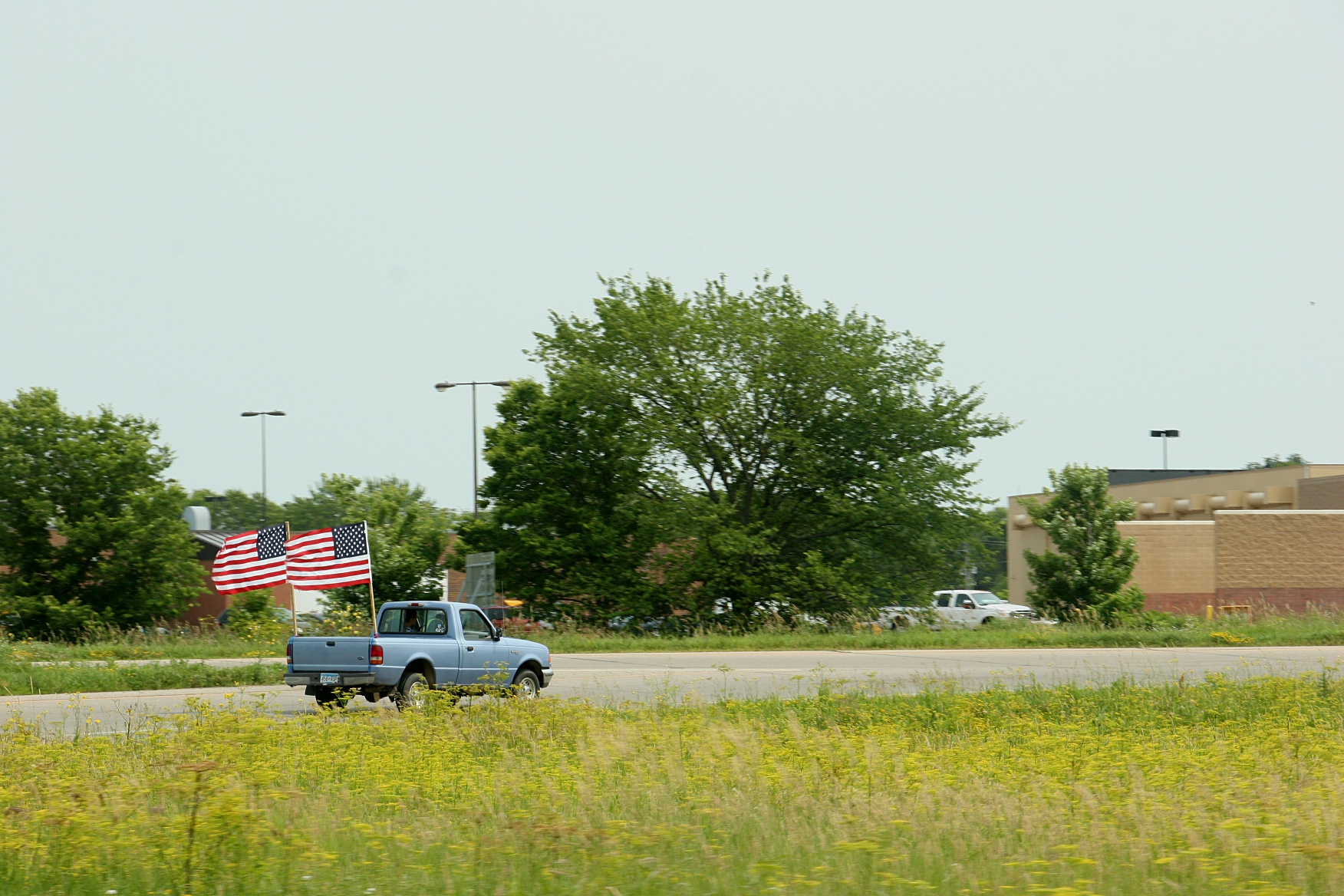
American flags a wavin’, this truck takes the northbound entrance ramp onto Interstate 35 off Minnesota State Highway 60 Friday afternoon in Faribault.
Have a safe and happy Fourth of July, everyone!
© Copyright 2015 Audrey Kletscher Helbling
American flags a wavin’, this truck takes the northbound entrance ramp onto Interstate 35 off Minnesota State Highway 60 Friday afternoon in Faribault.
Have a safe and happy Fourth of July, everyone!
© Copyright 2015 Audrey Kletscher Helbling
Portrait #30: Monroe Crossing

Four of five Monroe Crossing musicians photographed during a 2013 performance at North Morristown.
They’re in the Minnesota Music Hall of Fame. They’ve recorded 14 CDs to date. Twice they’ve appeared at Carnegie Hall in New York City. And in 2016, they will become the first Minnesota bluegrass band ever to perform in South Korea.
They are Monroe Crossing, a group of five musicians who rank as one of Minnesota’s favorite bluegrass bands.
On Saturday the performers, as they have many times in the past, take the stage at the oldest Fourth of July celebration in Minnesota, now in its 123rd year. That would be in North Morristown, a country church and school and a few homes clustered west of Faribault in the middle of farm fields.
The Trinity Lutheran Church and School festival grounds is the perfect setting for these musicians who present foot-stomping down-to-earth songs. They perform at 1:30 p.m. and then again at 4 p.m. And it’s free, although donations are accepted in on-grounds donation boxes.
Plan to arrive well in advance of Monroe Crossings’ concerts. The July Fourth celebration begins at 9 a.m., when food stands and games open. Yes, there’s plenty of great food including homemade pies, barbecued pork sandwiches, burgers and more. You can play bingo, hunt for a medallion, observe a flag-raising, bid on auction items, throw horseshoes, attend a parade (at 10 a.m.), listen to other musicians (The Jolly Huntsmen Polka Band, Sawtooth Brothers, Benson Family Singers and Downtown Sound), drink beer and more.
There’s also plenty of visiting. Old-fashioned handcrafted rides are available for the kids. This rural celebration is about as Americana grassroots wholesome goodness as you’ll find anywhere in Minnesota on the Fourth of July.
Ending it all is a 10 p.m. fireworks display.
You can also check out the event Facebook page by clicking here.
Click here to view a photo essay from the 2013 celebration.
#
The Minnesota Faces series is featured every Friday on Minnesota Prairie Roots.
© Copyright 2015 Audrey Kletscher Helbling
AS A LIFE-LONG LUTHERAN, I’m mostly unfamiliar with patron saints of the Catholic church, even though my husband, now Lutheran, grew up Catholic.

The Church of St. Wenceslaus, New Prague, Minnesota.
So when I happened upon the majestic Church of St. Wenceslaus rising above the east end of New Prague’s Main Street, I had to research the saint whose carved image guards the impressive columned front entry.
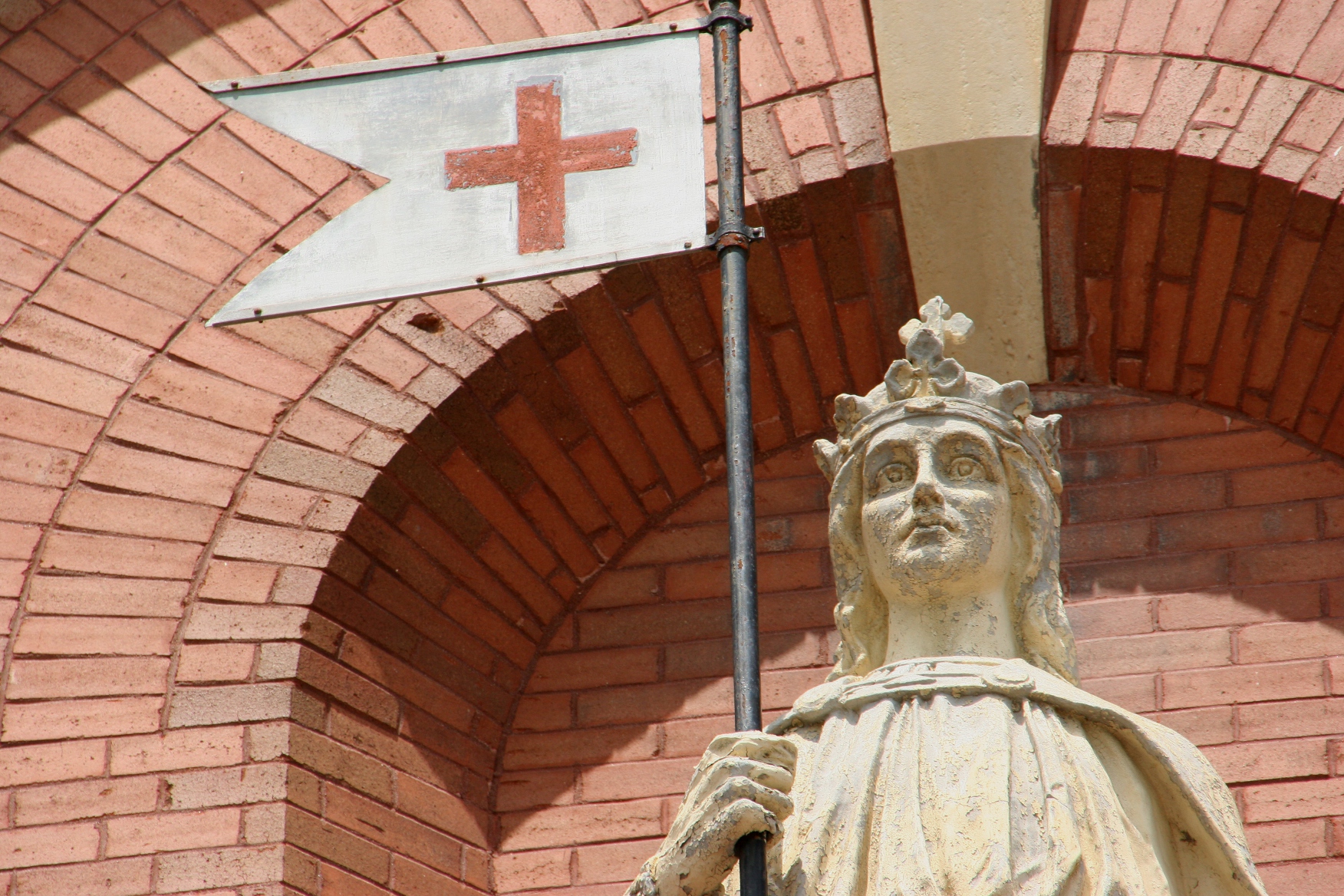
A close-up of the St. Wenceslaus statue above the main church entry.
St. Wenceslaus, duke of Bohemia from 921 until his murder in 935, is considered a martyr for the faith and is hailed as the patron of the Bohemian people and the former Czechoslavakia.
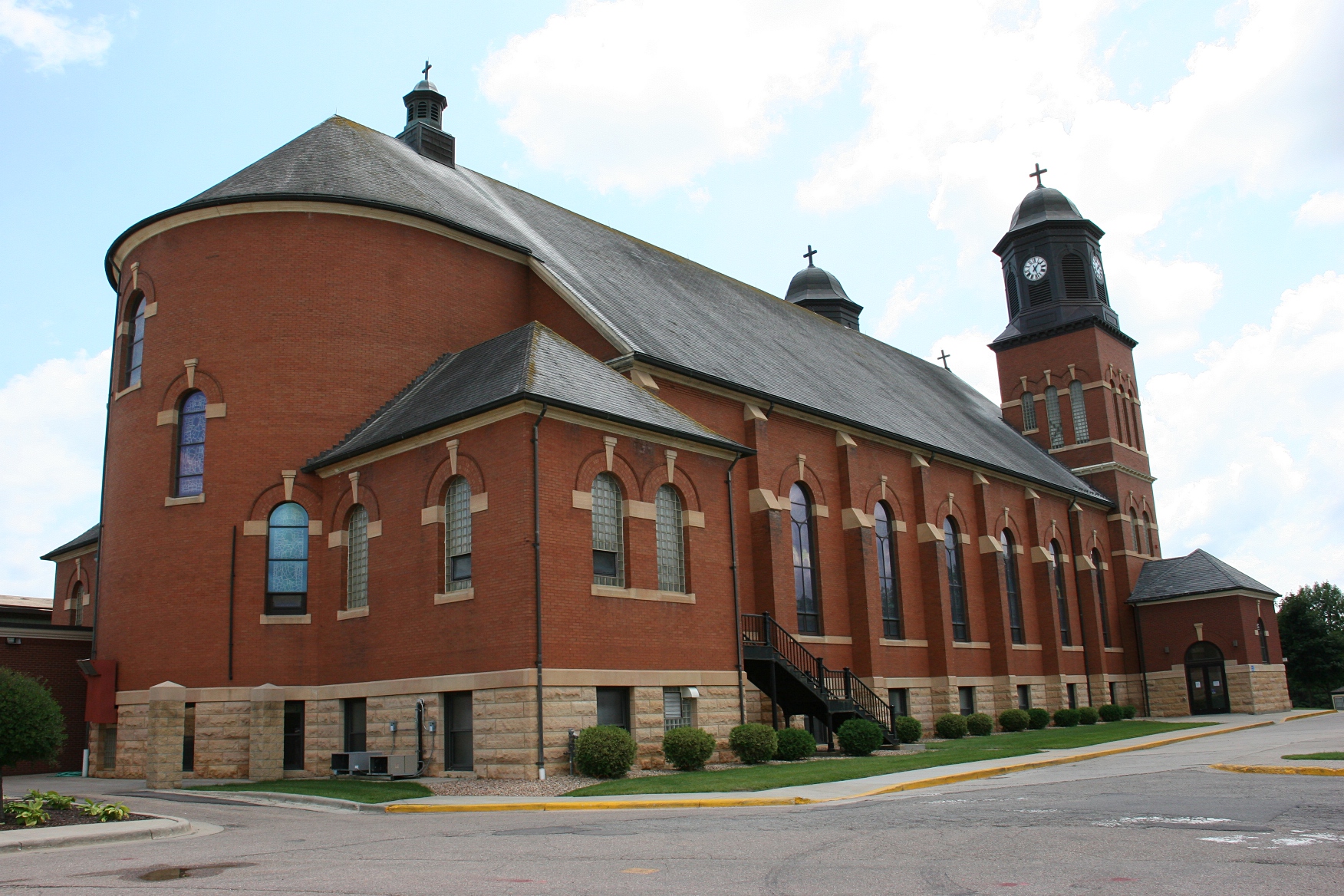
A side and rear view of this stunning church.
The selection of this saint for the New Prague congregation is fitting for a community with strong Czech roots. Founded in 1856, the Church of St. Wenceslaus is the oldest Czech church in Minnesota. It is now part of the New Prague Area Catholic Community.
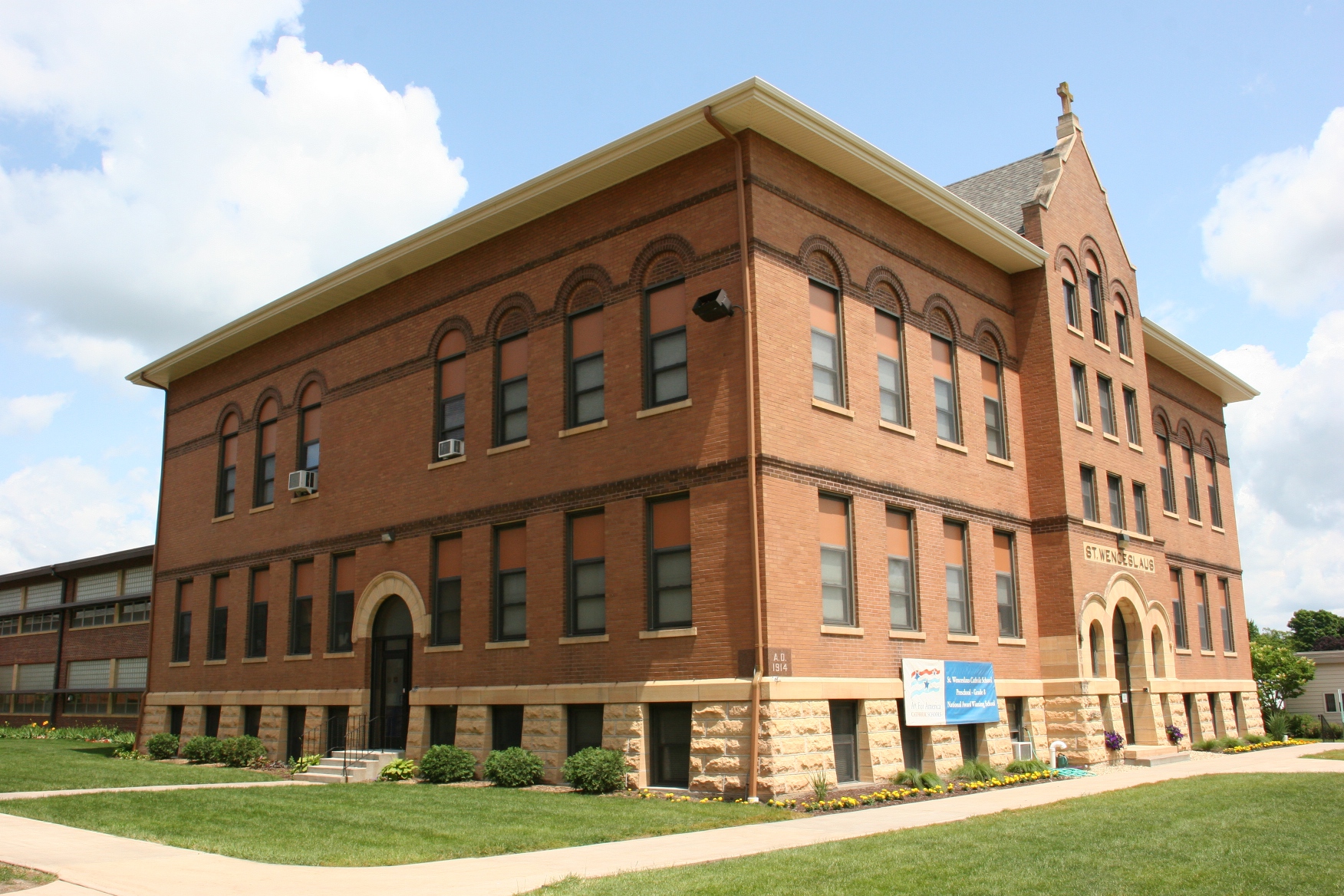
This is the old section of St. Wenceslaus Catholic School, built in 1914 and located next to the church. An addition was built in 2003. Students from kindergarten through eighth grades attend.
The parish also includes a school opened in 1878.
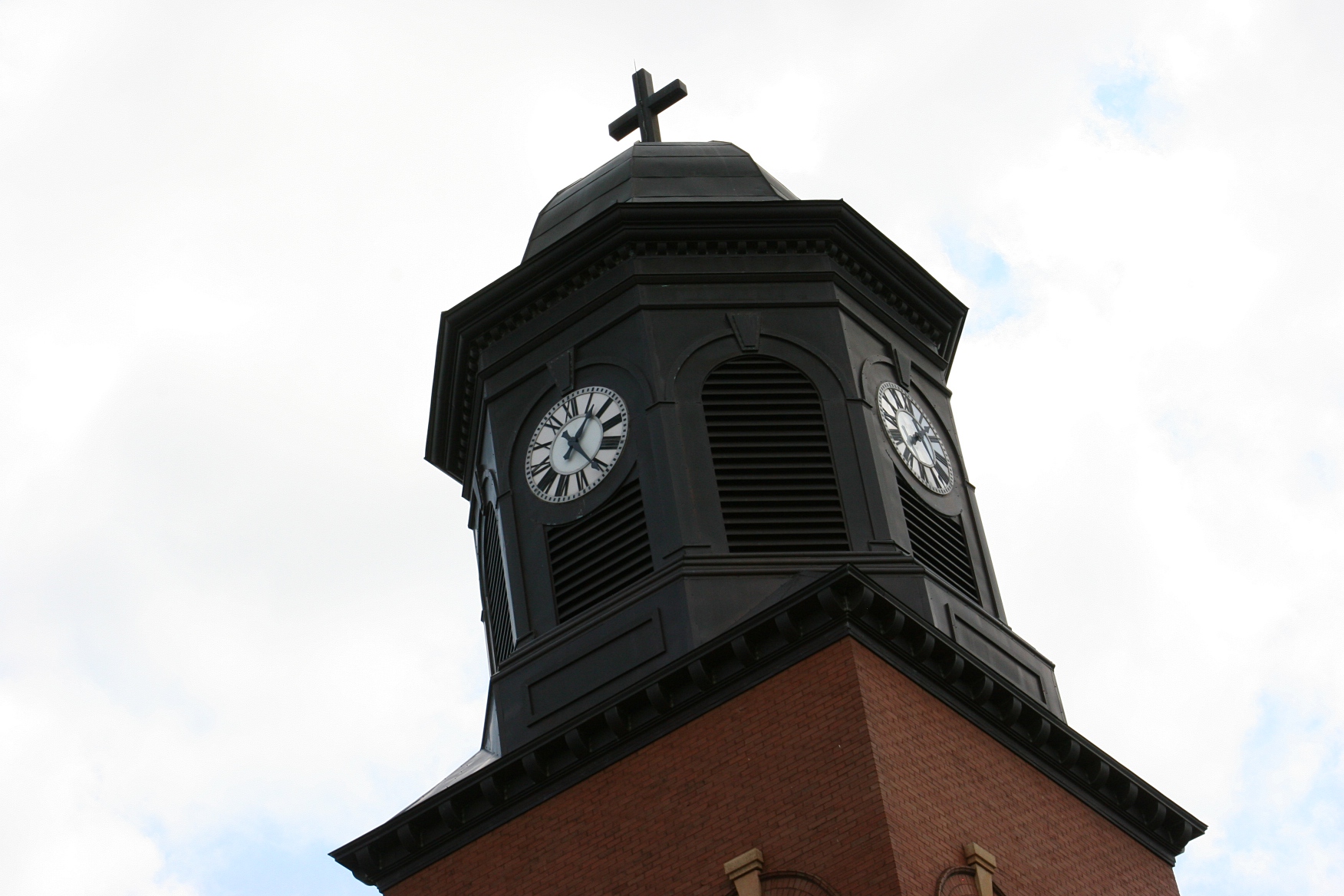
The church features two towers.
This duo towered brick church is stunningly beautiful. I paused numerous times while photographing the exterior simply to admire its artful construction. Churches aren’t built like this any more.
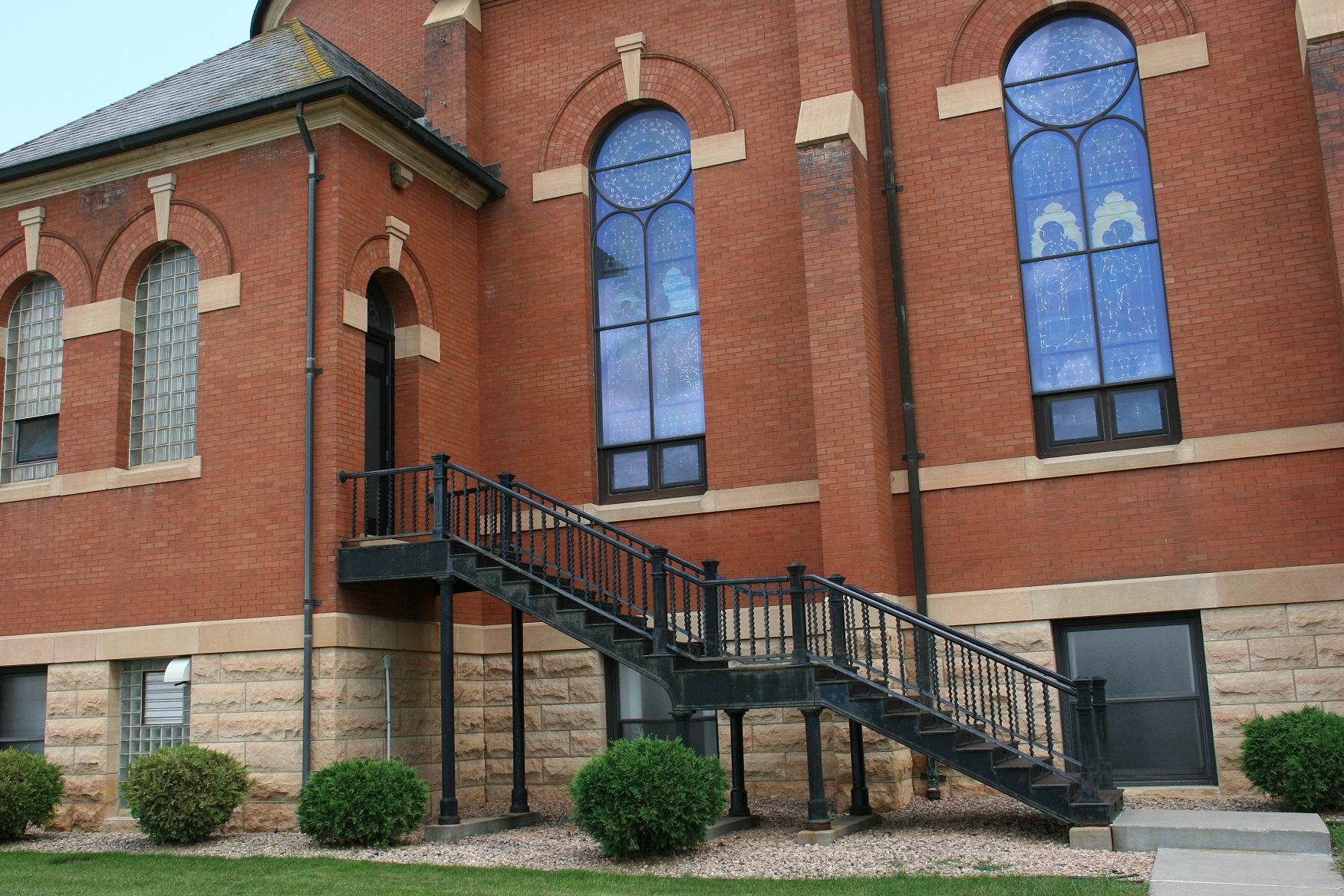
Even the side stairs are artful and the entire church exterior well-maintained.
My single regret was finding the doors locked on a Sunday afternoon. This was not unexpected; most sanctuaries are locked now days. I could only imagine the lovely stained glass windows I would find inside, along with more statues of patron saints and worn pews.
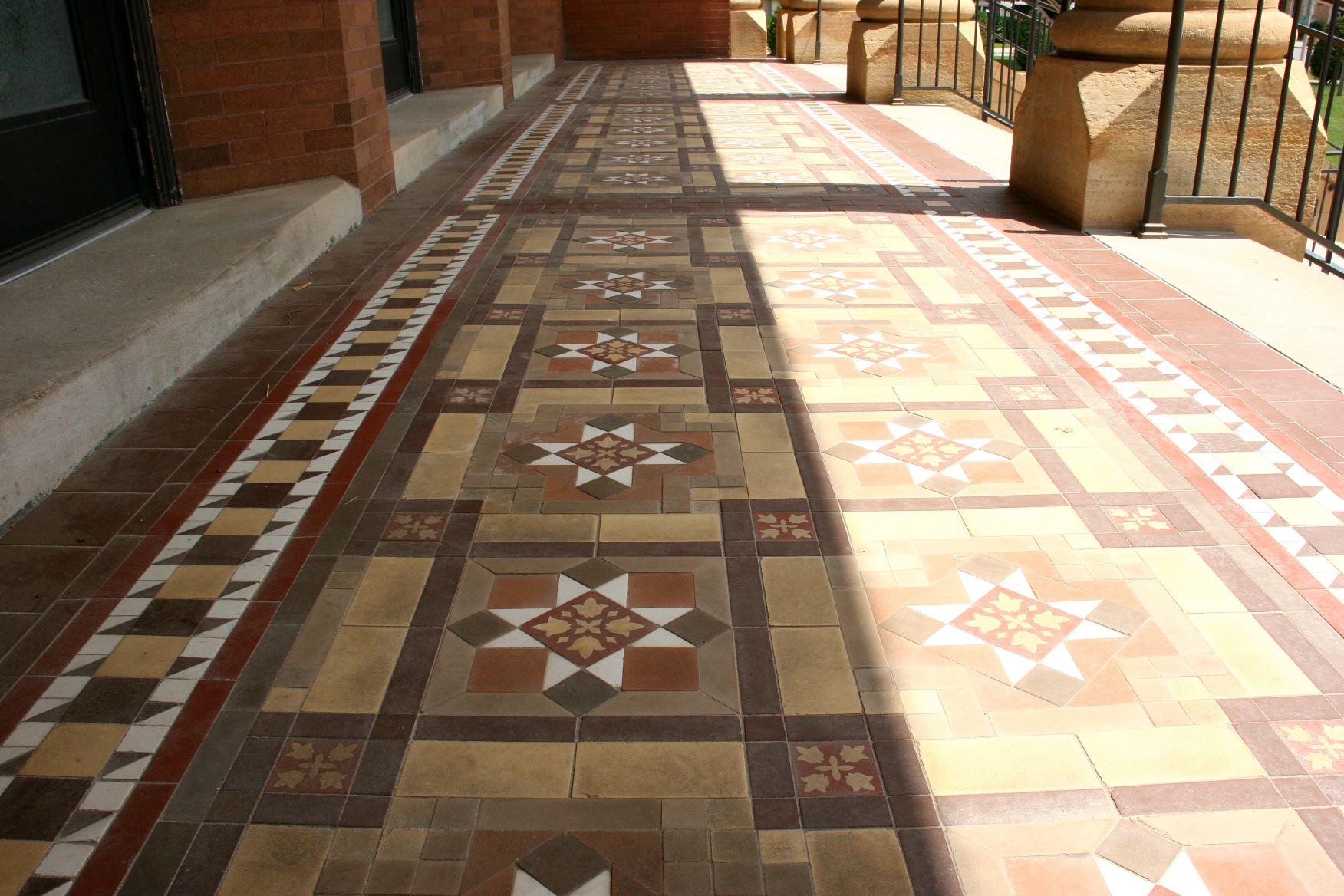
In sunlight (right) and in shade, the exterior tile floor under the columned entry impresses.
Being Lutheran, I am intrigued by aged Catholic churches which are often significantly embellished with ornate details and religious art. This is so unlike most Lutheran churches. I appreciate both, wherein I find solace and peace. And perhaps that is the reason I seek out churches to photograph. Photographing them connects me, in a visual way, to God.
BONUS PHOTOS:
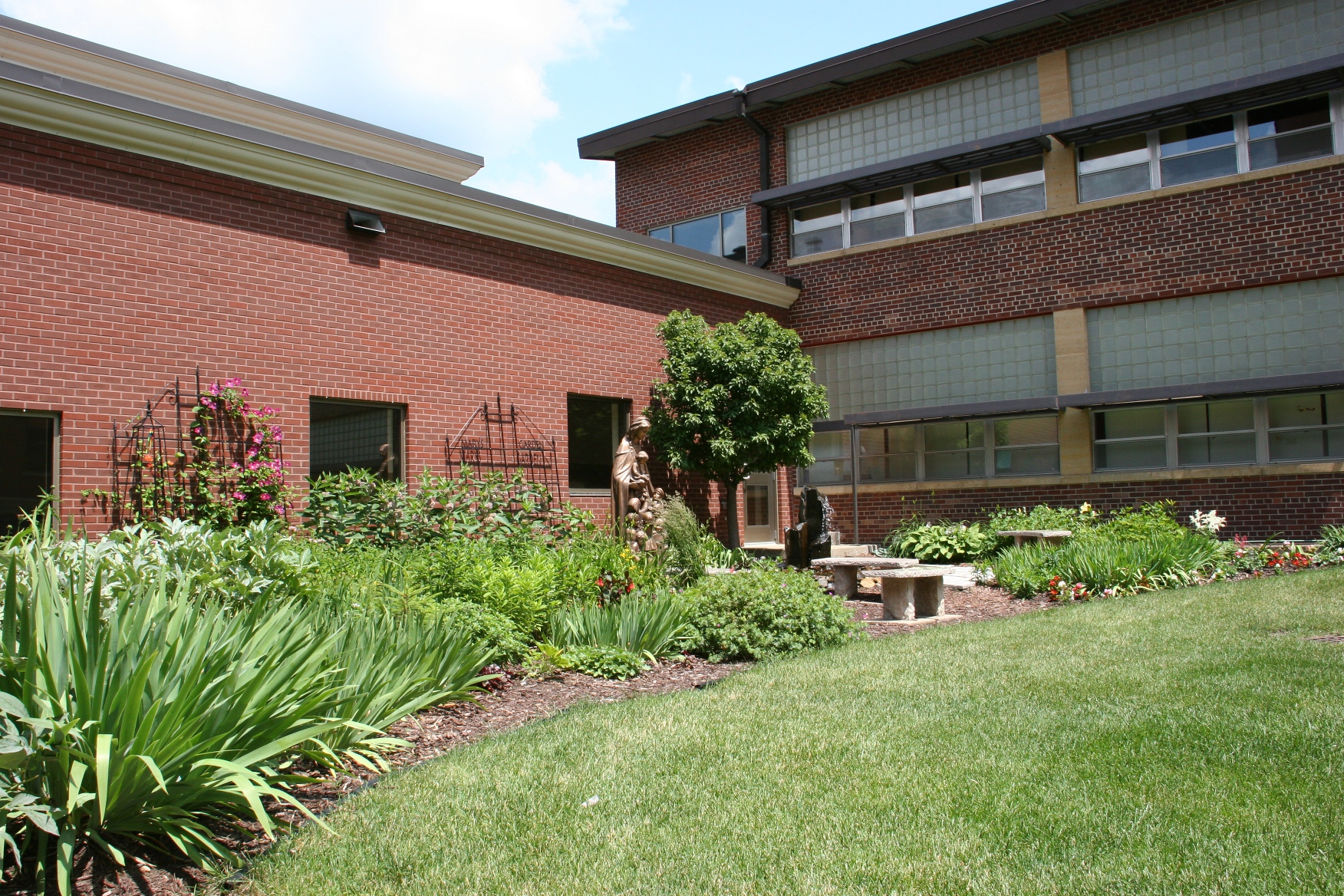
An overview of Mary’s Garden, located between church and school.
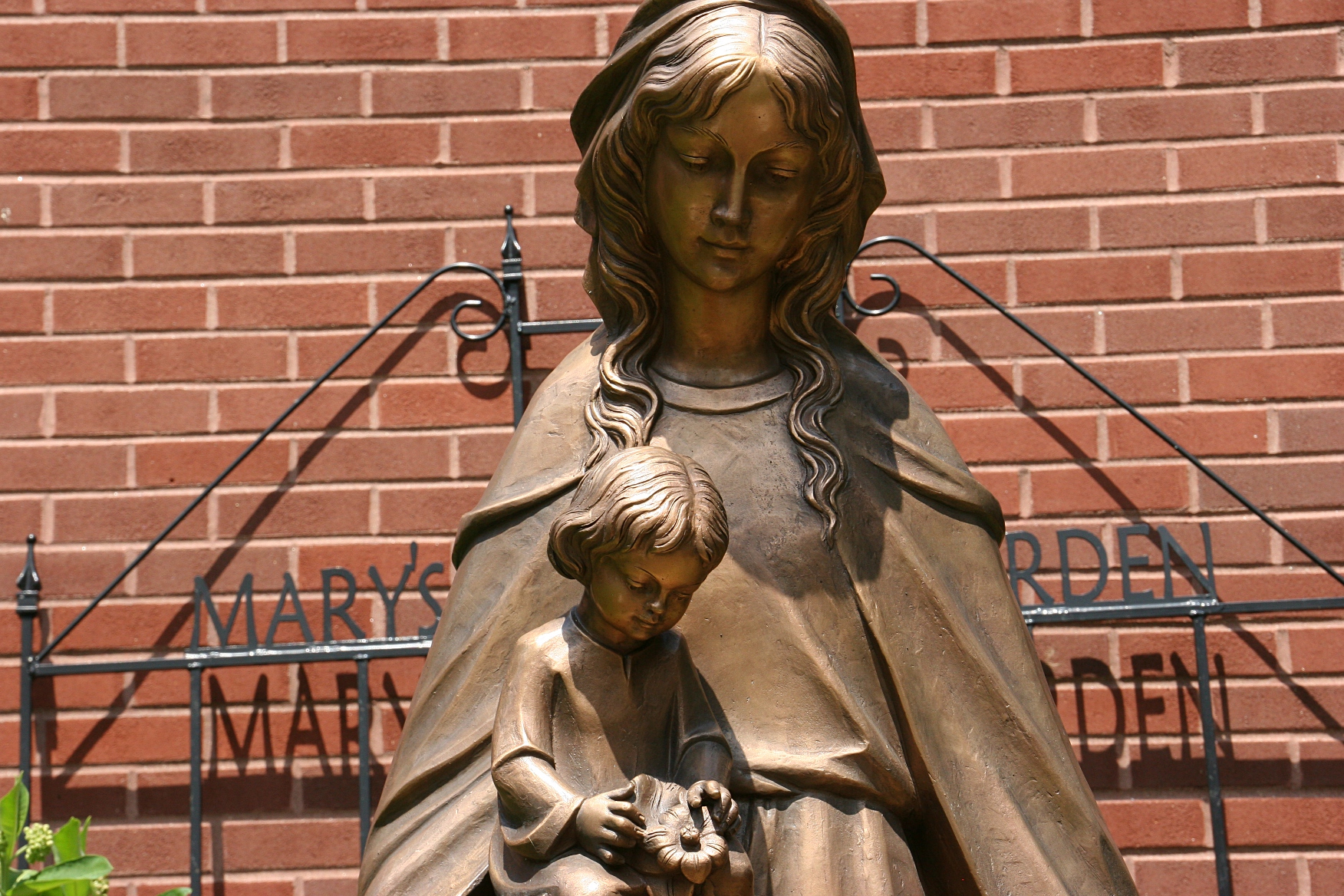
Children surround the statue of Mary in the garden.
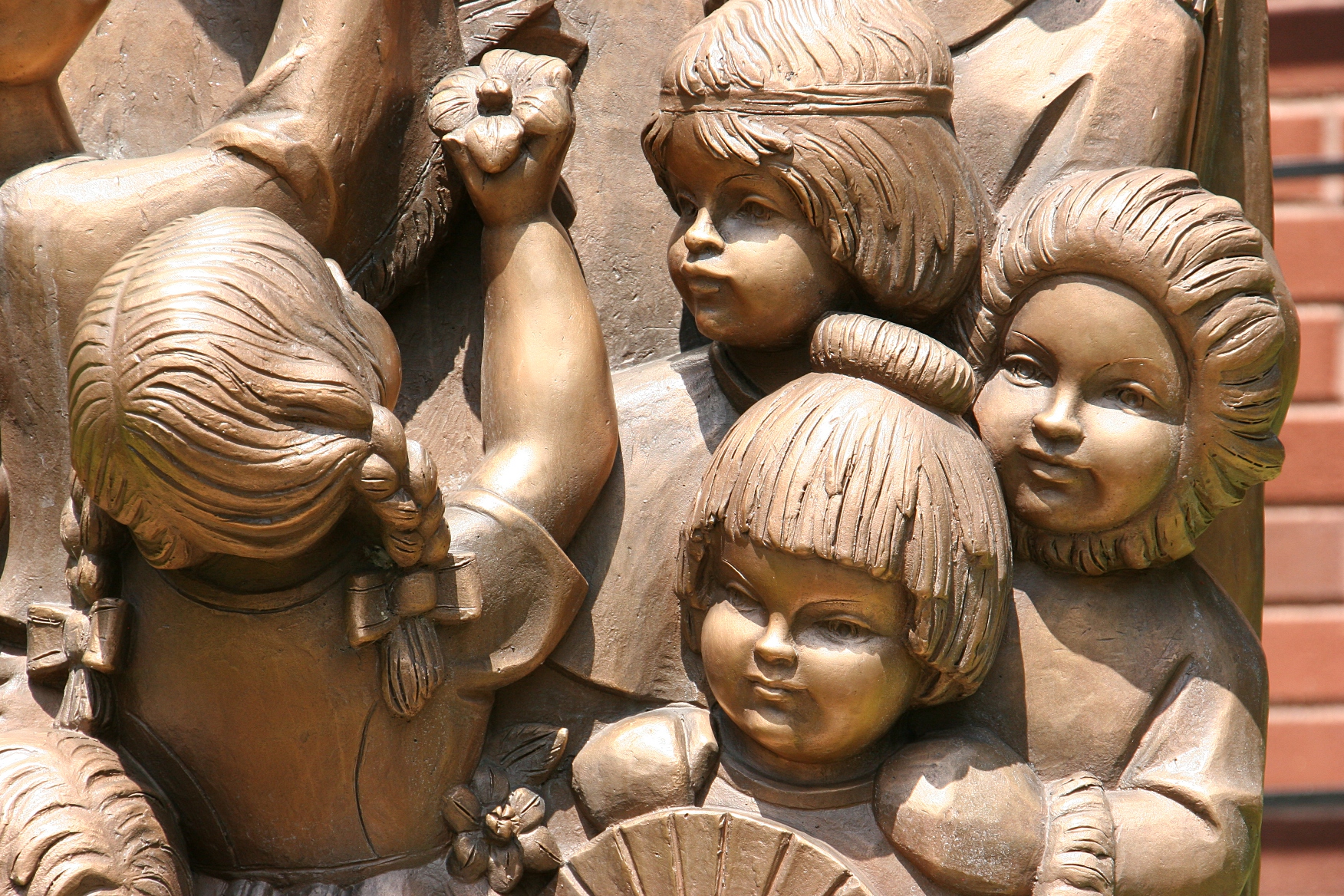
Children of many ethnicities are part of the Mary statue.
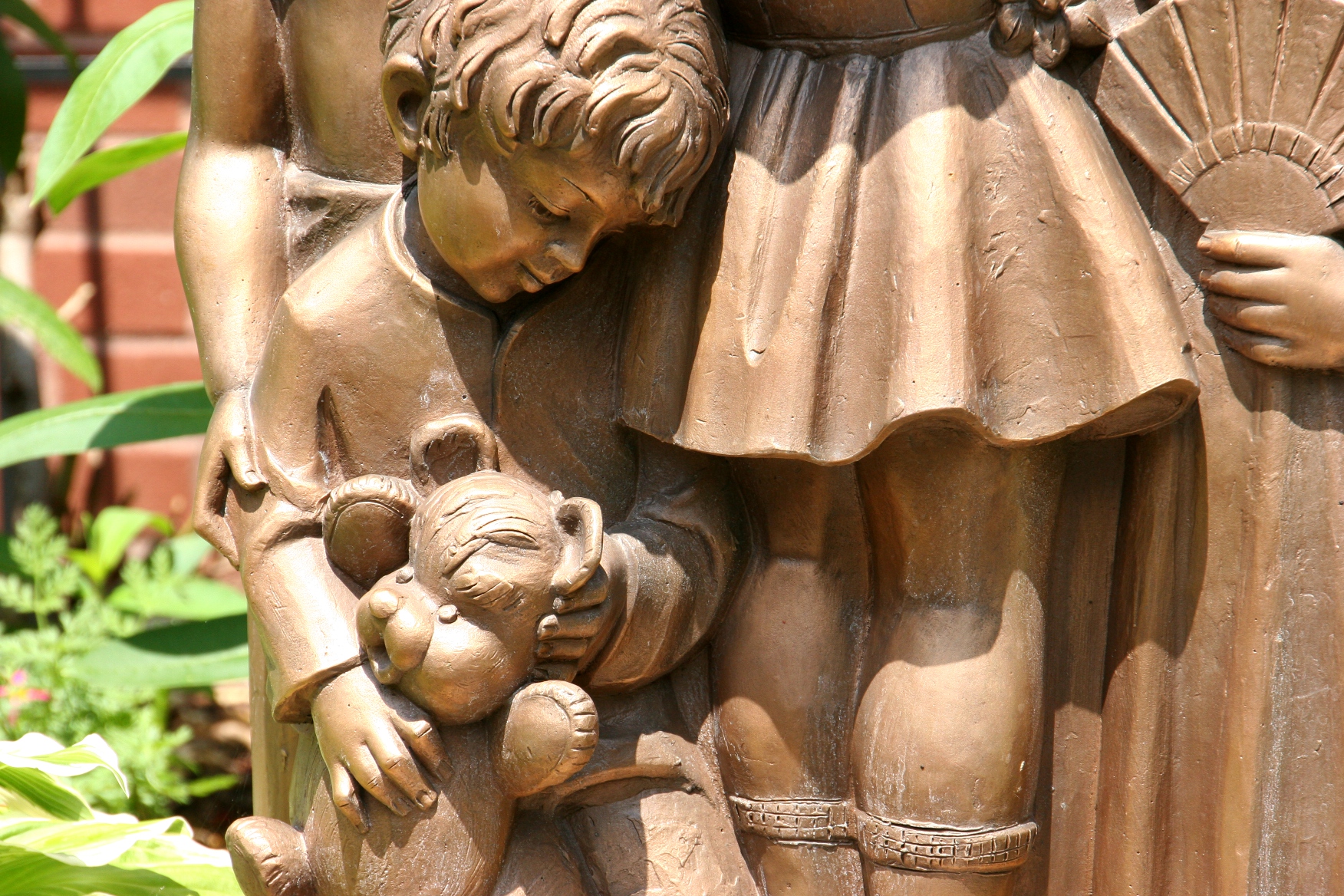
More details in the garden statue art.
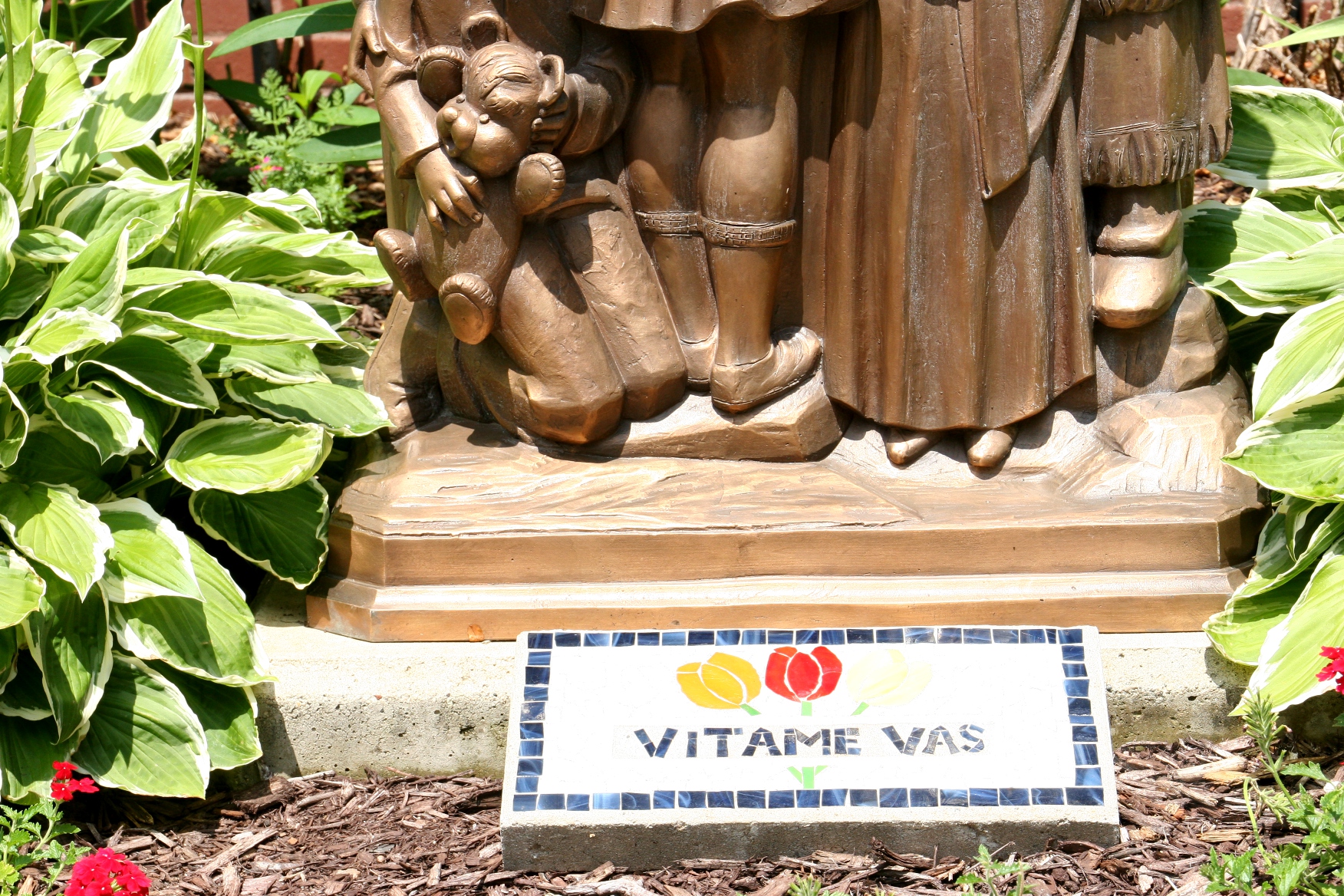
At the foot of the Mary statue, a message in Czech says “welcome.”

Petunias spill from a windowbox at the front of the school.
© Copyright 2015 Audrey Kletscher Helbling
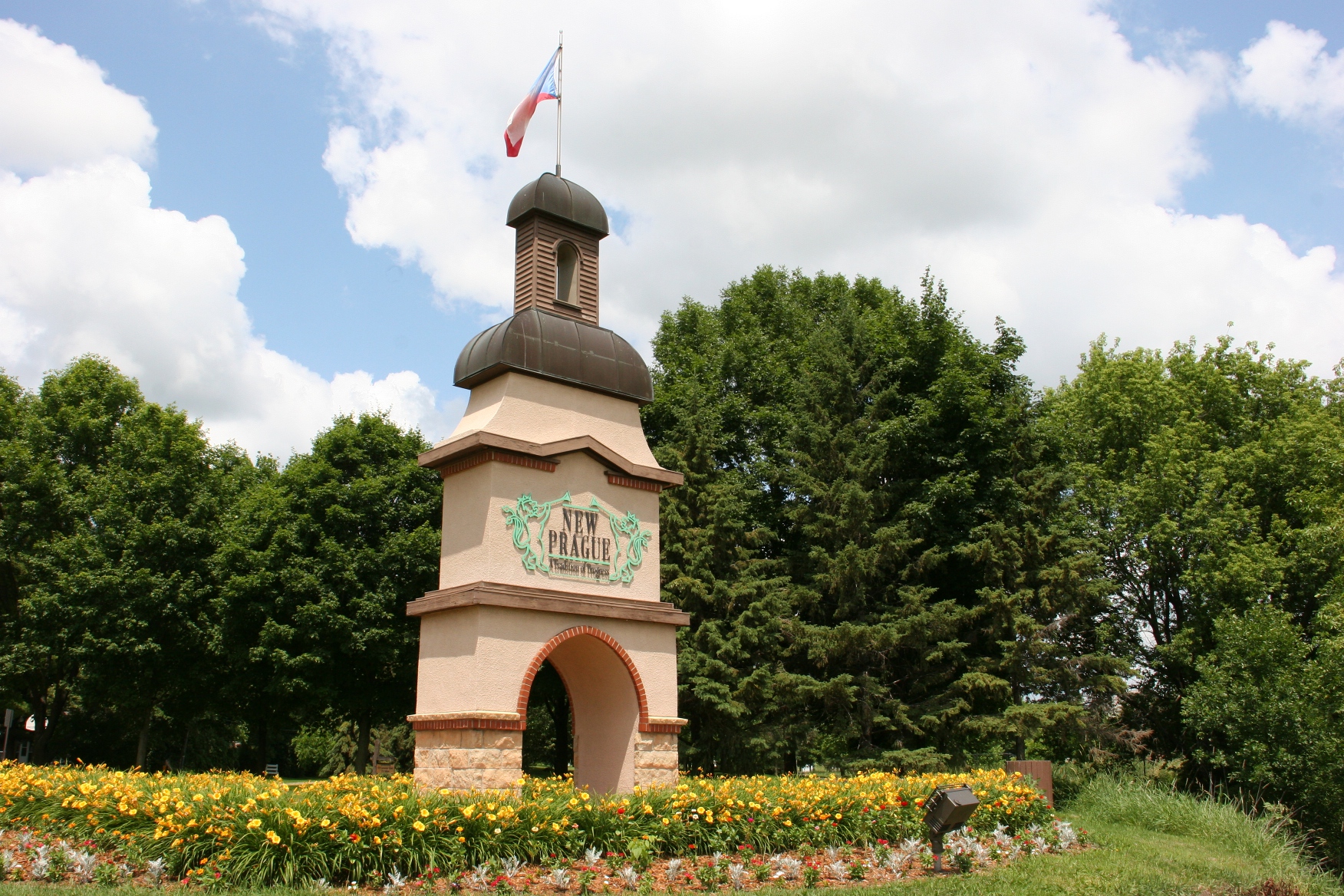
An impressive sign welcomes visitors to New Prague, Minnesota.
DO YOU EVER HOLD expectations of a community that, in reality, are not what you envisioned?
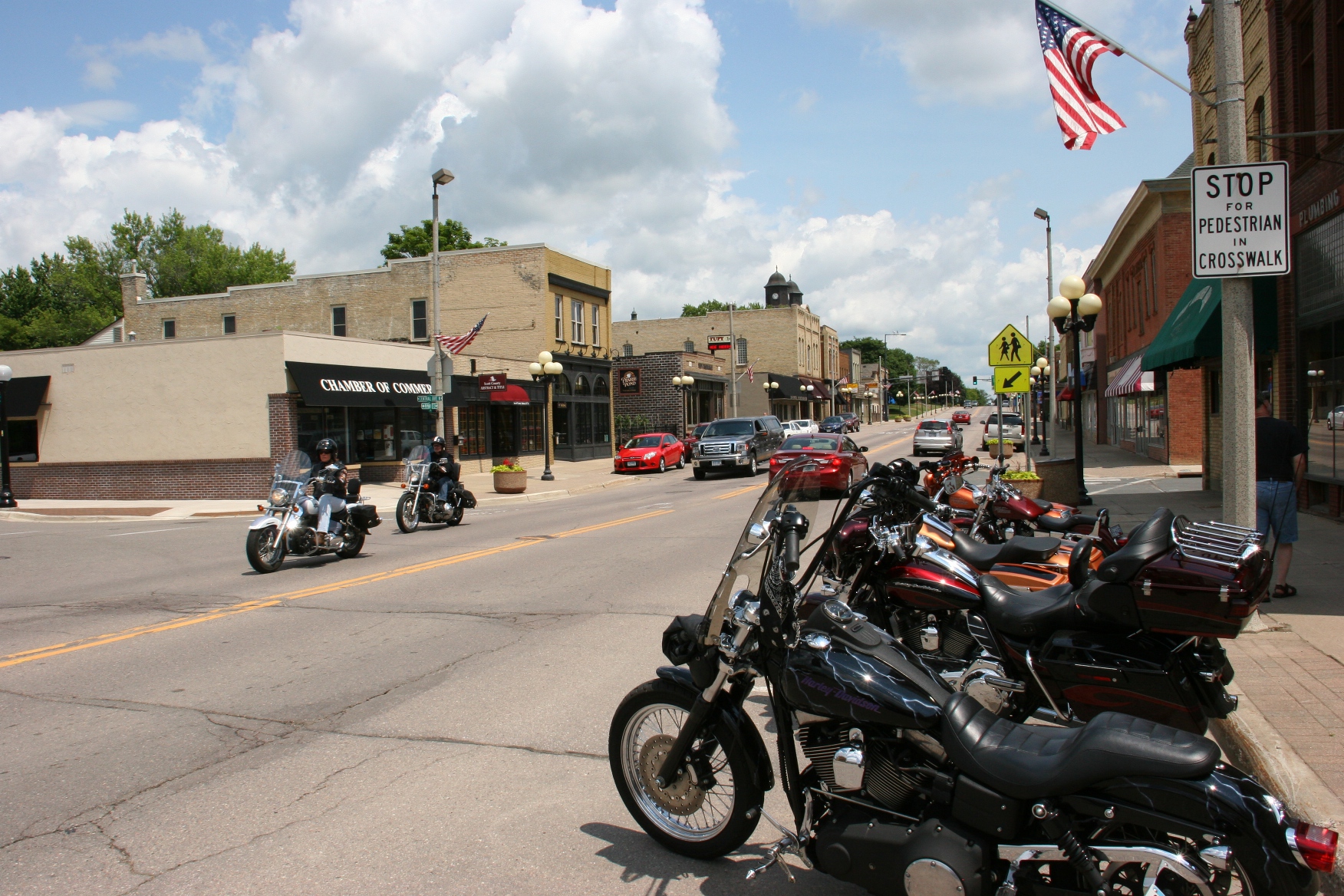
Minnesota Highway 19 runs through the heart of New Prague’s business district.
Such was my impression of New Prague, a southern Minnesota community of about 7,500 rooted in the Czech, Bavarian and Bohemian heritages. I expected a well-kept downtown burgeoning with lovely shops.
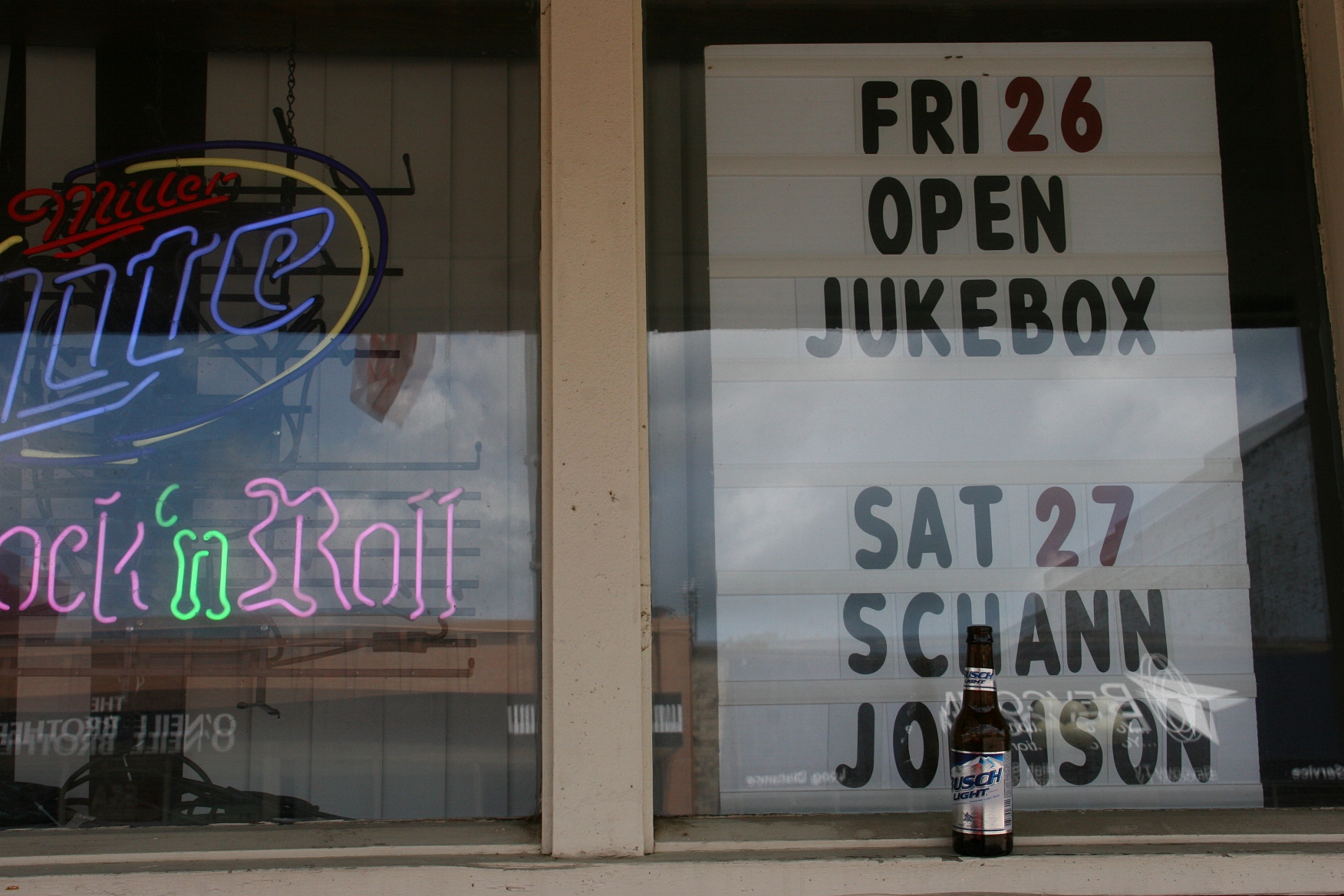
Beer bottles sat on windowsills and stoops at several downtown bars on a Sunday afternoon.
Instead, on a Sunday afternoon, I found a Main Street that needs a facelift or, at a minimum, an attentiveness to appearance. Cigarette butts littered on sidewalks and beer bottles perched on window sills and doorsteps outside bars did not give me a positive first impression.

J. T.’s Hideaway, one of several downtown bars.
Uneven and pitted sections of sidewalk made me wary of tripping. I noted worn steps and many weary looking buildings, with bricks even missing from the facades of some. I wasn’t purposely looking for these things. But they were noticeable enough that I noticed.
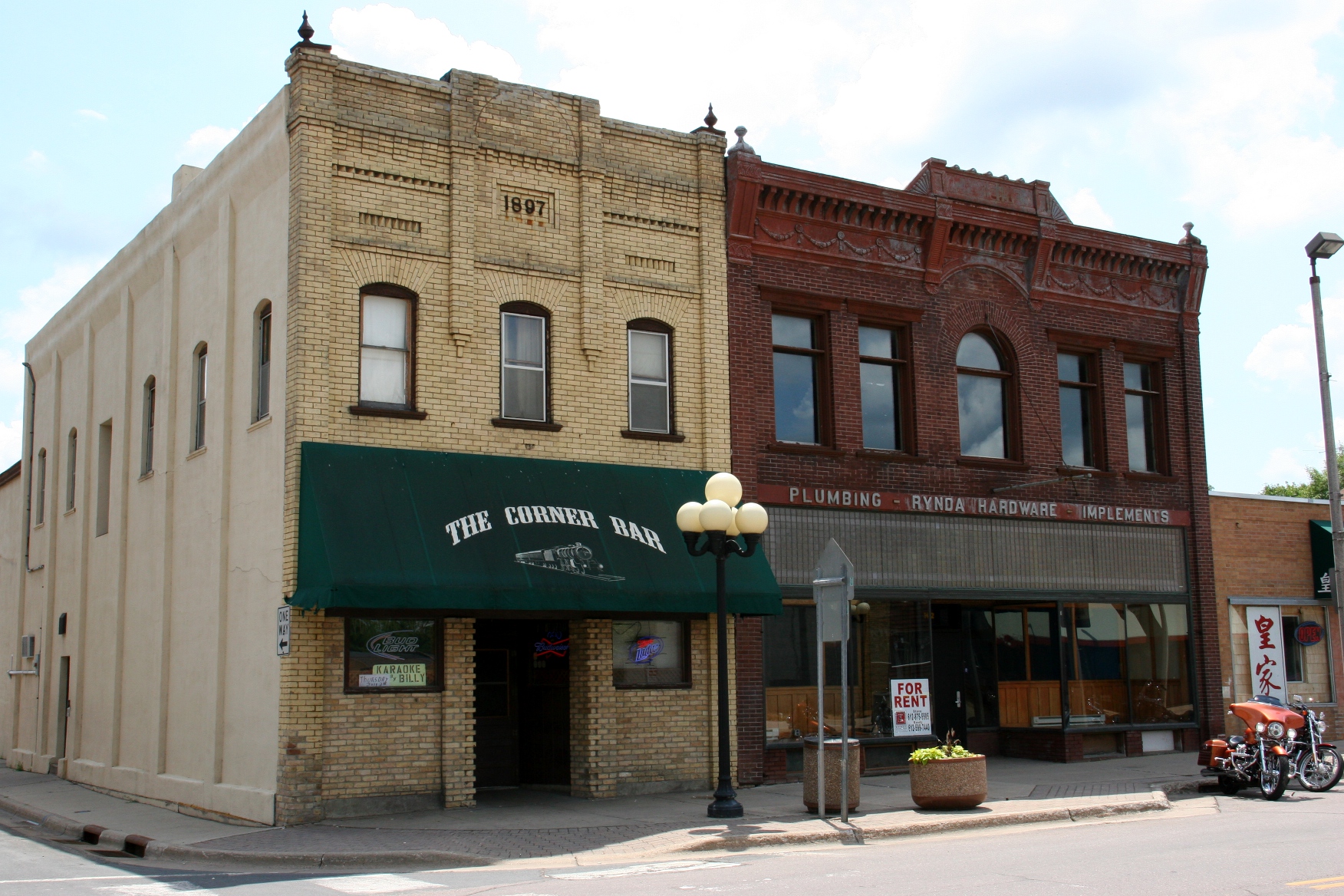
The old hardware store, right, has great historic character inside and out.
I also noticed many empty storefronts. Peering through the expansive front windows of the former Rynda Hardware, I spotted the loveliest of wood floors in a space that holds great potential for a business.
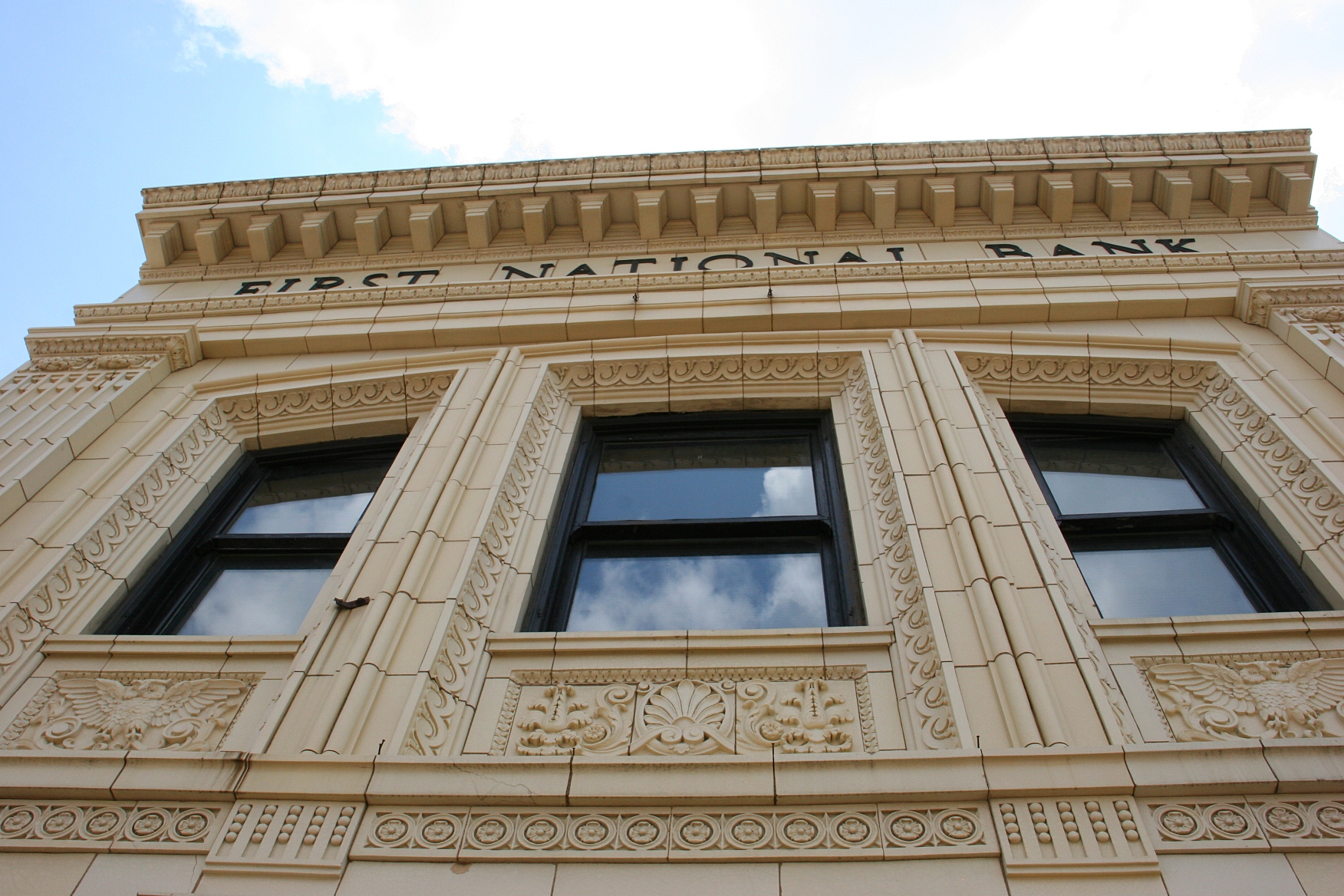
Looking up at the ornate architecture on the former First National Bank.

To the right of the old First National Bank is the former Prague theater, now DalekoArts.

Another view of the bank and theater buildings along Main Street.
That’s a key word here. Potential. Downtown New Prague, with attention to visual presentation and detail, could really shine. The many historic buildings are an asset to this community. Some, like the former First National Bank, now home to an optometrist’s office, have been well cared for and stand as examples of what this downtown could be.
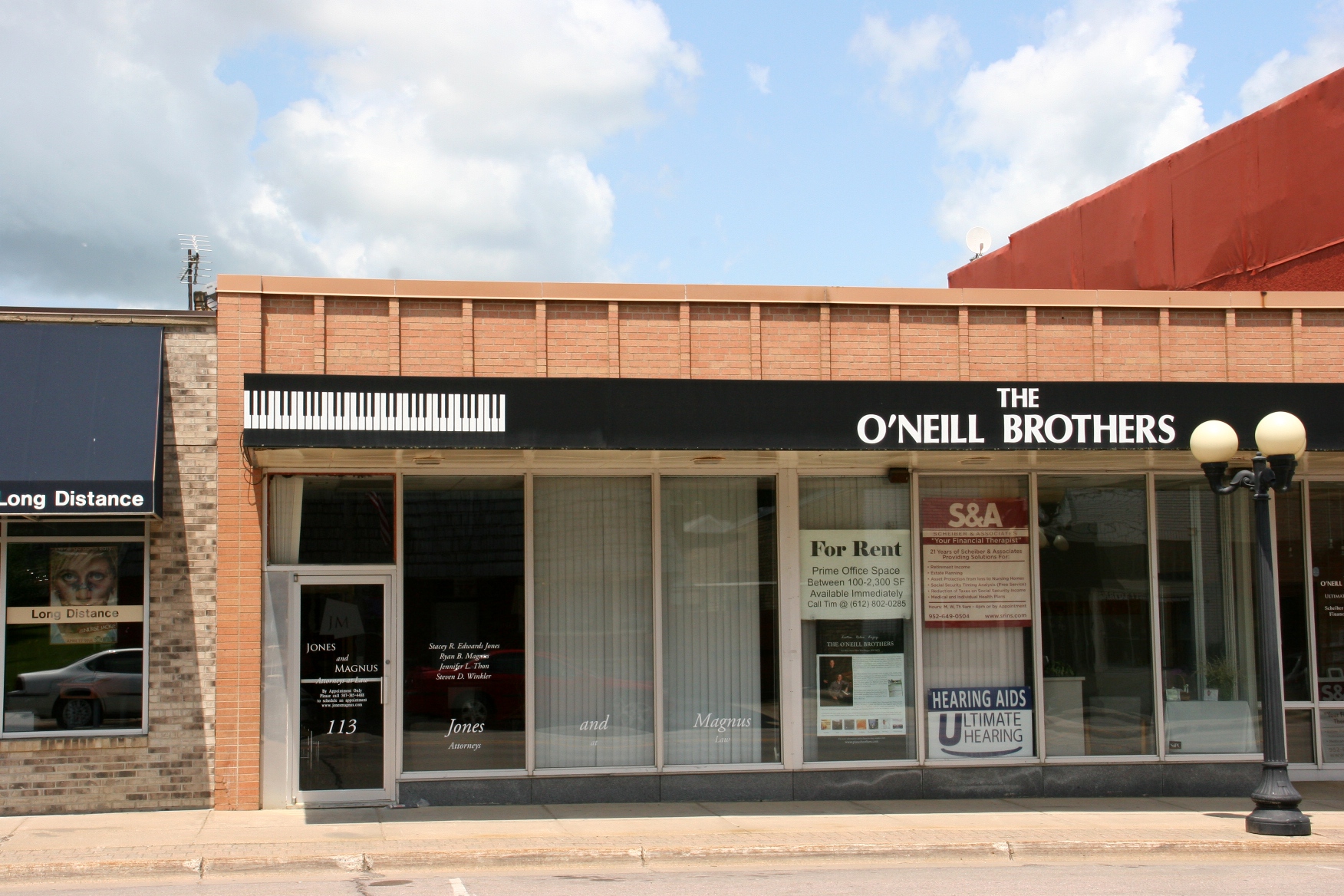
Another building with space to rent.
It takes money, and a strong desire, to improve the physical appearances of buildings to create a cohesive and inviting downtown. And I realize business owners are likely just getting by and don’t have extra funds.
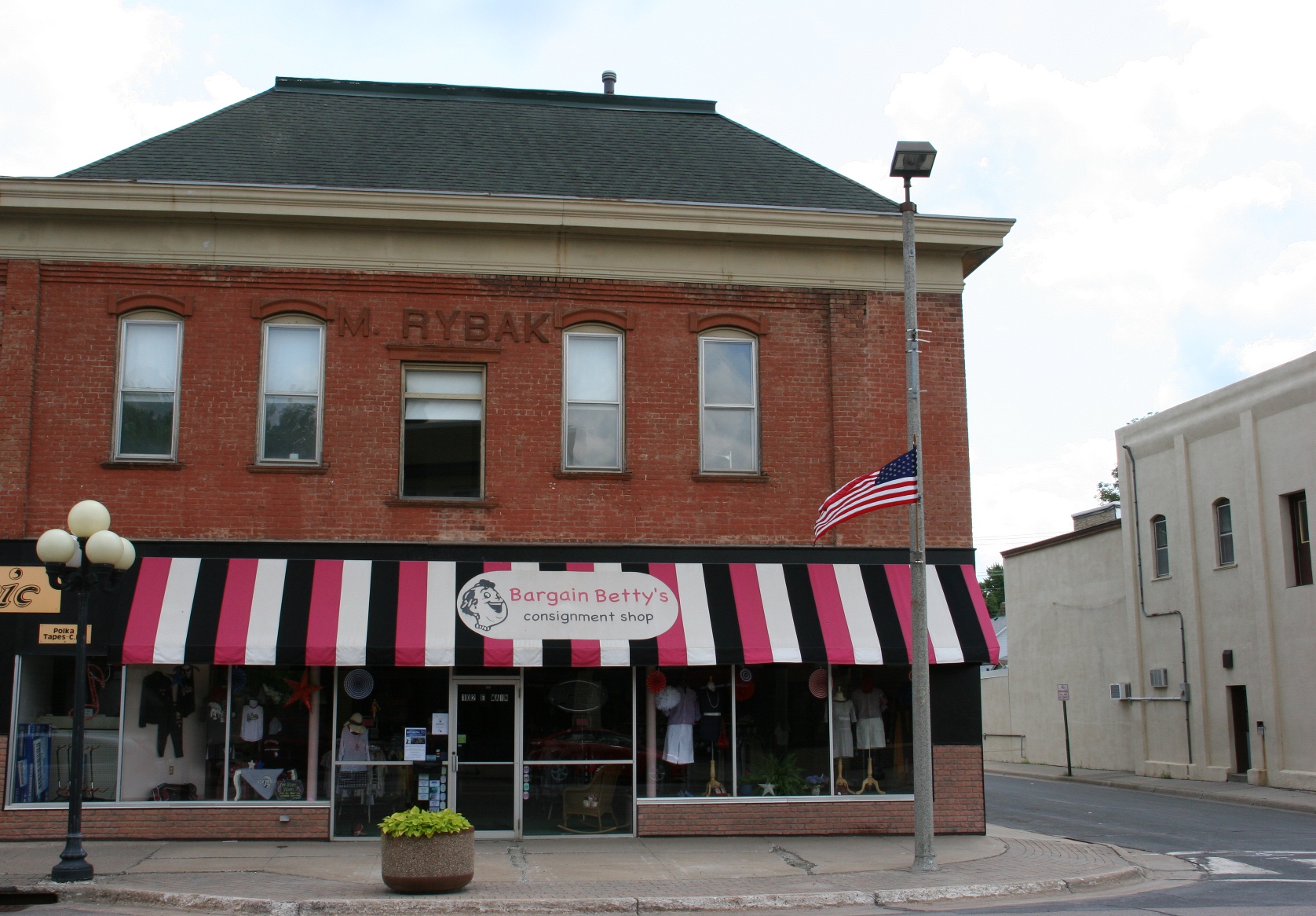
This tasteful awning adds a punch of color without overwhelming.
But I see what can be done with a few simple details. Bargain Betty’s Consignment Shop, for example, sports an eye-catching pink, white and black striped awning with pleasing graphic signage that makes me want to shop there, except shops aren’t open in New Prague on Sundays. That’s understandable given these mom-and-pop business owners need a day off, too.
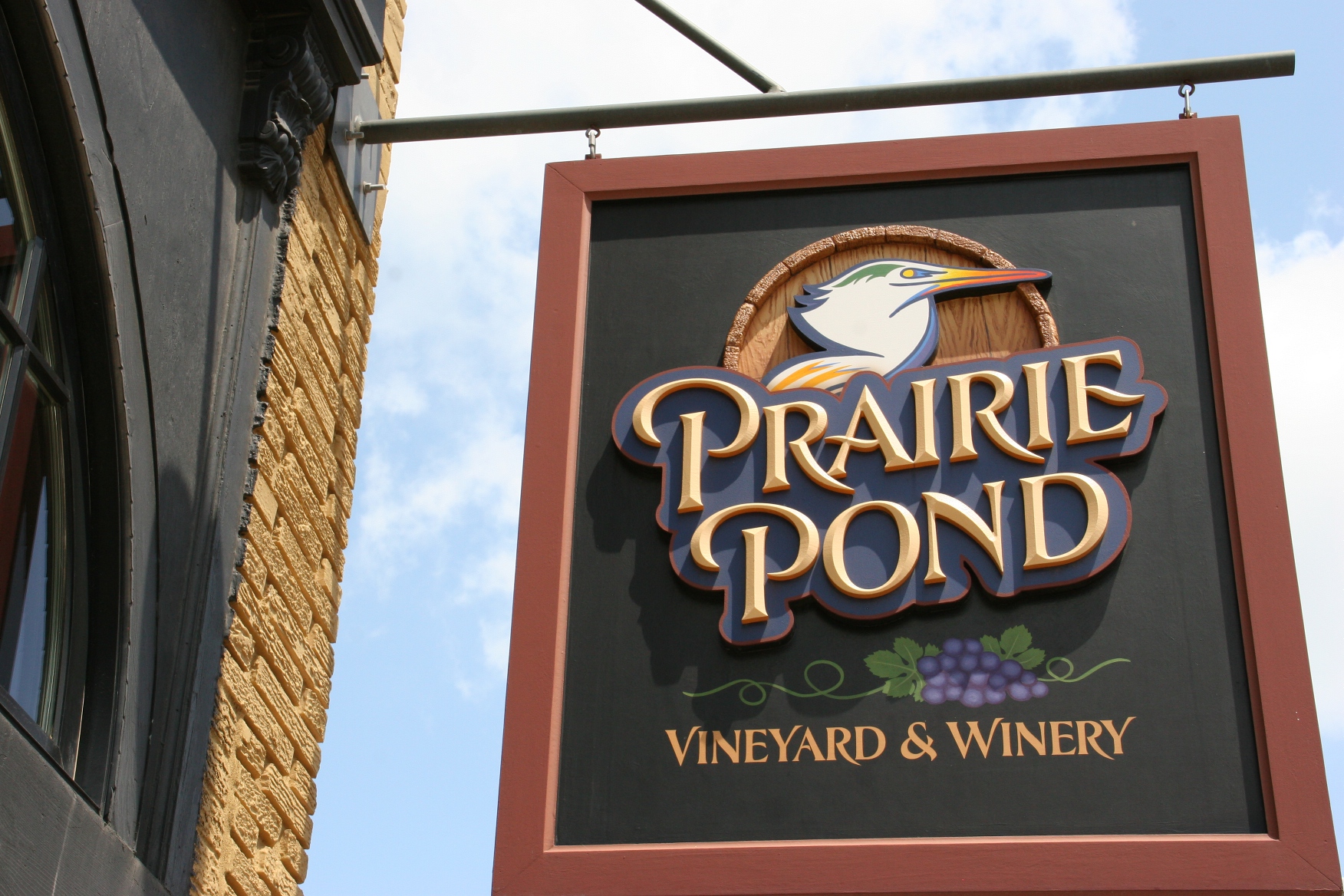
Love this sign suspended from a downtown wine tasting business.

Prairie Pond’s inviting patio, closed on Sunday.
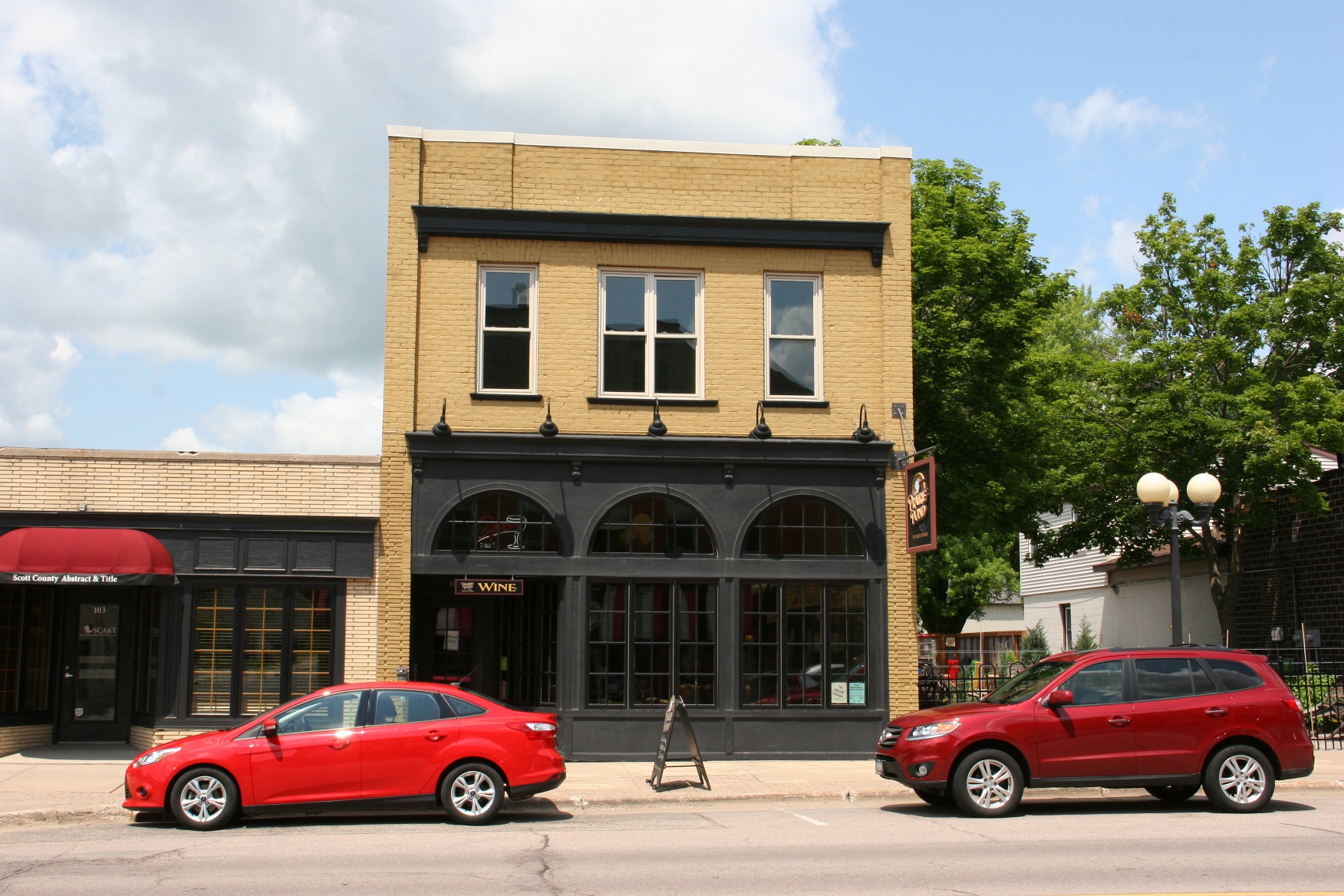
The Prairie Pond building is an example of a beautifully restored structure.
Prairie Pond Vineyard and Winery, in an exceptional restored building, has also created an outdoor patio oasis, complete with water features, between downtown buildings. My husband and I planned to sample wine there on Sunday, but found the place closed for a private party. It’s not typically open on Sundays, a disappointment.
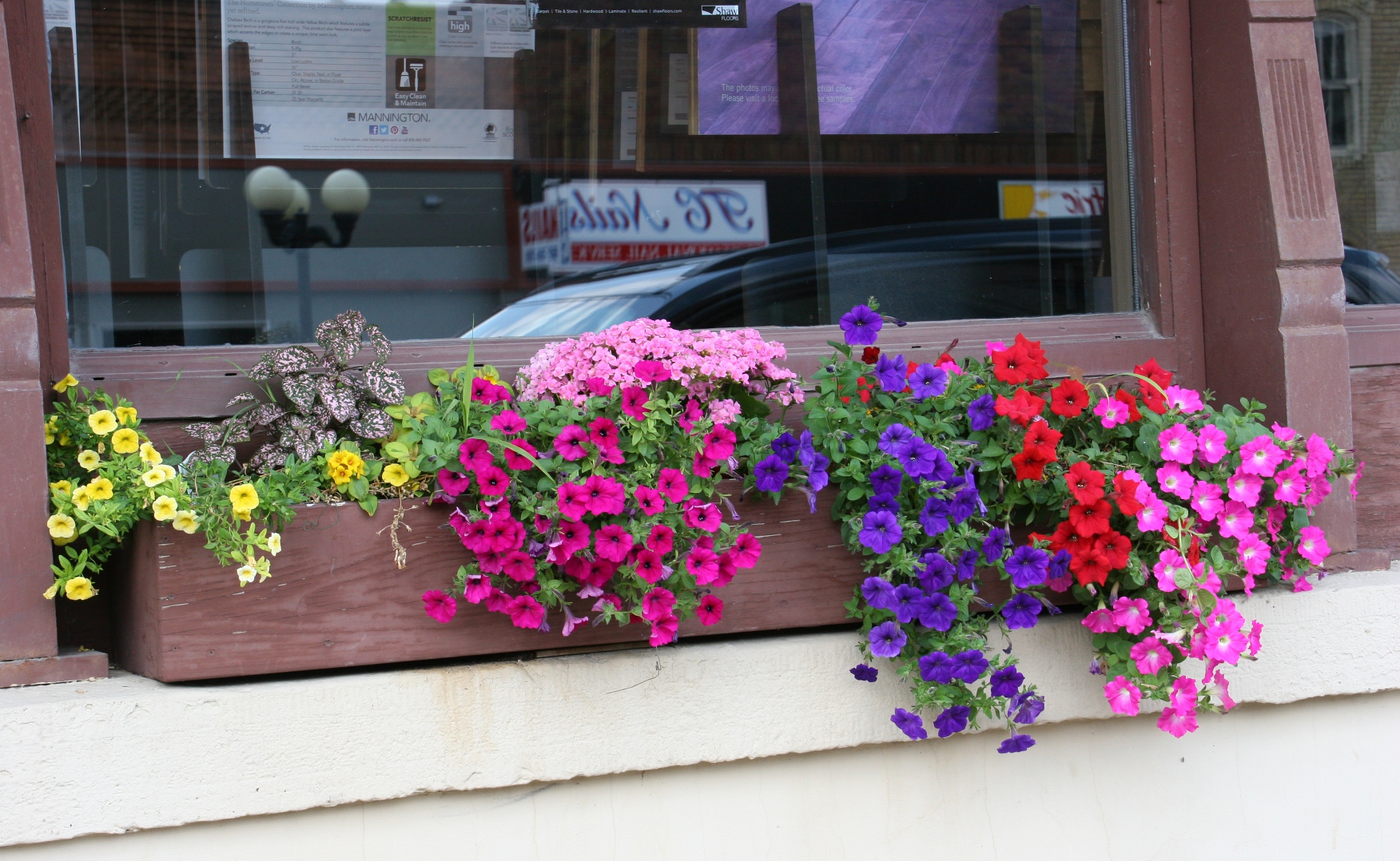
This stunning windowbox punches natural color and life into the downtown.
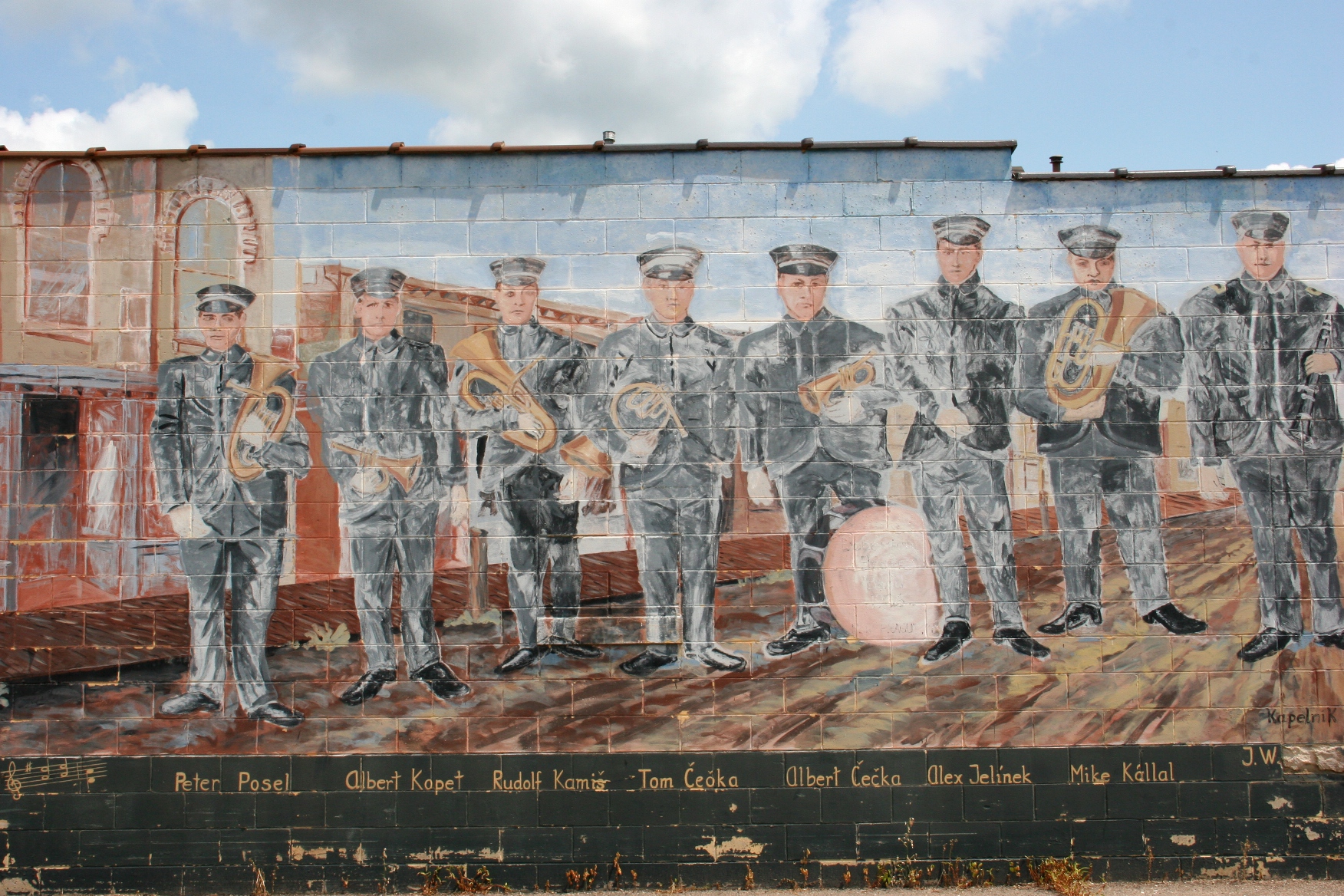
A mural of the 1906 Bohemian Brass Band adds artsy interest to the side of a building. However, the mural, painted in 1989, could use some freshening.

This weathered covered wagon atop the Prairie Saloon draws attention to the business and gives it character.
Green spaces in the heart of a Main Street always please me. So do window boxes and planters brimming with flowers. And art. Downtown New Prague has some, but could use more. Again, it’s the seemingly simplest of details that can make a difference in how a downtown business district appears to visitors, whether they stop or continue driving through town.
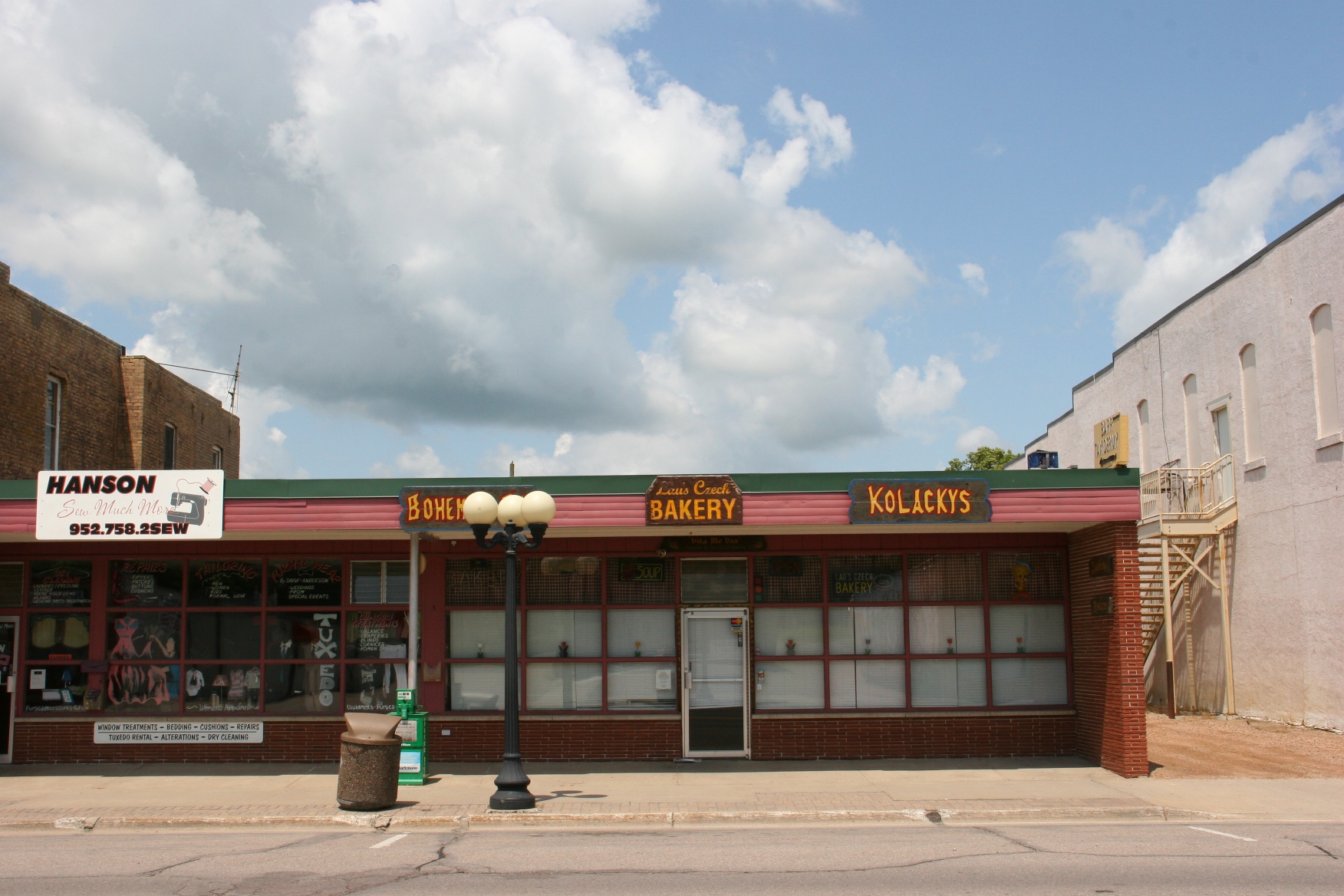
I definitely want to visit this ethnic bakery. Businesses like this rooted in the town’s heritage are sure to draw customers.
I don’t want New Prague folks and business owners to take my comments the wrong way, to be discouraged. Rather, I hope my observations are useful. I’ve often thought communities could benefit from an outsider’s first impressions. I’ll return to New Prague, but next time on a Saturday, when shops are open. I want to experience Main Street from the inside, too, not just the outside.
BONUS PHOTOS:
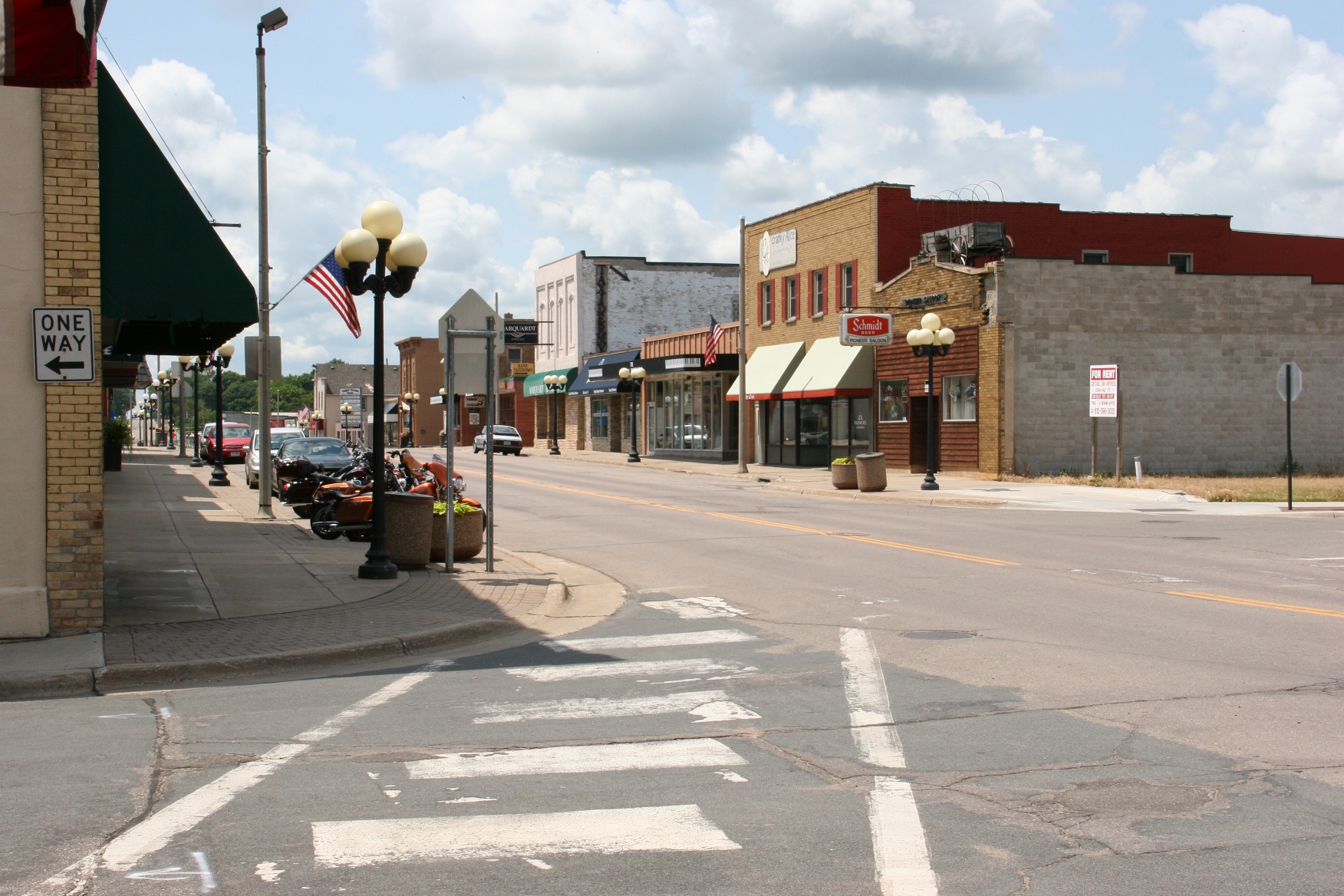
Doing something with the vacant lot next to the Prairie Saloon (right in photo) would enhance the downtown.
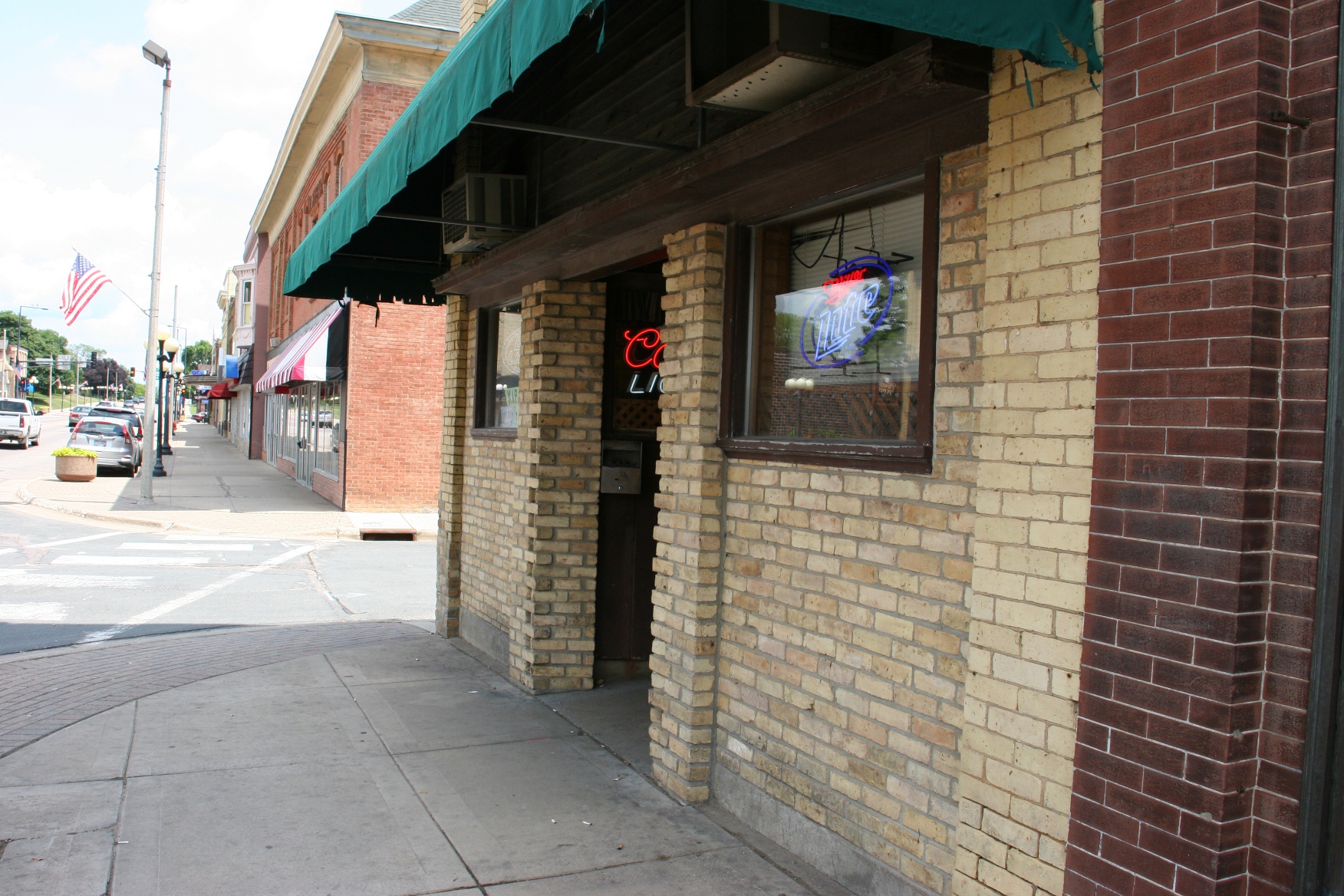
The Corner Bar is aptly named. Cigarette butts litter the sidewalk here as they did at other bars.
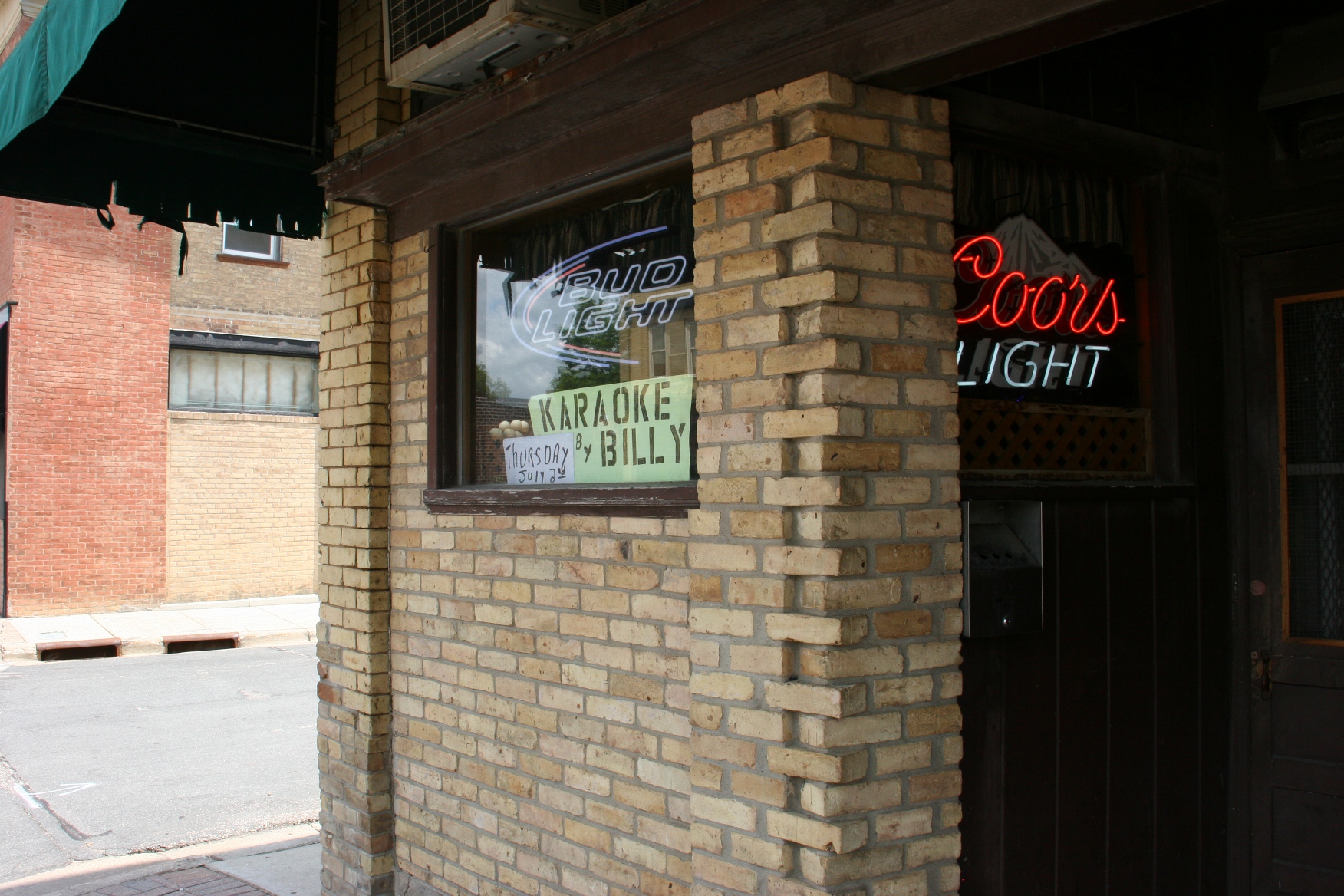
A close-up look reveals that the Corner Bar offers karaoke by Billy. This is what I love, local character.
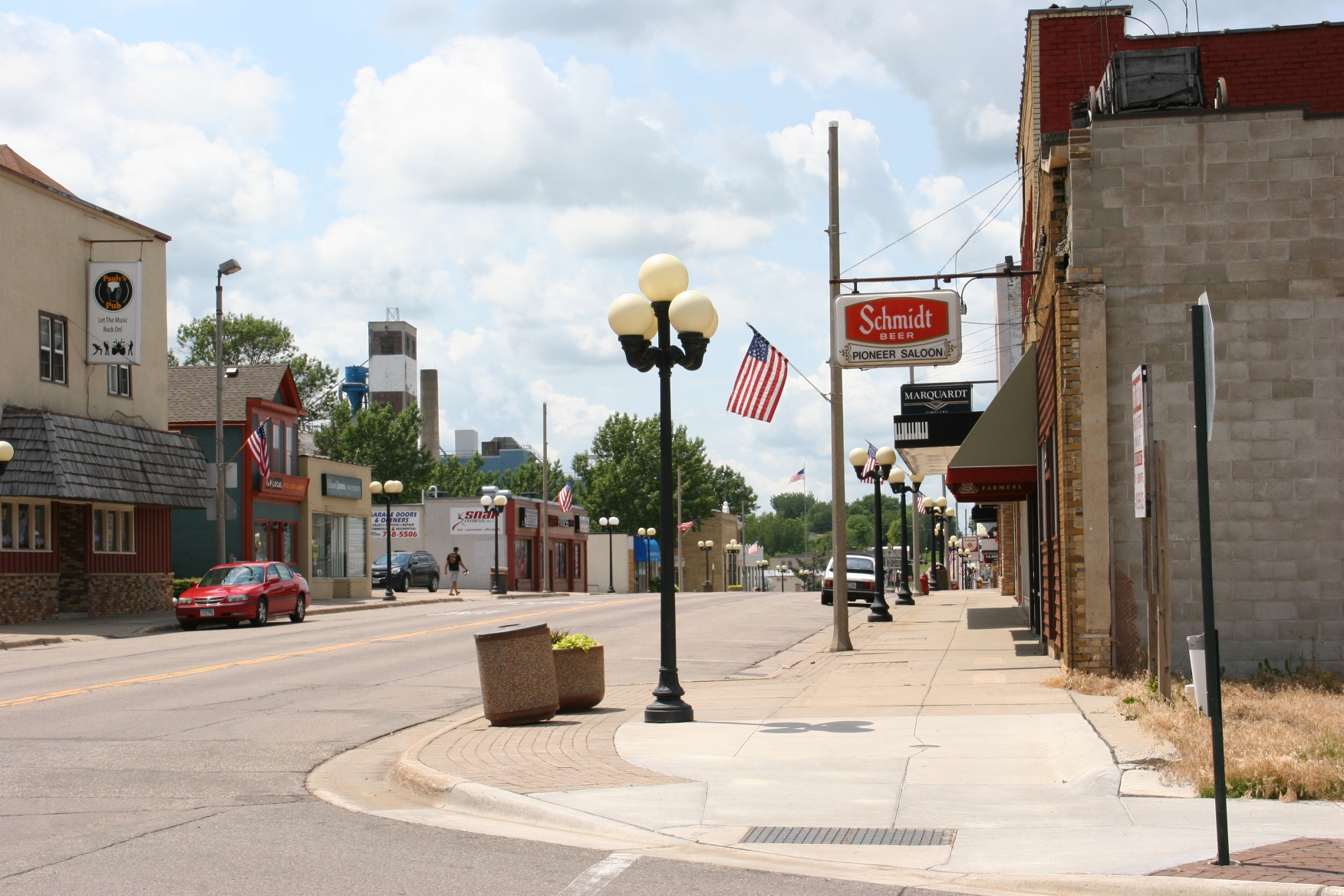
Another view of Main Street.
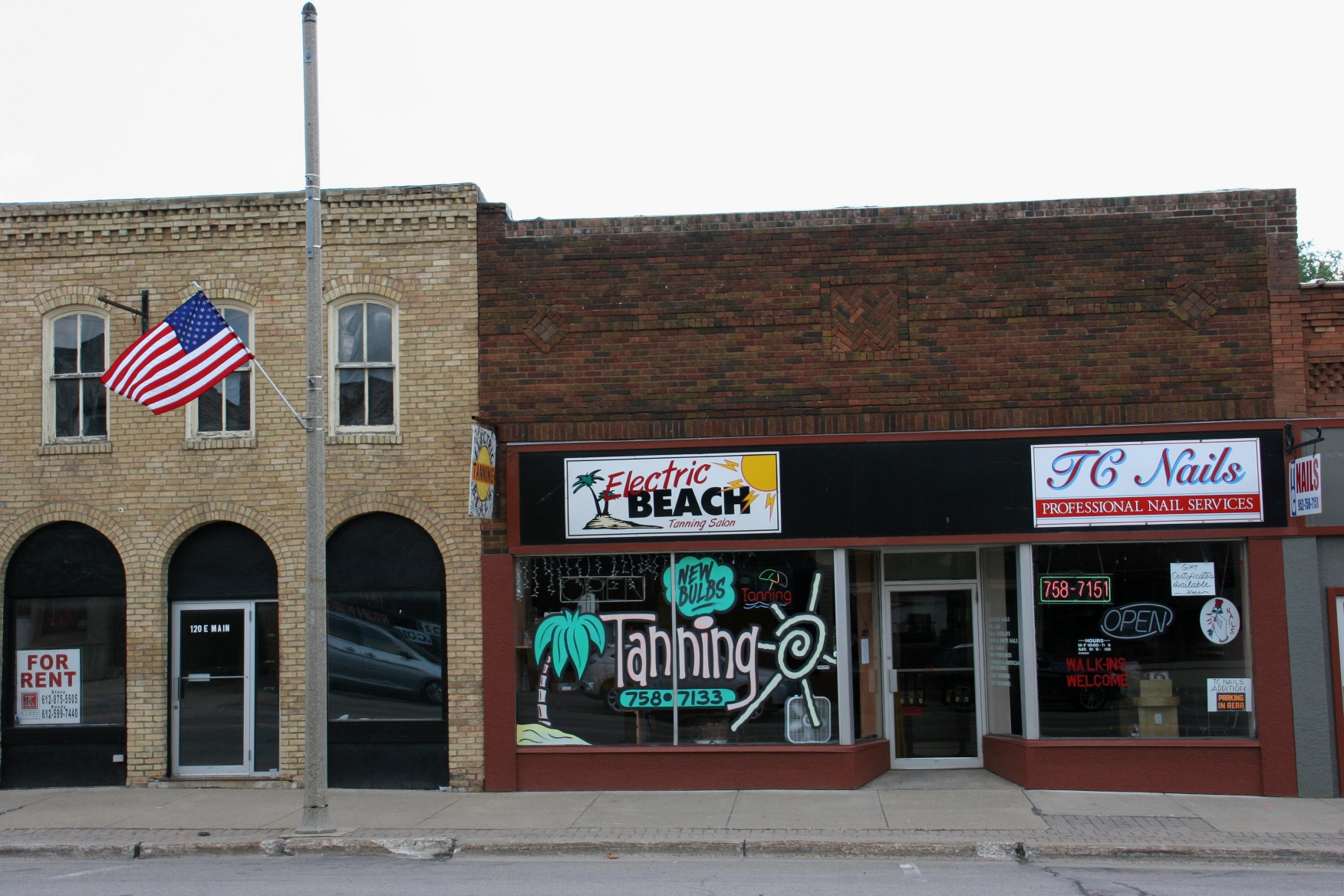
A variety of businesses line Main Street. If only all of the buildings could be restored to their former appearances, both in exterior and in subdued signage.
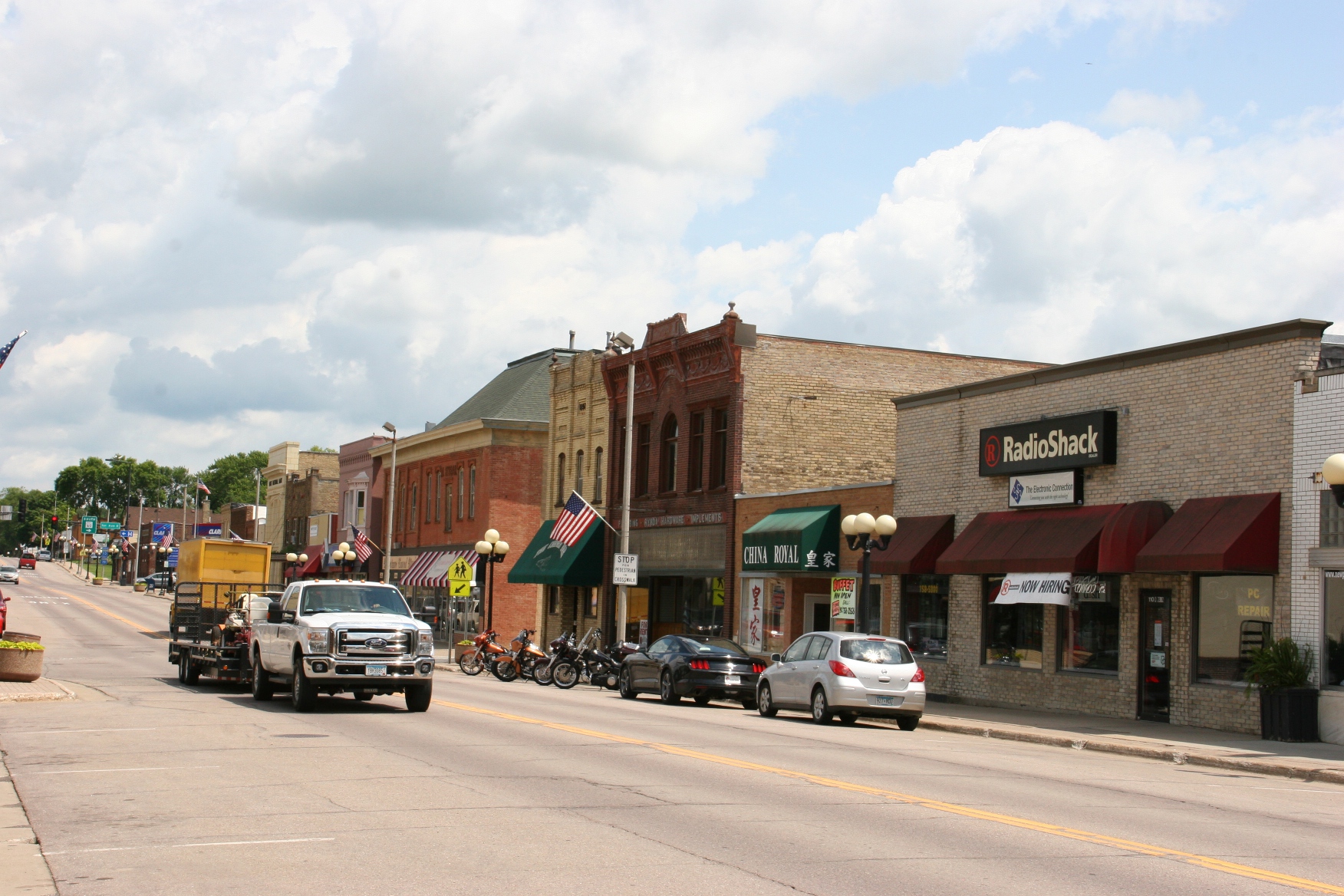
New Prague has a definite advantage over many other communities as a major state highway runs right through the downtown business district.
© Copyright 2015 Audrey Kletscher Helbling
WHEN VISITING A WINERY, it’s as much about the setting and experience as about the wine.
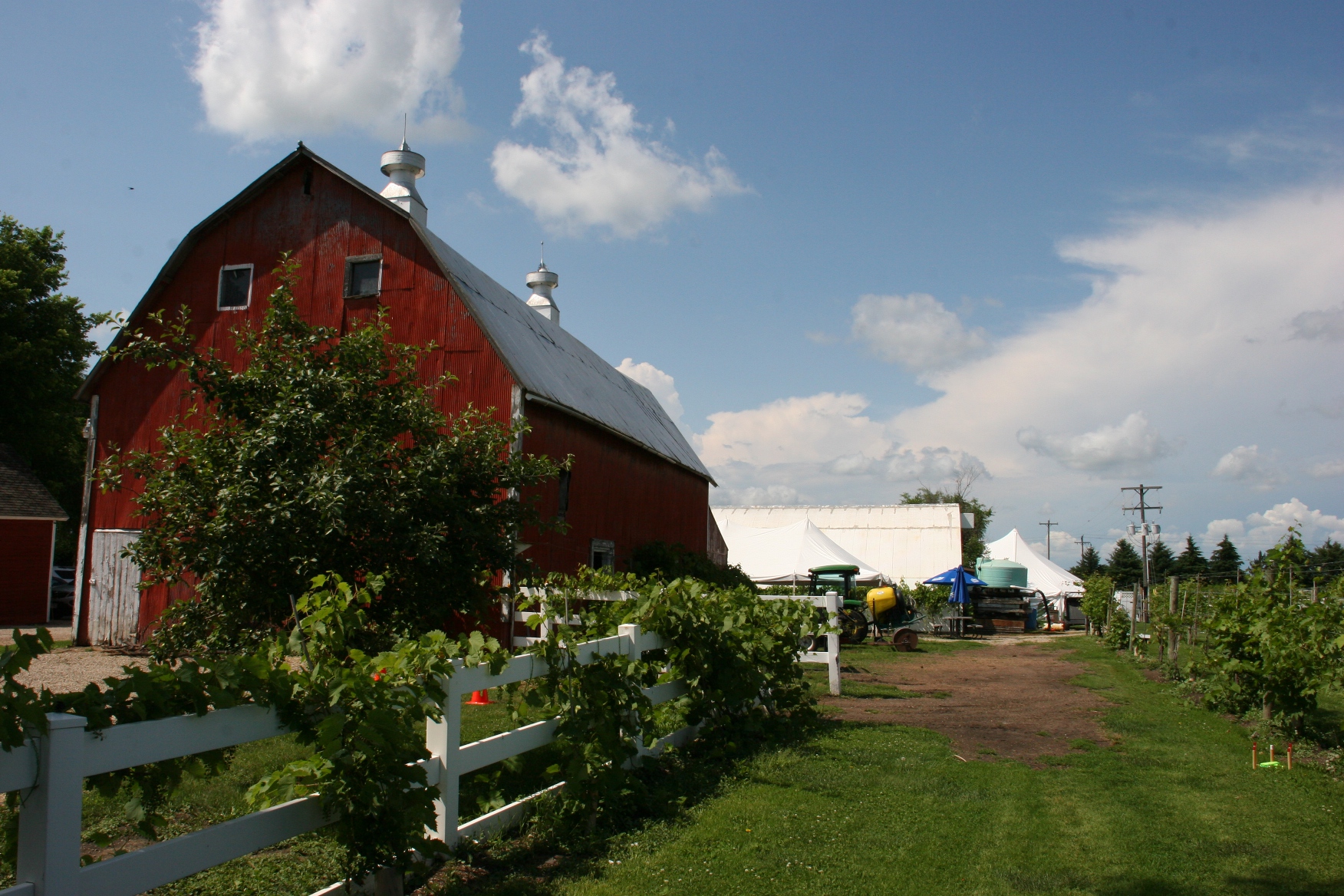
Rows of grape vines grow alongside the barn at Next Chapter Winery, 16945 320th Street, rural New Prague.
On Sunday, my husband and I discovered yet another delightful southern Minnesota winery, Next Chapter Winery, just southwest of New Prague.

This inviting canopied gravel driveway leads wine lovers to Next Chapter Winery. The house is a private residence, not the tasting room as I initially thought.
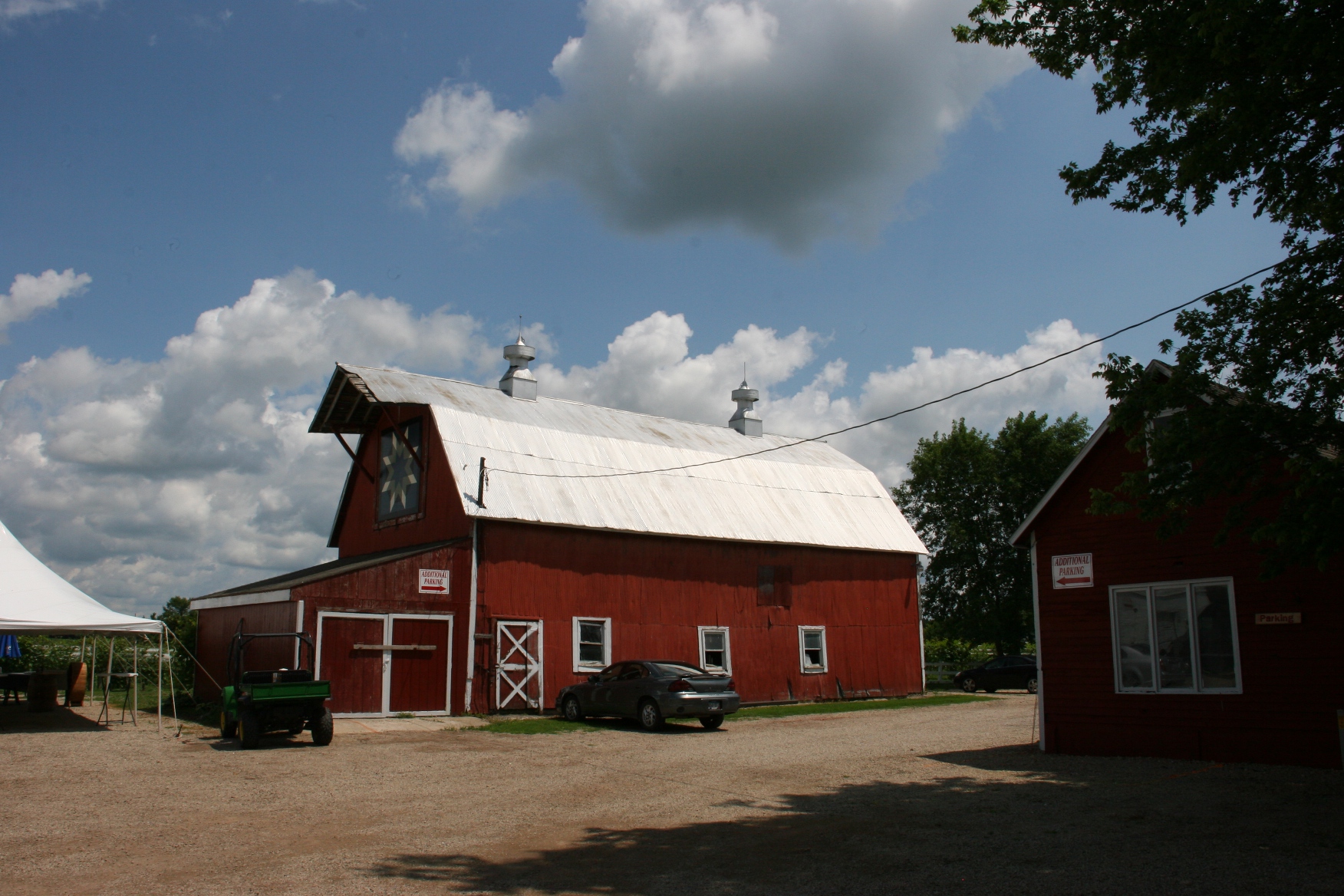
Randy parked our car to the right out of this photo, next to the house. There’s plenty of parking behind the shed and barn.
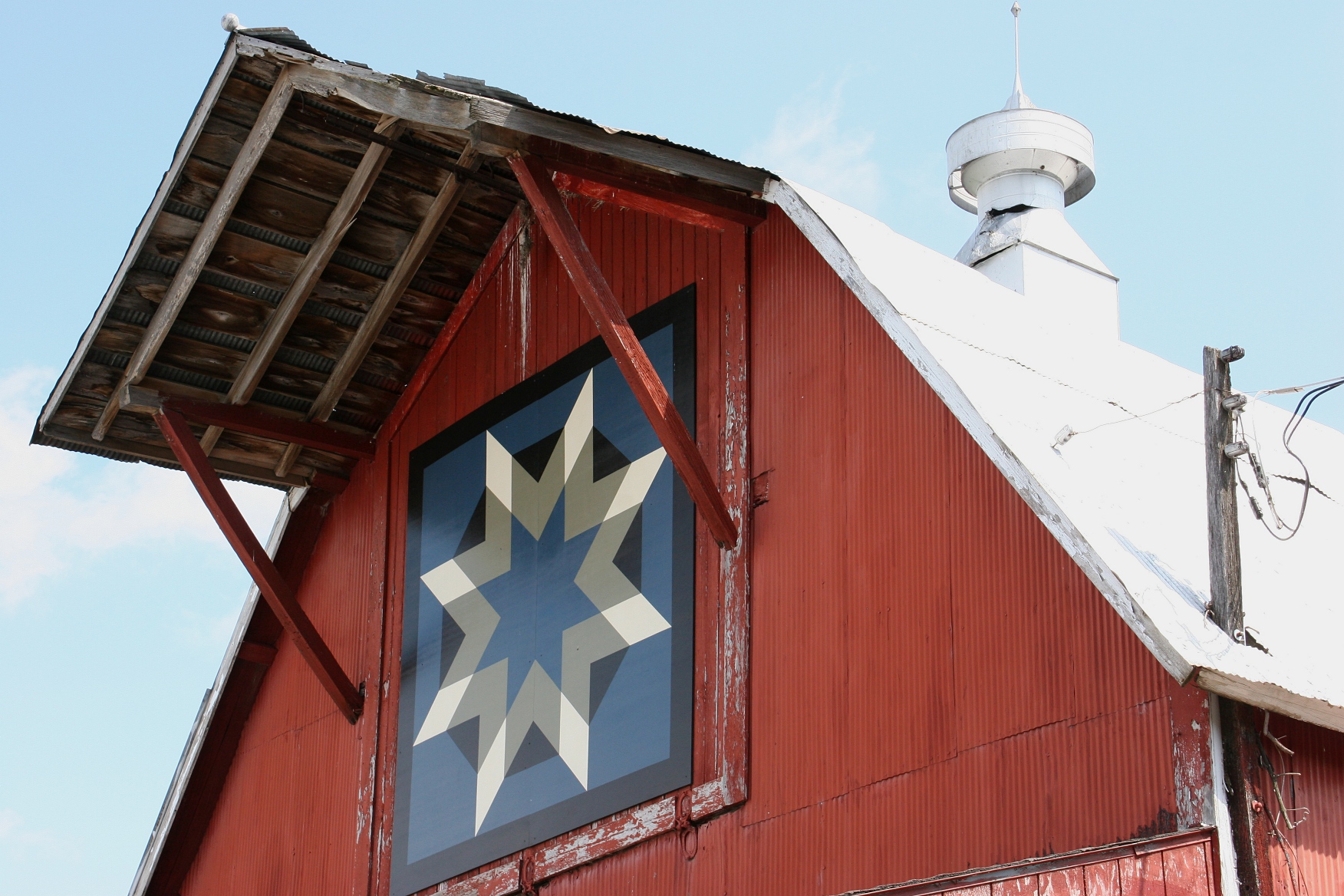
The barn quilt adds an artistic touch to the vintage barn.
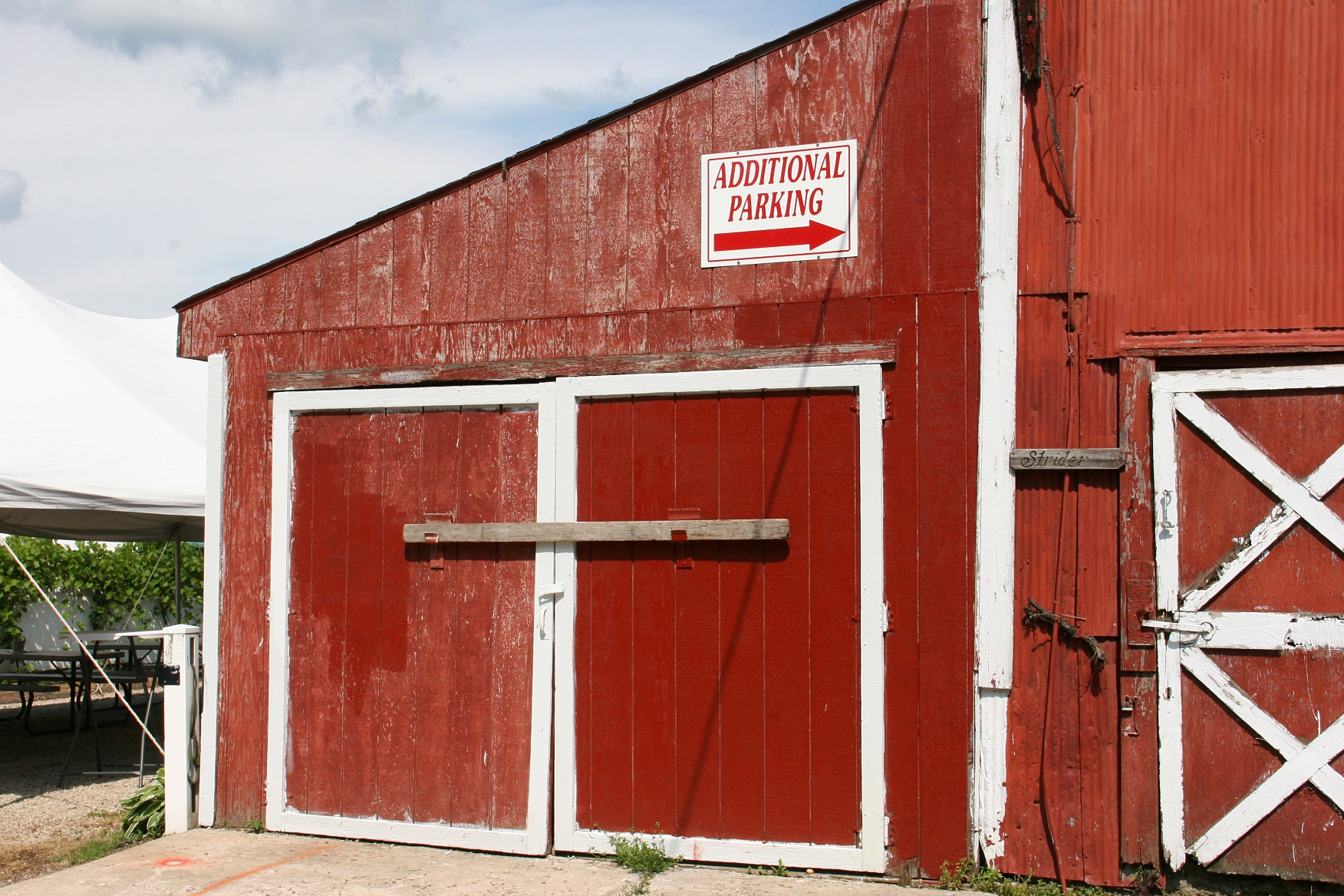
Even the barn doors hold rustic charm.
From the time we turned onto the rural tree-lined driveway that tunnels toward a lovely home in a subtle buttery hue, parked our car in the shade of the yard near an aged red barn adorned with a barn quilt and entered the pole shed style winery, I felt comfortably at home. It was as if I had arrived at the farm of a favorite aunt and uncle for a Sunday summer afternoon visit. And wine.
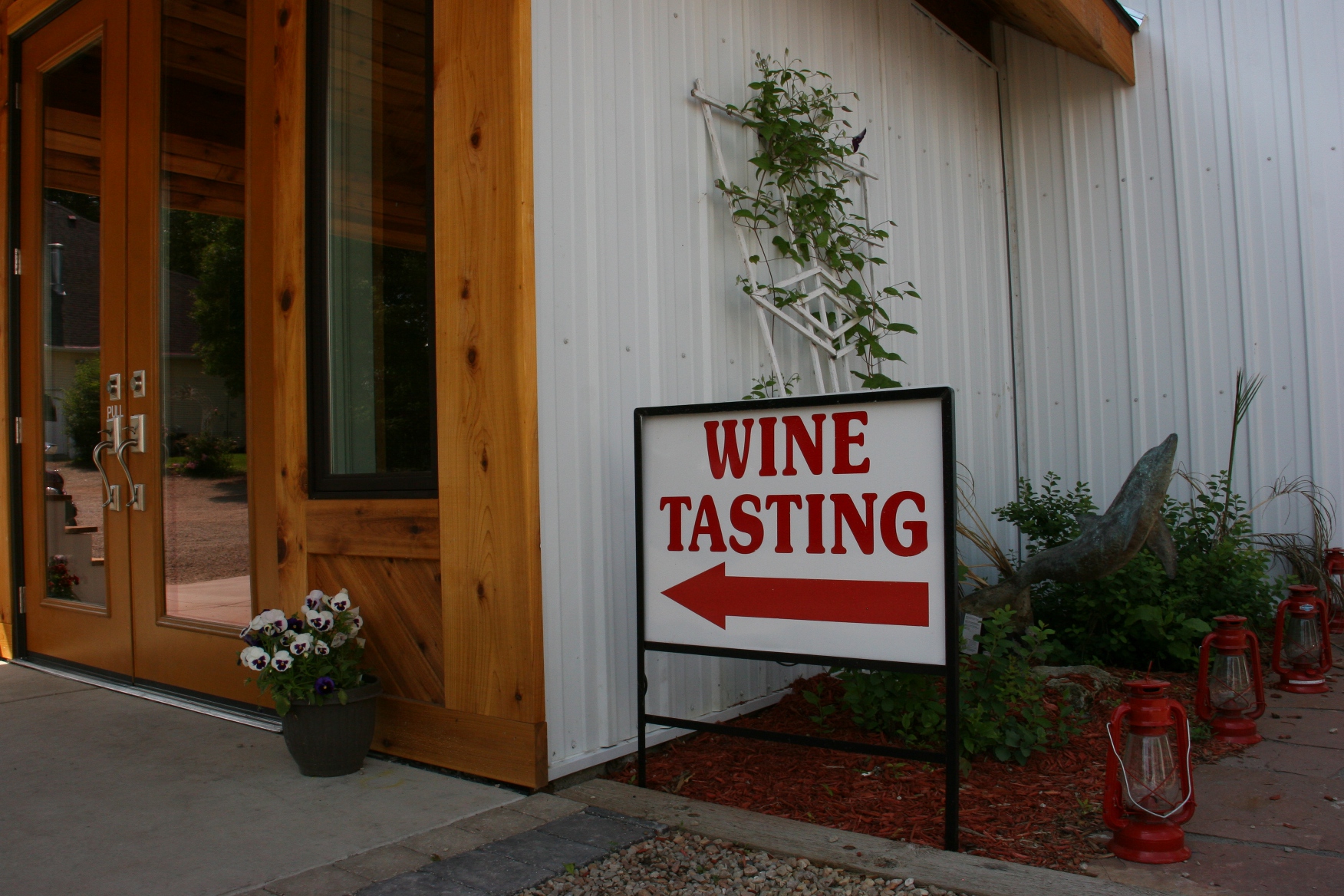
A sign directs visitors to the tasting room.
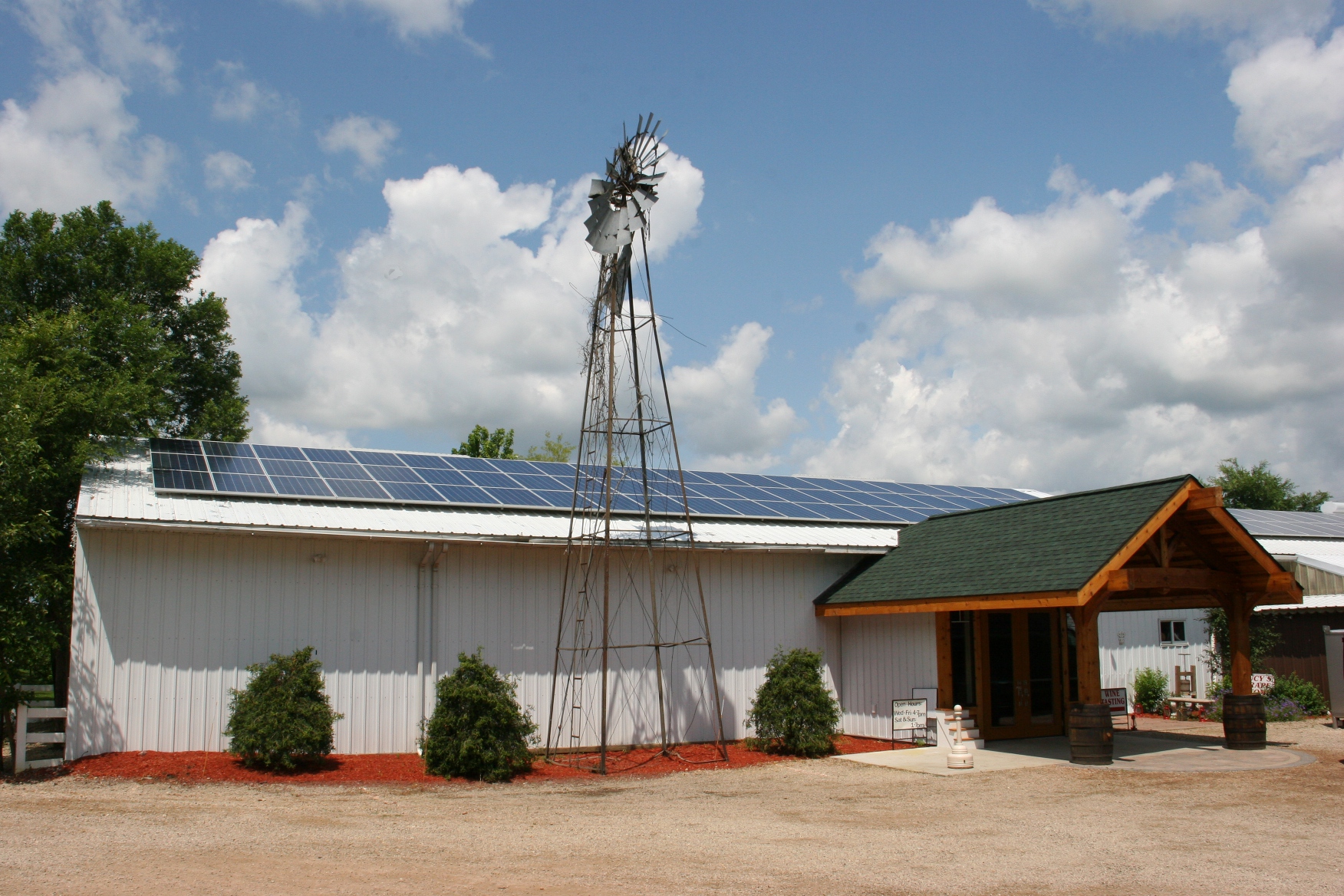
The tasting room.
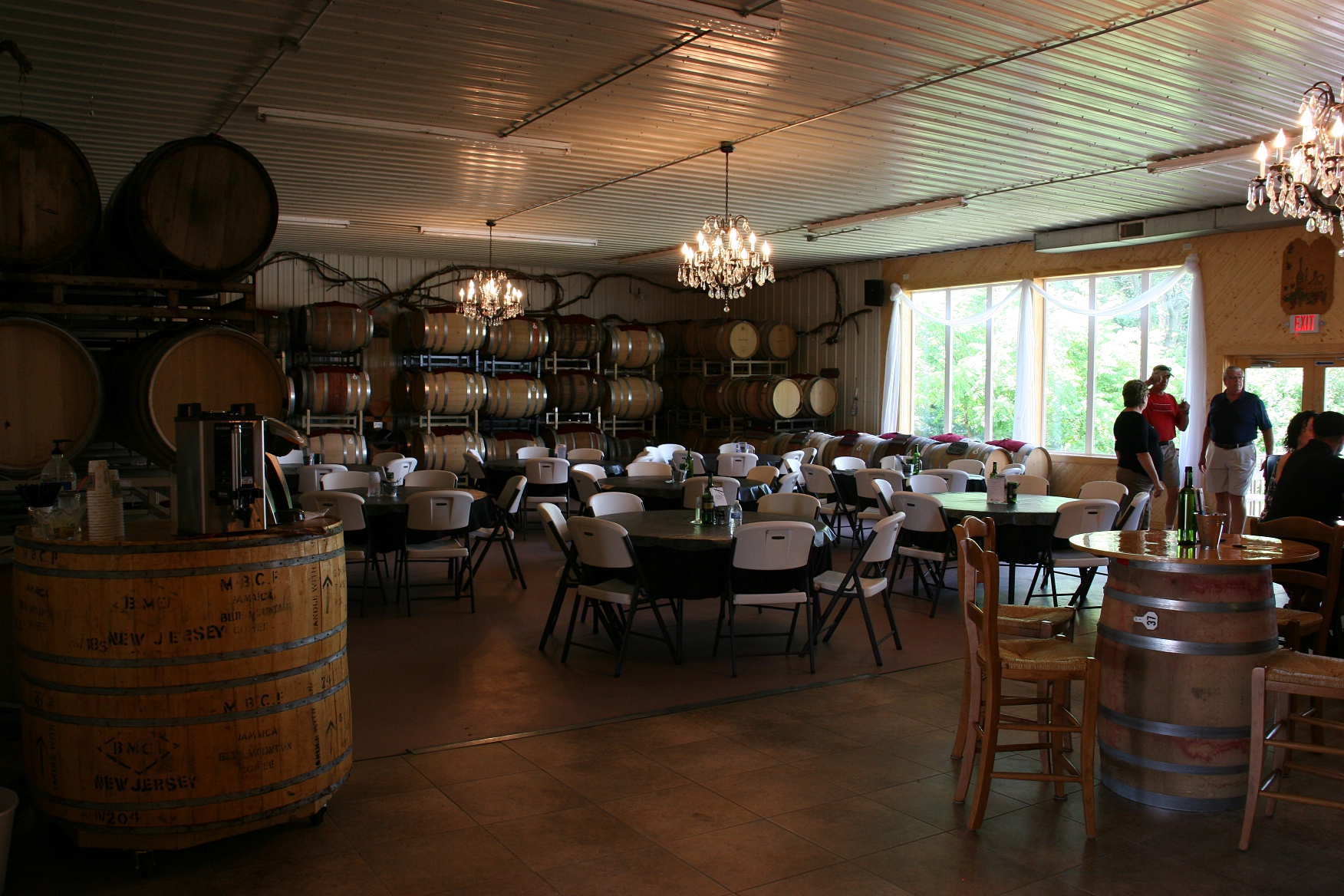
Love the ambiance the chandeliers create in the tasting room.
Inside a rather non-descript white metal shed, where chandeliers add unexpected elegance and stacked wooden wine barrels line walls, Randy and I settled in at the bar to sample eight wines ranging from a fruity/black cherry Merlot to the semi-sweet white Muzungu to the refreshing fruity MN Blushing Bride to the winery’s specialty Cranberry Burst, sweet and tart with a burst of fizz and crafted from Wisconsin cranberries.
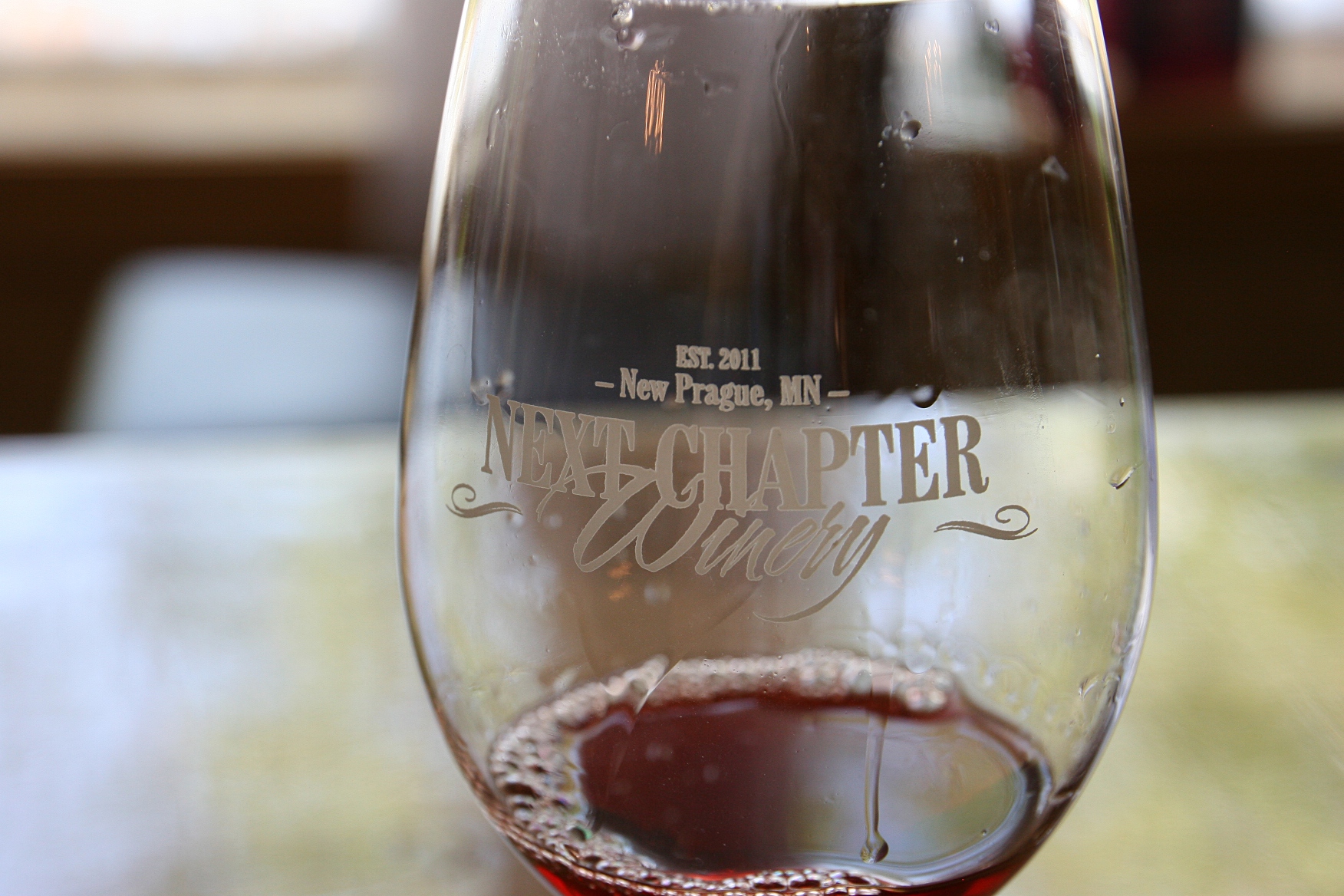
Sampling Next Chapter wine.
For $6 you can sample six of eight wines. The fee is waived with each bottle purchased. We shared two of the wines so we could each try all eight.
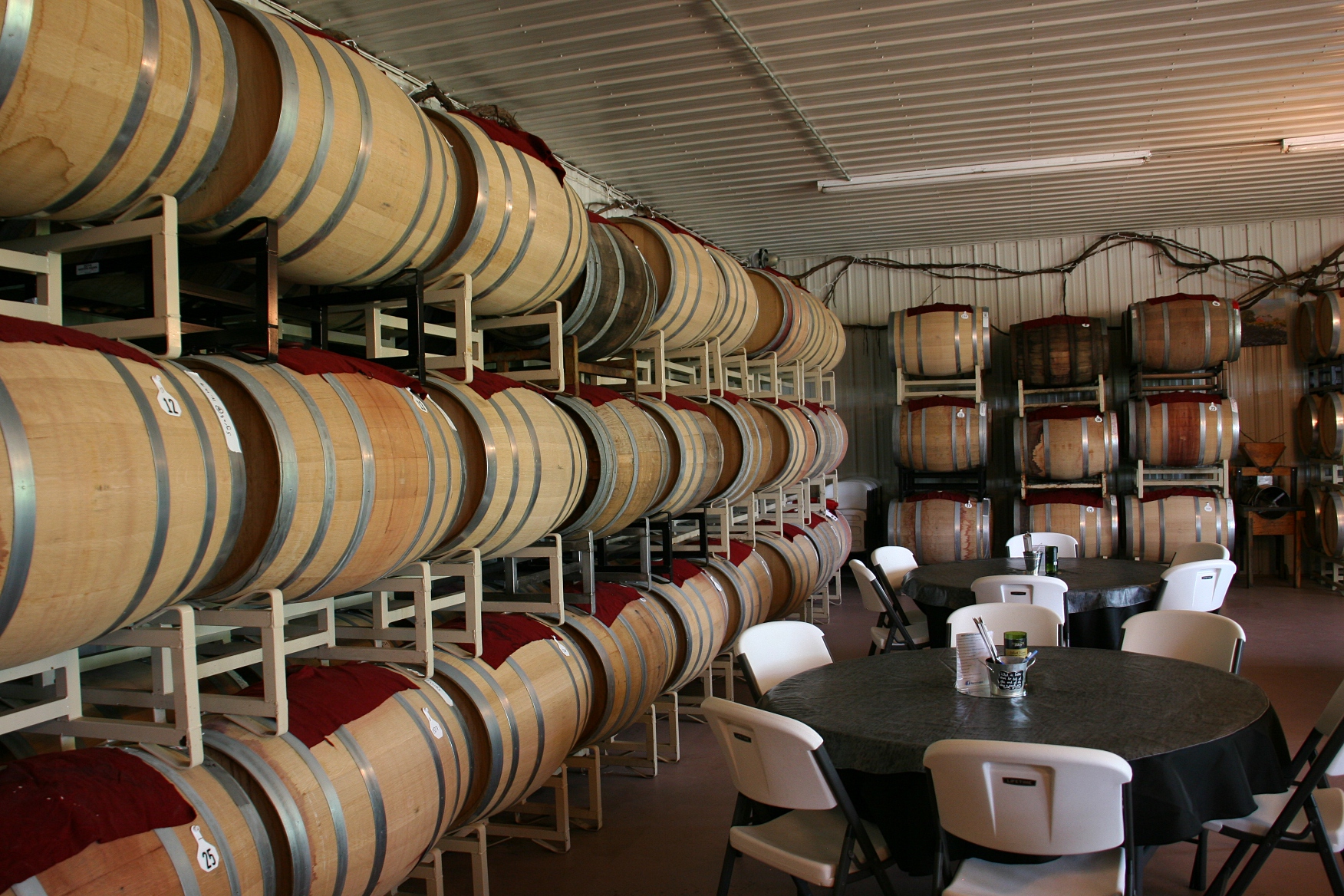
The wine is aged only in wooden barrels.
There wasn’t a single wine on the sampling list that I didn’t enjoy. That’s unusual since I typically find at least a wine or two I don’t like upon tasting at a winery. Maybe it’s the time-honored, authentic aging of wine in wooden barrels (no plastic used here) or the land or the grapes or the crafters or even the comfortableness of this place that resulted in my appreciating every wine.
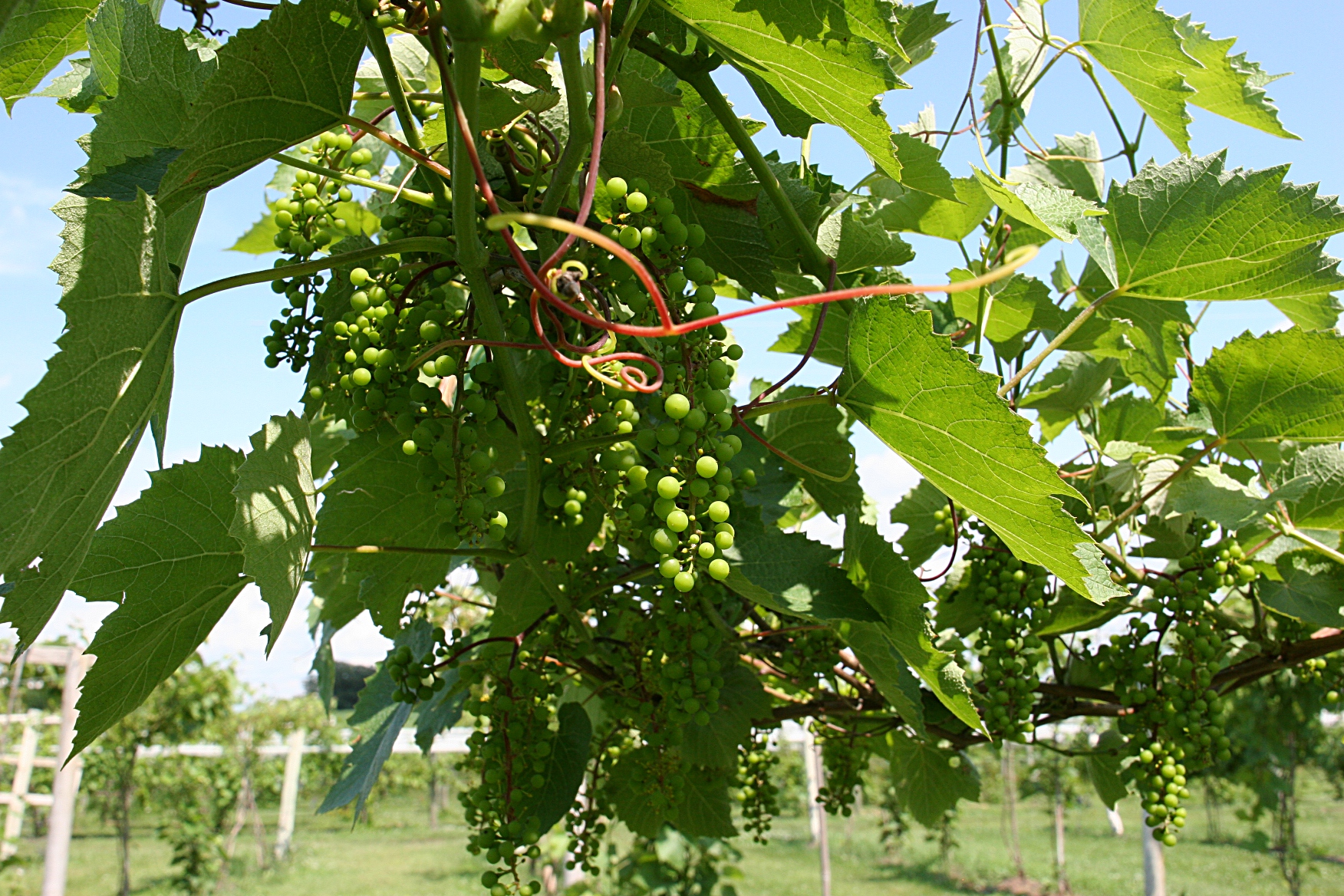
The grapes are still small and growing.
The attentive and friendly service of Laura, who poured the wines and also offered a brief history of Next Chapter, certainly added to a truly wonderful personalized experience. The winery, she said, is the dream of Timothy and Therese Tulloch, who met in the early 1980s when Therese served with the Peace Corps in the Congo and met Timothy, a native of South Africa. They fell in love, became engaged and planned then to someday own a vineyard.
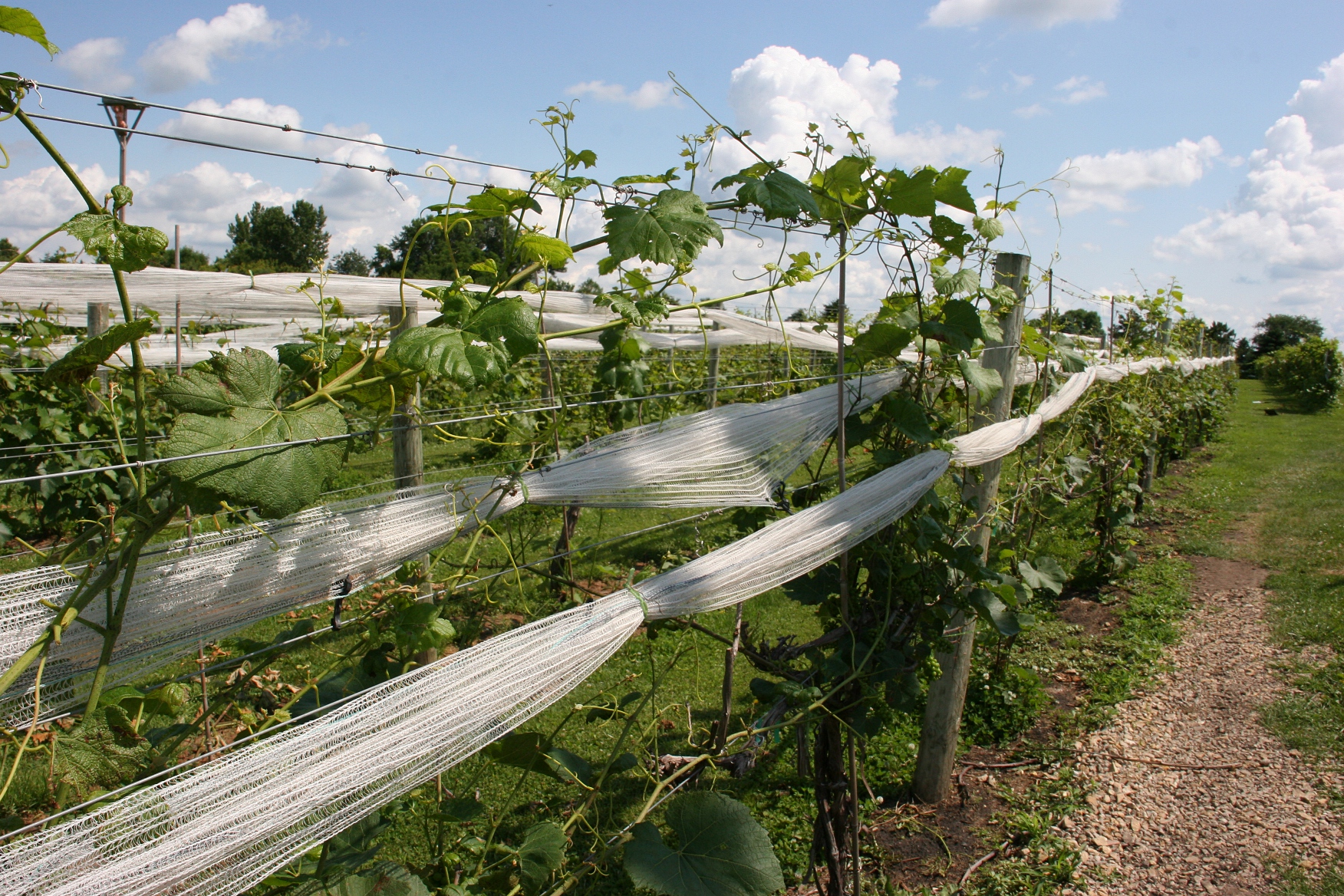
Rows of grape vines stretch along the property.
Last July, Next Chapter Winery, with eight varieties of grapes growing on 3,700 vines on six acres, opened to the public.
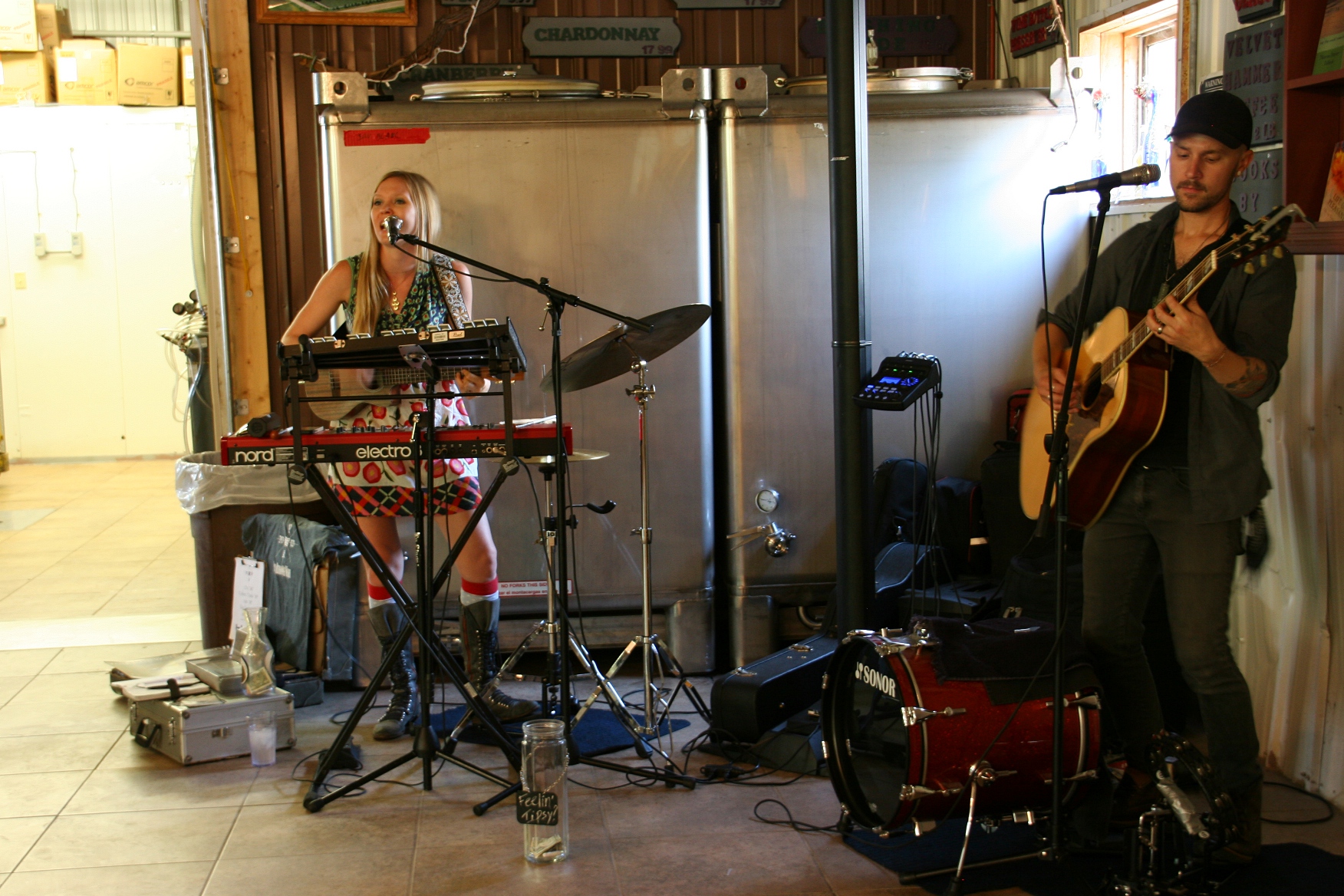
Musicians perform Sunday afternoons in the tasting room.
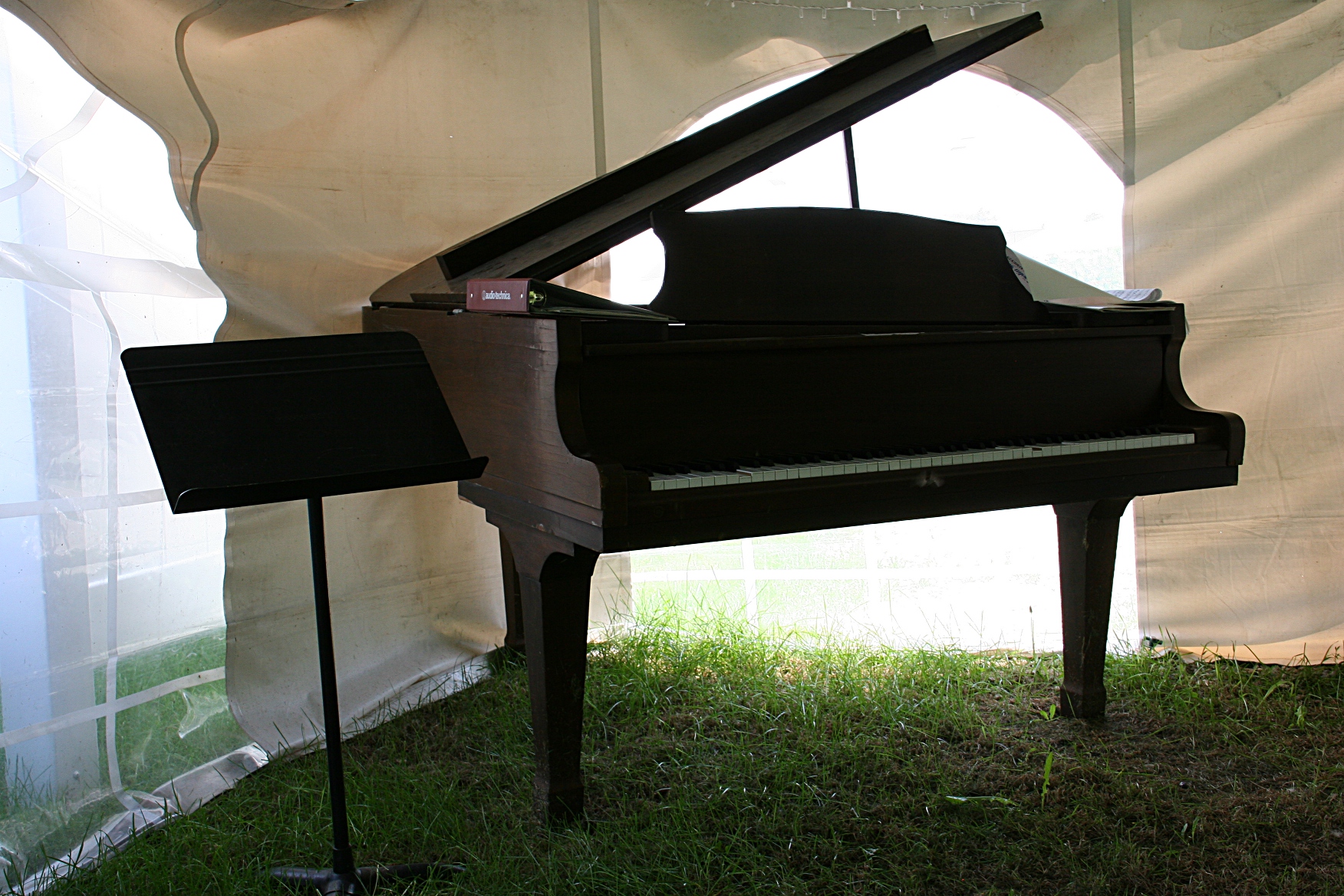
A piano inside the reception tent.
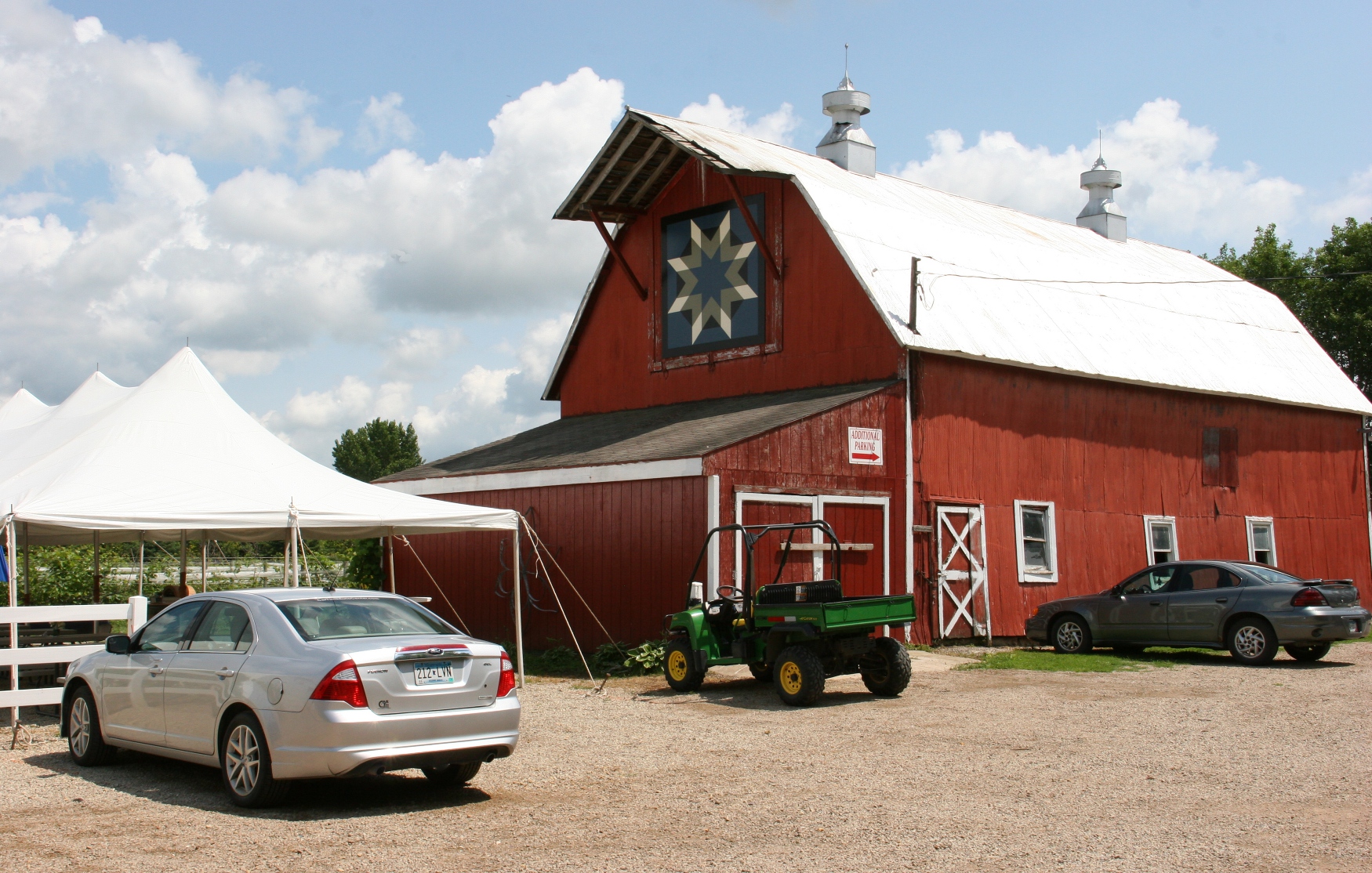
To the left of the barn is a tasting tent.
But this winery is about more than just the wine. It’s about a sense of place, an embracing of rural Minnesota, of creating an experience, of celebrating life and good wine and special occasions and summer Sunday afternoons. Couples can marry here. From 3 p.m. – 5 p.m. Sundays, musicians perform. Tours are offered from noon to 1 p.m. Saturdays. On Wednesday evenings you can paint and sip wine. In the winter, you can catch the occasional theatrical performance.
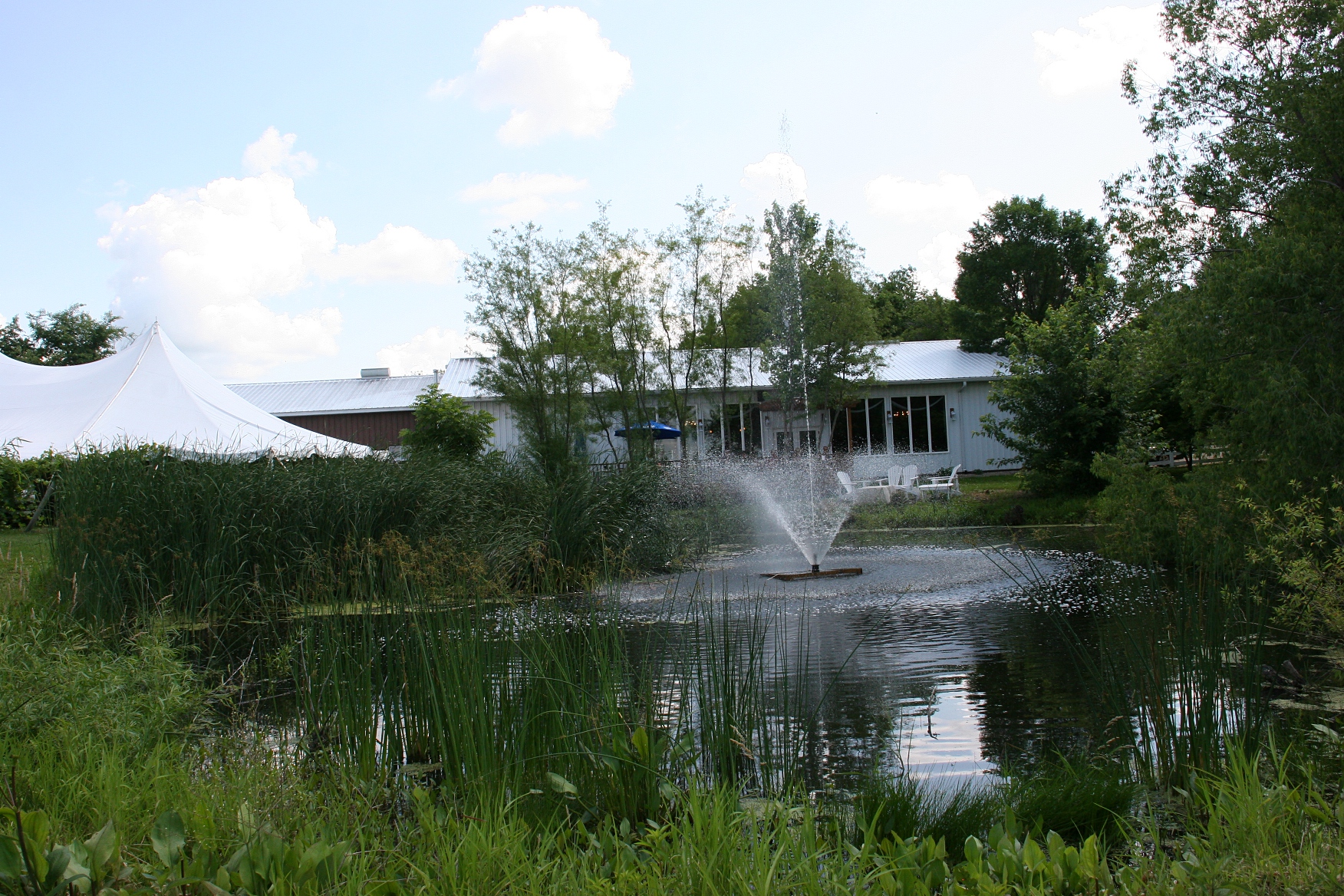
Across the pond is the tasting room deck. To the left is the tent permanently set up during the warm months for wedding and other celebrations.
For couples like us, Next Chapter offers a brief respite, a place to snug up to the bar for some great Minnesota wines while chatting with new friends, Gary and Cindy from Prior Lake. Or, if we had been so inclined, we could have kicked back in Adirondack chairs or sipped wine on the deck overlooking a small pond spraying a fountain of water.
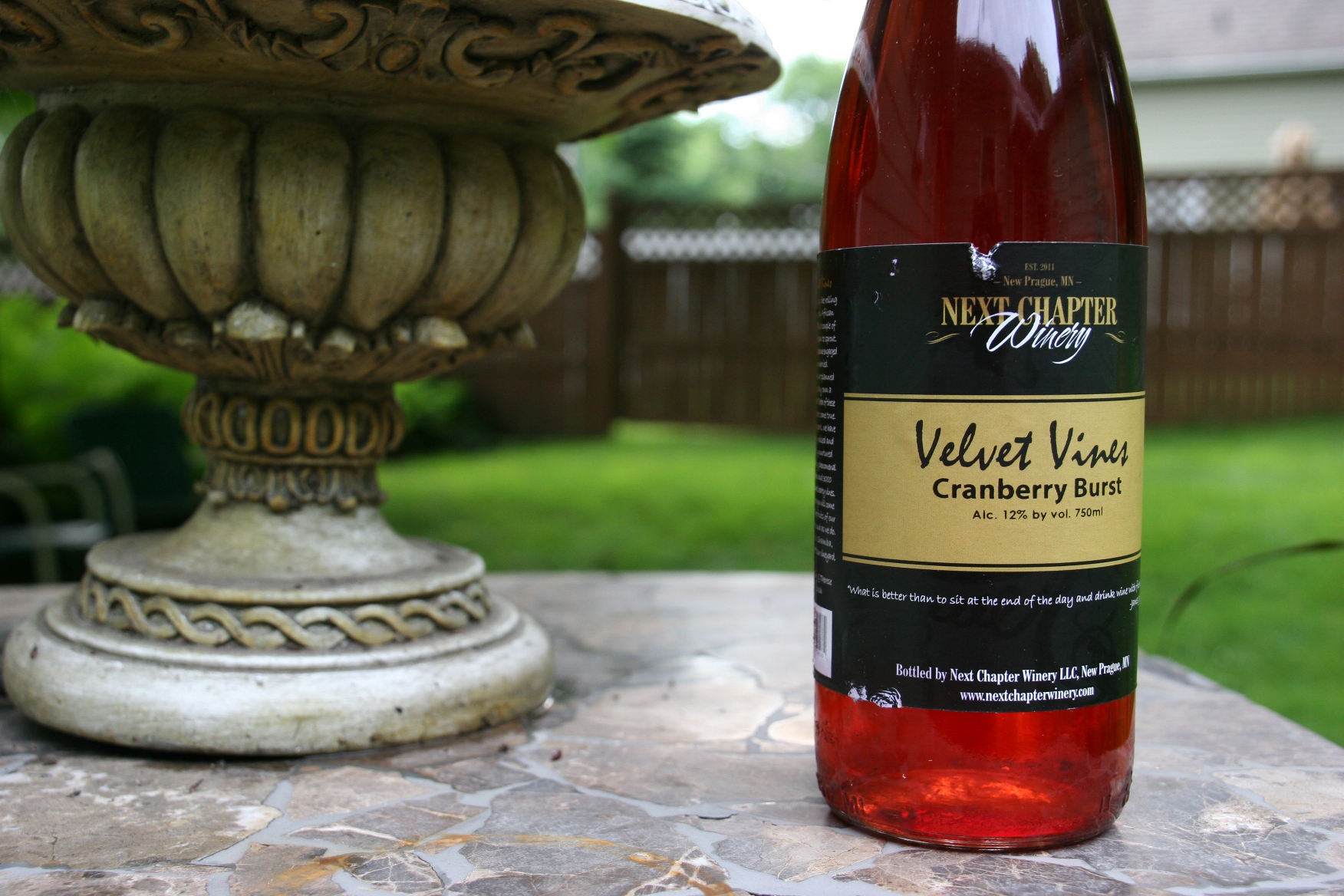
At home with a bottle of Cranberry Burst.
While Randy purchased bottles of Muzungu and Cranberry Burst, I headed outdoors with my camera, following the rows of grapes, stopping to photograph, extraordinarily pleased that we found this lovely rural Minnesota winery between New Prague and Montgomery.
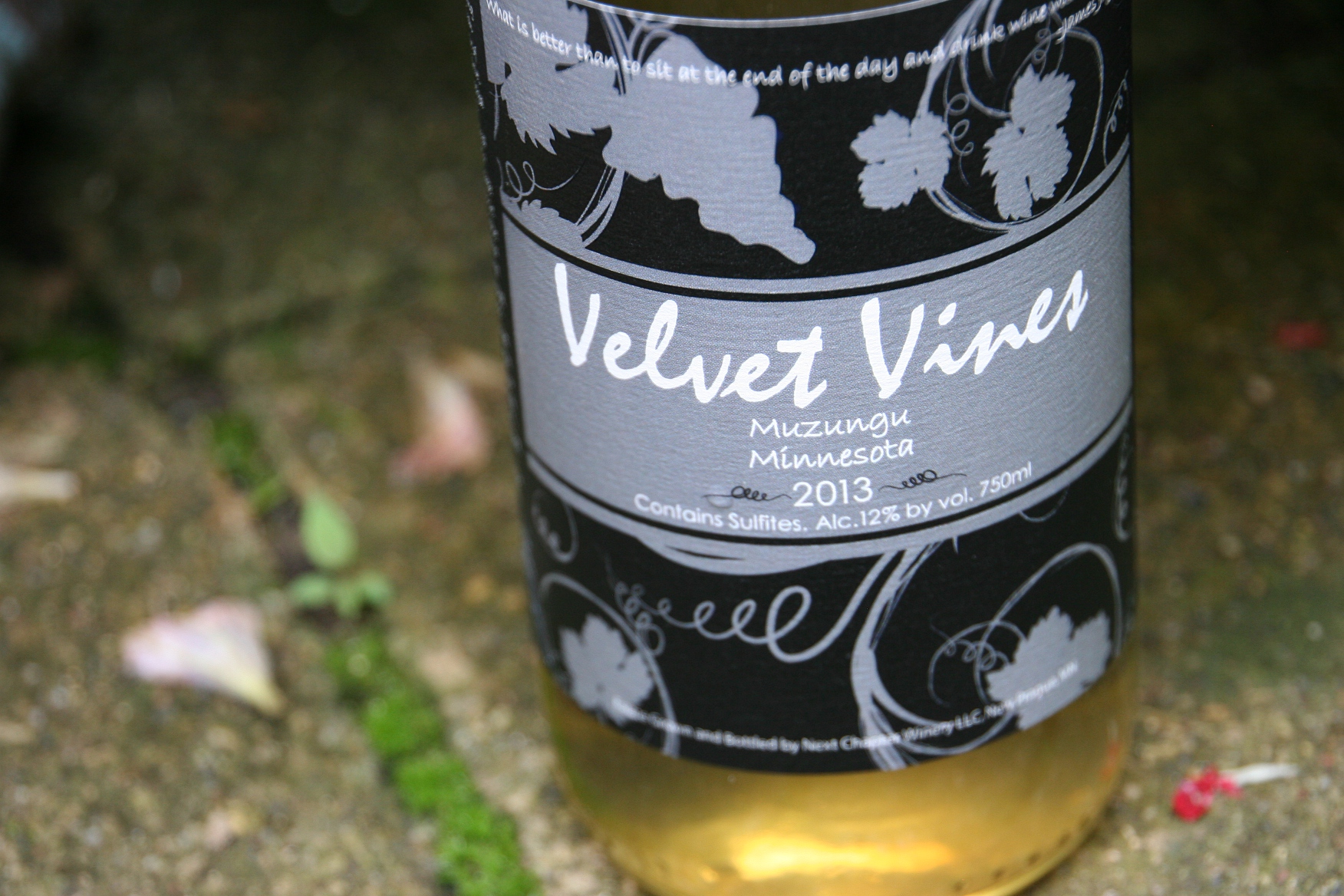
Our second purchase, Muzungu, Swahili for “white guy.”
FYI: Wine tasting hours are from 1 p.m. – 7 p.m. Wednesday – Sunday. Be aware that, on weekends, the winery may host the occasional wedding and thus be closed to the public. I’d advise calling ahead at 612.756.3012 if you are driving from a distance. Click here to reach the Next Chapter Wintery website.
© Copyright 2015 Audrey Kletscher Helbling
RECENTLY I STOPPED in Geneva. That would be in Minnesota, not Switzerland, population hovering around 555. Or, if you have a sense of humor, 100,000. Someone scrawled that number onto a sign marking entry to this Freeborn County community just off Interstate 35 north of Albert Lea.
My only knowledge of Geneva comes from radio spots and the personal endorsement (from my friend Howard) for George’s of Geneva. The restaurant is known for its prime and barbecued ribs. So when my husband and I pulled into town on our meandering way home from an overnight get-away to Clear Lake, Iowa, I was scouting for George’s.
But a few other sites caught my attention first…
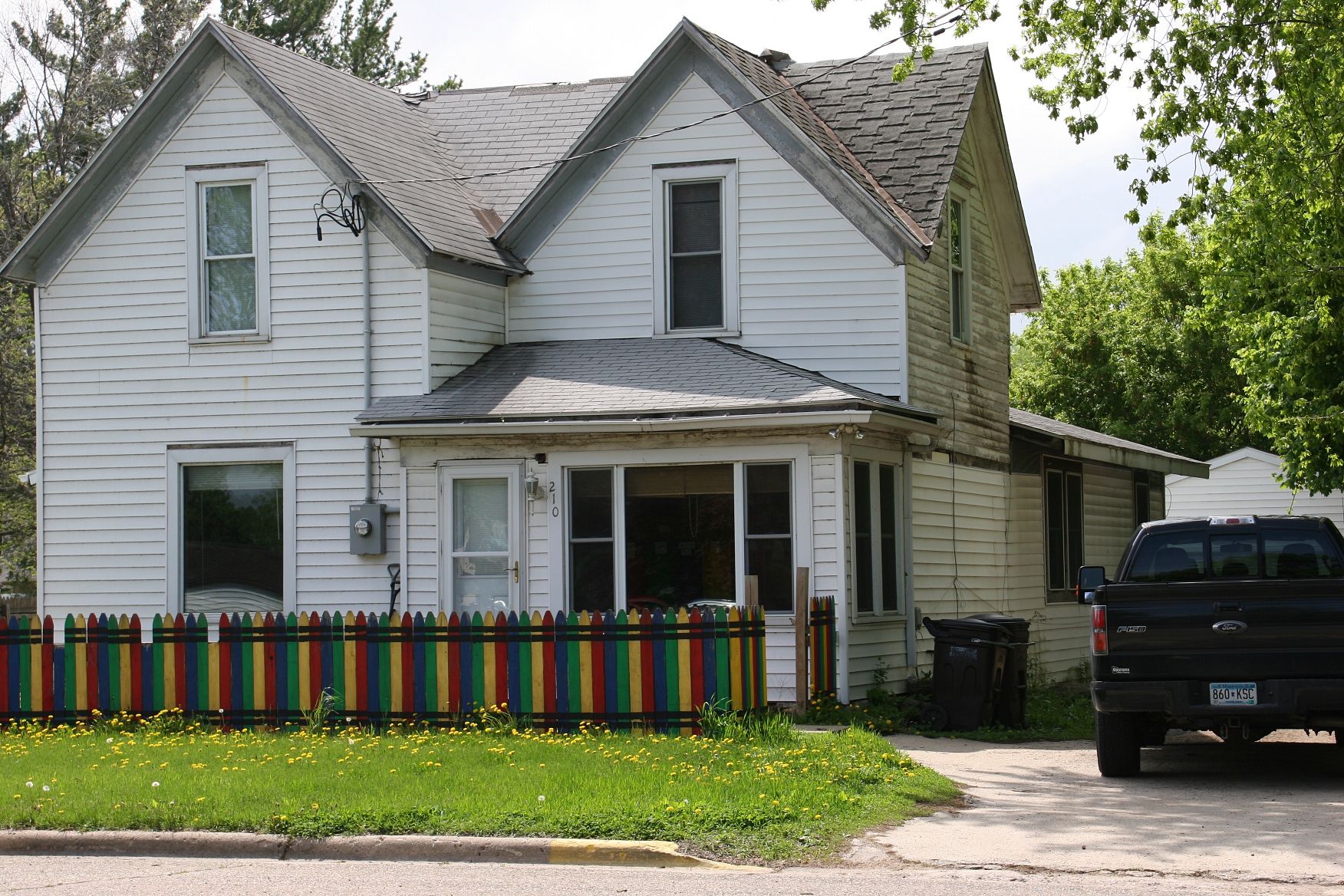
…like a crayon fence
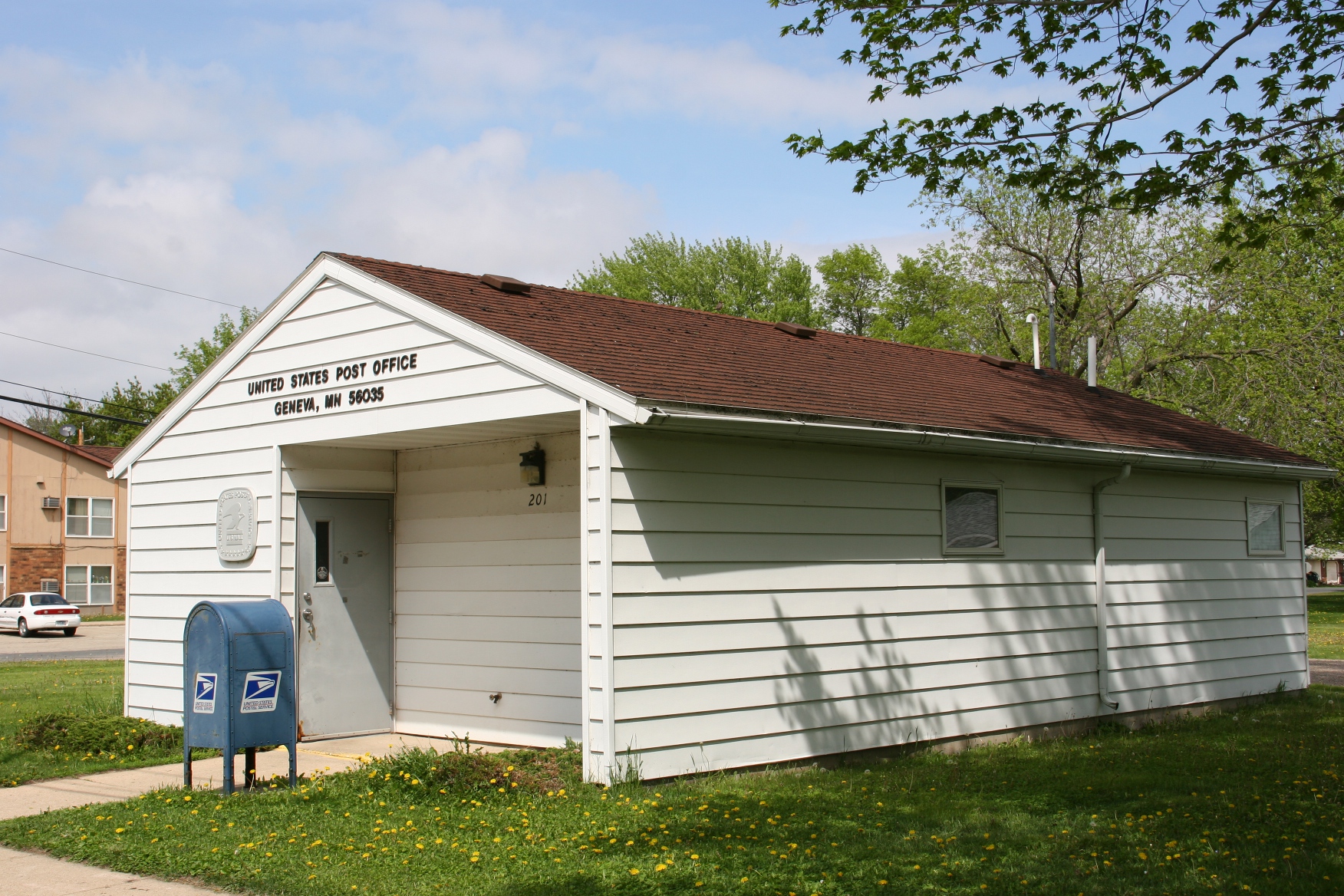
and the post office.
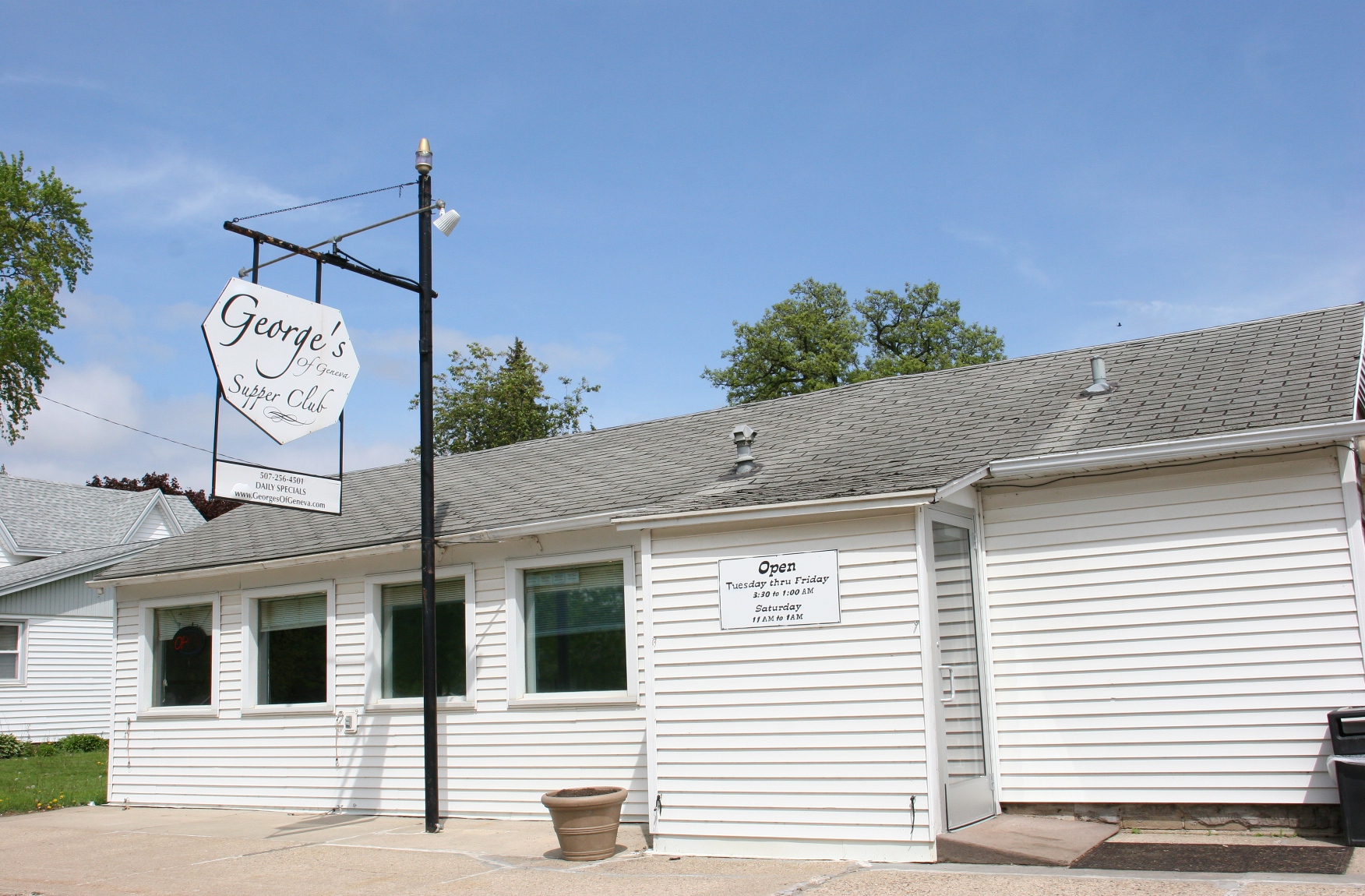
Then I nearly missed George’s. I was watching for an impressive building with bold signage. Instead, this dining place is housed in a rather unassuming low-slung white building with understated signage. I wish we’d taken time to step inside. But it was the middle of the afternoon and we weren’t hungry.
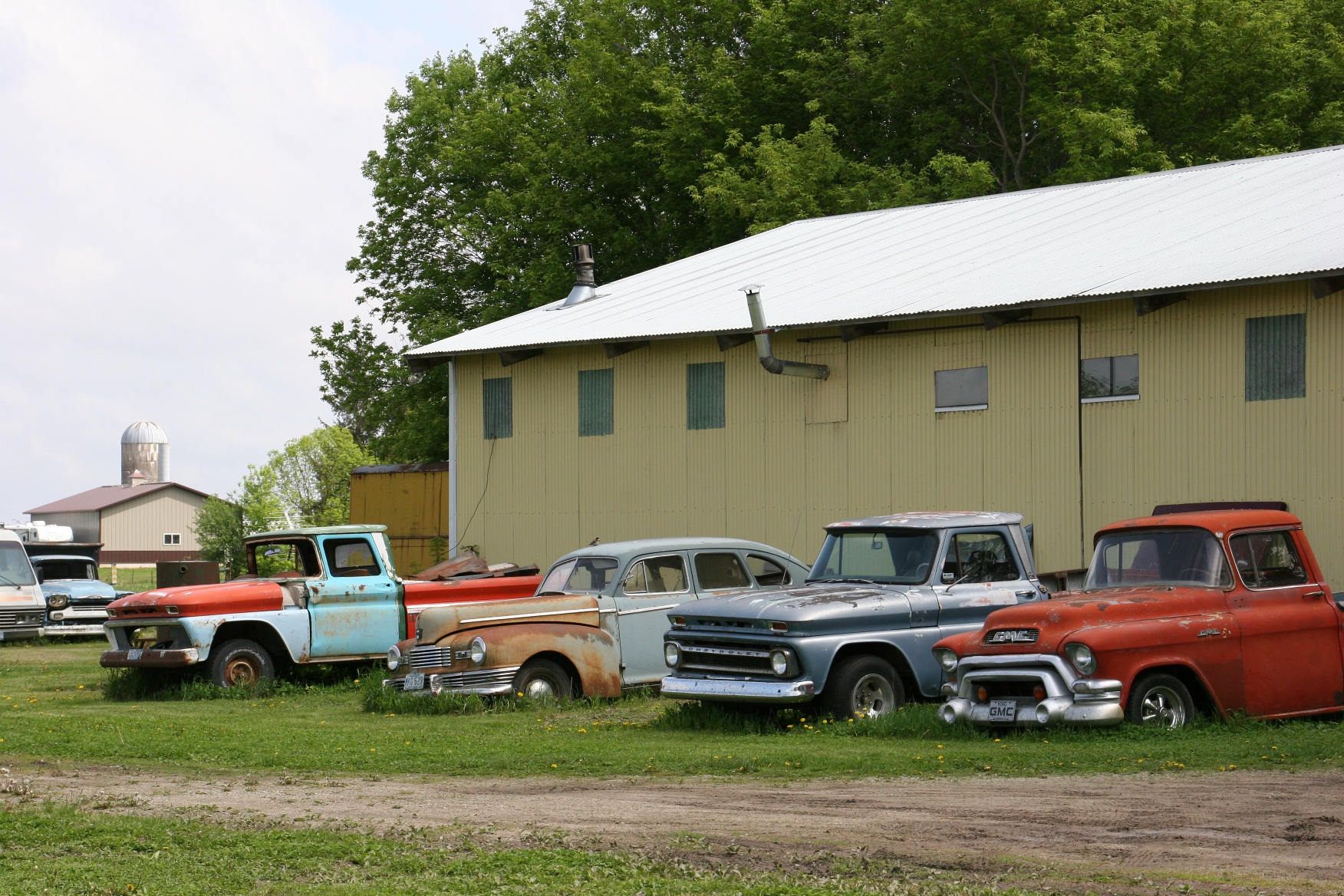
I’m pretty certain my husband was coveting one of these vintage pick-up trucks. Me too.
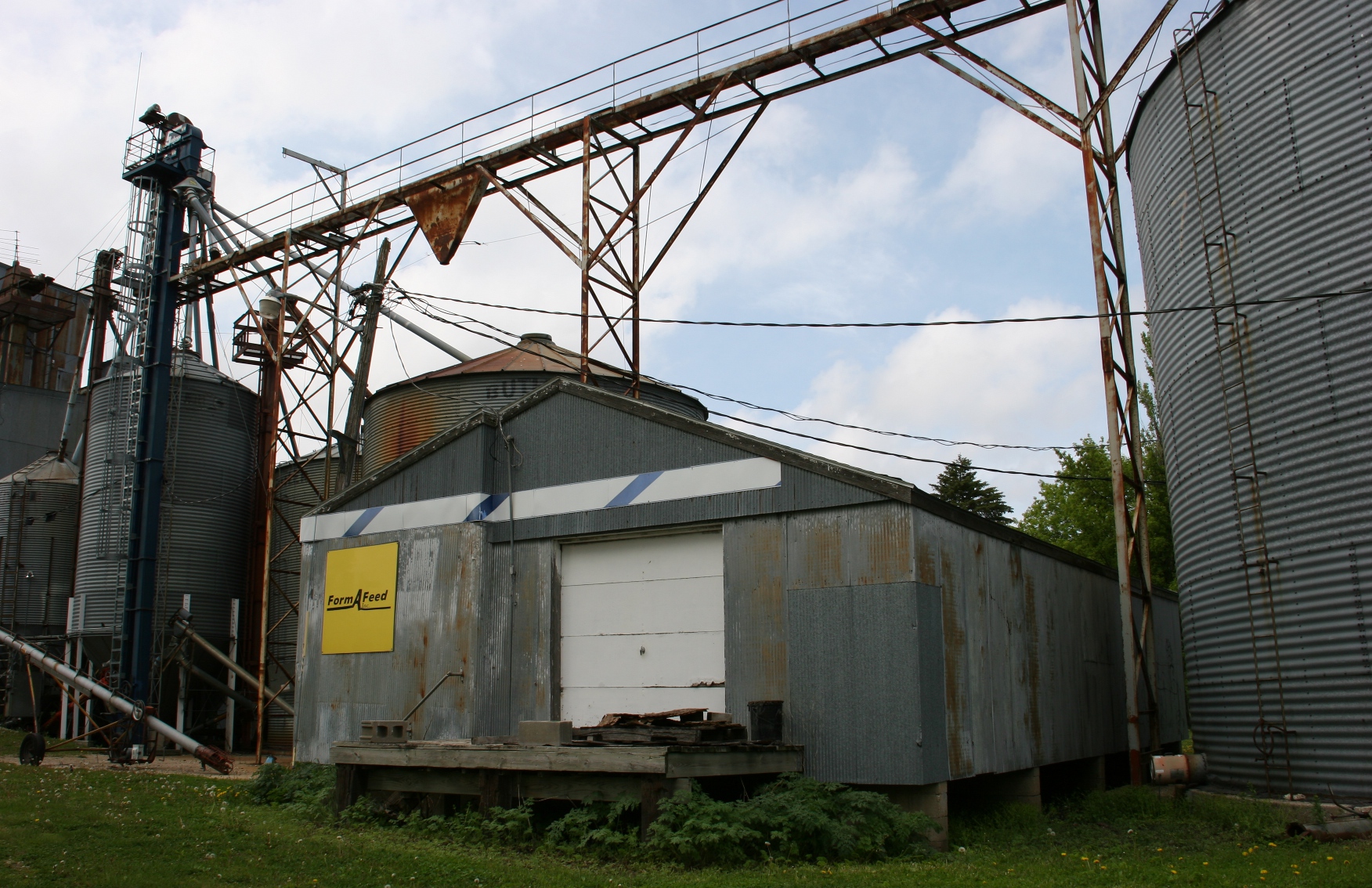
Set in the heart of southern Minnesota farmland, Geneva is definitively rural.
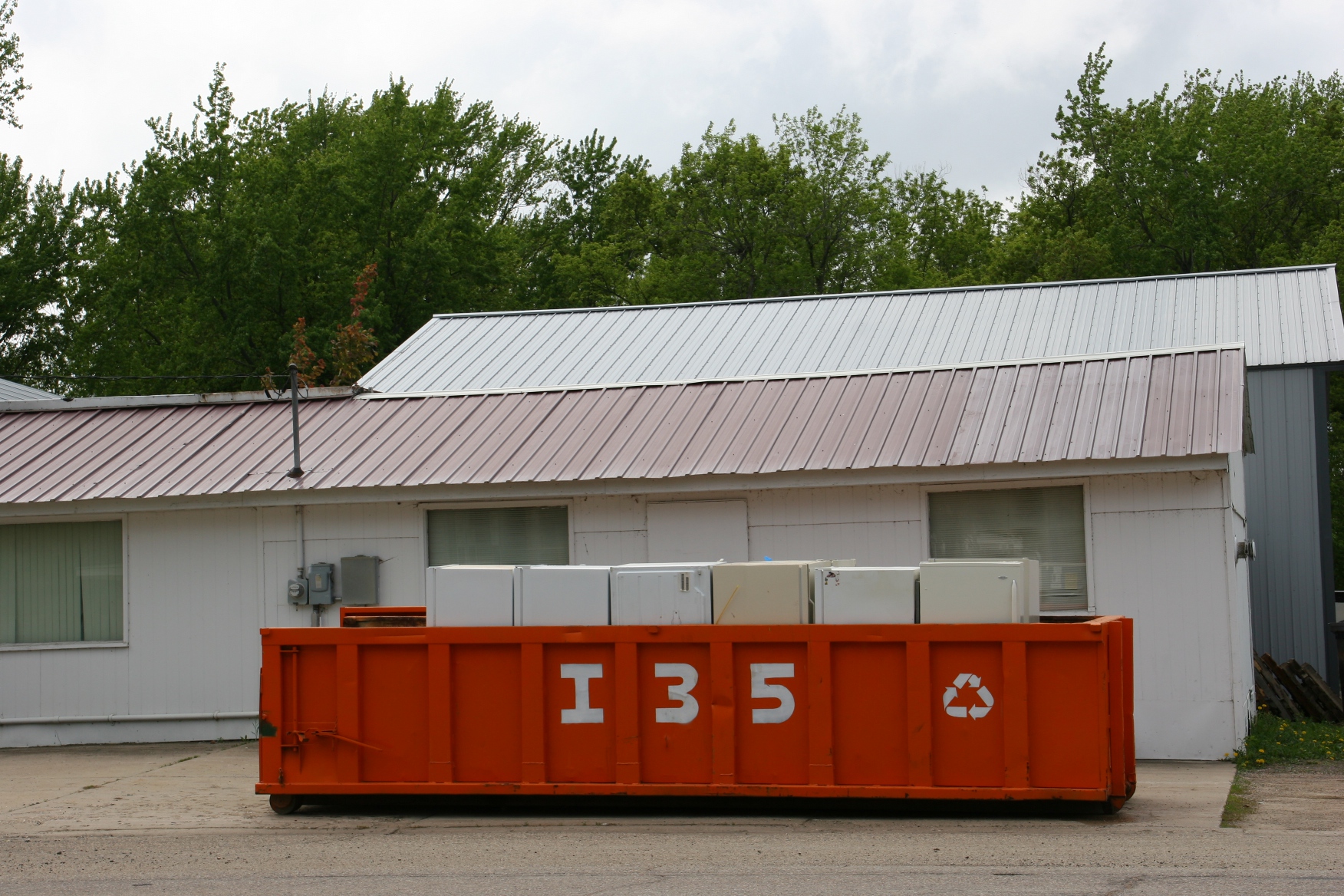
Refrigerators/freezers are corralled outside Sorenson’s Appliance.
We continued our brief tour, driving along several residential and commercial streets.
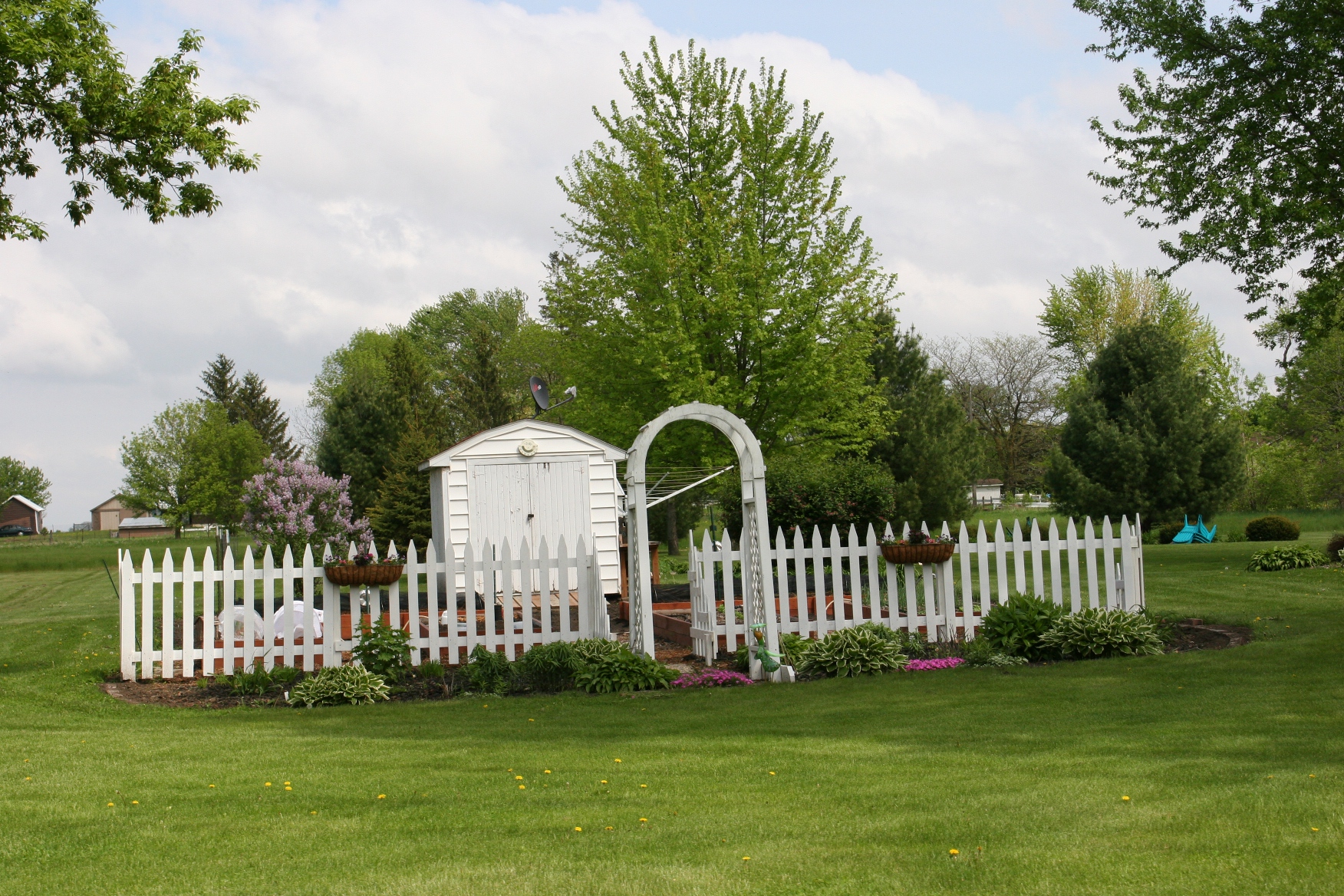
Geneva gives an impression that residents care. Not all small towns show that, meaning yards are unkempt and properties have fallen into disrepair.
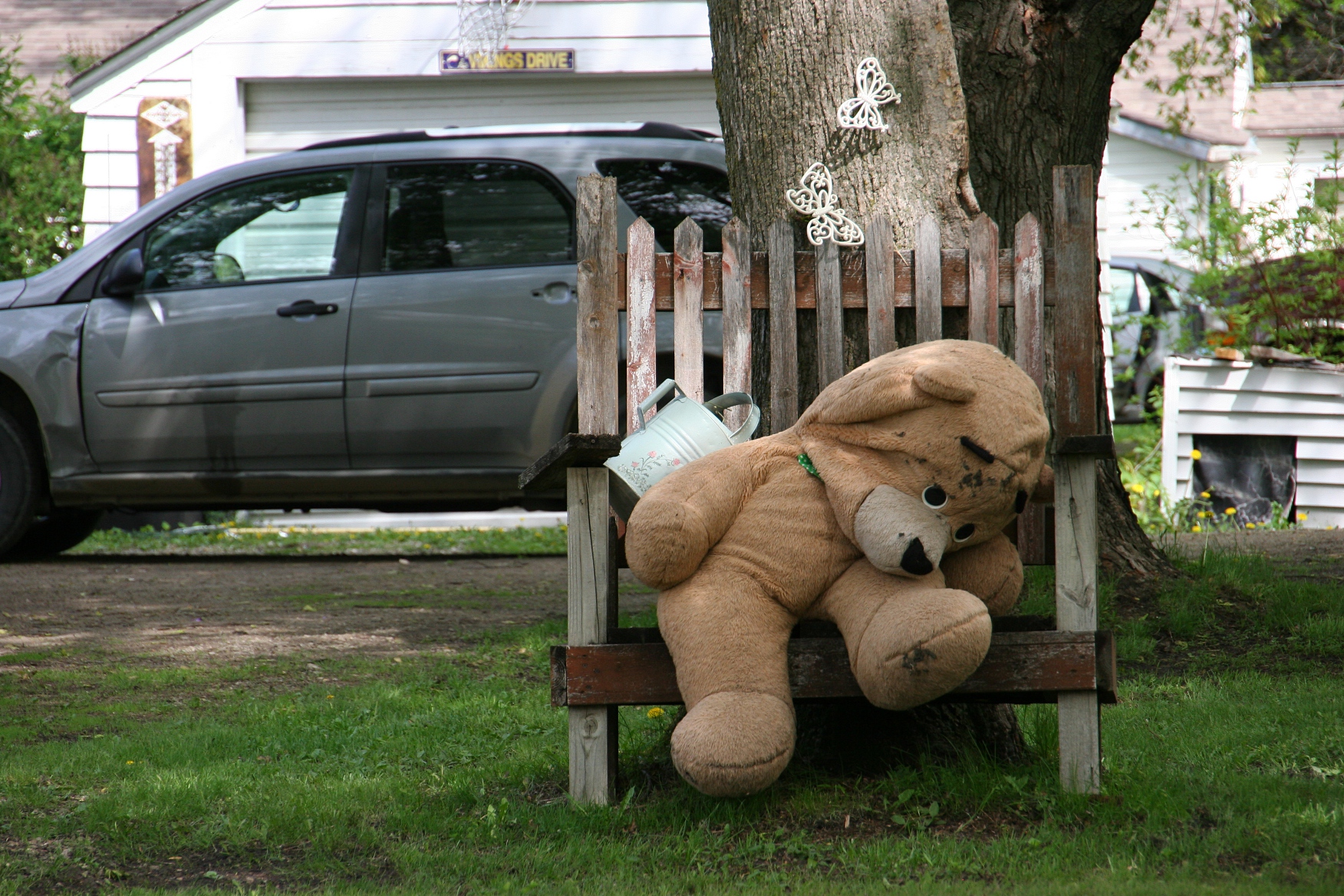
I’ll also remember the quirky side of Geneva, beginning with that population notation and crayon fence and then a carnival-sized teddy bear spotted lounging on a bench.
As we turned north out of town toward Blooming Prairie, I knew I would remember Geneva.
TELL ME, WHAT WOULD visitors remember if they drove into your community for a brief tour? Just in and out, what would be their impressions, positive and/or negative? Does your town need to work on improving its image?
© Copyright 2015 Audrey Kletscher Helbling
Portrait #29: George Derscheid
As a life-long Minnesotan, I appreciate the church basement ladies. You know, the women who labor in service to the Lord by brewing coffee, buttering buns for ham sandwiches, stirring together a hamburger-noodle-cream soup based hotdish for a funeral and more to feed the hungry.
These women are held in such high esteem in our state that musical comedies have been performed about them at the noted Plymouth Playhouse. Devoted followers have delighted in plays such as “The Church Basement Ladies in A Mighty Fortress Is Our Basement” and “The Church Basement Ladies in The Last (Potluck) Supper.”
But what about the men?
They, too, hold roles of importance in Lutheran and other church basements. I’ve attended a lot of church dinners in southeastern Minnesota in recent years and noticed many a man quietly volunteering his time in service to the Lord.
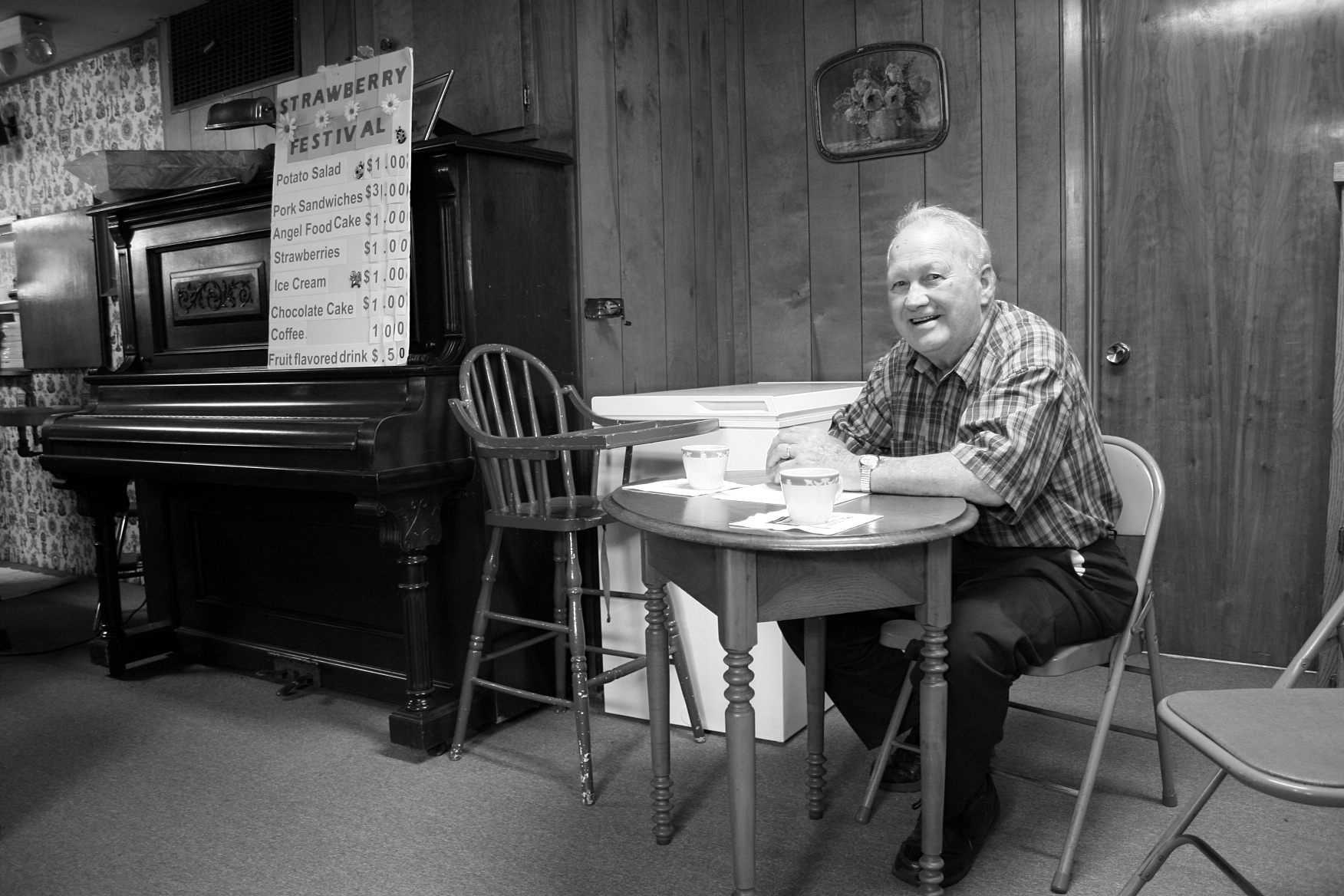
Take George Derscheid. I photographed the retired Kenyon area farmer two years ago as he tallied the number of people attending the annual Moland Lutheran Church Strawberry Festival. While on the surface his job may not seem as important as working in the kitchen, it certainly is. Numbers are necessary in food planning. Plus, Lutherans like their stats and reports.
George was more than the numbers guy, though. He was also a smiling face, an unofficial greeter, an engaging man whose whole persona exudes optimism. He simply looks happy. And every Lutheran church basement needs a Lutheran who breaks the mold of stoic and unemotional.
FYI: Moland Lutheran Church, 7618 N.E. 84th Ave., rural Kenyon, celebrates its annual Strawberry Festival from 11 a.m. – 3 p.m. this Sunday, June 28. It’s a must-attend event with the following foods available for purchase: pulled pork sandwiches, potato salad, chocolate cake, angel food cake and fresh strawberries, ice cream, coffee and fruit flavored drinks. There’s also a bake sale.
The country church is located southwest of Kenyon or east of Medford or northeast of Owatonna.
Click here to read my June 2013 post about the Strawberry Festival. I highly recommend it for the food, the people and the beautiful old church in a rural setting.
#
Minnesota Faces is part of a series featured every Friday on Minnesota Prairie Roots.
© Copyright 2015 Audrey Kletscher Helbling
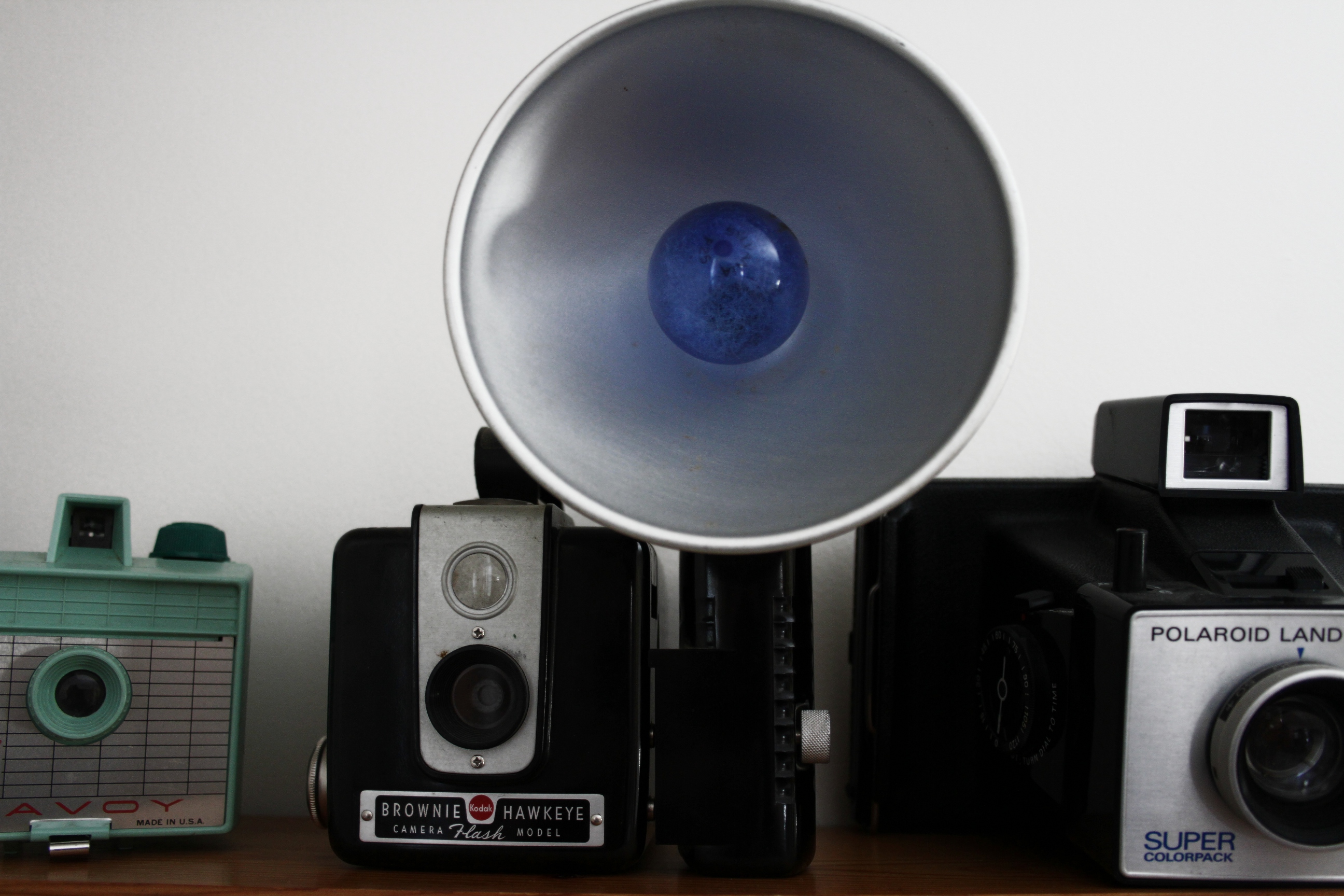
Three of the cameras from my collection of cameras once used by my parents and/or me.
IF PHOTOGRAPHERS never embraced change, they would still shoot with an old Brownie or a Polaroid or some other camera long ago obsolete.
That said, here’s how I handled the recent death of my Canon EOS 20D. I wrote about the unexpected demise of my DSLR in a late February post. That story generated great discussion and input, some of you encouraging me to challenge myself with a much-upgraded camera. Others suggested I stick with what I knew.
In the end, after trying a Canon 7D and much stress and agonizing over its operation, I purchased a Canon 20D from my friend Lee. It’s exactly like my old one except for the telephoto lens that came with this used camera. Lee was happy to get his unused 20D out of basement storage, thus solving my problem.
I can almost hear the uproar, the outcry, the “Oh, she could take much better photos with a better camera.” True? Perhaps from a technically perfect perspective.

Too much camera for me. For now.
But the bottom line is this: Focusing on the operations of the camera—worrying about f-stops and ISO and shutter speeds—stressed me and took the joy out of my photography. I lost my passion and artistry. Rather, I thought mostly about settings that would assure I had enough light or correct depth of field, or whatever I needed to even take a decent photo. I admire photographers who can handle all of that without flinching.
I suppose in time, I would have learned. You can argue that. I already had the basics down from my days of shooting with film. Just trying to operate the newer 7D, I learned more about the manual options on my 20D. That is the good that came out of this.
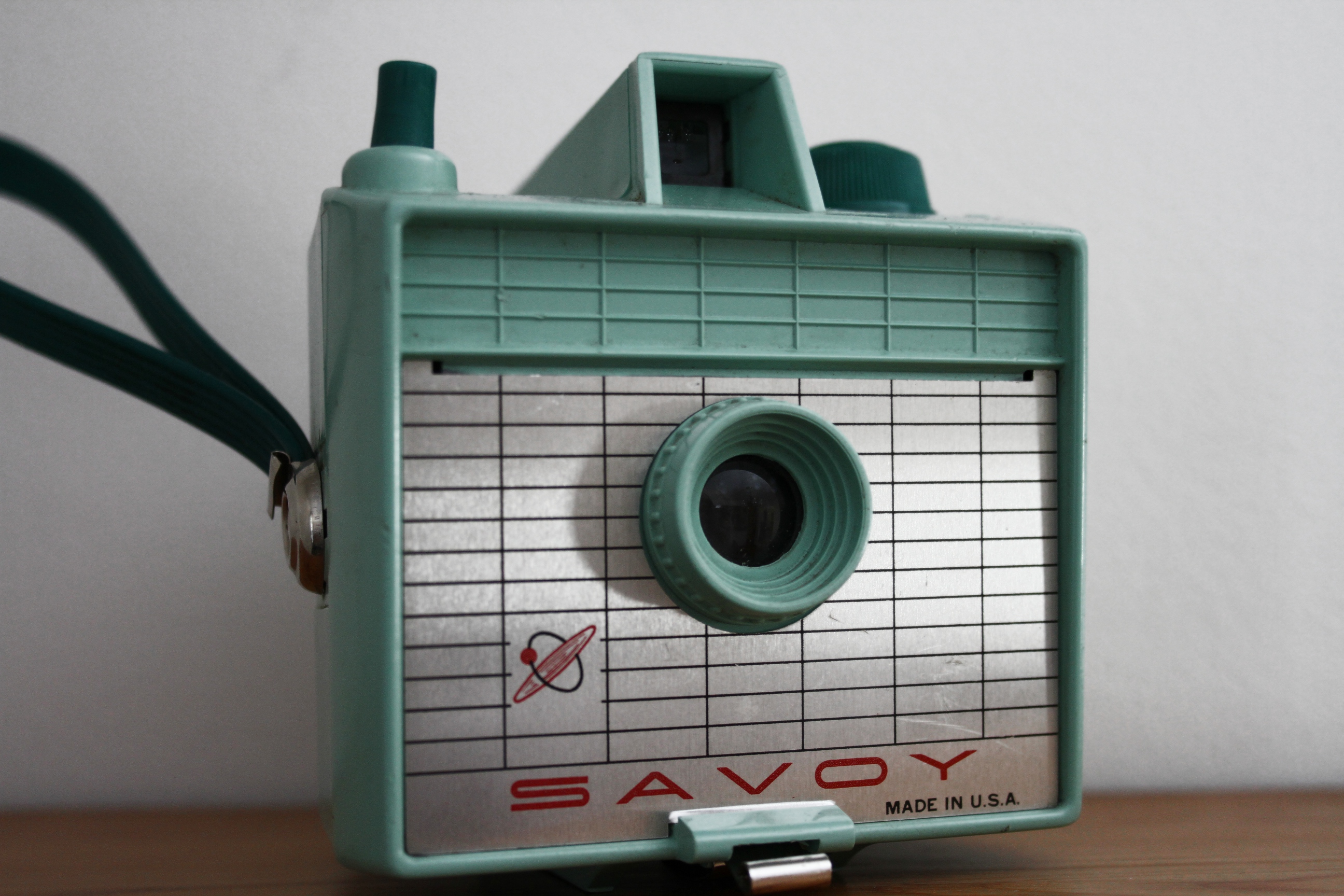
I used this camera as a teenage.
But the single thing that this Death of a Camera reinforced for me is that it’s not always about the camera. It’s about how you take photos (perspectives and angles and composition, etc.) and the subjects of your photography and lighting that create memorable images.
Like a writer, a photographer has a voice.
What is my voice? It is, like my writing, down-to-earth detailed and about a sense of place. Rural and small town Minnesota (mostly). Close-up. From a distance. The people who live in this place. I strive to photograph that which others pass but don’t truly see. I strive to connect you, via my photos, to this place I love. To the ordinary, which is often the extraordinary.
#
© Copyright 2015 Audrey Kletscher Helbling
My photos are copyrighted and may not be reproduced without permission. If you are interested in purchasing rights to use my images, please check my “About” page for contact information. I am grateful to the individuals, ad agencies, authors, charities, magazines and others who have found value in my photos and purchased rights to use selected images that meet their needs.
Most of all, I am grateful to you, my readers, for appreciating my photography.
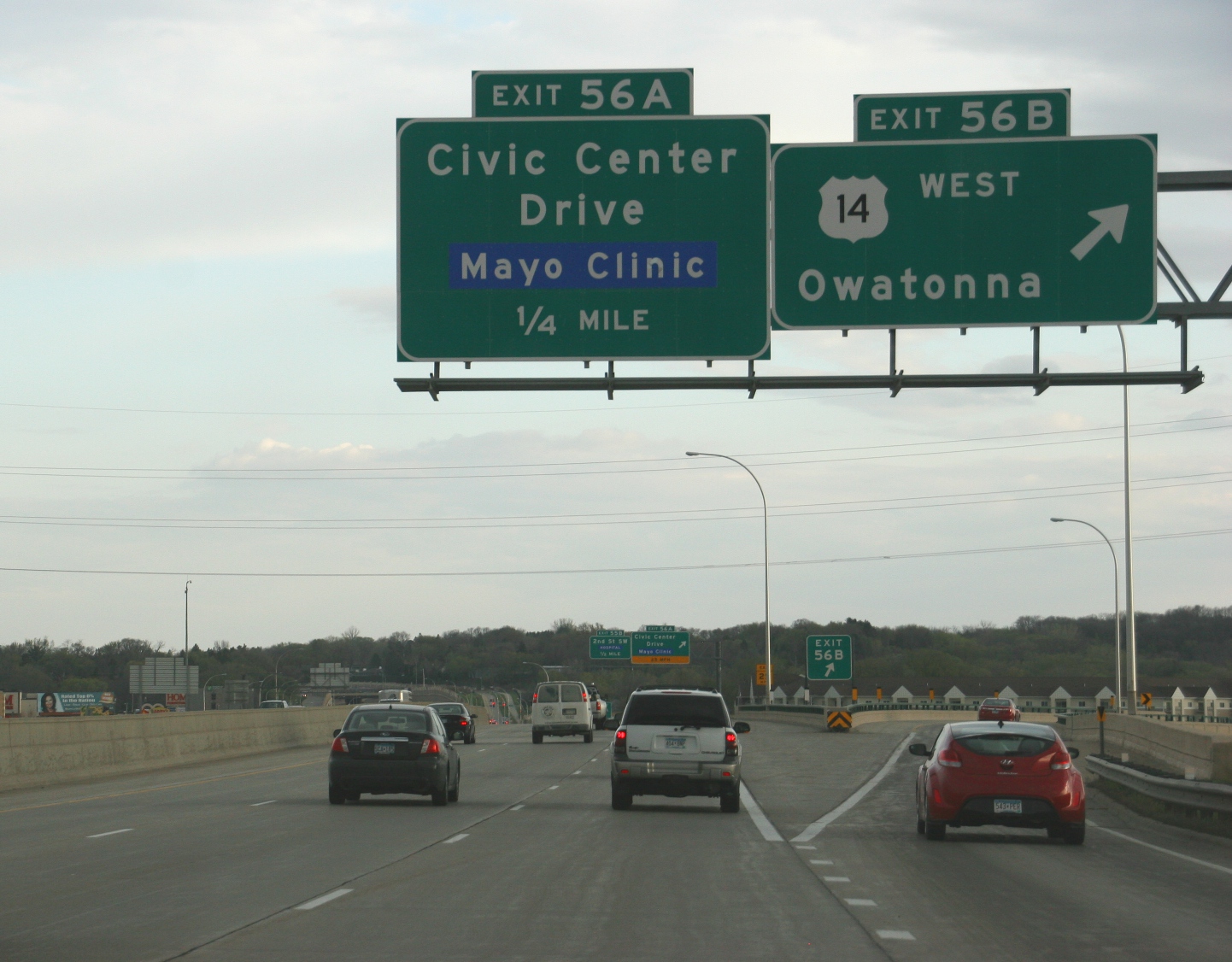
The southbound exit off U.S. Highway 52 which took us to the Rochester Civic Center Theater.
FIFTEEN MINUTES. That’s all the time I had to view downtown Rochester before I needed to be at the Civic Center Theater for a weekday evening Poetry Bash.
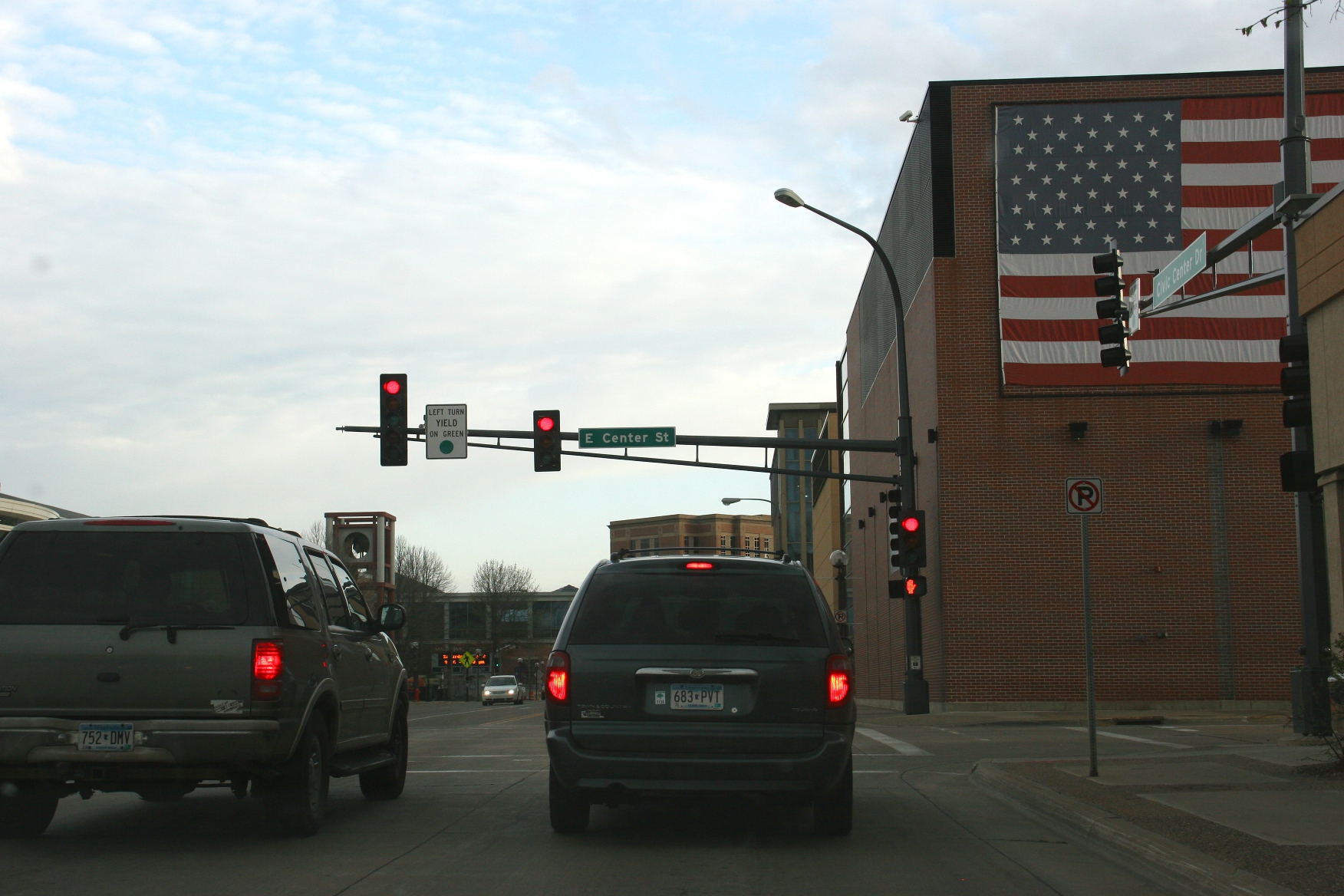
Almost to the theater, left.
So my husband parked the car across the street from the theater. I grabbed my camera and we headed the opposite direction toward the heart of downtown.
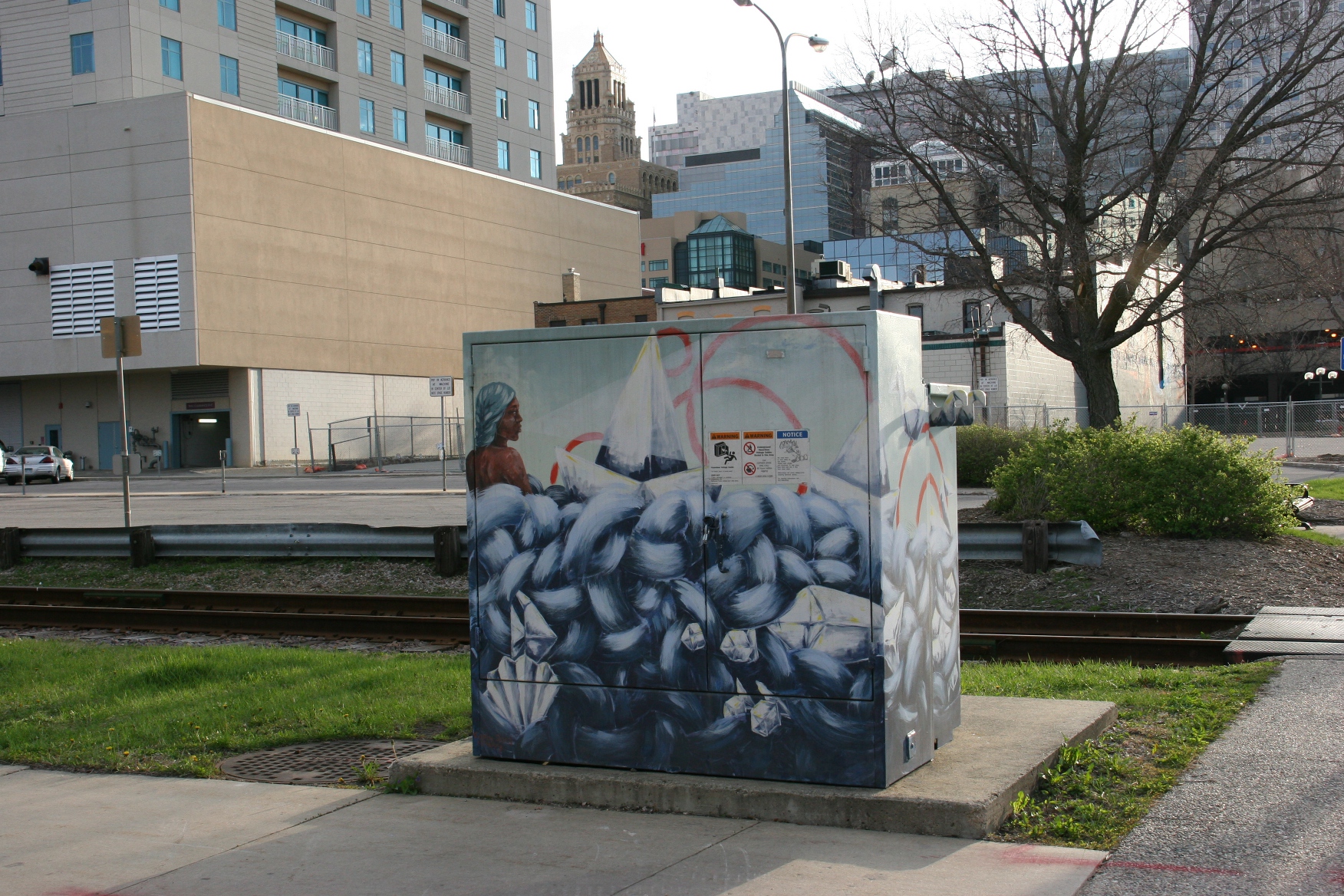
A great idea: Turning an otherwise mundane utility box into a work of art.
We’d made it only half a block, almost to the railroad tracks, when I noticed art painted on a utility box. First photo snapped.
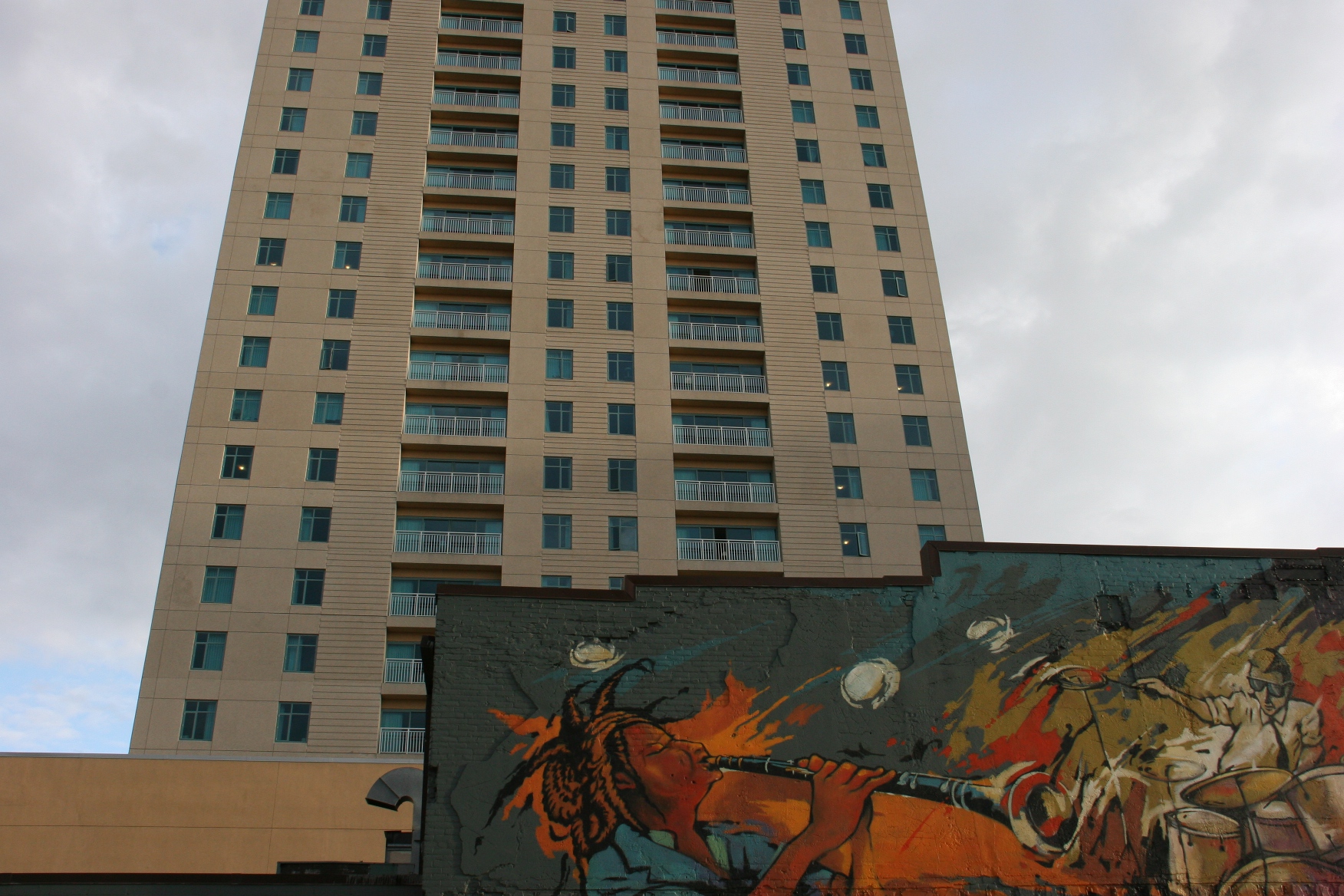
My first glimpse of the music themed mural.
Across the tracks, more art—this time a music themed mural on a building next to a vacant, fenced lot—distracted me. Focus, snap, focus, snap, focus, snap, focus, snap. Until I’d lost count, so intrigued was I by the mural fronting a dramatic high rise backdrop.
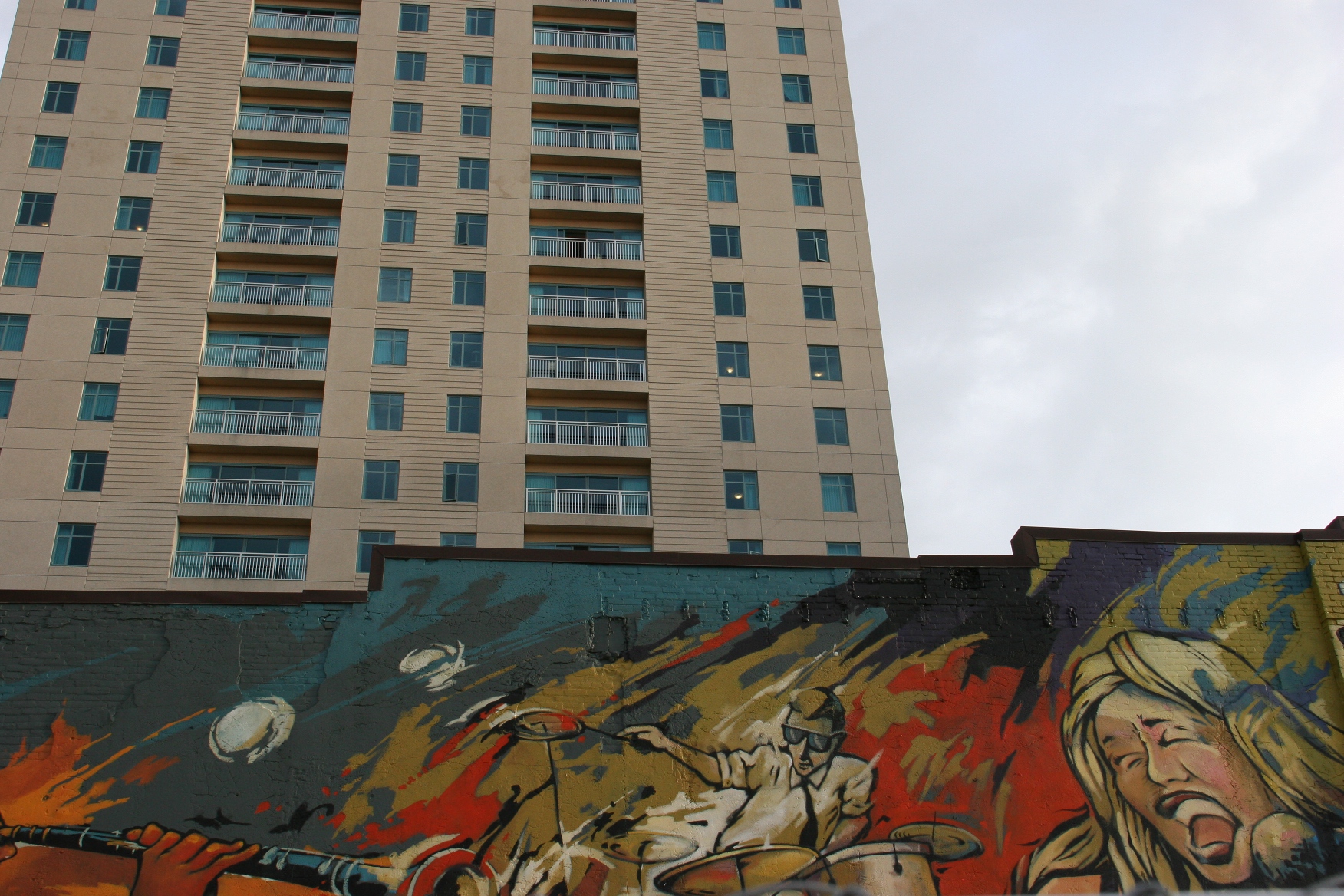
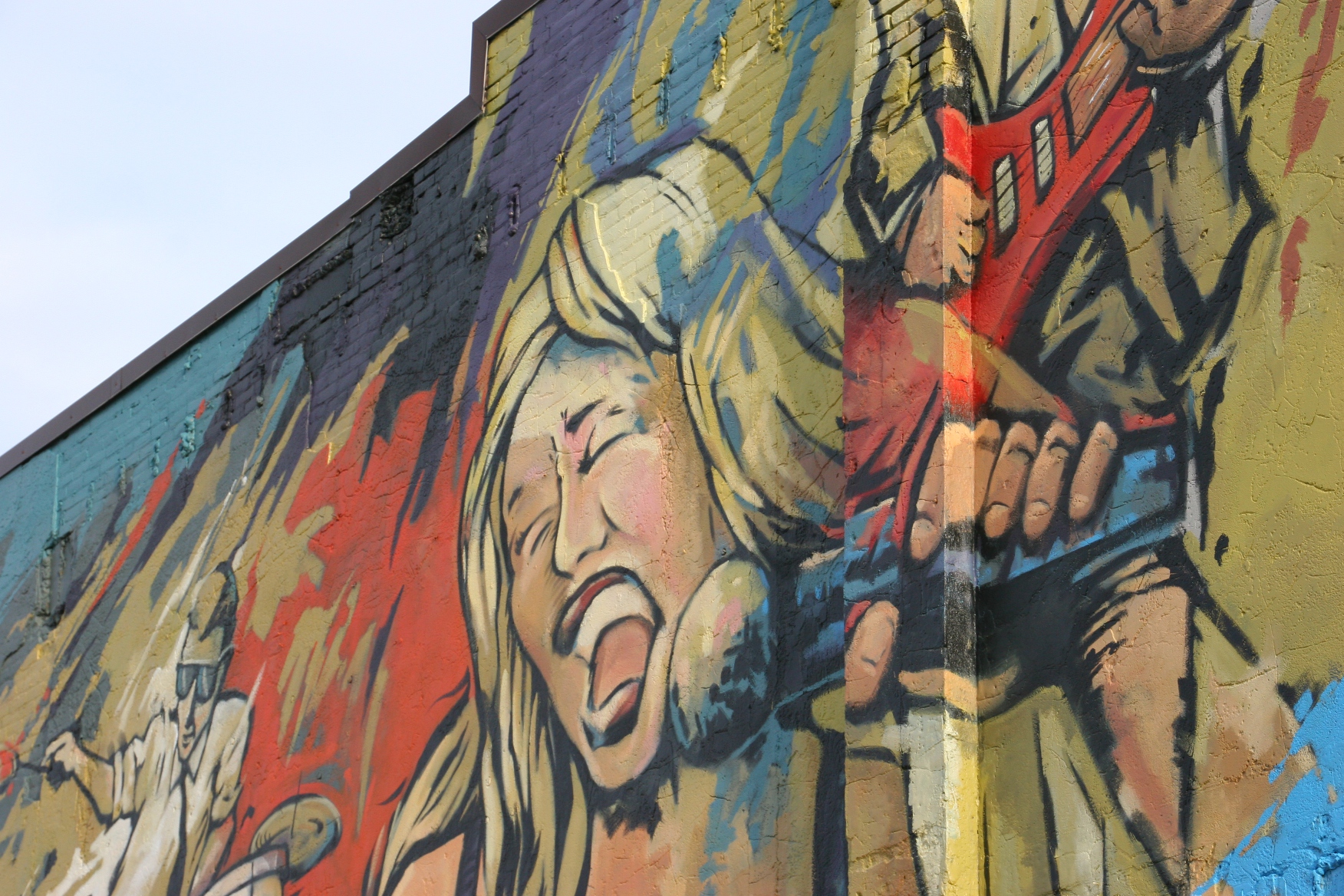
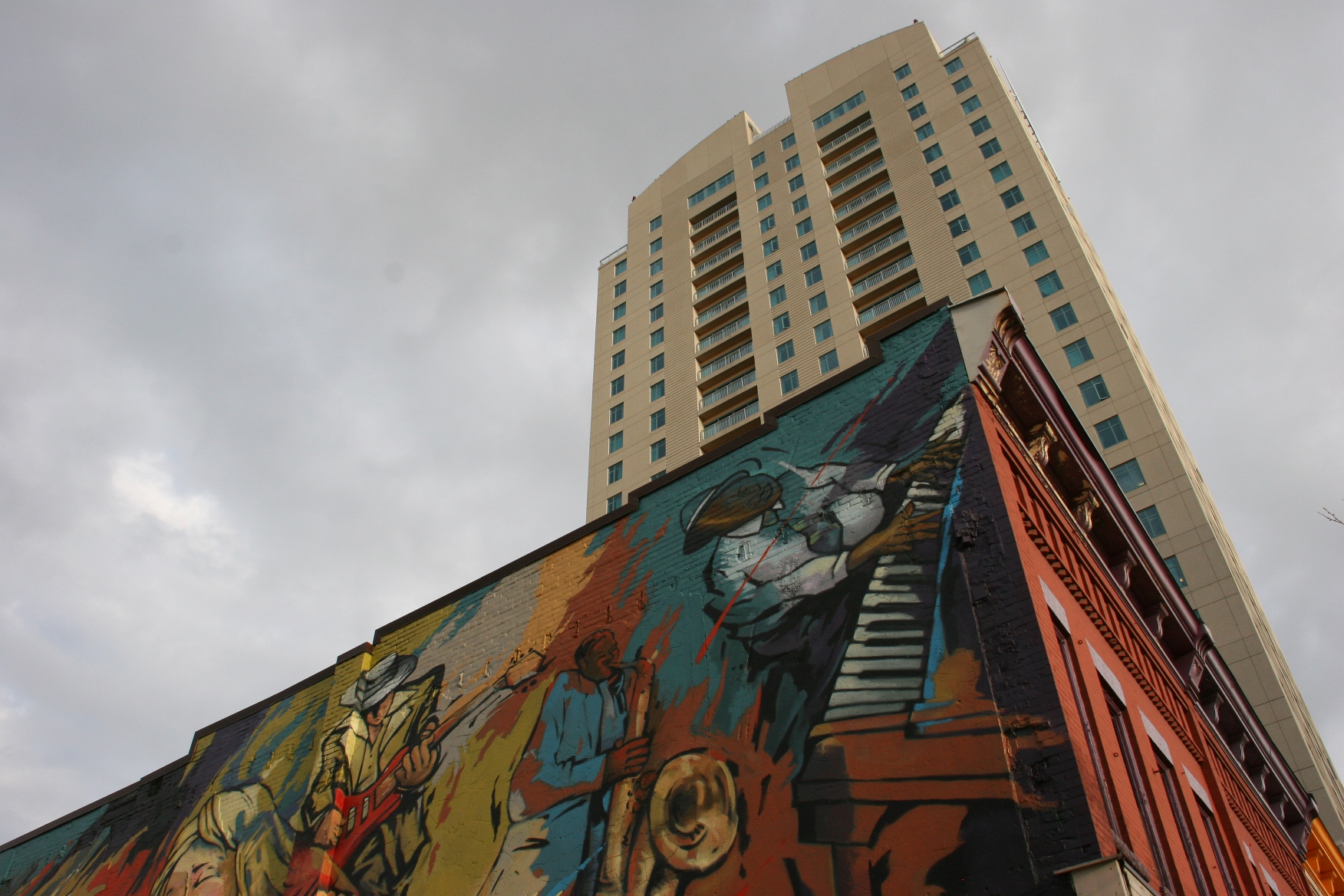
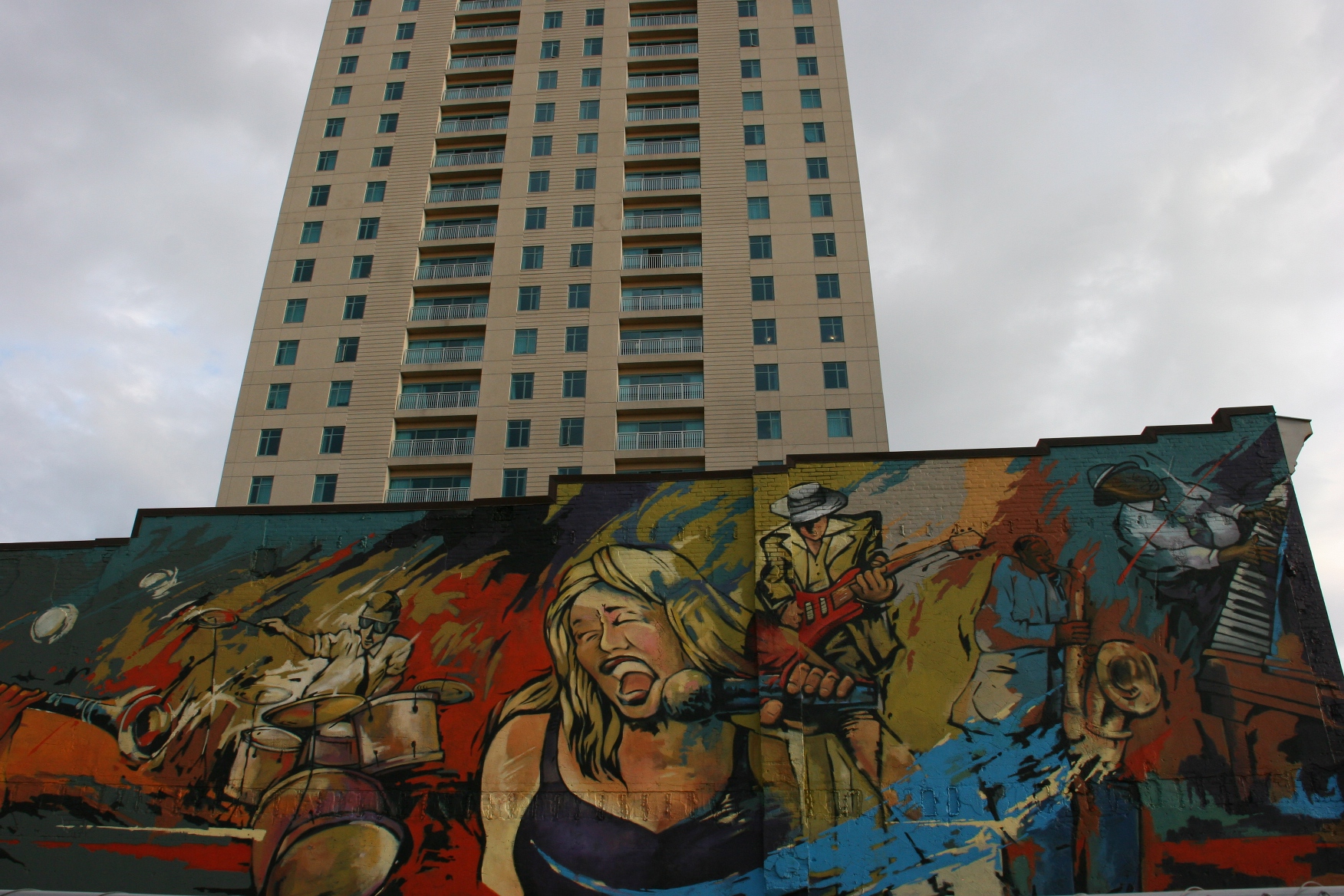
“Are you photographing the tall building?” a passerby inquired. I was and I wasn’t. It was the art that interested me more than the structure. I chatted a bit with the man from Chicago who was in town for treatment of his skin cancer at the world-renowned Mayo Clinic which centers this southeast Minnesota city’s downtown.
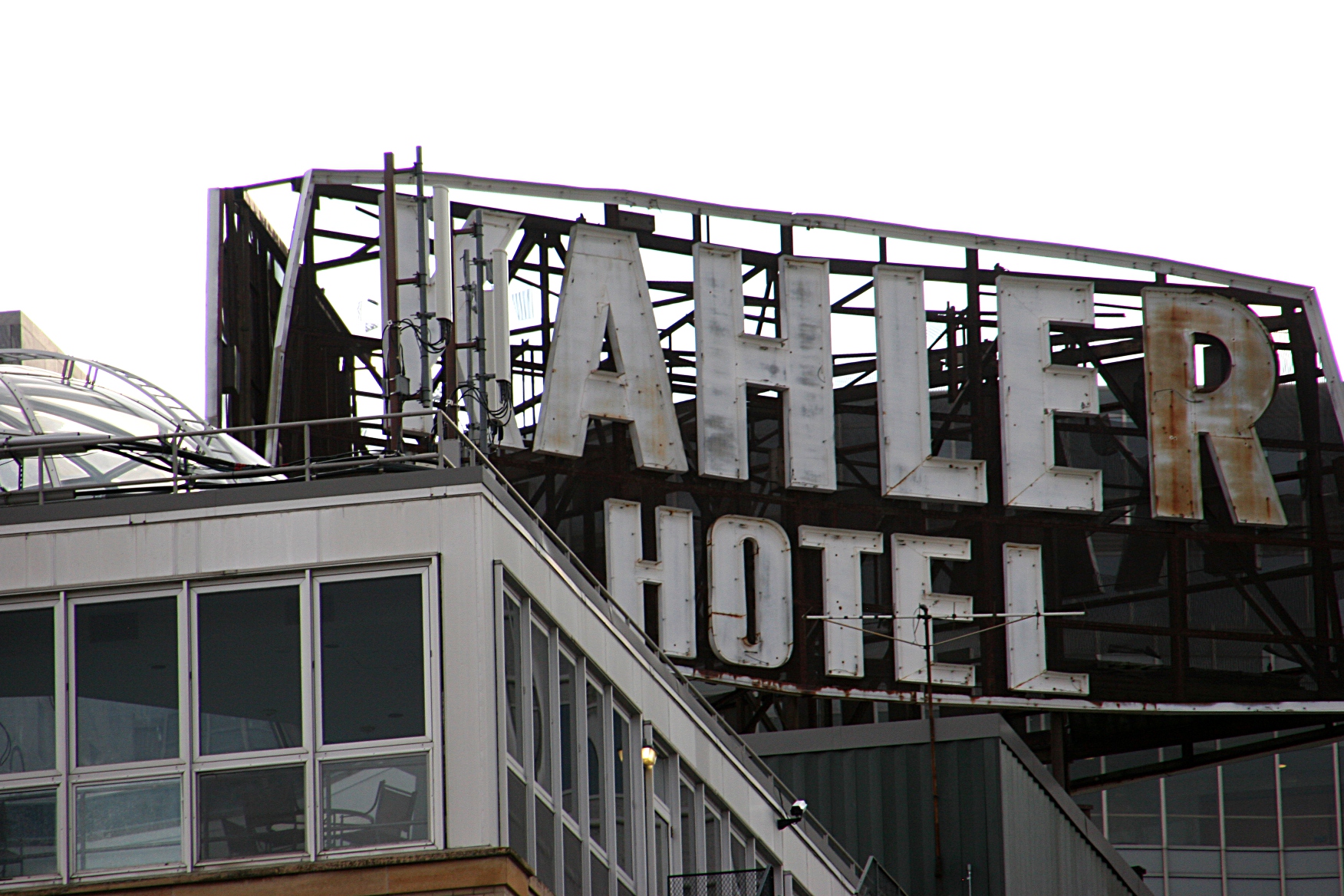
The historic Kahler Grant Hotel in the heart of downtown has been around for 80 years and offers 660 rooms and suites.
Next I photographed the Kahler Grand Hotel’s iconic sign, a work of art, too.
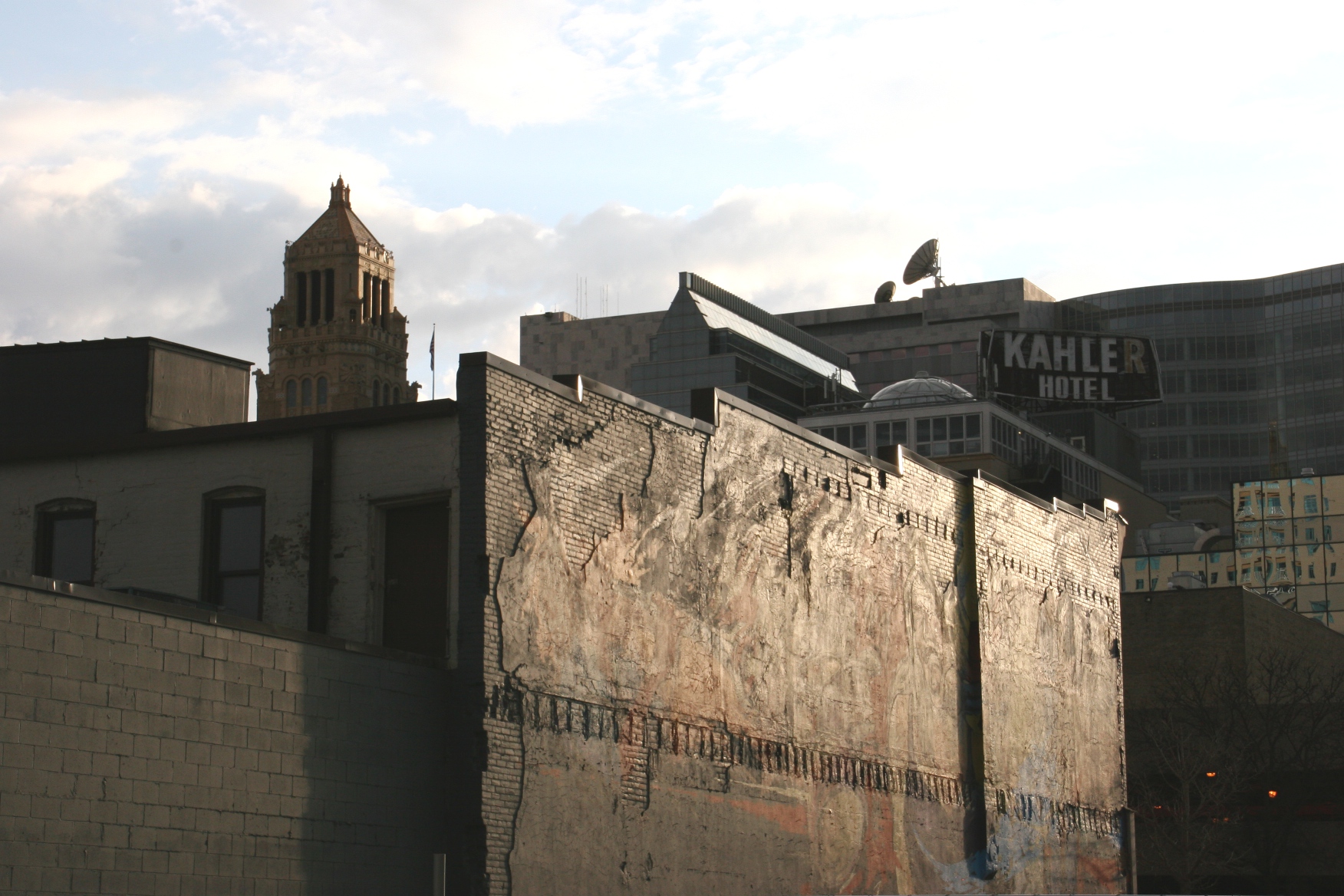
A skyline snapshot shows a mix of old and new.
A glance at my watch told me there was no time to wander any farther. The muses were calling.
But I am determined to return to Rochester and explore this city which we always bypass on our hurried way to somewhere. Its artsy vibe appeals to me. And I’d really like a closer look at the Mayo Clinic, only glimpsed as we swung through downtown after the Poetry Bash. By then darkness had descended. I couldn’t help but think of all the people from all over the world who would sleep this night in Rochester, perhaps restlessly, and rise in the morning to meet with medical professionals and undergo tests and receive diagnosis. Does the art distract them as it distracted me?
BONUS PHOTOS:
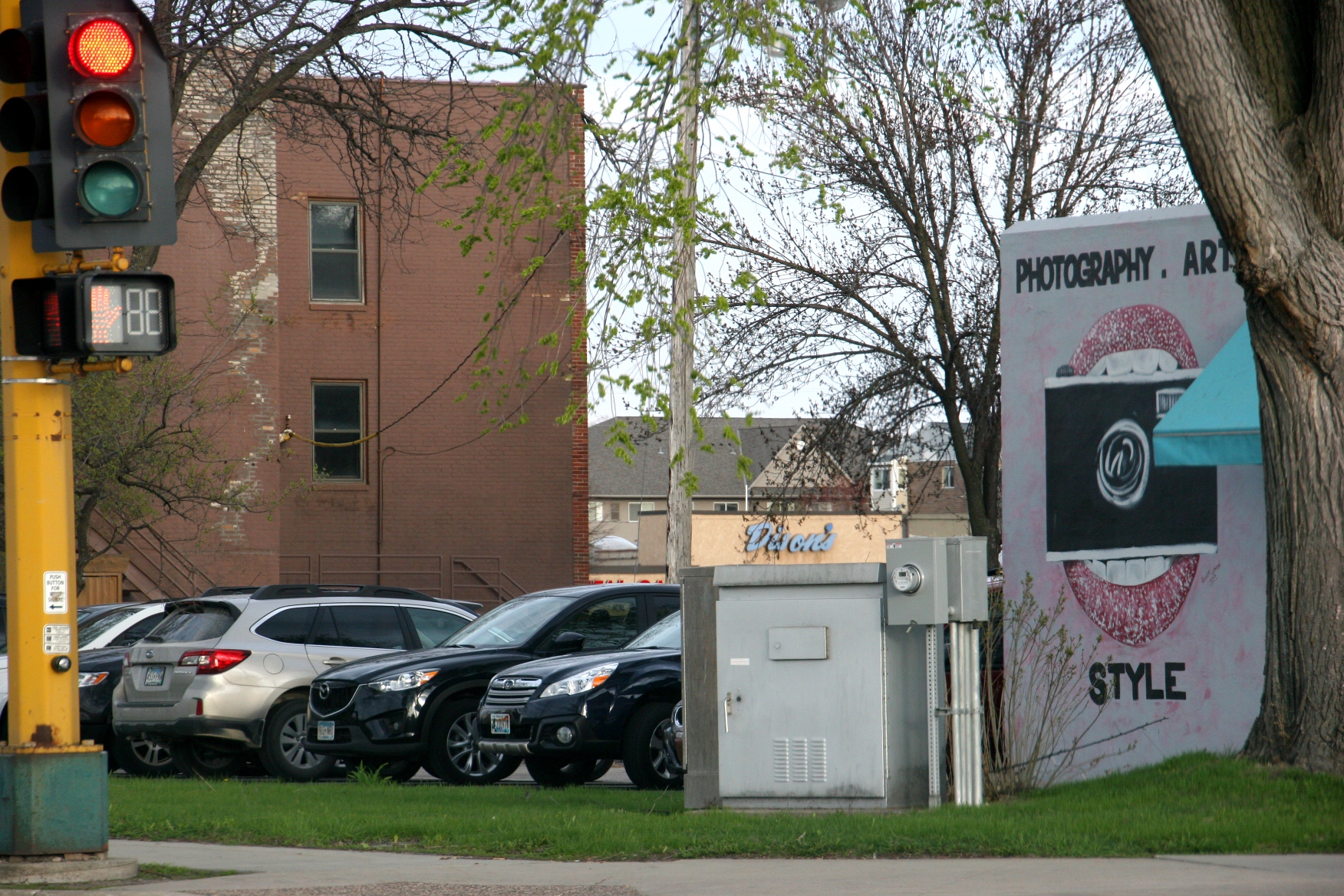
Waiting at a stoplight along Civic Center Drive, I spotted this artwork.
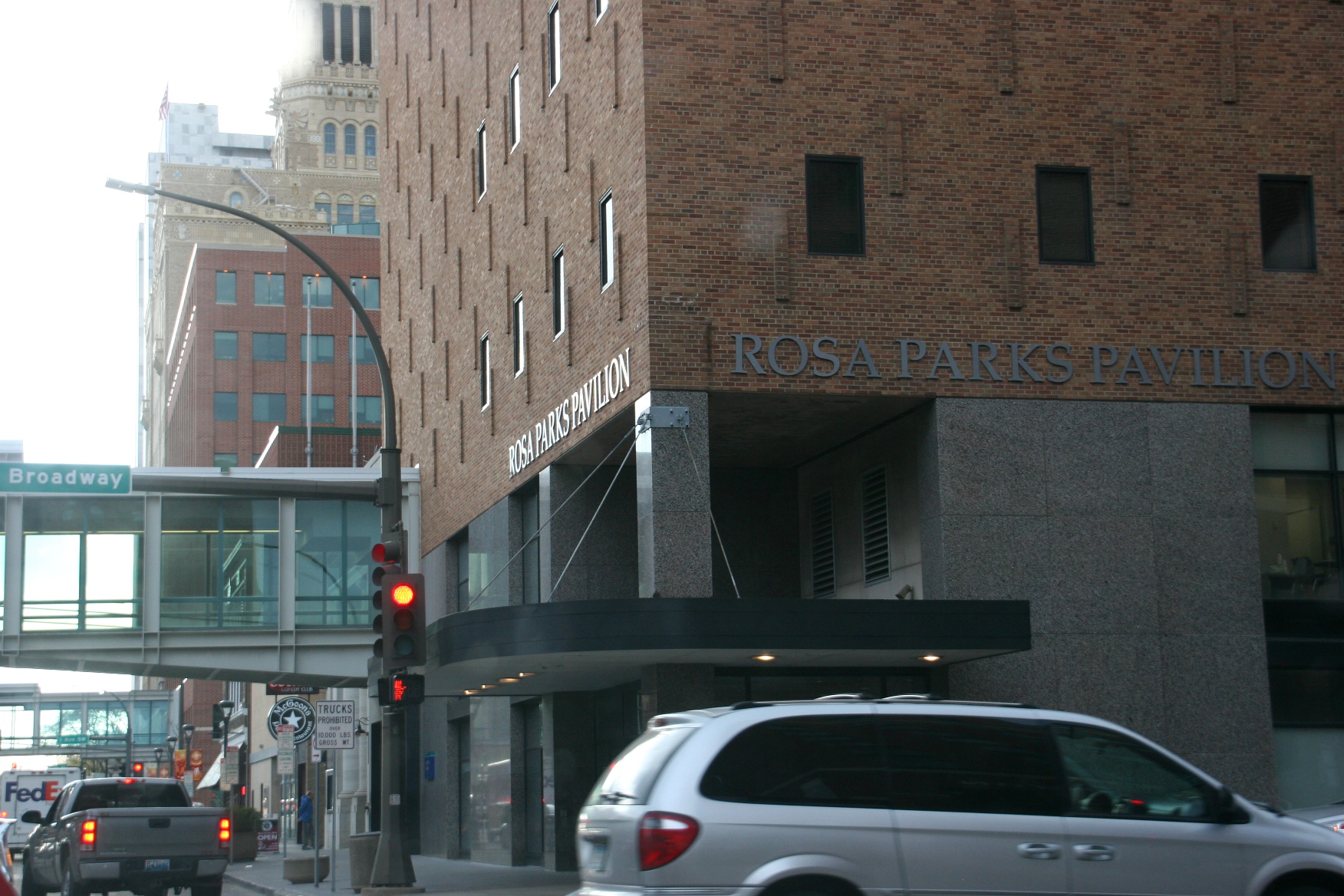
Downtown: the Rosa Parks Pavilion, a Mayo Clinic administration building and a former Dayton’s Department Store. The building was named in 2008 after Parks, well-known in the Civil Rights movement for refusing to give up her seat on a bus.
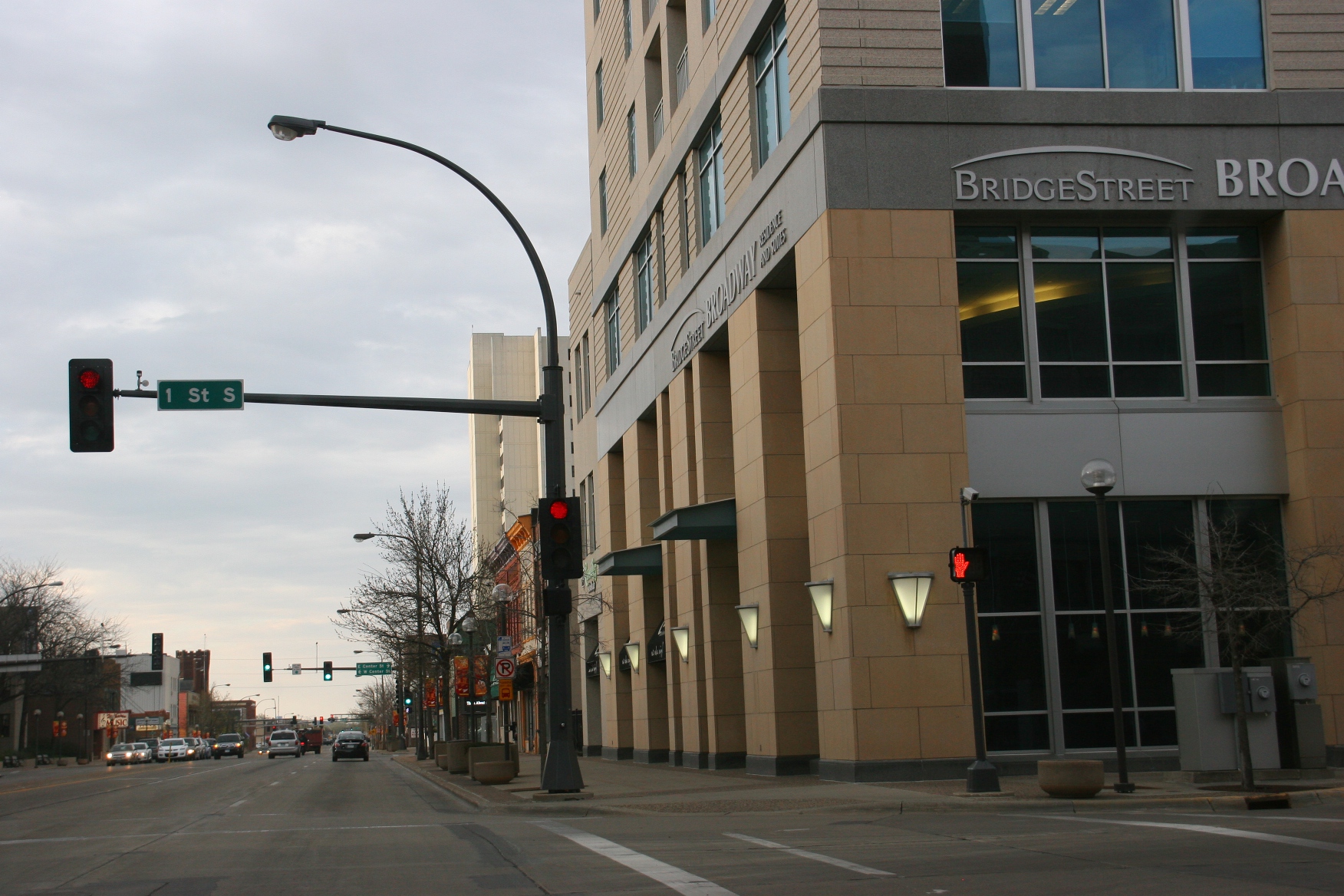
Another scene in downtown Rochester.
© Copyright 2015 Audrey Kletscher Helbling
IN THE PAST FEW DAYS, after visiting Bridge Square in Northfield and Morehouse Park in Owatonna, I’ve thought about what makes a great community gathering place. When considering a spot for a picnic or simply a place to relax, what do I seek?
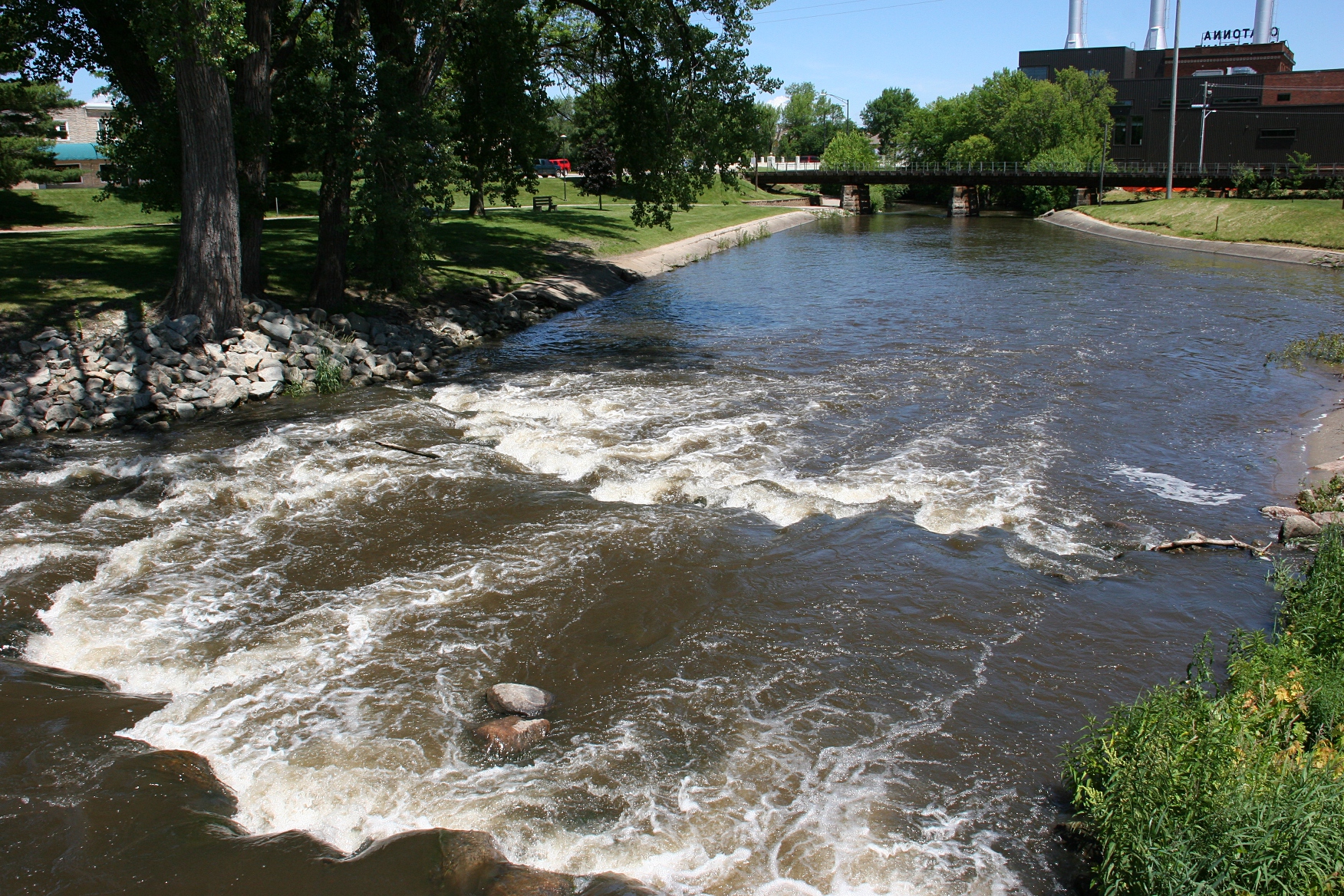
A view of the Straight River from the pedestrian bridge in Morehouse Park.
Water. Whether a river or a fountain or a lake, water tops my list. There’s something about water that soothes, that eases life’s worries. I’m not a water sports person. But I love the sound of rushing water like that of the Straight River roaring over the dam in Morehouse Park or the fountain spraying in Bridge Square, just across the street from the Cannon River.

Water roars over rocks in the Straight River at Morehouse Park.
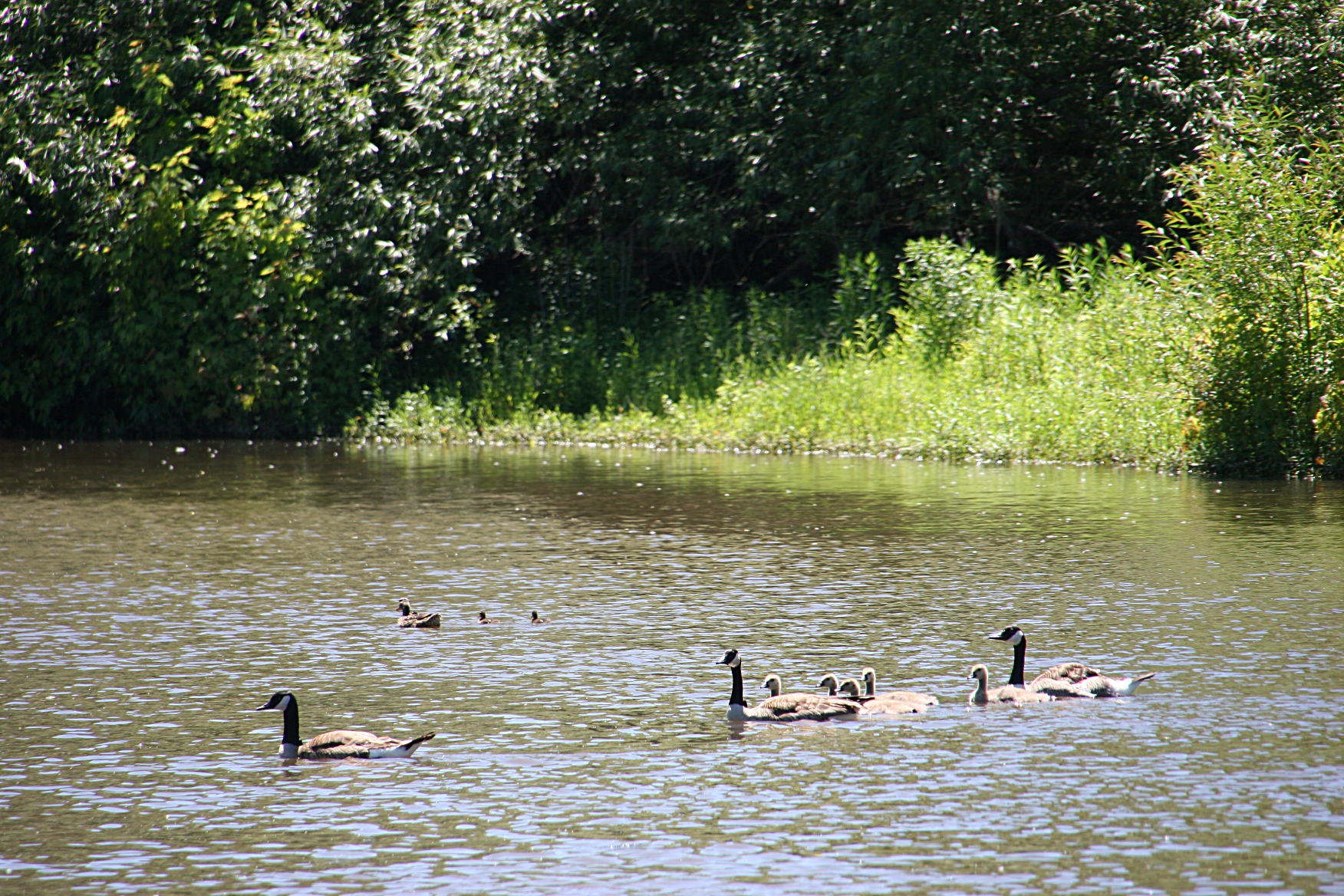
A trail of geese in the tranquil part of the Straight River.
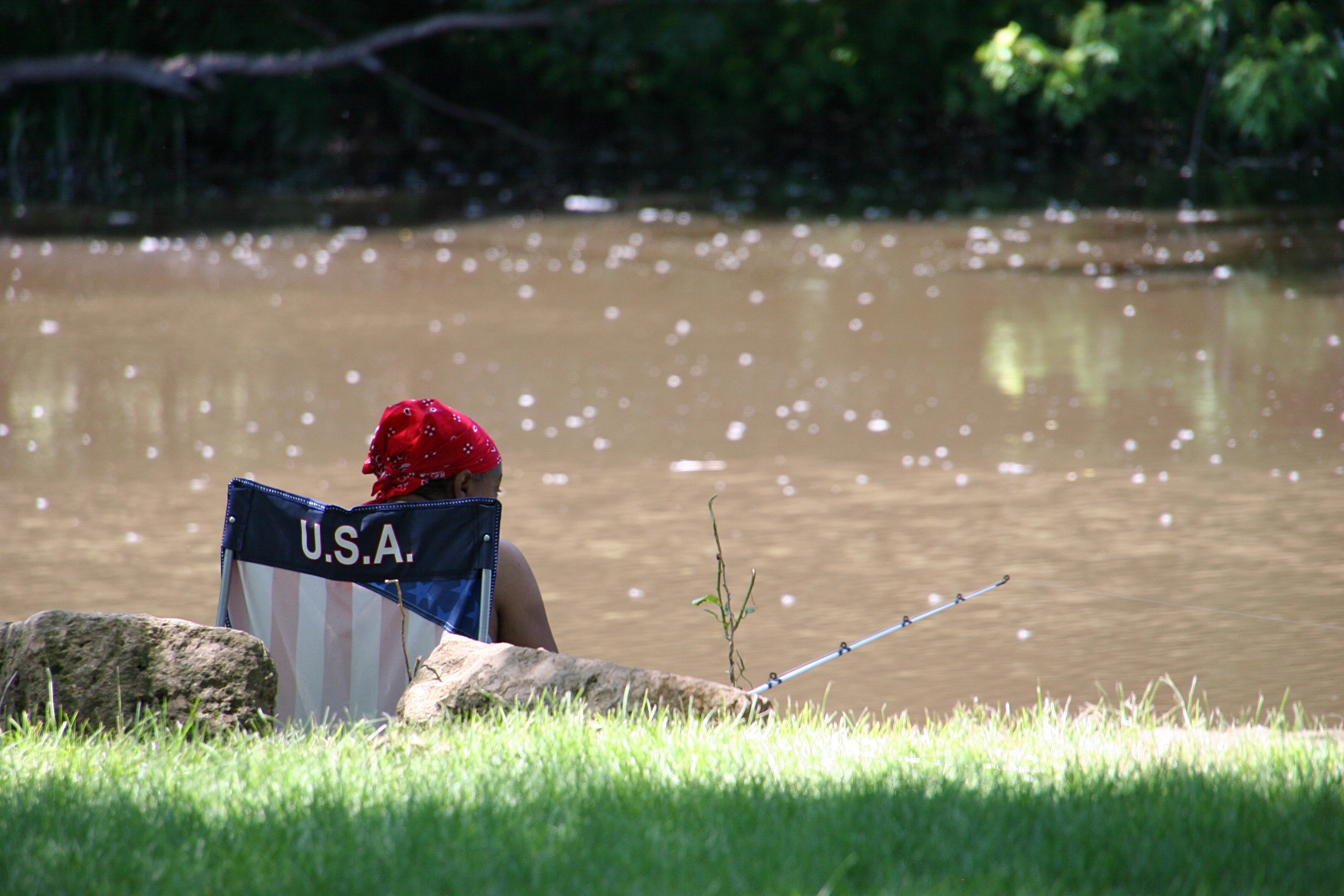
On a beautiful summer afternoon, a woman fishes the Straight River.
Water offers a place to wish, to think or not, to fish, to canoe, to observe nature. Still as geese gliding. Hopeful as pennies tossed into a fountain. Turbulent water tumbling over rocks as calming as white noise.
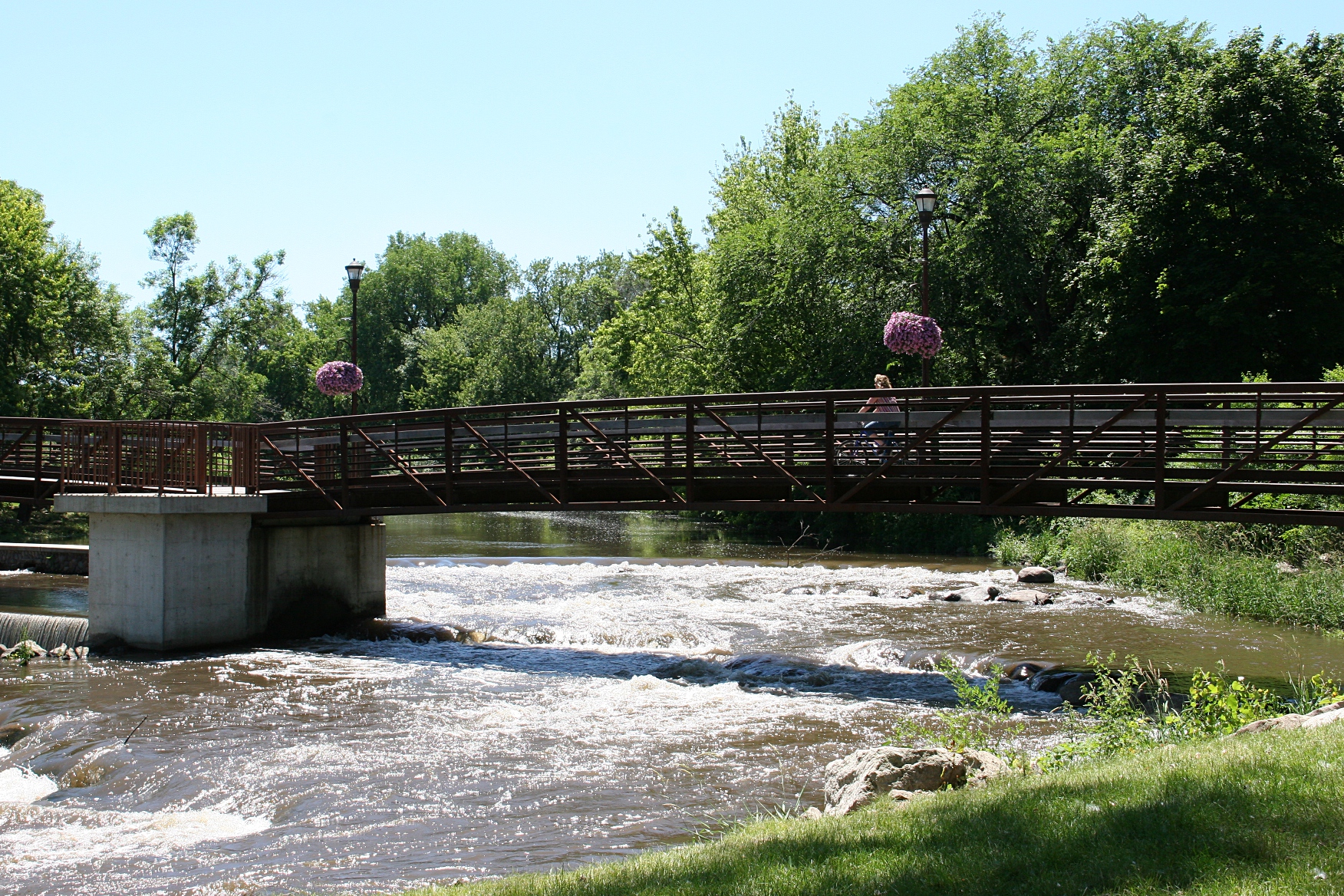
A recreational trail slices through Morehouse Park, bridging the Straight River.
I also want a park that’s aesthetically pleasing, clean, green, obviously cared for and appreciated.
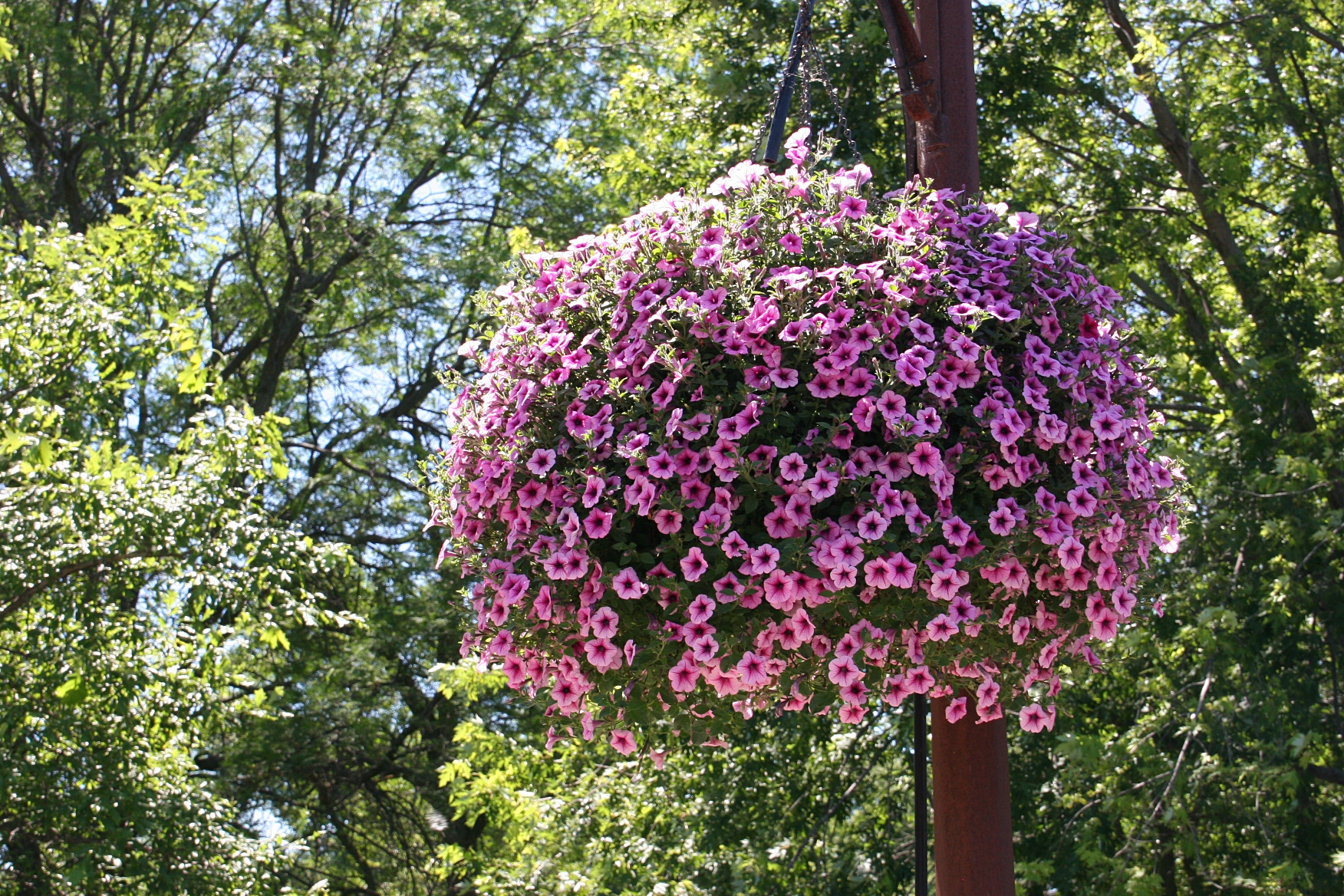
Gorgeous flower baskets hang along the recreational bridge.
In Morehouse Park, generous baskets of petunias suspended from a pedestrian bridge make a statement that says this community cares. The park is a busy place with a trail winding through that draws bikers, skaters, walkers and photographers like me.
At Bridge Square, the fountain entices all ages to perch beside the water, to rest on benches, to purchase popcorn from the popcorn wagon.
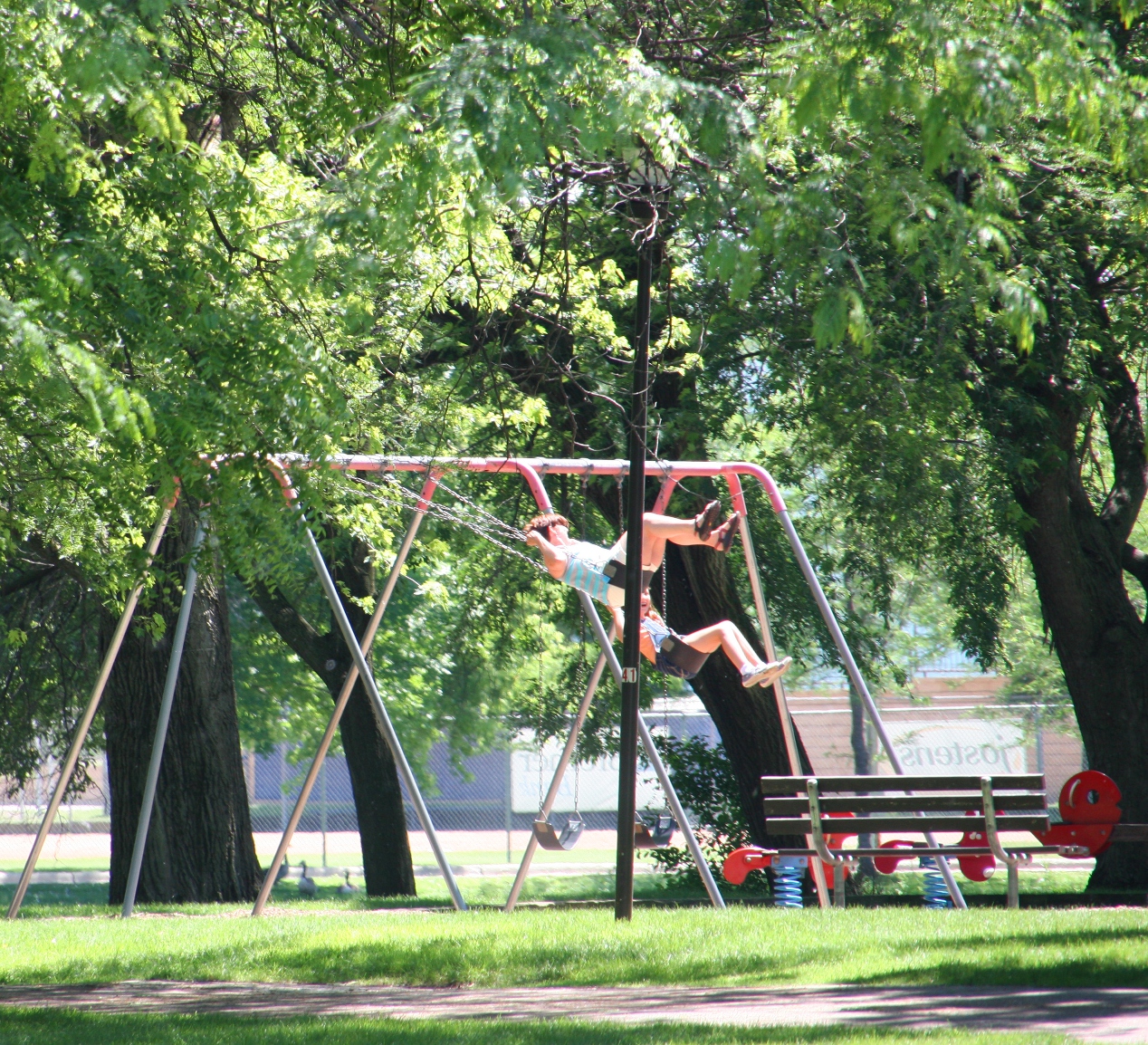
Morehouse Park includes a playground, tennis court and horseshoe pits along with other amenities.
In both parks I feel a sense of community, of closeness in appreciating a beautiful spot in the heart of a city. There’s a certain vibrancy, a rhythm, a definitive weaving of people and place.
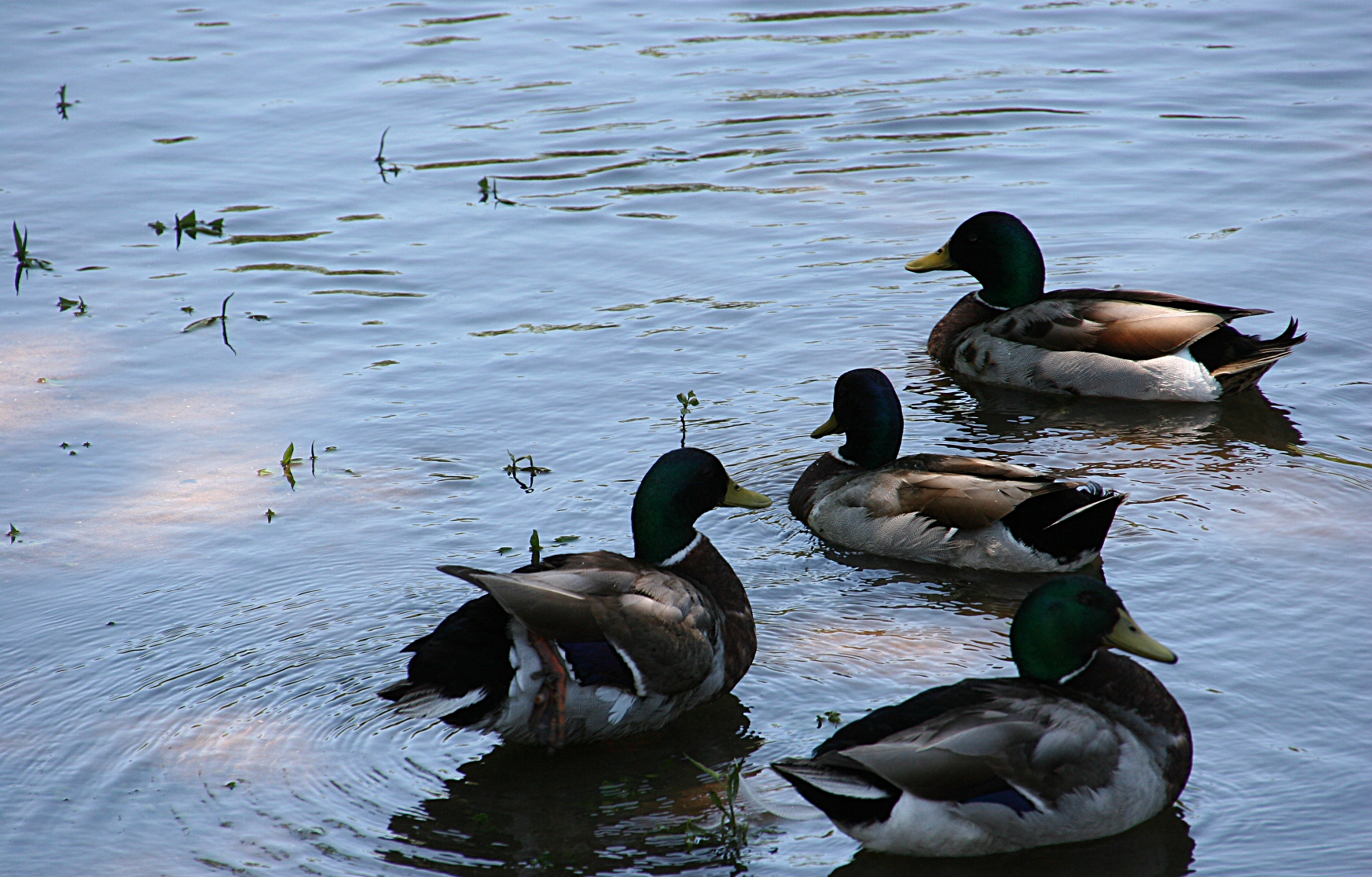
Ducks and geese overrun Morehouse Park. So watch for droppings. Everywhere.
And that is what I seek in a park. Not just a picnic table under a tree. But a certain sense of belonging, of connecting with nature and community on a Minnesota summer day.
BONUS PHOTOS from Sunday afternoon at Morehouse Park:
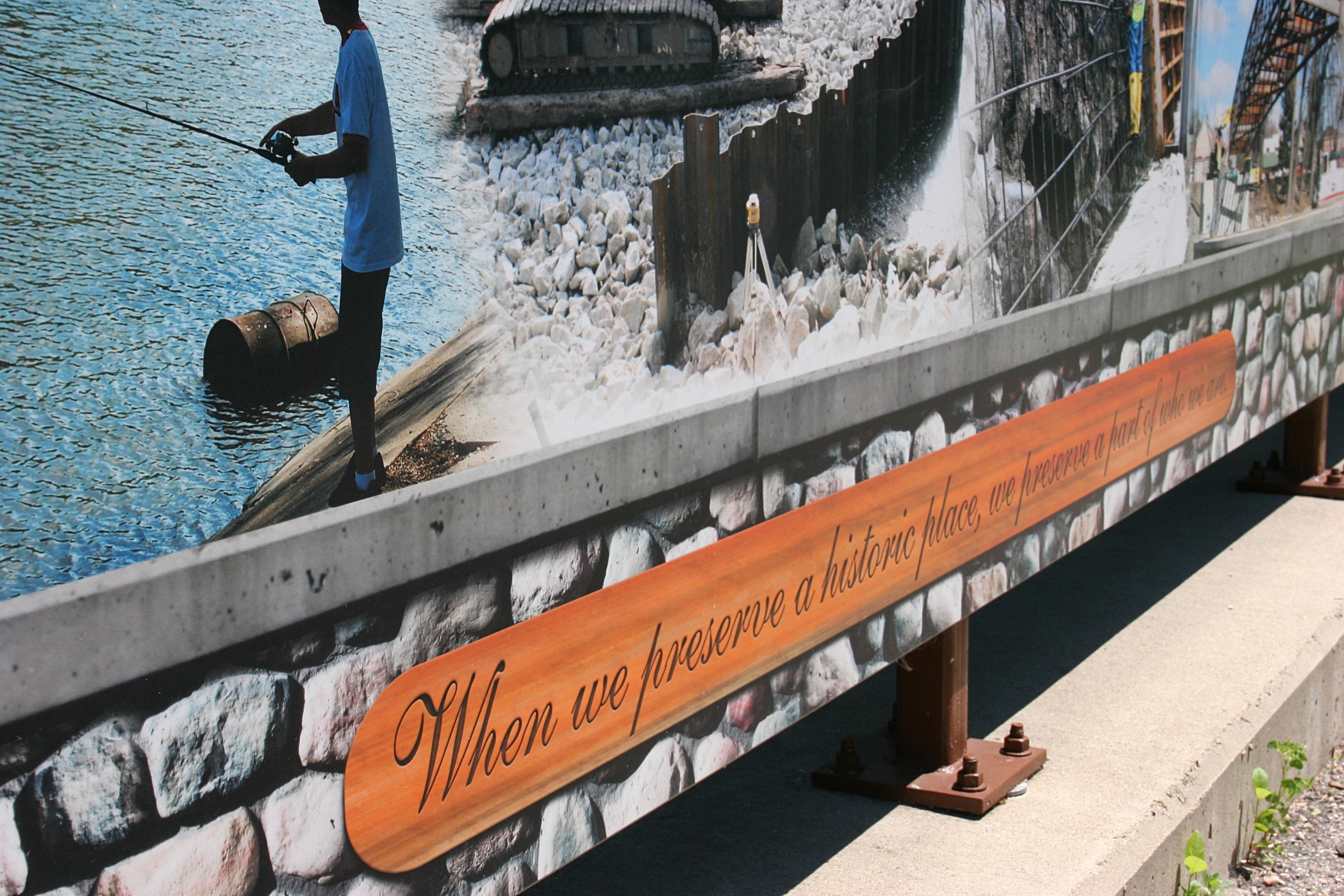
A sign next to the bridge reads: “When we preserve a historic place, we preserve a part of who we are.”
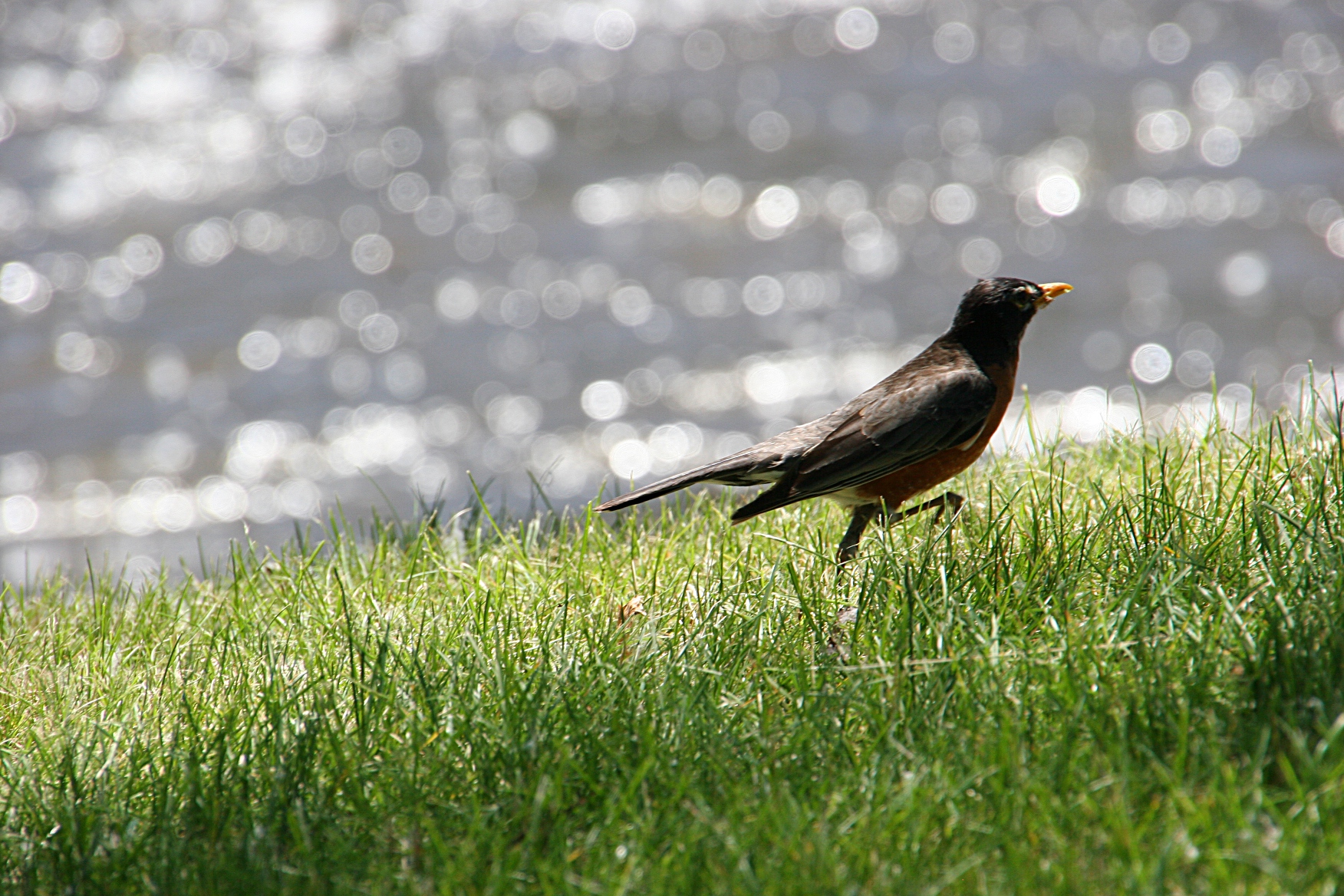
A robin hops along the bank of the Straight River in the dappled sunlight of a June afternoon.
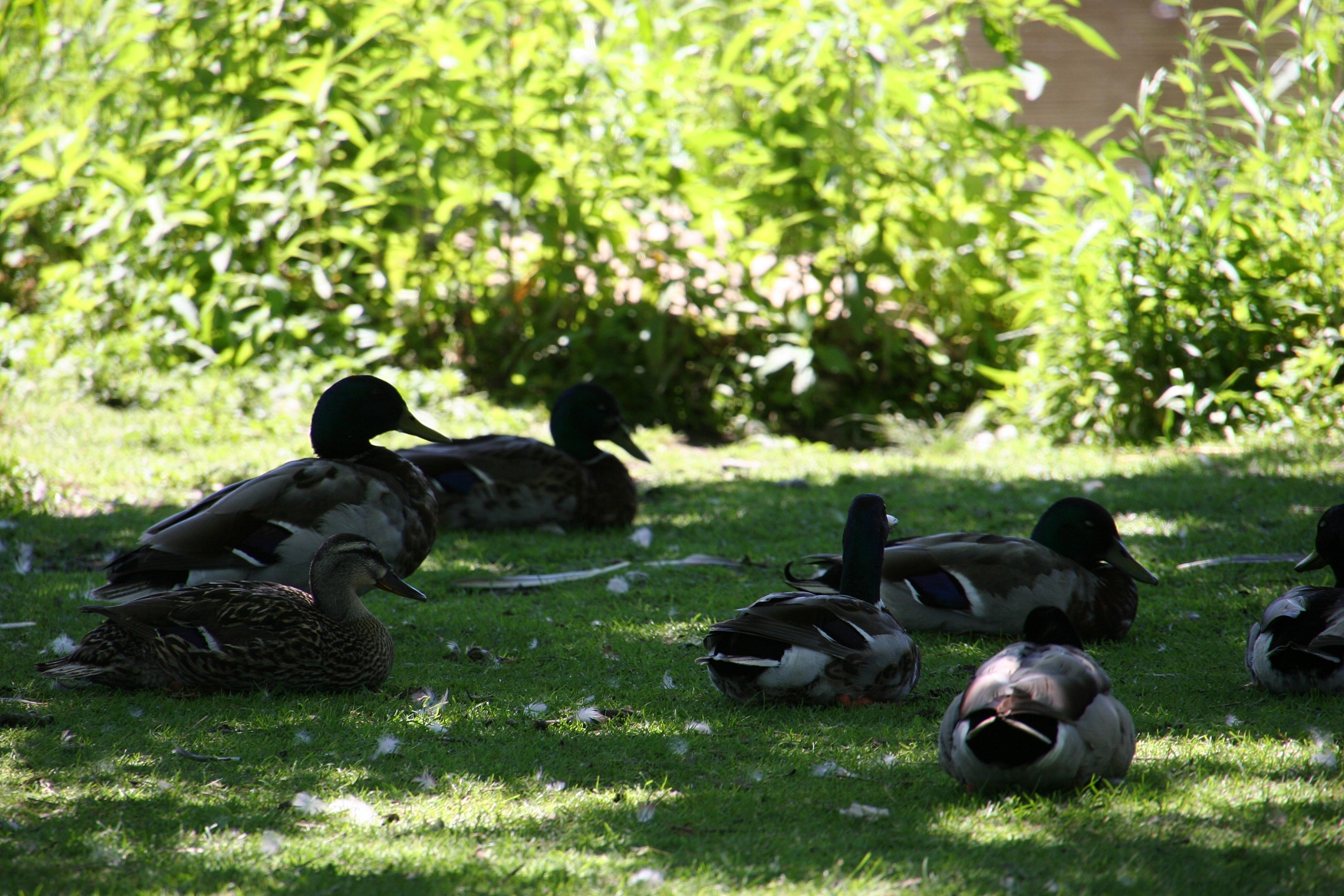
Waterfowl aplenty populate sections of the park.
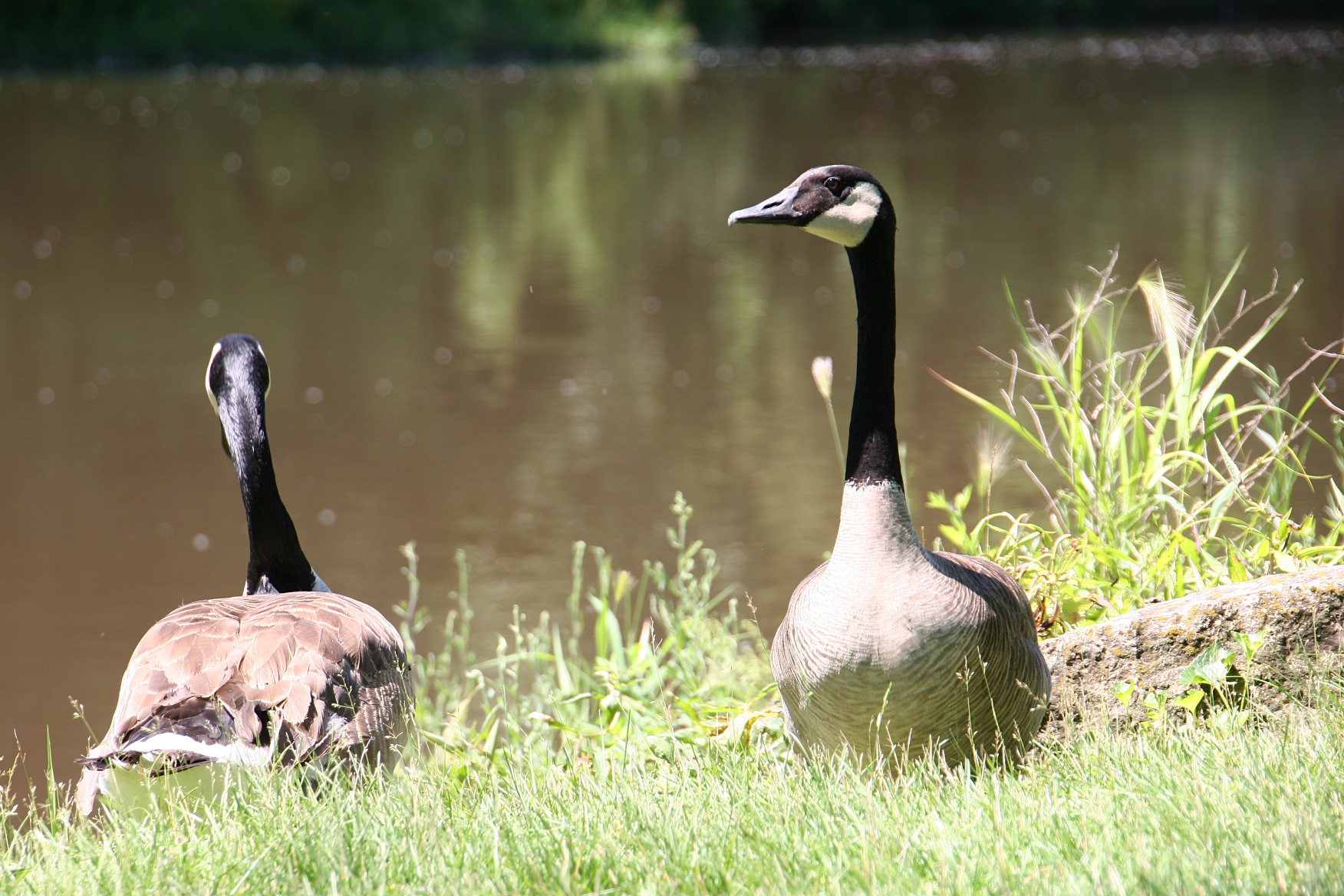
Geese hug the riverbank.
© Copyright 2015 Audrey Kletscher Helbling


 Minnesota Prairie Roots
Recent Comments