Minnesota Prairie Roots

Writing and photography by Audrey Kletscher Helbling

It’s hot as you know where in Minnesota July 6, 2012

Filed under: Uncategorized — Audrey Kletscher Helbling @ 7:18 AM
Tags: , , , ,

I CANNOT RECALL ever watching fireworks from the car. But on the Fourth of July, my husband Randy and I sat in our air-conditioned car parked at a hilltop Faribault church and took in the patriotic display. It wasn’t only the oppressive heat and humidity which drove us into our vehicle, but also the mosquitoes.

It’s been a miserable week of weather here in Minnesota. But I don’t need to tell you that if you live here. You know.

The National Weather Service office in Chanhassen has issued an excessive heat warning for much of central and southern Minnesota numerous times during the past several days. One remains in effect until 7 p.m. tonight in southern Minnesota and west central Wisconsin with temps soaring into the 90s and a heat index of 102 – 112 degrees.

Here’s that warning defined, directly from the NWS website:

AN EXCESSIVE HEAT WARNING MEANS THAT A PROLONGED PERIOD OF
DANGEROUSLY HOT TEMPERATURES WILL OCCUR. THE COMBINATION OF HOT
TEMPERATURES AND HIGH HUMIDITY WILL COMBINE TO CREATE A DANGEROUS
SITUATION IN WHICH HEAT ILLNESSES ARE LIKELY. DRINK PLENTY OF
FLUIDS…STAY IN AN AIR-CONDITIONED ROOM…STAY OUT OF THE SUN…
AND CHECK UP ON RELATIVES AND NEIGHBORS.

That word, “dangerous,” should be heeded.

I suspect Randy and I were feeling the effects of that heat on Tuesday when we took a day trip to Lake City. We were in and out of our air-conditioned van and Lake City businesses during the peak heat of the afternoon. I suffered an on-again-off-again headache.

Not until we were back home did Randy tell me he also had a headache and simply did not feel well. He didn’t drink nearly as much water as me and I suspect he was dehydrated and perhaps a bit overheated.

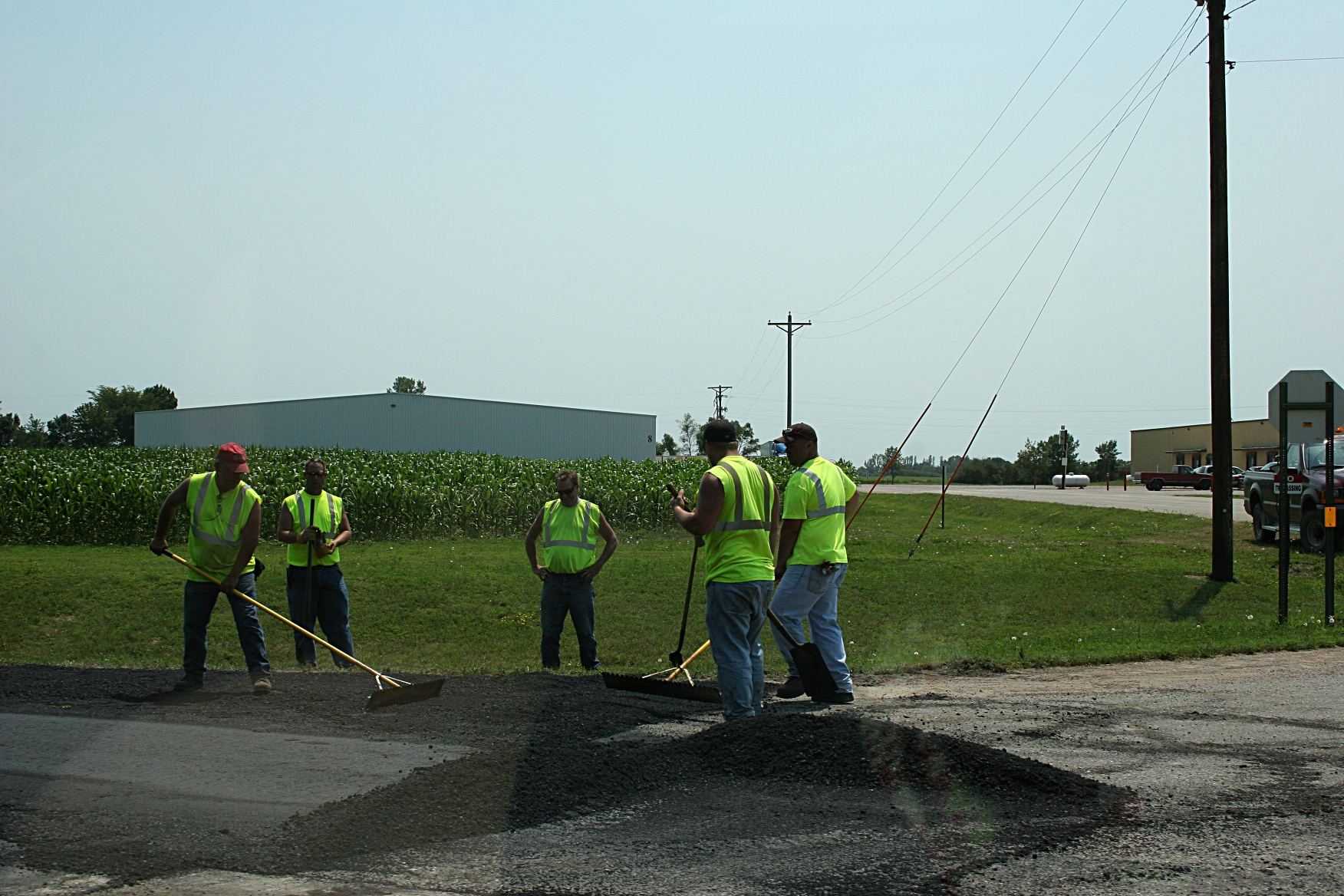
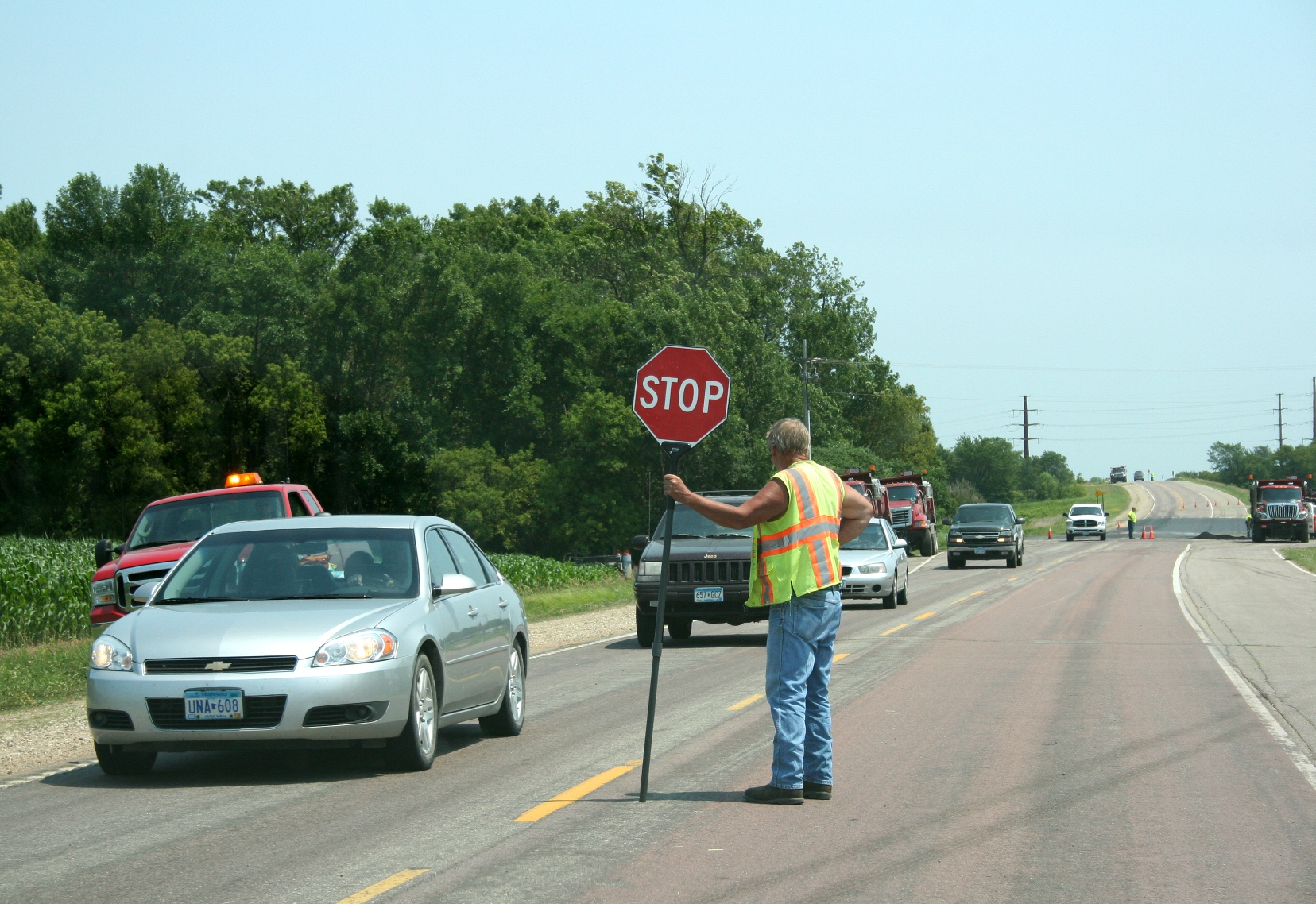
A crew patches a section of Brown County Road 29 just outside of New Ulm on Monday afternoon.

Now imagine if you were a road construction worker or a roofer or anyone else who toils in the outdoors. If we felt uncomfortable  just walking in and out of shops on a hot and humid afternoon, they must have felt 1,000 times more miserable.

Working as a flag man with the same crew under the hot afternoon sun had to be pretty darn hot.

That said, be safe and stay cool. We have one more day of this sultry, oppressive, can’t-breathe kind of day to get through until the heat and humidity levels drop.

How do you beat the heat and humidity?

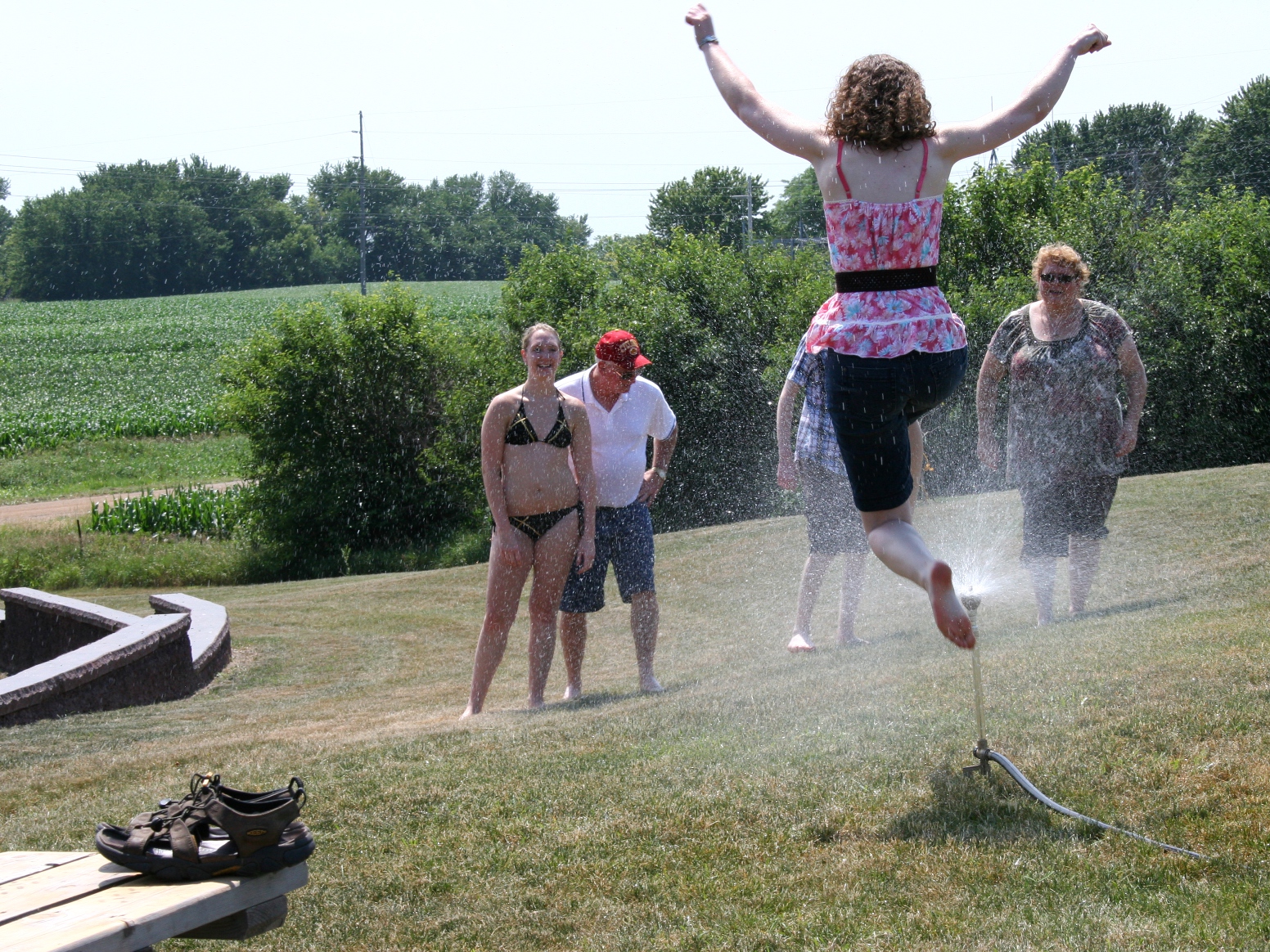
Some members of my extended family beat the heat on Saturday by jumping/running/walking through a sprinkler.

Cooling off in a make-shift fire department swimming pool during a celebration in Belview.

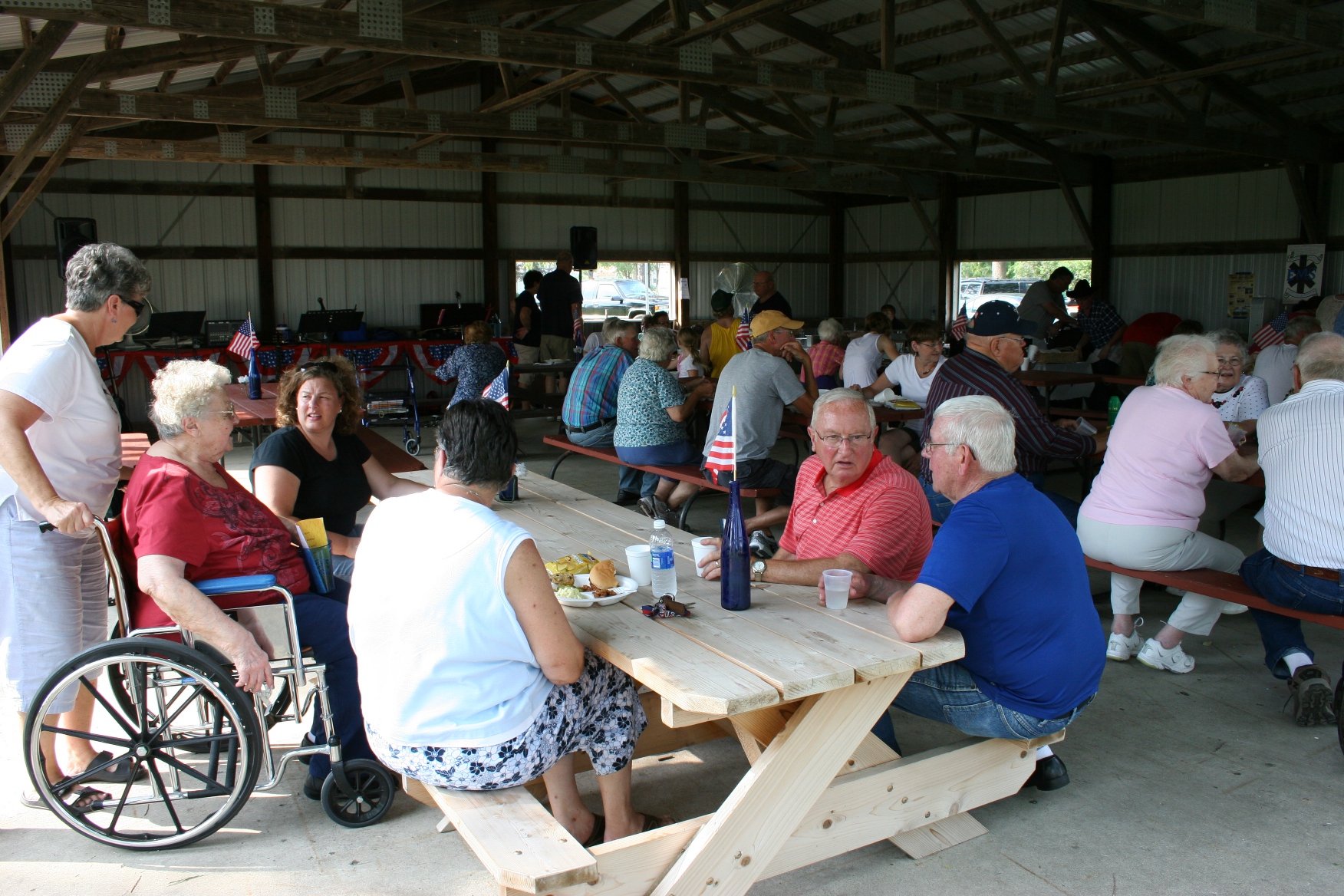
The Belview Fire Department filled a temporary water reservoir for the kids to splash in during a tornado recovery celebration on a sultry July 1 at the city park in Belview in southwestern Minnesota.

© Copyright 2012 Audrey Kletscher Helbling


“…take this house into your protection” July 5, 2012

Filed under: Uncategorized — Audrey Kletscher Helbling @ 7:01 AM
Tags: , , , , ,

IT HAD BEEN AWHILE, I suppose, since they needed extra hymnbooks at a Sunday morning worship service.

But this past Sunday at my home congregation, St. John’s Lutheran in Vesta, the ushers and elders pulled out and dusted off surplus hymnals before distributing them to worshipers seated in the social hall overflow section.

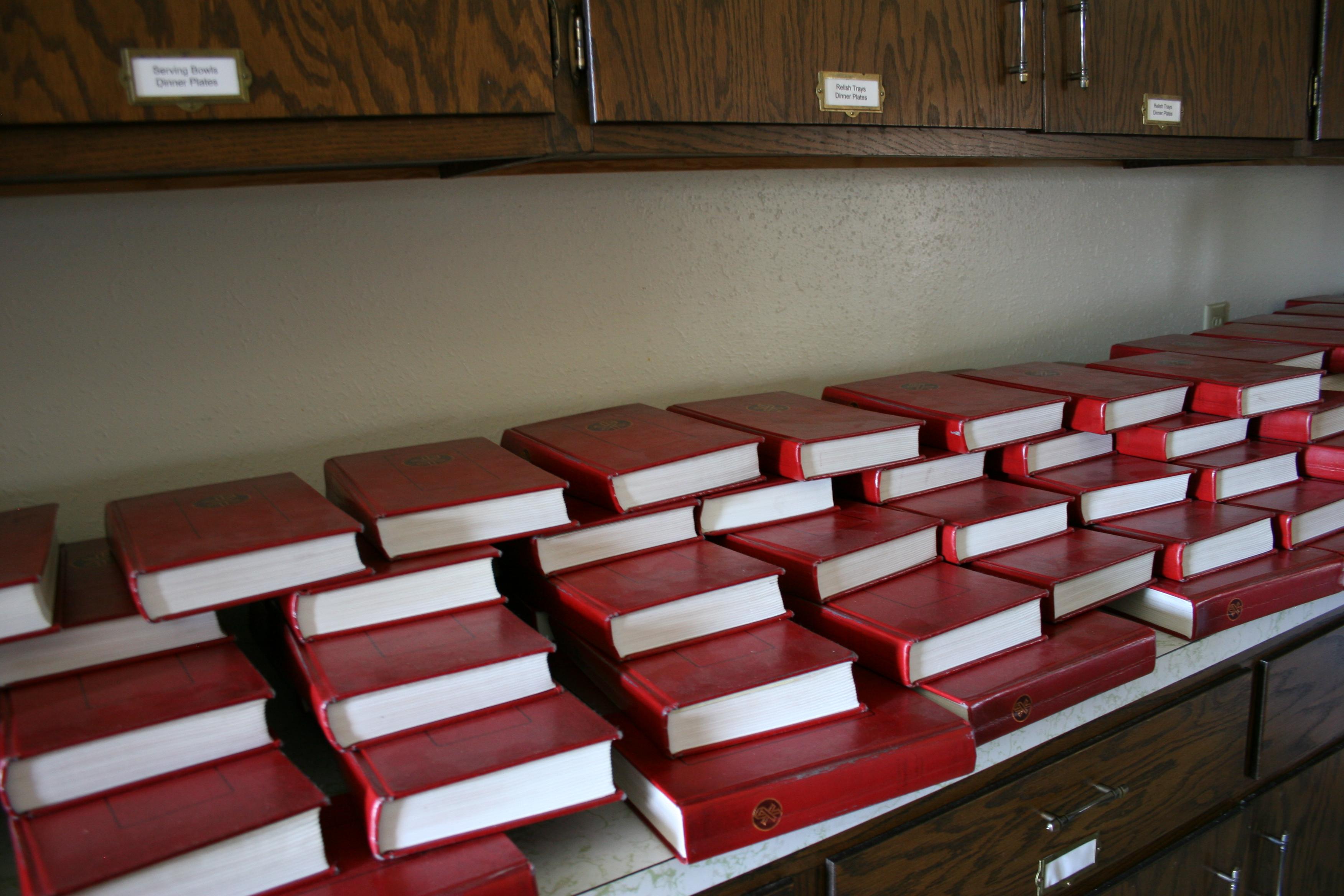
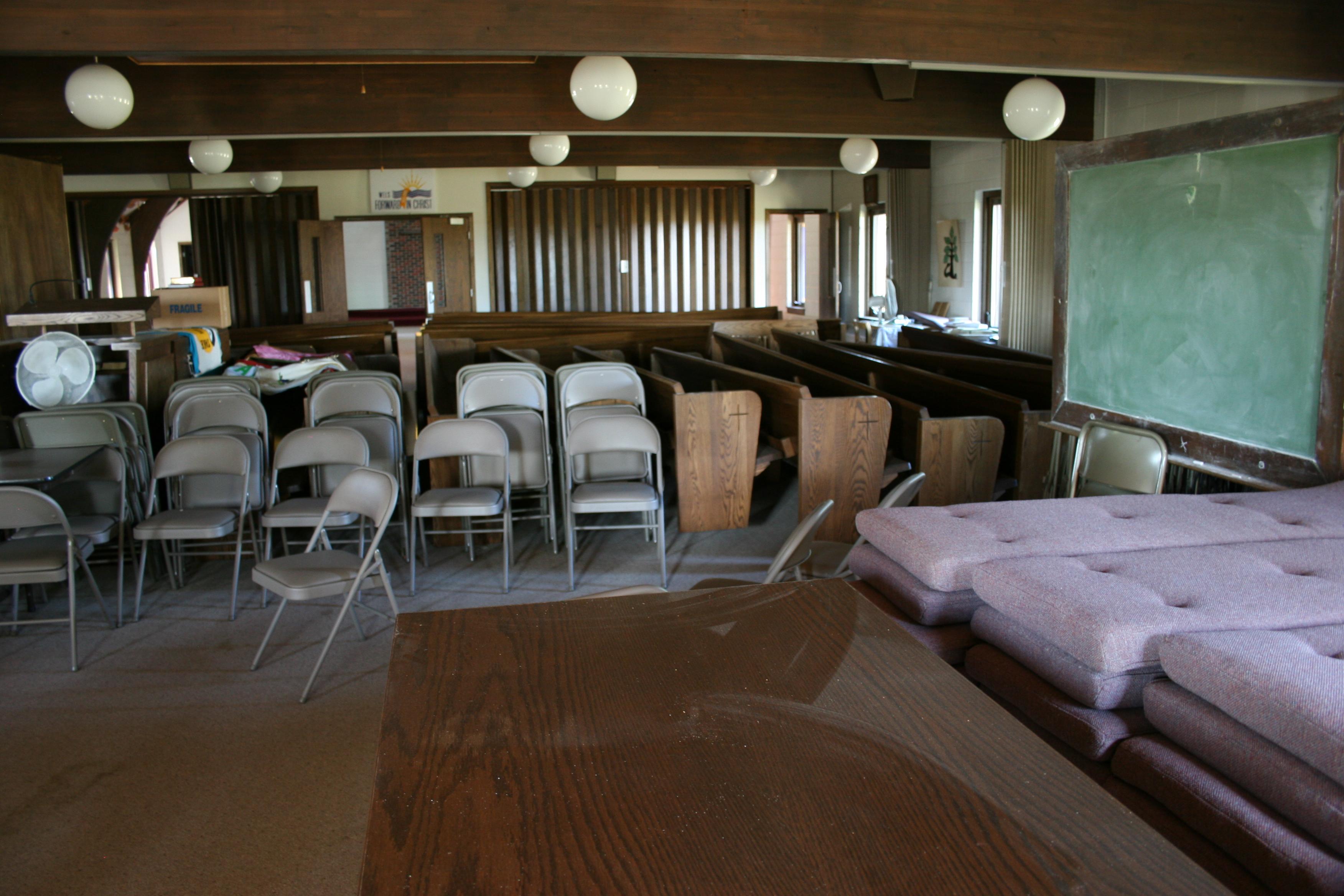
The last time I saw those hymnbooks, they were stacked on counters in the church kitchen. And the fellowship hall, where I was sitting on a folding chair, was crammed with pews and pew cushions, banners, a dismantled statue of Jesus, and an assortment of items moved there from the sanctuary following a damaging summer storm.

Hymnals were stacked on the kitchen counter after the storm.

The pews and other items from the church were moved into the undamaged social hall.

St. John’s, hours after a July 1, 2011, storm. Photo courtesy of Brian Kletscher.

A year ago, a storm packing 90 – 100 mph winds ripped half the roof from St. John’s sanctuary, leaving the congregation without a permanent home for 10 months. Members worshiped at their sister congregation, Peace Lutheran in nearby Echo, before returning on May 6 to their church in Vesta.

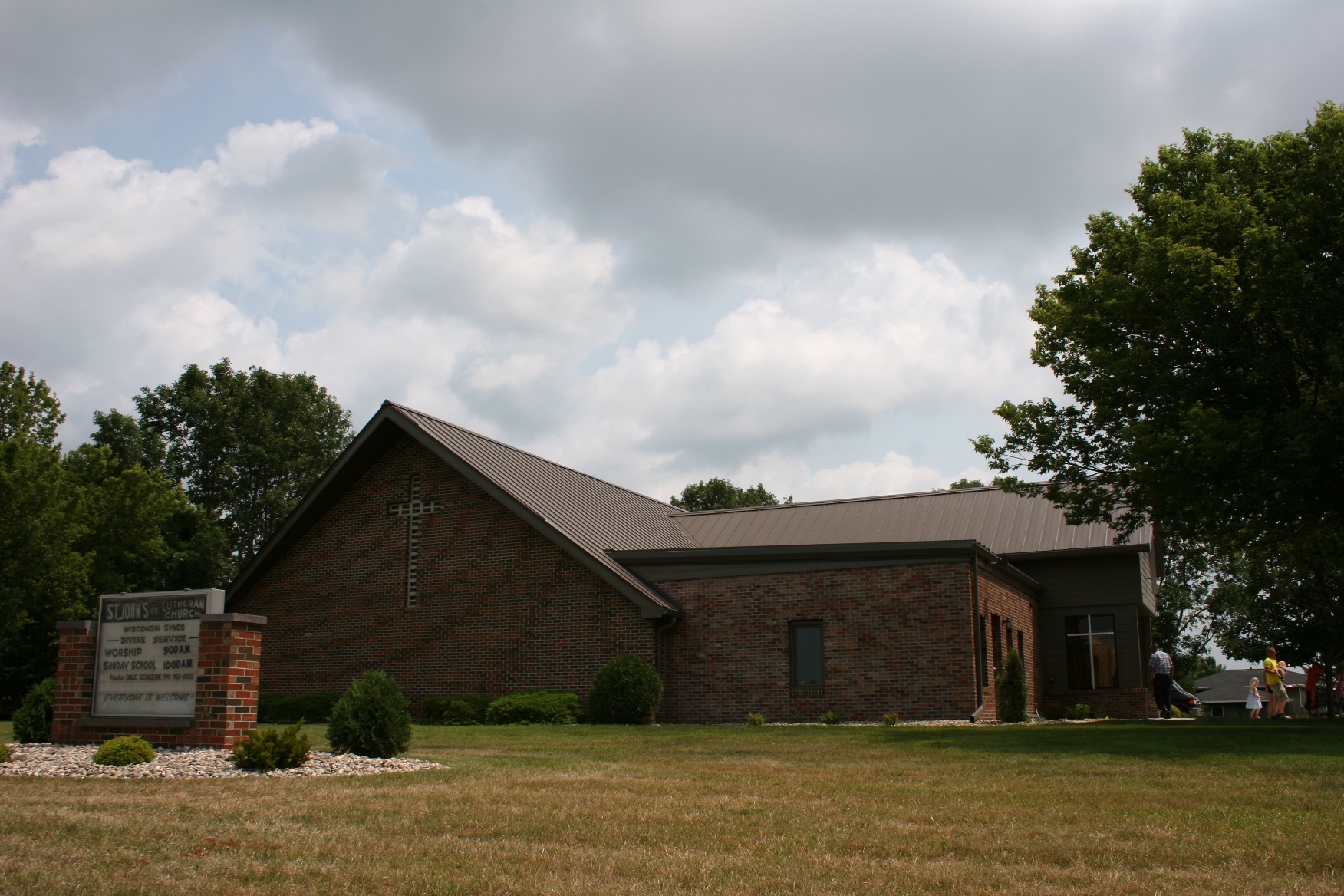
St. John’s, one year after the storm with a new roof and an addition.

However, the dedication of the addition—which includes an office, storage space, handicapped accessible bathroom and enlarged narthex—and rededication of the repaired sanctuary were delayed two months to coincide with the one-year anniversary of the July 1 storm.

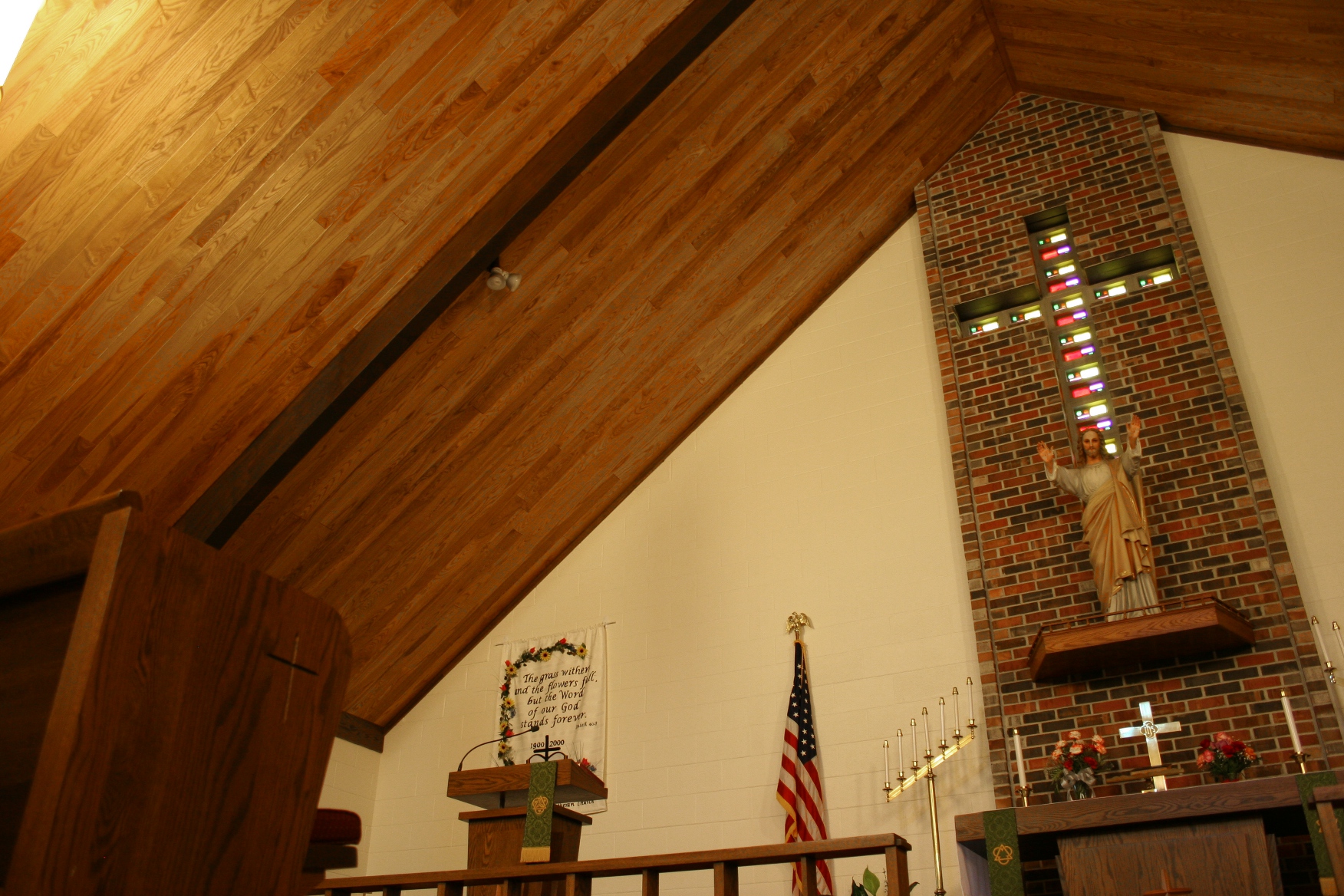
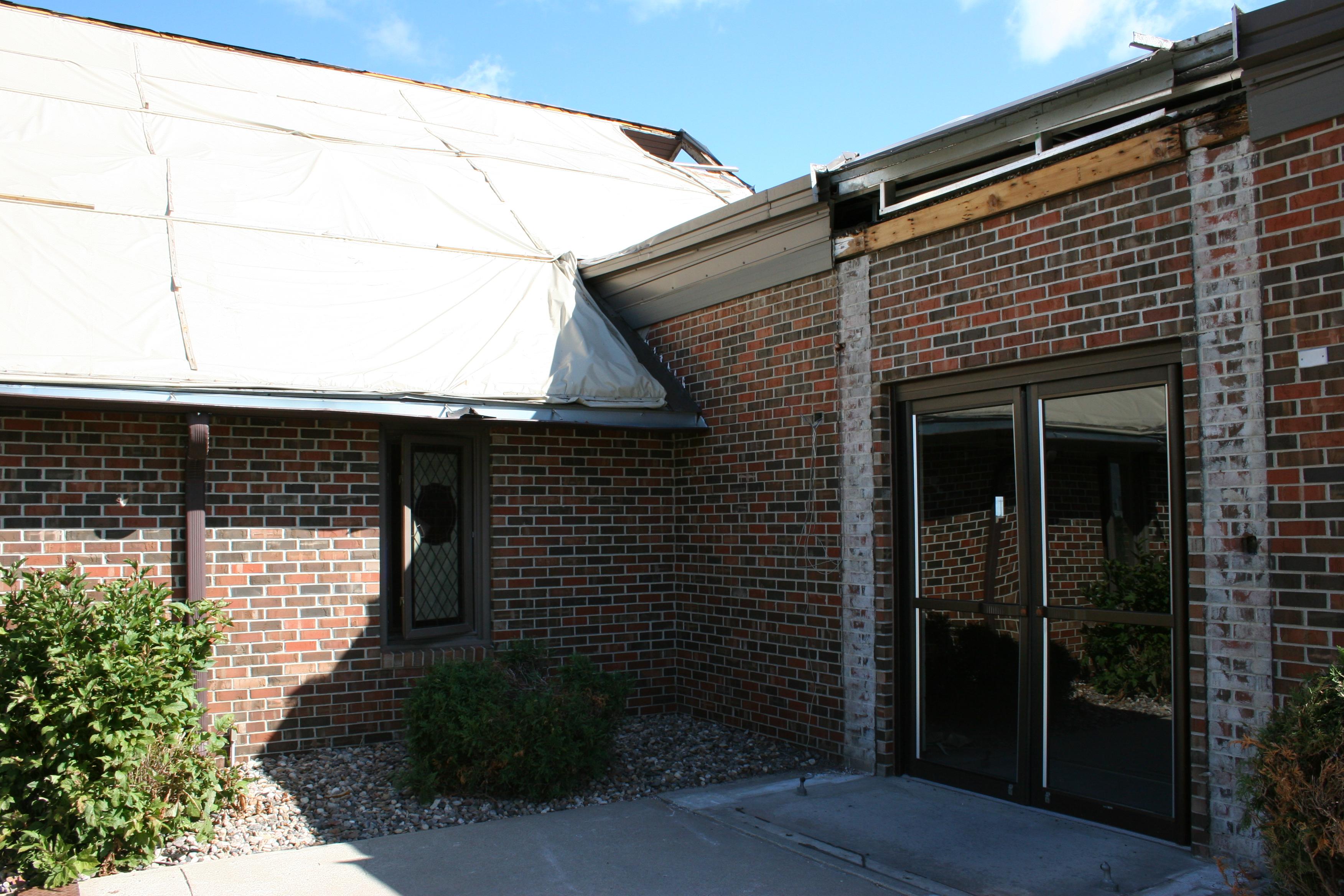
Standing inside St. John’s sanctuary in September 2011, I listened to the wind flap the tarp that covered the damaged roof.

A view of the same ceiling/roof area a year later.

On Sunday, I attended the service of prayer and thanksgiving, of dedicating the addition and rededicating the sanctuary “to the glory and the service of the Lord,” according to the Rev. Dale Schliewe.

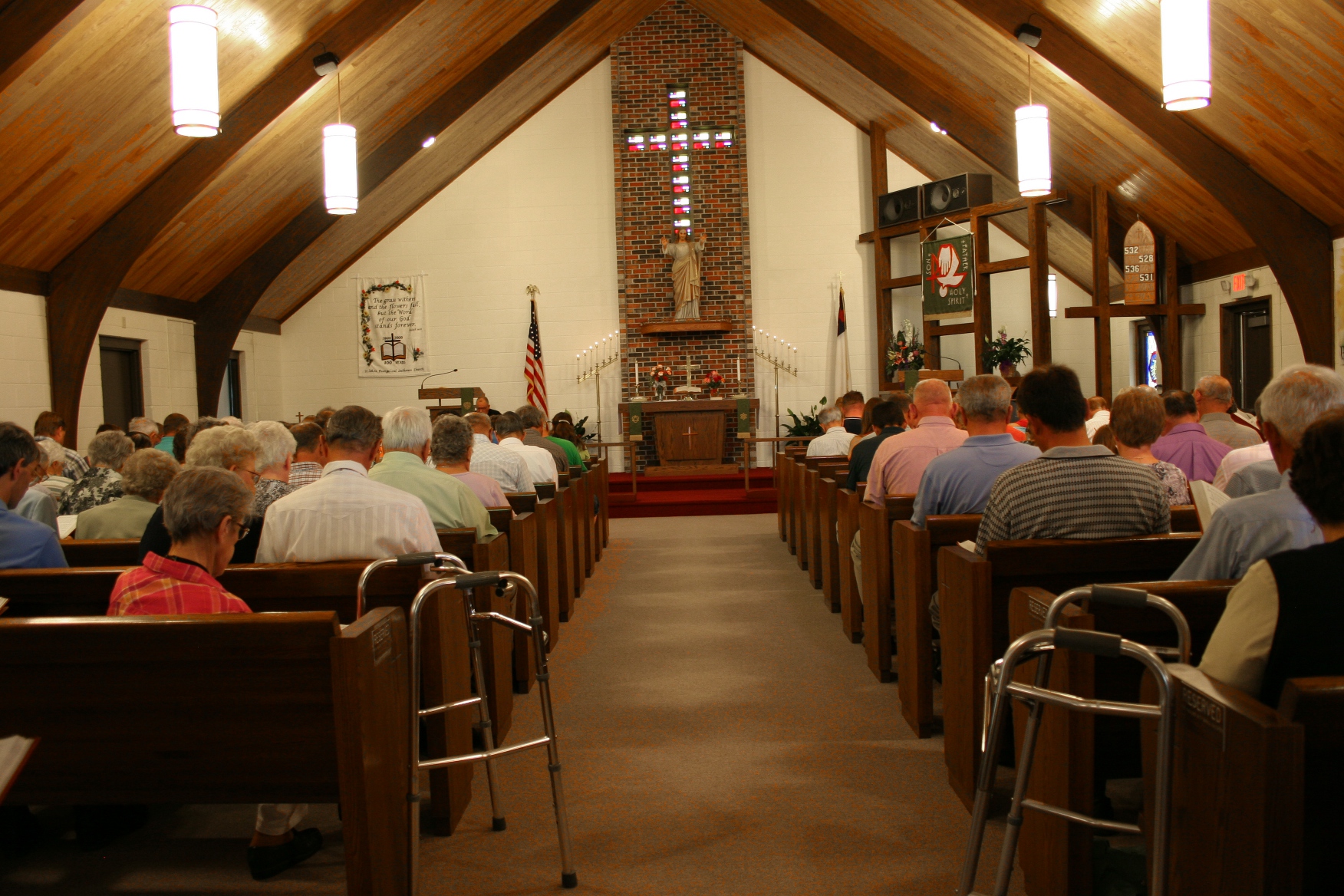
Worshipers gathered July 1, 2012, in the repaired sanctuary with overflow into the social hall.

Singing words like “Christ is our cornerstone, on him alone we build…built on the rock secure…here is the day’s dedication…,” we celebrated.

It felt good to be there, in my home church, the building in which I was married, the place where I have mourned the deaths of loved ones, the sanctuary where I have celebrated confirmations and baptisms and weddings and many Christmases and Easters.

It was good to be home, to bow my head and fold my hands and pray: “…contine to take this house into your protection… Be with us always to bless, to keep and to save.”

Amen.

The southern half of the roof was ripped off by high winds and toppled onto the bell tower, which was removed. It was attached to the sides of the entry, as seen in this image from September 2011

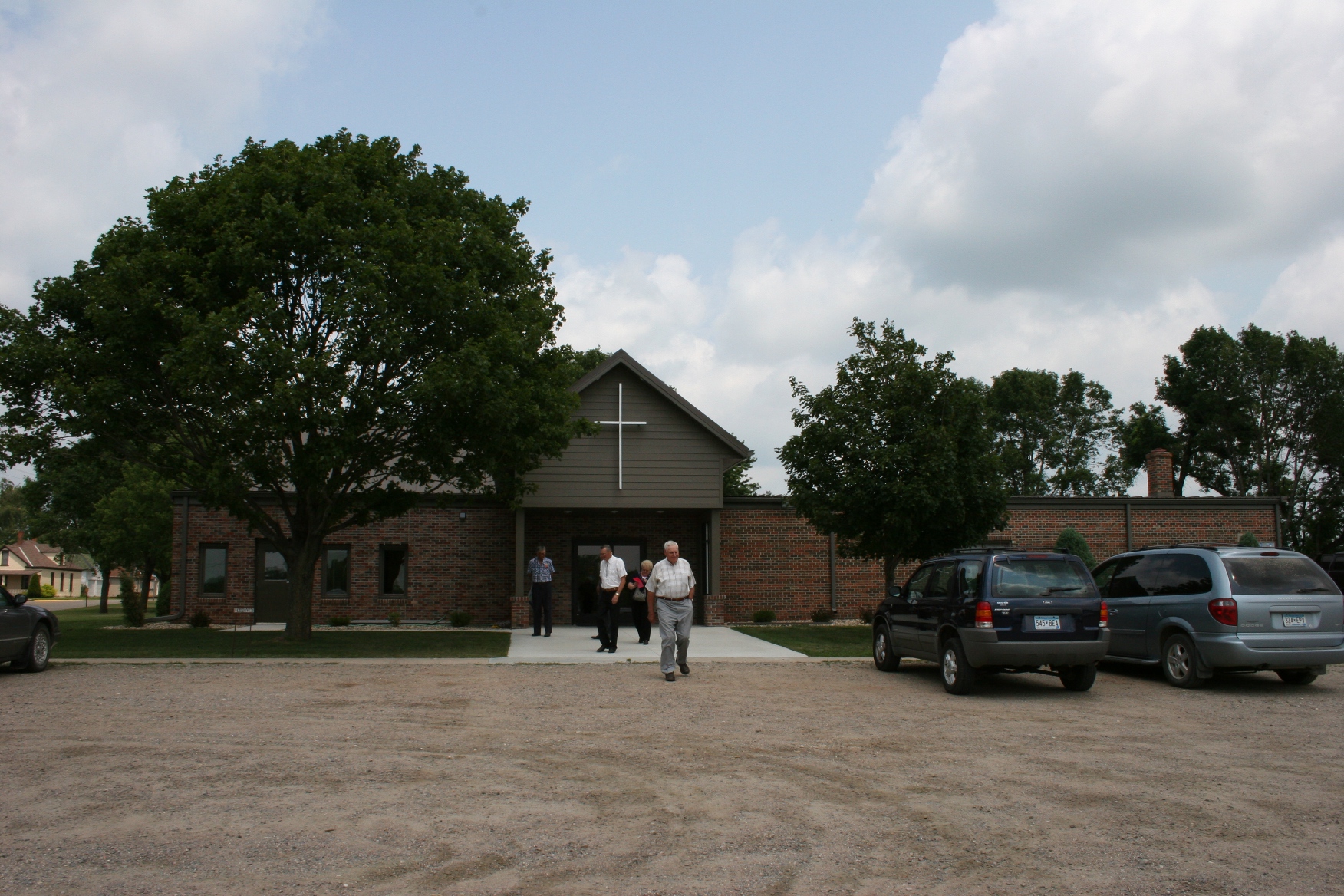
Here you see the addition to the south side of the church. Worshipers now enter through south-facing doors.

© Copyright 2012 Audrey Kletscher Helbling


Symbols of freedom at Fargo’s Lindenwood Park July 4, 2012

IF YOU VISIT the Fargo-Moorhead Sertoma Club website, you will read this:

Sertoma stands for the high and noble service to mankind through communication of thoughts, ideas and concepts to accelerate human progress in health, education, freedom and democracy.

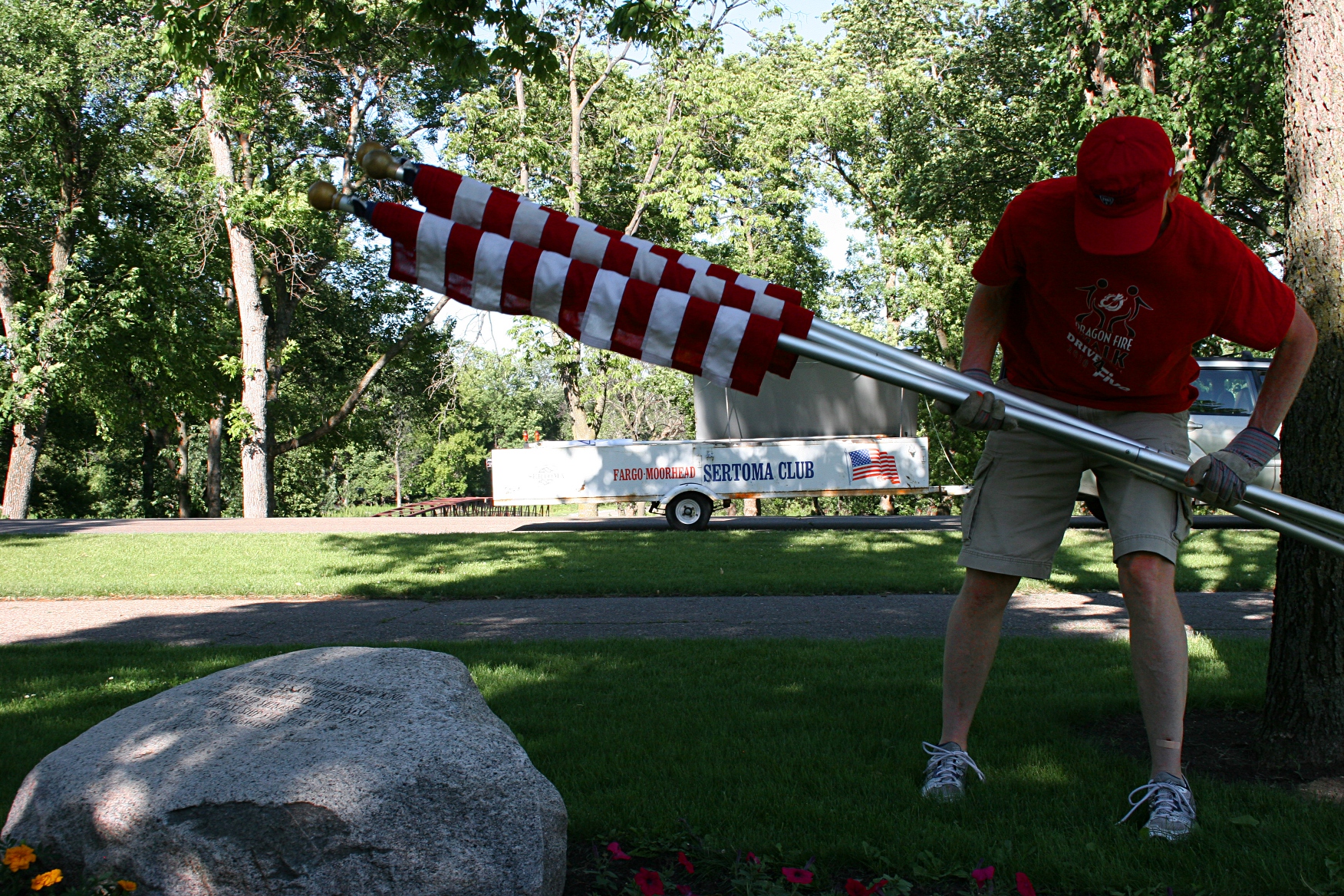
Here a volunteer removes flags posted along Roger Maris Drive in Lindenwood Park on Flag Day.

Then, if you visit Fargo’s largest park, Lindenwood Park, around the Fourth of July or on Labor Day, September 11, Armed Forces Day, Memorial Day or Flag Day, you’ll see evidence of that mission. Some 75 American flags line Roger Maris Drive as part of the Sertoma Flag Service project.

I saw the impressive display of flags when I was in Lindenwood on June 14, Flag Day.

Volunteer Bruce Hanson gathers the flags, which typically are posted for several days on holidays and memorable historic occasions.

There I chatted briefly with Sertoman Bruce Hanson as he carried carefully rolled flags from the park grounds and placed them into a Sertoma trailer. The project, he says, has been ongoing in the city for a long time (since 1973, according to the website) and was moved to Lindenwood several years ago. Prior to that, the flags were scattered at businesses throughout Fargo and West Fargo. Grouping all the flags in one place makes more of an impact.

Businesses are still involved, Hanson says, via flag placement sponsorships. Proceeds from the flag project go back to the community.

The Sertoma Freedom Bridge over the Red River, linking Fargo and Moorhead.

I didn’t ask Hanson about the other Sertoma project I noticed in the park, the Sertoma Freedom Bridge, a foot-bridge which links Lindenwood Park on the North Dakota side of the Red River with Gooseberry Mound Park on the Moorhead side.

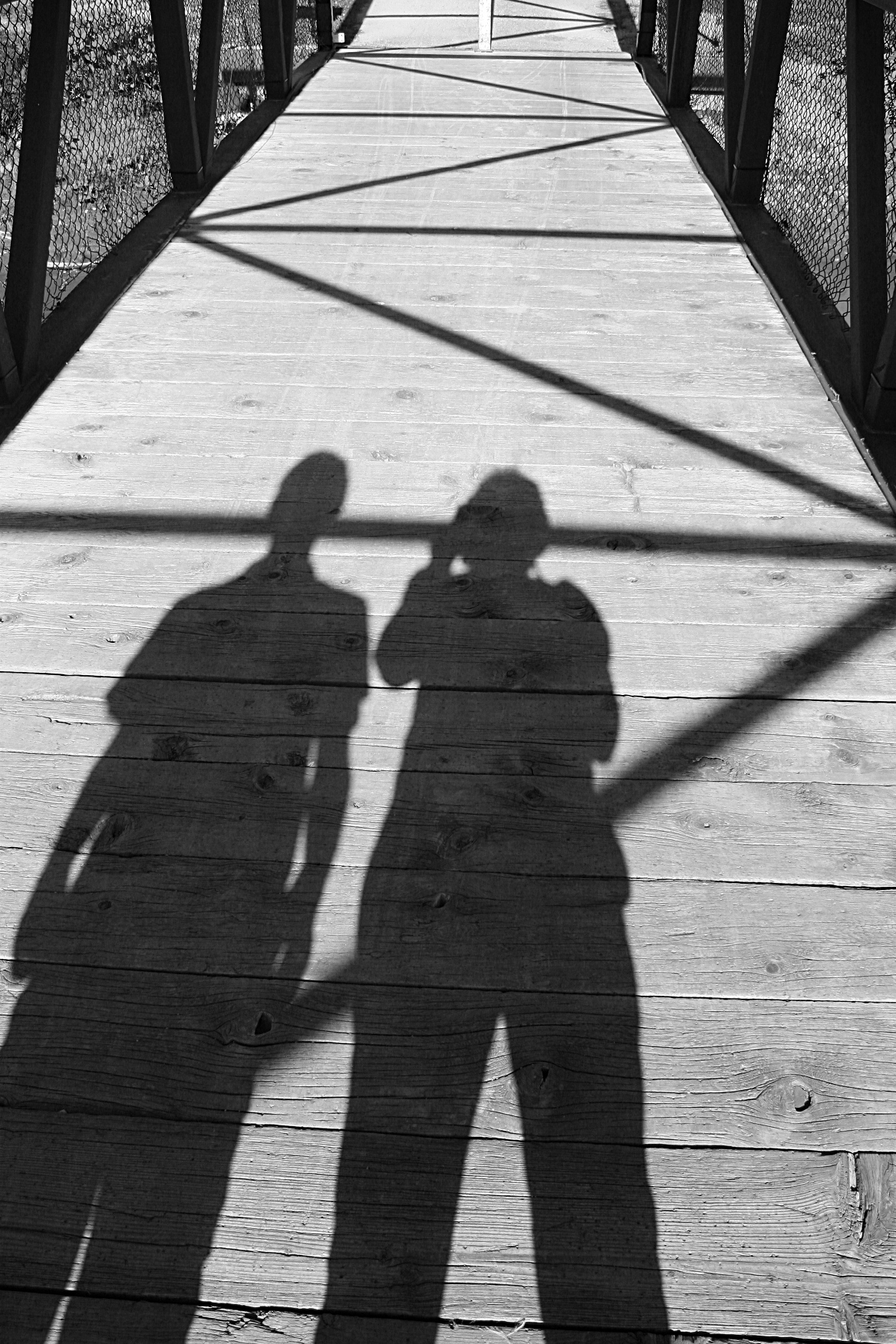
I photographed my shadow and that of my 18-year-old son on this popular biking and walking bridge.

The bridge closes July 9 for reconstruction and reopens October 1. I did a brief online search and learned that this bridge has been battered more than a few times by the raging floodwaters of the Red River. That was difficult to imagine given the docile nature of the narrow and muddy Red on the June evening I visited Lindenwood Park.

But I was assured by a man and his granddaughter that the river most assuredly spills from its banks and floods the lower park areas.

I’d really like to know more about the history of this pedestrian and bike bridge. When was it built? And why is it pegged “Freedom Bridge?”

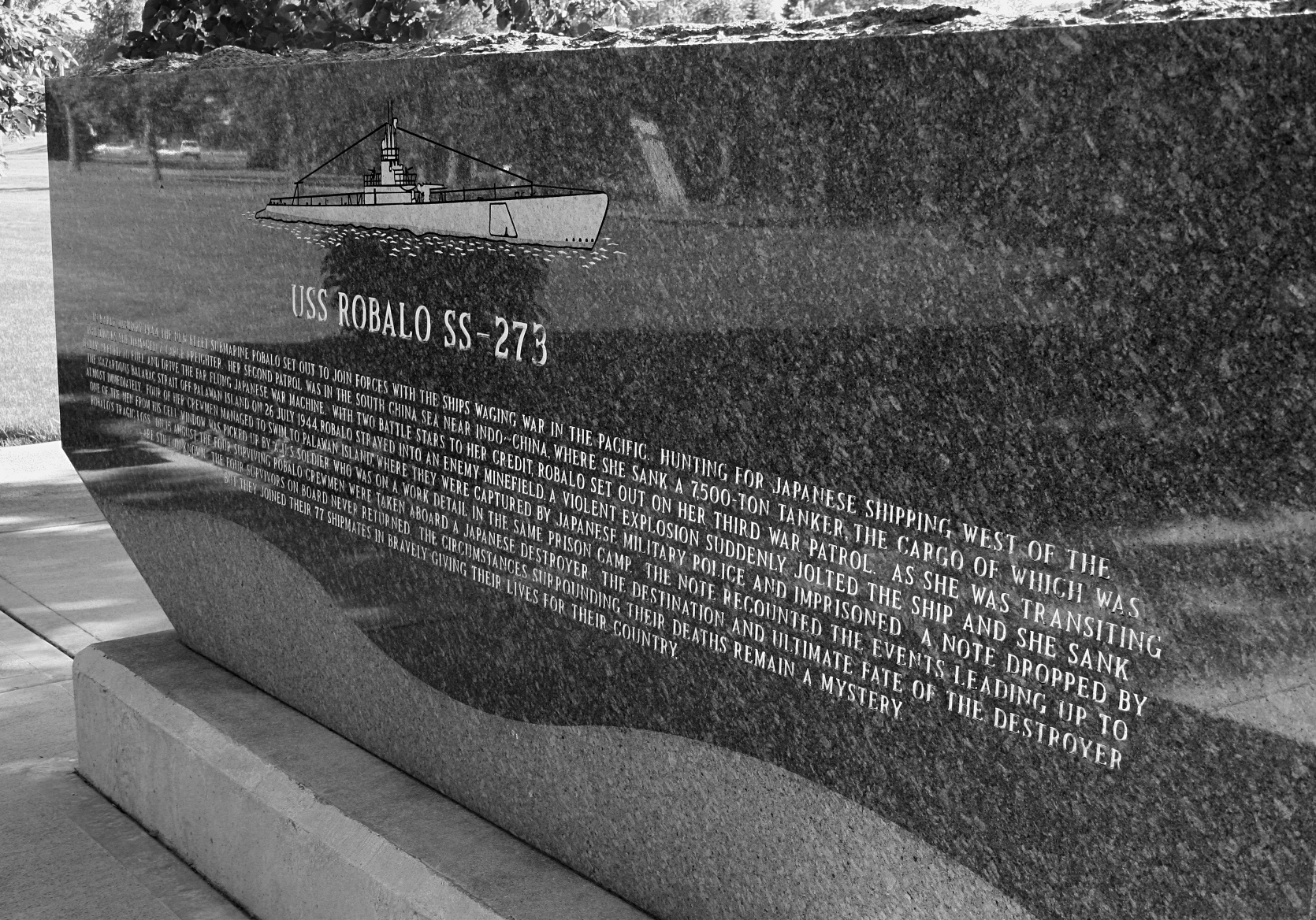
You’ll also find this symbol of freedom in Lindenwood Park. This memorial honors the 81 men who lost their lives on the WW II American submarine, the USS Rabalo. Four survived but died as Japanese prisoners of war after the submarine hit a minefield and sunk while passing through the Balabac Strait. The submarine was assigned to North Dakota for establishment of a monument.

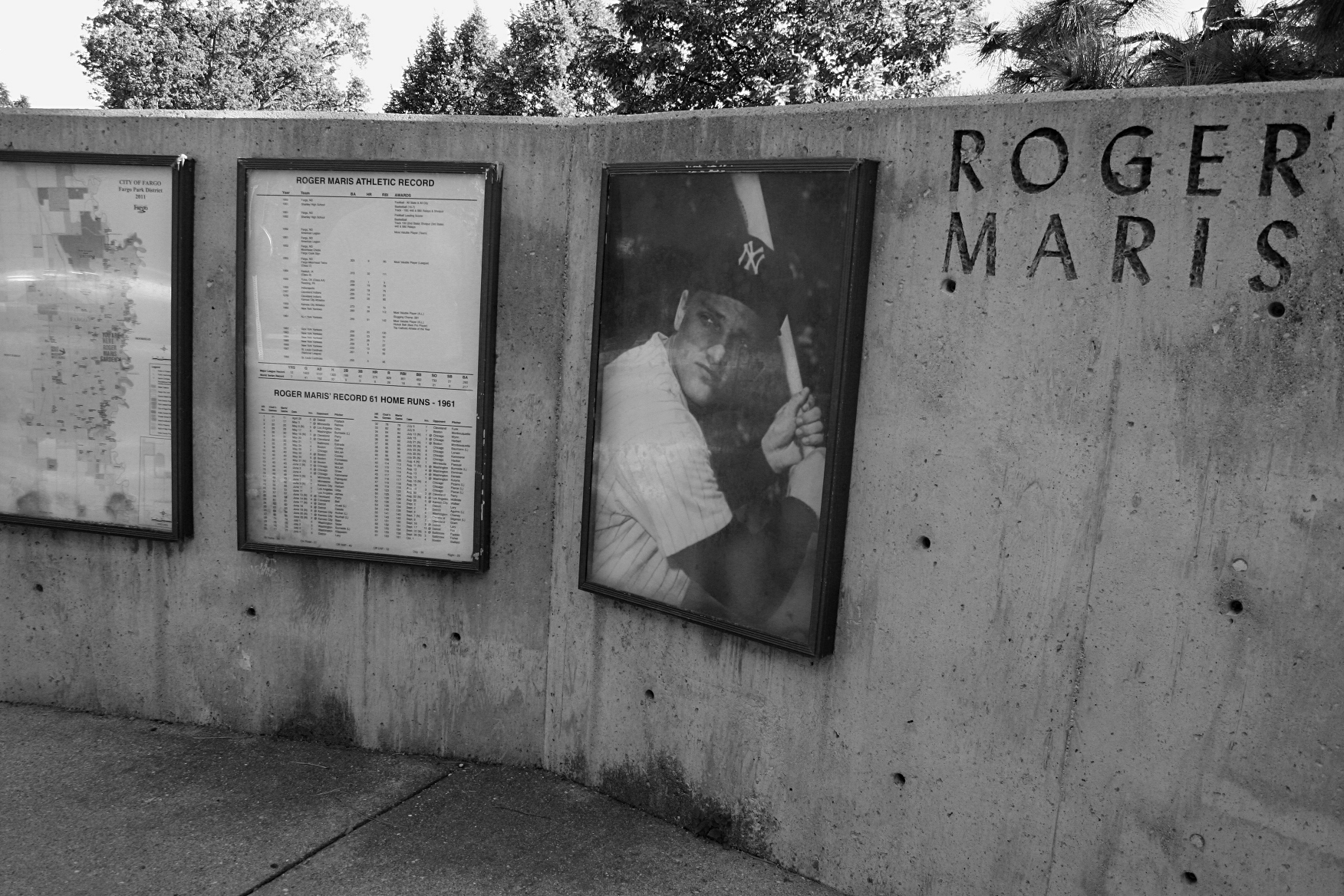
The Lindenwood Park monument to baseball player Roger Maris, who was born in Hibbing, Minnesota, but grew up in Fargo. This New York Yankees’ outfielder set a new major baseball league record in 1961 with 61 homeruns. That broke Babe Ruth’s record of 60. Maris was also a Most Valuable Player in the American League several times and played in seven World Series. Fargo is home to the Roger Maris Museum at the West Acres Shopping Center.

© Copyright 2012 Audrey Kletscher Helbling


Oh, beautiful America, land of the free

Filed under: Uncategorized — Audrey Kletscher Helbling @ 8:36 AM
Tags: , , , , ,

IN THE UNITED STATES OF AMERICA, we have much to be thankful for, most notably our freedom. Have a wonderful Fourth of July and enjoy these photos, my gift to you as we celebrate the birth of our great nation.

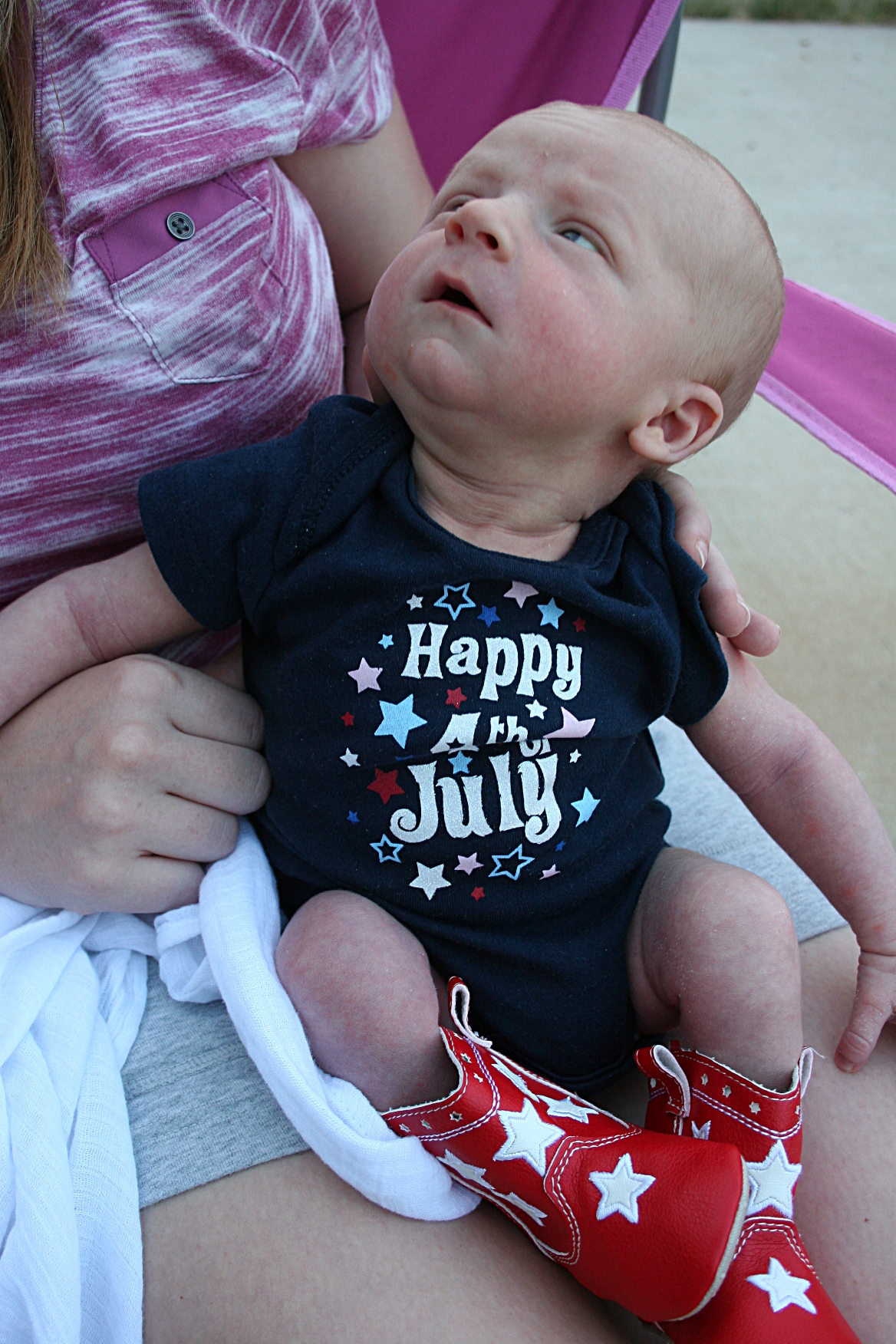
My great nephew Hank, born on June 20, is celebrating his first Fourth of July.

My daughters light the southwestern Minnesota prairie sky with sparklers at a weekend pre-July Fourth family gathering.

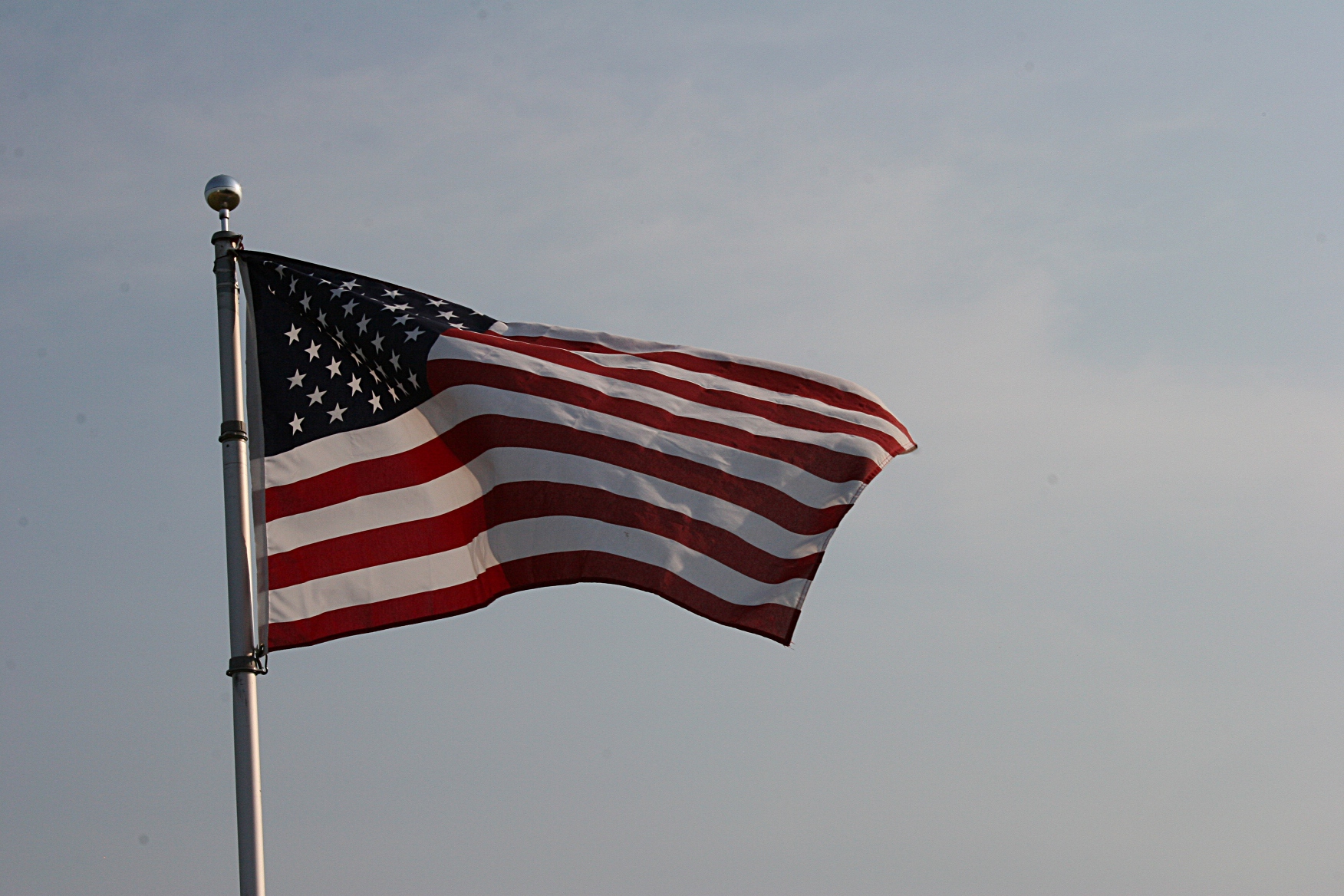
The flag which flies at the home of my middle brother.

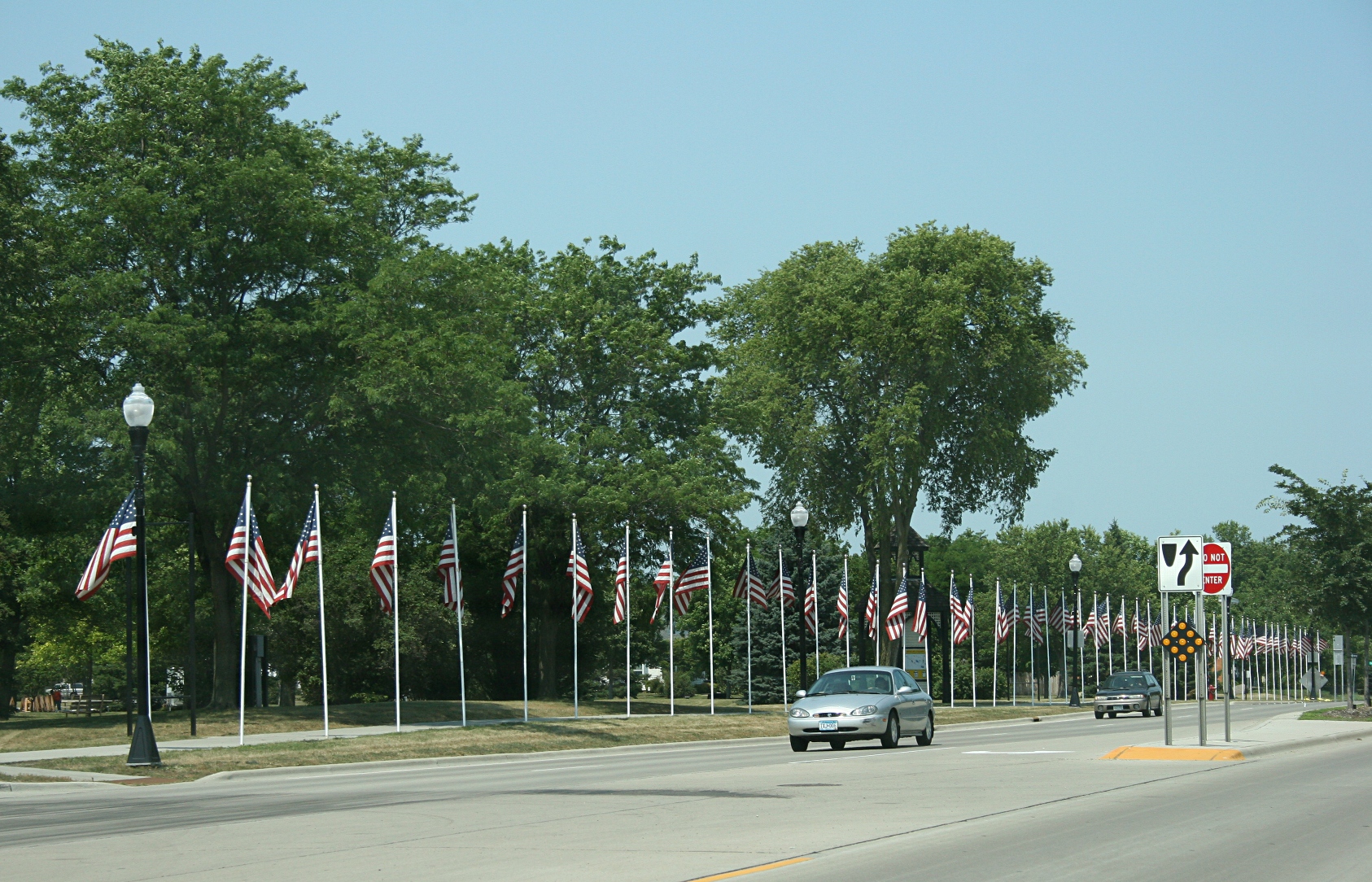
Flags line the park area along Highway 169 through St. Peter.

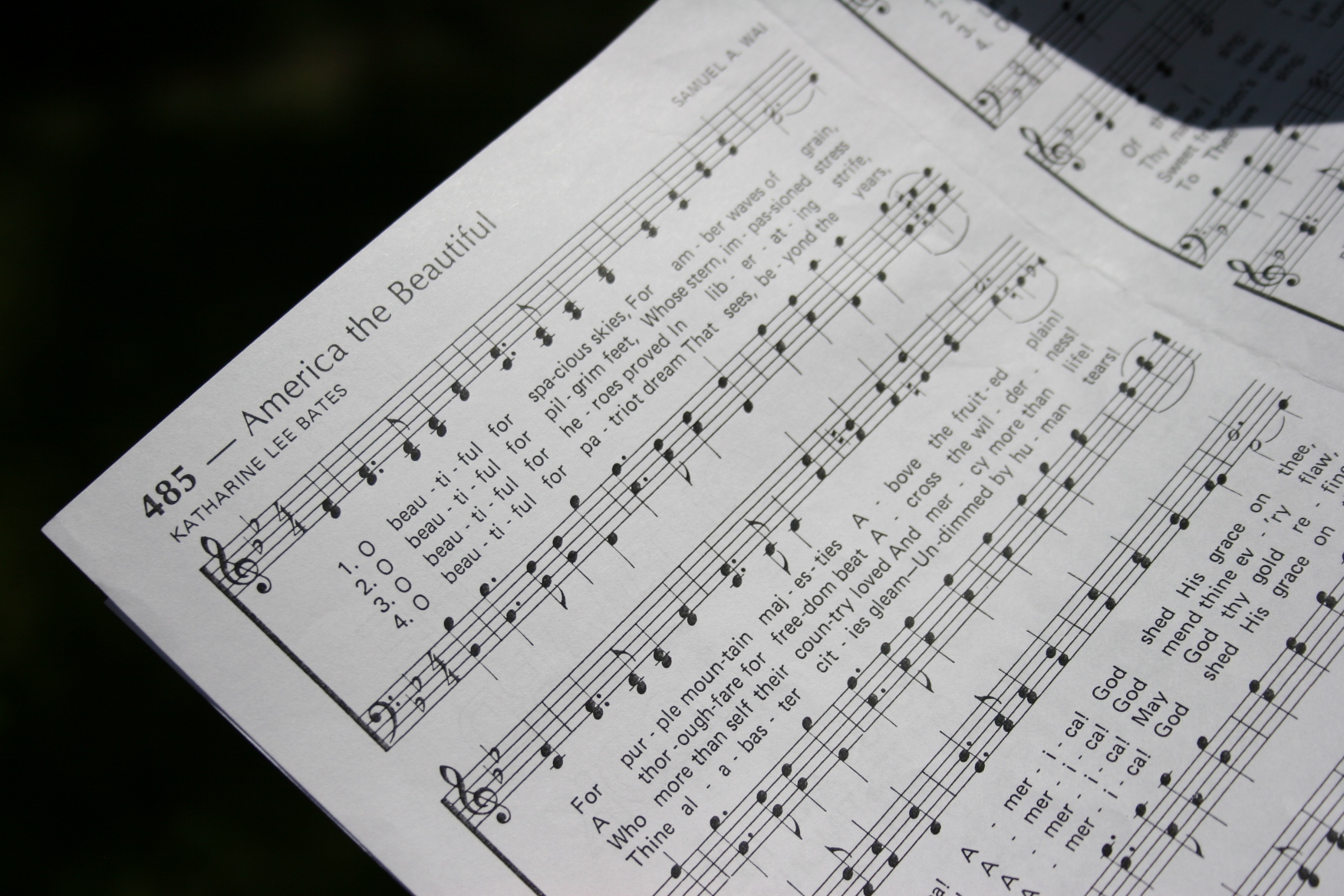
One of my favorite patriotic songs, America the Beautiful.

Copyright 2012 Audrey Kletscher Helbling


My dream come true: A Little Free Library installed in my hometown on the southwestern Minnesota prairie July 3, 2012

IMAGINE GROWING UP in a town without a library and, all your life, wishing for a library in your hometown.

Then imagine one July day, when you have been gone for nearly four decades and are old enough to qualify as a senior citizen, that a couple drives into your hometown in their station wagon to deliver a library.

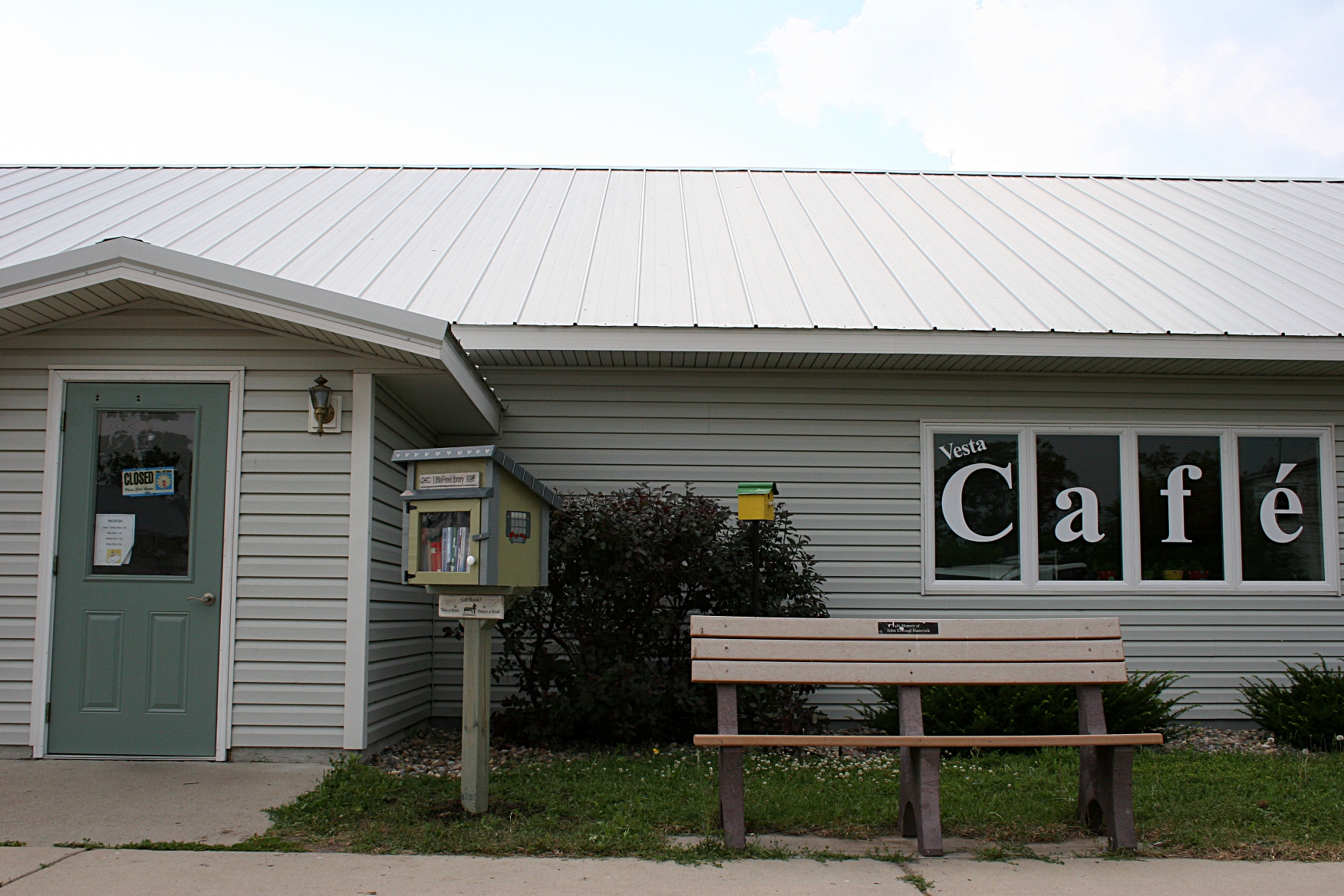
That scenario played out in my hometown on Sunday afternoon as Todd Bol, co-founder of the Little Free Library, traveled three hours from Hudson, Wisconsin, with his wife, Susan, and their two dogs to deliver and install a LFL at the Vesta Cafe in the southwestern Minnesota prairie town of Vesta.

Troy Krause of The Redwood Falls Gazette interviews Little Free Library co-founder Todd Bol as Dorothy Marquardt, left, and Karen Lemcke of the Vesta Commercial Club listen.

“I love books. They are part of my heart and soul,” Todd Bol said Sunday as he stood outside the cafe near the over-sized birdhouse style library anchored on a post. I listened and snapped photos as Troy Krause, editor of The Redwood Falls Gazette interviewed this man who has seen his LFL story spread to media outlets worldwide, from The Huffington Post to The Los Angeles Times and beyond.

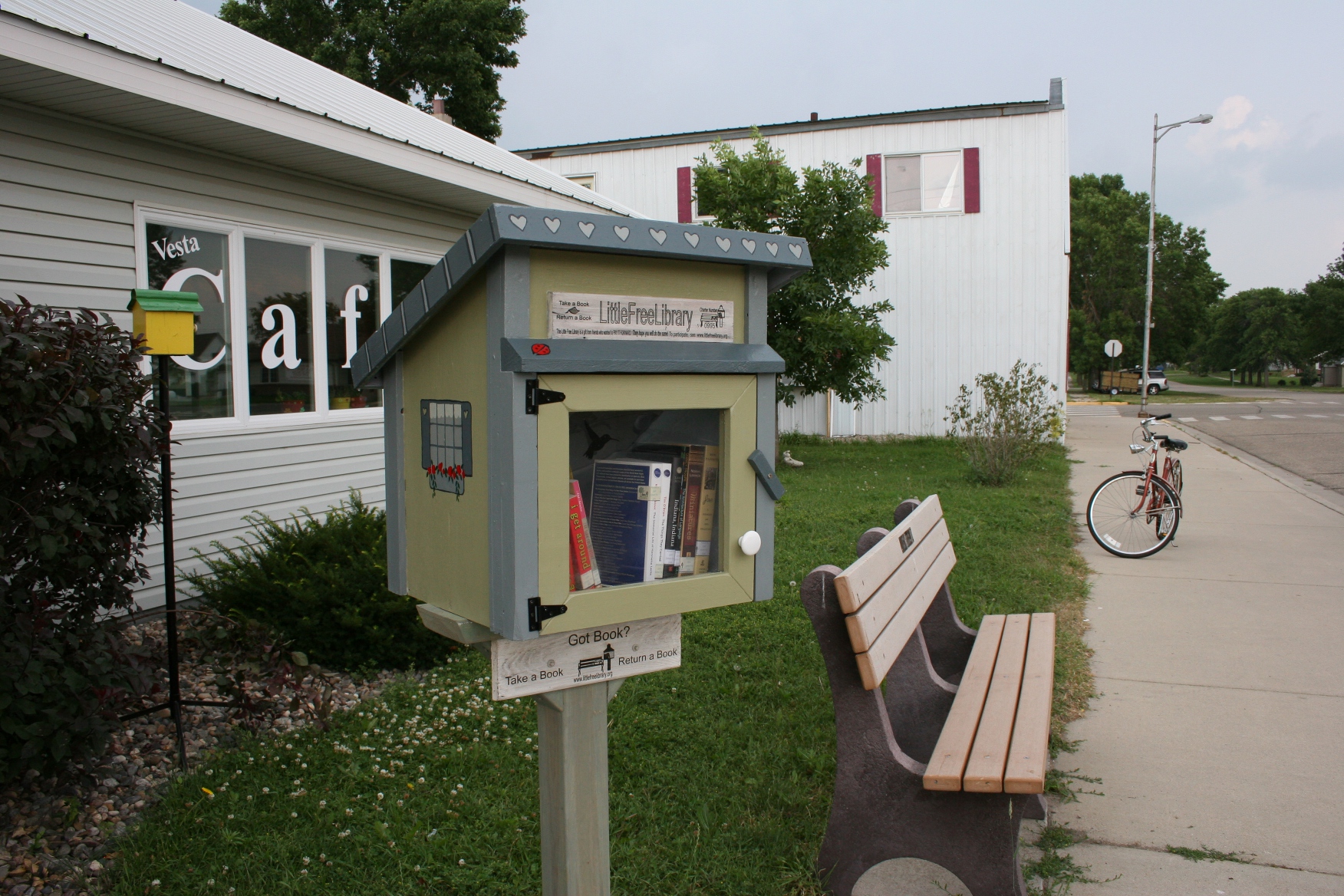
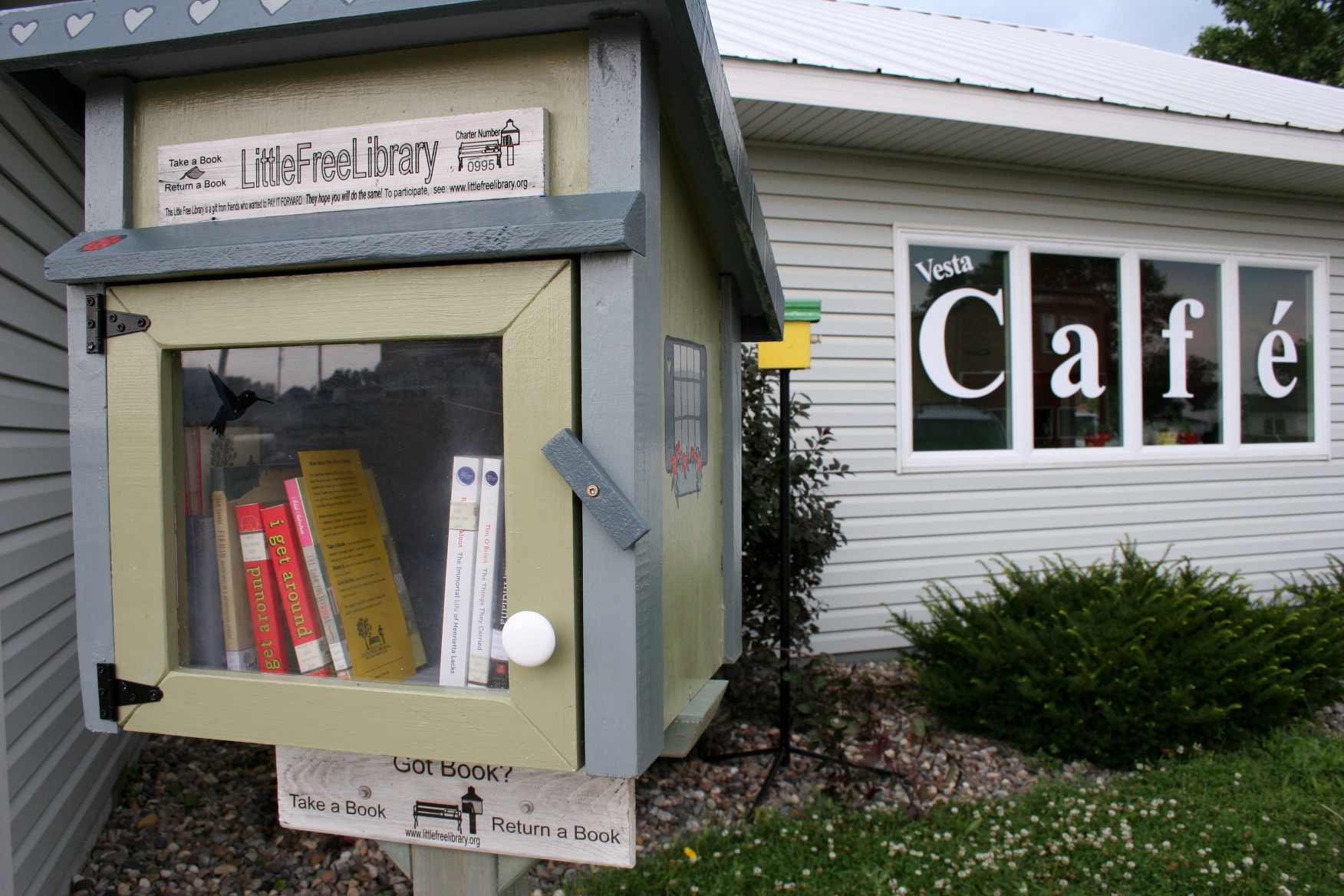
The LFL Todd and Susan installed outside the community owned Vesta Cafe.

Little Free Libraries are popping up everywhere across the country (and even outside the U.S.), bringing books to neighborhoods and cities and now, for the first time, to places likes Vesta, the seed plant for the “Small Towns Minnesota” movement of the LFL project, according to Bol.

The beautiful handcrafted library Todd Bol had built and painted for the residents of Vesta, population around 340.

He offered to donate the library, hand-built by an Amish carpenter from Cashton, Wisconsin, to Vesta after I blogged last November about a LFL in my community of Faribault and then issued this challenge to my hometown of some 340 residents:

I’d like to challenge the residents of Vesta to start a Little Free Library. How about in or near the Vesta Cafe? Make my dream of a library in my hometown come true. I’ll even bring some books for the library the next time I’m “back home.”

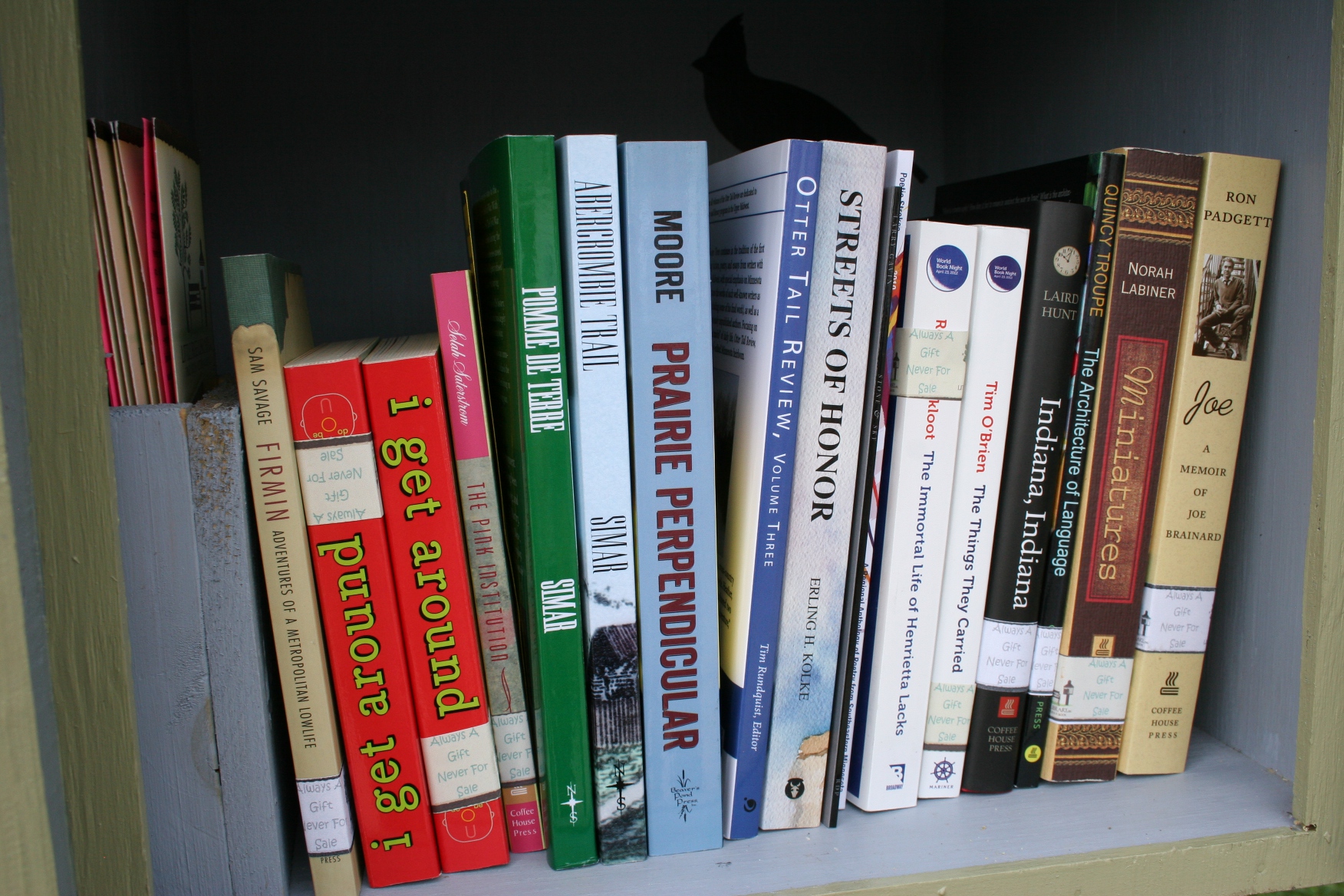
The books Todd Bol and I placed inside Vesta’s LFL. I plan to bring some books for children and teens the next time I’m back in Vesta. Anyone is welcome to donate books. Overflow books will go on a bookshelf inside the cafe and books will be rotated.

Sunday afternoon I delivered on that promise as did Bol with his promise. He brought the library and we filled it with books—his donated by Coffee House Press and mine from my bookshelves. Among my seven donations were two books of poetry, not something I would typically expect Vestans to read. But I wanted Vesta’s LFL to have a copy of Poetic Strokes—A Regional Anthology of Poetry from Southeastern Minnesota, Volume Four. That includes two poems I wrote, one titled “A school without a library.” (When I attended Vesta Elementary School, our library books were selected by students from the Redwood County Library in Redwood Falls 20 miles away and brought back to our school, then later returned and exchanged for a new selection of volumes.)

The other poetry book, Stone & Sky, was written by a Faribault High School English teacher who once lived in nearby Belview and who understands the prairie like I do.

Vesta resident and Vesta Commercial Club resident Dorothy Marquardt took home this book donated by Coffee House Press to Vesta’s LFL. Dorothy is an enthusiastic promoter of my hometown.

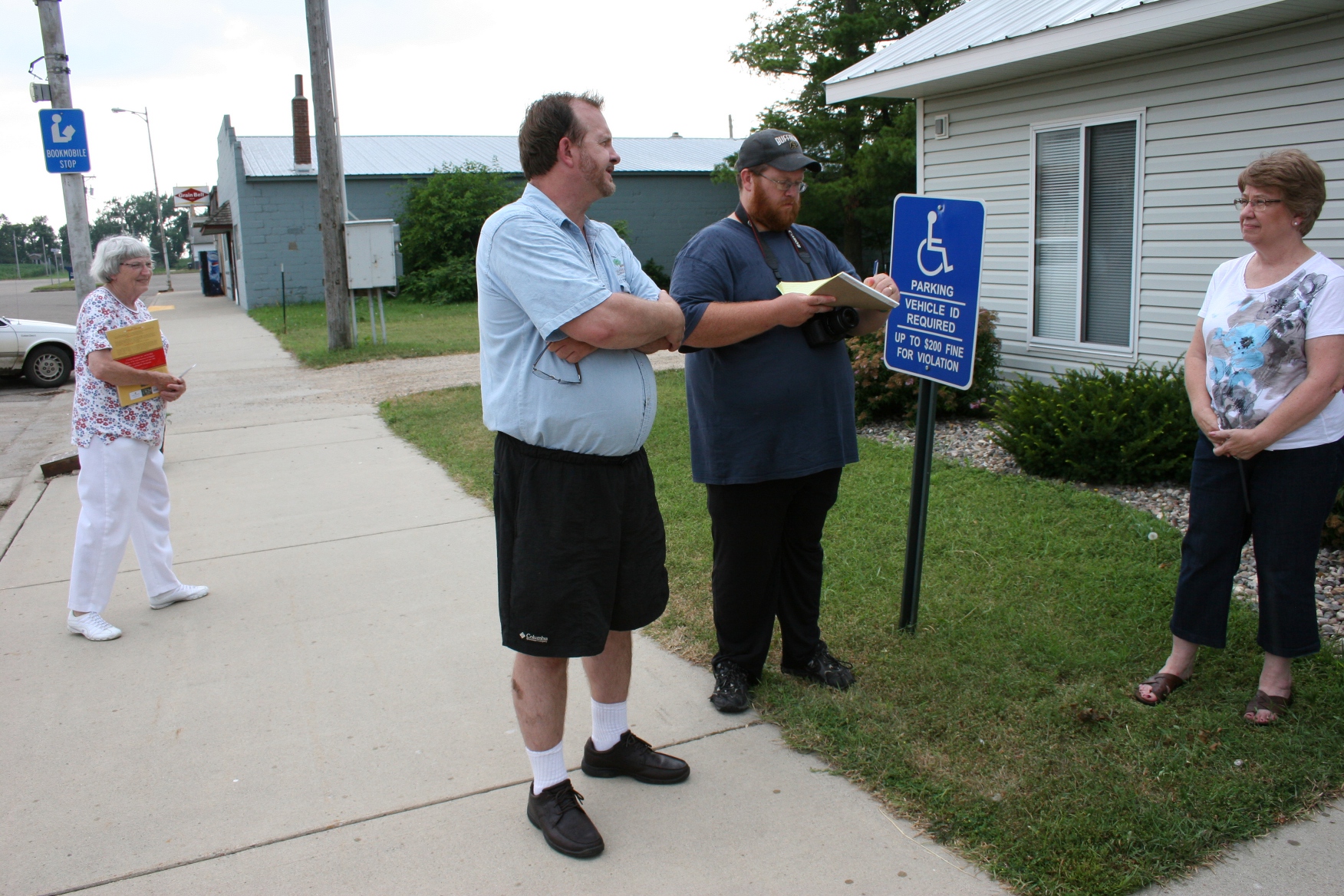
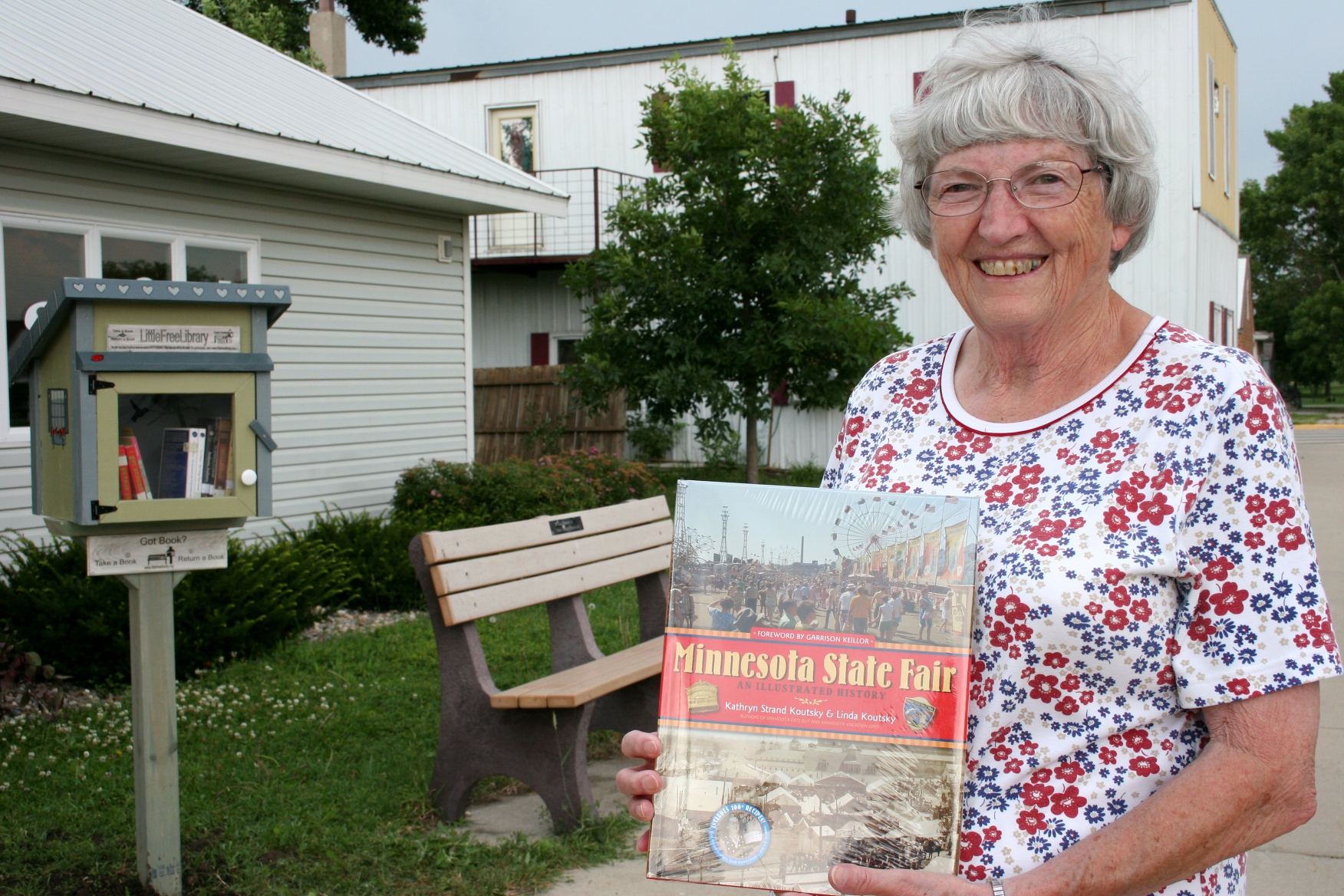
Dorothy Marquardt, a member of the Vesta Commercial Club, which worked with Bol on getting the LFL into Vesta, understands what a LFL will mean to area residents. Vesta recently saw its county bookmobile service end. “It’s kind of a godsend,” she said on Sunday, clutching a copy of Minnesota State Fair—An Illustrated History by Kathryn Strand Koutsky and Linda Koutsky with foreword by Garrison Keillor. Marquardt is officially the first reader to pull a book from Vesta’s LFL.

The team that worked to bring a Little Free Library to Vesta includes Dorothy Marquardt, left, and Karen Lemcke, representing the sponsoring Vesta Commercial Club, LFL co-founder Todd Bol and me (holding a copy of a poetry anthology I donated).

Monday morning, while dining in the cafe, I promoted the LFL to locals, moving between tables explaining how the library works. It operates on the premise of take a book, leave a book. Or take a book and bring a book back later to place inside the outdoor library. It’s all done on the honor system and done to promote literacy and encourage reading.

For me, the establishment of a LFL in my hometown is a dream come true. I always wanted a library while growing up. And now that I’m all grown up, my hometown finally has one.

The Little Free Library at the Vesta Cafe.

#

I’D LIKE TO ISSUE A NEW CHALLENGE TODAY. This one goes to the people of my native prairie, of southwestern Minnesota. I’d like to see more Little Free Libraries in the many small towns, like Vesta, that are without libraries and/or bookmobile service. Purchase a library via the LFL organization. Build your own. Work together—perhaps as a 4-H club or a church youth group or a civic organization or whatever—to bring a LFL into your town.

Be sure to officially register your LFL (there’s a small fee) so word of your library can be spread on the LFL website and via social media. Comment on this post and tell me that you are going to accept my challenge and bring a LFL to your community.

Finally, thank you, Todd Bol, for making my dream come true through your gift of a LFL to my hometown. It is my hope that the library in Vesta will inspire other communities to grow this project in rural Minnesota so that no child or adult, no matter where he/she lives, is without a library.

Thank you also to Karen Lemcke of the Vesta Commercial Club for working with Todd and me to make this project a reality.

This LFL, repurposed from a cranberry crate, needs a new home. Check The Redwood Falls Gazette to read how editor Troy Krause will be attempting to find a location for the library in southwestern Minnesota. Interested? Contact Troy.

FYI: Todd also dropped a LFL off in the neighboring community of Belview. And he left a third library with Troy Krause, editor of  The Gazette. Troy promised to publicize the availability of that third library. I’ll keep you posted on which town accepts the third LFL.

Click here to link to the LFL website and learn more about the Little Free Library project.

© Copyright 2012 Audrey Kletscher Helbling


Belview residents celebrate tornado recovery & the story of a little sequoia tree July 2, 2012

Belview area residents and others gathered at a city park on Sunday to mark the one-year anniversary of an EF-1 tornado.

A YEAR TO THE DATE after an EF-1 tornado swept into the southwestern Minnesota prairie town of Belview, population 375, folks gathered in the late afternoon and early evening hours of an oppressively hot and humid Sunday to remember and to celebrate.
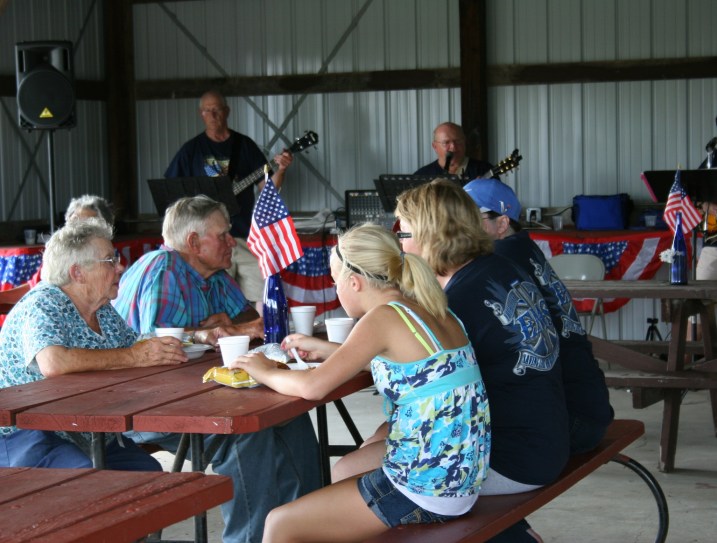
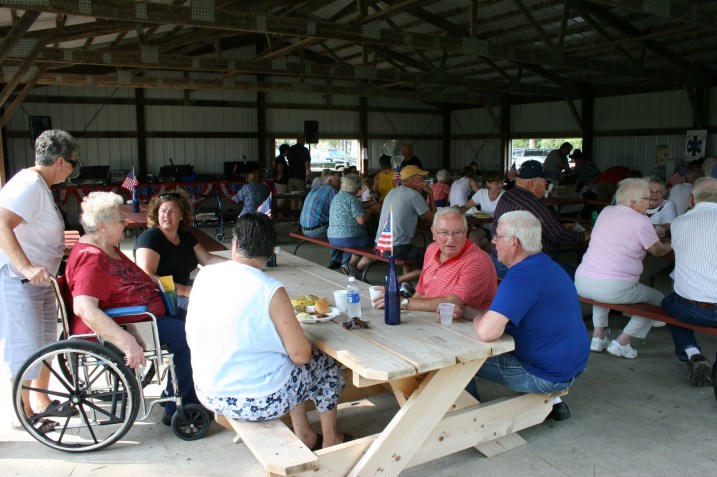
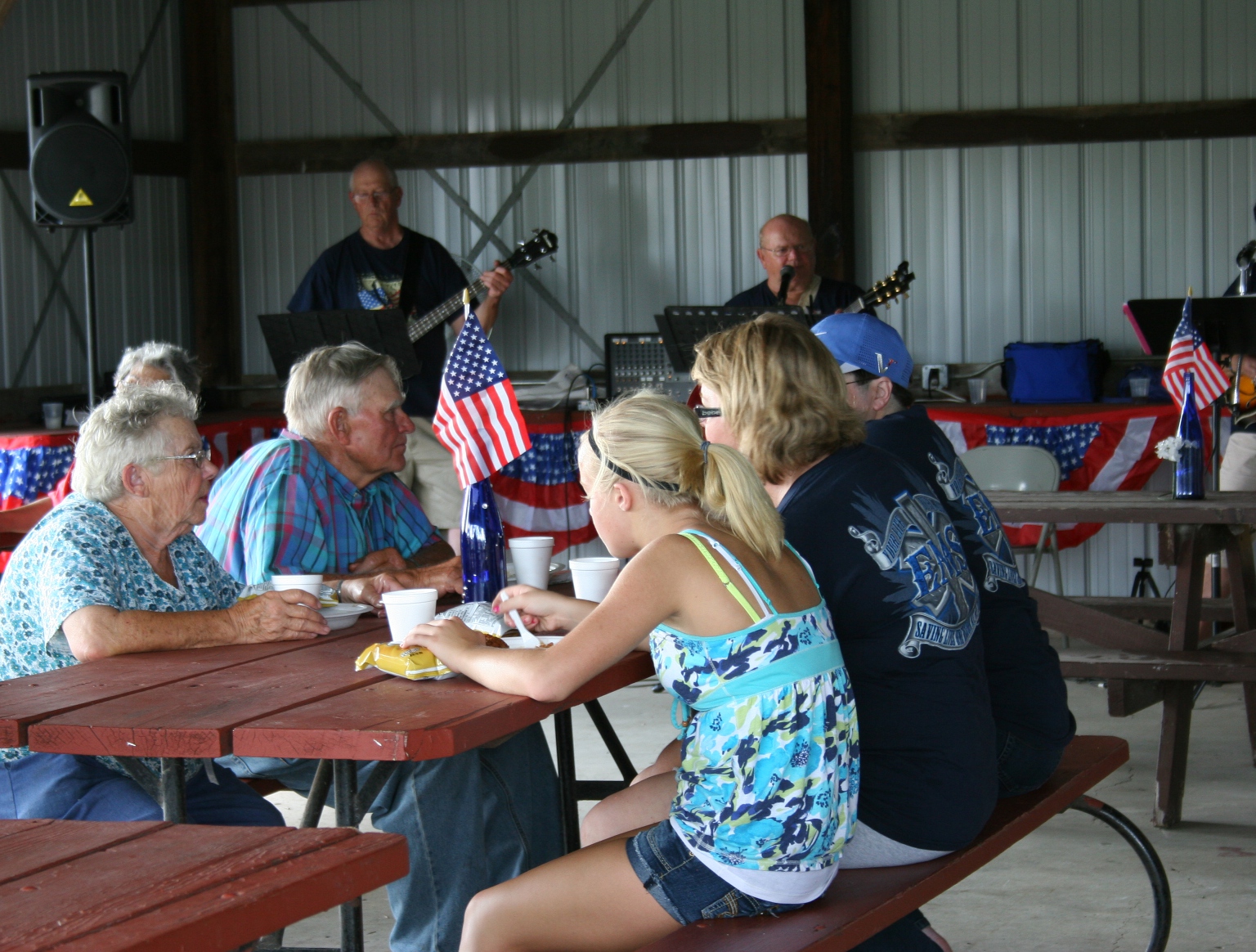
Food and music were part of the celebration.

They celebrated with a catered picnic meal and music right after a brief rain shower passed through town.

They remembered with photos and stories shared.
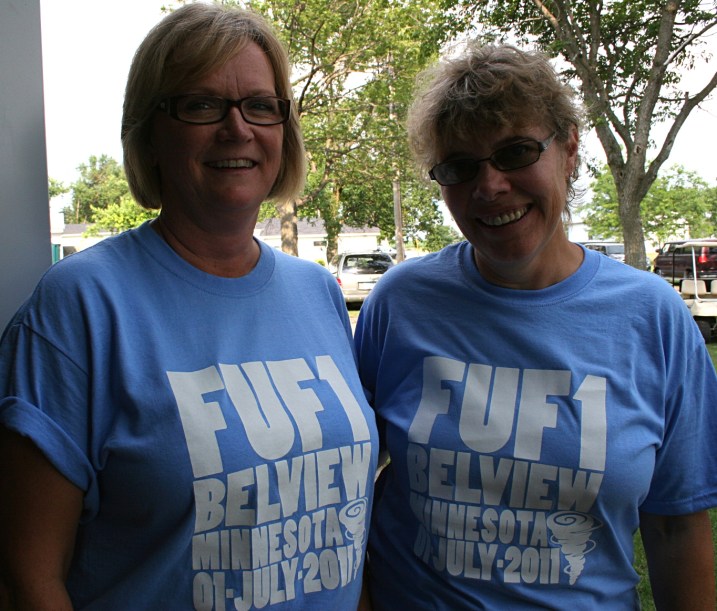
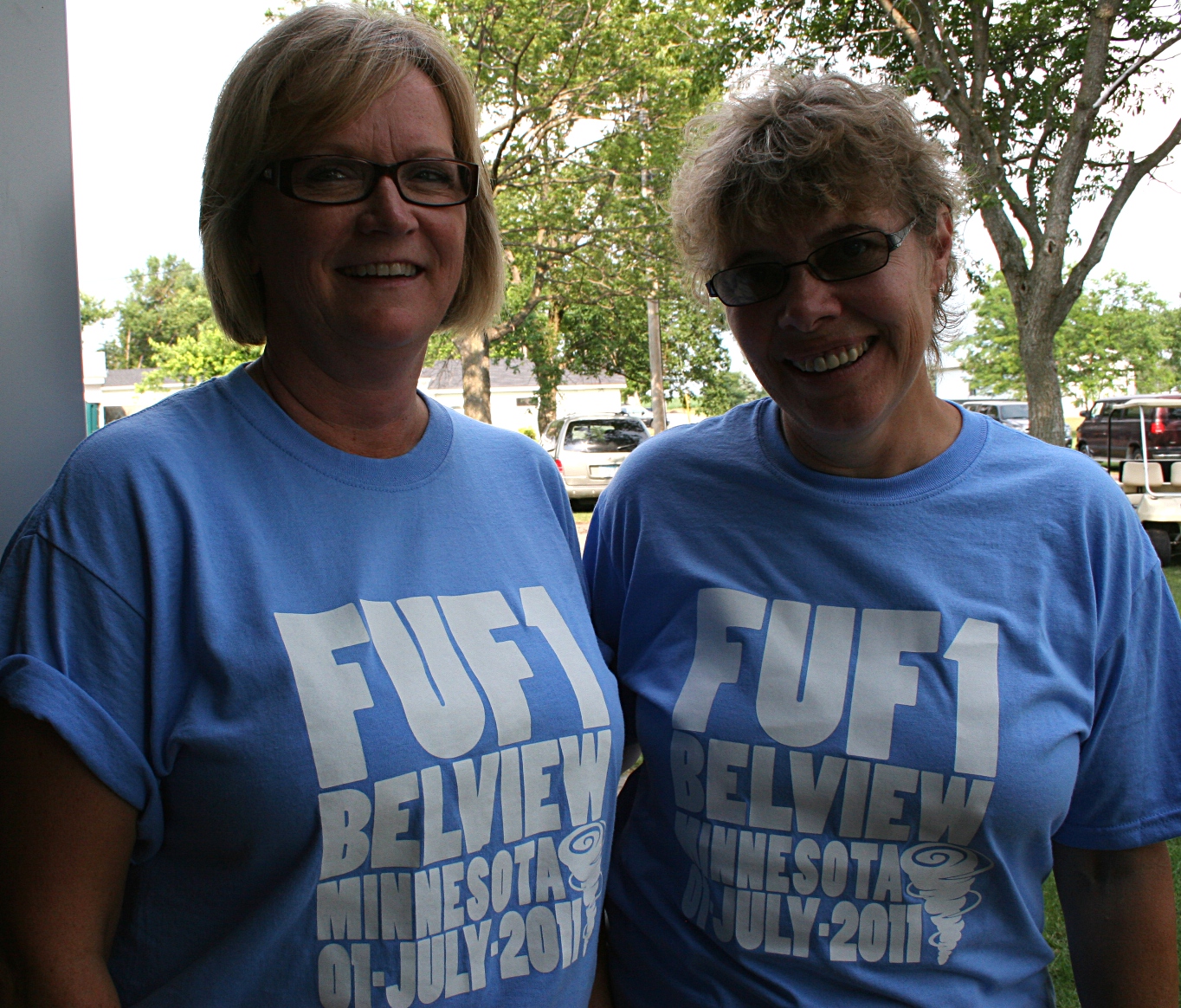
Ingrid Huseby, left, and Linda Sullivan. Yes, the t-shirts mean exactly what you think they mean.

“We were lucky. It could have been so much worse,” Belview resident Linda Sullivan said as we stood in the shade of the Belview City Park shelterhouse after I’d snapped a photo of her and Ingrid Huseby in commemorative, make-a-statement Belview tornado t-shirts printed shortly after the July 1, 2011 storm. “I can’t believe that nobody was hurt; that was the miracle.”

Linda’s right. It is a miracle. And you believe it when you hear stories like that of two women who rode out the 95-115 mph tornadic winds in a car just outside of town; of the couple who did not make it to their storm shelter, upon which a tree then fell; of the Iowa man and his son who sought shelter at the bank when they drove into town in the middle of the tornado; of the natural gas leak at a home…

“Like I said, it could have been so much worse,” Linda repeated several times as we moved into the shelterhouse to view an album of photos showing the damage at her home. She lost 11 trees.

It is Belview’s trees which are undeniably this prairie town’s most devastating loss.

Says City Clerk Lori Ryer. “We lost 70 percent or more of our trees.” In the park alone, where residents were celebrating on Sunday, 70 trees were lost.
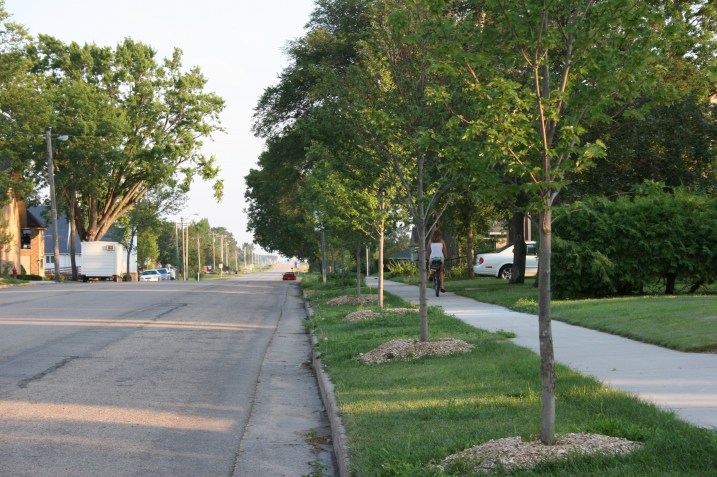
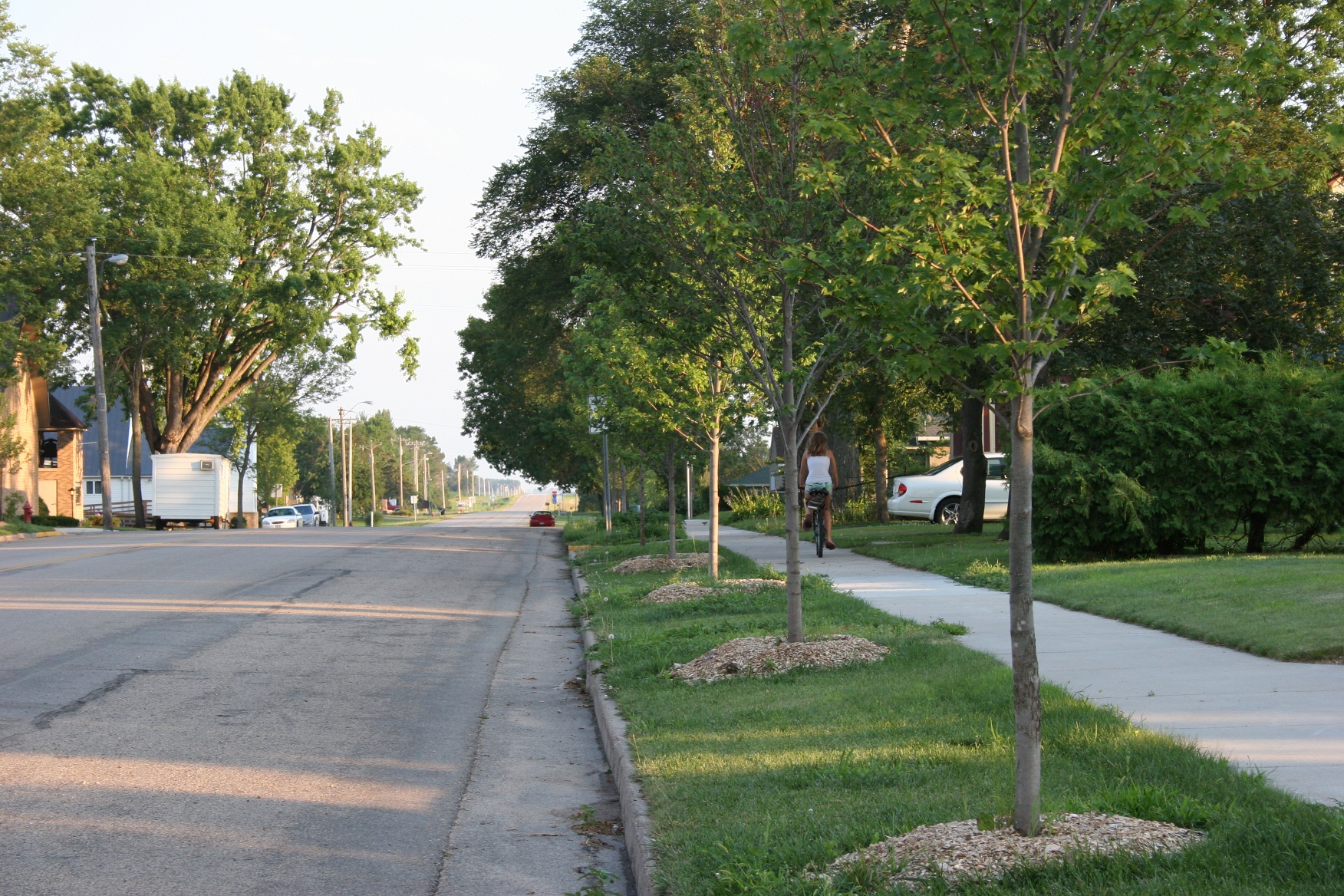
New trees line the boulevard along Belview’s Main Street. A Belview native who owns a tree business offered the city a discounted price on trees. Tree replacement is not covered by FEMA or city insurance.

But already, this community is replacing its trees—57 in the Belview City Cemetery on the edge of town; many along the Main Street boulevard; and others planted at private residences throughout Belview, including peach, pear, apricot and apple trees in Linda Sullivan’s yard.

Linda, who was out of town when the storm rolled in, remembers the phone call from her brother, “You can’t find the house for the trees.”

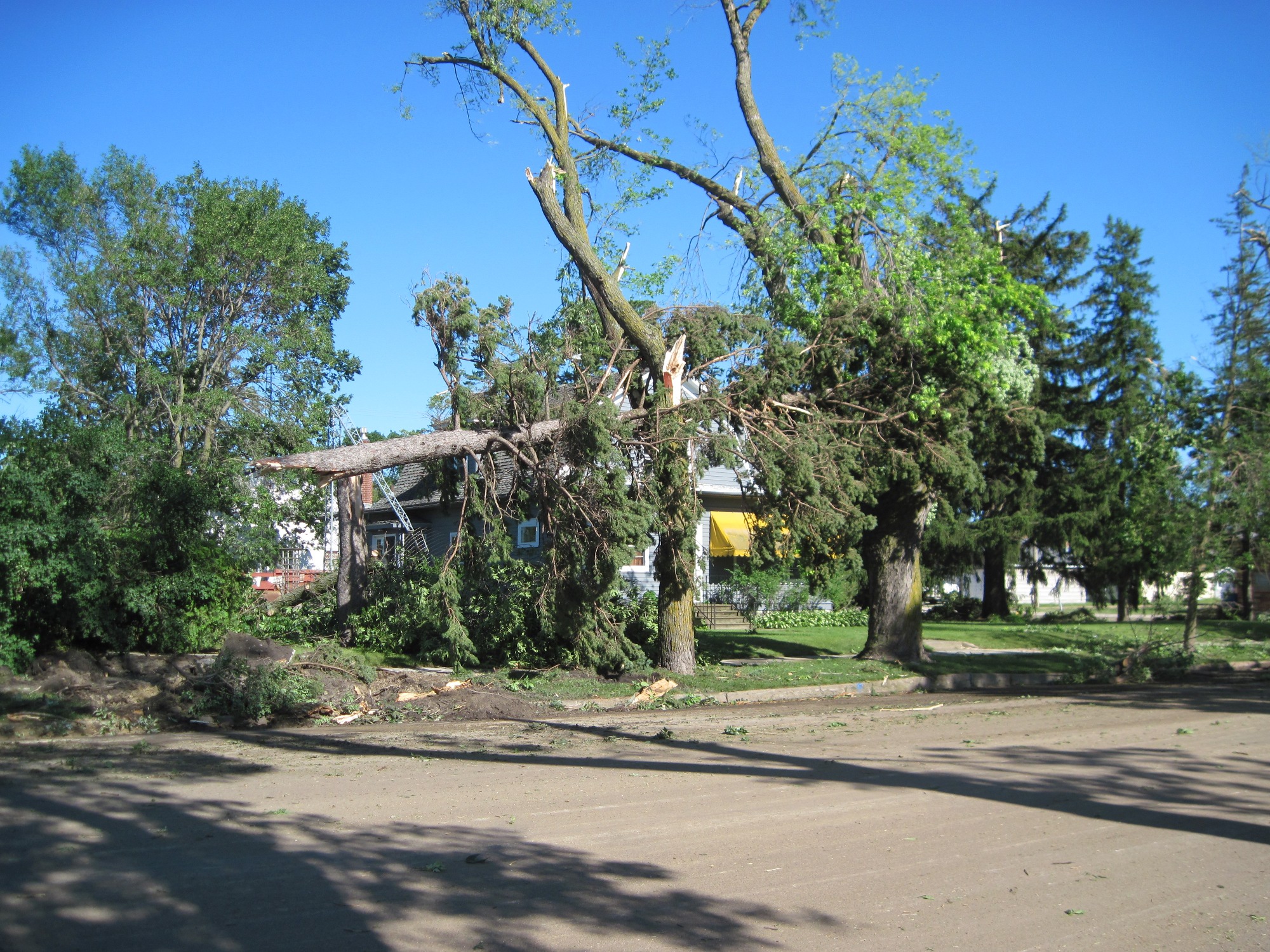
And it was like that all over town with trees or tree branches lying atop houses, garages and vehicles and blocking streets.

In that environment, Belview’s volunteer fire department and emergency personnel responded as they drove a fire rig around town checking on the safety of their friends, neighbors and families.

Lori, the city clerk, praises those volunteers and the many others who came into town to help with recovery. Within two days of the tornado, Linda Sullivan’s property was cleaned up. It was like that all over town as a continual procession of vehicles hauled away downed limbs and trees.
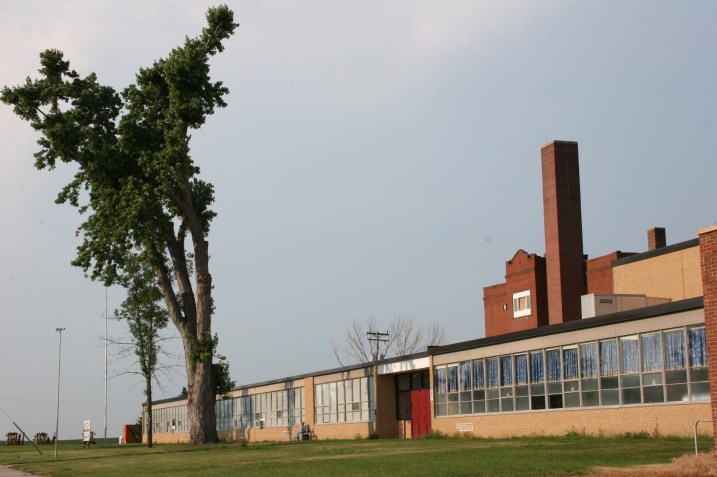
A tornado-ravaged tree stands at the Belview Area Learning Center one year after the tornado.

Today visual reminders of the tornado remain in ravaged trees, in houses still under repair, in the rows of new trees spaded in and now growing along the Main Street boulevard.

But it is a community which has weathered the storm and which seems even stronger today for having experienced an EF-1 tornado.
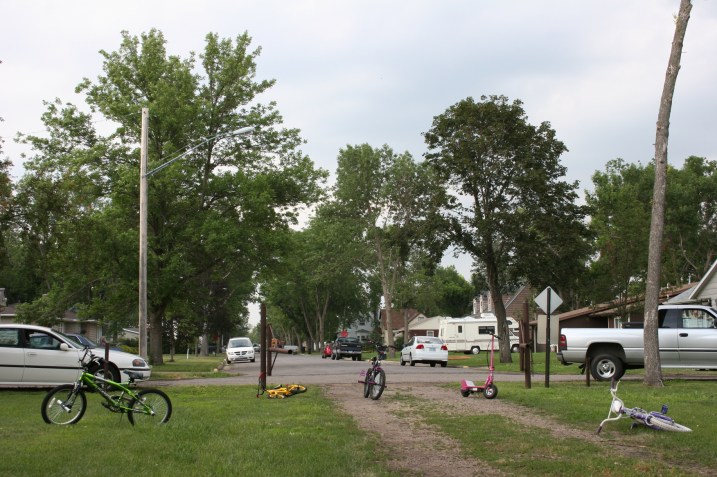
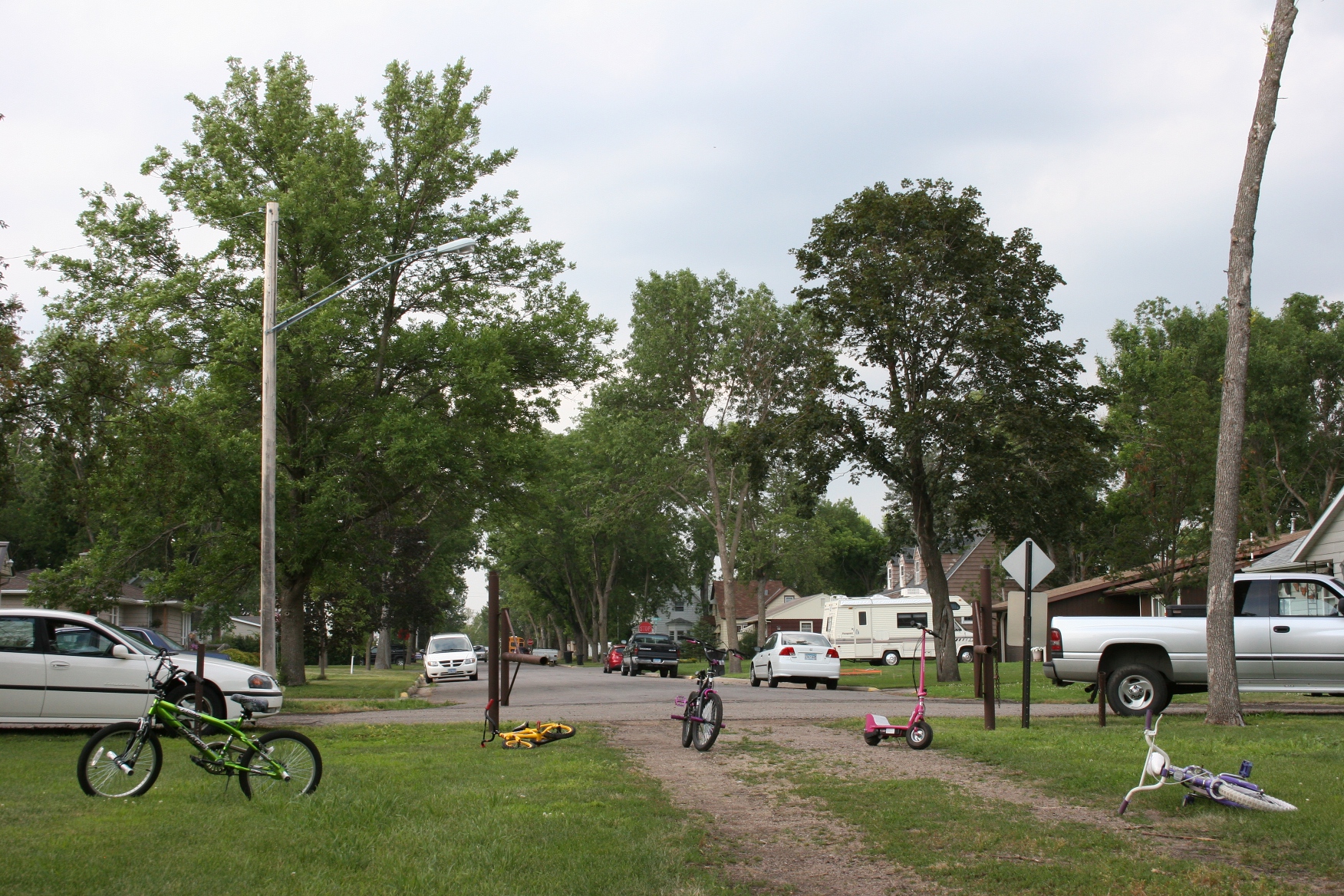
Belview is the type of small Minnesota town where kids can just drop their bikes and scooters, unlocked, in the park.

The Belview Fire Department filled a temporary water reservoir for the kids to splash in during the tornado recovery celebration on a sultry July 1.

#

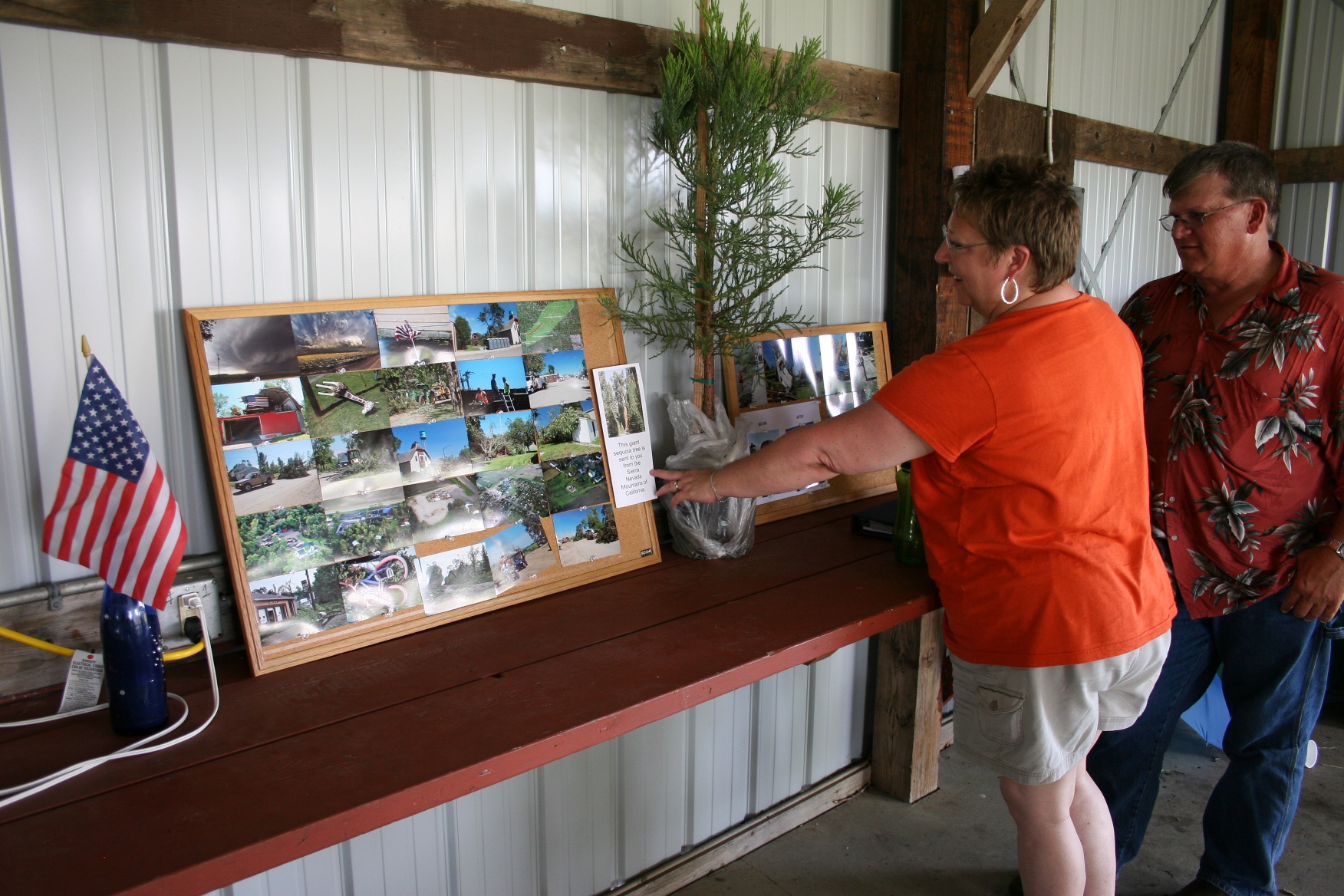
A SPECIAL FED-EX SHIPMENT arrived from California on Friday for the residents of Belview. It came from Steve, the Federal Emergency Management Agency representative assigned to Redwood County. “He loved Belview,” City Clerk Lori Ryer said. “He’d never been to an area with such a hometown feel like here.” Steve was even invited to Thanksgiving dinner at the home of Delhi Township Board member Tom Werner.
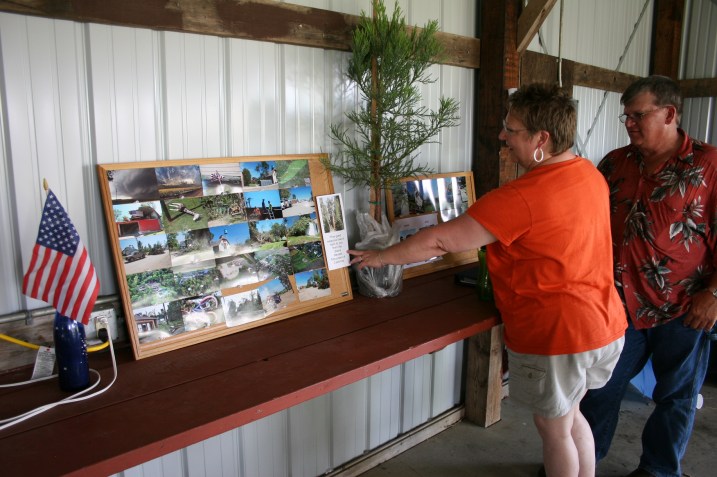
The tiny sequoia photographed here was given to the residents of Belview by their FEMA rep, Steve. Photos of tornado damage and recovery were posted on bulletin boards during the celebration. The image in the upper left corner shows the tornado, as it approached Belview.

The FEMA’s rep’s fondness for Belview showed in the sequoia he sent with the following note:

Some of you I was able to meet personally, with others it was a smile or head nod. In either respect, the experience of working with you during the tornado recovery effort has been engraved in my memory banks. What a fantastic town and great people.

Thank You for the invitation to the one year recovery celebration and tree planting. Believe me I’d very much like to be there, however FEMA wants me here, in New York City, until our mission is completed. Yeah, I know what you’re thinking. New York City??????

I hope you can find a nice place to plant this “little guy”–you might consider giving him a little room to grow. They live in the mountains near my home in California and I can tell you that every time you see one it will certainly take your breath away, they are truly magnificent trees and very hard to forget. Somewhat like the Harvest and Thanksgiving Time in Minnesota.

Wishing you all continued success in the recovery process.

Decades from now, when travelers spy a giant redwood in the Redwood County community of Belview, they will likely ask about the tree. And they will hear the story of the tornado which touched down in this little prairie town on July 1, 2011, and how, one year later, Steve the FEMA rep gifted a sequoia to the city. Surely, the stuff of legends…

© Copyright 2012 Audrey Kletscher Helbling


Memories of a boy who loved fireflies June 30, 2012

Filed under: Uncategorized — Audrey Kletscher Helbling @ 9:06 AM
Tags: , , , , , ,

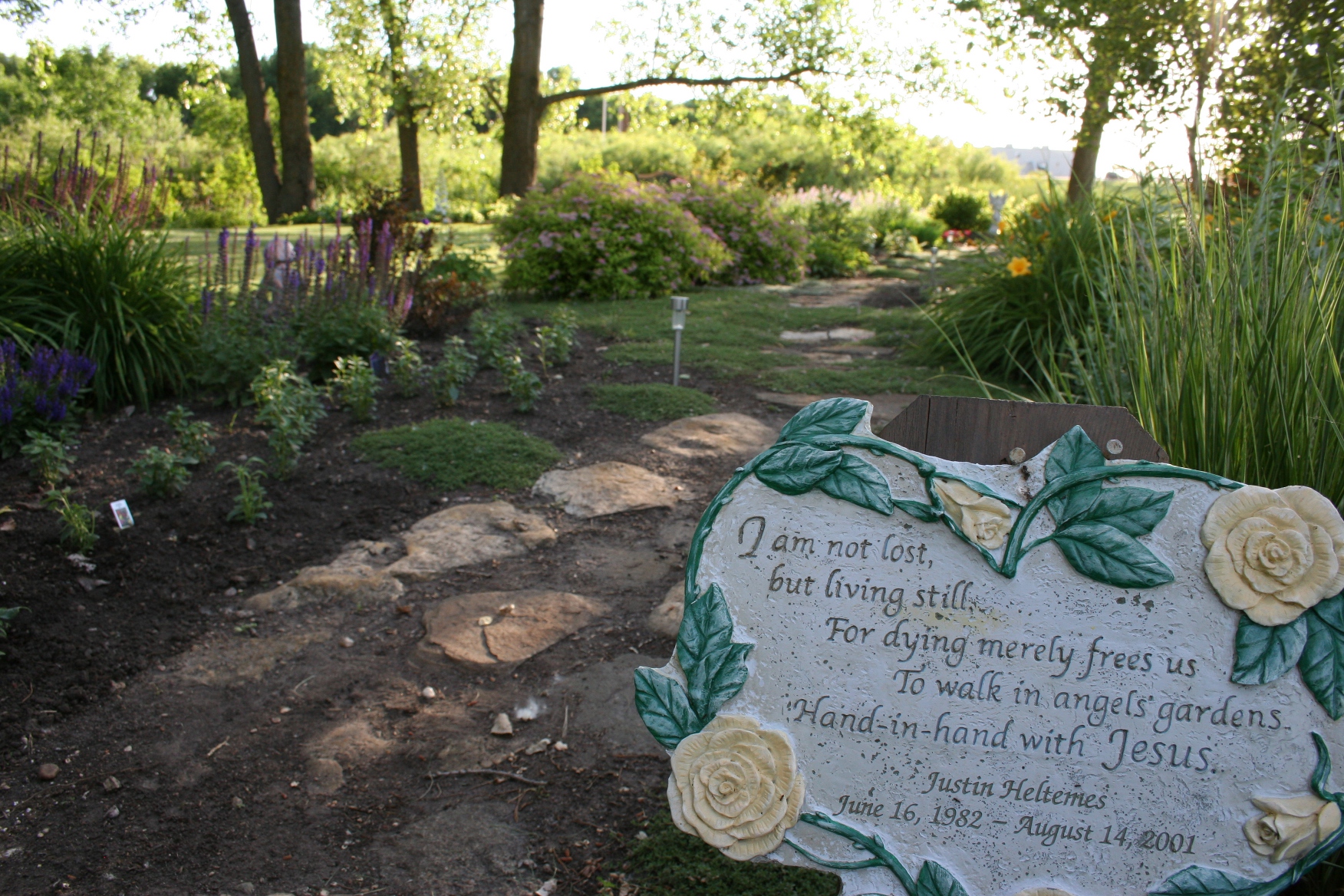
A plaque marks the entry to Justin’s Memory Garden.

I NEVER IMAGINED, when I published a post here on June 16 about the Memory Garden which honors my nephew Justin, that you, dear readers, would so fervently embrace a sculpture from that garden.

But I suppose my enthusiasm for the little boy holding a jar of fireflies ignited in the words I wrote.

Now, because of that story and accompanying photos, five more gardens—four in southeastern Minnesota and one at a Colorado hospital—will become homes for the little boy.

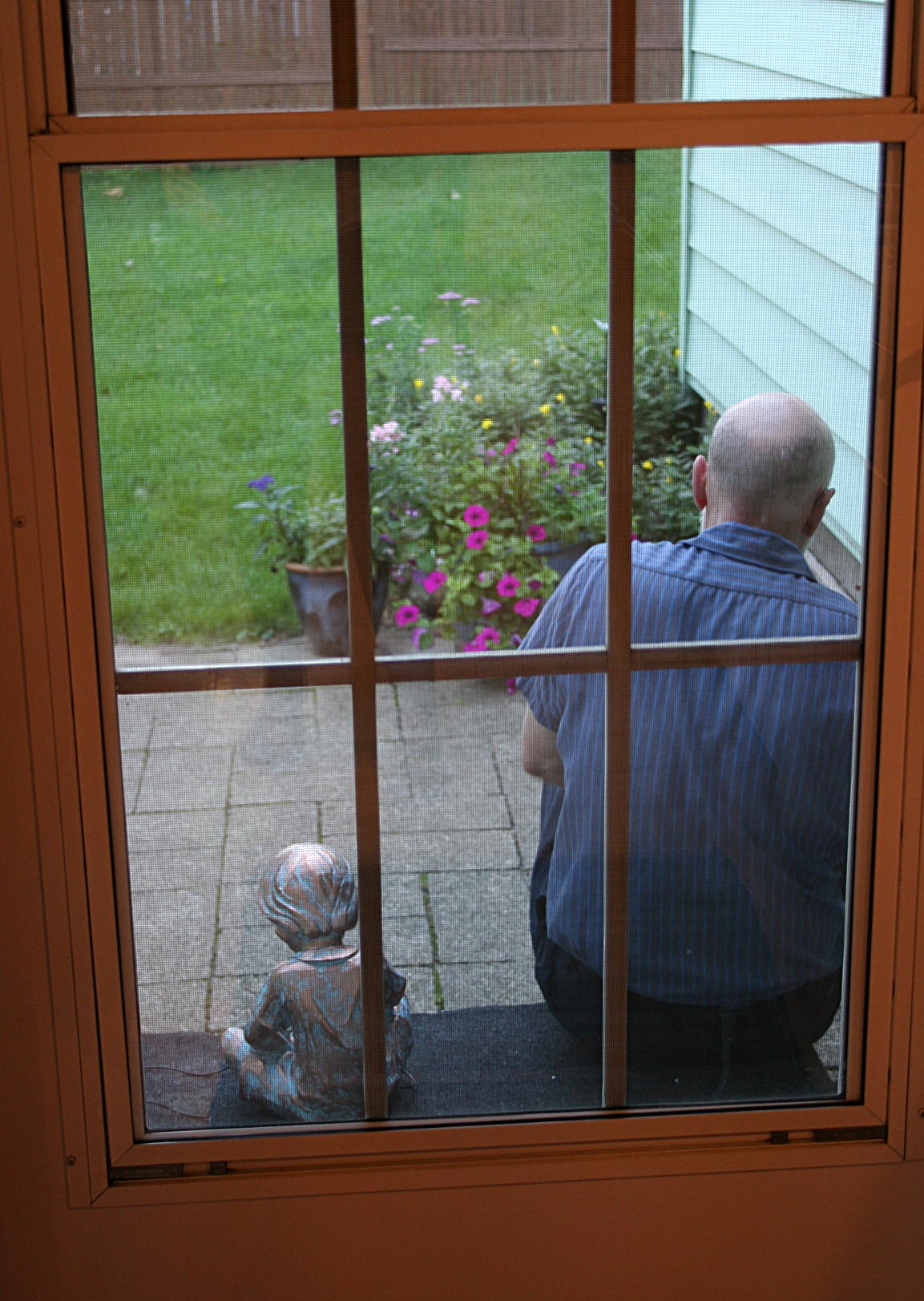
My husband, Randy, and Little Justin on the back steps before I moved Justin to a spot on the patio by the brilliant pink wave petunias.

He’s already in my backyard, my Little Justin, as Justin’s uncle, my husband, calls the garden sculpture.

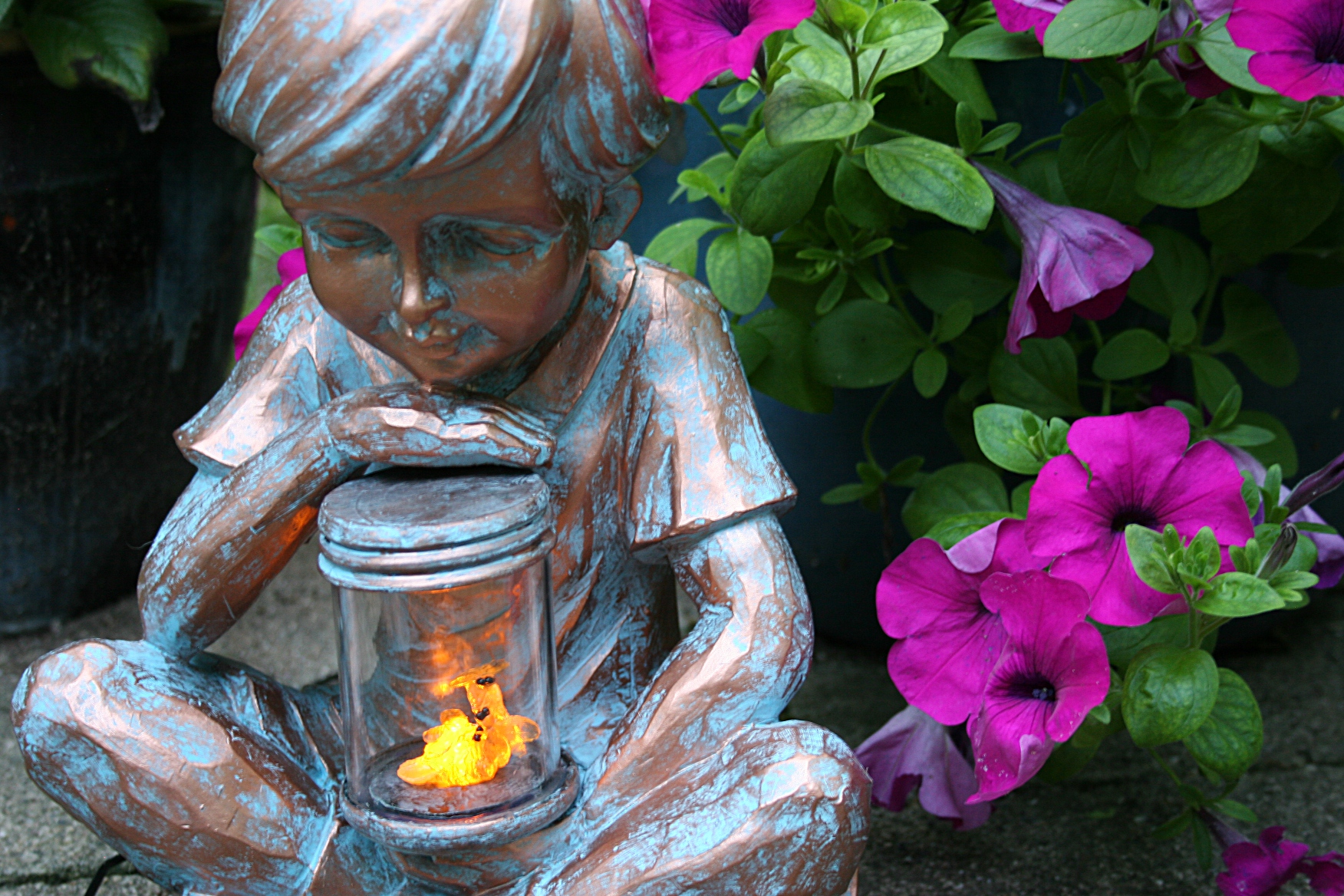
Every evening as darkness settles in, the fireflies in the jar begin to glow, reminding me of my nephew who died too soon of Hodgkin’s disease 11 years ago at the age of 19.

Fireflies glow in the sculpture I recently purchased in memory of my nephew Justin.

Says his mother, Vivian:

Justin liked watching fireflies, especially when sitting at a bonfire. He loved looking at the stars and he loved Christmas tree lights, especially blue ones. He would often holler, “Mom/Dad, come and look at the sunset,” or the rainbow, or “there’s a shooting star.”

He didn’t want us to plant a tree in a particular spot because it would ruin the sightline for the sunsets—we never have planted one there.

Though we never talked about it specifically, he enjoyed light, from the heavens, in various forms.

And so, when the mother of the boy who loved light and fireflies and the heavens, saw the “Lightning Bugs with Boy” sculpture in a brochure the day before Mother’s Day, she felt moved to purchase it for Justin’s Memory Garden.

“As I’ve gotten older, I follow those instincts more readily,” Vivian says.

It is the first sculpture she’s purchased for the garden that honors her son. The other garden art—a plaque, dove, angel and birth bath—have come from friends as have most of the plants.

That, she says, makes it a true Memory Garden.

If you’re one of the gardeners who has purchased/is purchasing a Little Justin, hold close this story and imagine the little boy who loved light and is now living in the light.

A close-up of my Little Justin’s endearing face.

FYI: Vivian and I both ordered our “Lightning Bugs with Boy” sculptures from our local True Value hardware stores, hers in Morris, mine in Faribault. My sculpture had to be shipped in from Oregon. The product cannot be ordered online from True Value, but if you would like to view it, click here.

© Copyright 2012 Audrey Kletscher Helbling
 

Vesta & Belview celebrating one year after storms June 29, 2012

TWO REDWOOD COUNTY COMMUNITIES will come together to celebrate this Sunday, one year to the date after severe storms ripped through this region of southwestern Minnesota.

St. John’s Lutheran Church in Vesta, hours after a July 1, 2011, storm ripped half the roof from the sanctuary. Photo courtesy of Brian Kletscher.

In my hometown of Vesta, area residents will remember the storm anniversary and rededicate St. John’s Evangelical Lutheran Church at a 10:30 a.m. worship service followed by a catered chicken dinner.

Damage to one of the grain bins at the local elevator. Photo by Brian Kletscher.

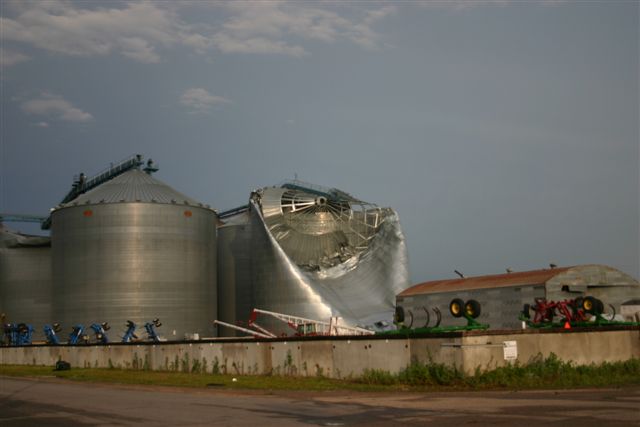
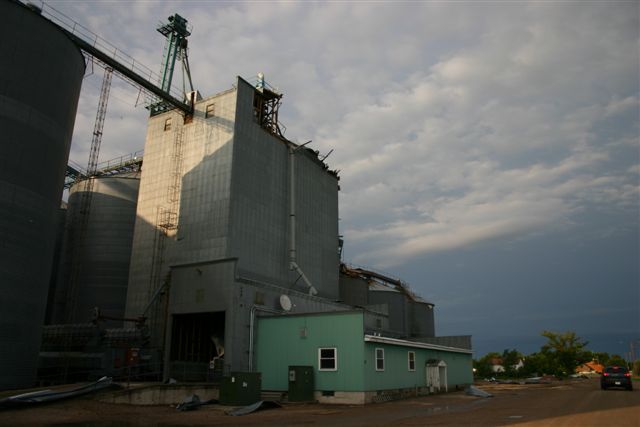
The grain elevator complex, the visual defining landmark in the farming community of Vesta, was ravaged by winds. You’ll see the damage near the top of the old grain elevator. Photo by Brian Kletscher

During the late afternoon of July 1, 2011, a series of downbursts with wind speeds of 90 – 100 mph swept through Vesta, ripping half the roof from St. John’s sanctuary, felling trees, denting grain bins, damaging the landmark grain elevator and more.

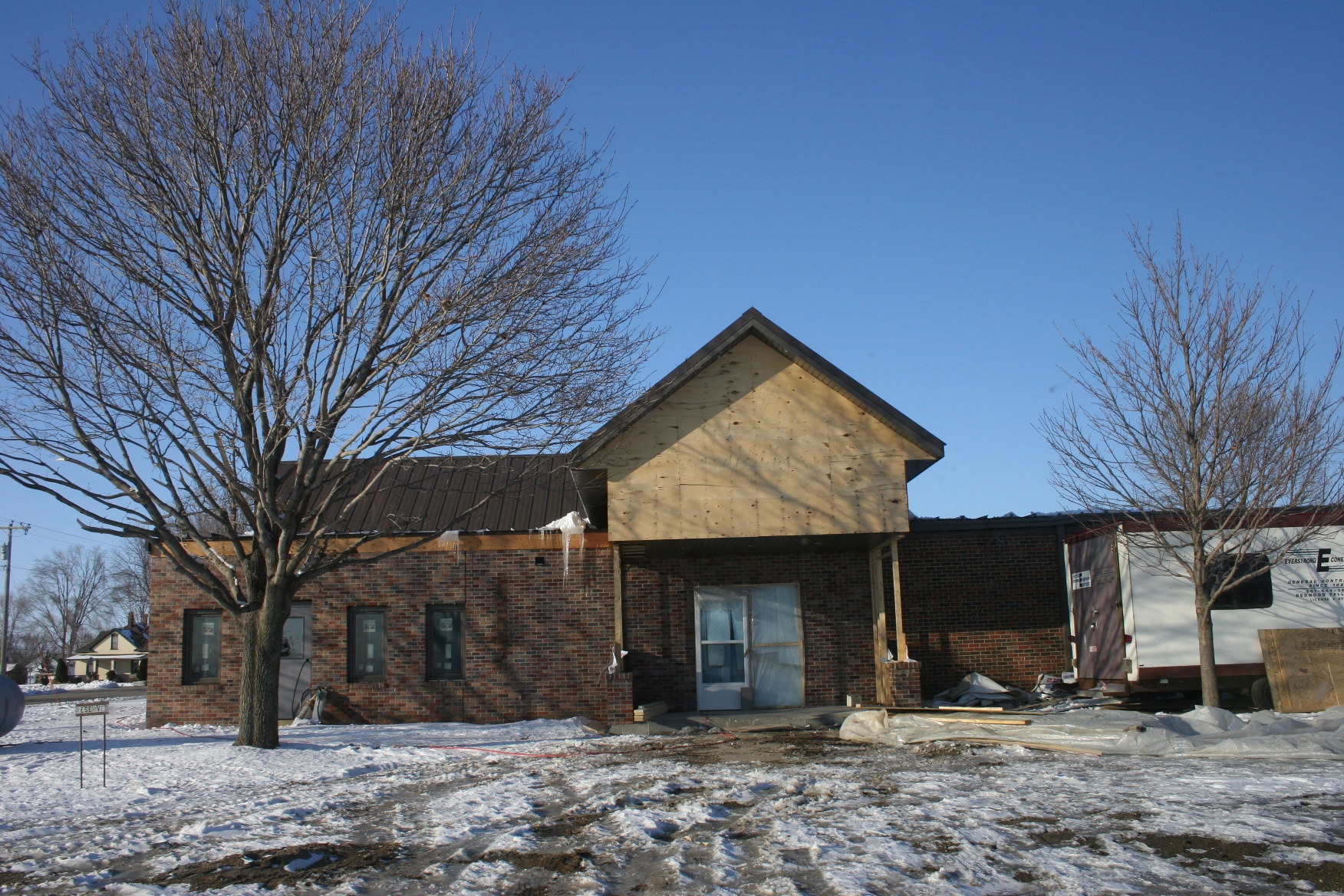
Under construction in March, a pastor’s office, bathroom and storage room were added to the south side of the early 1970s era church. Photo by Audrey Kletscher Helbling.

It took nearly a year for St. John’s to reopen after the congregation decided to expand the church as part of the roof reconstruction process.

Entering Belview from Sacred Heart at 9 a.m. on July 2, the morning after the tornado. Photo courtesy of Merlin and Iylene Kletscher, who were not yet living in Belview when the storm hit.

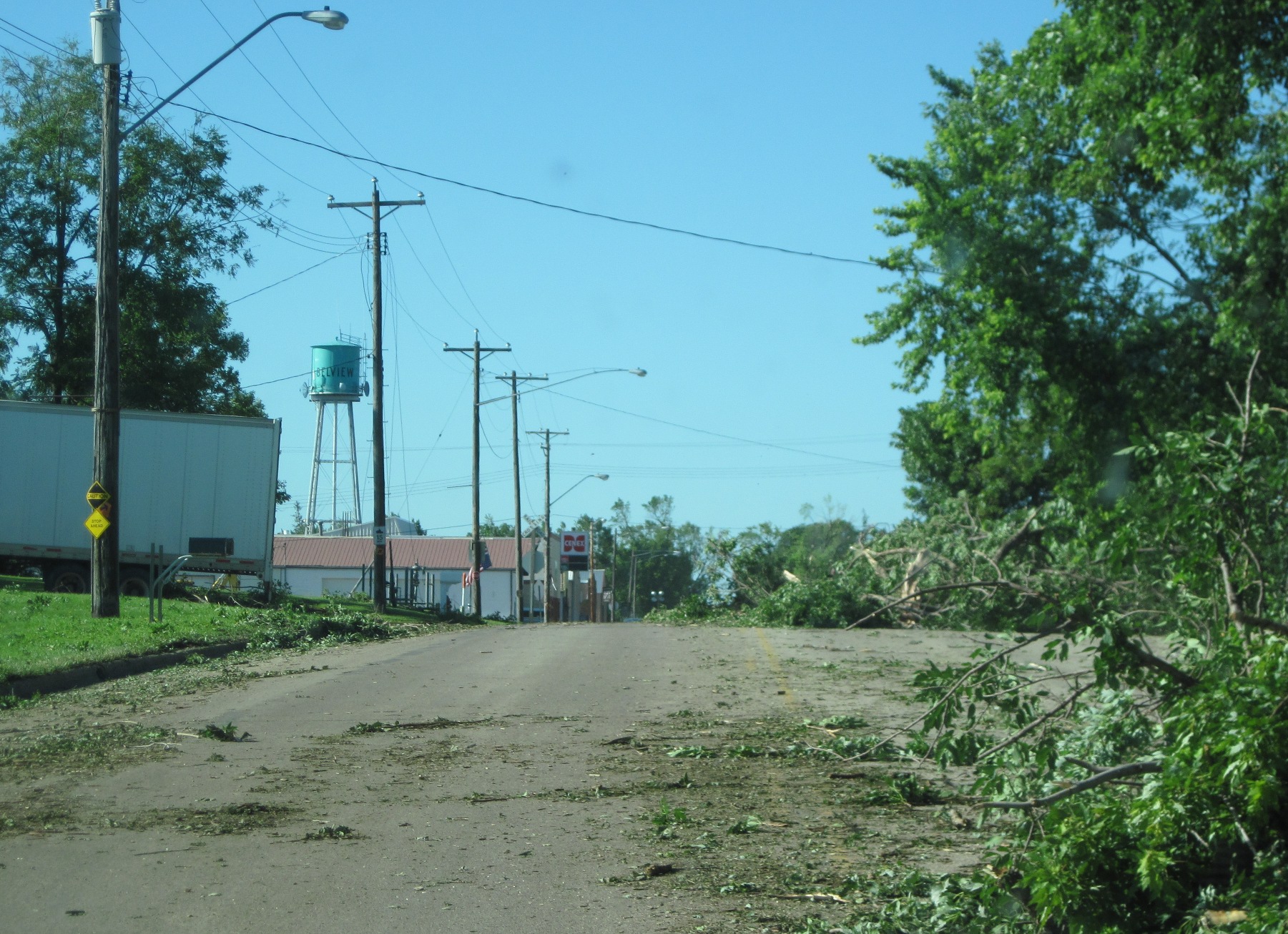
In Belview, about 10 miles to the north and east, residents will also mark the one-year anniversary of an EF-1 tornado which rode in on the same storm system. The tornado, with winds of 95 – 105 mph, wiped out many of this prairie town’s trees (which fell onto buildings and vehicles), damaged the nursing home to the point that it closed for awhile, wrecked roofs and more.

A month after the tornado, Belview’s Parkview Home (nursing home) remained closed as repairs were needed to the damaged roof, covered here with blue tarps. Photo by Audrey Kletscher Helbling.

The communities of Belview and Vesta lost many trees in the July 1 storms. This photo is along a Belview street north of the park. Photo courtesy of Merlin and Iylene Kletscher.

Jerry Hagen’s house, across the street from Merlin and Iylene’s home in a July 2 photo. Photo courtesy of Merlin & Iylene Kletscher.

Damage along South Main Street in Belview. Photo courtesy of Merlin and Iylene Kletscher.

A year later, Belview residents are celebrating with a catered community picnic supper and entertainment at the local park (or in the air conditioned historic Odeon Hall if the weather is too hot) from 4 p.m. – 6 p.m. Sunday.

“We know we can pull together when the going gets tough as was proven after the storm,” says City Clerk Lori Ryer. “Now we would like to pull together in a spirit of community and fellowship and say thank you to everyone in town and to those that helped.”

My Uncle Merlin and Aunt Iylene Kletscher will be among Belview residents attending that picnic, celebrating and listening to the music of Ron and Kathy and Friends. The Kletschers had just closed on the purchase of a foreclosed fixer-upper home along Belview’s Main Street when the tornado ravaged Iylene’s hometown. They lost most of their trees—one of the reasons the couple bought the property—and sustained damage to their house, which they had just begun renovating.

Says Merlin:

So far we have planted four flowering crabs, a new disease resistant elm tree, 13 lilac bushes and the city has the Main Street boulevard planted with really nice-sized maples. We have two churches with new roofs, the bank is putting a new roof on right now and there are also more homes in the process of new shingles, etc., now.

One year later, Belview is looking pretty darn good!

A portion of Main Street in Belview a month after the tornado. Photo by Audrey Kletscher Helbling

FYI: To read more about the July 1, 2011, storms and to view more storm damage photos, check the Minnesota Prairie Roots archives from July 2011. In addition to the damage in Vesta and Belview, many rural residences also were hit. The farm of my cousins, Danny and Marilyn Schmidt, was struck by a second EF-1 tornado which nipped the northwestern corner of Redwood County. Near the South Dakota/Minnesota border, the community of Tyler experienced an EF-2 tornado which followed a 3-mile path through Lincoln County. The tornadoes and wind storms were part of a massive storm system  on July 1, 2011, which began along the western edge of Minnesota and extended as far east as northwestern Wisconsin.

I was on my way with my husband to a party near Nerstrand not far from our Faribault home in southeastern Minnesota when these threatening clouds moved in during the early evening hours of July 1, 2011. It was while driving to our friends’ rural home that my sister Lanae phoned to tell me about the storm in our hometown and to warn me of the approaching bad weather. Fortunately the ominous clouds delivered only rain and nothing severe. But I was worried, very worried.

Copyright 2012 Audrey Kletscher Helbling
 

Not exactly kick the can

Filed under: Uncategorized — Audrey Kletscher Helbling @ 7:15 AM
Tags: , , , , ,

HOT, HUMID WEATHER can cause all sorts of issues. Frizzy hair. Over-taxed air conditioners. Crabby kids, and adults. Buckling pavement.

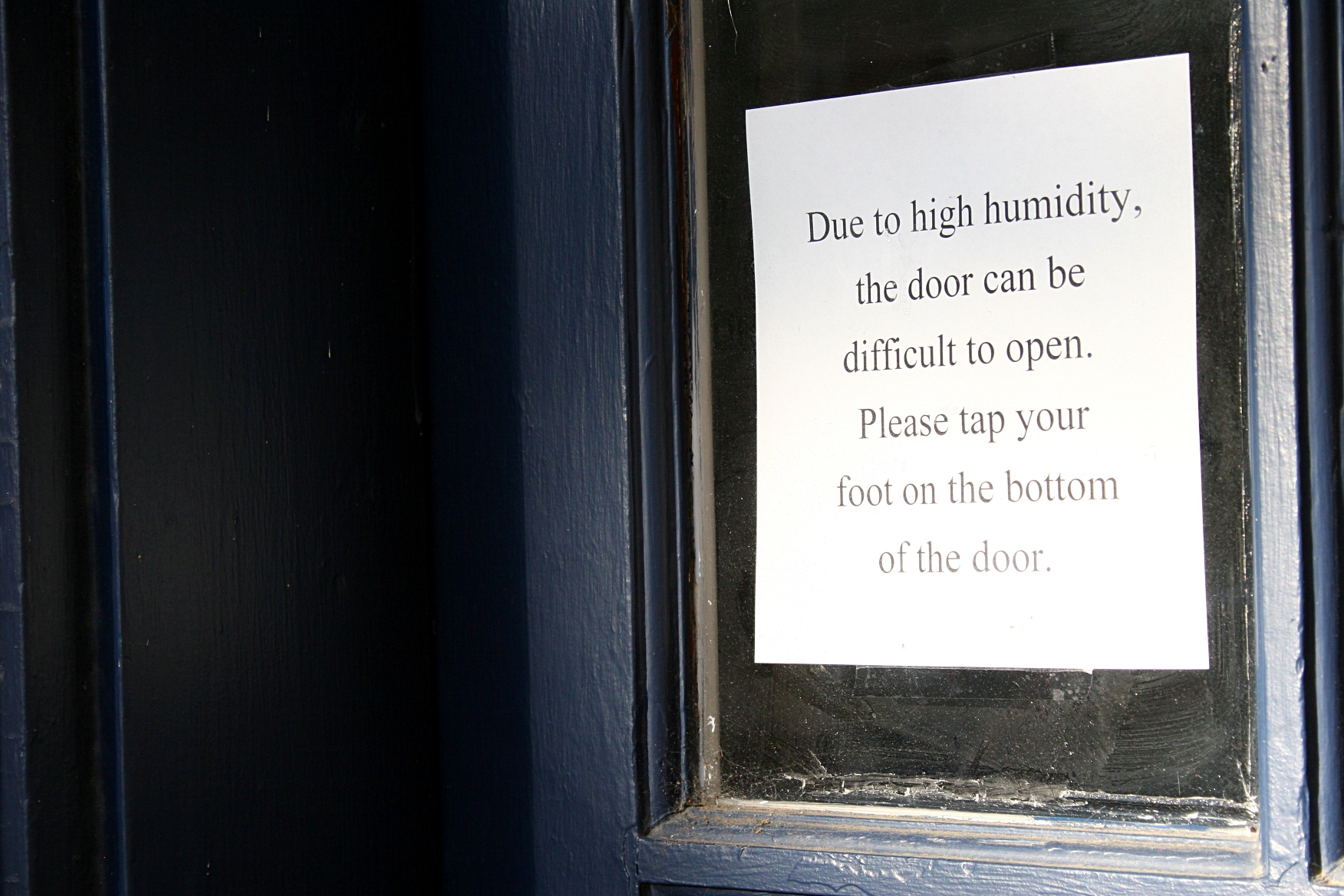
And sometimes…sticky doors.

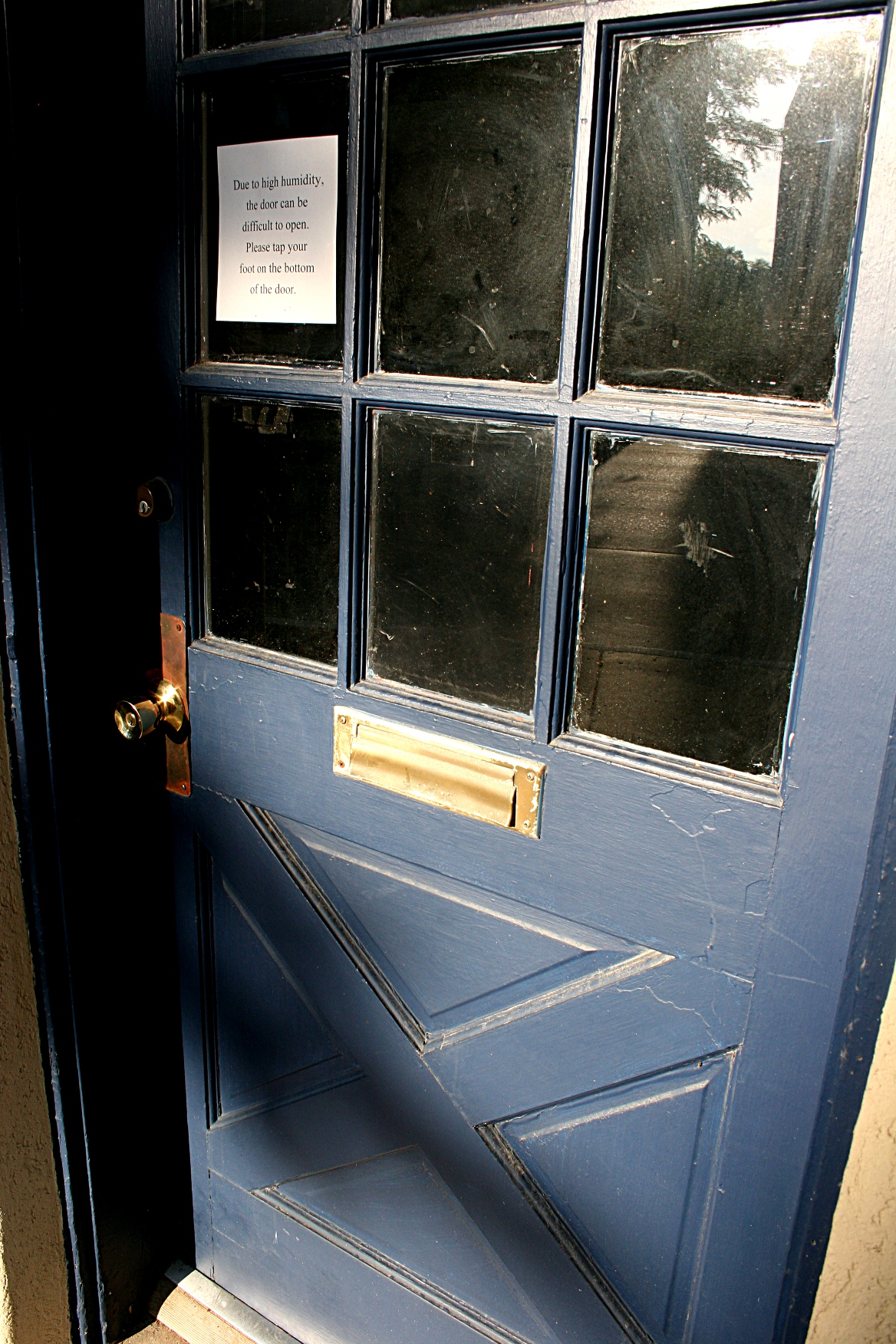
The door to Personal Touch Office Services.

But Patti, at Personal Touch Office Services, 307 Division Street in historic downtown Northfield, offers a solution to the sticky door problem at her place of business. Simply follow her instructions:

Follow the instructions to get the door open during humid weather.

Please note that Patti instructs you to “tap,” not kick, the door. Got that?

I expect door tapping kicking has been a popular sport in Minnesota this week.

FYI: I do not know Patti nor have I ever done business with her. I simply found her note amusing and wanted to share it with you.

© Copyright 2012 Audrey Kletscher Helbling
 

Embracing everyday & public art, plus a new sculpture in Northfield June 28, 2012

GROWING UP, I DIDN’T have all that much formal exposure to the arts. Not at home. Not in school. Not outside of either.

Life was different back then, in the 1960s and early 1970s, with families in my southwestern Minnesota farming community simply working long, hard hours to survive. We didn’t, for the most part, have art galleries and live theatre, concerts or art shows or any of those cultural centers and events that today are an assumed aspect of life, even in the most rural of areas.

Despite that absence of organized art opportunities, I was not deprived of art. Rather, its presence was subtle—found in the flower gardens of Great Aunt Dora, in the dance of corn tassels on a breezy summer afternoon, in the patchwork symphony of quilts my Grandma Ida stitched, in the blazing orange of a prairie sunset painted across the wide sky, in the distinguishable cadence of a John Deere tractor, in the stones my great uncle rockhounds collected, sculpted and polished to shiny perfection.

Those exposures to art were so much a natural part of my life that I never realized their significance as artful influences.

Today I can find organized art anywhere, including right here in my community of Faribault. I embrace (most of) it with exuberance.

And to the north, in neighboring Northfield, the arts scene is even more vibrant.

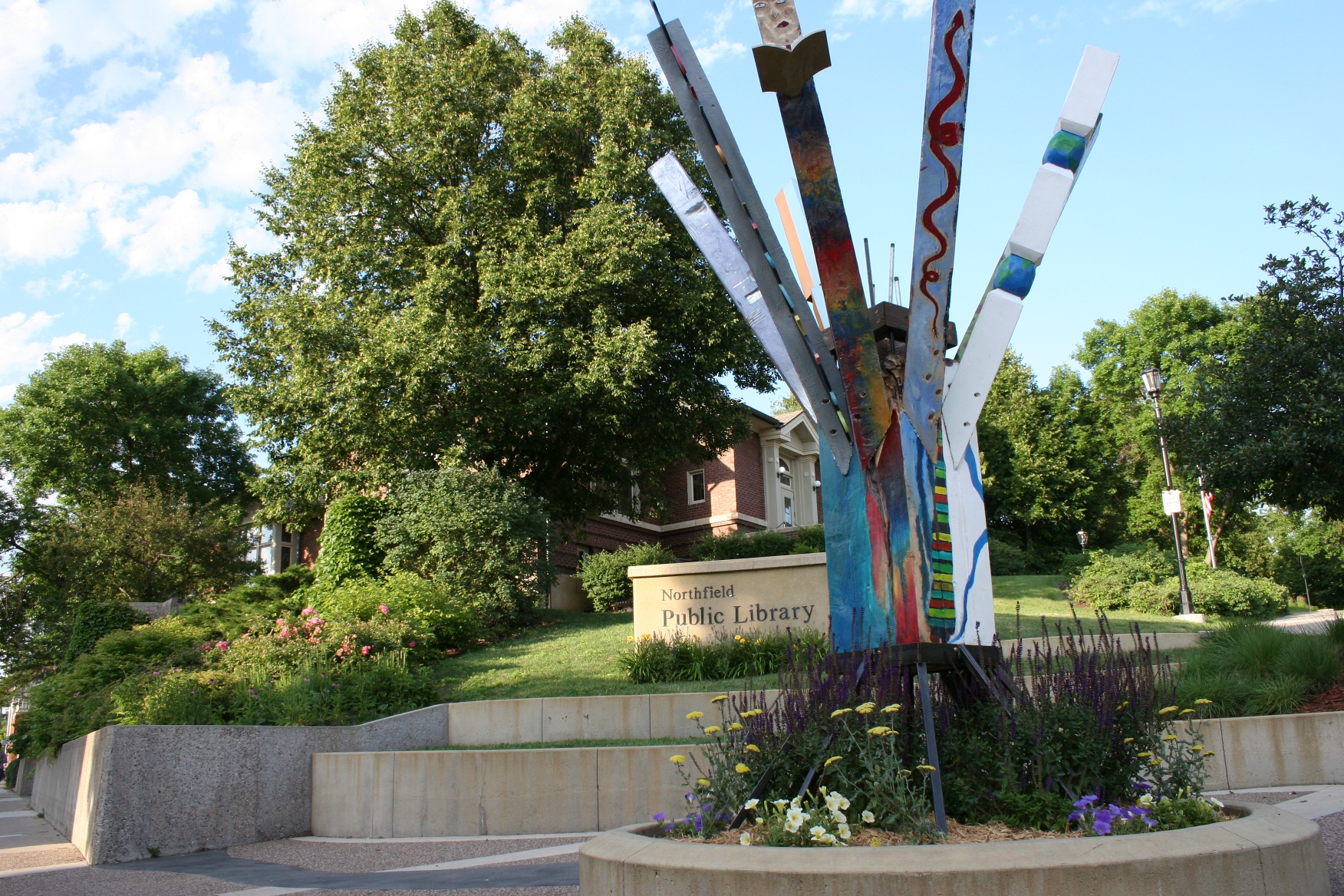
The recently-installed “Tree of Knowledge and Delight” at the Northfield Public Library.

At 4:30 p.m. this Friday, June 29, Northfield celebrates its latest addition to downtown art at the official unveiling of the “Tree of Knowledge and Delight,” a sculpture created by 10 Northfield High School students and installed in the Northfield Public Library plaza.
A St. Olaf College emeritus professor of art and a St. Olaf art apprentice guided the students in their non-credit, extra-curricular public art course which resulted in the sculpture. Funding for the Northfield Young Sculptors Project came via a $4,150 Legacy grant approved by the Southeastern Minnesota Arts Council.
I viewed the sculpture for the first time Sunday evening. I’ll admit that I didn’t study the sculpture like I should have. But oftentimes it takes me awhile to warm up to abstract art.

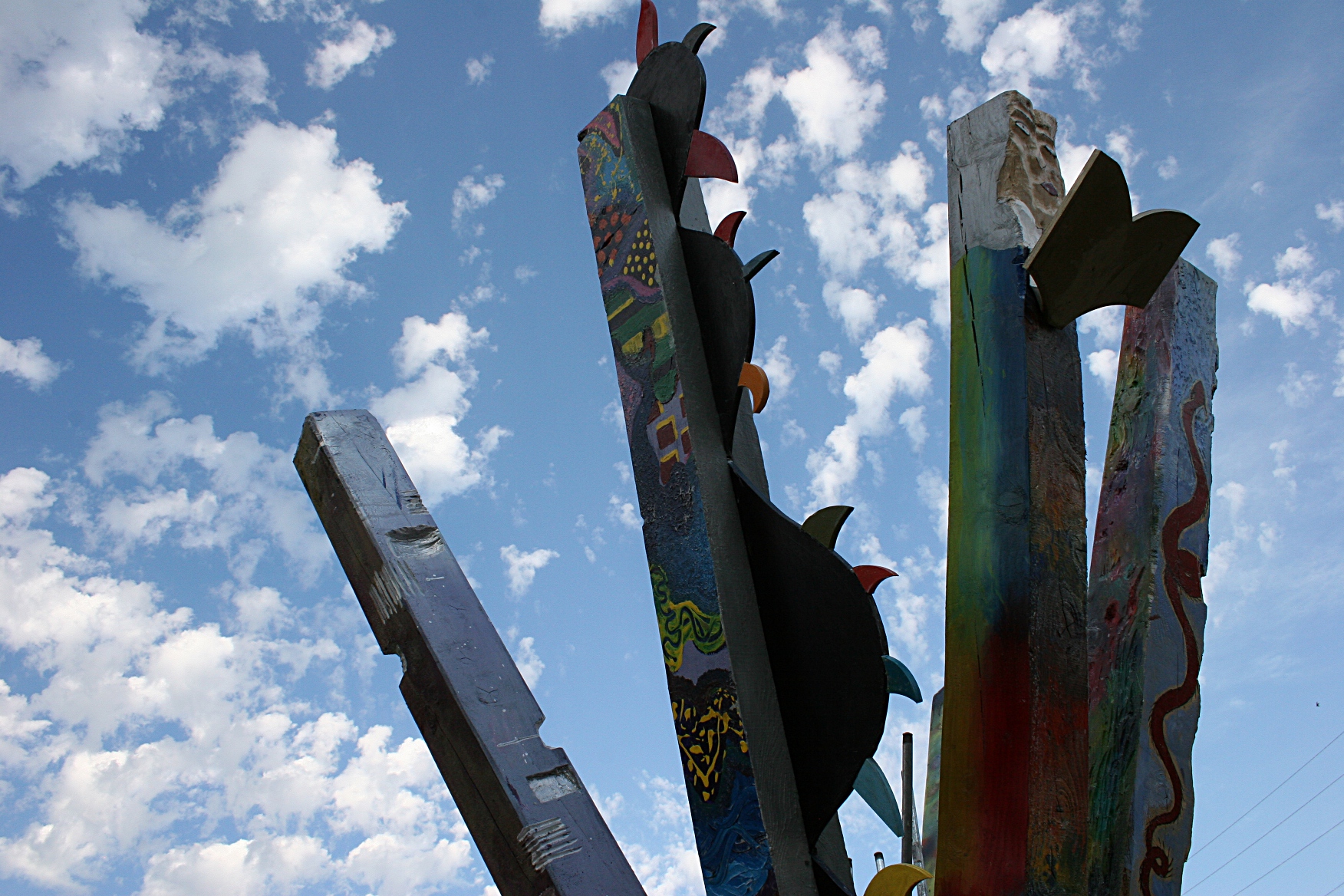
Eight branches comprise the tree sculpture.

But if you take the time to examine the tree, you will see the visual themes related to learning and individual artistic expressions—the book, the faces, the snake, the harmony of colors and more.
That students would have this opportunity to create such a sizable piece of public art seems exceptional. What an encouragement to them as young artists.

The “Tree of Knowledge and Delight” will remain at the library plaza for a year before relocating to a permanent home at Northfield High School. Plans call for a public sculpture to become an annual project for NHS students and their professional mentors. And that is good.

Yet, aside from this organized project, I hope students will not overlook the art in their everyday lives. For that is the art which, as I see it, defines the artistic world in its simplest, purest, most grassroots form.

FYI: This project was also supported by the Northfield Arts and Culture Commission, the Northfield Public Library, Northfield High School and the City of Northfield.

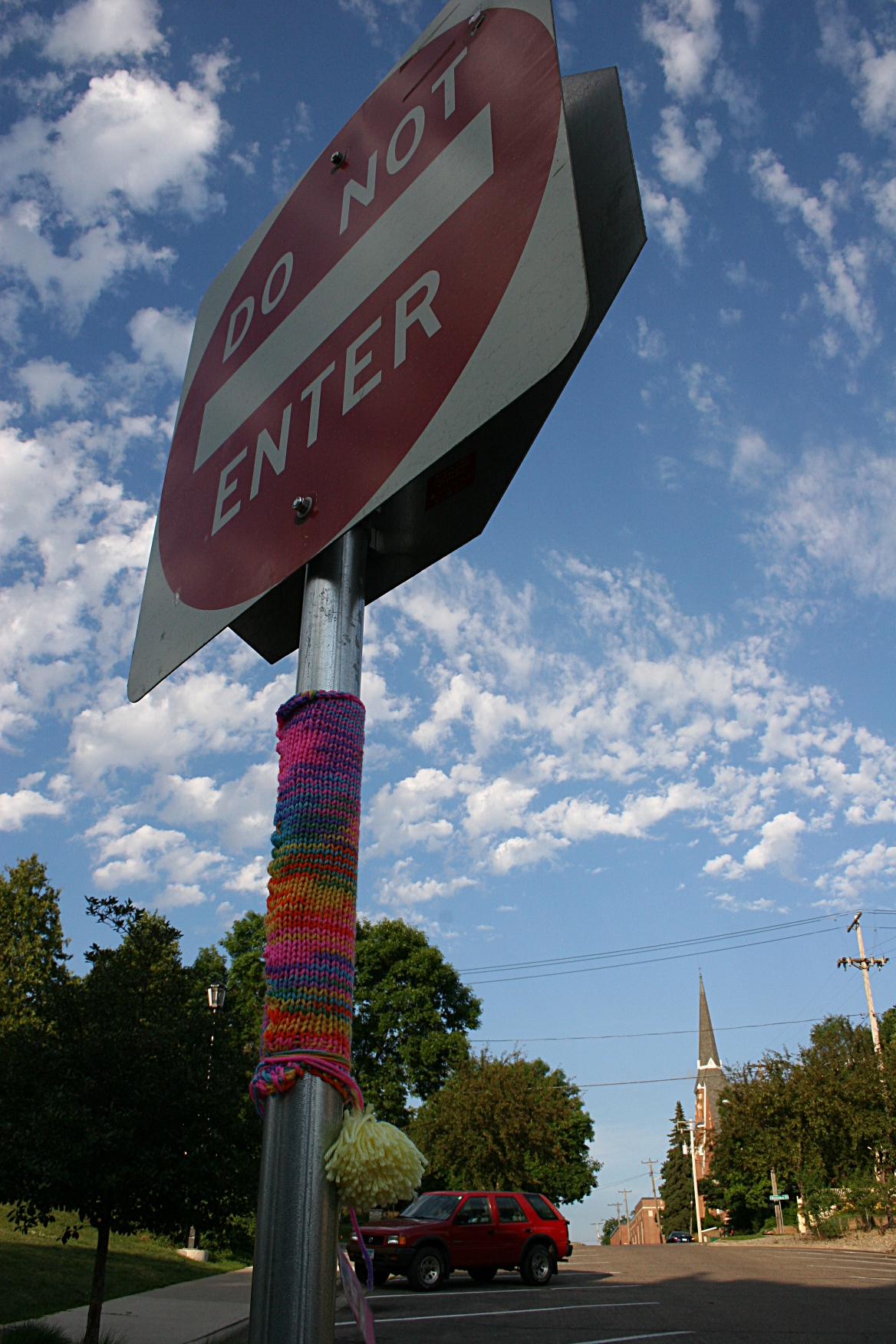
Right next to the Northfield Young Sculptors Project you’ll see this knit art wrapped around a “Do not enter” sign post. An attached tag, which includes a photo of a young woman, reads: “It’s immortality, my darlings.– Alison.” This is apparently a memorable line by character Alison DiLaurentis from the teen drama television series, “Pretty Little Liars.” Never heard of it. Any idea who placed this quote and knit art on the Northfield street sign? And what does that message mean anyway?

© Copyright 2012 Audrey Kletscher Helbling