Minnesota Prairie Roots

Writing and photography by Audrey Kletscher Helbling

Grassroots dining: Church dinners are the best March 28, 2011

GIVEN A CHOICE of eating at a church dinner or dining at a restaurant, I’ll choose the holy place. I appreciate the good home cooking and fellowship that comprise church dinners.

So Sunday my husband and I headed to St. John’s United Church of Christ in Wheeling Township, about a 15-minute drive from Faribault, for a Lenten Soup Luncheon.
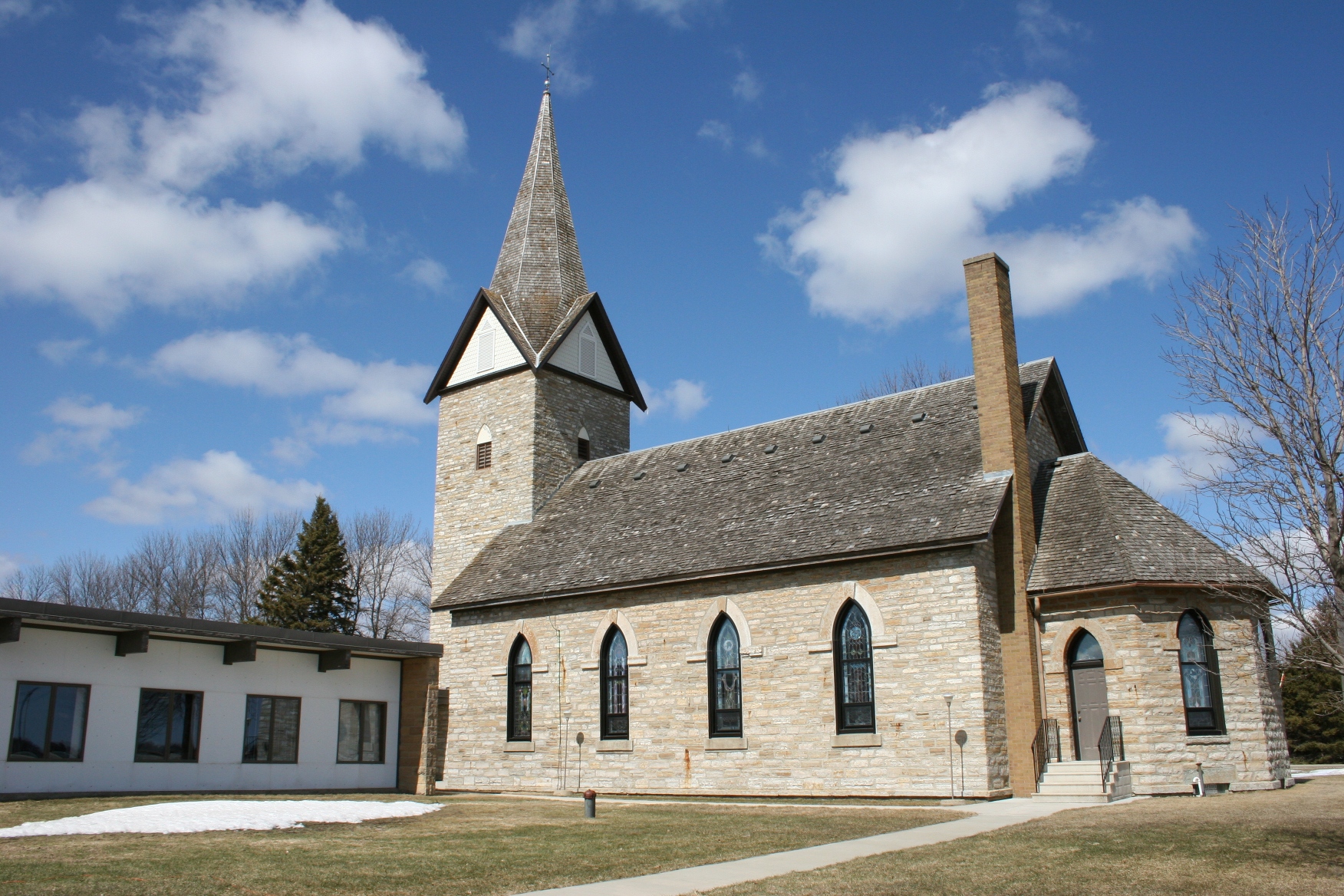
 

St. John's United Church of Christ is northeast of Faribault about two miles off State Highway 60 on Rice County Road 24 near Nerstrand Big Woods State Park.

As soon as I stepped inside the fellowship hall attached to the old stone church and saw the spread, I regretted that I’d snacked on a doughnut at my church only an hour earlier.

This luncheon offered soups, salads, sandwiches and bars. A regular smorgasbord with nine salad and three soup options and, well, I didn’t count the varieties of bars but suffice to say any chocolate lover would have been happy.

 

Some of the bars offered for dessert. I tried the bar with the marshmallow topping on the back left.

Salads like tuna pasta, tangy rhubarb squares and 3-bean, and the spinach-strawberry I chose, awaited diners who could select plated salads and/or build their own.
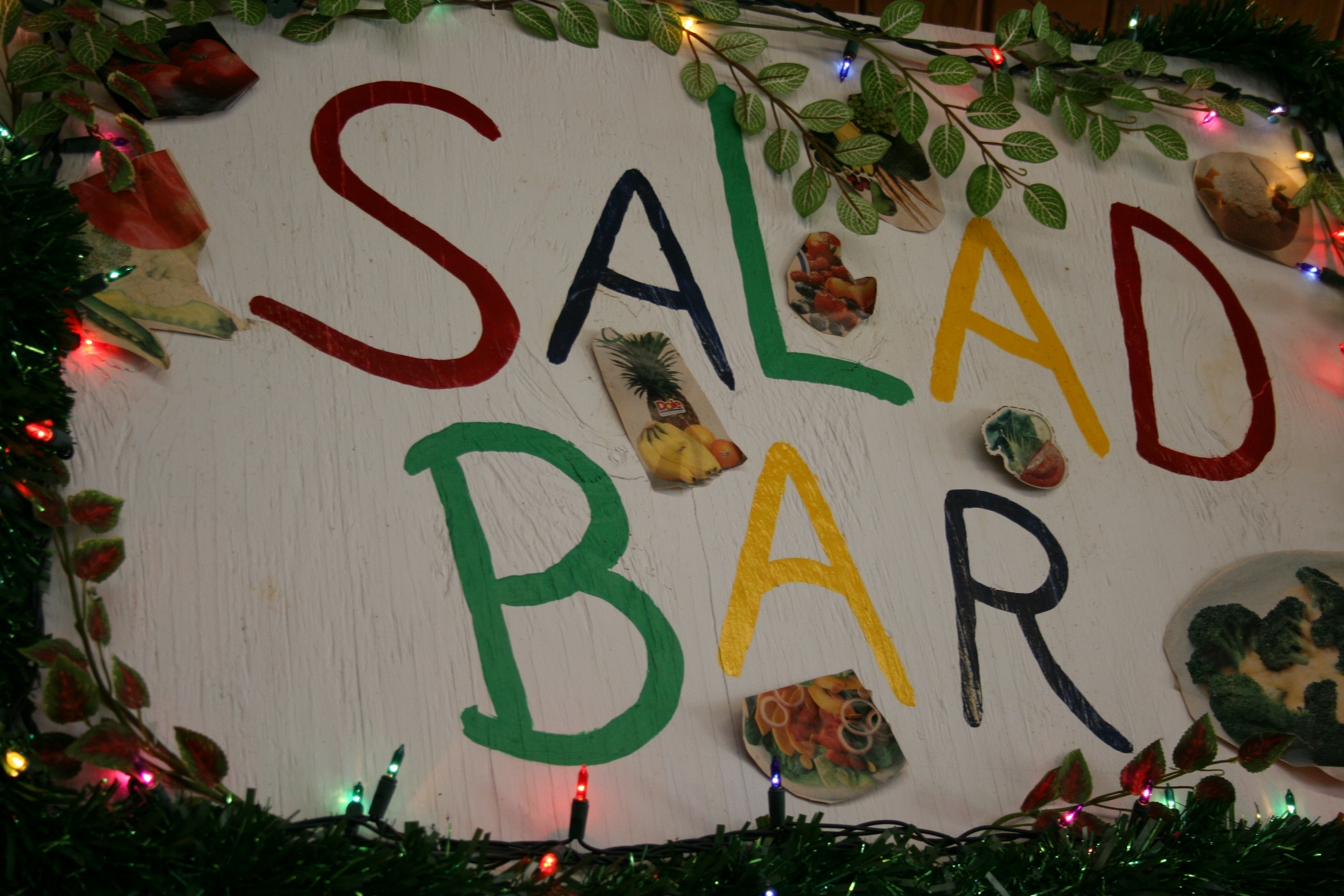
 

Even the salad bar sign grabbed my attention. How cute and eye-catching and kitschy.
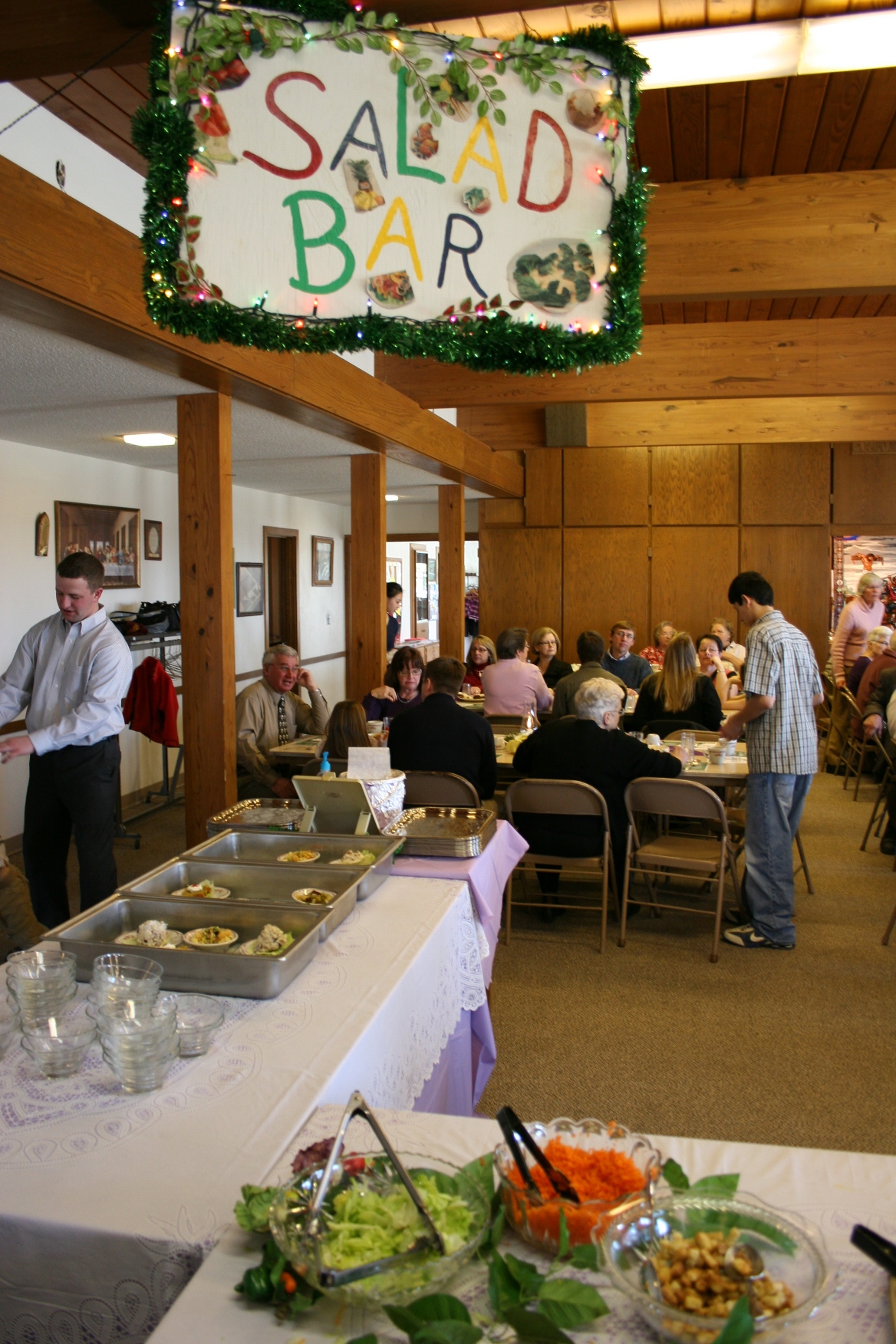
The plated and build-your-own salad bar fills two tables in the dining hall.
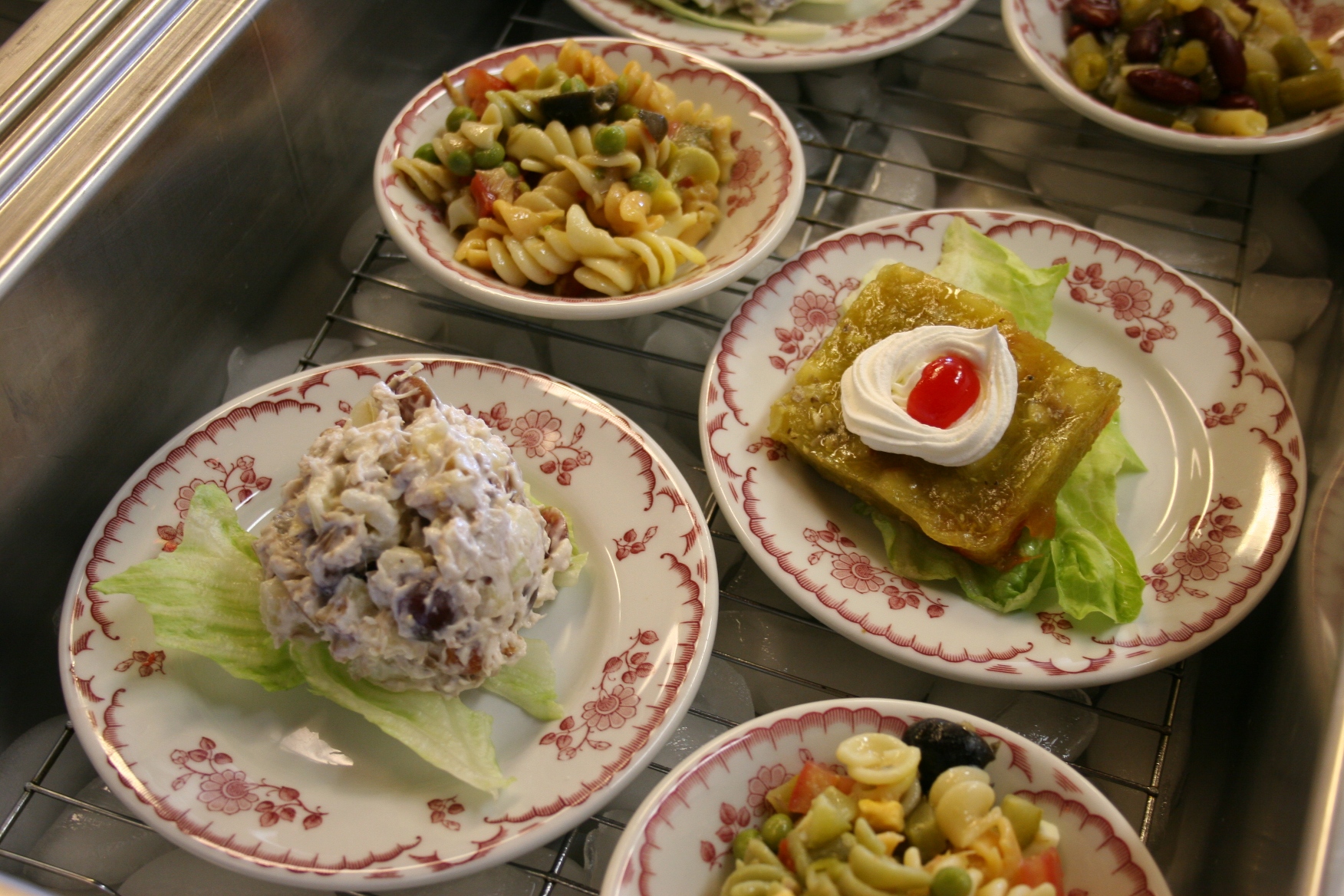
A few of the salad bar choices, including a tangy rhubarb square on the right in this photo.

After I’d selected my salad and placed it on a fancy silver tray, I headed to the kitchen where cooks were ladling potato-bacon chowder, hamburger vegetable soup and chicken noodle with dumpling soup from large roasting pans into hefty bowls.
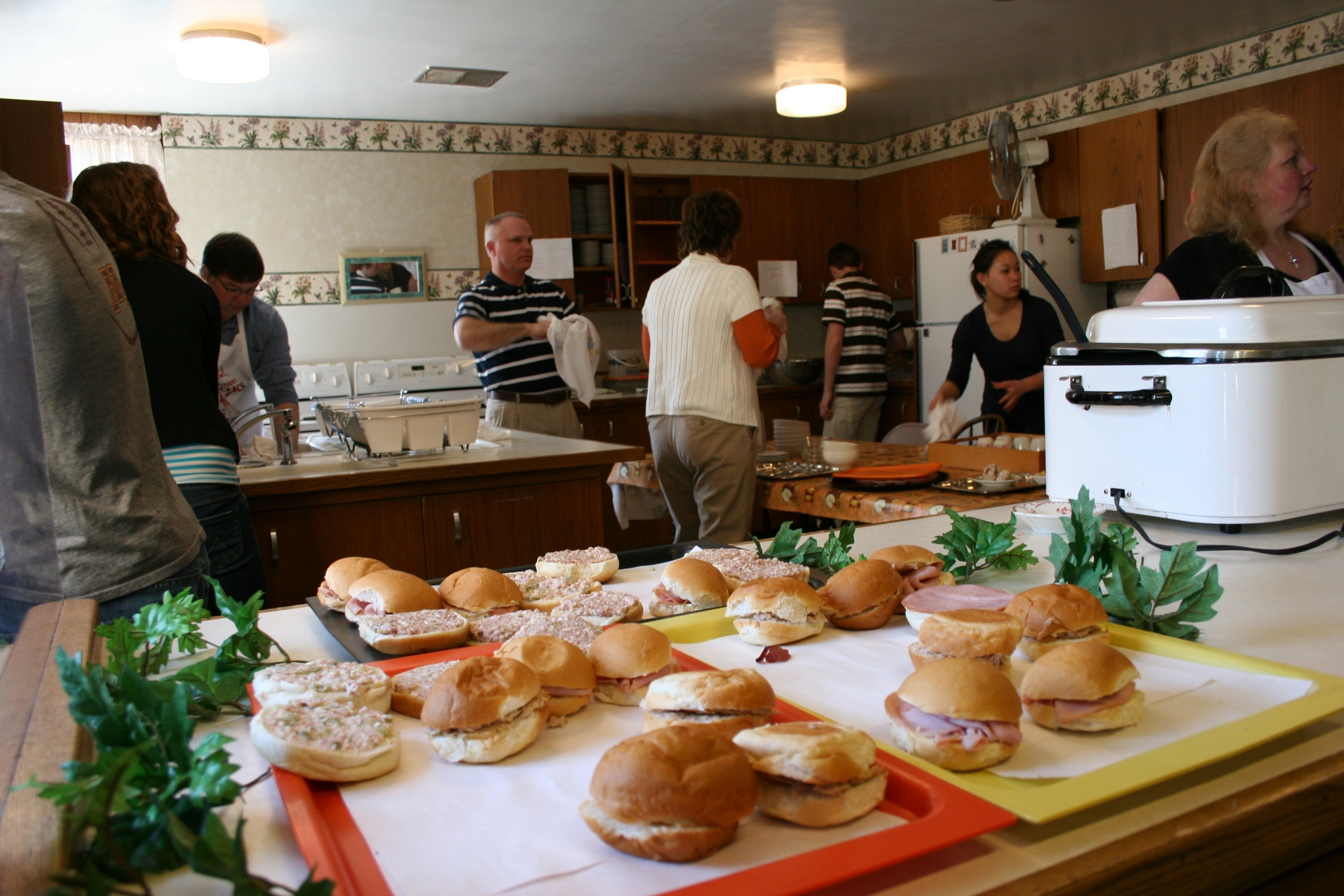
 

The busy-as-a-beehive kitchen crew at St. John's United Church of Christ.
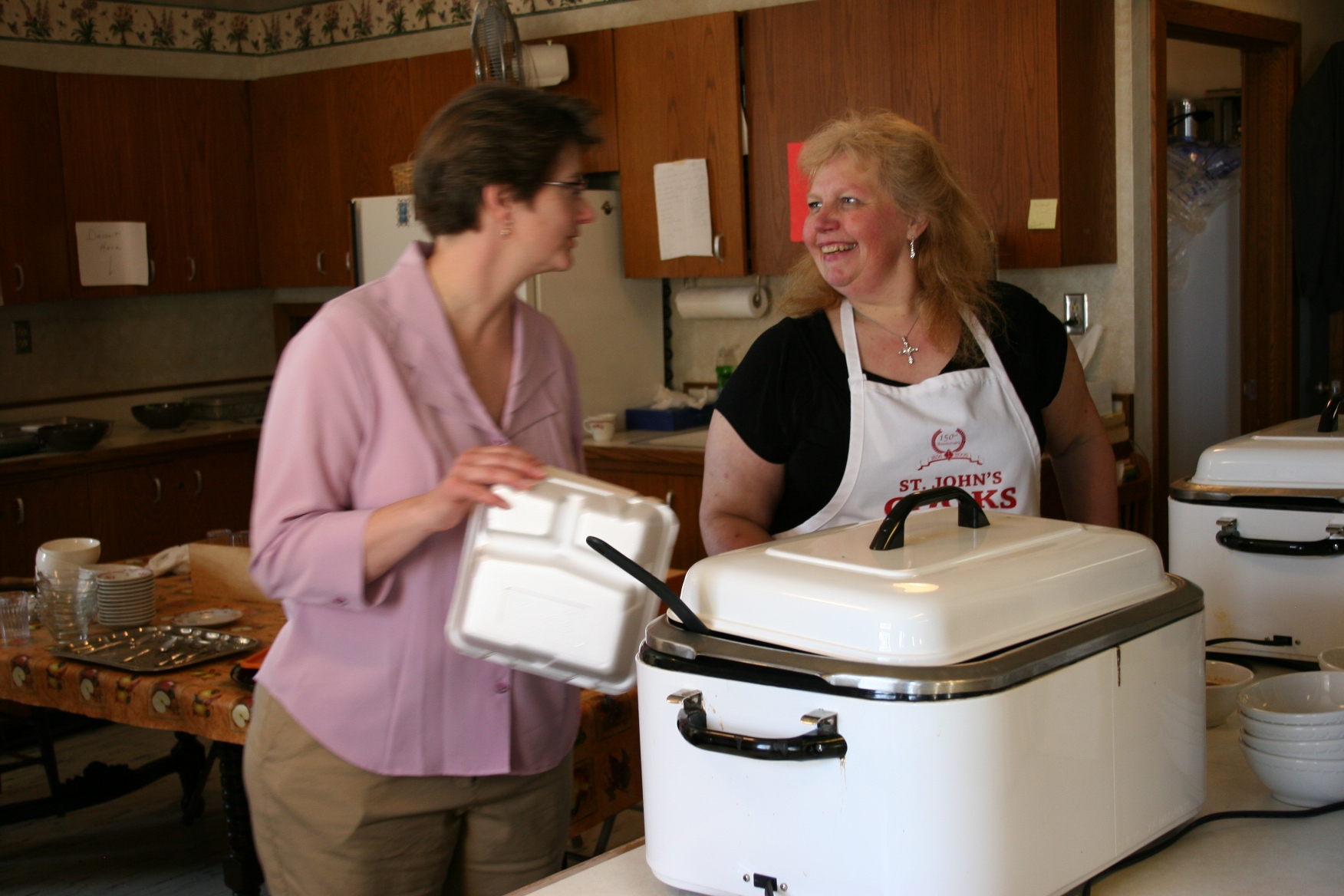
Volunteers were ready with roasters full of soups in the kitchen.

I started with the potato and eventually sampled the other two. The creamy and savory potato was my hands-down favorite, although I also appreciated the spicy kick to the hamburger veggie. I’ve never been big on chicken noodle soup or dumplings. The chicken soup is served at every Lenten Soup Luncheon the church hosts. Oyster stew and chili will be the other featured soups at the last luncheon from 11:30 a.m. – 12:30 p.m. on Sunday, April 10.
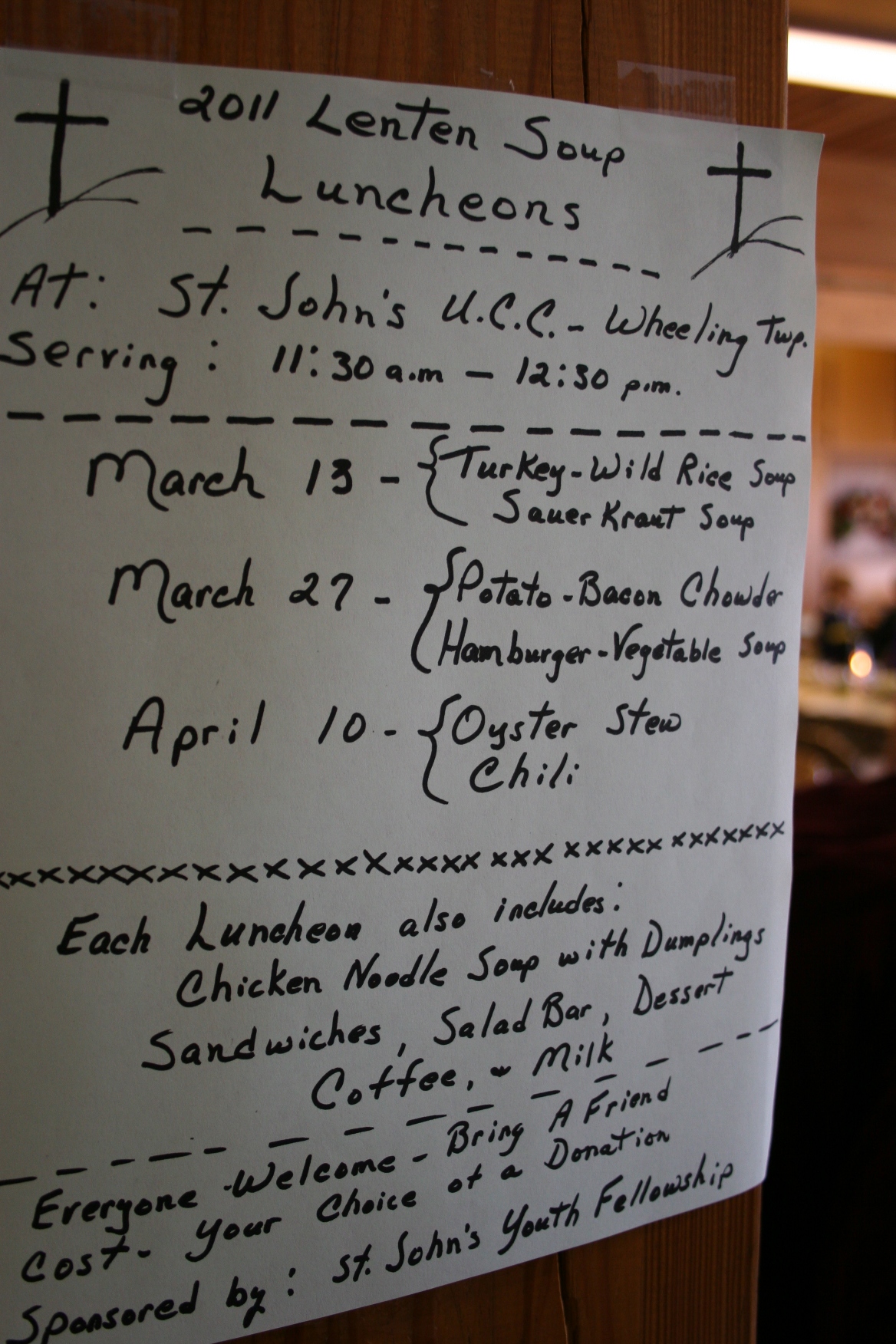
 

The Lenten Soup Luncheon sign posted by the kitchen. The final luncheon is from 11:30 a.m. - 12:30 p.m. on Sunday, April 10.

A diner's tray (not mine) that includes a bowl of chicken noodle soup with dumplings.
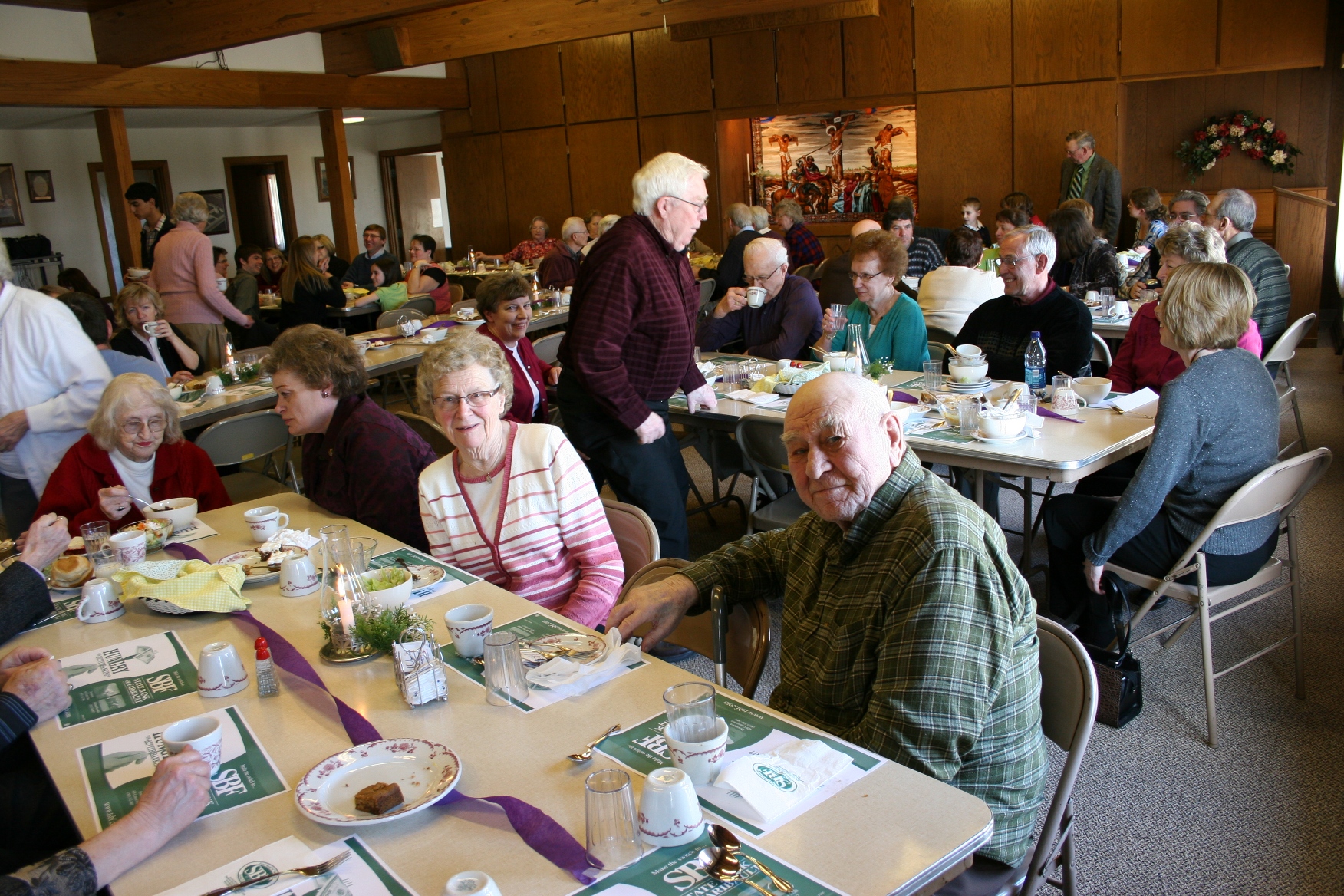
Church dinners are all about food and fellowship. I scored an invitation to visit a farm with a robotic milking operation while visiting with church members at my table.

Of course, no church dinner is complete without bread, so diners were offered an array of sandwiches. I inquired about the ground concoction on an open-faced sandwich, was told it was bologna and pickles, paused, thought, and picked it up. And you know, for someone who doesn’t really care for bologna, I liked the spread.

 

Plenty of sandwich choices like ham, tuna and, yes, even ground bologna and pickles were offered.

Except for lutefisk, I’ve never tasted a church dinner I didn’t like.

I notice and appreciate details like the lovely floral dishware. My husband and I learned that once you carry your food to your table on the fancy silver tray, you're supposed to take your plates and bowls off the tray and servers will pick it up for others to use. We even had big, hefty soup spoons for eating our soups. Now that impressed me.
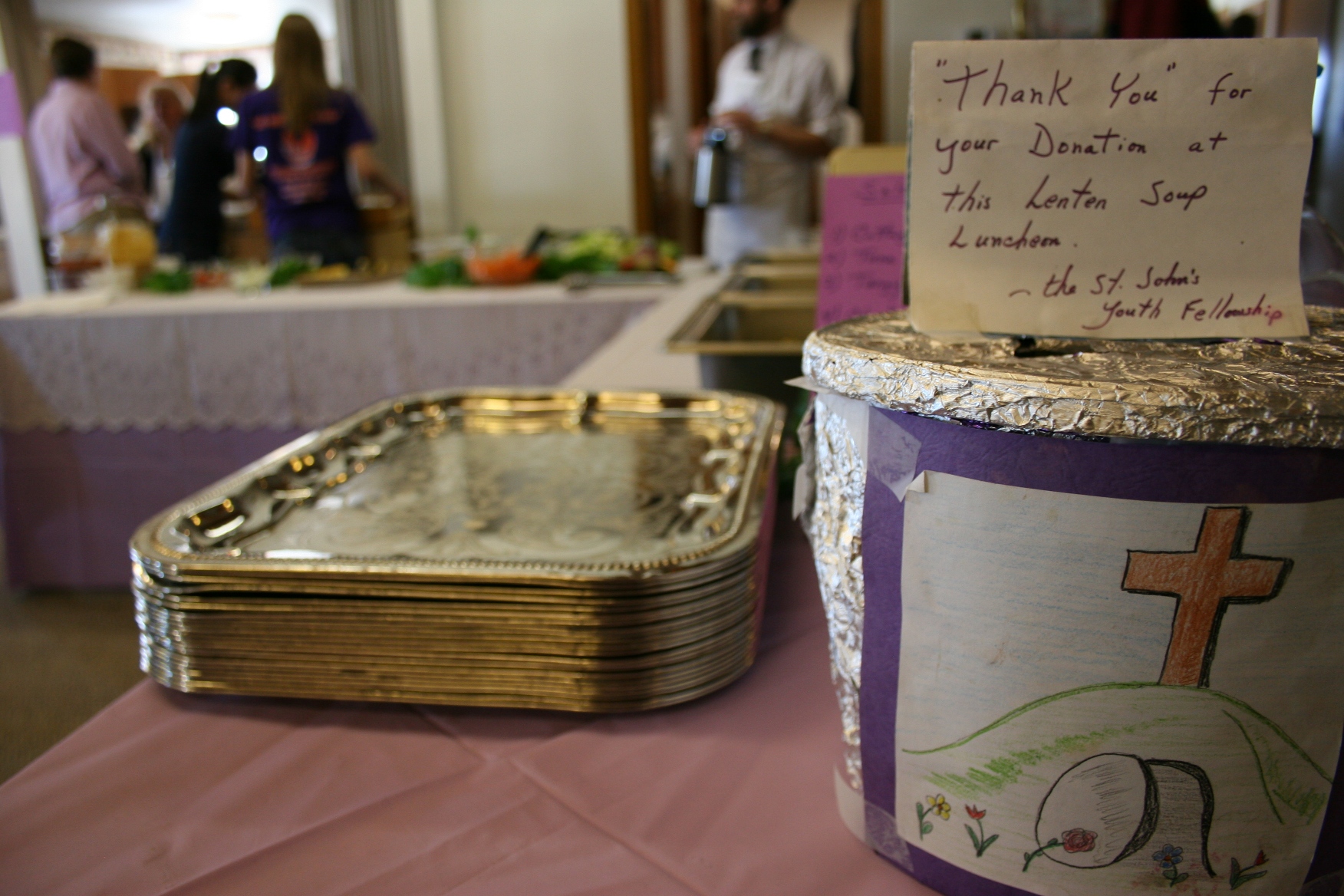
 

There's no specific cost for the St. John's Lenten Soup Luncheon, which benefits the youth fellowship group, helping members finance mission trips and more. Cost for the meal is whatever you choose to donate. Just drop your money in the bucket before picking up a fancy silver tray at the salad bar.

FYI: Click here for more information about St. John’s United Church of Christ, 19086 Jacobs Avenue, located near Nerstrand Big Woods State Park, rural Faribault. Watch for a future post featuring photos of the church interior and exterior.

PLEASE SUBMIT A COMMENT and tell me about a church dinner you enjoy and why.

© Copyright 2011 Audrey Kletscher Helbling


A glorious sunset at St. John the Baptist Church March 27, 2011

THAT I APPRECIATE country churches should come as no surprise to those of you who’ve followed Minnesota Prairie Roots. I value their beauty, architecture, history, reverence and connection to the land and its people.

Therefore, I photograph these rural sanctuaries whenever possible. If a church door is unlocked, I’ll take you inside for a photographic tour. If not, you’ll at least see the exterior.

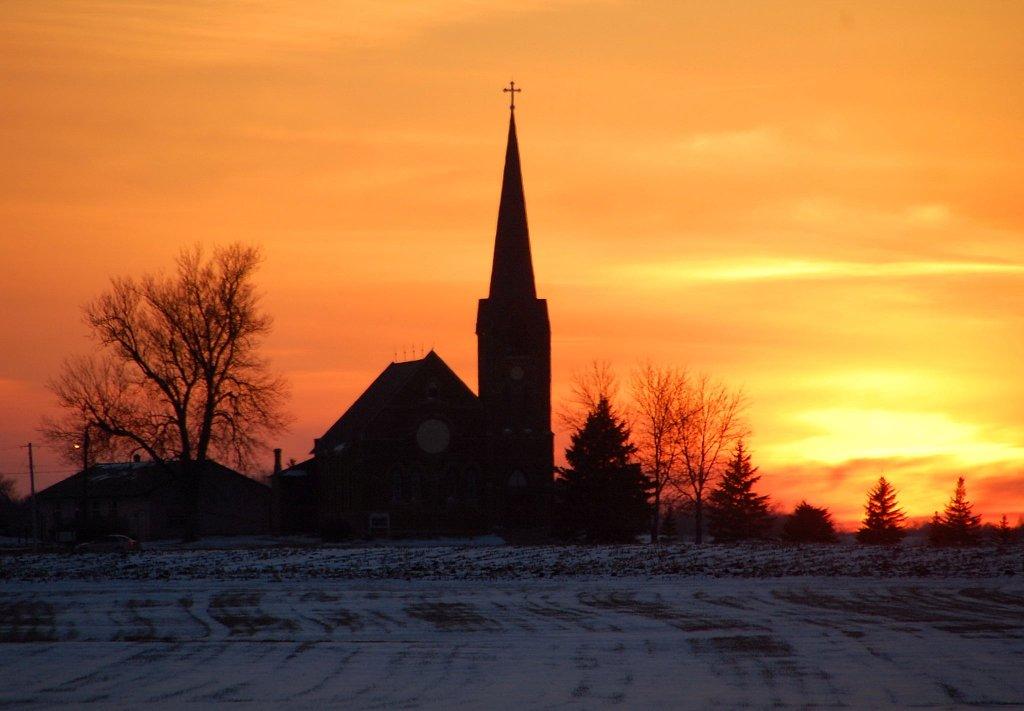
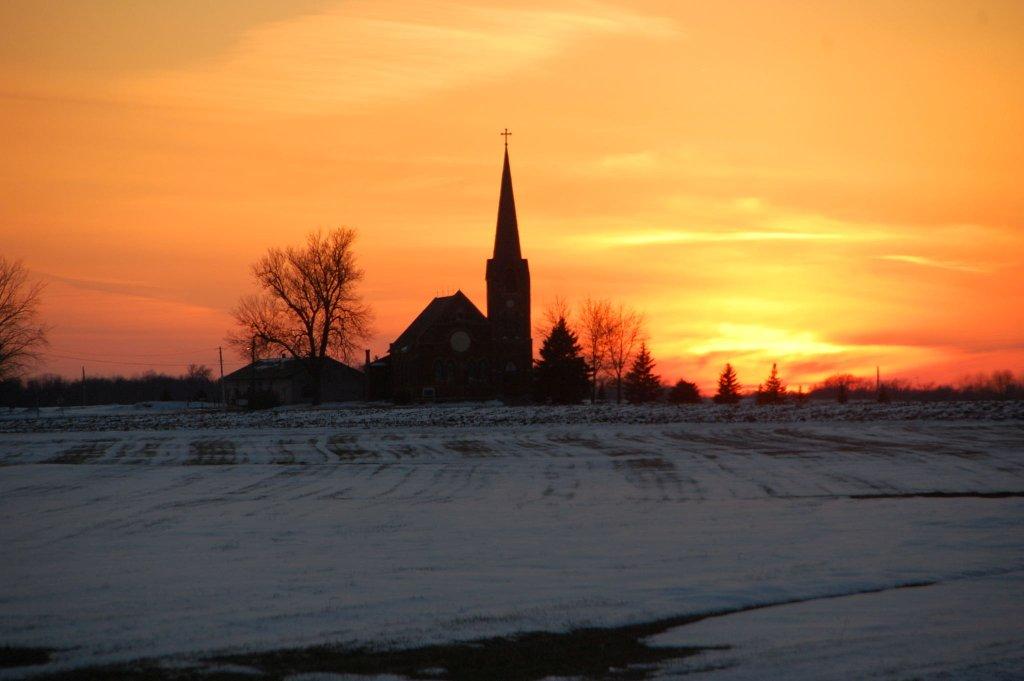
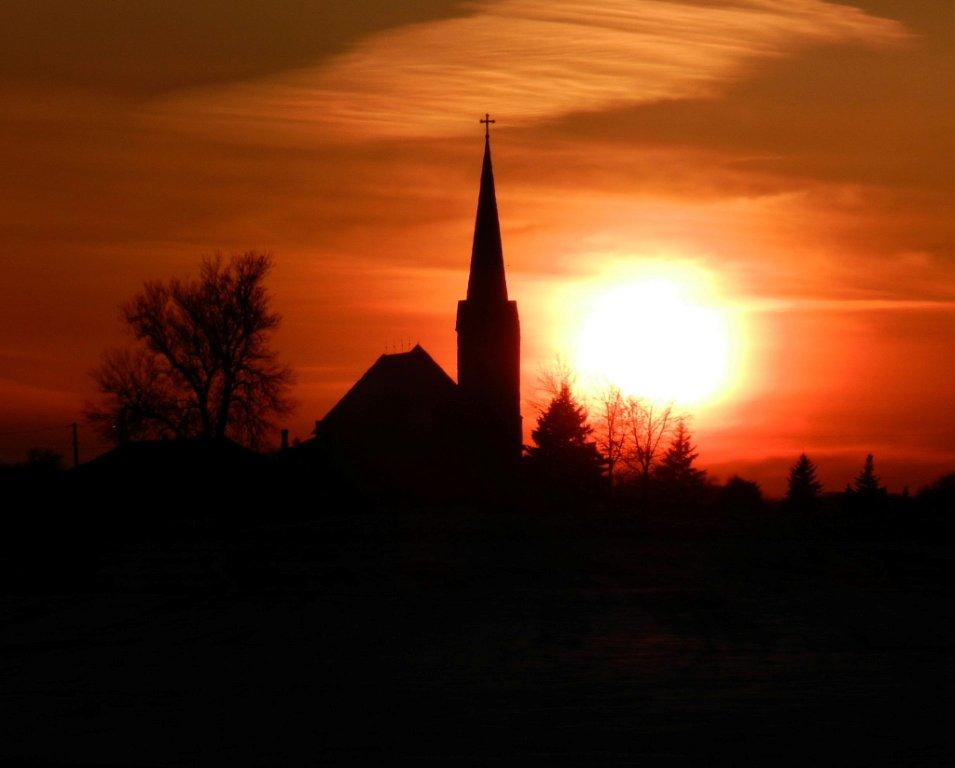
Others, like rural Carver resident Harriet Traxler, share my interest in photography and all things country. So when Harriet emailed images of a local rural church, St. John the Baptist Catholic Church in Faxon Township some four miles northwest of Belle Plaine, I asked if I could share her photos with you.

Because I struggled to pick my favorite of the four, shot around sunset on Friday, I’m publishing three of Harriet’s photos.

I hope you’ll agree with me that even on a cold Minnesota March day, these gorgeous photos warm the heart, and the soul.


Built around 1870, St. John the Baptist Catholic Church still holds Sunday Masses and has many young parishioners.

In the summer, the church is surrounded by cornfields.

The sun sets the sky on fire behind St. John the Baptist Catholic Church, rural Belle Plaine, Minnesota.

FYI: Harriet has published a series of barn books featuring barn and other rural images from her native Sibley County, Minnesota. To view her work, click here. Some of Harriet’s work will be featured in the spring issue of Minnesota Moments magazine.

© Text copyright 2011 Audrey Kletscher Helbling
© Photos copyright 2011 Harriet Traxler


Traveling photo shoots March 26, 2011

BOY, WAS I HAPPY to meet photographer Loretta M. Verbout of Rochester during an opening night gallery reception recently at the Paradise Center for the Arts in downtown Faribault. She is among three photographers and a painter currently exhibiting at the center.

Although I enjoyed all of the art, I was particularly drawn to Loretta’s photos because she photographs the same types of subjects I like photographing. Flowers. Rural scenes. Everyday objects. Her images have a certain down-home quality that appeals to me.

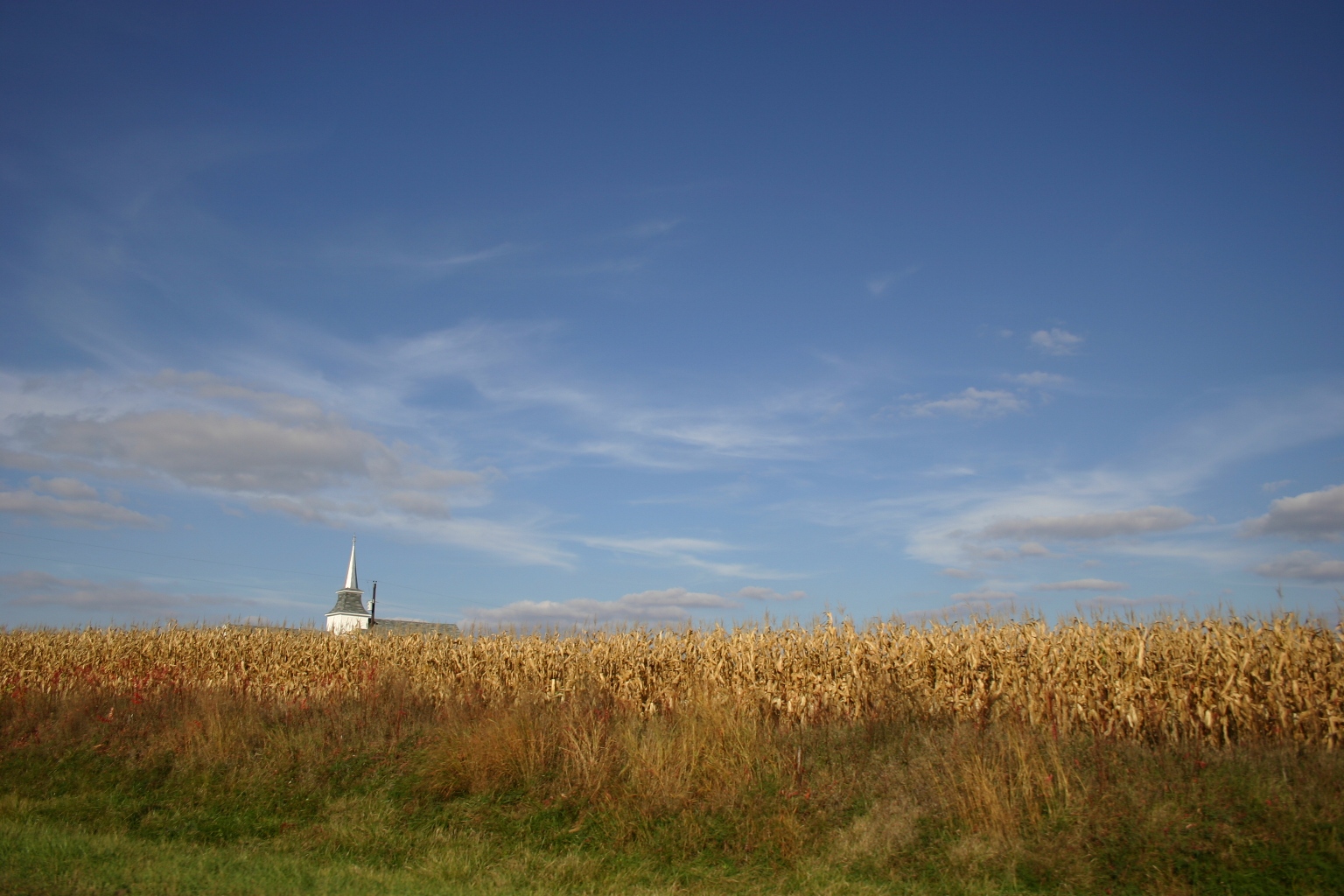
I was especially drawn to her photo of a country church barely visible behind a field of ripened corn. I wanted to know more about the church and where it was located. I enjoy discovering rural churches, then photographing them.

“It’s somewhere between Dubuque and the Minnesota border,” Loretta said.

Then Loretta explained that she shot the image through the passenger window of a moving vehicle.

I didn’t expect that answer.


Loretta shot this rural church scene while driving roads along the Mississippi River somewhere between Dubuque, Iowa, and the Minnesota border. It's in her gallery exhibit at The Paradise.

Instantly, I bonded with this photographer. I do the exact same thing—set my EOS 20D SLR digital Canon camera on a fast shutter speed and click, click, click while traveling. Loretta also uses mainly Canons.

I called my husband over. He needed to hear this, to confirm that I’m not the only crazy photographer who shoots while riding shotgun.

But apparently I’m not to Loretta’s level of commitment yet. She’s worn out the motor on her vehicle’s automatic window. Typically, I shoot through the window given I don’t want to risk dust filtering into my camera and landing on my sensor, plus sometimes the weather is just too cold for an open car window.

Here are two more drive-by images from Loretta’s Mississippi River road drive:

FYI: Loretta’s gallery show, “The beauty in everyday things,” and exhibits by photographers Laura Schenck of Northfield and Catherine Michele Adams of St. Paul will run through April 23 at the Paradise’s Carlander Family Gallery, 321 Central Avenue, in downtown Faribault. Minneapolis artisit Lauren S. Strom’s paintings are also on display in the Lois Vranesh Boardroom Gallery. Paradise hours are 10 a.m. – 5 p.m. Tuesday – Friday and from noon to 5 p.m. on Saturday.

CHECK BACK for a trio of on-the-road farm place photos I shot recently while traveling through southwestern Minnesota.

© Copyright 2011 Audrey Kletscher Helbling
 

Preparing for the floods, which haven’t arrived, yet, anyway March 25, 2011

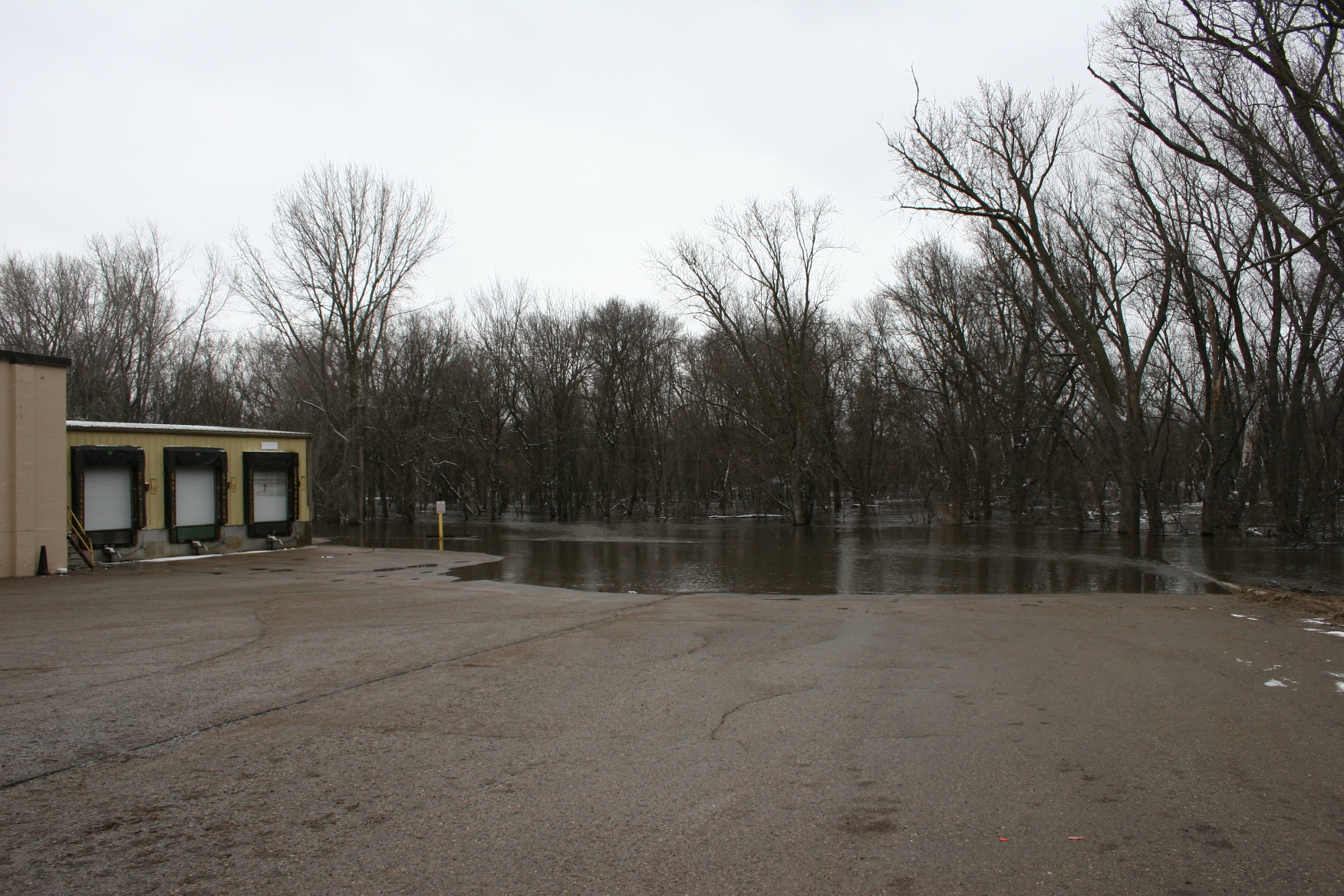
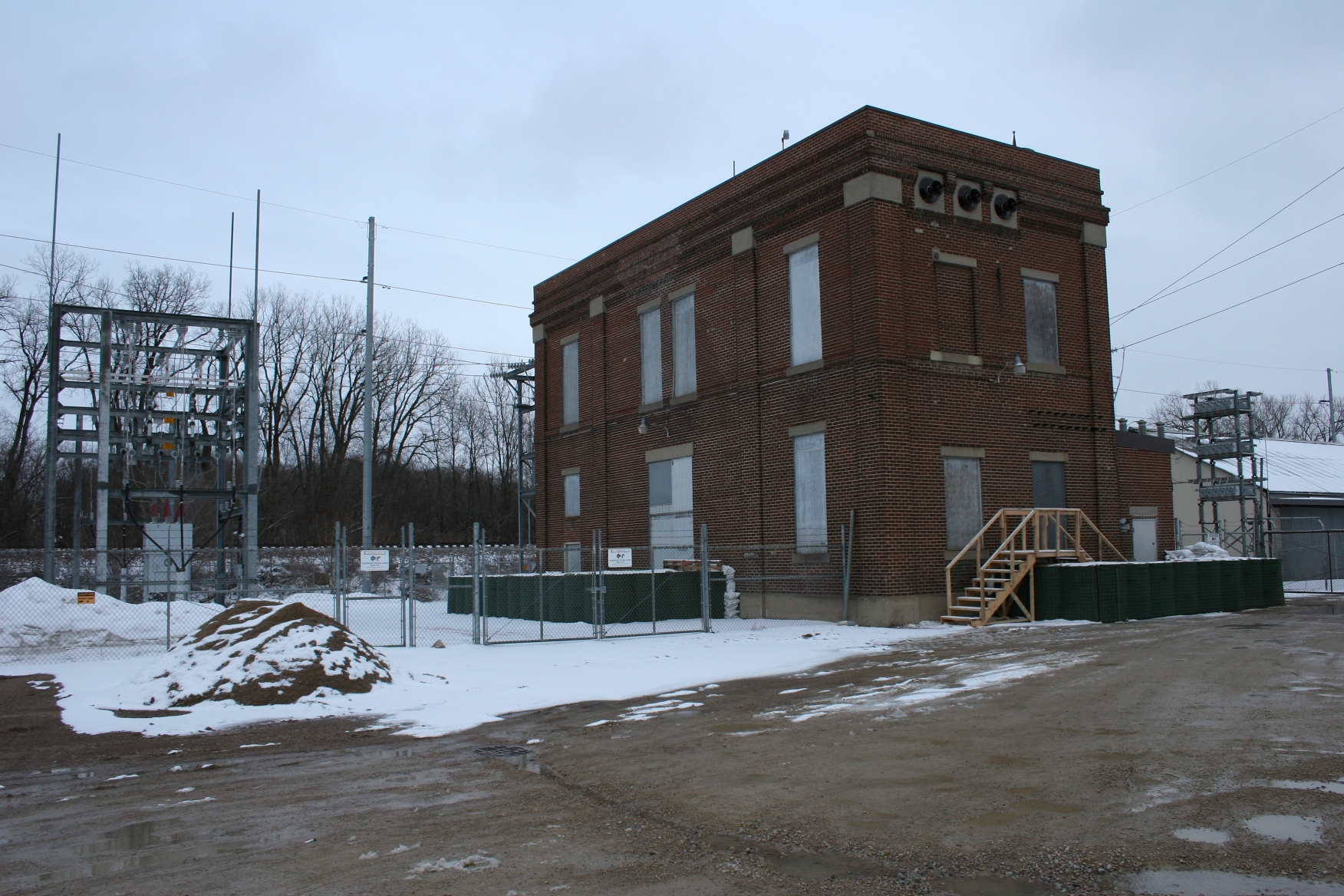
Xcel Energy sandbagged its electrical substation near the Straight River in preparation for spring flooding. See the green, fenced enclosures next to the building. Last fall this substation flooded during a flash flood.

UNLESS THE NATIONAL WEATHER SERVICE changes its forecast, a flood warning that covers Rice County expires at 3:30 p.m. Friday.

That’s good news for Faribault, where residents and officials have been nervously watching the rising, and now receding, Cannon and Straight Rivers that run through town.

Six months ago, those rivers rushed over their banks during a September flash flood, threatening homes and businesses and actually flooding some. Sewage also backed up in to homes and the city’s wastewater treatment plant was compromised. Because of the sudden nature of that flood, my community was not fully prepared.

This spring, though, following a winter of heavy snowfall and then a quick snow melt, officials had emergency plans in place to deal with possible flooding. They had even recruited students to fill sandbags, stockpiled at a local park for residential use.

They were ready. Ready is good.

Better to be safe than sorry.

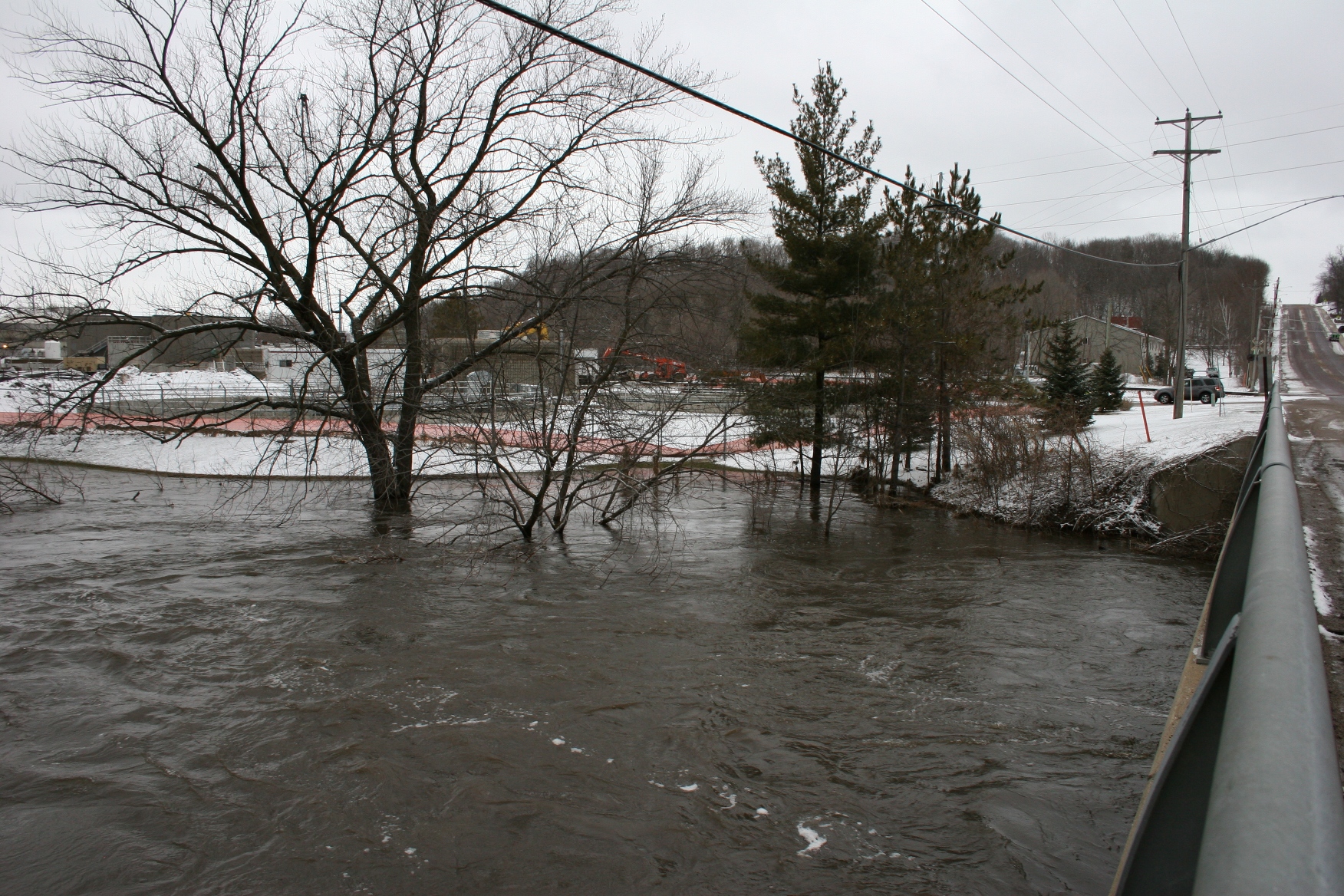
Here’s a look at some river and preparedness scenes I shot near the Cannon and Straight Rivers Wednesday evening.

If we don’t get another major storm—rain or snow— and the weather stays cold, slowing the snow melt, I think we should be OK here in Faribault, meaning no need to worry about flooding.

But then that can change on a dime, and I’ve heard predictions of another possible river crest next week.

And so we wait…prepared.

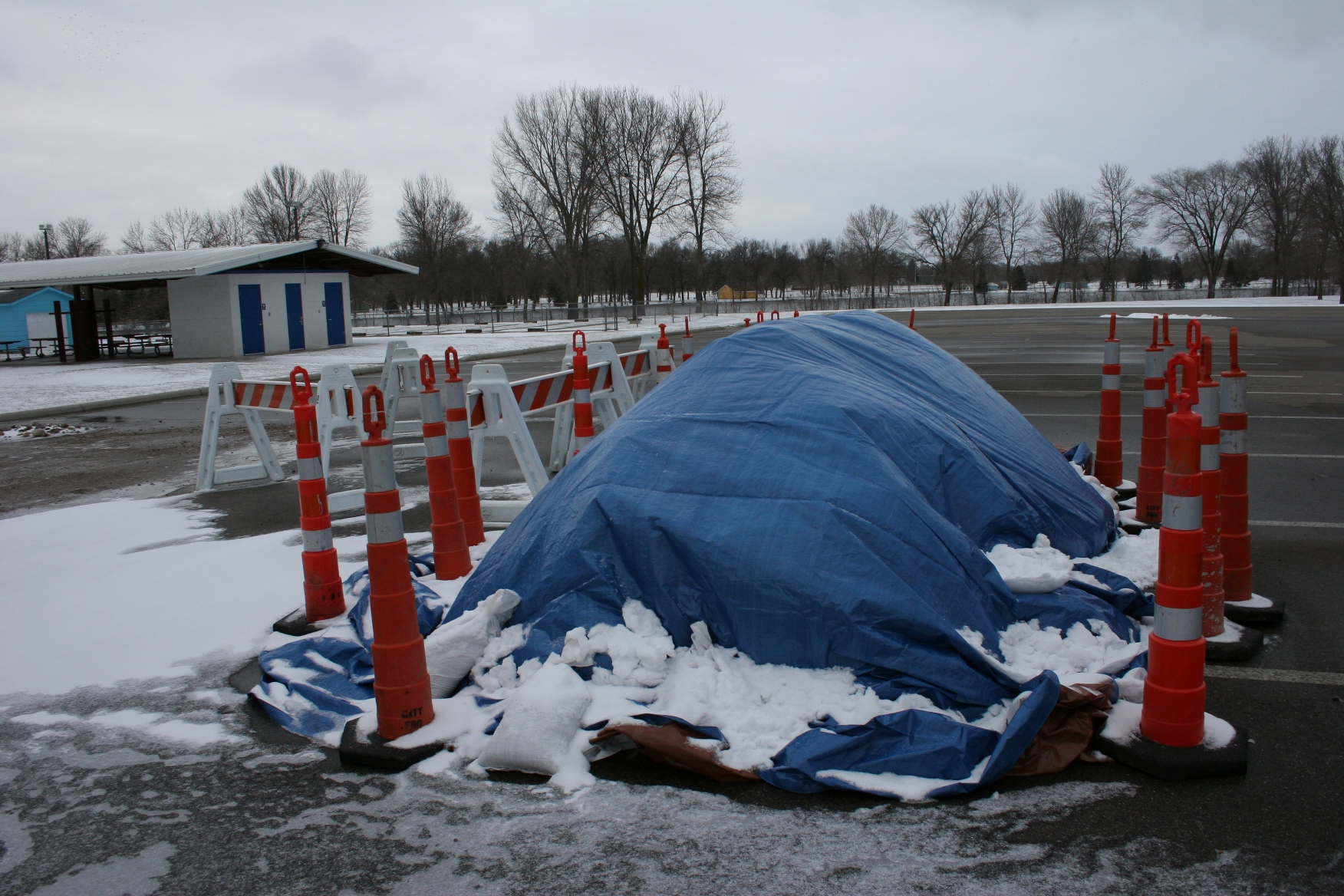
Student volunteers and others filled sandbags, available to residents who needed them. These were stockpiled at South Alexander Park by the Cannon River when I shot this image Wednesday evening.

River waters rise close to Faribault Foods. Last fall floodwaters reached as far as the overhead doors.

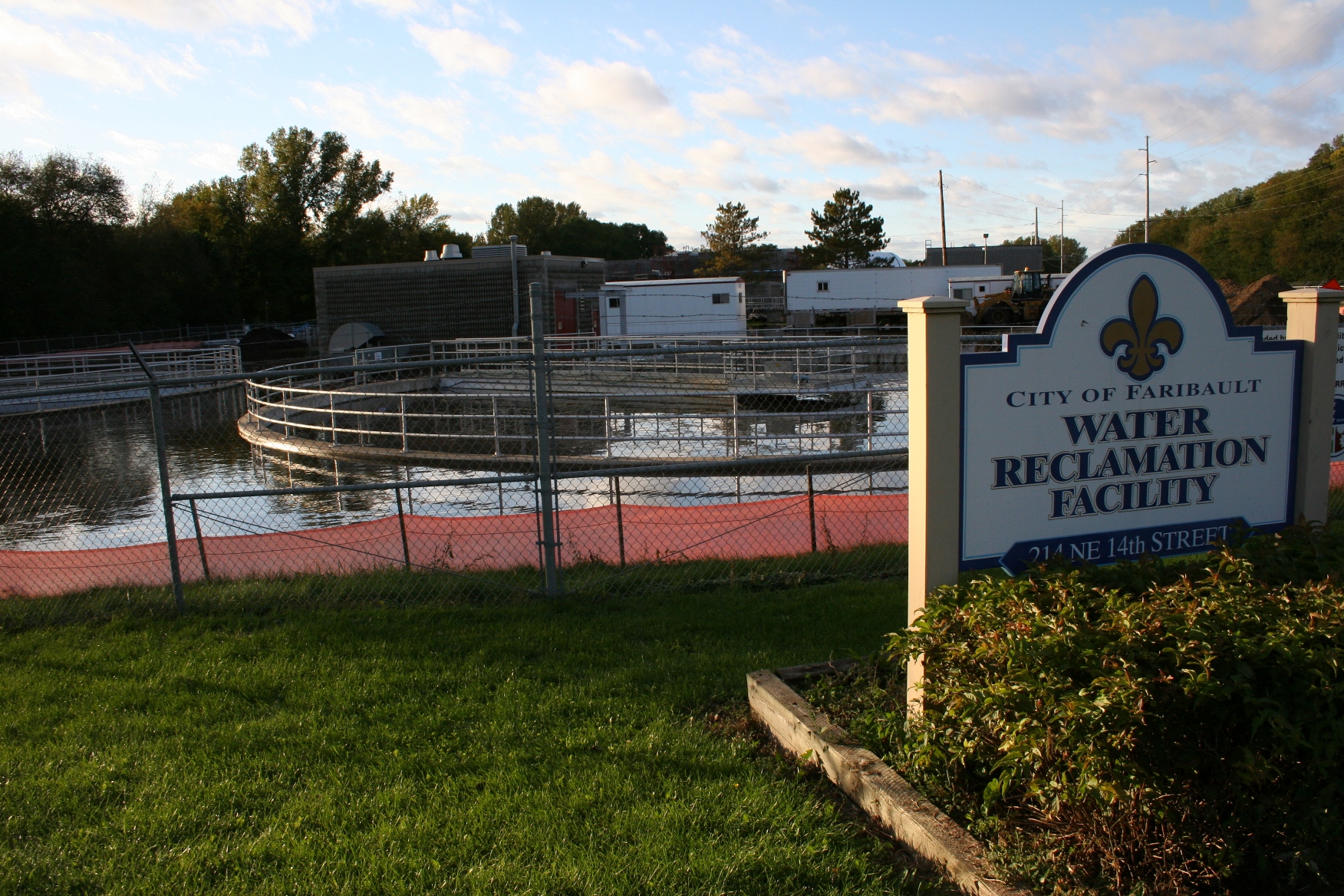
The Straight River encroaches on Faribault's Water Reclamation Plant, which now appears "safe" from floodwaters.

A sandbagged utility area along the Straight River by the viaduct and Teepee Tonka Park on Faribault's east side.

CLICK HERE to view images from last September’s flash flood in Faribault, comparing the situation then to today. River levels are much lower than six months ago.

© Copyright 2011 Audrey Kletscher Helbling
 

The Cannon River today and six months ago

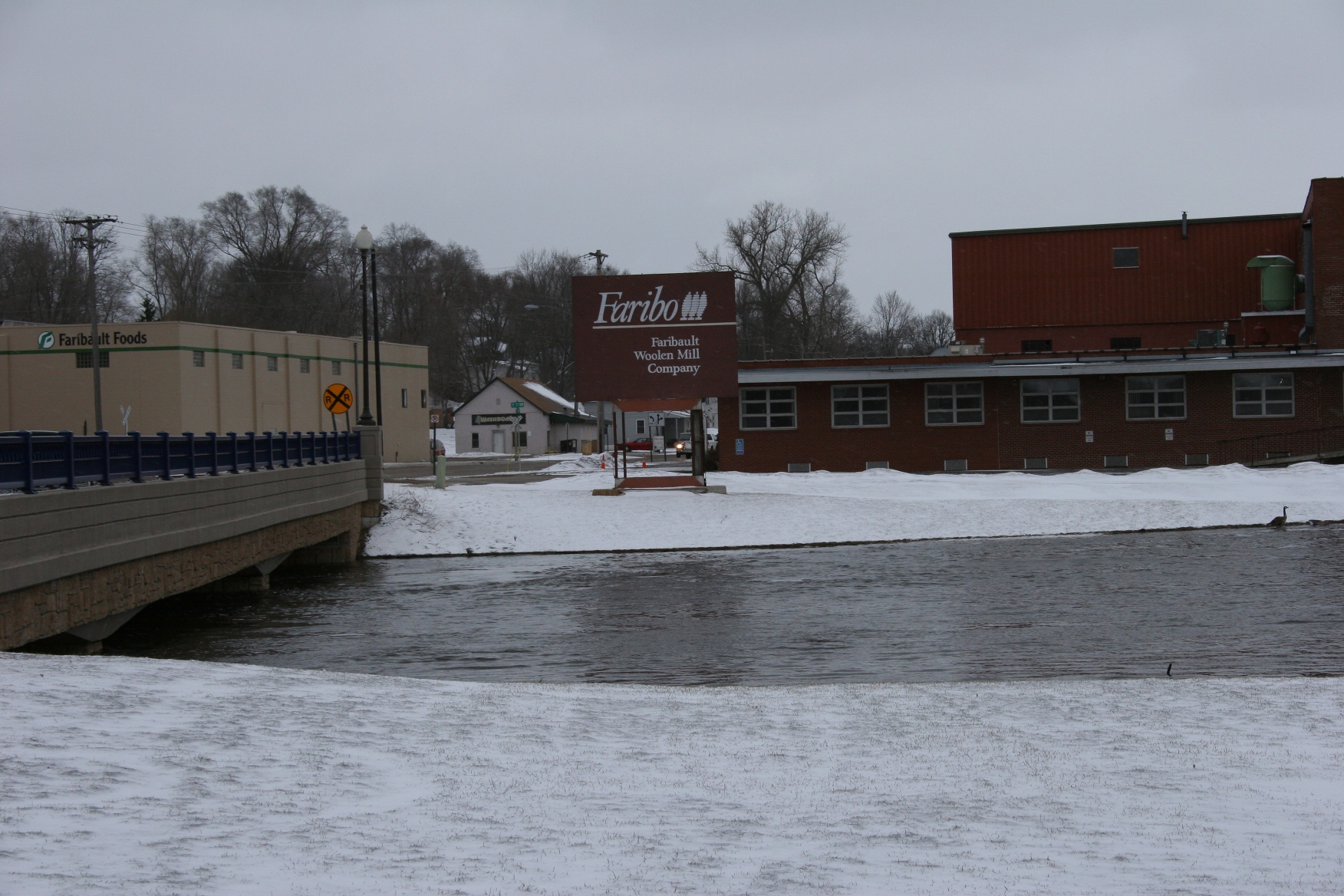
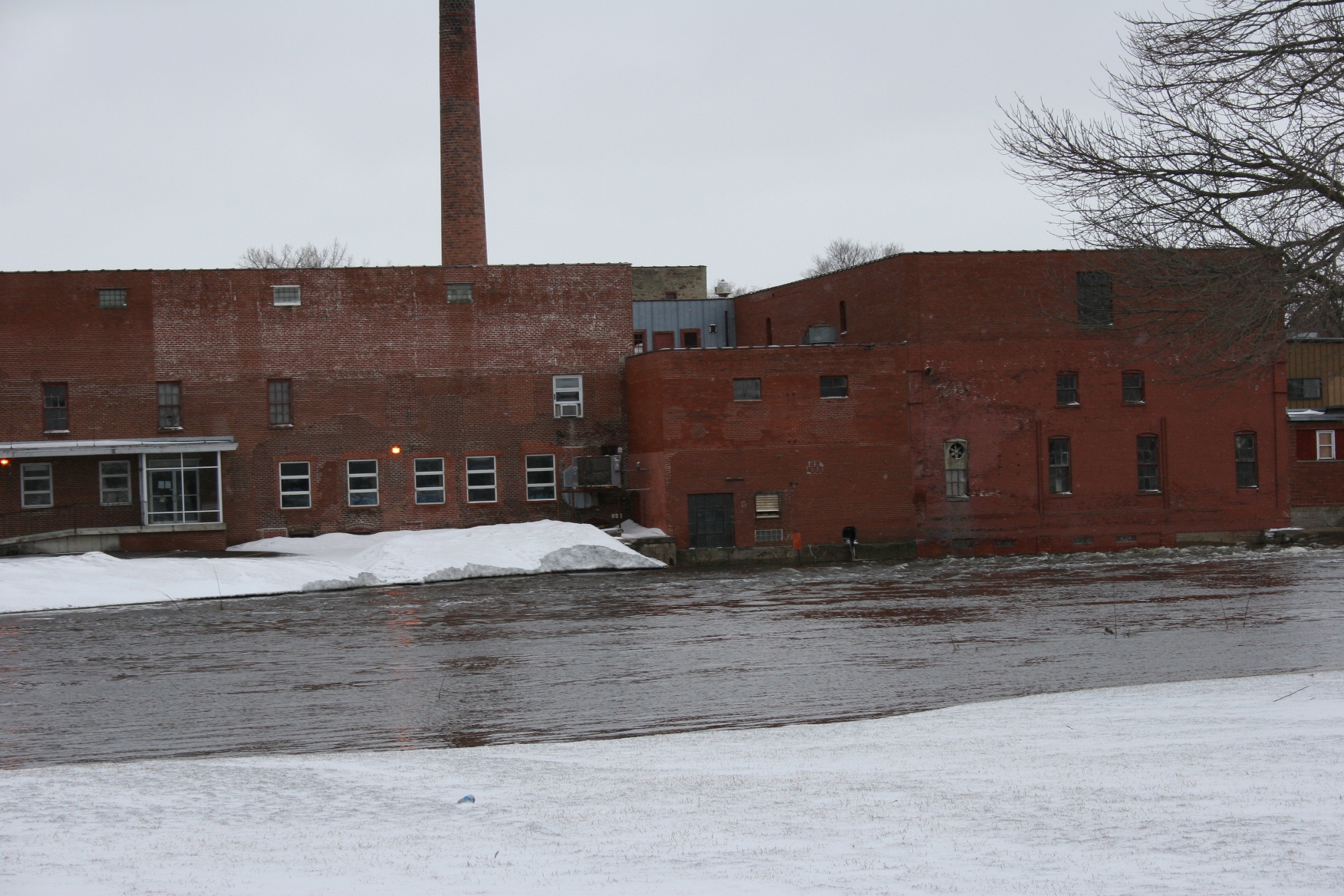
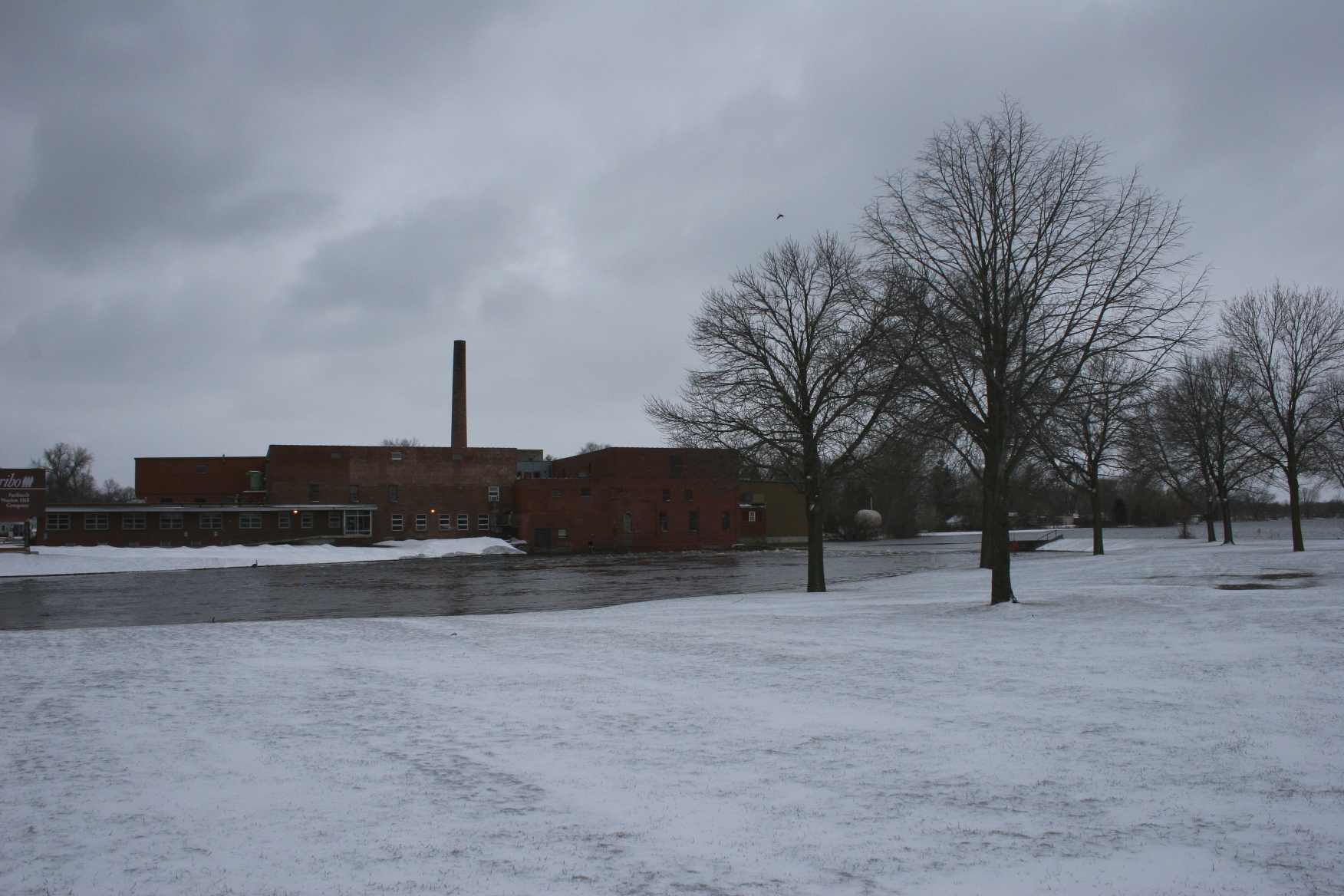
A view of the Cannon River from Father Slevin Park, looking toward the former Faribault Woolen Mill factory on the right and Faribault Foods on the left.

SIX MONTHS AGO I would not have been standing on this wedge of park land photographing the rising Cannon River by the Faribault Woolen Mill dam.

Here, by this dam, most locals judge the river level. And Wednesday evening, only the slightest hint of the dam showed beneath the roiling river. I kept a safe distance as I photographed scenes I had shot in September when a flash flood sent the Cannon spilling over its banks.

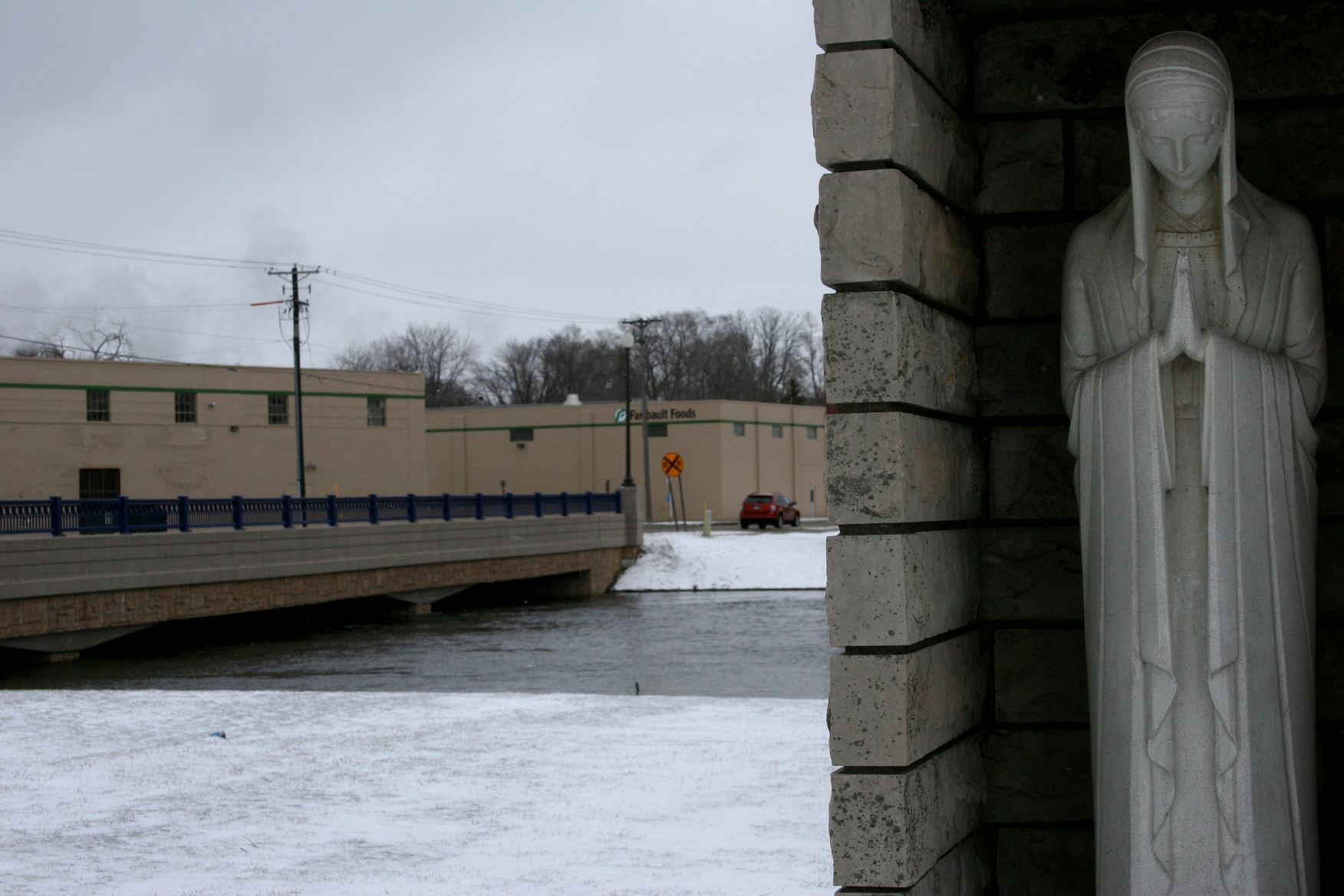
A statue in Father Slevin Park (I believe she is the Virgin Mary) next to the Cannon River.

Back then, this park, Father Slevin Park, was engulfed in water that had risen all the way to the roadway into the Rice County Fairgrounds and North Alexander Park in Faribault.

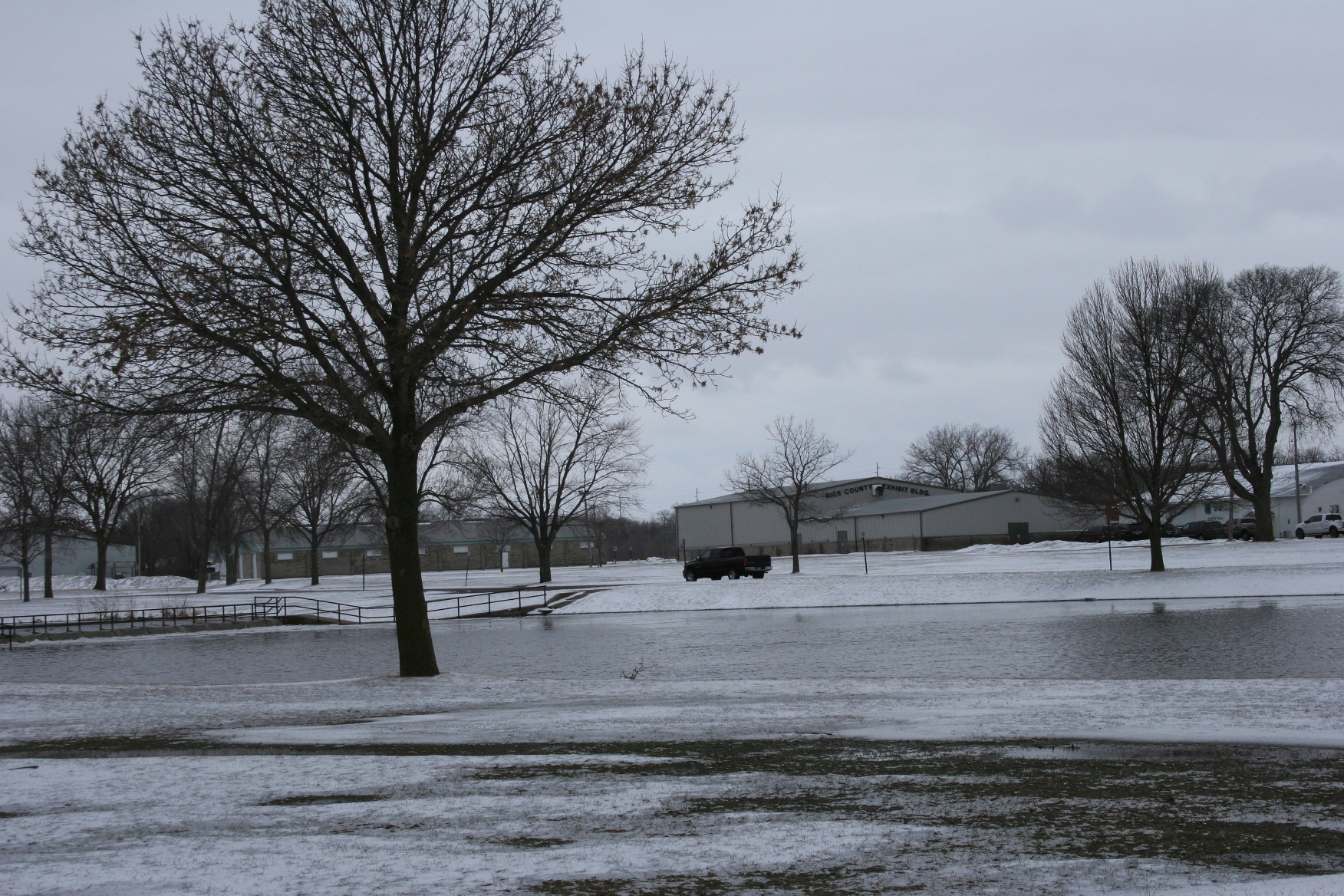
Father Slevin Park splits the Cannon. This is the other side of the river, looking toward the fairgrounds. The river was nearly out of its banks Wednesday evening.

The situation was not the crisis of six months ago, not at all. Just being here, beside the river, eased my fears about flooding in my community.

My husband, who travels by the Cannon daily on his way to and from work in nearby Northfield, tells me the river level dropped since I took these photos. That is good news for my town, for residents like me who had wondered and worried as the Cannon and Straight Rivers rose.

The former Faribault Woolen Mill building along the banks of the Cannon River.

A view of the Cannon River and the Faribault Woolen Mill from Father Slevin Park.

CLICK HERE to see images of the Cannon taken during the late September 2010 flash flood.

© Copyright 2011 Audrey Kletscher Helbling
 

Watching the Straight River in Faribault March 24, 2011

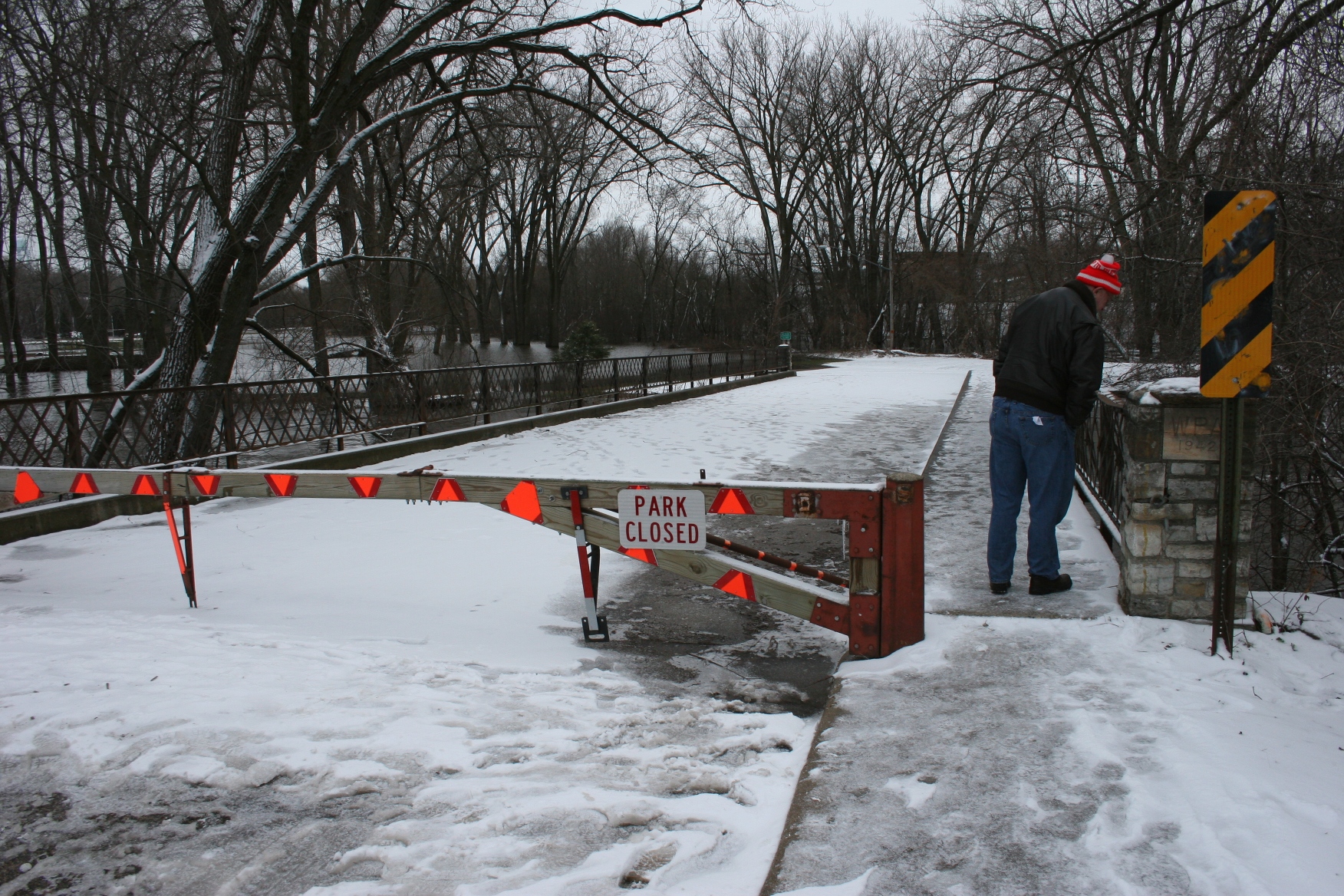
The river watcher points to the Straight River that has flooded Teepee Tonka Park and tells me how much the water has already gone down. The park often floods in the spring.

DAILY HE’S TREKKED across town from his north-side home to the downtown area and then crossed the bridge to check on the river.

I met him early Wednesday evening near the banks of the Straight River at Faribault’s east-side Teepee Tonka Park.

We didn’t waste time on chit chat, didn’t even introduce ourselves. We simply talked about the river and flooding and how he’s driven here daily recently to watch the river rise.

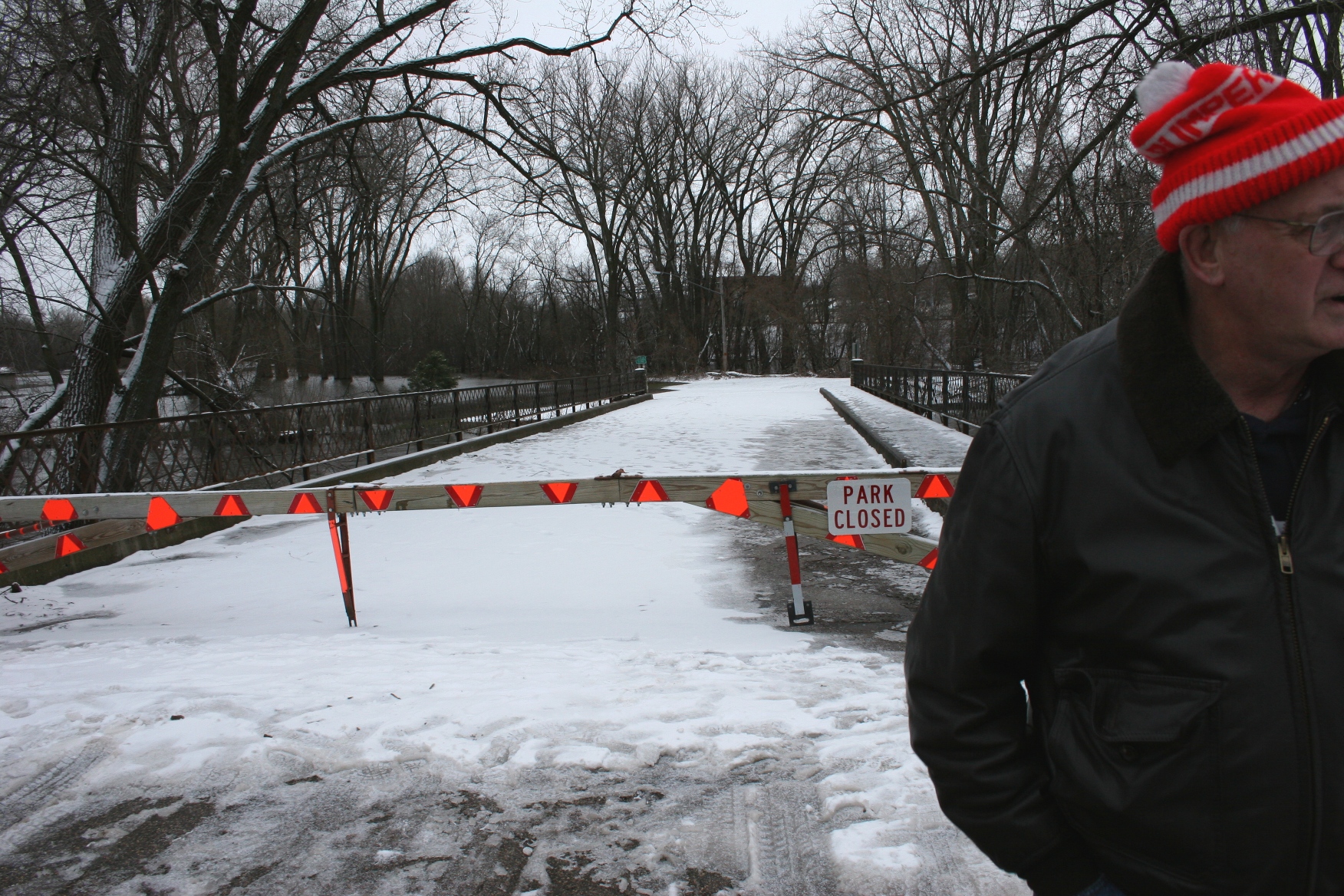
We look from the bridge toward flooded Teepee Tonka Park, where waters have already begun to recede.

He has reason for concern. During last September’s flash flood in Faribault, sewage backed up into his home from the sanitary sewer causing $15,000 in damages. He doesn’t live on a river. The Rice County Fairgrounds on one side, buildings and land on the other across a roadway, sit between his home and the Cannon River. His 20th Street Northwest home is buffered from the rivers, the Cannon nearest his home and the Straight that joins it nearby, flowing north past Teepee Tonka where he’s kept a watchful vigil.

He was optimistic, though, on Wednesday evening, telling me the Straight River had crested that afternoon and gone down. He wasn’t worried. The water was no where near the level during last fall’s flash flood. I could see that and so could he.

We turned away from the park bridge, toward the viaduct, to check the river level.

The Straight River has stayed mostly inside its banks near the historic viaduct.

And so I left this river watcher, braving the slippery, iced sidewalk to step onto the park bridge and peer into the raging waters of the Straight River.

The river watcher turns and walks back to his post on the bridge.

I leave the river watcher peering over the bridge at the churning Straight River.

CHECK BACK for more river images from Faribault.

© Copyright 2011 Audrey Kletscher Helbling
 

Remembering my soldier-father and Elizabeth Taylor

WHEN I HEARD the news on Wednesday of Elizabeth Taylor’s death, I didn’t think of the Hollywood star or the two-time Oscar winner, the stunning beauty with the violet eyes or the woman who married eight times, or even the starlet who struggled with addiction and was a crusader in the fight against AIDS.

Rather, I thought of my dad.

He was smitten with Liz.

He never met the Hollywood actress. But he had seen her on a United Service Organizations stage while serving during the Korean Conflict. That was enough for my Minnesota farmer turned-soldier dad to fall for her. Hard. I don’t recall him ever, in his life-time, talking about another actress. He had eyes only for Elizabeth.

His wasn’t an obsession. Nothing like that. It’s just that he seldom talked about his time on the front lines as a foot solider during the Korean War. He told us about the orphans begging for food across barbed wire fences, the sniper (he eventually killed) picking off members of his platoon, watching his buddy blown up the day before he was to return home to the States, the cold and lack of food, the digging into foxholes for protection…and then Elizabeth Taylor, dear, dear Liz.

I expect that the movie star offered a welcome and pleasant diversion for soldiers who faced death on a daily basis.

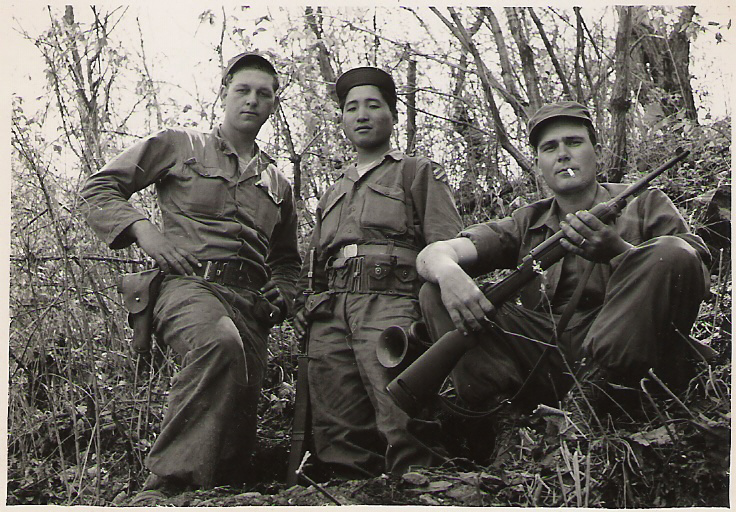
My father, Elvern Kletscher, on the left with two of his soldier buddies in Korea.

If my dad was still alive—he died eight years ago at the age of 72—I would ask him about the woman who enamored him with her beauty when she stepped onto Korean soil to entertain the troops. I don’t know details about her USO appearance. I wish I had cared enough to ask him.

I tried to find more information online, but Taylor’s USO tours don’t exactly pop up all over the Internet. She once received the USO Woman of the Year Award and won a USO Merit Award. Otherwise I didn’t find much out there.

And that is dismaying to me. Her time entertaining our servicemen, soldiers like my dad, seems as notable as her roles in Cleopatra or Who’s Afraid of Virginia Woolf.

For me, Elizabeth Taylor will always be more than just another actress. She will be a reminder of my father, of the young Minnesota soldier who was struck by shrapnel at Heartbreak Ridge in Korea and was awarded the Purple Heart 47 years later. It is his memories of Liz that define her to me, not her beauty, not her accolades, not her anything except the temporary escape she gave my soldier-father nearly 60 years ago from the battlefields of Korea, from the horrors of war.

© Copyright 2011 Audrey Kletscher Helbling
 

Flood updates from southern Minnesota March 23, 2011

AS YOU WOULD EXPECT, Minnesotans are keeping a close watch on rising rivers, creeks and streams as rain and snow continue to fall across much of our state.

Here in Faribault, sandbagging has begun at the wastewater treatment plant, which flooded during last September’s flash flood. Sandbags have been filled and are available to property owners. The city has an emergency plan in place to deal with any flooding.

Faribault officials are working to protect the city's water reclamation plant which sits along the Straight River and which was flooded in a September 2010 flood. This photo is from September 2010.

Thankfully, the precipitation—rain, sleet and then snow overnight—have stopped in Faribault.

Further to the south, I’ve heard from Katie Shones of Hammond, a Wabasha County village nestled along the Zumbro River. Last September Hammond and nearby Zumbro Falls were devastated by the same flash flood that occurred in Faribault.

Katie updated me just this afternoon on the situation in Hammond. “So far, no sandbagging in the area,” Katie writes. “We are under a flood warning in Wabasha County, just as much of southern Minnesota. The Zumbro is high, but it is still contained in its banks. People are watching the river closely as you can well imagine.”

Looking down on Hammond during the September 2010 flash flood. Photo courtesy of Hammond residents Micheal Mann and Tina Marlowe.

Sadly, yesterday the spring floods claimed the life of a Minnesota Department of Transportation worker who was swept away by floodwaters after his backhoe tipped into Seven Mile Creek, which feeds into the Minnesota River. The accident happened between Mankato and St. Peter along U.S. Highway 169 when Michael Struck 39, of Cleveland, was attempting to clean out flood debris, according to an article in The Free Press, Mankato. His body was found today in Seven Mile Creek County Park.

Please be careful out there, and if you have any reports you would like to share about flood preparedness, flooding or other weather in your area of Minnesota, please submit a comment.

© Copyright 2011 Audrey Kletscher Helbling
 

Back in Faribault, Minnesota, from Japan

FIVE DAYS HAD PASSED since a young Faribault woman posted on her blog from earthquake and tsunami stricken Japan.

And now I know why. She was on her way back from Fukushima to Minnesota for her brother’s wedding.

Haidee, a Christian outreach worker and English teacher, has been safely reunited with her family at their rural Faribault home.

But her decision to leave Japan did not come without struggle. Read Haidee’s insightful post by clicking here. She reveals, in a March 22 post, the emotional turmoil she experienced, being torn between wanting to stay in Japan and returning to the United States.

Her words are honest, poignant and touching. They also point to an unshakable faith and an undisputed belief that God directed her onto the path that would take her to the airport and then back to Minnesota.

God, clearly, was watching over and guiding her on this journey.

A snippet of Jesus' face in a stained glass window at Trinity Lutheran Church in Faribault, where Haidee's father serves as the pastor. I'm certain that many times since the disaster in the Pacific, Haidee has been especially cognizant of God watching over her.

SHOULD I HAVE the opportunity to speak with Haidee, I’ll share that information with you. Click here to read my first post about Haidee, shortly after the disaster devastated Japan.


© Copyright 2011 Audrey Kletscher Helbling
 

The not-so-surprising results to a diversity question


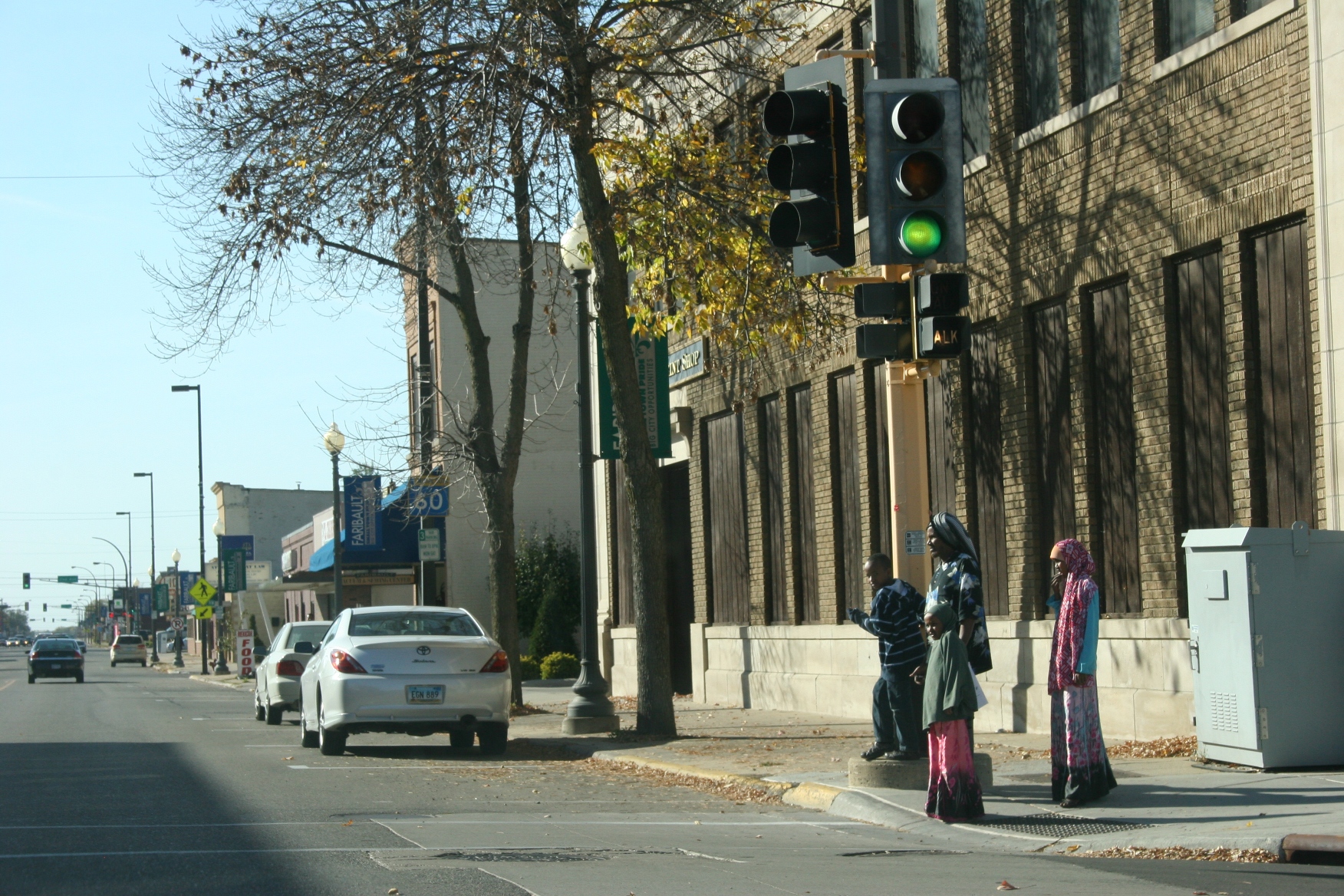
An immigrant family in downtown Faribault represents the changing face of our community. I took this photograph in October 2010.

I DON’T KNOW WHY I was surprised. I should have expected the results given the many racist comments I’ve heard through the years.

Yet, when results of an online poll conducted by The Faribault Daily News were published in Tuesday’s edition, I was still shocked or, more honestly, embarrassed by the numbers.

The newspaper, after publishing stories on changing demographics in Faribault,  polled readers on this question: “Do you enjoy the increased diversity in Faribault?”

An overwhelming majority, 70.2 percent, responded with a “No.”

Only 20.8 percent voted “Yes.”

The other nine percent checked the “What increased diversity?” option.

Granted, polls like this, printed in each issue of the paper and then open for online voting, are not scientifically controlled and therefore could be substantially flawed. We have only the number of respondents, 312 for this question, and the tallied results, from which to draw conclusions.

However, when you live in a community long enough—I’ve been in Faribault for 29 years—you know how people feel. And, I think it would be fair to say that many residents in my community are not all that welcoming of minorities.

I hear it in the off-the-cuff negative comments about Somali men hanging around downtown or about the Hispanic family that moved in down the street. I hear it in the warning to avoid certain retail destinations at night. I hear it in the spewed words, “I don’t want any Somalians moving in next door.”

I read it in the comments submitted to the local newspaper whenever race or diversity is the subject of an article.

The words are mean, cutting, derogatory, and, most definitely, prejudiced.


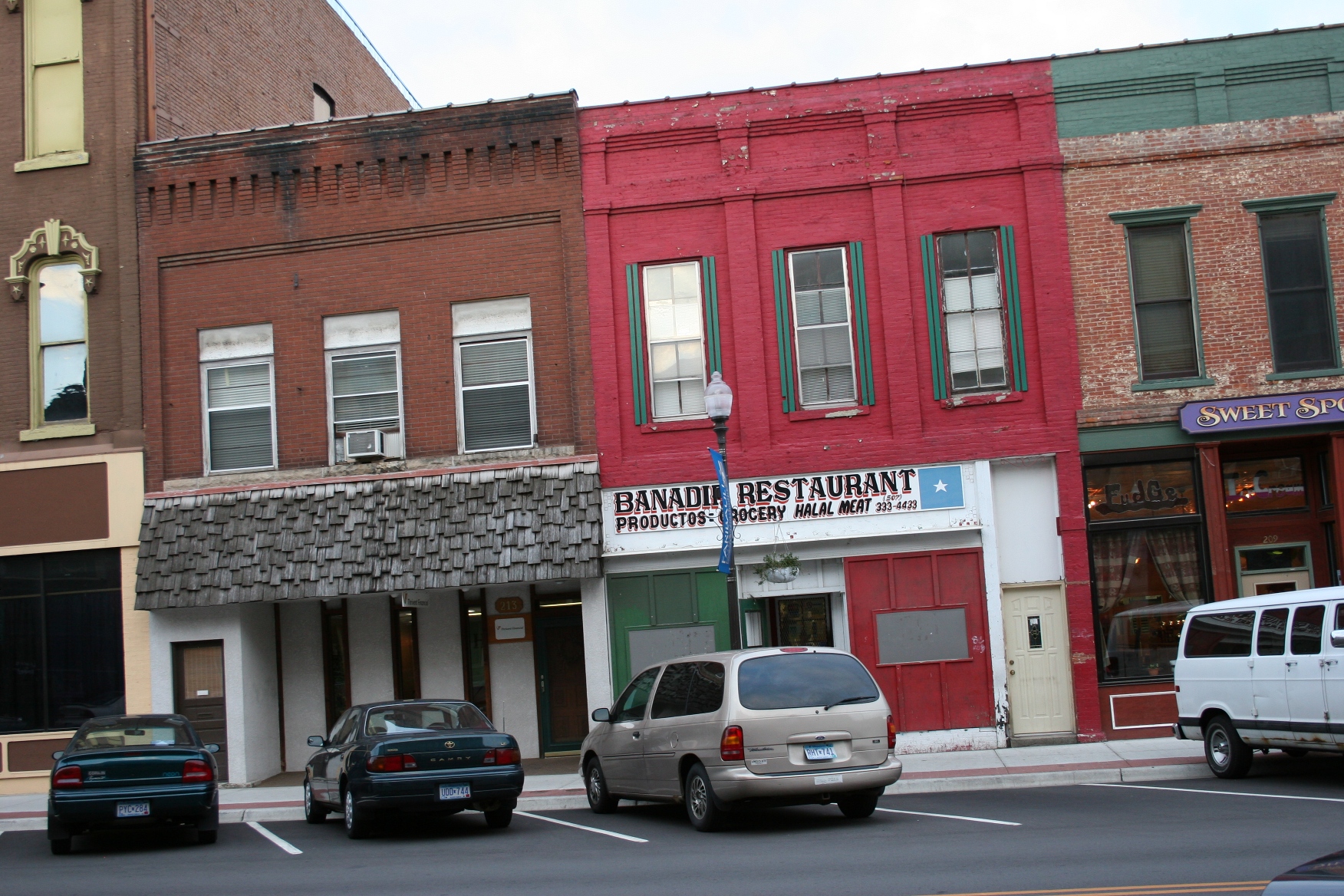
Downtown Faribault businesses include Banadir Restaurant, a Somali restaurant.

Many times I find myself defending the Hispanic, Somali and Sudanese people who comprise most of the nearly 17 percent of minorities living in my community of 23,352.

My standard answer is something like this, “There are good white people and there are bad white people, just like there are good Hispanics (or fill in the blank with another race) and bad Hispanics. The only bad experiences I’ve had are with white people.”

That is almost true. Several years ago my husband and I, unbeknown to us, sold a car to a Minneapolis-based Latino gang member who then used our vehicle in a gang-related shooting.

I really struggle with individuals who negatively label an entire ethnic group. It is unfair and unjustified.

That said, many individuals, churches, schools and organizations in Faribault are working hard to welcome and assist our minority population. Such examples are the Society of St. Vincent de Paul Center for Charitable Services and The Faribault Diversity Coalition. Unfortunately, The Welcome Center closed late last year.


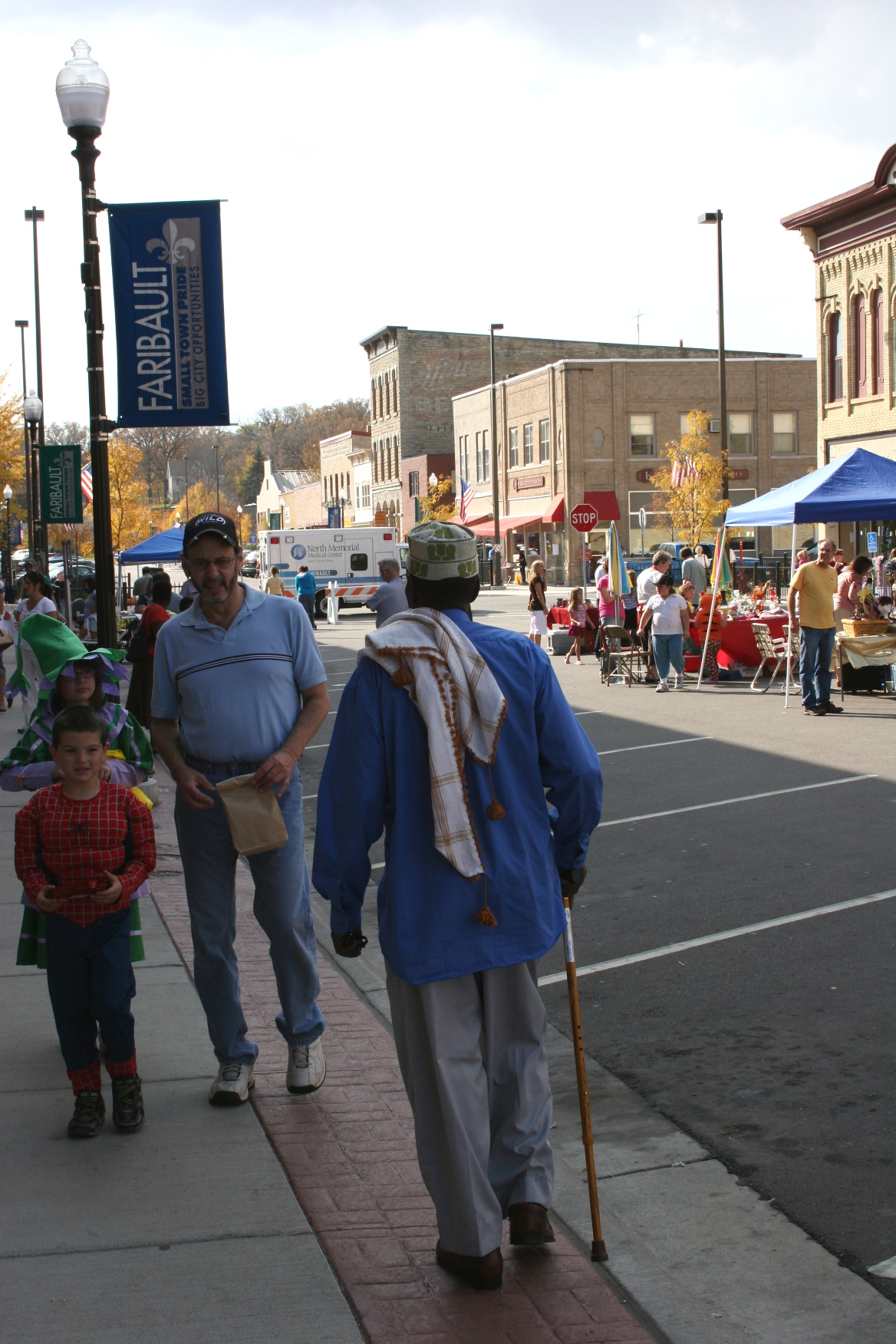
Different cultures, all the faces of today's Faribault, mingled during the Fall Festival in October 2010. Our town's current Black or African/American population is 7.5 percent.

But, really, efforts to embrace the newcomers in our community begin with each of us, on a personal level, in our hearts.

On my personal level, I’ve come to better understand other cultures because my second daughter is a Spanish language major who has lived and studied and done mission work abroad. She is currently a Spanish medical interpreter.

I try to attend ethnic events in Faribault like the annual summertime International Market Day celebration.


A member of Ollin Ayacaxtli dances at Faribault's International Market Day celebration. Faribault's Hispanic or Latino population numbers 3,026, according to the 2010 U.S. Census.

I’d like to see The Paradise Center for the Arts, reach out to minority artists, and that is a project I hope to help the local art center pursue.

I’ve wondered, too, and this might seem odd to mention, but why do I seldom, if ever, see obituaries published in the local newspaper for minority members of our community? We need to recognize these seemingly small things that set us apart.

If we take small steps, first as individuals, in educating ourselves, then our attitudes toward each other can change. We will have a stronger, better community that is built on understanding and acceptance rather than on differences.


A family matriarch oversees the making of pupusas from her chair at the International Market Day in Faribault in 2009. This is one of my all-time favorite portraits that I've ever taken.

CLICK HERE for 2010 U.S. Census results from Minnesota. Scroll down to Rice County, which includes Faribault, and shows a county minority population of 9,576 or 14.9 percent. Statewide, our minority population is 16.9 percent.

© Copyright 2011 Audrey Kletscher Helbling