Minnesota Prairie Roots

Writing and photography by Audrey Kletscher Helbling

Visit Christdala Church for worship, art and a history tied to outlaws September 25, 2010

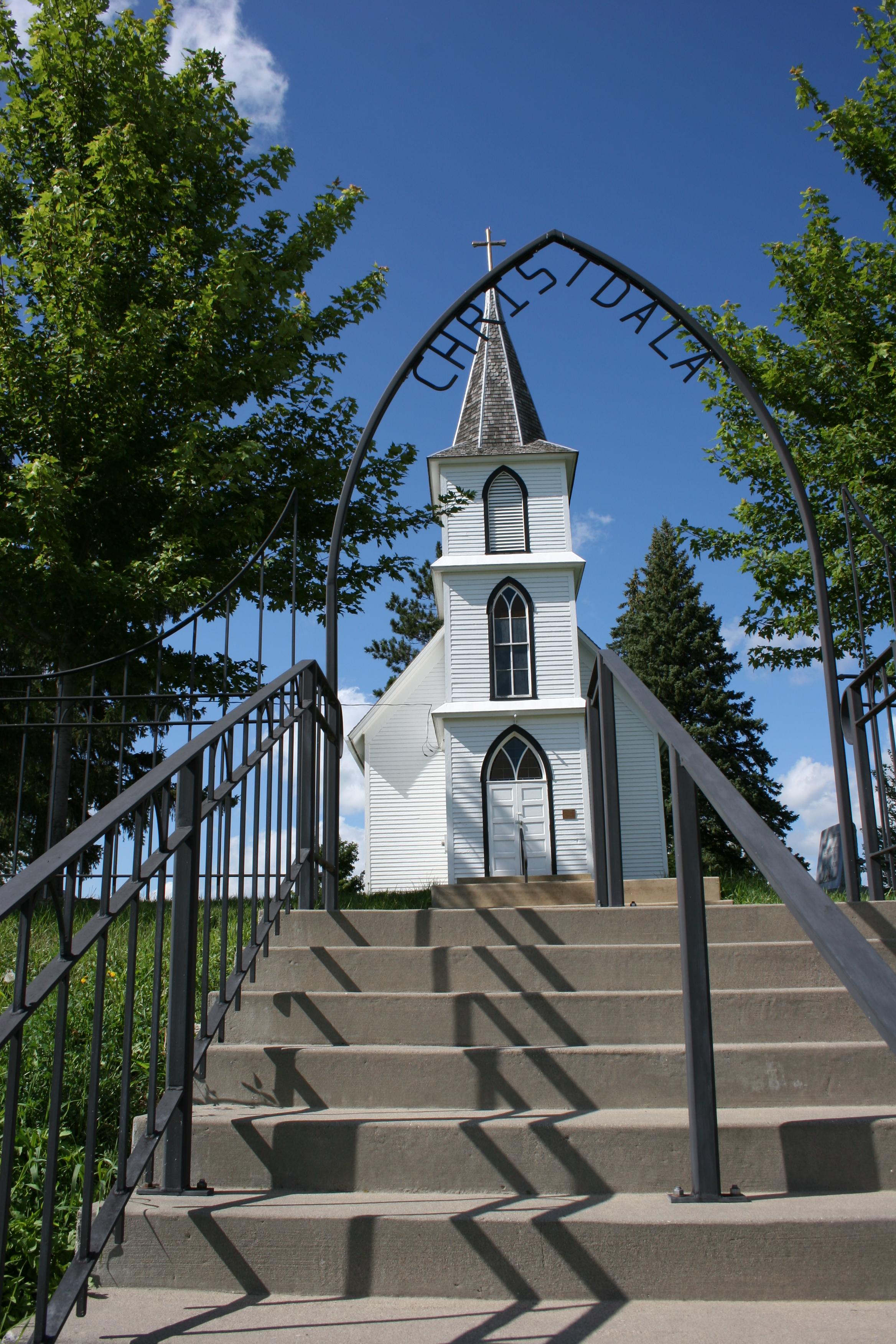
Steps lead from Rice County Road 1 to Christdala Swedish Lutheran Church.

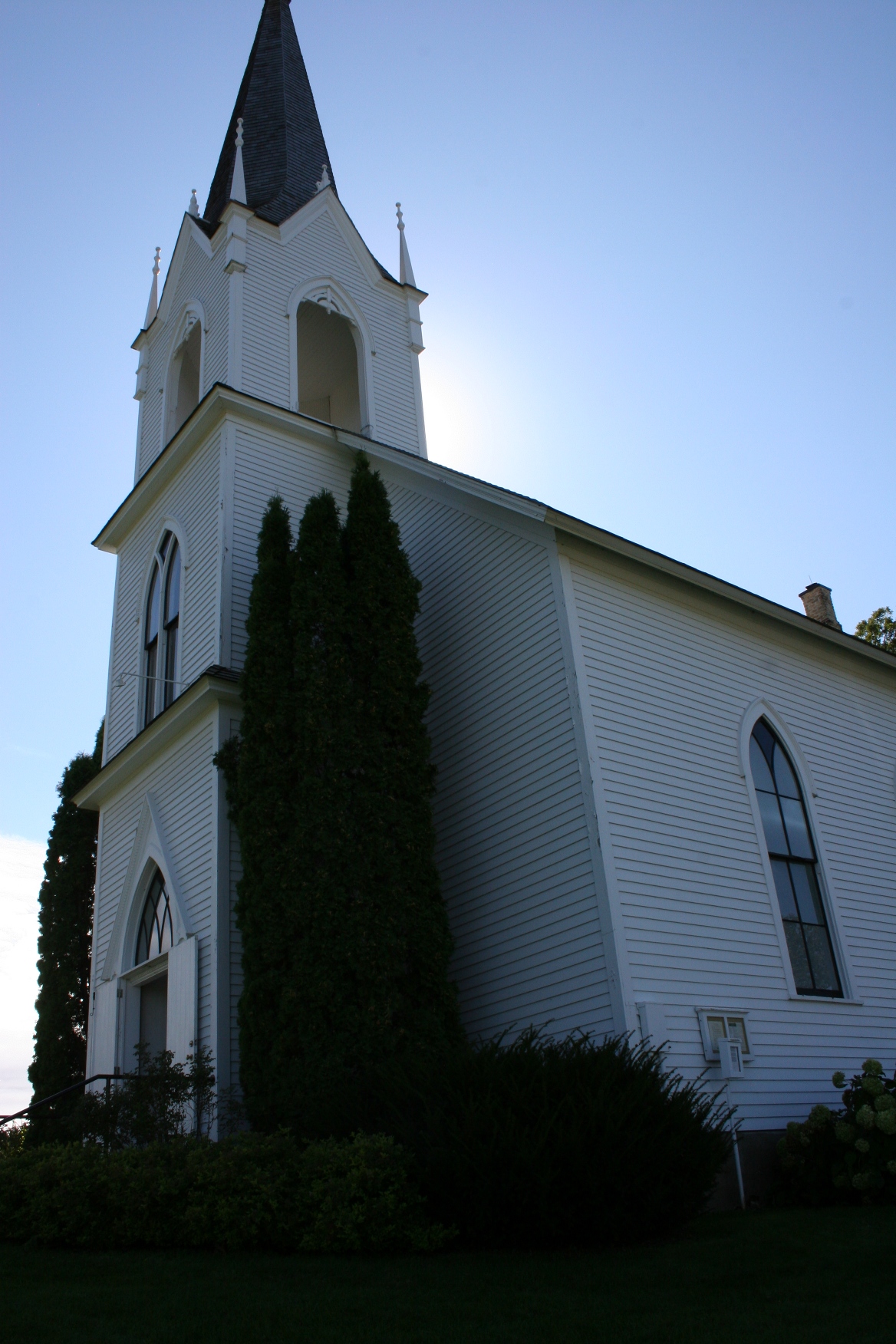
I DOUBT ANY OTHER MINNESOTA church can claim roots in a notorious attempted bank robbery. But Christdala Evangelical Swedish Lutheran Church of rural Millersburg can.

The long-dissolved congregation traces its origins back to the September 7, 1876, attempted robbery of the First National Bank in nearby Northfield. During that failed crime, Nicolaus Gustafson, a Swedish immigrant from Millersburg, was shot point blank in the head by outlaw Cole Younger. He died four days later and was buried in Northfield because the Millersburg Swedish community didn’t have a graveyard, or a church.

The evening of the bank robbery, the Swedish immigrants met to talk about constructing a church and soon thereafter built Christdala.

This Sunday, September 26, the Christdala Church Preservation and Cemetery Association will open the doors to this historic church which sits high atop a hill overlooking Circle Lake just west of Millersburg along Rice County Road 1. On this roadway that passes by the 1878 country church, the James-Younger Gang fled after the botched Northfield raid.

The doors to Christdala, which is on the National Register of Historic Places.

I’ll be there Sunday for the 2 p.m. fall worship service led by the Rev. Ralph Baumgartner, pastor of Galilee Evangelical Lutheran Church in Roseville, who has family ties to Christdala. I’m anxious to get inside this sanctuary, which I’ve only viewed through the slats of Venetian blinds while photographing the locked building on a Sunday afternoon in July.
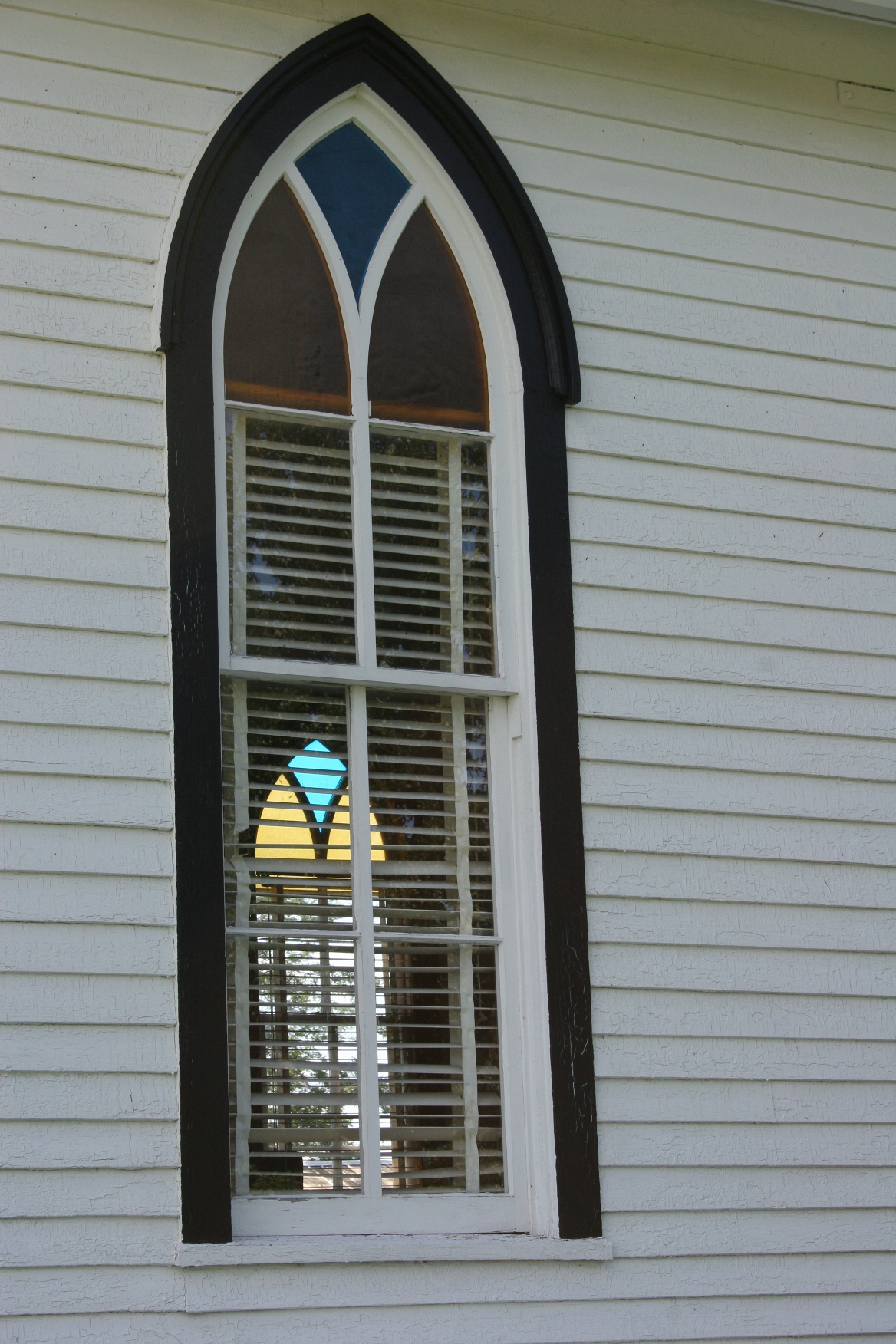
I've only peered through the blinds into the sanctuary.

This Sunday I’ll arrive well before worshipers and the curious and the families with a connection to Christdala. I’ll arrive with a van full of paintings by my 92-year-old artist friend, Rhody Yule of Faribault. Rhody, who has been creating art for 76 years, did an oil painting of the church in 1969. He’s showing that piece and eight other religious-themed works at Christdala’s open house.

He’ll talk a bit. I’ll talk a bit. But mostly, we welcome visitors to pause and study the paintings, to feel the emotions painted into the faces of the disciples, of Christ, of a woman in reverent prayer. Rhody paints with a heart of faith reflected in his art.
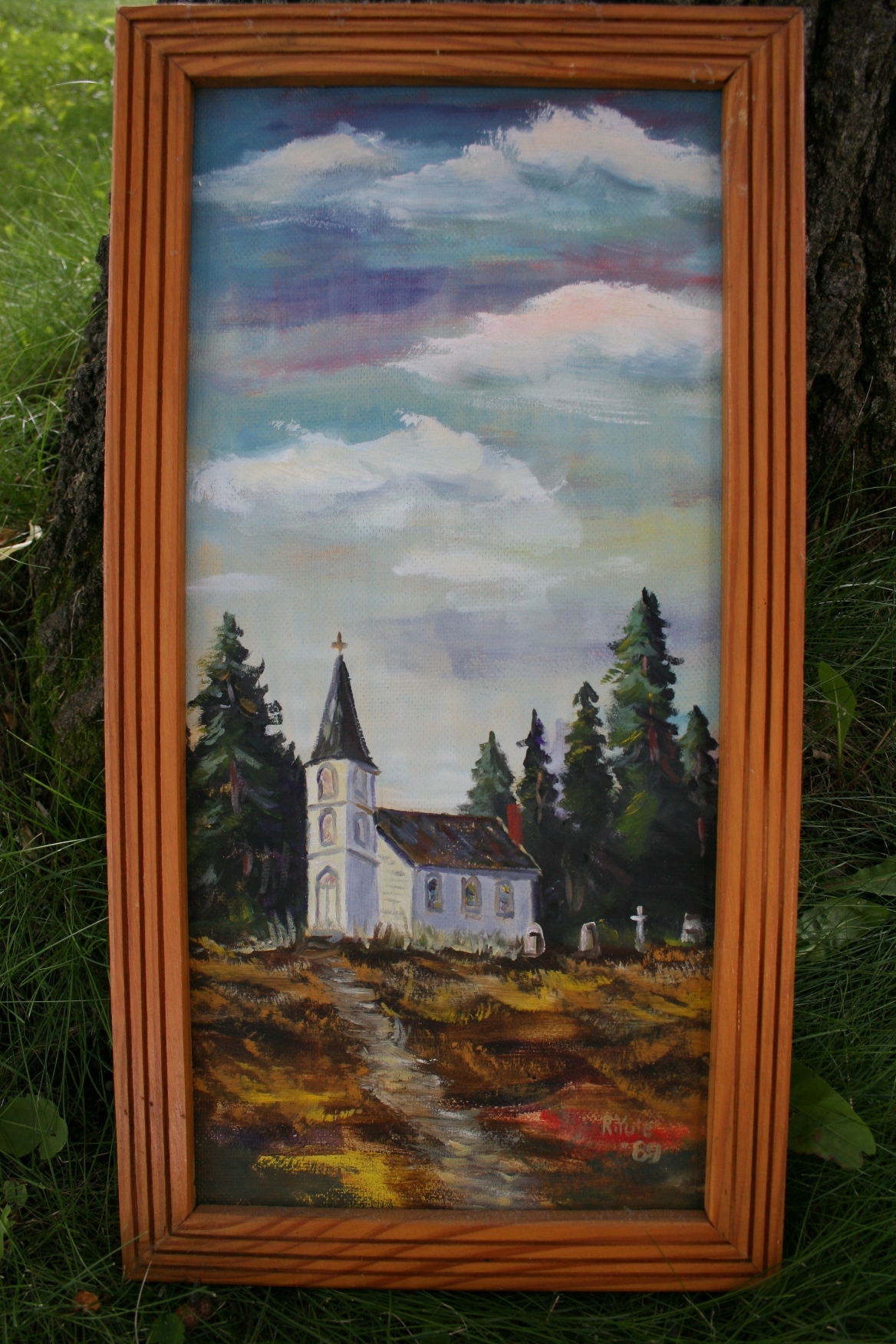
Christdala Swedish Lutheran Church painted in 1969 by Rhody Yule.

A snippet of Rhody Yule's painting, one of nine he will show at Christdala.

Christdala visitors can also pick up a copy of God’s Angry Man—The Incredible Journey of Private Joe Haan by B.Wayne Quist. The newly-released book tells the true, powerful life story of Haan (Quist’s uncle), who grew up in an Owatonna orphanage and who served in Patton’s Third Army during WW II. Quist, a member of the Christdala Preservation Association, will donate profits from Sunday’s book sales to Christdala.

Copies of the fall issue of Minnesota Moments magazine, featuring my photo essay on country churches, will also be on sale with a portion of the proceeds benefiting the church.

B. Wayne Quist will sell copies of his latest book, God's Angry Man.

Before and after the worship service, visitors can tour the 1881 Millersburg School, which the Christdala preservation group has refurbished and is transitioning into a community museum. Exhibits include church and school records, photos, military medals and records, Indian artifacts, an old doctor’s buggy and more. Faribault genealogist and preservation member John Dalby will be at the schoolhouse to answer questions.
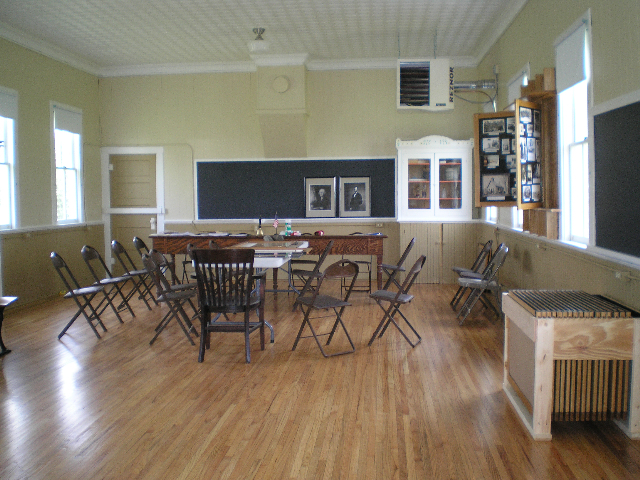
The Millersburg School has been refurbished and will feature exhibits tied to local history.

Sunday promises to be an interesting day for those who gather at Christdala. It will be a day of history and of art, of worship, of thoughtful remembrances at gravesites, of families reuniting and of others simply coming together on this spot, this Christdala, this “Christ’s Valley,” here where the outlaws once escaped on their galloping horses.
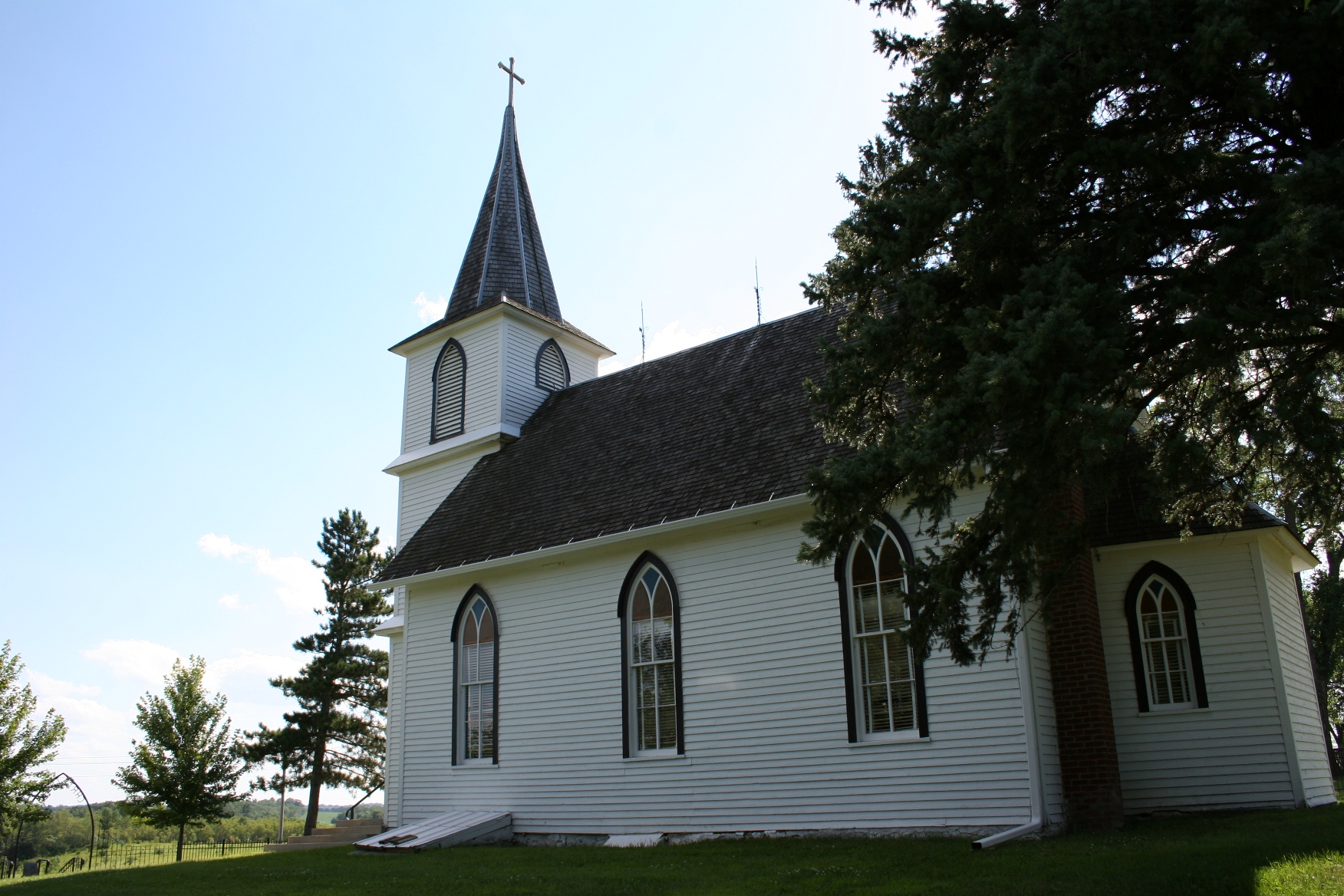
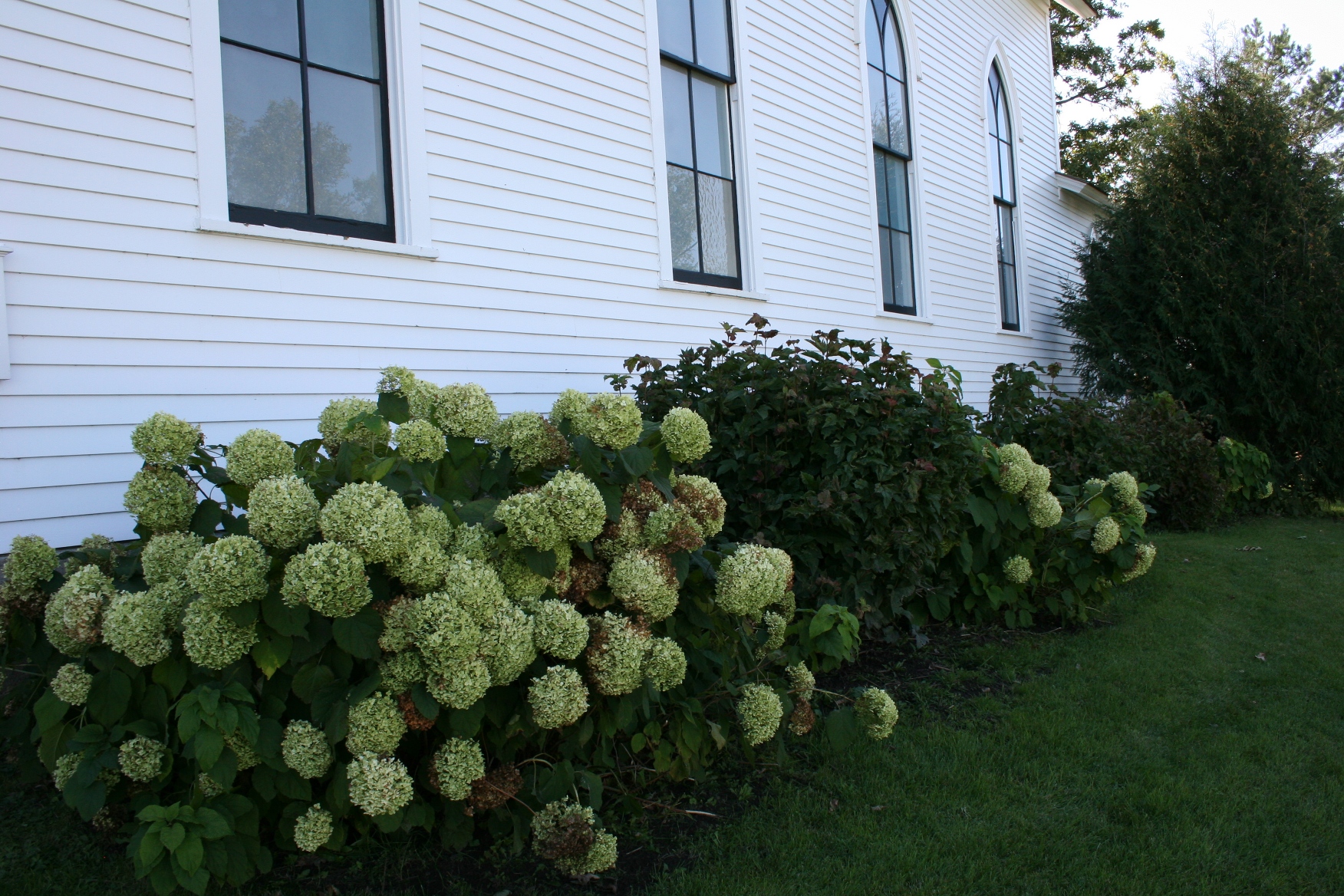
A side view of the 1878 Christdala Swedish Lutheran Church.

© Copyright 2010 Audrey Kletscher Helbling

Book cover image courtesy of B. Wayne Quist and schoolhouse image courtesy of John Dalby.


Faribault flooding update September 24, 2010

Filed under: Uncategorized — Audrey Kletscher Helbling @ 9:48 PM
Tags: , , , , , , ,

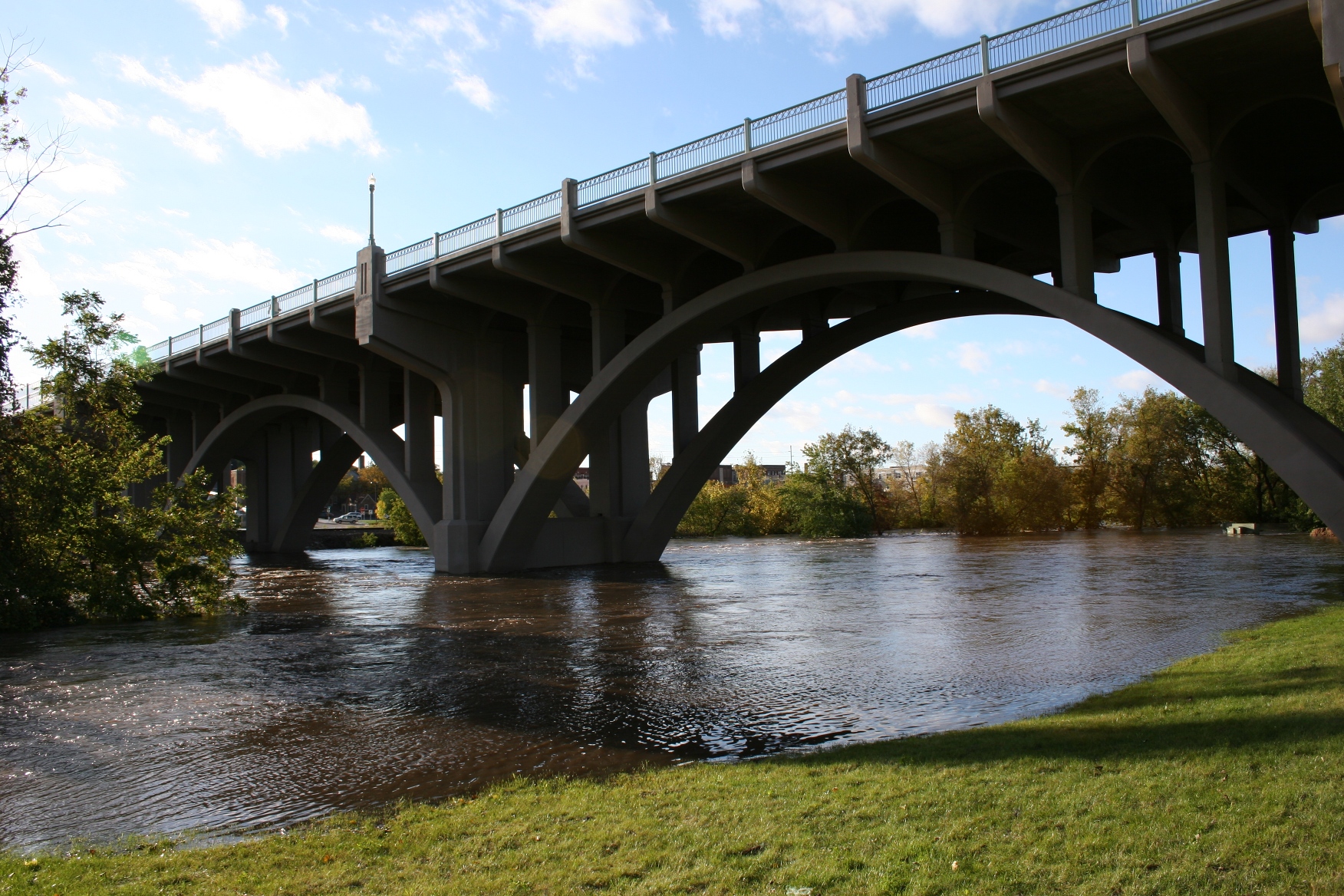
Under the viaduct, in an area that is typically dry land, the Straight River has spilled outside its banks.

THE ANGRY RIVER DRAWS me, as close as I dare walk to the raging waters. I cannot stay away. For the third time in 24 hours, I have moved in close, taken photos, captured in digital format this history, this flooding of Faribault that I am witnessing.

I am not alone. Residents, young and old, are drawn to the water. Dads bring their children, clasp their hands tightly, keeping them safe from the muddy, churning waters. An old man hobbles to the edge of the Straight River under the viaduct, lifts his cane and points. Others flip open their cell phones, snap images.

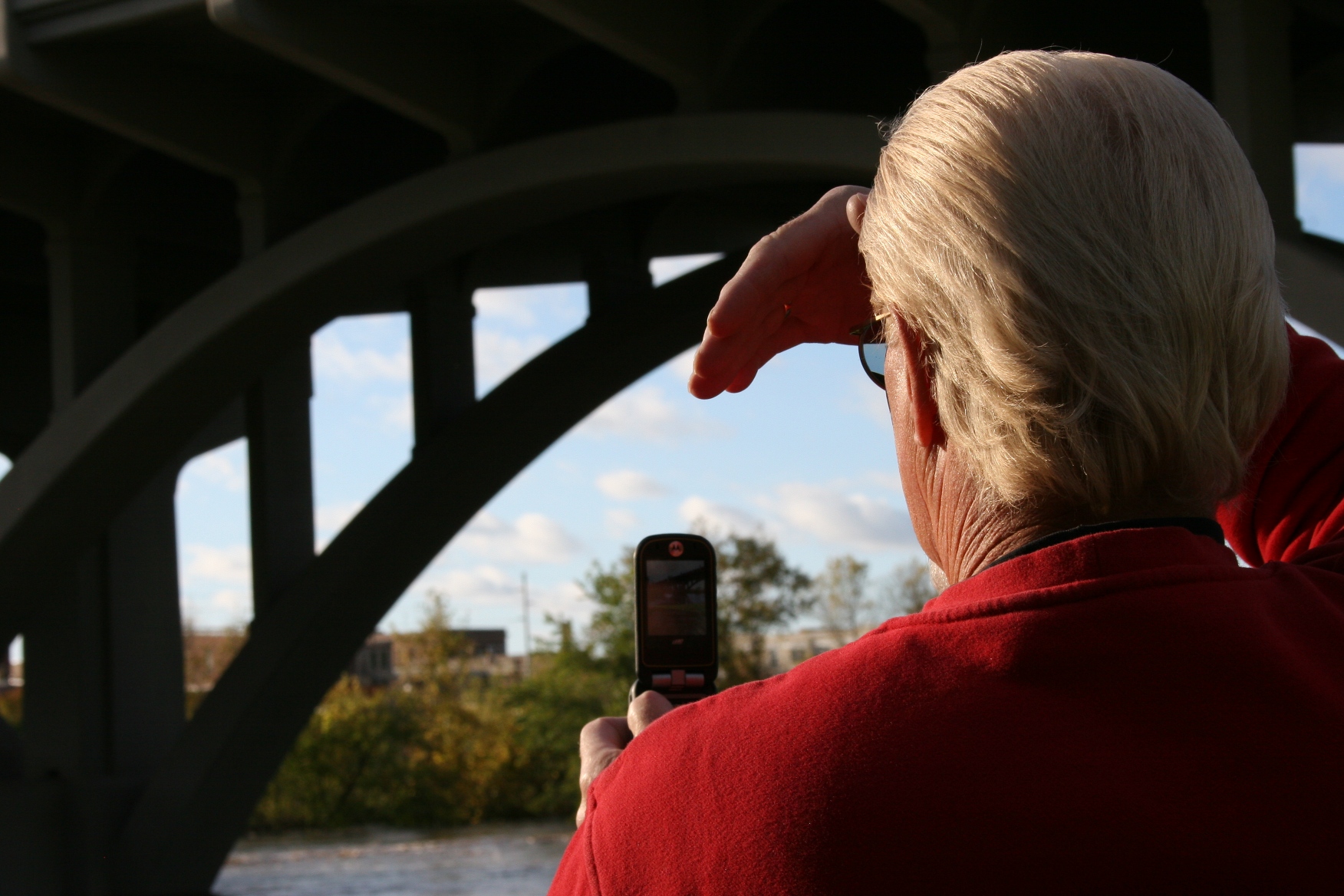
A man snaps a photo with his cell phone of the floodwaters under the viaduct.

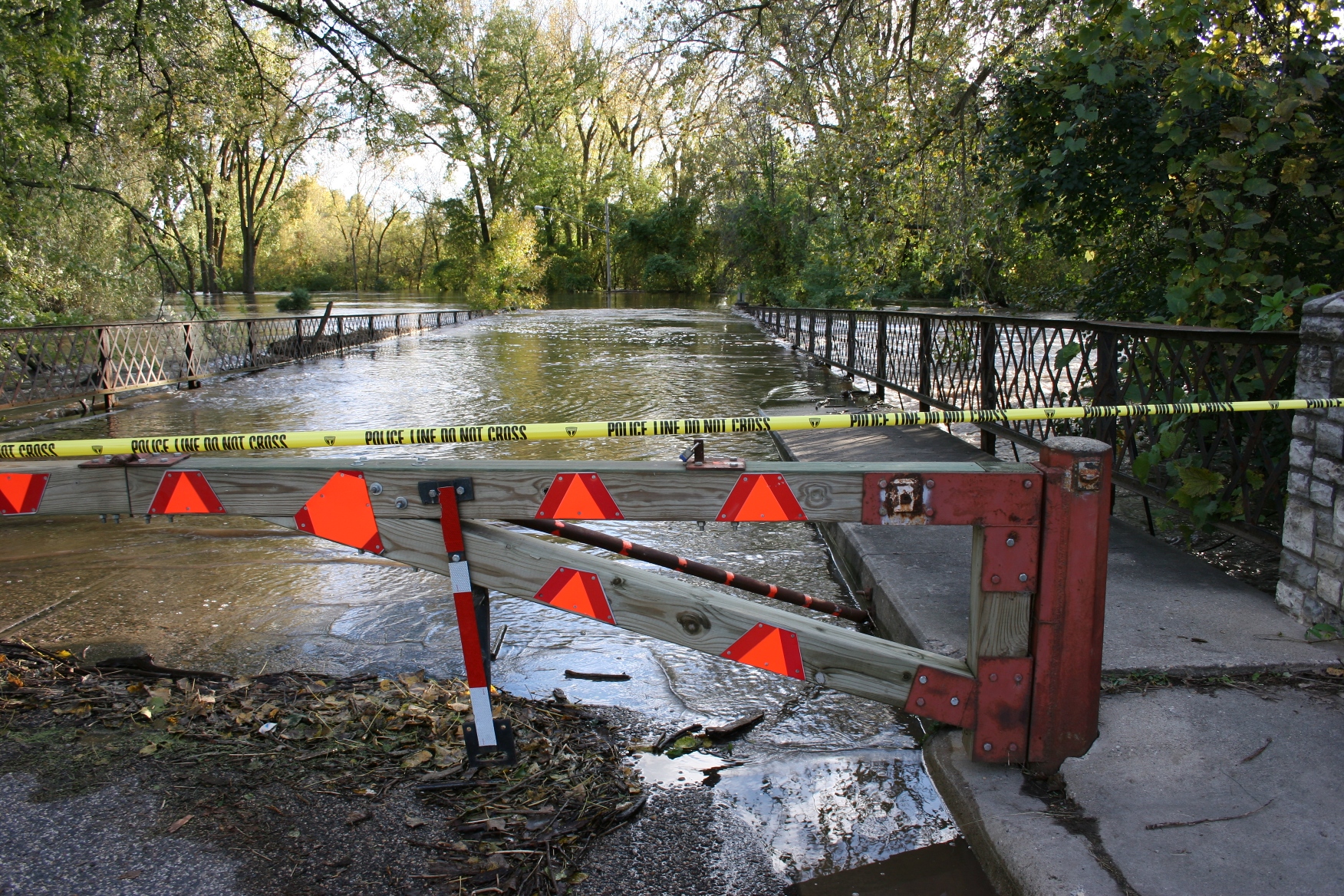
The Straight River runs through TeePee Tonka Park, a low-lying area prone to flooding. Here water covers the WPA bridge leading into the park.

As the sun begins to slide in the sky, glaring across the water’s surface, I take photos. I climb the hill and stairs to the viaduct, intending to shoot a bird’s eye view of the flooded river far below. But, because I am afraid of heights, I cannot force myself to walk onto the bridge and I turn around.

A few blocks away, I slip past the barriers barricading Ravine Street near Faribault Dairy on the banks of the Straight River. I walk past the bright orange sign that warns DANGER RAW SEWAGE SPILL.

A warning sign on closed Ravine Street near Faribault Dairy.

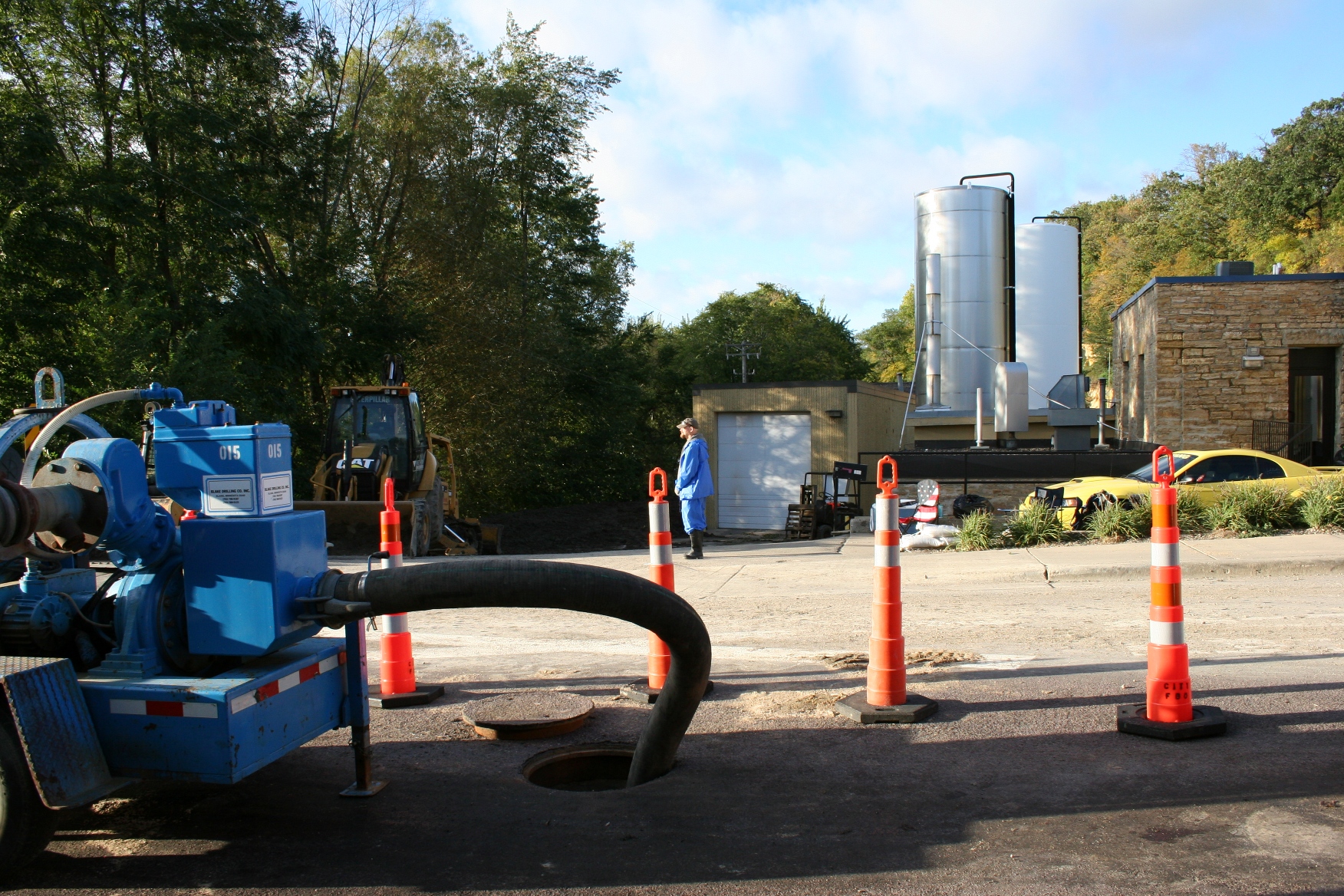
A company employee outfitted in blue and wearing knee high waders guards the entry to the cheese plant. I figure he might give me some information. But he says only, “Everything’s secure and under control. That’s all I can tell you.” He suggests I check a Web site and then says I need to move back, on the other side of the sidewalk line that separates public property from private. My toes are only inches across the line, but he has his orders and I respect those.

An employee guards the entry to Faribault Dairy, which makes my favorite blue cheese, among other cheeses.

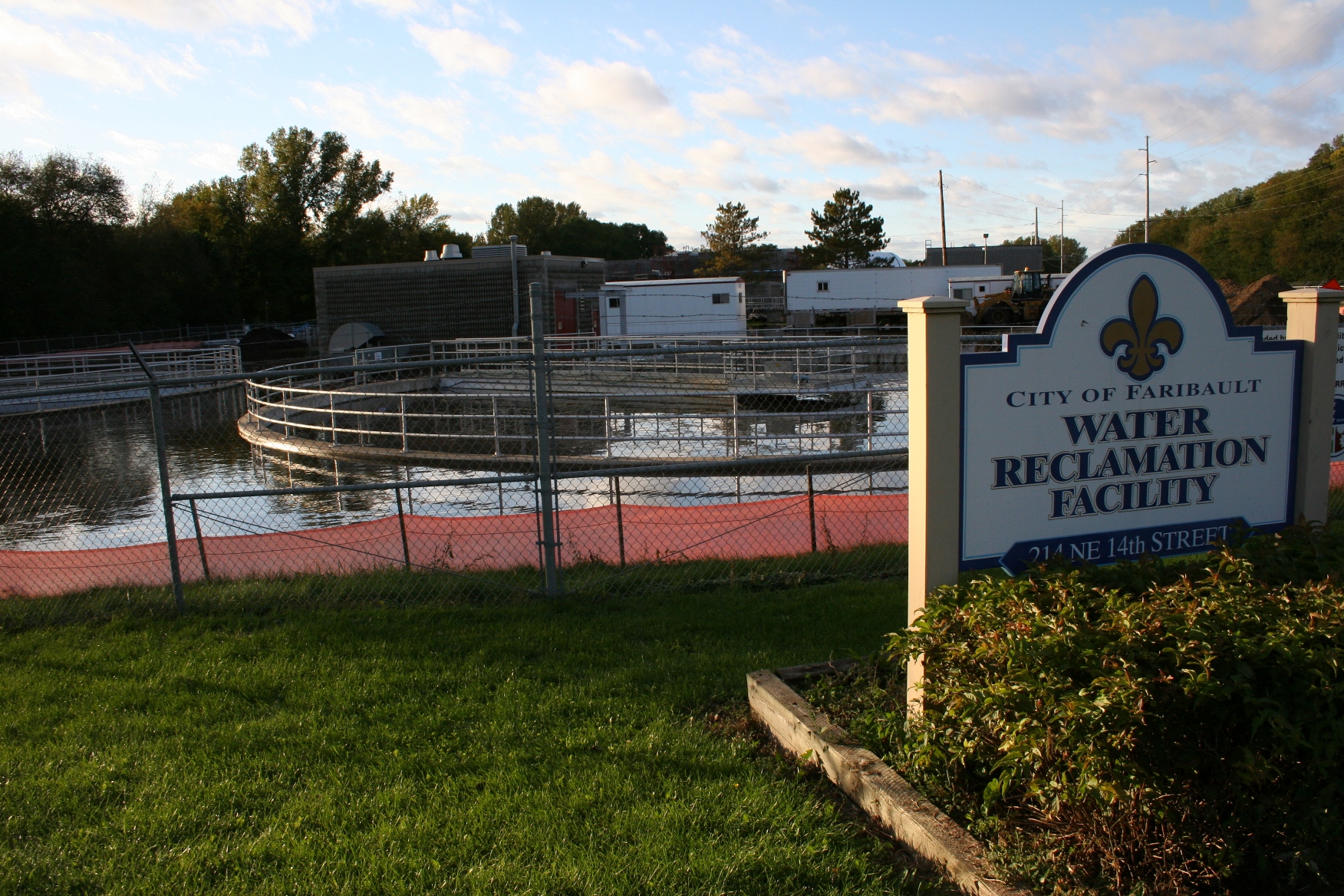
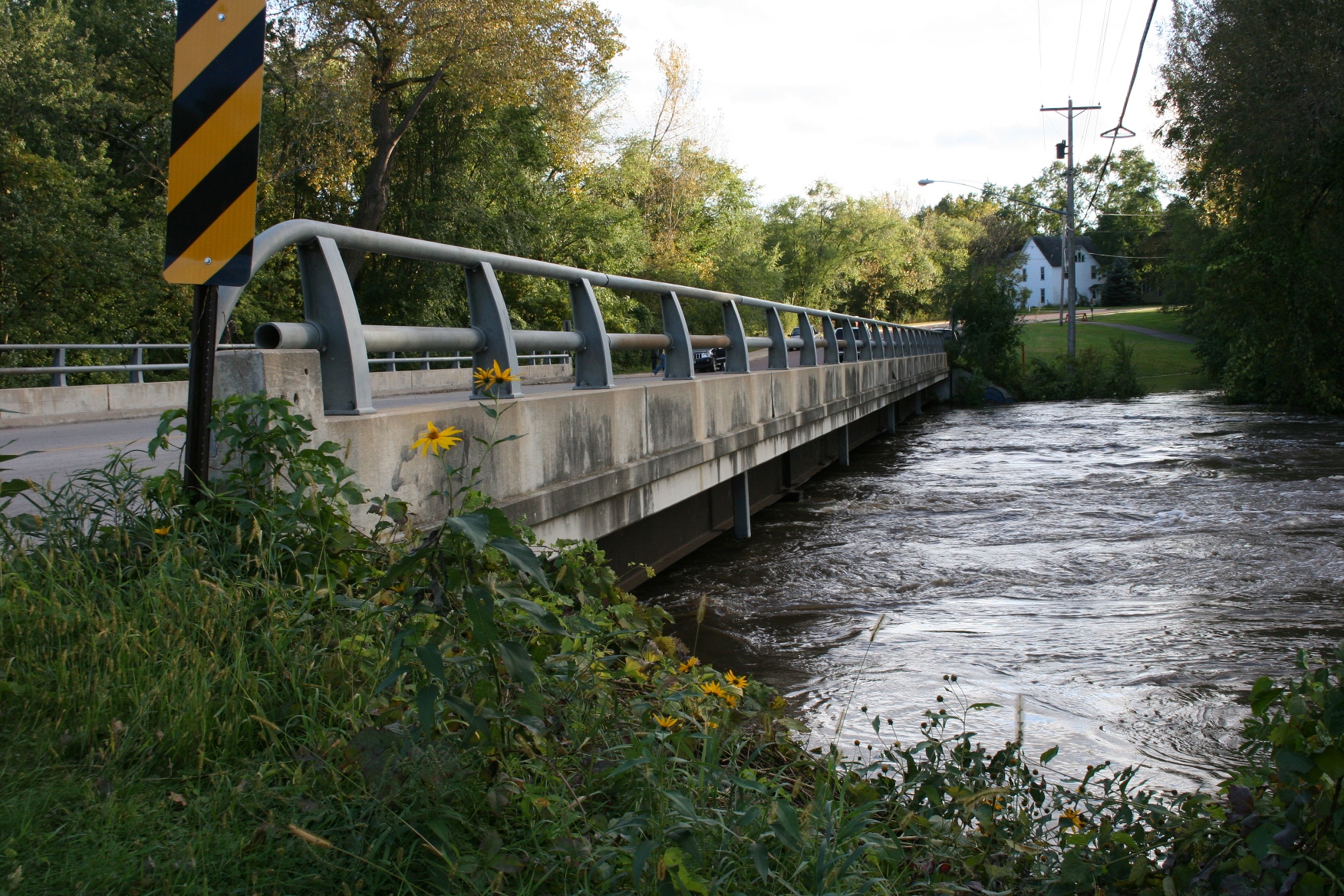
Near the wastewater treatment plant, I cannot believe how much the Straight River has risen in 24 hours. Water now skims the bottom of the bridge. The plant is nearly submerged.

Water has flooded into the wastewater treatment plant along the Straight River.

Water skims the bottom of the bridge across the Straight River on 14th St. N.E. by the wastewater treatment plant.

There I meet a young man who tells me that his sister was getting ready to move into the home she purchased about a year ago right next to the viaduct. She’s been redoing the house. But the Straight River overflowed, flooded the basement with three feet and seven inches of water, he says. With three sump pumps working, the water has now receded to 27 inches.

The basement of this house near the Straight River by the viaduct was flooded with 43 inches of water.

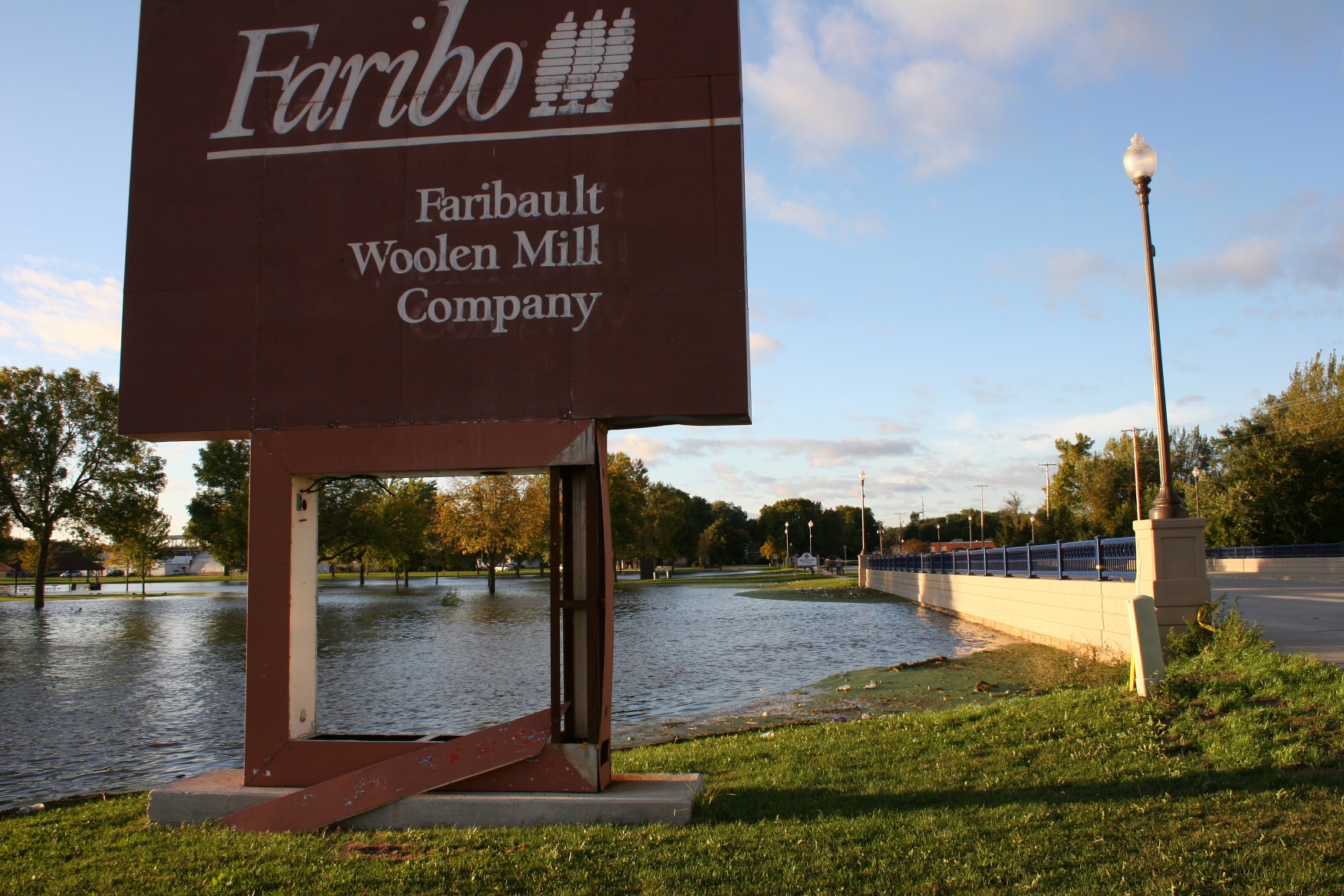
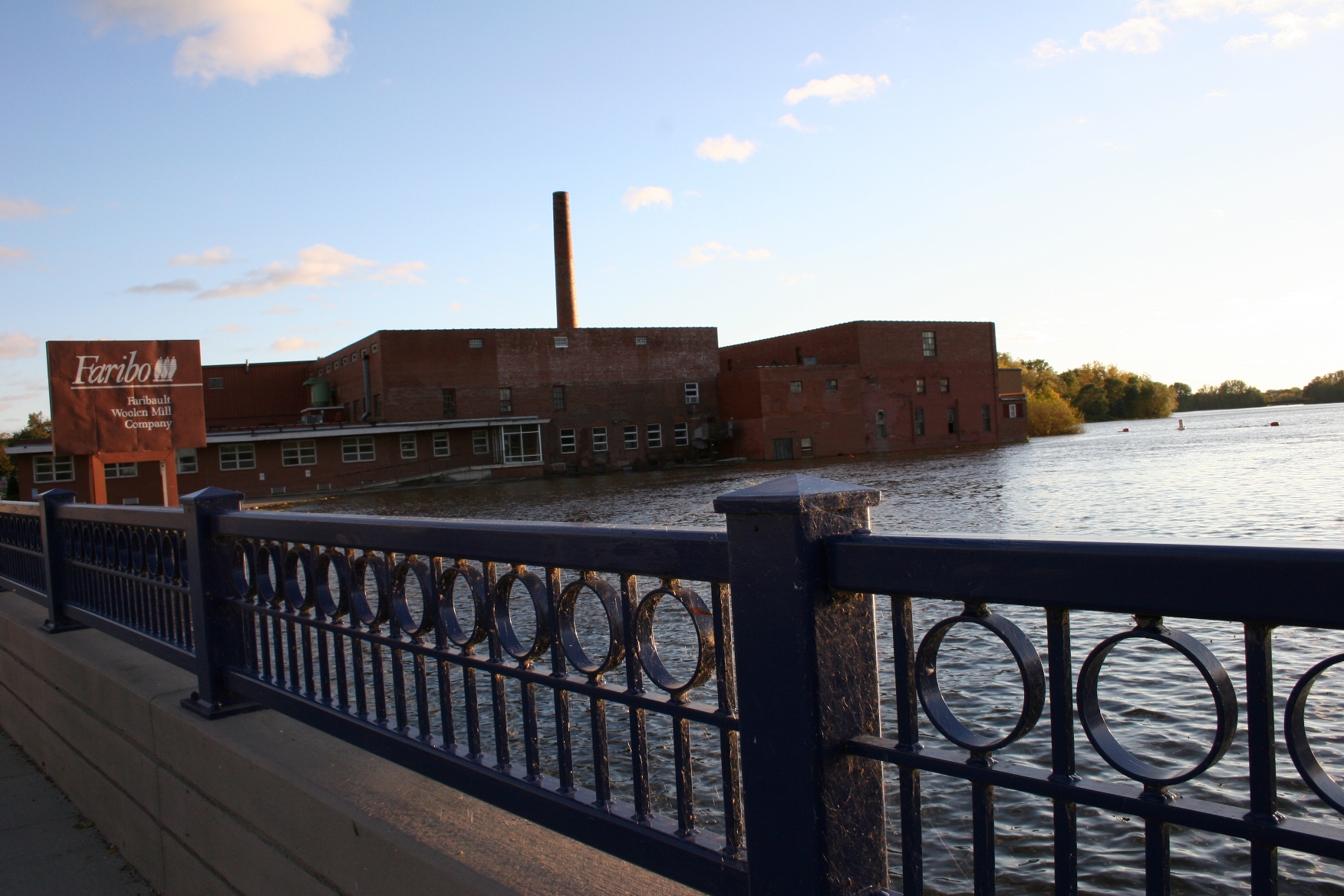
By the Faribo Woolen Mill, I duck under yellow police tape to view the flooding of the Cannon River. As I walk onto the Second Avenue N.W. bridge—the road is closed—I wonder for a moment if this bridge could be swept away like the one in Oronoco. The water is that fast, that scary.

Then, as I leave, a cop car arrives and I think that I’ve left just in time. I know I should not have crossed the yellow tape. But, like all the others who have come to see this moment in history, I cannot stay away.

The Cannon River has risen to bridge level on Second Avenue N.W. by the Woolen Mill Dam.

The Cannon River has risen perhaps 15 feet next to the former Faribo Woolen Mill building, which snuggles against the river by the dam.

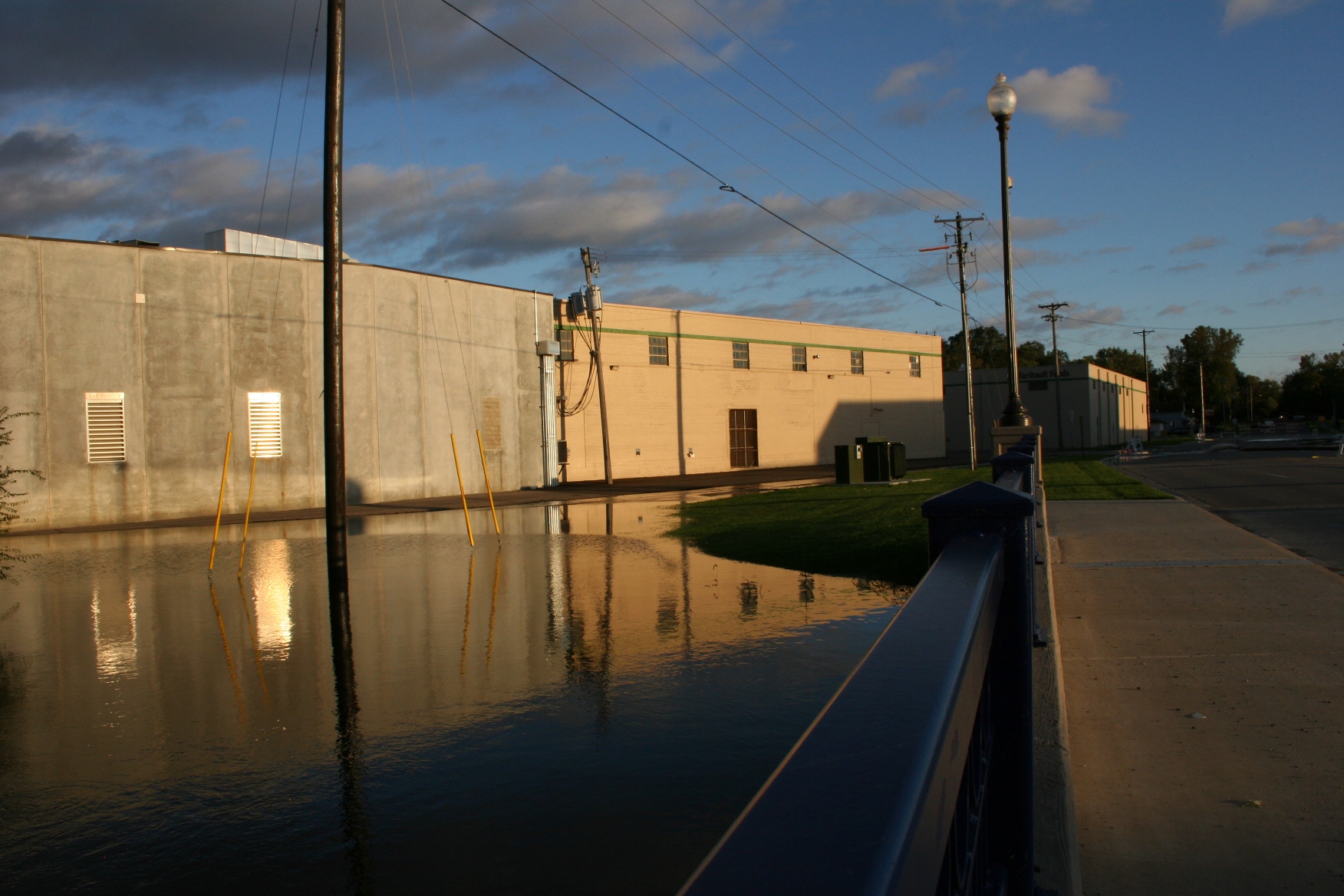
Water covers portions of Second Avenue N.W. and land by Faribault Foods.

A scene on Second Avenue N.W. near Faribault Foods.

These photos were taken between 5:30 – 6:45 p.m. Friday evening.

© Copyright 2010 Audrey Kletscher Helbling


Advice to residents of flooded Faribault: “Stay home”

Filed under: Uncategorized — Audrey Kletscher Helbling @ 2:44 PM
Tags: , , , , ,

BASED ON THE VOLUME of traffic passing by my home along one of Faribault’s primary streets, I’d guess that locals are not heeding the advice of city officials to “stay home” while our community is dealing with floodwaters.

“The City of Faribault asks all residents to stay at home and please refrain from using City water until further notice. Thank you for your cooperation,” reads an Emergency Alert posted on the city Web site.

Believe me, I’ve been tempted, too, to ignore that directive and tour the flooded areas. Again. Twice now I’ve surveyed the town.

When my friend Deb called late this morning to invite me on a ride-along, I declined, but not without reservations. I needed to finish a writing project before deadline and I had already been out once today snapping photos.

So, now, as I write, endless vehicles rush by my house at the rate of our typical morning and evening “rush hour,” which, I’m certain to metro dwellers, would not classify as a “rush hour.” But I can definitely tell more motorists are out and about than usual.

As for conserving water, I’m not washing clothes today, as I typically do on Friday.

I’ve also refrained from flushing the toilet after each use.

Then I read these additional Emergency Alerts on the city Web site:

  • “The water system is in operation and there has been no failure. It is ok to flush your toilet.”
  • “The water is safe to drink.”

Drink and flush. I’m good to go as long as I don’t go…and tour the flooded areas of town.

© Copyright 2010 Audrey Kletscher Helbling


Flooding in Faribault, day two

Filed under: Uncategorized — Audrey Kletscher Helbling @ 10:11 AM
Tags: , , , , , , , ,

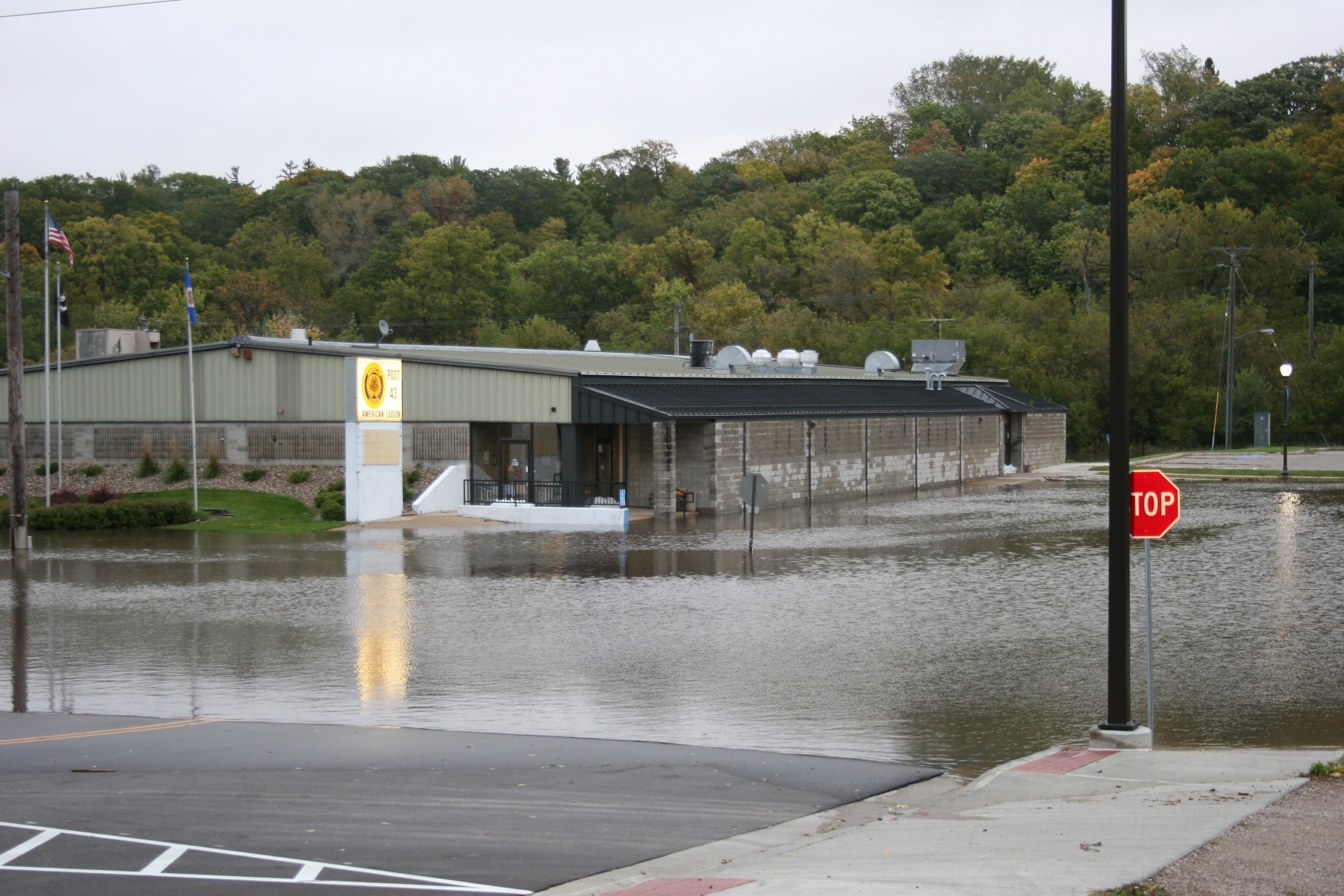
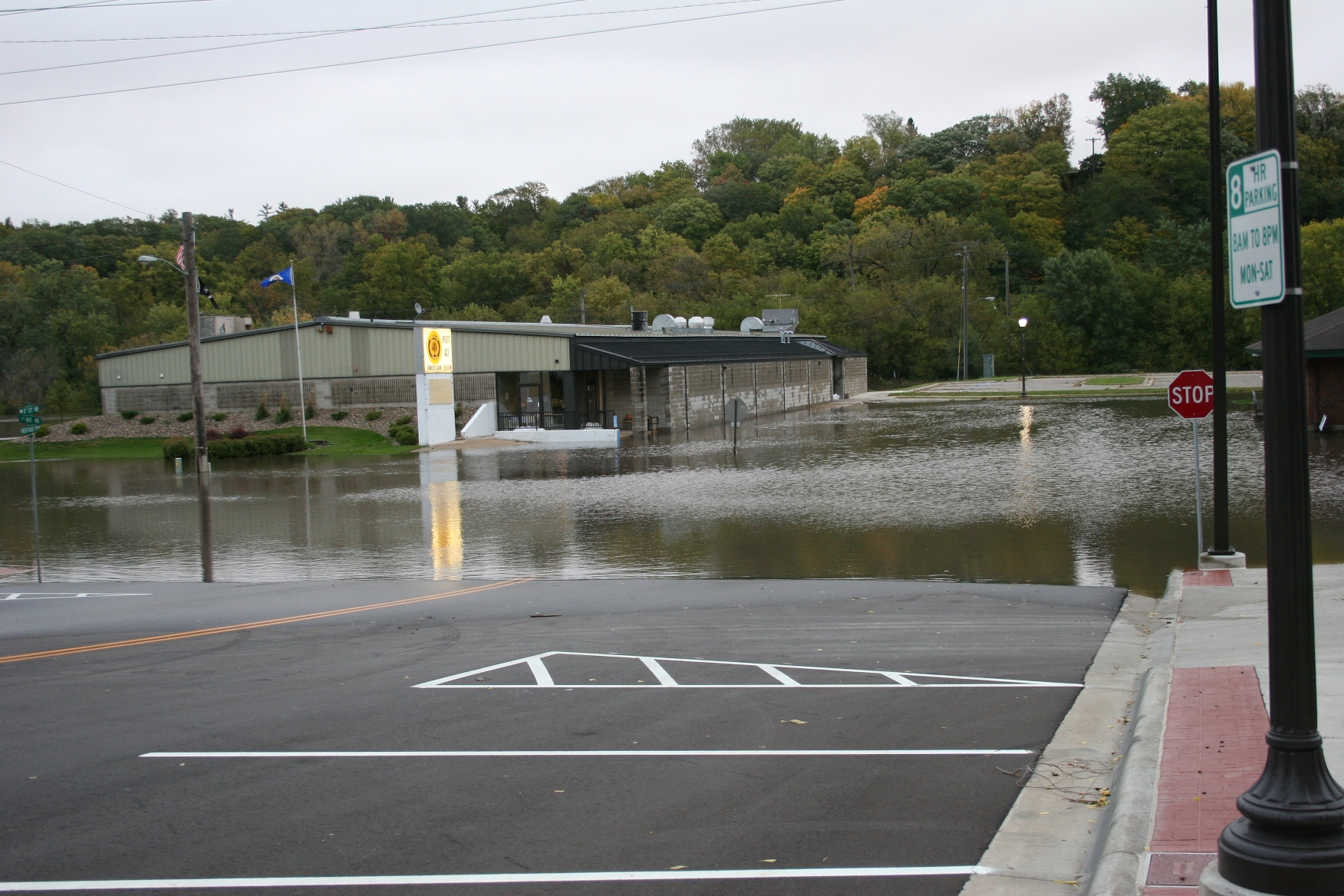
The American Legion and Heritage Place businesses, a block from downtown, are surrounded by flood waters.

WE ARE IN TO DAY TWO OF FLOODING here in Faribault, where an emergency was declared last evening by Mayor John Jasinski.

The Cannon and Straight rivers have overflowed their banks in areas. Crews have been sandbagging some homes and businesses. Several streets are closed, including a portion of Second Avenue N.W. where the road crosses the Cannon River. This is a main arterial route through the city.  An electrical substation is flooded. The wastewater treatment plant is threatened.

We’ve been instructed to limit water usage and to avoid unnecessary travel around town.

In the 28 years I’ve lived in the Faribault area, I have never seen the rivers this high.

Except for a two-hour power outage this morning, my family remains unaffected. Our home lies several blocks from the Straight River, but we have no reason to worry.

Here are some photos I shot shortly after 7 this morning.

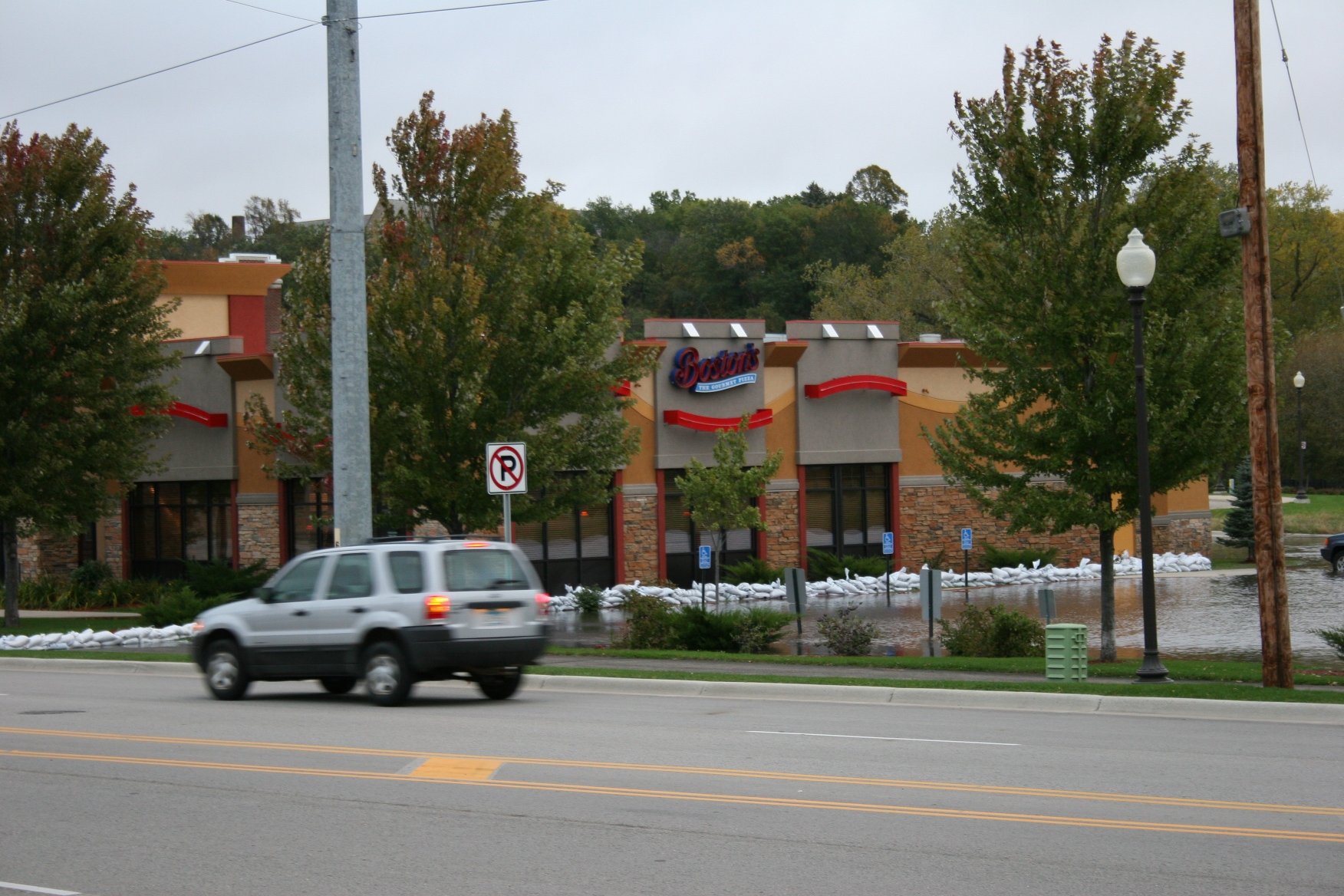
Crews have sandbagged Boston's Restaurant along Minnesota Highway 60. The parking lot is under water.

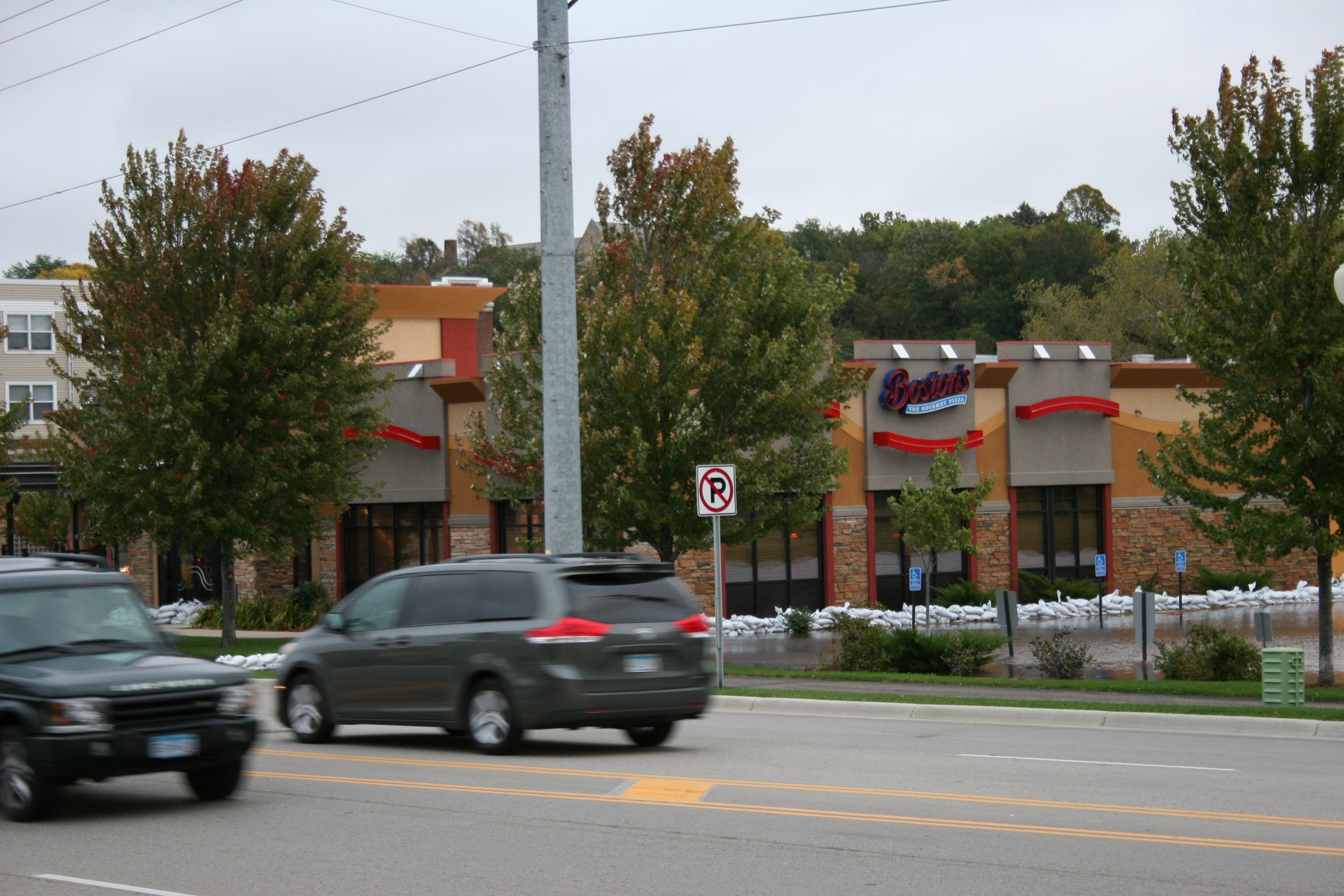
Another image of Boston's, a popular Faribault restaurant near the Straight River.

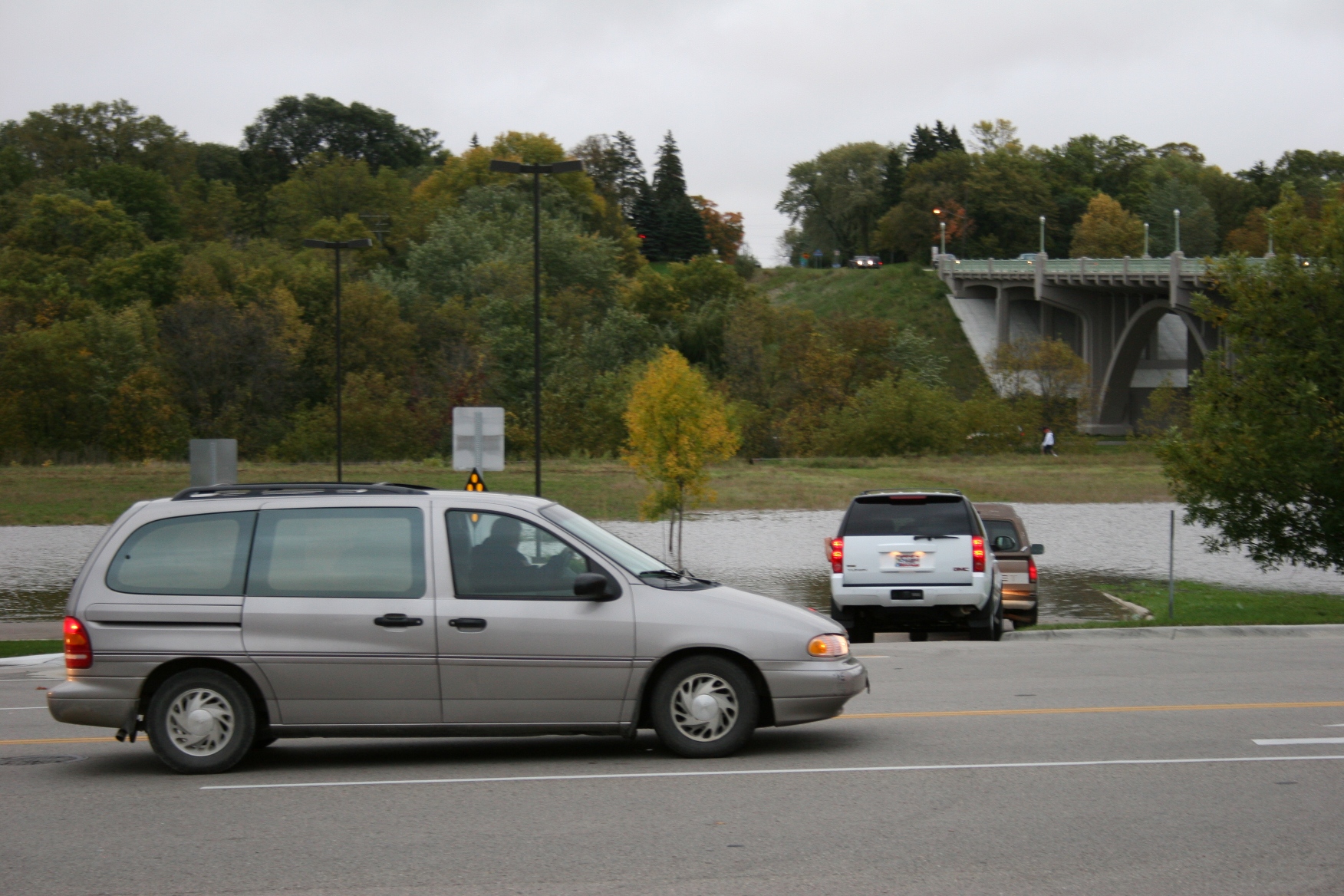
Motorists pulled off Minnesota Highway 60 near the viaduct to photograph floodwaters and Boston's.

Water pooled in a low area near the viaduct and into Boston's parking lot.

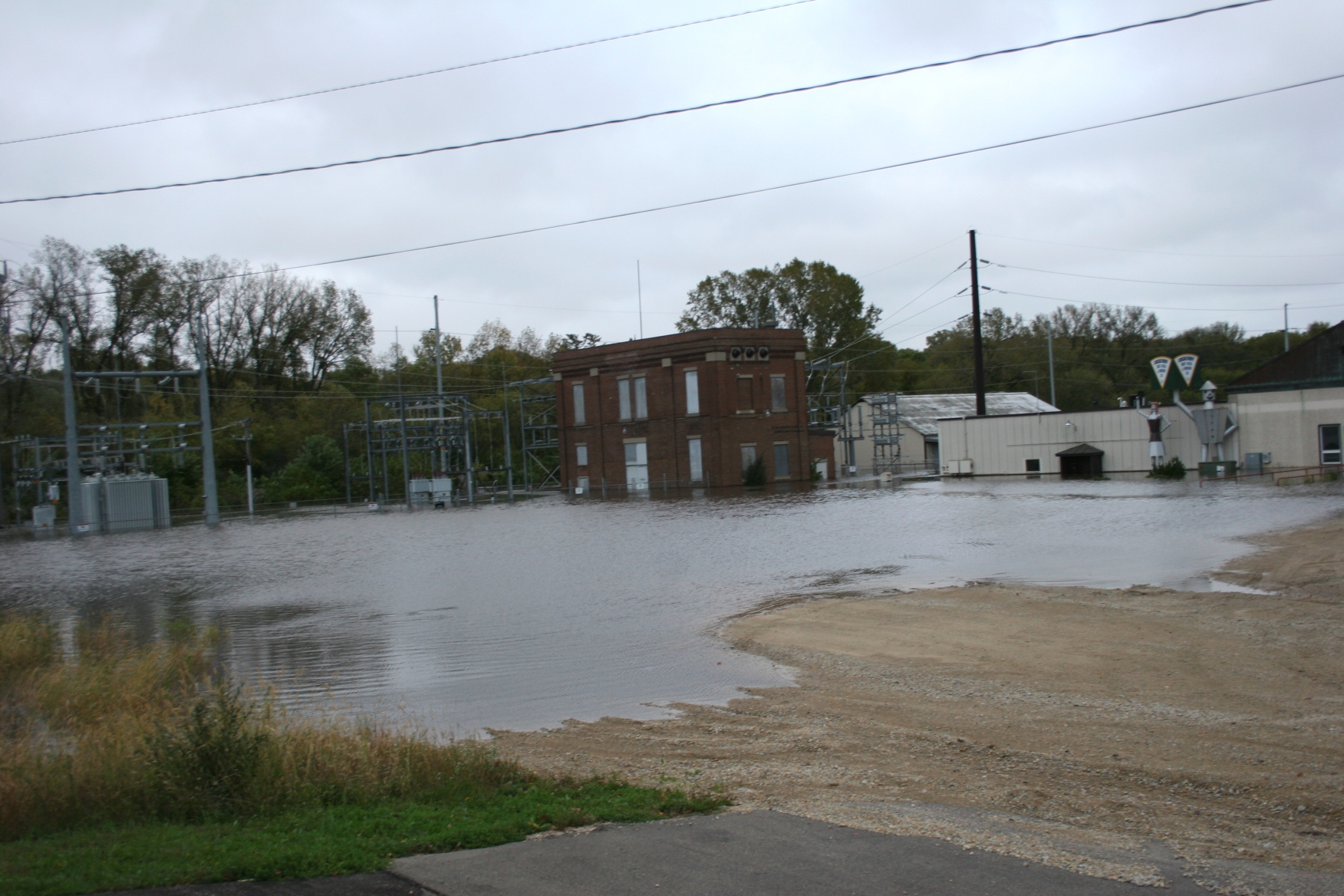
An electrical substation and Lockerby Sheet Metal near the Straight River are surrounded by floodwaters.

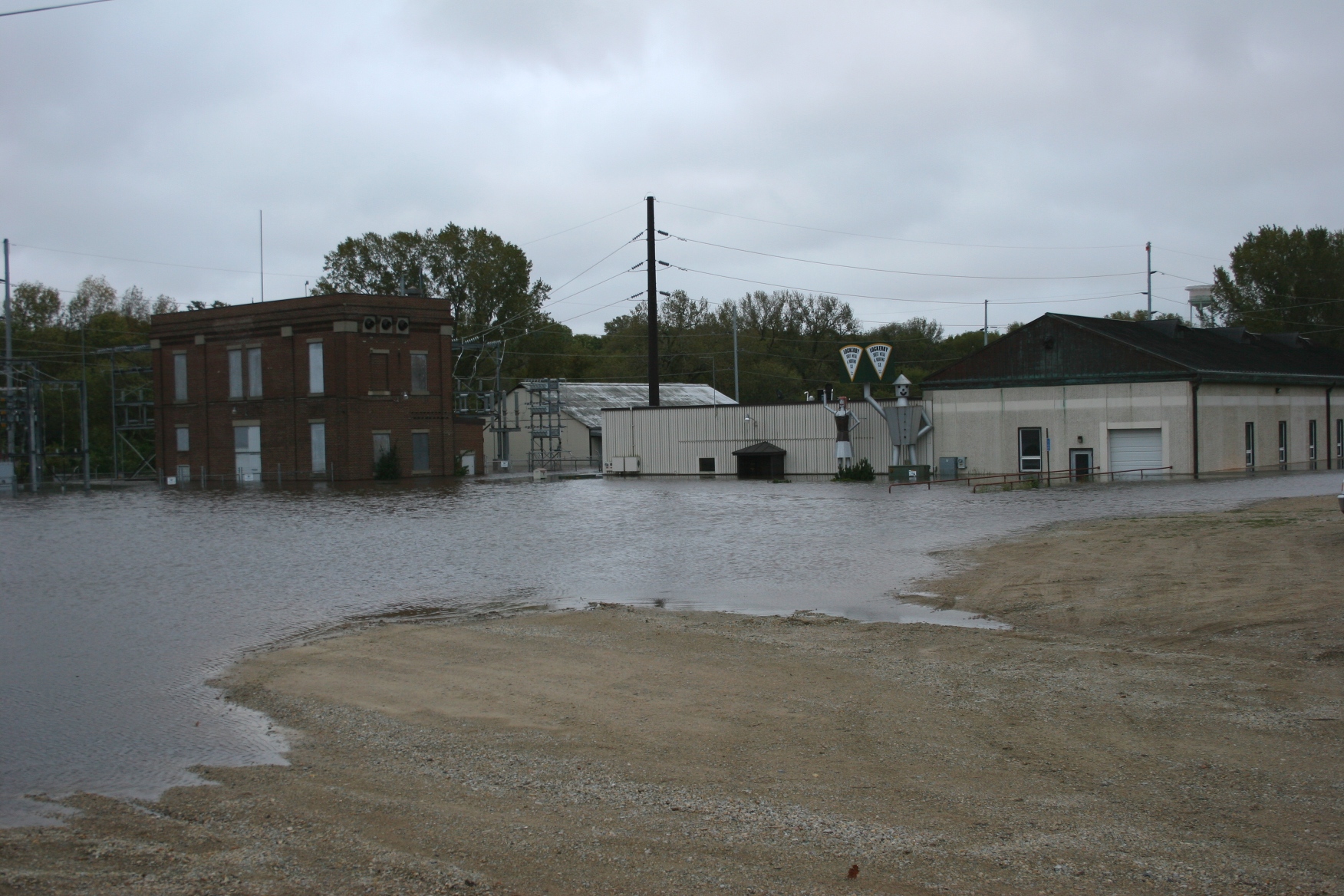
Just another shot of the flooding around Lockerby.

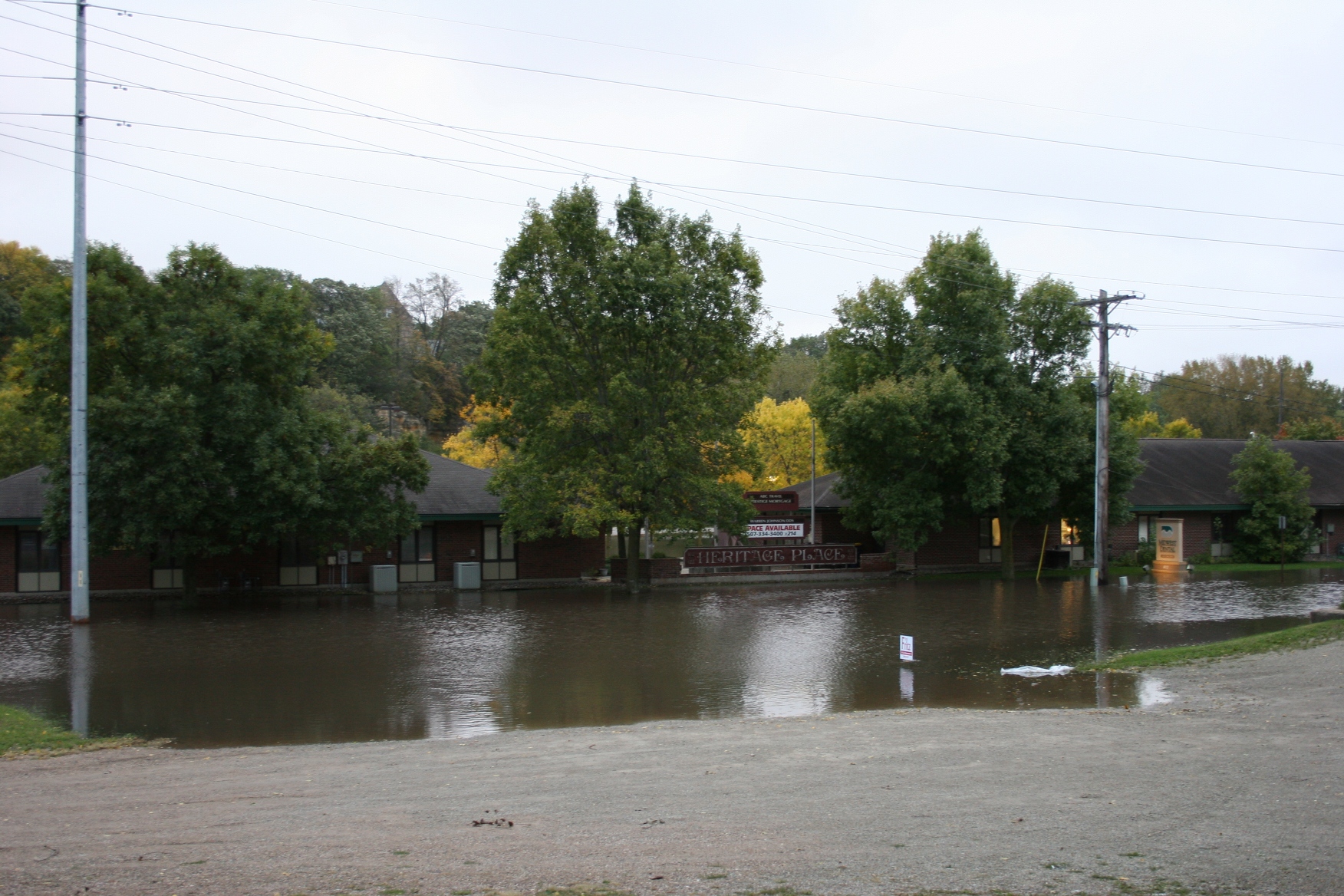
Heritage Place businesses are surrounded by water.

Flooding at the American Legion, which sits at the bottom of a hill and not far from the Straight River.

Numerous roads around Faribault are closed like this one by the Legion.

© Copyright 2010 Audrey Kletscher Helbling


Flooding in Faribault September 23, 2010

Filed under: Uncategorized — Audrey Kletscher Helbling @ 9:42 PM
Tags: , , , , , , ,

Sometime between 6 - 6:30 p.m. Thursday, Second Avenue N.W. in Faribault, where it crosses the Cannon River, was closed. Two dams are located next to this stretch of now flooded roadway.
“AREN’T YOU GLAD it isn’t snow?” my husband asks as I review his summary of rain gauge totals from our backyard in southern Faribault:

  • 2.7 inches from 6 p.m. Sept. 22 to 8 a.m. Sept. 23
  • 1.6 inches from 8 a.m. – 6 p.m. Sept. 23
  • Plus whatever rain fell before 6 p.m. Sept. 22, an estimated 1 – 1 ½ inches

We are swimming in water here and the rain continues to fall.

Earlier this evening we toured the town—yes, we were gawkers—and found swollen rivers and closed roads. Four-lane Second Avenue N.W., as it crosses the Cannon River, was flooded with four inches of water and down to two lanes when Randy drove across the bridge around 6 p.m. A half hour later, officials had closed the street.

Near the blocked road and behind the former Faribo Woolen Mill, we met a homeowner in hip waders waiting for the city to deliver sandbags to his riverside home. His property hadn’t flooded yet, but he was worried. He’s lived there since 1985 and never seen the river so high, he says.

Nor have we. Randy has lived here for 32 years. I’ve been here for 28.

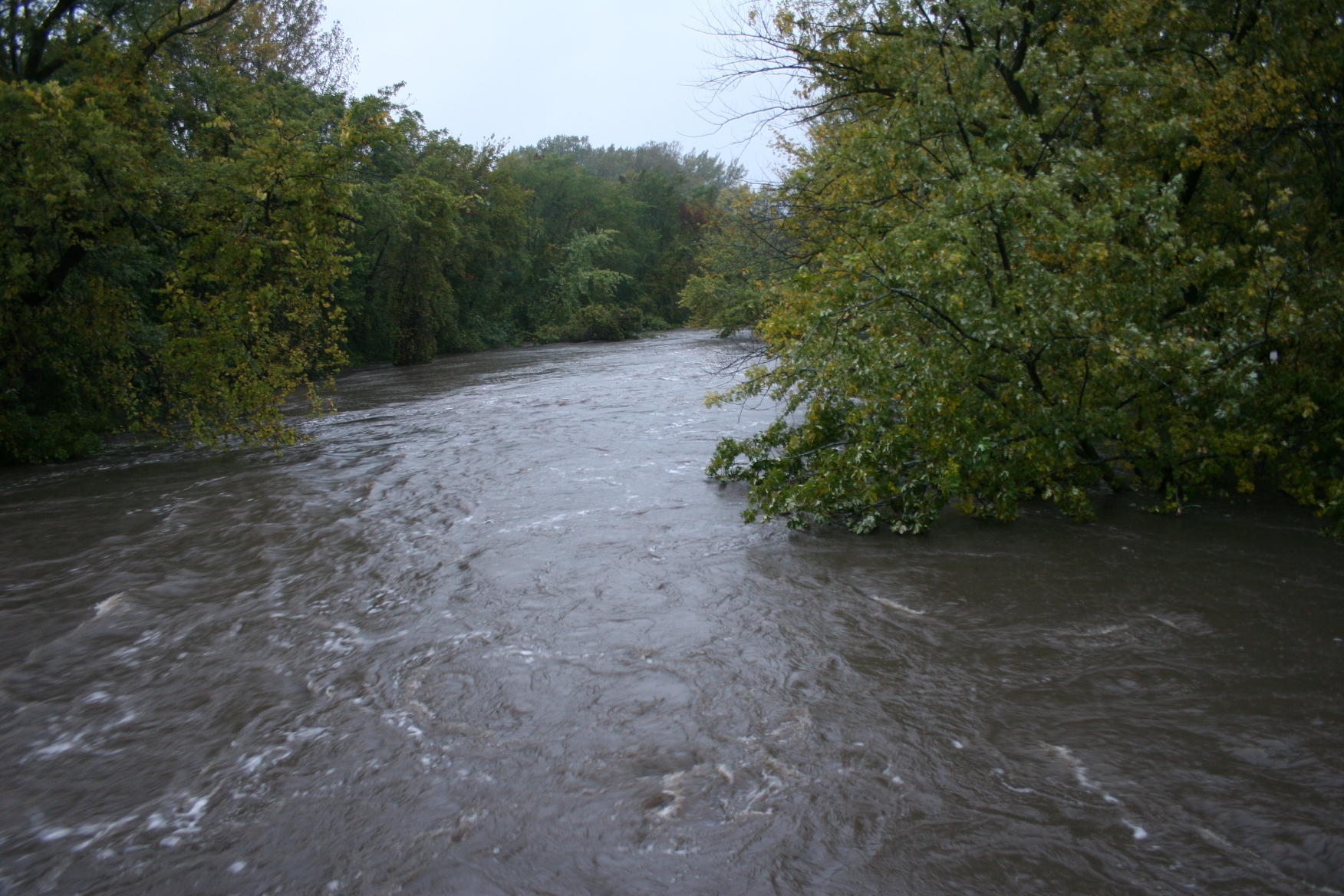
Standing atop a bridge on the north end of Faribault, I snapped images of the rushing Straight River. Even from the safety of the road, I felt unsettled, watching as the muddy waters churned and roiled and rushed away, edging away from the constraints of the rain-logged banks.

The rain is expected to continue into Friday.

A view of the raging Straight River from a bridge on the north end of Faribault.

Second Avenue N.W., which crosses the Cannon River, was blocked at Faribault Foods.

The Straight River spilled over its banks into a parking lot and loading dock area at Faribault Foods.

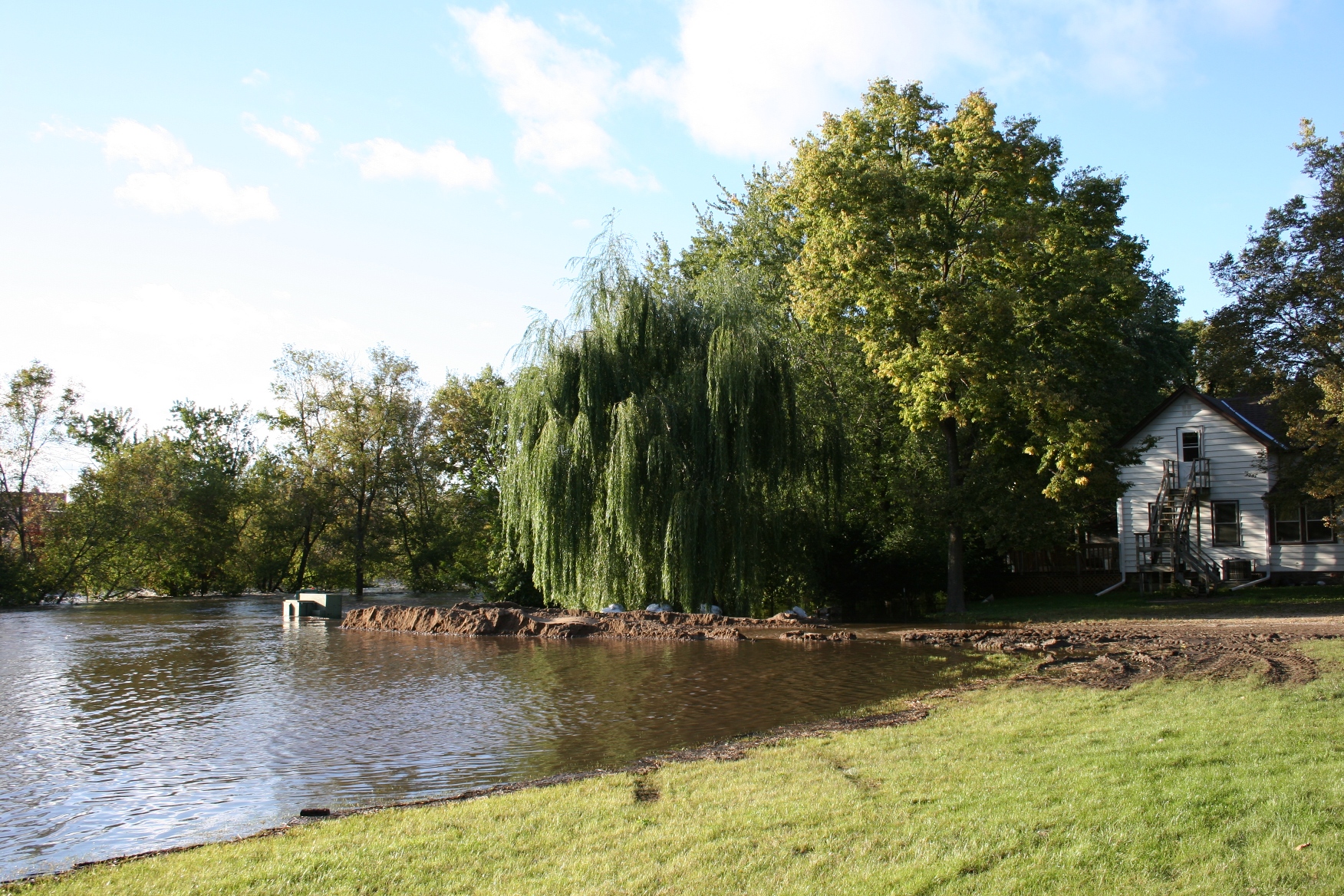
The Cannon River overflowed its banks behind the former Faribo Woolen Mill. Next door, to the left in this photo, a homeowner awaited sandbags to protect his home.

In South Alexander Park, the Cannon River spilled onto park land.

Along Ravine Street, crews kept a watchful eye on the Straight River.

Flood waters caused the closing of a portion of Heritage Place at Heritage Park.

Officials closed flooded TeePee Tonka Park near the Straight River viaduct in the central part of Faribault.

The Straight River on the north end of Faribault continues to rise.

#

Most of these photos were taken through the windows of a car in fading daylight.

© Copyright 2010 Audrey Kletscher Helbling


A ray of sunshine on a rainy, rainy day in Minnesota

Filed under: Uncategorized — Audrey Kletscher Helbling @ 2:34 PM
Tags: , , , ,

IN BETWEEN ALL the rainstorms that have defined today and yesterday and so many days here in Minnesota this September, I offer a ray of sunshine.

I am sitting here in my office typing this as the preschool neighbor boy I’ve never met, because our busy, busy street seems as wide as the mighty Mississippi, splashes in water puddled on dips in the uneven sidewalk.

Until this moment in this rainiest of days, I have thought only of how very sick and tired I am of all the non-stop rain, the gloom, this weariness that has descended upon autumn.

And then I see this boy, this happy, happy boy dressed in his sunny yellow t-shirt, khaki pants and flip flops splish-splashing through the water.

Father and son have been outside for more than 15 minutes now. Together they’ve run through the puddles, stomped their feet, splashed and jumped. Run and leap. Turn around and race again through the pooled waters.

I cannot stop watching them.

On this day when I’ve heard of flooded roads and flooded basements, closed schools and rising rivers and more rain in the forecast, I am smiling.

I am smiling at the young father, clad in a tank top and shorts and flip flops. He doesn’t care whether his boy gets his clothes dirty or his feet wet. With the wave of his arm, he encourages his son to forge through the water.

For a moment I have forgotten about the gloom of the day. I see only sunshine.

© Copyright 2010 Audrey Kletscher Helbling


It’s OK if you don’t have pickle bumps

I’LL ADMIT TO MORE than a bit of skepticism about a children’s picture book titled Pickle Bumps for Baby Dill. “What kind of book is that?” I wondered before calling the author, Bob Fulton.

Well, exactly as the title suggests, this is a story about Baby Dill, a pickle born without bumps. But that’s not all. You see, after speaking with Fulton and upon reading his book, I learned the real purpose. And it’s much more than a story about cute, talking pickles.

Fulton delivers a strong message via the Dill family and Baby Dill’s friends. The message: “It’s OK to be different.”

That’s a message especially fitting for this time of year, the beginning of school.

I would speculate that many students have, in recent weeks, felt like they don’t quite fit in with their classmates. Maybe they aren’t wearing the latest fashions. Maybe they’re in a new school, struggling to make friends. Maybe they’re shy, quiet. Maybe their hair or their skin is the “wrong” color. Maybe they’re struggling with learning.

Maybe, like Baby Dill, they wonder why they are different from everyone else.

Fulton addresses that concern, which leads the Dill family on a shopping trip for pickle bumps. In the end, Baby Dill decides, with the support of his friends, that he would rather remain bump less.

While Fulton’s story has a positive ending, I know that isn’t always reality. In real life, kids bully, tease, make fun of, pick on, humiliate—whatever words you want to choose—those who are different. For all too many kids, there are no understanding friends to stand by and support them.

A book like Fulton’s offers encouragement. “We like you just the way you are,” Baby Dill’s friends tell him. That’s a message that needs to reverberate through-out our schools, our homes, our communities.

Pickle Bumps for Baby Dill would be a good addition to any elementary school classroom or library. While aimed at preschoolers and lower elementary students, the story also appeals to 10 – 12-year-olds, Fulton says. Having experienced bullying myself while in junior high school, I applaud any efforts to help students, parents and teachers address the issue.

The college educator—he taught chemistry for 39 years at St. John’s University and The College of Saint Benedict—has even added a list of 12 questions at the end of his book to prompt discussion.

He shares, too, that his book evolved from telling stories to his grandchildren and a specific request from his youngest grandson to “Tell us a story about a pickle.”

Fulton did and then put his tale into writing in Pickle Bumps for Baby Dill, published by Pickle Bump Press. Melissa Meyer, originally from Saint Joseph, Minn., illustrated the book.

#

AS A SIDE NOTE, please be aware that October is National Bullying Prevention Month. Check out the PACER Center Web site for information that can help you address bullying. Perhaps by working together, through understanding and listening and empathy, we can help reduce the bullying that is all too prevalent in our society, especially in our schools.

© Copyright 2010 Audrey Kletscher Helbling


Sign, sign, everywhere a sign in Pemberton September 22, 2010

A welcome to Pemberton sign along State Highway 83.

PEM-BER-TON. The word rolls off my tongue in three syllables, a cadence of sound that names a southern Minnesota town.

I’d never been to this community southeast of Mankato on Minnesota Highway 83, only heard of it tacked onto the end of Janesville-Waldorf-Pemberton Public Schools.

But Saturday evening I was in Pemberton for a wedding reception and dance. I arrived early, wanting to explore this town of about 250 before heading over to the former school turned community center.

My quick tour revealed the usual run-down, boarded-up old buildings balanced by a well-groomed park and newer homes. Mostly, though, I was intrigued by the signs on downtown buildings.

Pemberton's main street was quiet on Saturday except for wedding guests driving through downtown.

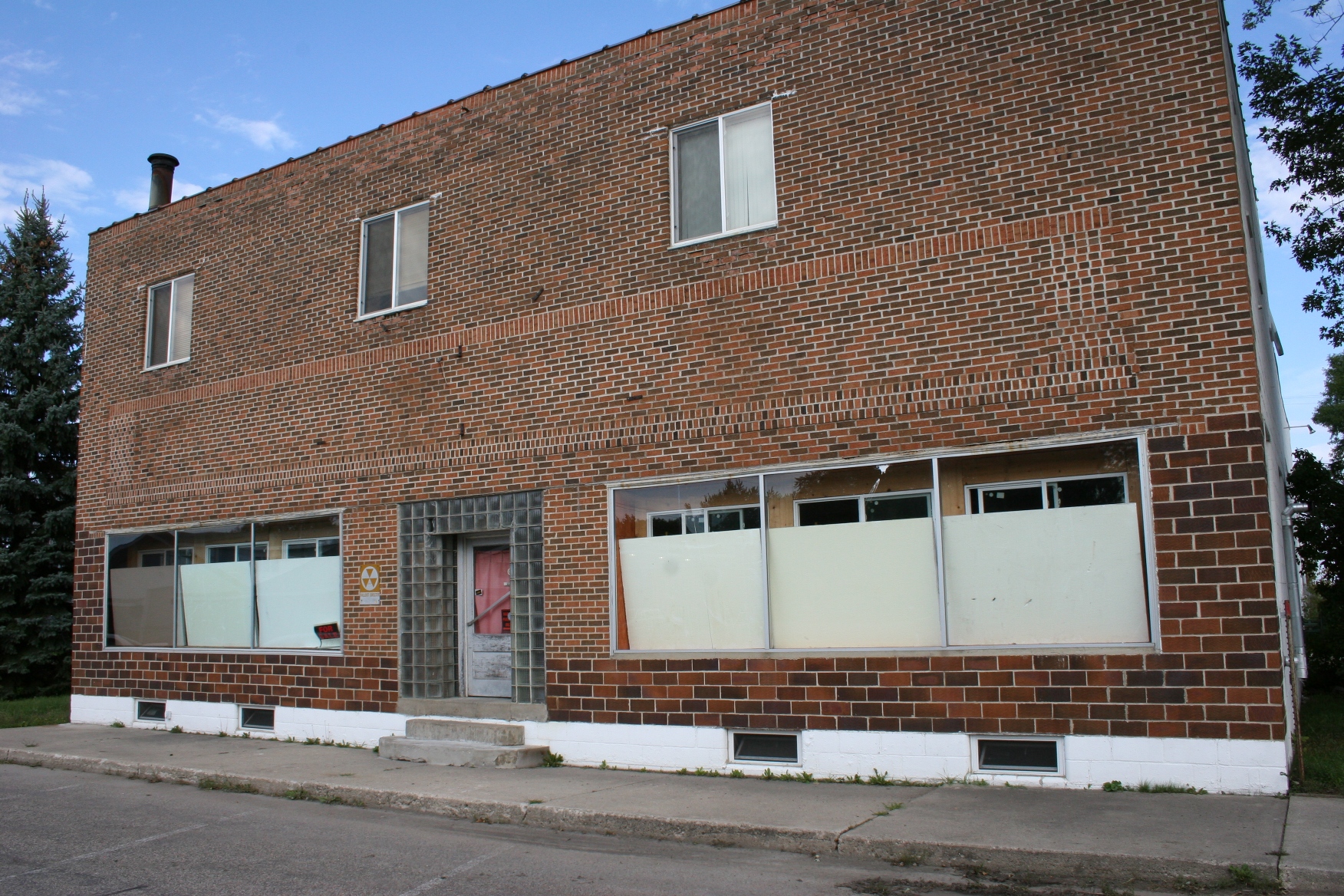
When was the last time you saw a FALLOUT SHELTER sign? I found one tacked onto the front of a boarded brick building whose original purpose I wouldn’t even want to guess. The faint writing at the bottom of the sign warned: NOT TO BE REPRODUCED OR USED WITHOUT DEFENSE DEPARTMENT PERMISSION.

For those of you who grew up during the 1960s, during the Cold War, like me, a FALLOUT SHELTER sign brings back memories of teachers instructing students to duck under desks and protect their heads, as if that was going to do any good in the event of a nuclear attack.

My husband recalls the particular concern about Communist attacks given his central Minnesota school’s “close” proximity to North Dakota missile silos.

Thankfully those Cold War days of hysteria are behind us and many, many years have passed since I’ve seen a FALLOUT SHELTER sign.

A Fallout Shelter sign on a downtown brick building. Another sign, on the door, warns: Harley Parking Only: All Others Will be Crushed.

The brick building upon which the Fallout Shelter sign is posted.

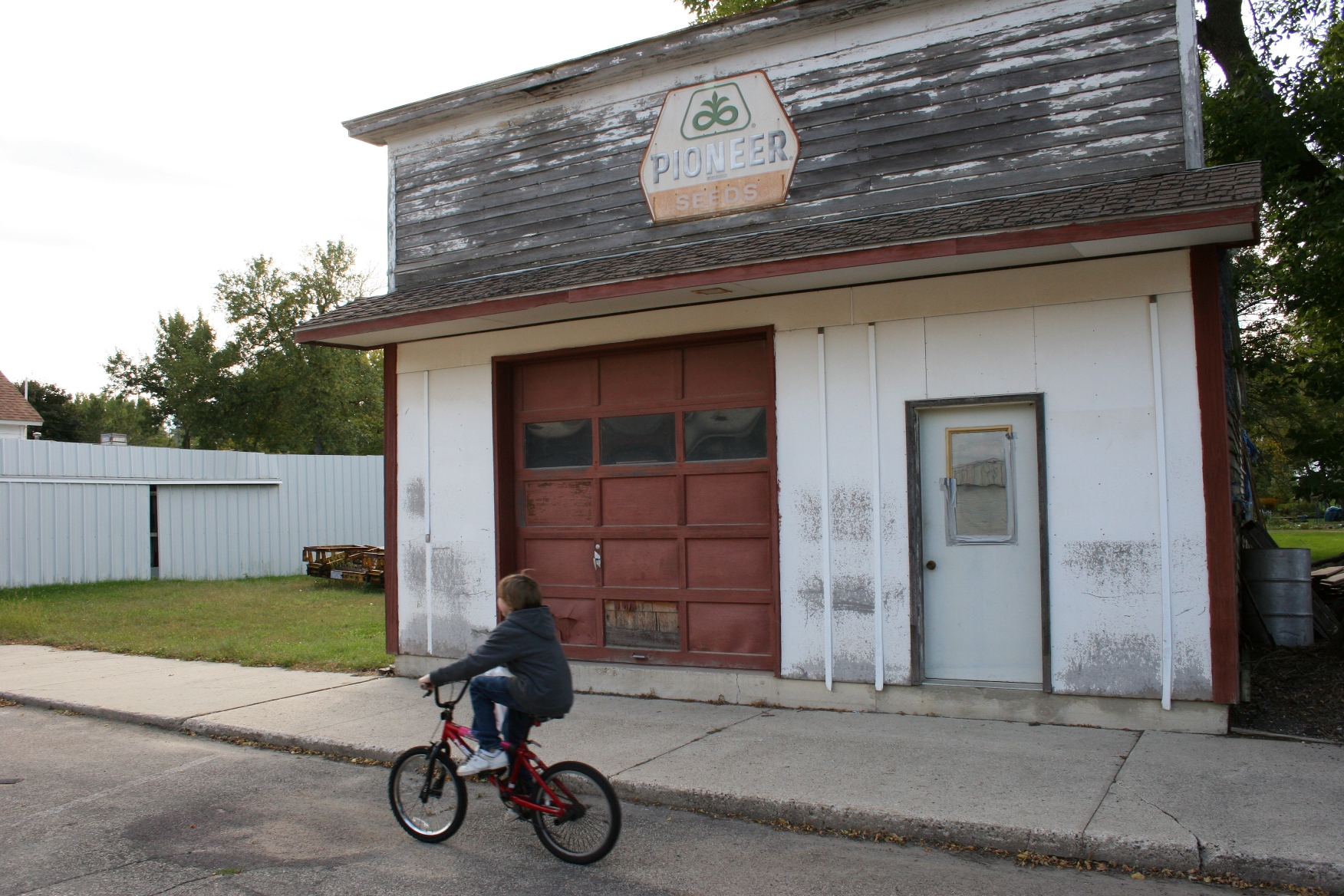
Across the street, I spotted a weathered PIONEER SEEDS sign on an old garage and, as a boy pedaled past on his bicycle, considered how carefree small-town life can sometimes be. I never allowed my children, when they were elementary-aged, to ride their bikes solo in Faribault. But that’s the difference between small towns and mid-sized cities like mine.

An old Pioneer Seeds sign drew my eye to this building.

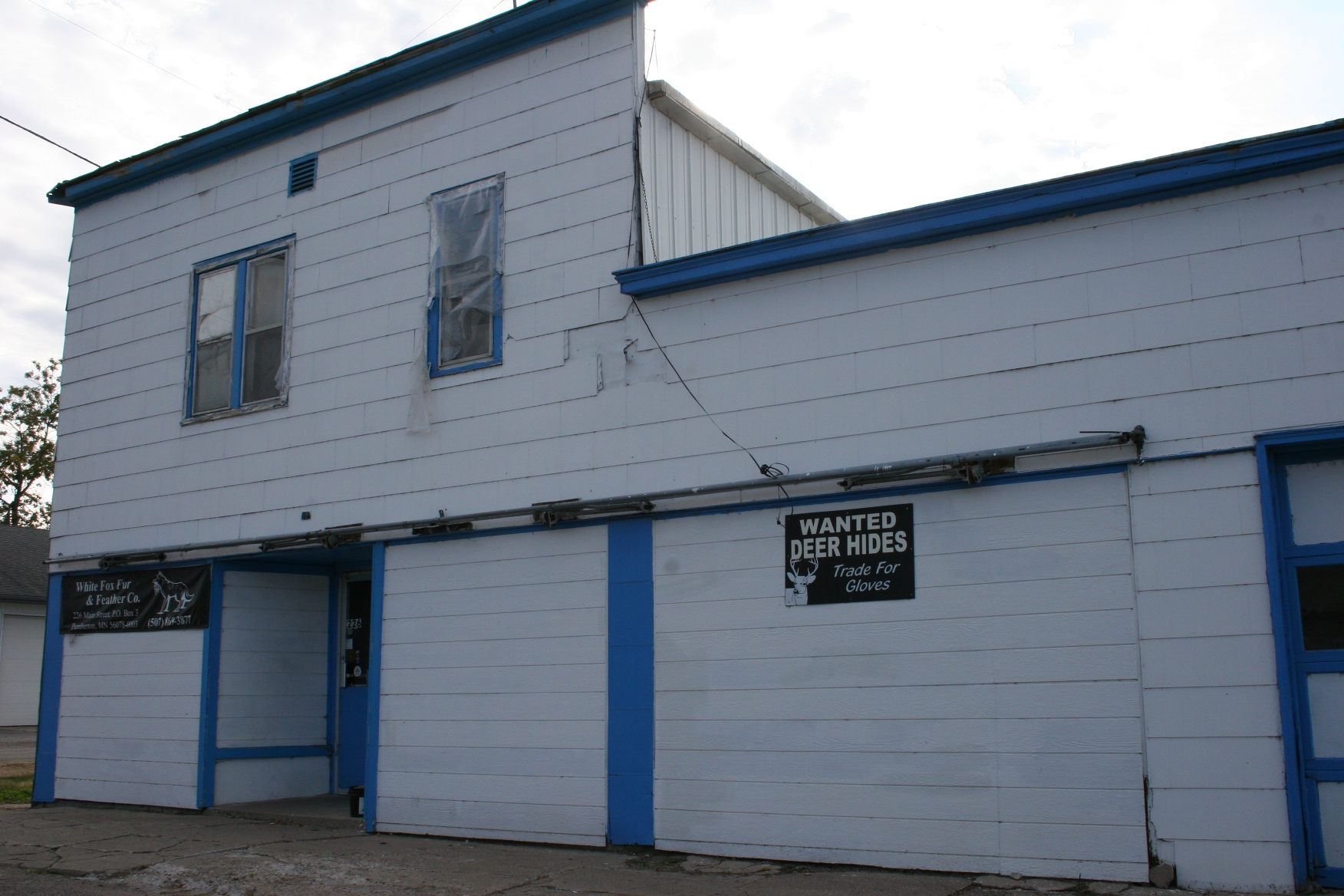
And you won’t see a sign like this in most towns: WANTED DEER HIDES—Trade For Gloves. Another sign identified a corner white wood frame building with gaudy blue paint trim as White Fox Fur & Feather Company, supplier of natural materials for the fly fishing industry, according to the company Web site.

Turn your deer hides in here, at White Fox Fur & Feather Company, in exchange for gloves.

I wondered if any of the other wedding reception attendees noticed the downtown signs that tell the story of Pemberton, past and present.

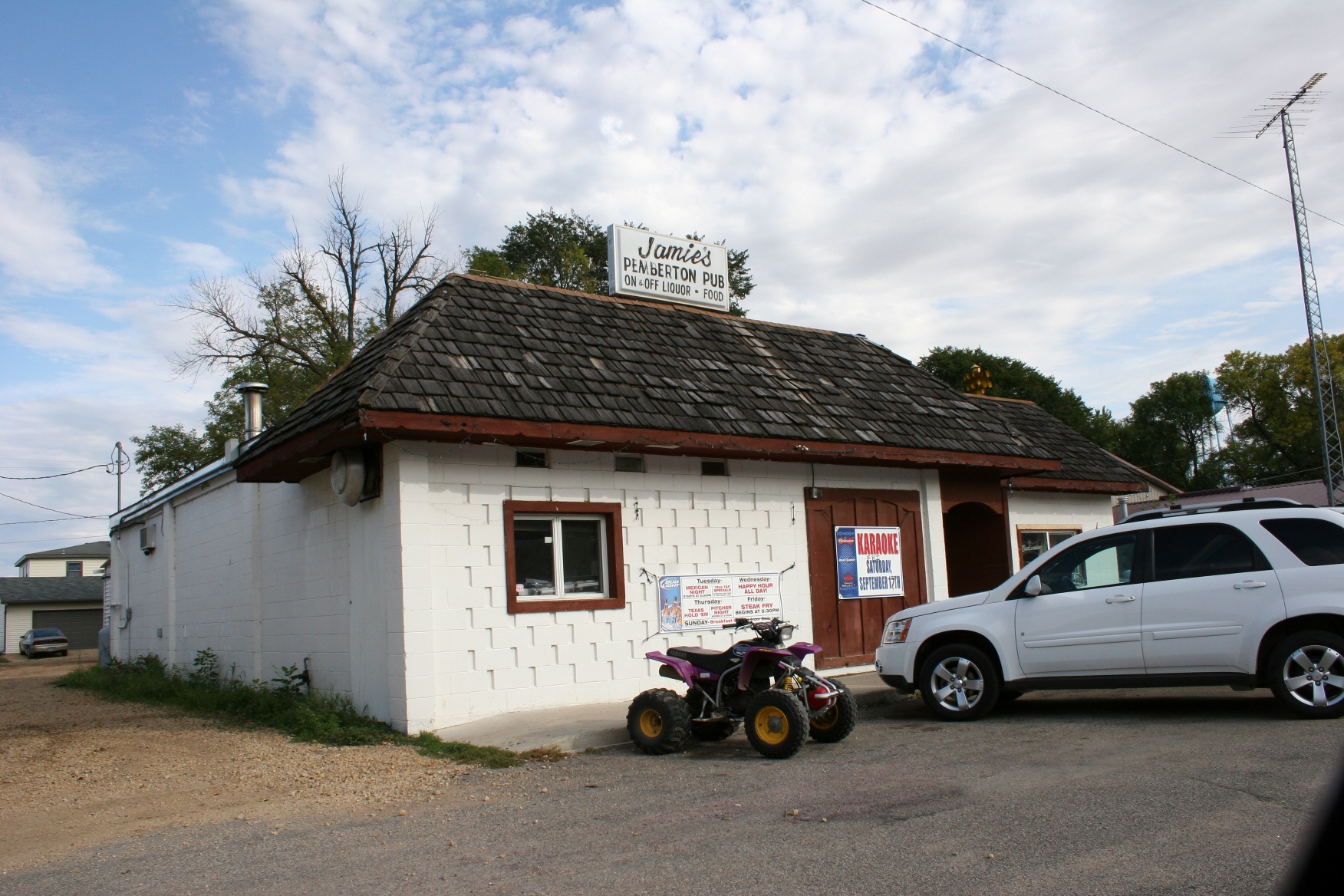
At Jamie’s Pemberton Pub, a pit stop for the wedding party, signs informed me of Mexican Night, Texas Hold ‘Em, Pitcher Night, All day Happy Hour, a Steak Fry and the small-town bar standby, karaoke. Obviously, this is “the place” in Pemberton.

Jamie's Pemberton Pub seems to be the happening place in Pemberton.

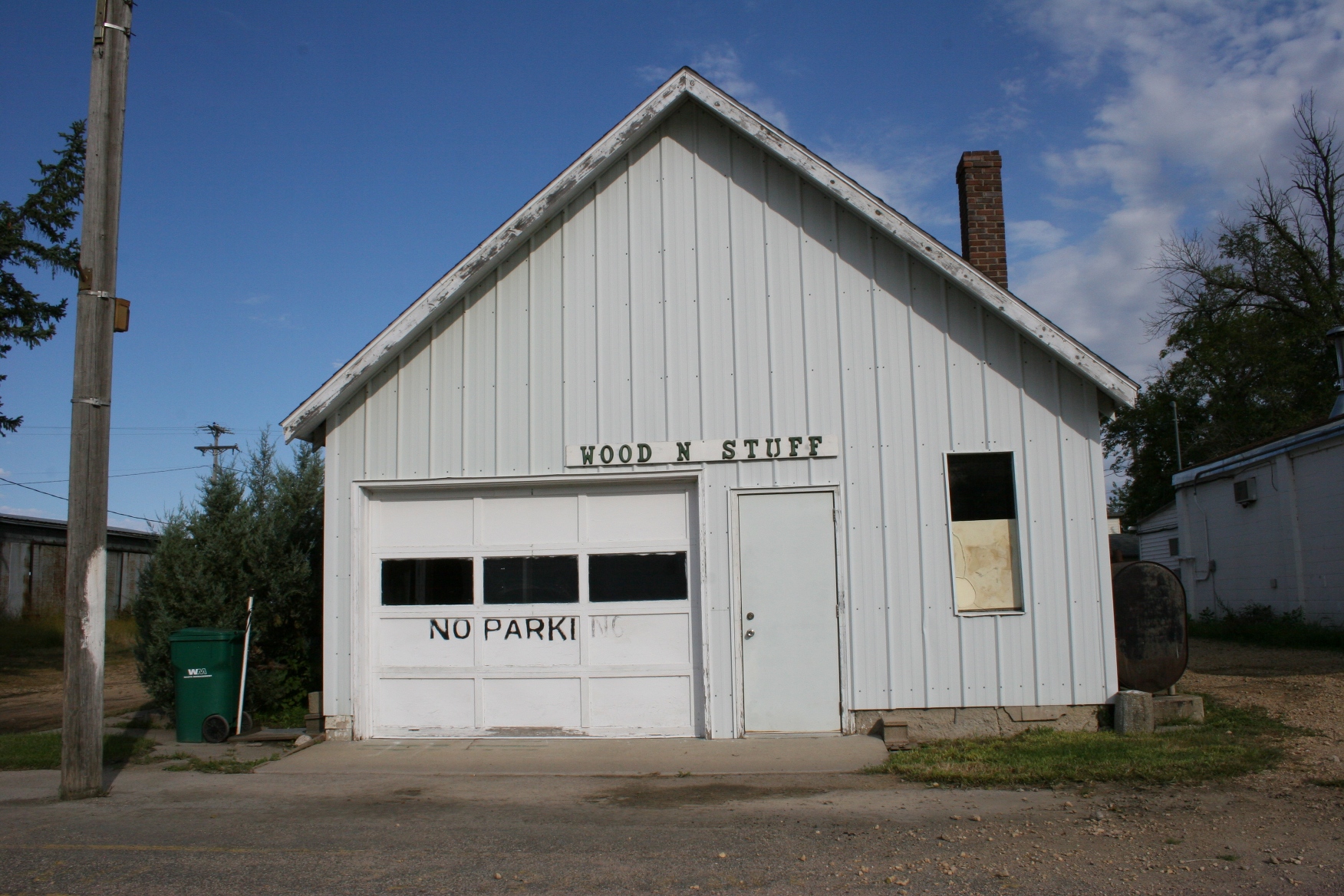
I wondered about WOOD N STUFF, about the wood stuff built inside the non-descript building with the overhead garage door. The building could use a bit of polishing, maybe some decorative wood work, to draw customers. Or maybe the place is closed.

What types of products are made at Wood N Stuff?

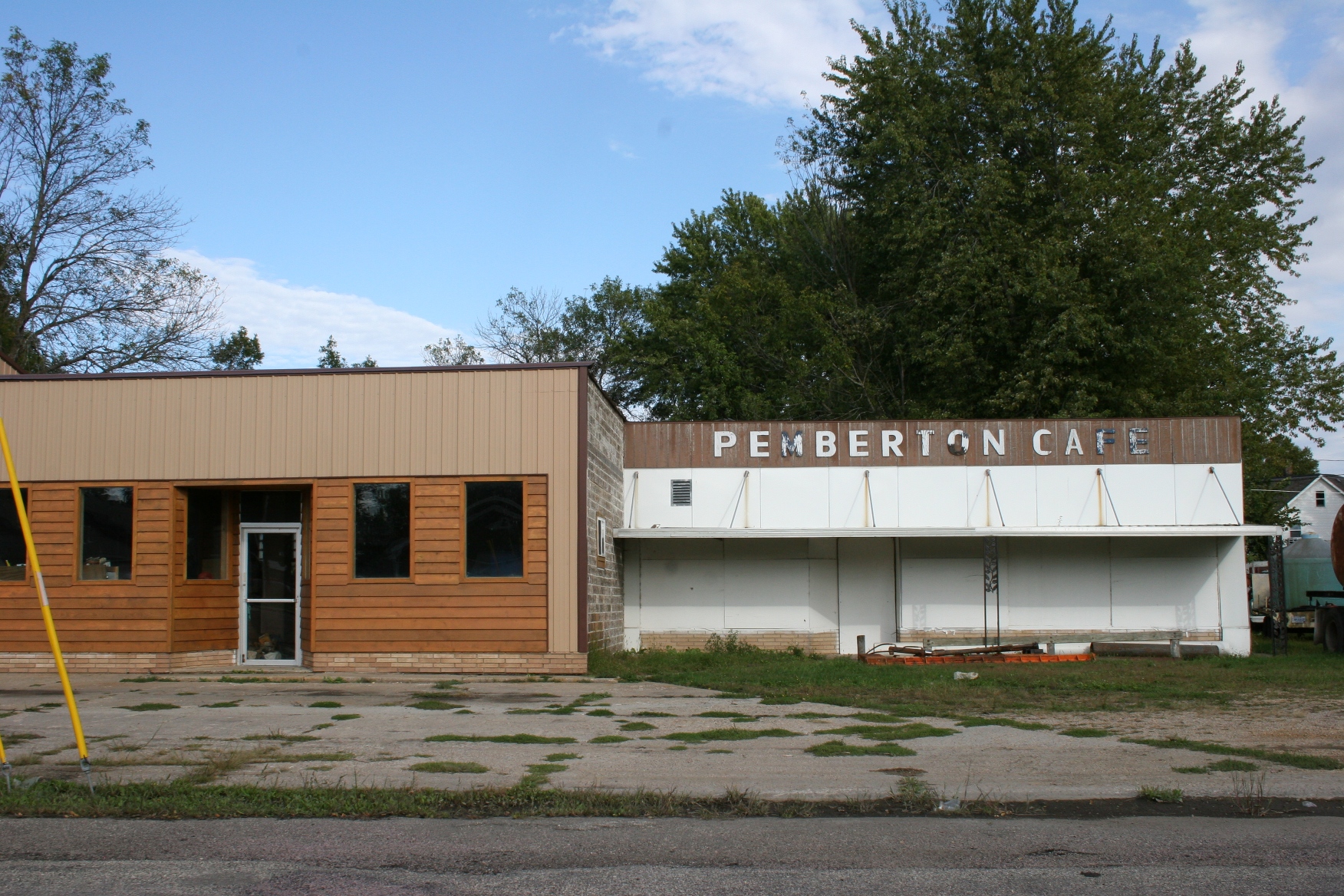
Closed. The Pemberton Café, likely once the local hot spot for coffee and cards, sits forlorn, windows shuttered, grass sneaking through the cracks in the sidewalk, in a scene all too common in rural Minnesota.

The abandoned Pemberton Cafe on the town's main street.

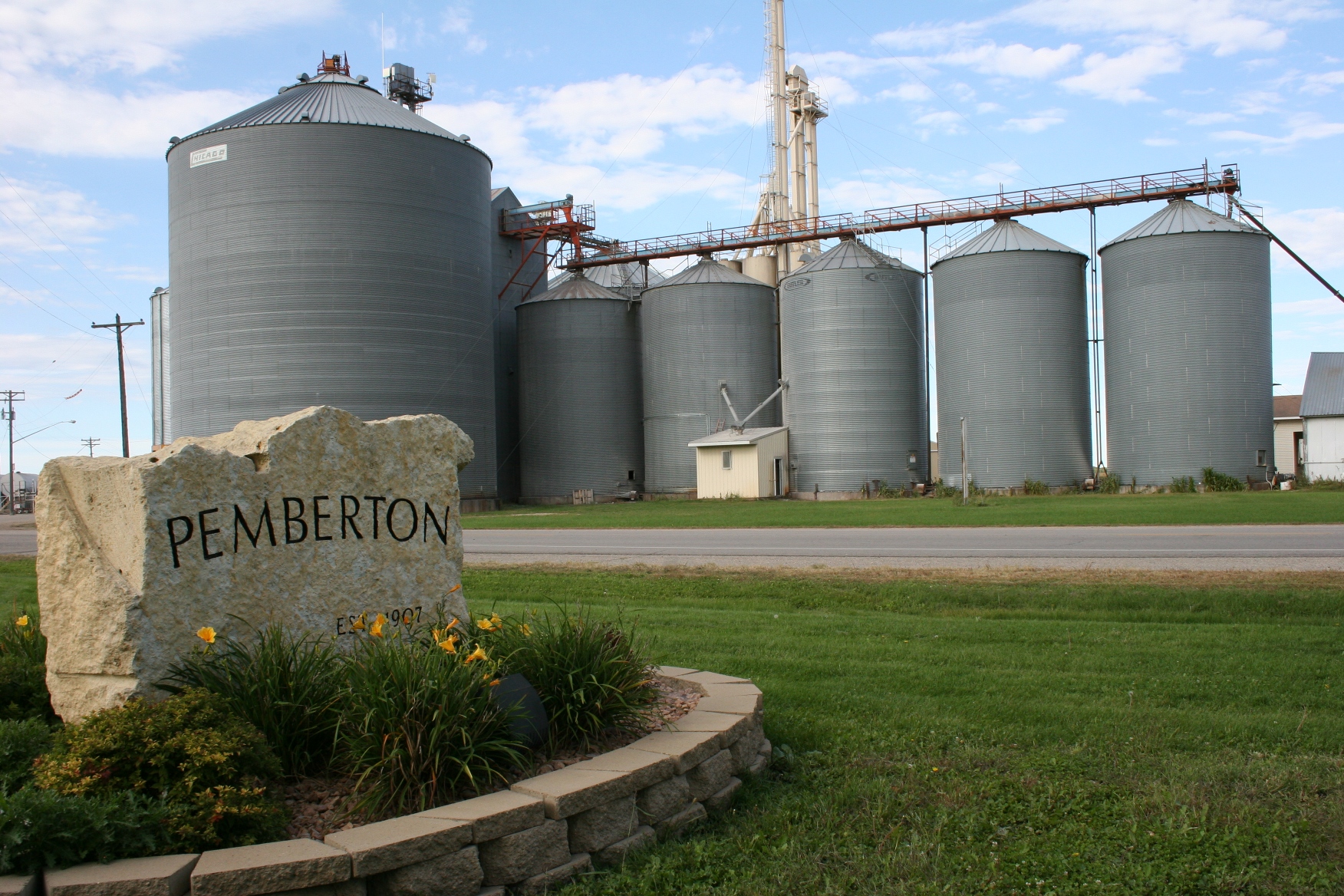
Yet, despite the abandoned buildings, the closed school, Pemberton survives, anchored like all farming communities by the grain elevator. This is home, a town with a busy convenience store, a post office, a beautiful community center, a park for the kids and a FALLOUT SHELTER.

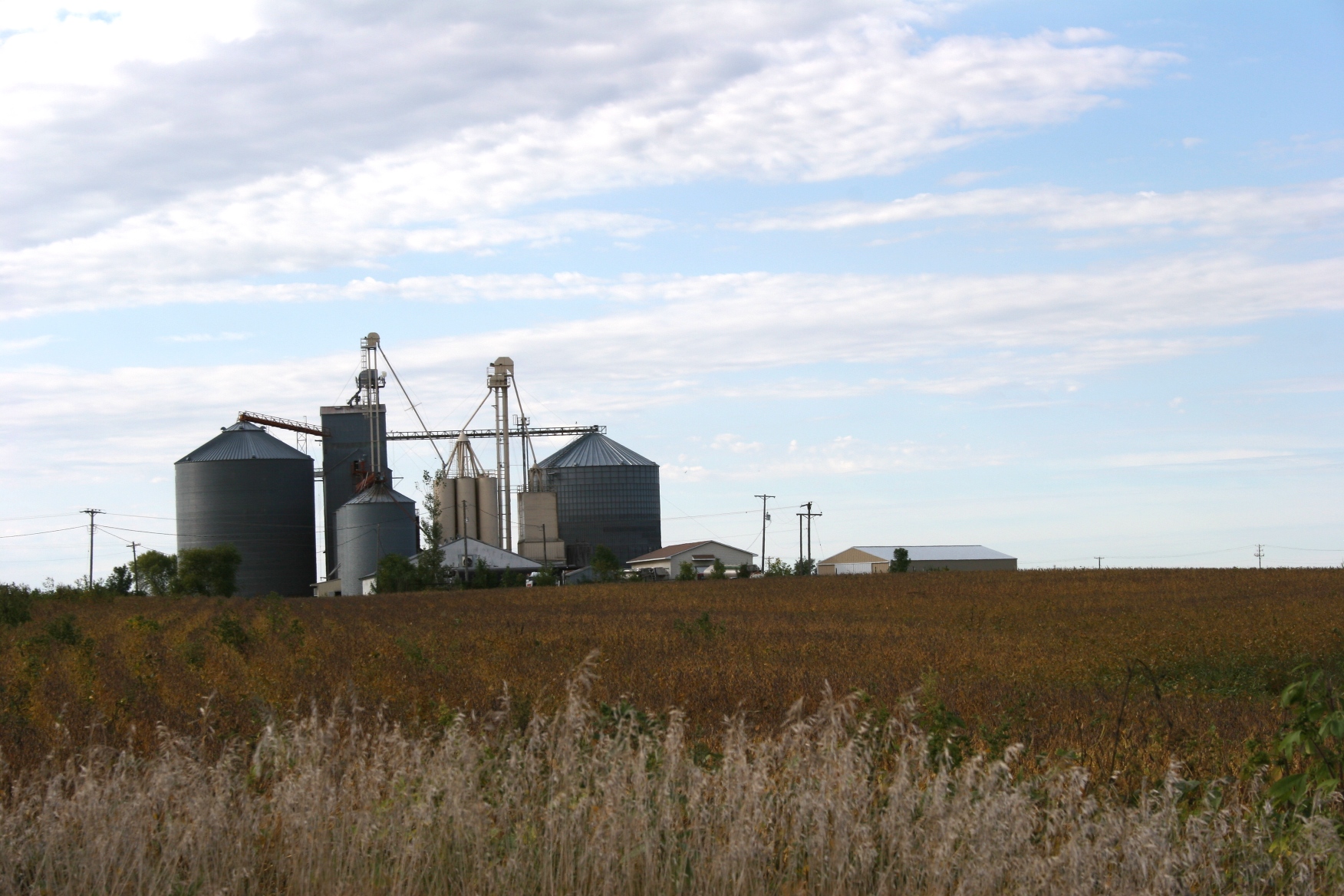
Approaching Pemberton from the east, the grain elevator and bins mark the skyline.

© Copyright 2010 Audrey Kletscher Helbling


A Sunday afternoon at Valley Grove September 21, 2010

Filed under: Uncategorized — Audrey Kletscher Helbling @ 7:22 AM
Tags: , , , , , , , ,

PRAIRIE GRASSES and wild flowers dipped in the wind, swaying to the folksy music of Hütenänny. And I thought, as l listened, of the movie, Sweet Land, filmed in southwestern Minnesota and based on Minnesota writer Will Weaver’s book.

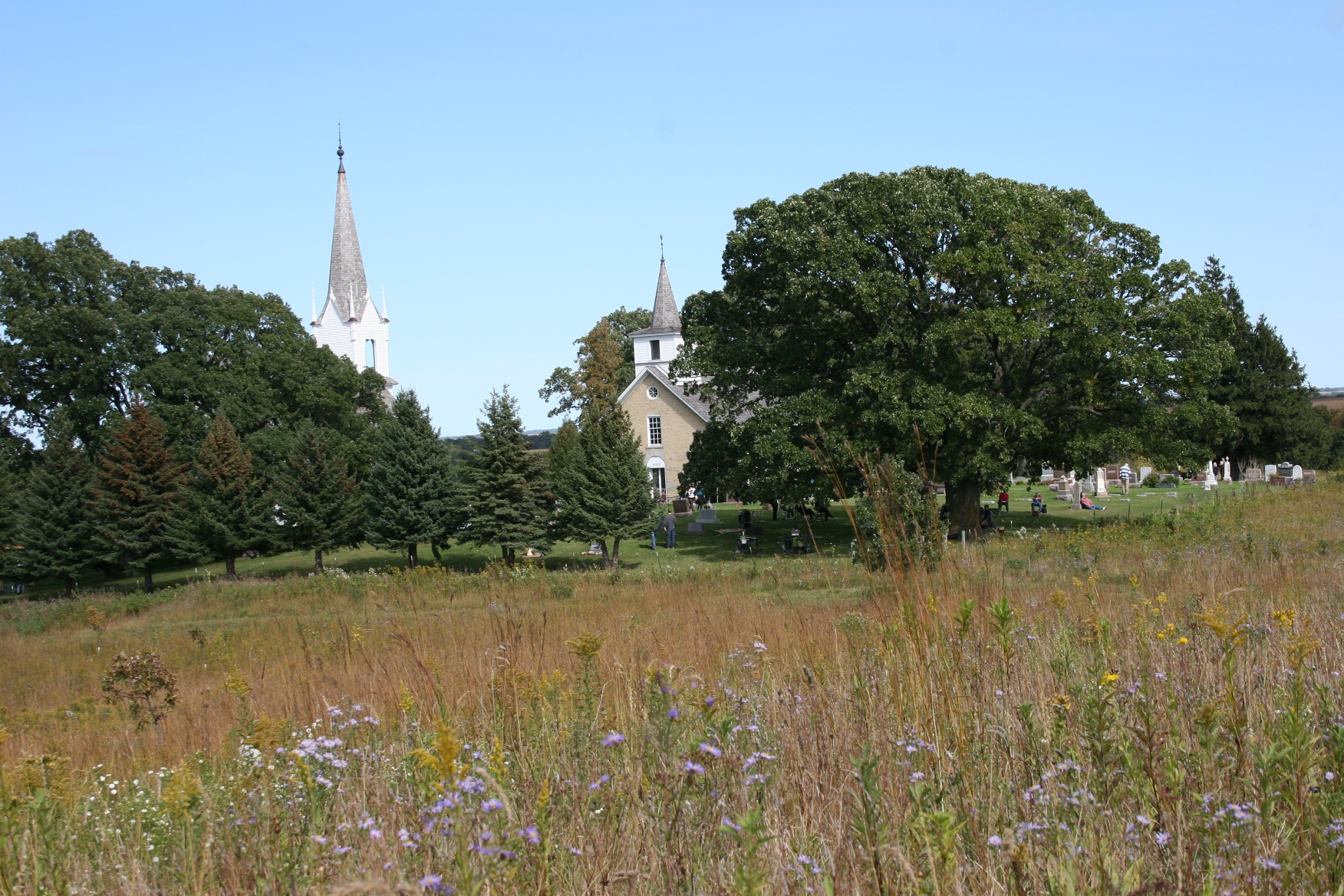
But I wasn’t in the southwestern part of the state. Rather, I stood atop a prairie hillside in southeastern Minnesota, in the backyard of the Valley Grove churches, delighting in the rhythm of the Nordic music so fitting for this place settled by Norwegian immigrants.

A view of the Valley Grove churches from the prairie that edges the churchyard.

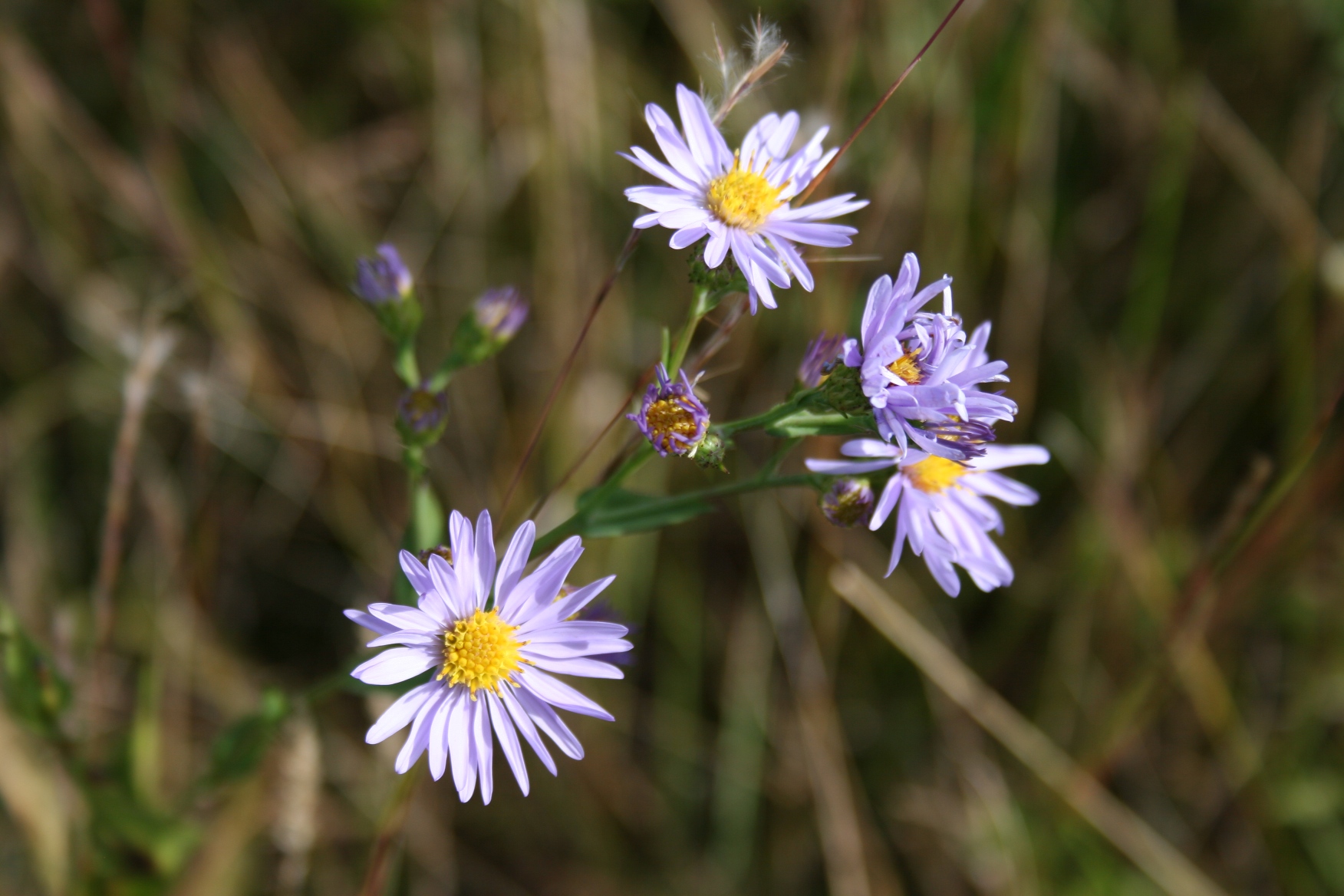
Valley Grove visitors can walk through a restored prairie, where wildflowers grow.

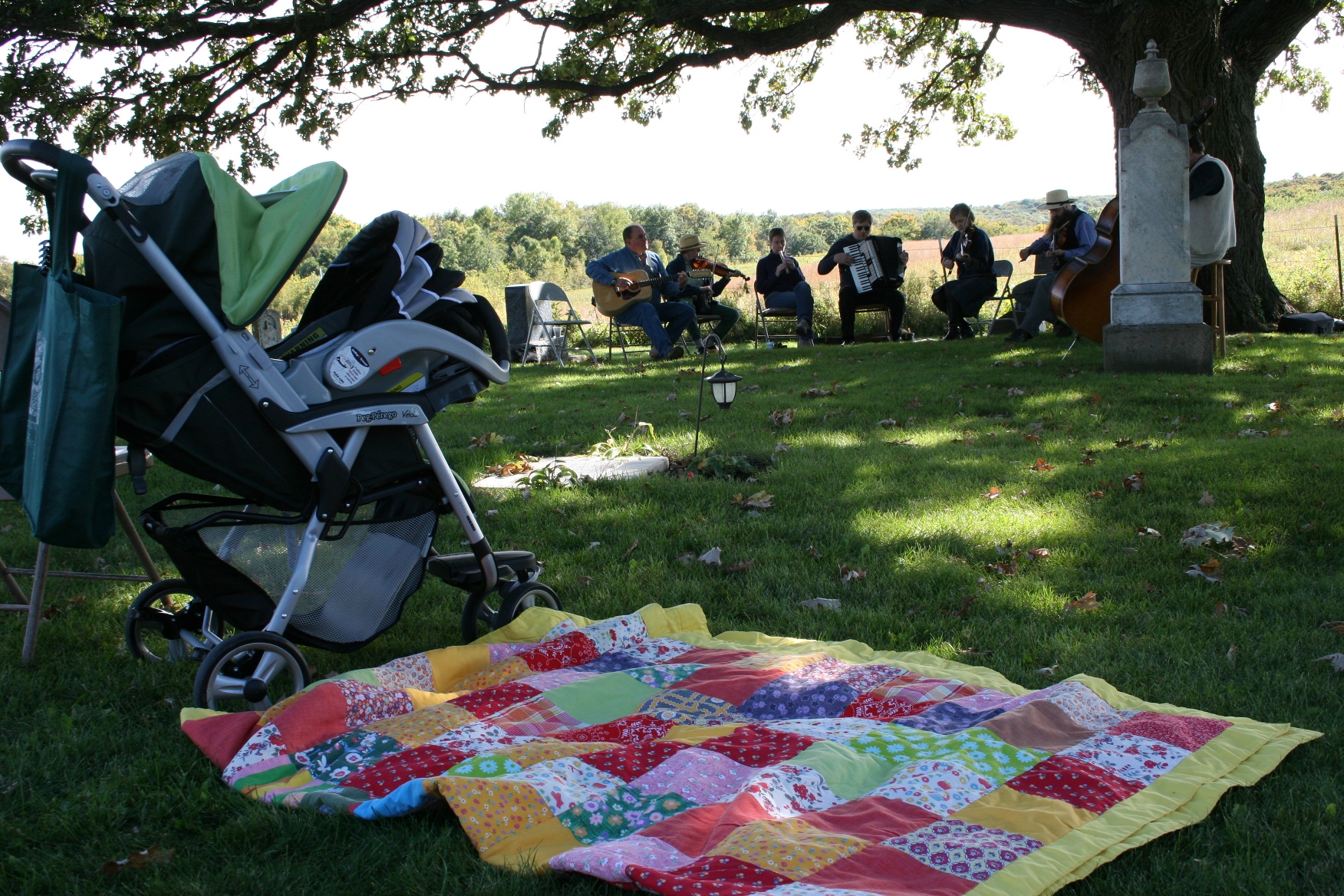
On this Sunday afternoon in September, folks gathered outside and inside the 1862 stone church and the neighboring 1894 white clapboard church, in the graveyard, underneath the majestic sprawling oak where the musicians played, and on the prairie, close to the land.

Visitors spread quilts upon the grass and enjoyed the music of Hutenanny.

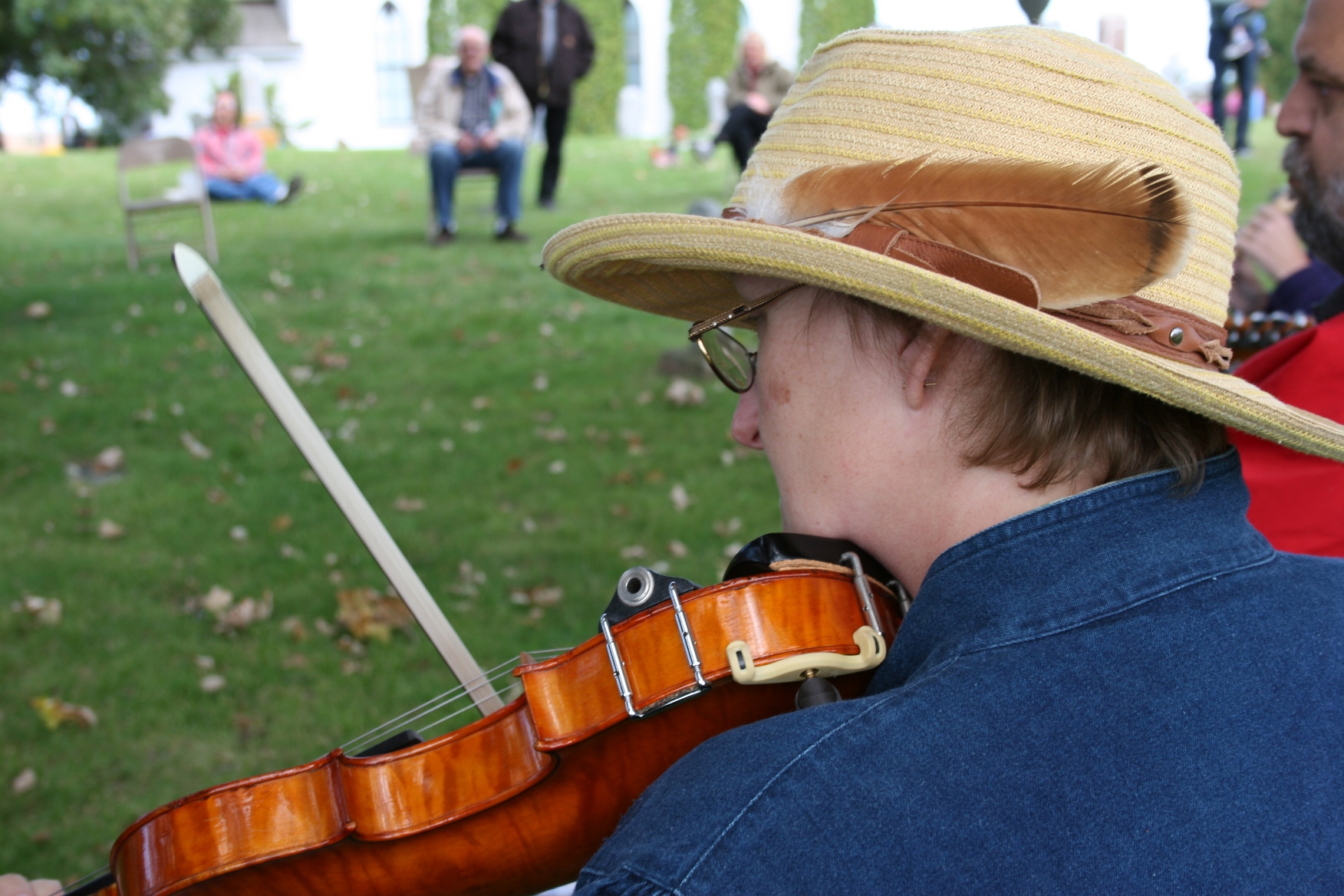
A group of mostly Northfield area musicians performed as Hutenanny at the Valley Grove Country Social. On Sunday evenings they perform as the Northern Roots Session at the Contented Cow in Northfield.

A member of Hutenanny dresses country for the folksy Nordic music performed at Sunday's Social.

In the churchyard, next to the simple wooden church, youngsters swish-swished goat milk into a pail, admired colorful caged chickens and crafted ropes to twirl high above their heads.

Kathy Zeman of next-door Simple Harvest Organic Farm gave a young boy lessons in milking a goat.

Fresh eggs and caged chickens attracted lots of interest.

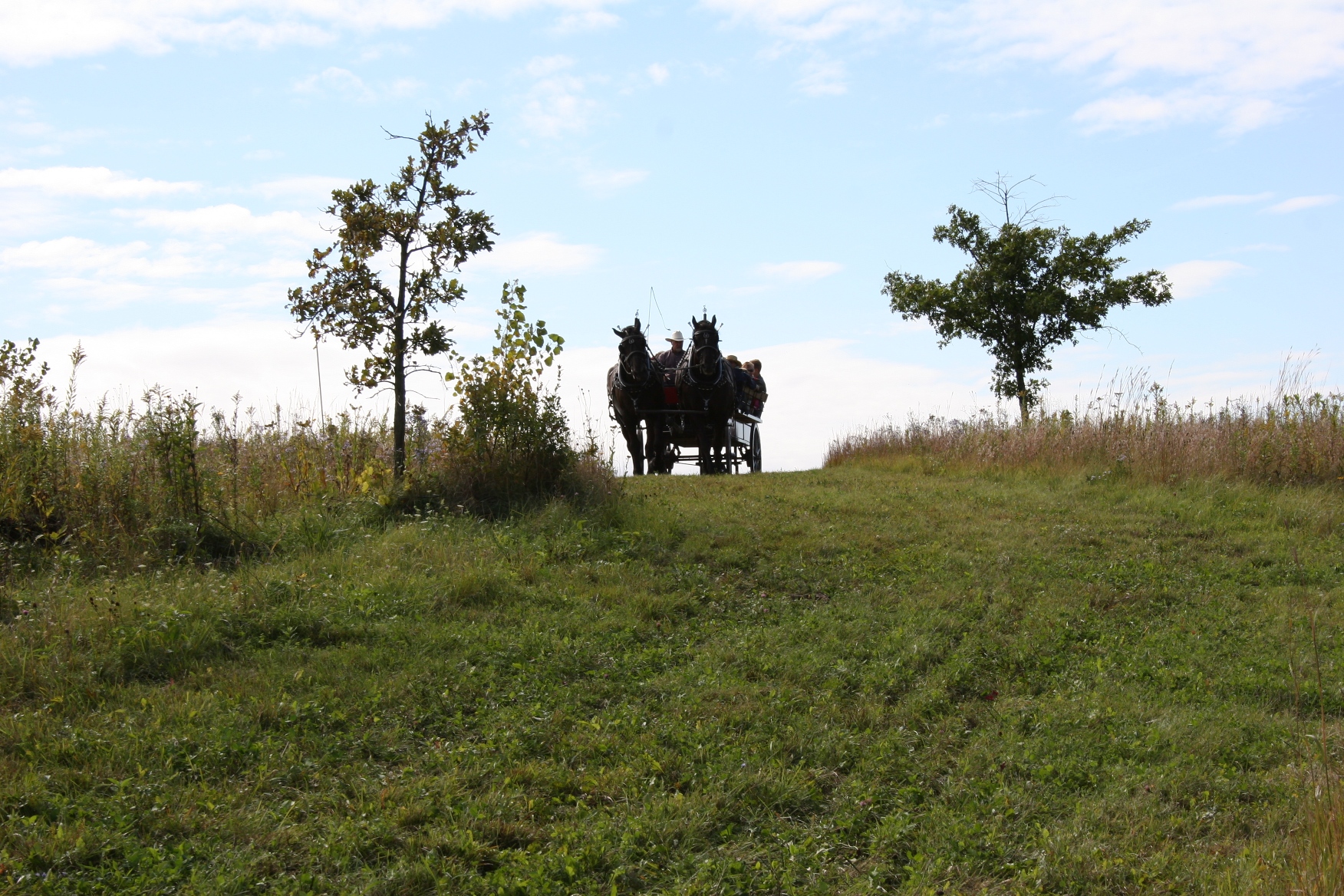
Along the fenceline that guards the duo hillside churches near Nerstrand, families waited to board a horse-drawn wagon that would take them along a path past the churchyard, up and down the prairie hill, where, if they looked, the land stretched down to farms and to woods tipped in the first rustic colors of autumn.

A horse-drawn wagon carried visitors on a path through the 50-acre prairie.

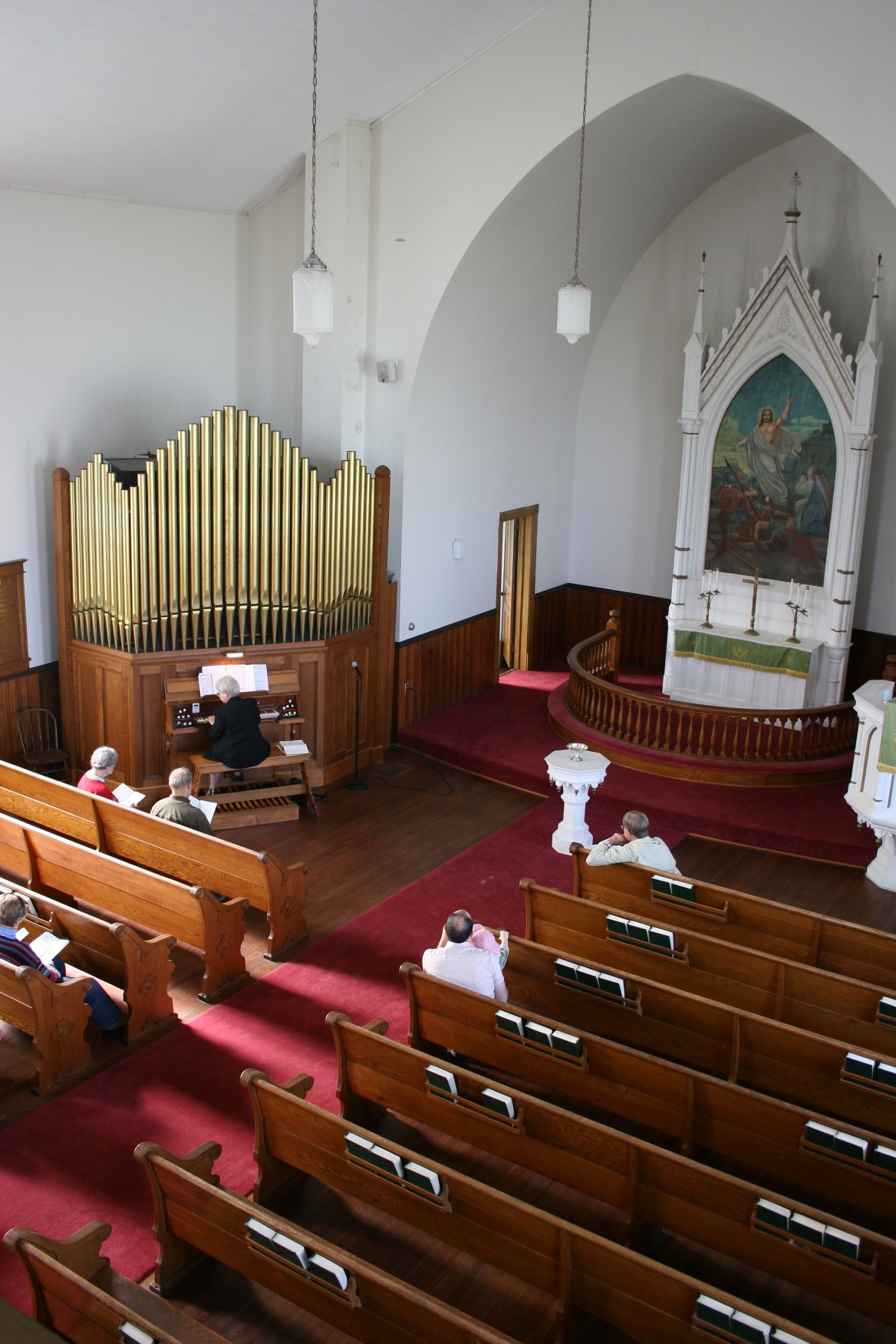
Inside the 1894 historic church, a musician pressed pedals and keys and tugged at pulls as the faithful lifted their voices in reverent song. “Praise to the Lord, the Almighty,” they sang, followed by “Amazing Grace.”

Organists performed several concerts inside the 1894 Valley Grove Church on a pipe organ built in St. Louis and installed in 1911.

Art and bluebirds and old photos. Sunshine, mixed with clouds. Memories shared, new memories made. Photos snapped. Gravesites visited. Hugs exchanged. All comprised the Valley Grove Country Social, a soul-satisfying way to spend a Sunday afternoon in September in Minnesota.

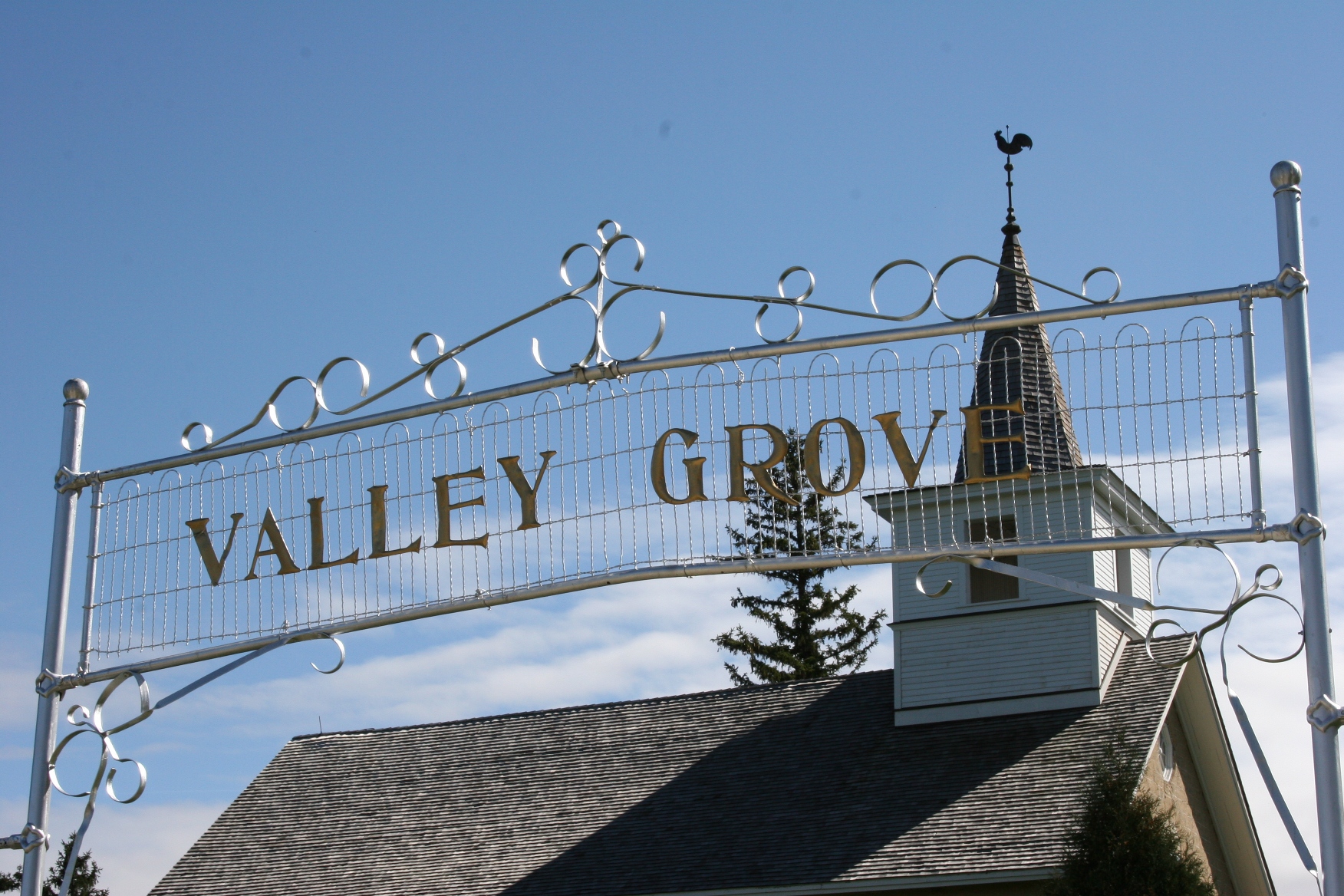
An archway at the entry to the Valley Grove churchyard.

The Valley Grove churches are on the National Register of Historic Sites.

Old-fashioned hydrangea bushes nestle against the clapboard church.

The spire of the 1894 church can be seen for miles.

The Valley Grove Preservation Society is working to preserve the buildings, land and history for future generations.

CHECK OUT THESE PLACES/GROUPS referenced in this Minnesota Prairie Roots blog post:

Bluebird Recovery Program of Minnesota

Simple Harvest Organic Farm

The Contented Cow

Northern Roots Session

ALSO CHECK OUT my previous Valley Grove posts published Oct. 9, 19 and 31, 2009, and Nov. 2, 2009, on Minnesota Prairie Roots.

© Copyright 2010 Audrey Kletscher Helbling


“Can I get a refund on my hip?” September 20, 2010

Filed under: Uncategorized — Audrey Kletscher Helbling @ 7:44 AM
Tags: , , ,

CONSIDER THIS SCENARIO. At the age of 51, you received a total right hip replacement after 2 ½ years of living in pain 24/7 due to osteoarthritis. That would be me.

Now, consider this. Two years later, a friend, who also has a hip implant, tells you of a nation-wide recall on artificial hips.

How would you react?

I faced this very situation recently when my friend, I’ll call her Jane, told me of the recall on her 3-year-old hip. Jane initially reacted as I would expect, with disbelief, anger and outrage. She has since calmed down.

When I heard the news from Jane, I was quite certain I didn’t have the ASR hip system from DePuy Orthopaedics because I knew my implant was different than hers. Yet, I wasn’t certain. So I checked my medical files, which didn’t show the type of hip I sport, and then contacted my orthopaedic clinic.

After explaining the reason for my call and giving the name of my surgeon, I was assured that I likely didn’t have the recalled hip. My doctor apparently does not use the DePuy ASR hip system.  But just to be certain, I was told that a physician’s assistant would check my records and call me back.

Fortunately, my surgeon selected, for me, a metal femur stem from Osteonics with a thigh bone head made of ceramic and a Pinnacle cup with a plastic liner. I later learned while researching online that DePuy makes the Pinnacle cups. But, as far as I know, those are not part of the recall.

If you have a recalled hip, you likely already know. When I contacted my clinic about 10 days ago, employees were compiling a list of patients to notify about the recall and drafting a letter of proper procedures to follow.

According to info published on DePuy’s Web site, data shows that five years after implantation, approximately 13 percent of patients (one in eight) who received the ASR total hip replacement needed revision surgery.

Now, if you’re among that one in eight—and my friend Jane isn’t at this point in time—you would have cause for concern. Hip surgery the first time around is major and expensive and requires a lengthy recovery. Imagine using a walker and then a cane while transitioning to solo walking about two months later. Imagine needing assistance to get in and out of bed, even to handle personal care issues. Recovery isn’t easy, even if you’re only in your 50s. Imagine if you’re decades older, which is typical for most hip replacement patients.

Now imagine being told that you need a new hip, because you’re having problems with your DePuy ASR hip. I feel for those patients and understand their anger. Going through a repeat surgery like they face has to be difficult. Heck, I don’t even want to consider the hip surgery I’ll need in about 20 years when my replacement needs replacing.

Recall of medical devices is nothing new, although when one affects you, such action is certainly personally alarming. In fact, a week prior to my June 2008 hip replacement surgery, news came out that joints in some individuals with ceramic on ceramic (head and cup) hip implants squeaked when they moved.

So guess what my surgeon had planned for me? Ceramic on ceramic. The morning of my surgery, he informed me that we were going to Plan B, ceramic and plastic. Sometimes I think about that. What if I had had my surgery a week or more earlier? Would I squeak when I walk? Or what if my doctor had selected the DePuy ASR hip? Maybe instead of just reading the ad in my local newspaper to call a certain attorney, I would be sitting in his office discussing my legal options.

© Copyright 2010 Audrey Kletscher Helbling