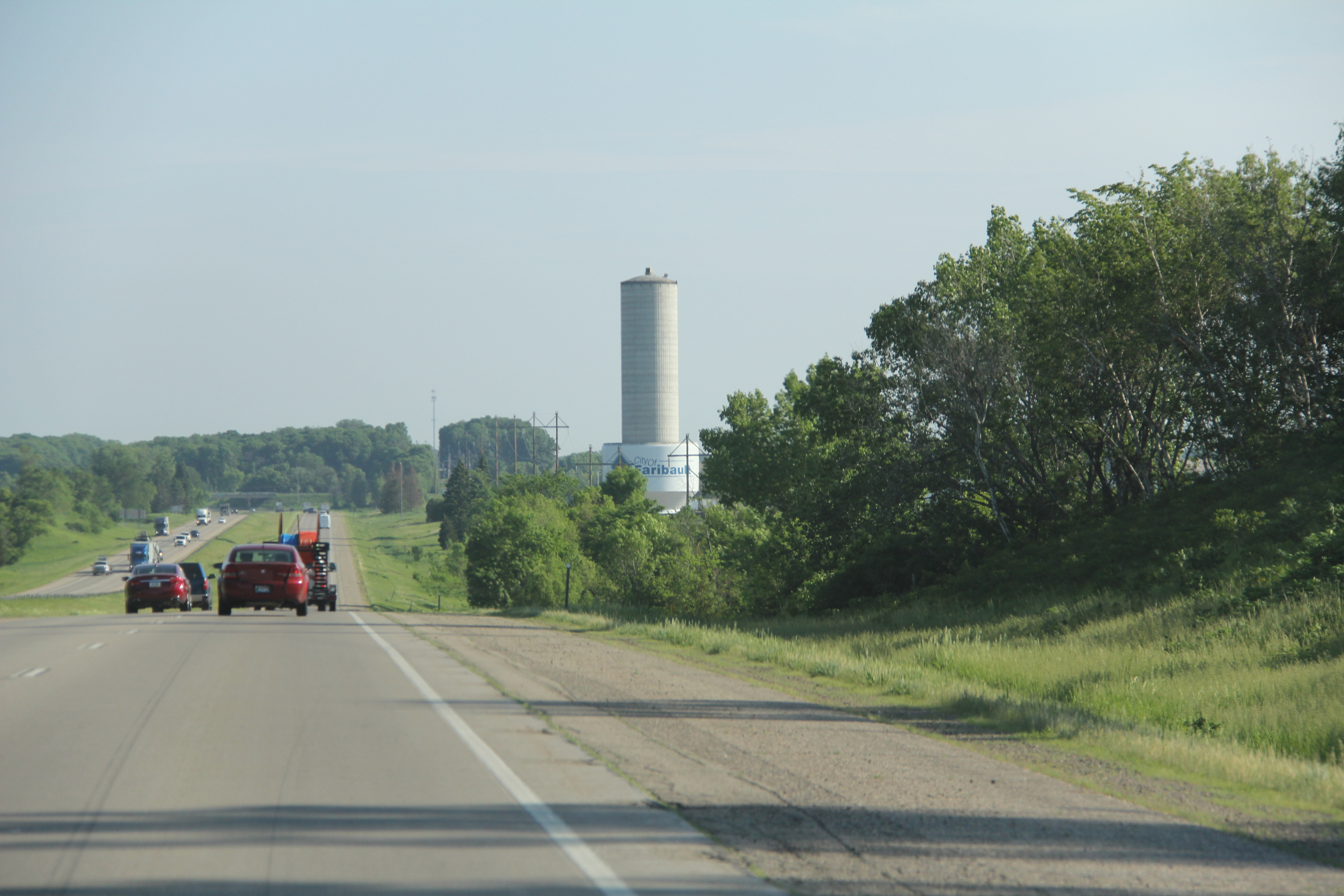
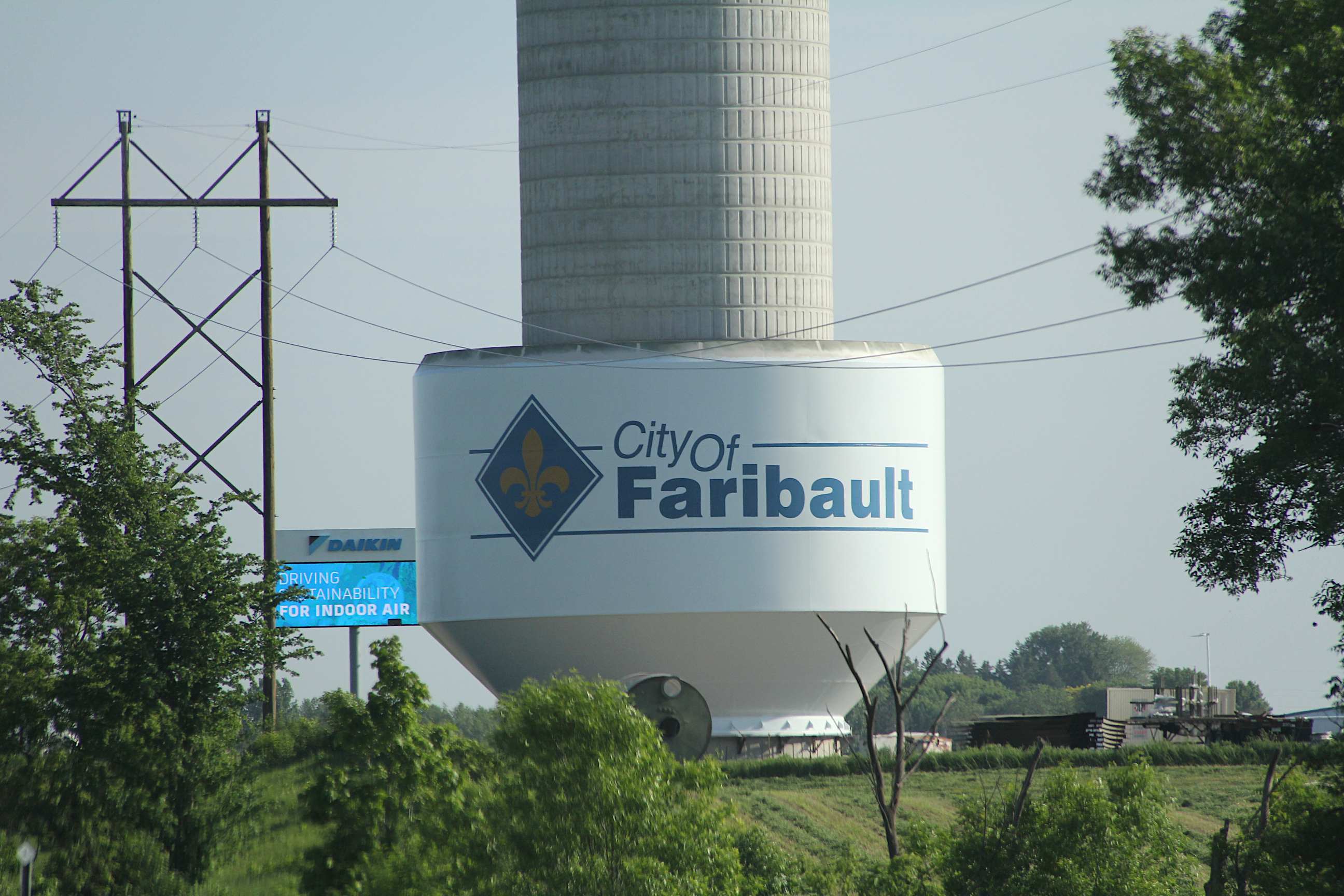
Approaching the new City of Faribault water tower, northbound on Interstate 35. (Minnesota Prairie Roots copyrighted photo taken on June 1 from the front passenger seat)
WATER TOWERSAND GRAIN ELEVATORS. They are the defining landmarks of rural communities, the structures that rise high above the land, marking a place. In my native southwestern Minnesota, where the land stretches flat and far with infinite sky, you can see water towers and grain elevators from miles away.
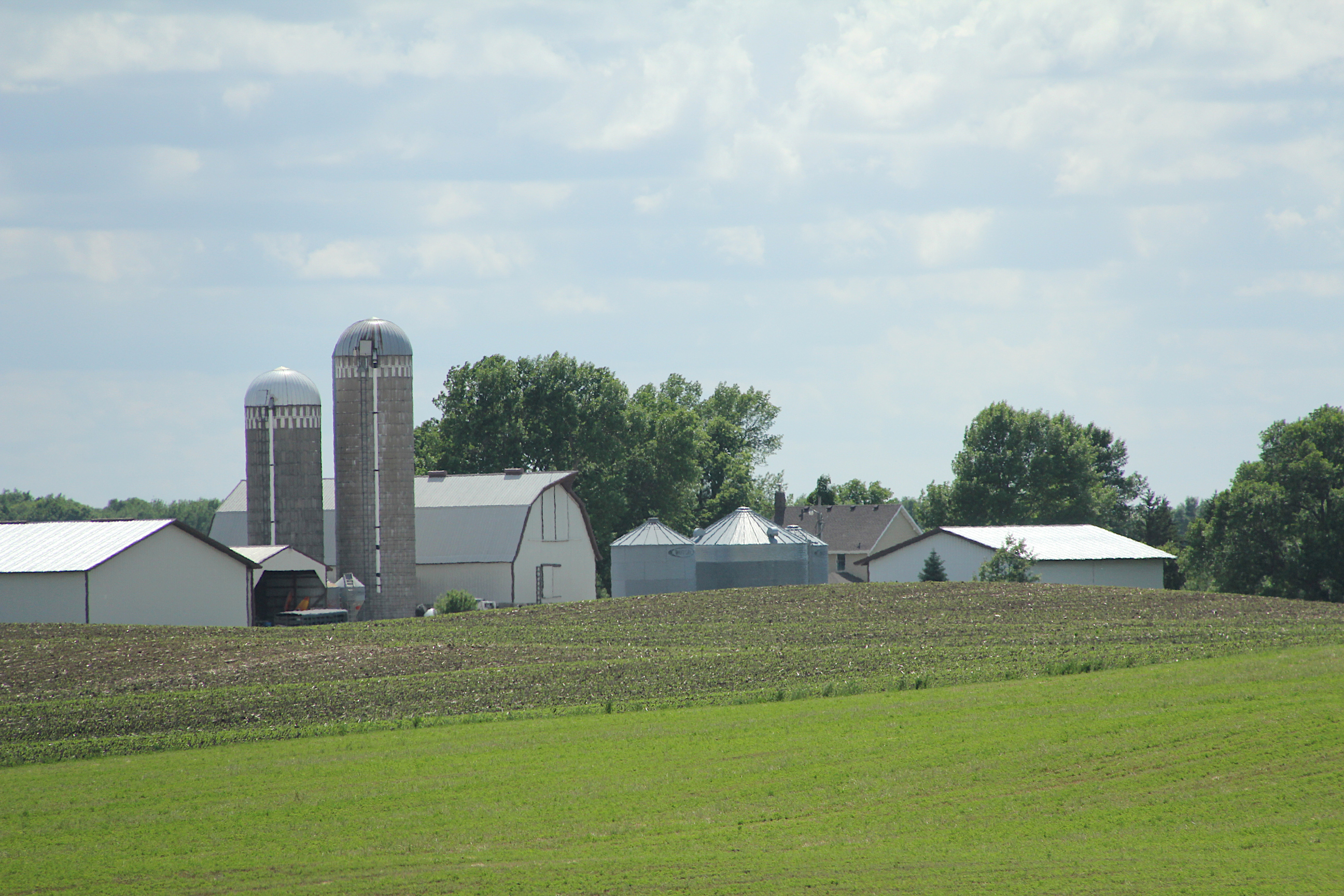
Rice County remains rural at its core. (Minnesota Prairie Roots copyrighted photo June 2023)
Long ago I left the prairie to settle in a region with a more diverse topography and a heckuva a lot more trees, lakes and people. I appreciate Rice County, my home of 41 years, with its geographical and human diversity.
Alfalfa dries in rows next to the water tower aside I-35. (Minnesota Prairie Roots copyrighted photo June 2023)
Faribault, population nearing 25,000 (big by my standards), is located along Interstate 35 an hour south of Minneapolis. To travelers, it likely seems just another unidentifiable city along the endless four-lane. Another place to pass en route to wherever.
A view of the water tower heading southbound on I-35. (Minnesota Prairie Roots copyrighted photo June 2023)
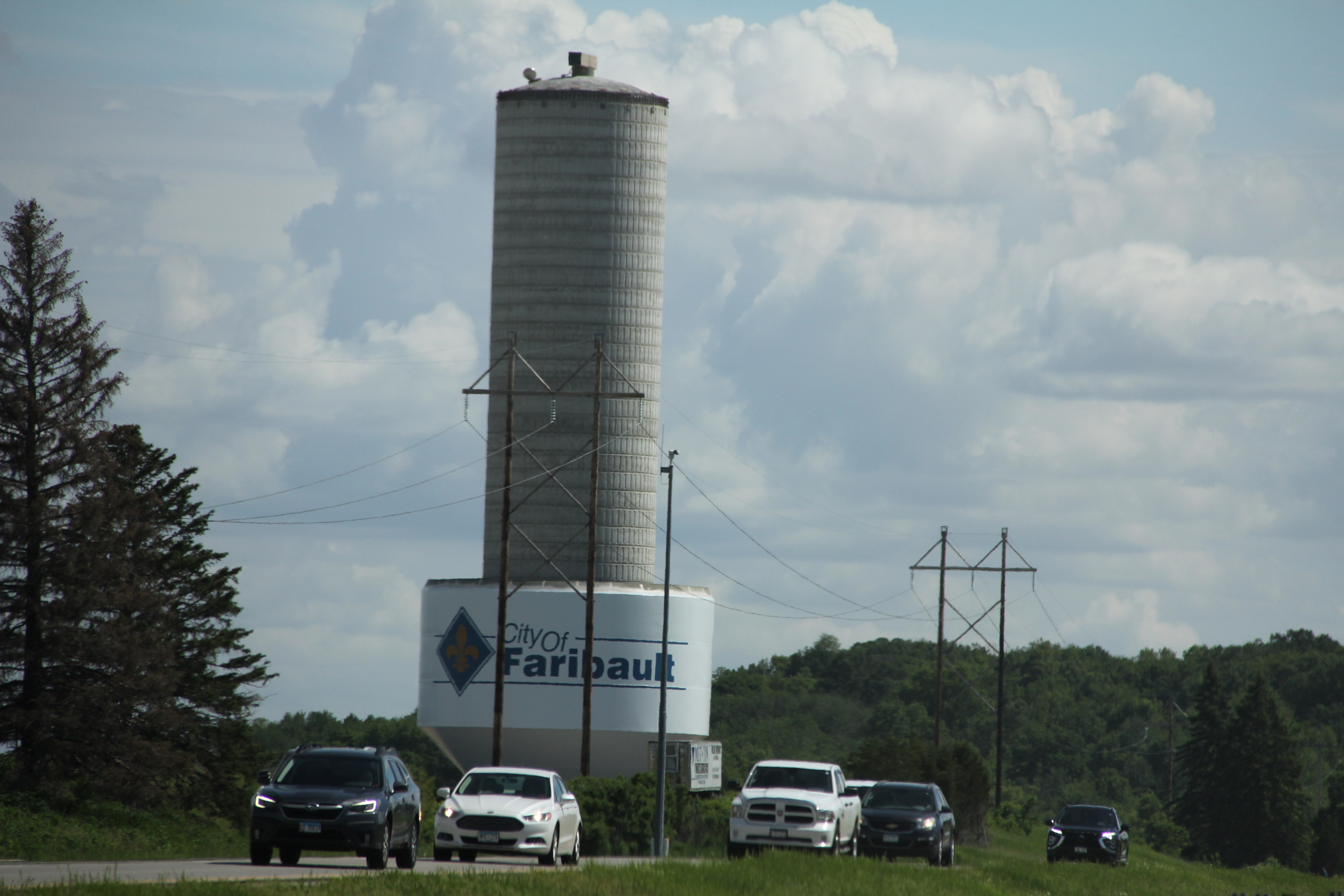
Now a new water tower rising aside I-35 a few miles north of Faribault will clearly identify my community. From the interstate, I’ve watched progress on the 750,000 gallon water storage silo that will serve the growing industrial park. The city received a $2 million grant from the Business Development Public Infrastructure Program through the Minnesota Department of Employment and Economic Development to help fund the estimated nearly $4 million total project.
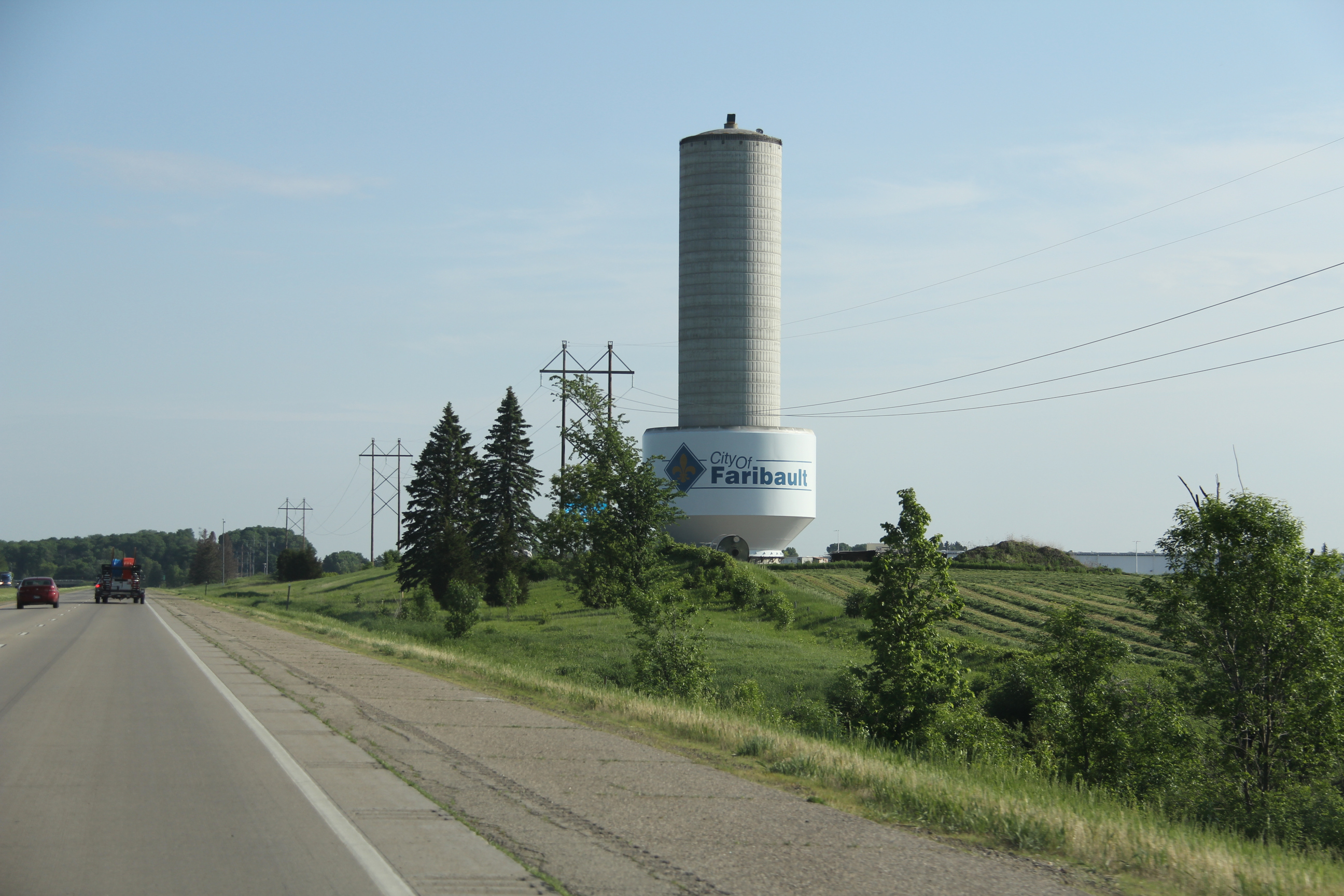
Faribault’s symbol graces the new water tower. (Minnesota Prairie Roots copyrighted photo June 2023)
Recently, City Of Faribault and the city logo, a fleur de lis, were painted onto the top of the tower, which currently sits at the base. It’s a simple, memorable design that is Faribault’s signature signature. The graphic, which resembles a lily and was often used by French royalty, honors the French heritage of town founder Alexander Faribault. It should be noted that he was also of Dakota heritage.
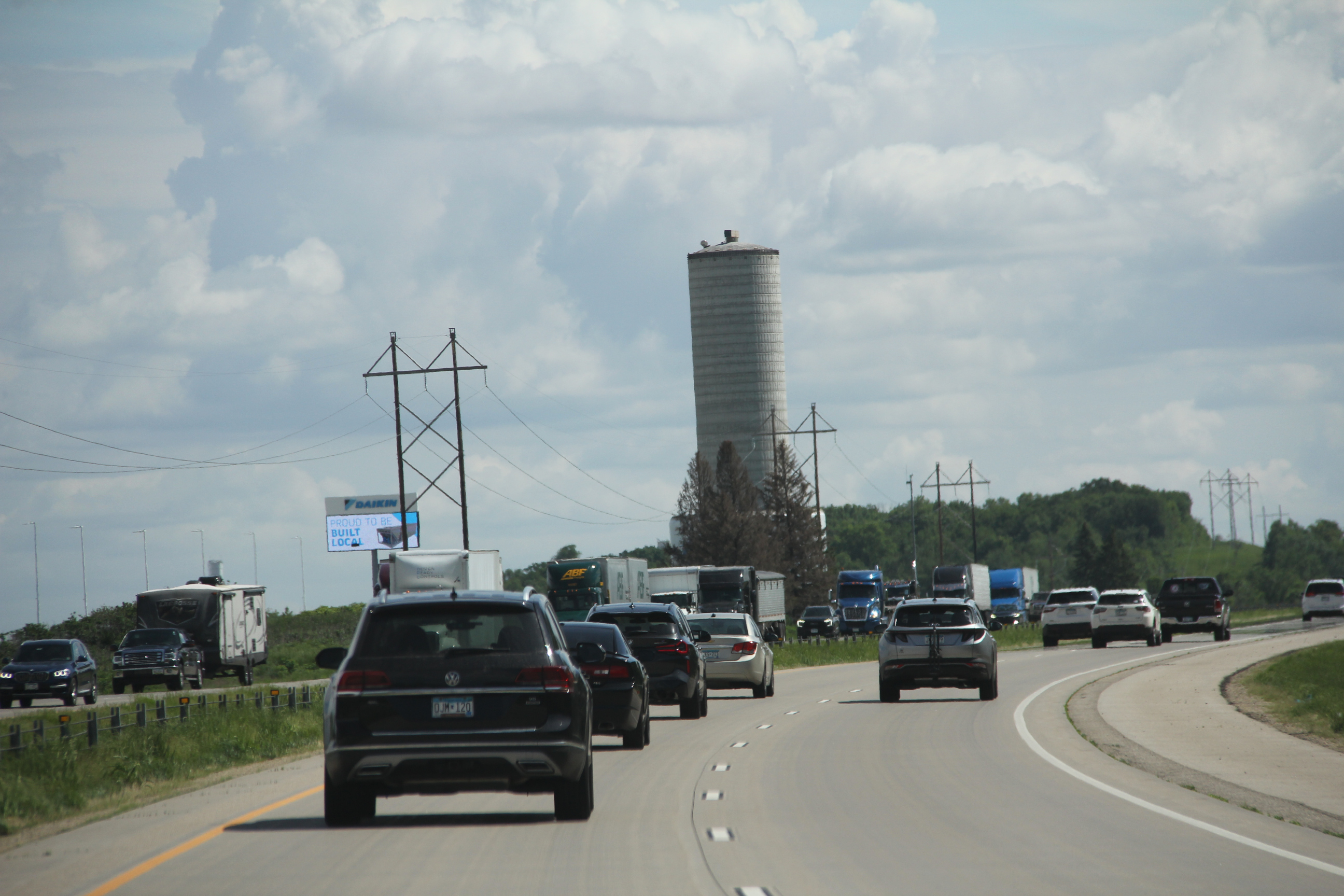
Northbound I-35 traffic passes the new City of Faribault water tower. (Minnesota Prairie Roots copyrighted photo June 2023)
I like the fleur de lis. It’s artistically-pleasing, elegant, timeless, a classy symbol I’ve come to associate with my community of Faribault. Now, for anyone passing by on I-35, that flourish of gold on the water tower accented by blue will flag Faribault. Even here, far from the prairie, water towers are more than just functional. They identify a place, on the land, under the sky.
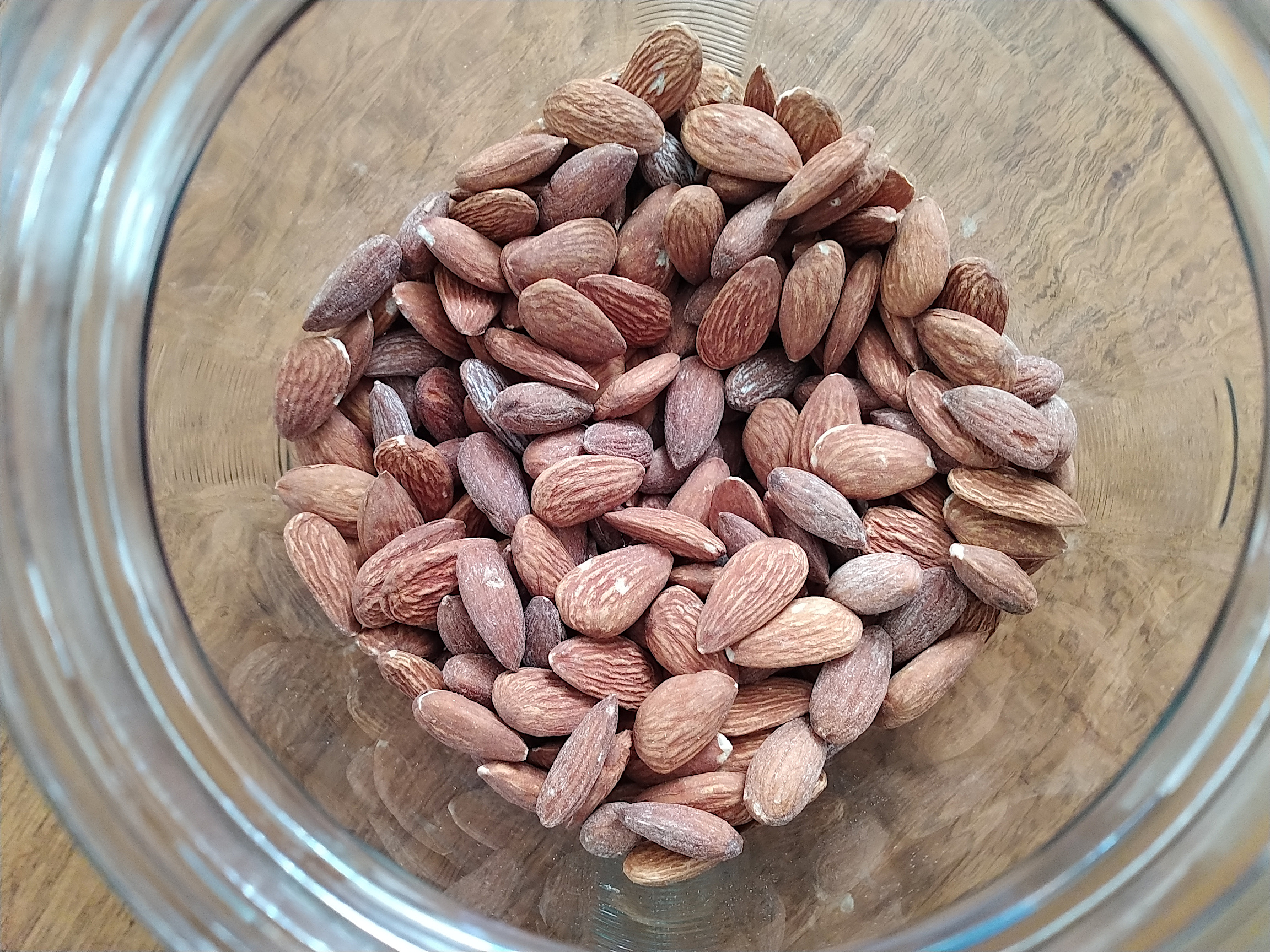
Almonds in a jar, our healthy snack food. (Minnesota Prairie Roots copyrighted photo June 2023)
I AM A SENSITIVE SOUL. I am also a wordsmith. Combine the two and you get someone who responds with sensitivity to words. That’s me. Use inappropriate words in certain contexts and my emotions flare.
For example, I don’t like the words crazy, insane and nuts when applied in general to how someone is acting. If you’re talking about actual nuts, like peanuts, walnuts or almonds, nuts is appropriate. Apply it to human behavior and you have overstepped the boundaries of fitting word usage in my opinion.
You can be crazy with joy, meaning excessively joyful. I’m good with that. But if someone terms another person crazy, I recognize that for what it is, a hurtful label. Ditto for insane.
For anyone with a mental illness, especially, and for others, words like crazy and nuts sound offensive. I can’t think of any other illness with such associated disrespectful words that are loosely used in everyday life.
And then there’s the intentional use of hurtful words. A southern Minnesota craft brewery, whose name and location I choose not to share here (but which I feel needs some education by the National Alliance on Mental Illness), claims “Crazy Good Beer” with names that are spin-offs of mental illnesses. Hopzophrenia IPA. Catatonic Cream Ale. Manic Black Lager. Clever marketing or humorous, you might say. Me? Nope. This sensitive soul finds these names degrading/mean/offensive/insensitive to anyone diagnosed with and managing a mental illness.
What if, for example, the beers were spin-offs tied to cancer? Chemo Juice. Black Lung Lager. Radiated Raspberry Sour. And so on. I expect the response would be loud, and not in a good way. But it’s alright to name beers after schizophrenia, depression, bi-polar…? Nope. Not OK.
I’m not picking on this small town brewery. I expect these are fine, hardworking folks dedicated to the craft of brewing beer. Rather, it’s one public example of inappropriate word usage and the importance of recognizing the power of words.
Words matter, sensitive wordsmith or not.
THOUGHTS? Any words that spark a negative reaction in you?
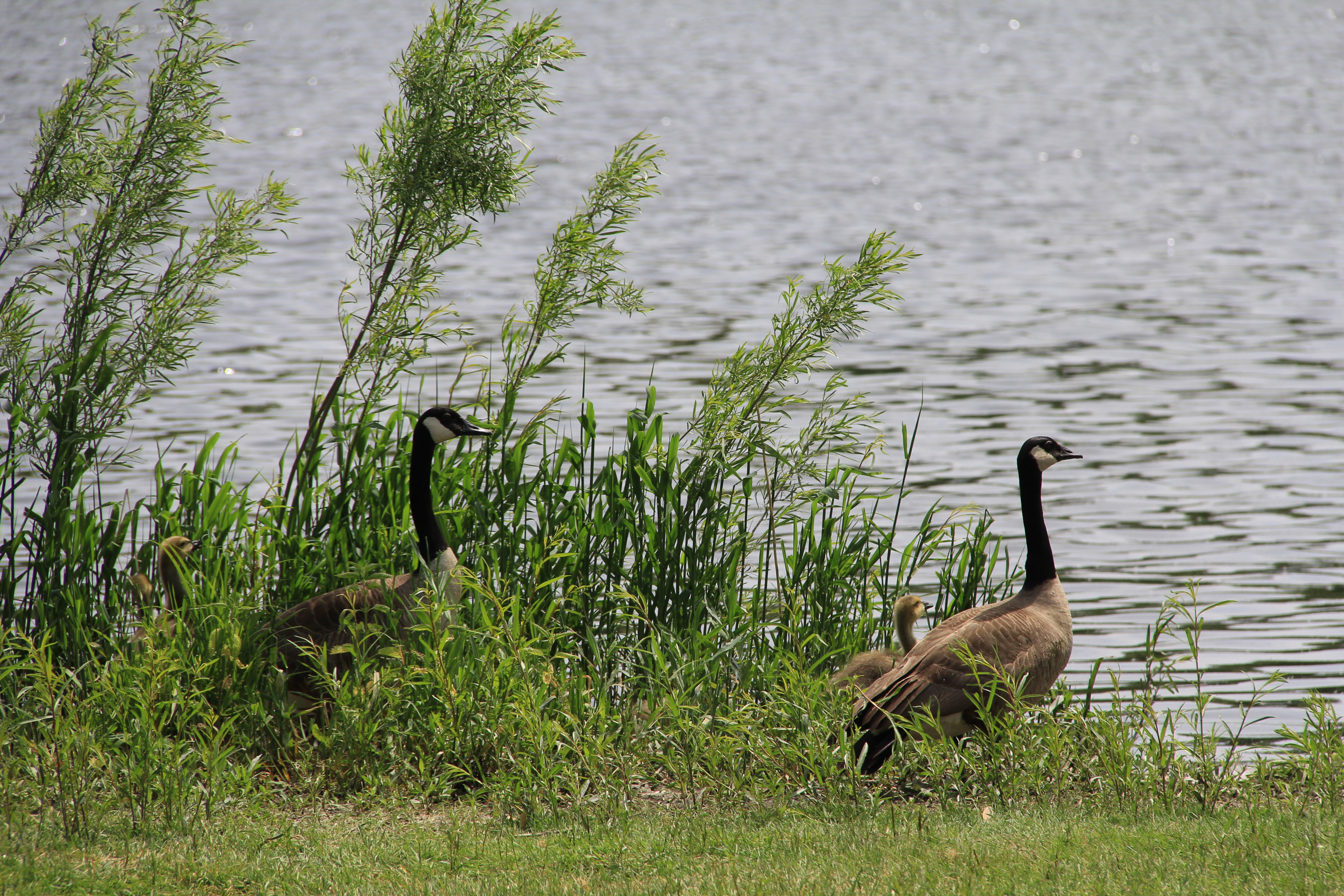
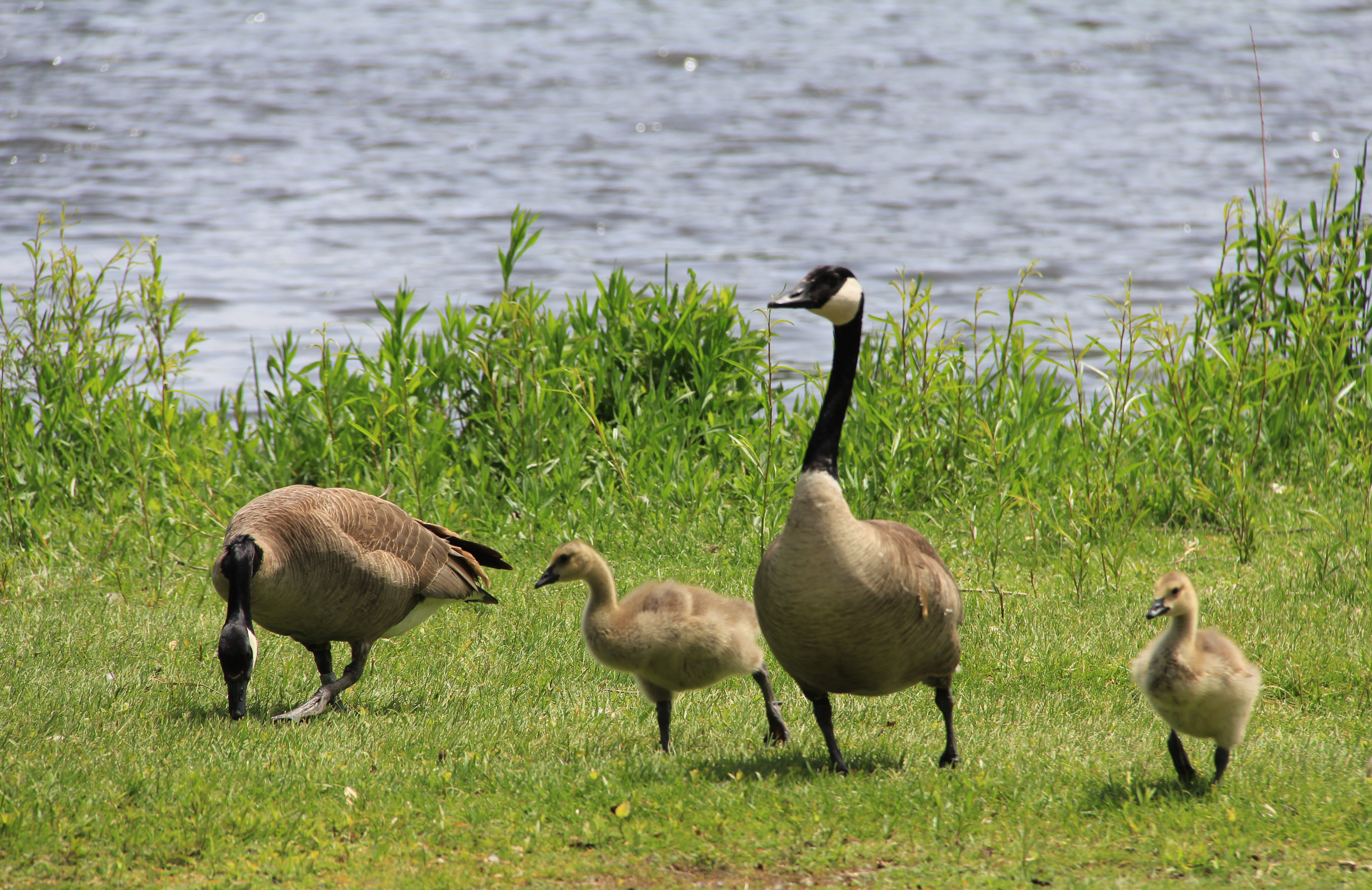
A family of Canada geese emerge from the grass growing along the Cannon River in Faribault. (Minnesota Prairie Roots copyrighted photo May 2023)
EACH SPRING I ANTICIPATE the appearance of newborn ducks and geese in the wild. There’s something about these waterfowl that appeals to me. Perhaps it’s the cuteness factor. Or maybe it’s the reassurance that, despite the ever-changing chaotic world, some things remain constant. Eggs hatch. Ducklings and goslings emerge. And the cycle of life continues.
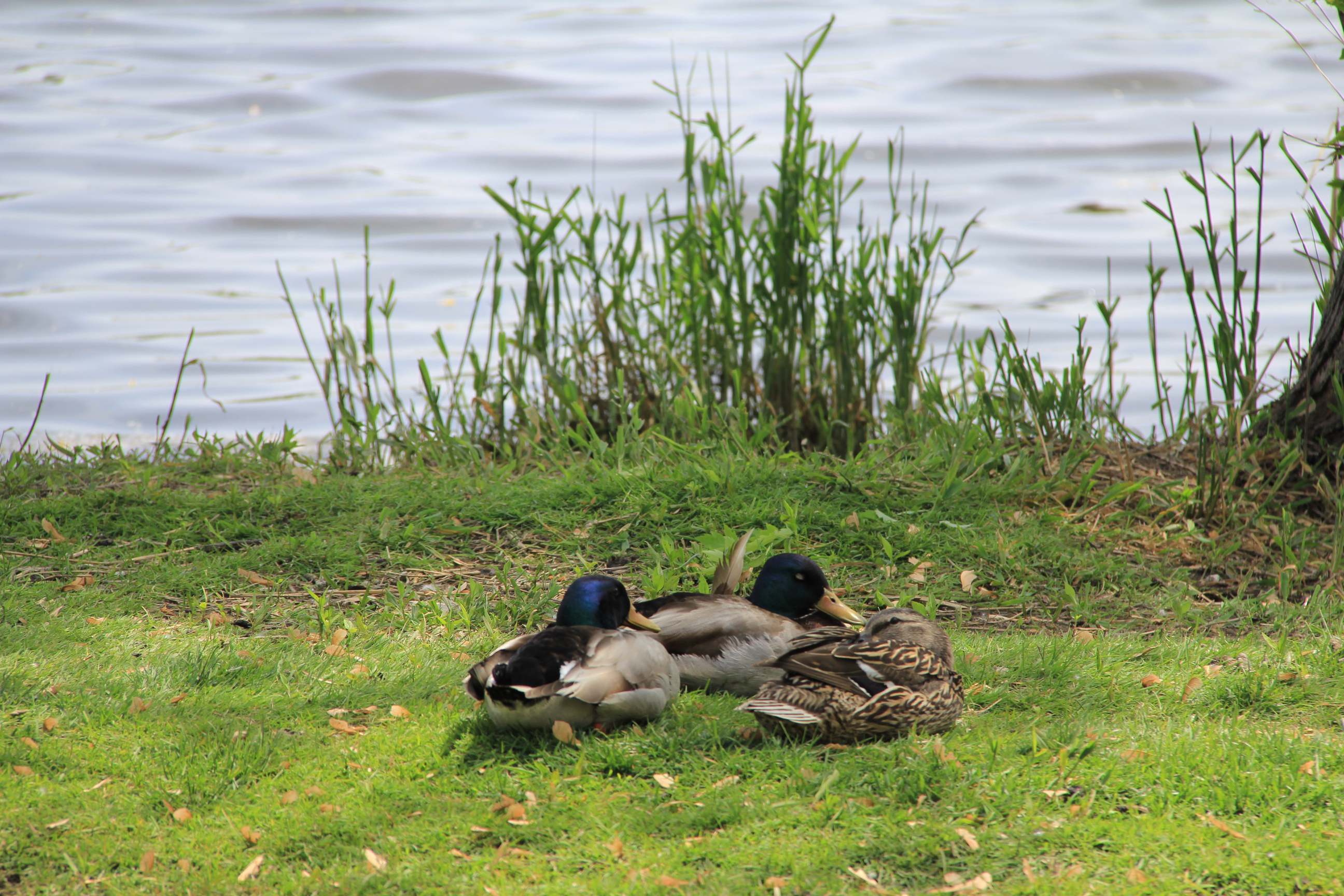
I spotted adult mallard ducks, including these drakes and hen, but no ducklings. (Minnesota Prairie Roots copyrighted photo May 2023)
This year I was a bit late getting down to North Alexander Park in Faribault, a prime viewing spot along the Cannon River for an adaptation of Robert McCloskey’s children’s picture book, Make Way for Ducklings. The book won the Caldecott Medal in 1941 and is a beloved classic about a duck family in Boston.
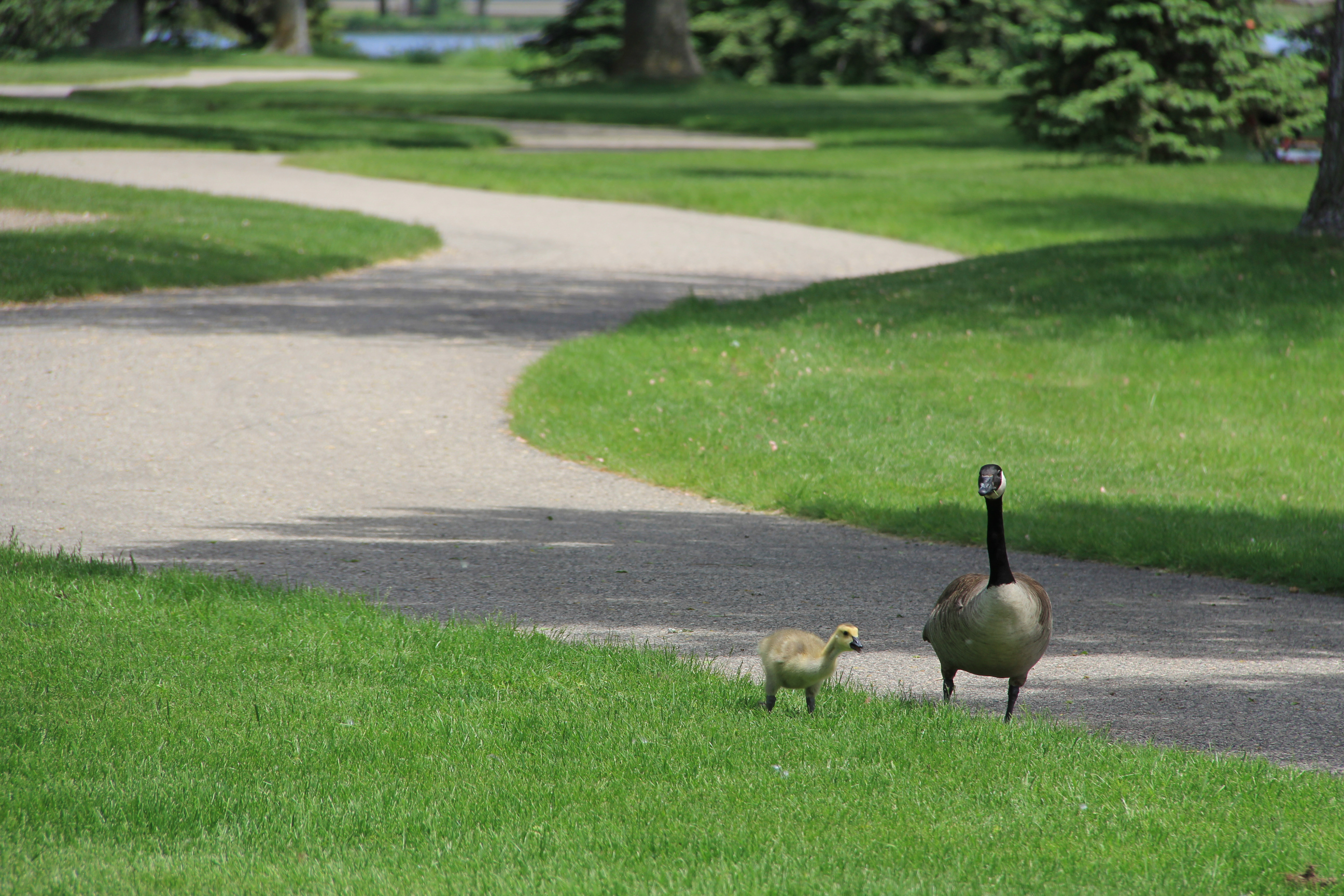
Parent and baby gosling along the recreational trail in Faribault’s North Alexander Park. (Minnesota Prairie Roots copyrighted photo May 2023)
On the recent day I went duck and goose hunting with my camera here in Minnesota, far from Boston, I found only goslings. No ducklings. I approached with caution. I’ve learned from experience that Canada geese are aggressively protective of their young. I already hold childhood trauma from enduring vicious rooster attacks. I don’t need to add to that.
I kept my distance from the goose family, relying on my telephoto lens to take me closer. (Minnesota Prairie Roots copyrighted photo May 2023)
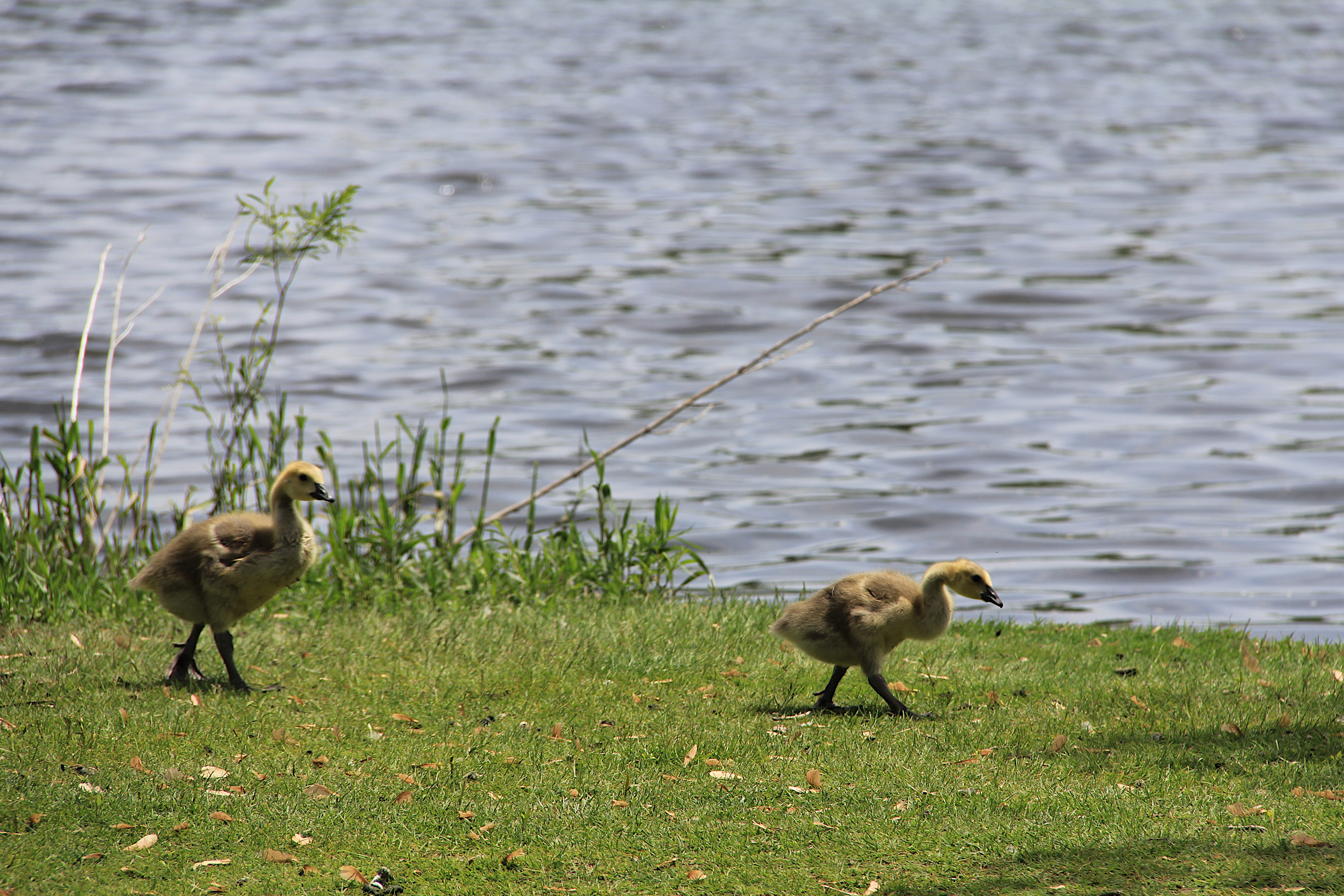
And so I watched and focused, thankful for my zoom lens which allowed getting close to the geese without getting close. The young ones appeared to be at teenage stage, rather than vulnerable baby stage. Thus my trust of even the youngest rated zero.
Determined goslings assert their independence. (Minnesota Prairie Roots copyrighted photo May 2023)
I was fully aware that the geese were aware of my presence. People occasionally toss bread to waterfowl here (something I wish they wouldn’t do), so they may have expected a hand-out. Not from me. I was simply there to observe and document while dodging excrement, one of the hazards of stepping into a Robert McCloskey scene.
Despite the caution, despite the need to watch my step, I will continue to delight in this annual rite of spring which draws me to the banks of the Cannon River in southern Minnesota. Far from Boston.
A turtle, rather than a tortoise, used for illustration only. (Minnesota Prairie Roots copyrighted file photo June 2020)
I TOOK A FIELD TRIPTODAY. Not the fun sort like my granddaughter, Isabelle, took Thursday to see a performance of “The Adventures of Tortoise and Hare” at the Ordway in St. Paul. Rather mine was into the outdoors, outside a physical therapy office in Faribault.
Friday marked my seventh vestibular rehab therapy session with Ryan at Courage Kenny. I started weekly therapy in mid April after being diagnosed with vestibular neuronitis and Meniere’s Disease. These are complex diagnoses which affect the vestibular system in my right ear. (Click here to read an earlier blog post that details my many symptoms.) Basically, therapy is retraining my brain to handle the deficiencies I’m now experiencing due to damage to my eighth vestibular nerve. And to think this all started with a viral infection in January.
Back to today. Typically I meet with my physical therapist in a small room where we review my symptoms and progress and I learn, and practice, new exercises. Last week we ventured into a long hallway so I could walk back and forth, moving my head from side to side and then up and down. I didn’t do so well, veering to the left and into the wall. But I practiced at home all week, as I do all exercise homework Ryan assigns, and I felt I was doing better. I am determined to do everything I can to reclaim my life, or at least some version of what life was before these health issues.
A scene at Falls Creek County Park, rural Faribault, used for illustration only. (Minnesota Prairie Roots copyrighted file photo May 2022)
OK, WE’RE TAKING THIS OUTSIDE
Then Ryan announced we were going outside to try this walking and head turning activity on the sidewalk. I started out not so well, again steering left. Being outdoors added sensory input I wasn’t used to experiencing inside a small room. This exposed me to a real world environment. One with chirping birds and traffic and people crossing the parking lot and trees and clouds. Just a whole lot for my brain to try and manage. Once I’d semi-managed the sidewalk, we moved onto the lawn. Another new landscape to take in while I moved my head and attempted to walk a straight line.
That was my field trip. A change-up from a controlled environment. My ability to handle my symptoms has assuredly improved with therapy as Ryan nudges me to push myself more. And I am. I’m out and about some now, trying to do things I once didn’t think twice about doing. Trips to the grocery store, big box stores, a walk in the park, doing photography, simply being among people. It’s not always easy, especially when symptoms flare. Sometimes I fail. I recognize my limits. That includes time on the computer. Too much online time and my head begins to hurt, my vision blurs, I see double. Because of that, I’ve been publishing fewer blog posts.
This is how I feel sometimes. Artwork close-up by Bill Nagel. (Minnesota Prairie Roots copyrighted file photo)
Each month Beth Ann chooses a different group or nonprofit to feature and support with a financial gift. I was humbled by her desire to increase awareness of vestibular issues. And, bonus, she enlightened me about the Vestibular Disorders Association which, at quick glance, will be a valuable resource as I navigate my diagnoses. I feel validated just scrolling through the website, like I want to shout, “This is real! This isn’t just in my head. It really, truly is in my head!”
Merchandise vended by an international singing group that performed in Faribault and used for illustration only. (Minnesota Prairie Roots copyrighted photo July 2014)
GOING TO CHINA WITHOUT GOING TO CHINA
Earlier this week I endured an MRI per my neurologist’s orders to assure nothing else is going on inside my brain besides the already-known. I get results on Wednesday. He’s confident nothing additional will be found and I hope he’s right. While in that machine for an hour trying to manage the blasts of overpowering noise (I’m hypersensitive to sensory input), I remembered Ryan’s advice to “dig deep” to get through the procedure. I think I dug a hole all the way to China.
Next week I will need to dig deep again to get through another hearing test, followed by an appointment with the ENT given persistent, intermittent ear pain and more. I’m documenting my symptoms (once a reporter, always a reporter). And I’m hoping for answers as I press onward, preferring not to travel internationally again.
The gravel road past our friends’ Rice County farm. (Minnesota Prairie Roots copyrighted photo May 2023)
EVERYONE OUGHT TO OCCASIONALLY take a drive into the countryside along back county roads and gravel roads trailing dust. It’s good for the soul, spirit and mind to route into a quiet place defined by fields and farm sites. Away from town. Away from houses clumped together in blocks. Into a wide open place where land and sky meet and space seems infinite.
Randy and I found all of that recently as we drove east of Faribault, passing fields sprouting corn, farm sites nudging the highway. We aimed toward our friend Barb and Bob’s farm, invited there to harvest rhubarb. It’s an annual spring rite for us.
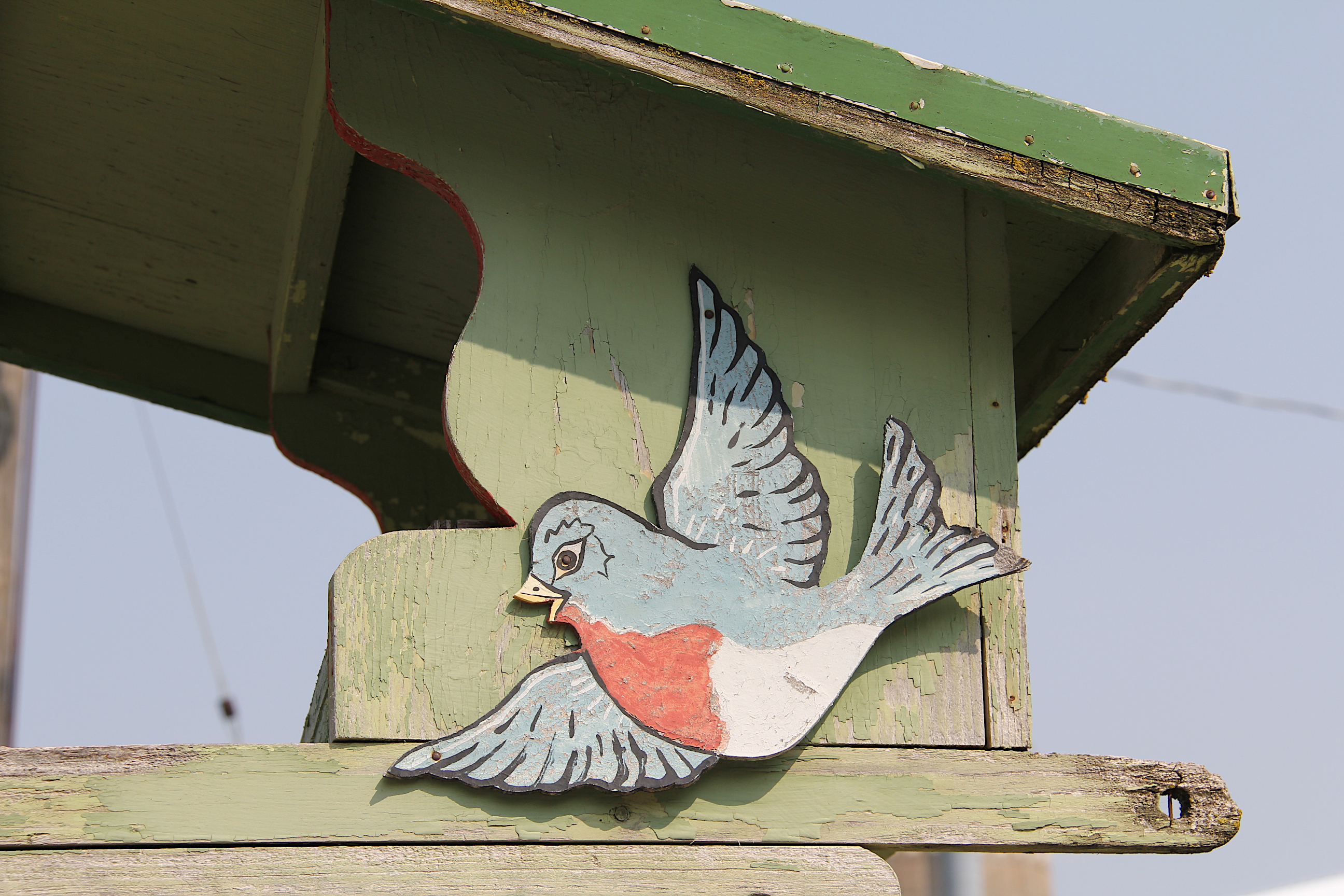
Bird folk art. (Minnesota Prairie Roots copyrighted photo May 2023)
But for me, this is about much more than gathering rhubarb. It’s about enveloping myself in the peacefulness of rural Minnesota. When only the trill of birds, the roar of a tractor and conversation with our friends break the silence, I feel utterly, contentedly at home. I feel grounded and rooted and connected and transported back to the farm of my youth, albeit 120 miles to the west.
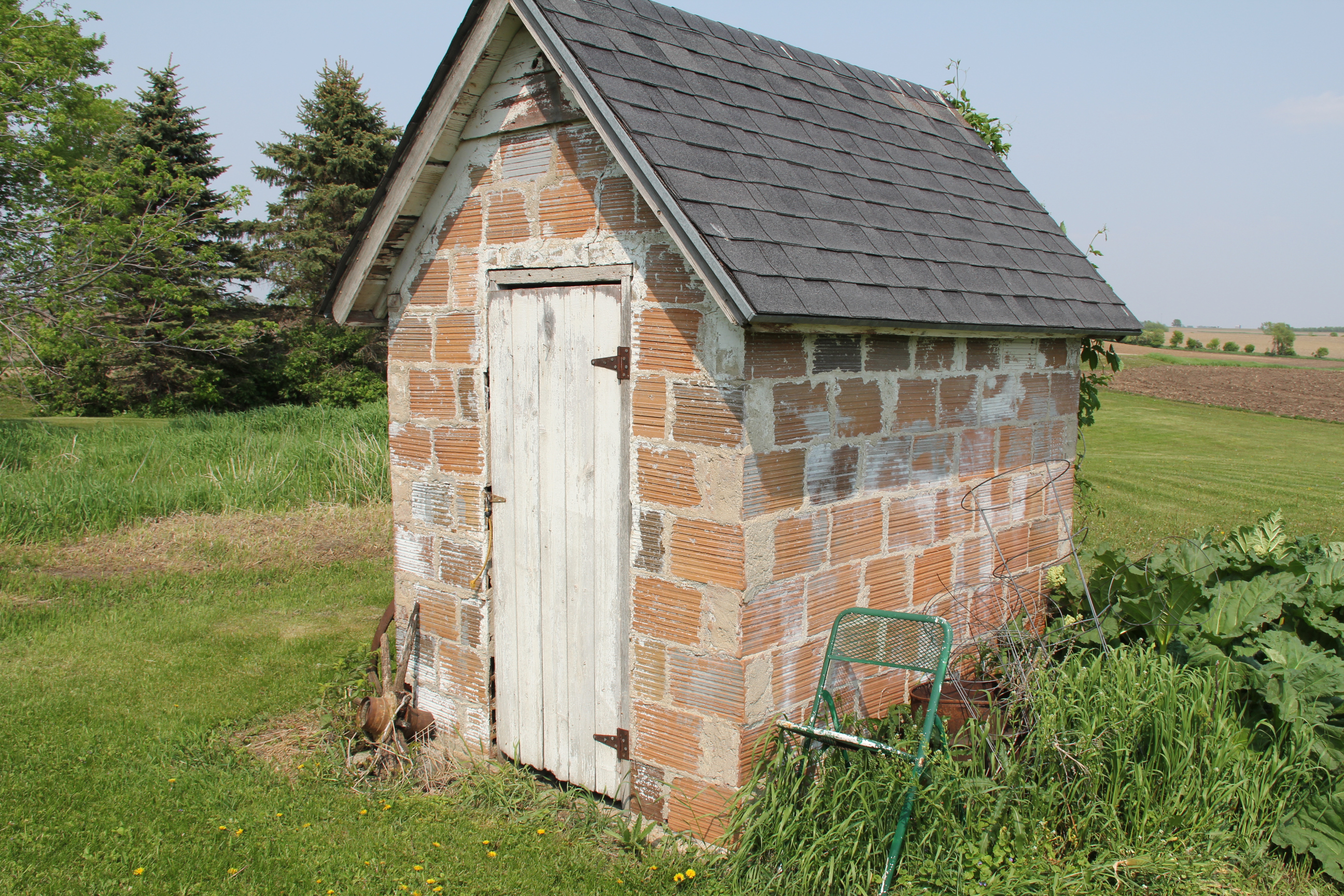
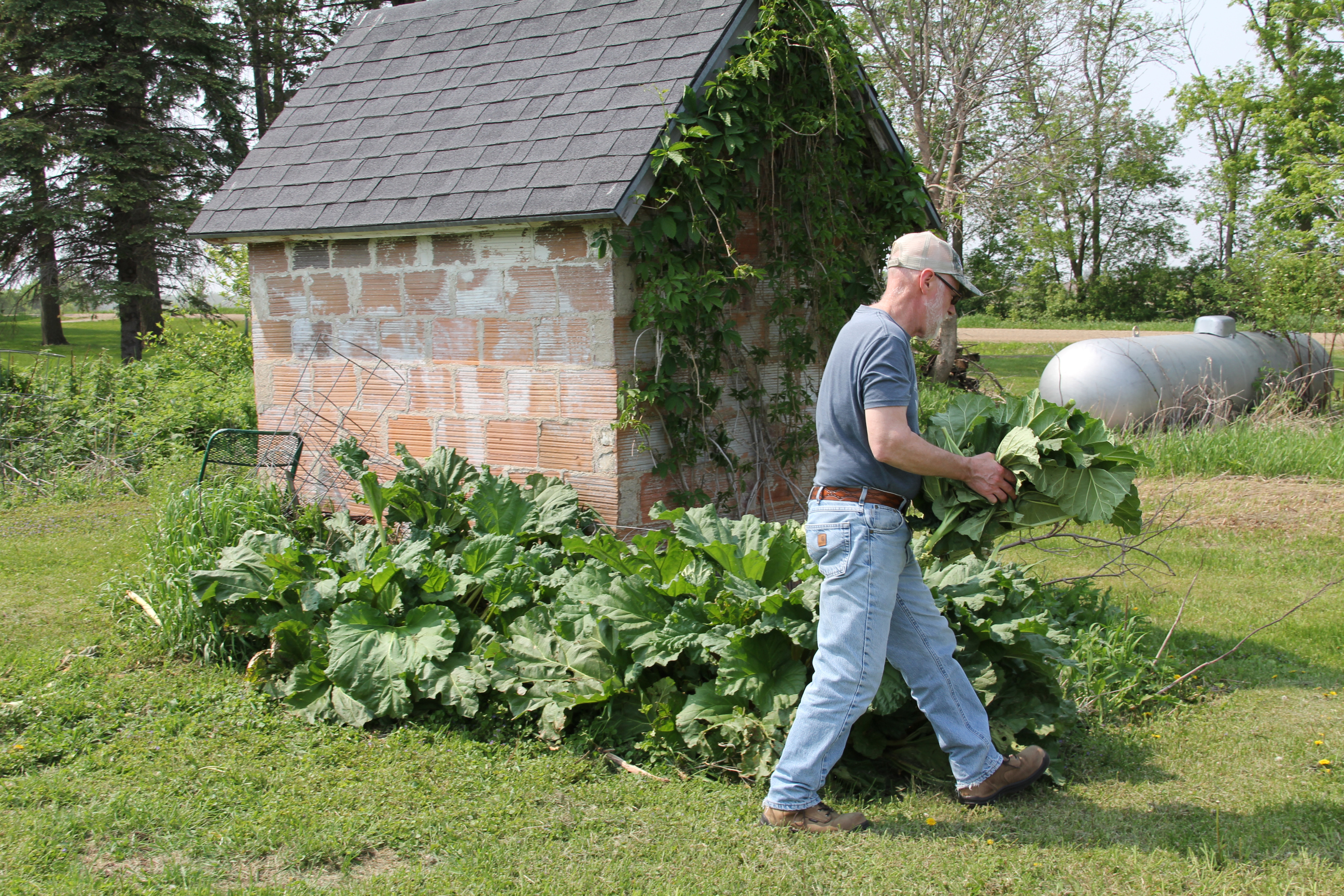
Formerly a smokehouse, this is now used for storing gardening tools. The rhubarb patch flourishes alongside the aged building. (Minnesota Prairie Roots copyrighted photo May 2023)
I never pull a single stalk of rhubarb from the patch next to the aged clay block smokehouse. While Randy harvests, I roam. With my camera.
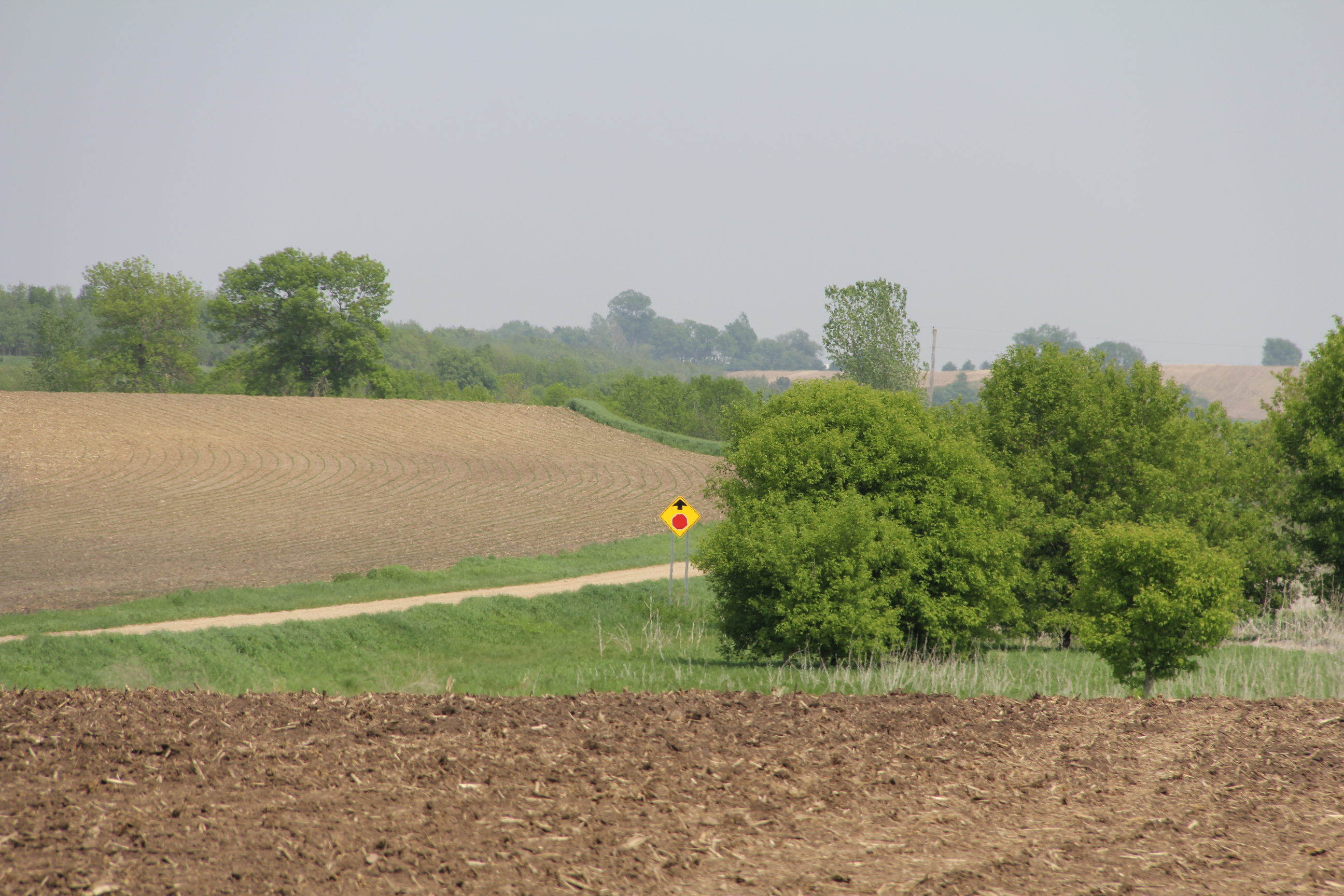
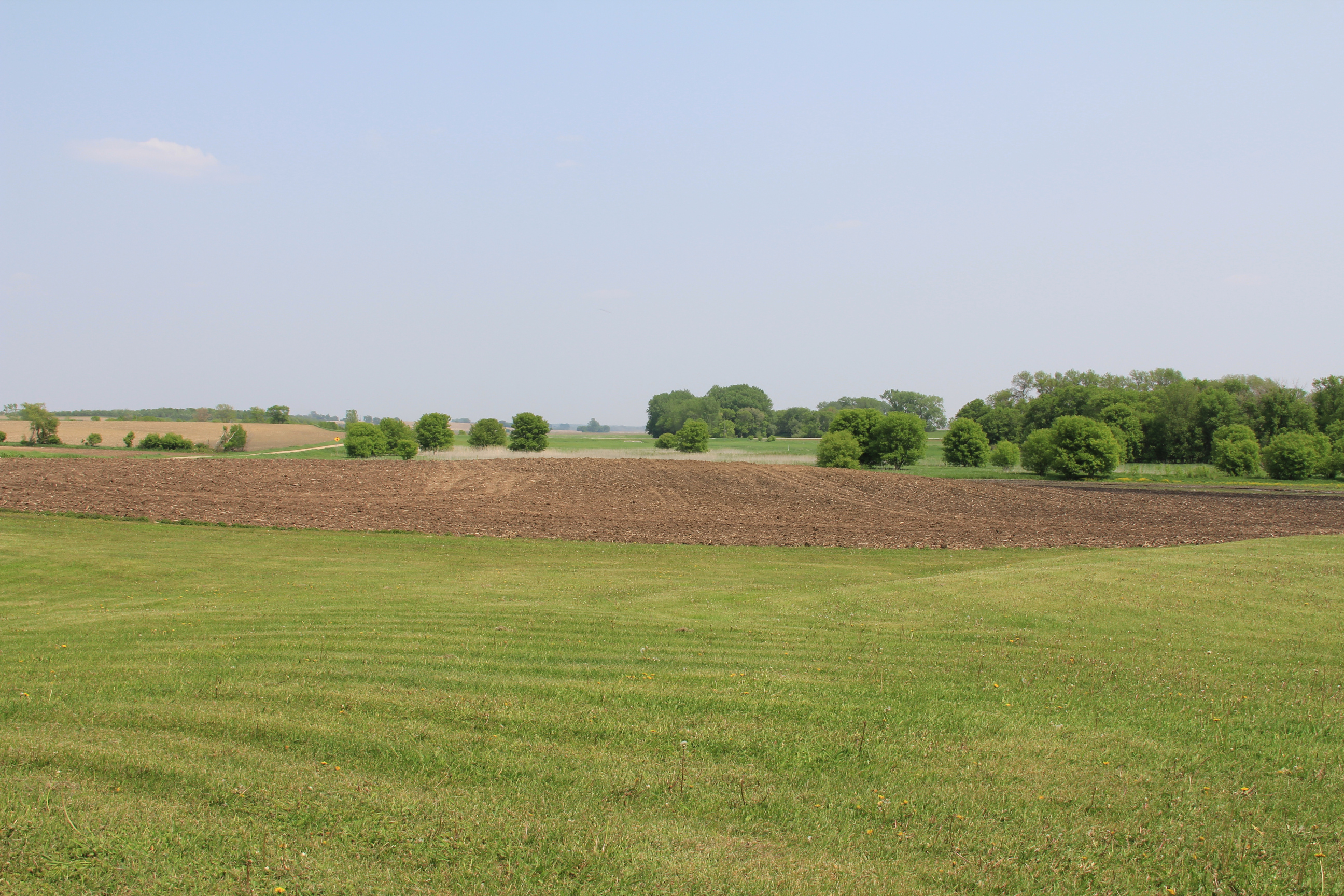
Beautiful rural Rice County, east of Faribault. (Minnesota Prairie Roots copyrighted photo May 2023)
First, I pause to take in the rural landscape—fields, trees, gravel road below a clear blue sky. Oh, place of my heart.
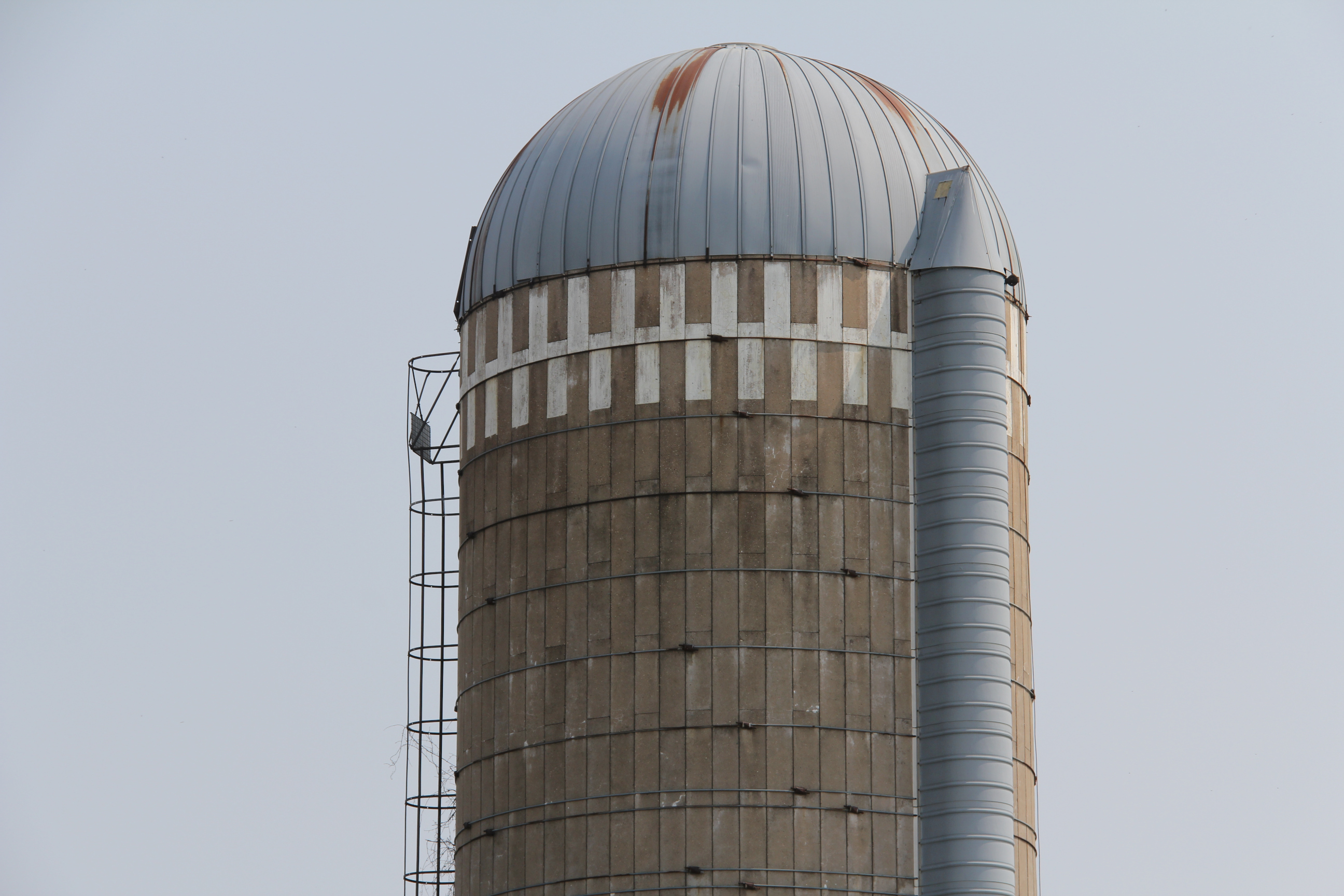
A familiar rural site, a silo. (Minnesota Prairie Roots copyrighted photo May 2023)
Then I head toward the silo towering over the farm site. Many times I climbed the ladder into the silo back on my childhood farm to fork silage and toss it down the chute to feed the cows. It was hard, smelly work. But when you worked on a dairy, livestock and crop farm 60-plus years ago, chores were labor intensive.
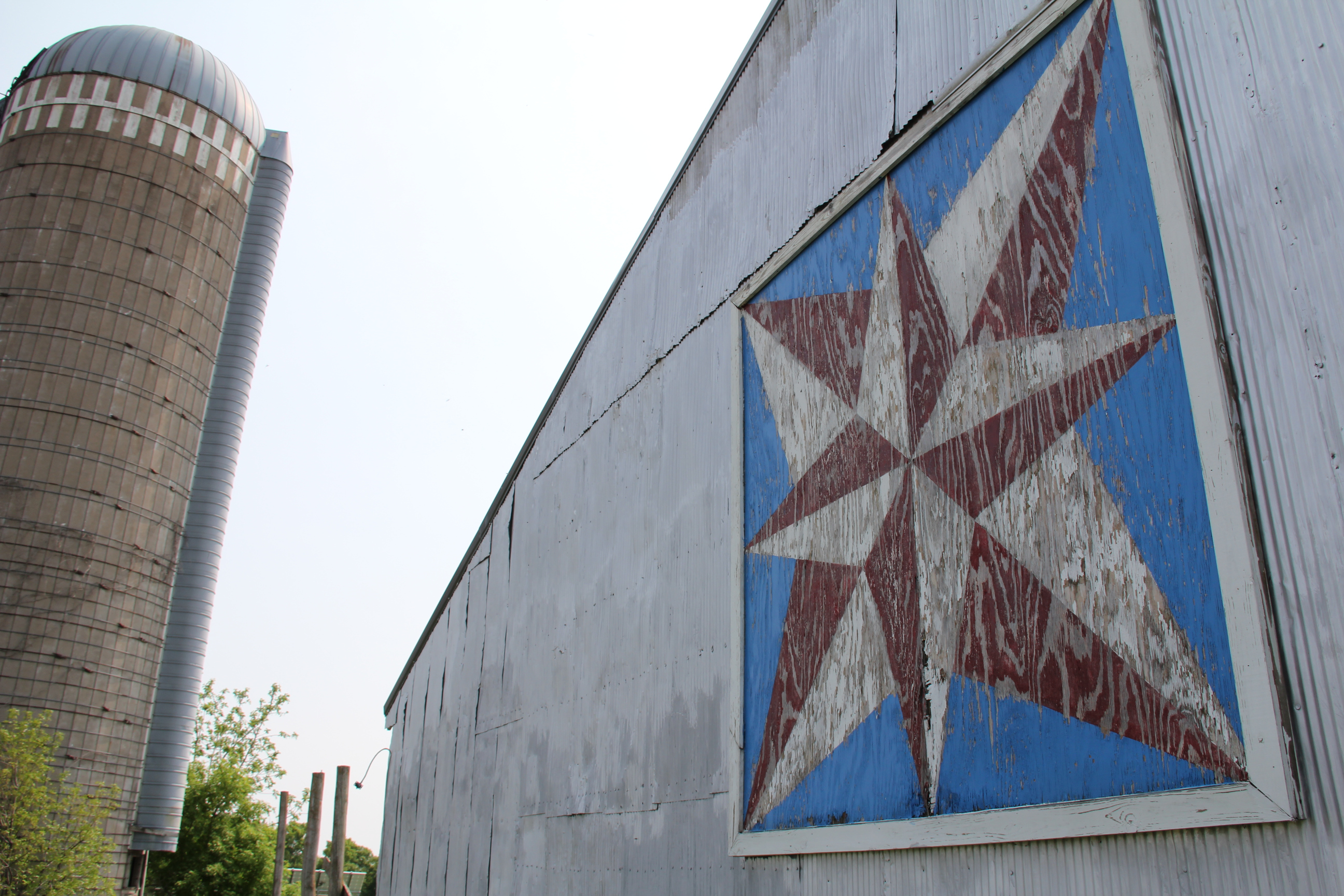
Barb’s “Star Shadow” barn quilt. (Minnesota Prairie Roots copyrighted photo May 2023)
From the silo, I turn my focus to the weathered plywood quilt block square displayed on the side of a tin-covered pole shed. The artwork, “Star Shadow,” honors Barb’s passion for quilting. It’s a nice addition to the building. I like barn quilt art, which surged in popularity perhaps a decade or more ago. There are places in Minnesota, like the Caledonia area in Houston County, where you can take a self-guided tour and view 59 barn quilts. For my generation, especially, quilts are part of our family history. Patchwork quilts layered beds, providing warmth on frigid Minnesota winter nights. I cherish remembrances of my paternal grandmother’s quilt tops, quilting frame and the quilts she gifted to me and all of her 40-plus grandchildren.
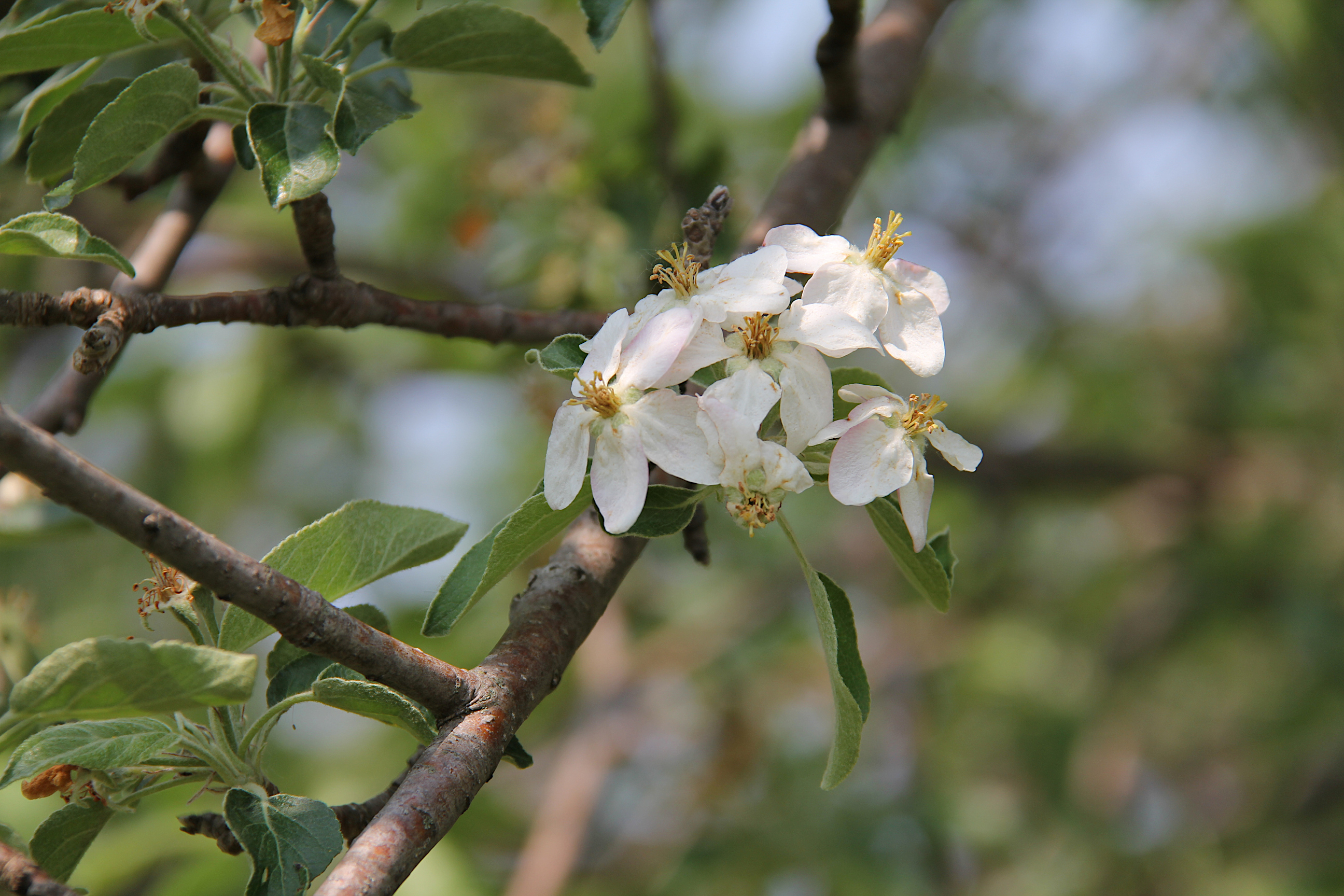
Apple blossoms. (Minnesota Prairie Roots copyrighted photo May 2023)
This visit to Barb and Bob’s farm brings back so many memories. I wander among the apple trees, most blossoms spent, and watch an elusive Monarch butterfly flit among the branches. I can almost taste the sweetness of apple jelly spooned onto buttered toast.
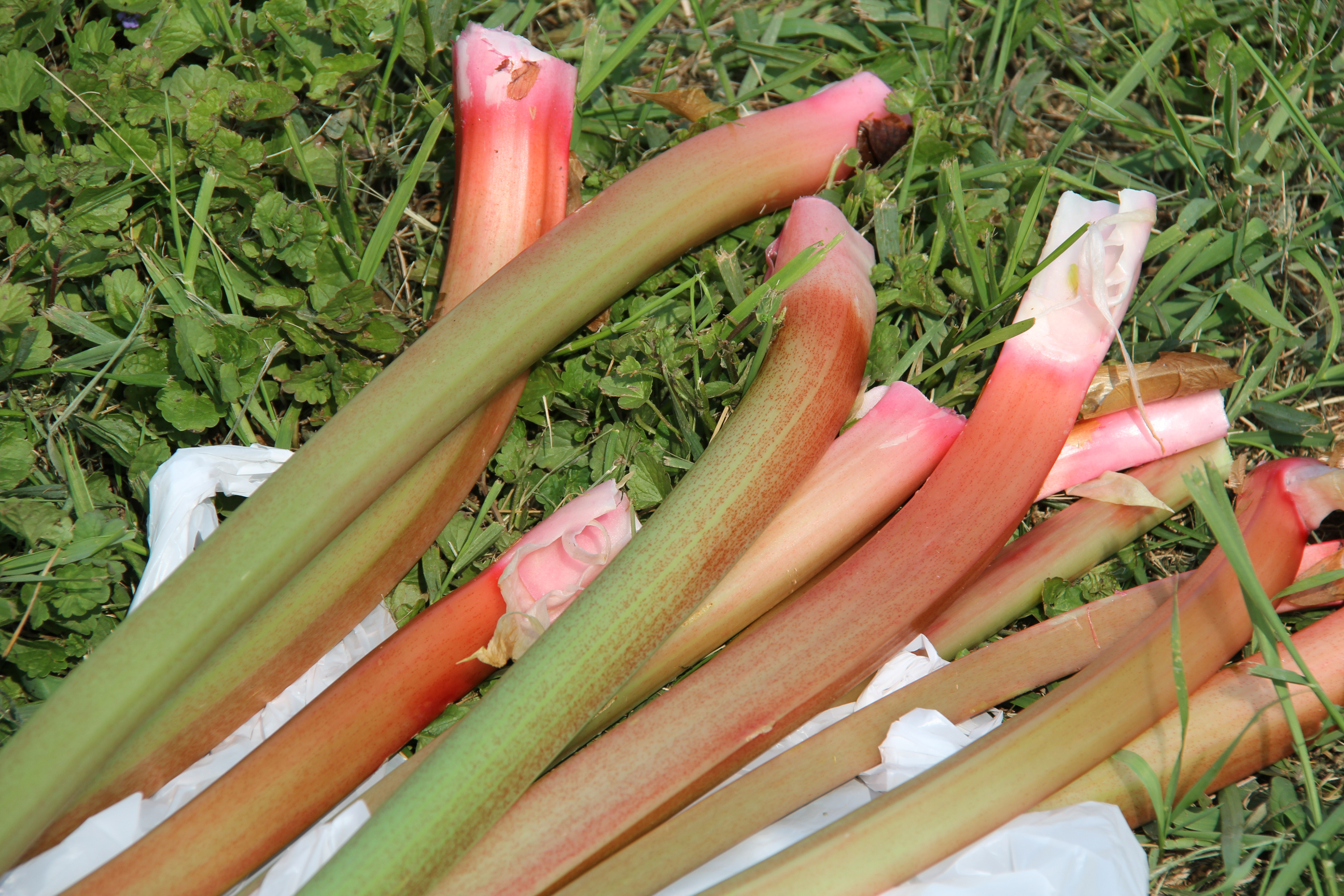
The growing pile of rhubarb. (Minnesota Prairie Roots copyrighted photo May 2023)
I check in with Randy, who hasn’t called me to help with the rhubarb harvest. He understands the pull I feel to photograph. Via photography, I notice details and that is such a gift. He’s gathered a growing stash of thick green stalks tipped in pink. Rhubarb seems such a humble fruit. Perfect for crisp, sauce or pie.
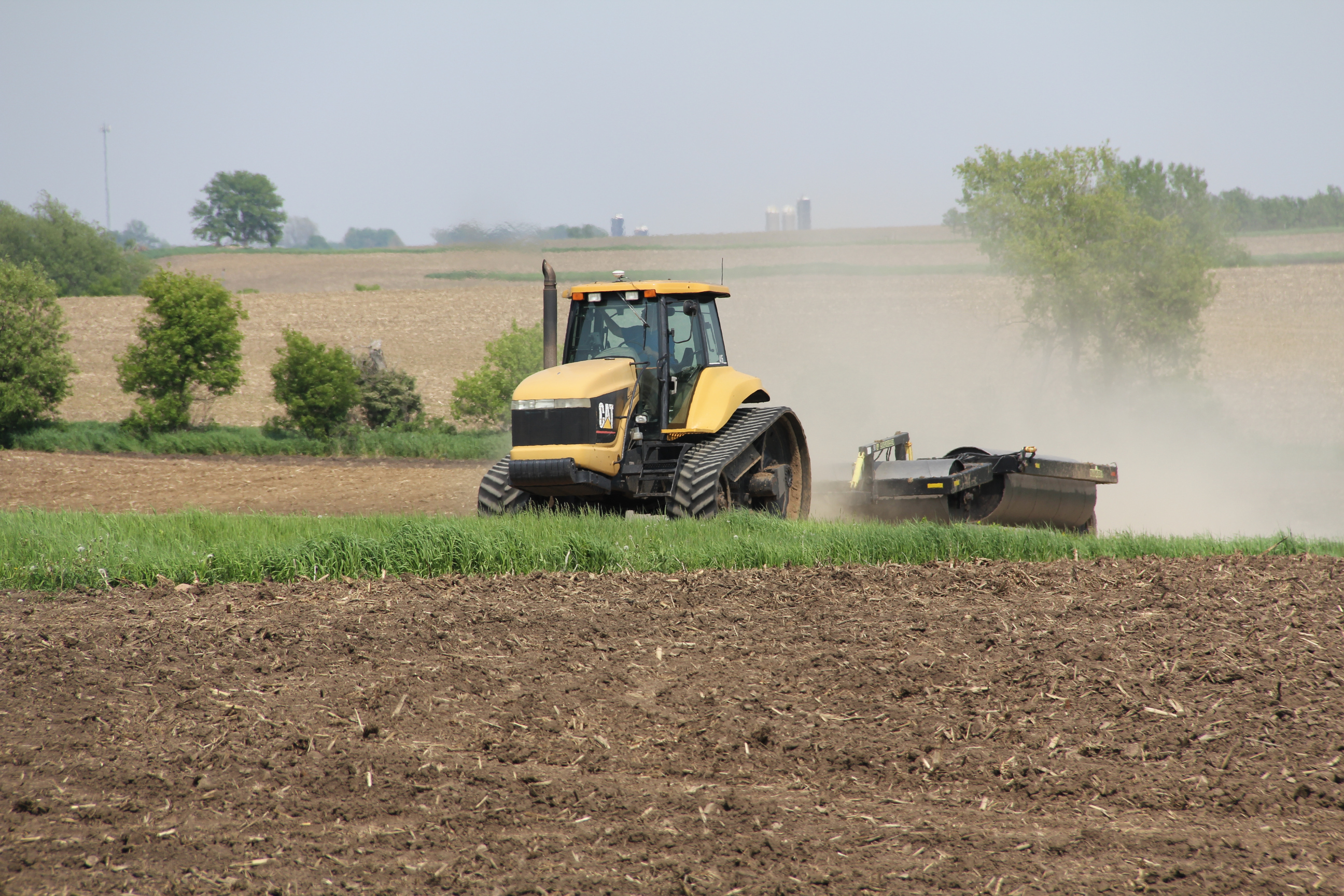
A tractor heads to a field with a roller to pack the soil. (Minnesota Prairie Roots copyrighted photo May 2023)
A tractor roars by then, dust rising around and behind as it pulls an unfamiliar farm implement down the gravel road. A roller, Randy notes later when we pass a packed farm field.
Randy carries discarded leaves away from the rhubarb patch. (Minnesota Prairie Roots copyrighted photo May 2023)
Then quiet settles again. Randy gathers the pile of rhubarb leaves, tidying the area around the old smokehouse.
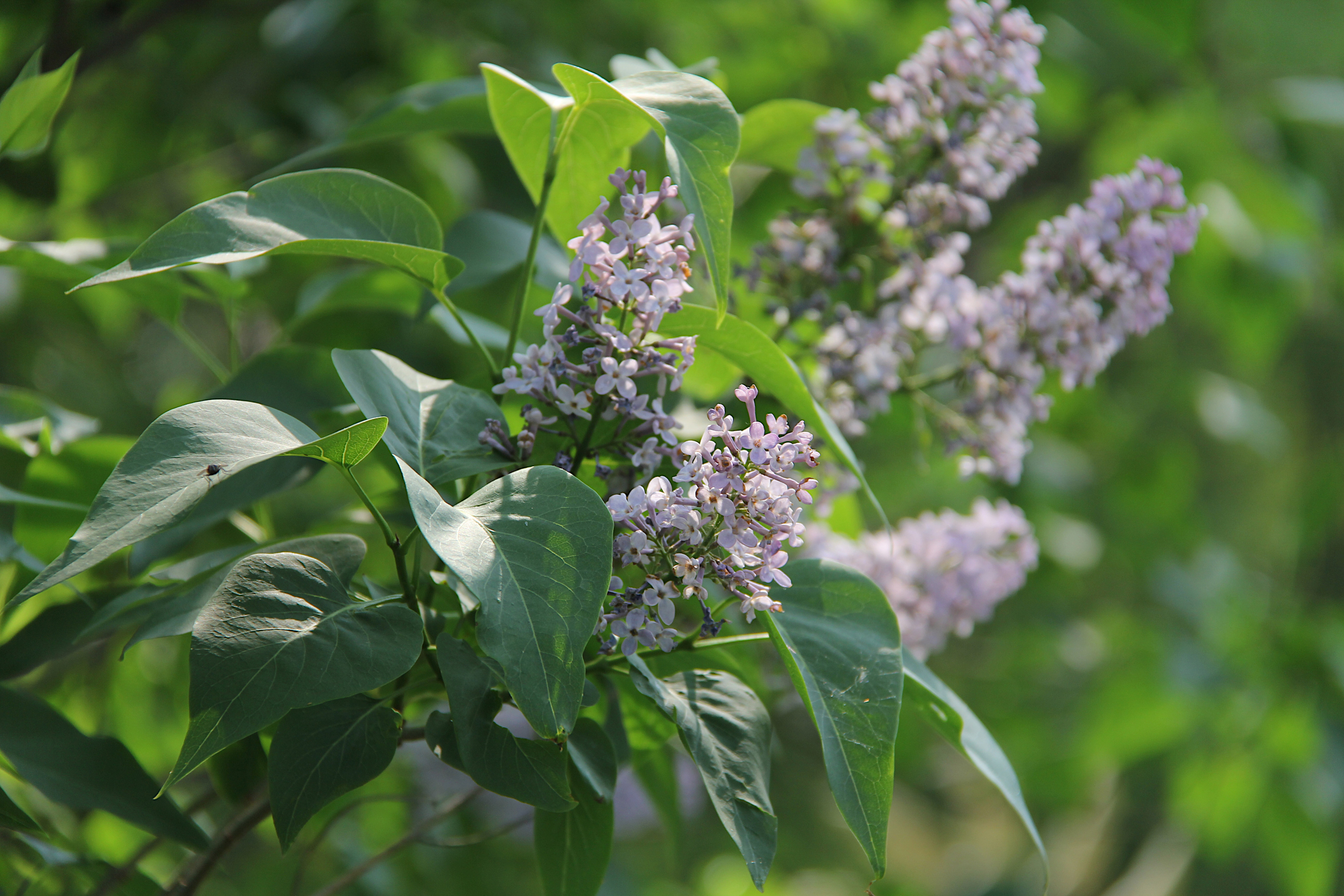
We visited near the lilacs. (Minnesota Prairie Roots copyrighted photo May 2023)
We head back toward the farmhouse, this time rousing Barb and Bob, who earlier did not hear Randy’s knocks. We settle in for a chat which turns into a lengthy conversation in the shade of trees, near the lilac bush, in their front yard garden. Birds sing. Butterflies fly. Words rise. Cold, filtered well water poured from a fancy pitcher into thick, hefty glasses quenches thirst. The four of us simply enjoy each other’s company. No hurry. Nowhere to be.
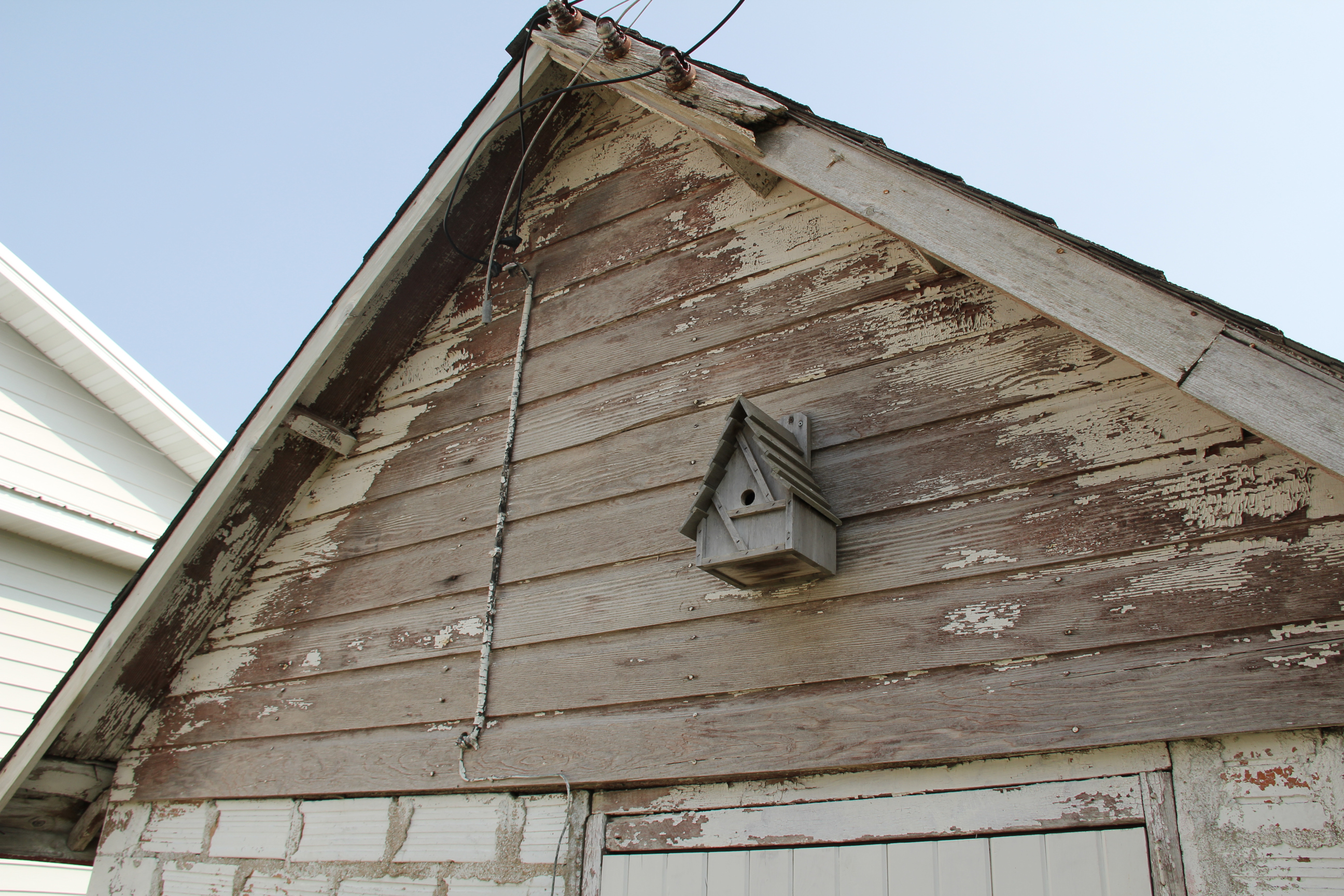
Birdhouse on an outbuilding. (Minnesota Prairie Roots copyrighted photo May 2023)
I step away to photograph several of Barb’s many birdhouses.
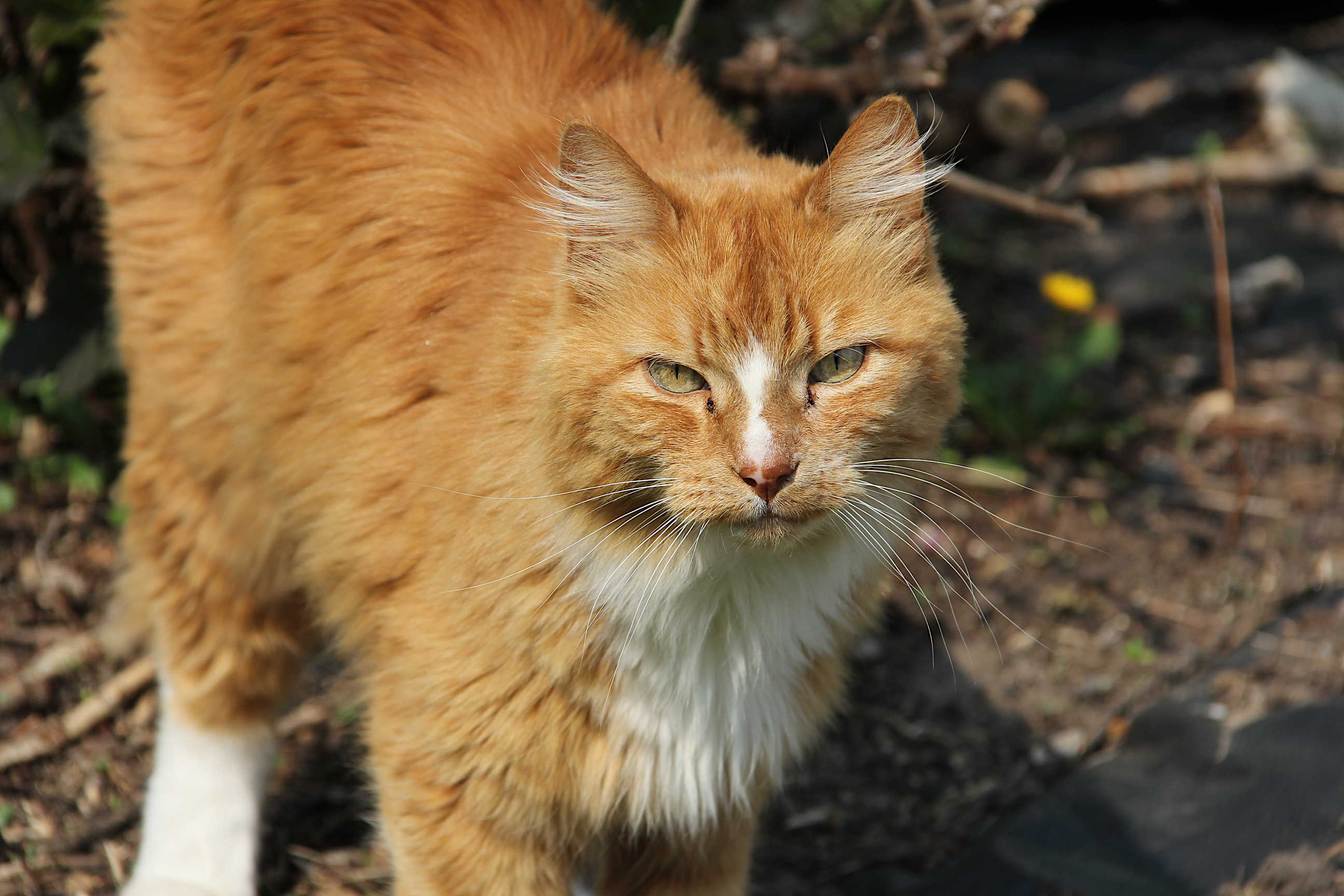
The shy farm cat. (Minnesota Prairie Roots copyrighted photo May 2023)
And then the orange farm cat appears. I excuse myself again, to photograph Fred, who requires significant coaxing to come closer. But he is skittish. My camera lens, followed by the click of the shutter scares him away.
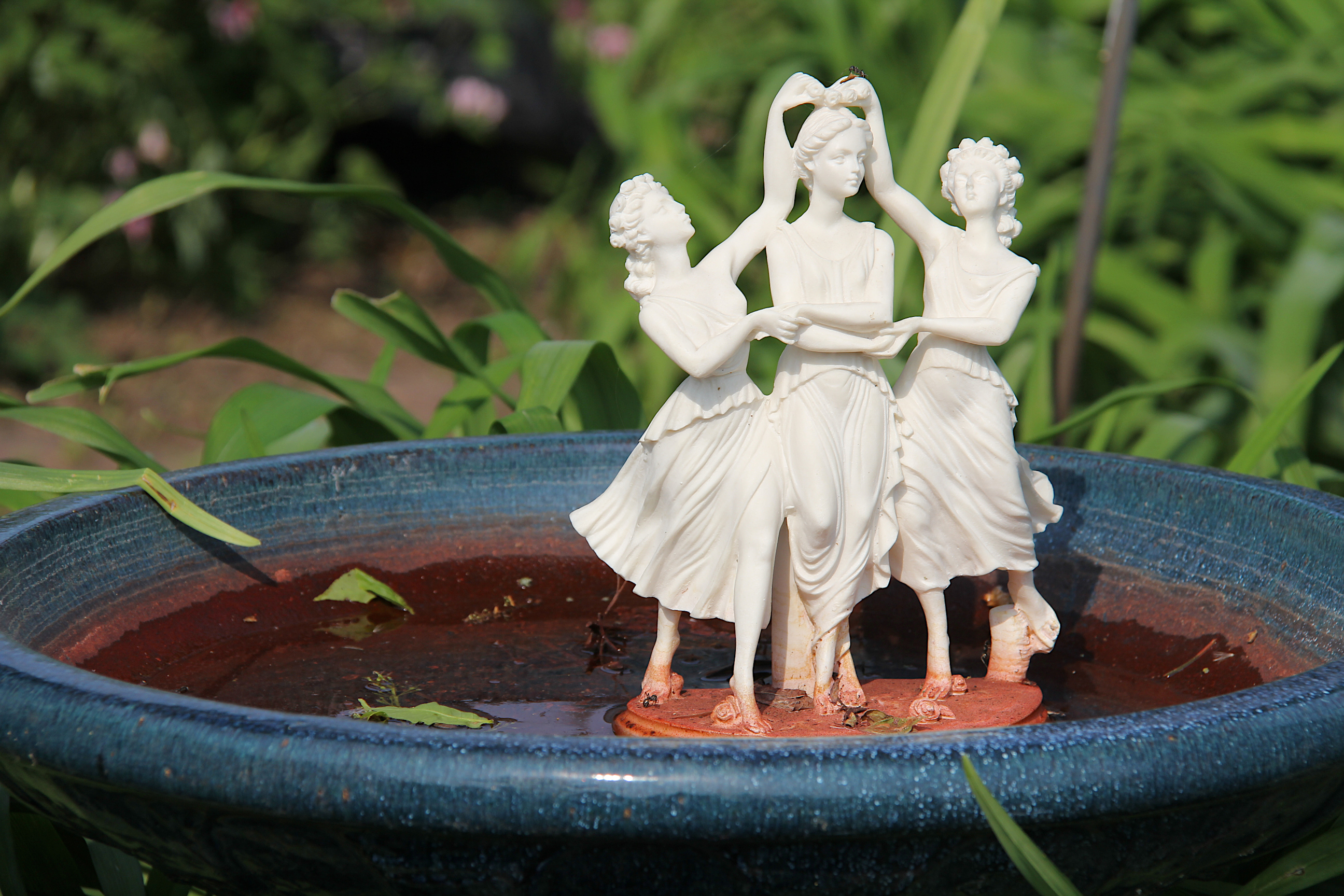
Bird bath art on the farm. (Minnesota Prairie Roots copyrighted photo May 2023)
I circle back to the conversation circle, passing a bird bath with a trio of ballet dancers centering that circle. They are graceful and beautiful and seemingly out of place in this rural setting. Yet, they are not. The countryside overflows with grace and beauty. The grace of silence and solitude. And the beauty of the natural world.
On this day, I need this. To be in the serenity of this quiet place. To take in the countryside. To see the sky, the trees, the land. To talk with Barb and Bob. And then to leave with a clutch of rhubarb and the promise of warm rhubarb crisp pulled from the oven.
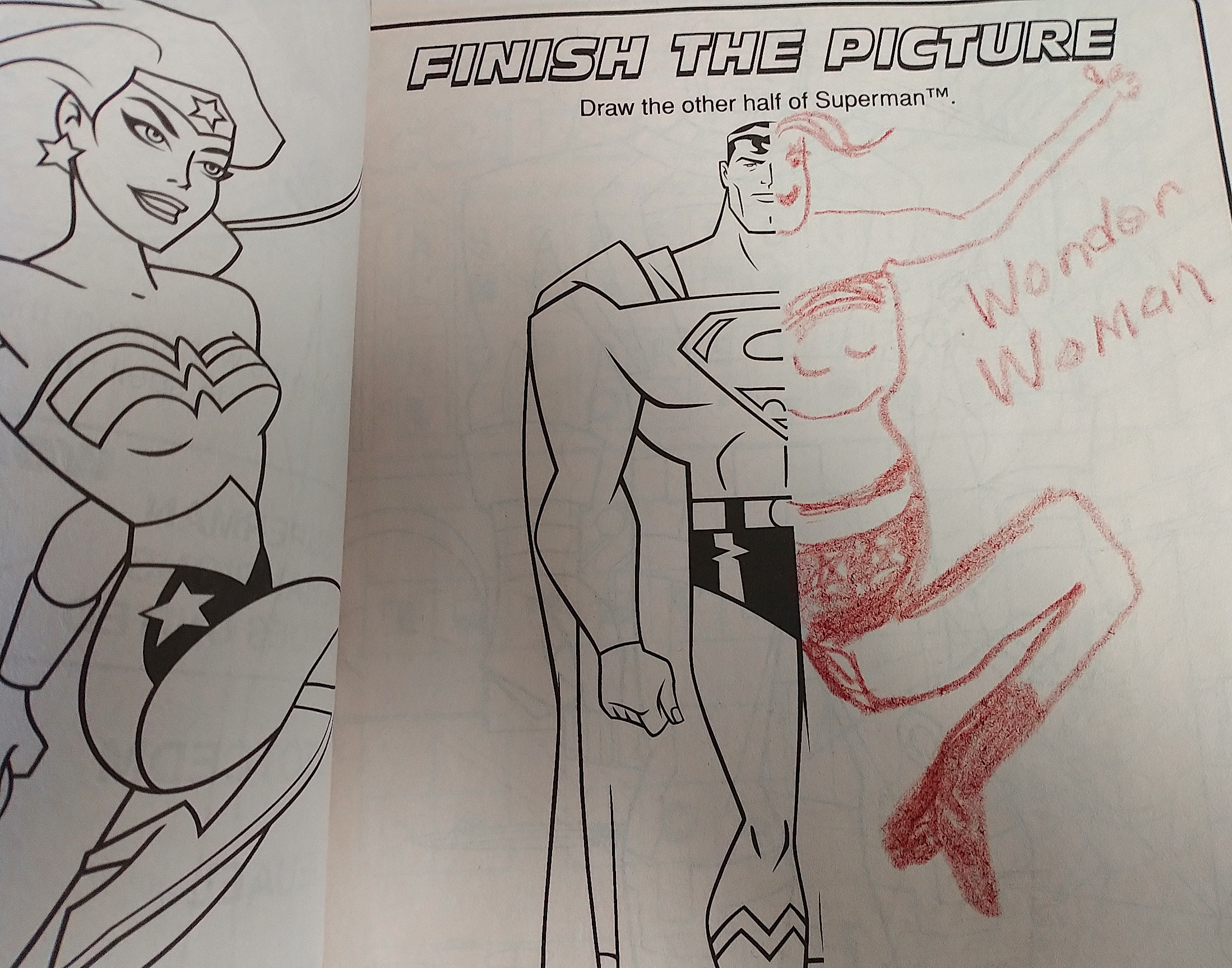
A coloring and activity book discovery. (Minnesota Prairie Roots copyrighted file photo May 2023)
WHEN I WAS COMING OF AGE, women’s voices were growing louder, stronger as part of the women’s liberation movement. Women of the 60s and 70s sought equal opportunities and rights in society, in the workplace, in life in general.
I myself became the first female to join the Future Farmers of America chapter at Wabasso High School in the early 1970s. You can bet the boys eyed me with suspicion, wondered what business a girl had in a club that, up until then, was exclusive to males. But I didn’t care what they thought.
Obviously, I never went on to become a farmer, to marry a farmer or work in an ag-related field. But I covered agriculture while freelancing and also working for several rural weekly and daily newspapers. My FFA involvement, but mostly my farm background, proved useful in writing news stories and features.
And then there was the fact that I was a female journalist. That did not sit well with everyone in the small Minnesota town where I worked right out of college. I was opening disdained by more than one school and city official who preferred I not report on controversial topics. While their demeaning behavior and negative attitudes frustrated me, that did not deter me from covering public meetings and reporting what was said. I had an editor and publisher who backed me up. He knew I was just doing my job and doing it well and that no angry man would stop me.
Thankfully, attitudes toward women have improved through the years, personally and professionally. Not to say change is not yet needed. But women are generally treated better than decades ago. I doubt a public employee or elected official today would treat a female journalist the way I was in the late 70s and early 80s without repercussions. And I doubt high school boys would get away with openly questioning why a girl could join FFA.
This all provides the backstory to a recent discovery. I was waiting at my local community bank to do business when I noticed a handful of coloring books racked in a holder. I pulled out a Justice League Jumbo Coloring & Activity Book and flipped through the pages. And when I happened upon the FINISH THE PICTURE Draw the other half of Superman™, I nearly shouted, “YES!” Instead of drawing Superman as instructed, someone (a woman or girl, I expect) drew Wonder Woman.
As a woman, I felt such validation in that moment. Yes, women can be superheroes, too. Yes, women can break away and out and above and beyond and decide, no, I’m not drawing the other half of Superman. I’m drawing me—a strong woman.
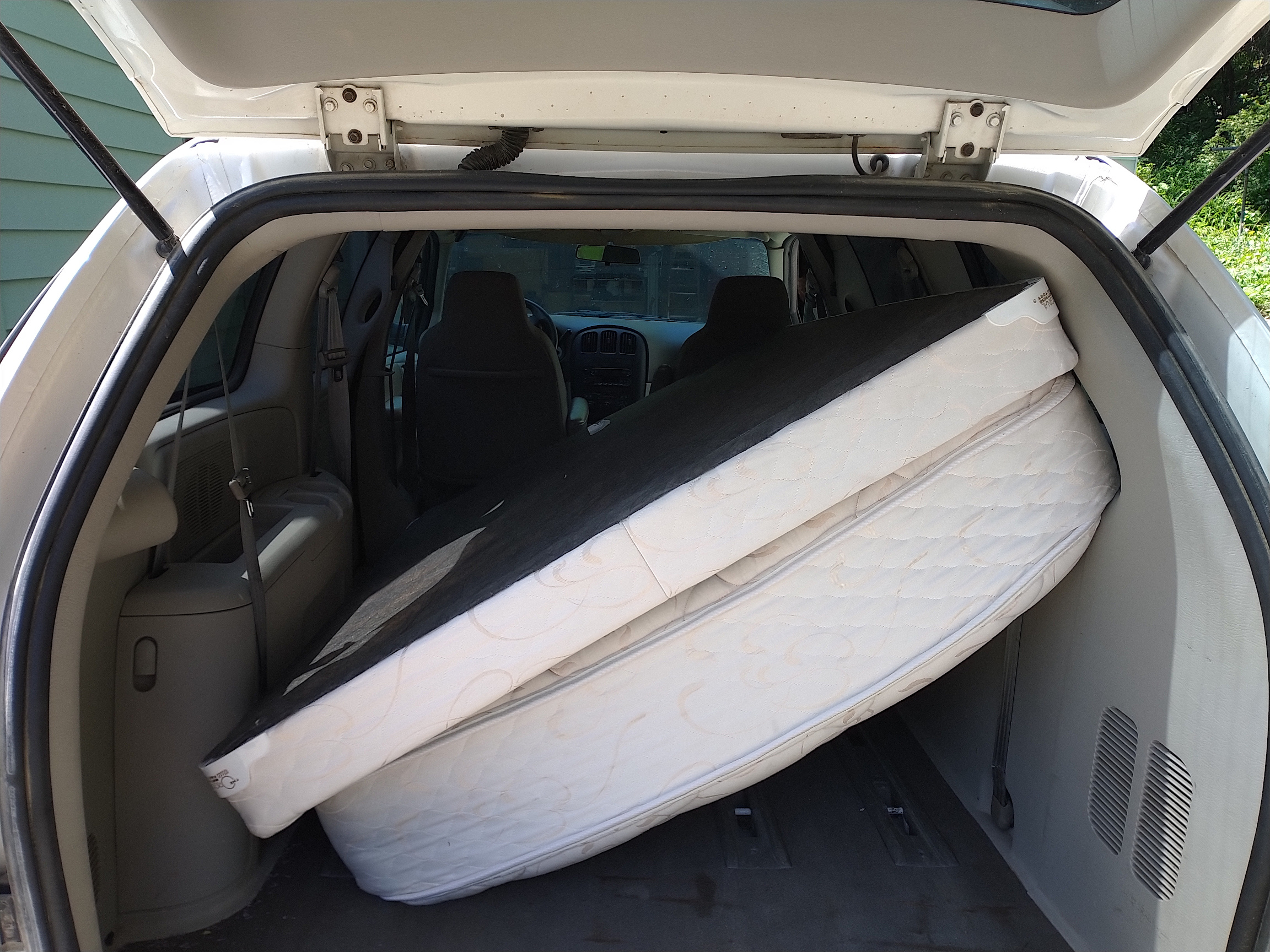
A full-size mattress and box spring fill the back of our van. (Minnesota Prairie Roots copyrighted photo May 2023)
MONDAY EVENING RANDY AND I crammed a full-size used mattress and box spring into the back of our van. It was not an easy task, but we squeezed both inside. We intended to drop the worn out set off at the Rice County Landfill the next day upon our return from a medical appointment in Northfield. Sometimes, though, plans go awry.
En route to Northfield early Tuesday morning, we noticed smoke billowing in the distance. Randy said he’d seen the same smoke on Monday, but much thicker, blacker. Burning tires type of smoke. The closer we got to Northfield, the denser the smoke, enough to warrant turning on the headlights. Smoke settled like fog upon the landscape. The air smelled putrid.
Before we left Northfield, we learned the fire was at the county landfill, a blaze which began Monday evening among all that trash. Still, we were hopeful we could drop off the mattress and box spring. What were we thinking? Randy turned the van off Minnesota State Highway 3 onto the road leading to the landfill. There a portable electronic sign flashed that the landfill was closed to the public and open to licensed haulers only.
So here we are, many days later, driving around with an old mattress and box spring filling the bulk of our van. The latest update from the county states that the landfill will remain closed to non-licensed haulers at least through Monday. There are health and environmental concerns related to the still smoldering (maybe still burning) garbage. I appreciate that local and state officials are monitoring, testing, protecting.
For county residents like us who need to get rid of household items, county officials have now provided a list of local licensed garbage haulers who are accepting things like mattresses and box springs. I called two haulers. One quoted me a price of $65, the other $70 for each piece. So we’re talking $130-$140, a price we don’t want to pay.
I then checked the county landfill website for disposal pricing. There are three options: $25 for each piece if they’re recyclable. What makes a mattress and box spring recyclable? I have no idea. Next, $35/each with prior permission. Finally $55/each without prior permission. Permission from whom? And why is prior permission needed? I appreciate clarity. (And I thought to myself, no wonder people dump mattresses and box springs in ditches if disposals costs range from $50-$110.)
What also remains unclear are how long the fire will burn/smolder, how the environment and air quality have been impacted, and how the health of anyone who’s breathed in that smoke has been affected. Randy and I traveled through that smoke, breathed it in on our drive to and from and during our time in Northfield.
And we live only eight miles from the landfill, which was near enough for that smoke to drift…and we did close the windows in our house Thursday evening because of a putrid odor. Was the smell from the landfill fire? I don’t know. As for that bed set, it’s still stuffed in the back of the van.
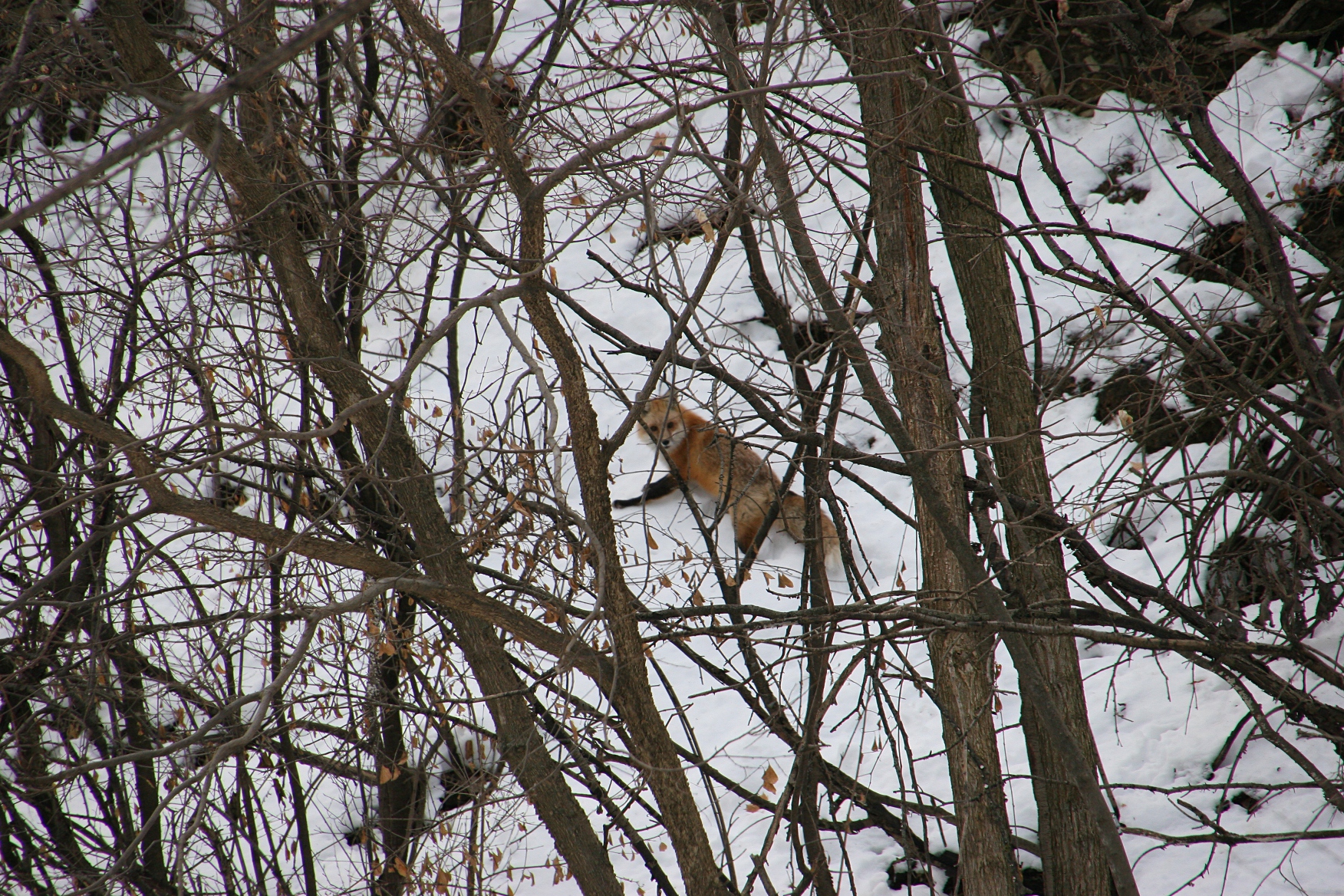
A fox climbs the wooded hillside behind our garage in January 2018. (Minnesota Prairie Roots copyrighted file photo January 2018)
YEARS AGO, A VARIETY OF WILDLIFE frequented the wooded hillside behind our garage and spilled over into our and our next-door neighbors’ yards. Raccoons, woodchucks, opossums, skunks, even a fox once, and evidence of deer in tracks left behind. Such sightings were not unusual, even though we live in the heart of Faribault along an arterial street. But the Straight River runs only a few blocks away and our property edges Wapacuta Park atop the hill. Both make for inviting wildlife habitat. That doesn’t explain, though, why we no longer see an assortment of animals.
Deer in their natural habitat at River Bend Nature Center in Faribault. (Minnesota Prairie Roots copyrighted file photo 2022)
Now only squirrels and rabbits scamper through the woods and yard, along with voles and the mice I never see but which occasionally find a route into the basement of our aged house. (Within the past week, though, I’ve found two dead mice in our backyard. What’s with that?) Feral cats sometimes wander our corner lot, too. I expect other animals may roam my neighborhood in the cover of dark. I’ve heard coyotes howling while attending an evening concert at River Bend Nature Center in Faribault and while visiting friends just outside of town.
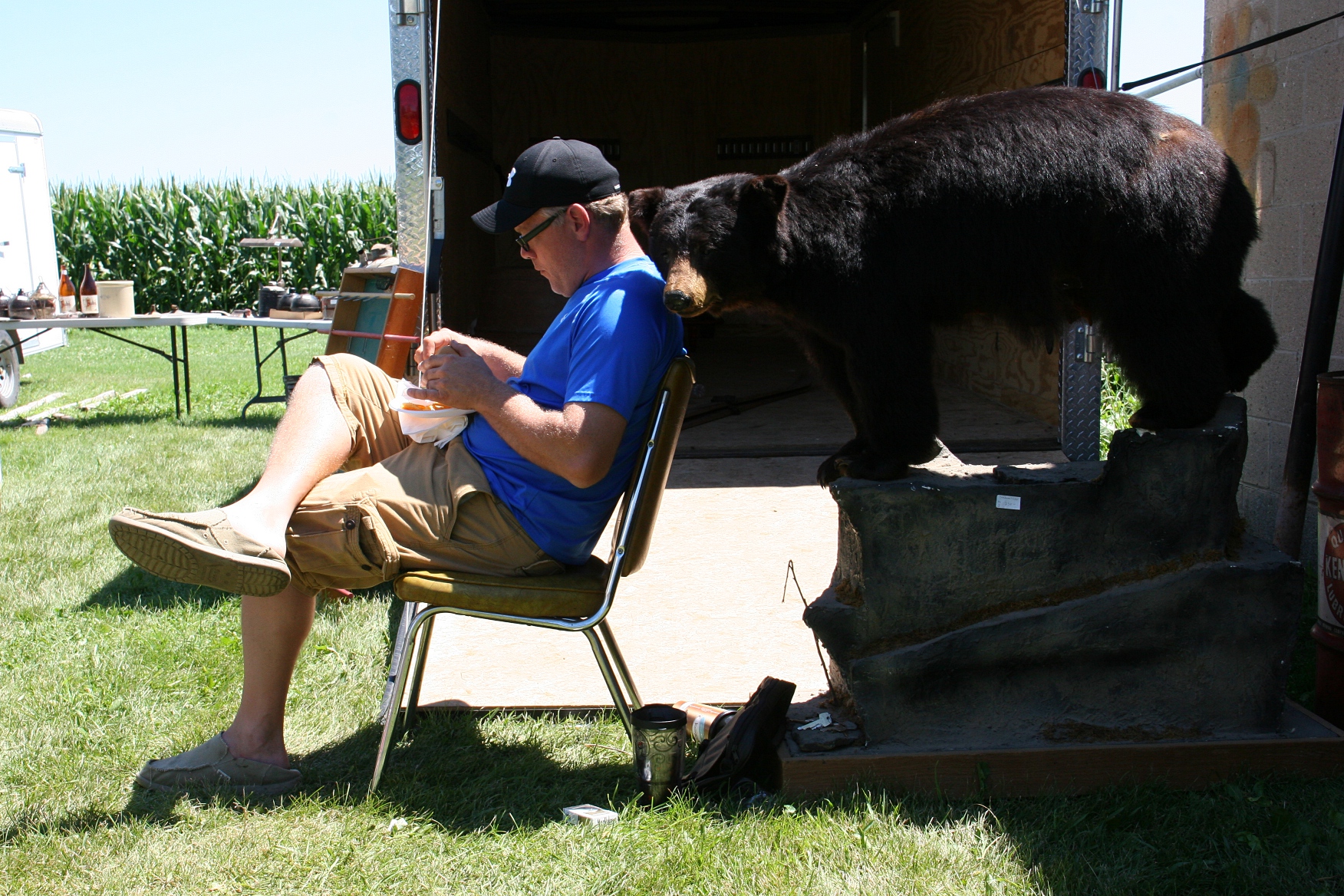
The only bears I’ve seen in southern Minnesota are dead ones, including this one for sale at a seasonal sale in rural Medford several years back. (Minnesota Prairie Roots copyrighted file photo)
One wild animal I haven’t seen yet is a black bear. Typically, they don’t venture this far south from their northern Minnesota habitat. But that has changed in recent years. In late April, bear sightings were reported twice in my county of Rice. The first report came at 2:30 pm on April 26 and the second on April 28 at 9:33 pm, according to a bear sighting map published by the Minnesota Department of Natural Resources. Around that time Northfield police issued an alert about a bear and warned residents to keep their trash and bird feeders inside. I haven’t heard anything official about that bear since then.
Earlier, a bear and three cubs were spotted in Steele County, the county just to the south of Rice. That was at 2:12 am on March 7. A solo bear doesn’t seem nearly as frightening as a mama with babies. Just like human moms, the instinct is strong to protect one’s young.
As I studied the DNR bear reporting map, I was surprised to see so many sightings in the Twin Cities area, primarily in the north metro. Admittedly a higher density population may lead to more reports. Still. Olmsted, Mower and Winona counties to the southeast of Rice County also had numerous bear sightings. Winona County, especially, with many wooded areas and along the Mississippi River, seems a place where bears would feel right at home.
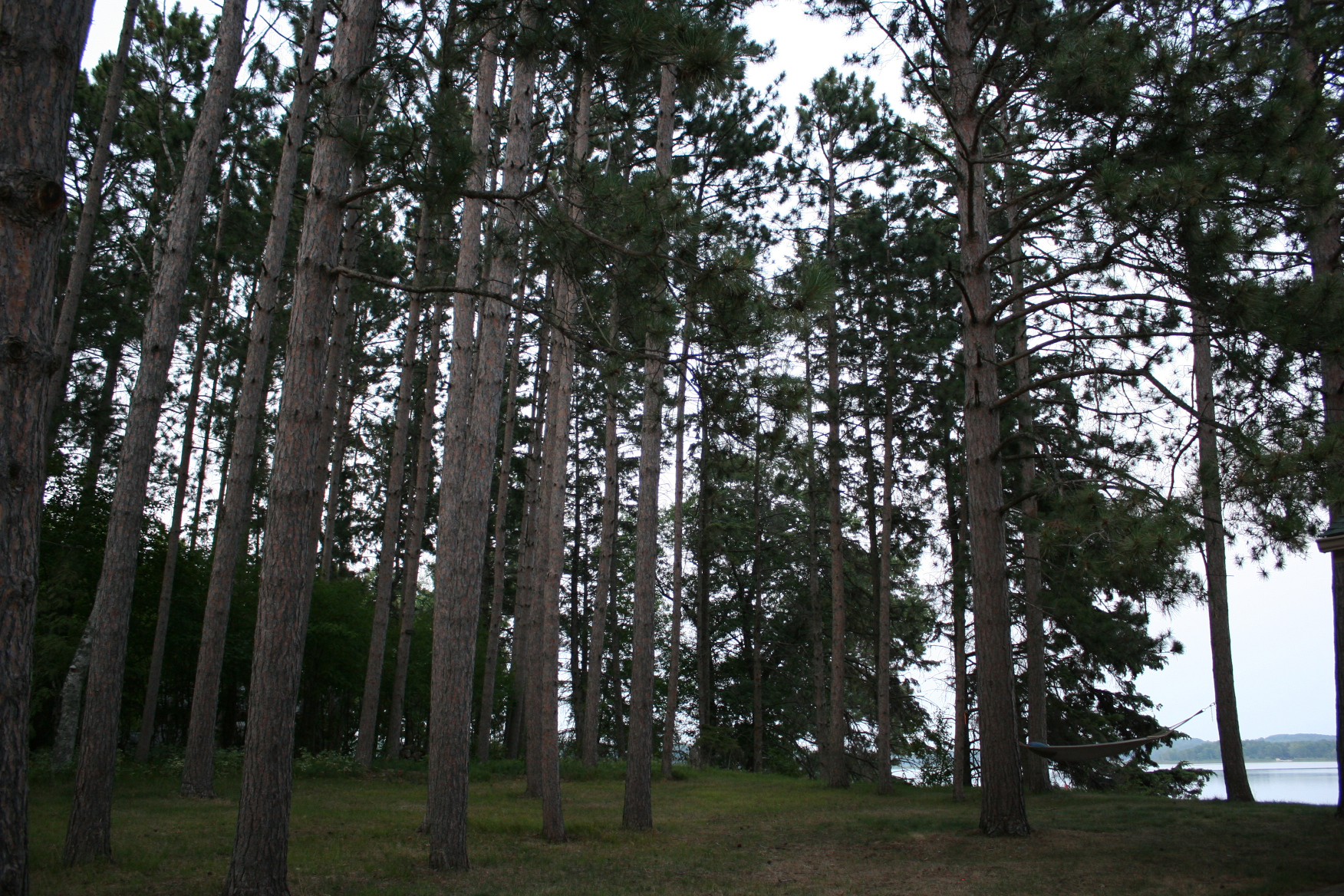
Up North at the cabin, surrounded by woods and water, a natural environment for bears. (Minnesota Prairie Roots copyrighted file photo July 2021)
When we stay at an extended family member’s lake cabin in the Brainerd lakes area of central Minnesota during the summer, we are bear aware. No leaving garbage outside, no doing anything that will draw bears in from the surrounding woods. We understand we are in their habitat.
But here in southern Minnesota, primarily among corn and soybean fields, I don’t expect bears. Yet, I suppose they didn’t expect humans to wander into their homeland either, among the lakes and forests of central and northern Minnesota.
TELL ME: What wild animals have you spotted in and around your home? I’d like to hear, whether you live in Rice County or elsewhere.
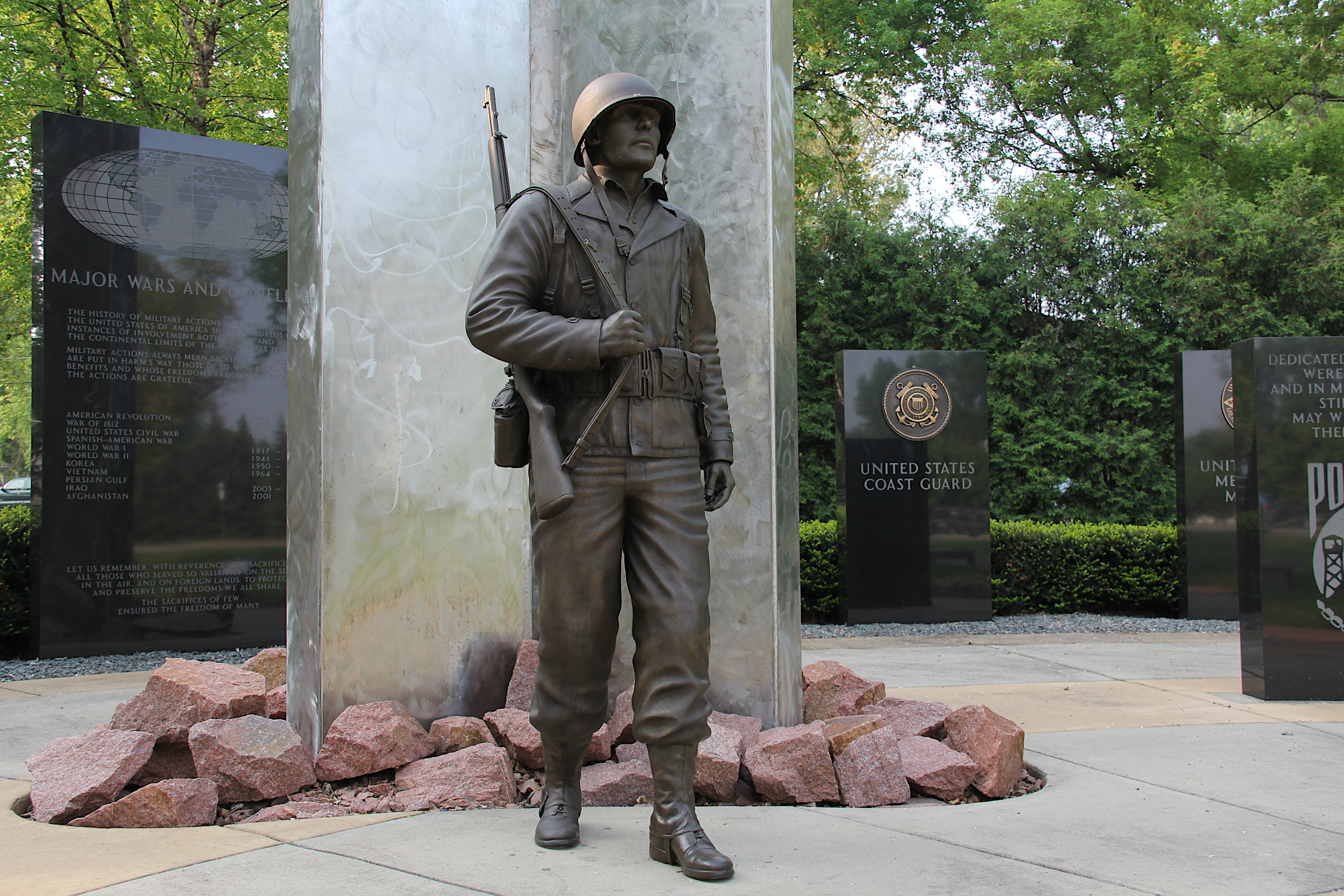
A soldier sculpture centers the Northfield Area Veterans Memorial. (Minnesota Prairie Roots copyrighted photo May 2023)
HIS STRONG STANCE, one boot planted in front of the other, ramrod posture all point to his disciplined military training. I am looking at a sculpture of a US soldier, a combat infantryman. As I study him, I gaze into his haunted eyes, eyes that, by my perception, reveal the horrors of war.
Standing strong in service to country, a life-size soldier replica. (Minnesota Prairie Roots copyrighted photo May 2023)
Perhaps it is my own father’s stories of fighting on the front-line during the Korean War that shape my reaction to this soldier replica at the Northfield Area Veterans Memorial. But this could be anyone’s interpretation. That of a daughter, like me, whose father suffered from Post Traumatic Stress Disorder after leaving the killing fields of Korea. Or this could be the story of any active duty war veteran, the story of a spouse or child who lost a loved one on the battlefield, the stories of too many.
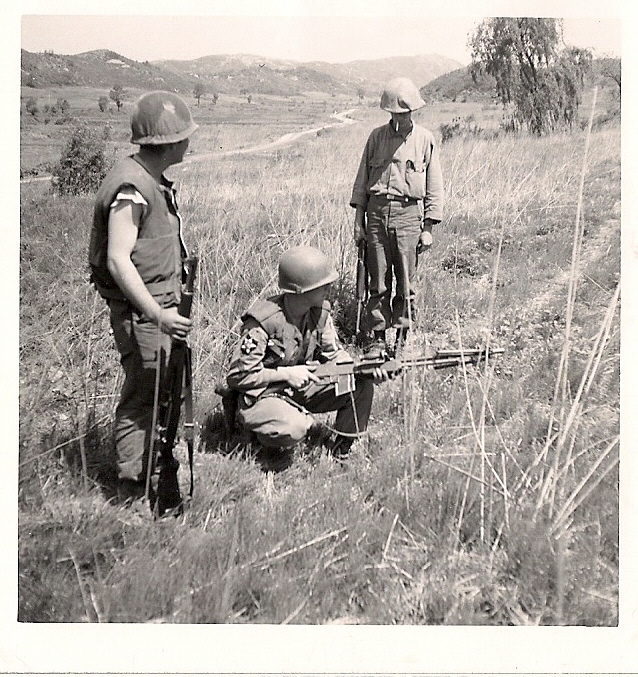
My dad took this photo of his buddies, including Ray Scheibe, left, in Korea. The photo is dated May 1953. Ray was killed in June. (Copyrighted photo by Elvern Kletscher)
This Memorial Day, I pause to remember those who gave the ultimate sacrifice—their lives—to assure my freedom. My dad’s Army buddy and friend Ray was among those. Ray died the day before he was to leave Korea and return to his wife and infant daughter in Nebraska. My father witnessed Ray’s death and it broke a part of him.
These are the personal details we need to remember on Monday, a national day of mourning and remembrance for those who died on the battlefield. Veterans’ memorials and parades and programs all provide ways to honor the brave men and women who died in service to country. But their stories are equally as important. These are, after all, individuals with friends and families, likes and dislikes, histories written long before they were drafted or enlisted and then called to war.
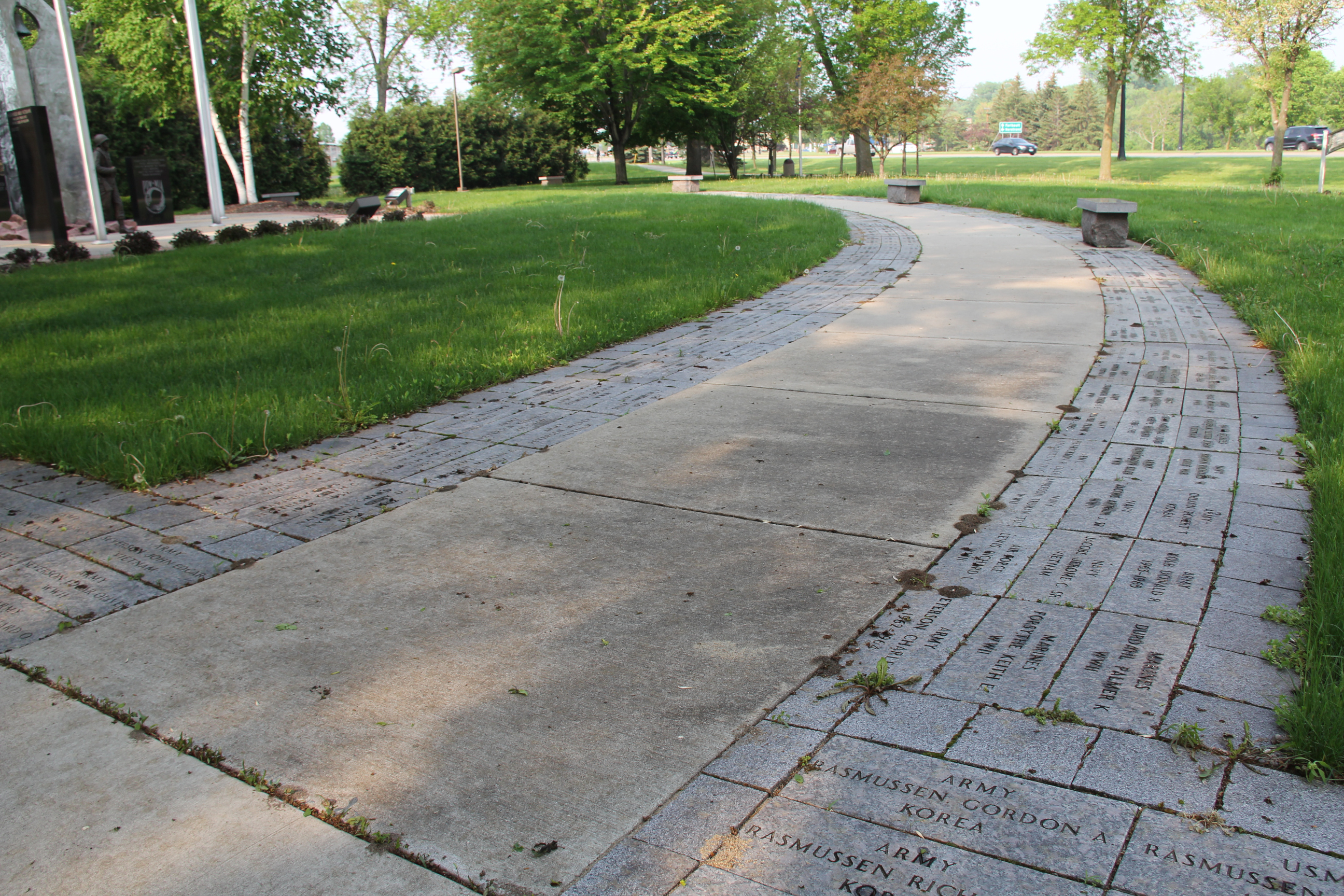
“The Walk of Remembrance” imprinted with veterans’ names and military information edges the Northfield Area Veterans Memorial. (Minnesota Prairie Roots copyrighted photo May 2023)
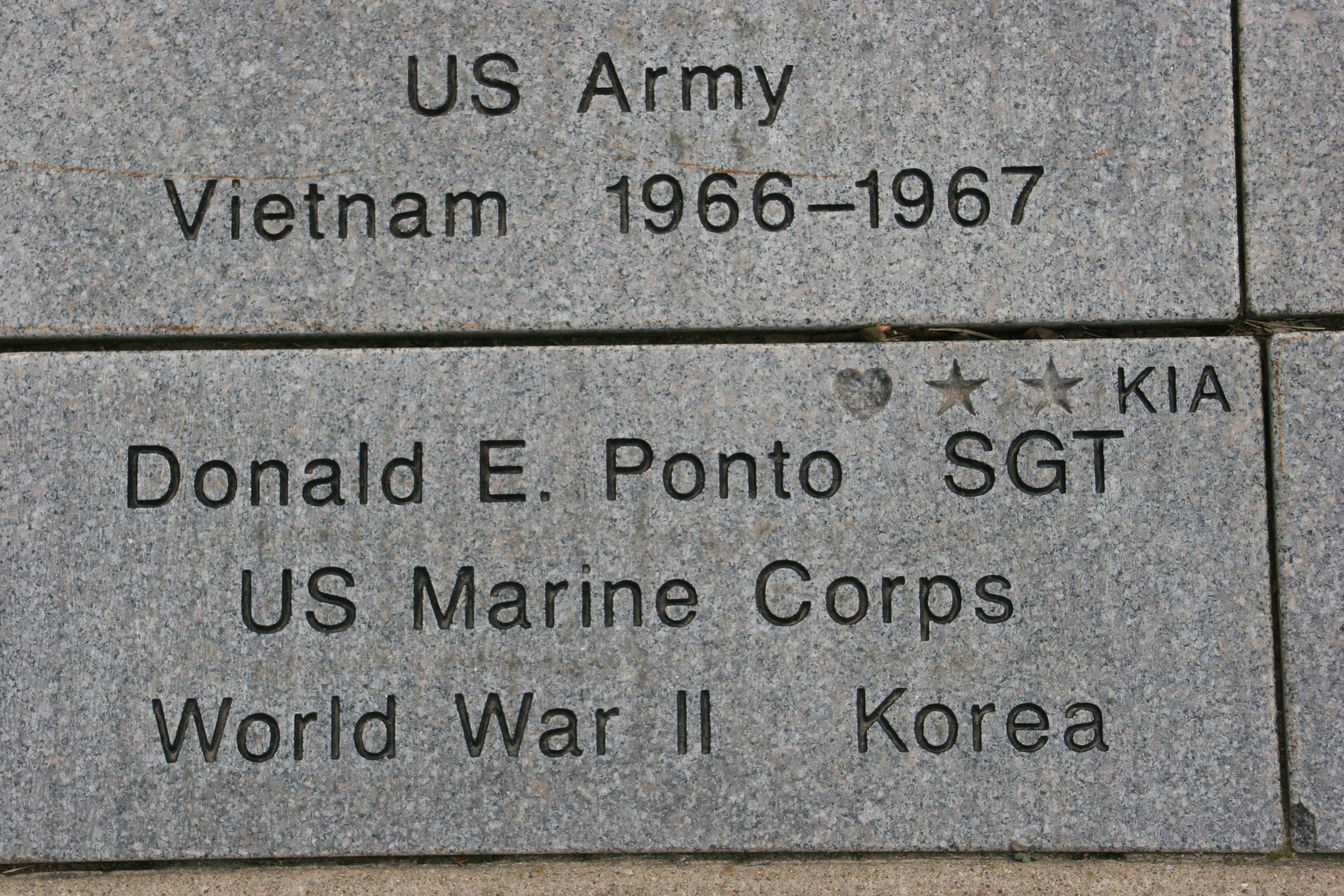
A paver at the Rice County Veterans Memorial honors Sgt Donald E. Ponto, killed in action in Korea. (Minnesota Prairie Roots copyrighted file photo)
A full view of the Northfield Area Veterans Memorial. The stones represent each branch of the military. (Minnesota Prairie Roots copyrighted photo May 2023)
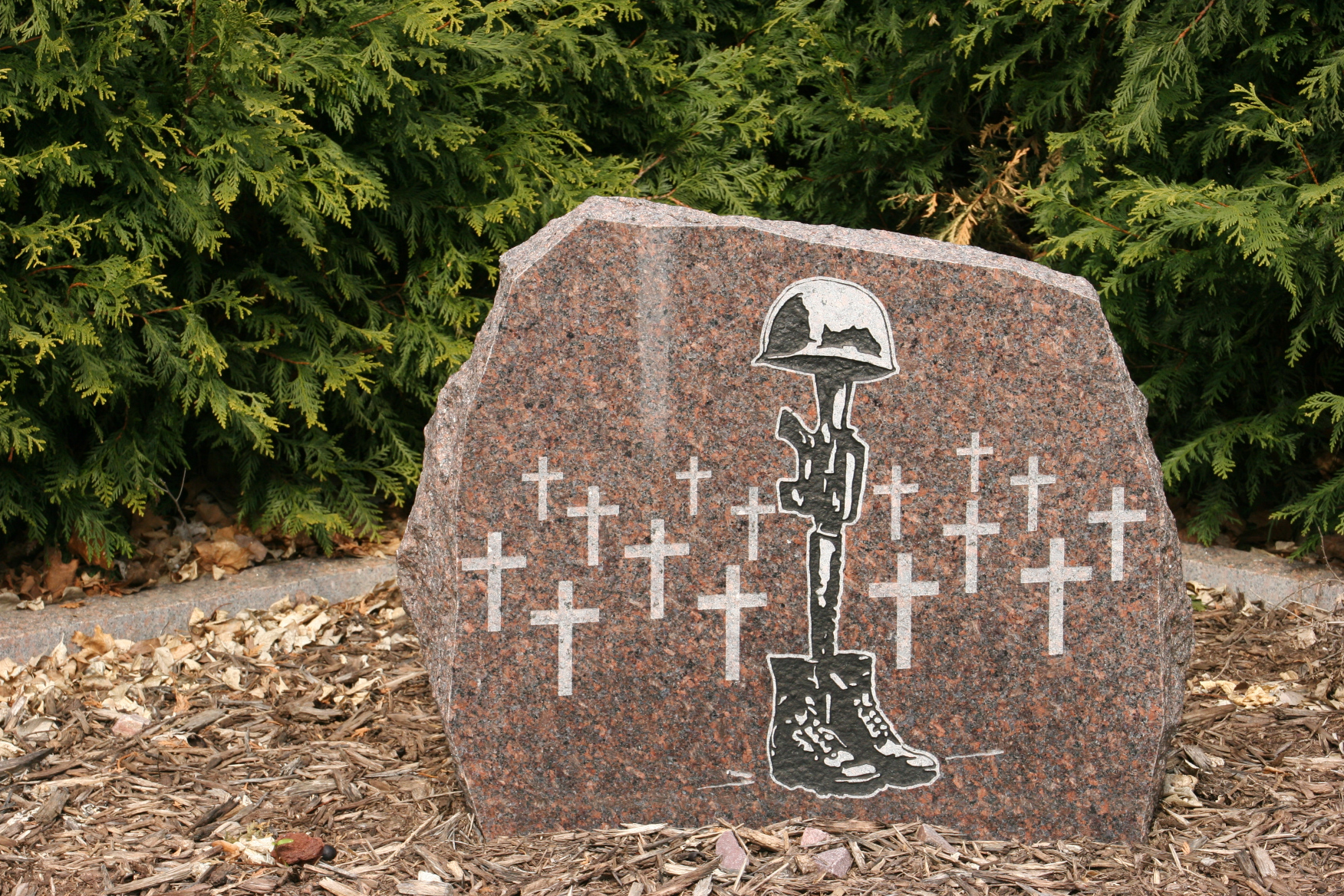
Many Minnesota communities have veterans’ memorials. While designs differ, they share the commonalities of a centerpiece sculpture, sometimes a soldier or an eagle or some other strong symbol; pavers with veterans’ names imprinted; American and other flags; and ways to recognize all branches of the military. It is the names, accompanied by the initials KIA, which break my heart. KILLED IN ACTION. I recognize the intense pain and heartbreak experienced by loved ones back home. The grieving families. The Gold Star Mothers, a mother who lost a child in service to country. The fatherless children, like Teri, the infant daughter of my dad’s buddy, Ray. Overwhelming grief imprints upon those stone pavers.
An eagle at Veterans Memorial Park in Morristown. (Minnesota Prairie Roots copyrighted file photo)
This Memorial Day, I encourage you to reflect on the war dead whom we honor on Monday. Walk through a cemetery and pause at the graves marked by small American flags. Attend a Memorial Day program not out of a sense of obligation, but out of gratitude. I feel thankful for a free press. Not every country has such freedom.
My dad carried this memorial service bulletin home to Minnesota from Korea. In the right column is listed the name of his fallen buddy, Raymond W. Scheibe. (Minnesota Prairie Roots copyrighted file photo)
Spend time at a veterans’ memorial beyond a precursory walk through. Appreciate the words, the names, the symbols, the artwork. And, if a soldier sculpture centers the memorial, look into his eyes and remember this biblical quote pulled from the memorial service folder my dad carried home from Korea: Greater love has no man than this, that a man lay down his life for his friends (John 15:13).
Fitting words engraved in stone at the Northfield Area Veterans Memorial. (Minnesota Prairie Roots copyrighted photo May 2023)
That July 31, 1953, service folder from Sucham-dong Korea lists 28 soldiers who died on the battlefield, among them my dad’s beloved buddy, Raymond W. Scheibe, age 22. It is my dad’s grief and trauma I see when I gaze into the eyes of that soldier sculpture in Northfield. War carries so much death and loss and pain. I vicariously understand that. This Memorial Day I remember, reflect, honor, carry on my heart the heaviness of war.
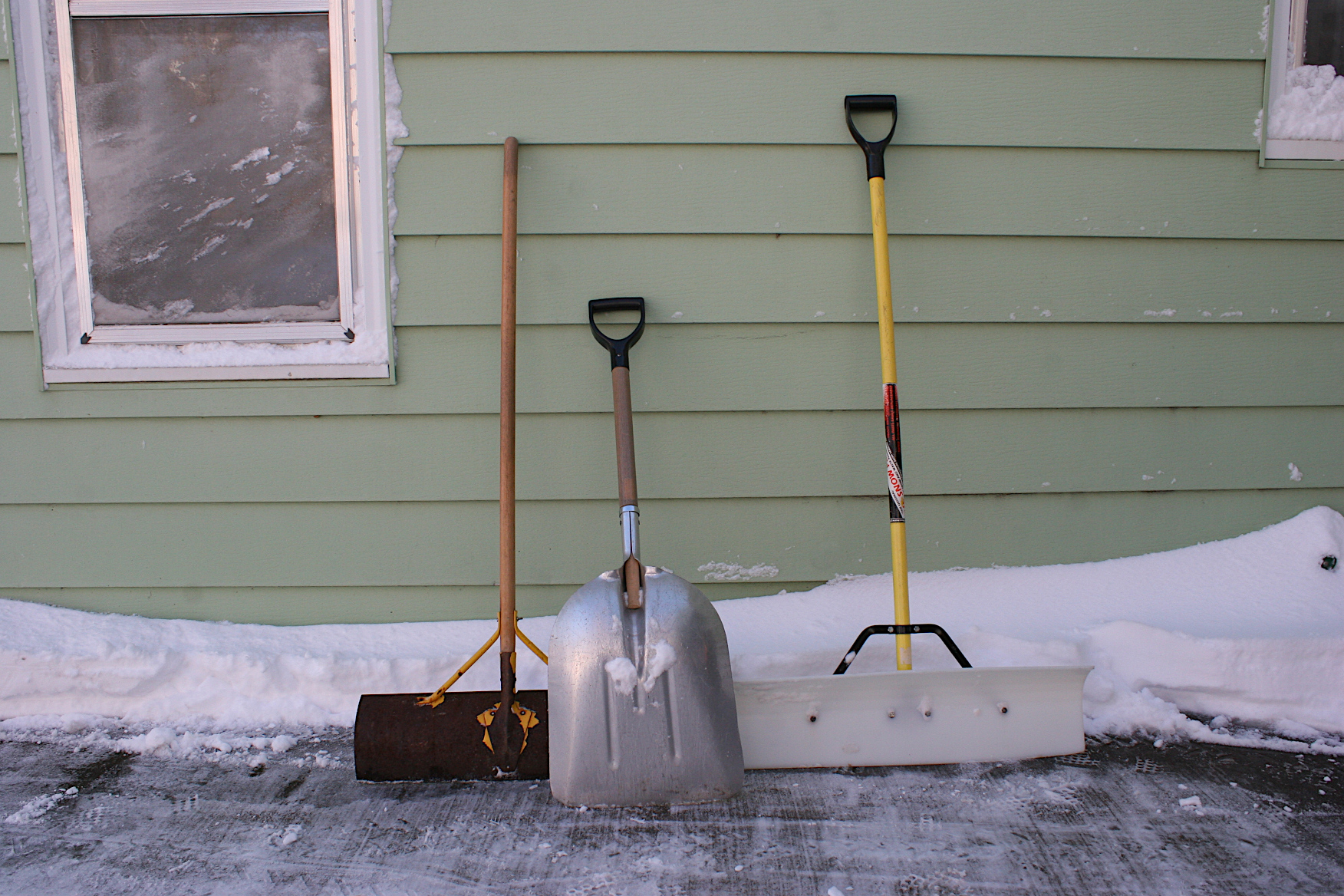
Our three snow removal shovels. (Minnesota Prairie Roots copyrighted file photo December 2021)
DISCLAIMER: If you don’t want to read the words snow or winter, then stop reading. This is a post about both. But also about spring. And a book.
Three prompts led me to write on this seasonal topic. First, when I was scanning my mom’s journals recently, I came across a May 11, 1966, entry in which she wrote, “Snow on the ground.” This didn’t surprise me. Occasionally snow falls in southern Minnesota in May. While I don’t recall the 1966 snow Mom references, I do remember driving back from my native prairie once on Memorial Day weekend to see snow atop a car in New Ulm. That would be at the end of May.
Secondly, a few weeks ago, Randy asked whether he should put the snow shovels away. I encouraged him to wait. And he did, until he felt confident the possibility of snow had passed. It has. I hope.
With minimal words per page, Schroeder writes the story of a week-long snowfall. Day after day after day the snow piles high around a menagerie of animals. Rabbit, fox, bear, moose… Illustrator Sarah Jacoby’s art has a dreamy, soft quality, just like the falling snow. That both artist (from Pittsburgh) and author understand winter is clear in their work.
Eventually, the sun shines, the snow melts, the grass greens. And spring, so it seems, has arrived. But then, a last page surprise. You can probably guess what that may be. It happens here in Minnesota seemingly every year. Just when we think winter has ended…












 Minnesota Prairie Roots
Recent Comments