Minnesota Prairie Roots

Writing and photography by Audrey Kletscher Helbling

From the Paradise: Student art reflects the pandemic March 26, 2021

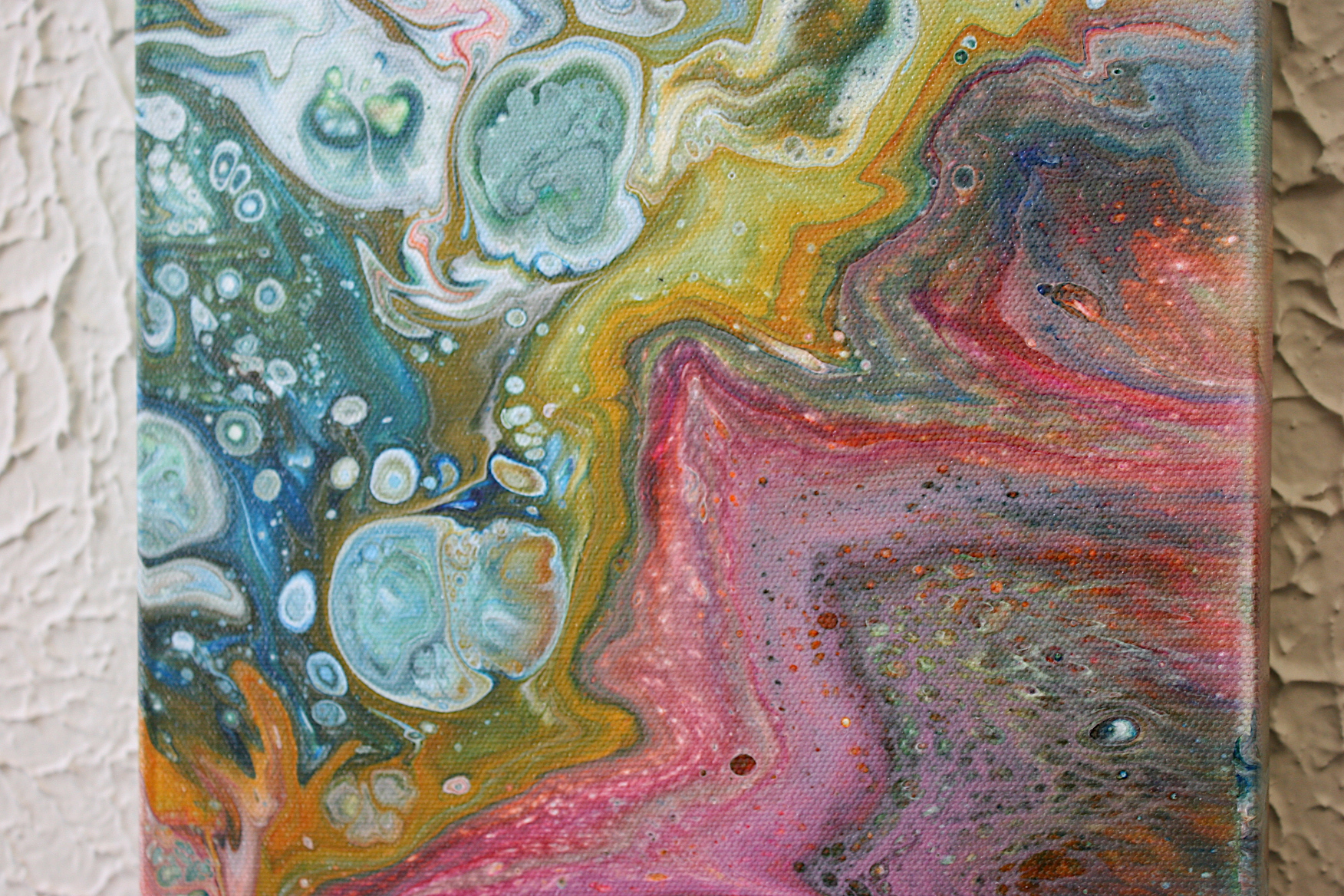
This vivid art by Faribault Middle School seventh grader Levi pops color into the student art exhibit at the Paradise.

THE ALL AREA STUDENT SHOW rates as one of my annual favorite art exhibits at the Paradise Center for the Arts in historic downtown Faribault. I love viewing the creative efforts of students from elementary age through high school. Their talent always impresses me and this year is no exception.

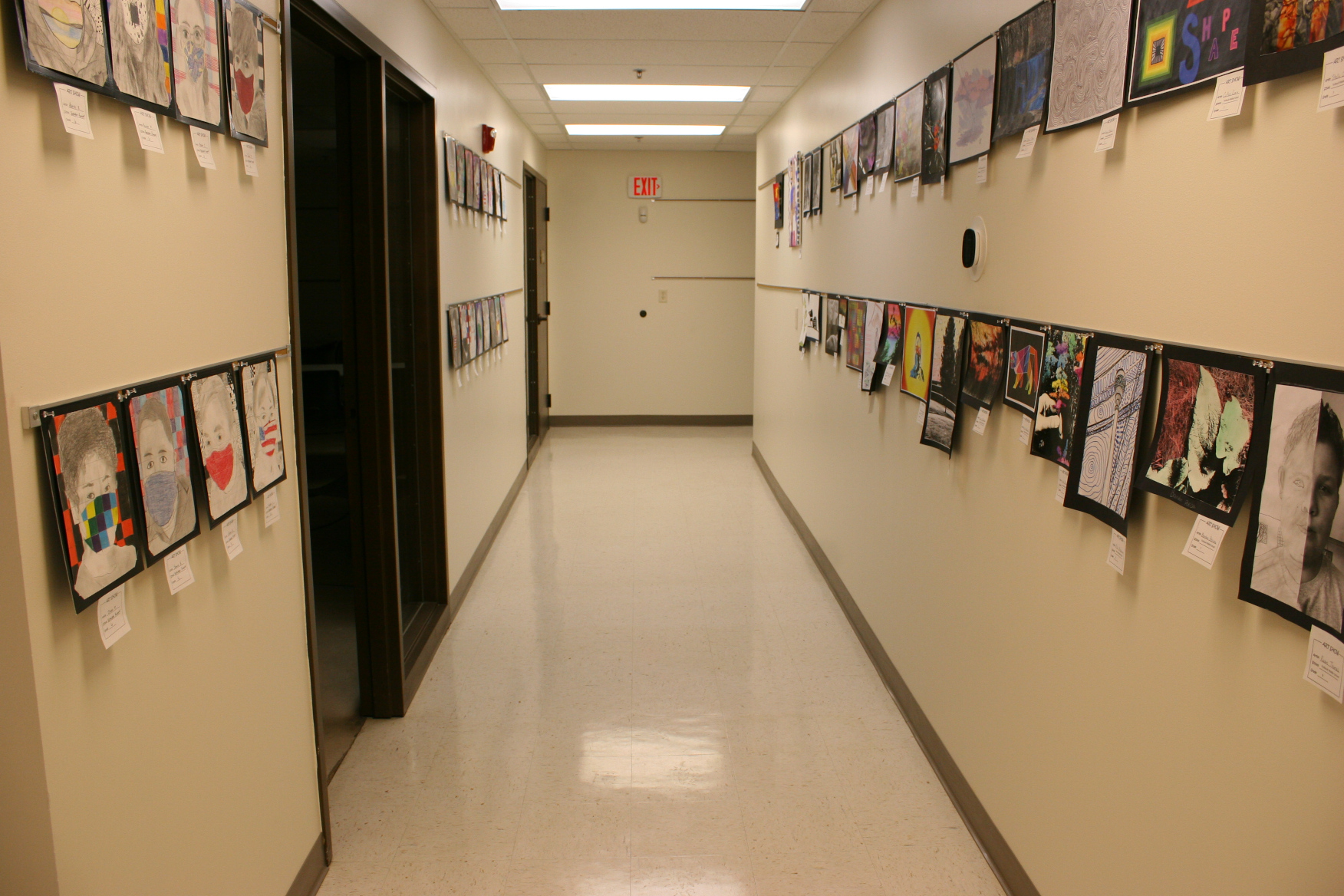
This year’s exhibit is significantly smaller, filling only a single second floor hallway.

But the 2021 show, because of the pandemic and mostly distance learning, is scaled back. Way back. Art lines only a section of one hallway rather than multiple hallways and the walls of the second floor gallery.

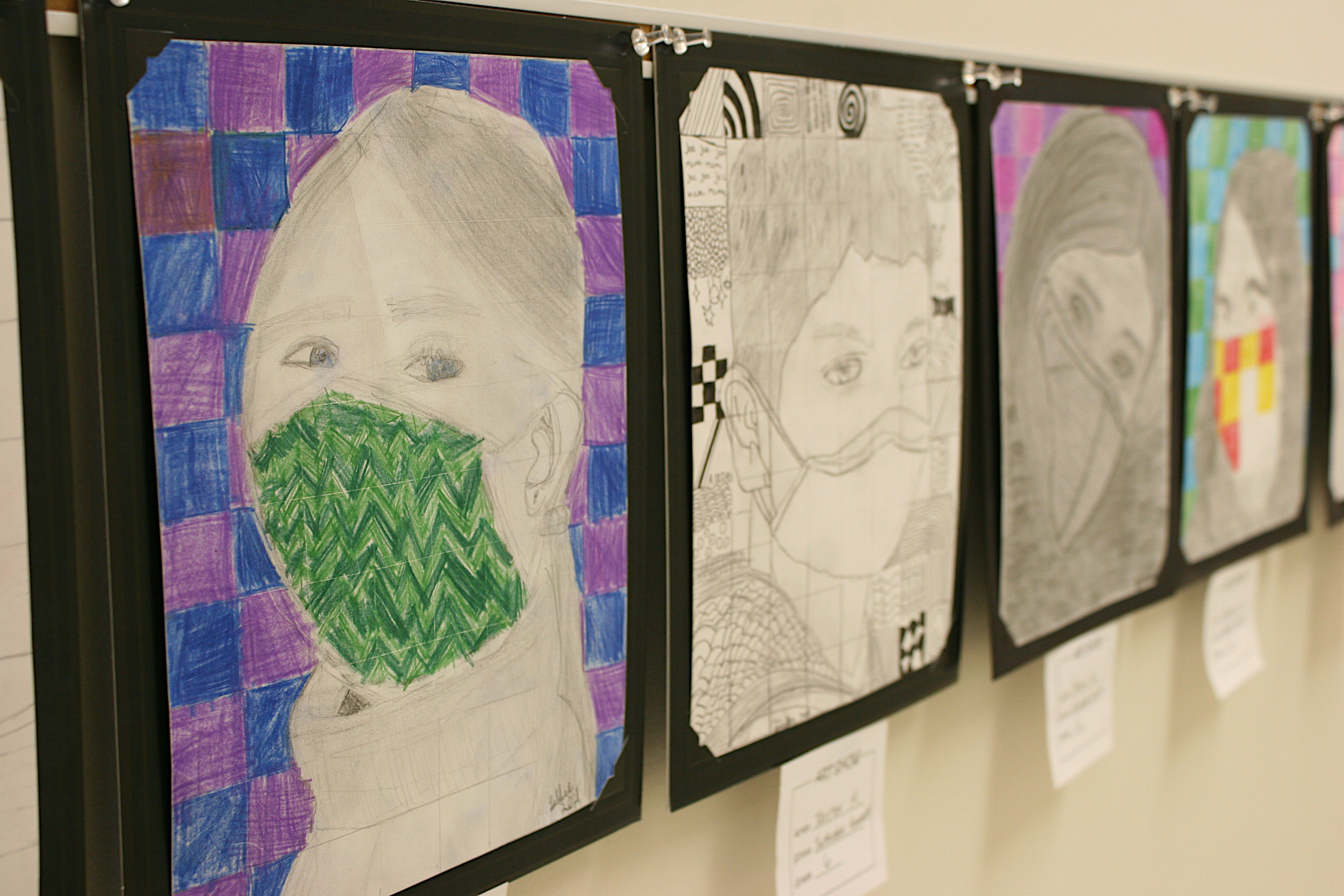
Bethlehem Academy sixth grader Diego drew the masked portrait, left, one in a long line of masked portraits by BA students.
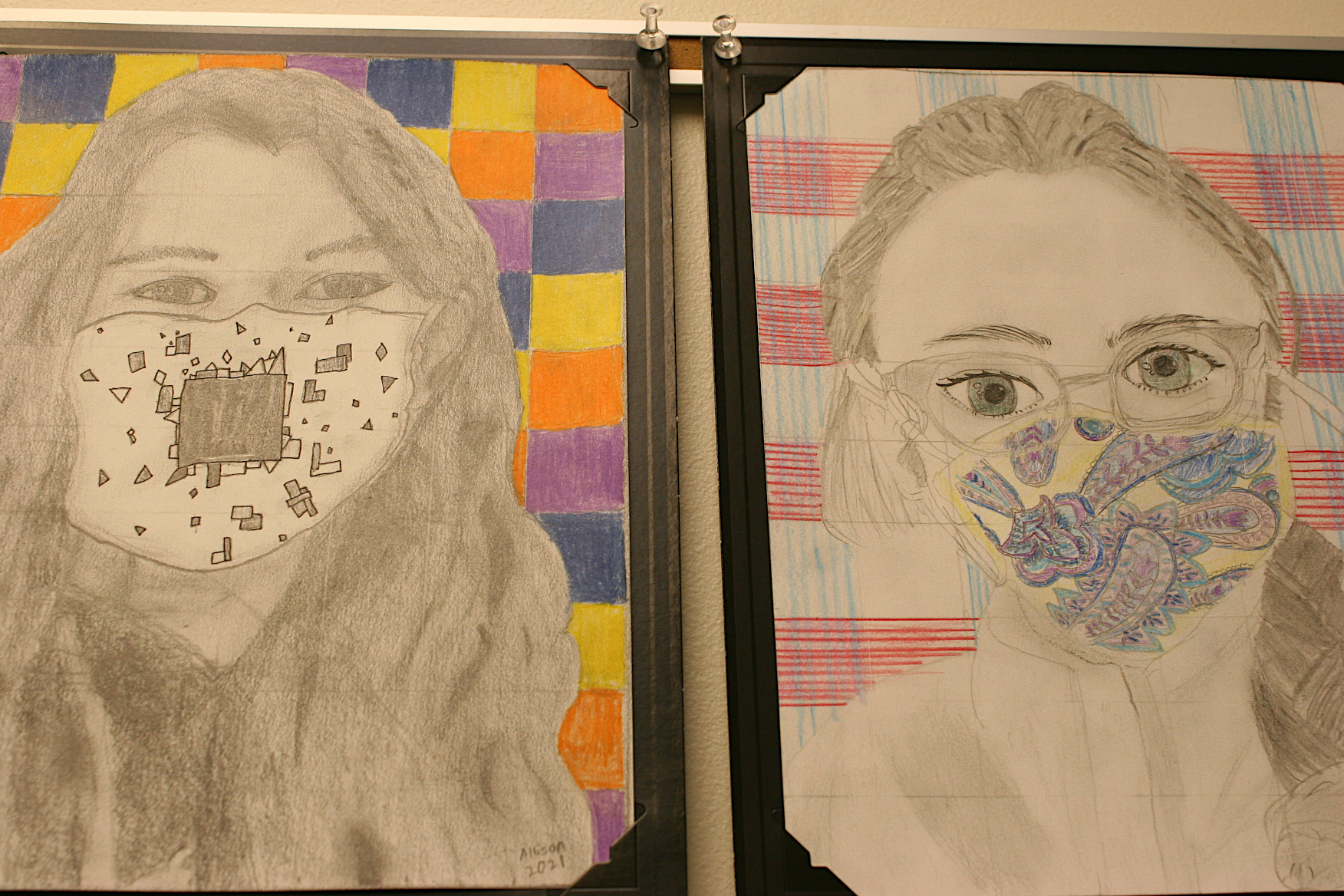
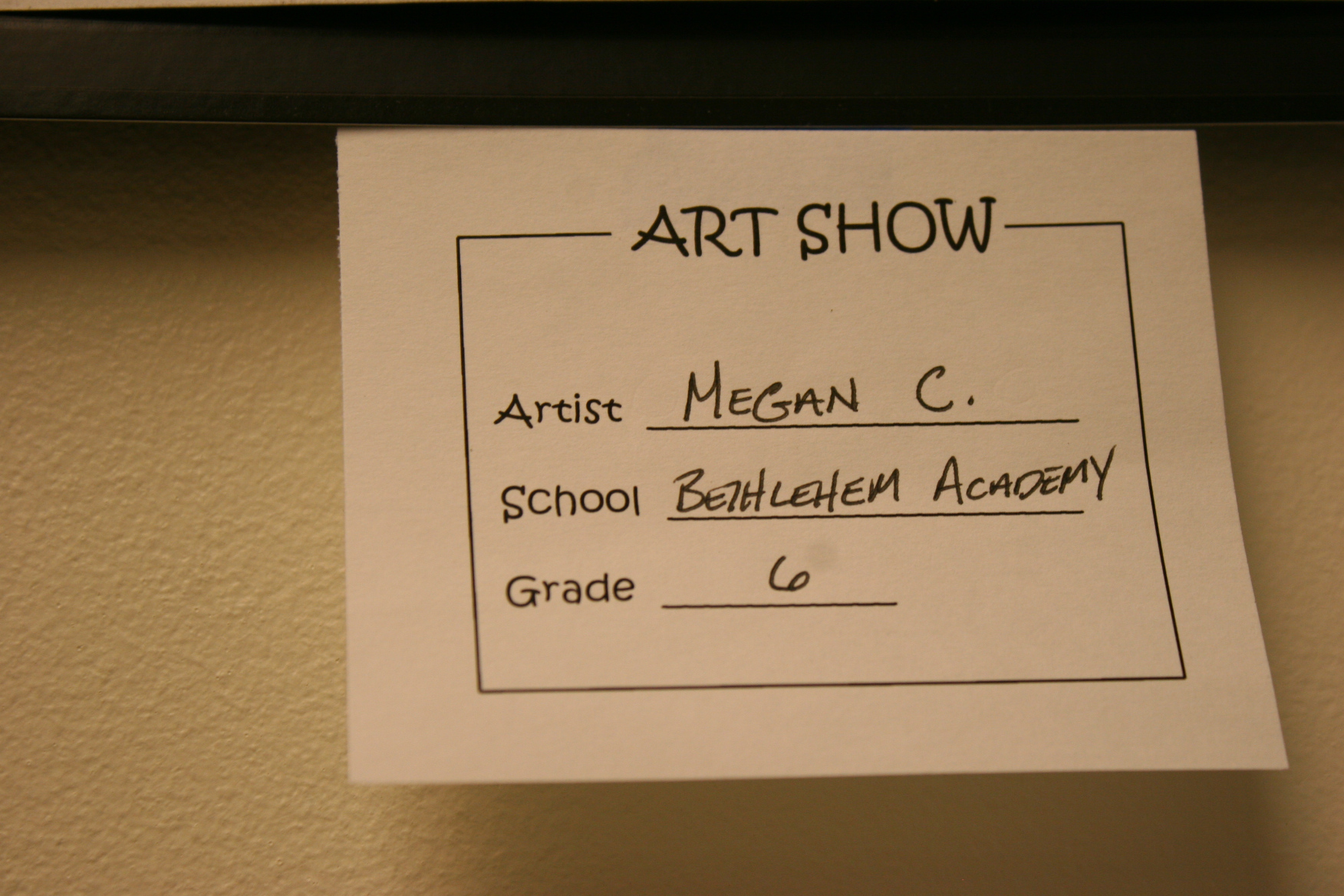
Masked portraits by BA sixth graders, Allison, left, and Megan, right.
Lillian, from the sixth grade class at BA, created the portrait on the left.

Not only are fewer pieces of art displayed, but the art, too, reflects the pandemic and distance learning. Students from Bethlehem Academy, for example, drew portraits. Of their masked selves.

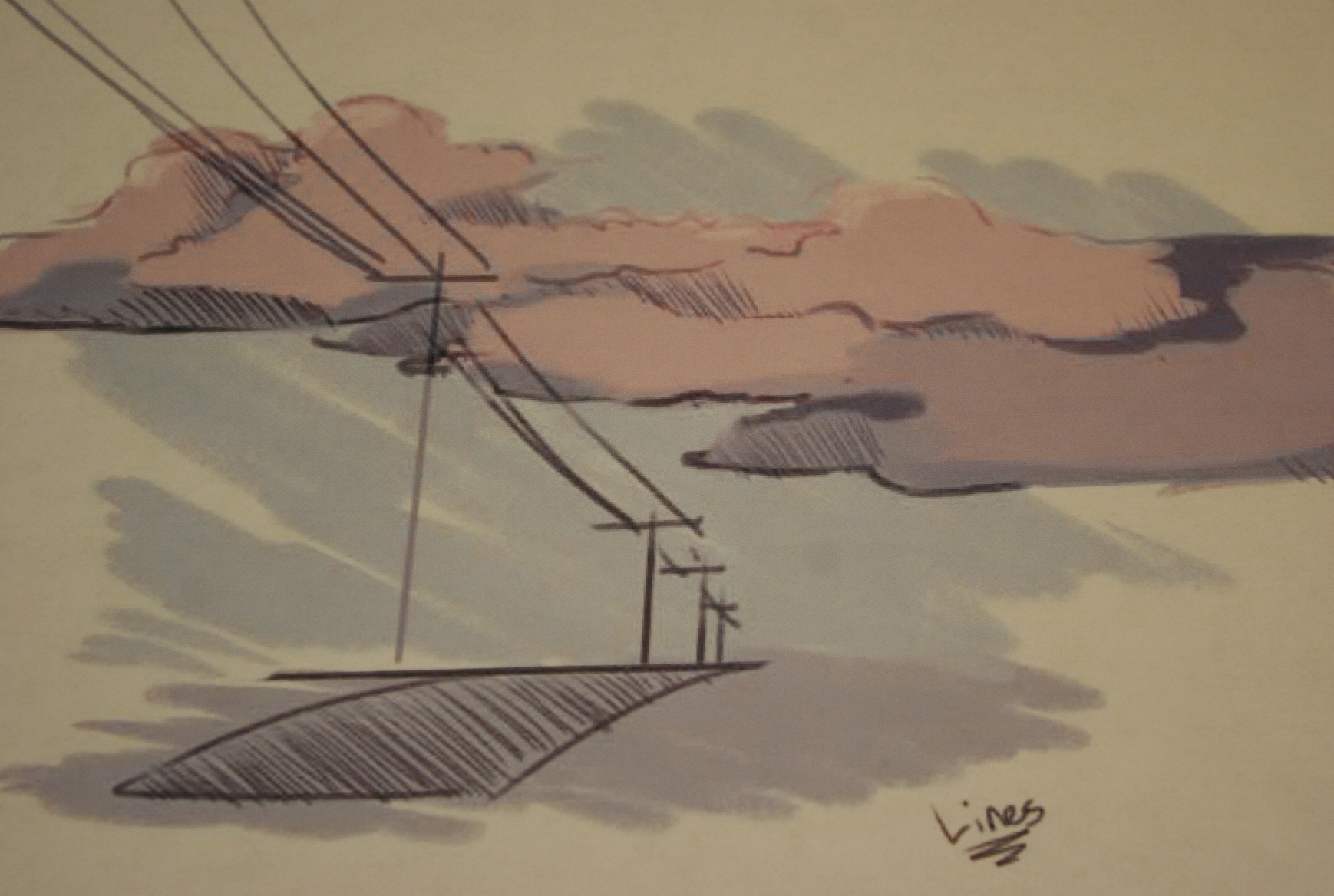
“Lines” by Faribault Middle School eighth grader Aronranrcsy reminds me of the prairie. This is one of my favorites.

I also noticed a lack of copycat art with teachers assigning students to a specific art task and then student after student after student creating the same thing. I observed more creativity and diversity. And I really appreciated that individuality as it allows students to open their artistic wings and soar.

“Color” by Mohamed, Faribault Middle School eighth grader. This just makes me happy.

Paradise Center for the Arts Executive Director Heidi Nelson and I briefly discussed my observations. She agreed that distance learning definitely factored into the artwork, noting that some of the art is computer generated/created.

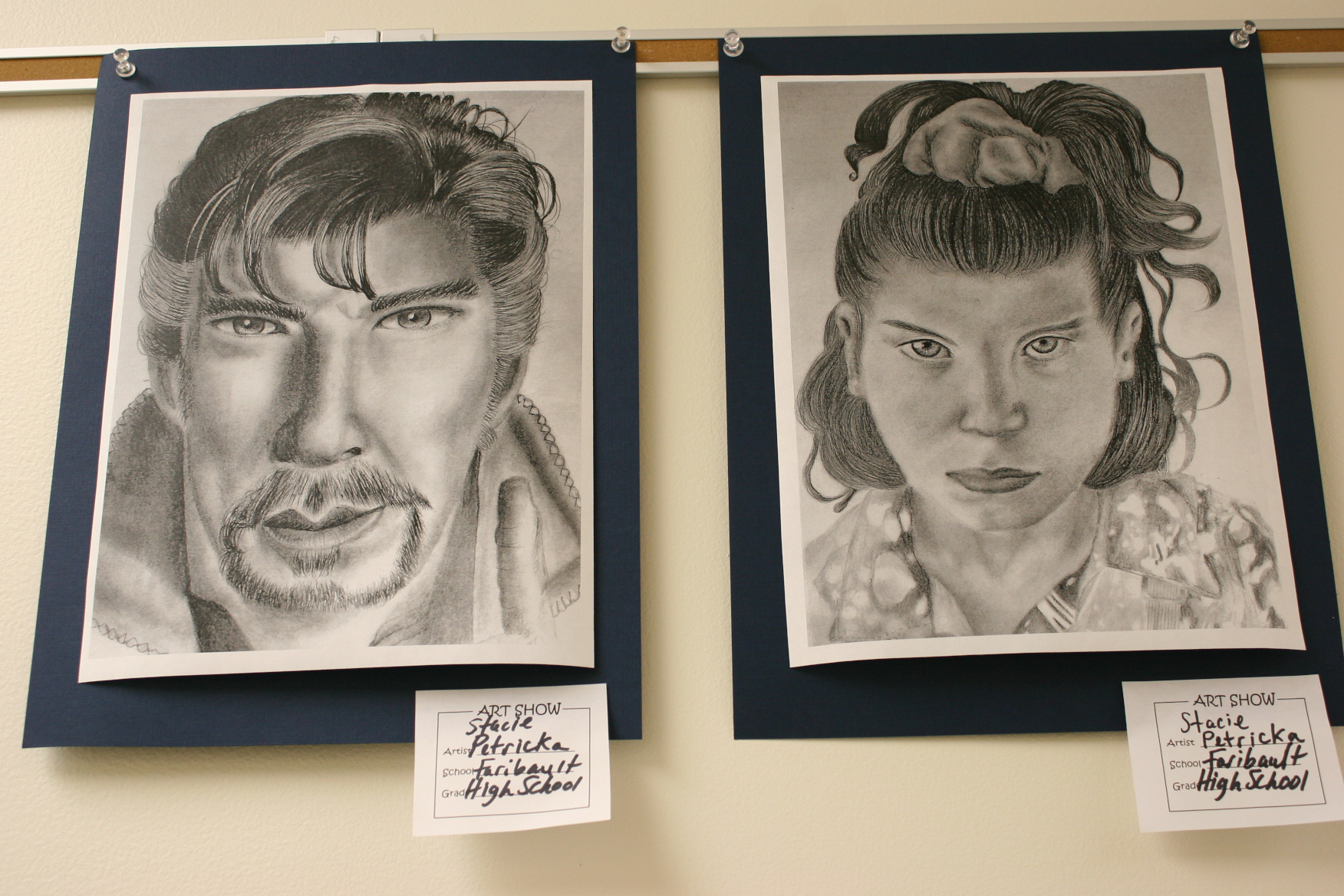
What incredible talent…portraits by Faribault High School student Stacie.
Each work of art is tagged with the artist’s name and school. I’d welcome info on the art medium.
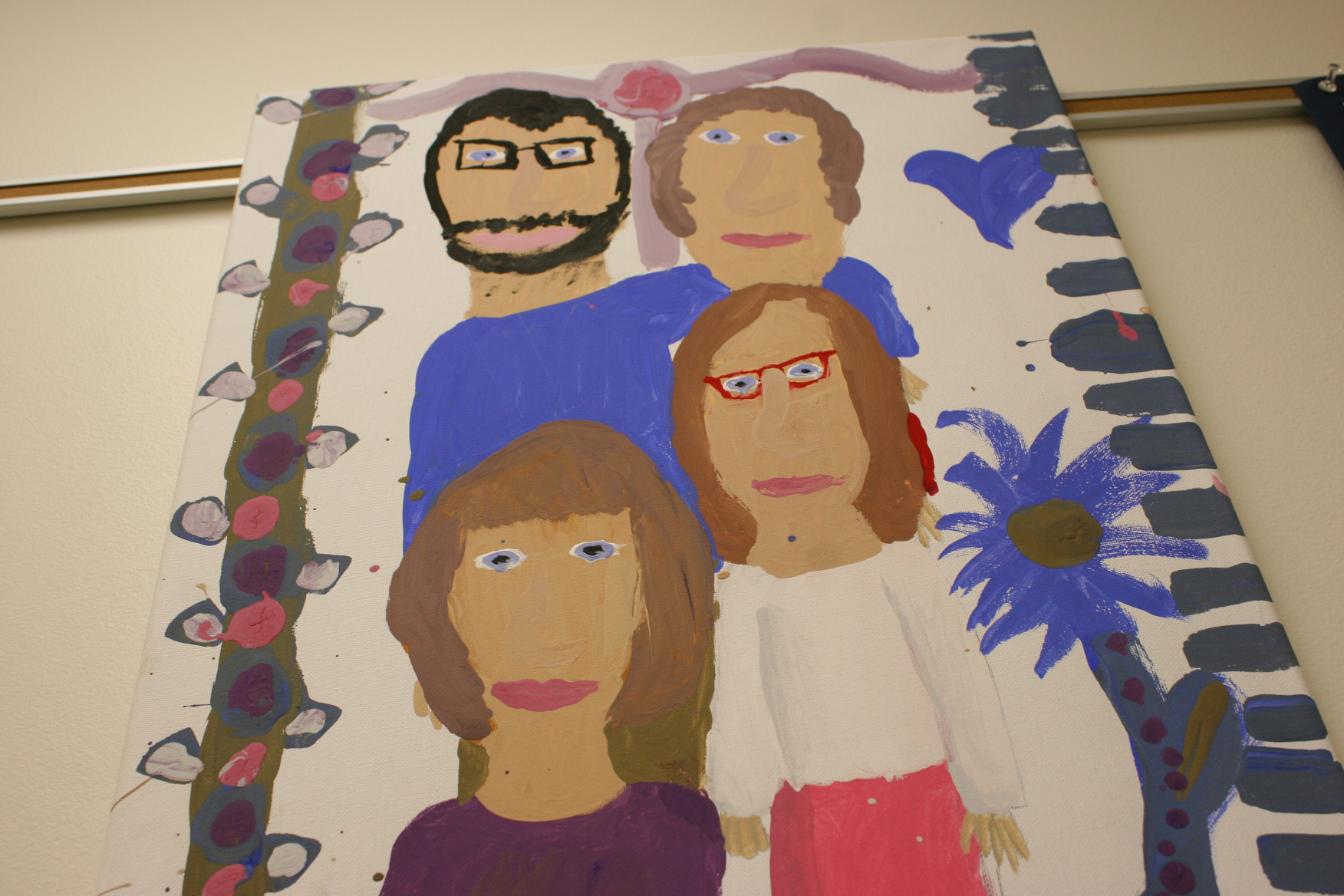
Hazel, a third grader at Bridgewater Elementary School, created this family portrait, which I absolutely love. If we’ve learned one thing during the pandemic, it’s the value of family.

However these students created—whether via a pencil or a brush or a computer or some other method—they share the common denominator of making art. And for that, I feel inspired and grateful.

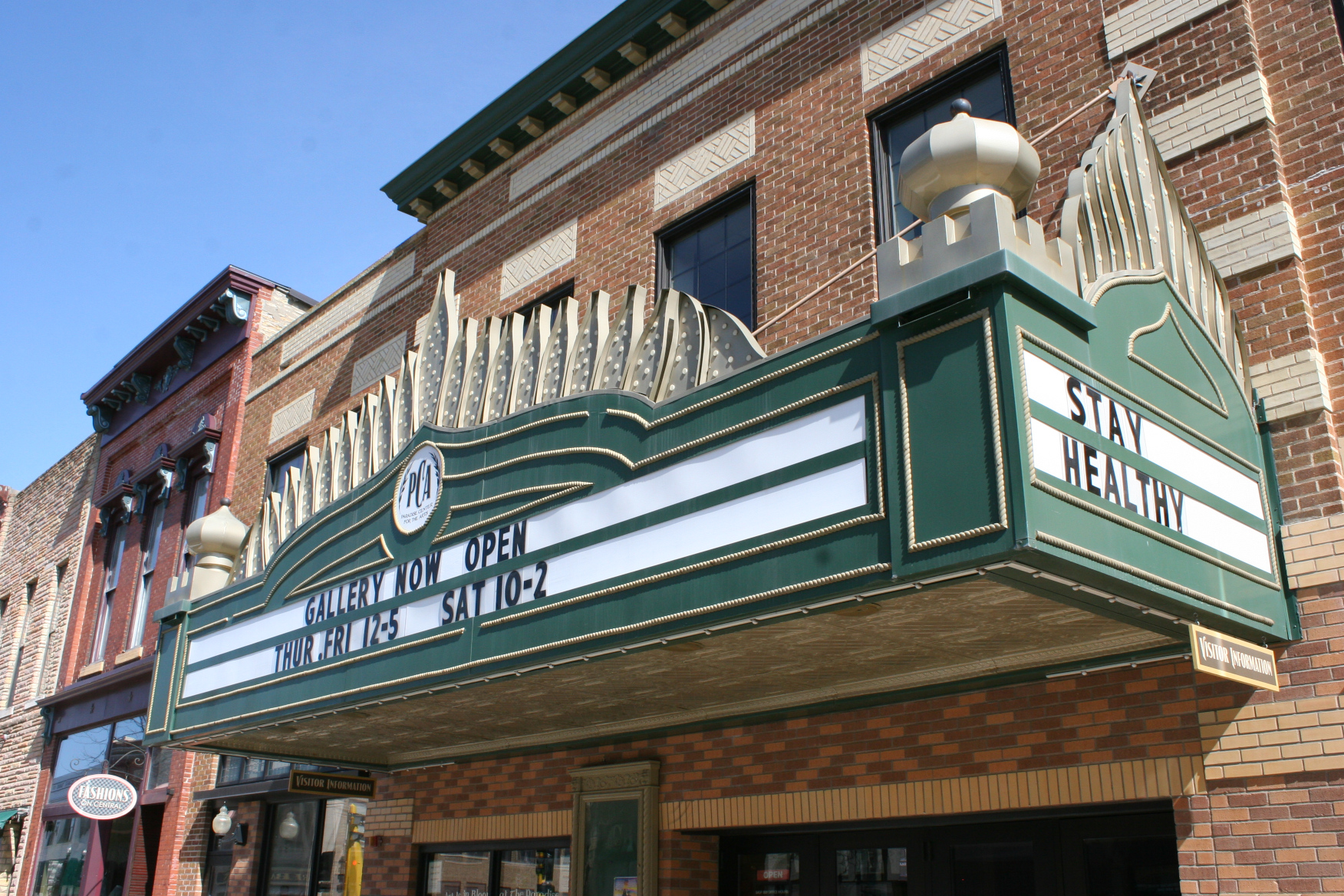
FYI: The All Area Student Show on the second floor of the PCA continues through April 10. The Paradise Center for the Arts is open from noon – 5 pm Thursday and Friday and from 10 am – 2 pm Saturdays.

© Copyright 2021 Audrey Kletscher Helbling


Experience Faribault through the art of Joe Kral March 25, 2021

Faribault themes “My Hometown” by Minneapolis artist Joe Kral.

WITH NEARLY 100 PIECES of art displayed in the Carlander Gallery at the Paradise Center for the Arts, Faribault native Joe Kral’s “My Hometown” exhibit takes time to view. But there’s not much time to see this place-focused show, which opened in mid-February and closes April 3. I’d encourage you, especially if you have a Faribault connection, to view Kral’s art now.

The art of Joe Kral fills the Carlander Gallery.
“The Happy Clown.” Kral’s art celebrates the clown graphic used on the Tilt-A-Whirl amusement ride created and made in Faribault, up until recently.
Kral’s signature art highlights Faribault.

The Minneapolis artist creates mixed media paintings in a signature style that appeals to my love of vintage graphics, fonts, old print ads and nostalgia. Kral sources vintage materials from books, magazines, maps and postcards. He then adds colors and texture with spray paint, stencils and ink, according to information on his website. The results are a visual and creative delight.

The Hardwood General Store building still stands near the King Mill Dam.
Some of the businesses featured in Kral’s art still exist. But most don’t.
The King Flour Mill was destroyed by fire and is honored here by Kral.

Faribault residents and natives, particularly, will feel like they are walking down memory lane when viewing “My Hometown.” Kral features primarily Faribault businesses. Like Brand Peony Farms, Fleck’s Beer, King Flour Mills, Farmer Seed & Nursery and Tilt-A-Whirl—all gone. But he also includes art on current businesses like the well-known Faribault Woolen Mill and KDHL radio.

Chief Taopee art created by Kral.
Town founder, Alexander Faribault, portrayed in Kral’s mixed media art.

Two locally important early leaders, Chief Taopee and Alexander Faribault, are also included in Kral’s hometown exhibit.

More of Kral’s art…

With the historic bend of this show, “My Hometown” seems like a good fit also for a history center/museum, which may draw an entirely different audience. This speaks to the diverse appeal of Kral’s art.

Joe Kral, when he was a student at McKinley Elementary School in Faribault.

In his bio, Kral shares that he was raised on skateboarding, BMX, heavy metal and art. I see that influence in his art. And I also see his love for Faribault—which I expect comes from leaving his hometown, reflecting and then appreciating the place that grew him as an individual and as an artist.

Kral’s Brand Peony Farms art recognizes Faribault’s past history as a peony capital. The business no longer exists.

FYI: The Paradise Center for the Arts, 321 Central Avenue N., Faribault, is open from noon – 5 pm Thursday and Friday and from 10 am – 2 pm Saturdays. While at the Paradise, check out the other gallery exhibits. I will feature some of that art in upcoming posts.

© Copyright 2021 Audrey Kletscher Helbling
 

Oh, the joy of the unexpected in a Minnesota arts center March 24, 2021

Jimmy Reagan’s art splashes across a tote and backpack for sale in a New Ulm arts center gift shop.

IT WAS THE VIVID COLORS which first caught my eye inside The Grand Artisan Gift Shop in downtown New Ulm. Bold hues flashed, accented by strong lines of color, as if the artist had pulled every crayon from a box of crayons and dashed them across the canvas.

Backpacks feature Jimmy Reagan’s colorful art.

This is the work of Jimmy Reagan, a 27-year-old St. Paul artist influenced by the likes of Picasso and van Gogh. His art graces backpacks, totes, sweatshirts in this gift shop on the first floor of The Grand Center for Arts & Culture. You’ll find a wide selection of art from other creatives here also.

Reagan’s work “offers him a means to illustrate his perspective of the world,” according to a promotional bio I picked up in the gift shop. This young man views life through the lens of autism. He was diagnosed with complex autism as a toddler.

These sweatshirts, with Jimmy’s signature “tick marks” (left), hang in the entrance to The Grand Kabaret, an entertainment space in The Grand.

Since 2009, he has created art and is internationally-recognized. I admire Reagan, who rose to the challenges of his autism to express himself and to communicate. Strong colors, simple images and signature “tick marks” (those short dashes of color) define his art. I, for one, am a fan.

The colorful bathroom with the canvas for chalk art above.

I’m also a fan of the public restroom on the second floor of The Grand. It’s not often I write about or photograph restrooms, although two photos I took of “The View from Our Window: Grant Wood in Iowa” rest area along I-380 northbound near Cedar Rapids published in the book, Midwest Architecture Journeys, edited by Zach Mortice and printed by Belt Publishing.

A sampling of the temporary art.

The Grand restroom in New Ulm is not artist-themed, but rather an artistic canvas for anyone who steps inside. The lime green walls first caught my eye as I walked past the bathroom. (As a teen, my bedroom was painted a similar lime green.) And then I noticed the chalk art above the tile and thought, what a great idea. Maybe it’s nothing novel for a public bathroom. But it was to me. And, although I didn’t pick up chalk and add to the black canvas, I photographed it. And that, too, is art.

Check back for more photos from downtown New Ulm.

© Copyright 2021 Audrey Kletscher Helbling
 

From New Ulm: The smallest museum in Minnesota March 23, 2021

THE smallest MUSEUM in MINNESOTA is stationed outside The Grand in New Ulm.

OUTSIDE THE GRAND CENTER for Arts & Culture in the heart of downtown New Ulm, I found a most unusual attraction—THE smallest MUSEUM in MINNESOTA.

And when I write “small,” I mean “small.” The enclosed box museum measures 31.75 inches wide x 32.75 inches high x 7.5 inches deep. Just enough space for artists, makers, collectors, culture buffs, writers and historians to create a mini exhibit.

A full front view of the museum shows the compact exhibit space.

I love this concept for its uniqueness and also its public accessibility. Posted outside The Grand, this museum is viewable 24/7. Similar museums, the Hoosesagg Museum (Pants Pocket Museum) and The Smallest Museum in St. Paul, inspired the one in New Ulm. The museum also reminds me of Little Free Libraries.

The top shelf showing cards from Clay Schuldt’s collection.

Local Clay Schuldt curated the first exhibit, “The Stacked Deck,” featuring select playing cards from decks in his long-time collection. His card showcase continues through April 23 and includes a take-home informational sheet explaining his exhibit. For Schuldt, these cards are not just for playing games. He views cards through multiple lenses of art, entertainment, history, storytelling, marketing and more.

More cards inside the mini museum.

This is what I love about creativity. Creatives bring their backgrounds, experiences and individual interpretations into their work. While I considered a deck of cards as just that, a deck of cards, Schuldt views them differently. And now, because of his featured collection and insights, I view cards from a wider perspective.

I look forward to seeing more of these mini exhibits outside The Grand. Creatives, collectors, historians and others are invited to submit museum proposals. You can do that by clicking here and then clicking on the PDF link. Guidelines call for applicants to consider how the proposed exhibit relates to the region, audience engagement and simplicity.

Selected artists receive a $50 stipend for a two-month exhibit.

Please check back one more time as I return inside The Grand Center for Arts & Culture, and two more particularly creative finds. If you missed my first post on The Grand, click here.

© Copyright 2021 Audrey Kletscher Helbling
 

Discovering New Ulm’s The Grand Center for Arts & Culture March 19, 2021

AS SOMEONE WHO GREW UP with minimal exposure to the arts, I feel not so much deprived as deeply appreciative of creativity. I consider myself an artist—of images and of words. To write and to photograph, oh, the joy.

A snippet of an acrylic, “Guitar,” by Caitlin Lang.

I feel gratitude for all the creatives out there who share their talents, whether in published works or performances or art exhibits or whatever in whatever space they choose.

The Grand Center for Arts & Culture in downtown New Ulm.

Recently I discovered a new-to-me center for the arts in New Ulm, a southern Minnesota city known for its German heritage and so much more. Like the Minnesota Music Hall of Fame, the Hermann the German Monument, August Schell Brewery, the Wanda Gag House, the Glockenspiel…small town shops and eateries and, well, enough attractions to fill a weekend.

Beautiful signage and architectural details make this building visually appealing.

During a brief Saturday afternoon stop in New Ulm, my first must-see destination was The Grand Center for Arts and Culture, housed in a former historic hotel in the heart of downtown. The building itself drew my interest with its appealing signage and lovely architectural details.

A portion of the historical plaque outlining the history of the former Grand Hotel, now an arts and cultural center in New Ulm.

A front face plaque summarizes its history. You’ll find such historical info throughout this downtown on plaques, benches and even picnic tables. I appreciate the easy access to history.

Outside the front entry to The Grand Center for Arts & Culture in New Ulm.

Inside the arts center, the first floor features a gift shop brimming with great art and, across the hall, The Grand Kabaret, for entertainment/the performing arts. Downstairs, the basement houses Cellar Press, a letterpress and printmaking studio, which I didn’t see (but must).

Light floods the gallery, on these walls the art of Sam Matter.

A steep flight of stairs leads to 4 Pillars Gallery and studio space on the second floor. The compact gallery, with abundant natural light flowing into the room, feels intimate, inviting, ideal for showcasing art.

Musician portraits by Caitlin Lang.

Caitlin Lang of Springfield and Sam Matter of New Ulm are the current featured artists in a joint mixed media exhibit, “Intentionally Accidental.” Their show runs through April 3.

The bios of Caitlin Lang and Sam Matter, along with a guestbook, sit on a table in the gallery.

What a joy to see the work of these two young artists. Lang specializes in portraits and Matter describes his art as “a small scene from my heart to the viewer.” I love that poetic description.

Sam Matter’s art, created from the heart.

And I love this center for arts and culture, a must-see in New Ulm.

#

FYI: The Grand Center for Arts & Culture is changing its hours starting March 23 and will be open from 11 am – 4 pm Tuesday – Saturday.

#

Please check back for more photos from the arts center.

© Copyright 2021 Audrey Kletscher Helbling

 

Part III: St. Michael’s, beyond a building January 28, 2021

Outside my husband Randy’s home church, St. Michael’s in Buckman. Minnesota Prairie Roots file photo September 2020.

FOR MANY, THE WORD “church” prompts visions of a physical structure, a place where people of faith gather to worship. Certainly, that’s part of the definition. But, even more important, “church” is the people. That’s why, in times of natural disaster or fire or whatever may render a physical building unusable, the “church” continues.

This sign marks a back pew. Minnesota Prairie Roots file photo September 2020.

For 118 years, the faithful have gathered at St. Michael’s Catholic Church in Buckman. Even during COVID-19, Mass happens three mornings a week. On the September weekday Randy and I visited, not a soul was around, giving us ample opportunity to explore this beautiful aged sanctuary.

Book of the Innocents photographed at St. Michael’s. Minnesota Prairie Roots file photo September 2020.

Despite the absence of people, I experienced the presence of those who call St. Michael’s their church home. I saw the human spiritual connection in handwritten prayers recorded in The Book of Innocents.

They left their mark… Minnesota Prairie Roots file photo September 2020.

Upstairs, atop the balcony wall ledge, I noticed initials, names and dates etched in wood. Another human notation, albeit probably not appreciated by all. But the scratchings are part of St. Michael’s history.

A view from the balcony. Minnesota Prairie Roots file photo September 2020.
Stained glass windows abound, this one next to a side altar. Minnesota Prairie Roots file photo September 2020.
The beautiful side altar. Minnesota Prairie Roots file photo September 2020.

As I looked down upon the massive sanctuary defined by stained glass, sculptures, woodcarvings, paintings and other impressive art, I considered the humanity of this place. Baptisms. First Communions. Weddings. Funerals. Events—joyful and sad—which brought/bring people together to celebrate or to mourn. Mass, too, with singing and praying and forgiving and worshiping and growing in faith.

Looking toward the back of the church and the balcony. Minnesota Prairie Roots file photo September 2020.

Generations have gathered here, within these walls, as a faith family.

This stunning cross stands in the center of the main altar. Minnesota Prairie Roots file photo September 2020.

I’ve found comfort and joy here, too, celebrating the marriage of my father-in-law and a sister-in-law and grieving the loss of a brother-in-law and then my mother-in-law 27 years ago. Since then, the church has been restored and a side entry and fellowship hall added, making the building much more accessible.

Spotted on a table in the entry. Minnesota Prairie Roots file photo September 2020.

In the new entry, I paused to read a small sign: PRAYER THE WORLD’S GREATEST WIRELESS CONNECTION. I laughed and thought, so true while simultaneously considering how much the world has changed since the construction of this church in 1903.

Masks are available for worshipers inside the entry. Minnesota Prairie Roots file photo September 2020.

Yet, little has changed. People still define St. Michael’s. They gather here—as they have for generations—within this art rich sanctuary, embracing liturgy steeped in music and tradition, to worship God. And to connect, heart-to-heart, with one another and with their Savior. Even during a global pandemic.

This is the final post in my three-part series on St. Michael’s Catholic Church, Buckman, Minnesota.

© Copyright 2021 Audrey Kletscher Helbling
 

Part II: The artistry of St. Michael’s in Buckman January 27, 2021

St. Michael’s Catholic Church in Buckman. Minnesota Prairie Roots file photo September 2020.

WHEN I STEP INSIDE A CHURCH like St. Michael’s Catholic Church in Buckman in central Minnesota, I feel overwhelmed by the sheer artistic beauty and craftsmanship. I wonder about those who built this massive church in 1903, dedicating it on September 29, St. Michael’s Day. How did they manage to build this 118 years ago without modern equipment? That amazes me.

Looking toward the front of St. Michael’s. Minnesota Prairie Roots file photo September 2020.

Beyond the actual structure, which surely took much muscle, many manpower hours and grit to complete, I wonder about the artists behind the artwork inside. Who crafted the stained glass windows? Who built the altars? Who shaped the statues and painted the angels and built the pews?

A stained glass depiction of Jesus carrying his cross. Minnesota Prairie Roots file photo September 2020.
One of the side altars, right, at St. Michael’s. Minnesota Prairie Roots file photo September 2020.
The Nativity represented in stained glass, left. Minnesota Prairie Roots file photo September 2020.

I am grateful to those faith-focused artists and craftsman who created such beauty here in the middle of Minnesota. A place for farm families (mostly) to gather for Mass. To praise God. To confess their sins. To press their hearts in prayer. To mourn. To celebrate. To grow deeper in their faith.

The Last Supper is depicted on the lower part of the main altar. Simply stunning. Minnesota Prairie Roots file photo September 2020.

The Helbling family made St. Michael’s their church home upon relocating to Minnesota from North Dakota in 1963. My husband, Randy, and his siblings attended elementary school across the street. That school, next to the cemetery, is long gone. My mother-in-law and a brother-in-law are buried here, across Minnesota Highway 25 from the church. So, by marriage, St. Michael’s is now part of my history.

Just look at the emotions sculpted into this art. I see peace, pain, determination… Minnesota Prairie Roots file photo September 2020.

Certainly, I don’t hold the deep emotional connection that comes from years of worshiping within the walls of this rural Minnesota church. But I still hold a deep appreciation for this place which was such a valued part of my in-laws’ lives.

Stained glass windows and sculptures adorn the side walls of St. Michael’s. Minnesota Prairie Roots file photo September 2020.

As a woman of faith—I grew up Lutheran—I value aged churches and art. Religious art is often symbolic, reinforcing Bible truths and stories. It can uplift, comfort, provide peace, bring joy, remind us of our weaknesses and the source of strength and hope. It can center and ground us when we most need to feel centered and grounded.

Massive pipes on the pipe organ in the St. Michael’s balcony. Minnesota Prairie Roots file photo September 2020.

Many times, church art has reinforced my faith, helped me to feel the presence and closeness of God whether in a stained glass window, the words of a familiar hymn or the comfort of a worn wooden pew.

“Pilate condemns Jesus to death” sculpture between two stained glass windows. Minnesota Prairie Roots file photo September 2020.

Inside St. Michael’s, generations of families have gathered. I am grateful for those early settlers who labored to create this sanctuary in the small town of Buckman, Minnesota.

Please check back as I take you inside St. Michael’s for the final post in this three-part series.

© Copyright 2021 Audrey Kletscher Helbling
 

Part I: St. Michael’s in Buckman, place of faith, art & memories January 26, 2021

IMAGINE, AS A YOUNG BOY, moving nearly 400 miles across the plains of North Dakota east to Minnesota with your family to start a new life. You’ve left behind your grandparents and other extended family, and the comforting familiarity of farm home, church and school. For my husband, that was reality.

St. Michael’s Catholic Church in Buckman. Minnesota Prairie Roots file photo September 2020.

As the Tom and Betty Helbling family settled onto a farm southeast of Buckman in central Minnesota in the early 1960s, Randy found himself adjusting from a one-room country schoolhouse with one teacher to a parochial school with multiple classrooms and teachers. He no longer faced cancellation of recess due to coyotes circling the playground at Chimney Butte School near St. Anthony. Rather, he faced nuns slapping his hands with a ruler or drilling thumbs into his skull, adding to his angst as the new boy in school. And then there was the matter of the frightening statue across the street inside the massive St. Michael’s Catholic Church.

In the center, St. Michael overpowering Satan. Minnesota Prairie Roots file photo September 2020.

Some six months ago, I heard for the first time about Randy’s boyhood fear of the statue which centers the main altar at St. Michael’s, where he attended weekday and Sunday Mass. The statue features a triumphant St. Michael overpowering Satan with a spear. A horrid, crouching other-worldly creature with an open mouth of sharp teeth and equally sharp claws represents Satan. Enough to scare any child looking over adult heads to that altar art. Not even the chain and weapon would be enough to inspire confidence in the Evil One’s captivity.

St. Michael’s stretches long and high. Minnesota Prairie Roots file photo September 2020.

All of that aside, St. Michael’s is a truly beautiful church. Massive in size and vast in art. I’ve come to know it only through marriage as I grew up 145 miles to the south of Buckman and in the Lutheran faith.

“The Nativity” stained glass, one of many similar windows inside St. Michael’s. Minnesota Prairie Roots file photo September 2020.
A stunningly beautiful cross, one of many. Minnesota Prairie Roots file photo September 2020.
Statues on a side altar. Minnesota Prairie Roots file photo September 2020.

I don’t pretend to understand the meaning of all the art which graces this space. But one thing I do understand is that this house of worship excels in craftsmanship and artistry. Each piece of art holds meaning, significance, purpose. From the stained glass windows to the sculptures to the ornate altars.

Looking toward the back of the church and to the balcony. Minnesota Prairie Roots file photo September 2020.

Years have passed since I stepped inside St. Michael’s. So when Randy and I visited his mother’s and brother’s gravesites at the church cemetery last September, we decided to also check out the recently-restored church. I expected locked doors, so often the case now in rural and small town churches. But the doors to an addition were open and we had the place to ourselves. Note that plenty of security cameras film visitors.

My favorite art in St. Michael’s are these angels painted on the ceiling above the altar. Minnesota Prairie Roots file photo September 2020.

My reaction was one of awe as I stood inside the sanctuary with its soaring ceiling, art seemingly everywhere. It’s a photographer’s paradise. An art lover’s dream. A place of peace for the faithful.

A side altar up close. Minnesota Prairie Roots file photo September 2020.
Ornate ceiling details. Minnesota Prairie Roots file photo September 2020.
One of many detailed sculptures. Minnesota Prairie Roots file photo September 2020.

I felt overwhelmed as I moved from one area of the church to the next—attempting to take in all I saw. The whole picture. The details. Oh, the details.

The center altar, with that frightening statue. Minnesota Prairie Roots file photo September 2020.

I stood for a moment, placing myself in Randy’s shoes as that young boy from North Dakota seeing this all for the first time. I locked eyes on the statue of St. Michael towering over Satan, the terrible, horrible creature with the sharp teeth and claws. And I understood Randy’s fear manifested there all those decades ago.

Please check back as I bring you more photos from inside St. Michael’s Catholic Church, Buckman, Minnesota.

© Copyright 2021 Audrey Kletscher Helbling
 

Some thoughts on aging vehicles, horse power & more December 29, 2020

Filed under: Uncategorized — Audrey Kletscher Helbling @ 5:00 AM
Tags: , , , , ,
My father-in-law, Tom Helbling, painted this holiday scene and gifted it to Randy and me. Every December I pull the painting from my stored art collection and hang it on the dining room wall. It’s among my most treasured artwork.

AS RANDY AND I DISCUSSED YET another issue with our aging vehicles over dinner, I glanced at the painting on our dining room wall. “Sometimes I wish we got around by horse and buggy,” I said. “Life would be simpler.”

Or would it? There would be horses to feed, wagons or sleighs to fix, manure to pitch from a barn we don’t have. And our travel would be limited. Nah, wouldn’t work.

Our used van, purchased from a private party and photographed quite a number of years ago. It’s marked by rust now, from winter exposure to salt, sand and chemicals placed on Minnesota roadways. Minnesota Prairie Roots file photo.

So we continue to keep our 2003 Chevy Impala with 276,000 miles and our 2005 Dodge Caravan with some 175,000 miles in running order. Or should I say Randy does? He’s an automotive machinist (that’s different than a mechanic) and is pretty darned skilled in vehicle maintenance and repair after 40+ years in the profession. This year he’s done brake work on both vehicles, put a new sway bar in the car and replaced a belt tensioner and belt, alternator and radiator in the van. Oh, and done regular oil changes.

Randy’s skills save us lots in labor costs. But parts alone, even with his work place discount, still ran $865.

I figured with all those repairs already this year, we were good to go for awhile. But then Randy texted recently that the heater in the car wasn’t working. He had one long, cold 22-minute commute to work. He thought the problem may be a blown fuse. It wasn’t. And, not being skilled in the electrical components of a vehicle or wanting to navigate repair inside/under the dashboard, he let the guys at Witt Bros Service in Northfield work their repair magic. They’re a great, trustworthy crew, located across the parking lot from Randy’s work place. Still, sinking $200 (most of that in parts) into a nearly 18-year-old car gives reason to pause. But, hey, where can you buy a well-maintained used car for that price?

I purchased this stunning 24-inch x 18-inch paint-by-number painting at a Wisconsin second-hand/collectible/antique shop in 2015. I display this every May during Kentucky Derby time. Minnesota Prairie Roots file photo 2015.

Now, if we weren’t paying $1,868/month in health insurance premiums in 2021 (up $144/month from this year), we could drive newer, nicer vehicles. Thus far in 2020, we’ve forked out $20,447 for health insurance premiums with deductibles of $4,250/each. Sigh. Nearly $21,000 could go a long way toward paying for a vehicle upgrade or anything for that matter. But, hey, at least we have health insurance (that is basically worthless unless we have a major health event) and wheels, not horses, to get around.

© Copyright 2020 Audrey Kletscher Helbling
 

Neighbor helping neighbor in Zumbrota October 27, 2020
The grain elevator complex in Zumbrota, a busy place especially during the fall harvest. Minnesota Prairie Roots file photo October 18, 2020.
TOO OFTEN THESE DAYS, I feel discouraged by all the discord in our country, by the selfishness and lack of care for others.

But then I discover something that lifts my spirits and reaffirms my belief in our goodness, our ability to help one another, to think beyond ourselves and our needs to those of the people around us.
This is the story of such a discovery. Of goodness and kindness and care for those we call our family, neighbors, friends. Or strangers. And this I found in Zumbrota, a small town about a 45-minute drive east of Faribault.

On a recent Sunday afternoon drive through the Zumbro River Valley of southeastern Minnesota, Randy and I stopped in Zumbrota for a picnic lunch, or what was supposed to be a picnic lunch. The weather, only in the 30s and blustery, proved too cold for outdoor dining. We opted to eat in the van while parked outside the public library.

“Heritage of Promise” by Jeff Barber. A third sculpture of a child is not included in this photo.

Directly in our line of vision stood a sculpture of children near a structure, which I soon determined to be an artistic interpretation of an historic covered bridge on the other side of the library. I planned, upon finishing my sandwich, grapes and protein bar, to photograph the art and then we would be on our way.

Some of the words inscribed on the sculpture. In the background, you can see the historic covered bridge.

On any other day, Randy and I would walk across that aged bridge to the park, explore a bit while stretching our legs. But the weather was just too darned cold. I hurried to photograph the sculpture as my fingers numbed.

The Community Cupboard and the Zumbrota Public Library designs both mimic the historic covered bridge nearby.

Once done, I walked back toward the van, only to notice a Little Free Library next to the public library. I found that odd.

As I drew closer, I found I was mistaken. This was not a LFL but rather a Community Cupboard—a source of food and hygiene products. Free for the taking.

The message thereon invites those opening the door of this small structure, designed like the nearby covered bridge, to TAKE WHAT YOU NEED, LEAVE WHAT YOU CAN. Baby formula. Snacks. Dried legumes. I didn’t poke around to see all of the contents.

Rather, as I photographed the Community Cupboard, I felt a sense of gratitude for this “Sharing Our Saviour” food outreach of Our Saviour’s Lutheran Church. I thought of the many times Jesus fed the hungry of body and of soul. And how thankful I am that churches and nonprofits and so many others help people in more ways than we will ever know. This lifts my spirits.

TELL ME: How do you or your community or church (or whatever) help individuals and families in need? I’d like to hear more uplifting stories.

© Copyright 2020 Audrey Kletscher Helbling