Minnesota Prairie Roots

Writing and photography by Audrey Kletscher Helbling

In Faribault: Fabulous art finds at fantastic prices June 13, 2014

EVERY YEAR I LOOK forward to shopping this art sale.

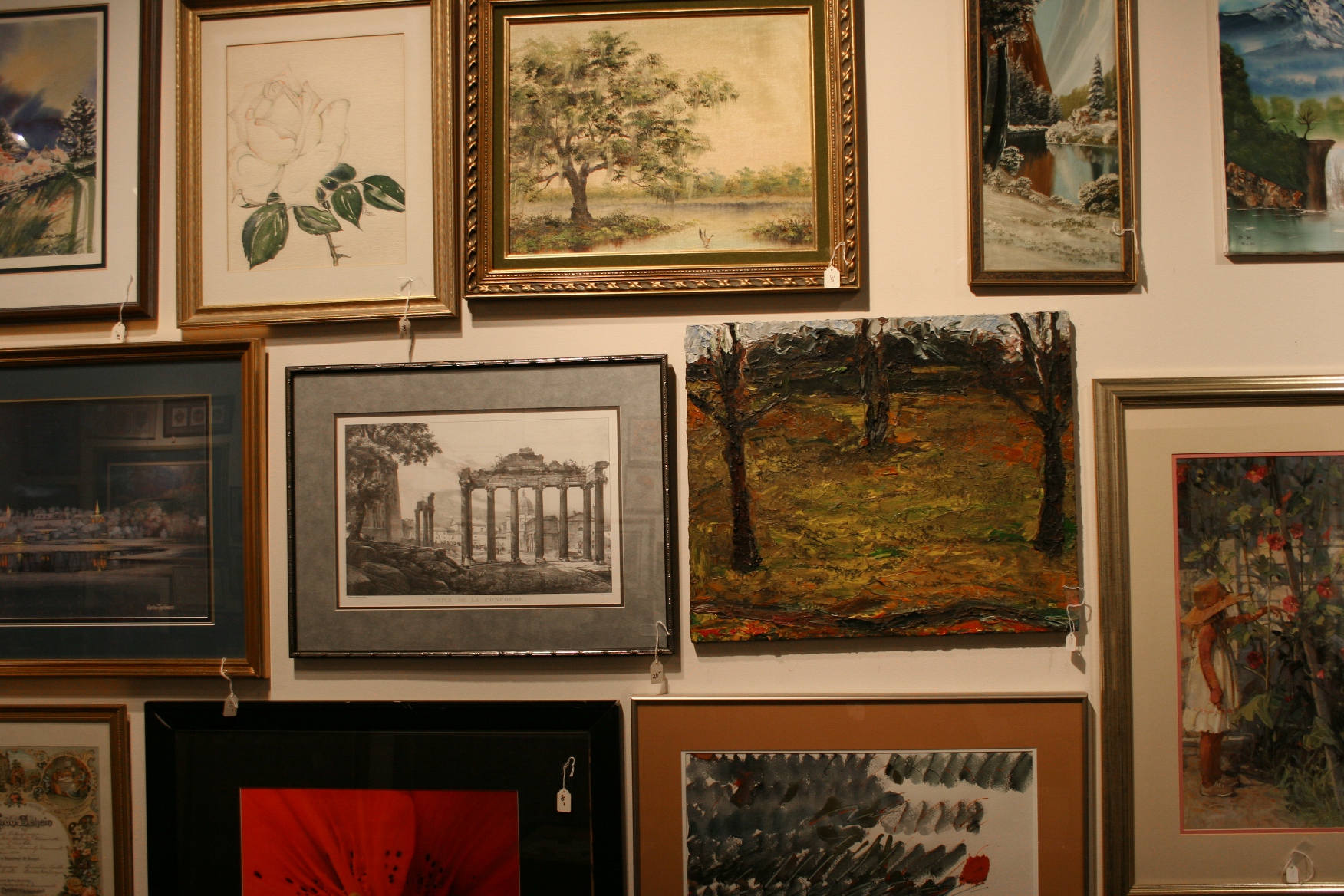
Originals and prints fill the gallery walls.

Originals and prints fill the gallery walls.

What others no longer want, and then donate to this fundraiser, may find a place on my walls, in my home.

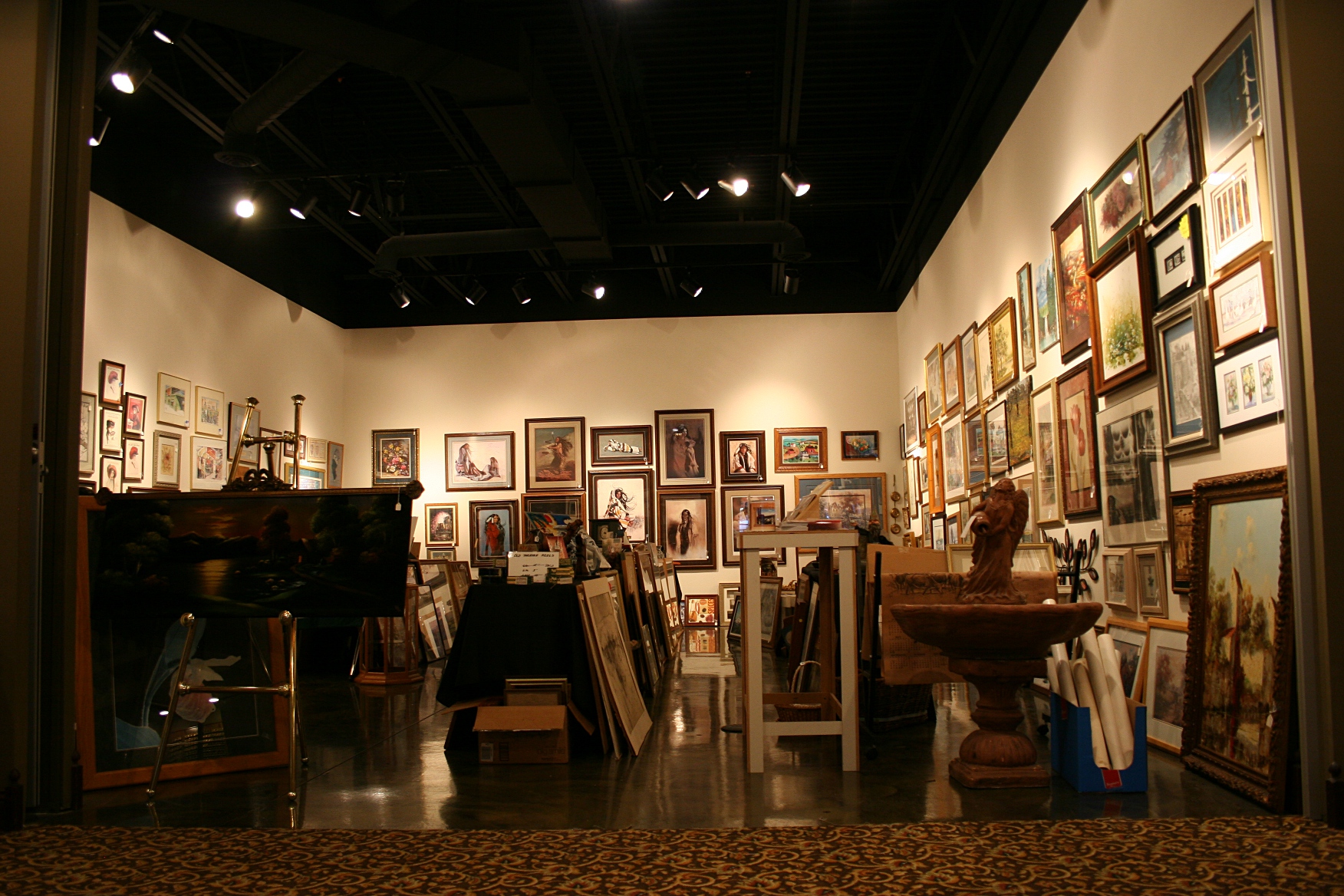
Thursday, opening day of the sale, the gallery was stuffed with art.

Thursday, opening day of the sale, the gallery was stuffed with art.

Today marks day two of the three-day Faribault Mural Society’s yearly Recycled Art Sale at the Paradise Center for the Arts in downtown Faribault. And the Carlander Family Gallery is overflowing with second-hand art from prints to originals.

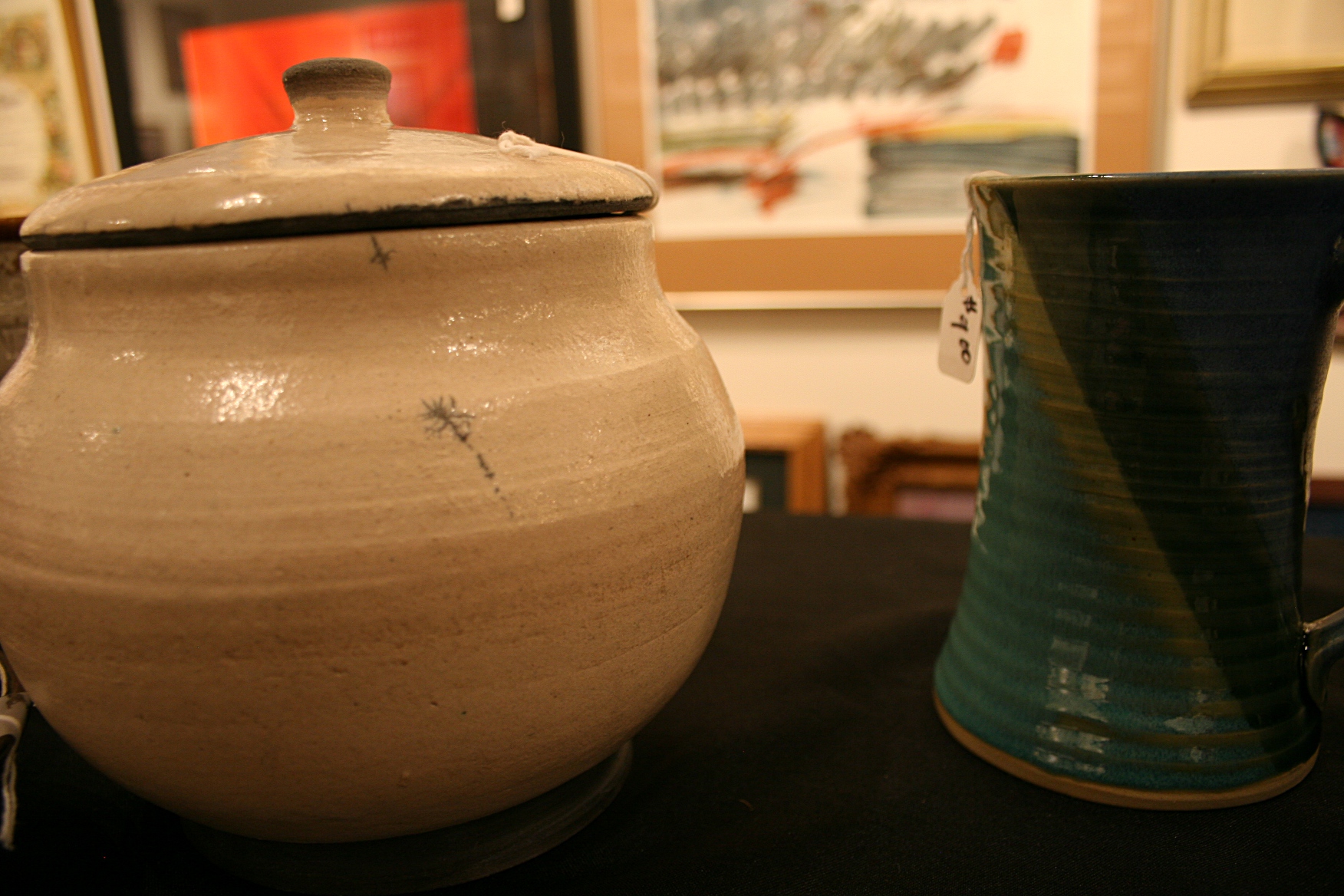
Even pottery is available for purchase.

Even pottery is available for purchase.

Plus, you’ll find pottery and glassware, garden art, frames, mirrors, art books and more.

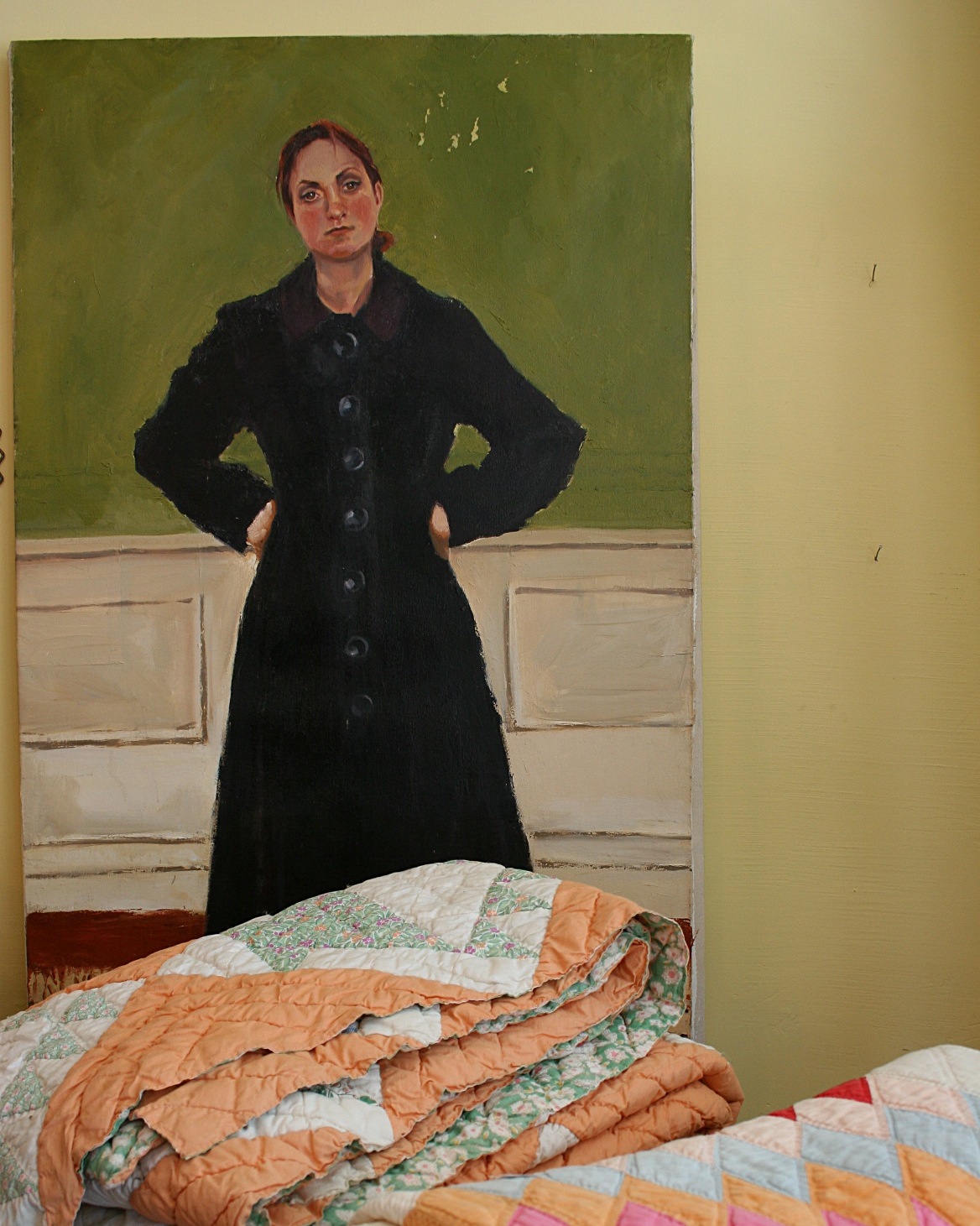
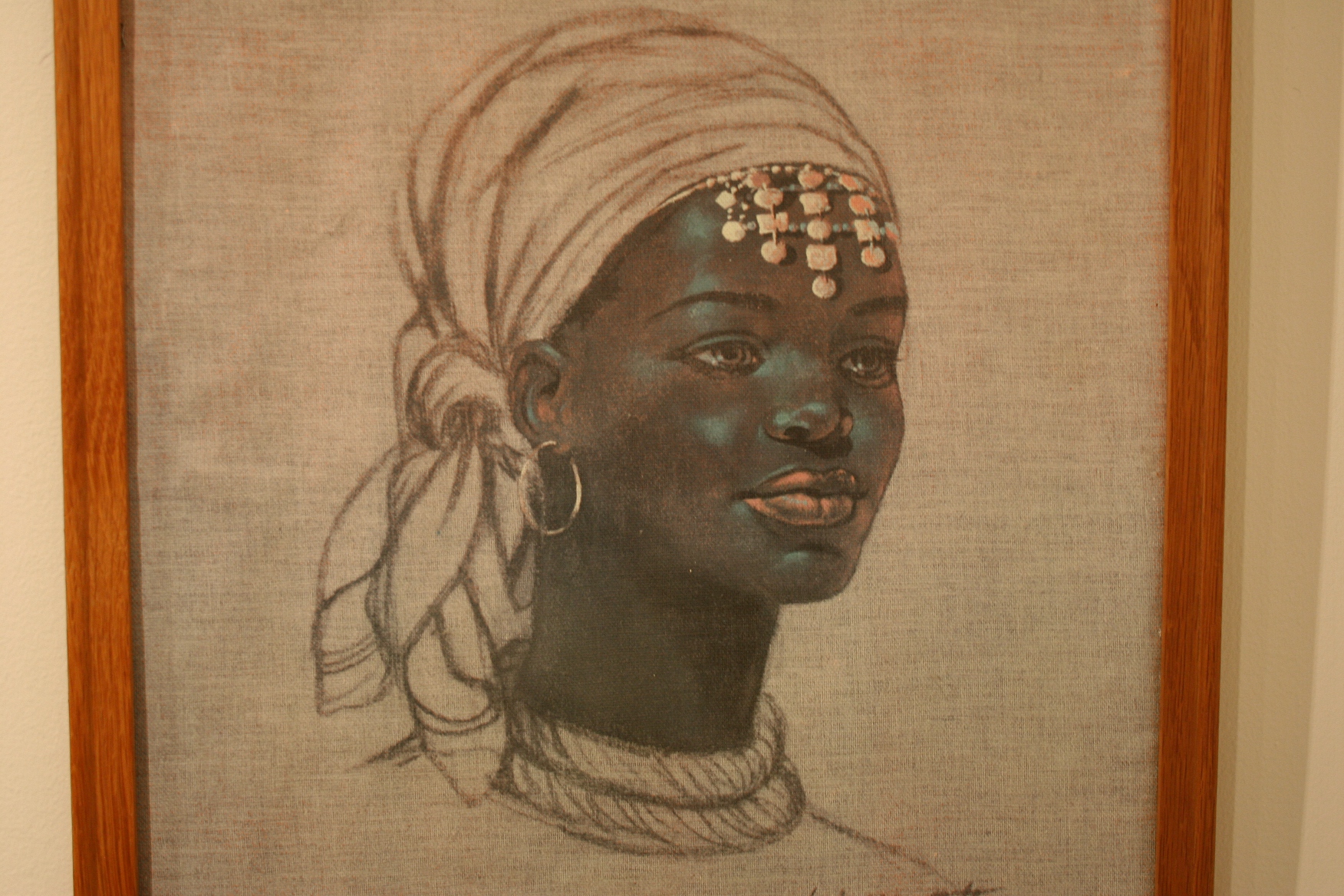
Portraits are among the offerings.

Portraits are among the offerings. This is one of a pair.

I shopped for a half hour Thursday evening, but, much to my dismay, did not find a piece of art I simply had to have. Perhaps a second run-through is necessary.

In past years I’ve scored some really great finds, including an oil on burlap by noted Mexican artist Jose Maria de Servin; LathArt by Dutch artist Theodore de Groot; and two original floral paintings.

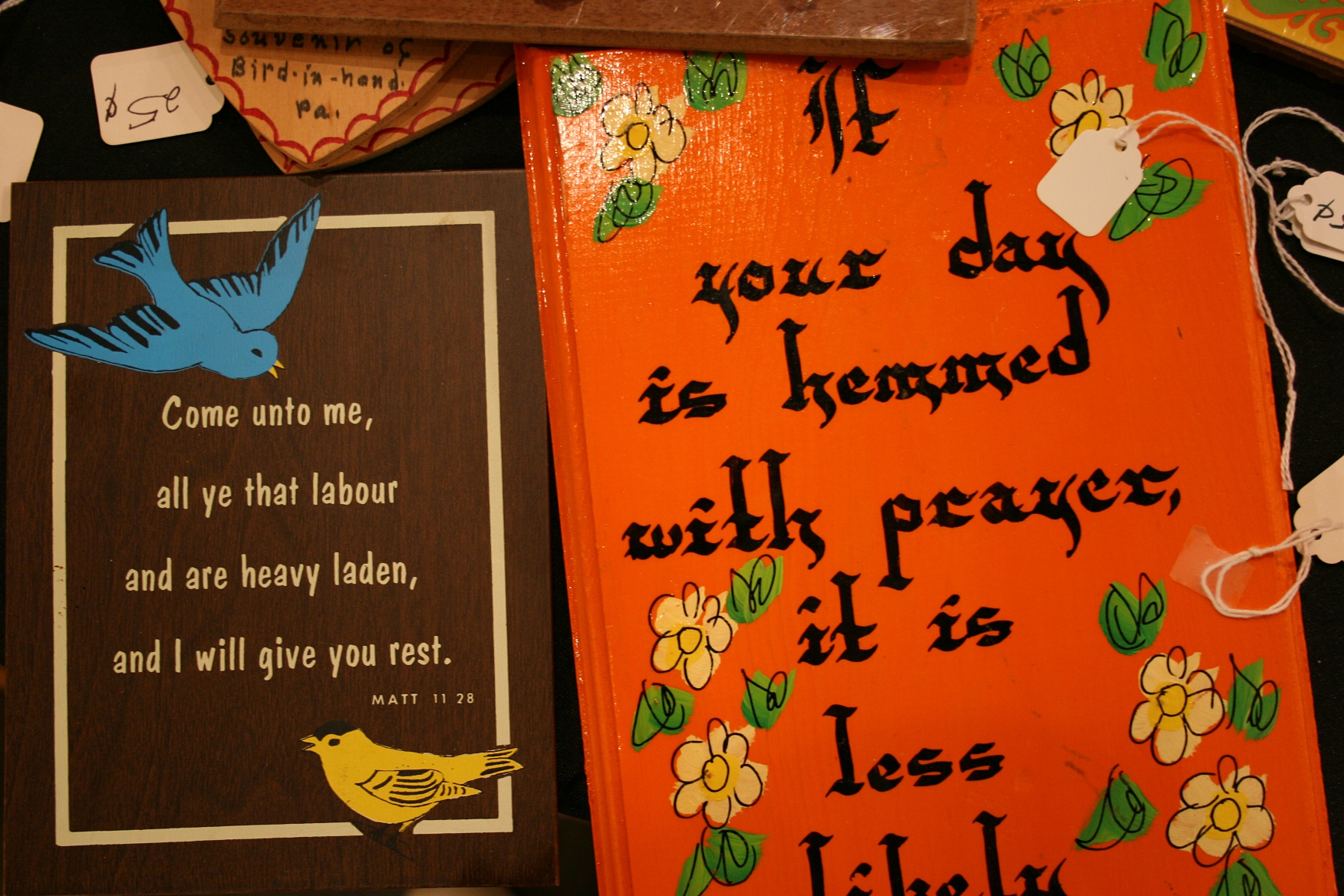
Kitschy bargain art plaques are among the art choices.

Kitschy bargain art plaques are among the art choices.

All were purchased at bargain prices ranging from $7 – $15. Other than a thrift store or an estate/garage/yard sale, I’ve not found fine original art this reasonably priced locally.

I’ve also bought art here for my daughter and son.

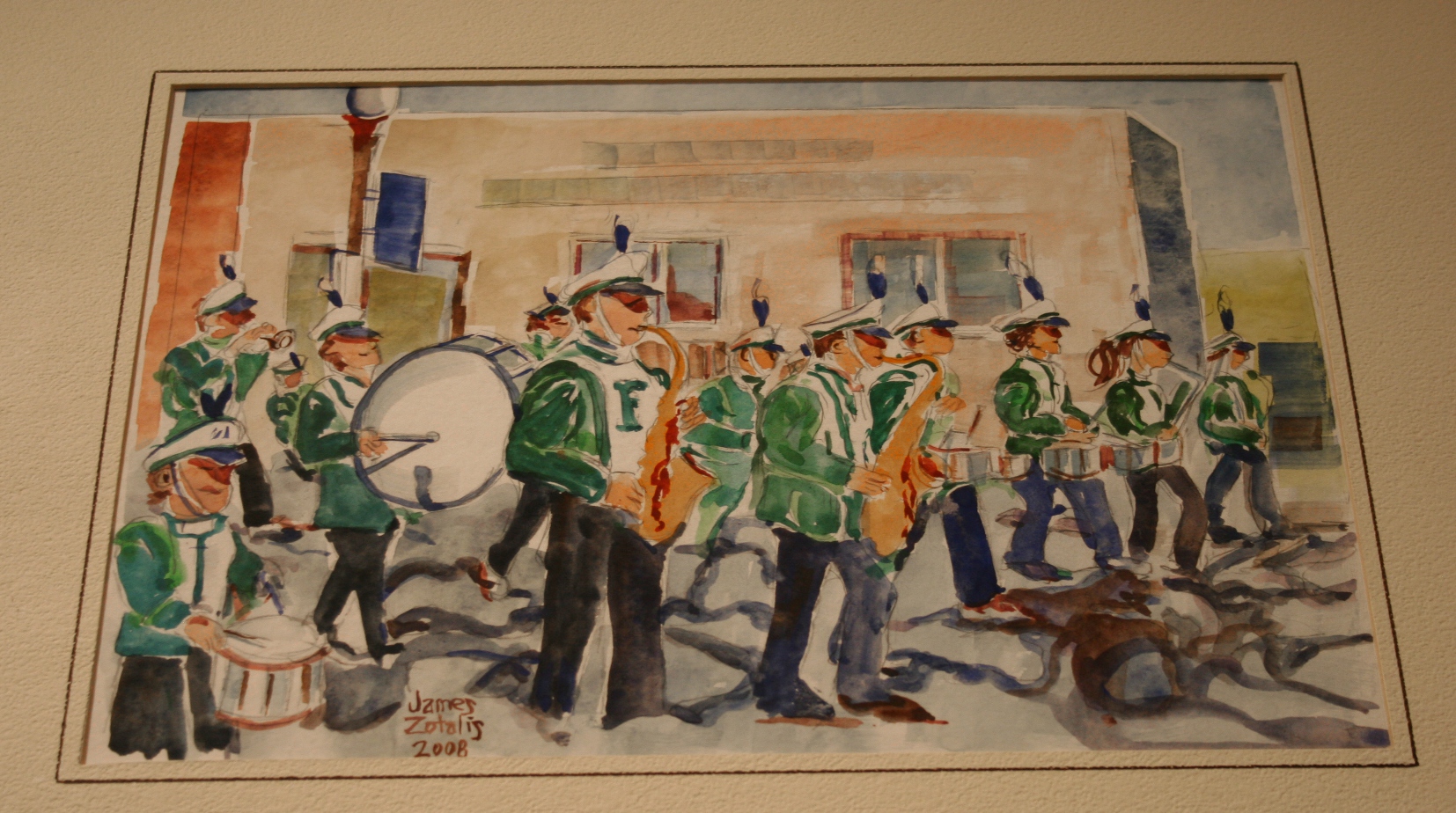
I expect this original watercolor of the Faribault High School marching band may interest a Faribault native.

I expect this original watercolor of the Faribault High School marching band by James Zotalis may interest a Faribault native.

So if you’re looking for a one-stop shopping place to possibly acquire recycled art, you’ve got time yet to browse this gallery from noon to 5 p.m. today (Friday) and Saturday at the Paradise, 321 Central Avenue North.

© Copyright 2014 Audrey Kletscher Helbling


Celebrating an evening of poetry & art in small town Minnesota May 11, 2014

Crossings at Carnegie in Zumbrota.

Guests arrive at Crossings at Carnegie in Zumbrota on Saturday evening.

POETS AND ARTISTS, family and friends arrived from nearby Rochester, as far away as Fargo, and from within a few blocks of Crossings at Carnegie in Zumbrota Saturday evening.

The published collection of poems and art with cover art, "Li Bai at the South Fork," a pastel by Mike Schad, created for last year's collab. Also featured is a line from the poem (with the same name) by Justin Watkins.

The published collection of poems and art with cover art, “Li Bai at the South Fork,” a pastel by Mike Schad, created for last year’s collab. Also featured is a line from the poem (with the same name) by Justin Watkins.

They came to celebrate the pairing of art and poetry in the Poet-Artist Collaboration XIII.

My poem, "Lilacs," which was selected as a "Work of Merit" at the 2013 Northwoods Art and Book Festival in Hackensack.

My poem, “Lilacs,” which was selected as a “Work of Merit” at the 2013 Northwoods Art and Book Festival in Hackensack, and now displayed at Crossings at Carnegie as part of the Poet-Artist Collaboration XIII.

Jeanne Licari's absolutely stunning interpretation of my poem. Her "Lilacs on the Table" is oil on mounted linen.

Jeanne Licari’s absolutely stunning interpretation of my poem. Her “Lilacs on the Table” is oil on mounted linen.

Me on the left with "my" artist, Jeanne Licari.

Me on the left with “my” artist, Jeanne Licari.

I was there to read “Lilacs,” and to meet my artist, Jeanne Licari of Rochester, who created “Lilacs on the Table,” a still life oil on linen inspired by my poetry.

It was shoulder to shoulder people at the poet and artist reception.

It was shoulder to shoulder people at the poet and artist reception. Poems and paired art are featured in the alcoves along the wall. Twenty-six poems and paired art are included in the exhibit.

What a delightful evening, mingling in this privately-owned small town arts center crammed with art and art appreciators.

Inside the historic State Theatre, artists and poet presented to a nearly full house.

Inside the historic State Theatre, artists and poets presented to a sizable crowd.

After we’d wined and nibbled, chatted and admired, we gathered in the next door historic State Theatre for 90 minutes of poetry readings and artist and poet talk.

From an abstract oil and acrylic on canvas to a watercolor of a Honeysuckle, to pastels, mixed media and even an oil on canvas of a 57 Chevy framed by barbed wire and fence posts, a plethora of art flashed onto the big screen in the darkened theatre.

As I listened to my fellow poets and these artists, I sensed, more than anything, a deep passion among all of us for the art of creating. That passion flowed in carefully crafted poems—lines of words that spoke of love and of memories, of cranes and of spiders, of storms and more. That passion flowed, too, in paint stroked upon canvas, in stitching and ink and the softness of watercolors.

To be a part of this event, in the company of such talent, truly inspires.

Leaving Crossings at Carnegie, I snapped this image of the former Carnegie library.

Leaving Crossings at Carnegie, I snapped this image of the former Carnegie library.

FYI: The Poet-Artist Collaboration XIII exhibit continues through this Thursday, May 15, at Crossings at Carnegie, 320 East Avenue, Zumbrota. The artwork is available for purchase.

Click here to read how my poem inspired artist Jeanne Licari.

And click here to read how my poem, “Her Treasure,” inspired artist Connie Ludwig of Goodhue in the Poet-Artist Collaboration XI.

Check back for a follow-up post on another reason Saturday evening’s celebration was a memorable one for me.

© Copyright 2014 Audrey Kletscher Helbling
 

A must-see Wisconsin museum features paperweights, really old glassware & more May 1, 2014

THEY JOKED ABOUT MY SUGGESTION we tour a paperweight museum.

The museum is housed in an historic home (and addition) along the shores of Lake Winnebago across from a park.

The museum is housed in an historic home (and addition) along the shores of Lake Winnebago across from a park.

But they weren’t laughing once we arrived at the Bergstrom-Mahler Museum in Neenah, Wisconsin.

My husband, Randy, checking out a section of paperweights.

My husband, Randy, checking out a section of paperweights.

If I’d done my research rather than simply skimming a website, I could have advised my husband and daughter Miranda that the museum features more than one of the world’s largest collections of antique and contemporary glass paperweights.

Much more.

Examples of the beautiful glassware.

Examples of the beautiful glassware.

This museum and glass studio housed in a 1929 Tudor mansion and addition along the west shore of Lake Winnebago also showcases really old Germanic glassware. We’re talking glass spanning three centuries, the earliest dating to 1573.

This is some aged glassware.

This is some aged glassware.

“Impressed now?” I asked them. And they were.

One of the contemporary sculptures displayed.

One of the contemporary sculptures displayed.

To impress us even more, the museum includes an exhibit of exquisite contemporary glass sculptures, some part of the permanent collection and some on loan. I was allowed to photograph only those pieces that are owned by the museum.

gigantic paperweight

The Super Magnum Piedouche is one of 10 such paperweights created. This one is dated 1973 and weighs 55 pounds.

All through-out our visit, I wondered at the value of the thousands—2,300 objects in the paperweight collection alone—of pieces shown. An inquiry of a museum worker did not elicit a value, although I learned that the museum is currently attempting to purchase a certain contemporary sculpture and still needs to raise $9,000. She didn’t know how much had already been raised. I imagine a lot.

A close-up side view of a paperweight.

A close-up side view of a paperweight.

And to think this all started with Evangeline Bergstrom’s memories of playing with her grandmother’s paperweight.

These paperweights are truly works of art.

These paperweights are truly works of art.

Long story short (and you can read the long story by clicking here), Evangeline’s husband, John Nelson Bergstrom, bequeathed the couple’s home to the city of Neenah with instructions to build a museum upon his wife’s death for her paperweight collection.

In 1959, that museum opened, imprinting the legacy of the Bergstroms (John co-founded the Bergstrom Paper Company with this father) upon this eastern Wisconsin city.

A carved enamel goblet, ca. 1860, Bohemia.

A carved enamel goblet, ca. 1860, Bohemia.

Likewise, another paper industry leader and Neenah native, Ernst Mahler, gifted a glass collection to the Bergstrom-Mahler Museum. In 1994, the museum received the Germanic glassware Mahler had purchased in 1931 in Austria for his wife, Carol.

History and art detailed on glasses.

History and art detailed on glasses.

I found this aged glassware especially intriguing given the detailed scenes on many of the pieces. It’s fabulous art.

Dated 1693. Cheers.

Dated 1693. Cheers.

If only we could have sampled a dark German beer in one of those over-sized glasses…

Bottom line, don’t underestimate the appeal of a paperweight collection even if you, like my daughter, consider paperweights to be rather useless. Those in the Bergstrom collection possess great artistic and historical value well worth viewing, well worth appreciating.

Detailed floral art on glassware.

Detailed floral art on glassware.

Ditto for the other glass art featured in the museum.

Glassware in an array of colors.

Glassware in an array of colors.

FYI: The Bergstrom-Mahler Museum, 165 North Park Avenue, Neenah, is open from 10 a.m. – 4:30 p.m. Tuesday-Saturday and from 1 p.m. – 4:30 p.m. Sundays, closed holidays and a few other days.

Admission is, get this, free, although donations are welcome.

mandalas

Fifth and sixth graders at Edison Elementary School in Appleton studied Tibetan Sand Mandalas and then created paper versions, temporarily on display in the lower level of the museum.

At the time of our visit in late March, glass pieces created by students in the Fox Valley area were exhibited. But I was not allowed to photograph these works, some of them mighty impressive.

Annually, the museum’s collection of Victorian glass baskets are also shown, primarily during the spring and summer.

TO VIEW ANOTHER post from the community of Neenah, Wisconsin, click here.

© Copyright 2014 Audrey Kletscher Helbling
 

Believe April 20, 2014

Filed under: Uncategorized — Audrey Kletscher Helbling @ 6:00 AM
Tags: , , , , , , , , , ,
"The Risen Lord," painted in by my artist friend, Rhody Yule of Faribault, who dies in June 2011 at the age of 92.

“The Risen Lord,” painted in 1951 by my artist friend, Rhody Yule of Faribault, who died in June 2011 at the age of 92.

When Jesus rose early on the first day of the week, he appeared first to Mary Magdalene… She went and told those who had been with him and who were mourning and weeping. When they heard that Jesus was alive and that she had seen him, they did not believe it.—  Mark 16: 9-11


In mourning on Good Friday April 18, 2014

Filed under: Uncategorized — Audrey Kletscher Helbling @ 6:00 AM
Tags: , , , , , , ,
St. Michael's Cemetery, Buckman, MN. Minnesota Prairie Roots file photo, August 2012.

St. Michael’s Catholic Church Cemetery, Buckman, MN. Minnesota Prairie Roots file photo, August 2012.

But he was pierced for our transgressions, he was crushed for our iniquities; the punishment that brought us peace was upon him, and by his wounds we are healed.–Isaiah 53:5

Photo copyright 2014 Audrey Kletscher Helbling
 

Rural revelations in country cemeteries April 17, 2014

Filed under: Uncategorized — Audrey Kletscher Helbling @ 6:00 AM
Tags: , , , , ,
The road past the Vesta Cemetery, which sits just outside of this southwestern Minnesota town of some 330.

To the left lies the Vesta City Cemetery, where my father, grandparents and other family members are buried. In the distance you can see the grain elevator complex in my hometown.

AS A YOUNG GIRL, I remember fearing cemeteries, that place where my paternal grandpa was laid to rest atop a rare prairie hill when I was just nine.

A historical marker in the Holden Lutheran Church Cemetery, rural Kenyon.

A historical marker in the Holden Lutheran Church Cemetery, rural Kenyon.

But my view of cemeteries has evolved over the years so that today I see these earthly resting spots as places of faith, art, history and personal stories.

A fence surrounds the Urland Lutheran Church Cemetery in the Sogn Valley area.

A fence surrounds the Urland Lutheran Church Cemetery in the Sogn Valley area.

I no longer focus on the bones buried beneath my feet or the newly-departed lying under a heaped mound of dirt. Rather, I find myself reading tombstones, marveling at carved stone, wondering about the lives of those who lie within the often fenced boundaries of graveyards.

The particularly picturesque Valley Grove Church Cemetery near Nerstrand Big Woods State Park.

The picturesque Valley Grove Church Cemetery near Nerstrand Big Woods State Park.

In particular, I am drawn to country cemeteries that my husband and I happen upon during leisurely Sunday afternoon drives in rural Minnesota.

Northwest of Faribault in Shieldsville Township sits the historic Immaculate Conception of the Blessed Virgin Mary and the adjoined Trebon Cemetery.

Northwest of Faribault in Shieldsville Township sits the historic Immaculate Conception of the Blessed Virgin Mary Church and the adjoining Trebon Cemetery.

Spot a spire spearing the sky and we typically find a cemetery tucked behind or aside the church. Convenient and comforting.

Folk art in the Trebon Cemetery honors Christ and the deceased.

Folk art in the Trebon Cemetery honors Christ and the deceased.

During this Holy Week, when Christians worldwide focus on reflection and repentance and the suffering and crucifixion of Christ, it seems fitting to revisit some of the Minnesota cemeteries I’ve explored.

Just west of New Ulm, at a memorial honoring Milford settlers who died in the U.S.-Dakota War of 1862, roses were placed on the marker on Memorial Day weekend 2007.

Just west of New Ulm, at a memorial honoring Milford settlers who died in the U.S.-Dakota War of 1862, roses were placed on the marker on Memorial Day weekend 2006.

There is much to learn here about those who went before us—those we loved and those we never knew.

Fields and a cemetery embrace many country churches like Vista Evangelical Lutheran Church in southern Minnesota.

Fields and a cemetery embrace many country churches like Vista Evangelical Lutheran Church in southern Minnesota.

Words to ponder at a cemetery in Theilman in southeastern Minnesota.

Words to ponder at a cemetery in Theilman in southeastern Minnesota.

A sign at the cemetery entrance.

Handcrafted signs like this one in Cannon City (near Faribault) grace some rural cemeteries.

An art appropriate cannon marks a Civil War Veteran's tombstone in the Cannon City Cemetery.

An art appropriate cannon marks a Civil War Veteran’s tombstone in the Cannon City Cemetery.

A simple grave marker in the Urland Lutheran Church Cemetery.

A simple grave marker in the Urland Lutheran Church Cemetery.

A well-tended family plot in the Trebon Cemetery.

A well-tended family plot in the Trebon Cemetery.

A compelling statue of the Virgin Mary in Trebon Cemetery.

A compelling statue of the Virgin Mary in Trebon Cemetery.

A beautiful nature-themed tombstone rests in a cemetery on the west side of New Ulm.

A beautiful nature-themed tombstone rests in a cemetery on the west side of New Ulm.

Stone against stone at Hauge Lutheran Church (the Old Stone Church) in Monkey Valley, rural Kenyon.

Stone against stone at Hauge Lutheran Church (the Old Stone Church) in Monkey Valley, rural Kenyon.

My dad's military marker in the Vesta City Cemetery.

My dad’s military marker in the Vesta City Cemetery.

This post was previously published at streets.mn.
© Copyright 2014 Audrey Kletscher Helbling
 

How my poetry inspired a still life painting of lilacs April 10, 2014

POETRY INSPIRING ART. It’s a fabulous concept and even better when you are part of such a pairing.

A poem I penned has inspired art for Poet-Artist Collaboration XIII, which opened March 31 and runs through May 15 at Crossings at Carnegie, 320 East Avenue, Zumbrota.

"Lilacs on the Table" by Jeanne Licari

“Lilacs on the Table” by Jeanne Licari. Photo courtesy of Crossings at Carnegie.

I recently connected with “my” artist, Jeanne Licari, to learn how my poem, “Lilacs,” inspired her to paint “Lilacs on the Table,” an 11 x 14-inch still life oil on linen.

Twenty-six poems were chosen from nearly 210 submissions with 26 artists then selected via a juried process. This is Jeanne’s ninth time participating in the collaboration and my second.

Artist Jeanne Licari

Artist Jeanne Licari in her studio. Photo courtesy of Jeanne Licari.

A mostly self-taught artist who drew and painted as a child, this Rochester resident also furthered her talent through painting classes and workshops. She terms herself a representational oil painter who prefers to paint from life, whether a landscape or a still life.

Jeanne is both plein air—painting outdoors on location—and studio painter.

“My art reflects the beauty I see in mankind and nature,” she says. “My paintings are a direct response to what I see.”

Or, in the case of “Lilacs,” to what she read.

Lilacs

Breathing in the heady scent of lilacs each May,
I remember my bachelor uncle and the gnarled bushes,
heavy with purple blooms, that embraced his front porch
and held the promises of sweet love never experienced.

He invited his sister-in-law, my mother, to clip lilacs,
to enfold great sweeps of flowers into her arms,
to set a still life painting upon the Formica kitchen table,
romance perfuming our cow-scented farmhouse.

Such memories linger as my own love, decades later,
pulls a jackknife from the pocket of his stained jeans,
balances on the tips of his soiled Red Wing work shoes,
clips and gathers great sweeps of lilacs into his arms.

Plenty of lilacs to gather in the spring.

Minnesota Prairie Roots file photo of lilacs.

Jeanne explains how she created “Lilacs on the Table”:

“…I wanted to tell the viewer how I felt about lilacs. The poem triggered memories of many bouquets of lilacs in my lifetime. I love the dense bouquet of purple flowers, the beauty of the different pinks and purples against the green leaves, and the abundant fragrance of lilacs. Since there were no lilacs blooming in March, I painted them using memories of lilacs and how they grew, an oil study of lilacs painted from life, and photos.

I painted the lilacs on a table in response to the line, ‘to set a still life painting upon the Formica kitchen table.’ That line, plus the words about farming, made me remember many bouquets of lilacs on our Formica table in my childhood home on the farm.”

How fabulous to know that Jeanne comes, like me, from a rural background. Her words and oil painting show me that she understands and connects to my words in a deeply personal way.

And that is my hope as a poet—that those who read my poetry will connect to it.

A promotional for the collaboration features "Li Bai at the South Fork," art by Mike Schad inspired by a poem of the same name written by Justin Watkins for the 2013 Poet-Artist XII collaboration.

A promotional for the collaboration features “Li Bai at the South Fork,” art by Mike Schad inspired by a poem of the same name written by Justin Watkins for the 2013 Poet-Artist Collaboration XII.

FYI: A reception, poetry reading and slide show honoring the featured poets and artists is set for Saturday, May 10. Mingle and meet for an hour beginning at 6:30 p.m. in the Crossings gallery. Then, at 7:30 p.m., move next door to the historic State Theatre where poets will read their works and artists will also briefly discuss their art, shown on a screen.

Another poet from my community of Faribault, Larry Gavin, who has published several poetry collections and teaches English at Faribault High School, will read two of his selected poems, “Ashes” and “Two Cranes.”

Collaboration participants come from Minnesota, Iowa, North Dakota and Wisconsin.

The featured artwork is available for sale, including “Lilacs on the Table,” priced at $395. Jeanne Licari’s art is also sold at the SEMVA (South Eastern Minnesota Visual Arts) Gallery in downtown Rochester.

Crossings at Carnegie, housed in a former Carnegie library, is a privately-owned cultural visual and performing arts center in Zumbrota. I love the rural atmosphere with the hardware story and grain elevator just down the street.

Crossings at Carnegie, housed in a former Carnegie library, is a privately-owned cultural visual and performing arts center in Zumbrota. Minnesota Prairie Roots file photo 2012.

If you can’t attend the May 10 reception, you can view the exhibit during gallery hours from 10 a.m. – 5 p.m. Monday, Tuesday, Wednesday and Friday; from 10 a.m. – 8 p.m. Thursday; or from 10 a.m. – 4 p.m. Saturday.

Click here for more details about Poet-Artist Collaboration XIII.

Click here to see how my poem, “Her Treasure,” inspired Connie Ludwig to paint “Pantry Jewels” for the Poet-Artist Collaboration XI in 2012.

© Copyright 2014 Audrey Kletscher Helbling
 

Incredible quilt art in Owatonna April 9, 2014

The entry to the Owatonna Art Center

The entry to the Owatonna Arts Center, inside the former Minnesota State Public School for Dependent  and Neglected Children, later renamed the Owatonna State School. The City of Owatonna now owns the site, today called West Hills with the OAC located at 435 Garden View Lane.

HE EXPRESSED IT so well, the quilter’s husband waiting outside the Owatonna Arts Center Sunday afternoon for invited guests to arrive from Rochester.

A quilted work of art bursts with color.

A quilted work of art bursts with color.

Quilting, he surmised, has evolved from a homemaker’s craft to a recognized form of art.

The quilter's husband and the quilter view the extensive collection of quilts.

The quilter’s husband and the quilter view the extensive collection of quilts.

He’s so right.

If you appreciate art and quilts, you will want to see "Quilts in Bloom"

If you appreciate art and quilts, you will want to see “Quilts in Bloom”

“Quilts in Bloom,” featuring around 80 quilts stitched by members of the local Piecemakers Quilt Guild, blossoms in the nooks and crannies of gallery space in an exhibit that runs from now until April 27.

Baskets of blossoms and more.

Baskets of blossoms and more.

This show simply blooms with creativity:

A close-up of the traditional Dresden Plate pattern in the foreground with a second quilt in the background.

A close-up of the traditional Dresden Plate pattern in the foreground with a second quilt in the background.

A contrast of modern geometrical to the traditional Sunbonnet Girls.

A contrast of modern geometrical to the traditional Sunbonnet Girls.

This block from the 1930s Sunbonnet Sue pattern features quilting and embroidery.

This block from the 1930s Sunbonnet Sue pattern features quilting and embroidery.

I really liked this pairing of wood sculpture with quilt art. The wood tone compliments the earthy colors of the quilt.

I really like this pairing of wood sculpture with quilt art. The earthy tones in each complement one another.

For $1, you can buy a chance to win "Stars in My Garden."

For $1, you can buy a chance to win “Stars in My Garden.”

A block in a teapot themed quilt.

A block in a teapot themed quilt.

During the open reception, musicians performed in the venue space, where several quilts are displayed.

During the opening reception, musicians performed in the venue space, where several quilts are displayed.

Whimsical art.

Whimsical art.

Touring the exhibit on opening day.

A Faribault quilter and his wife tour the exhibit on opening day.

Floral design at its quilting best.

Floral design at its quilting best.

Quilt art lines a hallway.

Quilt art lines a hallway.

From the playful to geometric, abstract, traditional, whimsical and more, you’ll discover an array of eye-pleasing colors and patterns here.

Artist Lois Doyle created "Mountain Laurel," a quilt she started 25 years ago. She has several quilts in the show. Laurie Spindler machine quilted this quilt.

Artist Lois Doyle created “Mountain Laurel,” a quilt she started 25 years ago. She has several quilts in the show. Laurie Spindler machine quilted this quilt. Even with arthritic hands, Lois still quilts. Remarkable.

The talent of these quilters impresses me. Truly, they deserve the title of artists.

This sign posted at the quilt show says it all.

This sign posted at the quilt show says it all.

FYI: This marks the 10th annual Piecemakers Quilt Guild show, which is held every three years. You can tour “Quilts in Bloom” during gallery hours, from 1 p.m. – 5 p.m. Tuesday – Sunday. A $3 donation is suggested. Click here for more information.

BONUS PHOTO: 

While at the show, be sure to stop and appreciate this beautiful space connecting the Owatonna Arts Center to the

While at the show, stop to appreciate this beautiful space connecting the Owatonna Arts Center to the Minnesota State Public School Orphanage Museum. I’d suggest allowing time to tour the museum and nearby cottage. Check hours before coming as they may differ from gallery hours.

© Copyright 2014 Audrey Kletscher Helbling
 

Bluff ice art March 31, 2014

Filed under: Uncategorized — Audrey Kletscher Helbling @ 6:00 AM
Tags: , , , , , , , ,

PERHAPS I AM too easily impressed.

But I have not visited the ice caves at Apostle Islands National Lakeshore in northern Bayfield County, Wisconsin.

Ice formations by La Crosse 1

Thus the ice formations gracing the Mississippi River bluffs along Interstate 90 on the Minnesota side near La Crosse, Wisconsin, impress me.

Ice formations by La Crosse 2

There is no stopping along I-90 to view or photograph this natural ice art up close. Rather, I rely on the rapid fire of my camera to capture the scene for later study.

Ice formations by La Crosse 3

Every time I see this water frozen in the icebox of winter, I marvel at its beauty.

I remember, too, how once upon a time I snapped icicles from the milkhouse roofline to engage in sword fight battles with my siblings.

Ice formations by La Crosse 4

The flip side of my mind views the ice formations as powdered sugar icing dripping down the sides of a homemade chocolate birthday cake baked by my mother.

That’s the thing about art—man-made or natural. It’s always open to interpretation.

FYI: These photos were taken 10 days ago. Since then, the weather has warmed to around 60 degrees in southern Minnesota, meaning these formations are likely disappearing.

© Copyright 2014 Audrey Kletscher Helbling
 

Discovering art in downtown Wabasha March 24, 2014

BRICK, A BENCH, A RIVER…

Each provides a canvas or backdrop for art in Wabasha, an historic Mississippi River town of 2,500 in southeastern Minnesota.

On a recent visit here to the National Eagle Center, where art abounds inside, I also noticed art integrated into the downtown.

Wabasha, Wapahasha II

A 10-foot tall bronze sculpture of Wapahasha II, a Native American after whom the city of Wabasha is named, stands atop a fountain next to the riverside eagle center.

If you shift your eyes a bit, you’ll notice a bridge in the distance. I view that 26-year-old link between Minnesota and Wisconsin as art given the overhead span of trusses.

Wabasha, eagle bench

Just up the street, set atop brick pavers, co-joined park benches have become artwork, too, with eagle paintings backing the benches. It’s a nice touch, emphasizing Wabasha’s eagles and the reason many visitors come here.

Wabasha, Riverside Dollar

Around the corner, Riverside Dollar also incorporates eagles into its signage on a cozy building tucked between taller historic buildings. Fifty properties in Wabasha are on the National Register of Historic Places, another reason I appreciate this community. The buildings, in and of themselves, are works of art with ornate details that showcase the craftsmanship of another era.

Wabasha, Squirt sign

A block away, a faded vintage Squirt sign painted onto the side of a brick building contrasts with a sleek and shiny Pepsi vending machine. That amuses me.

Wabasha, Rivertown Cafe front of

At the Rivertown Cafe, I appreciate the aging signage suspended from the second level. It adds a certain charm to the exterior and directs the eye toward the business.

Wabasha, street corner sculpture

A stone’s throw away, a modern sculpture graces a street corner.

Wabasha, cafe sign up close

Certainly, Wabasha features more art; I had time to photograph only this sampling this trip.

#

CLICK HERE TO READ my previous post about art inside the National Eagle Center.

© Copyright 2014 Audrey Kletscher Helbling