Minnesota Prairie Roots

Writing and photography by Audrey Kletscher Helbling

Poetry and cheesecake October 1, 2010

Filed under: Uncategorized — Audrey Kletscher Helbling @ 8:01 AM
Tags: , , , , , , , , , , ,

My daughter's homemade chocolate cheesecake, my birthday cake.

I FELT JUST LIKE a queen, waiting patiently at the dining room table to be served a slice of decadent chocolate cheesecake.

I must say, it’s a wonderful feeling to be on the receiving, rather than the giving, end. And that’s how it is now when I celebrate my birthday.

On Monday, a day after my birthday, my daughter drove down from Minneapolis for an appointment and later dinner out with me, her dad and her brother. But afterward, ah after that meal, I really enjoyed the celebration.

My first-born had baked a from-scratch, all-chocolate cheesecake. She clued us in that the recipe called for melted peanut butter chips mixed into the chocolate batter. But she scorched the peanut butter chips and had to substitute chocolate chips. That produced some gentle teasing about a many-years-earlier chocolate pudding cake disaster.

Clearly, she’s learned a thing or two about cooking and baking as the cheesecake was pure chocolate perfection.

As much as I enjoyed the rich creamy dessert, even more I appreciated that my daughter chose to make a cheesecake. She knows it’s my favorite dessert.

Then I opened my gift from her and appreciated even more that my eldest had chosen items perfectly suited for me. She didn’t buy just any old thing just to give me a present. Rather, she shopped at a south Minneapolis antique store—one with lots of antlers and a place she nearly walked out of due to all those antlers on the walls.

Inside the antique shop, she found a slim volume of poetry, Minnesota Skyline, published in 1953. The book wasn’t priced, she said, and clerks discussed, in front of her, the price she should pay.

Minnesota Skyline, a vintage poetry collection I think worthy of reprinting.

I flipped through the pages and knew I would enjoy this collection with poems like “Wind in the Corn,” “Pioneers of Southern Minnesota,” and “Spring on the Prairie.”

I haven’t had time yet to indulge in the anthology. But that evening, after I opened my daughter’s gift of poetry, I read aloud a verse from “Delano on Saturday Night” by Margaret Horsch Stevens of Montrose:

Men, bent, with toil, feel younger in the glare

Of lights, exchanging jokes and arguments;

And women brighten as they meet and talk

Of recent births, and brides, and home events.

We laughed as we pictured families gathered in downtown Delano on a Saturday night in the 1950s. How times have changed.

After that impromptu poetry reading, I pulled four slim yellow trays from my birthday gift bag. Once again, my daughter had selected an ideal present for me. I collect vintage metal trays and these were unlike any I have or any I’ve seen. For now I’ve propped two atop a shelf—art leaning against a wall.

My daughter gave me four vintage metal trays for my collection.

There’s something to be said for aging, when you can see your children as grown adults, who are caring and loving and giving and who know that you love poetry and cheesecake.

My husband also remembered my birthday with a colorful daisy bouquet.

© Copyright 2010 Audrey Kletscher Helbling
The Lund Press, Inc., of Minneapolis published Minnesota Skyline.


Praise for a 92-year-old artist September 28, 2010

Filed under: Uncategorized — Audrey Kletscher Helbling @ 10:17 AM
Tags: , , , , , ,

The historic Christdala Evangelical Swedish Lutheran Church.

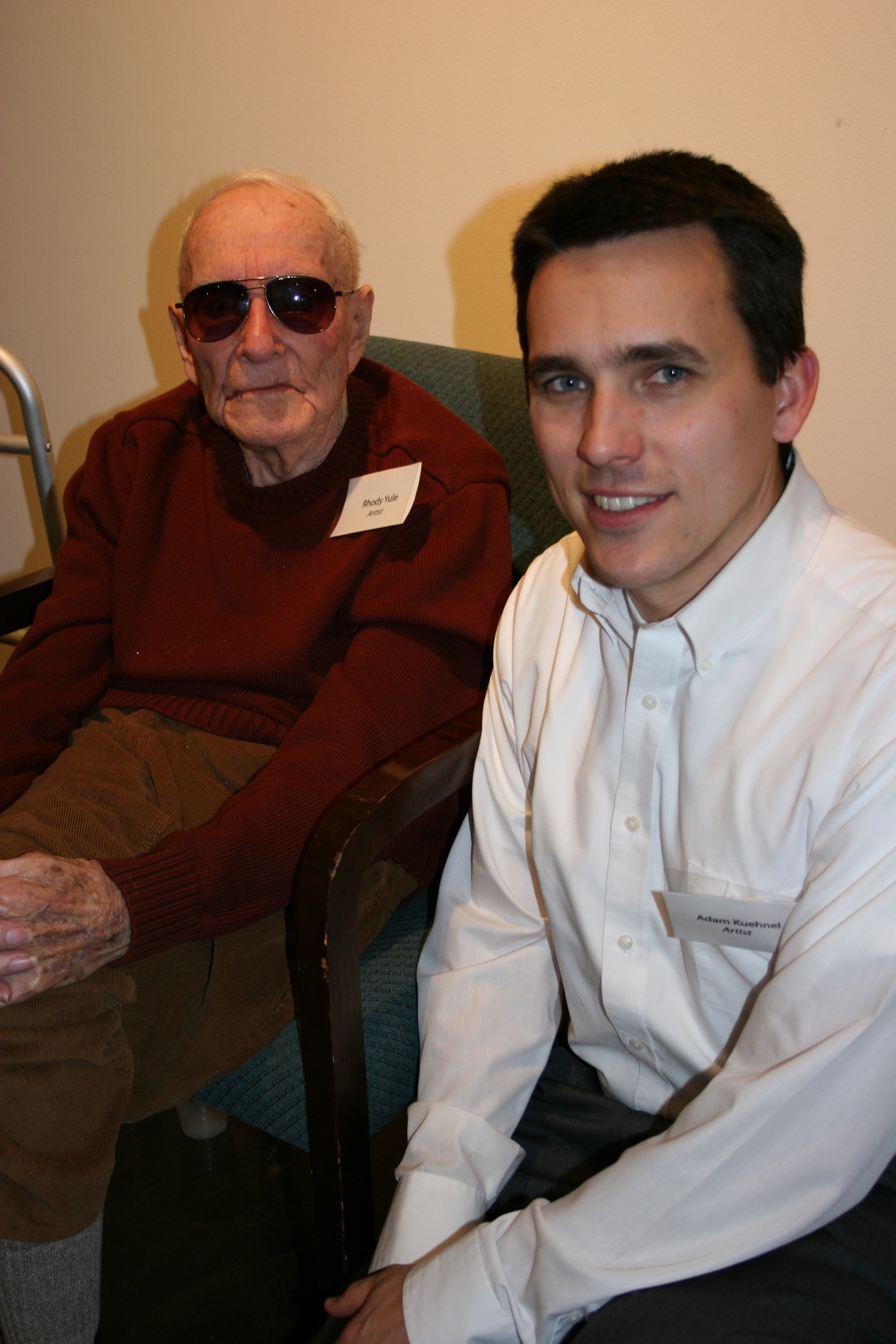
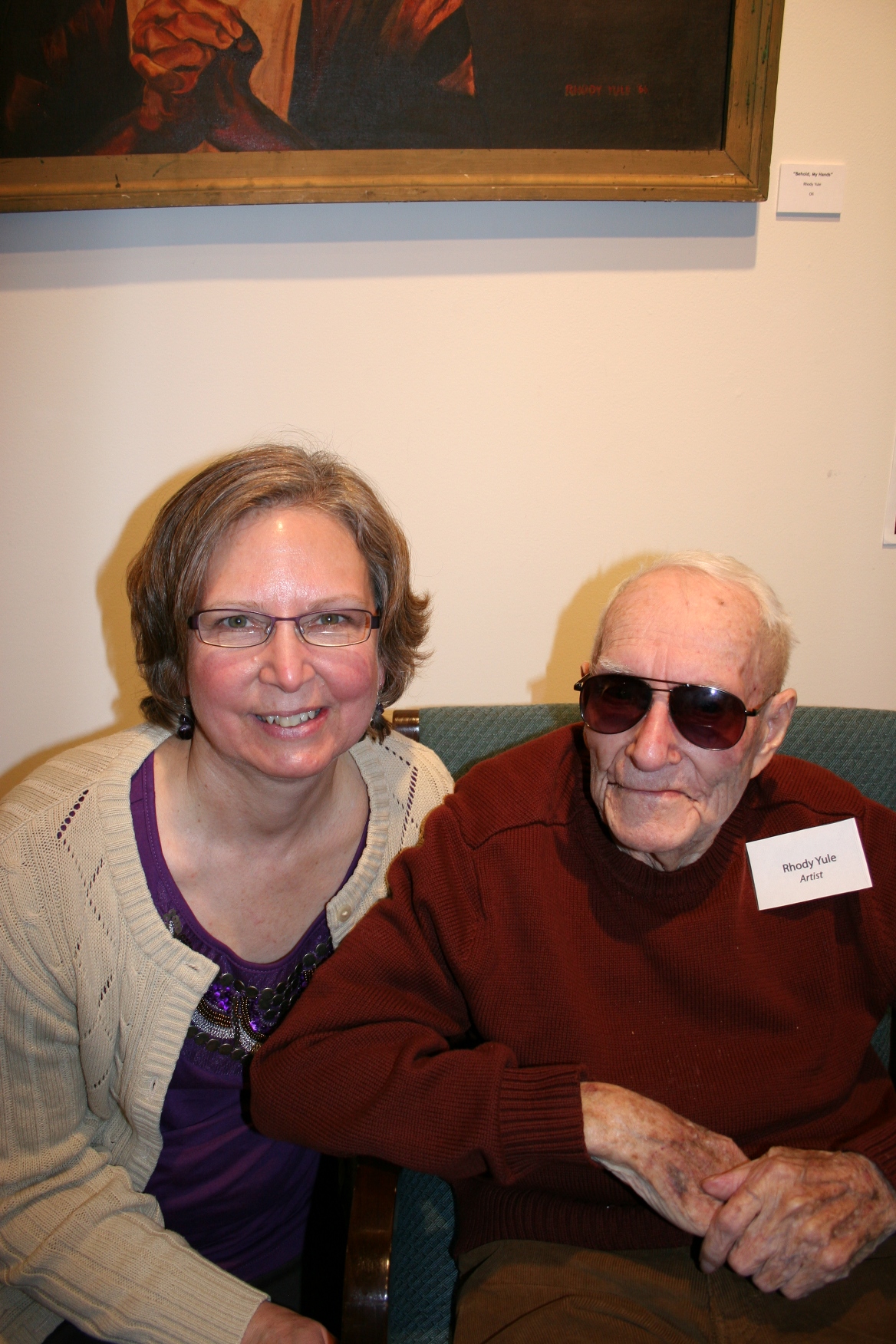
INSIDE THE SMALL country church, I place my hand atop his, the coolness of his skin seeping into the warmth of my fingers. I feel the slight tremble of his hand, a hand that for some seven decades lifted brush to canvas and metal and wood as he painted.

He is cold, even though dressed in layers. I am warm in my short-sleeved shirt. We wait—me in the stiff-backed pew and him in a folding chair.

In just a few minutes, I will introduce my 92-year-old artist friend to a sanctuary full of worshipers, briefing them on his life as a painter. But how do you condense seven decades of painting into 180 seconds? I do, because I don’t enjoy public speaking and I have time constraints.

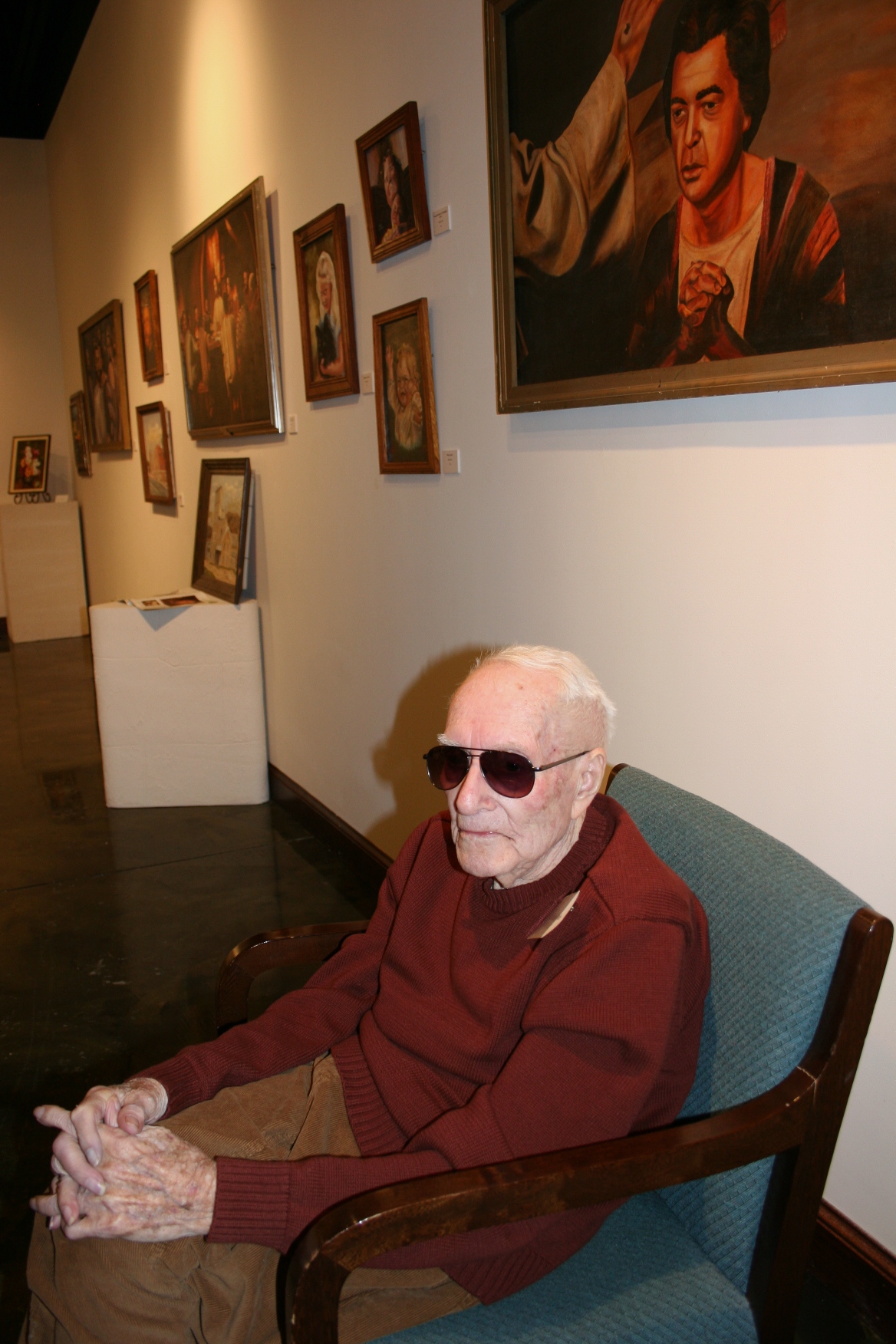
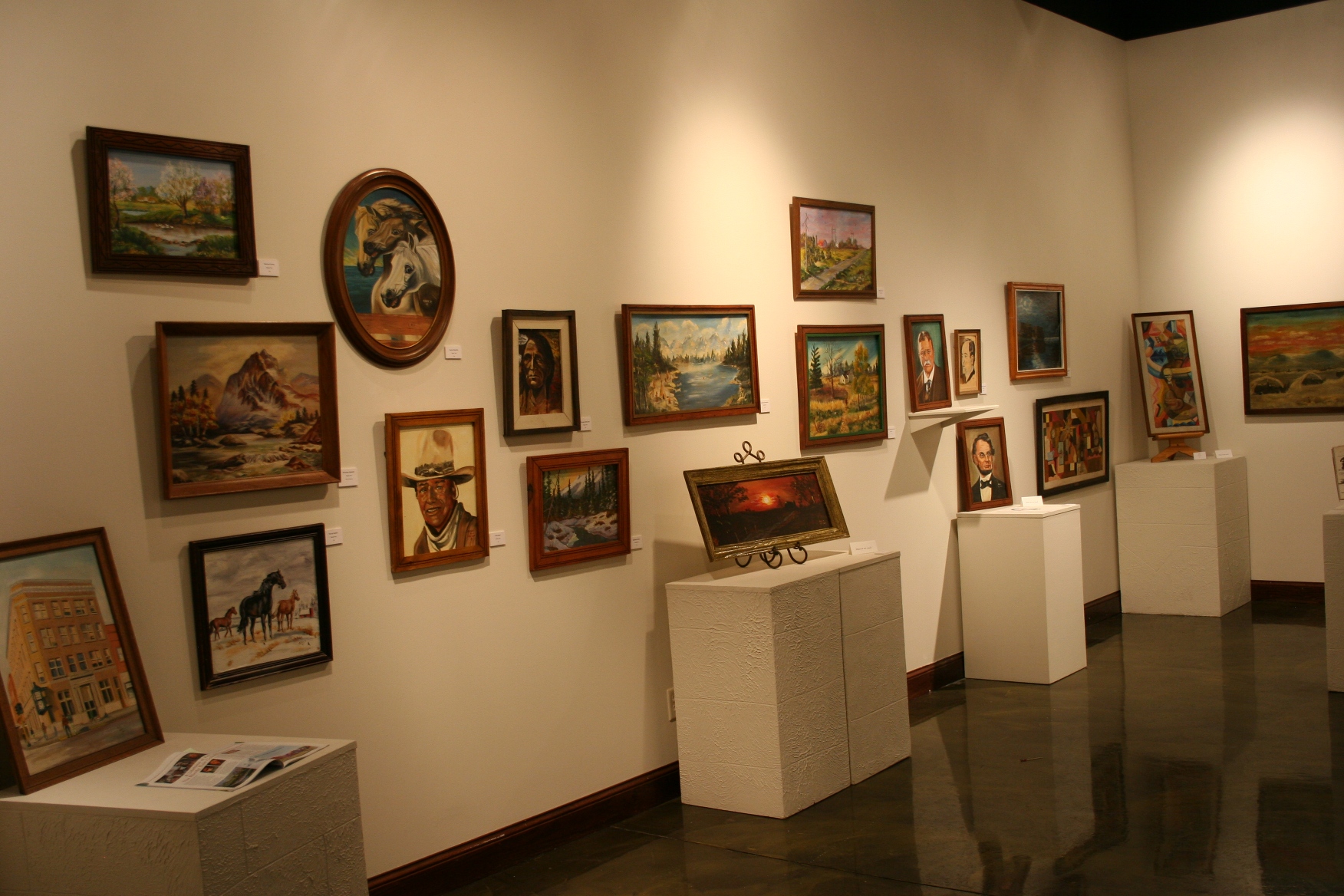
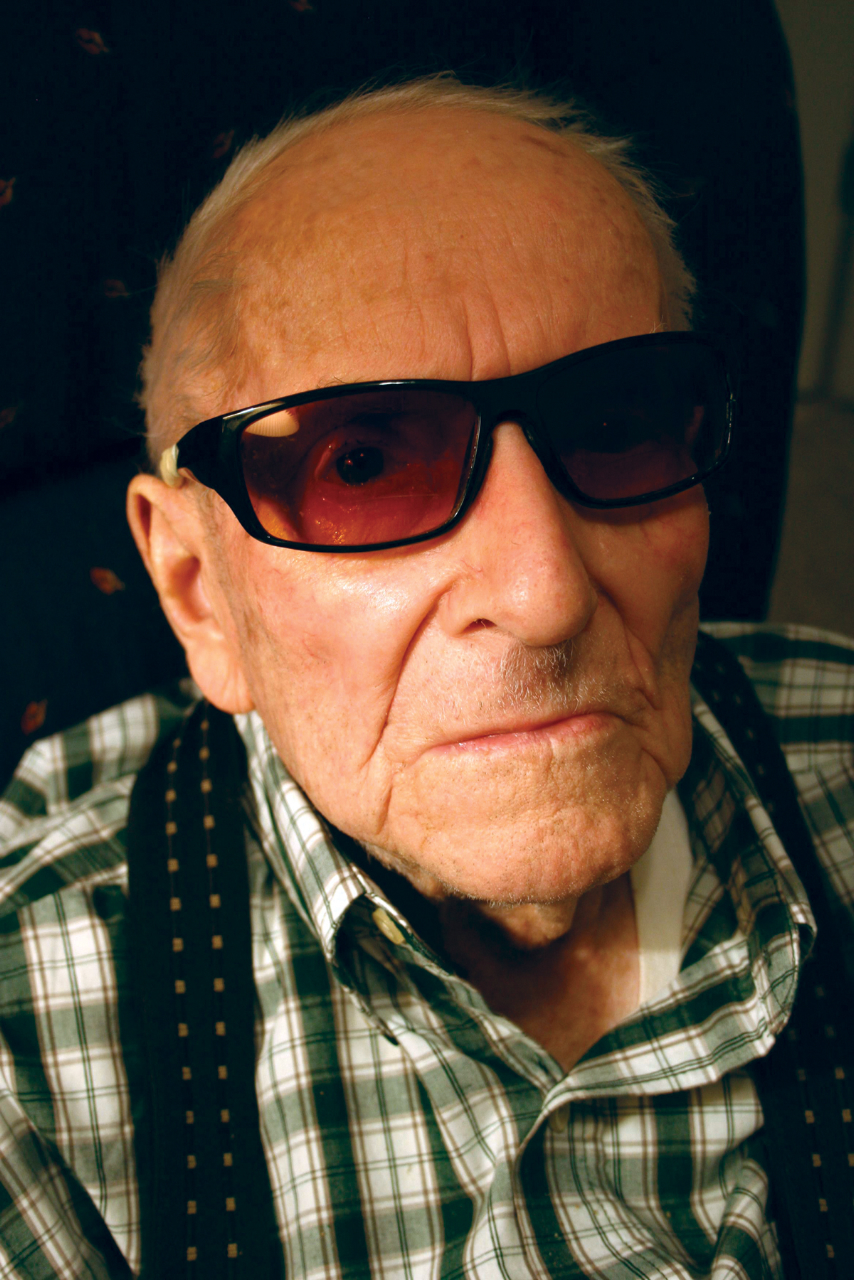
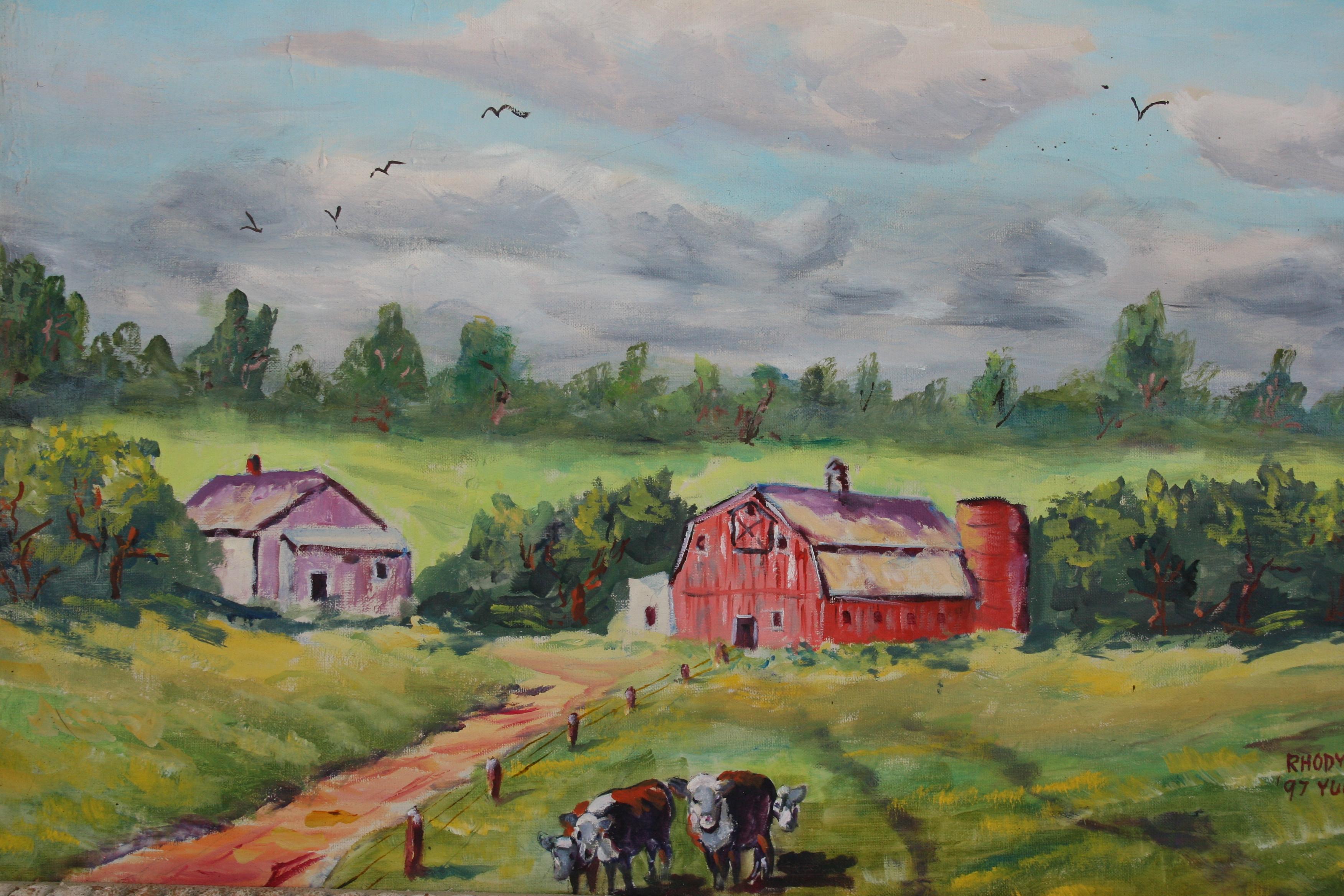
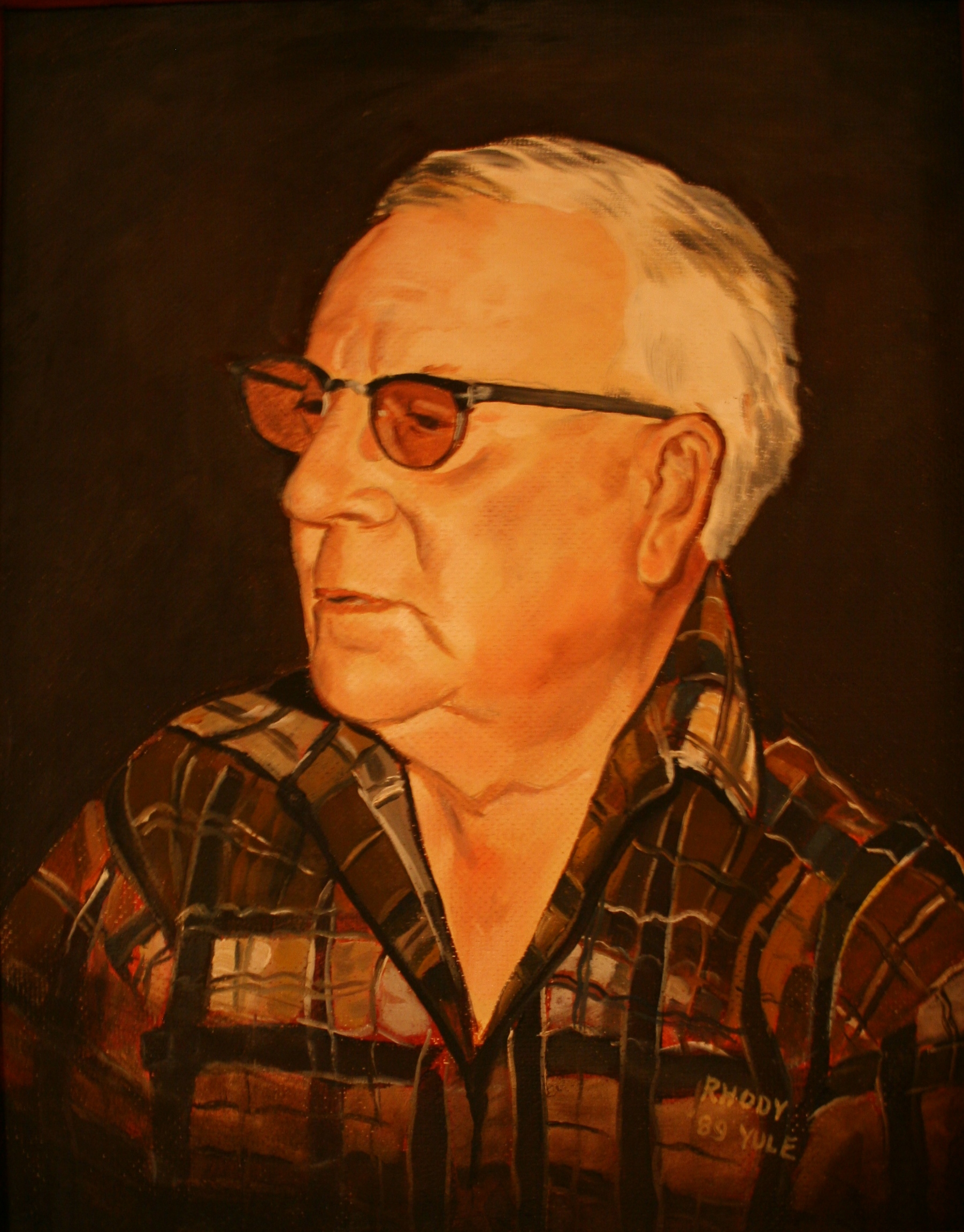
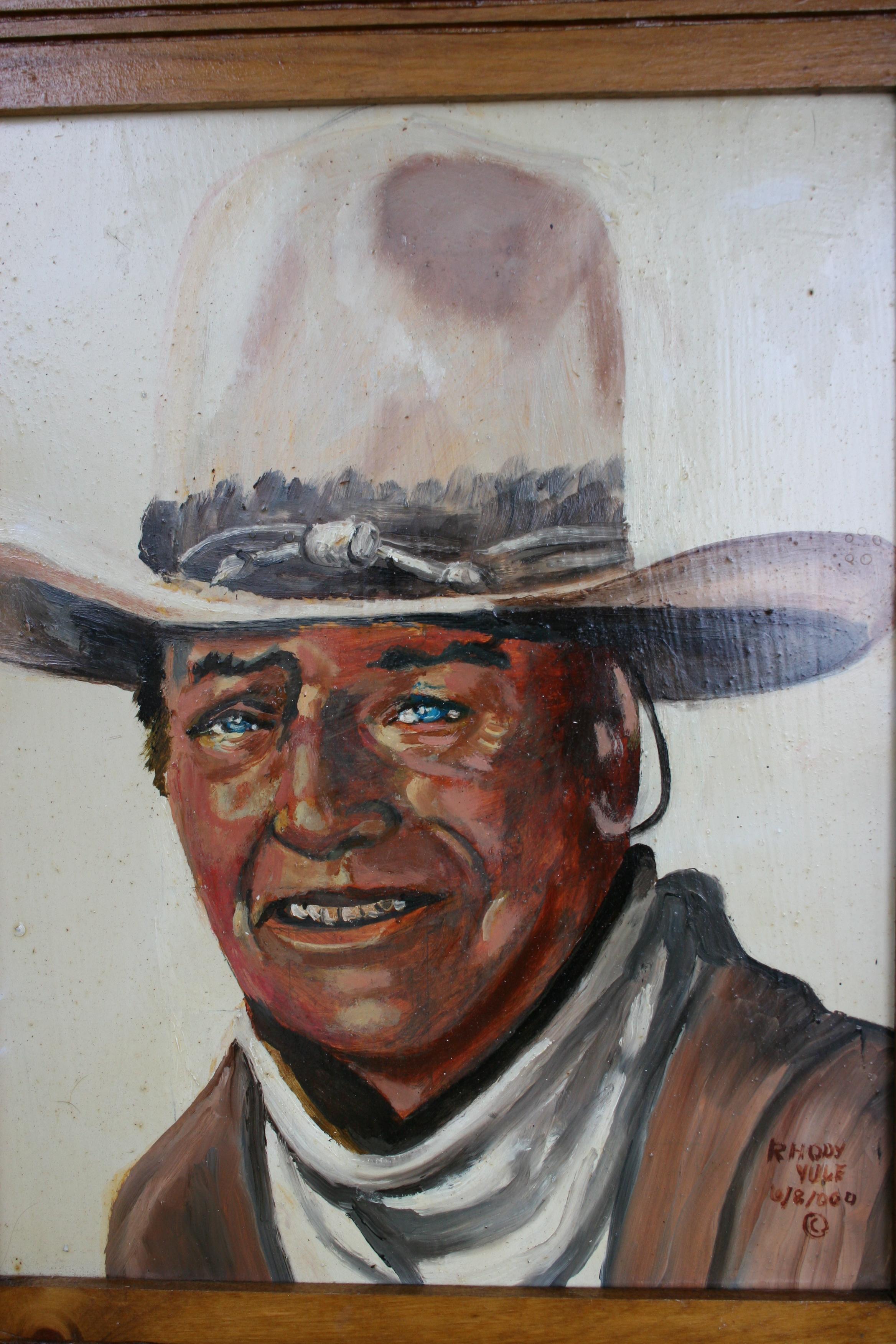
He is Rhody Yule, a former sign painter by day. And by night he painted to express himself in hundreds of portraits, landscapes, still-lifes and religious scenes created through the decades.

On this Sunday afternoon we have come by invitation of the Christdala Church Preservation and Cemetery Association of rural Millersburg to showcase nine of Rhody’s religious paintings, including one of Christdala Evangelical Swedish Lutheran Church which he painted in 1969.

This is his debut public art showing and I am thrilled at the opportunity for Rhody, first the subject of a magazine feature article I wrote and now, I am honored to say, my friend.

A humble man of faith, who on more than one occasion has claimed that his paintings “ain’t nothin’” or “aren’t much,” deserves this public display of his art.

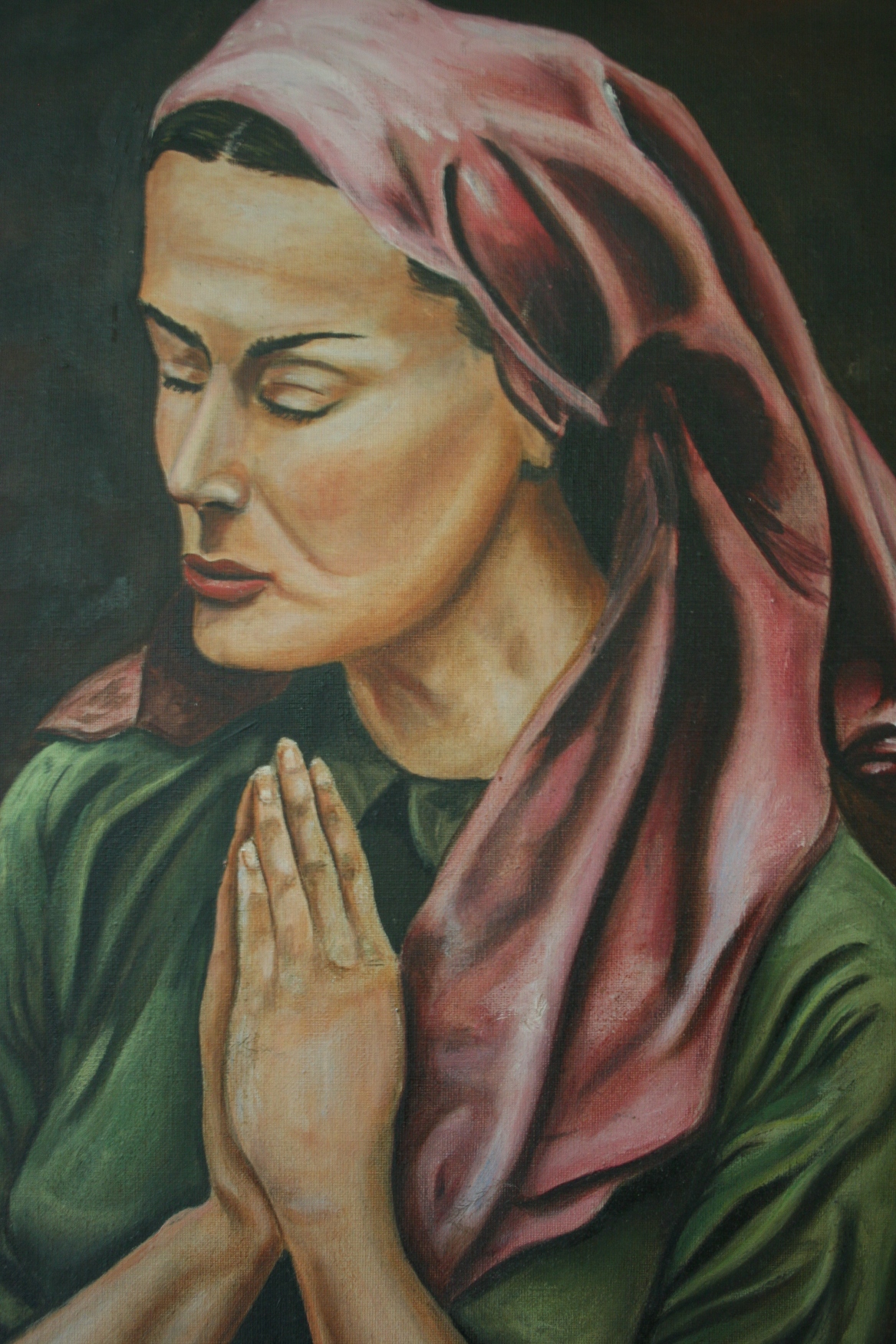
So on this perfect Sunday afternoon in September, when the sun filters through leaves tipped in red and golden hues, my husband and I have come to this hilltop site to set his paintings upon easels against the backdrop of the 1878 wood frame church. A woman in reverent prayer. Judas betraying Jesus. The Last Supper.

The simple lines of the church provide an ideal backdrop for Rhody's paintings.

Rhody's depiction of Judas betraying Jesus is among the paintings displayed.

"Our Glorious Savior," "The Empty Tomb" and "The Last Supper" on exhibit.

Jesus appears to, and blesses, doubting Thomas in Rhody's painting.

Rhody calls his painting of the suffering Christ, "Misery."

Here in the churchyard, on a strip of grass between the church and the gravestones of Swedish immigrants, those who have come for Christdala’s annual worship service/open house peruse the nine religious paintings, chat with Rhody, chat with me. They share their admiration for his art.

I am smiling. This is as it should be. Praise for the artist, the slight wisp of a man who, since age 16, has quietly sketched and drawn and painted for the joy of creating.

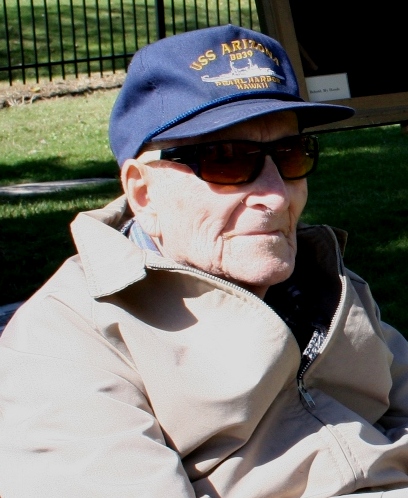
Artist Rhody Yule sits next to some of his paintings displayed at Christdala.

As the afternoon gathering draws to a close, Rhody gives his Christdala painting to the preservation society. I am unaware that he planned to do this. “It belongs here,” he tells me later. That is so Rhody, to quietly, without a big to-do, present his Christdala painting to those who will most appreciate it.

Rhody's 1969 painting of Christdala church.

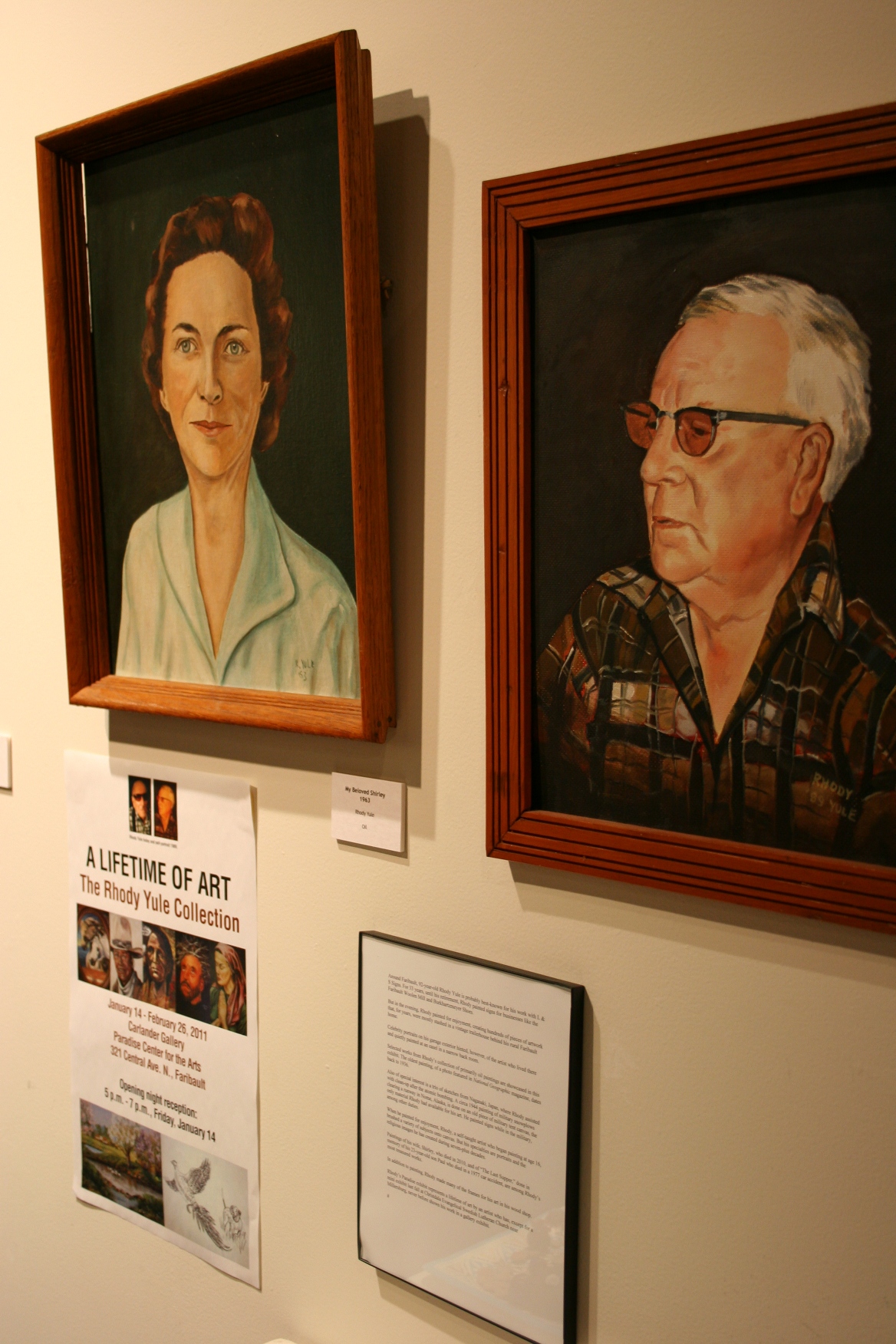
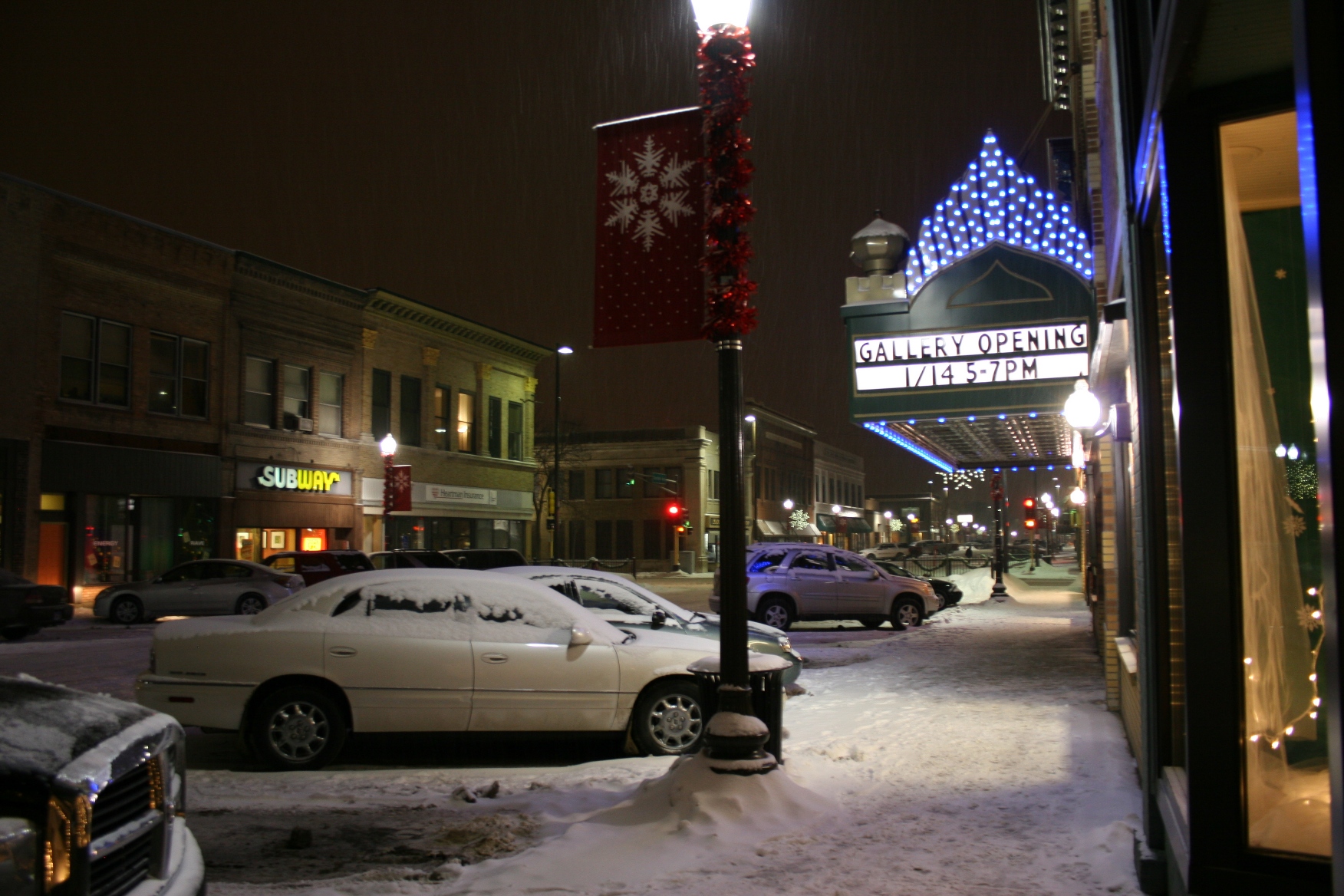
THANK YOU to B. Wayne Quist for inviting Rhody and me to participate in Christdala’s annual open house. I am especially grateful for this opportunity to display Rhody’s art for the first time ever. He has also been accepted for a solo art show January 14 – February 26, 2011, in the Carlander Gallery at the Paradise Center for the Arts in Faribault.

PLEASE CHECK BACK for posts about historic Christdala, which closed in 1966.

© Copyright 2010 Audrey Kletscher Helbling
 

Flood art in Faribault September 25, 2010

Filed under: Uncategorized — Audrey Kletscher Helbling @ 10:10 PM
Tags: , , , , , ,

IF BEAUTY CAN BE FOUND in floodwaters, then today I discovered it in these images I composed of Faribault Foods’ offices along Second Avenue N.W. across from the Rice County Historical Society.

Faribault's September 2010 flood will go down in the history books.

With “just right” lighting, with the building and landscape and sky reflecting upon the water in the flooded street, the scenes seem almost surreal. My unedited photos possess a serene quality that belies the angst the floodwaters have caused for residents and business owners and government officials.

A roadway arrow directs motorists from Second Avenue N.W. into North Alexander Park.

Just across the street, a resident pumped 3 ½ feet of raw sewage from his basement.

But you would never think that, viewing these images, this flood art.

The light and reflection create a surreal image of Faribault Foods.

This is my favorite image of the Faribault Foods' office. To me this appears more a painting than photo.

© Copyright 2010 Audrey Kletscher Helbling
 

Visit Christdala Church for worship, art and a history tied to outlaws

Steps lead from Rice County Road 1 to Christdala Swedish Lutheran Church.

I DOUBT ANY OTHER MINNESOTA church can claim roots in a notorious attempted bank robbery. But Christdala Evangelical Swedish Lutheran Church of rural Millersburg can.

The long-dissolved congregation traces its origins back to the September 7, 1876, attempted robbery of the First National Bank in nearby Northfield. During that failed crime, Nicolaus Gustafson, a Swedish immigrant from Millersburg, was shot point blank in the head by outlaw Cole Younger. He died four days later and was buried in Northfield because the Millersburg Swedish community didn’t have a graveyard, or a church.

The evening of the bank robbery, the Swedish immigrants met to talk about constructing a church and soon thereafter built Christdala.

This Sunday, September 26, the Christdala Church Preservation and Cemetery Association will open the doors to this historic church which sits high atop a hill overlooking Circle Lake just west of Millersburg along Rice County Road 1. On this roadway that passes by the 1878 country church, the James-Younger Gang fled after the botched Northfield raid.

The doors to Christdala, which is on the National Register of Historic Places.

I’ll be there Sunday for the 2 p.m. fall worship service led by the Rev. Ralph Baumgartner, pastor of Galilee Evangelical Lutheran Church in Roseville, who has family ties to Christdala. I’m anxious to get inside this sanctuary, which I’ve only viewed through the slats of Venetian blinds while photographing the locked building on a Sunday afternoon in July.

I've only peered through the blinds into the sanctuary.

This Sunday I’ll arrive well before worshipers and the curious and the families with a connection to Christdala. I’ll arrive with a van full of paintings by my 92-year-old artist friend, Rhody Yule of Faribault. Rhody, who has been creating art for 76 years, did an oil painting of the church in 1969. He’s showing that piece and eight other religious-themed works at Christdala’s open house.

He’ll talk a bit. I’ll talk a bit. But mostly, we welcome visitors to pause and study the paintings, to feel the emotions painted into the faces of the disciples, of Christ, of a woman in reverent prayer. Rhody paints with a heart of faith reflected in his art.

Christdala Swedish Lutheran Church painted in 1969 by Rhody Yule.

A snippet of Rhody Yule's painting, one of nine he will show at Christdala.

Christdala visitors can also pick up a copy of God’s Angry Man—The Incredible Journey of Private Joe Haan by B.Wayne Quist. The newly-released book tells the true, powerful life story of Haan (Quist’s uncle), who grew up in an Owatonna orphanage and who served in Patton’s Third Army during WW II. Quist, a member of the Christdala Preservation Association, will donate profits from Sunday’s book sales to Christdala.

Copies of the fall issue of Minnesota Moments magazine, featuring my photo essay on country churches, will also be on sale with a portion of the proceeds benefiting the church.

B. Wayne Quist will sell copies of his latest book, God's Angry Man.

Before and after the worship service, visitors can tour the 1881 Millersburg School, which the Christdala preservation group has refurbished and is transitioning into a community museum. Exhibits include church and school records, photos, military medals and records, Indian artifacts, an old doctor’s buggy and more. Faribault genealogist and preservation member John Dalby will be at the schoolhouse to answer questions.

The Millersburg School has been refurbished and will feature exhibits tied to local history.

Sunday promises to be an interesting day for those who gather at Christdala. It will be a day of history and of art, of worship, of thoughtful remembrances at gravesites, of families reuniting and of others simply coming together on this spot, this Christdala, this “Christ’s Valley,” here where the outlaws once escaped on their galloping horses.

A side view of the 1878 Christdala Swedish Lutheran Church.

© Copyright 2010 Audrey Kletscher Helbling
Book cover image courtesy of B. Wayne Quist and schoolhouse image courtesy of John Dalby.


A child’s perspective on 9/11 September 11, 2010

Filed under: Uncategorized — Audrey Kletscher Helbling @ 9:29 AM
Tags: , , , , , ,

SOMETIMES A PICTURE truly is worth 1,000 words. In this instance, a child’s drawing is worth 1,000 words, maybe 10,000, maybe even 1,000,000.

Eight years ago my then 8-year-old son drew this image for a religious class assignment at the Christian day school he was attending.

The directions instructed: “Think about a time when it is hard to trust God…pray to God. Ask Him to make your faith strong.”

So my third grader, out of all the trying moments he could have depicted, chose to replicate 9/11. He drew his version of the attacks on the World Trade Center in New York one year and one month after the actual tragedy.

As a mother, I remember feeling deeply saddened (but also a bit proud) that my son, my elementary-aged boy, who should have been thinking about a quarrel with a friend or something more mundane, would choose to draw this. Clearly, even at his young age, this devastating moment in our nation’s history had made a monumental impact.

Today, on the ninth anniversary of 9/11, please honor those who died and remember these reassuring words from Psalm 100:5: “The Lord is good; His steadfast love endures forever.”

© Copyright 2010 Audrey Kletscher Helbling
 

Designer Max Lohrbach makes a fashion statement in Mantorville September 2, 2010

Filed under: Uncategorized — Audrey Kletscher Helbling @ 7:35 AM
Tags: , , , , , , , ,

I AM NO FASHIONISTA or anything closely resembling a woman who knows, or really cares, about fashion.

So when I stopped at the Mantorville Art Guild last week while visiting this historic southeastern Minnesota river town, I had no idea I had just stepped into the world of fashion.

When you enter the Mantorville Art Guild, turn and pull hard on the door knob. And if a strong wind is blowing, hang onto the screen door.

But I should have figured it out given the fashionably-dressed women consulting with artist Max Lohrbach. They weren’t, like me, dressed in plain denim shorts, a scoop-necked cotton shirt and $3 flip flops from Walmart. Rather, one wore an ankle-length shoulderless dress with a swatch of fabric crossing her back and a band tied at her neck. A big bag was fashionably slung over her shoulder. I can’t recall the other woman’s attire, but neither toted a bulky brown camera bag like me.

I felt a bit under-dressed for the occasion. How was I to know, though, that one of Minnesota’s premier fashion designers would be there? That would be Lohrbach. Not until I returned home did I realize his importance.

In the background, Max Lohrbach visits with guests at his "Souvenir Portrait" exhibit, which opened August 21 in Mantorville.

My blissful ignorance allowed me to enjoy Lohrbach’s “Souvenir Portrait” without star-struck pretenses. I was simply viewing an artistic piece that, to me, seems a perfect fit for the artist’s hometown of Mantorville, a community with a 12-block downtown on the National Historic Registry.

Lohrbach’s 2-3 dimensional “installed illustration” showcases his original garments influenced by, and depicting, the 1876 era, the time of our nation’s Centennial.

If his exhibit had been a photograph, I would have been looking at a family portrait. Promotional information for Lohrbach’s show says, “The somewhat dark scene may serve not only as a fashion installation, but also as a common ancestral portrait.”

Max Lohrbach's "Souvenir Portrait" at the Mantorville Art Guild.

“Souvenir Portrait” calls for a closer look at the details this Minnesota designer has incorporated into his scene—the red, white and blue in the clothing; the alphabet sash upon the child’s skirt; the pig drawing on the father’s shirt; the crossed arms; the hand angled in the pocket; the mother turned protectively toward her child; the rustic eagle fashioned from weathered wood…

Lohrbach's work depicts the love between mother and child.

Playful vintage details incorporated into the child's dress.

There's something almost sad, or perhaps contemplative, in the face of this woman painted by Lohrbach and wearing his original design.

Lohrbach has created a piece worthy of study as much for the personal sense of history he conveys as for the detailed vintage-style garments he’s designed.

“SOUVENIR PORTRAIT” will be on display at the Mantorville Art Guild, 508 Clay Street, until September 19. Gallery hours are from 11 a.m. – 4 p.m. Friday and Saturday and from noon until 4 p.m. on Sunday. Arrangements can be made for special tours. Fashionable attire is optional.

© Copyright 2010 Audrey Kletscher Helbling
 

Celebrating cultural diversity in Faribault at International Market Day August 27, 2010

Filed under: Uncategorized — Audrey Kletscher Helbling @ 8:59 AM
Tags: , , , , , ,

An Aztec dancer, garbed in a symbolic headdress entertains the audience during the 2009 International Market Day in Faribault.

TO THE STEADY BEAT of a drum, the 12 dancers sidestepped across the grass, their bodies moving in a rhythmic dance ritual that mesmerized.

As they twirled and kicked and circled just yards away in bare feet blackened by the earth, sweet incense-infused smoke drifted toward me. The smoldering fire of incense, said a member of the Aztec group, Ollin Ayacaxtli, symbolizes cleaning of the air and attracting “the good energy around us.”

The dancing was certainly creating plenty of good vibes among the crowd gathered last August in Faribault’s Central Park for performances by the Northfield/Owatonna-based dancers. Appreciative applause followed each short dance during the Faribault Diversity Coalition’s annual International Market Day celebration.

Everything about the performers spoke to symbolism steeped in deeply-rooted tradition. They dressed in colorful costumes patterned after those of Aztec warriors and adorned with Aztec calendar symbols like butterflies, fire, skeletons and flowers.

The belief that “most things in nature come from two things” is the basis of Aztec thinking, the audience learned in a brief cultural lesson. Nature encircled the faces of the dancers, who wore colorful headdresses sprouting plumes of feathers.

Later I would learn from dancer Jesus Torres of Owatonna that the Aztec culture is all about harmony and about rain, earth, wind and fire, and about respecting elders. The group formed, he said, to teach those involved and others about the tradition, values, costumes and history of the Aztec.

Ollin Ayacaxtli travels to events in Minnesota, Wisconsin and Iowa presenting their symbolic dances that pulse with energy in every dance of the foot, in every beat of the drum, in every shake of a maracas.

Members of Ollin Ayacaxtli perform in front of the Central Park bandshell.

The drums are made from a very old tree and, like our grandfather, are to be respected, the audience was told.

A dancer moved across the grass, bells blending with the drum's beat.

Duo dancers, legs intertwined, danced in a circle.

Smoking incense and shells were integral to the performance with the shells symbolizing the sound that goes across the universe.

A member of Ollin Ayacaxtli dances with the group.

A girl snuggles in her Dad's arms while he watches the Aztec dancers.

EDITOR’S NOTE: I wrote this blog post one year ago for another publication, which subsequently folded and did not publish this piece.

Tomorrow, Saturday, August 28, the International Market Day Committee and the Faribault Diversity Coalition are sponsoring a fifth annual International Market Day. The event runs from 10 a.m. – 4 p.m. in Faribault’s Central Park, at Fifth Street and Second Avenue Northwest. Aztec dances, music and games; international food and market vendors; community resource information; and farmers’ market vendors will be part of the cultural celebration.

Please attend International Market Day and celebrate the diversity of life in Minnesota.

© Copyright 2010 Audrey Kletscher Helbling
 

Bette, a button bedecked art car in Northfield August 25, 2010

Filed under: Uncategorized — Audrey Kletscher Helbling @ 5:45 PM
Tags: , , , , , ,

MARY BARBOSA-JEREZ doesn’t mind if you touch her car. But I kept my hands off her 1989 Toyota Corolla Saturday afternoon in Northfield.

I simply didn’t feel comfortable touching a car that has a name—Bette—and is a work of art.

Allow me to backtrack for a minute. My husband and I had just said goodbye to friends we met for lunch when Randy tells me, “Look at that car.”

Wow, I would have stated “LOOK AT THAT CAR!” in bold-face, uppercase letters with an exclamation point.

This car, which is covered with buttons, stands out from any other parked along Division Street in downtown Northfield. Immediately, I pull out my camera, drop my camera bag onto the sidewalk and start circling the Corolla, snapping photos.

Pedestrian-stopping car, view 1

Passenger-side doors on pedestrian-stopping car.

Backside of pedestrian-stopping car

I figure if I linger long enough, the owner may just show up. After several false hopes—meaning I asked numerous passersby if they owned the vehicle—Mary arrives and informs me that this is her car, an “art car.”

I begin peppering Mary with questions and she is eager to answer them. She bought the car in 2007 and for the past year has been transforming it into a work of art. The St. Olaf College librarian says she is making a statement about saving things, reuse, consumption and accumulation.

“It’s deconstruction of our cultural obsession of automobiles,” she continues. For awhile this former Louisville, Kentucky, resident, who moved to Northfield two years ago, considered doing without an automobile. But she couldn’t and bought the Corolla for $800 from the car’s first and only owners and then named it Bette after a 90-year-old friend of theirs. Bette, she tells me, was an unusual woman who was well-traveled and lived into her 90s.

The name now seems perfectly fitting for this unusual button car.

Beautiful 21-year-old Bette, the art car

Mary initially bought 10 one-gallon bags of plain buttons from a Louisville fabric store that was cleaning out attic space to begin her art project. But since then, the buttons have come from friends and those (mostly women) who see her car.

“It has become like a quilt,” she says, as we examine the infinite buttons adhered with exterior silicone caulk. “It’s a way to meditate and contemplate about women’s lives.”

Buttons, buttons and more buttons beautify Bette.

One of the more unusual buttons is a deer button.

How many buttons? Mary doesn’t know. She knows, however, that it takes her one hour to affix buttons onto a six-by-six inch area. So progress is slow, hampered even more by Minnesota weather. While Mary owns a garage, the interior temperature fails to rise high enough for button adhesion in the winter.

That doesn’t discourage her, nor does the fact that “you lose buttons always.”

Mary has driven Bette between Northfield and Louisville many times and tells me that art cars are common in Louisville, but not so much in Minnesota.

She’s happy to talk about her project and the statement she’s making about turning an item associated with status into a piece of art.

Mary really doesn’t mind either if you touch her car. In fact, she is amused when a button falls off into an unsuspecting hand. “I’ll see them stick it in their pocket as they scuttle away,” she laughs.

But on this day I’m not touching Bette, just photographing her. And I’m thinking, out loud to Mary, that my family’s 1988 hail-pocked van might make a perfect art car.

On Bette's front, Mary placed one of the few buttons she has purchased, a handcrafted nursery rhyme button.

© Copyright 2010 Audrey Kletscher Helbling
 

Celebrating words and art in Paul Bunyan land August 19, 2010

Filed under: Uncategorized — Audrey Kletscher Helbling @ 9:39 AM
Tags: , , , , , , , ,

Paul Bunyan's sweetheart, Lucette Diana Kensack

I’VE BEEN INVITED to Hackensack, home of Paul Bunyan’s sweetheart. Lucette Diana Kensack lives (or technically, stands) along the shores of Birch Lake next to a quaint 1930s log cabin that is the Hackensack Lending Library.

The lakeside of the Hackensack Lending Library. To the left stands Lucette.

Just down the road along First Street sits a sweet, pink fairy tale cottage.

Unfortunately, I’m not traveling to Hackensack, which lies midway between Brainerd and Bemidji and marks the half-way point on The Paul Bunyan Trail. I was just in Hackensack last summer and another trip that far north is not on the schedule. But if it was, I tell you, I would want to stay at that Hansel and Gretel cottage. (I don’t care that it’s a private home.)

I discovered the fairy tale cottage while visiting Hackensack last summer.

Instead, I’ll be back here in southern Minnesota awaiting results of a poetry competition. You see, some time ago I submitted two poems for possible display at The Northwoods Art Festival and Book Fair in Hackensack from 10 a.m. – 4 p.m. on Saturday, August 28.

Recently I learned that both my poems were selected for display and are vying, like all the chosen poems, for “Works of Merit” designation by long-time Brainerd poet Doris Stengel. The visiting public will also vote for their six favorites as “Popular Choice” award winners. As far as I know, no cash prizes are made. Rather the prize lies in peer and/or public recognition.

I would love to tell you which of the untagged poems are mine. But since I don’t want to be accused of voter fraud, illegal lobbying or some other such poetic “crime,” I have sworn myself to secrecy. I’m quite certain that revelation of my poems’ titles could lead to disqualification.

That disclaimer aside, if you’re in the Hackensack area on August 28, check out the arts festival and specifically the poetry display at the Union Congregational Church. Minnesota writers and illustrators will be at the church signing and selling their books. At 1:30 p.m., the award winners will be announced and display poets can read their poems.

But there’s more to this fest than the written word. You also will find artists who work in paint, clay, metal, wood, fiber and photography. Throw in food and music and you have a genuine Paul Bunyan-worthy Minnesota festival.

Come to think of it, perhaps I should have penned a poem about Paul Bunyan.

© Copyright 2010 Audrey Kletscher Helbling
 

Soleful art in Paradise August 10, 2010

Filed under: Uncategorized — Audrey Kletscher Helbling @ 7:24 AM
Tags: , , , , ,

"1,001 Uses for Duct Tape" by Harry Skalski

THEY ARE NOT EXACTLY ruby slippers. They are, in fact, quite the opposite of the sparkly, magical heels worn by Judy Garland in The Wizard of Oz.

Yet, angled on a pedestal under the strategically-placed lights of the art gallery, these one-of-a-kind silver flip flops shine with individual style, for they are made of shiny duct tape-wrapped board.

Welcome to “Shoe Stories,” the latest art exhibit at the Paradise Center for the Arts in historic downtown Faribault. Here nearly 40 pieces of juried art, like “1,001 Uses for Duct Tape” by Harry Skalski of Northfield, fill the gallery. Artists were invited to submit a shoe-themed piece that fit inside a shoebox.

"Shoe Stories" opened Friday at the Paradise Center for the Arts in Faribault.

The result is a show as magical and alluring as the Emerald City. As I circle the gallery, weaving in and out of displays, I feel as if I am on the yellow brick road, encountering not flying monkeys, but pieces of soleful art that engage and invite me to pause and ponder.

Visitors peruse "Shoe Stories" on the exhibit's opening night.

"Step on a line," a batik with stitching by Faribault artist Tami Oachs, received first place as judged by Minnesota State University-Mankato Professor Emeritus James Tanner.

"This is My Box," an oil on canvas by Cindy L. Brant of Faribault.

Internationally-renowned Faribault woodcarver Marv Kaisersatt's wood caricature, "If the Shoe Fits."

Faribault artist Deb Johnson's batik, "Hey, Baby, Let's Go For a Walk."

Truly, every artist has communicated some message, some idea, on the subject of shoes. Many have shared stories in addition to art.

Krista Kielmeyer Swanson, for example, presents a nostalgic remembrance of shopping at Burkhartzmeyer Shoes, a long-time family shoe store several blocks away and a co-sponsor of “Shoe Stories” along with Johnson Advisors. Writes Swanson: “To this day I can remember the feeling I would have when you handed me my shoes, tied with string. I felt so proud walking out of the store carrying my new shoes.”
Burkhartzmeyer Shoes, "A Family Tradition Since 1949," and located at 128 Central Avenue in Faribault. Purchased shoes are still boxed and tied with string in this old-fashioned traditional shoe store.
As I read the stories, peruse the art, I begin noticing the shoes of other art gallery visitors—strappy leather sandals, shiny Mary Janes, sturdy two-toned practical ties, clogs…

"The Sole of Art," my blog art version of "Shoe Stories," inspired while photographing exhibit visitors' shoes.

And then I look down at my feet and my silver flip flops which, except for the field of flowers growing under my soles, resemble “1,001 Uses for Duct Tape.”

My silver flip flops, purchased at a major retailer.

“SHOE STORIES,” the idea of Faribault artist and PCA Gallery Committee member Arlene Rolf, is showing through September 25 in the Carlander Family Gallery. The art center is open Tuesday through Saturday and is located at 321 Central Avenue in historic downtown Faribault.

© Copyright 2010 Audrey Kletscher Helbling