Minnesota Prairie Roots

Writing and photography by Audrey Kletscher Helbling

A heartwarming Christmas story & an interview with Northfield author Patrick Mader December 4, 2012

NORTHFIELD AUTHOR PATRICK MADER possesses a gift—a gift to create, along with illustrator Andrew Holmquist, award-winning children’s picture books.

His latest, a Christmas story, continues that winning tradition of excellence. Visiting the Visitors recently received a silver award in the holiday book category in the 2012 Moonbeam Children’s Book Awards competition.
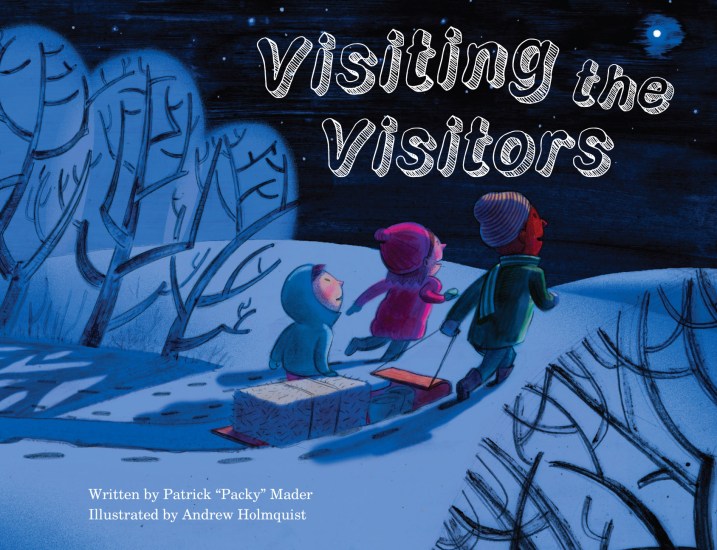
The cover of Patrick Mader's latest book, illustrated by Andrew Holmquist. The artist incorporated the wise men's heads into the tree branches.

The cover of Patrick Mader’s latest book, illustrated by Andrew Holmquist. See how Holmquist incorporated the wise men’s heads into the tree branches.

In his holiday tale, Mader takes the reader again into a rural setting, as he does in his first two books, Opa & Oma Together and Oma Finds a Miracle.

He’s reworked the story of the wise men visiting the Christ child into a contemporary story line of three siblings and their grandparents trekking across snow-covered fields to deliver gifts, but in this version to the wise men and the animals, not the Holy Family.

This heartwarming spin on the timeless and enduring biblical record of the wise men journeying to Bethlehem is especially memorable when told from the perspective of children. That coupled with animals as an integral part of the plot—we all know how much most kids love animals—makes this an especially appealing book.

Illustrator Andrew Holmquist, a Northfield native now living and working as an artist in Chicago.

Illustrator Andrew Holmquist, a Northfield native now living and working as an artist in Chicago.

Illustrator Holmquist’s artwork, created via pencil, charcoal, graphite washes, colored pencil and markers combined with digital coloring in the computer, sets a peaceful and inviting mood that reminds me so much of my childhood winter nights on the star-studded Minnesota prairie, warm light spilling from barn and house windows onto the snow.

Yes, this book evokes nostalgia, at least for me.

But it also evokes a sense of wonderment and thankfulness, of understanding and simplicity, of treasuring the real gift of Christmas, of reclaiming that special magic we adults felt as children.

I promise, Visiting the Visitors will hold your heart and those of the children you love.

THAT SAID, HOW DID PATRICK MADER, an elementary school teacher in Morristown (about 10 miles west of my Faribault home in southeastern Minnesota), create this story?

How does he continue to reap awards (Writer’s Digest honorable mention for Opa & Oma Together and the bronze medal for Big Brother Has Wheels from the Independent Publisher Books Awards in 2010) and the accolades of well-known Minnesota writers?

I posed those questions, and more, to Mader and here’s what he had to say:

Q: What inspires you in your writing?

A: My objective is to write books with positive messages—I refer to them as “Heartwarming Stories of the Heartland.” They are based on what I have seen, what I have heard, what I remember, and what I have felt as I witness life. Family members and friends have had some fascinating events in their lifetime and I simply try to make the stories come to life with a bit of creativity and Andrew Holmquist’s stunning artwork.
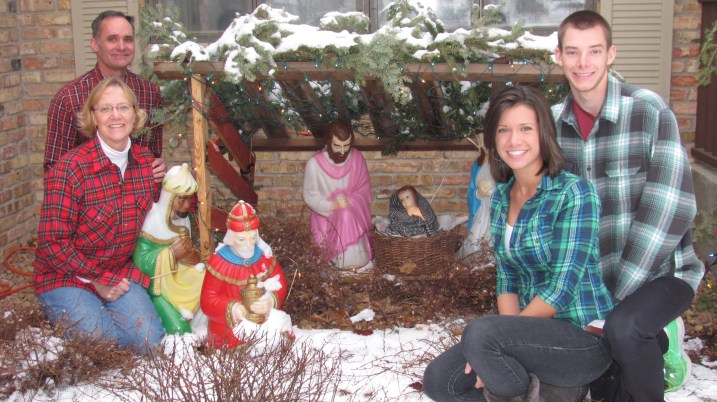
Patrick Mader with his wife, Karen, and children, Karl and Ellen, by the family's nativity set. the wood stable was crafted of wood from the barn on the childhood farm (home of his parents, George and Mary Margaret Mader) near St. Bonifacius where Mader grew up.

Patrick Mader with his wife, Karen, and children, Karl and Ellen, by the family’s nativity set. The stable was crafted of wood from the barn on Mader’s childhood farm (home of his parents, George and Mary Margaret Mader) near St. Bonifacius.

Q: What specifically inspired Visiting the Visitors?

A: When our children were very young, they would ask whether we could go to a neighbor’s very large outdoor nativity set. We would sing songs, they would hug the statues of the nativity characters, and then we would return home for hot chocolate and cookies. They were very tender and memorable moments that you don’t forget as a parent. It was stored in my memory until I felt confident that I could write and market a Christmas book.

Q: Is there a message you’re attempting to convey via this story?

A: Yes, it is that the origin of the Christmas holiday is still of interest and can have a quiet majesty to children.

Q: Two of the names you chose for the three children in this story are unusual. Can you explain the significance of the names Malik and Balta?

A: Actually, the names of all three children took a few hours to finalize. The names are Malik, Cassie, and Balta. They are multicultural children and in my research I learned the name Malik has been a popular African-American name. Cassie is the girl in the story and that is not an uncommon name. The name Balta was chosen because some ethnic groups have an a or o as a last letter. When you put the three names together, they are derivations from the supposed names of the three wise men who are characters in the book: Melchior, Casper, and Balthazar. While most children will not grasp the significance, adults who question the names will often figure it out and it can become a teachable moment.

Q: You’ve garnered three awards and also accolades from well-known Minnesota authors. How do you explain such success?

A: I am thrilled that our books have won awards. The success is due to many professional and talented people at Beaver’s Pond Press, the editors, the layout design artist, and, most significantly, the illustrator, Andrew Holmquist.

The success in obtaining endorsements from Tom Hegg, Catherine Friend, Doug Wood, and Jim Gilbert probably are more due to them being gracious and thoughtful people than it is of my writing. Combined they have probably sold over five million books, yet they are very approachable and quietly candid.

Q: Are you working on, or do you have plans for, a fourth book?

A: Yes, it worries my wife! I have begun to co-author a non-fiction book about Minnesota athletes with a former StarTribune sportswriter. I like sports and thought that some of the lesser known athletes had intriguing stories to tell. They do. It may take us two to four years to get it published because it requires lots of travel since we decided to have personal interviews with each of the athletes that will be profiled.

Meanwhile, I have drafts for two more children’s picture books: one is a story that revolves around Halloween, the other is about a young girl who mixes up sounds of words—it will be my first attempt at a book that will have lots of humor yet have a tender ending.

Q: Why do you write?

A: I have found writing enjoyable, but I really thrive on sharing our books through presentations. I like engaging an audience, providing teachable moments, and encouraging attendees to follow their own aspirations. So writing is the vehicle that allows me not only to do programs, but it also leaves its own small legacy. It has been very rewarding to read letters or listen to people say that our books have touched them. Those conversations and messages touch me and bring great joy.

FYI: To learn more about Patrick Mader and Andrew Holmquist and their books, and how to purchase them, click here to reach Mader’s website.

Disclaimer: I received a free copy of Visiting the Visitors for purposes of reviewing this book. Patrick also donated copies of his first three books to the Little Free Library in my hometown of Vesta.

© Copyright 2012 Audrey Kletscher Helbling

Artwork and photos courtesy of Patrick Mader and Andrew Holmquist.


The inspiring art of Richard Vilendrer October 28, 2012

Filed under: Uncategorized — Audrey Kletscher Helbling @ 8:55 AM
Tags: , , , , , , ,

IF YOU HAVE ANYTHING in your life weighing you down today, and I mean anything, then you need to watch a You Tube video, “The Artwork of Richard Vilendrer.” (Click here to view.)

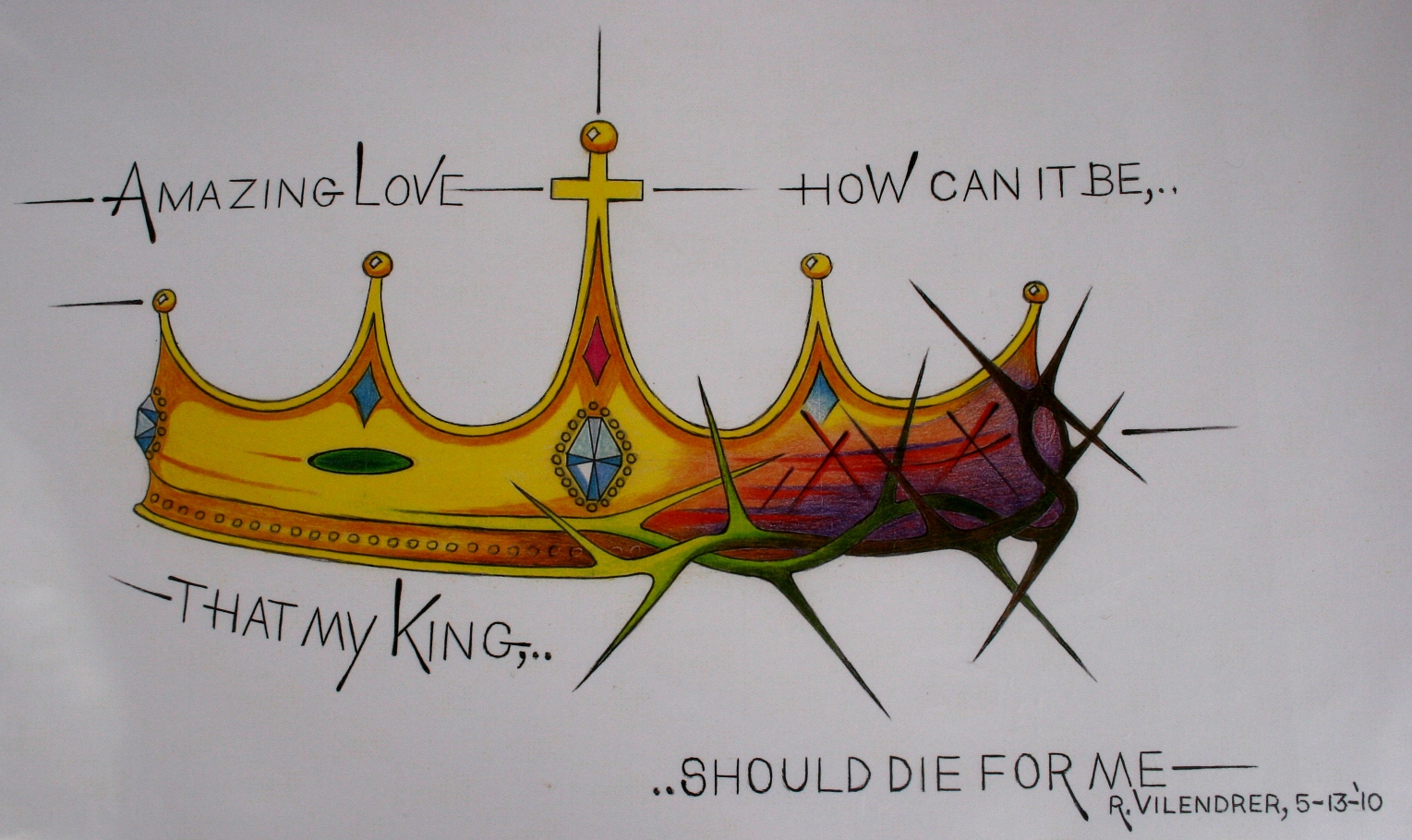
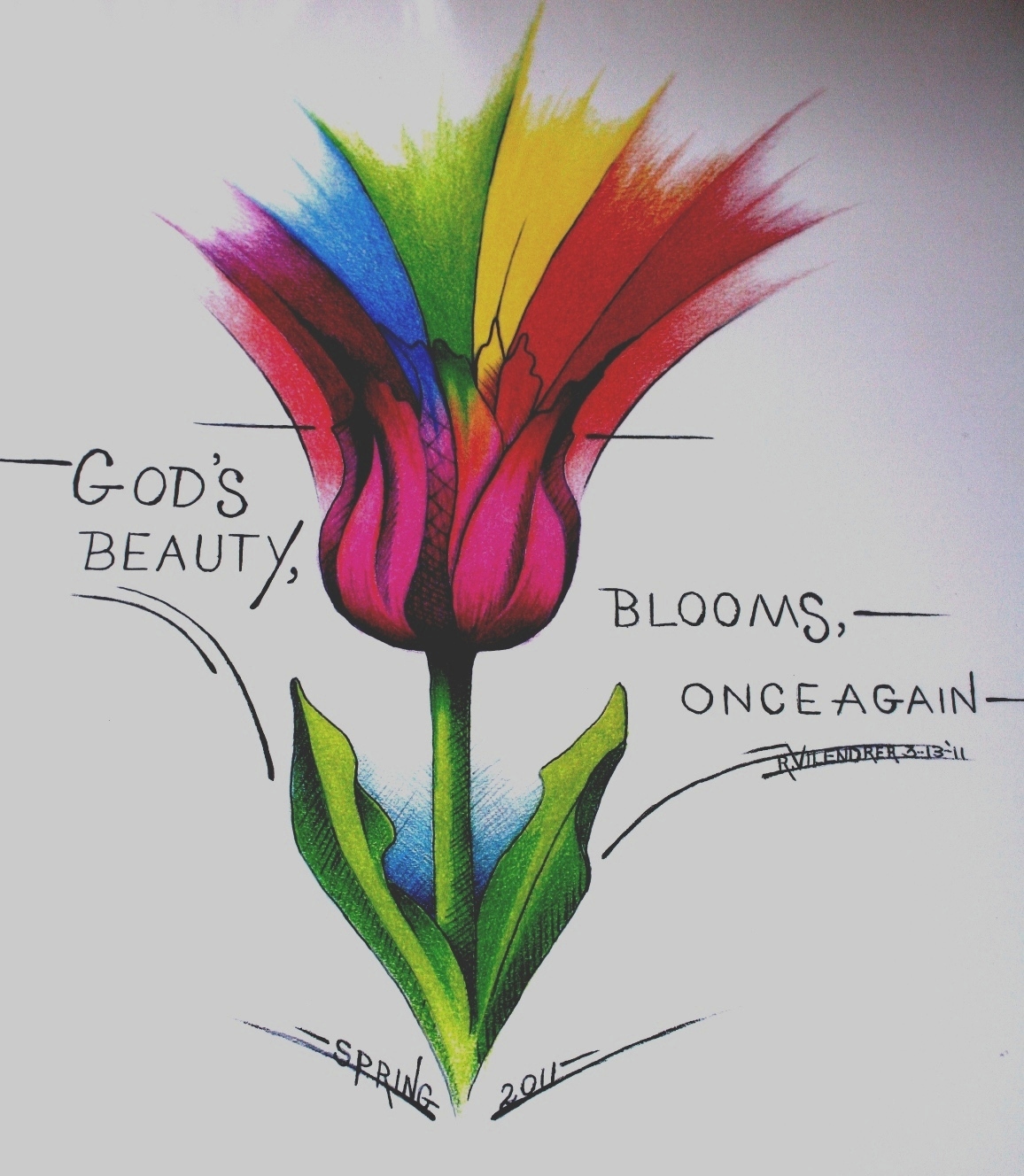
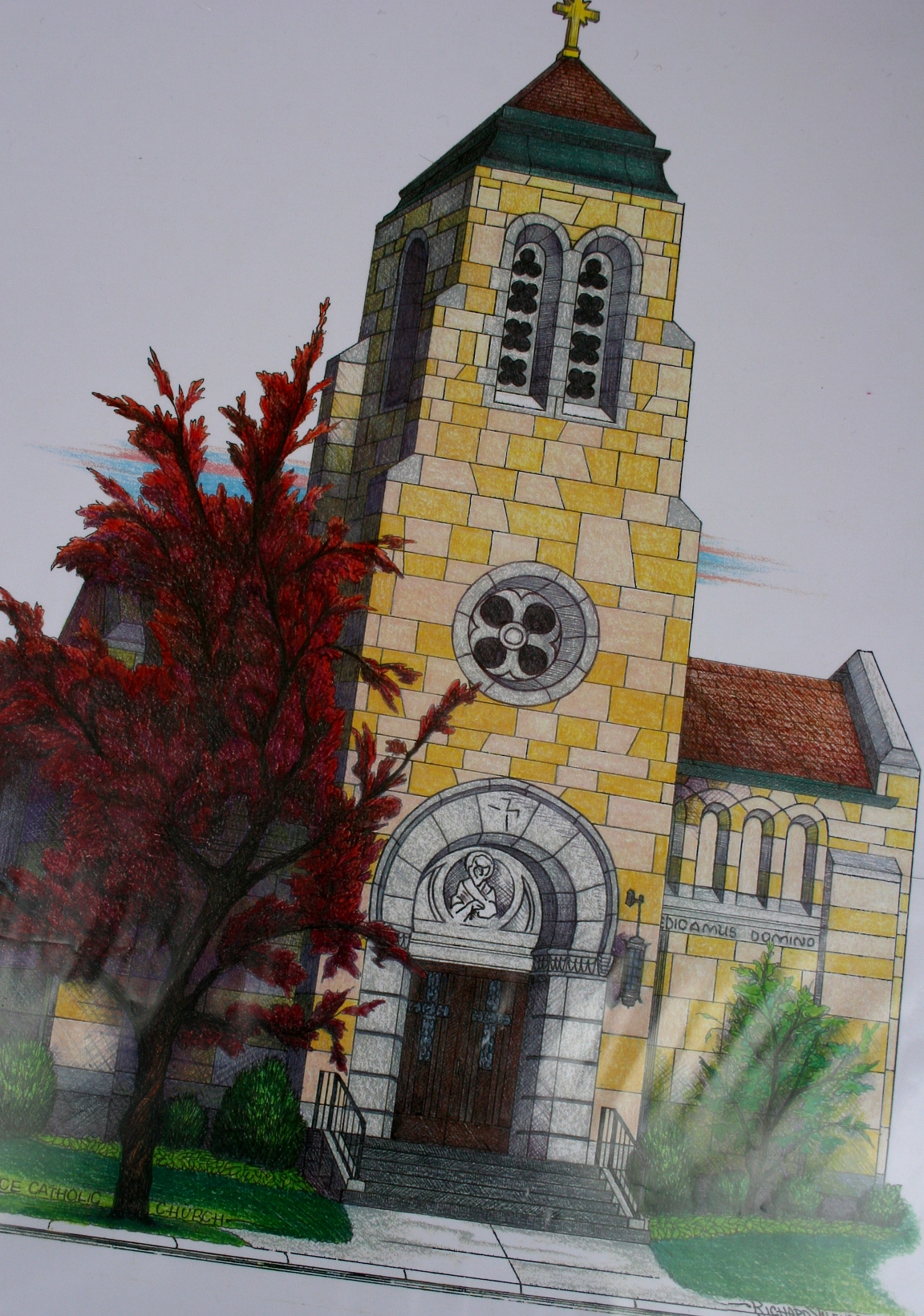
Richard is a 73-year-old Faribault artist who uses a ballpoint pen and colored pencils and a technique called cross hatching to create the most uplifting and inspiring art. He draws subjects like flowers, leaves, crosses, stained glass and more, integrating religious themes.

An example of Richard’s nature and faith-inspired pen-and-ink and colored pencil artwork.

In fine and precise block print, Richard often incorporates a message: GOD’S GREAT LOVE HOLDS EVERYTHING IN EXISTENCE or I AM THE BREAD OF LIFE or MAY THE PEACE OF JESUS BE WITH YOU ALL.

I first discovered Richard’s art about a year ago at the Faribault Farmers’ Market where Carol Vilendrer was selling her husband’s work, and I hesitate to call his art “work.” Passion would be a more accurate description, I later learned in a phone interview with Richard. That led to a blog post, which you can read by clicking here.

Recently, Carol tipped me off to the You Tube video created by the Vilendrers’ daughter, Rebecca Quidley, who is pursuing a Bachelor of Arts degree with an emphasis on arts at a North Carolina community college. As a class assignment, Rebecca had to write about someone who inspired her in life. She chose to write about her father.

When you view this video, you will understand why Rebecca chose Richard because, I promise, you will be inspired. You see, Richard suffered a stroke while vacationing in October 2010 and was paralyzed on his right side. Fortunately, he is left-handed. Richard underwent intense physical therapy to recover. The video shows that recovery process.

Daughter Rebecca writes in her video that, after the stroke, her dad drew with more passion and fervor than ever. That shows.

He draws in a small room—a bedroom before the kids left home—at a drawing table.

Childhood memories, daily life and his faith in God inspire Richard in his art.

Right now, watch “The Artwork of Richard Vilendrer” and be inspired. Your day will be better for having done so.

Scripture and Christian songs also inspire Richard.

FYI: Richard’s given four drawings to his church, Divine Mercy, and one was purchased by the Friends of the Library, on display at Buckham Memorial Library in Faribault. Half-fold greeting cards are sold at a downtown Faribault consignment shop, Fabulous Finds. Richard’s prints and cards are also sold at events with all proceeds given to the American Cancer Society.

© Text copyright 2012 Audrey Kletscher Helbling
All artwork copyright of Richard Vilendrer and photographed with permission


A painting from my dear friend Rhody September 28, 2012

IN LIFE, RHODY YULE, impressed me with his humble spirit, deep faith and artistic talent. He thought the best of everyone. He appreciated life so much that, even up until days before his June 2011 death when he was but a shell of his former physical self, he desired to live beyond his 92 years.

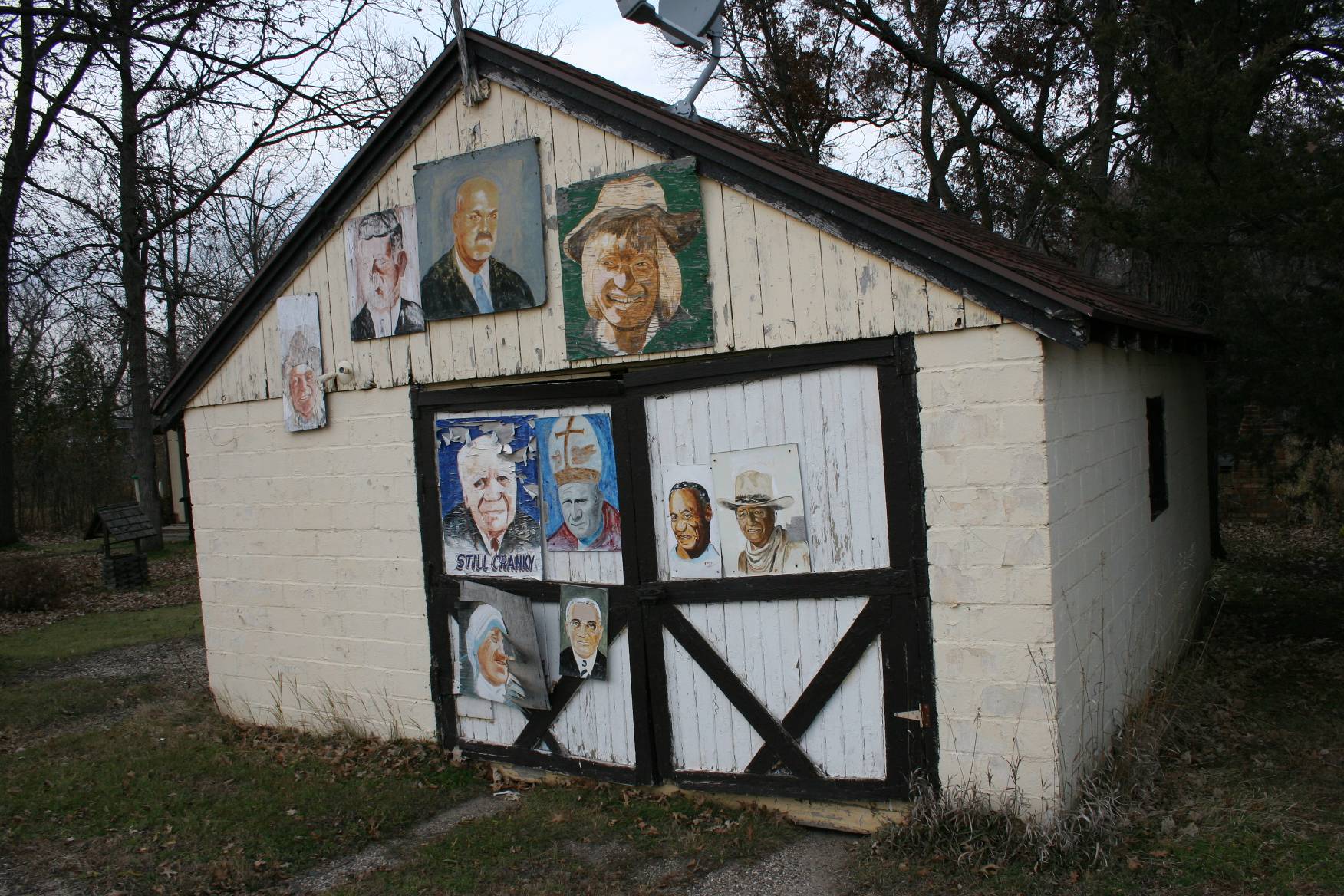
Celebrity portraits Rhody Yule painted and hung on his garage, where I first discovered his work in the fall of 2009 while driving past his rural Rice County residence.

Losing my friend of only a few years—the man I met because I photographed the portraits he had painted and hung on the side of his garage in rural Rice County—was difficult for me. Yet, I knew Rhody’s legacy would live on in the hundreds of paintings he created through the decades.

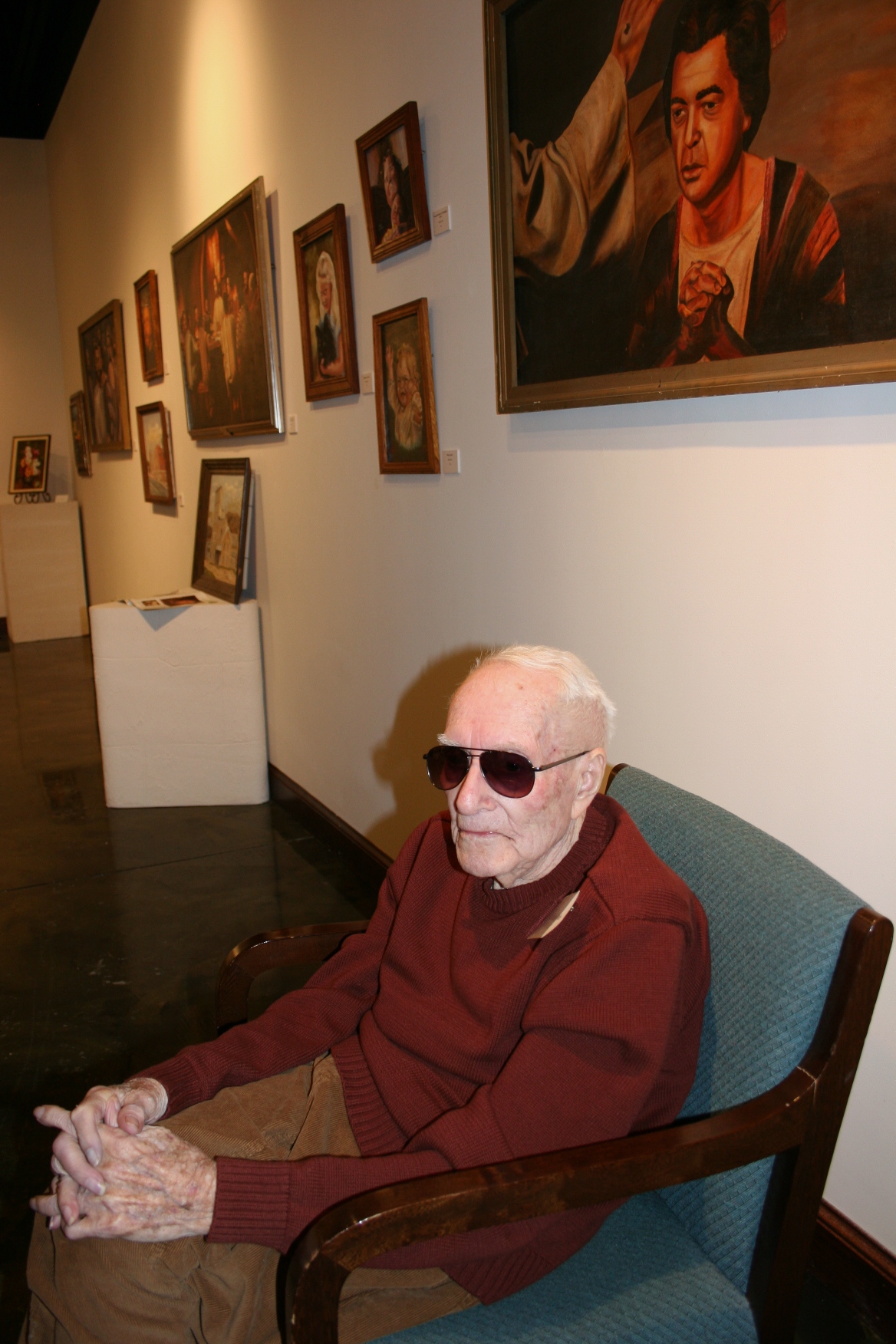
Rhody, minutes before his gallery show opened in January 2011 at the Paradise Center for the Arts, Faribault.

It was my absolute honor, after discovering Rhody’s work, to bring his paintings to the public via a mini art show at Christdala Evangelical Swedish Lutheran Church, rural Millersburg, and then during a much larger gallery exhibit at the Paradise Center for the Arts in Faribault.

And now Rhody, in death, has blessed me with the gift of one of his paintings, the painting he knew I most favored.

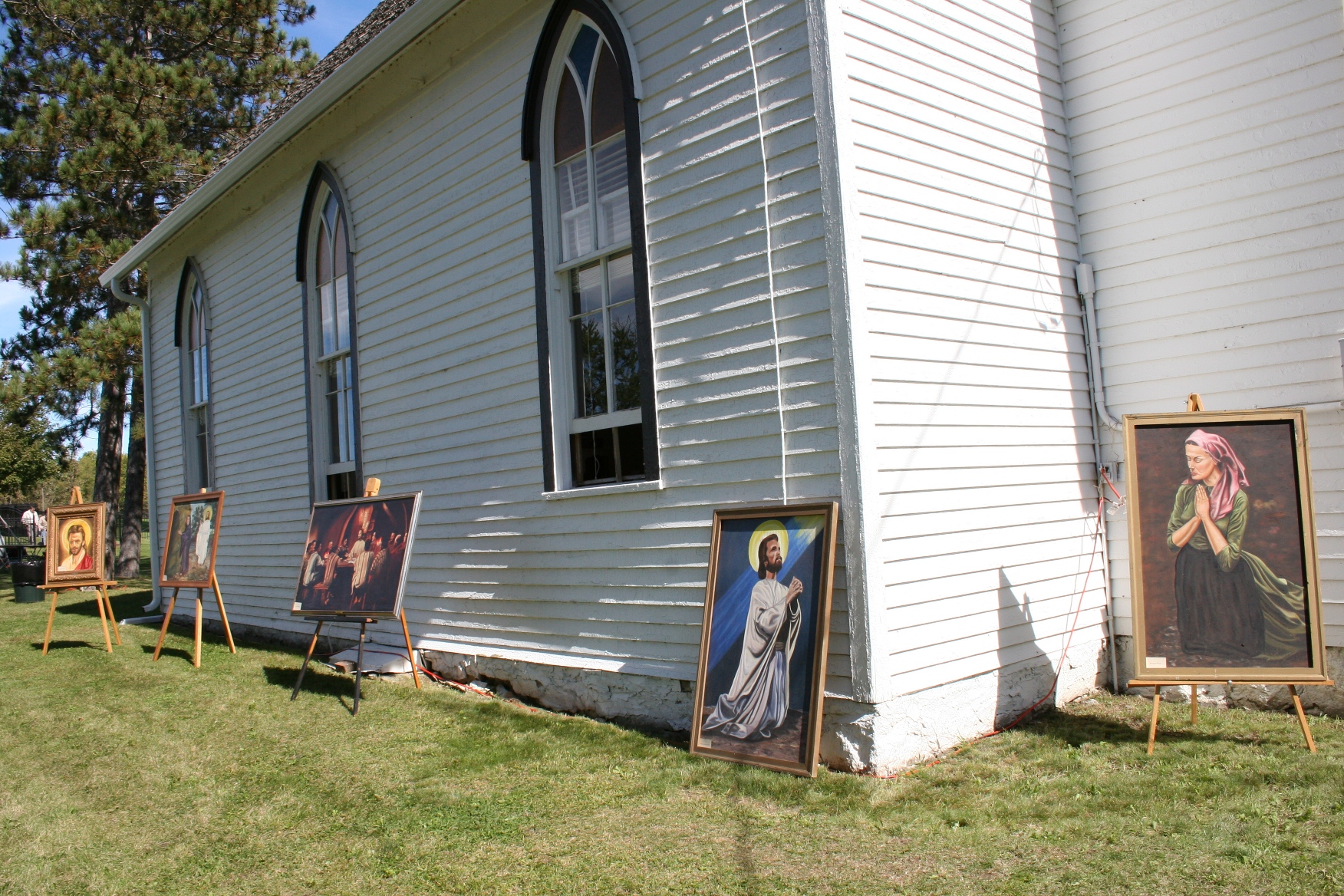
A sampling of the religious paintings Rhody exhibited at a mini show at Christdala on September 26, 2010. The painting on the right is the one Rhody gifted to me.

On Tuesday evening, the day before my 56th birthday and just a day shy of the two-year anniversary of that mini exhibit at Christdala—yes, I spent my 54th birthday setting up that art show for Rhody—I picked up the painting Rhody wanted me to have.

I’d known for a few weeks that I was to receive the painting I’ve come to call “Woman in Reverent Prayer.” Tuesday I phoned Rhody’s stepson, Bob, asking if my husband, Randy, and I could come over and pick up the piece of art in a half hour. That would work, Bob said.

“Woman in Reverent Prayer” by Rhody Yule

Over at Bob and his wife Kathy’s condo, Rhody’s prayerful woman painting leaned against the living room wall as we reminisced about the man we had each loved.

And as I remembered Rhody, I felt myself slipping into sadness. I missed him and wished I had known him longer.

Then, when Bob told me how Rhody wanted me to have that particular painting and how Rhody’s gallery show at the Paradise was the highlight of the last year of his life, the tears seeped from my eyes. To be able to give someone like Rhody such a gift, to realize how much this meant to him, prompts the most humbling and joyful of emotions.

Shortly thereafter as I caressed the painting, Bob suggested that I might want to replace the dinged frame. No, I would keep the frame Rhody crafted, I said, running my fingers along the wood.

Bob lifted the four-foot by 2 1/2-foot painting onto the dining room table then so we could examine the date under Rhody’s signature. We could barely decipher the faint curve of double sixes, meaning Rhody painted “Woman in Reverent Prayer” in 1966 when I was just 10 years old.

I know nothing, really, about the oil painting except Rhody once sharing that it was based on another painting or photo, minus the rosary beads clasped in the kneeling woman’s prayerful hands.

Now, each time I view Rhody’s painting, which will soon grace a wall in my living room, I am reminded of my friend’s deep faith. And I am reminded of how very much his friendship meant to me and likewise my friendship to him.

To realize that Rhody wanted me to have this painting simply touches my heart with gratitude and love.

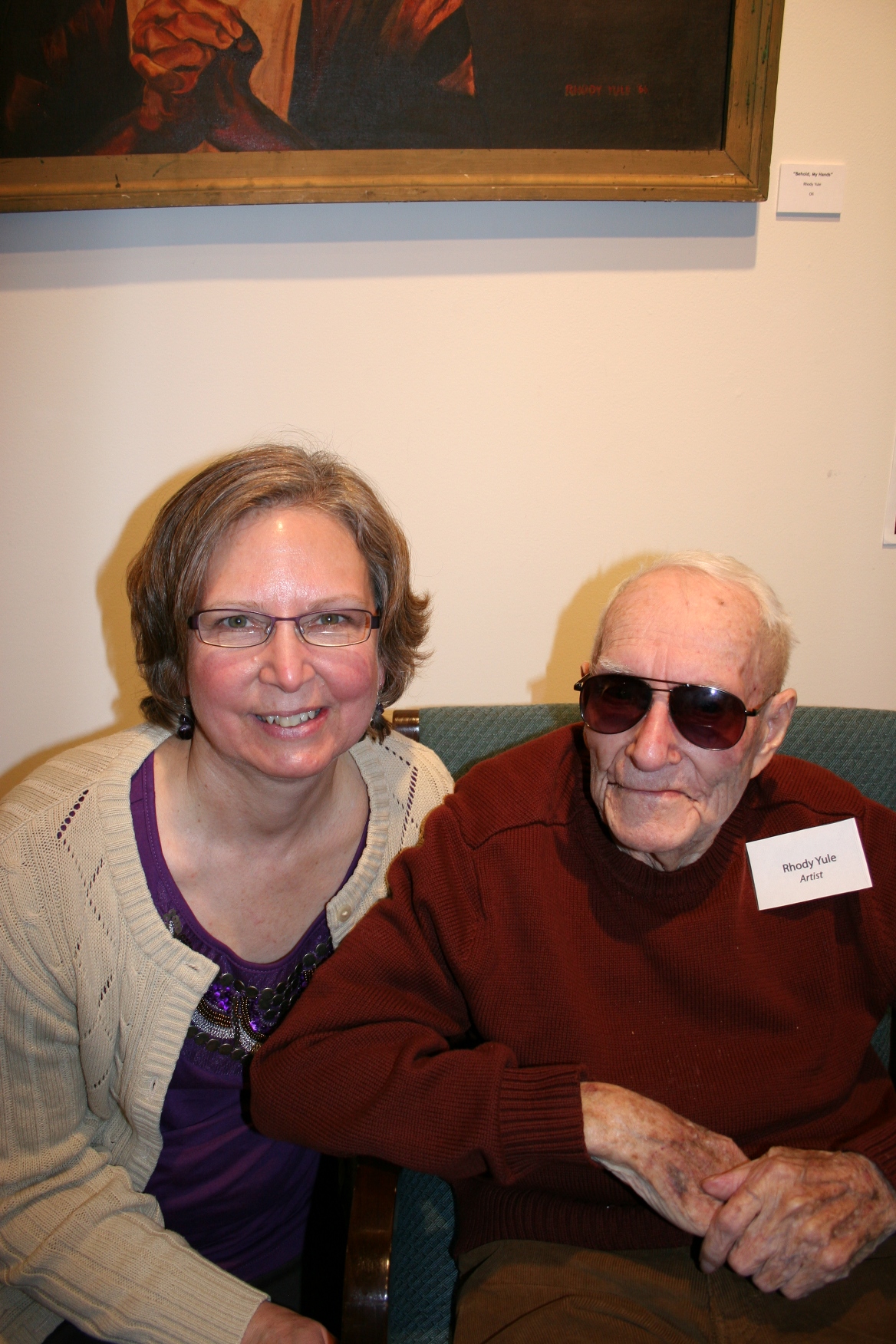
Rhody and me at his opening night gallery reception in January 2011 at the Paradise Center for the Arts, Faribault.

FYI: To read about Rhody’s mini art show at Christdala Evangelical Swedish Lutheran Church, click here.

To read about Rhody’s January 2011 gallery exhibit at the Paradise Center for the Arts, Faribault, click here.

To read my tribute to Rhody upon his death, click here.

© Copyright 2012 Audrey Kletscher Helbling


St. Paul artist connects art to geocaching via her GeoNiche Project July 11, 2012

A ST. PAUL ARTIST and educator with roots in the southwestern Minnesota prairie is bringing her art to the public via a project that links art to geocaching.

Felice Amato, who grew up in Cottonwood and Marshall, has hidden about 15 original works of ceramic art in St. Paul and in southeastern Minnesota through her GeoNiche Project, funded by a Minnesota State Arts Board Artist Initiative Grant awarded in 2011. To date, she’s stashed her sculptures at Swede Hollow, a St. Paul Park, and in or near Faribault, Red Wing and Winona. She’s created pieces for the Red River Valley area, too, but has yet to install them. And she would also like to sculpt GeoNiche art for her native prairie.

Amato follows the geocaching model wherein geocachers use GPS devices or smart phones to find her art based on geographic coordinates and clues. Her caches are listed on Geocaching.com as felice.amato and on Opencaching.com as felice1.

The project evolved as Amato considered a unique way to get the ceramic niches and tableaus she’s made for years out to the public. “My sister, brother and aunt are avid geocachers and it just struck me that this could be an interesting way to make my work public,” she explains.

Finding no one out there doing exactly what she proposed, Amato moved forward with the GeoNiche Project and her unifying theme of women’s lives.

“I wanted to create secular niches that spoke to a sense of place, history and continuity—and that honored the important life moments that we all experience,” she says.

“Under the Arbor,” one of the GeoNiches placed in Swede Hollow. Photo courtesy of Felice Amato.

She placed her first GeoNiche close to home, a mile away in Swede Hollow, a St. Paul valley originally settled in the mid 1800s by Swedish immigrants and thereafter by Polish, Italians and Spanish Americans. “The rhythm of settlement in Swede Hollow made that especially rich,” Amato says. “Flooding, impermanence and the piecing together of community shanty by shanty—the thriving, the dispersal, the abandoning, the reclaiming—it all inspires my imagination.”

This photo, courtesy of Felice Amato, shows houses and quilters in progress for Swede Hollow.

Amato was inspired to shape pieces like “Mother and Child by the ‘Hobo’s Washroom’,” “Little Girl with birds,” “Bread house” and three other larger works for Swede Hollow. Those GeoNiches hint at folktales based on the experiences of the immigrants who once called this place home. A hand-drawn map to those artworks can be found inside a GeoNiche by Swede Hollow Cafe (coordinates N 44° 57.551’ W093° 04.330’) as Amato awaits approval of official Geocaching.com listings for Swede Hollow.

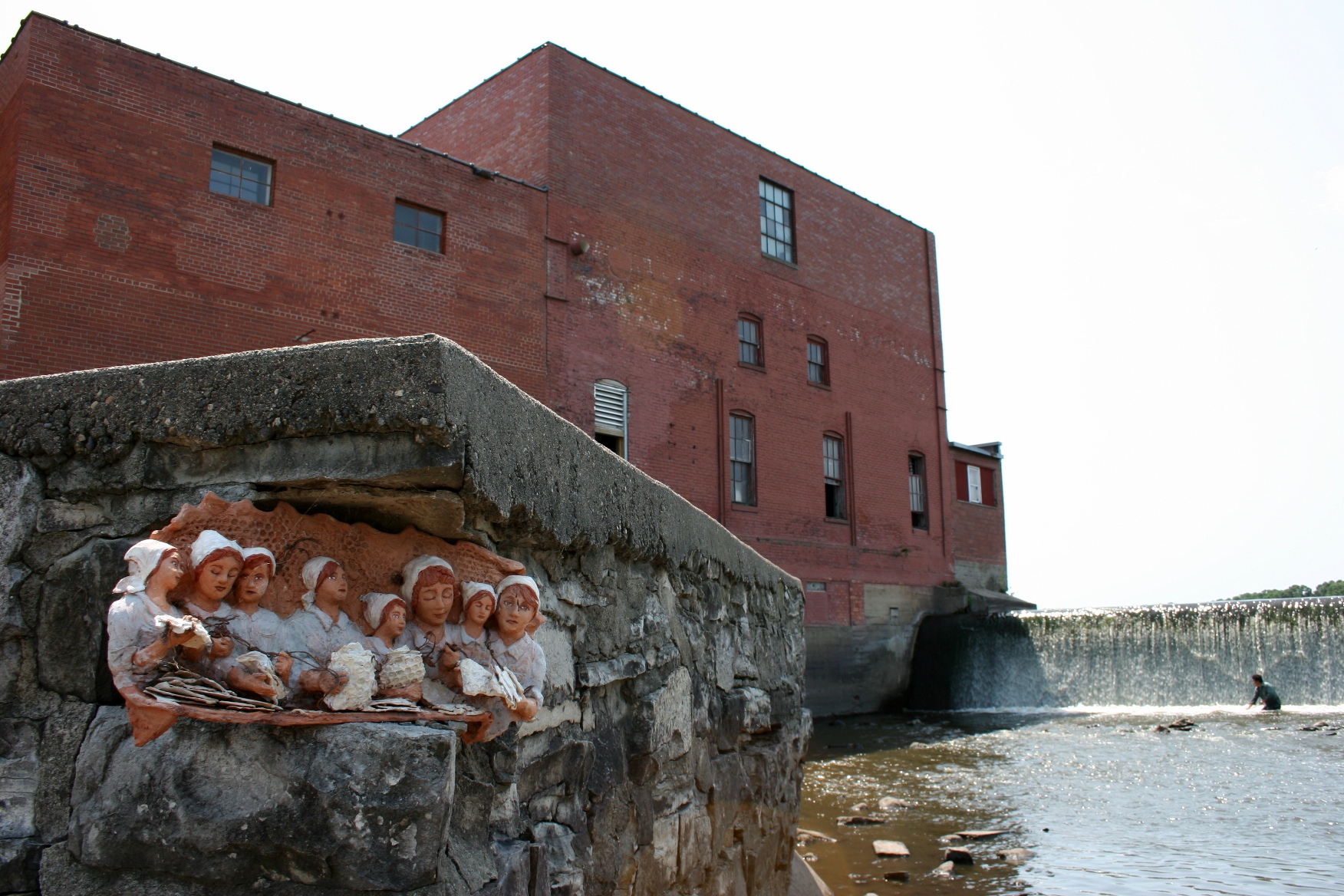
“Seamstresses” in place at the historic Faribault Woolen Mill along the Cannon River blends seamlessly into its environment. Photo by Audrey Kletscher Helbling.

In Faribault, she was naturally drawn to the Faribault Woolen Mill, she says, because of an art series initiated several years ago on women in factory settings. Amato created “Seamstresses” and tucked it into a niche along a retaining wall at the mill next to the Cannon River.

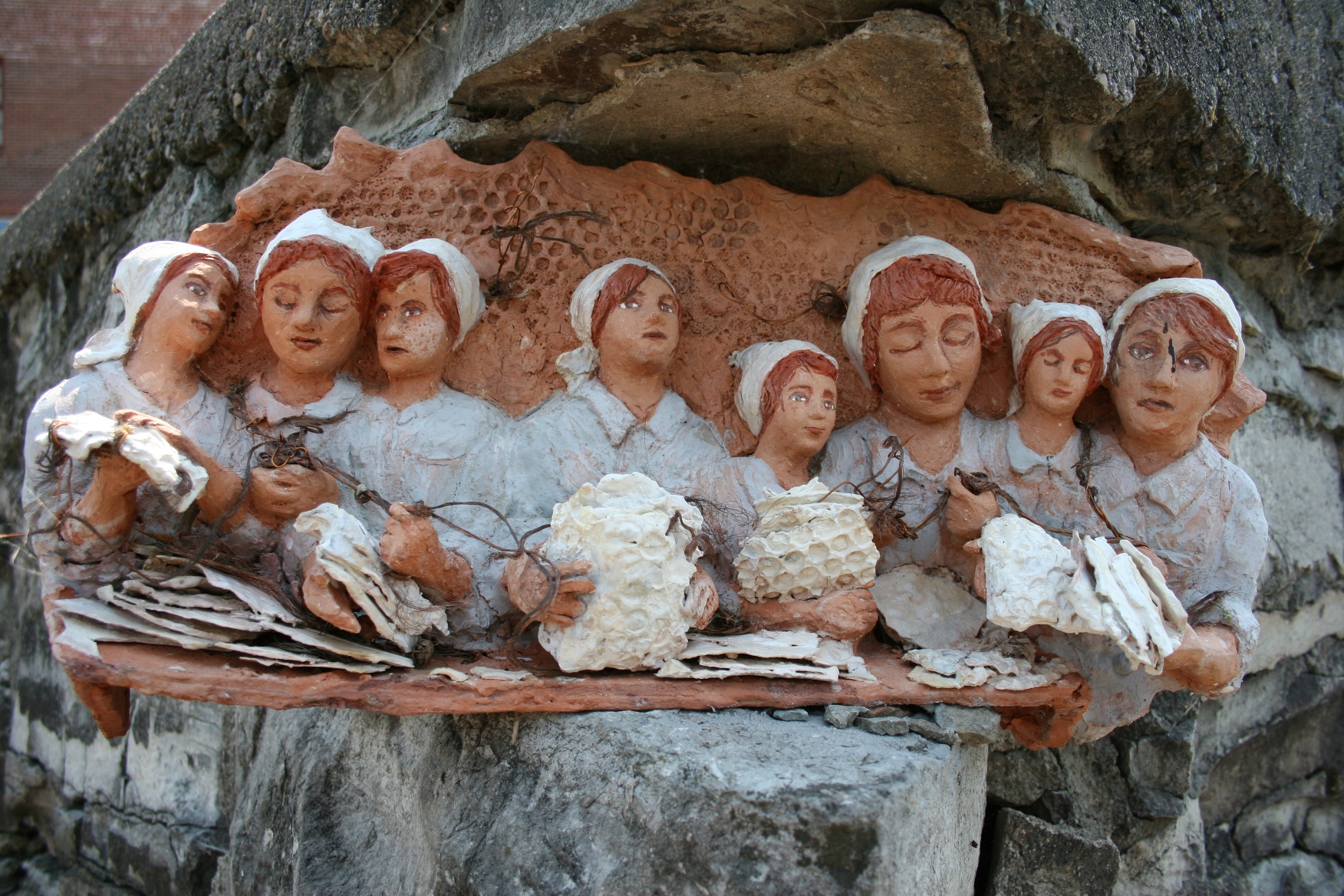
Amato’s sculptures tell a story as seen in this close-up of woolen mill factory workers. Her sculptures are made from paperclay with wire details. Photo by Audrey Kletscher Helbling

Explains Amato of her women in factory art:

The metaphorical potential of women and labor—especially manual and repetitive labor—is enormous with so many different layers it makes my mind explode. To what did/do women give their lives? What other inner lives (maybe as poets or artists, or dreamers) did they have especially at times where realizing those passions was even more difficult than it is today? I wanted to speak to a sense of honor and even sacredness in the making, the plodding, the rote quality of manual tasks—often just a part of an end product. Sewing and weaving itself is rich with metaphor as is the factory setting: the balance of isolation and comradery.

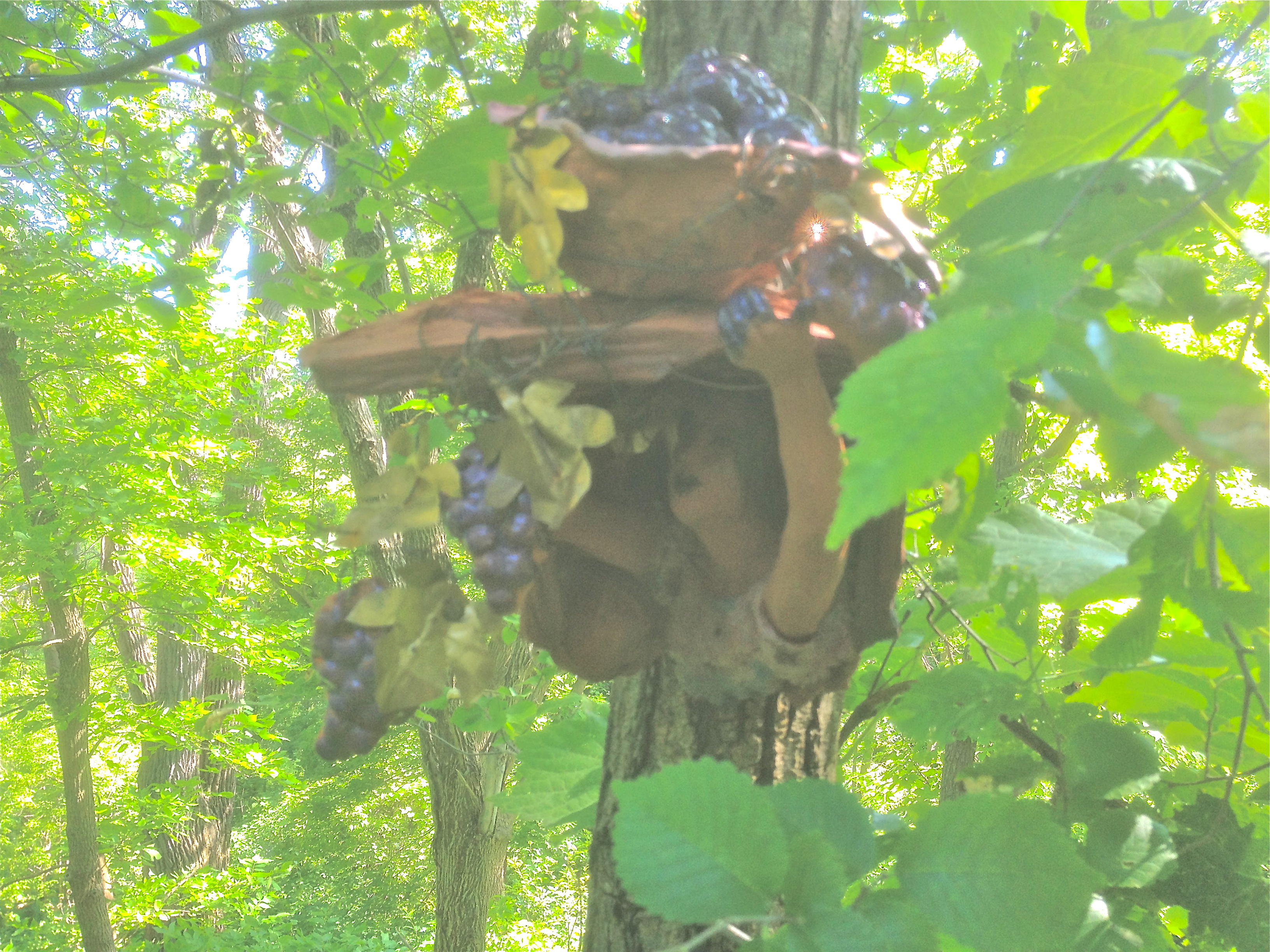
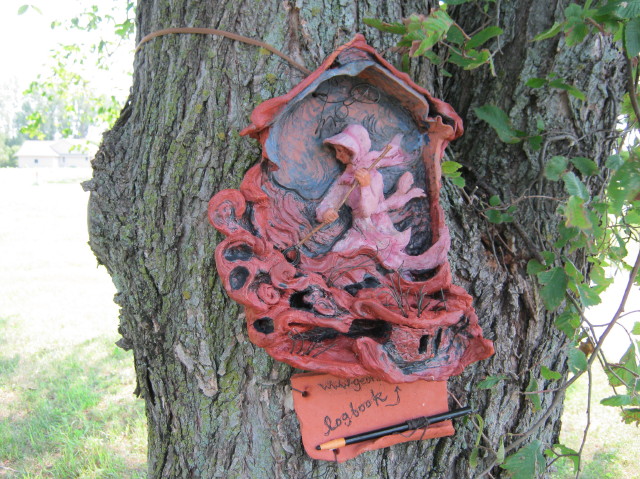
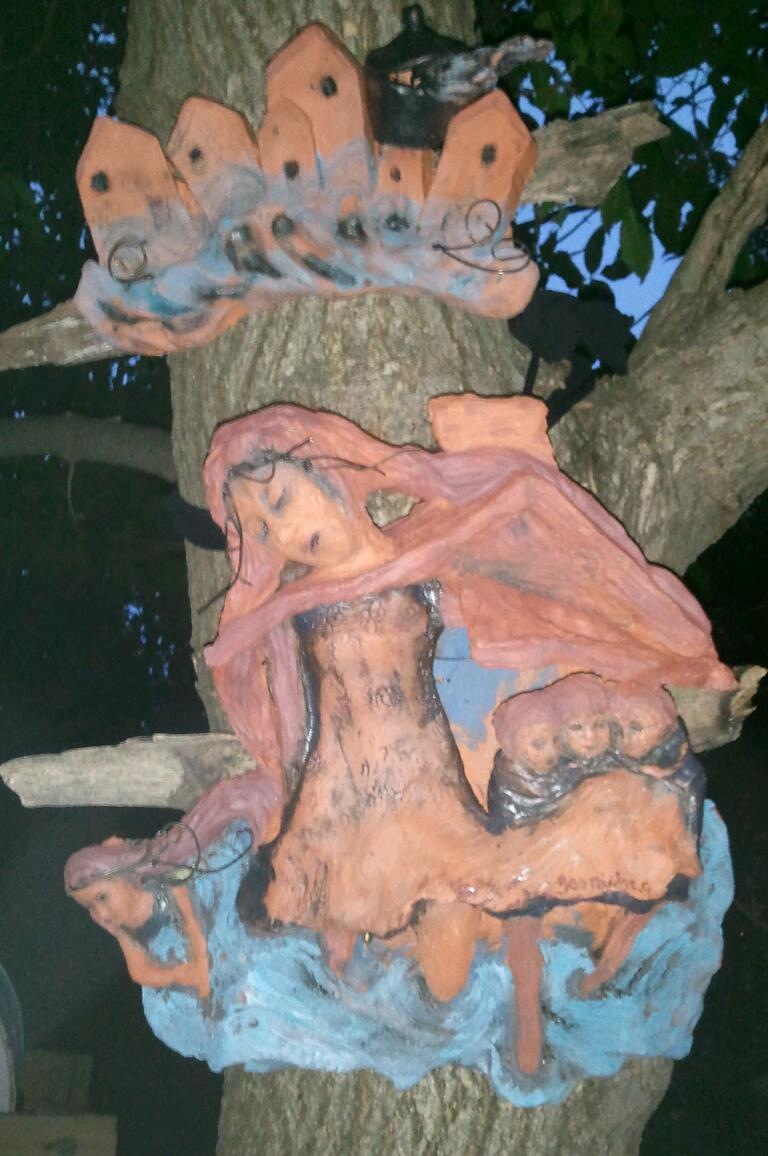
Amato secured “Prairie” onto a tree near a bike trail west of Faribault. Photo by Kevin Kreger.

Outside of Faribault, lashed onto a tree along a bike trail, Amato switches to a rural theme in “Prairie,” a definitive piece which connects to her prairie roots. The sculpture was partially-influenced, she says, by “the solitude and perseverance of the prairie woman in her battles with so many forces—the soil, the wind, the grasshoppers, the fires.”

Geocacher Kevin Kreger of Faribault, who sought out both Faribault area GeoNiche art pieces, says he was drawn in by “Prairie” and found the placement of “Seamstresses” at the Woolen Mill a fitting location.

The sweet surprise GeoNiche at the Faribault Woolen Mill. Wear solid walking shoes as you will need to walk over rocks (not the ones photographed here) to reach this art treasure. Amato encourages finders to sign the logbook tucked into a plastic bag behind “Seamstresses.” Photo by Audrey Kletscher Helbling

“The idea (GeoNiche) delights me,” says Kreger who has been geocaching for half a dozen years everywhere from New York City to the Oregon coast and as near as a local county and city parks. “Turning the corner, seeing another’s idea of beauty in an unexpected spot, it’s one of those unanticipated sweet spots in life.”

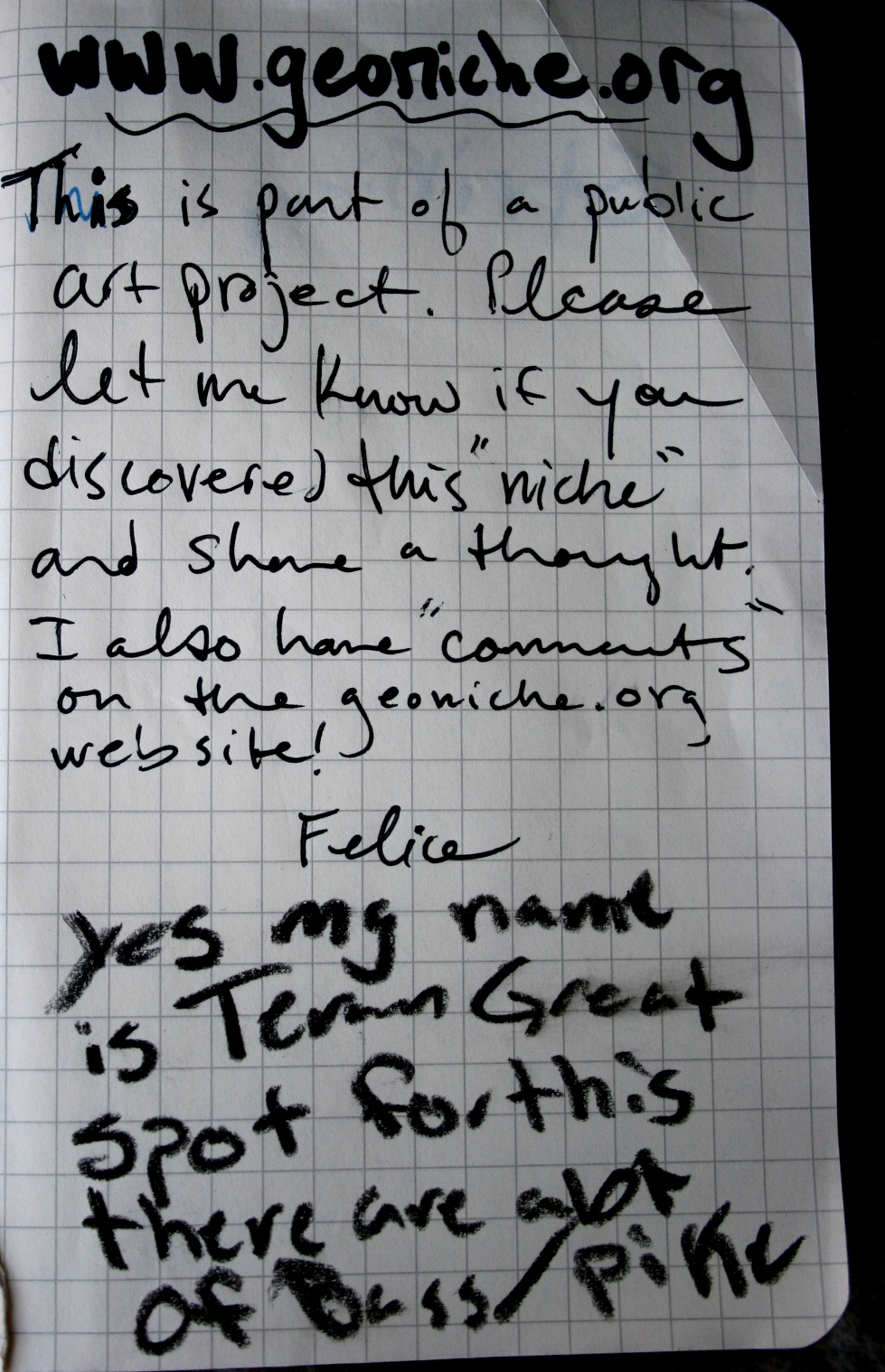
The first entry in the “Seamstresses” logbook. Photo by Audrey Kletscher Helbling

Amato hopes for that type of positive reaction from those who discover her public art hidden in niches. “Many people seem to really experience my work, seeing it as meaningful to them and that it is meaningful to me,” she says. “It evokes stories of memories or hooks people’s imagination and emotions.” She wants finders of her art to interact with her, to share their thoughts in her on-site logbooks and/or online.

Kreger appreciates the time and skill Amato has invested in creating her art, made from “paperclay,” a method of mixing paper pulp into recycled clay. He wonders, though, how long the GeoNiches will stay in place, comparing them to performance art and as a gift the artist must be willing to give up.

Another sculpture hidden in Swede Hollow Park. Photo courtesy of Felice Amato.

While one of her Swede Hollow GeoNiche sculptures was smashed, the rest have remained intact with one even moved to a more logical and visible location. Amato’s considered taking the pieces down for the winter or sealing them to protect the vulnerable clay from the elements. But she’s unsure. “When I installed “The Potter” in the pottery dump at Red Wing and looked at all the shards of broken ceramic work, I thought eventually she will be among that and it felt OK,” Amato says.

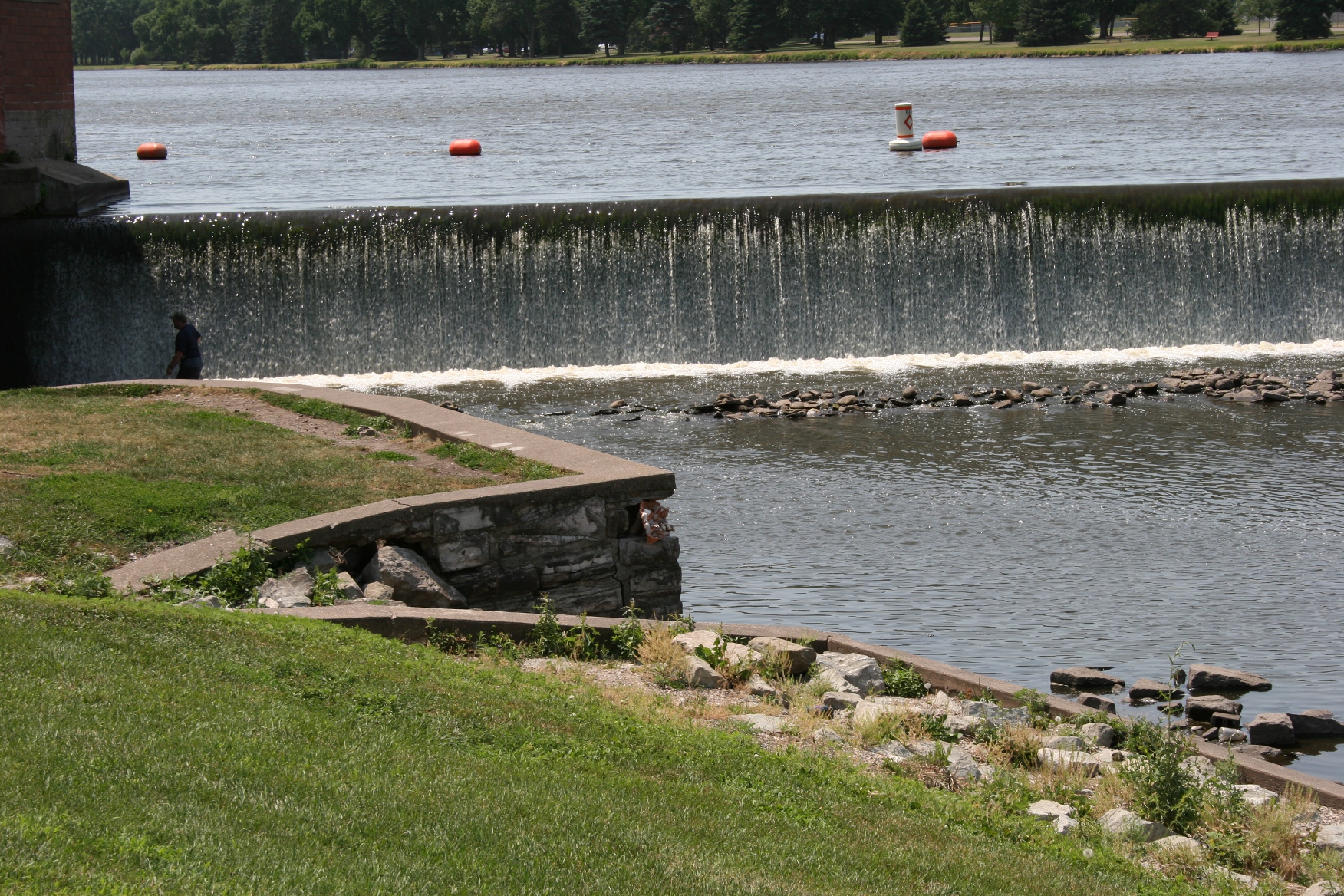
An overview of the location for “Seamstresses.” Look and you will find her sculpture in this image. The positive responses from the people of Faribault have been a huge incentive, Amato says, to explore the area more. Photo by Audrey Kletscher Helbling

Exact placement of her art is most successful, she adds, when the spot is discovered as though it was waiting.

Even though the grant period for her GeoNiche Project has ended, this St. Paul artist intends to seek additional funding to continue creating and hiding her art for geocachers and others who may happen upon it. She plans to work, also, with artist friends interested in GeoNiche. And she’s contemplating offering a GeoNiche workshop.

While she’ll seek out funding for her innovative project of connecting art and geocaching, Amato says she’s not a geocacher or a seeker.

“I would imagine,” she says, “most people are primarily either seekers or hiders. I am a hider.”

Artist Felice Amato. Photo courtesy of Felice Amato.

FYI: Felice Amato, the mother of two daughters, has been a public school teacher for nearly 20 years (teaching first Spanish and then art) and has also taught summer art classes and camps for children through the St. Paul non-profit, Art Start. She is an artist specializing in clay and tile making. Her artwork has been exhibited in numerous shows and in several galleries during the past 10 years with an upcoming show set for October 18 – November 17 at The Phipps Center for the Arts in Hudson, Wisconsin. For more information about Amato, click here to link to her Facebook page and here to link to her website.

Click here to link to Amato’s GeoNiche website.

And click here to check out her GeoNiche Project Facebook page.

© Copyright 2012 Audrey Kletscher Helbling
Photos by Audrey Kletscher Helbling, Felice Amato and Kevin Kreger


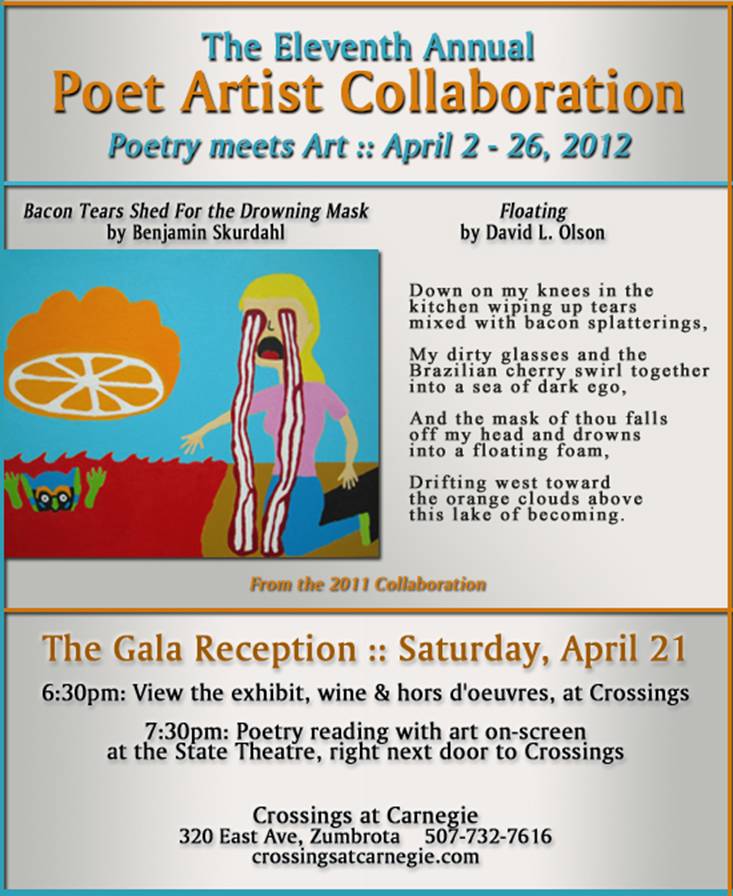
Pairing poetry and art in Zumbrota April 19, 2012

Filed under: Uncategorized — Audrey Kletscher Helbling @ 7:08 AM
Tags: , , , , , , , ,

Lois' jellies and pickled beans photographed in July 2009 at the Faribault Farmers' Market.

In the dark, dank depths of the dirt-floored cellar

she stocks a treasure-trove of jewels

in jars upon slivered planks—

Thus begins my poem, “Her Treasure,” which I will read this Saturday, April 21, at the Poet-Artist Collaboration XI Gala Reception at Crossings at Carnegie in Zumbrota. The reception begins at 6:30 p.m. at Crossings with guests treated to refreshments and to music by pianist Matthew Rivera. The event then moves next door to the State Theatre for poetry readings with on-screen art at 7:30 p.m.

Yes, art. And poetry. Together. One inspired by the other.

I’ll meet “my artist,” Connie Ludwig of Goodhue who created a watercolor, “Pantry Jewels,” inspired by my poem about canned fruits and vegetables stocked in a farmhouse cellar.

The works of 25 other poets and of 25 other artists are also included in this juried exhibit.

Once I learned Connie’s identity, I contacted her, asking her to share some information about herself and about the process of creating her poetry prompted piece. Unlike me, Connie is not a novice at this poet-artist collaboration. This marks her tenth time participating in the Crossings event.

Recently retired from the Zumbrota library, Connie is an established artist who typically works in pastels from her home studio. In the summer she does pastels outdoors and on her front porch.

But this time, for this show, Connie opted to work in watercolor, which, she says, “more often than not has control over me.”

Drawing on childhood memories of the huge garden her family planted every year at their home in St. Croix State Park along the Minnesota-Wisconsin border east of Hinckley, this artist understands the content of my poem.

My aunts and my mother were survivors of the Great Depression and gardens and canning were very, very important to them. So you can probably deduce that your poem about the dark basement, dirt floor and canned jewels reminded me of them.

When I read it (your poem), I could picture the light on the jars when I used to go down and get them. And I knew both the physical resemblance to jewels and the equivalent worth of jewels was how they felt about their canning endeavors. You wrote a poem that reflected an important part of their lives.

Fortunately my husband has cousins that enjoy canning. The models for the three jars that I used to illustrate your poem are Mary’s peaches and Greg’s pickles. I took a picture of them and painted both from that and the actual jars. Jim (my husband) could hardly wait for me to finish so he could “open and eat.”

Well, Connie, I can hardly wait to see your art, “Pantry Jewels,” paired with my poem.

FYI: Click here to read more about Poet-Artist Collaboration XI, including a list of the participating poets and artists. The exhibit will be on display through April 26. Please join Connie and me at the Gala Reception and at the poetry reading.  I’m second on the list to read my poem and Connie to talk about her art. We’d love to meet you.

Copyright 2012 Audrey Kletscher Helbling


How I became an artist March 30, 2012

Filed under: Uncategorized — Audrey Kletscher Helbling @ 7:44 AM
Tags: , , , , , , ,

MY SKILLS AS A PAINTER are limited. I can paint a wall. I can dip a brush into a kid’s watercolor paint set and swirl colors onto a piece of paper. But I won’t promise a masterpiece.

Oh, no, if you want to see my best paintings, you will need to step back in time to more than 40 years ago. Imagine me hunched over an oilcloth-draped kitchen table in a southwestern Minnesota farmhouse dipping a thin brush into miniscule pots of paint. With great care, I brush shades of blue and brown onto cardboard as a ballerina emerges.

I have never seen a real ballerina. Her dainty features and fancy dress and perfect posture seem so foreign to me as I slump at the table in my rag-tag clothing that smells of the barn.

I imagine this ballerina smells only of flowers, like the ones I paint into the bouquet she clutches and into the wreath encircling her hair. Her bangs sweep in a fashionable style across her forehead, unlike my slanted, too-short bangs.

The paint-by-number ballerinas I painted as a young girl during the 1960s.

This ballerina’s life in New York City is so much different than mine on the farm. For the hours I am painting the flower-bearing ballerina and her sister, the twirling ballerina, I escape into their world. I dance on my tiptoes and spin and bow with grace on the stage of an opulent theater.

If not for Dan Robbins, though, I never would have experienced ballet. The Michigan artist created the first paint-by-number patterns in 1951. That led to a nation-wide obsession that allowed non-artists like me to become painters. The magazine American Profile featured Robbins in its March 25 issue. You can read the feature story by clicking here.

That story prompted me to remember the paint-by-number ballerinas I created as a child. Because my mother saves everything, I have those paintings today and they are among my most treasured childhood possessions.

TELL ME, HAVE YOU created paint-by-number paintings? Or do you collect these paintings? I would like to hear about your experiences and/or interest in paint-by-number kits.

You can learn more about the paint-by-number craze that swept the country during the 1950s by clicking here onto the Smithsonian National Museum of American History.

© Copyright 2012 Audrey Kletscher Helbling


Animal art March 20, 2012

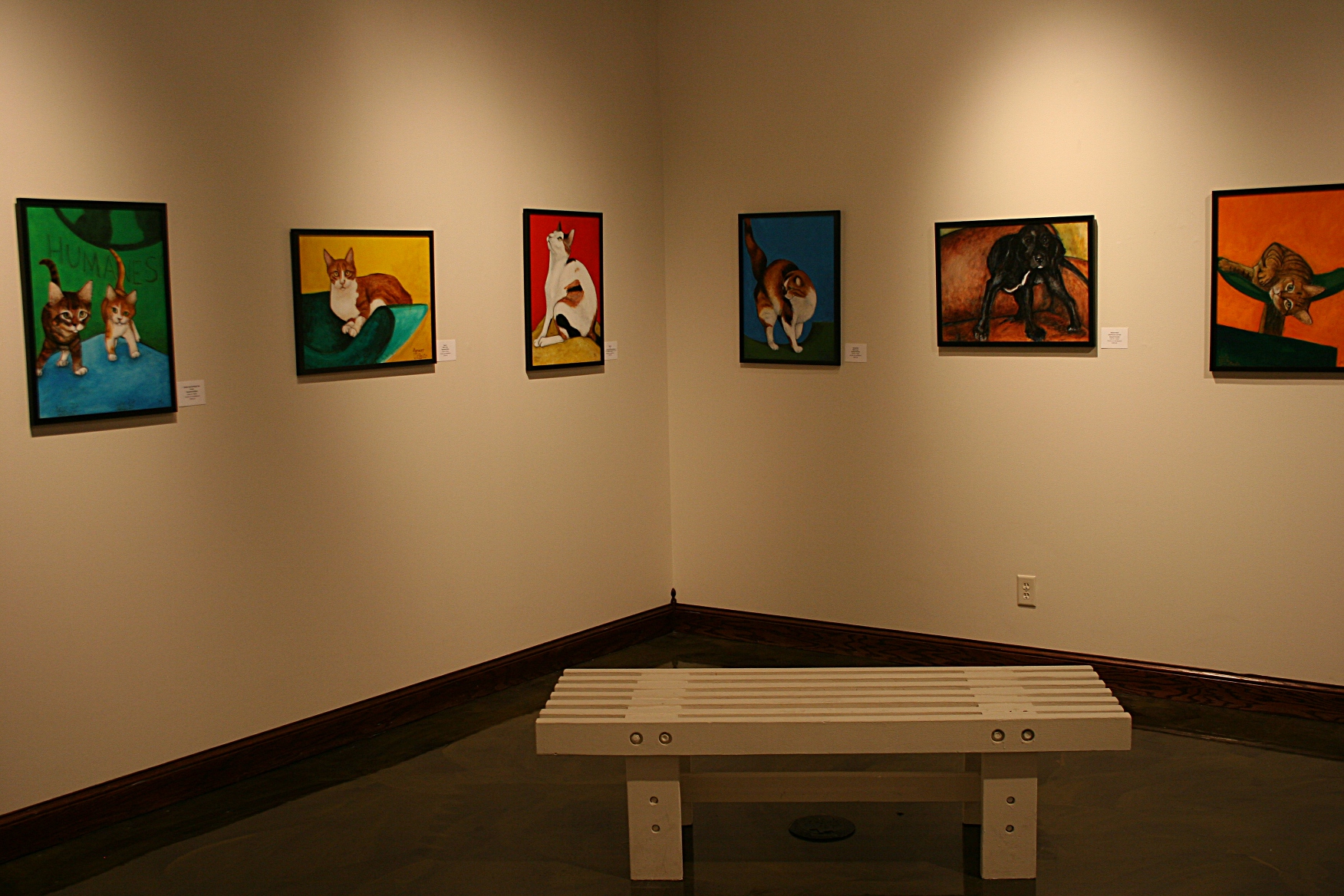
Some of Julie Fakler's pet portraits displayed at the Paradise Center for the Arts in Faribault.

COLORS, VIBRANT AND BOLD, first draw you toward Julie Fakler’s art in a current exhibit. But move closer and it is the expressive eyes that connect you to the subjects of her portraits, adoptive animals from Prairie’s Edge Humane Society in Faribault.

“I paint domestic animals and I was trying to think of a way to help out local domestic animals,” says this Faribault artist. “That’s when I came up with the idea to paint portraits of the animals at the Prairie’s Edge Humane Society.” The local animal shelter will receive a portion of the sales from portraits sold during Julie’s current exhibit.

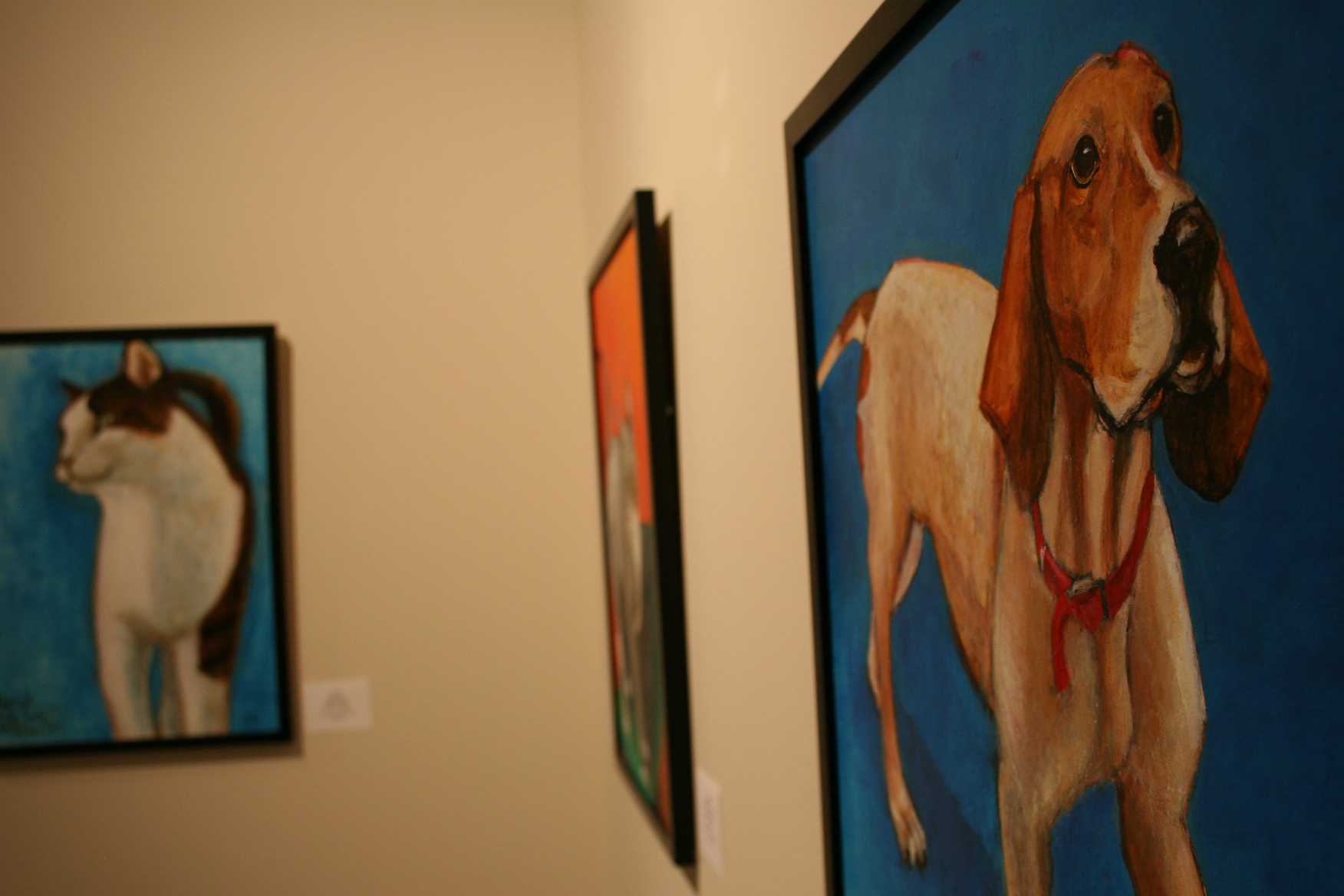
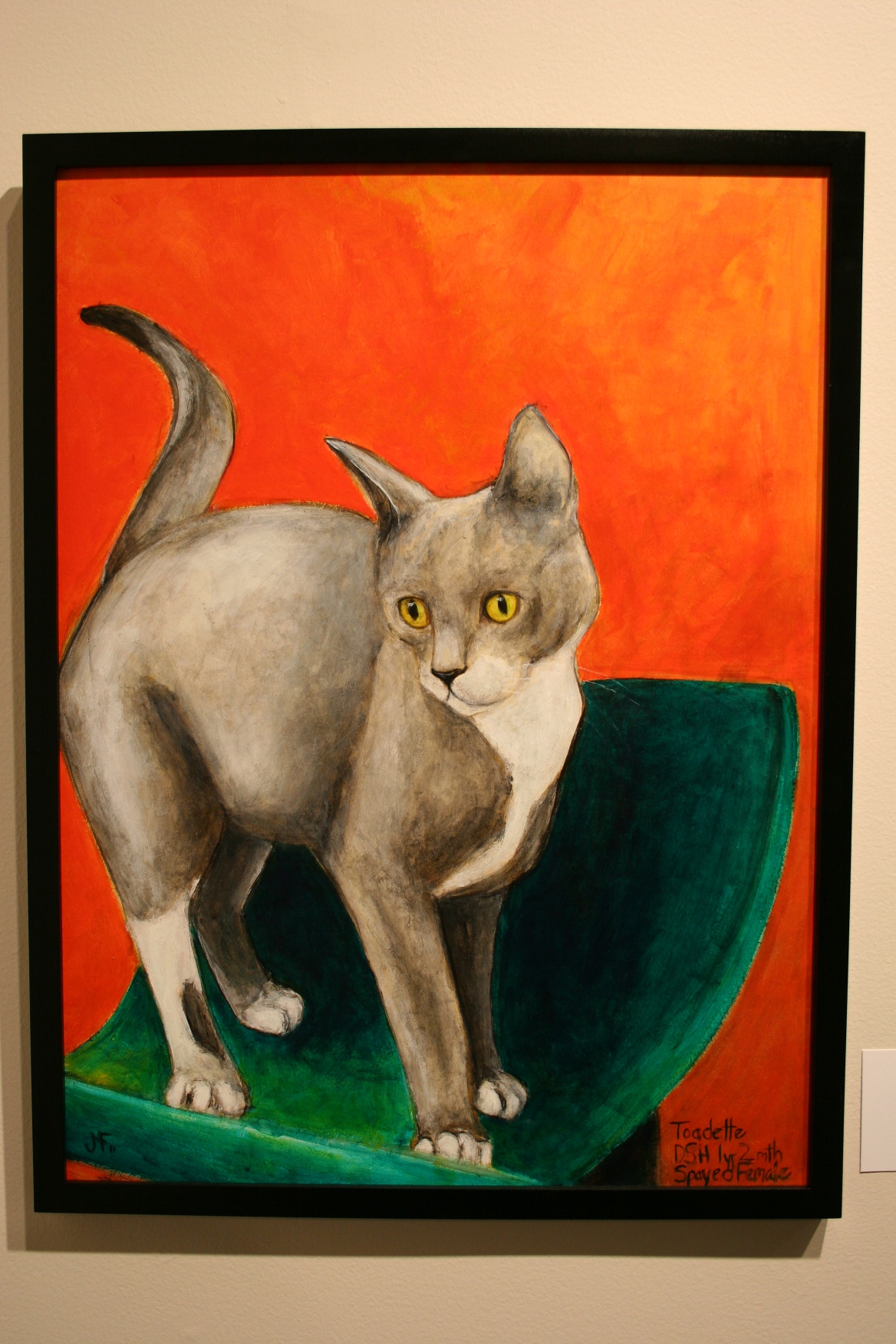
A snippet of a cat portrait by Julie.

Julie merges her skills as an artist and her passion for animals into acrylic hardboard portraits that practically pull the viewer in for a closer look.

Her work is showing locally in two galleries with “Prairie’s Edge Humane Society Portraits” at the Paradise Center for the Arts, 321 Central Avenue, Faribault, through April 17 and “New Work” at the Northfield Arts Guild, 304 Division Street, Northfield, through March 31.

Recently, I perused Julie’s PCA exhibit for the second time, this visit with camera in tow and with the artist’s permission to photograph her work.

Adoptable cats and dogs are the subject of her Paradise exhibit. A grant from the Southeastern Minnesota Arts Council and McKnight Foundation funded the body of her work and the gallery show.

I’m not a pet owner. But Julie’s engaging portraits will cause anyone to fall for these adoptable animals whose spirits shine in her creations. In her artist statement, this Minnesota College of Arts and Design graduate says: “The images of the animals represent their energy, personality and physical attributes.”

I agree. I remember the first time I saw Julie’s art, during a studio art tour in the autumn of 2010. Her use of bold, mostly primary, colors give her work a memorable, signature flair. I thought then, and still think, that her vibrant art would suit a children’s picture book. Or maybe t-shirts or handbags or…

The possibilities seem endless for Julie’s art.

The vibrant colors and sweet faces in Julie's art are irresistible.

FYI: Click here for more information about artist Julie Fakler.

Click here to learn about Prairie’s Edge Humane Society.

© Copyright 2012 Audrey Kletscher Helbling


God’s beauty blooms in Richard’s art September 18, 2011

I HAVE NOT MET Richard Vilendrer, only spoken with him briefly on the phone.

Yet, I feel a connection to this 72-year-old Faribault man, this artist who creates art for the pure joy of doing so. I understand that. It is the same reason I write and take photos for this blog.

You can see that joy in Richard’s art, which I discovered Saturday morning at the Faribault Farmer’s Market. I had passed only a few vendors’ booths—laden with the typical fresh produce, flowers and baked goods you would expect to find in this venue—when I noticed the pen-and-ink and colored pencil drawings vended by Carol Vilendrer, Richard’s wife of 35 years.

I stopped and just stood there. And it flashed through my mind that this Christian-themed art would be a good fit for Christian greeting cards. And when I looked further, I saw that Richard had already made cards. But I write greeting card verses for an Indiana-based publisher and I asked Carol then and there if I could direct my editor to Richard’s work. So I am. I don’t know if this will go anywhere; I have to try, though.

There’s a certain passion in Richard’s art and you can sense that when you speak with the man. He doesn’t do this for the money—although he’s sold some pieces—but for the pure enjoyment of creating art.

Since grade school this former Faribault Regional Center employee, who worked with handicapped children until the center closed, has put pencil to paper. As a youth, when he should have been listening in English class, he was instead inspired by textbook images—of Indians and of soldiers in helmets and of airplanes—to duplicate those drawings.

Scripture and Christian songs inspire Richard.

Today words from a song heard on Twin Cities-based Christian radio station KTIS, or words from Scripture or a found feather on a nature walk inspire him to first draw in pencil, then go over the pencil with ink and finally fill in with colored pencil.

He prefers to draw small, detailed subjects like his hand or a feather or a maple leaf. Yet, he’s also drawn John Deere tractors and buildings and classic cars.

Richard uses a technique called cross hatching—to perfect shading—by using a ball point pen to draw lines close together in one direction and then crosses in an opposite direction. He learned that in high school. Mostly, though, he’s self-taught, without formal training. He calls his artistic skills a “God-given talent.”

This man of faith has used that gift from God to create artwork for fundraisers at his church, Divine Mercy in Faribault.

A year ago, he suffered a stroke. But even in that he sees the blessing—the stroke affected his entire right side, not his left. Richard, the artist, is left-handed.

Nature and faith inspire his detailed art.

A pen-and-ink drawing of a building at the former Faribault Regional Center where Richard worked.

St. Lawrence Church in Faribault where Richard and Carol Vilendrer were married 35 years ago this coming October 1.

IF YOU ARE INTERESTED in purchasing Richard’s art or learning more about him, submit your contact information (which I will not publish) in a comment and I will pass that along to Richard.

PLEASE NOTE THAT the photos in this post are not 100 percent accurate to the true colors of Richard’s work. His drawings were wrapped in plastic, which filtered the colors and which created some glare. I edited each image somewhat to overcome those challenges.

© Copyright 2011 Audrey Kletscher Helbling


In loving memory of Rhody C. Yule June 16, 2011

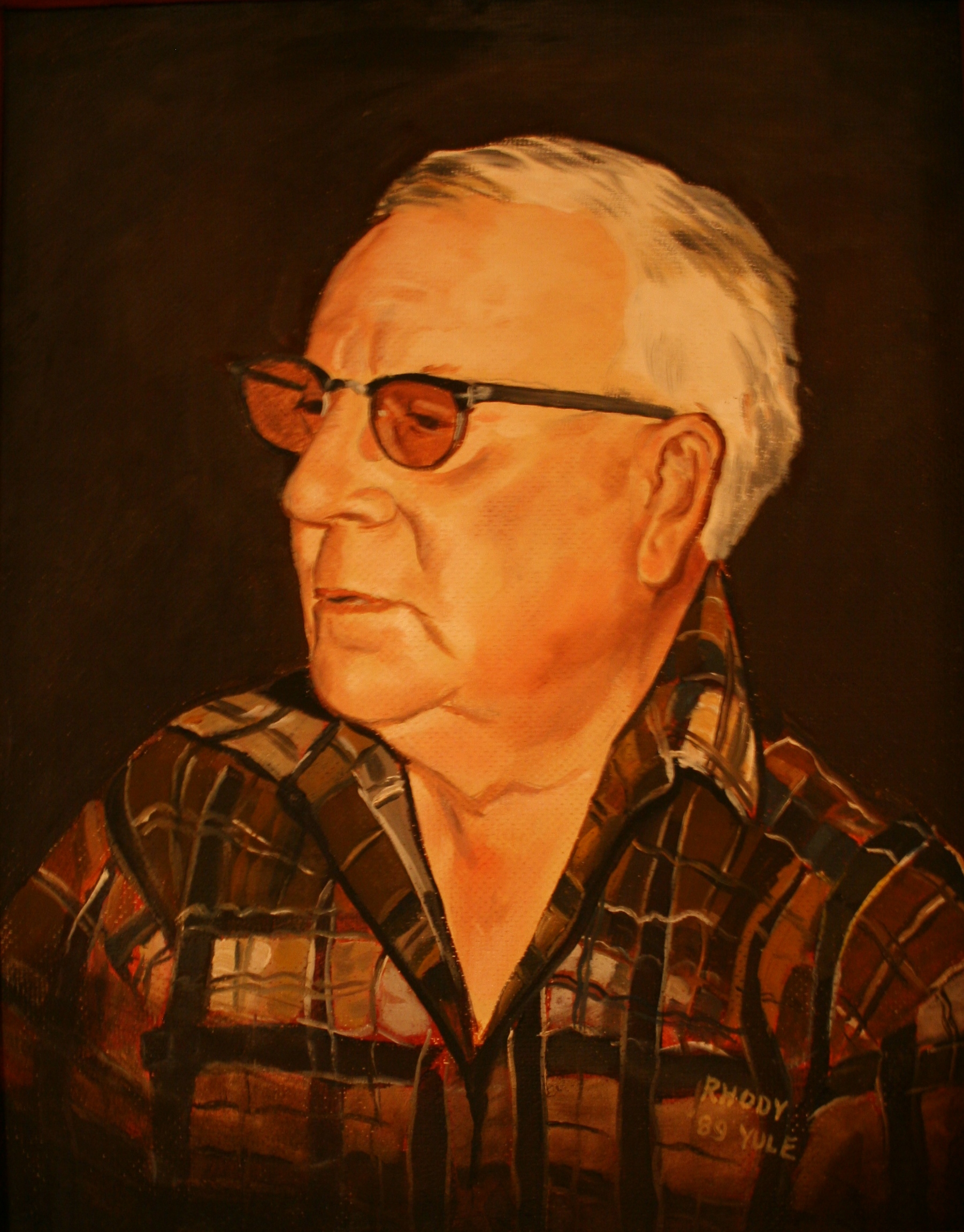
Rhody's self-portrait, 1989

WEDNESDAY AFTERNOON we eulogized and buried my 92-year-old artist friend, Rhody Yule.

I have known Rhody for less than two years, having met him quite by happenstance in the fall of 2009. While driving by his rural Faribault home, I spotted celebrity portraits hanging on his garage, stopped to photograph them and then went to his front door.

There I met this sprite of a man and his yapping dog, Jo-Jo.

With his dog shut in the kitchen because I feared being bitten, Rhody shared the story of his life with me and my husband, Randy, strangers until then. I did not hesitate to ask about the paintings hung in his cozy living room and on his garage. He did not hesitate to share that he had been painting since age 16.

Even on that first visit, I learned so much about a man who would come to mean so much to me. His wife, Shirley, had fallen and was living in Hastings. Oh, how he missed her. His only child, Paul, died in a car accident in 1977 at age 23. Oh, how he missed him.

Rhody told us about his military service, including time in Nagasaki, Japan, cleaning up after the atomic bomb. He showed us photos and paintings on that first visit and grass-woven sandals from Japan snugged inside a wooden box he had crafted.

I thought to ask, thank God, if he had ever publicly exhibited his art. He hadn’t. That became my mission, to get a gallery show for this life-long artist. His first mini-show, of his religious paintings, came in September 2010, when he was invited to Christdala Church near Millersburg. He had, many years prior, done a painting of the church. Randy and I coordinated that exhibit, then loaded the paintings into our van and set them up outside this historic country church. Rhody and I spoke briefly at that event and he assured me that, despite our nervousness, we did well.

At Christdala, I distributed mini fliers for his upcoming gallery show at the Paradise Center for the Arts in Faribault. I had applied for the exhibit on his behalf and, in January, with the assistance of family and friends and volunteers, “A Lifetime of Art: The Rhody Yule Collection” opened to a packed gallery.

In typical Rhody fashion, this man of gentle spirit and quiet humility took it all in, never once boasting, but enjoying every second of his evening. This marked a shining moment for him in his 92 years of life and I was honored to have helped him achieve this public recognition of his art.

Rhody, minutes before his gallery show opened in January 2011.

RHODY’S FUNERAL SERVICE on Wednesday, while tinged with grief, also caused us to laugh out loud at his humor. We reminded each other of his forgiving attitude, his unshakable faith, his always positive attitude.

Just days before his death,  my husband Randy and I visited one last time with Rhody. Physically his body had deteriorated to a shell of the man he had been, but his mind and spirit remained strong. We saw him on a good night.

In that last hour with our friend, we reminisced about his gallery exhibit as I, one-by-one, held up photos I had taken that evening. He was too weak to grasp the images. And then we paged through several of his photo albums with pictures of a younger Rhody, a freckle-faced Paul, a beautiful Shirley.

I thought to myself, “You will be with them soon, Rhody. Soon.”

Rhody did not fear death. Yet he wished to live, even thought he might recover. I knew better. When I mentioned Millersburg, Rhody was ready for a night out and a beer at his favorite eating establishment there. Family and friends celebrated with him last fall in Millersburg at a patriotic-themed freedom party. His idea. His celebration after overcoming a recent, temporary loss of his personal freedom.

Rhody had more living to do. I learned at his funeral that this WW II veteran wanted to travel on a Washington D.C. Honor Flight to see the war memorials. It breaks my heart that he did not live long enough for that to happen.

Me and Rhody at his opening night gallery reception.

He prayed every night for the soldiers to come home.

He was smartly dressed for burial in his military uniform, which hung loosely on the gaunt body of a man who once stood strong in service to his country.

Those honoring his memory were directed to donate to the Rice County Veterans Memorial Expansion Project.

A spray of patriotic red and white flowers adorned with a blue ribbon decorated Rhody’s carved wooden casket, a casket so appropriate for a man who crafted wooden boxes and also picture frames (for his art). Had he been physically capable, I expect Rhody may have built and carved his own casket.

But Rhody is gone now and, as the eulogist, the Rev. Ron Mixer, said, Rhody is busy painting sunrises and sunsets in heaven. He suggested we look for a signature “Y” in the clouds.

Rhody has left those of us who knew and loved him with more than his legacy as an artist and the thought that he is still painting. He has gifted each of us with his spirit of forgiveness and kindness, his humor and humility, his desire for fun, a love of life and a faith that endured challenges.

I knew Rhody such a short time. But how blessed that time has been.

We drove through nearly-torrential rain Wednesday afternoon to the rural Cannon City Cemetery to bury Rhody beside Shirley. As we gathered under the tent and next to it, sheltered by umbrellas gripped tight against the whipping wind, members of the Central Veterans Association fired an honorary salute to their brother soldier. Taps mourned. An aging veteran presented a folded American flag to Rhody’s step son in a voice choking with gratitude and emotion.

Soon the rain stopped and the sun wedged through the clouds as if Rhody was there, telling us to wipe away the tears. He would have wanted us to celebrate his life, and we did, but only if we didn’t brag about him.

Rhody's favorite painting, "The Last Supper," which he painted in honor of his beloved son Paul.

© Copyright 2011 Audrey Kletscher Helbling


Traveling photo shoots March 26, 2011

BOY, WAS I HAPPY to meet photographer Loretta M. Verbout of Rochester during an opening night gallery reception recently at the Paradise Center for the Arts in downtown Faribault. She is among three photographers and a painter currently exhibiting at the center.

Although I enjoyed all of the art, I was particularly drawn to Loretta’s photos because she photographs the same types of subjects I like photographing. Flowers. Rural scenes. Everyday objects. Her images have a certain down-home quality that appeals to me.

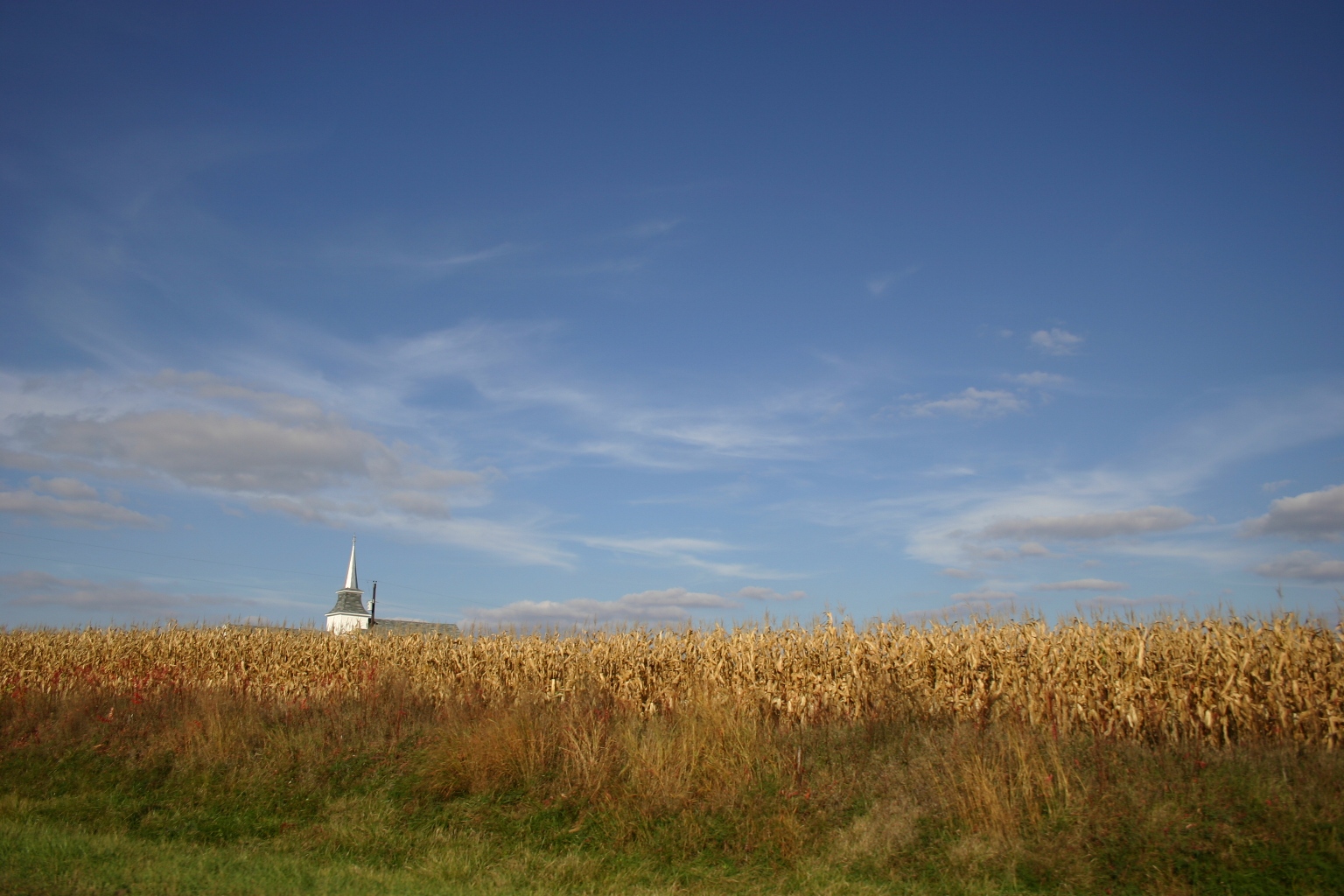
I was especially drawn to her photo of a country church barely visible behind a field of ripened corn. I wanted to know more about the church and where it was located. I enjoy discovering rural churches, then photographing them.

“It’s somewhere between Dubuque and the Minnesota border,” Loretta said.

Then Loretta explained that she shot the image through the passenger window of a moving vehicle.

I didn’t expect that answer.


Loretta shot this rural church scene while driving roads along the Mississippi River somewhere between Dubuque, Iowa, and the Minnesota border. It's in her gallery exhibit at The Paradise.

Instantly, I bonded with this photographer. I do the exact same thing—set my EOS 20D SLR digital Canon camera on a fast shutter speed and click, click, click while traveling. Loretta also uses mainly Canons.

I called my husband over. He needed to hear this, to confirm that I’m not the only crazy photographer who shoots while riding shotgun.

But apparently I’m not to Loretta’s level of commitment yet. She’s worn out the motor on her vehicle’s automatic window. Typically, I shoot through the window given I don’t want to risk dust filtering into my camera and landing on my sensor, plus sometimes the weather is just too cold for an open car window.

Here are two more drive-by images from Loretta’s Mississippi River road drive:

FYI: Loretta’s gallery show, “The beauty in everyday things,” and exhibits by photographers Laura Schenck of Northfield and Catherine Michele Adams of St. Paul will run through April 23 at the Paradise’s Carlander Family Gallery, 321 Central Avenue, in downtown Faribault. Minneapolis artisit Lauren S. Strom’s paintings are also on display in the Lois Vranesh Boardroom Gallery. Paradise hours are 10 a.m. – 5 p.m. Tuesday – Friday and from noon to 5 p.m. on Saturday.

CHECK BACK for a trio of on-the-road farm place photos I shot recently while traveling through southwestern Minnesota.

© Copyright 2011 Audrey Kletscher Helbling