Minnesota Prairie Roots

Writing and photography by Audrey Kletscher Helbling

Little school on the prairie July 8, 2013

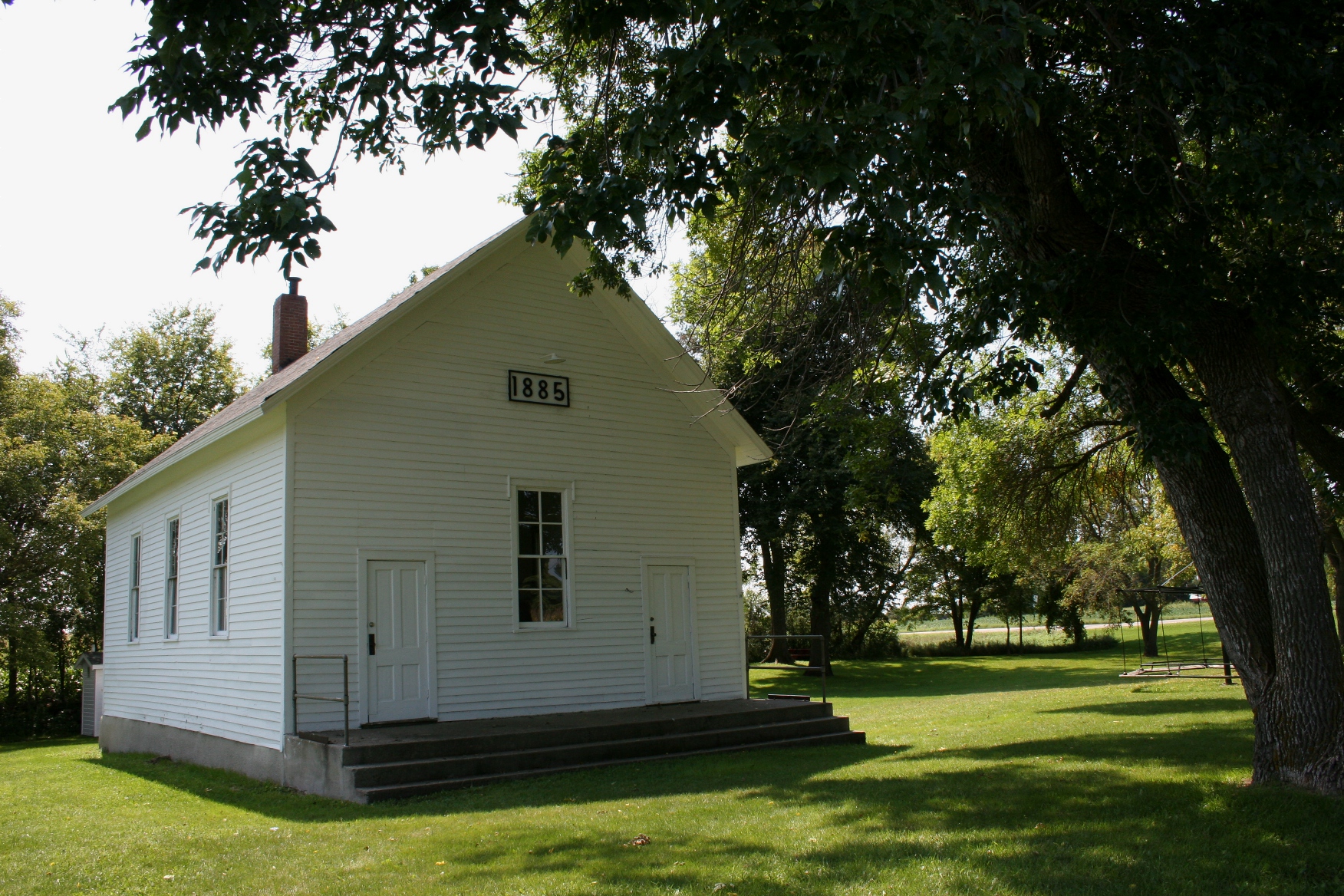
The former Little Prairie School District 15 country schoolhouse near Dundas in rural Rice County Minnesota.

AS THE STORY GOES, and I’ve no reason to believe it’s been embellished, the teacher kept the students inside for recess one afternoon because of coyotes roaming the school grounds.

True story from the one-room Chimney Butte School, rural St. Anthony, North Dakota, in the early 1960s.
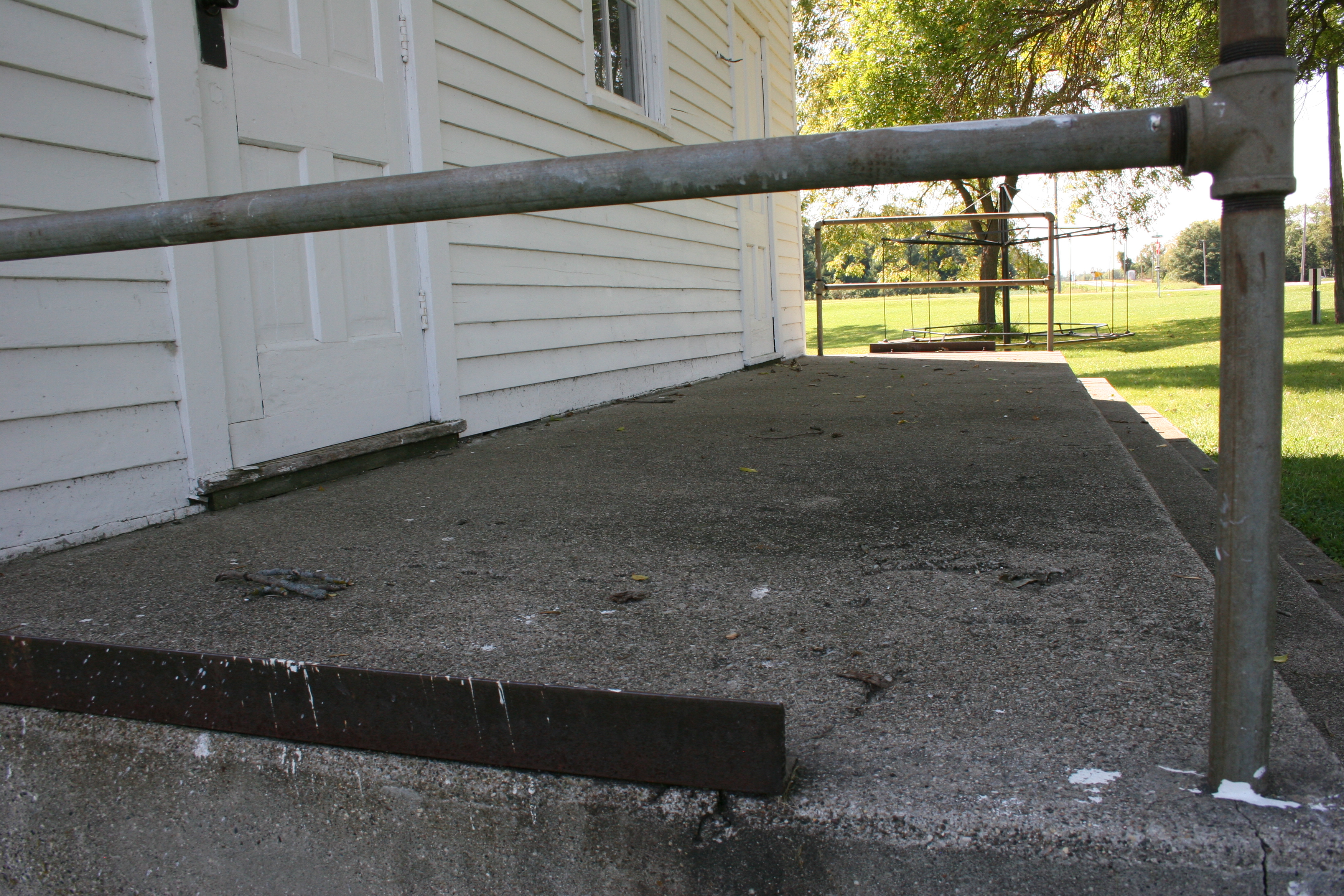
Scrape the mud from your shoes on the metal scraper, left, before stepping inside the Little Prairie school.

This tale, which I suppose does not make it a tale if it’s the truth, flits through my mind every time I step inside a country school, like that at Little Prairie. My husband, one of the Chimney Butte students sheltered from the ranging coyotes, and I came across the 1885 Little Prairie School District 15 country school as we traveled the back roads between Faribault and Dundas.

We’ve previously driven Rice County roads 8 and 77 through the heart of Little Prairie. But I’d only noticed then the historic Little Prairie United Methodist Church and not the old schoolhouse kitty-corner across the tar road.

As I always do, I tried the schoolhouse doors, hoping to get inside, knowing they would be locked. So I cupped my hands around my eyes to reduce the glare and peeked inside the windows, then lifted my camera and shot a few photos.
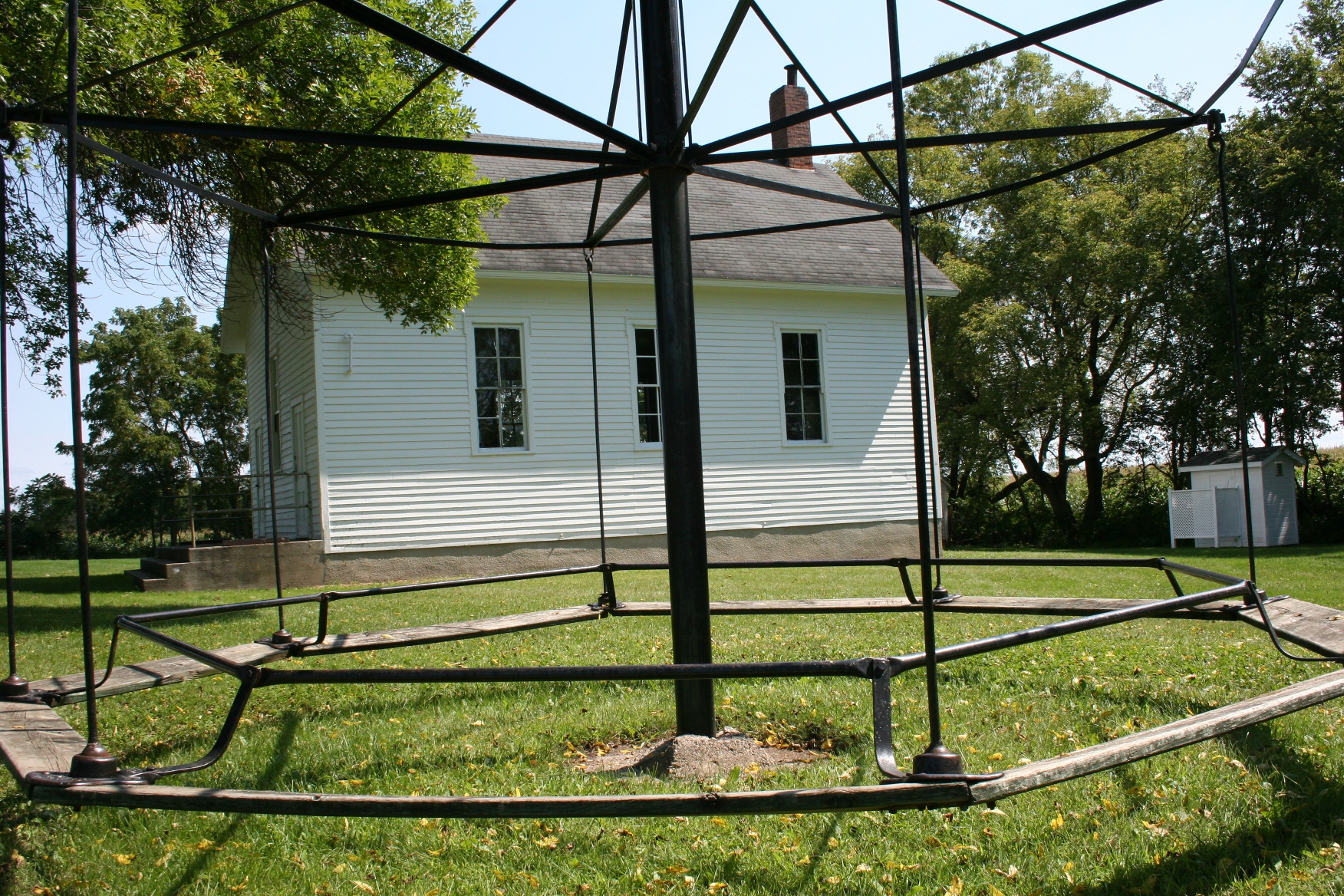
I’ve never seen or ridden a merry-go-round like this one in the Little Prairie school yard. It gently swayed up and down as we circled.

And then, as we spun on the merry-go-round, we noticed the car parked by the church and the man sitting on a bench outside with his back to us. We contemplated that he might be the pastor, a man with a key. Randy even went so far as to suggest that he likely was waiting between appointments to counsel couples engaged to be married.
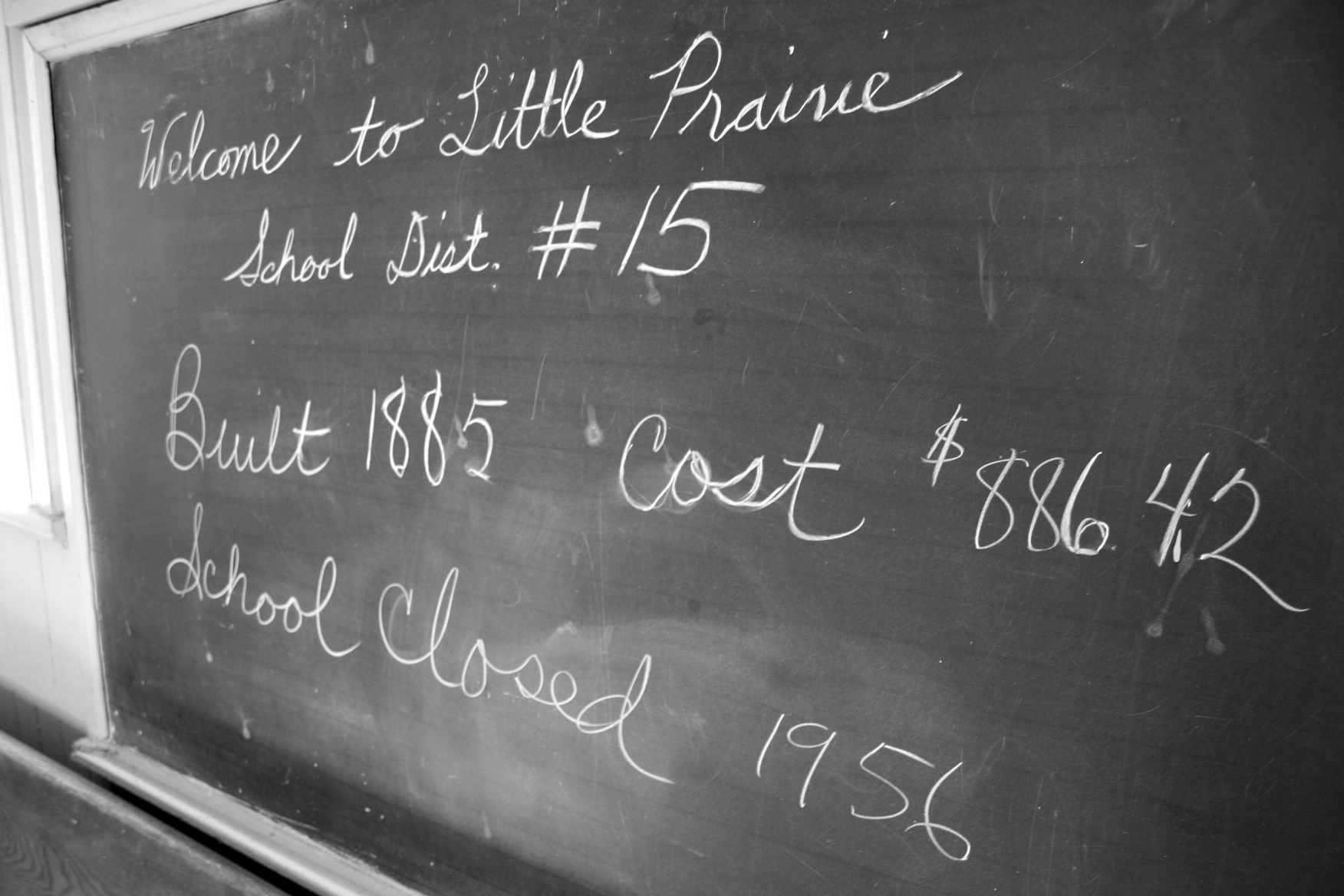
A blackboard, with pertinent historical info about the school.

Eventually the man spotted us, crossed the road and we were in. Pastor Gordon, as he introduced himself, wasn’t leaving us outside for the coyotes, not that we saw any lurking in the vicinity. And, yes, he said, he was between pre-marriage counseling sessions.

Like us, Pastor Gordon Deuel did not grow up in Rice County. Like me, he’s from southwestern Minnesota, except farther west than me, from the prairie town of Hendricks on the Minnesota-South Dakota border. He feels at home here, where he’s pastored Little Prairie for seven years.

I tell you this because he cannot recite the detailed history of the Little Prairie School as a local would. But he possesses, like Randy and me, a deep appreciation for the preservation and history of old buildings such as country schoolhouses and churches.
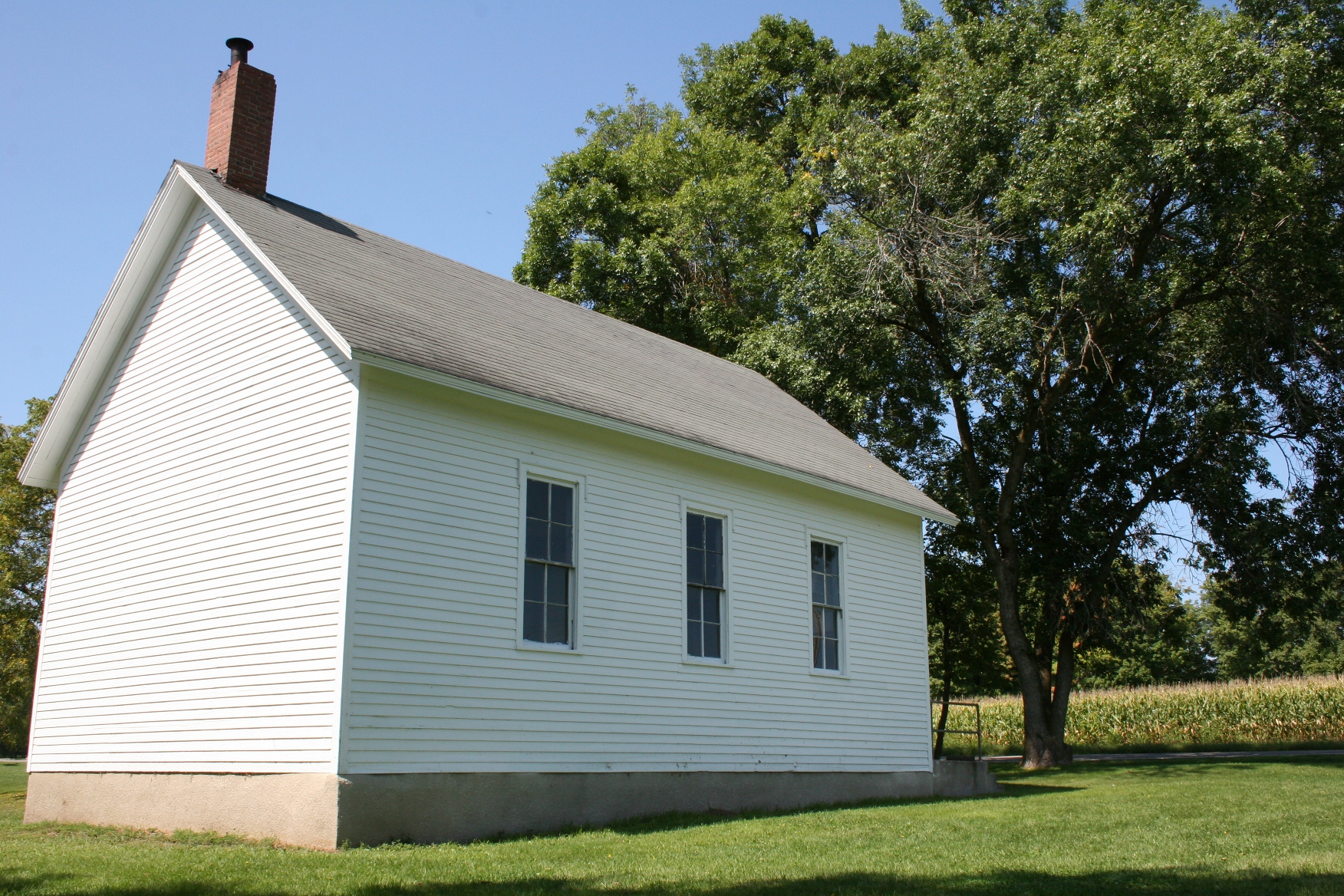
A back and side view of the school, surrounded mostly by cornfields.

Just that morning his congregation had planned to gather in the school yard for a worship service and community potluck picnic. But the heavy dew moved the event into the church. The school is opened several times a year for public touring and occasionally for solo stops like ours or group tours by former students.
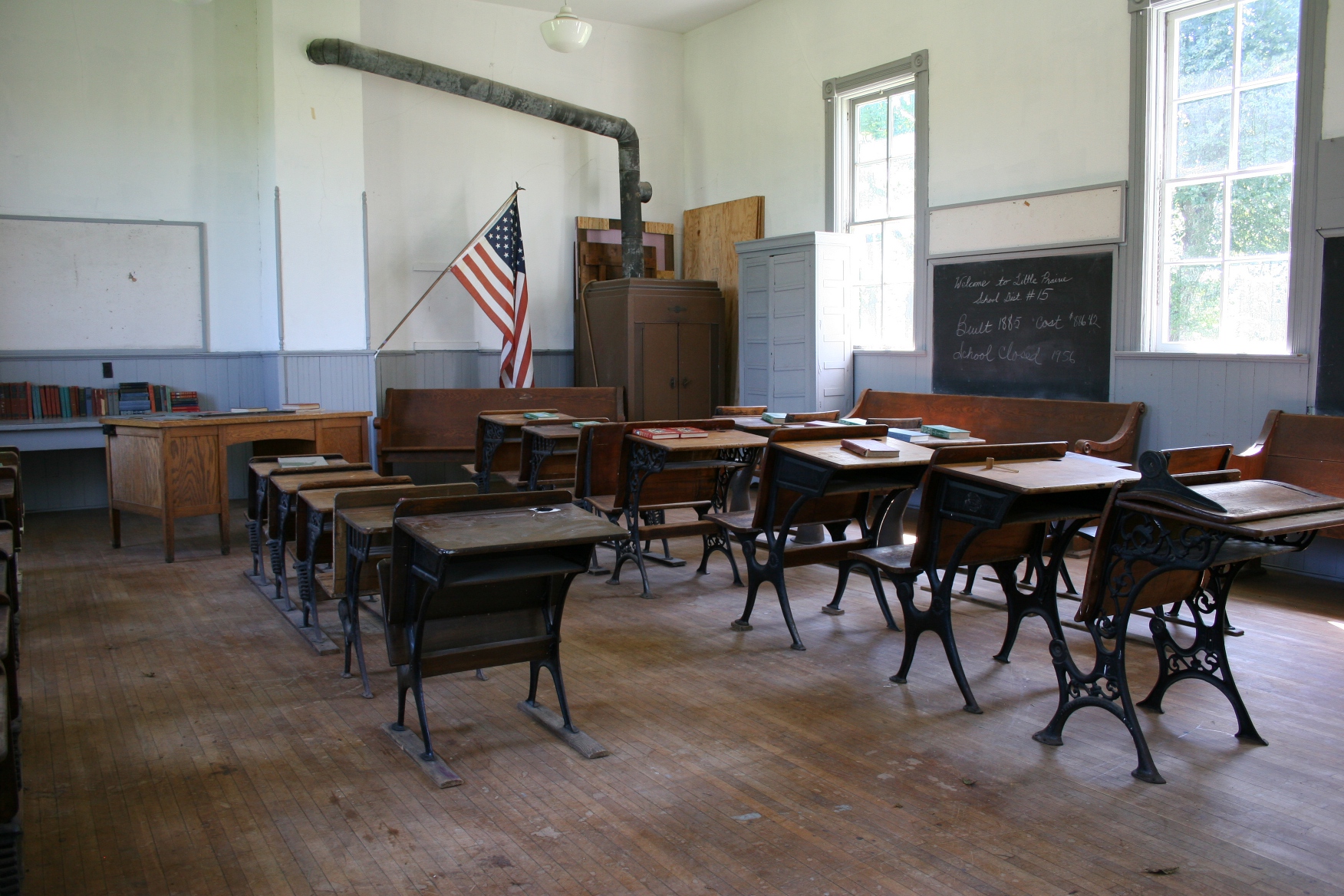
Looking to the front and one side of the school.

We came away from our chat with a realization that the people of Little Prairie care deeply for their little country schoolhouse. Although owned by the church, the school is really a community project embraced by those who live around Little Prairie and/or attend the Methodist church and also by members of the local Full-O-Pep 4-H Club, Pastor Gordon informs us. They form the informal “Schoolhouse Committee” which maintains the building and property.

Pastor Gordon remembers how several terminally ill individuals from the Northfield and Faribault areas wanted to give back to the community. So, for a small fee, they were hired to paint the exterior of the school.

Many old books were lined precisely on a table behind the teacher’s desk.

Such care for country schools is shown likewise at the 1881 District 20 Millersburg School to the north and west near Millersburg. There members of the Christdala Preservation Association have converted the one-room country school into a museum. Randy and I discovered it two years ago, during the annual association meeting and worship service at Christdala Evangelical Swedish Lutheran Church just down Rice County Road 1.

Minnesota photographer Doug Ohman, in his Minnesota Byways series book Schoolhouses of Minnesota, features “120 color photographs that illuminate the simple, often abandoned, sometimes refurbished, and nearly vanishing Minnesota pioneer and early schoolhouses.”
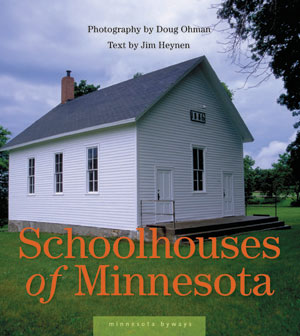
That’s Little Prairie School on the cover of Doug Ohman’s book.

Gracing the cover of that volume—Little Prairie School District #15.
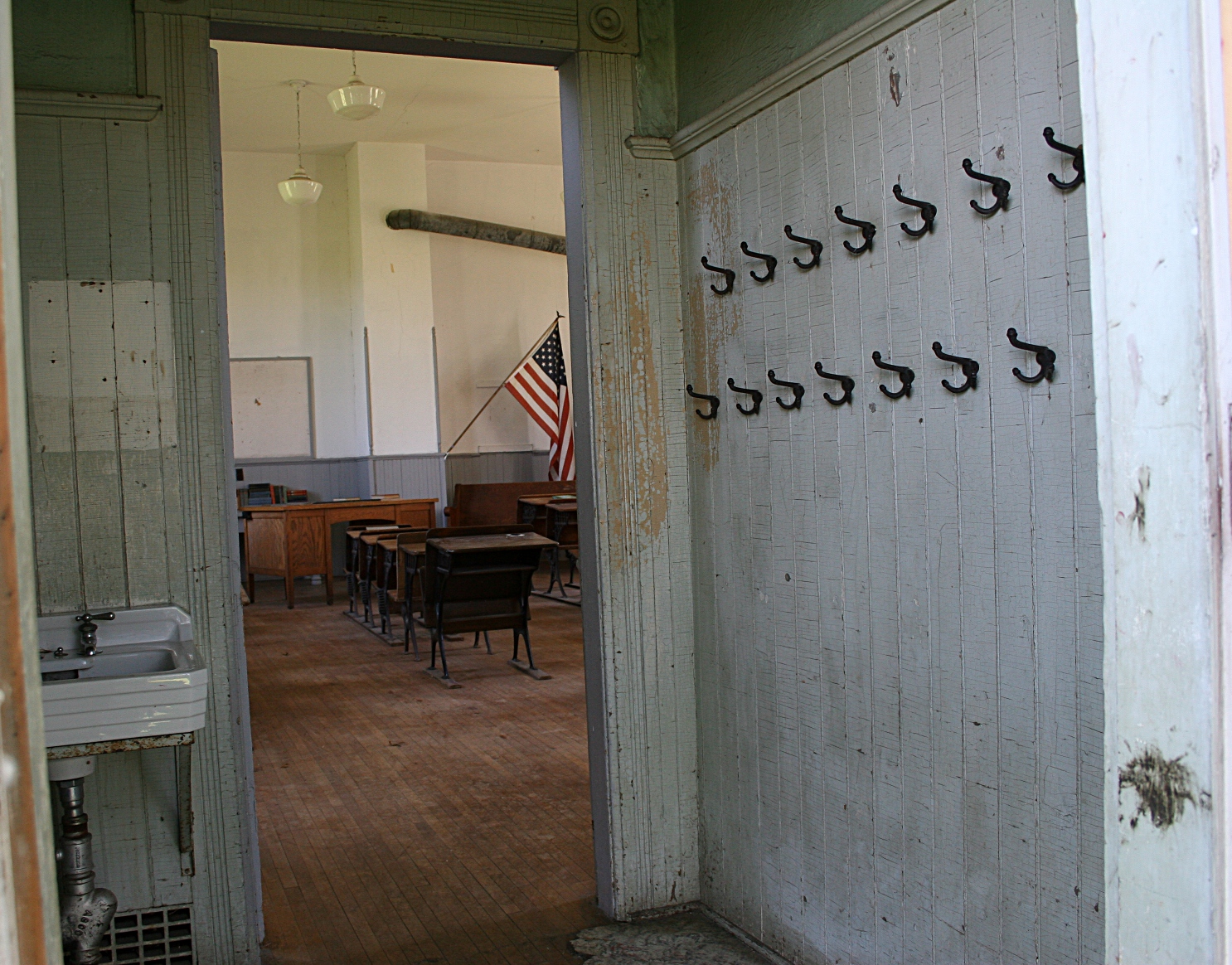
The school entry, with a place to hang coats, right, and a sink to wash up, left.

Another view of that same entry with the water fountain to the left of the sink.
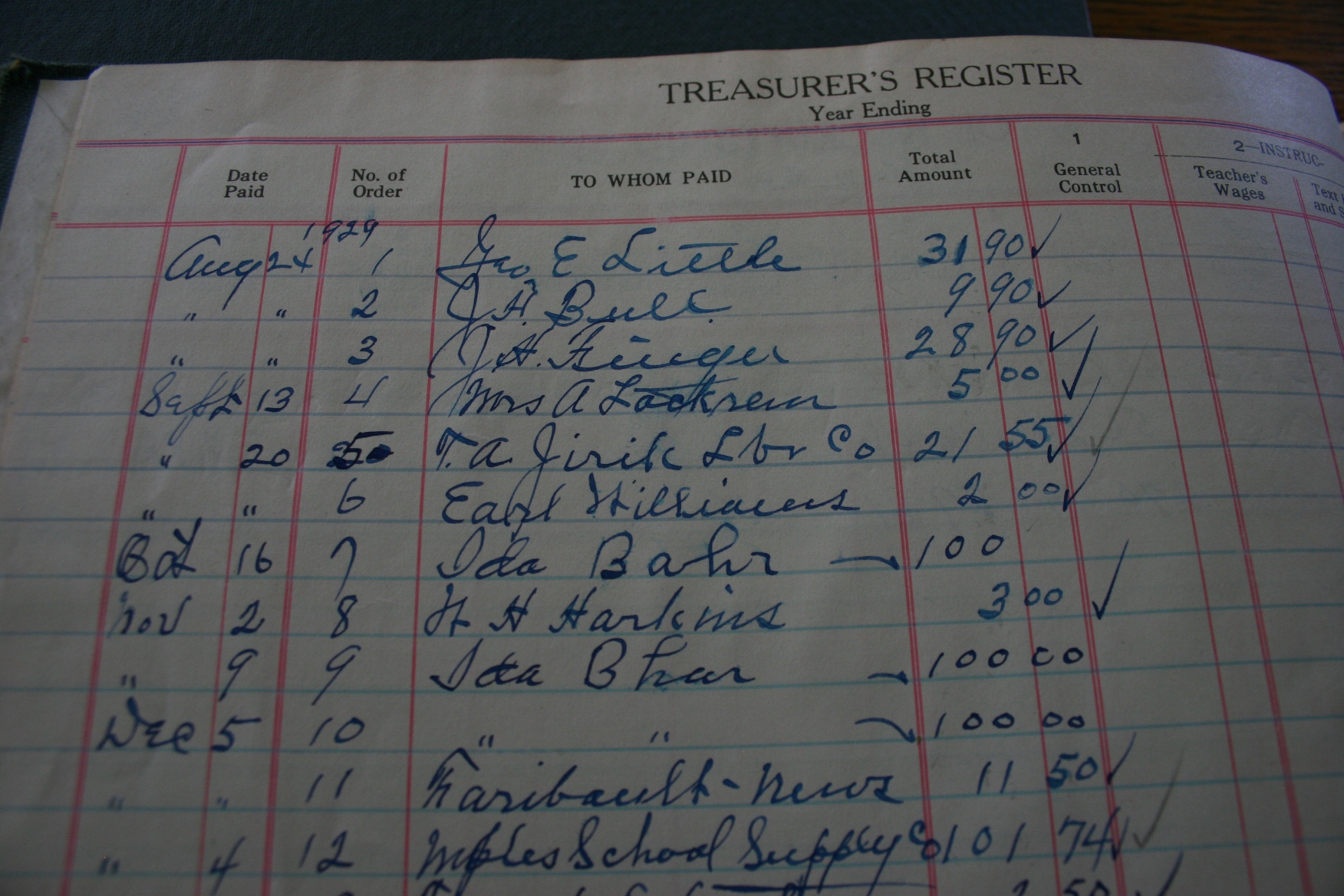
The school treasurer’s bookkeeping register from 1929.
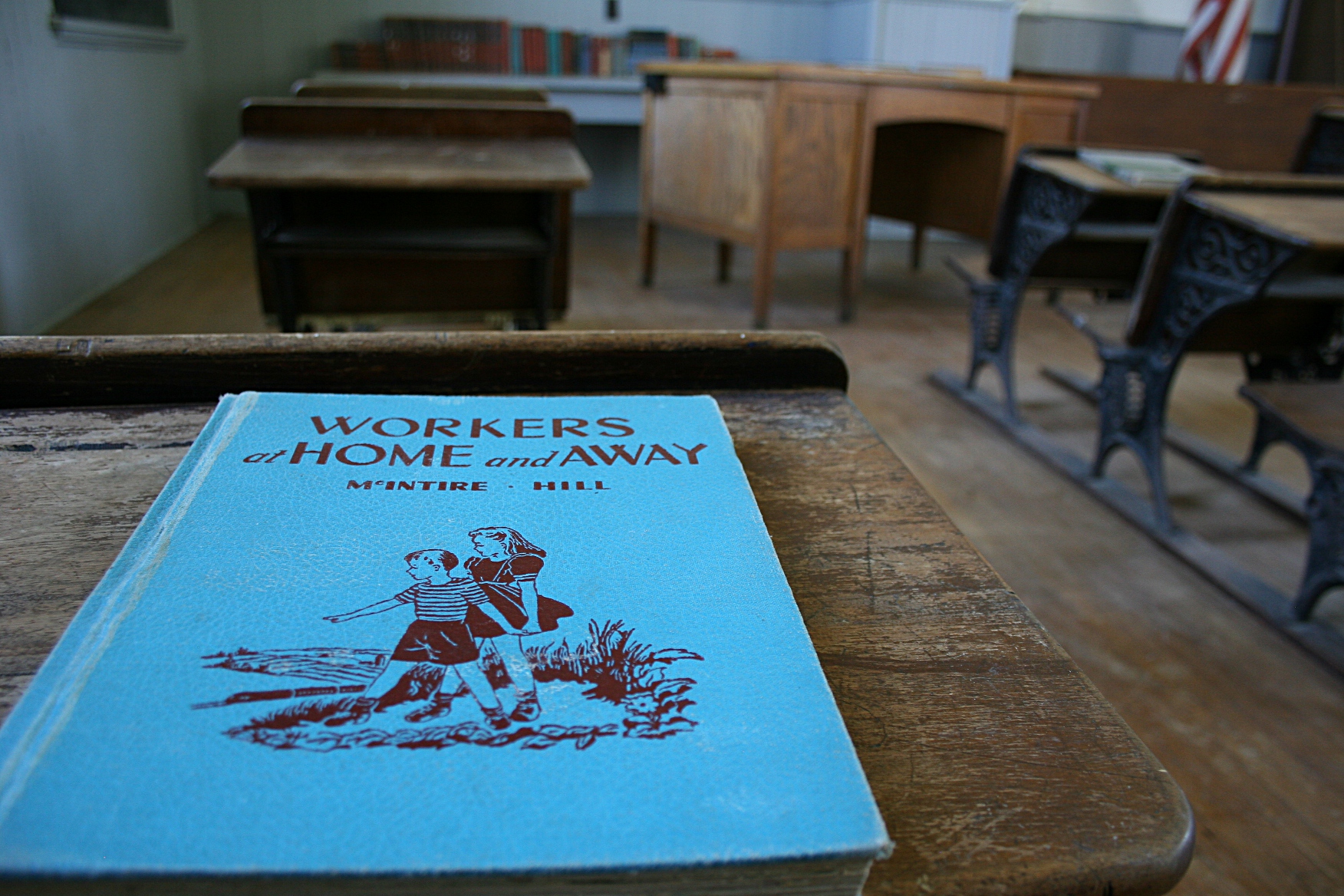
If only I’d had time to peruse all the wonderful old books inside this school.

Looking toward the back of the school.

An old shed, I think the outhouse; I did not peer inside.

FYI: These images were shot last summer when my husband and I stopped at the school while on a Sunday afternoon drive.

© Copyright 2012 Audrey Kletscher Helbling


Memories of the June 13, 1968, Tracy tornado: “Pain, anguish and blood…” June 12, 2013

HE DOESN’T RECALL the details like it was yesterday.

Yesterday, after all, was 45 years ago.

Eric Lantz, 16, of Walnut Grove, shot this award-winning photo of the Tracy tornado as it was leaving town. He often took photos for the Walnut Grove Tribune, owned by his uncle, Everett Lantz. This image by Eric was awarded third place in the 1968 National Newspaper Association contest for best news photo.

Eric Lantz, then 16, of Walnut Grove, shot this award-winning photo of the Tracy tornado as it was leaving town on the evening of June 13, 1968. He often took photos for the Walnut Grove Tribune, owned by his uncle, Everett Lantz. This image by Eric was awarded third place in the 1968 National Newspaper Association contest for best news photo. Copyrighted photo courtesy of Scott Thoma with original copyright retained by Eric Lantz.

But for Mankato resident Steve Ulmen, certain memories of the aftermath of the deadly Tracy tornado of June 13, 1968, stick with him.

He was only 22 then, a college student and a senior member of the Mankato Civil Air Patrol squadron dispatched on a search and rescue mission to Tracy 90 miles away in southwestern Minnesota. They were the first responders, handling crisis management until other local and state officials arrived.

A residential street, once covered in branches and debris, had to be plowed to allow vehicles to pass. Photo by The Tracy Headlight Herald and courtesy of Scott Thoma, Tracy native and author of Out of the Blue, a book about the Tracy tornado.

A residential street, once covered in branches and debris, had to be plowed to allow vehicles to pass. Photo by The Tracy Headlight Herald and courtesy of Scott Thoma, Tracy native and author of Out of the Blue, a book about the Tracy tornado.

Ulmen remembers entering Tracy, feeling overcome by the sheer devastation. The F5 tornado, with wind speeds surpassing 300 mph, killed nine and injured 125. Destruction was massive.

“It looked like we were driving into a dump site, or a burned out slum, or what I would imagine a bombed out city would have looked like after World War II,” Ulmen recalls.

With experience as a hospital orderly, he was assigned to the emergency room at the Tracy hospital—removing victims from ambulances and placing them on gurneys and moving others around.

Some of the injured at the Tracy Hospital. Photo by The Tracy Headlight Herald and courtesy of Scott Thoma.

Some of the injured at the Tracy Hospital. Photo by The Tracy Headlight Herald and courtesy of Scott Thoma.

“There were victims coming in and lying on stretchers even in the hallways, as it was a small hospital,” Ulmen remembers. “Some were suffering from fractures, some from cuts and scratches. All were in one degree of shock or another and needed assistance and someone to talk to them and try and calm them down.

“There was pain, anguish, and blood, that I remember. As long as casualties kept coming in, we stayed on duty.”

The CAP squadron, comprised of cadets (high school age, 18 and under) to supervising senior members, volunteered for several days in the ravaged community. Among other duties, the patrol established a communications system based out of “an old military surplus deuce and a half 4-wheel drive vehicle” equipped with “radios of every description.”

Surveying the destruction at Tracy Elementary School, which was destroyed. Photo by The Tracy Headlight Herald and courtesy of Scott Thoma.

Surveying the destruction at Tracy Elementary School, which was destroyed. Photo by The Tracy Headlight Herald and courtesy of Scott Thoma.

Ulmen remembers the satisfaction he felt in helping those in distress.

Among his memories, Ulmen recalls a particular incident, one he still wonders about now 45 years later. “I was driving either my vehicle or an emergency vehicle, I forget which, and I went through an intersection. The stop sign was bent and twisted from the tornado and wasn’t pointing at the street I was on; it looked like it was pointed at another street. Nevertheless, the local cop saw me run the stop sign, pulled me over, and gave me a ticket,” Ulmen says. “Some thanks for coming all the way from Mankato and volunteering my service to a community in distress. My superiors were not impressed with this either, but I ended up having to pay the ticket as I recall.

“It is funny what you remember from 45 years ago.”

FYI: The community of Tracy is marking the 45-year anniversary of the deadly tornado with special events on Thursday, June 13. Click here to learn more in a post published here several days ago.

To learn more about Steve Ulmen, who served with the CAP for 17 years until he was about 27, click here. Ulmen, who is retired after 34 years of working in the corrections field, is also a published writer. He’s written a western screenplay, later rewritten and published as his first western novel, Toby Ryker. He then published a sequel, Deadwood Days. His most recent works include a book of historical fiction, Blood on the Prairie—A Novel of the Sioux Uprising (actually the first book in the Toby Ryker trilogy), and Bad Moon Arising, a fictional story based on his experiences as the first probation officer in LeSueur County beginning in 1969.

Ulmen and his wife of 42 years, Ida Mae, live in Mankato, his hometown.

© Copyright 2013 Audrey Kletscher Helbling


Remembering the June 13, 1968, killer tornado in Tracy, Minnesota June 10, 2013

Eric Lantz, 16, of Walnut Grove, shot this award-winning photo of the Tracy tornado as it was leaving town. He often took photos for the Walnut Grove Tribune, owned by his uncle, Everett Lantz. This image by Eric was awarded third place in the 1968 National Newspaper Association contest for best news photo.

Eric Lantz, then 16, of Walnut Grove, shot this award-winning photo of the Tracy tornado as it was leaving town on June 13, 1968. He often took photos for the Walnut Grove Tribune, owned by his uncle, Everett Lantz. This image by Lantz was awarded third place in the 1968 National Newspaper Association contest for best news photo. Copyrighted photo is courtesy of Scott Thoma with original copyright retained by Lantz.

TORNADO WARNING. Those two weather words, more than any other, cause me to panic. For good reason.

I was not quite twelve when an F5 tornado, with wind speeds surpassing 300 mph, struck the nearby community of Tracy on June 13, 1968. The twister left nine dead, 125 injured and buildings demolished.

I remember, a day or two afterward, our family piling into our Chevy for the 25-mile drive through southwestern Minnesota farm country to view the devastation. Twisted trees. Flattened homes and businesses. Boxcars haphazardly tossed.

This photo by the Tracy Headlight Herald shows a damaged boat and overturned car sitting atop the rubble after the Tracy tornado.

This photo by the Tracy Headlight Herald shows a damaged boat and overturned car sitting atop the rubble after the Tracy tornado. Photo courtesy of Scott Thoma.

A catastrophic scene like that impresses upon a young mind a deep fear and respect for the power of a tornado.

Added to the visual impact was my father’s spotting of the tornado from our farm those many miles to the north and east as he did the evening milking. He thought the twister was much nearer. Decades later, a less severe tornado would hit the farm place, and the community, where I grew up. Two summers ago, severe winds also ravaged my hometown of Vesta.

This Thursday, the residents of Tracy and others will gather to commemorate the 45th anniversary of the Tracy tornado touchdown.

The photo by Eric Lantz illustrates the cover of Scott Thoma's just-published book.

The photo by Eric Lantz illustrates the cover of Scott Thoma’s book.

Tracy native Scott Thoma of Willmar, who wrote Out of the Blue, a book about the Tracy tornado, is among those on the Tracy Tornado Memorial Committee and the coordinator for Thursday’s program. The June 13 event will feature an evening of remembrance and fundraising and a coming together of community.

At 7:03 p.m., the moment the killer twister touched down in Tracy, attendees will honor the nine who died with a moment of silence in Central Park. Thoma will read their names and a bell will toll for each: Ella Haney, 84; Mildred Harnden, 75; Barbara Holbrook, 50; Ellen Morgan, 75; Fred Pilatus, 71; Paul Swanson, 60; Walter Swanson, 47; Nancy Viahos, 2; and Otelia Werner, 75.

Longtime resident, the Rev. Homer Dobson, will “say a few words,” Thoma says.

A photographer for the Tracy Headlight Herald captured this scene at the demolished Tracy Elementary School.

A photographer for the Tracy Headlight Herald captured this scene at the demolished Tracy Elementary School. Photo courtesy of Scott Thoma.

I expect the commemoration will be an emotional event, and rightly so. Even with the passage of nearly five decades, grief lingers. And each time a tornado devastates a community and lives are lost, such as in Moore, Oklahoma (struck, like Tracy, by an F5), memories resurface, fear rises.

Besides remembering the nine, the community will continue raising funds for a new tornado memorial to replace the one falling into disrepair. Over $10,000 have been raised with about $5,000 more needed for the six-foot high black granite monument that will sit along U.S. Highway 14 near the “Tornado Tree” sculpture. That steel tree, built in 1989, replicates the original tornado tree, a gnarled elm that withstood the forces of the twister.

An artist's rendering of the tornado monument. The words on the bench will read "Tracy Tornado Monument" and an engraving of Eric Lantz's tornado photo will be etched below the clock and above the story. Image courtesy of Scott Thoma.

An artist’s rendering of the tornado monument. The words on the bench will read “Tracy Tornado Monument” and an engraving of Eric Lantz’s tornado photo will be etched below the clock and above the story. Image courtesy of Scott Thoma.

The new three-sided marker will feature the story of the tornado and a well-known photo by Eric Lantz etched on the front, according to Thoma. Names and ages of the tornado victims will be listed on another side. And on the back side, visitors will find a stone bench.

On all three sides, a clock will be etched into the stone, stopped at 7:03 p.m., the time the tornado reached the Tracy city limits.

The memorial is expected to be done this summer and unveiled during Boxcar Days, an annual community celebration, on September 2.

In the meantime, there’s still memorial money to be raised and Thoma is doing his part, donating $3 to the monument fund for every book sold. He is selling Out of the Blue from 11 a.m. – 3 p.m. Thursday at the Tornado Tree Memorial along Highway 14. Root beer floats will also be available with all proceeds directed to the memorial.

Thoma will talk about the tornado and his book at 4 p.m. at the Tracy Library. I read and reviewed Out of the Blue a year ago and you can read that review by clicking here.

As is customary with most small town events, there’s a meal involved in the Tracy tornado anniversary. Folks will gather at the fire hall from 5 p.m. – 8 p.m. for a “freewill donation potluck supper,” Thoma says. The Tracy Community Band plays at 7 p.m. across the street in Central Park. And at 8 p.m., somewhere in town, the Tracy Library will show the movie Twister.

If you’re interested in buying a copy of Out of the Blue and/or donating to the Tracy Tornado Memorial fund, email Thoma at scott@thomabooks.com or call (320) 894-6007.

You can also order his book online by clicking here.

If you lived through the Tracy tornado or have any stories to share about the storm, please submit a comment. I’d like to hear from you. Other comments are also welcome.

© Copyright 2013 Audrey Kletscher Helbling


Connecting to Rachael Hanel’s “Memoir of a Gravedigger’s Daughter” May 9, 2013

gravedigger coverPICKING UP MINNESOTA WRITER Rachael Hanel’s We’ll Be the Last Ones to Let You Down—Memoir of a Gravedigger’s Daughter, I wonder how I can possibly relate to a book focused on death.

But I can, in many ways. I am, like Hanel, a native southern Minnesotan. That is telling. We are a people who tend to keep our emotions in check, even in grief.

Hanel’s association with death begins before age three, when her father, Paul Hager, becomes a gravedigger. Hanel grew up frequenting 20 Waseca area cemeteries under her family’s care. Their business motto, “We’ll be the last ones to let you down,” seems the perfect title for a memoir that is at times light-hearted, but mostly serious.

Imagine summers in a cemetery, flitting among gravestones or reading books while your father digs holes to receive the dead and your mom mows lawn. And imagine the day you understand that names, dates and words on tombstones reveal stories. I expect we all experience that epiphany at some point during our childhoods, realizing the numbers and letters on cold stone represent lives lived. But the daughter of the gravedigger wants more, asking her storytelling mother to share the stories of the deceased.

Hanel cites numerous examples of tragedies in the Waseca area—the September 11, 1959, deaths of seven members of the Zimmerman family whose car was struck by a train and the deaths of Busy Bee Cafe waitress Cheryl Tutttle and her young daughter—in sharing the graveyard stories which existed as a natural part of her childhood.

About two-thirds of the way into her 192-page memoir, Hanel writes:

My family went to wakes like some families went to movies.

Despite that familiarity with death, Hanel and her family find themselves reeling at the unexpected loss of her father to cancer when she is only 15. They know death, but not grief. Therein lies a major component of Hanel’s memoir in her personal struggles with grief and the fracturing of her family upon her father’s death.

This then-teen, who always leaned to the artistic—appreciating art in her childhood home, art in cemeteries, art in the rural Minnesota landscape—turns to words for solace. She seeks books that will tell her how to connect to her dead father. She tames her grief, she says, “by writing words on the page.”

Hanel also relies on her strong Catholic faith. Praying the rosary is her constancy.

Ironically, several years later, after she has married at the young age of 19, Hanel starts a job writing obituaries at the Mankato Free Press. It is the same newspaper where I worked as a news reporter, but never as an obit writer (although I did report on tragic deaths), for nearly two years, long before Hanel’s arrival. Eventually she, too, becomes a reporter there.

It is not that professional commonality, though, or Hanel’s general love of writing or her faith that cause me to feel most connected to this reporter turned author. Rather it is her understanding of small-town Minnesota. And her appreciation for the land. Hanel writes of biking near Elysian as farmers work the fields, upturning the earth for planting.

This gravedigger’s daughter writes:

I breathe in the freshly turned soil and that is all I want to breathe, night and day.

That I understand, from the perspective of a farmer’s, not a gravedigger’s, daughter.

Minnesota author Rachael Hanel. Photo by Steve Pottenger.

Minnesota author Rachael Hanel. Photo by Steve Pottenger.

© Copyright 2013 Audrey Kletscher Helbling


Complex & compelling define Scott Dominic Carpenter’s novel, Theory of Remainders April 1, 2013

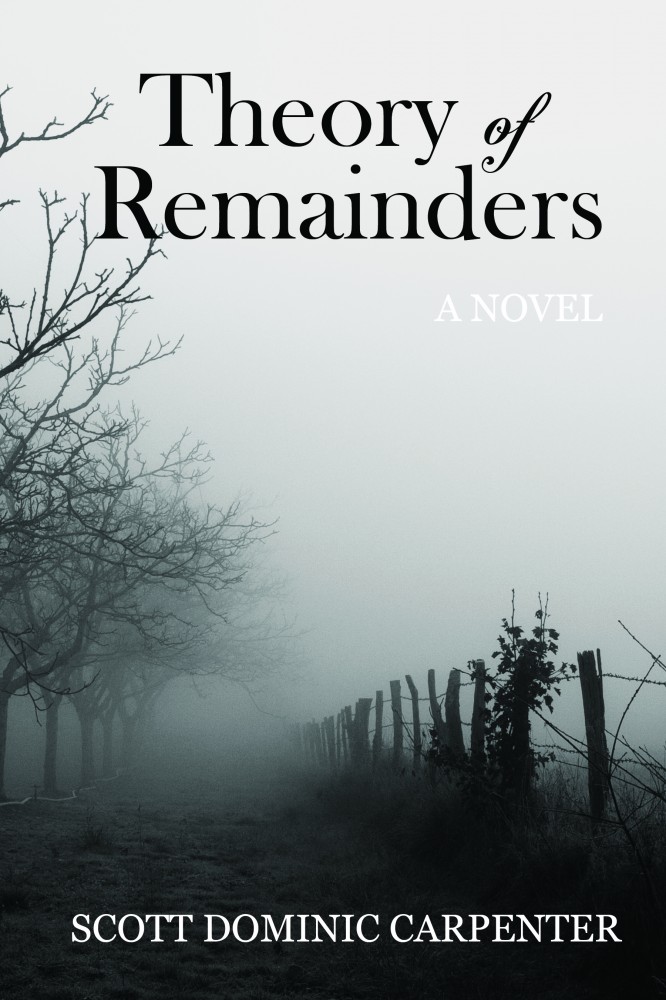
Theory of Remainders coverA SINGLE QUESTION POPS into my mind upon finishing Theory of Remainders by Northfield, (MN.), author Scott Dominic Carpenter. How did he come up with the ideas for this creatively complex literary novel about a Boston psychiatrist who returns to France nearly 15 years after his teenage daughter’s murder?

This adept writer uses language as a primary tool in the telling of this story, taking the reader deep into a French village where Philip Adler searches for answers related to Sophie’s disappearance. Carpenter’s astuteness to the nuances of language, his use of word play and his command of several languages riddle this novel. And, yes, the word “riddle” is a deliberate word choice.

“Graves were always a presence pointing to an absence…” Carpenter writes early on. Later, he pens these memorable statements: “Things don’t ever square up. In short, the world is not tidy, by which I mean that there are no equations without remainders.”

Unlike other books centered by a mystery, Theory of Remainders challenged me to examine words, to puzzle through conversations and scenes, to rely on the thought process rather than tangible evidence. That engagement of the reader sets this novel apart.

Nothing, really, is at it seems in this can’t-put-down compelling read.

That’s a credit to an author who clearly understands the depth of the human psyche and how that affects love and relationships, guilt and regret, the past and the present.

This story goes beyond one man’s search to settle his past. It is about those he loves/loved, a place he lived, complicated relationships, animosity, secrets, personal weaknesses and so much more.

A strong sense of place, such as “villages that sat like beads on a rosary,” the intertwining of history into the plot, multifaceted characters and more meld to create the tension that weaves through this novel.

Carpenter masters impressive visuals with similes like these: “Memories nuzzled at his mind’s gate like kenneled dogs” and “The silhouette of an idea flitted like a sylph through the shadows.” Reading his writing is a literary pleasure.

I can almost visualize Carpenter, when writing Theory of Remainders, placing strategic dots upon paper and then challenging the reader to connect those dots. Once the connected dots reveal a picture, the reader is left wondering how this gifted writer developed such a multi-layered and truly exceptional novel.

For anyone who values a literary novel of substantial depth in character development, language, sense of place and reader engagement, Theory of Remainders ranks as a must-read.

FYI: Click hear to read an excerpt, hear an audio or order a copy of Theory of Remainders, releasing May 22.

If Scott Dominic Carpenter’s name rings familiar with you here, it’s because I previously reviewed his collection of short stories, This Jealous Earth. You can read that review by clicking here.

© Copyright 2013 Audrey Kletscher Helbling


“It was a dark and stormy night…” March 15, 2013

Snoopy's GuideJUST THINKING about the scene—my husband and kids lying belly down on the carpet reading the Sunday funnies—makes me smile.

My mother’s heart swelled with love to witness this weekly connection between father and daughters/son. Back then, I considered only that bonding aspect, that break from full-time mothering, the laughter that spilled from the living room.

I’ve never been a reader of comics, considering them a waste of time. Besides that, I’m a serious person, not inclined to reading anything remotely humorous. But now, at age 56, it is not too late to admit that I was wrong. Comics offer not only laughter, but insights into life and much more. Duh.

Thanks to Minnesota writer Sue Ready, who blogs at Ever Ready, I discovered the value in comic strips via her recommended reading of Snoopy’s Guide to the Writing Life, published in 2002 by Writer’s Digest Books and edited by Barnaby Conrad and Monte Schulz.

It was the title, not the comedic aspect, which grabbed my attention. I am always interested in reading about writing and this volume offers insights from noted authors like Ray Bradbury, Fannie Flagg and Danielle Steel, among about two dozen others.

Their advice, though, isn’t presented in a straight-forward manner. Rather, the selected writers are prompted by cartoonist Charles M. Schulz’s Snoopy strips, specifically featuring Snoopy the writer at his doghouse rooftop typewriter.

Why had I forgotten that Snoopy was a writer? Perhaps because I have not read all that many Peanuts cartoons.

Snoopy faces the sometime issues of writer’s bloc, criticism (from the ever present loud-mouthed Lucy), rejection and more. But the problems somehow seem funny when faced by Snoopy and not me.

The canine is stuck on beginning his stories with “It was a dark and stormy night,” or a slightly revised version. How often do we writers also become stuck, writing in the same way or, even worse, writing how we think we should write?

Author Fannie Flagg advises:

The joy about writing is that as long as you write from your heart, a thousand English degrees cannot compete with that.

How true. Readers can sense when you write from your heart.

I found Snoopy’s Guide to the Writing Life packed with pieces of useful advice, some which I already knew, some not. Here are some paraphrased gems I plucked from the book:

  • Too much time on the typewriter (translate computer) can cause double vision. (Correct.)
  • Avoid boring descriptions and heavy explanations.
  • Understand your subject and your market.
  • Surprise is an important element of humor (and writing in general, might I add).
  • Stop seeking approval and advice and trust your instincts.
  • “Try to leave out the parts that readers skip” (direct quote that I could not paraphrase).
  • Plot develops from character, a point emphasized by more than one writer.
  • Just write. Every day.

Now, one of my favorite lines comes from Monte Schulz, the son of Peanuts creator Charles M. Schulz. Monte surmises that writers write “for the music of beautiful language.” I love that phrase because I totally get what he means. As a writer, and especially as a poet, my heart rejoices when I find the exact word or line which makes my poem sing. It is a glorious moment.

Then, on the second to last page of Snoopy’s Guide, writer J.F. Freedman throws in that element of surprise, at least for me, when he writes:

 Great comic strips…are a fine introduction into literature, and are damn good writing in and of themselves…

And after reading (in this book) more than 180 “Snoopy at the typewriter” comic strips, likely more comics than I’ve read in my life, I’d agree with Freedman. Damn good writing, indeed.

WHAT WRITING TIPS can you offer? Let’s hear them.

© Copyright 2013 Audrey Kletscher Helbling


Northfield writer Scott Carpenter masters the craft of short stories in This Jealous Earth March 1, 2013

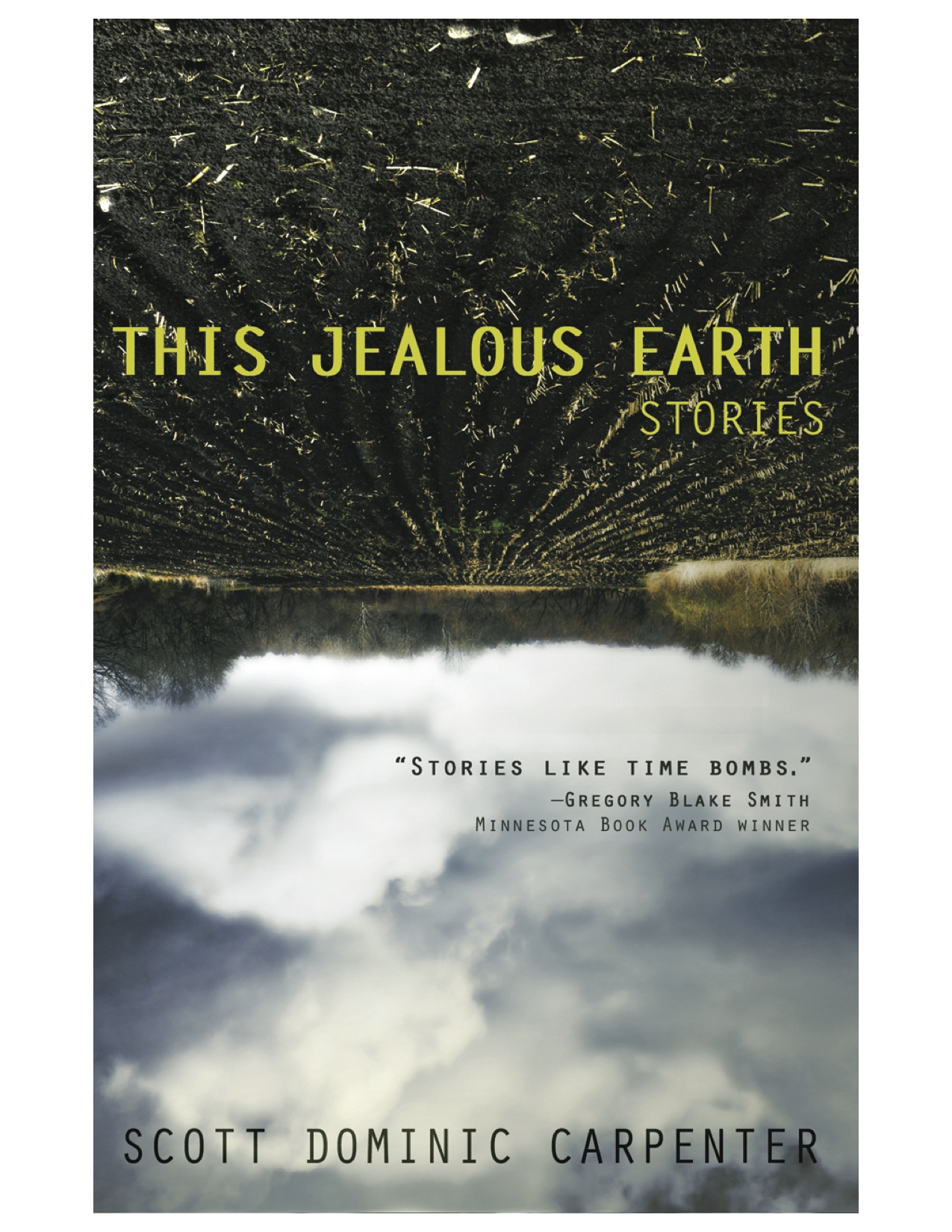
Intrigued by this cover image like me? Learn why  it was selected and placed upside down at the end of my review.

Intrigued by this cover image? Learn why it was selected and placed upside down at the end of my review.

I’VE STRUGGLED, since reading This Jealous Earth, to pinpoint a word which best describes my reaction to a collection of 16 short stories by Northfield (MN.) author Scott Dominic Carpenter. And that should be considered a compliment.

Carpenter’s stories about relationships and aging, choices and regrets, and more, hold an element of mystery, a deeper meaning which reveals itself as the plots progress, until the ending and the ah-ha moment evoked.

For example, in the first paragraphs of “The Tender Knife,” I expect a husband to kill his wife, not his koi. He didn’t, but he did. Now if that makes no sense, that is precisely my point. Carpenter possesses that unique ability to mess with your mind/throw you for a loop, cliché phrases that totally apply to a writing style that is anything but cliché.

He takes aspects of everyday life—vacations, marital and sibling discord, the death of a parent, aging, love, fear and more—and crafts stories to which his readers can relate. Aging Baby Boomers can surely empathize with Donna, married 30 years with three grown children and the main character in “Riddles.” She and her husband are on a long-awaited European vacation when she loses her way in an art museum. As she struggles to weave through a labyrinth of art she cannot understand, Donna understands she’s waited too long for this trip.

Carpenter writes, in Donna’s voice:

To think that she had begged for this trip! What in God’s name had she been thinking? What was the point? And what on earth were you to do after the scales have tipped in your life, after the children have gone, and all you have left to do is wait?

His stories mostly center on choices—to shoplift or not, to keep or to toss, to reconcile or give up, to attempt to save or to let go, to stand up for yourself or to submit, to simply accept or to challenge/change/question.

In “This Jealous Earth,” the story from which the book draws its title, a family awaits the rapture. But one, the non-believing son, Randy, will be left behind. Therein lies the conflict for his obedient younger sister, Cat. Will she choose faith or family? That dilemma, and the consequences, leave the reader hanging on every word until the clincher ending.

Likewise, in “The Visit,” the tension builds when a child goes missing on a rural acreage with a pond. I’m not going to reveal the ending, but I simply must share the final sentence of that story because it’s so powerful and perhaps so true of how we often choose to cover our fears with meaningless conversation:

And with lavish servings of words, always more words, they covered over the memory of the pond, black and still.

Carpenter chooses words with care. That is obvious, especially so in “The Spirit of the Dog” where even the name of the main character, Caleb, holds significance. Because I have a son named Caleb, I know the name means “dog” (although I chose my son’s name for the biblical Caleb and certainly not the canine reference). Read this story about miners, a dog that is killed, superstition and stolen possessions and you will understand the double-meaning in that name.

I couldn’t pen a fair review of This Jealous Earth without noting that I nearly stopped reading half way through the first story, “The Tender Knife.” I struggled with details in killing of the koi. Don’t allow that to distract if you are squeamish like me. The story is most definitely worth reading. Likewise, several stories include the f-word and sexual undertones that may offend. However, these are not used lightly, but as integral parts of shaping a character and/or developing the plot.

If Carpenter’s first book of fiction is any indication of what readers can expect from him, then I’m already a fan. His next book, Theory of Remainders, is due for release in May. Here’s the promo description: A suspenseful literary novel set in the lush backgrounds of Normandy, Theory of Remainders explores the secret ties between love, trauma, and language.

Carpenter has already proven to me that he can write, and with a strong voice definitively his.

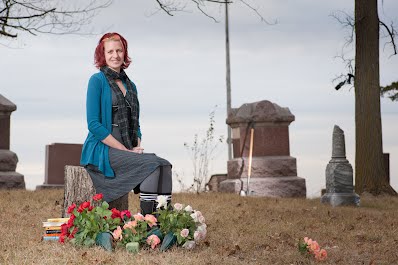
Scott Dominic Carpenter

Scott Dominic Carpenter

FYI: To learn more about Carpenter and his writing, click here to reach his website.

His upcoming appearances include public readings at  6 p.m. Thursday, March 7, at Barnes & Noble, 14880, Apple Valley, and at 7:30 p.m. Friday, March 8, at Monkey See, Monkey Read, 425 Division Street South in downtown Northfield. Besides writing, Carpenter teaches French literature and critical theory at Carleton, a liberal arts college in Northfield.

BECAUSE I WAS PARTICULARLY intrigued by the upside down placement of the field and sky image on the cover of This Jealous Earth, I posed these questions to publisher MG Press:

Could you explain the photo selection and why it was placed upside down on the cover? What message/feeling/whatever are you hoping to evoke in the reader?

Here’s the response from MG’s Robert James Russell:

The fact that the photo is upside down aligns with the themes of miscommunication and the confrontations of strangeness inherent in all of the stories in the collection. The land (or earth, as it were), gives us a sense that the disconnect and strangeness is dealing with familiar things (that is, it is not a paranormal strangeness, or anything truly otherworldly).

It’s meant to be disorienting, but not jarring, and demonstrate how a simple choice or change of perspective can completely alter how something is viewed. These types of choices are the ones the characters in This Jealous Earth face in all of the stories, ones that will permanently alter how they view their lives.

On a more aesthetic level, we chose this image specifically because, quite simply, it was gorgeous and we felt the contrasting tones would work well to achieve our goal.

© Copyright 2013 Audrey Kletscher Helbling
Images courtesy of Scott Dominic Carpenter and MG Press
The book cover design is by Sarah E Melville, Sleeping Basilisk Graphic Design.
Author photo is by Paul Carpenter.


My thoughts after reading a book by 35W Bridge collapse survivor Garrett Ebling February 21, 2013

SOMETIMES, MANY TIMES, life is not as it seems upon the surface.

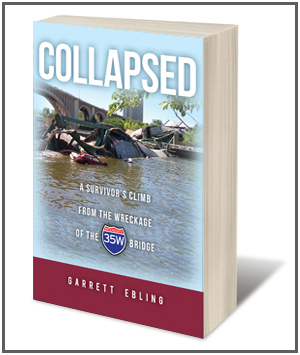
That summarizes my overall reaction to reading Collapsed, A Survivor’s Climb from the Wreckage of the 35W Bridge by Garrett Ebling.

Now, before I explain, you should know that I wrote a feature article, “The 35W bridge collapse: One story of survival, rescue and blessings,” which published in Minnesota Moments magazine in 2007. That story included information and quotes from interviews with Garrett (done via e-mail given his physical condition), his then fiancée, Sonja Birkeland, and his rescuer, Rick Kraft.

This photo shows the opening spread of the feature article published in the November/December 2007 issue of Minnesota Moments. Casey McGovern of Minneapolis shot the bridge collapse scene. To the far left is Garrett before the collapse, to the right, his rescuer. The next photo shows his Ford Focus which plummeted into the Mississippi River. And to the right are Garrett and Sonja, before the collapse.

This photo shows the opening spread of the feature article published in the November/December 2007 issue of Minnesota Moments. Casey McGovern of Minneapolis shot the bridge collapse scene. To the far left is Garrett before the collapse, to the right, his rescuer. The next photo shows his Ford Focus which plummeted into the Mississippi River. And to the right are Garrett and Sonja, before the collapse. Photos on the opposite page show Garrett during his recovery.

Garrett granted a limited number of interviews, mine included, shortly after the August 1, 2007, collapse in Minneapolis, favoring print journalists given his background in newspapers. He had worked as managing editor of the Faribault Daily News. And although I’d never met him, we’d communicated after my son was struck by a hit-and-run driver while crossing a Faribault street the previous year. Garrett showed a great deal of compassion toward my family and that meant a lot to me as a mother.

With that background, you can understand why my approach to Garrett’s memoir is more personal than that of the average reader. And, for that reason, my reaction is more emotional. Reading of his ongoing struggles, I could hardly believe this was the same positive and determined man I’d interviewed shortly after the bridge collapse.

But I expect, at the time of our 2007 interview, Garrett was in pure recovery mode, so focused on his physical recovery that he had no idea of the emotional struggles ahead. And I’ll be honest here, I’d not considered either how plunging from a bridge (in your car) the equivalent of an 11-story building into a river would impact every aspect of your life. Garrett’s injuries, including a traumatic brain injury, were numerous, his survival termed miraculous by many. Every facial bone plate shattered in an impact compared to hitting a brick wall at 100 mph.

Garrett with his mom, Joyce Resoft, about a month after the bridge collapse.

Garrett with his mom, Joyce Resoft, about a month after the bridge collapse. Photo courtesy of Garrett Ebling.

In his book, which also shares the recovery stories of several other bridge collapse survivors, Garrett holds nothing back. Nothing. Upon seeing himself in a mirror for the first time, he writes:

This man’s face, unlike mine, was swollen and quite asymmetrical. One eyelid drooped far lower than the other. One pupil remained fully dilated. There were gashes and scabs around his brow. His temples were sunken in. His teeth were either missing or horribly out of place. This man should be living up in Notre Dame’s bell tower.

Even prior to viewing himself for the first time after the collapse, the then 32-year-old realized: “I might be fixable, but I wouldn’t ever be the same.” That declaration, in the context of the book, applies as much to his physical appearance as to his personality.

Throughout the book, survivor after survivor reveals issues related to diagnoses of Post Traumatic Stress Disorder such as new fears, anger, loss of control, lack of joy in life, challenges in relationships… Prior to reading Garrett’s book, I’d only considered PTSD an issue of soldiers, like my father, who’d served in war. How ridiculously limited I was in that thinking.

Garrett’s book will catch you like that, revealing the obvious which you may not have considered. Take his story about a Halloween night out in a downtown Minneapolis bar with his buddies. A friend warned him about a young man wearing a 35W bridge collapse costume. Garrett writes of the incident:

I approached him. I acted as though I couldn’t figure out his costume…asked him who he was supposed to be. ‘I’m the 35W Bridge collapse,’ he said in an almost proud way, like he’d just thought of the most clever Halloween costume ever. I pointed to a Matchbox school bus glued to his chest. ‘You know, thirteen people died and dozens more had their lives forever changed on that bridge just two years ago—and you’re looking at one of them.’

That’s one powerful story, not only for exposing the insensitivity of a young man, but also for revealing how we oftentimes fail to understand that even the most ordinary aspects of life—like an evening out—can be impacted by a disaster.

book1

Garrett’s book shows, in very personal ways via the stories of survivors Lindsey, Kim (that bus driver), Paula, Omar, Erica and others, the individuals behind the 35W Bridge collapse. That enables the reader to connect in a world where disasters are often lumped into numbers and places and quickly forgotten when the next disaster occurs.

I have never forgotten the 35W Bridge collapse. I doubt any Minnesotan could. When disaster happens that close, affects people who were simply commuting home from work, as Garrett and Lindsey were; driving a bus load of kids back from a day at the waterpark, as Kim was; or heading out for or a celebratory dinner with family as Paula, her husband and two daughters were, you realize how life can change in an instant, for any of us.

Only four days before the collapse, Garrett proposed marriage to Sonja. These should have been among the happiest days of his life, as should have been his marriage on the one-year anniversary of the bridge collapse. But Garrett reveals, much to my surprise, that he felt no joy on his August 1, 2008, wedding day, simply pasting a smile on his face, his spirit crushed.

That deeply personal revelation—and Garrett shares even more about the difficulties in his relationship—shocked me. What had happened to the couple I’d interviewed in 2007? Sonja, at the time a church youth director, told me then:

This could be the blessing of our life. God has done fantastic things out of bad things. The seeds have been planted. If we can get through this, we can get through anything.

Sonja couldn’t have known. And I never would have predicted that this couple, rock hard in their faith, would struggle to keep their relationship together. This, for me, proved the toughest part of the book to read. Eventually they worked it out and saved their marriage.

Sonja and Garrett, with their son, Cooper.

Sonja and Garrett, with their son, Cooper. Photo courtesy of Garrett Ebling.

For Garrett, the pivotal point in his recovery comes in June 2010 as he prays to God:

…I asked you to take the reins. But what I really should have asked of you was to place your hands over mine and guide me, rather than allow me to walk away and demand you do the work.

What a powerful revelation. I’d encourage you to read Collapsed: A Survivor’s Climb from the Wreckage of the 35W Bridge. You’ll never view a disaster in quite the same way. You’ll appreciate all that survivors of a disaster endure. And you will realize, as did Sonja without knowing, the possibilities: “If we can get through this, we can get through anything.”

FYI: Click here for more information about Garrett Ebling’s book.

Copyright 2013 Audrey Kletscher Helbling

Book excerpts quoted with permission from Garrett Ebling


Support regional writing this Christmas via the gift of words December 6, 2012

WITH ALL THE “SHOP LOCAL” buzz this time of year, have you ever considered how that applies to the printed word?

Are you supporting local and regional authors, writers from within your state?

Allow me to show you two Minnesota publications that would make ideal Christmas gifts for anyone who appreciates regional based writing. Both feature collections of fiction, creative nonfiction and poetry.

Lake Region Review, volume two, with cover art by  Charles Beck

Lake Region Review, volume two, with cover art by Charles Beck

Lake Region Review, a literary magazine centered in Battle Lake in the northwestern part of our state, showcases work by writers from Minnesota and the eastern Dakotas selected in a competitive process. This year 34 pieces were culled from some 430 submissions for publication in volume two.

In their introduction to this 160-page soft-cover book-style collection produced by the Lake Region Writers Network, co-editors Athena Kildegaard and Mark Vinz write in part:

Our aim in selecting writing for this issue is simply to look for the best writing that engages and enlightens through attention to language. In these pages you’ll find characters challenged by circumstances (and weather), poems charged with vitality (and weather), and essays that will provoke and move you.

How true. With topics like polio and Alzheimer’s, installing a satellite dish on a snowy rooftop and falling through the ice, unemployment and death, and even some stories—“Norwegian Love” and “Julebukking”—of Scandinavian influence, you are certain to find writing that entertains and evokes emotional reactions.

The writers themselves range from beginners to seasoned.

Visitors to the Kaddatz Galleries in downtown Fergus Falls peruse the art of Charles Beck.

Visitors to the Kaddatz Galleries in downtown Fergus Falls peruse the art of Charles Beck. Minnesota Prairie Roots file photo.

A bonus to both volumes of Lake Region Review is the original regional-based cover art. This year’s cover features “Cardinals,” a wood print by well-known Minnesota artist Charles Beck of Fergus Falls.

Stephen Hennings painting on the cover of Lake Region Review, volume one.

Stephen Henning’s painting on the cover of Lake Region Review, volume one.

Last year a detail of an original landscape painting, “Christina Lake: View from Seven Sisters,” by nationally-renowned artist Stephen Henning of Evansville graced the cover of volume one.

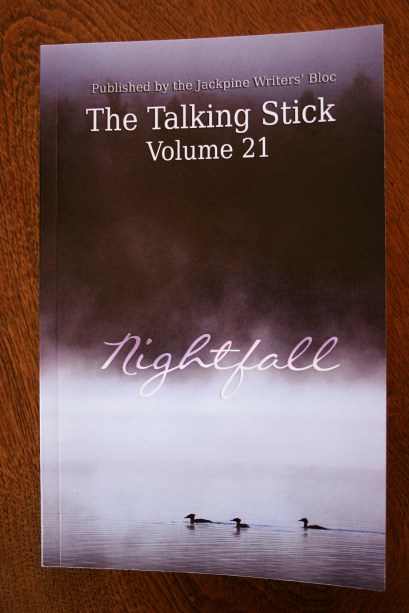
Like Lake Region Review, The Talking Stick produced by the Jackpine Writer’s Bloc based in Menahga (near Park Rapids) offers a quality selection of works in a book-style collection.

The cover of The Talking Stick, Volume 21, Nightfall, also has a Minnesota bend with a stock photo of loons on a lake from iStockphoto.com.

The cover of The Talking Stick, Volume 21, Nightfall, also has a Minnesota bend with a stock photo of loons on a lake from iStockphoto.com.

According to the Jackpine website, “…we publish to encourage solid writing that shows promise, creativity and brilliance.”

Especially heavy in poetry (94 poems), volume 21 of this literary journal features 130 pieces (chosen from 278 submissions) by writers from Minnesota or with a Minnesota connection.

With titled works like “Bologna Sandwich,” “Memories of Duluth,” “And a Bier for Dad,” “January Snow,” “Iceout,” “Blueberry Woods Symphony,” and more, the Minnesota influence presses deep into the 192 pages of this volume, subtitled Nightfall.

Therein lies the beauty of buying local in the printed word: a strong regional imprint.

That local connection also ties into the financial support provided to these two literary collections. Otter Tail Power Company, an energy company servicing western Minnesota and the eastern Dakotas, provided “generous support” to Lake Region Review. And a grant from the Region 2 Arts Council with funding from the Minnesota Legislature financed, in part, volume 21 of The Talking Stick.

HAVE YOU PURCHASED/or will you buy local books or literary collections as Christmas gifts this year? If so, please share your recommendations.

FYI: To learn more about the two literary collections highlighted here and how to purchase them, click here for the Lake Region Review. Then click here for The Talking Stick.

Some of the writers published in Lake Region Review, volume two, will read from their works beginning at 2 p.m. this coming Sunday, December 9, at Zandbroz Variety, 420 Broadway Avenue, in downtown Fargo, N.D. (If only I was going to be in Fargo this weekend. But I will read some of my poetry beginning at 6:00 p.m. Thursday, December 6, in the Great Hall at Buckham Memorial Library, Faribault.)

Disclaimer: My work has been published in both volumes of Lake Region Review and in several volumes of The Talking Stick. However, I received no monetary compensation for that or for this review, nor was I asked to pen this post.

© Copyright 2012 Audrey Kletscher Helbling


A heartwarming Christmas story & an interview with Northfield author Patrick Mader December 4, 2012

NORTHFIELD AUTHOR PATRICK MADER possesses a gift—a gift to create, along with illustrator Andrew Holmquist, award-winning children’s picture books.

His latest, a Christmas story, continues that winning tradition of excellence. Visiting the Visitors recently received a silver award in the holiday book category in the 2012 Moonbeam Children’s Book Awards competition.

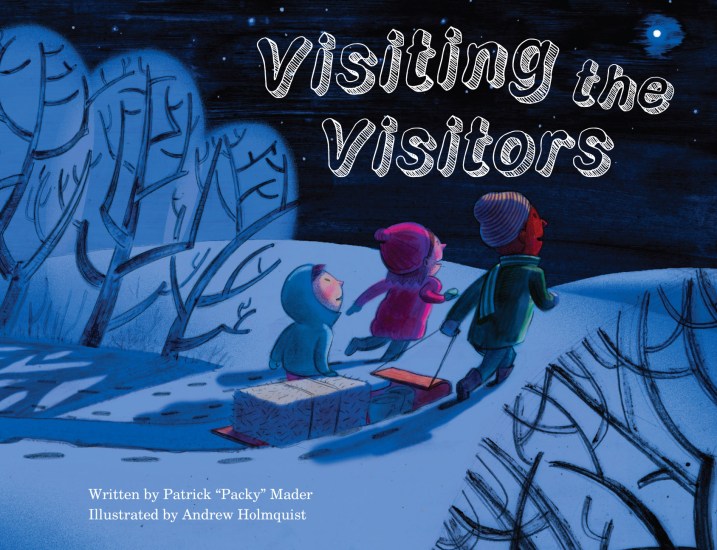
The cover of Patrick Mader's latest book, illustrated by Andrew Holmquist. The artist incorporated the wise men's heads into the tree branches.

The cover of Patrick Mader’s latest book, illustrated by Andrew Holmquist. See how Holmquist incorporated the wise men’s heads into the tree branches.

In his holiday tale, Mader takes the reader again into a rural setting, as he does in his first two books, Opa & Oma Together and Oma Finds a Miracle.

He’s reworked the story of the wise men visiting the Christ child into a contemporary story line of three siblings and their grandparents trekking across snow-covered fields to deliver gifts, but in this version to the wise men and the animals, not the Holy Family.

This heartwarming spin on the timeless and enduring biblical record of the wise men journeying to Bethlehem is especially memorable when told from the perspective of children. That coupled with animals as an integral part of the plot—we all know how much most kids love animals—makes this an especially appealing book.

Illustrator Andrew Holmquist, a Northfield native now living and working as an artist in Chicago.

Illustrator Andrew Holmquist, a Northfield native now living and working as an artist in Chicago.

Illustrator Holmquist’s artwork, created via pencil, charcoal, graphite washes, colored pencil and markers combined with digital coloring in the computer, sets a peaceful and inviting mood that reminds me so much of my childhood winter nights on the star-studded Minnesota prairie, warm light spilling from barn and house windows onto the snow.

Yes, this book evokes nostalgia, at least for me.

But it also evokes a sense of wonderment and thankfulness, of understanding and simplicity, of treasuring the real gift of Christmas, of reclaiming that special magic we adults felt as children.

I promise, Visiting the Visitors will hold your heart and those of the children you love.

THAT SAID, HOW DID PATRICK MADER, an elementary school teacher in Morristown (about 10 miles west of my Faribault home in southeastern Minnesota), create this story?

How does he continue to reap awards (Writer’s Digest honorable mention for Opa & Oma Together and the bronze medal for Big Brother Has Wheels from the Independent Publisher Books Awards in 2010) and the accolades of well-known Minnesota writers?

I posed those questions, and more, to Mader and here’s what he had to say:

Q: What inspires you in your writing?

A: My objective is to write books with positive messages—I refer to them as “Heartwarming Stories of the Heartland.” They are based on what I have seen, what I have heard, what I remember, and what I have felt as I witness life. Family members and friends have had some fascinating events in their lifetime and I simply try to make the stories come to life with a bit of creativity and Andrew Holmquist’s stunning artwork.

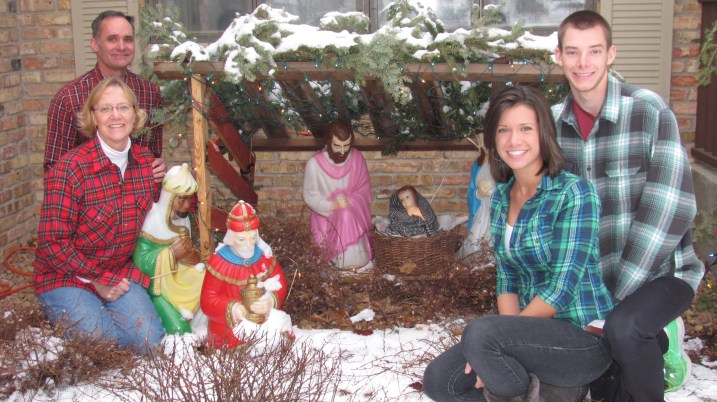
Patrick Mader with his wife, Karen, and children, Karl and Ellen, by the family's nativity set. the wood stable was crafted of wood from the barn on the childhood farm (home of his parents, George and Mary Margaret Mader) near St. Bonifacius where Mader grew up.

Patrick Mader with his wife, Karen, and children, Karl and Ellen, by the family’s nativity set. The stable was crafted of wood from the barn on Mader’s childhood farm (home of his parents, George and Mary Margaret Mader) near St. Bonifacius.

Q: What specifically inspired Visiting the Visitors?

A: When our children were very young, they would ask whether we could go to a neighbor’s very large outdoor nativity set. We would sing songs, they would hug the statues of the nativity characters, and then we would return home for hot chocolate and cookies. They were very tender and memorable moments that you don’t forget as a parent. It was stored in my memory until I felt confident that I could write and market a Christmas book.

Q: Is there a message you’re attempting to convey via this story?

A: Yes, it is that the origin of the Christmas holiday is still of interest and can have a quiet majesty to children.

Q: Two of the names you chose for the three children in this story are unusual. Can you explain the significance of the names Malik and Balta?

A: Actually, the names of all three children took a few hours to finalize. The names are Malik, Cassie, and Balta. They are multicultural children and in my research I learned the name Malik has been a popular African-American name. Cassie is the girl in the story and that is not an uncommon name. The name Balta was chosen because some ethnic groups have an a or o as a last letter. When you put the three names together, they are derivations from the supposed names of the three wise men who are characters in the book: Melchior, Casper, and Balthazar. While most children will not grasp the significance, adults who question the names will often figure it out and it can become a teachable moment.

Q: You’ve garnered three awards and also accolades from well-known Minnesota authors. How do you explain such success?

A: I am thrilled that our books have won awards. The success is due to many professional and talented people at Beaver’s Pond Press, the editors, the layout design artist, and, most significantly, the illustrator, Andrew Holmquist.

The success in obtaining endorsements from Tom Hegg, Catherine Friend, Doug Wood, and Jim Gilbert probably are more due to them being gracious and thoughtful people than it is of my writing. Combined they have probably sold over five million books, yet they are very approachable and quietly candid.

Q: Are you working on, or do you have plans for, a fourth book?

A: Yes, it worries my wife! I have begun to co-author a non-fiction book about Minnesota athletes with a former StarTribune sportswriter. I like sports and thought that some of the lesser known athletes had intriguing stories to tell. They do. It may take us two to four years to get it published because it requires lots of travel since we decided to have personal interviews with each of the athletes that will be profiled.

Meanwhile, I have drafts for two more children’s picture books: one is a story that revolves around Halloween, the other is about a young girl who mixes up sounds of words—it will be my first attempt at a book that will have lots of humor yet have a tender ending.

Q: Why do you write?

A: I have found writing enjoyable, but I really thrive on sharing our books through presentations. I like engaging an audience, providing teachable moments, and encouraging attendees to follow their own aspirations. So writing is the vehicle that allows me not only to do programs, but it also leaves its own small legacy. It has been very rewarding to read letters or listen to people say that our books have touched them. Those conversations and messages touch me and bring great joy.

FYI: To learn more about Patrick Mader and Andrew Holmquist and their books, and how to purchase them, click here to reach Mader’s website.

Disclaimer: I received a free copy of Visiting the Visitors for purposes of reviewing this book. Patrick also donated copies of his first three books to the Little Free Library in my hometown of Vesta.

© Copyright 2012 Audrey Kletscher Helbling

Artwork and photos courtesy of Patrick Mader and Andrew Holmquist.