Minnesota Prairie Roots

Writing and photography by Audrey Kletscher Helbling

Commentary: I care about my neighbors, a free press, freedom & more December 3, 2025

Filed under: Uncategorized — Audrey Kletscher Helbling @ 6:01 AM
Tags: , , , , , , , , , , , ,
Protesting in Northfield at a NO KINGS rally. (Minnesota Prairie Roots copyrighted file photo October 2025)

I CAN’T IGNORE the news. I want to, no, need to, know what’s happening on all levels from local to international. Perhaps it’s my innate curiosity or my journalism background that compels me to read and watch media reports. I feel an obligation, especially in these challenging times, to be as informed as possible.

What I’ve been hearing and reading from the federal government in Washington DC continues to concern me. Deeply. I can hardly believe the rhetoric, the hatred, the awfulness that is flowing like hot lava from fiery mouths upon this land.

Somali women walk through downtown Faribault during a community event. (Minnesota Prairie Roots copyrighted file photo)

The latest is the hatred directed by our president toward Somalis living in America, including some 80,000 in Minnesota. My community of Faribault is home to many Somali Americans. The president has singled out Somalis in Minnesota with his derogatory words and planned, targeted ICE raids here. I am proud of the mayors of Minneapolis and St. Paul and other leaders, including the Minneapolis police chief, for speaking up and standing strong for the Somali community during a Tuesday afternoon news conference. They recognize the threat to this specific demographic. And they value the Somalis who call Minnesota home.

“Who,” I ask, “will be next? Me, because my eyes are green?” Maybe he doesn’t care for green-eyed people. Or you? Because he doesn’t like something about you.

This is a pig, not a female journalist. (Minnesota Prairie Roots copyrighted file photo)

He certainly doesn’t care for journalists, especially female journalists. I realize a dislike of journalists is nothing new. But this president has gone well beyond “dislike” to outright meanness, bullying and name-calling. I never thought I would see the day when the leader of our country would chastise a reporter with “Quiet, piggy.” I never thought I would hear an American president call a reporter fat or terrible or ugly or any other adjective while hissing “fake news” at the media.

Bracelets against censorship and for rights. (Minnesota Prairie Roots copyrighted file photo 2025)

When the U.S. government launched a Media Bias page on the official White House website just days ago, I felt nothing short of outraged. This is the United States of America, where freedom of the press ought to mean something, where the media is independent of the government, where reporters have a right and a duty to accurately report the truth without fear of intimidation, public shaming, recrimination,… This newest tactic of naming a “Media Offender of the Week” ought to anger every single person in this country. I don’t care what side of the political aisle you sit on. This latest action speaks to censorship, to controlling the press, to propaganda, to anything but democracy.

I value freedom. I hope you do, too, enough to stand up for a free press, individual rights, freedom from fear, intimidation, oppression and all that threatens us. These are unprecedented times (yes, I recognize that may be an overused word, but it fits) in our country. I refuse to remain silent.

THOUGHTS?

© Copyright 2025 Audrey Kletscher Helbling


Chris Norbury’s newest book, this one for young adults, proves another excellent read August 13, 2024

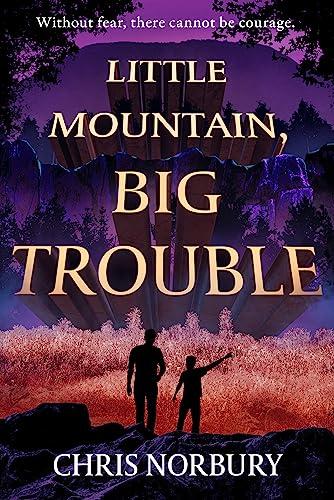
Cover image sourced online.

WE CAN ALL USE some encouragement, no matter our age. And that’s exactly what you’ll find in “Little Mountain, Big Trouble,” a debut young adult novel by Owatonna writer Chris Norbury.

I don’t typically read fiction written for youth. But when I met Norbury this summer at Faribault’s Heritage Days and learned about his latest book, I knew I had to read it. I’m a fan of Norbury’s writing. He’s the author of three books in the Matt Lanier mystery/suspense/thriller series. All are set in Minnesota, which makes them even more appealing to me.

Given the differences in writing mysteries for adults versus fiction for youth, I wondered if Norbury could pull it off. He did, and so well that I wanted to continue reading “Little Mountain, Big Trouble” one evening well past my bed-time. That, in my opinion, is the sign of a good book.

BULLIED

The story centers around 12-year-old Eduardo, or EJ, who’s unpopular, bullied, short and at that awkward middle school age with its uncertainties, peer pressure and insecurities. Toss in poverty, a broken family and other challenges and you have a relatable read. I imagine many middle or high schoolers can empathize with EJ’s pain, struggles and lack of confidence. Even I, decades removed from junior high school, felt difficult memories of bullying surge back. Some things you just never forget. I still carry the pain of name-calling with me. But, because of that, I lean into compassion, understanding, empathy and kindness.

BIG BROTHER, LITTLE BROTHER

Norbury’s book is filled with all of that, too, no surprise given his experiences as a Big Brother. In real life, he mentored boys through Big Brothers Big Sisters of Southern Minnesota and now donates a portion of his book sale proceeds to the organization. When we met, Norbury enthused about the program and how much his “little brothers” meant, still mean, to him.

In “Little Mountain, Big Trouble,” main character EJ is paired with Big Brother, Russ. That relationship focuses the story-line as the chapters unfold. Although a disclaimer at the front of the book assures the content is fictional, I understand that, as a writer, our writing is influenced by what we’ve lived or observed.

CLIMBING MOUNTAINS

It takes EJ a while to trust Russ, to realize that his Big Brother is not perfect and is there to support him. Russ doesn’t talk down to EJ, but rather listens to and encourages him, like they are equals in many ways. Eventually, EJ opens up about his goal to become a mountain climber. At this point, I wondered what Norbury was thinking by writing that into the plot. A Minnesota kid with no mountain climbing background wanting to climb Mount Everest?

Russ doesn’t dismiss EJ’s dream as insurmountable. Rather, he breaks the goal down into doable steps, starting first with training and then climbing Eagle Mountain. That mountain is real, the highest point in Minnesota, with much of the hiking trail to the summit running through the Boundary Waters Canoe Area Wilderness.

ANXIOUS AND WORRIED

And that is where EJ and Russ end up, heading up, then down, the mountain. And this is where the tension thickens to the point that I am feeling anxious and worried. To elicit that response in the reader shows Norbury’s skills as a writer. The duo face challenges that test their strength and endurance, even threaten Russ’ life.

WE ALL NEED SOMEONE

I won’t spoil the book by revealing the outcome of that mountain hike. But know that the book ends in a heart-warming way. EJ has developed confidence, gained the acceptance and respect of his peers, and grown to understand that he can overcome, and do, anything. Sometimes it just takes someone, like Russ, believing in you and cheering you on, just as I expect Chris Norbury did for his little brothers.

© Copyright 2024 Audrey Kletscher Helbling


Two friends, loss & resilience December 16, 2022

Filed under: Uncategorized — Audrey Kletscher Helbling @ 5:00 AM
Tags: , , , , , , , , , ,
Light, beautiful light, breaks through the grey as the sun sets. (Minnesota Prairie Roots edited & copyrighted file photo December 2017)

I READ A LOT. News. Books. Obituaries. And sometimes something touches me in a way that makes me want to cry at the cruelty of humanity. That happened this week when I read a tribute on an online obituary for a 45-year-old Faribault-born man.

I didn’t know Allen. I have no idea why he died. But he clearly was loved.

Yet, life wasn’t always easy for him, as his friend Rachel notes in her comment. She remembers the times they hung out on her front porch as teens “talking about nothing at all and everything.” I love the wordage of that remembrance. But then Rachel continues. “He always has (d) a smile and a kind word for everyone even though he was made fun (of) as much as I was.”

In that singular sentence, my heart simply broke. I know Rachel, enough to believe her truth. I admire her for writing that truth, not only about herself, but about the friend she says she will always miss.

Why were people mean to Allen and Rachel? And to me? I, too, was picked on as a child and pre-teen, sometimes even as an adult. Decades later the memories of those hurtful words still sting. Rachel’s comment reveals the same.

Yet, despite the teasing, Allen maintained a positive attitude with his always smile and kind words. That says something for his resilience, his ability to overcome, at least outwardly. He had a good friend in Rachel.

As I reflect on this, I follow the lead of these two friends. If you’ve endured meanness, I think you can go two ways—become just like the bullies or choose to be kind and empathetic. Allen, Rachel and I chose kindness. My compassion for those who are picked on/bullied/teased/made fun of, whether as children or adults, runs deep. In this moment of reading Rachel’s thoughts about Allen, my heart simultaneously breaks and swells with gratitude for these two friends who talked about nothing at all and everything.

THOUGHTS?

© Copyright 2022 Audrey Kletscher Helbling


No need to wonder about the power of this movie December 14, 2017

Filed under: Uncategorized — Audrey Kletscher Helbling @ 5:01 AM
Tags: , , , , , , , , ,

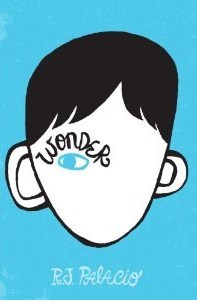
IF EVER THERE’S a current movie everyone should see, it’s “Wonder.”

And for me to state that is noteworthy. “Wonder” is the first movie I’ve viewed in a theater since 2011. Yes, I really have not been inside a cinema since I last saw “The Help,” another memorable movie, six years ago. Most movies don’t interest me. Too much violence and genres that don’t appeal to me. I prefer movies with a message, with a purpose other than to simply entertain and with content that moves me.

“Wonder” fits those criteria.

Based on the New York Times bestselling book by R. J. Palacio, “Wonder” tells the story of 10-year-old Auggie Pullman, born with facial deformities and entering school for the first time after being homeschooled. As you would expect, Auggie faces incredible challenges, including bullying.

This film shows the real-life psychological harm of peer pressure and bullying to individuals and to families and then presents multiple ways people address it. And not always in good ways, just like in real life.

“Wonder” should be required viewing for every child, teen and adult. The book was assigned reading at my eighth grade great nephew’s Minnesota school, followed by a class field trip to see the movie. I applaud educators like those in Tristan’s school who realize the value in this film as a teaching tool and as an opportunity to open up conversations on differences, bullying, peer pressure, kindness, compassion and more.

As a survivor of junior high school bullying and even bullying as an adult, I understand this issue all too well. I refuse to tolerate bullying (and abuse) on any level. “Wonder” champions strength to rise and to overcome, making it one powerful movie.


FYI: If you haven’t read about the recent bullying of a young boy in a Tennessee school, then click here and read Keaton’s story. It breaks my heart. Decades ago, this was me. Crying. Suffering. Unable to stop the bullying. I was not bullied in the same ways as Keaton. But the bullying I experienced in junior high school hurt me. Deeply. Just like Keaton. This behavior needs to stop.

© Copyright 2017 Audrey Kletscher Helbling


Thanksgiving reflections on life November 22, 2017

Filed under: Uncategorized — Audrey Kletscher Helbling @ 5:00 AM
Tags: , , , , , , , ,

A few years ago I found this vintage 1976 calendar at a garage sale. Each year prior to Thanksgiving, I hang it in my dining room as a representative reminder of life’s blessings.

WHEN I CONSIDER THANKSGIVING, I visualize the tapestry of my life woven with gratitude and blessings and, yes, even sadness. Sometimes I’d like to yank the black threads and pull away the darkness, leaving only vivid hues of happiness.

But to do so would present an imitation of my life, a cheap knock-off work of art that portrays the idealistic rather than the realistic. I don’t care who you are, where you live, what you do, you are the accumulation of life’s experiences—positive and negative.

Challenges, whether financial, health-related, personal or otherwise, shape us, make us stronger, teach us empathy and compassion and how to handle grief and anger and disappointment and frustration and pain. At the time we battle difficulties, we usually fail to see the good, the reason to give thanks. Often that comes later, as time passes, acceptance comes, situations change and reflection happens.

For example, I was bullied as a pre-teen by junior high classmates so ruthless and mean that I hated school. I cried every day, wished the teasing would end. It should have. But in those days, no one stepped in to stop the abuse. And one teacher in particular was himself a psychological abuser. Because of those two unbearable years, I hold zero tolerance for abuse whether perpetrated by a child, teen or adult. I use my words now as a way to educate, to help others, to advocate, to make a positive difference.

When I consider personal health challenges like severe osteoarthritis and resulting hip replacement, a broken shoulder, and near deafness in my right ear, I see how my empathy for others has grown, how my patience lengthened, how my thankfulness for my husband deepened. Threads of gold shimmer in the tapestry of my life, outshining the underlying less-noticed darkness of difficulties.

My life remains a work of art in progress. There are days when life circumstances seem overwhelming, when the mother in me wants to make everything better. But then I hear an uplifting song, get an encouraging email or text, hold my granddaughter, hug my husband, write something especially meaningful, talk to my son too far away in Boston, gather with friends, reach out to someone hurting. Then threads of silver and gold sparkle gratitude and thanksgiving for this life I live. Not perfect. But beautiful in blessings.

Today, may you find many reasons to give thanks for your life. Happy Thanksgiving!

© Copyright 2017 Audrey Kletscher Helbling


Bullying in Minnesota: In the news again & a look back January 22, 2015

Filed under: Uncategorized — Audrey Kletscher Helbling @ 3:21 PM
Tags: , , , , , ,

WHO AMONG YOU has been bullied?

If I could see you all, I expect many a hand would rise.

Both my arms would be waving wildly, high above my head. Me. Me. Me.

That bullying occurred more than 40 years ago. Yet, it feels like yesterday when my junior high classmates picked on me and other kids from a nearby farming community. We, apparently, did not meet their standards given our rural addresses outside the county seat.

Countless days I arrived home from school in tears. Crying over mean words. Crying and wishing with all my might that things would change or that I would never need to return to that school.

A teacher who also bullied students added to my angst as did other teachers, who simply looked the other way.

These horrible memories flash to the forefront because of a bullying incident in Minnesota that is, today, big news. News because the father of the girl being bullied created a YouTube video that shows just how mean bullies (and their parents) can be—mean as in using the “N” word against the father’s African American daughter. Click here to read background on this bullying case and to watch the father’s video.

You would think in the year 2015, with all of the discussion on bullying, all of the awareness, all of the laws, that bullying would not exist. Wishful thinking. All the talk and rules in the world will not close mouths that speak words of hatred and racism and just plain meanness. Yet we need to keep trying.

What to do. There’s no single solution. I wished back in the late 1960s that my parents would have done something—anything. But that can backfire, too, make the bullying worse.

When our son was bullied as in being spit on, pinched, pushed and kicked by a classmate, my husband and I met with his teacher. Her response: Befriend the bully. Are you kidding? Place the responsibility for solving the problem on our elementary-aged son and not hold the bully accountable? Not going to happen. Eventually we pulled our son from the school.

Recently, I was shouted at during a meeting. I sat there stunned, struggling to hold back tears. Soon thereafter I left, unable to suppress my emotions. But this time the reaction was different. Concerned individuals approached me, assuring me that I didn’t deserve the verbal attack for asking a legitimate question.

After the meeting, the man who launched those angry words at me apologized. He phoned again early the next morning to apologize. I accepted both apologies.

If only every case of bullying ended that way, with a sincere apology, acceptance of responsibility and determination to change.

That would be hoping for Utopia.

A snippet from a sign at the International Peace Garden, Nerstrand Elementary School, Minnesota.

A snippet from a sign at the International Peace Garden, Nerstrand Elementary School, Minnesota. The sign and garden do not specifically address bullying. Rather the Peace Garden advocates peace and getting along, despite our differences. Minnesota Prairie Roots file photo.

Yet, I can take my experiences and find some good therein. Because I was bullied, I am a more compassionate, caring and empathetic person, championing for others. I may have been that way without the bullying. The qualifying word would be “more.”

I can use my words in a positive way to affect change, to show others I care, really care. As we all know, words are powerful.

Now it’s your turn to speak. Please share your thoughts on bullying.

FYI: To learn more about bullying prevention, click here to reach the Pacer Center’s Kids Against Bullying website. And then click here to reach the site for teens.

© Copyright 2015 Audrey Kletscher Helbling


I refuse to be bullied January 14, 2012

Filed under: Uncategorized — Audrey Kletscher Helbling @ 6:20 PM
Tags: , ,

I’VE DEBATED, for several days, whether to write this post.

And I’ve decided, yes, I will just speak what’s on my mind because I refuse to be bullied, belittled or called names.

My mother taught me to nice, to be kind. If I disagree with someone, I should be respectful in voicing my opinion. I’ve tried to follow those guiding principles throughout my life, although at times I fail.

I was bullied as a child and pre-teen. As an adult, I don’t have to accept such behavior.

That brings me to two comments posted on my January 11 post, “Meet 10 Minnesota bloggers, a contest winner & more.” Click here to read that story.

Of all the posts I’ve written, I never imagined this piece would come under attack.

Here is the single sentence that prompted two readers to voice their opinions in a manner that I consider disrespectful:

I wanted to highlight bloggers without an agenda and who would fit our more conservative outstate readership.

I’ve since deleted that sentence because I understand how, if you’re a “liberal” purposely seeking out the word “conservative” and you take something out of context or shape it to your thinking, this could be totally misconstrued.

My use of the words “agenda” and “conservative” had nothing to do with political leanings of either the highlighted bloggers, the magazine or its readership.

Any writer understands that when you write for a publication, you need to know that publication and its content. That was the point I was attempting to make and, I admit, I could have written it more clearly, explained it better.

Yet, the rabid reaction from these two commenters caught me off guard.

Here are their separate responses, first from commenter #4:

Nice to know that “conservative” isn’t an agenda. Dogwhistle much? Or just believe in pandering to stereotypes of rural Minnesota?

And here are the words of commenter #5:

Wow. I mean, read that sentence slowly. Maybe aloud. Could you see what you did there? I know my 7th grade grammar teacher would have you up at the blackboard for that.

(Readers, please do not click on these commenters’ links; google them if you must.)

In my opinion, they could have made their points in a manner that was less mean-spirited and not so condescending.

I was tempted for a minute to censor their words or fire back with an equally vicious response. It was a fleeting thought. I gave them their voice, responded as kindly as I could and tried to let it go.

I don’t expect that everyone will always agree with me or like what I write. And, yes, I understand that sometimes something I compose may be taken the wrong way.

Then I thought back to all those years when I was bullied and came home from school crying.

This pair could not have known how their words triggered those childhood memories of bullying and name-calling and of a math teacher who called students to the blackboard only to belittle them. To this day, I do not like math.

And, to this day I do not like to be bullied, belittled or called names.

As an adult, I don’t have to accept such behavior, especially on this blog.

So you see, dear readers, something good has come from the negativity expressed earlier this week in my comments section. I have the opportunity to open up a discussion on the topic of bullying.

LET ME HEAR from you.

Were you bullied as a child or teen? If so, how did you and/or the adults in your life handle this and how were you impacted, short-term and long-term?

Have you been bullied as an adult? How have you handled such behavior?

What can be done to stop bullying?

#

NOW, JUST TO BALANCE this all out and show you how words can be used in a positive manner, I refer you to Bob Collins of Minnesota Public Radio. Click here and scroll to # 5 in the 5×8 section of his News Cut column to read his comments about Minnesota Prairie Roots and the Minnesota blogger story.

Then, click here to check out Iron Range writer, radio producer and college instructor Aaron J. Brown’s equally kind words regarding my work and the blogger feature.

I have great respect for these two writers. Enough said.

© Copyright 2012 Audrey Kletscher Helbling


It’s OK if you don’t have pickle bumps September 23, 2010

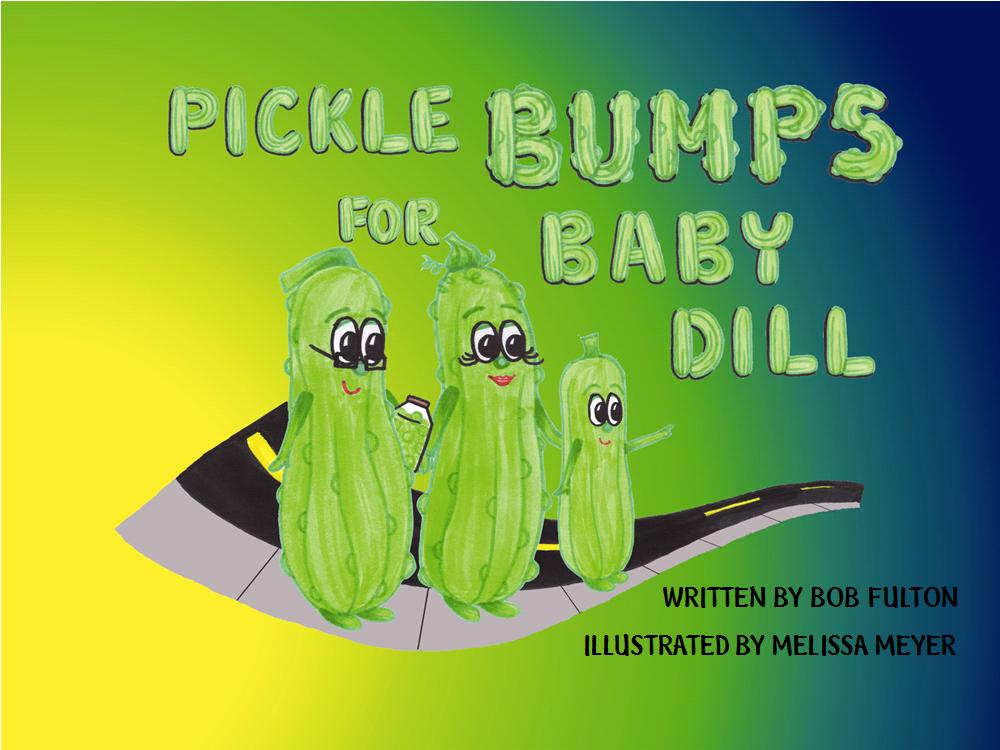
I’LL ADMIT TO MORE than a bit of skepticism about a children’s picture book titled Pickle Bumps for Baby Dill. “What kind of book is that?” I wondered before calling the author, Bob Fulton.

Well, exactly as the title suggests, this is a story about Baby Dill, a pickle born without bumps. But that’s not all. You see, after speaking with Fulton and upon reading his book, I learned the real purpose. And it’s much more than a story about cute, talking pickles.

Fulton delivers a strong message via the Dill family and Baby Dill’s friends. The message: “It’s OK to be different.”

That’s a message especially fitting for this time of year, the beginning of school.

I would speculate that many students have, in recent weeks, felt like they don’t quite fit in with their classmates. Maybe they aren’t wearing the latest fashions. Maybe they’re in a new school, struggling to make friends. Maybe they’re shy, quiet. Maybe their hair or their skin is the “wrong” color. Maybe they’re struggling with learning.

Maybe, like Baby Dill, they wonder why they are different from everyone else.

Fulton addresses that concern, which leads the Dill family on a shopping trip for pickle bumps. In the end, Baby Dill decides, with the support of his friends, that he would rather remain bump less.

While Fulton’s story has a positive ending, I know that isn’t always reality. In real life, kids bully, tease, make fun of, pick on, humiliate—whatever words you want to choose—those who are different. For all too many kids, there are no understanding friends to stand by and support them.

A book like Fulton’s offers encouragement. “We like you just the way you are,” Baby Dill’s friends tell him. That’s a message that needs to reverberate through-out our schools, our homes, our communities.

Pickle Bumps for Baby Dill would be a good addition to any elementary school classroom or library. While aimed at preschoolers and lower elementary students, the story also appeals to 10 – 12-year-olds, Fulton says. Having experienced bullying myself while in junior high school, I applaud any efforts to help students, parents and teachers address the issue.

The college educator—he taught chemistry for 39 years at St. John’s University and The College of Saint Benedict—has even added a list of 12 questions at the end of his book to prompt discussion.

He shares, too, that his book evolved from telling stories to his grandchildren and a specific request from his youngest grandson to “Tell us a story about a pickle.”

Fulton did and then put his tale into writing in Pickle Bumps for Baby Dill, published by Pickle Bump Press. Melissa Meyer, originally from Saint Joseph, Minn., illustrated the book.

#

AS A SIDE NOTE, please be aware that October is National Bullying Prevention Month. Check out the PACER Center Web site for information that can help you address bullying. Perhaps by working together, through understanding and listening and empathy, we can help reduce the bullying that is all too prevalent in our society, especially in our schools.

© Copyright 2010 Audrey Kletscher Helbling