Minnesota Prairie Roots

Writing and photography by Audrey Kletscher Helbling

Discovering historic & vibrant downtown Fargo November 12, 2012

Filed under: Uncategorized — Audrey Kletscher Helbling @ 8:29 AM
Tags: , , , , , , , ,

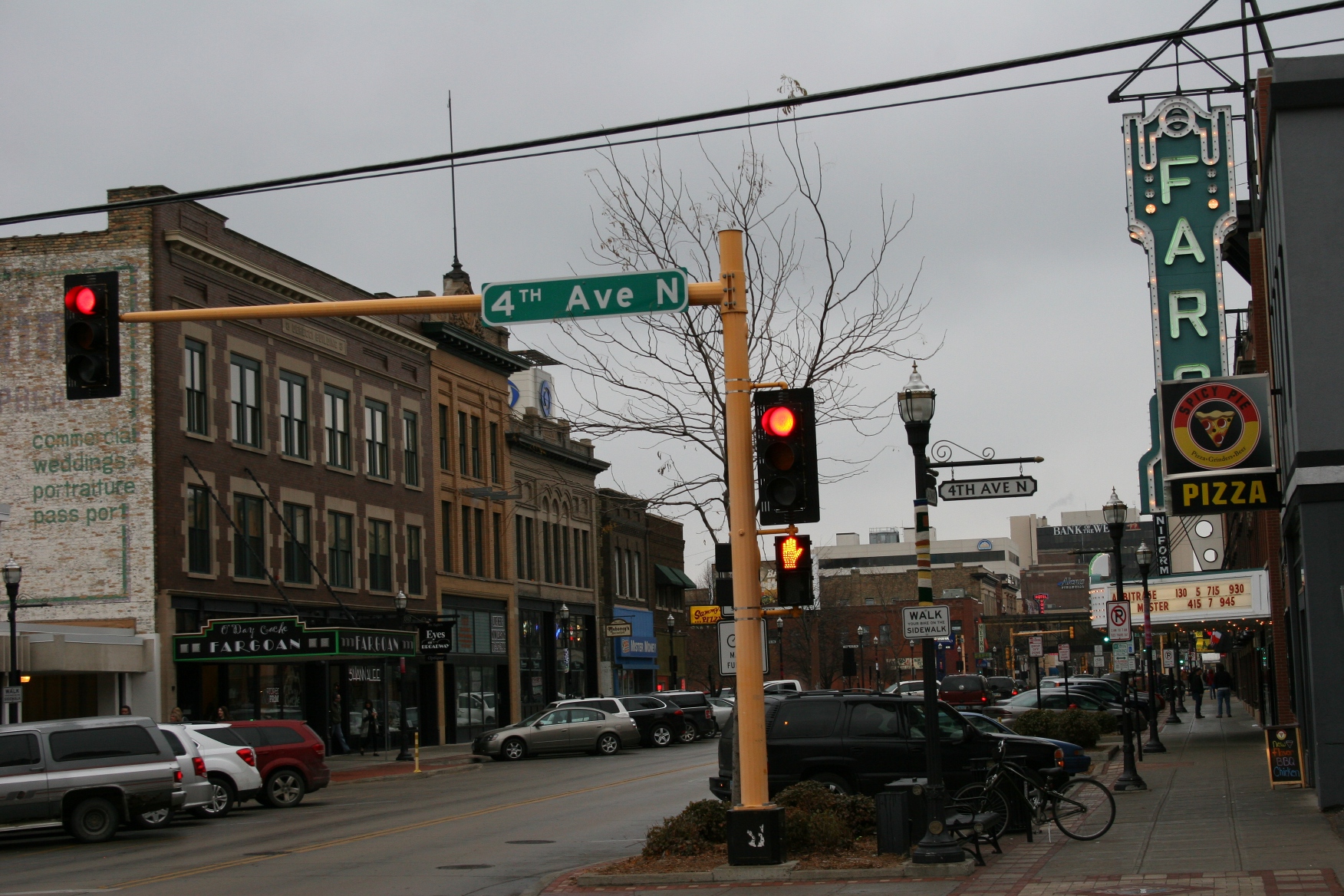
A view of the 300 block on North Broadway, including signage for the Fargo Theatre, built in 1926 as a cinema and vaudeville theatre. The restored theatre is on the National Register of Historic Places and serves as a venue for independent and foreign films, concerts, plays and more.

NOT EVEN THE SHROUD of gray mist and gloom which wrapped around Fargo in the late afternoon of a bone-chilling Saturday in early November could quell my enthusiasm for this historic downtown in a city I’ve only begun to explore.

This is my kind of downtown with historic buildings and a vibe that is both vibrant and subdued. I’d feel as comfortable here glammed for an evening on the town as I would kicking about in my jeans and buffalo plaid flannel shirt.

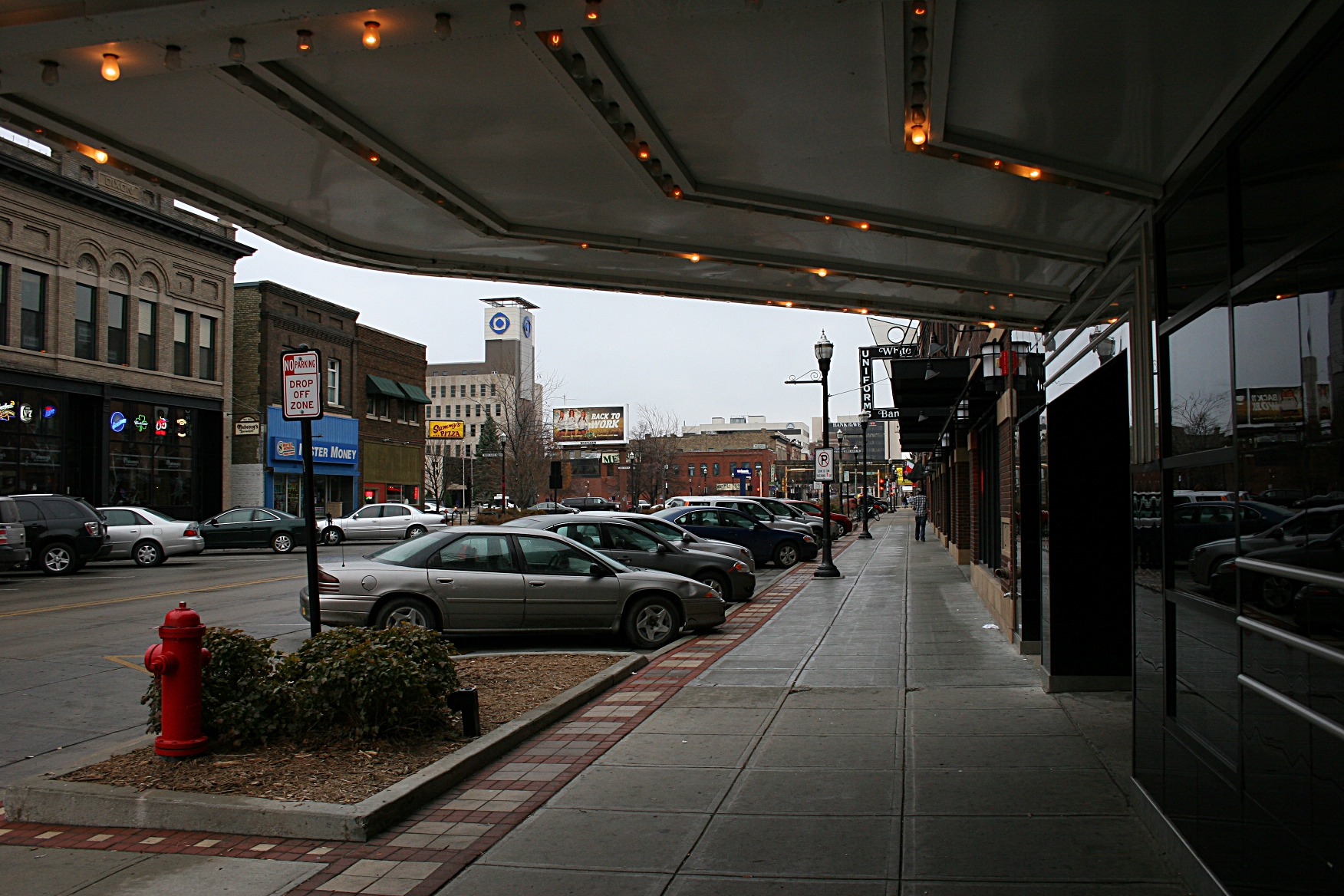
Under the protective canopy of the Fargo Theatre, I shot this street scene.

In a brief walk of not quite two blocks—shortened by the drizzle and my desire to keep my camera out of the rain—I realized that I need to revisit this downtown when time and weather allow for a more intimate look.

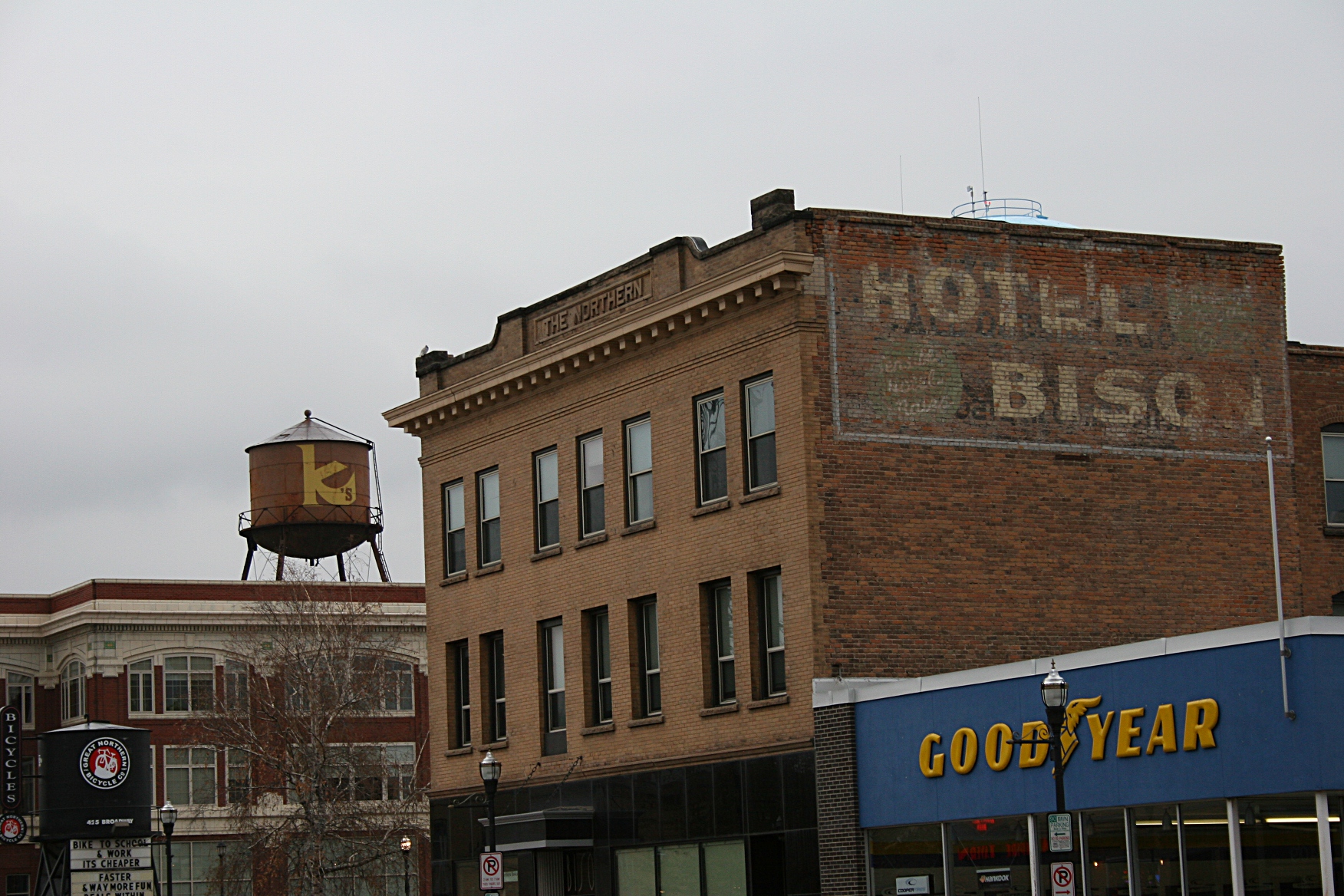
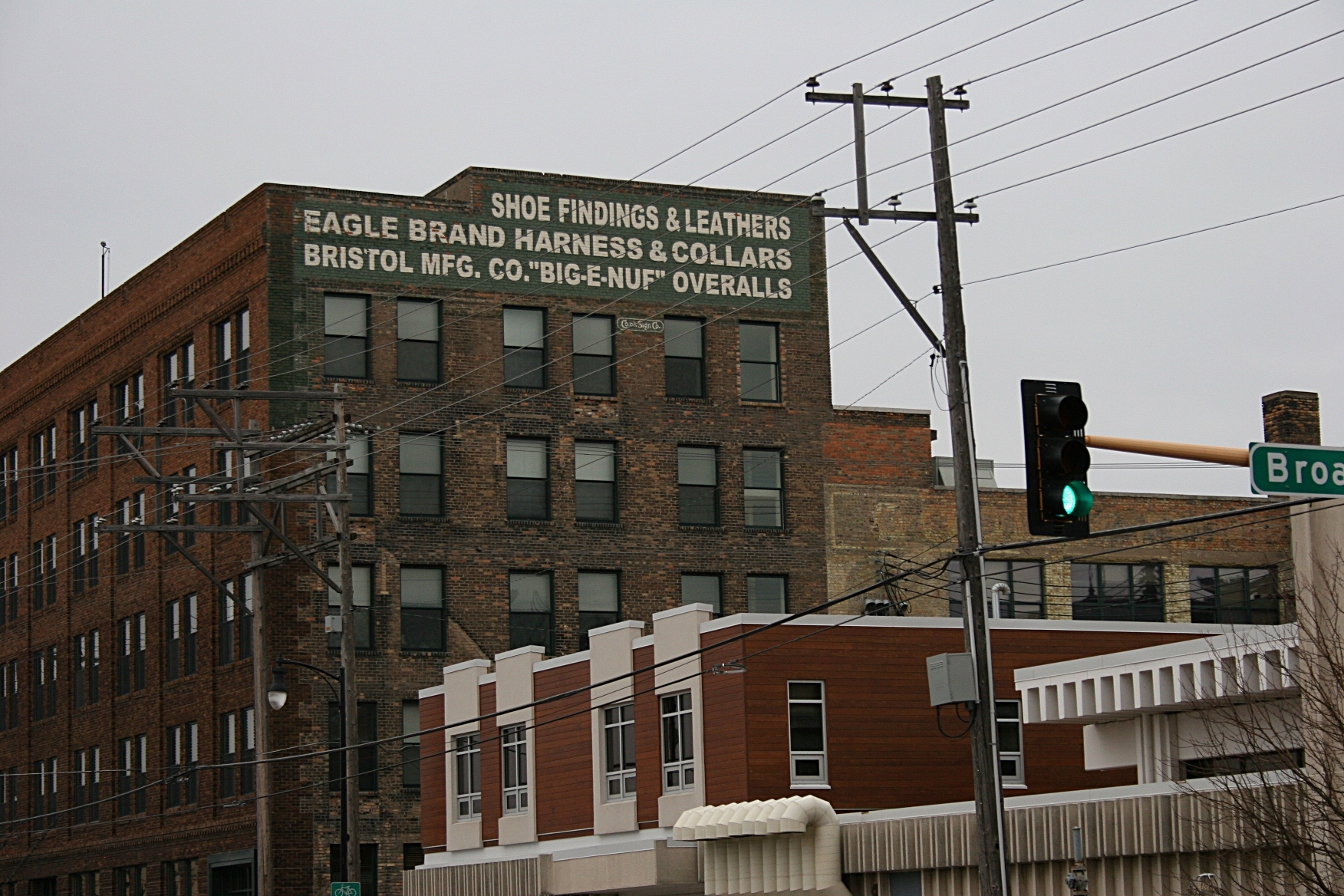
I swung my camera around to focus on the advertising on this stately brick building just off Broadway.

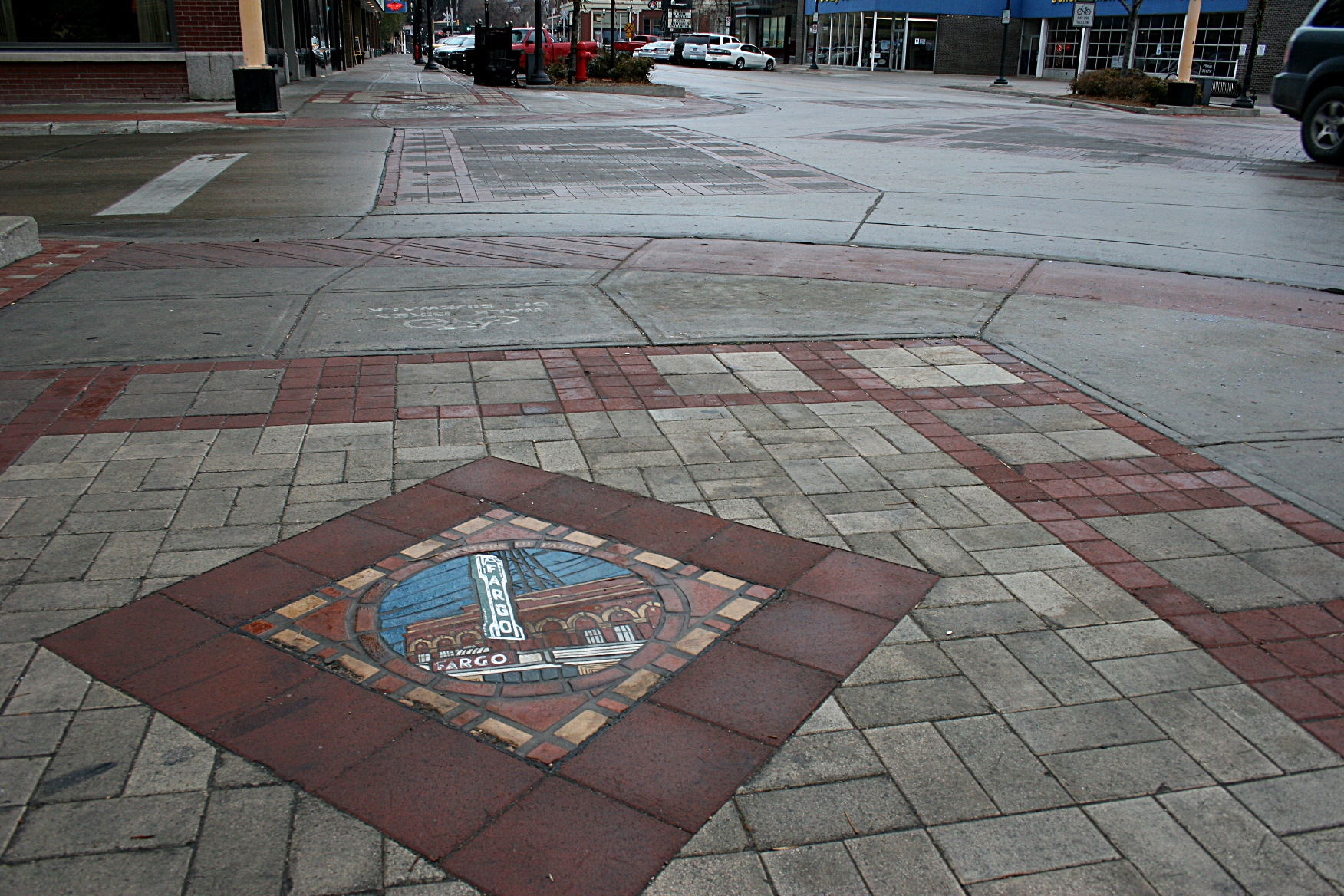
A quick visual tour revealed well-kept brick buildings with great architectural detail, vintage neon signs, advertising painted on brick walls, art in the sidewalk and a general impression that those who live and work here care about this place.

Sidewalk art featuring the Fargo Theatre.

It’s no wonder that in 2011, Forbes magazine recognized downtown Fargo as one of the nation’s top 10 most transformed neighborhoods.

If you want big box retailers and miles of cement and malls, all of which you could find in Anytown, U.S.A., Fargo has that too, over in West Fargo.

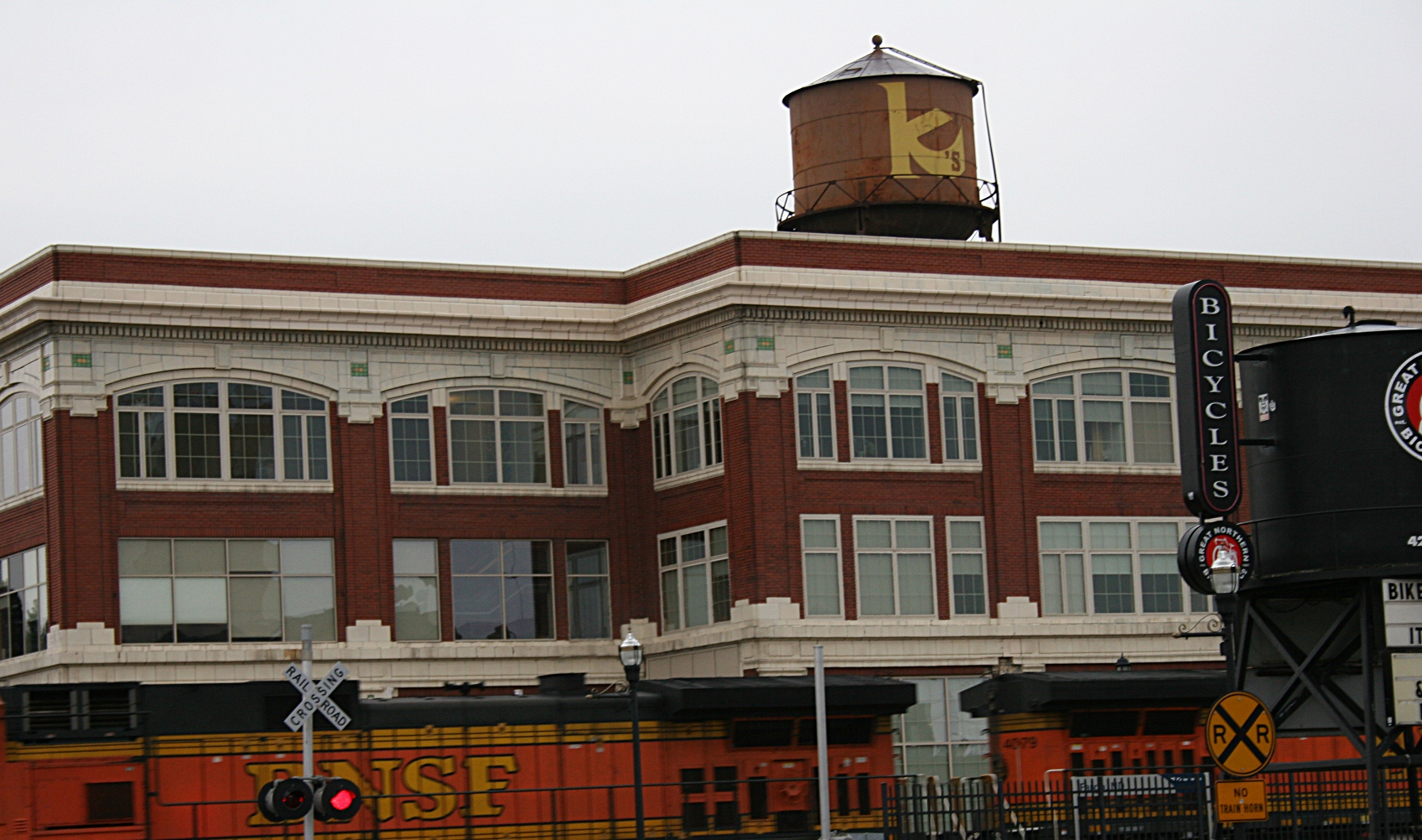
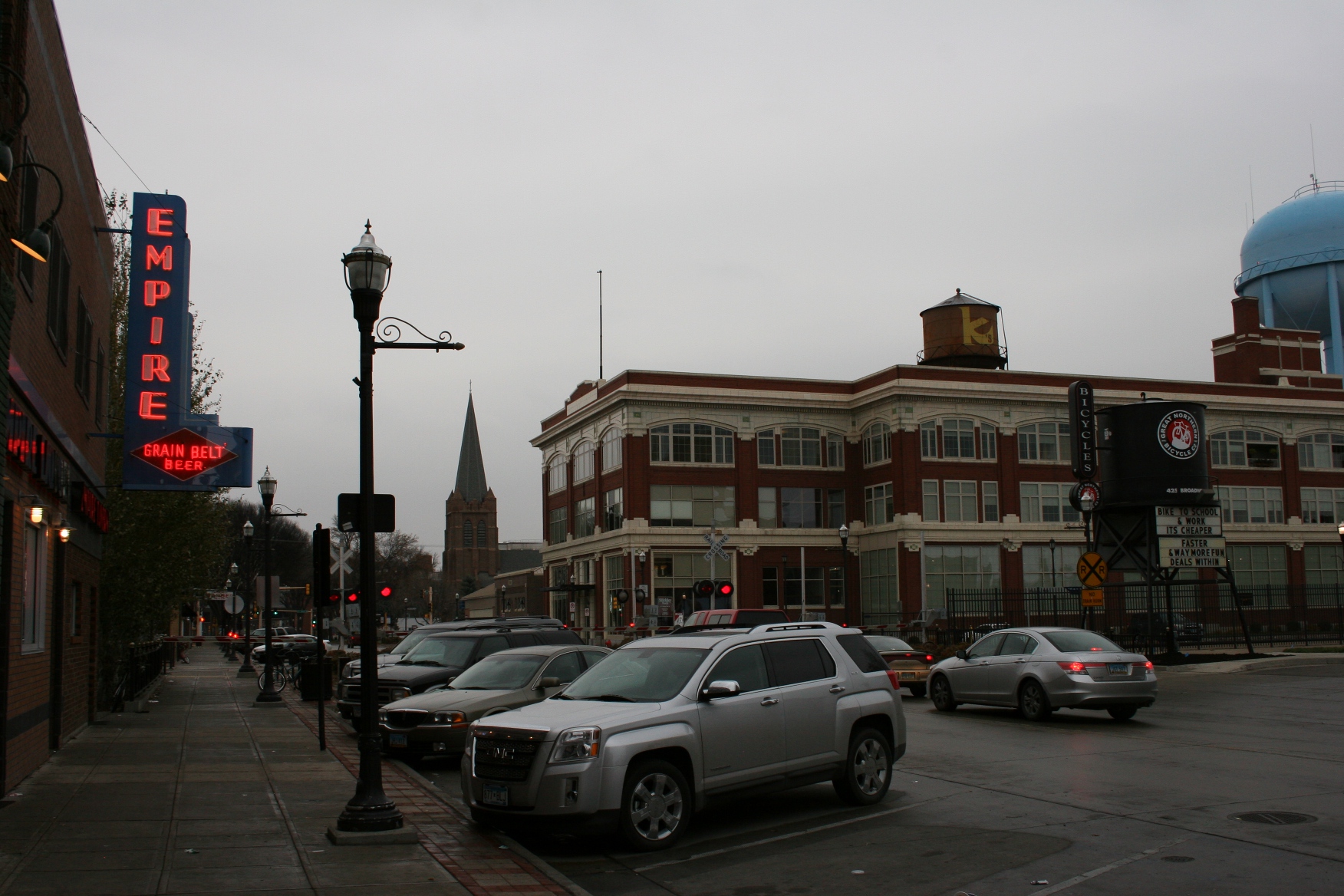
Almost anywhere you go in Fargo, you will encounter railroad tracks, even in the heart of downtown, here in the 400 block of North Broadway.

But the downtown, oh, the downtown, that to me holds the personality of Fargo as an historic river and railroad and farming community, appreciative of its past, adapting to the present and aware of its future.

Looking toward the 400 block of North Broadway, a broader view of the image above.

Signage details on buildings in the 400 block of North Broadway.

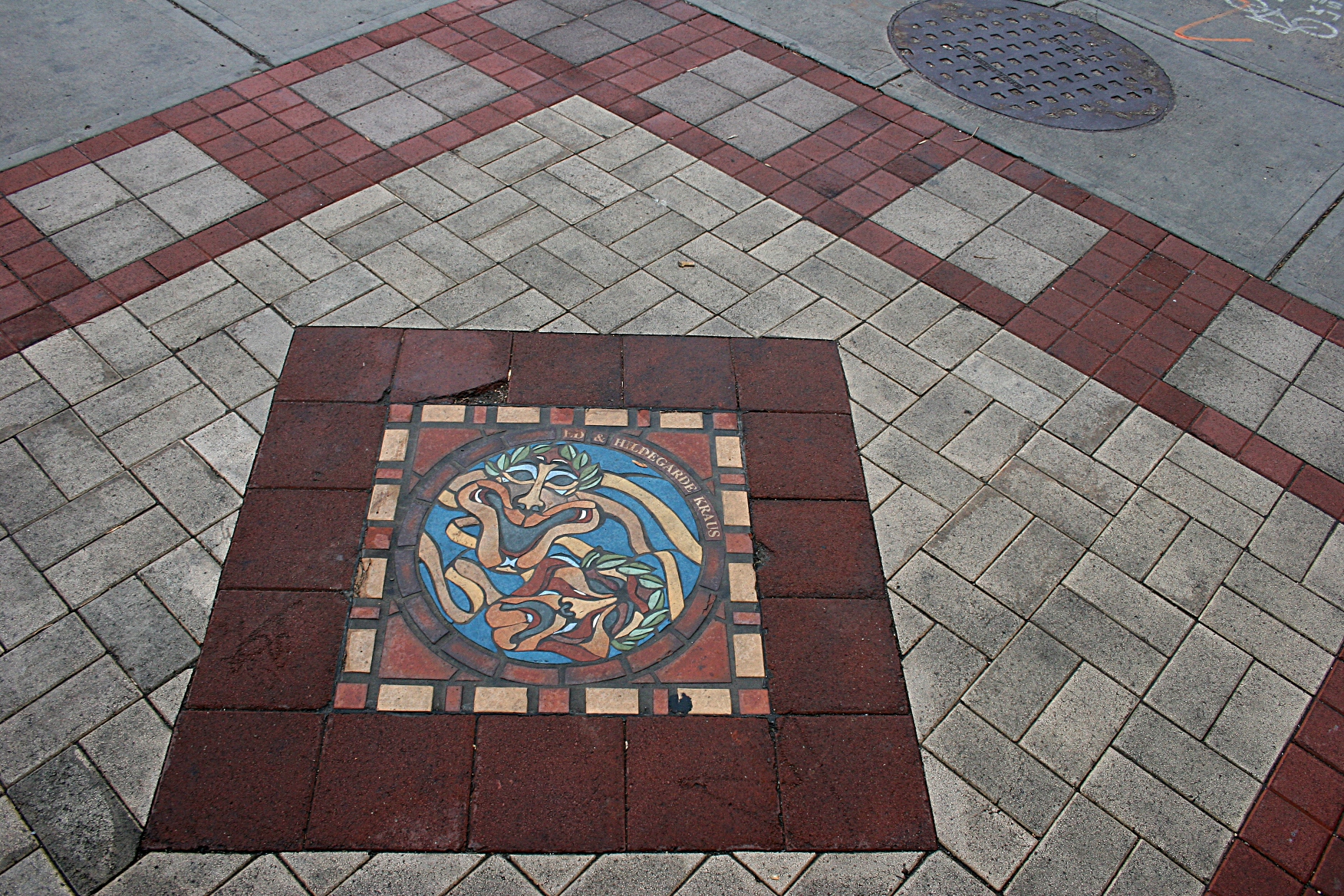
More sidewalk art, with the names Ed & Hildegarde Kraus embedded.

Across from the Fargo Theatre, O’Day Cache’ , located in the building labeled Fargoan.

Another shot of downtown, from the corner of Fourth and Broadway.

© Copyright 2012 Audrey Kletscher Helbling


My writing connection to a Fargo bookstore November 9, 2012

A snippet of the many bookshelves at Zandbroz Variety. So artful and colorful and inviting.

MY PURPOSE IN CHECKING OUT a downtown Fargo, North Dakota, bookstore/gift shop recently focused on a single reason—Lake Region Review.

I wanted to see this Minnesota literary journal on the shelves of Zandbroz Variety because, well, my poetry is published in volumes one and two. Recently-released LRR 2 features 34 pieces of writing by selected authors in Minnesota and the eastern Dakotas.

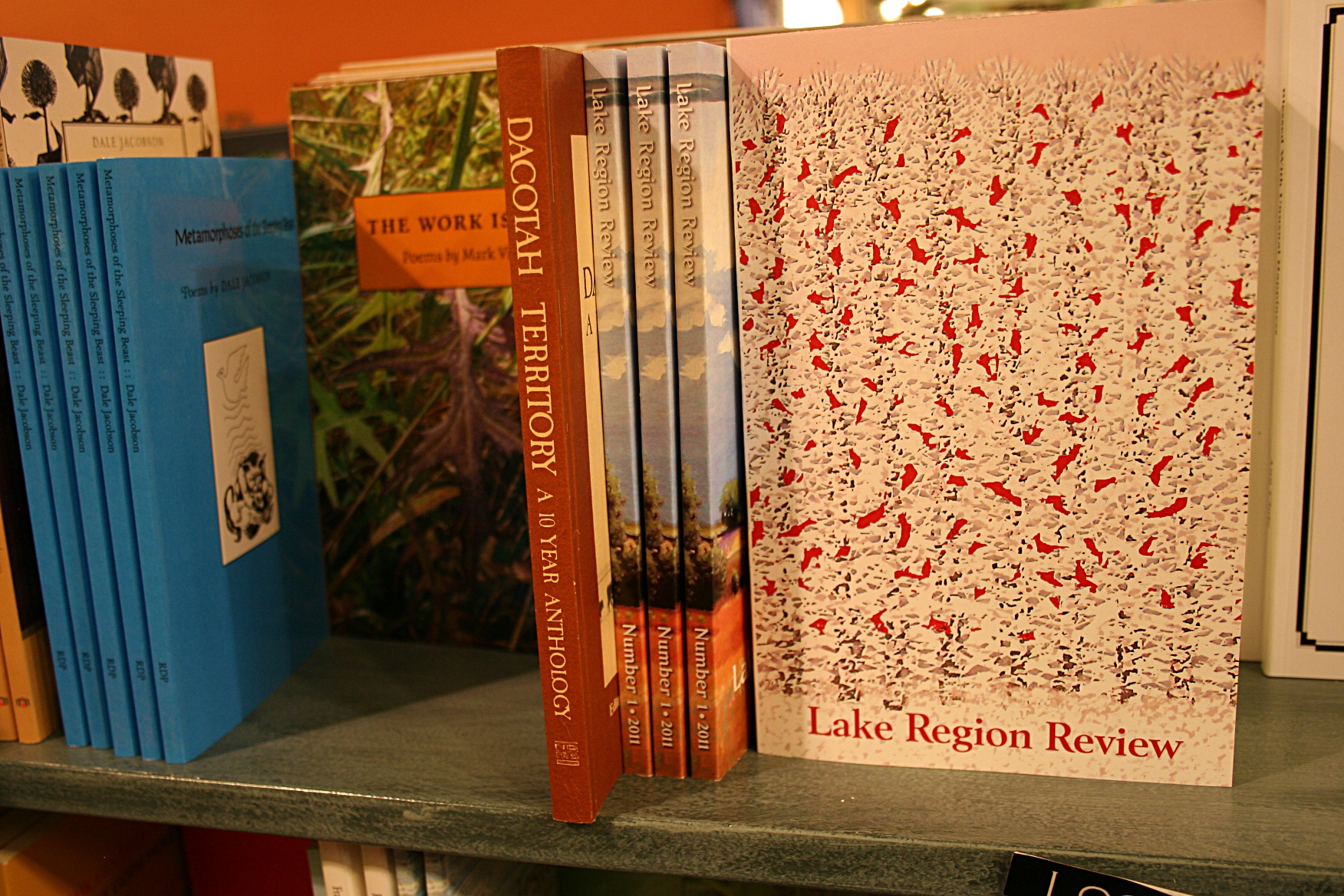
Lake Region Review 2, with wood print cover art by well-known Minnesota artist Charles Beck of Fergus Falls, nestles next to the first volume of LRR. Beck’s cover art is titled “Cardinals.”

Given that 430 fiction, creative nonfiction and poetry submissions were submitted to the Battle Lake-based Lake Region Writers Network for volume two, getting into the collection is an honor and accomplishment. I’m in the company of mighty fine writers, many of them with an impressive list of writing credentials.

I also happen to live in southeastern Minnesota, far, far away from most of the writers featured in LRR and also far away from events related to the release of the second volume.

The back room of Zandbroz Variety, site of readings, book club meetings and other events and gatherings.

Visiting Zandbroz Variety offered me an opportunity to connect with the Fargo bookstore which will host a Lake Region Review Two Reading Event at 2 p.m. Sunday, December 9. I didn’t know about the event when I visited Zandbroz and introduced myself. And when I photographed the delightful back room of Zandbroz, I was unaware LLR 2 contributors will soon be reading in this cozy and inviting space.

Artwork in Zandbroz Variety’s back room with a favorite quote of mine from the book, The Help.

It was pure coincidence that, two days later, I would receive an email from Luke Anderson, president of the LRWN inviting me and other LLR 2 writers to participate in the reading at Zandbroz. I wish I could, but a 300-mile (one-way) road trip to Fargo is not in my plans as I’ve been to that North Dakota city four times already since February. (My son attends North Dakota State University.) Gas, hotel and dining expenses add up.

Likewise, I couldn’t join other LRR 2 writers who recently read their works for a program to be aired November 30 – December 2 on nine western Minnesota radio stations from Worthington in the extreme southwest to Fergus Falls on the north.

So it goes. I’m not much anyway on public appearances, preferring to write rather than perform. But I’m learning, too, the value in reading poetry aloud to an audience, having done that thrice now.

Promoting is also part of this writing gig. And that, too, can be a challenge given my Minnesota predisposition not to call attention to myself.

However, I did inform the young man staffing Zandbroz Variety that I had poems in both volumes of Lake Region Review. “Perhaps you remember the first; I mentioned cow pee,” I told him. “And in the second, I mention beer.”

He laughed, considered for a moment and replied that “cow pee” sounded familiar to him. Maybe. Maybe not. But I expect he’ll remember me now.

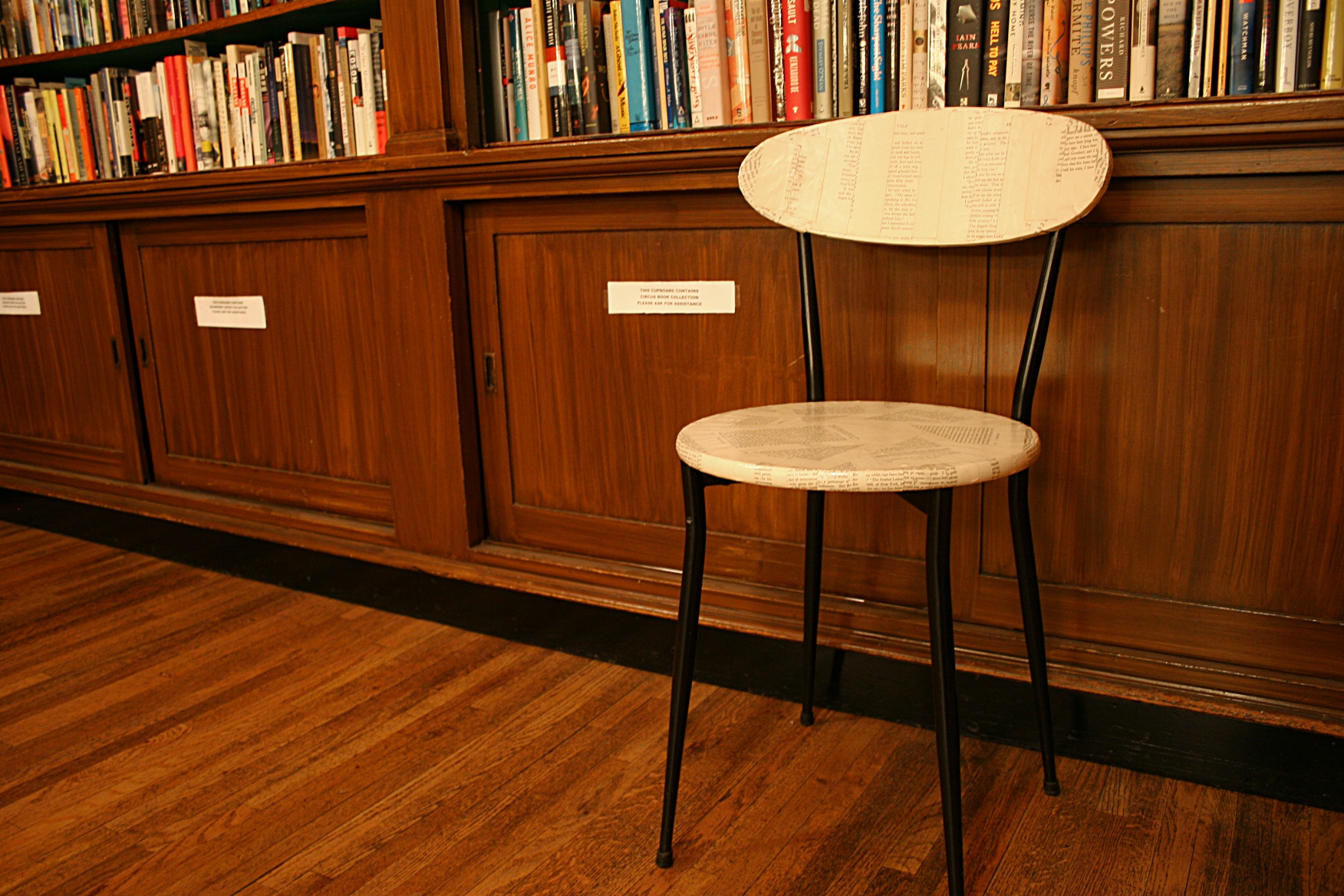
The lines, the books, the setting…this a scene in the back reading room. Love the ambiance.

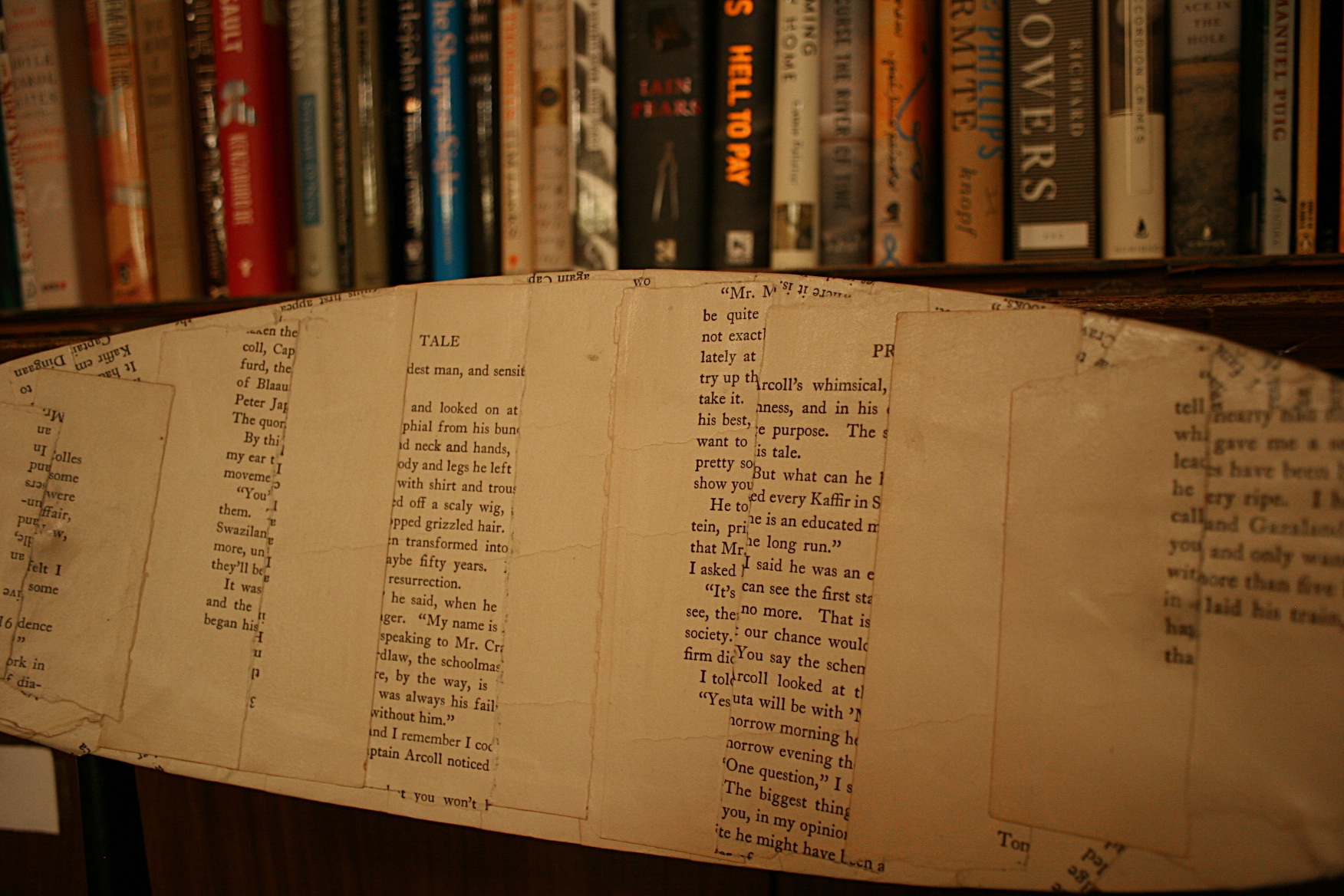
A close-up of the chair back in the photo above. I have no idea from what book these pages were pulled. But I’d place a literary chair like this in my home any day.

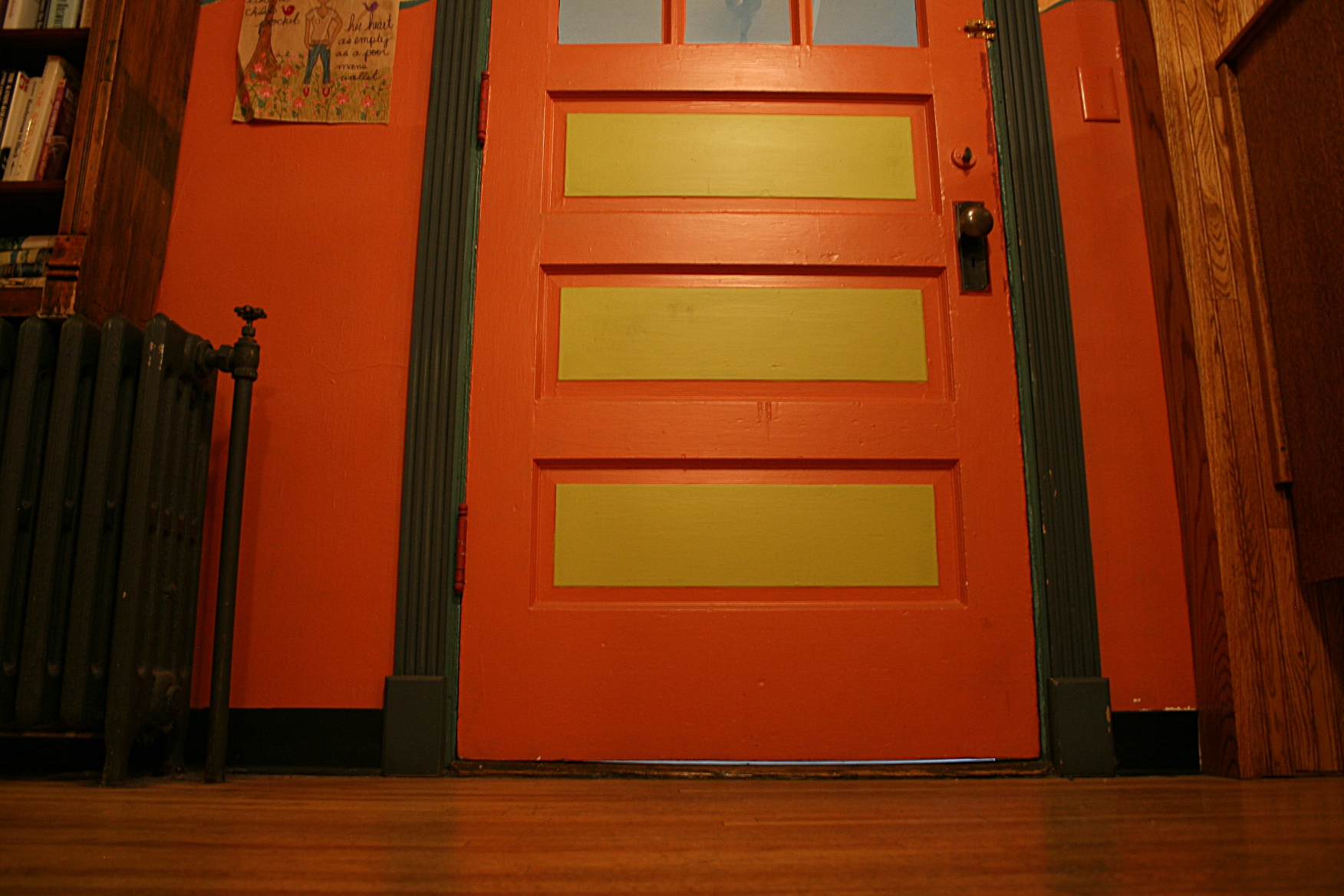
Jolts of color on a door in that welcoming back room.

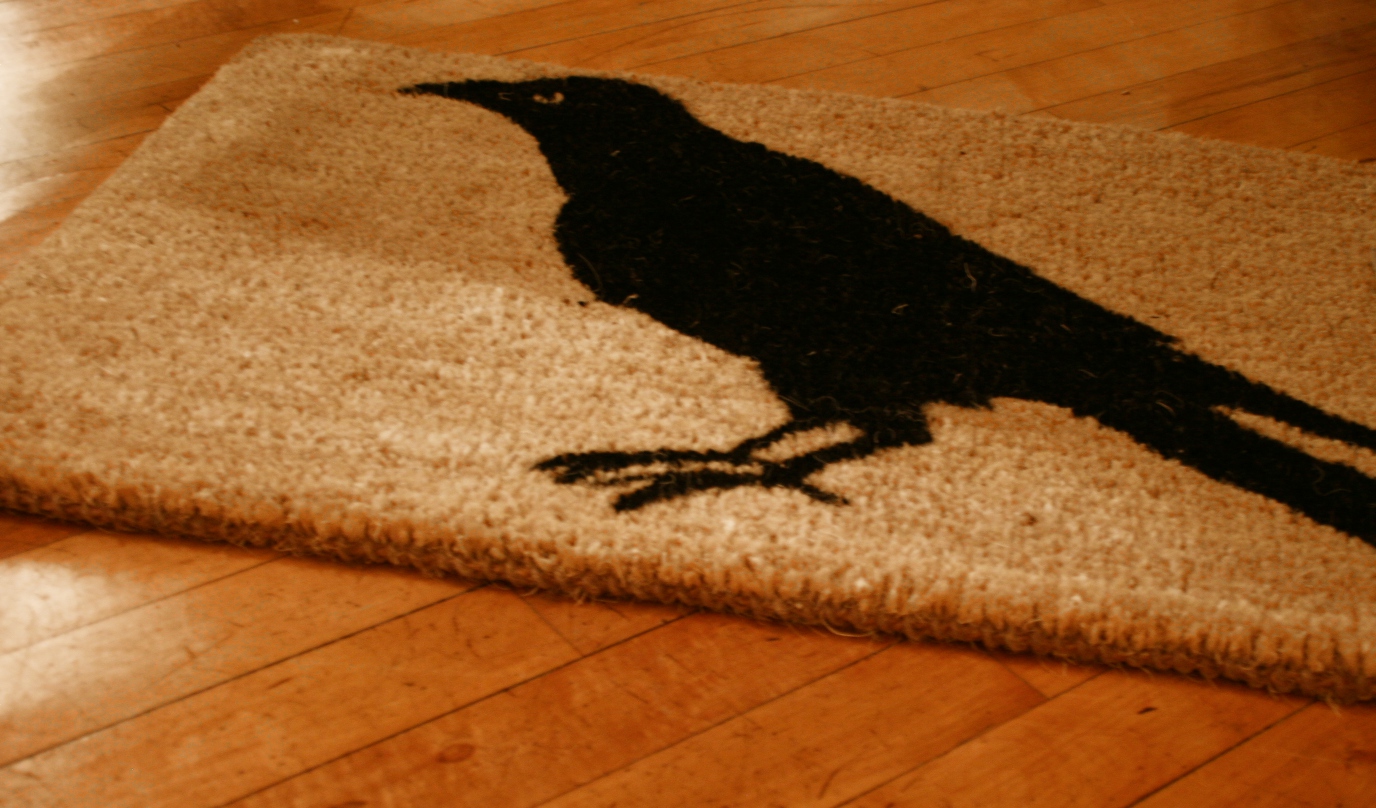
A rug for sale in the variety section of Zandbroz where you will find an eclectic mix of funky and retro and otherwise interesting merchandise. This made me think of Alfred Hitchcock’s “The Birds.”

An enchanting Christmas display near the front of the store.

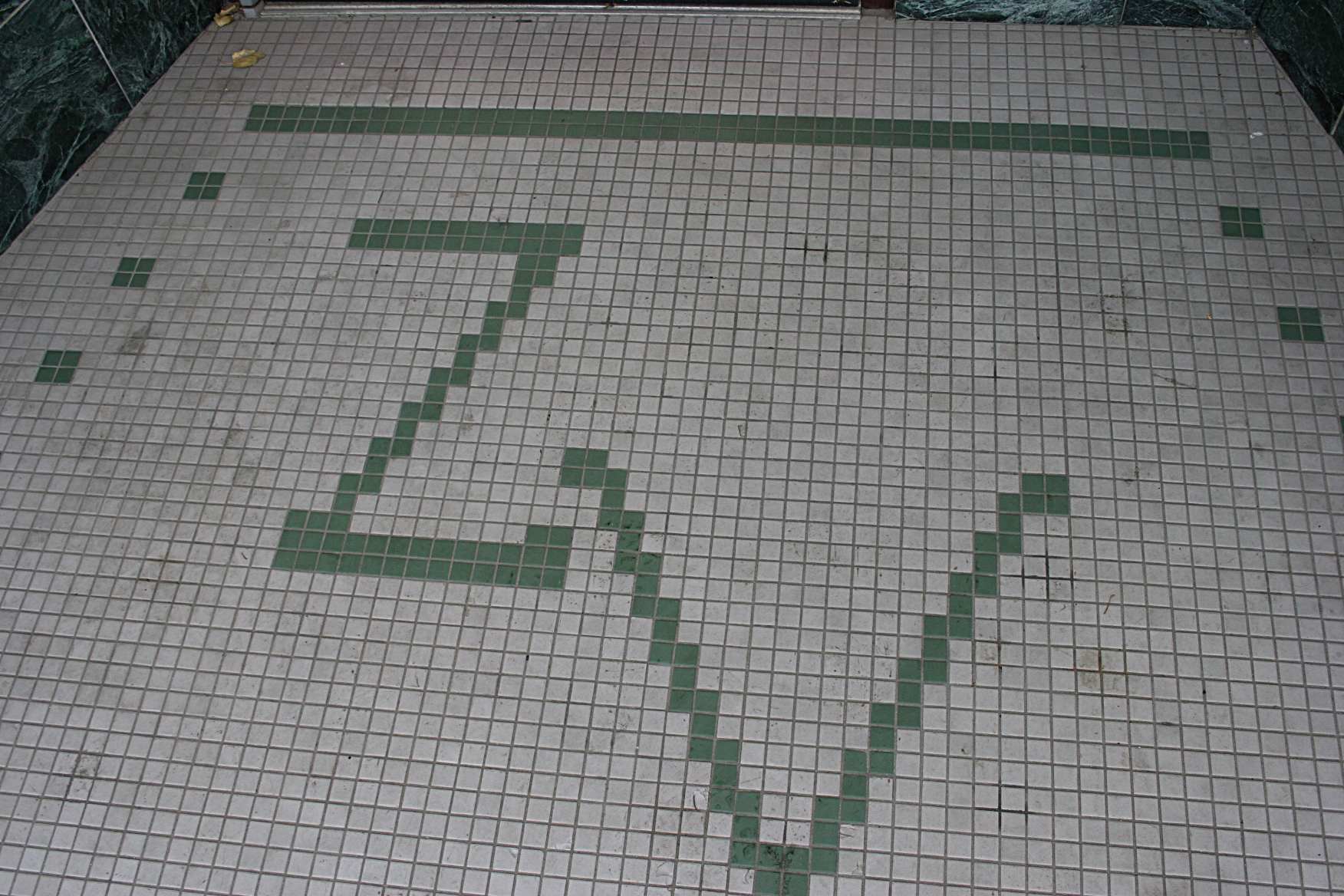
Outside a front door of Zandbroz, I found this lovely tile work. I apologize for the lack of exterior store photos. But a light mist was falling at the time and I was reluctant to pull out my camera. I also limited my interior shots as Zandbroz was busy, busy and other shoppers do not always appreciate someone aiming a camera at them.

FYI: To learn more about Lake Region Writers Network, click here to reach the writers’ group website.

To see where you can find copies of Lake Region Review, published in 2011 and 2012, click here. LRR 2 includes writing by the following: Maxine Adams, Luke Anderson, Joe Baker, Frances Ann Crowley, Holly Dowds, Cindy Fox, Yahya Frederickson, Susan Gilbert, Ruby Grove, Vinnie Hansen, Audrey Kletscher Helbling, Nancy Klepetka, Karla Klinger, Elisa Korentayer, Judy R. Korn, Ryan Kutter, Julie C. Larson, Kim Larson, Linda Frances Lein, Kathleen Lindstrom, Ethan Marxhausen, Linda Back McKay, Travis Moore, Kristine Price, Candace Simar, Doris Lueth Stengel, Liz Sweder, Francine Marie Tolf, Benet Tvedten and Kevin Zepper.

Click here to see where you can listen to readings from LRR 2 airing soon on nine western Minnesota radio stations.

Finally, click here to learn more about Zandbroz Vareity, founded by brothers Jeff and Greg Danz and with stores in Fargo (420 Broadway) and in Sioux Falls, South Dakota. Do you see how they came up with the clever name for their business?

© Copyright 2012 Audrey Kletscher Helbling


Long-time North Mankato hardware store closing November 2, 2012

Filed under: Uncategorized — Audrey Kletscher Helbling @ 7:01 AM
Tags: , , , , , , ,

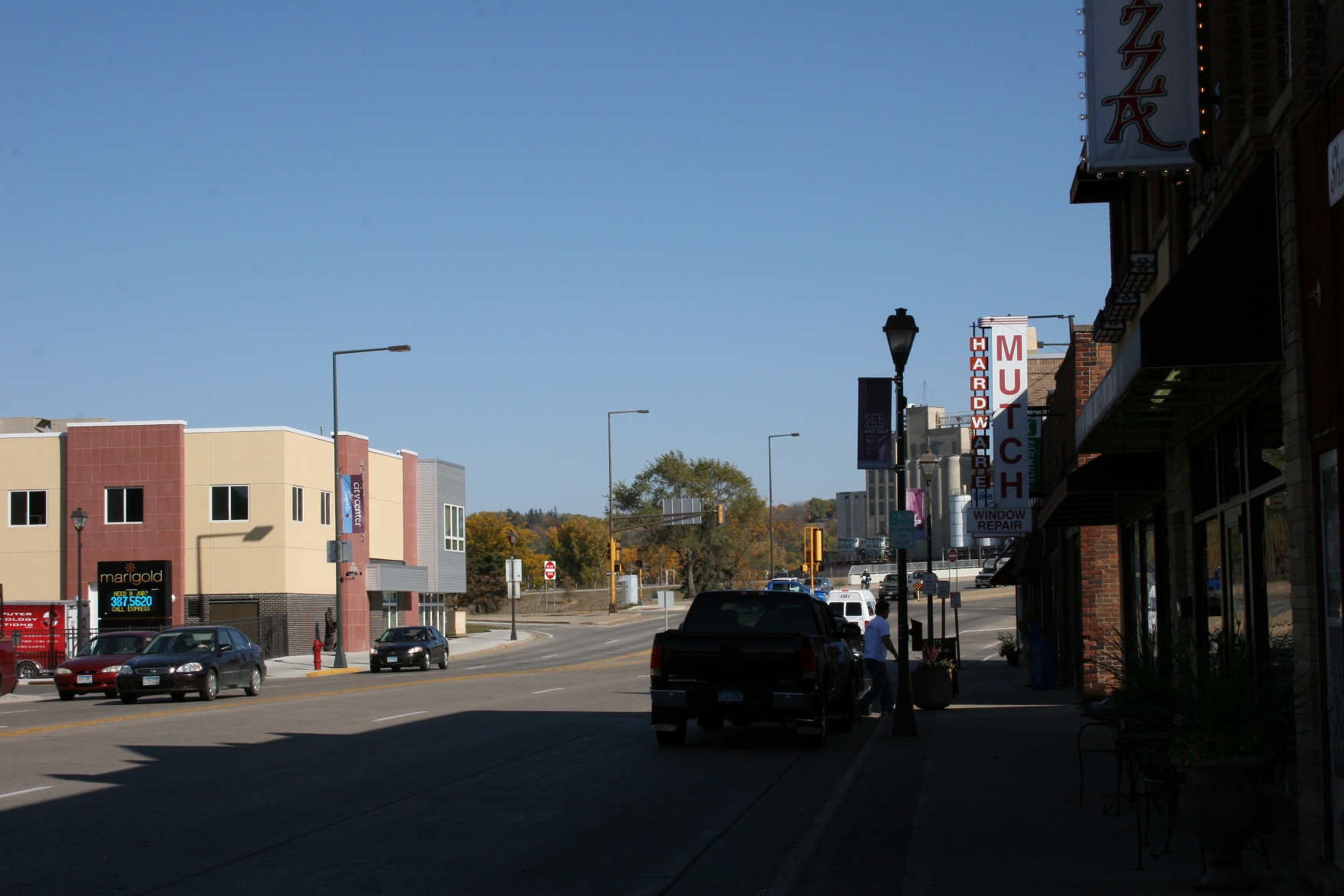
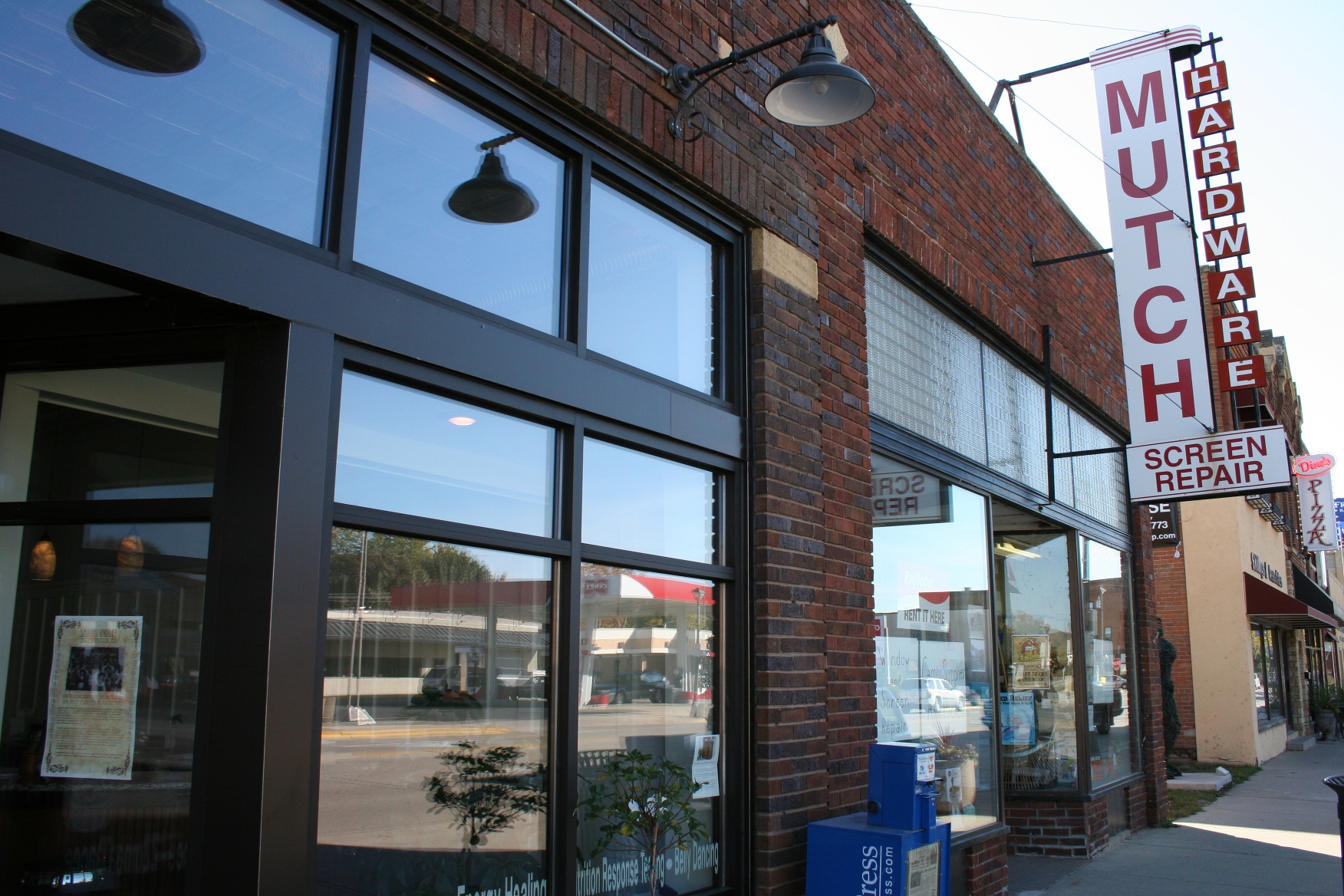
A view of the North Mankato business district where Mutch Northside Hardware is located.

TWICE IN THE PAST MONTH, I have visited businesses which have since announced plans to close. First I wrote about the Historic Highland Store and Cafe (click here to read that story), slated to close shortly before Thanksgiving.

The owners of Mutch Hardware are retiring this month.

Now, even before I could post about it, I’ve learned that old-fashioned Mutch Northside Hardware in North Mankato will shut its doors this month. During neither visit was even the slightest hint made to me that these places would soon close.

I really do not know what to say. I do not bring bad luck. I can only conclude that my visits were meant to be, that through my photography I am helping preserve pieces of Minnesota business history. And in the instance of the hardware store, I am also preserving the memories and legacy of the Mutch family.

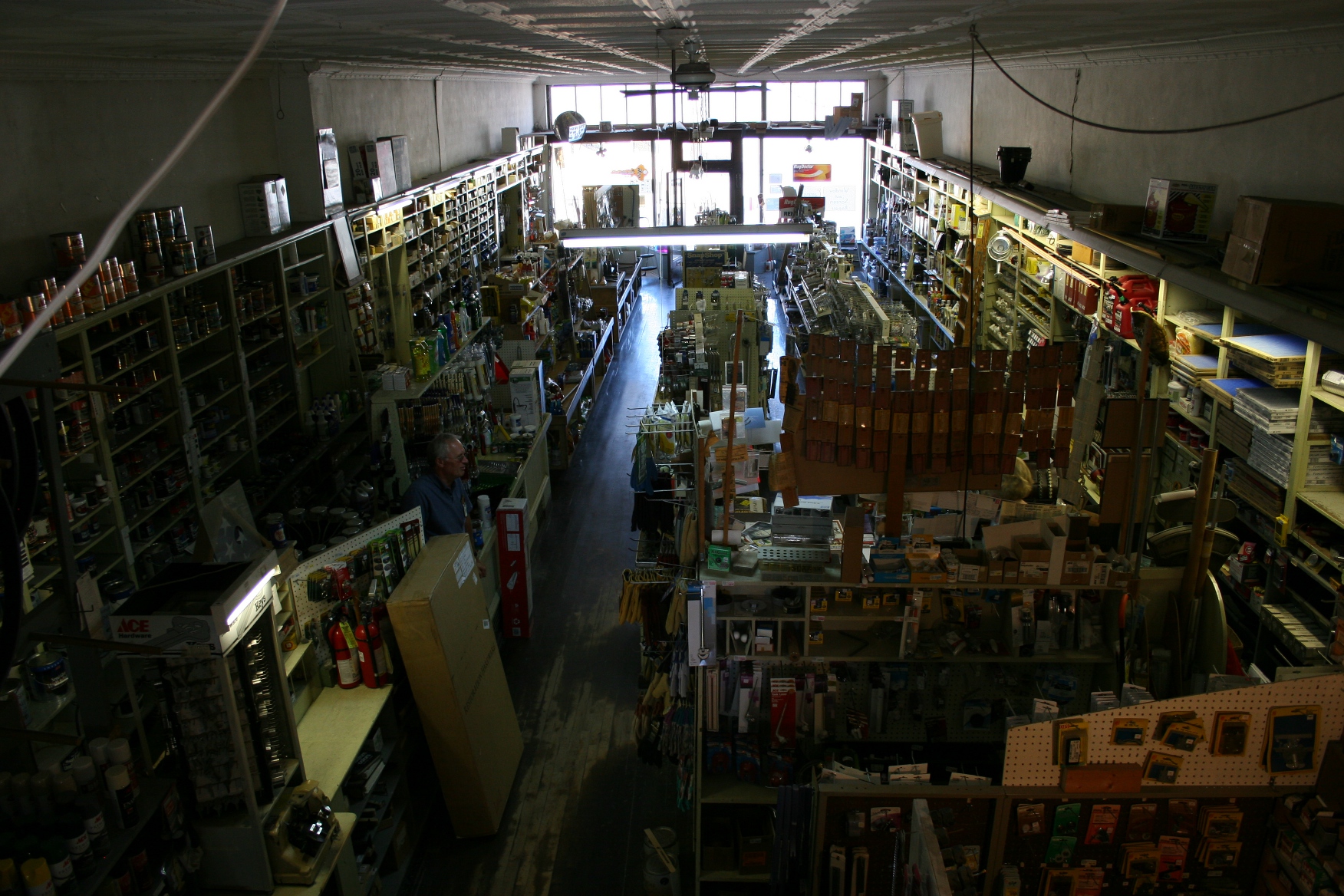
A view of the old-fashioned hardware store from the upstairs office.

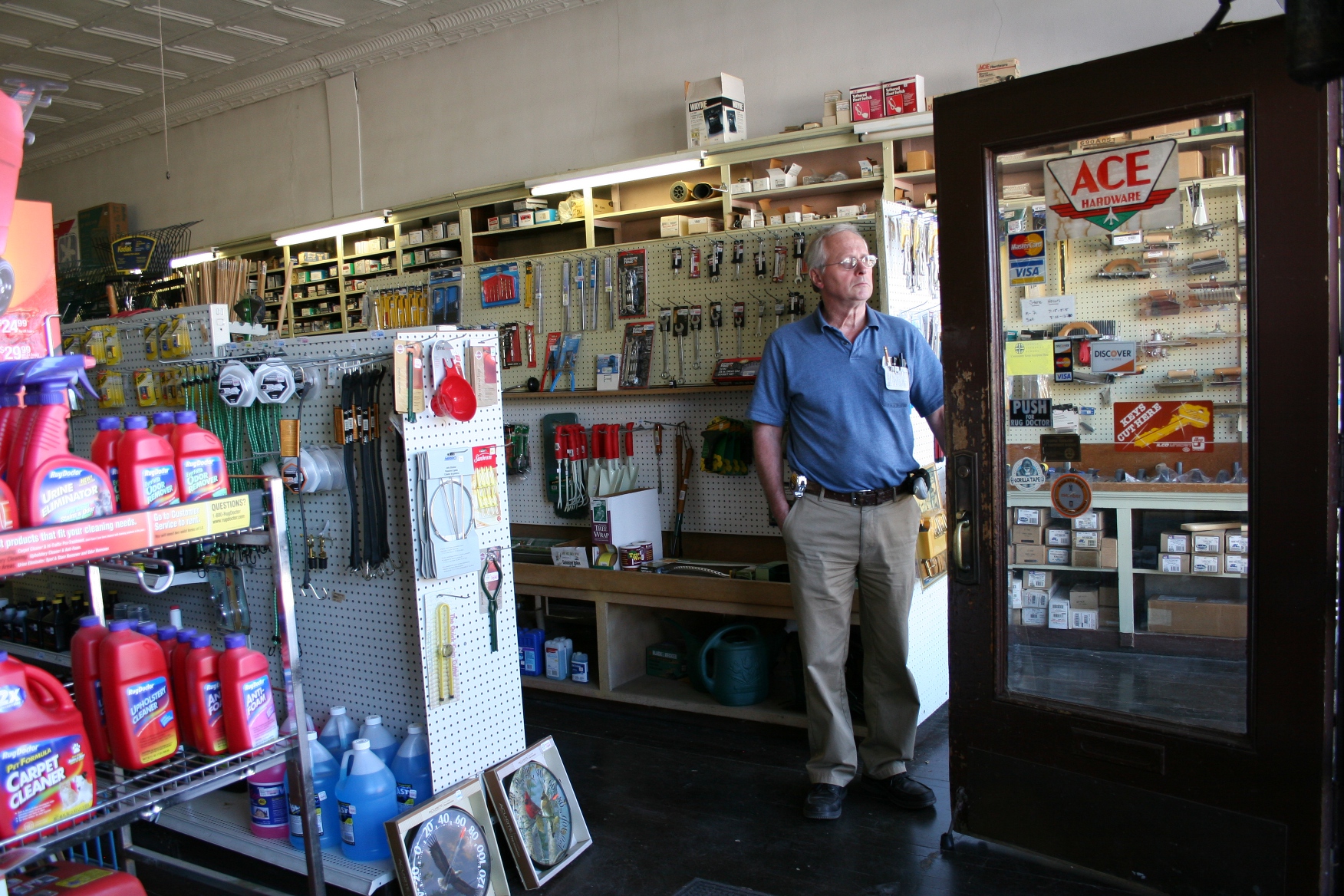
WHEN I MET Dave and Sandy Mutch a month ago, it was a quiet Monday afternoon in their North Mankato hardware store just across the Minnesota River bridge from Mankato.

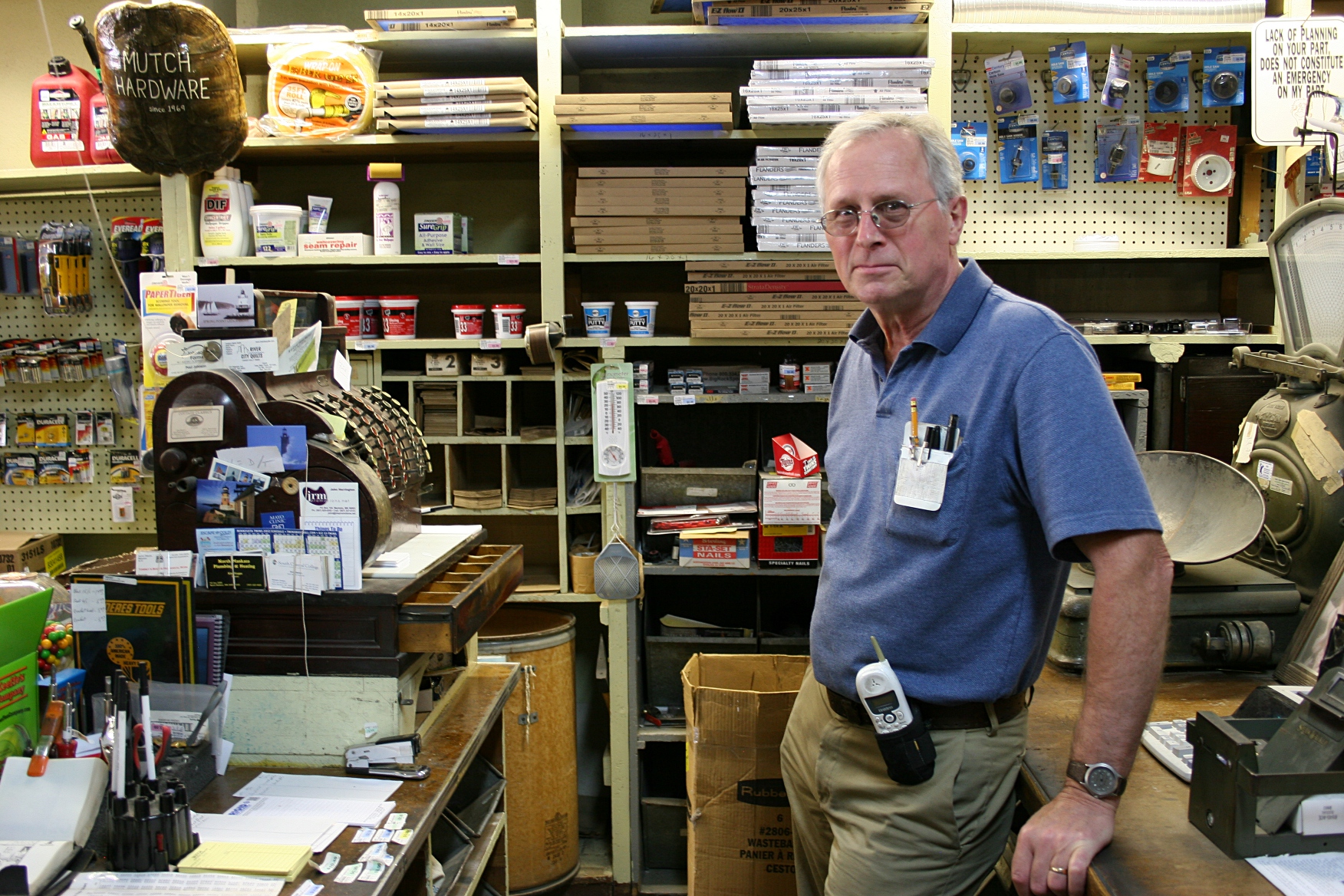
Dave Mutch behind the original store counter with the original cash register and the original scale (behind him).

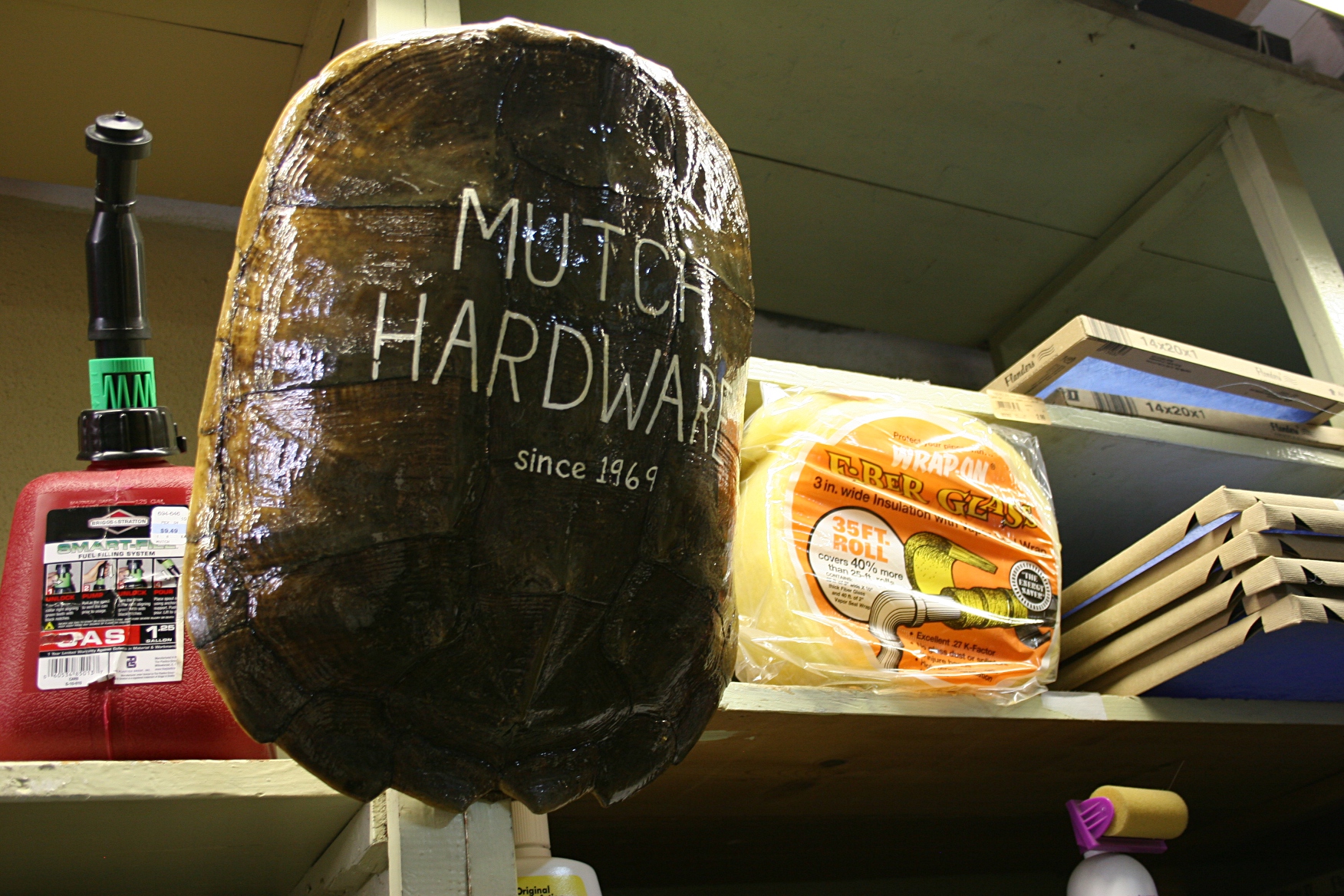
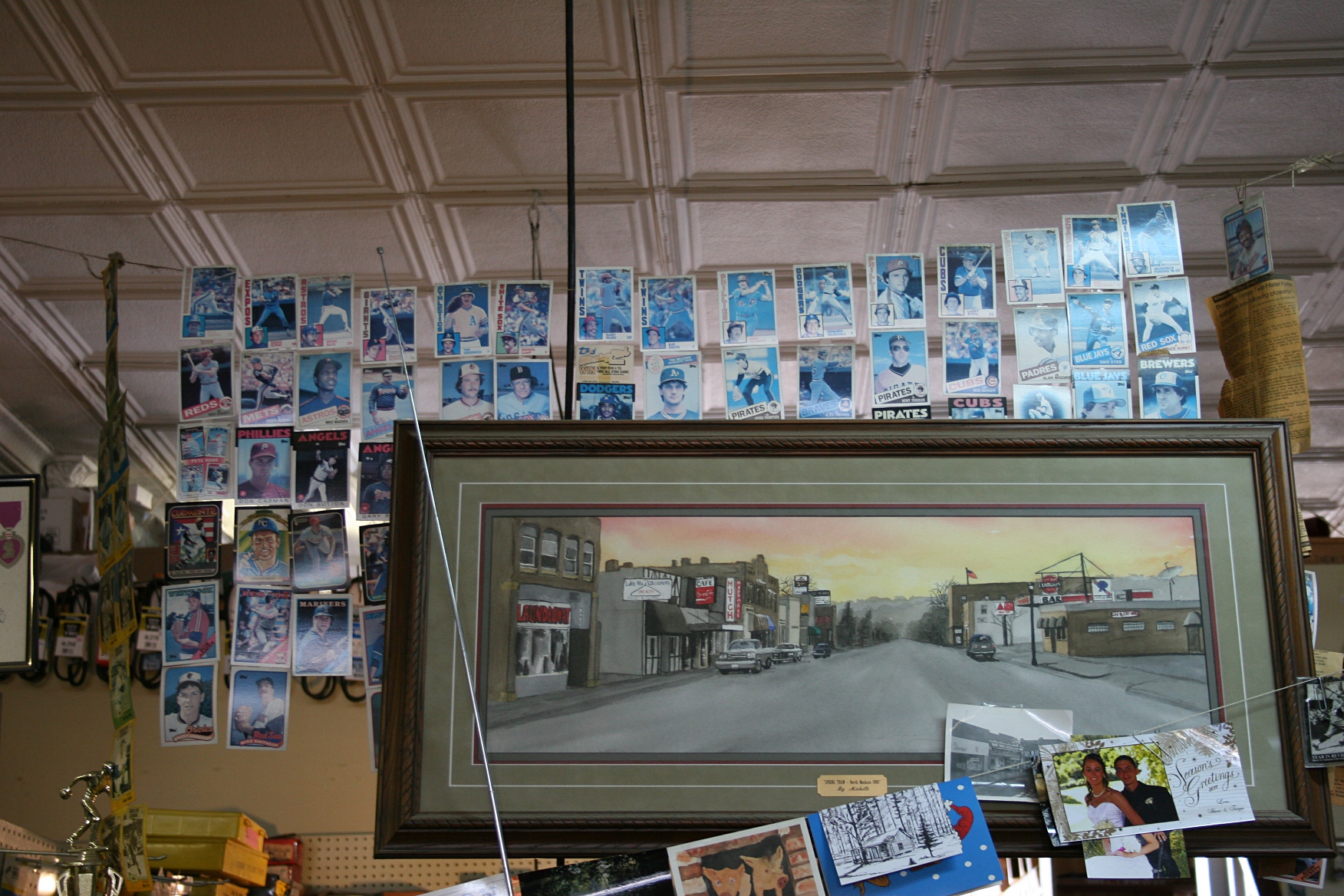
Dave was putzing in the back of the store while Sandy worked up front. And as I started poking around, roaming between the narrow aisles, noticing things like bulk nails in bins, an outdated rotary dial telephone, the antique hand crank cash register, a wall calendar dating back to 1969, the creaking wood floor, notes from customers, baseball cards and a turtle shell, Dave eased away from his work.

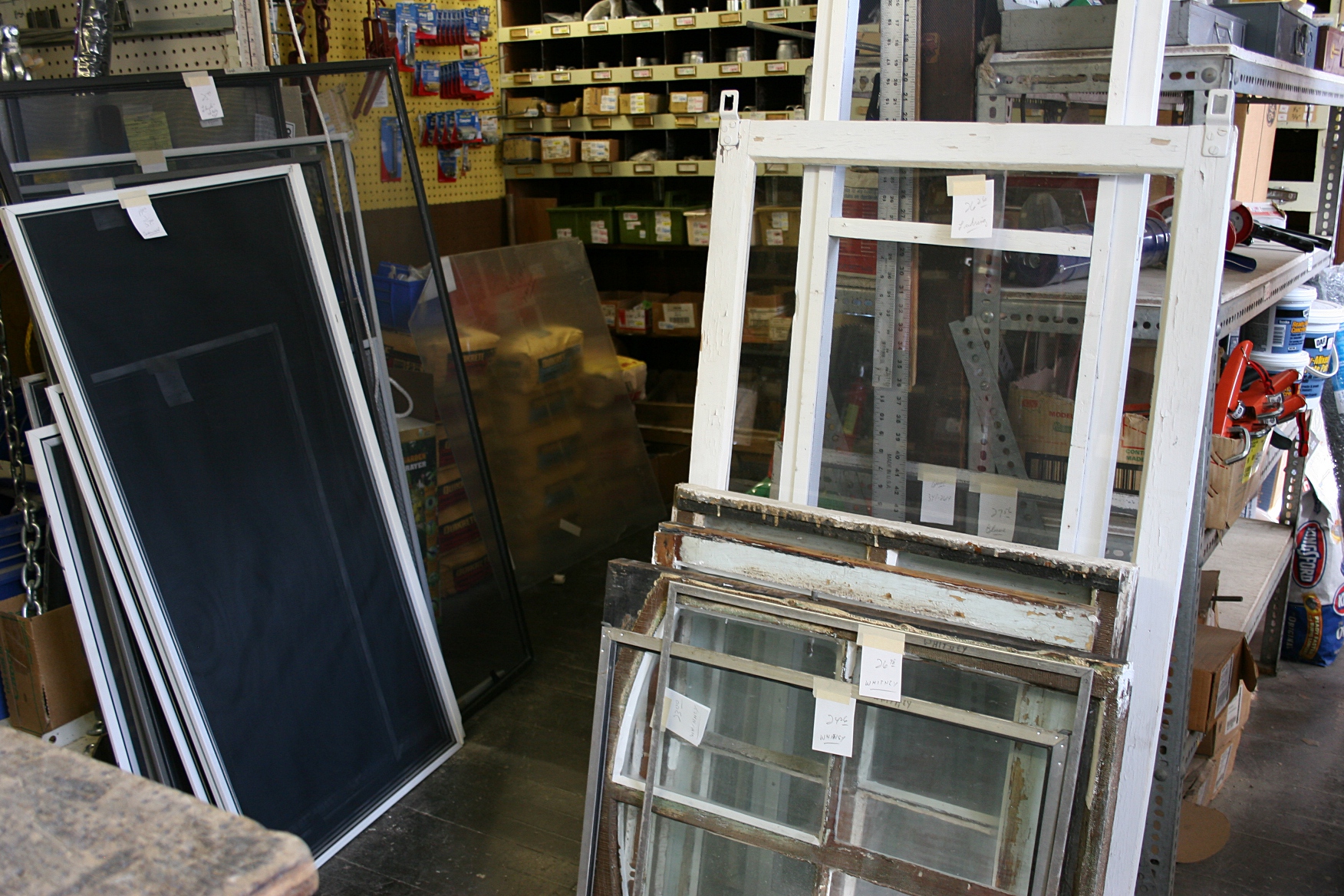
The store specializes in window repair.

I met a man content with life, happy to help customers—to fix their windows, duplicate keys, mix paint. He seemed in no hurry, his conversation flowing at a slow and easy pace.

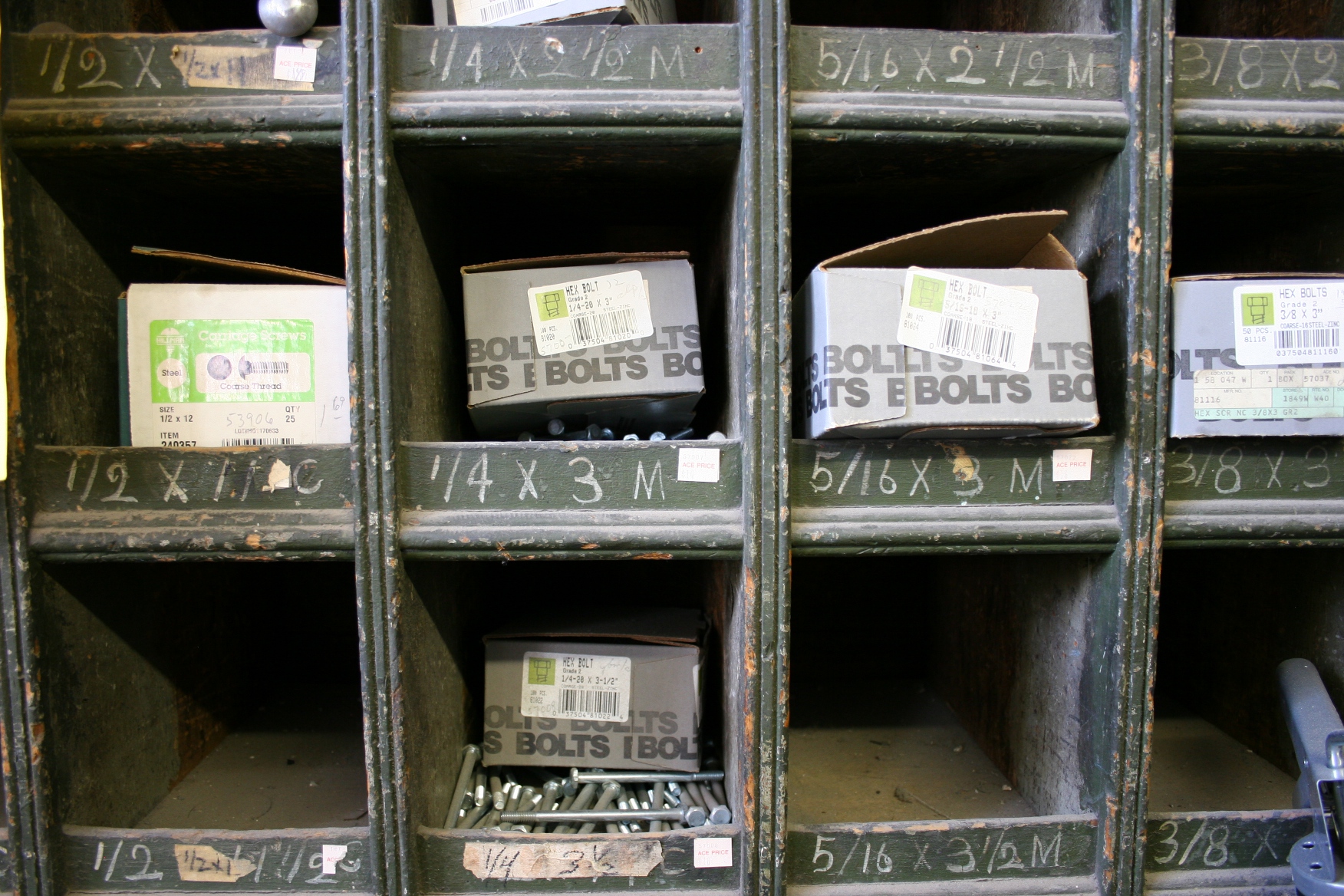
Bulk bins of yesteryear, still in use.

I wondered aloud to Dave how his mom-and-pop business could compete against big box retailers. “We’re willing to do what other people won’t do,” he said then. He also noted that his store stocks merchandise that others don’t, although he did not offer specifics.

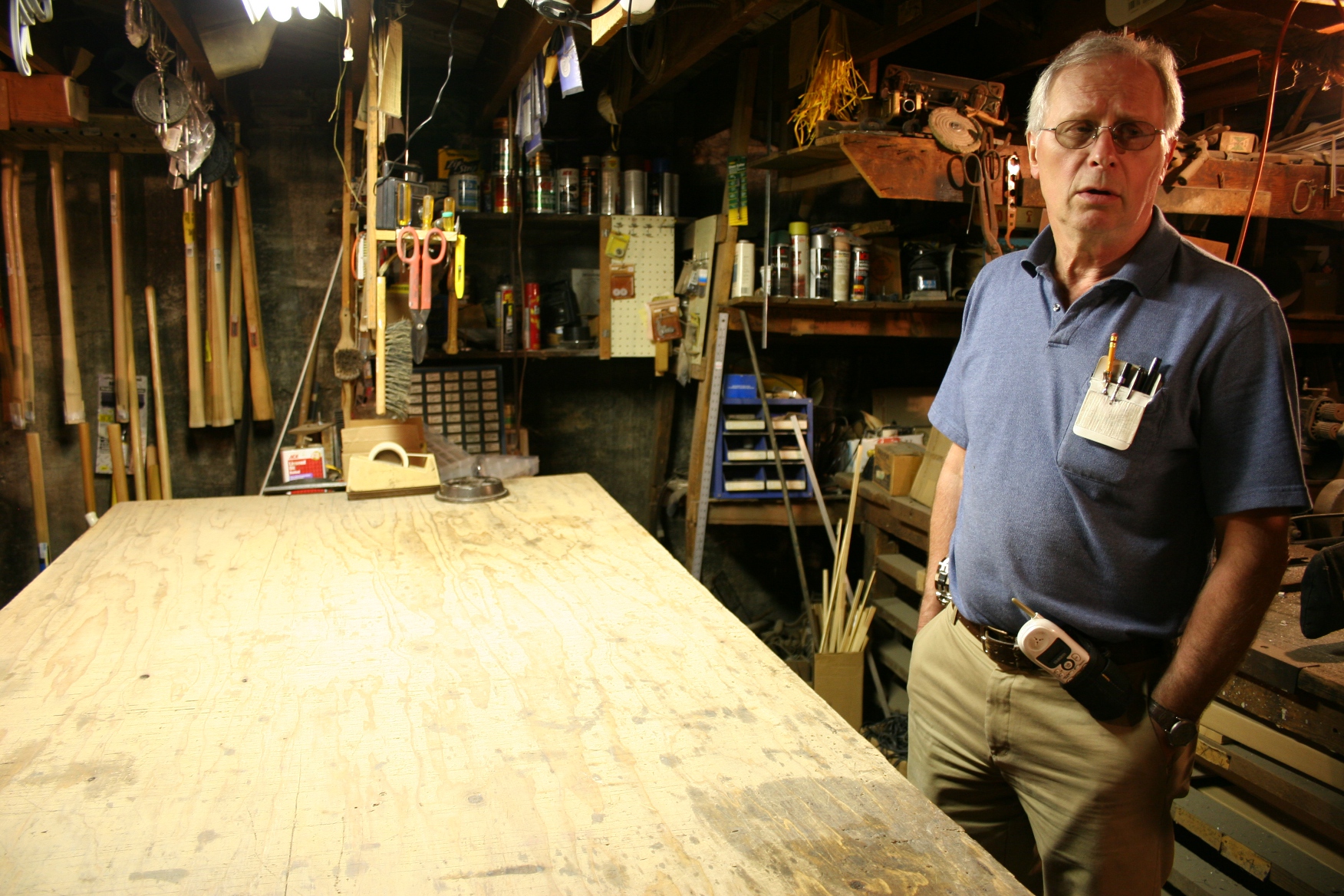
In this basement workshop space, Dave has spent many an hour through the decades repairing windows.

That focus on friendly customer service was clear to me as Dave led me into the basement of his building constructed and opened in 1926 as a hardware store. He works on windows in the depths of that basement, which also holds excess store merchandise. Eighty-six years as a neighborhood hardware store, and in the Mutch family since 1969. Remarkable.

This dated turtle shells marks the year Harold and Bernice incorporated Mutch Northside Hardware.

Dave’s parents, Harold and Bernice, incorporated Mutch Northside Hardware in 1969, opening in January 1970. Dave worked part-time at his parents’ hardware store while studying business at Mankato State University. He purchased half of the business in 1972. By 1979, he and Sandy, who holds a degree in social work, were full-time owners.

Soon Dave will close and lock the front door for the last time.

Soon they will be retirees. They’ll hold a closing sale and auction and then put the building up for sale.

With this long-time hardware store closing, I have to wonder who will repair the torn screens, who will replace the broken window glass, who will meet the hardware needs of the Mankato area residents dependent on Mutch Hardware for supplies and advice? Who will replace the Mutches’ friendly service? Where will customers find the one-of-a-kind merchandise not stocked at big box retailers?

Who? Where?

There’s a lot to be said for places like Mutch Northside Hardware. A lot.

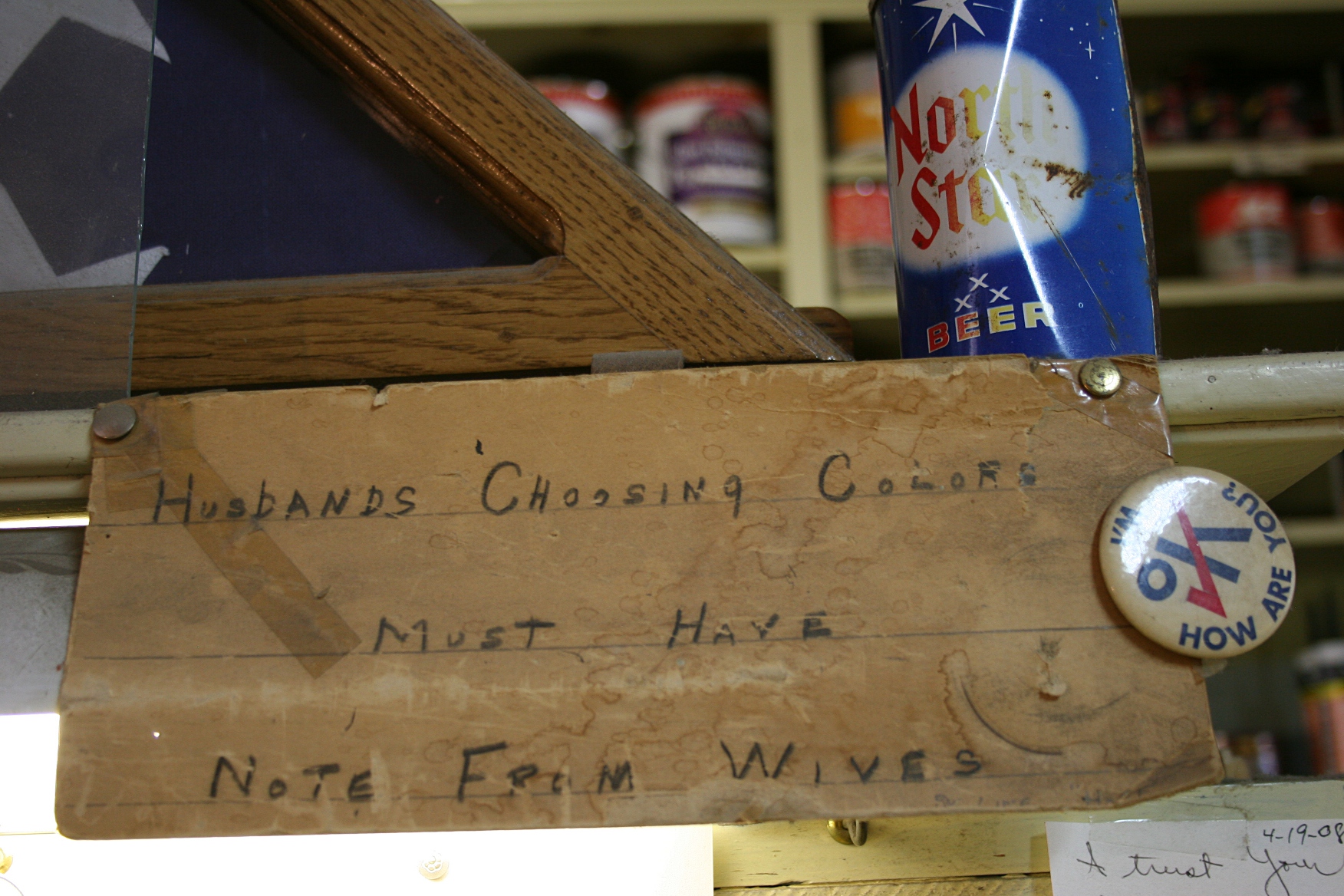
An aging sign posted in the store along with notes from mothers giving their children permission to purchase paint, etc.

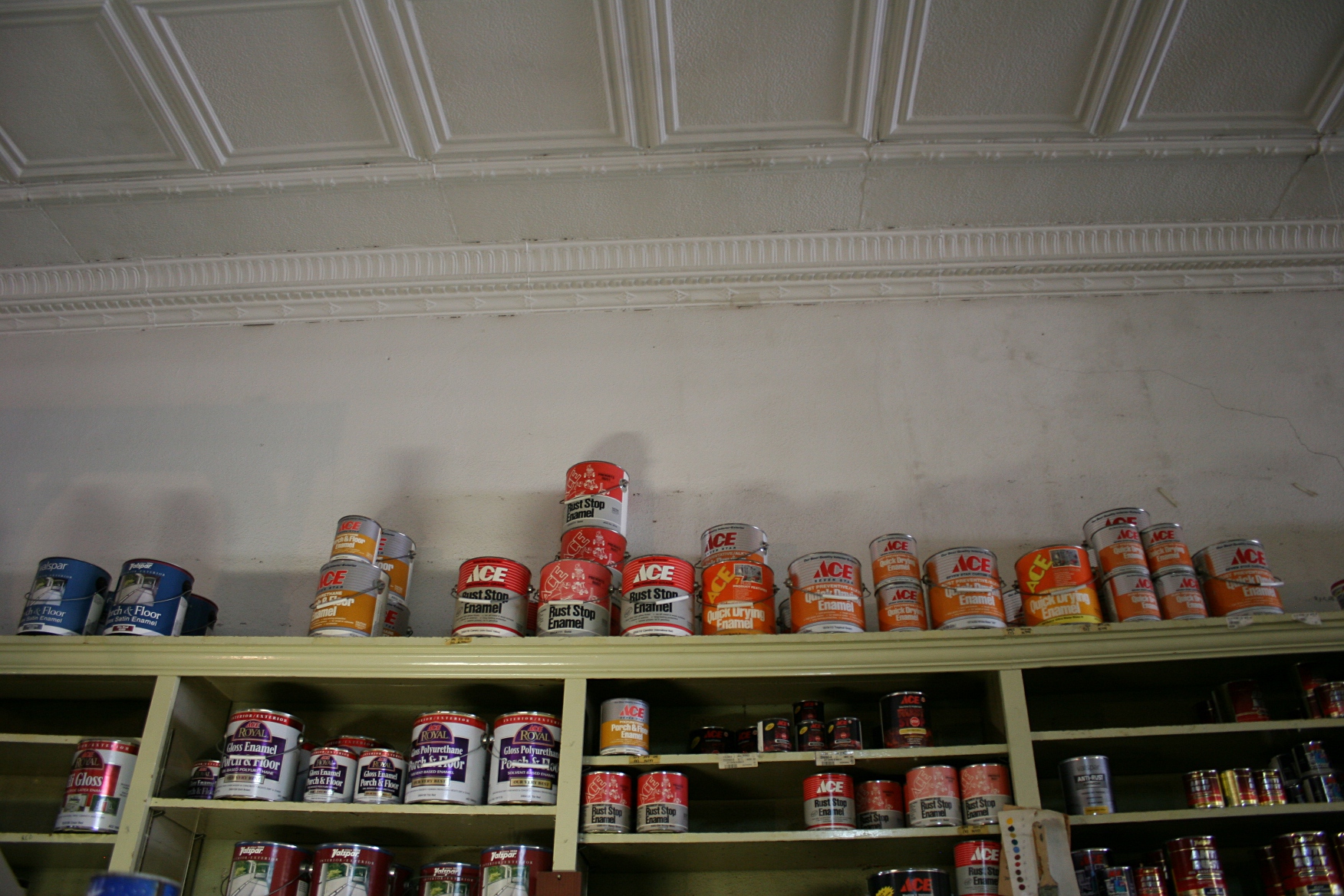
Cans of paint rim the top shelf next to the original tin ceiling in the 1926 building.

Before the Mutch family bought the business, it was Austin North Side Hardware, as noted in this 1969 calendar still hanging in the store.

A customer steps up to the original check out counter, where the wood floor is especially worn.

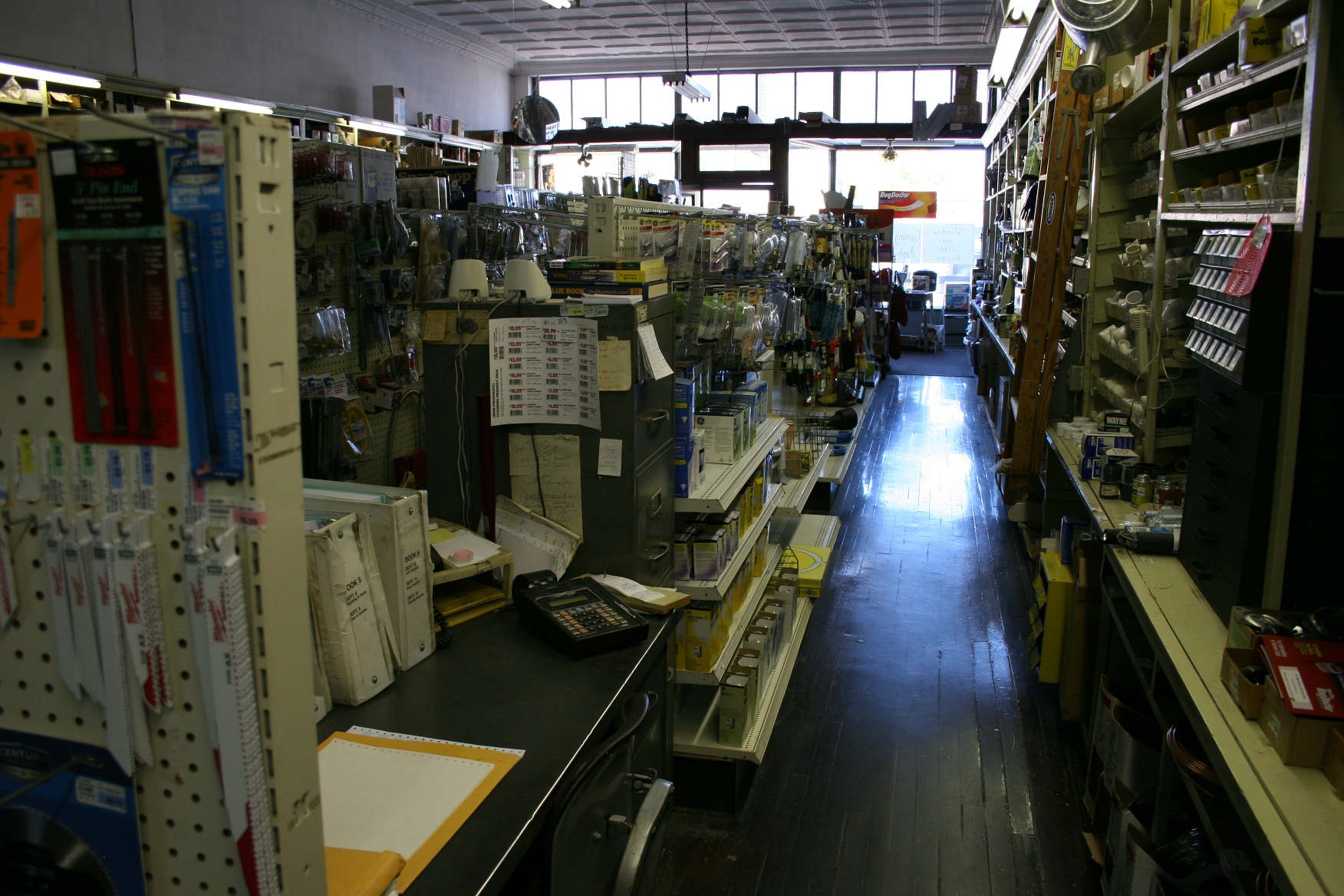
One of several narrow aisles crammed on both sides with merchandise.

Baseballs cards and a painting of the North Mankato business district add to the cluttered and nostalgic charm of Mutch Hardware.

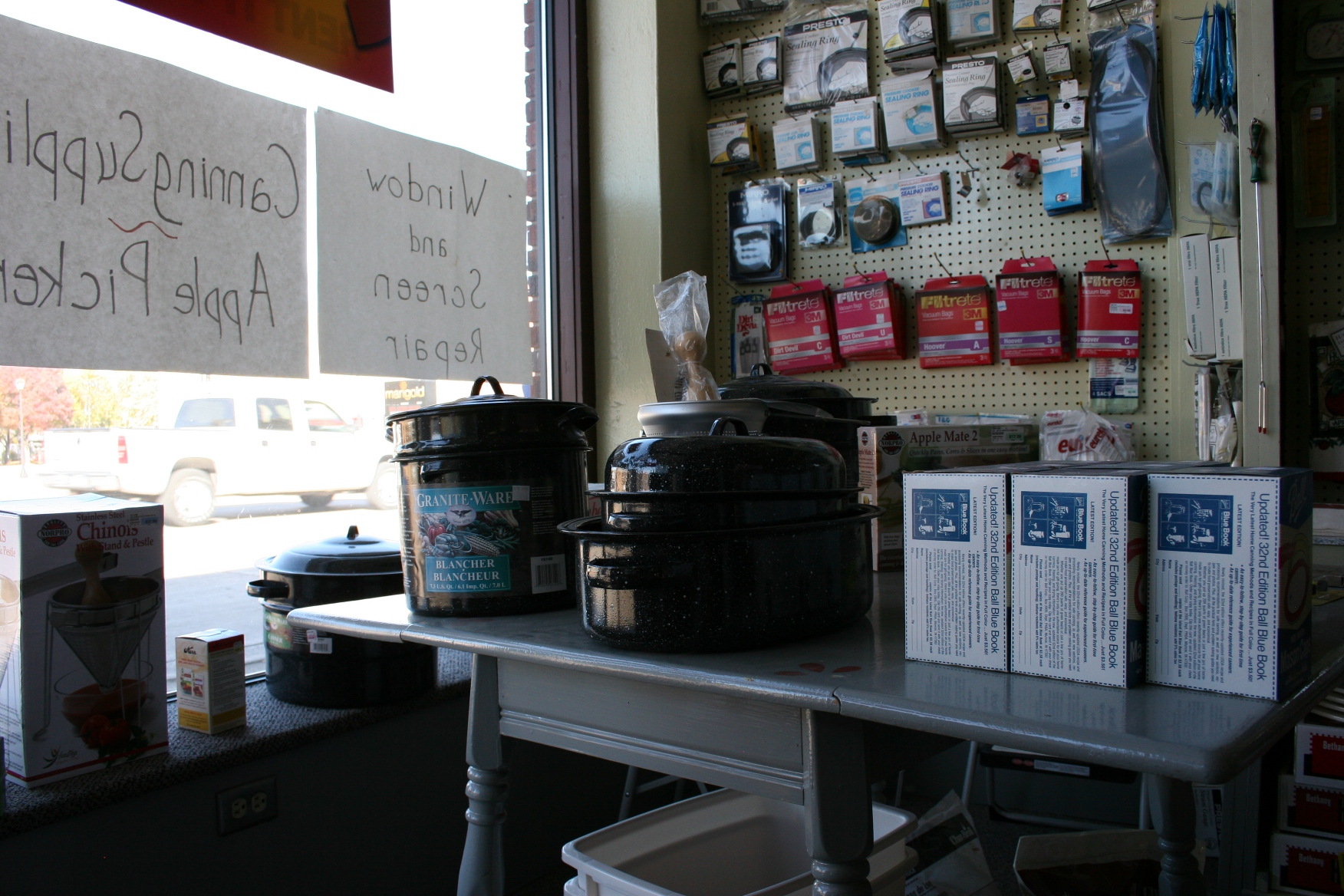
A seasonal front window display beckons gardeners. Hand-lettered signs in the window advertise window and screen repair and canning supplies. The Mutches did not advertise, relying instead on word-of-mouth to promote their business, Dave said.

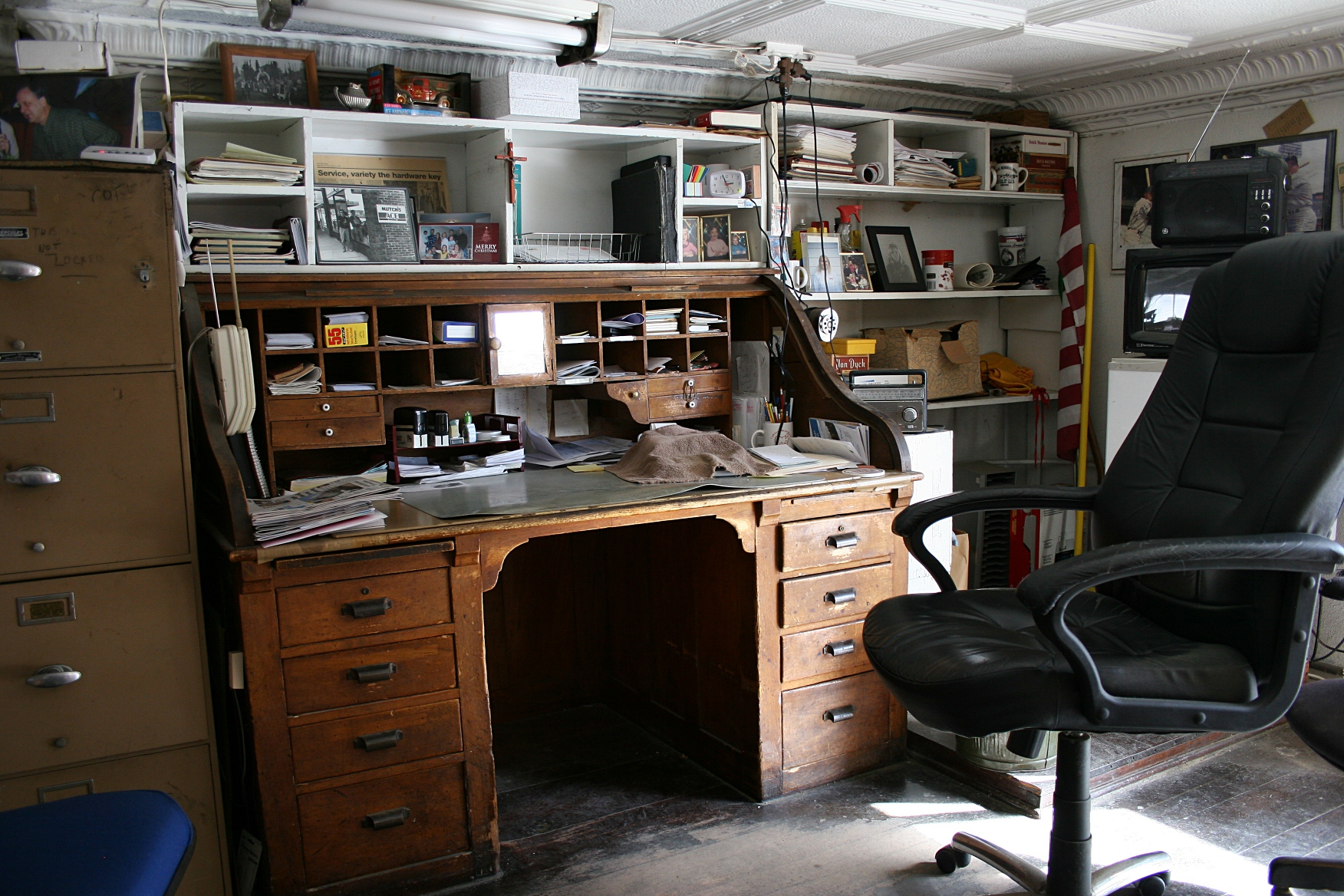
The upstairs office with the low tin ceiling and the original rolltop desk.

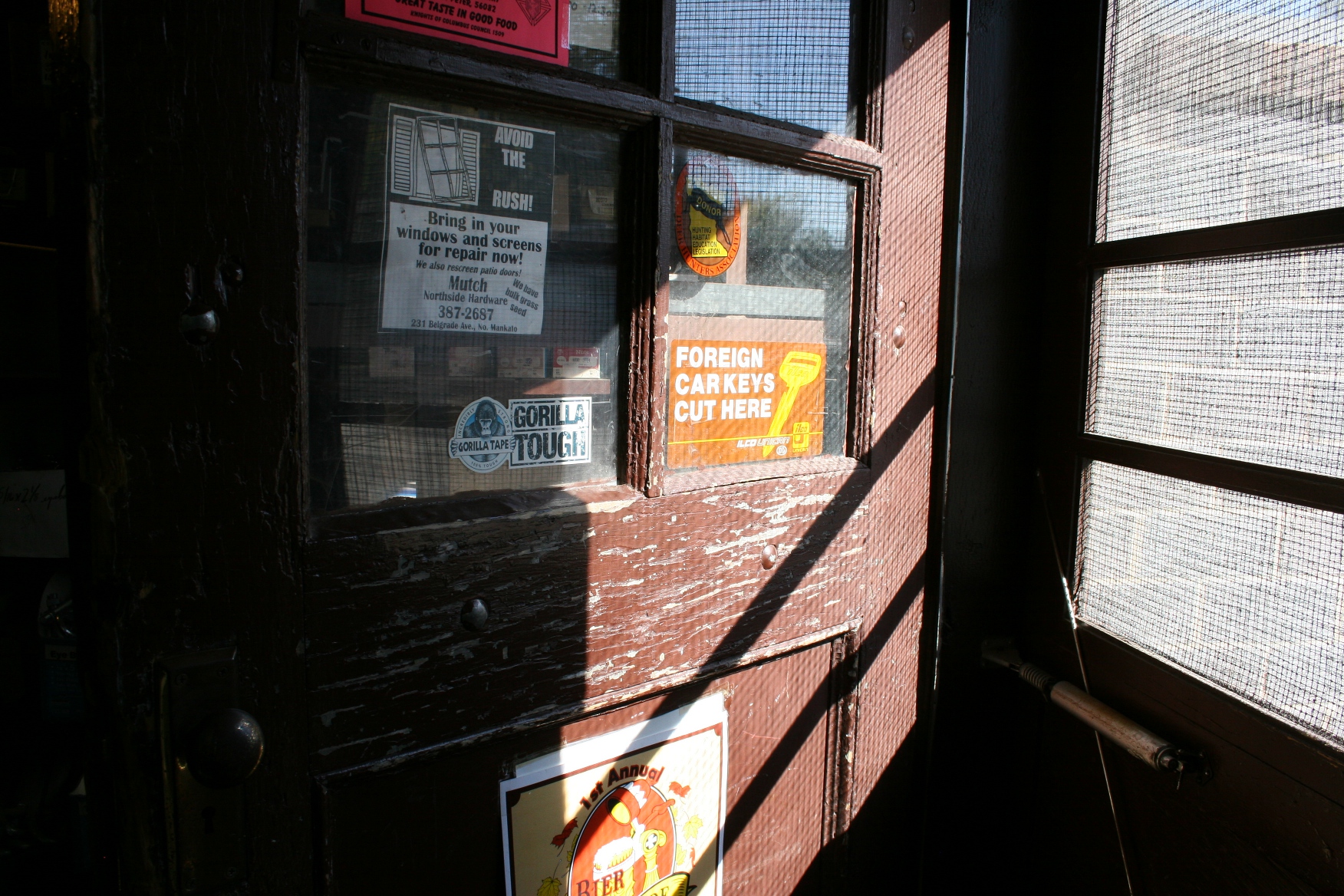
The back door.

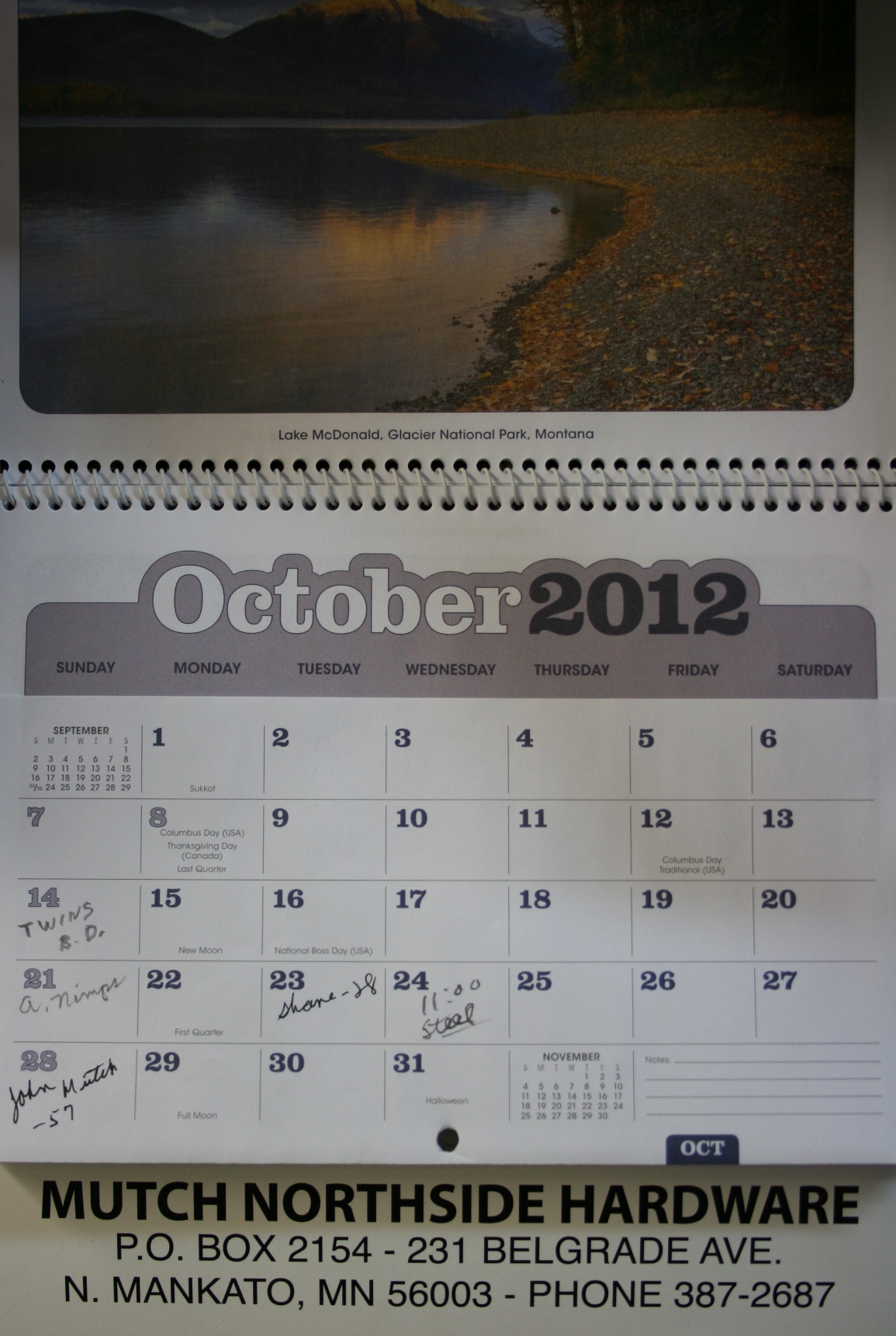
Mutch Hardware’s last calendar.

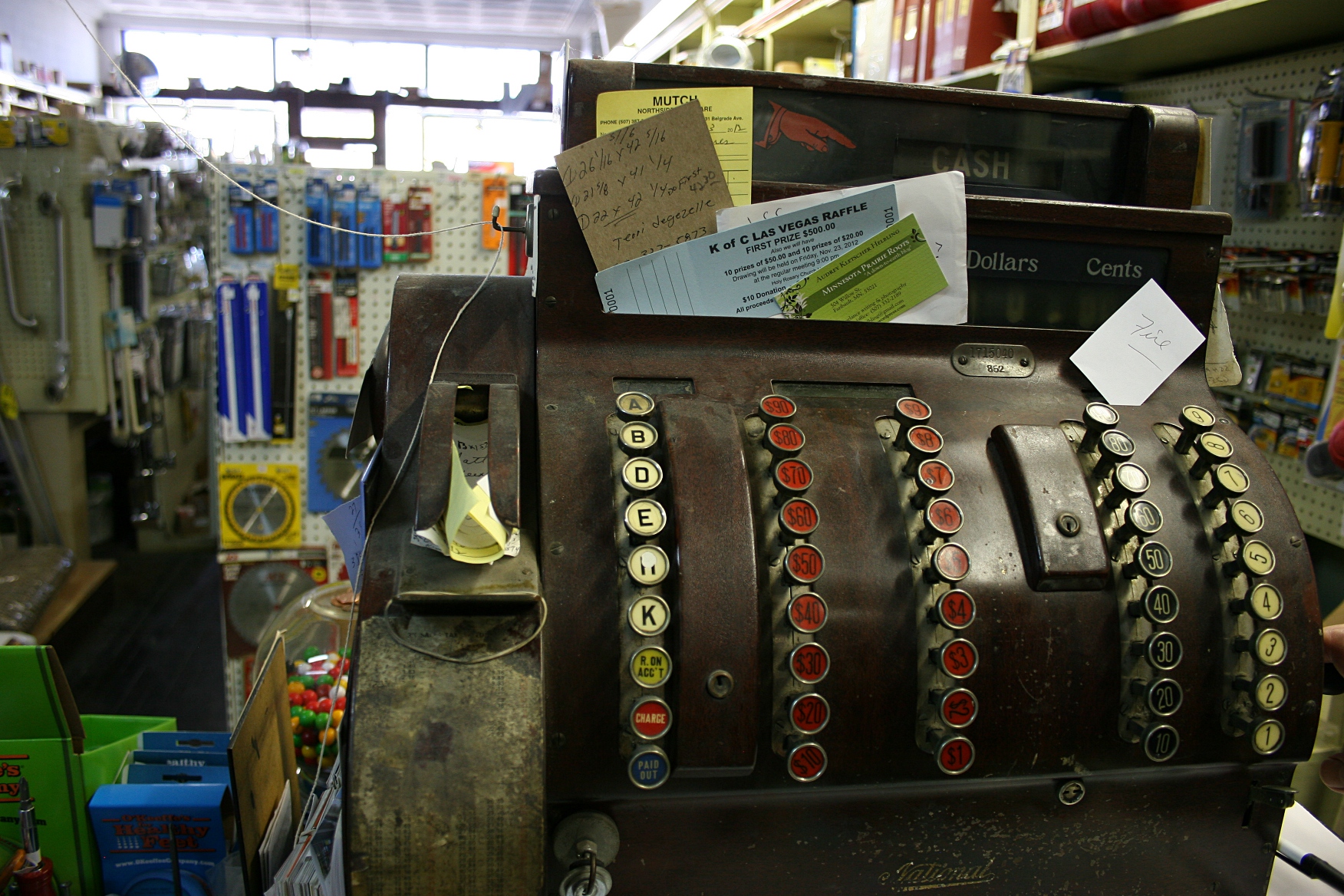
Soon Mutch Hardware will ring up its final sales on this cash register dating to the early 1900s and close the doors on 86 years of continuous hardware store history in North Mankato.

© Copyright 2012 Audrey Kletscher Helbling


In Hastings: The comfortable familiarity of an old-fashioned grocery store November 1, 2012

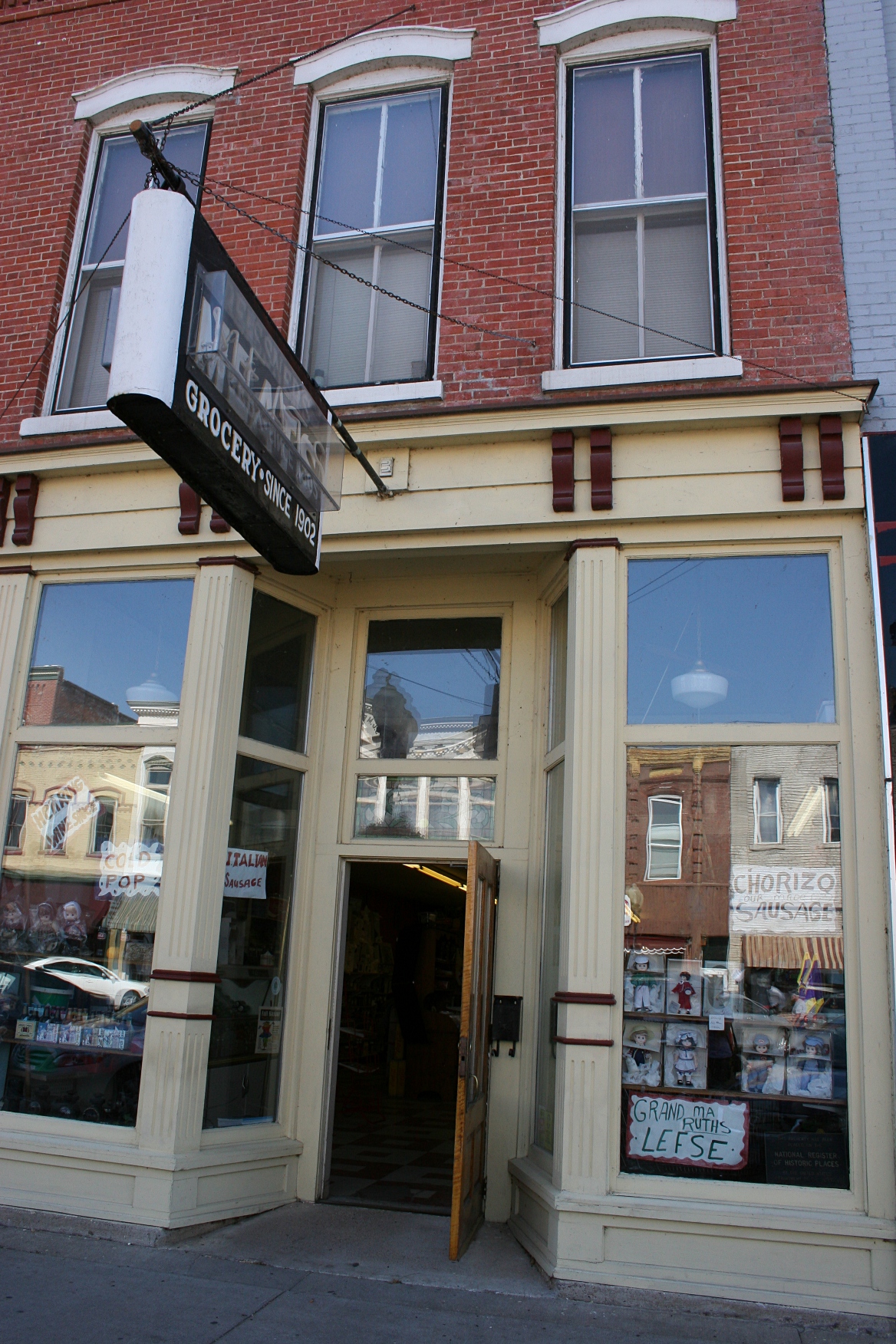
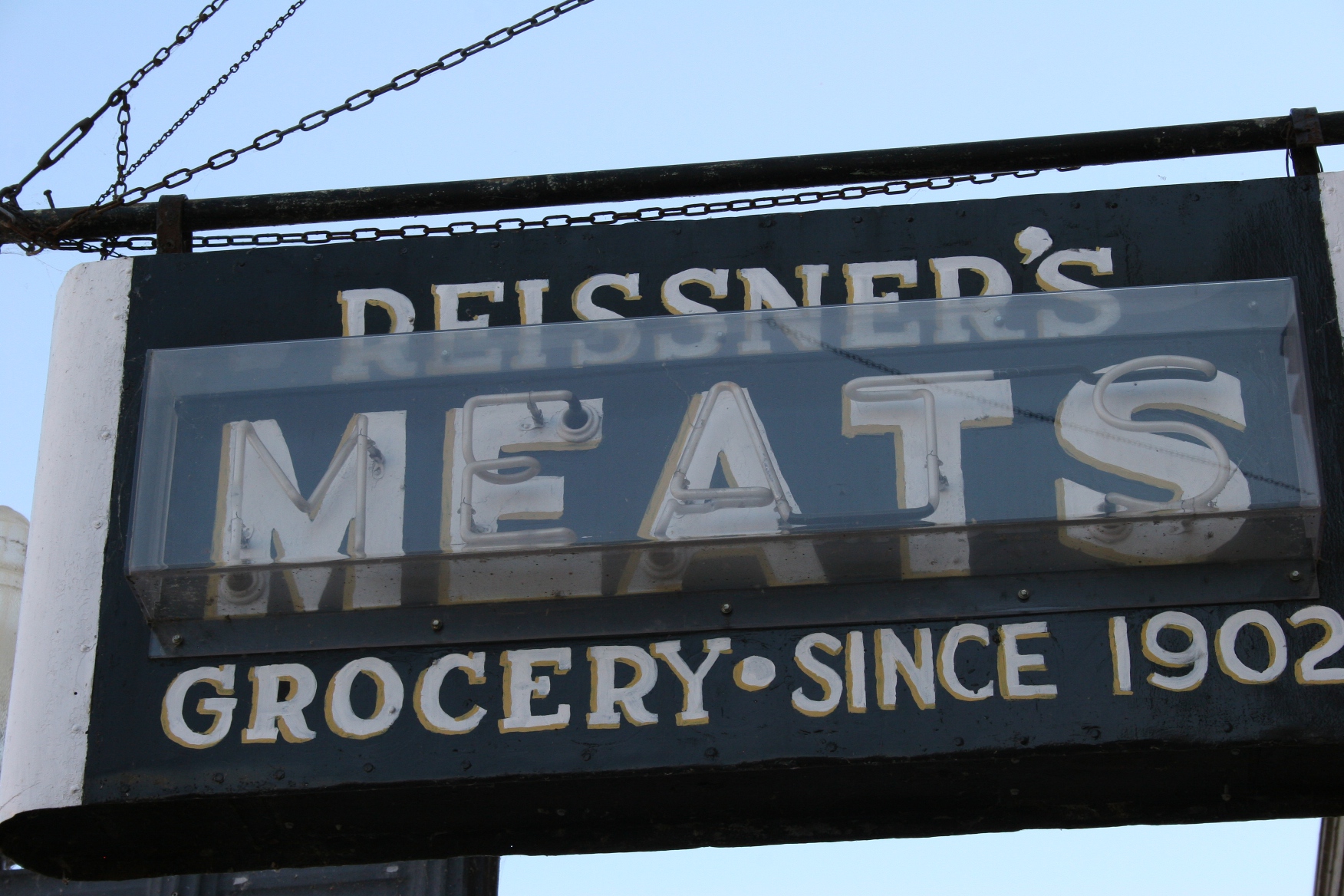
Reissner’s Meats & Grocery in historic downtown Hastings, Minnesota.

YOU KNOW HOW SOMETIMES, when you step into a place, you feel like you’ve been there before, but you haven’t.

That would be Reissner’s Meats and Grocery in historic downtown Hastings.

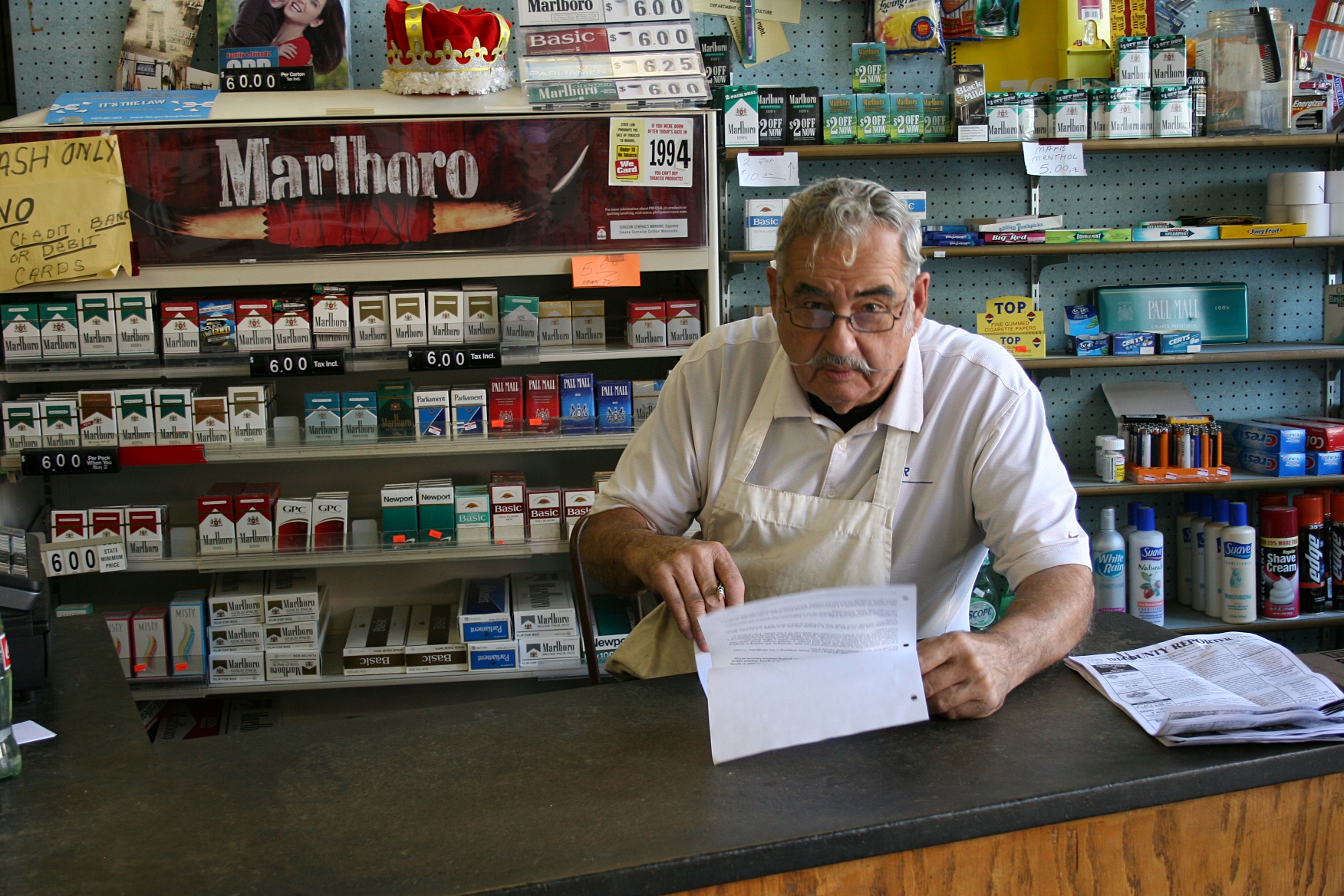
Third-generation owner Dick Reissner.

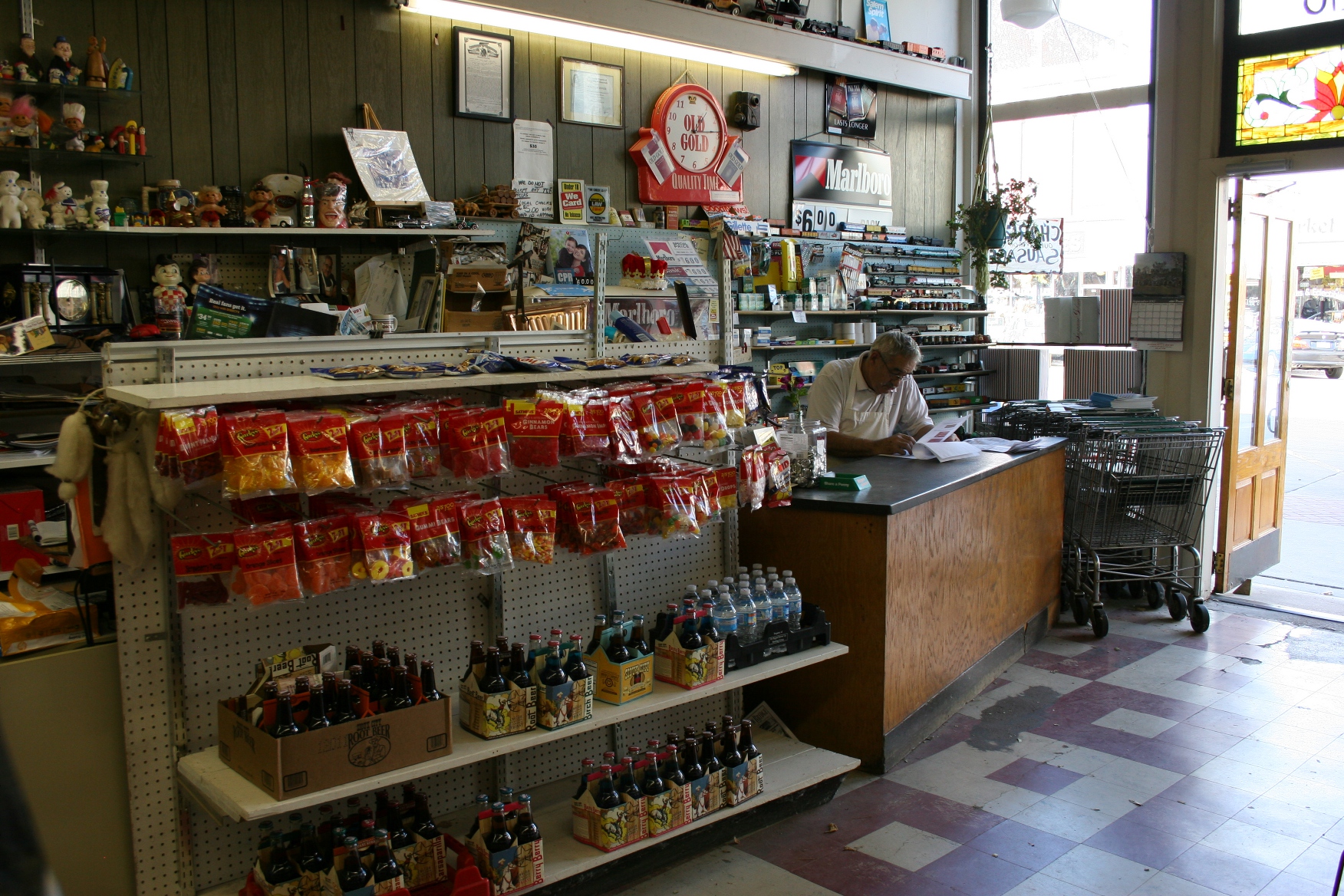
Entering this narrow two-aisle store with a mustachioed, gray-haired shopkeeper in a butcher’s apron leaning on the front counter, I experienced a sense of familiarity tracing back to my childhood. Reissner’s reminds me of the corner grocery in my hometown of Vesta where I purchased my favorite Tootsie Pop suckers, Bazooka bubble gum and yellow packs of Juicy Fruit gum from the candy counter on many a trip to town with Mom.

Honestly, I cannot remember much else about Rasmussen’s Grocery except the candy and the wood floors and the big old screen door that banged shut behind me.

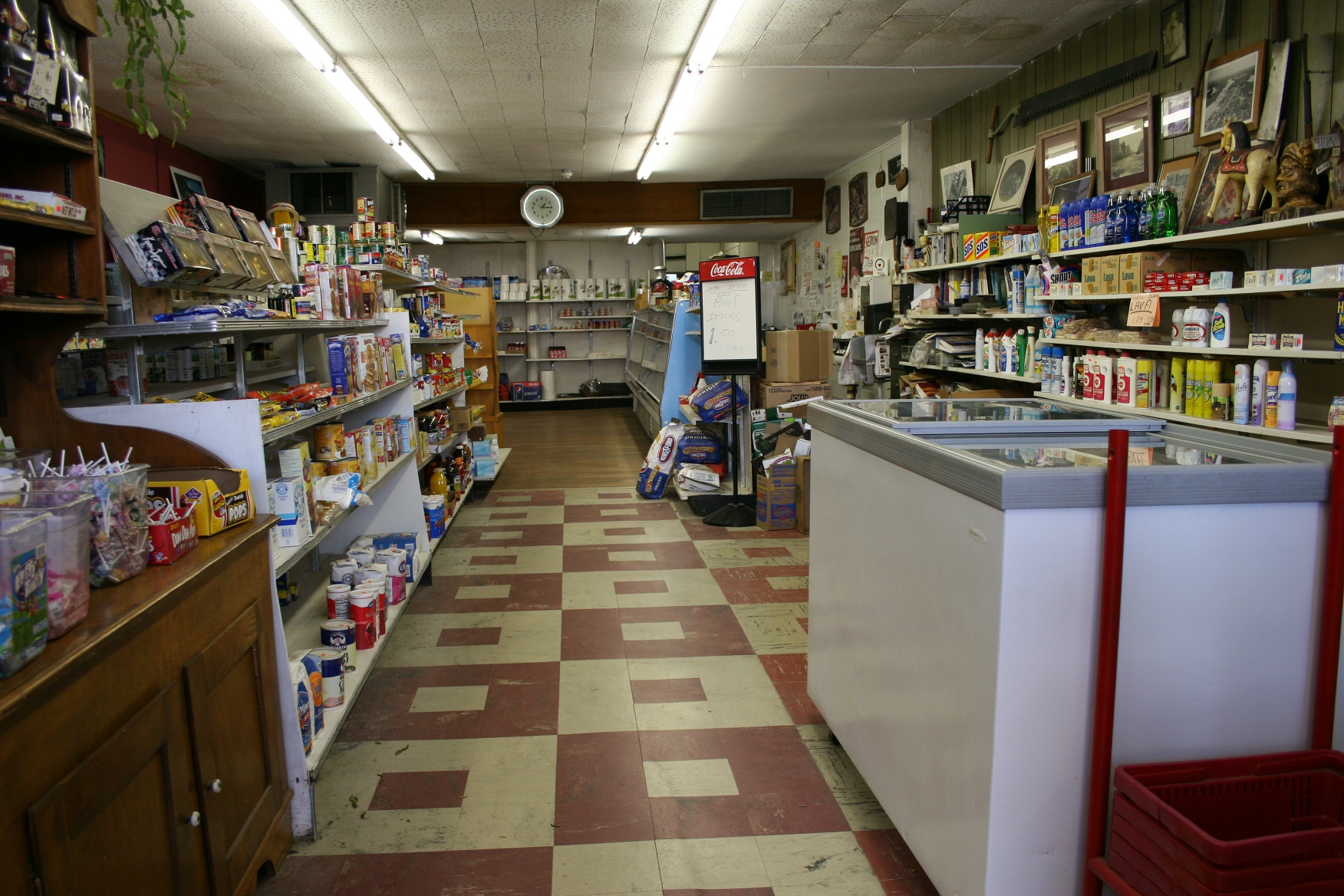
Aisle one with the candy counter to the left.

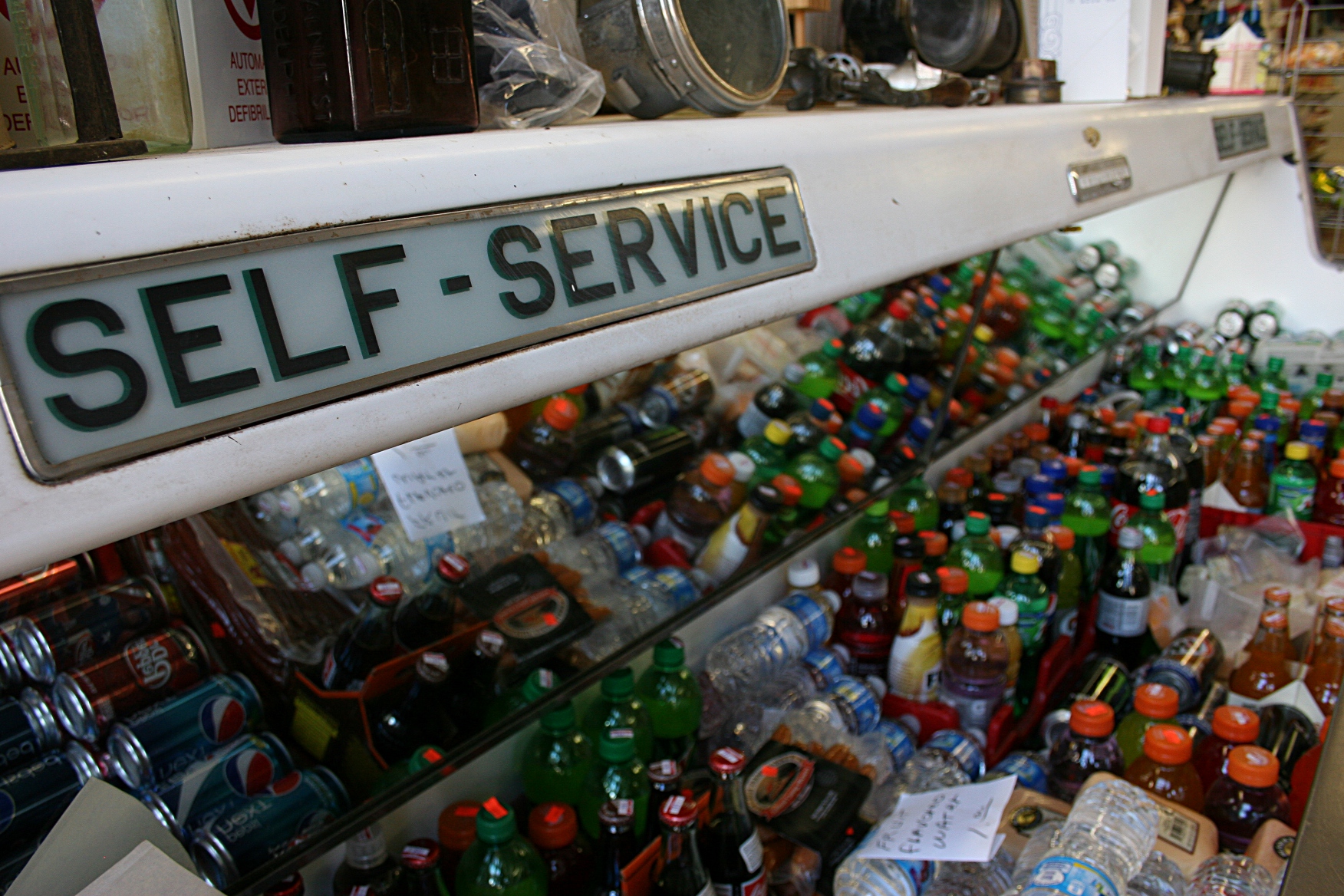
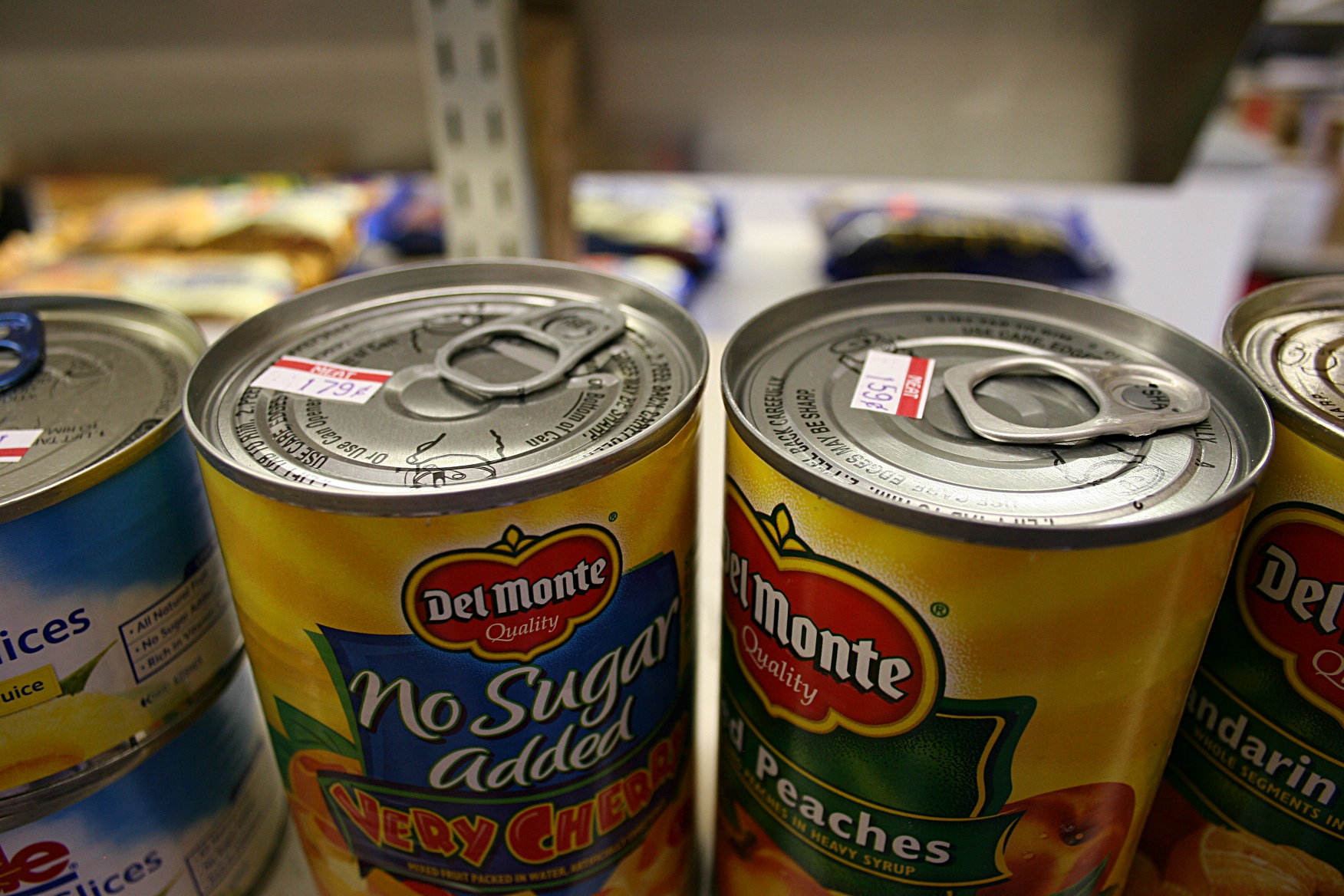
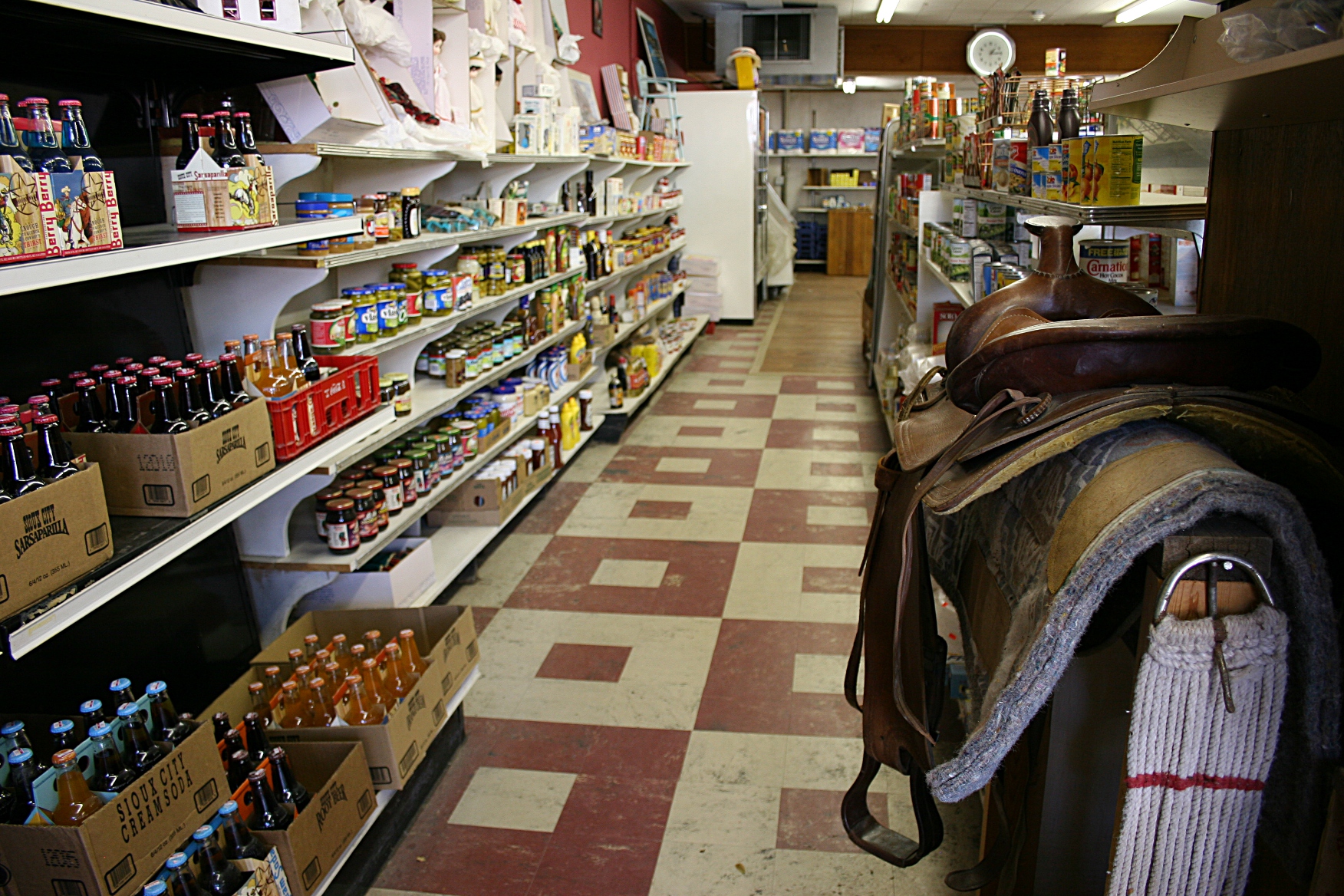
Reissner’s in Hastings possesses that same nostalgic feel, even a vintage look in the red-and-white tile floors, the mishmash of merchandise, the hulking and energy-sucking open cooler that holds pop, and the price stickers adhered to canned foods and more.

Dick Reissner reads at the front counter while I explore his store.

Richard (Dick) Otto Reissner was preoccupied with reading when I walked in on a recent Saturday afternoon and didn’t seem to want to be bothered. So I didn’t query him with the list of questions formulating in my mind as I perused the aisles.

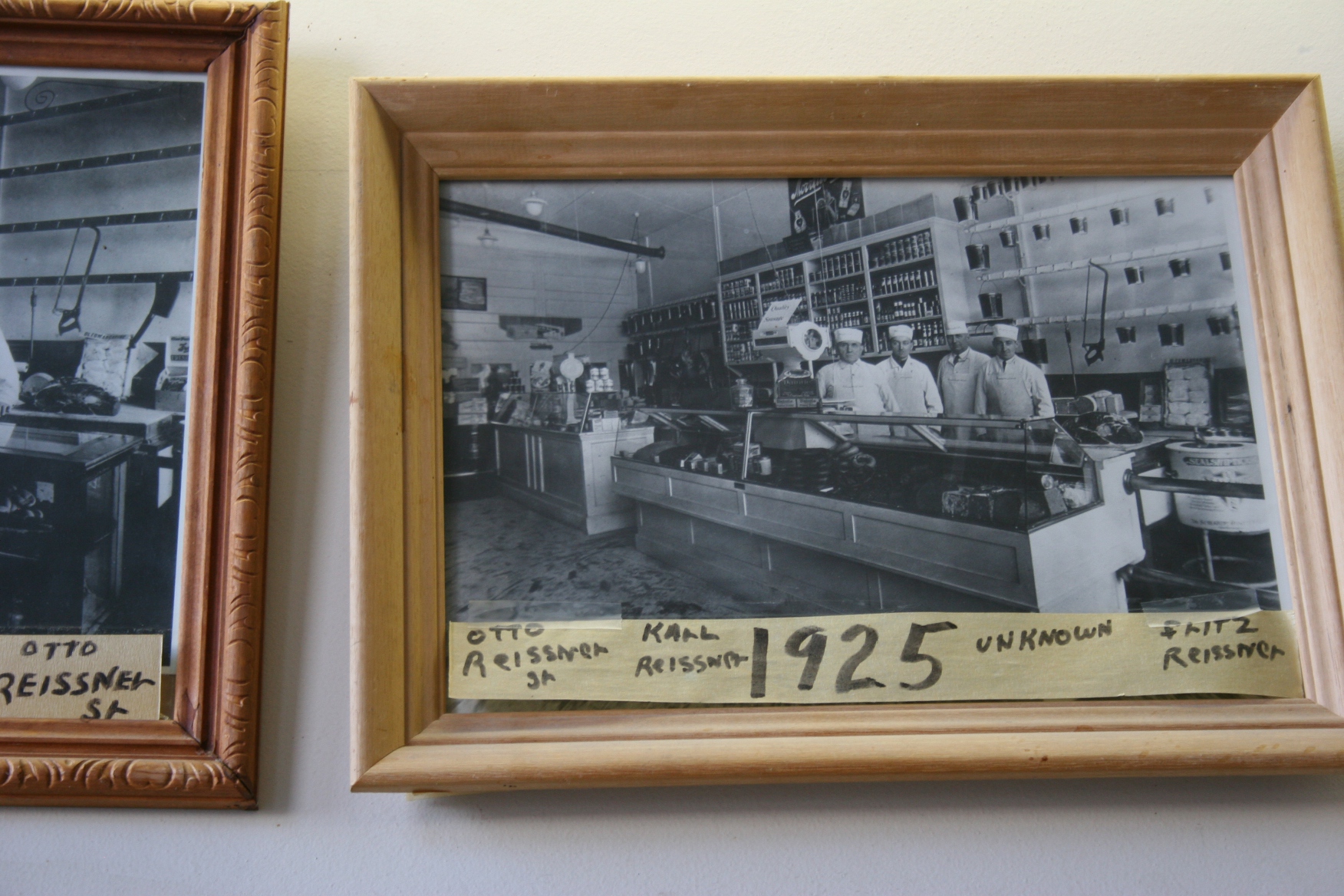
Vintage photos which clued me in as to the history of this place.

Therefore I have no stories to share with you about this third-generation family business. Only photos.

The exterior sign, which dates the business to 1902.

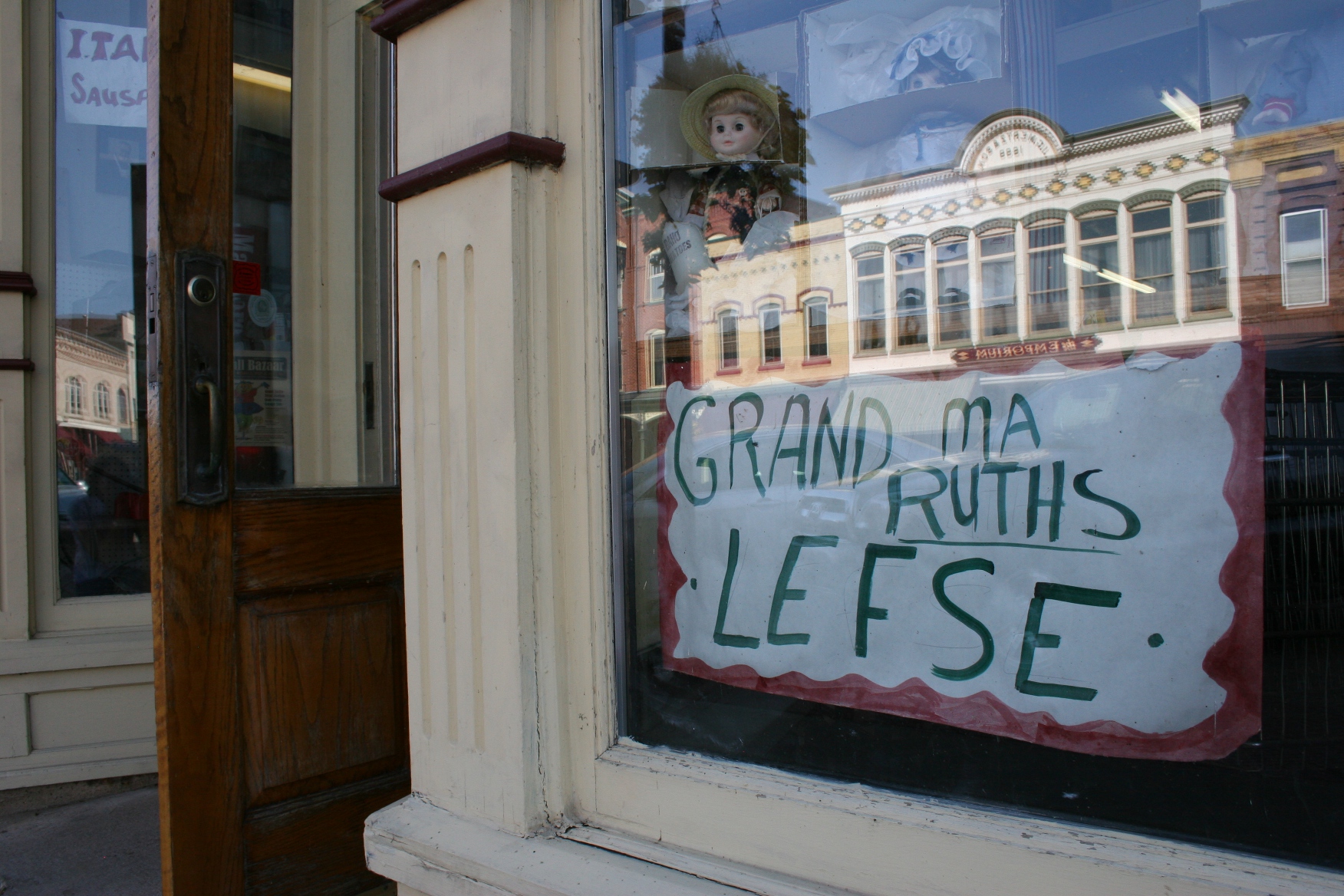
I totally forgot to search for the lefse or ask about  Grandma Ruth.

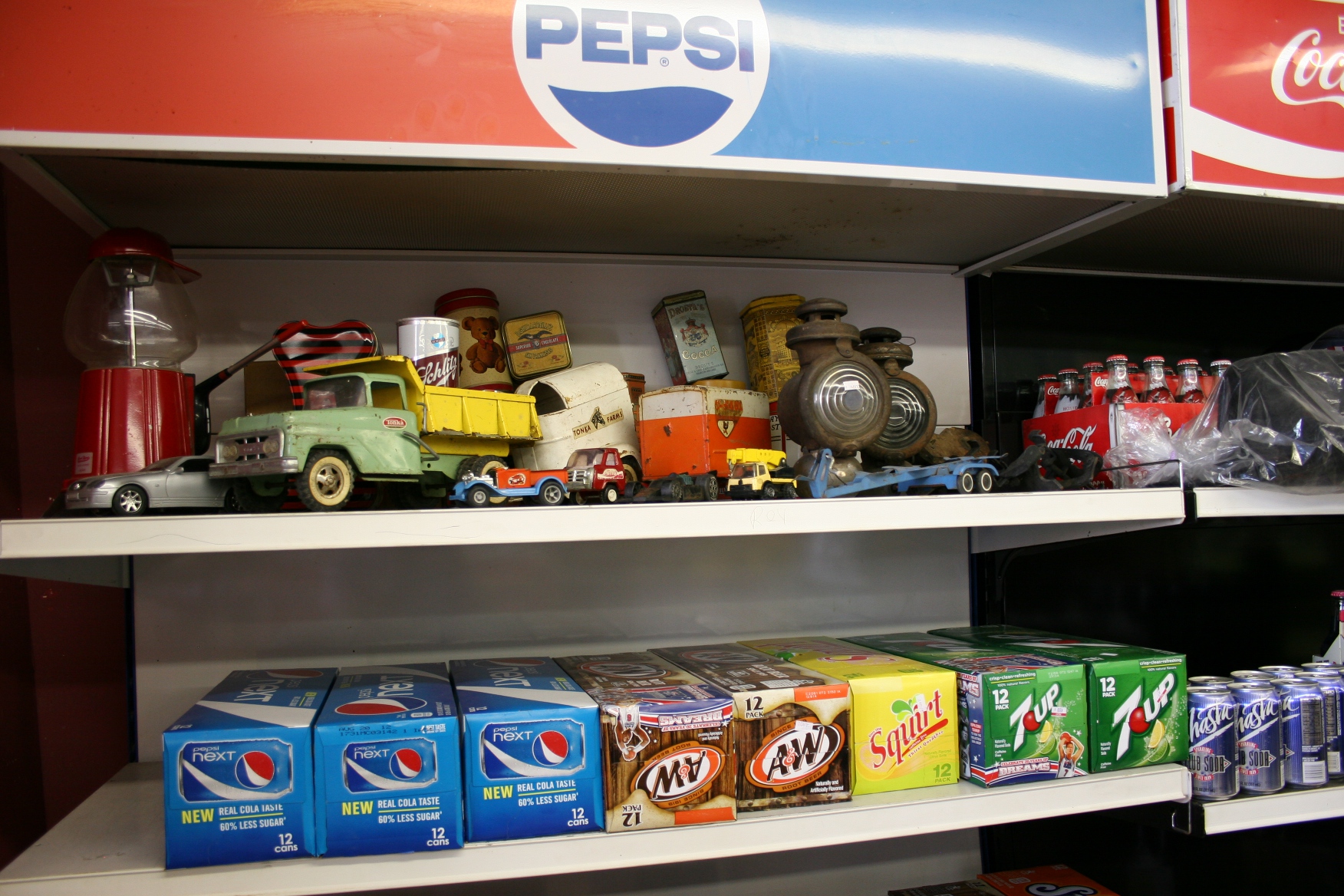
The vintage toys, etc., are not for sale.

An old, old cooler…

How often do you see price stickers on food anymore?

I have no clue, none, why there’s a saddle, right, in the grocery store.

© Copyright 2012 Audrey Kletscher Helbling


Transforming an historic building into Seven Sisters Coffee, a community gathering spot & more in rural Minnesota October 23, 2012

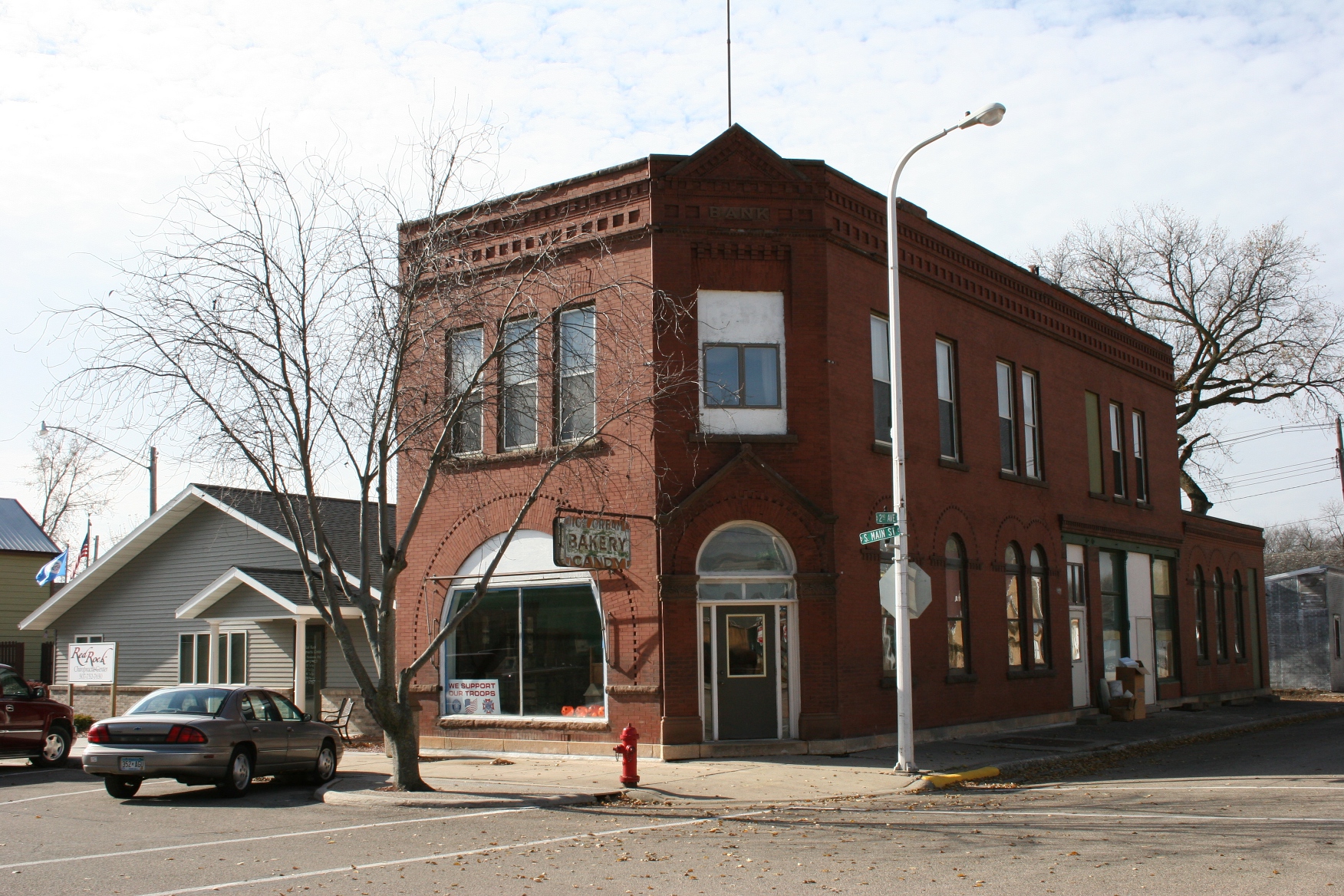
This 1892 former bank building and 95-year bakery anchoring a corner of Lamberton’s Main Street is being renovated into Seven Sisters Coffee by a young couple with connections to this area of southwestern Minnesota. After the business opens, the upstairs will be renovated into loft style apartments.

DAVID AND MICHELLE can see beyond the crumbling mortar, the moisture damage, the buckling floor boards, the teal paint.

Just barely into major renovation of an historic 1892 bank building and former long-time bakery in downtown Lamberton, this couple is thoughtfully and methodically working toward their summer 2013 goal of opening Seven Sisters Coffee.
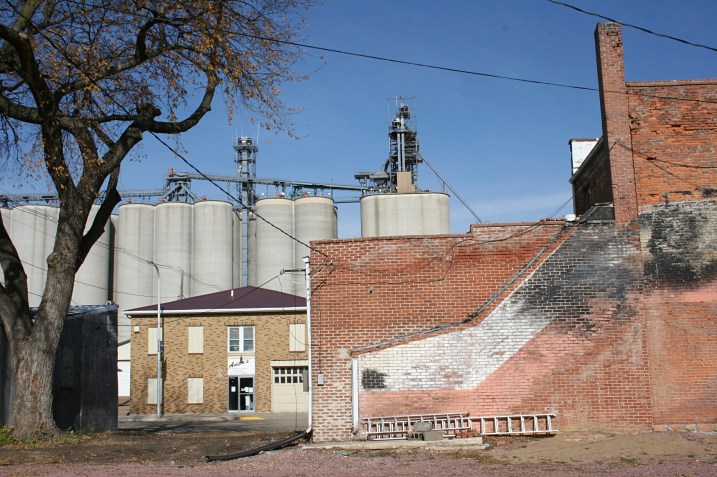
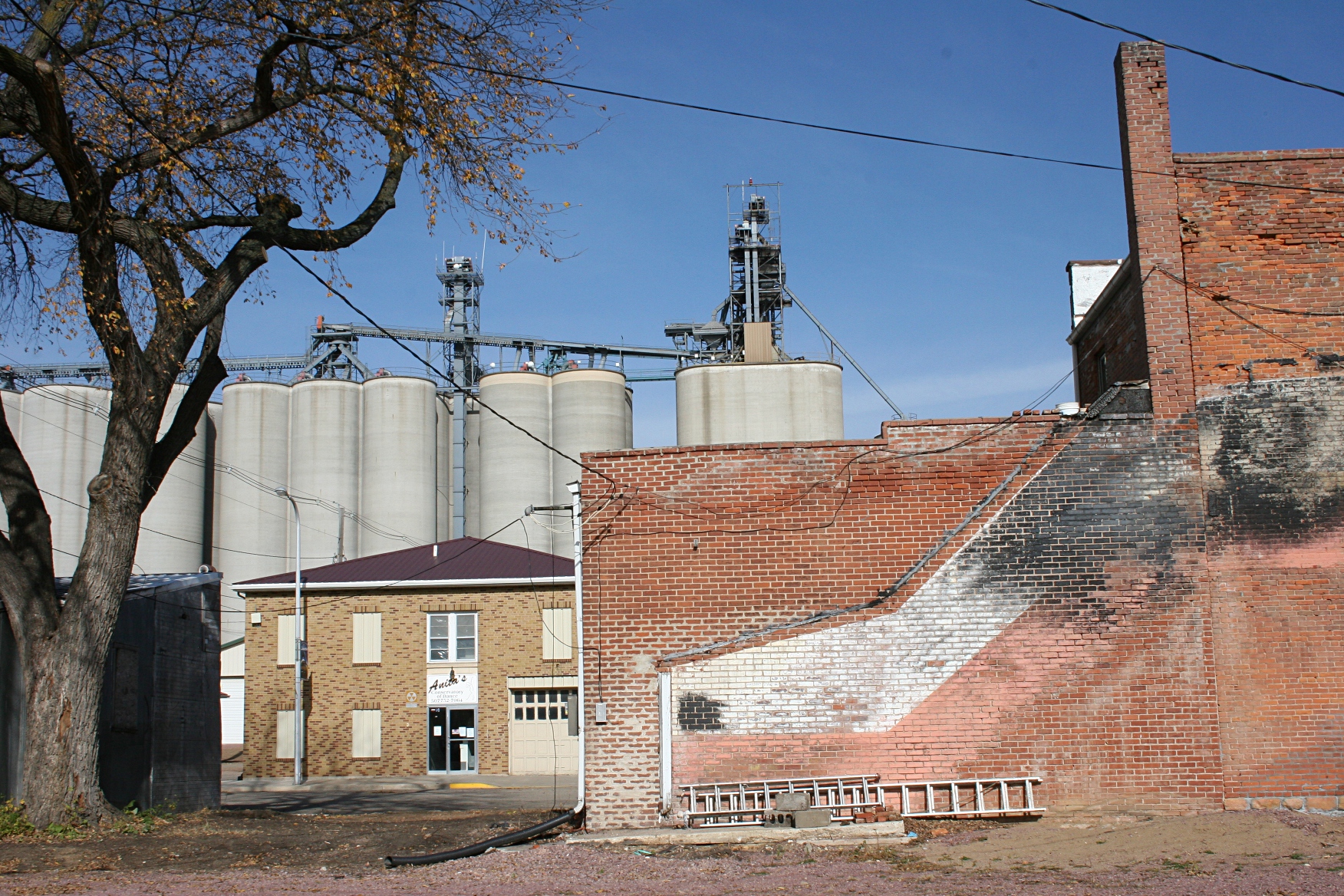
This shows the side and back view of the building, with the rear part added on to the original. Soot from a 2005 fire, which destroyed Plum Creek Crafts next door, mars the brick. Behind the building, a tree was removed and plans are to install a patio area for outdoor dining. They saved a slice of the tree to build a table.

Even the name, Seven Sisters, holds special significance for the pair as Michelle is one of seven sisters and three brothers who grew up in Lamberton, a strong agricultural community of 822 in Redwood County on the southwestern Minnesota prairie. Additionally, Michelle notes that Seven Sisters possesses multiple meanings—in Greek mythology, astronomy and even as a mountain range.

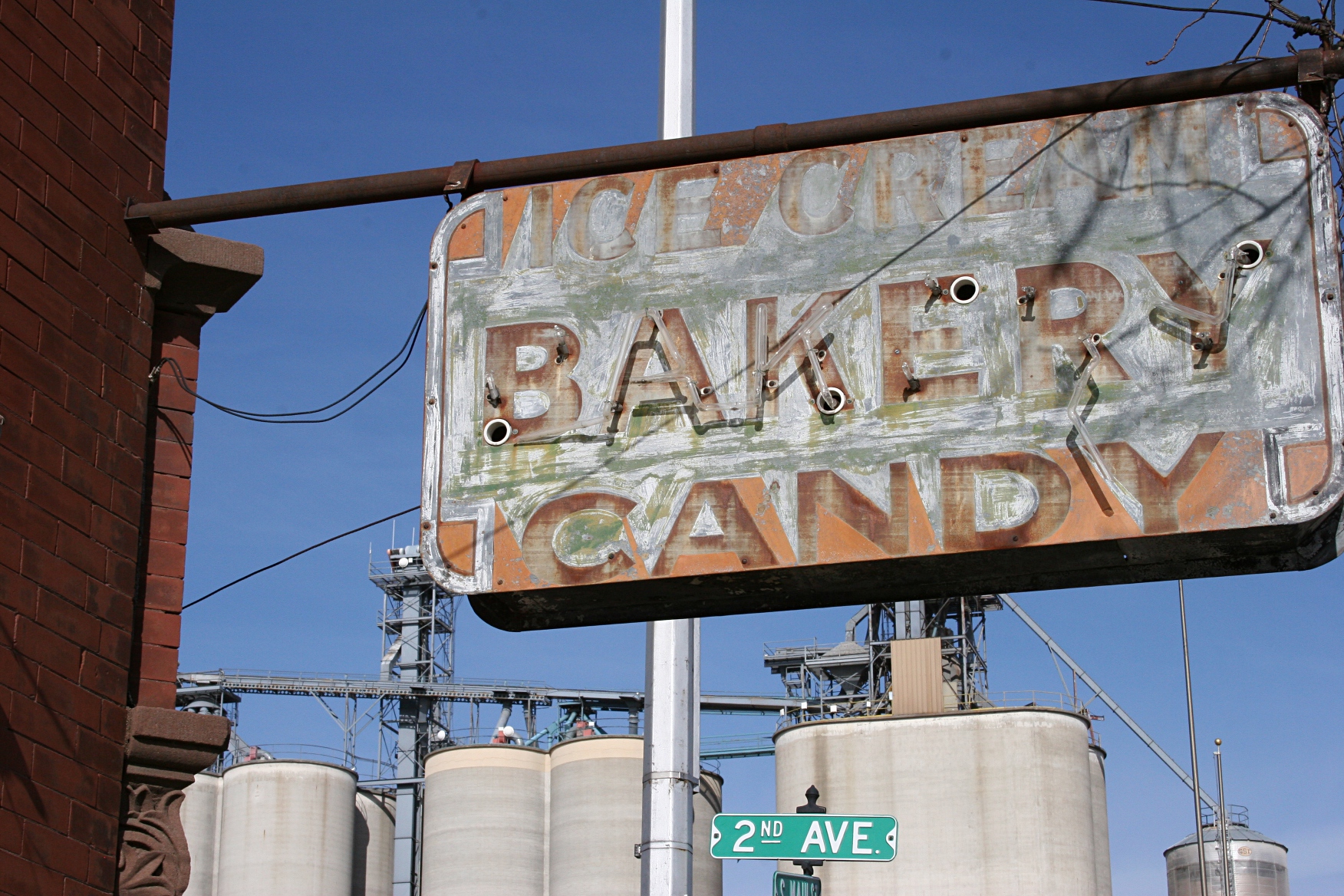
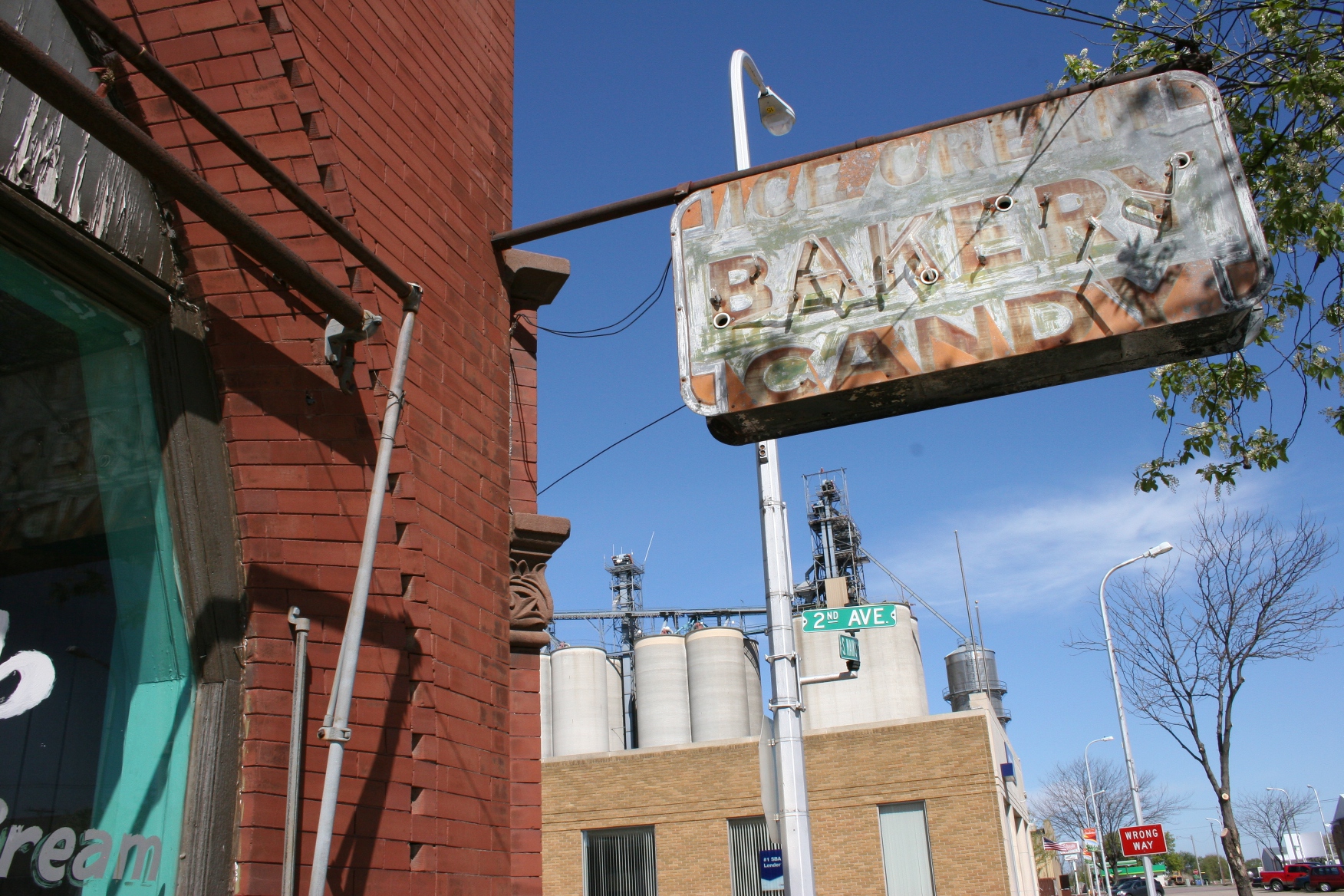
The old sign for the former Sanger’s Bakery still graces the building.

The couple may, perhaps, feel at times as if they are scaling a mountain to reach their goal of establishing a combination cafe, coffee shop and entertainment venue in the 1,900 square foot first floor of the 8,000 square foot brick building. But they are purposeful and focused and driven every week to travel 2 ½ hours from their home to proceed with their project on the prairie.
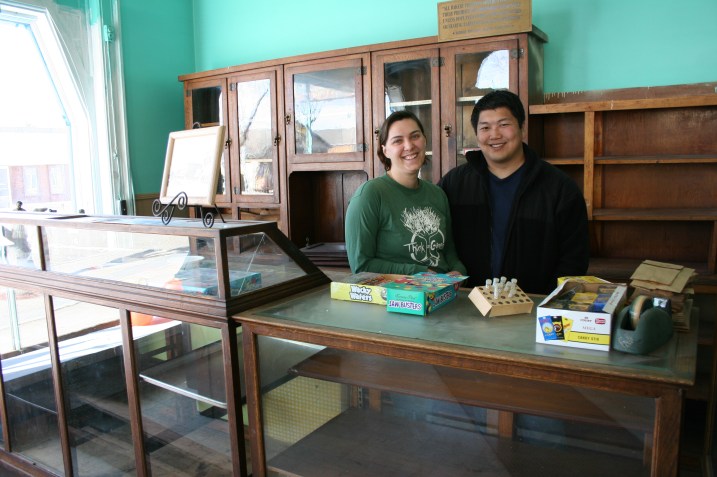
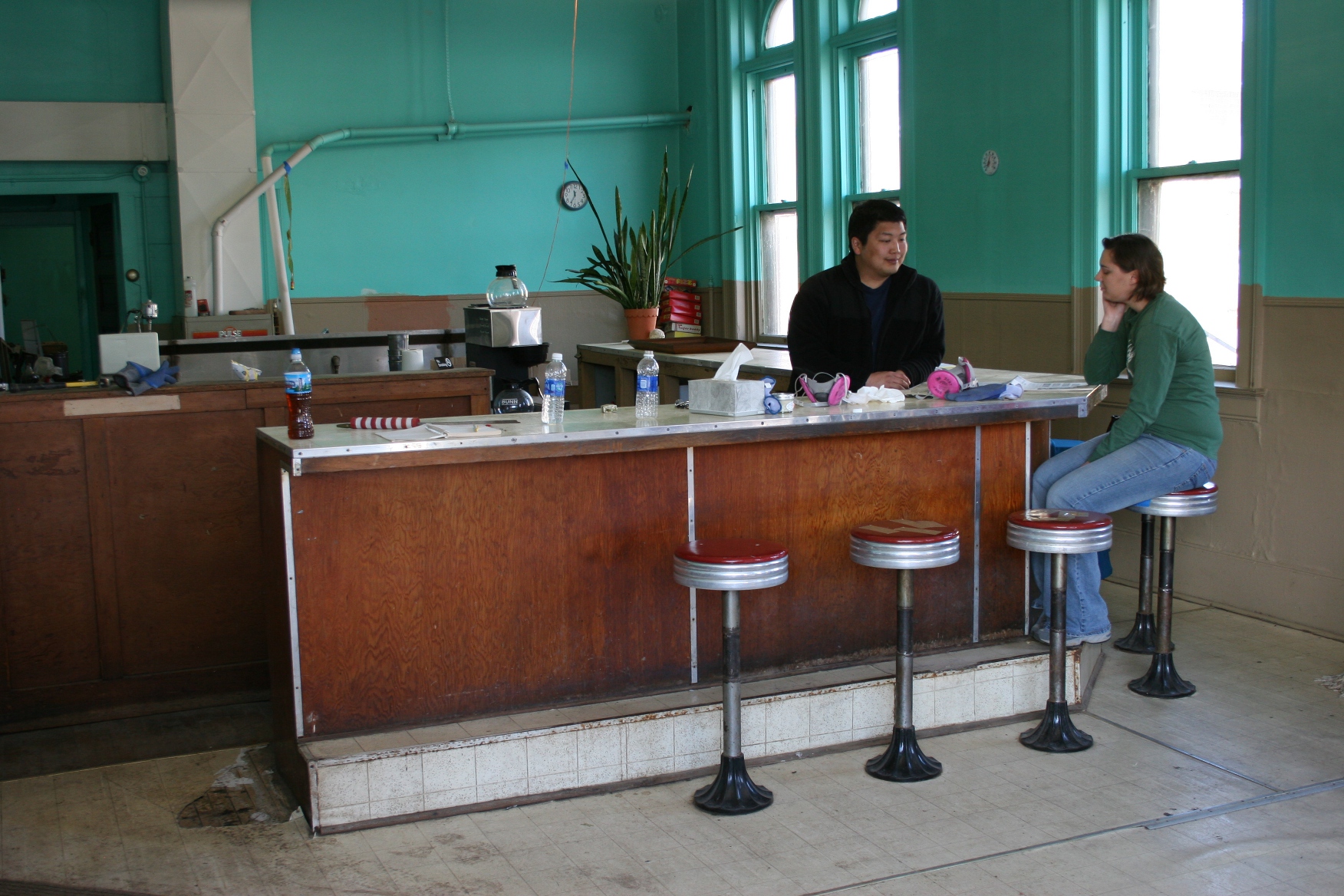
Michelle and David  are keeping the original candy and bakery goods counters and the vintage cabinet, photographed here in the front part of the building. This area of the former bank and bakery will house the cafe and soda fountain. The couple discovered a dumb waiter hidden in the area behind them in the corner.

David envisions Seven Sisters as “an artistic haven as well as a community space.” He expects “townies,” he says, to frequent the front Main Street side of the building, the bright and cheery cafe section offering a full breakfast and lunch menu and ice cream treats from a soda fountain.
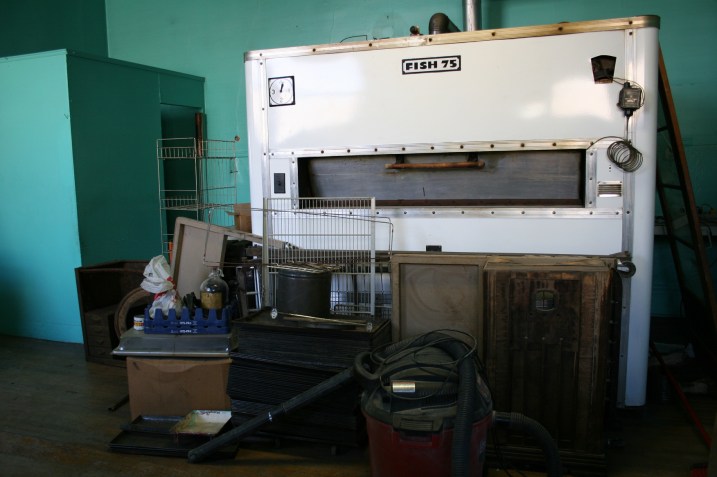
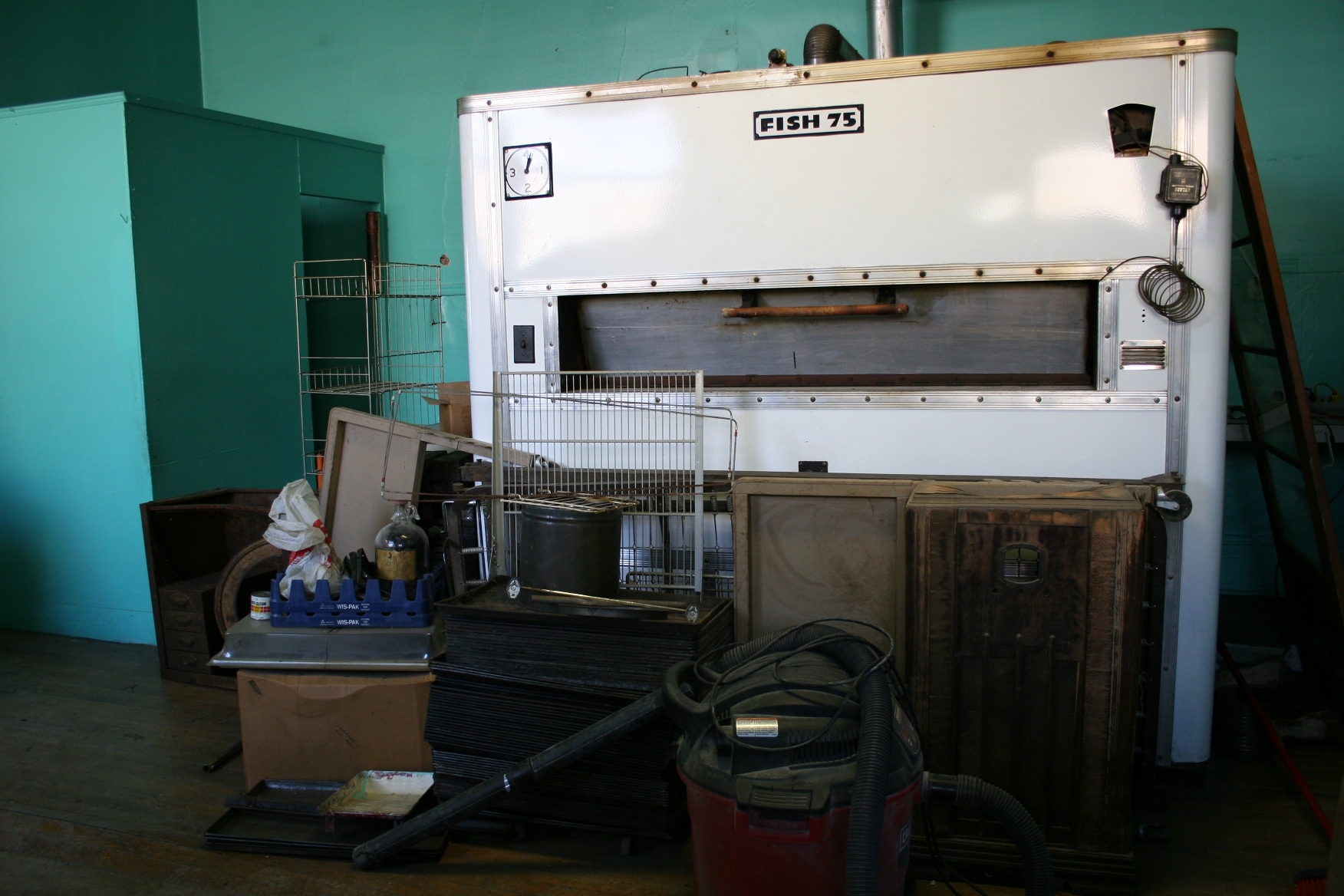
Fifty loaves of bread could be baked in this 1960s vintage two-ton rotary oven. It occupies much of the space in the middle room which will become a cozy coffee shop. This room and the front former bakery/soda fountain area were painted teal after Bob’s niece first chose that hue for the bathroom. Bob loved the color so much that he painted the rest of the place teal. The color has been on the walls for 50 years. No, they are not keeping the teal color.
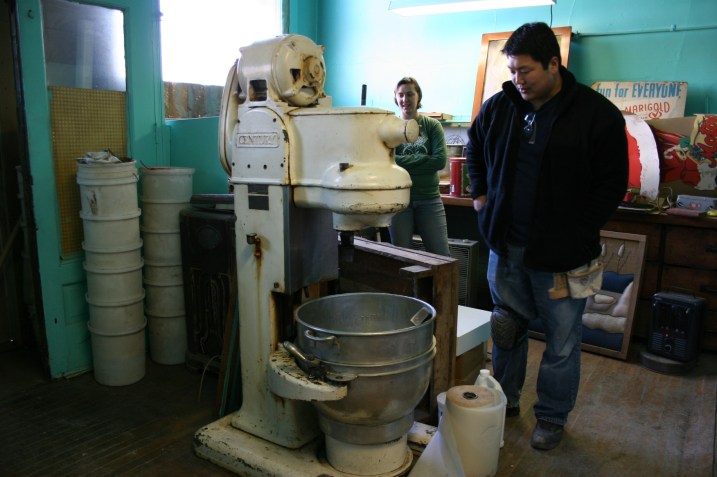
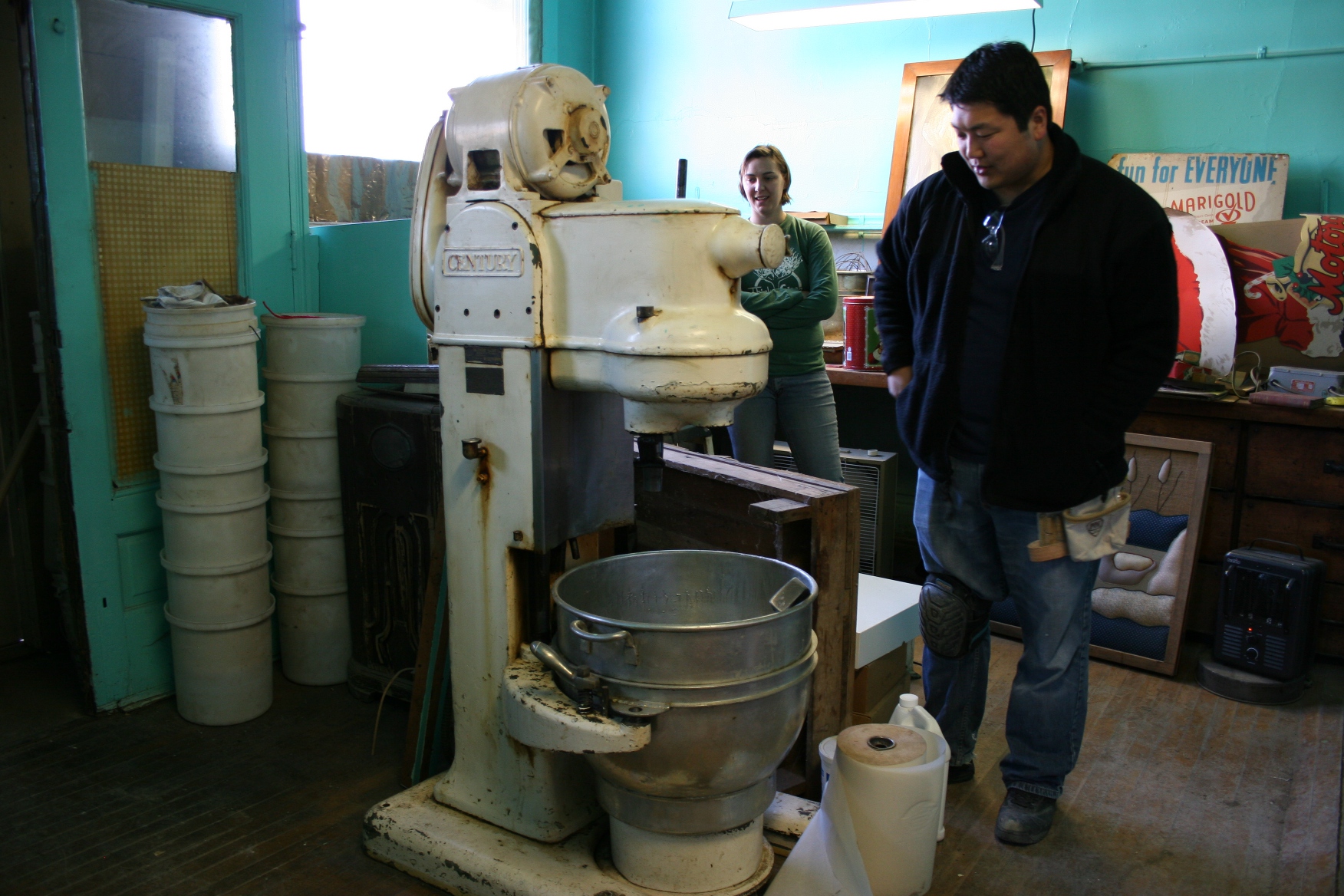
An oversized mixer also occupies space in the middle room.

The smaller middle section, once a post office entry, baking area and even home to the Sanger family, will be transformed into a warm and intimate coffee shop.
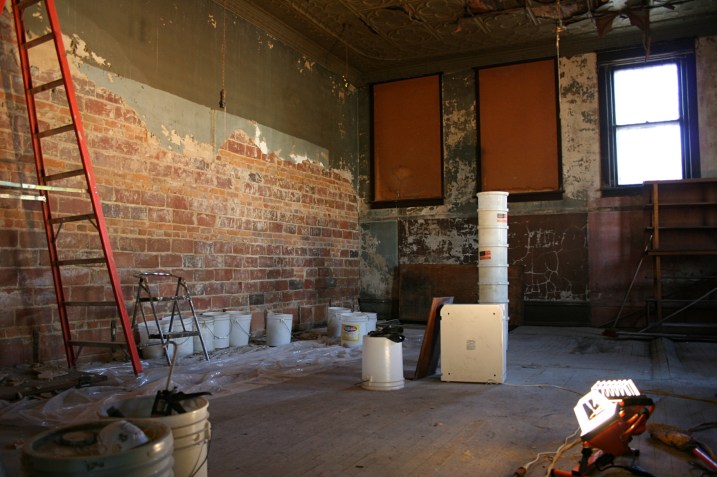
The back room, with focal point brick walls, will become an entertainment venue and artists’ haven.

And in the rear area of exposed brick walls, David expects artists and others to hang out in a more energetic and modern New York loft style space devoted to music and art and private event rental.

Tour this building, inside and out, with David and Michelle and you can see the overwhelming amount of work, inside and out, that needs to be done before Seven Sisters becomes a reality in a community already embracing the business venture.

Locals as well as those living in neighboring towns such as Revere, Jeffers and Tracy and even farther away in the regional hub city of Marshall are ecstatic about Seven Sisters, David says.

Original coffee cups and Bob Sanger’s special cup are stacked under the lunch counter.
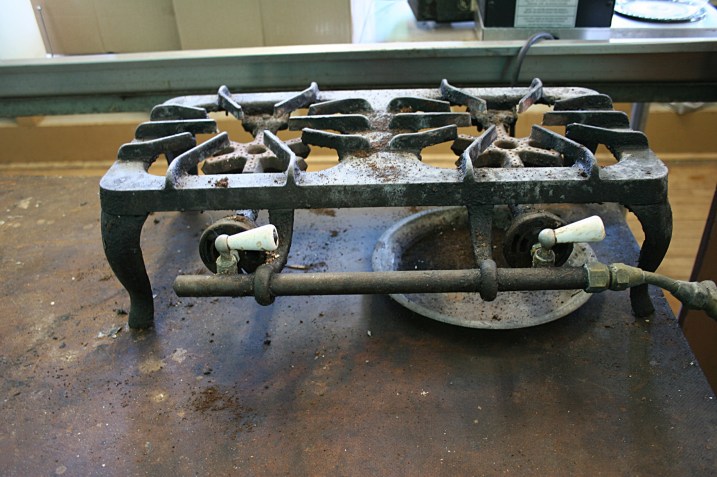
The older gas burners Bob Sanger apparently used to make coffee, etc.

When locals George and Vern, for example, stop by to check on the renovation, David invites them inside for coffee. The two were coffee klatsch buddies of Bob Sanger, long-time bakery owner who died in March. Sanger purchased the bakery from his father, Nick, in 1961. Between Bob, Nick and previous owner, Martin Kuhar, the building has housed a bakery in the First National Bank building for 95 years.
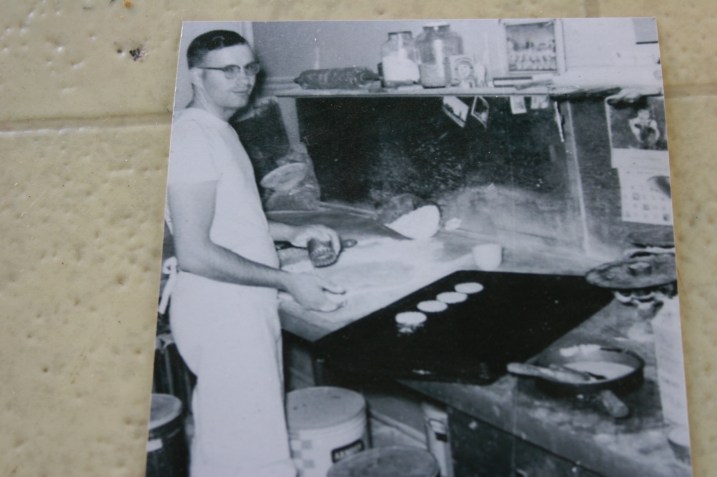
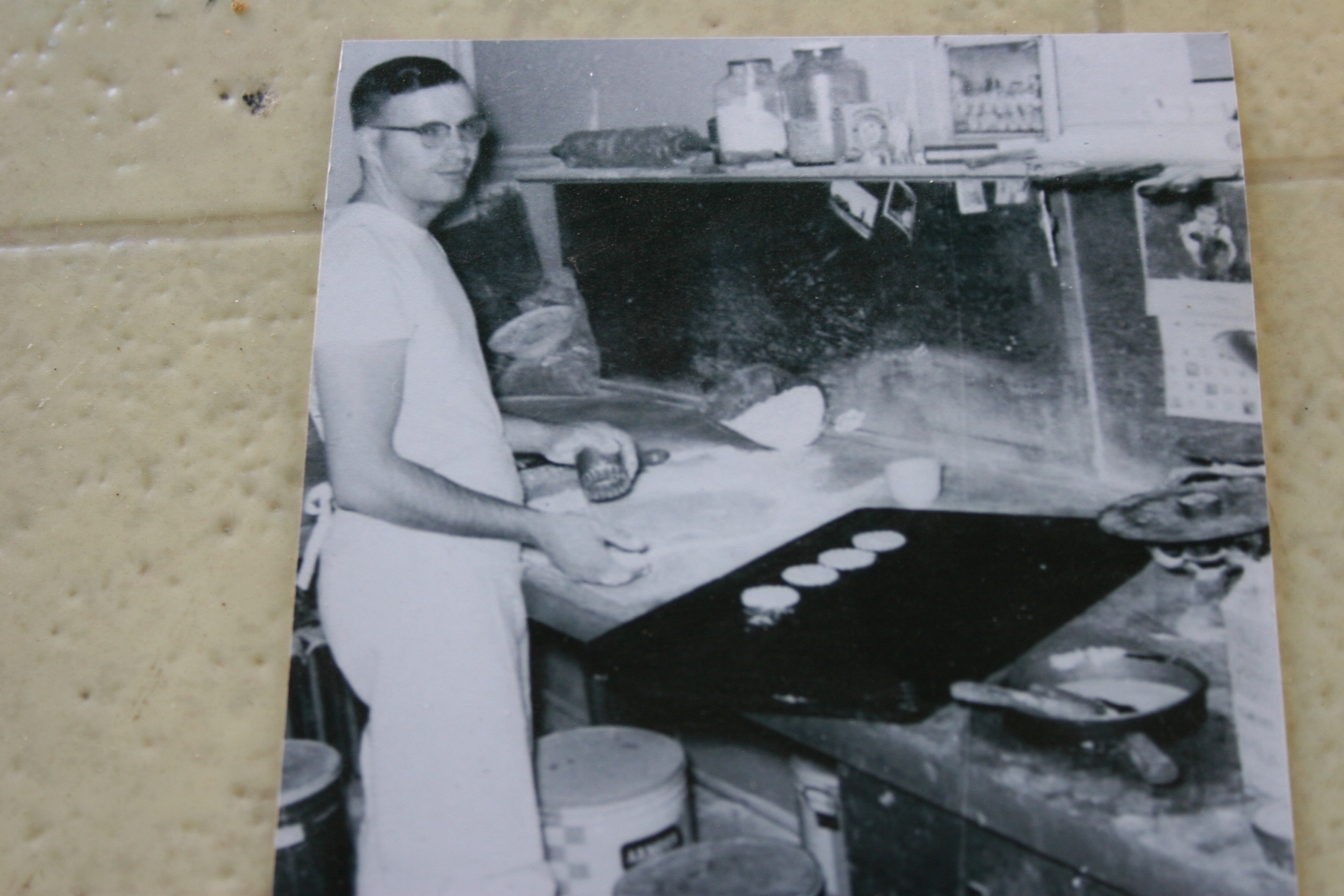
A vintage photo of bakery owner Bob Sanger who died in March at the age of 80.
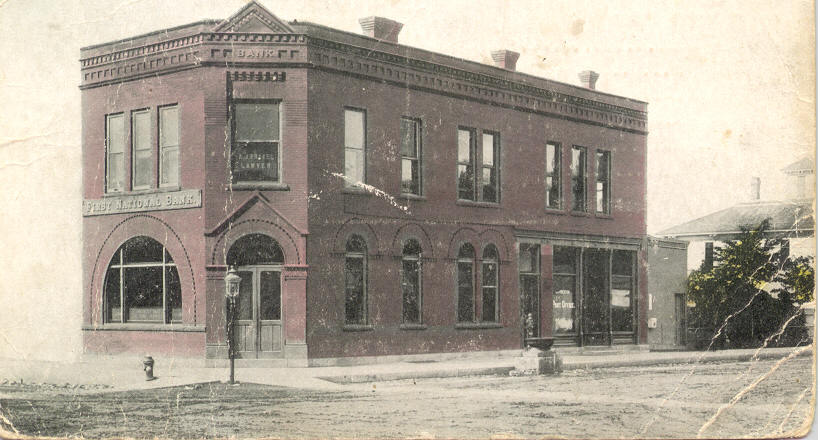
A vintage photo of the First National Bank.

Says David of his and Michelle’s decision to purchase the former bakery after Bob Sanger’s death:

The building is positively gorgeous and has a fascinating history. We had admired it for some time. The quality of the construction is superior to similar buildings of that era. We’ve always talked about opening our own business and the location and timing were right.

Our review of the local economy and the needs of the surrounding area indicates a very strong potential for growth and a serious need for a business of this kind. By offering excellence in service in three different approaches (cafe, coffee shop, event space) we will offset some of the inherent risk of this type of business. In short, it was a perfect confluence of events. We got lucky.

The pair is determined also to buy local as much as possible. Dry goods will come from Griffith’s Grocery across the street. They plan to work with Brau Brothers Brewing and Fieldstone Vineyards, located in the region. They’ll grow their own herbs.

It is clear in talking to David and Michelle that they appreciate the historic gem they’ve purchased.
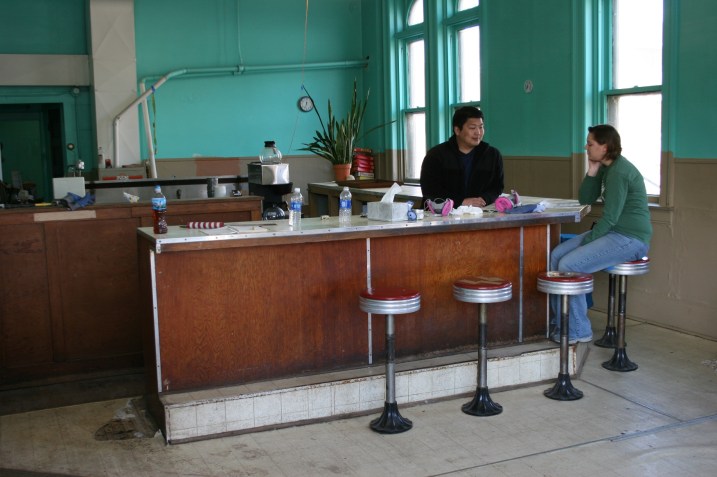
A section of this original lunch counter built by Bob Sanger will be refurbished and topped with granite.

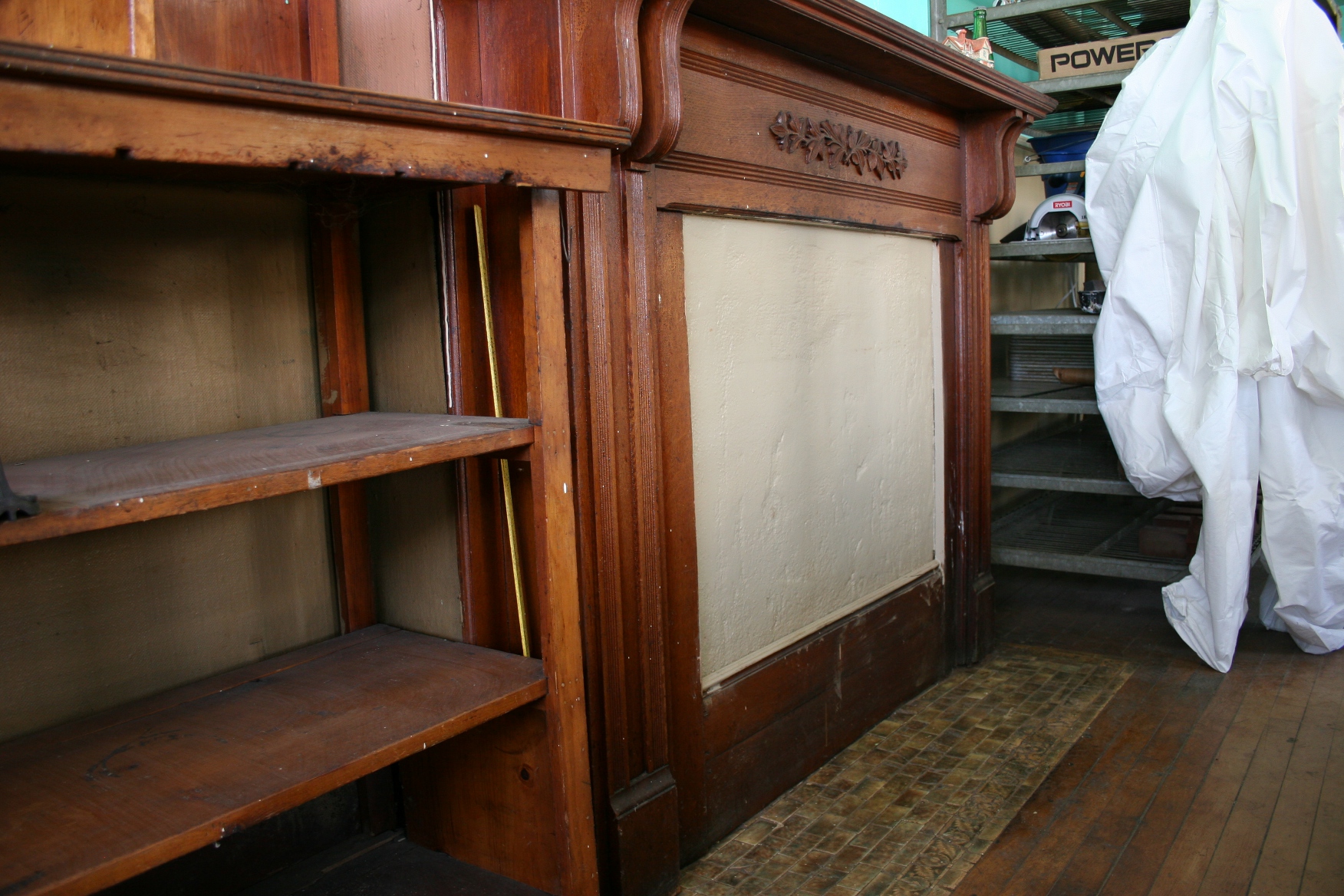
They’re attempting, they say, to retain as much of the natural charm as possible. For example, they plan to refurbish the soda fountain built by Bob; relocate an original bank fireplace facade and tile into the coffee shop and install an electric fireplace; refinish the wood floors; keep the tin ceiling; reuse the candy and bakery counters; restore an old player piano; and more.
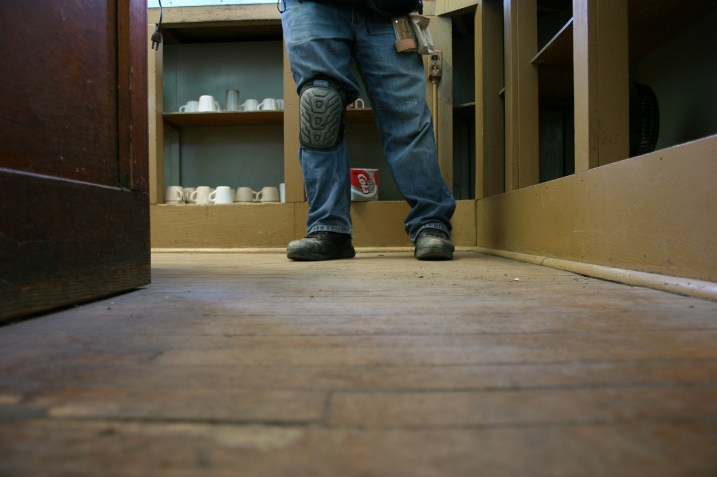
Wooden floors, like this behind the lunch counter, run throughout the building. In one section, however, where the bank vault once stood, the floor is made of pipestone granite.
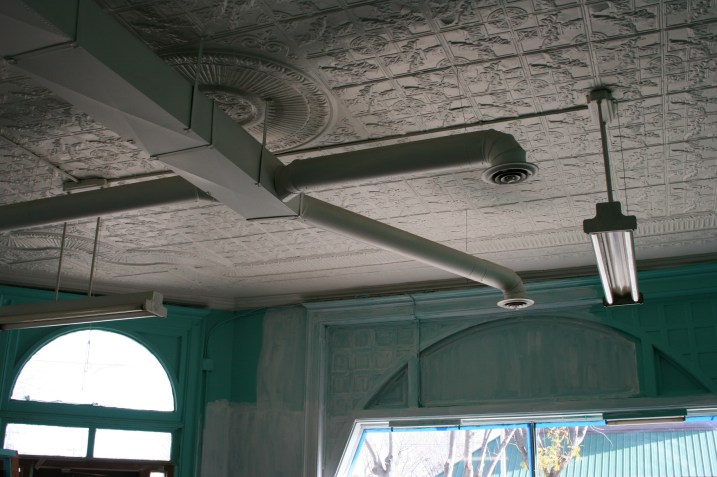
This shows a section of the original tin ceiling in the front part of the building. Ceilings are a lofty 12 and one-half feet high.
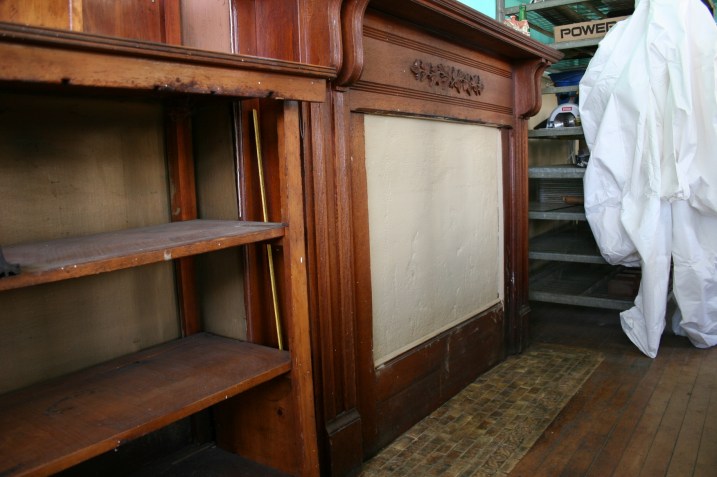
Plans are to move the facade and tile from the this original First National Bank fireplace into the coffee shop, which David will manage. 

The couple is also uncovering and sifting through collectible treasures like WW I and WW II artifacts, signage, rocks, and more accumulated by Bob. So much was damaged though, beyond saving, by moisture problems in the building, David says. But they are saving what they can, possibly incorporating some of their treasures into Seven Sisters.
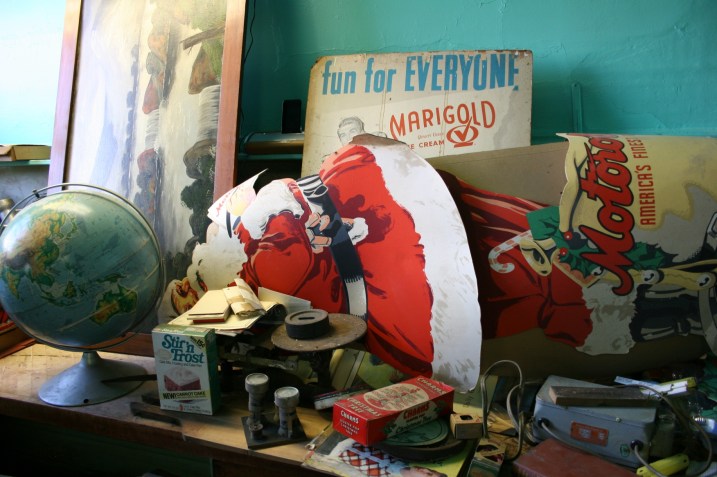
A pile of recently found treasures.
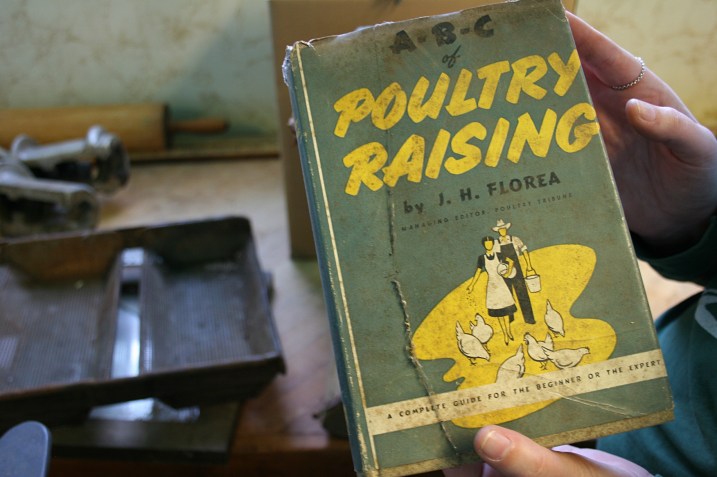
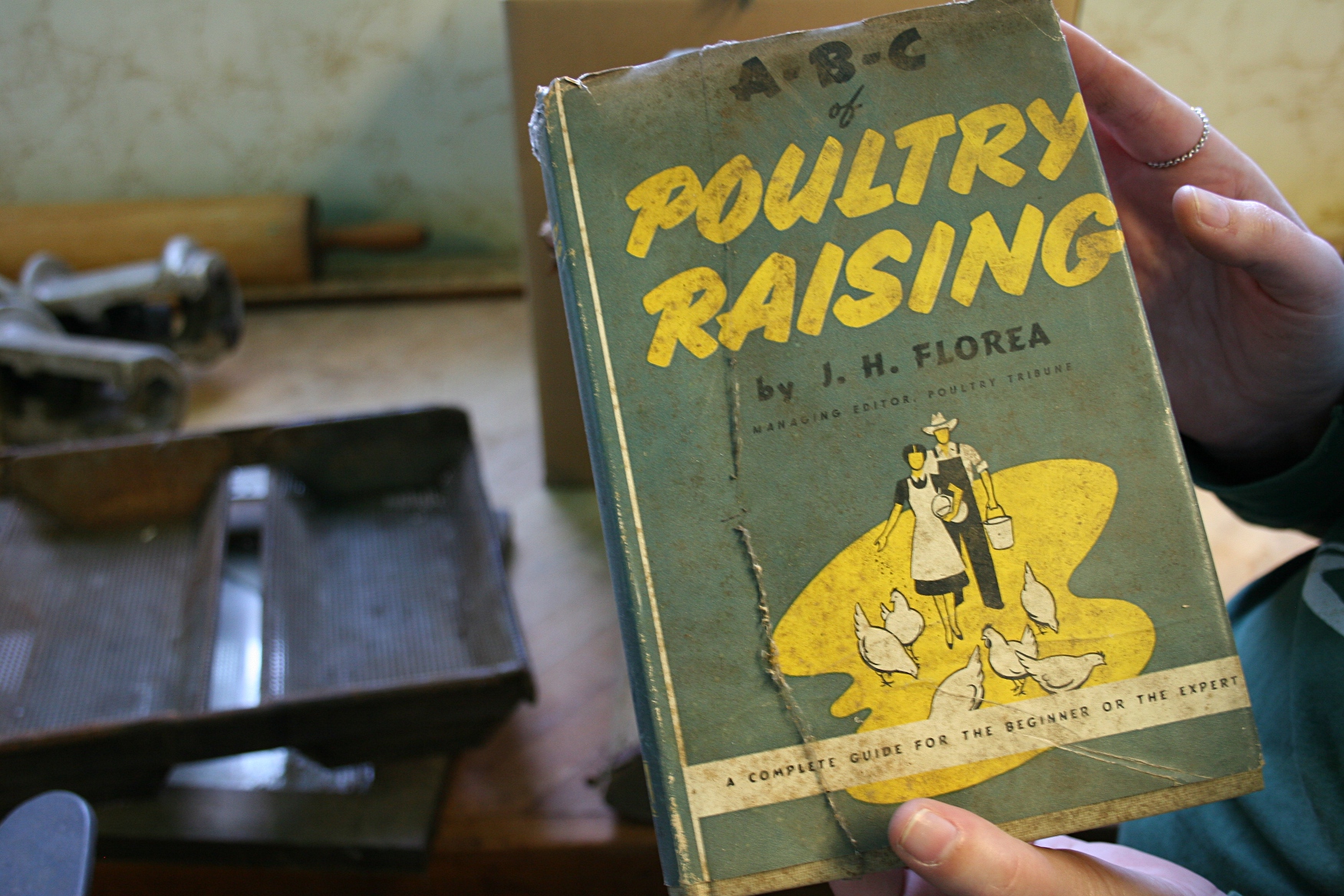
Among the old books uncovered was this one on poultry. Bob Sanger kept a flock of 100 chickens at his house, Michelle says. He used the eggs at his bakery and also sold eggs.
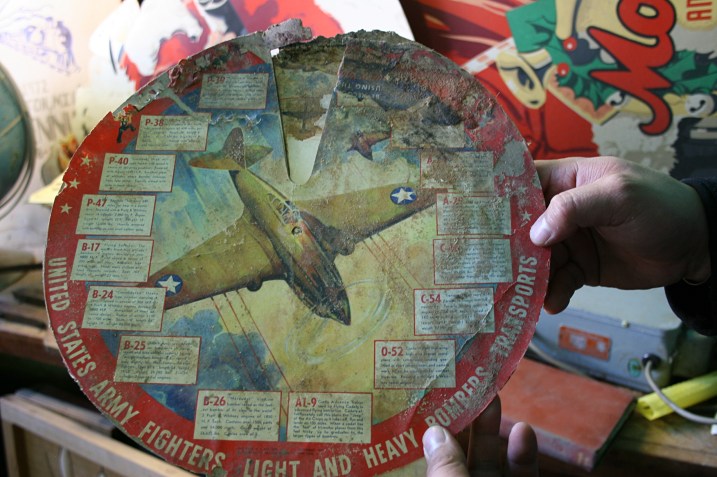
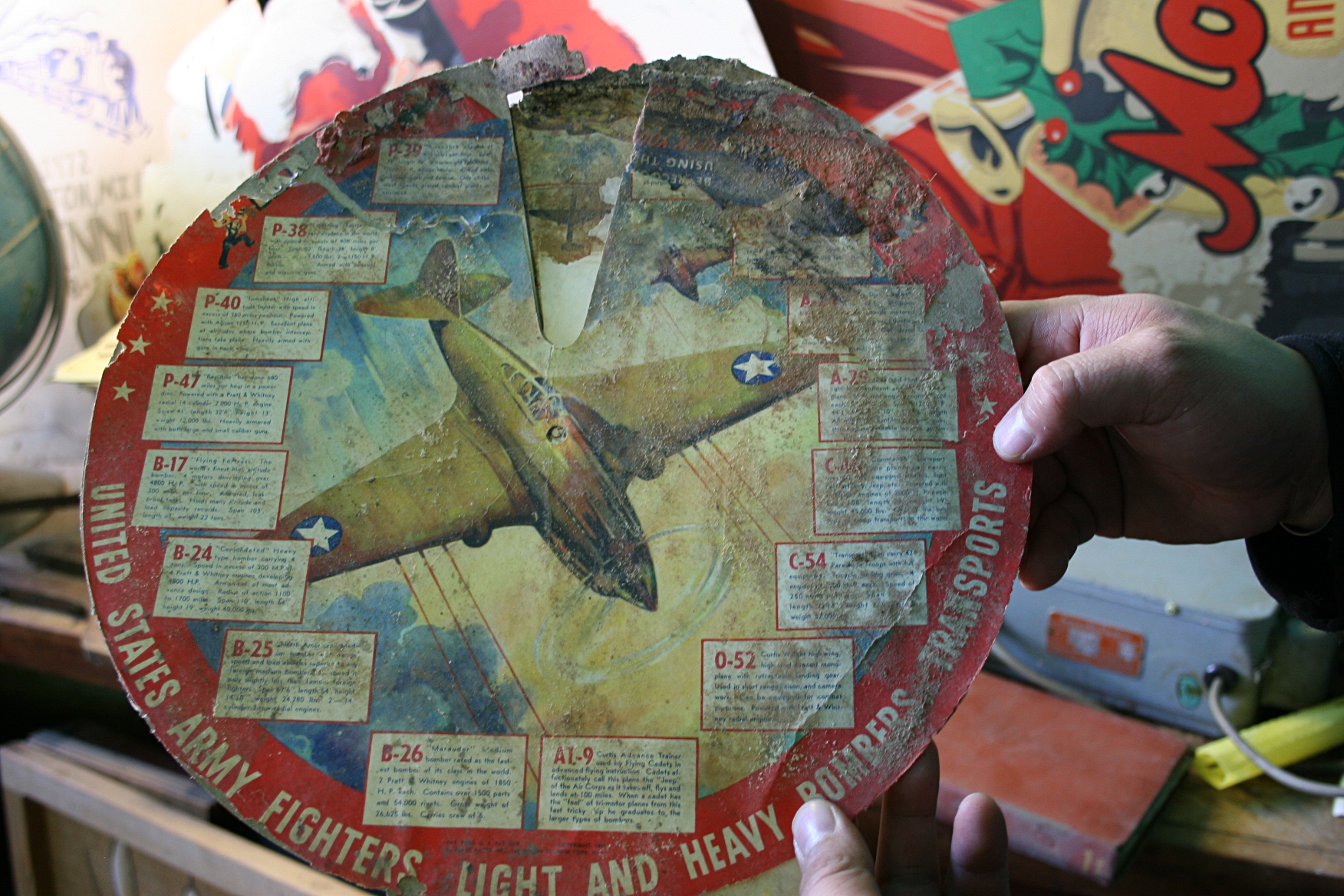
Another find, a vintage bomber transport chart damaged by water, like many of the old items found in the building.

Inedible silver cake decorating balls remain from Bob’s days of baking wedding cakes.
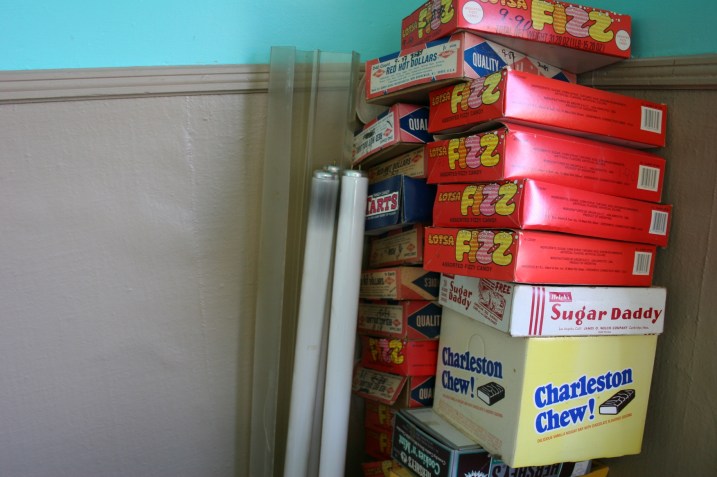
The couple found empty candy boxes (pictured here) and candy still in boxes inside the former bakery.

Michelle has fond memories of coming to Sanger’s for sweet treats. She remembers penny Tootsie Rolls and gumballs and candy cigarettes sold at the candy counter:

Thinking about the hundreds of people who have memories of this building, I really hope we can fill that same role for the next generations.

FYI: Lamberton is located along U.S. Highway 14 about 10 miles east of Walnut Grove, childhood home of Laura Ingalls Wilder, author of the Little House children’s book series. The area is a strong draw for summer tourists interested in Wilder’s books and the Little House on the Prairie television series set in Walnut Grove.

© Copyright 2012 Audrey Kletscher Helbling


Healthy & hearty dining at the retro Highland Cafe in southeastern Minnesota October 22, 2012

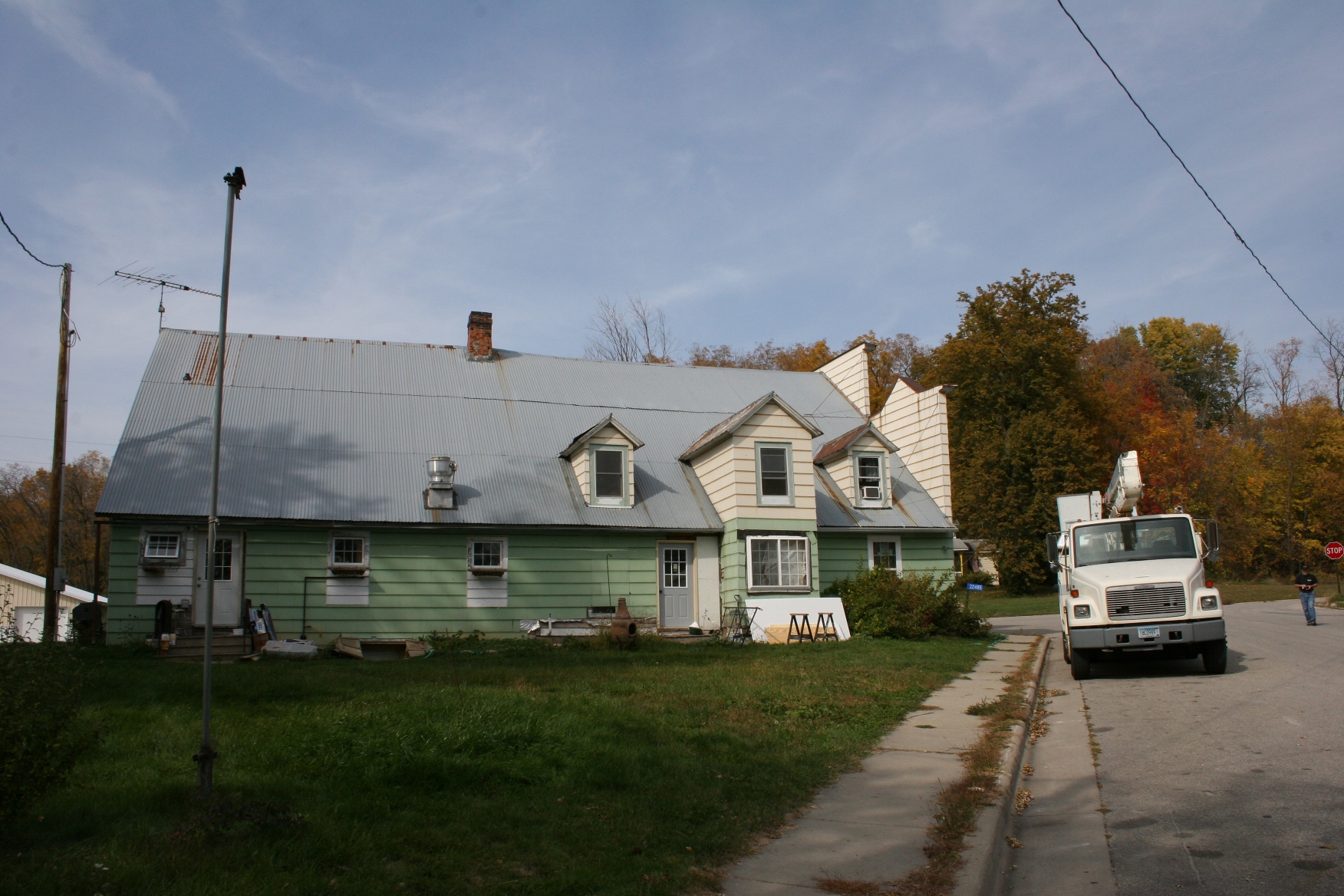
A side view of the Historic Highland Store and Cafe.

FROM THE EXTERIOR, a side view of the Historic Highland Store and Cafe in unincorporated Highland in rural Fillmore County, Minnesota, presents a mishmash of angles, work in progress and a corrugated metal roof that seems more fitting for a machine shed than a restaurant.

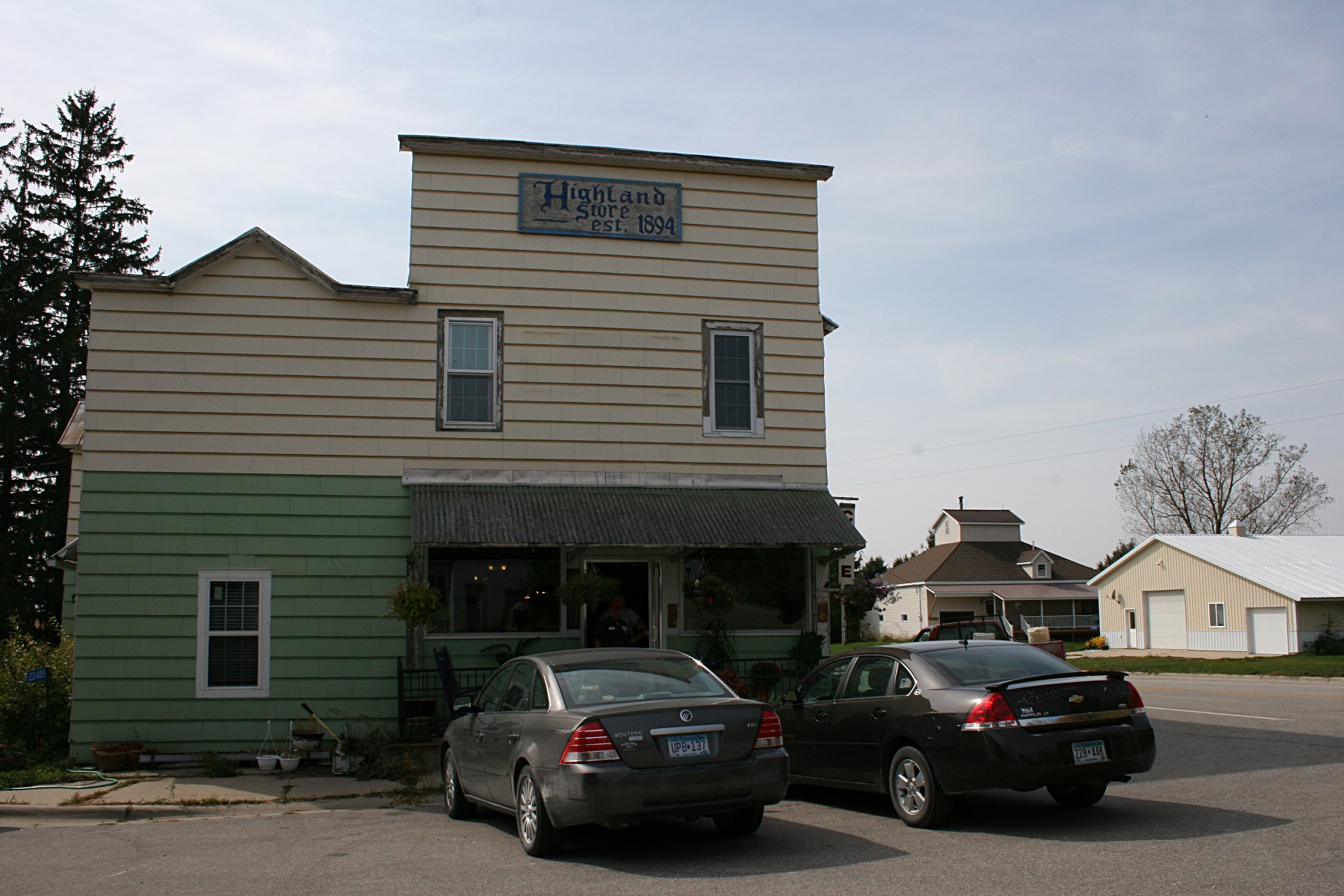
Face on, the front facade is rather plain and unassuming, until you aim your focus upward to the weathered wooden sign: “Highland Store est. 1894.”

The unassuming front of the Highland Cafe.

That single simple sign hints at the treasure you’ll discover once you step inside this combination cafe, mini-store and Seventh Day Adventist mission outreach next to County Road 10.

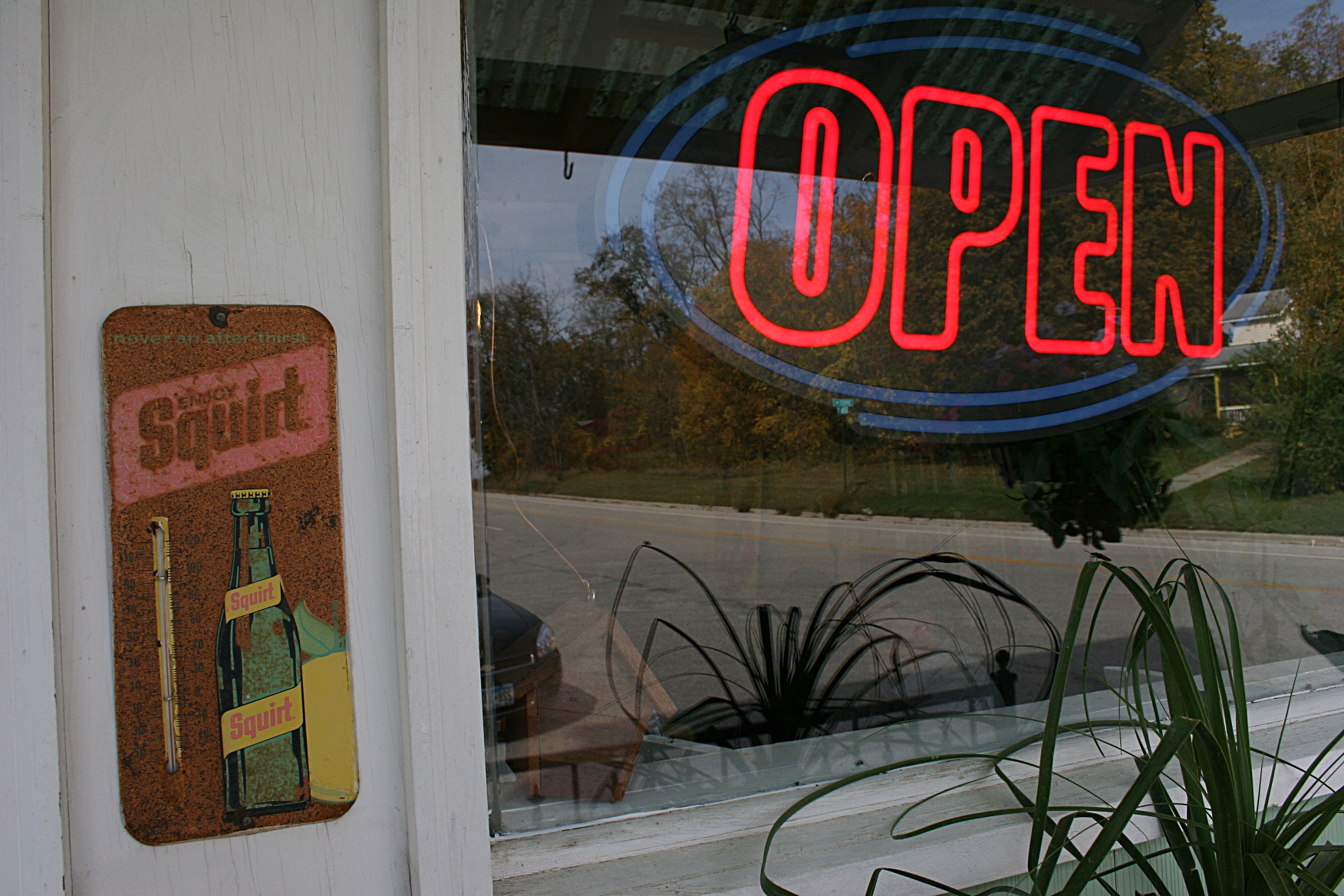
A vintage pop sign and a neon OPEN sign next to and on a front window.

Enter this historic building in Highland and you just have to stop and take in the novelty of this place which once served as a general store in this strong agricultural and tourism region of southeastern Minnesota.

A dining room overview with a mini gift shop tucked in the back.

The cafe’s charm and good, home-cooked and healthy food draw not only locals, but tourists/users of the area’s state recreational trails and regional diners from Rochester some 50 miles to the north and west.

My husband and I have come here for lunch early on a Monday afternoon in early October while on a day trip to view the fall colors. We prefer one-of-a-kind small-town cafes to chain restaurants and are thrilled with the unique, down-home atmosphere we discover at the Highland Cafe. It’s as if we’ve walked into the kitchens of our childhood, minus the red-and-white checked linoleum floor.

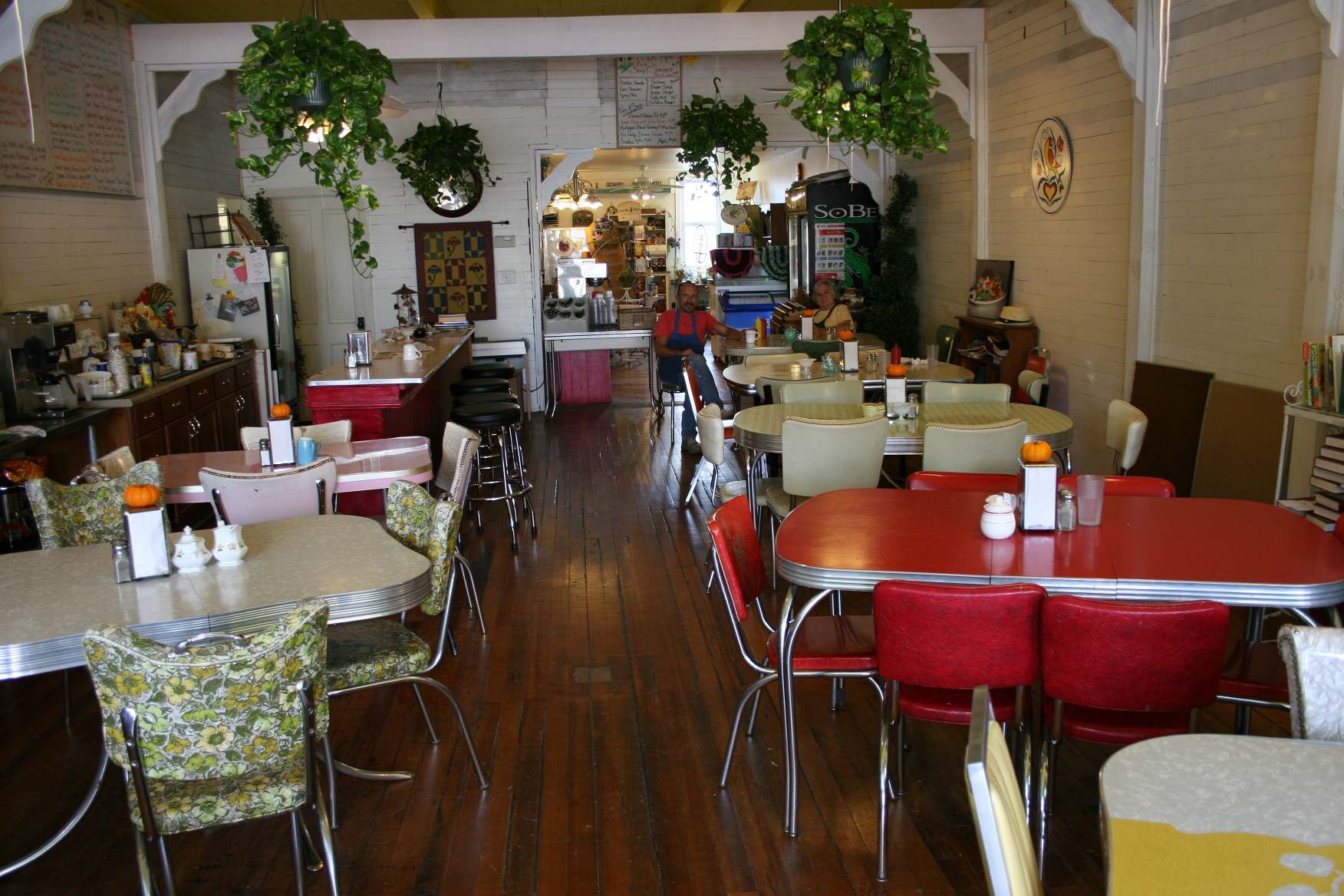
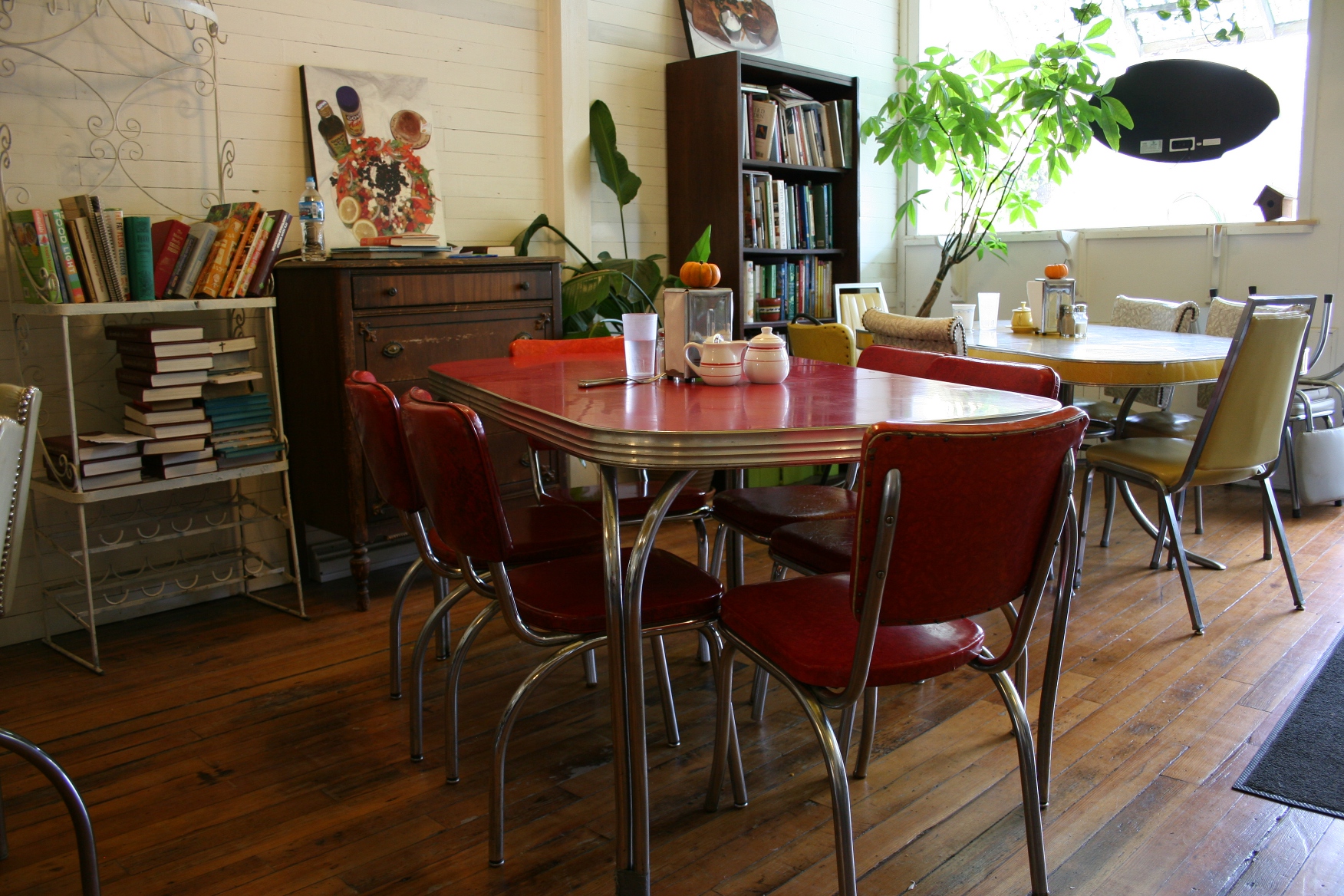
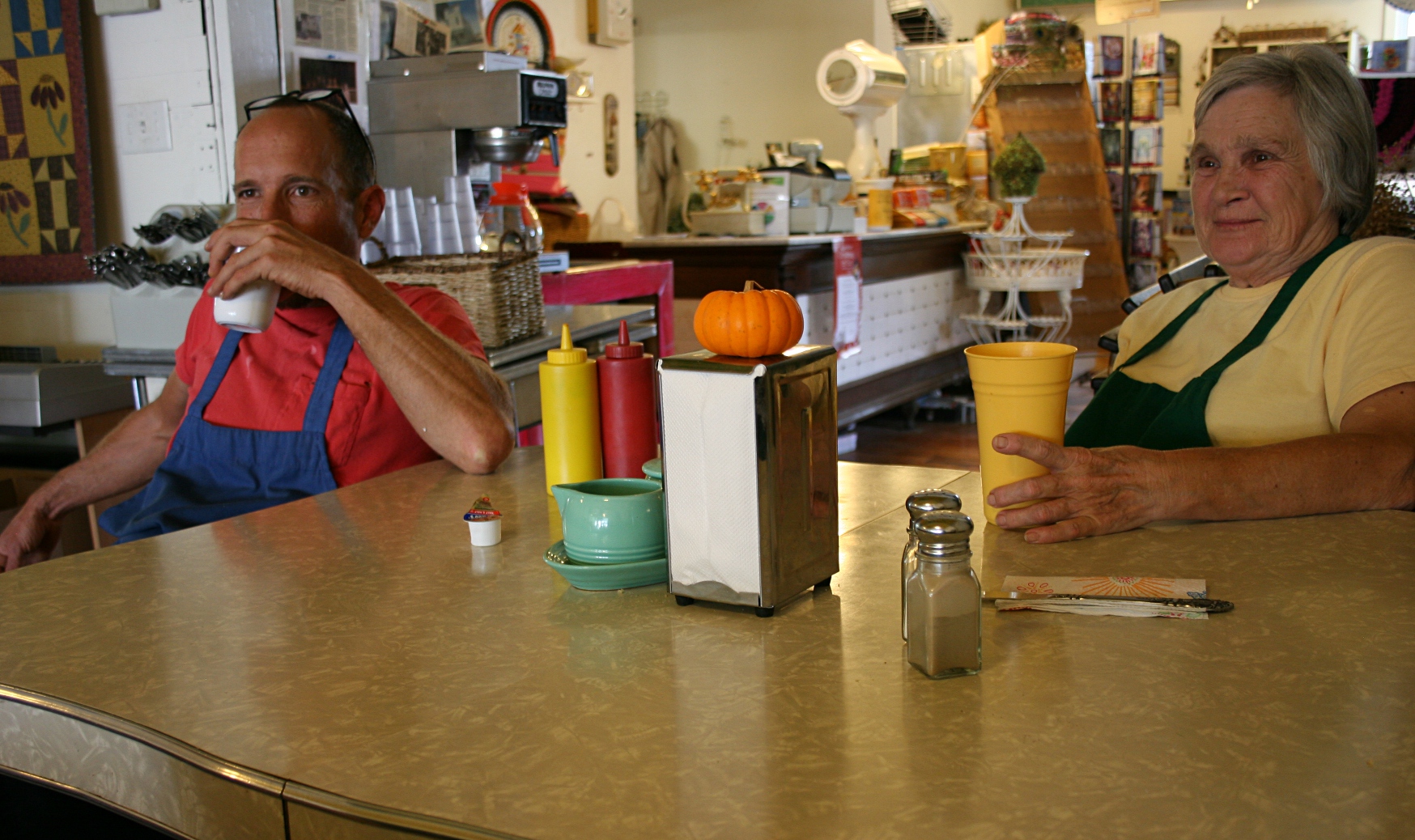
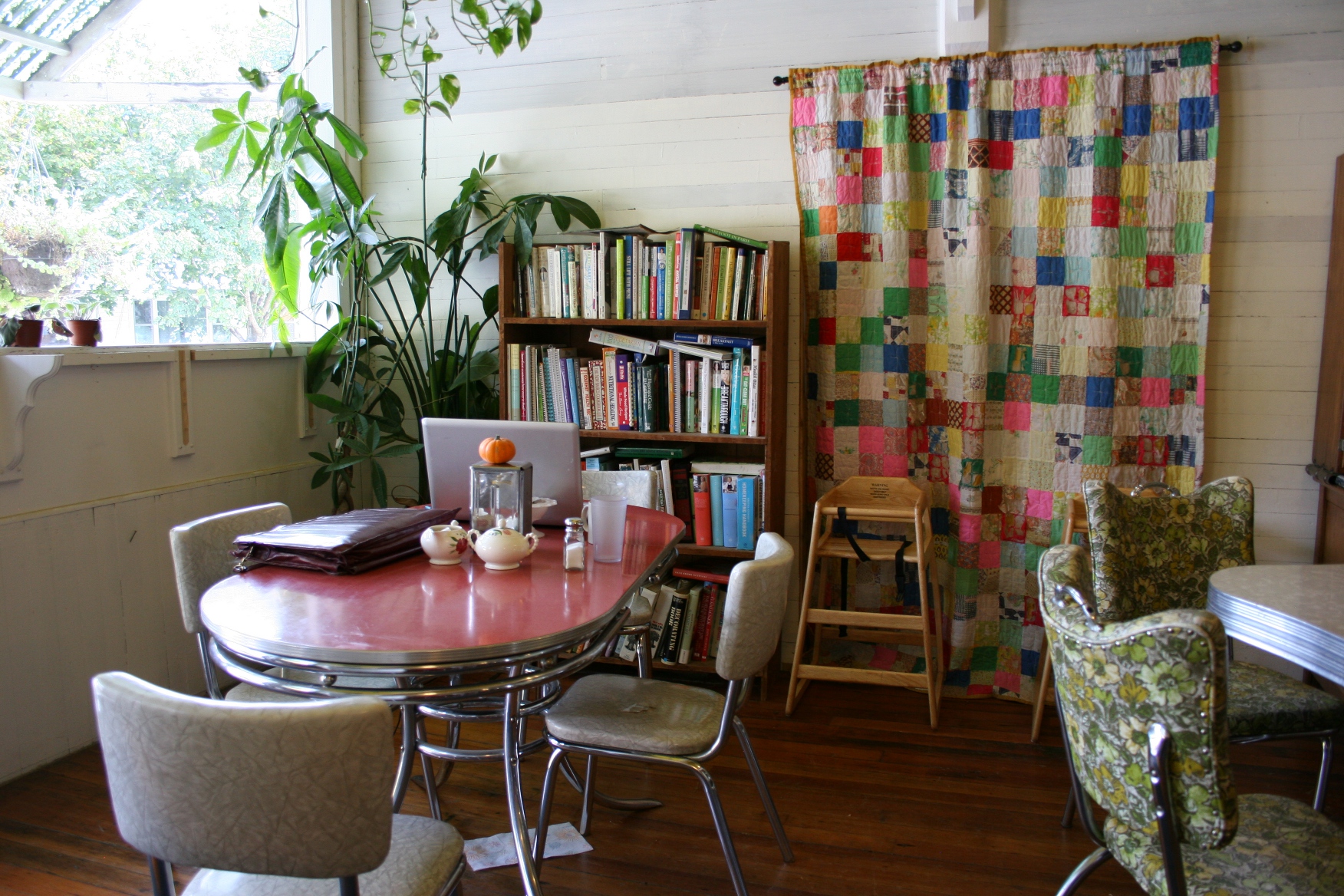
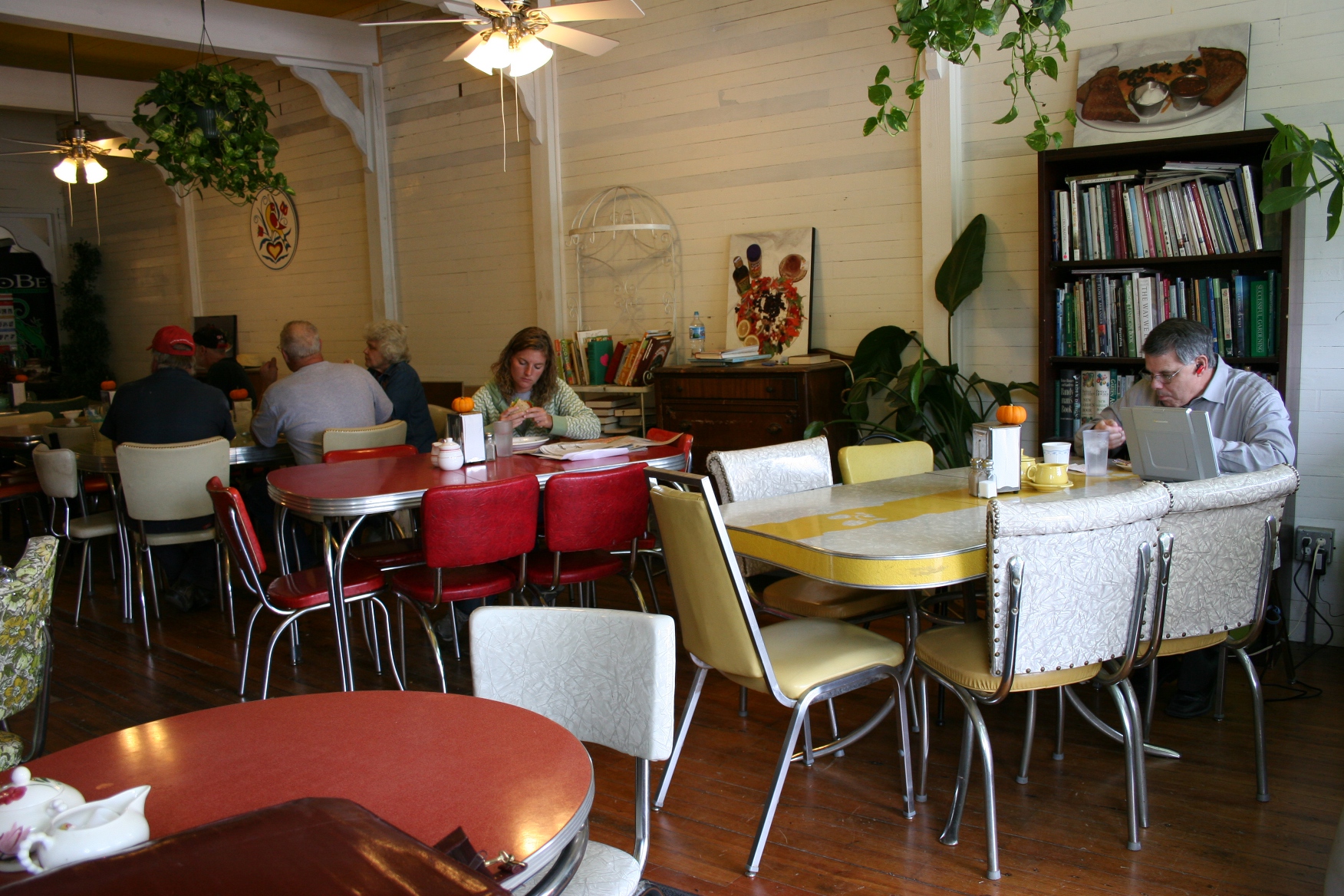
This is the scene near the front of the dining room where vintage tables and chairs are drenched in sunlight on an October afternoon. This is the kind of spot where you can read a book, work on your laptop or chat it up with the locals or others.

This eatery features the original wood floor topped by a mix of 1940s and 1950s vintage laminate chrome-legged/edged tables and chairs that set the mood for casual dining. There’s nothing matchy, matchy perfect about the décor here and that unpretentiousness suits me perfectly.

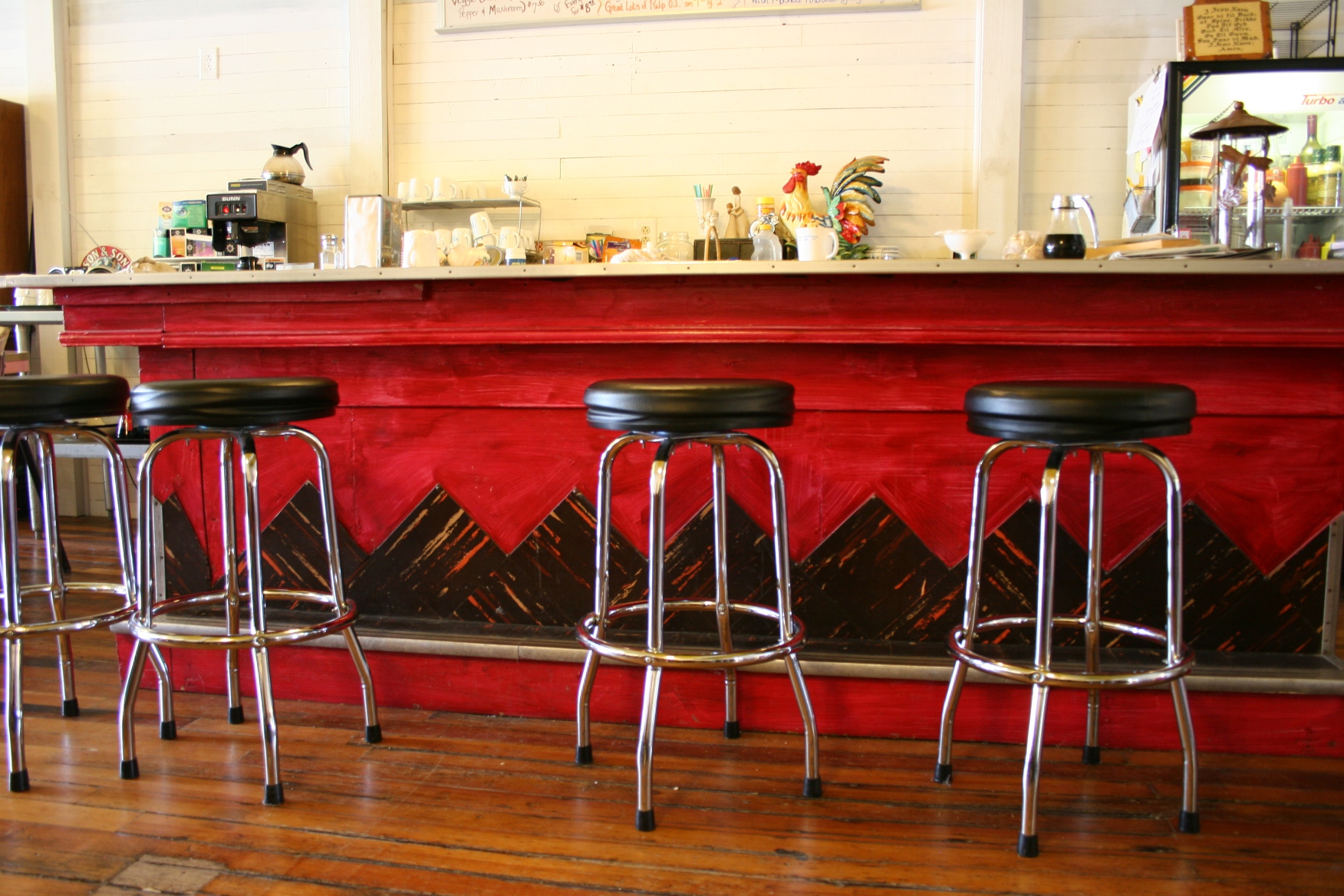
The absolutely fabulous lunch counter.

If you prefer to dine at a lunch counter, you’ll find one of those, too, painted in the most unexpected eye-jolting red that contrasts with the dark wood floor and cream-hued wood plank walls.

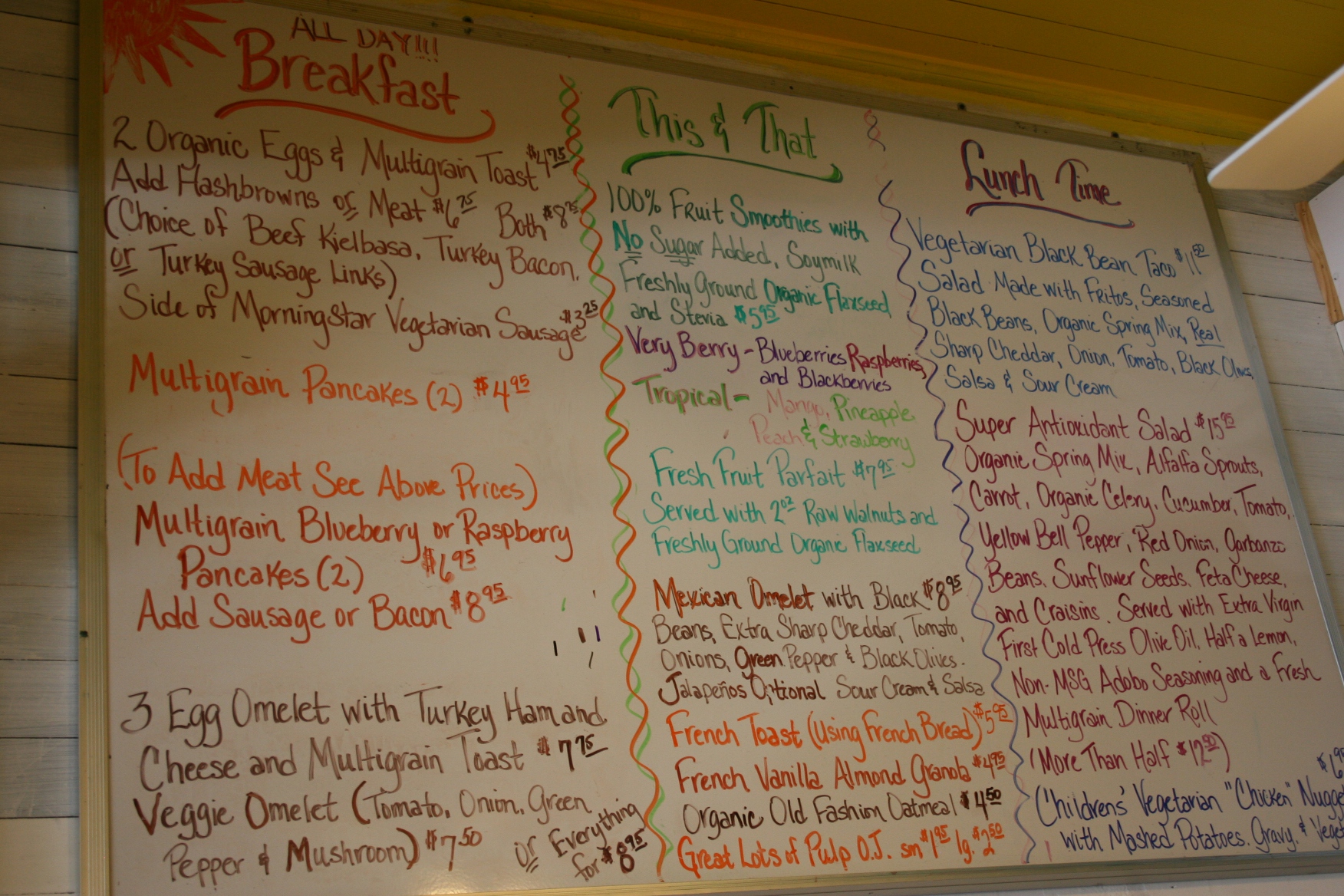
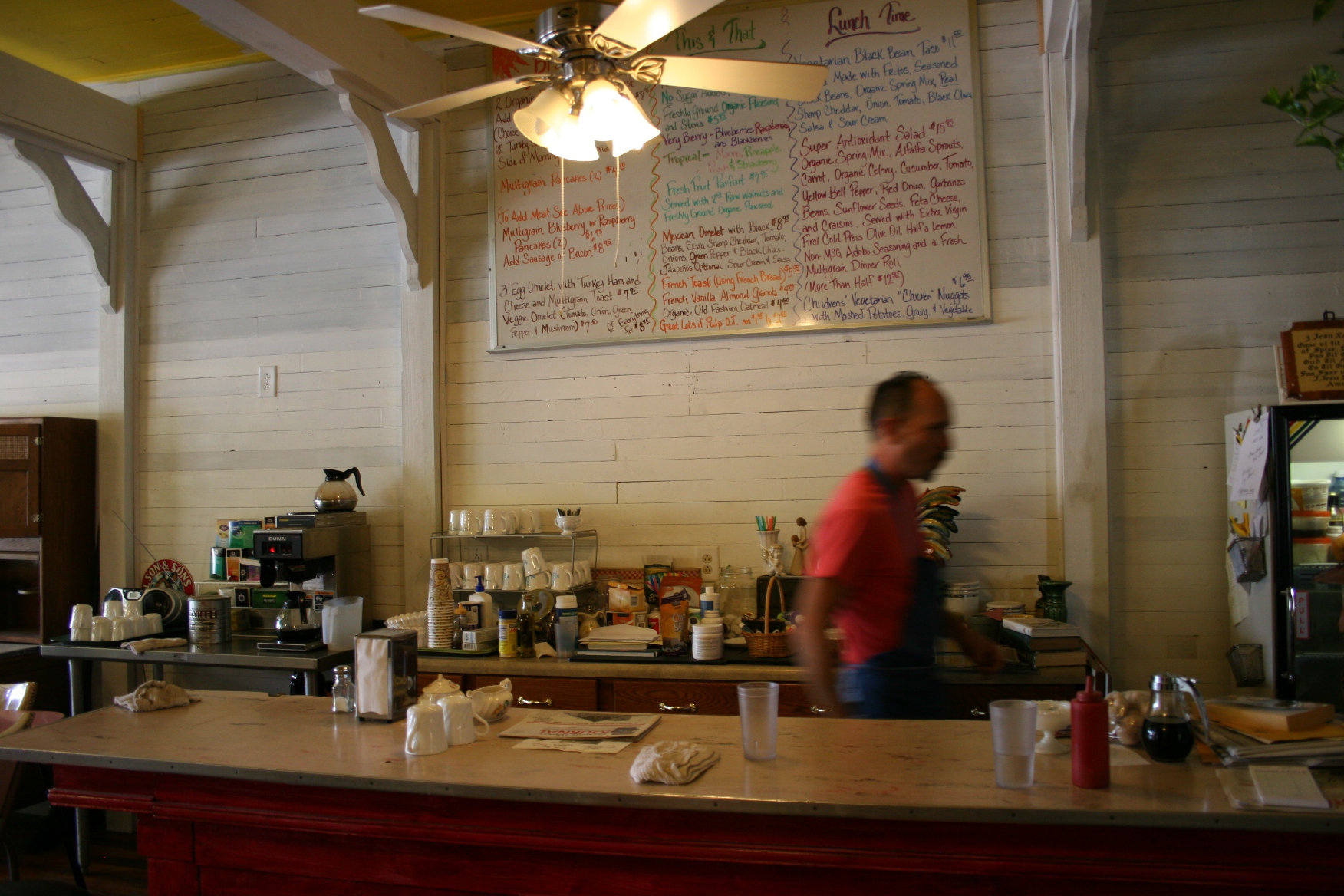
The main menu offers plenty of healthy choices.

The Highland Cafe, you’ll discover, is as much about the casual country atmosphere as about the food. You’ll read words like organic, multigrain, no sugar, soymilk, super antioxidant and fresh on the whiteboard main menu. You’ll also find comfort foods, like real mashed potatoes and gravy, along with fresh vegetables harvested from the cafe garden out back.

Troy Starks hustles behind the lunch counter toward the kitchen.

Even once mostly meat-and-potato eating local farmers have come around to eating healthier, says Troy Starks who on this Monday is waiting tables while his sister, cafe owner Vicki Hudson, is shopping for groceries. It took some time and convincing, but those stolid farmers are now sometimes ordering the cafe’s super oxidant salads.

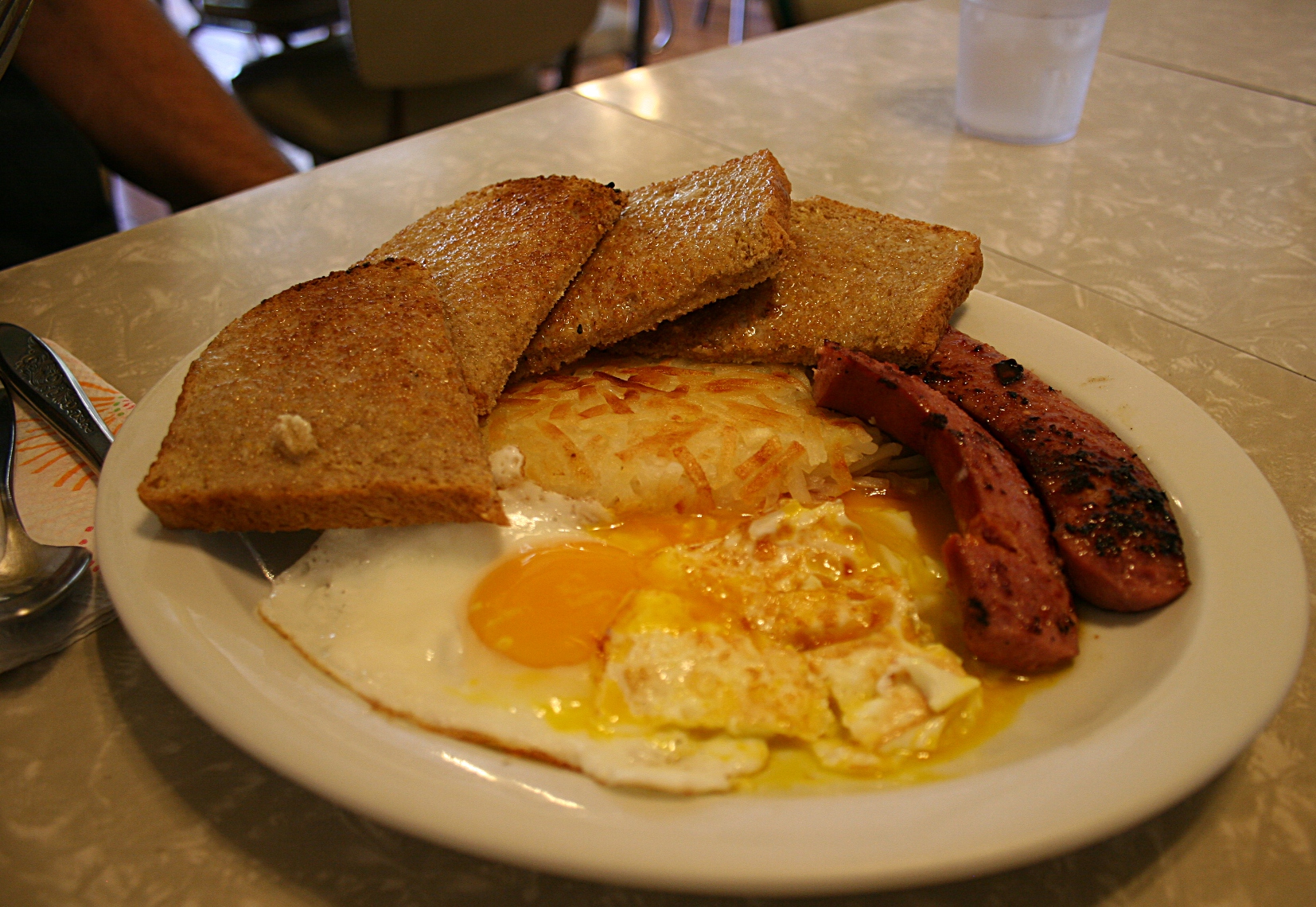
The hearty breakfast my husband ordered, even though the hour was well past breakfast: two organic eggs, multigrain toast, hashbrowns and kielbasa. He broke the egg yolks before I photographed his meal.

While my husband and I await our orders—his a plate of breakfast foods and mine a chicken salad sandwich and a bowl of corn chowder—I strike up a conversation with R.J., dining alone at the table next to us. He’s eating a burger. Turns out young R.J. farms just up the road and sells his grass-fed, antibiotic-free beef to the cafe.

When I point out to R.J. that he’s paying to eat the beef he sold to the cafe, he shoots back with a quick-witted, “Well, at least I know it’s (the beef) good.”

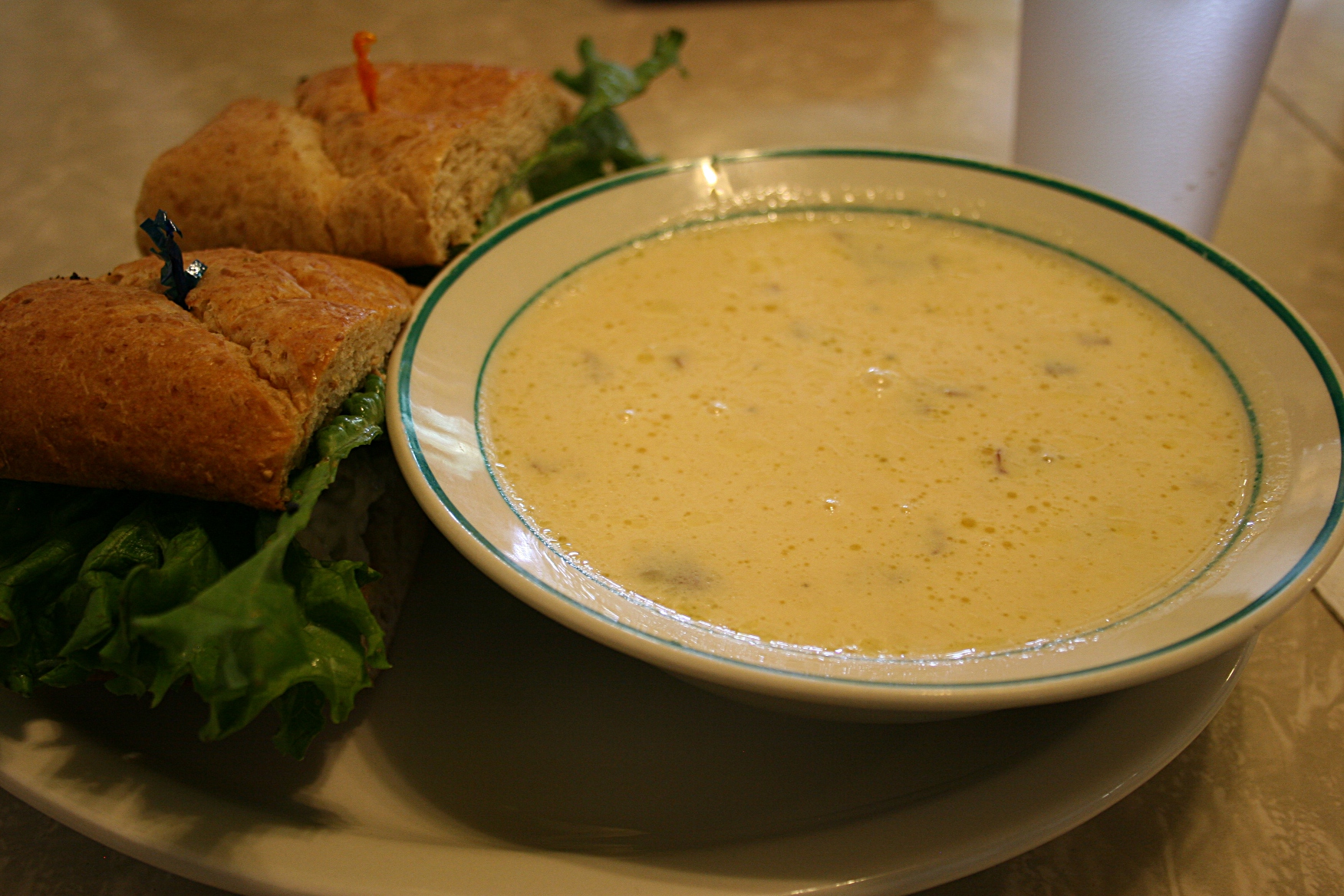
My meal: a chicken salad sandwich and tasty corn chowder.

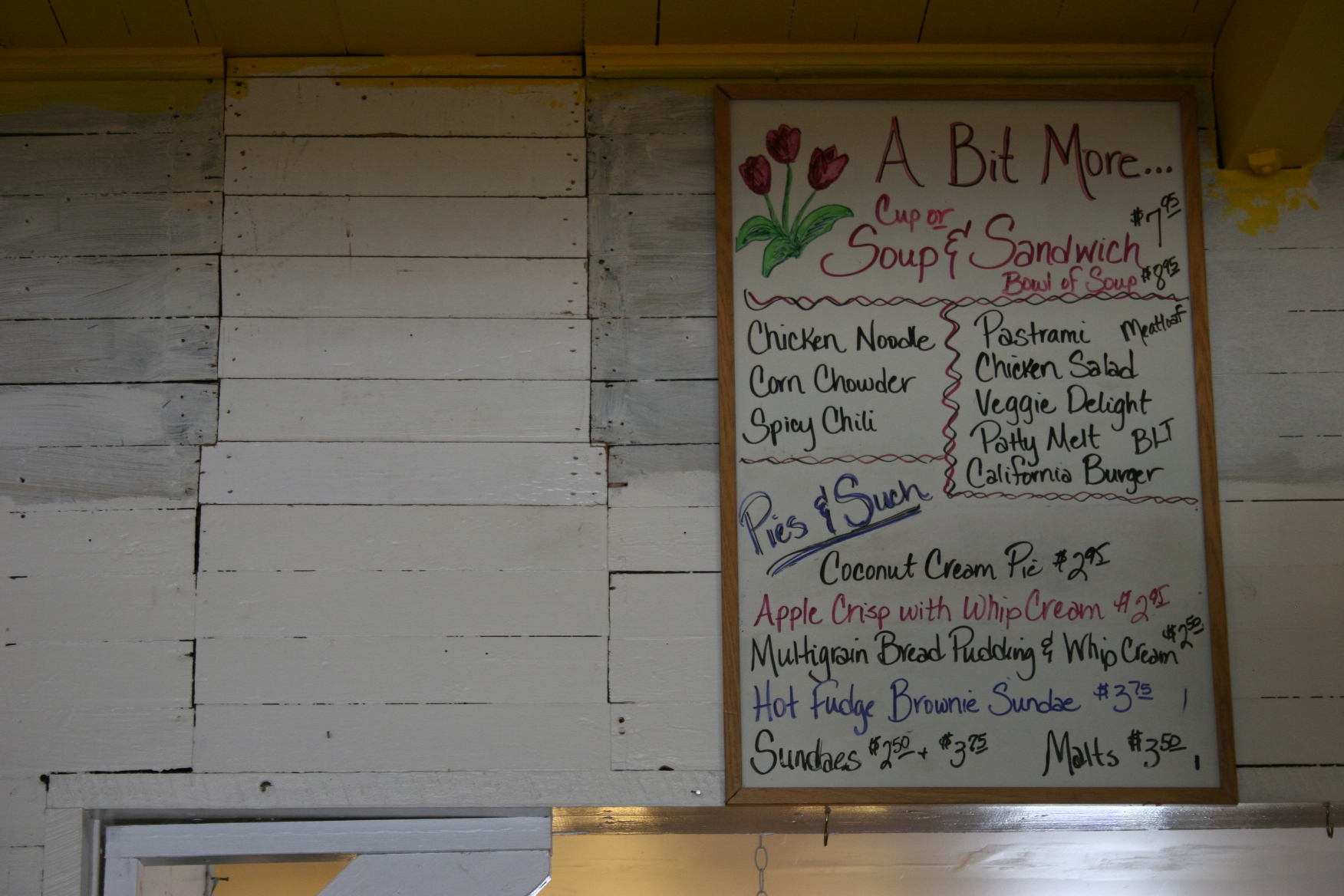
Good and filling most assuredly define the food here. I wished I wasn’t too full to order a slice of pie or bread pudding or a piece of apple crisp for dessert. But I am. Next time…

And this, dear readers, is where I originally ended this post, which has been sitting in my draft box. Now I must add to this story because cafe owner Vicki Hudson announced to me in an email on Friday that the cafe she purchased five years ago will be closing just before Thanksgiving.

Her mother Sharyn Taylor, the cafe’s chief cook, is “getting tired and will not be up to working another year, so we are closing our doors,” Vicki writes. “…we are going to turn the upstairs into a bed and breakfast and then sell it as a combination bed and breakfast and cafe. It would not be the same without my mom and I feel she has done a tremendous job the past five years.”

Vicki continues: “Maybe there will be someone out there interested in carrying on.”

There. If you are interested in carrying on the fine tradition of the Historic Highland Store and Cafe, preserving a piece of southeastern Minnesota history and more, contact Vicki. Honestly, don’t you just love this unique small town dining spot? I do.

The dessert menu on this particular Monday in October.

FYI: The Historic Highland Store and Cafe is located along Fillmore County Road 10 southeast of Lanesboro in unicorporated Highland. Hours are from 7 a.m. – 3 p.m. Monday-Friday, closed Saturdays and open from 8 a.m. – 3 p.m. Sunday, until just before Thanksgiving.

Yes, the cafe is closed on Saturdays because the building also serves as a ministry for the Seventh Day Adventist Highland Chapel with Sabbath school beginning at 9:30 a.m. followed by an 11 a.m. church service and vegetarian potluck. Bible study is also held at 7 p.m. on Wednesdays and is open to all.

For more information about the Historic Highland Store and Cafe, click here to reach the cafe’s website.

After the lunch rush, Troy Starks and his mom, Sharyn Taylor, sit down to relax and chat. Sharyn is the cafe’s cook.

A comfy and cozy front corner of the cafe.

Even early on a Monday afternoon, the cafe is fairly busy. Occasionally local Amish dine here, intriguing tourists who come to this region of Minnesota. None were here on the Monday we visited. We were told that young Amish women have also worked here on occasion in the kitchen. And at least one  did not show up for work one day, having left the Amish order to “go Englisch.”

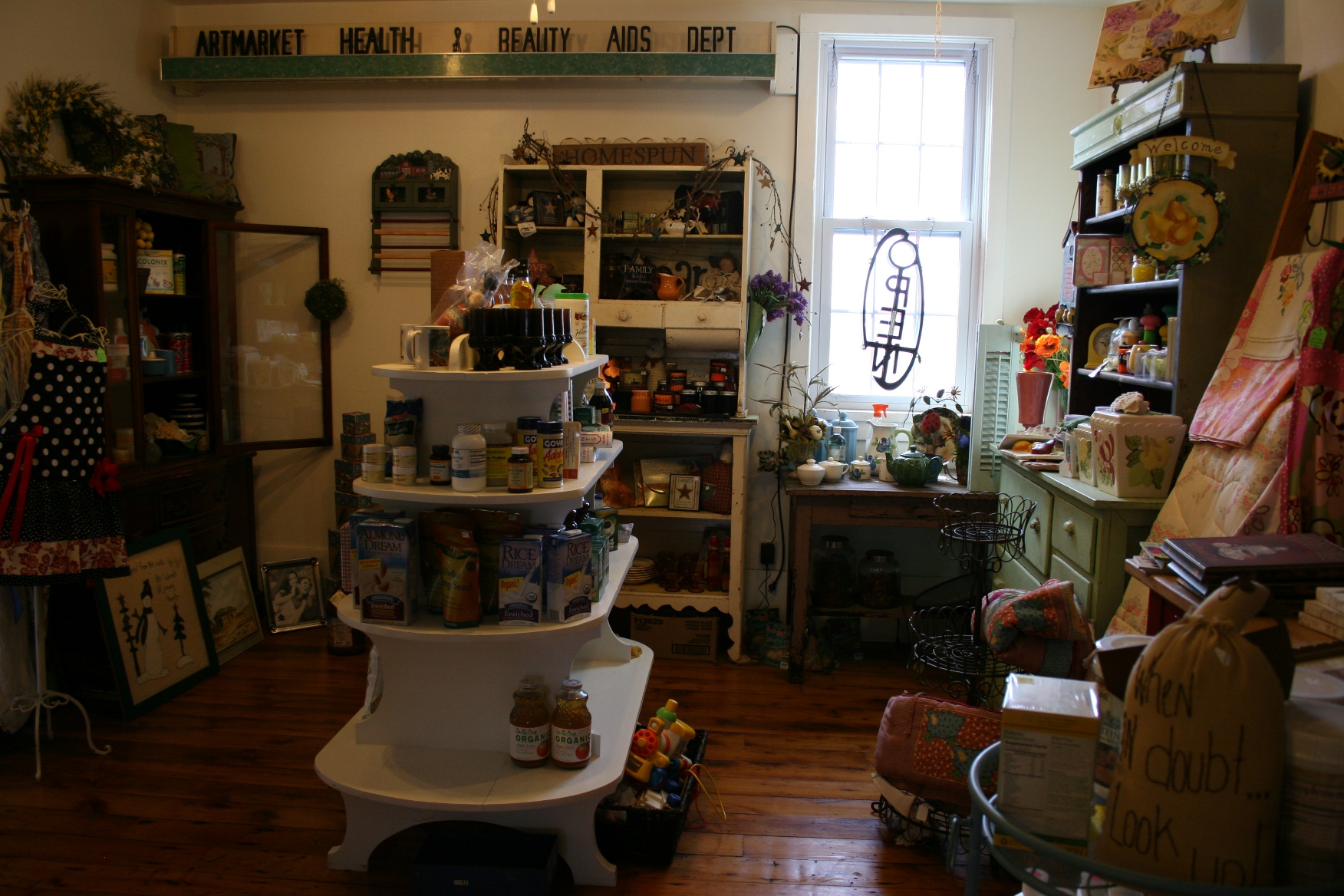
The art market and health and beauty aids department behind the dining room offers an eclectic mix of merchandise.

© Copyright 2012 Audrey Kletscher Helbling


A maple bacon sundae & other delights at a Waterville coffee shop September 13, 2012

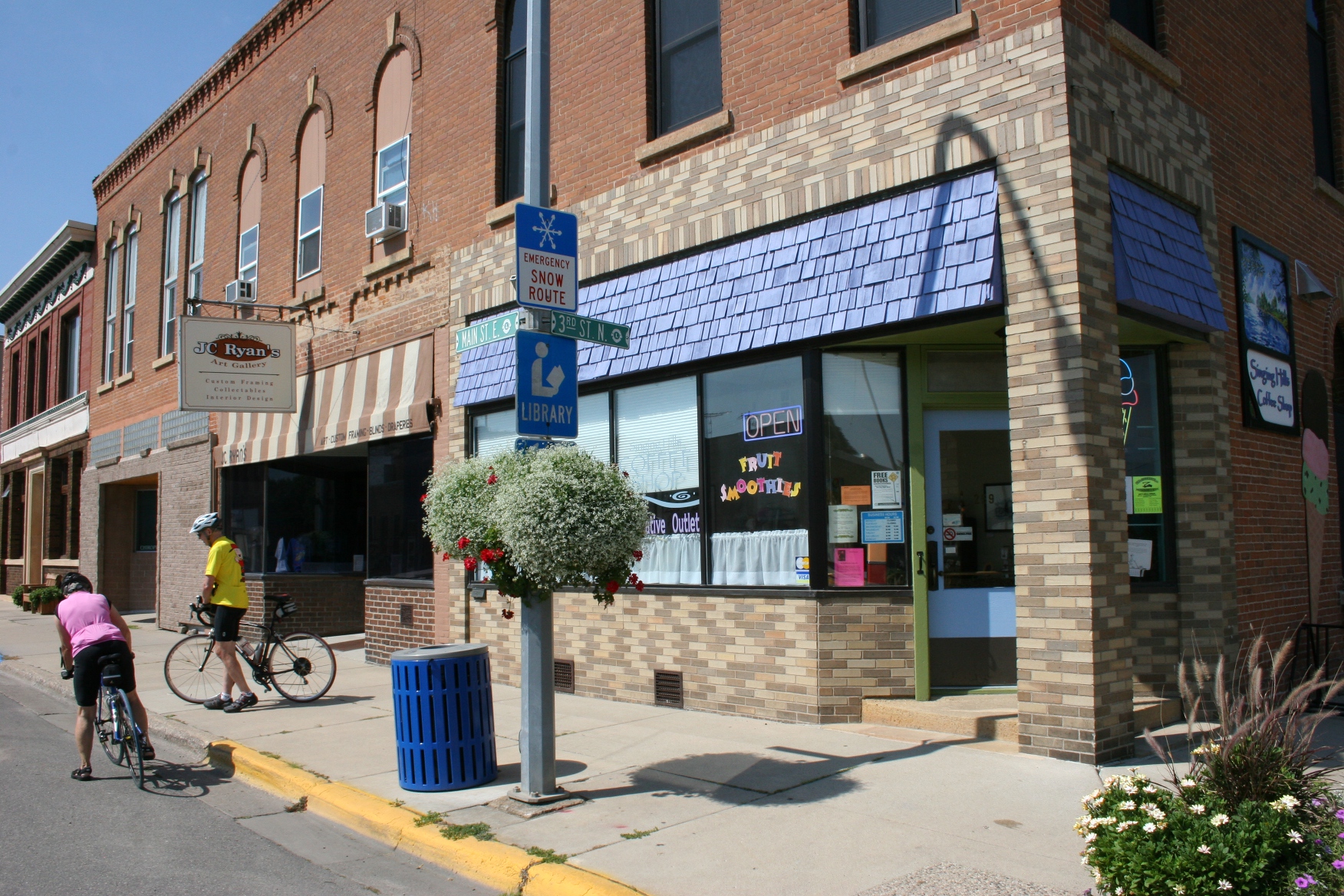
Singing Hills Coffee Shop, at the corner of Main and Third Streets in downtown Waterville in southern Minnesota.

KATHY GREW UP in Detroit, worked 20 years as a deck officer on a freighter for the Merchant Marine, met her husband at a Halloween party, birthed two daughters in her 40s and then, with no business experience, opened a coffee shop in December 2010.

That’s the life synopsis of the woman behind Singing Hills Coffee Shop in the southern Minnesota lakeside community of Waterville, best known for its bullheads and Buccaneers—as in the local high school champion football and basketball teams.

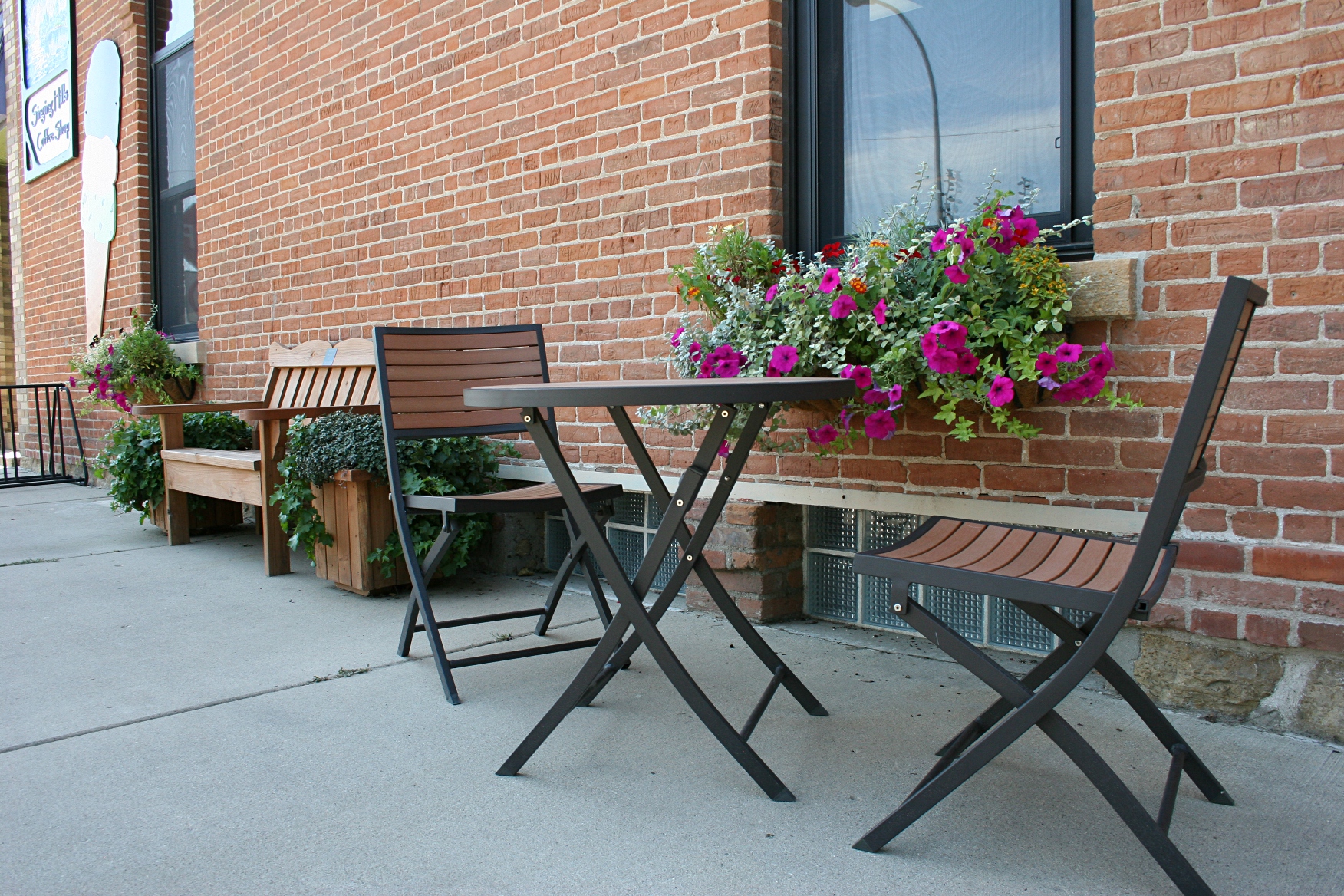
Inviting outside dining at the Singing Hills Coffee Shop.

One-third of a stately, anchor brick building on a corner of Waterville’s Main Street houses the coffee shop. It’s as inviting on the outside—with bistro tables and a bench and window baskets popping with hot pink petunias and luscious ivy spilling from pots—as it is inside.

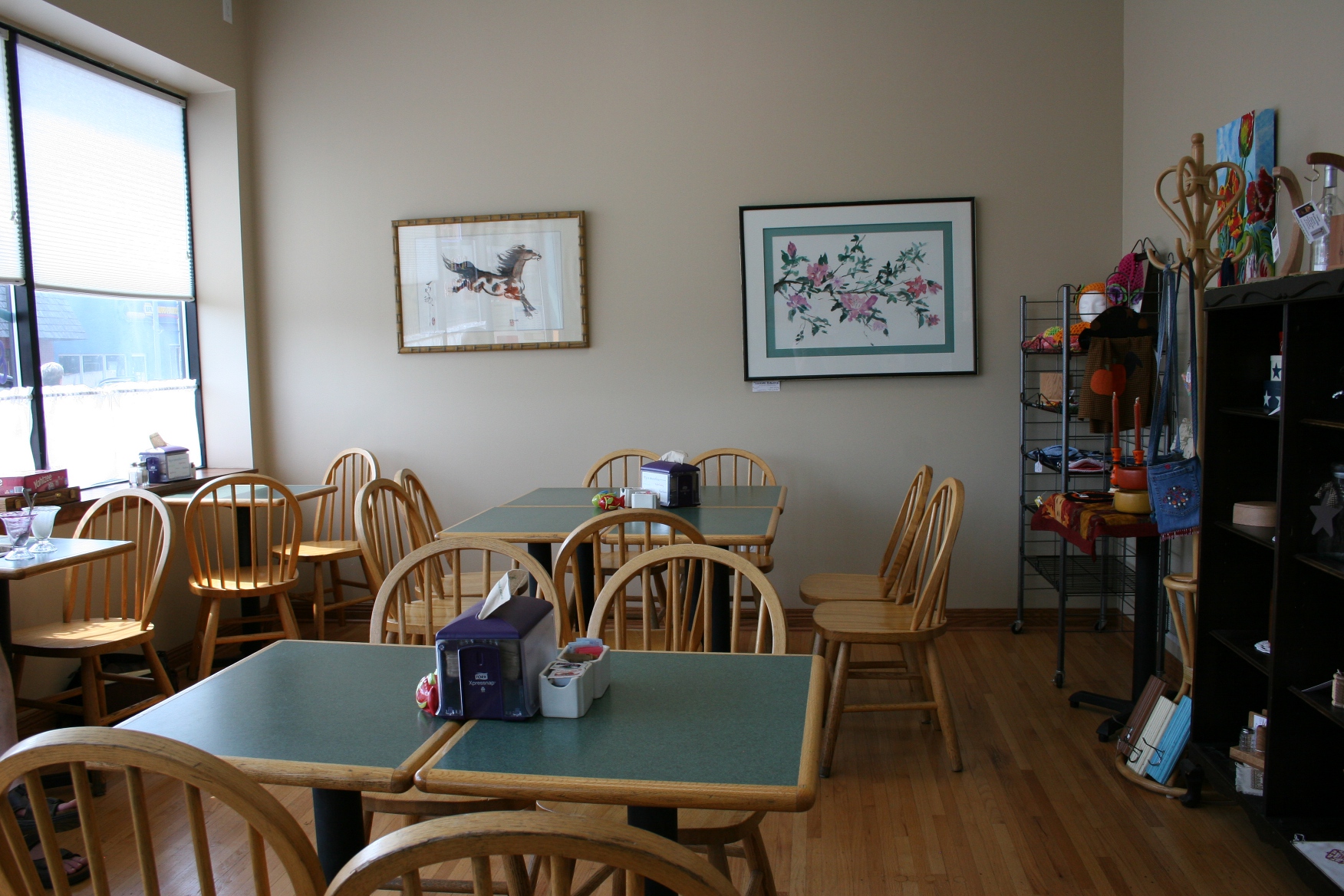
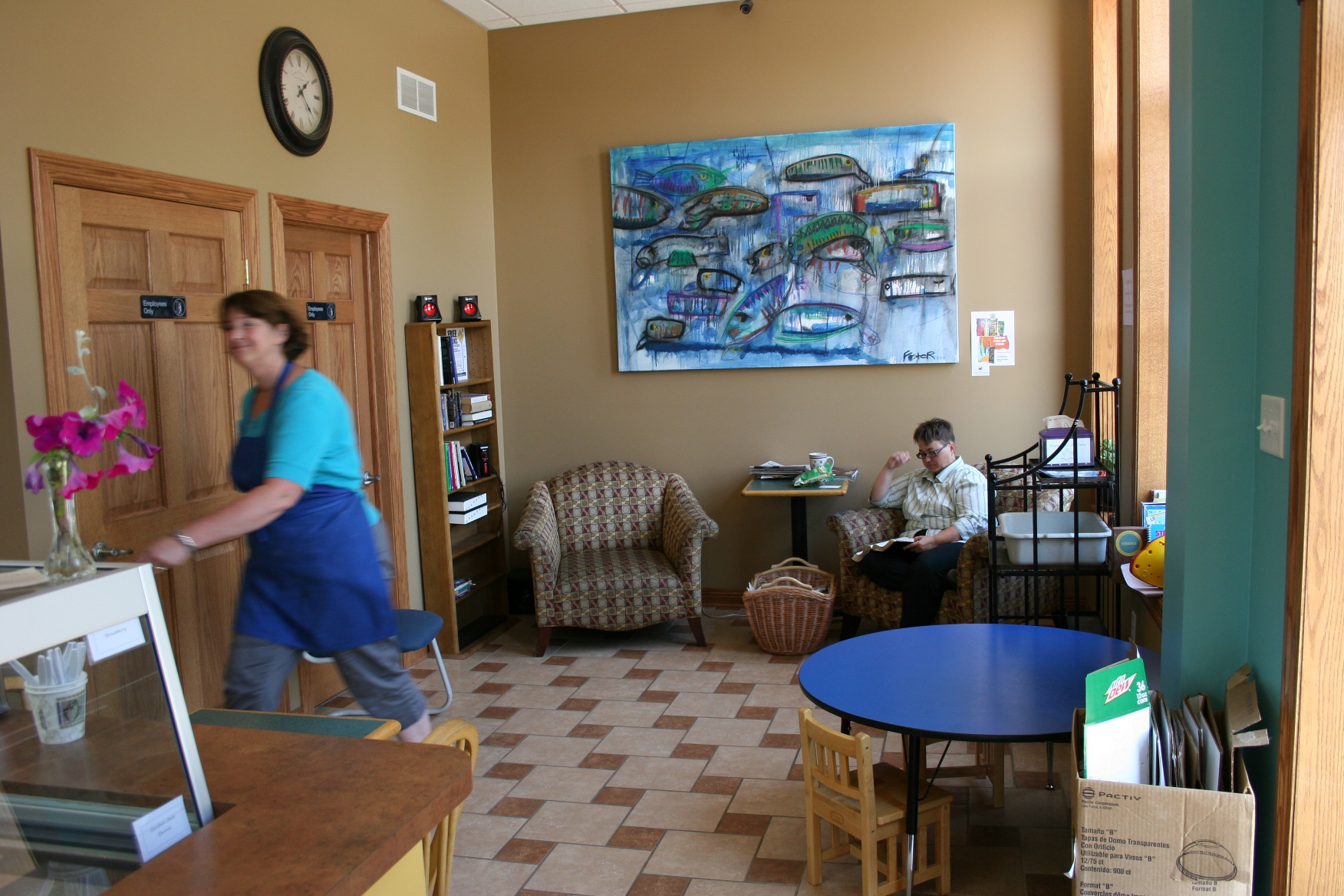
The bright, cozy dining area of the coffee shop with local arts and crafts displayed on shelves to the right and on walls.

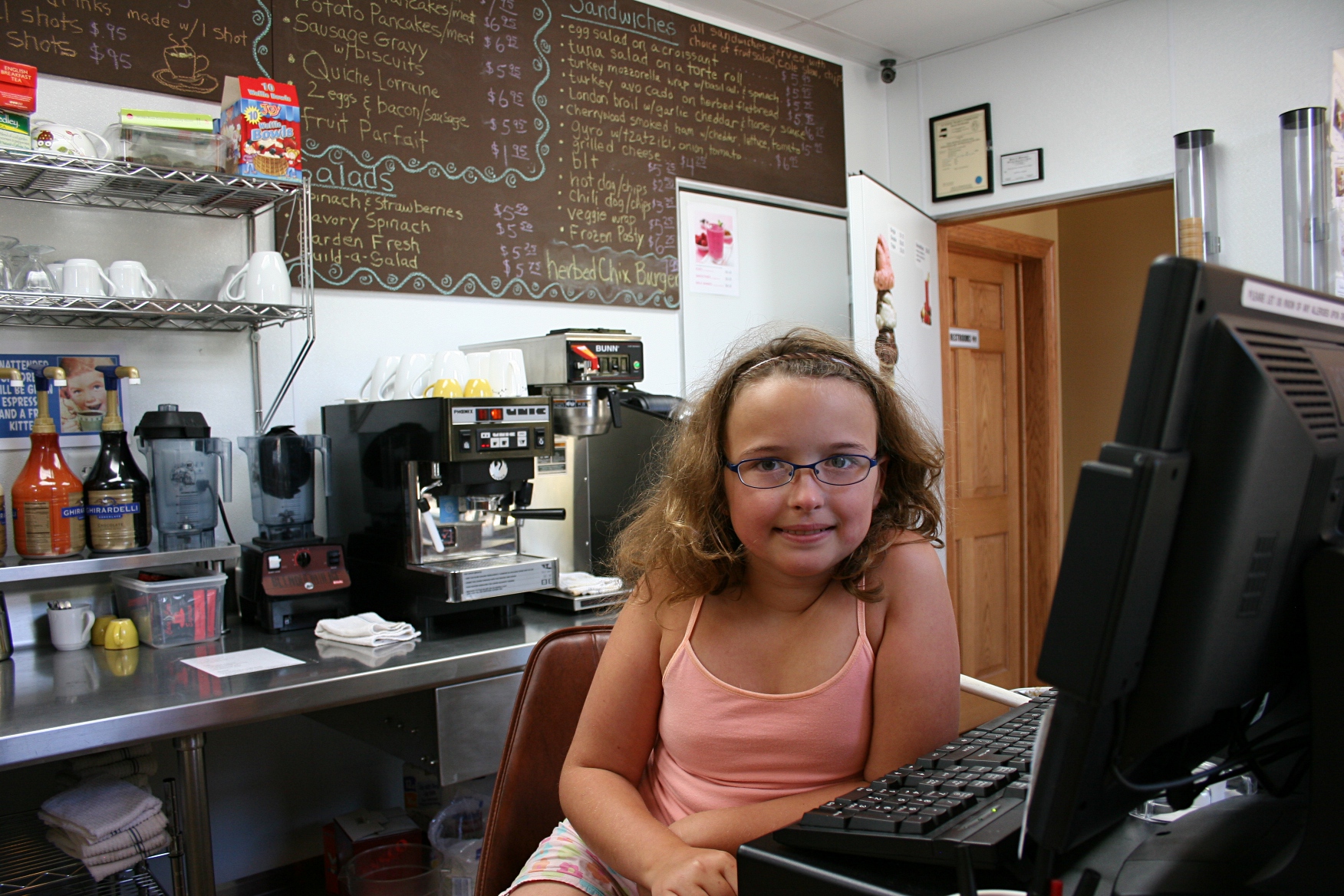
Kathy’s daughter, Marina, waits on customers.

On an early Sunday afternoon, 45 minutes before the 2 p.m. closing, Kathy hustles to prepare sandwiches and ice cream treats while her 10-year-old daughter, Marina (yes, her name is a nod to Kathy’s time on the water), takes orders, accepts payment and makes change.

Kathy hurries back to the kitchen to prepare orders while customer and friend, Kari, relaxes in a back coffee shop corner. Tim Foster’s “American lures” painting (oil paint, oil pastels and graphite on canvas) anchors the wall. It was inspired, he says, by old fishing lures. Kathy would like to purchase the $450 painting as a permanent installment in her shop. I suggested she collect tips to help her buy it. Foster sells his mostly abstract and surreal paintings through his website and studio, at Hogan Brothers in Northfield and via art shows. Kathy saw “American lures” at the 2012 Sakatah Arts Experience in Waterville and invited Foster to bring his painting to her coffee shop.

In a comfy corner chair, Kathy’s friend, Kari, is reading her bible, seeking comfort at the recent, unexpected loss of her 36-year-old cousin. Light floods the homey space warmed by walls the hue of honey on two sides and a contrasting robin’s egg blue on the other.

A printed sign on a slim spot between two towering windows reads:

Conduct Code—Love your neighbor as yourself. Treat other people the way you want to be treated!

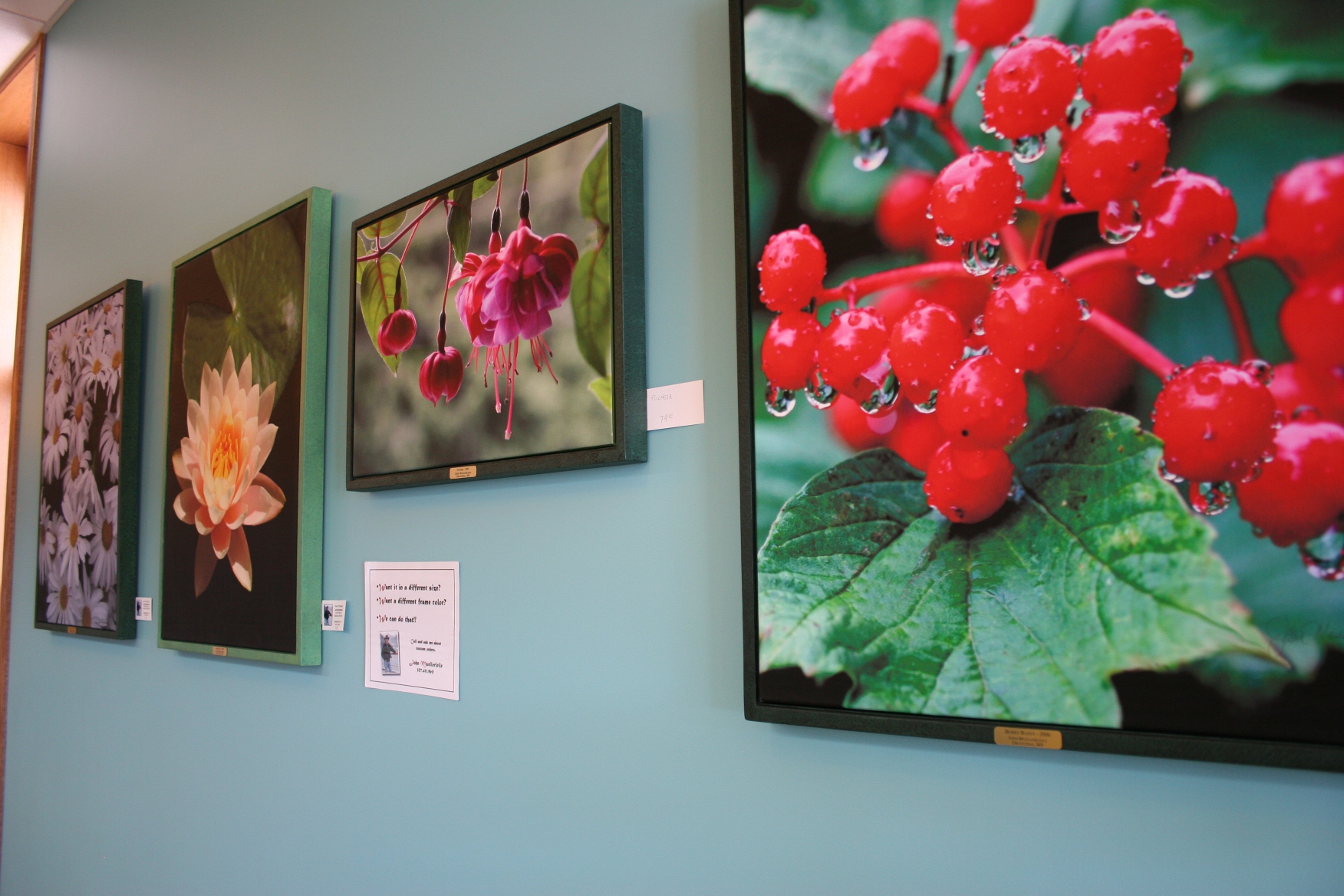
Owatonna resident John Muellerleile’s fine art photography on display and for sale.

Kathy welcomes customers and artists here, into this corner haven in a town that thrives on summer-time business from resort guests, cabin dwellers and users of the recreational Sakatah Singing Hills State Trail.

Her customers come here for the ever-popular smoothies and the favorite turkey avocado sandwich, for the coffee and the espressos and other beverages, for the breakfast and soup and sandwiches and salads and baked goods and ice cream treats.

On this Sunday, my husband and I have driven 15 miles for an ice cream treat upon the recommendation of our friend, Joy, who raves about the maple bacon sundae.

As Randy places our order with Marina, I chat with Kari in the corner, take photos and admire a focal point, 6-foot by 4-foot oil painting by Tim Foster of Northfield. His fish-themed art piece, titled “American lures,” is “so Watervillian,” Kathy tells me later, fitting this lakeside town which celebrates bullheads at an annual June festival. There’s a deeper meaning to the painting in which words like “love” and “prove it” and “Federal Reserve Bank” are hidden, Kathy says, but we don’t get into details.

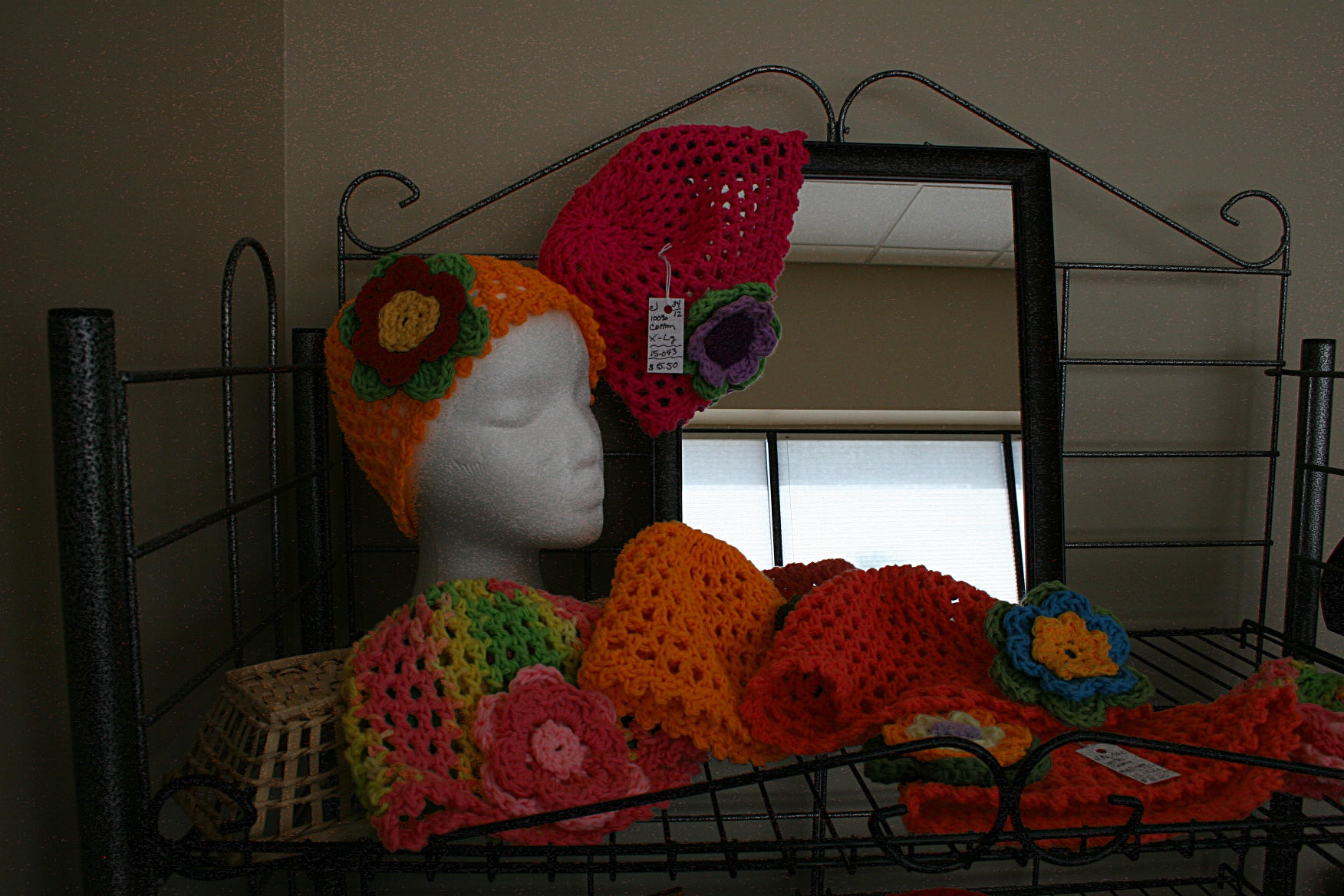
An example of the handcrafted work of local artisans for sale in the coffee shop.

Kathy works with the nonprofit Waterville Local Cooperative Outlet to provide a marketplace for some 8-10 local artisans and crafters. Their creations—from woodcrafts to crocheted caps, paintings, photos and more—are displayed on walls and on shelves through-out the coffee shop.

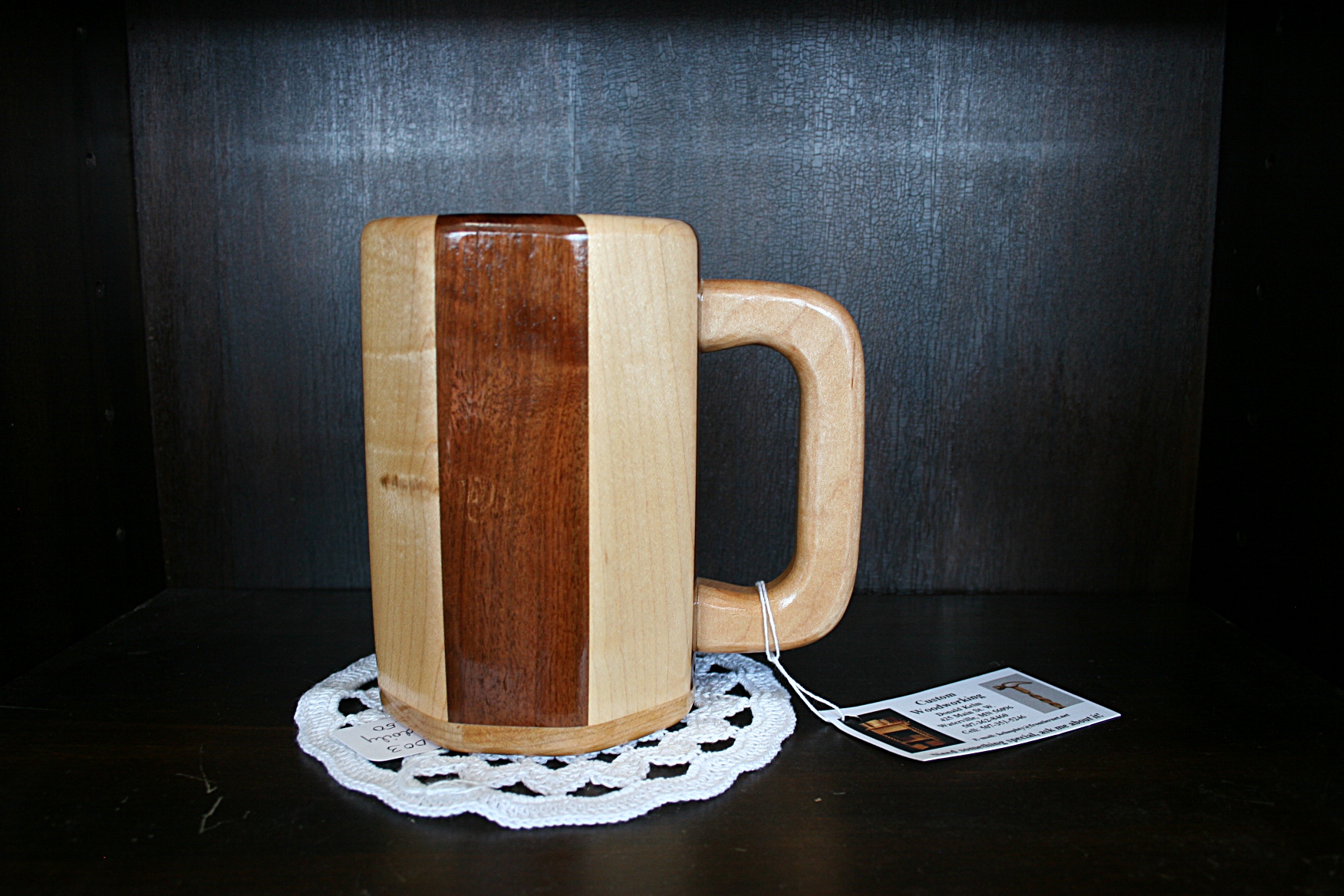
Donald Kelm of Waterville, a custom woodworker, created this mug.

Engaging the arts community exemplifies Kathy’s efforts at community development. That extends to the food aspect of her business, too. She wanted, she says, more dining options than bar food burgers and fries for the town she and her family now call home. And Kathy offers that with a sandwich menu which doesn’t include a single burger. The closest thing to fries are the chips accompanying sandwich orders.

On her sandwich menu, you’ll find choices like egg salad on a croissant; veggie wrap with hummus, provolone, red onion, red pepper and spinach; and cherrywood smoke ham with garlic cheddar, tomato and mustard sauce. You can build your own sandwich, order a cup of soup.

Hungry for a bakery treat? Kathy has selections from cupcakes to pie to traditional Upper Peninsula style pasties, a tribute to her native Michigan.

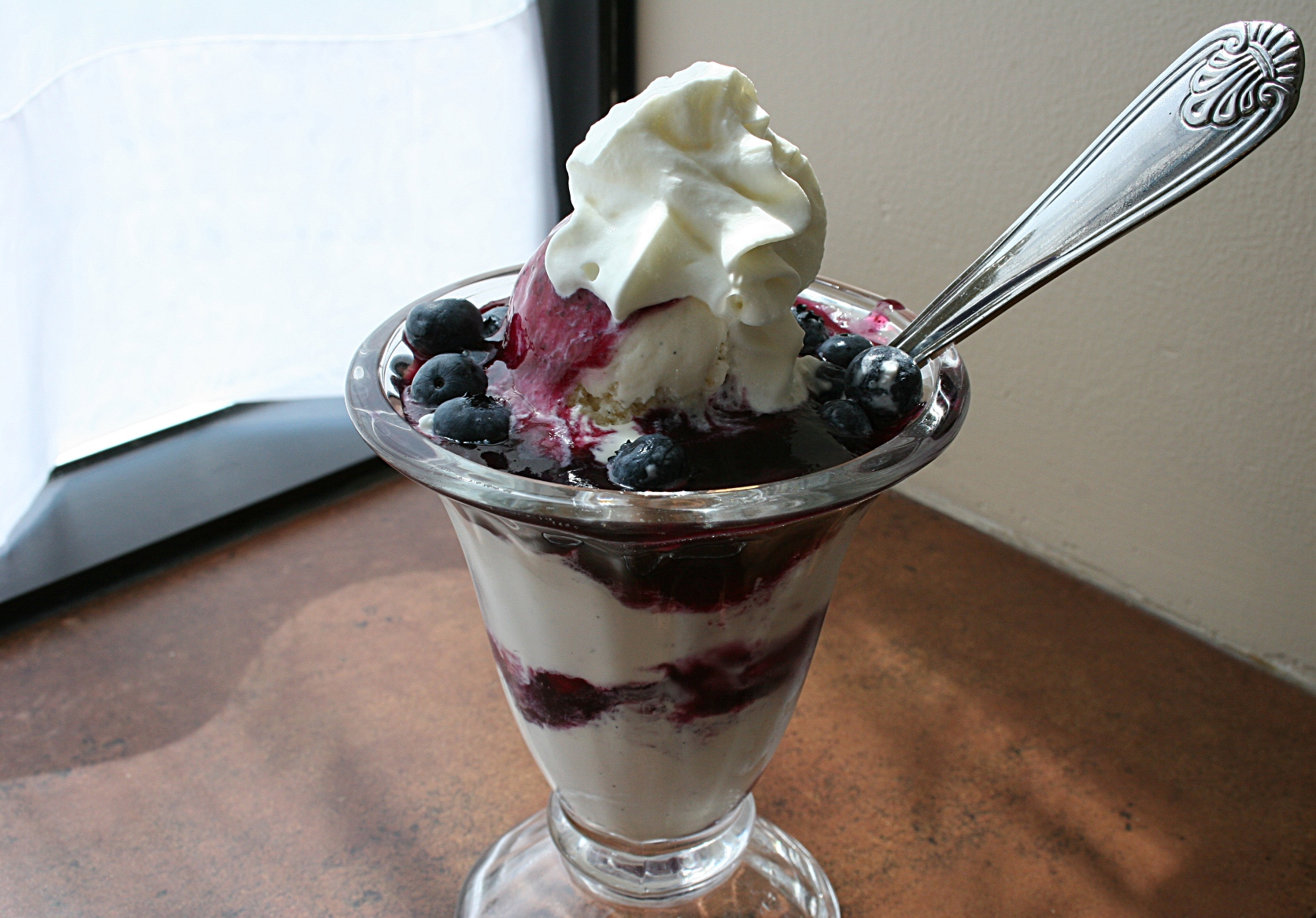
Singing Hills Coffee Shop’s delicious maple bacon sundae.

But, on this Sunday, I’ve come only to sample the maple bacon sundae with spicy maple-glazed pecans, homemade maple caramel and bacon, yes, bacon, on vanilla ice cream. My husband questions my choice. I don’t, and find the sweet and salty mix a perfect complement to the ice cream. I’d give the maple bacon sundae a five-star recommendation.

An equally tasty blueberry sundae.

My less daring spouse orders a blueberry sundae and is equally pleased with his selection.

These two boys came with their moms, and a sister of one, for ice cream treats. The boy on the right told the boy on the left that he had a mustache. Then I told the boy on the right that he had an ice cream mustache, too.

A retired couple who spend their summers at a Waterville resort rave about the sandwiches while two moms ordering ice cream for themselves and their kids endorse the ice cream.

Kathy, though, admits that business growth was slow during her first year and that she’s still learning, given her inexperience as a businesswoman. With summer winding down, she’s cutting back on hours. Singing Hills Coffee Shop is closed now on Mondays and Tuesdays, but open from 8 a.m. – 5 p.m. Wednesday – Saturday and from 8 a.m. – 2 p.m. on Sunday.

On October 14, the coffee shop will close for the season and then reopen in mid-April.

So, if you want to try that maple bacon sundae…

FYI: For more information about Singing Hills Coffee Shop in Waterville, click here to reach the shop’s website.

To learn more about the arts scene in Waterville, specifically the annual Sakatah Arts Experience, click here.

For more info about Northfield artist T. Andrew Foster, click here to visit his Creative Space Art Studio website. 

Copyright 2012 Audrey Kletscher Helbling
 

Appreciating a vintage Dairy Queen sign in Janesville August 22, 2012

ICE CREAM. It has to be the single treat with the most universal appeal. And I expect Dairy Queen rates as the company most universally known for its soft-serve ice cream.

With 6,000 plus Dairy Queens throughout the world, this fast food franchise certainly has established itself as a dominating presence since the first DQ opened in 1940 in Joliet, Illinois.

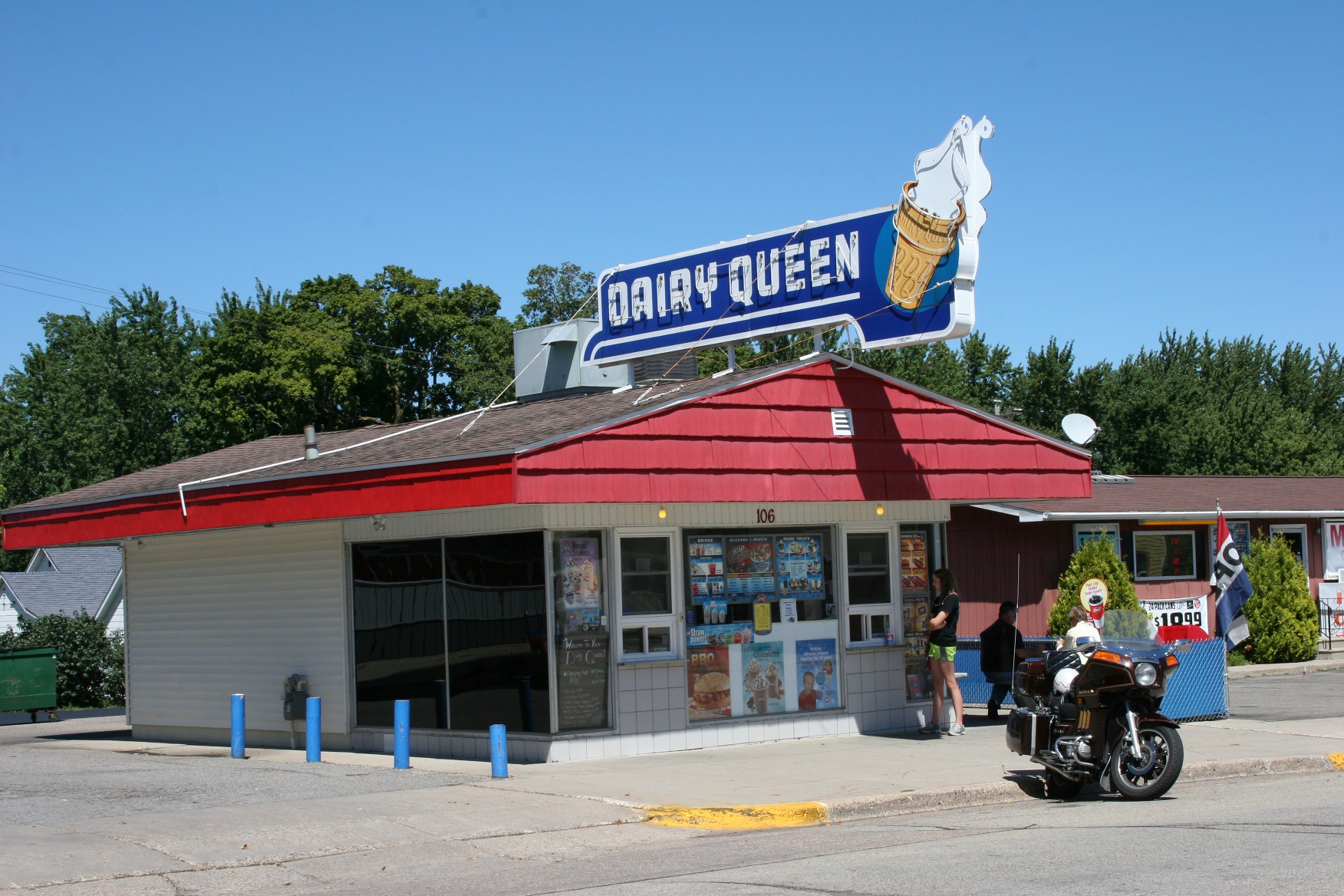
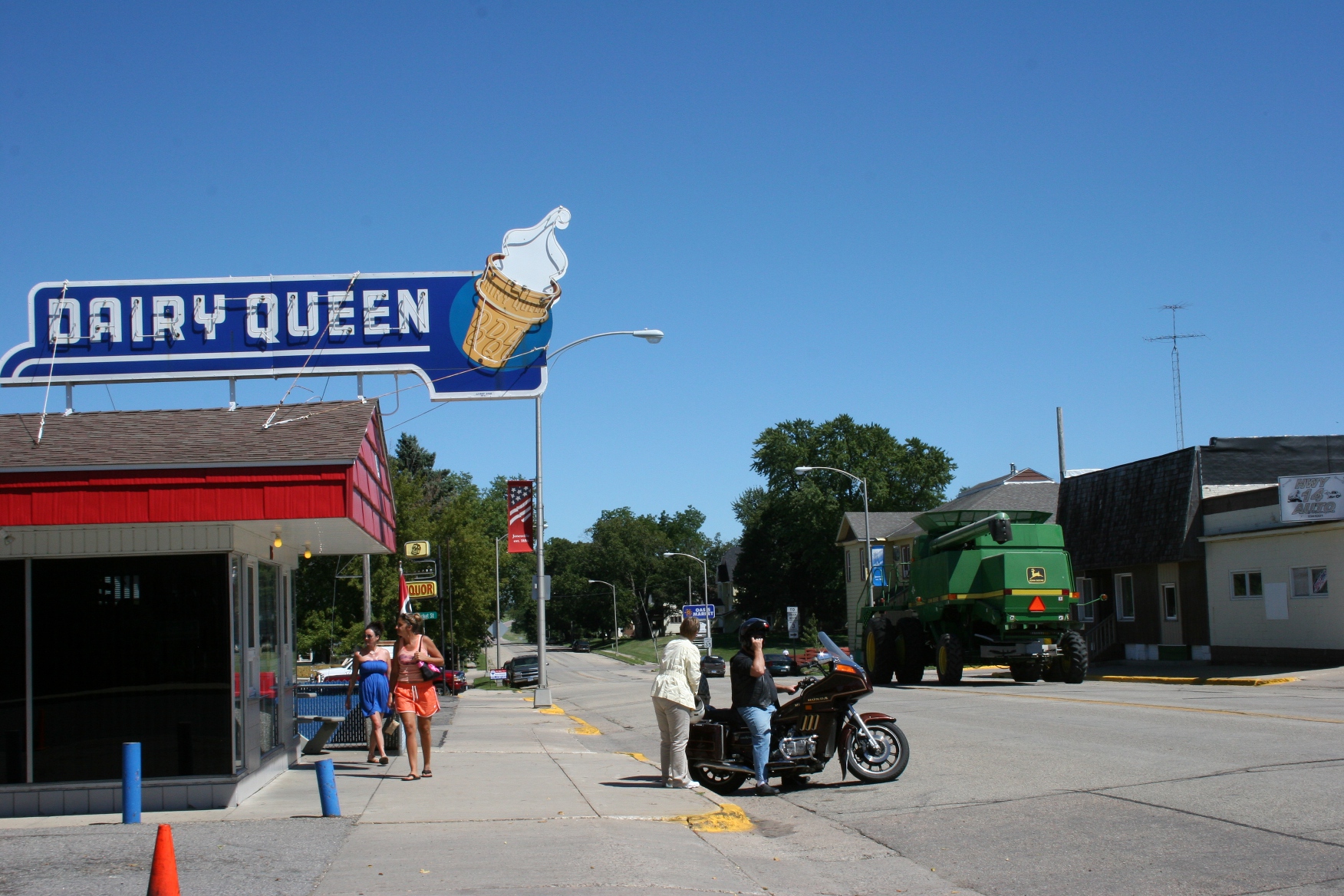
The Dairy Queen along old U.S. Highway 14 in Janesville on a recent Sunday afternoon.

Within 40 miles of my home are 35 Dairy Queens, including two right here in Faribault, and a walk-up DQ along old U.S. Highway 14 in Janesville some 30 miles away.

On a recent Sunday afternoon while passing through Janesville, located east of Mankato and with a population of about 2,100, I photographed the DQ. I wasn’t hungry, having just eaten too much at a church potluck. But I didn’t let that keep me from stopping at the DQ to photograph this long-time business with the vintage signage.

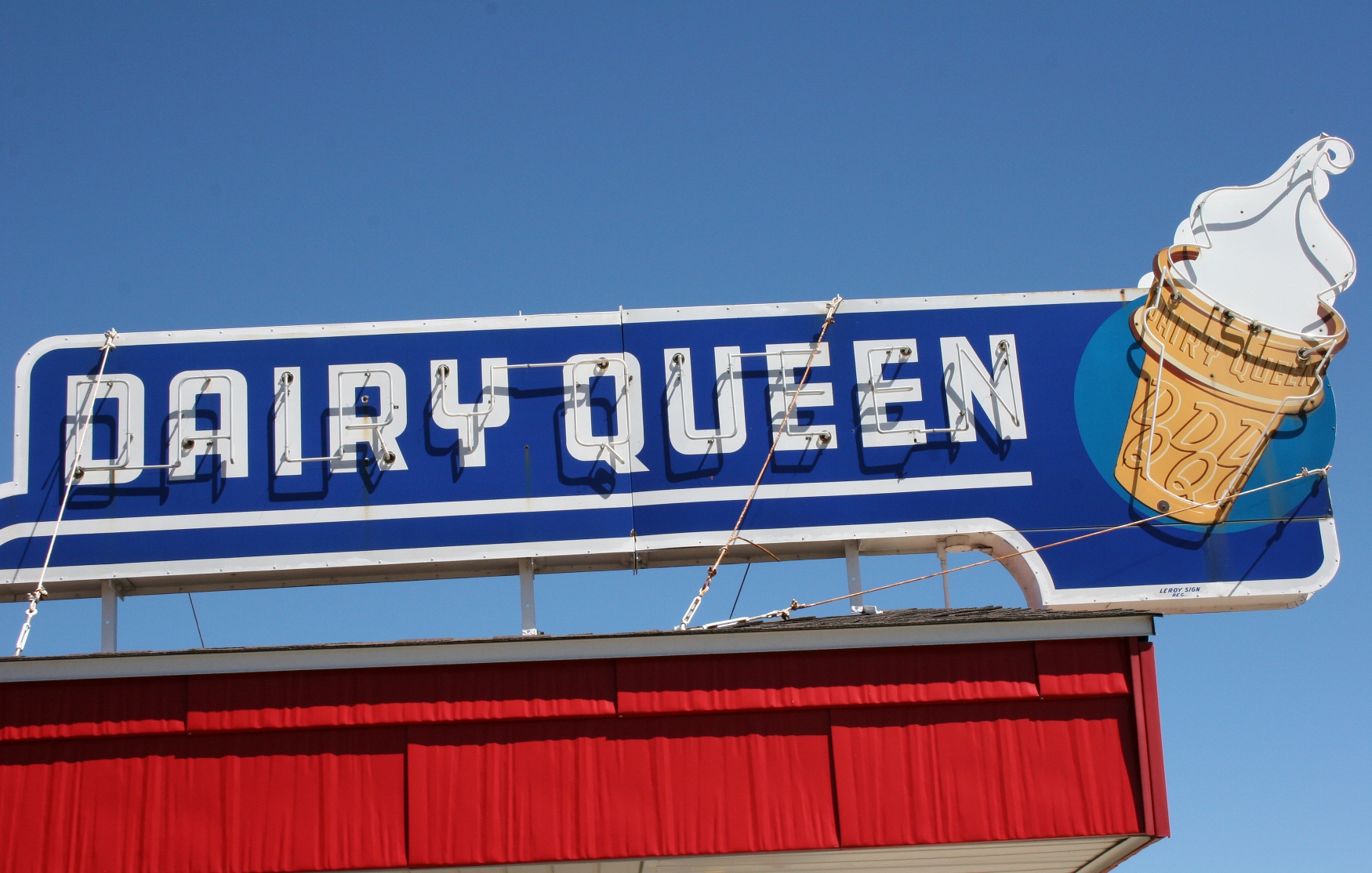
The vintage Dairy Queen sign that drew me to the Janesville DQ.

It’s the sign that caused me to stop because, well, I like and appreciate old signs as works of art. They’re also classic, charming cultural and historic icons in a community.

I was a bit dismayed, though, when the woman working the counter suggested that once the lights fizzle on the sign, it will be replaced with a newer, more modern DQ sign because, really, who could fix the lighting?

I insisted that shouldn’t happen and may have pleaded a bit. “You can’t do that.”

But she seemed resigned to the sign’s eventual replacement.

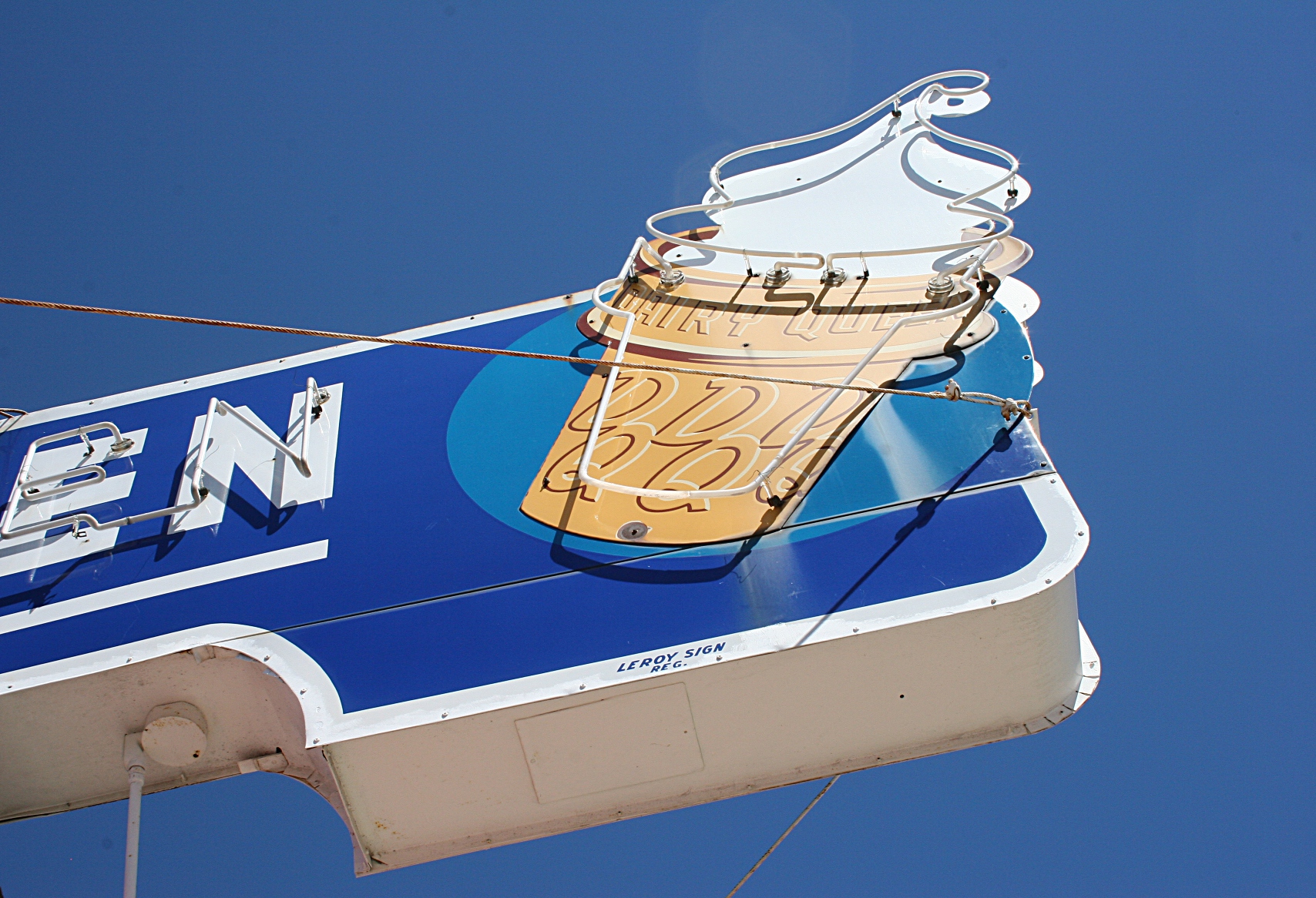
On the bottom edge of the sign, I noticed LEROY SIGN REG.

Not so fast. I noticed LEROY SIGN REG printed along the lower edge of the DQ sign. That was just enough for me to google the company and track down the sign’s origin with Leroy Signs & Manufacturing of Brooklyn Park.

After viewing a photo I took of the Janesville sign, Ralph Leroy “Lee” Reiter III told me it dates back to the late 1940s or early 1950s and is one of about 50 made by his grandfather, Ralph Leroy Reiter, Sr. While the younger Reiter doesn’t know exactly how many of these specific signs were placed in Minnesota, he says his third-generation company recently refurbished one in Columbia Heights and he knows of one in Robbinsdale and another in Brooklyn Park.

I was especially pleased to learn that the 75-year-old family business he co-owns with siblings Kaj Reiter and Andria Reiter can replace the neon lighting and otherwise refurbish the porcelain enamel finished vintage DQ sign.

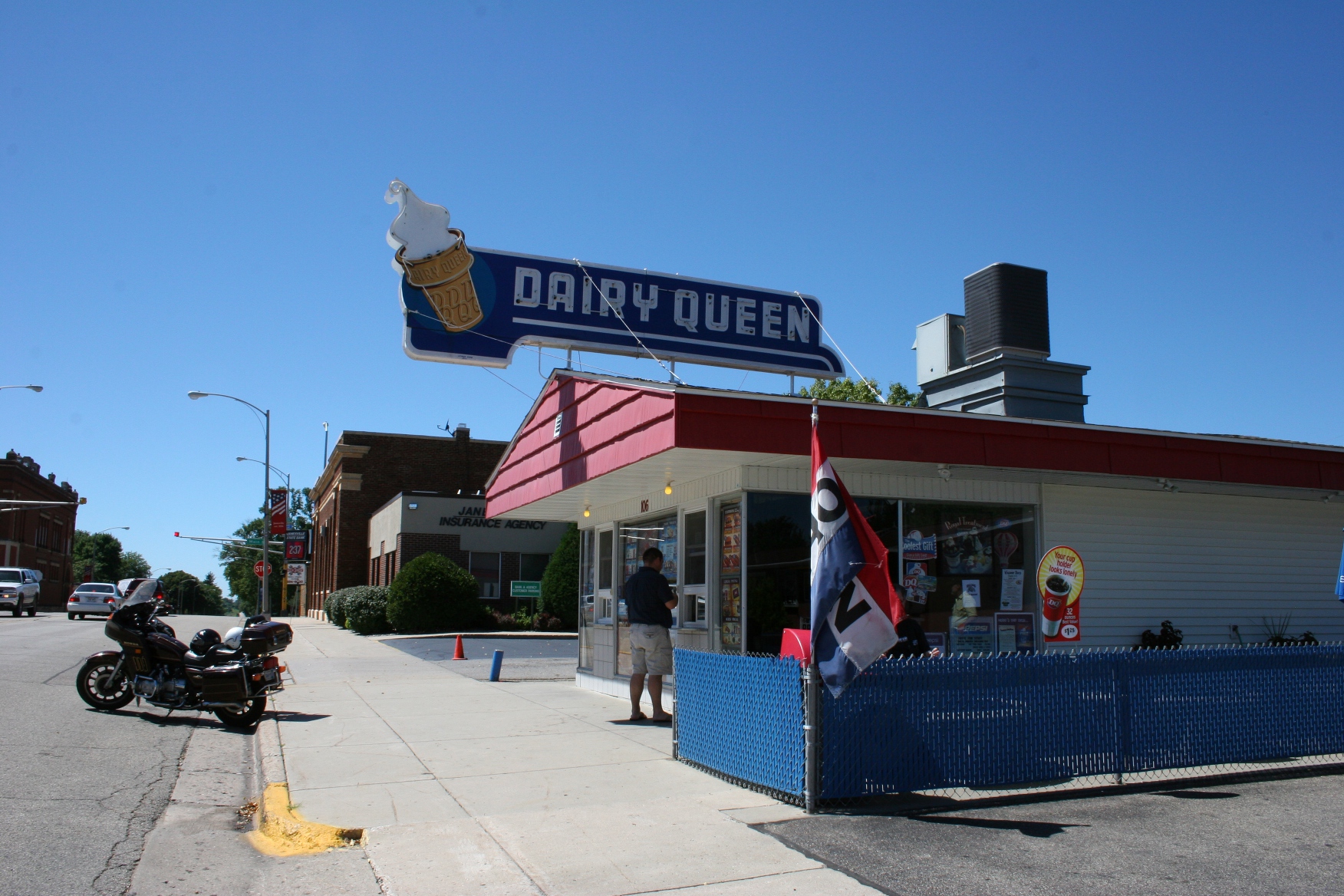
On the other side of the DQ, looking toward downtown Janesville.

Lee Reiter has high praise for the condition of the Janesville DQ sign. “It’s one of the cleanest I’ve seen and in really good condition.”

He observed, though, that the sign may have been touched up some. You could fool me. The sign as designed decades ago—DQ designed and Leroy Sign made the sign—allowed it to take in water, Lee noted.

Early on in DQ’s history, Leroy Signs made signs for DQ, last doing so about five years ago.

As for that vintage DQ sign in Janesville, Lee says if the owner ever wants to get rid of it, he’ll take it. That, in itself, should tell you something, don’t you think?

You know you’re in a rural town when you see a combine driving down the street like this John Deere which passed the Janesville DQ.

© Copyright 2012 Audrey Kletscher Helbling
 

Historic Faribault Woolen Mill opens retail store with an artsy vibe June 12, 2012

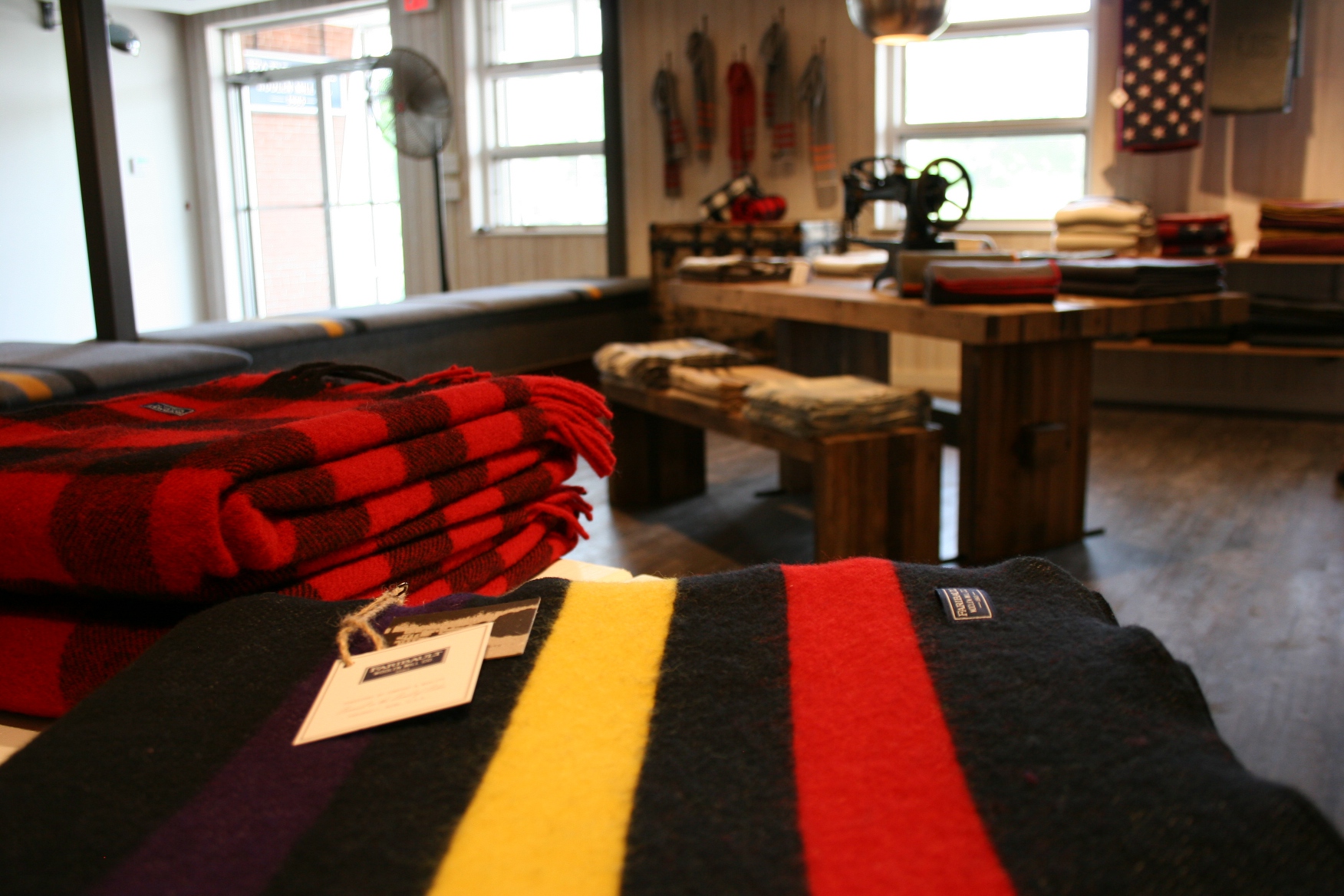
Perusing merchandise at the recently reopened Faribault Woolen Mill retail store.

RUSTIC. SIMPLISTIC. MINIMALIST.

Those words wash over me as I step into the Faribault Woolen Mill Company’s recently re-opened retail store.

I could have strolled into an art gallery for the artsy vibe of this place. It has that feel, that sense of style and creative energy, which tells you this is no cookie-cutter retail outlet but someplace special.

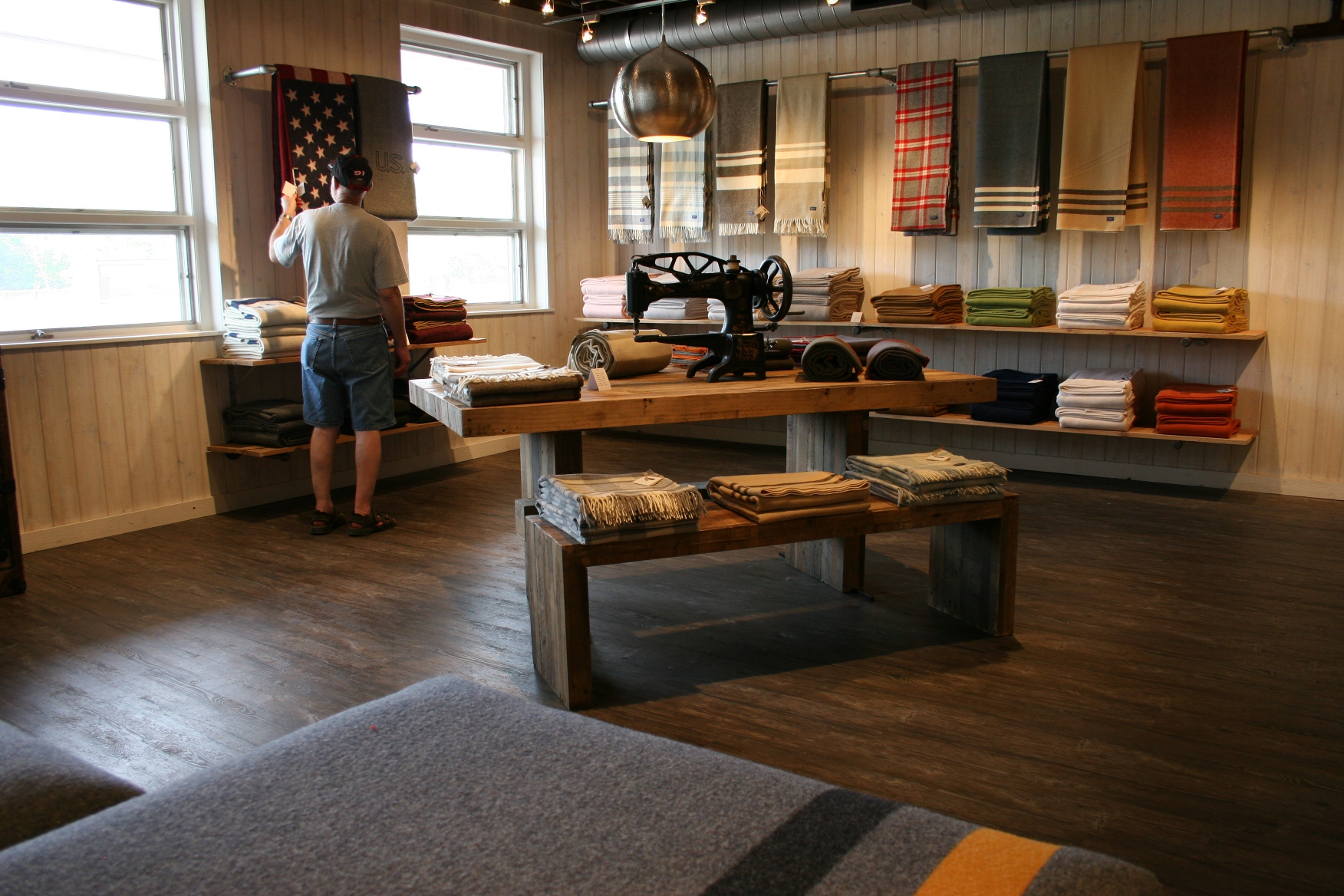
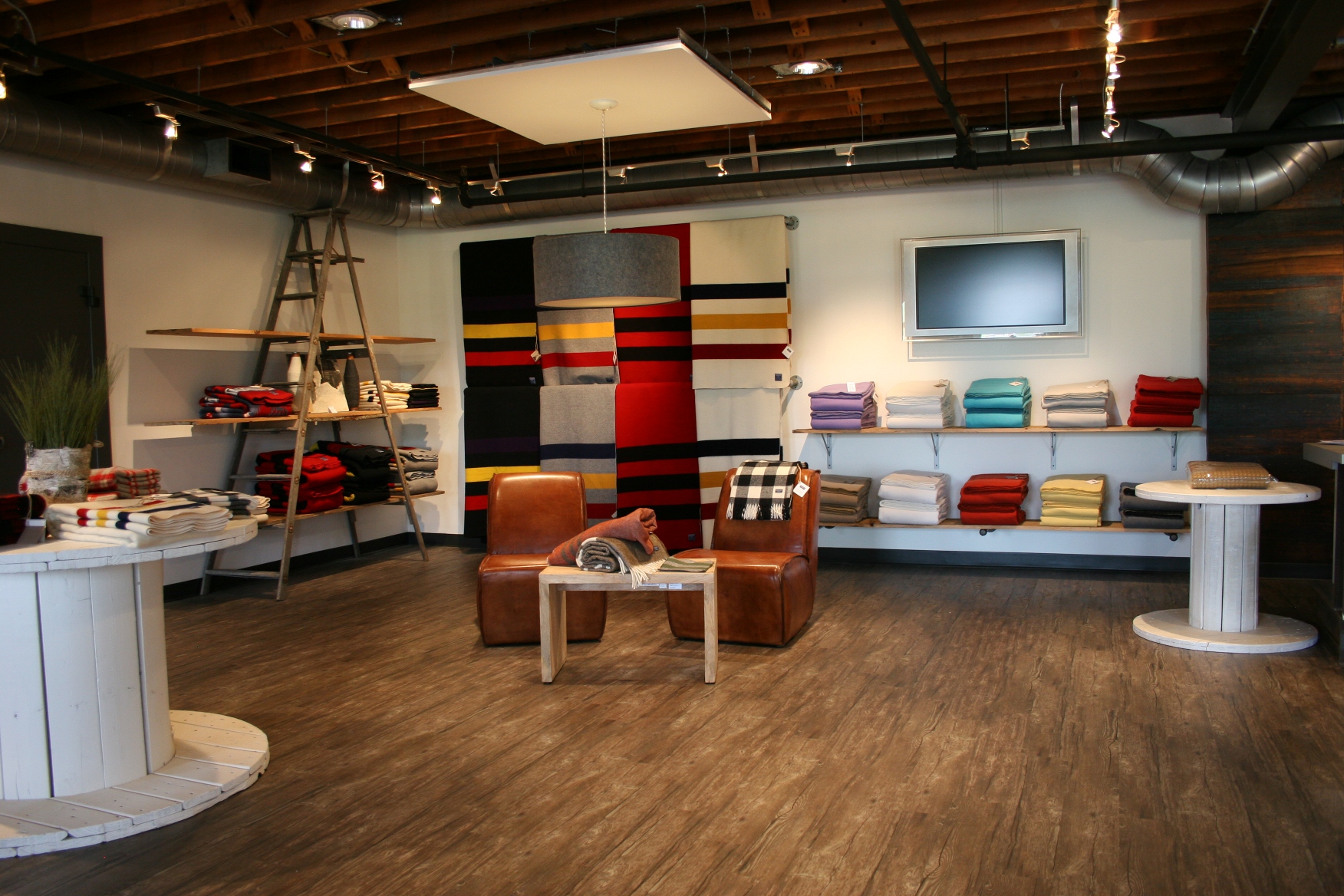
The retail store has a comfy, relaxed and trendy feel.

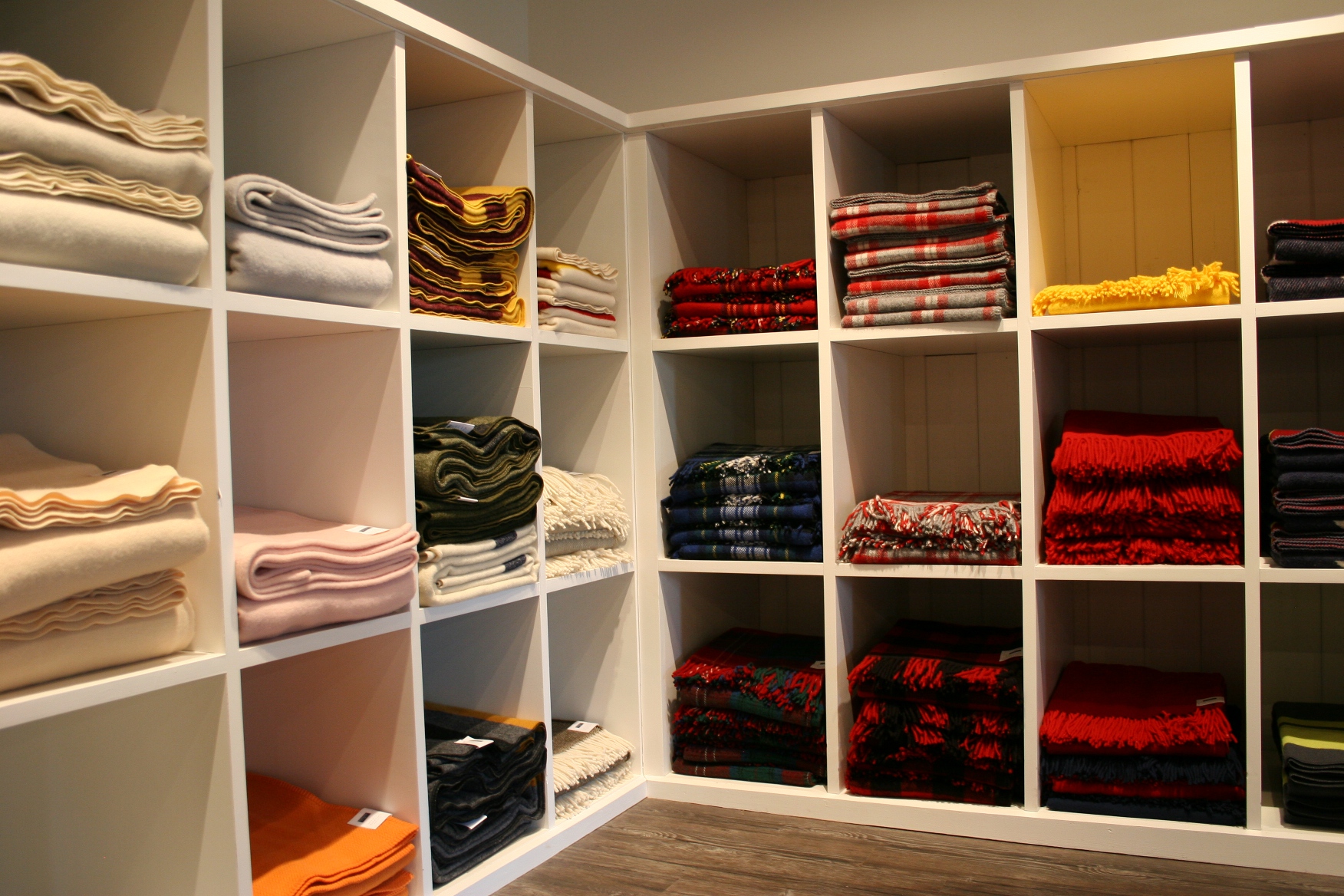
From the white-washed paneled walls to the utility spools brushed in crisp white paint to the shelves leveled upon a ladder to the uniform white cubbies, the décor here is bare bones basic. It’s perfect for showing off the woolen blankets hung and folded ever so precisely in this historic woolen mill along the banks of the Cannon River in Faribault.

Faribault Woolen Mill blankets/throws are artfully hung on a simple pipe.

Crisp white cubbies, ever so perfect for showing off blankets/throws.

Jean Moody is tending the store on this recent hot and humid Saturday afternoon in May when the thought of purchasing a wool blanket seems not even a remote possibility. My curiosity draws me inside the store, into this building where I’ve never set foot even though I’ve lived in Faribault for nearly 30 years.

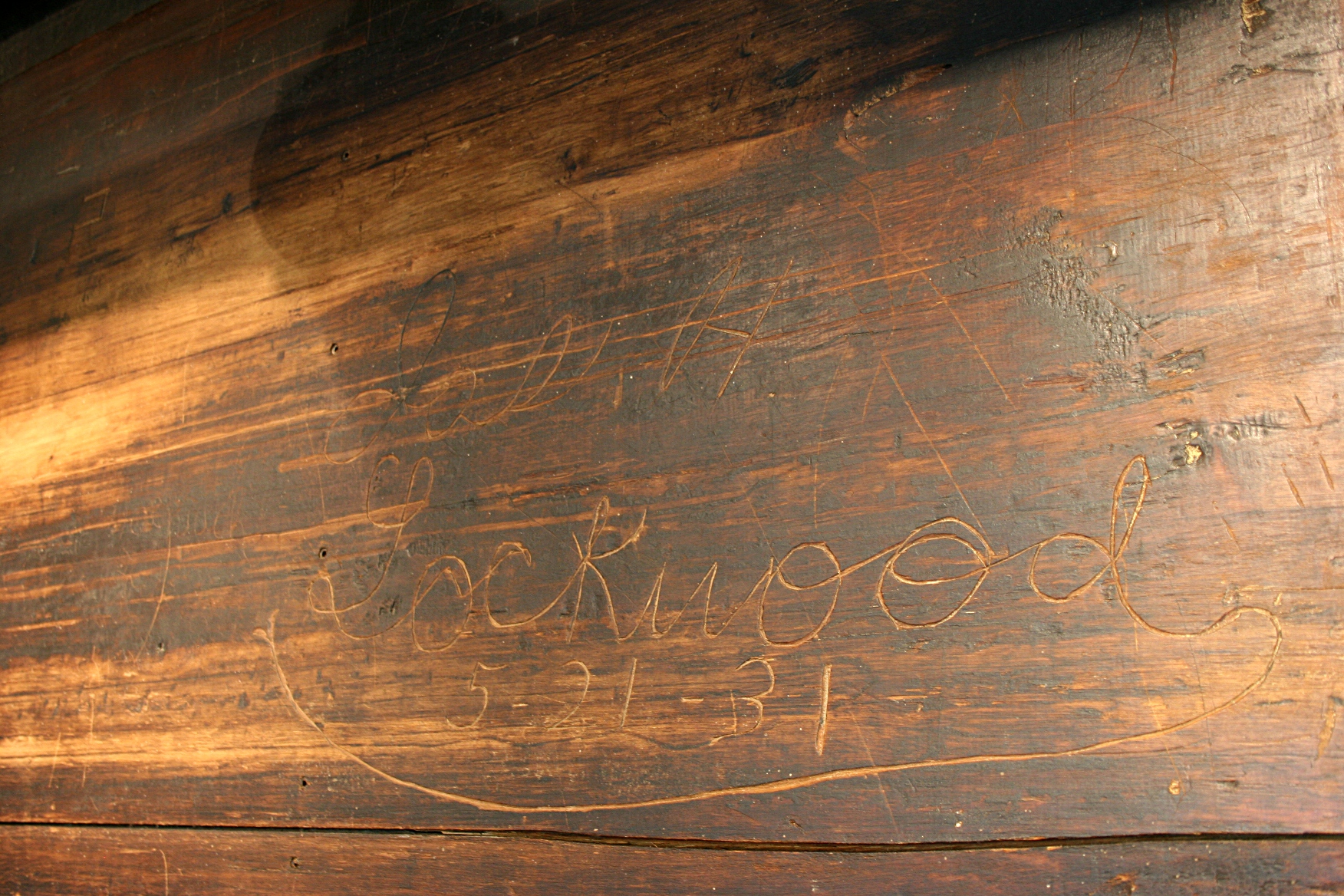
A wall once located near bathrooms has been incorporated into the retail store, behind the check-out counter, to showcase a name etched in wood in 1931.

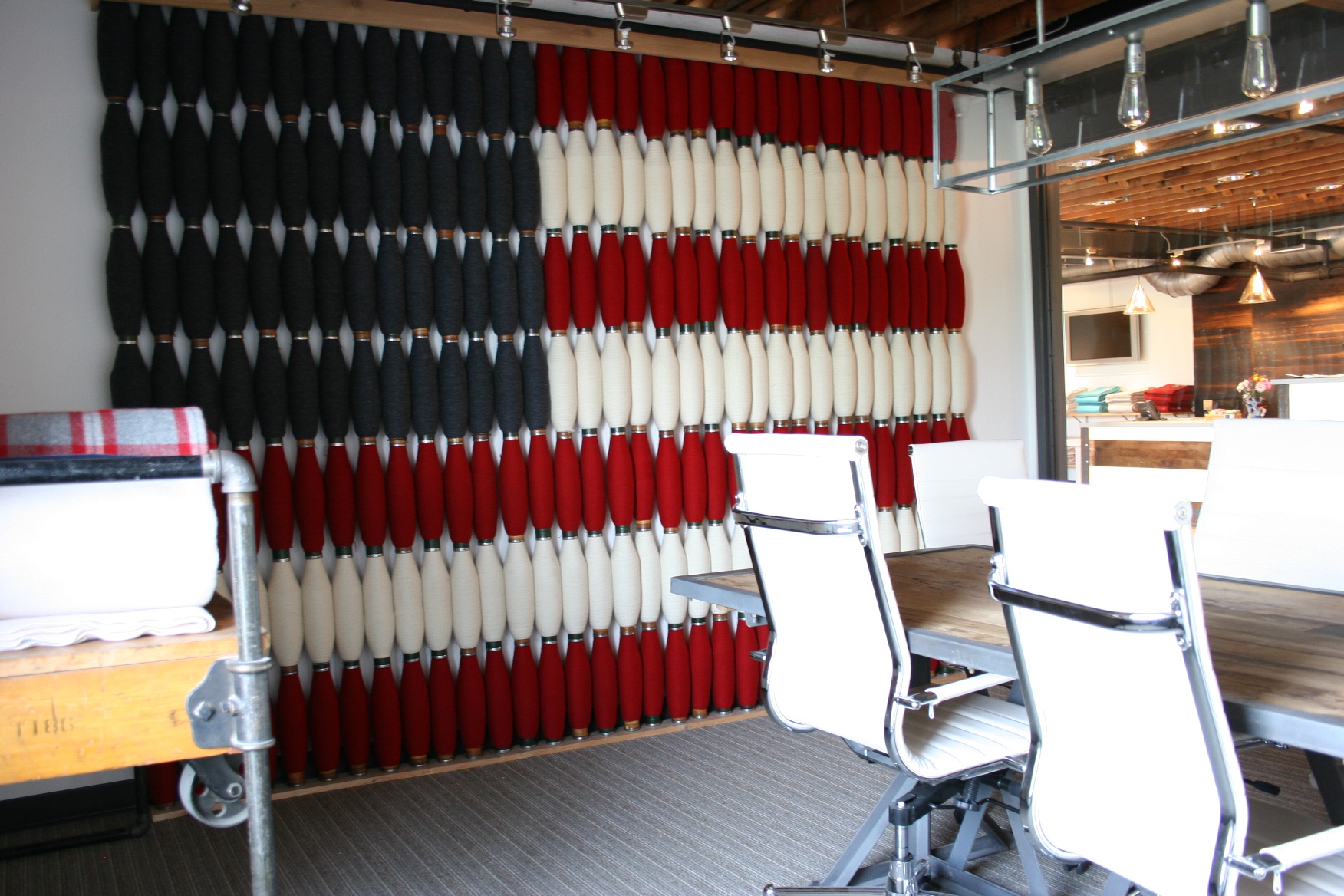
An American flag on a wall in a meeting room, visible through floor to ceiling glass in the retail store, emphasizes the Woolen Mill’s dedication to “American made” products.

On this afternoon, Jean welcomes me, obliging my request to photograph a meeting room and also a wall behind the retail counter. I have no idea she is the wife of Paul Mooty, who purchased the foreclosed mill and reopened it in 2011 with his cousin, Chuck Mooty, until she introduces herself later.

She’s friendly and engaging and genuinely interested in connecting with Faribault residents and grateful for the warm welcome given to her family.

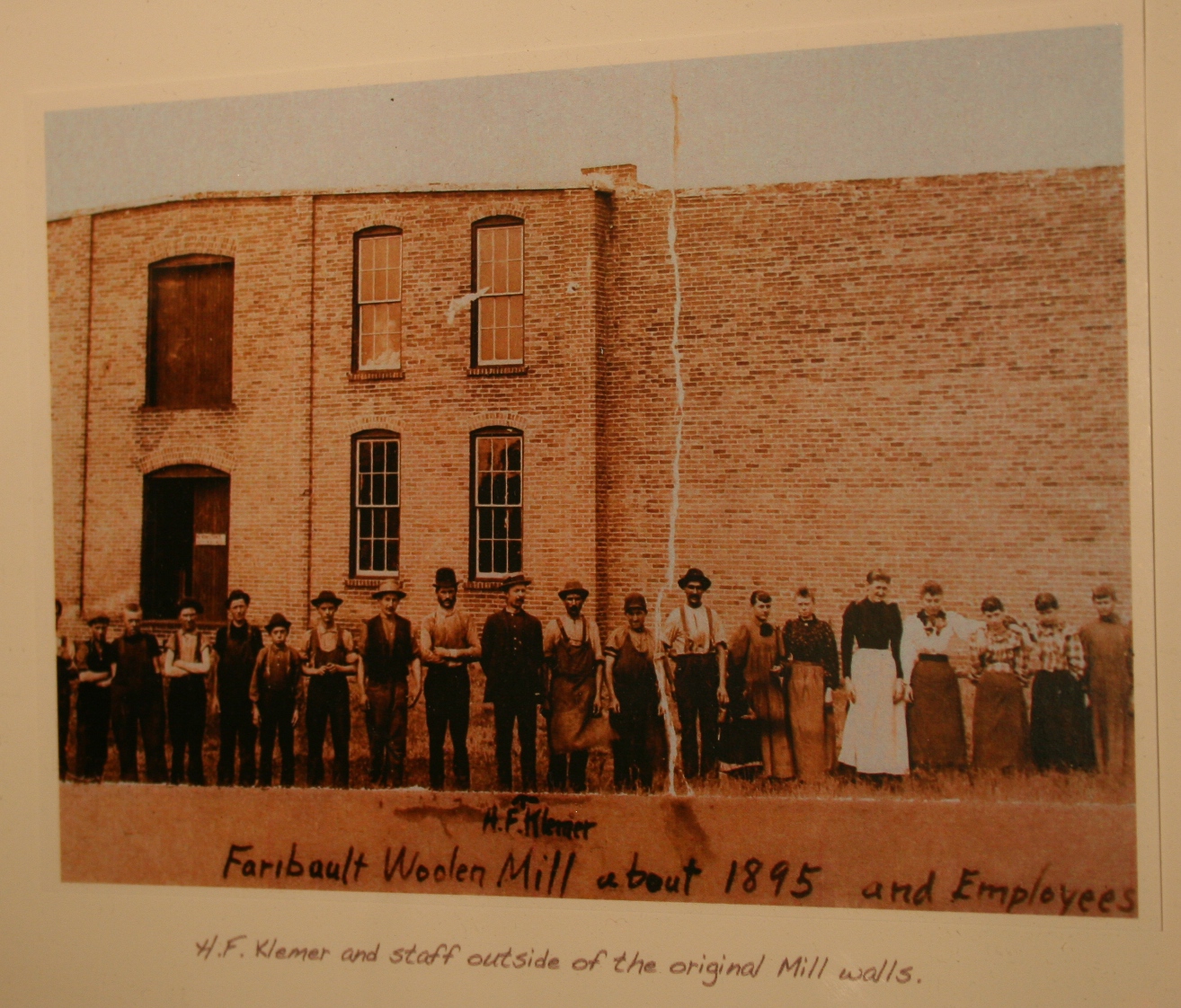
An historic 1895 circa photo from the mill, among those featured in a mini wall of Woolen Mill history.

After the sudden closure of the mill in 2009, locals seem delighted with the Mooty cousins’ revival of the mill which dates back to 1865.

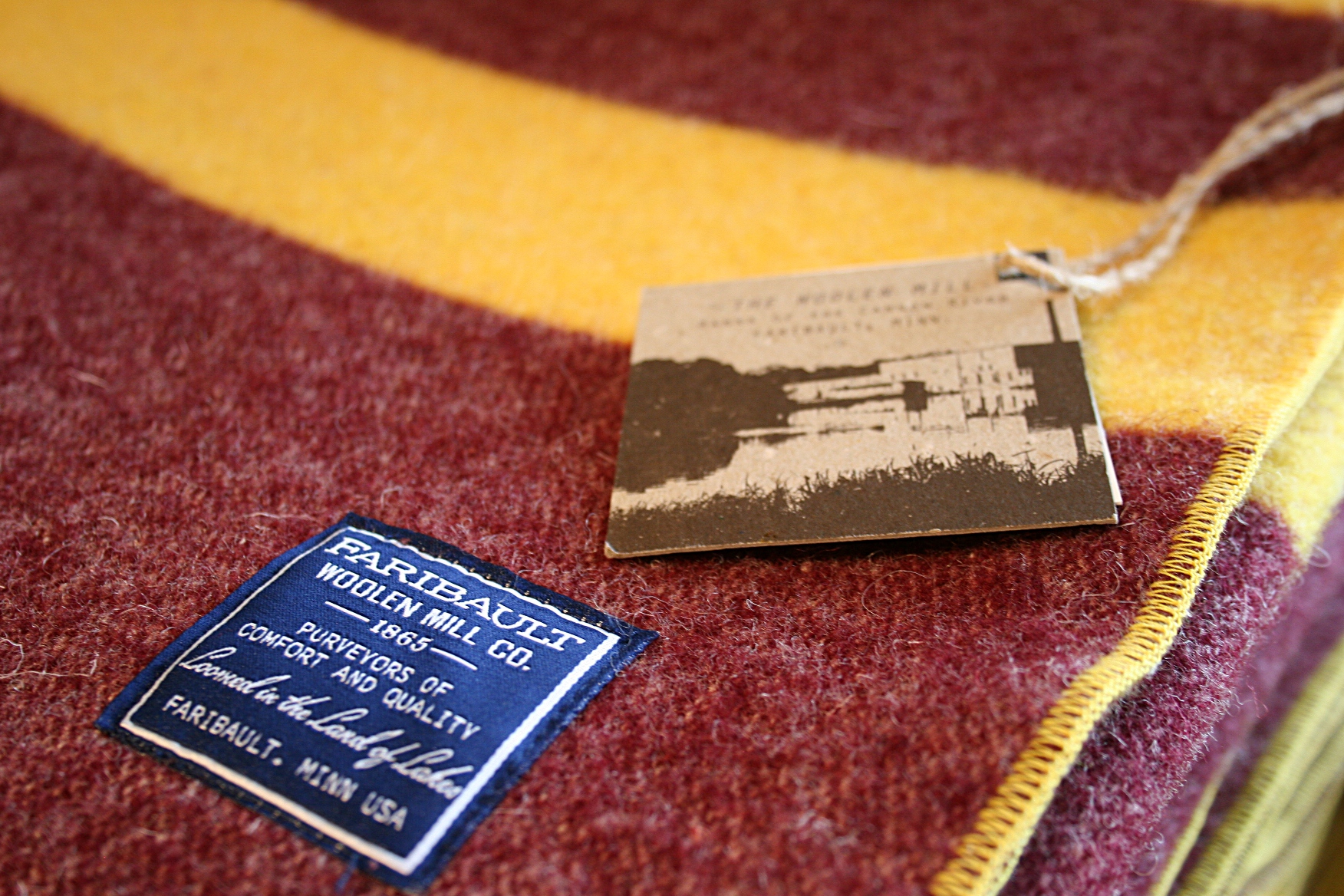
In its labeling, the mill promotes itself as “Purveyors of Comfort and Quality” with its products “Loomed in the Land of Lakes.”

The Faribault Woolen Mill’s mission, according to the company website is “to provide the finest quality goods made only by American craftsmen here in Faribault, Minnesota.”

Wool blankets with a definite Northwoods feel are sold in the retail store.

Fine examples of that craftsmanship are presented to the public in the woolen blankets and throws so artfully displayed in the store which, according to Jean, has a Ralph Lauren/Northwoods look.

I’d agree. Comfort. Simplicity.  Americana. All qualities in Ralph Lauren’s signature fashion style exist in this mill store which seems destined to once again become a must-see destination for visitors to Faribault, one of Minnesota’s oldest and most historic cities.

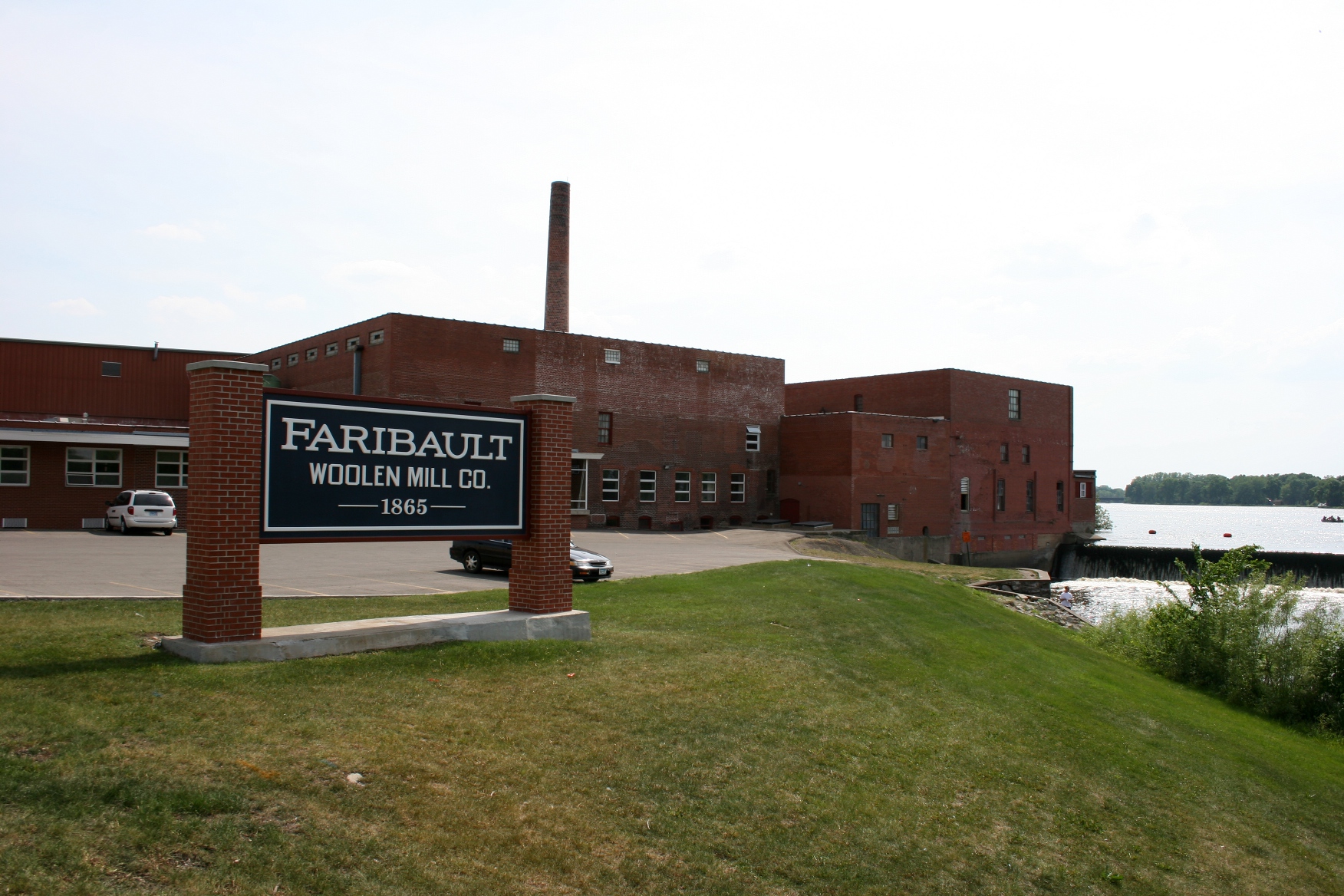
The historic Faribault Woolen Mill sits along the banks of the Cannon River.

FYI: The Faribault Woolen Mill retail store holds its grand opening from 4:30 p.m. – 7 p.m. on Thursday, June 14. A ribbon-cutting is scheduled in conjunction with the Faribault Heritage Days Mayor’s Reception.

Tours of the Woolen Mill, located on the banks of the Cannon River at 1500 Second Avenue Northwest near the Rice County Fairgrounds, will be offered as part of the Heritage Days celebration at 2 p.m. and 2:30 p.m. on Wednesday, June 13, and again on Friday, June 15. Preregister by calling (507) 334-2064.

For more info about the Faribault Woolen Mill, click here to link to the company website.

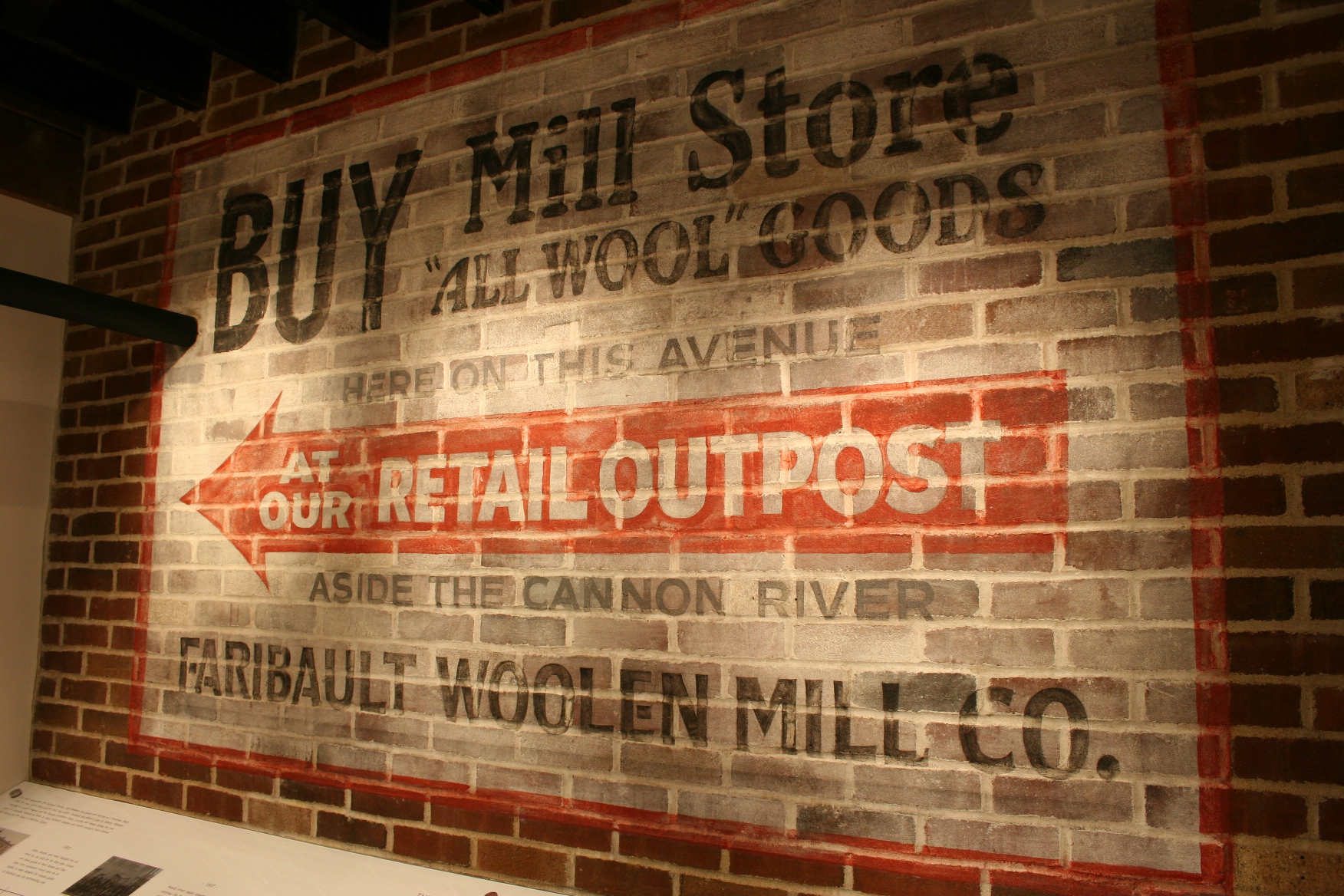
A replica of an original sign is now in the Woolen Mill’s historic display area.

Even this Woolen Mill conference/meeting room possesses an inviting, rustic appeal.

© Copyright 2012 Audrey Kletscher Helbling
Note: These photographs were shot one month ago.


What would you do with this old bakery in Lamberton? May 31, 2012

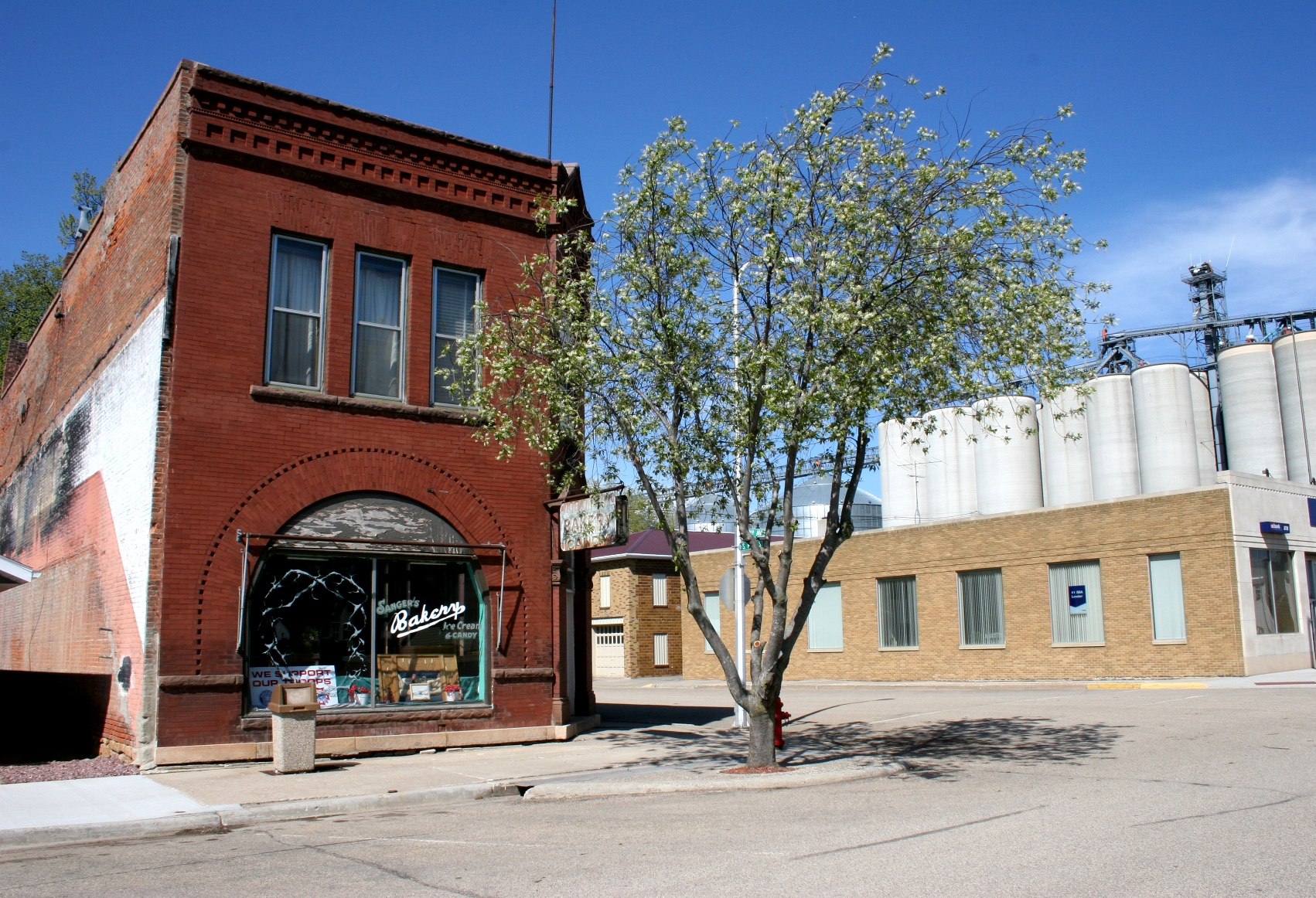
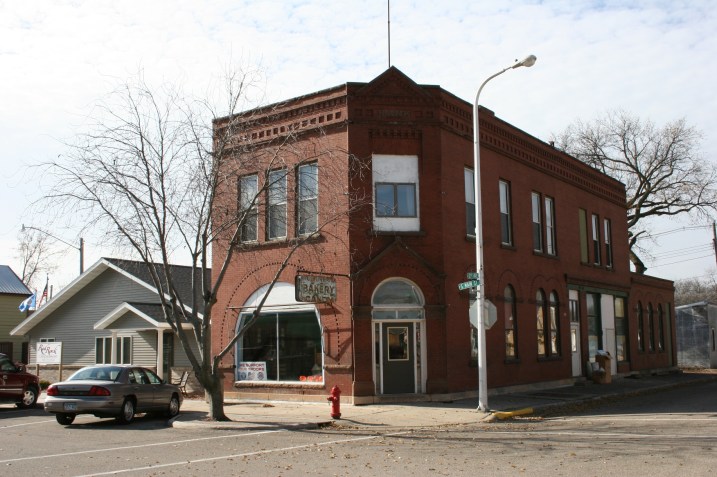
The former Sanger’s Bakery in Lamberton, a Minnesota farming community. I’d move the garbage bin in front of the building, replace it with a bench and add pots of vivid flowers.
I’VE PHOTOGRAPHED many an old building in a lot of small towns. My appreciation for history and architecture and for rural life keep drawing me back to Main Street.
One building in particular intrigues me. The former Sanger’s Bakery, a brick stronghold anchoring a corner in downtown Lamberton in southern Redwood County, possesses a sweet, timeless charm that causes it to stand out.
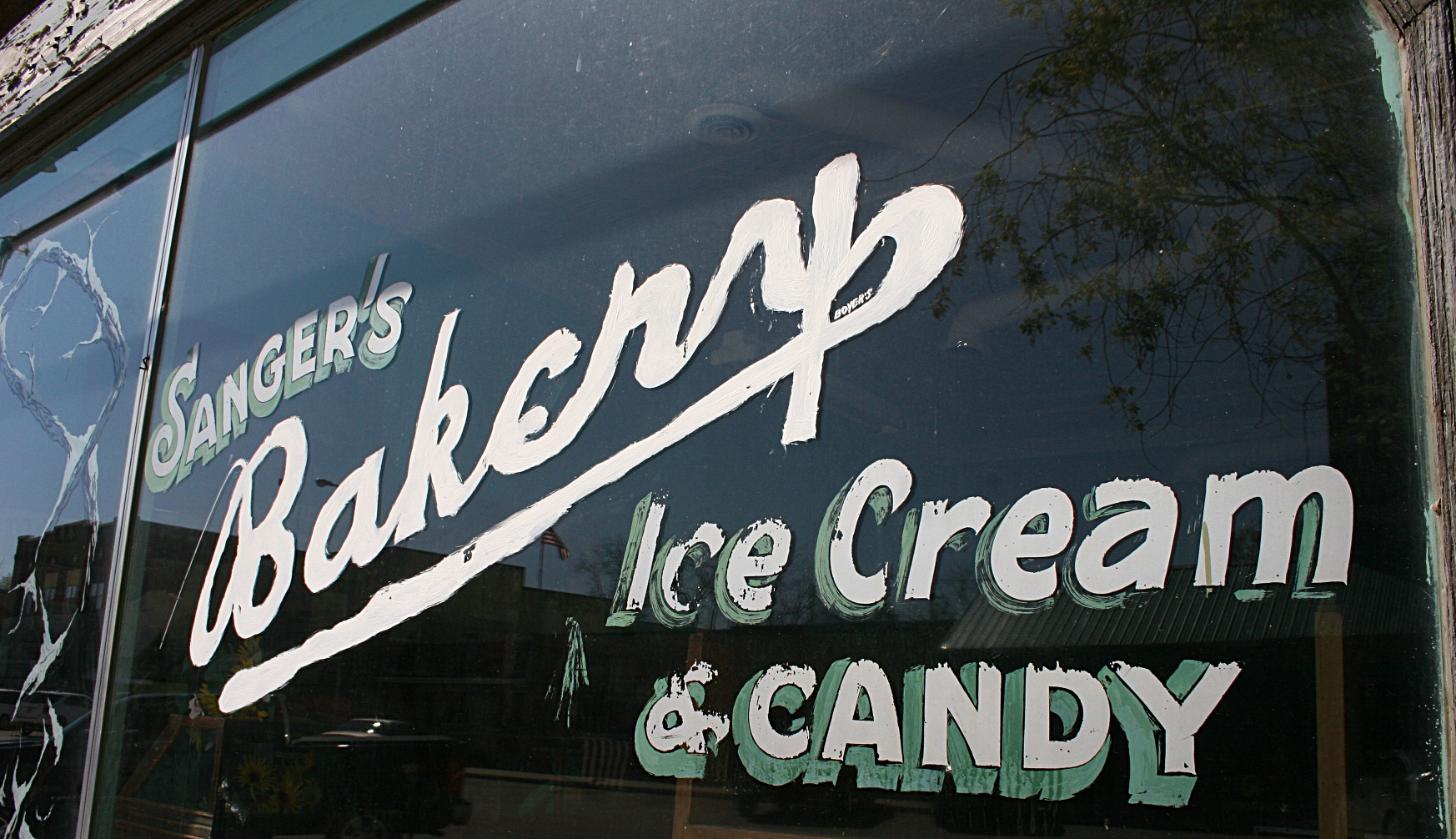
How long has this signage been painted on the front window of Sanger’s?

It’s not necessarily the exterior that catches my eye, although certainly the signage and sweeping arched front window and the fancy details in the brick appeal to me. Rather, it’s the interior which truly captures my interest.

The two times I’ve photographed the exterior, I’ve also paused to press my nose against the windows and peer inside to a snapshot of the past. You would swear the hands on the vintage 7-UP clock have not moved in decades. An old-fashioned candy counter and vintage lunch counter rimmed with stools look like something straight out of a Norman Rockwell painting.

A vintage sign suspended from the front of the bakery.

Honestly, you just don’t find places like this anymore. Martin Kuhar opened the bakery in 1928. The Sanger family purchased it in 1946 and eventually Bob, the youngest of Nick and Mary’s six children, bought the business in 1961. He was a 1955 graduate of the baking program at Dunwoody Institute.

All of this I learned on a recent stop at the bakery, where I found Bob’s obituary taped to the front door. He died March 30.

Just days before his death, this long-time baker was serving coffee to his friends. Oh, how I wish I could have been in that coffee klatch, listening to the stories.

I bet Bob would have shared plenty about the place where he served up baked goods, hand-scooped ice cream cones, malts and candy. He baked buns for local schools and churches and crafted wedding cakes. He also sold fresh eggs from his chickens and honey from his bees. He tended a garden.

After reading Bob’s obit, I desired even more to get into the bakery. I jiggled the front door knob, hoping the door might be unlocked. It wasn’t. I’m determined, on my next trip to Lamberton, to get inside the bakery, to share with you this treasure from the past.

In the meantime, owners of this building and Lamberton area residents, I hope you appreciate what you have here. I could easily see this former bakery reopened as an ice cream/sandwich/pie/coffee/gift shop. The location along U.S. Highway 14 only 10 miles from Walnut Grove, childhood home of author Laura Ingalls Wilder, is ideal. The area already draws plenty of tourists during the summer months.

The right owner, with the right ideas, a good business and marketing plan, and adept at using social media could turn this old bakery into a destination.

I can envision the possibilities.

Readers, what do you think? If anyone out there knows anything about plans for the old bakery, submit a comment. Or, if you simply have ideas, I’d like to hear those, too.

A side shot of the former bakery. Just imagine the possibilities for this spacious building. Let’s hear your ideas.

© Copyright 2012 Audrey Kletscher Helbling