Minnesota Prairie Roots

Writing and photography by Audrey Kletscher Helbling

A close-up Journey to the Cross March 29, 2015

Palm branches.

Palm branches.

PALM BRANCHES AND HOSANNAS. For the Christian church, both mark Jesus’ triumphant entry into Jerusalem on Palm Sunday, the beginning of Holy Week.

Small groups participated in 45-minute tours on "Journey to the Cross."

Small groups participated in 45-minute tours on “Journey to the Cross.”

This morning at the church I attend, Trinity Lutheran in Faribault, Holy Week also began with a “Journey to the Cross” event. I was blessed to be a volunteer in this journey which led attendees through Christ’s final days to his glorious resurrection on Easter.

Participating kids (and some adults) carried passports. At nearly every station, stickers were distributed to place in the passports.

Participating kids (and some adults) carried passports. At nearly every station, stickers were distributed to place in the passports.

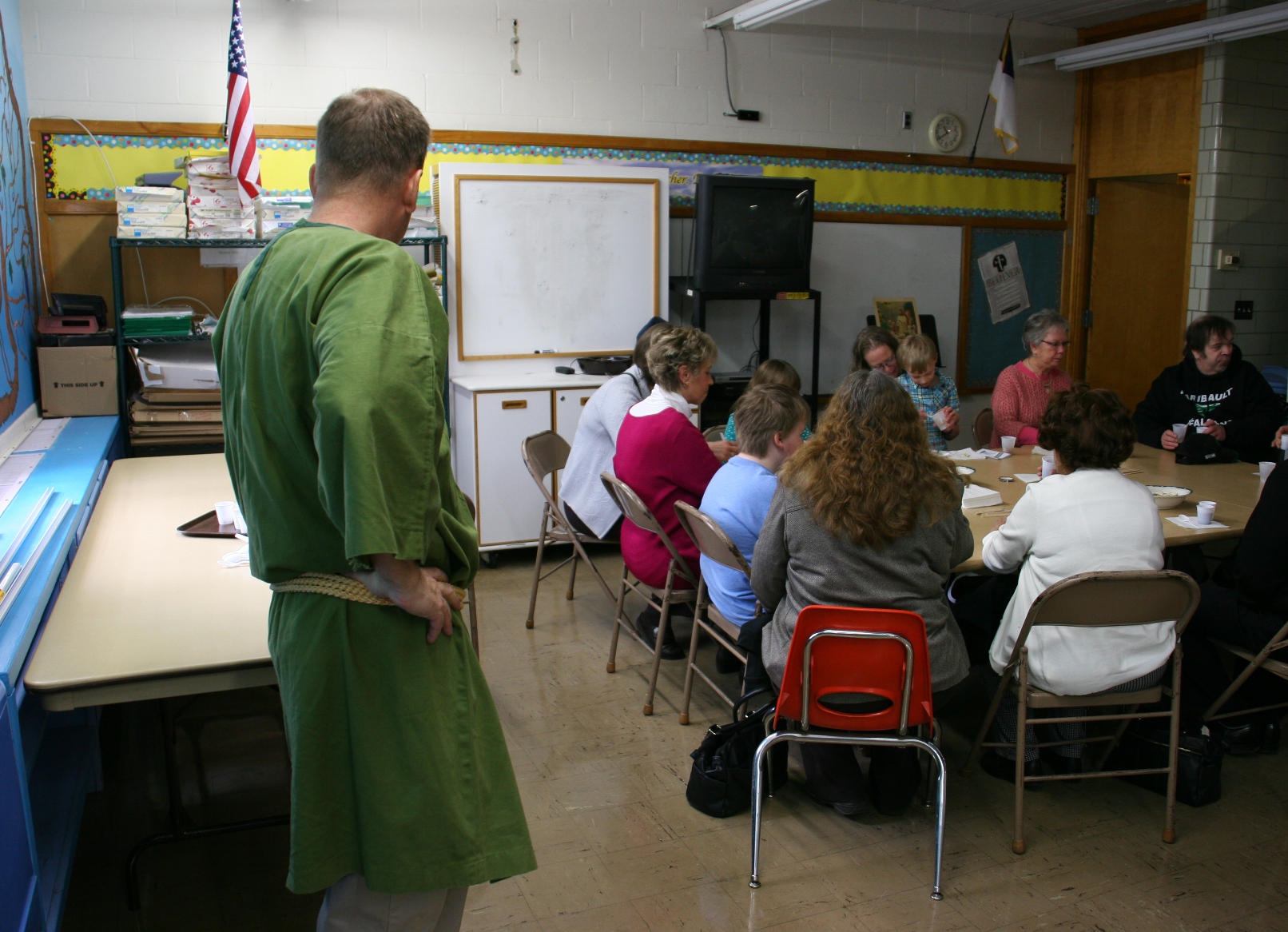
With passports in hand, kids and adults traveled from station to station, listening to performers role-play the parts of towns’ people, a temple worker, soldiers, an angel and others.

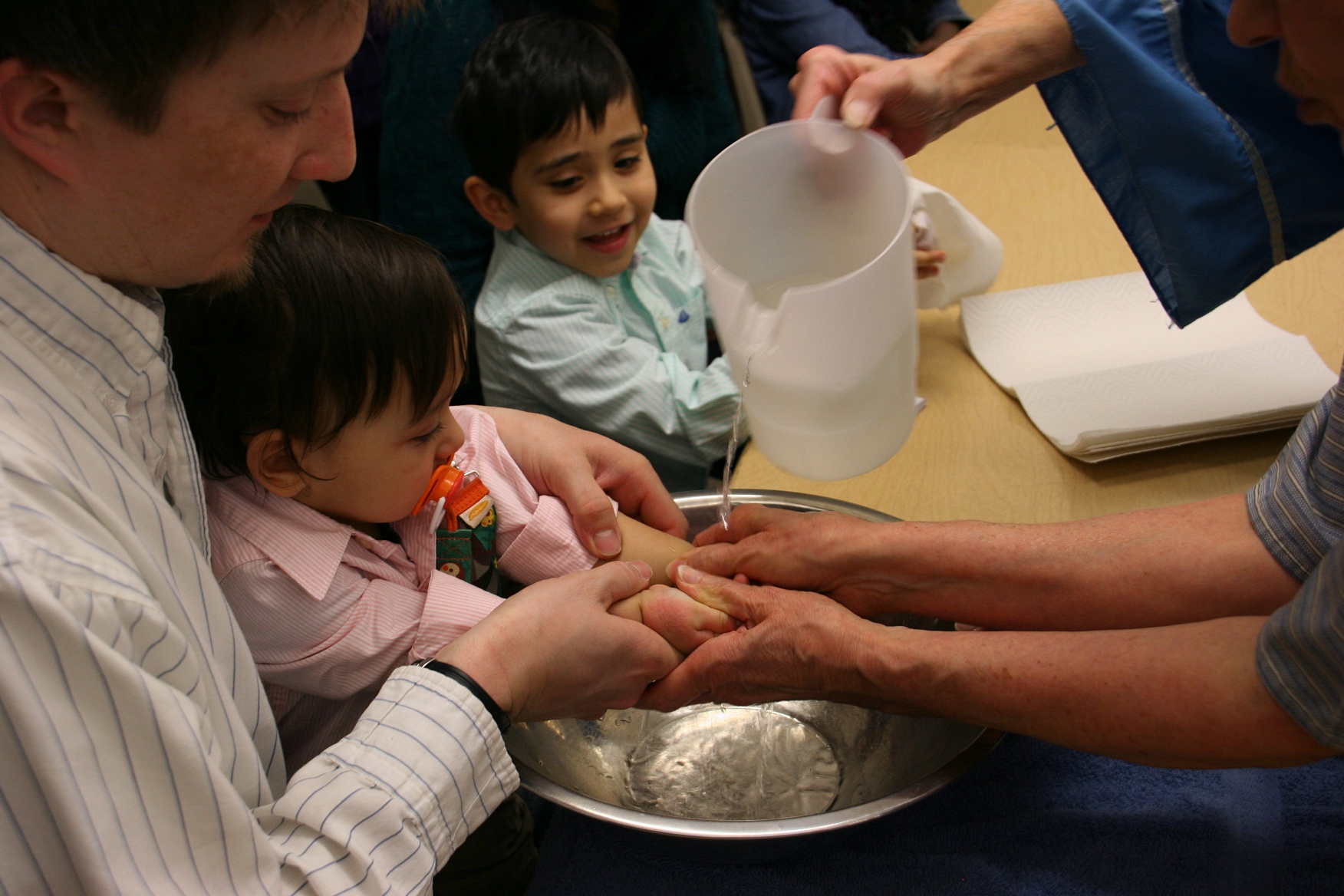
Participants had their hands washed by volunteers just as Christ washed his disciples' feet .

Participants had their hands washed by volunteers, following the example of Christ washing his disciples’ feet.

But this was about much more than sharing biblical history. This was about hands-on activities that reinforced the spoken word. This was about engaging the senses and experiencing Holy Week.

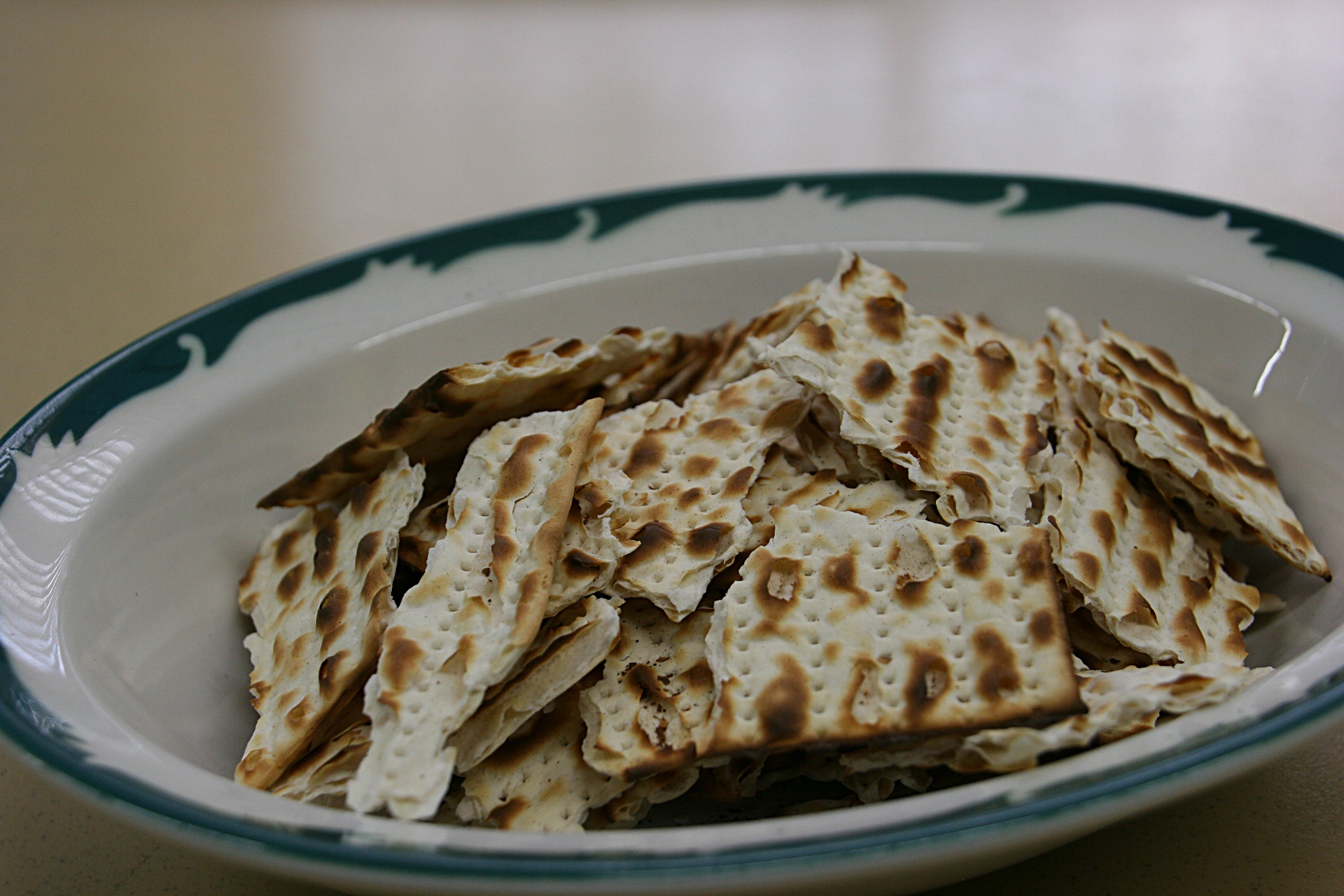
Matzo, unleavened bread from Jerusalem, was served as reprsentative of food from Jesus' time period.

Matzo, unleavened bread from Jerusalem, was served as representative of food from Jesus’ time period.

And therein lies the strength of “Journey to the Cross.” Participants received palm branches, felt the weight of the 30 silver coins Judas received for betraying Jesus, heard the crack of the whip against Jesus’ back, pounded nails into wood, tasted vinegar like that offered to Christ suffering on the cross, raised their voices in “He is risen!” at the vacant tomb and more.

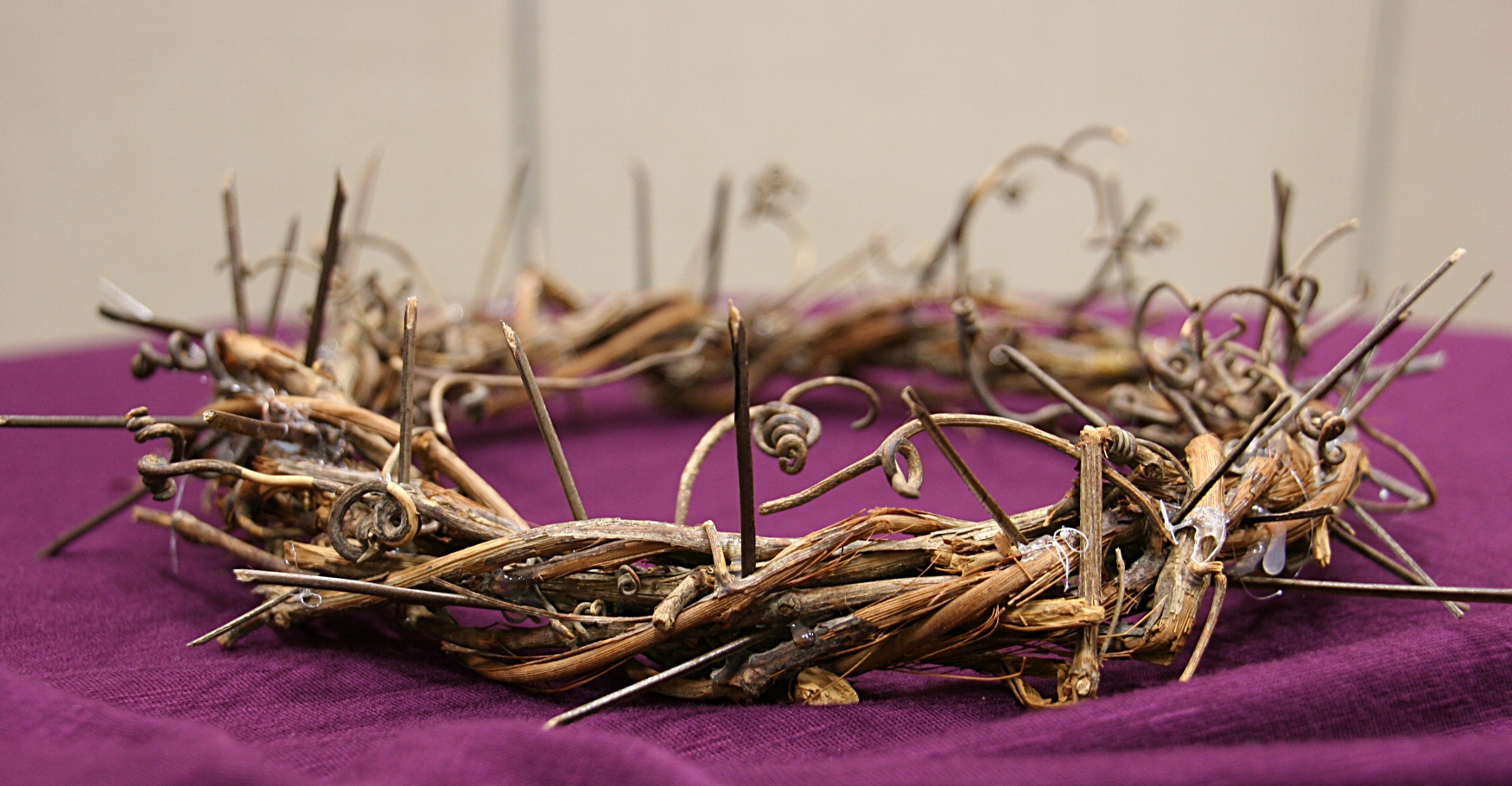
A volunteer crafted this crow of thorns similar to the one Christ wore on the cross.

A volunteer crafted this crown of thorns similar to the one Christ wore on the cross. Tour participants saw it close up and could touch the crown.

I left with a deeper connection and understanding of what Christ endured. I could hear, see, feel, taste and smell the events of that final week. It was a memorable morning and the perfect contemplative beginning to Holy Week.

THE JOURNEY IN MORE PHOTOS:

Stop #1, Jerusalem on Palm Sunday:

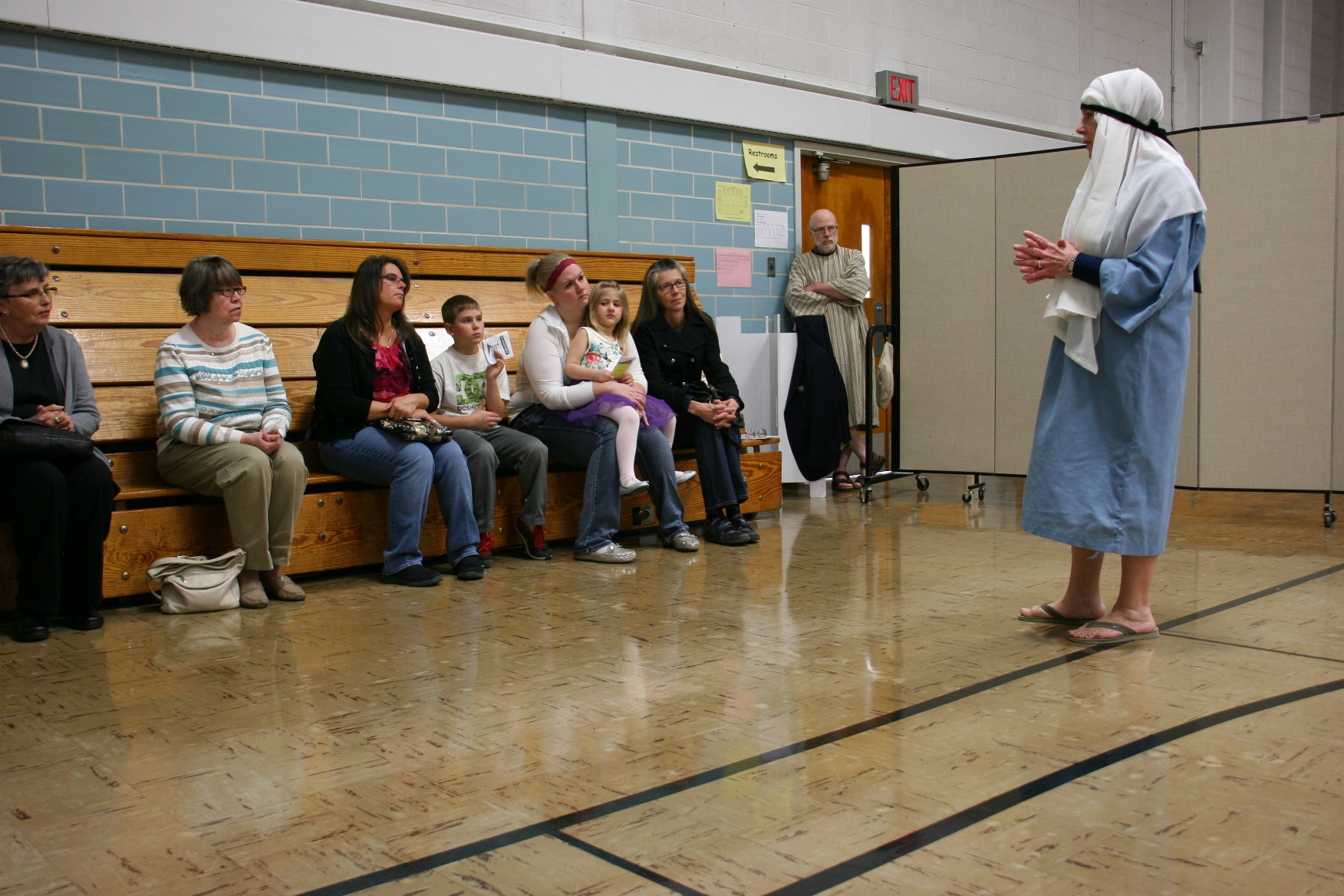
Volunteer Theresa speaks to participants about Jesus' ride into Jerusalem on Palm Sunday.

Volunteer Theresa speaks to participants about Jesus’ ride into Jerusalem on Palm Sunday.

Stop #2, Judas betrays Jesus for 30 pieces of silver:

Randy, role-playing a temple worker.

Randy, role-playing a temple worker, tells how Judas betrayed Jesus.

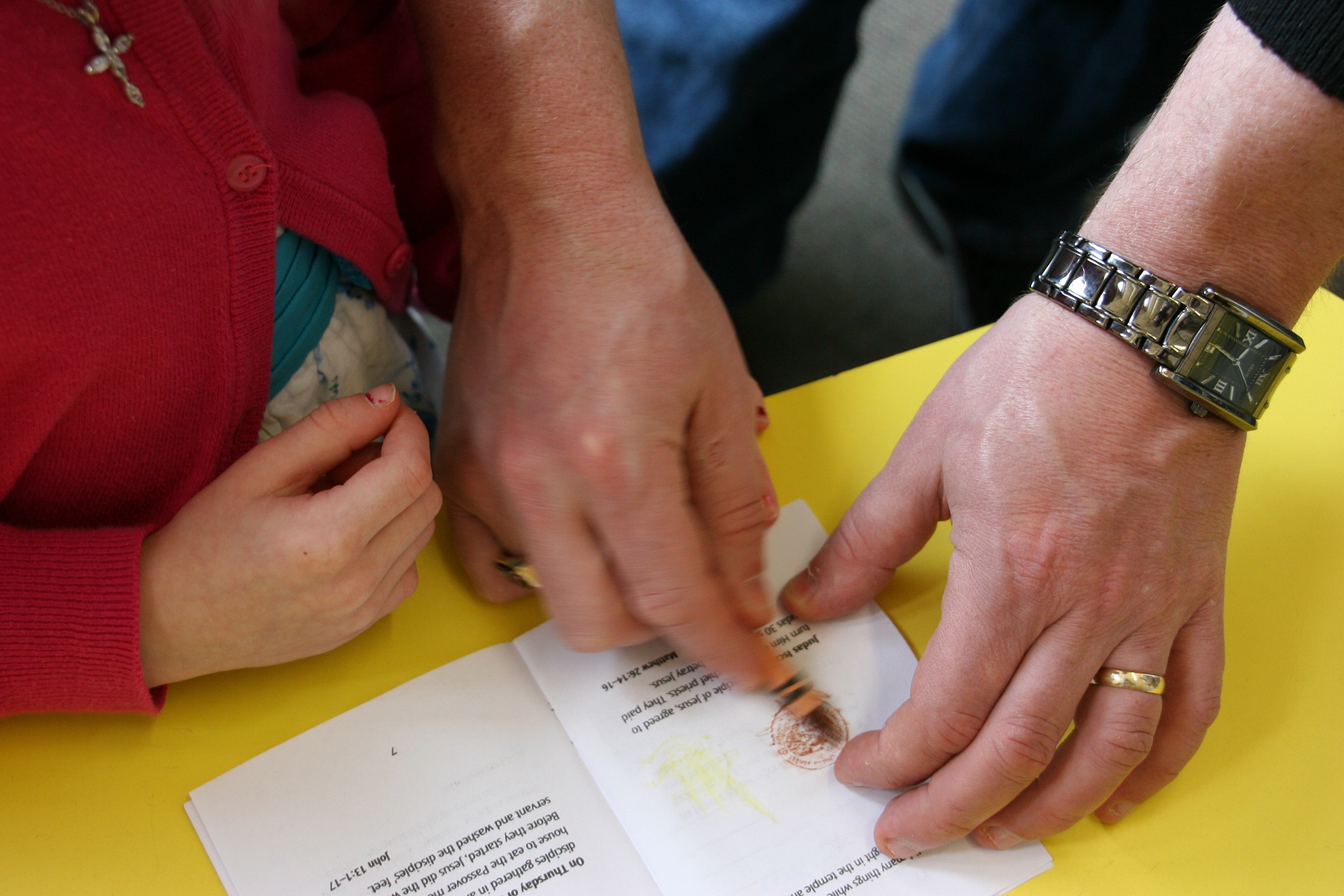
Making coin rubbings in passports to remember how Judas betrayed Jesus with 30 pieces of silver.

Making coin rubbings in passports to remember how Judas betrayed Jesus with 30 pieces of silver.

Stop #3, Before the Passover meal on the Thursday of Holy Week, Jesus washed his disciples’ feet:

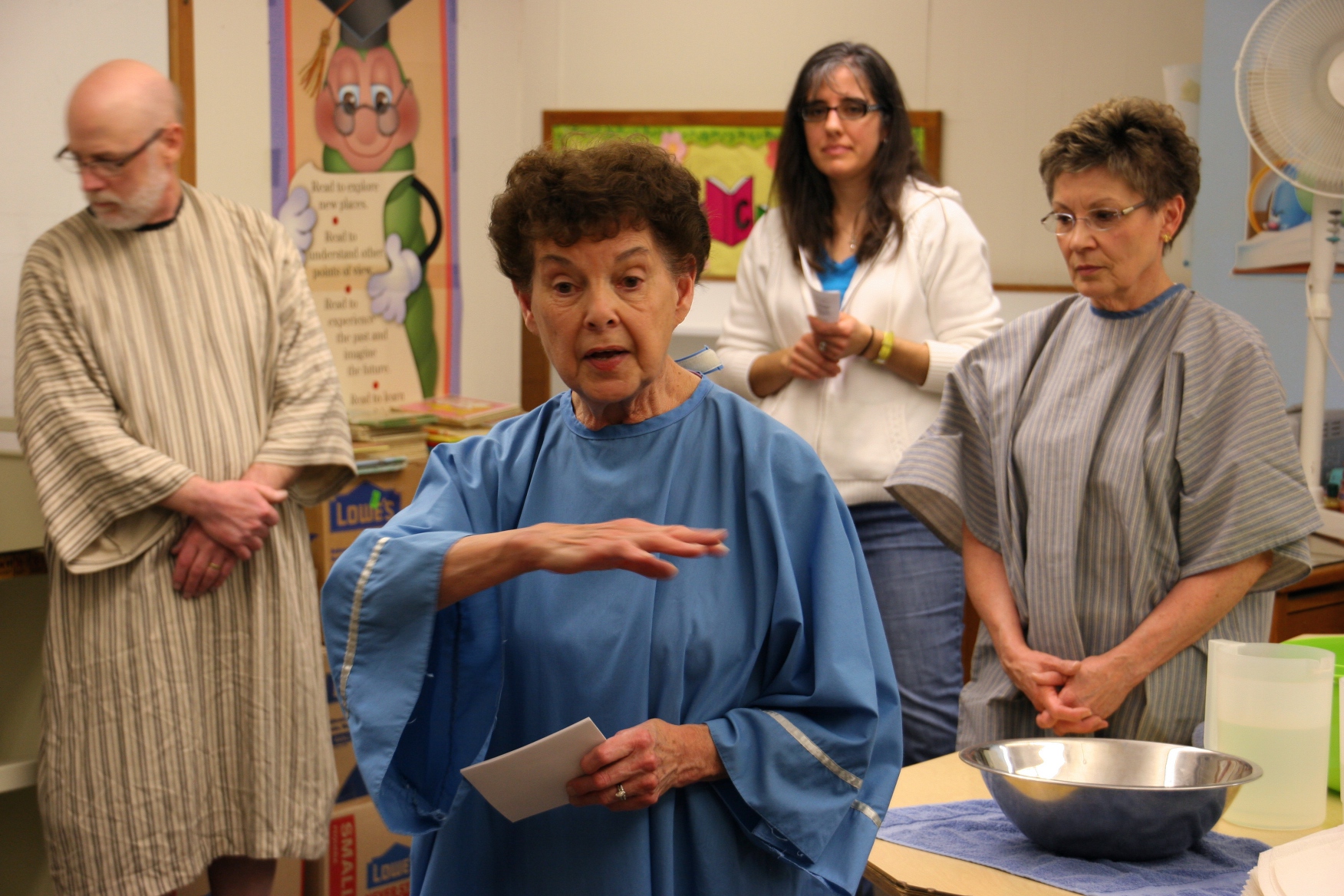
Actress Diane talks about Jesus gathering with his disciples and washing their feet.

Actress Diane talks about Jesus gathering with his disciples and washing their feet.

Rather than washing feet, hands were washed.

Rather than washing feet, hands were washed.

Stickers were handed out for placement in the passport after hands were washed.

Stickers were distributed for placement in the passport after the hand washing.

Stop #4, Remembering the Passover meal, Jesus’ last meal with his disciples:

Sings marked each station.

Signs marked each station.

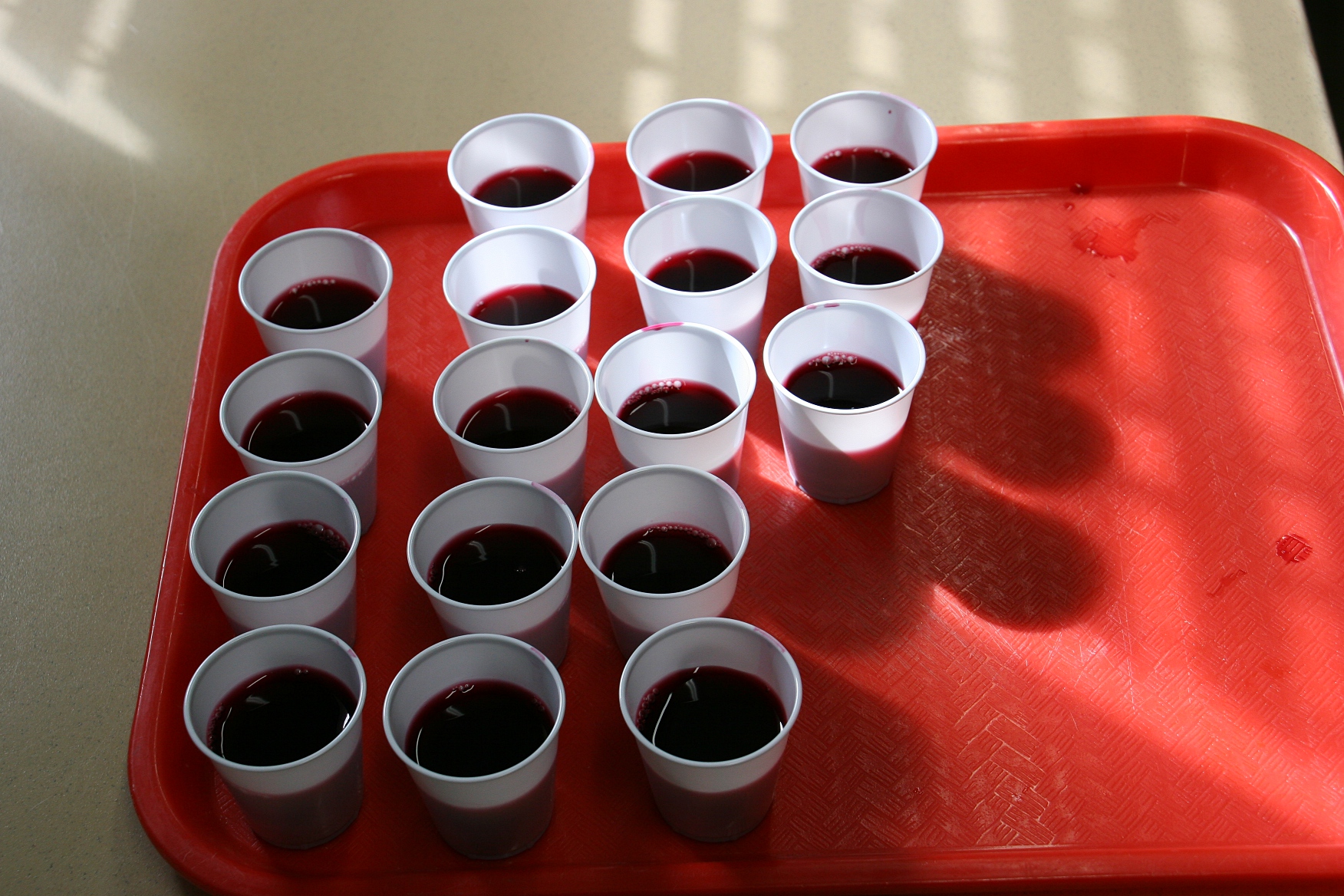
Participants could sample various foods such as horseradish, matzo, grape juice and more.

Participants could sample various foods such as horseradish, matzo, grape juice and more.

Grape juice ready to be served.

Grape juice ready to be served.

Stop #5, Jesus prays in the Garden of Gethsemane:

A sign marks the station focusing on prayer.

A sign marks the station focusing on prayer.

Stop #6, Jesus was whipped, beaten and teased:

Volunteer Leann talks about the torture Jesus suffered even prior to his crucifixion.

Volunteer Leann talks about the torture Jesus suffered even prior to his crucifixion.

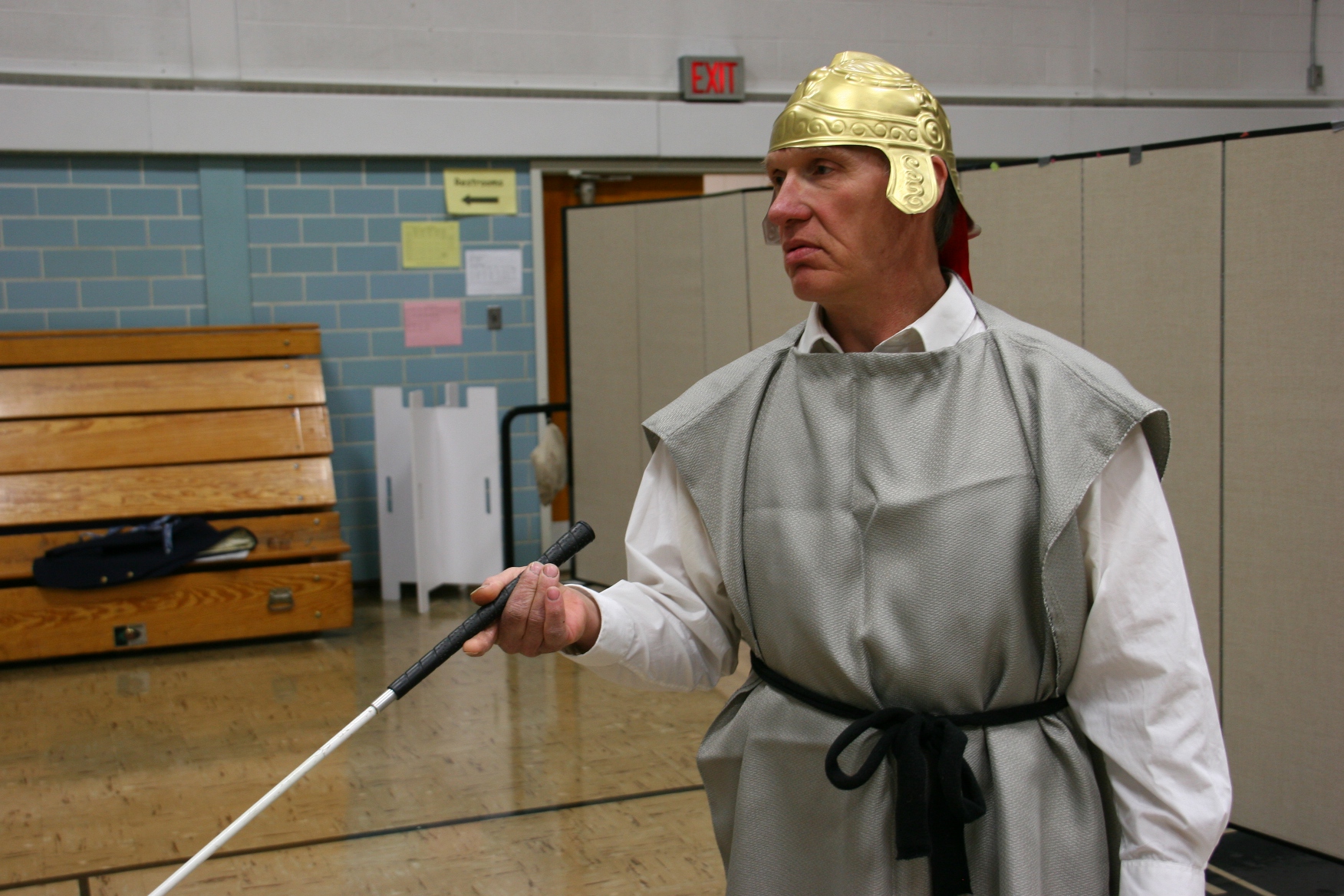
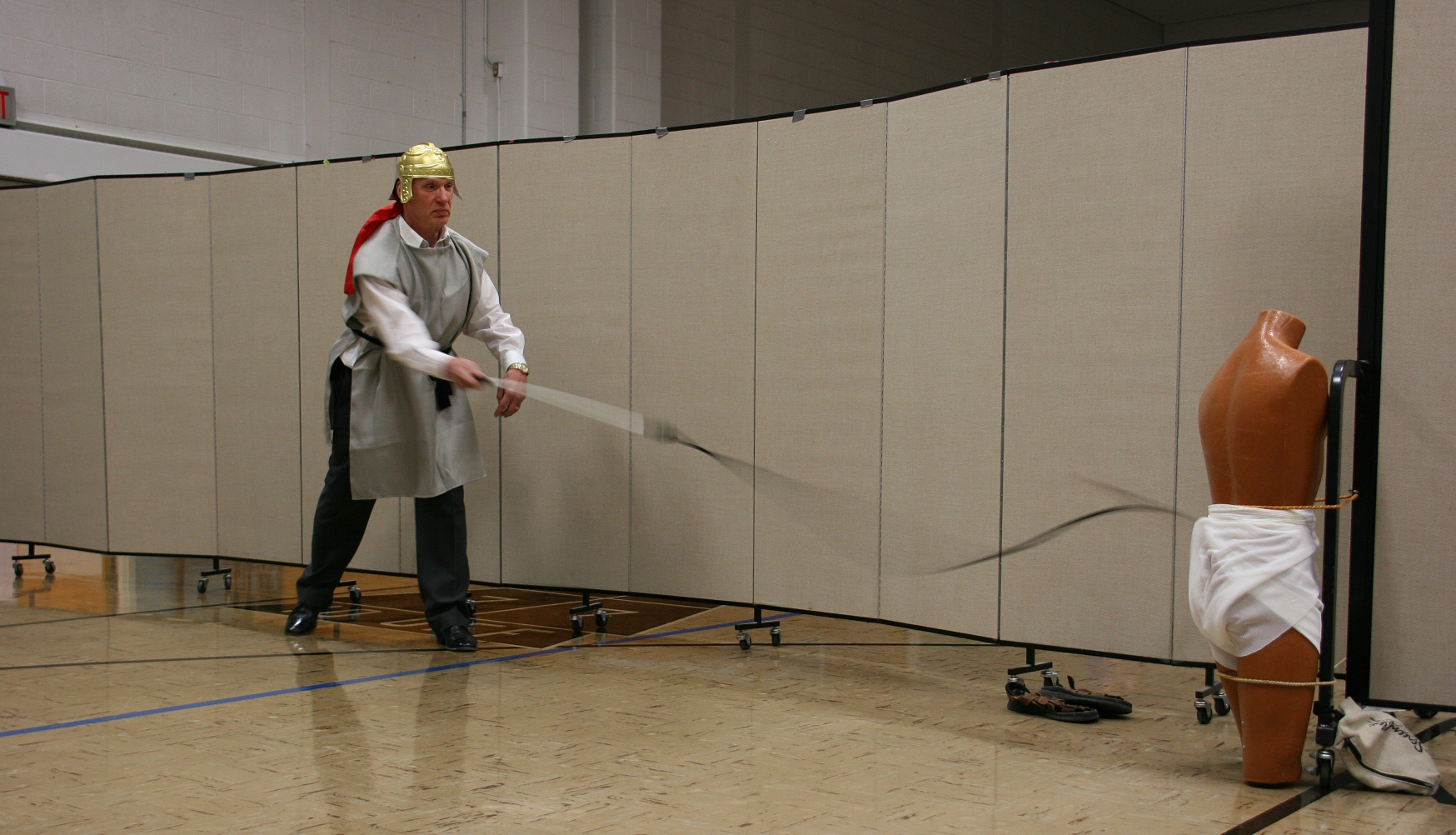
Wayne played perhaps the most memorable role, that of a soldier whipping Jesus.

Wayne played perhaps the most memorable role, that of a soldier whipping Jesus.

The whip cracked across the floor, toward the mannequin representing Jesus.

The whip cracks across the mannequin representing Jesus.

Stop #7, Christ is crucified on the cross:

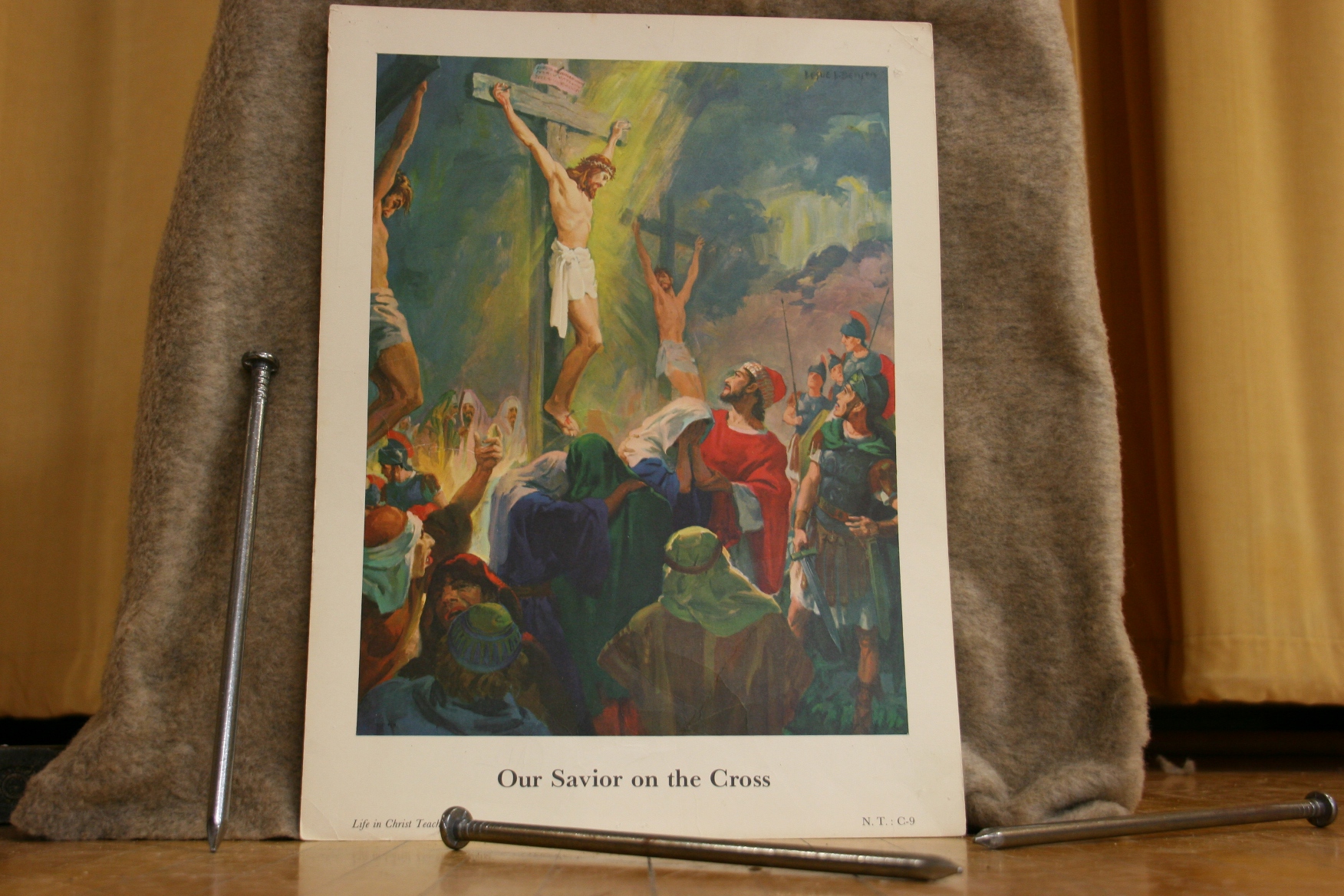
The stage was set with a cross, hammer and nails. Participants pounded nails into wood. Christ was nailed to the cross.

The stage was set with a cross, hammer and nails. Participants pounded nails into wood to remember how Christ was nailed to the cross.

This artwork and nails were placed at the base of the cross.

This artwork and nails were placed at the base of the cross.

Stop #8: As Jesus died on the cross, he said he was thirsty. He was given vinegar to drink.  (I don’t have any photos from this station.) Participants could taste vinegar.

A photo of Christ's face from a stained glass window in my church, Trinity Lutheran, Faribault.

A photo of Christ’s face from a stained glass window in Trinity Lutheran, Faribault. This depicts Him after His resurrection.

Stop #9: Jesus’ tomb is found empty on Easter. (I don’t have any photos from this station.) Those on the tour joined the angel and the woman at the gravesite in celebrating Jesus resurrection with these words: He is risen!

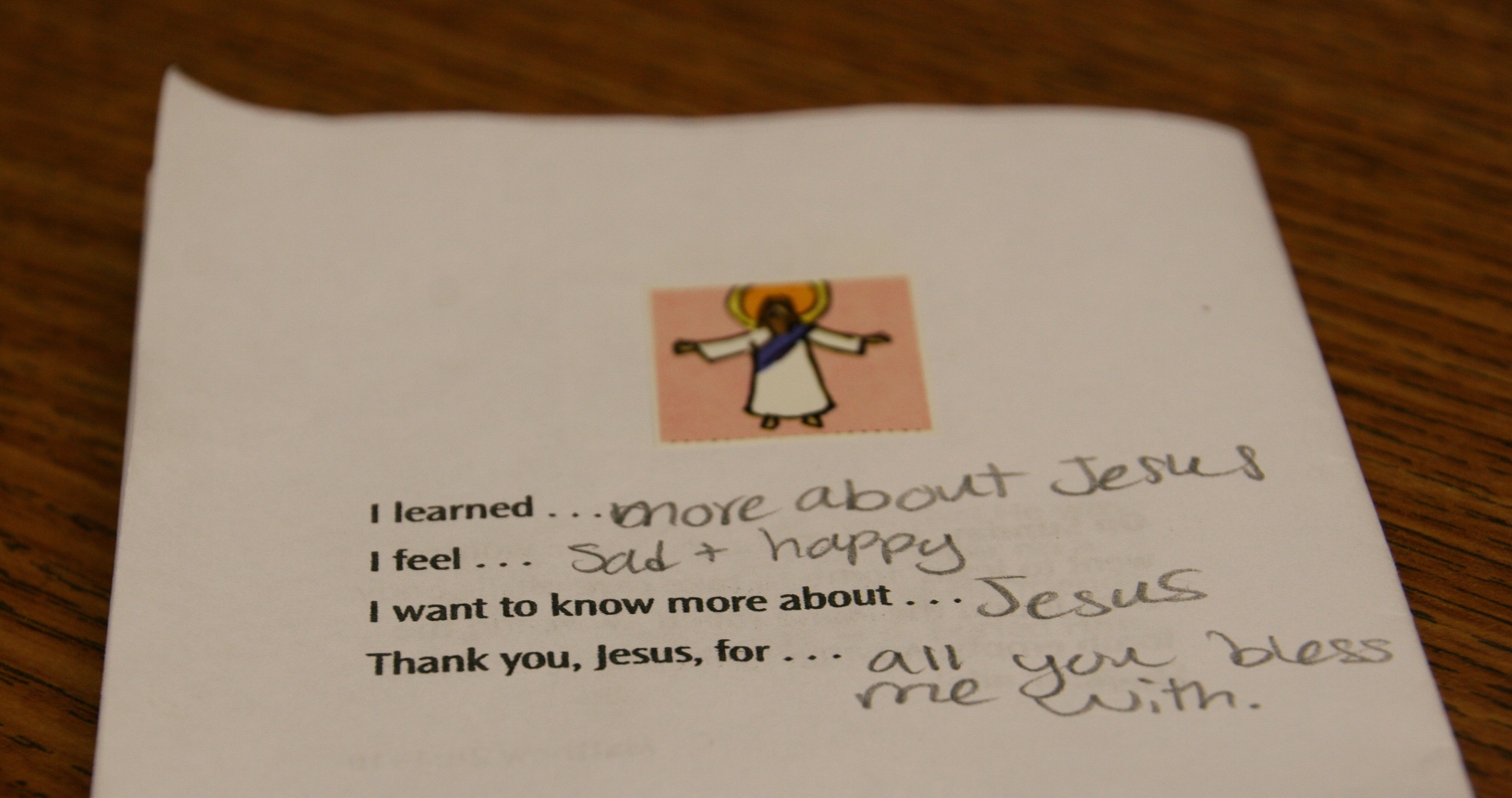
Stop #10, The final check-in station allowed participants to talk and write about their experiences:

What a young girl, Jennifer, wrote.

What a young girl, Jennifer, wrote.

FYI: “Journey to the Cross” is available for purchase through Concordia Publishing House. Click here for more information.

It’s described as “an outreach and educational event for your congregation and community. Through activities based on Scripture, participants experience the joy of Palm Sunday, the disappointment of Judas’ betrayal, the devastation of the crucifixion, the jubilation of the resurrection, and so much more. This family program invites children and adults to walk the path that Jesus walked.”

© Copyright 2015 Audrey Kletscher Helbling


And he thought Minnesota was snowy February 11, 2015

Filed under: Uncategorized — Audrey Kletscher Helbling @ 5:01 AM
Tags: , , , , , , , , ,

REPEATEDLY, I’VE REQUESTED snow images from my son who attends Tufts University in Medford, MA. That’s about five miles from Boston.

He repeatedly has failed to send me photos. So I rely on numerous online sources to show me scenes of all that snow piling up in this major East Coast metro area.

I converted this image to black-and-white and upped the brightness. This was shot on the Minnesota Highway 19 curve just north of Vesta, my southwestern Minnesota hometown.

A winter storm in southwestern Minnesota reduced visibility along State Highway 19 north of Vesta in March 2012. Photo used here for illustration purposes only since I don’t have any images from Boston and always like to include art in my blog posts. Minnesota Prairie Roots file photo.

Even by Minnesota standards, six feet (72.6 inches to be exact) of snow in 30 days in Boston is staggering. That broke a 30-day record of 58.8 inches set in 1978.

Can you imagine the narrowed streets, mountains of snow to see around and move, the shutting down of mass transit? On Monday in Medford, a grocery store employee was struck by a snow removal truck while crossing the store parking lot after work. He later died. The Governor of Massachusetts has declared a State of Emergency. More snow is predicted on Thursday.

The son told me on Monday, his fourth day off from classes in two weeks due to winter storms, that he’d rather be in class. (Or maybe his native Minnesota.) Classes were canceled again on Tuesday, bringing the snow day total to five. I’m wondering whether colleges make up missed days considering the tuition paid.

Since my son isn’t the communicative-informing-mom type, I’ve relied on Tufts social media. Moms like me who are more than 1,000 miles away need reassurance. Tuesday morning I got a mass email from Tufts updating me on the situation there. I appreciated that.

Despite the overwhelming amount of snow, my son has managed to make the 20-minute walk from his apartment to campus and back numerous times during these winter storms. He’s rather regretting, I think, his decision to live off campus this year.

But, he’s young and he’s a native Minnesotan. He built a snow fort on campus last weekend. He’ll survive.

DO YOU HAVE FAMILY or friends in Massachusetts? If so, what are you hearing from them?

© Copyright 2015 Audrey Kletscher Helbling
 

Sharing the Christmas spirit, Shattuck-St. Mary’s style December 15, 2014

SATURDAY DIDN’T LOOK or feel a lot like Christmas here in Southern Minnesota. Snow melting. Temps in the 40s or near 50. Beautiful weather for December, except for the lack of sunshine until late afternoon.

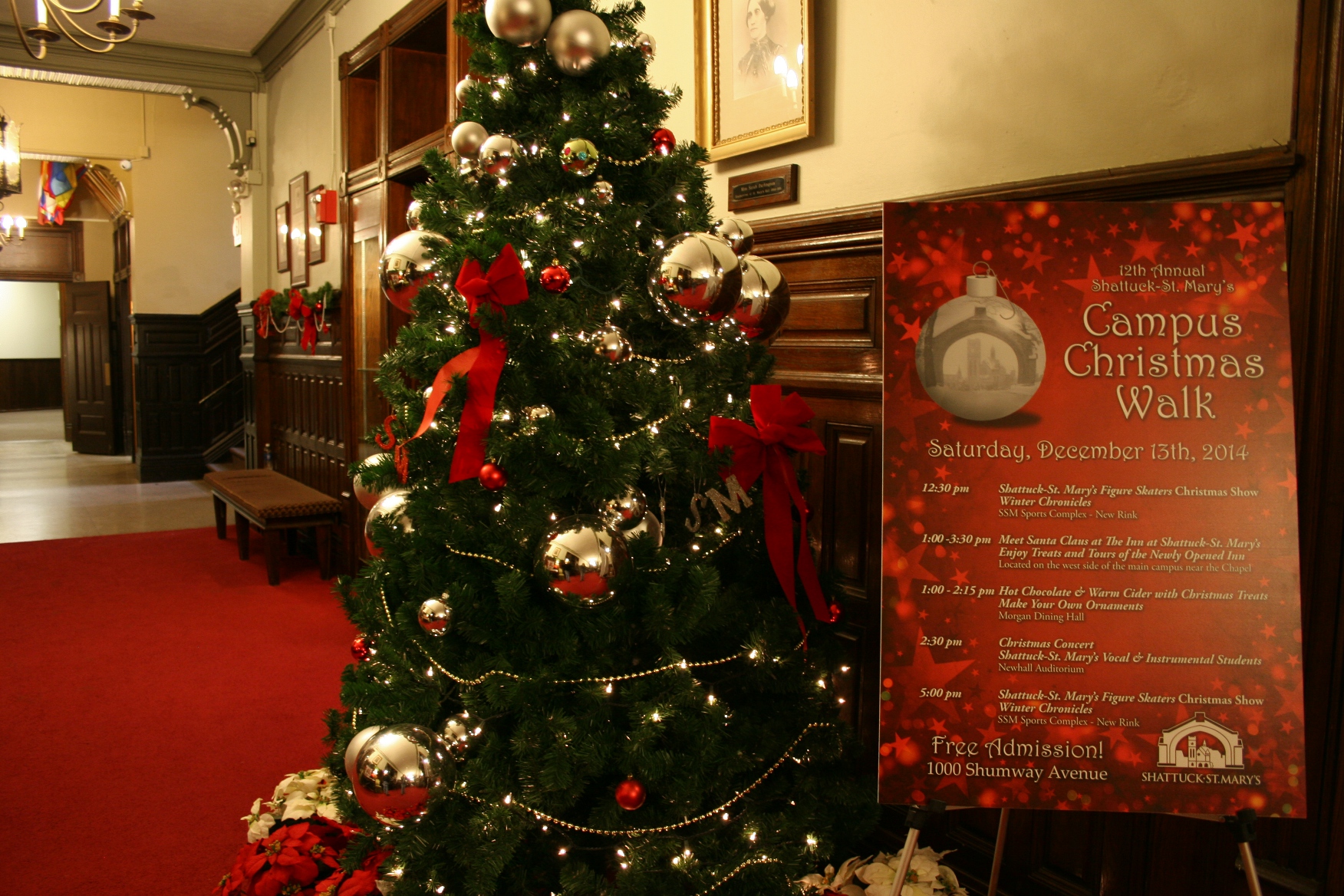
Inside Shumway Hall, a sign welcomes visitors to the annual Campus Christmas Walk.

Inside Shumway Hall, a sign welcomes visitors to the annual Campus Christmas Walk.

But on the campus of Shattuck-St. Mary’s, a holiday mood prevailed during the private prep school’s 12th annual Campus Christmas Walk, a gift to the Faribault community.

Heavy wood doors dominate the entry to Shumway Hall.

Heavy wood doors dominate the entry to Shumway Hall.

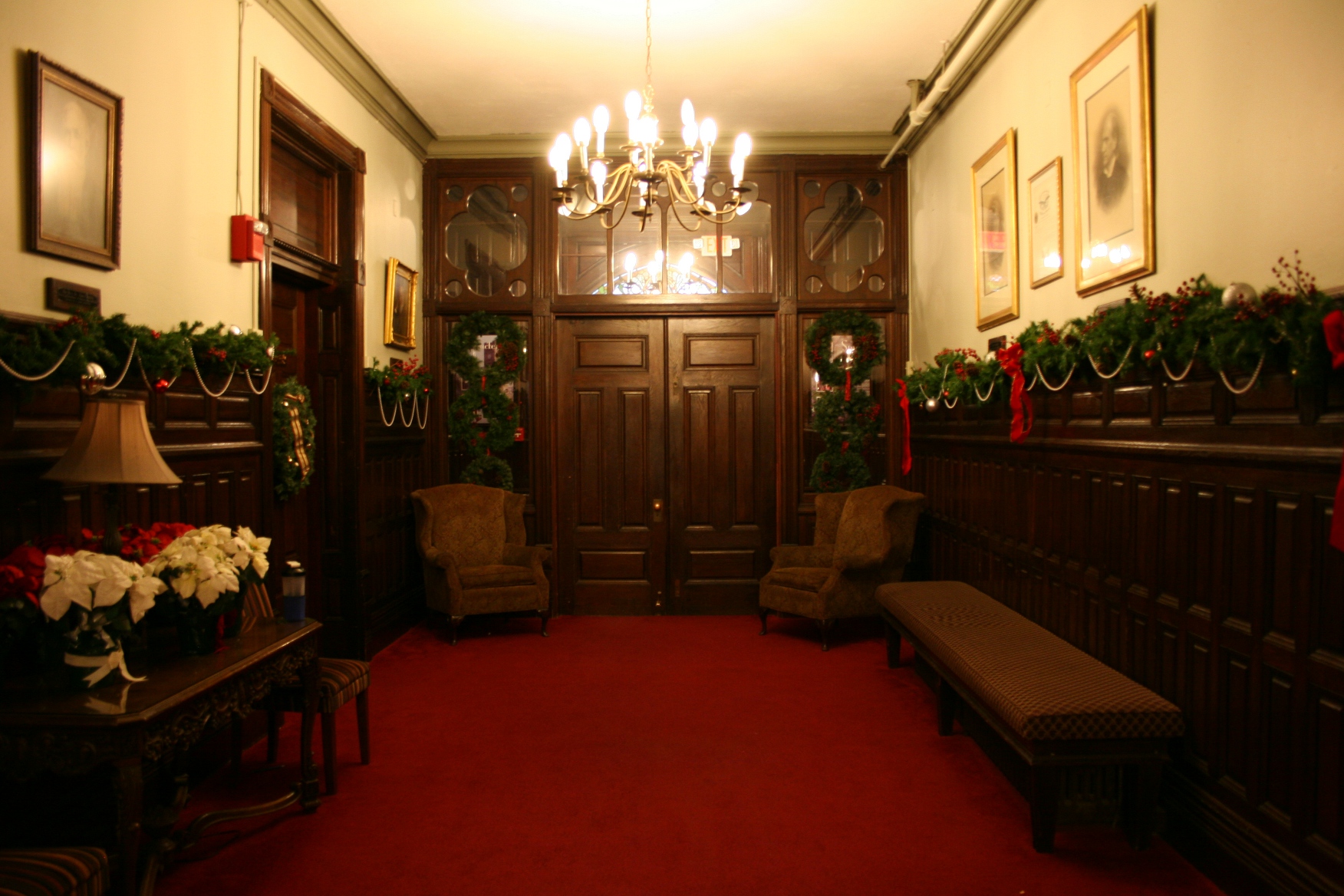
My husband and I attended “Winter Chronicles,” the fabulous figure skating show; walked the wide hallways of historic Shumway Hall

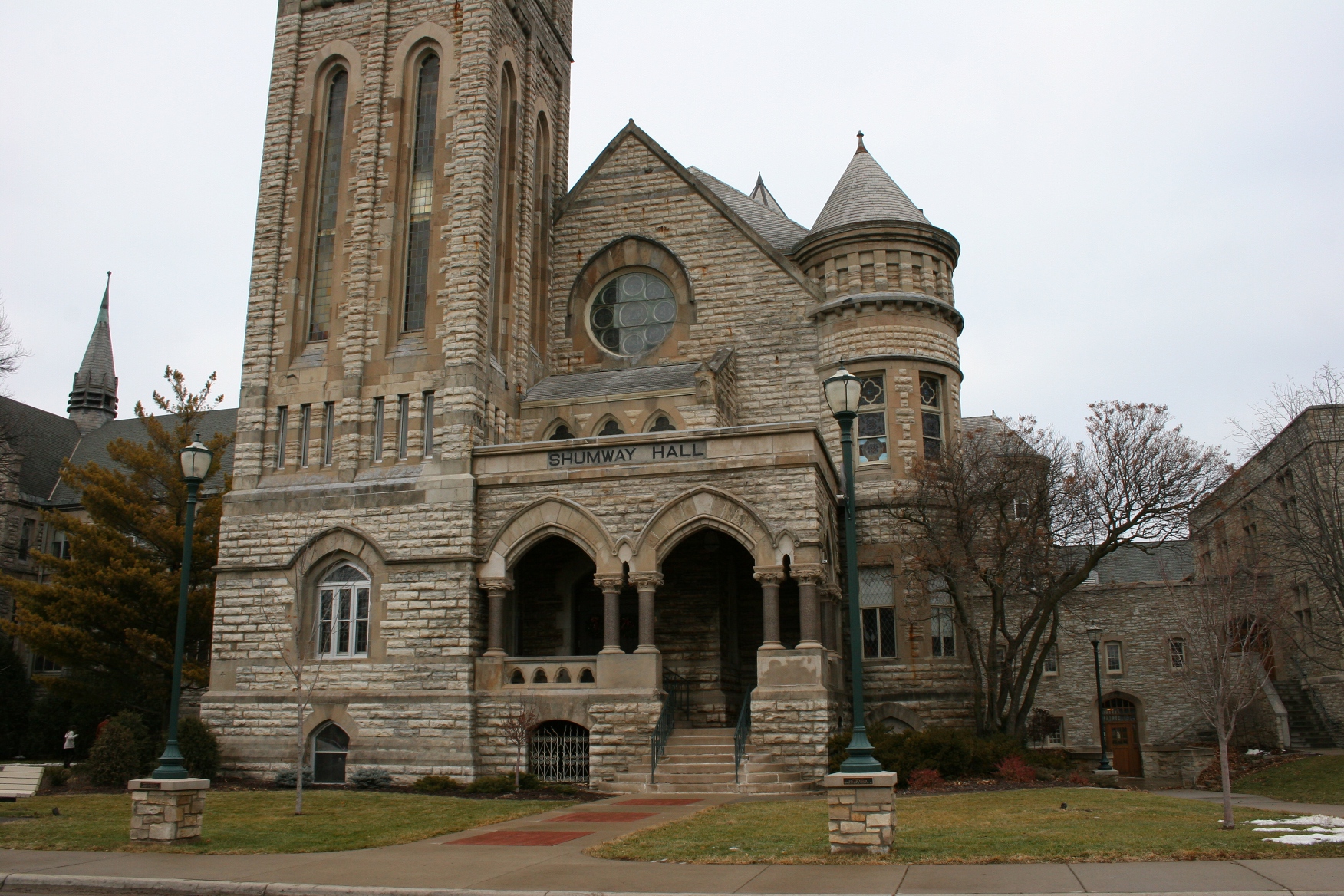
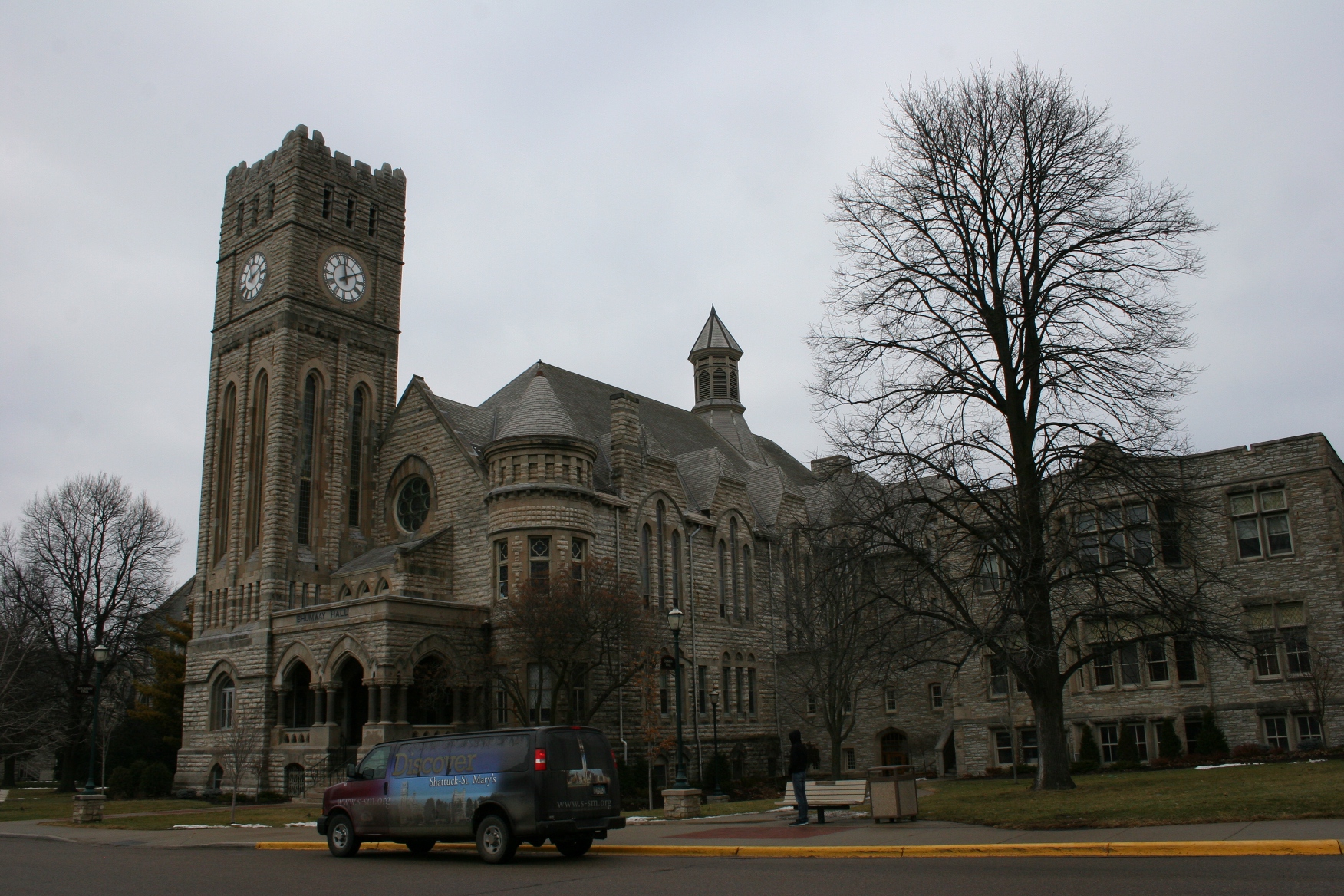
Impressive Shumway Hall.

Impressive Shumway Hall.

Plates of sweet treats awaited visitors.

Plates of sweet treats awaited visitors.

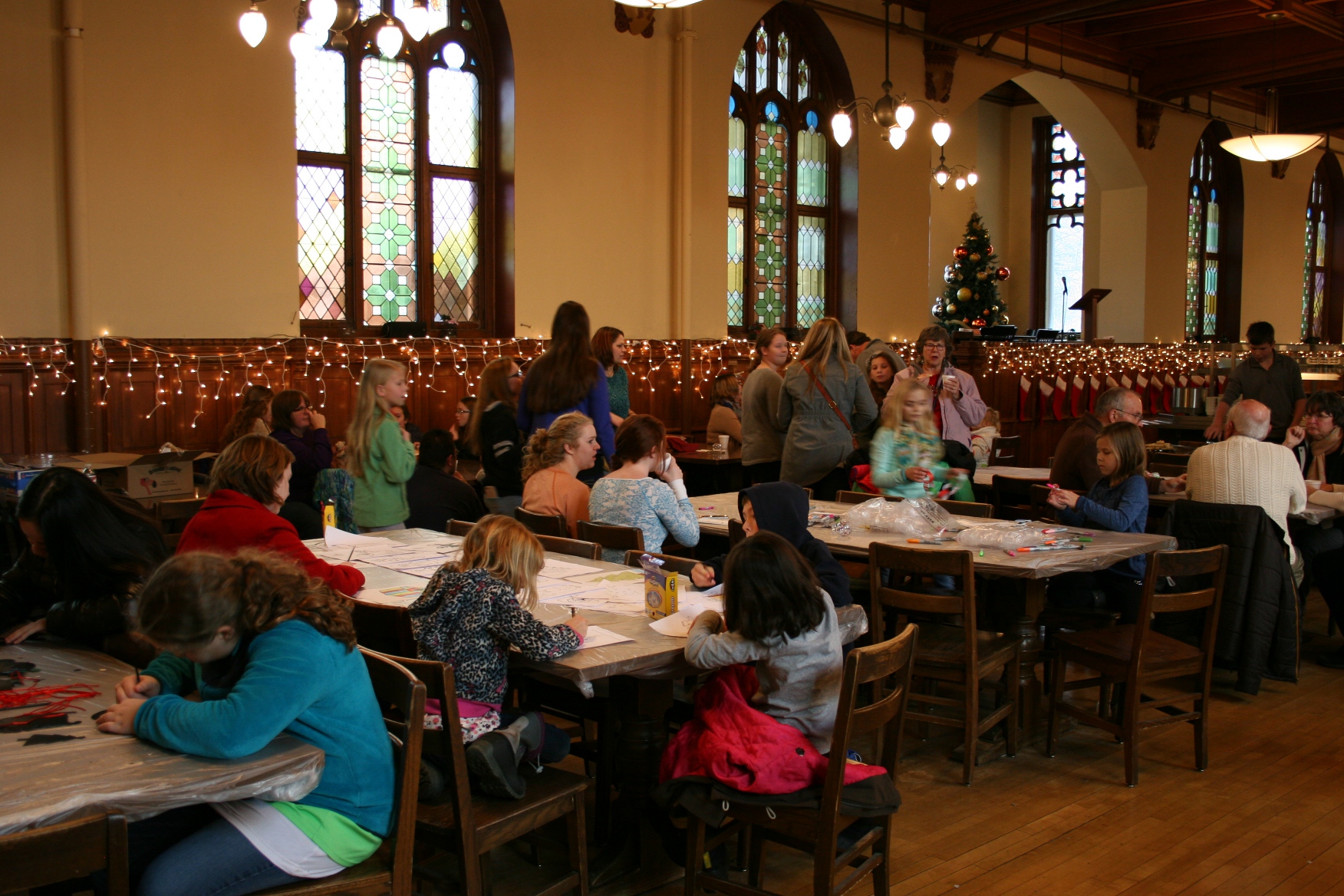
Kids worked on holiday crafts in the dining hall.

Kids worked on holiday crafts in the dining hall.

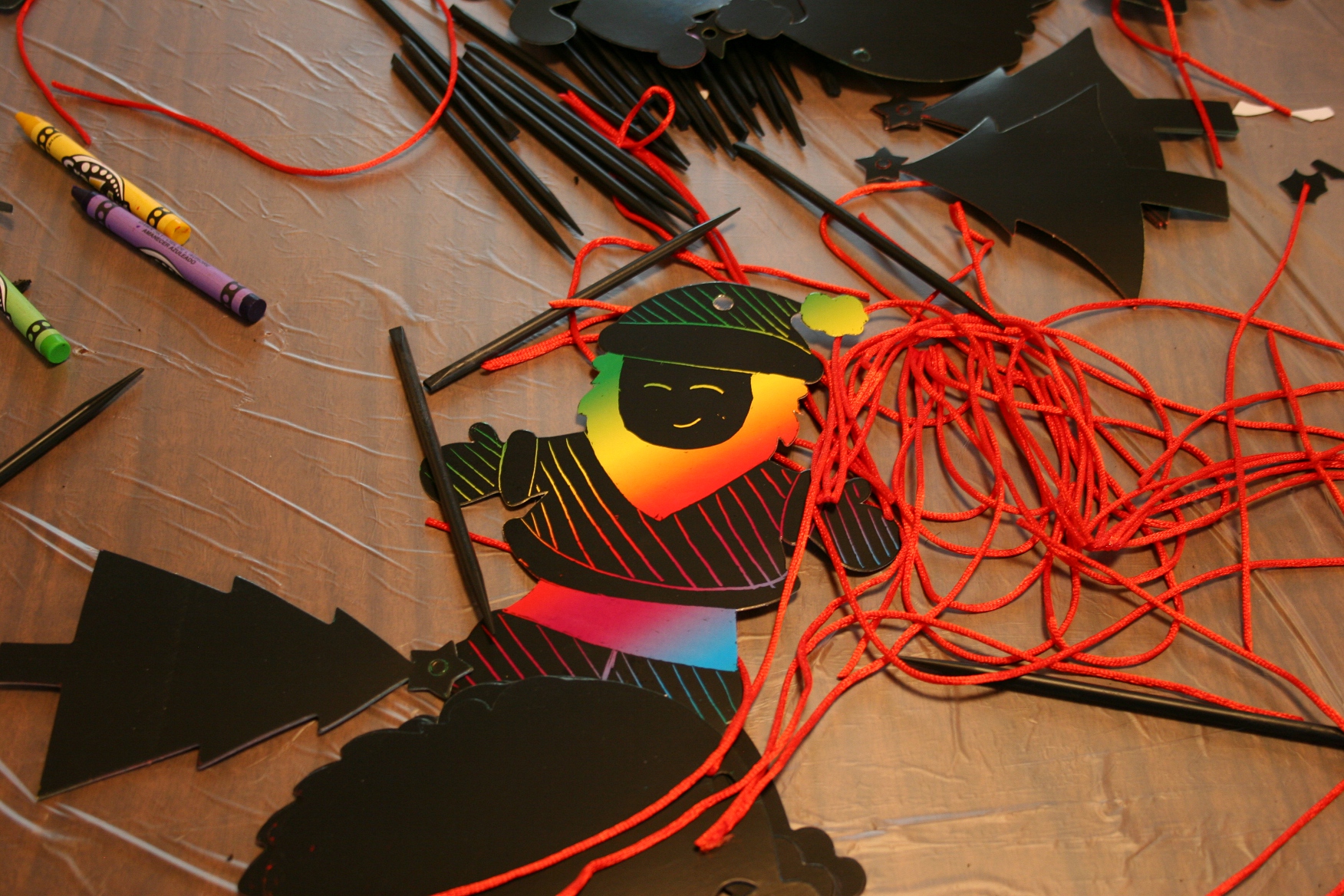
Colorful Christmas ornaments to craft.

Colorful Christmas ornaments to craft.

to the dining room for sweet treats and cider/hot chocolate;

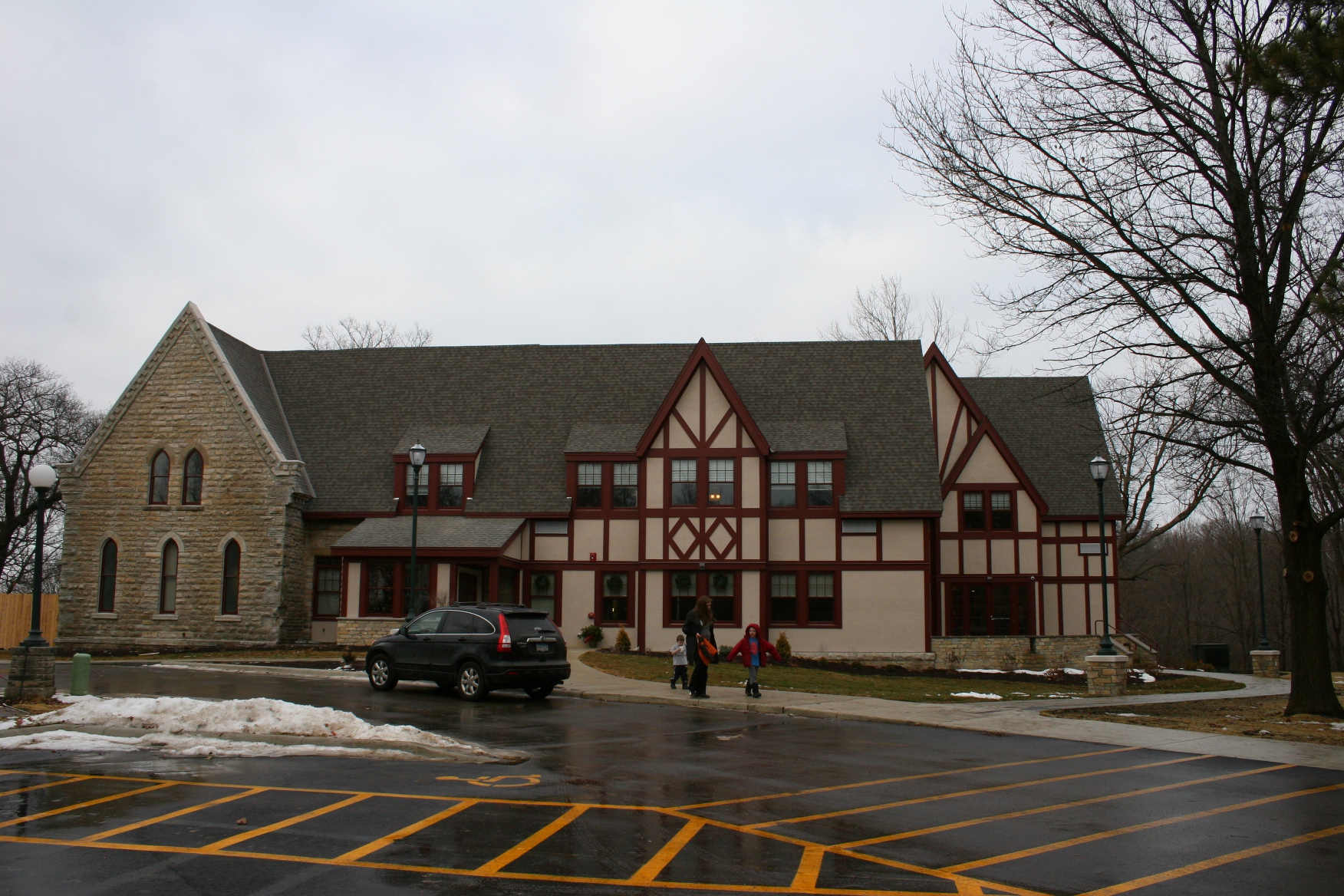
The Inn at Shattuck St. Mary's, a conference/retreat center and hotel, opened on Friday.

The Inn at Shattuck-St. Mary’s, a conference/retreat center and hotel, opened on Friday. Watch for an upcoming post tour of The Inn.

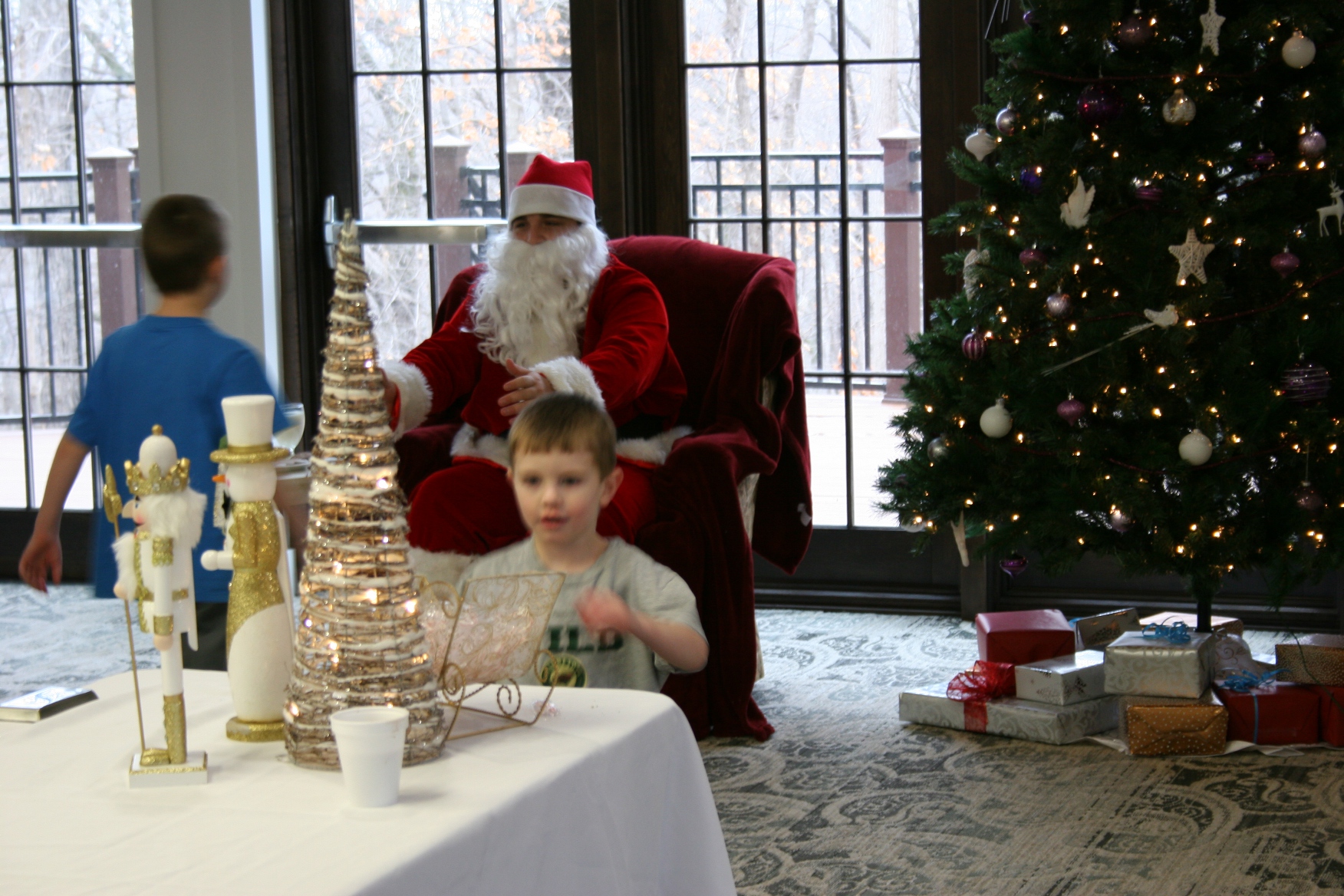
One boy headed for a treat after visiting Santa while another raced toward Santa's open arms at The Inn.

One boy headed for a treat after visiting Santa while another raced toward Santa’s open arms.

toured the just-opened The Inn at Shattuck-St. Mary’s where Santa proved the most popular guest;

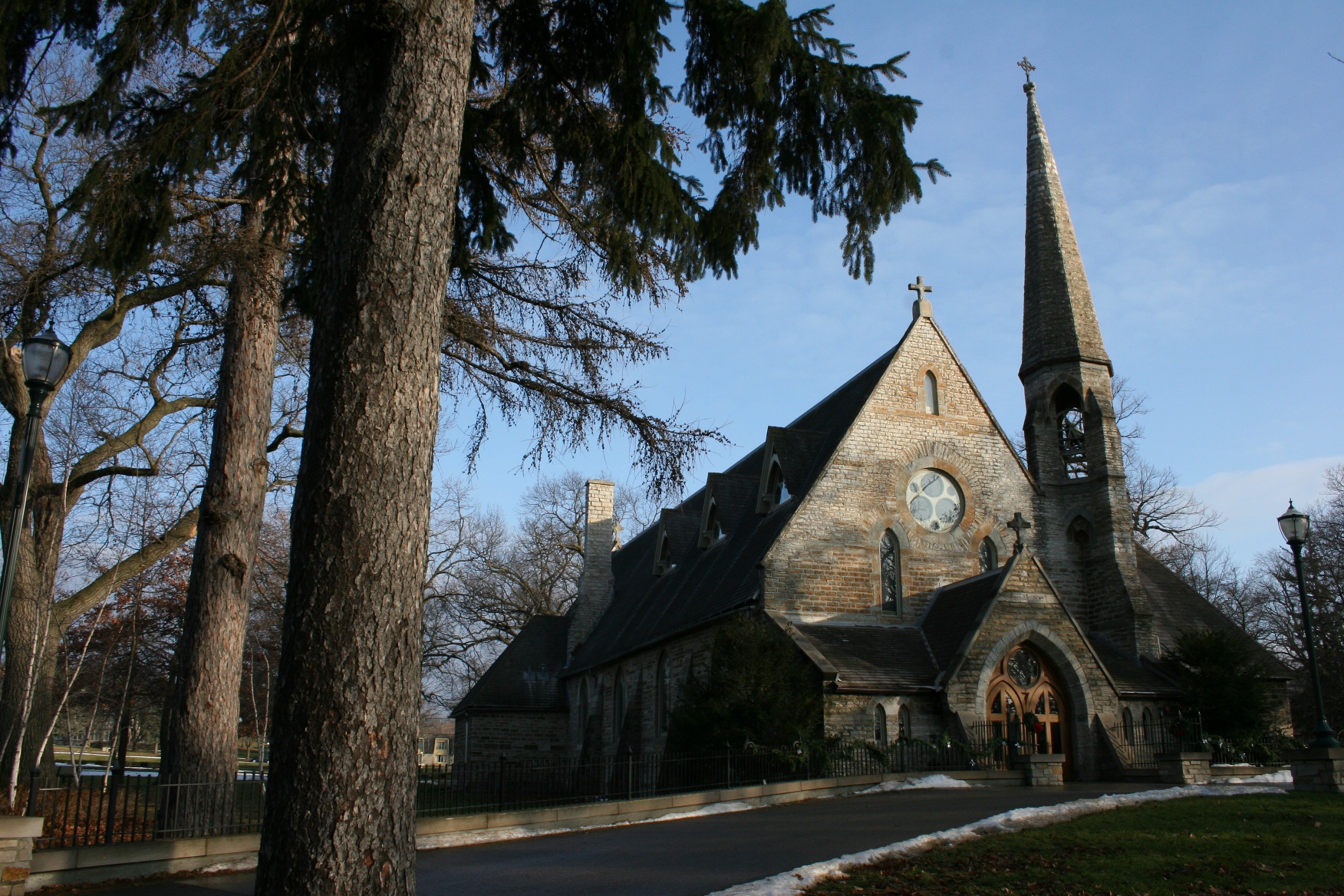
The Chapel of the Good Shepherd.

The Chapel of the Good Shepherd.

and then popped into the old stone chapel.

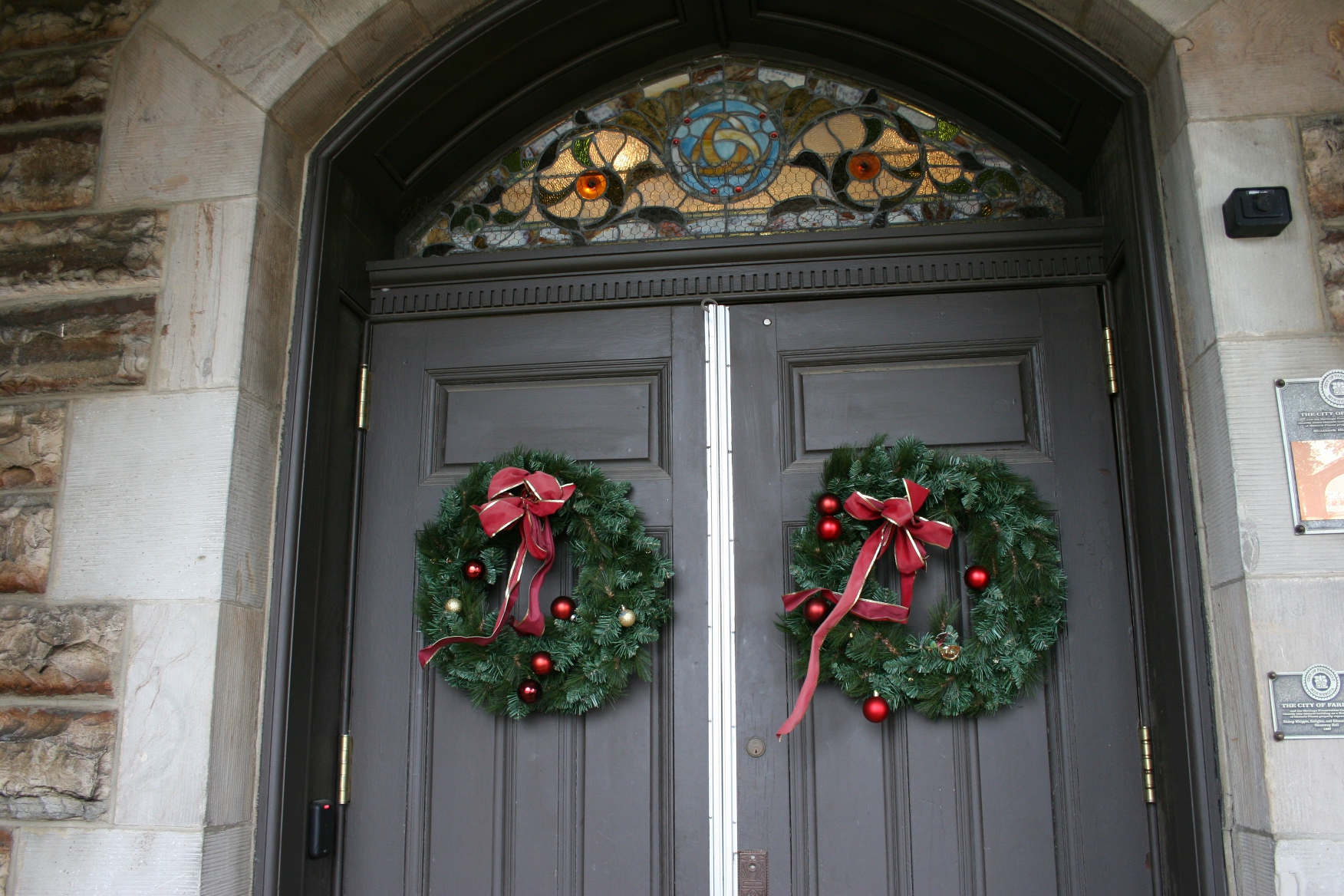
Wreaths aplenty, including these on the entry to Shumway Hall, decorated the campus.

Wreaths aplenty, including these on the entry to Shumway Hall, decorate the campus.

If time had allowed, we also would have taken in the Christmas Performing Arts Showcase. Next year.

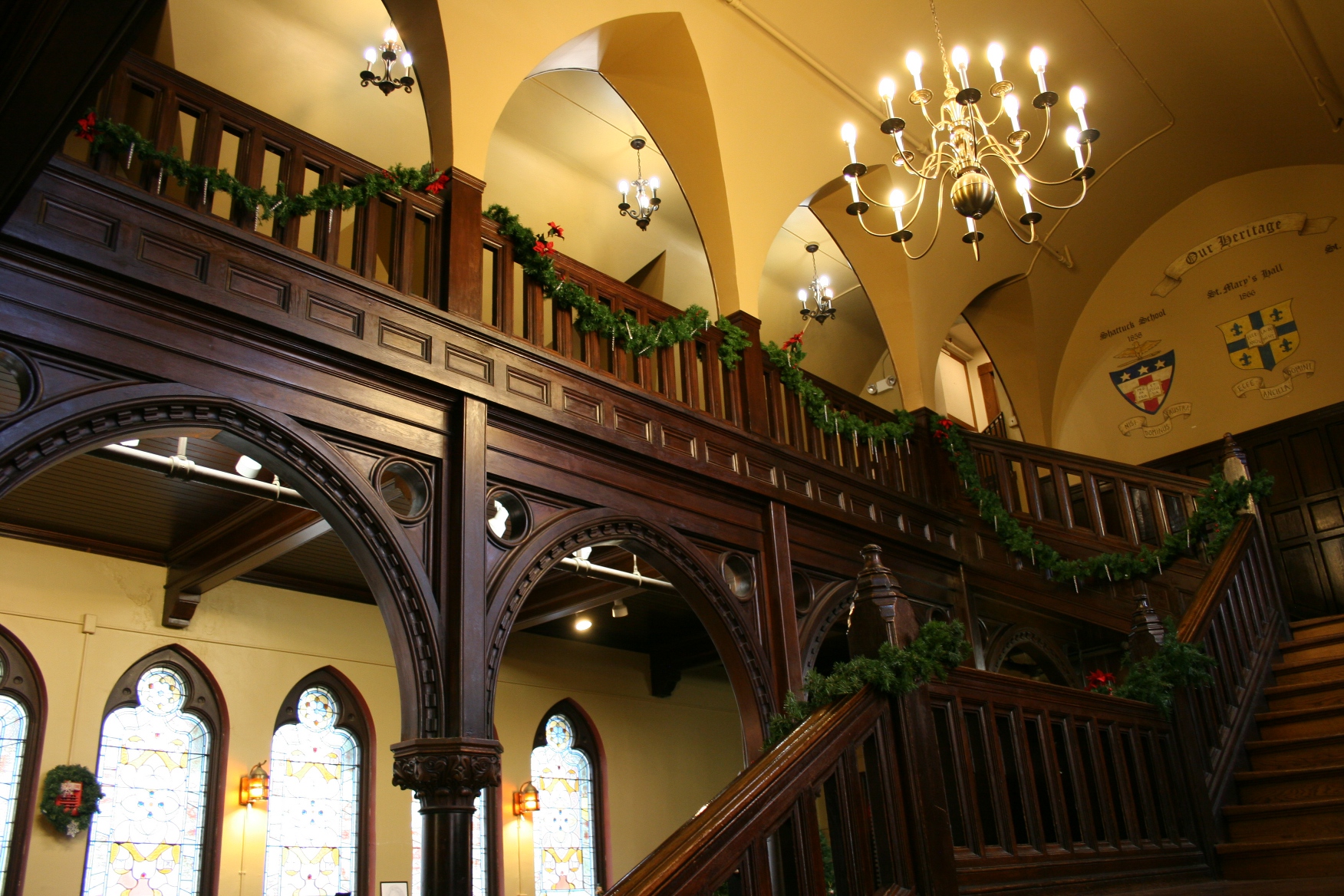
This ornate stairway stands just outside the dining hall.

The ornate stairway  just outside the dining hall.

As an appreciator of historic buildings which stand strong in stone and dark wood and sturdiness, I truly enjoy this once-a-year opportunity to tour Shattuck.

The Shattuck-St. Mary's campus features beautiful stone buildings constructed in the 1800s.

The Shattuck-St. Mary’s campus features beautiful stone buildings constructed in the 1800s.

Every time I enter this campus, I feel like I’m at some Ivy League college. Not that I’ve ever been to a Harvard or Yale. I can only imagine. Shattuck has that feel of age and strength and wealth.

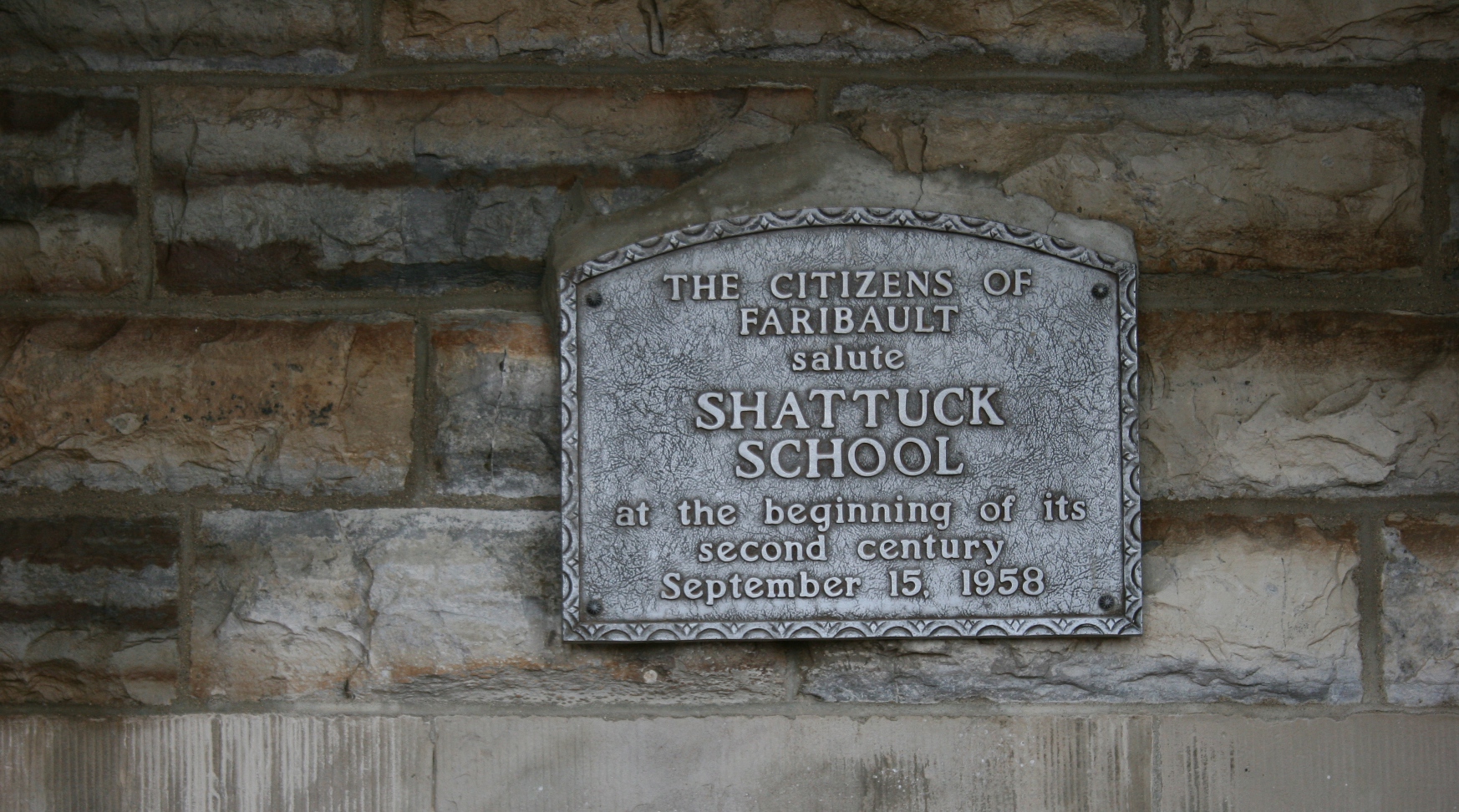
A sign on Shumway Hall notes its centennial anniversary in 1958.

A sign on Shumway Hall notes Shattuck’s centennial anniversary in 1958.

Of course, it’s more. Much more. Like a school that produces great hockey players and draws students to my Minnesota community from all over the world.

© Copyright 2014 Audrey Kletscher Helbling

 

Wabasso High Class of 1974 celebrates 40 years since graduation September 16, 2014

FORTY YEARS AGO, my Wabasso High School graduating class voted “Dead Skunk in the Middle of the Road” as our class song.

But our senior class advisers nixed the choice and “We May Never Pass This Way Again” became our theme song instead.

We never were a class to follow the norm, to keep quiet, to go along with whatever the adults desired. We were outspoken teens—some more than others—challenging authority, growing into adulthood in the turbulent early seventies. Kids who’d just missed sending our male classmates off to fight in Vietnam.

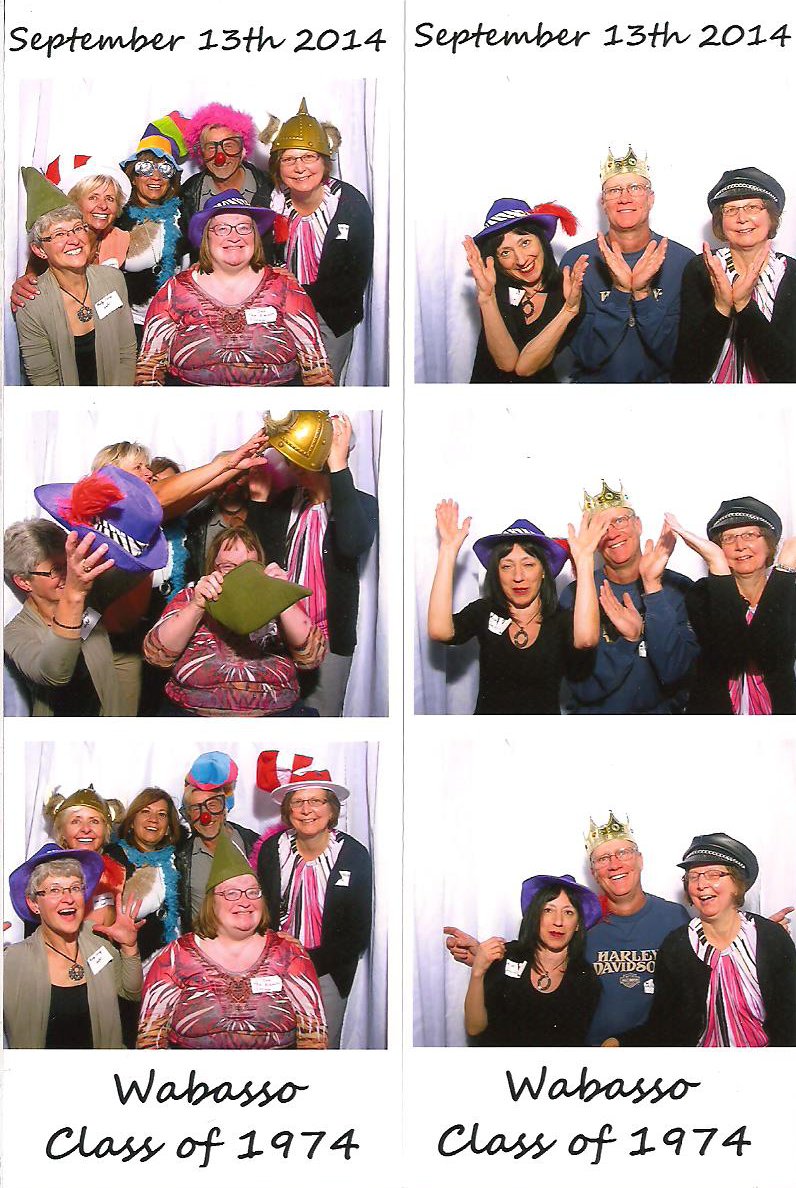
The Wabasso High School Class of 1974 fortieth year reunion.

The Wabasso High School Class of 1974 fortieth year reunion group photo. That’s a teacher seated in the front row, right. I’m in the back row near the middle with the pink, white and black striped shirt. Photo by Randy Helbling.

This past Saturday we gathered at the community center (and then moved to the Roadhouse Bar & Grill) in the southwestern Minnesota prairie town of Wabasso to reminisce about our school days and to celebrate the 40th anniversary of our graduation in May 1974.

Forty years. How do four decades pass that quickly?

WHS reunion pic 7 and 8

Maybe we haven’t grow up so much. Or perhaps it’s just that we still like to have fun.

So much has changed, yet so little. We’ve grown up and reached the point in our lives when we realize life is too short, that the years we shared are worth celebrating.

In responding to questions for a reunion book I helped pull together, nearly every single classmate wrote that the best thing to happen to them since high school was getting married and having children. There was not a single answer like “I’m rich, live in a mansion and run a Fortune 500 company.” Not a single person placed wealth or career above family.

One other question—What has been the most influential book you’re read since high school?—also garnered a single most popular response—the bible. Many classmates wrote of their spiritual growth and the importance of God and faith in their lives.

On the right are the three of us from Vesta who attended the reunion.

On the right are the three of us from Vesta who attended the reunion. Micki, Dallas and I grew up on farms within a mile of each other. That’s a V, for Vesta, that we’re shaping with our hands in the top image.

This was, by far, the best class reunion of all I’ve attended. And I believe I’ve missed only two.

We mingled and laughed and talked about our kids and grandkids (those who have them) and all sorts of things and simply had a really good time. There was no cornering off of friends, no division, none of those issues that seem to plague classes even decades later.

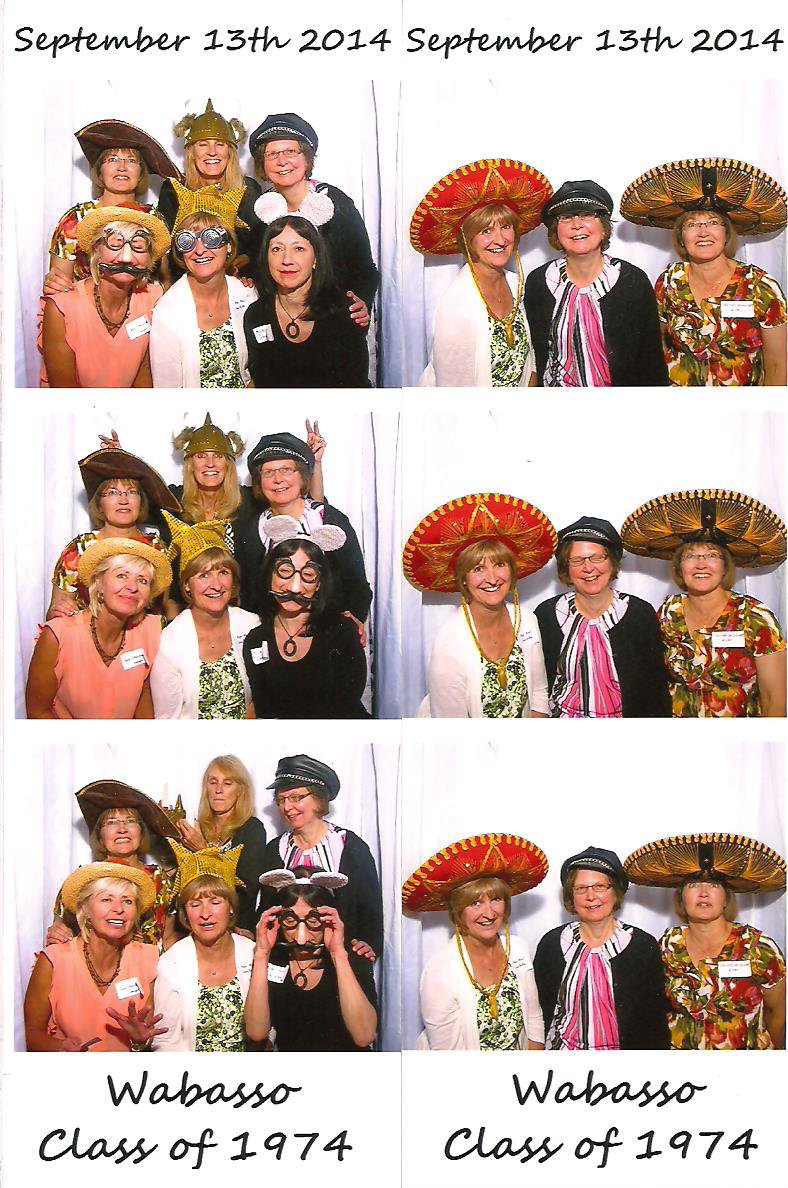
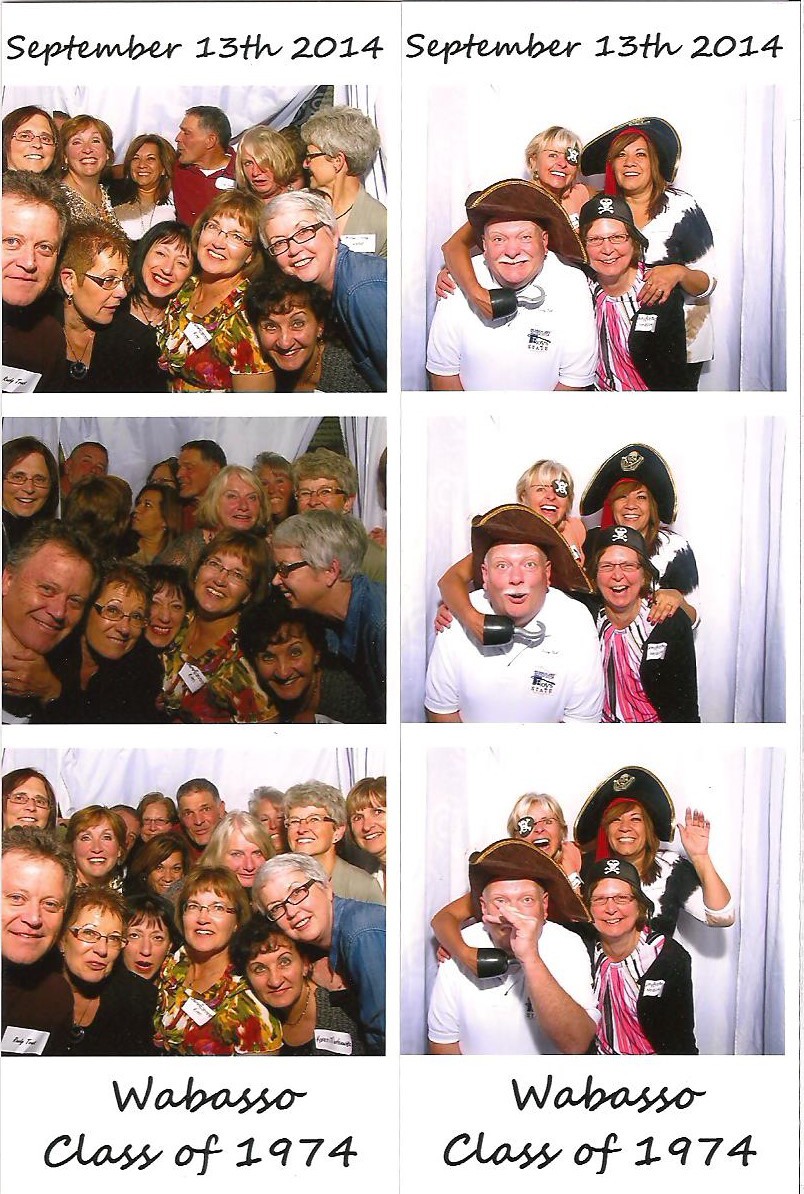
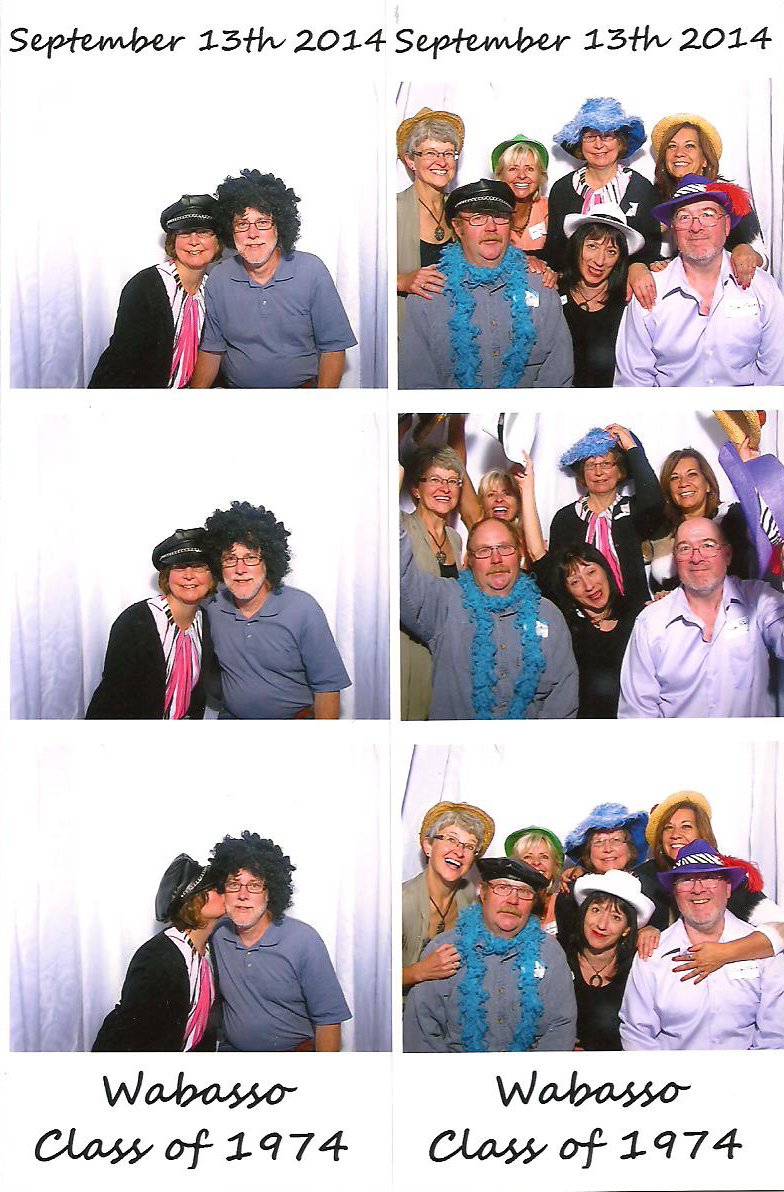
How many classmates can cram into a photobooth, left, and four members of the reunion committee, right.

How many classmates can cram into a photobooth, left, and four members of the reunion committee, right.

As one of my 88 classmates noted, we were always a class that got along. He’s right. At one point Saturday evening, we crammed as many people as possible into a photo booth (New Ulm-based Up All Night Photobooth) contracted for the event. I was an initial naysayer on the photo booth. But I’d recommend it. The photo sessions got us out of our chairs and totally mixing it up.

My husband and I pose for a photo that I told him will be our Christmas card. In the photo to the right is Lindsey, right front, whom I have not seen in 40 years. He promised to return for the next reunion.

My husband and I pose for a photo that I told him will be our Christmas card. In the photo to the right is Lindsey, right front, whom I have not seen in 40 years. He promised to return for the next reunion.

I saw classmates I have not seen in 40 years. And, yes, I had to sneak a sly peek at several name tags to identify people. But for the most part, I recognized my 29 classmates and the single teacher in attendance.

One classmate told me I still looked the same. I took that as a compliment. Obviously, he didn’t notice the gray hair, the creases in my face or the pounds added since I was a hip hugger, mini skirt, hot pants, go-go boot wearing teenager.

© Copyright 2014 Audrey Kletscher Helbling
 

How the planned attack on a Waseca school impacts me personally May 2, 2014

HOW DOES ONE BEGIN to write about a school tragedy averted?

That is my challenge as I reflect on the events of the past days in which a 17-year-old Waseca High School student allegedly planned to carry out a Columbine type massacre in his southern Minnesota school.

The school where my youngest sister and a friend teach and which my niece attends. The school I just drove past last Sunday while visiting my other sister in Waseca, a rural community of nearly 10,000 only a half hour drive away.

A 17-page court document outlines the charges against John David LaDue, described in media reports as a normal kid, a good kid. Now he faces multiple charges, including first degree premeditated attempted murder, in a plot to kill his family, a school resources officer and others in his school. (Click here to read the charges against LaDue and a Statement of Probable Cause filed in court documents.)

An arsenal of weapons, bombs and bomb-making equipment were found in his bedroom and a storage locker and a journal documented his plans, according to court records.

This could have been another Columbine, another Virginia Tech, another Sandy Hook, another American school tragedy. And this time it impacts those I love.

I’ve found so often in my life that, until an event touches me personally, I cannot fully understand or comprehend. It is something that happens somewhere else, to someone else. Not this time.

And not in the past: a dear friend’s father murdered; a SWAT team sweeping through my neighborhood in search of a murder weapon in a drug deal gone bad; my son struck by a hit-and-run driver; the frantic middle-of-the-night screams of a woman being assaulted across the street from my home; a frantic young man ringing my doorbell seeking protection from a gang of men in pursuit of him; a brother-in-law and sister-in-law’s niece murdered in a case of domestic violence, the son of a high school classmate and hometown neighbor hunkered down at Virginia Tech during the massacre of 32 there in April of 2007…

Now this.

It would be easy to despair, to wonder what this world is coming to. But I’m going to take my cue from Waseca School Superintendent Thomas Lee, who in a May 1 press conference (click here to read his entire statement) said in part: “We can either believe that this (arrest of John LaDue) occurred as a result of a lucky break or, as I do, choose to believe that God was looking out for all of us.”

Furthermore, Lee continues with these words worthy of reflection:

On another note I respectfully submit that these kind of events that have been happening in schools across this country should be a warning sign to us all. These events are like “canaries in the mines” – an indicator that something is deeply wrong in our culture. These kinds of events are unique to our American culture. They are certainly not found anywhere else in the world, except in very few isolated cases. Why are they unique to our American culture? What is it in our culture that fosters these kind of events? There will be many opinions about this – our obsession with violence, our tv shows and movies, lack of parenting, the prevalence of guns, corporate greed and of course, gridlock in our government. I suggest that these are all symptoms of a significantly degraded culture. We all know that nothing is guaranteed in this life but it is time that we collectively look into the mirror with honesty and integrity – that we ask ourselves how our choices are contributing to this degradation, and determine what we can do individually to stem the downward slide. We need to do everything possible to look out for one another – especially our kids.

The superintendent is spot on correct. Nothing is guaranteed in this life. And we need to look out for one another, especially our kids.

© Copyright 2014 Audrey Kletscher Helbling
 

Small town patriotism February 26, 2014

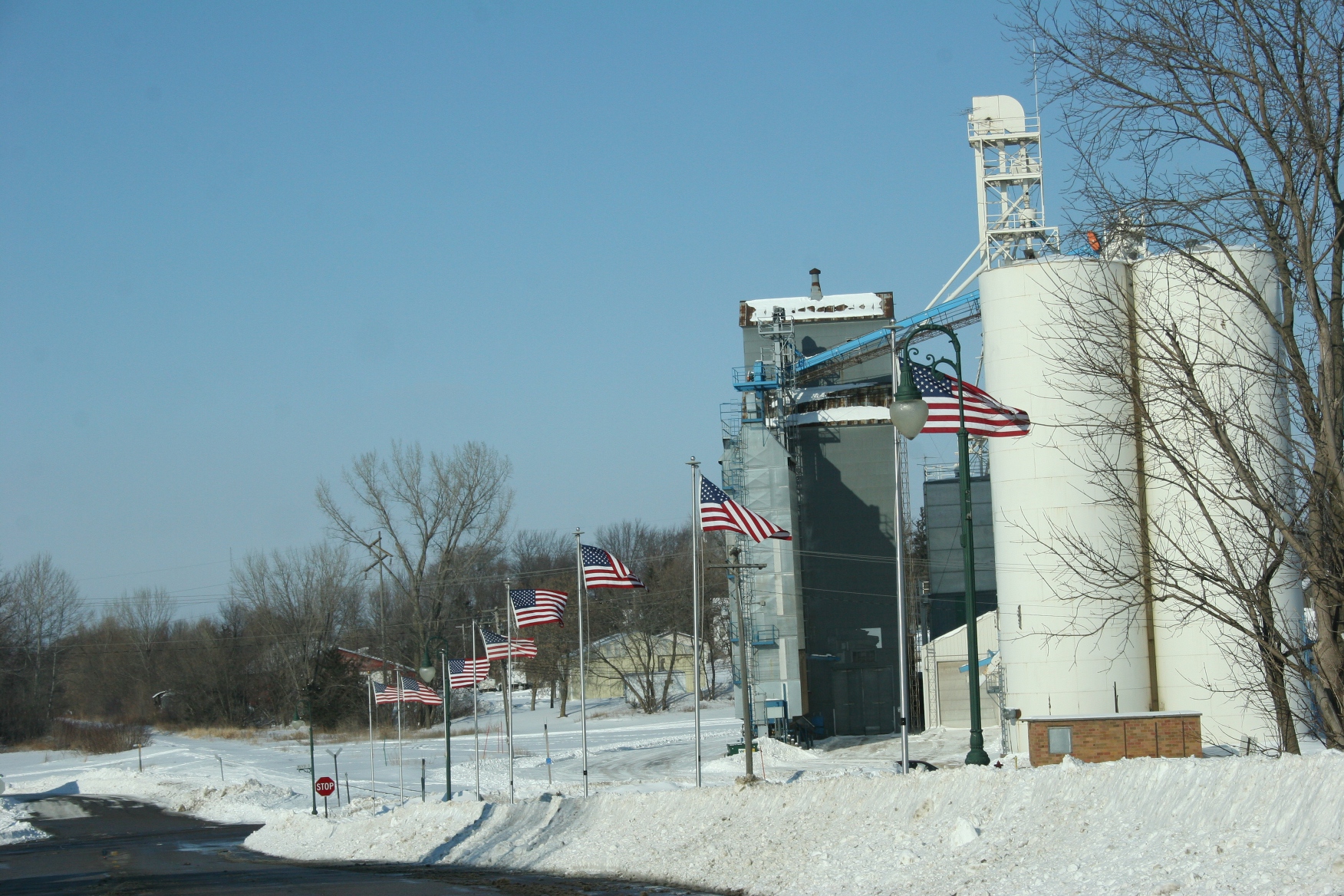
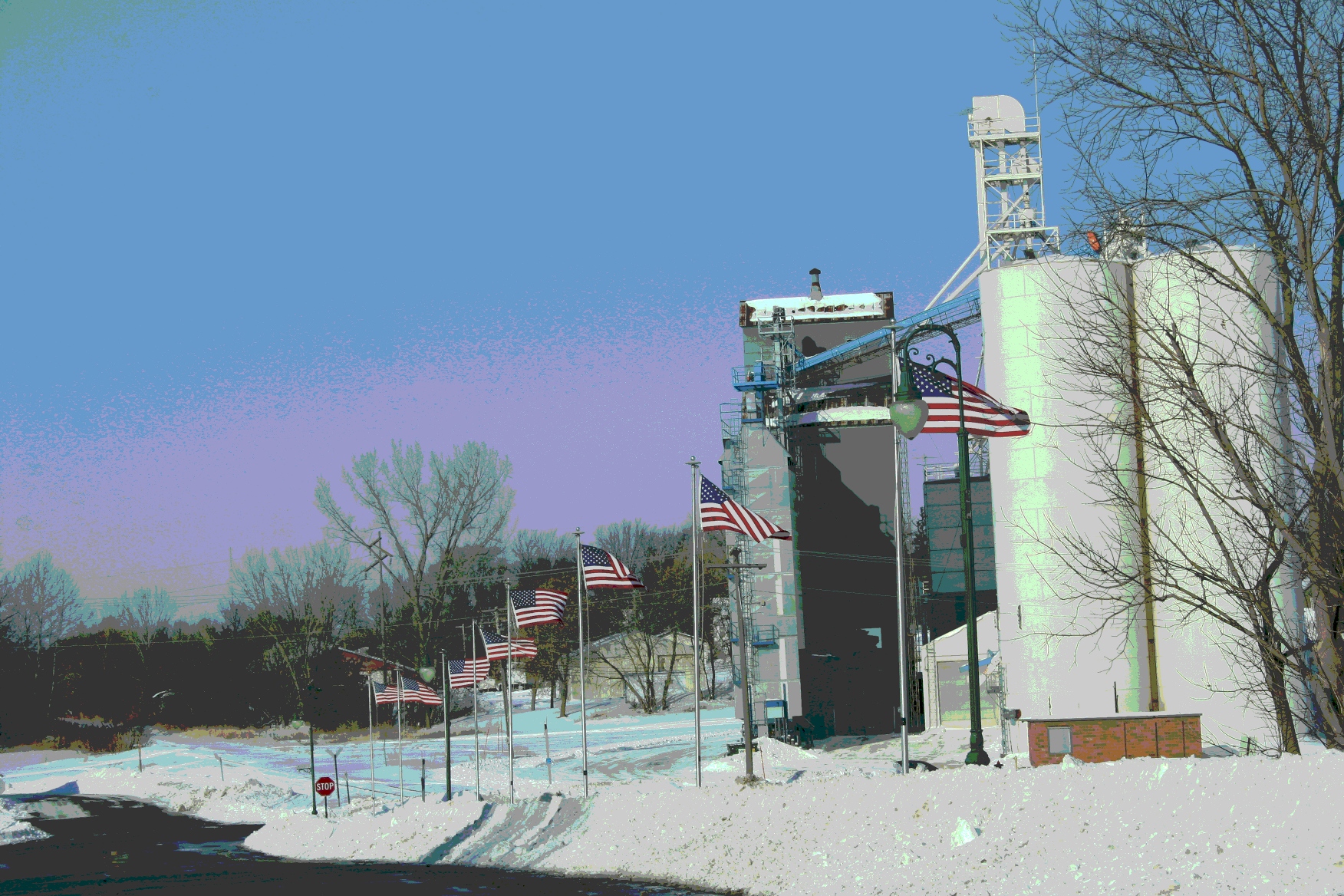
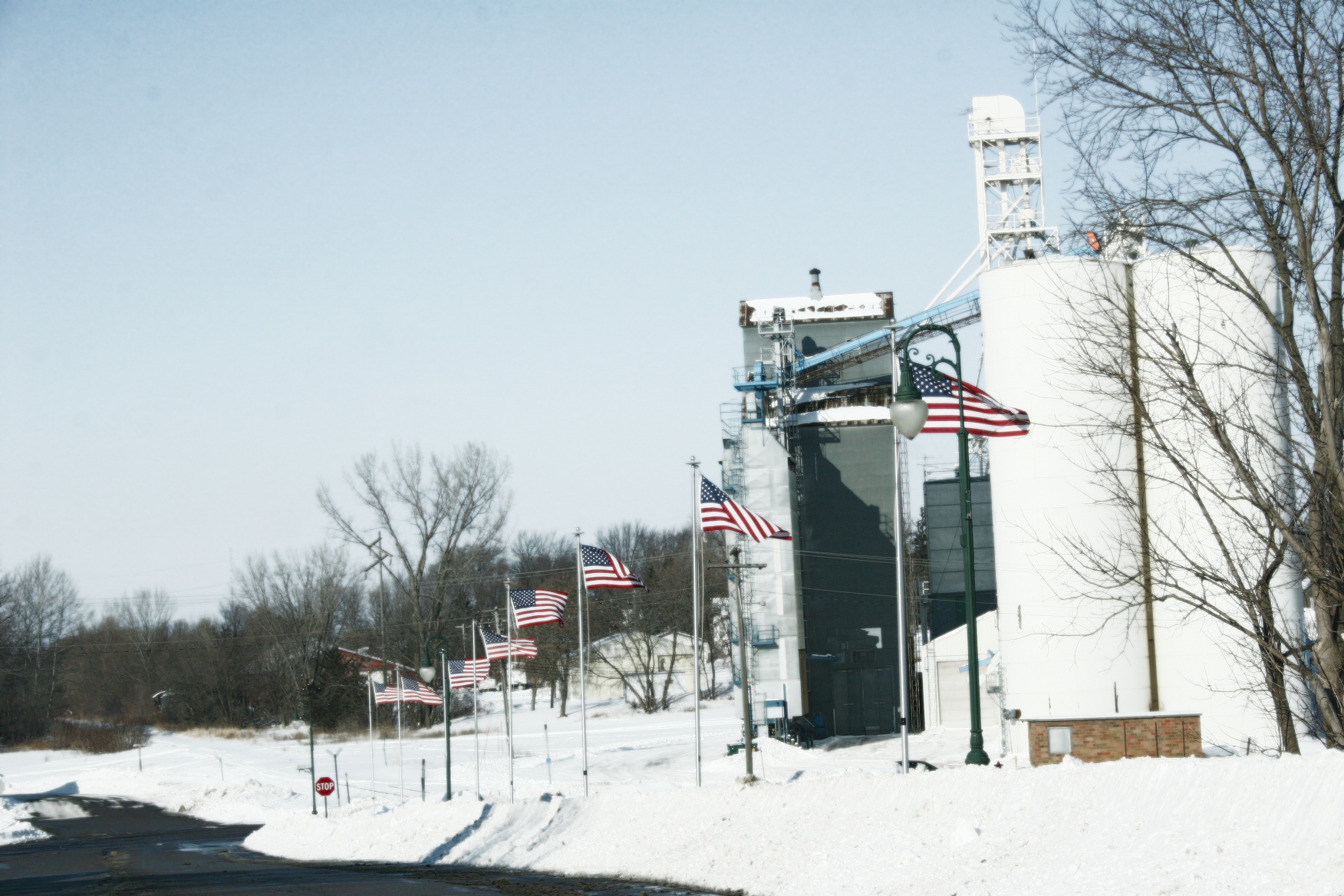
American pride along First Street, Montgomery, Minnesota.

American pride along First Street, Montgomery, Minnesota.

EVERY MORNING as an elementary school student in rural Minnesota, I joined my classmates in facing the corner of the classrooom to gaze upon the American flag. Hands across hearts, we recited the pledge:

I pledge allegiance to the flag
of the United State of America
and to the Republic for which it stands,
one nation under God, indivisible,
with Liberty and Justice for all.

The same photo, edited.

The same photo, edited.

Those words imprinted upon my memory, instilled a sense of pride in my country and a realization that I live in a nation blessed.

And edited again...

And edited again…

Precious words. Somewhat muddied now. But still, ever so dear.

© Copyright 2014 Audrey Kletscher Helbling
 

Kids helping kids celebrate on the prairie & more January 29, 2014

A CANDLE-TOPPED CAKE and a small toy may not seem like much to celebrate a birthday.

But to a child in need, both mean a great deal.

The birthday cake booklet from my childhood that Bernie found on eBay.

The booklet from which my siblings and I chose our birthday cake designs.

I understand. Growing up in a poor farm family on the southwestern Minnesota prairie, I did not receive gifts from my parents on my birthday. They had no money for such extras. Rather, my mom pulled out her 1959 General Foods Corporation’s Baker’s Coconut Animal Cut-Up Cake booklet so I could choose a design for my birthday cake.

My second birthday and the clown cake my mom made for me.

Me with the clown cake my mom made for my second birthday.

With those birthday memories on my mind, I was pleased to read Tuesday of a community service project undertaken by the Class of 2019 at Westbrook-Walnut Grove Public Schools, 45 minutes to the south of my hometown of Vesta.

Students are assembling birthday bags for Mary and Martha’s Pantry, a Westbrook-based food shelf, according to information in the January 28 issue of the Westbrook/Walnut Grove Charger Report on the school website.

IRRESISTIBLE CHOCOLATE CRAZY CAKE!

Birthday gift bags will include cake mixes. Minnesota Prairie Roots file photo.

The gift bags will include a cake mix, frosting, candles, a Happy Birthday banner and a small toy. How sweet is that? I love to learn about kids doing good.

#

SOME 170 MILES to the north and east in the Twin Cities metro, Eagan-based Cheerful Givers has provided birthday gift bags to 700,000-plus children during the past 20 years.

The non-profit’s mission is to “provide toy-filled gift bags to food shelves and shelters so that parents living in poverty can give their child a birthday gift. We believe this simple gesture boosts self-esteem, enhances self-worth, and strengthens bonds in families.”

And might I add, these bags filled with 10 items like books, plush toys, puzzles, stickers and more, simply make a child happy.

Two months from today, on Saturday, March 29, Cheerful Givers is celebrating its 20th birthday with “The Great Minnesota Birthday Party” in the Sear’s Court at the Mall of America. The goal of the 1 – 3 p.m. event is to raise $20,0000 and “to spread awareness of the need for all kids to be recognized with a gift on their birthday.”

#

Back on the prairie, far from the big city, teens at Westbrook-Walnut Grove Public Schools aren’t planning a fundraiser for the Mary and Martha’s Pantry birthday bags. Rather, they are dipping in to their own funds (or those of their parents and others) to purchase gift bag items. And in the process, they are learning, in my opinion, that “It is more blessed to give than to receive.”

#

FYI: To learn more about the W-WG school project, click here and see #13 in the Charger report.

To learn more about Eagan-based Cheerful Givers, click here.

© Copyright 2014 Audrey Kletscher Helbling
 

Is it true about “no flannel” in Boston? January 22, 2014

UNTIL MY SON PREPARED for a flight to Boston last spring to visit three colleges, I’d never heard of Tufts University.

My son in a Tufts University sweatshirt. Edited Minnesota Prairie Roots photo.

My son in a Tufts University sweatshirt. Edited Minnesota Prairie Roots photo.

He had to spell out the name for me, T-U-F-T-S.

That was my introduction to the private research university he now attends after transferring from North Dakota State University. The move to Tufts’ Medford, Massachusetts, campus was the right one for him. He’s challenged in his studies and happy living in a metro area far from the wind-whipped plains of Fargo. I don’t necessarily think he would be where he is today, though, without that year at NDSU.

But back to Tufts, which has a current student population of nearly 11,000 with 5,255 of them undergrads.

Last Thursday I was watching NBC’s Parenthood. The TV show focuses on the lives of the Braverman family, including college student Drew. Drew’s girlfriend, Amy, is currently staying with him in his Berkeley dorm room. I missed the season 4 finale in which Amy revealed she’d gotten into Tufts.

In Thursday’s episode, Amy shared that the girls at Tufts are snobby and everyone is smart and she simply cannot return there because she doesn’t fit in.

Awhile ago, I asked my son if he ever felt out of place at Tufts. I mean, this is a college where lamb is served in the dining center and there’s a sailing team. Not exactly a part of his lower middle class upbringing.

A man of few words, he said that depends on who he is with and that even then he doesn’t let his lack of family wealth bother him. Unlike Amy on Parenthood, I’ve never heard him call anyone at Tufts “snobby.”

Financial aid at Tufts is based on need, the sole reason my son can afford to attend this distinguished university. Annual attendance cost far surpasses our yearly family income. Tufts has set a goal of “ensuring that no highly qualified applicants are turned away because their need exceeds the university’s resources,” according to information on the Giving to Tufts portion of the university’s website. Our family is grateful to Tufts for embracing that philosophy of admitting students “not based on ability to pay, but on ability, pure and simple.”

That all said, when the son was home in Minnesota for holiday break, we went clothes shopping. I swear he grew an inch or more in the three months since I’d seen him.

About one thing he was adamant: “They don’t wear flannel shirts in Boston.” This from a 19-year-old who, only after entering college, began caring about attire. Not to say he dressed poorly. But fashion simply never mattered much to him.

Now he’s back at Tufts with these new clothes: four sweaters, three pairs of jeans, grey pants, and a winter scarf (in Tufts colors).

Legendary Paul Bunyan and Babe the Blue Ox in Bemidji, Minnesota. Minnesota Prairie Roots edited file photo.

Legendary Paul Bunyan (dressed in his flannel lumberjack shirt) and Babe the Blue Ox in Bemidji, Minnesota. Minnesota Prairie Roots edited file photo.

Surprisingly, though, he took his flannel back to Boston, too. He likely can wear the shirts, unnoticed, under his new sweaters.

Had he left his flannel shirts behind in Minnesota, I would have swiped them. I take no shame in dressing like Paul Bunyan.

FYI: Click here to reach Tufts’ Facebook page and the latest on the university’s mention in the Doonesbury comic strip.

Click here to reach Wikipedia’s “Tufts University in popular culture.”

© Copyright 2014 Audrey Kletscher Helbling

 

Exploring art inside the Weitz Center for Creativity at Carleton College December 5, 2013

MY EXPOSURE TO PROFESSIONAL ART as a youth could be categorized as minimal. There were no visits to art galleries, no attending theatrical performances, no concerts outside of school walls.

Yet, I did not feel deprived, for art surrounded me in blazing prairie sunsets, an inky sky dotted with an infinity of stars, road ditches graced with wild roses, tall grass bending in the wind, the symphony of a howling blizzard, the crunch of boots on hard-packed snow, the orchestra of pulsating milking machines and munching cows and the radio voices of ‘CCO.

To this day, I credit my rural southwestern Minnesota upbringing for shaping me as a writer and photographer. There, on the stark prairie, within the confines of a close and loving family living off the land, I learned to appreciate the details in the landscape and life itself.

Today, I no longer live on my beloved prairie. And I have immediate access to the arts within my own community of Faribault and nearby. You won’t find me, except on rare occasions, aiming for the Twin Cities to view art. I am not a city girl.

The Weitz Center for Creativity at Third and College Streets in Northfield, Minnesota.

The Weitz Center for Creativity at Third and College Streets in Northfield, Minnesota.

In late October, I discovered Weitz Center for Creativity, “a center for creativity and collaboration in the liberal arts,” on the campus of Carleton College in neighboring Northfield. The center is housed in the historic former and repurposed Northfield high school and middle school and in 30,000 additional square feet of new construction.

Near the entrance to the Weitz Center Commons area.

Near the entrance to the Weitz Center Commons area. (Photographed in October.)

The complex offers such creative spaces as a theater, dance studios, a technology resource center (the Gage/Bauer IdeaLab), a teaching museum, galleries and more.

From Jessica Rath's "take me to the apple breeder" exhibit, a porcelain apple and an apple tree photograph.

From Jessica Rath’s “take me to the apple breeder” exhibit, a porcelain apple and an apple tree photograph.

The Perlman Teaching Museum and galleries there drew me to view “Single Species Translations,” which included Jessica Rath’s “take me to the apple breeder” and Laura Cooper’s “Opuntia,” and “The Intersection Between Book, Film, and Visual Narrative.” The exhibits have since closed. But “Lifeloggers: Chronicling the Everyday,” opens January 17 and runs through March 12, 2014. The exhibit will feature the works of a dozen artists.

And here’s the really sweet deal. Admission to the Perlman Teaching Museum (and galleries) is free. Hours are 11 a.m. – 6 p.m. Monday – Wednesday, 11 a.m. – 9 p.m. Thursday and Friday, and noon to 4 p.m. Saturday and Sunday. Note that the museum is open only during Carleton’s academic term, although closed during breaks and during the summer.

Connecting indoors and out in a section of the Commons.

Connecting indoors and out in a section of the Commons.

My first impression of the Weitz Center for Creativity was one of visual appreciation for the modern, clean lines and minimalistic setting. I love the walls of windows, the pots of pines and palms and other plants interspersed among clusters of tables and chairs in a space that visually connects to the outdoors.

Cozy spots for conversation in the Commons.

Cozy spots for conversation in the Commons.

I appreciate, too, the cozy settings of living room furniture that invite conversation and create a sense of intimacy in the spacious, open Commons area.

A snippet of Jessica Rath's exhibit shows porcelain apple sculptures and photos of apple trees in the Braucher Gallery.

A snippet of Jessica Rath’s exhibit shows porcelain apple sculptures and photos of apple trees in the Braucher Gallery.

Entering the gallery, I noted the gleaming starkness of the space, an excellent backdrop to showcase exhibits. I know this is the gallery norm. But, since I did not grow up visiting galleries, I am still struck each time by this visual impact of a clean slate. Light and shadows and mood play upon art here.

A student studies a portion of "The Intersection Between Book, Film, and Visual Narrative" in the Kaemmer Family Gallery.

A student studies a portion of “The Intersection Between Book, Film, and Visual Narrative” in the Kaemmer Family Gallery.

I won’t pretend to understand and enjoy every exhibit I view. We each bring our personalities and experiences and tastes to a gallery and those influence our reactions.

I love the simplicity of the apples positioned on the table in Rath's exhibit and how the shadows angle onto the tabletop.

I love the simplicity of the apples positioned on the table in Rath’s exhibit and how the shadows play upon the tabletop.

More tabletop art, to be picked up and paged through by gallery visitors.

More tabletop art, to be picked up and paged through by gallery visitors.

More print to appreciate.

Additional print and creativity to appreciate.

A wall-size artistic interpretation of Opuntia by Laura Cooper.

A wall-size artistic interpretation of Opuntia by Laura Cooper.

While I could relate to apples and books, I couldn’t connect to the exhibit on Opuntia, a type of cactus. Cacti, except for a few grown as houseplants, are mostly foreign to me.

This signage greets visitors upon entering the Weitz Center for Creativity.

Just inside the doors of the Weitz Center for Creativity.

Yet, I learned. And that, too, is part of the arts experience.

© Copyright 2013 Audrey Kletscher Helbling
 

Thanksgiving art November 26, 2013

Filed under: Uncategorized — Audrey Kletscher Helbling @ 6:00 AM
Tags: , , , , ,
The turkey's head was flopping down, so I used my left hand to hold the head in place and then snap this photo.

The turkey’s head was flopping down, so I used my left hand to hold the head in place and then snapped this photo of the paper plate turkey listing items for which this student is thankful.

IN THIS TECHNOLOGY DOMINATED WORLD, it’s refreshing to see that kids are still using crayons and colored paper and, yes, even paper plates to create art.

Art adorns walls in the hallways of Faribault Lutheran School.

Art adorns walls in the hallways of Faribault Lutheran School. Here I’m heading to the second floor landing.

On a recent Sunday morning stroll through the hallways of Faribault Lutheran School with camera in hand, I documented this most basic way of making art during my search for Thanksgiving themed subjects.

Simple crayon art.

Simple crayon art.

Call me old-fashioned, but kids need that hands-on experience of pulling crayons from a box, selecting colored paper, cutting shapes with a scissors, sliding a glue stick across paper and more. This is art in its most basic form.


Hand and feet shapes used to make turkeys. And, bonus, students listed things for which they are thankful.

Hand and foot shapes used to make turkeys. And, bonus, students listed things for which they are thankful.

Who among us doesn’t remember tracing around our hands with a pencil or selecting a sharp-tipped crayon or those first efforts at manipulating a scissors?

Students' versions of pilgrims.

Students’ versions of pilgrims.

This Thanksgiving, remember to unplug and to celebrate the simple joys in life like creating art with paper, crayons, scissors and glue.

#

BONUS PHOTOS from the hallways of Faribault Lutheran School:

Here, here are the turkeys.

Here, here are the turkeys and some mighty creative ones.

I have no idea what a turkey gram may be.

I have no idea what a turkey-gram may be.

Students' versions of Native Americans.

Students’ versions of Native Americans.

© Copyright 2013 Audrey Kletscher Helbling