Minnesota Prairie Roots

Writing and photography by Audrey Kletscher Helbling
The Peach Project August 29, 2012

I GREW UP WITH DIRT under my fingernails, banishing weeds from the garden and then, later, harvesting and preparing veggies to eat fresh or preserve.

My mom canned some, froze some, storing away freezer boxes plump with green beans and beets, corn and other vegetables.

She also preserved fruit in quart jars, with the assistance of us kids, for the long Minnesota winter ahead. Applesauce and cherries. Peaches and pears.

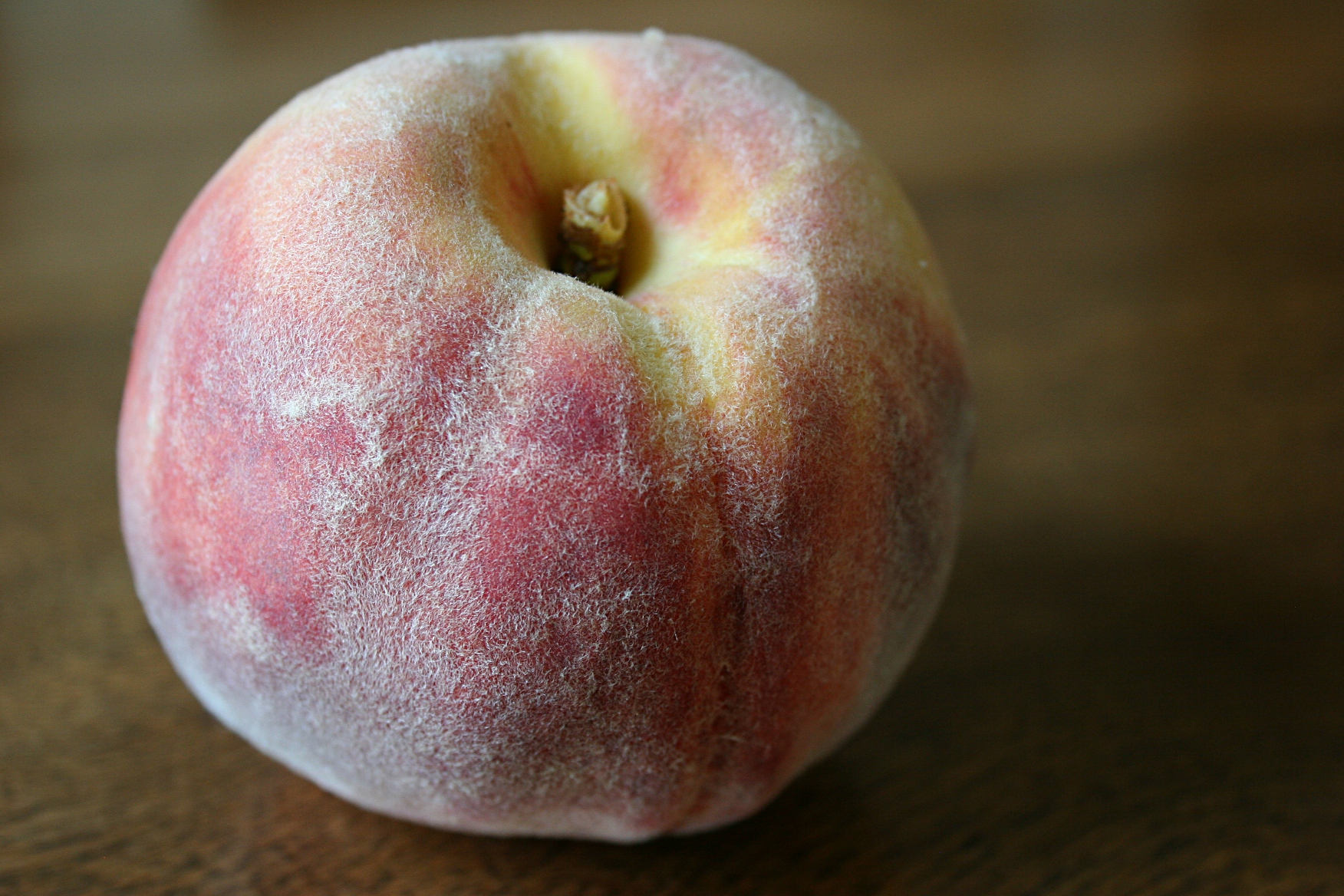
A juicy Colorado peach, from which I must remove the skin because I can’t tolerate the fuzz (feels like a cotton ball) in my mouth.

And then, on a brisk winter evening, when Dad was about to come in for supper after finishing barn chores, she would lift the trap door in the kitchen and send one of us clomping down the creaky, rugged wooden steps to the dirt-floored cellar for a jar of sauce. Dessert. I would tug on the frayed cotton string to switch on the single bare light bulb. Then I would tiptoe reach for a jar of my favorite cherries or peaches.

We got a single box of freshly-picked Colorado peaches. When I was growing up, the peaches came in a wood-slat box that was nailed shut. Each peach was wrapped in tissue paper, which we recycled for use in the outhouse.

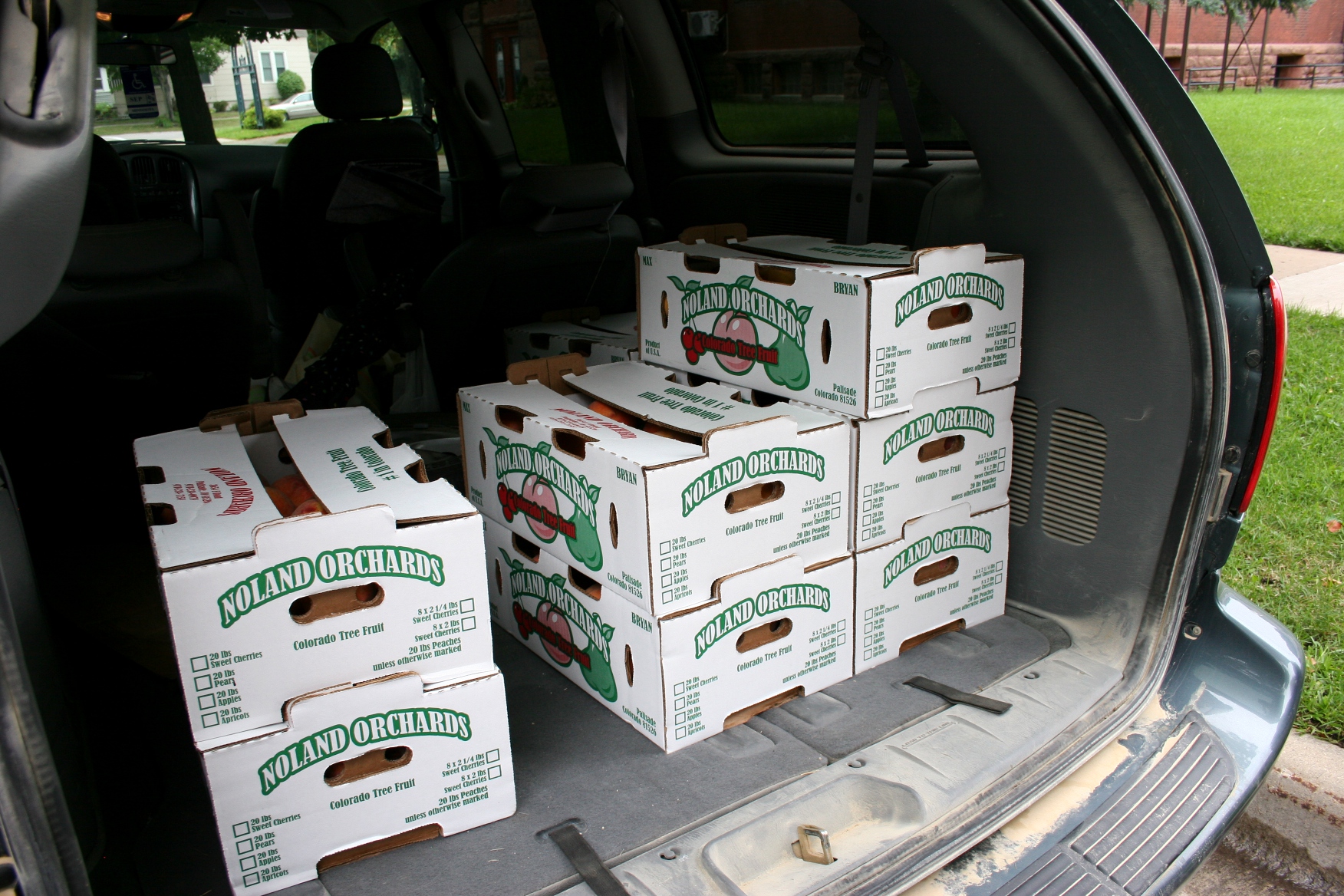
Those were my thoughts on Saturday when my husband and I picked up a 20-pound crate of peaches I’d ordered several weeks ago through the Cathedral Community Cafe, a Faribault soup kitchen which every Tuesday offers a free meal to those in need and/or seeking fellowship.

It is a worthy cause with some 9,000 dinners served in 2011 and averaging 150 a week this year. The effort involves about 140 volunteers, 12 churches and four teams of workers.

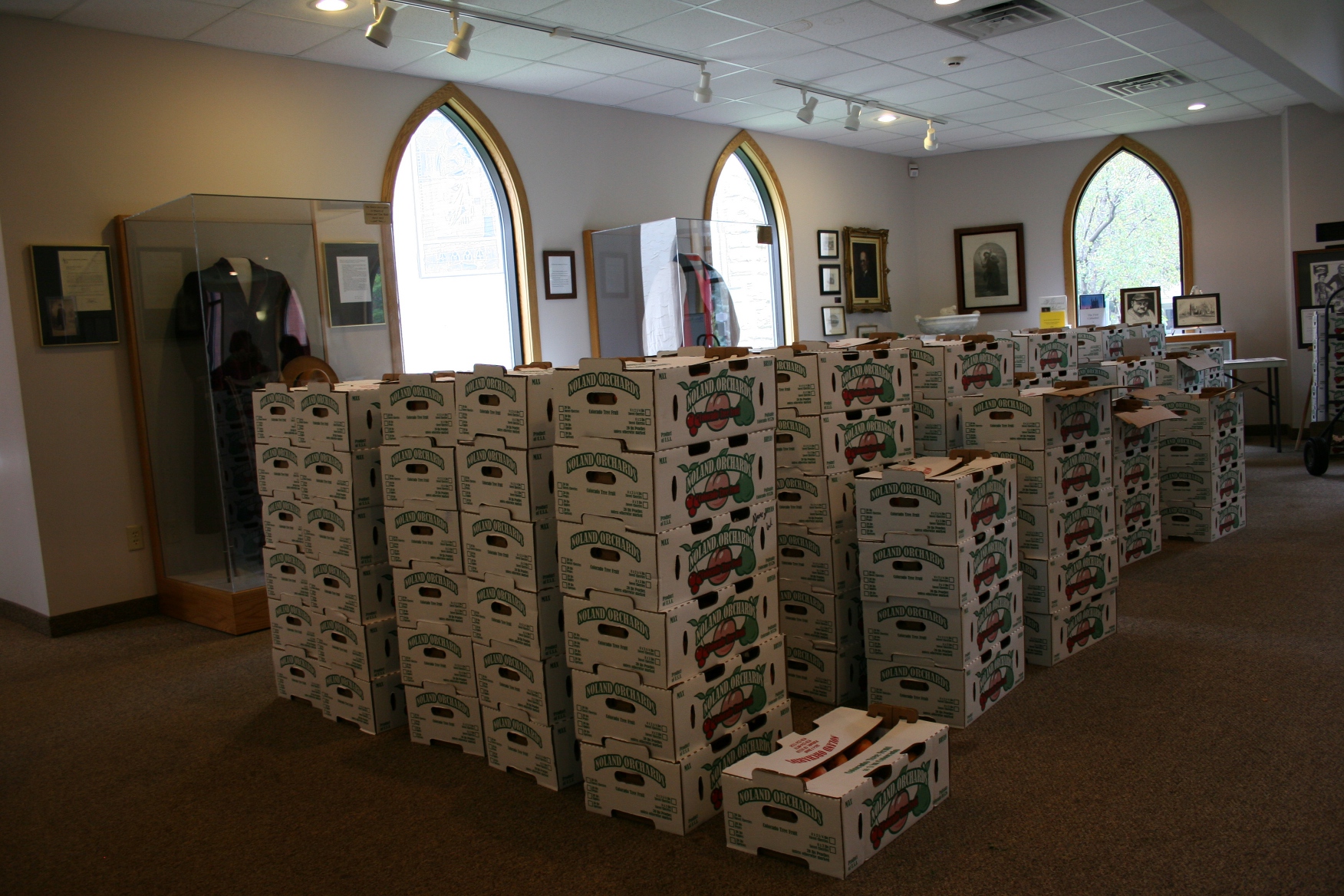
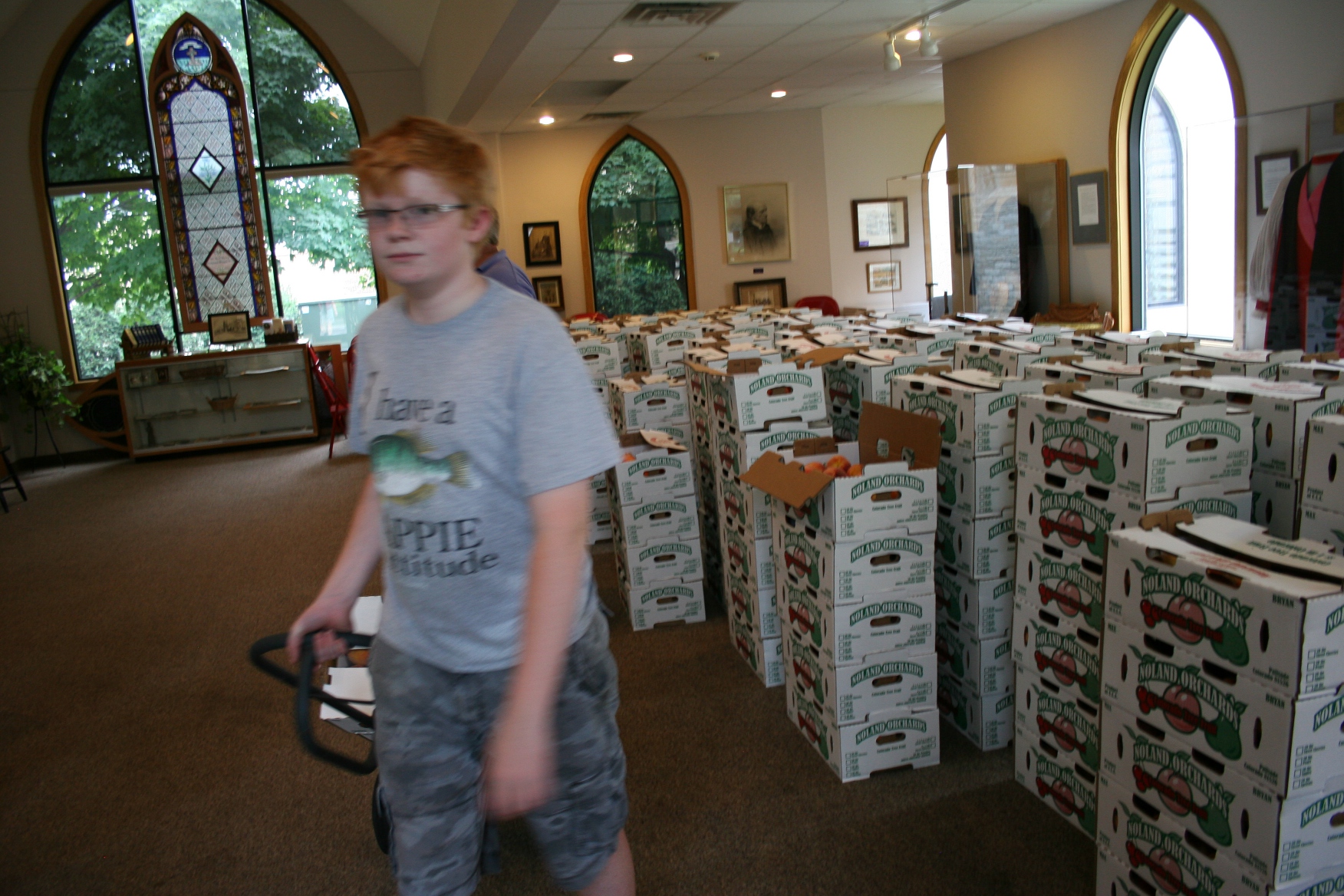
The Community Cathedral Cafe and First English Lutheran youth pre-sold 260 boxes of peaches and ordered an additional 60 to sell to walk-in customers. The peach project has been an ongoing fundraiser for around five years for the cafe and First English youth. About 50 boxes already had been picked up when I photographed this scene.

But like any such organization, the cafe needs money to keep going. The peach project will channel funds into the cafe’s coffers and I’m happy to support the fundraiser by purchasing a $30 crate of fresh Colorado peaches.

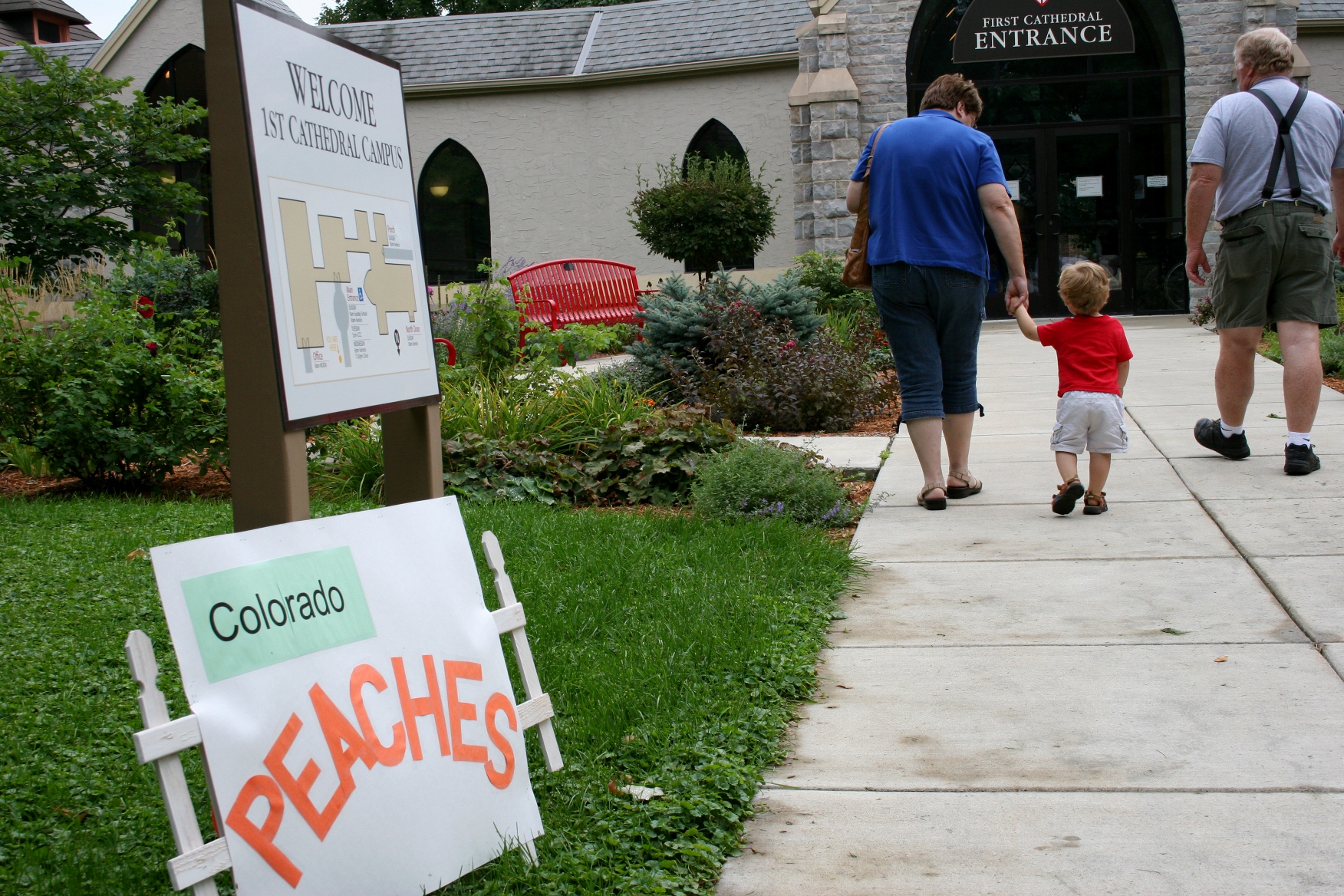
A sign outside the Cathedral Guild House directs customers to the peach pick-up point.

Now, what to do with all those fresh peaches. Thus far I’ve eaten many straight from the box. One evening I blended a peach and vanilla ice cream into a smooth shake. This morning I sliced one into my oatmeal. And I’ve also used thinly-sliced peaches to make a ham and peach panini.

I found the adapted sandwich recipe on Sue Ready’s blog and then tweaked it a bit.

Ham and Peach Panini

2 bread slices

deli ham

1 slice provolone cheese

1 thinly-sliced peach

1/2 teaspoon honey

Djon or spicy brown mustard

chopped fresh basil

Spread mustard and 1/2 teaspoon honey on one bread slice. Top with ham, cheese and thin peach slices. Top with chopped basil. Place other piece of bread on top and brush lightly with olive oil. Also brush other bread slice with oil. Grill in frying pan until golden brown, flip and grill other side.

Love, love, love this sandwich. My husband not so much. But he’s more an ordinary sandwich guy and I really had to persuade him to even take a bite.

Now, I expect when I bake a peach crisp or a peach cheesecake later this week, he won’t hesitate to scoop up a sizable helping.

Tyler Welander, 14, who’s raising monies for youth activities at First English, delivers boxes of peaches to vehicles. I suggested to the peach sellers that perhaps they could bake the pies, too, for me to pick up. But one man said, “Oh, that would be down the street at Trinity.” And he would be right. The Trinity Piemakers are currently selling fresh peach, among other, pies.  And since I attend Trinity, I can vouch for the delicious goodness of Trinity pies.

An elderly couple from Farmington ordered nine crates of peaches, seven of which they will deliver to friends.

WHAT’S YOUR FAVORITE peach recipe and what’s the best way to freeze peaches? I’d like to hear.

Click here to reach the website of the Cathedral of Our Merciful Saviour in Faribault, home to the community cafe.

Also, please click here to read a post which features a poem I wrote about canning and the watercolor Zumbrota artist Connie Ludwig created based on my poem. Oh, how I wish “Pantry Jewels” was hanging on my dining room wall.

Copyright 2012 Audrey Kletscher Helbling
 

Raising funds to preserve priceless paintings in Park Rapids August 27, 2012

BETWEEN NORTHWESTERN MINNESOTA and Chicago, you won’t find another art collection like the Gabor and Edith Nemeth Study Collection dating from the 15th to 19th centuries.

Now that “Old Masters” collection of 42 European paintings owned by the Nemeth Art Center in Park Rapids is in need of a permanent storage unit to preserve the valued art for future generations.

A campaign is currently underway to raise $1,200 for materials to construct a modular custom storage unit that will keep the paintings separated and vertical, thus preventing further damage. As of August 23, the NAC had raised $600 via an online campaign and direct contributions, according to NAC Executive Director Meredith Lynn.

Brian Stieler of the Minneapolis Institute of Arts has volunteered to design and build the storage structure. And representatives of the Midwest Art Conservation Center in Minneapolis have already been to Park Rapids to assess the collection and lay out plans for restoration.

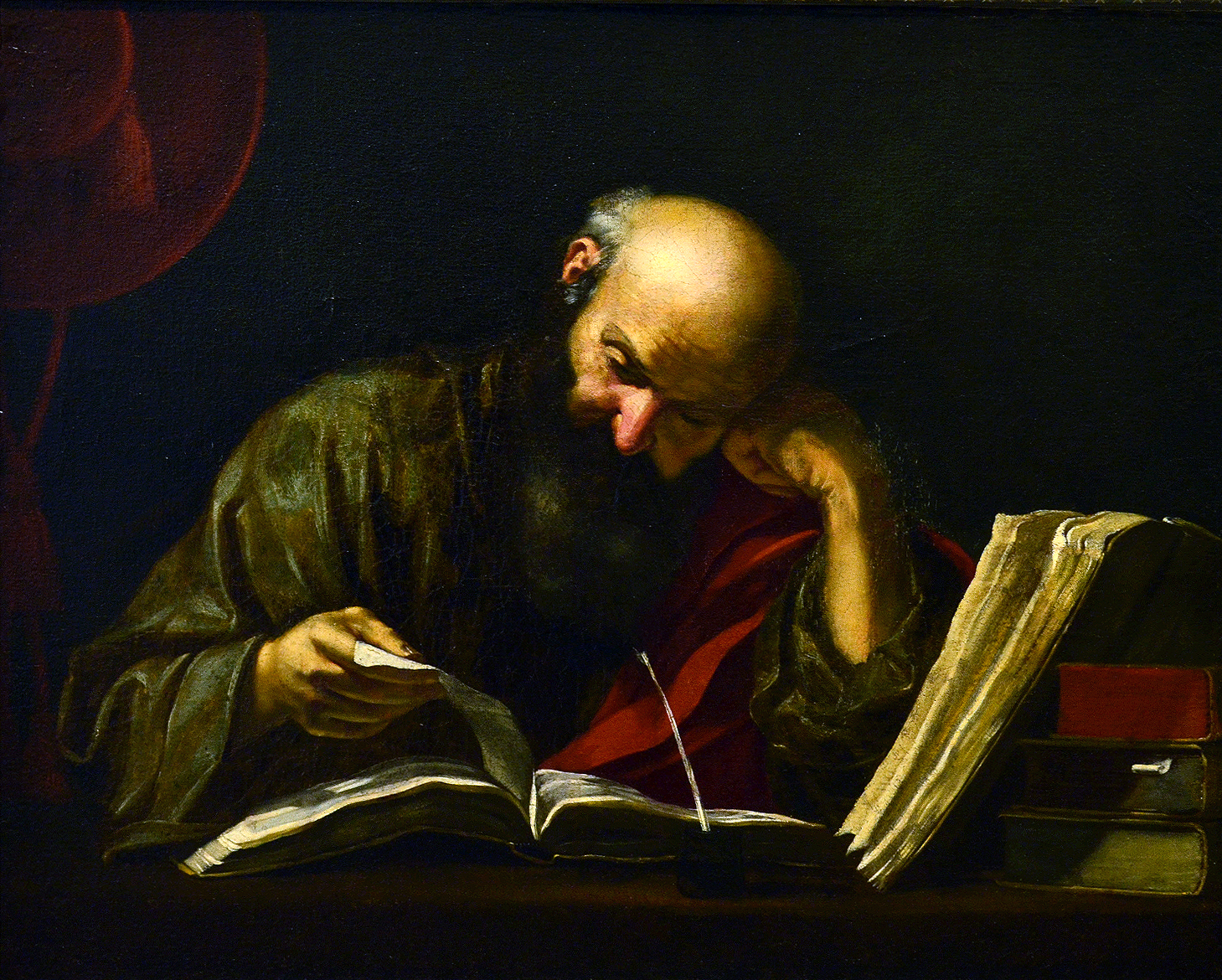
“St. Jerome,” painted by a 17th century follower of Hendrik van Somer, and part of the collection.

About a third of the paintings require restoration, Lynn says, with several in such condition that they can no longer be exhibited. More than 30 of the pieces are continually on display (during the center’s open months from May – September) in the 1900 Victorian style brick courthouse turned art center which opened in 1977.

That was the year the historic and priceless collection of paintings, by students who studied well-known masters like Rembrandt, Rubens and Bosch, came to be owned by the then newly-established North Country Museum of Arts.

European born art restorer and dealer Gabor Nemeth, who came to the U.S. in the 1940s and worked thereafter primarily in Los Angeles, also maintained a home in the Park Rapids area (his primary residence now) and brought his collection to Minnesota in the mid 1970s.

After a three-day January 1977 exhibit of his collection in Park Rapids—a show which drew long lines of some 4,000 people total in the then town of 2,700, according to newspaper reports—Nemeth decided to offer the art to Park Rapids. Conjecture had long been that St. John’s University would be the recipient of the collection (for a reason unknown to Lynn; I asked).

In an article published in the May 2, 1977, issue of the Bemidji-based newspaper, The Pioneer, Nemeth is quoted: “There is really nothing up here as far as art goes. People will appreciate it (the collection) if they are given the chance to see it.”

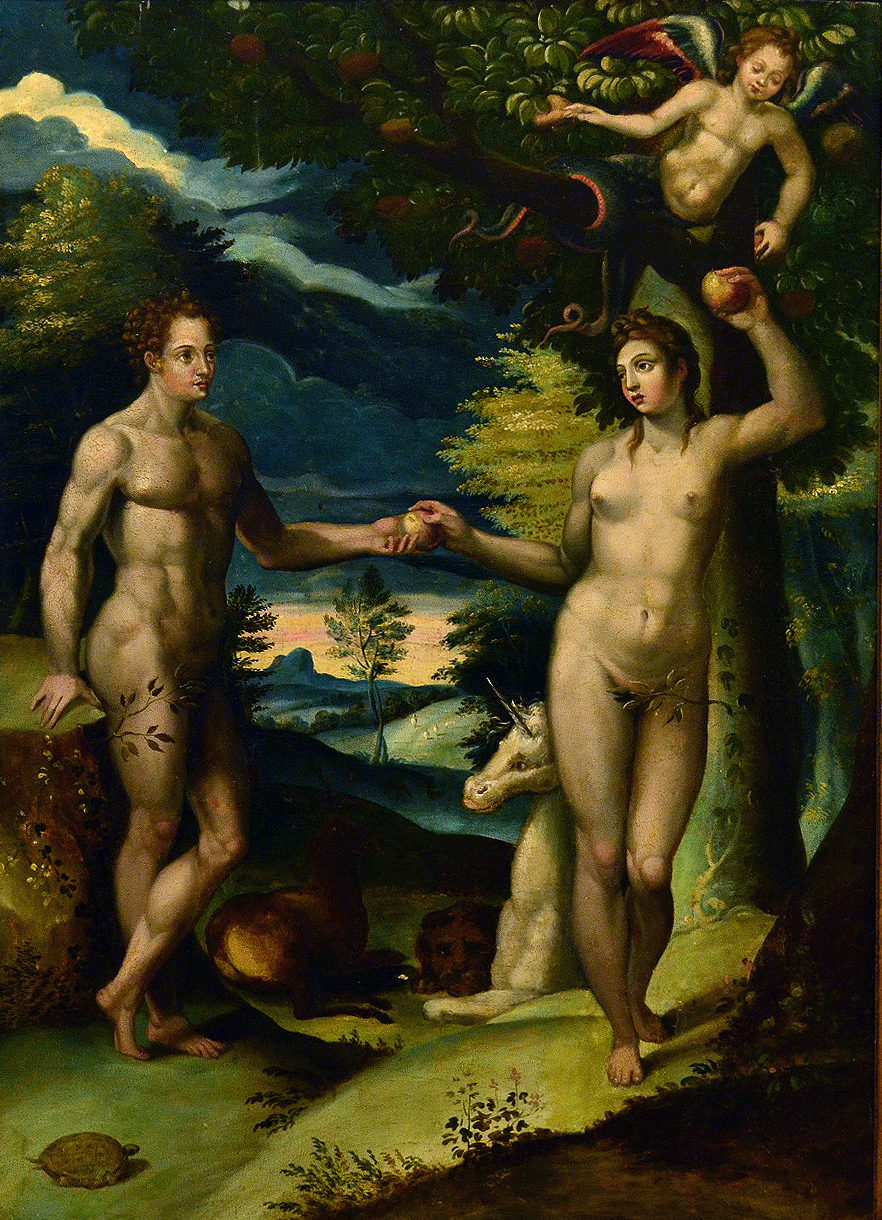
“Adam and Eve,” a 17th century painting by a student of Cornelisz.

Clearly the people of Park Rapids realized the significance of Nemeth’s offer as 30 families borrowed $35,000 to purchase the paintings, a price “significantly less than the appraised value,” Lynn notes.

She won’t put a value on the paintings today other than to assess it’s “quite high.” Beyond the monetary value, the art center director calls the collection “historic and unique paintings with priceless cultural value.”

Speculation has existed that perhaps the masters themselves may have dipped their brushes into oil or tempera to work on paintings in the collection. The art center lays no official claim to that suggestion, although Lynn says, “…it’s possible that painters such as Rembrandt painted on several of the canvases that we own.”

The identities of whose who painted the pieces as part of a greater studio study setting are primarily lost to history, according to Lynn.

Many of the paintings were originally acquired for Lois Warschaw, an art collector and prominent political figure in Los Angeles, prior to ownership by Gabor Nemeth and his wife, Edith.

Today, as it always has, the Gabor and Edith Nemeth Study Collection centers the Nemeth Art Center, which opened in August 1977 after the Park Rapids community pulled together to purchase the paintings and remodel the courthouse into a center for the arts.

Says Lynn:

New visitors to the Nemeth Art Center are always pleasantly surprised by the beauty and historical relevance of our paintings. Park Rapids is a small town, but the arts community here is growing and hopefully our collection will help raise awareness of the town as an arts destination.

That’s exactly what Gabor Nemeth hoped for 35 years ago—that his collection of Old Masters paintings would draw tourists to this community in northwestern Minnesota. And it does. The collection includes works of biblical scenes like “Madonna and Child,” “Madonna of the Harpies,” “The Holy Family,” “Christ in the Garden of Gethsemane,” “Christ in the Wilderness,” and several genre paintings such as “Kitchen Scene” and “The Card Players.”

Today efforts also focus on preserving the collection via construction of the custom storage unit. With $600 more in contributions (as of August 23), the project can proceed.

But the art center’s goals go well beyond a storage fix. Options are under consideration to move into a handicapped accessible building with more consistent climate control. The center is also working on a seven-year plan to restore the study collection paintings.

Executive director Lynn summarizes the situation and needs:

The Nemeth Art Center is a unique institution, and this collection forms its backbone. Maintaining historic items is important and costly, and the NAC cannot provide the community with something so special without continued help.

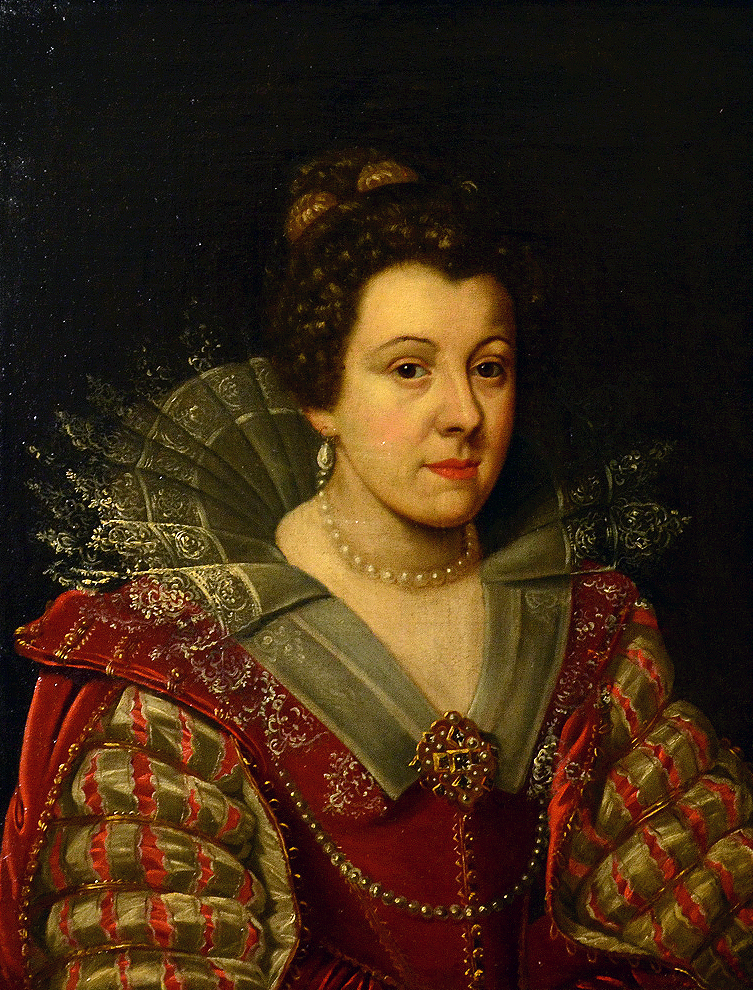
“Portrait of a Noblewoman,” an 18th century painting by a follower of Rubens.

IF YOU’D LIKE to contribute to the storage unit fundraising effort, click here to reach the NAC storage unit project campaign on indiegogo.

Or visit the NAC website, by clicking here, for details and contact information.

To read a detailed history on The Gabor and Edith Nemeth Study Collection, click here to a presentation prepared by Steven R. Peterson with grant funding from the Region 2 Arts Council. Thanks to LouAnn Muhm, chairperson of the NAC Board of Directors, for directing me to this presentation, the source for some of the information cited in this post.

Special thanks to NAC Executive Director Meredith Lynn for answering my lengthy list of questions via email.

If you wish to view the Gabor and Edith Nemeth Study Collection, art center hours are from 10:30 a.m. – 4:30 p.m. Tuesday, Thursday and Saturday, May – September. Each month the NAC also features a curated exhibit of contemporary art in addition to pieces from its permanent collection.

Finally, check out the current “Rembrandt in America” exhibit now showing at the Minneapolis Institute of Arts by clicking here. Perhaps viewing that will inspire you to support efforts to preserve the priceless paintings in Park Rapids.

Images of paintings are courtesy of the Nemeth Art Center


The patriotic pride of Harley riders August 16, 2012

Bikers and others gather for a post hospice ride party at Faribault Harley-Davidson.

LONG GONE, at least in my mind, is the image of Harley riders as rough outlaw types roaring along our roadways, storming into towns, raising hell.

When they travel in a pack now, it’s usually for a purpose, like last Saturday’s fifth annual ride to benefit the Faribault Area Hospice.

While my husband and I missed the ride (he doesn’t have a Harley anymore, his 1977 Sportster being totaled more than a decade ago by a teen who ran a stop sign, plowed into the bike and sent Randy to the hospital), that didn’t keep us from checking out the post ride activities and bikes at Faribault Harley-Davidson.

I’ll be the first to admit that attending a biking event isn’t exactly on the top of my to-do list. But sometimes wives go along for the ride, just like husbands accompany their wives to artsy happenings that they’d probably rather skip.

As always, I carried my camera with hopes that maybe, just maybe, I’d find something worth photographing beyond the rows of bikes I knew Randy would be eying.

The Harley dress code: black leather.

Well, it wasn’t the masses of Harleys which caught my attention, but the details on individual bikes. I hope I didn’t make any of the Harley riders, who can appear intimidating in their black leather, nervous. I threaded my way among the parked bikes, bending, crouching, occasionally setting my camera onto the freshly seal-coated asphalt as I snapped photos.

The unique skull kickstand. Any significance to this skull, readers?

And as I wandered, a picture began to develop of the men and women who ride Harleys, or at least those in attendance at The Ride for Hospice party in Faribault. Except for the skulls on one bike and the boney foot kickstand on another, I found nothing particularly unusual.

The flag on the left honors SPC Mathew Kahler, killed in Afghanistan in 2008.

Rather, I discovered a common theme of patriotism among bikers who have served their country and/or want to honor those serving. It was heart-warming and uplifting to see such support.

One of two blessing stickers I noticed on bikes.

Equally pleasing were stickers I spotted on two bikes indicating they had been blessed. I expect blessings were flowing all around on Saturday as these bikers opened their wallets and their hearts to help hospice, an organization which, at some point, touches nearly all of our lives.

Another patriotically adorned bike and a Vietnam veteran’s jacket along with Ernie from Sesame Street.

Proud to be an American and driving an American made Harley-Davidson.

Patriotic patches seem a popular adornment on Harley attire.

These boots, sitting next to a bike, reminded me of the phrase “boots on the ground” when soldiers hit the ground running.

The yellow flag represents the Minnesota Patriot Guard.

Patriotism displayed, right down to the license plate on this bike.

© Copyright 2012 Audrey Kletscher Helbling
 

An evening at the Soup-er Bowl, Minnesota style March 12, 2012

Filed under: Uncategorized — Audrey Kletscher Helbling @ 6:58 AM
Tags: , , , , , ,

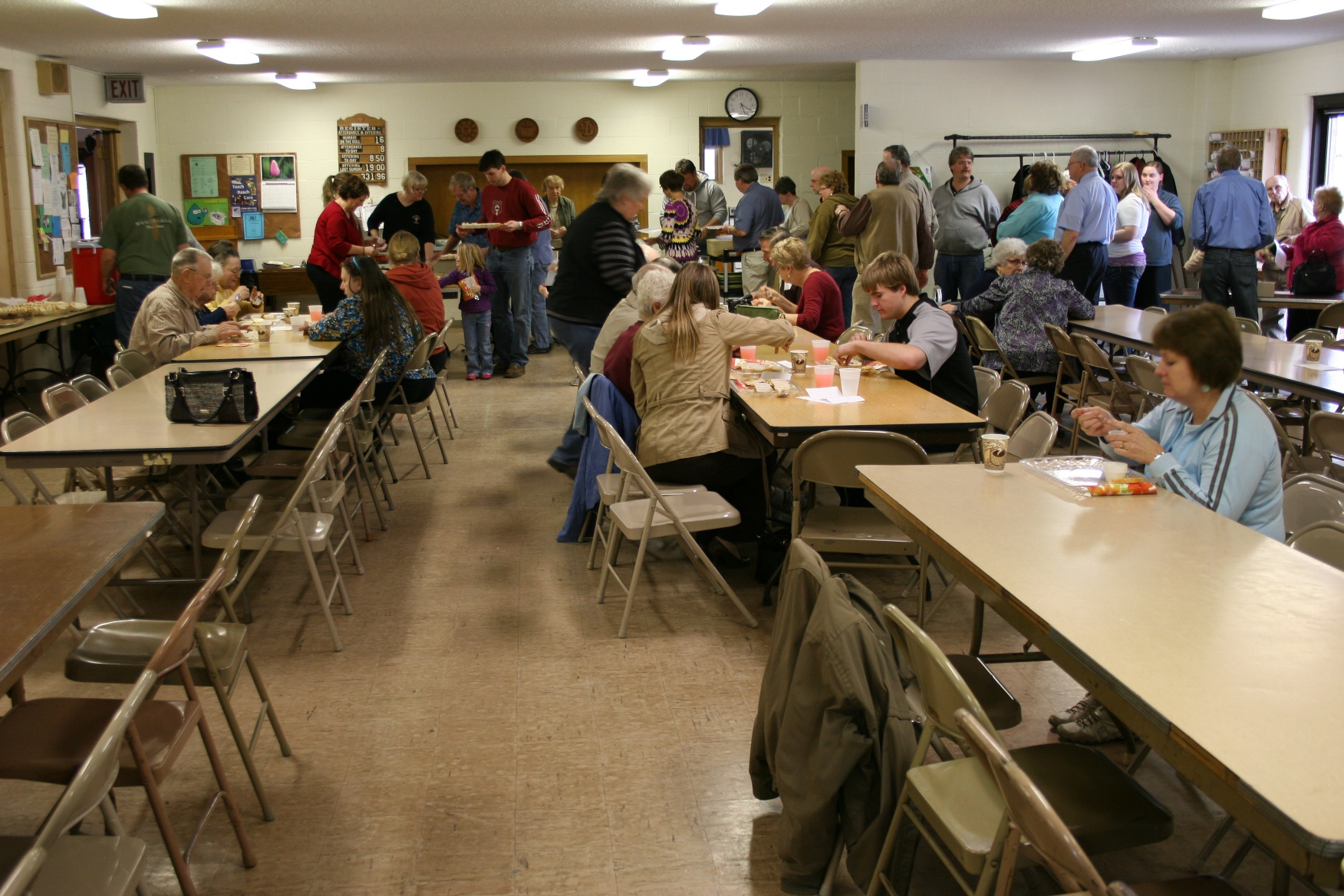
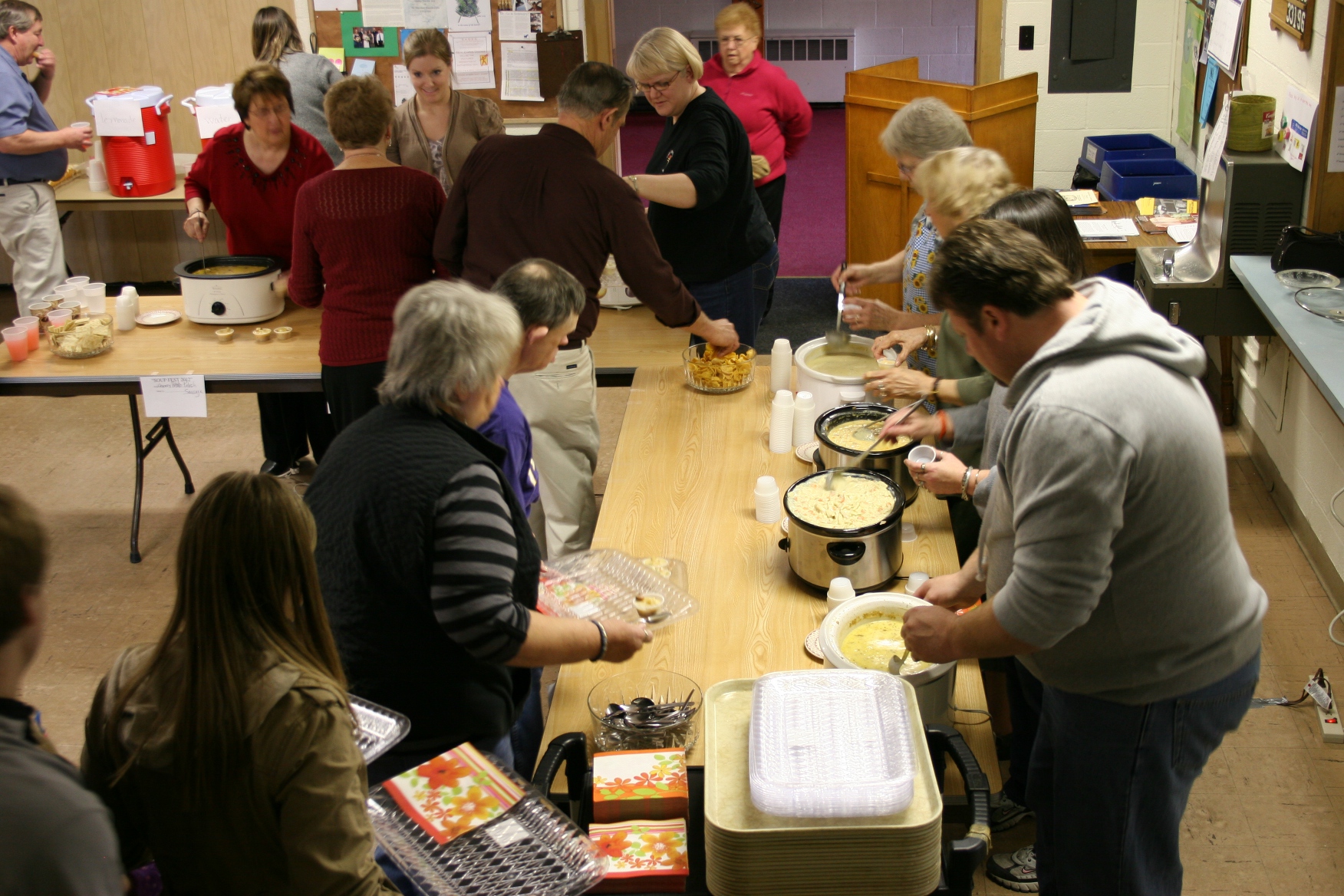
Diners lined up for samples of homemade soup in the fellowship hall of Bethlehem Lutheran Church, Morristown, Sunday evening for the Cannon Valley Lutheran High School Soup-er Bowl.

“IT’S SAUSAGE, SHARON, not hot dogs.”

And so the debate waged at our table Sunday evening during the second annual Cannon Valley Lutheran High School Soup-er Bowl—Sharon, remembering how her mother stretched meals with hots dogs; others at our table laughing and telling her she was wrong about the hots dogs in the soup.

After the soup at the center of our conversation placed second in the competition, I sought out the soup maker, Bonnie Borchert, who had her hands immersed deep in soapy dishwater in the kitchen of Bethlehem Lutheran Church, Morristown.

“What gave your soup that smokey flavor?” I asked Bonnie after praising her soup and congratulating her. In an agonizing decision, hers got my vote as the best soup.

“Three pounds of Polish sausage.”

There you go, Sharon. Polish sausage. Not hot dogs. No tangy vinegar either, as you suggested.

And so Bonnie took second with her Cheesy Potato Polish Sausage Soup, vying against six other soup makers.

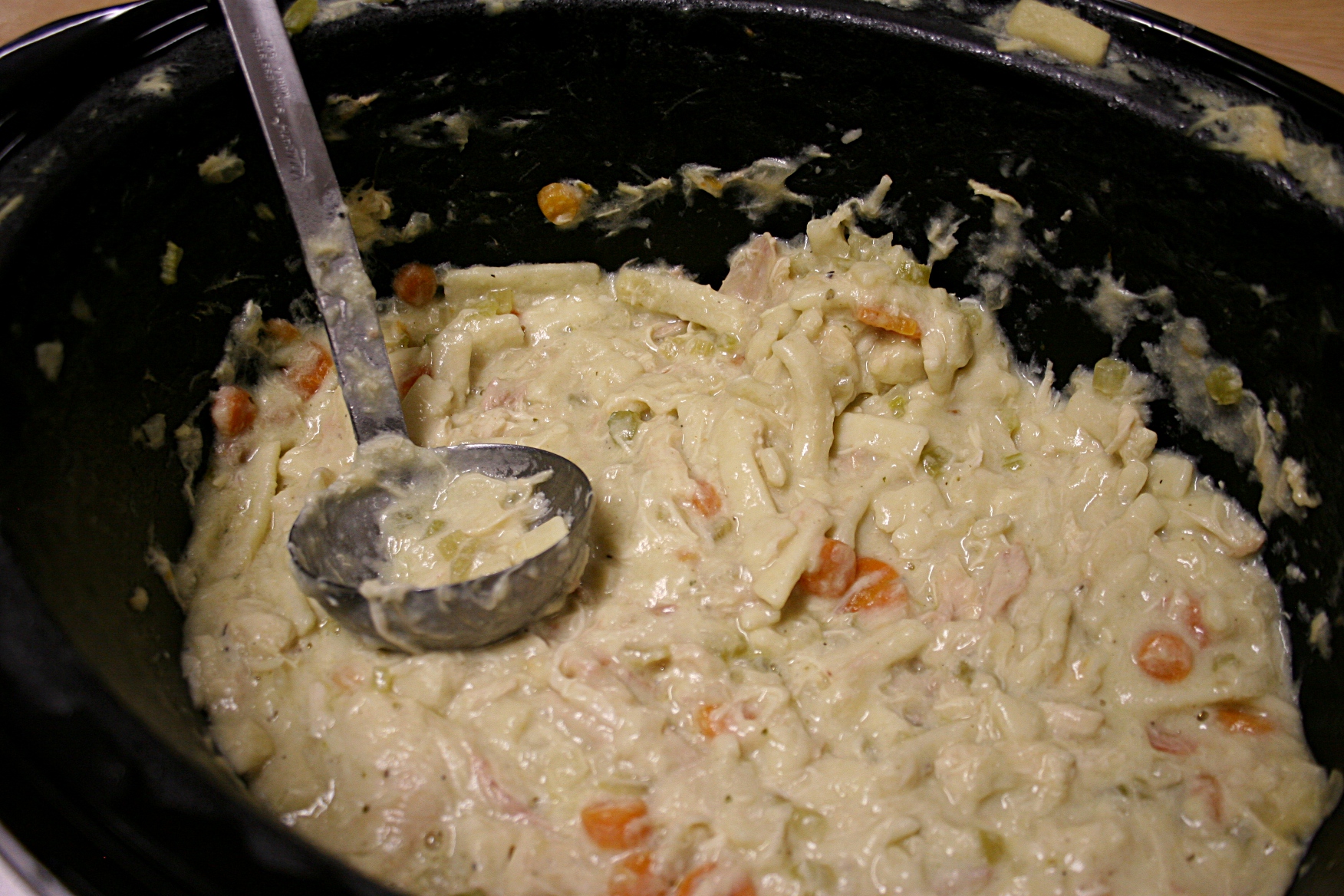
Winner of the 2012 CVLHS Soup-er Bowl: Creamy Chicken Noodle Soup made by Steve LaMotte, representing Trinity Lutheran Church, Faribault.

Repeat contestant Steve LaMotte won the Soup-er Bowl with his Creamy Chicken Noodle Soup, the same soup which last year earned him a second place. Laced with homemade noodles and hefty chunks of chicken and vegetables, Steve’s savory and creamy soup could have passed as hotdish. It was that thick. He promises to return next year, but with a different soup.

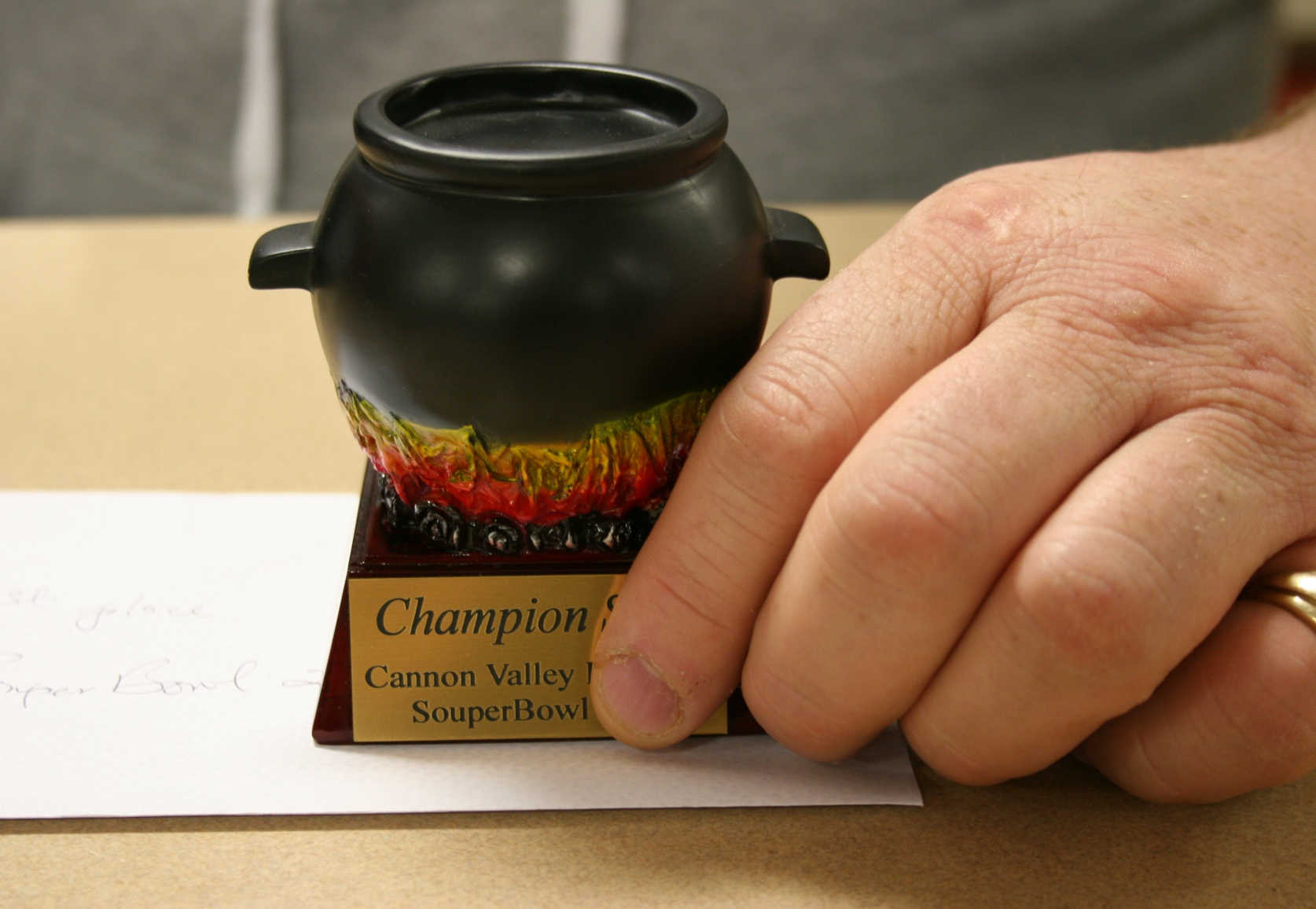
The coveted trophy awarded to Steve LaMotte.

While the soups were the draw for those who love soup, like me, the Soup-er Bowl also serves as a fundraiser for CVLHS and as a social gathering. The din of conversation reached a deafening roar in the fellowship hall as diners filed in and settled in to sample the soups.

Good food. Lively conversation. Laughter.

What more could you want in small-town Minnesota on a Sunday evening?

Soup makers, including Steve LaMotte, right, served the soups to diners. The soup makers did not scoop up the soups they prepared. That was done intentionally to preserve the integrity of the voting process. One diner (aka my sister Lanae) voted for two soups. I considered hers a spoiled ballot.

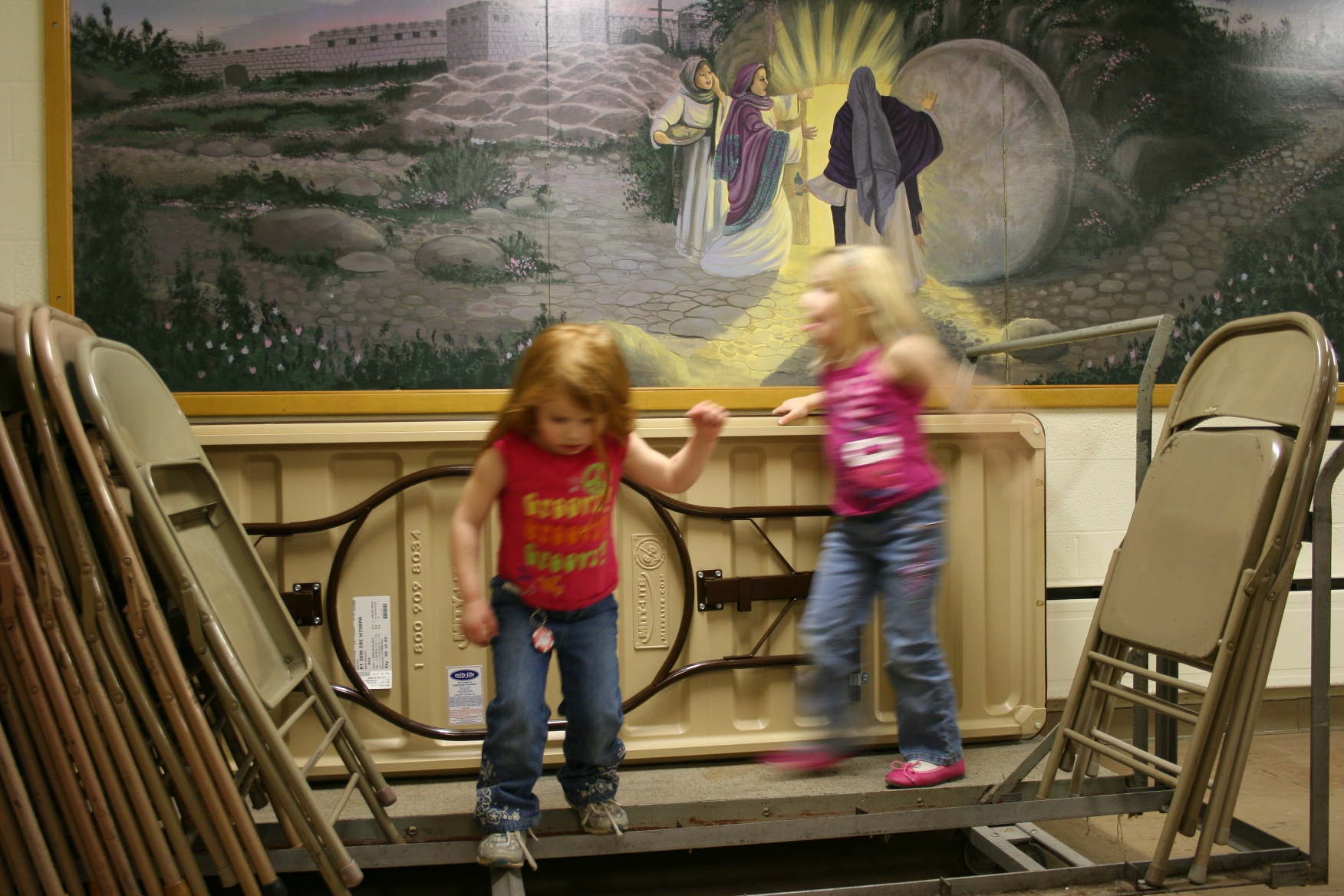
And the kids, as kids will do, entertained themselves by running and swinging and jumping off/ on the table and chair racks under a mural of the women at the tomb on Easter morning.

© Copyright 2012 Audrey Kletscher Helbling
 

In the kitchen preparing for a German dinner November 15, 2011

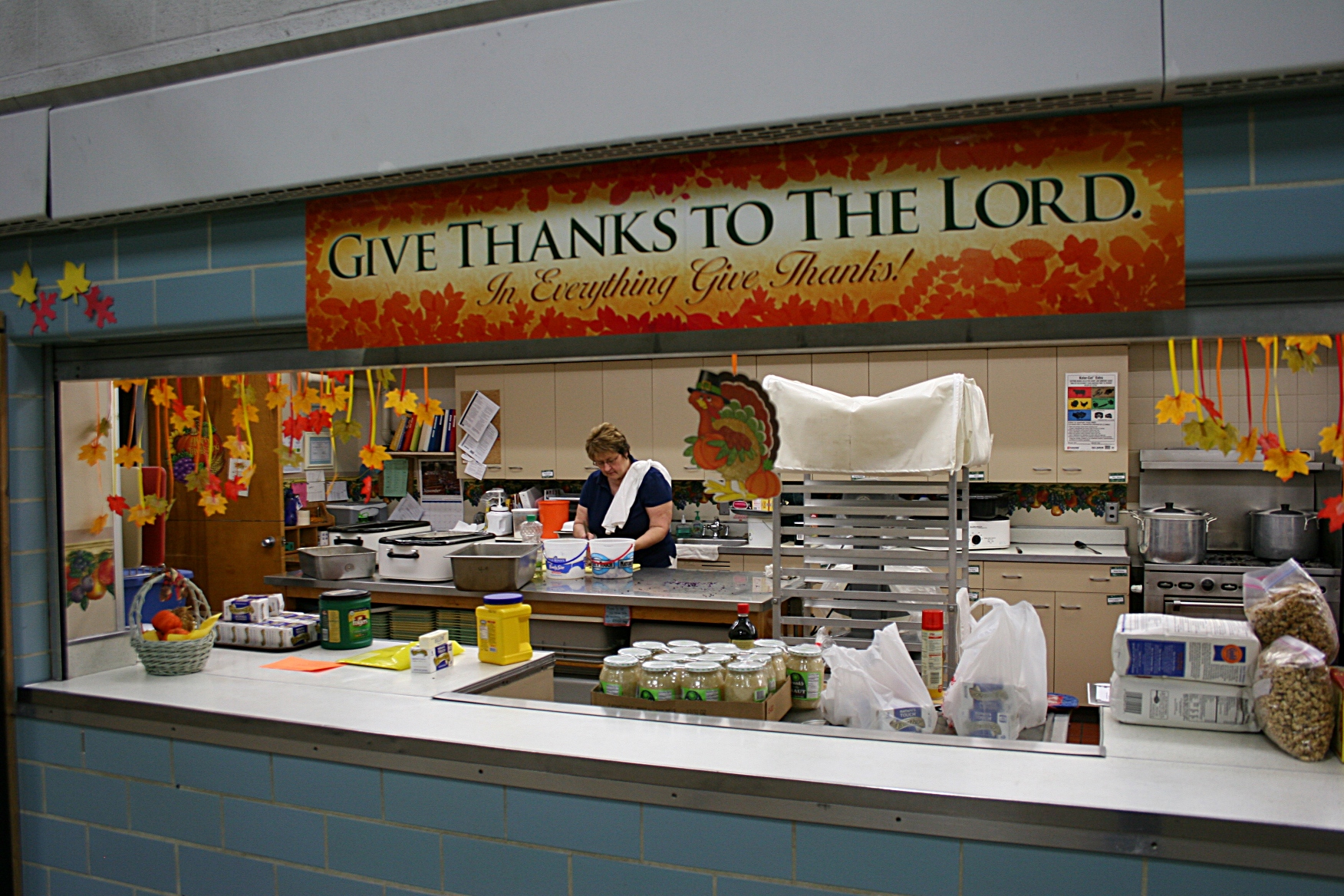
Barb Young preps food in the Trinity Lutheran Church/Faribault Lutheran School kitchen for Cannon Valley Lutheran High School's German dinner.

THESE DINNERS DON’T happen without lots of willing hands and hours and hours and hours of volunteers working together.

We’re talking church, school and community dinners here, and specifically Cannon Valley Lutheran High School’s second annual German Fest of Thanks and Praise.

This past weekend I got a behind-the-scenes, before-dinner peek at the effort that went into preparing a German meal for more than 200 diners. Cooking isn’t my forte, meaning I admire folks like Arlen and Suzanne Krause who always seem to be in the kitchen whenever CVLHS, based in Morristown, hosts a fundraising dinner. The Krauses love to cook and they know how to cook. I’ve suggested more than once that they open a catering business or restaurant.

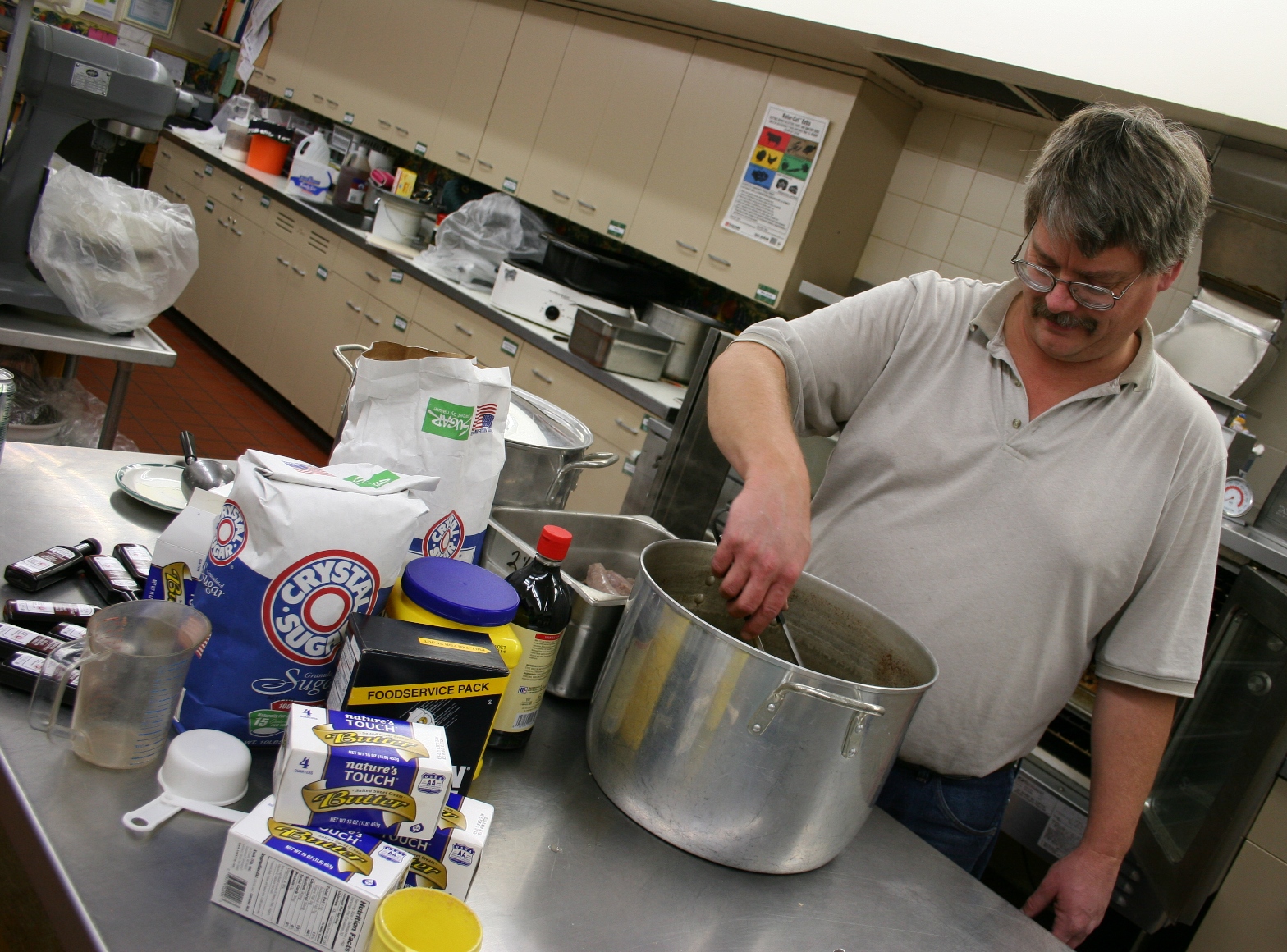
Arlen Krause prepares ethnic food for the German Fest dinner.

Saturday evening, while assisting my friend Mike Young, the CVLHS volunteer development director, and my husband Randy with setting up tables and chairs for the German dinner, I occasionally popped into the kitchen to photograph progress there. The Krauses and Barb Young, who’s married to Mike, were busy mixing and stirring and slicing in the two hours I was there; they’d started around noon and labored until 9 p.m. and were back again the next morning. And I know they’d also been prepping food earlier in the week.

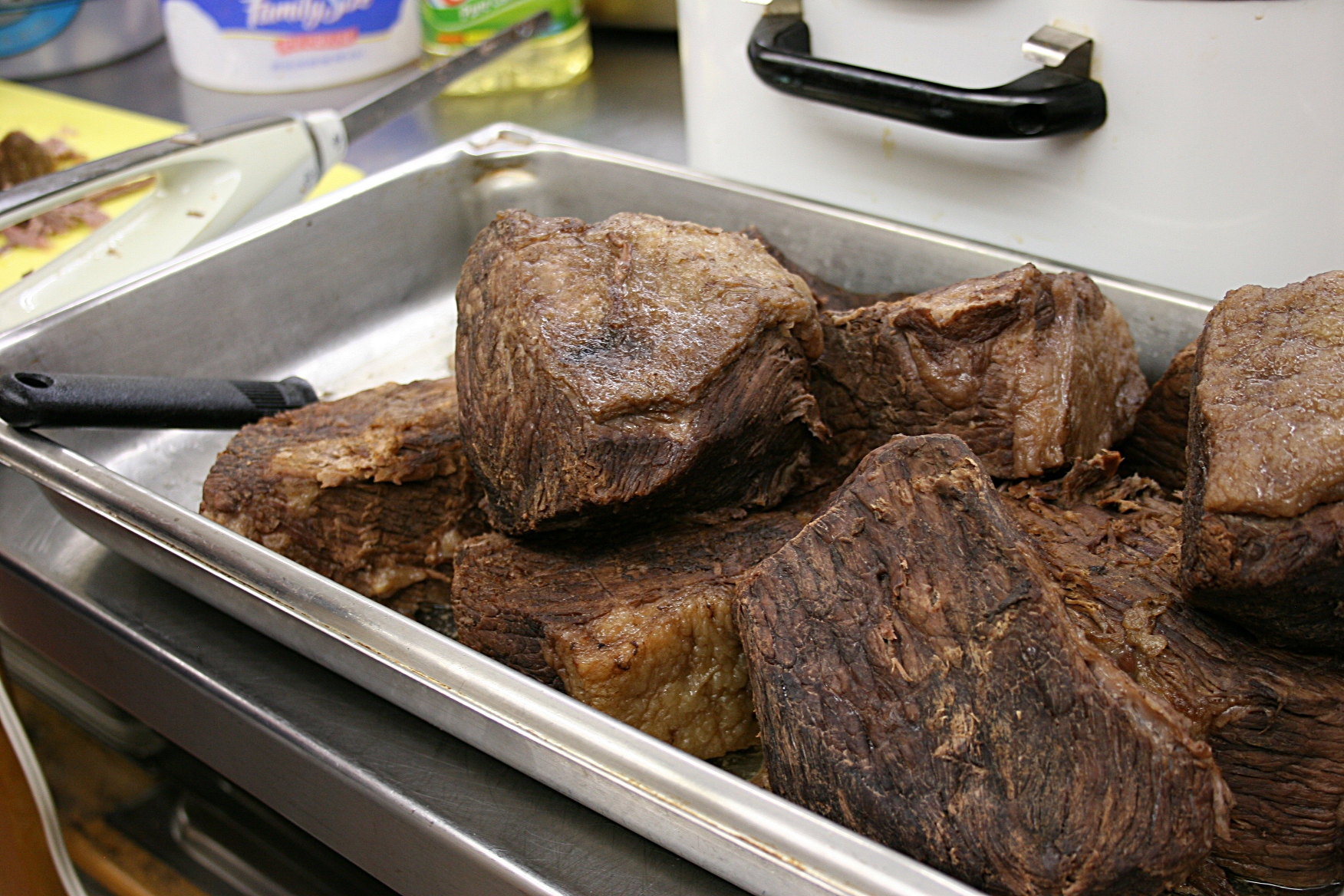
Beef awaited slicing and complete transformation into tender and savory sauerbraten.

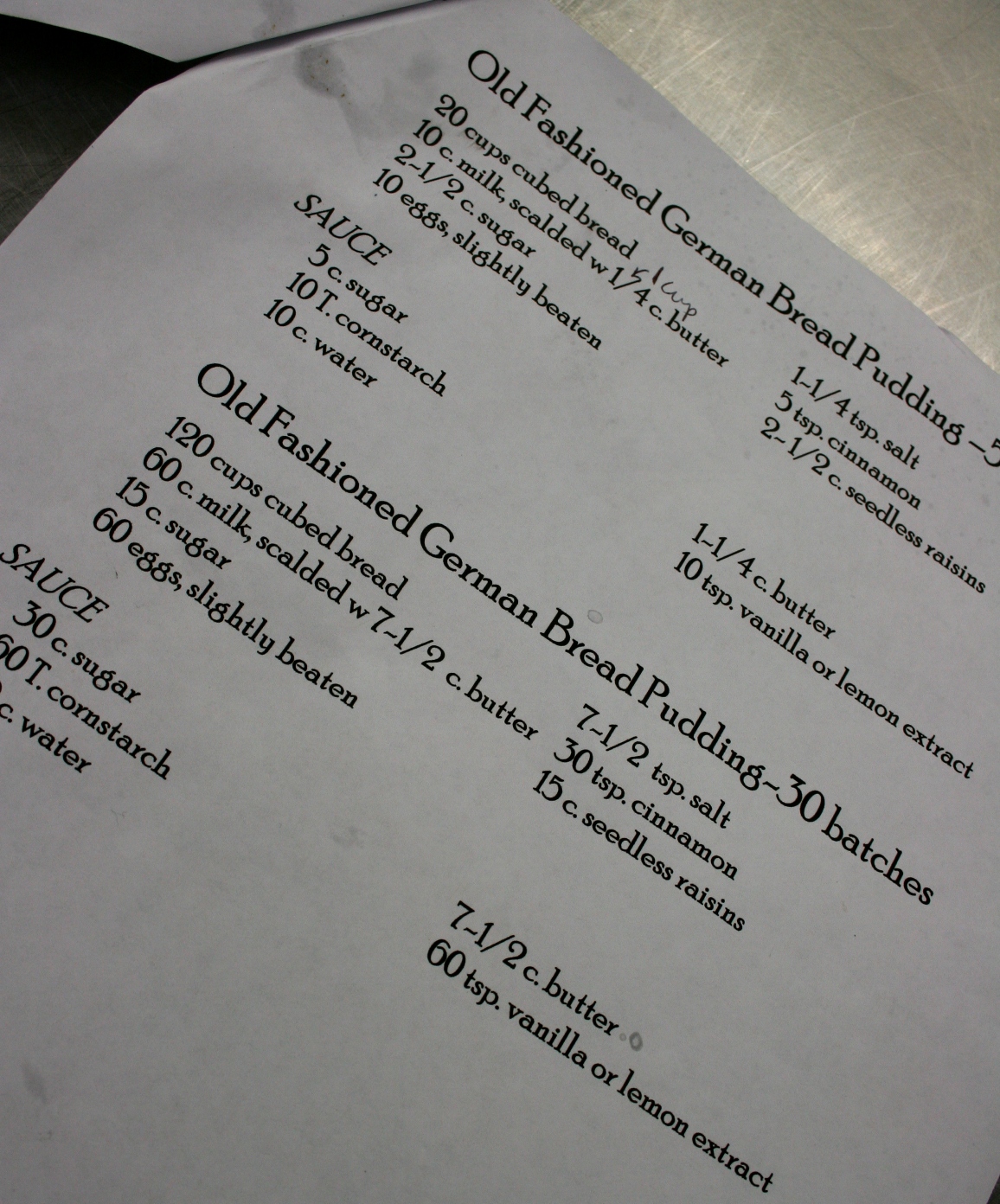
The feeding-multitudes recipe for delectable bread pudding.

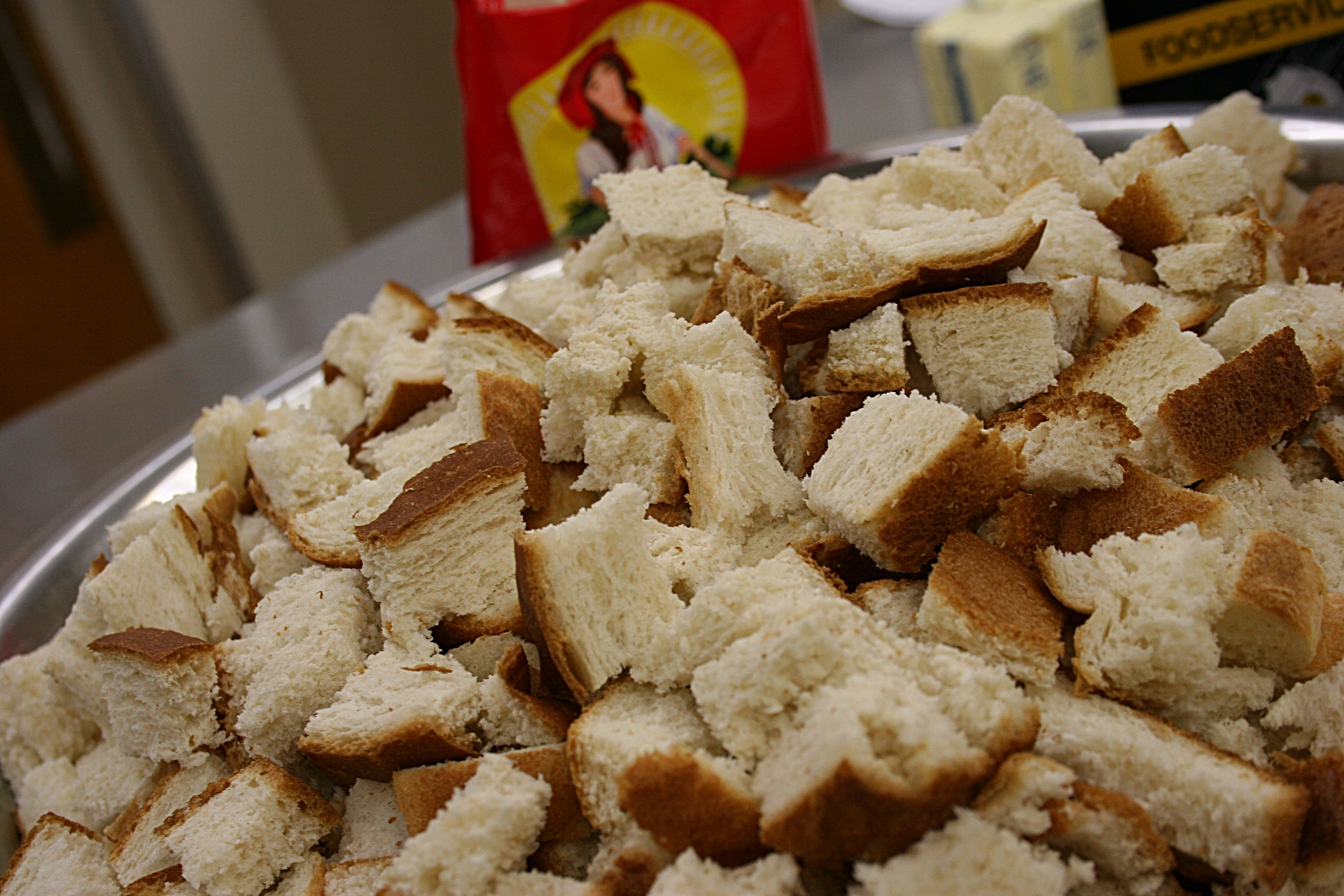
Bread cubes, mounded high in bowls, were baked into bread pudding.

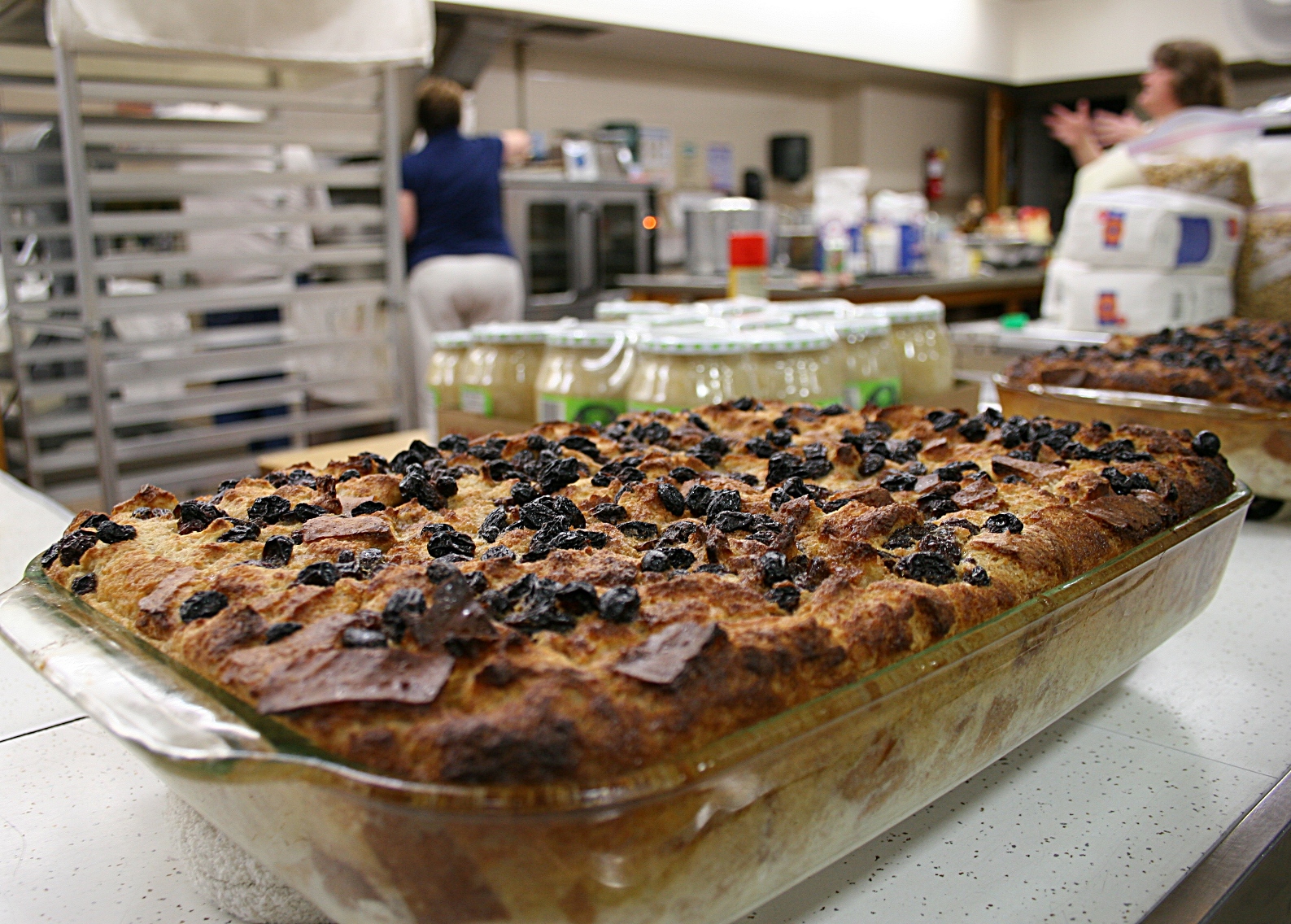
Pans of raisin-topped bread pudding cooled on the kitchen counter Saturday evening.

Fortunately, the kitchen crew trio didn’t mind my scooting around the counters, camera in tow. I tried to stay out of their way and not ask too many questions or overstay my welcome.

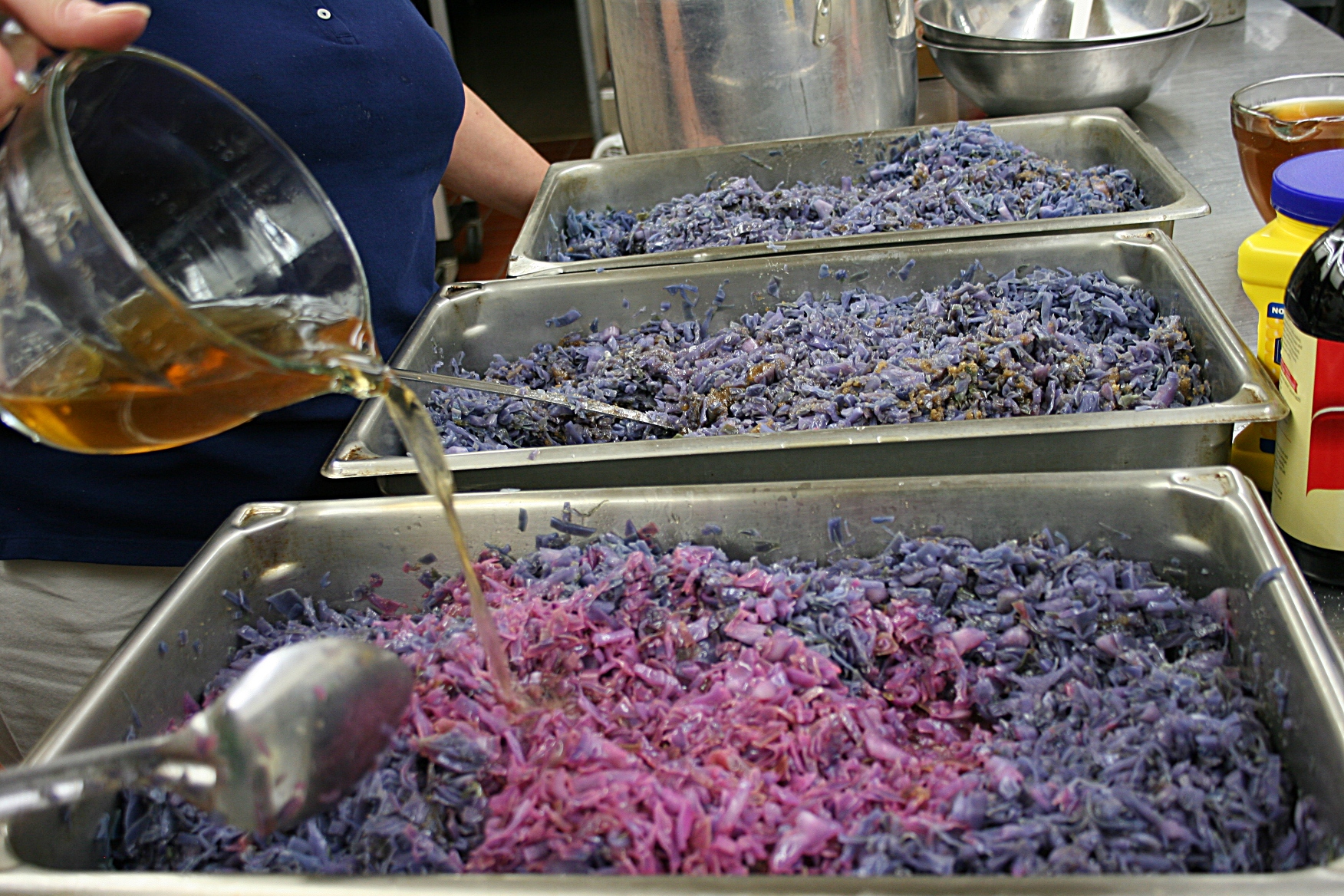
But staying out of the kitchen proved challenging given the tantalizing scent of gravy bubbling in roasters, the sweet Grandma’s kitchen aroma of bread pudding baking in the oven and the pungent, nose-stinging scent of vinegar poured onto cabbage.

By the magic addition of vinegar, the cabbage color changed from blue gray to purple in the foreground. I was witness to a science experiment and cooking class rolled into one.

I am 100 percent German, after all, and perhaps my German genes were naturally drawn to these food smells of the Motherland. Either that or I was awfully hungry given the supper hour. Probably both. Homemade caramel corn, strategically placed on the serving counter, cut the hunger edge.

Vinegar, sugar and butter—lots and lots and lots of butter—were key ingredients in the ethnic foods I saw prepared. I could hardly wait to taste the complete meal Sunday evening following the German worship service.

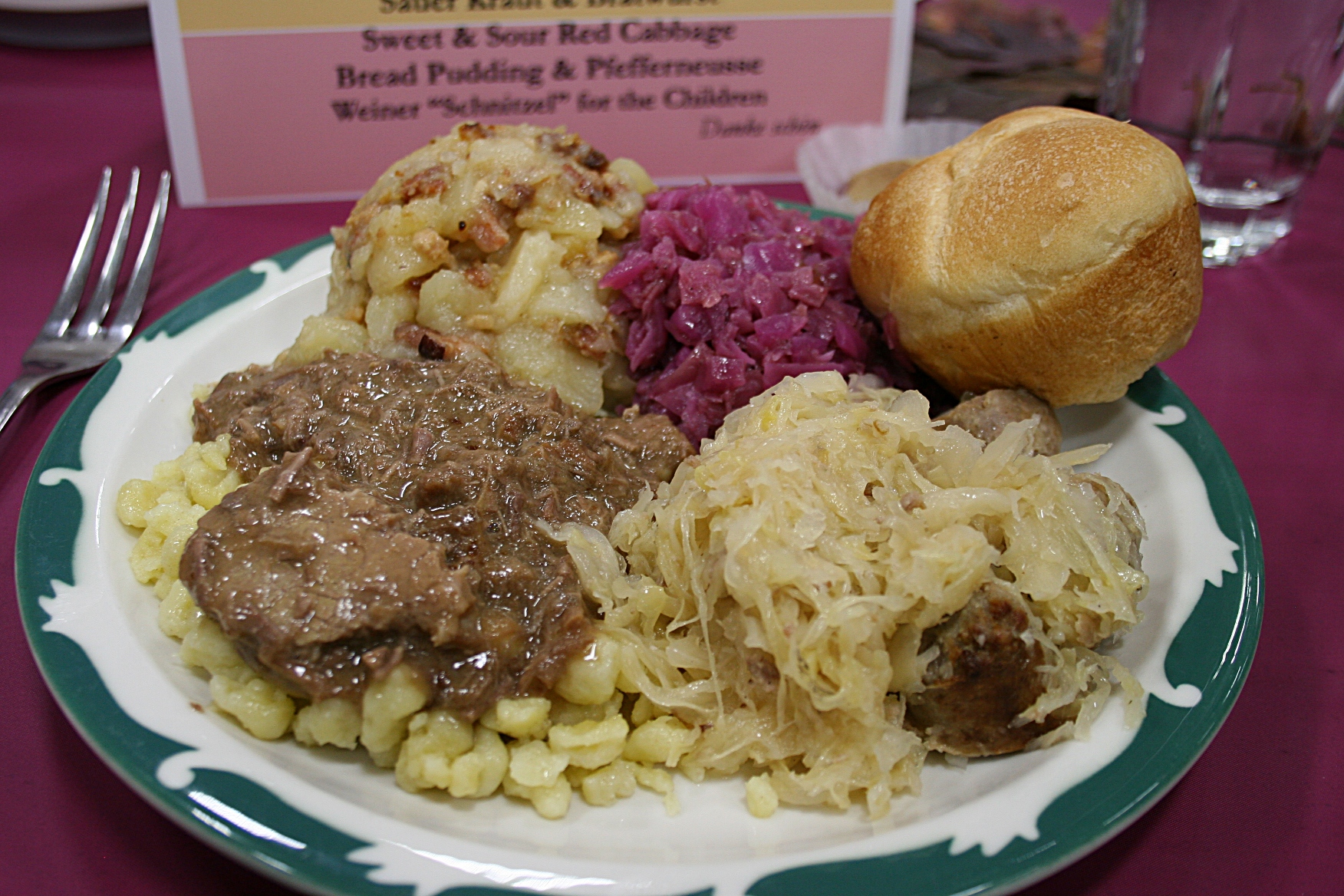
Let me tell you, the German dinner rated as absolutely fabulous. Tender sauerbraten (savory beef and gravy) atop spaetzle (like mini dumplings); dense bratwurst mixed with sauerkraut; tangy, bacon-laced German potato salad as good as I’ve ever eaten; the perfect blend of sweet and sour in the jolt-of-color red cabbage; a nip of pepper in the tiny rounds of pfefferneusse (cookies); and to-die-for, heavenly bread pudding smothered in a buttery, sugary sauce.

The German meal: sauerbraten and spaetzle on the left, German potato salad, sweet and sour red cabbage, dinner roll and sauerkraut and brats.

CVLHS volunteer cooks and bakers—and I know more were involved than Arlen, Suzanne and Barb—thanks for one outstanding ethnic meal.

As long as I’m extending appreciation, I’d like to express a broader thanks to all those folks out there who labor behind the scenes at church, school and community dinners. I’ve been to a handful or more of these dinners this year and I have, every time, been beyond impressed with the quality of the food and the hard work that clearly is invested in such events. Well done.

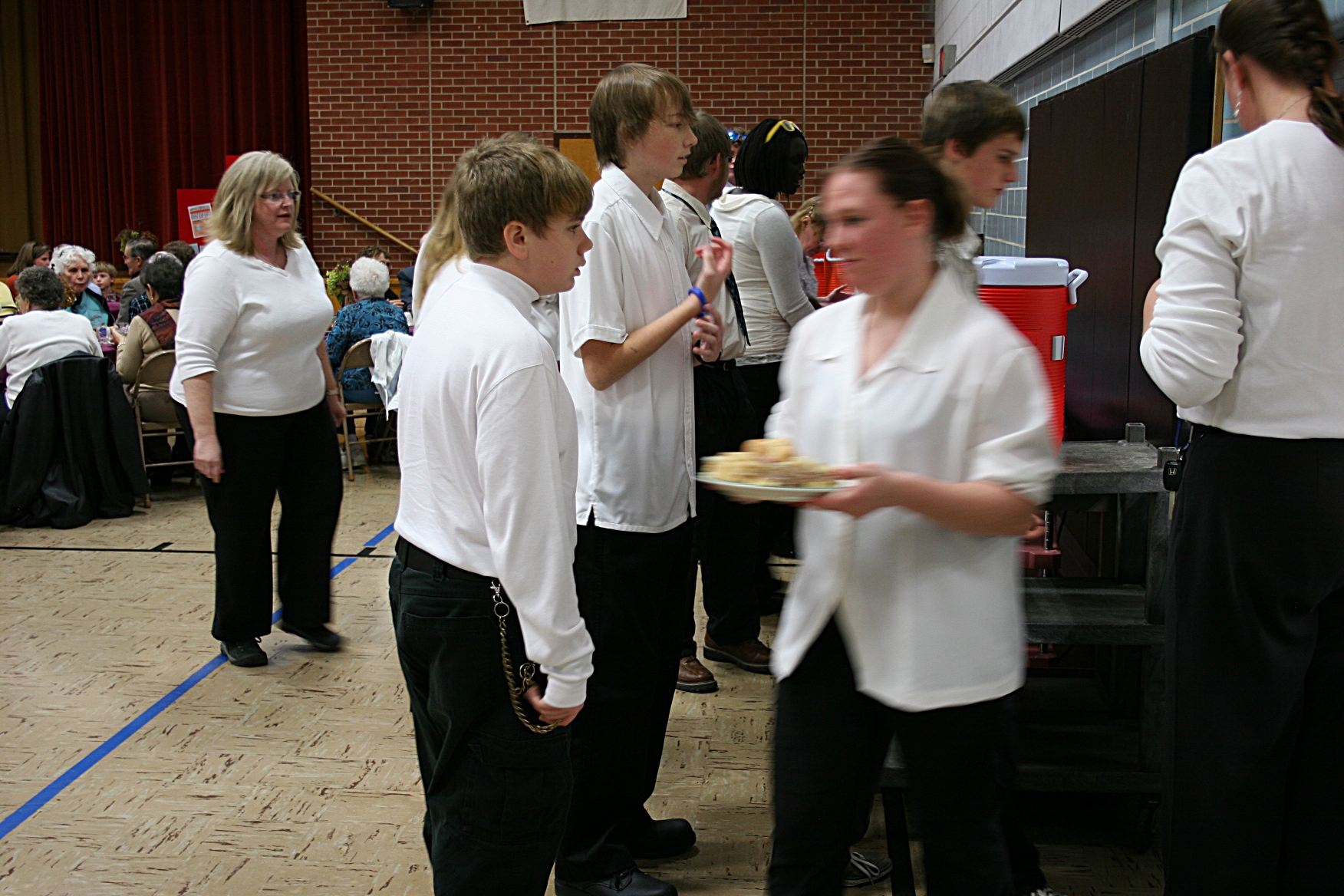
CVLHS students served the German meal to attendees.

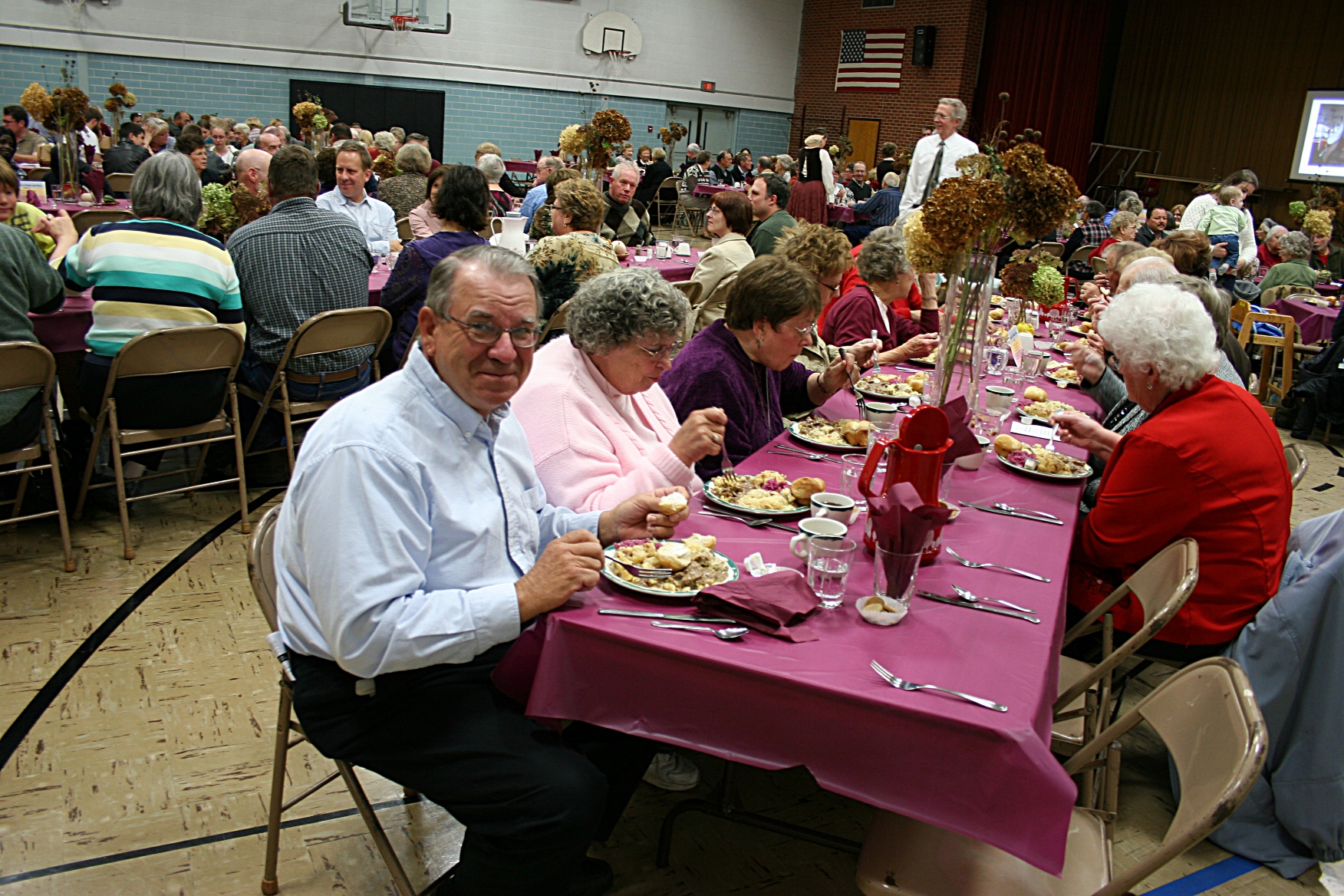
Diners enjoy the ethnic meal at the second annual CVLHS German Fest.

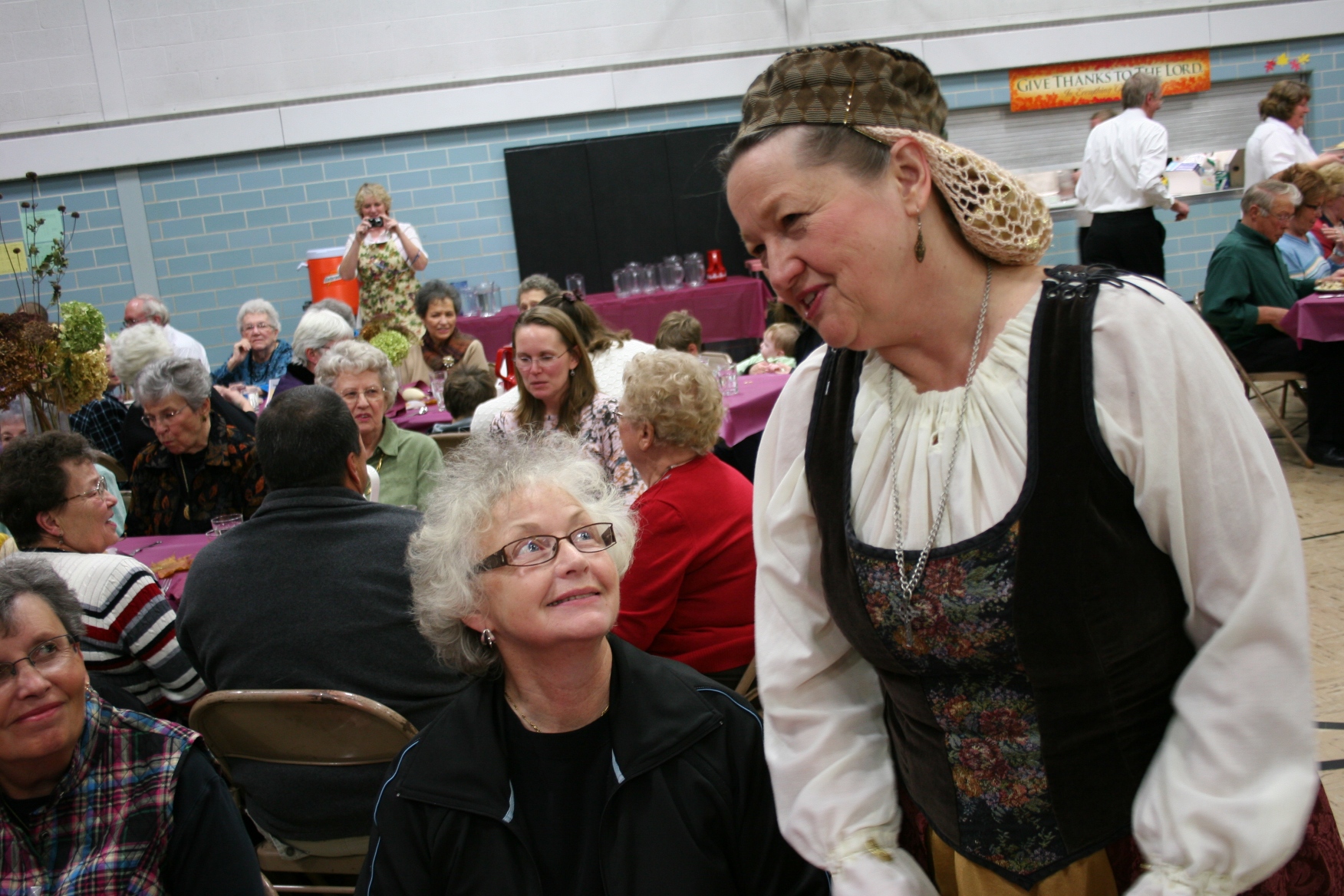
Kristin Sellentine, a Trinity Lutheran Church member and active in community theater, greeted guests as Katie Luther, wife of Reformist Martin Luther. Her costume hearkens from her days of acting at the Renaissance Festival.

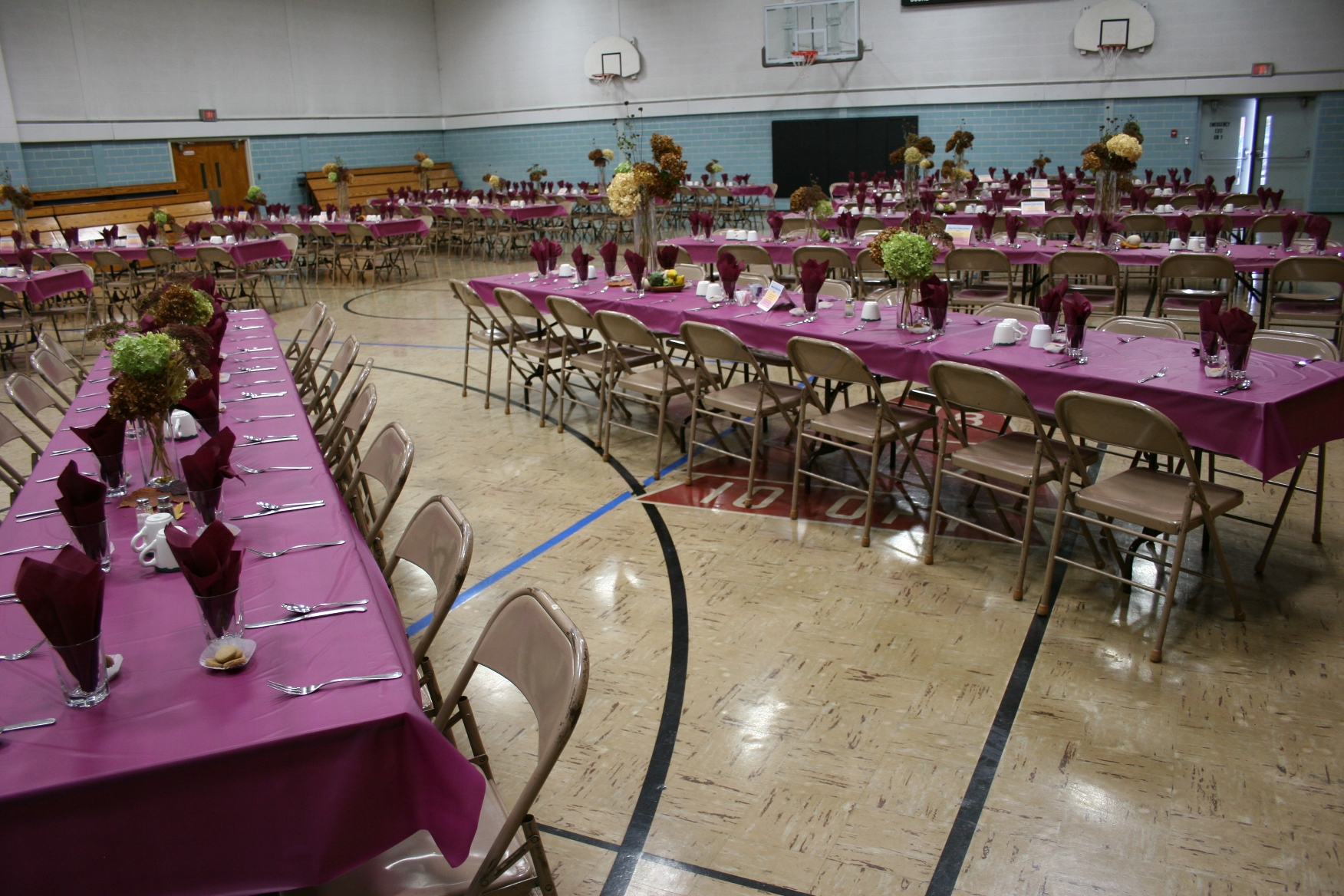
CVLHS Development Director Mike Young, a designer at Erickson Furniture in Faribault and a floral designer, transformed the Trinity gym into a beautiful dining experience with his creative talents.

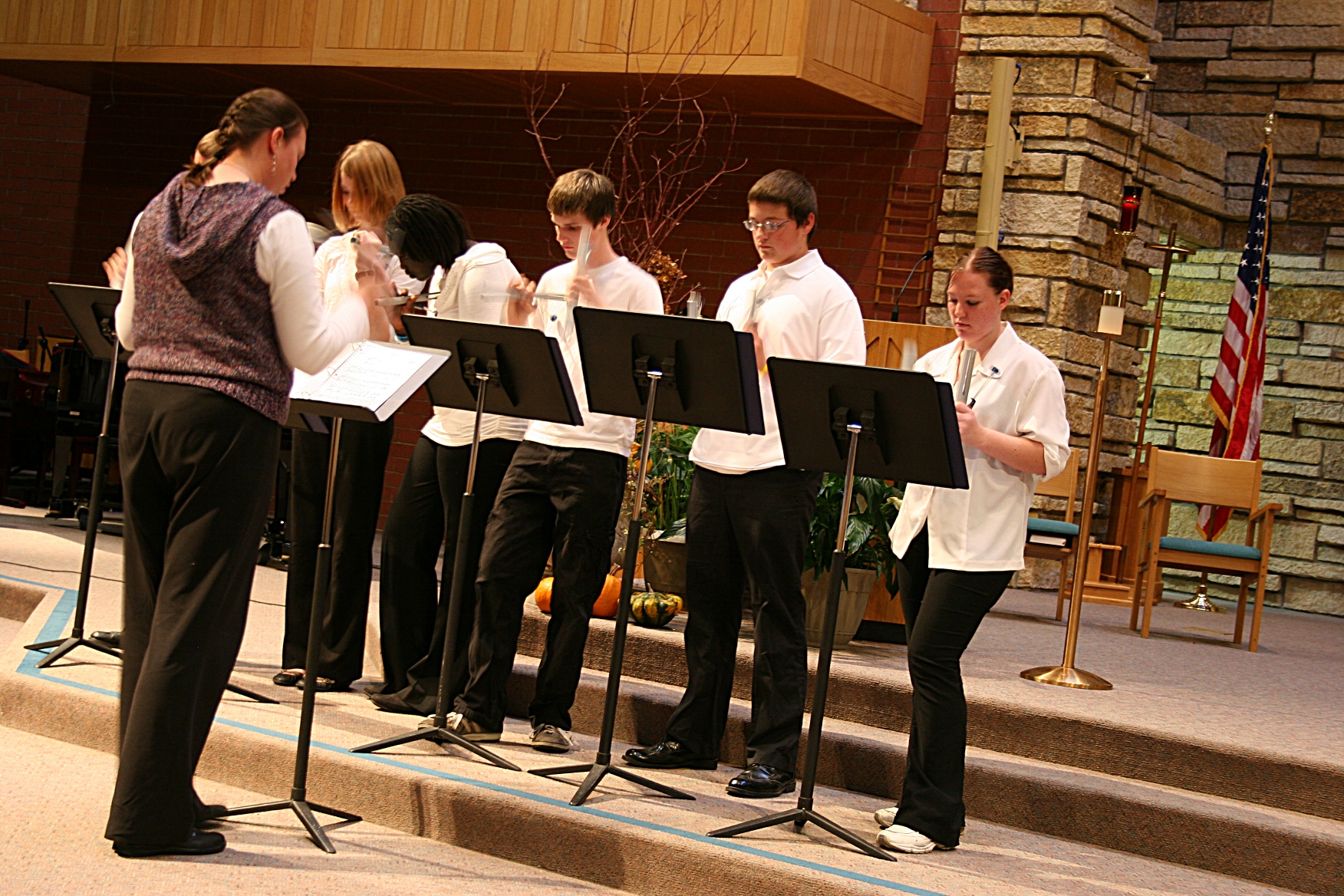
Prior to the dinner, German Fest attendees gathered in the Trinity sanctuary for a service of thanks and praise, including a performance by the CVLHS Tone Chime Choir. Hymns and prayers spoken and sung in German and English, and other musical selections, were also part of the 45-minute service.

© Copyright 2011 Audrey Kletscher Helbling
 

If only Jesse James had been a beer farmer September 8, 2011

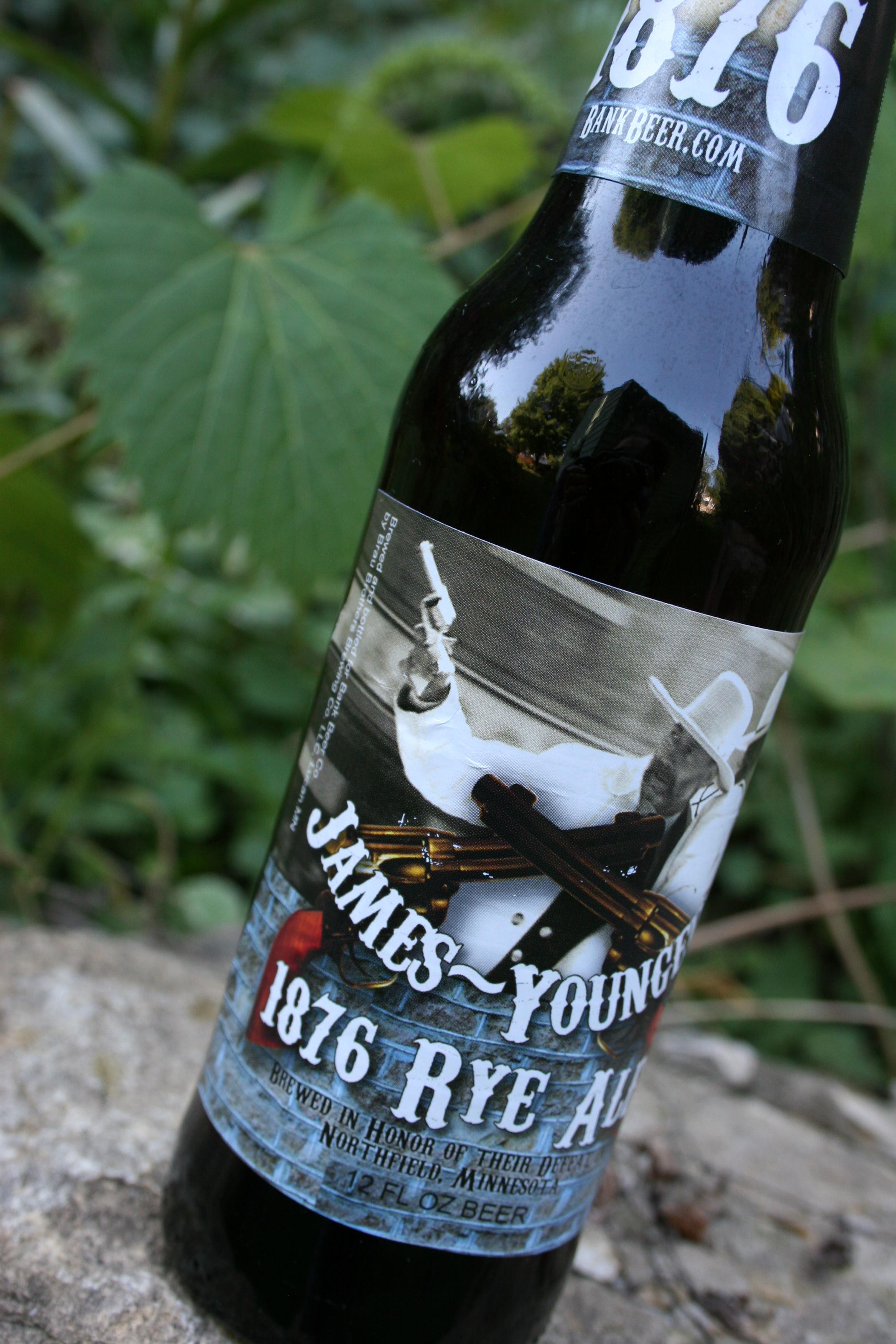
Another craft beer, James-Younger 1876 Rye Ale, made right here in Minnesota honors the defeat of the James-Younger Gang during an 1876 bank robbery in Northfield.

CRAFT BEER LOVERS, here’s a new beer for you, James-Younger 1876 Rye Ale, a limited-edition beer selling this week during Northfield’s annual Defeat of Jesse James Days. Proceeds from beer sales will benefit the Northfield Historical Society.

Now I’m no beer connoisseur, but my husband and I like to try specialty beers such as James-Younger. He bought a six-pack a few weeks ago at Firehouse Liquor in Dundas. While this rye ale doesn’t suit our homogenized taste buds, I’m certain it will appeal to plenty of other folks.

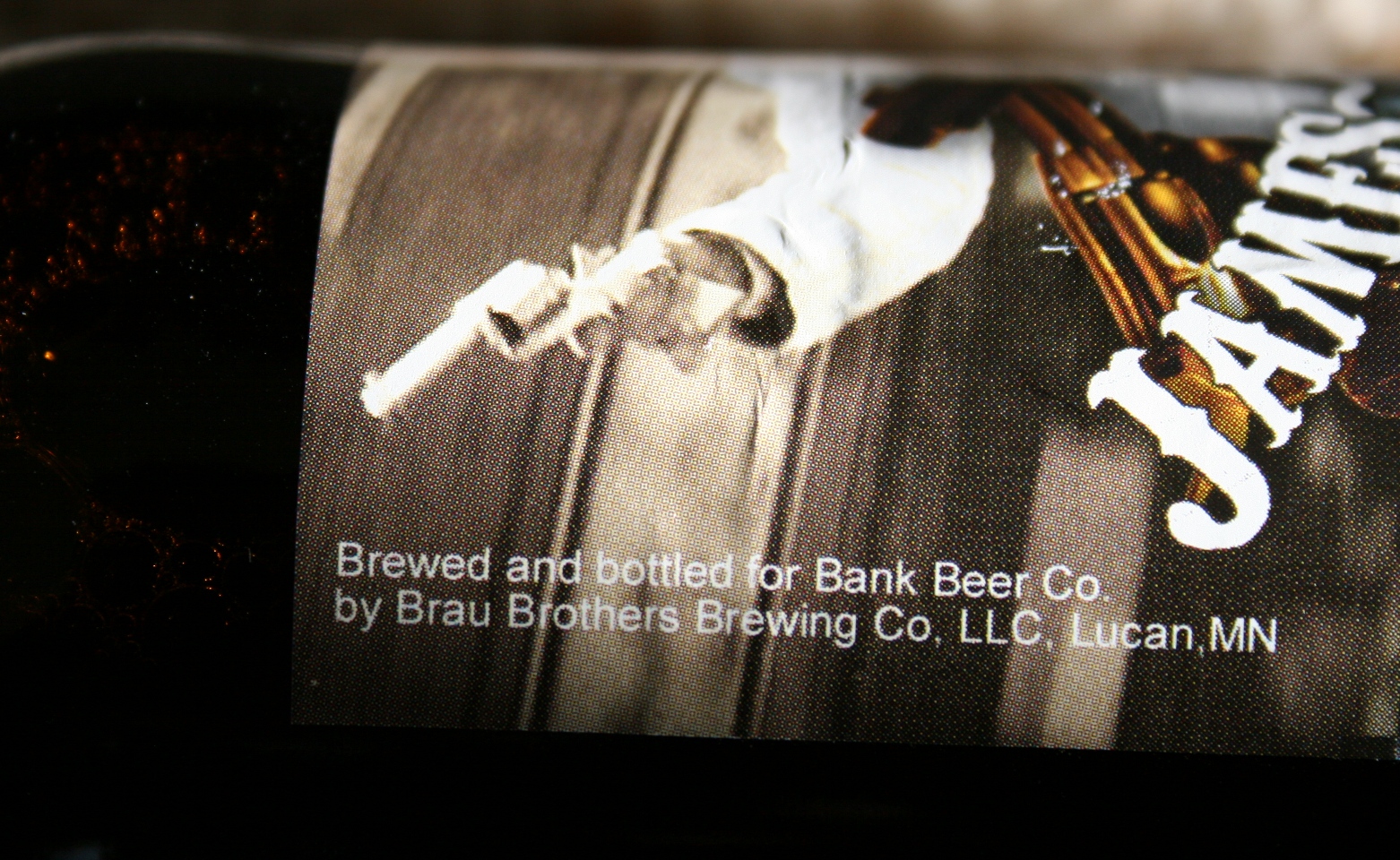
That all said, if you pick up some James-Younger ale, I want you to turn the bottle on its side and read the small print: “Brewed and bottled for Bank Beer Co. by Brau Brothers Brewing Co. LLC. Lucan, MN

OK, then, about Lucan—it’s a town of 220 residents in Redwood County in southwestern Minnesota and about five miles from the farm where I grew up. I think it would be accurate to say that Brau Brothers Brewing has put Lucan on the map with its award-winning beers.

As for the Braus, they are three brothers and a Dad who produce craft beers like Ring Neck Braun Ale, Moo Joos, Hundred Yard Dash and my personal favorite, Strawberry Wheat.

Since I’m not too knowledgeable about beer stuff, I emailed Brau Brothers CEO and brewer Dustin Brau to inquire about the James-Younger ale. His family-owned business brewed the beer and co-packaged it for Bank Beer Company, a contract brewery based in Hendricks. That town of 725 lies even further west, in Lincoln County only miles from the South Dakota border.

Anyway, Dustin credits Jason Markkula at Bank Beer for the idea, recipe, marketing and distribution of the James-Younger ale. Brau Brothers brewed and bottled the beer.

And because Dustin clearly knows beer, I asked him to describe James-Younger 1876 Rye Ale: “Basically, a rye pale ale. Not crazy hoppy, but just enough. The spice from the rye comes through a bit, reminiscent of pepper.”

As for the rye, well, it comes right from the Brau Brothers’ fields. And, if you check the company’s Facebook page, you’ll read that the Braus tag this growing and harvesting of rye as “beer farming.” You just have to appreciate brewers who think that way.

Cheers!

FYI: You won’t find James-Younger 1876 Rye Ale just anywhere. Look for it in limited supplies in the Northfield area during the Defeat of Jesse James Days, which continues through Sunday.


Pancakes for paper May 13, 2011

MY KNEE JERK REACTION went something like this: I pay taxes and now the school is hosting a pancake breakfast to buy “needed supplies.”

Because things aren’t always as they seem, I called Faribault High School to inquire about the Pancake Breakfast flier which was mailed to me on Thursday along with my son’s mid-quarter grades and information about ordering a $75 high school yearbook.

When the woman who answered the phone couldn’t help, she transferred me to Assistant Principal Dennis Germann’s voicemail. He explained everything to me in two return phone calls and now I feel much better and more informed.

Faribault Masonic Lodge #9 and Faribault Eagles Club #1460 are teaming up to raise monies for school supplies for students at FHS. Notebooks, inexpensive calculators, paper, project supplies, etc. will be given to students who can’t afford to purchase those basics, Germann told me. He added that nearly 50 percent of FHS students qualify for free or reduced school lunches. Translate that into families that could use some extra help with school expenses. The United Way has provided some assistance in the past with school supplies.

Germann welcomes the monies that will be raised at the Sunday, May 15, Pancake Breakfast from 8:30 a.m. – 12:30 p.m. at the Faribault Eagles Club. Cost of the breakfast, which includes all you can eat pancakes with a serving of sausage and eggs and milk, coffee or juice, is $7 for adults, $5 for students and free for those five and under.

It’s the first time apparently that the high school has been selected as the recipient of this Pancake Breakfast fundraiser. That’s why the flier caught me by surprise and I really didn’t understand the definition of “needed supplies.”

As the parent of a high schooler, and two FHS graduates, I’m happy to see secondary students benefiting from a fundraiser like this. Typically the focus is on elementary age kids. I know how quickly costs add up to buy school supplies for a teen. Last year, if I remember correctly, I forked out $100 for some fancy schmancy calculator my son needed for a math class. Students won’t get fancy calculators like that through this program (I think the school has some available to borrow). But at least they’ll get basic school supplies.

So much has changed in the decades since I graduated from high school and we really only needed 3-subject notebooks, pens, pencils, folders and loose leaf paper.

Now it’s way beyond paper, to needing computers and internet access at home. I bet many families out there can’t afford internet service. Thankfully free internet is available at the public library. But it isn’t always easy for students to get there when they need to do online research.

I wonder also about the cost of class field trips, if some students can’t afford even basic school supplies. I recently wrote a $27 check for my son to go on a field trip to the Science Museum to view the King Tut exhibit. I gave him another $15 for lunch, which even he told me was expensive. How do families with already stretched budgets manage these additional costs?

We shouldn’t need pancake breakfast fundraisers to supplement the cost of education. But we all know times are tough. So thanks, Eagles and Masons, for doing your part to organize this event that will help Faribault families.

© Copyright 2011 Audrey Kletscher Helbling
 

Stitches of love April 6, 2011

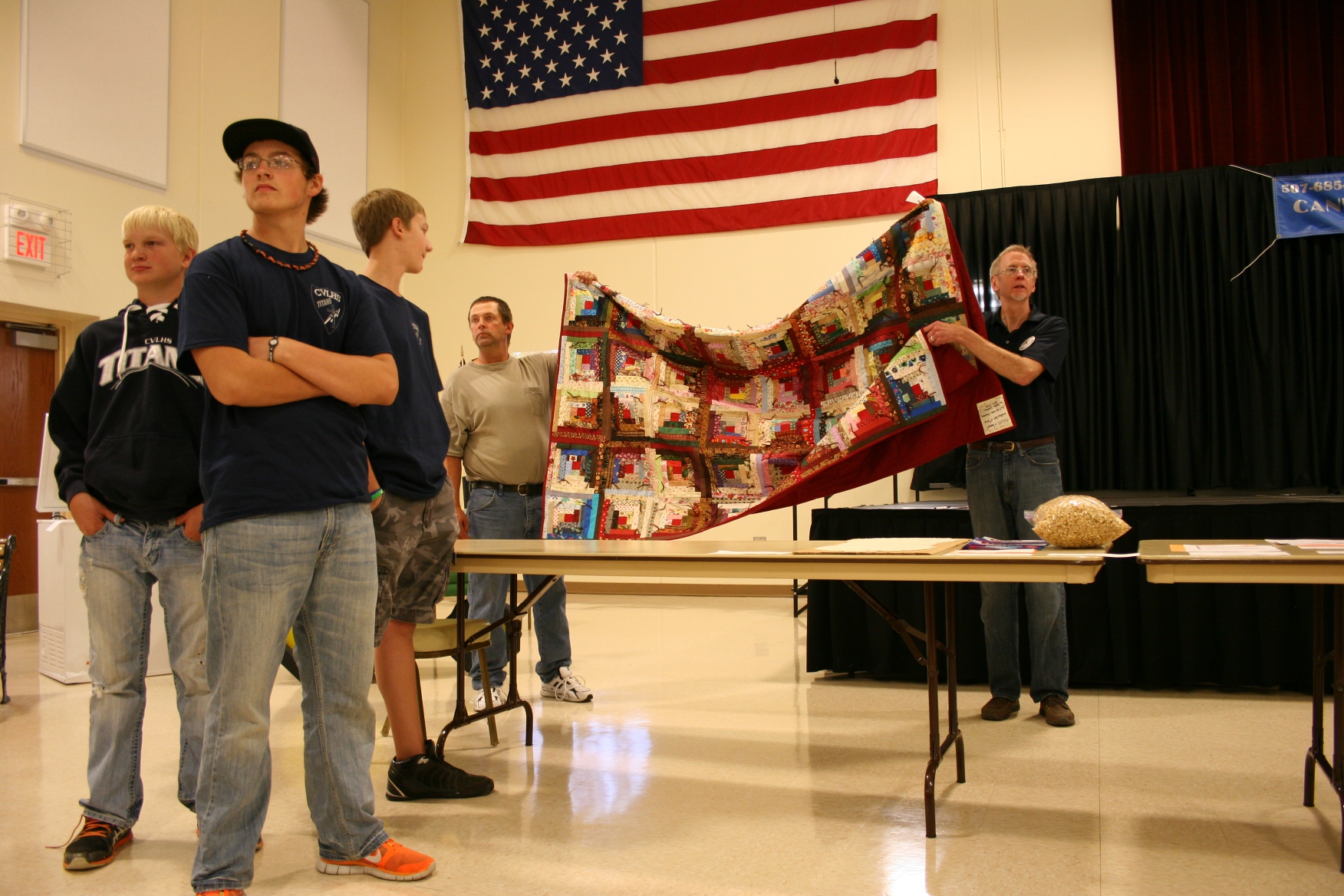
Handmade quilts drape across pews at St. John's United Church of Christ.

INSIDE THE LIMESTONE CHURCH, patchwork quilts drape across the backs of pews, spilling onto cushy red seat cushions.

Only hours earlier during the Sunday morning church service, worshippers settled onto the quilts handmade by St. John’s United Church of Christ members.

On a Saturday in February, members of the Women’s Guild, and a few husbands, gathered at this country church in Wheeling Township in southeastern Rice County to stuff the quilts with batting, add backings and tie together the layers with snippets of yarn.


St. John's old stone church has been in continuous use for more than 150 years. German settlers founded the congregation in 1856.

This year, according to church member and quilter Kim Keller, the quilters made 13 baby quilts and 13 big quilts.

The handmade blankets will go to graduating high school seniors—two at St. John’s this spring—and to missions, mostly local.


One of the many handmade quilts that will be given away.

As I perused the quilts, I considered the devotion of those who piece together the swatches of fabric, tie together the layers and knot the strands of yarn. These quilts represent gifts that touch the recipients physically, but, more importantly, emotionally and perhaps spiritually.

Stroke the fabric and you can almost feel the love stitched into each quilt.

That these blankets are then displayed for worshippers to see, and sit upon, adds another dimension to the project. As I photographed the quilts, as the sun streamed through the church’s restored stained glass windows, I thought of the blessings received by both the givers and the receivers. Joy that comes in selfless giving. Joy that comes in knowing someone cares enough about you and your needs to stitch a quilt.

“It is more blessed to give than to receive.” Acts 20:35

The stained glass windows at St. John's were restored between 2004 - 2006 at a cost of more than $30,000.


A view from the St. John's balcony of the church interior and the quilts.

TEN MILES AWAY in Faribault, about a dozen women at my church, Trinity Lutheran, meet every Wednesday morning from September through May to finish quilts that are donated to those in need. Seamstresses sew the quilt tops at home and then bring them, along with the backings, to church where the Trinity Quilters add the batting and then tie together the layers with yarn.

For 60-plus years now, the women of Trinity have been stitching quilts. “It’s a mission project,”  says long-time quilter Betty Gudknecht. “I want to help other people. You want to do things for the Lord because you want to do it (not because you’re paid).”

With that spirit of giving and serving, the Trinity quilters make about 200 quilts annually. They donate them to places like Minnesota Teen Challenge, the Orphan Grain Train, the Red Cross, Burdens to Blessings, Lutheran World Relief, Lutheran Association of Missionaries and Pilots, and to others in need. Trinity’s graduating high school seniors also receive quilts.

This week the Trinity Quilters are auctioning off three quilts in a silent auction that ends mid-morning on Sunday, April 10. They need the auction money to purchase batting for their 60 x 80-inch quilts. A single roll of recently-purchased cotton batting, which will make 16 quilts, cost $90, and that was at 50 percent off.

In the past, the quilters have gotten creative, using old blankets, mattress pads and even the outsides of electric blankets, as “batting.” They still plan to use those resources, but would also like to use the softer, purchased cotton batting.

While the quilt-makers sometimes buy fabric, most often it is donated.

If you’re interested in bidding on one of the quilts at Trinity Lutheran Church—and I’m sorry, I don’t have photos of the quilts—get your bids in this week.

Cash donations are also being accepted to help the quilters purchase batting.

“It is more blessed to give than to receive.”


The steeple of St. John's United Church of Christ, Wheeling Township, Rice County, Minnesota.

© Copyright 2011 Audrey Kletscher Helbling
 

A super soup competition March 14, 2011

AT HIS DAY JOB, Steve sells cars. On the side, he raises chickens on his small Minnesota acreage. He’d like to add a few pigs and cows, but he’s not versed in raising those critters.

He’s an expert gardener, though, who cans his produce. He appreciates the taste of home-grown vegetables and those farm-raised chickens.

Steve also loves to cook.

Sunday night I met Steve and sampled some of his cooking at Cannon Valley Lutheran High School’s first-ever “Soup-er Bowl” in Morristown. Loaded with hefty chunks of chicken, thick homemade noodles, carrots, celery, onion and garlic, Steve’s creamy chicken noodle soup earned him a second place finish among the 10 soups entered in the cooking competition. He deserved it. I don’t typically like chicken noodle soup, but I loved Steve’s.

I asked for the secret to the cream base. A stick of butter and half-and-half combined with the juices of his home-grown chicken, additional chicken stock, bay leaves and other spices created a savory broth. By the way, Steve appears to be the kind of guy who would rather share cooking tips than keep them secret.

Steve's chicken noodle soup is in the top left corner of this photo. The winning soup, taco chili, is next to it on the right. The other soups here are corn chowder, Mulligan stew and (I think) cheeseburger.

I don’t know how the other nine competing cooks—except the youngest cook, eighth grader Louis—felt about revealing their recipes. Louis left the recipe for his fiery green chili on a table for diners to pick up. Let me tell you, when I tasted his chili laced with hot jalapenos, I gulped lemonade.

Taco chili won the 2011 “Soup-er Bowl” trophy from among entries like Mulligan stew, cheesy wild rice, corn chowder, ultimate cheeseburger, a second chicken noodle soup and Steve’s chicken noodle soup.

The "Soup-er Bowl" trophy, awarded this year for the taco chili.

This whole idea of a “Soup-er Bowl” was the brainchild of my friend Mike, who volunteers as CVLHS acting development director. Mike is one of those guys who is always giving back to the community. He remains a strong supporter of the Lutheran high school even though his eldest son graduated from there several years ago.

Wanting to connect the congregations that are part of an association supporting CVLHS, Mike came up with the soup competition. Last weekend five of the member churches held local contests with the two top winners from each church advancing to yesterday’s finale.

Soup and chili samples were placed onto vintage metal trays for each diner.

Unfortunately, I was out of town last weekend, or I would have entered a soup. Mike has already invited me to participate next year. But after tasting all of the excellent soups and chilis on Sunday, I’m hesitant to vie against so many great cooks. I might simply remain a taster.

I love soups. Each year for the past seven, my sister Lanae has hosted an autumn soup party at her Waseca home. While she doesn’t award a trophy for the best soup, the winners are really us, the invited guests. Last year we could choose from 17 homemade soups spread out on tables in her and husband Dale’s garage. Click here to read all about her 2010 soup party.

When I heard about the CVLHS “Soup-er Bowl” gathering, I wasn’t about to miss an opportunity to eat soup and support the school. For $5, diners got small samplings of each soup or chili, breads and sweet treats, along with beverages.

The party was not only a fundraiser for the school but, more importantly, an evening of fellowship, organizer Mike said.

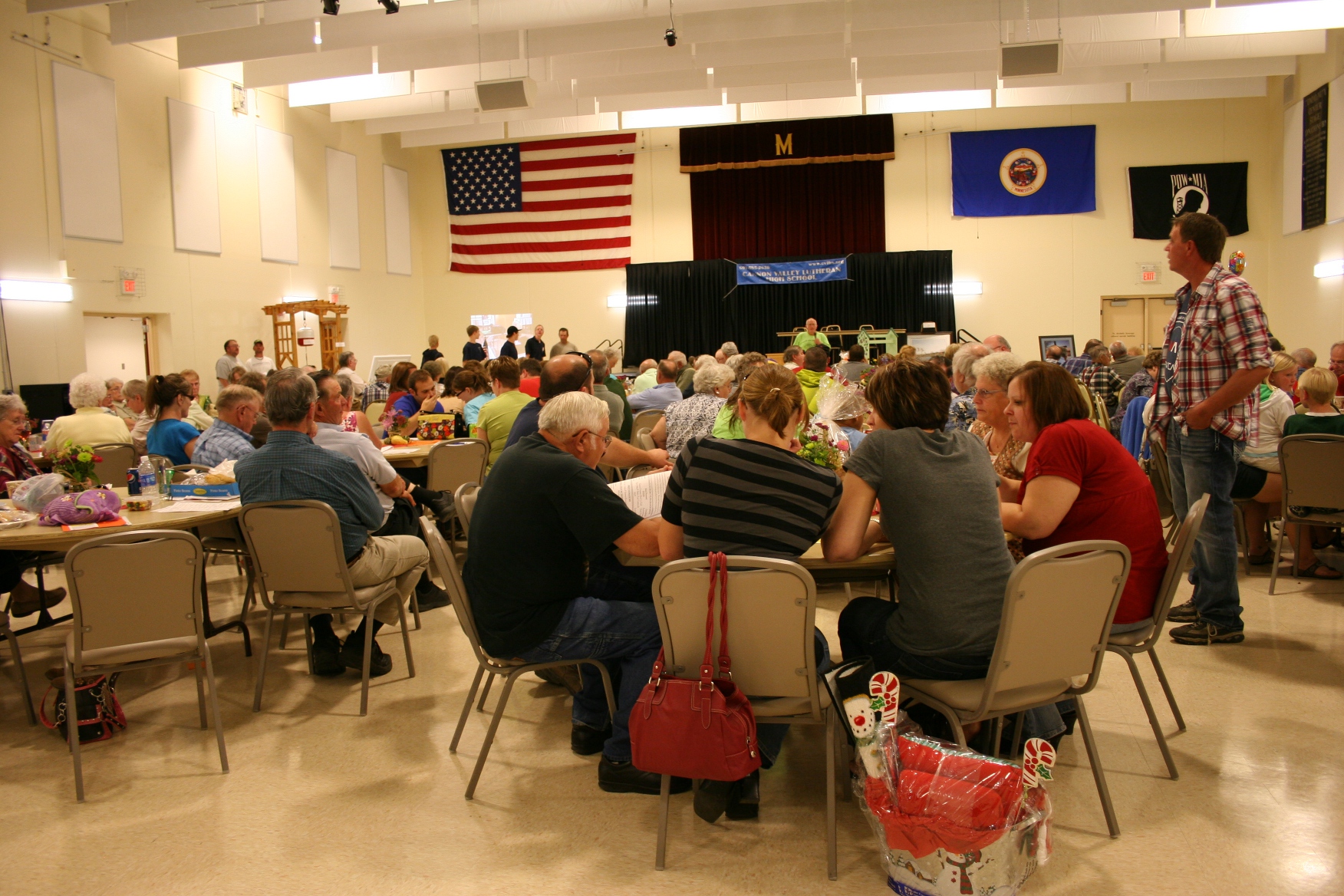
Diners packed tables in the Bethlehem Lutheran Church fellowship hall to taste 10 soups and chilis and then vote for their favorite at the CVLHS "Soup-er Bowl" party.

He’s right. I met car salesman/chicken farmer/chef Steve when I sat at the same table as him. Now my name is on Steve’s list to contact when his chickens are ready for butchering next summer. I can already taste that delicious chicken noodle soup…

By the time I went through the line, the vintage trays had all been used, so seven soups and chilis were crammed onto an oval plate. I later picked up the remaining three to sample. My sister also uses vintage trays at her party.

HERE’S THE RECIPE for Green Chili from eighth grader Louis:

Green Chili

Brown hamburger. Separate hamburger from juice and let juice sit.

Sauté celery, white and green onions, jalapenos, cilantro, green peppers, black pepper and hamburger juice.

Put hamburger and vegetables in pan and add green tomatoes and stir until finished.

NOTE: Louis did not list specific ingredient amounts, so I guess you need to figure that out for yourself.

© Copyright 2011 Audrey Kletscher Helbling