The Alexander Faribault house, a historic site owned by the Rice County Historical Society. (Minnesota Prairie Roots copyrighted file photo)
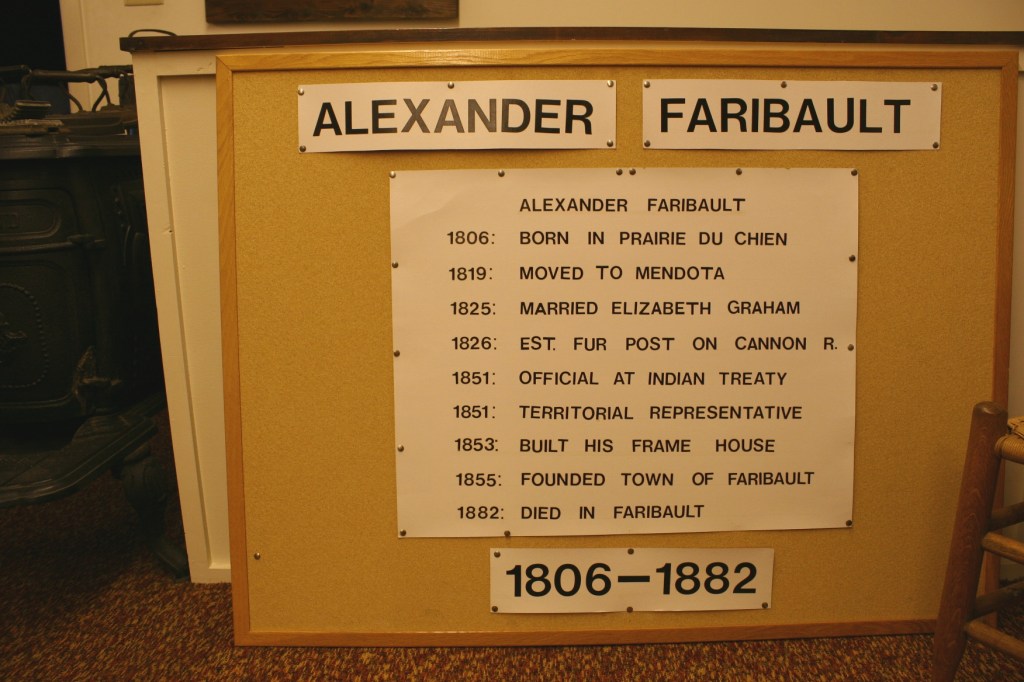
MANY YEARS HAVE PASSED since I toured the nondescript wood-frame house built by Alexander Faribault in 1853. Multiple times a week I pass by this house which sits along busy Minnesota State Highway 60 in downtown Faribault. It’s become so much a part of the local landscape that I don’t even notice the building which was briefly home to Faribault and his family. But it’s an important part of local history given Alexander Faribault founded the town in 1855.
A promo for the upcoming birthday celebration features a photo of Alexander Faribault. (Promo credit: Rice County Historical Society)
Attendees at the upcoming birthday celebration can learn a whole lot more about Faribault, the town and the house from staff and volunteers with the Rice County Historical Society. I’m always up to learning more about the city I’ve called home since 1984.
This sculpture of Alexander Faribault with a Dakota trading partner stands in Faribault’s Heritage Park near the Straight River and site of Faribault’s trading post. It sits atop the Bea Duncan Memorial Fountain. (Minnesota Prairie Roots copyrighted file photo)
I know the basics about Alexander Faribault, a licensed fur trader who first established a trading post along the Cannon River in 1826 or 1827, depending on your information source. He was only twenty years old. He grew his business throughout the region, trading with the Wahpekute, a band of the Dakota, and moving his trading post to the confluence of the Cannon and Straight Rivers, current-day Faribault.
A mural on the former Erickson Furniture business features Alexander Faribault against the backdrop of the city’s historic viaduct. The “bridging” theme fits Faribault the man and Faribault the city. (Minnesota Prairie Roots copyrighted file photo)
I imagine for Faribault, who was French Canadian and Dakota, developing trading partnerships with the Dakota proved easy given his understanding of the people, their language and culture. But later that same relationship proved challenging for him. Some locals, after the U.S.-Dakota War of 1862, no longer appreciated his friendship with the Dakota and his willingness to shelter some of them on his farm.
This scene in downtown Faribault reflects our community’s diversity. (Minnesota Prairie Roots copyrighted file photo)
Back then, just like today, this community has not always been accepting of others. In the 1860s, the Dakota were targeted. Today it is the Somali community. It’s disheartening when history repeats itself, when differences in skin color, food, culture and language separate us. Alexander Faribault, as a mixed blood who embraced the Dakota, surely witnessed and felt the challenges of injustices and discrimination.
Children gather around a pinata at an international festival in Faribault. It is one of my favorite award-winning photos. (Minnesota Prairie Roots copyrighted file photo)
My community has certainly made progress in welcoming all to our city. Yet, we could do better. I still hear derogatory comments about our Somali neighbors, worsened by the current political climate. I still hear derogatory comments about our Hispanic neighbors, made worse by current immigration policies. We are all, unless Indigenous or descendants of slaves, of immigrant roots, something people often forget.
An overview of Alexander Faribault’s gravesite in Calvary Cemetery on the west edge of Faribault. (Minnesota Prairie Roots copyrighted file photo)
Alexander Faribault wasn’t “from” here. He was born in Prairie du Chien, Wisconsin. But he came here, established a fur trading business and eventually founded the city of Faribault. By all accounts, he was kind, generous and compassionate and served in many capacities from interpreter to territorial legislator to school board member to postmaster. I’m sure he had his flaws. We all do. But it seems Alexander Faribault did his best to build a strong and inclusive community that has grown into the diverse city of today. I think he’d appreciate a legacy of diversity.
A snippet of the words written about Alexander Faribault on a memorial marker at Calvary Cemetery, Faribault. (Minnesota Prairie Roots copyrighted file photo)
On a 1958 marker at the entrance to Calvary Cemetery where Alexander Faribault is buried, these words are written about him: Race or creed did not color his judgments. He saw in every man the image of God and thereby the possibility of making this a better place in which to live.
Those seem necessary and profound words for all of us to read. Especially today.
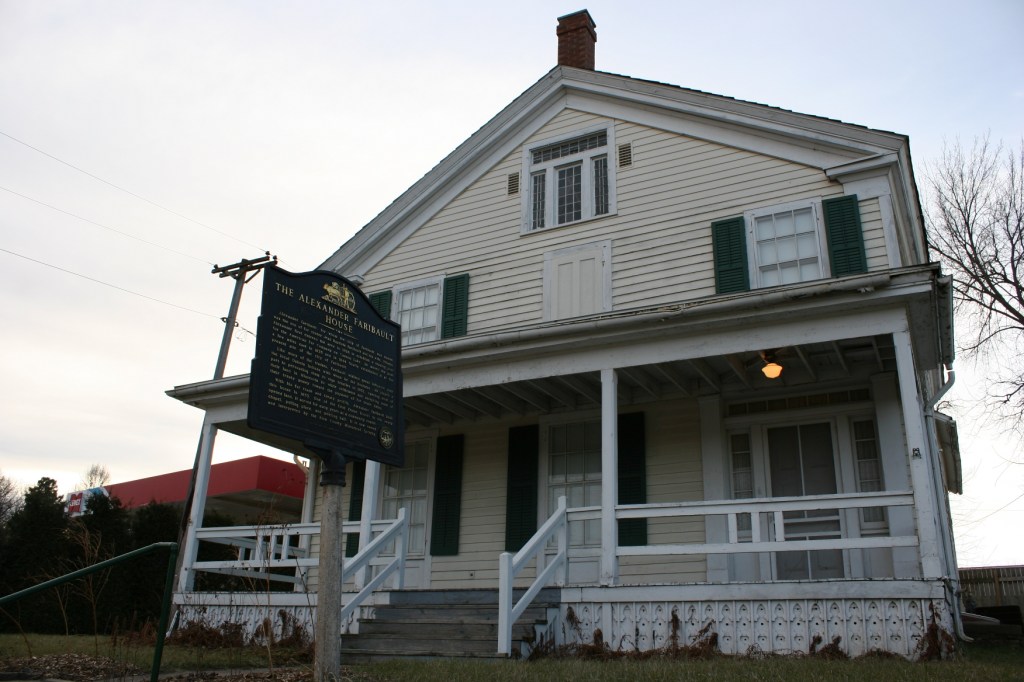
FROM THE EXTERIOR, the simple wood-frame house set atop a hill along Minnesota State Highway 60 in Faribault could pass as just another old house. A porch fronts the house where green shutters flank windows. Nothing remarkable makes this place stand out—except the sign out front.
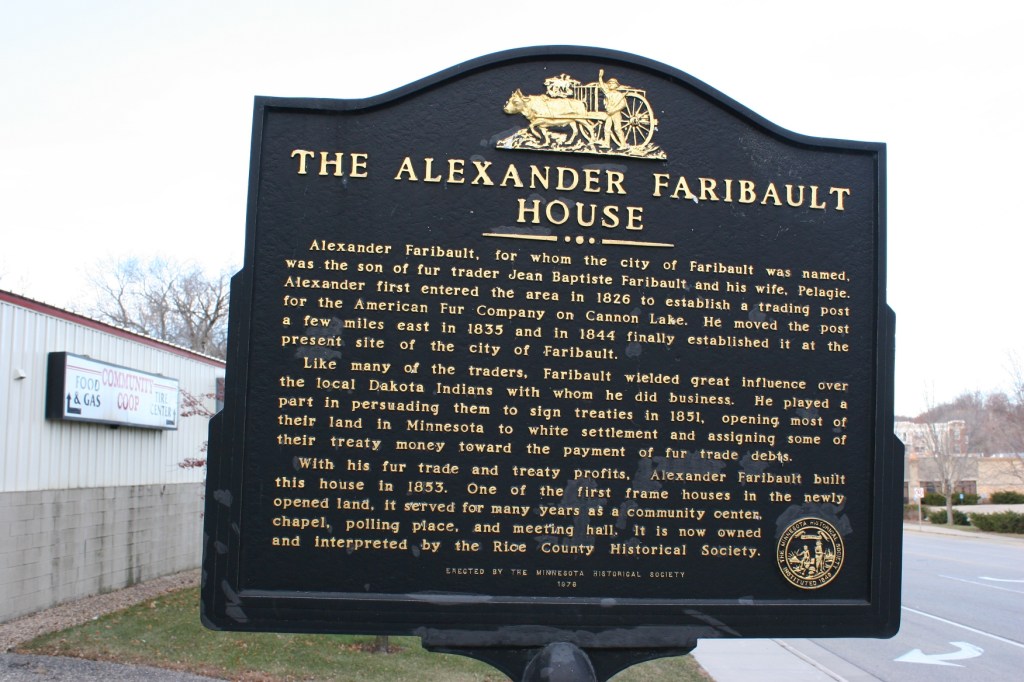
Pause to read that marker and you’ll learn this house was home to town founder Alexander Faribault from its construction in 1853 to 1856 when Faribault and his wife, Mary Elizabeth, and their children moved east across town.
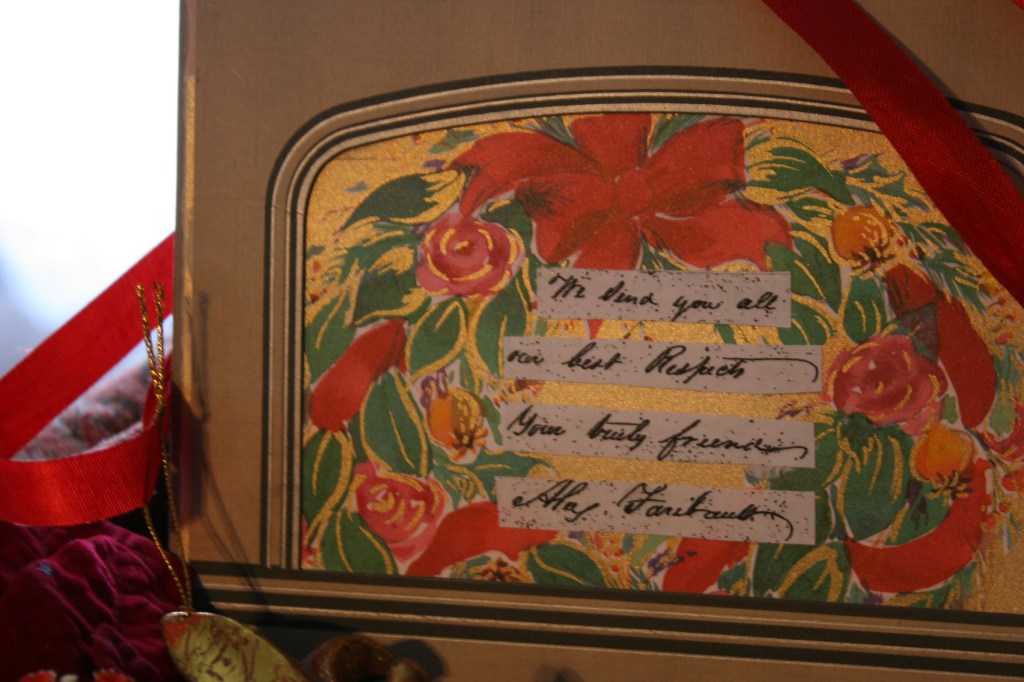
“We send you all our best Respects…your truly friends Alex Faribault”
On a window sill in the dining room.
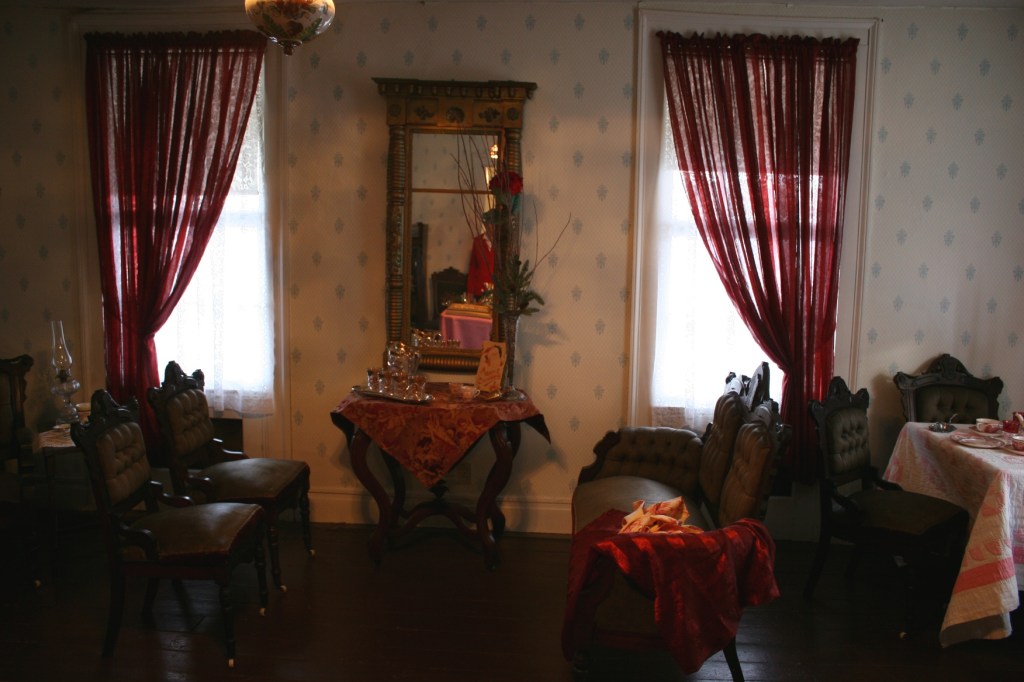
The parlor.
Every December the Rice County Historical Society hosts a weekend Christmas Open House in the building that once served as a home, post office, church, school, hotel, meeting place, store and community center. That annual affair adds an elegant flair in the style of French-Canadian holiday traditions. Alexander Faribault’s father, Jeane-Baptiste, was French-Canadian, his mother a Dakota. Like his father before him, Alexander was a fur trader.
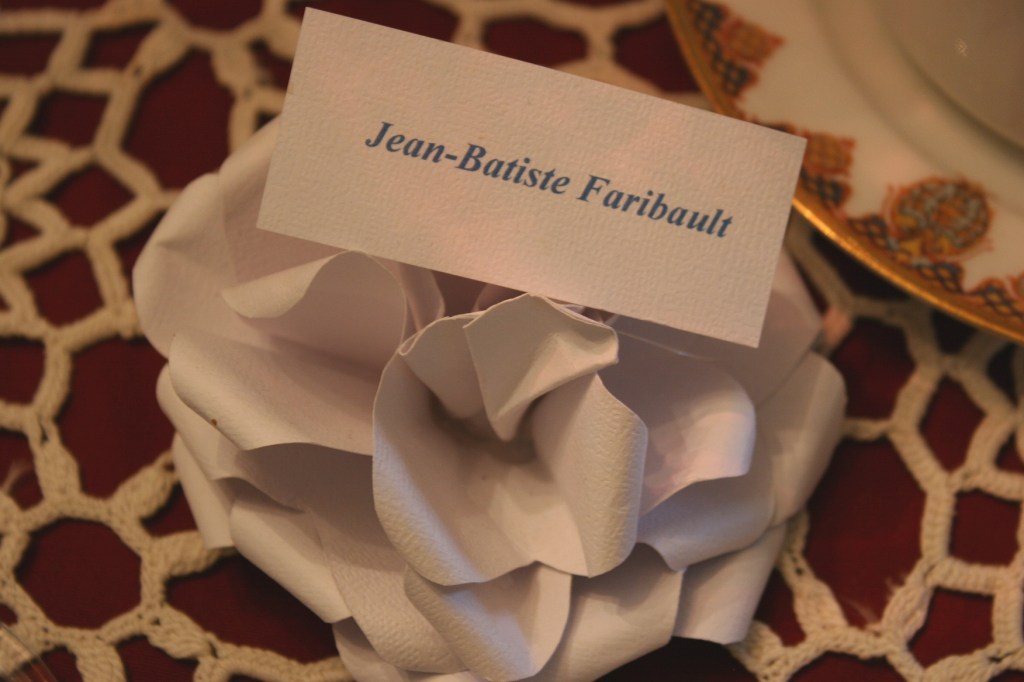
While touring the home Saturday afternoon, I noted how a finely set dining table layered with a crocheted tablecloth and centered by a candied apple centerpiece brought such elegance to this aged home with planked wood floors. In the simplest of surroundings, layers of plates, fine silver and goblets presented a festive and impressive setting.
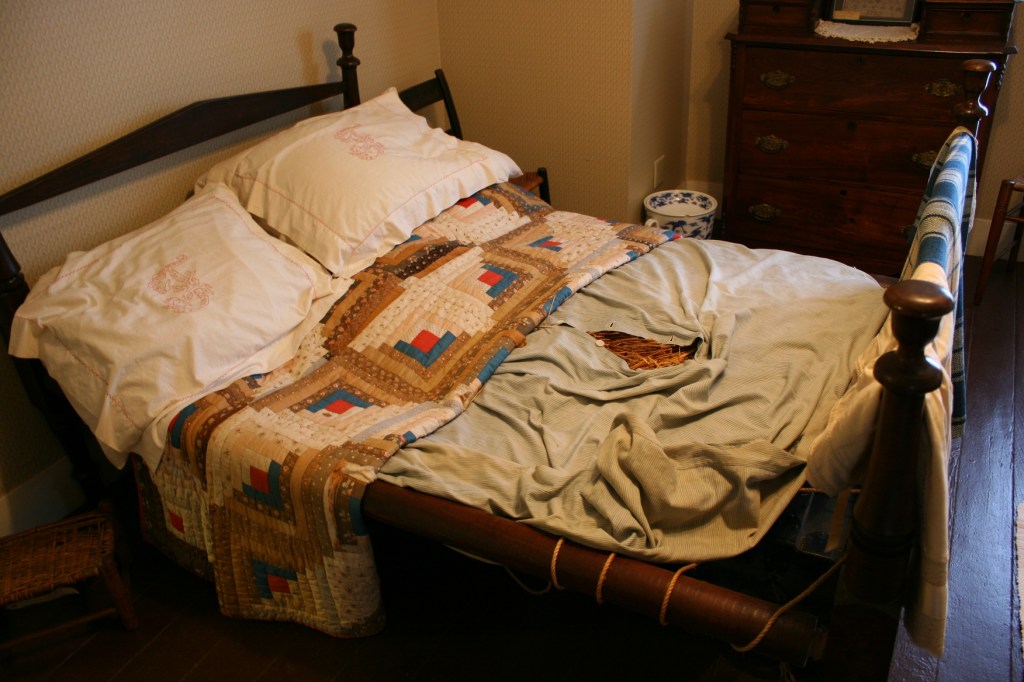
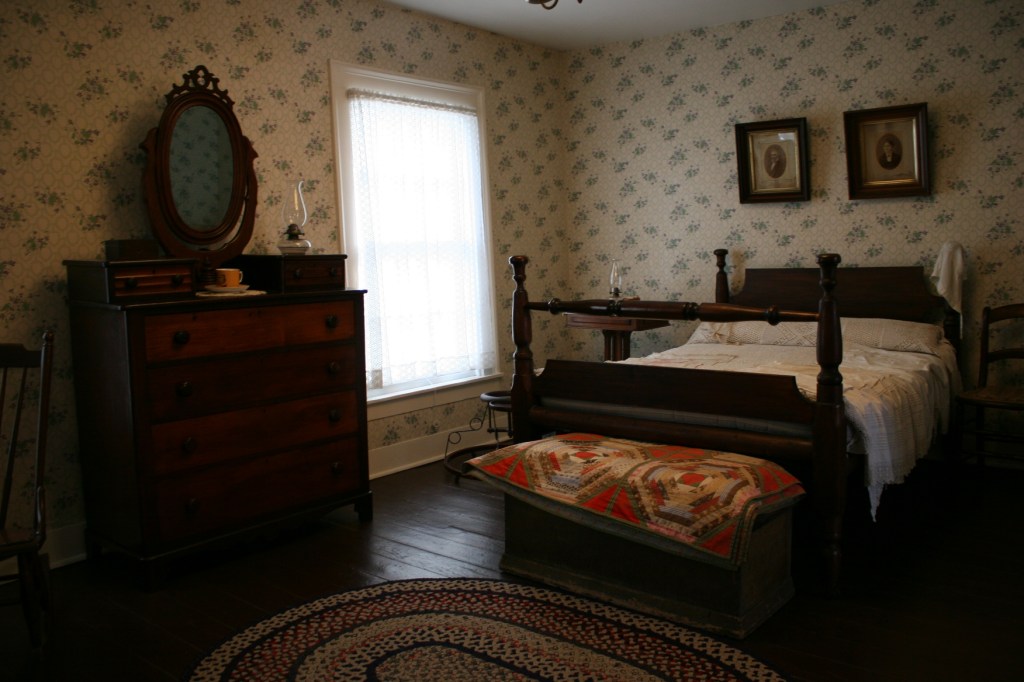
Holiday décor aside, the authenticity of everyday life in the 1850s remains. Here, straw pokes through bedding. Handmade quilts drape trunk and beds. Kerosene lanterns punctuate furniture. Vintage portraits hang on walls. Horsehair cushions soften chairs.
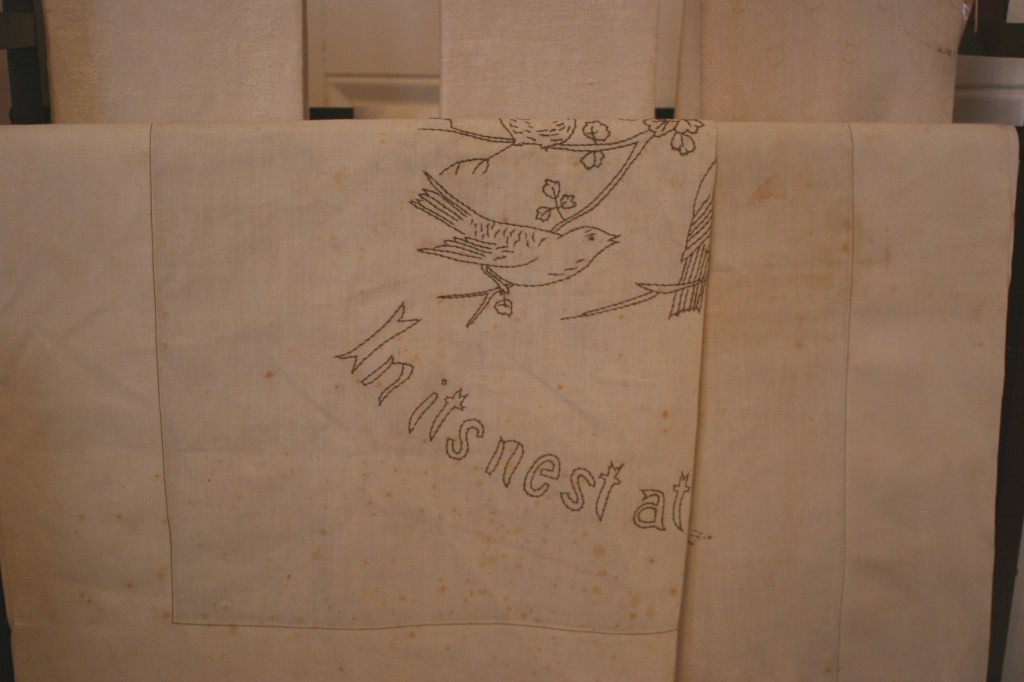
An embroidered linen draped in an upstairs bedroom.
It is humbling to walk through this house, to consider the history made here in meetings, in discussions, in entertaining, in living within these walls as a family.
My community began here, in this spot along the Straight River, in this house built by a fur trader. Though unremarkable in outward appearance, this house holds the essence of a town that grew from humble beginnings into a thriving city that still values its French heritage.
BONUS PHOTOS:
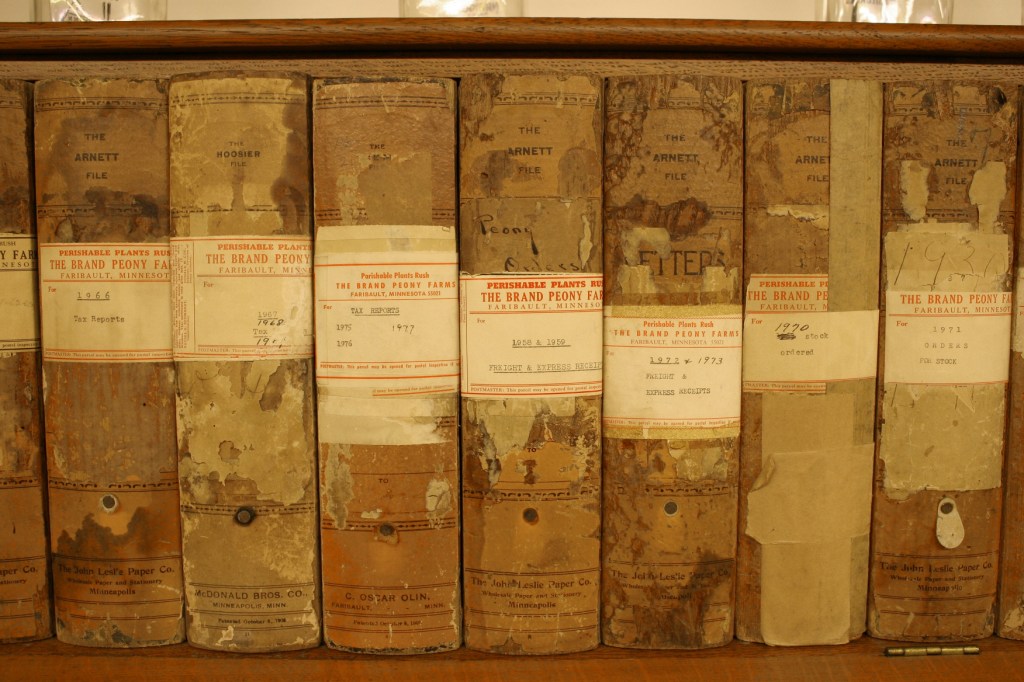
The second floor showcases additional Faribault history including that of local businesses like the Brand Peony Farm…
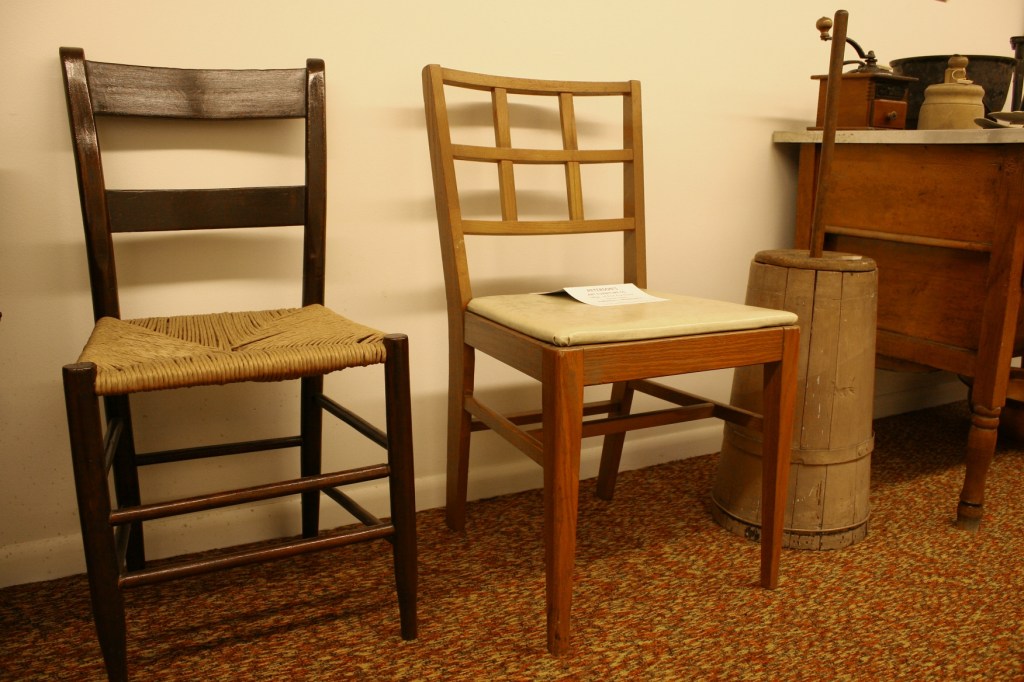
…and these chairs crafted by Peterson’s Art Furniture Co.










Reflecting on Alexander Faribault upon his June 22 birthday June 17, 2026
Tags: Alexander Faribault, Alexander Faribault House, birthday, Calvary Cemetery, celebration, commentary, Dakota, diversity, events, Faribault, fur trader, history, June 22, Minnesota, open house, Rice County Historical Society, Wahpekute
MANY YEARS HAVE PASSED since I toured the nondescript wood-frame house built by Alexander Faribault in 1853. Multiple times a week I pass by this house which sits along busy Minnesota State Highway 60 in downtown Faribault. It’s become so much a part of the local landscape that I don’t even notice the building which was briefly home to Faribault and his family. But it’s an important part of local history given Alexander Faribault founded the town in 1855.
On Monday, June 22, Alexander Faribault will be celebrated at a free birthday open house from 5-6:30 p.m. in his former home at 12 First Avenue Northeast. Born 220 years ago in 1806, Faribault died at age 76 in November 1882.
Attendees at the upcoming birthday celebration can learn a whole lot more about Faribault, the town and the house from staff and volunteers with the Rice County Historical Society. I’m always up to learning more about the city I’ve called home since 1984.
I know the basics about Alexander Faribault, a licensed fur trader who first established a trading post along the Cannon River in 1826 or 1827, depending on your information source. He was only twenty years old. He grew his business throughout the region, trading with the Wahpekute, a band of the Dakota, and moving his trading post to the confluence of the Cannon and Straight Rivers, current-day Faribault.
I imagine for Faribault, who was French Canadian and Dakota, developing trading partnerships with the Dakota proved easy given his understanding of the people, their language and culture. But later that same relationship proved challenging for him. Some locals, after the U.S.-Dakota War of 1862, no longer appreciated his friendship with the Dakota and his willingness to shelter some of them on his farm.
Back then, just like today, this community has not always been accepting of others. In the 1860s, the Dakota were targeted. Today it is the Somali community. It’s disheartening when history repeats itself, when differences in skin color, food, culture and language separate us. Alexander Faribault, as a mixed blood who embraced the Dakota, surely witnessed and felt the challenges of injustices and discrimination.
My community has certainly made progress in welcoming all to our city. Yet, we could do better. I still hear derogatory comments about our Somali neighbors, worsened by the current political climate. I still hear derogatory comments about our Hispanic neighbors, made worse by current immigration policies. We are all, unless Indigenous or descendants of slaves, of immigrant roots, something people often forget.
Alexander Faribault wasn’t “from” here. He was born in Prairie du Chien, Wisconsin. But he came here, established a fur trading business and eventually founded the city of Faribault. By all accounts, he was kind, generous and compassionate and served in many capacities from interpreter to territorial legislator to school board member to postmaster. I’m sure he had his flaws. We all do. But it seems Alexander Faribault did his best to build a strong and inclusive community that has grown into the diverse city of today. I think he’d appreciate a legacy of diversity.
On a 1958 marker at the entrance to Calvary Cemetery where Alexander Faribault is buried, these words are written about him: Race or creed did not color his judgments. He saw in every man the image of God and thereby the possibility of making this a better place in which to live.
Those seem necessary and profound words for all of us to read. Especially today.
© Copyright 2026 Audrey Kletscher Helbling