Minnesota Prairie Roots

Writing and photography by Audrey Kletscher Helbling

In Cannon City: A grassroots Americana commemoration of Memorial Day May 31, 2016

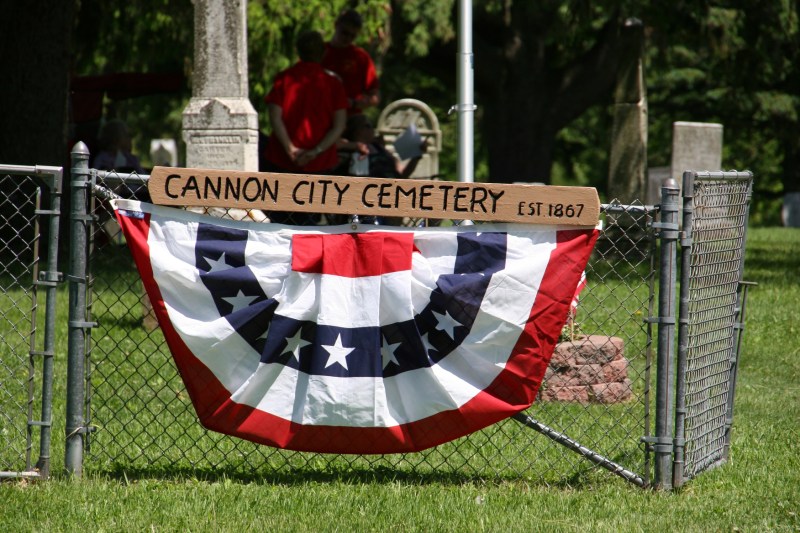
The entrance to the Cannon City Cemetery is decorated for Memorial Day.

The entrance to the Cannon City Cemetery is decorated for Memorial Day.

THERE’S A CERTAIN SENSE of comfort in tradition. For nearly 100 years, folks have gathered each Memorial Day at the Cannon City Cemetery to honor our veterans.

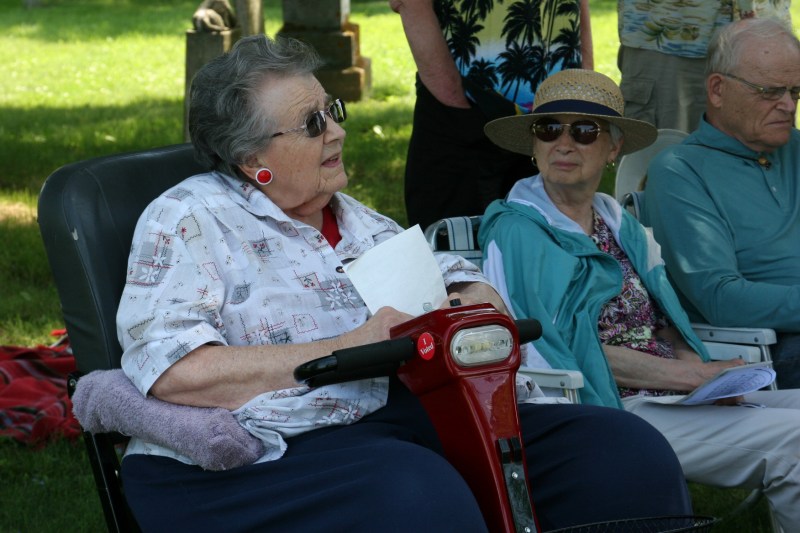
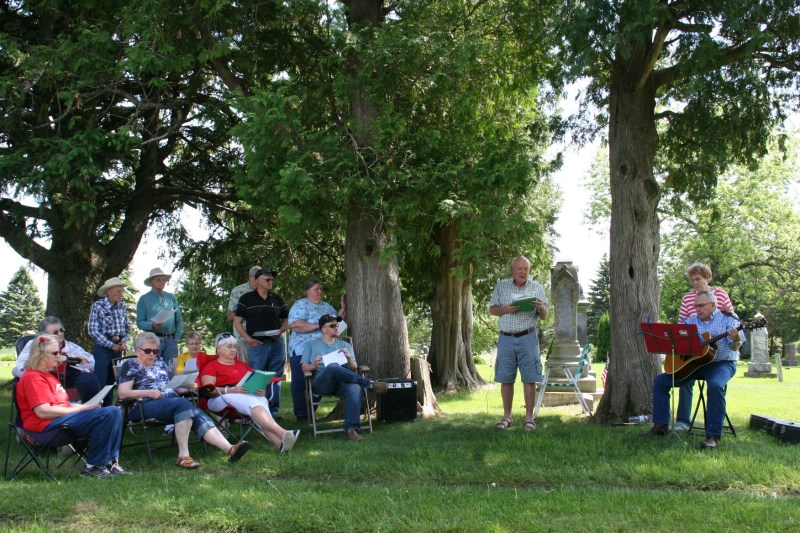
This shows a portion of those gathered for Monday's semi-formal program.

This shows a portion of those gathered for Monday’s semi-formal program.

In the shade of spruce and cedar trees and surrounded by gravestones, I listened to natives read The Gettysburg Address, Freedom, What Heroes Gave and more; recite In Flanders Fields; and recall the history of this celebration. A Civil War veteran initially asked students from the village school to put on a Memorial Day program. In those early years, pupils marched from the school to the cemetery bearing floral wreaths. Today the cemetery board organizes this annual observance.

Mel Sanborn, left, emceed the program.

Mel Sanborn, left, emceed the program.

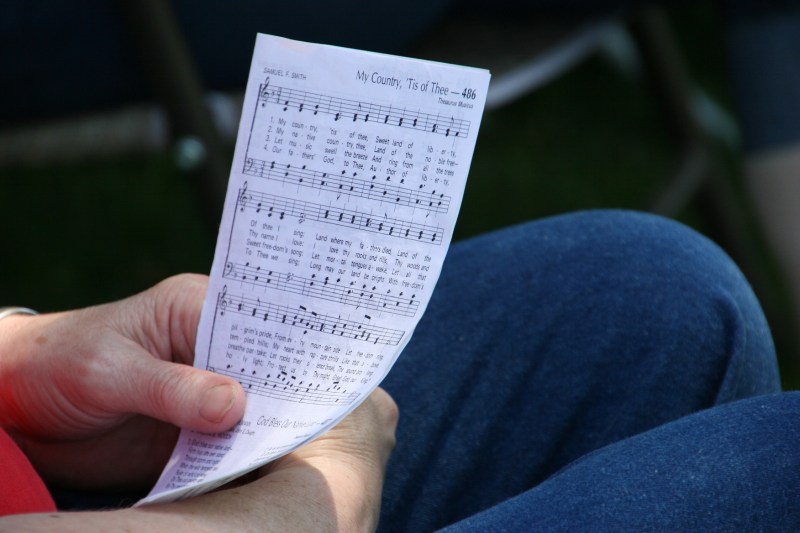
Song sheets were distributed to those in attendance and then collected to save for next year.

Song sheets were distributed to those in attendance and then collected to save for next year.

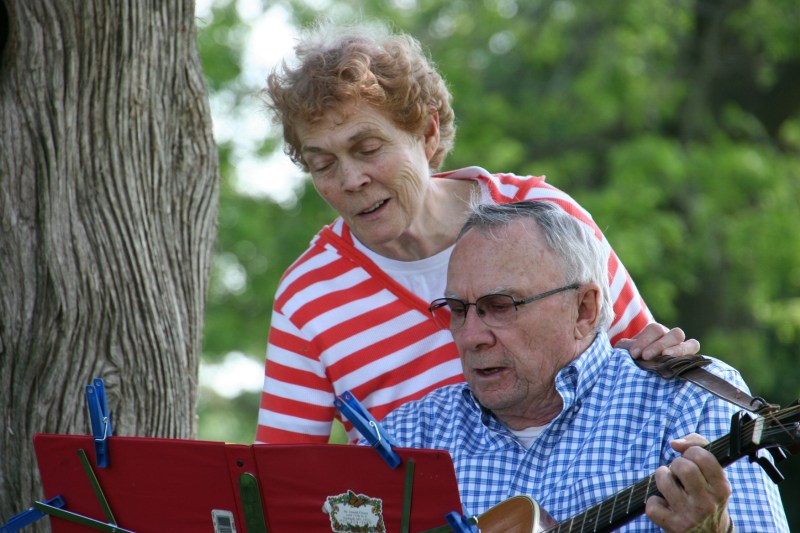
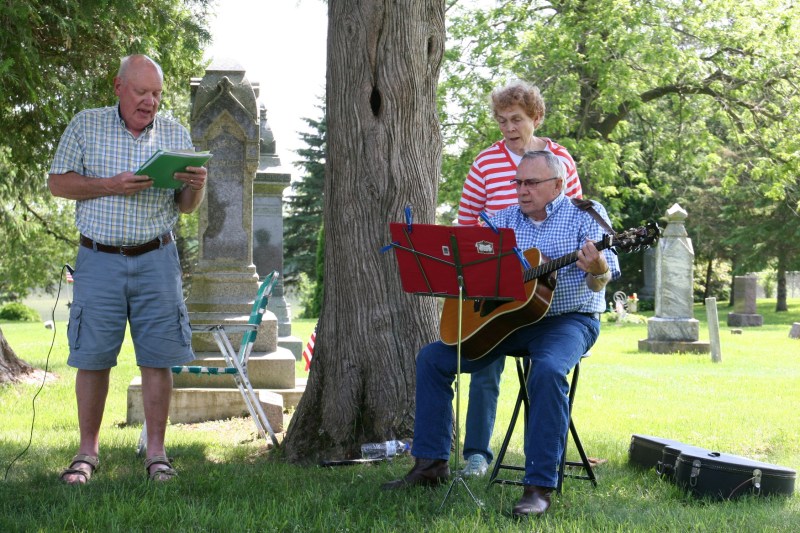
Don, on the guitar, and Judy Chester lead the singing.

Don, on the guitar, and Judy Chester lead the singing.

We sang patriotic songs like The Star Spangled Banner, The Battle Hymn of the Republic, and America the Beautiful, some accompanied by a guitar, some not. Voices rose 40-plus strong above the shrill of a cardinal and the distant muffle of gunfire. Sun shone. Breeze rippled.

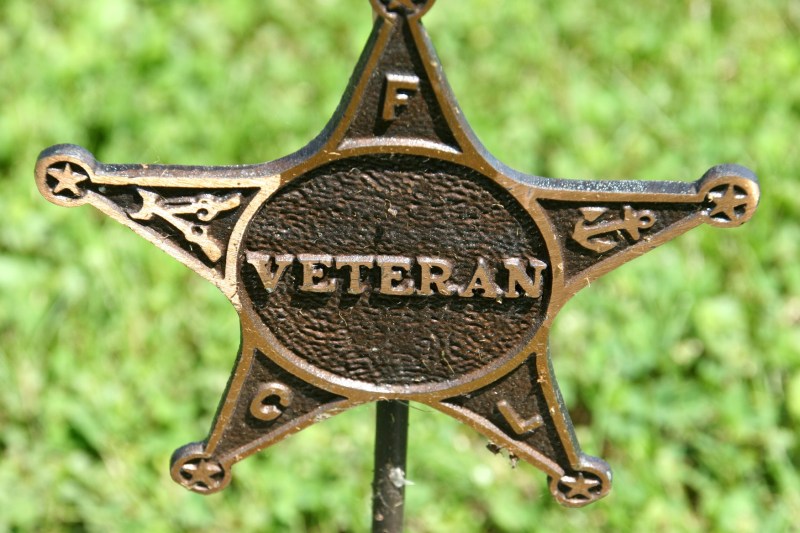
A bronze star marks a veteran's grave.

A bronze star marks a veteran’s grave.

The Cannon City Cemetery offers an ideal setting for a grassroots remembrance of those who have served our country. Therein lies its appeal to me.

Giving the history of and then reciting In Flanders Fields.

Giving the history of and then reciting In Flanders Fields.

I have no connection to this place where nearly 50 veterans are buried. But this ceremony reminds me of the Memorial Day programs of my youth. As an aging senior recited In Flanders Fields, I mouthed the words I recited so many years ago on the stage of the Vesta Community Hall.

Fields surround the cemetery.

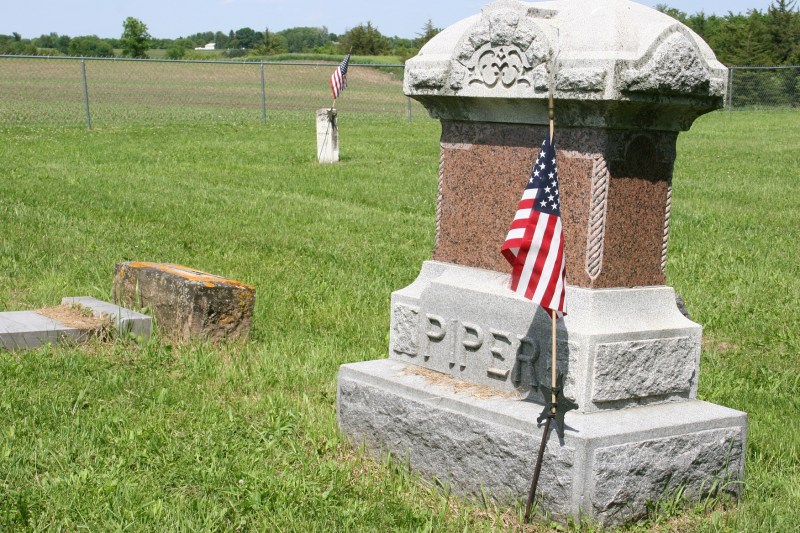
Fields surround the cemetery where American flags marked veterans’ graves on Memorial Day.

In its peaceful location among farm fields, this cemetery reminds me of home. Of tradition.

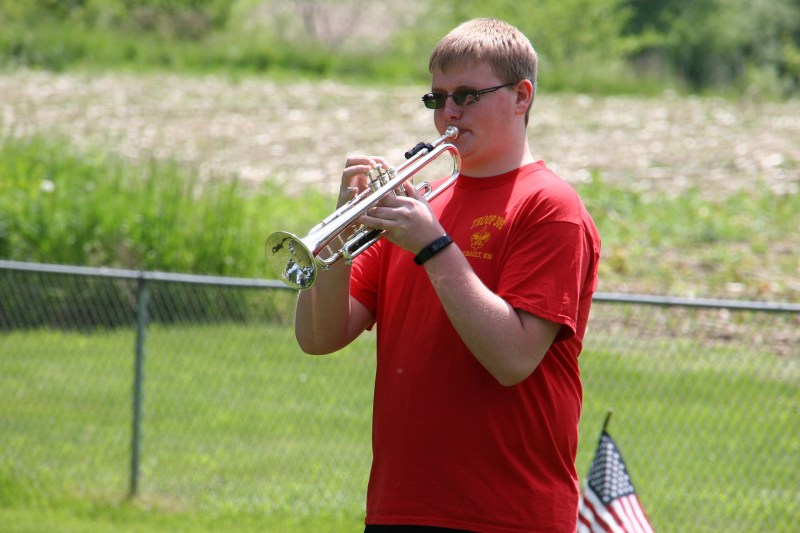
Sam Wilson ends the program by playing taps.

Sam Wilson ends the program by playing taps.

And when taps sounded, I was reminded, too, of just how much some sacrificed so that I could stand here, in this cemetery, on Memorial Day, hand across heart reciting The Pledge of Allegiance.

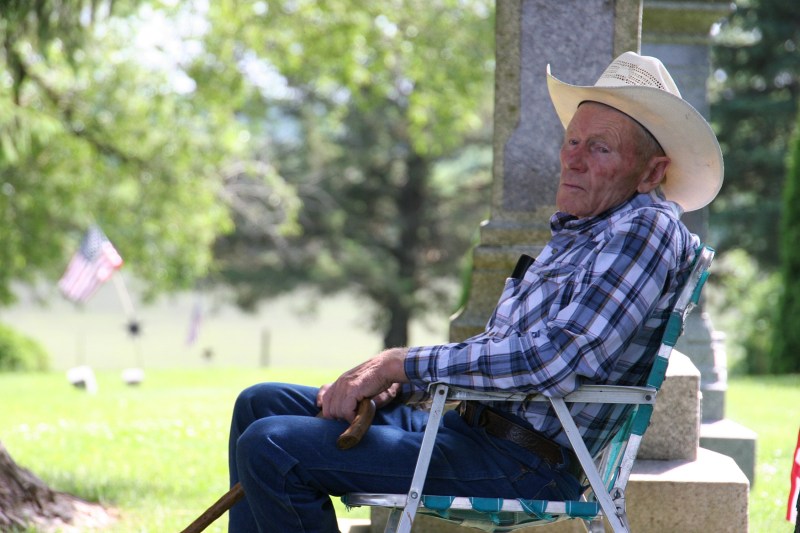
Cannon City native Bob Lewis is a fixture at the annual Memorial Day program. Locals are already tapping his historical knowledge in preparation for the 150th anniversary celebration.

Cannon City native Bob Lewis is a fixture at the annual Memorial Day program. Locals are already tapping his historical knowledge in preparation for the 150th anniversary celebration in 2017.

FYI: Next year the Cannon City Cemetery turns 150 years old. Plans are already underway for a special celebration to mark the occasion. If you want to experience grassroots Americana on Memorial Day, this is the place to be.

© Copyright 2016 Audrey Kletscher Helbling


Beyond the Minnesota Zoo May 25, 2016

Filed under: Uncategorized — Audrey Kletscher Helbling @ 5:00 AM
Tags: , , , , , , ,

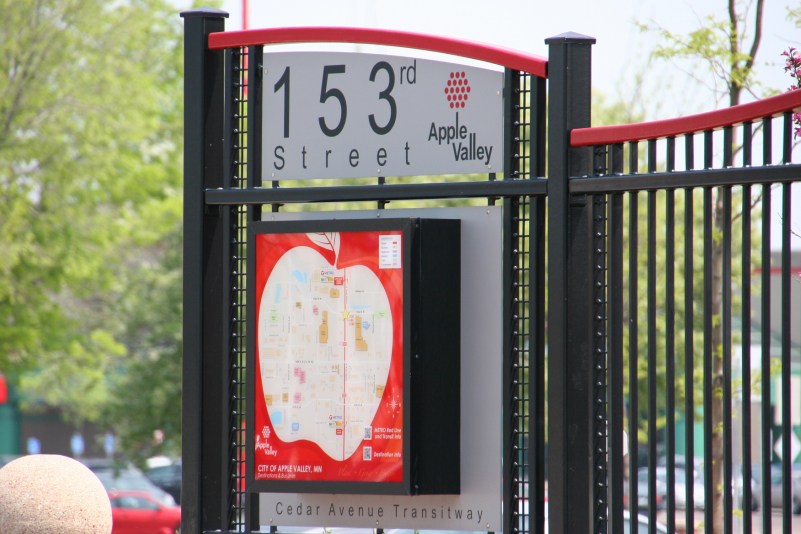
Apple Valley sign


WAITING AT A STOPLIGHT along Cedar Avenue in Apple Valley, I noticed apple-shaped street-side signs. That prompted me to wonder about this south metro community’s name and history.

Mostly, I connect Apple Valley with the location of the Minnesota Zoo. And an Original Mattress Factory store; a brother-in-law is an OMF vice president.

But what about those apples? According to the city website, a builder named several of his plats Apple Valley and then planted an apple tree on each home site in some of his new developments. What a great idea. That was in the early 1960s.

In 1968, residents voted to incorporate the Township of Lebanon as the Village of Apple Valley.

As cities go, Apple Valley is relatively young. I’ve mostly lumped it with other south metro communities like Lakeville and Burnsville. Maybe it’s time to take a closer look, to explore beyond the few businesses I’ve occasionally shopped along and off busy Cedar Avenue. Does Apple Valley have an established downtown? What am I missing that would be worth seeing?

The Visit Apple Valley website uses these words (matched with photos) to describe an Apple Valley experience: serenity, luxury, ahhhhhhh, relaxation, play, indulge.

Interesting enough, it also touts Apple Valley as “the best place to stay when visiting the Mall of America” some five minutes away. That helps the local hotel business. But what about the local retailers who would prefer shoppers stay in town? I suppose, though, those MOA visitors do drop money in local shops…

© Copyright 2016 Audrey Kletscher Helbling


A final look at weddings in Steele County, Part III May 5, 2016

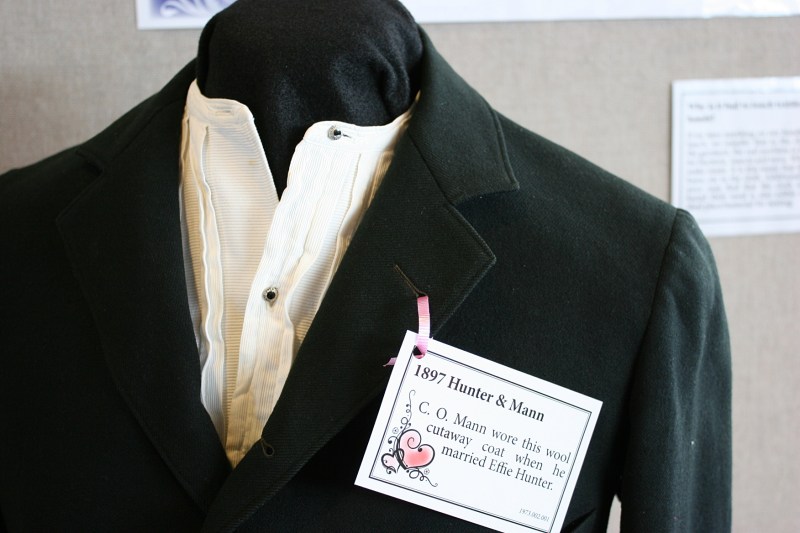
A groom's jacket from

A groom’s jacket from 1897.


WHAT ABOUT THE GROOMS? I wondered as I toured the Wedding Traditions of Steele County exhibit at the Steele County History Center in Owatonna.


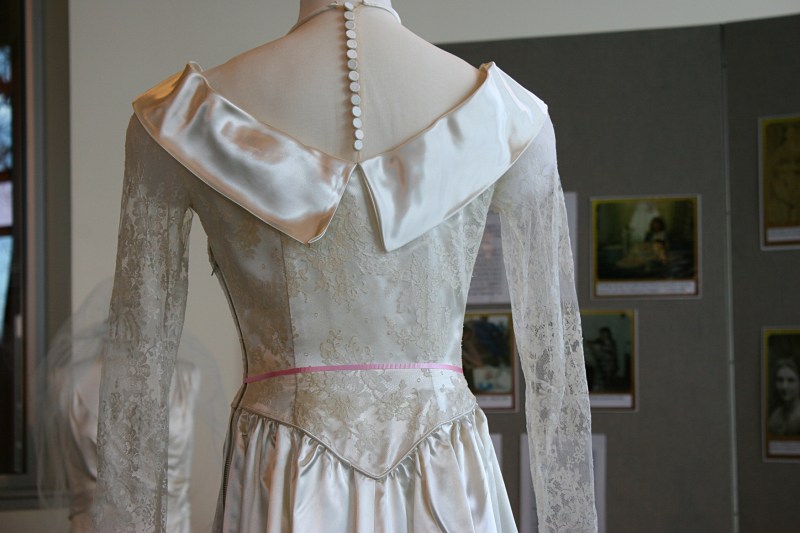
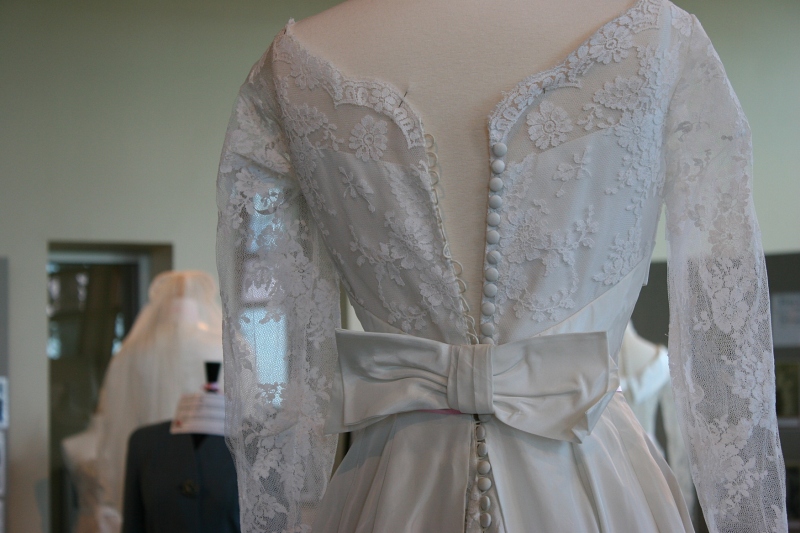
Look at the fabulous detail on the back of this bridal gown.

Look at the fabulous detail on the back of this bridal gown.


Among the nearly two dozen bridal gowns displayed, I noticed only two dresses complimented by groom’s attire. What’s with that? I figured I knew the reason. Char Ost, a volunteer who helped with the project, confirmed my suspicions. The museum simply doesn’t have groom’s clothing in its collection (other than those displayed and some military uniforms) because the men continued to wear their suits after their weddings.

Makes sense.


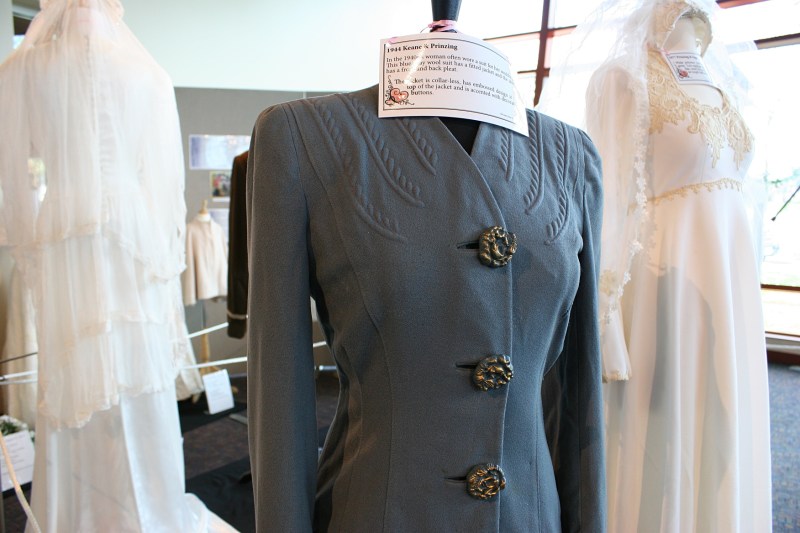
The bride wore a blue grey wool suit at her 1944 wedding.

The bride wore a practical blue grey wool suit at her 1944 wedding.


I really enjoyed this exhibit. It gave me insights on how world events and the economy and personal wealth (or lack thereof) and tradition shaped weddings.


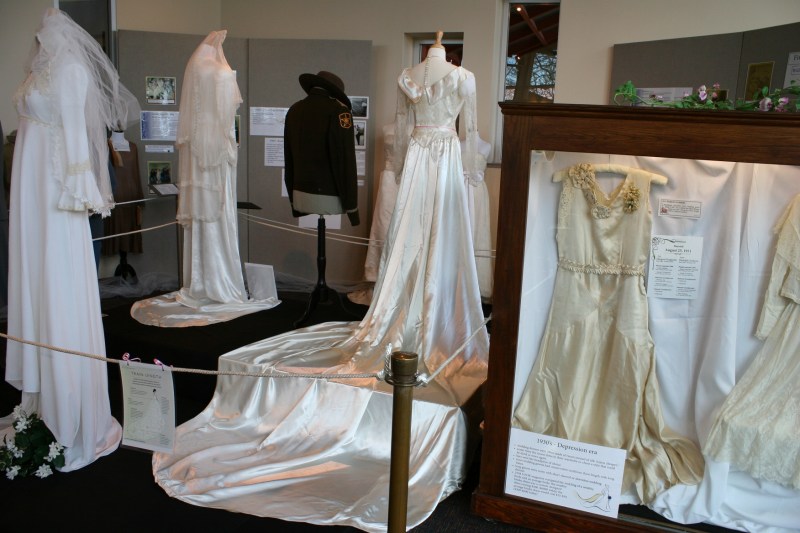
This dress had the longest train of all those on display.

This dress had the longest train of all those on display.


Here’s one final look at this exhibit from my perspective. You may notice things I didn’t if you were to view this display at the Steele County History Center. And that’s the beauty of a collective historical display. We each bring our own backgrounds, our own interests, our own experiences to an exhibit.


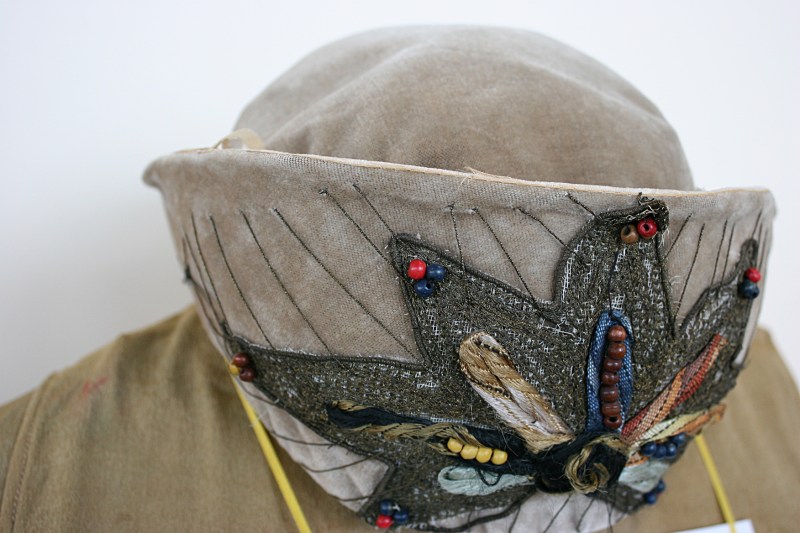
My favorite headpiece is this lovely hat worn by a bride in 1923.

My favorite headpiece is this lovely hat worn by a bride in 1923.


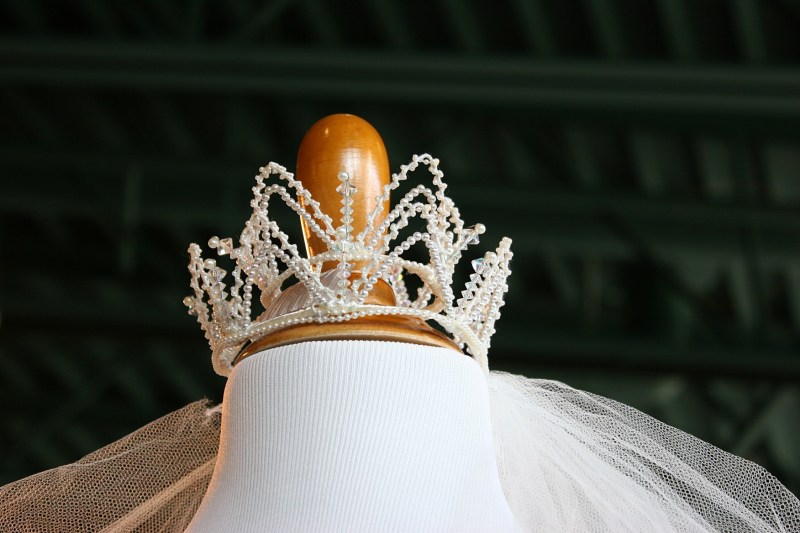
A crown headpiece, probably from the 1950s (I don't recall).

A crown headpiece, probably from the 1950s (I don’t recall).


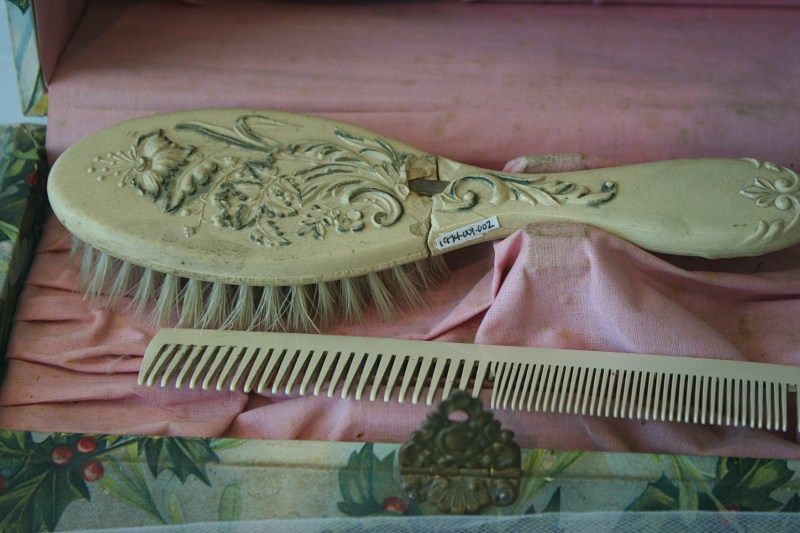
Hair prep essentials.

Hair prep essentials.


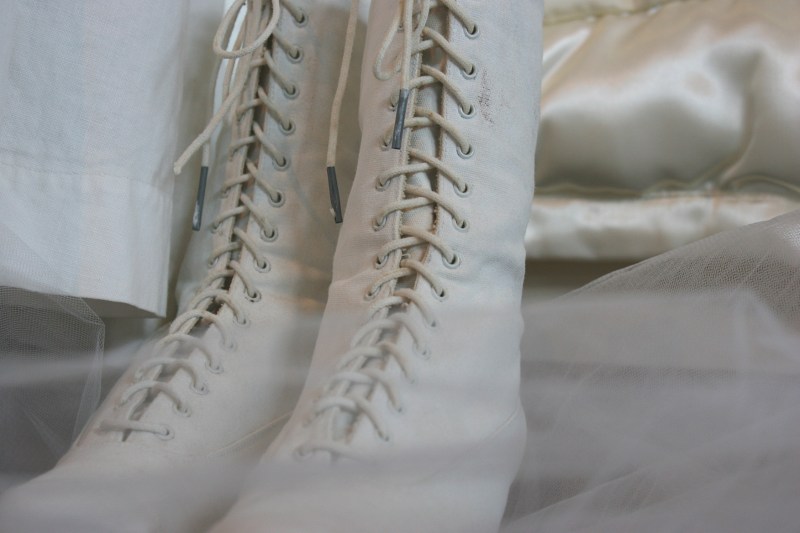
Imagine fitting your feet into these tiny boots and then attempting to lace them.

Imagine stuffing your feet into these tiny boots and then attempting to lace them.


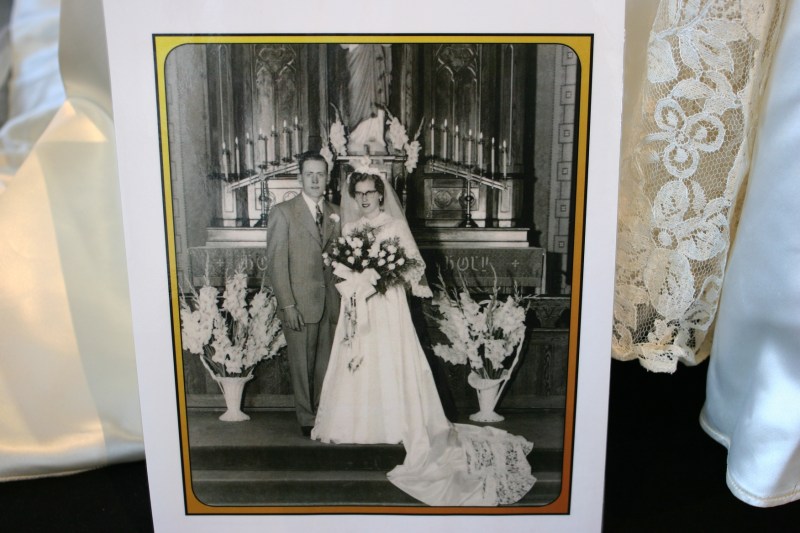
Vintage portraits are part of the exhibit, helping to tell the wedding story.

Vintage portraits are part of the exhibit, helping to tell the wedding story.


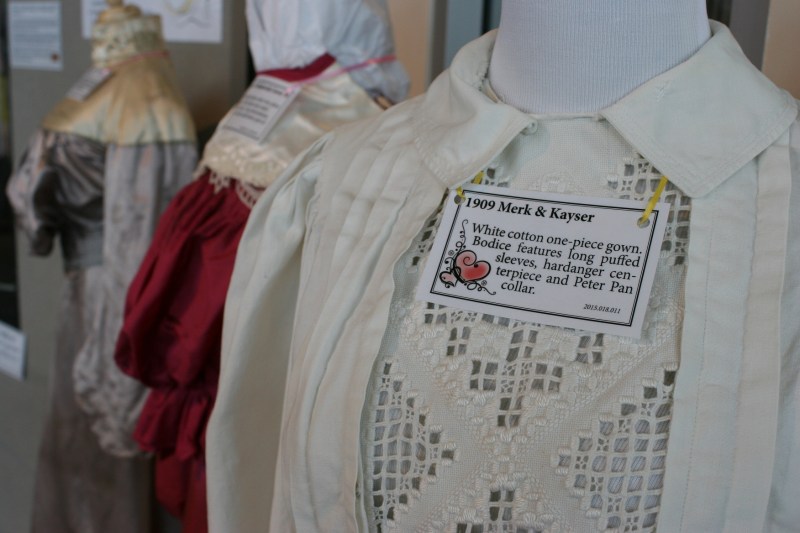
Look at the beautiful hardanger on this 1909 wedding gown.

Look at the beautiful hardanger on this 1909 wedding gown. Simply stunning in handmade simplicity.


FYI: To read my previous posts in this three-part series, click here. And then click here.

© Copyright 2016 Audrey Kletscher Helbling


A historical look at weddings in Steele County, Part I May 3, 2016

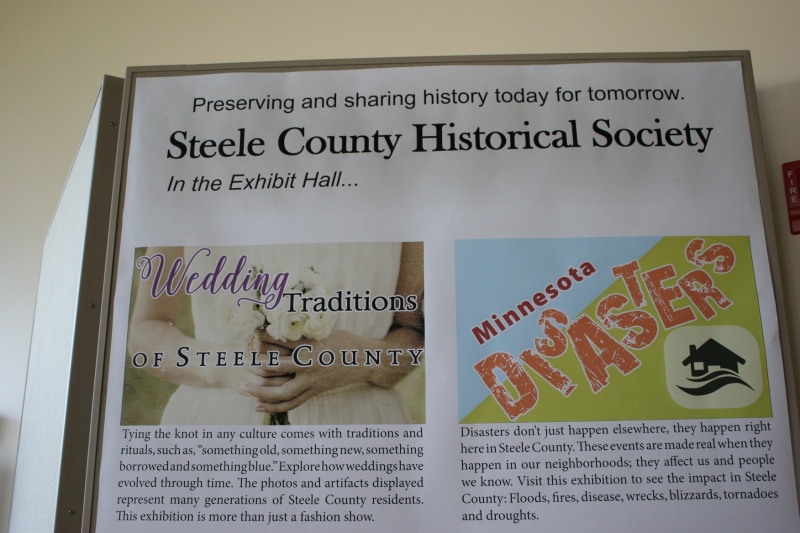
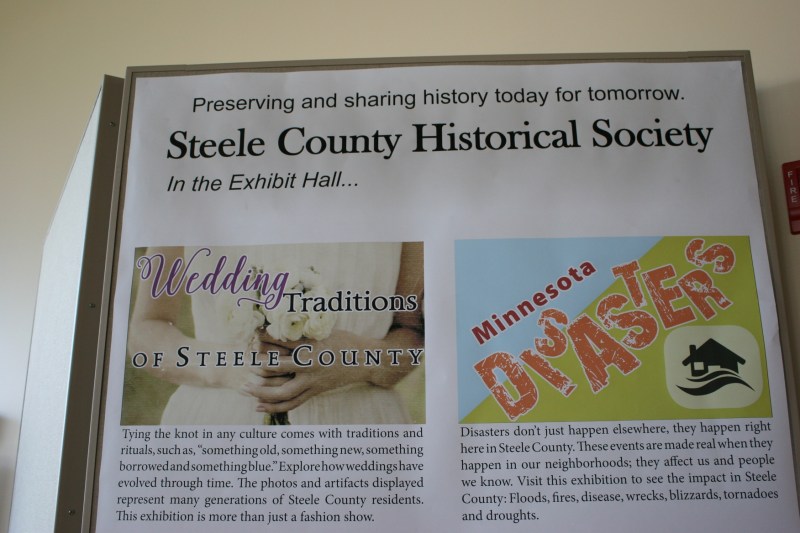
This sign marks the exhibits currently showing in the Steele County History Center through spring 2017.

This sign marks the exhibits currently showing in the Steele County History Center through spring 2017.

THE DETAILS ARE, OH, SO LOVELY. Dainty buttons. Lace. Shiny satin. You’ll see them all in Wedding Traditions of Steele County, a newly-opened exhibit at the Steele County History Center in Owatonna.

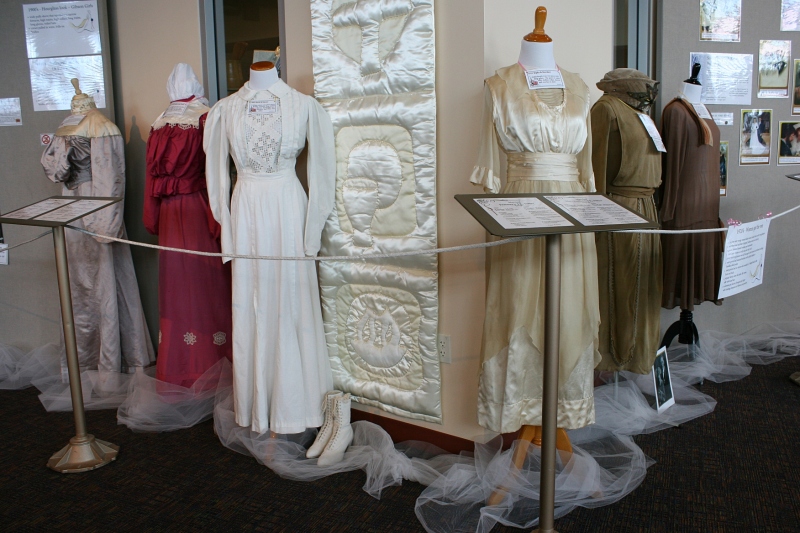
This section highlights dresses from the 1910s and 1920s.

This section highlights dresses from the early 1920s.

Nearly two dozen wedding dresses take center stage in this exhibit created by three volunteers and a museum staffer over some six months.

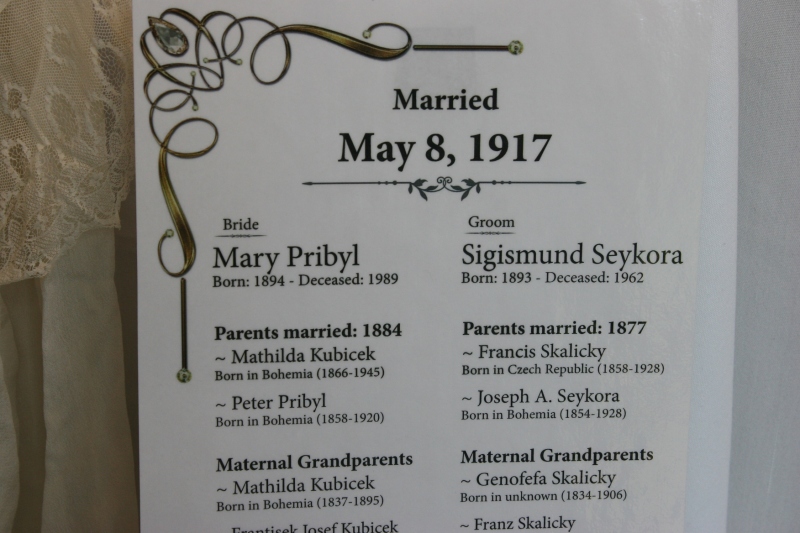
The exhibit team carefully researched the genealogies of the brides and grooms.

The exhibit team carefully researched the genealogies of the brides and grooms.

But this exhibit extends well beyond dresses to include wedding history, traditions and genealogy. It’s an impressive visual documentation, especially fitting as the wedding season begins.

The dress and matching feathered hat worn at this 1923 wedding are in lovely brown tones.

The dress and matching feathered hat worn at this 1923 wedding are in lovely brown tones.

Did you know, for example, that a bride didn’t always wear white? Prior to 1840, when Queen Victoria married Prince Albert in an all-white gown, a bride simply wore her best dress, no matter the color. Blue, rather than white, once symbolized purity.

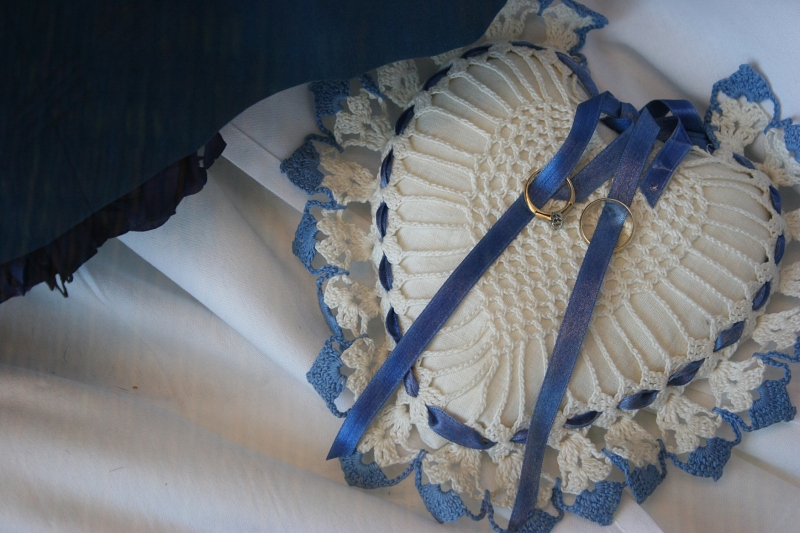
"Something blue" is woven into this crocheted ring bearer's pillow.

“Something blue” is woven into this crocheted ring bearer’s pillow.

And about that “something old, something new, something borrowed, something blue”…this started as a tradition to ward off evil spirits. You’ll learn that and a whole lot more as you peruse this multifaceted exhibit.

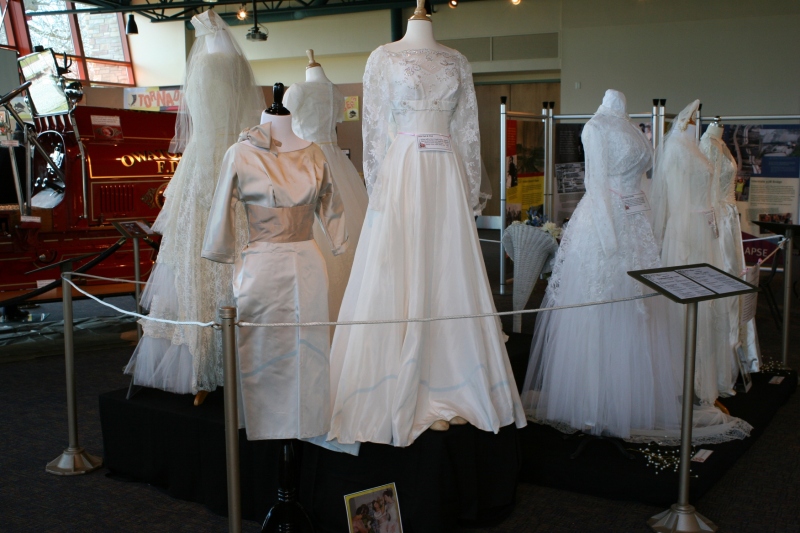
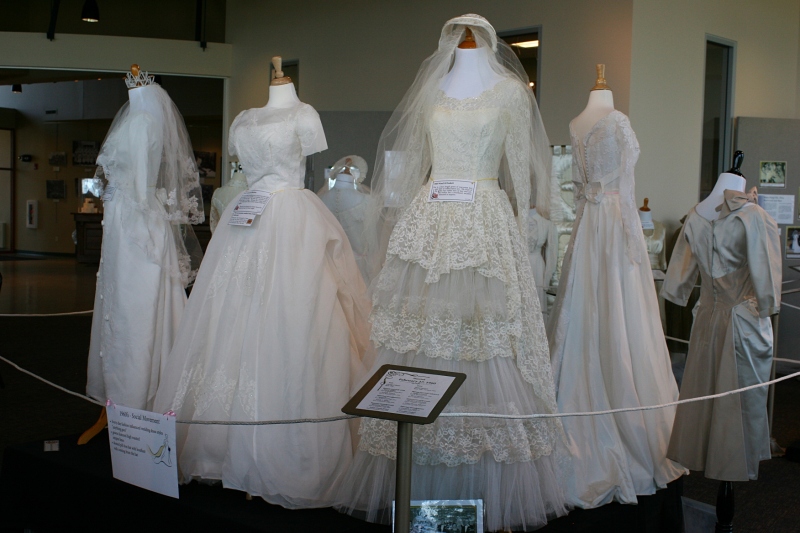
Fuller and lacier dresses defined the style of gowns in the 1950s.

Fuller and lacier dresses defined the style of gowns in the 1950s.

Volunteer Char Ost spent hours researching and planning with team members at meetings and at home as this exhibit came together. She’s a former museum staffer and board president who simply thought the project would be fun. The team reviewed photos of wedding dresses in the museum collection before choosing gowns that would display nicely and were in suitable condition to showcase, she said. Those selected gowns cover the time period from 1896 – 1997.

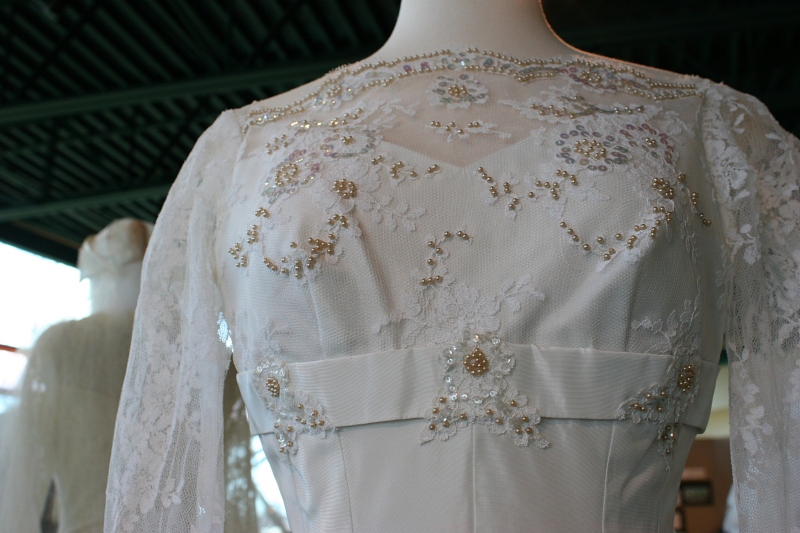
This photo shows the details on a 1950s dress.

This photo shows the bead and lace details on a 1950s wedding dress.

Missing, though, are wedding dresses from the 1980s and more from the 1990s. People are still familiar with those bridal gowns and those brides are not giving away their dresses, including to the museum, Ost noted. That explains why I didn’t see 1980s dresses reflecting the royal influence of Princess Diana’s wedding gown. I was married in 1982 and my $80 wedding dress definitely did not have beads, sequins, puffy sleeves or a long train like that of the princess.

Margaret Ringhofer wore this dress at her August 25, 1931, wedding. It reminds me of my Grandma Josie's bridal gown.

Margaret Ringhofer wore this dress at her August 25, 1931, wedding. It reminds me of my Grandma Josie’s bridal gown.

As I studied the gowns, grouped by time periods, it was easy to see the period influence. In the glass encased Depression era dresses, conservatism shows in neck lines, fabric choices and style. I spotted a 1931 gown that looks a lot like my maternal grandmother’s, a simple style I considered wearing on my wedding day until discovering I was considerably taller than Grandma Josephine.

Wedding dresses from the 1960s.

Wedding dresses from the 1960s.

In the 1960s, bridal gowns reflected “anything goes,” according to a posted sign. How true of that decade.

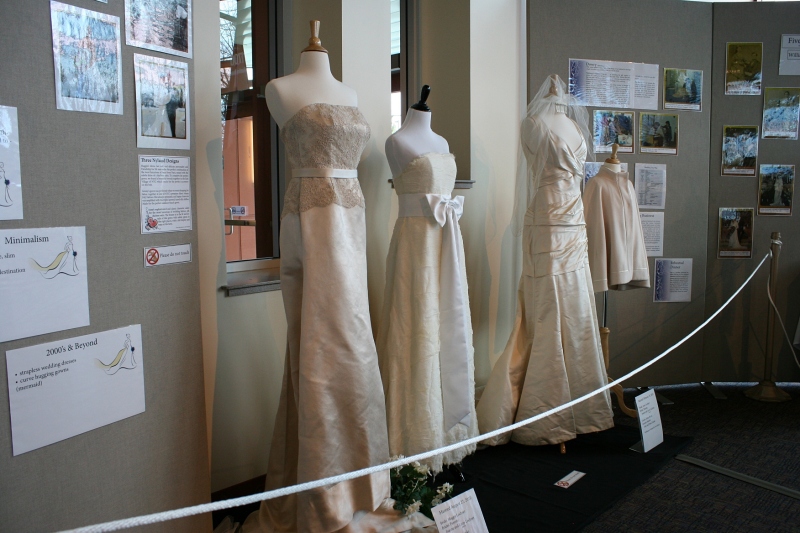
These three dresses were designed by Scott Nylund, a 1995 graduate of Owatonna High School. He once worked for music superstar Beyonce'.

These dresses worn by Maggie, Genny and Anne were designed by Scott Nylund, a 1995 graduate of Owatonna High School. He once worked for music superstar Beyonce’.

Three dresses from the 2000s are also included, specifically sought out for the exhibit. Owatonna native and fashion designer Scott Nylund created the gowns. They are luxuriously stunning with laces from Paris, a brooch from the East Village of NYC and fabrics of silk chiffon and silk duchess satin.

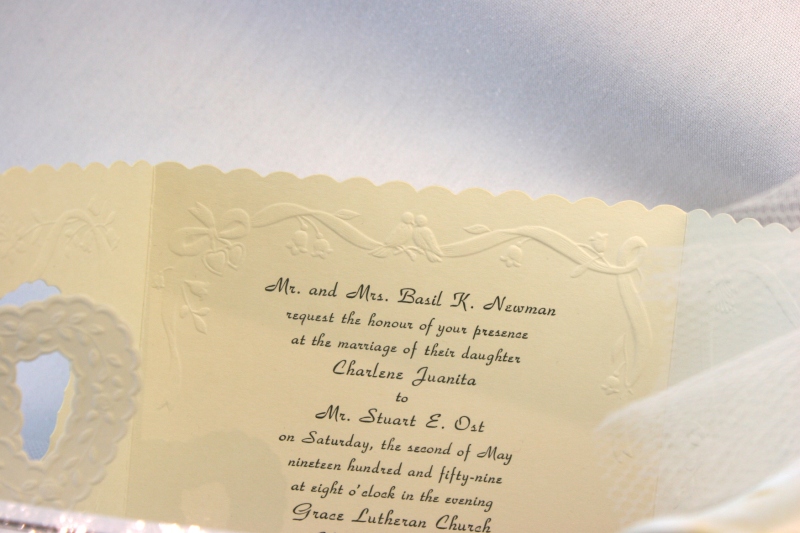
The invitation to the wedding of Charlene Newman and Stuart Ost is displayed in a case.

The invitation to the 1959 wedding of Charlene Newman and Stuart Ost is displayed in a case.

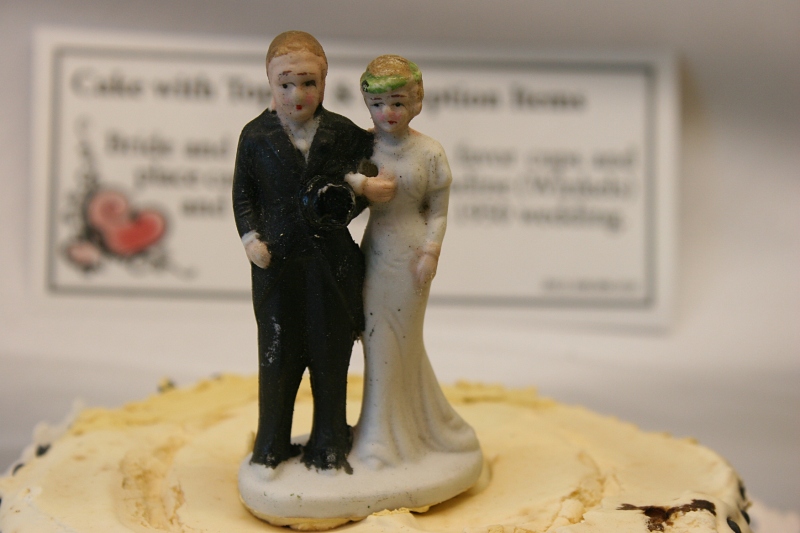
Char and Stuart Ost's 1959 wedding cake topper.

Char and Stuart Ost’s wedding cake topper.

You’ll find other wedding related items displayed, including an invitation, napkin, cake topper, photo and hand-sewn apron from volunteer Char’s 1959 wedding.

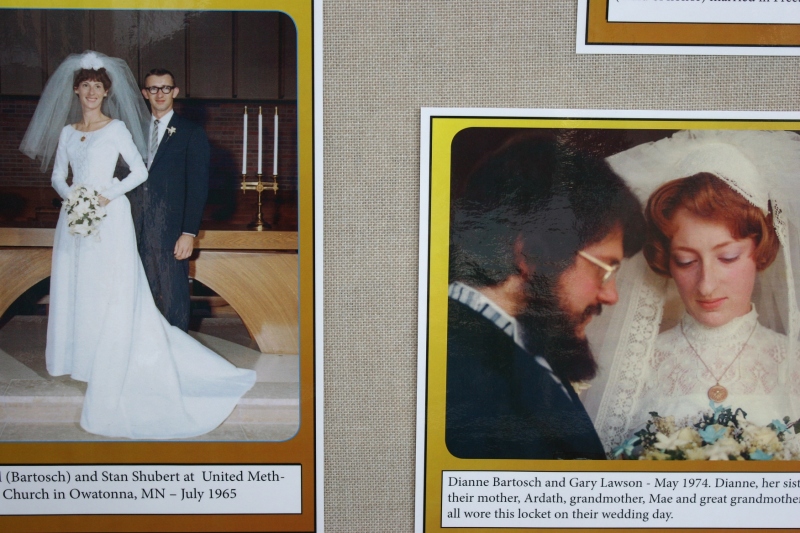
Portraits, too, tell a story about styles, traditions and even photography.

Portraits, too, tell a story about styles, traditions and even photography.

Many wedding portraits are interspersed with dresses as is information about traditions like dowries, engagement rings, feeding of the wedding cake and even the bunny hop.

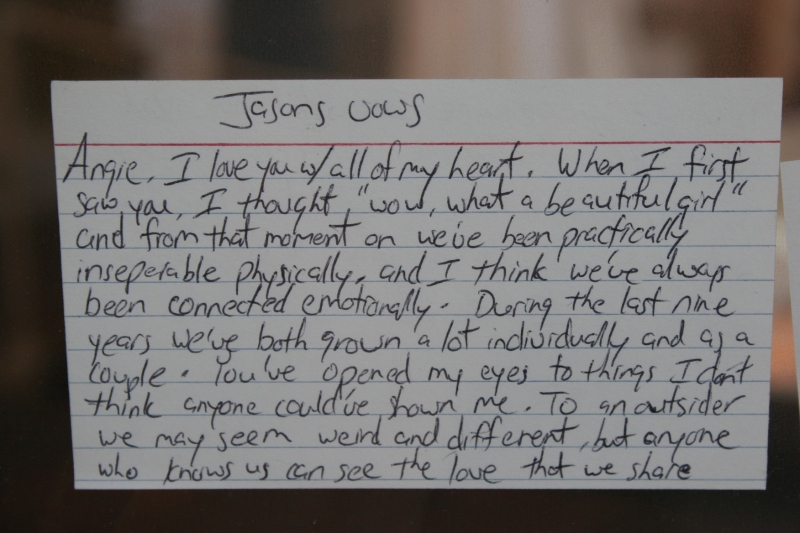
Even handwritten vows are part of the exhibit.

Even handwritten vows are part of the exhibit.

The display gets as personal as Jason and Angie’s wedding vows hand-printed on recipe cards.

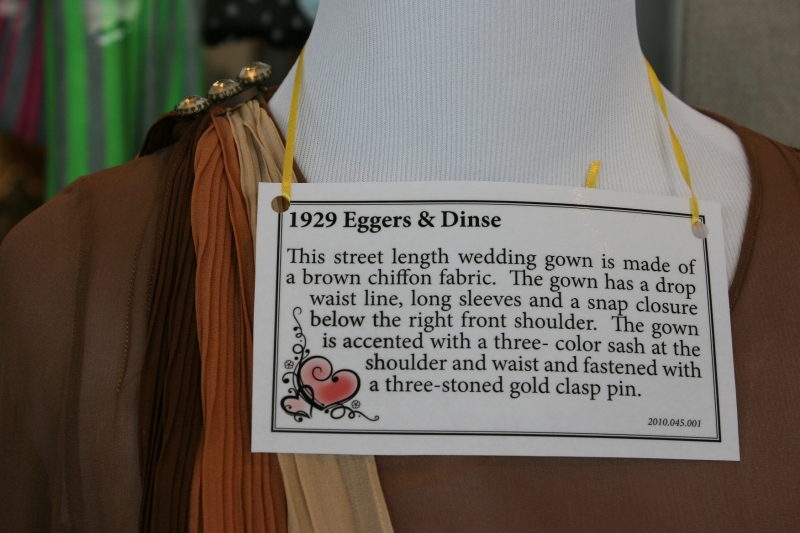
Volunteers worked hard to assure that descriptions of the dresses were accurate, team member Char Ost said.

Volunteers worked hard to assure that descriptions of the dresses were accurate, team member Char Ost said.

It’s clear the organizers of this exhibit invested a lot of time in gathering and sharing of information, from the genealogy associated with each dress to the descriptions of the dresses right down to the type of fabric, neckline, sleeves and more.

Some dresses could not be fully closed on the fuller forms.

Some dresses could not be fully closed on the forms.

Once all that research was completed, the crew faced one more challenge. “We did contortions to get some of those dresses on (the forms),” Char said, noting that perhaps corsets also should have been shown.

It was then that I suggested a follow-up exhibit, Wedding Traditions of Steele County II. I loved the exhibit that much.

FYI: Wedding Traditions of Steele County will be on display until the spring of 2017. Museum hours are 10 a.m. – 4 p.m. Tuesday, Wednesday and Friday; 10 a.m. – 8 p.m. Thursdays; and from 10 a.m. – 3 p.m. Saturdays. Closed on Sunday. The history center is located at 1700 Austin Road on the southeast side of Owatonna. Admission is charged. While there, you can also peruse an exhibit on disasters in Minnesota and in Steele County.

On Thursday, June 9, the history center will host Toss the Bouquet: The Wedding Professionals Spin from 7 p.m. – 8:30 p.m. Wedding industry leaders will share their thoughts on wedding trends and also talk about wedding planning details.

Check back tomorrow for Part II in this series on the Wedding Traditions of Steele County exhibit.

© Copyright 2016 Audrey Kletscher Helbling


Faribault is about blankets, beer, blue cheese & a whole lot more April 28, 2016

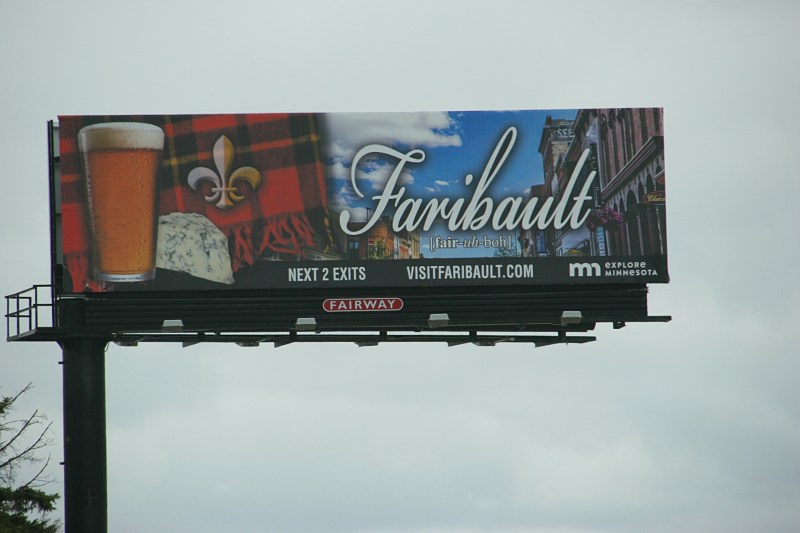
Faribault's new promotional billboard, visible while traveling southbound along Interstate 35 near the city. Faribault is about a half hour south of the Twin Cities metro.

Faribault’s new promotional billboard, visible while traveling southbound along Interstate 35 near the city. Faribault is about a half hour south of the Twin Cities metro and about an hour from the Iowa border. Perfect for a day trip.

MY COMMUNITY OF FARIBAULT could easily fall into that grey space of endless towns perched along Interstate 35 from the Texas-Mexico border to Duluth in northeastern Minnesota.

But Faribault, pronounced fair-uh-boh, because it’s a French name, isn’t just any other community. This is a city of some 23,000 with a strong sense of history. Drive a few miles off I-35 to see the aged buildings along and branching off Central Avenue and scattered throughout town. We have historic churches (like the Cathedral of Our Merciful Saviour) and the historic Shattuck-St. Mary’s School and wonderful old houses.

A new billboard along I-35 hints at what you’ll discover in this southeastern Minnesota community named after founder and fur trader Alexander Faribault.

Let’s zoom in on billboard details:
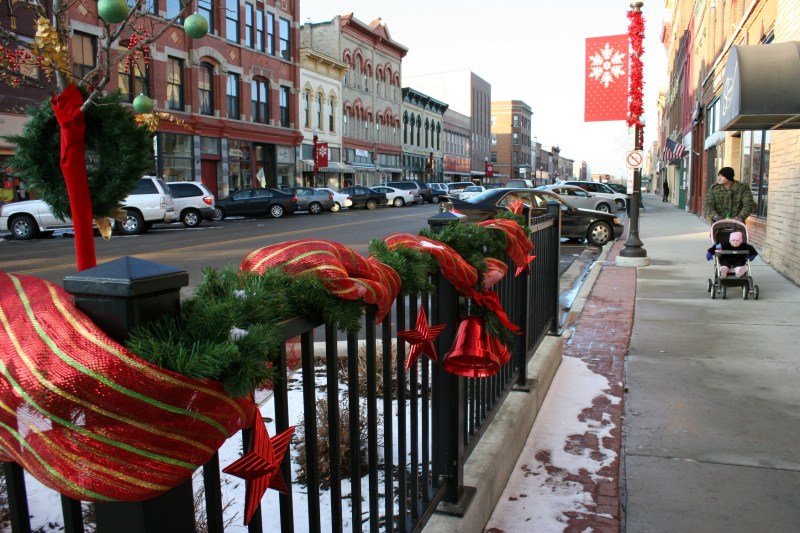
Strolling along Central Avenue in historic downtown Faribault late on a Saturday afternoon in December 2011.

This remains one of my all-time favorite shots of Faribault’s Central Avenue, our Main Street. It showcases the aged buildings and beauty of our historic downtown. Minnesota Prairie Roots file photo, December 2011.

HISTORIC DOWNTOWN: Aged buildings, most beautifully restored, border Central Avenue for several blocks. If you appreciate old architecture, history and home-grown businesses, then you’ll enjoy our downtown.
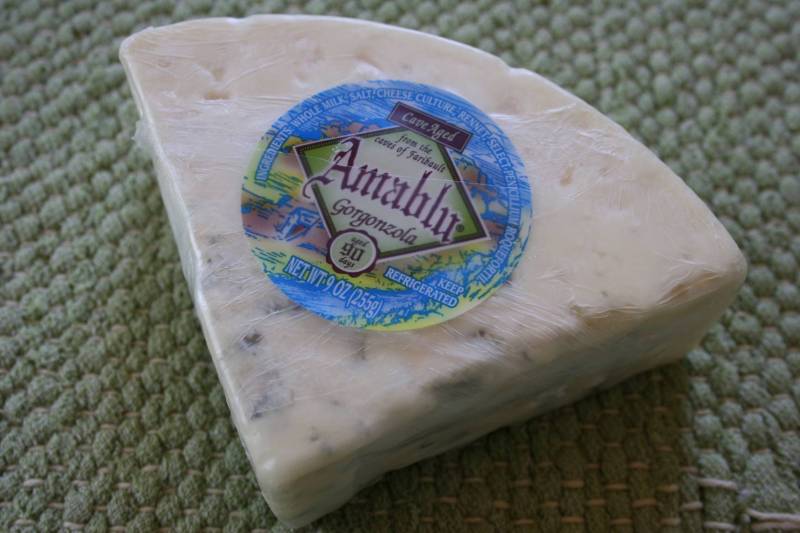
Award-winning Amablu Gorgonzola from Caves of Faribault.

Award-winning Amablu Gorgonzola from Caves of Faribault. Minnesota Prairie Roots file photo.

BLUE CHEESE: Award-winning blue and Gorgonzola cheeses are produced and aged in Faribault, in sandstone caves along the Straight River. I’m crazy about AmaBlu, St. Pete’s Select and AmaGorg cheeses. All are sold at The Cheese Cave, a Central Avenue retail shop that also serves up a limited menu of soup (seasonal), sandwiches, salads, pizza and more. The fresh cheese curds, flavored and plain, are a must-try. Iowa-based Swiss Valley Farms now owns the once locally-owned retail shop and cheese company.
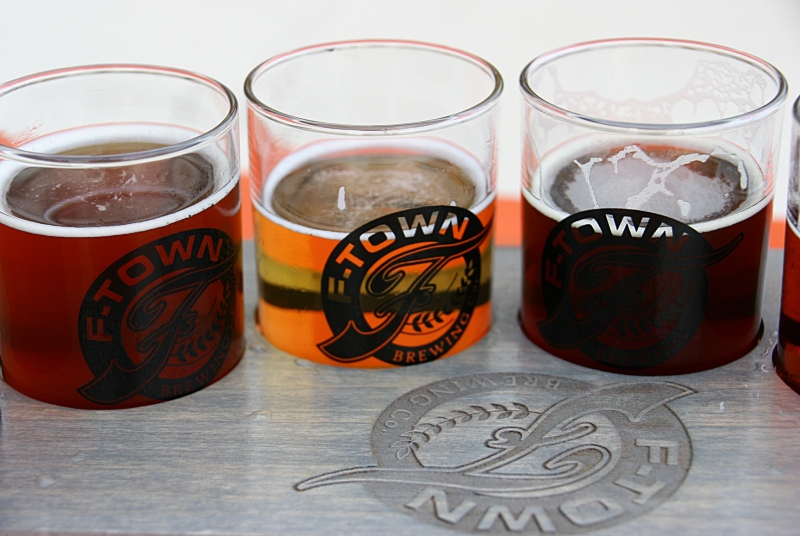
We wanted to sample all of the beers on tap, so we ordered a flight.

Samples from a flight of F-Town beer. Minnesota Prairie Roots file photo.

BEER: F-Town Brewing Company opened in the downtown historic district, just a half-block off Central Avenue, last summer. It’s a great addition to our community, continuing a tradition of early beer brewing in Faribault by the Fleckenstein brothers.
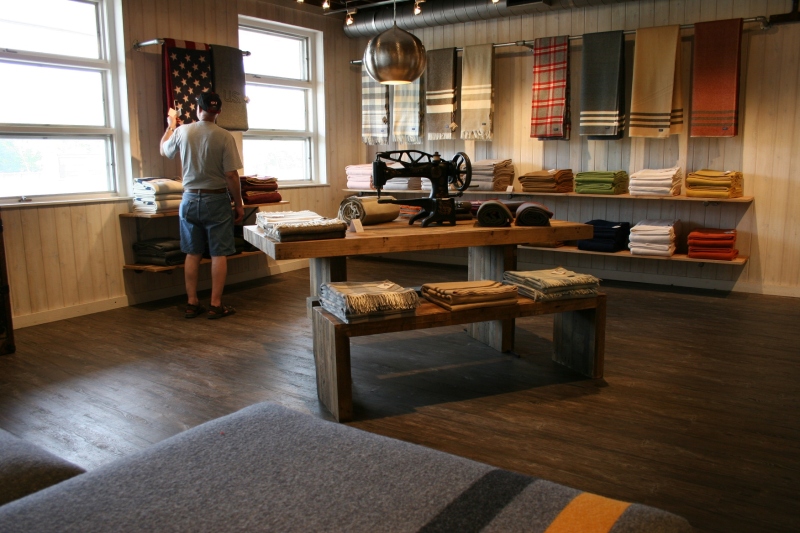
Perusing merchandise at the recently reopened Faribault Woolen Mill retail store.

Perusing merchandise at the Faribault Woolen Mill retail store. Minnesota Prairie Roots file photo.

BLANKETS: The historic Faribault Woolen Mill has been weaving blankets for some 150 years. Visit The Mill Store (open daily except Sunday) and/or tour the mill (every Friday or the second Saturday of the month) along the banks of the Cannon River. This business produces quality made blankets, throws, scarves, etc., in the time-honored tradition of hands-on looming by employees who’ve been around for a long time.

#

BILLBOARDS SHOWCASE only a quick visual of what any place offers. So here are additional personal recommendations from my favorites and must-see list of Faribault attractions:
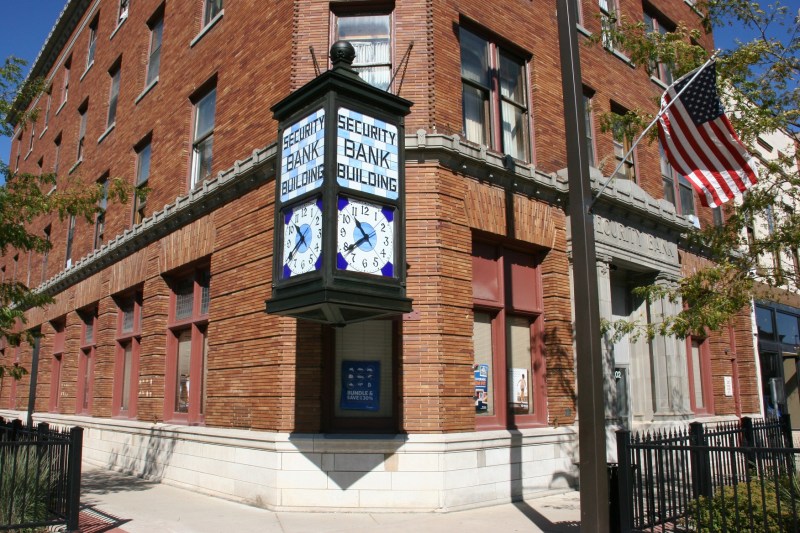
This restored 1915 clock was installed on the Security State Bank Building, 302 Central Avenue, on Saturday.

This restored 1915 clock was installed in 2015 on the Security State Bank Building, 302 Central Avenue. Minnesota Prairie Roots file photo.

ART: Stop at the Paradise Center for the Arts, a restored theater, to peruse the galleries and gift shops or to take in a show.

Admire the recently-restored Security Bank Building clock at 302 Central Avenue.

At the south end of Central Avenue, at its intersection with Division Street, admire the art throughout Buckham Memorial Library. Don’t miss the Charles Connick stained glass window, the Greek murals or the exterior clock tower.

Throughout the downtown area are numerous murals depicting scenes from Faribault history. I love this concept of combining art and history in such a highly-visible public way.

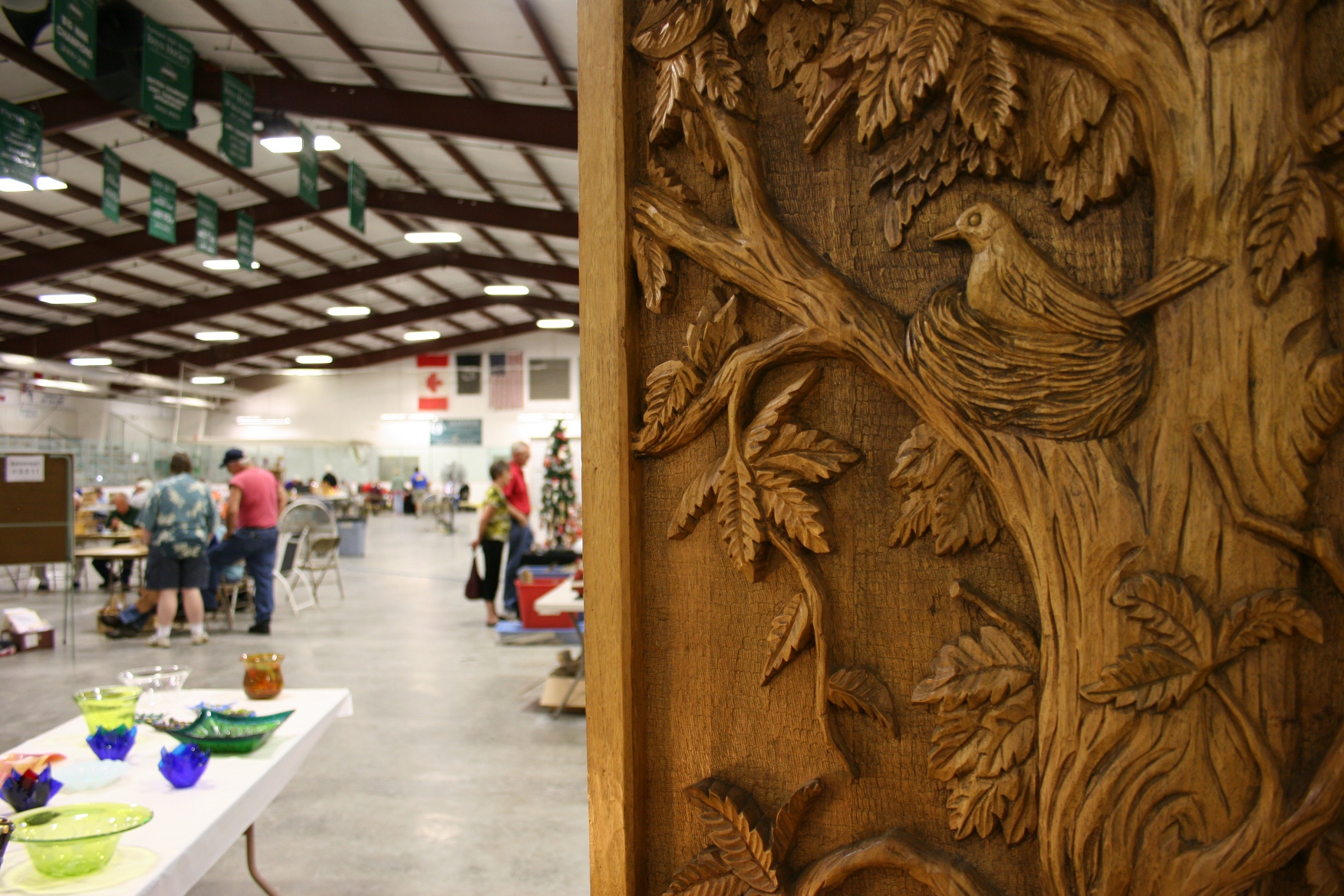
While I’ve never toured Whillock Studio, home to woodcarver Ivan Whillock, I’d suggest a visit. Locally, his work can be seen in churches, at the library and more. Noted woodcarver Marv Kaisersatt also calls Faribault home. Kaisersatt keeps a low profile. But I was lucky enough to visit his second floor downtown studio (not open to the public) several years ago when penning a magazine article.

Folks waited in line for these cupcakes.

Folks waited in line at last summer’s Faribault Farmers Market for these cupcakes from Bluebird Cakery. The business now has a storefront location at 318 Central Avenue, Suite 101. Minnesota Prairie Roots file photo.

FOOD: Hands-down, The Signature Bar & Grill serves the best thin crust (or any) pizza in town. I always order the Italian sausage. The old-fashioned bar area is reminiscent of Cheers.

The Depot Bar & Grill, housed in an old train depot, is always a good dining choice. Warm weather outdoor dining is available on a patio next to the railroad tracks. It’s a thrill to feel the power of a train roar past only feet away.

Faribault offers many ethnic dining choices ranging from Mexican to Somali to Chinese, Thai, etc. Gran Plaza Mexican Grill downtown is a local favorite.

Fairly new to downtown Faribault is Bluebird Cakery, specializing in cupcakes (plus other sweet treats) and assorted coffees, etc. I’ve been there several times and each time it’s been super busy. Choosing cupcakes proves difficult given all of the enticing flavors.

I’m not a fan of fast food or fast food chains. But for an authentic American fast food dining experience, Faribault’s A & W still offers car hop service during the warm months. And I do love a frosty mug of A & W root beer.

New to Faribault, and hidden away in the Faribo West Mall, is Smoqehouse Restaurant. I’ve been there once and will definitely be back as I love pulled pork and other savory smoked meats. The smokey smell alone is enough to draw me in. Take note that if you want to eat here after the mall closes on say a Saturday evening, you need to use the back entrance across from the Walmart Auto Center.
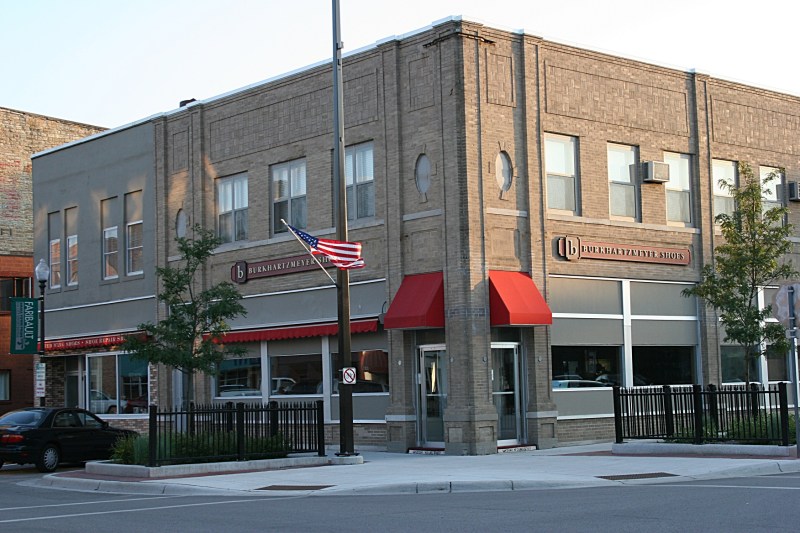
Burkhartzmeyer Shoes, a family-owned shoe store along Central Avenue in Faribault.

Burkhartzmeyer Shoes, a family-owned shoe store along Central Avenue in Faribault. Minnesota Prairie Roots file photo.

SHOPPING: I’m not much of a shopper. But I do like thrift stores–you’ll find Good Will, the Salvation Army, All Seasons Community Services Thrift and Jan’s Thrift Shop in Faribault along with some used clothing shops.

Third-generation family-owned Burkhartzmeyer Shoes is a Faribault staple offering full shoe-fitting services (yes, they measure your feet and put the shoe on your foot) and shoe repair. This place is reminiscent of a bygone era when outstanding personal customer service mattered. I know nearly everyone who works here and these are salt-of-the-earth wonderful people. Shoe boxes are tied with a cotton string and you’ll even get a sucker if you want one.

We also have gift shops, antique stores, an architectural salvage business and more in our historic downtown.
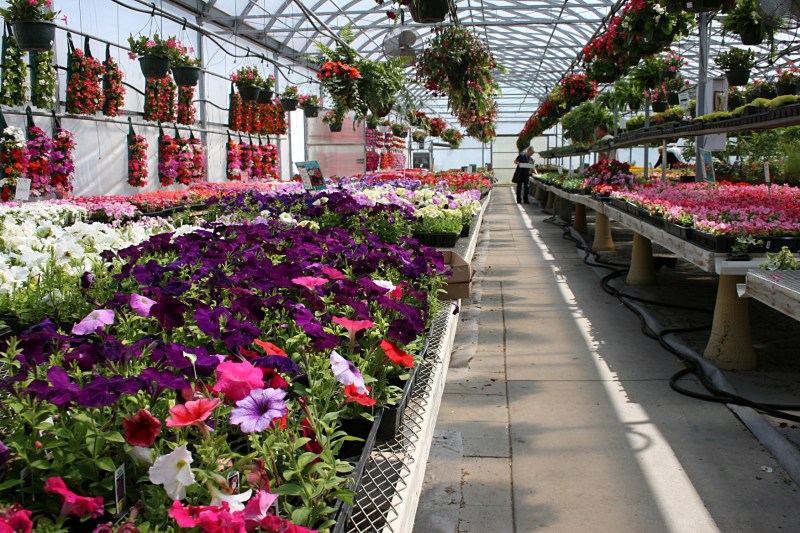
Tables packed with colorful flowers fill the Faribault Garden Center.

Tables packed with colorful flowers fill the Faribault Garden Center. Minnesota Prairie Roots file photo.

FOR THE GARDENER:

Farmer Seed and Nursery, in an aged building along Minnesota State Highway 60/Fourth Street, is a fun place to poke around for anything plant and garden related. This business has provided American gardeners with plants, bulbs, seeds, etc. for more than 120 years through its mail order catalog (also now online) business. It’s especially fun to tour during the holidays when themed Christmas trees pack the store.

Donahue’s Greenhouse is open for the season, drawing gardeners from all over to this massive family-owned greenhouse/retail shop at 420 SW Tenth Street. After a long winter, this feels like walking into summer. I get a bit overwhelmed with all of the choices at Donahue’s, thus I often shop at the smaller Faribault Garden Center or Northstar Seed & Nursery.

Twiehoff Garden & Nursery on the east side is another great choice for plants and then fresh produce throughout the growing season. Housed in a no-frills pole shed style building which lends an earthy authenticity, this 52-year-old business is operated by the friendly Twiehoff family. It’s one of my main sources for local fresh seasonal produce along with the Faribault Farmers Market.
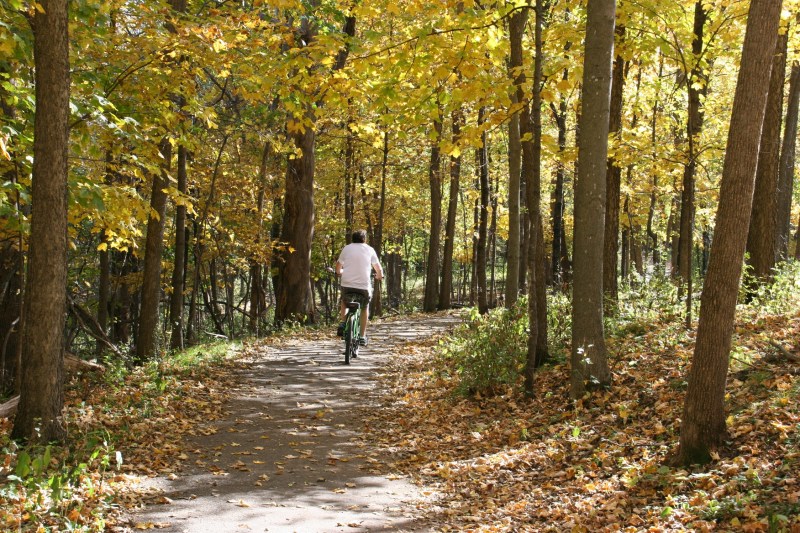
Biking through River Bend Nature Center.

Biking through River Bend Nature Center. Minnesota Prairie Roots file photo.

NATURE: One of my favorite places for an in-town get-away is River Bend Nature Center. Faribault also has an extensive trail system for biking and walking.

City View Park, on the east side by the water tower, offers a beautiful overlook of Faribault.

The restored Tilt-A-Whirl sits in downtown Faribault, just two blocks from Buckham Memorial Library.

The restored Tilt-A-Whirl sits in downtown Faribault next to Burkhartzmeyer Shoes, just two blocks from Buckham Memorial Library. Minnesota Prairie Roots file photo.

HISTORY: It’s everywhere in Faribault. In the architecture of old buildings. On murals. In the Rice County Historical Society Museum. In our churches, especially The Cathedral of Our Merciful Saviour. In the historic Hutchinson House Bed & Breakfast. Even in a restored Tilt-A-Whirl car located on the corner by Burkhartzmeyer Shoes. Yes, the Tilt-A-Whirl originated in Faribault and, up until a few years ago, was still made here.

I love Faribault. I’ve lived here more than half my life now. I don’t have the connection of family roots. But I do have the connection to place. Faribault is home.

DO YOU HAVE ANY QUESTIONS about Faribault? If so, ask away and I’ll try to answer.

FYI: Chambers of Commerce and tourism centers in Faribault, Owatonna and Northfield have joined in promoting visits to their communities through a Minne-Roadtrip venture. All three cities lie along the I-35 corridor, with Faribault in the middle. Click here to learn more about this promotion. I’ve explored all three communities; they are definitely worth your visit.

© Copyright 2016 Audrey Kletscher Helbling


Part II: The disasters of Steele County April 15, 2016

Steele County disasters, 107 pandemic display


OF ALL THE DISASTERS HIGHLIGHTED in a current local disasters exhibit at the Steele County History Center in Owatonna, it is the flu pandemic of 1918 that feels most personal. To read the names of victims like Cora, Helen and Forest and to see photos of gravestones grieved me. Every winter, even today, we hear of those who’ve died from the flu. Young. Old. In between. Thankfully, we have vaccines that prevent the illness from infecting most of us.

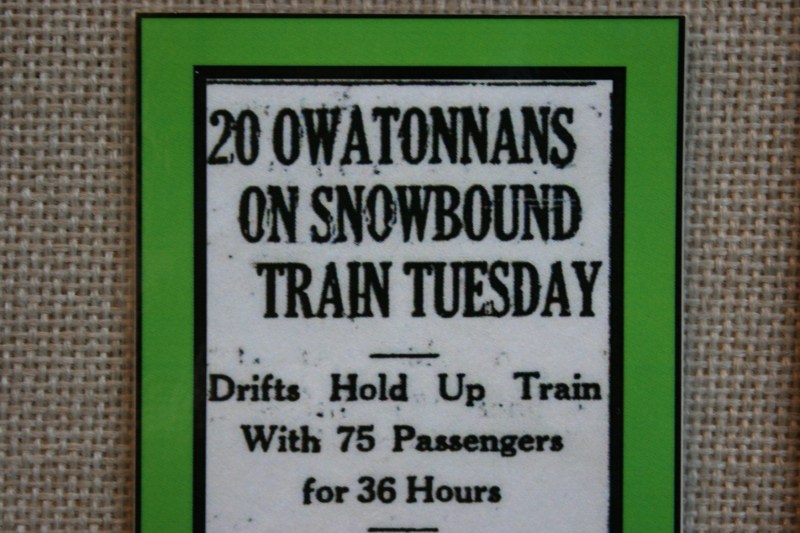
Snowdrifts blocked a train as noted in this news clip.

Snowdrifts blocked a train as noted in this news clip.

This detailed exhibit, an off-shoot of the Minnesota Historical Society Traveling Exhibit Disasters of Minnesota: Stories of Strength and Survival, connected a worldwide tragedy to Minnesota. To the county just to the south of mine.

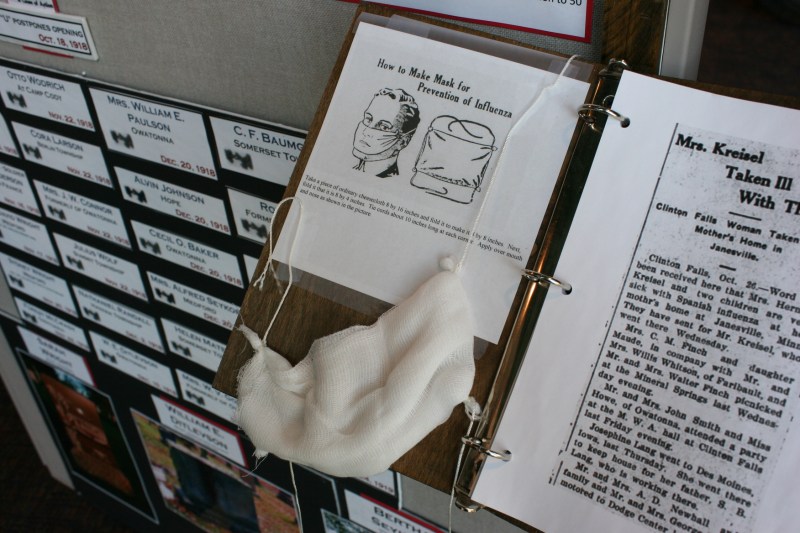
Masks, precautions and isolation helped protect against the flu epidemic. To the left in this photo are names of Steele County residents who died from the flu in 1918.

Masks, precautions and isolation helped protect against the flu epidemic. To the left in this photo are names of Steele County residents who died from the flu in 1918, plus photos of some of their gravestones.

In Minnesota alone, according to one report, as many as 12,000 died of the flu in 1918. Worldwide, sources put deaths at 40 or 50 million.

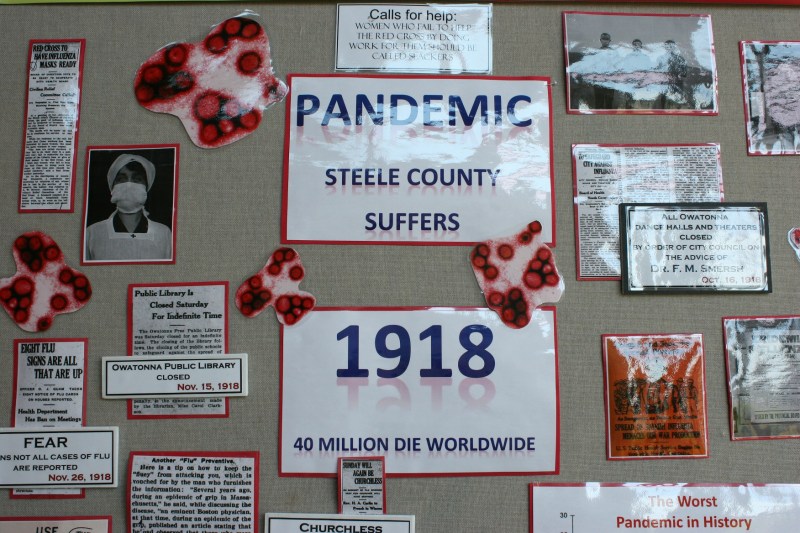
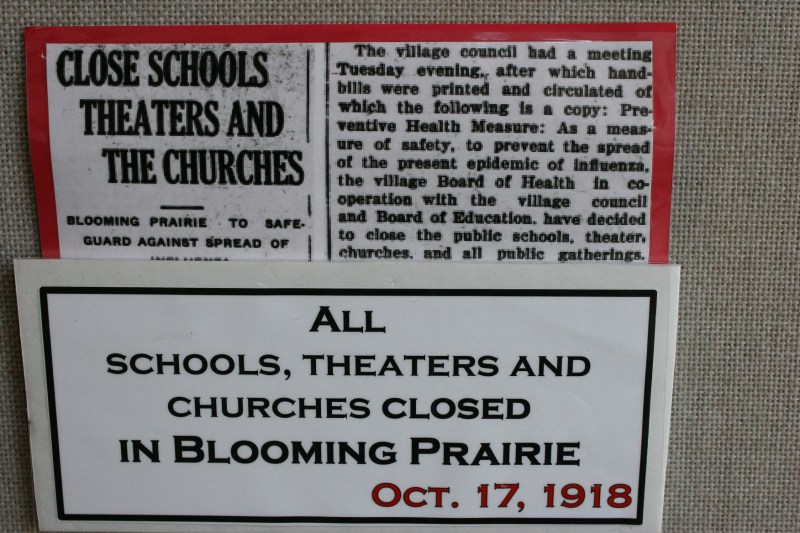
Activities that brought people together were suspended during the flu outbreak.

Activities that brought people together were suspended during the flu outbreak.

I’d never considered the vast scope of this tragedy, how fearful folks must have been, how deep the grief at losing loved ones and friends. I also hadn’t thought about the impact on everyday life. As I browsed the exhibit, I noted news stories about libraries, dance halls, theaters and churches closed because of the pandemic.

I am old enough to remember also the fringe ending of the polio epidemic, highlighted, too, in this exhibit.

These newspaper articles feature snowstorms in the county.

These newspaper articles feature snowstorms in the county.

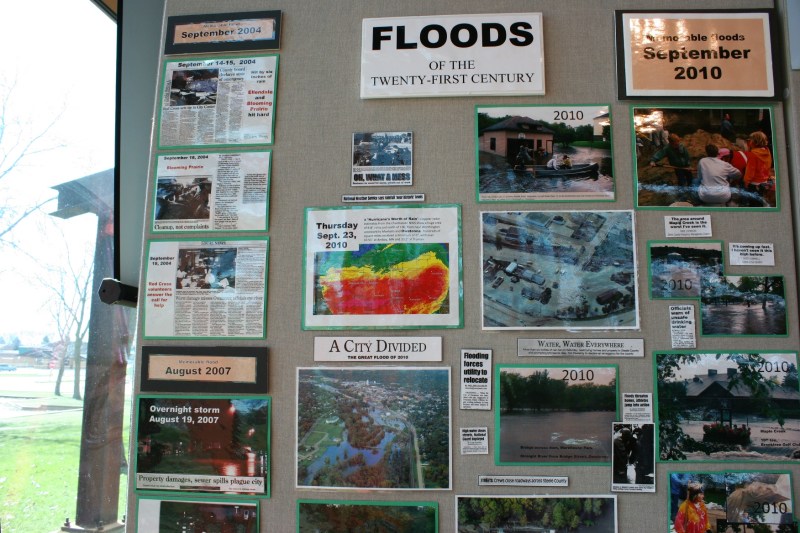
Steele County has experienced plenty of floods.

Steele County has experienced numerous floods.

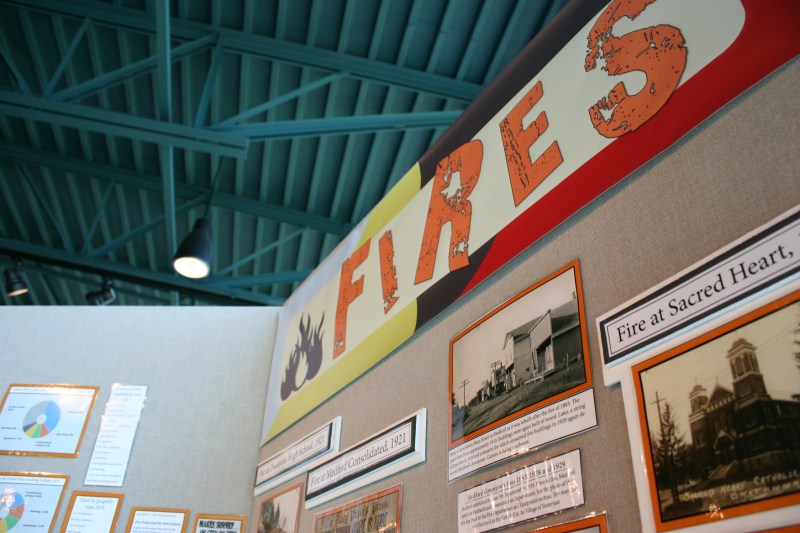
Fires, too, have devastated the county.

Fires, too, have devastated the county.

Steele County has experienced plenty of disasters involving snow, heat, wind, water and fire. These are outlined in panel displays.

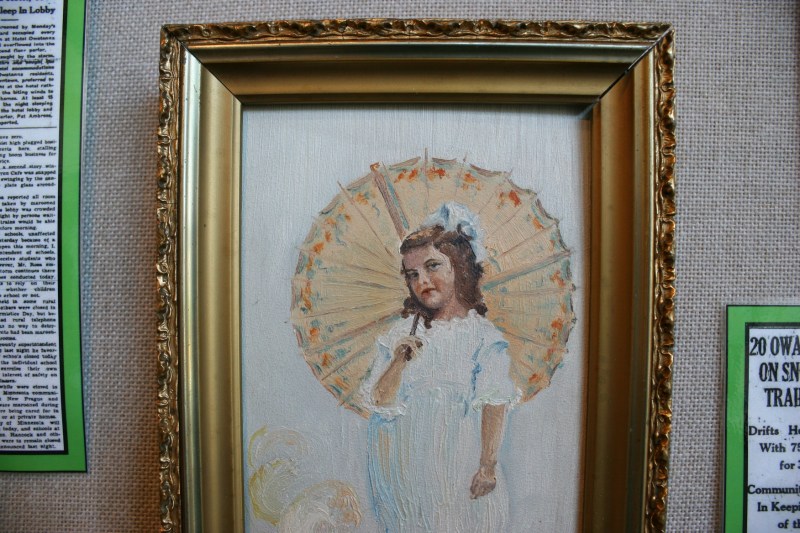
Portrait of Virginia Hart

Portrait of Virginia Hart

It would be easy to become discouraged, to feel only despair that so many southern Minnesota residents have suffered so much through the years. I was especially appreciative of stories that uplifted me, like that of Ruth Weinmann. The young teacher, ill with the flu in 1918, was taken in by a doctor’s family after her landlady refused to house her and the hospital was full. In gratitude to Dr. Alfred and Alice Hart, Ruth painted a portrait of their daughter, Virginia. It is a lovely expression of thankfulness.


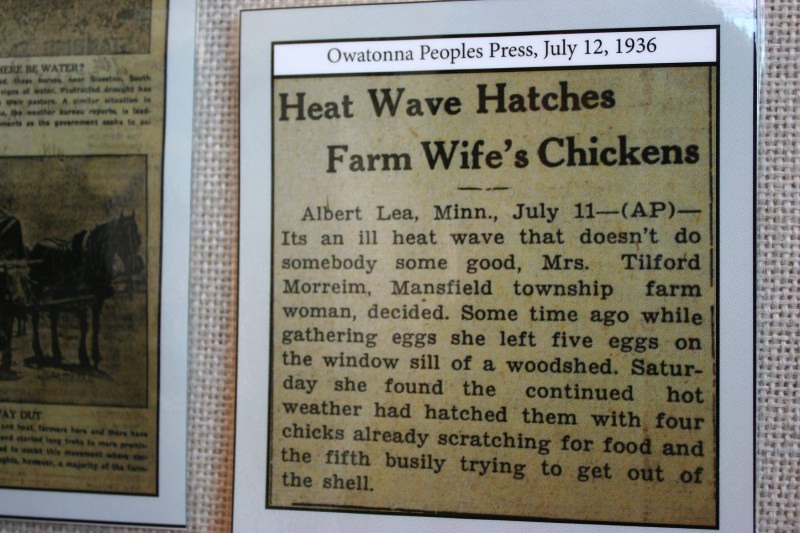
Steele County disasters, 104 chicks hatch in heat


And then there’s the story of chicks hatching in the middle of Steele County’s longest, hottest heat wave—13 straight days of temperatures above 100 degrees beginning on July 5, 1936. Mrs. Tilford Morreim left five eggs on the window sill of her woodshed. In the heat, the eggs hatched. I needed to read that humorous story in the midst of all the suffering and loss.

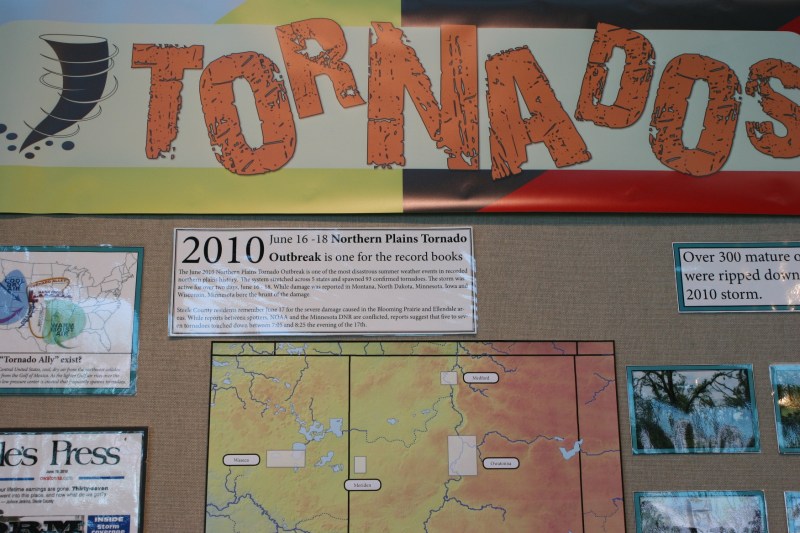
Information on tornadoes in Steele County.

Information on tornadoes in Steele County.

In every disaster, we must find a reason to be hopeful, to survive, to share our stories…for in sharing exists hope and resilience.

These two exhibits are on display through March 2017.

These two exhibits are on display through March 2017.

FYI: For more information about this exhibit, click here. To read my first post about this exhibit in Owatonna, click here. Check back for a post on a wedding dress exhibit also now showing at the Steele County History Center.

© Copyright 2016 Audrey Kletscher Helbling
 

Part IV from Wanamingo: Touring Trinity Church March 24, 2016

Filed under: Uncategorized — Audrey Kletscher Helbling @ 5:00 AM
Tags: , , , , , , , , ,
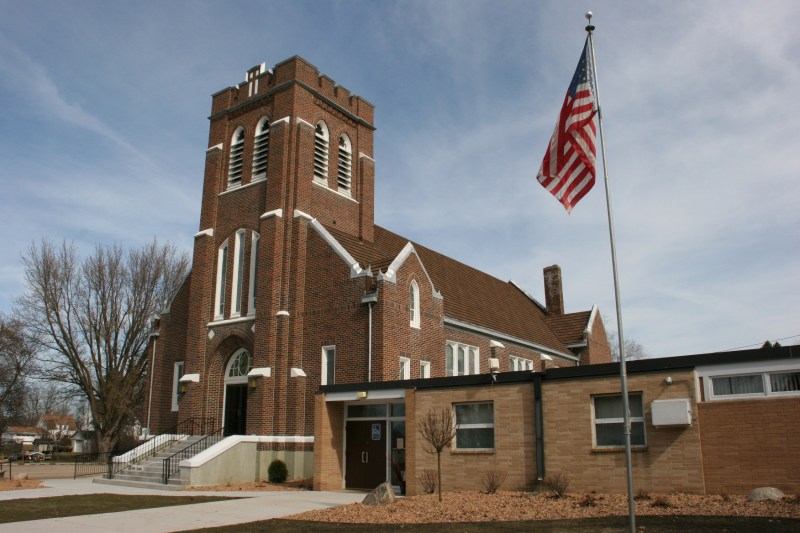
Trinity Lutheran Church, 301 Second Avenue, Wanamingo, Minnesota.

Trinity Lutheran Church, 301 Second Avenue, Wanamingo, Minnesota.

THE LUTHERAN CHURCH STANDS solid on a corner lot a few blocks off Wanamingo’s Main Street. Brick strong. Enduring strong. In the faith strong.

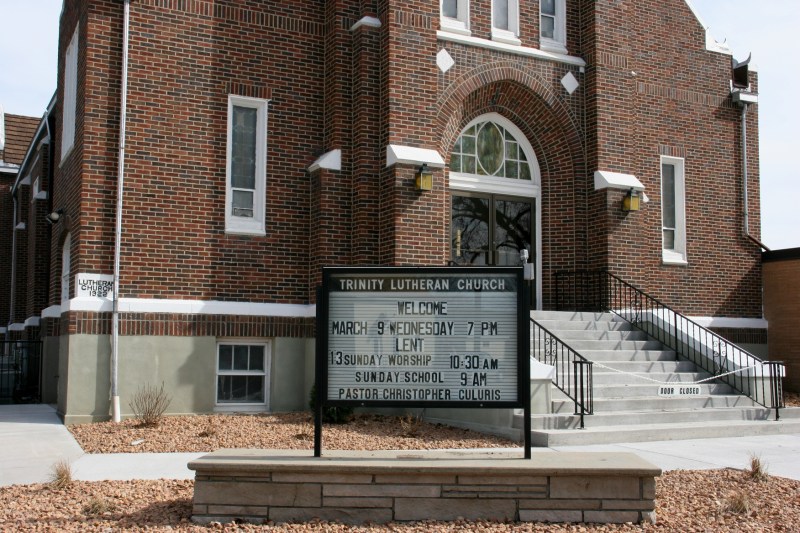
The cornerstone of this ELCA church is dated 1922, to the left in this photo.

The cornerstone of this ELCA church is dated 1922, to the left in this photo.

A cornerstone on Trinity Lutheran Church simply notes LUTHERAN CHURCH 1922. I know nothing more about the history of this congregation, of this building.

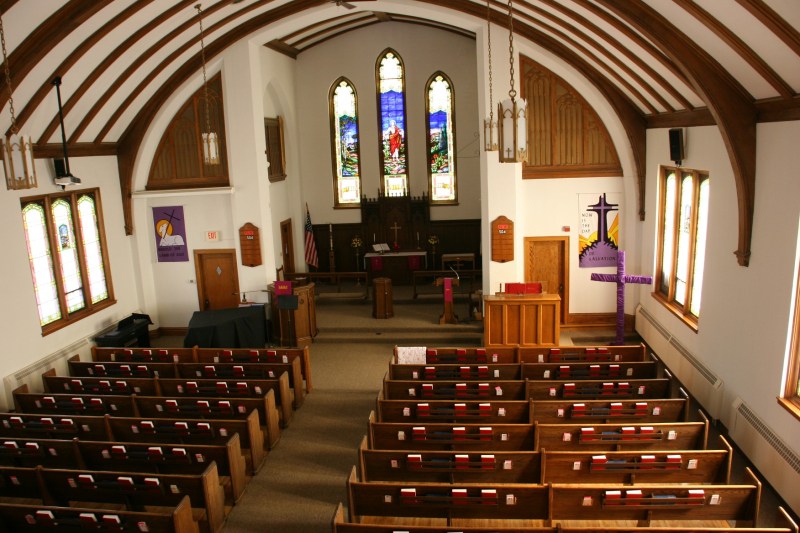
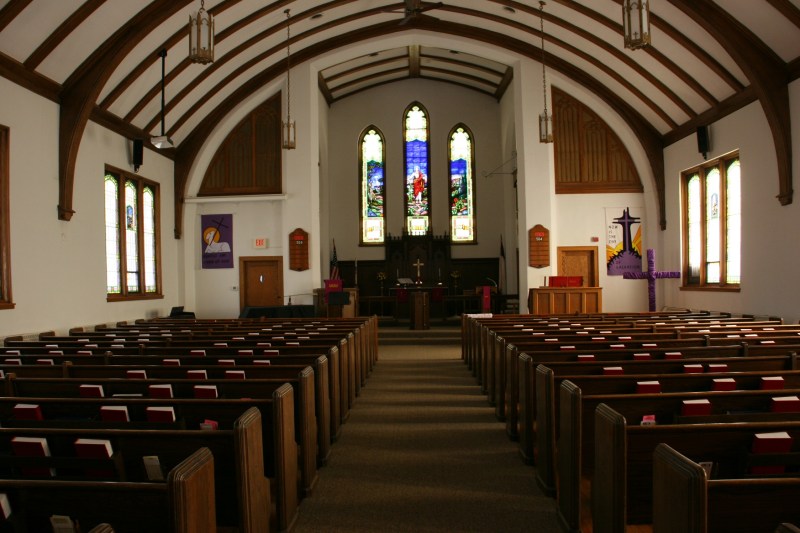
The beautiful sanctuary as photographed from the balcony.

The beautiful sanctuary as photographed from the balcony.

That matters not. For I appreciate churches like this which are lovely houses of worship. For these truly are houses to the families of faithful. Therein, worshipers, if not related by blood, are related by the commonality of faith and lives shared. They truly become family in joy and in grief.

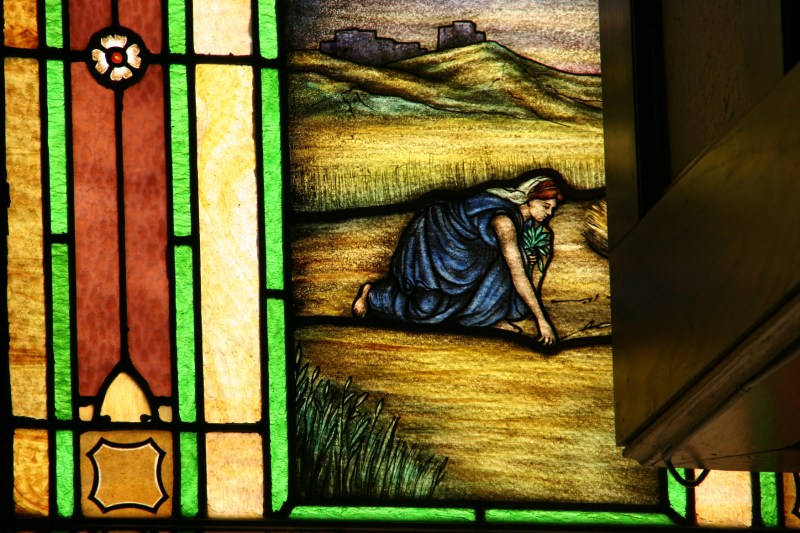
One of my favorite stained glass windows in Trinity is this one of Ruth gathering grain to help support her mother-in-law. The window is partially covered by the balcony.

One of my favorite stained glass windows in Trinity is this one of Ruth gathering grain to help support her mother-in-law. The window is partially covered by the balcony. To me, this window symbolizes deep love and devotion to family.

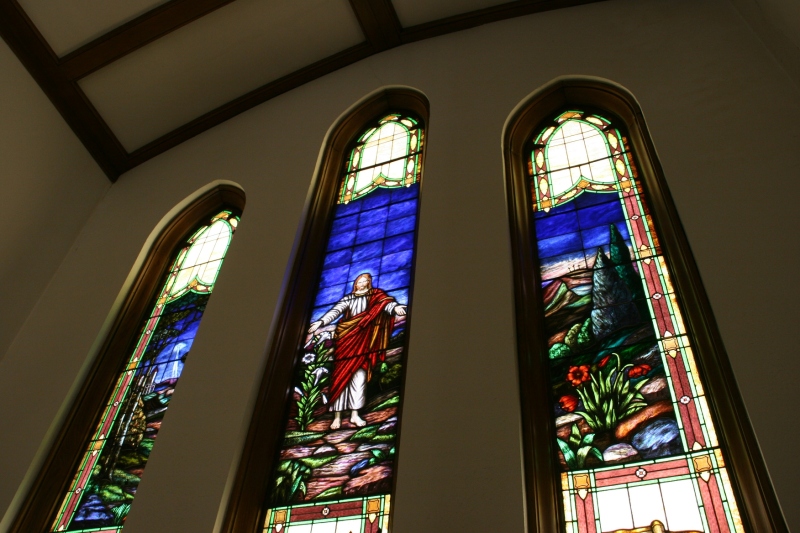
This trio of stained glass windows rises above the altar.

This trio of stained glass windows rises above the altar.

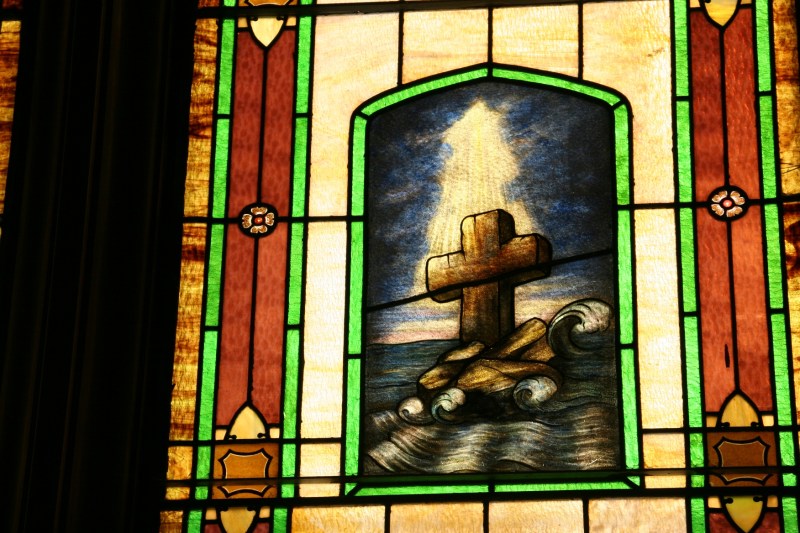
One of the windows flanking the side of the sanctuary.

One of the windows flanking the sanctuary.

Within the walls of an aged sanctuary like Trinity, visual symbols of faith embrace those who enter therein. Intricate stained glass windows shine the light of grace and of Scripture.

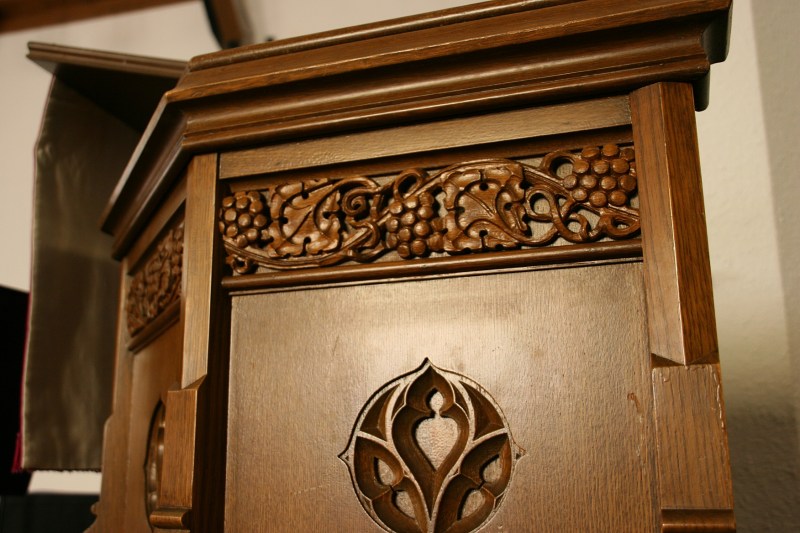
One can only imagine the messages delivered from this sturdy pulpit.

One can only imagine the messages delivered from this sturdy pulpit.

The sturdy pulpit with its handcarved trim looms as a time-honored place for preaching of the Word, the wood dulled by the hands of many preachers.

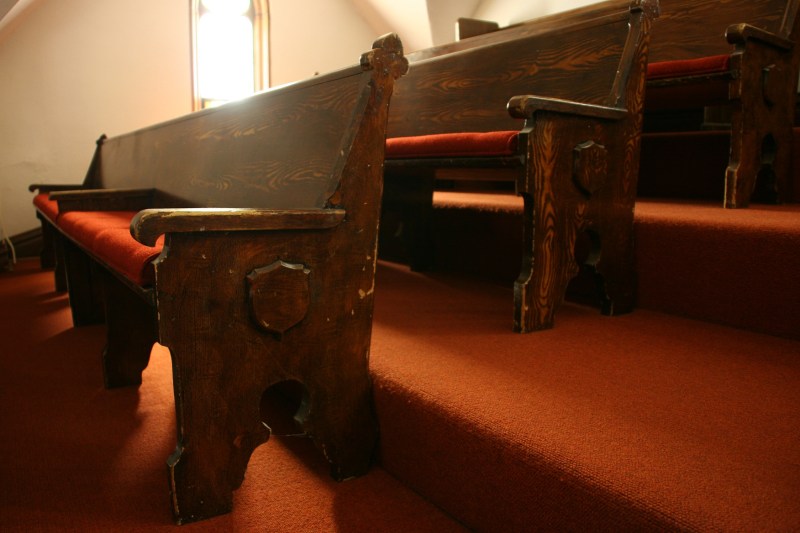
Balcony pews.

Balcony pews.

Worn pews reflect the history of generations.

Another view from the church aisle.

Another view, this from the center church aisle.

Art, history and a heavenly presence prevail. It is here, within the walls of Trinity. Visually. And in spirit.

BONUS PHOTOS:

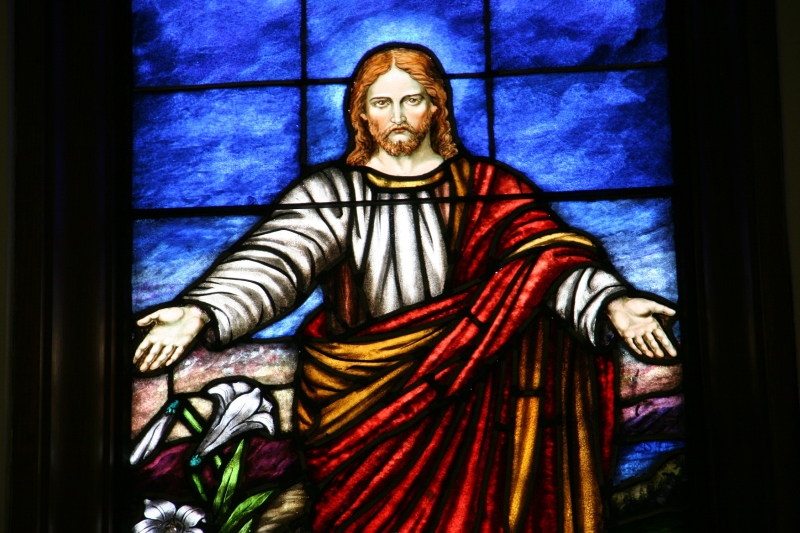
The risen Lord centers the trio of stained glass windows above the altar.

The risen Lord centers the trio of stained glass windows above the altar.

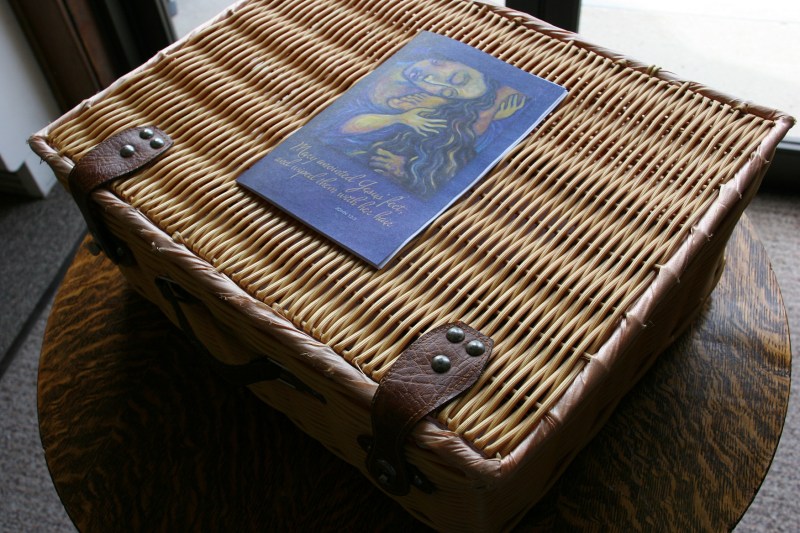
A basket holds church bulletins and other worship essentials.

A basket holds church bulletins and other worship essentials.

Church mail slots.

Church mail slots.

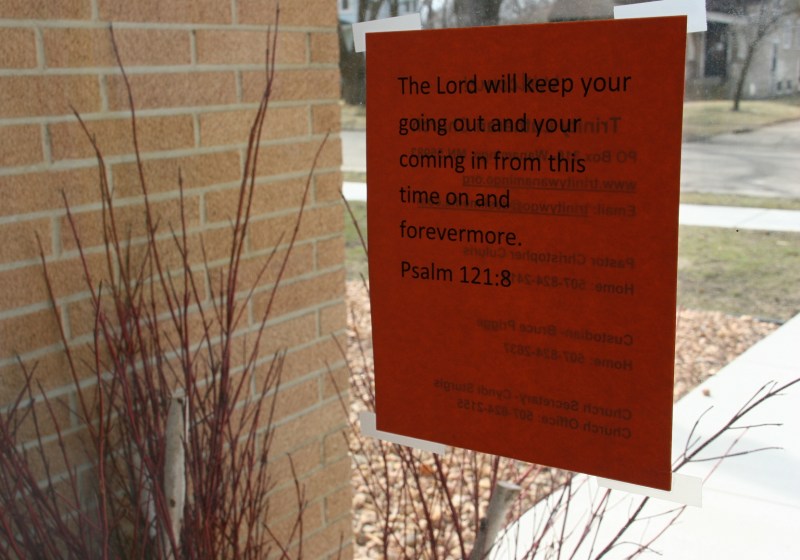
A final message for worshipers is posted on a window next to an exterior front door.

A final message for worshipers is posted on a window next to an exterior front door.

FYI: Please check back next week for more posts in my “from Wanamingo” series.

© Copyright 2016 Audrey Kletscher Helbling
 

Part III from Wanamingo: The connection to a beloved hymn March 23, 2016

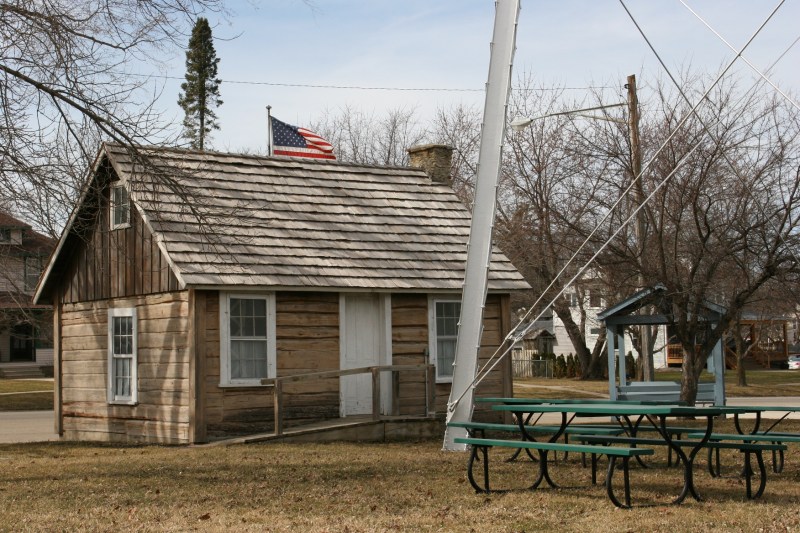
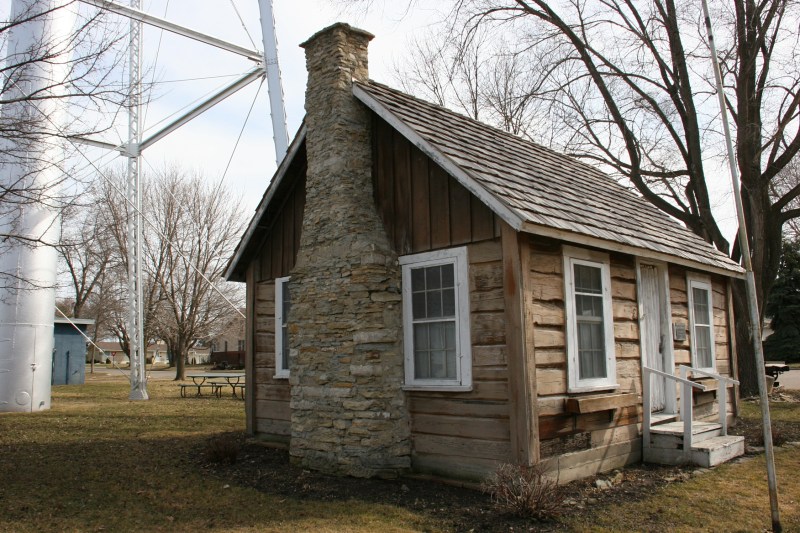
The Lars Larson log cabin sits next to the water tower in Wanamingo. The information center can be seen to the right

The Lars Larson log cabin sits next to the water tower in Wanamingo. The blue grey structure to the right is the information center.

IN THE UNLIKELIEST OF PLACES, beneath an aged water tower and next to an historic log cabin, an unexpected bit of Wanamingo’s history is revealed. It is typed on sheets of paper sandwiched under Plexiglas in a handcrafted case labeled Information Center.

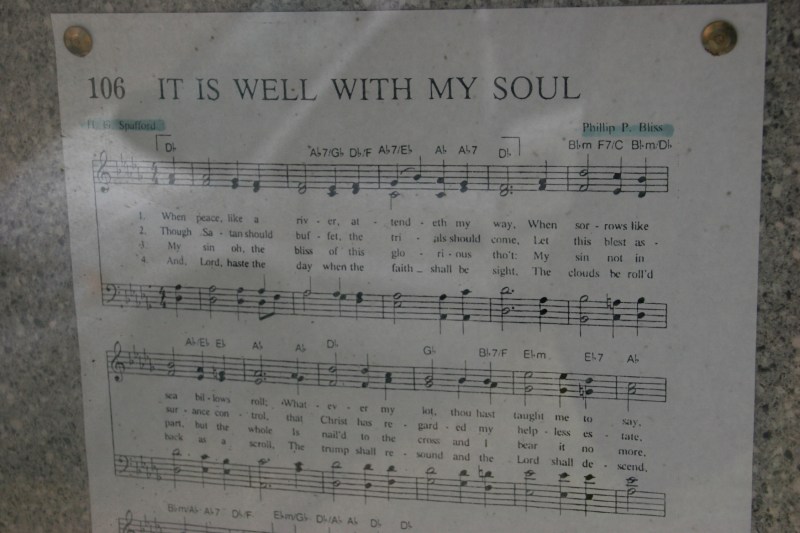
The song: It Is Well With My Soul.

The song: It Is Well With My Soul. The writer and composer’s names are highlighted in blue.

It is the story of the beloved hymn, It Is Well With My Soul, and its link to this Southeastern Minnesota farming community of nearly 1,100.

When peace, like a river, attendeth my way, When sorrows like sea billows roll; Whatever my lot, thou hast taught me to say, It is well, it is well with my soul.

My lips move in silence as I read the familiar words, the familiar melody chorusing comfort. It is well, it is well with my soul.

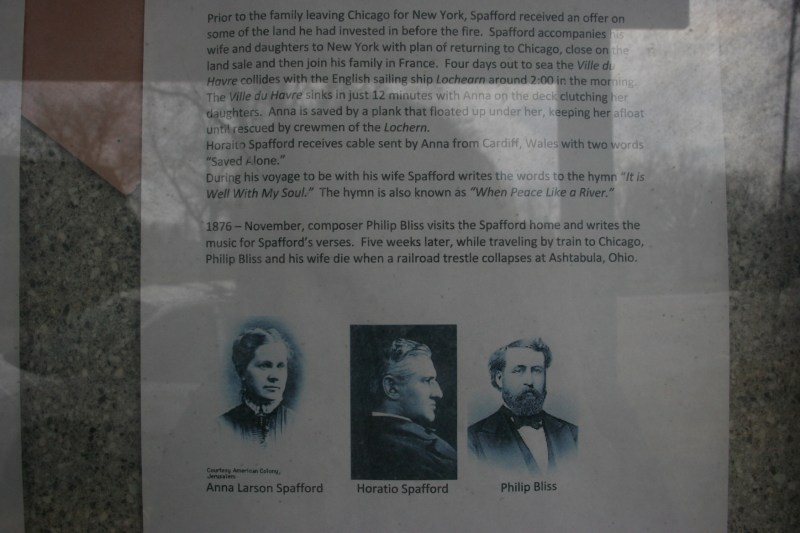
The story of the Spaffords and the hymn, along with images, is posted.

The story of the Spaffords and the hymn, along with images, is posted.

I’d never considered the story behind the words. But now that I’m reading about Horatio and Anna Spafford’s personal tragedy, I am deeply moved. The couple lost their four oldest daughters at sea when the Ville du Haure collided with an English sailing ship en route to Europe in 1873. Only Anna survived, cabling her husband, who remained back home on business, with two words: Saved Alone.

During his voyage to see his grieving wife, Horatio penned It Is Well With My Soul. Three years later, Philip Bliss composed the accompanying music.

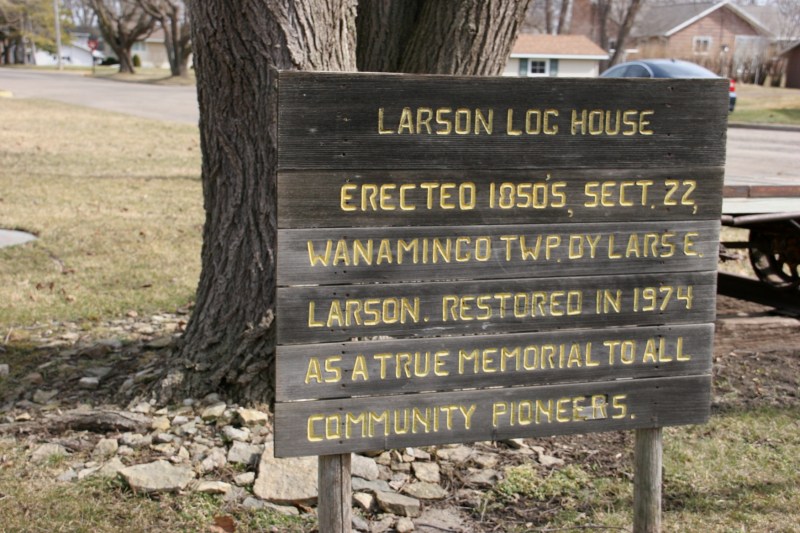
This sign marks the log cabin.

This sign marks the log cabin.

But what does any of this have to do with Wanamingo? The connection begins about two decades earlier when 14-year-old Anna Larson journeys to Wanamingo Township from Chicago to be with her ill father. Lars E. Larson moved to Minnesota the year prior in hopes farming would improve his health. He died in the spring of 1857, within a year of Anna’s arrival. That same year, Anna, 15, met her Sunday School teacher, 29-year-old Horatio Spafford. In 1861, she married Horatio, a then successful Chicago attorney.

Within 10 years, the Spaffords have four daughters. And then those girls are dead, drowned at sea. Their mother, Anna, survives, kept afloat by a plank until she is rescued.

How many people drive by this log cabin on Main Street in Wanamingo and never stop? We were tipped off by a local to the story I've shared here, thus my husband and I stopped.

How many people drive by this log cabin on Main Street in Wanamingo and never stop? I was tipped off by a local to the story I’ve shared here, thus I stopped.

Having read this story behind the familiar hymn while standing in the shadow of the Wanamingo water tower next to the Larson log cabin, I am moved. I am moved by the faith of Horatio Spafford who, in sorrow rolling like sea billows, penned such profound and comforting words. It is well, it is well with my soul.

FYI: Check back tomorrow for another post in my “from Wanamingo” series. I will take you inside Trinity Lutheran Church.

© Copyright 2016 Audrey Kletscher Helbling
 

Anniversary event features amateur silent film clips from Faribault March 16, 2016


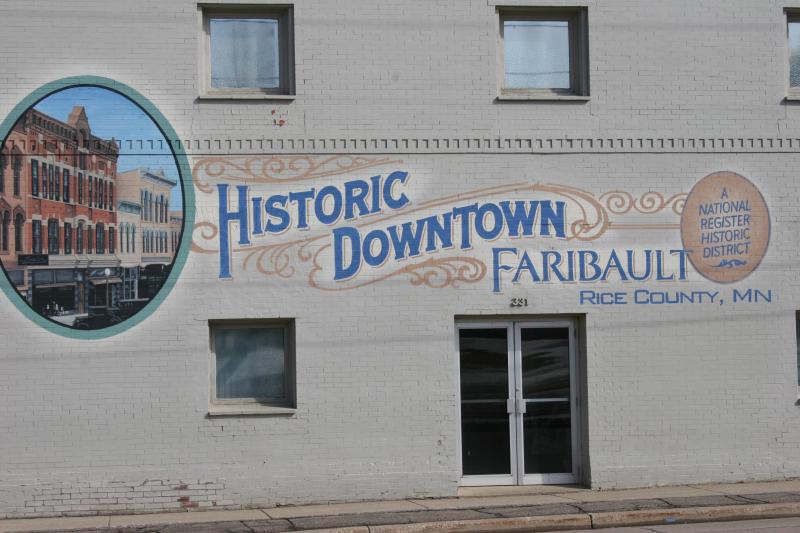
A mural, one of several in the downtown area, promotes historic Faribault.

A mural, one of several in the downtown area, promotes historic Faribault. Minnesota Prairie Roots file photo.

I MAY NOT BE A FARIBAULT NATIVE. But I’ve lived here long enough—34 years—to surface-know local history.

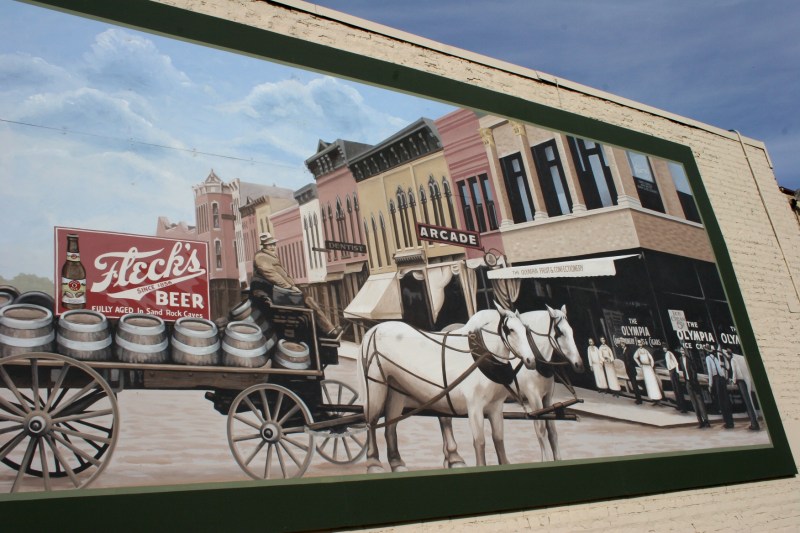
A downtown Faribault mural featuring Fleck's beer.

A downtown Faribault mural features Fleck’s beer. Minnesota Prairie Roots file photo.

So when Brian Schmidt, native historian, collector of Fleckenstein Brewery memorabilia and member of the Rice County Historical Society Board of Directors, called me recently, I listened. Faribault history interests me because, even if I wasn’t born and raised here, this community is now part of my family’s history.

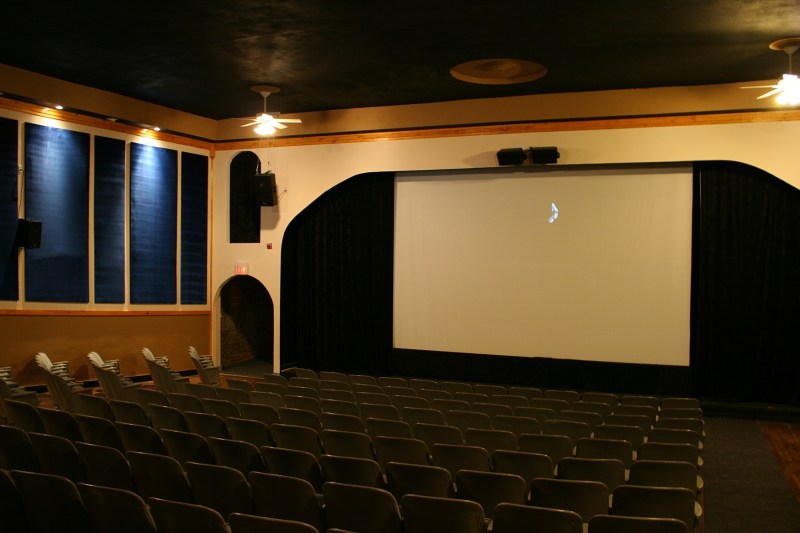
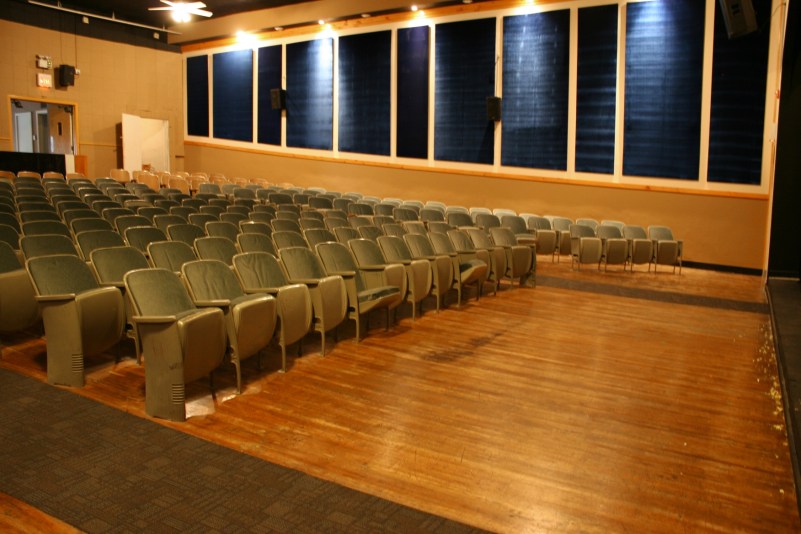
Inside the historic Village Family Theater. Minnesota Prairie Roots file photo 2016.

Inside the historic Village Family Theater. Minnesota Prairie Roots file photo August 2015.

On Saturday, March 19, a previously publicly unseen piece of local history will debut on the big screen at the historic Village Family Theater in the form of a silent movie. I could hear the excitement in Schmidt’s voice as he talked about amateur film footage shot between 1935-1938 by Charles Fleckenstein of Faribault brewery fame.

Schmidt purchased the unmarked film at a Faribault auction house. When he started viewing the clips, he knew he’d stumbled upon something remarkable. And now he’s sharing that discovery in a 10-minute professionally produced silent film montage reminiscent of a bygone era.

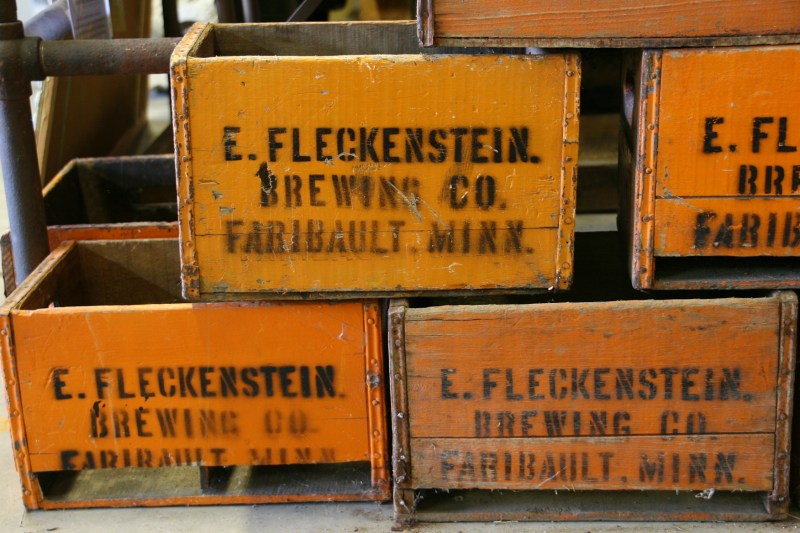
Stacked inside the Harvest and Heritage Halls are these crates from Fleckenstein, which brewed beer and made soda in Faribault.

Stacked inside the RCHS Harvest and Heritage Halls are these crates from Fleckenstein, which brewed beer and made soda in Faribault. Minnesota Prairie Roots file photo October 2015.

Viewers will see workers digging a tunnel and celebrating a birthday at Fleckenstein Brewery (yes, they’re drinking beer), plus other footage of a long ago golf course in the middle of town, the 1938 Faribault Jalopy Race and Thrill Day, The Top amusement ride on Roberds Lake, and the old Faribault Airport and The Bluebird Inn (a former high-end restaurant) south of town.

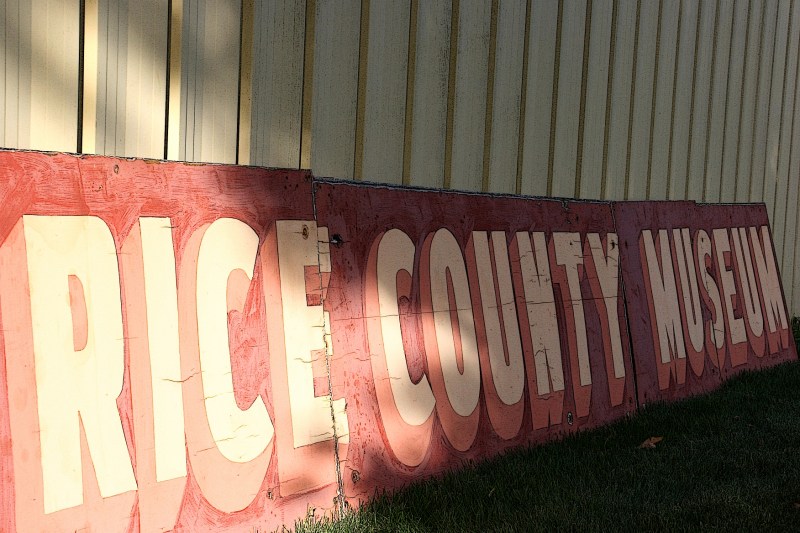
An edited photo of a sign at the Rice County Historical Society. Minnesota Prairie Roots file photo October 2015.

An edited photo of a sign at the Rice County Historical Society. Minnesota Prairie Roots file photo October 2015.

The silent film, followed by the feature film, The Quiet Man starring John Wayne and Maureen O’Hara, kicks off the Rice County Historical Society’s 90th anniversary celebration. Set and filmed in Ireland, the movie seems the ideal classic for a post St. Patrick’s Day show.

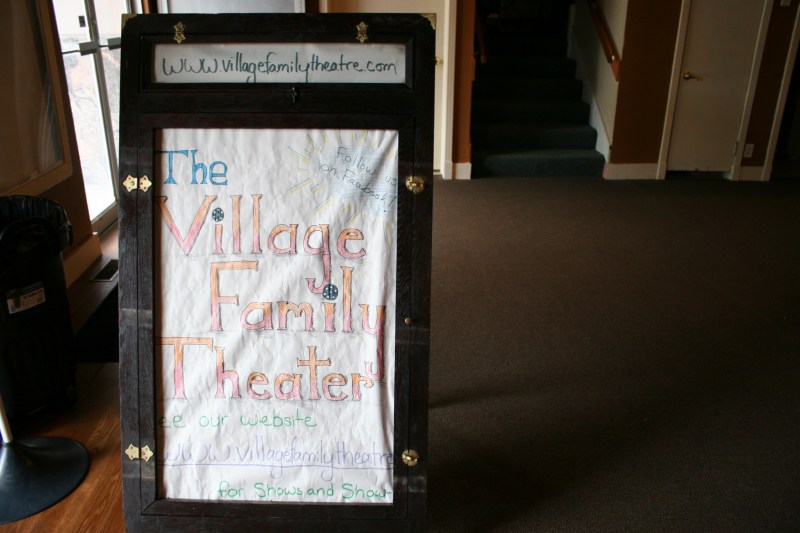
I did a quick tour of the theater in August 2015. This sign sat in the lobby. Minnesota Prairie Roots file photo 2015.

I did a quick drop-in tour of the theater in August 2015. This sign sat in the lobby. Minnesota Prairie Roots file photo 2015.

After the movie, attendees can tour the historic theater, purchased in 2103 by Steve McDonough and since refurbished. The building, just off Faribault’s Central Avenue, was built in 1896 as an Armory, then converted to a funeral parlor in 1912. In the late 1940s, the building became the Village Movie Theater, closing some 40 years ago. It also served for awhile as the Village Bar and as a church.

llllllll

The wooden floor is original to the theater. Minnesota Prairie Roots file photo August 2015.

Schmidt says attendees at the RCHS event should take special note of supporting timbers in the basement. Those were cut to angle the floor for the movie theater. The floor is a floating floor, unattached to the walls.

Surrounded by history while watching history. That’s how I see it.

FYI: The 90th anniversary celebration begins with the silent film showing at 3 p.m. followed by the feature movie and tour. The Village Family Theater is located at 20 Second Street Northwest. Admission is $5 for RCHS members and $7 for non-members.


Threads of tenacity, loyalty & quality weave through Faribault Woolen Mill book December 7, 2015

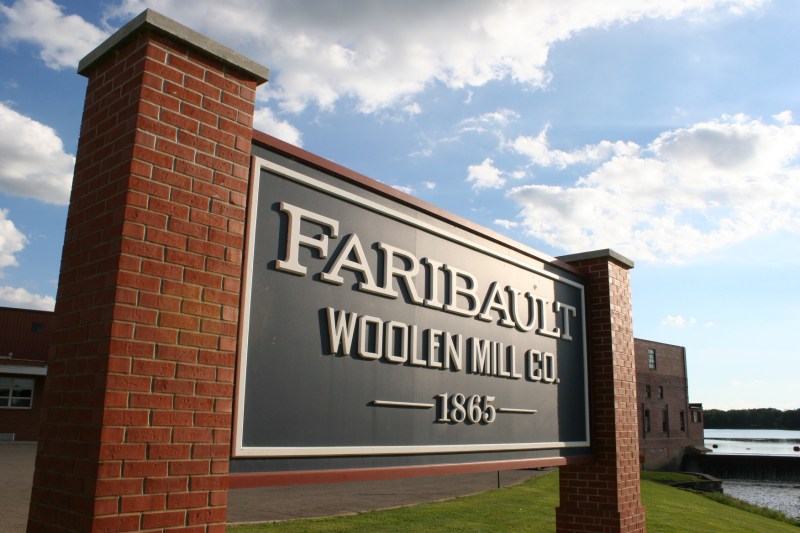
This sign marks The Faribault Woolen Mill, which sits along the banks of the Cannon River in Faribault, Minnesota.

This sign marks The Faribault Woolen Mill, which sits along the banks of the Cannon River in Faribault, Minnesota. Minnesota Prairie Roots file photo August 2015.

“DID YOU GUYS HAVE a tan mitten found yesterday?” customer Molly asked in a recent entry on the Faribault Woolen Mill Facebook page. She’d shopped at a mill overstock sale the day prior and lost a mitten knit by a family member. To Molly, it wasn’t about the mitten as much as the memory and love attached to it.

A mill employee asked Molly to send a photo to aid in the search. Whether the mitten has been found, I don’t know. But I view the mill’s response as a current day example of how this 150-year-old Faribault business cares like family.

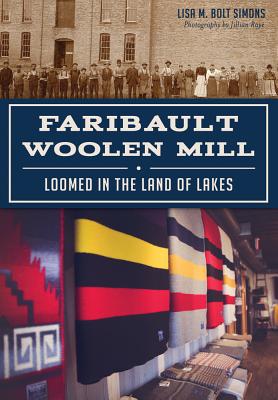
Book cover by The History Press

Book cover by The History Press

That’s a recurring theme in a just-published book, Faribault Woolen Mill—Loomed in the Land of Lakes, by my friend, Faribault author Lisa M. Bolt Simons. Lisa cites numerous cases of the mill’s loyalty to Faribault and its employees. In 1961, for example, mill owners purchased a cabin near Bemidji for use by employees, customers and others. That appreciation goes both ways. Community residents and employees have remained fiercely loyal to the woolen mill. Many employees returned to work after the mill briefly closed. Employment longevity reaches into decades, up to sixty years for one mill employee, spotlighting a strong work ethic.

Appreciative customers exist world-wide. Lisa found an August 1966 mill retail store guest book entry notation that The Beatles (yes, those Beatles) visited. That seems unlikely, though, given the Beatles only Minnesota concert, at Met Stadium, happened in August of 1965. However, during eight months in 1966, nearly 2,000 people from 45 states and nine countries signed the mill guest book.

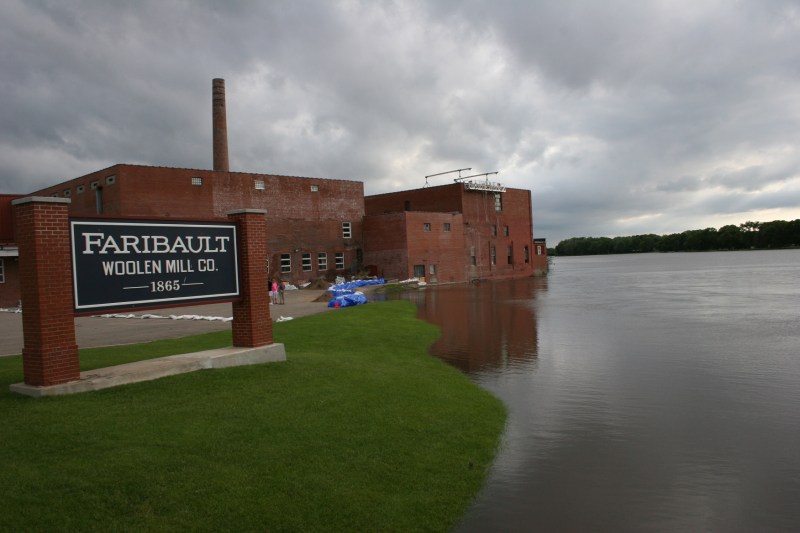
Sandbags protect the Faribault Woolen Mill from the rising Cannon River.

Sandbags protect the historic Faribault Woolen Mill from the rising Cannon River in June 2014. The mill is listed on the National Register of Historic Places. That designation in 2012 allowed the business to apply for, and receive, a $300,000 grant from the Minnesota Historical Society for mill restoration. This photo is published in black-and-white on page 96 of Lisa M. Bolt Simons’ book. Minnesota Prairie Roots file photo 2014.

Lisa’s 126-page book, published by The History Press, is packed with information that shows extensive research on her part to tell the complete story of Minnesota’s oldest manufacturer. Her bibliography runs four pages. I must note here that Lisa references my June 12, 2012, blog post, “Historic Faribault Woolen Mill Opens Store with Artsy Vibe,” in the preface. One of my photos is also published in her book.

Perusing merchandise at the recently reopened Faribault Woolen Mill retail store.

Perusing merchandise at The Mill Store shortly after it opened in 2012. Minnesota Prairie Roots file photo.

Typically, I do not enjoy reading history. But I finished Lisa’s book in just a few days. It was that interesting. I didn’t grow up in Faribault. So, unlike natives, I didn’t know the history of the mill which started with the Klemers, a family ownership that extended into five generations. I didn’t know about the mill’s multiple locations, about the five fires. I didn’t know how close the mill came to closing during several economic down-turns. I didn’t know why the family sold to outside investors, a move that eventually resulted in the mill’s closure in 2009.

Lisa references public court documents that offer insights into the short-term closure. She also quotes employees who dealt with bounced paychecks and unpaid health insurance premiums. Her information confirms what my neighbor, a retired mill retail store employee, told me years ago.

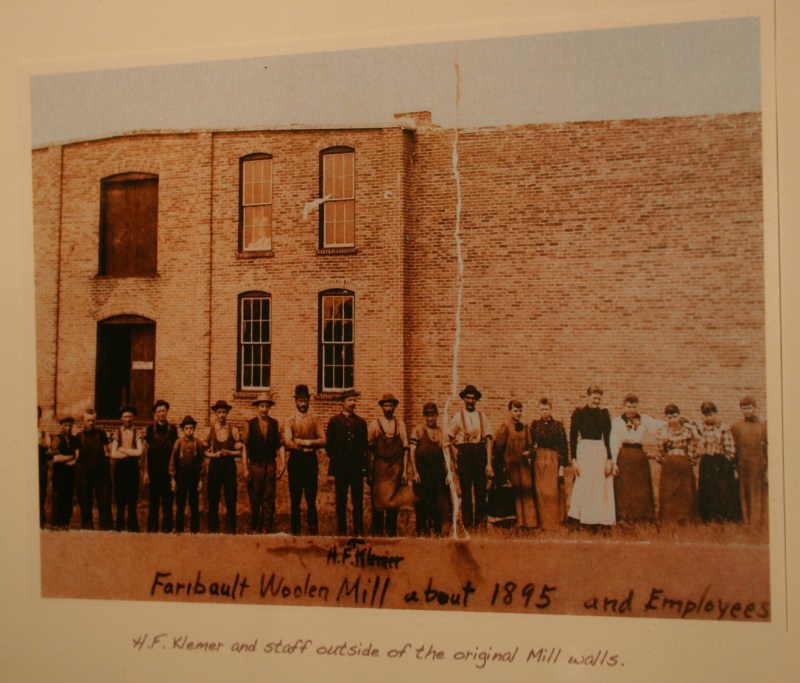
An historic photo from the mill, among those showcased in a mini wall of Woolen Mill history.

An historic photo from the mill, among those showcased in a mini wall of Woolen Mill history. Minnesota Prairie Roots file photo.

Through the challenges of fires, floods (in 2010 and 2014) and finances, the Faribault Woolen Mill survived with a tenacity that continues today under the ownership of Paul and Chuck Mooty and their leadership team. The cousins reopened the mill in 2011. A theme of endurance weaves throughout the book.

Crisp white cubbies, ever so perfect for showing off blankets/throws.

Crisp white cubbies, ever so perfect for showing off blankets/throws at The Mill Store. Minnesota Prairie Roots file photo 2012.

As it did from the beginning, the mill remains rooted in producing quality wool products, specializing in blankets that have warmed troops, hotel guests, airline passengers, newlyweds… Today you’ll find Faribault Woolen Mill products in boutiques and trendy places nation-wide, many of those notable locations listed in the book.

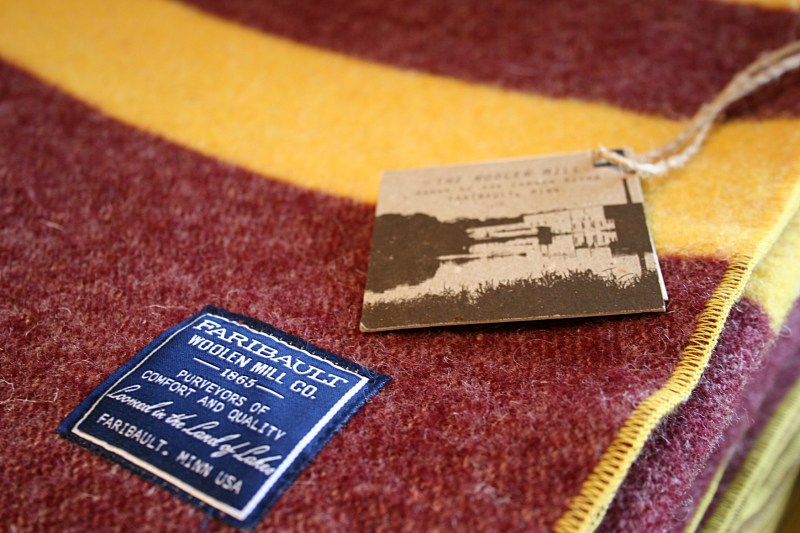
The mill's products are labeled as "Loomed in the Land of Lakes" by "Purveyors of Comfort and Quality." Minnesota Prairie Roots file photo 2012.

The mill’s products are labeled as “Loomed in the Land of Lakes” by “Purveyors of Comfort and Quality.” Minnesota Prairie Roots file photo 2012.

Because of Lisa’s book, I now hold a deeper appreciation of the Faribault Woolen Mill, one of the last vertical woolen mills in the U.S. I understand why locals value this business hugging the banks of the Cannon River. A quote from Jean Mooty, who restarted the retail store and is the wife of co-owner Paul Mooty, says it all: “The mill gets in your blood.”

Lisa M. Bolt Simons. Photo by Jillian Raye Photography.

Lisa M. Bolt Simons. Photo by Jillian Raye Photography.

FYI: The Mill Store, 1500 Second Avenue Northwest, will host “A Book, Beer + Blankets” book tour launch from 4 p.m. – 7 p.m. on Wednesday, December 9. Lisa will give a short presentation at 5:30 p.m. Faribault’s F-Town Brewery will offer beer tasting. And, of course, Faribault Woolen Mill products will be available for purchase.

(Note: I received a complimentary copy of Faribault Woolen Mill—Loomed in the Land of Lakes. The inclusion of my mill photo and references to me and my blog did not influence this unbiased and honest review of the book.)

© Copyright 2015 Audrey Kletscher Helbling
Book cover image by The History Press
Author portrait by Jillian Raye Photography