Minnesota Prairie Roots

Writing and photography by Audrey Kletscher Helbling

“Four Red Sweaters,” a difficult, but necessary, read July 1, 2025

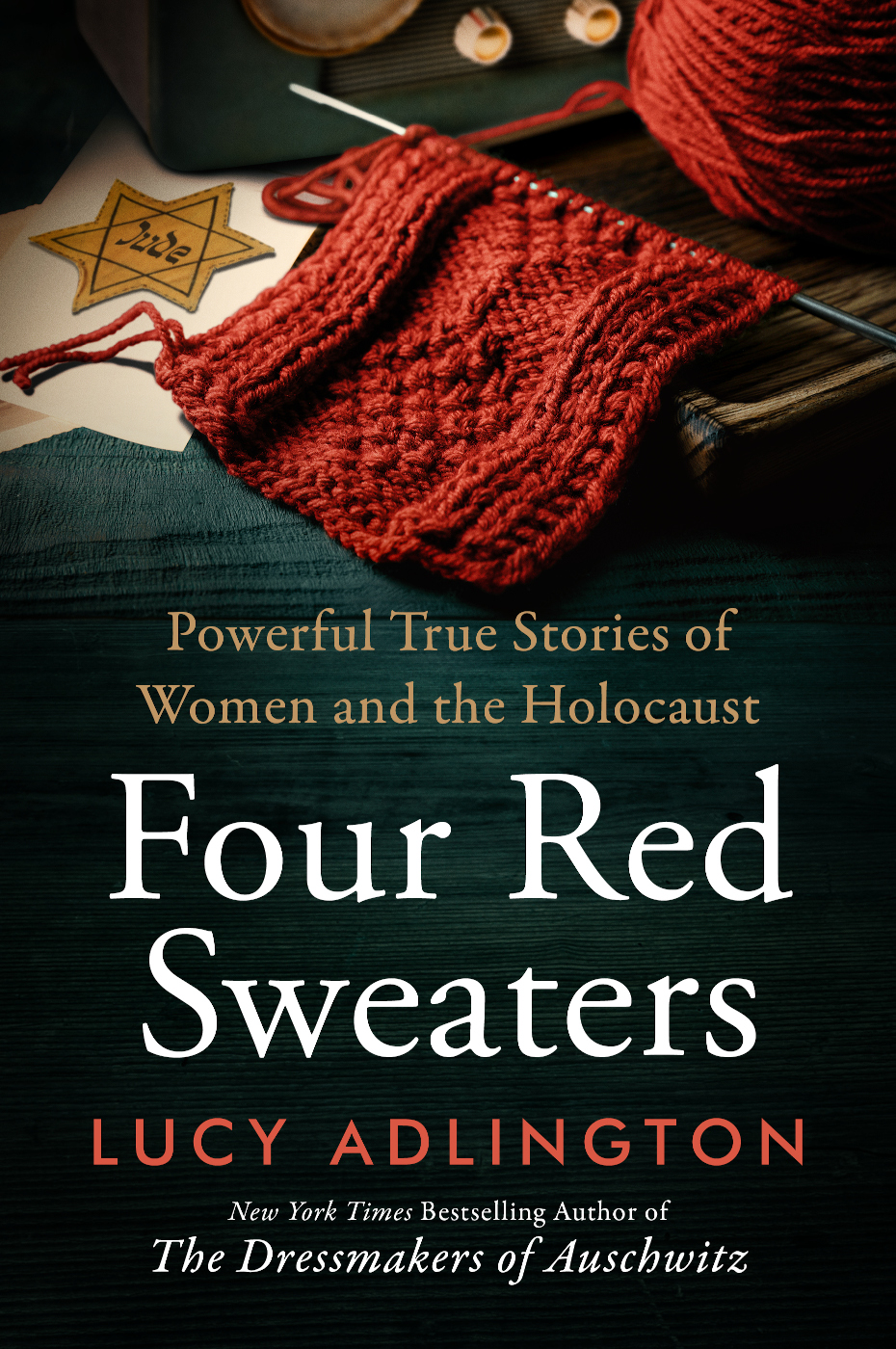
(Book cover sourced online)

TYPICALLY, I CAN READ a book within two weeks. But not Four Red Sweaters—Powerful True Stories of Women and the Holocaust by Lucy Adlington. I had to renew this book at my local library in order to finish it.

Why? The content is so difficult, disturbing and devastating that I could only read this work of nonfiction in small chunks. But I was determined to finish this book about Jock, Anita, Chana and Regina—four Jewish girls living in Nazi Germany—and all connected by red sweaters. I owed it to them to learn more about the awful atrocities inflicted under Adolph Hitler’s rule by those who lived, breathed, and followed him and his ideology.

All the while I was reading Four Red Sweaters, a small voice in my head whispered warnings in words like a knock on the door, fear, anti-immigration sentiment, snatched, disappeared, deported, deception, secrecy, dehumanizing… The parallels to today were not lost on me.

REAL PEOPLE WITH STORIES

What I particularly like about this book, if one can ever really “like” a book on such a topic, is the personalization. Anita is not just #69388 inked onto her left forearm at Auschwitz-Birkenau. She is a girl who arrives at the concentration camp wearing shoes adorned with pompoms and tied with red shoelaces. She is a girl who knew how to play the cello. That skill eventually saved her.

But too many died. Millions and millions. That included the Fink family, brutally murdered by their neighbors in an act so heinous I can’t share it here. Turn to page 96 in the book. The Finks were extended family of Jock, a main character in this story. She was one of the “lucky” Jewish children who escaped Nazi Germany, along with her sisters, on a Kindertransport, an all-out effort by brave souls to get Jewish children out of the country to safety. But Jock’s parents and brothers died at the hands of the Nazis.

The pages of Four Red Sweaters are filled with heroic acts, bravery, defiance and determination that show the incredible strength of the human spirit. There existed a mentality of surviving together or dying together. The pages of this book are also filled with stories of unbelievable, unfathomable cruelty.

A NECESSARY READ

Author Adlington backs her writing up with 23 pages of source notes. In small print. That’s a whole lot of documentation in researching and writing this book. I cannot imagine the emotional toll this took on her. I also cannot imagine anyone reading Four Red Sweaters and not feeling deeply moved and worried, but also grateful to Adlington for sharing the stories of Jock, Anita, Chana and Regina and the broader stories of the Holocaust. We need to read about, study, learn and remember the past so as not to repeat it.

Near the very end of Four Red Sweaters, Adlington writers about a knitter who, in 2013, designed Remembrance socks. Heatherly Walker’s sock pattern honors Regina and the others who were forced to knit socks and more for the Nazis and their families. She incorporated hidden Jewish stars into the pattern, which is available on the Ravelry website for crafters. Knitting is an integral part of the stories Adlington shares in her book.
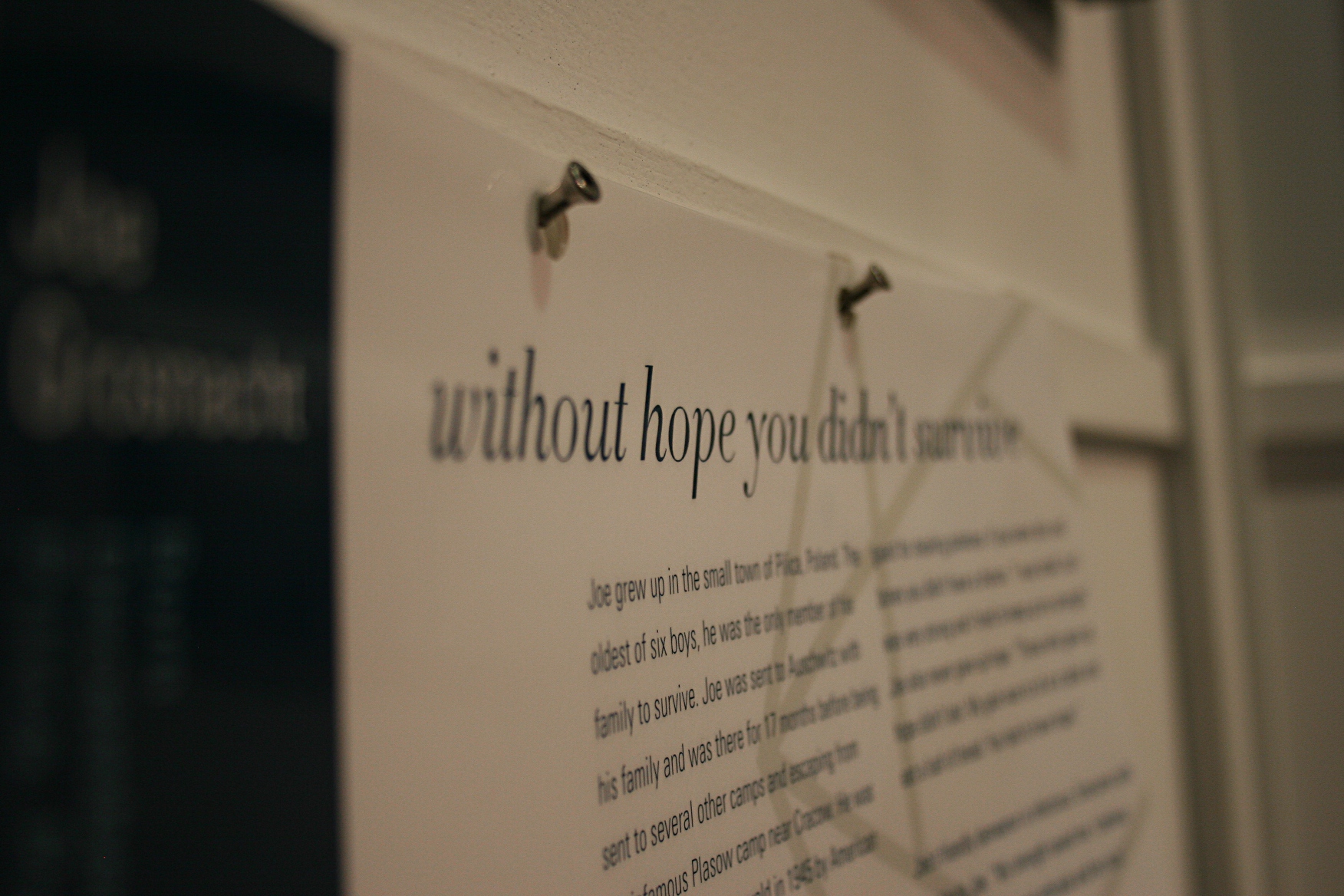
Hope in a story at the traveling exhibit about Holocaust survivors, “Transfer of Memory,” which I viewed in 2014 at the Steele County History Center, Owatonna. (Minnesota Prairie Roots copyrighted file photo 2014)

DEFIANCE, COURAGE, HOPE

One seemingly small act stands out for me in Four Red Sweaters. Regina’s friend Esther, after foraging mushrooms for the Nazis in the Sobibor extermination camp, walks into the SS canteen, sees a pot of soup cooking and spits in it. And the Nazis eat it. I can only imagine the satisfaction Esther felt in that moment of defiance. Endless examples of defiance, courage, hope and resilience are knitted into the pages of Four Red Sweaters.

As challenging as it was for me to read this book, I needed to do so. For to stop reading when the content grew increasingly difficult and disturbing would have been to do exactly as the Nazis desired. Nobody must know. But we must all know. And, sometimes, like Esther, we must spit in the soup.

#

TELL ME: If you’ve read Four Red Sweaters, how did you react? What stands out for you in the book? Special thanks to Missy’s Crafty Mess (the blog of an avid reader and knitter) for writing about Four Red Sweaters, which led me to this book about the Holocaust. I am grateful for her recommendation.

© Copyright 2025 Audrey Kletscher Helbling


Remembering the Holocaust January 29, 2023

A quote and story in “Transfer of Memory.” (Minnesota Prairie Roots copyrighted file photo June 2014)

Without hope you didn’t survive…

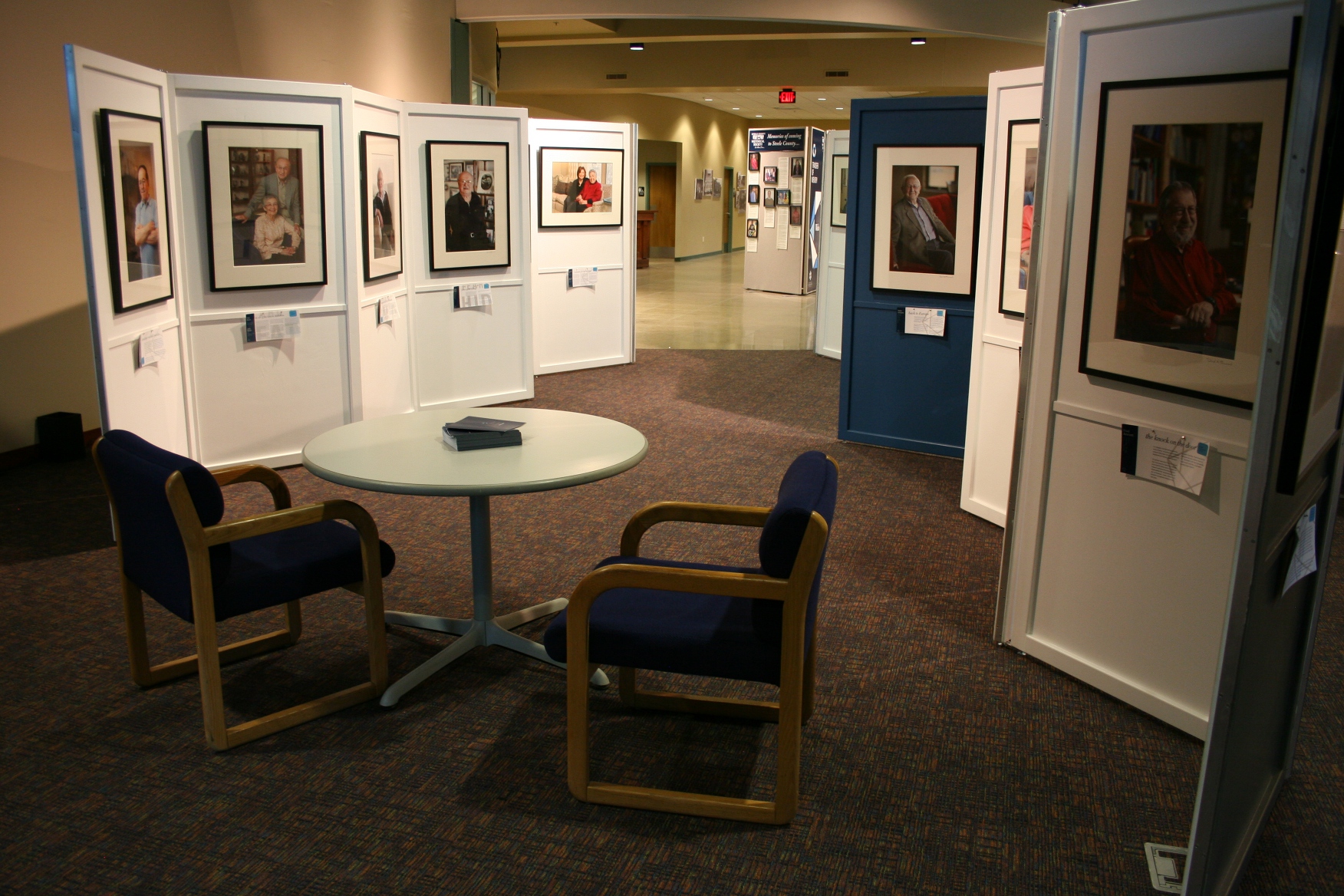
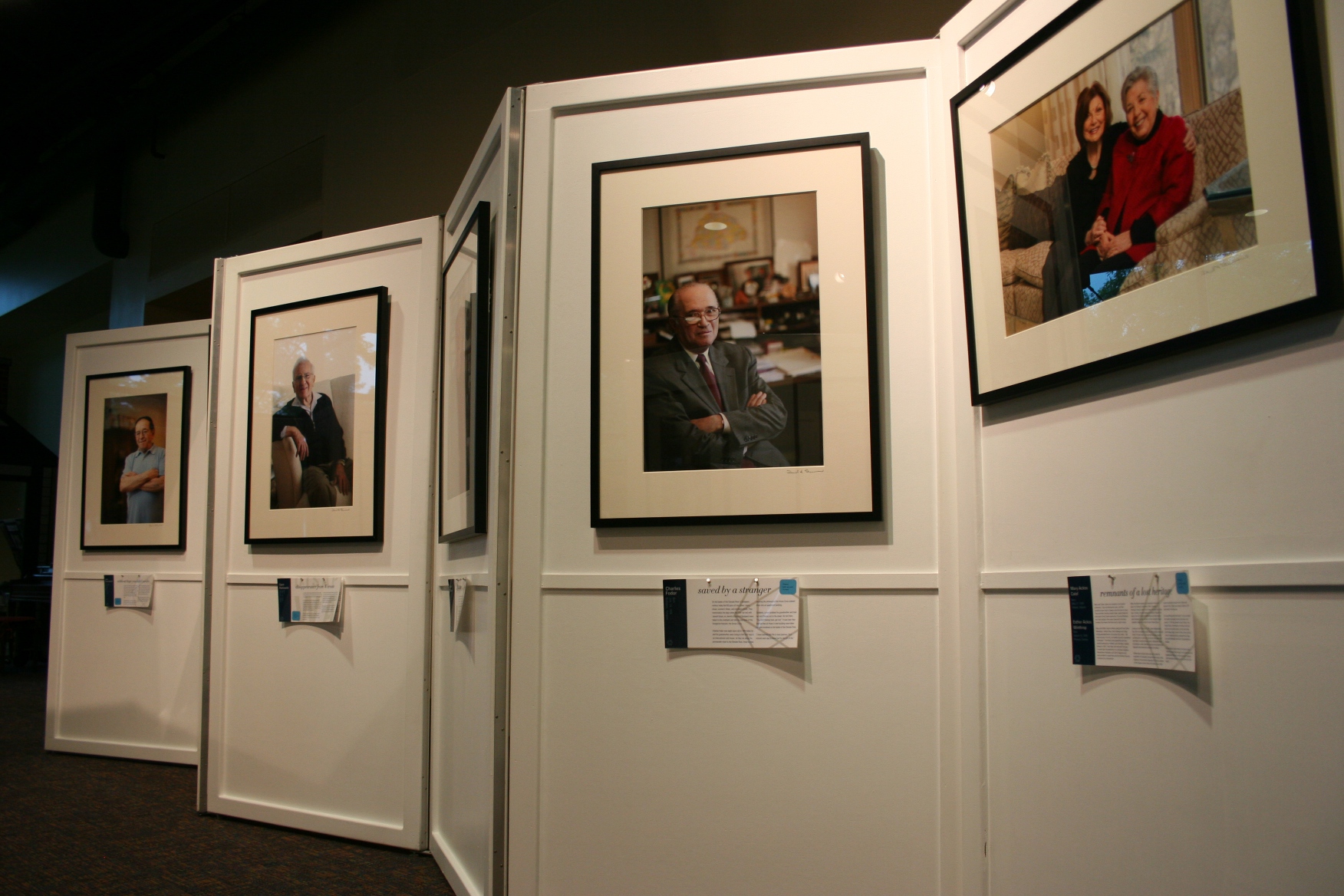
I photographed that quote in the summer of 2014 while viewing a traveling exhibit on the Holocaust, “Transfer of Memory,” at the Steele County History Center in Owatonna. The singular summary word hope themes portraits and accompanying stories of Minnesota Holocaust survivors.

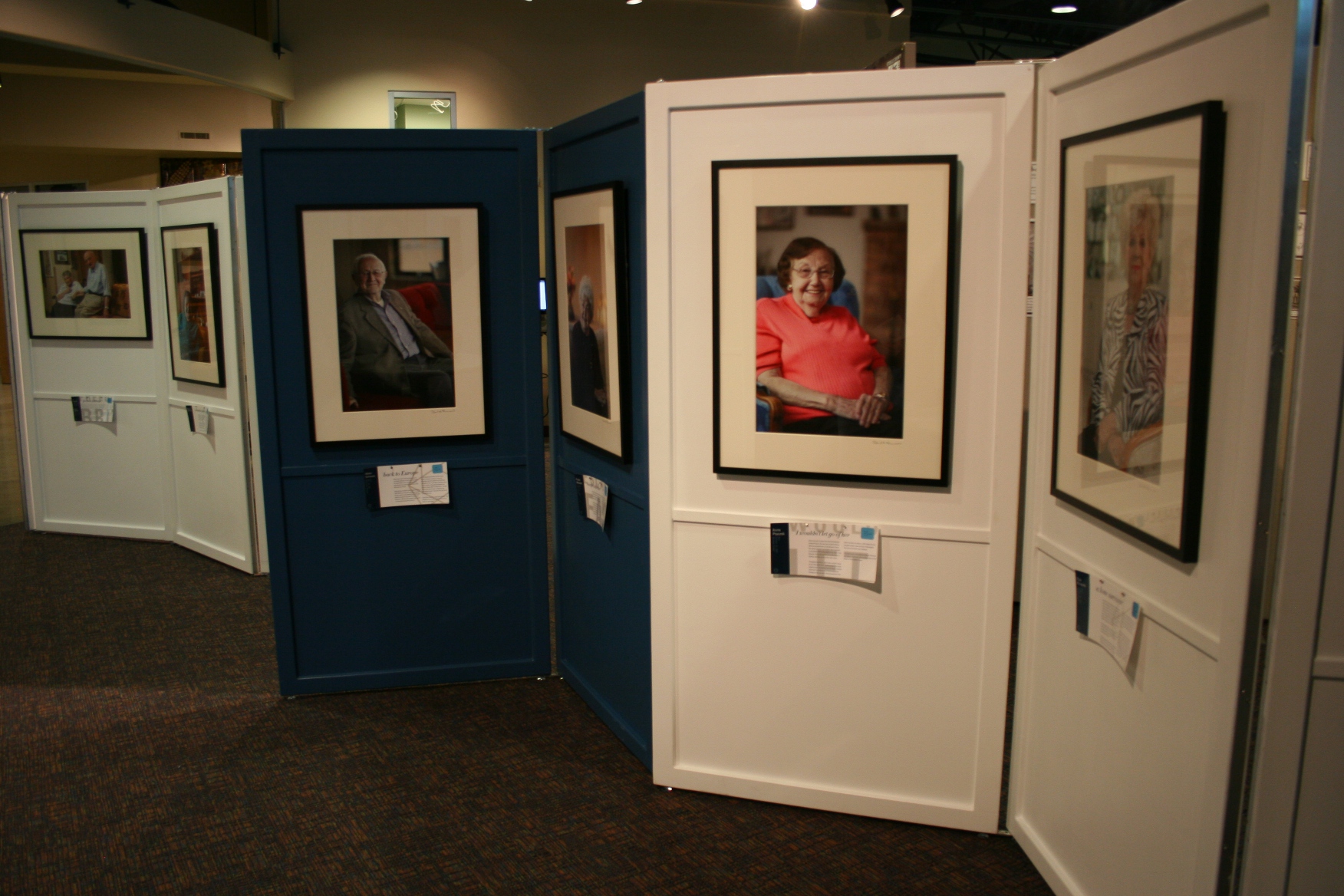
Panels showcase portraits and stories in “Transfer of Memory.” (Minnesota Prairie Roots copyrighted file photo June 2014)

“Transfer of Memory” was, and remains, one of the most powerful exhibits I’ve ever viewed. It is the personal stories, paired with portraits, which imprinted upon my heart and spirit the utter brutality, the unfathomable cruelty of the Nazis against Jewish people.

Today, just days after International Holocaust Remembrance Day on January 27, the date in 1945 marking the liberation of Auschwitz-Birkenau, the Nazi’s largest killing center and concentration camp, I am reminded of the survivors featured in that traveling exhibit.

I am reminded, too, of the 6 million Jewish victims of the Holocaust. Six. Million.

Cover image from Goodreads

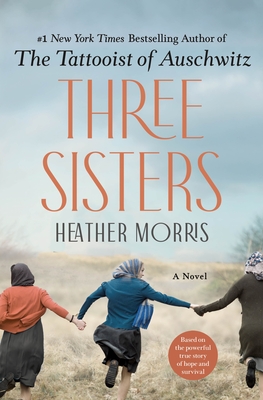
Recently, I read three books of historical fiction about young men and women imprisoned in concentration camps. These books by Heather MorrisThe Tatooist of Auschwitz, Cilka’s Journey and Three Sisters—are difficult to read. Heart-rending. Awful. Yet, with that underlying theme of hope accompanied by incredible strength. Like the “Transfer of Memory” exhibit, they imprinted upon my heart and spirit the utter brutality and unfathomable cruelty of humankind.

When I read of current day antisemitism and hatred directed towards other individuals because of their skin color, ethnicity, religion, etc., I find myself wondering, “Why?”

#

FYI: Click here to learn more about the Jewish Community Relations Council of Minnesota and the Dakotas and its “Transfer of Memory” exhibit. Please consider bringing this exhibit to your community. Click here to read my 2014 post about the exhibit in Owatonna.

“Transfer of Memory” is currently on exhibit in Jones Commons at Plymouth Congregational Church in Minneapolis until February 28. Special events are also planned. A forum with a Holocaust survivor is set for 10 am Sunday, February 12. And at 4 pm Sunday, February 26, Janet Horvath performs on her cello and celebrates the release of her memoir, The Cello Still Sings: A Generational Story of the Holocaust and of the Transformative Power of Music. Click here for more information about the exhibit and events at Plymouth Congregational.

© Copyright 2023 Audrey Kletscher Helbling


Strength & hope October 14, 2022

The Straight River roils by at the dam in Owatonna. I see struggles. I see strength. (Minnesota Prairie Roots copyrighted file photo)

WHAT’S YOUR DEFINITION of strength? Whom do you consider strong? Have you faced a challenge, or multiple challenges, in life that required strength? While our answers vary, especially on the third question, I expect threads of commonality in responses.

Strength, from my perspective, is about fortitude and endurance. It’s about somehow finding the ability to face a challenge, to persevere, to come out on the other side with a renewed sense of personal power. Not power in the sense of control, but power that reaffirms one’s ability to deal with whatever life throws at us.

We all have something, right? Financial hardships. Health issues. Loss. Pain. Family members who are struggling. But, admittedly, when we are in the middle of a lot, it can sometimes feel like we are alone, that others live perfect lives unencumbered by issues that drain, stress and, yes, sometimes overwhelm. Nothing could be further from the truth. I repeat: We all have something, whether individually or within our families. We are not alone.

(Cover image from Goodreads)

The novel, Three Sisters by Heather Morris, prompted me to write on the topic of strength. Although fictional, the book is based on a true story about three sisters held in a concentration camp. This is a story of indescribable atrocities witnessed and experienced. This is also a story of irrepressible strength and hope. I encourage you to read this novel and also watch Ken Burns’ newest documentary, “The U.S. and the Holocaust,” which happened to air at the same time I was reading the book. Together, the two were almost too much for me to emotionally take in. It’s a lot to comprehend the inhumanity and cruelty of mankind. Those sent to concentration camps certainly exhibited strength, whether they survived or not.

The iris symbolizes hope. (Minnesota Prairie Roots copyrighted file photo 2021)

In reading Three Sisters, I learned that gladiolus (the flower) signify strength. And the iris, which is part of the glad family, denotes hope. The iris was my mom’s favorite flower. “Hope” is a word I’ve held, and continue to hold, close. “Hope” is not simply a wish. By my definition, it is an active verb that focuses on light shining through darkness. It is a word, too, that envelopes gratitude and believing that things will get better.

I keep this stone on my office desk. (Minnesota Prairie Roots copyrighted file photo)

My name, Audrey, means noble and strong. I wish I’d asked my mom why she chose that name for me, her first-born daughter. I never did, and now she’s gone, but the name fits. I’ve had to be strong many times throughout my life. We all have something, right? Challenges can make us better, more empathetic and compassionate people. That is the good that arises from struggles.

This message refers to struggles with mental illness. (Minnesota Prairie Roots copyrighted file photo)

This week, especially, with World Mental Health Day on October 10, I consider mental health. From anxiety to depression to brain disorders like bi-polar and schizophrenia, these are undeniably hard diagnoses which require incredible strength to face. Simply getting up in the morning, functioning, can prove difficult. There are no cures. No quick fixes. Medication can manage, therapy can help. And even though we are getting better at recognizing and understanding, stigma remains. We can do better at supporting, encouraging, helping. We need more mental health professionals to meet the growing demand for mental health care.

Strength. Hope. Those two words inspire and uplift. Gladiolus and iris. Those two flowers represent the same. From the pages of a novel about three Holocaust survivors to my name to life experiences, I understand what it means to be strong, to feel hope.

TELL ME: I’d like to hear your thoughts on strength and hope.

© Copyright 2022 Audrey Kletscher Helbling


Minnesotans remember the Holocaust in traveling exhibit June 23, 2014

I READ IT IN THEIR STORIES. Courage. Hope. Strength. Fortitude. Survival.

I see it in the lines that etch deep into their faces, in their piercing eyes, in their hands. Courage. Hope. Strength. Fortitude. Survival.

Panels showcase portraits and stories.

Panels showcase portraits and stories.

They are men and women, now living in Minnesota, who survived the Holocaust.

On a recent Saturday, in Owatonna, a rural Minnesota community far removed from the horrible history of Nazis and concentration camps and atrocities against Jews, I was introduced to brave souls who endured almost unimaginable experiences to emerge with spirits still strong, hope alive, lives to live.

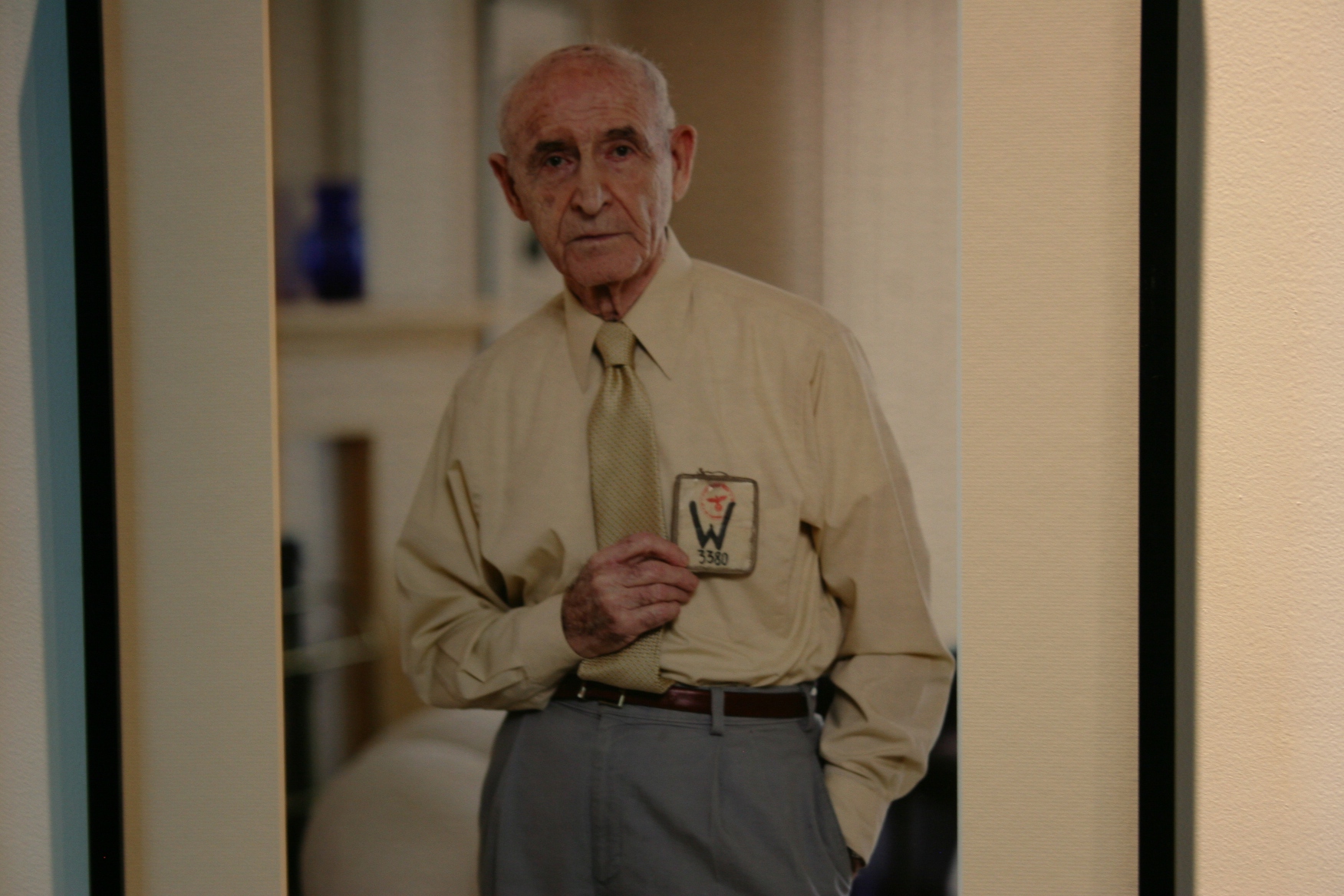
Holocaust survivor Leo Weiss.

Holocaust survivor Leo Weiss.

Eva, Ella, Sam, Walter, Paula, Anne, Joe, Trudy, Leo…

The Steele County History Center, 1700 Austin Road, Owatonna, is hosting "Transfer of Memory" through August 17.

The Steele County History Center, 1700 Austin Road, Owatonna, is hosting “Transfer of Memory” through August 17. Museum admission charges apply.

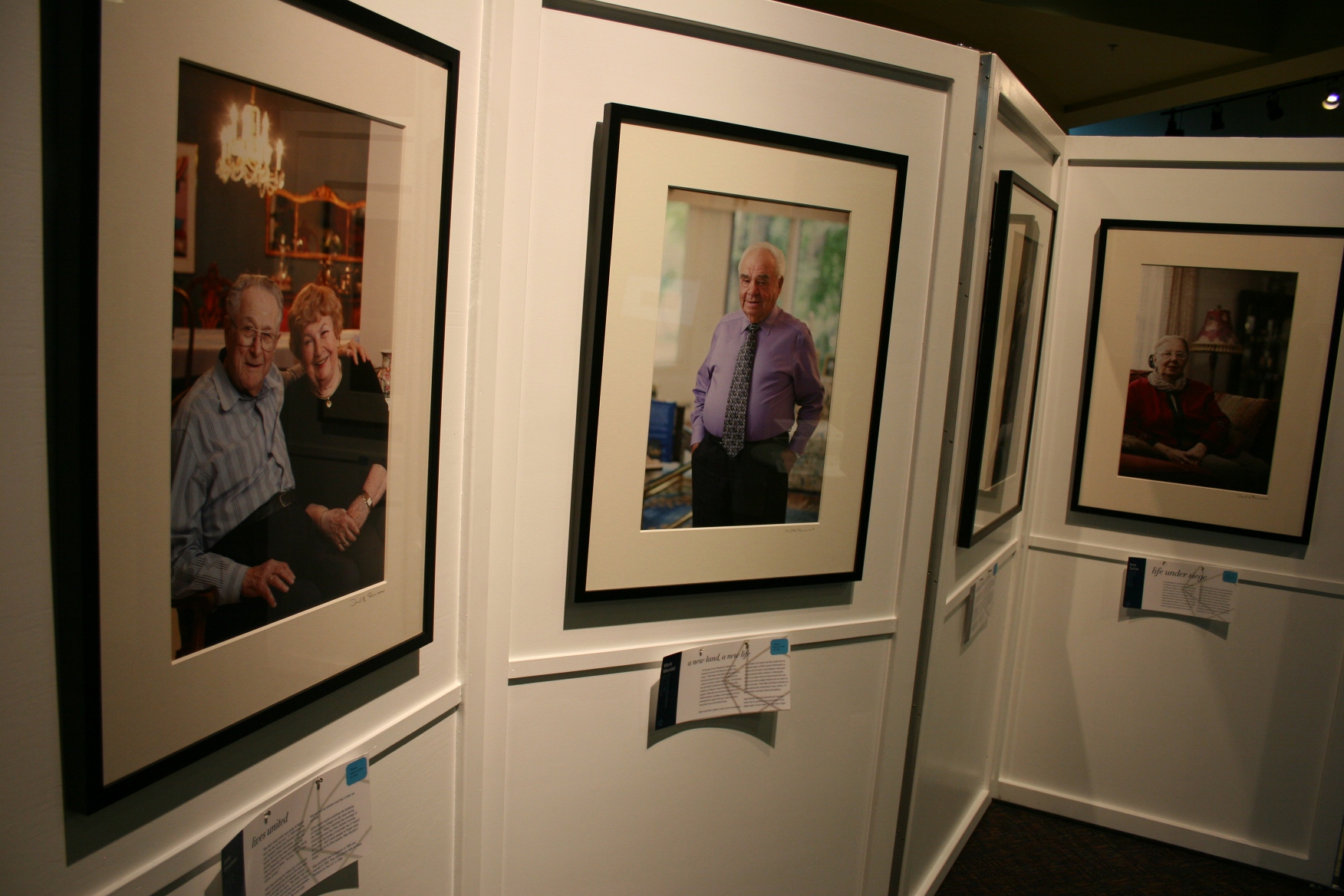
Thirty-five impressive portraits by photographer David Sherman and accompanying information written by Lili Chester tell the stories of these Holocaust survivors in the traveling exhibit, “Transfer of Memory.” The show, created in partnership with the Jewish Community Relations Council of Minnesota and the Dakotas, will remain at the Steele County History Center until August 17.

Their stories will touch you.

Their stories will touch you.

I’m especially pleased that this exhibit is showing in Owatonna, offering southeastern Minnesota residents like myself the opportunity to view the portraits and read the stories without traveling into the Twin Cities metro.

Panels of portraits and stories define "Transfer of Memory."

Panels of portraits and stories define “Transfer of Memory.”

As I perused the panels of photos, plucking laminated story cards from below the portraits, I found myself immersed in the personal stories of survival and lessons learned. Hands gripped to prevent separation. Warnings given to save lives. Lying about age and religion to save one’s self. Death and marches and sickness. Horrible horrible stories.

Hope in a story.

In their words: hope.

But always hope. Hope and faith and more allowed these individuals to survive such awful atrocities.

I wonder if I would have possessed the willpower to continue on, to overcome, as they did.

Survivor portraits and stories impress.

Survivor portraits and stories impress.

These Holocaust survivors offer not only their experiences, but their introspection. Therein lies the power of this exhibit:

Don’t hate, it is a terrible thing. Everyone is born innocent. There is no reason to hate.—  Eva Gross

The United State presents to me and all our sons and daughter (s) an equal opportunity. Have patience, make an effort and be tolerant.—  Sam Rafowitz

The potential of (evil) is there in all of us if we do not remember the past.—  Lucy Smith

FYI: If you are unable to view this exhibit in person, click here to see the portraits and read the stories online.

Permission was secured from curators Laura Zelle and Susie Greenberg and from photographer David Sherman to use these photos of Sherman’s work and the exhibit quotes published here. Original exhibit photos and text are copyrighted.