Minnesota Prairie Roots

Writing and photography by Audrey Kletscher Helbling

Thoughts on the day after Thanksgiving November 25, 2011

Filed under: Uncategorized — Audrey Kletscher Helbling @ 10:46 AM
Tags: , , , , ,

Thanksgiving Day dinner at my house with family.

ON THE DAY after Thanksgiving I am thankful…

  • …that I am not battling the mobs searching for bargains, even if my sister terms Black Friday shopping as “fun.” She regales me with tales of shoppers smashing shopping carts into hers and the rule she and her daughter follow: “We won’t fight anyone over anything; it’s not worth it.” I’ve figured out the real reason she shops today. It’s all about tradition and being with her daughter and not really about the bargains.
  • …that my mom could spend another Thanksgiving with me, my family and other members of my extended family. She’s 79 and not in the best of health. Last evening my husband and I drove her up to the McStop in Lakeville where my uncle and cousin met us. My mom will spend several days with her Arkansas sisters, her brother and their spouses in Minneapolis. Family time is precious.
  • …for the 60-degree temperatures Thanksgiving afternoon that prompted us to pull out the lawn chairs and sit on the patio, the sun warming our backs in a brisk wind.
  • …that my second daughter made it home for Thanksgiving, her first trip back from eastern Wisconsin since May. She’s a Spanish medical interpreter and, with only one weekend a month free of on-call status, simply can’t come back to Minnesota as often as I’d like.
  • …that my oldest daughter who lives in Minneapolis opted to sleep here on Thanksgiving, making me a particularly happy mom. I love having all three of my kids together with my husband and me for an evening and then all tucked into our beds, under the same roof, for a night.
  • …that I am going to be a great aunt for the fifth time. My nephew made the announcement yesterday that he and his wife are expecting a baby in June.

I hope your Thanksgiving was as wonderful as mine.

HOW WERE YOU blessed this Thanksgiving?

© Copyright 2011 Audrey Kletscher Helbling


Appreciating the little things at a barn dance & in life September 20, 2011

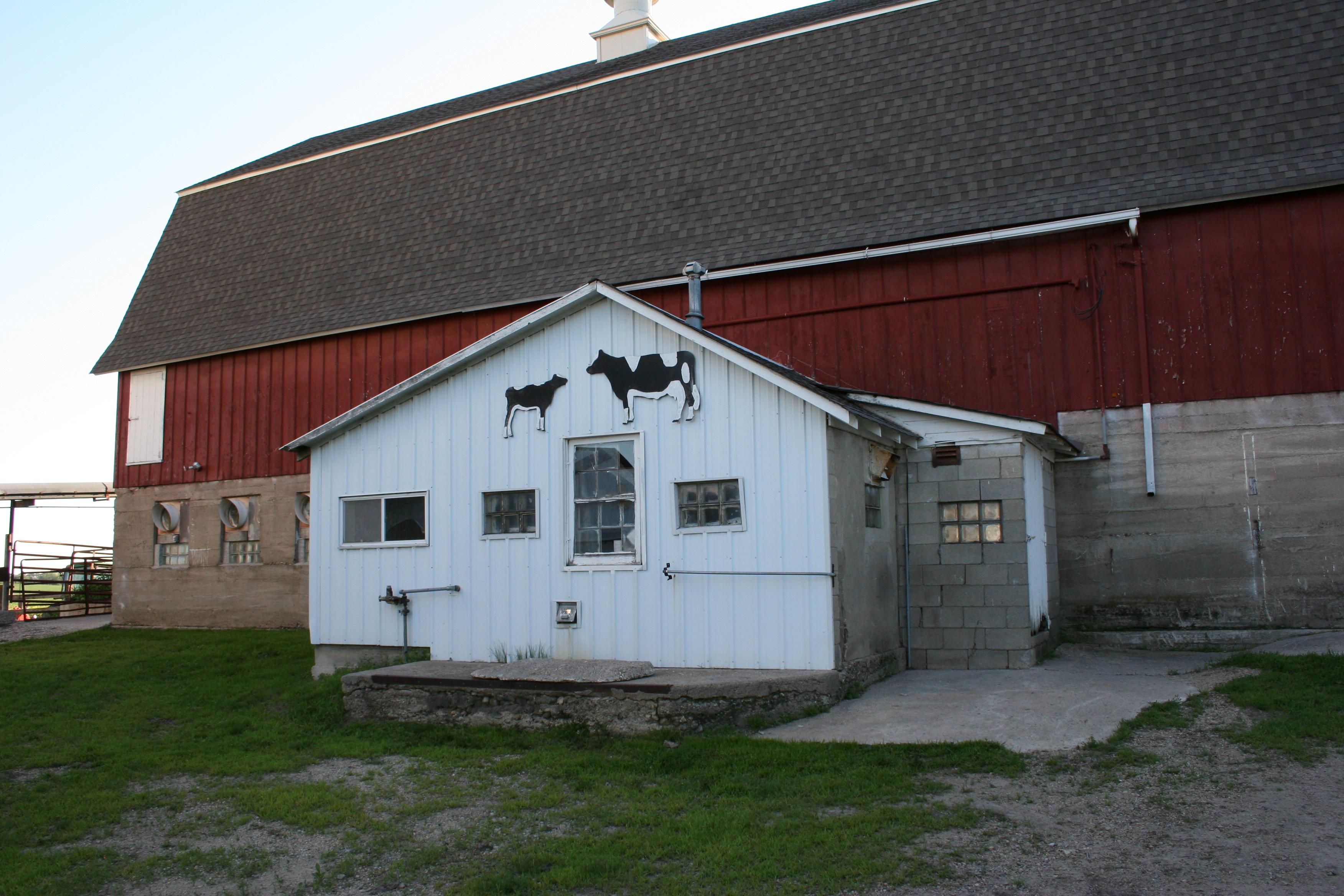
COUNTLESS TIMES my husband and I have driven into John and Debbie Becker’s rural Dundas yard for bible study and not given their barn a second thought. Maybe we’ve glanced toward it, noticed the 1915 date on the cupola or the cow art on the exterior milkhouse wall. But beyond that and John’s occasional comment that he’d like to have a barn dance, we really haven’t focused too much on that building which centers the farm (although I did photograph the exterior one evening this past summer).

Notice the cow art on the milkhouse in this image taken several months ago.

That all changed Saturday when the Beckers hosted their first-ever Harvest Time Barn Dance. I was there with camera in tow trying to capture the essence of the event via my photography.

That involved not only taking the general overall photos you would expect, but zooming in on the details. It is the details, like chapters in a book, that combined tell the complete story.

So today, in this post, I want you to see the “little things” I noticed. And I want to encourage you, as you go about your daily, busy lives, to pause and see the details. They make life interesting and fun and joyful and memorable.

All too often we hurry here and there, filling our minutes and hours and days and weeks—and then months and years—with activities and work and busyness. We miss out on so much of life by living that way.

We all need a barn dance to appreciate the sweet details of life.

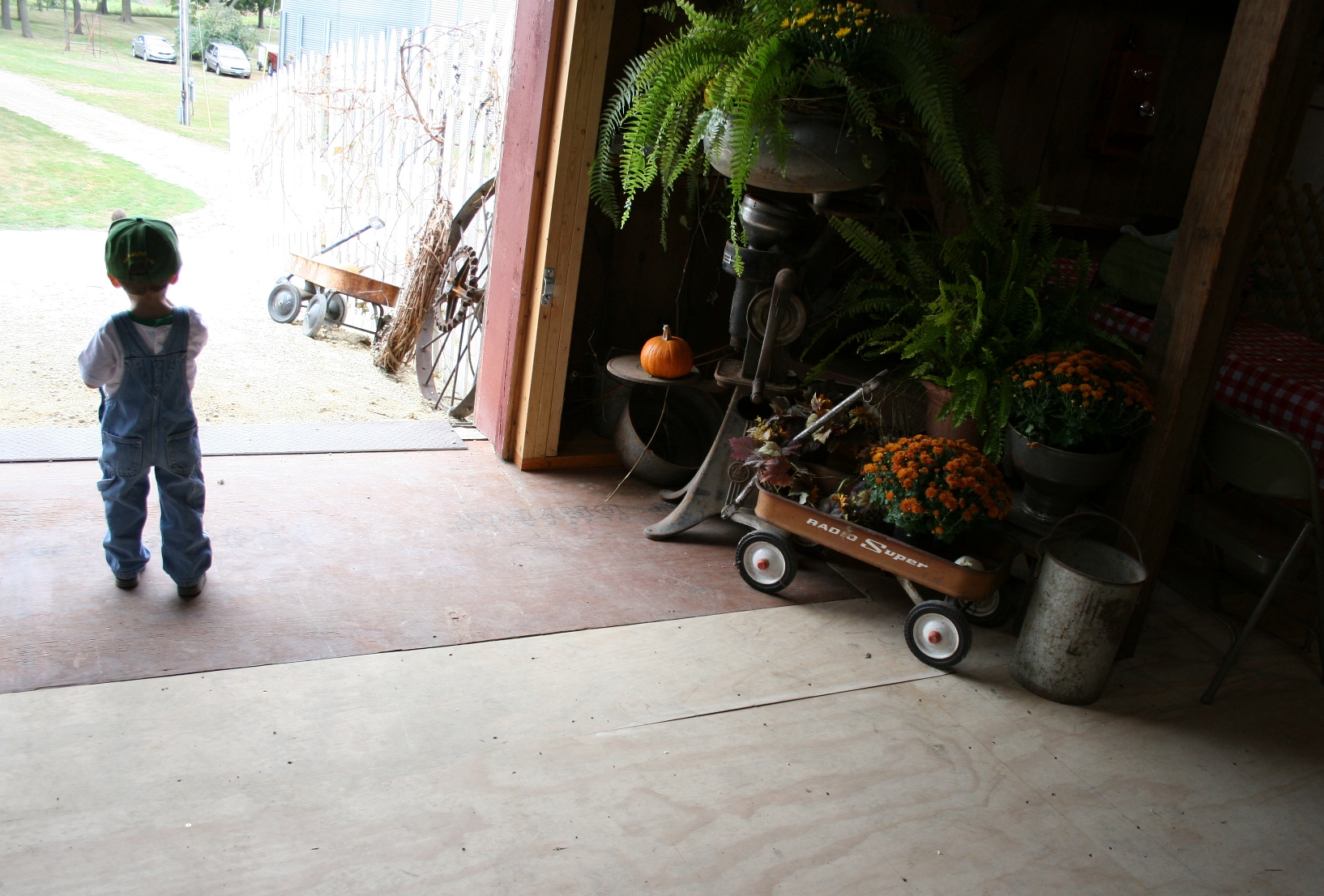
There's something about this "boy in bibs looking out the barn door" that is sweet and endearing.

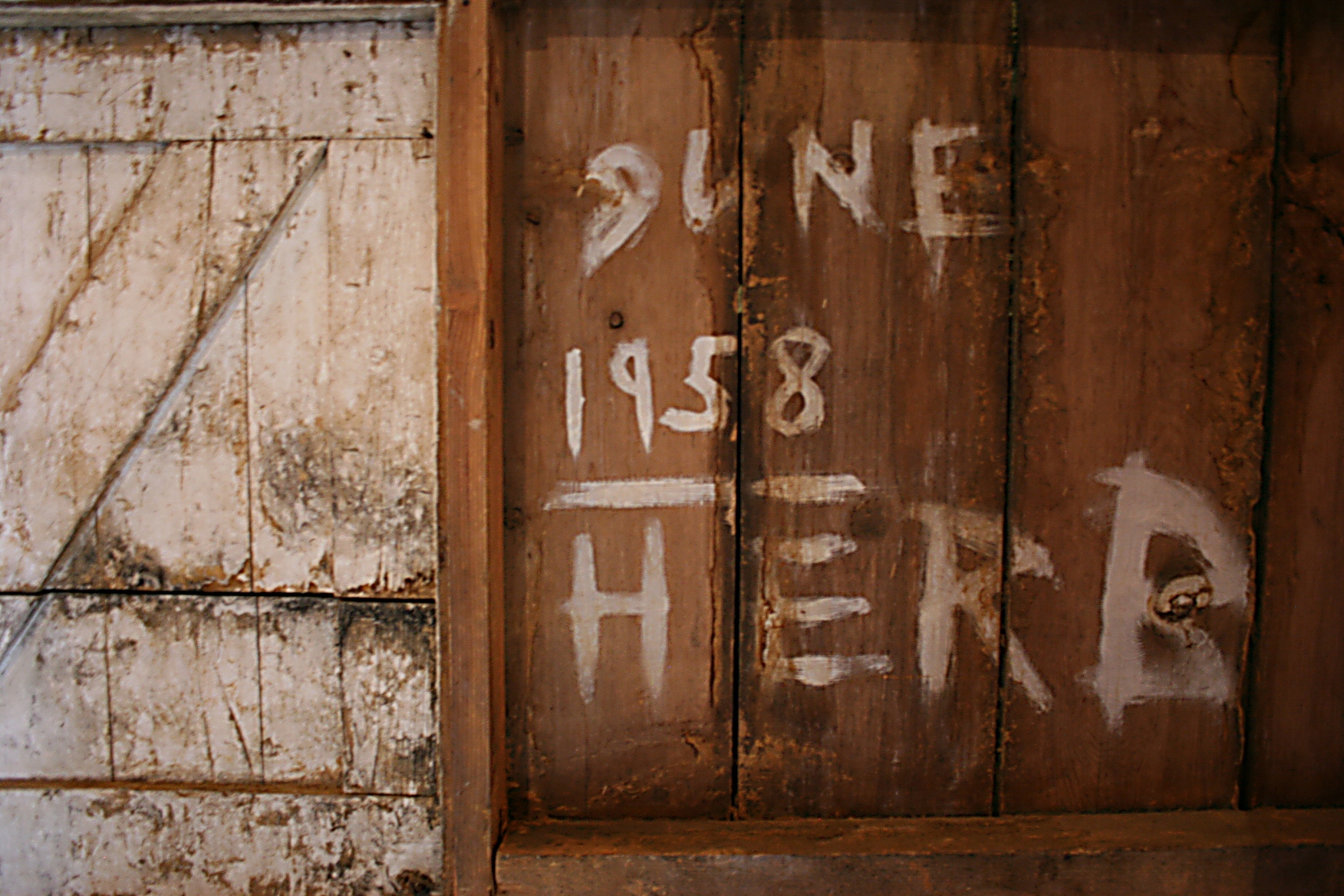
Herb Becker painted this on the west end of the barn interior in 1958. Family members are uncertain what it means, but John Becker thinks it may have something to do with his mom being pregnant with him then.

Most of the kids dressed in western attire, right down to the tips of their cowgirl/cowboy boots and hats.

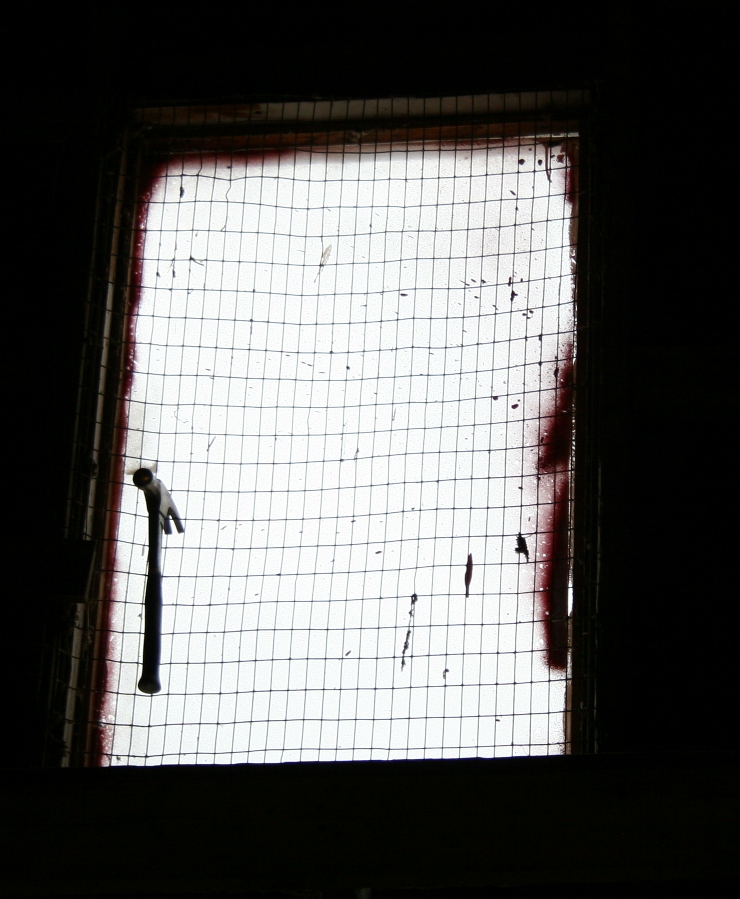
A hammer high on a screen has hung there for 40 - 50 years and is used to close the barn window, John Becker says.

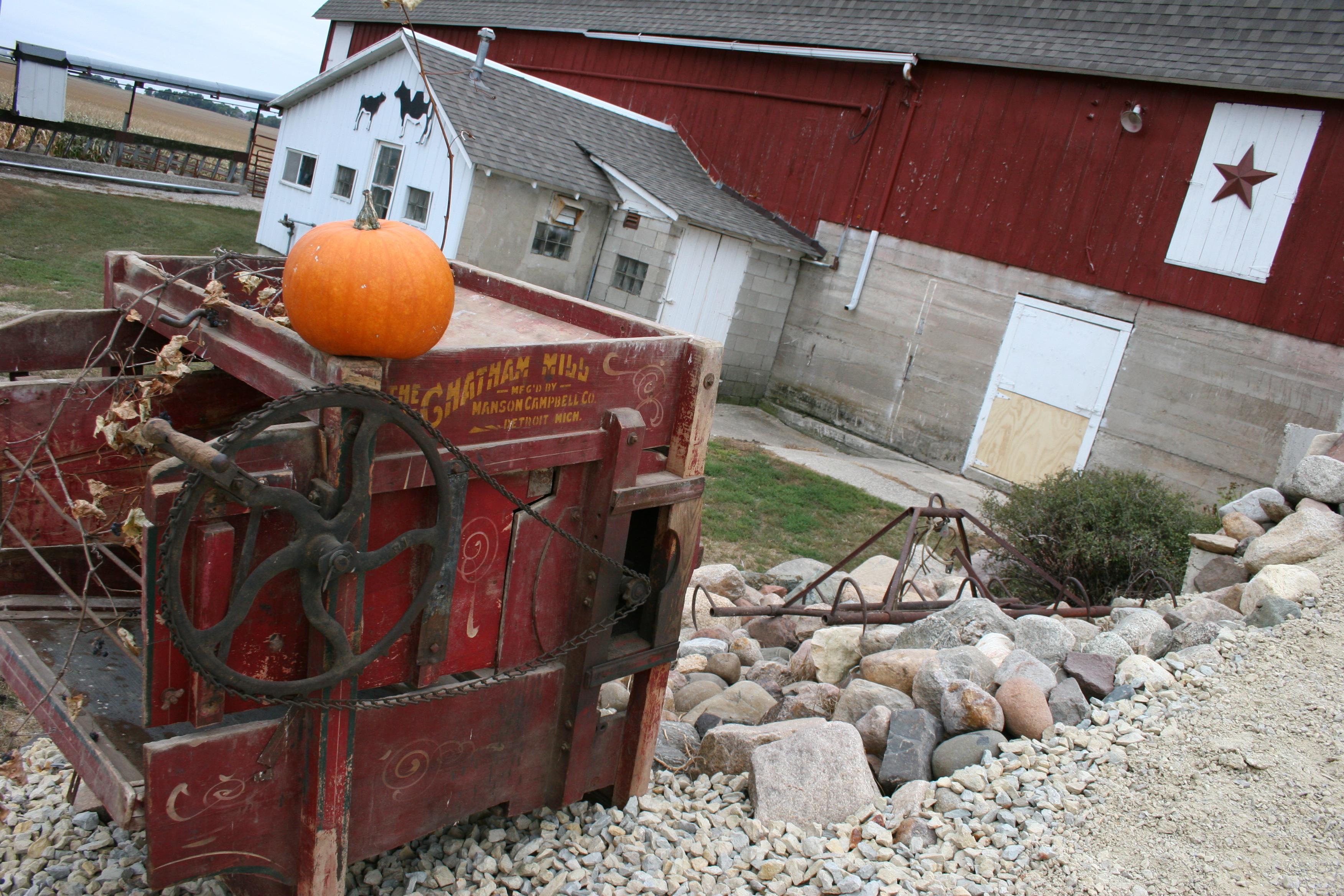
A vintage fanning mill was displayed along the pathway into the barn.

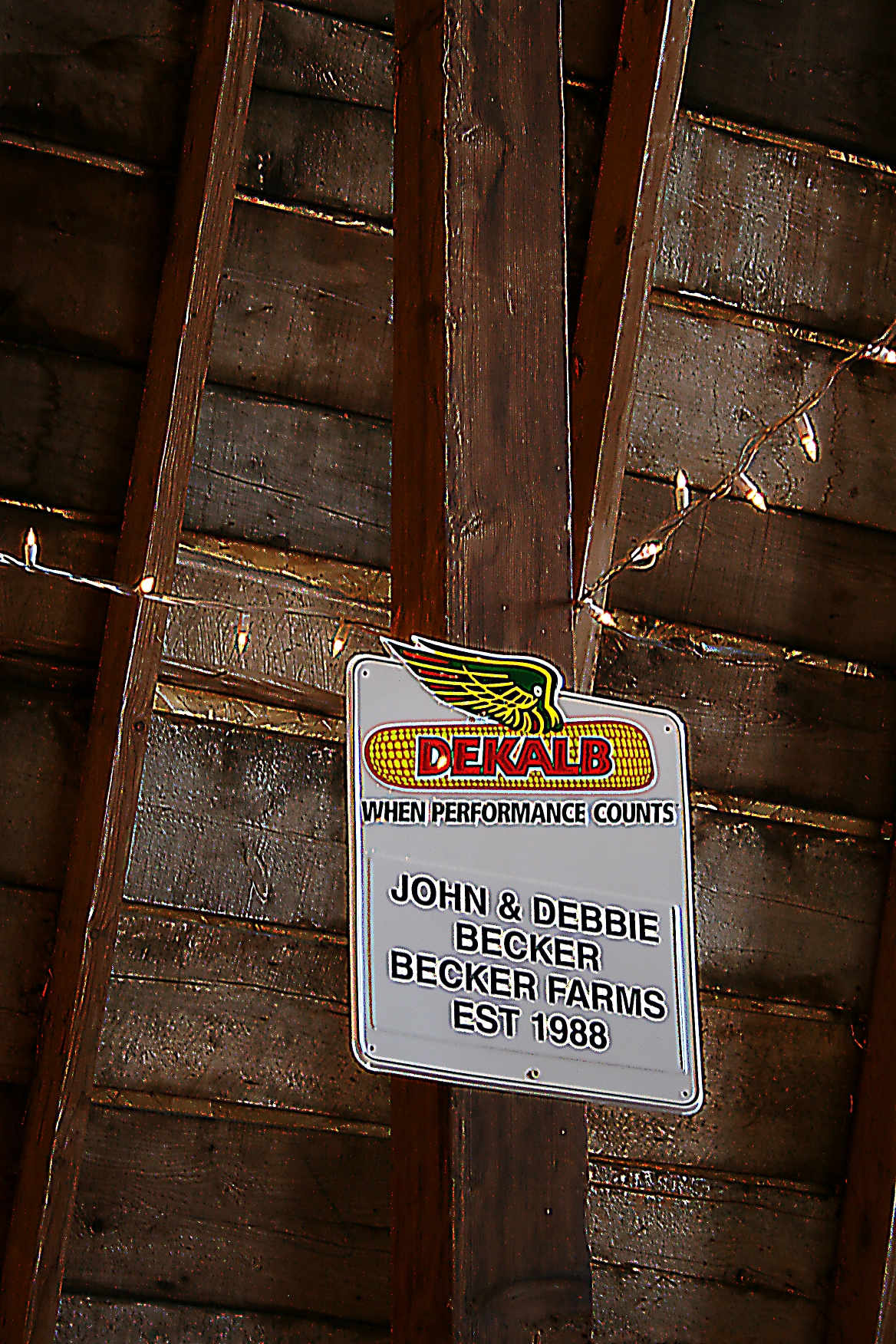
Among the signage decorating the barn interior: the Beckers' seed corn sign

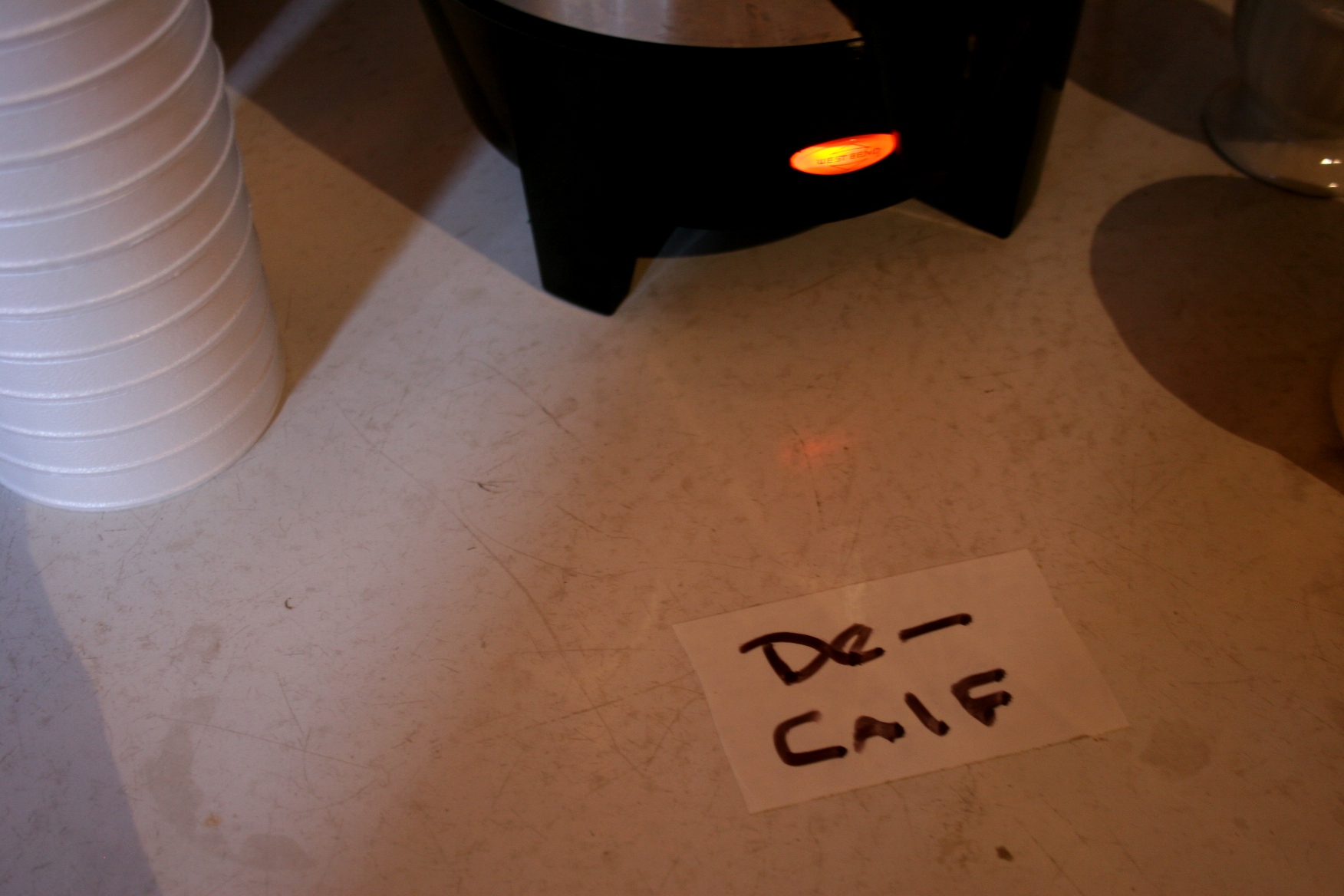
Farm humor: "De-CALF coffee

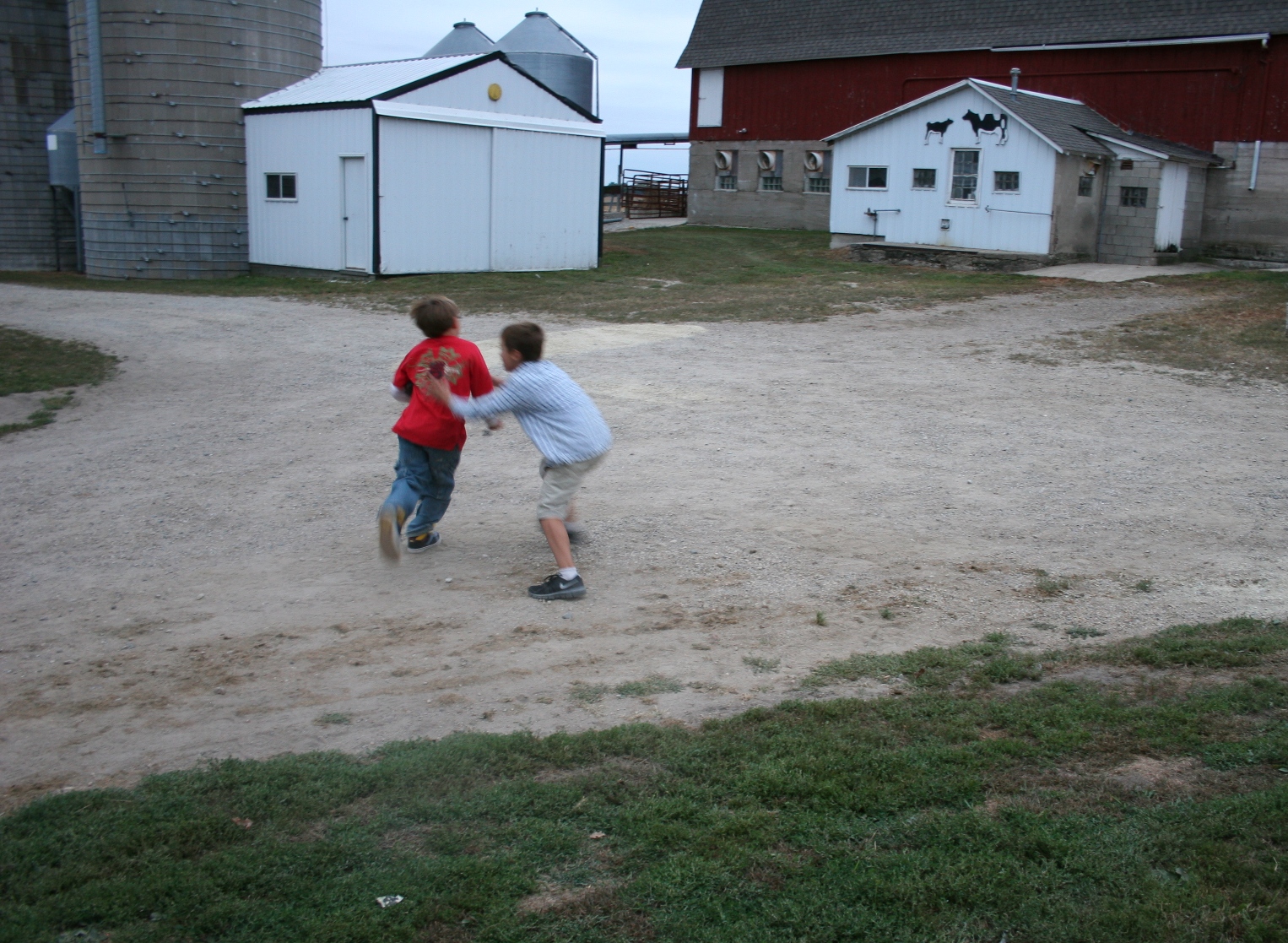
Kids played in the farmyard...just using their imaginations. No electronics, toys, etc., necessary.

Kids weren't the only ones carrying cap guns. I managed to pull the pistols from this deputy sheriff's holsters twice before he pulled out his handcuffs and threatened to cuff me.

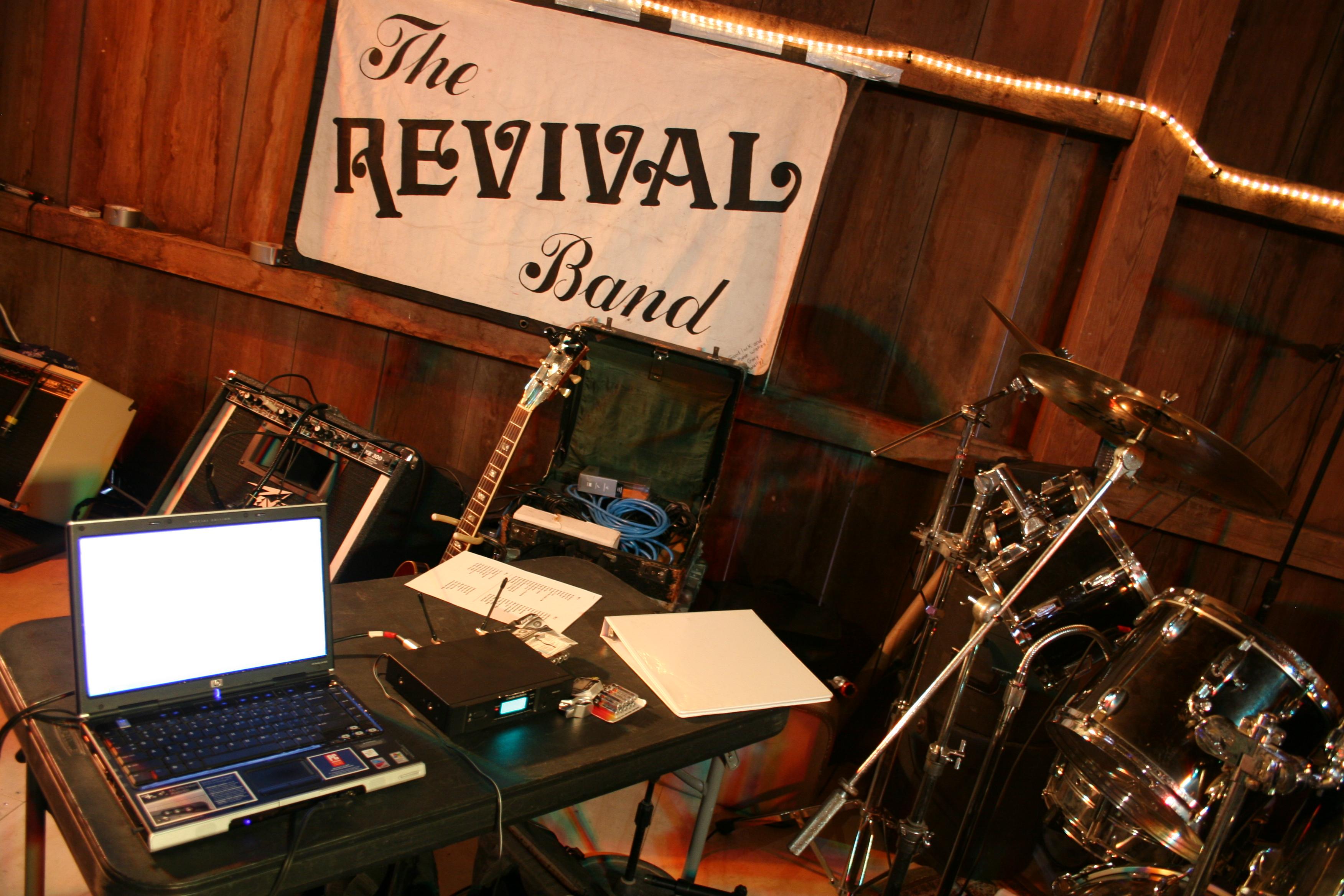
When I composed this frame, I considered the barn dances held here in the 1930s and how bands have changed with computers and high tech instruments. The contrast between old and new was not lost on me in this setting.

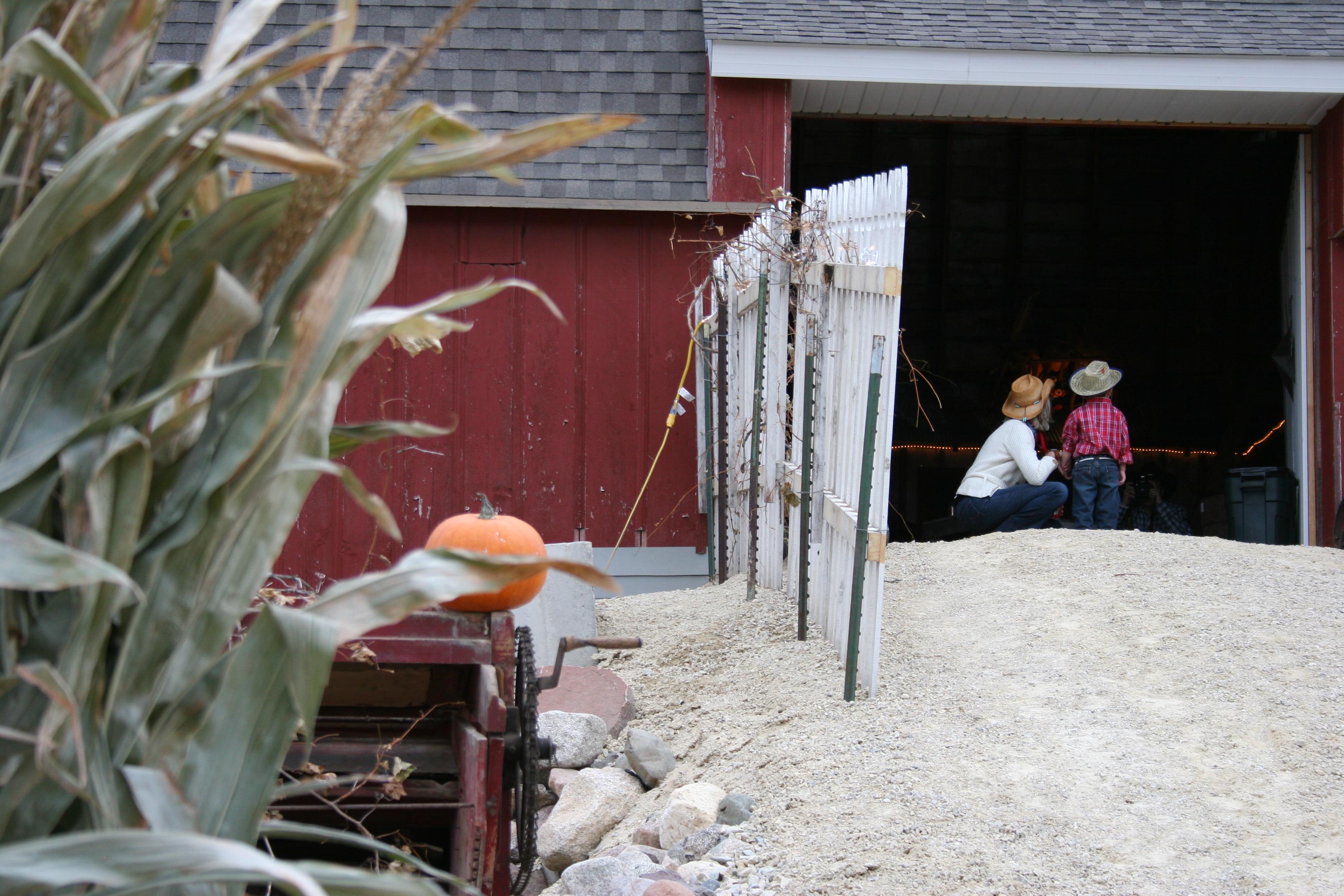
In one of my favorite images, I captured this sweet interaction, the bending down to the child's level, the care, the love and concern shown in this simple act. I saw that repeatedly at the barn dance, in the clasp of a child's hand, in a child atop her dad's shoulders, in hands joining on the dance floor...

© Copyright 2011 Audrey Kletscher Helbling


Summer showers in the sweltering heat July 19, 2011

A hose was for more than watering the garden or cattle when I was growing up on the farm. Read on.

WITH THE CURRENT HEAT WAVE we’re experiencing in Minnesota, I’ve been thinking a lot about the weather of yesteryear. And here’s what I’ve concluded. Unless the weather impacted some major event in my life or ranked as exceptional, I really can’t specifically remember one summer to the next or one winter to the next. Fall and spring sort of get lost in the mix of seasons.

That is the reality of my long-term memory.

For me, the summers of my youth on a southwestern Minnesota crop and dairy farm were defined, not by the weather, but by playing “cowboys and Indians” (yes, I realize that is not politically correct today, but it was the reality of the 1960s), by after-chores softball games on the gravel farmyard and by evening showers with a garden hose.

Let me explain that last one. I lived for the first dozen years of my life in a cramped 1 ½-story wood-frame farmhouse with my farmer-father, my housewife-mother and four siblings. The third brother was born later, after we moved into the new house.

The old house didn’t have a bathroom. That meant we took a bath once a week, on Saturday night, in an oblong tin bath tub that my dad lugged into the kitchen. Yes, we shared bath water. And now that I consider it, given we labored in the barn daily, we must have really stunk by Saturday night.

Sometimes in the summer, when the weather was especially hot and humid, we showered. After my dad finished milking cows, he would thread the green garden hose through an open porch window outside to the east side of the house. Then, with one of us “standing guard” where the driveway forked, within a stone’s throw of the tar road, we began the process of showering.

One-by-one we took our turn standing naked on the grass, soap bar in one hand, garden hose in the other, scrubbing away the sweat and animal stench, the bits of ground feed and hay and silage, the dirt that clung between our toes.

And all the while we showered, we worried that a relative or a neighbor might turn into the farmyard or an airplane might fly overhead, as if a pilot could see us from high in the prairie sky.

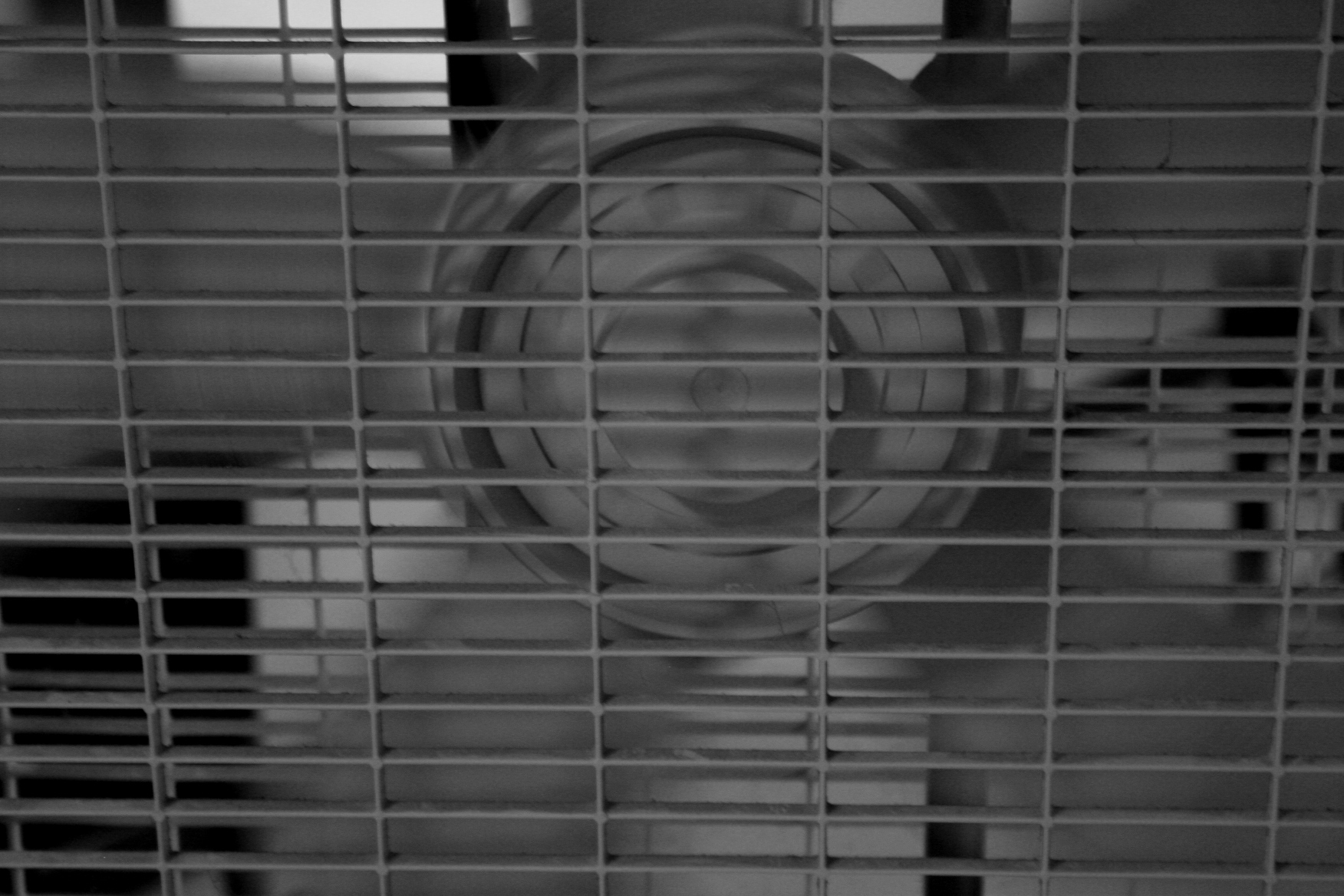
So during a hot stretch like we’re experiencing right now in Minnesota, I remember those primitive summer showers on the farm. I recall, too, the single turquoise box fan we owned—the one reserved for my hardworking farmer-father who endured heat and flies as he bent to wash another udder, to attach another milking machine, all to earn money to feed his growing family.

And I think, as I sit here at my computer in my air-conditioned office just around the corner from the bathroom with the combination bathtub and shower that I have it good, darned good.

Growing up on the farm, we had one box fan similar to this one.

DO YOU HAVE summer memories like mine, or another weather-related story? Submit a comment and share.

Copyright 2011 Audrey Kletscher Helbling


A bride’s story: Come hell or high water July 10, 2011

“I TOLD HIM NO WAY IN HELL was I leaving my wedding dress behind,” Tina Marlowe Mann remembers.

And she didn’t. Nine months ago Tina defied a fireman’s order and saved her bridal gown. It was the last thing she brought out of her house during a 15-minute mandatory evacuation of flood-ravaged Hammond on Friday morning, September 24. When she exited her home, the fireman instructed her to park her 4-wheel drive Jeep on high ground, with the wedding dress inside, and walk out of the flooded town because the water had risen too high to drive out.

She refused and instead forged—with five adults, two children, a Rottweiler, two cats, a few clothes and that precious wedding dress—through water that reached the door panels and covered the exhaust pipes of her Jeep.

“We got stuck a couple times and I thought we might not make it out, but we did,” Tina recalls.

Come hell or high water, she would not allow the raging waters of the Zumbro River to snatch away her dream dress.

Two weeks ago yesterday, on June 25, Tina Marlowe married Micheal Mann at Beach Park in Wabasha wearing that rescued bridal gown. A reception followed at Slippery’s Bar and Grill on the Mississippi River.

Tina, on her June 25 wedding day, in the bridal gown she saved from a flash flood in Hammond in southeastern Minnesota last September.

As it did last fall, floodwaters once again threatened. “Ironically, this spring we spent a lot of time holding our breath, worried that Beach Park and Slippery’s might receive major damage from spring flooding,” Tina says. “For weeks we watched the hydrological reports from Wabasha with bated breath. We even made a couple trips down there just to monitor the situation with our own eyes—and we did a lot of praying.

“Then wouldn’t you know it that the week before the wedding, it rained every single day. A couple of those days the heavy rains took me right back to September…and I said to Mike, ‘Wouldn’t it be just crazy if we come home from Wabasha to find water in our house again?’”

Water from last fall’s flash flood filled their basement and rose several inches into the main level, displacing the family from their home for three months.

Tina and Micheal continued praying for the rain to stop as June 25 approached. Then on their wedding morning, the sun came out in Wabasha and, as the fog lifted from the Mississippi River valley, it looked to be a perfect day.

The weather forecast, however, called for afternoon showers. And the wedding was set for 4 p.m.

Within an hour of the ceremony, rain began falling. While Tina was slipping into her bridal gown at a Wabasha hotel, family and friends were moving everything from the decorated gazebo to the pavilion.

Tina and Mike

“Irony again prevailed because it rained from 3 until about 4:30, and then it stopped and the rest of the evening was picture perfect,” Tina says. “All of the bridal pictures were taken in the rain. Every person in my wedding party was affected by the flood in one way or another and here we were, standing in the pouring rain on the banks of the Mississippi River, having the time of our lives.

They say it is good luck to have rain on your wedding day because a ‘wet knot’ is much harder to untie. I truly feel blessed.”

#

TINA, RAIN ALSO FELL on my wedding day in May of 1982. My husband and I have now been married for 29 years.

I expect that you and Micheal, with the challenges you’ve faced, already had a tightly-tied knot. Your positive attitude in the face of difficulties continues to impress me, as does your strength.

Congratulations on your marriage. May you and Mike live a long, happy and blessed life together.

Mike & Tina at sunset along the Mississippi River on their wedding day.

READERS: I F YOU HAVE NOT READ the six-part series of stories I posted in March about Tina’s experience during the September 2010 flash flood in Hammond, you’ll want to check it out now. Go to my archives and click on these dates: March 13 – 15 and March 17 – 19. Click here to read the first post, “Part I, Tina’s story, surviving the Hammond, Minnesota, flood.”

Also, consider contributing to Hammond’s efforts to rebuild city parks. Tina, recently-elected to the city council, is leading efforts to repair the flood-damaged parks. Click here to read a blog post about how you can help.

PHOTOS BY SHERWIN SAMANIEGO PHOTOGRAPHY of Rochester and courtesy of Tina Marlowe Mann.

© Copyright 2011 Audrey Kletscher Helbling


Sprinkler gymnastics on the Fourth and more family fun July 7, 2011

Filed under: Uncategorized — Audrey Kletscher Helbling @ 6:57 AM
Tags: , , , , , , , , , , ,

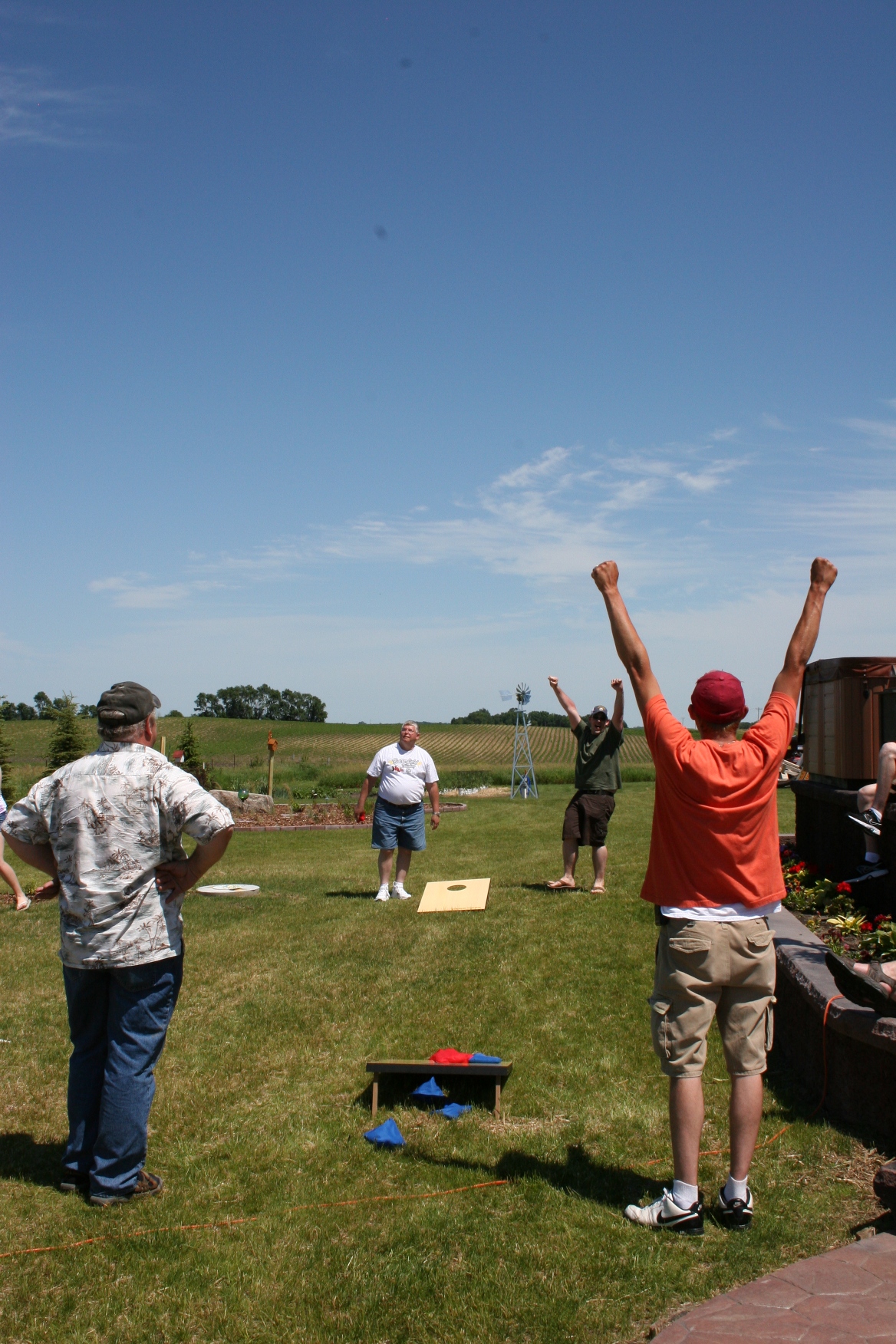
The winning team in the bean bag toss is quite obvious.

NAME SOMETHING PEOPLE save money for.

How many times does your mom have to tell you to do something before it gets done?

Name something you write down to remember.

If you know the answers (see below) to those Family Feud style questions, then you should have been at my middle brother’s home in southwestern Minnesota on Sunday. We sparred in a brief version of this television game show with young family members competing against old, “old” being anyone 50 or older.

Settled onto our lawn chairs on the driveway in front of the garage, one member of each team stepped up to a cooler, introduced themselves and then poised with hands behind backs awaiting the question. Lacking a buzzer to buzz, we substituted a plastic gallon of cheese balls plopped upon a cooler. Slap the cheese ball lid cover first and your team plays first.

If I hadn’t been so intent on winning this game, I may have thought to take pictures of the cheese ball container slapping contestants.

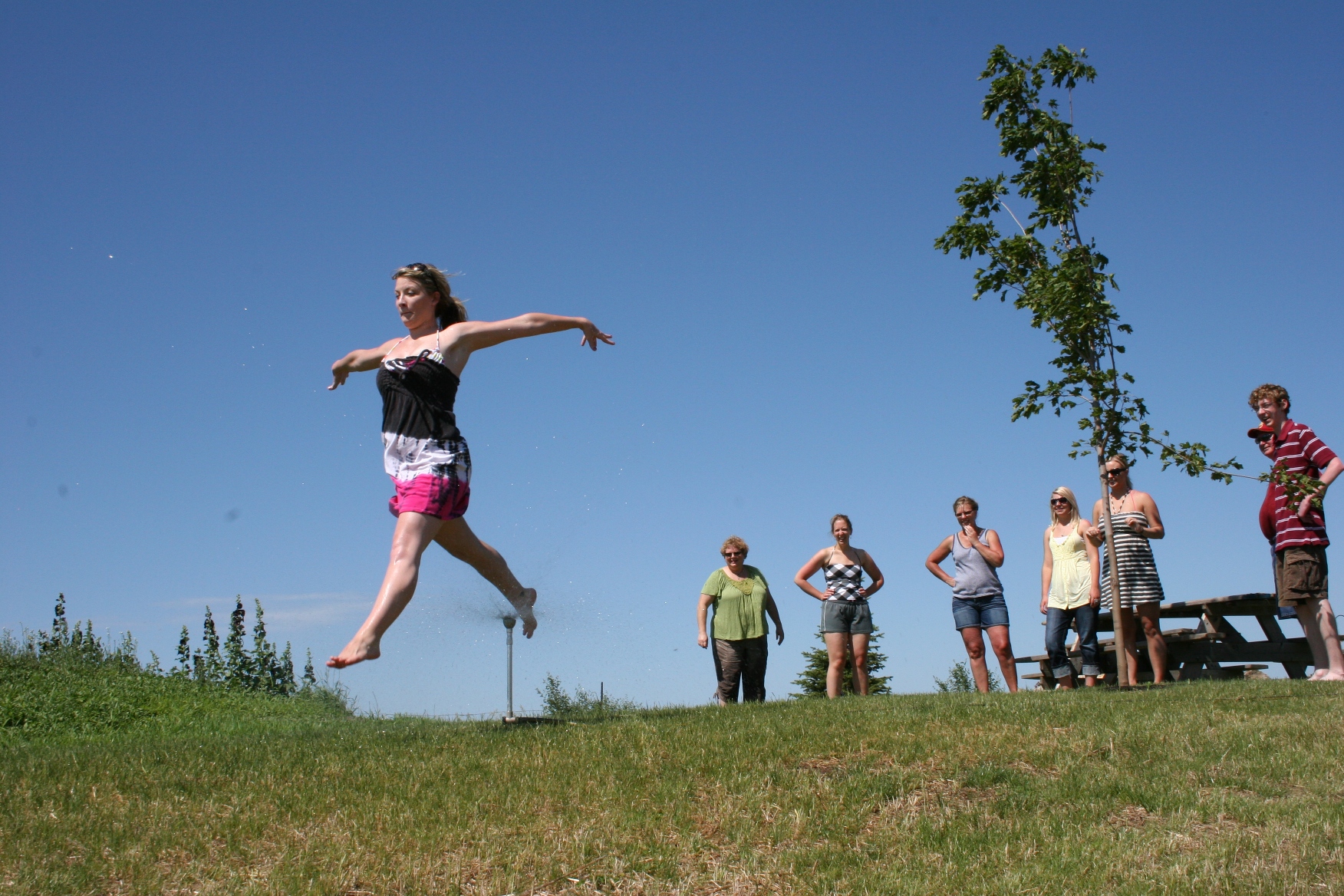
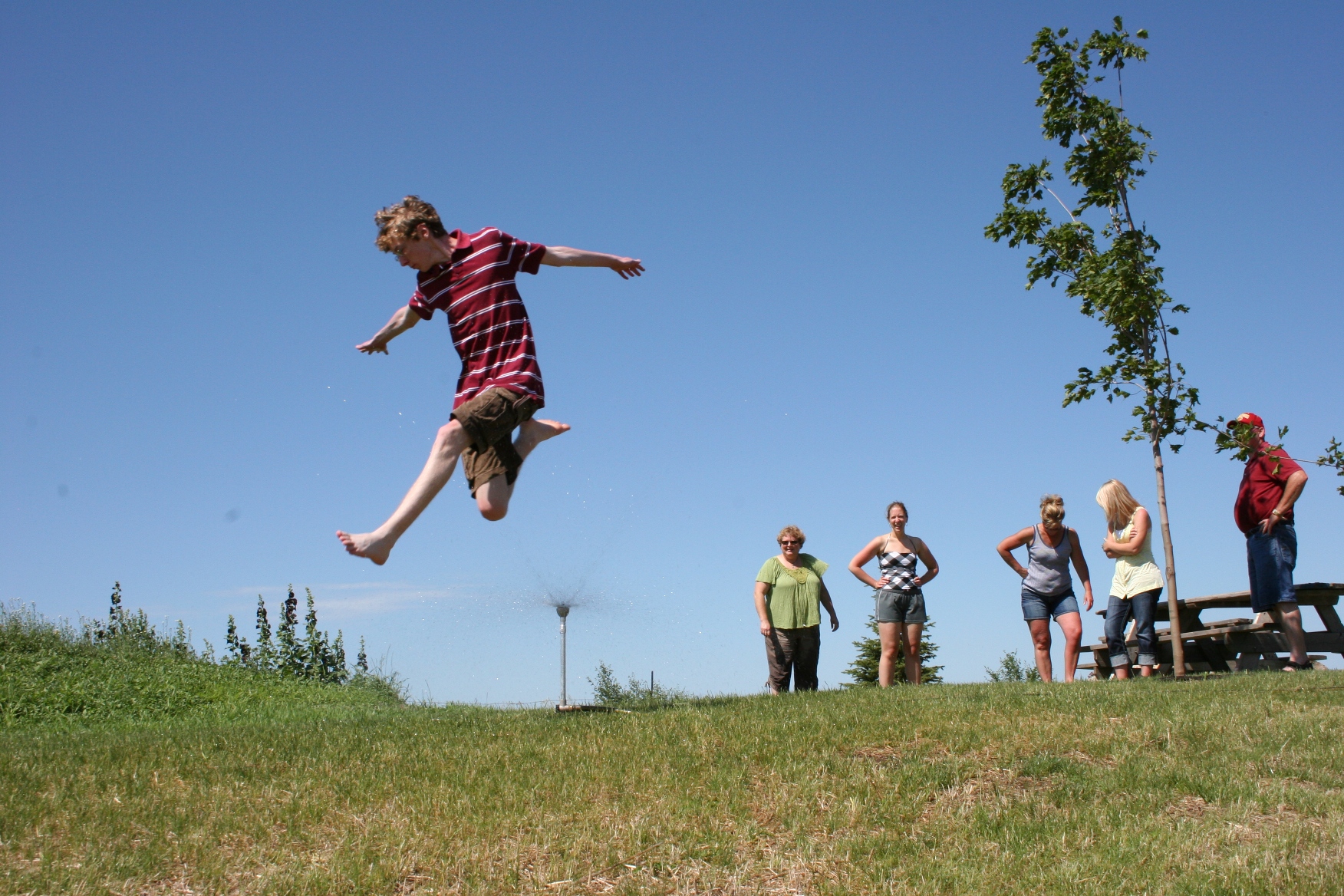
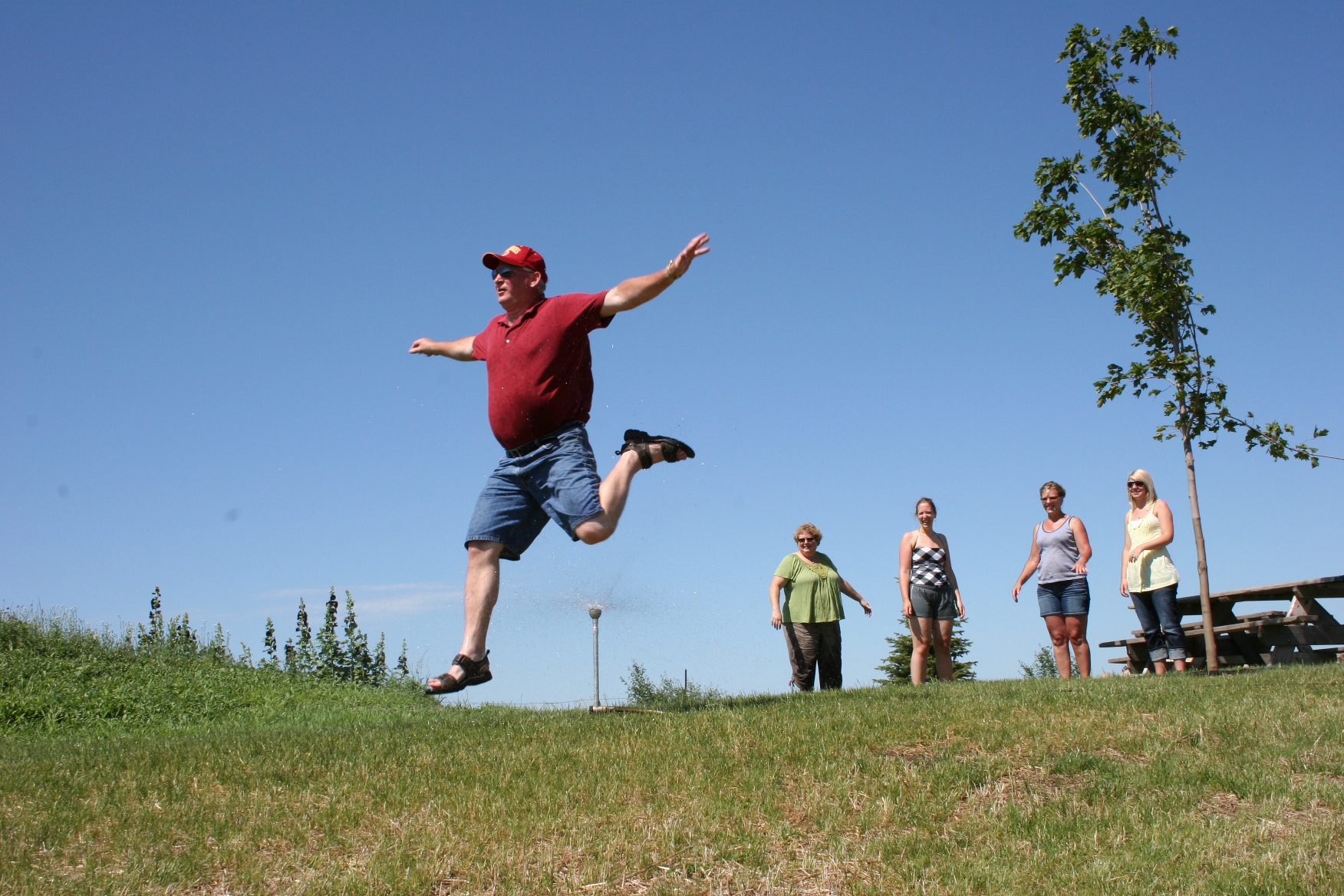
However, I took plenty of photos of the earlier sprinkler gymnastics. I refrained from that activity until later, at the exact moment one gymnast grabbed the sprinkler and ran onto the patio spraying all non-participants, including my 79-year-old mom. Just before that happened, I had decided to join the sprinkler crew. Timing is everything.

When you view these sprinkler gymnastics images, you will understand why I hesitated initially to join the group. I did not want to risk a leap onto water-slicked grass. Nor did I want to appear too foolish in that YouTube video my nephew-in-law was filming.

My extended family doesn't just nilly willy run through a sprinkler. Oh, no. We make it into a game. In this case, follow the leader. Whatever the leader does, you do.

From the youngest participant at age 17 to...

...one of the oldest sprinkler gymnasts at age 50.

Ah, my extended family loves to have fun.

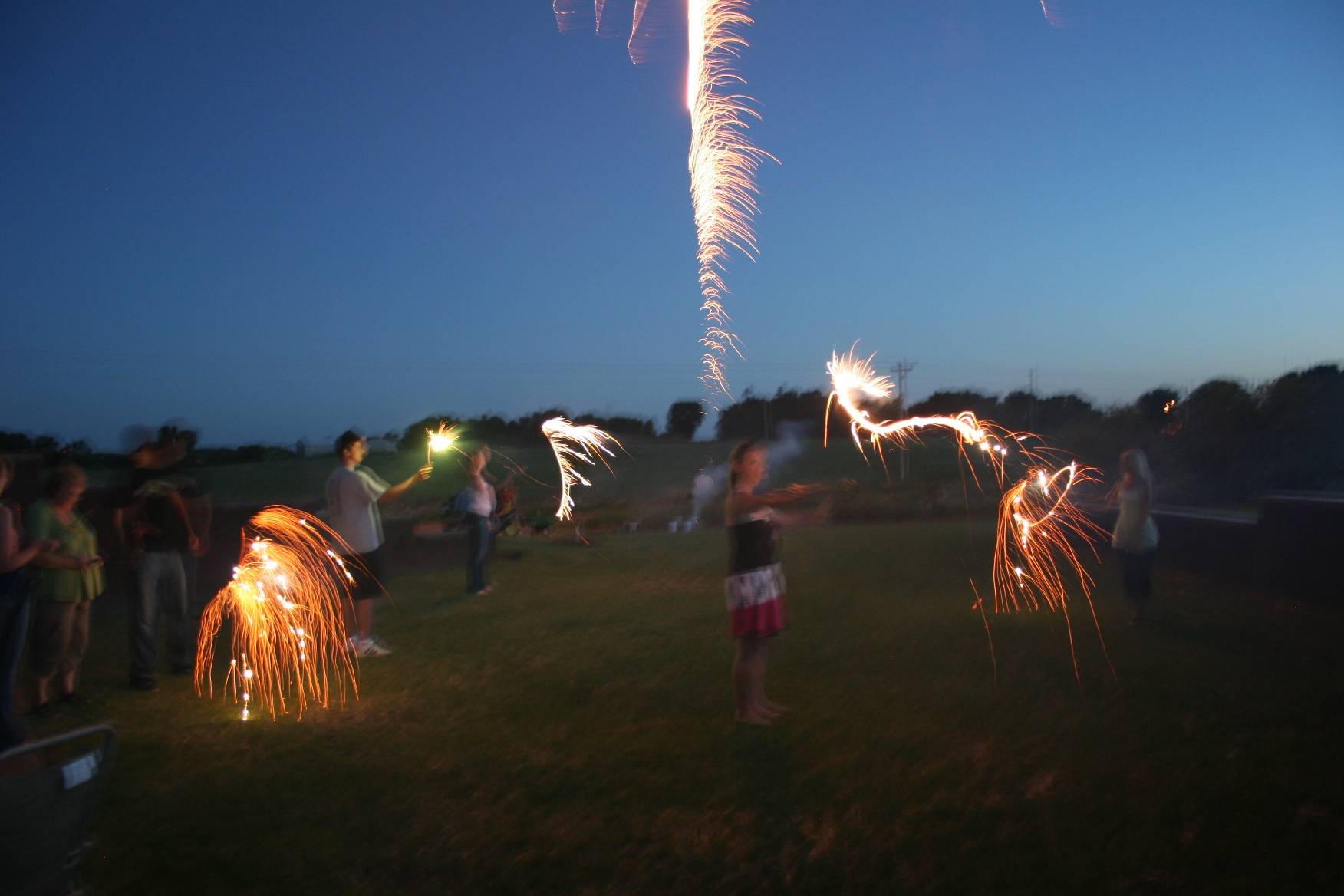
Later, not long after the sun set on the Minnesota prairie, out came the sparklers. More fun. More laughter. More memories.

Sparkler fun for the younger ones.

Combine sparklers and a slow shutter speed and you get some interesting images.

I can’t think of anywhere else I would rather celebrate Independence Day than with my extended family on the land I love most, southwestern Minnesota.

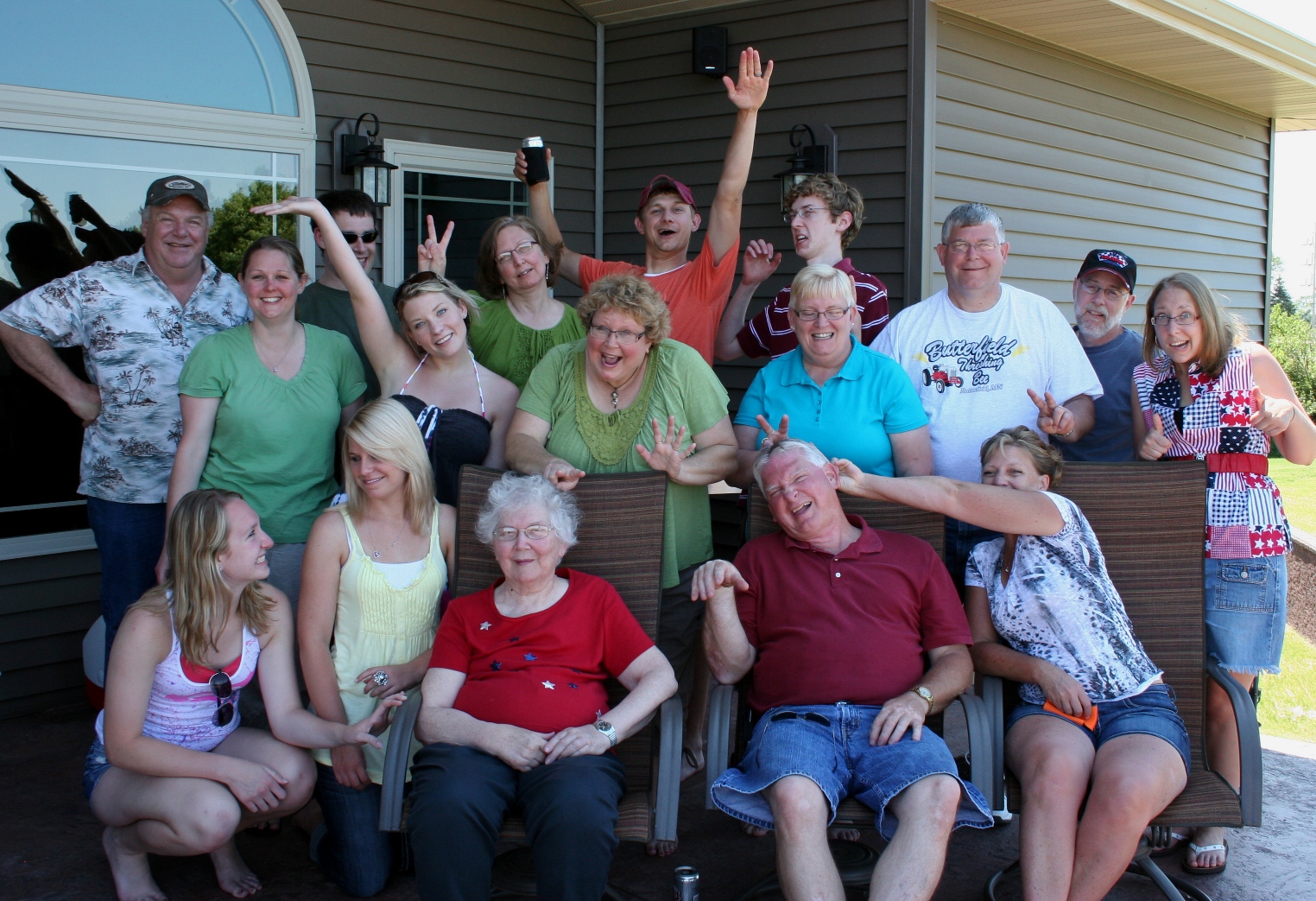
After we shoot "nice" photos, we always like to do a fun photo. I am in the back row in the grass green shirt. Can you tell which of us were teens in the 1970s? (Hint: See the symbol we're making with two fingers. You would think we could be more creative.) All family members, except me, shall remain unidentified.

HOW DID YOU CELEBRATE your Fourth of July?

HERE ARE THE TOP answers to the three questions posed at the beginning of this post:

Vacation, two times and phone numbers.

© Copyright 2011 Audrey Kletscher Helbling


The endearing smiley face June 29, 2011

Filed under: Uncategorized — Audrey Kletscher Helbling @ 7:39 AM
Tags: , , , , , , , , , ,

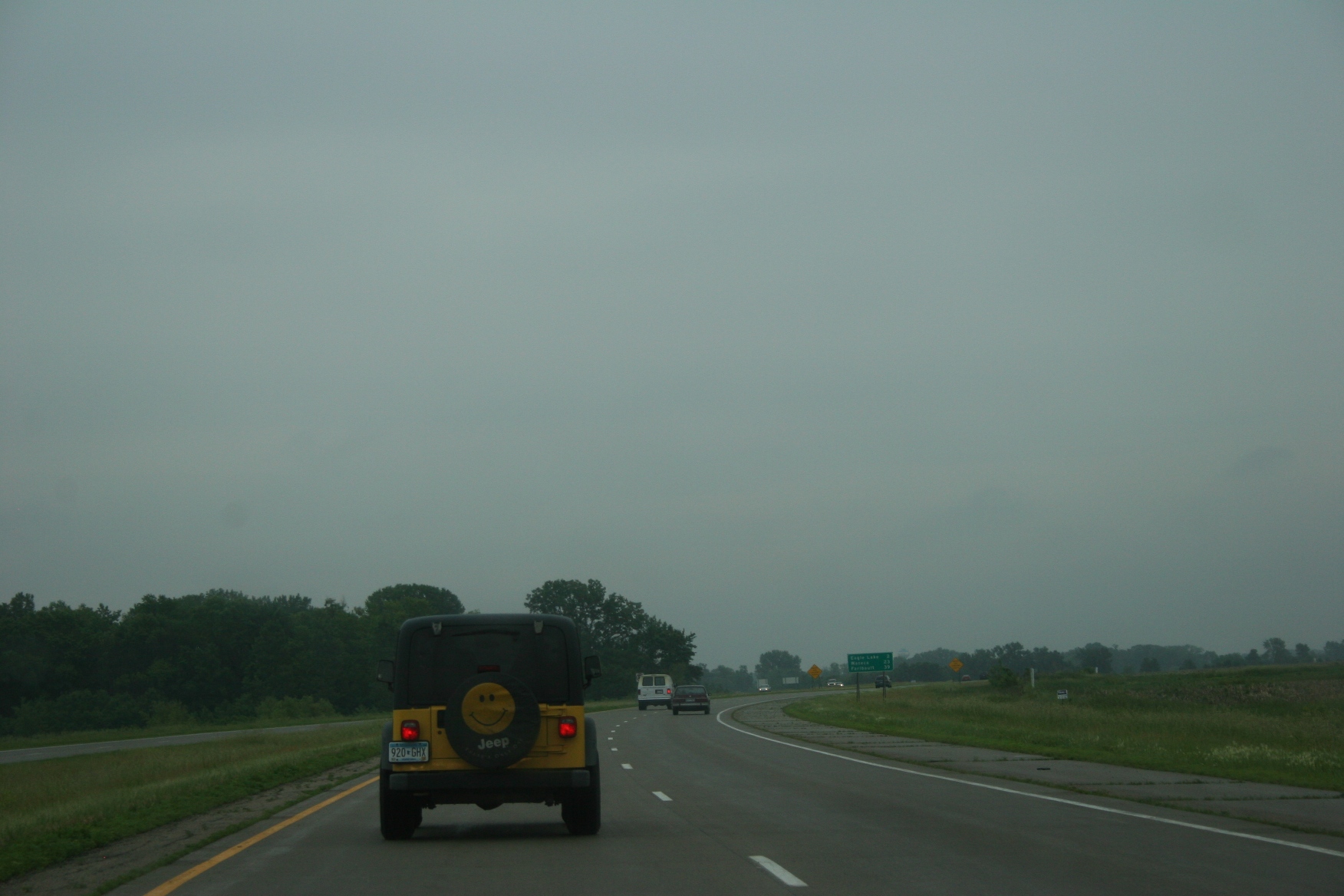
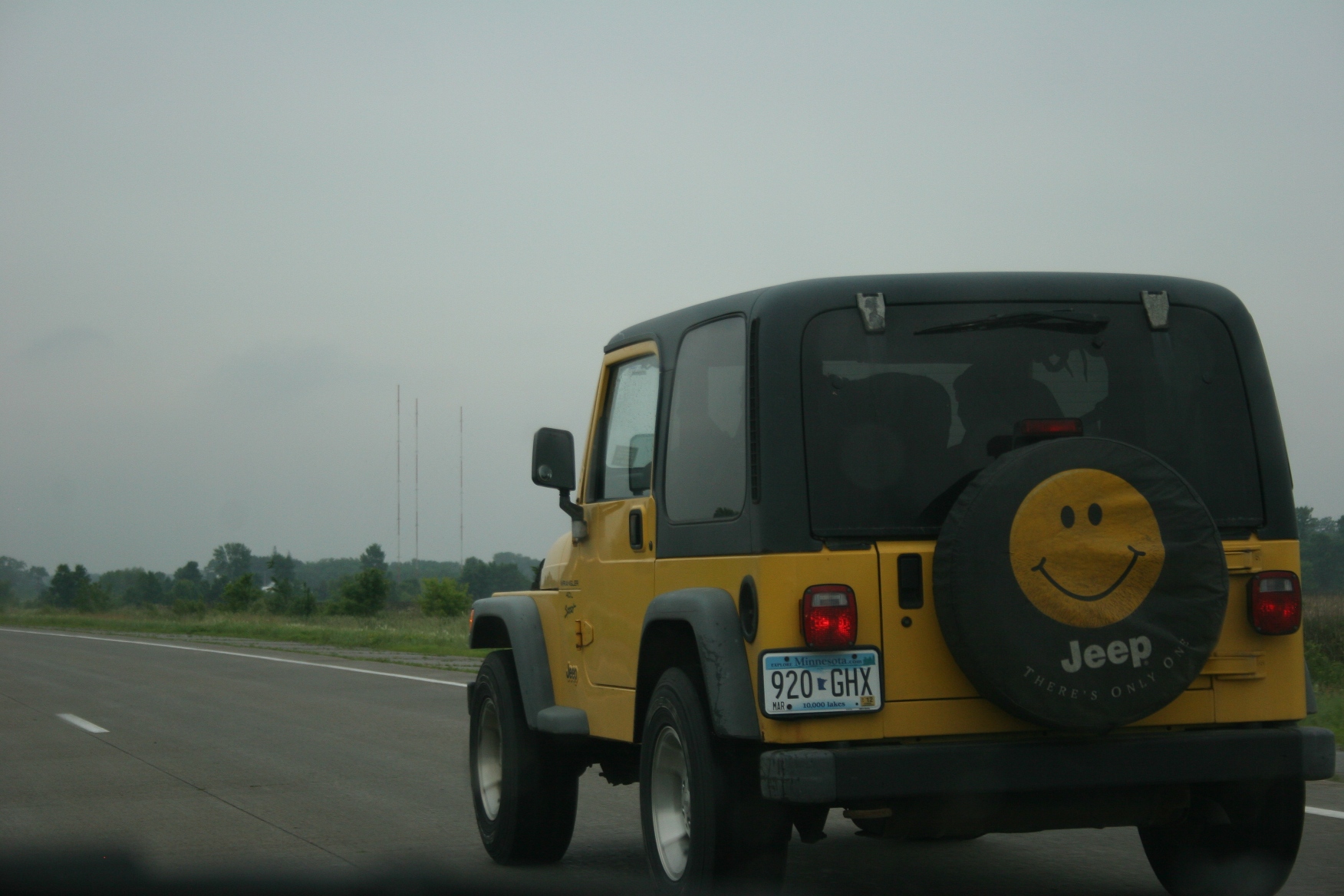
I URGED HIM to speed up, to catch up to that yellow jeep ahead of us.

“I want to take a picture,” I explained, and my husband obliged although he thought me a bit crazy.

And maybe I am sometimes. But that canary yellow jeep, the single visual jolt of brightness on yet another recent dreary weekend, tripped something in my brain.

If you live in Minnesota, I expect you’ll understand. I mean, honestly, weren’t you tired of all the cold and rain and gloom on the heels of a long and snowy winter? (Remind me of that tomorrow when the temperature is predicted to reach 100 degrees or higher.)

So, given that context, the yellow jeep with the smiley face wheel cover made me smile as we traveled on U.S. Highway 14 between Mankato and Eagle Lake recently.

Smiley faces, no matter where I spot them, always increase my happiness quotient.

My appreciation of smiley faces stretches back further than I’d like to admit these days. This happiness symbol popped up everywhere when I was in high school, which would be, yes, the 1970s. Oh, how I wish I still had my smiley face bulletin board and my smiley face button.

So there, that should explain why I wanted to photograph the yellow jeep on a drizzly Saturday afternoon along a Minnesota highway. The smiley face represents a link to my past, to those turbulent teen years when I needed a bright smile as much then as I sometimes still need one some four decades later.

I can’t think of another symbol with such upbeat universal appeal. Can you?

Do you, like me, have fond memories of the smiley face? I’d like to hear.

© Copyright 2011 Audrey Kletscher Helbling


Mankato brings art to the sidewalks with walking sculpture tour June 21, 2011

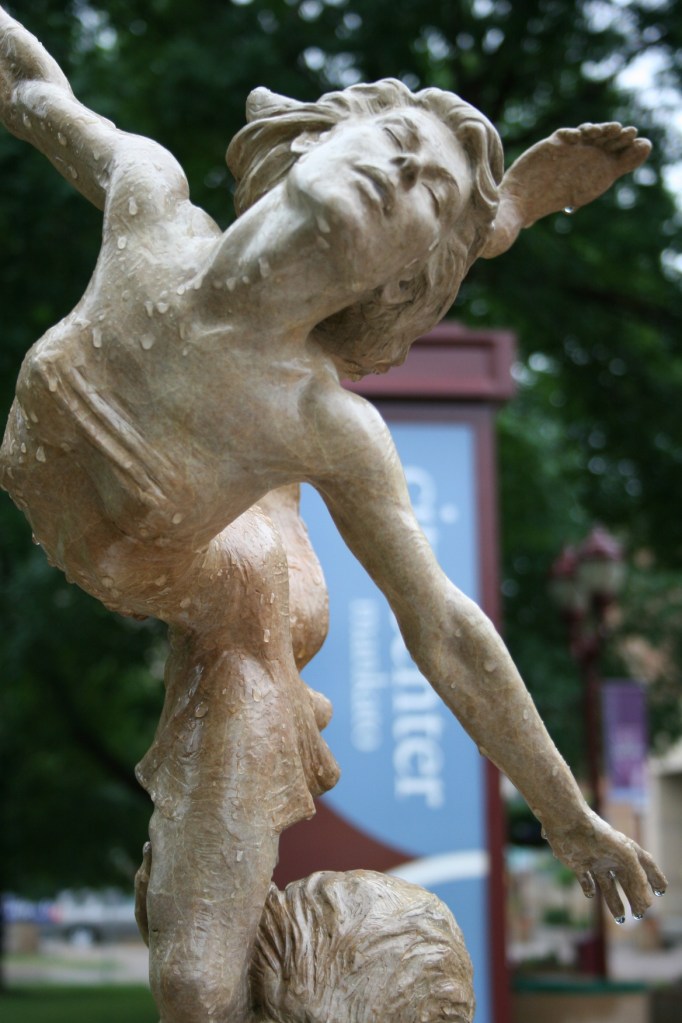
Martin Eichinger of Portland, Oregon, created this graceful "Bird in the Hand" bronze sculpture valued at $14,500 and posed near the City Center.
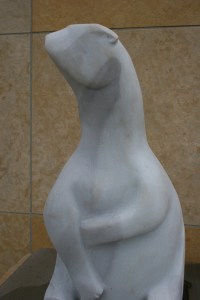
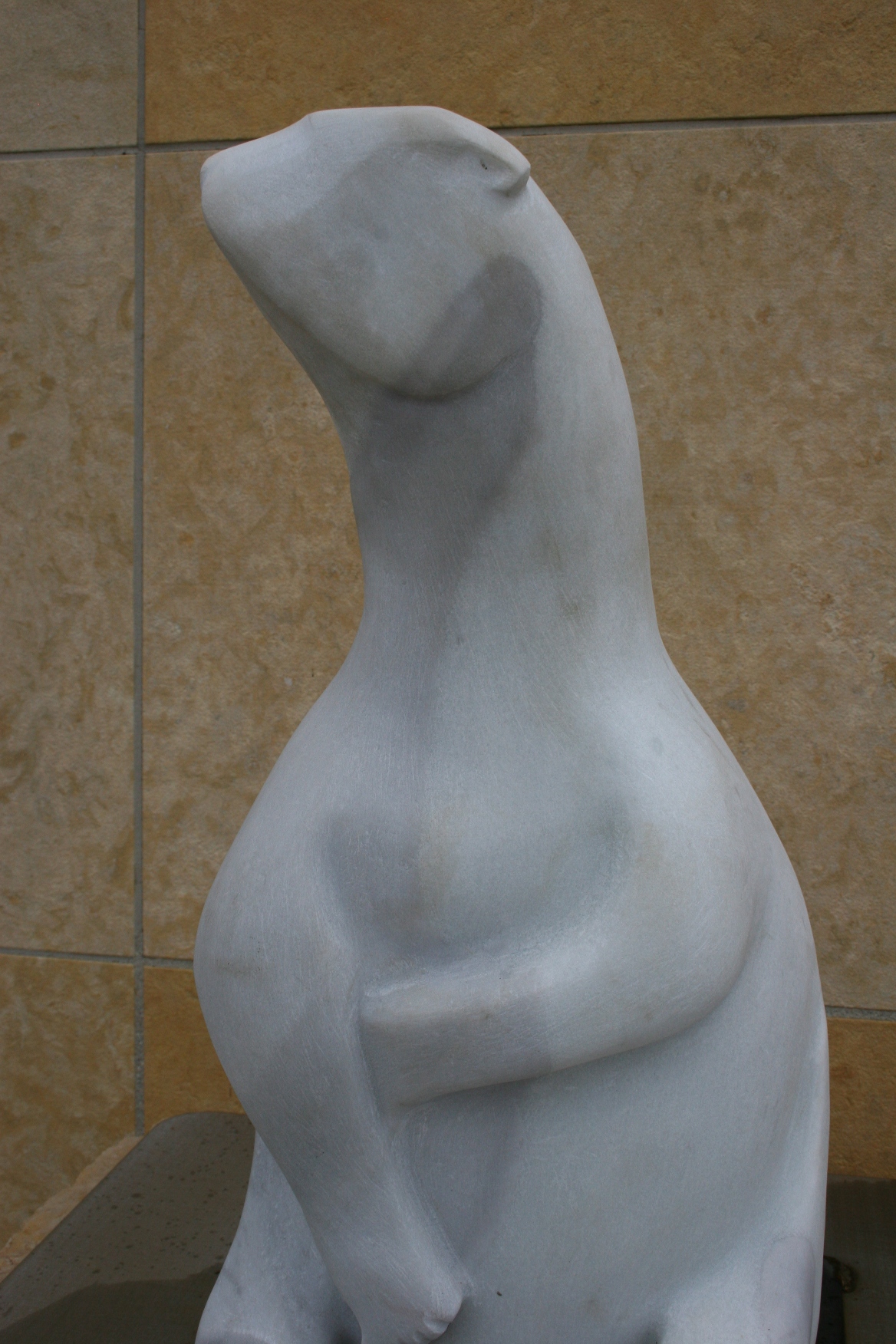
You'll find "Play Thing" by Ryszard, Denver, Colorado, and sculpted from Colorado marble, in North Mankato.

MAYBE IT’S BECAUSE I grew up without much art—no paintings, no piano, no library—that I so appreciate the visual, performing and literary arts.

I still can’t paint a painting or read a musical note. But I value those two art forms and words, which have always been a part of me, who I am.

Several years ago I walked the Bemidji Sculpture Walk and I quickly became enamored with the idea of placing sculptures in a community and then swapping them out a year later for new sculptures. The touring sculptures scattered primarily through-out Bemidji’s downtown impressed me as an ingenious way to get art before the general public.

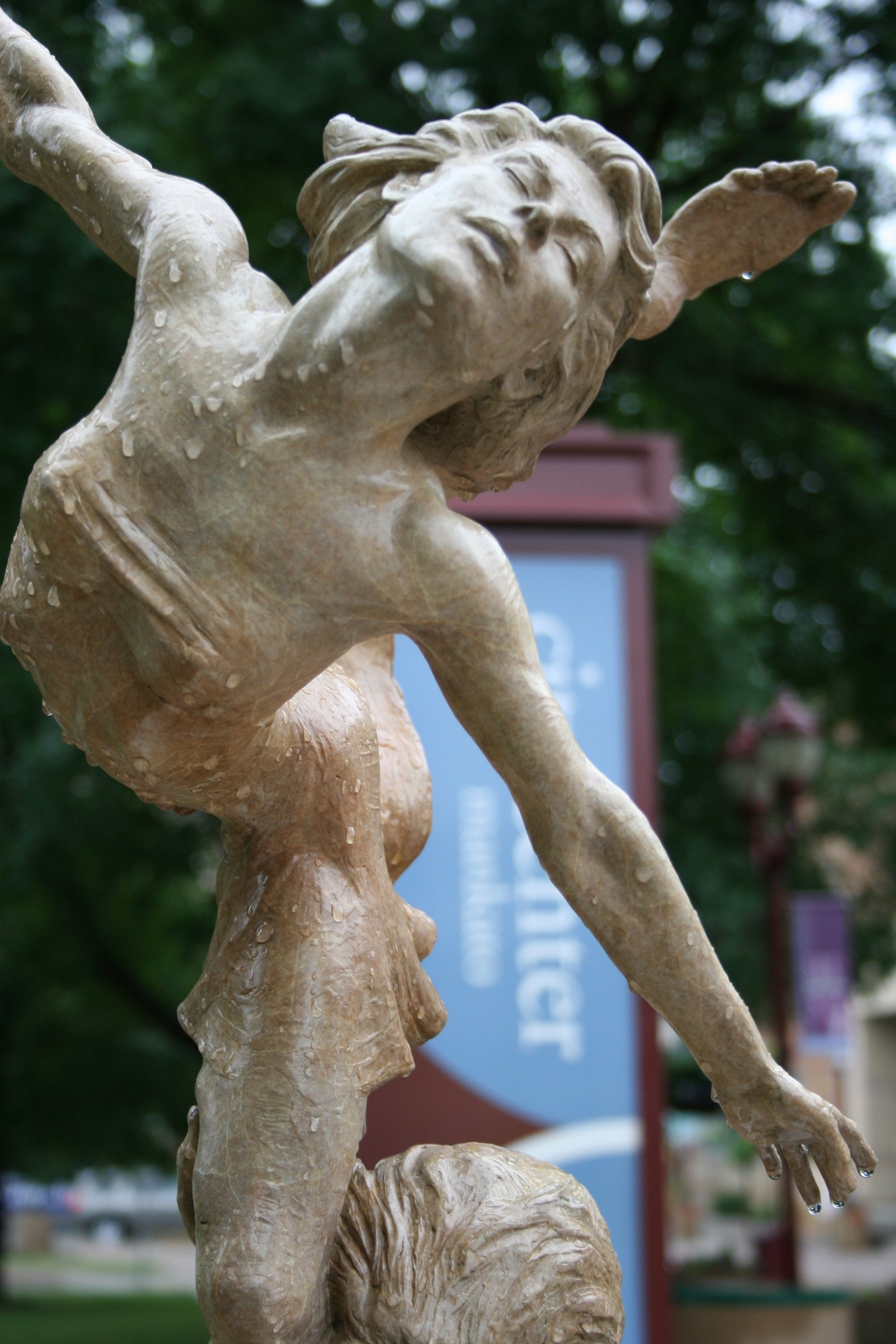
Now I needn’t drive hours and hours and hours to view such public art. In 45 minutes I can reach downtown Mankato and view the 25 sculptures positioned there and in North Mankato as part of the City Art Walking Sculpture Tour. For free.

On Saturday, while in Mankato for a graduation reception, my husband and I made it a point of afterward checking out those sculptures. We missed seeing only a few of the art pieces, including one along Belgrade Avenue that was vandalized and, ironically, titled “Look and You Will Find.” We found only an empty block of Minnesota limestone, donated by Vetter Stone, where the sculpture once stood.
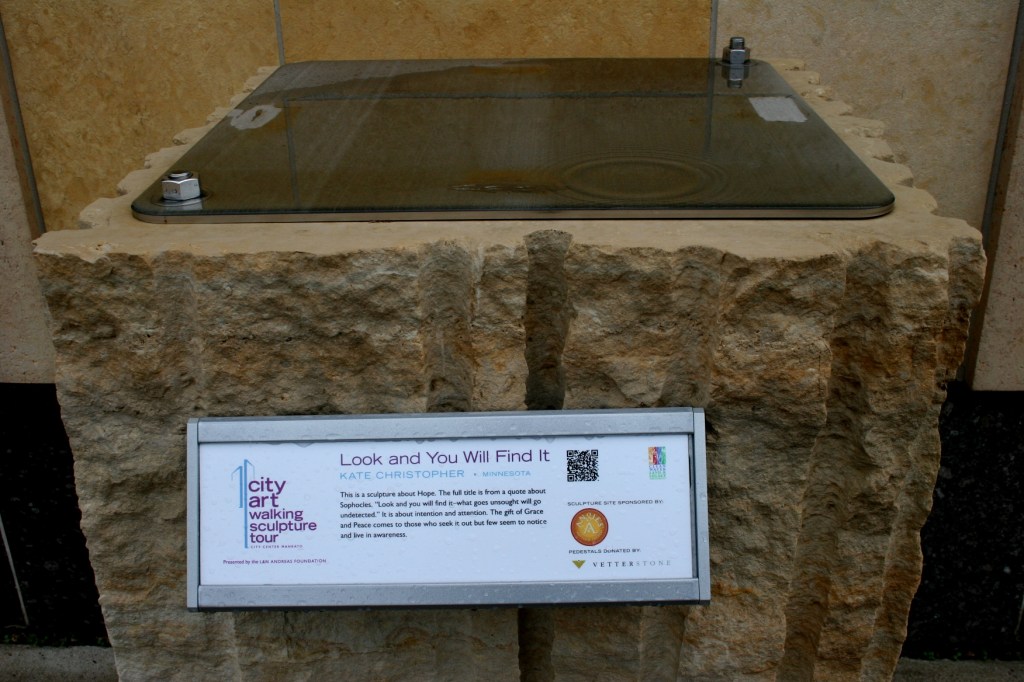
Mahtomedi artist Kate Christopher's $6,900 bronze sculpture, "Look and You Will Find It," was vandalized. The art piece symbolized HOPE.

I expected to find a bustling downtown Mankato. Obviously I have not been downtown for many years. Nearly all of the shopping has moved to the fringes of the city, into the malls and big box stores, and the downtown houses primarily office buildings, restaurants, bars, a hotel and the Verizon Wireless Center. Honestly, except for the sporadic motor traffic on Second Street and a few pedestrians, the place was basically deserted around mid-afternoon. Granted, the weather was less than ideal with on-again-off-again rain. We could park almost anywhere we wanted and walk to the sculptures within a several-block area.
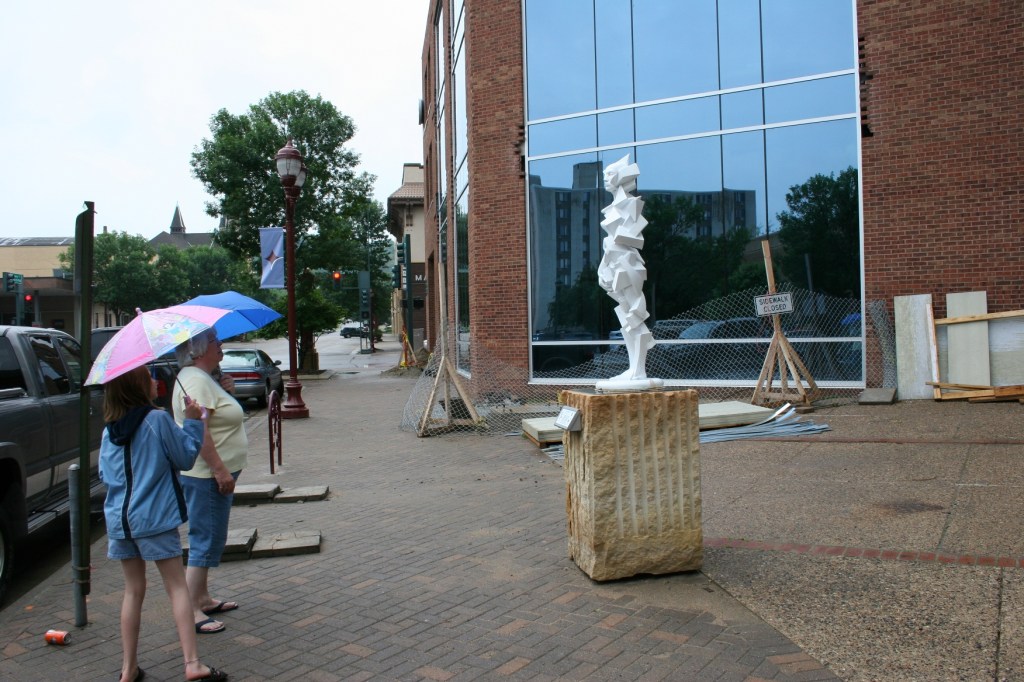
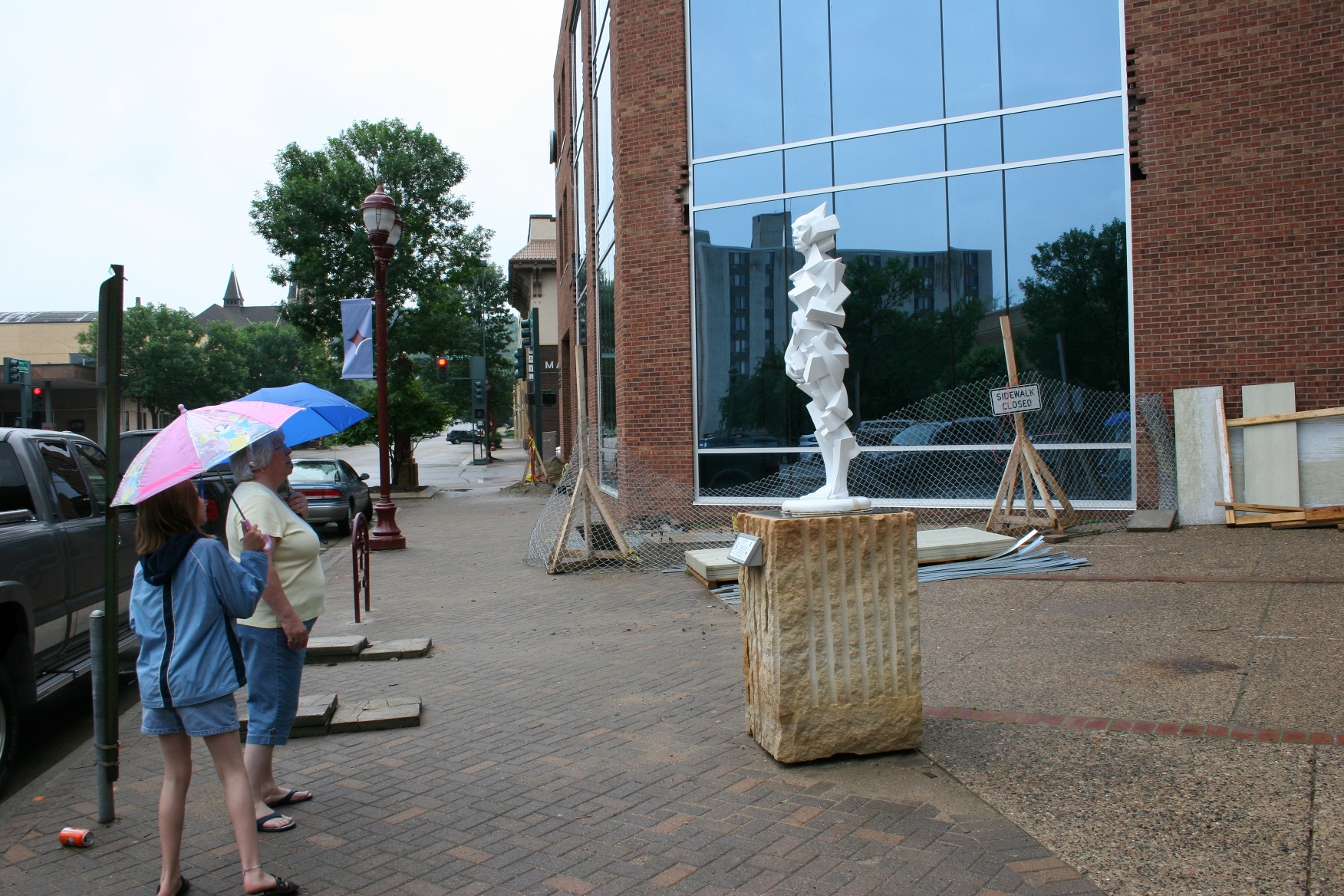
We spotted only two other individuals walking around viewing the sculptures. Dana Parlier of Brooklyn, New York, created this resin sculpture, "Cubist Woman." The man-made concrete canyons of New York City inspired this contemporary art, which seems to match the modern look of the building.

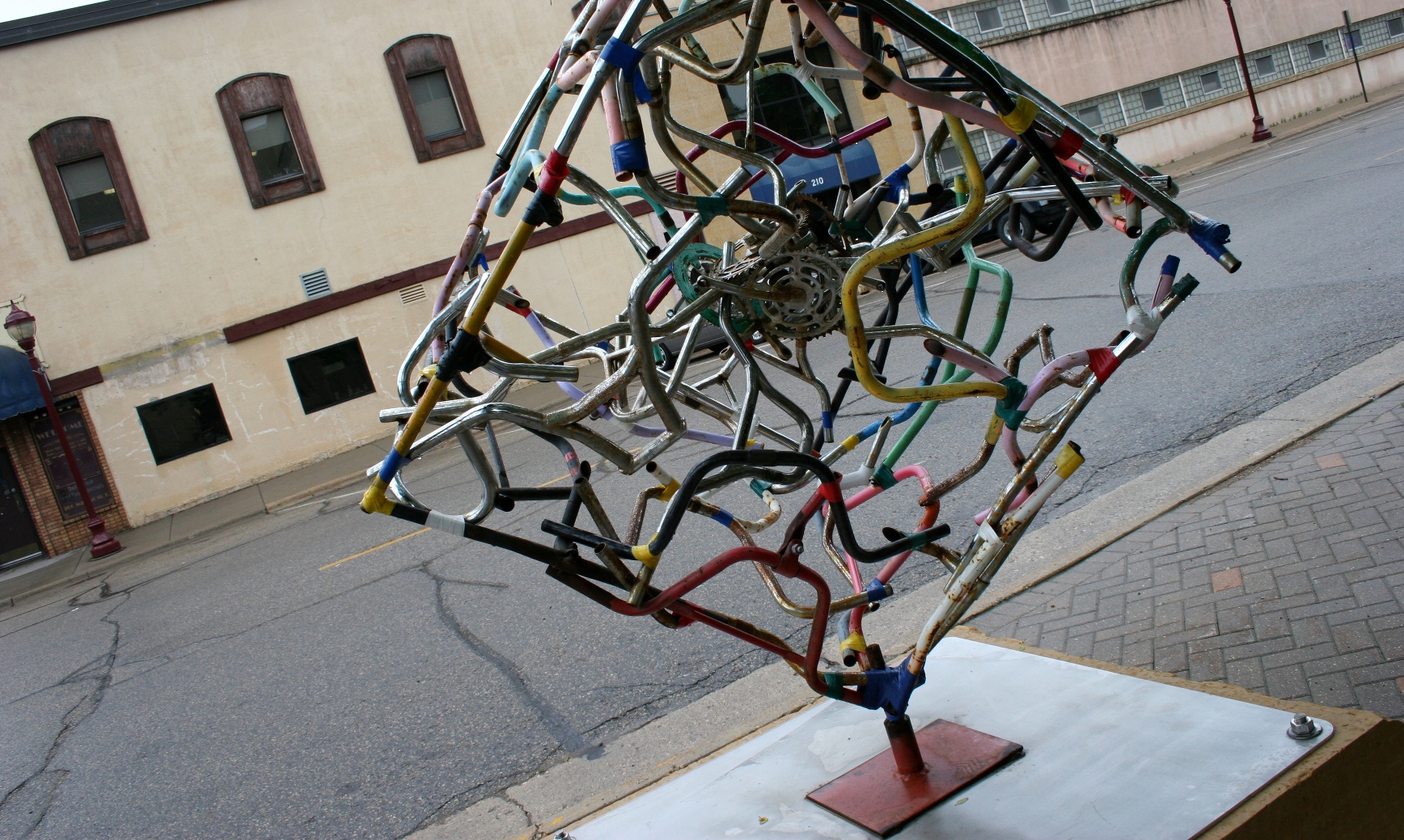
The art pieces certainly present a reason to visit downtown Mankato and then cross the Minnesota River to North Mankato to view several more sculptures. I’m not going to tell you I liked every sculpture, because I didn’t. But that’s OK; no one expects that. Sometimes first impressions change though. When I spotted “Twenty Seven (China)” from across the street, I honestly thought it looked like a mess of twisted junk. But up close, the steel sculpture of recycled bicycle parts—mostly handle bars—grew on me. Joe Forrest Sacke’s $3,500 conglomeration seemed modernish and hippyish and vintageish jumbled into one. Art will surprise you that way.
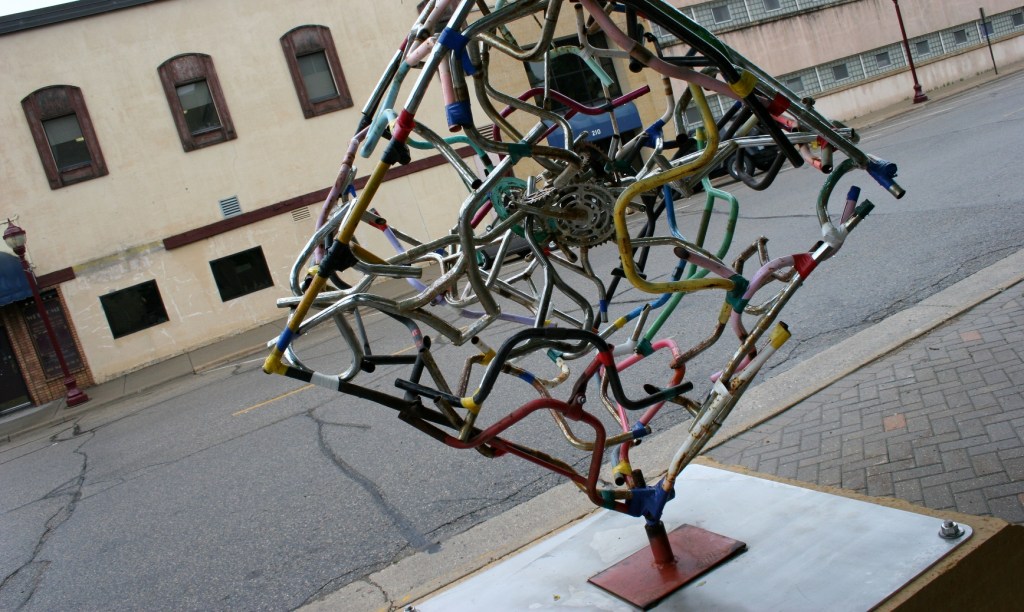
Joe Forrest Sacke's "Twenty Seven (China)."

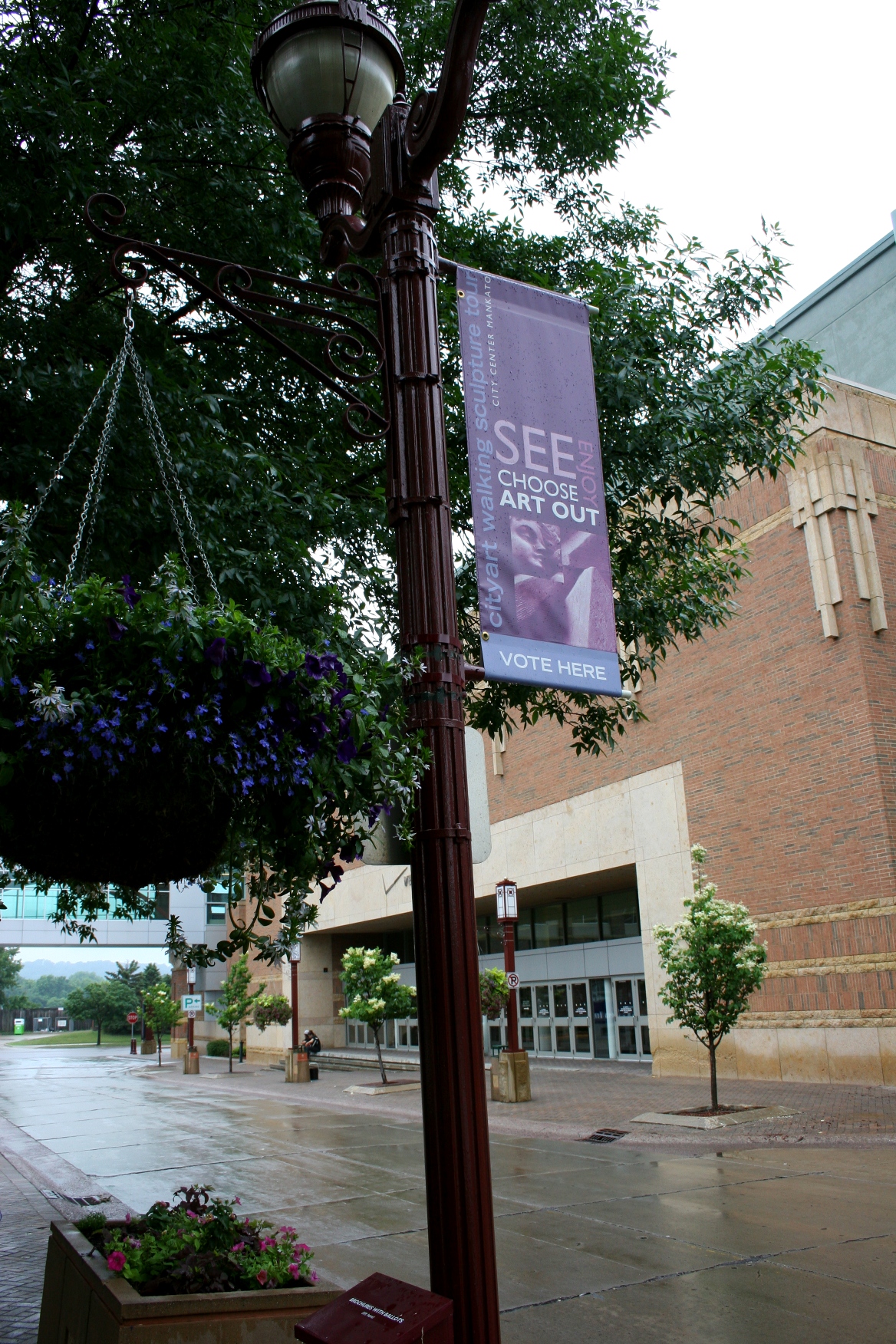
You can vote for your favorite, for The People’s Choice Award. We didn’t, although I narrowed my favorites down to three. Voting booths are strategically located through-out the Walk area.
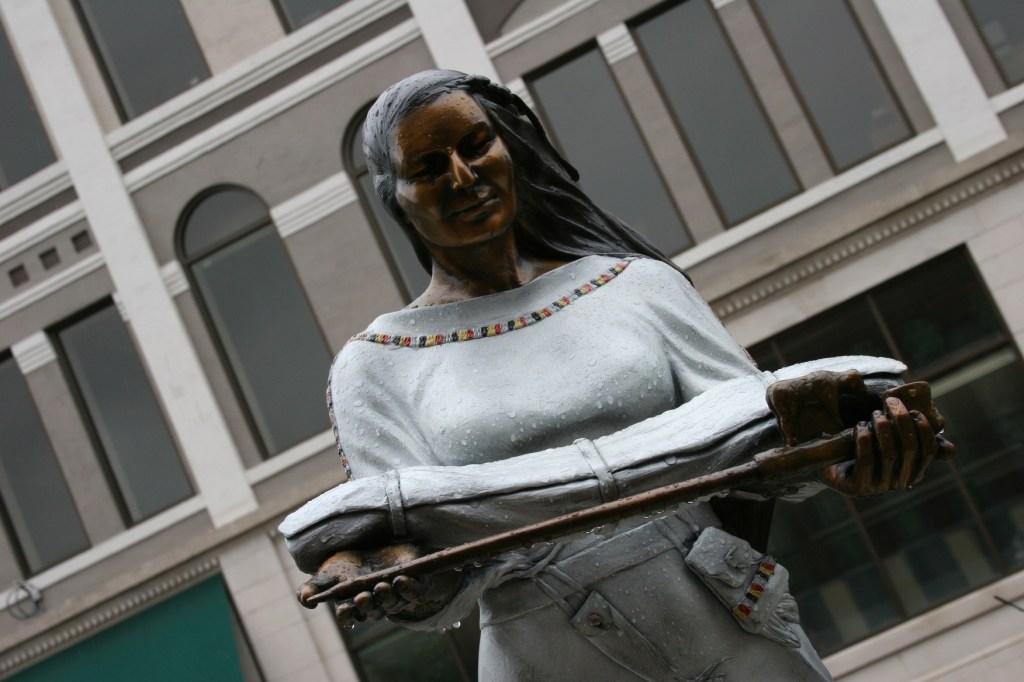
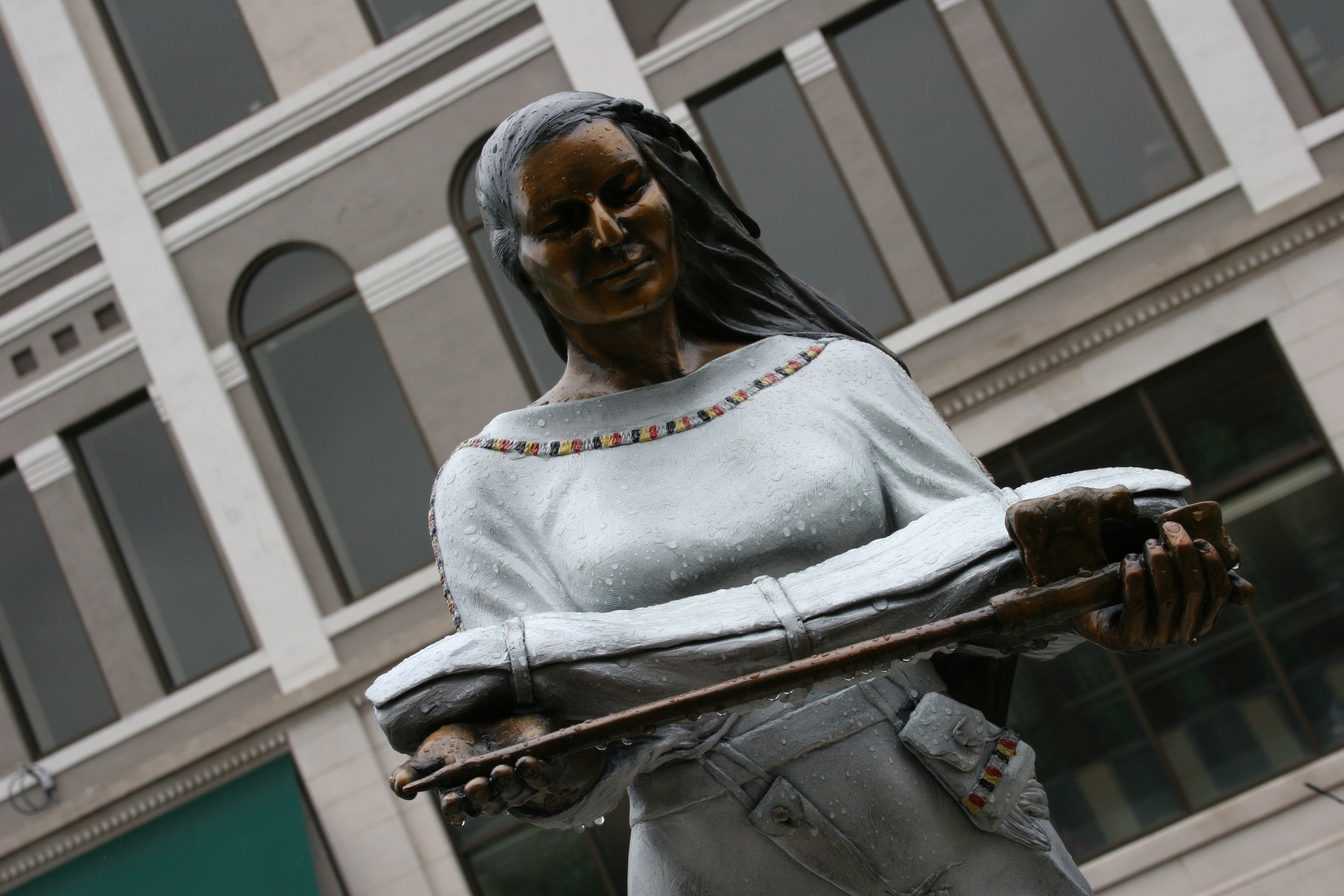
One of my three favorite sculptures, "White Buffalo Calf Woman," a bronze piece created by Aberdeen, South Dakota, artists Lee Leuning and Sherri Treeby. Notice how the dominant color in the sculpture blends with the building's color. Wait until you see the building on the other side of this Native American woman. You will be wowed. I'll share those images with you in another post.

This bronze piece, "The Farmer's Wife," by Dee Clements of Loveland, Colorado, is also among my three favorite sculptures. A photo Clements took in a Korean village inspired this art creation.
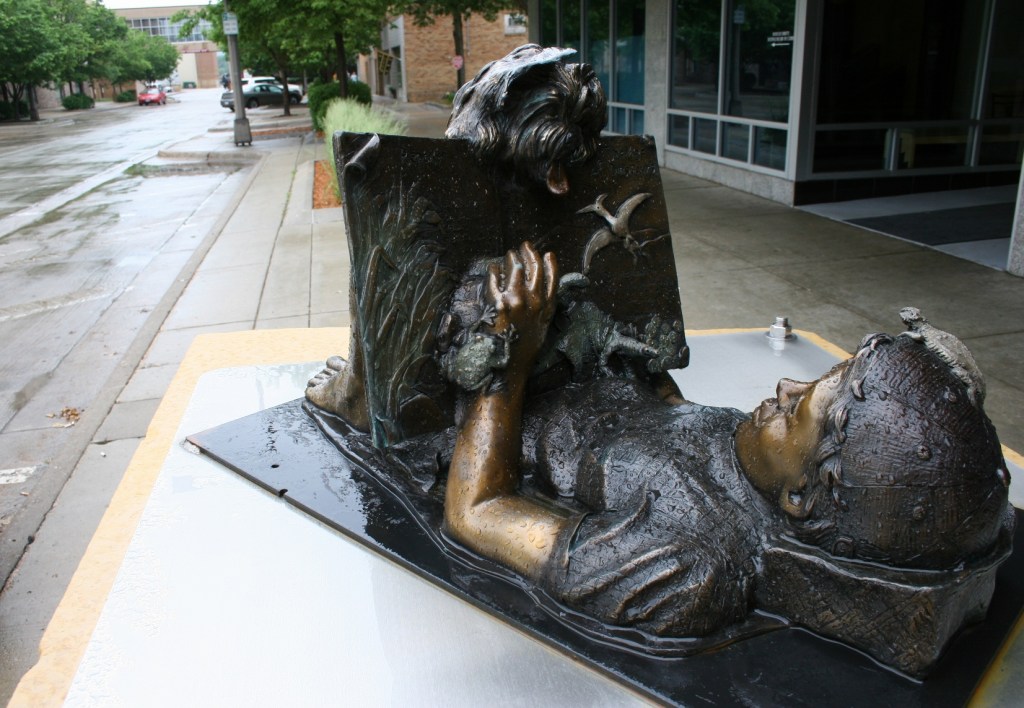
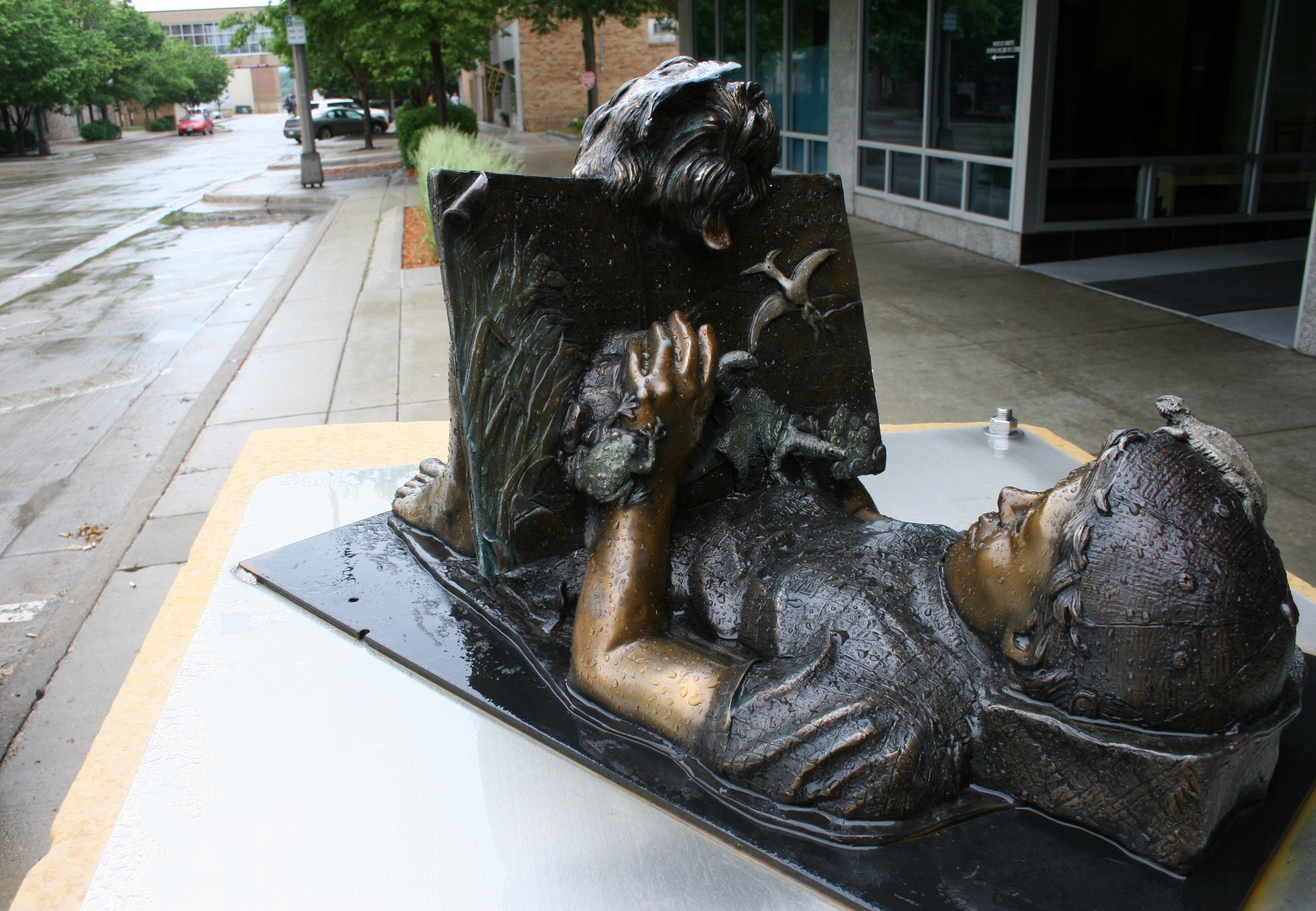
The detail in this bronze, "Reading Magic," by Julie Jones of Fort Collins, Colorado, appeals to me and makes it one of my top favorites among the 25 sculptures in the exhibit.
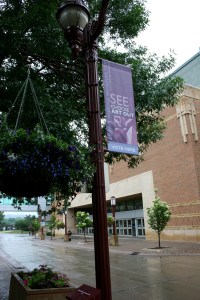
Banners draw visitors to the sculptures and to voting spots in downtown Mankato.

I also noticed, and I don’t know whether this was on purpose, but the sculptures often seemed to jive, architecturally and environmentally, with the buildings they were situated near.

Mankato is committed for the next five years to bringing these rotating sculptures into the community via a partnership with the Sioux Falls-based SculptureWalk program. Of course, this all costs money and with the help of a grant, business sponsorships, donations and more, Mankato has managed to bring this art directly to the people.

It’s a grand idea. I expect to return to Mankato to see next year’s art and perhaps other area attractions. Even though I attended college here for four years, I really didn’t appreciate the city. And so much has changed since 1978.

For someone like me, who doesn’t venture into Minneapolis to engage in the art scene there, mostly because I don’t like the congestion and busyness of the metro, outstate art opportunities like City Art in Mankato offer me culture at a quieter, more enjoyable (at least for me) pace.

#

SINCE I CAN’T POSSIBLY show you all of my photos in one post, I’ll bring you more images in future stories.

© Copyright 2011 Audrey Kletscher Helbling


The Ice Man and his dog June 20, 2011

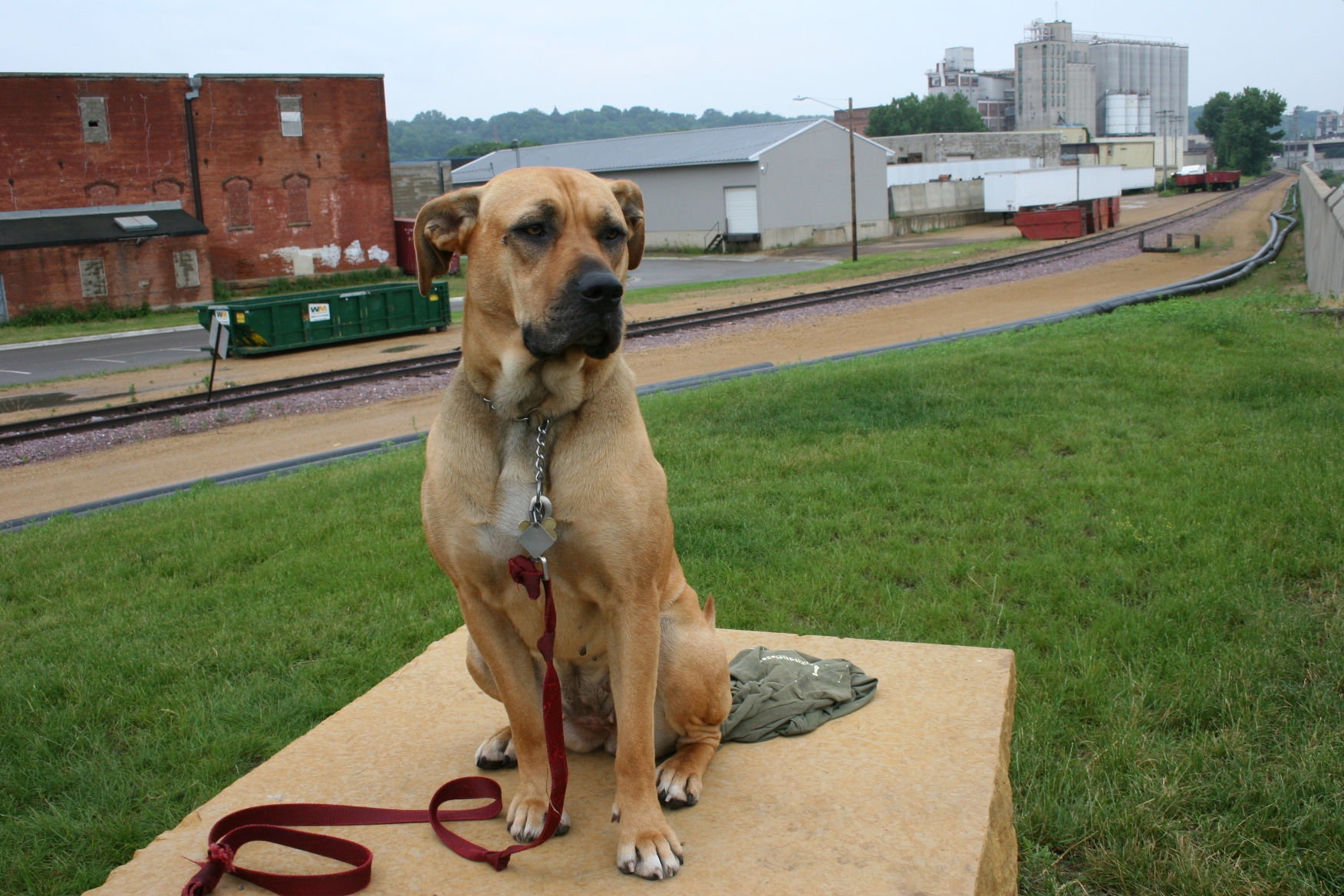
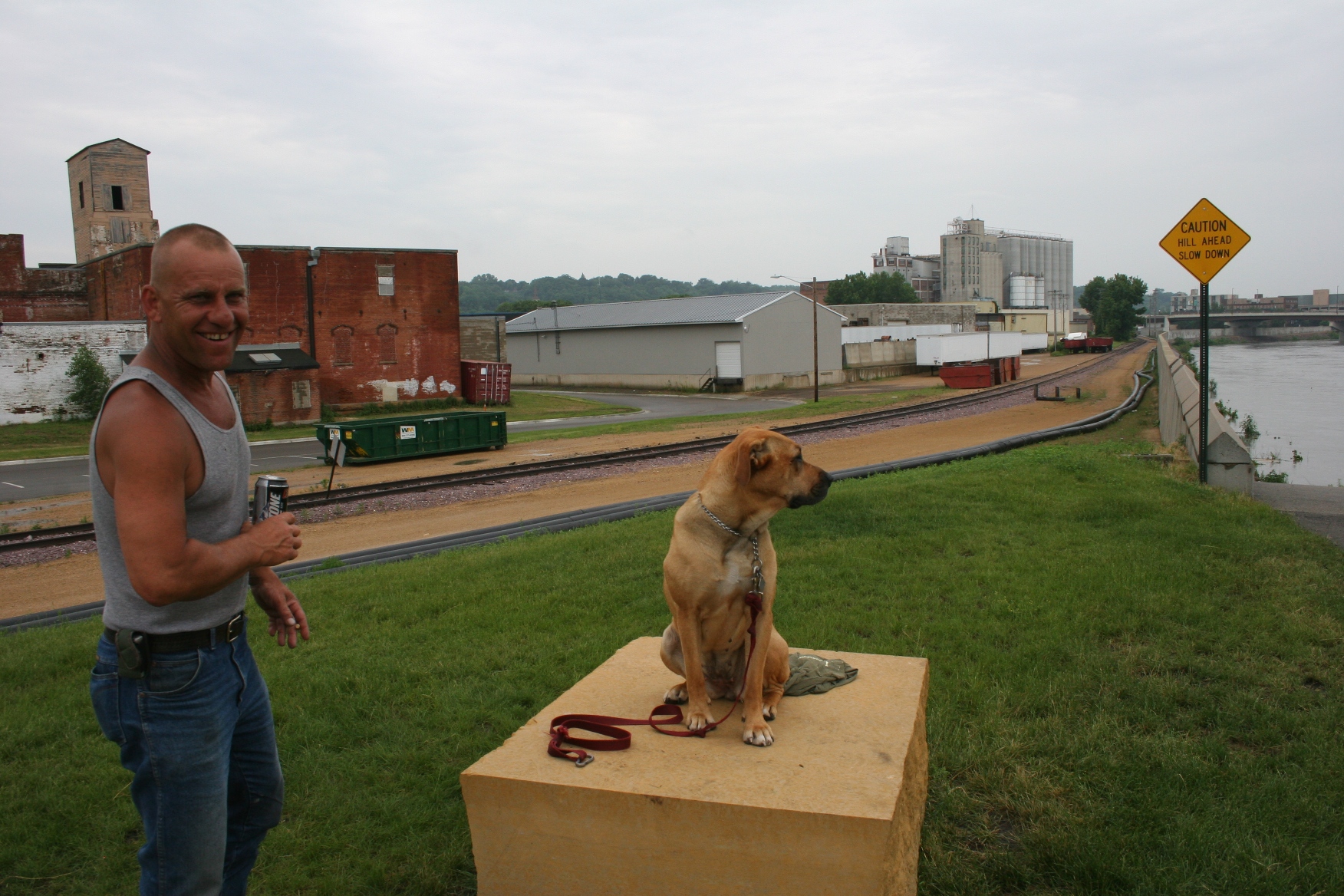
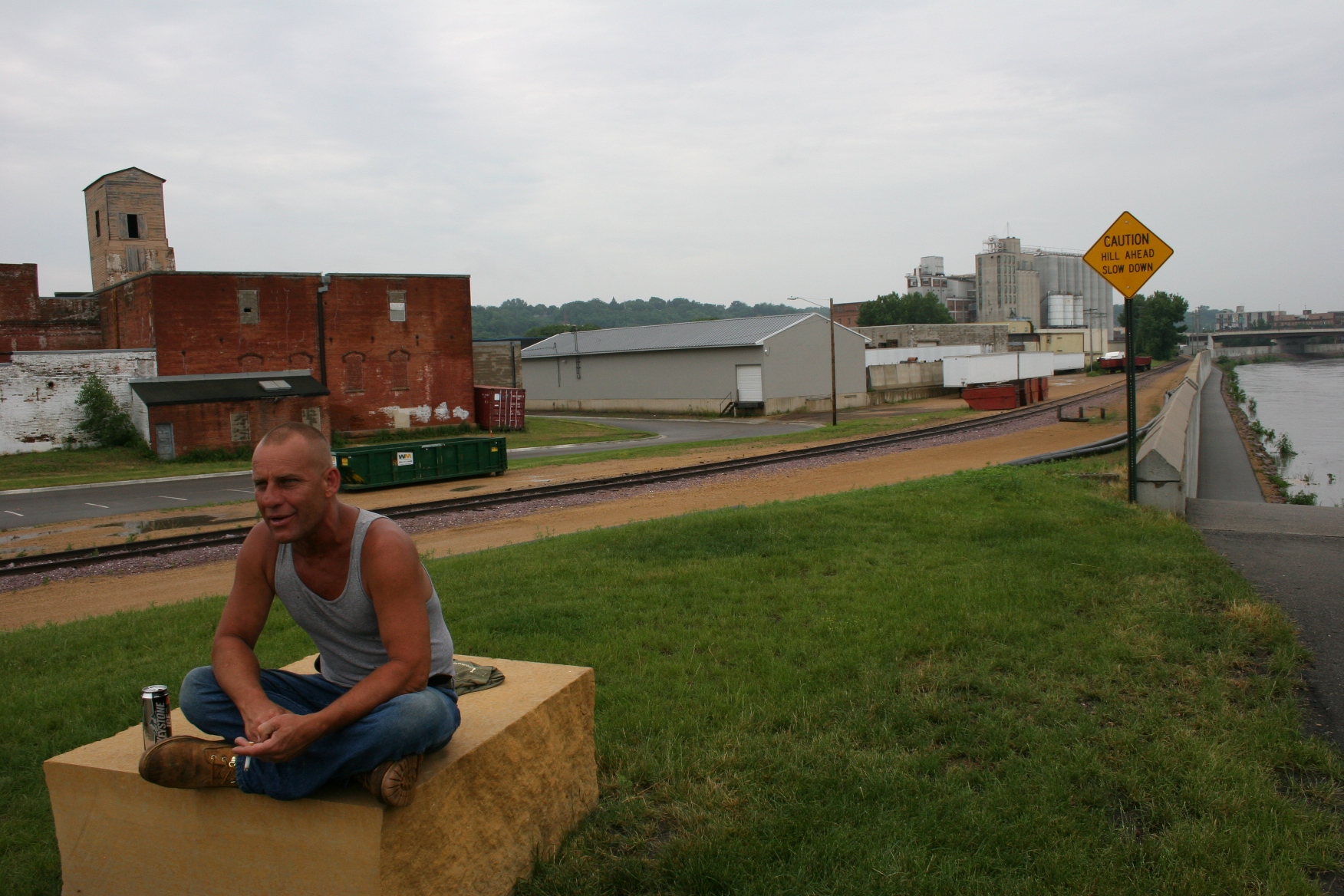
I’LL NEVER SEE THIS GUY again, this man in the muscle shirt with hair shaved scalp-close, fingers cradling a cigarette, a can of Keystone Ice nearly knocking at his knee as he slumps, cross-legged, on a block of Kasota stone by Riverfront Park in Mankato.

Lines harden his forehead. Shadows darken his eyes. Skin exposed to summer sun has already bronzed his face, his upper body, his muscular arms.

I wonder about his life, but don’t ask. Have he and his two buddies, passing the time nearby on their own blocks of hard, hard stone, had hard lives? I can almost see it in their eyes, imagine their lives. Jobs lost. Relationships broken. Regrets. Bars. Beer and cigarettes. Maybe whiskey and women.

But I don’t pry, and only he—the guy with the Keystone Ice—volunteers any information, speaks to me after I approach the trio because I see a photo opportunity in a man and his dog, brick buildings and a riverside railroad track. My eyes sweep across the scene, pushing the view into the lens of my camera, into these images that tell a story.

Rugged life in a river town. A blue collar man’s grimy, steel-toed work shoes. Elevators. Train tracks leading away. Peeling paint. Boarded-up buildings which The Ice Man wishes were torn down and which I tell him should be refurbished.

We disagree. But he still smiles a smile as wide as the manic, muddy Minnesota River raging past the park.

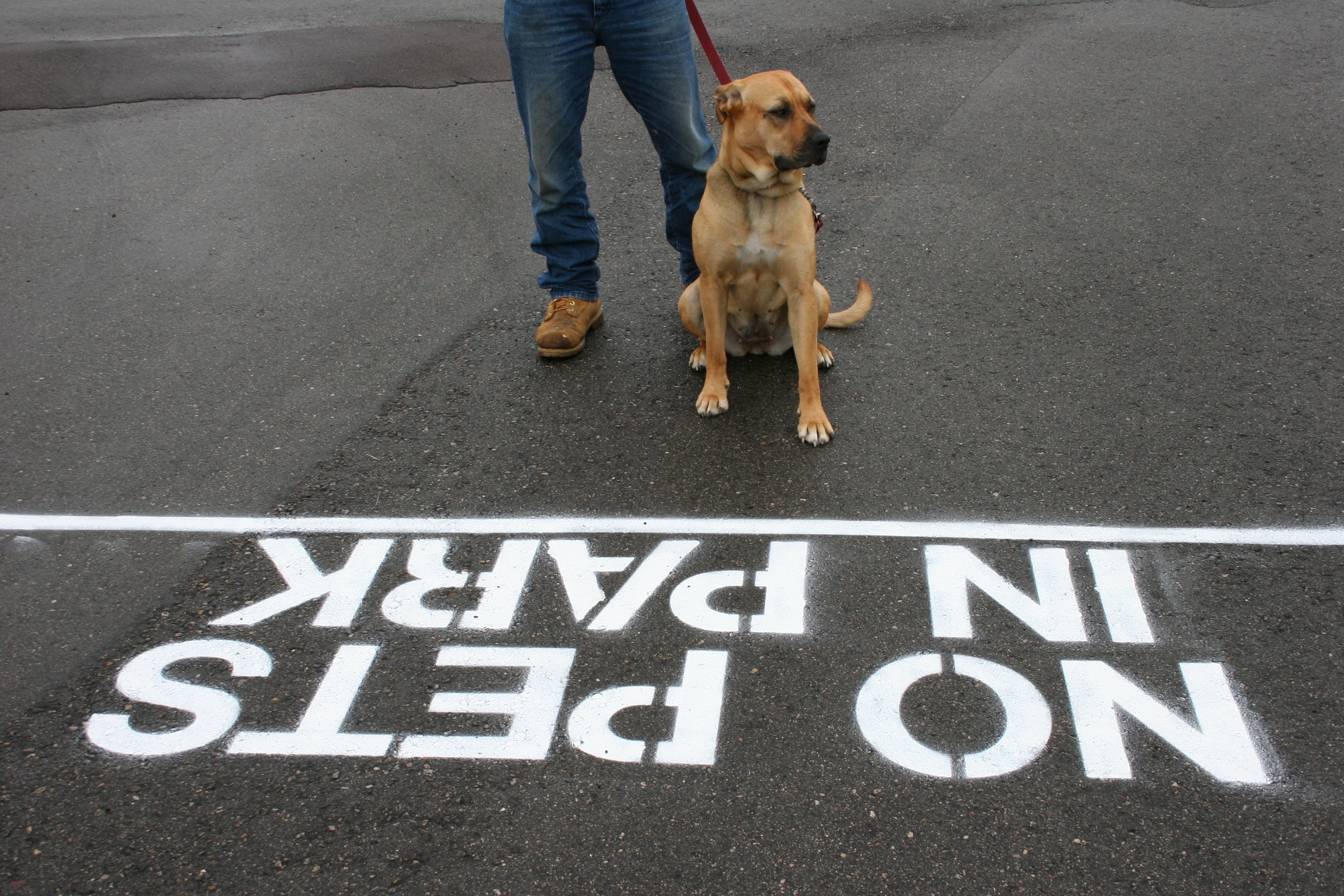
He tells me then, after I snap a series of photos, that he can’t take his dog—a service dog, he claims, and says he has the card to prove it—into Riverfront Park. Dogs are banned from some Mankato parks and this is one of them.

He suggests I photograph his dog next to the white line and words sprayed onto the tar: NO PETS IN PARK.

At first I balk, say, no, I won’t do that.

But then I reconsider, give The Ice Man his defiant moment. As his dog struggles to cross the line into the park, he tugs on the leash, holding her back. He’s already told me how, a day earlier, he hasn’t crossed the line to hear a $15 outdoor concert staged here. Instead, he’s followed the trail nearer the venue site, listened to the music from there. He’s clearly proud of his evasive, I’ve-outsmarted-them tactic.

Then we part ways. I continue reading poetry imprinted upon a sidewalk circling the park’s trail head building. He returns to his hard stone to swig his Keystone Ice beer and smoke his cigarettes.

His life is so different from mine. Yet, for five minutes we’ve connected and the poetry of his life shows in these images of The Ice Man and his dog.

© Copyright 2011 Audrey Kletscher Helbling


You could be a model, James June 13, 2011

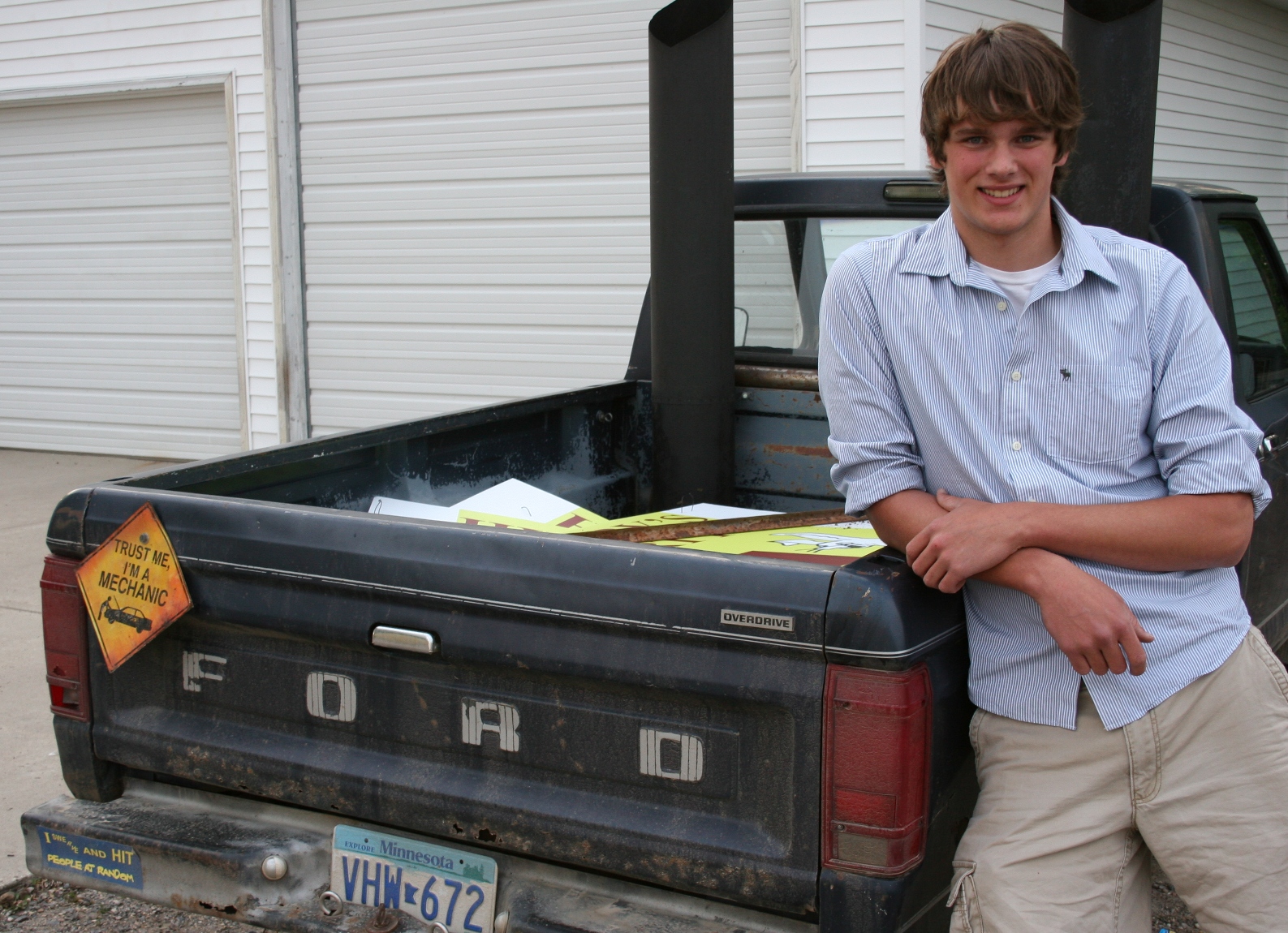
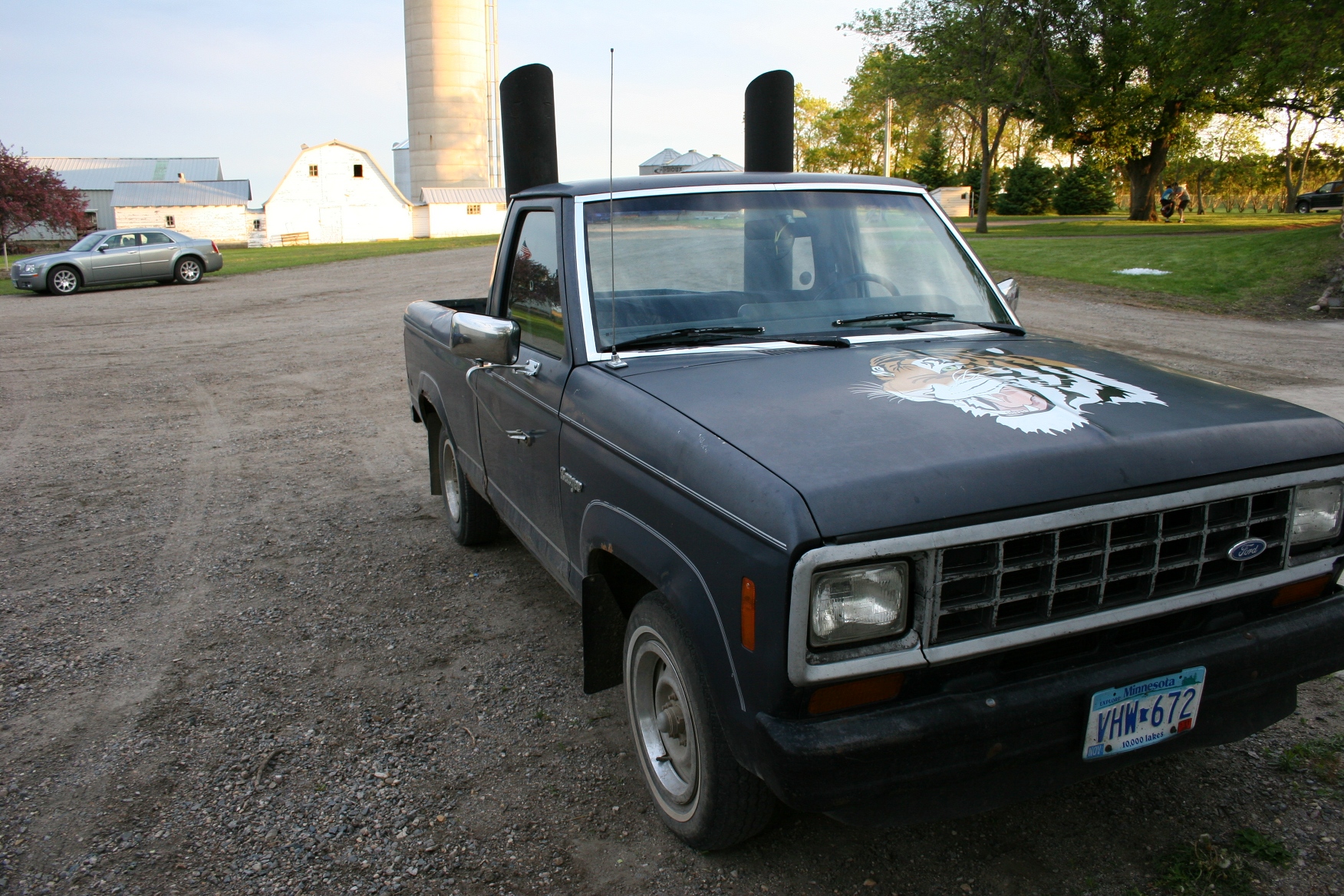
James and his Ford Ranger pick-up truck.

“JAMES, HAS ANYONE ever told you that you could be a model?” I asked as he leaned against the bed of his Ford Ranger pick-up truck for a quick photo shoot by me.

He didn’t really answer, which I’m to take as a “yes.”

With his all-American boy good looks, this fresh-faced Minnesota farm kid (adult, actually) could easily grace the pages of a fashion magazine, a print ad or even a television commercial.

His personality matches his boy-next-door appearance. James, not Jim or Jimmy, is down-to-earth, quiet, maybe even shy, with a playful smile and spirit.

Not that I know James all that well. He’s my niece Hillary’s boyfriend. But since my niece lives 2 ½ hours away, I haven’t spent much time with her significant other.

It was James’ Ford Ranger that caught my eye as he came barreling onto the home place (aka the farm where I grew up) during Hillary’s recent high school graduation reception. You can’t miss his truck with the stove-pipe-size exhaust pipes jutting out of the pick-up bed.

Impressed with the duo stacks, I moved in closer to check out James’ wheels. And then I discovered the redneck streak in this seemingly demure South Dakota State University agricultural engineering student.

Check out these bumper stickers:

As good an explanation as any for a dirty vehicle.

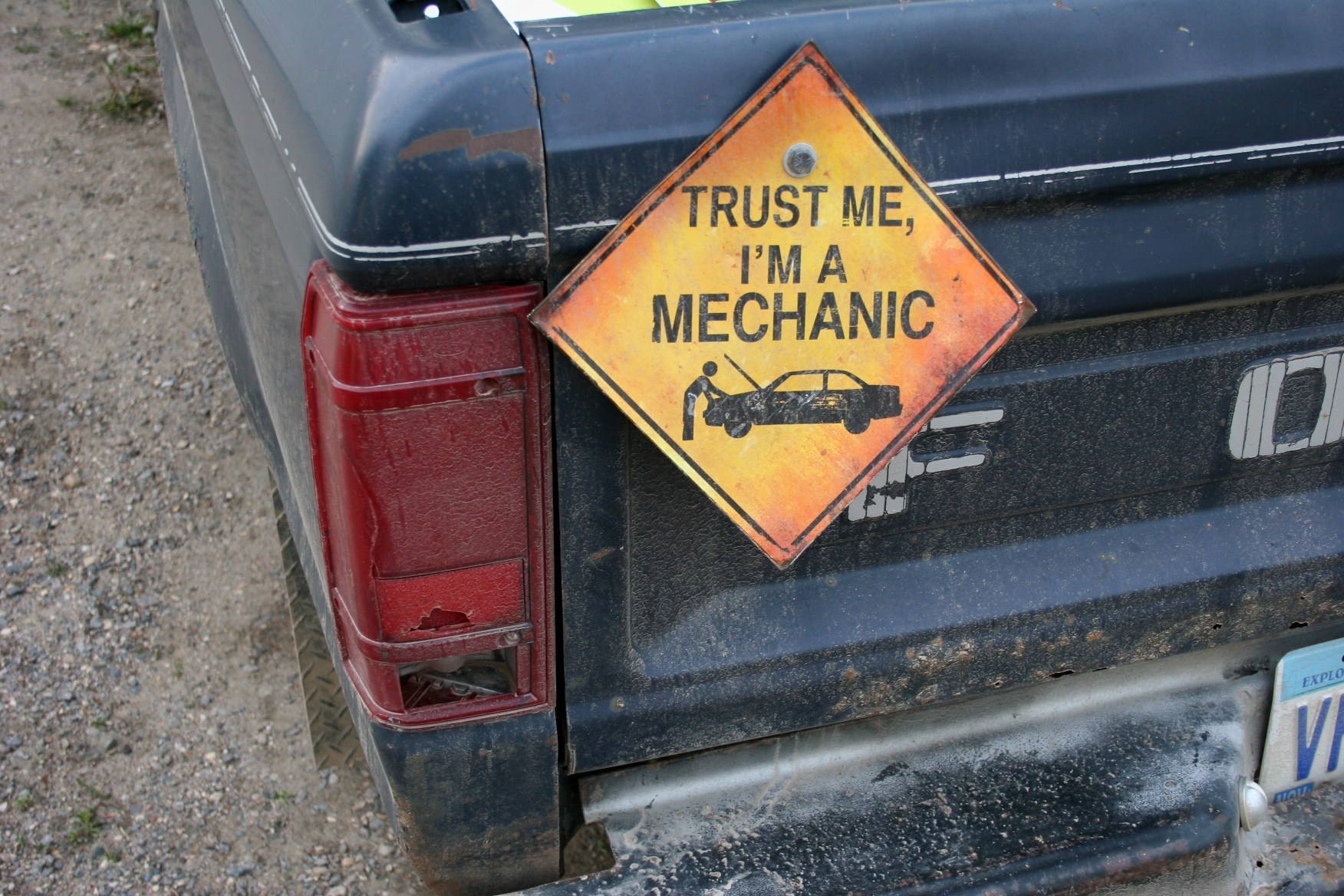
This bumper sticker doesn't reflect on James' driving skills, only his sense of humor. Don't take the message seriously, please.

Farm youth like James are typically quite adept at all things mechanical.

What do these tell you about James? Obviously he possesses a sense of humor. He’s also capable of keeping a vehicle running and confident enough to tell you.

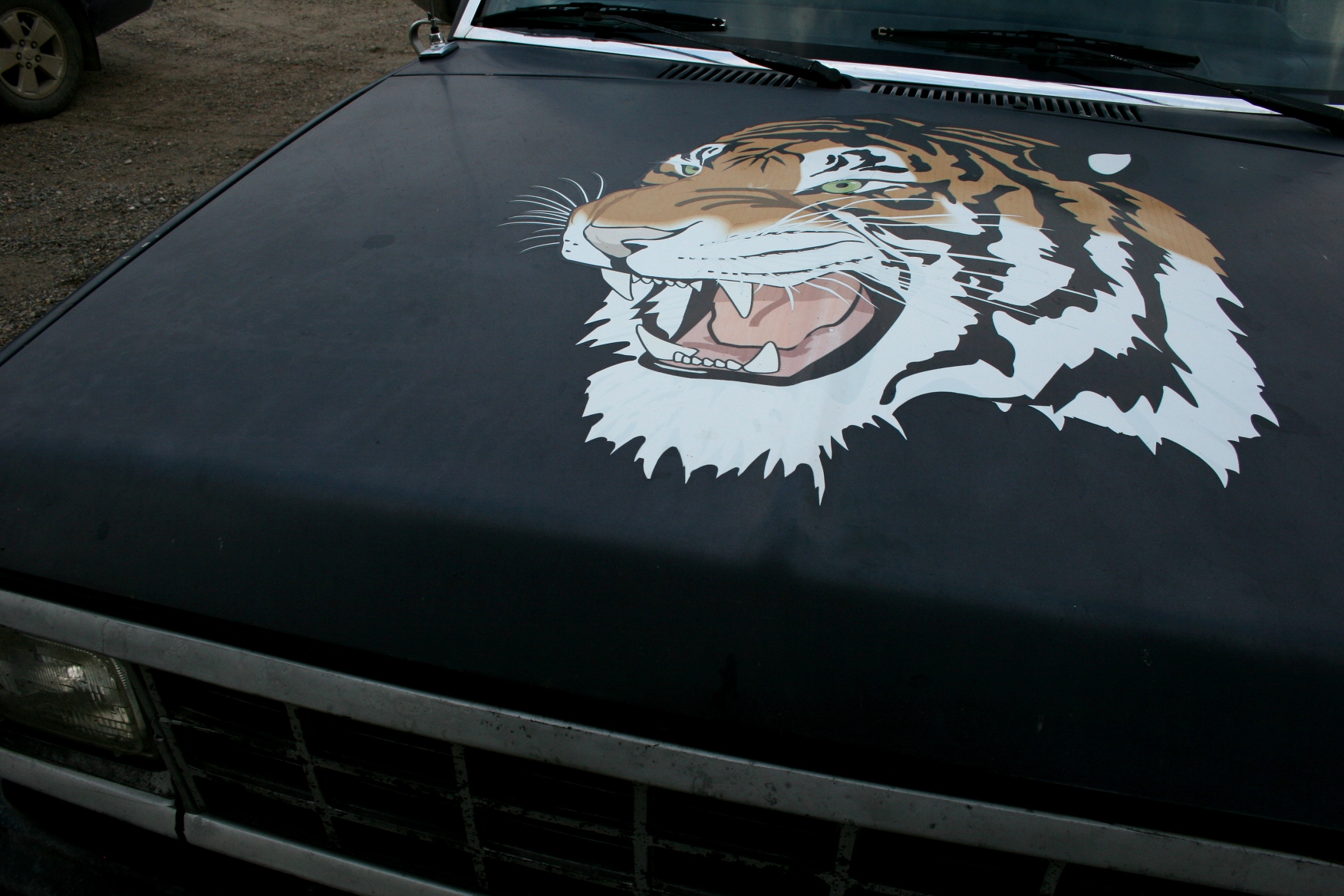
But, wait, there’s more. His pick-up hood sports a tiger head, as in the mascot of Marshall High School, James’ alma mater. James also owns school spirit.

The tiger, Marshall High's mascot, defines the pick-up hood.

I really don’t have anything more to say about this southwestern Minnesota farm boy or his wheels, except to re-emphasize that I think James could be a model, maybe for Ford or John Deere. I wouldn’t want him to get into anything too Californian or New Yorkish so as to change his appealing rural charm.

What’s your opinion? Could/should James give modeling a shot to fund his college education? This idea is mine, not his, just to be clear.

One last shot of James' Ford Ranger pick-up truck, parked on the farm where I grew up just outside of Vesta in southwestern Minnesota.

© Copyright 2011 Audrey Kletscher Helbling


Vote to rebuild parks in four flooded Minnesota communities June 9, 2011

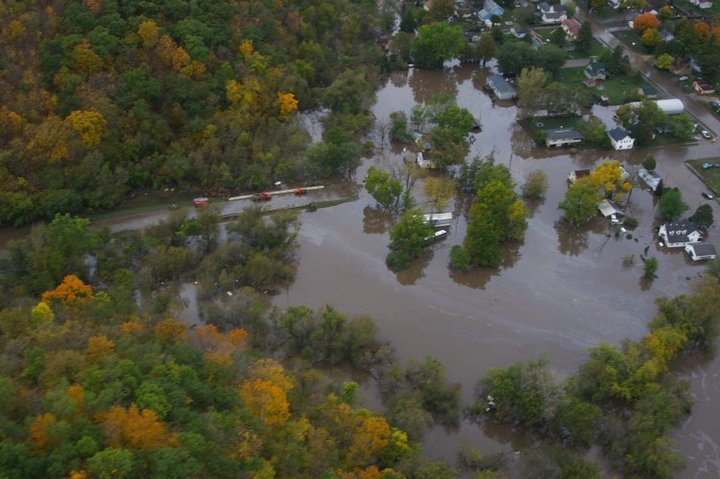
An aerial view of Hammond during the flash flood of September 2010. Photo courtesy of Michael Mann & Tina Marlowe.
FOR SOME TIME NOW, I’ve been committed to helping the folks of Hammond in southeastern Minnesota recover from a devastating September 2010 flood.
I’ve assisted in the best way I can—not physically—but with words and photos on this blog. We all possess talents and mine are not hanging sheetrock or swinging a hammer. I write. There is power in words.

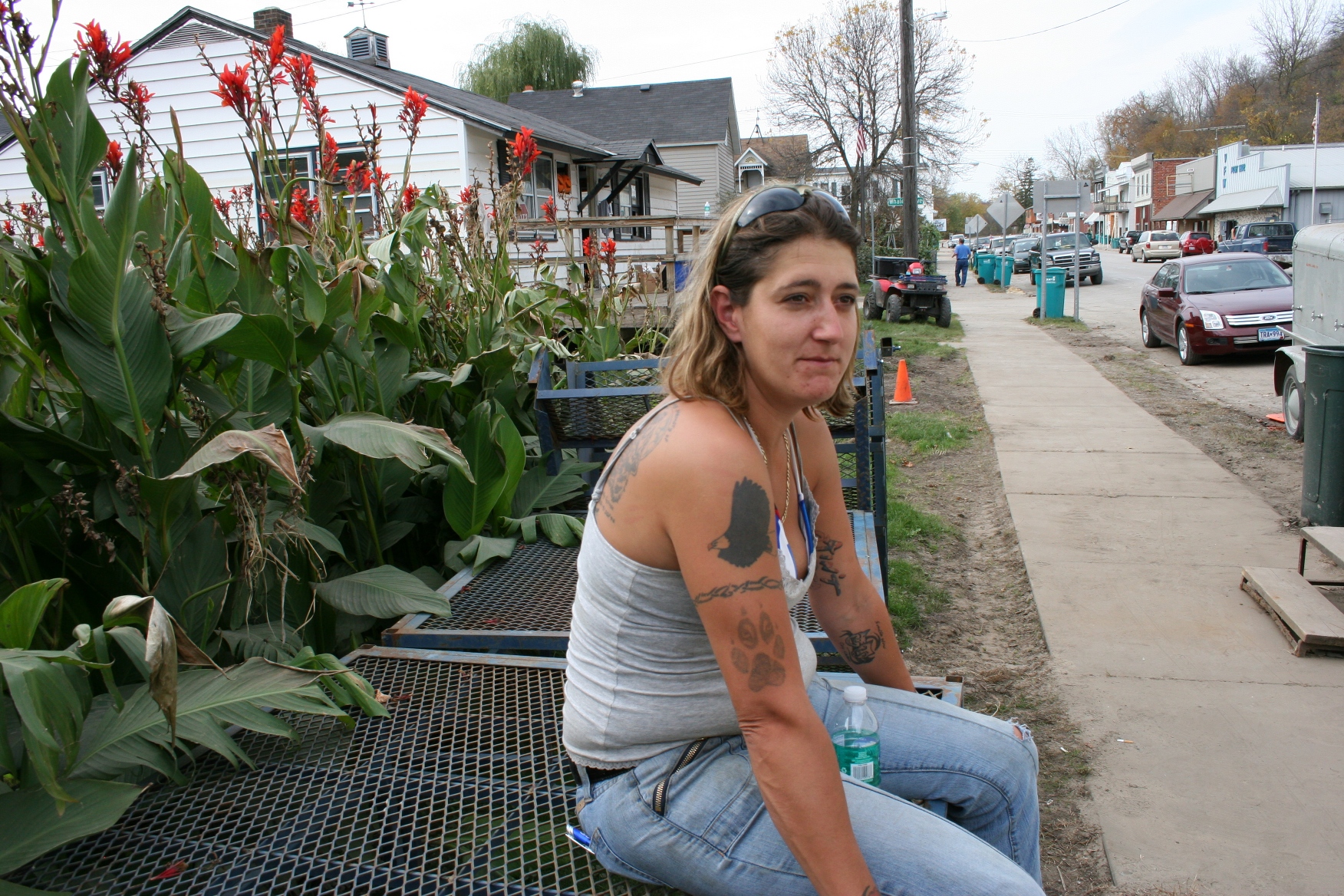
Last October I brought you a series of stories and photos from Hammond and neighboring Zumbro Falls, where I interviewed several individuals and shot many photos showing the damage caused by the flooded Zumbro River. The women I spoke to shared heartbreaking stories. Yet, they remained strong. That impressed me.

I spoke to Tracy Yennie in Zumbro Falls several weeks after the flood damaged her home.

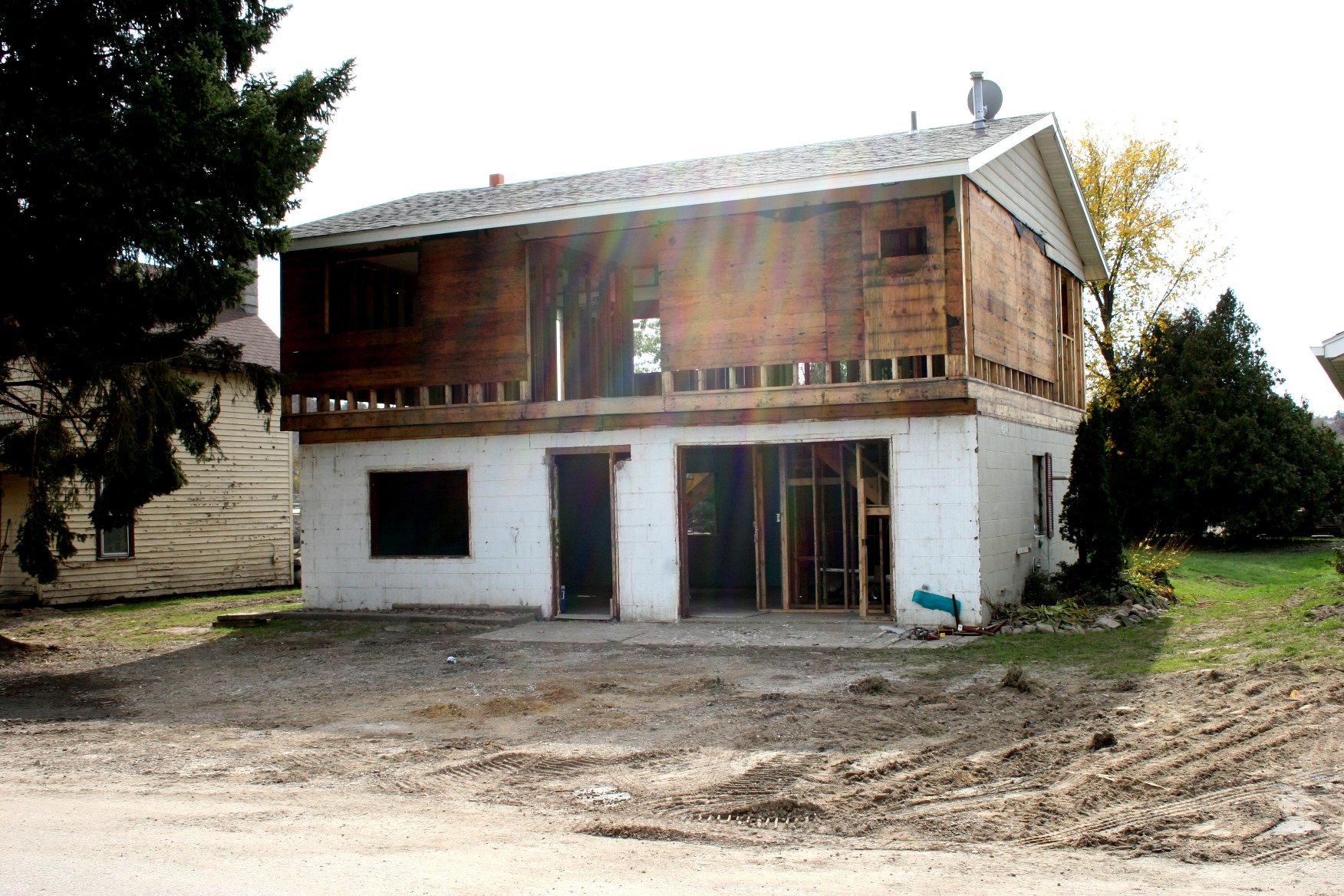
A gutted, flood-ravaged home in Zumbro Falls.

The exposed side of the restaurant/grocery, where a portion of a building once stood in Hammond. The building lies in a heap in the street.

I saw gutted homes and businesses, a child’s toy lying in a pile of discarded appliances. Truly, I could not fathom the personal loss of possessions and home.

In March I published a series of stories about Tina Marlowe and her family, who lost so much to the floodwaters in Hammond. Hers was one story of many that you will never hear. Some residents have decided not to return. Others await possible buy-outs or funding to repair their homes.

But beyond the individual losses, these towns have suffered as communities. They’ve lost gathering spots and places for their children to play. Parks need rebuilding. To do this, these communities need money.

Marlowe, who was recently elected to the Hammond City Council, has started the Hammond Park Flood Recovery Project and is accepting donations of monies, materials and labor to rebuild the recreational areas in her river hamlet.

Send donations to: City of Hammond Park Flood Recovery Project, 320 East Center Street, Hammond, MN. 55991. Click here to learn more about this effort.


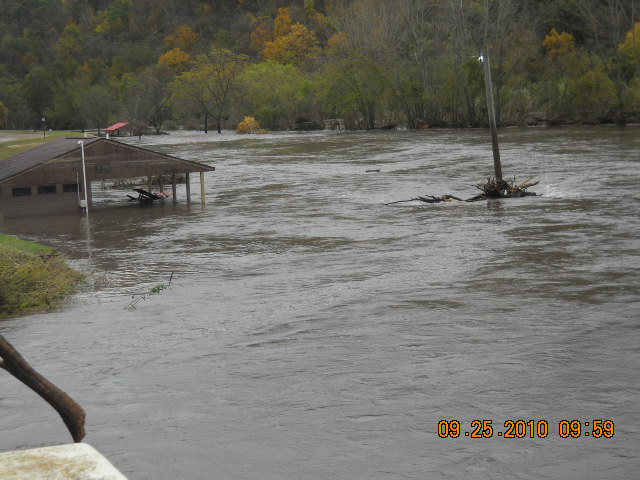
Hammond's riverside park was all but destroyed by the flood. Marks on the shelter roof show how high the water rose. A baseball field next to the shelter, with a fence around it, is covered by receding floodwaters. Jenny Hoffman took this photo on September 25, 2010.

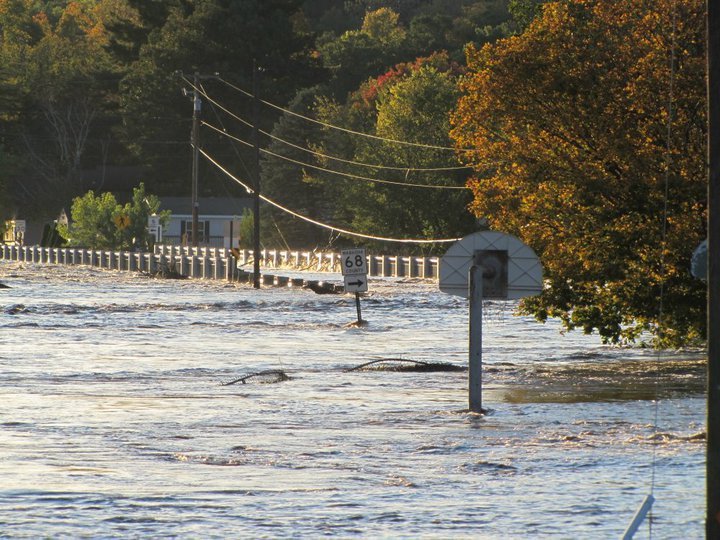
The bridge connecting east and west Hammond during the flood, which also overtook the town's park. Photo courtesy of Micheal Mann & Tina Marlowe.

AND NOW A 16-YEAR-OLD Zumbrota-Mazeppa High School student, Amy Schultz, has stepped up, leading the push to secure a $50,000 Pepsi Refresh Project grant that will repair flood-damaged parks in Zumbro Falls, Hammond, Pine Island and Owatonna.

Schultz tried for a grant earlier this year, focusing solely on Zumbro Falls and Hammond. Now she’s expanded her area, hoping that the inclusion of Pine Island and Owatonna will mean more votes. The top 10 projects, those with the most votes, get the $50,000.

Simple? Yes. Just vote by:

Voting continues through June. When I checked the ranking for this project on Wednesday morning, Schultz’s idea stood at number 27. Let’s blast that number into the top 10.

This high schooler is determined. Just read this information I found online, in news releases she sent to cities, Chambers of Commerce and elsewhere: “The local parks are part of the fabric that joins these picturesque river towns together. It is where families and friends come to play and visitors come to sit by the riverside all summer long. So many memories have been made here over the years and we need to restore them for current and future generations.”

Convincing words from a young woman who wants to make a difference in four Minnesota communities still recovering from the September 2010 flash floods.

Vote today and every day until the end of June for the “Rebuild Parks in Owatonna, Zumbro Falls, Pine Island and Hammond MN” project.

© Copyright 2011 Audrey Kletscher Helbling