Minnesota Prairie Roots

Writing and photography by Audrey Kletscher Helbling

Thoughts following a country drive west of Wanamingo March 30, 2016

Filed under: Uncategorized — Audrey Kletscher Helbling @ 5:00 AM
Tags: , , , , ,

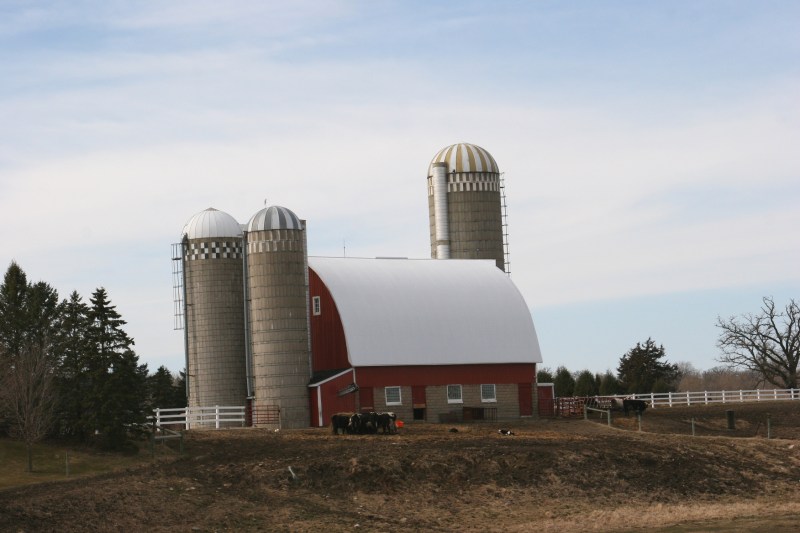
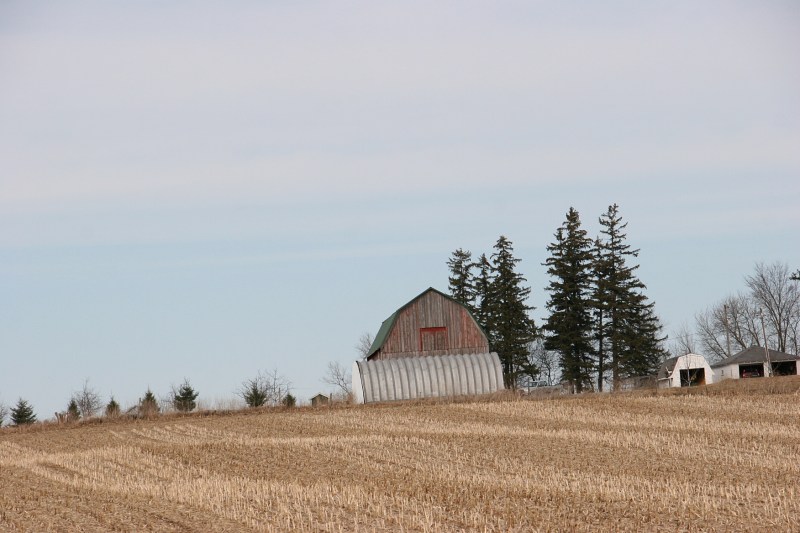
Rural Minnesota, 102 barn & cattle


WE ALL HAVE OUR PLACE of comfort, the place that brings us peace and allows us to escape, if but for a minute or an hour or a day.

For me, that’s a drive in the country, along the less-traveled back roads of Minnesota.


Rural Minnesota, 106 barn and corn stubble


I am of the land, of sky and fields and barns and silos and farmhouses. Rural Minnesota shaped me into the person I’ve become. A writer. A photographer. A poet. A keeper of rural life and of small towns.


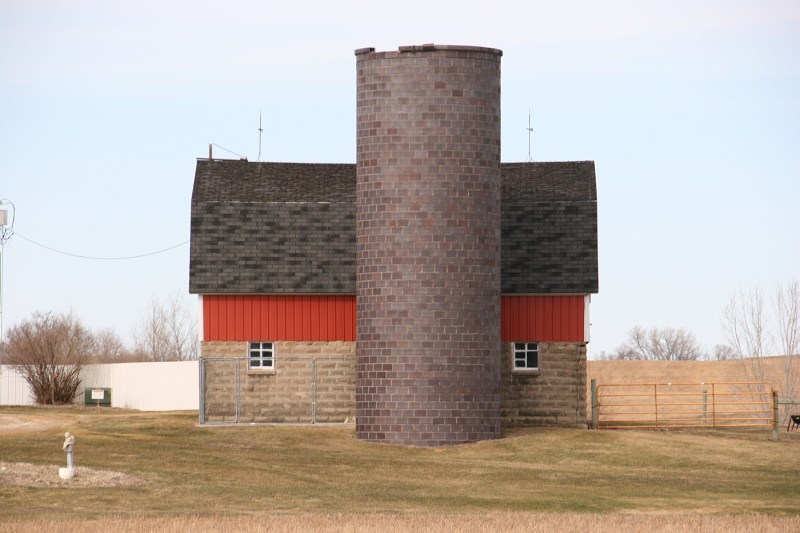
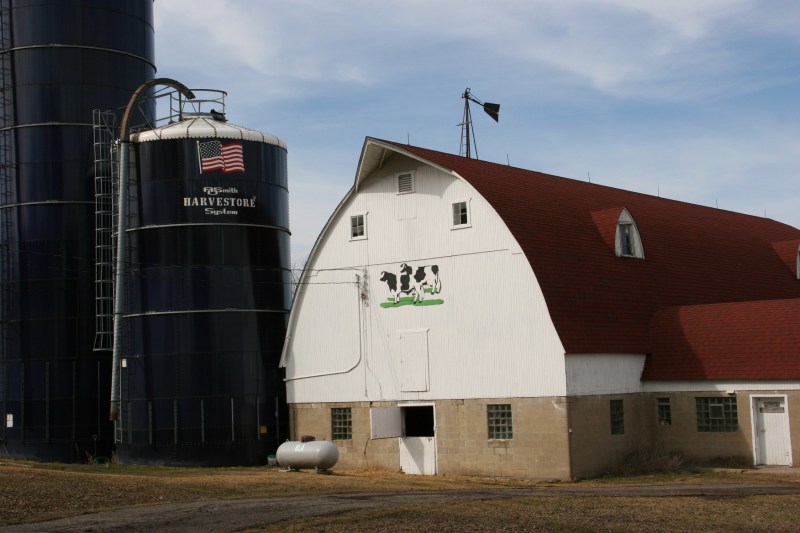
Rural Minnesota, 110 barn & Harverstore silos


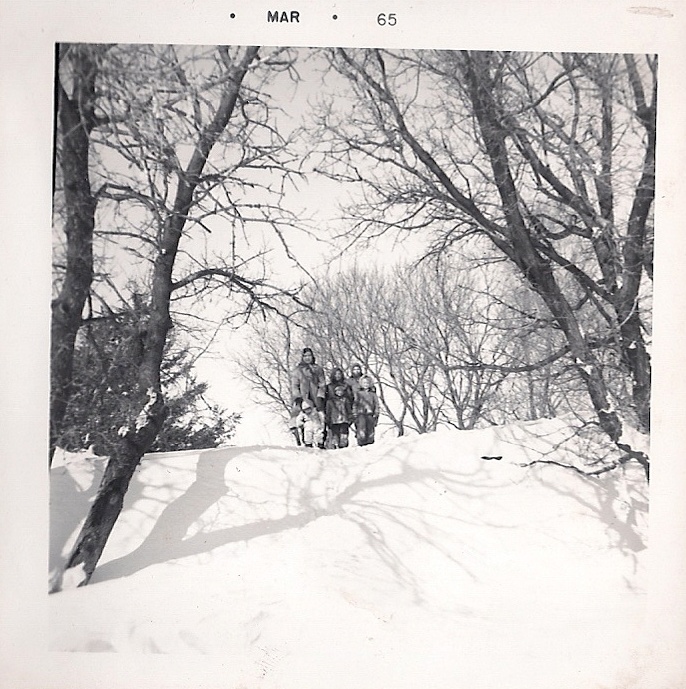
Memories of farm life tuck away in my heart. Doing chores—feeding calves and cows and scooping silage and manure. Walking beans. Picking rock. Gathering around the supper table with my parents and siblings to eat that which we’d grown and raised. Playing in the grove. Racing across rock solid snowdrifts sculpted by the prairie wind.

Life on the farm wasn’t easy. But it was good. Good in the sort of way that comes from working hard and understanding that family and faith come first.


Rural Minnesota, 111 house in Aspelund


I grew up poor. There were no birthday gifts, except from an aunt, my godmother. A meal was sometimes comprised of a kettle of plain white rice. Clothes were sometimes stitched from feed sacks and most certainly handed down. There was no telephone or television or indoor bathroom in the early years of my life. I went to church and Sunday School every week.

I am grateful my parents were never wealthy in the monetary sense. I would not be the person I am today. It is not important to me to have the newest or latest or best. I am content with what I have. I consider myself grounded and honest and loyal. Down-to-earth. Rooted. I love the land and I love family.


Rural Minnesota, 103 barn & silo


These are the thoughts that surface when I journey through the Minnesota countryside, when I photograph barns and farmhouses and other rural scenes. I am capturing the essence of the place that shaped me. Land. Sky. Fields. Barns. Silos. Farmhouses. And, yes, my family and my faith.


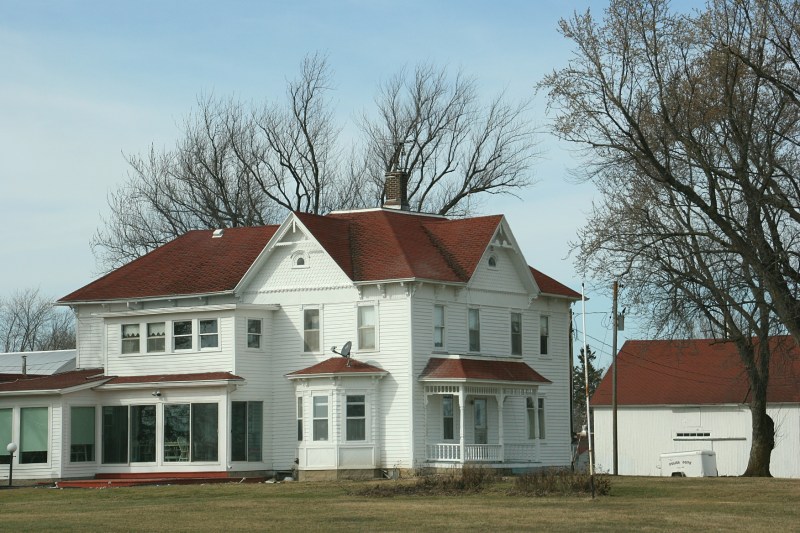
Rural Minnesota, 108 sprawling farmhouse


FYI: These images were taken while traveling along Goodhue County Road 30 west of Wanamingo, Minnesota, and in Aspelund, a slight veer to the north. I did not grow up in this area. Rather, I was raised on a dairy and crop farm in Redwood County, on the southwestern Minnesota prairie. My childhood home was nothing like the houses pictured here. Ours was a tiny woodframe farmhouse heated by an oil burning stove in the living room. The kitchen had an interior trap door that led to a dirt cellar. It was cramped. But it was home.

© Copyright 2016 Audrey Kletscher Helbling


From small town Minnesota: Should Gaylord keep its noon & 6 p.m. whistles? March 2, 2016

Filed under: Uncategorized — Audrey Kletscher Helbling @ 5:00 AM
Tags: , , , , , , ,
I photographed this aged water tower, which looks a lot like the 1917 one in Gaylord, several years ago. It stands in Freeport, Minnesota, along Interstate 94.

I photographed this aged water tower, which looks a lot like the 1917 one in Gaylord, several years ago. It stands in Freeport, Minnesota, along Interstate 94.

WHAT IS THE PRICE of history, of nostalgia, of tradition in a small town?

Folks in Gaylord, a county seat community of some 2,300 in southern Minnesota, are grappling with that question as the city replaces its aging water tower with a new one.

Should the city spend several thousand dollars annually for inspections and $100,000 every 10 years for upkeep of the 1917 tower? Or should the tower be torn down? And, if so, what happens to the siren attached to it?

The issue isn’t simply one of economics. That’s clear in Facebook comments on the City of Gaylord Facebook page. Residents and former residents are discussing not only whether to keep the tower, but whether to continue with the tradition of blowing the noon and 6 p.m. whistles. A siren on the old water tower blares twice daily as it has for decades. The whistle has become a hot topic of discussion.

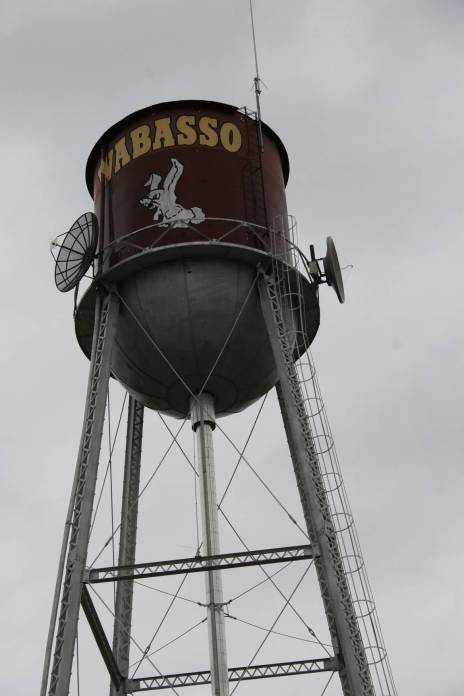
Wabasso's water tower, painted in the school colors and adorned with a white rabbit, the school mascot.

This aged water tower stands in Wabasso, Minnesota, where I attended high school. Wabasso means “white rabbit” and is the school’s mascot. Minnesota Prairie Roots file photo.

I understand the small town nostalgia bit. I grew up on a farm near Vesta, a town of several hundred with an old water tower (long gone) and those roaring daily sirens. I also lived in Gaylord where I worked as a newspaper reporter for two years fresh out of college.

The noon and 6 p.m. whistles (and if I remember correctly, even a 9 p.m. whistle) in Vesta alerted residents to the time of day. Time for dinner. Time for supper. Time to get home and prepare for bed.

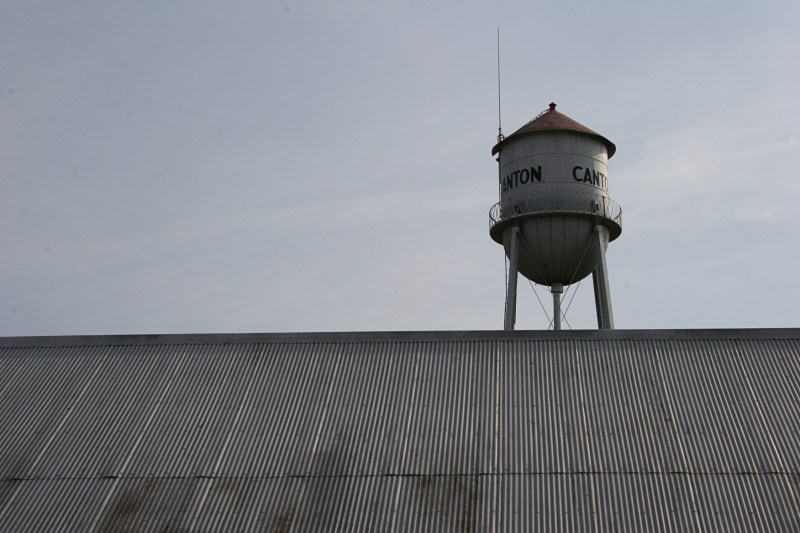
This water tower stands in Canton, Minnesota, near the Iowa border. Minnesota Prairie Roots file photo.

This water tower stands in Canton, Minnesota, near the Iowa border. Minnesota Prairie Roots file photo.

Do those whistles still hold importance in 2016? Are they necessary? Are they welcome?

In perusing comments from Gaylord, I read of overwhelming support for keeping the whistles.

Folks write of the whistle in terms of small town charm and values, nostalgia, memories, historical importance, uniqueness and more.

One Gaylord native says of the siren:

It was the singular mechanical device that, by itself, taught us Gaylord kids what responsibility meant. If I and my siblings weren’t walking in the door at noon and six, there was hell to pay. It is a legacy.

Another commenter surmises:

I have continued the tradition and taught my children to listen for the whistle. A watch just isn’t enough when you are talking about kids. They need an audible reminder of the progression of time. The noon whistle is a blatant reminder of the time of day, as is the 6:00 whistle. I think it is an important tool for responsibility as we raise the next generations. The matter of $5,000 – $10,000 is actually a small price to pay when averaged out for a big payout. Besides, what is more monumental in a small town than a noon and/or 6:00 whistle. Can’t get that in the “big city”.

The City Council will decide on the 1917 tower and the whistle in several months. For now, they’ve taken this stand:

The council has determined taking it (the old water tower) down makes the most sense in the long run. The City is looking into keeping the whistle in some capacity…An alternative whistle is being explored; an unused severe weather siren (behind the Prairie House), is proposed to be relocated to the old water tower site.

WHAT ARE YOUR THOUGHTS on keeping the aged tower and/or daily whistles? Let’s hear.

FYI: Click here to reach the City of Gaylord Facebook page. Read the comments and even listen to the siren.

© Copyright 2016 Audrey Kletscher Helbling
 

My view of “The Cities” February 16, 2016

Filed under: Uncategorized — Audrey Kletscher Helbling @ 5:00 AM
Tags: , , , , , , ,

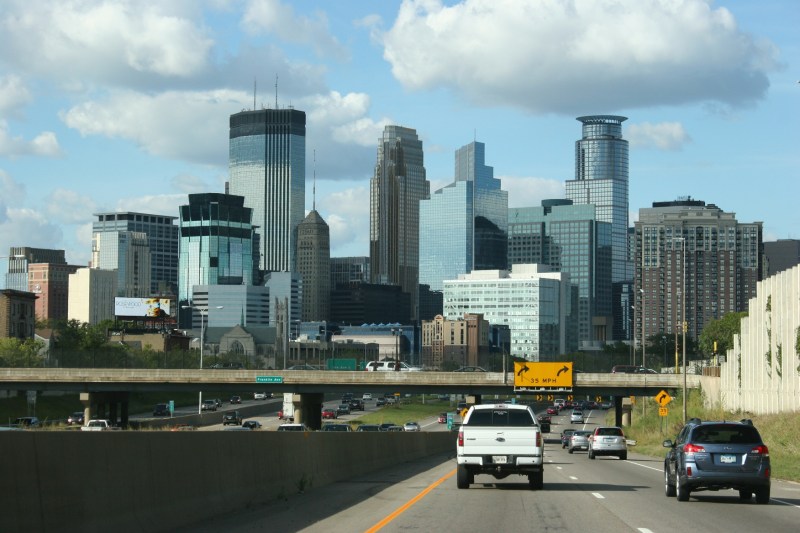
MINNEAPOLIS AND ST. PAUL. Two cities. The Twin Cities. Or, as I called them growing up, simply The Cities.

Frame 7: I love this painterly view of the Minneapolis skyline.

The Minneapolis skyline, Minnesota Prairie Roots file photo October 2015.

I am more familiar with Minneapolis, specifically south Minneapolis where an aunt and uncle lived until retiring to Arkansas.

Sailboats sit upon the waters of Lake Harriet.

Sailboats sit upon the waters of Lake Harriet. Minnesota Prairie Roots file photo, September 2009.

About once a year during my childhood, our farm family would pile into the Chevy—Dad, Mom, six kids and Grandpa—to visit our metro dwelling relatives. And, on a few occasions during summers of my youth, I boarded the Greyhound bus in Vesta to travel solo some 140 miles to Minneapolis for one-on-one time with my Aunt Rachel. We would bike around Lake Harriet, tour the Rose Garden, catch a city bus to purchase fabric at Munsingwear.

The Minnesota state capitol

The Minnesota state capitol, Minnesota Prairie Roots file photo.

To the east in St. Paul, my youthful memories connect to the State Capitol building and Minnesota History Center, which I toured as a sixth grader. I waited in our farmhouse kitchen one dark spring morning for headlights to swing into the yard indicating my ride to Vesta Elementary School had arrived. My stomach churned at the thought of leaving Redwood County on a school bus bound for St. Paul.

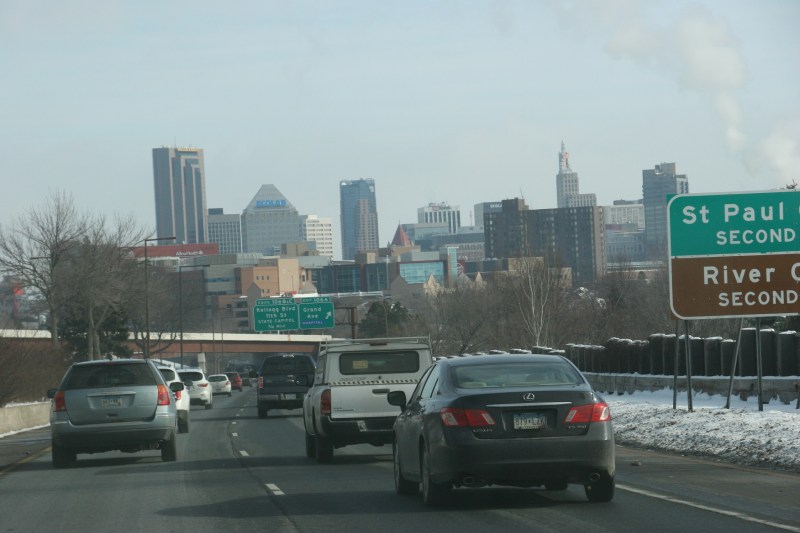
Driving through St. Paul on a recent Saturday morning.

Driving through St. Paul on a recent Saturday morning.

Growing up in a rural area, I’ve never been particularly comfortable in big cities. Traffic and tall buildings and cement and closeness and busyness sometimes overwhelm my senses. But I manage and I appreciate the cultural opportunities a place like the Twin Cities offers, although I seldom take advantage of such offerings.

Creeping along in a congested area near downtown Minneapolis.

Creeping along in a congested area near downtown Minneapolis. Minnesota Prairie Roots file photo.

My trips to The Cities are primarily through or around. To visit family.

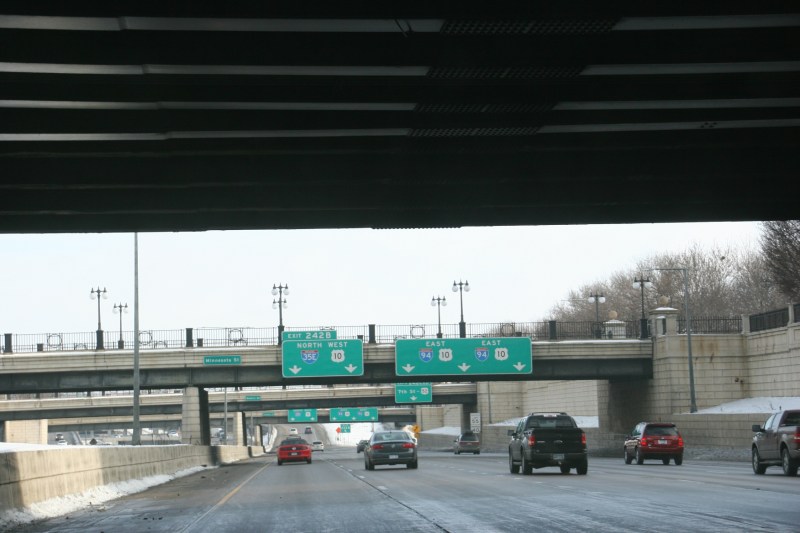
Approaching St. Paul from the south, the speed limit drops.

Approaching St. Paul from the south, the speed limit drops.

Each city, I’ve observed, has a unique look and feel. Minneapolis appears urban while St. Paul seems rooted to the land with a deep sense of place and history. I feel more comfortable in St. Paul, where even the Interstate 35-E speed limit drops to 45 mph for awhile upon entering the city. In Minneapolis, traffic races along Interstate 35-W toward downtown.

For awhile, my eldest daughter and son-in-law rented an apartment in a high-rise in the Mears Park neighborhood of Lowertown St. Paul. It’s the happening place, akin to Uptown or Northeast Minneapolis. The daughter lived in Uptown prior to her marriage and subsequent move to St. Paul. Now she and her husband have settled in a northern burb.

I prefer gravel roads to interstates. My East Coast dwelling son appreciates the extensive mass transit system in Boston.

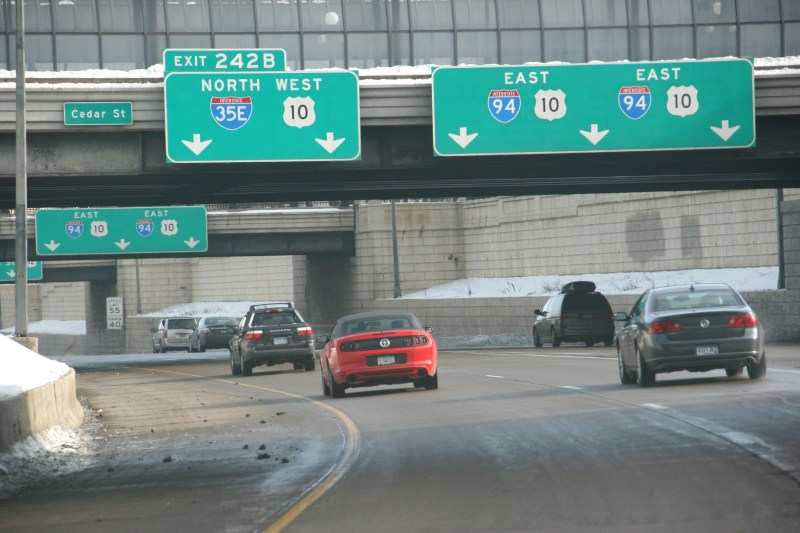
I prefer gravel roads to interstates. This scene was photographed while traveling under an Interstate overpass in St. Paul. My East Coast dwelling son appreciates the extensive mass transit system in Boston.

My rural roots, and those of my husband, have not threaded into the DNA of our offspring. All three of our adult children live in metropolitan areas—in Minnesota, Wisconsin and Massachusetts. They need to be where they are happiest and feel most comfortable.

Not where I wish they lived. Geographically close and far away from any place defined as The Cities.

© Copyright 2016 Audrey Kletscher Helbling
 

More than just an aged pick-up truck January 29, 2016

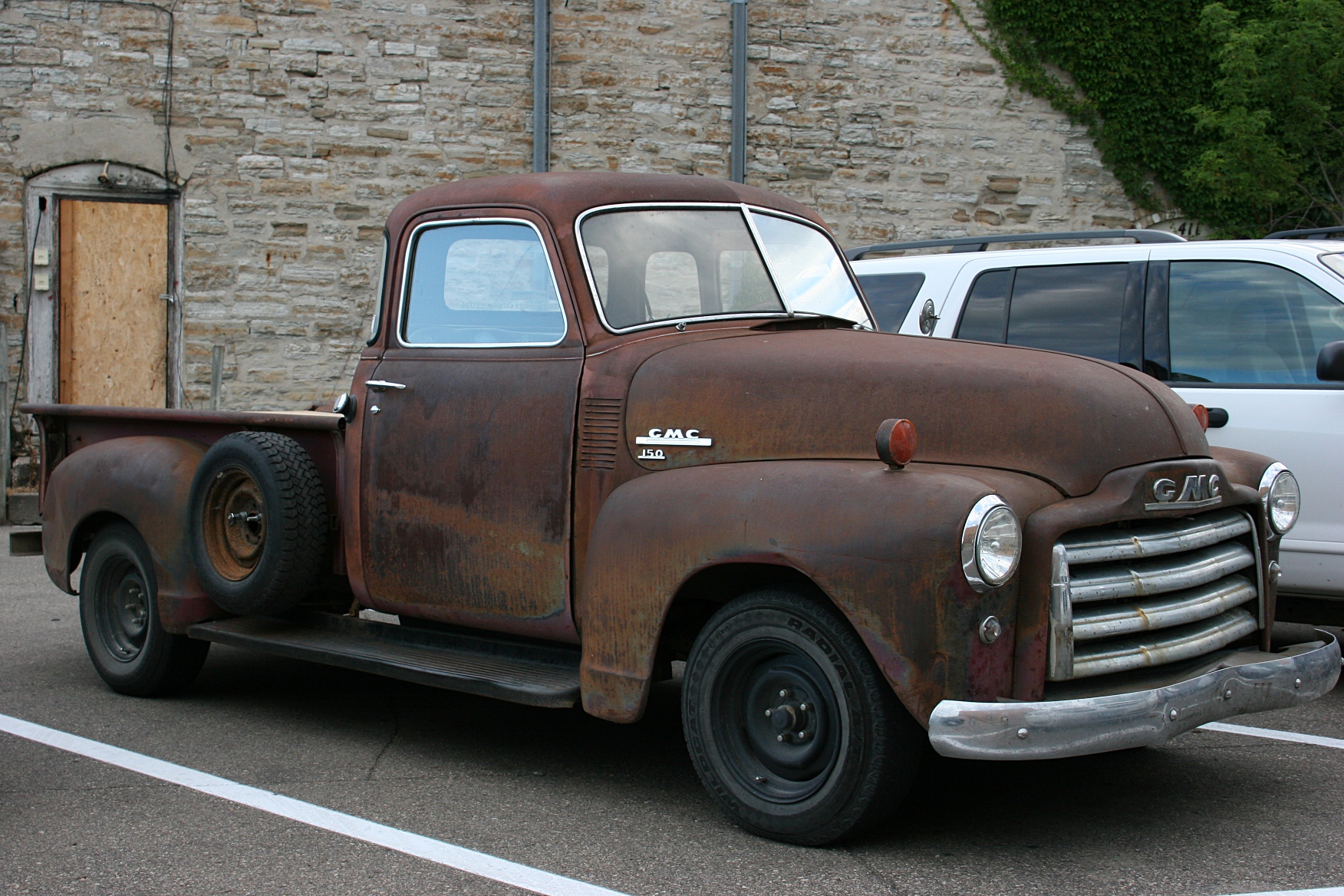
A GMC 150 parked in historic downtown Faribault.

A GMC 150 parked in a city lot in historic downtown Faribault. Minnesota Prairie Roots file photo July 2015.

GROWING UP ON A FARM, I never truly appreciated pick-up trucks. They were simply a part of farm life—the workhorse of the farmer.

The truck needs a lot of work, but it has potential.

The truck needs a lot of work, but it has potential. Minnesota Prairie Roots file photo July 2015.

In the bed of his red and white Chevy pick-up, my dad tossed fence posts, seedcorn bags, chains, shovels, and a myriad of other agricultural essentials. He may even have transported an animal or two.

I recall flying along gravel roads in the front seat of the pick-up, and sometimes in the bed, dust trailing a cloud across the prairie. Other times Dad would bump his truck across the stubbled alfalfa field.

Every time I spot an aged pick-up truck, I covet it. Not because I necessarily desire ownership. Rather, it’s about reliving, and holding onto, those rural memories.

© Copyright 2015 Audrey Kletscher Helbling


Snowmen, then & now January 25, 2016

Filed under: Uncategorized — Audrey Kletscher Helbling @ 5:00 AM
Tags: , , , , ,
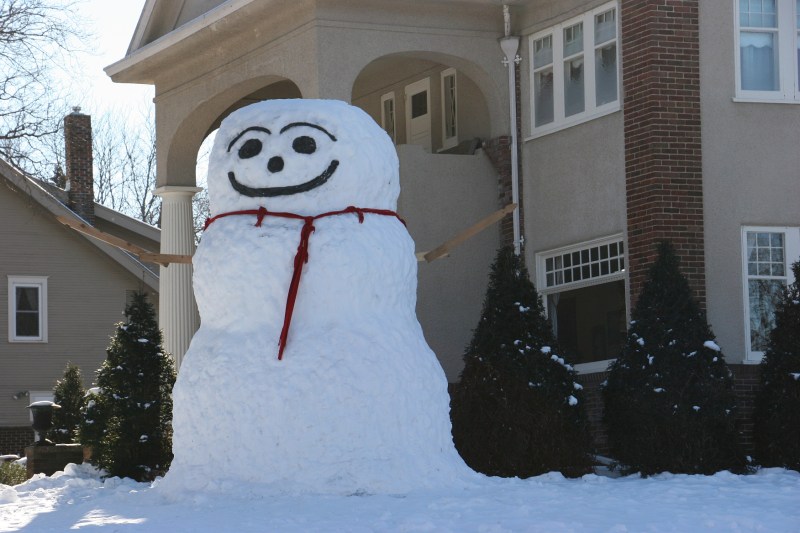
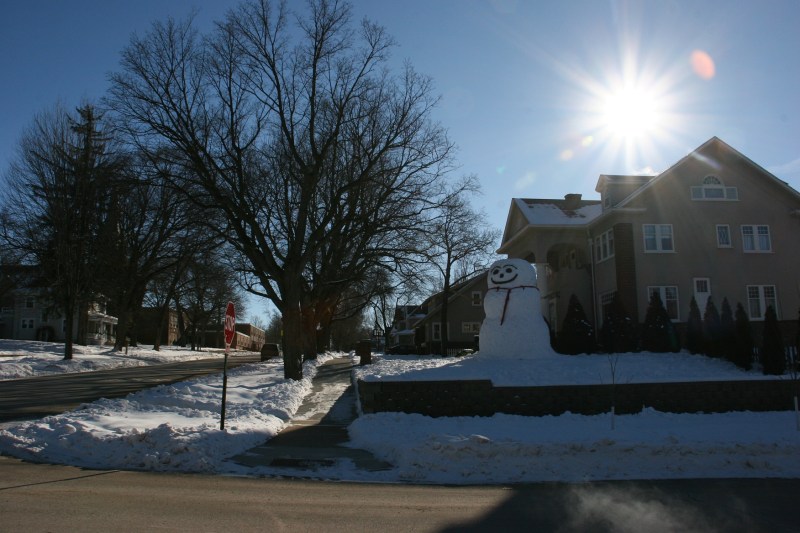
The Hoisington family's 2016 snowman.

The Hoisington family’s 2016 snowman.

FOR THE PAST THREE YEARS, I’ve photographed the over-sized snowmen sculpted in the Hoisington family’s yard in the heart of Faribault at 18 Third Avenue Northwest.


Snowman, 11 head close-up


This year I braved double digit below zero windchills on a bitterly cold Sunday afternoon to document a sculpture that brings me joy.


Snowman, 10 close-up


A snowman hearkens to carefree days of childhood, when I actually loved winter. It brings memories of laboring with my siblings to roll snow into monumental balls. Three snowballs stacked atop each other to build our version of Frosty.

Snowmen and snow days. Snowdrifts hard as granite. Snow bucked into piles by Dad behind the John Deere tractor and loader. Imaginary mountains upon which we raced as Canadian Mounties.

Boots crunching on snow, the sharp sound slicing the quiet of the Minnesota prairie. Noses dripping. Cheeks flaming red. Fingers numbing through too thin gloves.

These are my winter memories, elicited by photographing a snowman.

What are yours?

FYI: Click here to view last year’s snowman pix. And click here to see my photos from 2014.

Check back tomorrow to see another notable snowman gracing a Faribault yard just blocks from the Hoisington snowman.

© Copyright 2016 Audrey Kletscher Helbling
 

Lighting up the holidays in rural Faribault December 28, 2015

Filed under: Uncategorized — Audrey Kletscher Helbling @ 5:00 AM
Tags: , , , , , , , ,

WHEN OUR KIDS were little, we made it a late December tradition to drive around Faribault viewing residential holiday light displays. It is a lovely, cherished family memory that connects to my childhood. Each December, my parents, five siblings and I packed into our Chevy and twisted through the Tangle Town neighborhood of Redwood Falls to see the lights.

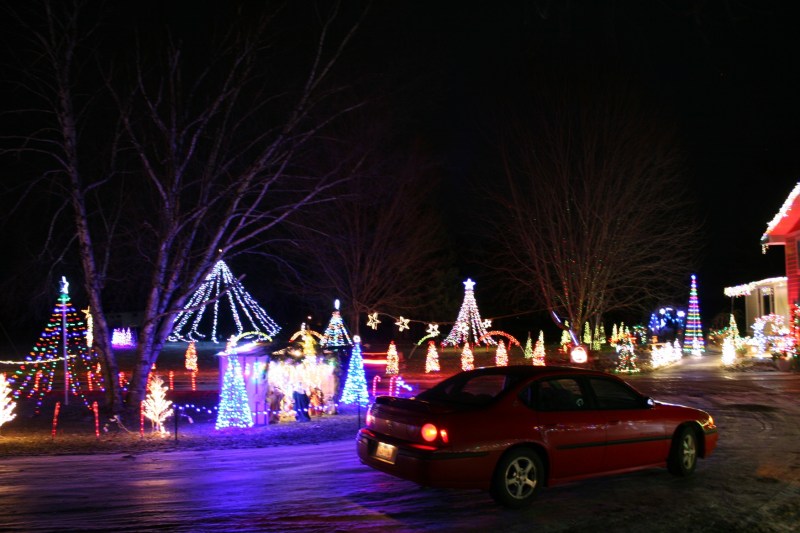
Fast forward to 2015. My three kids are now adults, two of whom live out of state. Only one was home on Christmas Day. Three evenings before Christmas, my husband slid behind the wheel of our Chevy. I buckled into the front passenger seat. And the college son folded into the backseat. We were on our way to view a rural holiday light display about two miles east of Faribault.


Holiday lights, 6 trees and stars


Pulling into the driveway at Cathy Hoban and Pat Spence’s place, a sign advised us to tune into 103.1 FM and to turn on our parking lights. Before us, lights flashed as the magic unfolded.


Holiday lights, 15 1939 Ford pick-up truck


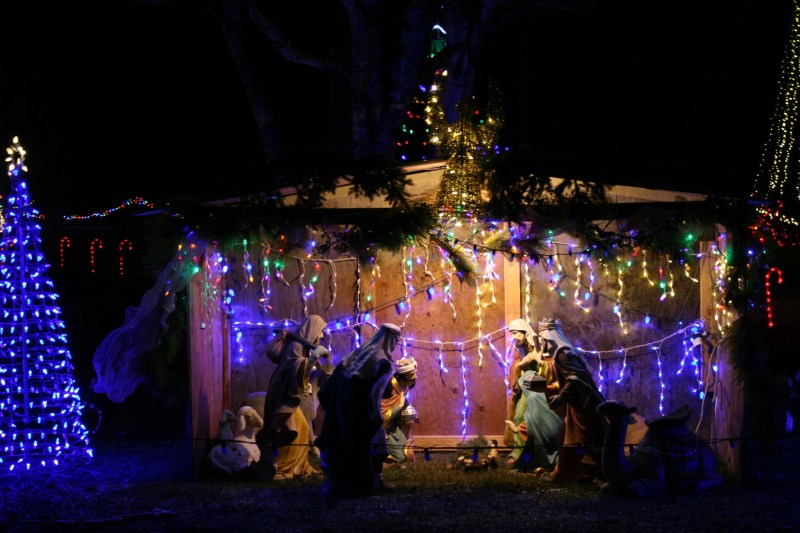
From towering Christmas trees to stars, Santa, snowmen, reindeer, candy canes, a Nativity and even a light-bedecked 1939 Ford pick-up truck, this dazzling music-synchronized show is wondrous.


Holiday lights, 17 circling the driveway


Randy crept the Chevy along at a snail’s pace, then stopped so we could take it all in. I stepped outside the car to snapshot the scene, hoping for a few good frames. He followed the circle drive then retraced his route.


Holiday lights, 14 star atop tree


We were mostly silent as we watched and listened, delighting in this gift from Cathy and Pat to the Faribault community. The couple loves Christmas. And it shows in the strings and strings and strings of colorful lights, in the effort it takes to put this all together, in the creativity and music.


Holiday lights, 21 reindeer


I couldn’t help but smile and feel propelled into the Christmas spirit while touring here. And I felt, too, the connection between past and present, in memories remembered and those being formed.


Holiday lights, 9 Nativity


How about you, do you drive around your community, or elsewhere, to view holiday light displays?

FYI: Cathy and Pat’s holiday light show is open from 5 p.m. – 10 p.m. daily through the holidays. However, because of warm temps, which led to a muddy driveway, the display closed some evenings. That shouldn’t be a problem this week. The address: 4531 197th Street East, Faribaut.

© Copyright 2015 Audrey Kletscher Helbling

 

Decorating my home with holiday memories December 24, 2015

Filed under: Uncategorized — Audrey Kletscher Helbling @ 5:00 AM
Tags: , , ,

VISIT MY HOME DURING THE CHRISTMAS SEASON, and you won’t find Martha Stewart perfect holiday decorations. Rather, you will discover an eclectic mix of Nativity scenes, Santas, angels and more. There’s no color scheme, no continuity, except in the memories.

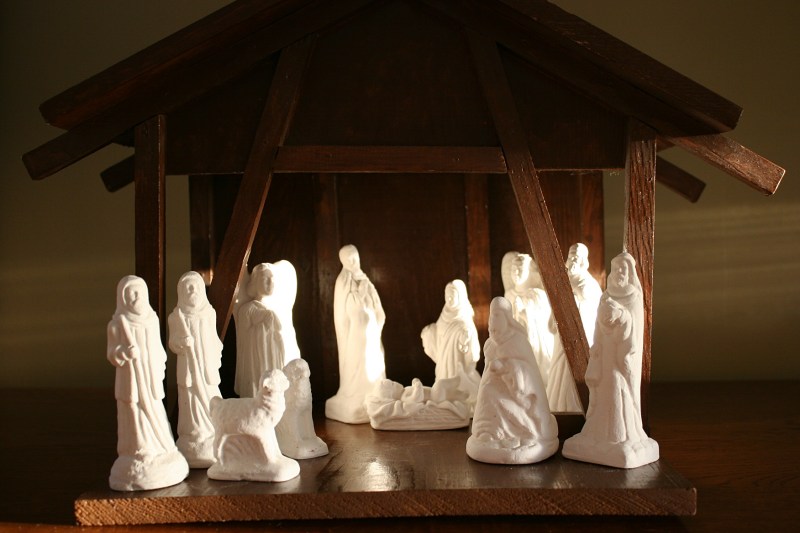
This was crafted by my Grandpa Bode decades ago.

My Grandpa Bode crafted this Nativity set decades ago. He made them for family and also sold them.

Memories thread through each item I display. My maternal grandfather crafted the Nativity scene positioned atop the living room entertainment center. He built and painted the stable and then molded Baby Jesus and the rest of the Bethlehem crew from Plaster of Paris. Mary’s right hand is broken. The camel is missing. But I don’t care. This is my most treasured of scenes depicting Christ’s birth.

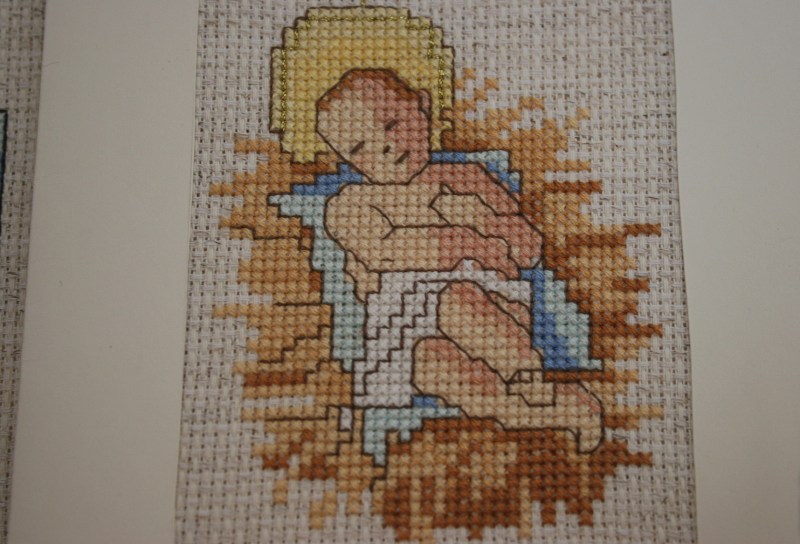
A beautiful cross-stitch of Baby Jesus.

A beautiful cross-stitch of Baby Jesus.

Last year my mom, who collected Nativities, gave nearly all of them to her children and grandchildren after moving into an assisted living apartment. I chose a grouping of six Nativity cards cross-stitched by my cousin Traci and mailed each Christmas. My mom was also an avid cross-stitcher, thus these hold double significance.

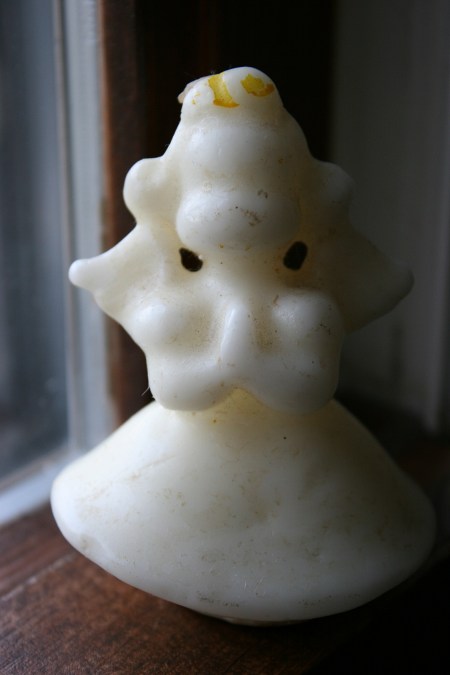
This angel candle is more than 50 years old.

This dusty angel candle is more than 50 years old.

I also cherish three angel candles, which belonged to Mom. Fire has never, nor will it ever, touch the wicks. The angels are dusty and not all that beautiful. But I remember Mom setting them out every Christmas.

The largest of the candles in my vintage holiday collection.

The largest of the candles in my vintage holiday collection, Santa stands about five inches tall.

Likewise, I set out Santa and snowman candles acquired in the early 1970s at a family holiday party. They are from my Aunt Ardyce. Like the candle angels, these will never see a flame.

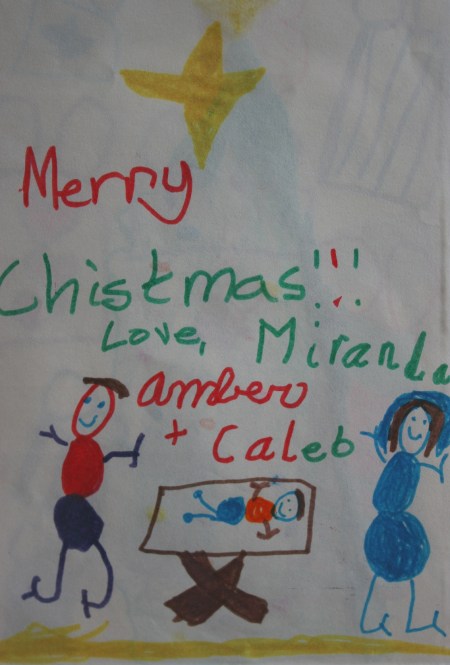
Homemade cards, especially from my kids, are cherished.

Homemade cards, especially from my kids (now grown), are cherished.

And then there’s the Christmas card crafted by my kids. I expect Miranda magic markered the scene signed by all three. It’s a treasure from their childhoods. Such sweetness.

Charlie Brown would be proud of my Christmas tree choice.

Charlie Brown would be proud of my Christmas tree choice. The tree is not yet fully decorated in this image.

Finally, the Christmas tree in our house is chosen not for its perfect shape, but rather for its resemblance to the tree of my childhood Christmases. (The husband, kindly and wisely, agrees with my choice.) Ours is a “Charlie Brown” tree. Uneven and with bare spaces, the short-needled tree plays on my nostalgic memories of the tiny tree that sat on the end of our Formica kitchen table. The tree seemed plenty big back when I was a kid living in a farmhouse much too small for a family of seven. Yet, the tinseled tree seemed magically perfect. Just like my $15 tree, hauled from Duluth and purchased in a Faribault tree lot.

Tell me about your holiday décor. How do you decorate for the Christmas season? Do you display any items that hold special significance?

© Copyright 2015 Audrey Kletscher Helbling
 

Part III: Feelin’ groovy in St. Charles November 20, 2015

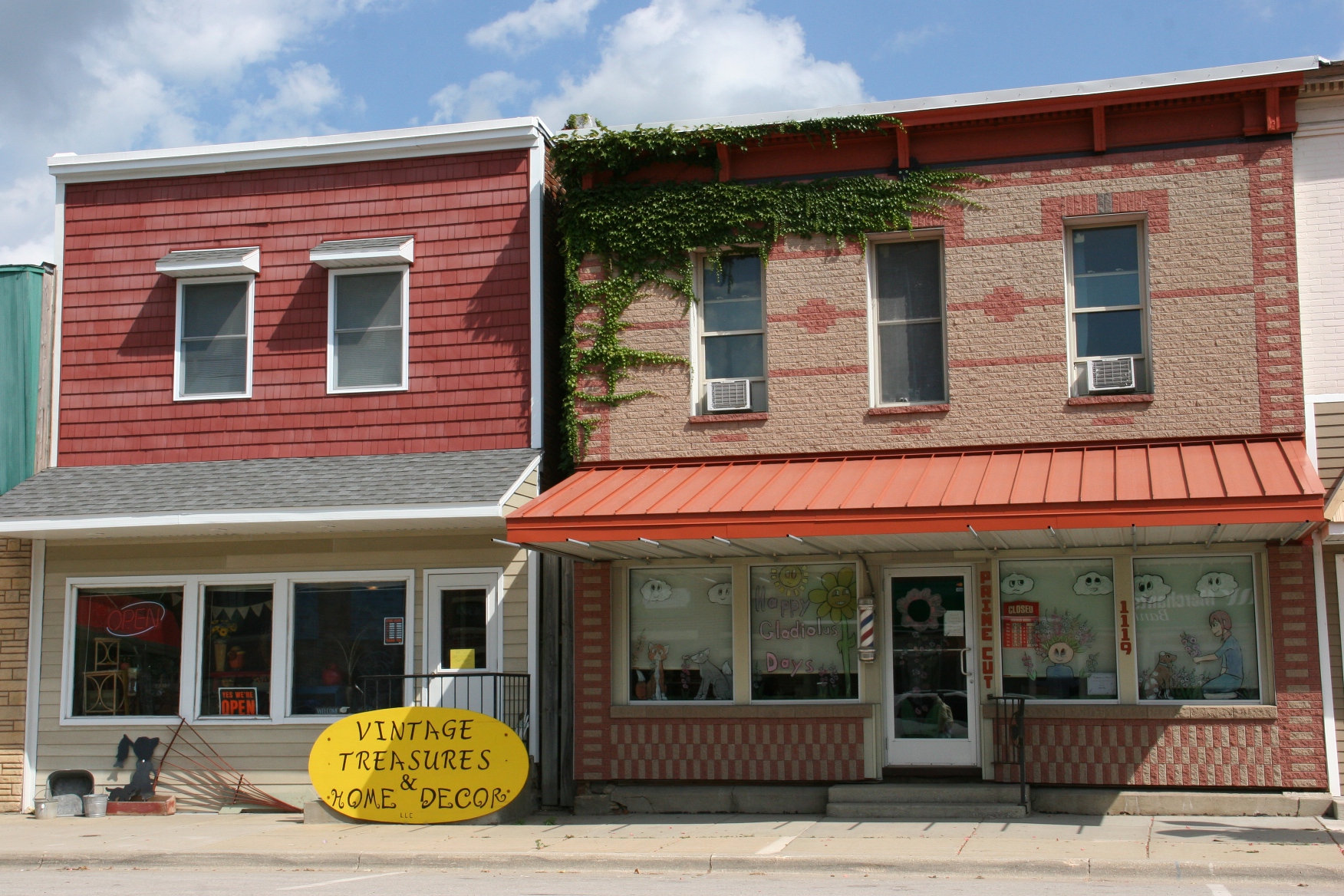
Vintage Treasures and Decor along Whitewater Avenue in downtown St. Charles, Minnesota.

Vintage Treasures and Decor along Whitewater Avenue in downtown St. Charles, Minnesota.

VINTAGE TREASURES AND HOME DECOR read the vivid yellow sign propped against a building in downtown St. Charles. That was enough to draw my husband and me into this newly-opened shop, relocated here from Byron.

Posted, but not for sale.

Posted, but not for sale.

But before I show you some of the merchandise, let’s discuss that word vintage. What defines vintage? I turned to online dictionaries to find synonyms like outdated, old-fashioned and retro. I choose retro. That seems most applicable to the merchandise from my era that captivated me at Vintage Treasures. Groovy.

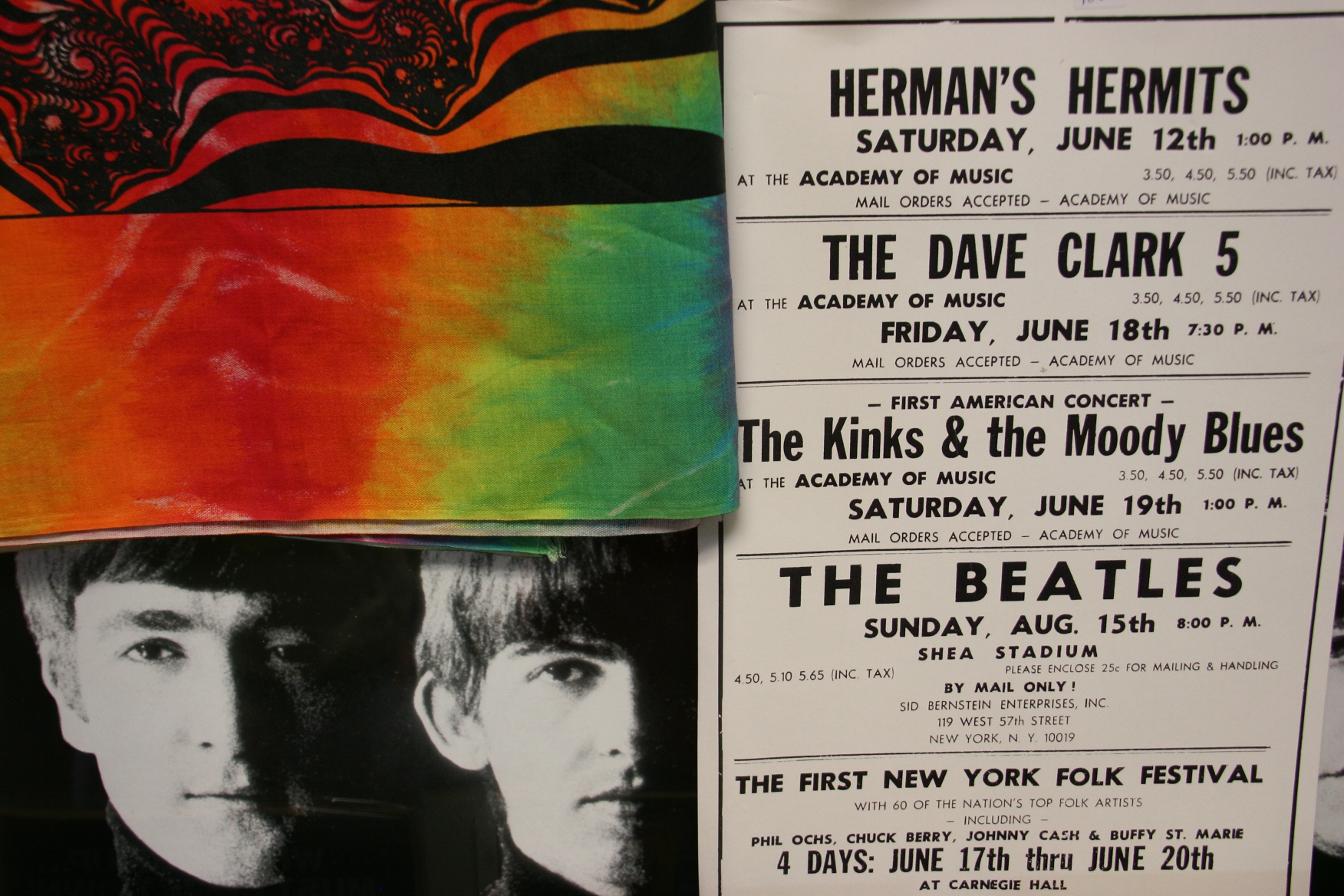
This merchandise display screams 60s and 70s.

This merchandise display screams 60s and 70s.

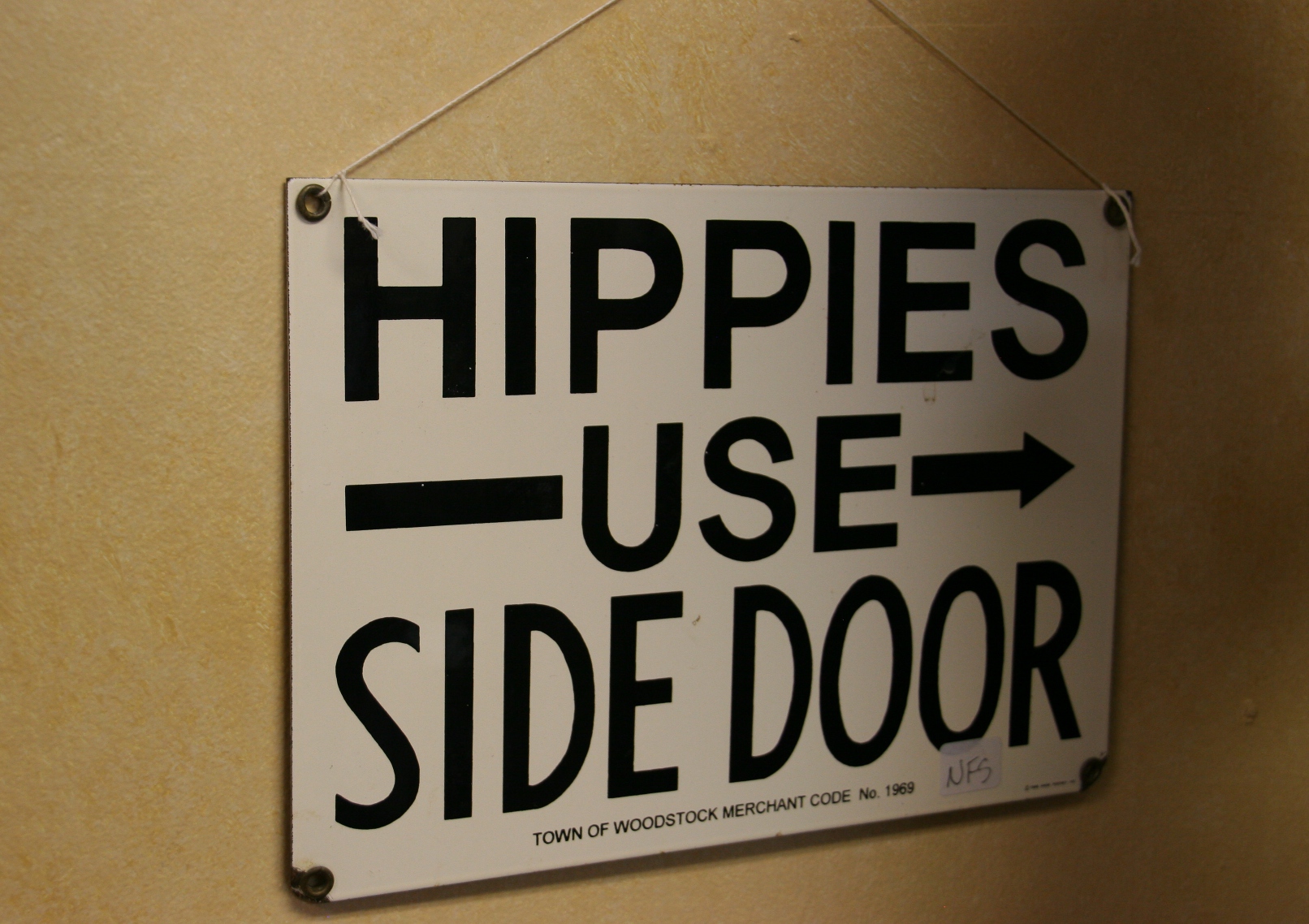
You can say all you want about the 60s and 70s, about hippies and Woodstock and peace marches and tie-dyed and psychedelic fashion. But it really was a memorable period in our nation’s history, a time when young people began to question the establishment and the choices made. Not that previous generations didn’t speak up. But the volume seemed louder, the voices more distinct, the opinions shouted in music and fashion and protests.

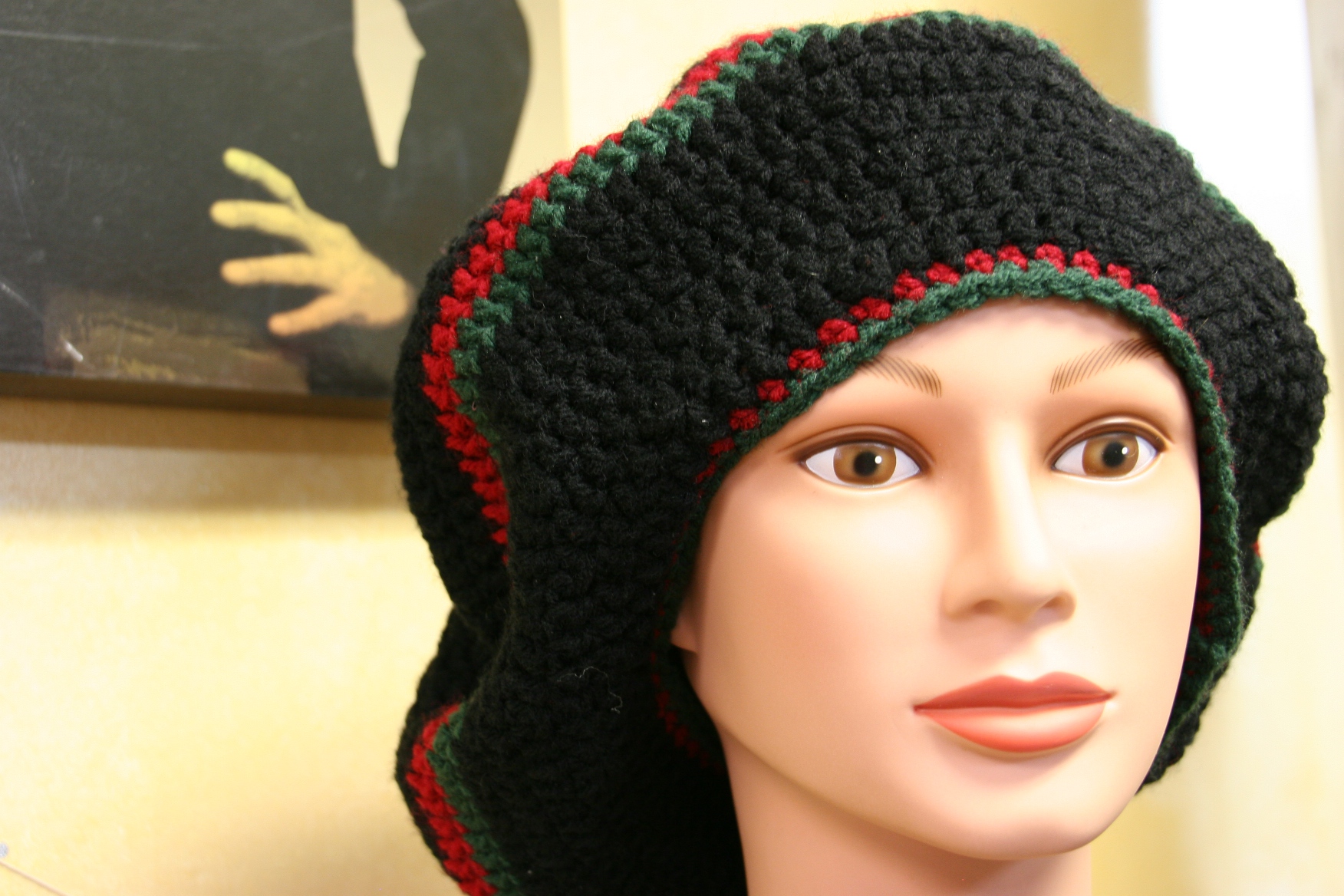
These berets (or tams) were popular

I remember crocheted berets (or tams) similar to this from the 60s and 70s.

Personally, I was a shy teen coming of age in a rural area, far removed geographically from the unrest of the 60s and 70s. But I still cared. I kept up on current events, listened to rock-and-roll on KDWB, wore too-short skirts and flashed the peace sign.

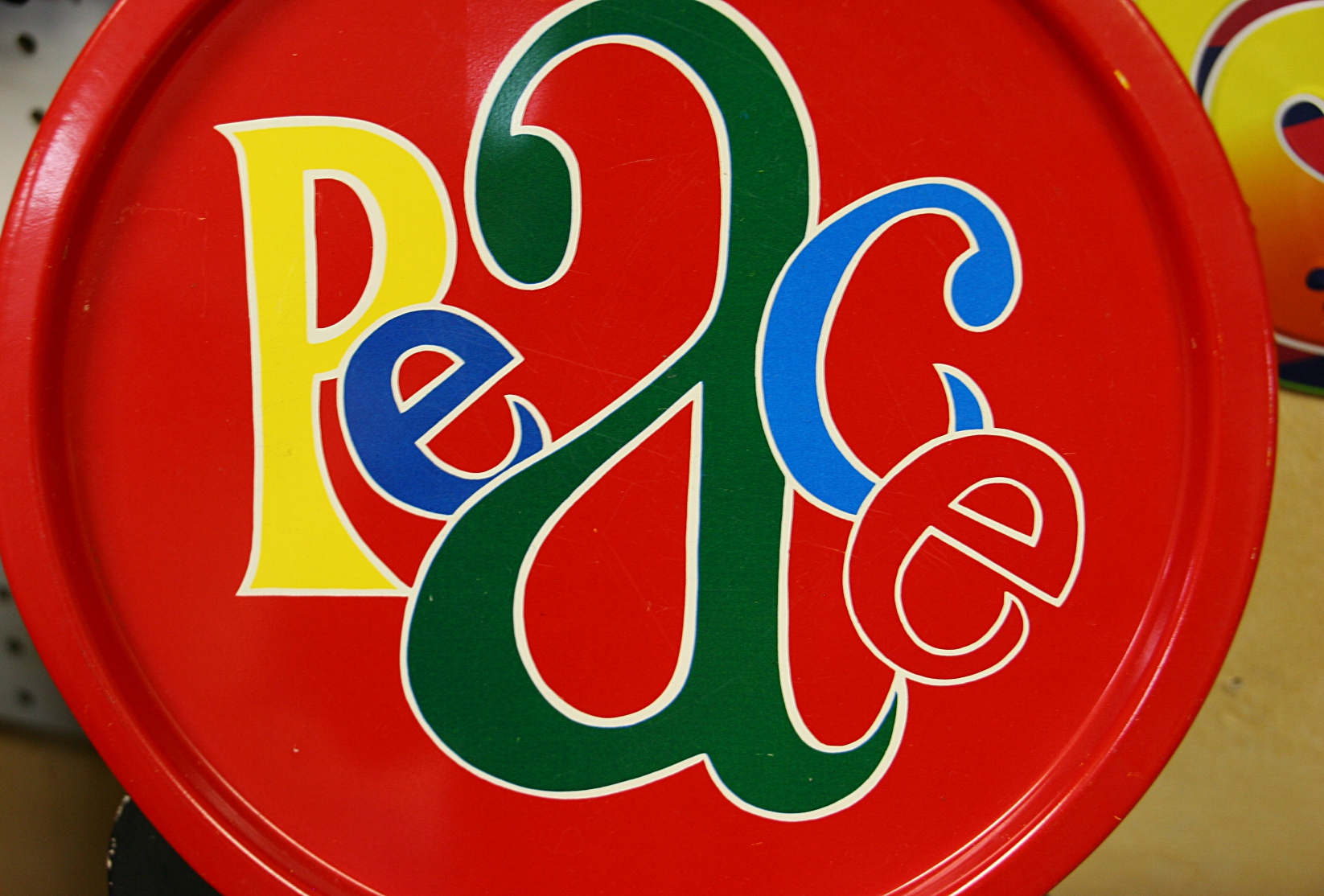
One of two retro trays I purchased.

One of two retro trays I purchased.

So when I discovered a section of retro merchandise inside Vintage Treasures, I flashbacked some 40 years. This was of my generation. I didn’t need the retro tin Peace and Love trays I purchased for $2 each. But I bought them anyway and would have liked a third, except shop owner Laurie Rucker had already sold the others.

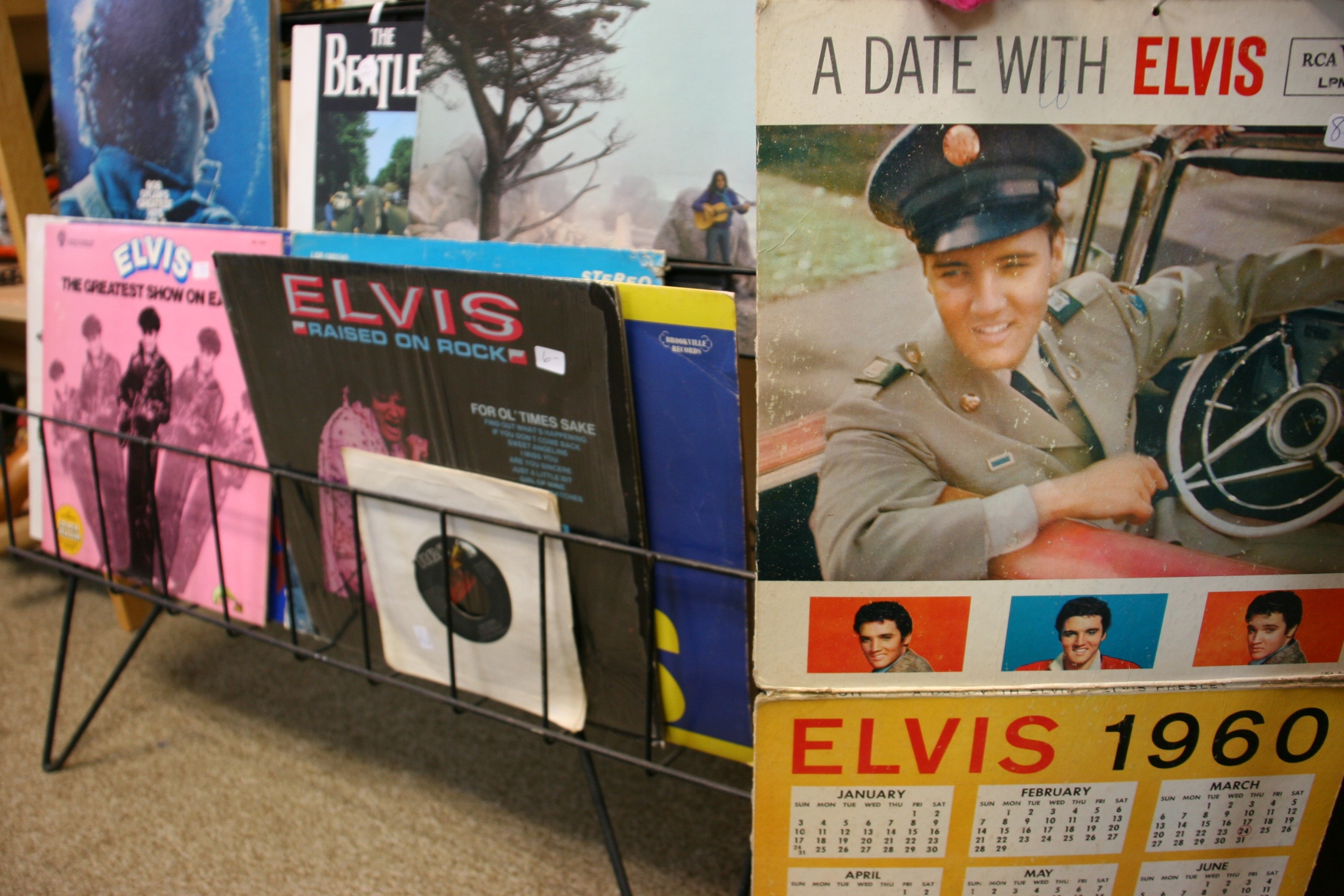
Elvis was a little before my time.

Elvis was a little before my time.

I’m thinking it would be fun sometime to host a 60s and 70s party. Wear tie-dye. Burn incense. Dip cubed bread into a cheese-filled fondue pot. Or maybe fruit into chocolate. Play some Beatles or Chicago. Serve beverages on those trays. Rock it out.

Thoughts? On the definition of vintage? The 60s and 70s?

BONUS PHOTOS: Yes, Vintage Treasures and Home Decor includes more than hippie era merchandise and here’s a sampling.

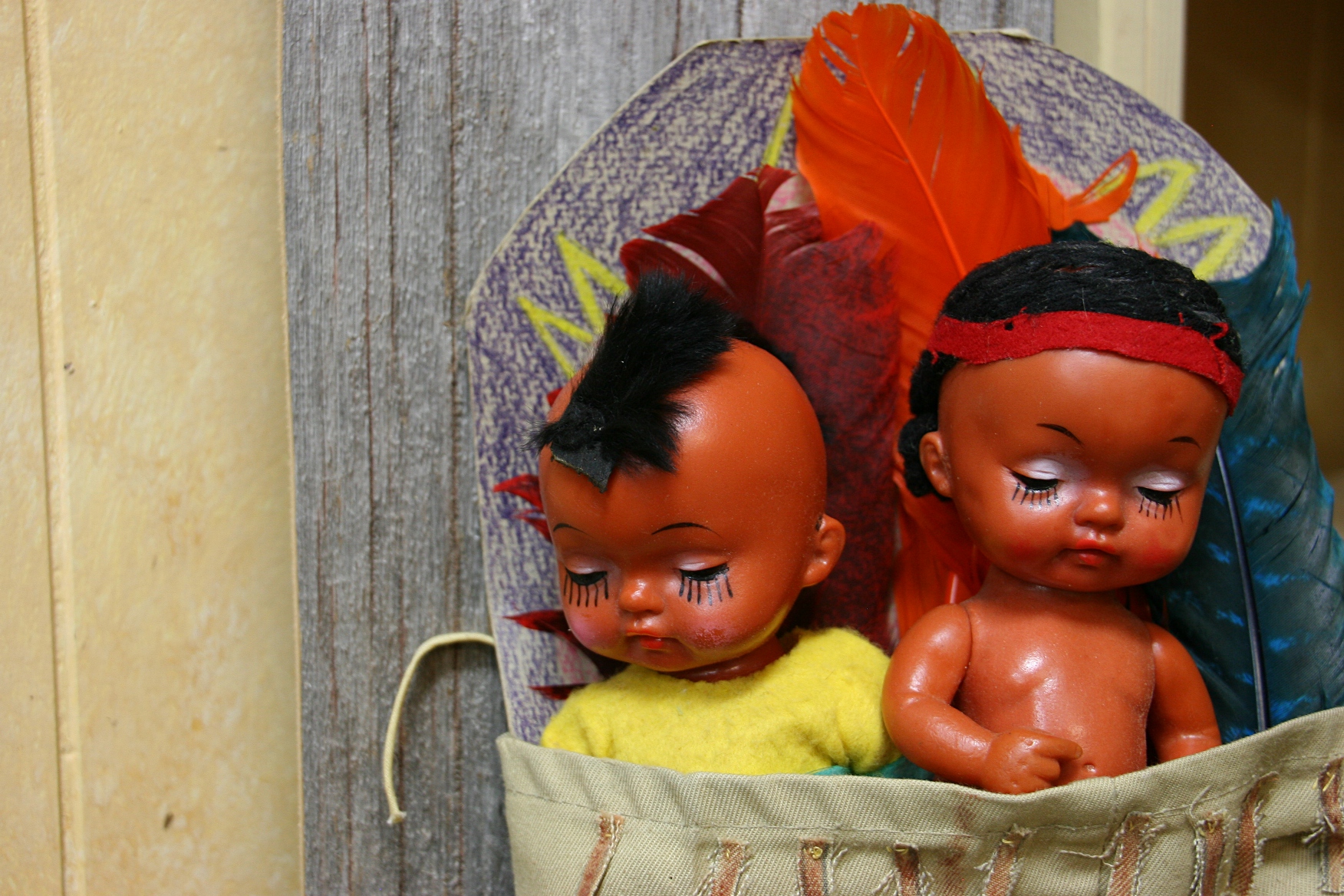
I remember one of my siblings having a papoose doll. Although not politically-correct today, these dolls are part of our past.

I remember one of my siblings having a papoose doll. Although not politically-correct today, these dolls are part of our past.

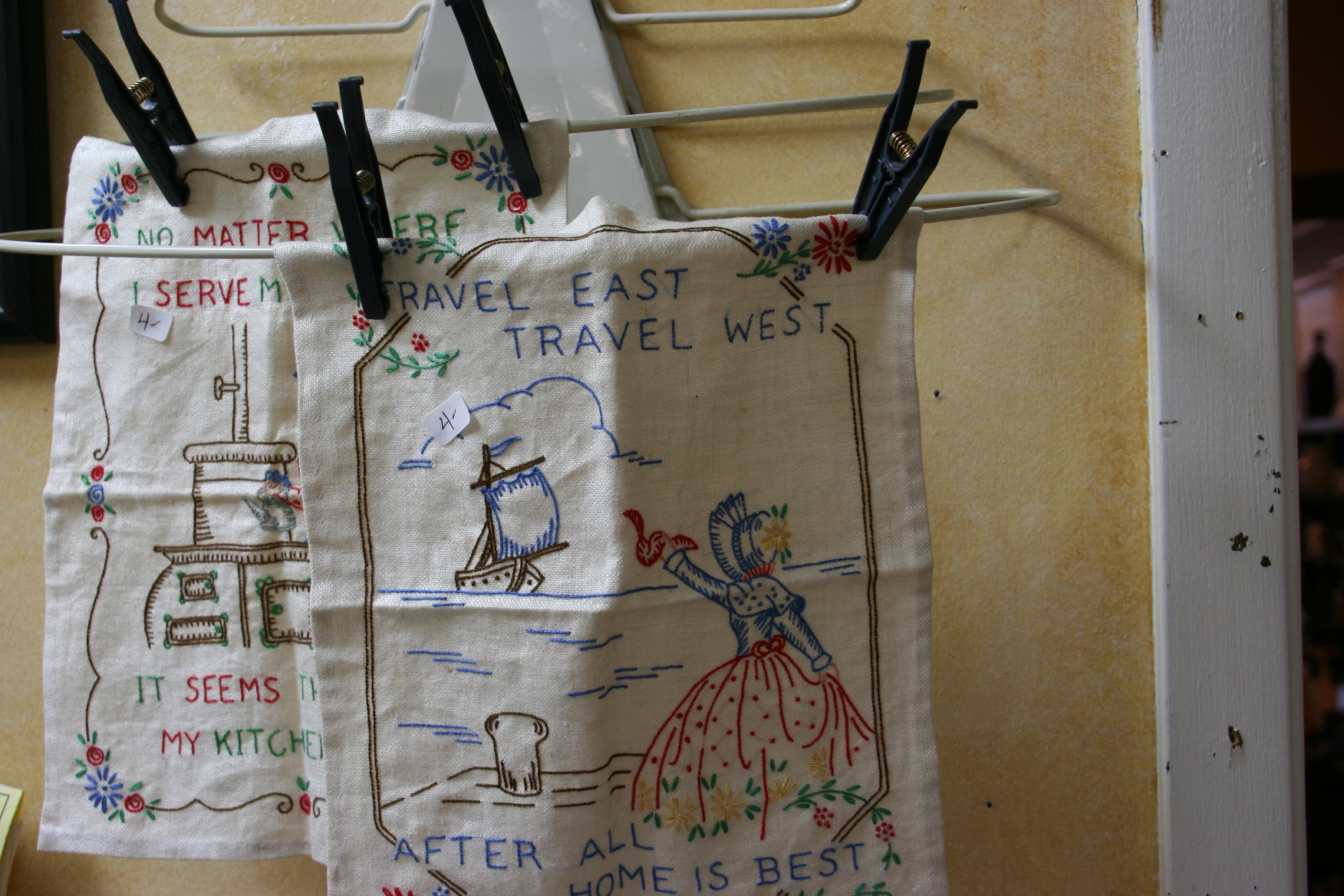
I always appreciate handcrafted, like these embroidered pieces.

I always appreciate handcrafted, like these embroidered pieces.

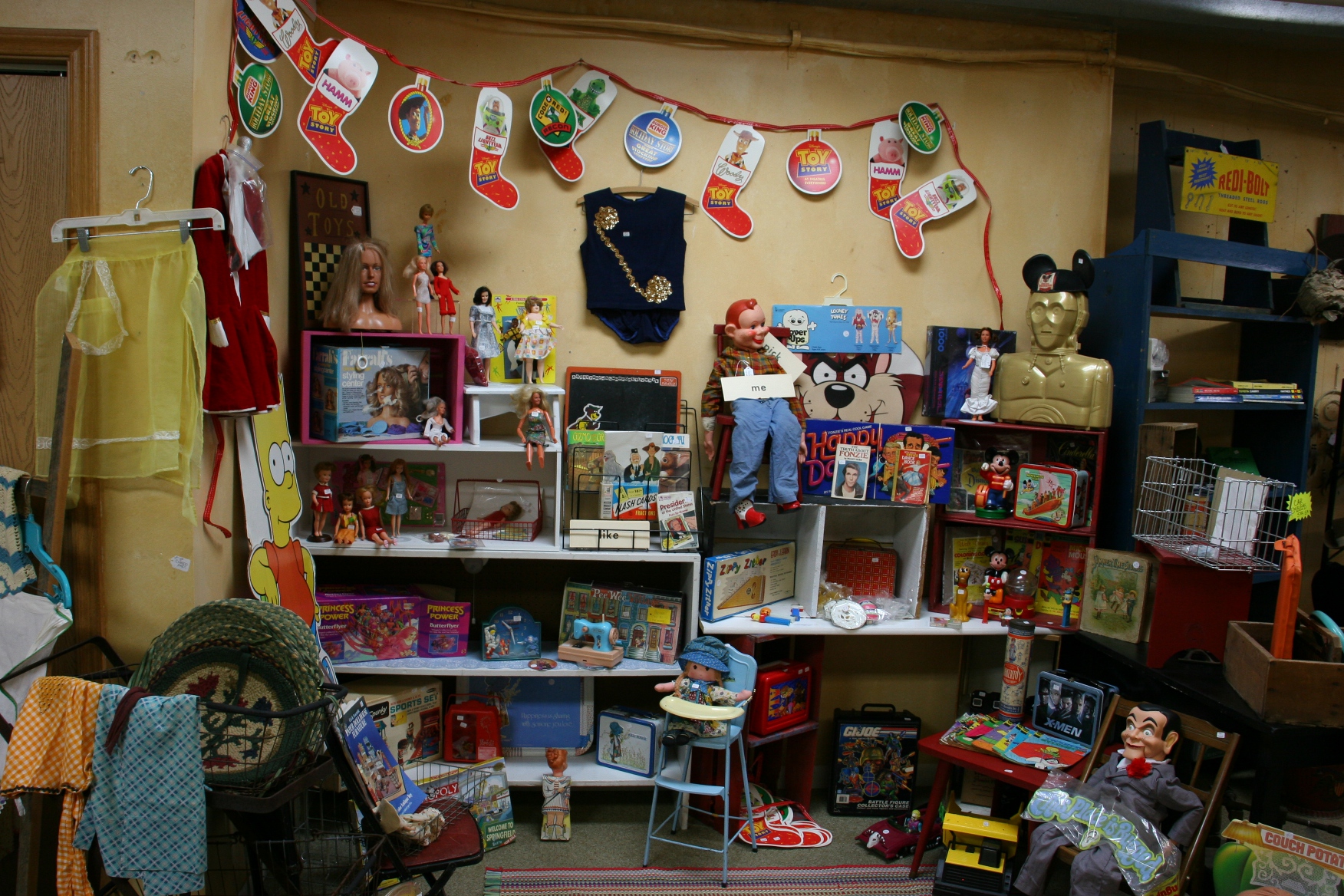
The toy section.

The toy section.

Humpty Dumpty, one of the toys in the toy area.

Humpty Dumpty, one of the toys in the toy area.

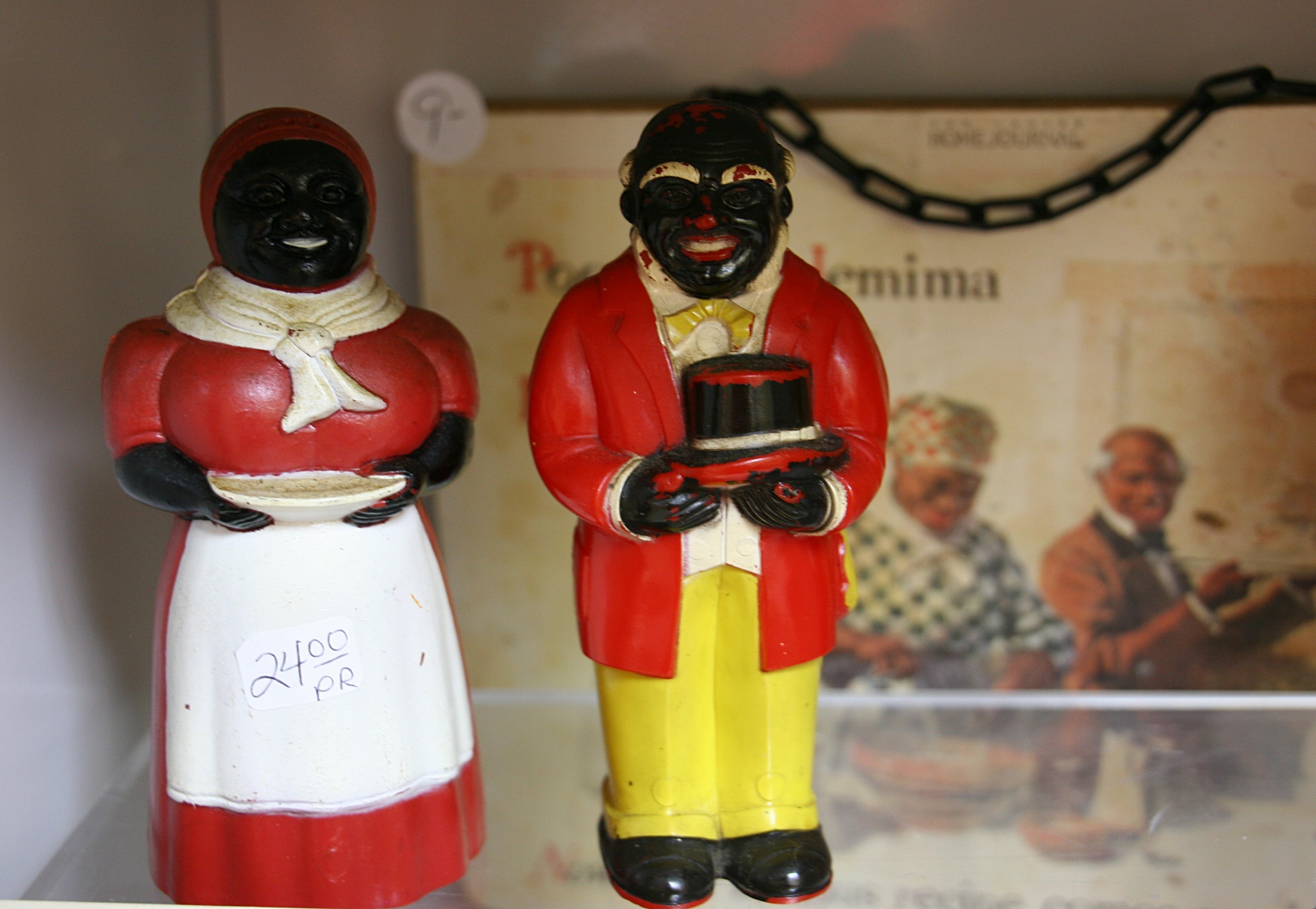
Aunt Jemima and Uncle Mose collectibles.

Aunt Jemima and Uncle Mose collectibles.

FYI: Click here and here to read two previous posts I published in this three-part series from an early September stop in St. Charles.

© Copyright 2015 Audrey Kletscher Helbling


My Minnesota family’s tradition: Harvesting & preserving horseradish November 5, 2015

Filed under: Uncategorized — Audrey Kletscher Helbling @ 5:00 AM
Tags: , , , , , , ,
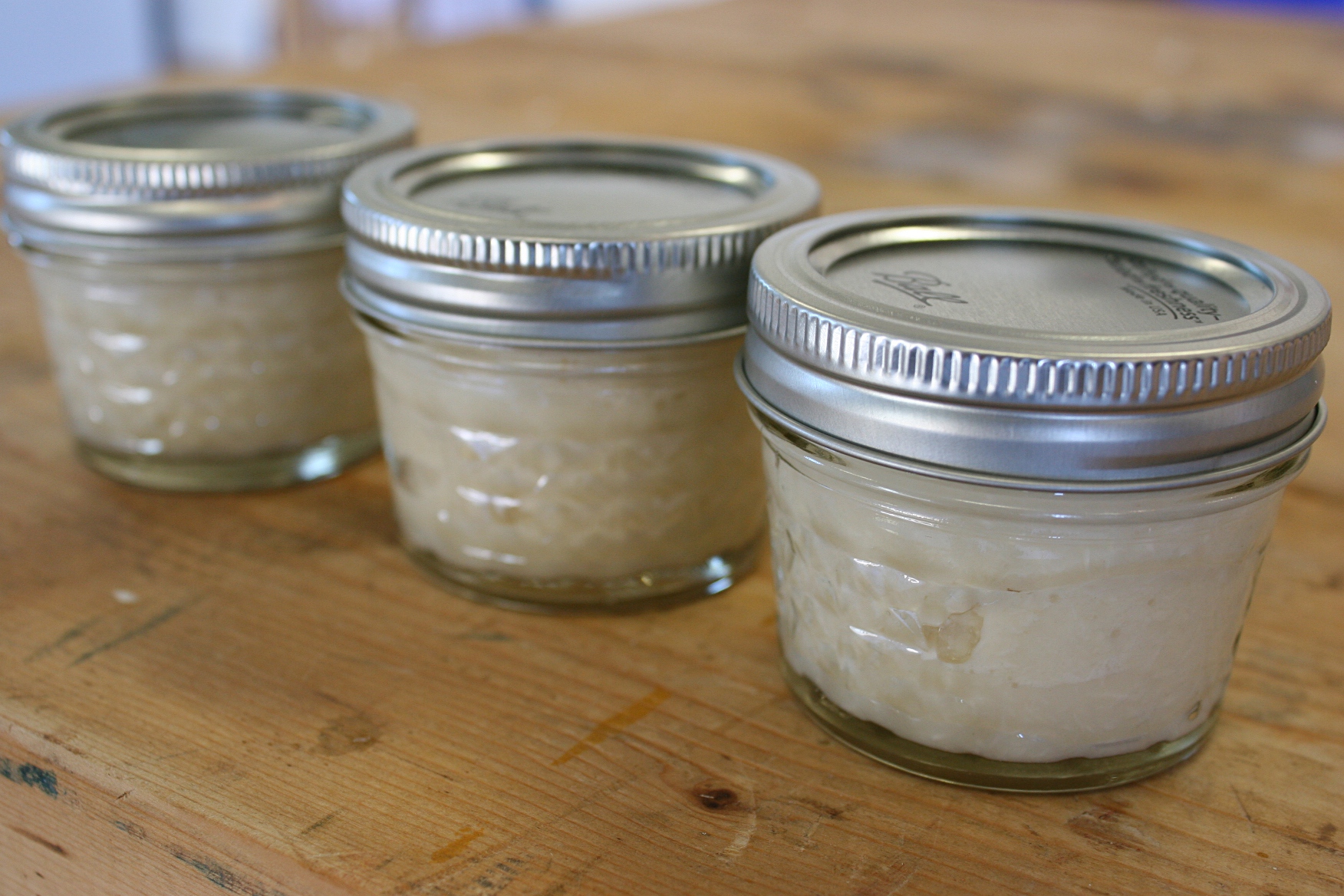
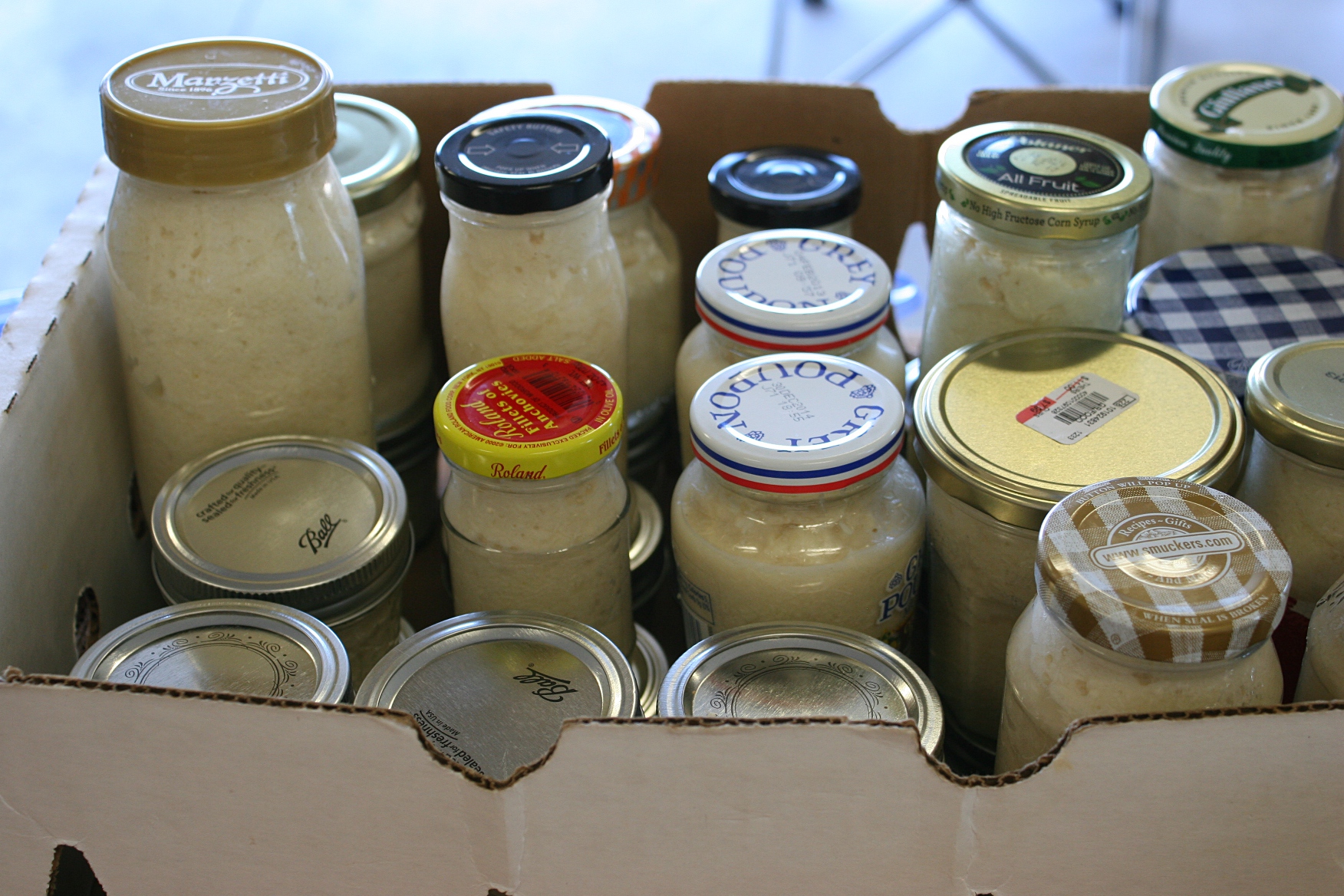
Freshly-processed horseradish from southwestern Minnesota.

Freshly-processed horseradish from southwestern Minnesota.

THE CREAMY SAUCE LINGERS on my tongue. Then, zip, my nostrils burn with the zing of stinging horseradish. My eyes water. And I wonder why I eat this stuff.

I like spicy. I like hot. Not jalapeno with too many seeds hot. But horseradish hot I can handle in small doses. It’s part of my DNA.

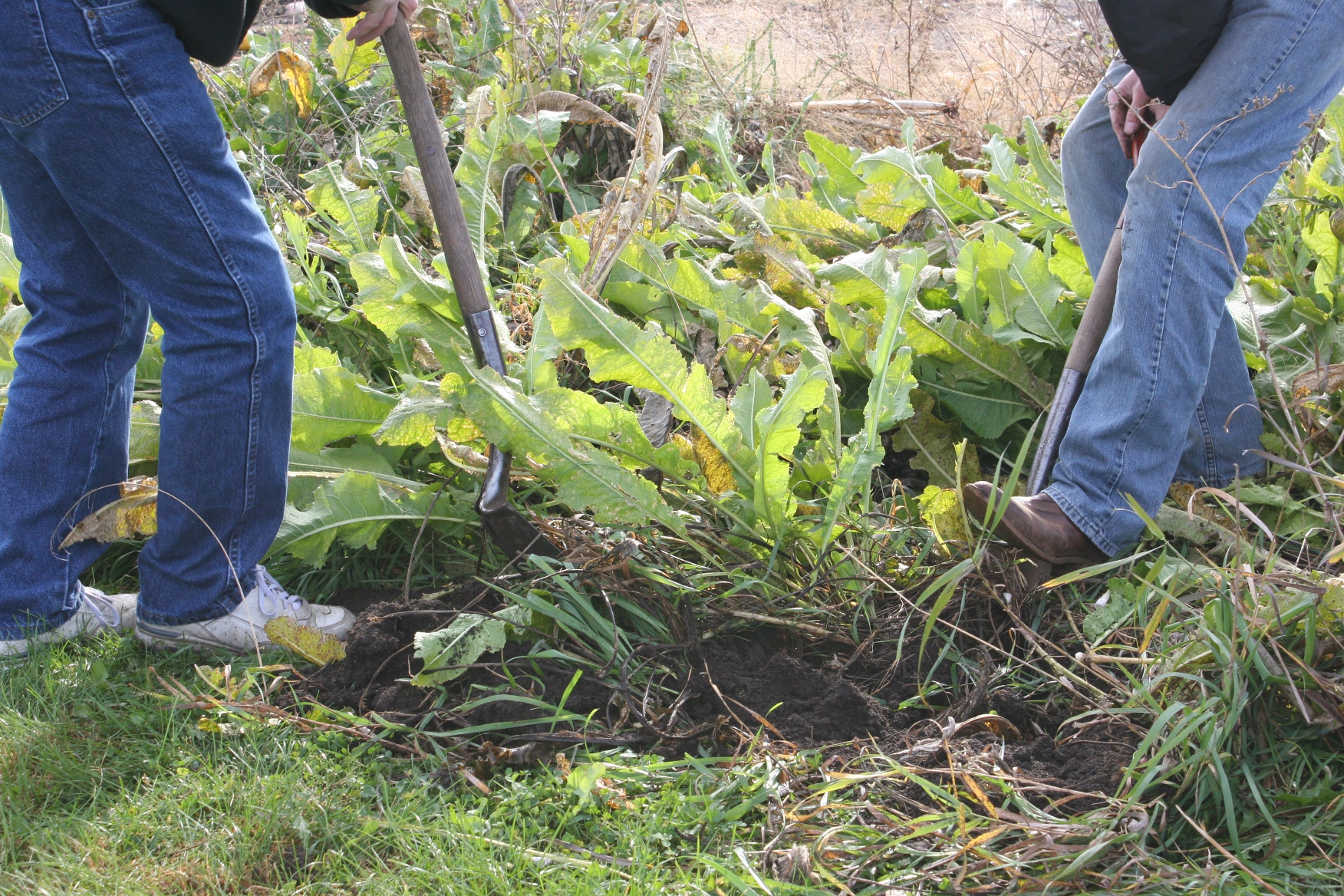
STEP ONE: Digging the horseradish, which grows like carrot roots underground.

STEP ONE: Digging the horseradish, which grows like carrots underground.

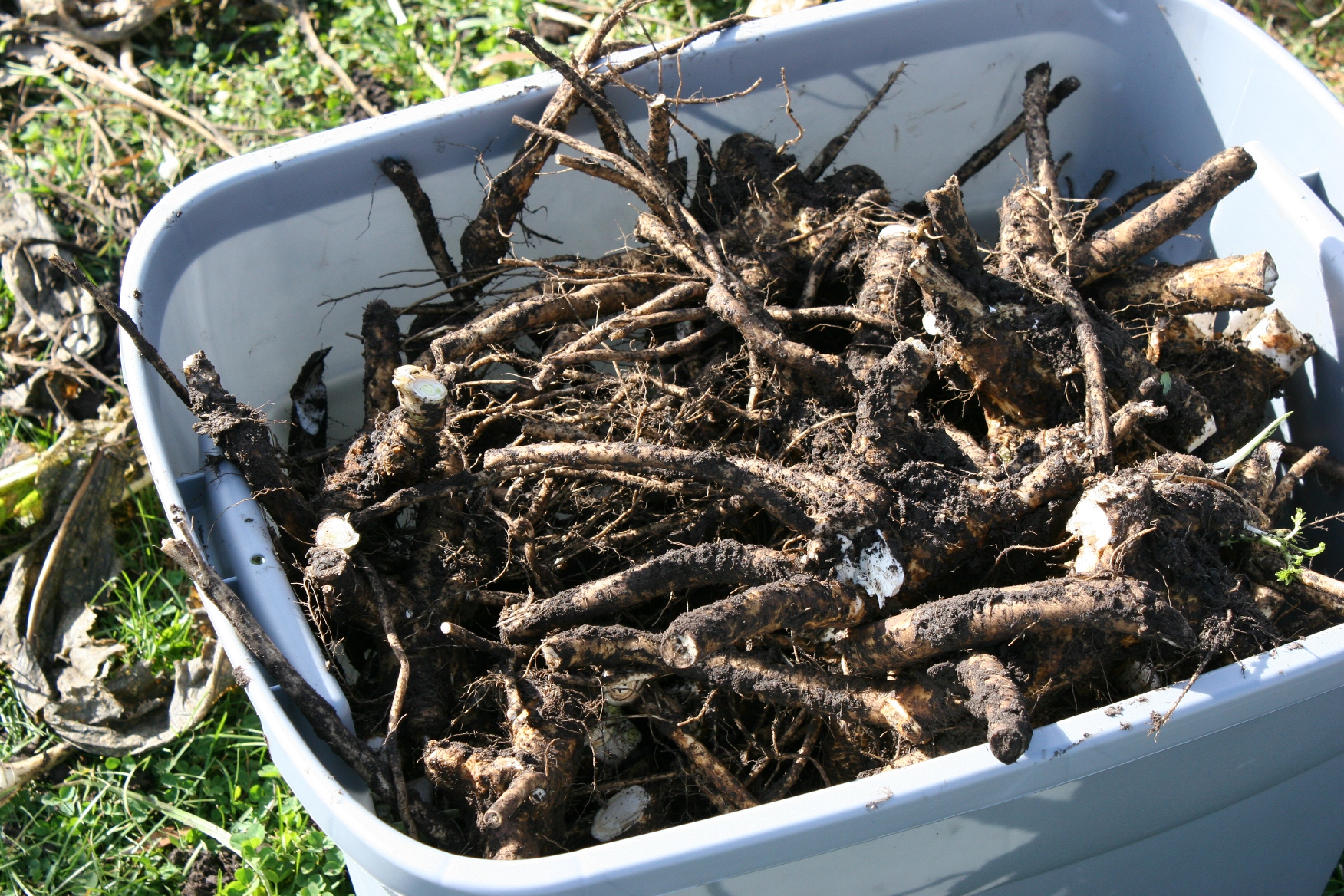
Just dug horseradish.

Just dug horseradish.

We arrive mid-morning on a cool and windy Saturday to process the horseradish.

We arrive mid-morning on a cool and windy Saturday in late October to process the horseradish.

For years, until his death in 2003, my dad made horseradish. You don’t really make horseradish. Rather you process the roots into a creamy white sauce. Horseradish preserved in vinegar.

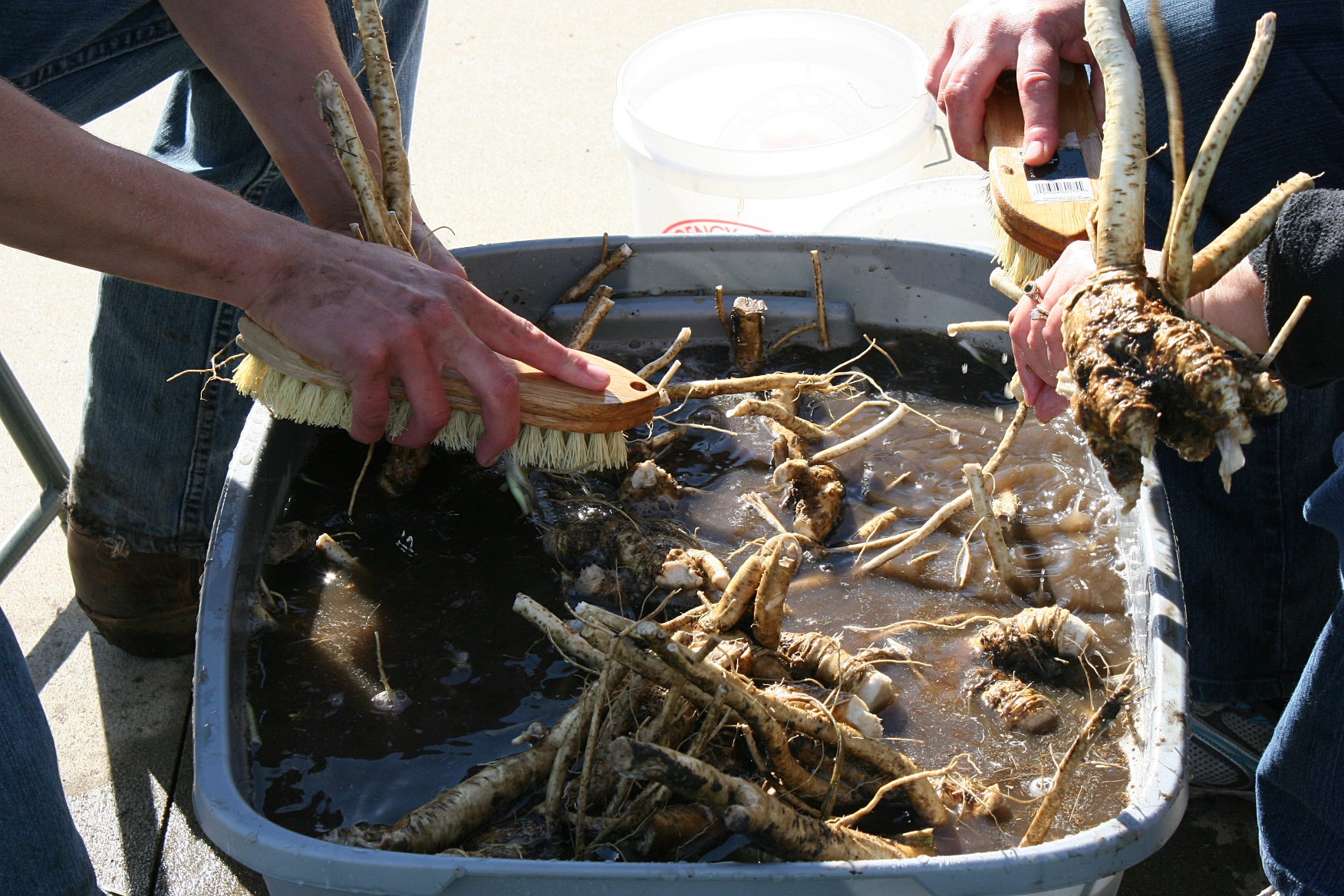
STEP TWO: Scrubbing the dirt away with brushes.

STEP TWO: Scrubbing away the dirt.

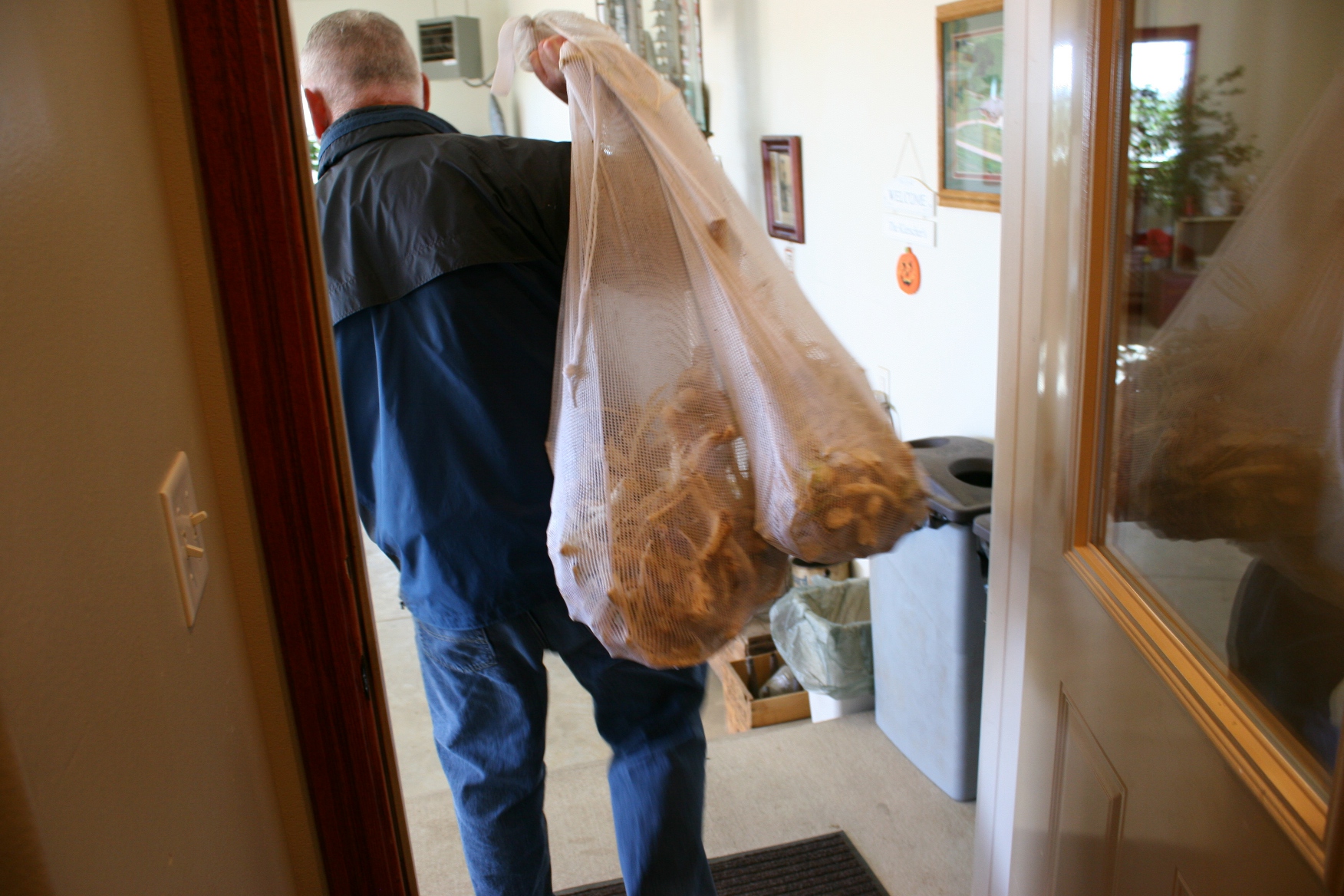
STEP THREE: The horseradish if placed in laundry bags and washed in the washing machine. Here my brother carries the just-washed horseradish to the work area in his garage.

STEP THREE: The horseradish is placed in laundry bags and washed in the washing machine. Here my brother carries the just-washed horseradish to the work area in his garage.

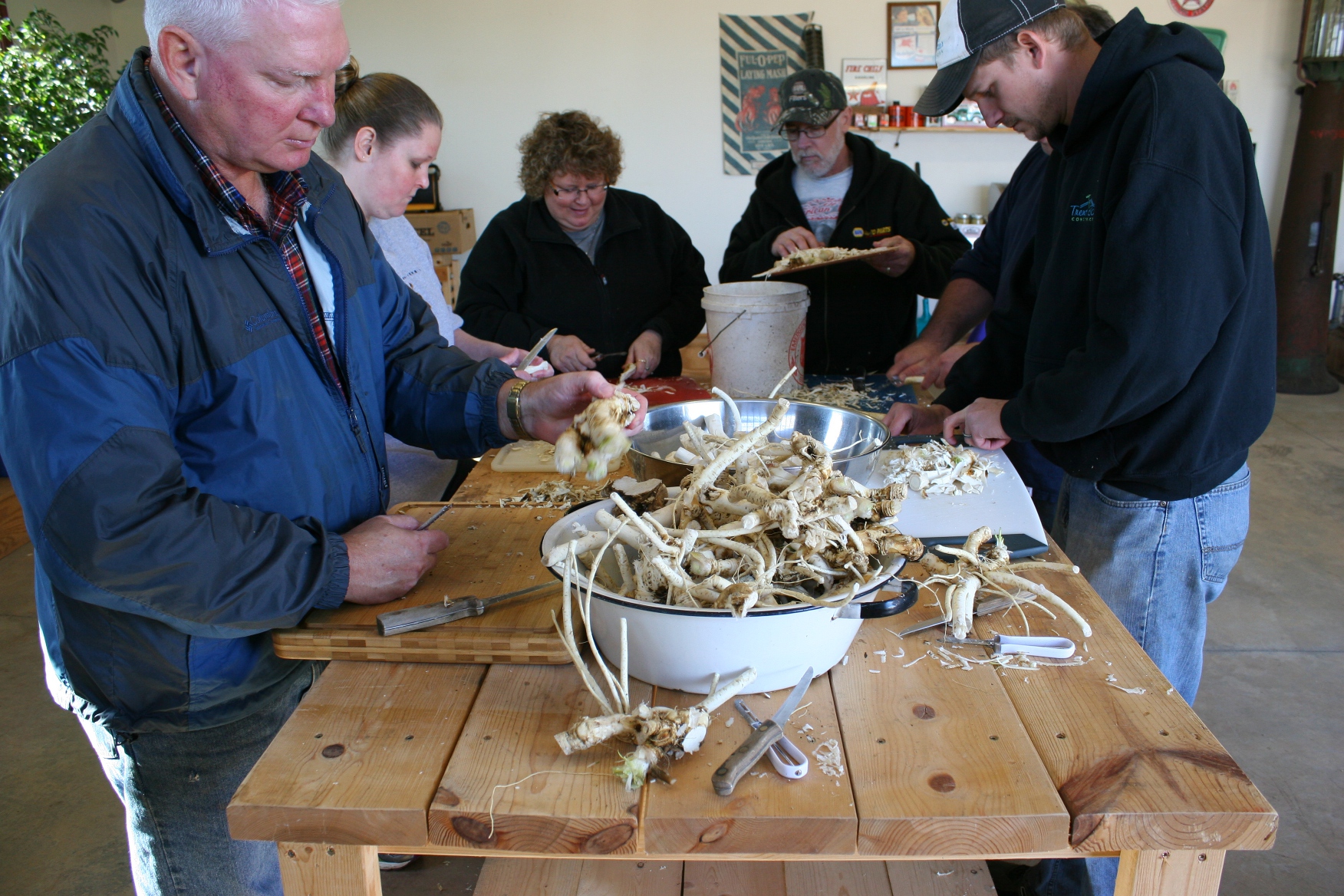
The roots are now ready to be peeled with a knife and/or potato peeler.

The roots are now ready to be peeled with a knife and/or potato peeler. Every bit of brown must be removed to get a creamy white sauce.

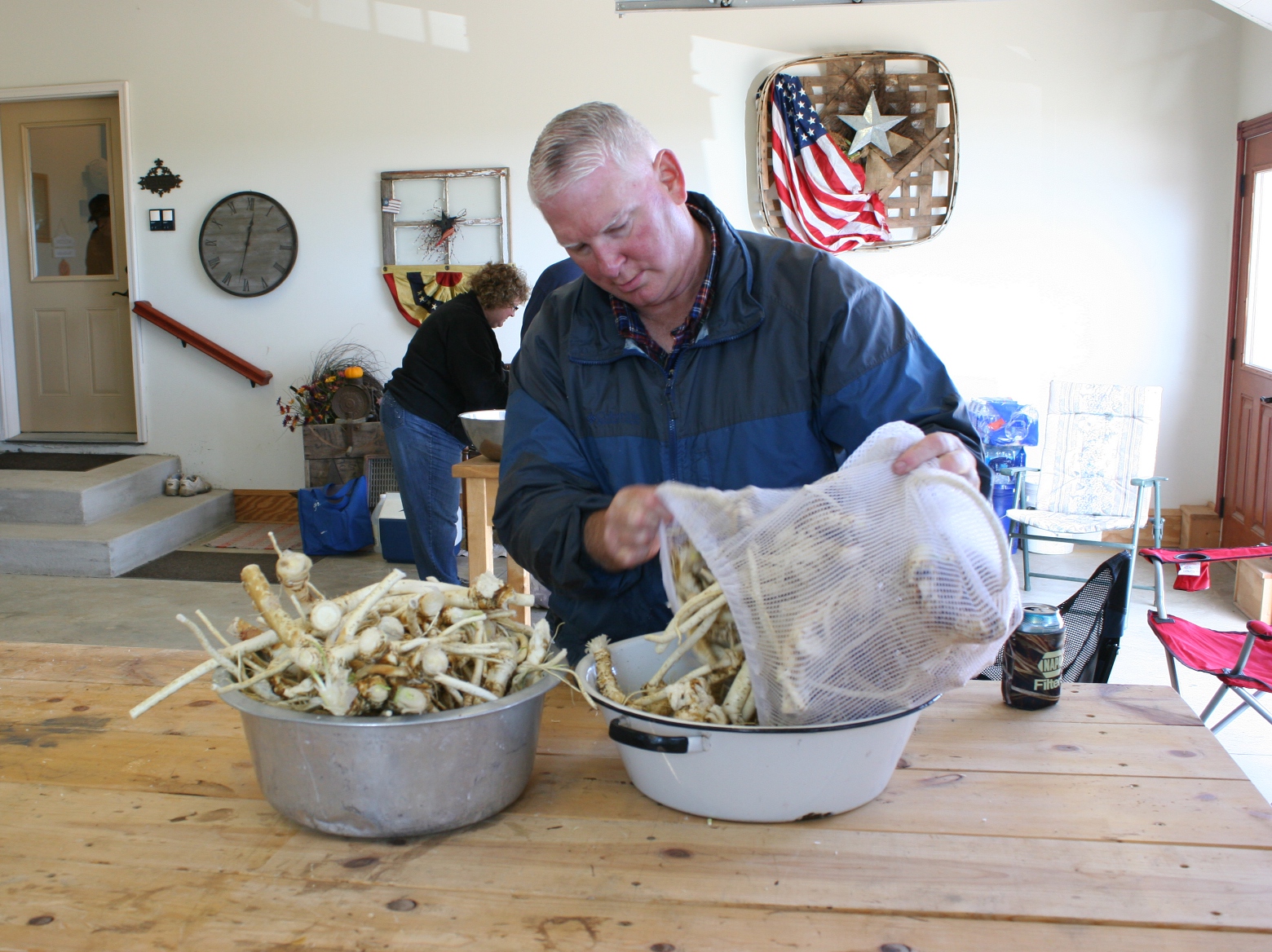
My brother empties the second laundry bag.

My brother empties the second laundry bag.

It’s not an easy task. Creating a horseradish condiment requires a full day of digging, scrubbing, washing, peeling, washing, cutting, shredding, blending, pouring into jars and, finally, planting the peelings for new growth.

STEPS FOUR & FIVE: Family members peel horseradish before it's washed for a second time.

STEPS FOUR & FIVE: Family members peel horseradish before it’s washed for a second time.

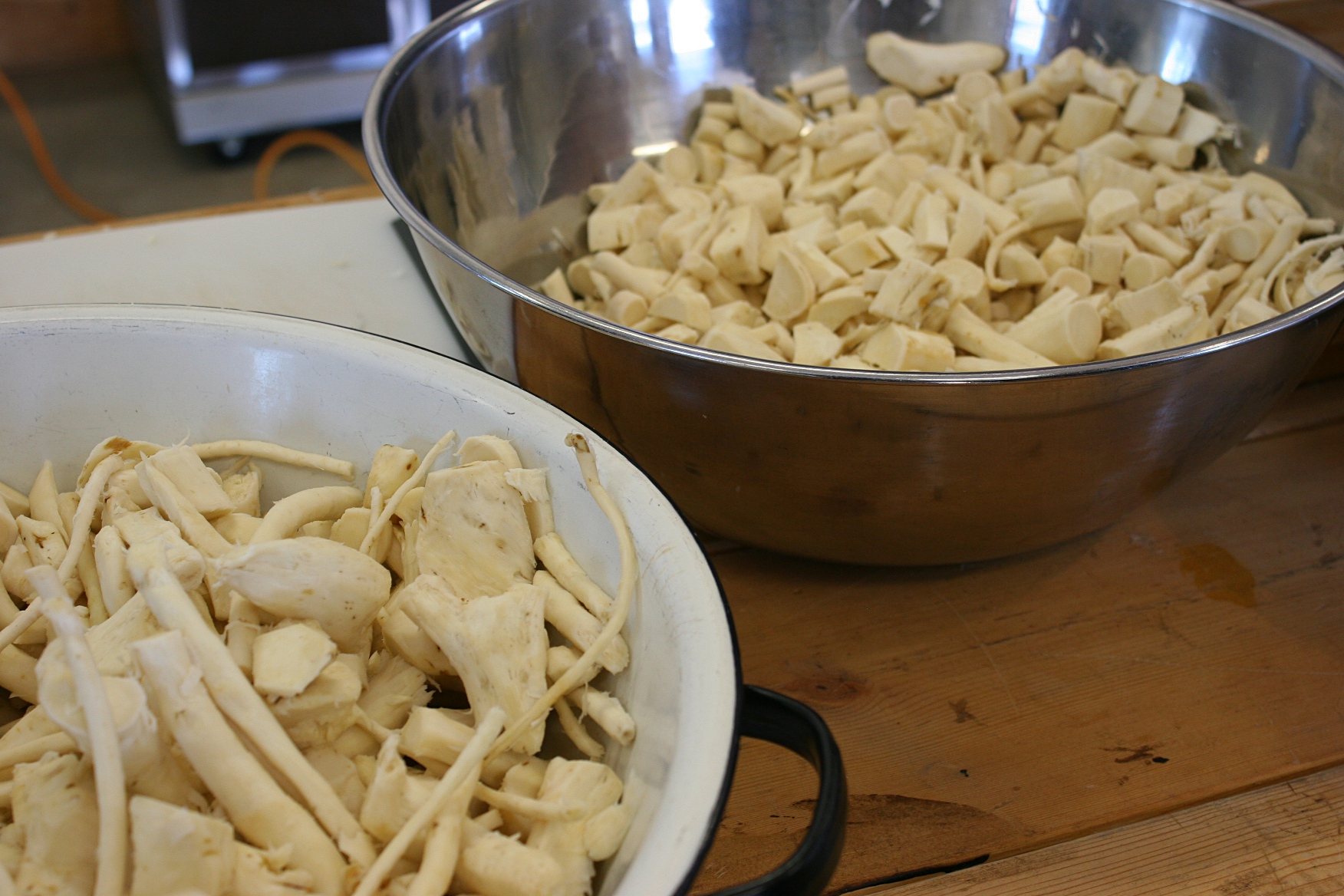
STEP SIX: Using knives, we slice the horseradish into chunks.

STEP SIX: Using knives, we slice the horseradish into chunks.

My sister Lanae and her husband, Dale, whom Dad mentored in all things horseradish, pushed for continuing the family horseradish tradition. And so, on a Saturday each autumn, we gather at my middle brother and sister-in-law’s rural southwestern Minnesota acreage to honor our dad with this seasonal rite.

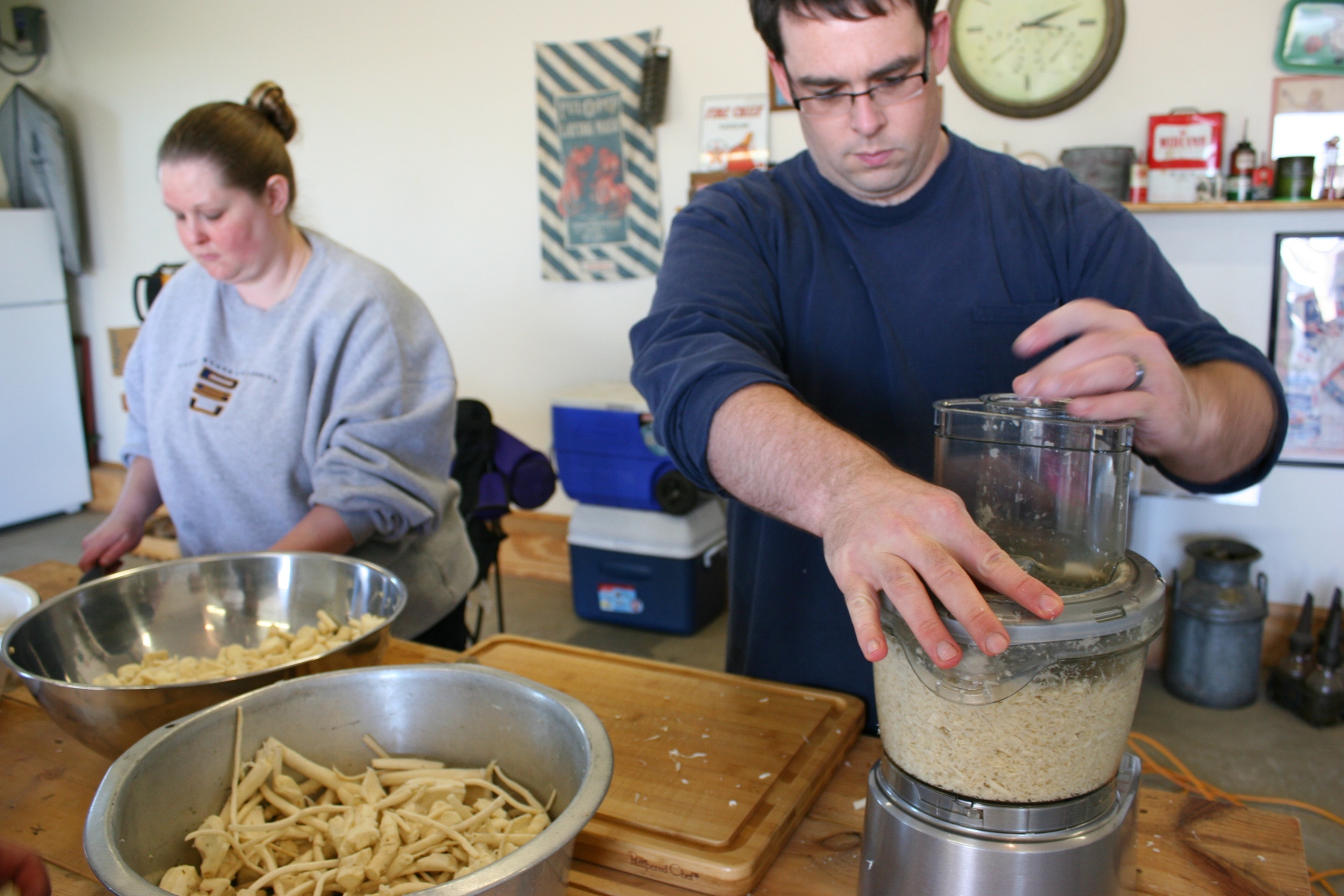
My niece cuts horseradish while her husband refines it in a food processor.

STEP SEVEN: My niece’s husband refines the horseradish in a food processor.

Sometimes the fumes are more than the workers can handle.

Sometimes the potent fumes are more than workers can handle.

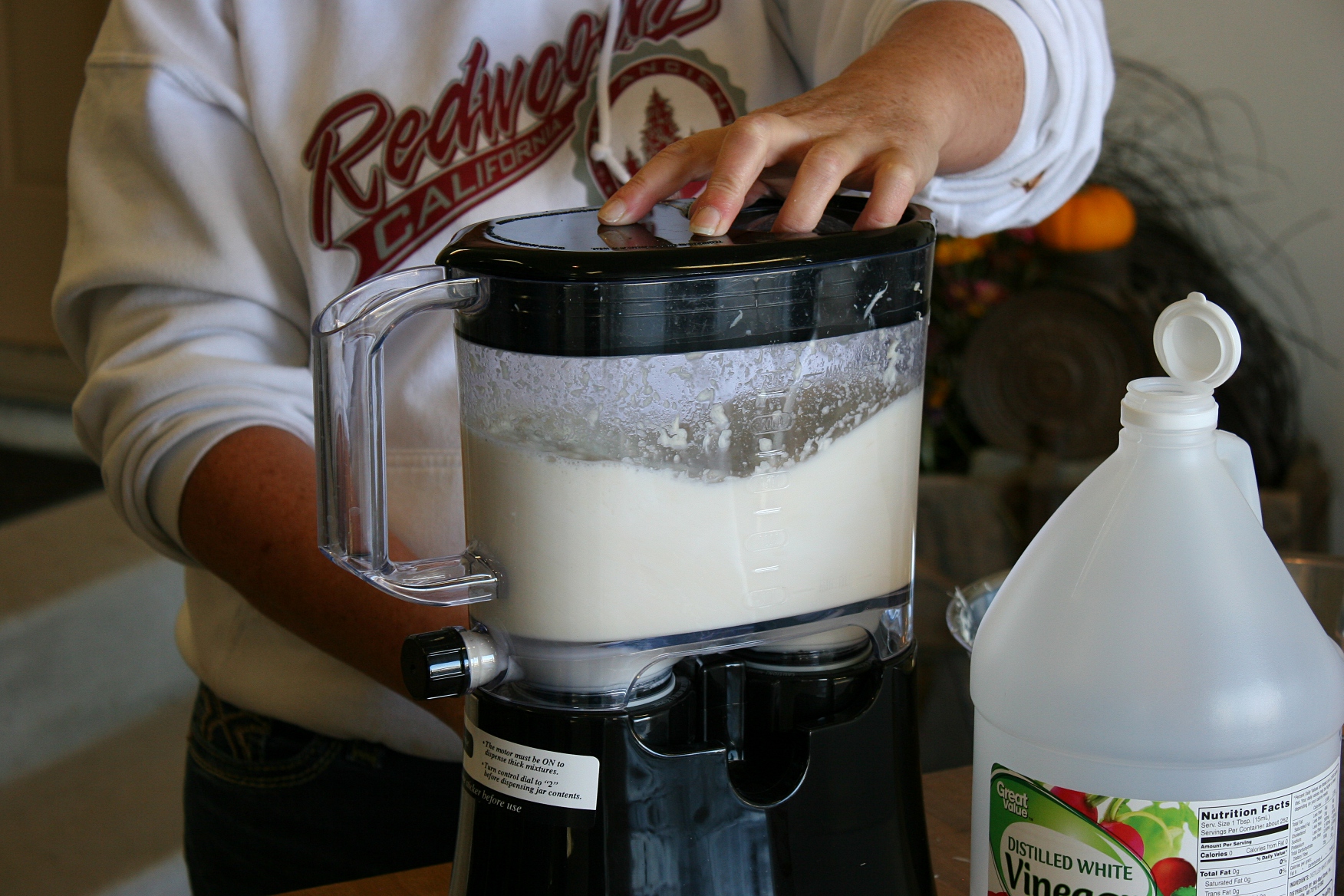
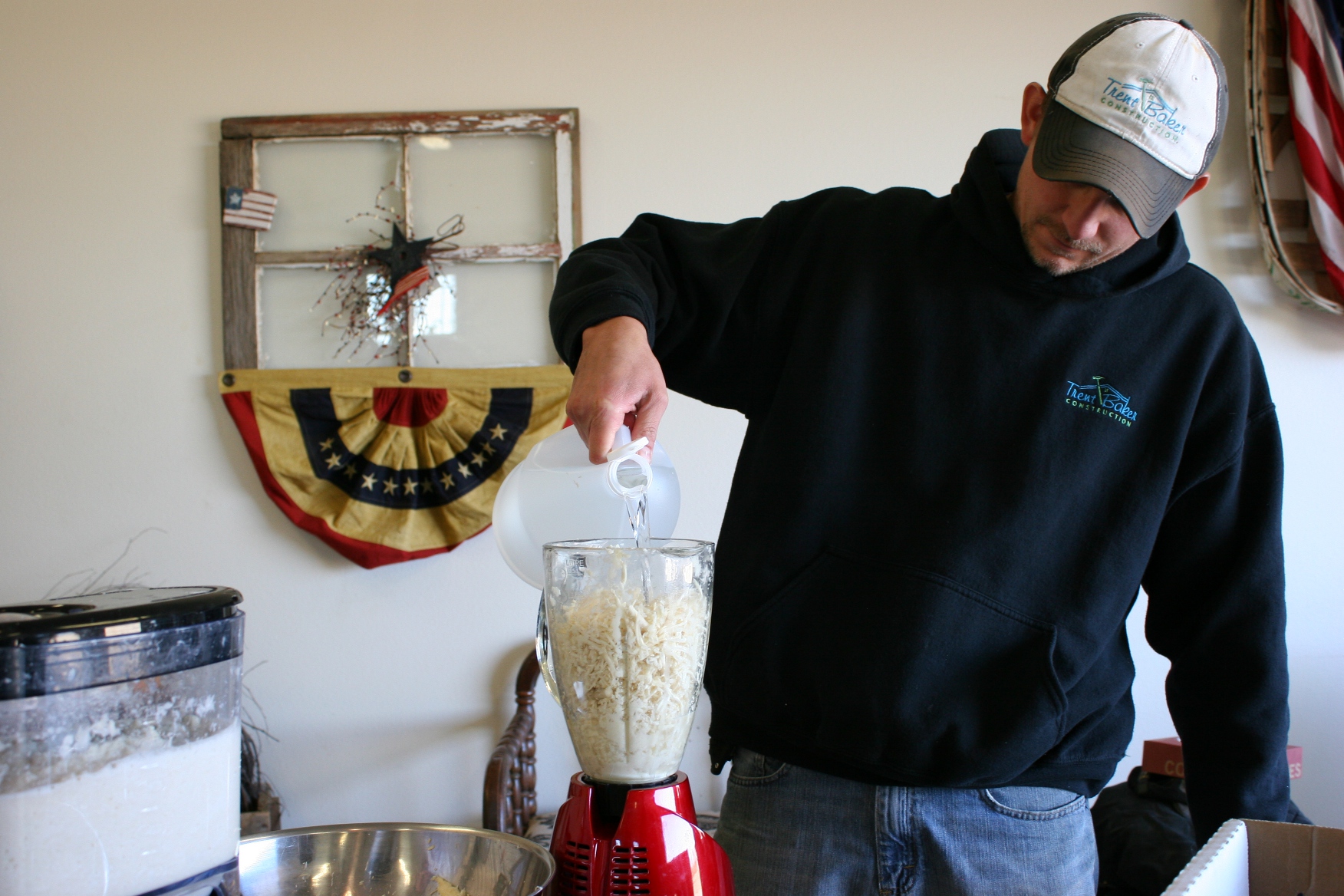
STEP EIGHT: Blending horseradish and vinegar.

STEP EIGHT: Blending horseradish and vinegar.

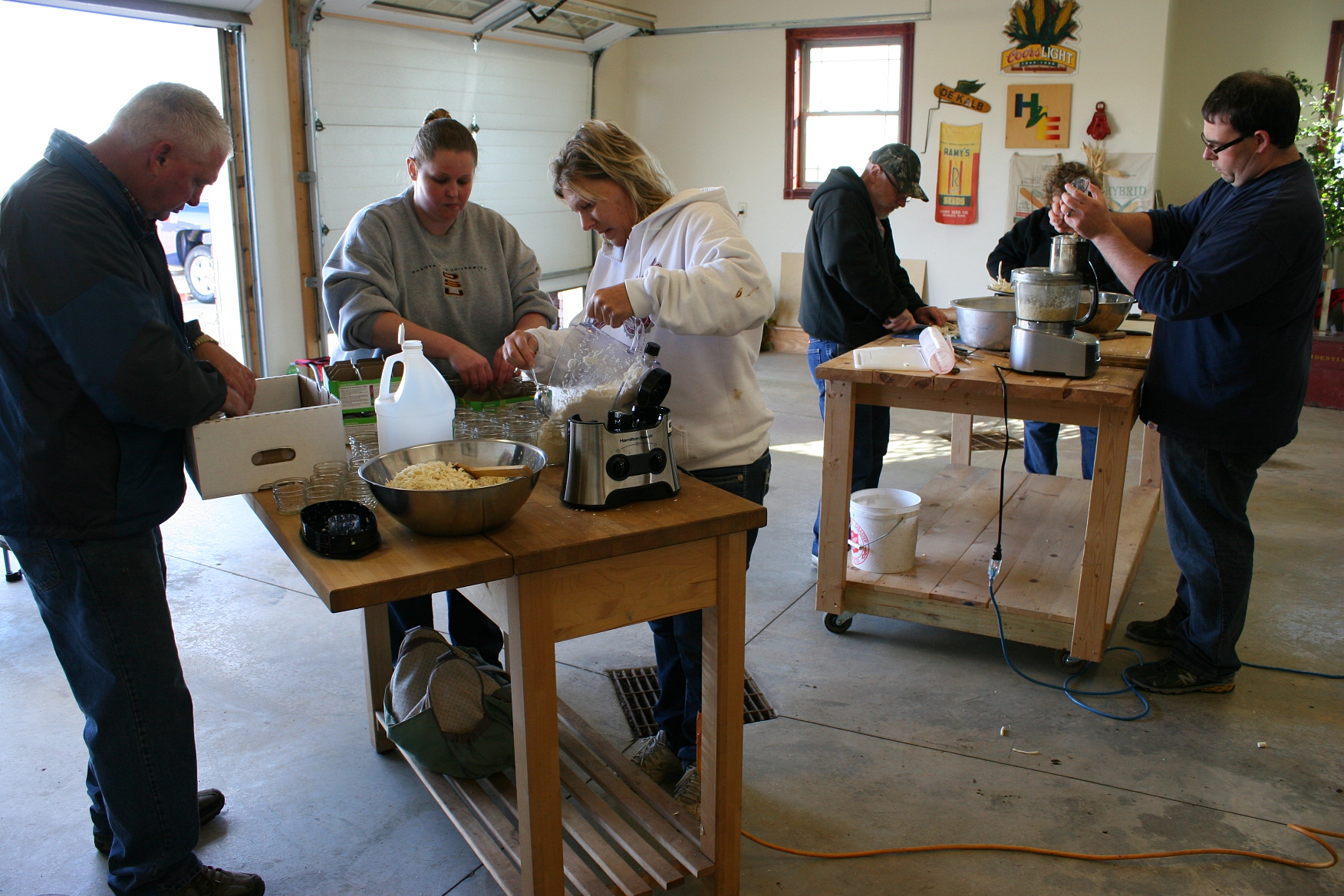
Peelings and conversation fly. Washing machine, food processor and blender whir. Eyes water. Heads turn. And the beer stays in the fridge until the last knife is stashed away. But not always.

An overview of most of the crew.

An overview of most of the crew nearing the end of a long work day.

My nephew adds vinegar (it's by guess, not measurement) to the horseradish before blending.

My nephew adds vinegar (it’s by guess, not measurement) to the horseradish before blending.

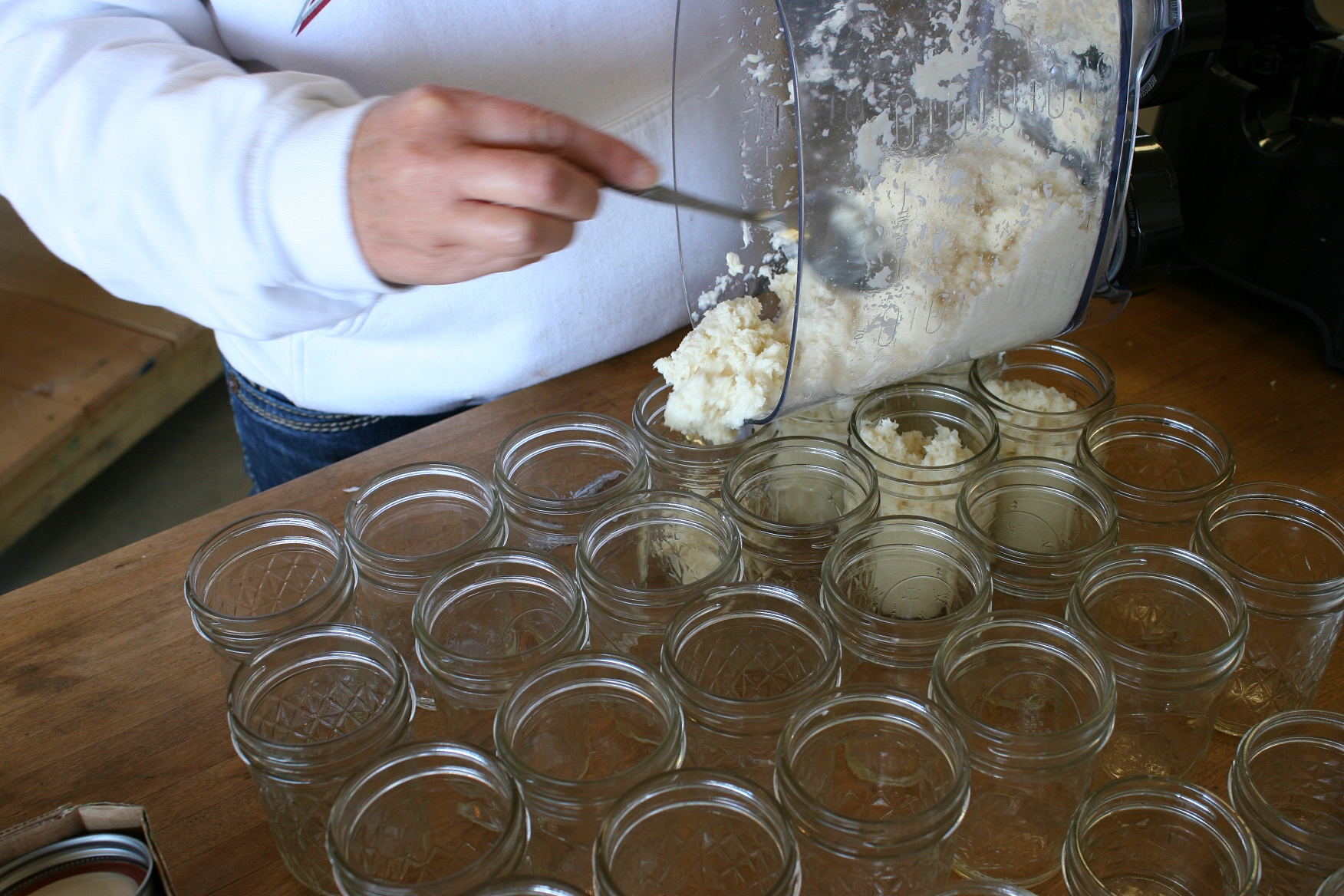
STEP NINE: Filling jars.

STEP NINE: Filling jars.

It’s a day that’s as much about horseradish as about family. A coming together. Building memories. Remembering Dad.

STEP TEN, OPTIONAL: Counting the filled jars.

STEP TEN, OPTIONAL: Counting the filled jars.

This year a new supervisor—my sister-in-law’s mother from Iowa—replaced my mom, who is no longer able to watch over the crew and count the jars. Still, Mom asked how many jars we filled. No one counted. We told her 88.

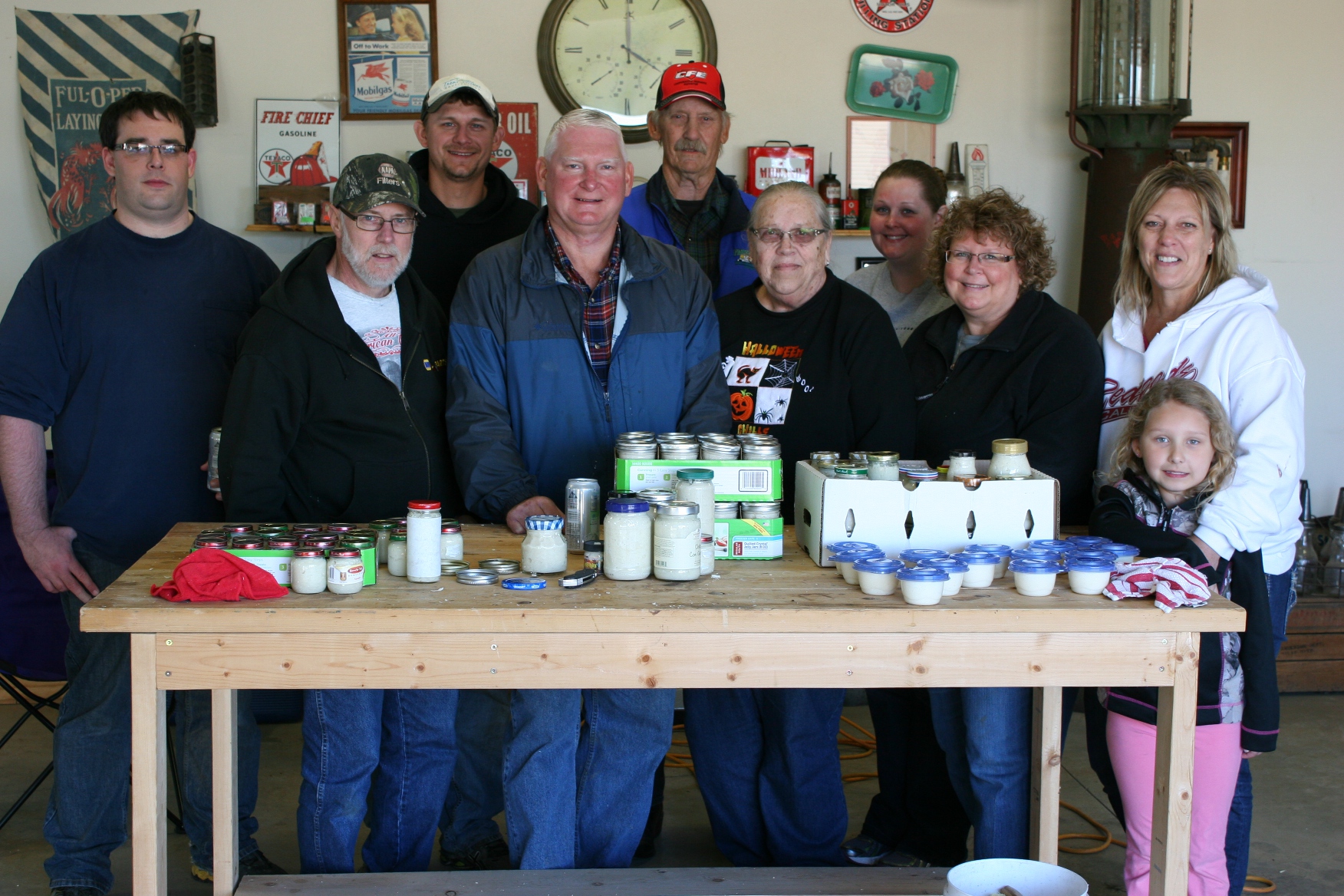
The crew.

The crew.

Life changes. We age. Loved ones die. But we can honor their legacy, their love—for my family via harvesting the horseradish.

© Copyright 2015 Audrey Kletscher Helbling
 

Part III From Albert Lea: Antiques & memories October 29, 2015

A Halloween mask for sale at Antiques of the Midwest.

One of several Halloween masks I spotted at Antiques of the Midwest in Albert Lea, Minnesota.

DO YOU REMEMBER your favorite Halloween costume? I do. I dressed like a gypsy, pulling a black cotton skirt striped with vivid hues from my mom’s closet and safety pinning it around my waist. I topped whatever blouse I wore with a winter coat. A thin elastic band on a molded plastic gypsy face mask gripped my head as I peered through cut-out eye holes. Strands of plastic beads swayed from my neck. Bangles danced on my wrists. I felt every part the care-free gypsy.
Clown masks can be scary or fun, depending.

Clown masks can be scary or fun, depending.

Memories of my brief gypsy life flitted through my thoughts as I perused Antiques of the Midwest in historic downtown Albert Lea. Among all of the merchandise in this sprawling shop, I spotted several Halloween masks. And that sparked the playback of childhood memories.
Three stacks of JC Penney catalogs dating back to the 1940s are available for purchase at Antiques of the Midwest.

Three stacks of JC Penney catalogs dating back to the 1940s are available for purchase at Antiques of the Midwest.

An Archie mask for sale.

An Archie mask for sale.

Vintage clothing proved fun to peruse.

Vintage clothing proved fun to peruse.

And isn’t that what antique stores play into—cherished memories? Nostalgia sells. Otherwise why would I care about outdated merchandise like uncomfortable plastic Halloween masks that curbed clear vision and psychedelic clothing and stacks of old JC Penney catalogs?

Although I didn't want this vintage 1960s make-up mirror, I never-the-less was drawn to it.

Although I didn’t want this vintage 1960s make-up mirror, I never-the-less was drawn to it.

When you shop at an antique store, what do you find yourself drawn to?

I hold a fondness for old glass pitchers. They are works of art.

I hold a fondness for old glass pitchers. They are works of art.

For me it’s vintage drinking glasses and tablecloths (yes, I already own too many), clocks and art. Oh, how I love a vintage print or an original. Most often, though, I buy these at garage sales or thrift stores. I have enough art that I can switch it out in my home. Often.

If only I still had that toy buggy in which I pushed dolls and cats dressed in doll clothes.

If only I still had that toy buggy in which I pushed dolls and cats dressed in doll clothes.

Filing through a rack of children’s clothing at Antiques of the Midwest, I discovered a red plaid wool skirt just like one I wore as a child. How many of you have clothes from your childhood or teenage years? While cleaning my mom’s basement several years ago, I found a pair of cuffed lime green pants worn when I was a stick thin teen. They are hanging now in the closet of a spare bedroom in my home. Someday, my children will ask, “Why did Mom keep these?” Perhaps the pants will end up in an antique store, but more likely will be trashed.

Antiques of the Midwest holds thousands of antiques and collectibles.

Antiques of the Midwest holds thousands of antiques and collectibles.

Opening the door into an antique shop compares to opening a book about life. Therein, in the collections of items from yesteryear, our stories unfold. Imagine the stories I could write if I sat in an antique store, unobserved, eavesdropping.

BONUS PHOTOS:

Just inside the front door, the canary yellow molded chairs caught my eye.

Just inside the front door, the canary yellow molded chairs caught my eye.

Mannequins always make merchandise seem more usable and personal.

Mannequins always make merchandise seem more usable and personal. I also consider them artsy.

This creative display helps shoppers to visualize this merchandise in their homes.

This creative display helps shoppers visualize merchandise in their homes.

If you're already thinking Christmas, at least one vendor has a sizable Christmas display.

If you’re already thinking Christmas, at least one Antiques of the Midwest vendor has a sizable Christmas display.

Merchandise snugged into a cabinet.

Merchandise snugged into a cabinet makes for a museum like display.

This is the first puppet I can remember finding in an antique store.

This is the first puppet I can remember finding in an antique store.

FYI: Antiques of the Midwest is open from 10 a.m. – 4 p.m. Monday – Saturday and from noon to 4 p.m. on Sundays. It is closed on Mondays from December – March. The shop is located at 218 S. Washington Avenue in downtown Albert Lea.

This is the third in my “From Albert Lea” series. Check back for one final post. Click here to read my first and then my second story.

© Copyright 2015 Audrey Kletscher Helbling