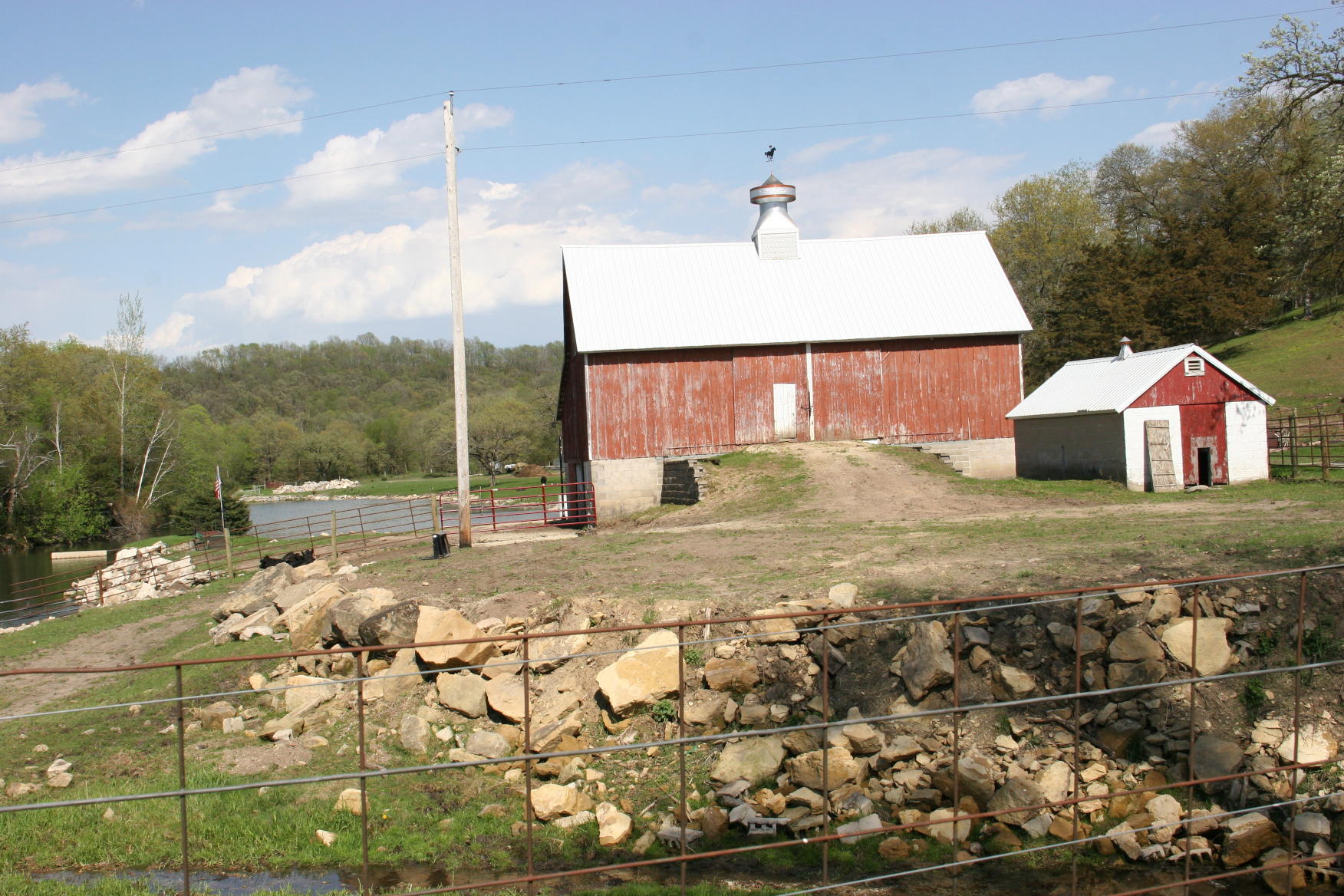
The first scene off the highway was this fenced farm site with that lovely aged barn. (Minnesota Prairie Roots copyrighted photo May 2022)
BACKROADS IN ESPECIALLY remote rural regions often yield an eclectic mix of discoveries. Like those spotted along a gravel road off Wabasha County Road 21 in the Zumbro River Valley between Mazeppa and Oronoco in southeastern Minnesota. A homemade roadside sign for Mac’s Park Place drew Randy and me to take a path into the unknown.
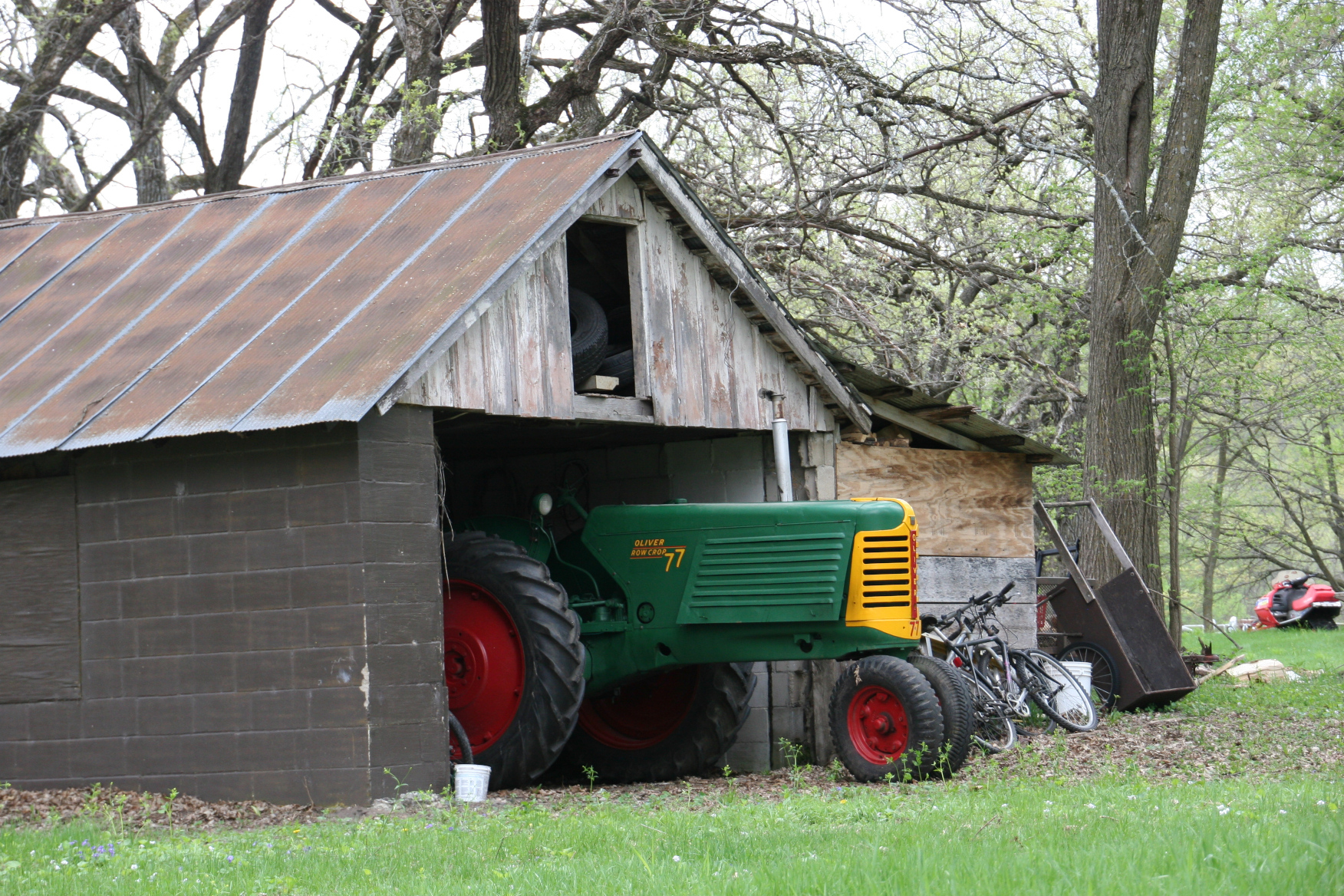
On the way to Mac’s, a 1950s restored Oliver tractor peeks out from a weathered shed. (Minnesota Prairie Roots copyrighted photo May 2022)
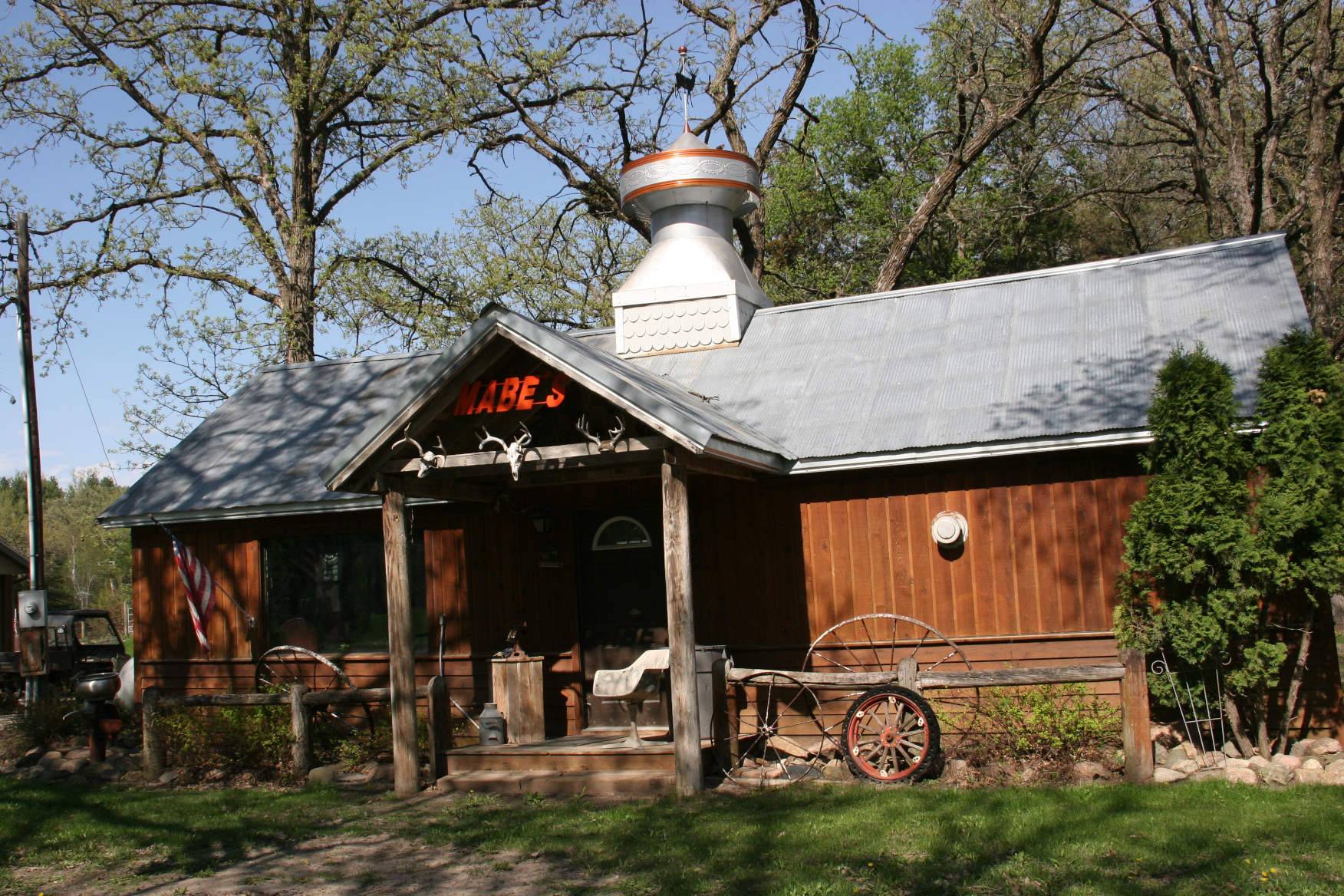
Mabe’s. (Minnesota Prairie Roots copyrighted photo May 2022)
What we saw remains somewhat of a mystery, especially Mabe’s Deer Camp. Was this once a public place for hunters and others to gather? Or was this (is this) a private hunting retreat for friends and family?
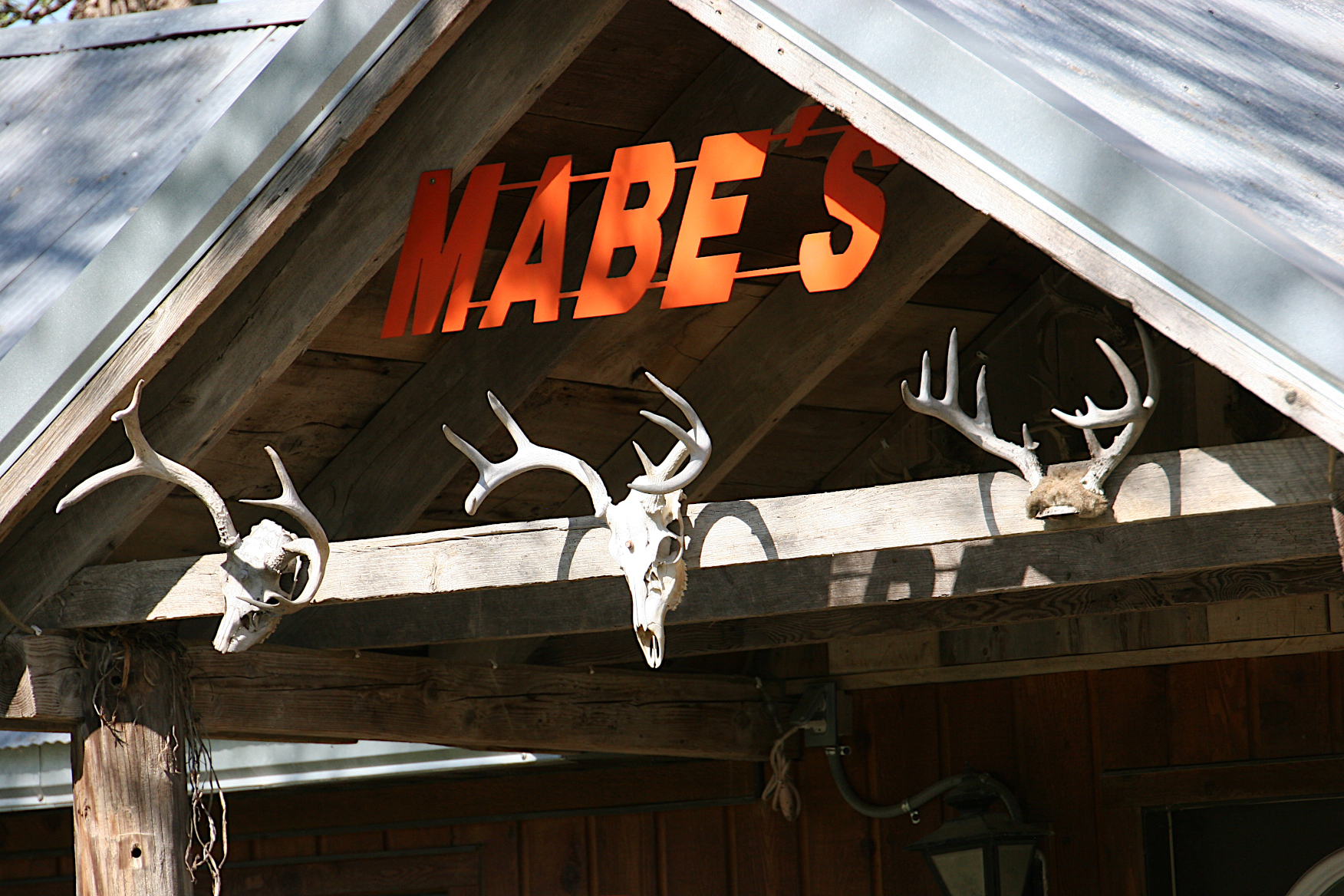
Skulls identify Mabe’s as a deer hunting camp. (Minnesota Prairie Roots copyrighted photo May 2022)
And who is Mabe?
Signage on a truck parked by Mabe’s. (Minnesota Prairie Roots copyrighted photo May 2022)
I expect locals could tell me lots of stories. Or I can spin my own backwoods river stories about Mabe’s, imagination running rampant.
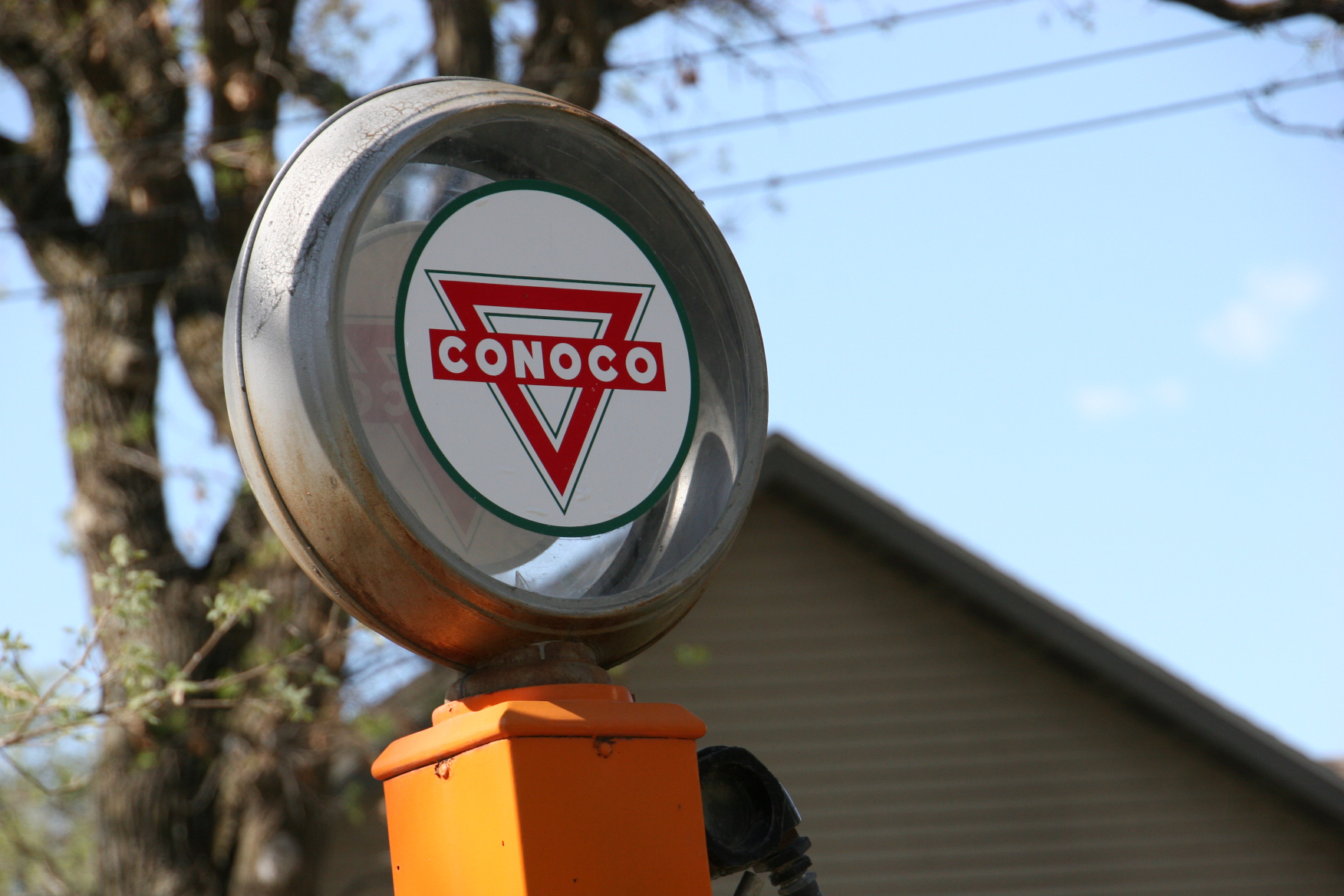
A vintage gas pump sign outside Mabe’s. (Minnesota Prairie Roots copyrighted photo May 2022)
That’s the thing about backroads. You see oddities that leave you wondering. And sometimes it’s OK to wonder, to not have all the answers. To delight in the simply seeing. In-the-moment appreciation for that which unfolds before you, unexpectedly.
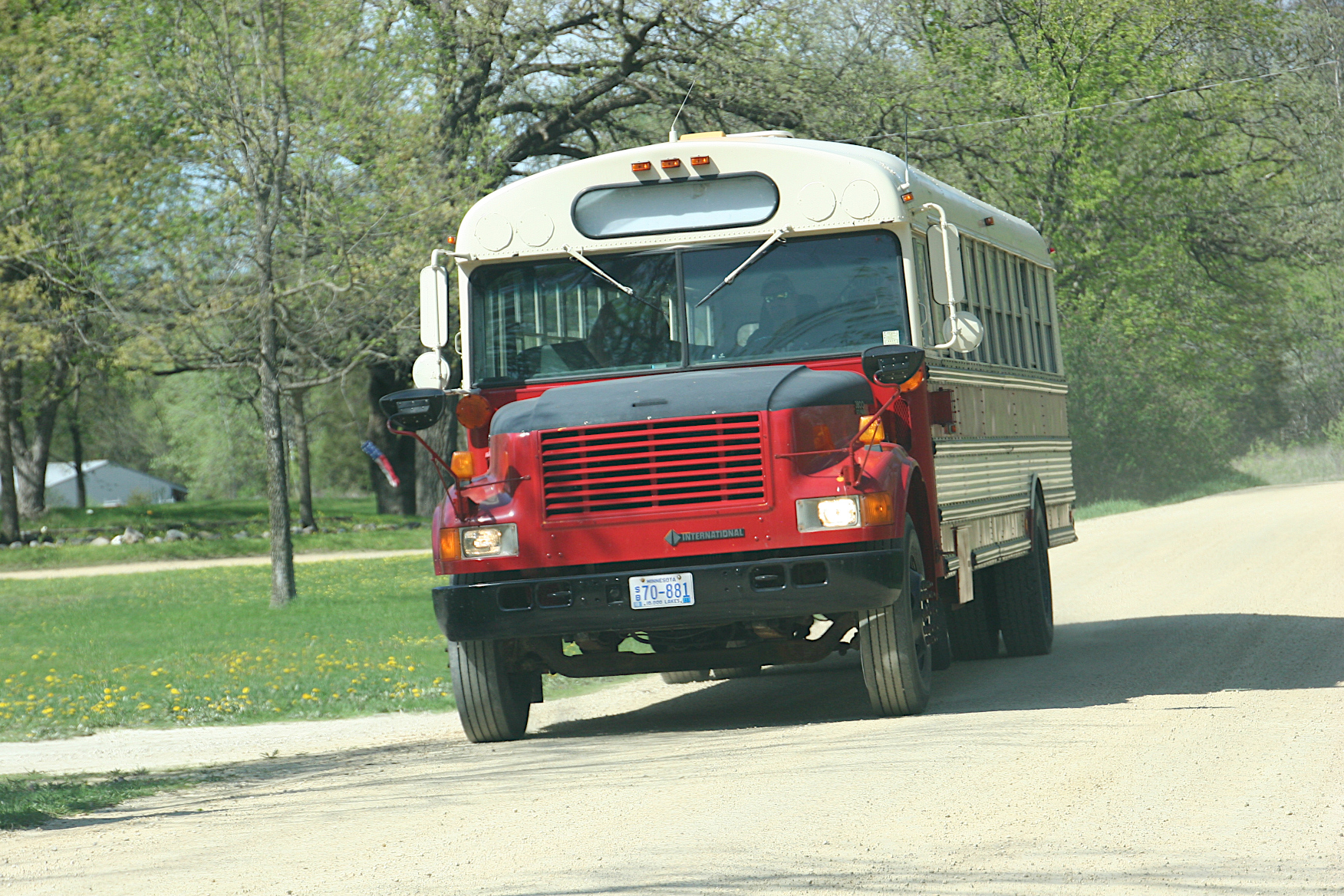
Also headed back to Mac’s Park Place, a converted school bus. Maybe a party bus. Maybe a camper. (Minnesota Prairie Roots copyrighted photo May 2022)
TELL ME: What oddities have you discovered along a back country road?
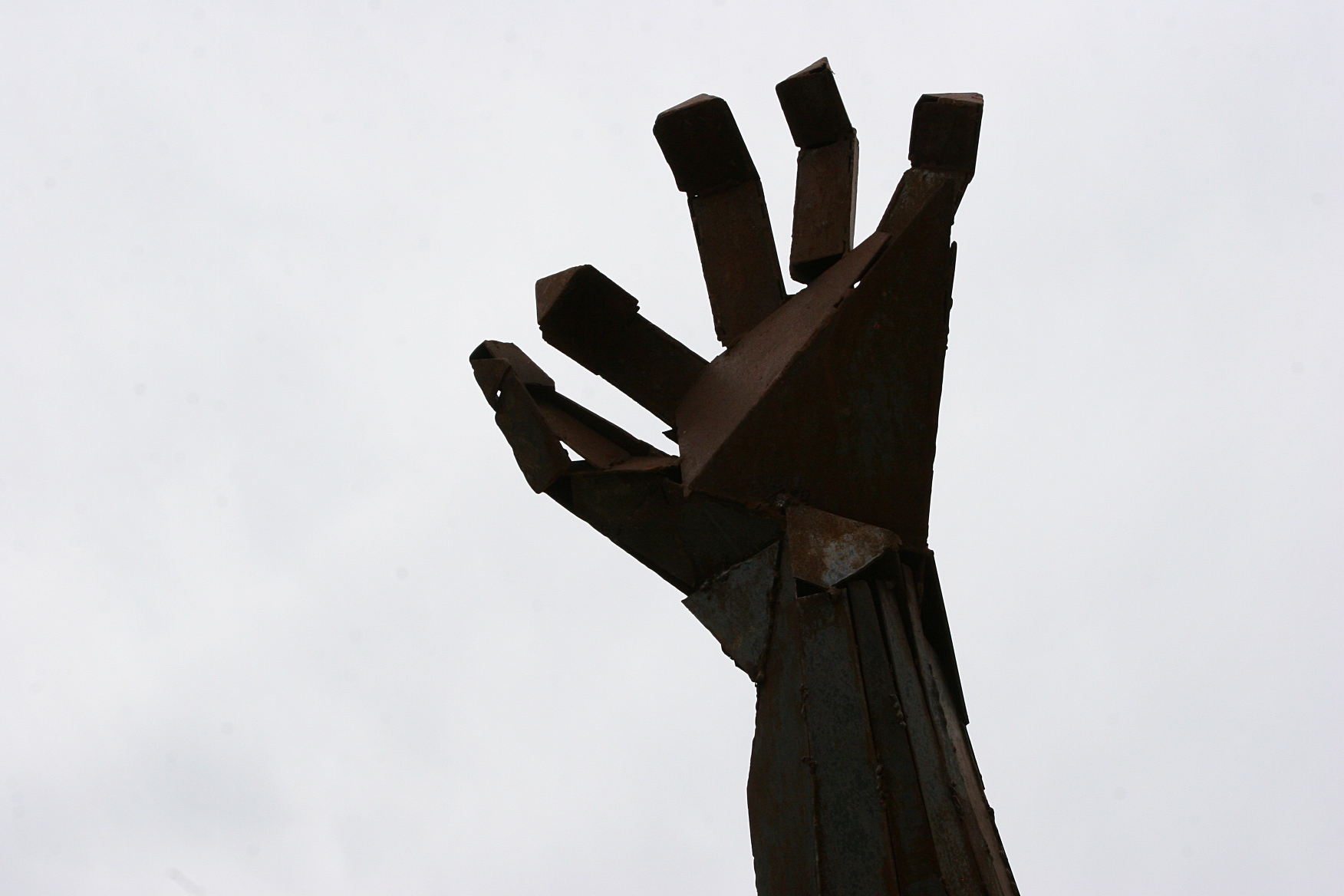
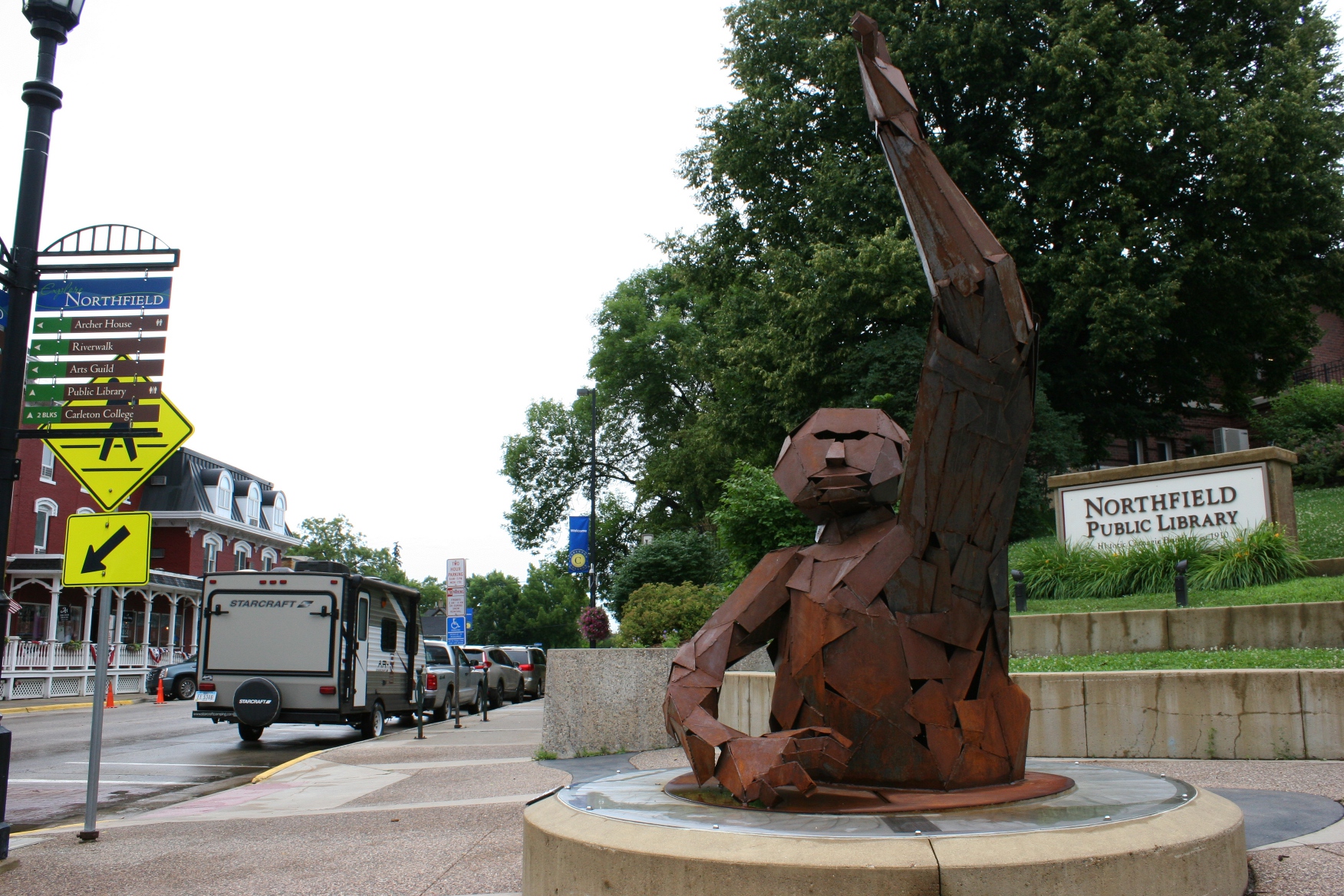
A hand reaches skyward in a mental health themed sculpture that once graced a street corner outside the Northfield, Minnesota, Public Library. (Minnesota Prairie Roots copyrighted file photo 2019)
WHEN HE HEARD ME rant for the umpteenth time about “people just don’t get it, they don’t understand,” he advised, “Then you need to educate them.”
He, my husband of 40 years, is right. Venting to Randy about offensive terminology and uninformed/misinformed comments and attitudes about mental illness does nothing other than temporarily ease my frustrations. Speaking out, writing, based on my observations and experiences, can make a difference. So write about my concerns I will, with the disclaimer that I am not a medical professional.
I photographed this shirt at an event at the Northfield Public Library. This message refers to the struggles with mental illness. (Minnesota Prairie Roots copyrighted file photo September 2019)
WORDS MATTER
Today—on the heels of recent offensive lyrics by Beyonce’—seems the right time to share what’s bothered me for way too long. The pop singer used the derogatory term, “spaz/spazzin,” in her new release, “Heated.” Although she was referencing spastic diplegia, a form of cerebral palsy causing motor impairments in limbs, and not mental health, the analogy fits. Her word choice proved offensive to people who are disabled. And rightly so. To her credit, Beyonce’ acknowledged her unintentional slur and is changing the lyrics. Just like Lizzo, who used the same wordage not all that long ago.
For the millions who each day bravely face mental health challenges and for those who love them, everyday careless language can hurt. Words like crazy, insane, nuts, it’s all in their head, off their rocker, out of his/her mind…are hurtful. As hurtful as the lyrics sung by Beyonce’ and Lizzo.
Recently, while reading a Good Morning America Book Club selection published in 2021, I came across this phrase: “the usual terrible but addictive schizophrenic medley.” In the context of this fictional story, the character was not talking about anything mental health related, but rather about what she was seeing on Instagram. I stopped reading and considered how insulting those words, especially to someone diagnosed with schizophrenia. I doubt the author intended to offend. But she did.
Buttons previously available for the taking at the Northfield library. (Minnesota Prairie Roots copyrighted file photo)
IF YOU HAD…
Now you might say I’m being overly-sensitive. But consider if you, or someone you loved, was diagnosed with cancer, diabetes, whatever, and uncaring words (which I can’t even think of) were tossed out there. It’s no different for those diagnosed with bi-polar, schizophrenia, depression, anxiety, post traumatic stress disorder…
I’m thankful individuals undergoing cancer treatment and/or who have survived cancer, for example, are not subjected to negative/offending words and behavior, but rather are supported with encouragement, fundraisers, even hot dishes delivered to their homes. That type of care and attitude should be a model for how all of us treat individuals dealing with a mental health crisis and their families. We should respond with equal love, compassion, care and understanding. And tangible support.
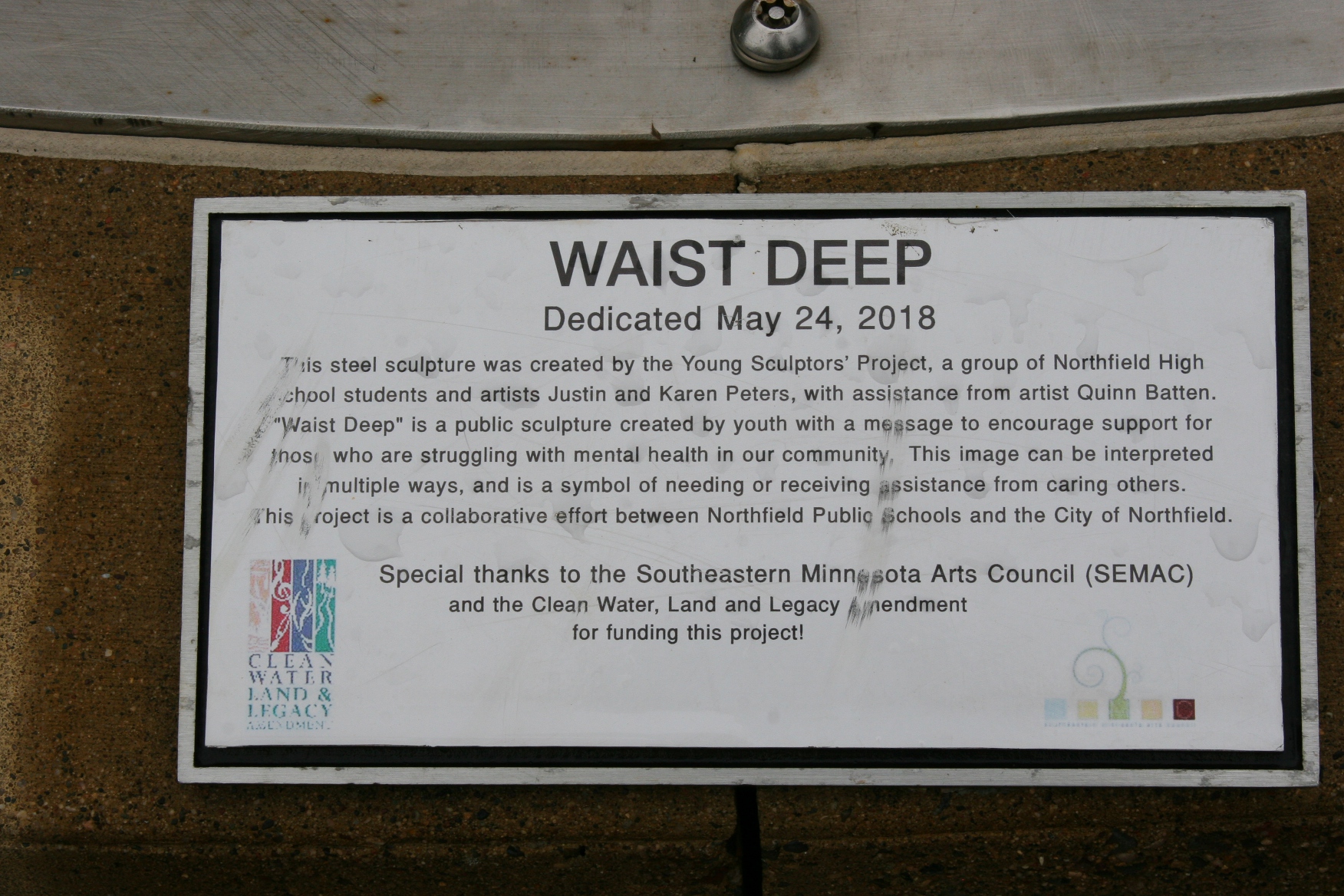
A sign explains the story behind the “Waist Deep” sculpture in Northfield. (Minnesota Prairie Roots file photo September 2019)
CHANGING ATTITUDES, BUT MORE IS NEEDED
I recognize attitudes toward mental health are changing, that, as a whole, we are growing more informed, finally beginning to reduce the stigma of brain disorders. But much work remains. Individuals in a mental health crisis should have immediate access to care. Busy, understaffed emergency rooms are often the first-line treatment option. I don’t know of a single doctor who would send a person experiencing a heart attack home. Individuals in a mental health crisis, the equivalent of a heart attack, deserve the same immediate life-saving care. Yet the wait to see a psychiatrist often exceeds six weeks, at least here in greater Minnesota. That’s unacceptable.
There’s a need for more mental healthcare professionals and in-patient treatment and recovery centers. There’s a need for more funding, more research. Insurance companies should not determine care/medications or refuse to fully cover mental healthcare expenses.
This sculpture, once located outside the Northfield library, is called “Waist Deep” and addresses mental illness. (Minnesota Prairie Roots copyrighted file photo 2019)
IT STARTS WITH EACH OF US
At a grassroots level—that’s each of us individually—more compassion, support, understanding are needed. A few years ago I walked into a southwestern Minnesota brewery and spotted a man sporting a jacket advertising a neighboring brewery. Imprinted on the back was an image of a straitjacket. I could not believe what I was seeing, especially after also reading the offensive name of the brewery. Later I looked online to read the brewery’s list of “Crazy Good Beer” with words like manic, catatonic, lobotomy, kookaloo… in the craft beer names. Simply writing this makes my blood pressure rise. I wanted to rip that jacket right off that beer drinker, so strong was my anger in that moment. Imagine the uproar, for example, if a brewery used words like chemo or radiation in its beer names or used an IV drip as its logo. Somehow a straitjacket is OK? Not from my perspective.
Imagine, too, if you have gone through cancer treatment and someone said you will be fine now that you’ve completed treatment. In the back of your mind, you recognize that the cancer could return despite the treatment. It’s no different for someone with a serious mental illness. Drugs work for awhile and then they don’t. Medications and therapy help manage symptoms, but there is no cure. Symptoms can return. Relapses, crises, happen.
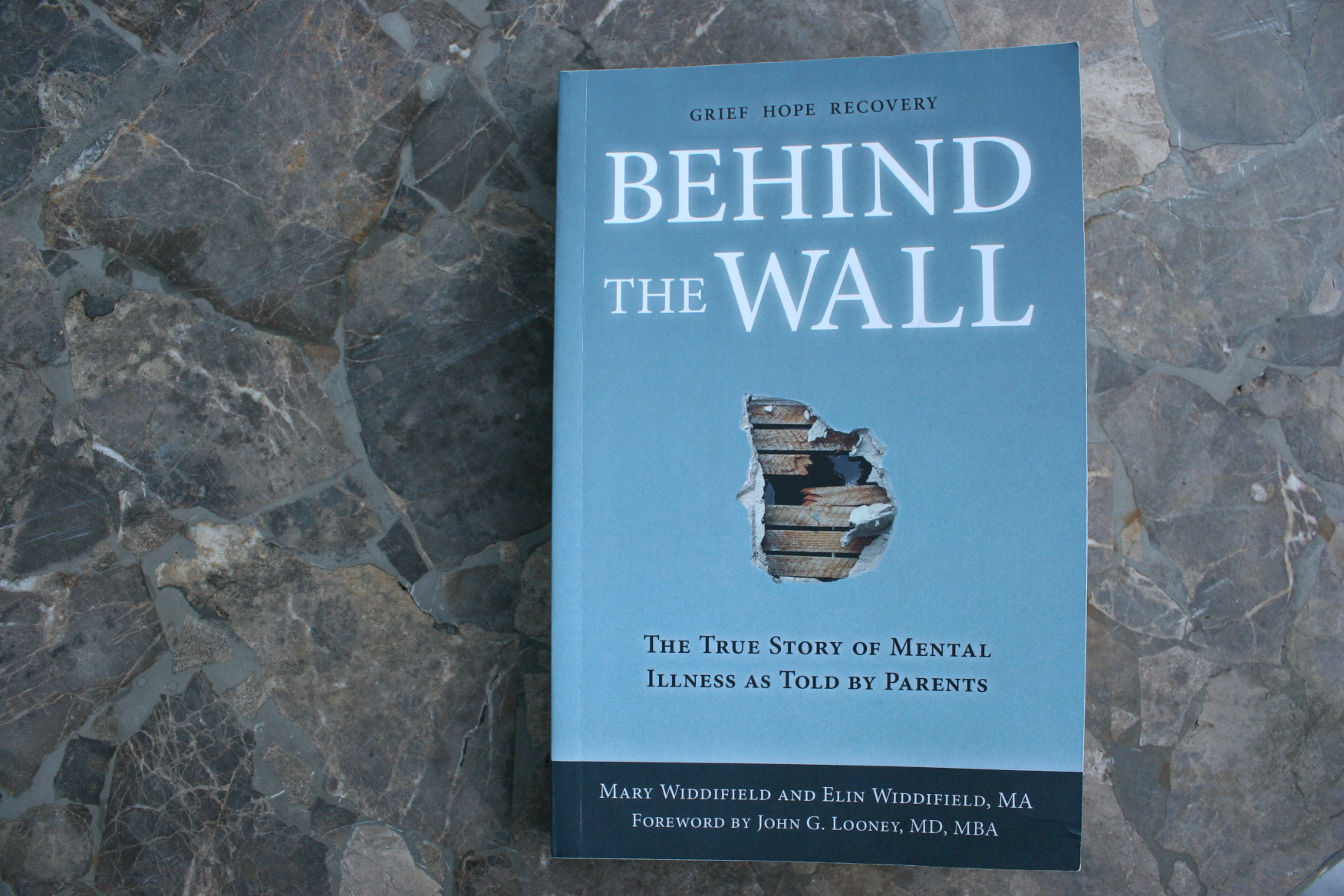
I highly recommend this book, among many I’ve read on the topic of mental illness. (Minnesota Prairie Roots copyrighted file photo)
GRATITUDE & RESOURCES
I appreciate every single person who has made a concerted effort to understand mental health, mental illness specifically. I appreciate organizations like the National Alliance on Mental Illness, which works tirelessly to support individuals and their families who face mental health challenges. I appreciate NAMI’s advocacy work and education. I appreciate mental healthcare professionals. And, most of all, I admire those individuals who deal with mental illness—whether depression, anxiety, post traumatic stress disorder, schizophrenia, bi-polar… They are among the strongest people I know and they deserve, yes, deserve, our love, compassion, understanding, support and respect.
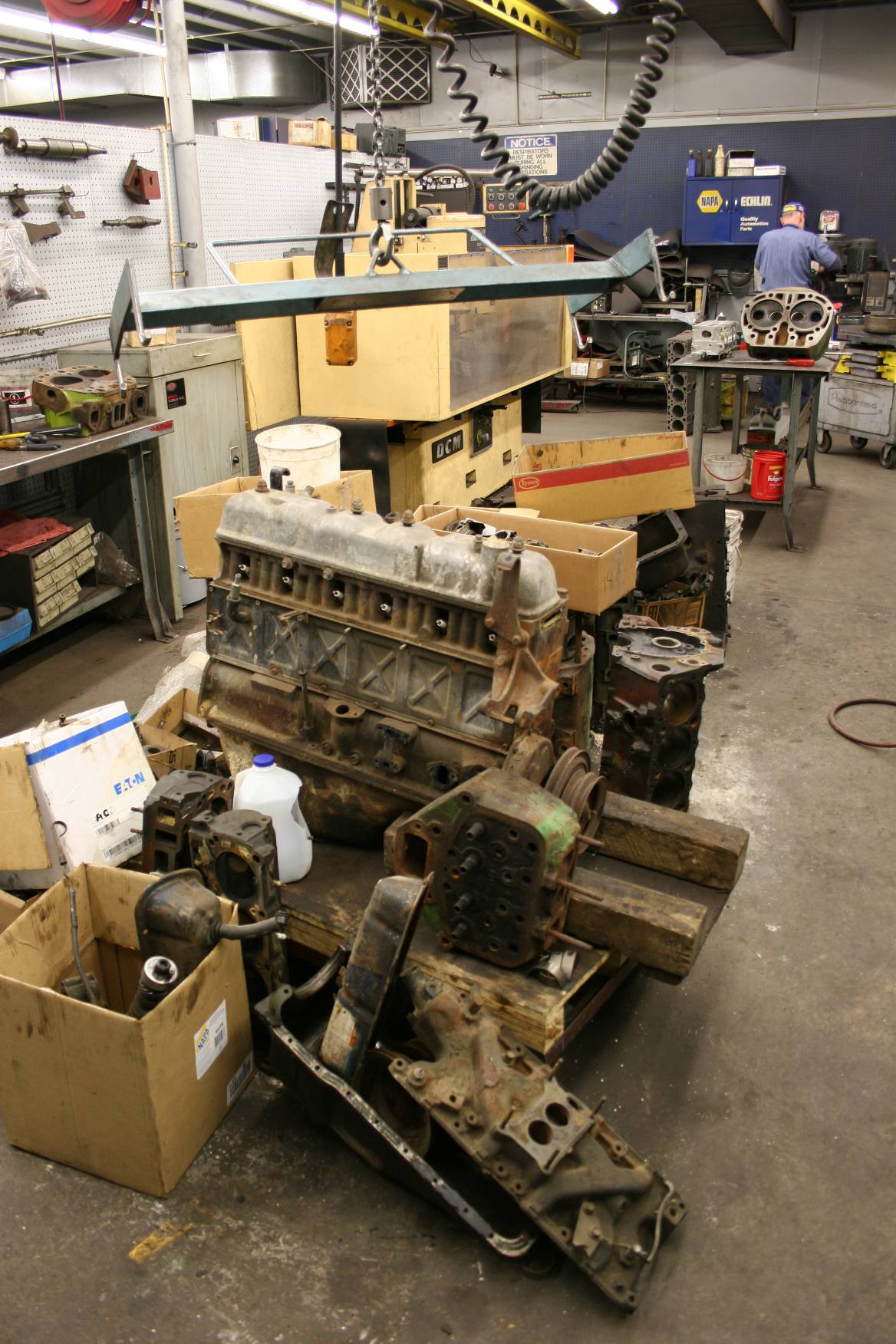
Randy at work in the automotive machine shop where he was employed for nearly 39 years until last Friday. (Minnesota Prairie Roots copyrighted file photo)
HE REBUILT HIS FIRST ENGINE, acquired for $25 from a classmate, nearly 50 years ago while a senior at Healy High School in Pierz. He recalls the deconstructed engine as a bit of a mess. But Randy was up to the challenge and successfully rebuilt the engine for his first car, a 1964 Chevy.
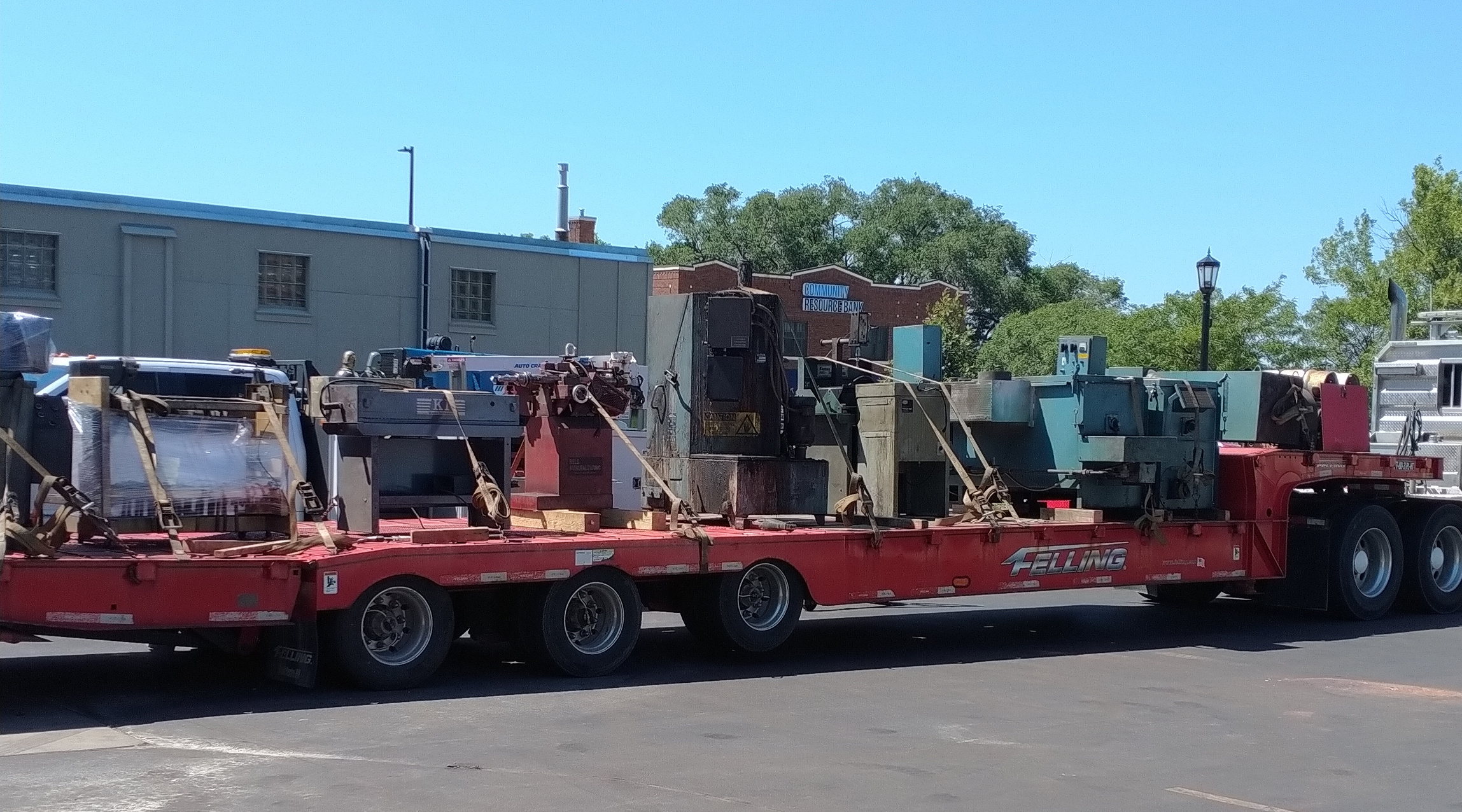
One load of machine shop equipment ready to transport from Northfield to the new owner’s garage Monday afternoon. (Copyrighted August 1, 2022, photo by Randy Helbling)
Fast forward to July 29, 2022. This past Friday, Randy clocked out of the job he’s held for the past 38 years and 10 months as an automotive machinist at a southern Minnesota auto parts store. A corporation purchased the business in early May and immediately announced plans to close the profitable and successful machine shop by the end of August. Closure came a month earlier with sale of the machine shop equipment.
Friday evening part of our family gathered at 10,000 Drops Distillery in Faribault to honor Randy for a life-long career with roots in that central Minnesota high school small engines shop class. He was, Randy notes, the only student to use the valve and seat grinder in one entire school year.
Today he’s an expert in his trade with a technical school education in auto mechanics and auto parts management but, more importantly, with a brief mentorship followed by decades of experience as an automotive machinist. Much sought after. And, always, always booked months out with work.
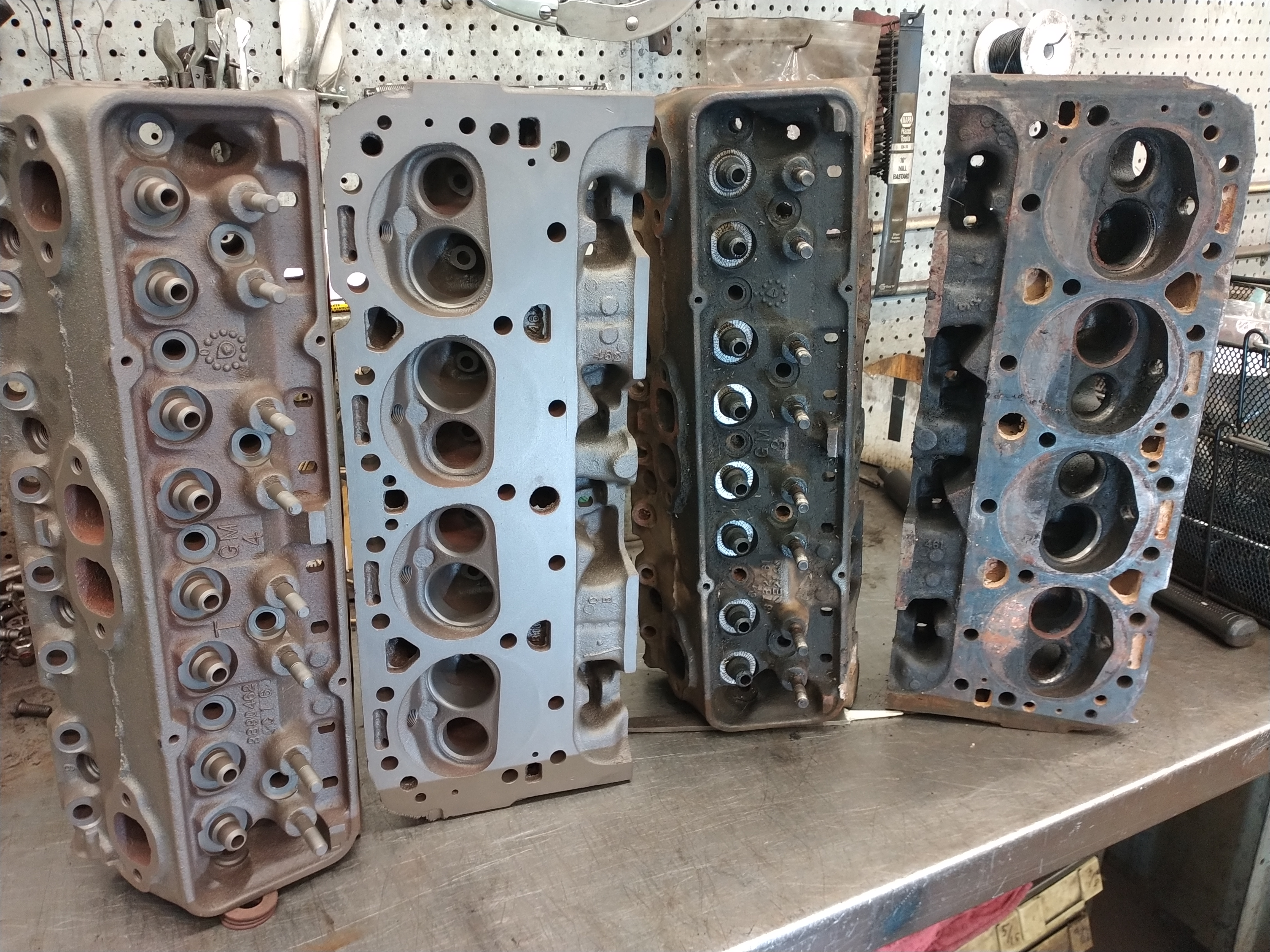
Before and after cylinder head cleaning process. (Photo by Randy Helbling)
I asked Randy to make a list of all the machine shop work he’s done since entering that field in 1979 after several years working as an auto parts counter person. I handed him a legal-sized envelope, recycled as notepaper. He sat on the end of the couch writing for the longest time in block print that is almost too small for me to read. He filled both sides of that envelope.
Complete valve jobs: includes replacing valve guides, valve seats, valves and springs.
Repair cracked heads and blocks.
Cylinder reboring, honing and resleeving.
Pressure testing heads or magnetic crack inspection.
Removing broken bolts, E-Z outs, taps and drill bits.
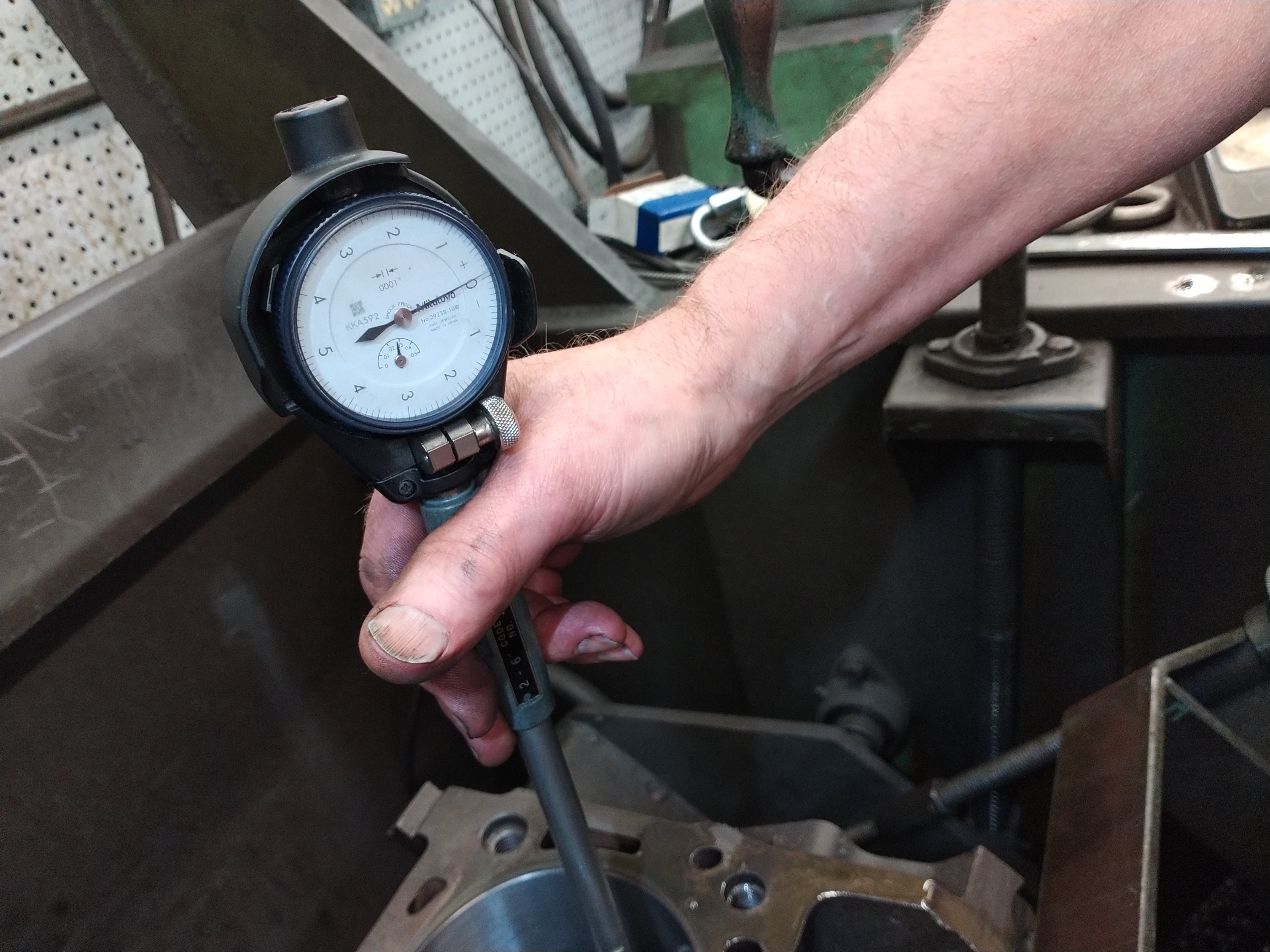
Resizing connecting rods and fitting piston pin bushings to within .0001 of an inch.
Cleaning, degreasing cylinder heads, blocks and various engine parts and other parts for industry.
Press work with a 50-ton press: pressing U-joints, wheel bearings, front wheel drive and rear wheel drive axle shafts, ring and pinion bearings, forklift wheels and other items needing to be pressed apart or together.
Rebuild drive shafts with constant velocity U-joints.
Polish crankshafts.
Repair radiators.
Reline brake shoes.
Impressed yet? I am and so are the thousands of customers who came to Randy for their automotive machining needs. Some stopped by on Friday to thank him, to express their dismay at his unexpected job loss. Randy was reliable, incredibly skilled, excelling in his craft. Customers included car and farm implement dealerships, farmers, garages, marinas, golf courses, the Harley dealer, grain elevators, construction companies, local canning and food companies and other industries, classic car and vintage tractor collectors, do-it-yourselfers and city, county and school maintenance departments, and probably some I missed in this list.
Work piles up in the automotive machine shop. (Minnesota Prairie Roots copyrighted file photo)
It all started back in high school with that rebuilt engine for a 1964 Chevy, today a classic car Randy wishes he still owned. Today he owns a history as a hardworking and dedicated automotive machinist who truly was among the best, and remaining few, in his field here in southern Minnesota.
Measuring a cylinder bore. (Photo by Randy Helbling)
I asked Randy what skills he needed to be a successful automotive machinist. He thought for a moment and then said, “knowing how an engine might perform when the work is completed.” I will attest to his knowledge. He can listen to an engine and often immediately diagnose a problem. Yes, he’s that good. An aptitude for math and being detail-oriented are also necessities.
I’m proud of my husband, for how he’s served southern Minnesota and beyond (he had a repeat customer from Sioux Falls, SD). He’s been a real asset to the area considering all of the automotive machining he’s done since 1979. His last day on the job came with mixed emotions. It’s not easy losing your job unexpectedly after 39 years. Randy teared up when talking about the customers who popped in on Friday to thank him. And when our son called from Indiana while we were at the distillery, I know that touched him, too.
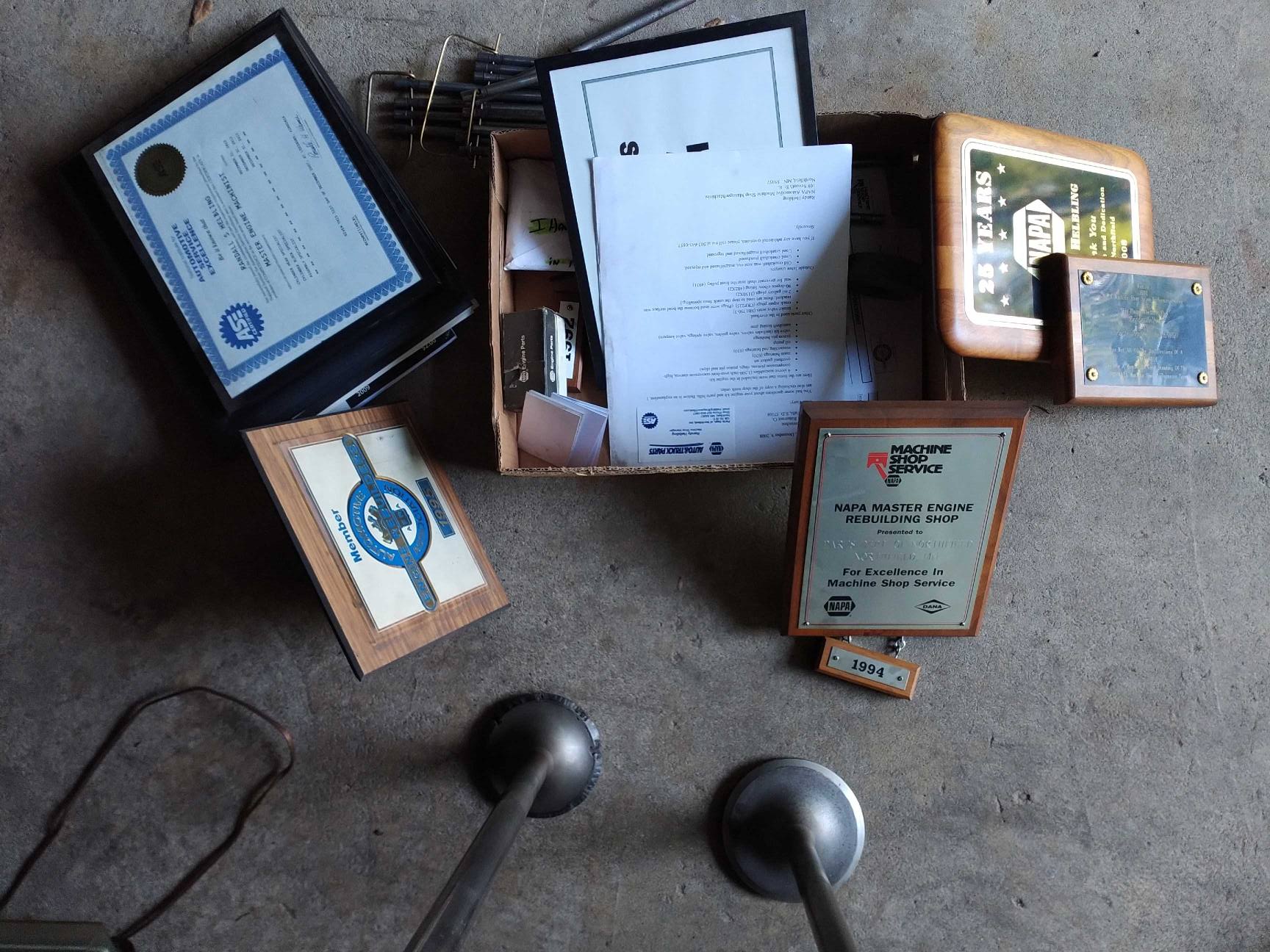
From Randy’s office/shop. (Minnesota Prairie Roots copyrighted photo July 2022)
In the end, he carried his “office” home in a small cardboard box filled with professional plaques, business cards, a job quote…and a sheaf of carbon paper. Randy carries with him, too, the memory of 43 years of working in the automotive field, of interacting with customers, of knowing he has always, always, done his best.
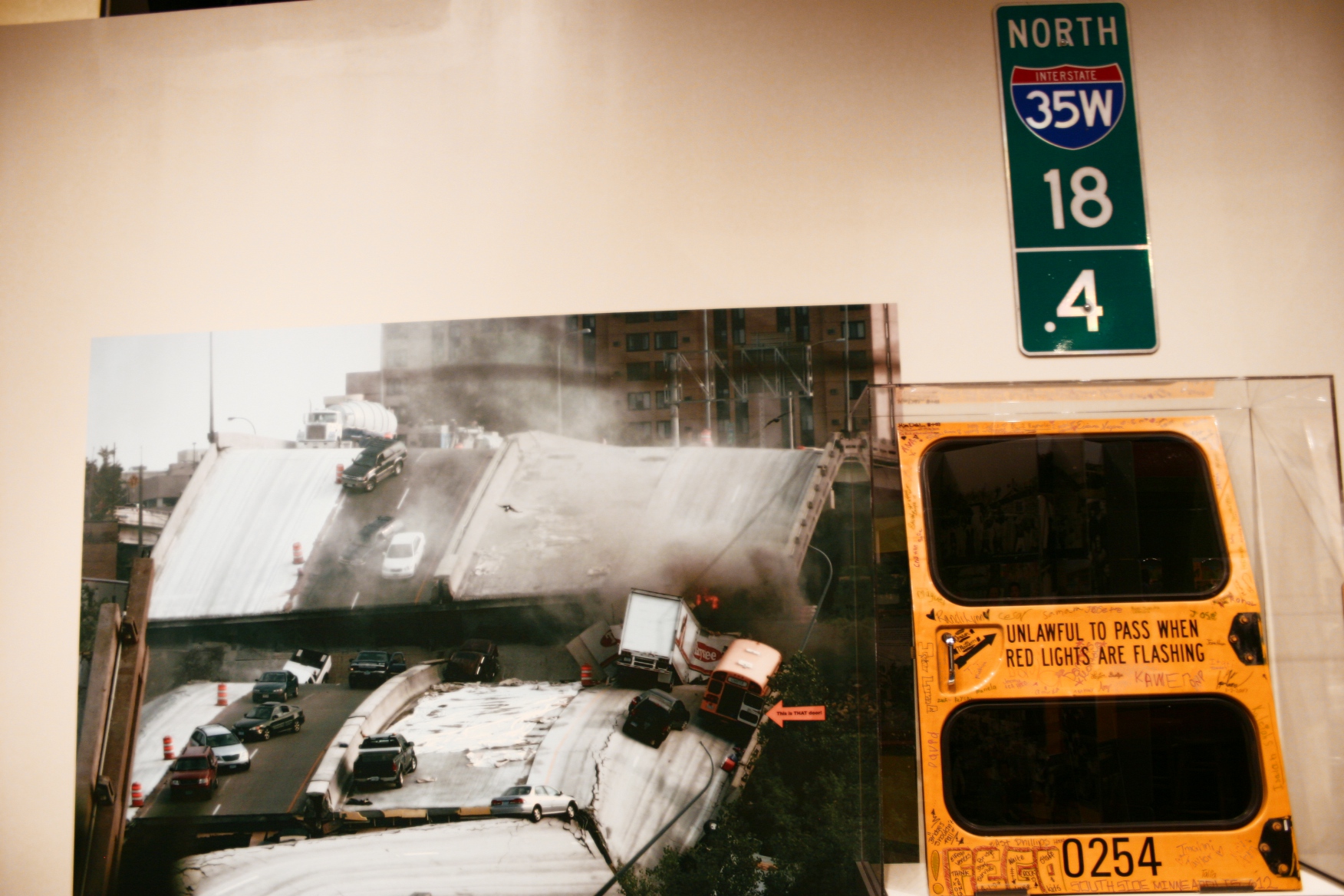
This photo shows the opening spread of the feature article published in the November/December 2007 issue of Minnesota Moments. Casey McGovern of Minneapolis shot the bridge collapse scene. To the far left is Garrett before the collapse, to the right, his rescuer. The next photo shows his Ford Focus which plummeted into the Mississippi River. And to the right are newly-engaged Garrett and Sonja, before the collapse.
FIFTEEN YEARS AGO THIS EVENING, 13 people died and 145 were injured when the 35W bridge collapsed during rush hour in downtown Minneapolis. Vehicles plunged into the Mississippi River. Others clung to the tilted, broken span of roadway. Lives were forever changed at 6:05 pm on August 1, 2007, when faulty gusset plates gave way and the bridge broke.
Garrett with his mom, Joyce Resoft, about a month after the bridge collapse. (Minnesota Prairie Roots file photo 2007. Photo courtesy of Garrett’s family)
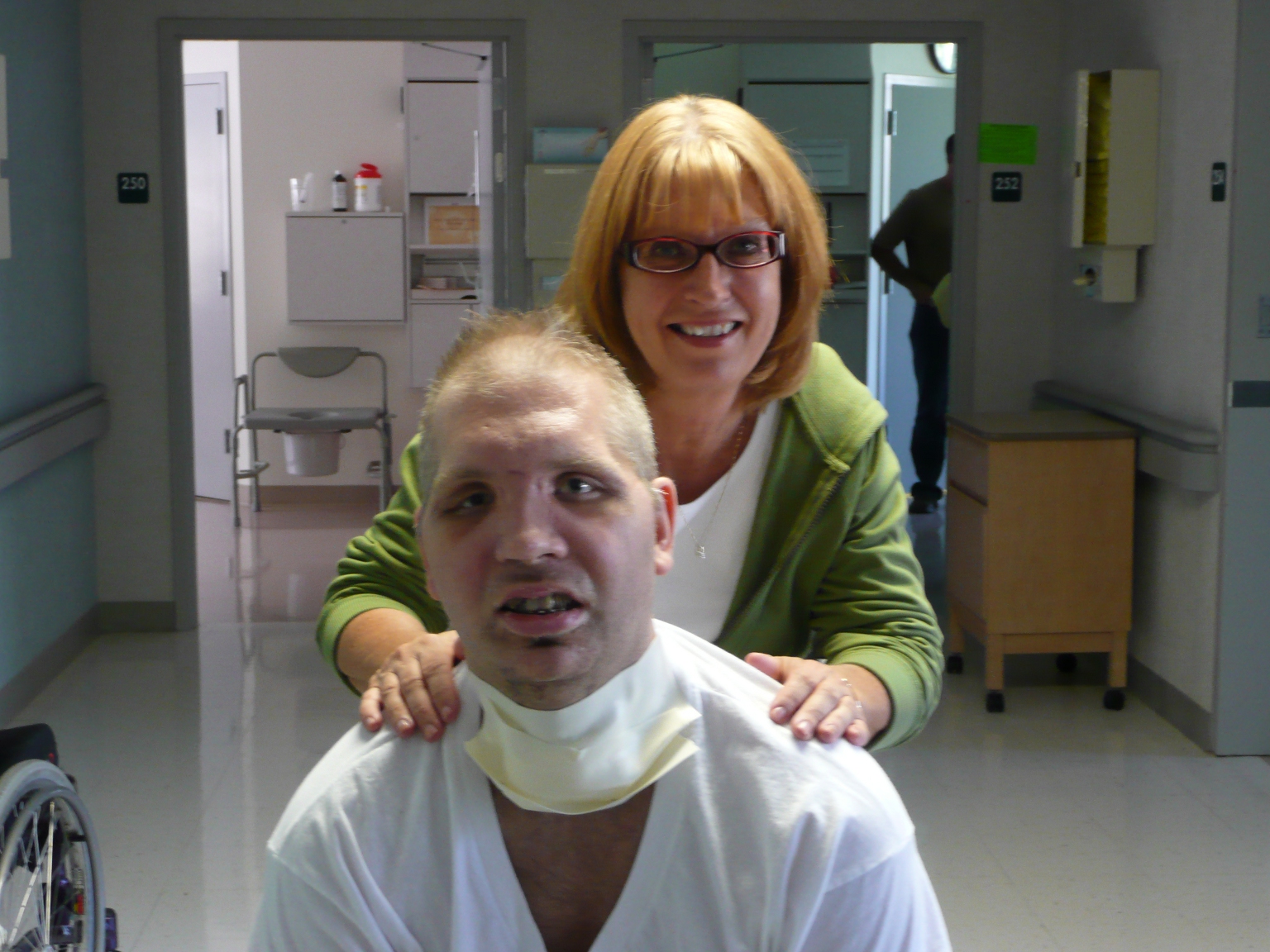
Among those most seriously injured was then 32-year-old Garrett Ebling, former managing editor of The Faribault Daily News. He suffered a traumatic brain injury, severed colon, broken left arm and ankles, a spinal injury and more after his Ford Focus nosedived 110 feet, the equivalent of an 11-story building, into the river. That he survived seems miraculous. He spent weeks in the hospital, where he underwent multiple surgeries. A lengthy rehab followed. His life, physically, mentally and emotionally, was forever changed.
Within months of the collapse, I penned a feature story about Garrett for Minnesota Moments, a now-defunct magazine. Mine was one of the few initial interviews Garrett granted and I was both humbled and honored to share his story as a freelance writer. Prior to his departure from the editorial job in Faribault, we had connected. I remember Garrett’s kindness and compassion toward me after my son was struck by a hit-and-run driver in May 2006. I took great care in writing his story, recognizing that another journalist was trusting me to get it right.
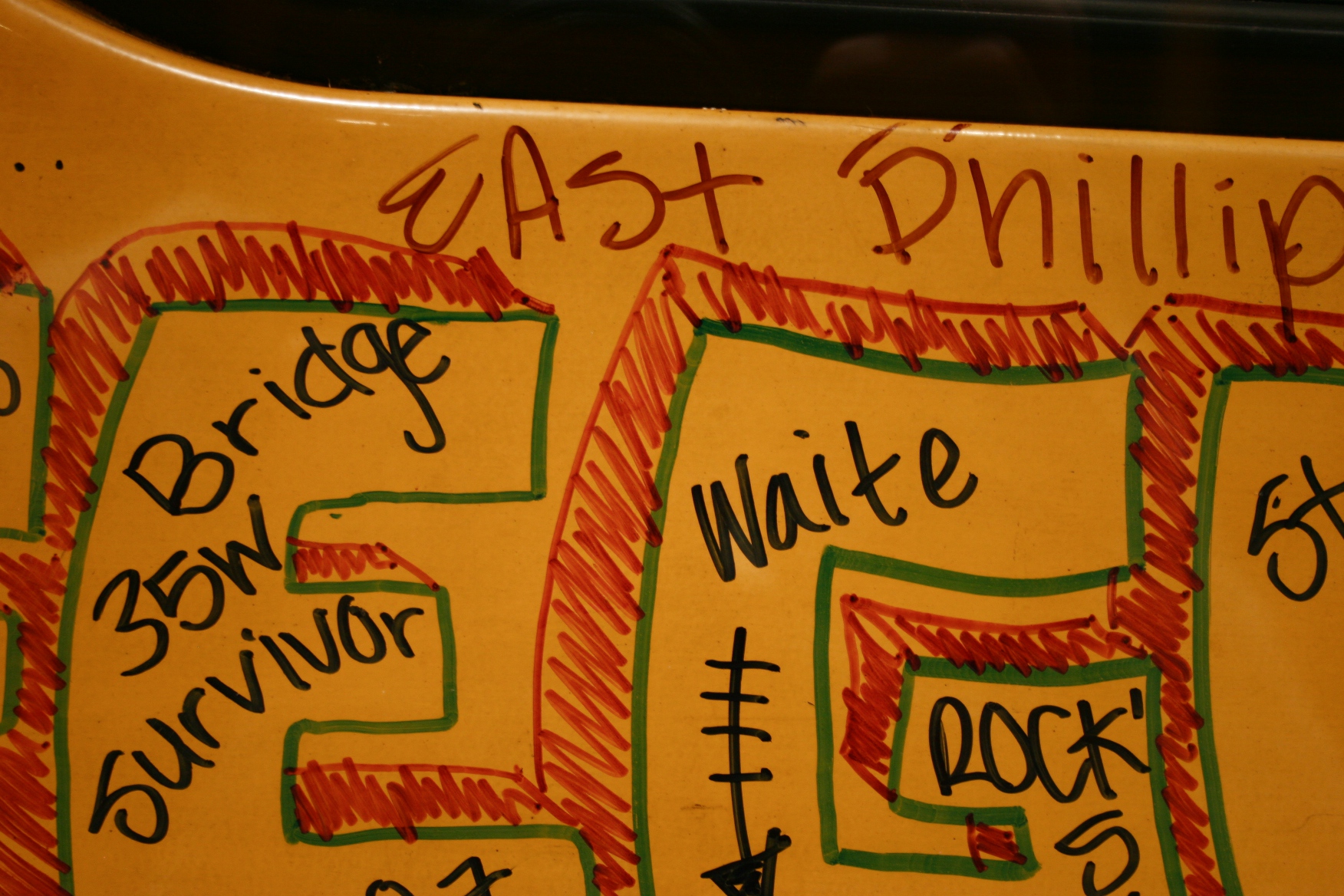
A section of the then now wow exhibit at the Minnesota History Center in St. Paul features the 35W bridge collapse. This image shows the collapsed bridge and the emergency exit door from a school bus that was on the bridge when it collapsed. All made it safely off the bus (Minnesota Prairie Roots file photo)
Since then, I’ve lost track of the “author, father and 35W bridge collapse survivor,” as Garrett labels himself on his Twitter account. But I expect today, the anniversary of the bridge collapse, is difficult for him as it is every survivor and every single person who lost a loved one 15 years ago in downtown Minneapolis when the unthinkable happened. When a bridge fell.
All the children and adults on the bus signed the door on display at the Minnesota History Center. (Minnesota Prairie Roots copyrighted file photo)
There are moments in history that we never forget and, for me a Minnesotan, August 1, 2007, is one of those dates. When I heard the breaking news of the bridge collapse, I worried first about extended family who live in the metro. They were not on the bridge. While that diminished my personal angst, it does not diminish the tragedy of that day for those who were on that bridge. Like Garrett Ebling, the 144 others injured and the 13 who died. It is a tragedy, too, for those who loved them and for us, collectively, as Minnesotans.
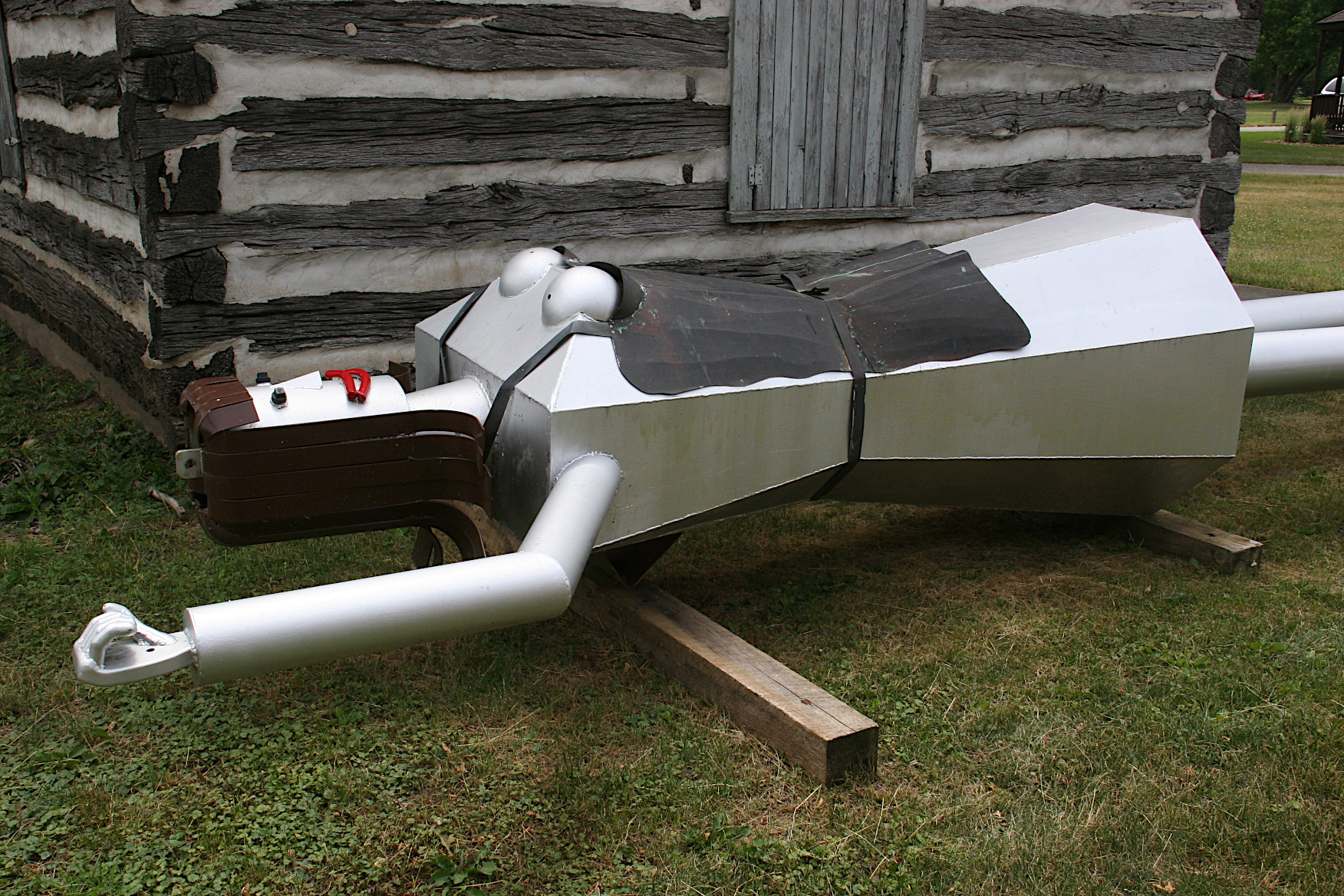
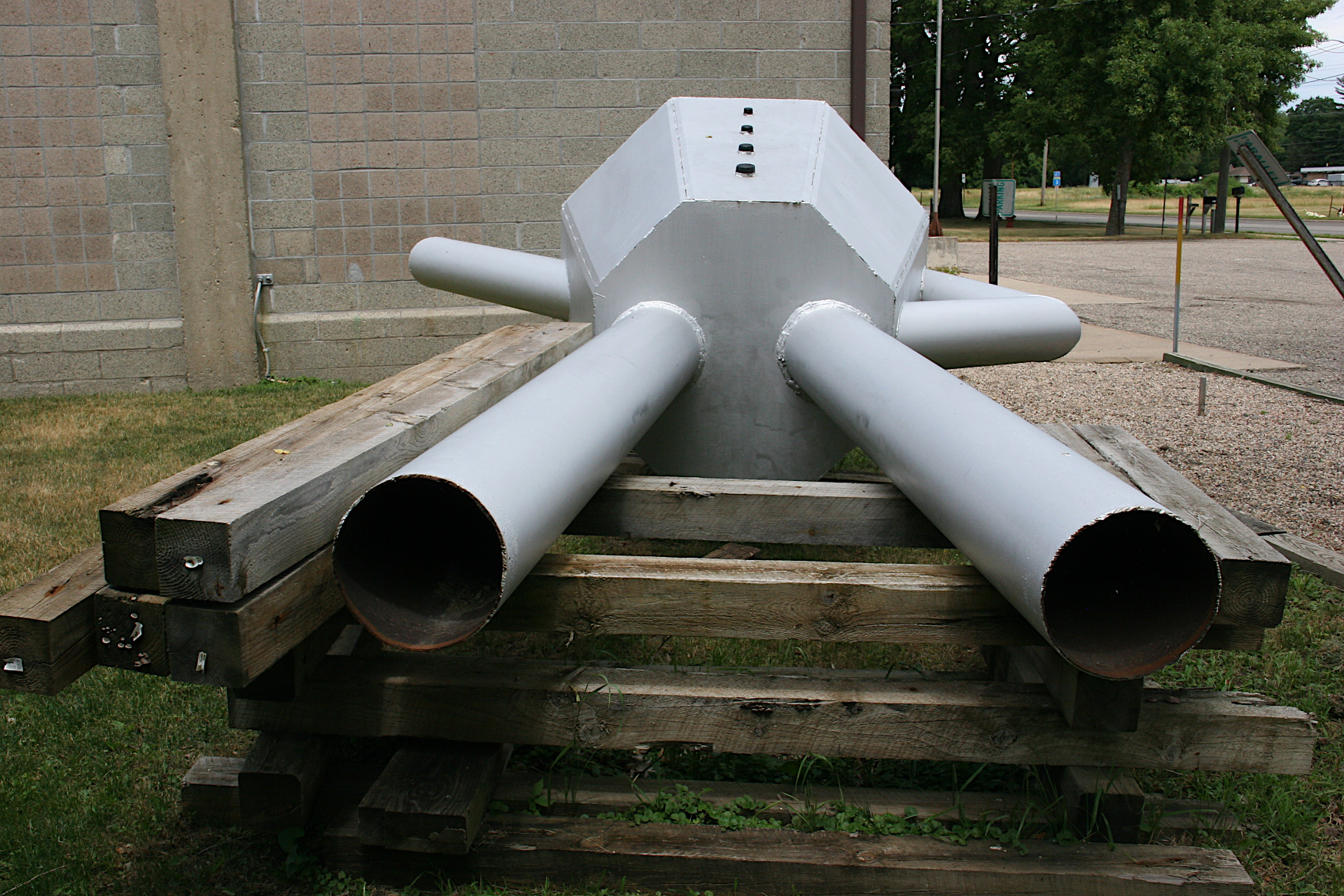
The Tin Woman sculpture from Lockerby Sheet Metal lies outside the log cabin at the Rice County Historical Society in Faribault where she will be placed. (Minnesota Prairie Roots copyrighted photo July 2022)
WHENEVER I THINK of a tin man, I think of three specifics: The Tin Man from The Wizard of Oz, The Tin Man and his family in Faribault, and the absence of a heart.
This Lockerby Sheet Metal Tin Man awaits reassembly outside the county museum. (Minnesota Prairie Roots copyrighted photo July 2022)
In the classic tale by L. Frank Baum, The Tin Man is in need of a heart, or love. The Scarecrow needs a brain. And the Lion needs courage.
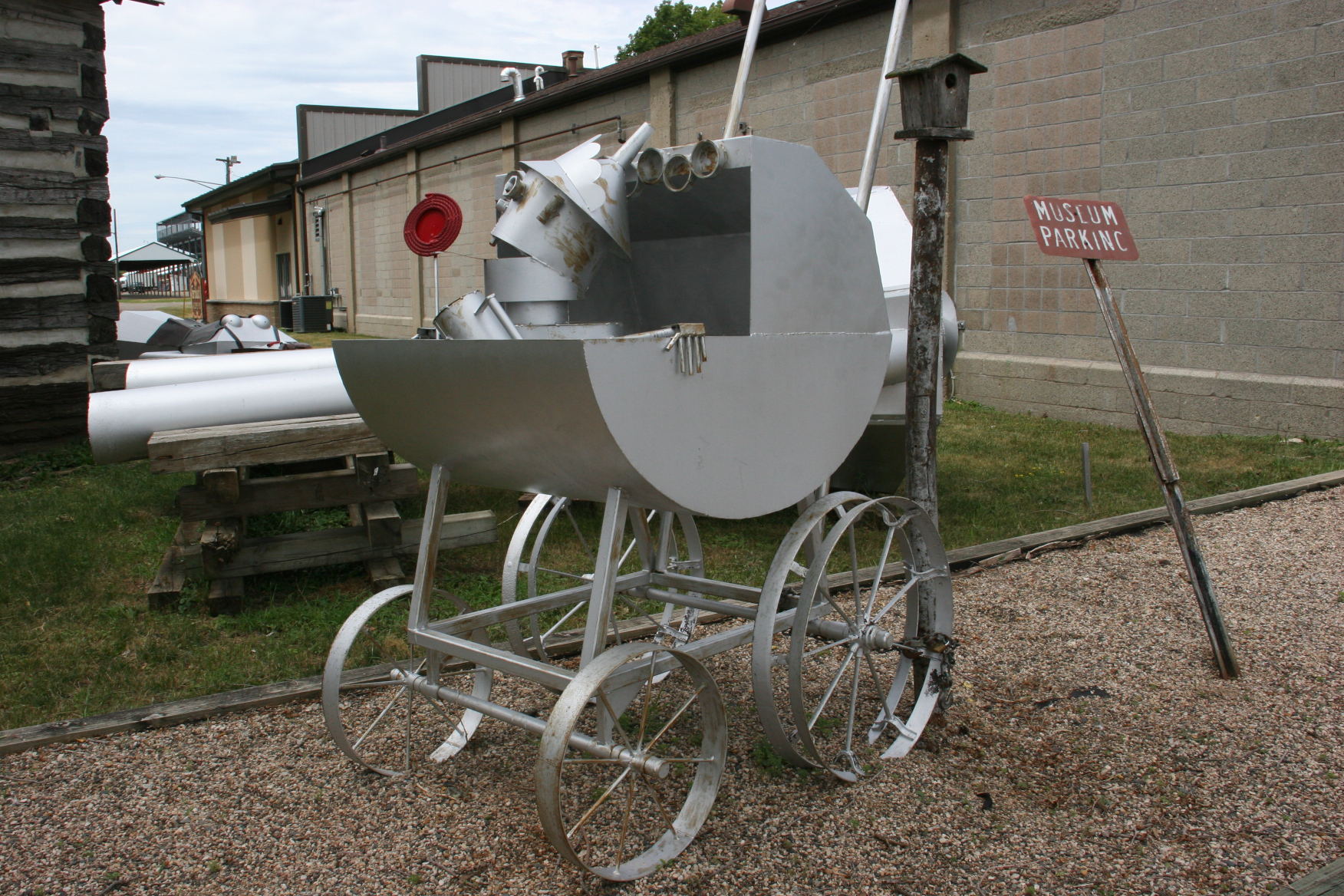
The family includes a baby in a buggy. (Minnesota Prairie Roots copyrighted photo July 2022)
Now you can take away whatever you want from Baum’s book, for there are, indeed, many take-aways. But the basics of love, knowledge and courage stick all the way along The Yellow Brick Road to The Emerald City.
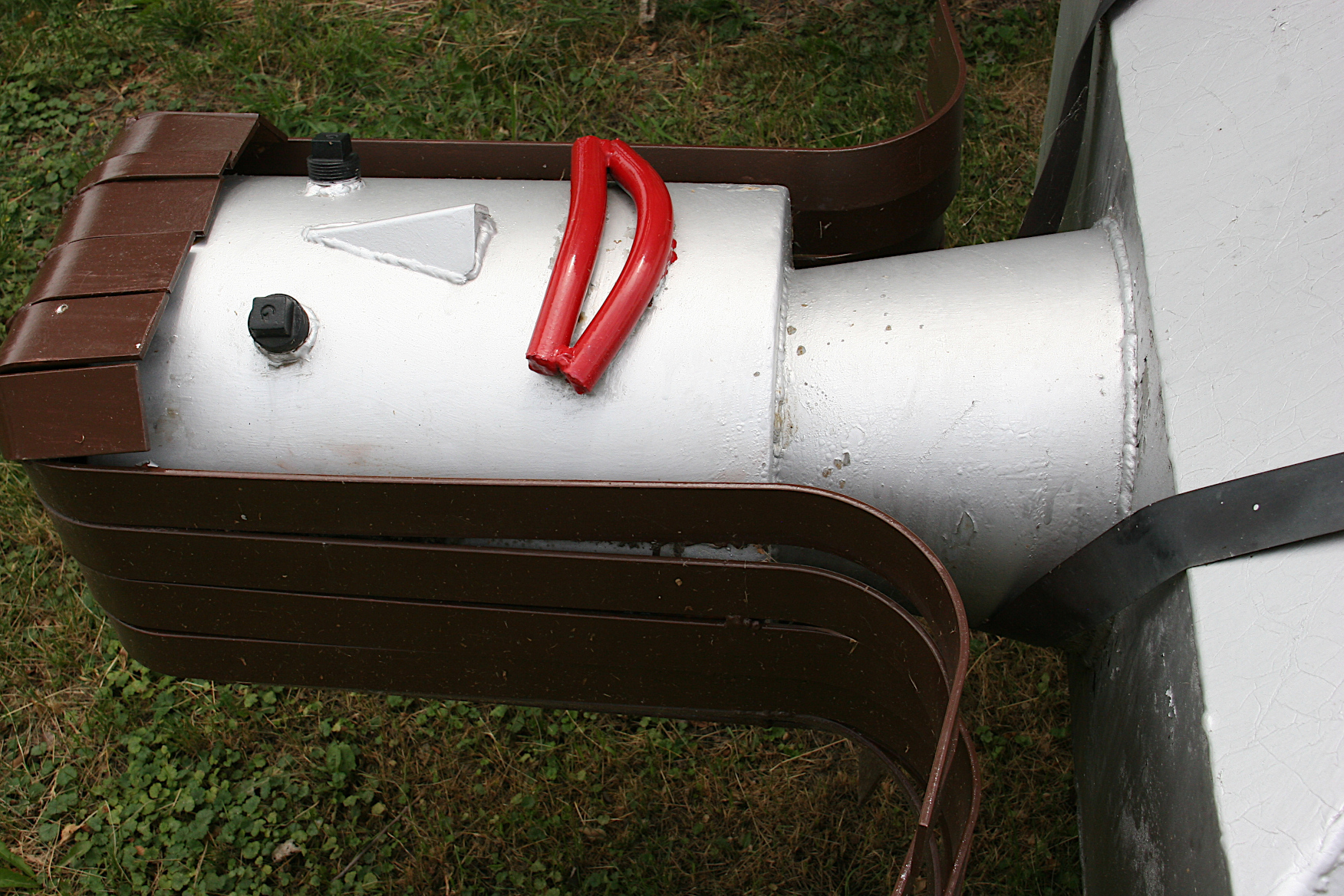
The Tin Woman, up close with her vivid red lips. (Minnesota Prairie Roots copyrighted photo July 2022)
I wish I didn’t believe this to be true. But too often these days I see heartless Tin Man after heartless Tin Man (you may also insert “woman” here) following a narrow pathway of self-focus with no regard for others. There’s no self-awareness of how actions, words, decisions hurt others. Or perhaps, more accurately, there’s no care for how others are affected by what we say or do. That can apply in business, in politics, in relationships, in friendships, in families…
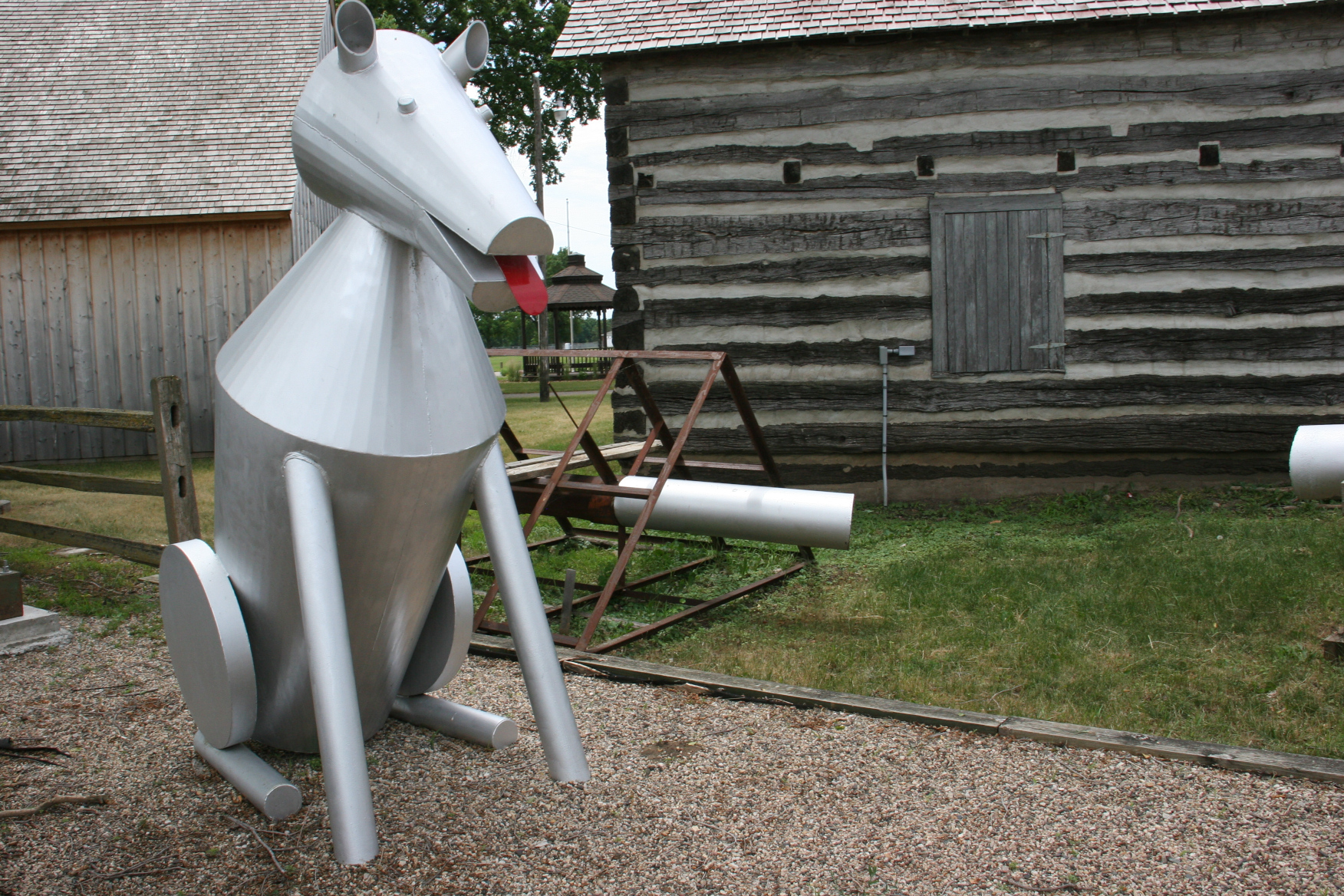
The family even has a dog. (Minnesota Prairie Roots copyrighted photo July 2022)
Sometimes I feel like our collective hearts are missing or atrophying and we really ought to work harder at being kinder, more caring, more considerate, more loving. Better people. Period.
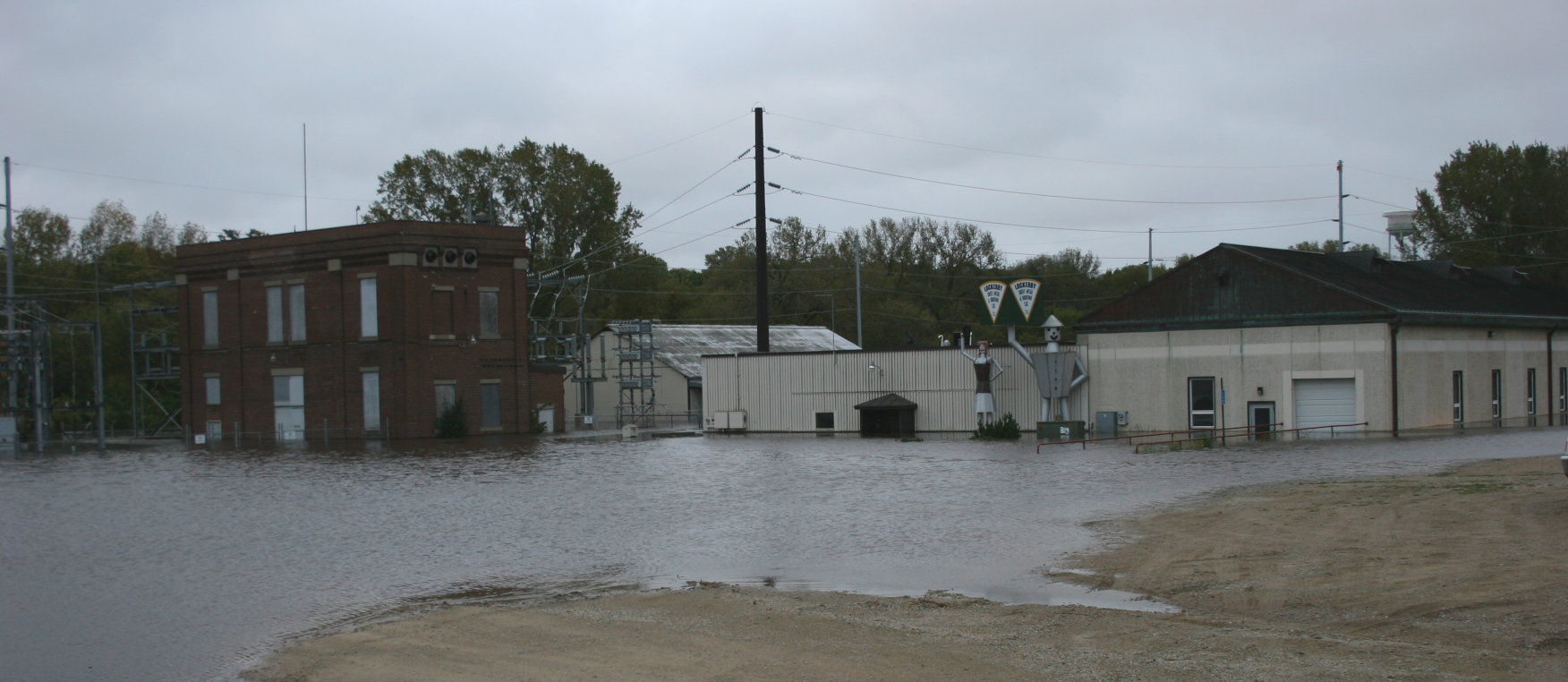
The Tin Man and Woman stand outside Lockerby Sheet Metal in September 2010, when the Straight River flooded. That event devastated the business. (Minnesota Prairie Roots copyrighted file photo September 2010)
That leads me to The Tin Man and his family in Faribault. A few weeks ago I photographed them at the Rice County Historical Society, where they’ve been hanging out for awhile. Originally, their home was at Lockerby Sheet Metal, which closed abruptly in October 2018 after 110 years in business in Faribault. I’m thankful this family found a new home at the RCHS. They are local icons.
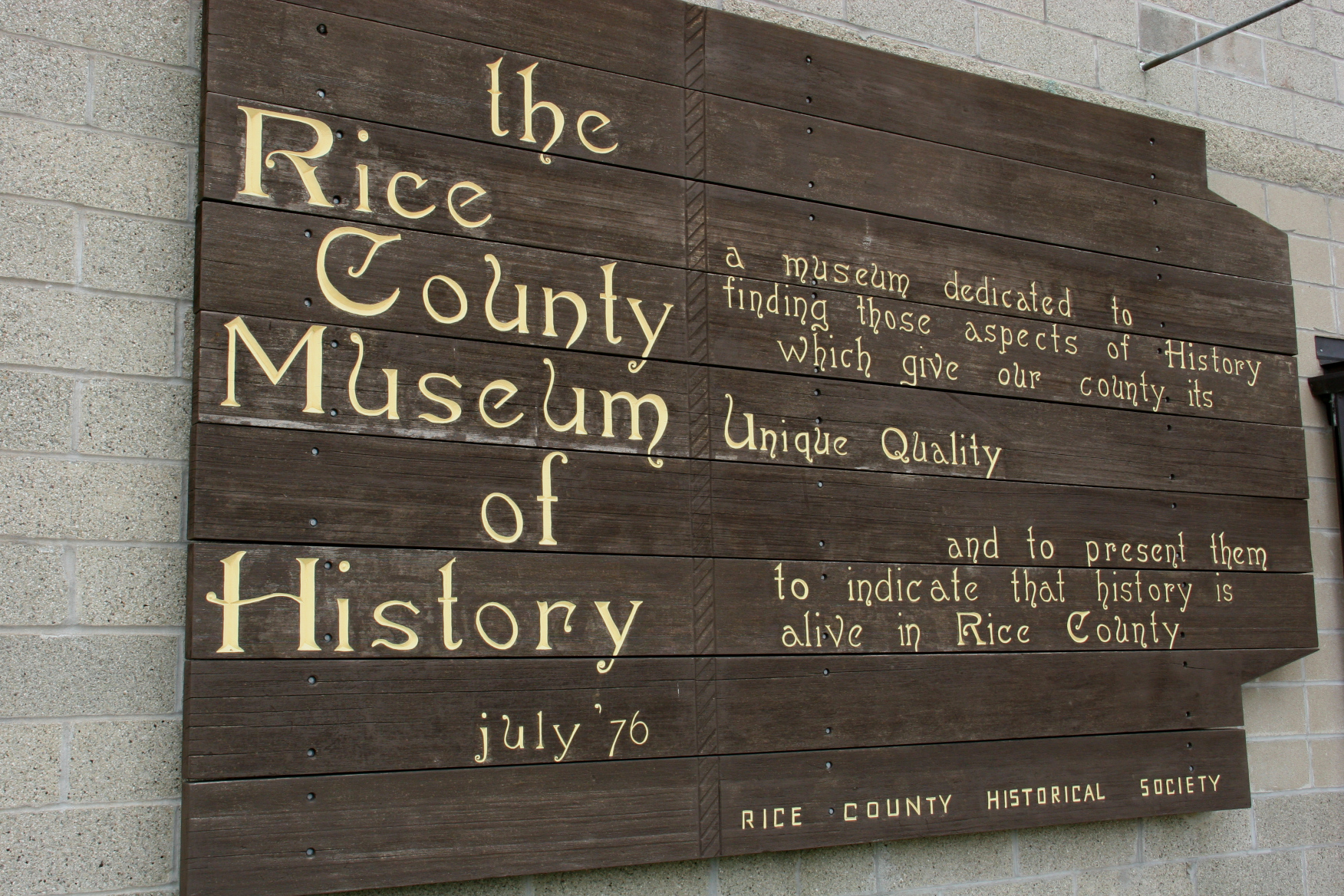
A sign on the Rice County Historical Society states its goal. (Minnesota Prairie Roots copyrighted photo July 2022)
Keeping this family together, recognizing their collective value, says something about the heart of a community. Locals care about The Tin Man and family from an historic, artistic and business perspective. And, perhaps, also from a love perspective. These creations of Lockerby Sheet Metal can visually represent community love. Yes, that’s the marketing, creative and hopeful side of me writing.
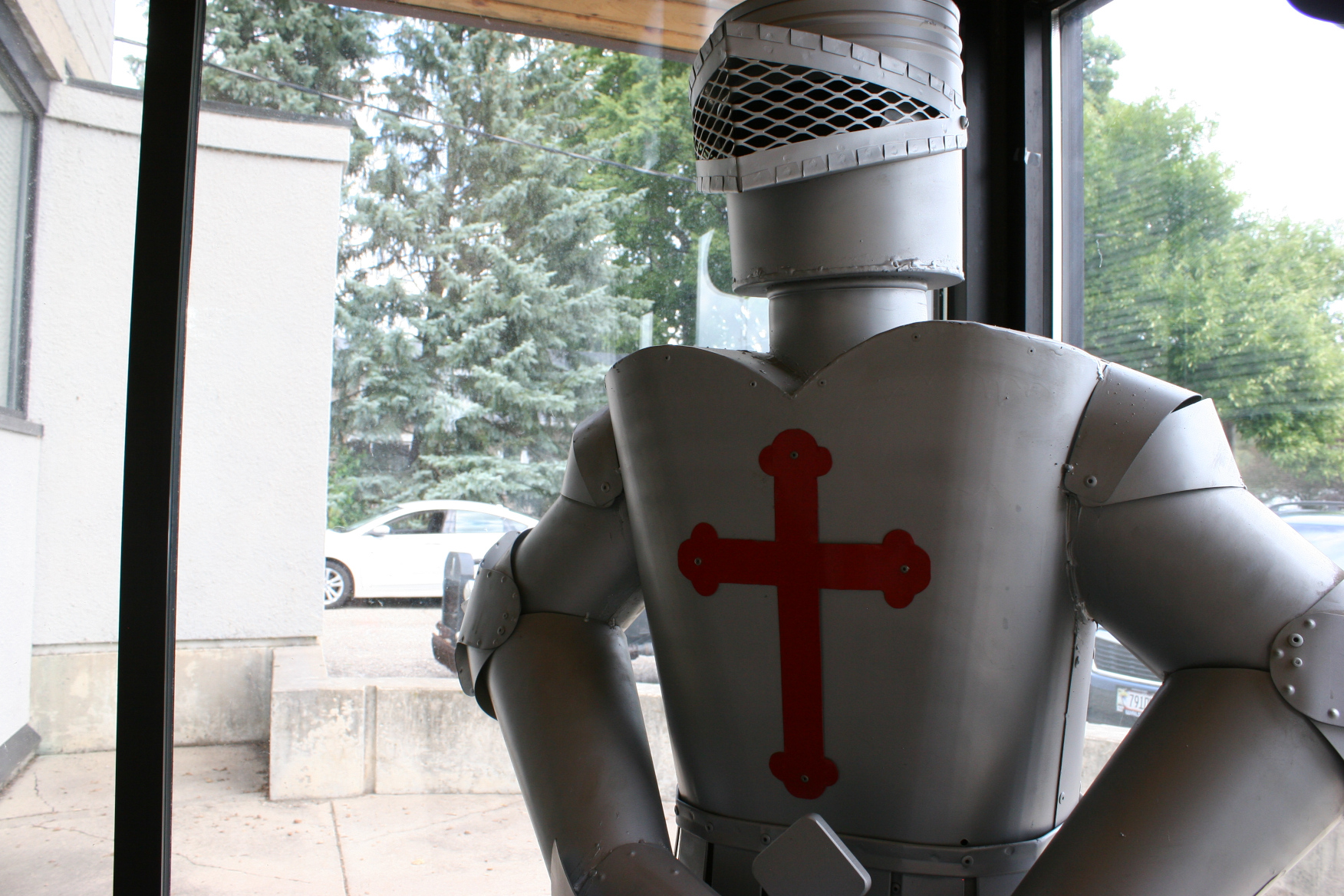
This knight metal art sculpture from Lockerby Sheet Metal stands inside the RCHS entry. (Minnesota Prairie Roots copyrighted file photo)
Even as I believe too much heartlessness exists in today’s world, I also believe that we are capable of growing our love for one another, of strengthening our hearts. Rather than follow a self-focused narrow Yellow Brick Road, we can pause, stop, consider. Pause. Stop. Consider. When we recognize how our words and actions affect others, then we no longer rattle around like a Tin Man (or Woman) without a heart.
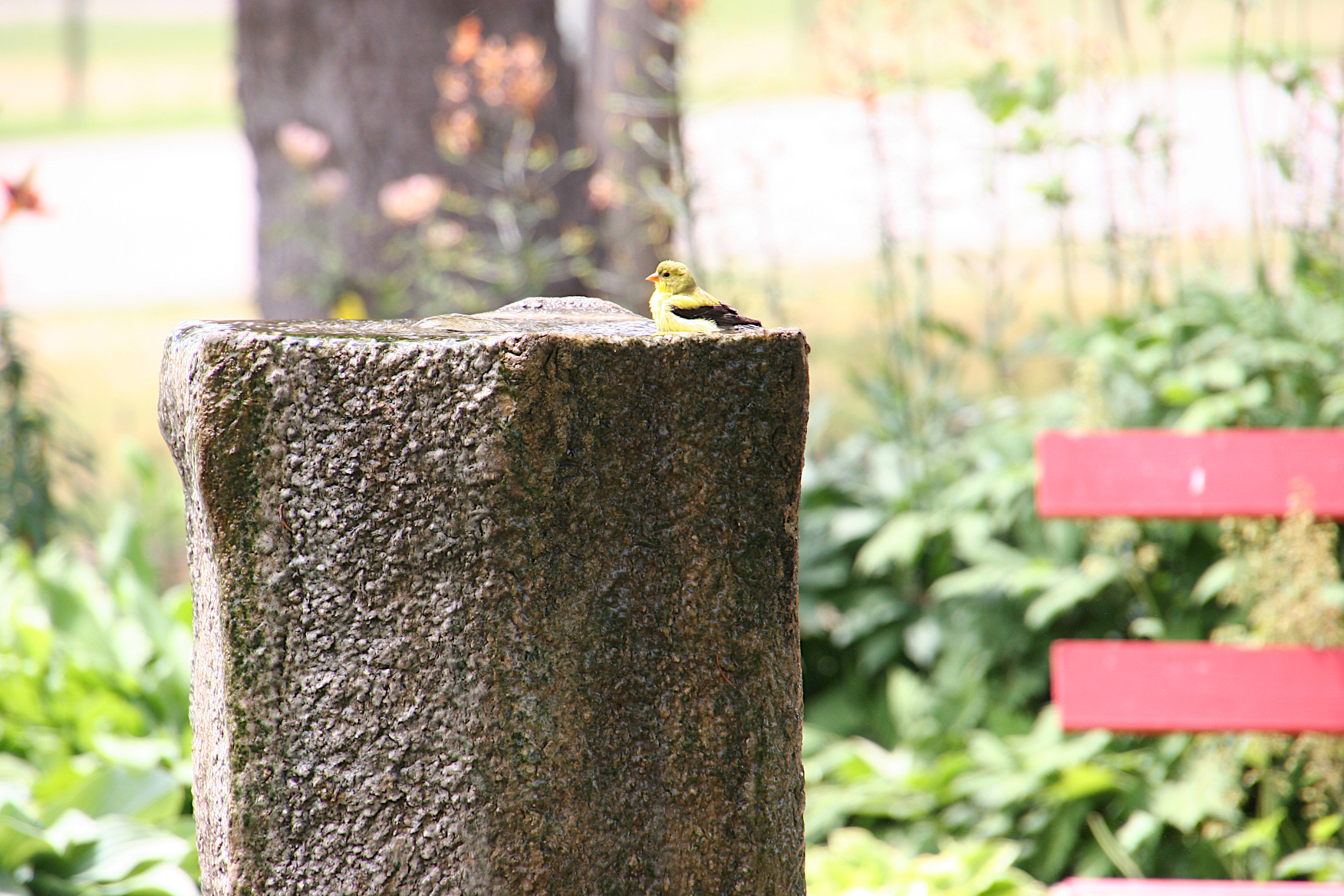
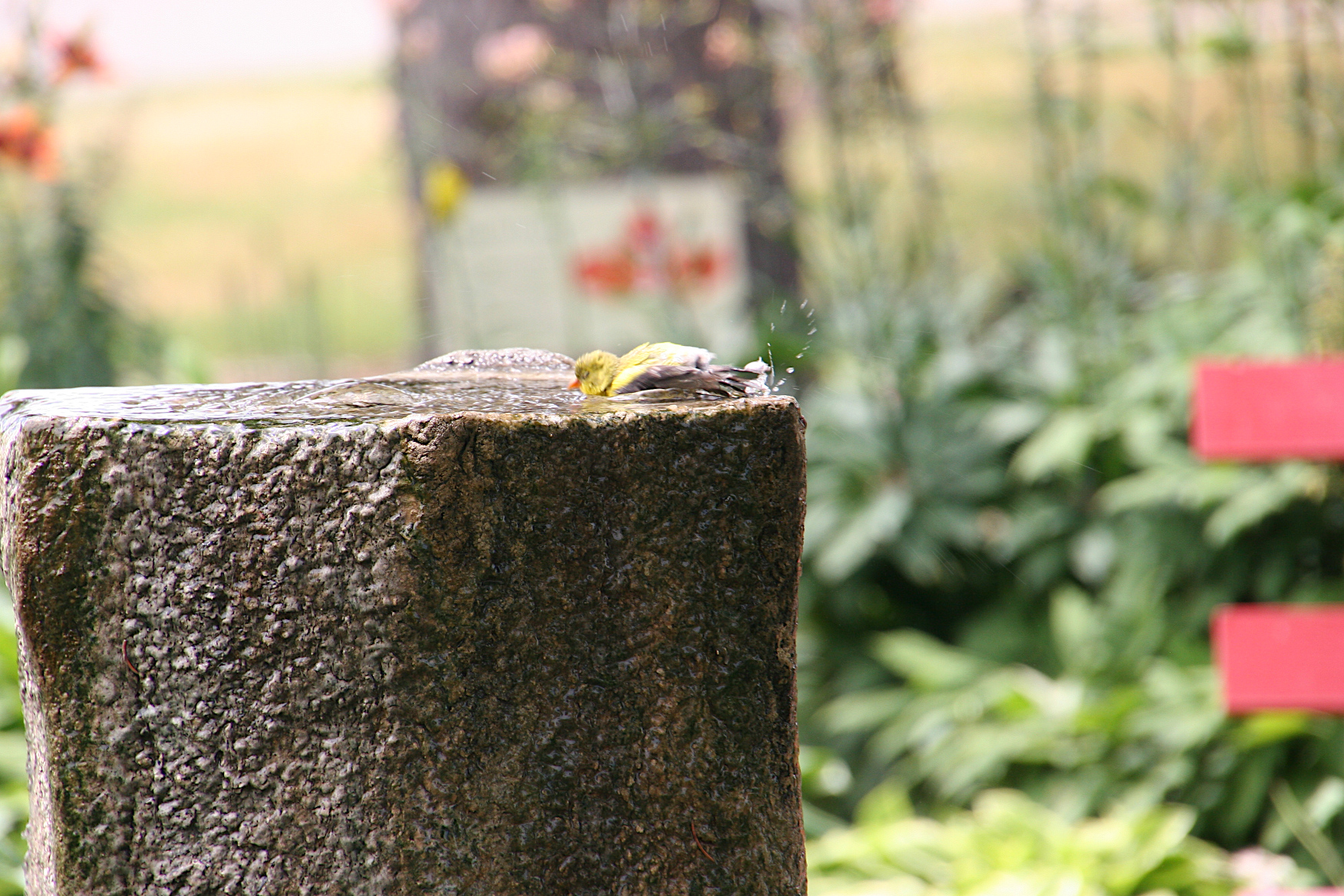
A tiny bird perches in a fountain at the Rice County Master Gardeners Garden, Faribault, Minnesota. (Minnesota Prairie Roots copyrighted file photo July 2022)
I HAVE A MIXED OPINION of birds. I appreciate them at a distance, but not necessarily up close, although I’ve grown more comfortable with their nearness as I’ve aged. Just don’t plunk me in an enclosed garage or other space with a trapped bird. Outdoors is mostly fine.
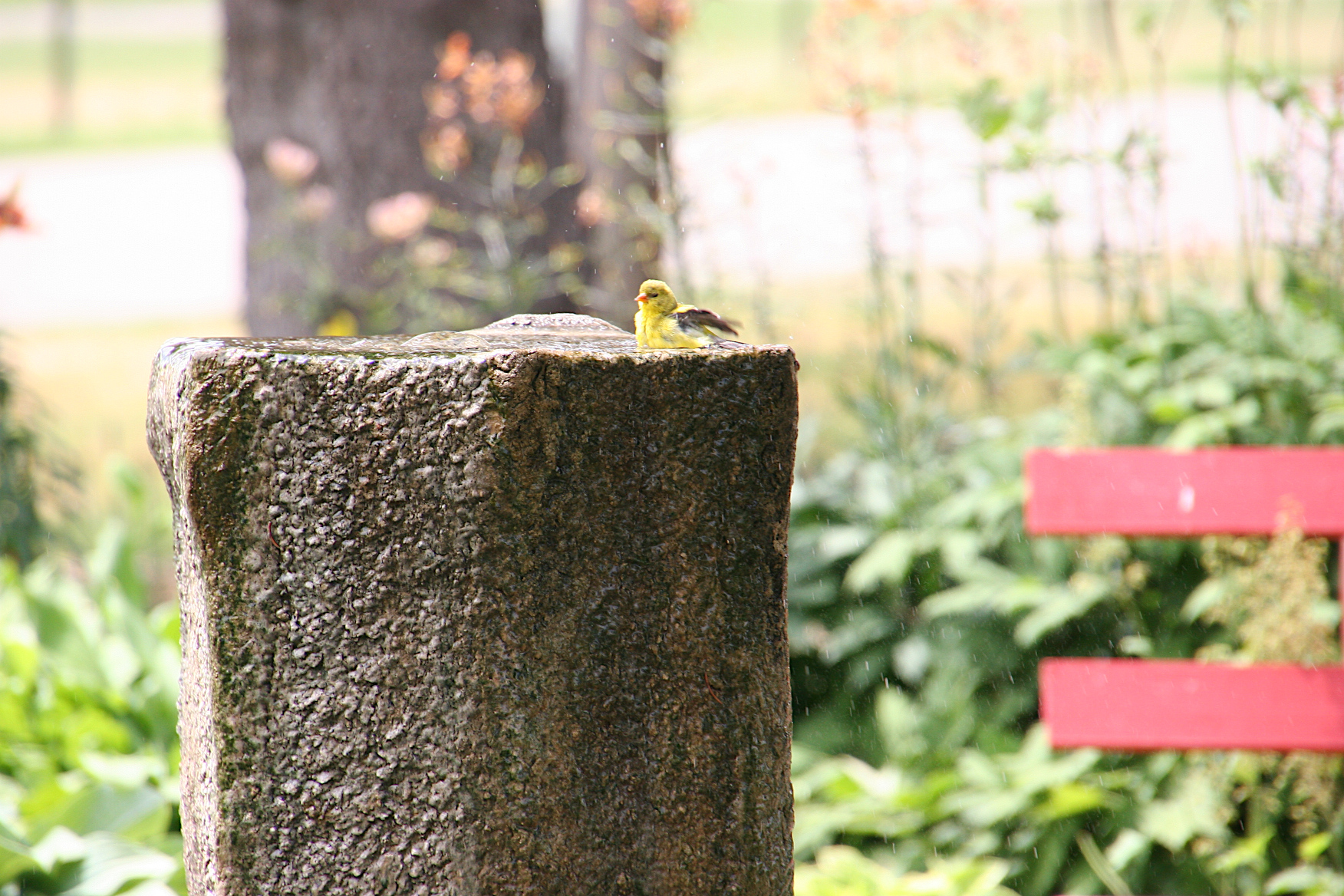
Unfolding of wings to splash in the fountain. (Minnesota Prairie Roots copyrighted photo July 2022)
Recently I observed a cute little yellow bird, a finch, I think, dip into a tree stump water feature at the Rice County Master Gardeners Teaching Gardens at the county fairgrounds in Faribault. With a zoom lens on my 35 mm camera, I photographed the finch briefly splash in the water before flitting away. There was something joyful in that sole moment of focusing on a tiny winged creature.
Water droplets fly as this bird bathes in the fountain. (Minnesota Prairie Roots copyrighted photo July 2022)
We need such moments of simplicity. Of peace. Of birdsong, even if this bird isn’t singing. Moments to quiet our souls in the midst of too much busyness and too many distractions. And too much technology.
I remember how my mom loved the Baltimore orioles that one year, quite unexpectedly, showed up on my childhood farm in southwestern Minnesota flashing orange into the trees. She thrilled in their presence among all the blackbirds, sparrows and barn swallows. In her delight, Mom taught me that not all birds were like the swooping swallows I despised.
In my years of doing farm chores, I grew to dislike the swallows that dived as I pushed a wheelbarrow of ground feed down the barn aisle or shoved cow manure into gutters. That the barn ceiling was low only magnified their, to me, menacing presence. The swallows, I now acknowledge, were only protecting their territory, their young, in the mud nests they built inside the barn. And they ate mosquitoes, which I should have appreciated.
Yet I don’t miss the swallows or the rooster that terrorized my siblings and me, until the day Dad grabbed the axe and ended that.
More than 40 years removed from the farm, I seldom see barn swallows. Rather, in my Faribault backyard, I spot cardinals, wrens, robins and occasionally a blue jay. The front and side yards, however, bring massive crows lunching on remnants of fast food tossed by inconsiderate motorists who find my property a convenient place to toss their trash. I’ll never understand that disrespectful mindset of throwing greasy wrappers and bags, food bits, empty bottles and cans, cigarette butts, and more out a vehicle window.
And so these are my evolving bird stories—of shifting from a long ago annoyance of swallows to understanding their behavior, of delighting in the definitive whistle of a cardinal flashing red into the wooded hillside behind my Faribault home, of observing the feeding habits of crows in my front and side yards drawn to garbage tossed by negligent humans.
TELL ME: I’d like to hear your bird stories, positive or negative.
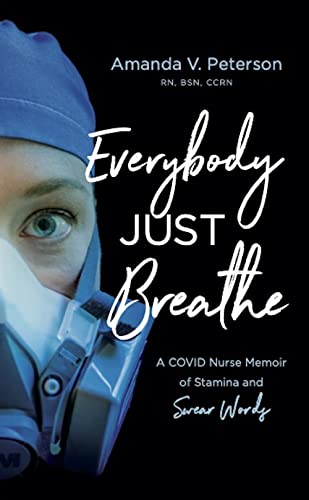
I’m so freaking tired of people thinking this virus is bullshit, and that only old or unhealthy people are being affected by it. It is so hard to listen to.
Hers is a powerful book in so many ways, but mostly because Peterson takes readers into the ICU. She spares no details in patients’ deteriorating conditions, their struggles to survive, or not, how their families are affected and how she’s been impacted.
A early depiction of the coronavirus. Image source: CDC
I challenge anyone to read this book and not come away with a strong visual of how COVID wreaks havoc on the body beyond an inability to breathe. As a non-medical person, I didn’t fully understand how destructive this virus can be. I do now, thanks to Peterson’s stories from the ICU. The ravages of COVID for a critically ill patient are beyond nightmarish.
In her book, Peterson uses the fictional “Jack” as a COVID patient. Privacy laws necessitate this, but “Jack” represents all the patients she cared for during her time in a special COVID unit where an air filtration system roared and medical staff worked tirelessly to save lives while also comforting patients whose loved ones could not be with them.
Raw emotions of anger, fear, frustration and more pack the pages of this book. Often Peterson reminds herself to just breathe, like the patients she prompts to just breathe. Her two young children provide comic relief, noted in interspersed humorous quotes. She escapes into nature. Finds peace in prayer, strength through her faith. Support from her co-workers.
Yet, she reveals how she feels shunned, ignored, silenced, disrespected, even called a liar by the very people she’s trying to help. Her hurt is palpable. Yet, this ICU nurse carries on with caring.
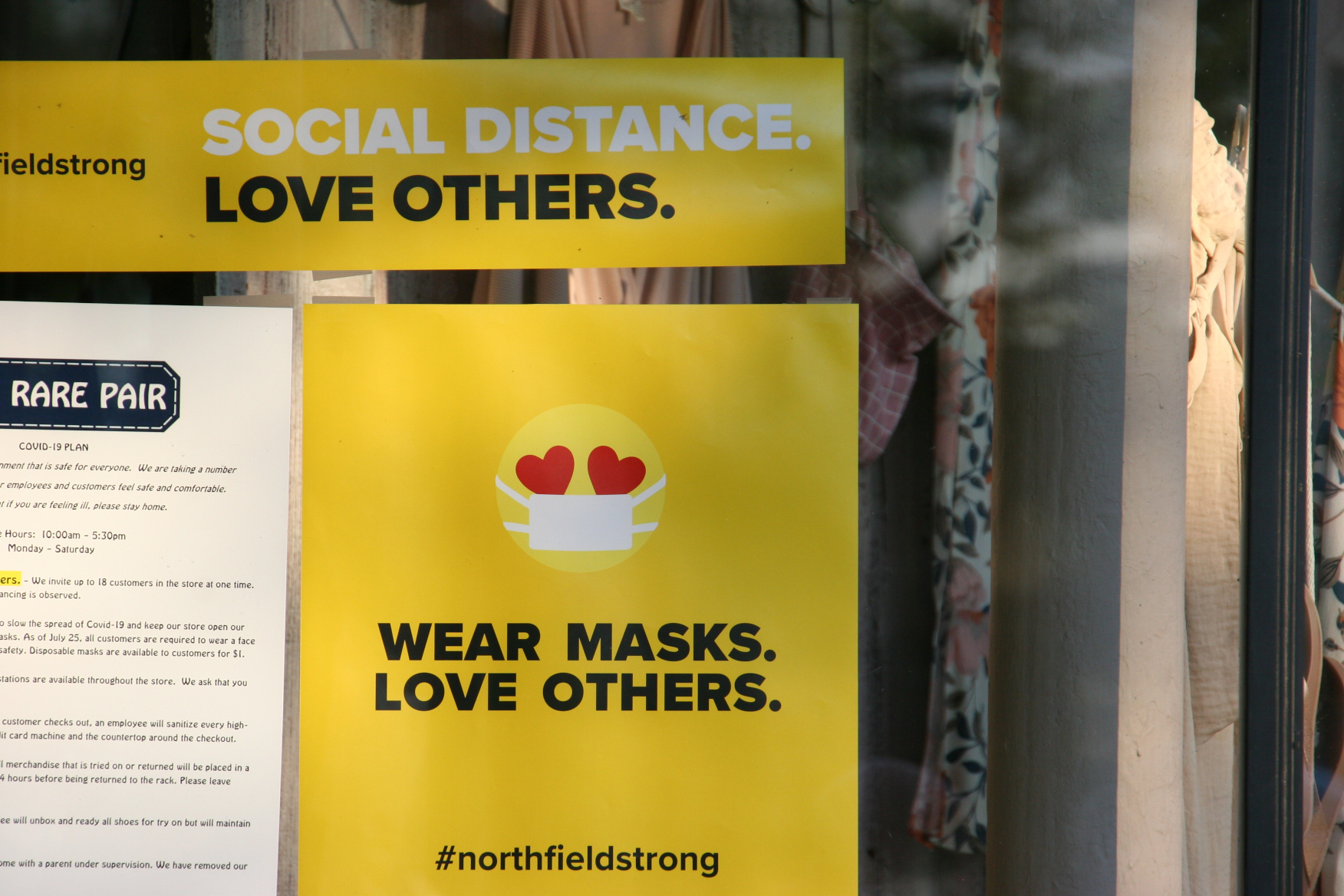
Photographed in the window of The Rare Pair in Northfield early in the pandemic. (Minnesota Prairie Roots copyrighted file photo 2020)
She is, Peterson writes, tired of simultaneously fighting the virus and the public. A public whom she calls selfish in their unwillingness to, for example, wear face masks and/or avoid gathering in crowds. Again, this was in the beginning of the pandemic, but still applicable today as highly-transmissible variants spread, infect, hospitalize and kill. I ask you to wear a mask not out of fear but out of love, she writes. Peterson repeatedly stresses the love perspective, that we ought to think about others. Why, she asks, is love so hard? I wonder the same.
That a pandemic can bring out selfishness and ugliness instead of community and love is horrifying, Peterson writes. She notes how COVID has become politicized but that the virus doesn’t care about politics. She’s right.
I came to this book with hesitancy, not about the content, but wondering whether this would be well-written. Just pages into the memoir, I was hooked. Peterson can write. Her writing style is like a conversation, free flowing (with swear words tossed in the mix), honest, introspective, nothing held back. Her stories, insights, experiences are powerful. Emotional. At times I laughed out loud. Other times I nearly cried at the immense suffering, loss and pain.
I encourage you to read this memoir by a COVID ICU nurse from Hudson, Wisconsin, who is, undeniably, in the right profession. Peterson deserves our respect and thanks for not only the care she’s given to all the “Jacks,” but also for the telling of her experiences in this unforgettable, impactful book.
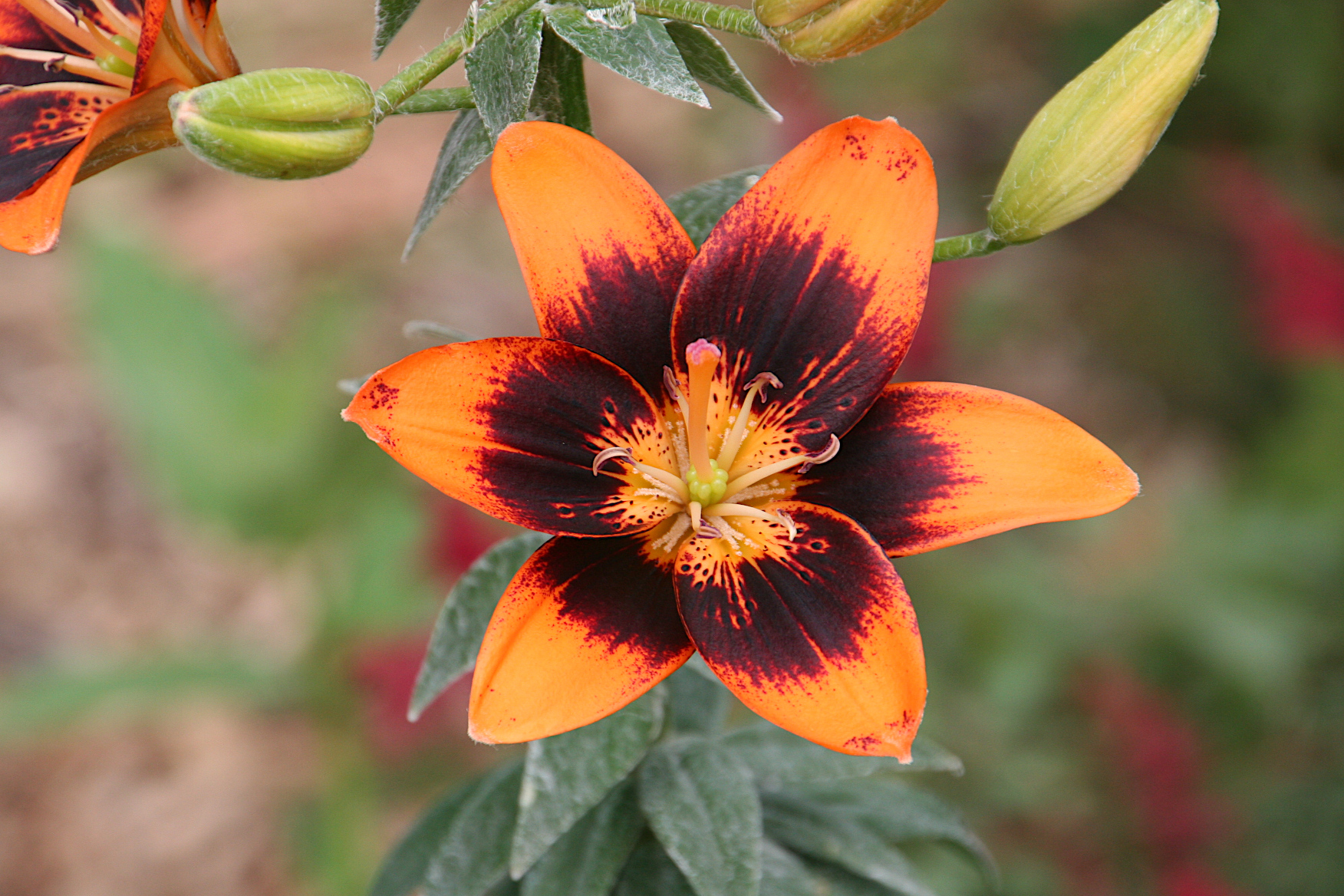
In early July, lilies bloomed in the Rice County Master Gardeners Teaching Garden. (Minnesota Prairie Roots copyrighted photo July 2022)
IN MY FARIBAULT BACKYARD, wild tiger lilies stretch above a tangled mess of greenery, popping orange into the hillside. On the other side of town, domesticated orange lilies grace the neatly-cultivated Rice County Master Gardeners Teaching Gardens at the Rice County Fairgrounds.
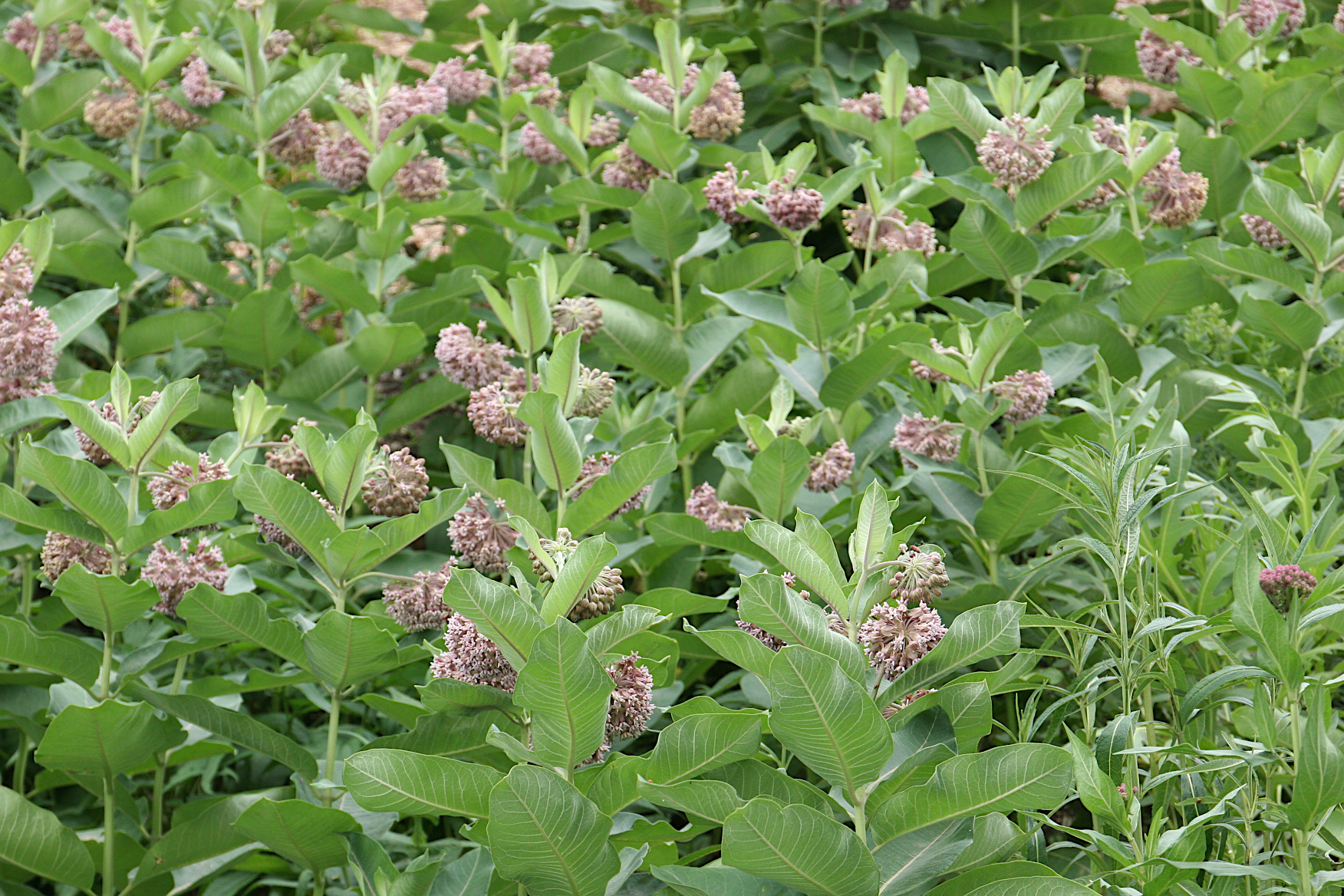
The master gardeners’ milkweed patch. (Minnesota Prairie Roots copyrighted photo July 2022)
Also in my yard are scattered milkweeds, food for Monarch caterpillars. In the gardens tended by the experts, a mass of intentionally-planted milkweeds flourishes.
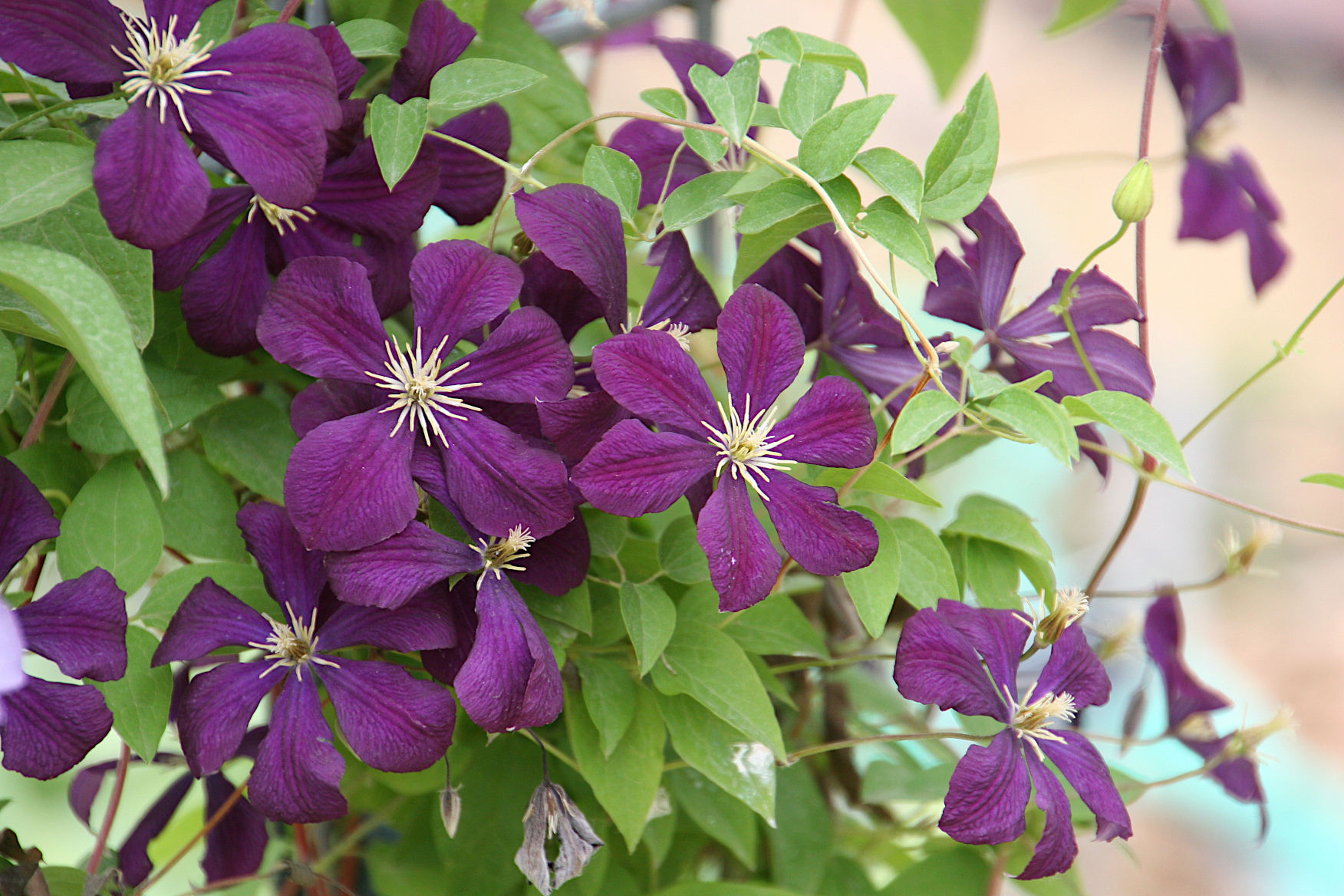
Clematis. (Minnesota Prairie Roots copyrighted photo July 2022)
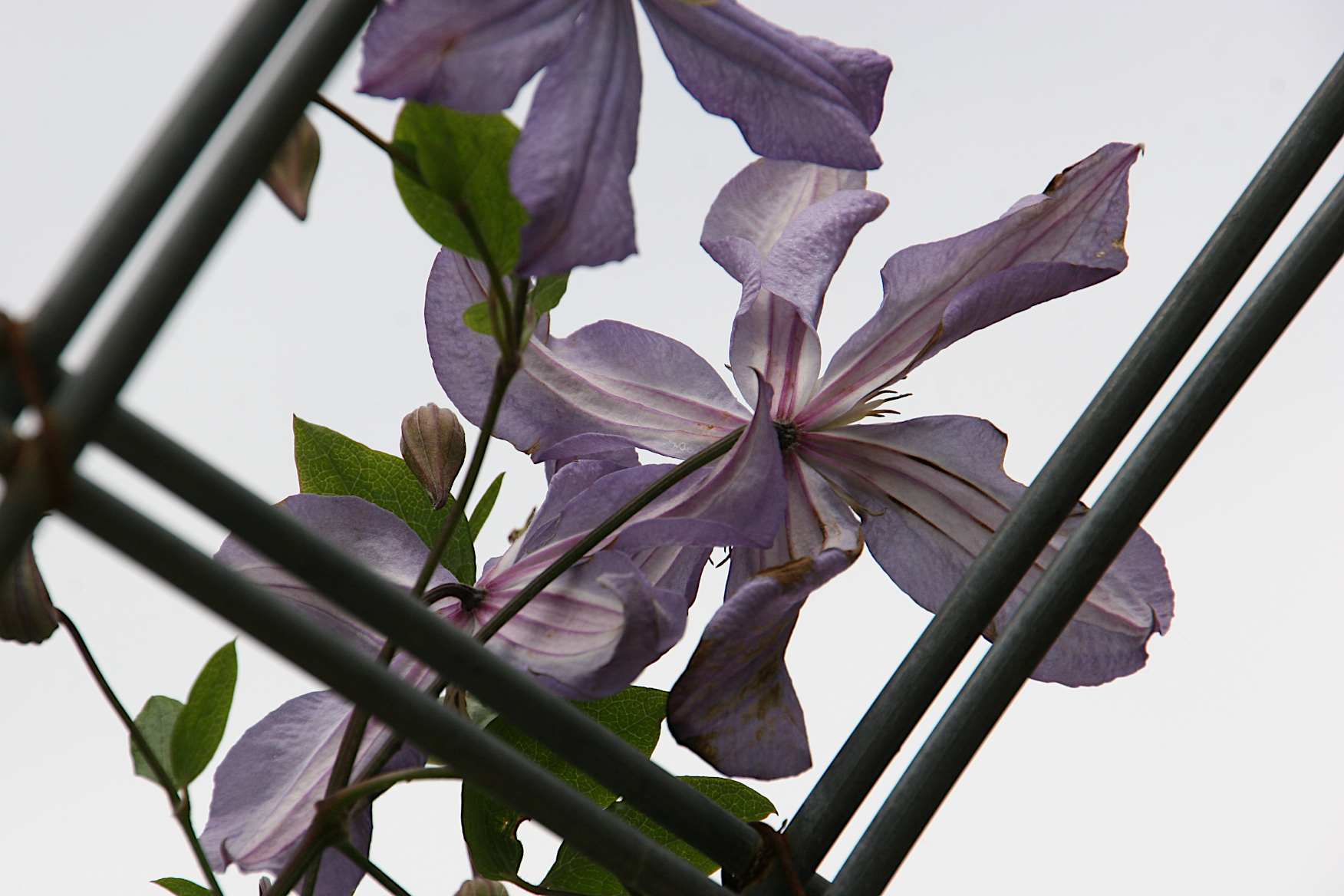
Blocks away from my home, Donahue’s Greenhouse grows one of the largest selections of clematis in the U.S. That’s their specialty. Across town at the master gardeners’ garden, clematis climb an arbor, lovely blooms opening to the summer sky.
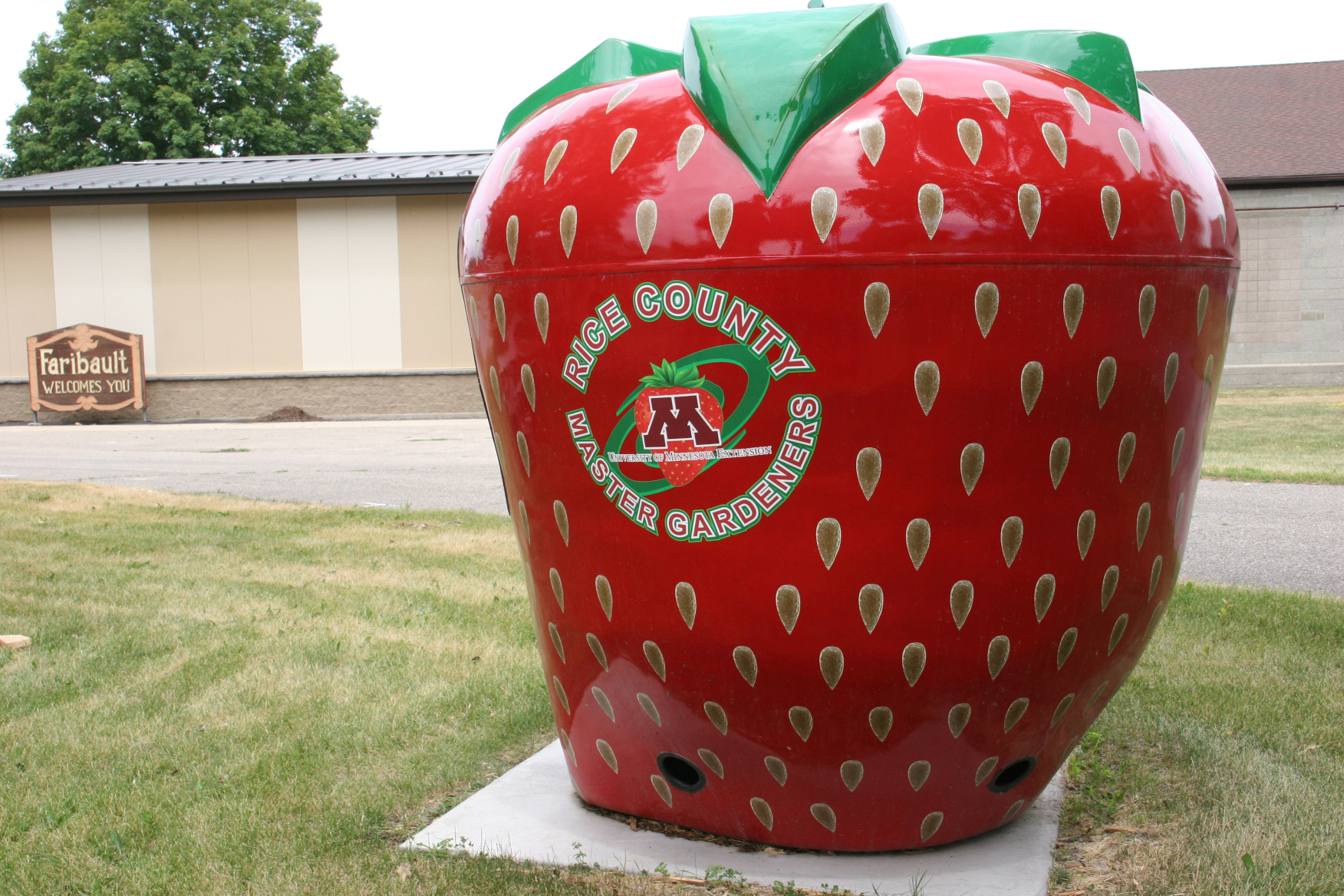
The Berry-Go-Round. (Minnesota Prairie Roots copyrighted photo July 2022)
Within a short distance of my home is the birthplace of the Tilt-A-Whirl, a carnival ride no longer made in Faribault but in Texas. On the edge of the master gardeners’ garden, a giant strawberry sits. It’s a Berry-Go-Round, a spin ride produced by Sellner Manufacturing beginning in 1987, before the company was sold.
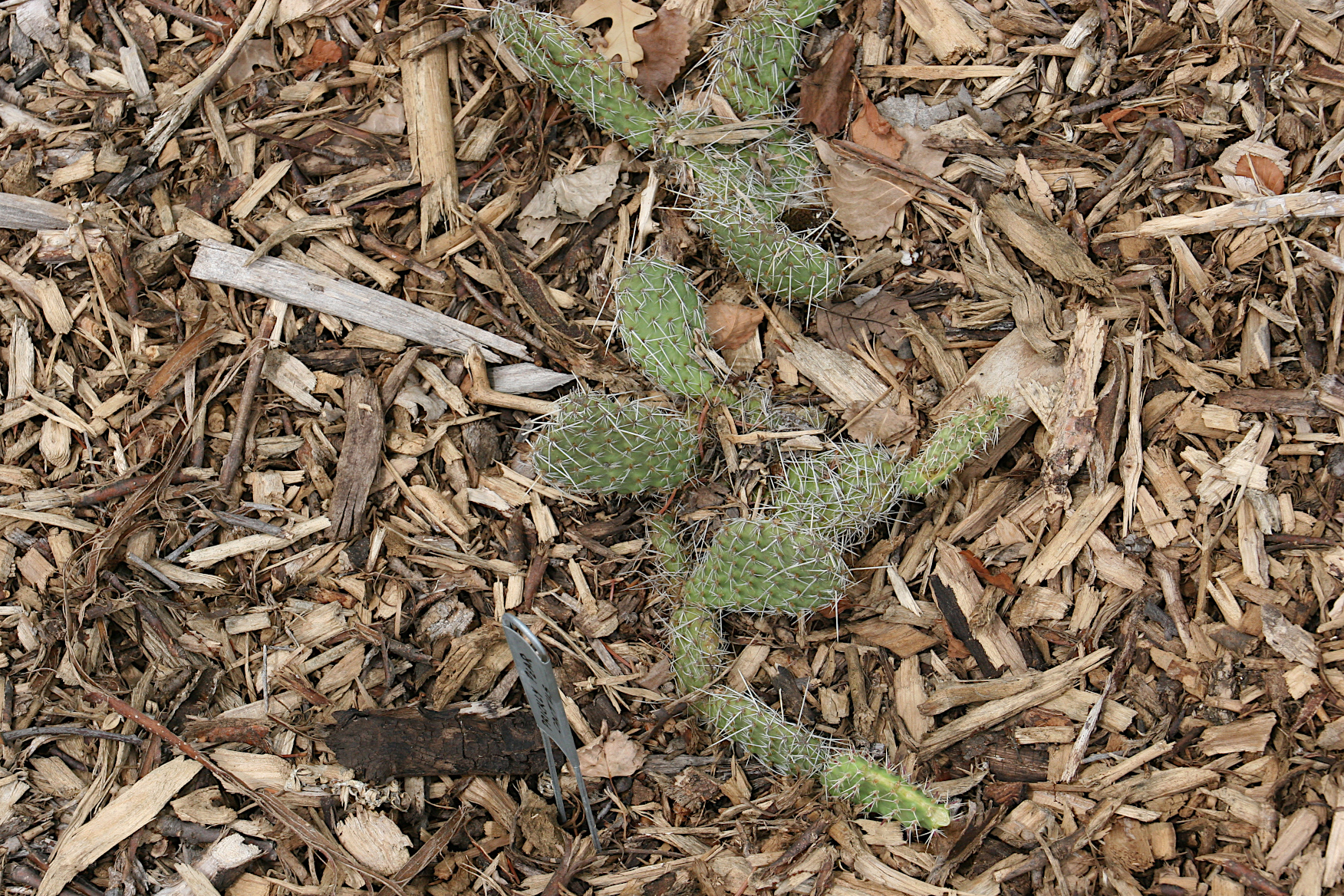
Prickly pear cactus. (Minnesota Prairie Roots copyrighted photo July 2022)
More than 150 miles to the southwest of Faribault near the South Dakota border, prickly pear cactus thrive in the rocky lands of the prairie. I’ve seen them at Blue Mounds State Park near Luverne. And now I’ve seen them in the gardens at the local fairgrounds.
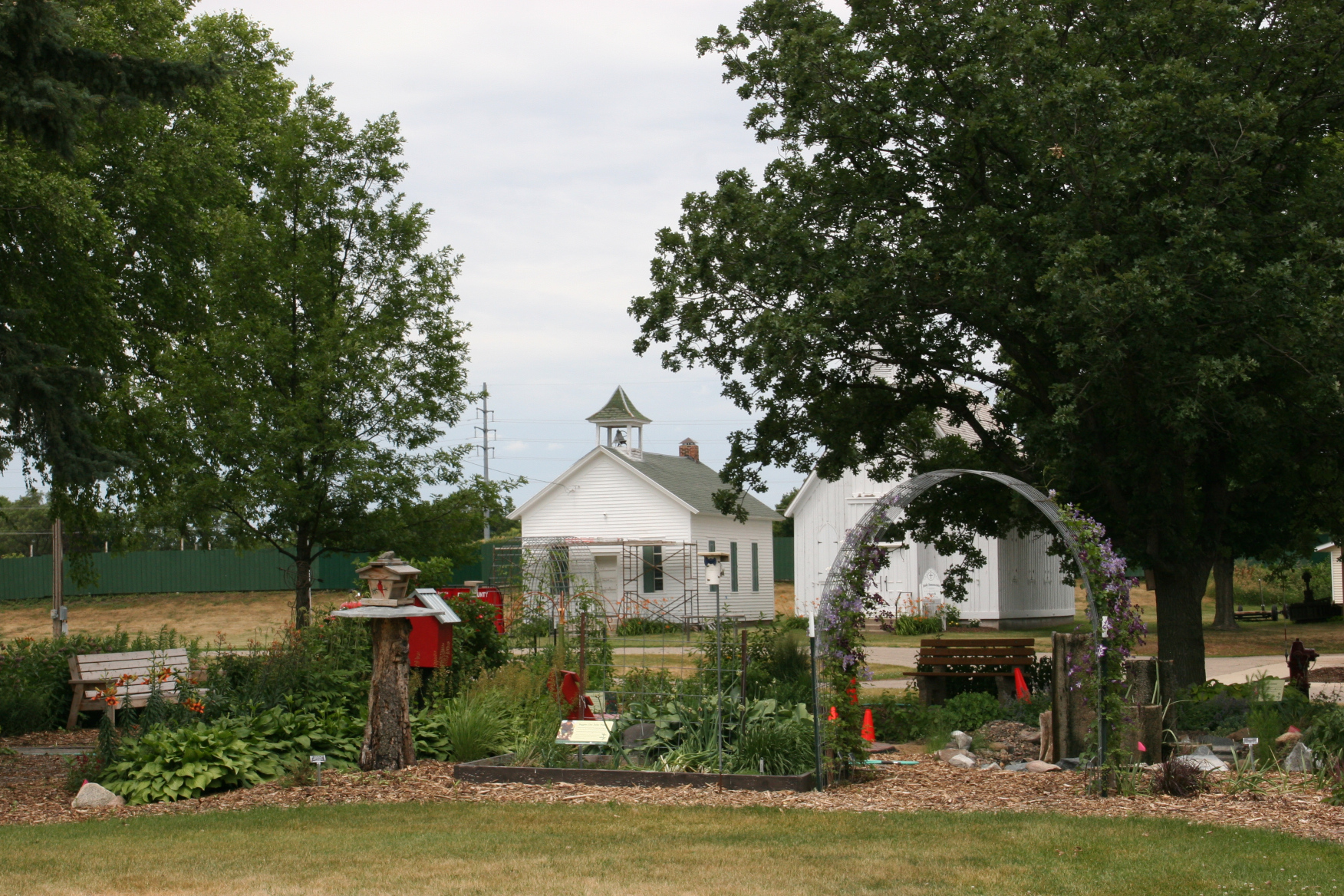
An overview of the Rice County Master Gardeners Teaching Gardens, photographed in early July, with an historic school and church (part of the county historical society) in the background. (Minnesota Prairie Roots copyrighted photo July 2022)
It’s interesting how, in life, so many connections exist. Even in a garden.
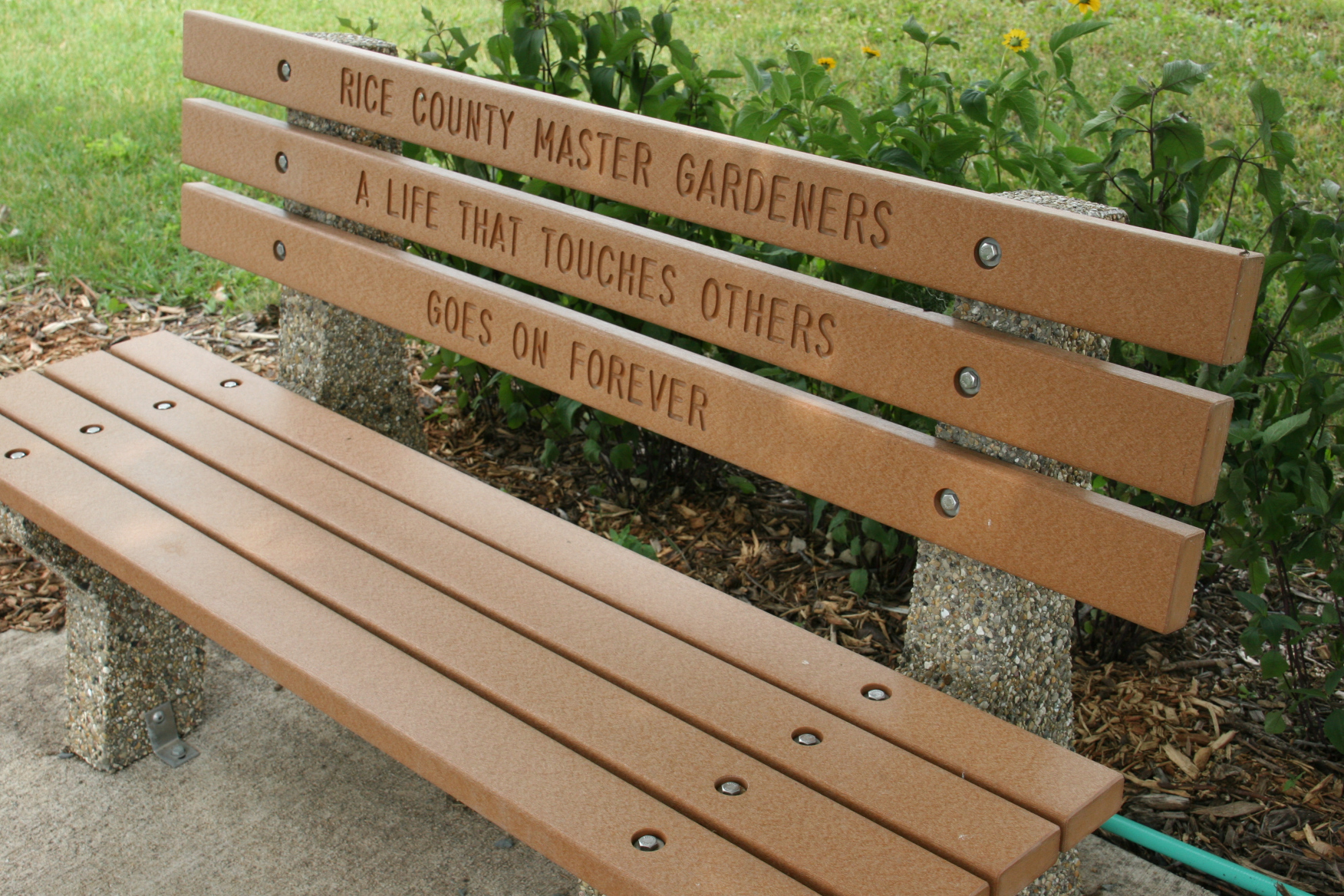
One of several benches in the master gardeners’ garden in Faribault. (Minnesota Prairie Roots copyrighted photo July 2022)
Gardens connect us to people, places, memories. A life that touches others goes on forever. I come from a family of gardeners tracing back generations. Vegetables grown in my mother’s massive garden fed me, and my family of origin, for the first 18 years of my life. I worked that garden with her, planting, weeding, tending, harvesting. I left gardening when I left southwestern Minnesota. But I still appreciate gardeners and gardens.
An artsy scene of clematis on arbor. (Minnesota Prairie Roots copyrighted photo July 2022)
I value the beauty of flower gardens, the purpose of vegetable gardens to feed. And I appreciate, too, the peace a garden brings. To sit among the blooms and plants in a garden oasis like the Rice County master gardeners created is to feel a calm, a sense of serenity in the midst of chaos and struggles and challenges.
The water feature is shaped like tree stumps. (Minnesota Prairie Roots copyrighted photo July 2022)
Water, especially, soothes me. The Rice County master gardeners understand that and added a water feature to their garden plot. I delighted in watching a tiny yellow bird (I think a goldfinch) splash in the water. Such a simple joy.
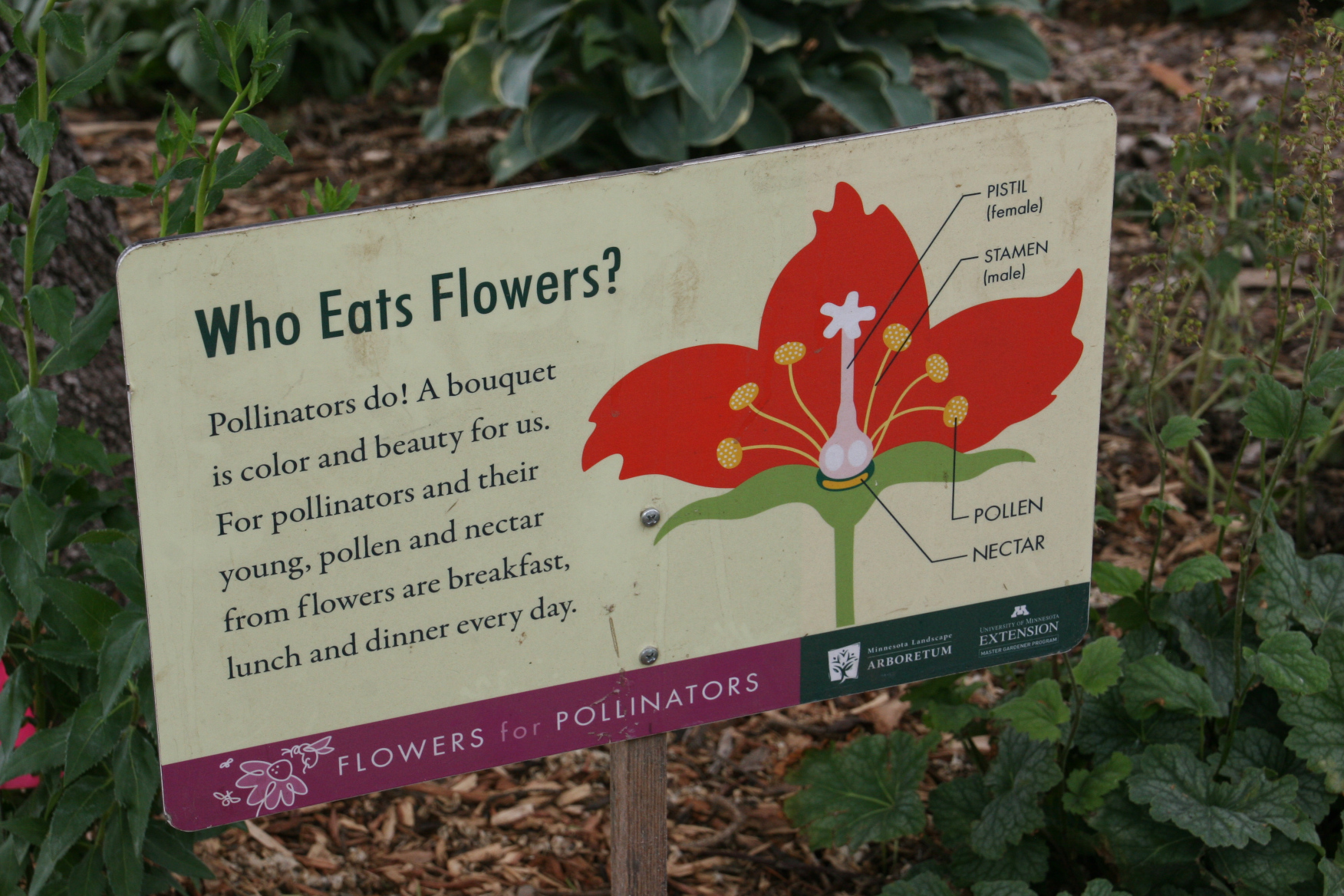
One of many educational signs in the Rice County Master Gardeners Teaching Gardens. (Minnesota Prairie Roots copyrighted photo July 2022)
And isn’t that part of a garden’s purpose—to bring joy? Joy to those who work the soil, seed or plant, tend and care for that which grows. Joy to those who delight in the all of it.
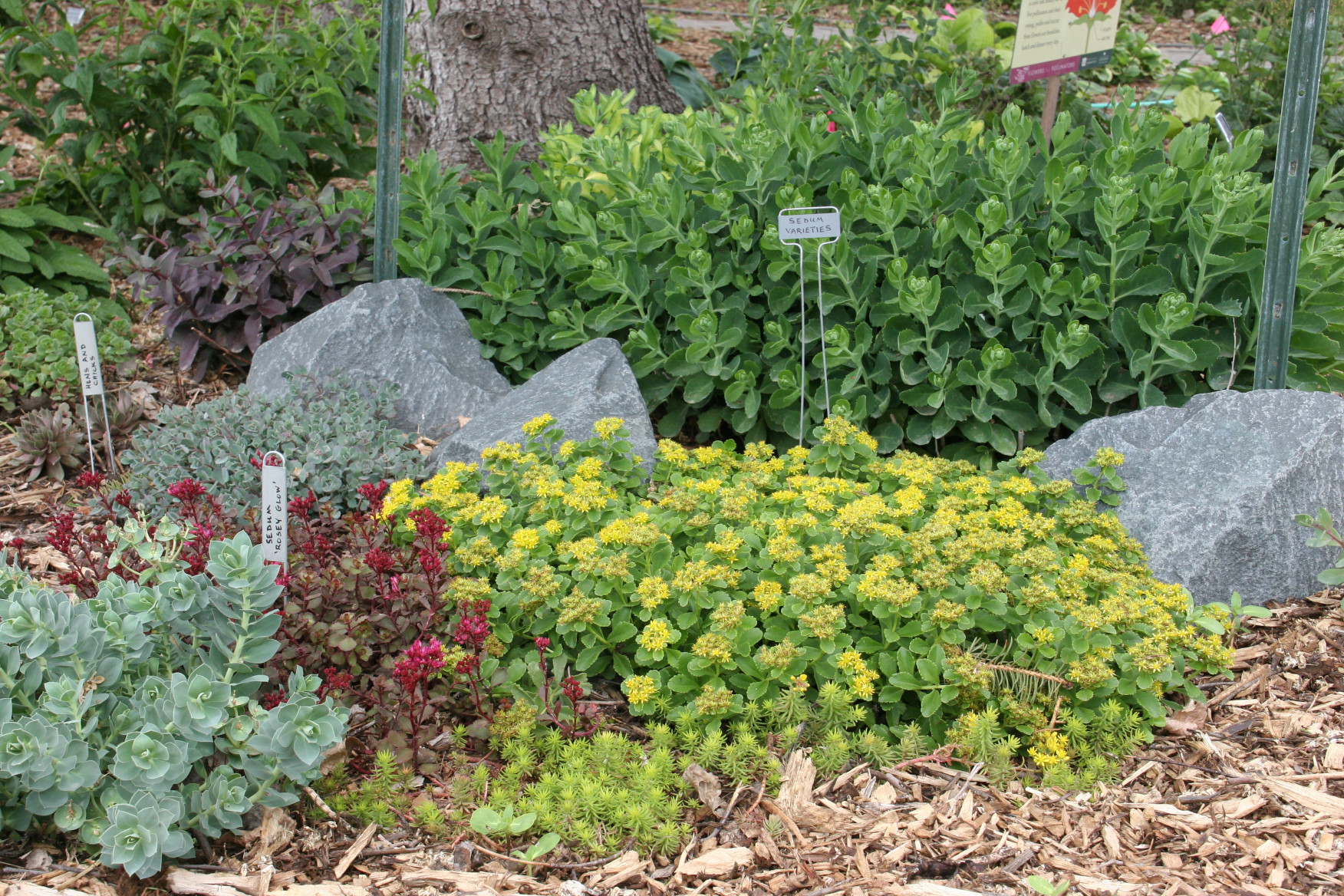
A sedum patch planted by the master gardeners. (Minnesota Prairie Roots copyrighted photo July 2022)
I feel such gratitude for gardeners, for the nurturing hands that link me to nature. It’s all about connecting to each other in this world we share, in the commonality of humanity.
I expect the driver of this 1956 Plymouth Plaza has stories to share about the vintage car he drove to the Faribault car show. (Minnesota Prairie Roots copyrighted photo July 2022)
ATTENDING THE July 15Downtown Faribault Car Cruise Night prompted the stories I am about to share. Experiences create stories, which help us to understand and connect with one another. What are your car memories?
Mine are of my bachelor Uncle Mike’s blue-green Nash Rambler, a small (for 1960) boxy car. He didn’t need a roomy car. I remember the Rambler for its size, its color and its name. And its novelty among all the Chevys and Fords.
And then there was Grandpa Bode’s salmon-hued car, make and model unknown to me then and now. The color imprints upon my mind as does the rapid blink-blink-blink of the blinker. If I heard the sound now, I would still recognize it. But to describe the distinct blink proves impossible. I remember also the clear plastic that covered the seats and how, on hot summer days, the bumpy plastic stuck to my legs.
Heading north on Central Avenue in Faribault near the end of the July 15 Downtown Car Cruise Night. (Minnesota Prairie Roots copyrighted photo July 2022)
Grandma Kletscher drove a boat of a car. Large, white. Occasionally she threaded a garden hose into the exhaust pipe, started the car and gassed the moles tunneling through her yard. She was stubborn, determined, innovative. I recall, too, riding with her in that car to nearby Belview to shop for fabric at the general store. She would choose yardage for shapeless dresses I stitched for her. Simple. Zipper tracing down the back. Darts at the bustline. Short-sleeves. Basic dresses to cover her stout frame.
I recall, too, my dad’s 1959 black-and-white Chevy Impala, our family car until he sold it to a neighbor boy and later wished he hadn’t.
Dad liked spacious Impalas. I remember his second Impala, blue in color, and how our family of eight, plus Grandpa, piled inside for our once-a-year trip to visit relatives in The Cities. We packed like sardines, shoulder-to-shoulder, hip-to-hip with no wiggle room between kids. If not for the excitement of actually leaving the farm for some distant travel, I doubt we would have managed the miles. But the adventure kept us focused as we watched for the Flying Red Horse and Caterpillar landmarks, our GPS of sorts along with a paper road map pulled from the glove box.
All the vehicles along Central Avenue hold stories. (Minnesota Prairie Roots copyrighted photo July 2022)
And then there was my first car, a 1976 yellow Mercury Comet purchased right after my graduation from college. It soon garnered the nickname, Vomit. Two flat tires on the day I bought the former rental car from Florida should have sent me back to the Minnesota dealer. The car seemed to have endless mechanical and other problems. A door that wouldn’t close all the way in the depths of winter. A black interior that heated like a sauna in the summer. And too many other issues that fit the Vomit moniker.
Yet, my Vomit with the “press” sticker adhered to the windshield got me to where I needed to be during my early days as a newspaper reporter: chasing fire trucks, interviewing sources, attending endless local government and school board meetings, trying to source information about a murder in New Ulm, covering a homecoming celebration in Odin in 1981 for Bruce Laingen, an American diplomat held hostage in Iran for 444 days…
Those are my car stories. We all have them. What are yours?
My husband, Randy, at work as an automotive machinist. (Minnesota Prairie Roots copyrighted file photo)
THIS IS MY TRUTH. It is 9:25 am, and I am exhausted. I’ve been awake since 4 am. Randy awoke two hours earlier. After a while of tossing and turning, I rolled out of bed and finished reading a book by a nurse who worked for 11 months in a Minnesota COVID ICU Unit. A review of that powerful book will be forthcoming.
But today this is a post about what’s keeping me awake. More precisely this is a story of job loss. In early May, my husband of 40 years learned that he will lose his job of 39 years as an automotive machinist at an auto parts store. Not because he didn’t do a helluva a job, but because the new out-of-state corporate owner is opting to close down the profitable and much-needed machine shop. Randy was given four months to wrap up work he had scheduled in, with orders not to accept new work. That’s substantially affected his income and his morale.
FEELING DEVALUED AND STRESSED
It’s been hard, really hard. The stress is wearing on us, Randy especially. He is one of the calmest individuals I know. But this, this disrespect and devaluing of him after 39 years of hard work and loyalty is tough to take. Every single day he deals with customers upset about the shop closure. Every single day he turns away work. Every single day he deals with rumors spread by co-workers and others. Every single day he goes to work weary of it all.
And that filters to me as I try to support, encourage and be there for him. I am angry. I am frustrated. I am tired and drained and stressed. Mentally exhausted. Randy likely feels that quadruple. We are grieving.
DON’T SAY THIS TO US
If one more person tells me to look on the positive side, that something good will come from this, I will scream. I don’t need to hear that right now. I need affirmation of my anger, my frustration, my exhaustion, my worries, my stress. Randy needs the same. We are entitled to these feelings. And we will own them.
I recognize that our current situation has happened to others. I’m sorry for that. But today this is our story.
YOU WORK HARD ALL YOUR LIFE & THEN THIS HAPPENS
Randy is not yet full retirement age. That won’t occur until early next year. Uncertainties exist about his future, including his end date, which may be as early as July 29 or perhaps August 31. Communication is lacking. An attorney has been consulted. None of this should be. Not after 39 years.
My heart hurts for Randy. He should be leaving his long-time job on his terms, in his time. Gone is the thought of a retirement party with customers, co-workers and family gathering to celebrate and honor Randy. He’s a good man. A decent man with a strong work ethic. Highly-skilled at his trade. Remarkable in his devotion to meeting customers’ needs and providing excellent service. He is dedicated, working long hours for 39 years. The list of attributes could go on and on.
I, of course, am biased. But anyone who knows Randy would tell you the same. He is farm boy strong with a background of physical labor. Talented and hands-on skilled. Grease rings his fingernails. Grease stains his worn steel-toed work boots. And sometimes grease stains his face.
Today I see his weary face. I see the exhaustion. I see the stress and uncertainty. He can’t sleep. Neither can I. We are exhausted.











 Minnesota Prairie Roots
Recent Comments