Minnesota Prairie Roots

Writing and photography by Audrey Kletscher Helbling

The Civil Rights Movement as photographed by Stephen Somerstein April 23, 2015

POWERFUL. HISTORIC. MEMORABLE.
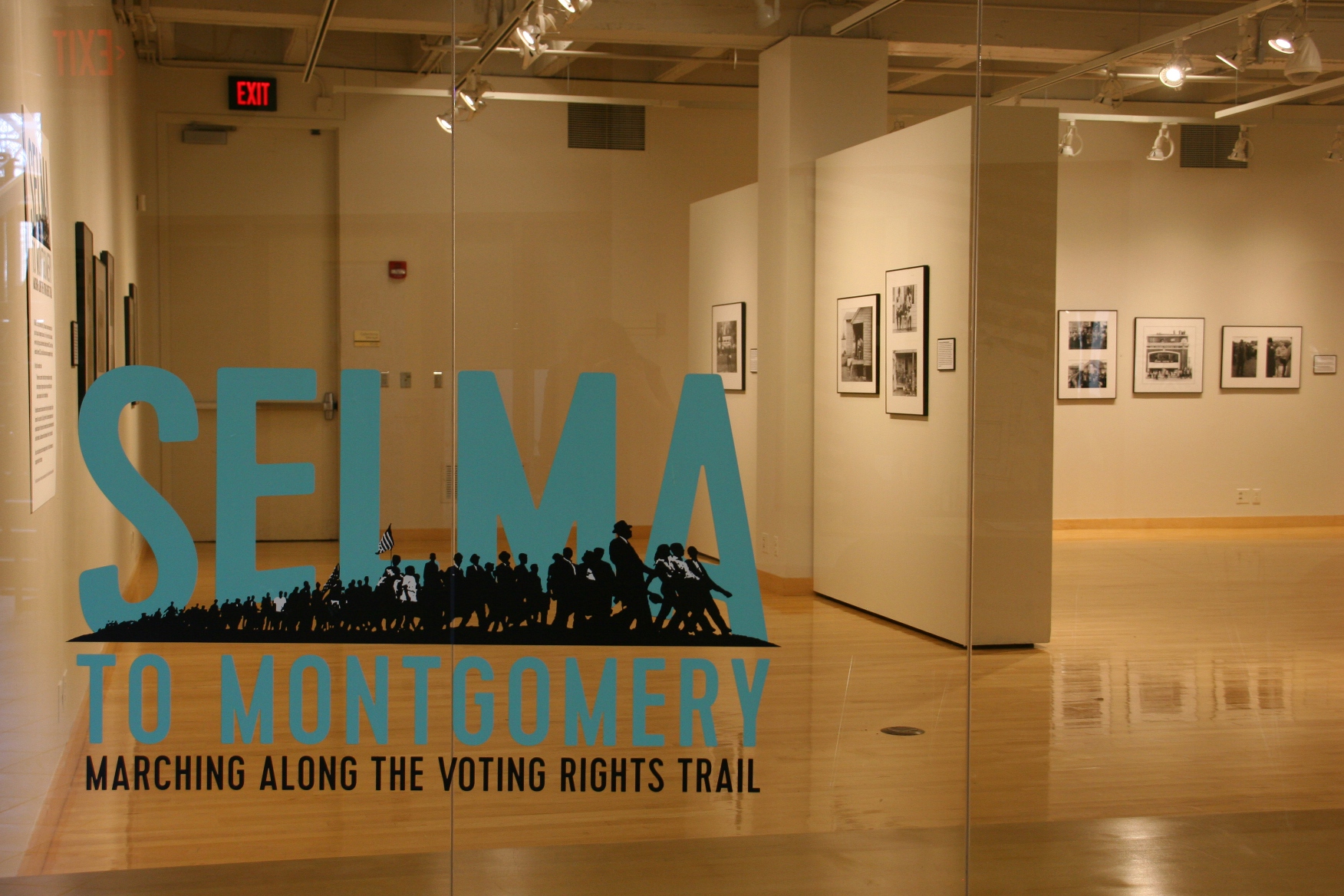
Looking through a window into an exhibit space at Flaten Art Museum.

Looking through a window into the “Selma to Montgomery” exhibit in the Flaten Art Museum at St. Olaf College in Northfield, MN.

That trio of adjectives describes Selma to Montgomery: Marching Along the Voting Rights Trail, an exhibit of 45 black-and-white photos documenting the 1965 Civil Rights Movement through the work of photographer Stephen Somerstein.

I was only eight years old in 1965, living in rural southwestern Minnesota, far removed from what was occurring in Alabama.
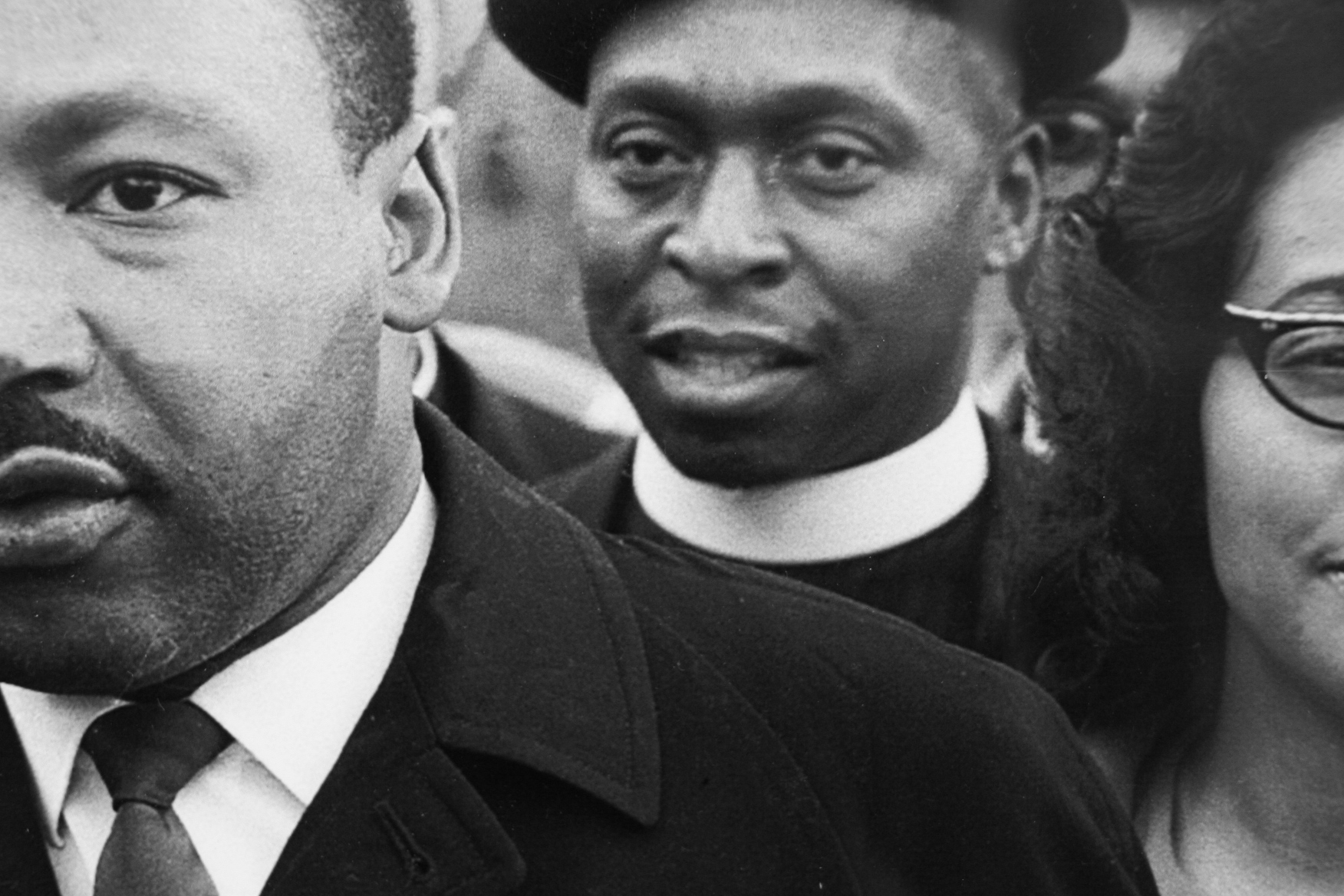
The faces of the Civil Rights Marches and Movement include Dr. Martin Luther King, Jr. Photo by Stephen Somerstein.

Faces of the Civil Rights Movement include Dr. Martin Luther King, Jr., left, and his wife, Coretta Scott King, right. This shows a snippet of a photo by Stephen Somerstein.

But the exhibit, showcased at the Flaten Art Museum of St. Olaf College, took me to Alabama in 1965 and into the movement for equality in an up close and personal way.
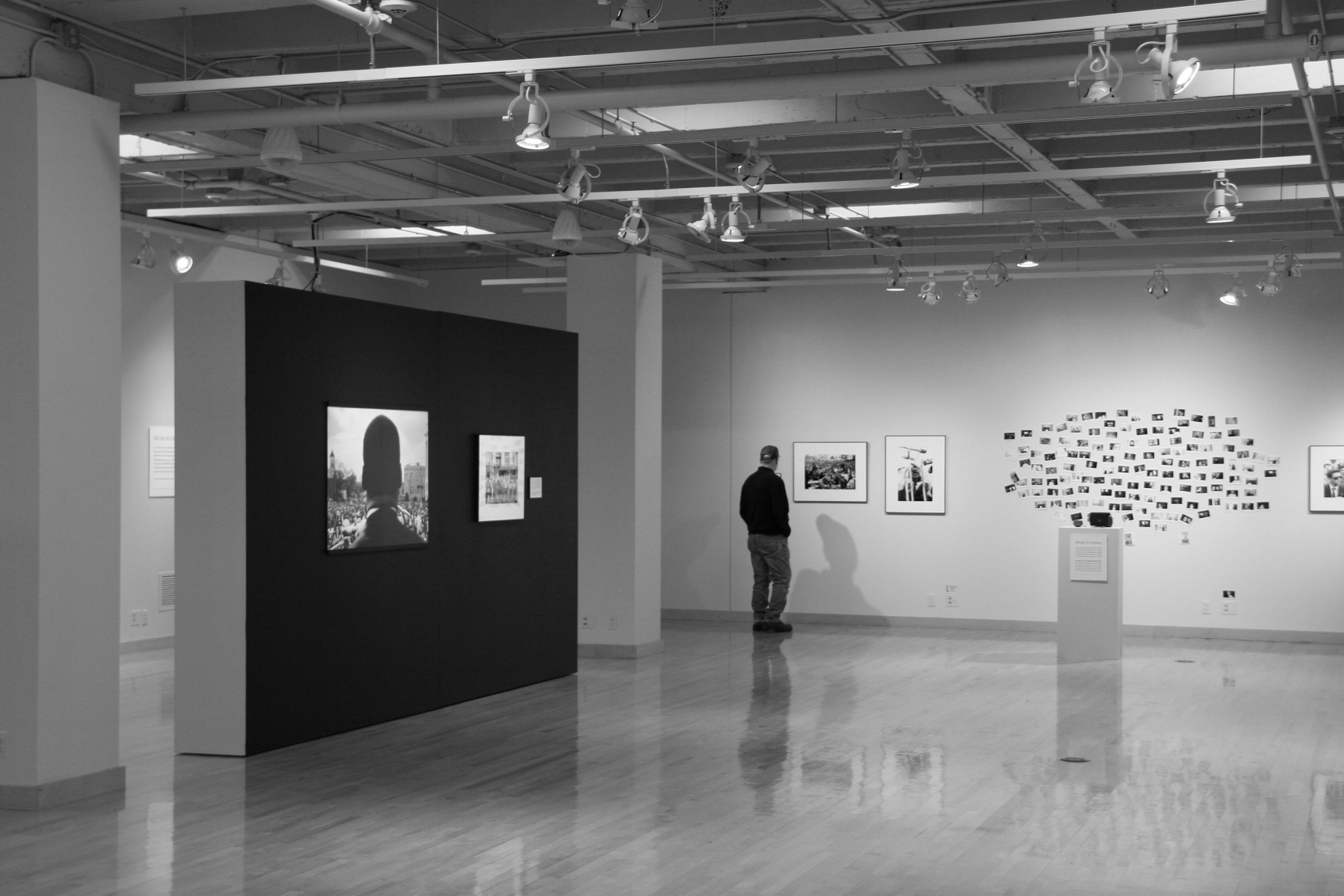
An overview of a section of the exhibit at St. Olaf College, Northfield, Minnesota.

An overview of a section of the now-closed exhibit at St. Olaf College.

If a picture is worth a thousand words, then Somerstein’s pictures are worth 45,000 words. My one regret is that I did not visit this exhibit until the day before it closed on April 12 thus failing to inform you, my readers, of the opportunity to see this for yourselves.
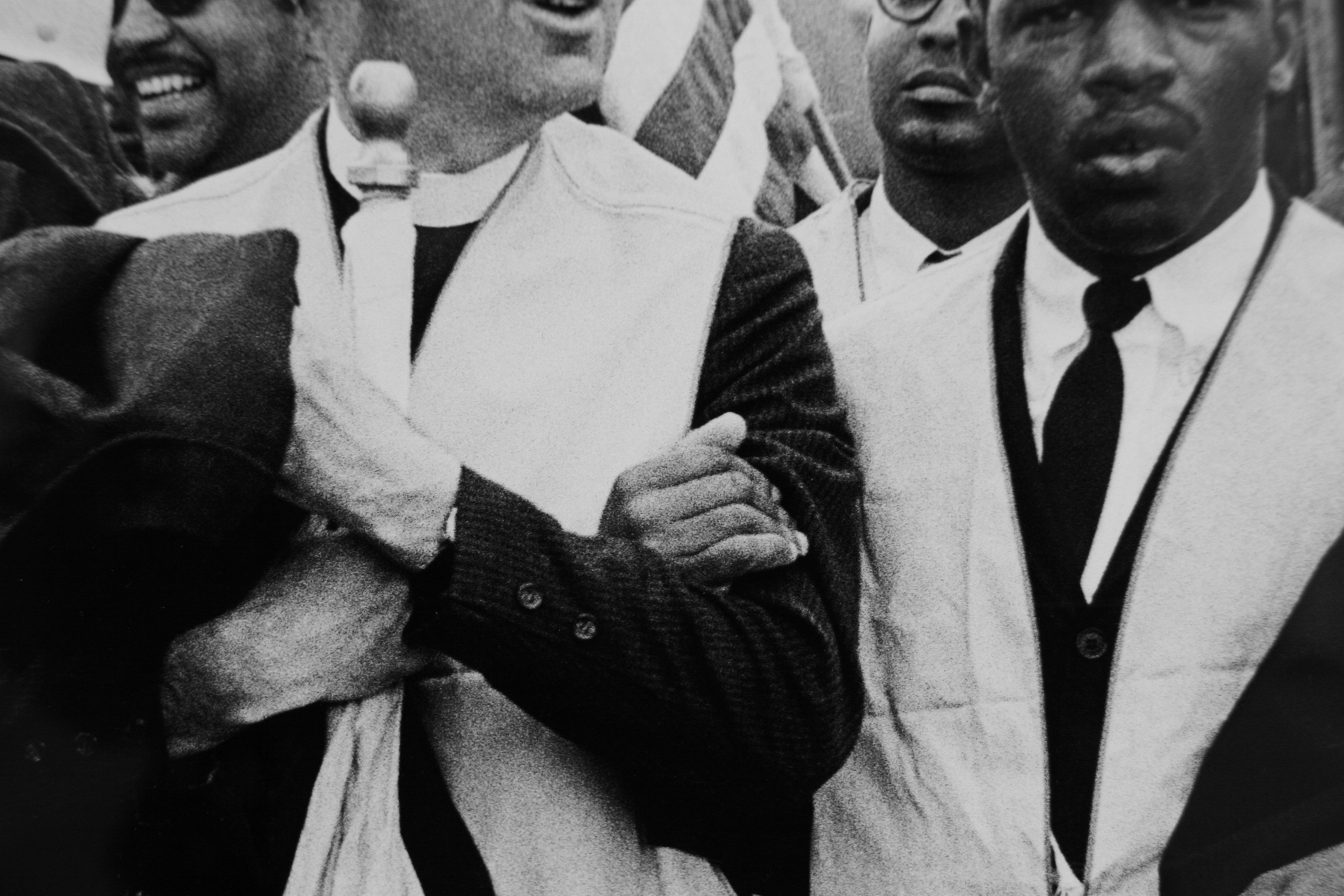
This portion of a photo by Stephen Somerstein drew my attention.

This portion of a photo by Stephen Somerstein drew my attention.

As I circled the museum space, I studied many of the photos in detail. These images by Somerstein, a then student at City College of New York and editor of the school newspaper, call for close examination. It is in the details that we begin to fully understand, to see the fear, the hope, the defiance, the anger, the love, the determination.

I found myself drawn to hands and arms—those of an interracial couple, that of a union member gripping a sign, activists carrying American flags, a soldier focusing binoculars, a mother cradling her son:

One of my favorite images

One of my favorite photos by Stephen Somerstein.
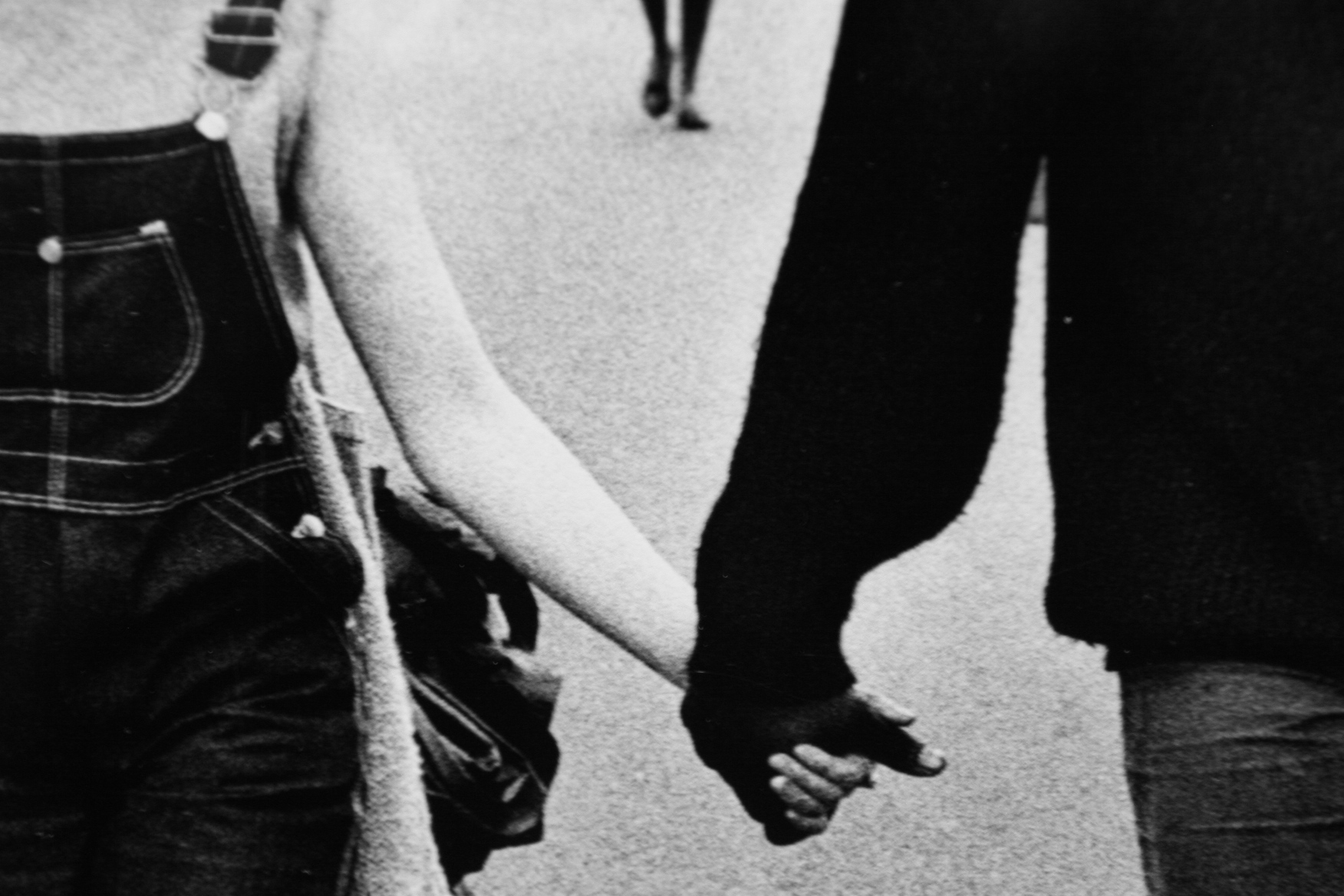
Skin color matters not, as showcased in this section  of a Stephen Somerstein photo.

Skin color matters not, as showcased in this section of a Stephen Somerstein photo I photographed.
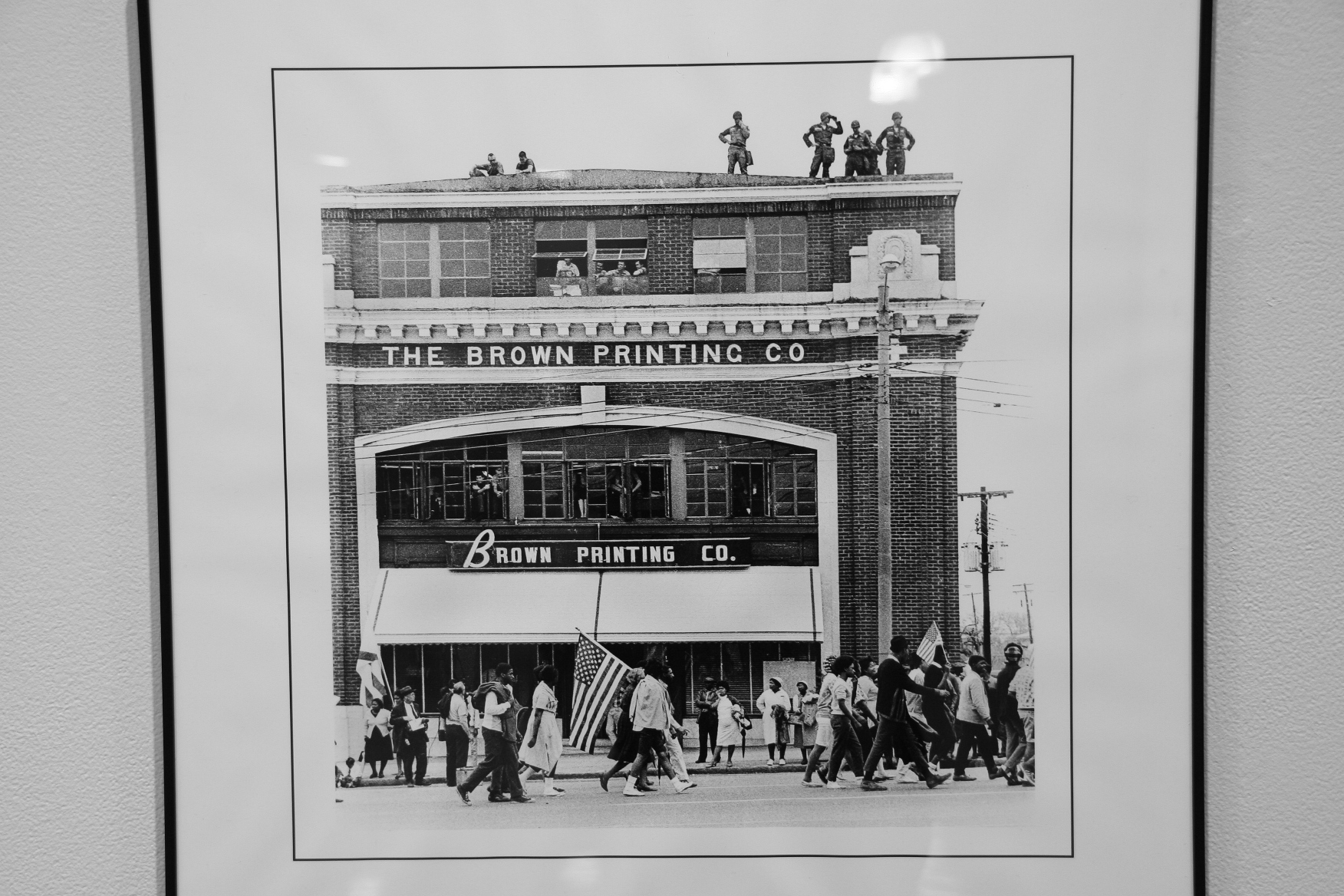
The two things I noticed in this Stephen Somerstein photo: the marcher carrying and American flag and the soldier atop the building scanning the scene with binoculars.

The two things I noticed in this Stephen Somerstein photo: the marchers carrying American flags and the soldier atop the building scanning the scene with binoculars. It’s truly a multi-layered image.
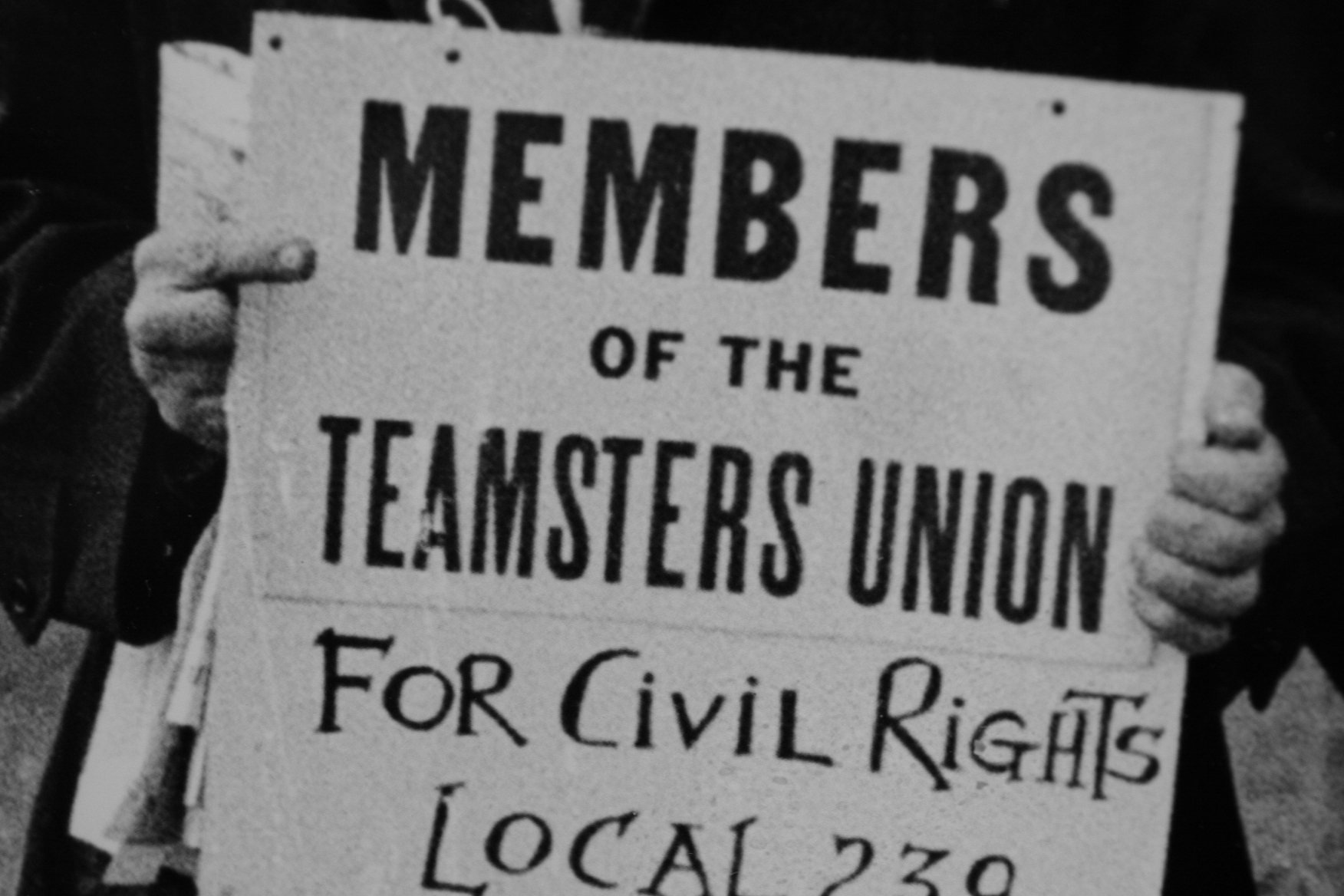
The Teamsters Union

The Teamsters Union Local 239 sent supplies to activists who were marching. This is a selected section of a photo by Stephen Somerstein.

Eyes and words also drew me in:

vote

Bobby Simmons, a member of the Student Nonviolent Coordinating Committee, wearing zinc oxide to prevent sunburn, wrote VOTE onto his forehead. This is a section of Stephen Somerstein’s portrait of Simmons.

The exhibit featured explanatory information about photos and the movement.

The exhibit featured explanatory information about photos and the movement.

And although I did not participate in the interactive portions of the exhibit created by artist Nancy Musinguzi, I appreciated that visitors could photograph themselves and pen thoughts on working toward justice and equality.

Visitors could photograph themselves at the exhibit and express their thoughts.

Visitors could photograph themselves at the exhibit and express their thoughts.

Opinions expressed in the exhibit polling place.

Opinions expressed in the exhibit polling place.

They could also vote in a People’s Survey. Vote.

A St. Olaf College student staffing the museum makes sure a video is working properly.

A St. Olaf College student staffing the museum makes sure a video is working properly.

The exhibit drew a wide range of interest at St. Olaf College with students in social work, history, art history, gender studies and more viewing the photos, says Flaten Art Museum Director Jane Becker Nelson. The timing of the exhibit—on the 50th anniversary of the Civil Rights Movement, relating to current day issues and release of the movie, Selma—added to the interest.

Another overview of part of the exhibit.

Another overview of part of the exhibit. Photos displayed are by Stephen Somerstein.

Additionally, Becker Nelson notes that the exhibit connects to the 50th anniversary of the death of St. Olaf graduate James Reeb. (More to come on that in a post next week.)

A chair placed before a Stephen Somerstein photo offers visitors a place to sit and contemplate.

A chair placed before a Stephen Somerstein photo offers visitors a place to sit and contemplate.

This remarkable collection of documentary photos impresses in a deeply personal way. Beyond headlines. Beyond news stories. Beyond the pages of history books. Somerstein’s photos document the humanity of the Civil Rights Movement in the eyes, in the hands, in the stances of individuals. And that connects all of us, no matter our skin color.

#

© Copyright 2015 Audrey Kletscher Helbling
Original photos are by Stephen Somerstein. My photos of Somerstein’s images are published here with permission of Flaten Art Museum, St. Olaf College.

Selma to Montgomery was booked through New York-based National Exhibitions & Archives.


In which I discover the art treasures of St. Olaf and Carleton Colleges April 20, 2015

SOMETIMES I FEEL like I am missing out on a whole big wide world of art.

Not because art is absent here in outstate Minnesota. It isn’t. Recent years have seen a renewed effort to bring the arts—visual and performing—to communities like mine outside the Twin Cities metro area. Faribault has the Paradise Center for the Arts. Neighboring Owatonna, Northfield and Waseca also have art centers. Even the community of Zumbrota, population around 3,400, has the thriving Crossings at Carnegie.

So there are plenty of opportunities to engage in the arts at a local and regional level without venturing into Minneapolis or St. Paul, which I really prefer to avoid given my aversion for traffic congestion and big cities in general.

Despite an abundance of wonderful local art, I was still missing that segment of art created by renowned artists or by artists outside of Minnesota.

That is until I recently realized that I can see that type of art, too, right in my backyard.

In the center of this display space outside the Flaten Art Museum is a poster for the "Selma to Montgomery" exhibit on the Civil Rights Movement.

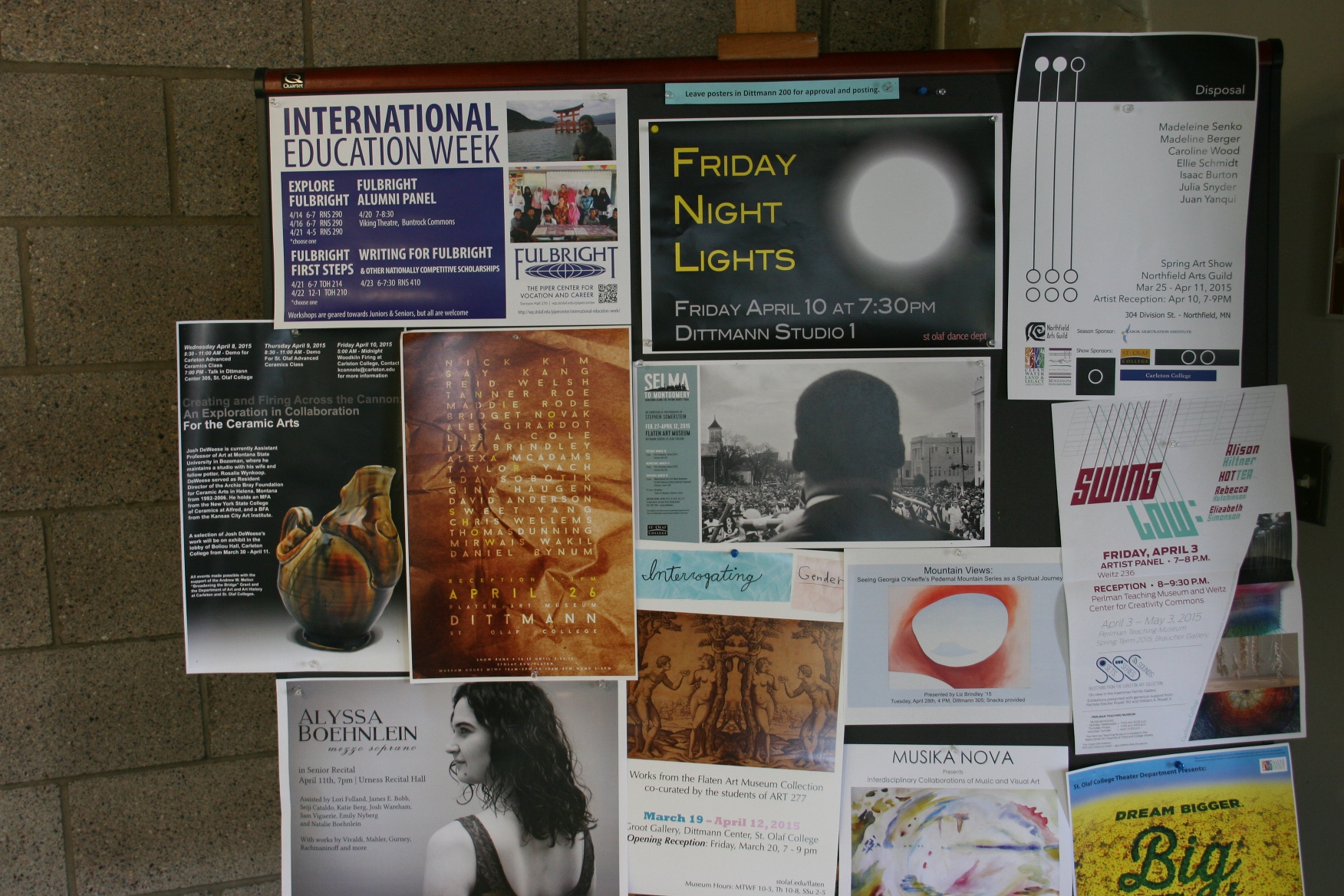
Promotional posters posted in the Dittman Art Center at St. Olaf College show the wide variety of artistic offerings.

Two colleges in Northfield, a 22-minute drive from my Faribault home, both sometimes showcase notable art from their collections in exhibits that are open to the public. They also bring in outside artists and traveling exhibits. Entrance to Carleton’s Perlman Teaching Museum and St. Olaf’s Flaten Art Museum is free. No cost and no traffic are a winning combination for me.

Items from St. Olaf's art collection were displayed in the recent "Interrogating Genders" exhibit.

Items from St. Olaf’s art collection were displayed in the recent “Interrogating Gender” exhibit.

Together, these two prestigious private colleges hold more than 6,500 paintings, fine art prints, photographs, sculptures and more in their collections.

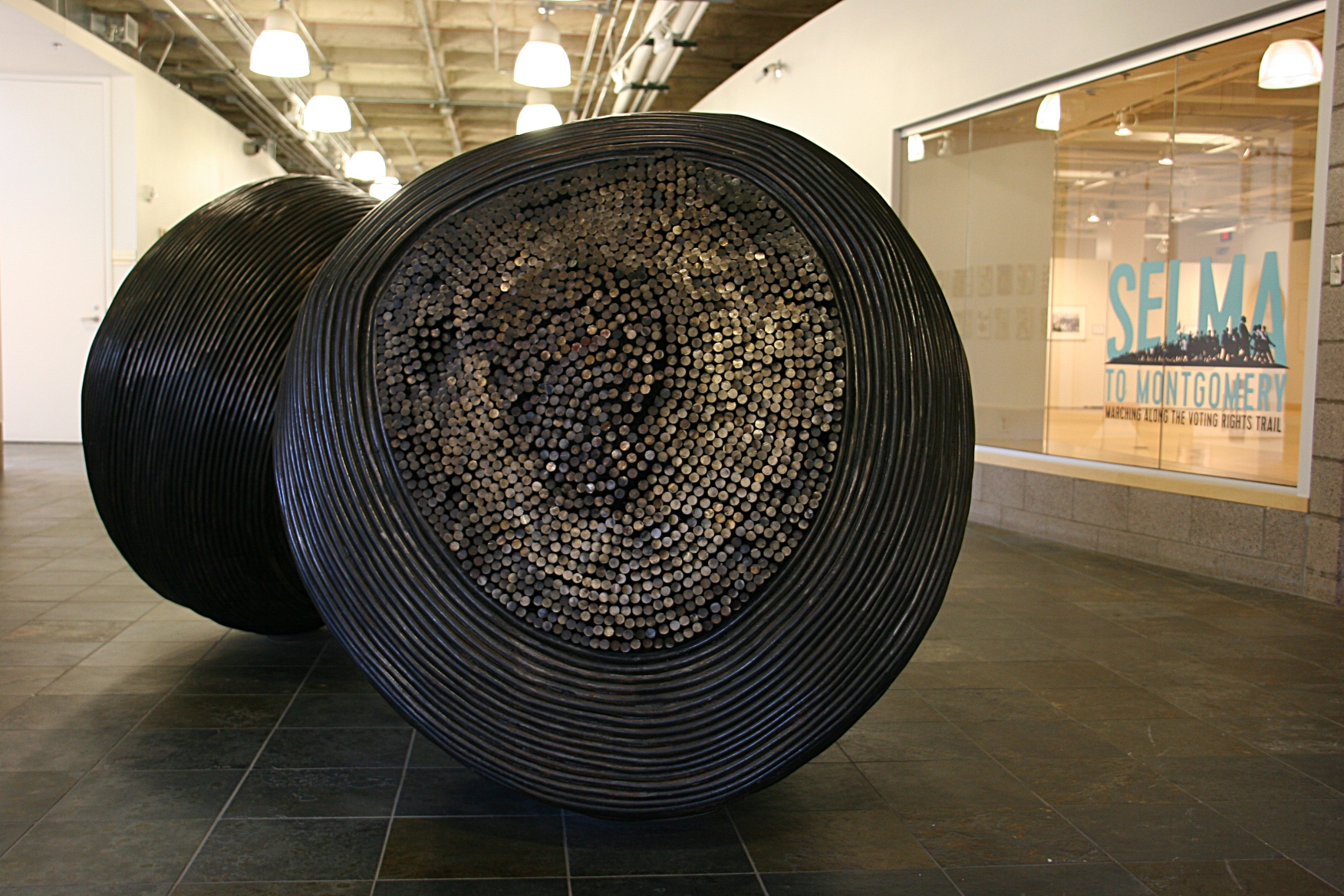
Entering the Flaten Art Museum Atrium, I encountered this mega sculpture just outside the "Selma" exhibit.

Entering the Flaten Art Museum Atrium, I encountered this mega sculpture just outside the “Selma” exhibit.

I discovered Carleton’s gallery space about 18 months ago and St. Olaf’s just recently, when I arrived at the college atop the hill to view Selma to Montgomery: Marching Along the Voting Rights Trail, an exhibition of Stephen Somerstein’s photos.

Walking across the hall from one museum space to another, I found Michon Weeks' "Wheel Within Wheel (#1-44) paintings hung along the atrium wall. The acrylic on paper on wood panel is a visual inventory of items in her Northfield garage.

Walking across the hall from one museum space to another, I found Michon Weeks’ “Wheel Within a Wheel (#1-44) paintings hung along the atrium wall. The acrylic on wood panel paintings are a visual inventory of items in her Northfield garage.

After studying Somerstein’s remarkable images, I strode across the hall to see the Interrogating Gender exhibit, since closed.

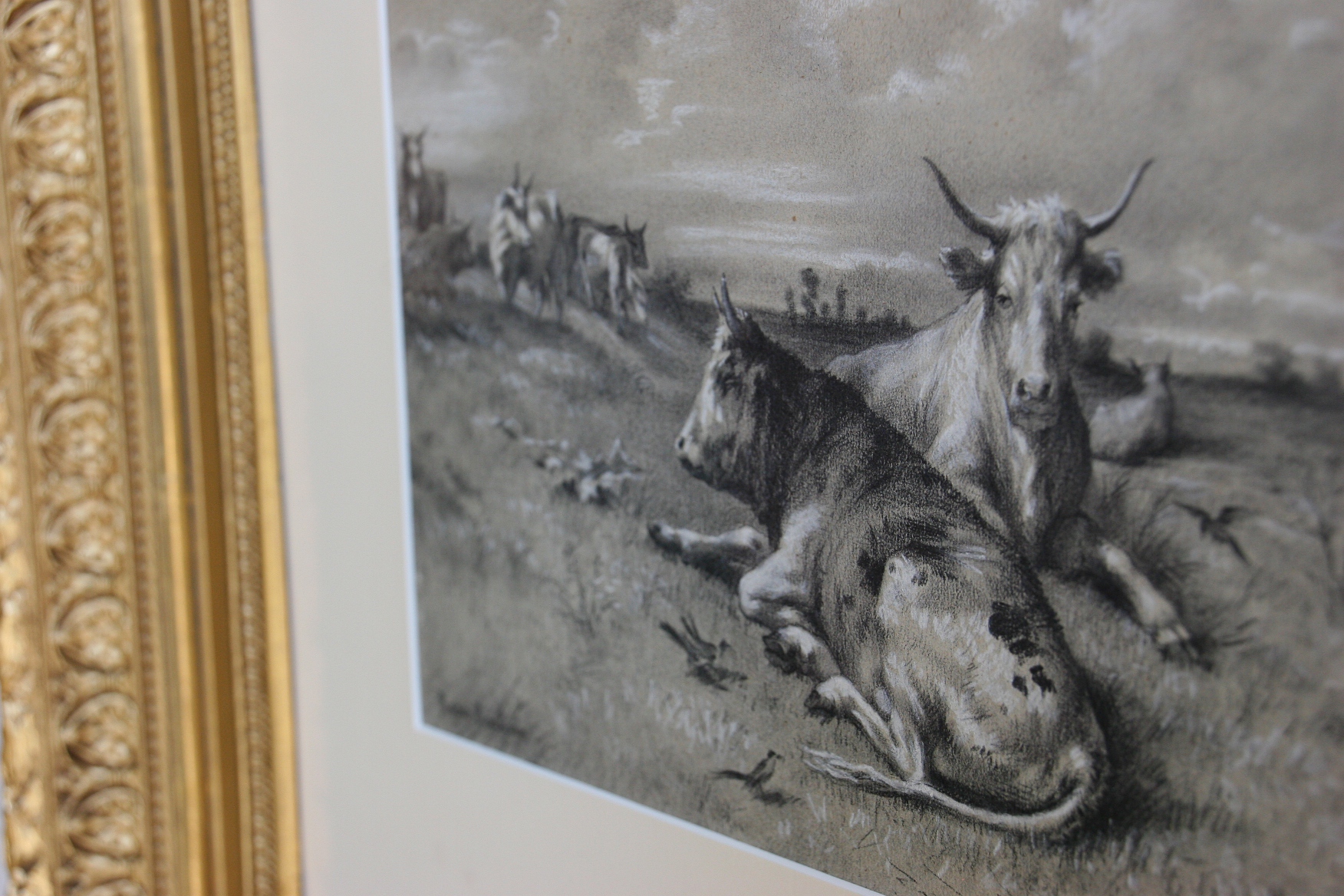
Rosa Bonheur's "Cows in Pasture."

Rosa Bonheur’s “Cows in Pasture.”

The 16th Century "Madonna and Child, an oil painting on panel by Adriaen Isenbrandt of Belgium.

The 16th Century “Madonna and Child” by Adriaen Isenbrandt of Belgium.

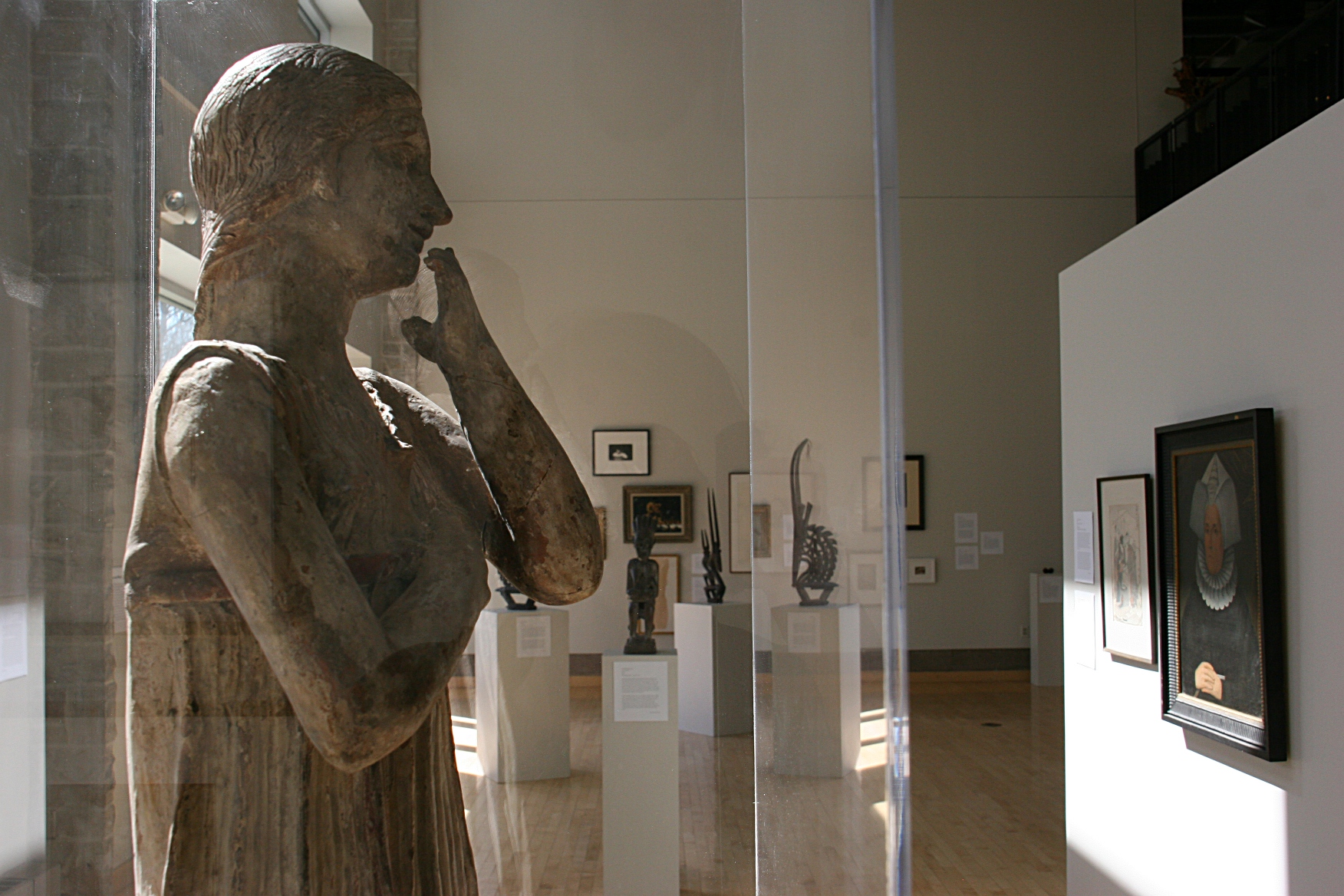
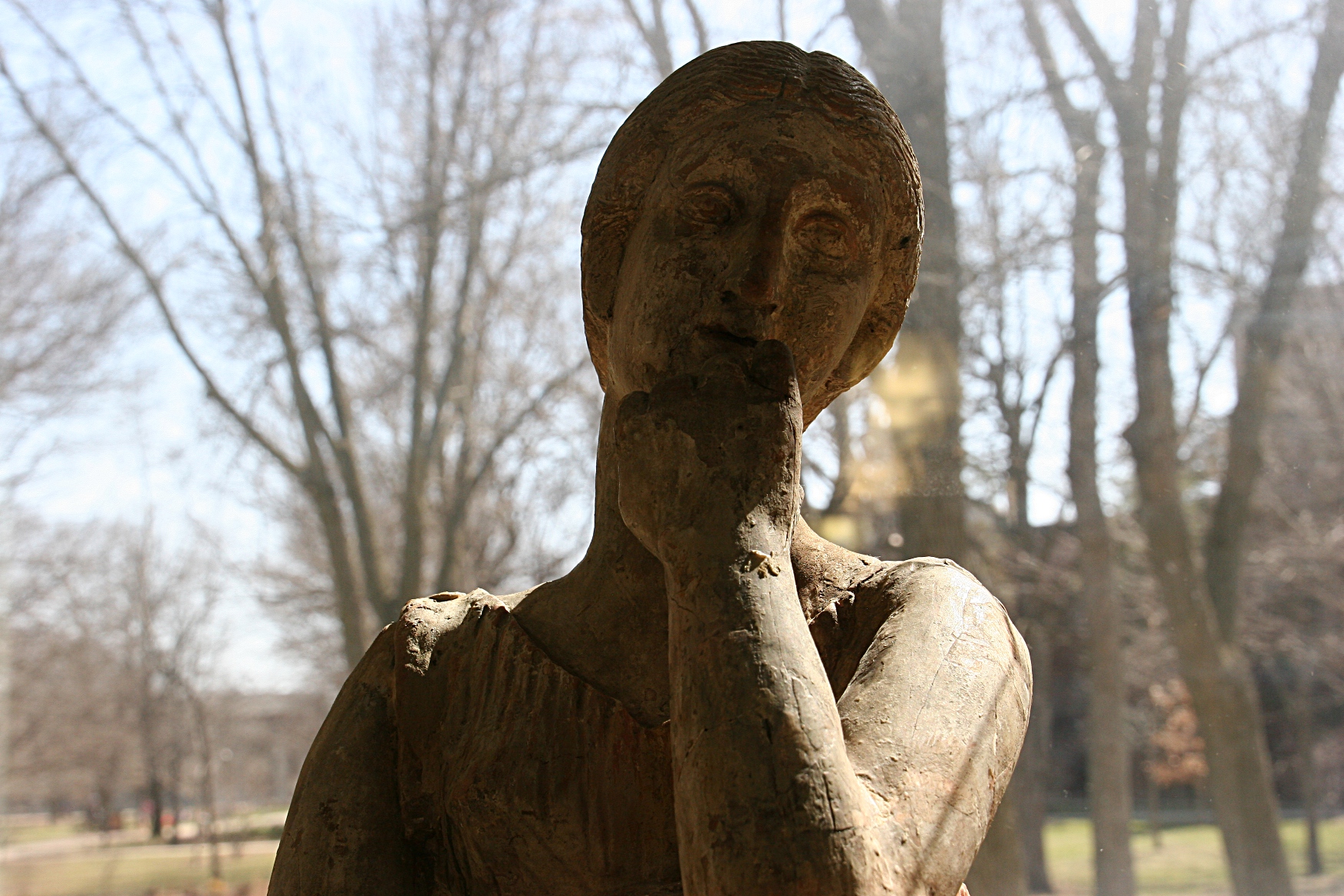
The angle at which I photographed "Archaic Greek Statue of a Woman" makes it appear as if the Italian terra cotta sculpture is studying the art on display.

The angle at which I photographed “Archaic Greek Statue of a Woman” makes it appear as if the Italian terra cotta sculpture is studying the art on display.

There I marveled in getting close up to photographs taken by Andy Warhol. Yes, the Andy Warhol. I stood in reverent awe before a 16th Century oil painting on panel of Madonna and Child by Adriaen Isenbrandt. I enjoyed art from Africa and Italy and the Cows in Pasture pencil on paper by Rosa Bonheur.

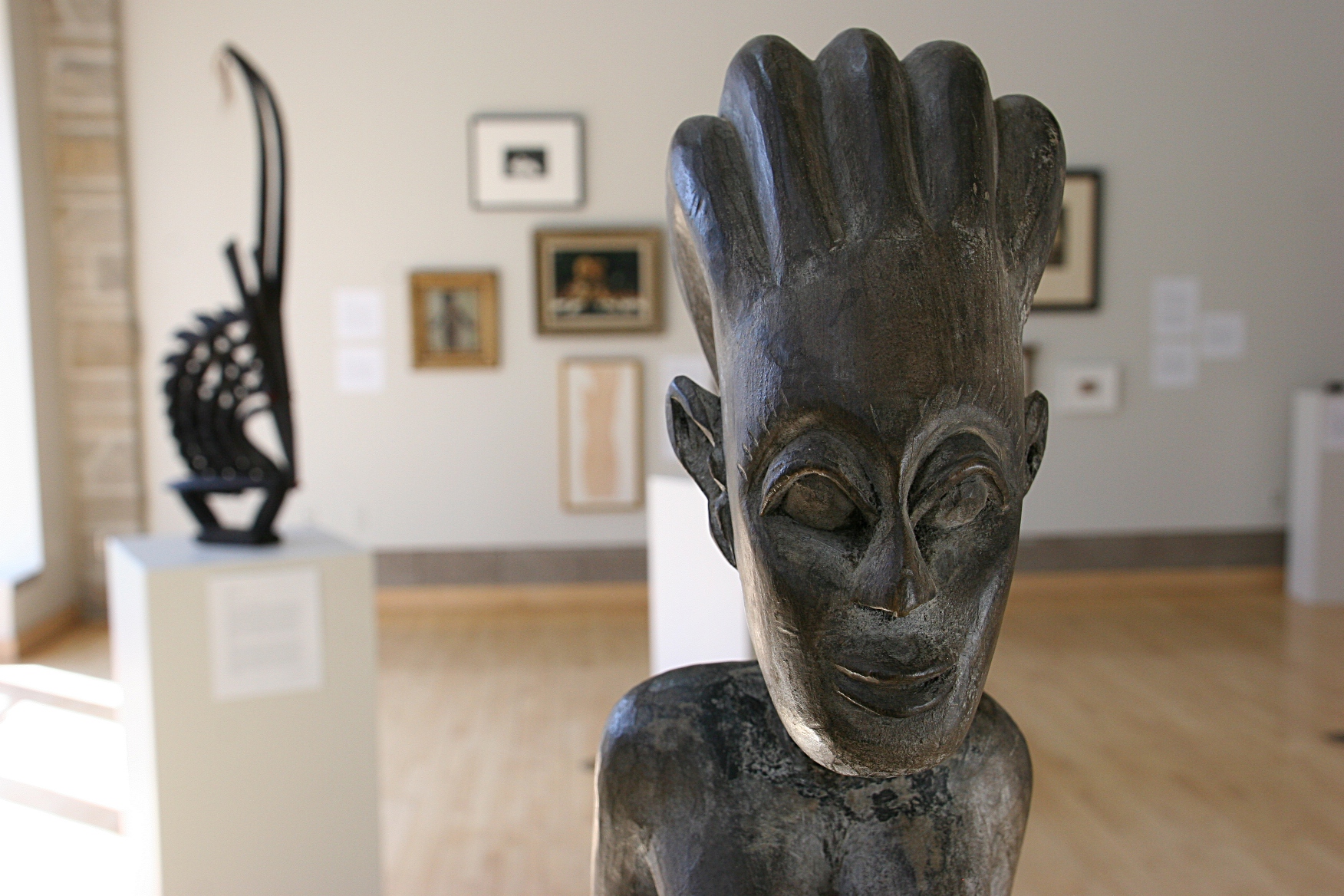
A wood sculpture from Africa, artist unknown, and titled "Seated Maternity Figure."

A wood sculpture from Africa, artist unknown, and titled “Seated Maternity Figure.”

I could have reached out and touched the art, except I didn’t. It was that comfortably accessible and intimate. I didn’t have that feeling I often get in galleries of “be careful and don’t touch,” although I was aware of cameras on the premise.

My husband peruses the art.

My husband peruses the art.

I only wish I’d realized years ago that I could simply walk onto these college campuses and view art by well-known and other artists and students, too.

I got down low to photograph the Greek woman sculpture encased in glass.

I got down low to photograph the Greek woman sculpture encased in glass.

Now that I know, I’ll be back.

FYI: All of the exhibits mentioned in this post are no longer showing. Both colleges will be featuring a Senior Art Show in their exhibit spaces.

Please check back for a story and photos of the Selma to Montgomery exhibit.

© Copyright 2015 Audrey Kletscher Helbling


Part II: Preserving memories in West Concord April 1, 2015

WHAT DEFINES A MUSEUM?

Collections? History? Preserving the past?

All three fit the definition. Yet, it is memories which make a museum personal.

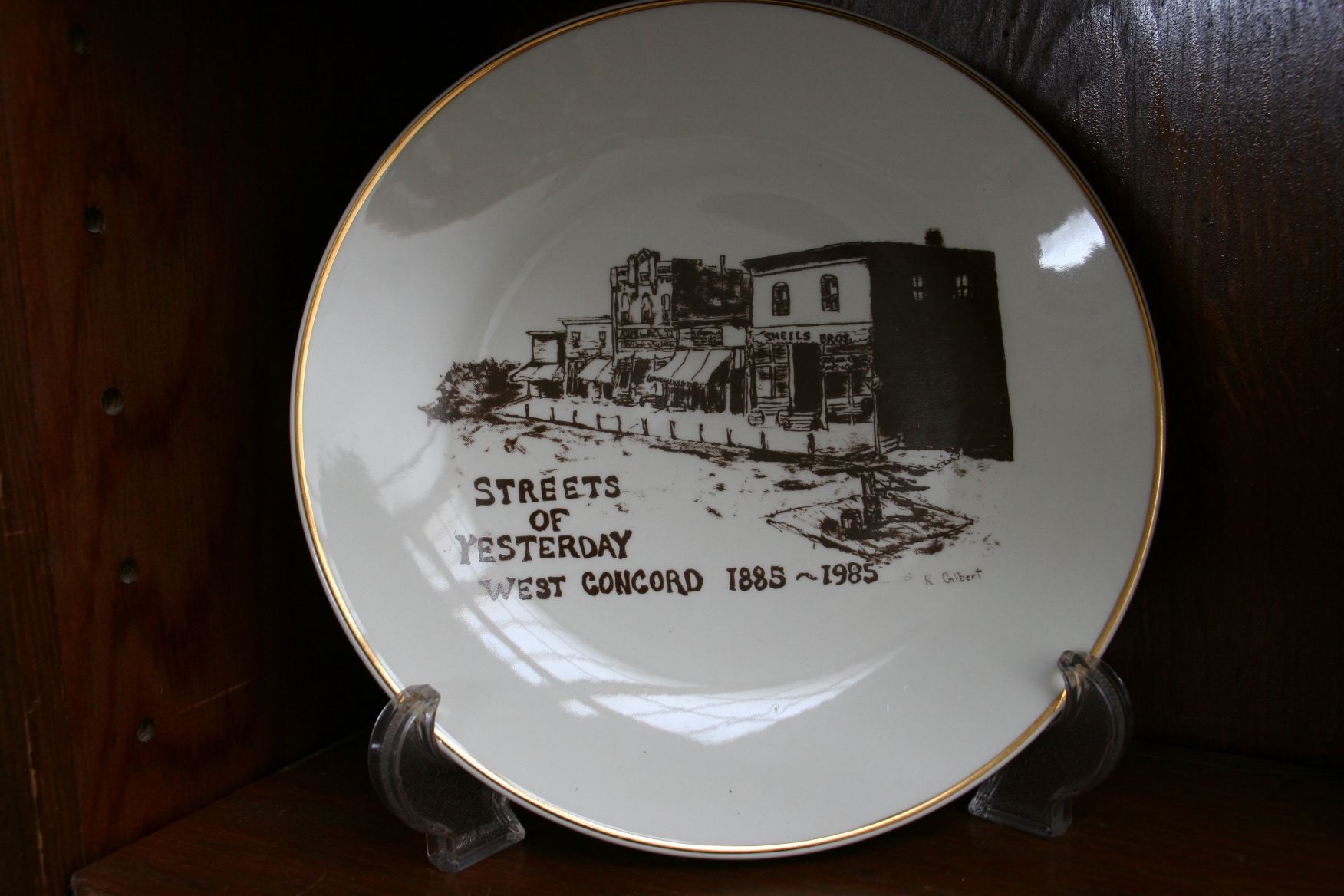
A commemorative plate from West Concord.

A commemorative plate from the small southeastern Minnesota farming community of West Concord.

The West Concord Historical Society, housed in a former school, boasts an incredible museum that showcases West Concord area history. I didn’t grow up here. I don’t live here. Yet, I connected.

Join me on a photo tour showing snippets of what this museum holds.

IN THE HERITAGE ROOM:

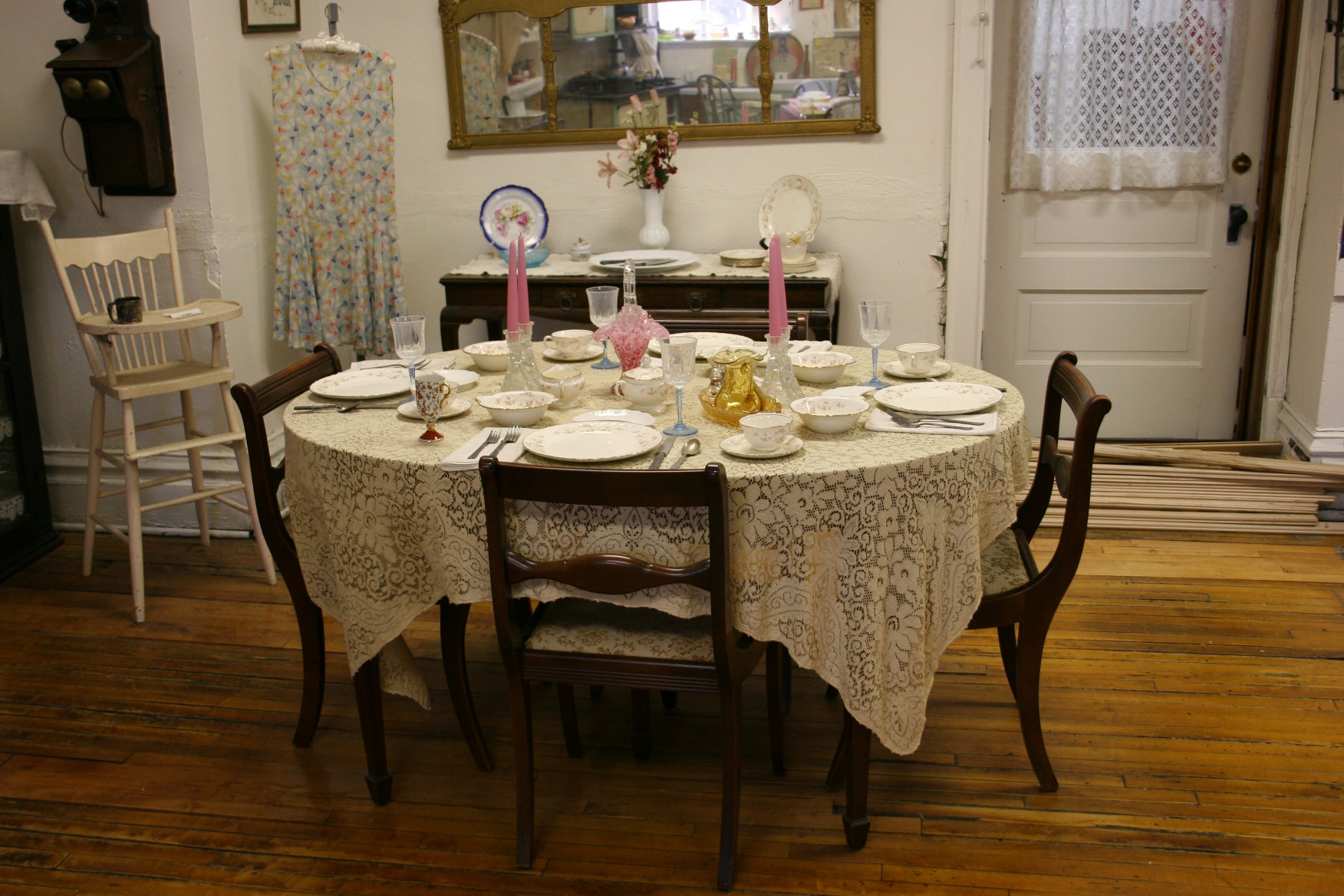
I expect many visitors would image Sunday dinner at Grandma's house when viewing this scene.

I expect many visitors will remember Sunday chicken dinners or holidays at Grandma’s house when viewing this scene.

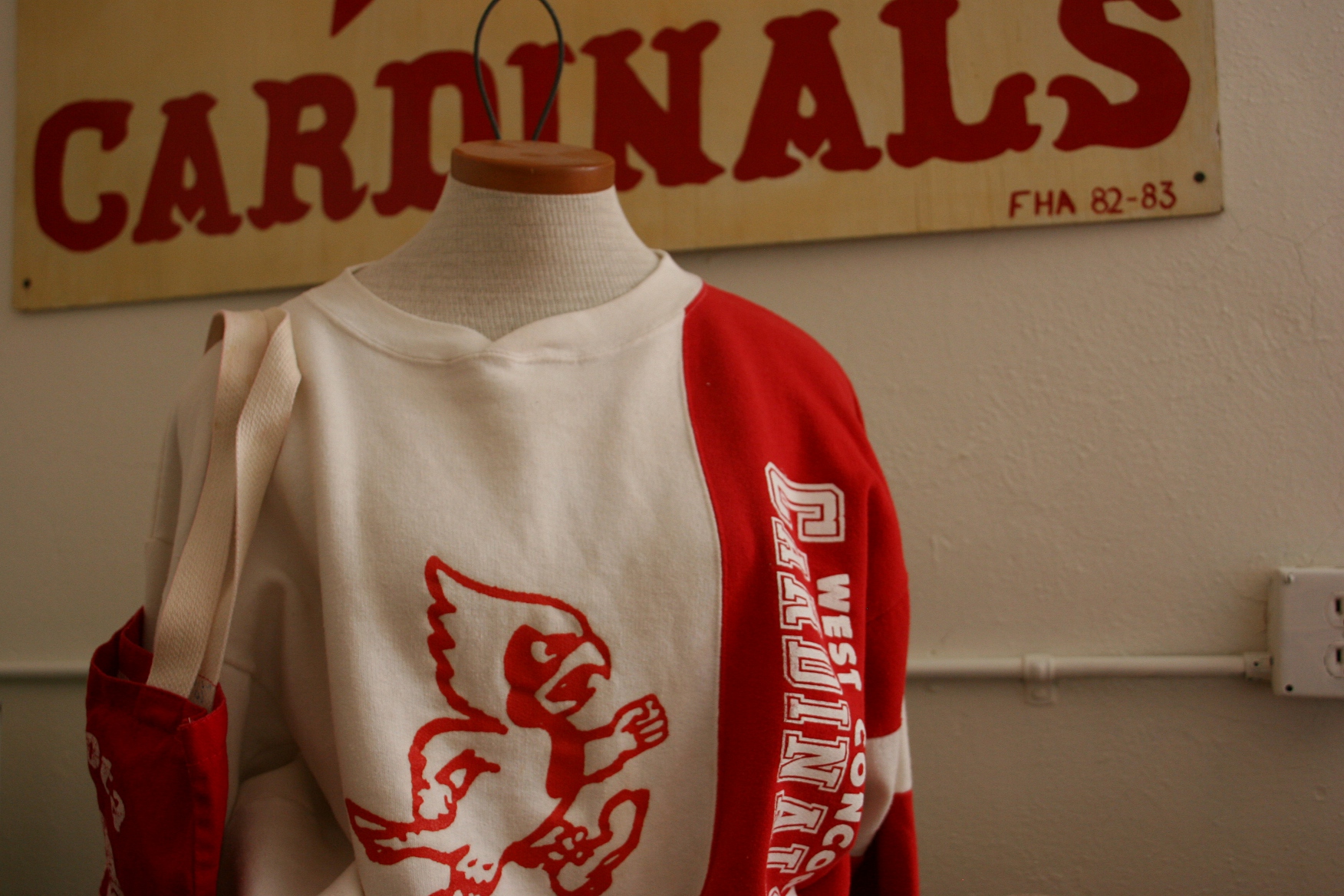
IN THE CARDINAL ROOM:

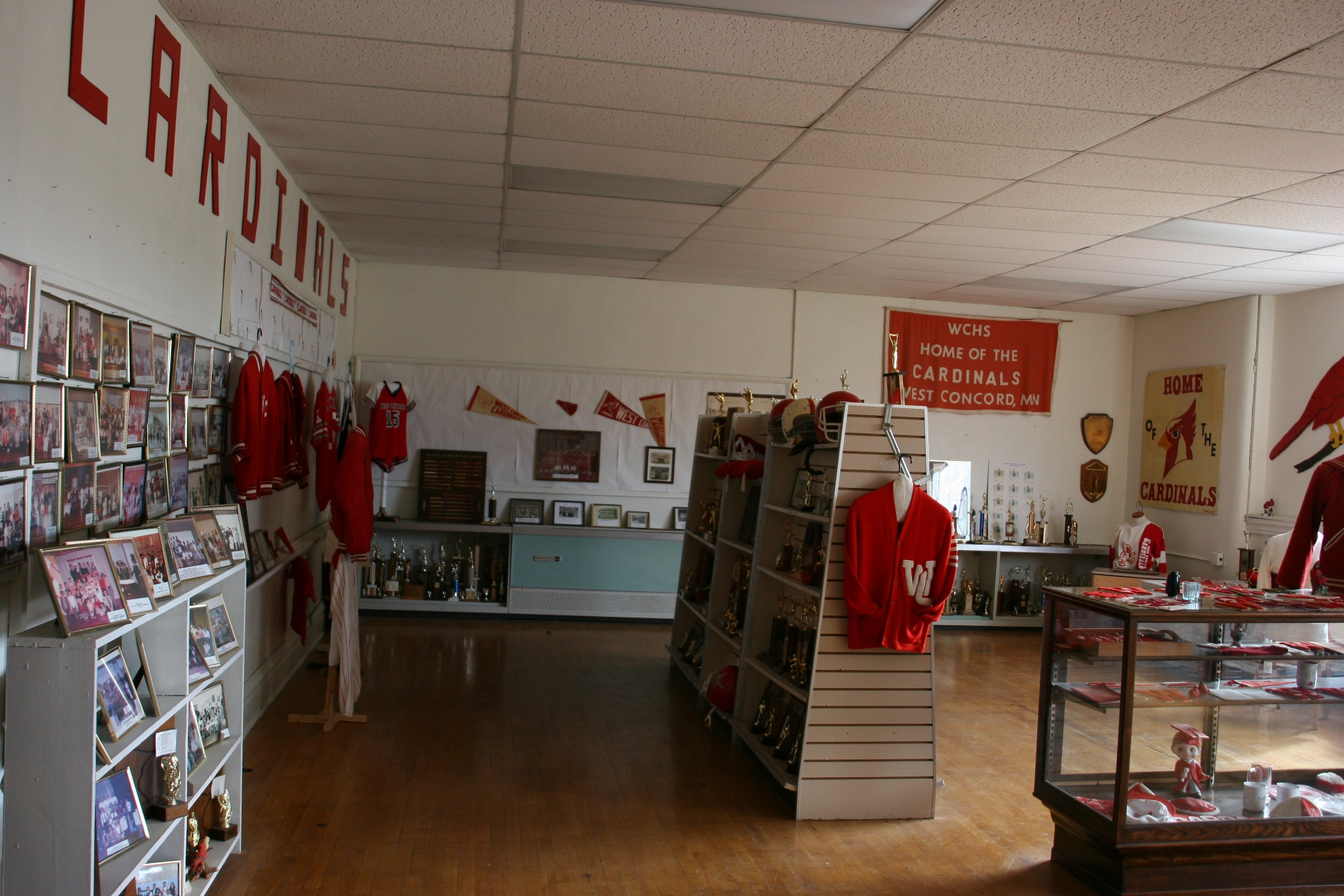
The school was once home to the West Concord school Cardinals. An entire classroom is devoted to all things Cardinal. this proves a popular place during class reunions.

The school was once home to the West Concord Cardinals. An entire classroom is devoted to Cardinals memorabilia. This exhibit proves a popular place to tour during West Concord High School class reunions. The school closed in 1991. West Concord is now part of Triton Public Schools where the mascot is a cobra.

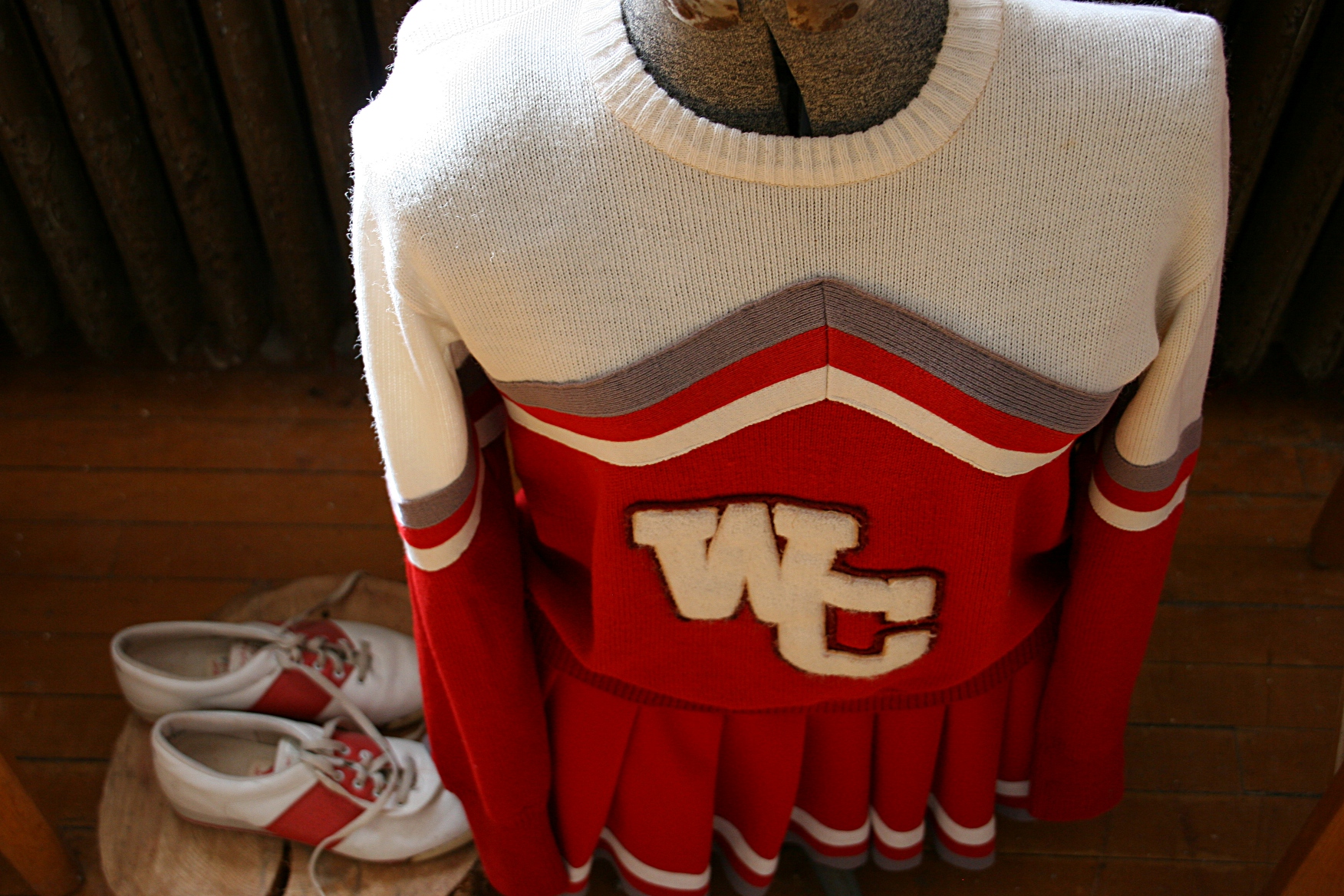
A cheerleading uniform.

A cheerleading uniform.

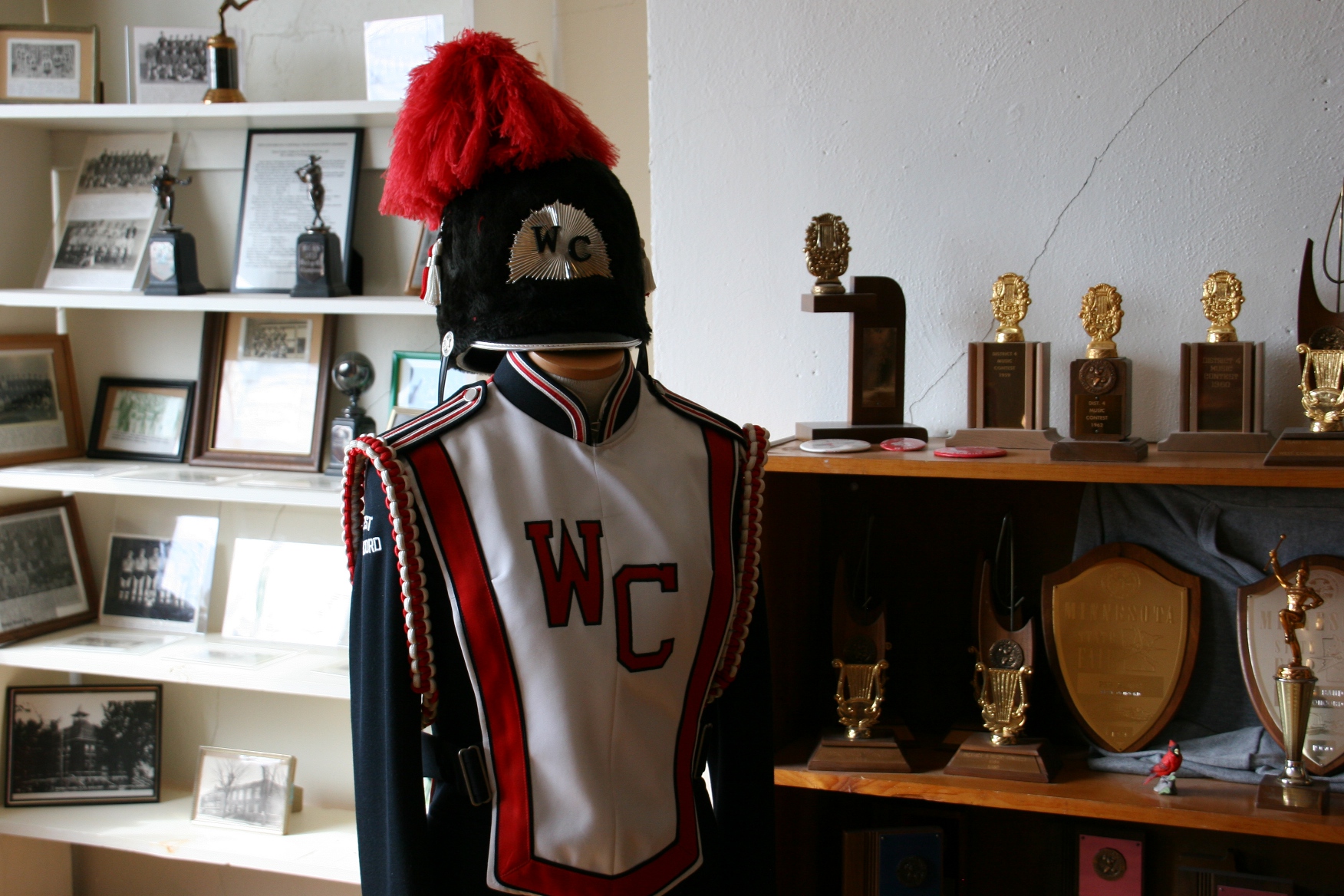
A majestic band uniform preserved.

A majestic band uniform displayed along with school trophies.

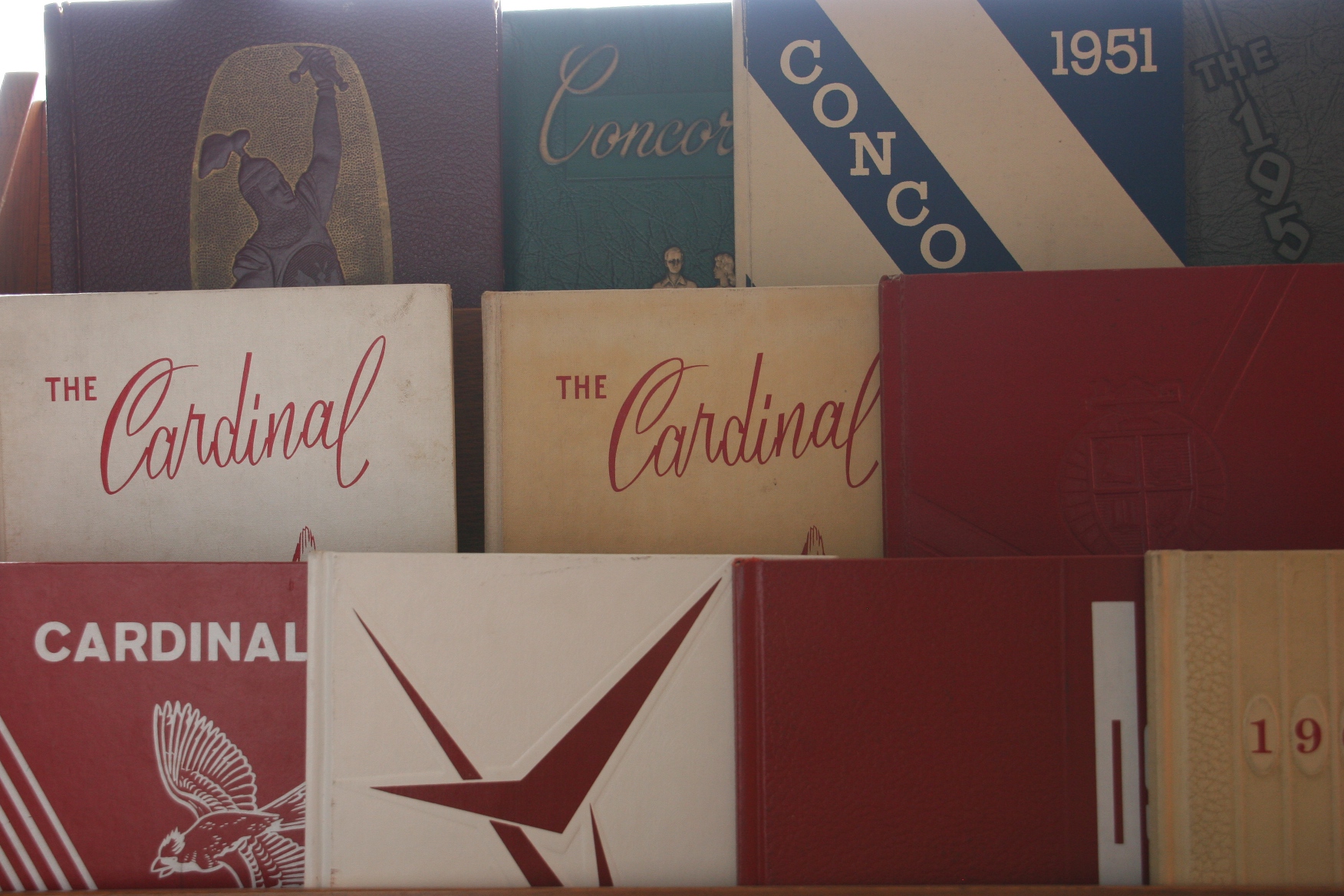
I was thrilled to find a collection of school yearbooks.

I was thrilled to find a collection of school yearbooks.

Wearing Cardinal pride.

Wearing Cardinal pride.

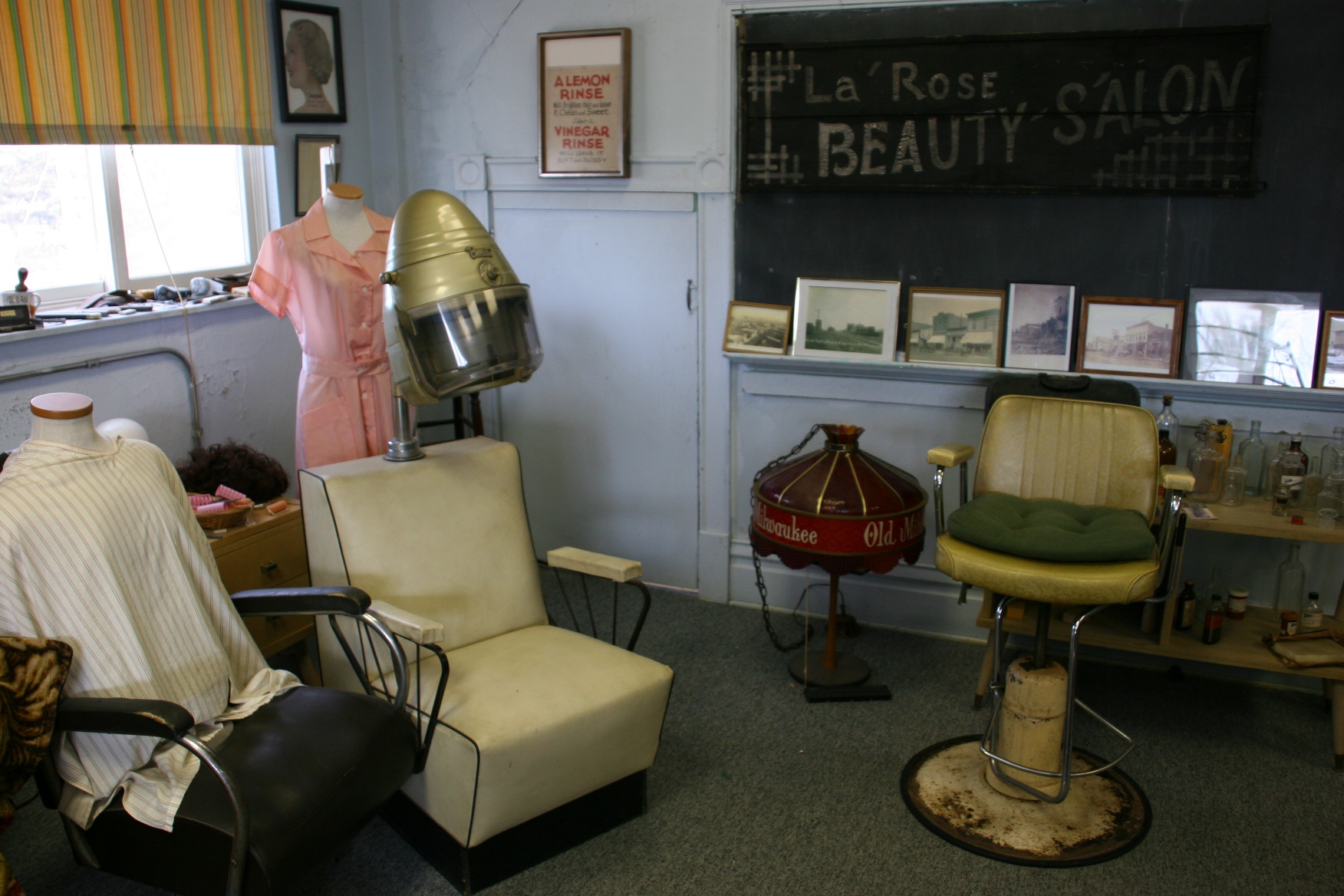
IN THE FARMERS & MERCHANTS ROOM:

From a local beauty shop.

From a local beauty shop.

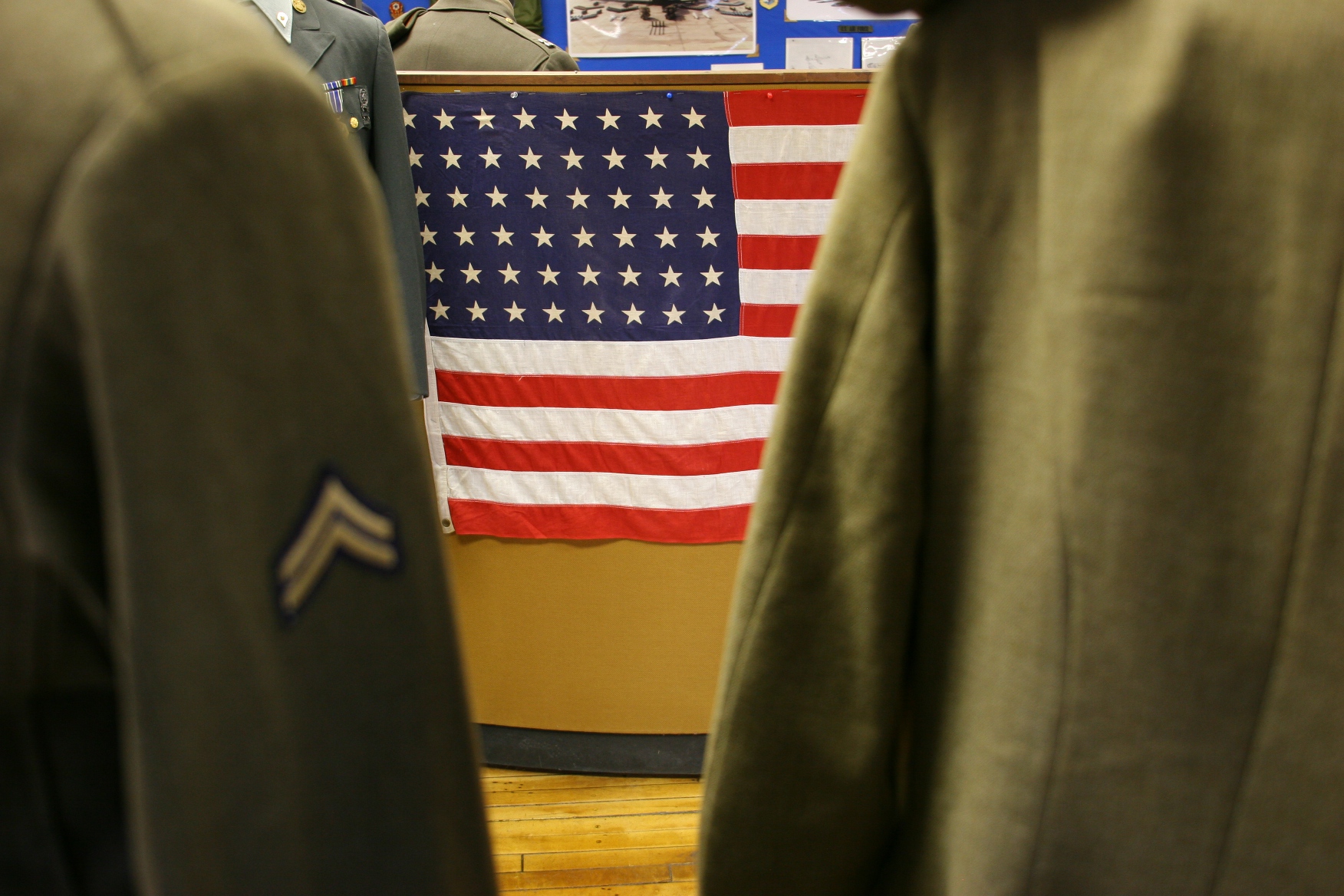
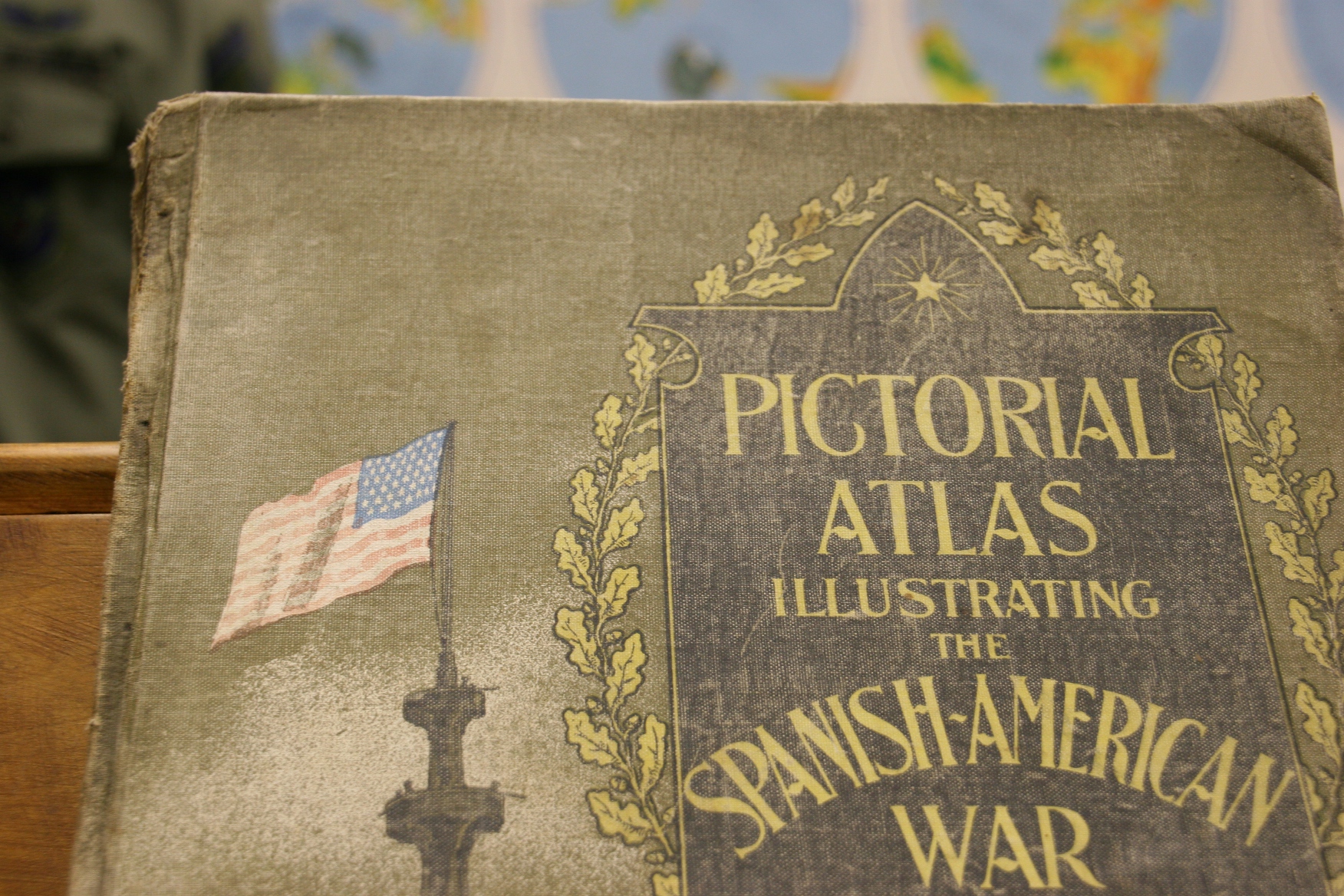
IN THE VETERANS ROOM:

Between two military uniforms, I shot this view of a 48-star American flag.

Between military uniforms, I shot this view of a 48-star American flag.

Books and documents are also displayed in The Veterans Room.

Books and documents are also displayed in The Veterans Room.

IN THE SHELL ROOM:

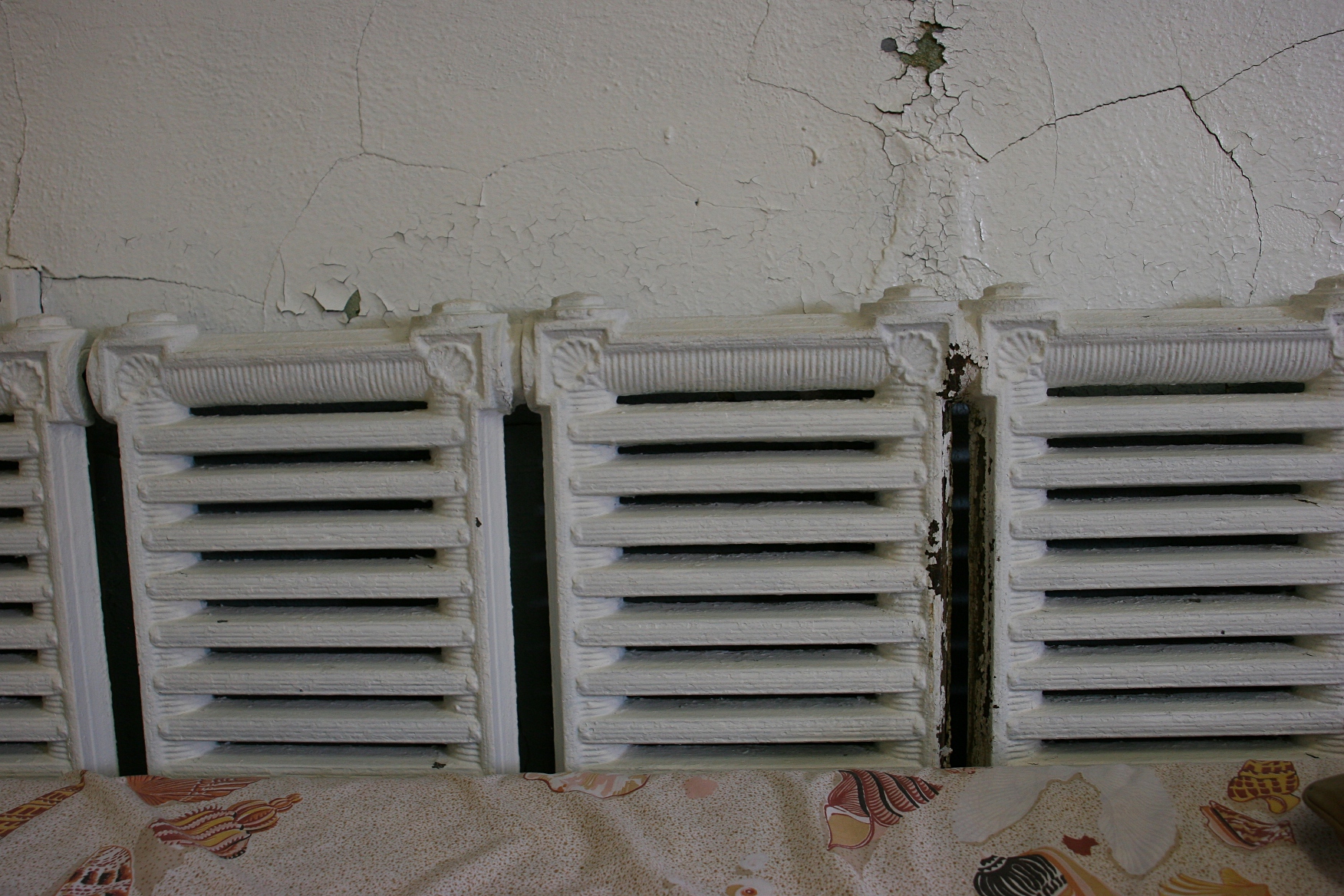
Old radiators in The Shell Room, which features a collection of shells donated by Burton Goddard and Miriam Goddard.

Old radiators in The Shell Room, which features a collection of shells donated by West Concord alumni Burton Goddard and Miriam Goddard.

IN THE 50’s & 60’s ROOM:

Feelin' groovy...a snippet of 1960s art.

Feelin’ groovy…a snippet of 1960s art.

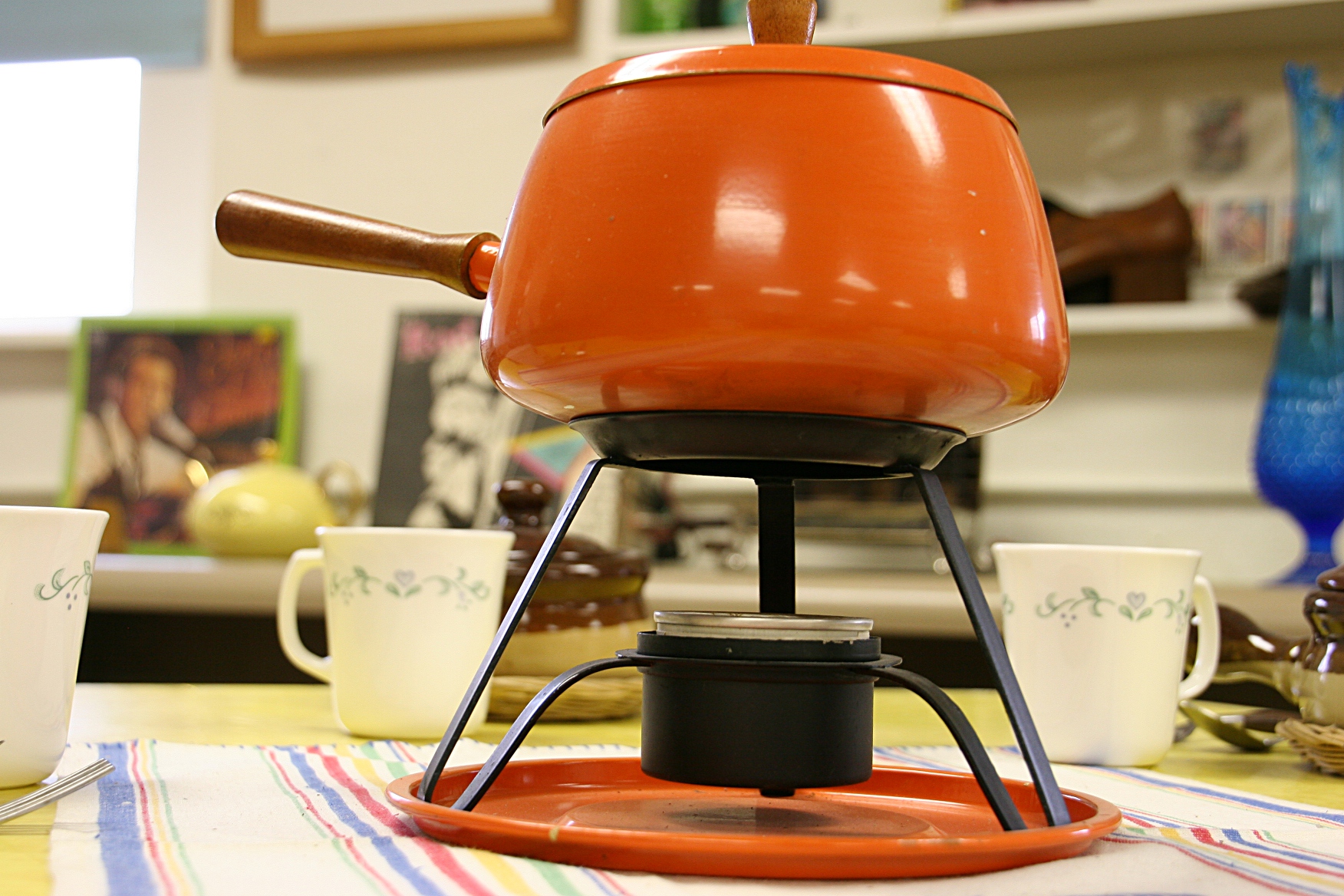
A fondue pot. I remember using a fondue pot in my high school home economics class.

I remember using a fondue pot in my high school home economics class in the 1970s.

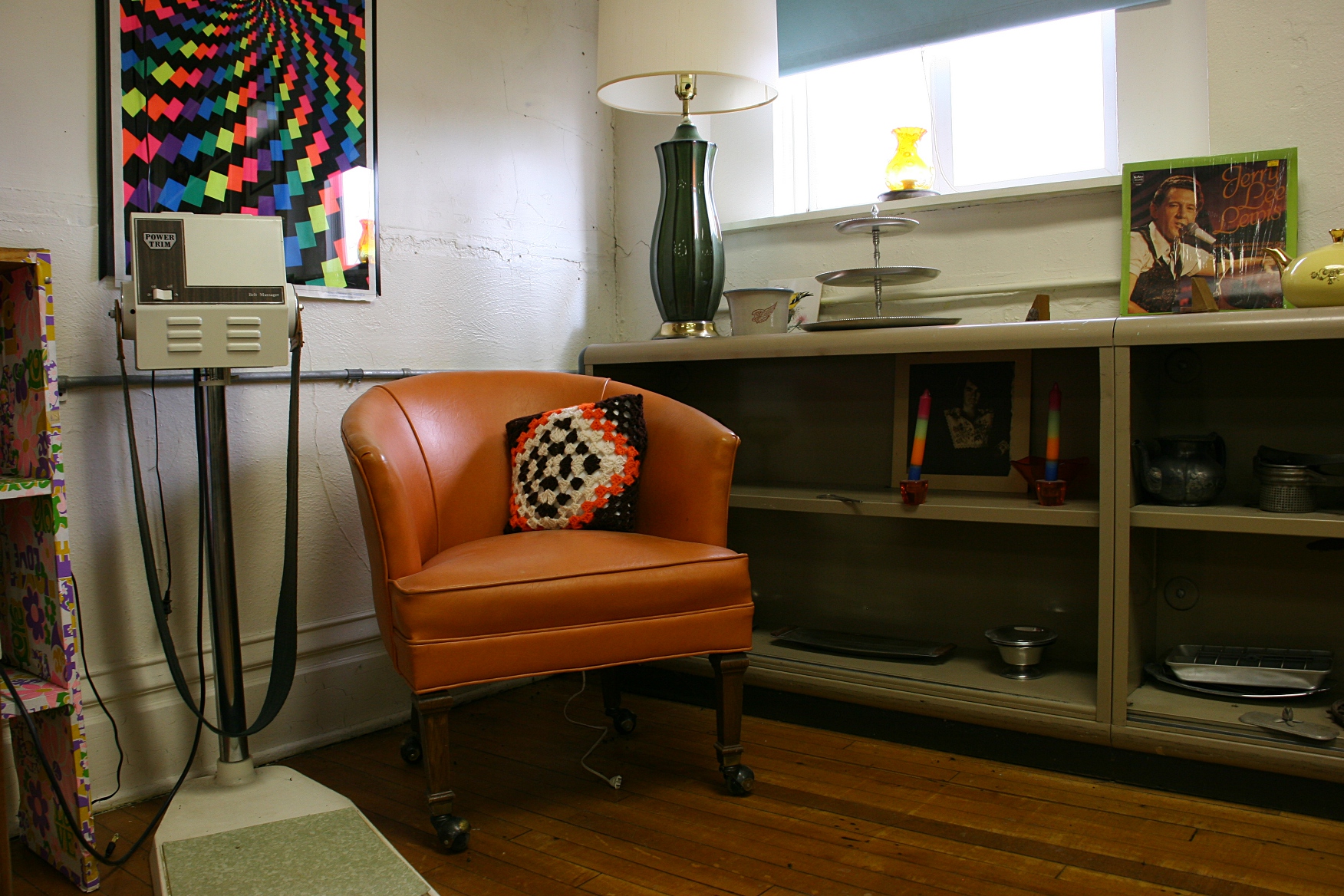
Sit a spell in this 60s corner or lose some inches on that exercise equipment, left.

Sit a spell in this 60s corner or lose some inches on that exercise equipment, left. Well, consider it, but don’t actually do it.

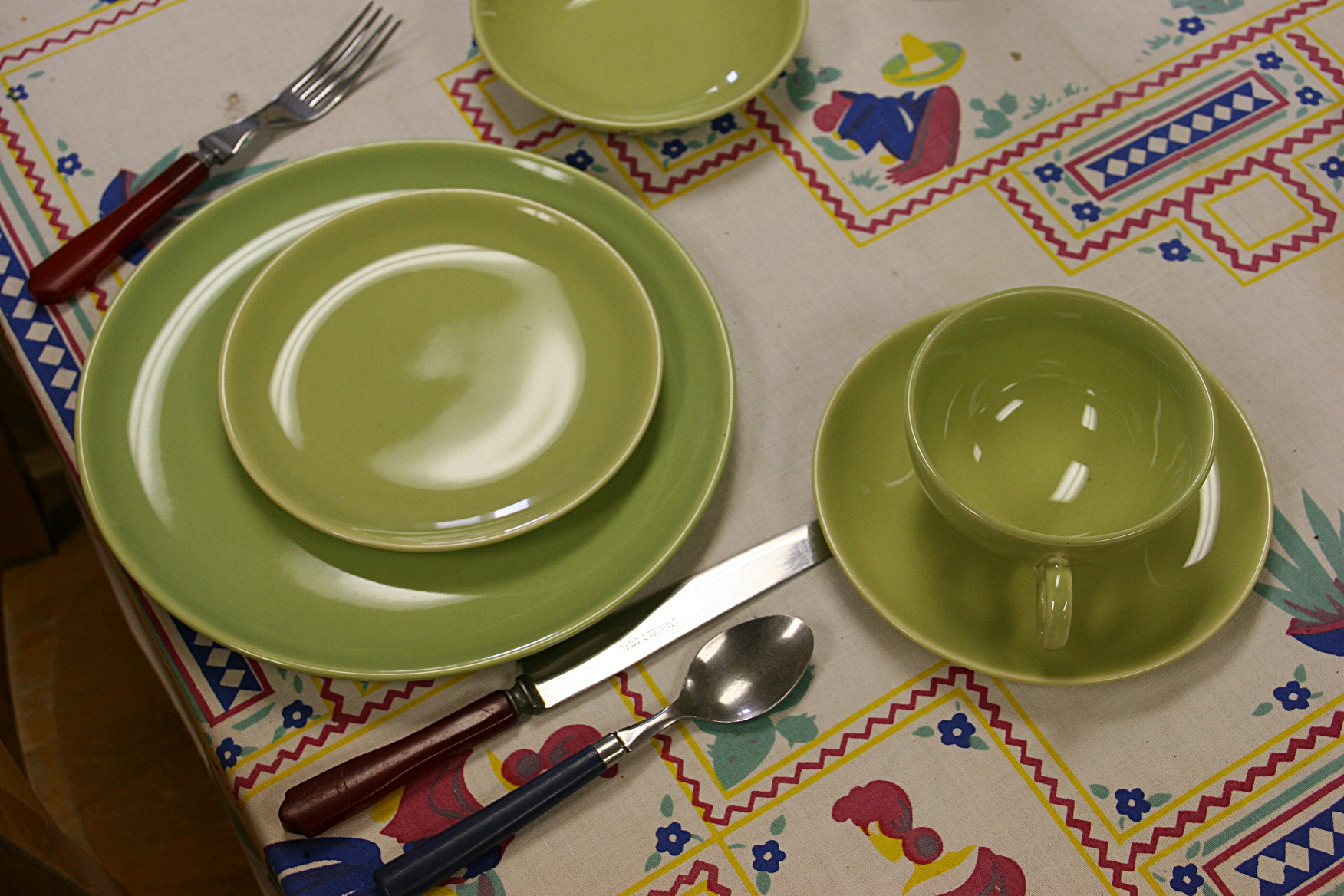
A 1950s place setting. I collection vintage tablecloths.

A 1950s place setting. I collect vintage tablecloths.

IN THE FASHION ROOM:

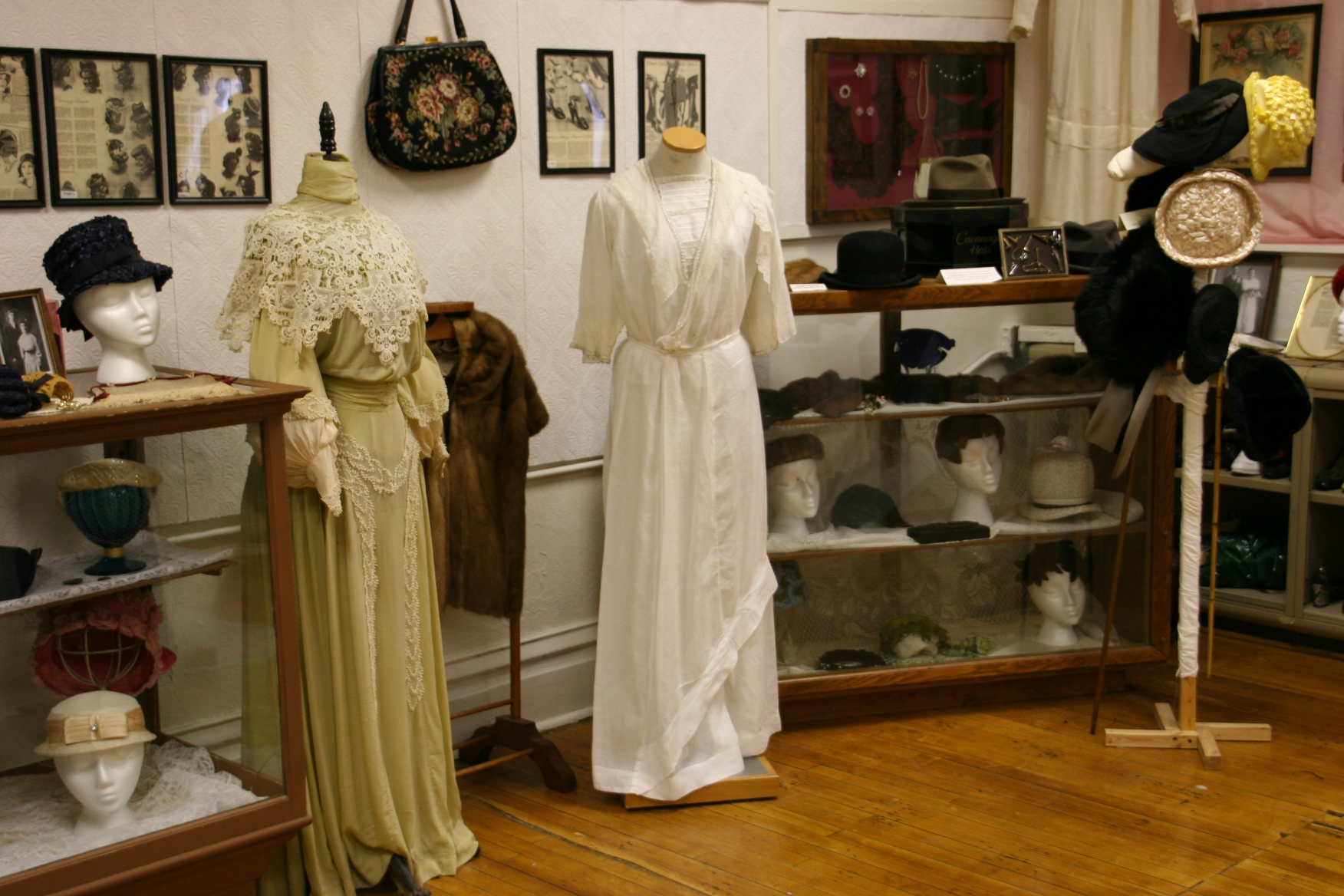
Clothing and sewing equipment from times past suggests how far a generation or two have come.

Clothing and sewing equipment span generations in The Fashion Room.

IN THE HALLWAY:

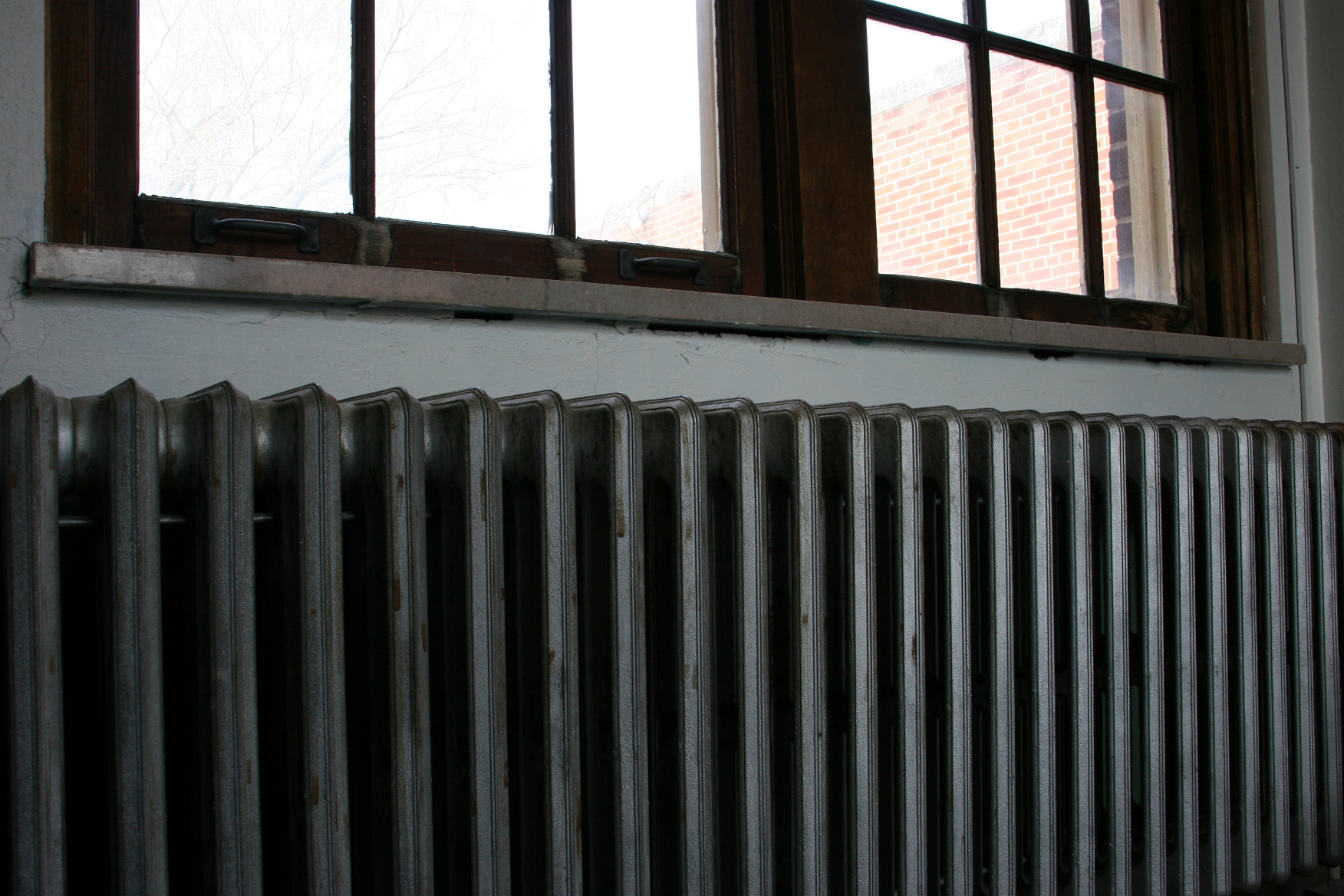
An old radiator and old windows.

An old radiator and old windows show the character of this aged former school.

IN THE MARY DELZER ROOM:

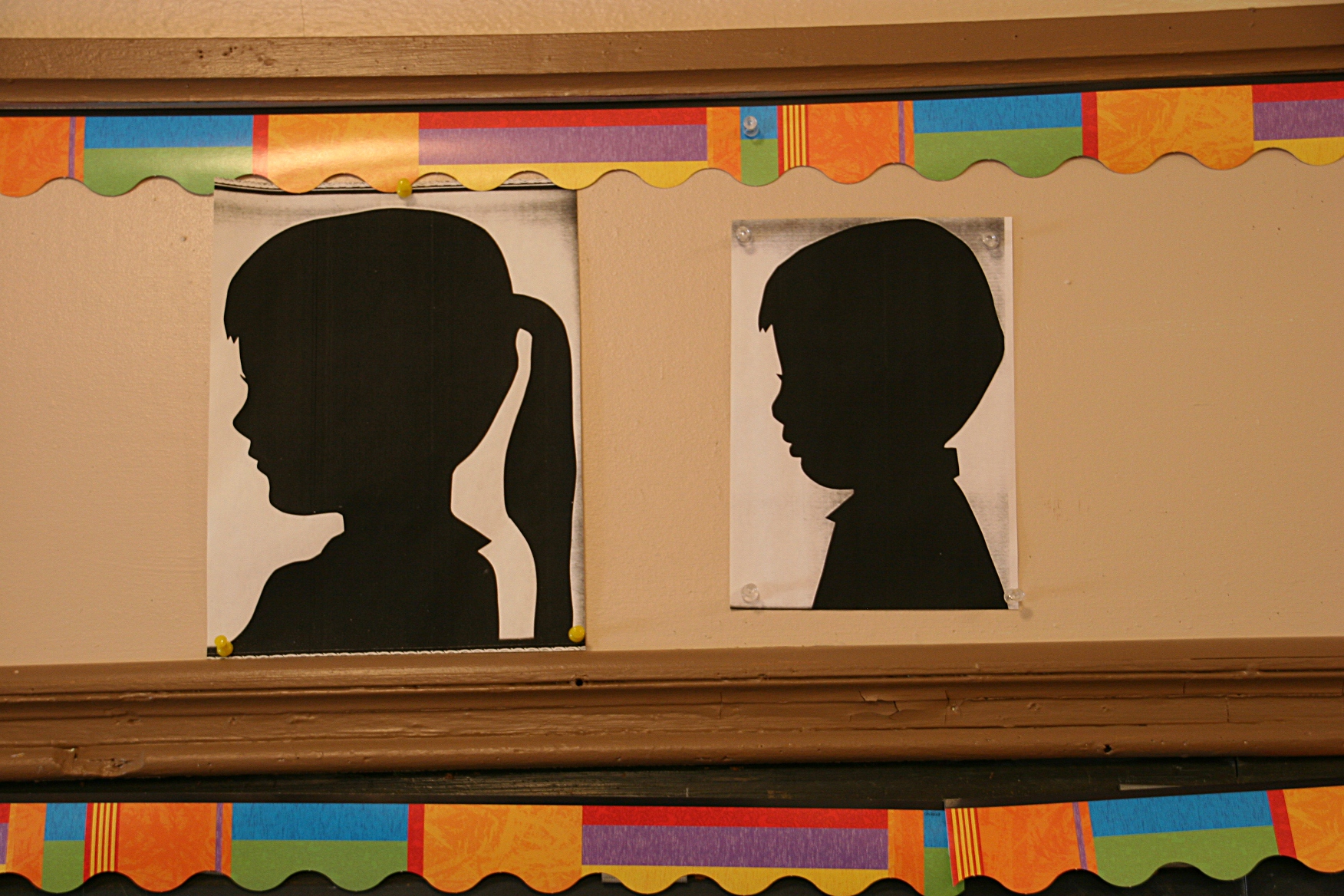
Remember making these silhouettes from black construction paper? I hadn't thought about these in decades. Janis Ray had her students create these profiles each year as a gift to their parents.

Remember making these silhouettes from black construction paper? I hadn’t thought about these in decades. Former educator and WCHS director Janis Ray had her elementary aged students create these profiles each year as a gift to their parents. These are displayed in a room dedicated to education and in which Janis taught.

IN GRANDMA’S ATTIC:

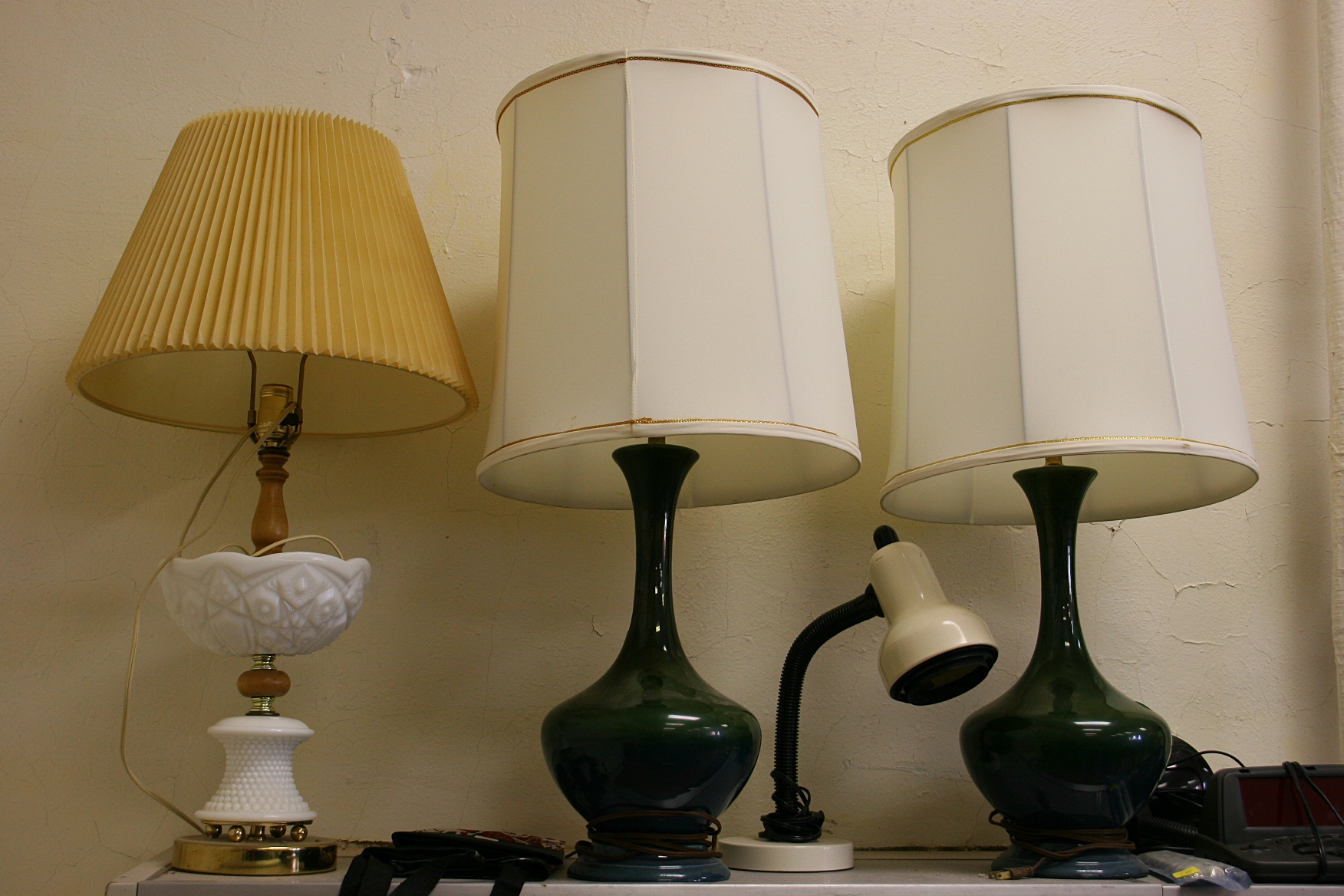
In Grandma's Attic you can buy garage sale type items, like these lamps, with proceeds benefiting the WCHS.

In Grandma’s Attic you can buy garage sale type items, like these lamps, with proceeds benefiting the WCHS. I really should have purchased the two matching lamps. Aren’t they fabulous?

IN THE OFFICE:

A recent donation awaits research and placement.

A recent donation awaits research and placement.

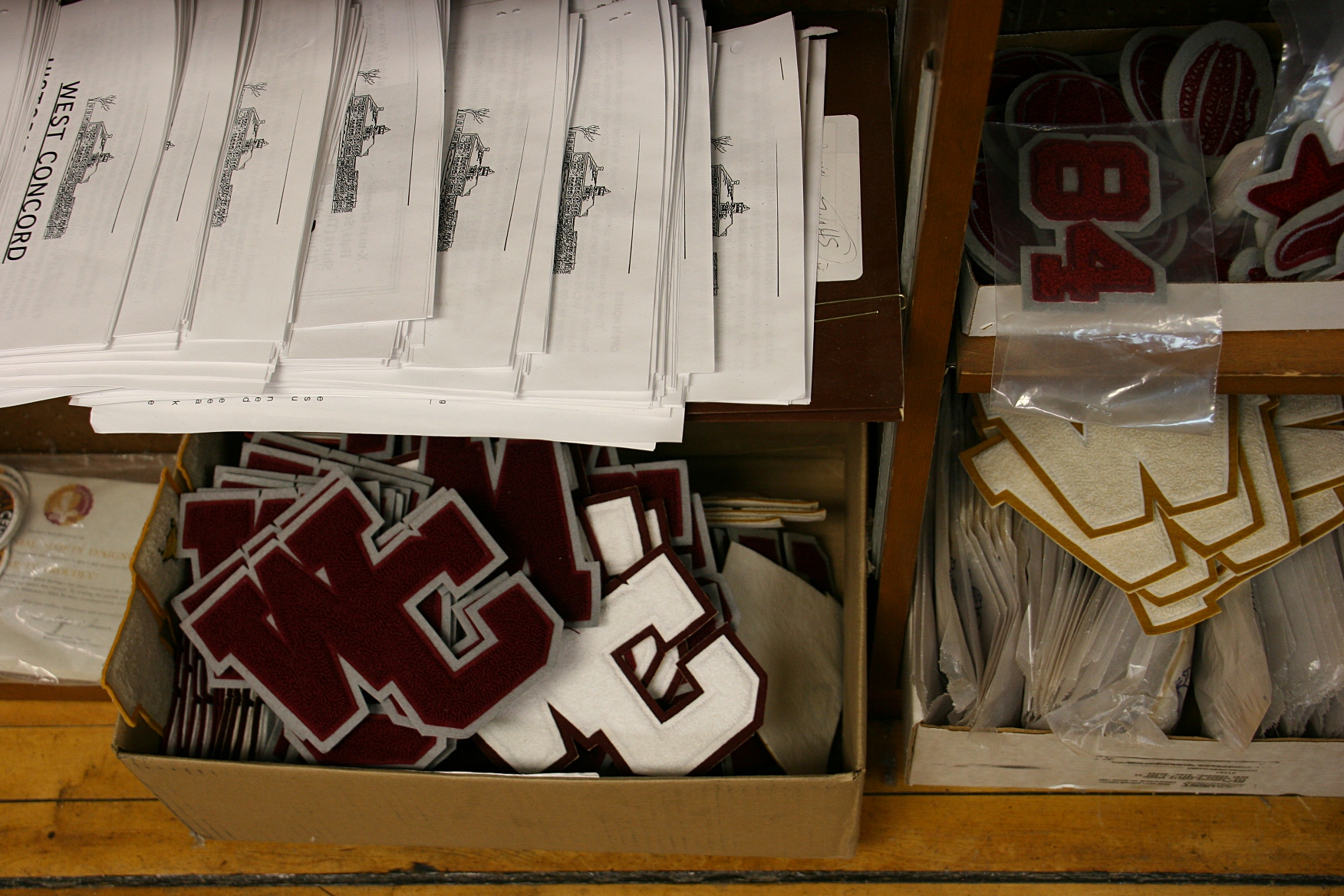
School letters left-over from West Concord High School are available for purchase.

School letters and numbers left over from West Concord High School are available for purchase. West Concord is now part of Triton Public Schools (West Concord, Dodge Center and Claremont). West Concord Public Charter School, however, is open in the community.

FYI: If you missed my first post on the West Concord Historical Society museum, click here. Today’s post is the second in a three-part series.

© Copyright 2015 Audrey Kletscher Helbling


Downton Abbey fashions coming to Oshkosh March 3, 2015

WHEN MY WISCONSIN RESIDENT daughter recently informed me that Dressing Downton: Changing Fashions for Changing Times will be on exhibit in Oshkosh, Wisconsin, beginning in late June, I got giddy with excitement. Oshkosh is only a 4 ½-hour drive from my southeastern Minnesota home and on the way to my daughter’s place in Appleton.

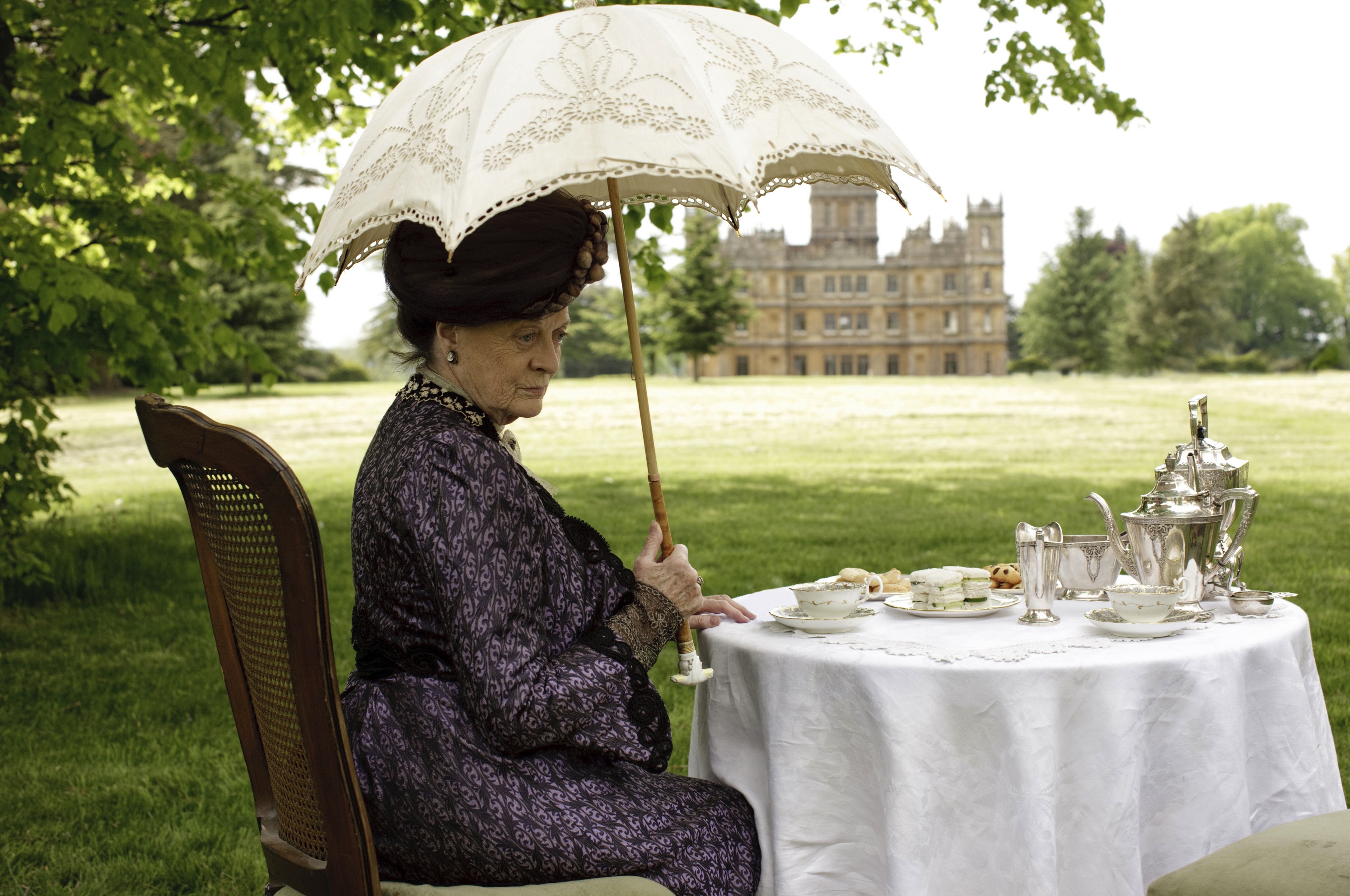
A film still of Maggie Smith's character, Violet Crawley. This costume will be featured in the exhibit. Photo credit: Carnival Films/Masterpiece and courtesy of the Paine Art Center and Gardens.

A film still of Maggie Smith’s character, Violet Crawley. This costume will be featured in the exhibit. Photo credit: Carnival Films/Masterpiece (courtesy of the Paine Art Center and Gardens).

If you’re a fan of the Public Broadcasting System Masterpiece series Downton Abbey, and especially the fashion showcased on this British drama, you understand my enthusiasm. The traveling exhibit wending its way through seven American cities from now into 2017 features 36 period costumes (including jewelry) and a fashion overview from the first four seasons of the show. That covers 1912 to the early 1920s.

From maid Anna Smith’s (Bates) apron-covered black dress to Robert Crawley’s light cream suit to Violet and Cora Crawley’s lovely dresses and more, you’ll see costumes up close. Bustle to flapper style. Simple servants’ attire to elegant attire of the rich.

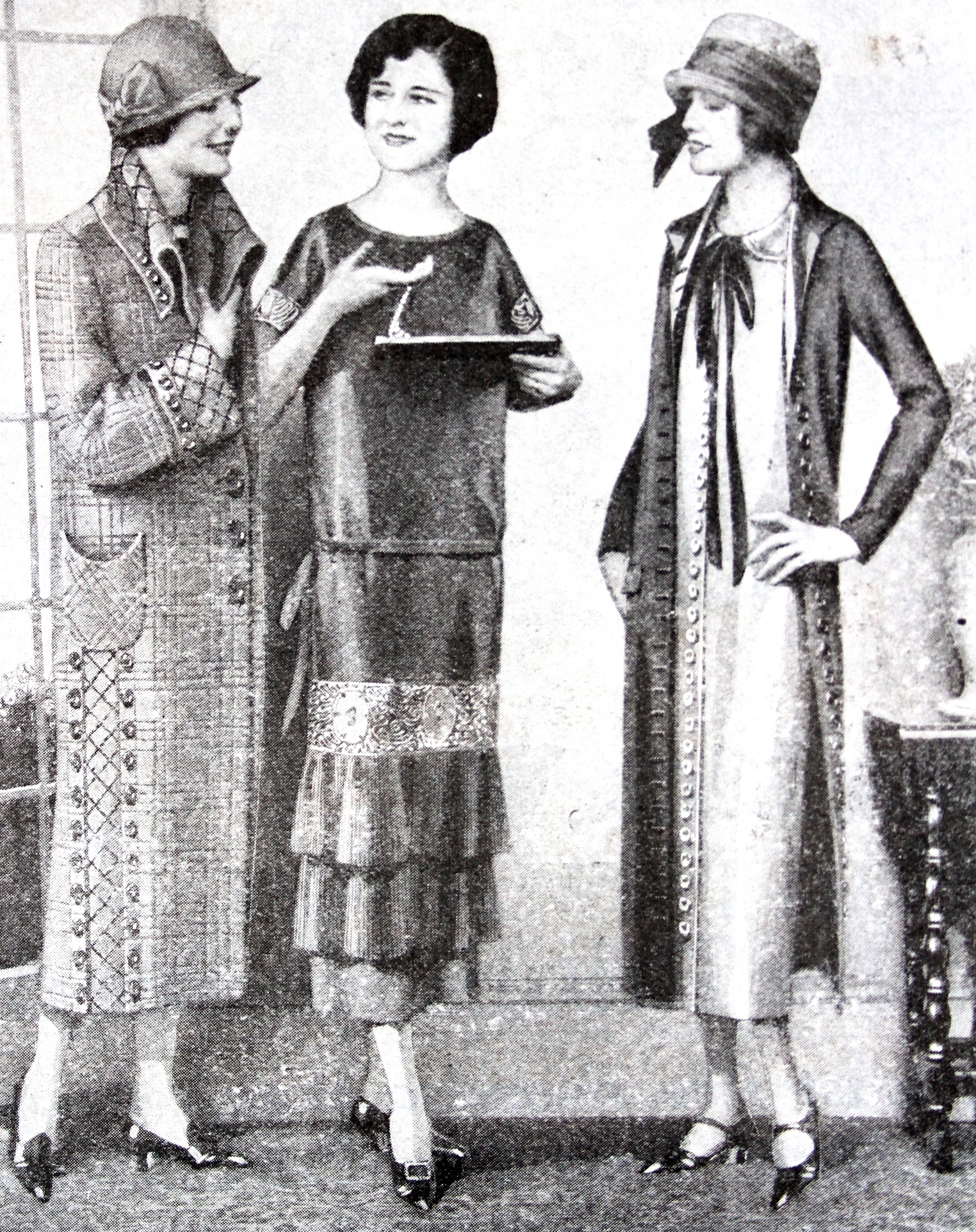
This artwork comes from a Hamilton Garment Company ad published in the February 1925 issue of Needlework Magazine. I recently purchased the magazine at my local Salvation Army.

This artwork comes from a Hamilton Garment Company ad published in the February 1925 issue of Needlework Magazine. I recently purchased the magazine at my local Salvation Army. Fashion styles similar to these were featured in Season 5 of Downton Abbey. That season ended at Christmas 1924.

I’m no fashionista, preferring comfort (think jeans and a cotton shirt) to fashionable clothing. But the fashions of this time period intrigue me as does the aristocratic lifestyle. There’s always an appeal to seeing the other side, to imagining a life of wealth and privilege. I fit more with the downstairs servant standard of living.

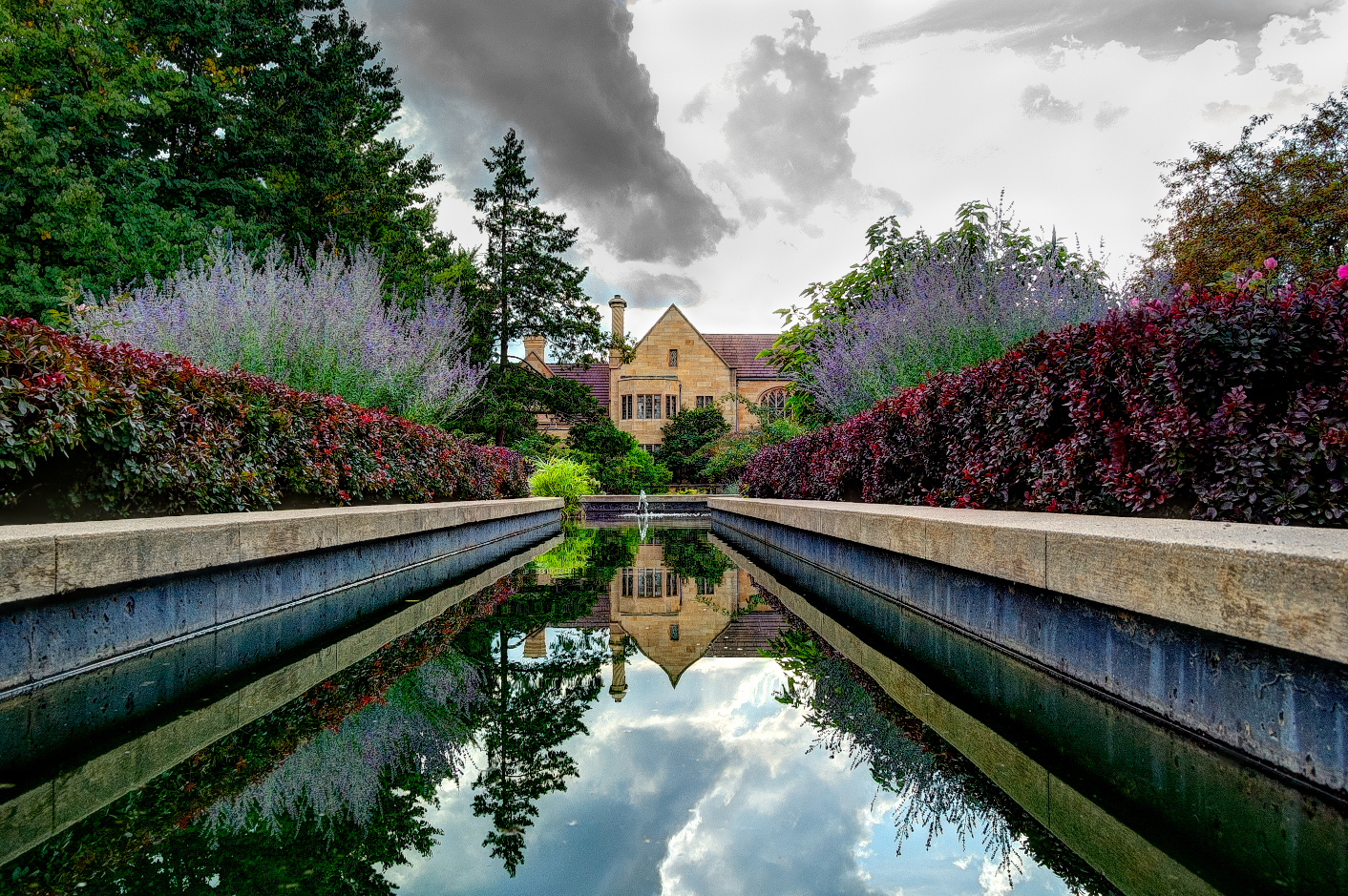
The Paine Mansion. Photo by Eric Reischl and courtesy of the Paine Art Center and Gardens.

The Paine Mansion. Photo by Eric Reischl and courtesy of the Paine Art Center and Gardens.

That the Wisconsin exhibit will be held at the Paine Art Center and Gardens, a Tudor-Revival country estate style mansion and grounds, seems especially fitting. Nathan and Jessie (Kimberly) Paine of the wealthy Paine Lumber Company and Kimberly-Clark companies had the house built between 1927 – 1930. Their English ancestry influenced the architectural and interior designs and furnishings.

According to Laura Fiser, the Paine’s Curator of Collections and Exhibitions, staff first became aware of the proposed exhibit in early 2013. The Paine immediately contacted the organizer, Exhibits Development Group of St. Paul. A review and negotiation process followed. The setting, the beauty and artistry of the costumes, and the passion for the television series are cited as reasons for bringing the fashion exhibit to this historic Wisconsin location.

I agree. This should prove an ideal, elegant setting to display Downton Abbey costumes throughout the more than 24-room mansion. I expect I will be as impressed by the location as I am by the costumes.

“Fans of the series may feel as though they are actually walking on the set of the show and getting a behind-the-scenes look at the costumes,” Paine Executive Director Aaron Sherer said in a press release announcing the exhibit.

And then there are the 19 gardens from shade to rose to woodland and more that certainly will draw my botanical interest.

Touring Dressing Downton: Changing Fashions for Changing Times should reflect life at Downton Abbey from many facets. Fashion. Setting. History. Only the drama will be missing.

FYI: The Downton exhibit at the Paine runs June 20 – September 20. Hours are 10 AM – 5 PM Sunday – Thursday and from 10 AM – 7 PM Friday and Saturday. Admission is $14 for adults and $7 for youth. Click here for more information. Advance tickets are not available; visitors need simply show up to tour the exhibit.

Currently, the traveling exhibit is in Asheville, North Carolina. Other scheduled stops are in Richmond, Virginia; Chicago; Cincinnati; South Bend, Indiana; and Nashville. Click here for more information.

Exhibition produced by Exhibits Development Group in cooperation with Cosprop Ltd., London. Downton™ and Downton Abbey®. ©2015 Carnival Film & Television Limited. All Rights Reserved.

© Copyright 2015 Audrey Kletscher Helbling

The copyrighted mansion and Violet Crawley images are used here courtesy of the Paine Art Center and Gardens, sources attributed.


Toy stories at the Minnesota History Center December 11, 2014

TOY: Object for a child to play with.


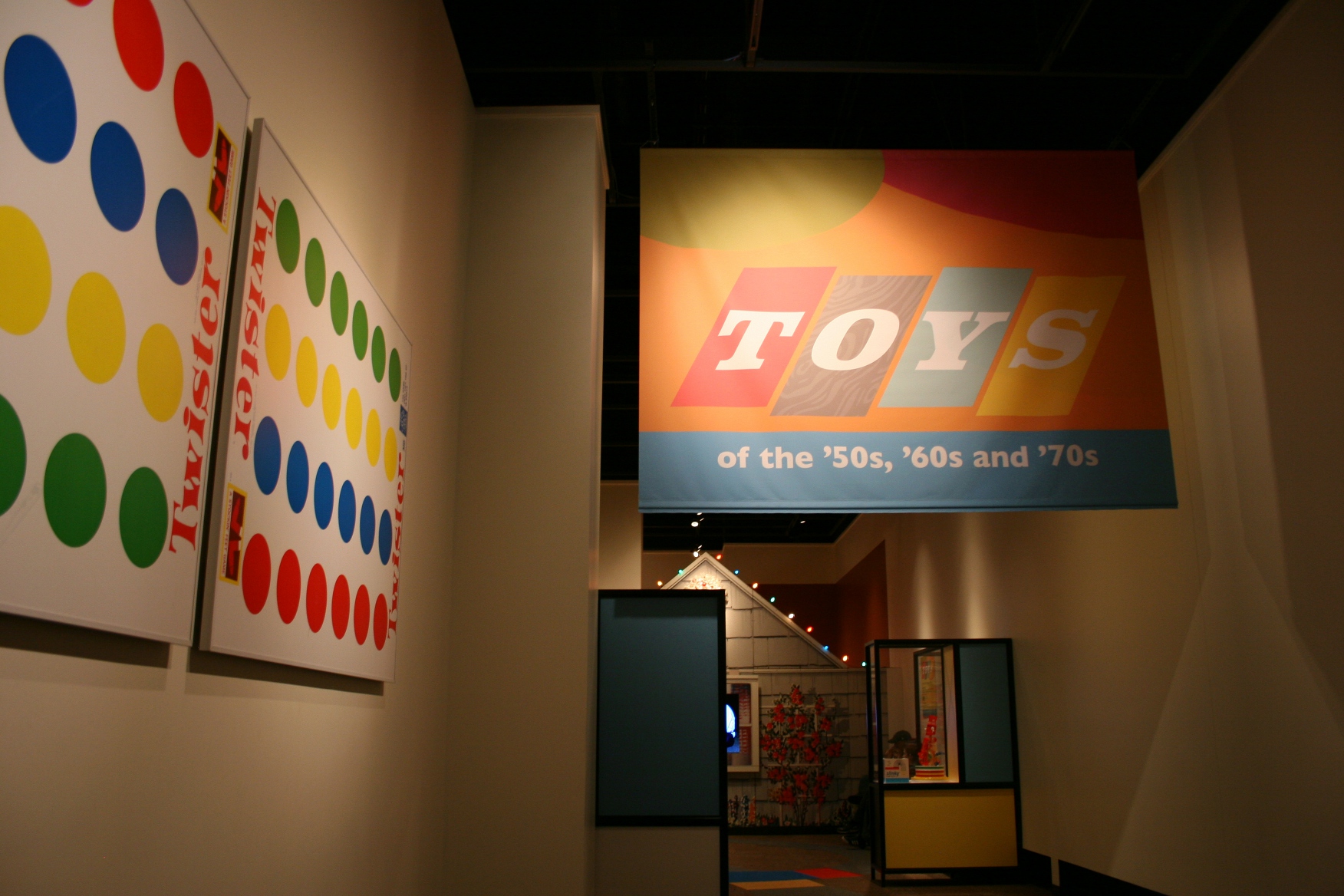
Toys, sign and Twister


If you’re a Baby Boomer, that object may have been Tinker Toys or Lincoln Logs, anything space or Western related, a baby doll or Barbie or perhaps a troll. How about a Tonka truck? Twister or Cootie or Candy Land, anyone?


Toys, promo on wall


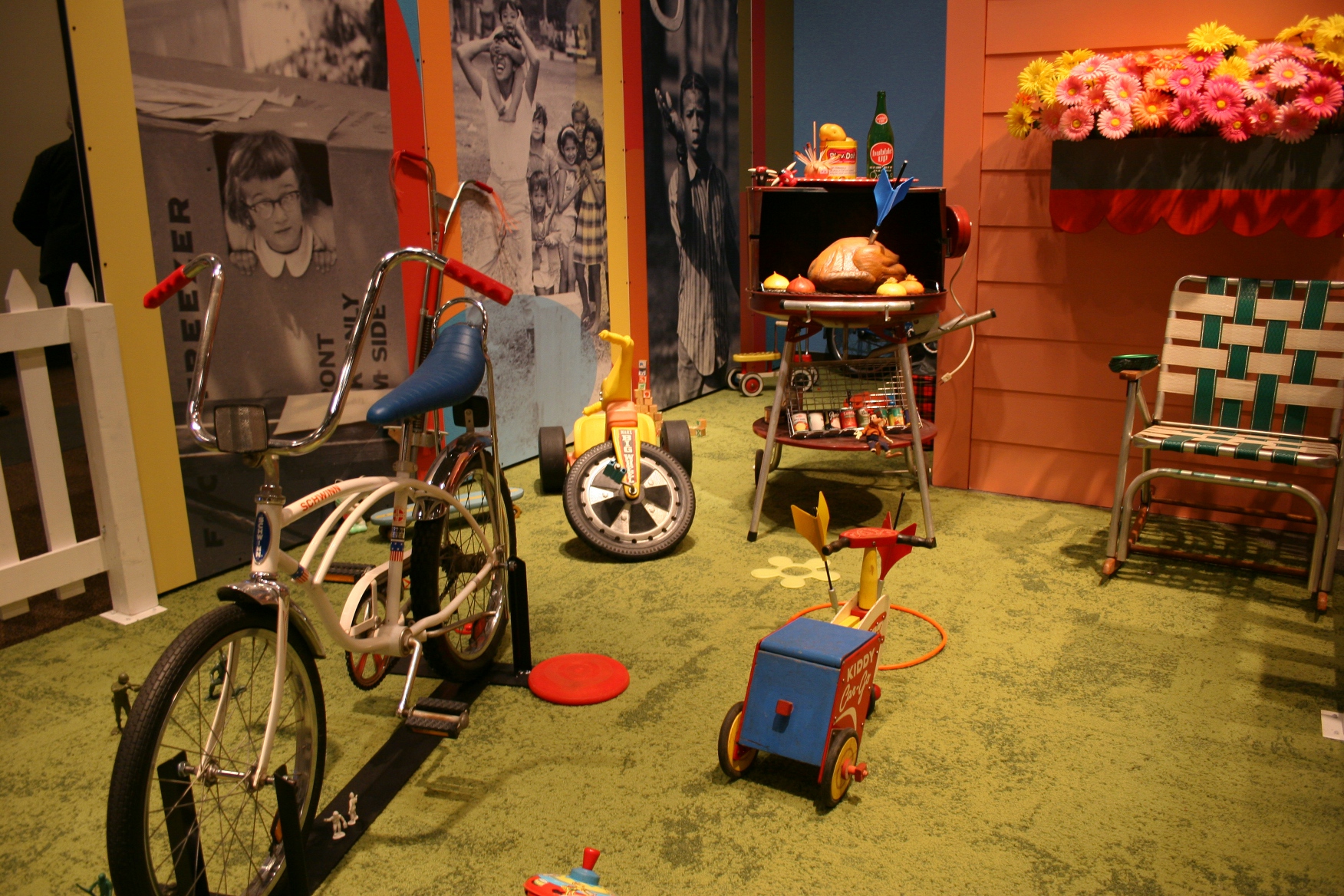
The Minnesota History Center’s “TOYS of the ’50s, ’60s and ’70s” is a skip down memory lane for my generation. A recent tour of the exhibit, which runs through January 4, 2015, skipped joy into my heart as I spotted toys I hadn’t thought about in years. Sometimes it’s fun simply to forget about today and remember the carefree days of youth. The days of hopscotch and jacks and stick horses and…

Outdoor toys and a play area are part of the exhibit.

Outdoor toys and a play area are part of the exhibit.

I didn’t see a jump rope, though, but perhaps missed it.

Oh, the hours sitting cross-legged with Tinker Toys scattered across the floor, attempting to construct a Ferris Wheel.


Toys, Cootie


Oh, the anticipation of rolling a six on the die to insert the last of six legs into a Cootie’s body.

Oh, the tears that raged when I discovered my oldest brother had punched in the boobs of my new bridal doll.

Oh, the gratitude to my friend Robin for gifting me with a mini pink-haired troll at my ninth birthday party. It was the only troll or childhood birthday party I would ever have.

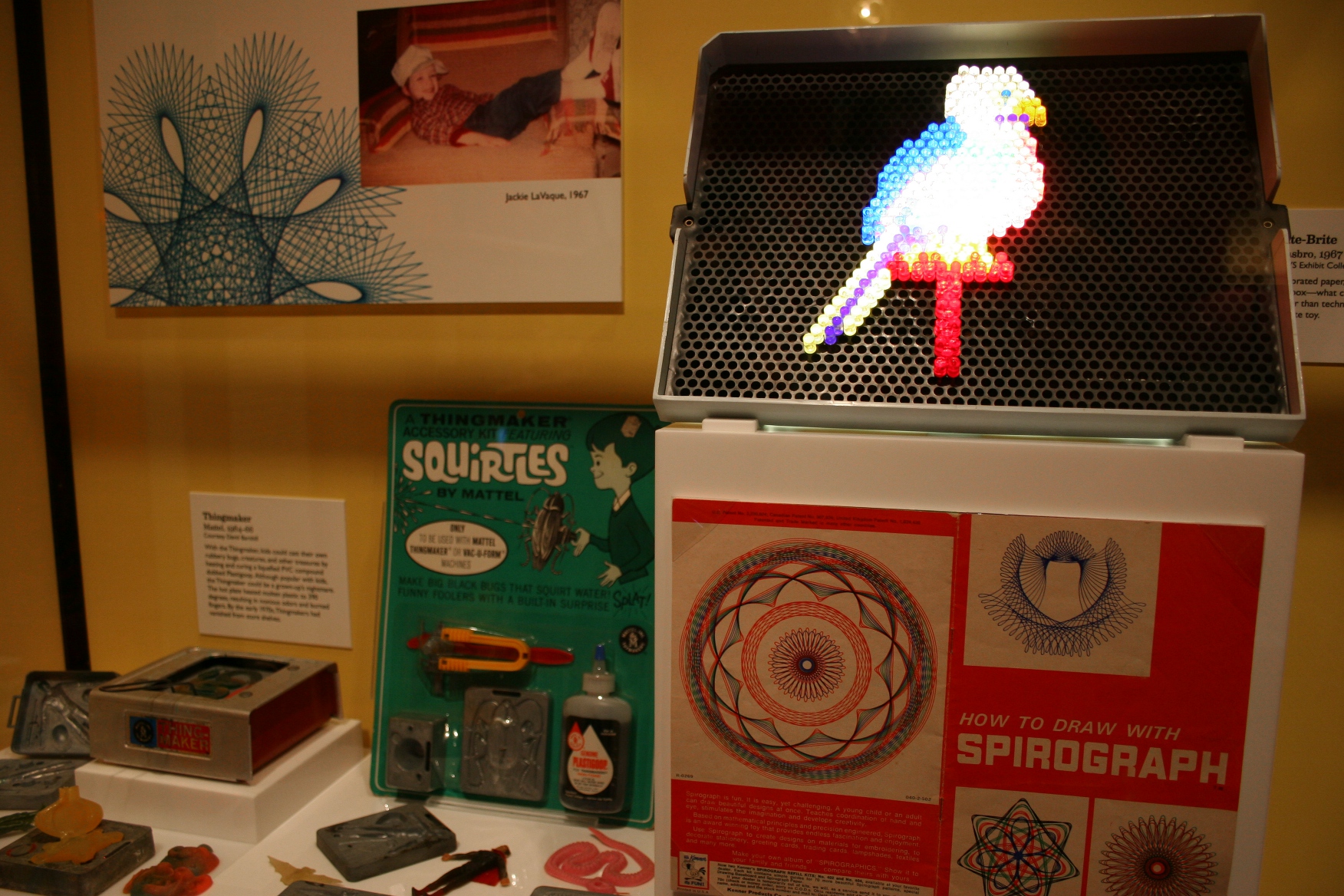
Toys, Spirograph

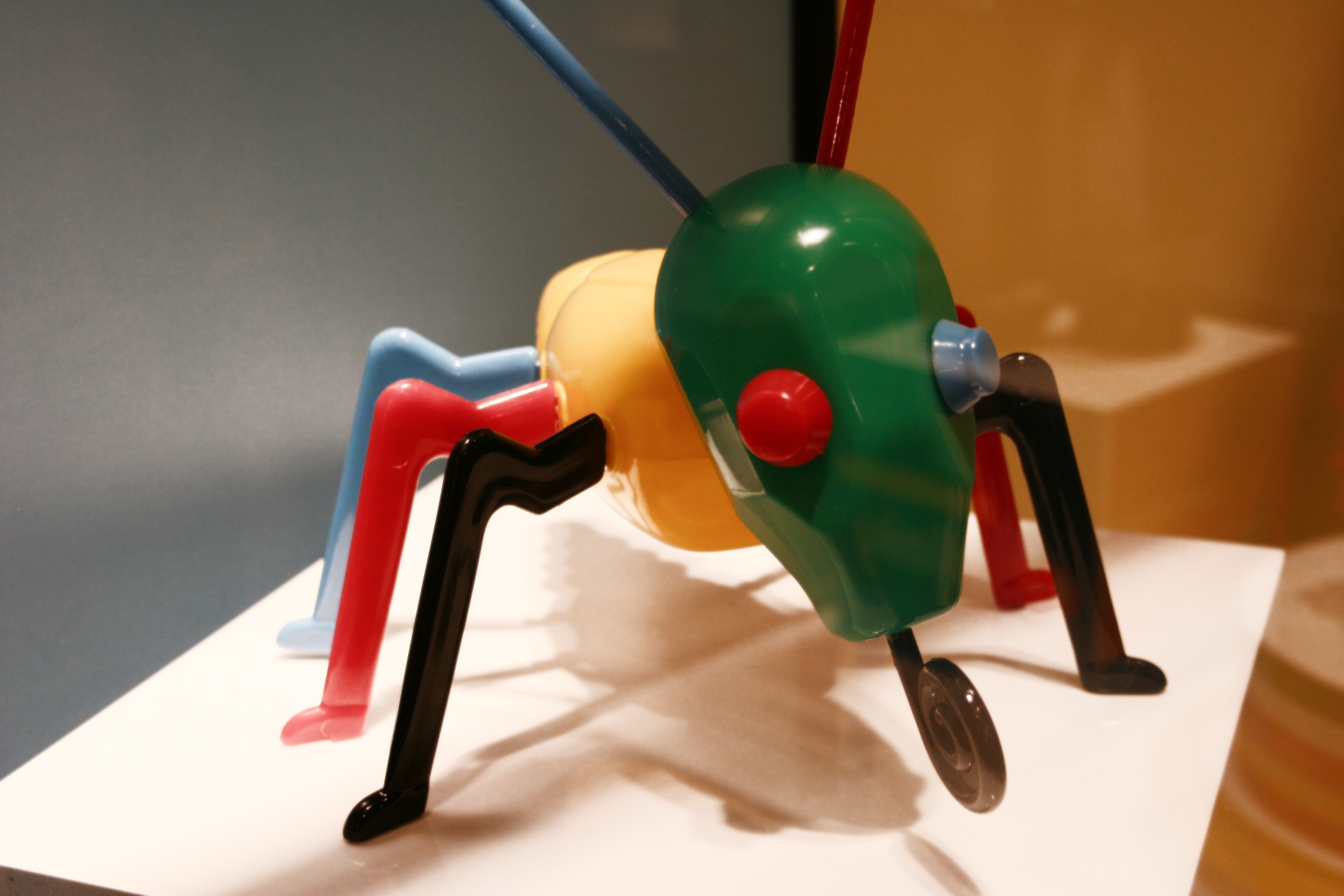
Some artsy favorites like Spirograph, Lite Brite and making bugs from goop.


Oh, the delight in creating kaleidoscopic designs with Spirograph’s pens and plastic shapes.

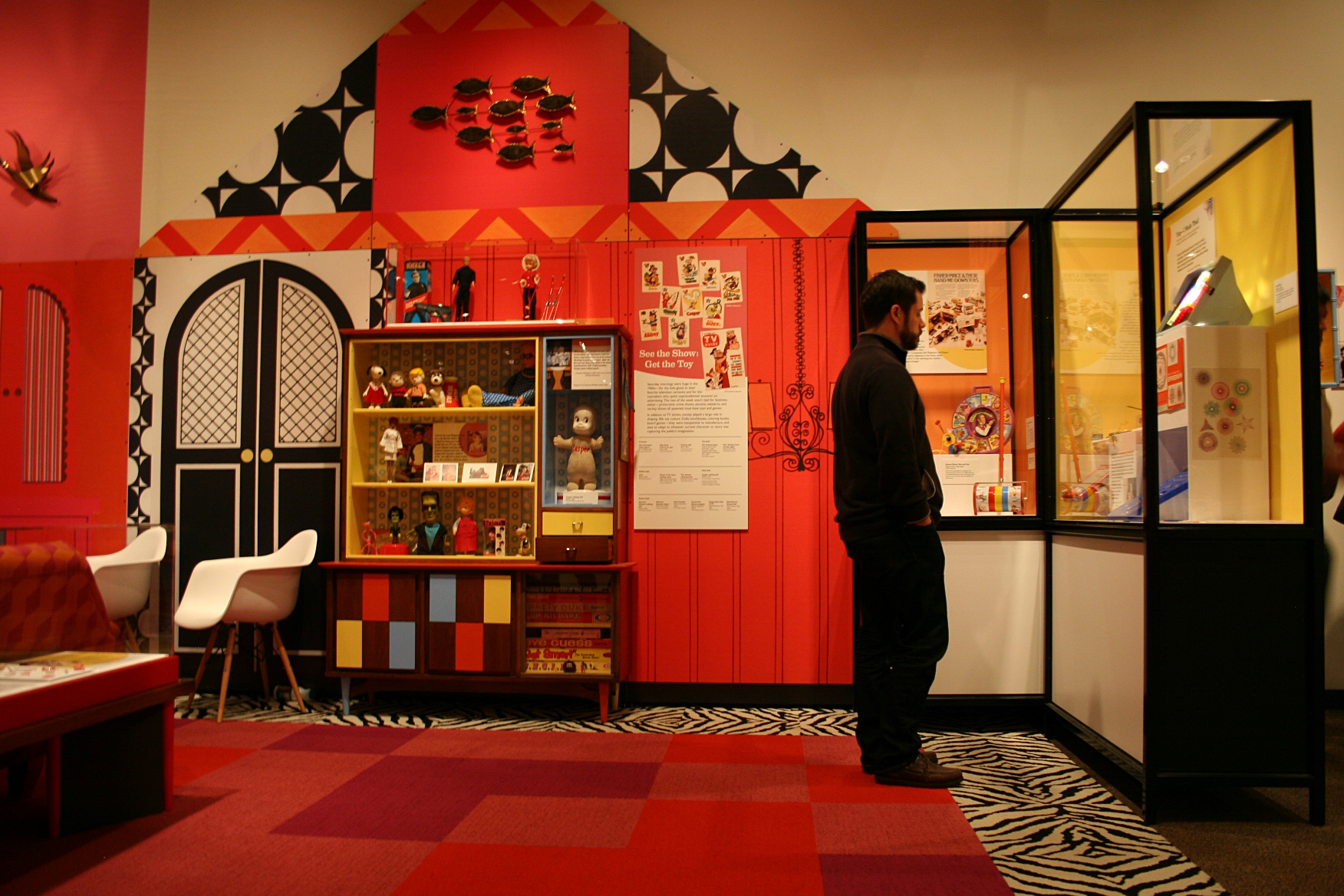
A museum visitor checks out the 1960s exhibit.

A museum visitor checks out the 1960s exhibit.

Memories rolled in waves as I perused the showcased toys. Some I had as a child; many I did not.

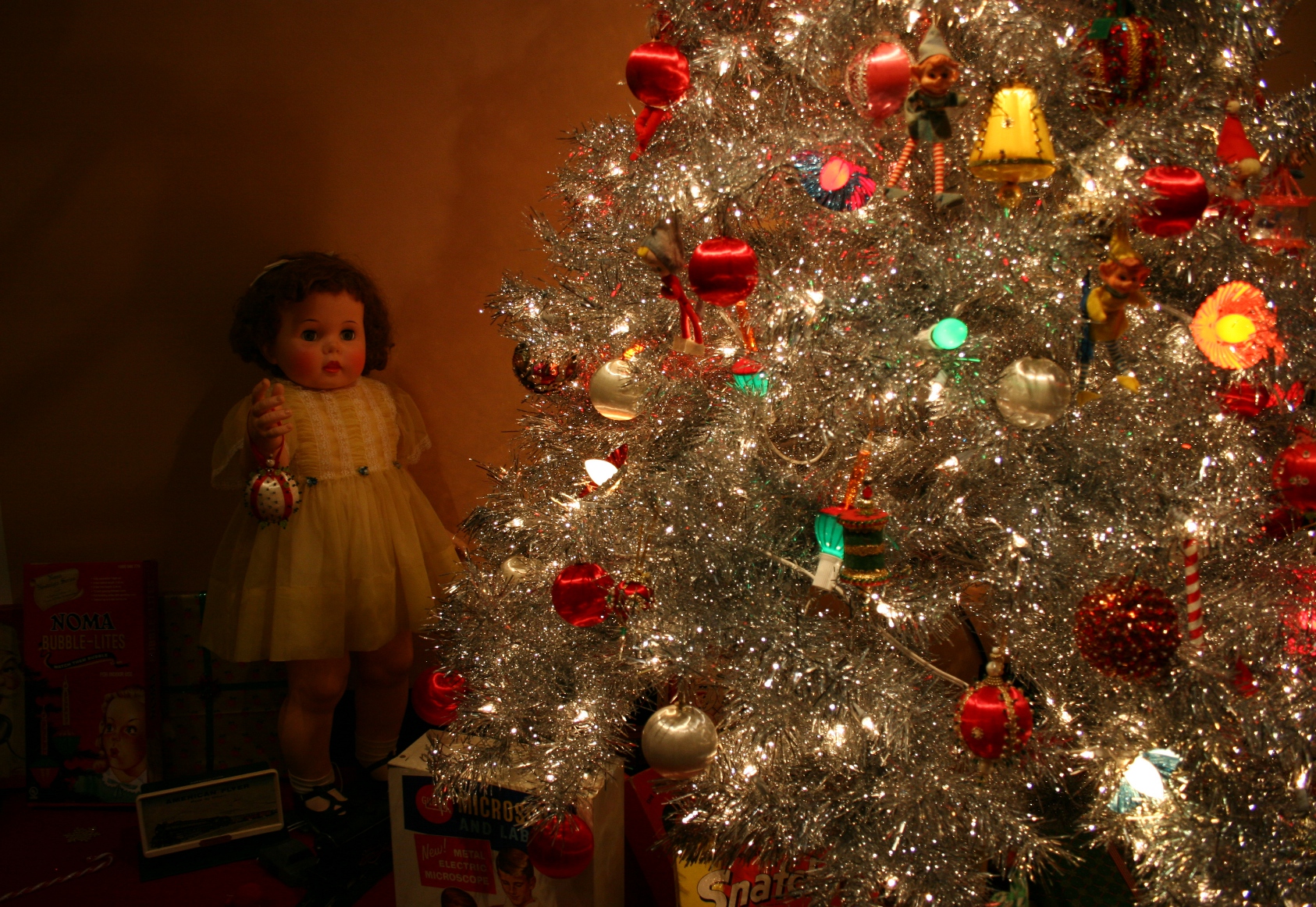
In the '50s section of the exhibit, a Christmas tree with coveted toys of the decade.

In the ’50s section of the exhibit, a Christmas tree with coveted toys of the decade.

I remember each December paging through the Sears Christmas catalog (AKA “Wish Book”) that arrived in our rural southwestern Minnesota mailbox, wishing for so much, knowing in my deepest desires that I would never get the Pogo stick I coveted nor the doll that cried with the pull of a string or a new bicycle (mine came from the junkyard).

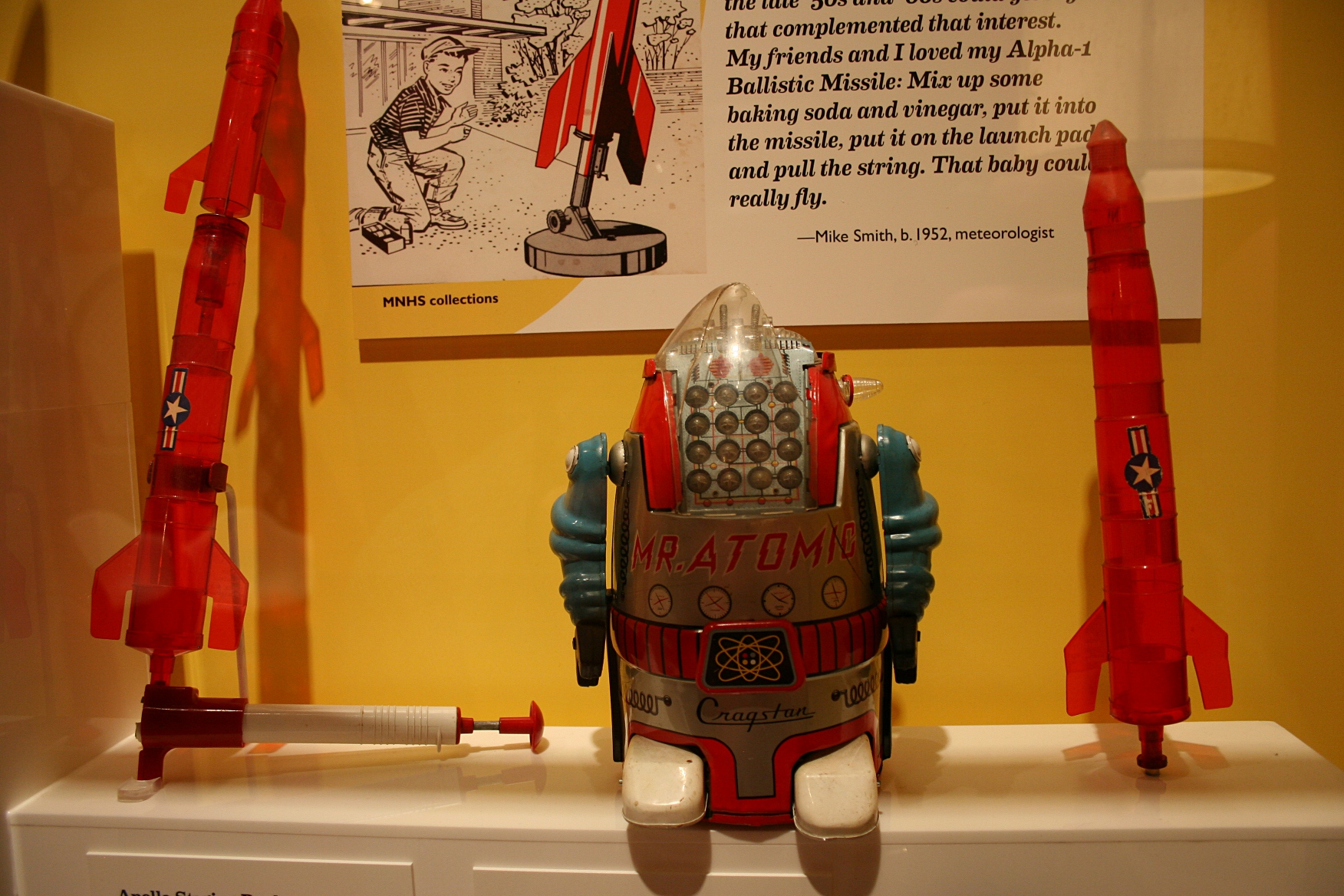
Space toys were big in the 1960s and my oldest brother had a rocket.

Space toys were big in the 1960s and my oldest brother had a rocket.

I would receive what my parents could afford and I expect they sacrificed much even for that.

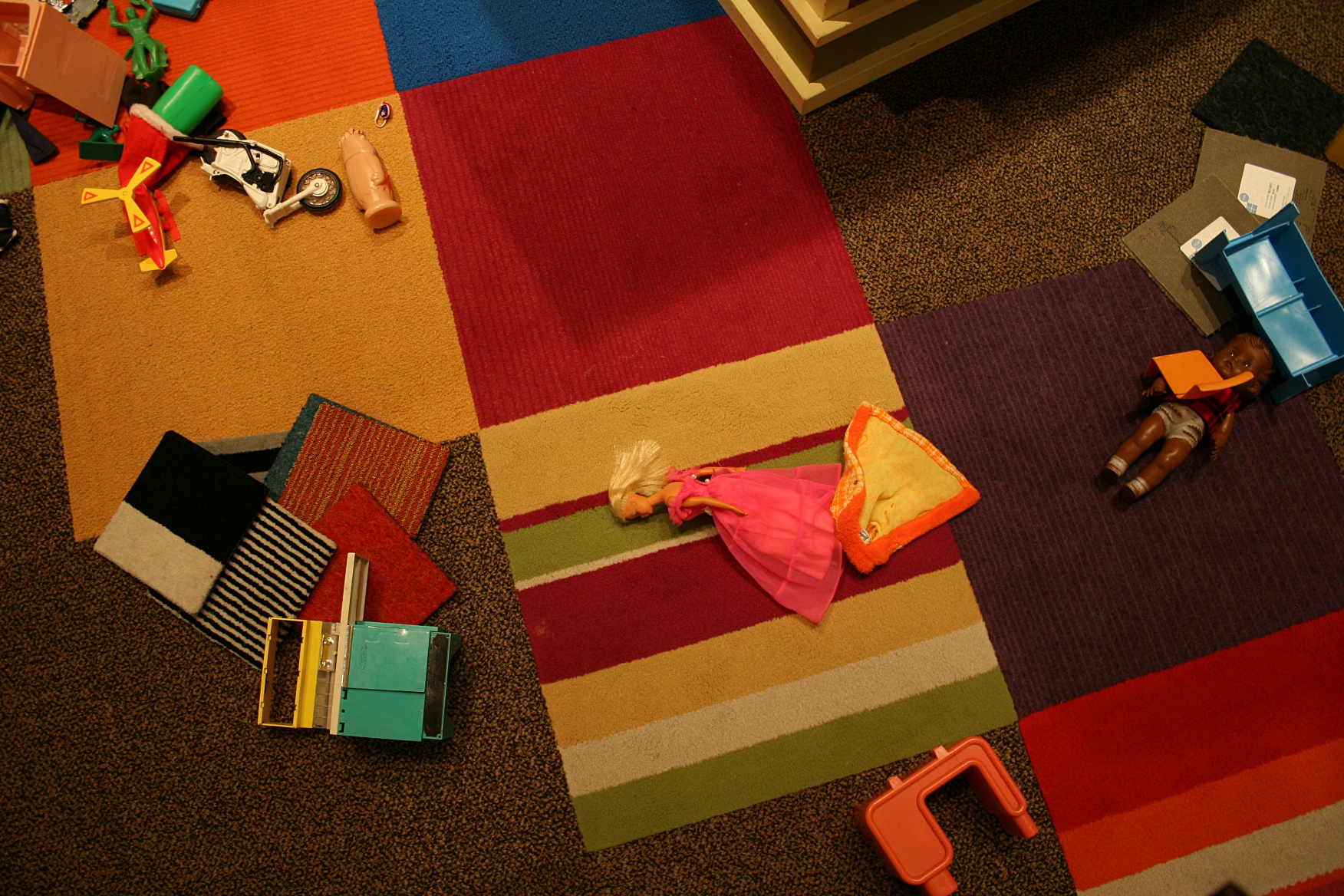
Toys strewn across the floor in a play area of the 1970s part of the exhibit.

Toys strewn across the floor in a play area of the 1970s part of the exhibit.

Looking back, that inability to give me and my siblings a pile of toys was a gift in itself. Sure, I wanted the hottest new toy. That’s normal thinking for a kid who doesn’t understand family finances or a parent’s thoughts on curbing greed.

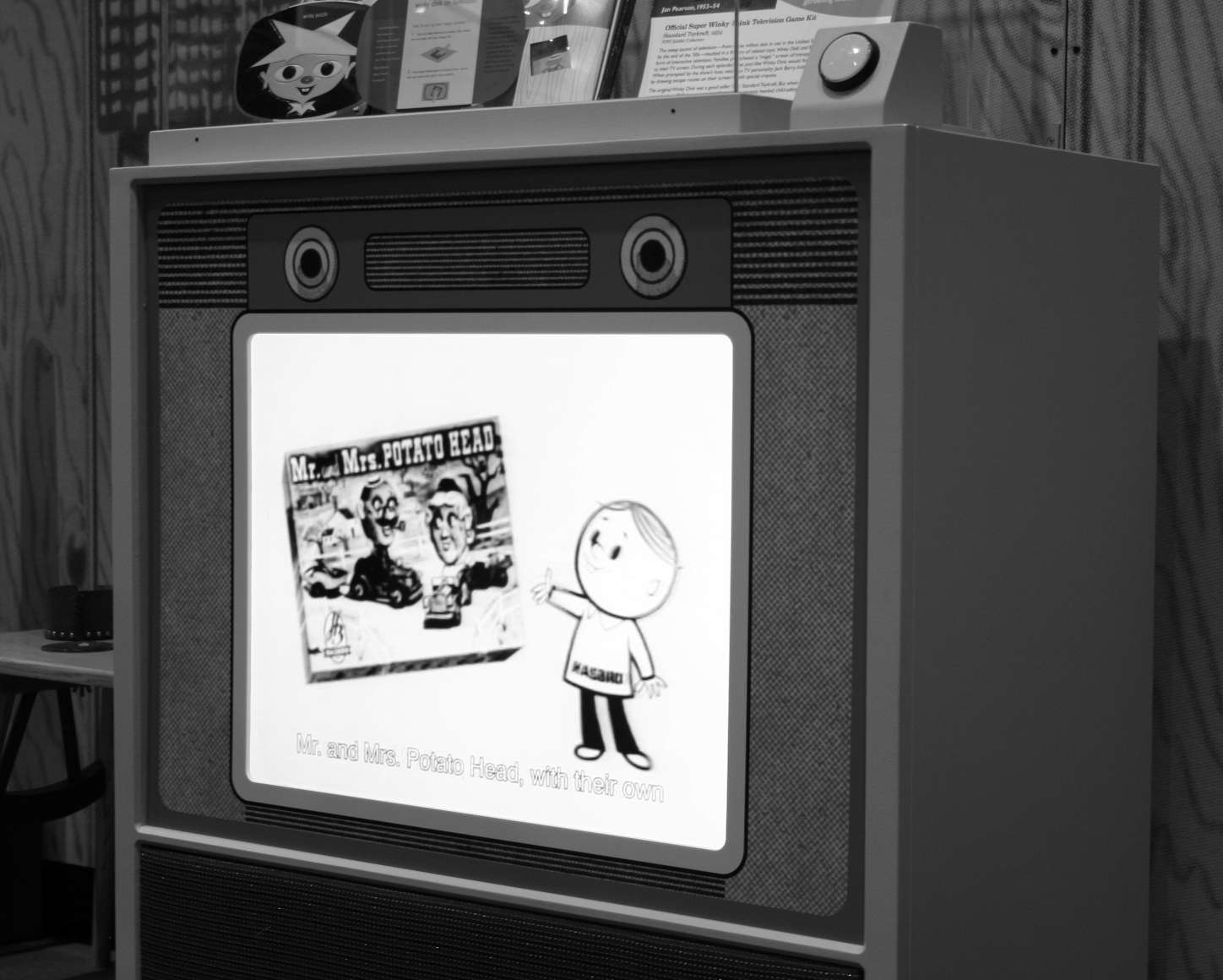
I remember life without TV and our first television, in black and white. And Mr. Potato Head, a popular toy back in the day.

I remember life without TV and our first television, black and white. And Mr. Potato Head, a popular toy back in the day.

Because of my upbringing, I have never focused on material things.

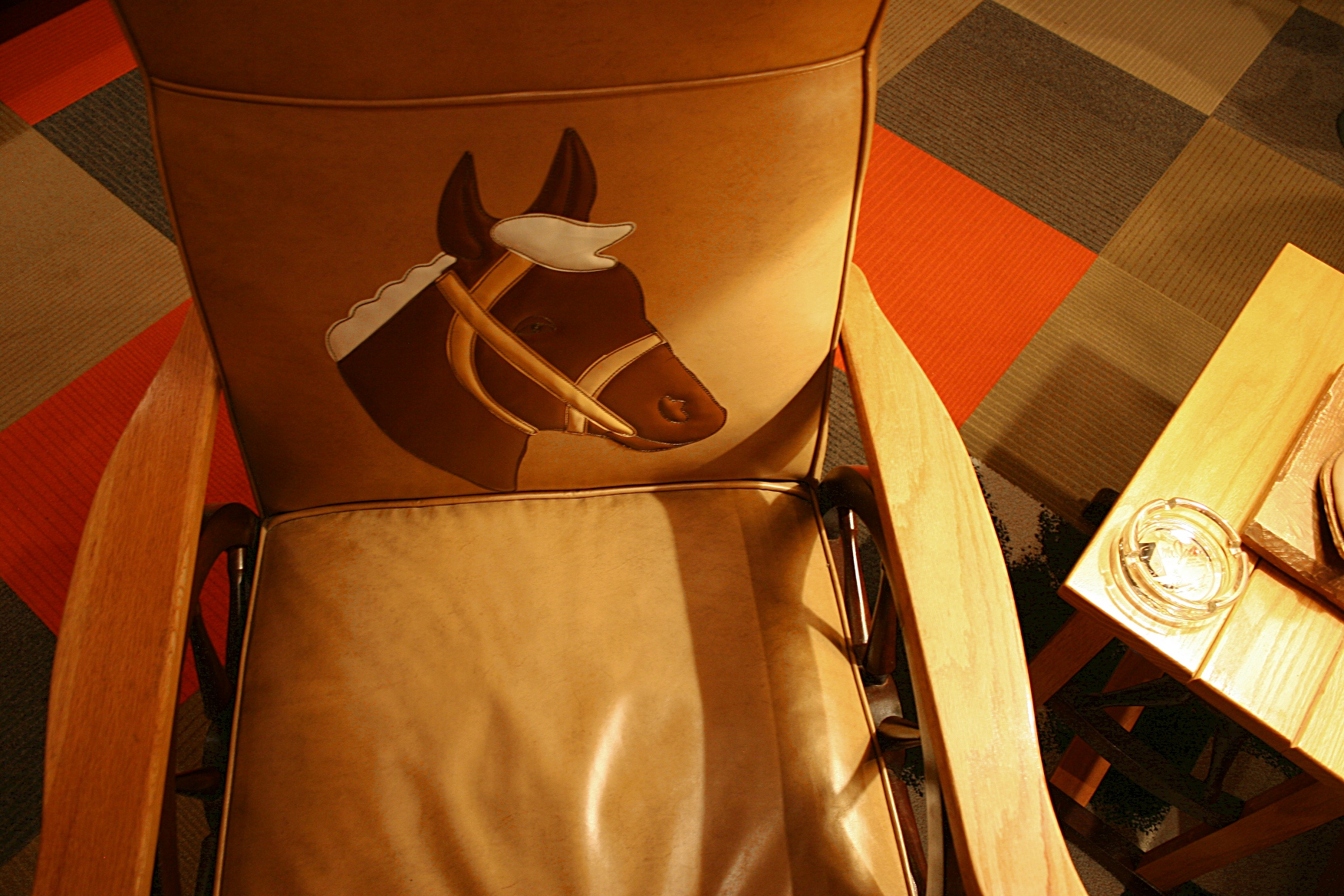
Anything Western related was especially popular in the 1950s and 1960s. Here you see the Western influence in furniture.

Anything Western related was especially popular in the 1950s and 1960s. Here you see the Western influence in furniture. My siblings and I spent countless hours riding our stick horses through the grove and, in the winter, around the house.

Yes, toys are fun to get and give, especially those that encourage creativity and imaginative play and don’t require batteries.

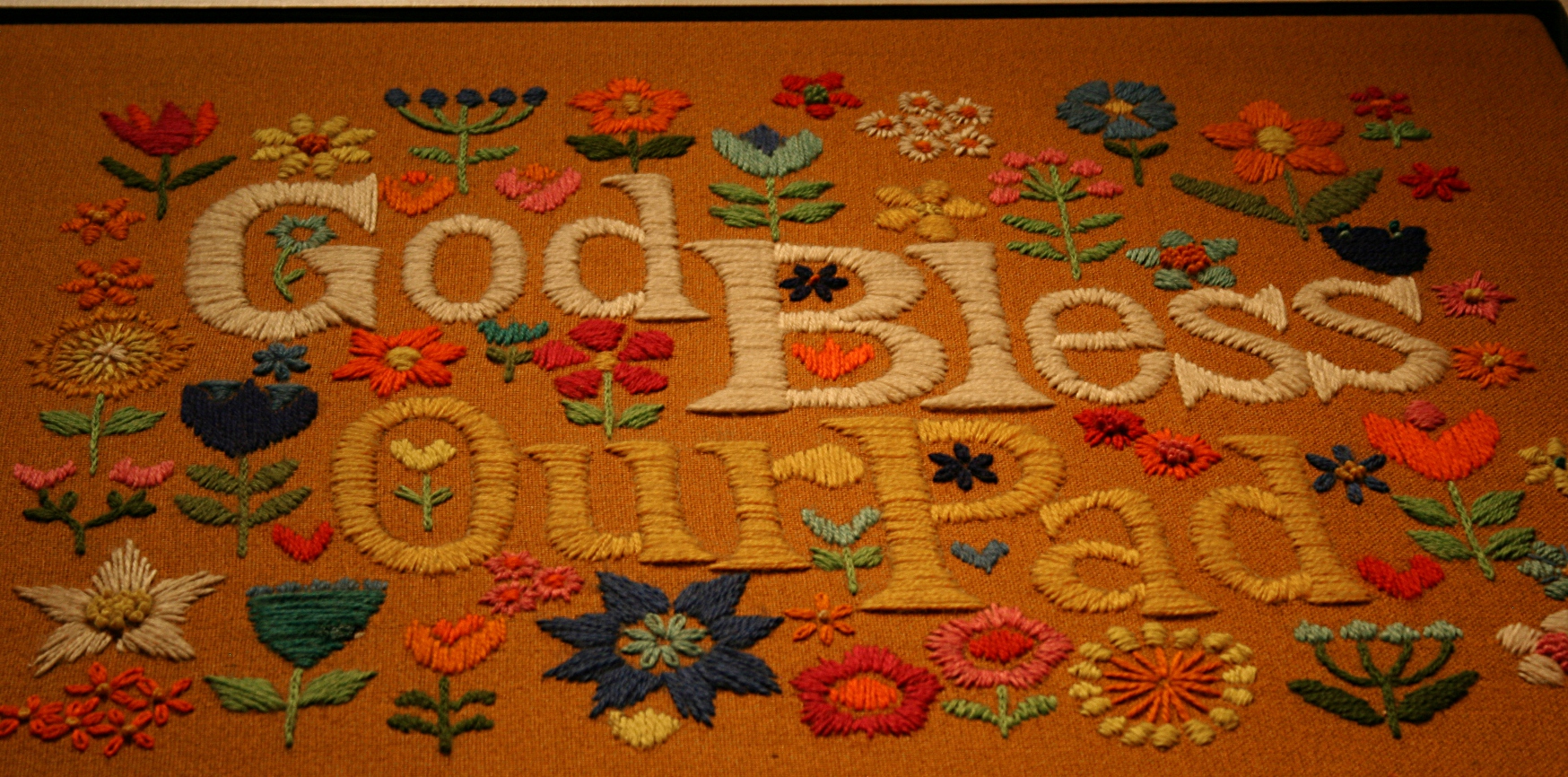
I cherish the blessings of family and home more than anything. I spotted this needlework in the 1970s portion of the exhibit.

I cherish the blessings of family and home more than anything. I spotted this needlework in the 1970s portion of the exhibit.

But it is family that I cherish most. And when I toured the History Center’s toy and other exhibits, I did so with my husband, eldest daughter and son-in-law. Nothing skips joy into my heart like being with those I love.

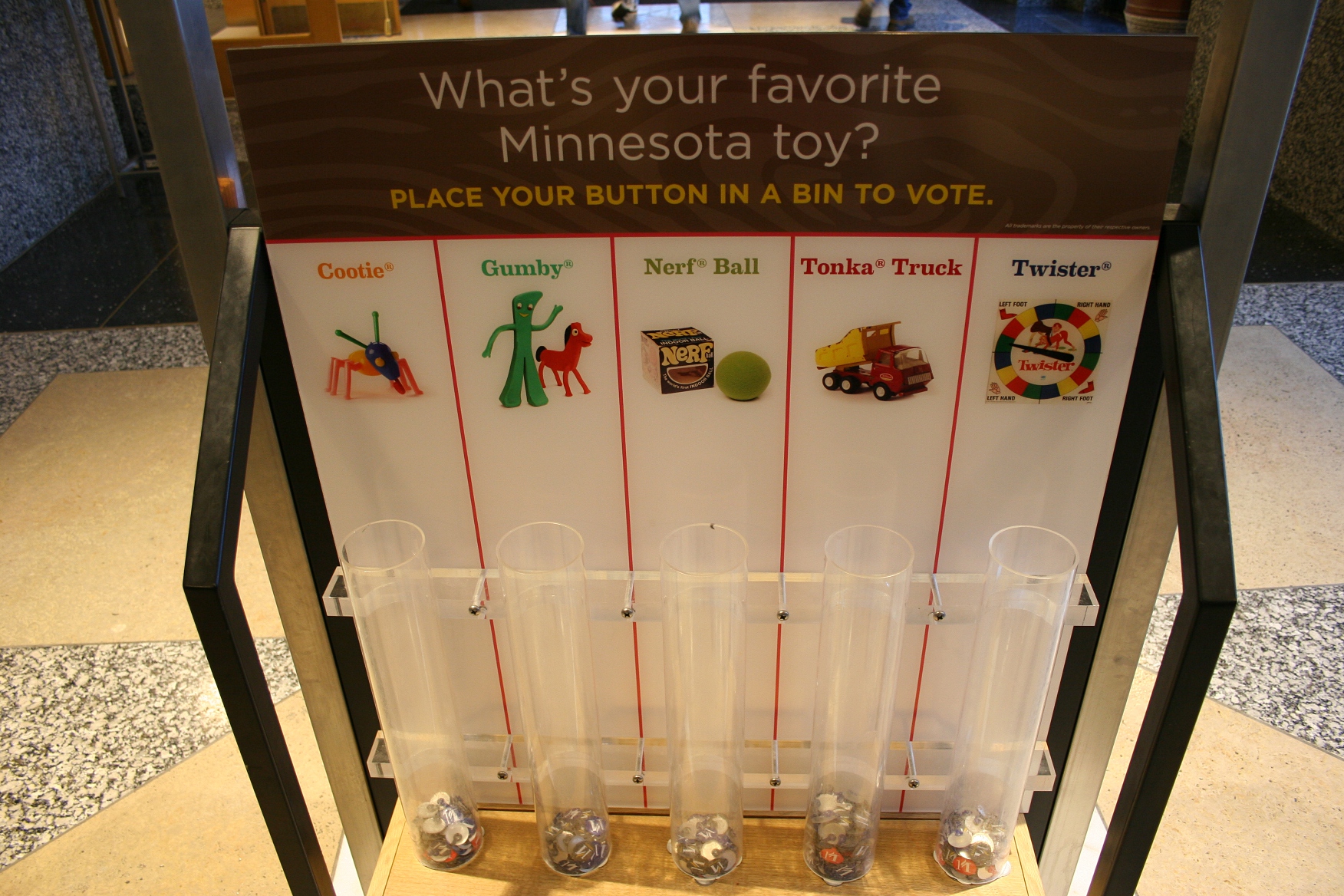
As we left the museum, we voted for our favorite Minnesota made toy. My daughter and I voted for Cootie. Our husbands chose Tonka.

As we left the museum, we voted for our favorite Minnesota made toy. My daughter and I voted for Cootie. Our husbands chose the Tonka truck.

FYI: For information on “TOYS of the ’50s, ’60s and ’70s,” click here. Just a little heads up: This exhibit was packed on a Saturday afternoon. I’d advise visiting this St. Paul museum on a weekday, especially if you want an opportunity to participate in the interactive parts of exhibits.

BONUS PHOTOS:

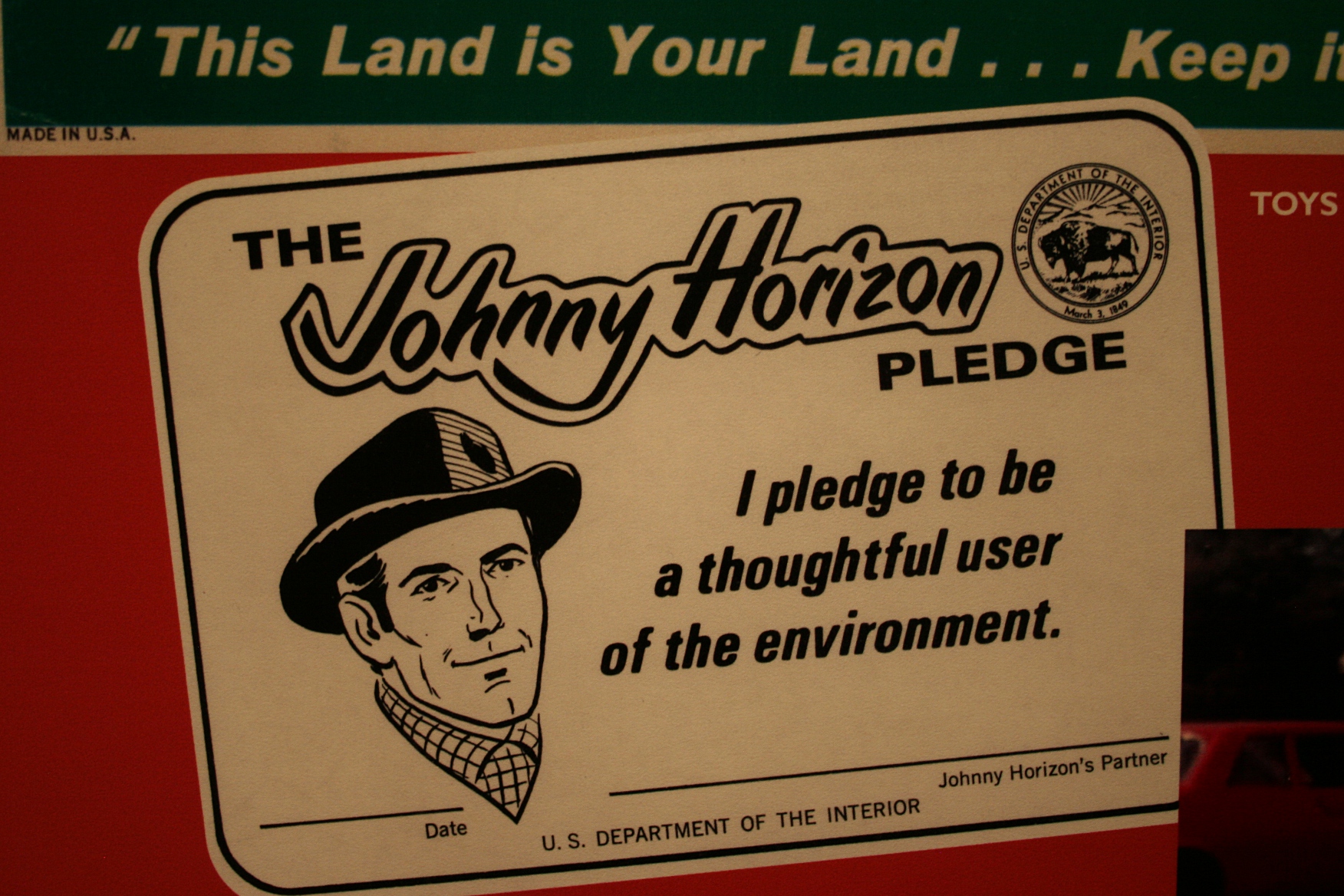
My son-in-law noted, as we toured the 1970s part of the exhibit, that toys began to reflect social issues such as being environmentally conscious.

My son-in-law noted, as we toured the 1970s part of the exhibit, that toys began to reflect social issues such as being environmentally conscious.

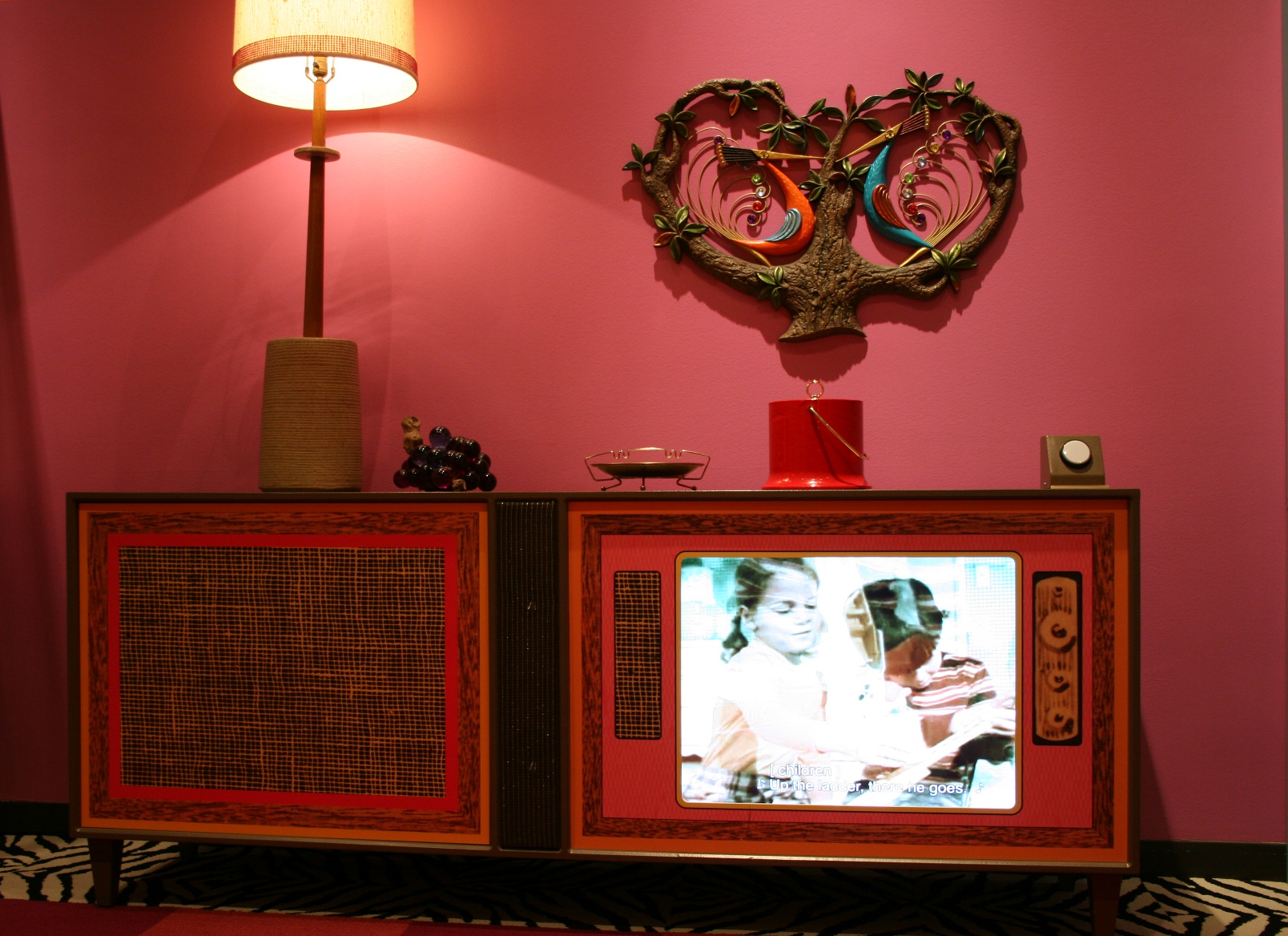
A 1960s living room.

A 1960s living room.

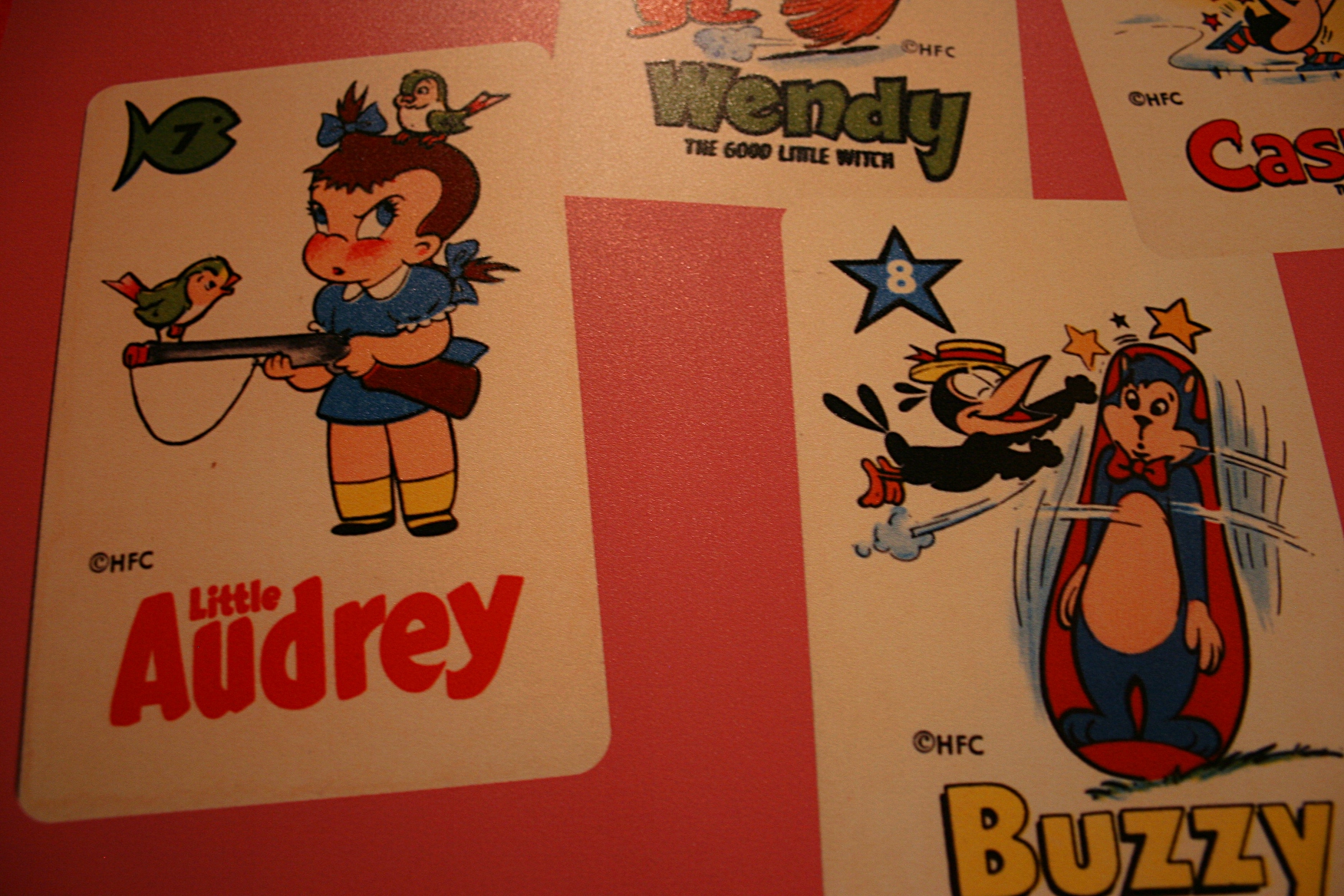
Never saw this cartoon and I'm glad I did. Audrey carrying a gun? Really.

I didn’t grow up on the Little Audrey cartoon and I’m glad I didn’t. Really, a little girl carrying a gun?

© Copyright 2014 Audrey Kletscher Helbling


History comes to life at Rice County museum September 30, 2014

THE SCENES COULD HAVE AIRED on Little House on the Prairie:

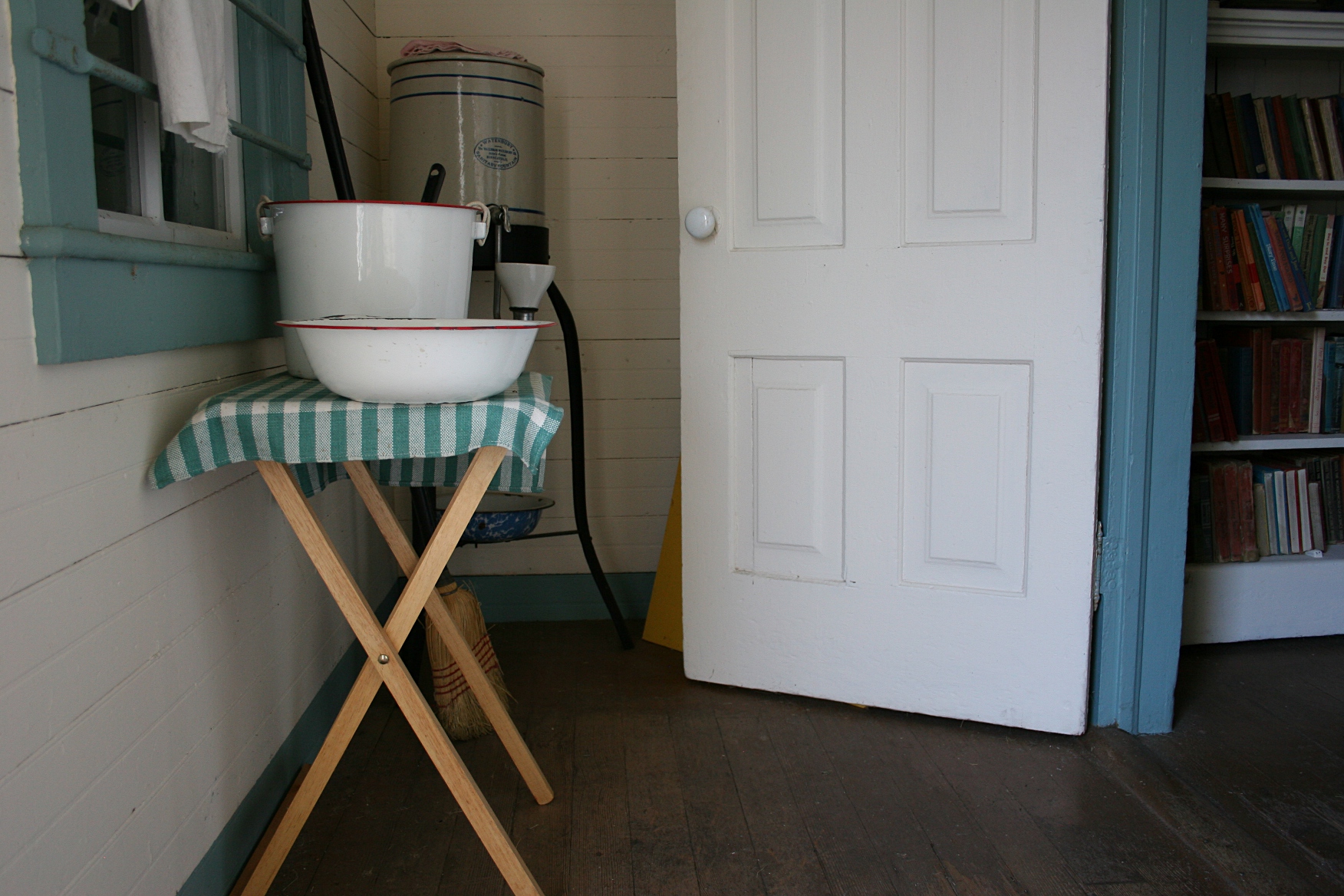
Wash basin and water cooler inside the schoolhouse entry.

Wash basin and water cooler inside the schoolhouse entry.

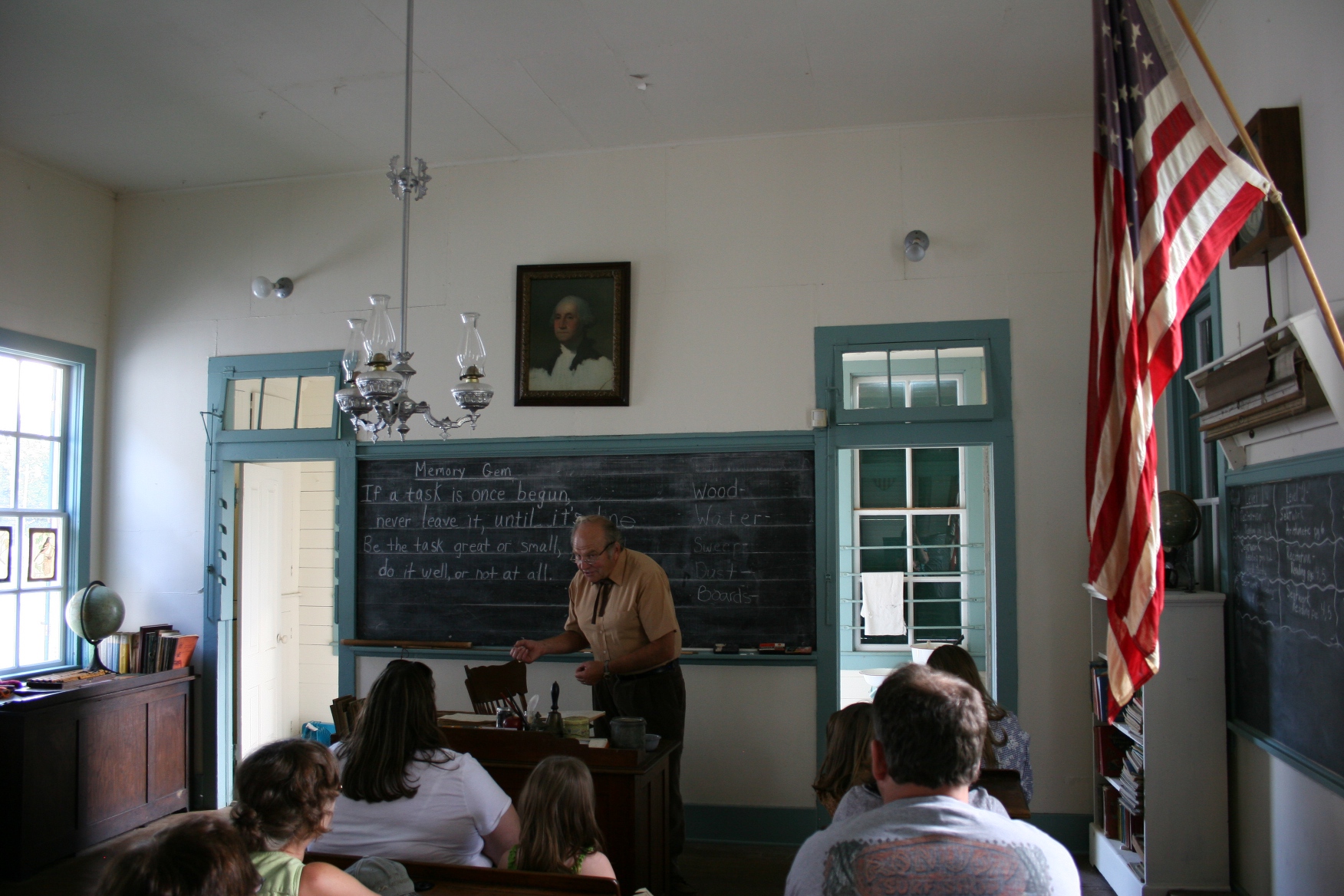
Harsh clang of the bell summons students inside the one-room Pleasant Valley School—girls to the left, boys to the right.

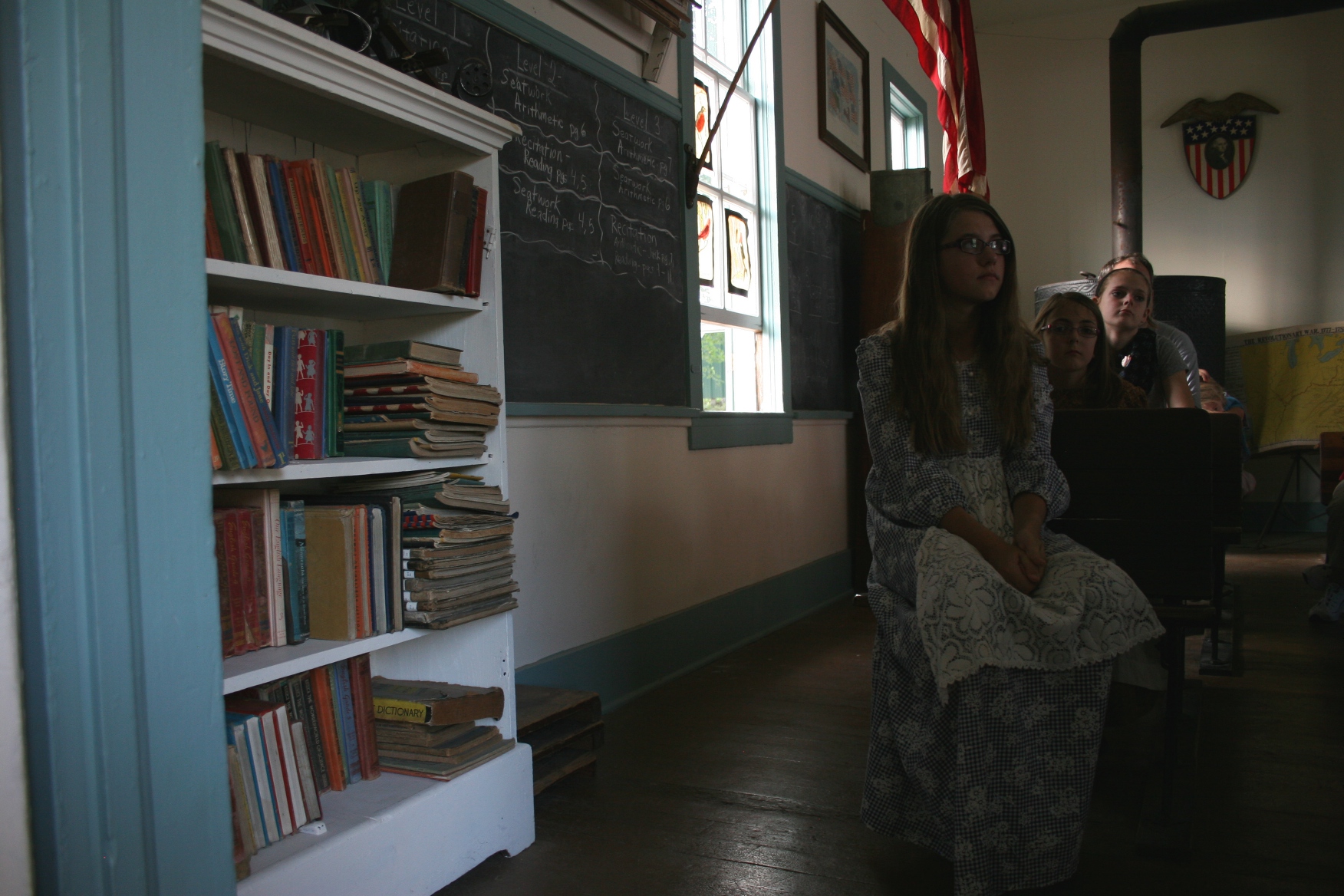
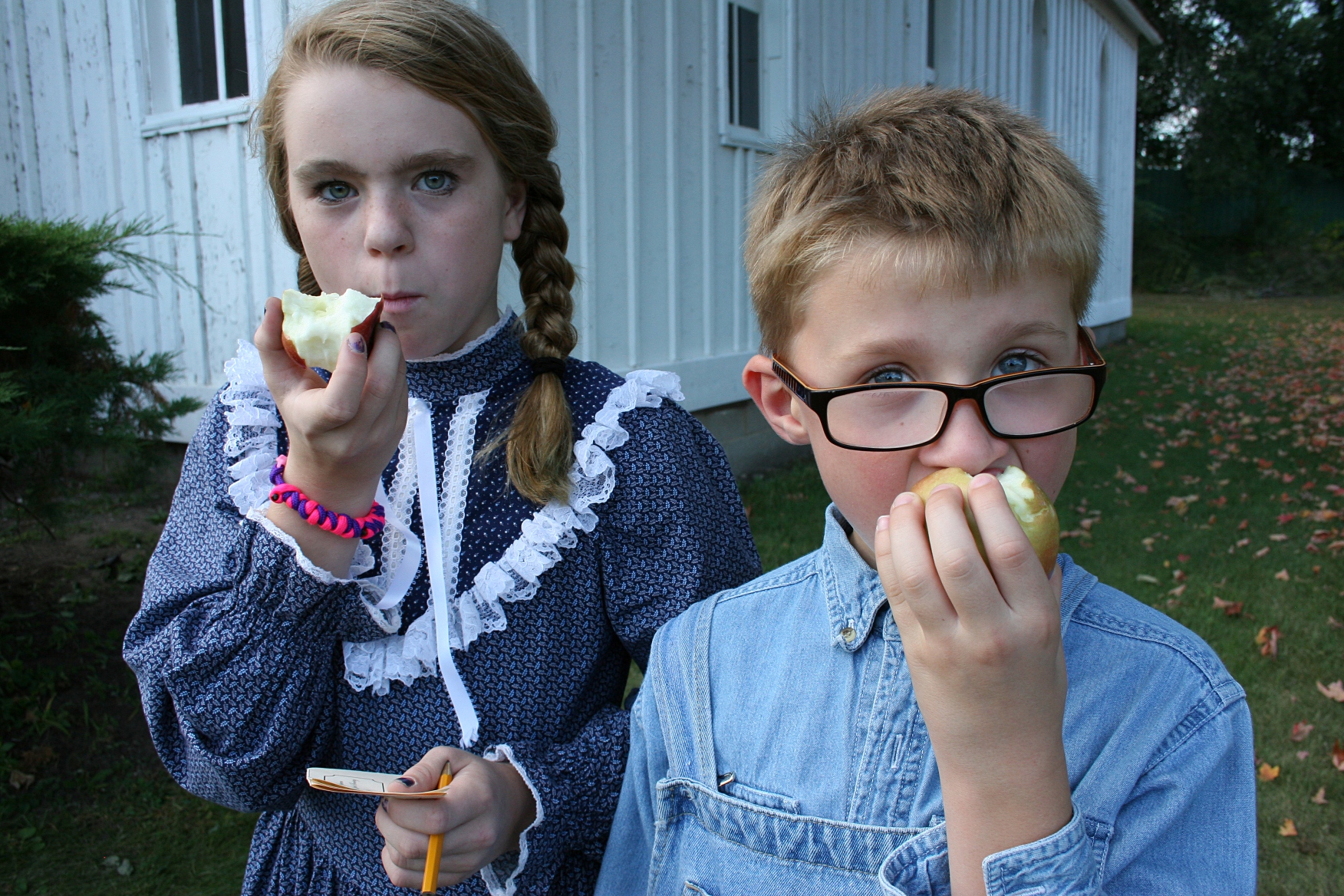
Youth role-playing Pleasant Valley School students.

Youth role-play Pleasant Valley School students.

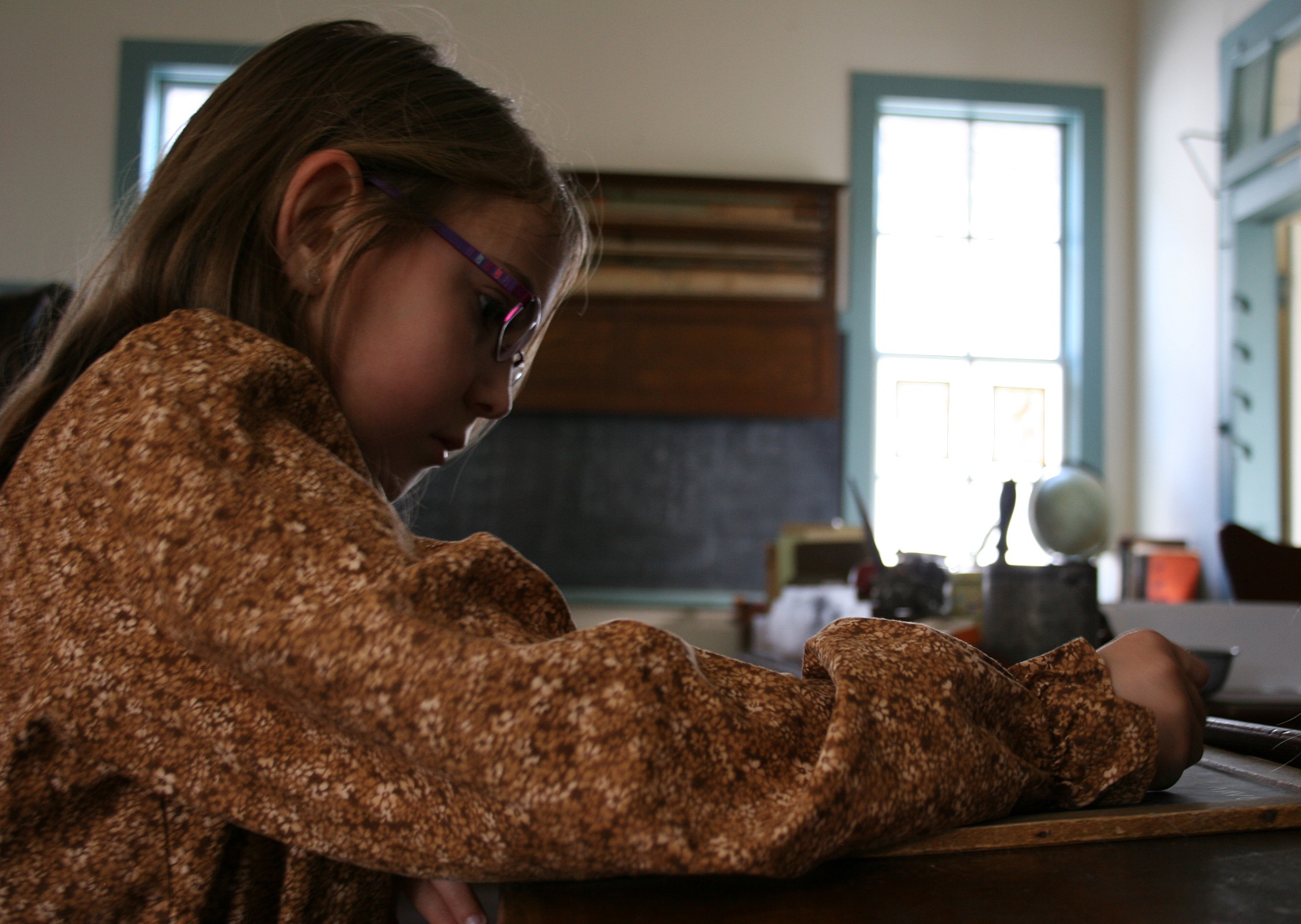
Lessons written on slate.

Lessons written on slate.

Girls in prairie dresses scratch chalk across slate.

Attendees and participants in A Night at the Museum filled the one-room school.

Inside the one-room school.

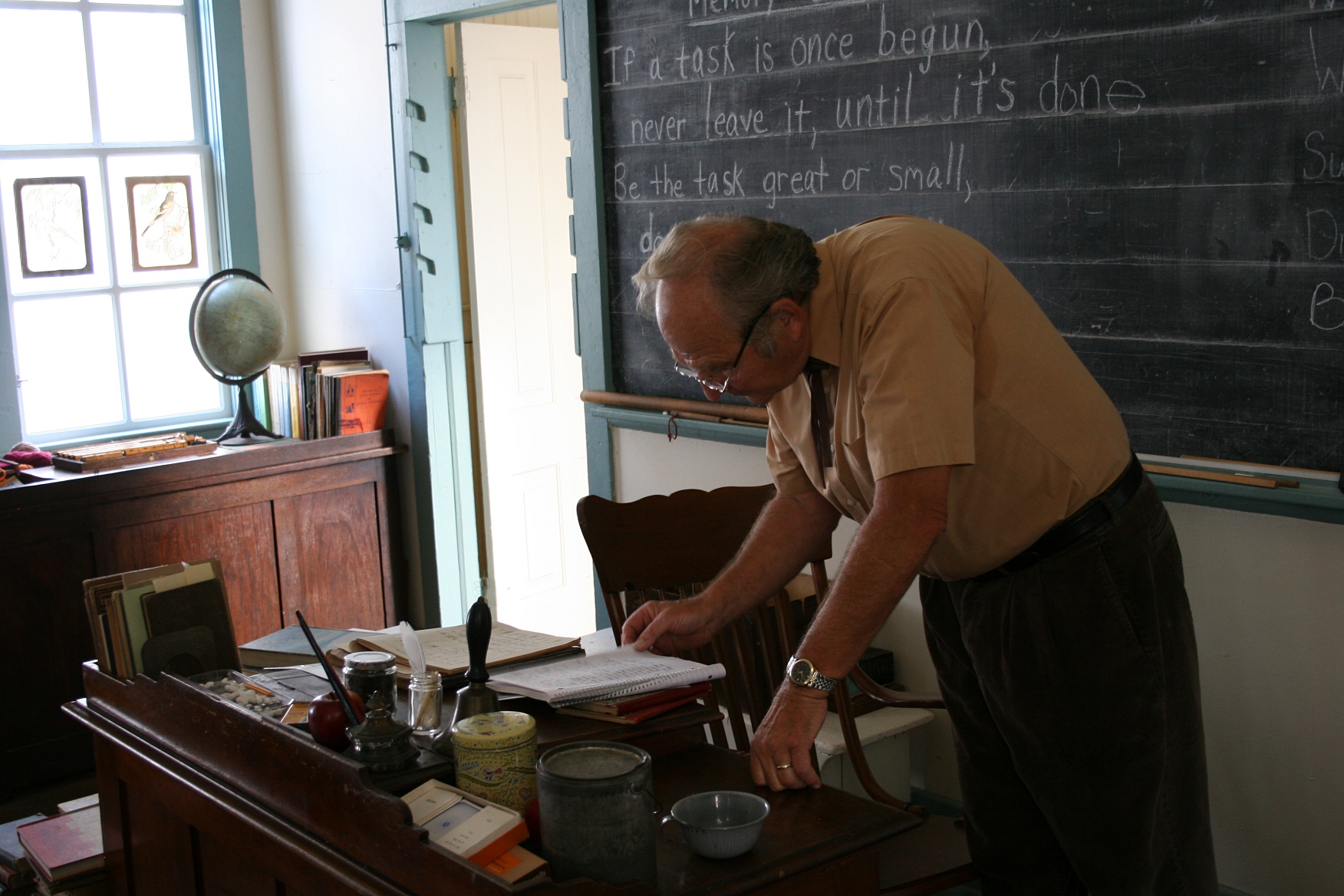
My friend Duane role-plays the Pleasant Valley teacher.

My friend Duane role-plays the Pleasant Valley teacher.

Teacher praises his students with “Good, very good.”

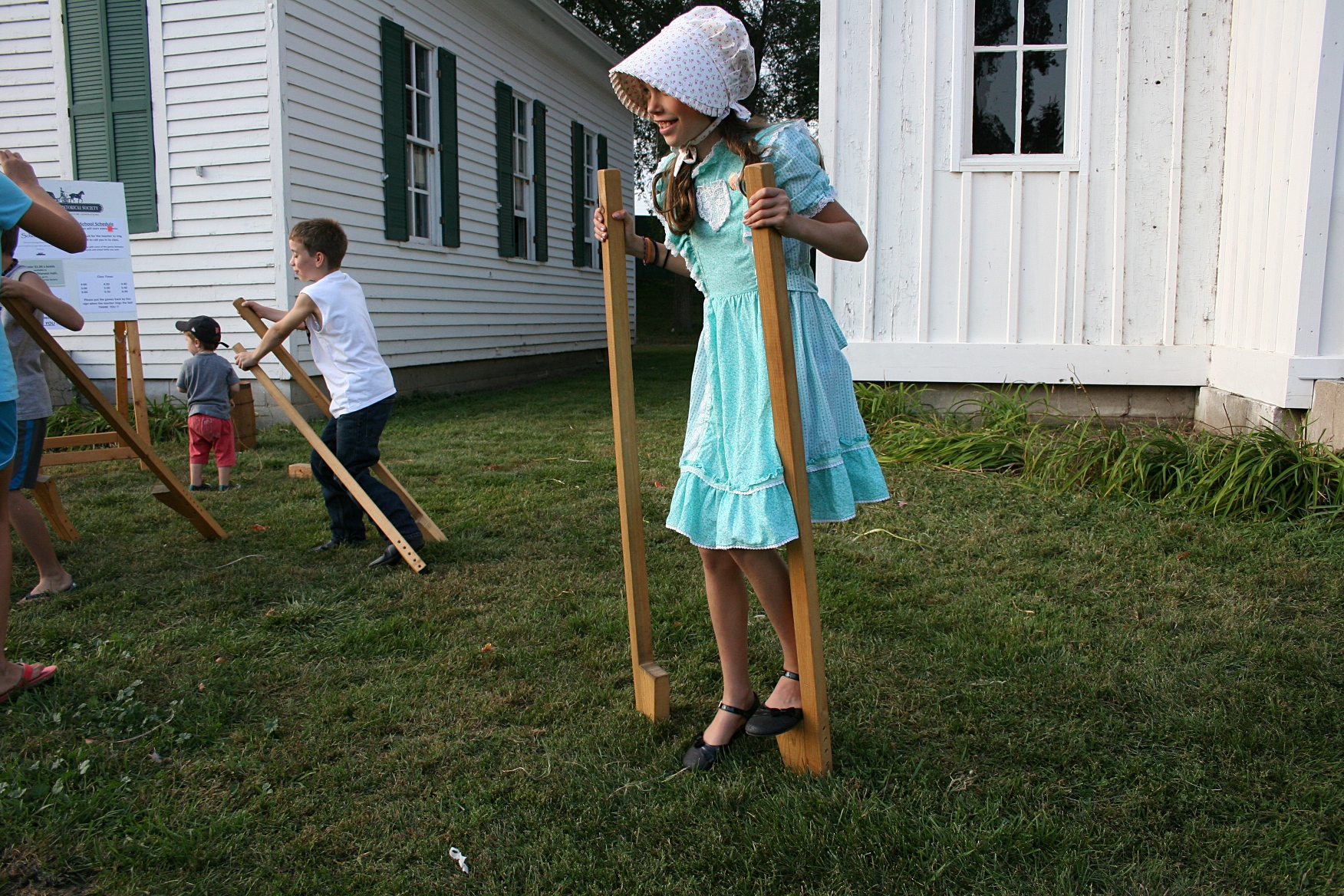
Kids loved trying to walk on stilts.

Kids loved trying to walk on stilts.

Outside, during recess, legs fly in a game of tag while others flail in attempts to walk on stilts.

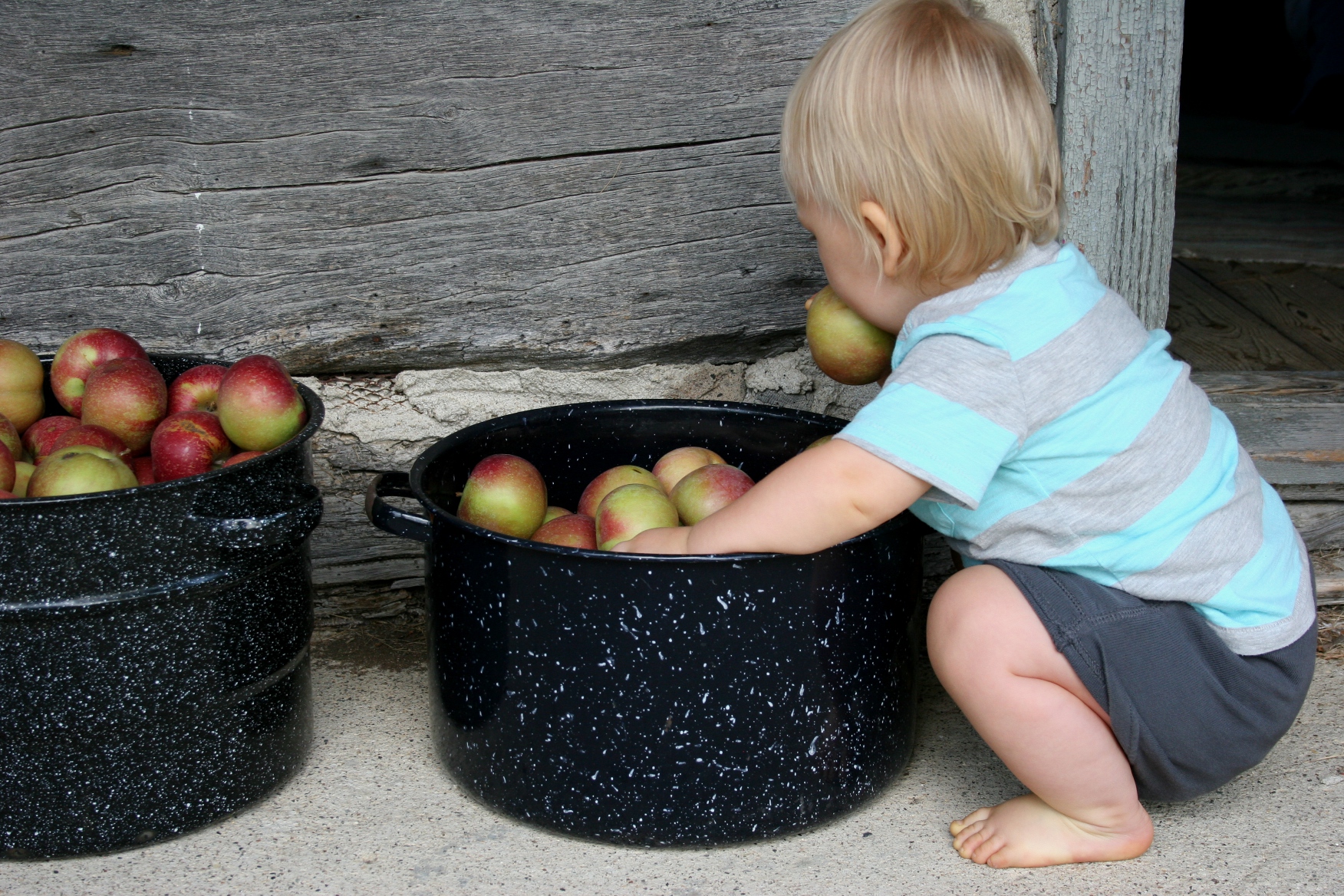
Luke, 13 months, finds an apple outside the log cabin.

Luke, 13 months, finds an apple outside the log cabin.

Across the way, in an 1856 log cabin, the scent of baking bread lingers while a steady hand cranks a butter churn.

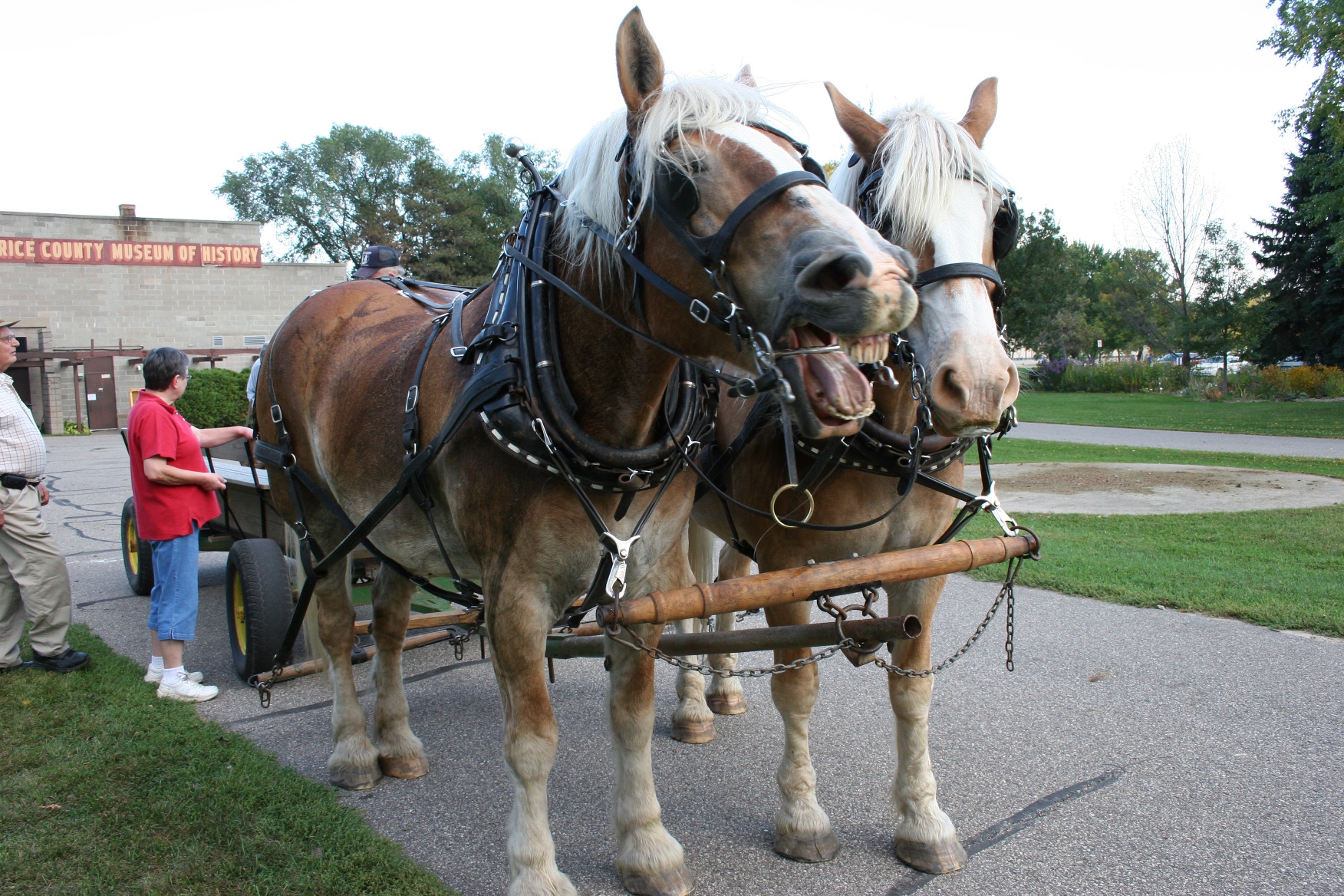
Mike and Pat bring their horses and wagon to many area events.

Mike and Pat bring their horses and wagon to many area events.

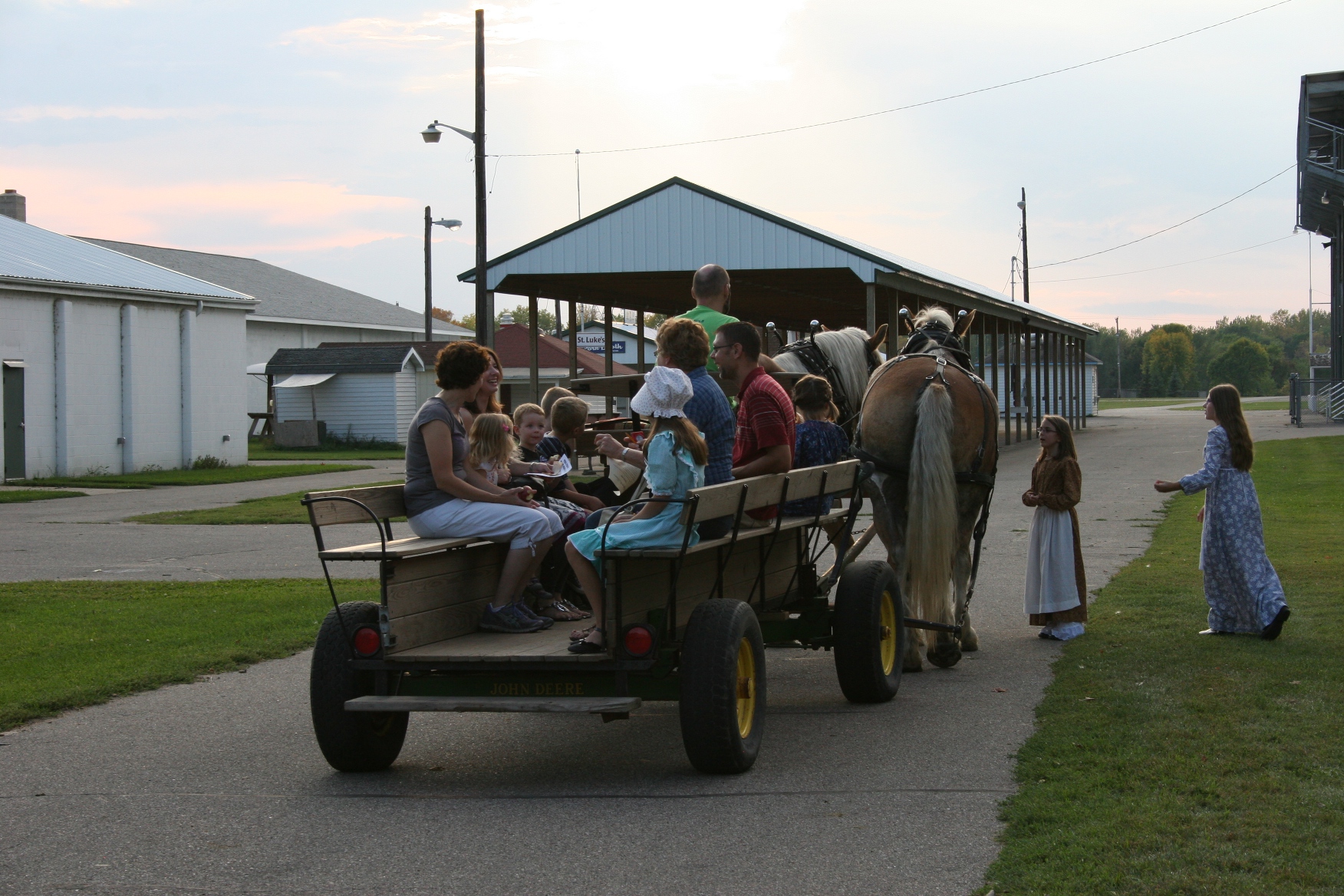
Wagon rides around the Rice County Fairgrounds proved popular.

Wagon rides around the Rice County Fairgrounds proved popular.

A team of Belgian horses pulls a wagon, not a covered wagon like Pa Ingalls’, but still, a welcome mode of transportation on a stunning autumn afternoon and evening in southeastern Minnesota.

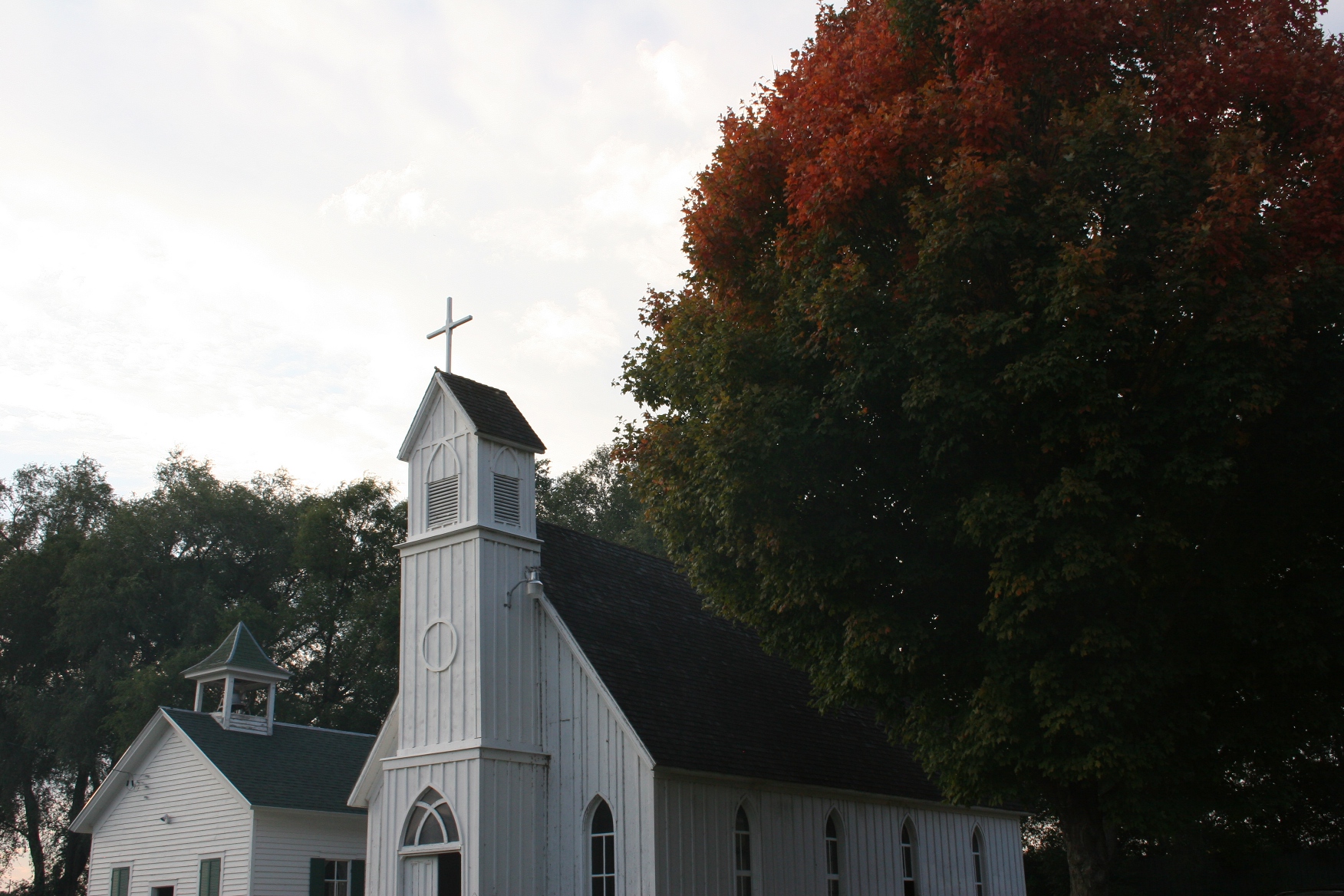
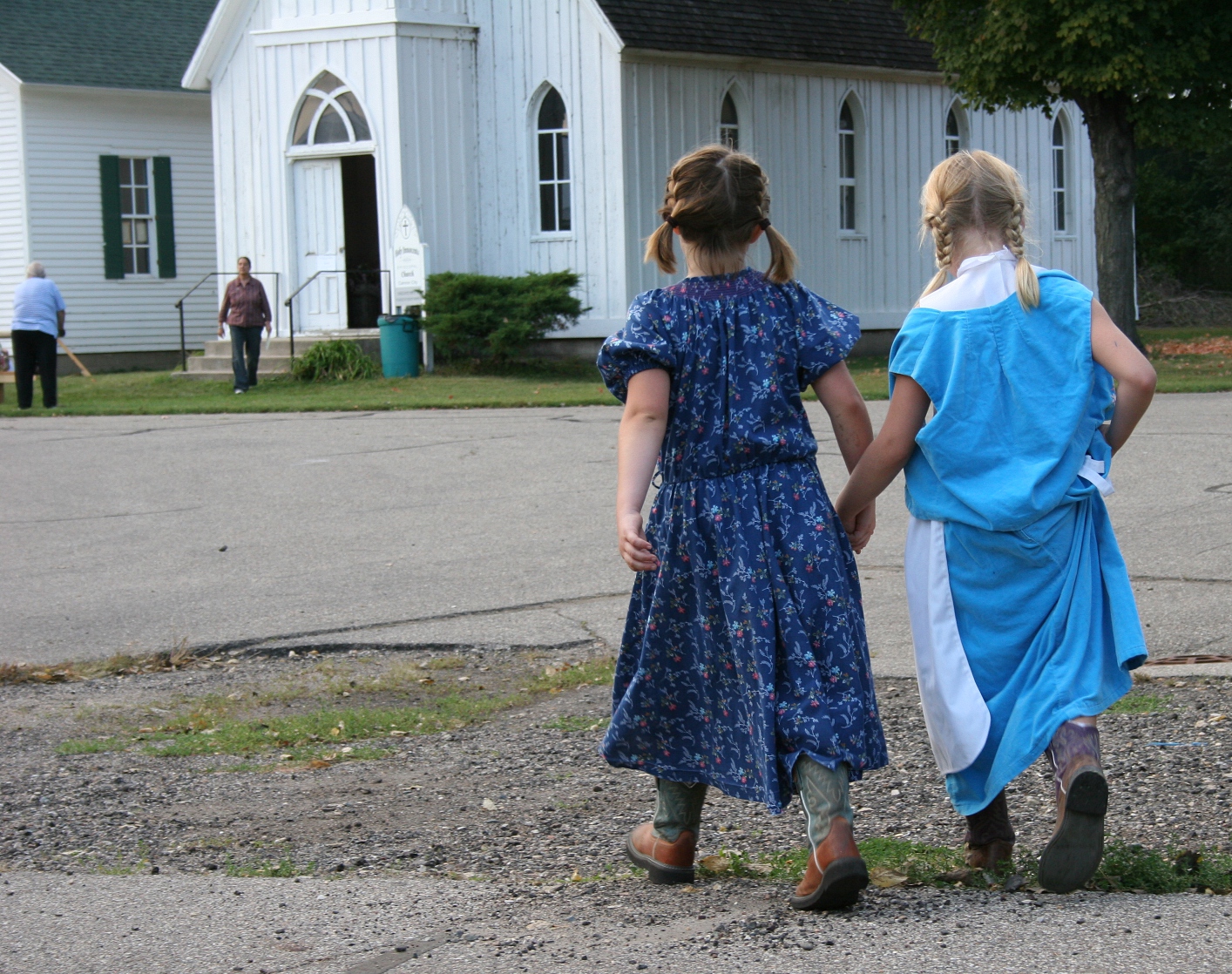
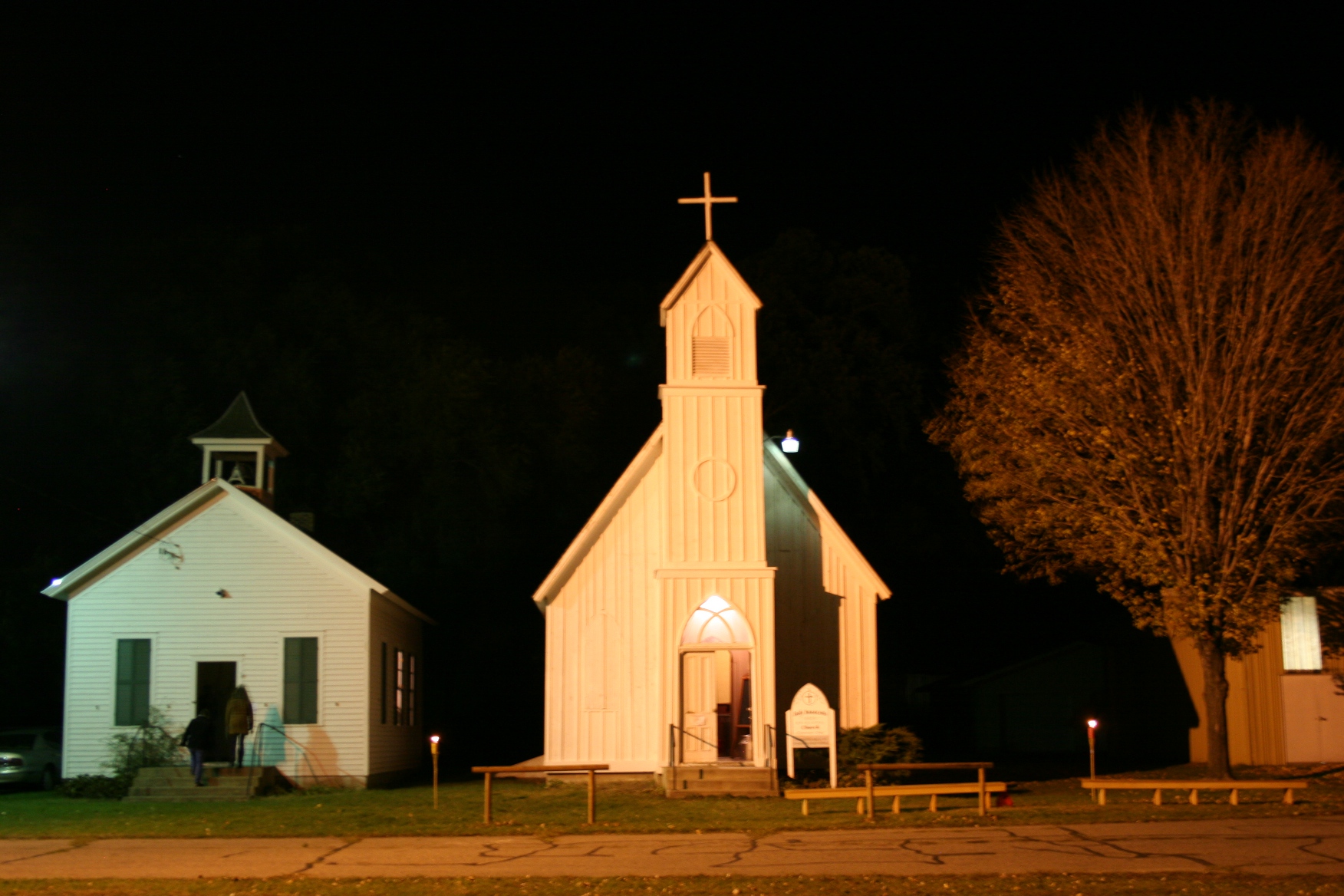
Pleasant Valley School, left, and Holy Innocents Episcopal Church.

Pleasant Valley School, left, and Holy Innocents Episcopal Church at the Rice County Historical Society, Faribault, Minnesota.

Fast forward to July 15, 1944, and Helen Greenville walks the worn floorboards of Holy Innocents Episcopal Church as she prepares for her daughter, Lilas’, wedding. “Oh the Deep, Deep Love” slides from bow to violin strings.

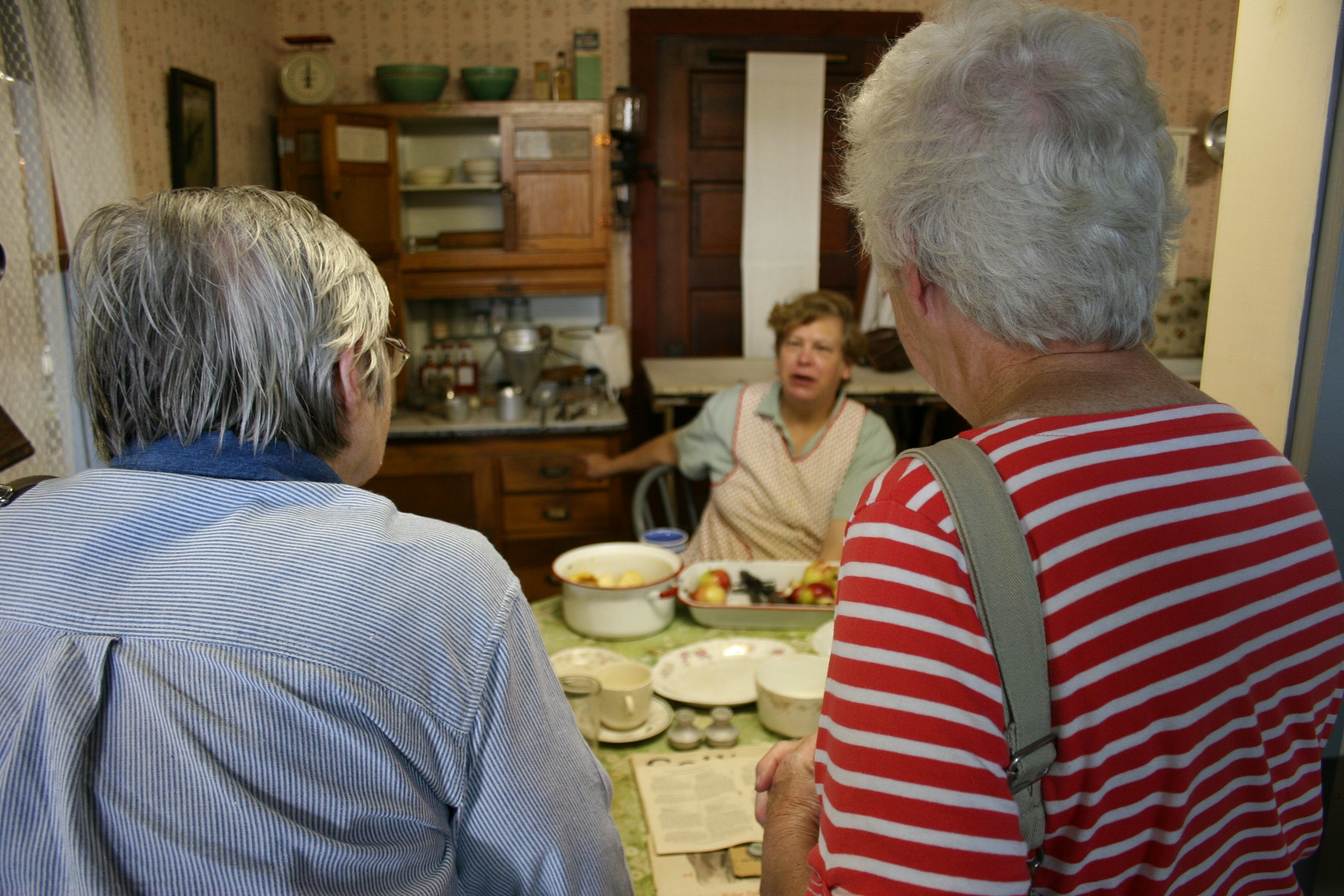
A Night at the Museum attendees visit with Mrs. Morris, who was peeling apples in her kitchen.

Visitors chat with Mrs. Morris, who is peeling apples in her kitchen.

Next door, Mrs. Morris peels apples for applesauce.

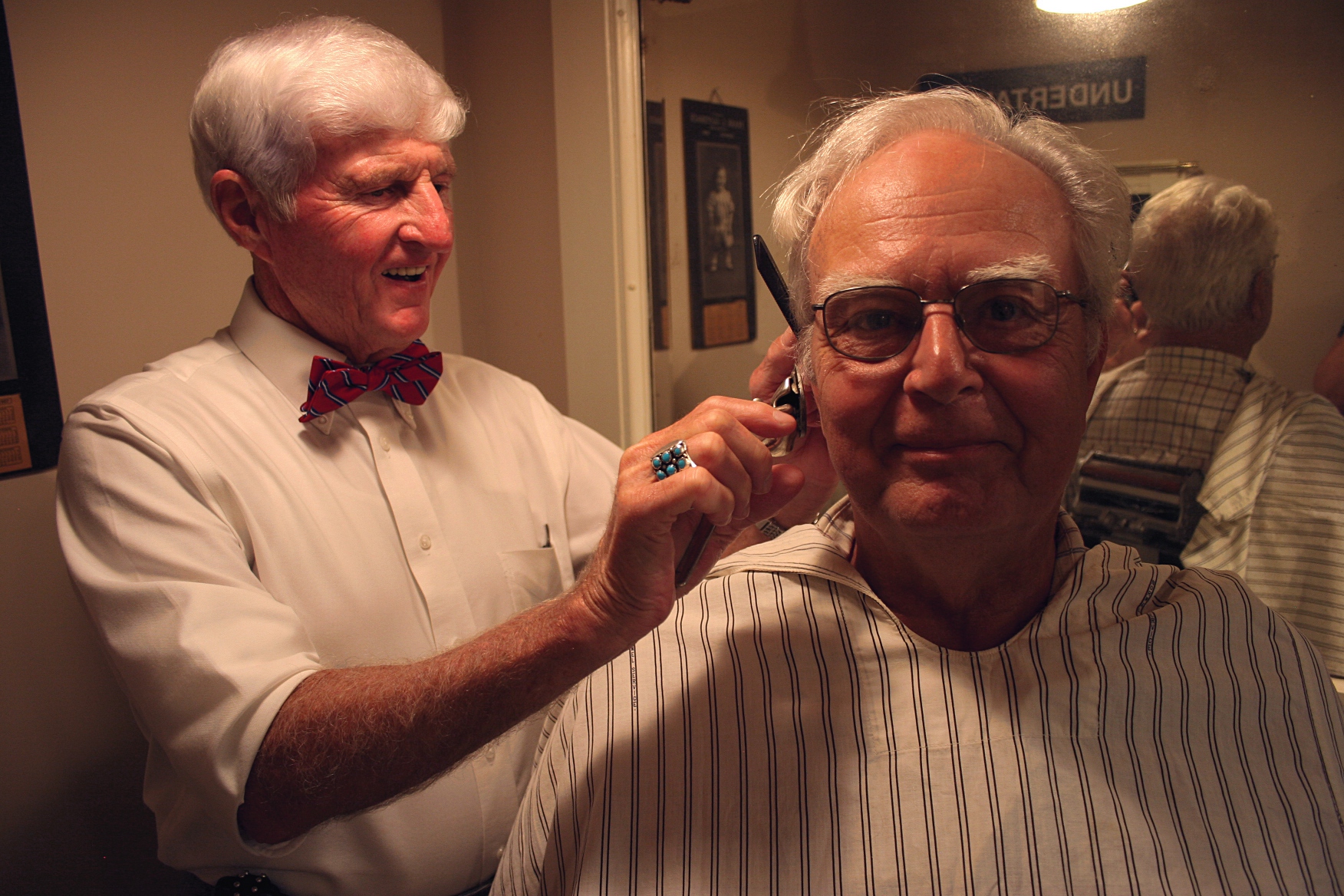
Barber Tom with customer LeRoy inside the museum barbershop.

Barber Tom with customer LeRoy inside the museum barbershop.

In another building, Hopalong Tenacity taps out Morse Code and the barber razors hair and Civil War veteran and businessman John Hutchinson greets guests, all dapper in top hat and tails.

Friends.

Friends.

These scenes and more were part of the Rice County Historical Society’s second annual Night at the Museum, an event which brings history to life inside and outside museum buildings.

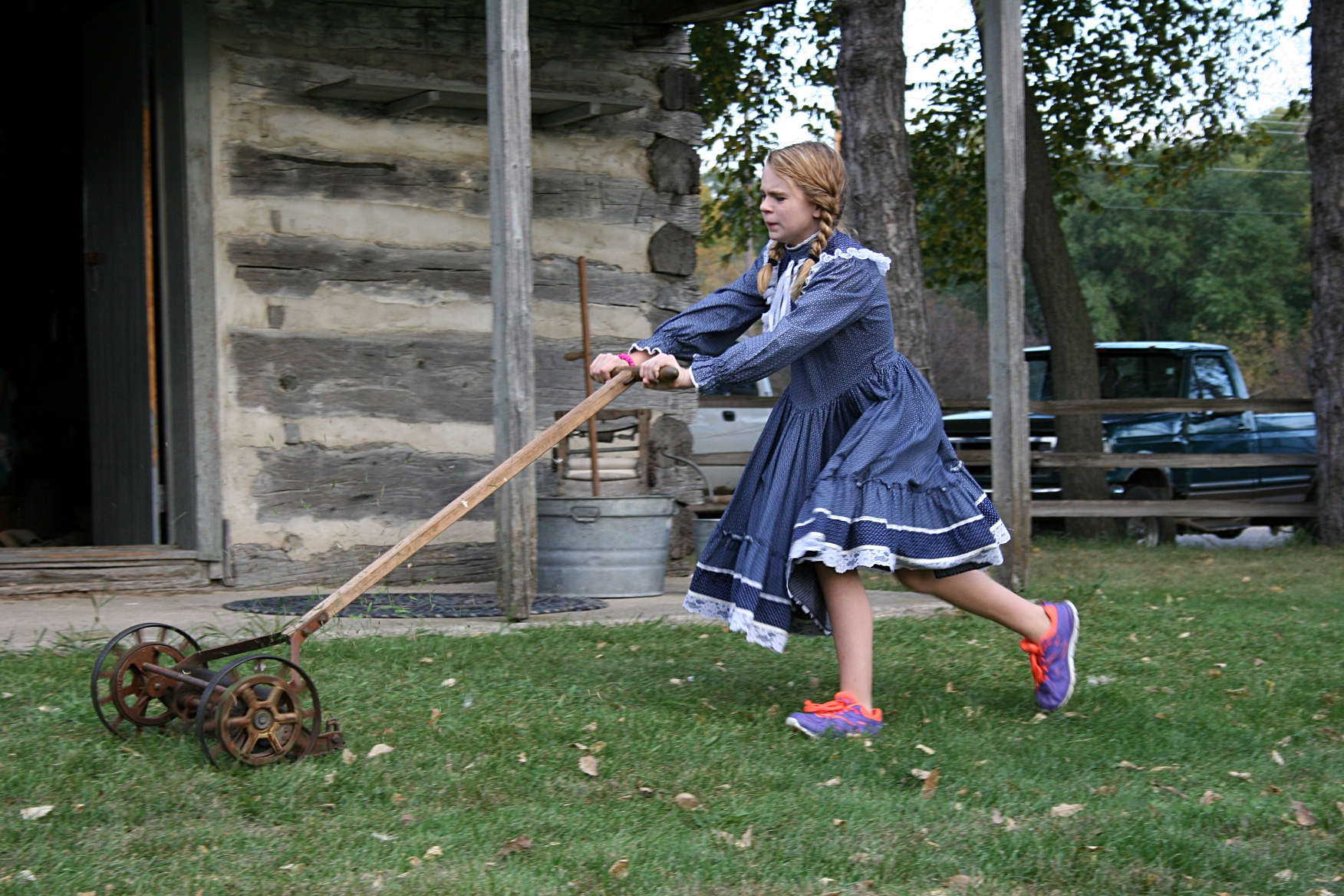
Kaylee, role-playing Katie, struggles to push an old-fashioned lawnmower across the lawn outside the log cabin.

Kaylee, role-playing Katie, struggles to push an old-fashioned lawnmower across the lawn outside the log cabin.

I loved it. This is how I learn history best—through voices and stories and action.

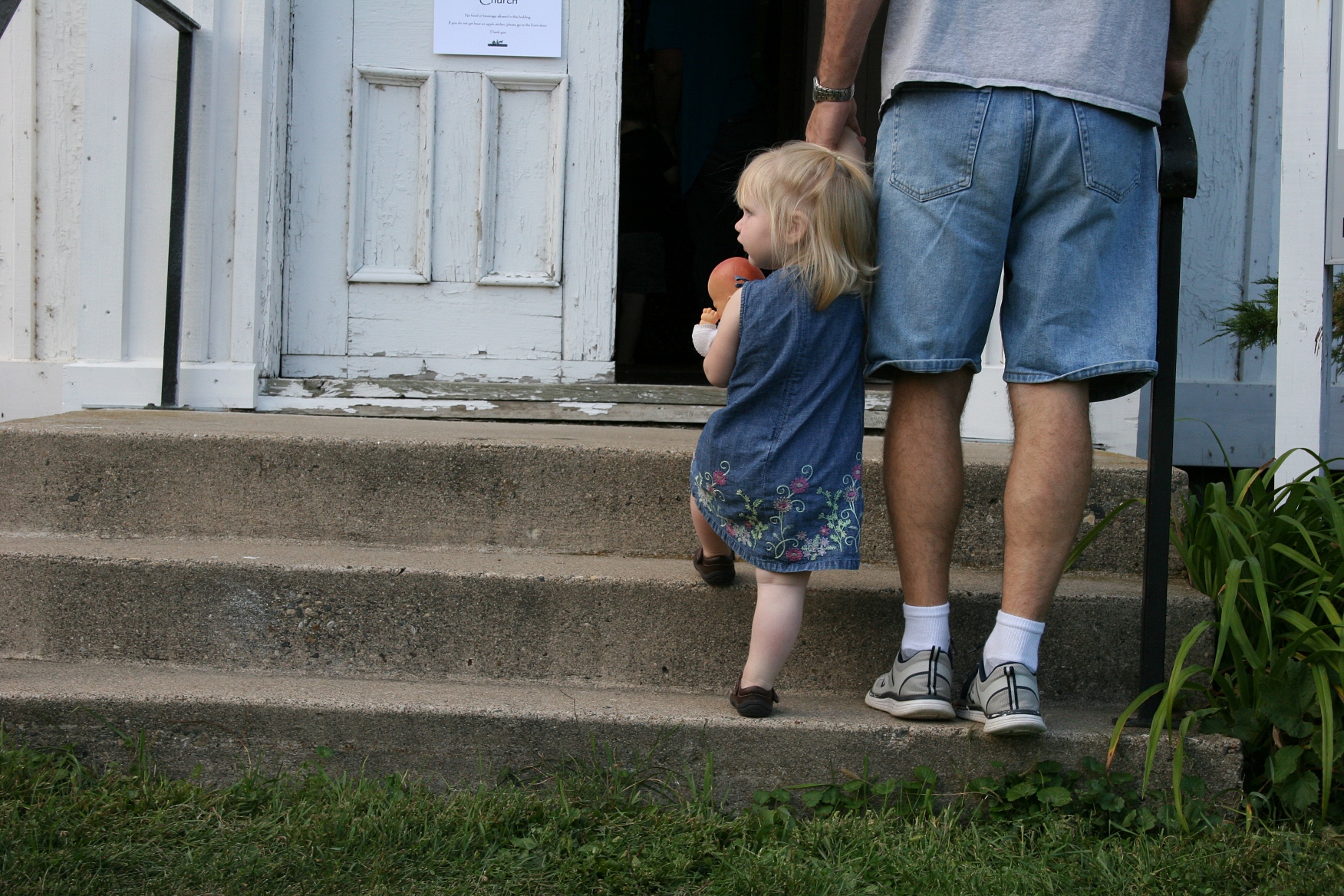
Dad and daughter enter the historic church.

Dad and daughter enter the historic church. A Night at the Museum is definitely a family-oriented event.

And, based on my observations, adults and kids attending and participating likewise embrace this style of sharing history.

Kaylee and William (AKA Katie and Jim for the evening) raved about the apples.

Siblings Kaylee and William (AKA Katie and Jim for the evening) raved about the apples.

I’d like to see more of these living history events in my community of Faribault, one of Minnesota’s oldest cities founded in 1852 by fur trader Alexander Faribault. Our historic downtown would provide an ideal stage as would the historic Cathedral of Our Merciful Saviour and so many other aged buildings in and around town.

HOW DO YOU BEST learn history? How does your community share its local history?

© Copyright 2014 Audrey Kletscher Helbling


My Night at the Museum October 28, 2013

HISTORY BROUGHT TO LIFE pleases me, for I am an interactive learning history type of person.

I often get overwhelmed and impatient reading information in traditional museum displays.

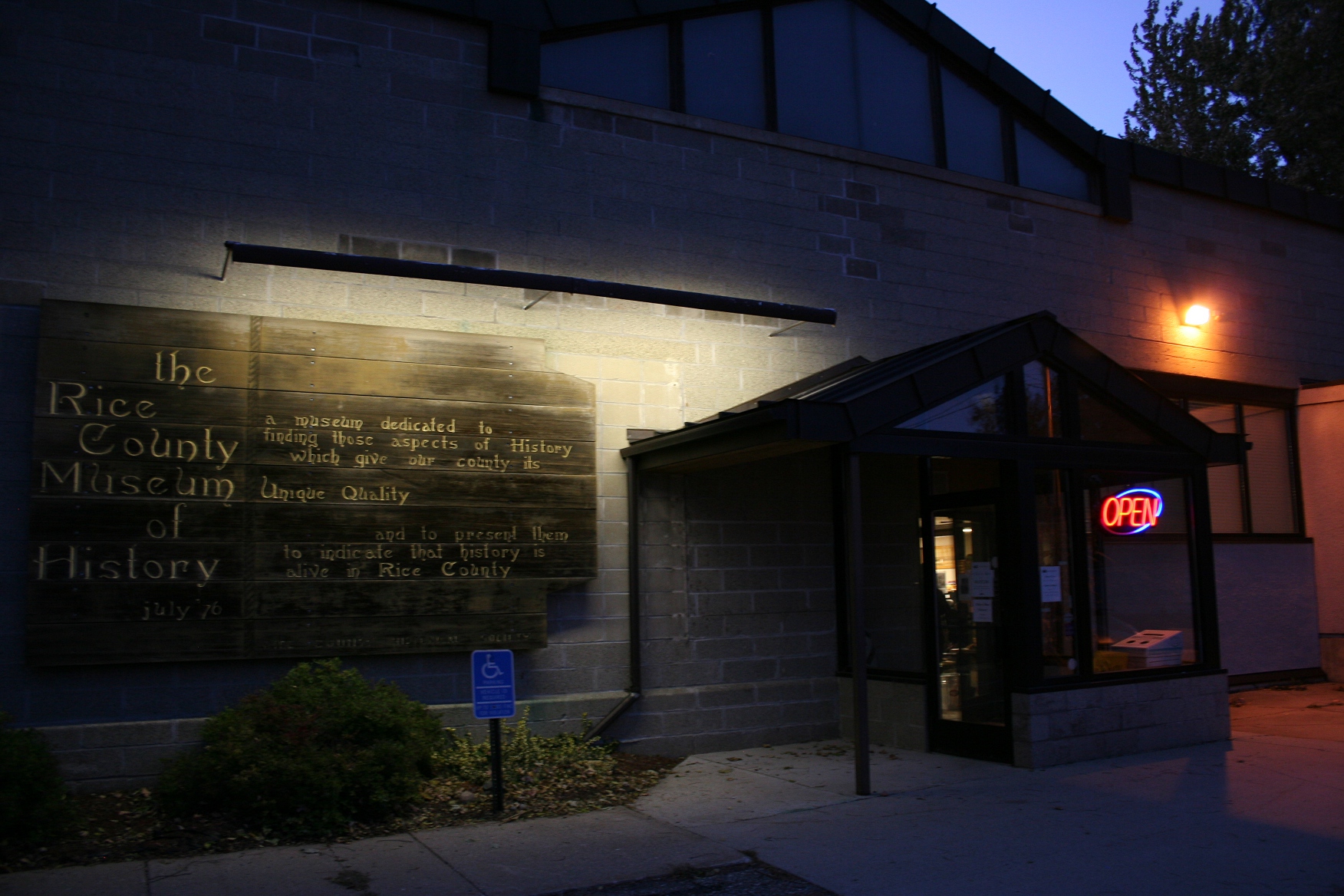
Arriving around 6:30 p.m. Friday for A Night at the Museum at the Rice County Historical Society in Faribault.

Arriving around 6:30 p.m. Friday for A Night at the Museum at the Rice County Historical Society in Faribault.

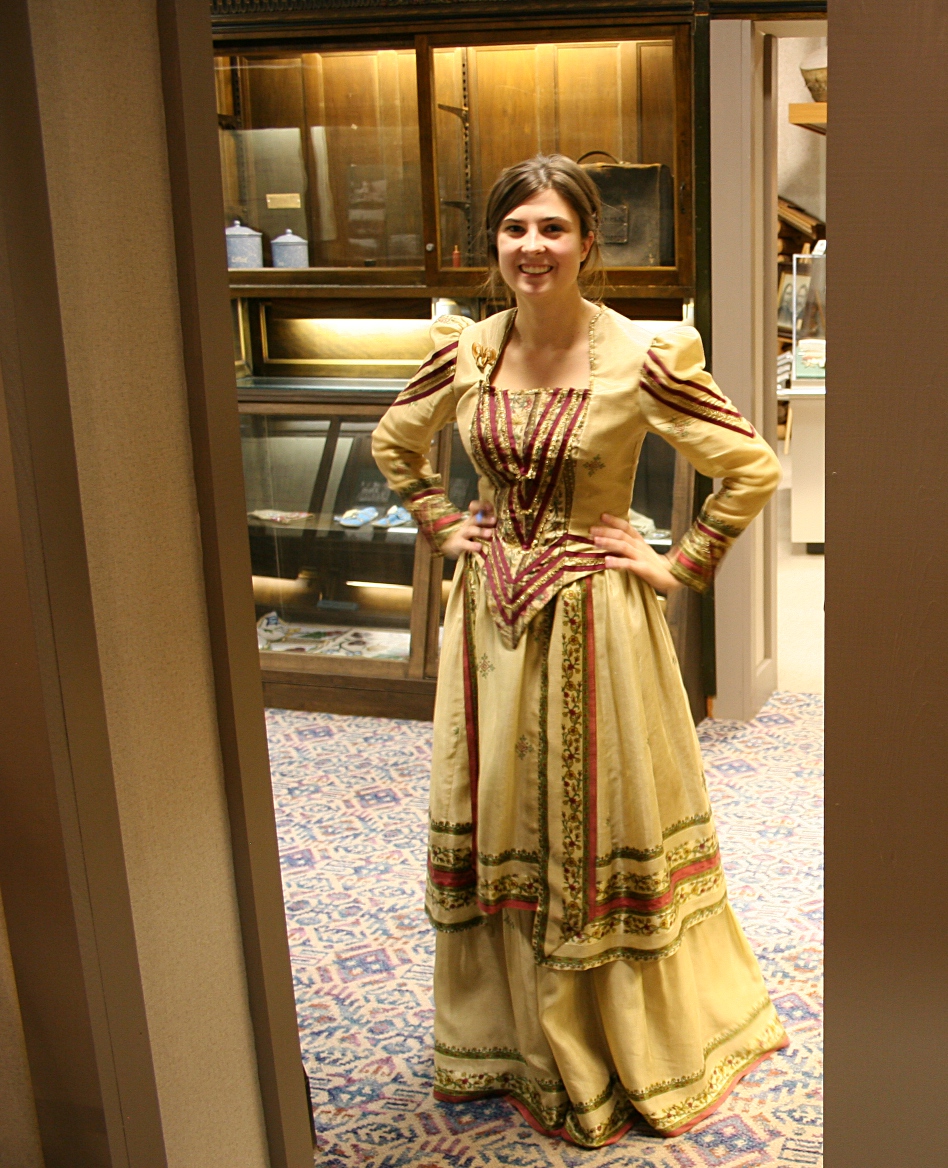
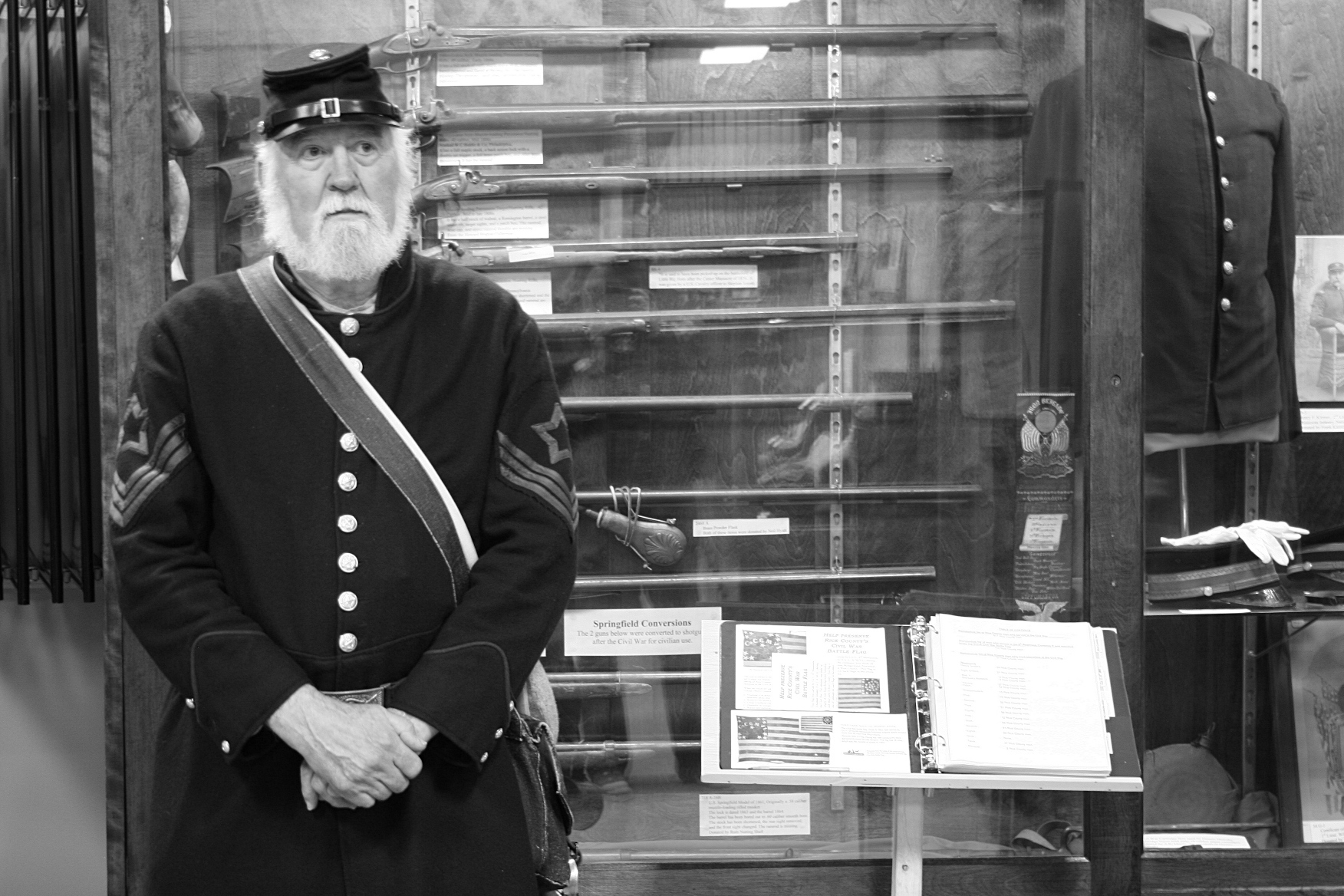
So I was excited Friday evening to attend the Rice County Historical Society’s first ever A Night at the Museum in which costumed men, women and children played the roles of historical figures. Like Evangeline Whipple, second wife of Bishop Henry Whipple, and Ordinance Sargent Jones, stationed at Ft. Ridgely during the U.S. – Dakota Conflict of 1862:

Role-playing Evangeline Whipple.

Role-playing Evangeline Whipple.

Playing the role of Ordinance Sgt. Jones.

Playing the role of Ordinance Sgt. Jones.

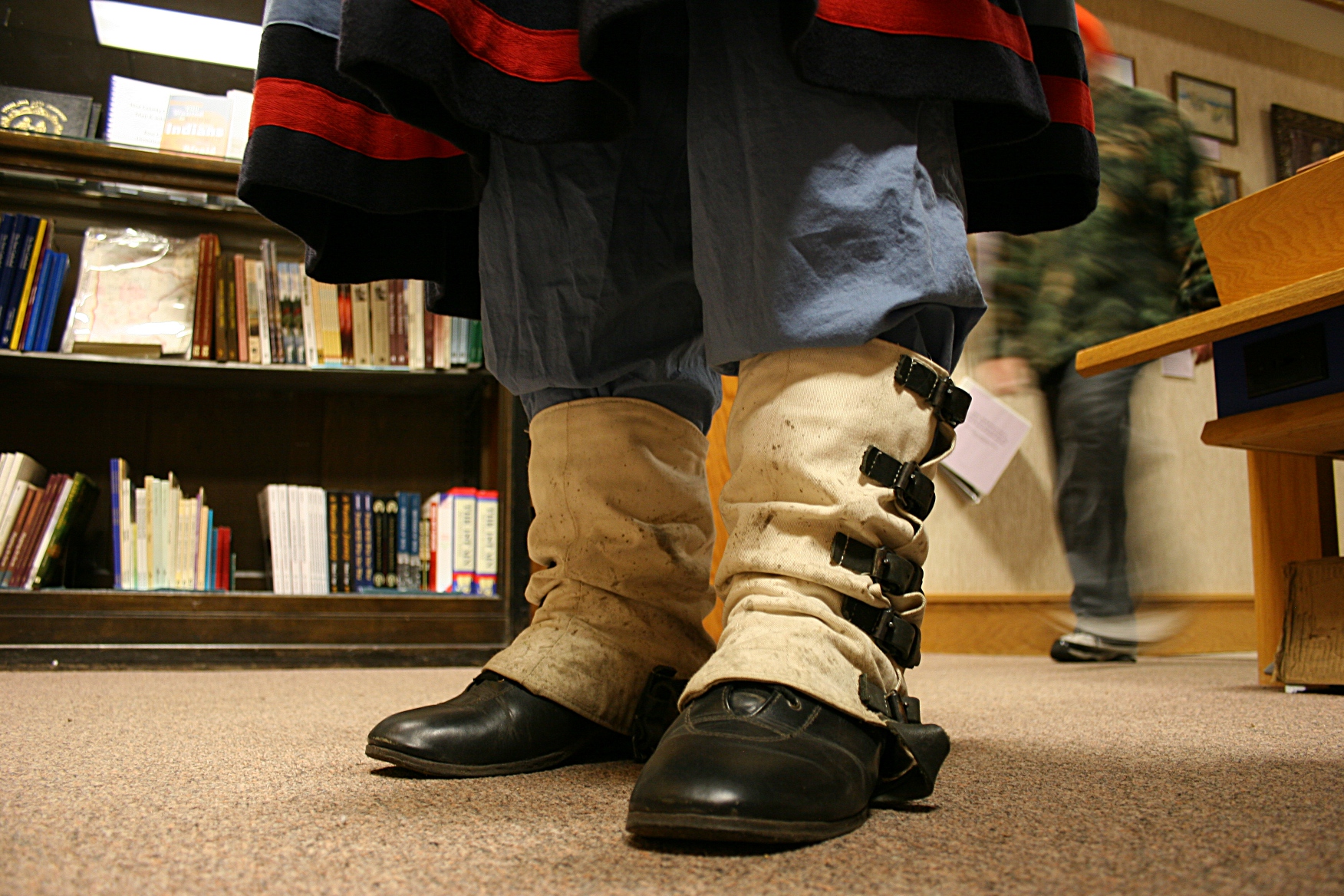
The buckled cloth covering worn by French Mary keeps mud from boots.

The buckled cloth covering worn by French Mary keeps mud from boots.

I spoke with “French Mary” Tepe about her role as a vivandiere with Pennsylvania volunteers in the Civil War. Vivandieres carried a canteen of spirits and more and attended to the sick and wounded. I’d never heard of vivandieres prior to meeting French Mary.

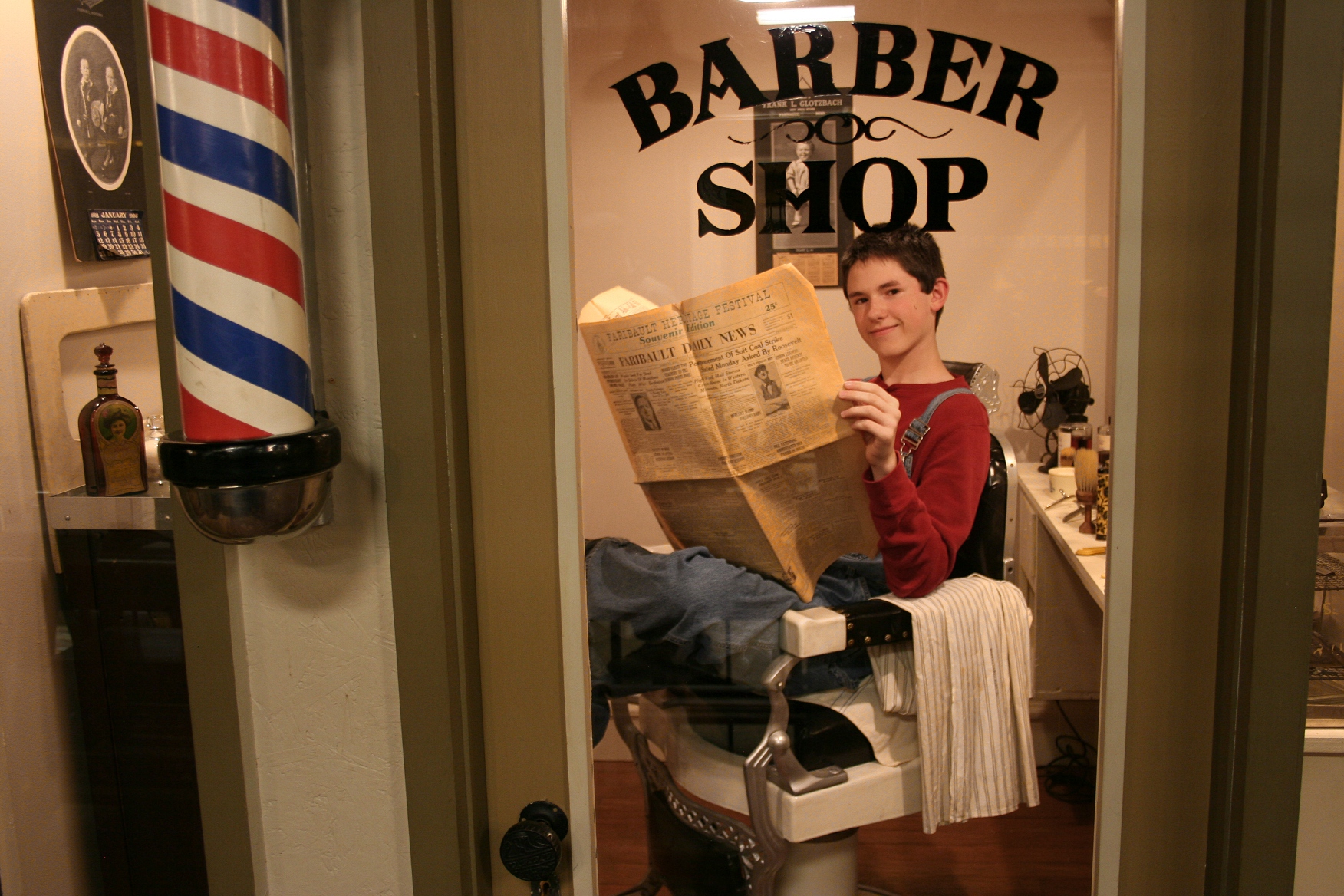
Noah, who volunteers at the library through its youth program, sat in the museum's barbershop chair during A Night at the Museum. in the museum barbershop.

Noah, who volunteers at the library through its youth program, sat in the museum’s barbershop chair.

Noah read a souvenir edition of the Faribault Daily News in an old-time barbershop while Leroy bathed in a second story room above.

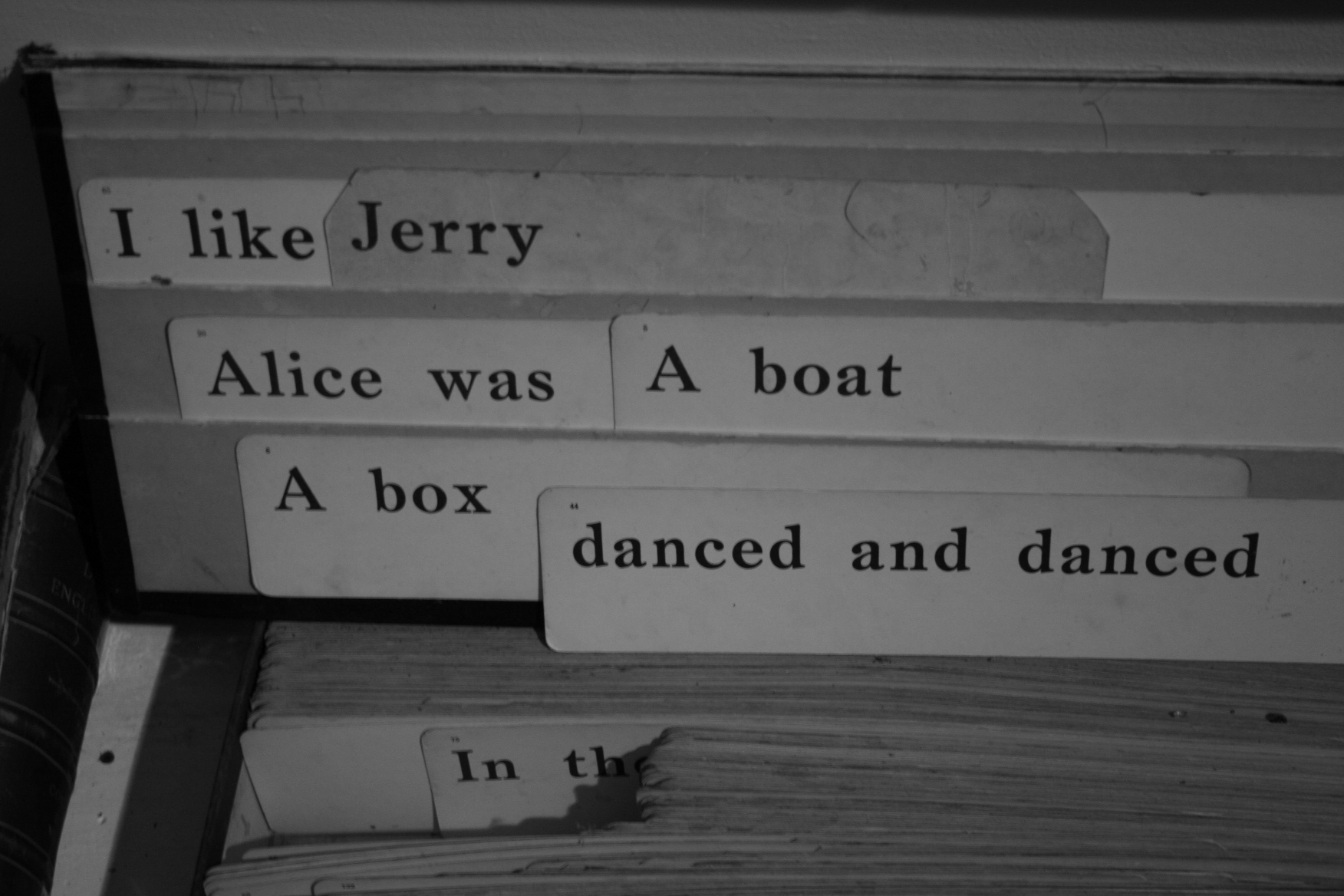
Flash cards in the one-room school.

Flash cards in the one-room school.

Mrs. Sweet taught arithmetic in the late 1850s one-room Pleasant Valley School where Noah’s sister, Hannah, along with others, assumed the roles of students.

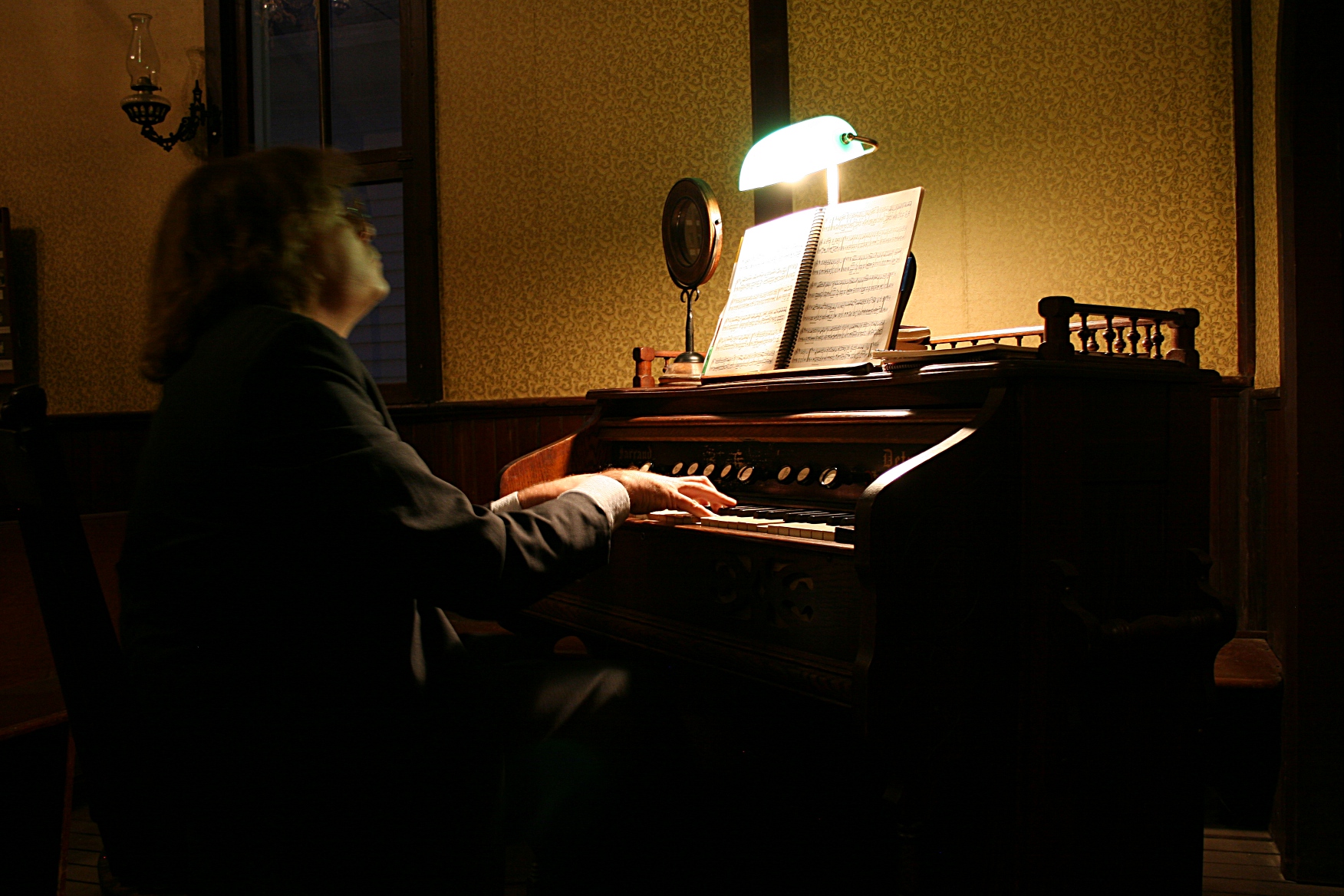
Playing the old pump organ.

Playing the old pump organ.

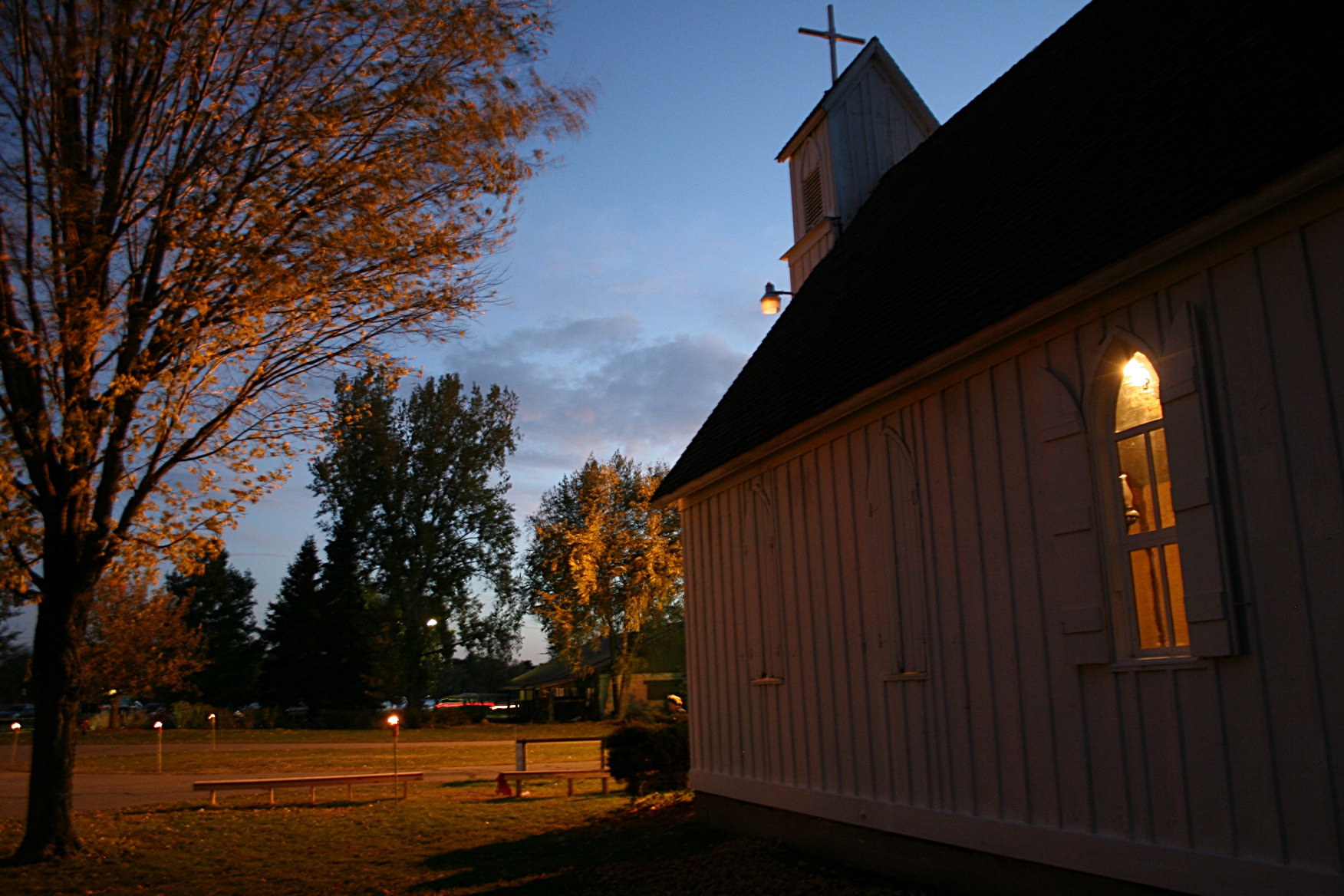
Holy Innocents, from the side.

Holy Innocents.

I listened to music played on the pump organ in Holy Innocents Episcopal Church built in 1869 in Cannon City and consecrated by Bishop Whipple.

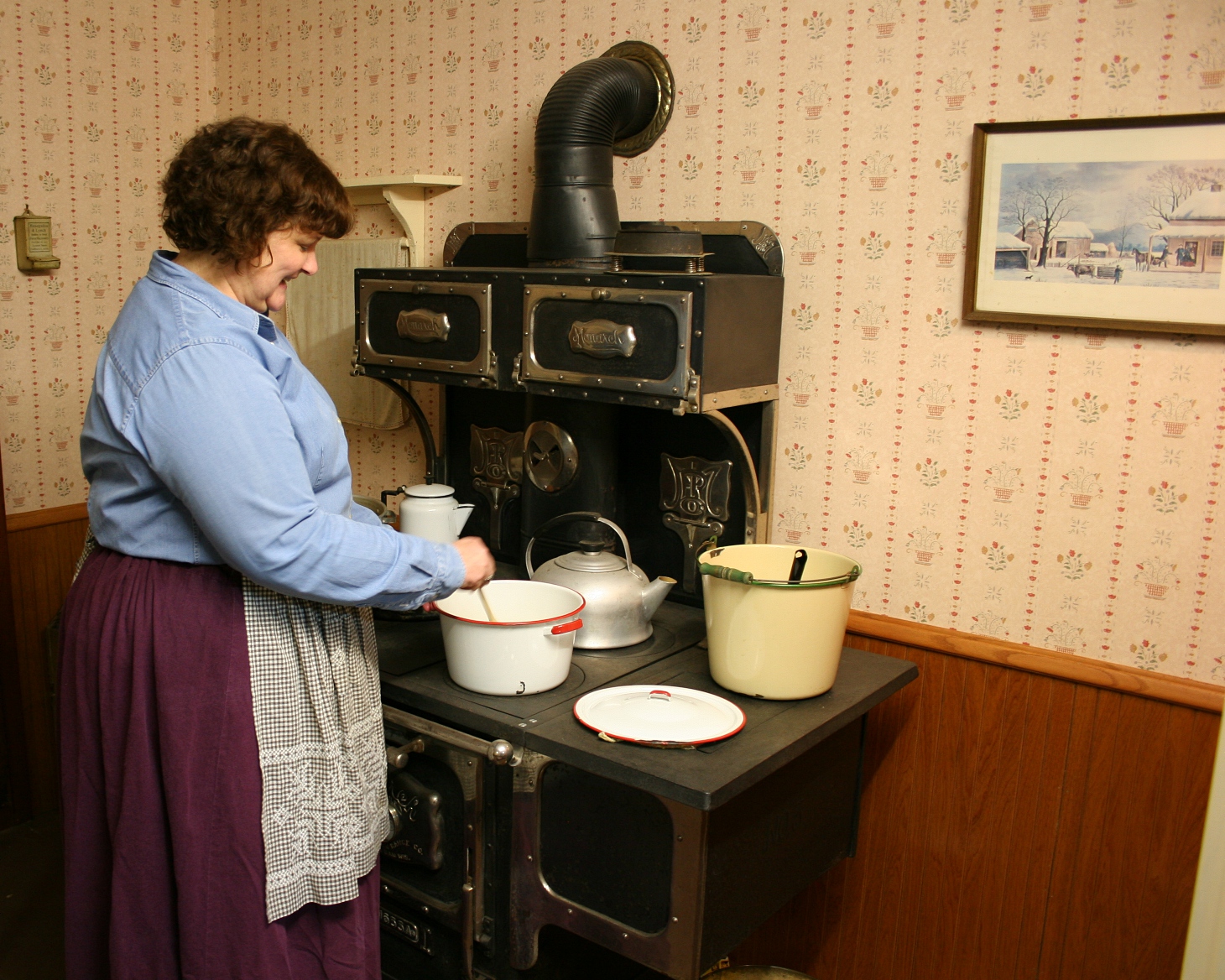
Mrs. Morris supposedly cooking applesauce.

Mrs. Morris “cooking” applesauce.

Next door I spoke with Mrs. Morris who was “cooking” applesauce in her 1920s kitchen. Except she wasn’t really using the old cookstove. The inviting scent of apples wafted, instead, from apple slices heating in a kettle on a mostly out of sight hotplate. Ingenious.

This multiple engaging of the senses added to the experience. In the old log cabin, built in the mid 1800s by a Scandinavian immigrant in the Nerstrand Big Woods, I savored the yeasty aroma of bread baking—not in the old stove—but rather in a bread machine hidden away. Ingenious.

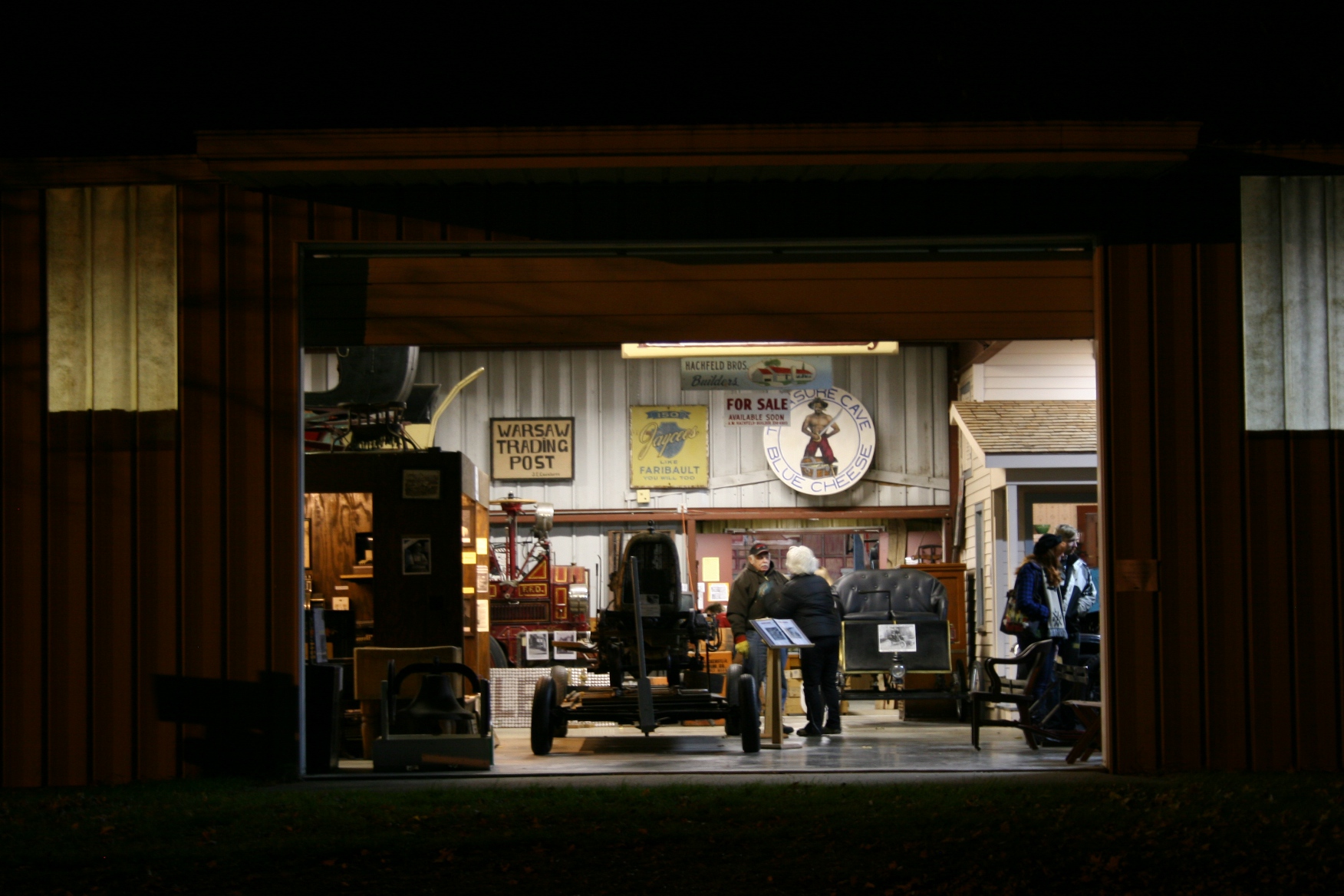
The setting for A Night at the Museum.

The setting for A Night at the Museum.

Outside, several tiki torches flickered, many snuffed out by the strong early evening breeze. Nearby, visitors gathered around a small campfire to sip apple cider, eat hot dogs and/or munch on cookies.

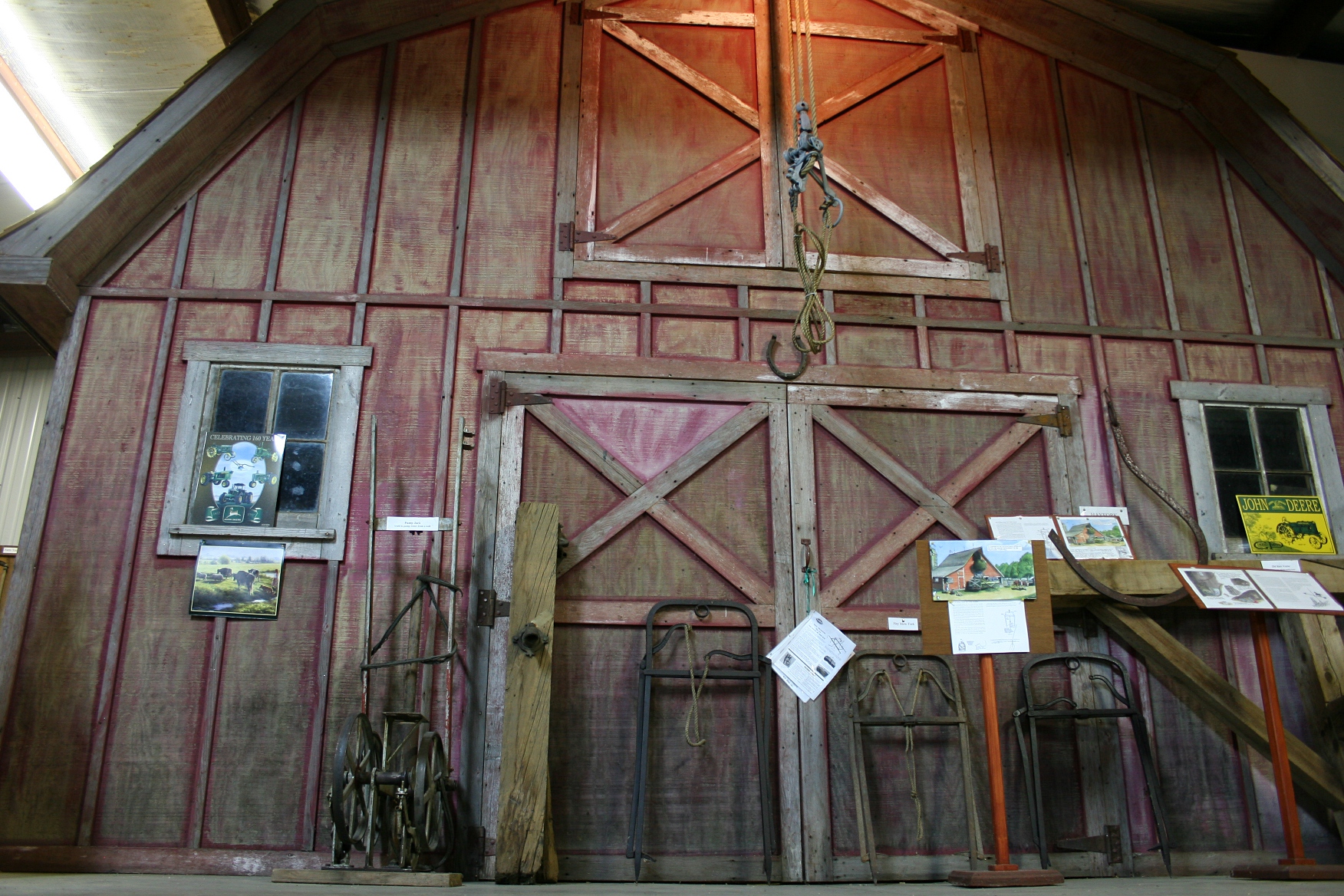
A barn front forms a backdrop in Harvest Hall, where visitors can learn about the area's agricultural heritage.

A barn front forms a backdrop in Harvest Hall, where visitors can learn about the area’s agricultural heritage.

Horses hooves clopped on the pavement as visitors were treated to a wagon ride around the adjoining county fairgrounds.

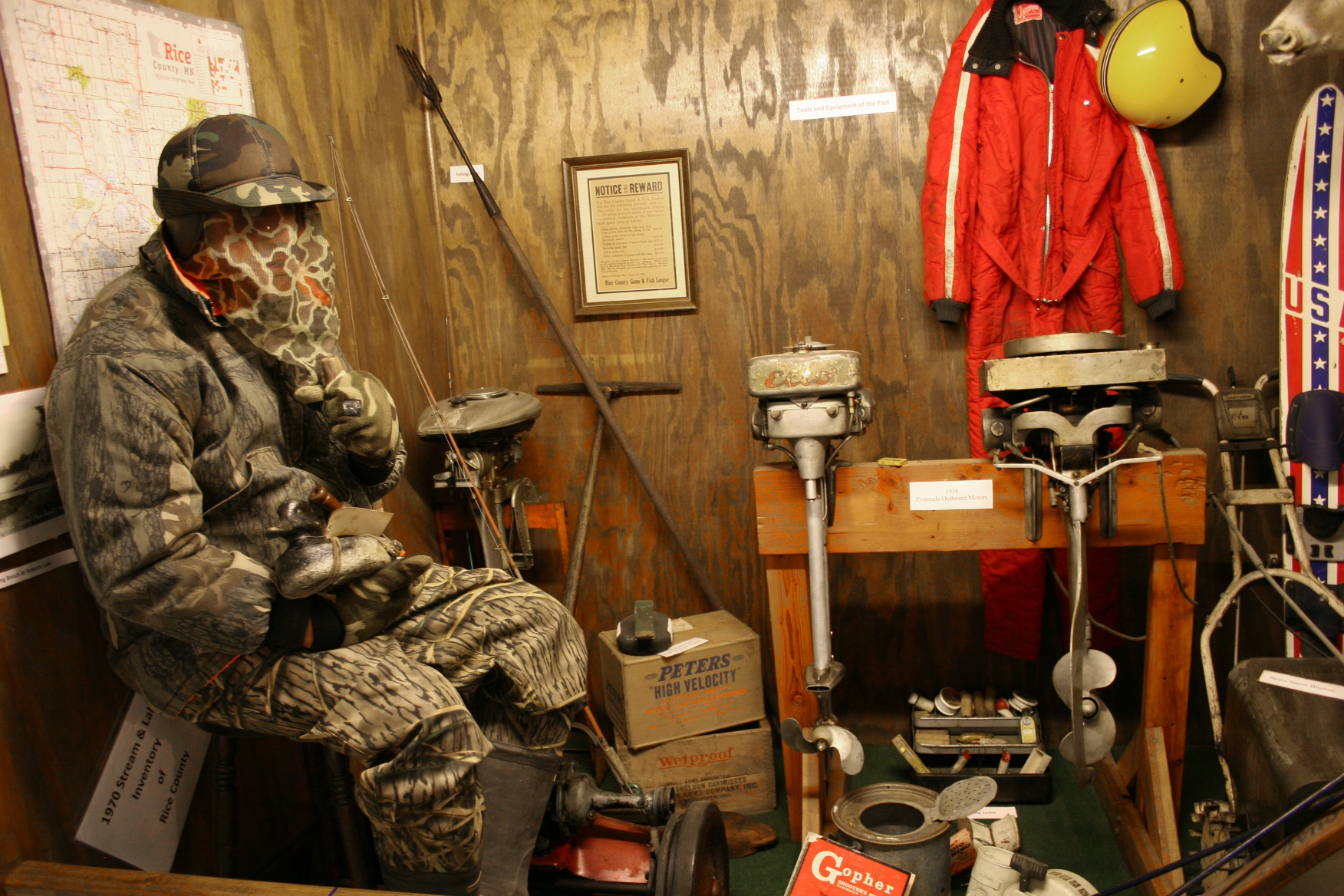
Brian Schmidt dressed as a hunter, not to be confused with a mannequin.

Not a scene from Duck Dynasty.

But the most memorable event of the evening for me, and likely Brian Schmidt who serves on the historical society board, occurred inside Heritage Hall. I stopped briefly at a display on outdoor recreational activities in the county and noticed what I assumed to be a camouflaged duck hunter mannequin in a corner. Except he wasn’t. As I walked away, a duck call sounded. Startled, I turned back, peered more closely at the masked face and realized I’d been fooled. By Brian.

A peek at Heritage Hall.

A peek at Heritage Hall.

Excellent. This Night at the Museum was not billed as a Halloween event. But in that moment, for me, it was.

© Copyright 2013 Audrey Kletscher Helbling


Owatonna exhibit celebrates Steele County: Butter Capitol of the World October 8, 2013

MILK COURSES through my veins, for I am the daughter of a dairy farmer.

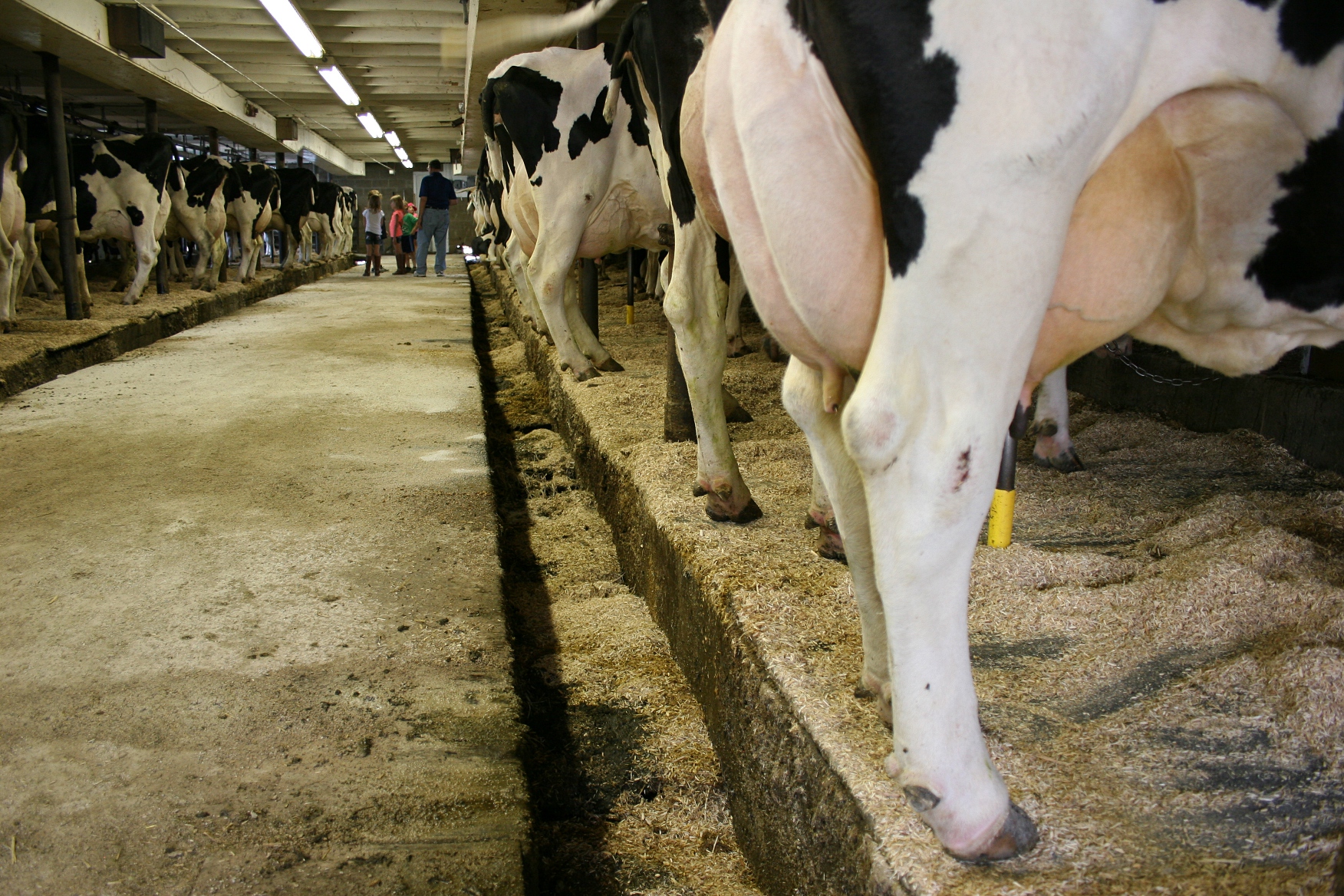
Inside the Wegners' barn, where dairy products come from.

Minnesota Prairie Roots file photo from Ron and Diane Wegner’s rural Faribault dairy barn.

Growing up, I labored in the barn beside my dad and siblings—feeding cows, bedding straw, lugging pails of milk to the bulk tank, washing milking machines, scraping manure and more.

I smelled of cow, watched bovines’ tails flick flies and rise to release streams of splashing hot pee into barn gutters.

Sandpaper rough tongues sometimes grated across my skin. Cold, wet noses dampened the sleeves of my chore coat.

I carried gallons of frothy fresh milk to the house for pasteurization and consumption.

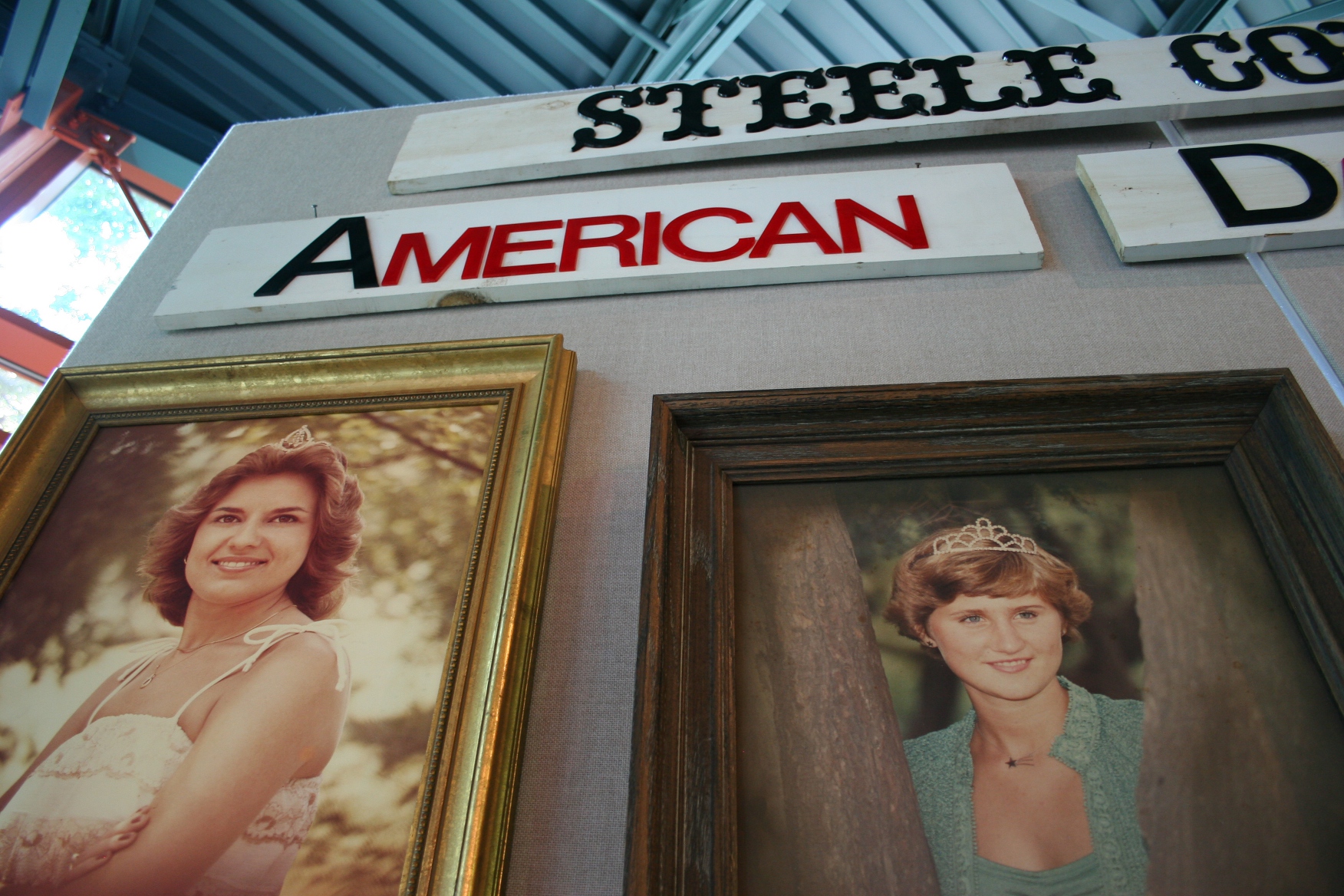
The Princess Kay of the Milky Way competition is a part of Minnesota culture. The Steele County exhibit features  photos of past county dairy royalty, including 1978 princess Kari Schroht, left, and 1976 princess Kathy Zeman, right. Earlier carved butter heads from past princesses were displayed in borrowed glass door freezers at the history center.

The Princess Kay of the Milky Way competition is a part of Minnesota culture. A current exhibit at the Steele County History Center features photos of past county dairy royalty, including 1978 princess Kari Schroht, left, and 1976 princess Kathy Zeman, right. Earlier this year, carved butter heads from recent past princesses were displayed in borrowed glass door freezers at the history center.

I knew cows and milk and once competed for Redwood County, Minnesota, dairy princess, a title I coveted but could not win because I lacked the poise and confidence and beauty to represent the industry.

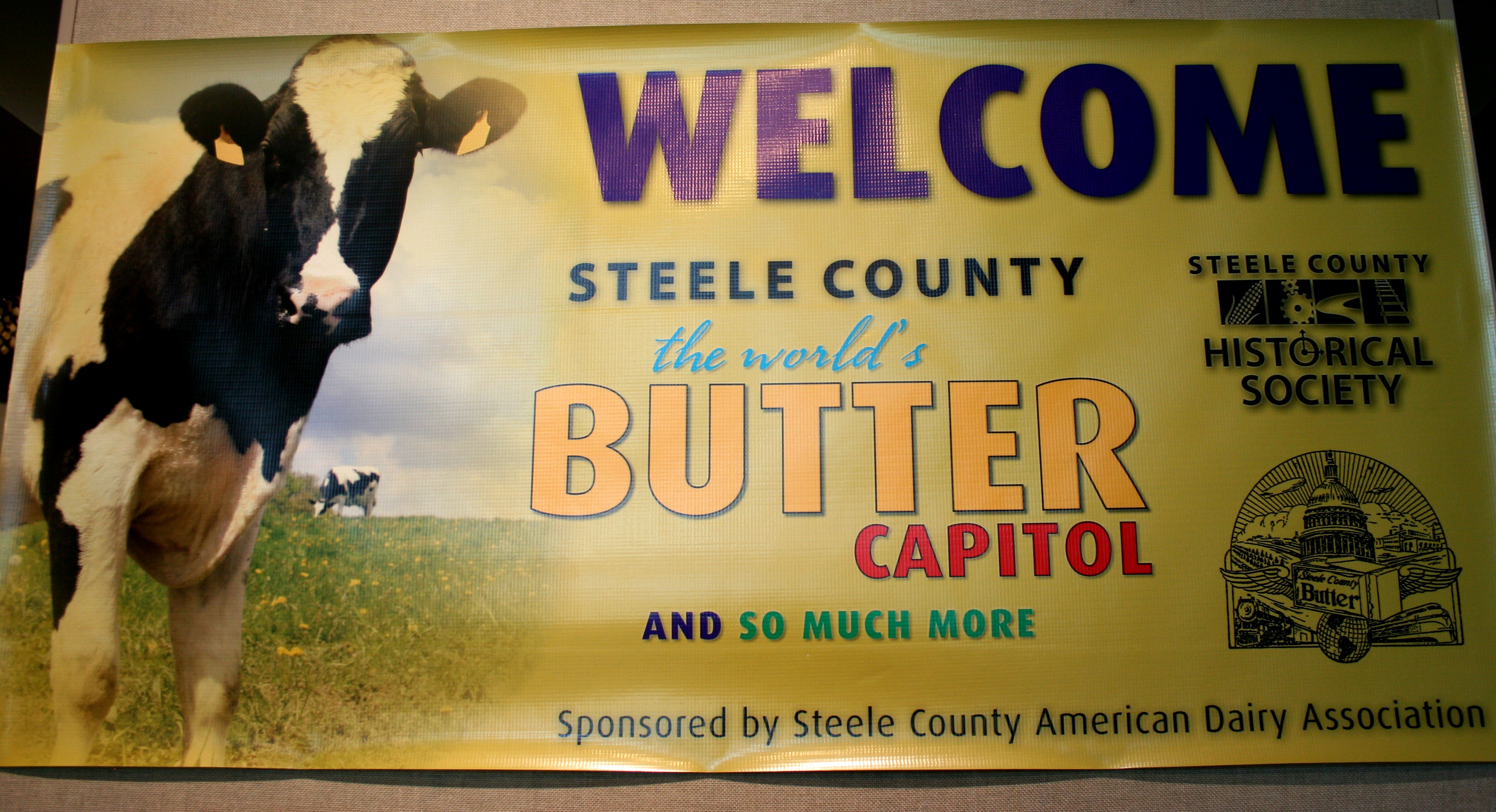
A banner welcomes visitors to the Steele County: Butter Capitol of the World exhibit at the Steele County History Center in Owatonna.

A banner welcomes visitors to the Steele County: Butter Capitol of the World exhibit at the Steele County History Center in Owatonna.

These memories flit through my mind as I consider a recent visit to the Steele County History Center in Owatonna to tour the featured exhibit, Steele County: Butter Capitol of the World.

The exhibit is interesting and educational.

The exhibit is interesting and educational.

It’s a must-see exhibit which will trigger memories for those who grew up on dairy farms and educate those who didn’t. And, even with my dairying background, I learned a lot about the history of dairy farming in Steele County.

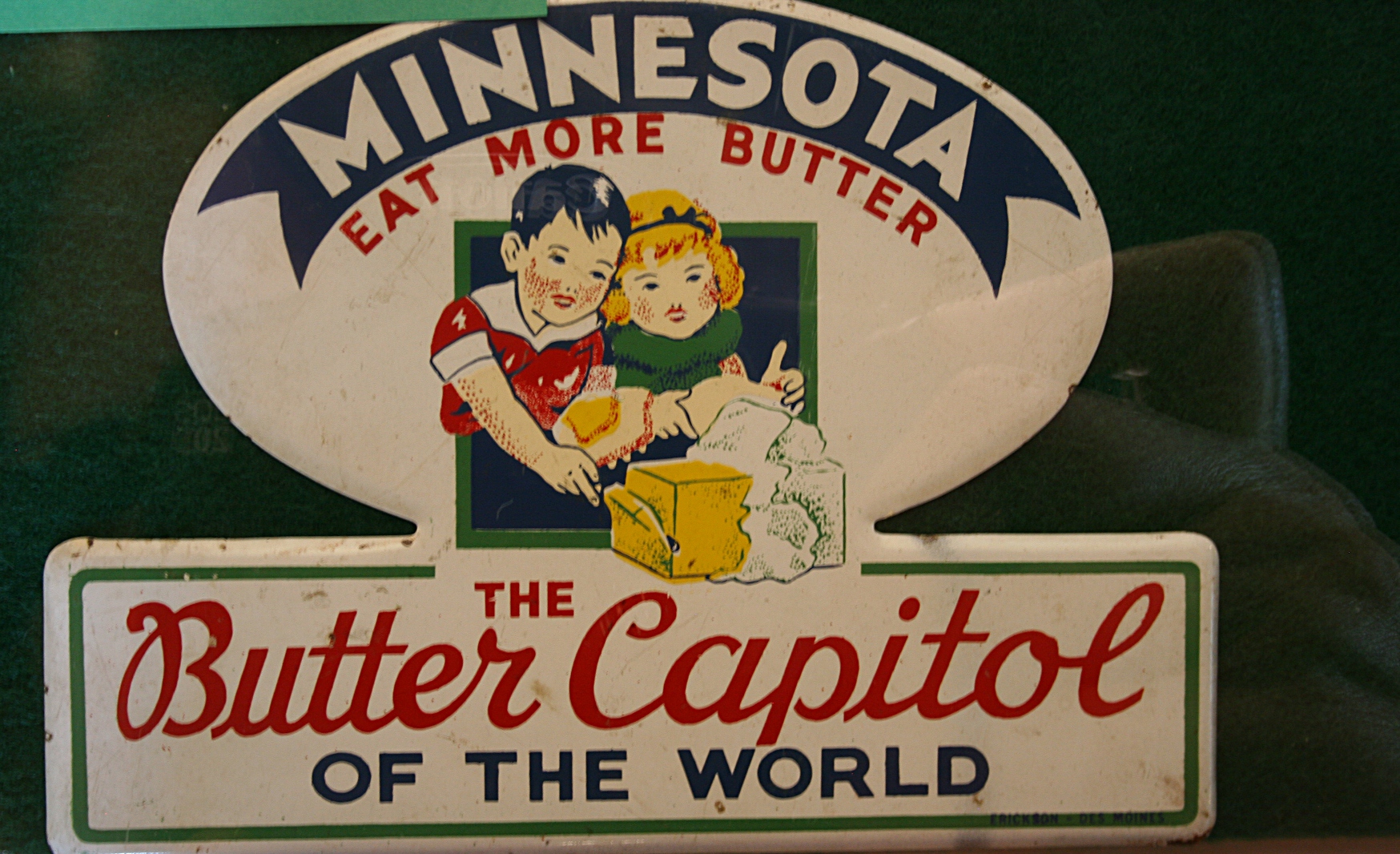
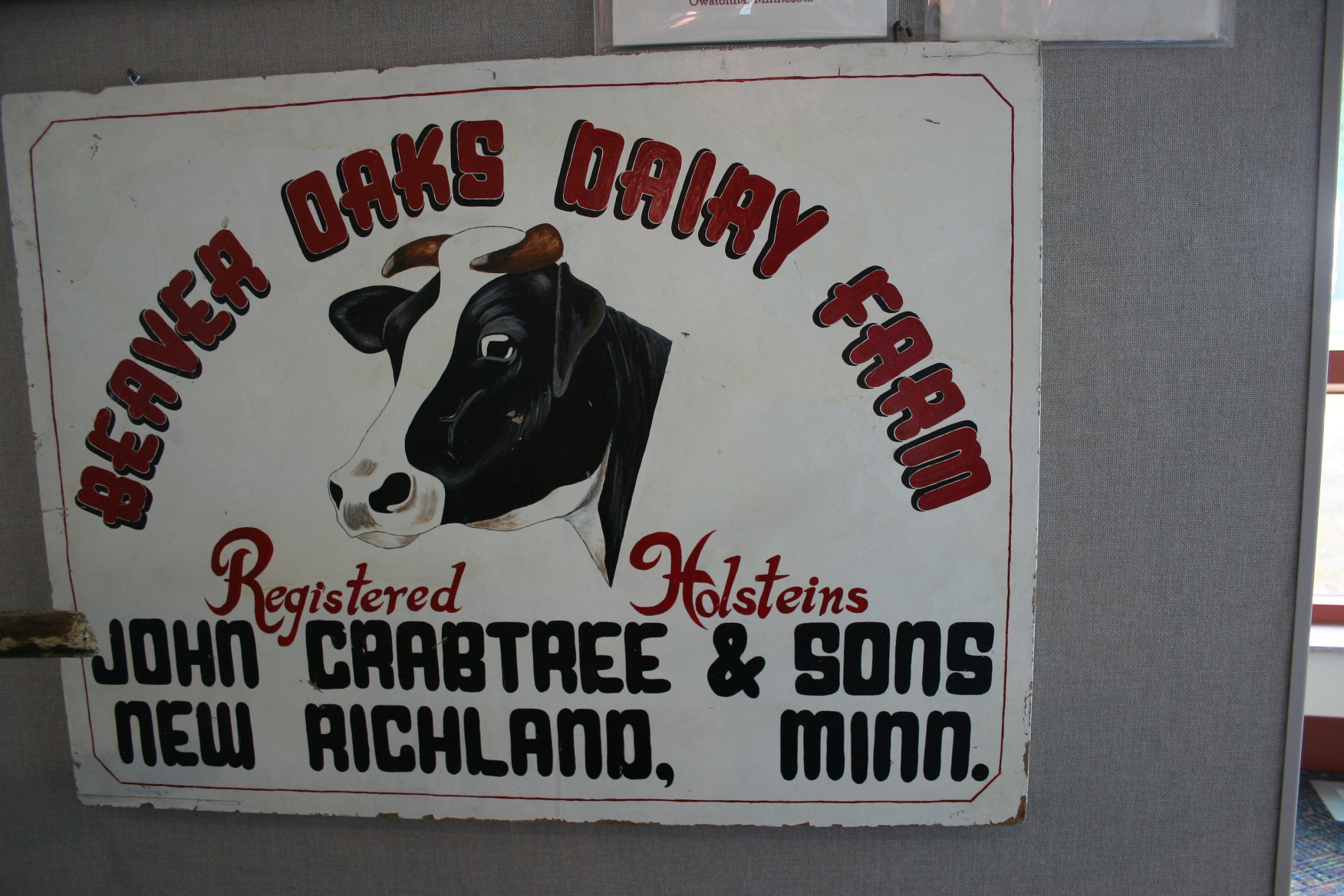
A vintage sign promoting butter in Minnesota.

A vintage sign promoting butter in Minnesota.

For example, Steele County gained its world-wide Butter Capitol reputation after Owatonna Manufacturing Company invented the mechanized butter churn in 1893, revolutionizing the dairy industry.

But two decades prior, in 1873, the county was well on its way to establishing a strong dairy reputation with four local cheese factories producing 150,000 pounds of cheese, more than any other Minnesota county.

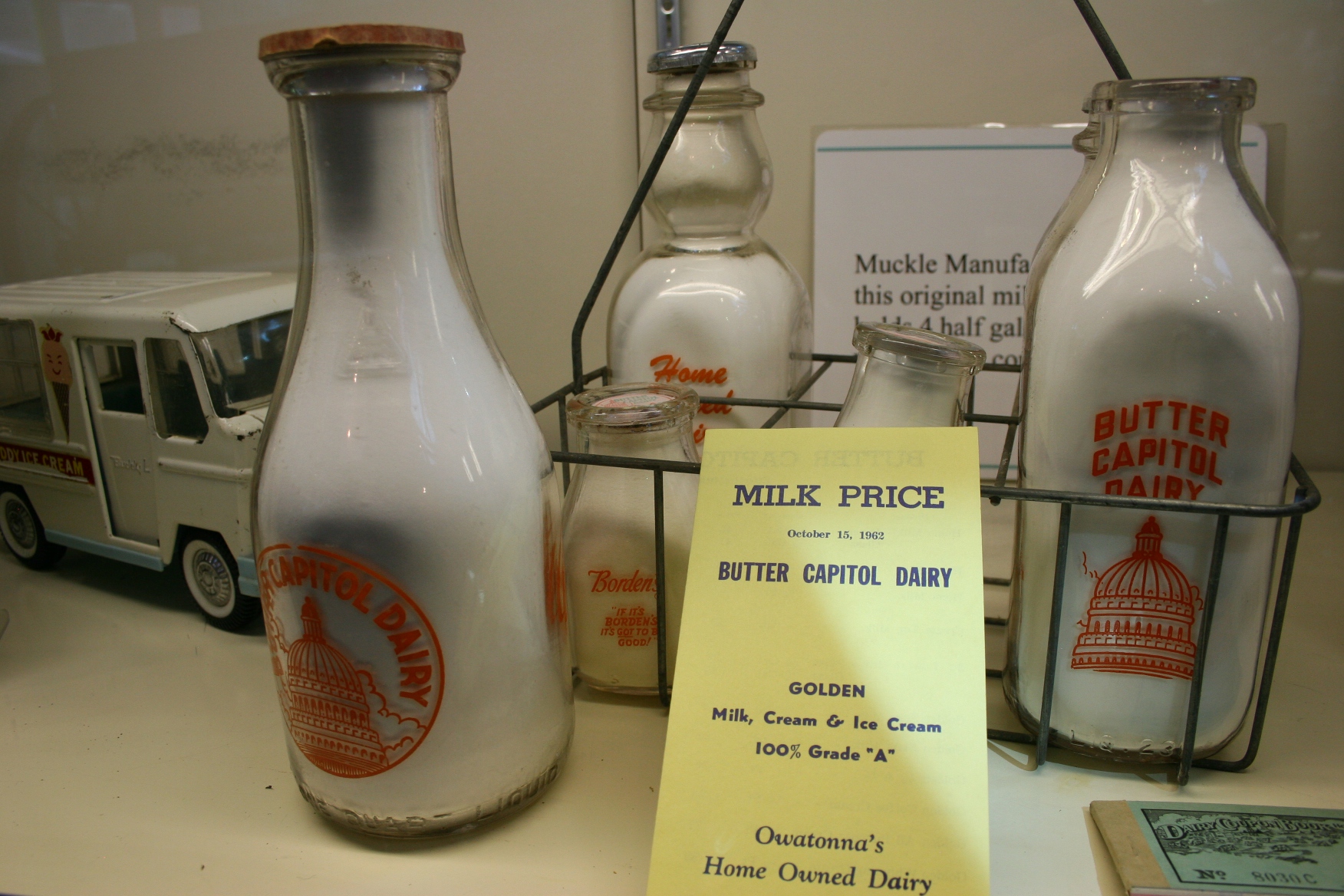
Information and artifacts from the days of bottled milk delivery.

Information and artifacts from the days of bottled milk delivery.

At one point, Steele County boasted two dozen-plus creameries.

Coveted butter

Hope Creamery, south of Owatonna, still produces coveted, award-winning Grade A butter in small batches. Butter boxes from Steele County creameries are displayed behind glass in the exhibit.

In December 1926, thieves stole 19 tubs of butter valued at $700 from the Steele Center Creamery.

Two Steele County women, Mina Holmes and Marianne McRostie, won numerous national awards for their hand-churned butter.

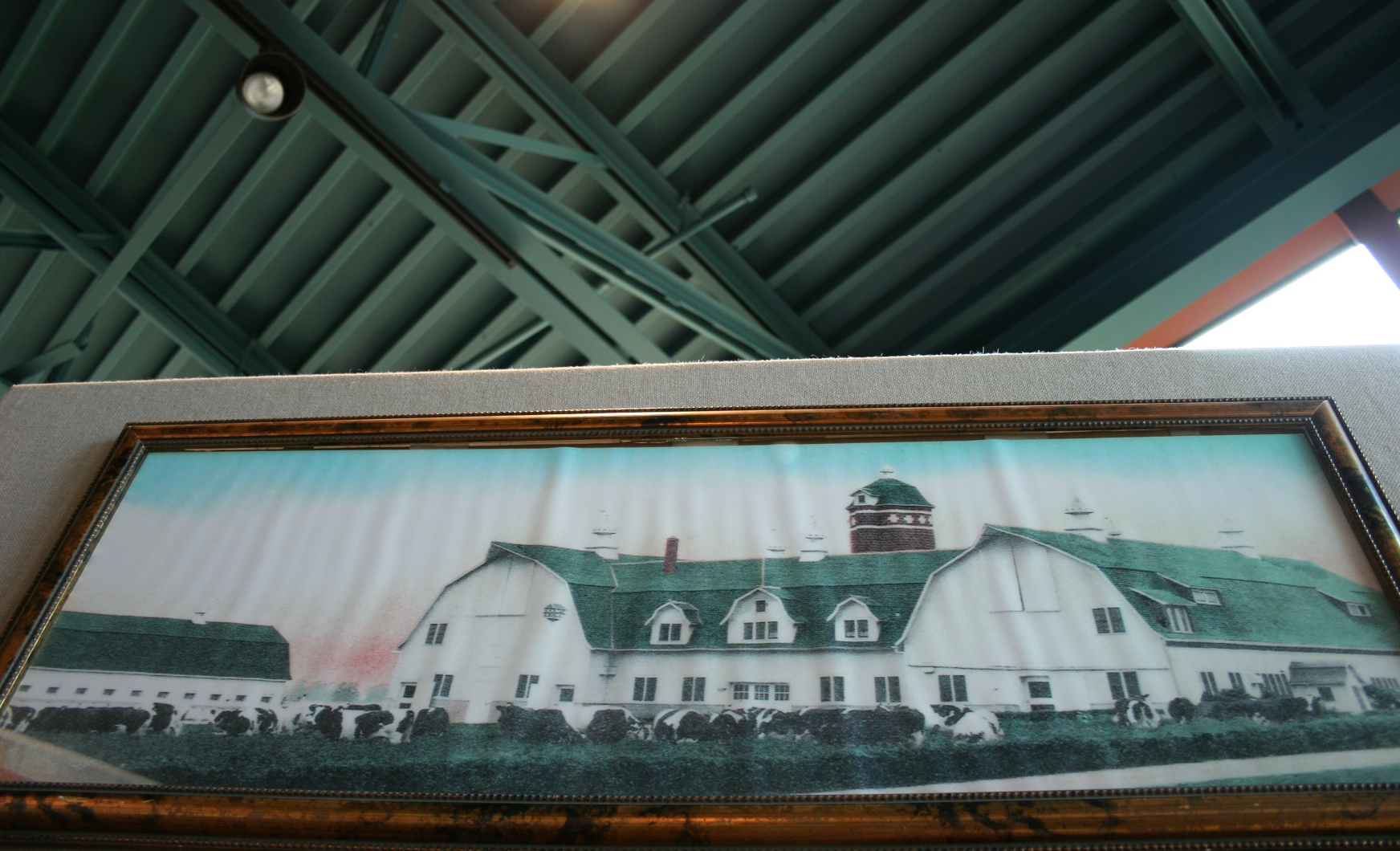
Photos of some spectacular Steele County barns are showcased.

Images of some spectacular Steele County barns are showcased.

Yes, so many accomplishments led to this southern Minnesota county holding the title of Butter Capitol of the World from 1898 – 1940, says Jerry Ganfield, who along with a committee of four women involved in the dairy industry, created this remarkable exhibit. Ganfield, holds a background in communications and marketing, grew up in Iowa and worked one summer during college as a milkhouse operator. Today he lives in a barn turned house near Bixsby and volunteers with the Steele County Historical Society, serving on its board of directors.

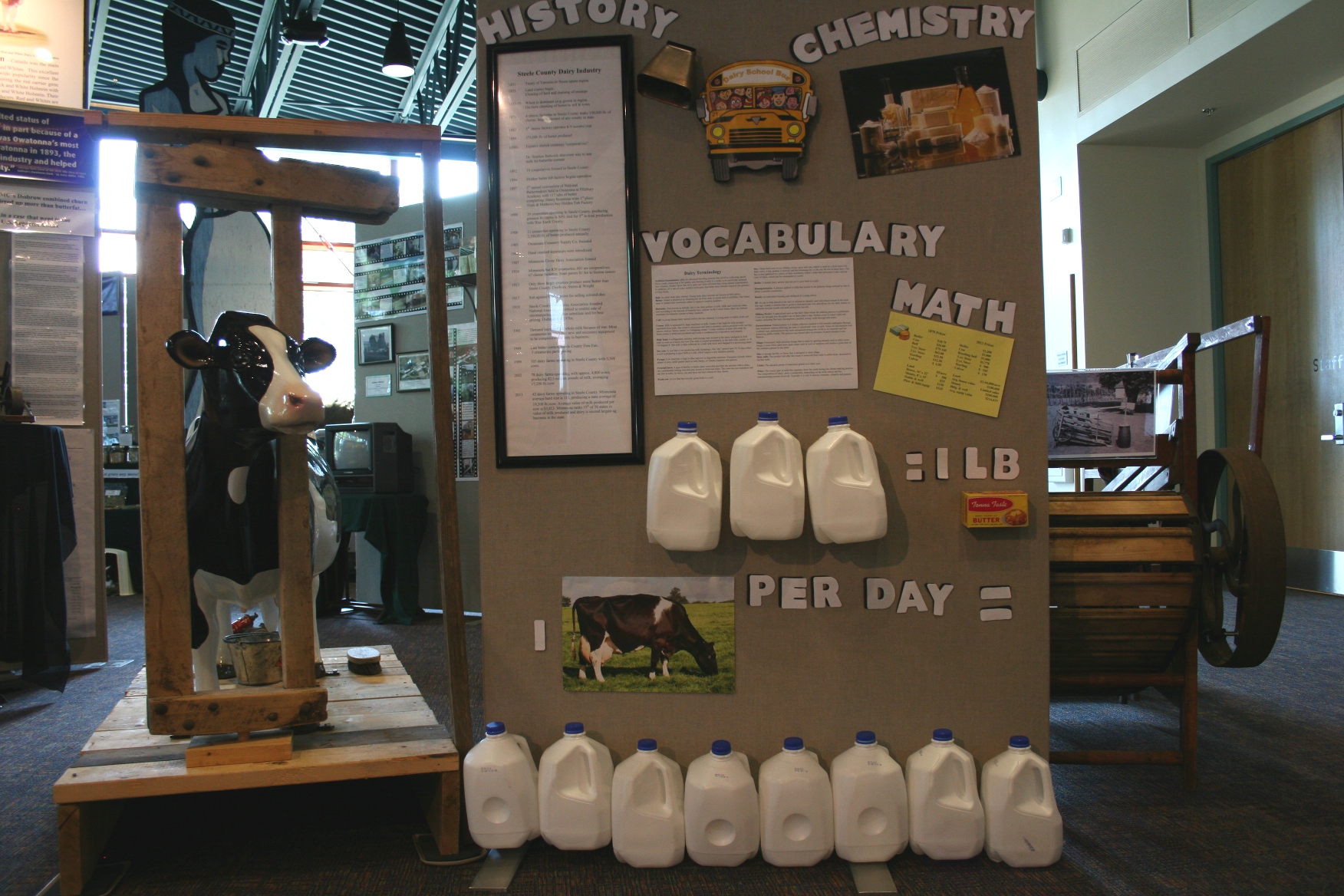
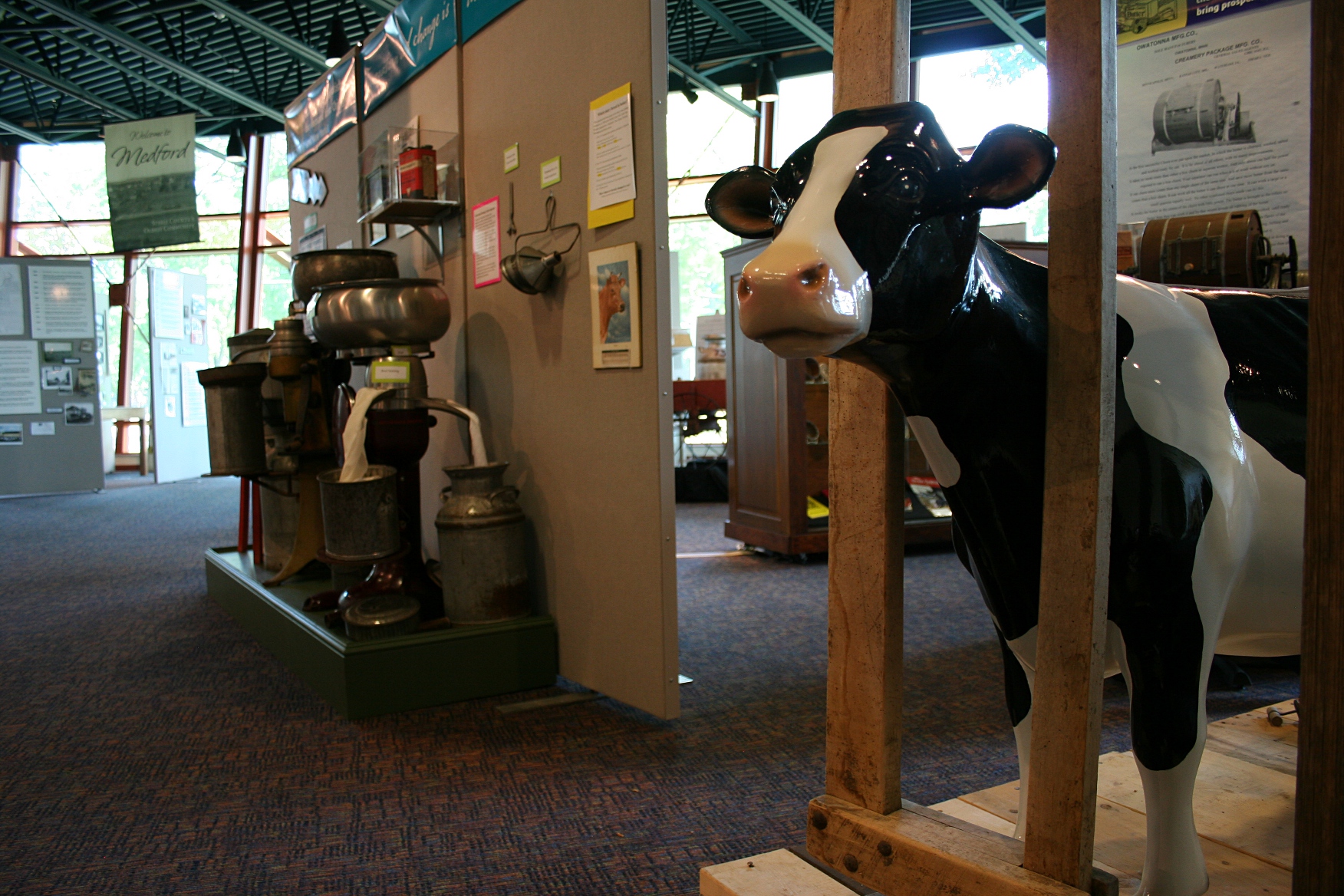
A portion of the expansive exhibit on Steele County's dairy industry.

A portion of the expansive exhibit on Steele County’s dairy industry.

Work on the Butter Capitol exhibit began in January with the historic display debuting in mid-July. It runs through November 10. Eventually, many of the items will be returned to the farm machinery building in the Village of Yesteryear (next to the Steele County History Center) where most were previously displayed.

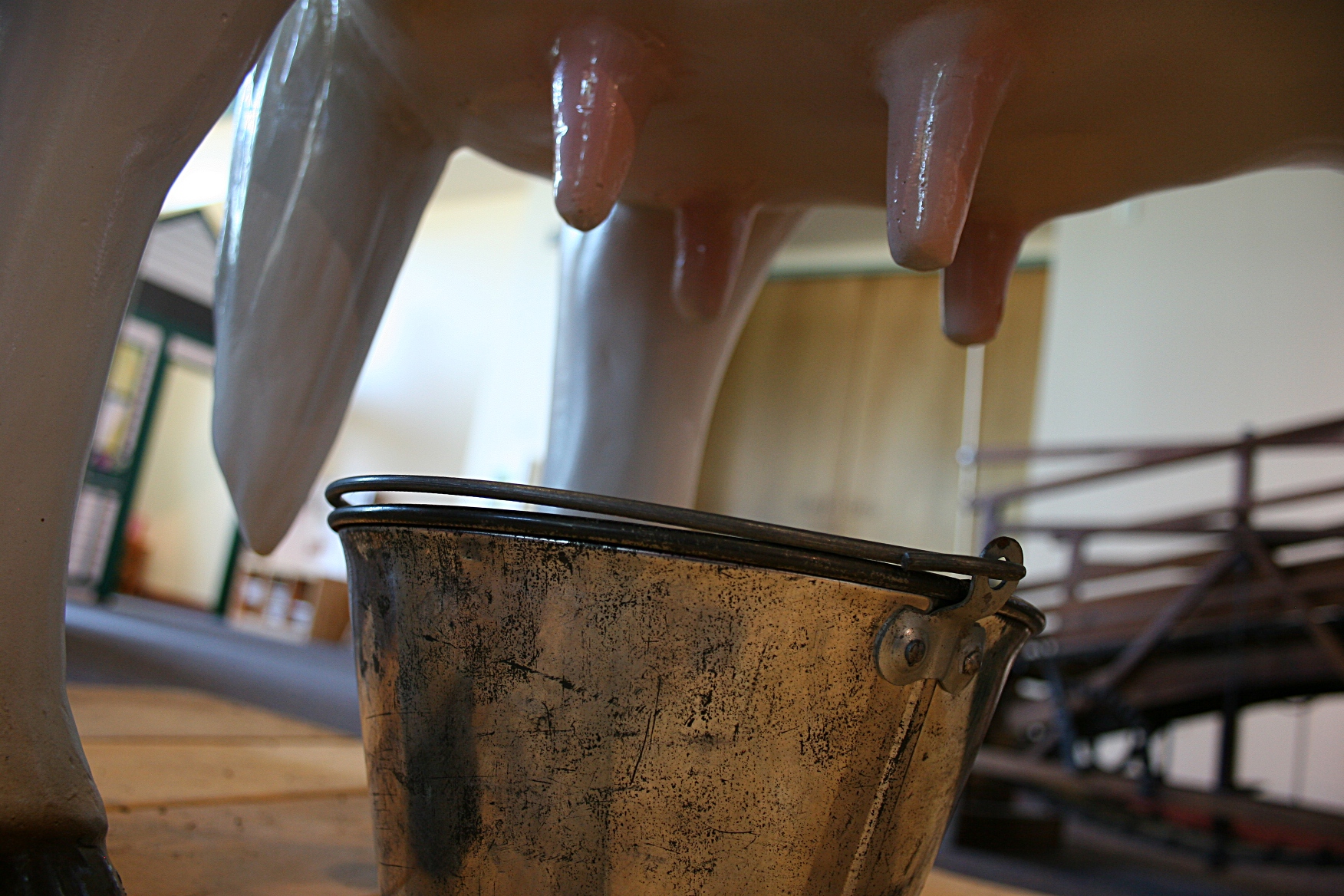
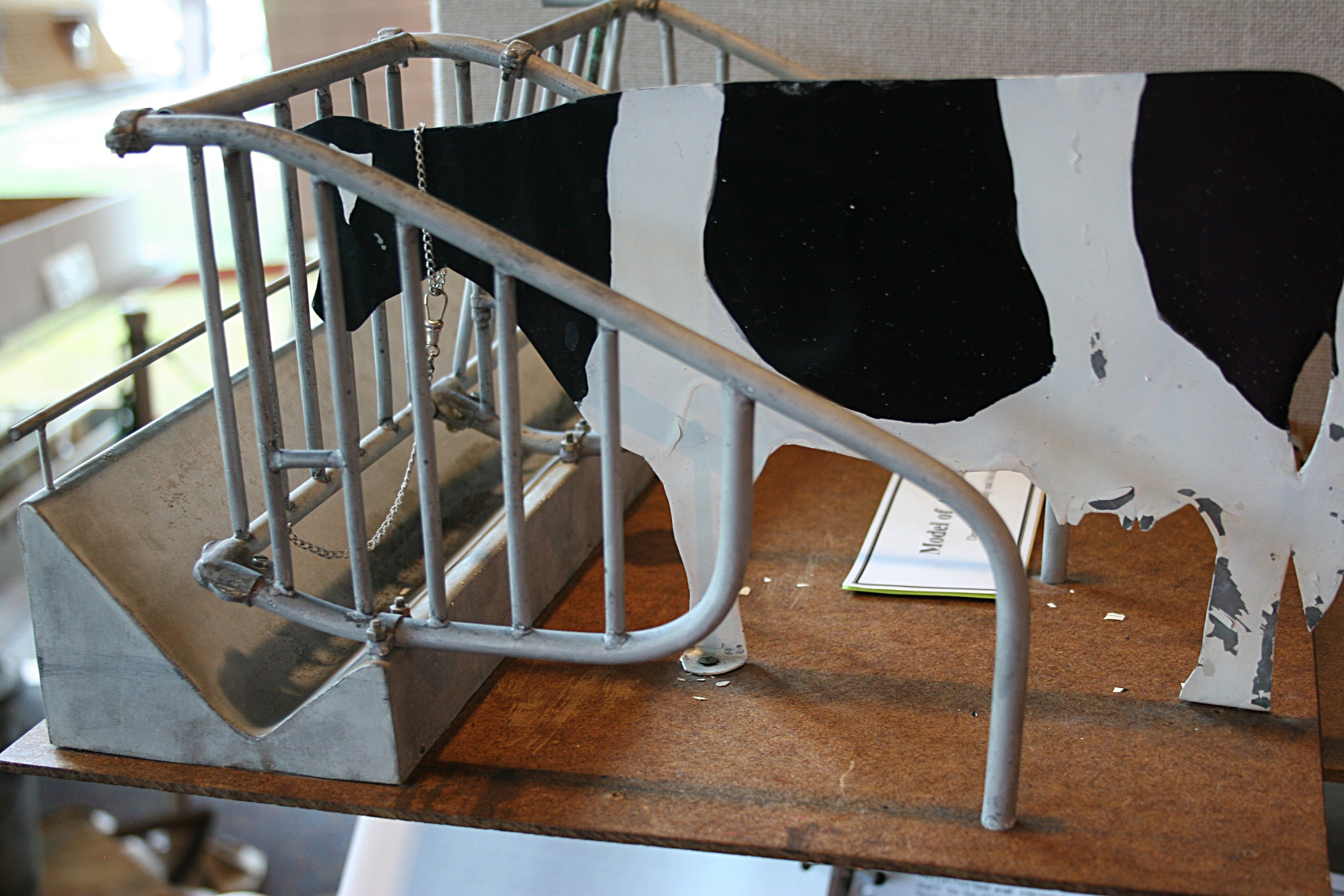
Visitors can get down low and check out the udder on the model cow in the photo above.

Visitors can get down low and check out the udder on a model cow.

Perhaps I am a bit biased being a dairy farmer’s daughter and all. But this exhibit is one of the most impressive, thorough, detailed and interesting I’ve seen in a county history center.

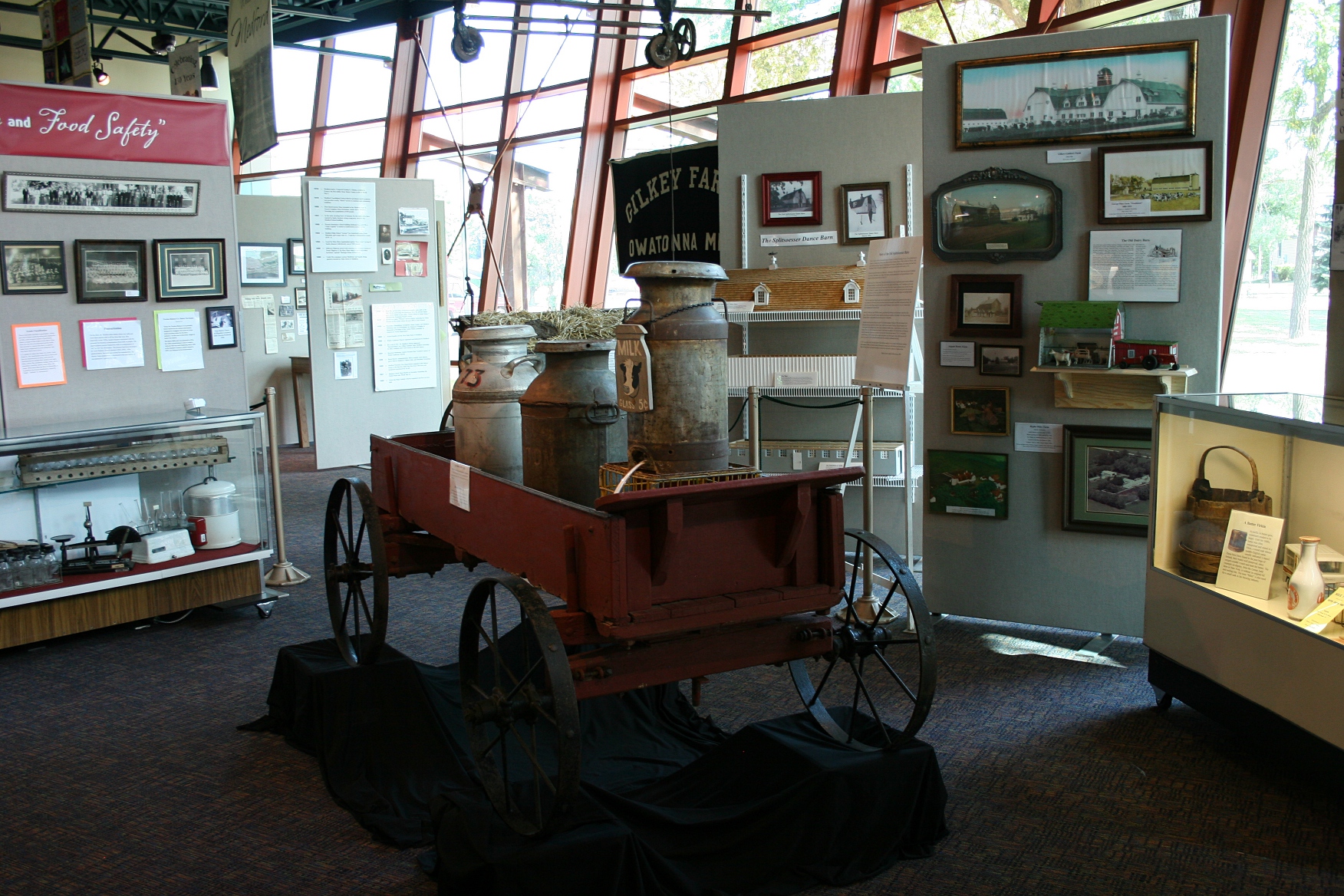
Just another view of a portion of the exhibit.

Just another view of a portion of the exhibit.

Steele County: Butter Capitol of the World is well worth a drive to Owatonna to peruse.  Just give yourself two hours, minimum, to tour the display.

#

BONUS PHOTOS:

Vintage signs are abundant in the exhibit.

Vintage signs are abundant in the exhibit.

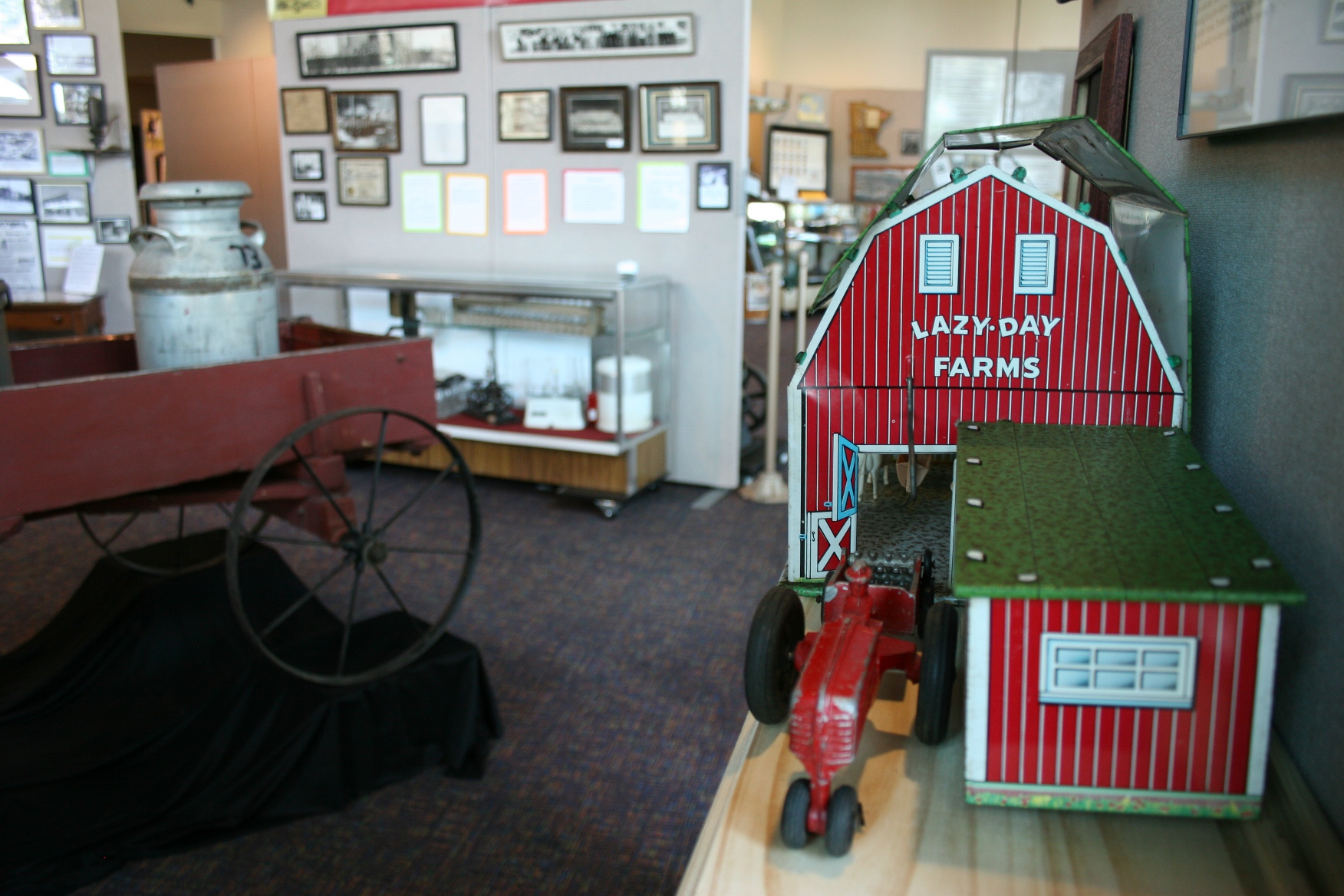
This tin toy barn, right, caught my eye. I've never seen one prior to this. The exhibit also features an incredible handcrafted replica of a barn.

This tin toy barn, right, caught my eye. The exhibit also features a handcrafted replica of a barn.

A familiar site to me, a cow in a stantion.

A familiar site to me, a cow in a stantion.

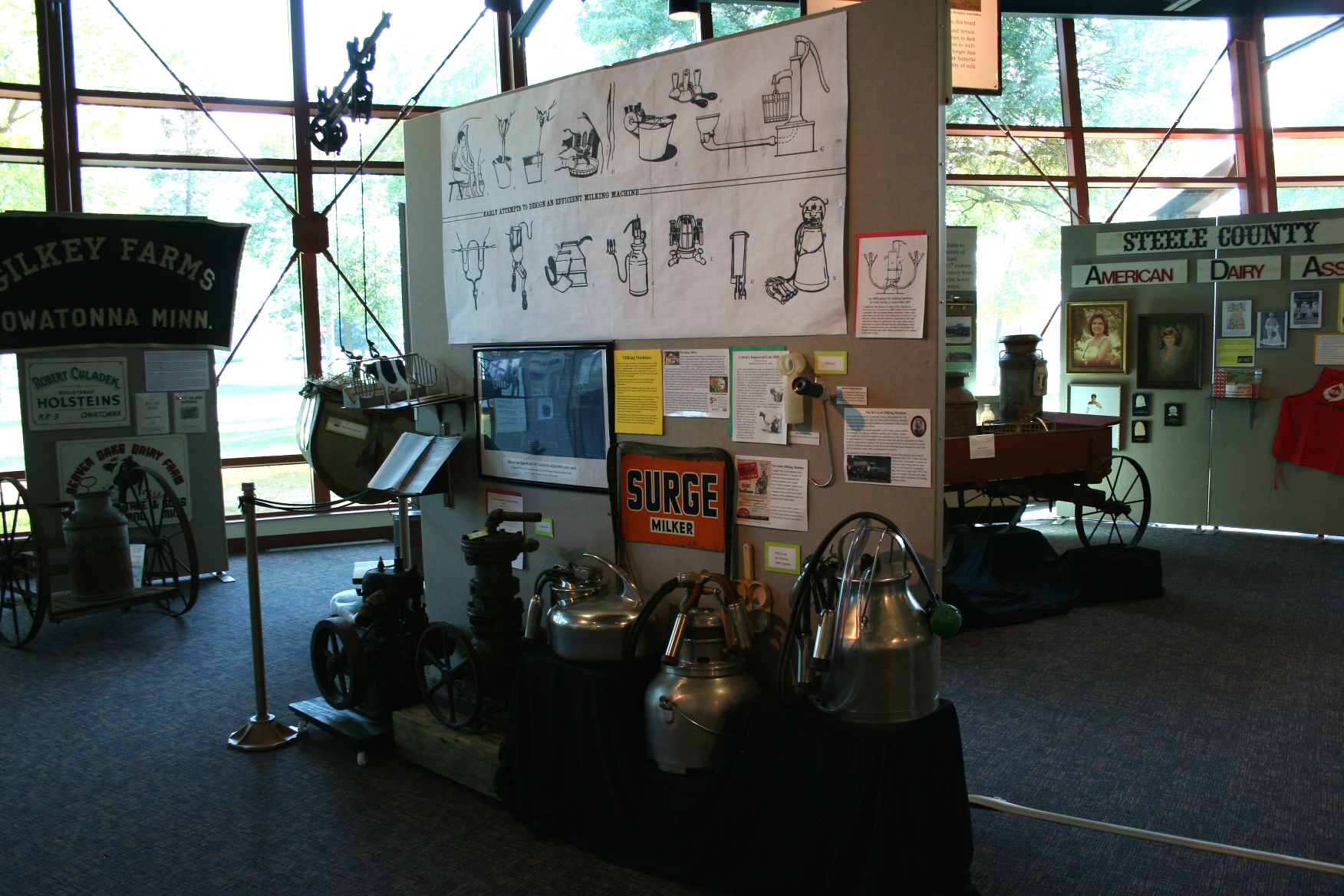
Also familiar, those Surger milkers in the background display.

Also familiar, those Surger milkers in this display. My dad used these before he installed a pipeline.

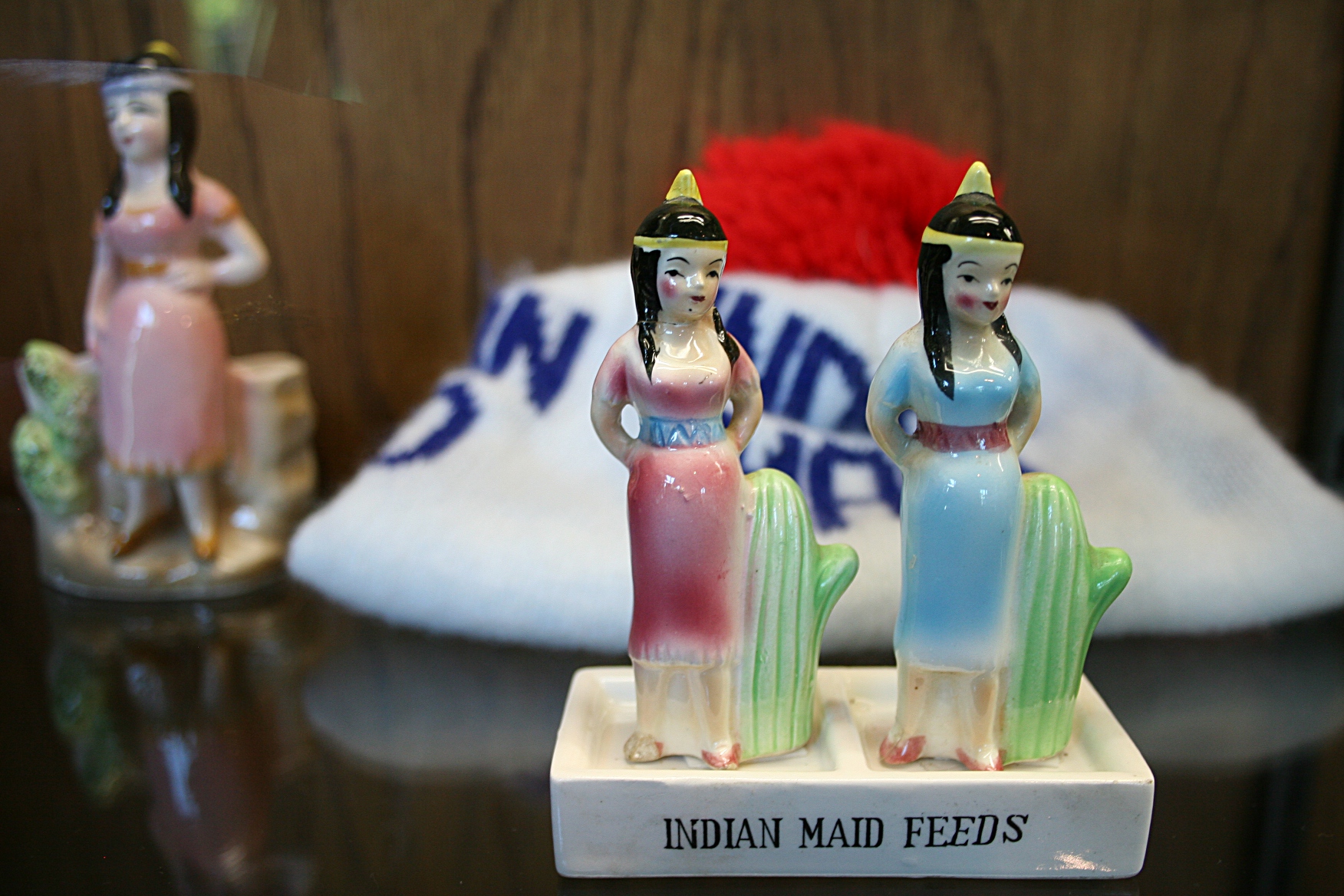
Indian Maid Feeds memorabilia is displayed in glass cases along with an impressive collection of butter molds and other items.

Indian Maid Feeds memorabilia is displayed in glass cases along with an impressive collection of butter molds and other items. Indian Maid Feeds was sold from the late 1950s – 1984 by Owatonna Elevator Company. The brand pictured an Indian maiden to recall the legend of Princess Owatonna, whose health was restored by drinking the mineral spring waters of the area. The exhibit also features a large wooden logo of the princess that once rested atop the elevator. You’ll need to visit the exhibit to see that vintage art.

FYI: To learn more about the Steele County History Center/Historical Society, housed in a fabulous new building opened in April 2012, click here.

The Steele County History Center encourages kids to join its Time Travelers Club and History Detectives. The detectives meet at 10:15 a.m. and the travelers at 6:30 p.m. the first Thursday of each month at the History Center, 1700 Austin Road, Owatonna.
Click here to read a Minnesota Public Radio story about Hope Creamery.

© Copyright 2013 Audrey Kletscher Helbling


Preserving a small town’s history in a Minnesota country schoolhouse June 7, 2013

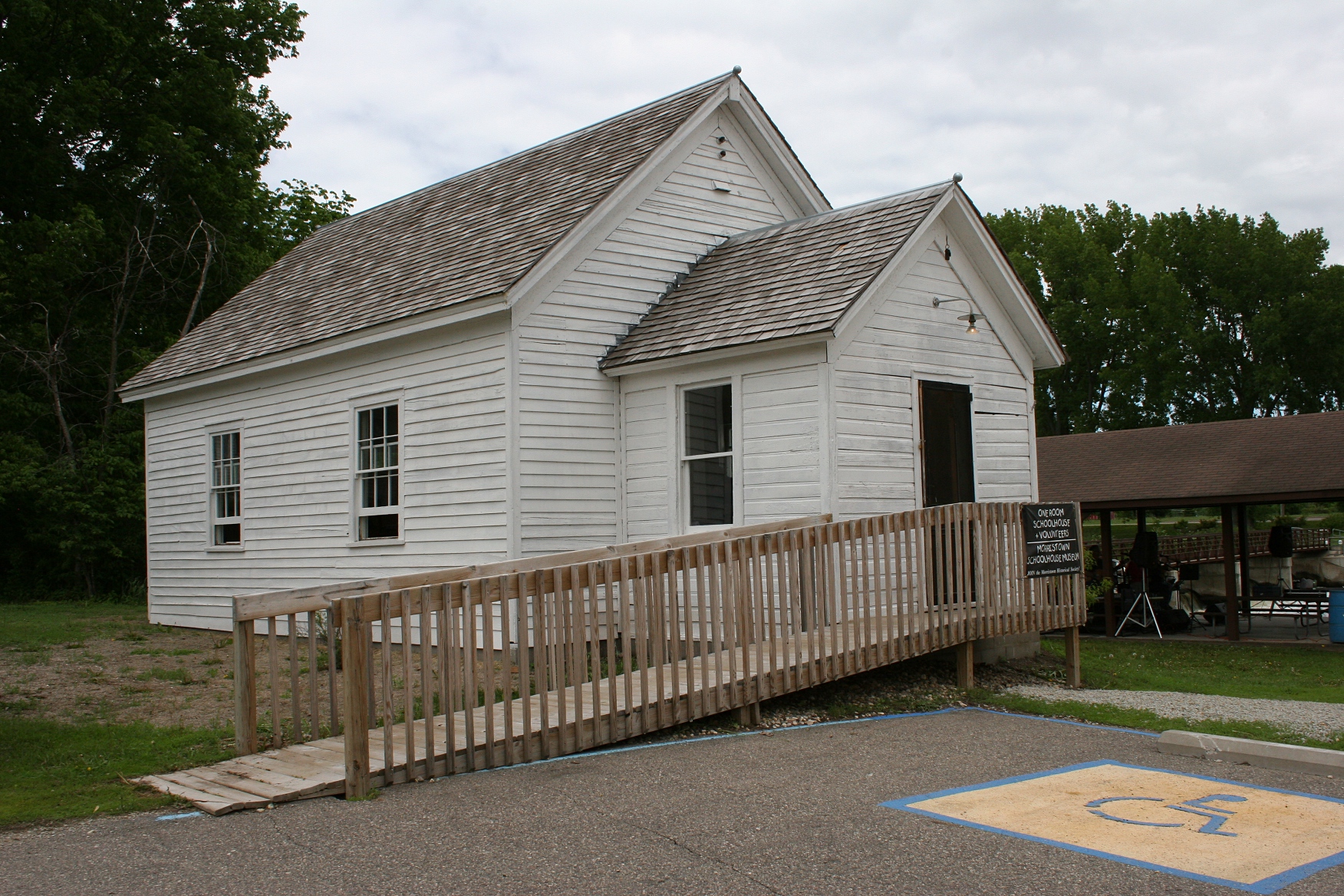
The District #54 country school, built in 1870, was moved into Morristown several years ago to a site next to the old mill along the banks of the Cannon River.

The District #54 country school, built in 1870, was moved into Morristown several years ago to a site next to the old mill along the banks of the Cannon River.

OH, THE THINGS YOU LEARN upon visiting a grassroots historical society run by volunteers in a small town.

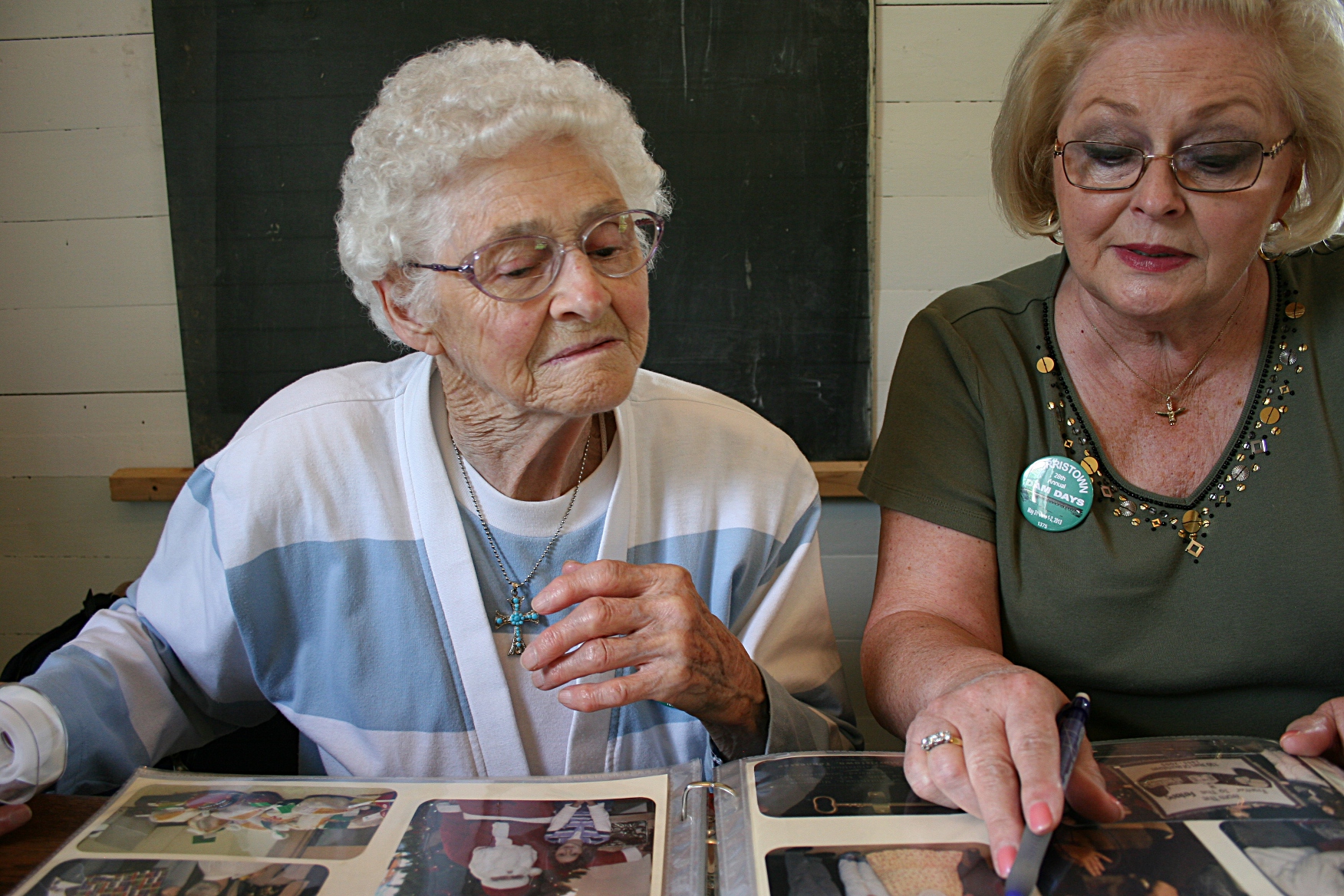
One of my favorite images is this one of volunteer Helen Newman's hand. She was cutting and taping info into the 2005 sesquicentennial book lying on the desk.

One of my favorite images is this one of 87-year-old volunteer Helen Newman’s hand. the life-long Morristown resident was cutting and taping info into the 2005 sesquicentennial album shown here.

Nothing against sprawling museums with paid staff—those places are fabulous, too. But there’s something especially touching about folks from a small town collecting photos and artifacts, memories and information, to display in a building(s) with a deep connection to the community.

You’ll find exactly that in Morristown, population around 1,000, in Rice County in southeastern Minnesota. Set next to the Cannon River are the Morristown Feed Mill, once home to a sawmill and flour mill, and the District 54 Epard School moved in from a few miles north of Morristown and today the District #54 Schoolhouse Museum. The Morristown Historical Society maintains both buildings, which I toured during the recent Dam Days community celebration.

I didn’t study the content of the two buildings like a local with an intimate connection to this place. Rather, I picked topics of particular interest to me to read and photograph.

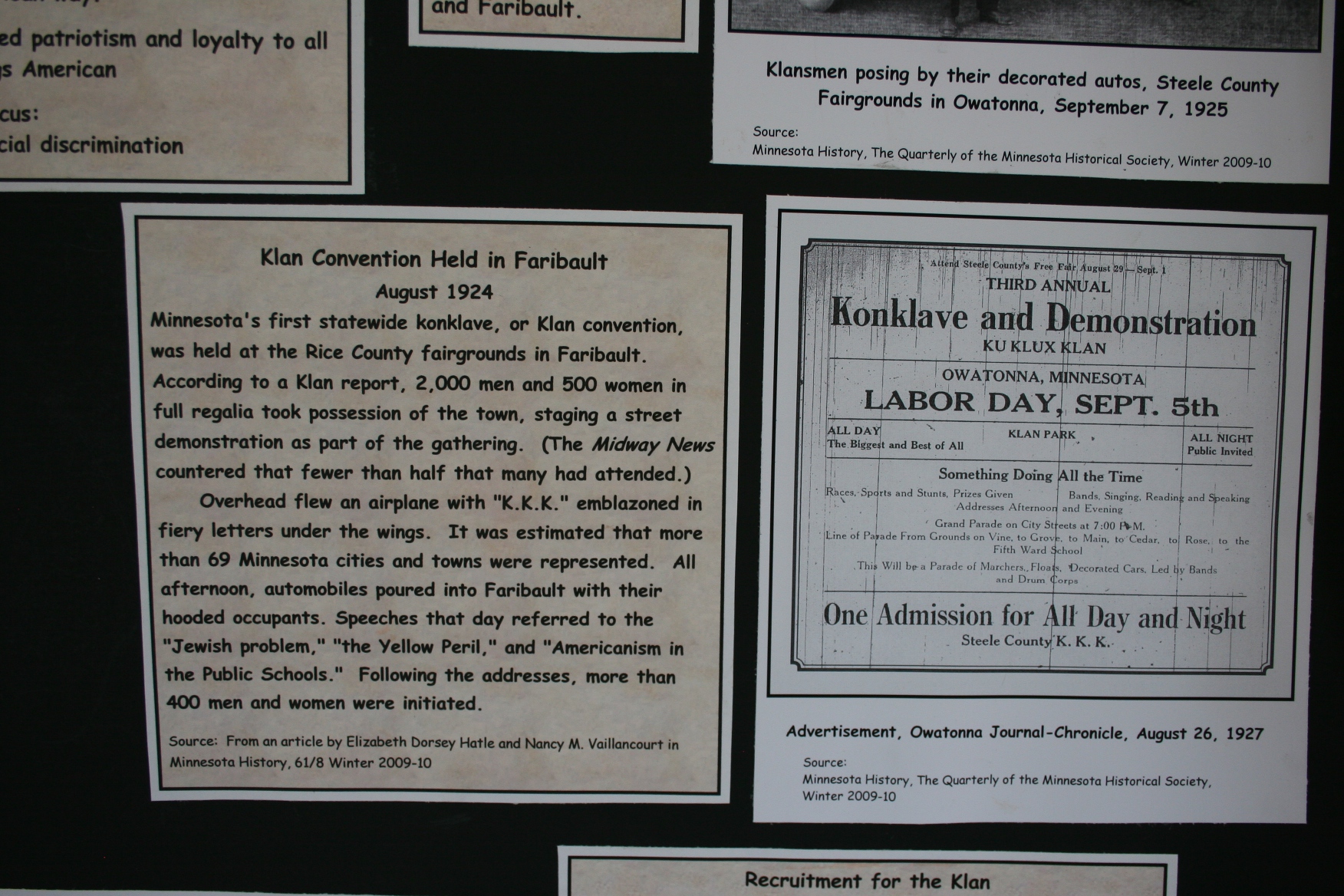
Information about the Ku Klux Klan's presence in Morristown and the region.

Information about the Ku Klux Klan’s presence in Morristown and the region.

For example, I was unaware that my county of Rice was home to Ku Klux Klan chapters and hosted the first statewide Klan convention at the fairgrounds in August of 1924. Chapter #26 was headquartered in Morristown with other chapters in nearby communities like Faribault and Owatonna and Austin and Albert Lea further to the south. Certainly, such membership doesn’t please me. But I’m thankful the Morristown Historical Society didn’t ignore this negative part of the town’s history. We need to learn from our mistakes.

A “Morristown Crime Wave of 1914” display also caught my eye with crimes such as profane and abusive language, drunken and disorderly conduct, and stealing fish noted.

News stories about the devastating 1900 fire.

News stories about the devastating 1900 fire in downtown Morristown.

In another display, a front page article published in the February 1, 1900, issue of the Morristown Press detailed a devastating fire which destroyed 20 buildings, nearly the entire business district, in downtown Morristown. “Loss will reach $35,000,” a sub-head reads.
Mrs. Lydia Meehl, who helped so many Morristown area women birth their babies.
Mrs. Lydia Meehl, who helped so many Morristown area women birth their babies.
My friend Dale, who joined a historical walking tour on the day I visited the schoolhouse museum and mill, learned about his place of birth in the Meehl Maternity Home. Hundreds of local babies were birthed there with the assistance of licensed practical nurse Mrs. Lydia Meehl. A newspaper story quotes the 82-year-old Meehl as saying she “loves them all (the 500-plus babies born in her maternity home).”

A snippet of the artifacts and info displayed inside the schoolhouse turned museum.

A snippet of the artifacts and info displayed inside the schoolhouse turned museum. Those are Civil War cannonballs on the shelf near the center of the photo

In the museum collection, you’ll also find the usual military (including Civil War cannonballs), school, telephone and other small town artifacts.

Helen Newman and Cindy Packard work on a sesquicentennial album.

Helen Newman and Cindy Packard work on a sesquicentennial album.

As a bonus, I met 87-year-old Helen Newman, who’s lived in Morristown her entire life, and Morristown native Cindy Packard, visiting her hometown from Colorado Springs. The two were seated behind a hulk of a desk inserting info into an unfinished album about the town’s 2005 sesquicentennial.

Packard brought with her a few items for the schoolhouse museum, including a spatula imprinted with “Our Twentieth Year LLOYD’S FOOD MARKET, Morristown, Minn.” She kind of hated to give it up, but…

Switchboard wires and switches reportedly from Adolph Hitler's bunker.

Switchboard wires and switches reportedly from Adolph Hitler’s bunker.

Upon my request, the pair pulled the spatula and a snippet of wires and two switches from a plastic bag resting on the corner of the desk. The switches came from the switchboard in Adolph Hitler’s bunker and were brought back by Oscar Ahlman to Hewitt Thomspon in Morristown, according to a note accompanying Packard’s donation.

Helen and Cindy visit while they cut and tape information into the album.

Helen Newman and Cindy Packard visit while they write, cut and tape information into the album. I told them just to ignore me and my camera and they obliged. I simply love this photo of the pair.

And that’s how these small town museum collections grow—with donations from the likes of a hometown girl come home every year and the dedication of volunteers like the 87-year-old Newman.

BONUS PHOTOS:

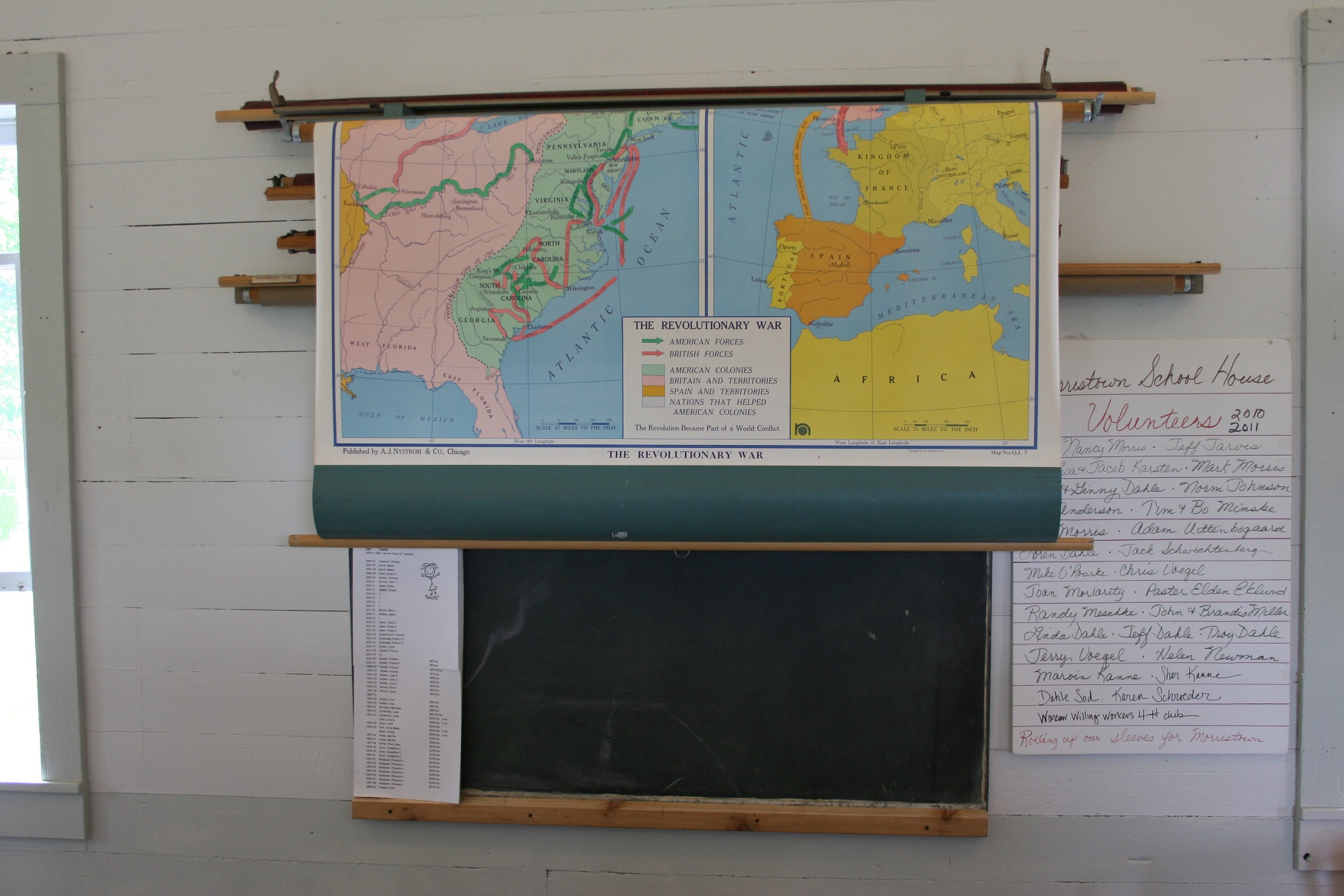
There's something about an old school map that takes me back to Vesta Elementary School, my childhood school.

There’s something about an old school map that takes me back to Vesta Elementary School, my childhood school.

A display of school-related items includes a lunch pail.

A display of school-related items includes a lunch pail, books and photos.

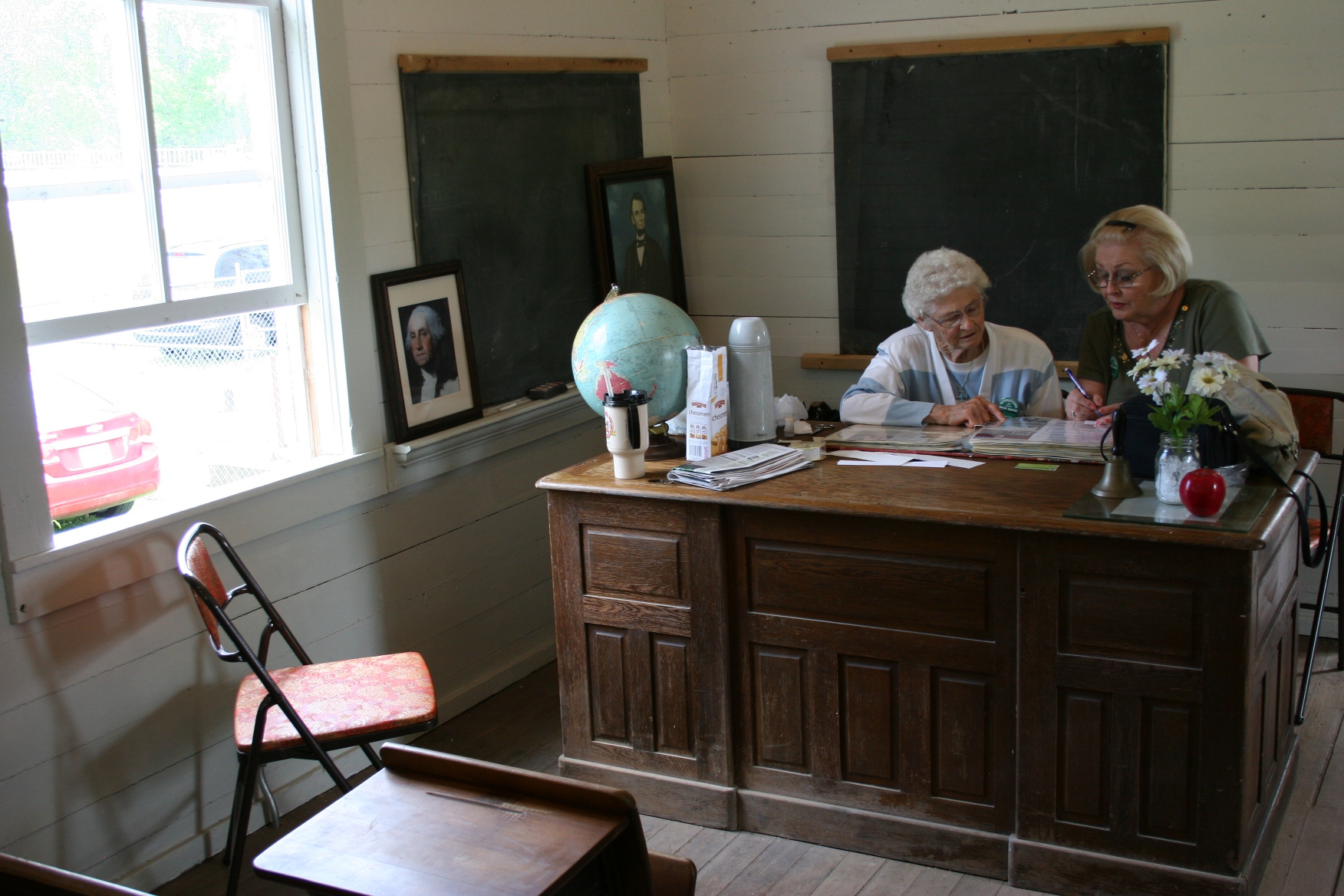
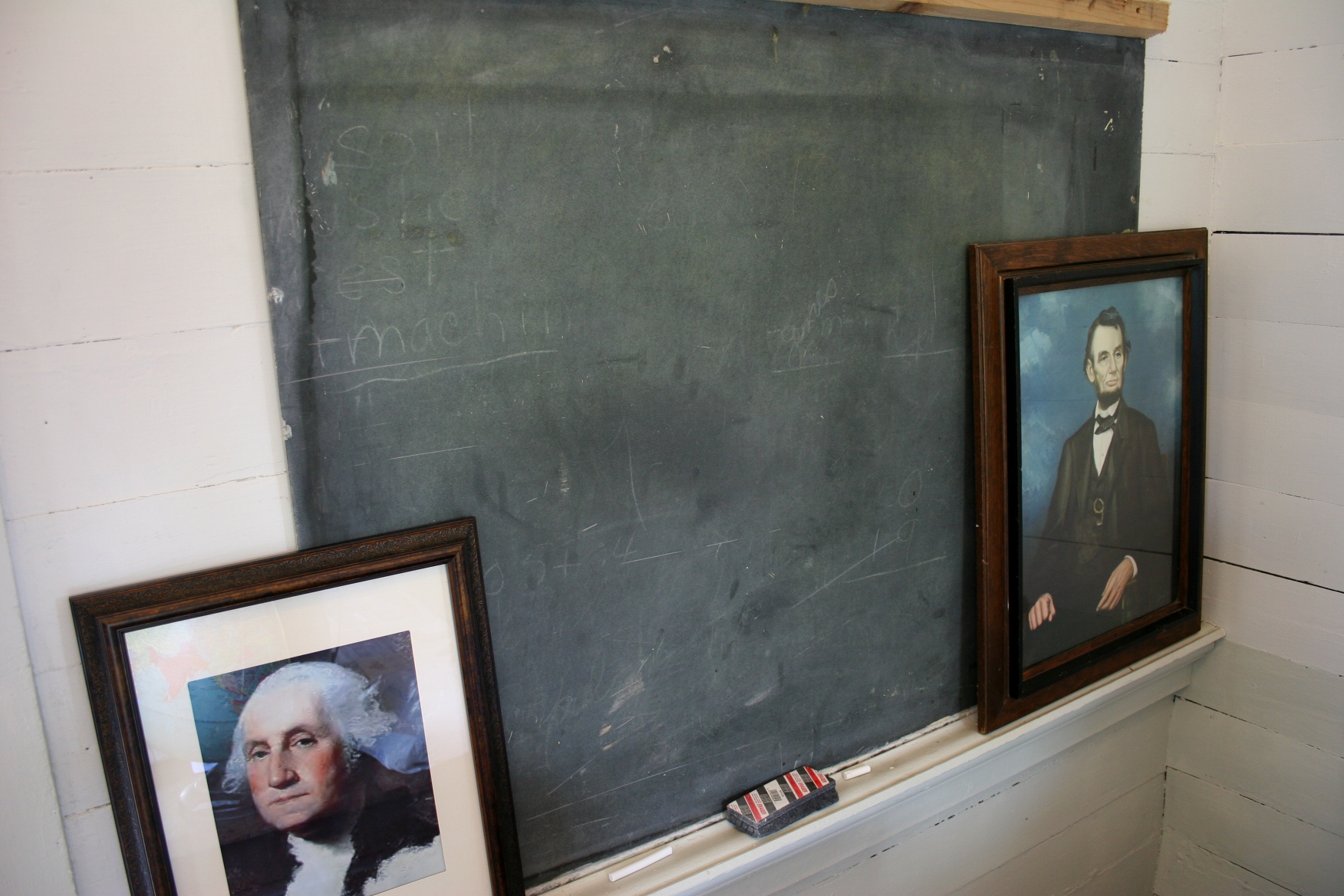
Presidential portraits grace the blackboard by the teacher's desk.

Presidential portraits grace a corner blackboard by the teacher’s desk.

FYI: To read a previous post on the historic Morristown Feed Mill, click here. A second mill post will be forthcoming. Also check my recent archives for stories from Morristown Dam Days.

© Copyright 2013 Audrey Kletscher Helbling


Houdini magic in Appleton, Wisconsin January 17, 2013

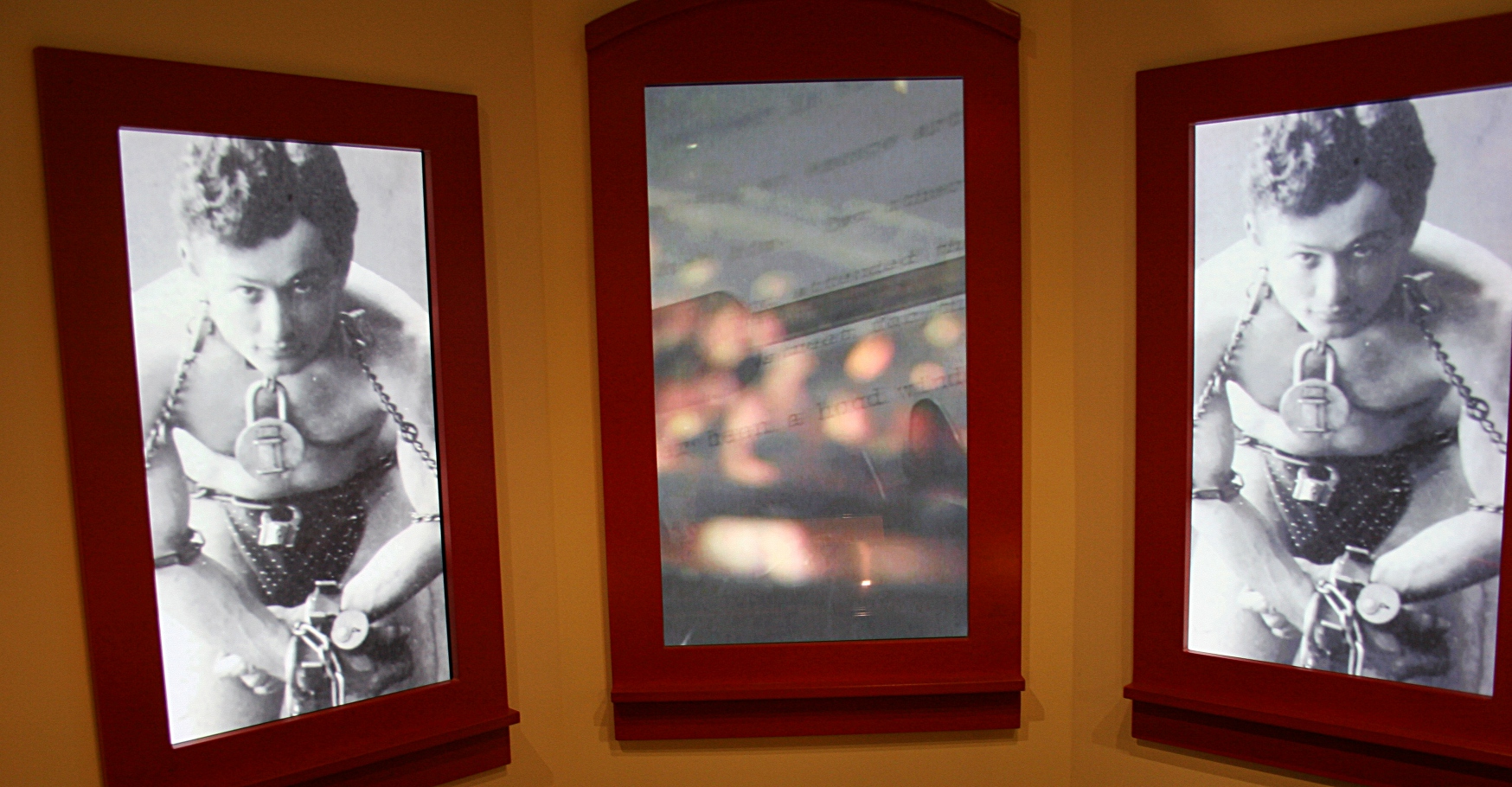
Illusionist and escape artist Harry Houdini.

Illusionist and escape artist Harry Houdini.

WHAT DRAWS US to the magic of a magician?

I expect the attraction begins subtly when we are babes playing peek-a-boo. We frown as the face we love disappears beneath our beloved blankie. But when Mom or Dad reappears, so does our smile. It’s magic.

And then, at some point, we discover card tricks and colorful scarves growing from sleeves and rabbits pulled from top hats. And the fascination with magic dances in our childish brains and never quite vanishes.

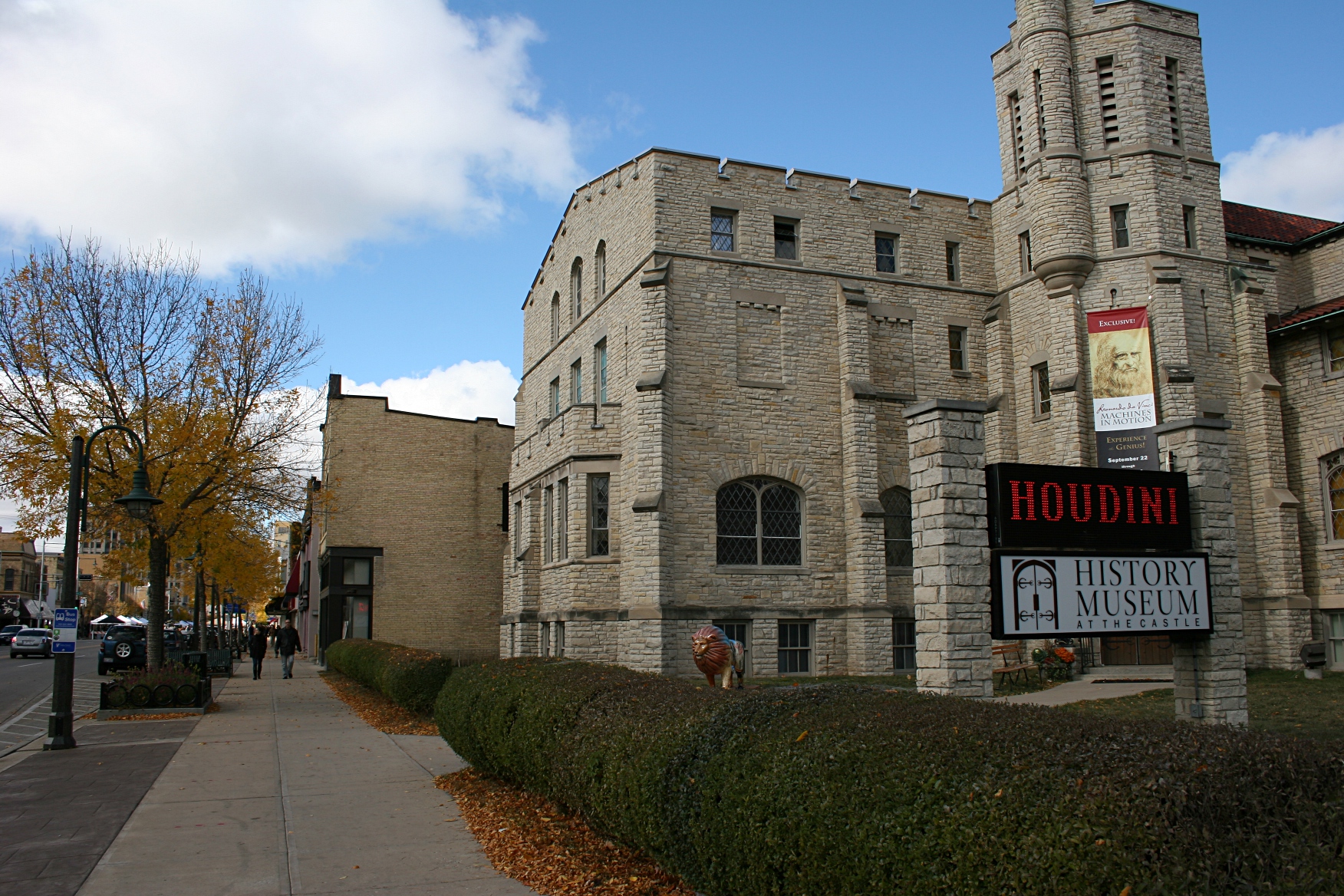
The History Museum at the Castle, home to the Houdini and other exhibits.

The History Museum at the Castle, home to the Houdini and other exhibits.

I suppose that is part of the attraction visitors find to the “A.K.A. Houdini Exhibit” at The History Museum at the Castle in downtown Appleton, Wisconsin, the city illusionist Harry Houdini falsely claimed as his birthplace. He was born in Budapest, Hungary, came with his family to America in 1878, settling briefly in Appleton where his father was the city’s first rabbi.

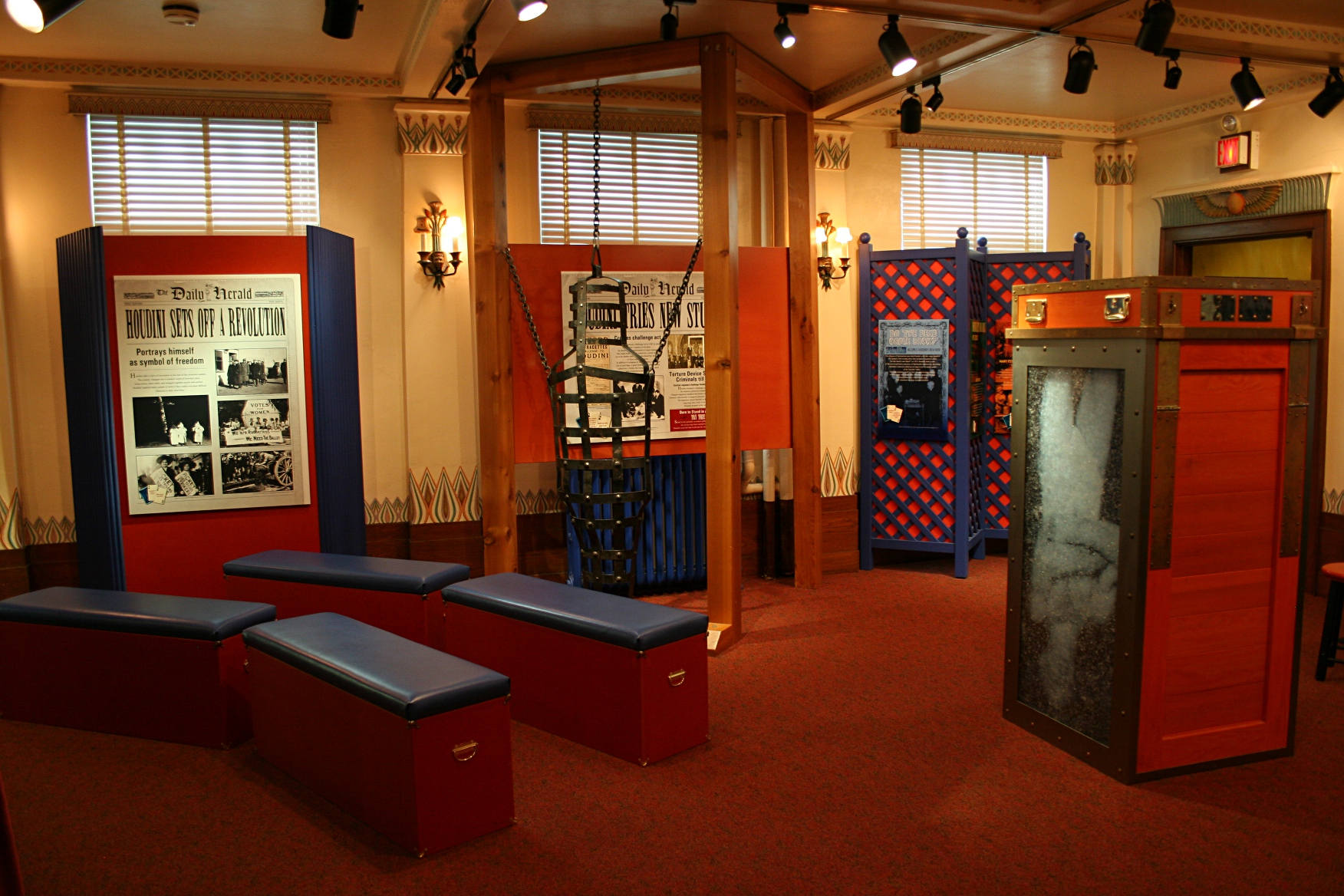
A snippet of the Houdini exhibit.

A snippet of the interactive Houdini exhibit.

As you would expect, you’ll learn detailed facts about Ehrich Weiss, the illusionist and escape artist known to all of us as Houdini. The name is a tribute to his illusionist idol, Jean Eugene Robert-Houdin.

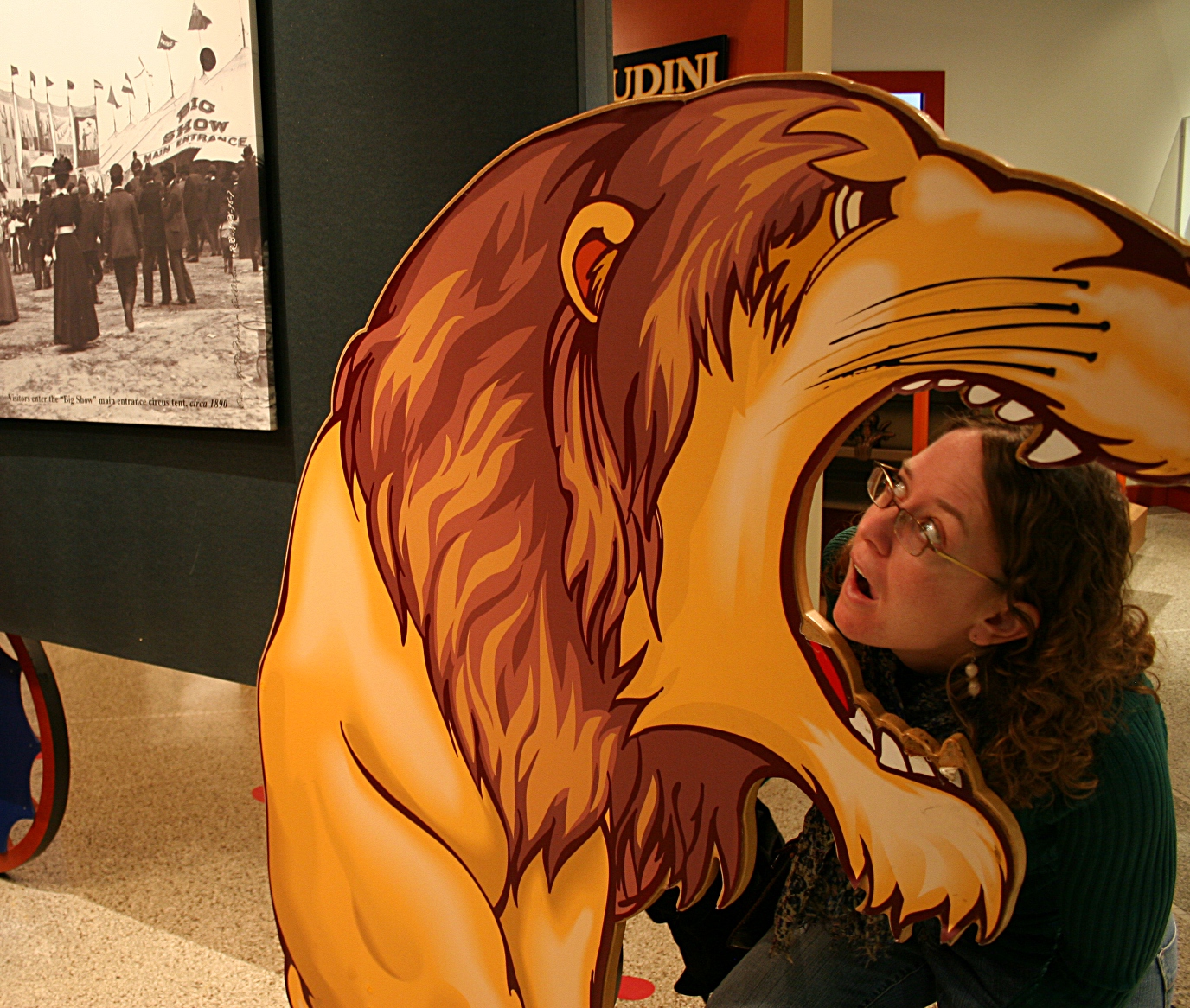
Be sure to pose with the lion head, a tribute to Houdini's early fascination with traveling circuses.

Be sure to pose with the lion head, a tribute to Houdini’s early fascination with traveling circuses. That’s my second daughter, who lives and works in the  Fox Valley (Appleton) area.

But you’ll also experience hands-on interactive activities that will uncover the magic which isn’t really magic at all. Not to worry; you won’t be sawed in half or stuck in a straightjacket.

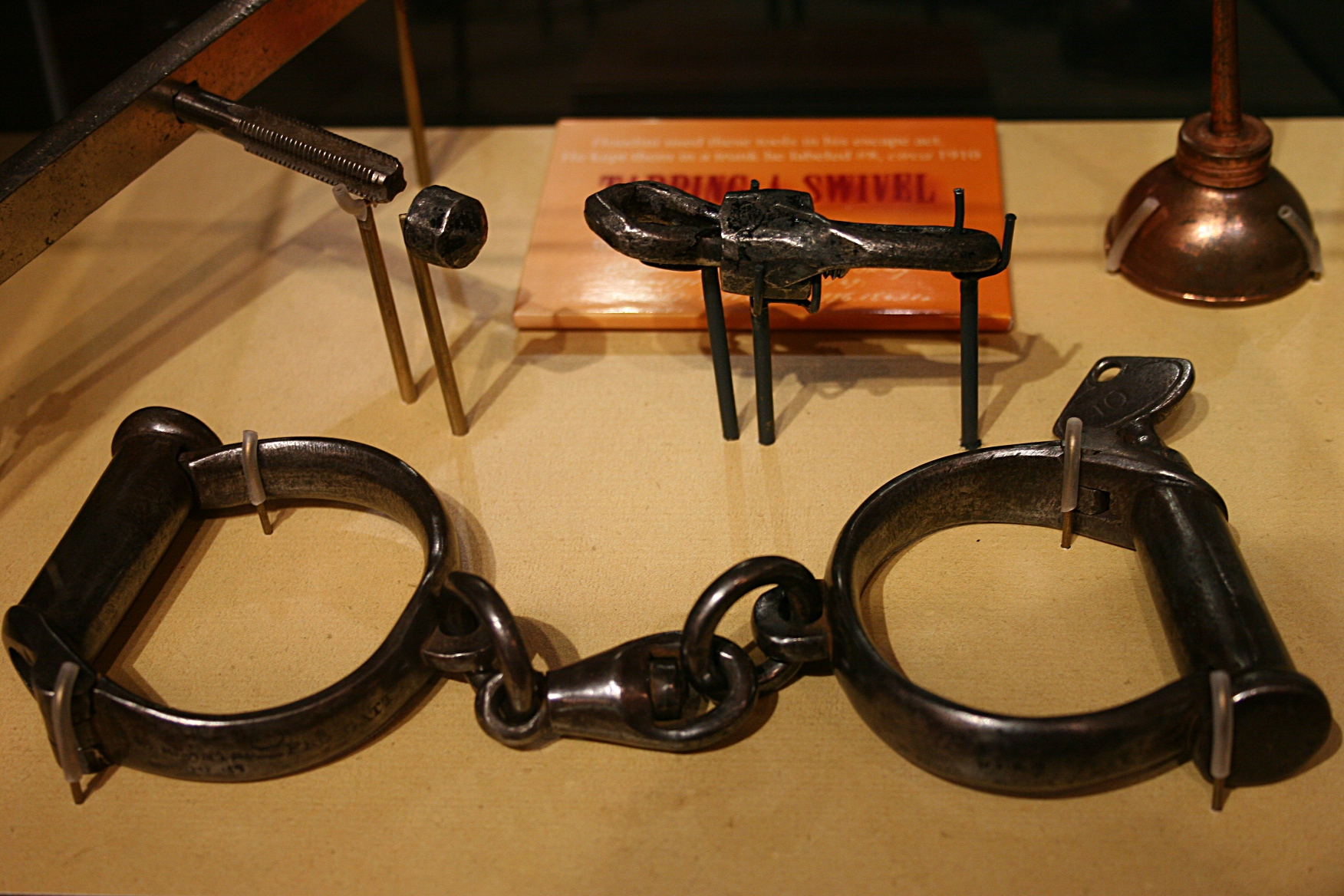
Tools of the escape artist profession.

Tools of the escape artist profession.

The museum collection includes artifacts gifted by an escape artist protege of Houdini’s escape artist brother, Theo. Sort of a tongue twister sentence there, I know. Some of Houdini’s tools of the trade seem rather archaic, almost barbaric, in a clanking metal and chains sort of way. But given the time period, you would not expect sleek and shiny.

A Houdini bust in the museum.

A Houdini bust in the museum.

Therein, perhaps, lies the genuine appeal of this exhibit. In learning about Houdini, you are honoring a man who entertained the masses in unprecedented, daring and fearless ways as he wrote magic into history and into our hearts.

Upon his death, Houdini was buried in a stage prop, his "buried alive" casket, introduced on his final tour in 1926. He escaped the staged burial in under two minutes.

Upon his death, Houdini was buried in a stage prop, his “buried alive” casket, introduced on his final tour in 1926. He escaped the staged burial in under two minutes.

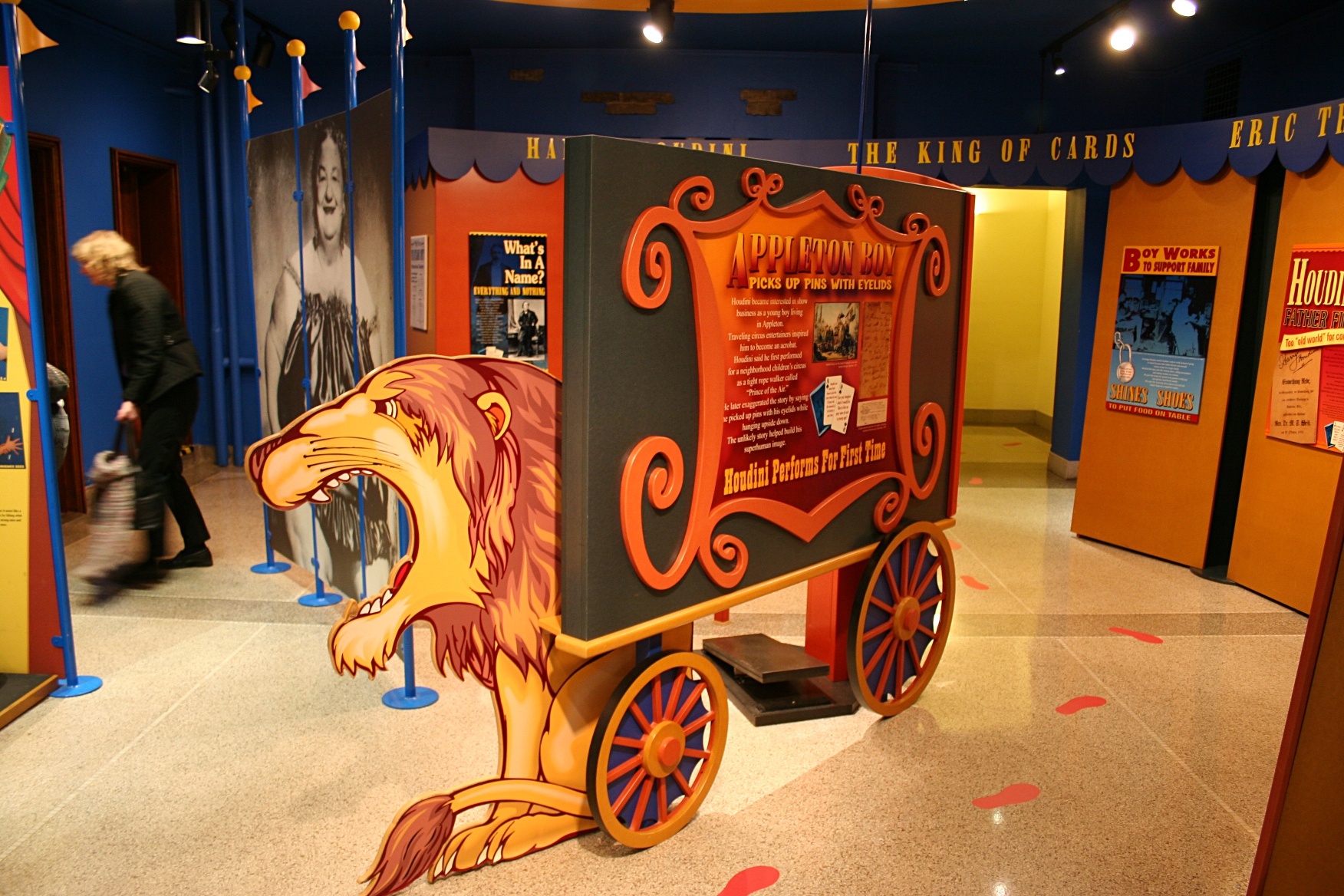
The circus wagon in the exhibit is a nod to Houdini's circus association. He first performed for a neighborhood children's circus as tight roper walker "Prince of the Air."

The circus wagon in the exhibit is a nod to Houdini’s circus association. He first performed for a neighborhood children’s circus as tight roper walker “Prince of the Air.”

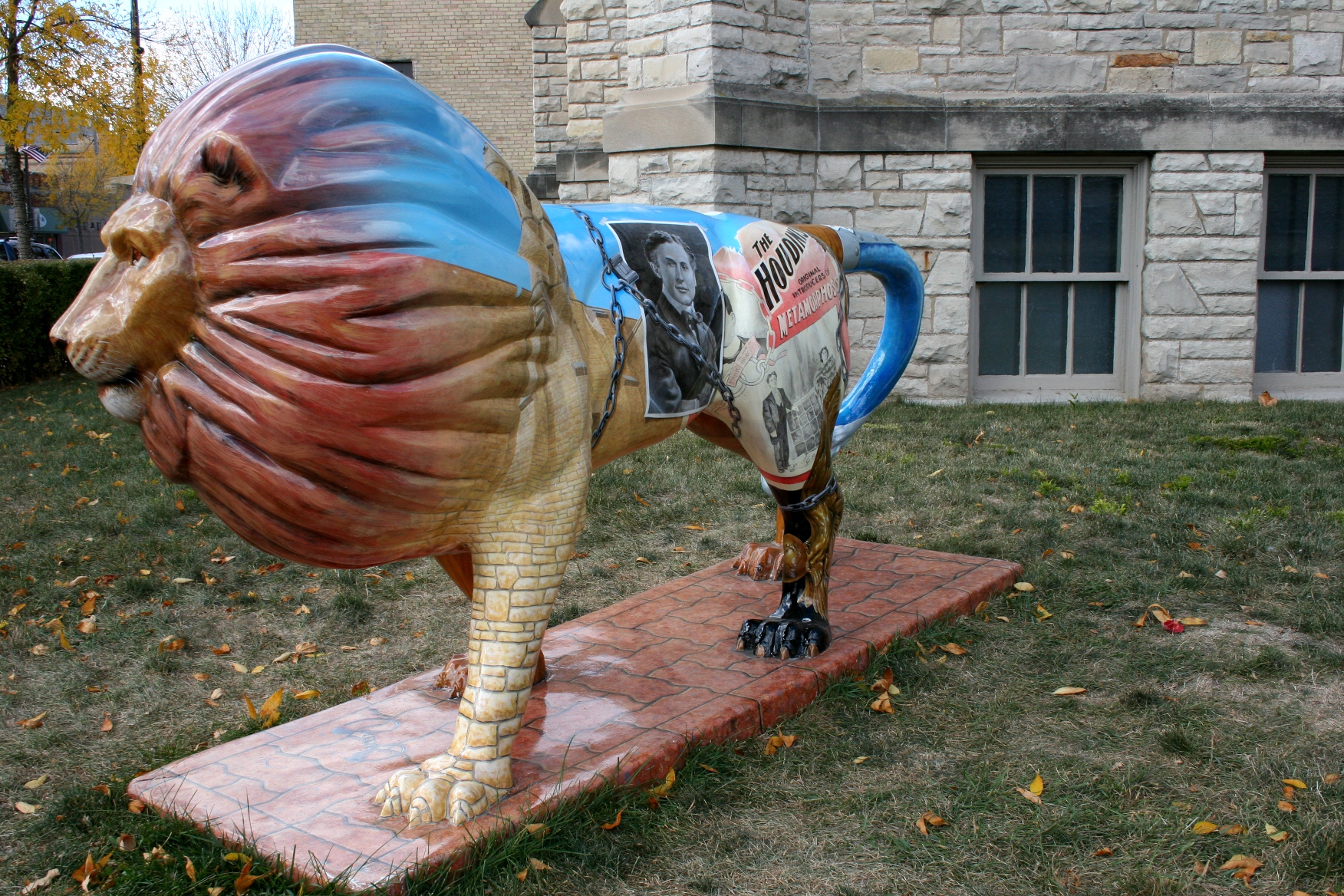
A sculpture outside The History Museum at the Castle.

A sculpture outside The History Museum at the Castle.

FYI: The History Museum at the Castle, 330 East College Avenue, is open from 10 a.m. – 5 p.m. Tuesday – Sunday, closed Mondays and holidays. Admission prices are free for 4 and under; $10 for ages 5 – 17; $15 for ages 18 – 64; and $13.50 for those 65 and older.

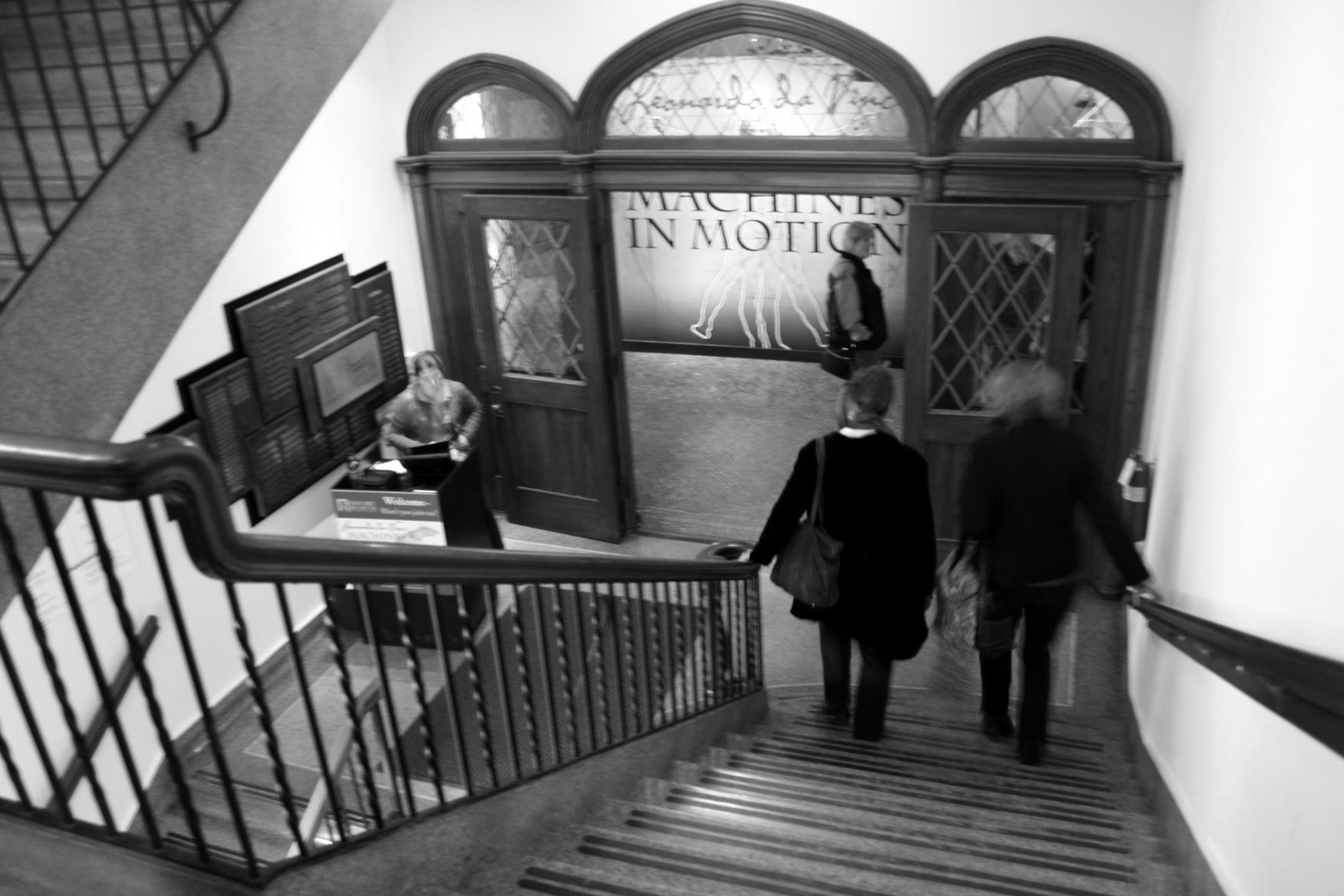
A blurry image to emphasize the "Leonardo da Vinci Machines in Motion" exhibit. It's a must-see.

A blurry image to emphasize the “Leonardo da Vinci: Machines in Motion” exhibit. It’s a must-see.

Admission to the museum also covers the “Leonardo da Vinci: Machines in Motion” temporary exhibit which has been extended through February 3, and other exhibits. You can click here to read my previous post about the da Vinci exhibit. From 6 p.m. – 8 p.m. on Thursday, January 31, the museum will host “Arrivederci, Leonardo!”, a gala event celebrating the success of the exclusive da Vinci showing in Wisconsin. Cost for the gala, which covers a da Vinci exhibit tour plus light refreshments and fine Italian wine, is $20 for non-members and $10 for museum members.

You can check out all the museum has to offer by clicking here.

ADDITIONALLY, APPLETON is currently raising monies to redo Houdini Plaza, a downtown gathering spot reminiscent of the town squares of yesteryear. To read about that project, “Recapturing the Magic,” click here.

READ MY PREVIOUS post about The History Museum at the Castle by clicking here.

CHECK BACK  for a post on a great place to eat in Appleton. Like the museum building, this restaurant exudes history.

© Copyright 2013 Audrey Kletscher Helbling