Minnesota Prairie Roots

Writing and photography by Audrey Kletscher Helbling

Wisconsin exhibit highlights Leonardo da Vinci’s inventive side November 27, 2012

Another facet of Leonardo da Vinci, on exhibit in Appleton, Wisconsin.

QUICK. When I say “Leonardo da Vinci,” what pops into your mind?

For me, it’s his “The Last Supper” painting.

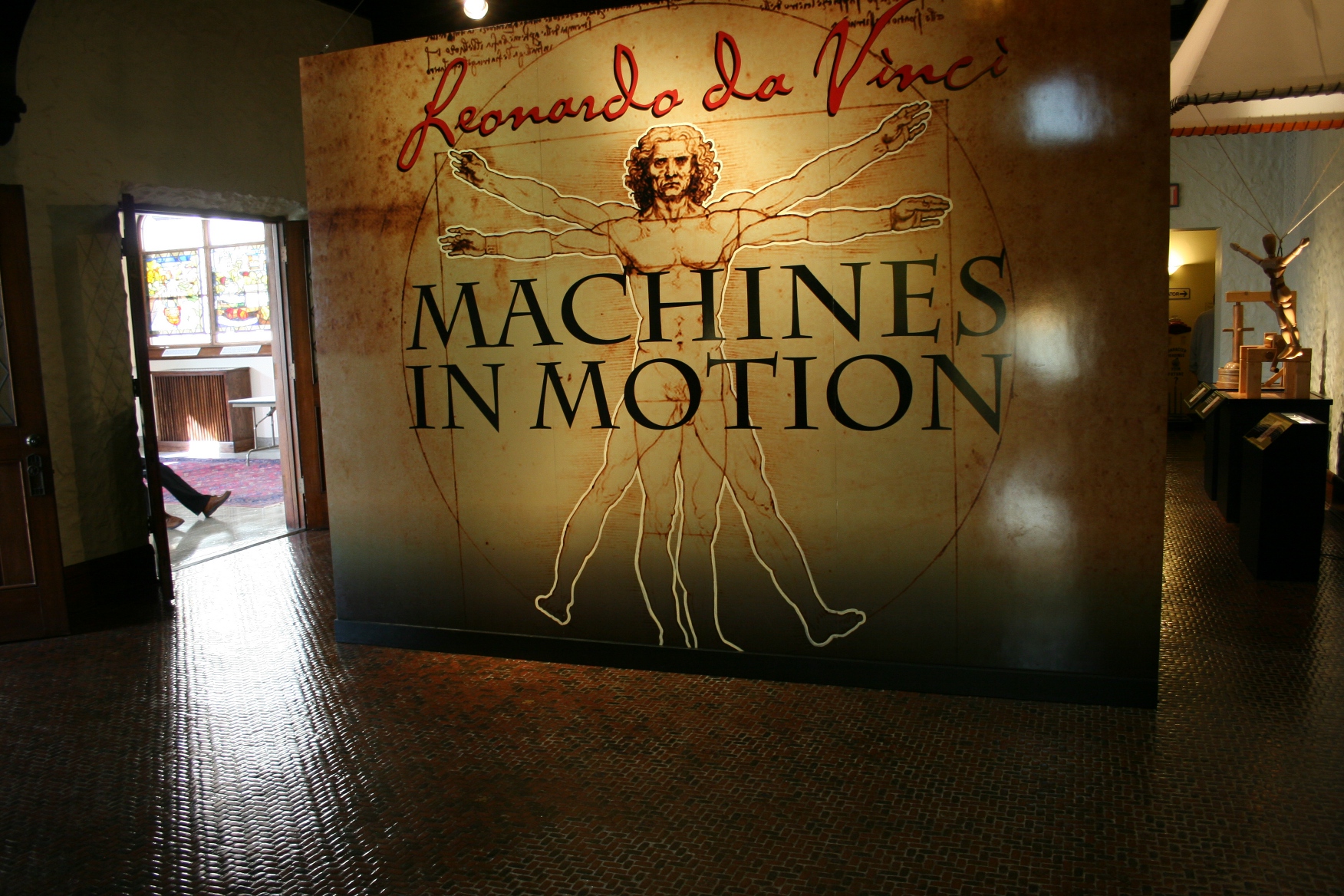
Inside The History Museum, a sign welcomes visitors to the da Vinci exhibit.

I do not even think of him as a scientist or inventor.

But this Renaissance man surely was, a fact emphasized in a current exhibit originating in Florence, Italy, and currently showing at a northeastern Wisconsin museum through January 6, 2013.

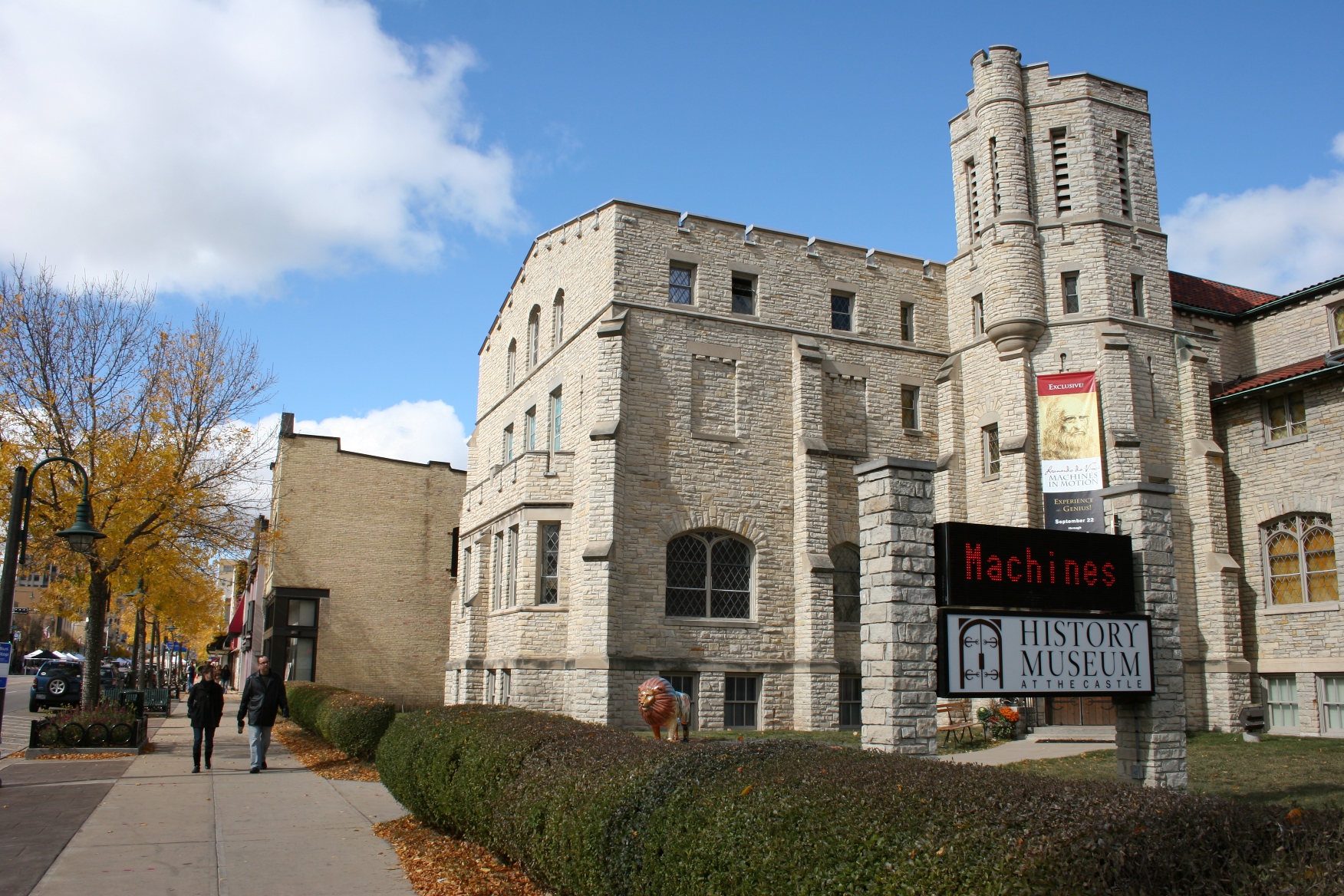
The History Museum at the Castle, 330 W. College Avenue, Appleton, Wisconsin.

Two months ago I toured “Leonardo da Vinci: Machines in Motion” at The History Museum at the Castle in downtown Appleton, a hip and historic city some 300 miles from my southeastern Minnesota home and today home to my daughter Miranda.

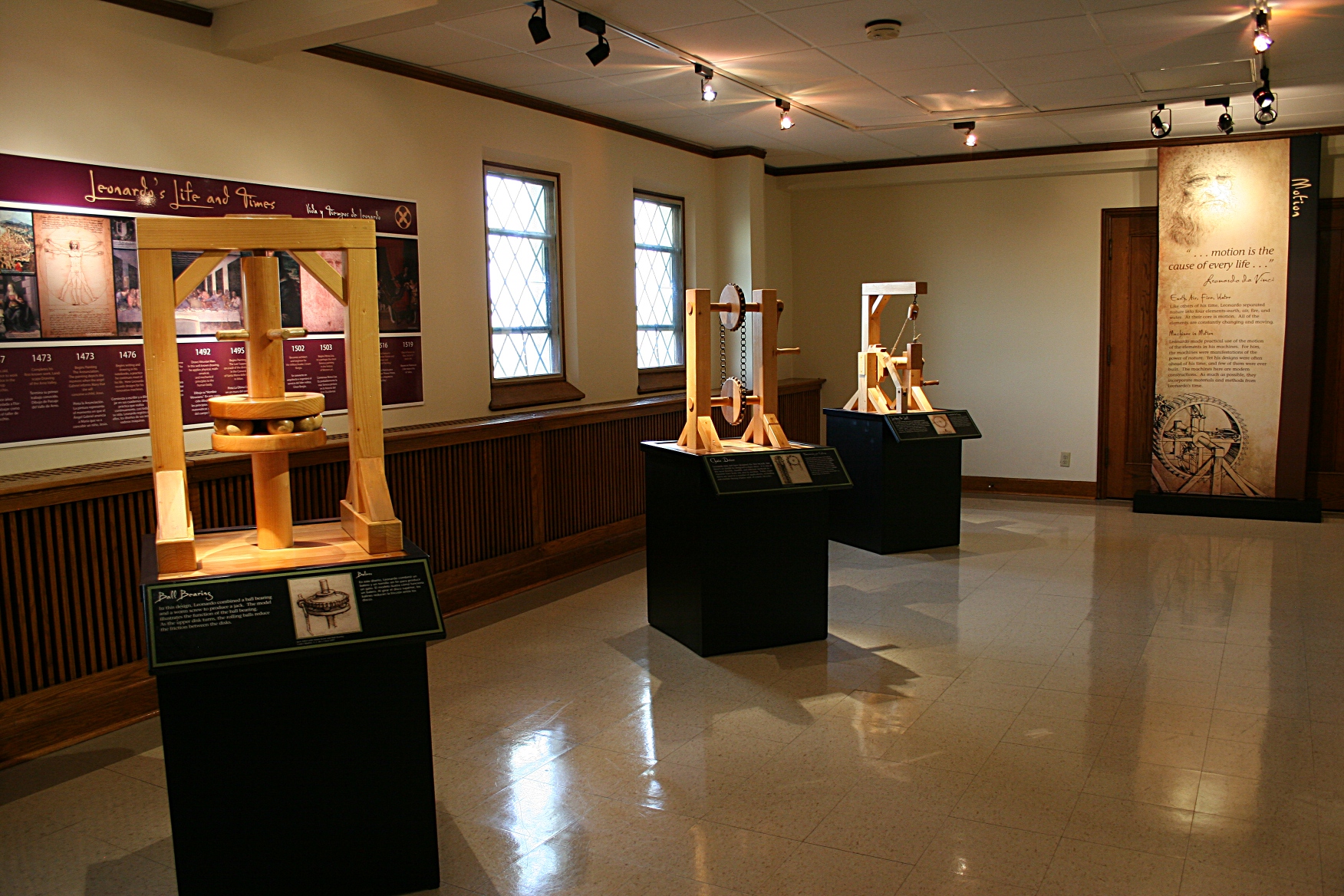
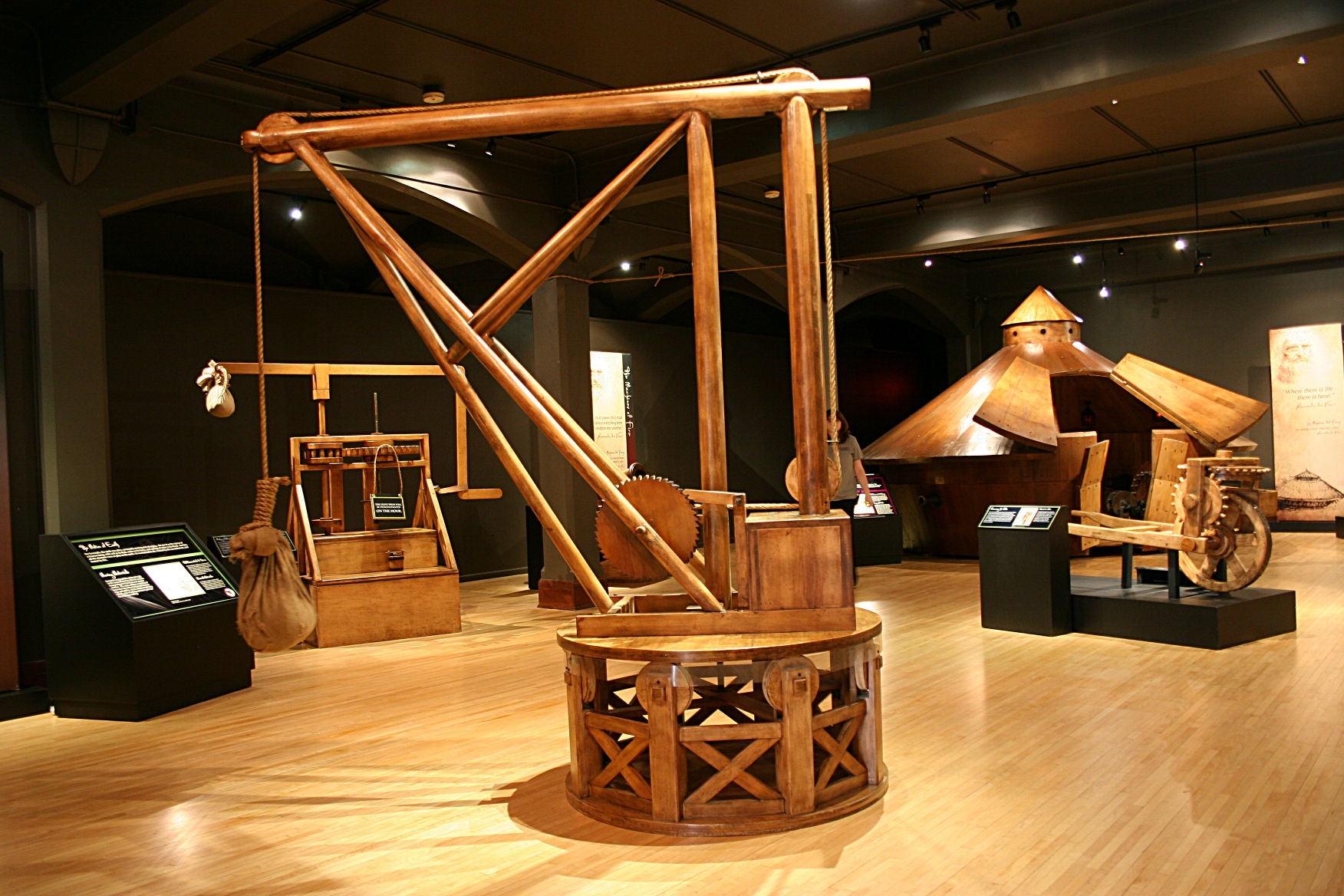
An overview of one exhibit room, a working crane in the front and a tank in the back, right.

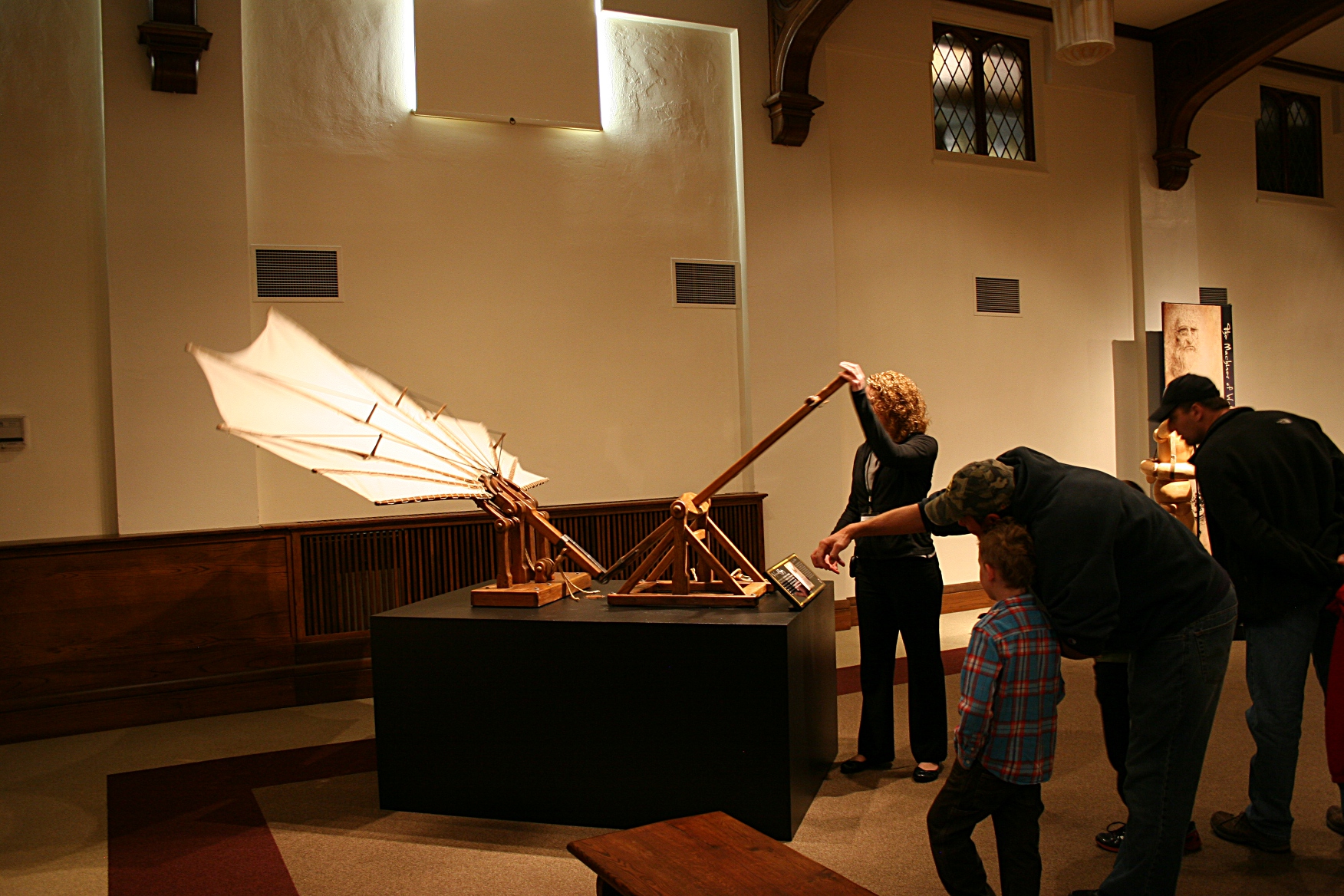
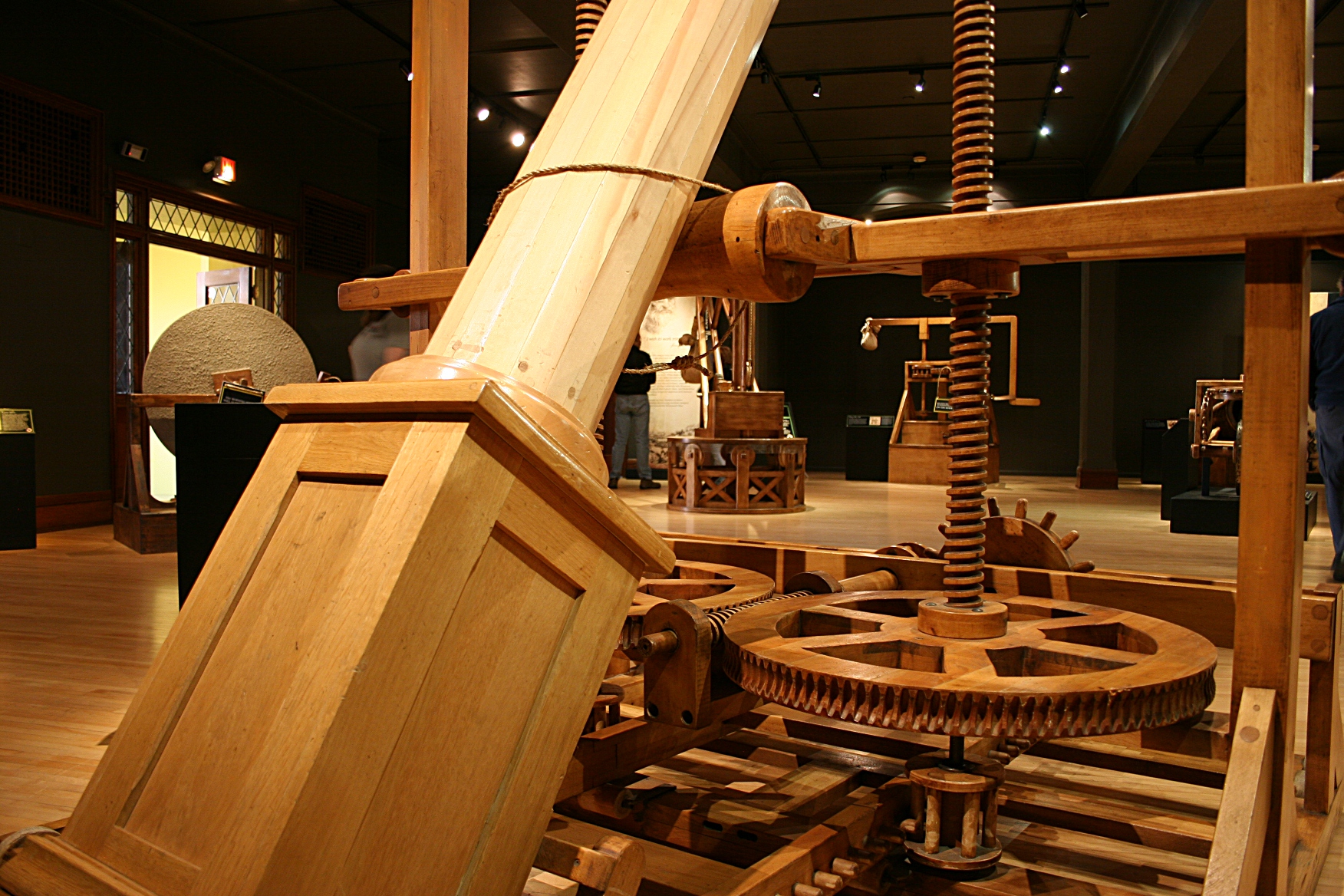
Typically I would not get particularly excited about a show which features mechanical-oriented displays. But given da Vinci’s notoriety and my interest in art and in sharing discoveries with you, I embraced this working models exhibit of 40 da Vinci machines. Modern day scientists and artisans built the machines based on da Vinci’s codices.

This is an interactive exhibit.

Kids will thrill in “Machines in Motion” as much as adults.

An informational sign summarizes well the multiple talents da Vinci possessed:

Perhaps more than anyone before him—and perhaps anyone since—Leonardo was a great scientist, engineer, and artist all in one. He combined a scientist’s passion for exploring how things work and an artist’s ability to vividly illustrate his revelations. His machine designs were ingenious and visionary—often ahead of his time. They illustrate principles at the heart of machines today.

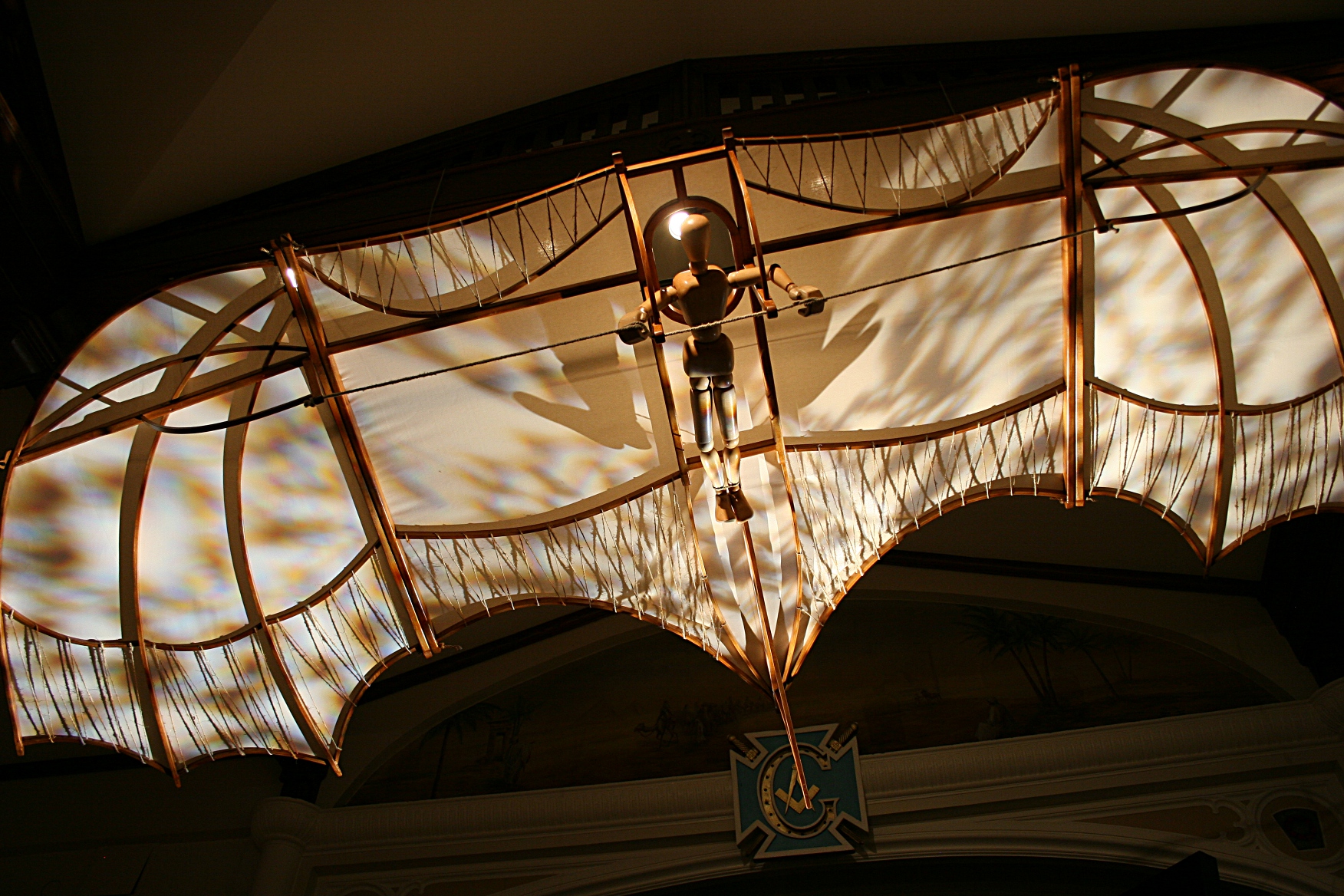
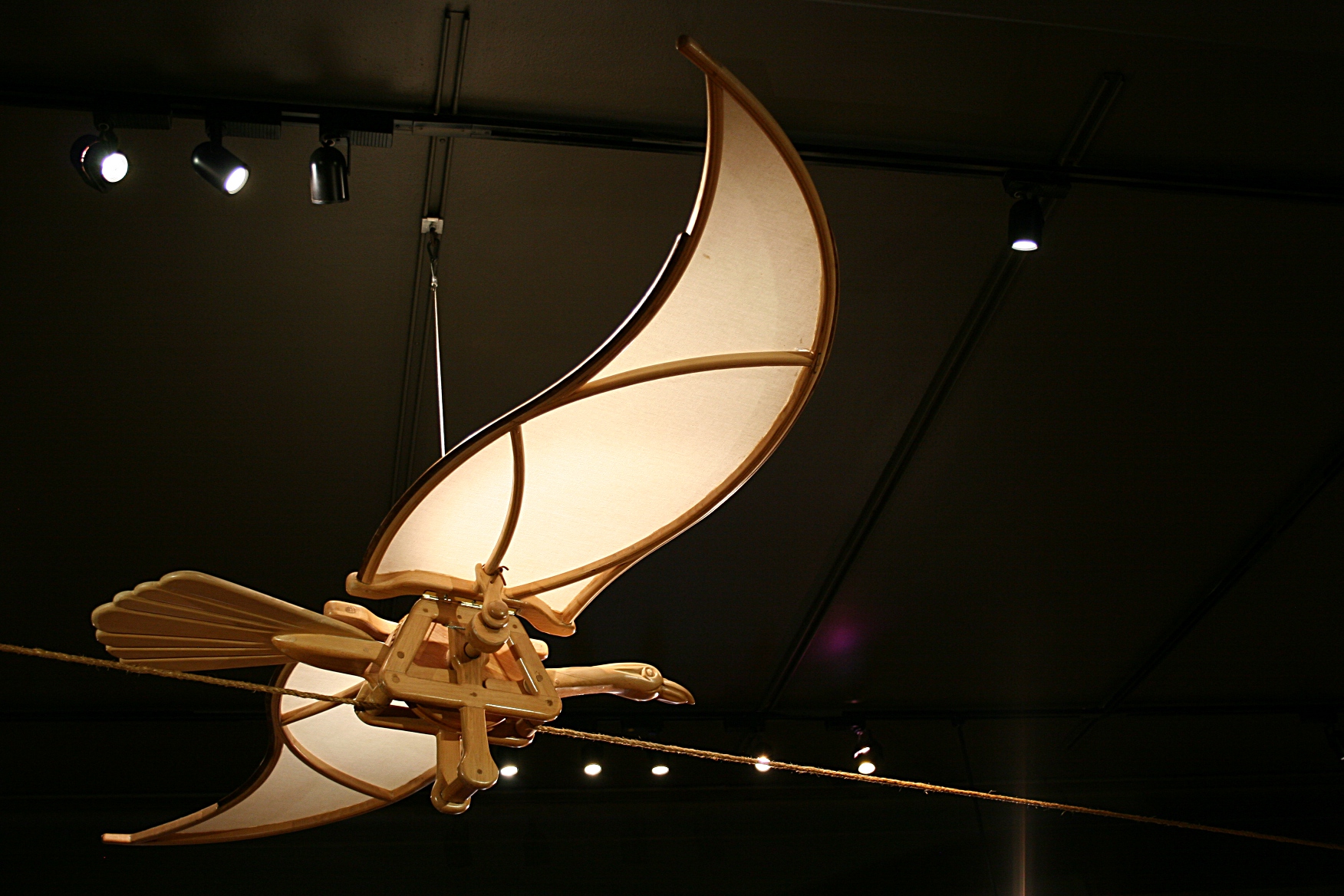
One of da Vinci’s more impressive flight designs, suspended from the ceiling of an auditorium at the History Museum.

In his study of air, water, earth and fire, this genius—and I don’t hesitate to term someone of da Vinci’s intellectual and artistic talent as thus—created ideas which evolved into workable solutions aiding mankind.

See for yourself via these selected photos from the exhibit or by traveling to Appleton to tour this vast, interactive display. Click here for more information about “Leonardo da Vinci: Machines in Motion.”

An illustration by the scientist/inventor, Leonardo da Vinci.

Machines created from da Vinci’s codices.

More inventions showcased.

Da Vinci’s version of a horse-drawn armored military tank.

The bird’s wings flap as it moves across the stage during theatrical performances.

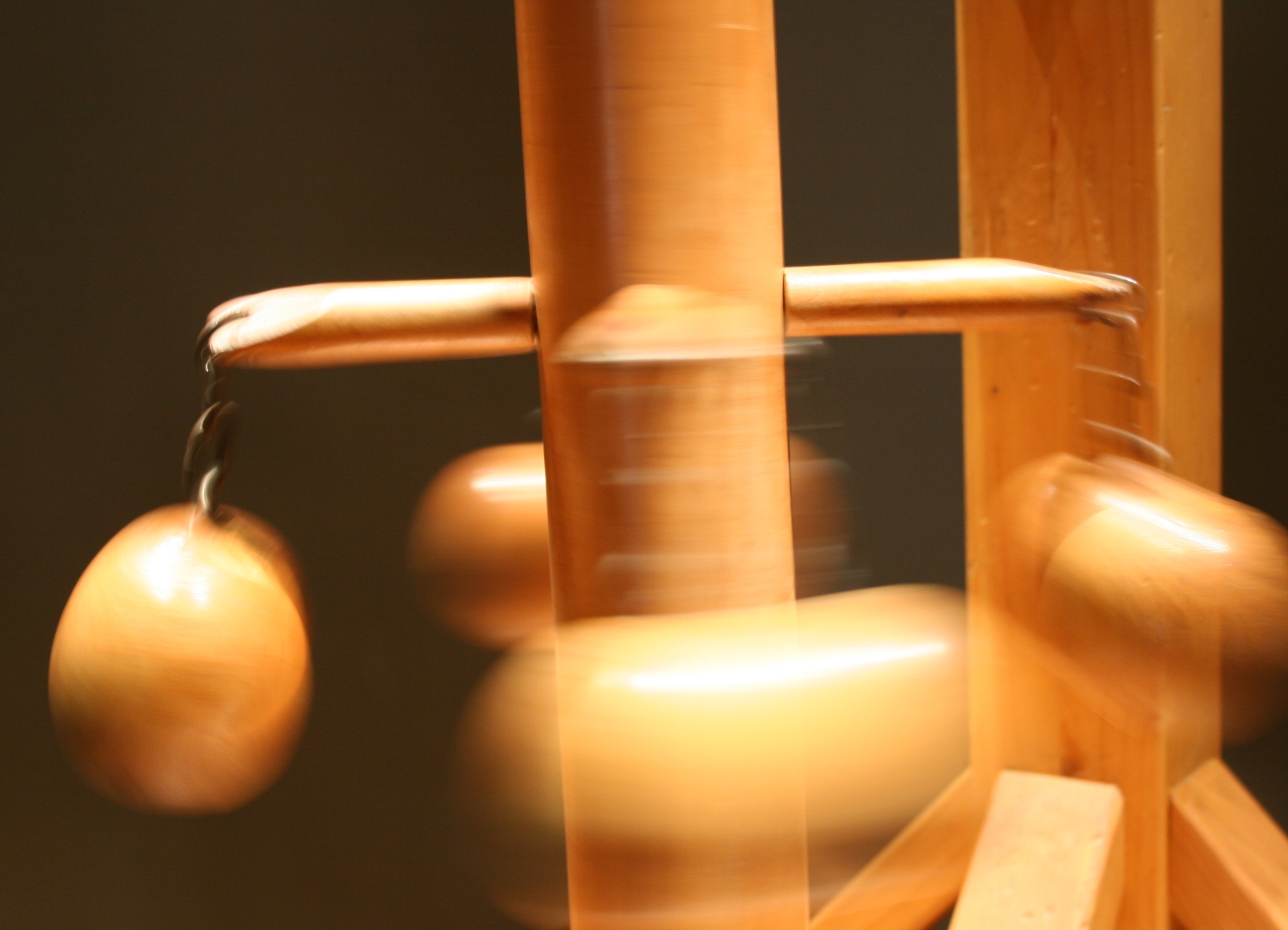
A machine in motion.

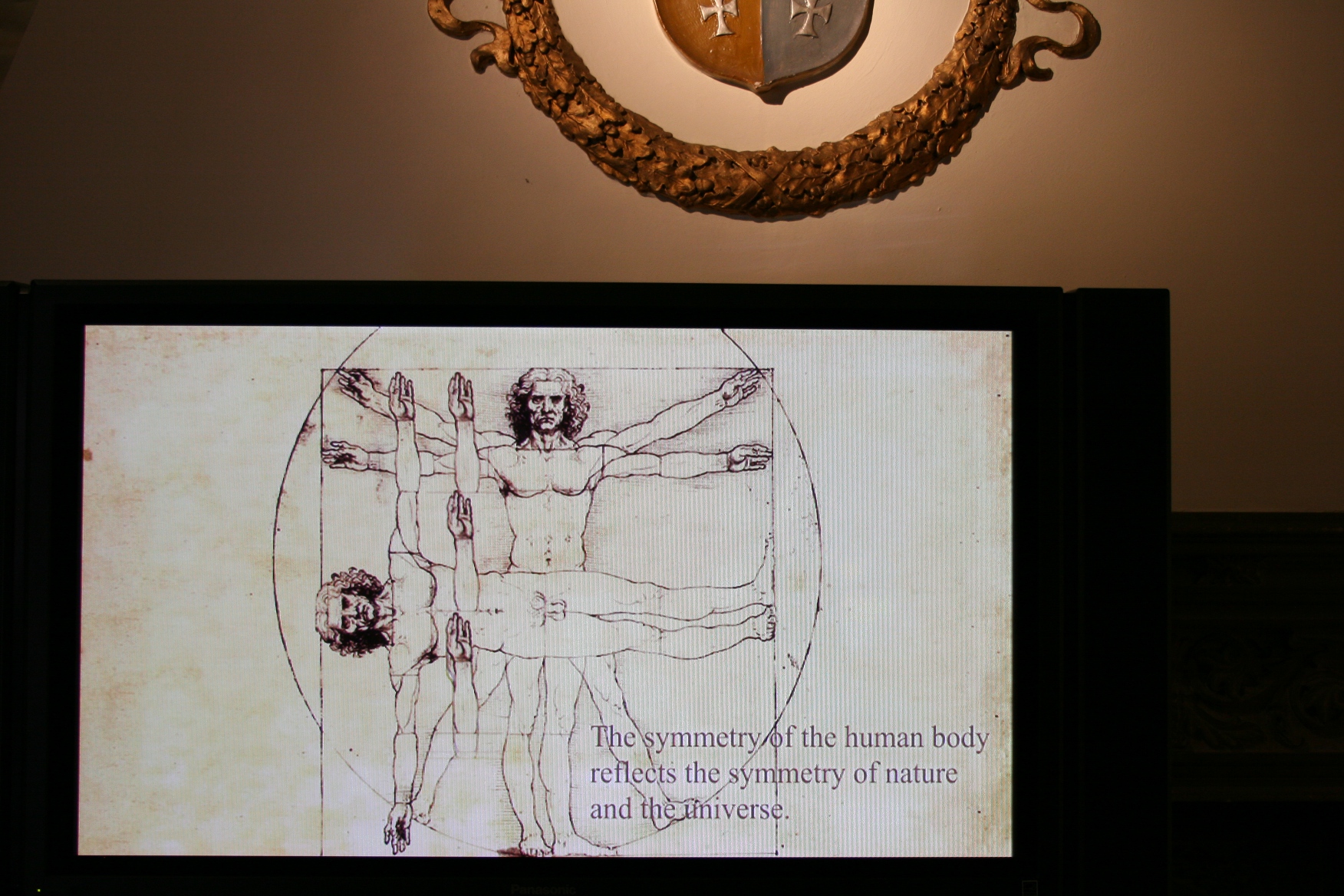
Da Vinci the artist and da Vinci the scientist.

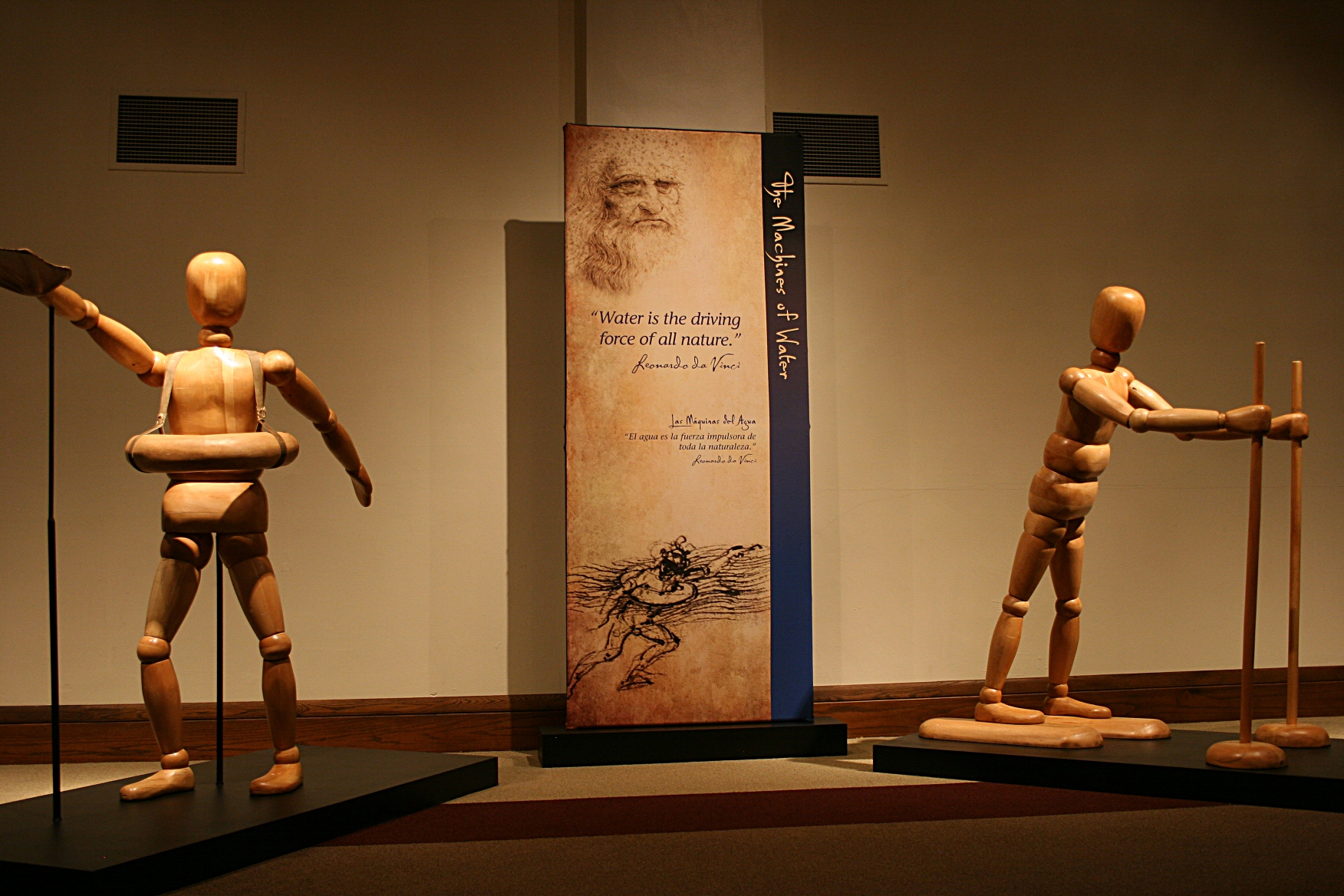
Da Vinci’s idea to traverse water.

One final exhibit overview.

Disclaimer: I received a $25 gift certificate from Downtown Appleton, Inc., prior to my visit and used that money toward museum admission for myself, daughter and husband. That did not influence my decision to post about the da Vinci exhibit.

© Copyright 2012 Audrey Kletscher Helbling


Musings of a Baby Boomer upon touring a museum exhibit in Moorhead November 15, 2012

I’M WONDERING IF the rest of you baby boomers out there feel as I do, that youthful years have vanished, poof, just like that.

I need only look in the mirror to see the patches of ever spreading gray (time for a dye, again), the lines and creases and sagging skin to realize that Age has crept into my life to the point that I no longer can deny her presence.

Age has also shoved me into the corner of those who are overwhelmed by technology. It’s like the boxing gloves never come off as I resist, rather than embrace, technological changes. No Facebook or Twitter for me. No PayPal or paying bills online. And what is a smart phone and an iPad?

I am not joking, people. I need to enroll in a Technology 101 course or persuade the 18-year-old son, who is pursuing a degree in computer engineering, to tutor me.

Interestingly enough, this musing relates to a recent tour of  The Historical and Cultural Society of Clay County exhibit, “The BOOM 1945-1960 in Clay County,” at the Hjemkomst Center in Moorhead.

While I was only a few years old at the end of that boom period, much of what I saw in that exhibit, including the outhouse, looked pretty darned familiar:

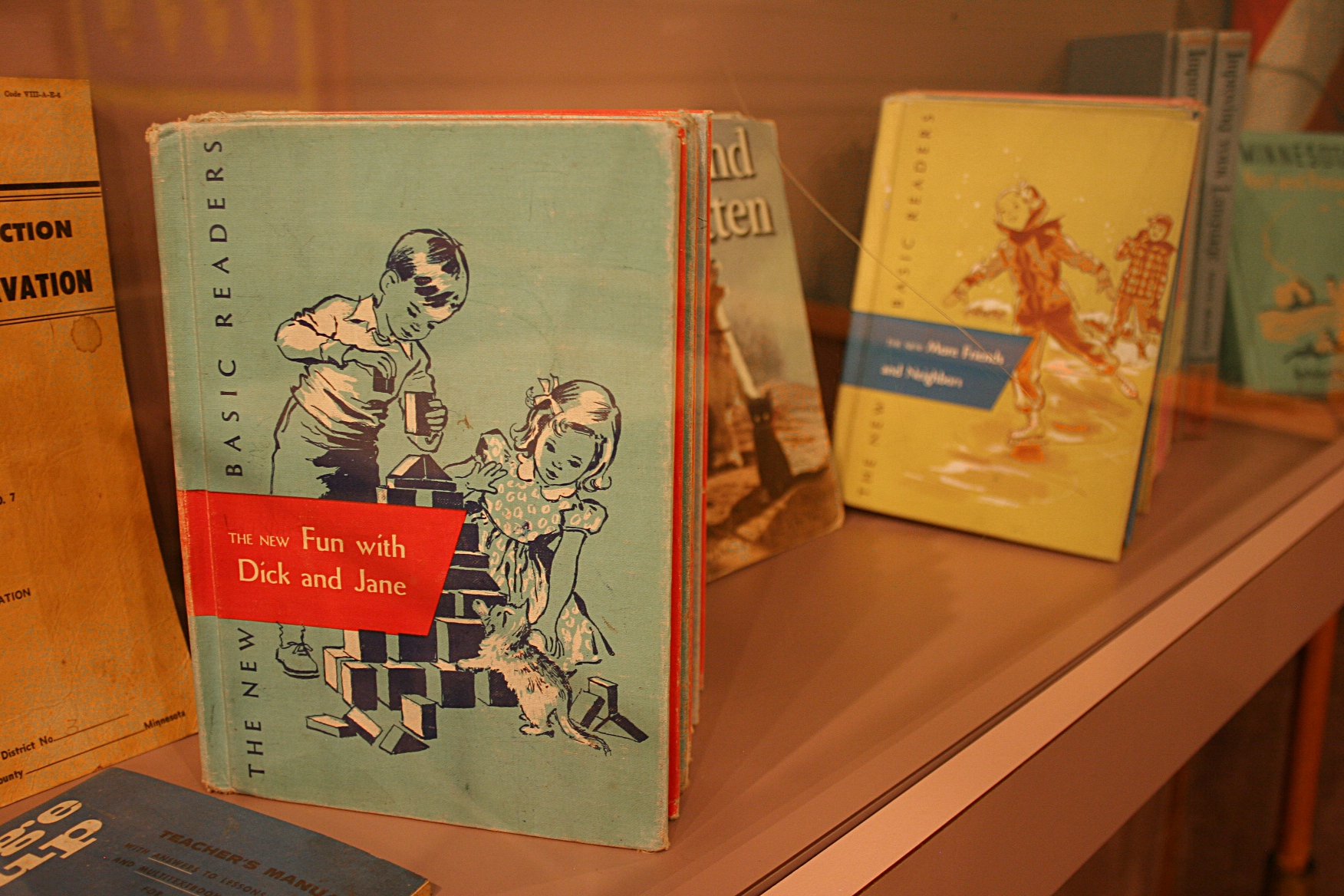
These books are shelved in a mock boom era one-room schoolhouse display. I own that exact Dick and Jane book.  I love Dick, Jane, Sally, Tim, Spot and Puff. They taught me to read. Oh, I mean my teacher taught me to read via that book series.

Fun with Dick and Jane book. Check.

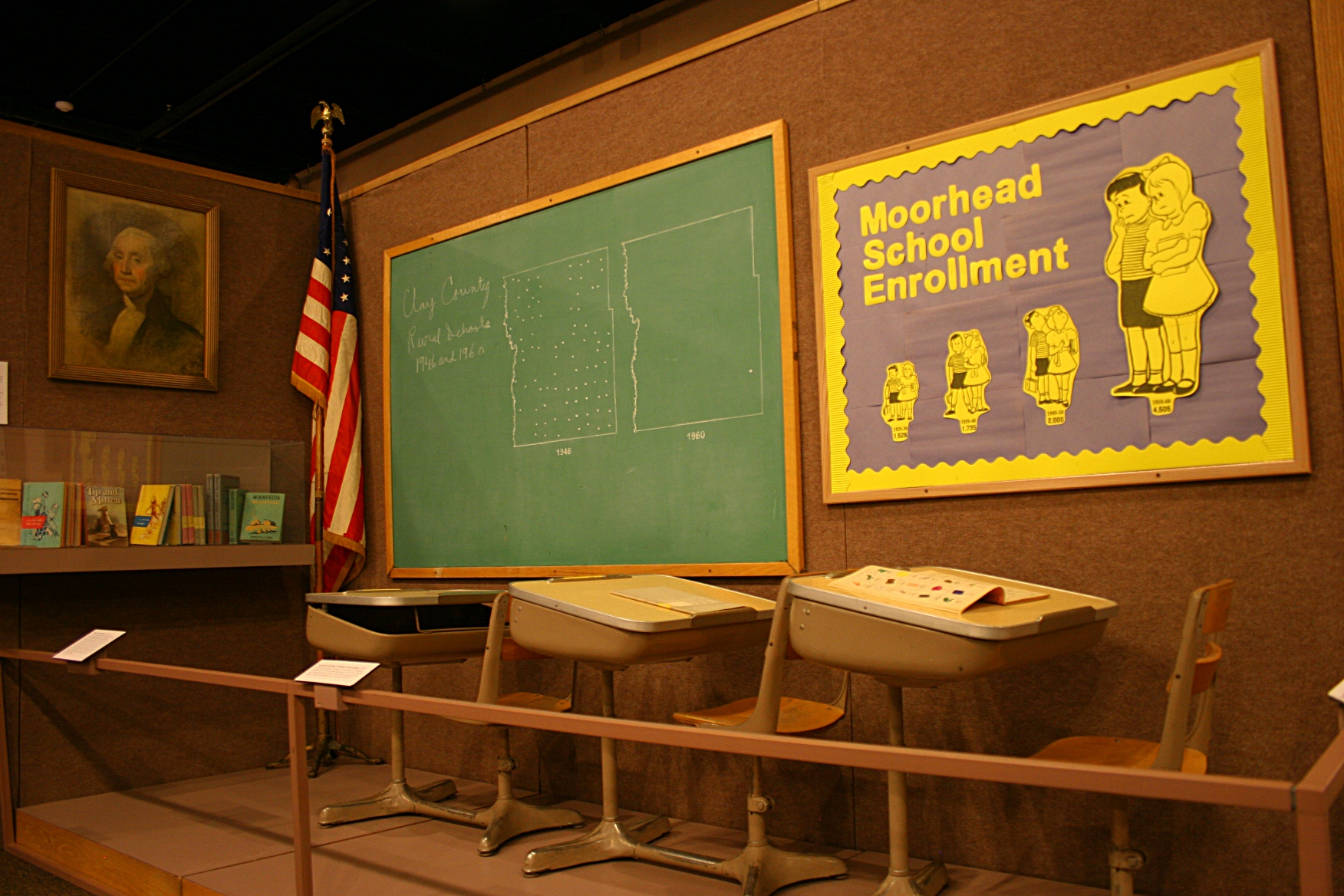
So familiar to me, desks just like I sat in through my years at Vesta Elementary School. The blackboard, though, is not correct. Ours was black, not green.

Rows of school desks. Check.

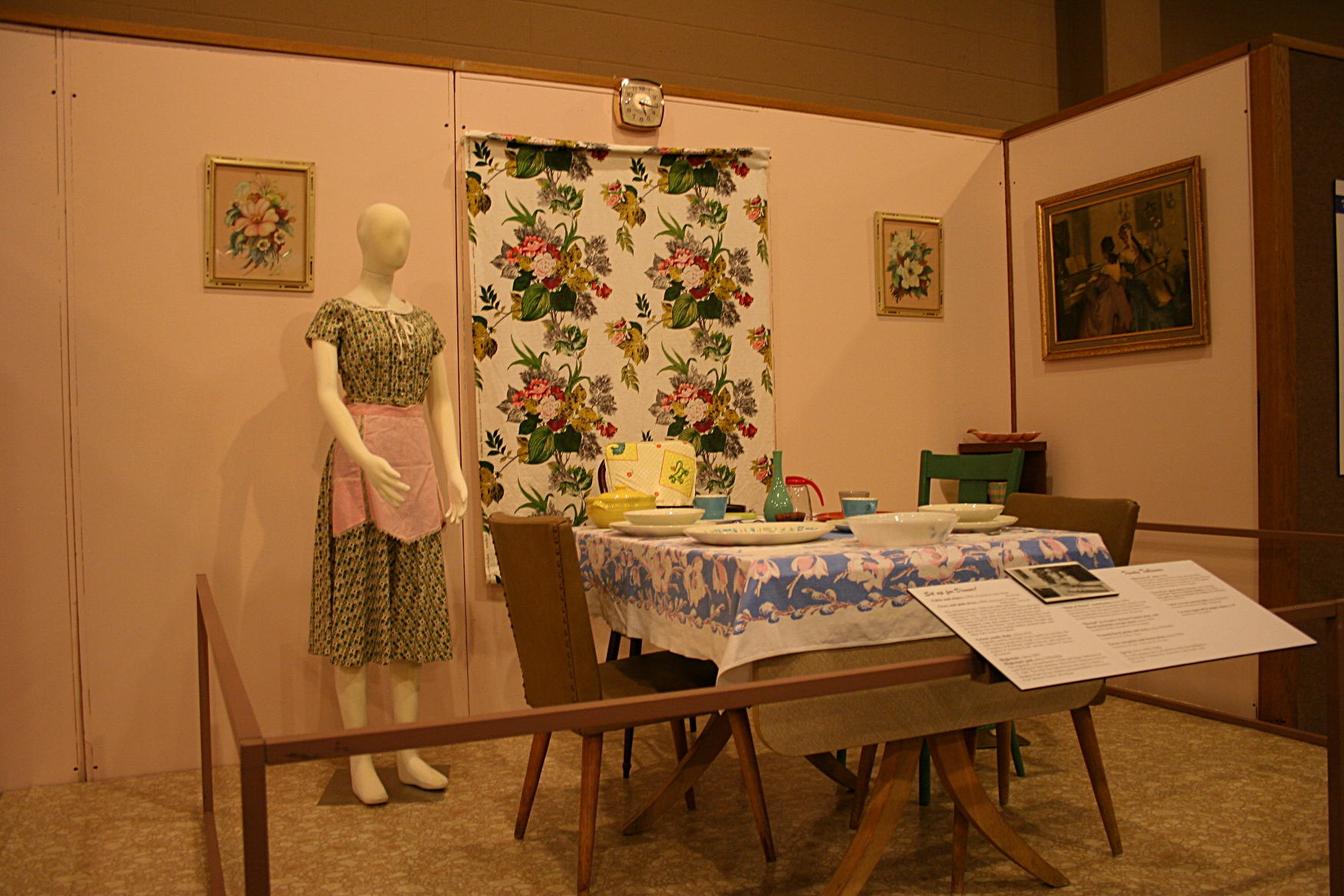
I remember the floral print plastic curtains which once hung in the tiny wood-frame house where I grew up on the southwestern Minnesota prairie. Today I collect vintage tablecloths like the one draping the table here. And, yes, I use them. Come to dinner at my house and you’ll find one gracing the table. I love retro.

A floral print curtain and floral print tablecloth. Check.

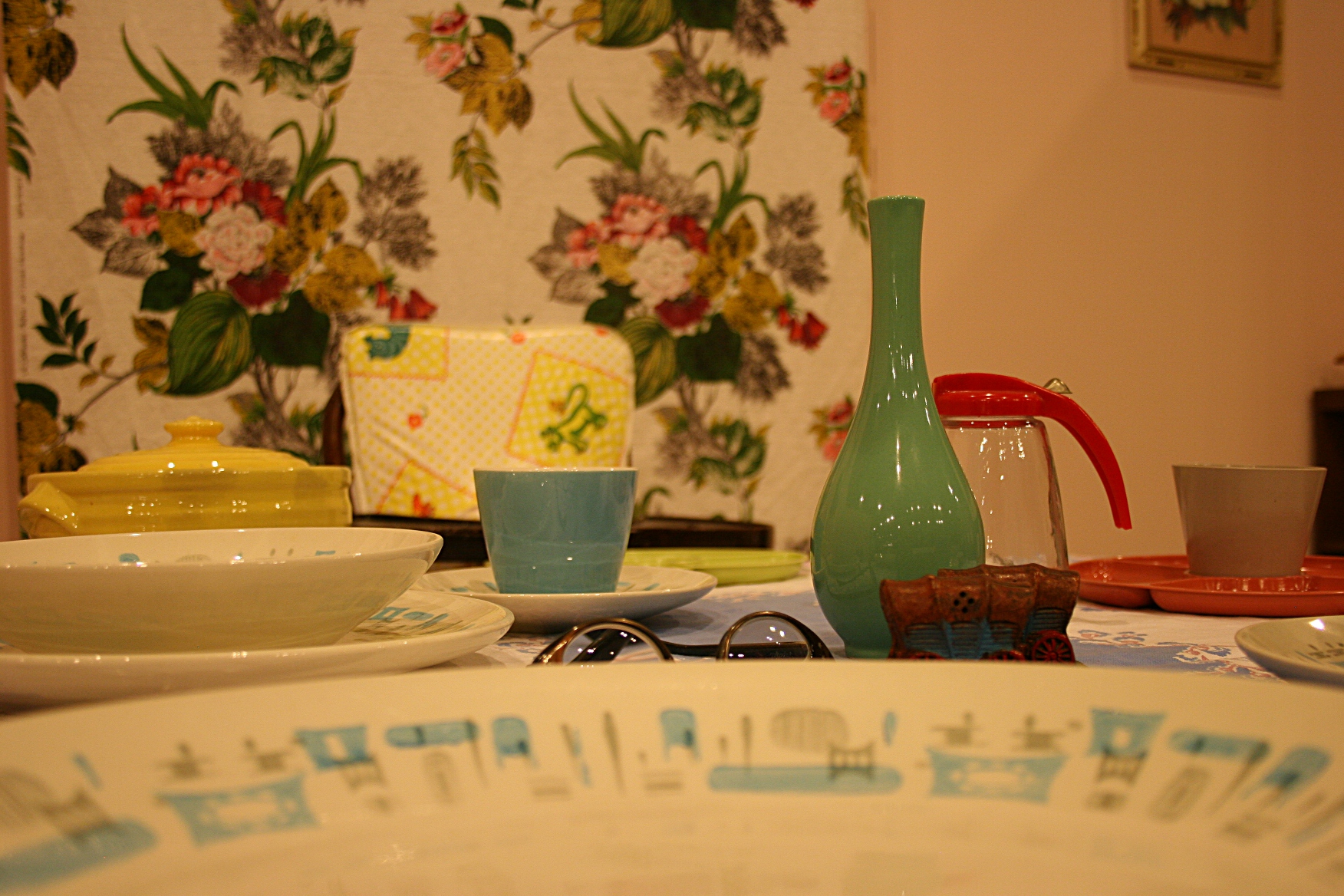
Tucked behind the close-up of the vintage plate, you’ll spy eyeglasses. I’ve worn prescription eyeglasses since age four, including the cat eye style and dark brown framed ones.

Dark-framed eyeglasses and vintage tableware. Check.

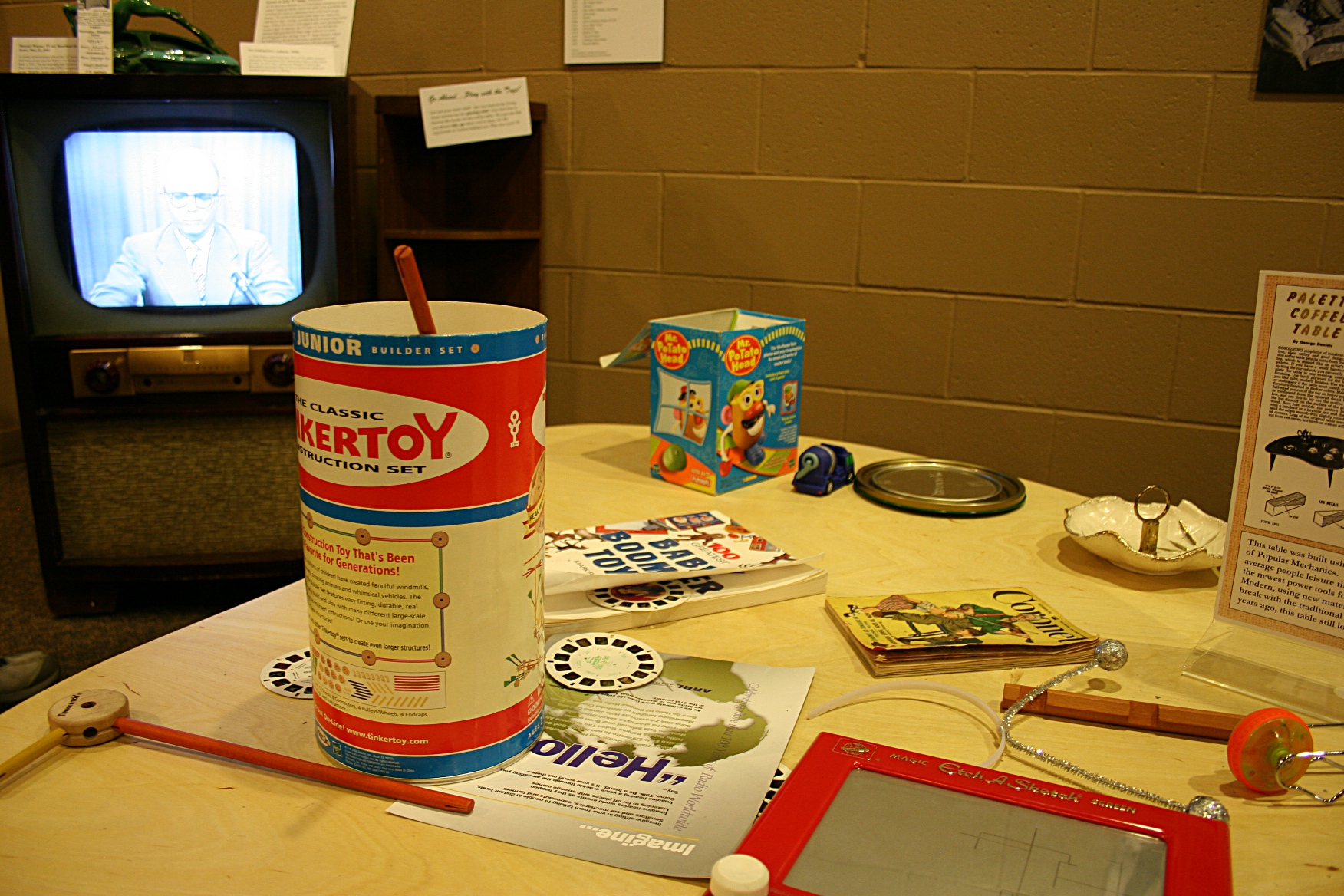
Popular Baby Boomer toys, ones my children, born between 1986 and 1994, also played with. Some toys truly are timeless, although I expect the View-Master isn’t. I played with Mr. Potato Head in the background, but he was not a favorite.

An Etch a Sketch, View-Master reels and Tinker Toys, all among my favorite childhood toys. Check, check and check.

There was not a piece of technology in sight save the old grainy black-and-white television.

© Copyright 2012 Audrey Kletscher Helbling


One man’s dream: Build it and it shall sail, the story of the Hjemkomst November 14, 2012

The Hjemkomst.

I REMEMBER BEING ONE of the skeptics.

Build a ship in the middle of nowhere, haul it to Lake Superior in Duluth and then eventually sail across the Atlantic Ocean to Norway.

Who thinks that is possible?

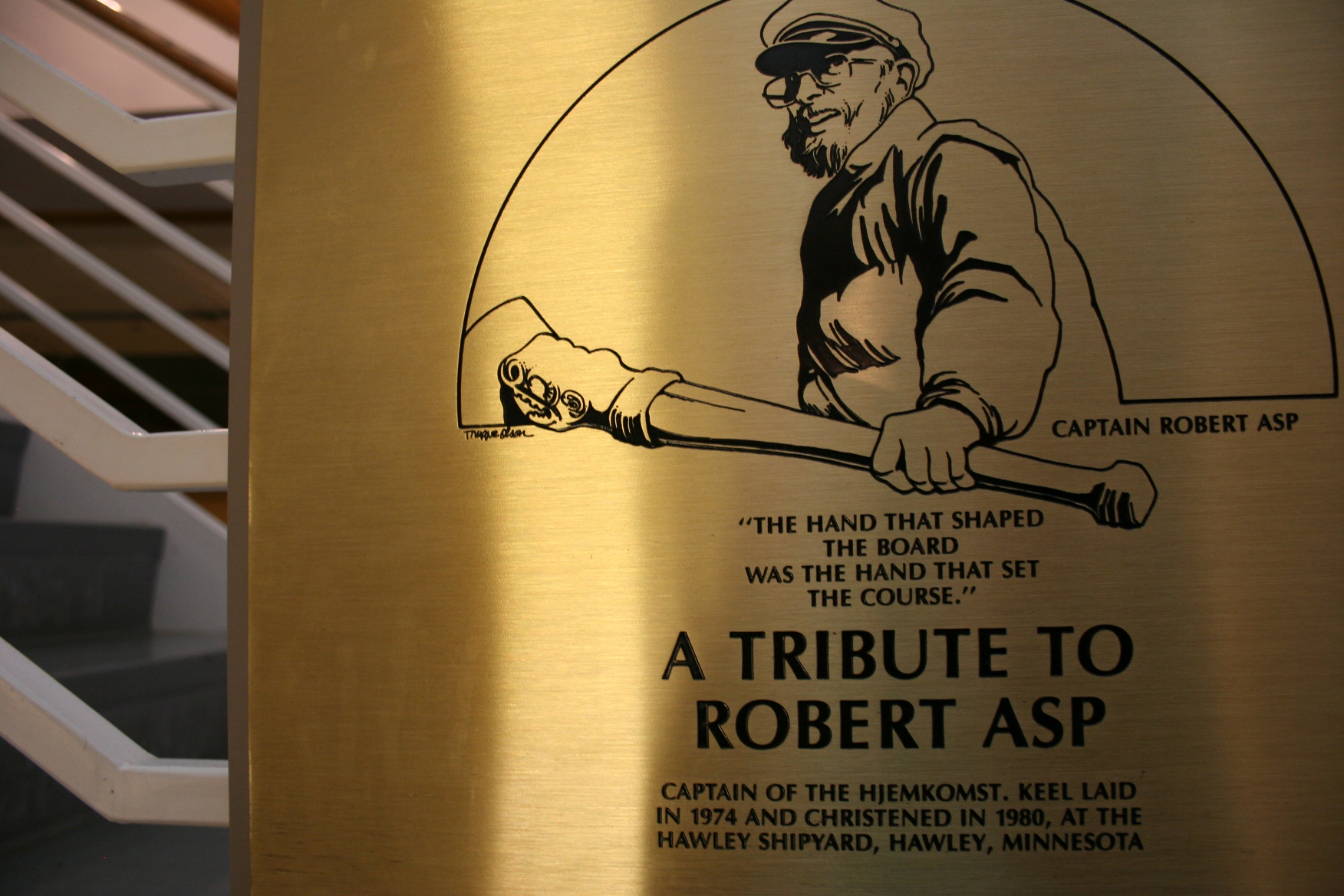
A plaque honoring ship builder and captain Robert Asp, located in the Hjemkomst Center, Moorhead, Minnesota. The steps, left, lead visitors to a deck for viewing of the open ship interior.

Robert Asp.

Thirty years ago the Hjemkomst, a ship built by this Moorhead, Minnesota, junior high school counselor, with the help of family and friends, accomplished that 4,700-mile feat, proving the skeptics wrong.

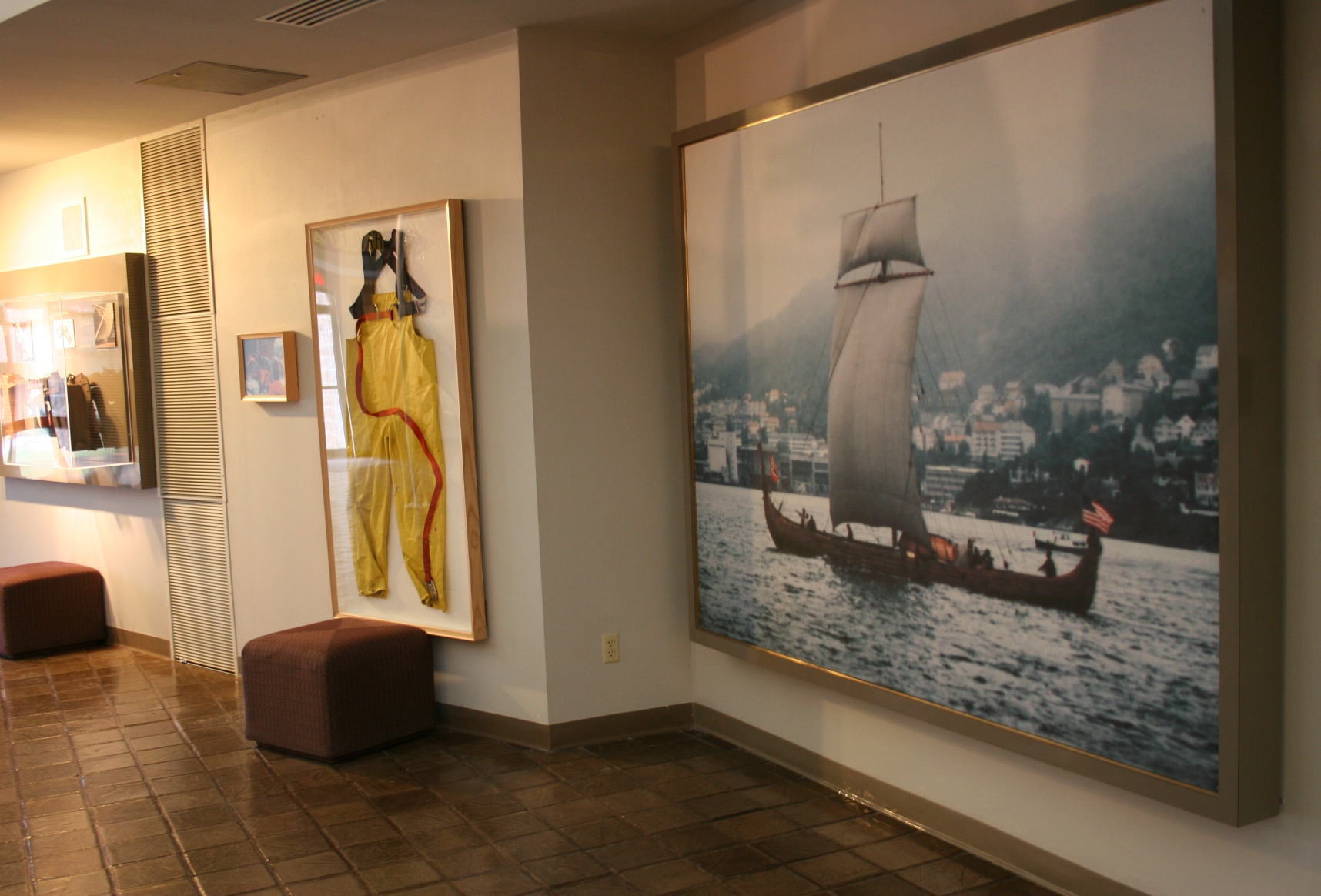
The photo on right, by Tim Hatlestad, shows the Hjemkomst sailing into the harbor of Bergen, Norway.

By then, Asp had died, passing away in December 1980 at the age of 57 from leukemia. But his family pursued his dream, launching the ship on May 11, 1982, for the journey back to the Asp family Motherland on the Hjemkomst, which translates from Norwegian into English as “homecoming.”

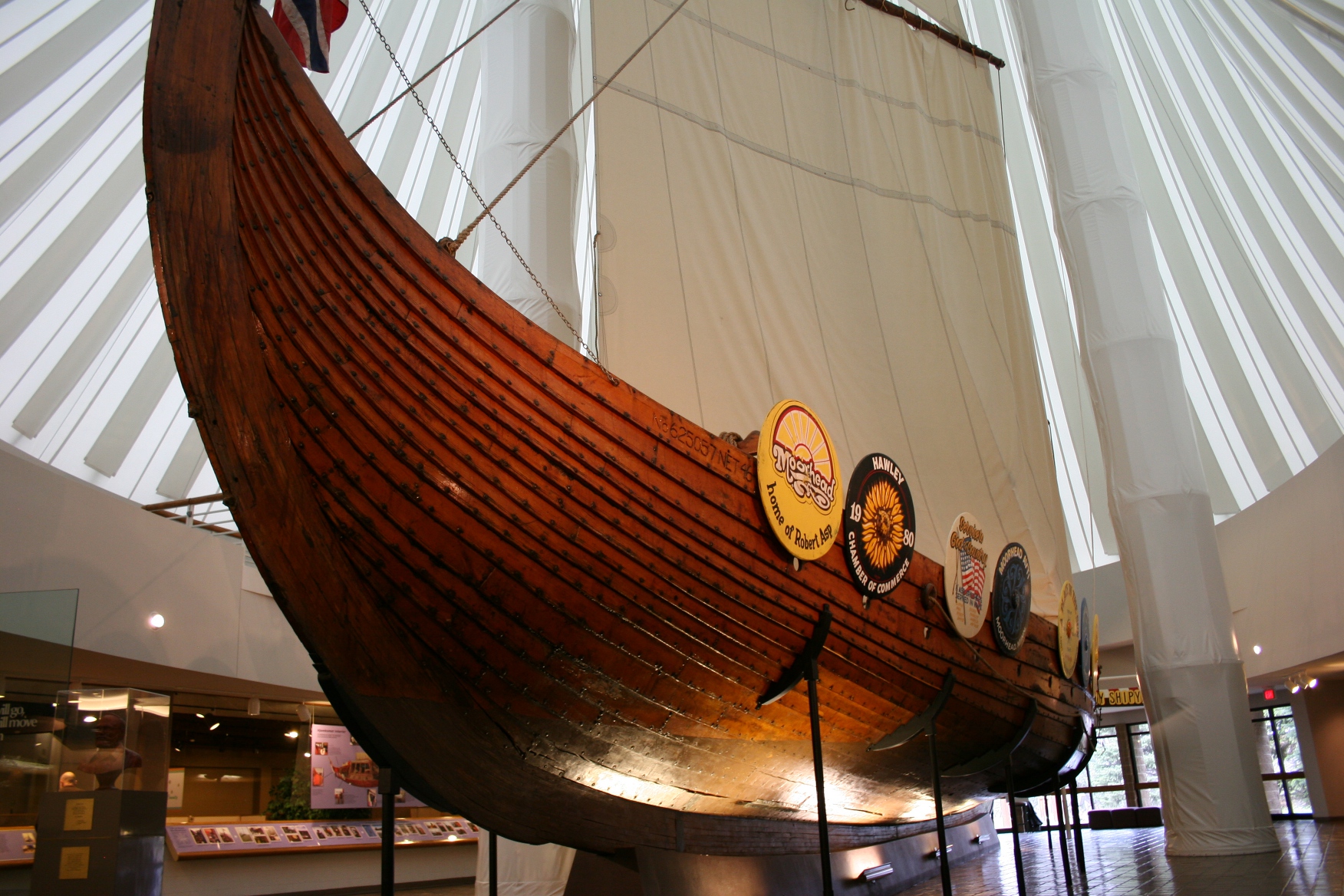
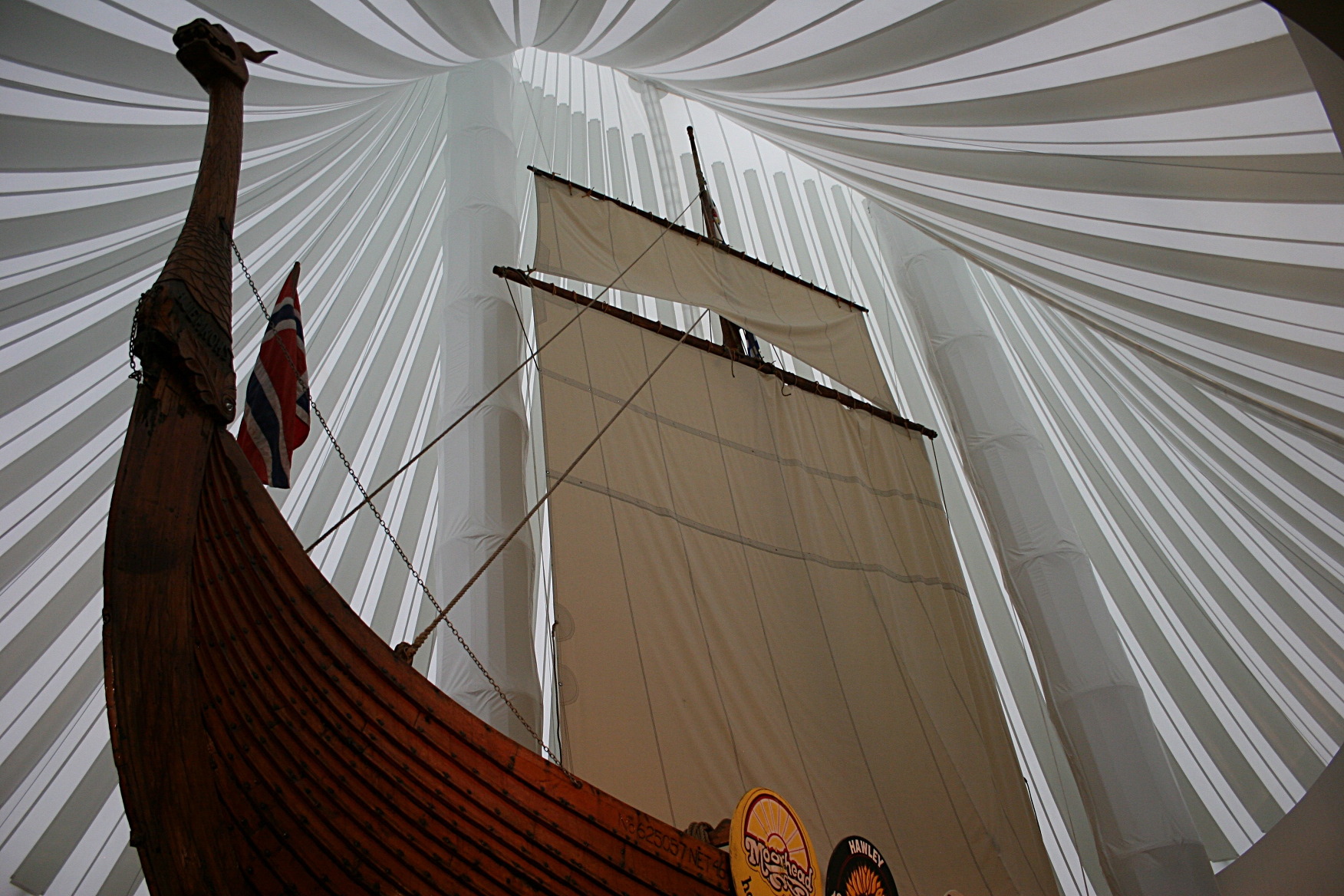
Looking up to the mast and sails.

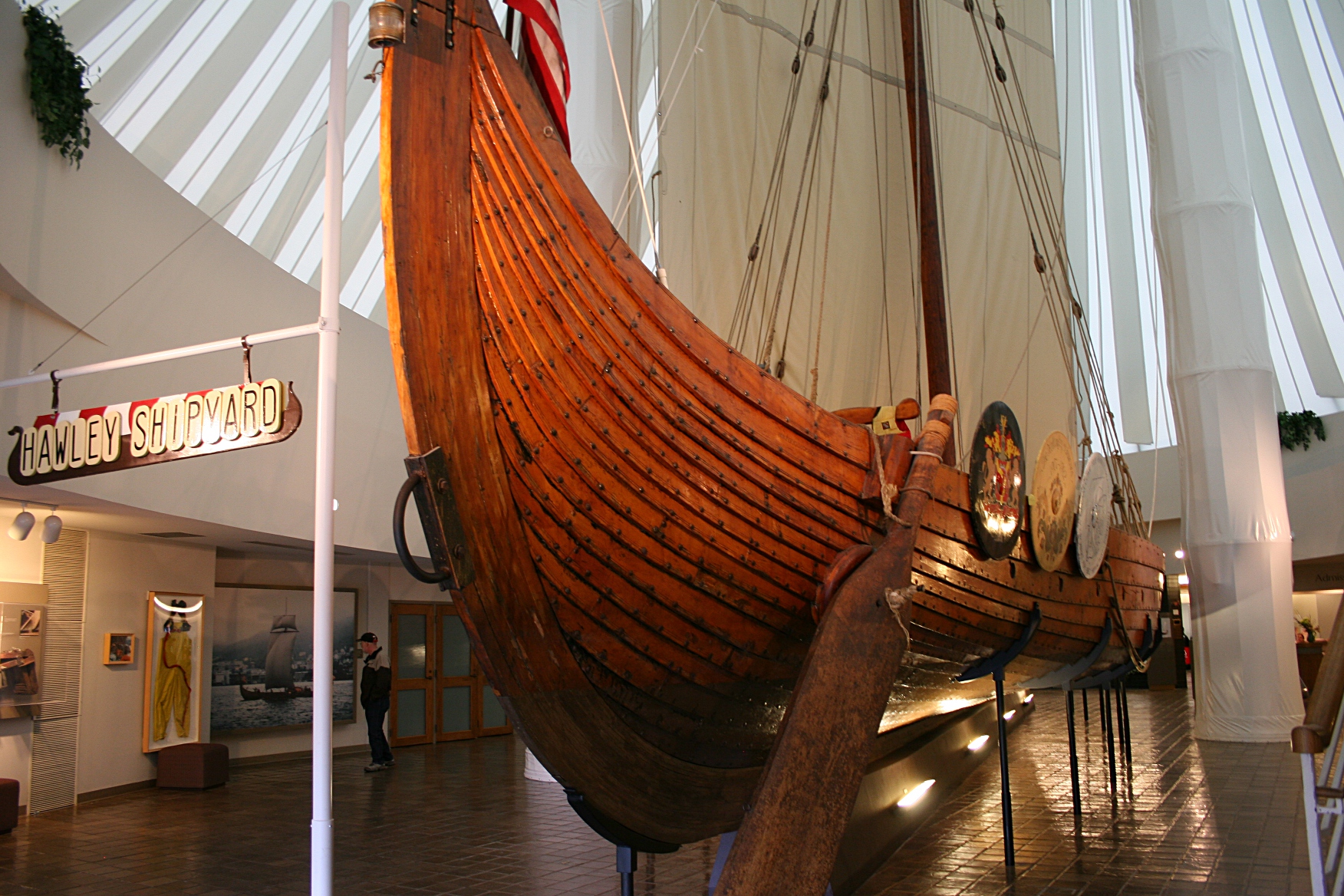
Hearing the Hjemkomst story many years ago is one thing. Seeing Asp’s ship permanently docked in the Hjemkomst Center in Moorhead is another. Only by viewing the ship and learning its story in detail can you truly appreciate the determination of a man to fulfill a dream.

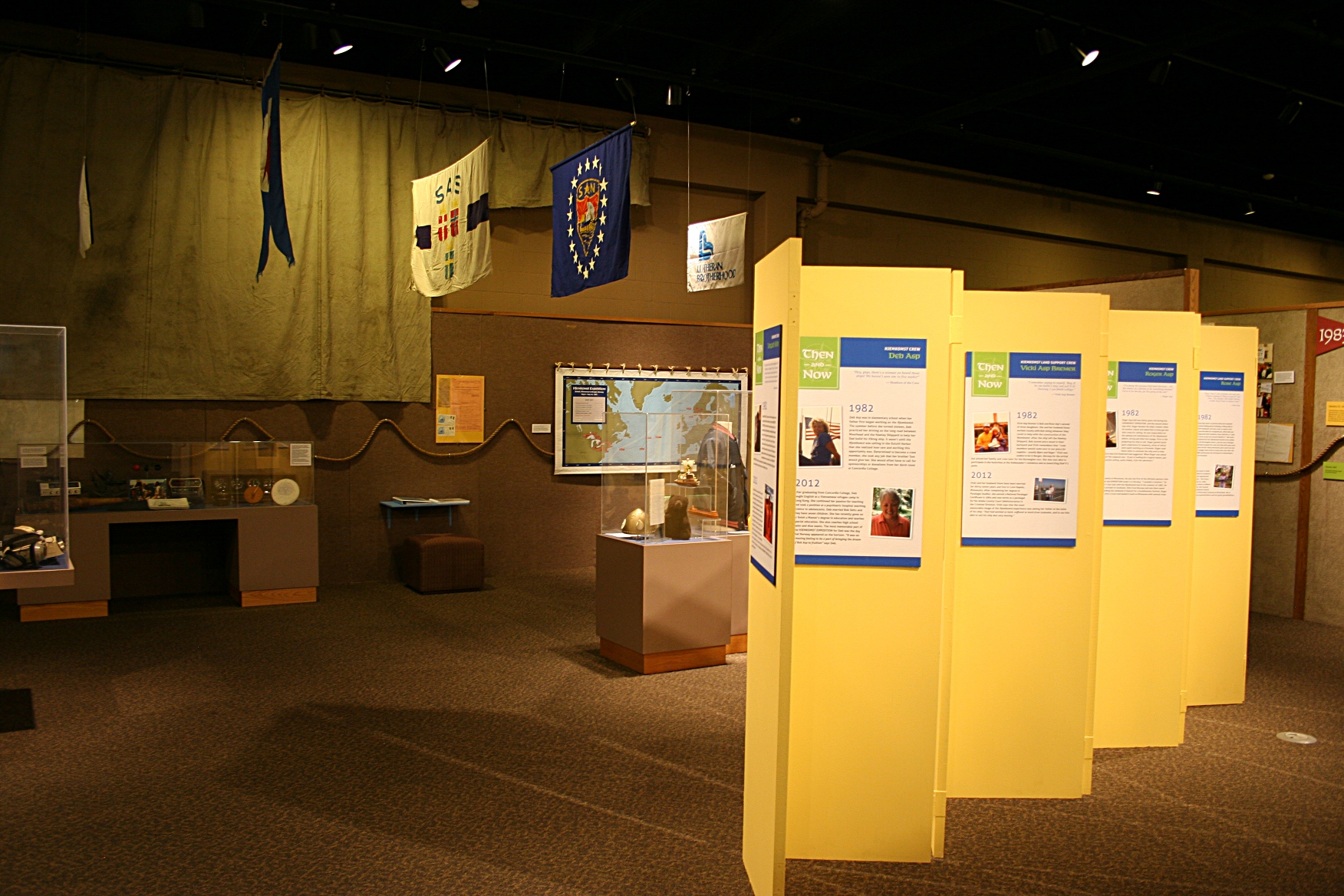
A small section of the museum exhibit on the Hjemkomst.

And details you will find in the museum exhibit, these among the highlights I pulled from the wealth of information revealed during a recent visit to the Hjemkomst Center:

  • In the summer of 1971, Bob Asp and his brother Bjarne talked about their Viking heritage over coffee and joked about building a Viking ship to sail to Norway.
  • Bob began searching in the Alvarado area, 18 miles north of Grand Forks, North Dakota, and six miles east of Oslo, Minnesota, in the spring of 1972 for oak trees with which to build the Hjemkomst. Eventually 100 oaks would be used in the ship construction.
  • In November 1973, Bob leased a former potato warehouse in Hawley, 22 miles east of Moorhead, in which to construct his replica of the Viking ship Gokstad. Archeologists discovered the Gokstad in 1880 in Gokstad, Norway. Bob based the Hjemkomst on that ship.
  • The purpose of his ship, according to Bob, was “to further the Norwegian image and heritage.”
  • In 1976, Bob was offered $25,000 by a man who wanted to hire a crew to finish building the Hjemkomst for a tall ship parade in New York City. Bob declined the offer.
  • The ship’s keel was laid in 1974 and, after six years of construction, the vessel was christened in 1980 at the “Hawley Shipyard.”
  • In August 1980, the Hjemkomst was lowered into Lake Superior in the Duluth harbor.
  • On May 11, 1982, a 13-member crew began the voyage across Lake Superior with 12 continuing on to Bergen, Norway. The trip would take 72 days, covering 4,700 miles.
  • The ship was eventually returned via freighter to the U.S. and today is permanently at home in the Hjemkomst Center near the banks of the Red River of the North.

As impressed as I was by viewing the actual Hjemkomst and by reading the detailed time-line of its construction, launch and voyage, I was even more impressed by the fortitude of Bob Asp.

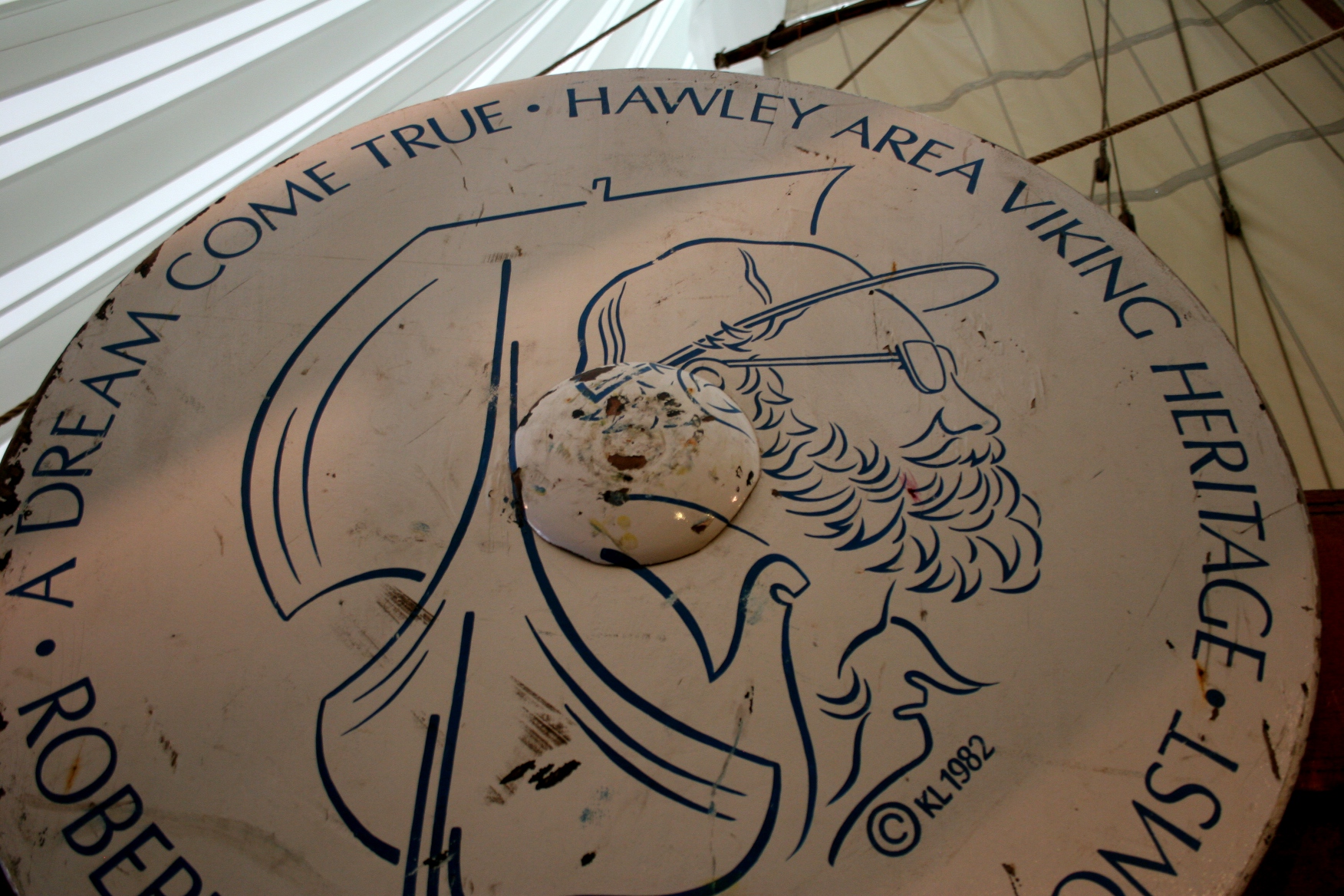
A dream come true “button” attached to the side of the Viking ship replica.

He dared to dream.

Here’s a quote from the museum: “Constructed in a sea of grain, a prairie with no ocean in sight, this Viking ship was built board-by-board with determination and sailed to Norway.”

He dared to continue on, even in the face of skeptics and illness (he was diagnosed with leukemia in July 1974).

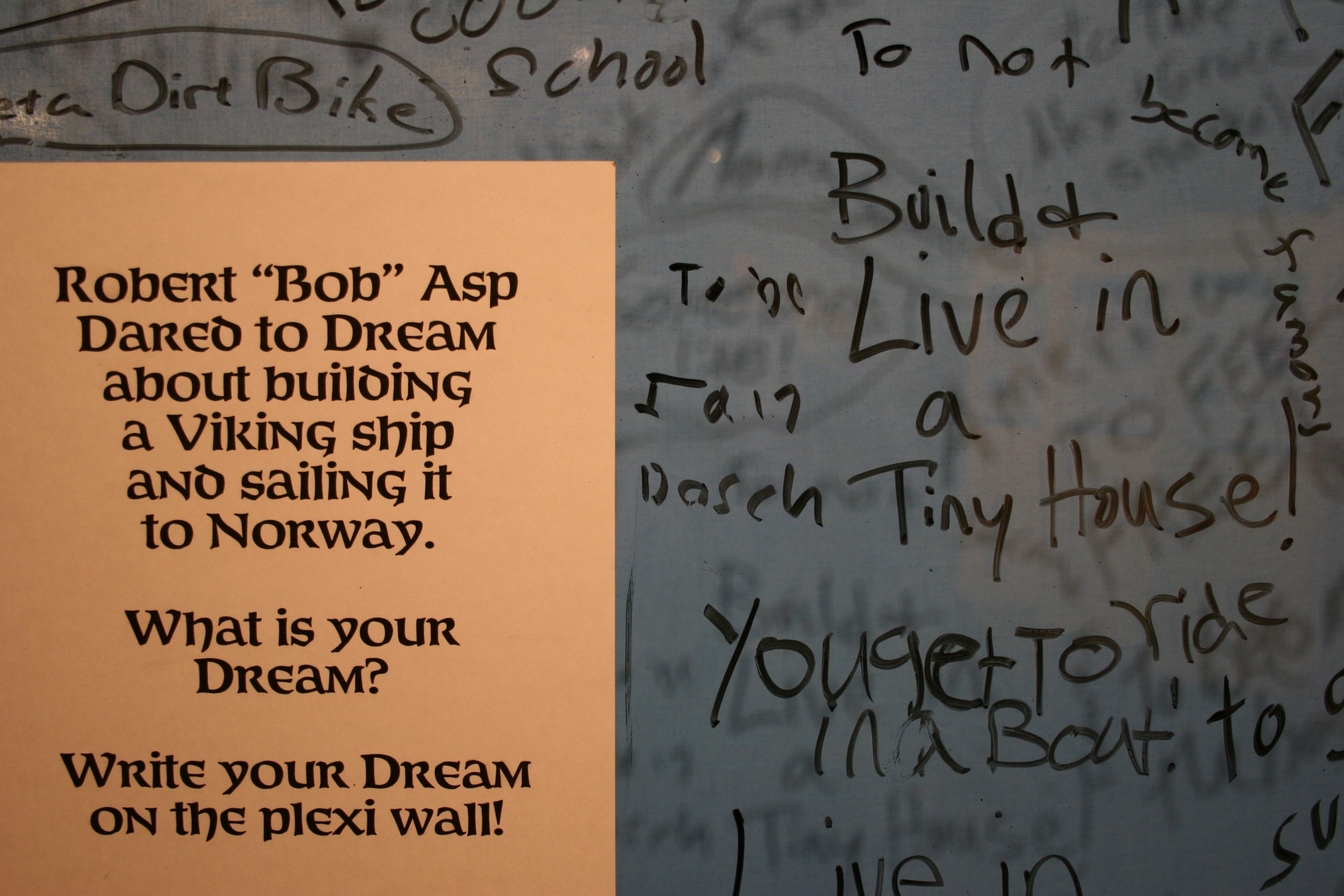
A plexi board upon which museum visitors can post their dreams.

He dared to believe in himself. Therein lies a legacy of inspiration that teaches all of us the value of holding on to dreams.

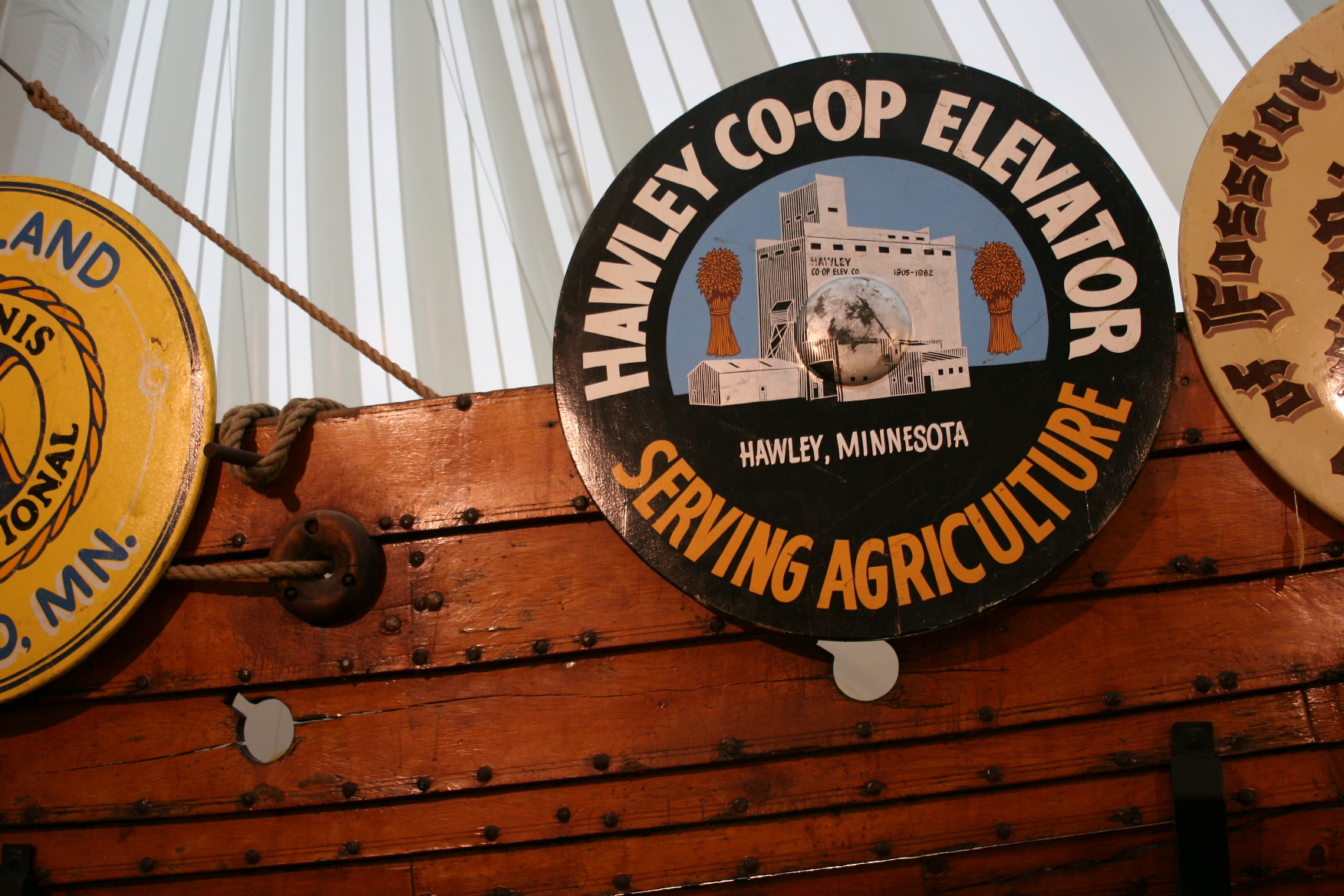
A sign of support from the grain elevator in Hawley, where the ship was built.

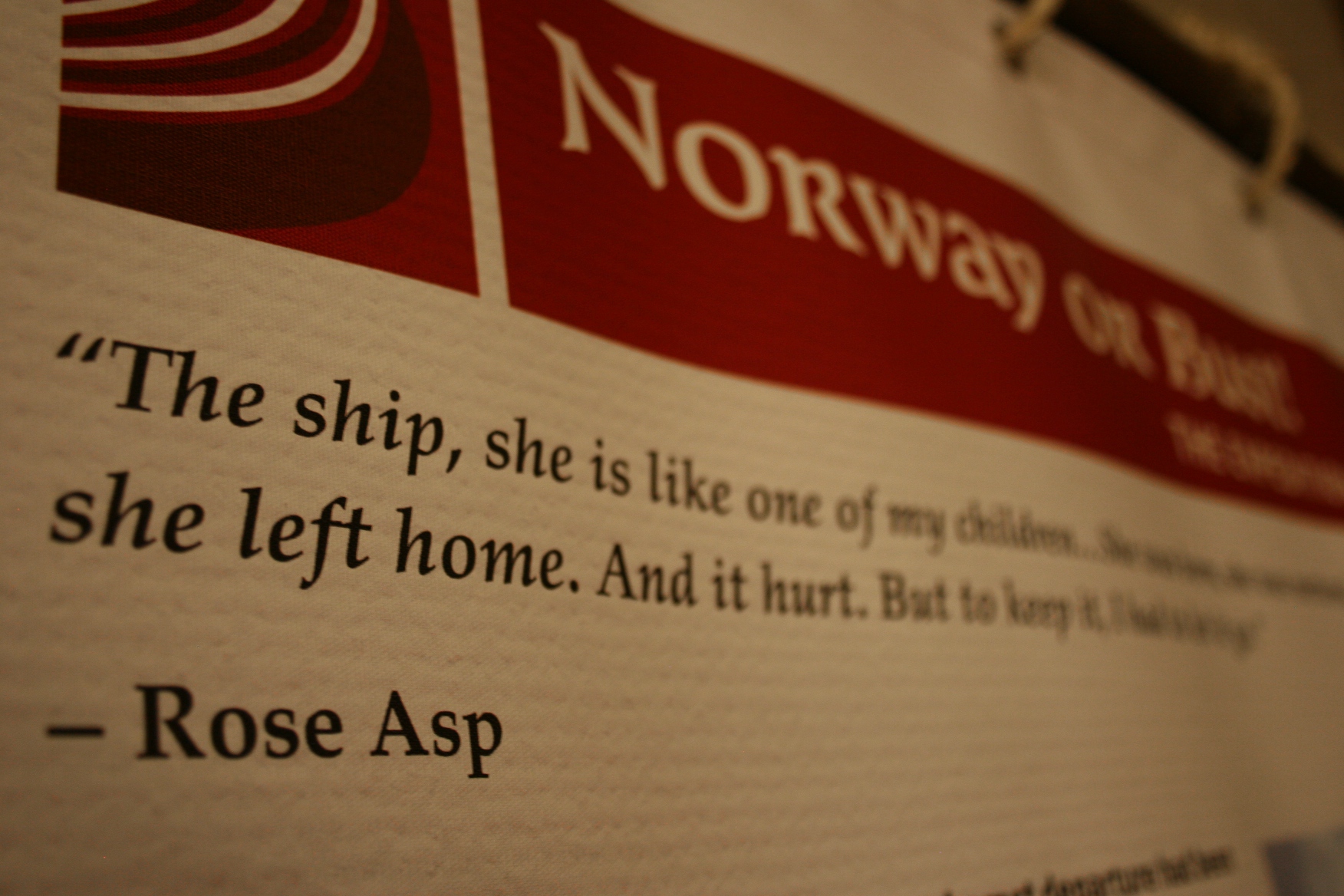
A quote from Rose Asp, Bob Asp’s wife.

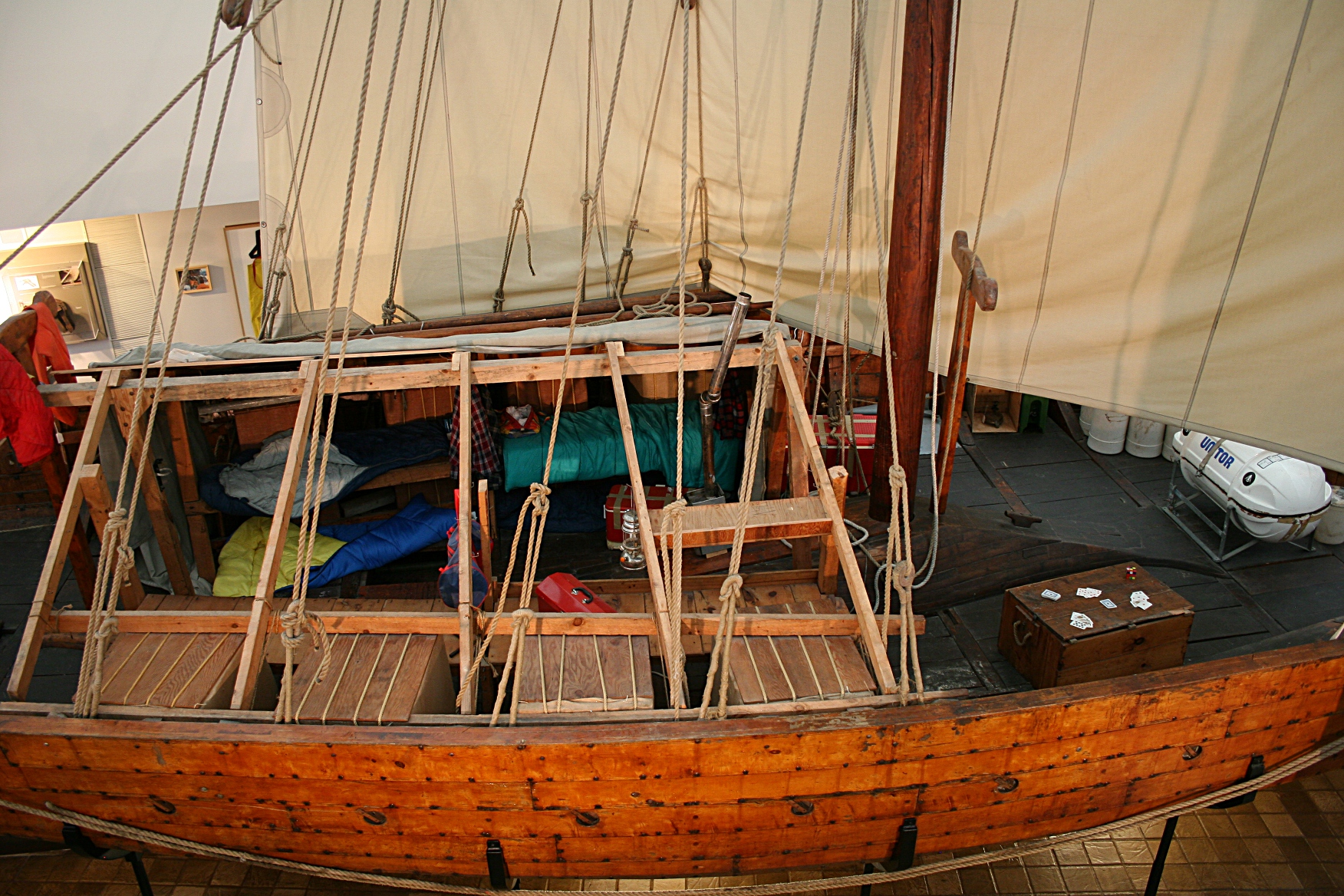
The interior of the Hjemkomst as seen from a second floor viewing deck.

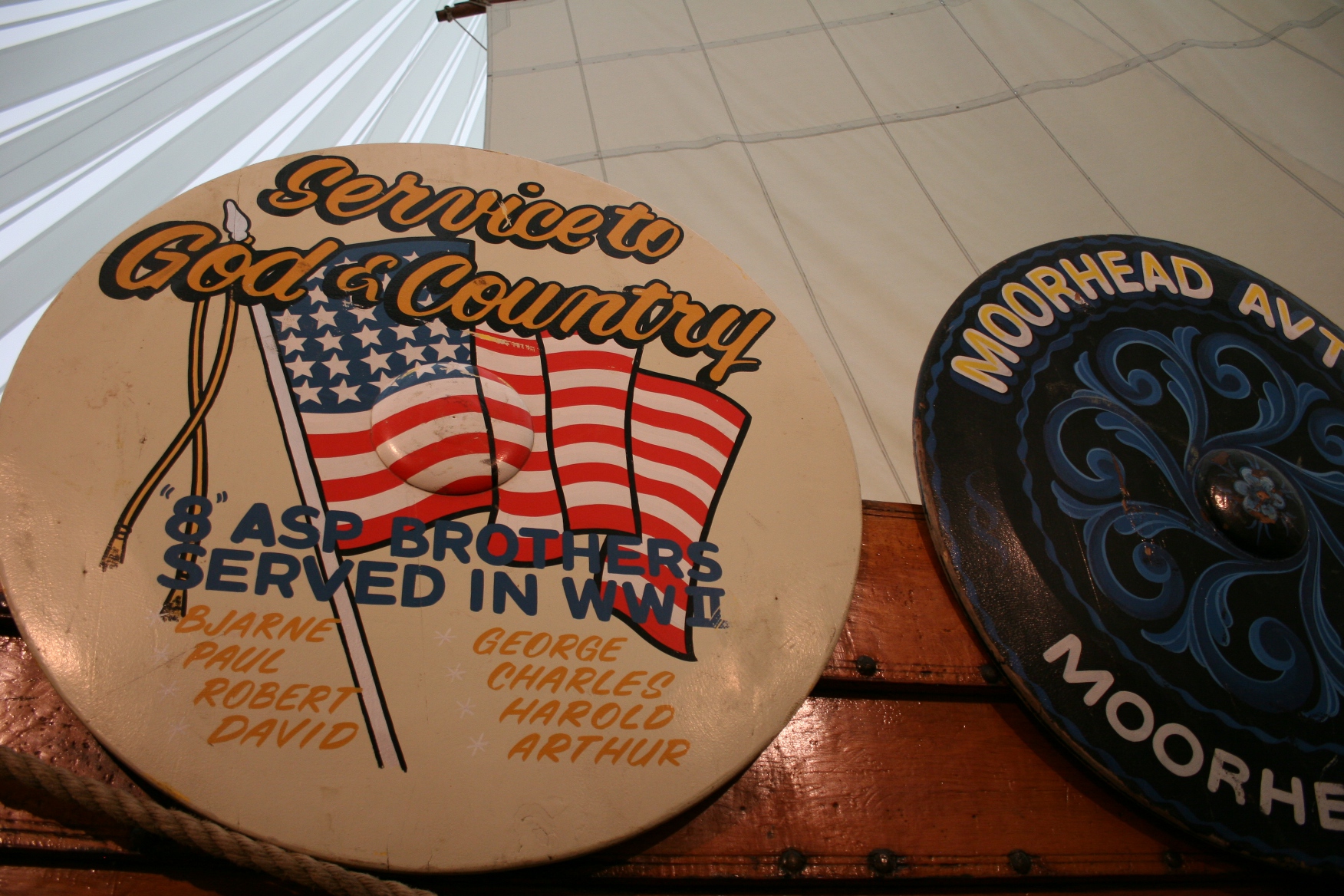
A sign on the ship honors the Asp brothers for their military service.

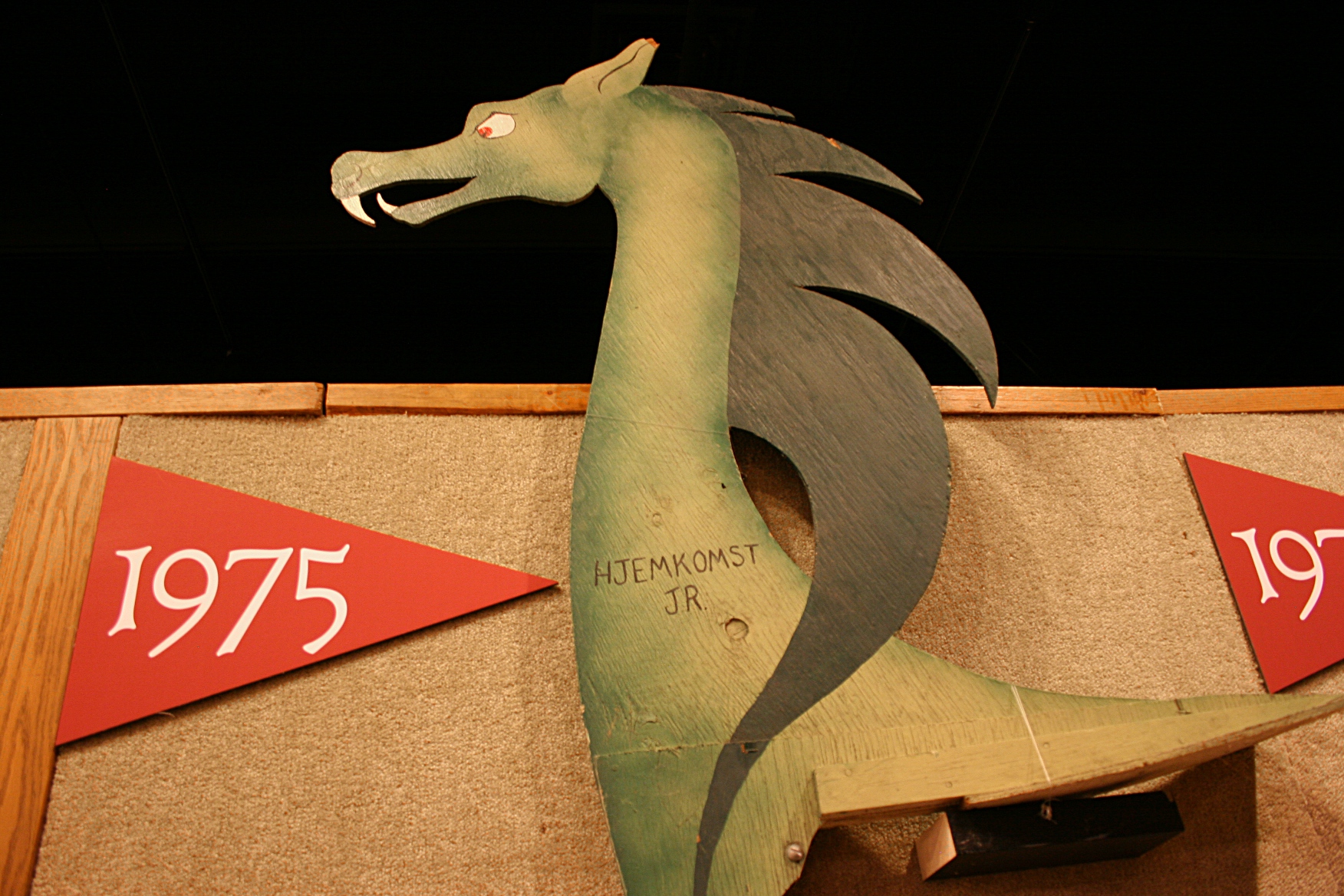
This dragon head was attached to a canoe, dubbed Hjemkomst Jr., and shown in parades to promote the ship project.

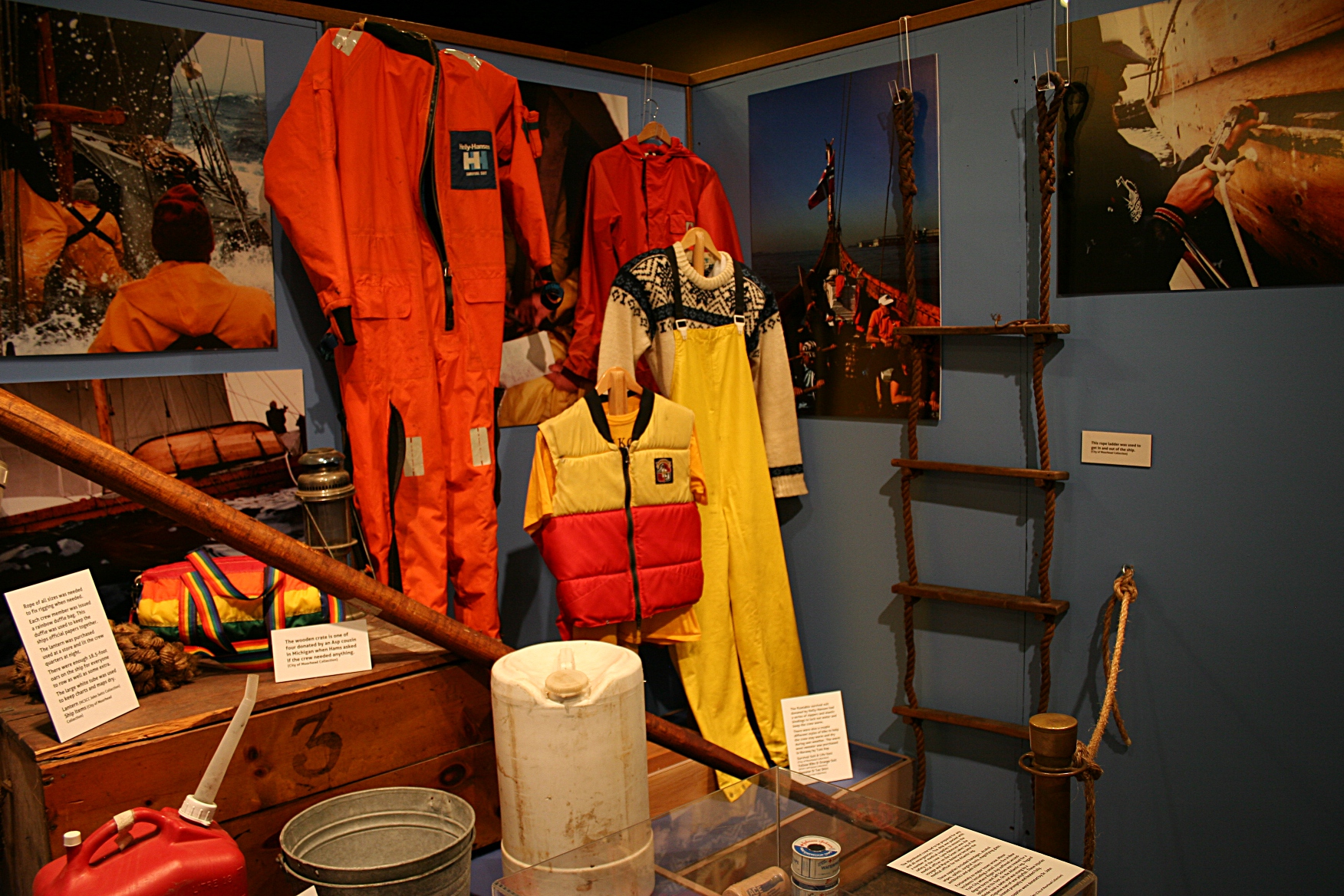
Some of the gear and equipment from the Hjemkomst.

Moorhead, Minnesota, Asp’s home and now the Hjemkomst’s permanent home.

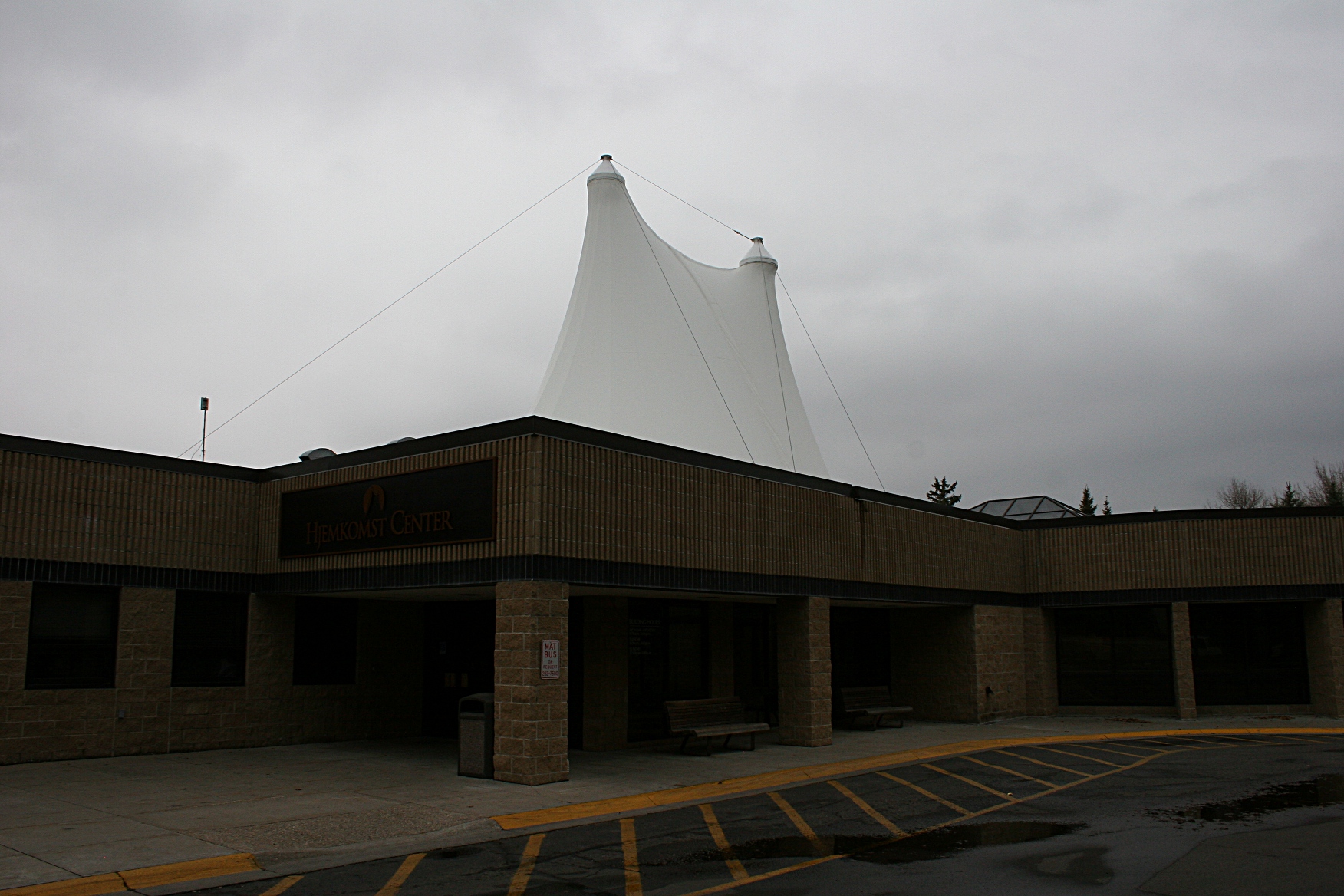
In the center of the Hjemkomst Center, the mast area of the Hjemkomst ship dominates the roofline.

FYI: The Hjemkomst Center is open from 9 a.m. – 5 p.m. Monday-Saturday, from 9 a.m. – 8 p.m. Tuesdays and from noon – 5 p.m. Sundays. It is closed some holidays. There is free admission from 5 p.m. – 8 p.m. every third Tuesday. Admission prices vary. Click here to link to a $1 off admission coupon and for other coupon savings in Fargo/Moorhead.

© Copyright 2012 Audrey Kletscher Helbling


Touring Hopperstad Stave in Moorhead November 13, 2012

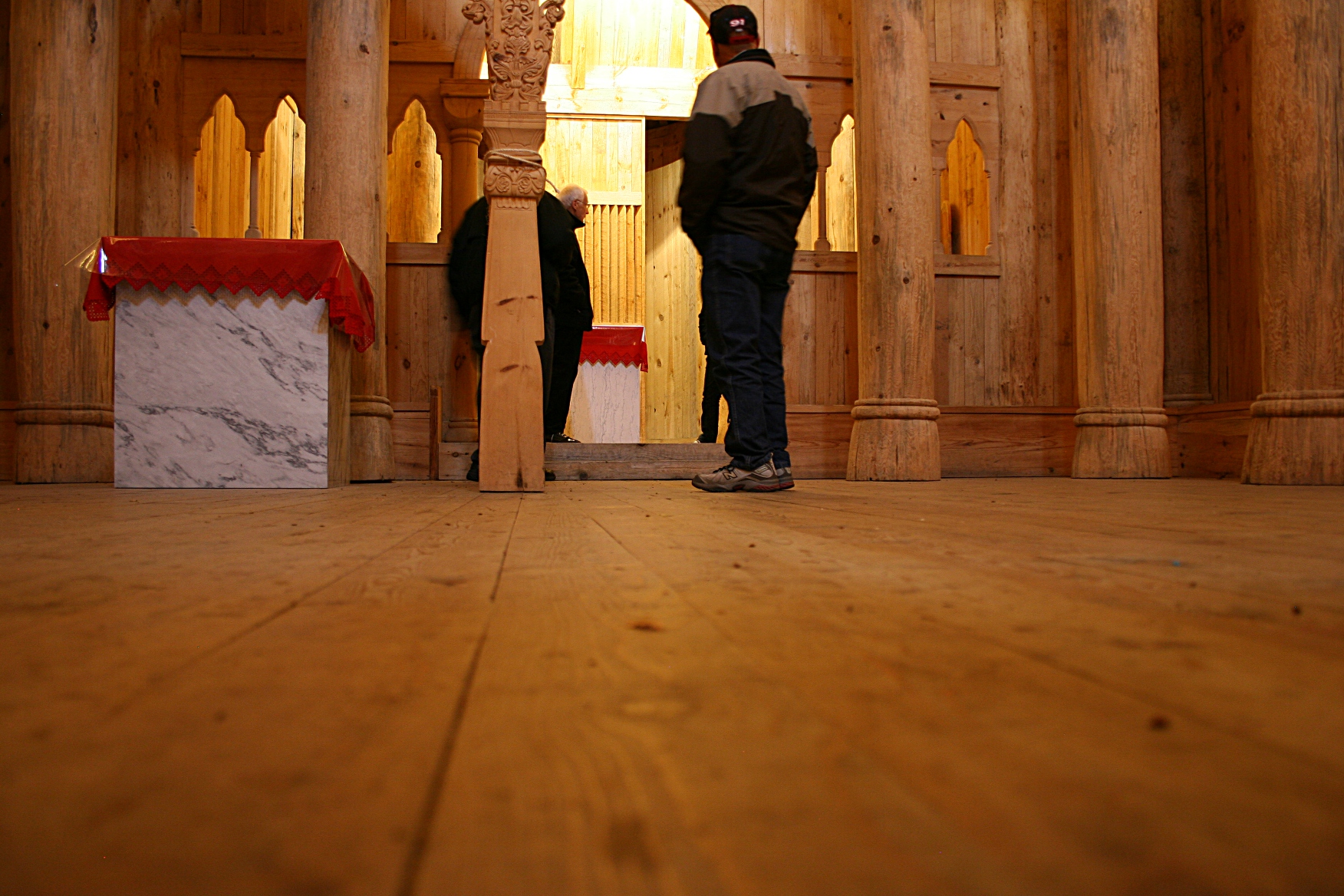
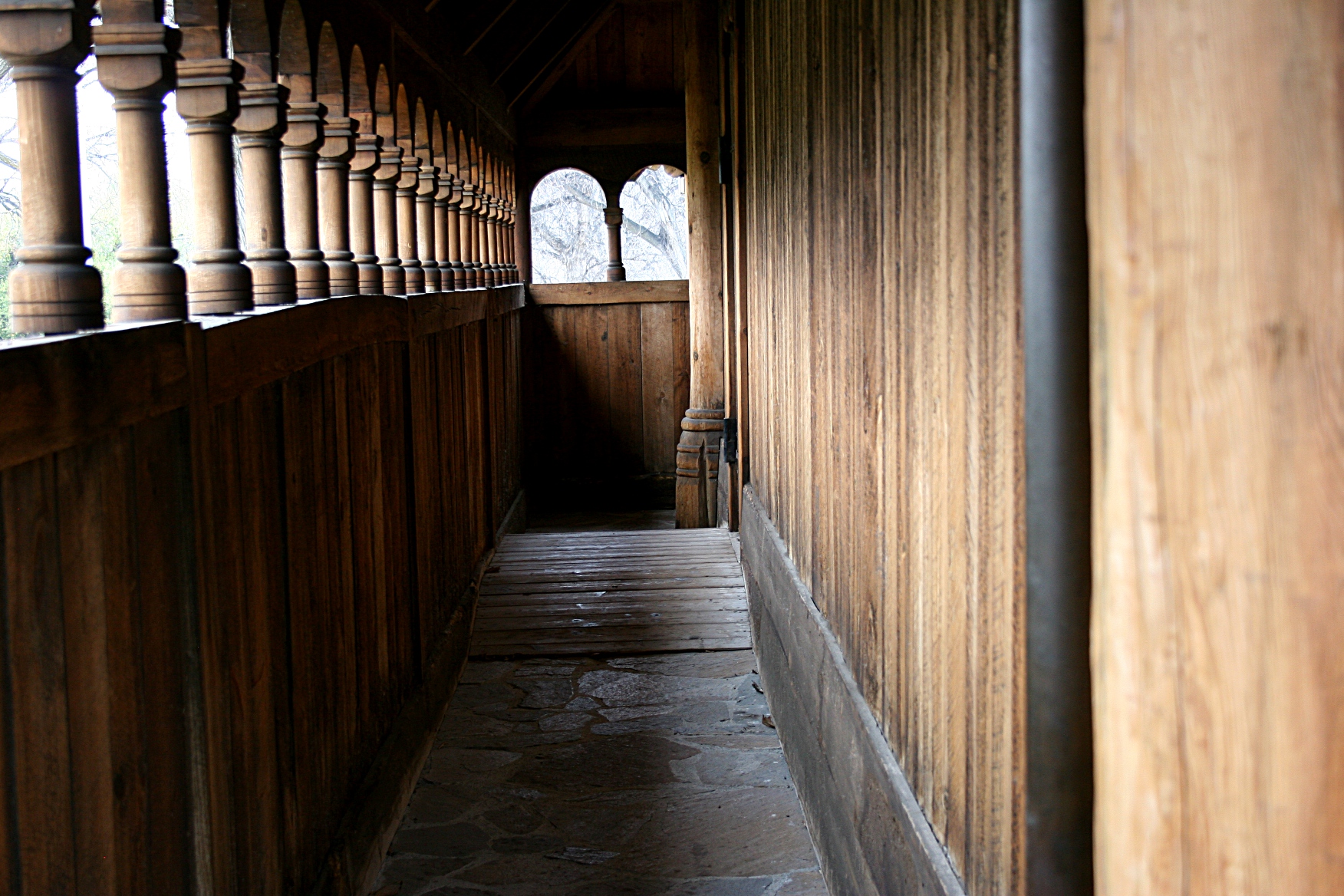
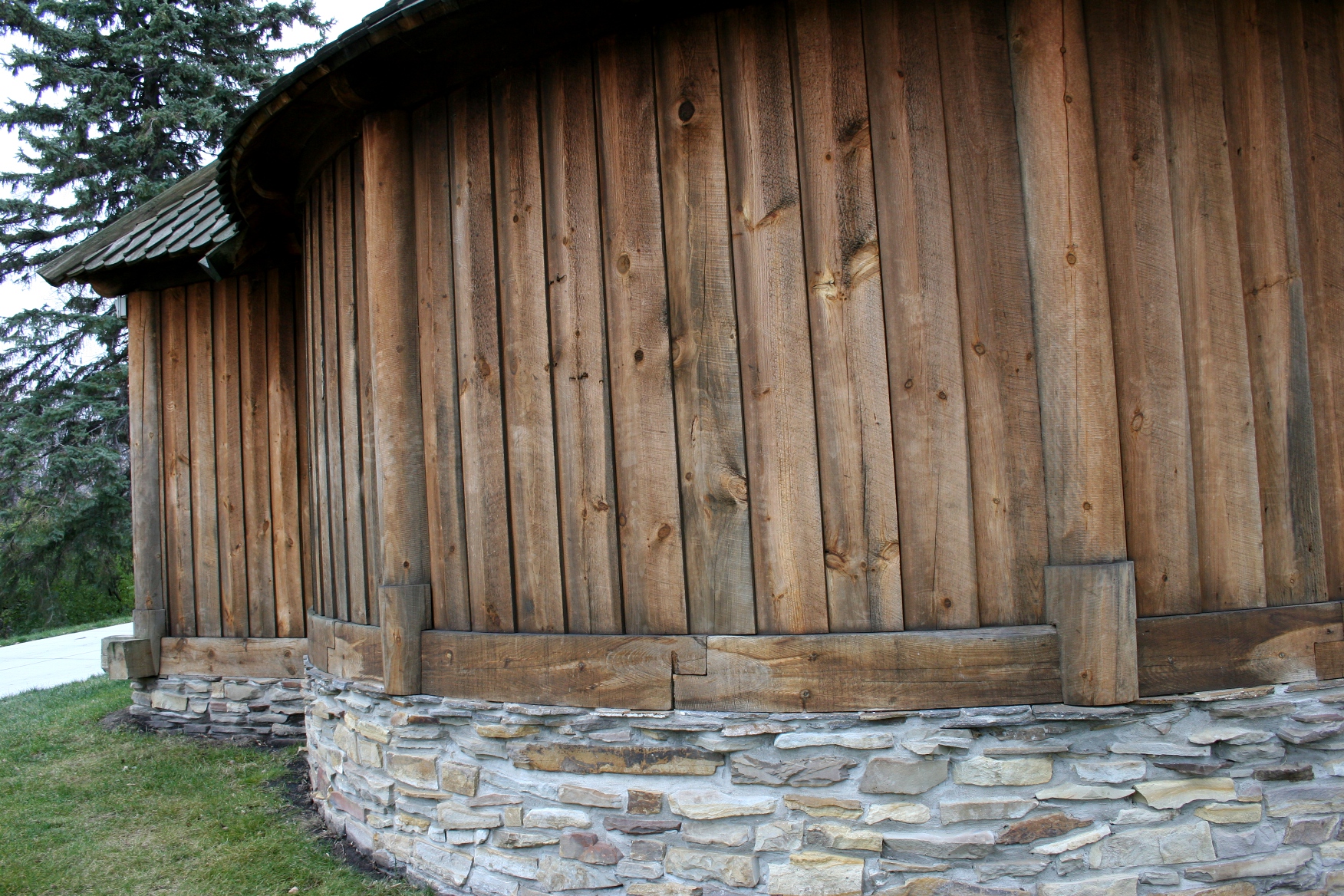
A replica of Hopperstad Stave, a church built in 1140 in Vik, Norway. This replica was constructed in 1998 in Moorhead, Minnesota from cedar, redwood and pine. This is a rear view of the Minnesota stave.

OUR YOUNG TOUR GUIDE spewed information so fast that I could not have written down details about the Hopperstad Stave had I tried.

And, I simply must say this, but I was distracted by the political sticker stuck on her coat, quite inappropriate, I thought, to display while leading a public tour at a public facility only days before the November election. But I did not want to create a scene, so I kept my lips pressed together.

She had already rankled me earlier by informing my husband and me that we likely would not be able to tour the Norwegian church at the Hjemkomst Center in Moorhead because the museum was short-staffed. On a Saturday. We had just driven nearly 300 miles. Do not tell me this after I have paid my admittance fee.

Forgive me for venting. But I needed to confess before taking you inside the replica Norwegian church built in 1998 by Guy Paulson, a retired researcher from North Dakota State University. I do not want such negative thoughts rattling around in my head while showing you God’s house.

A side view of the stave and the Celtic cross which stands near it. The stone cross replicates one located in the church yard of Loen Nordfjord, Norway. The cross represents the period in which Celtic missionaries came from the British Isles to convert Vikings to Christianity.

Yes, apparently the situation changed so that the young woman could leave her admission station to take a group of visitors, including my husband and me, inside the stave. Hallelujah.

Norwegian themed mugs for sale in the Hjemkomst Center gift shop.

I am not Norwegian. I know nothing of Norwegian architecture, have eaten lutefisk only twice, will consume lefse if offered and certainly do not say, “Uff da.”

But I want to assure you that I now am aware of how to pronounce stave. The word does not rhyme with “gave.” The “e” is silent, the “a” short.

I can also tell you that, from the exterior, the Hopperstad Stave resembles a Viking ship.

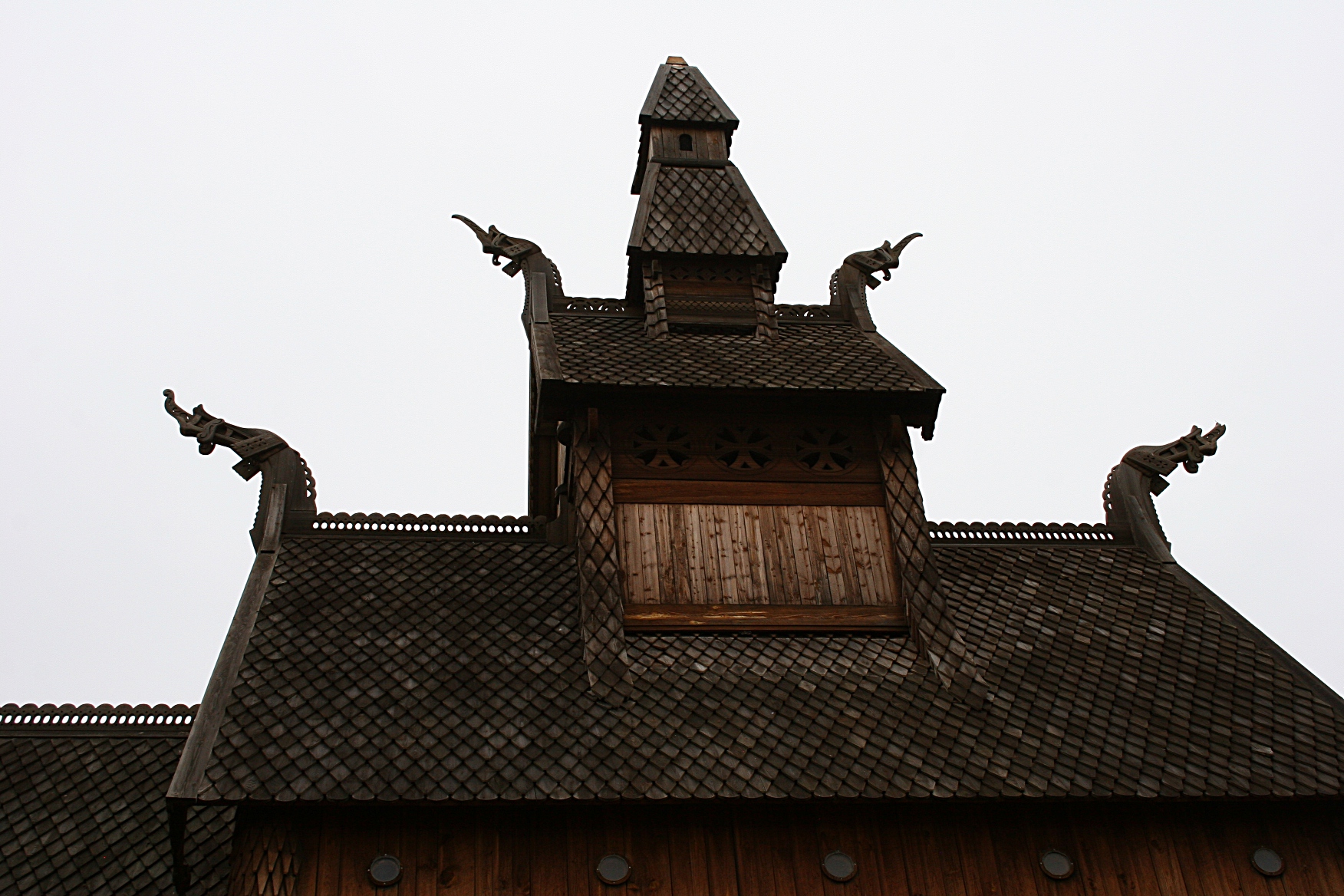
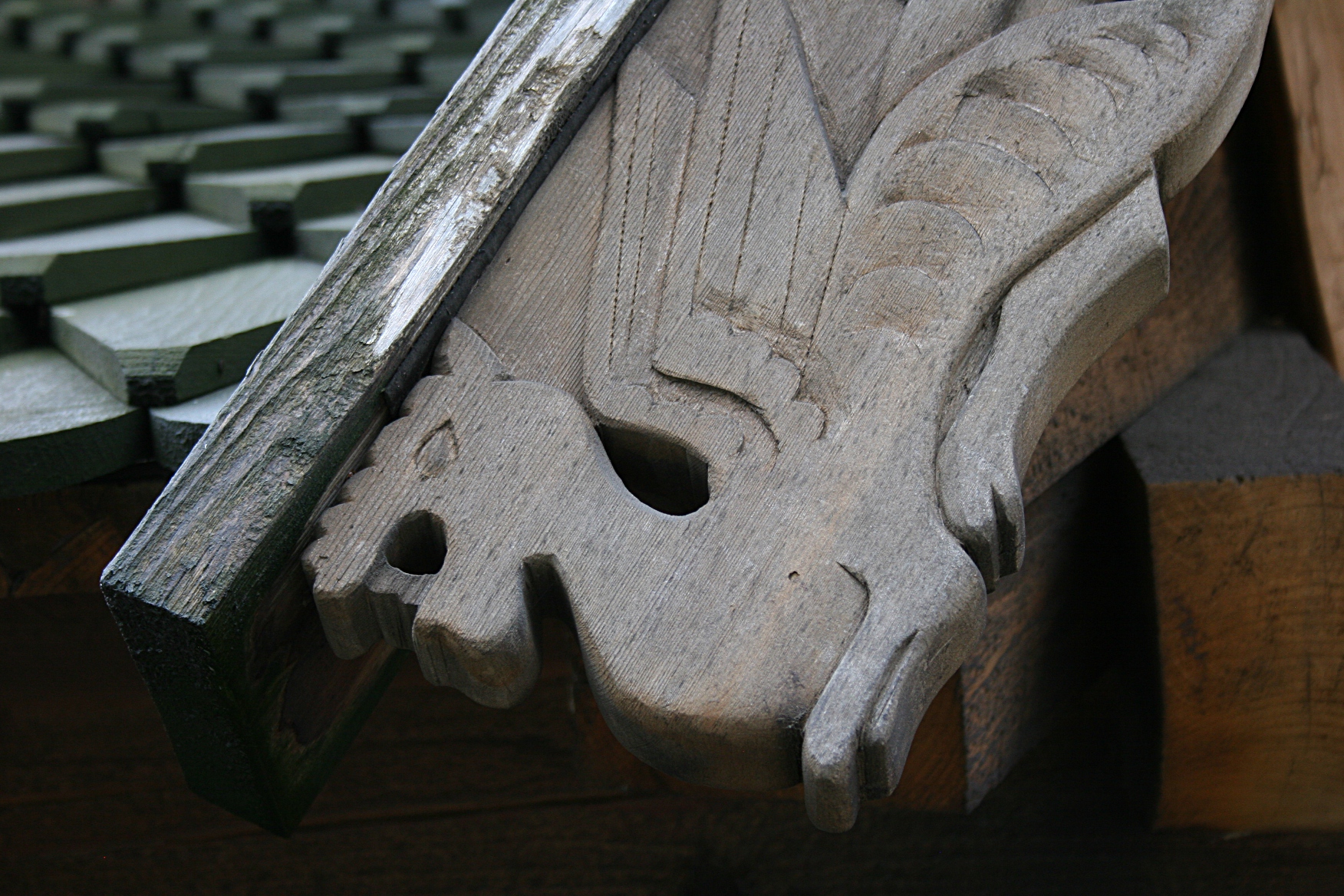
The roofline which mixes crosses, the symbol of Christianity, and dragons, once a symbol of pagans.  Obviously, the crosses are not visible at this angle.

Carved dragons and crosses mark peaks of the multi-layer roofed church which looms dark and foreboding.

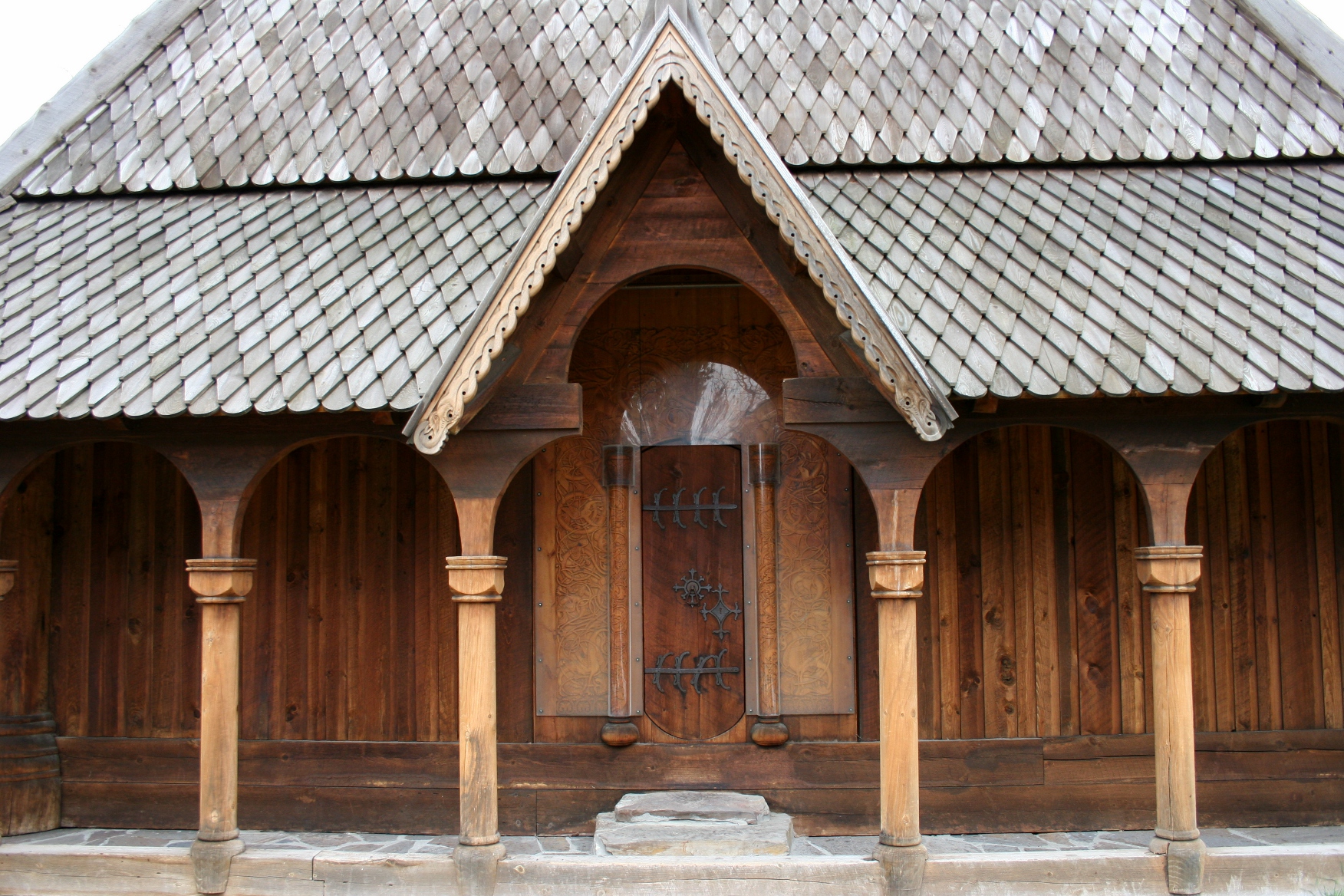
Most of us stepped up and walked through that narrow front door. Others chose to walk around to a handicapped accessible and wider side door.

Stepping, and I do mean stepping, through the narrow doorway, I found the interior nearly equally as dark as the exterior. Missing are the eye level windows I’m accustomed to in the older Lutheran churches here in Minnesota.

An overview of the church shows the small chapel and altar on the left where more intimate religious ceremonies, such as baptisms, could take place. The main altar sits in the background and near center in this image.

Missing also are the pews. Worshipers would stand through services. And those with leprosy or other illnesses (think back to the 1100s) would wait outside the sanctuary, peering through a tiny opening cut into a side wall.

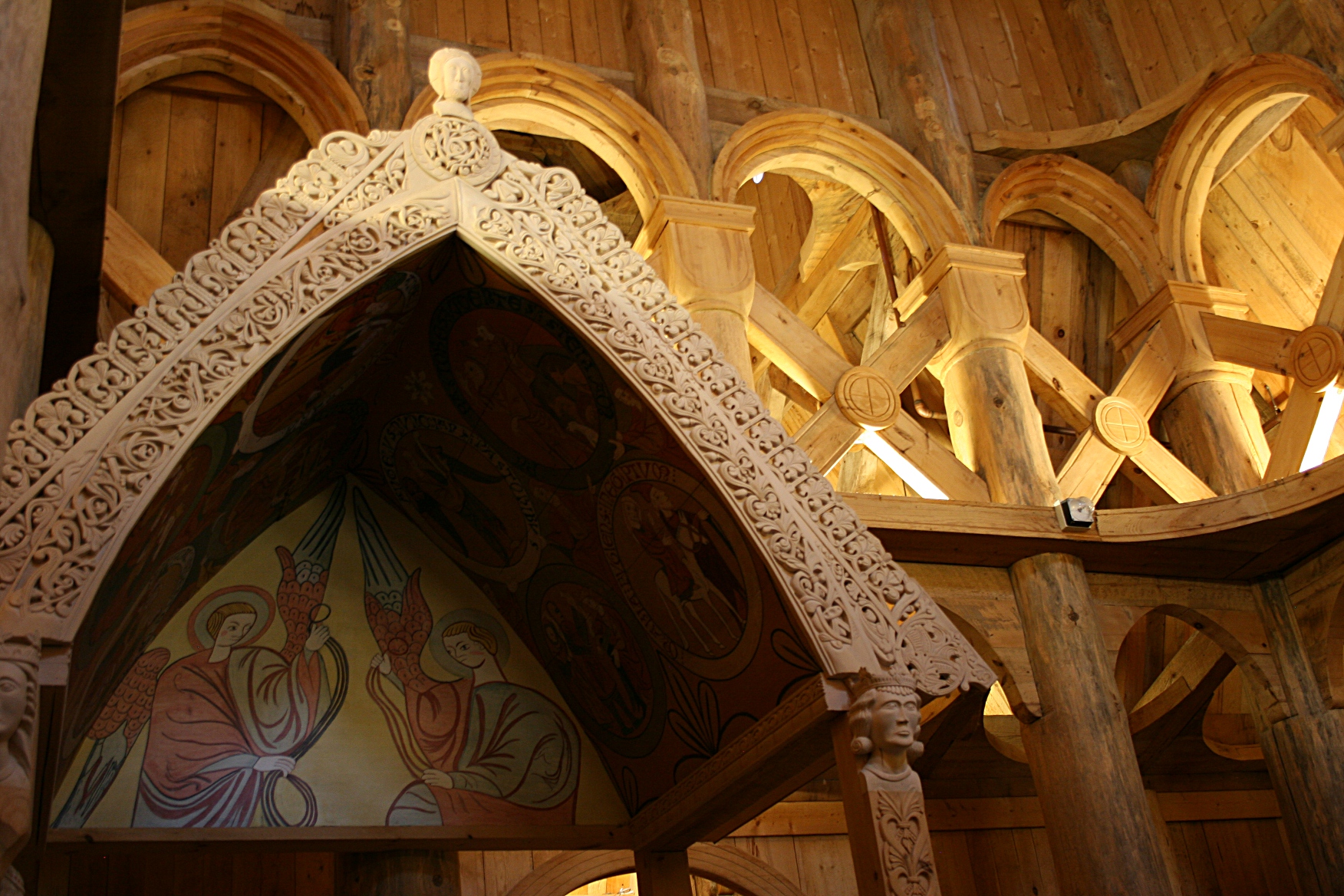
Detailed carvings and paintings define the chapel area.

Other details escape me except that Guy Paulson, who built and donated the stave to the city of Moorhead, carved the intricate designs inside and outside the church. The craftsmanship of his work is exquisite.

Really, sometimes remembering the visual details, rather than the rapid-fire of information overload, is the best way to take a tour.

Amen and amen.

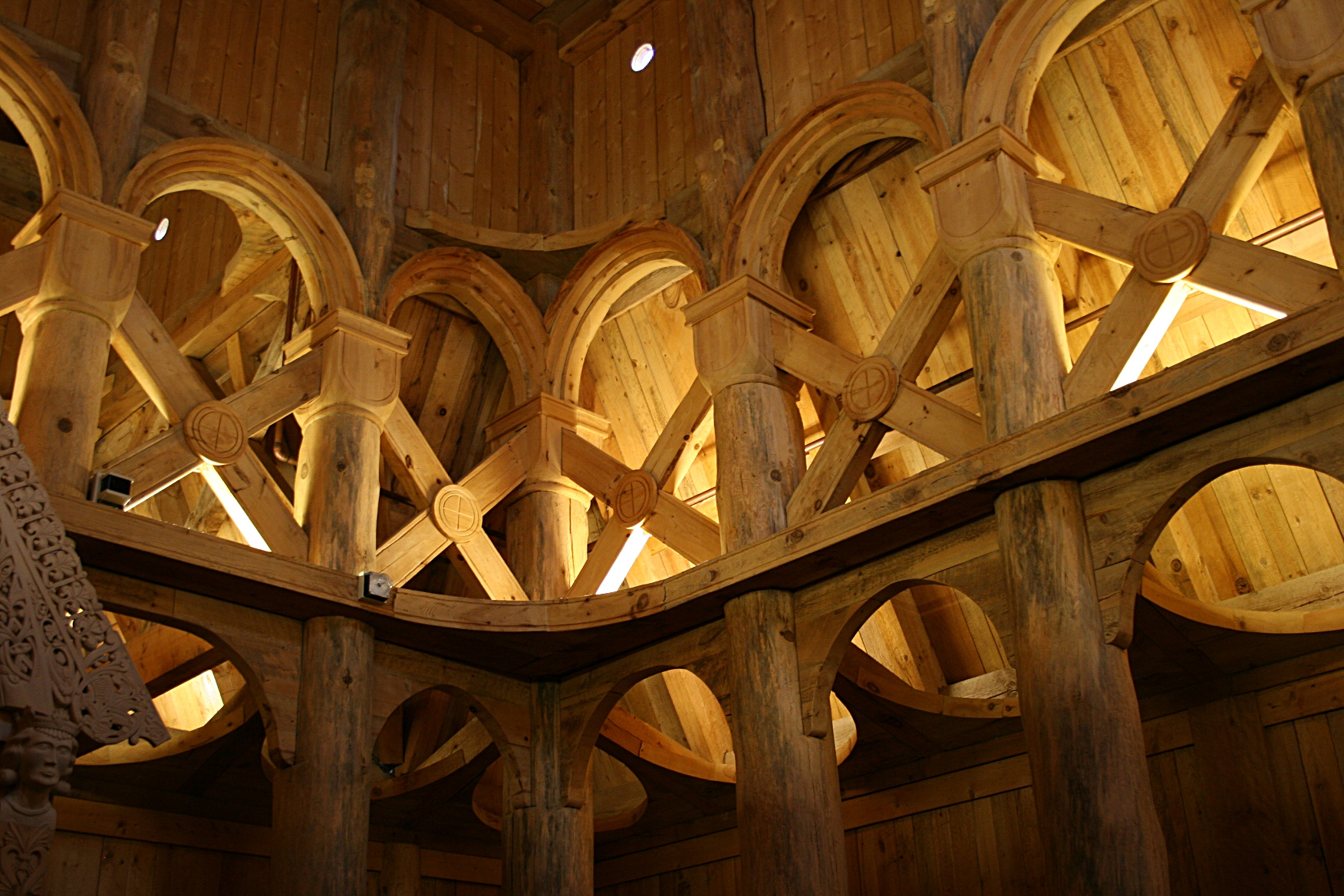
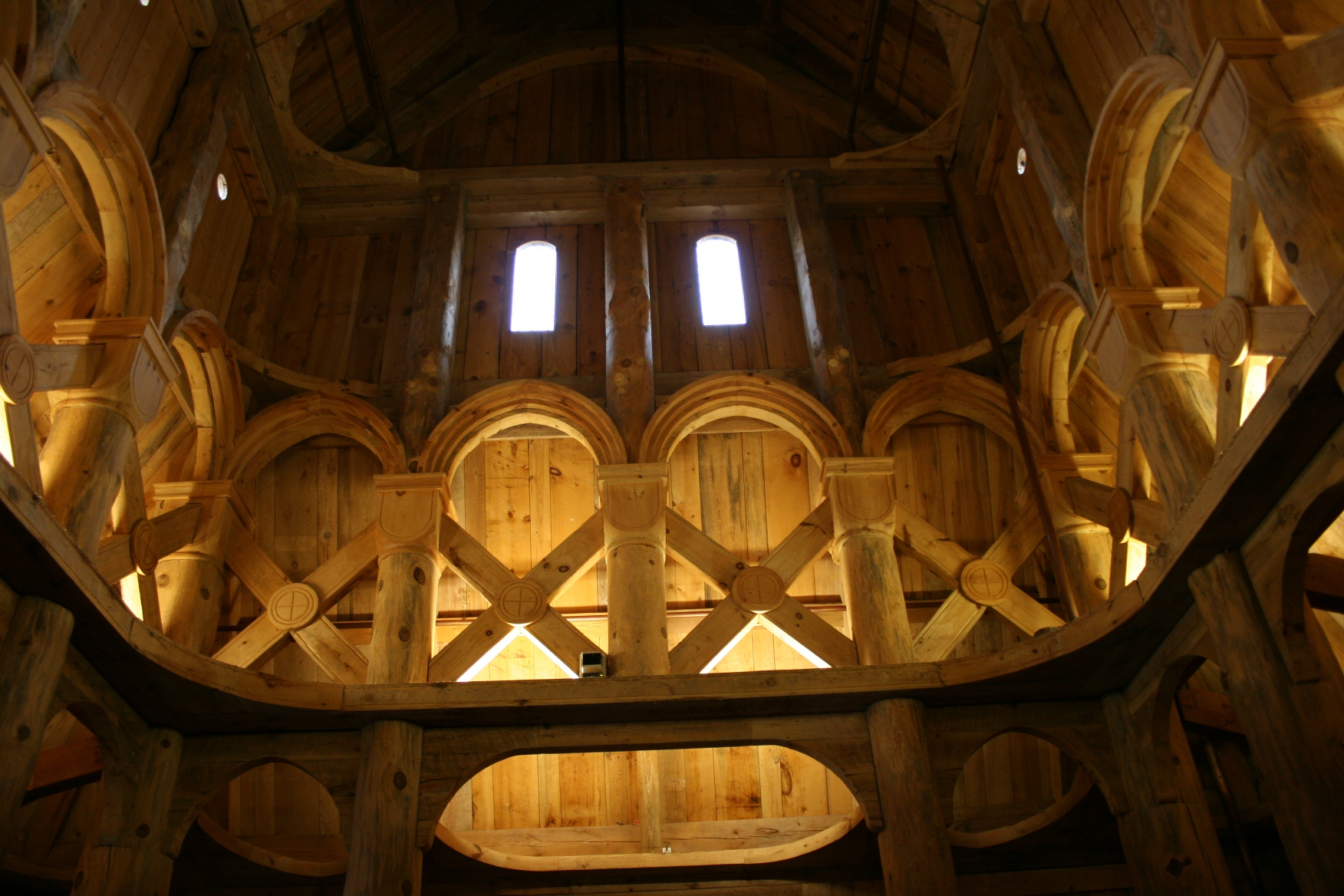
Looking up at the beautiful construction.

Another painting inside the chapel area.

There are no ground level windows, only above. This is looking toward the back of the church, above the narrow entry door.

Two exterior hallways buffet the building. In the original church in Norway, those with diseases like leprosy would wait here as they were not allowed inside for worship.

A close-up shot detailing construction.

Dragon carvings are everywhere, inside and out, this one at the edge of the roof.

© Copyright 2012 Audrey Kletscher Helbling


In which I learn a lot about the James-Younger Gang bank raid in Northfield September 3, 2012

CHRISTIAN HAKALA WEAVES the story of the bank robbery with the skills of a seasoned storyteller, his voice rising as the tension mounts, his hands gesturing, his eyes locking with those of a rapt audience.
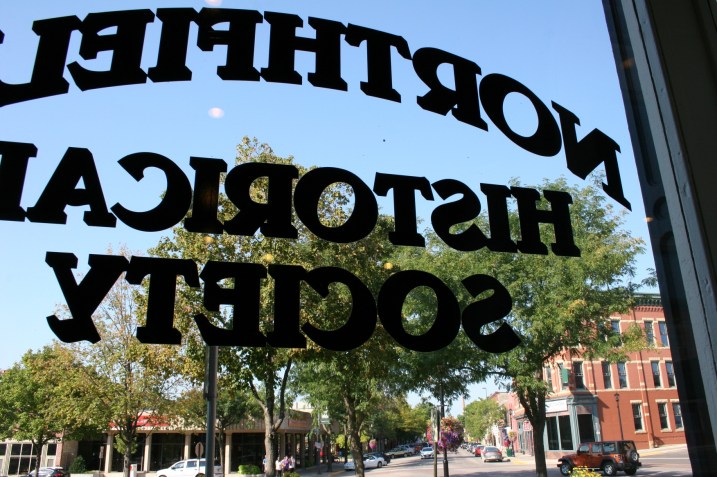
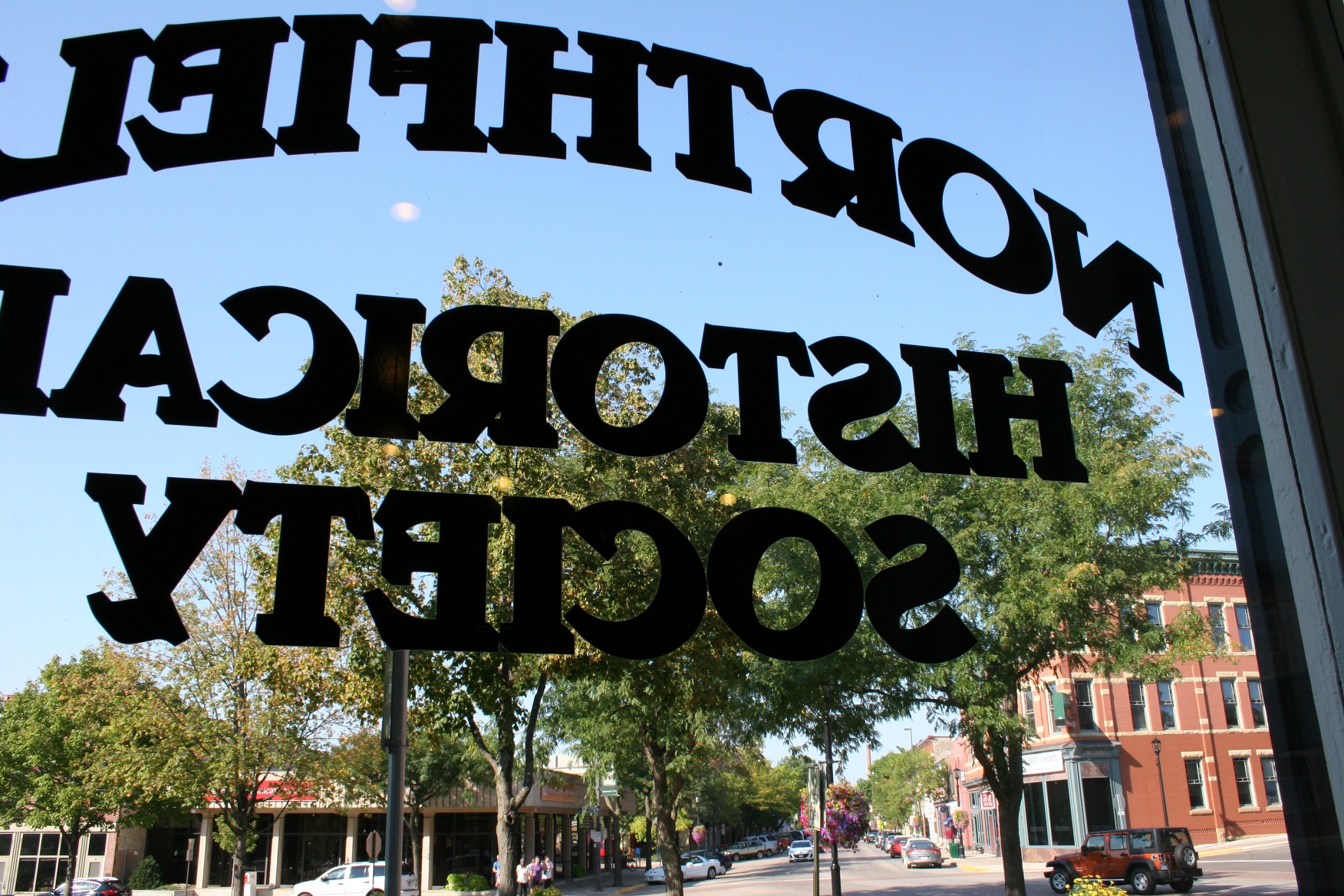
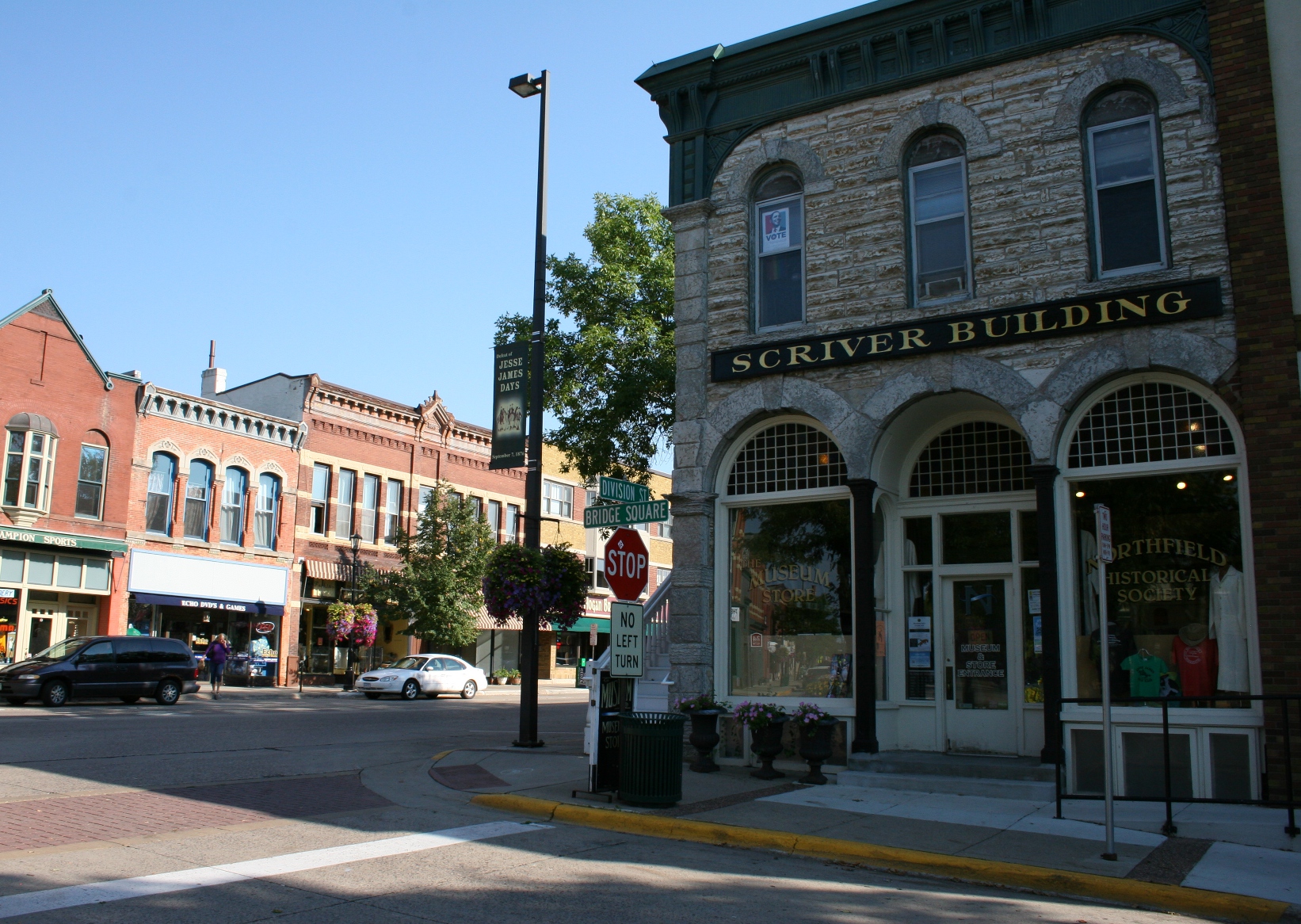
Looking through a front window of the Northfield Historical Society museum toward Division Street.

It is Sunday afternoon and I am with a small group touring the Northfield Historical Society. I have come here with my husband to view the temporary U.S.-Dakota War of 1862 exhibit as it relates to Rice County.
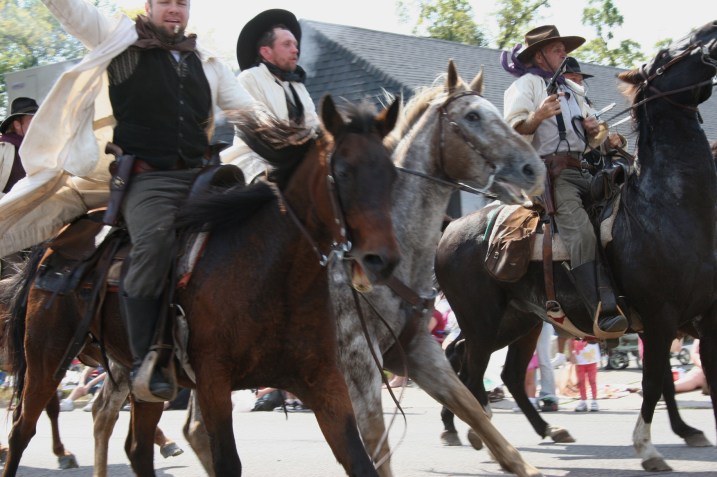
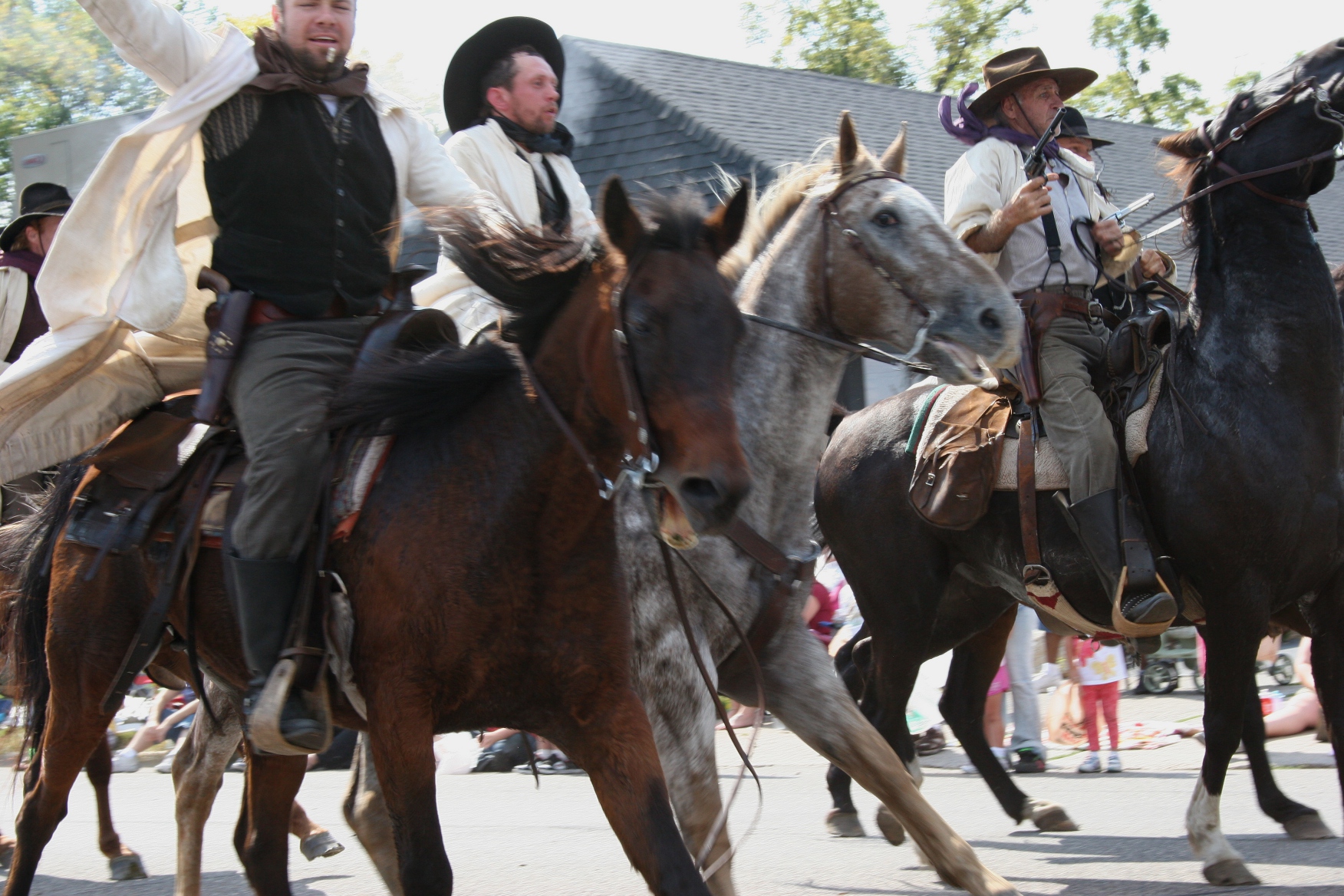
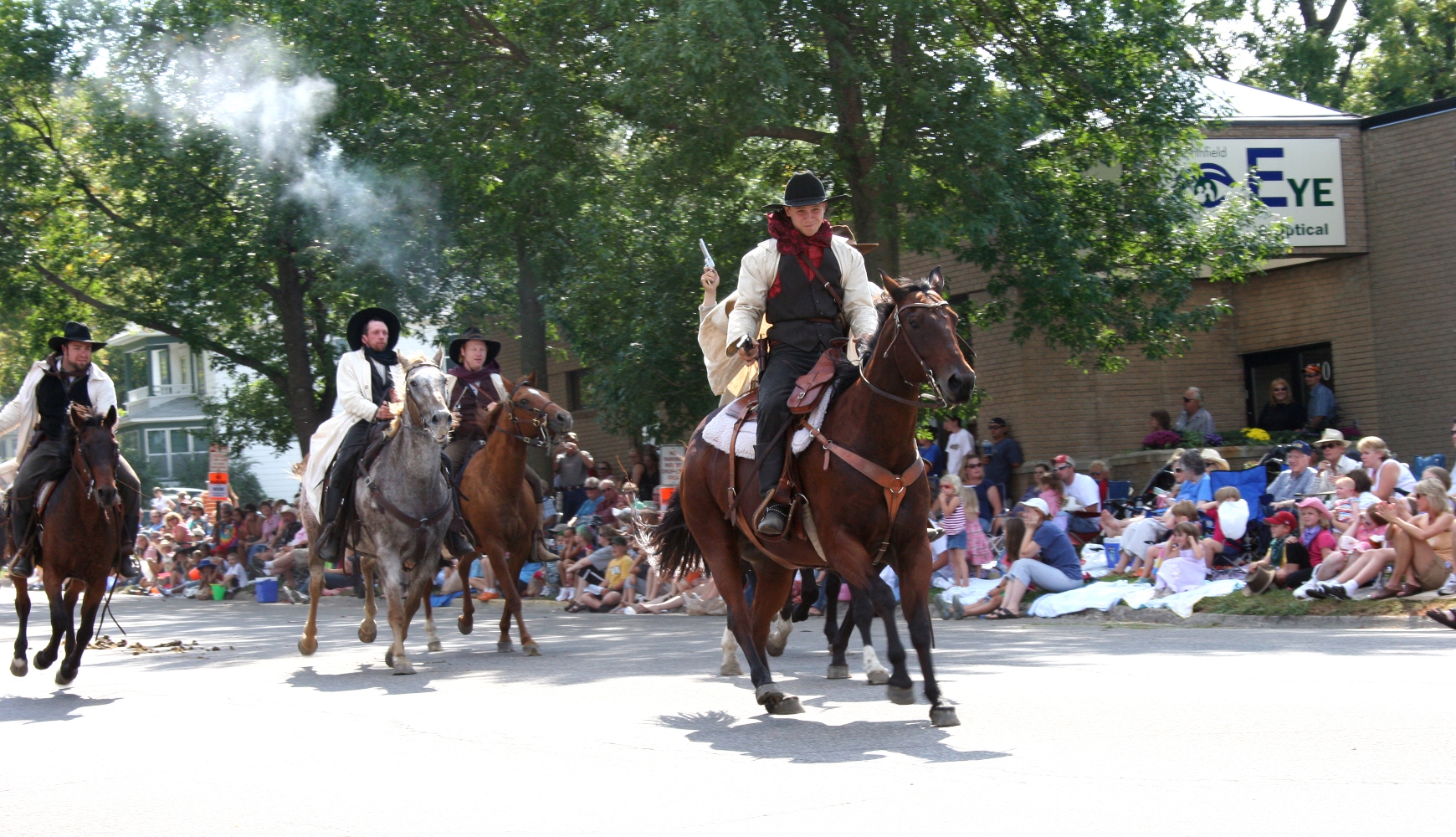
The James-Younger Gang re-enactors riding in The Defeat of Jesse James Days parade perhaps five years ago.

But I find myself, instead, captivated by Hakala’s intriguing play-by-play account of the James-Younger Gang bank robbery of September 7, 1876, as he leads us through the historical society and into the bank. I am embarrassed to admit that I’ve never visited this museum, site of perhaps the most historic bank robbery in U.S. history, even though I live only 15 miles away and once worked briefly as a newspaper reporter in this town.

This week some 100,000 visitors, according to Hakala, are expected in Northfield for the annual Defeat of Jesse James Days celebration September 5-9.
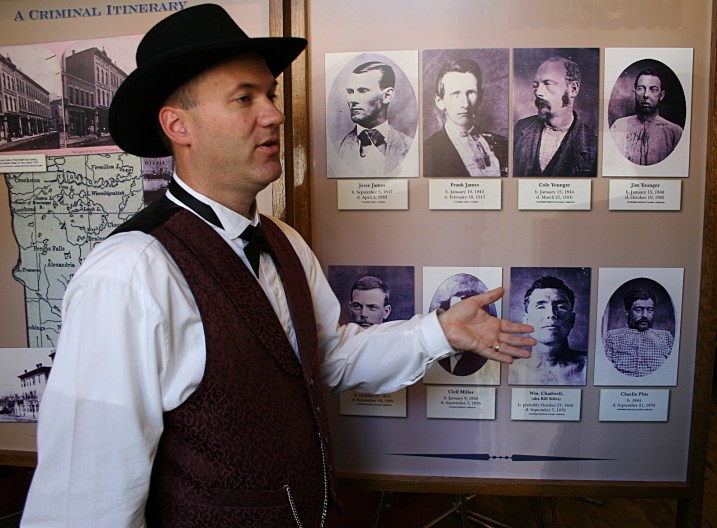
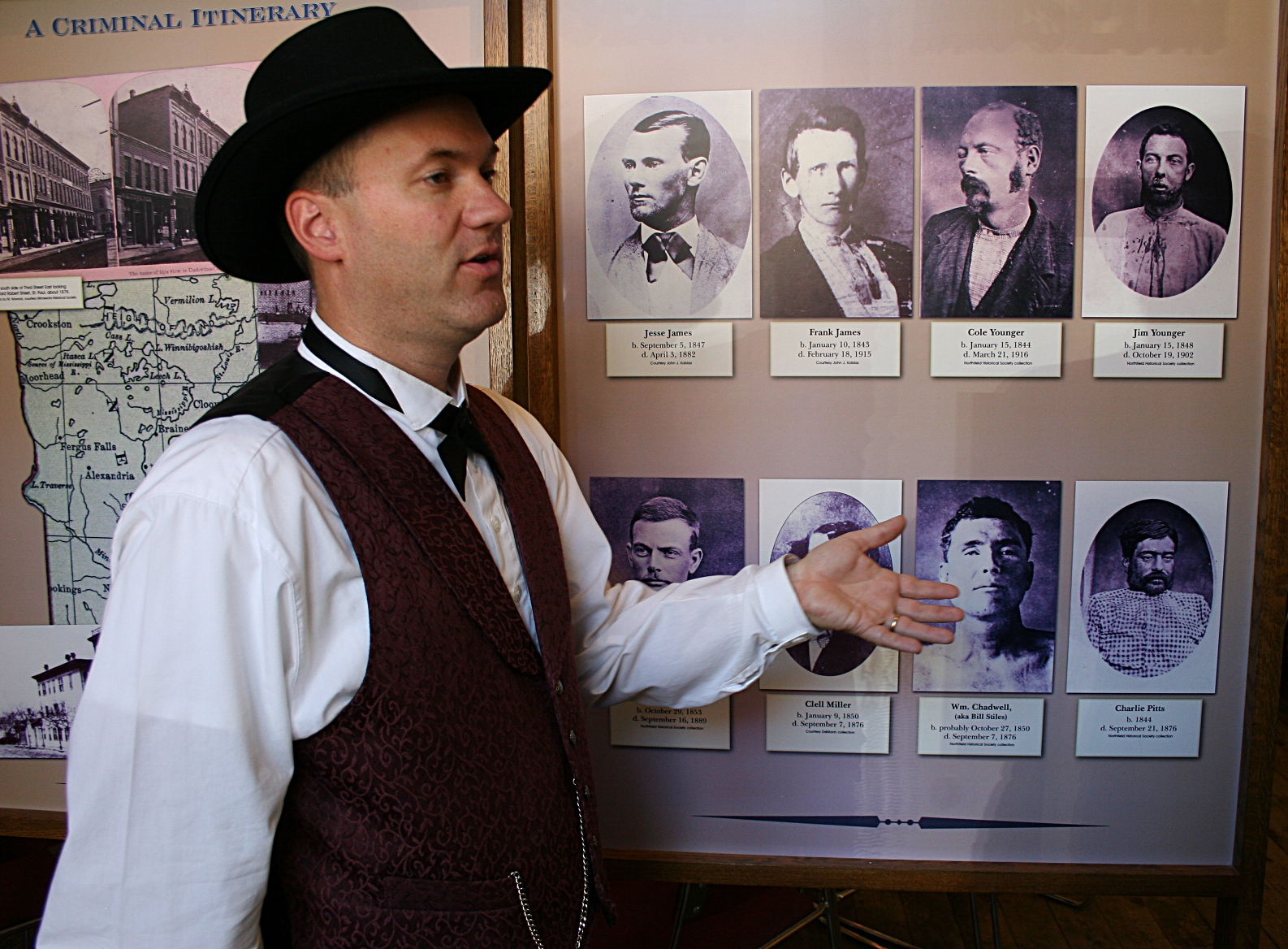
Christian Hakala talks about gang members involved in the Northfield bank raid, pictured to his left: Frank and Jesse James; Cole, Bob and Jim Younger; Clell Miller; William Chadwell; and Charlie Pitts.

The former history teacher, and now a fund raiser at Carleton College in Northfield, serves on the historical society board, volunteers as a tour guide and role plays a townsperson in the annual re-enactments of the bank robbery. His knowledge of the crime is precise, right down to the minute on the original bank clock, stopped at 1:50 p.m., the time of the deadly and unsuccessful robbery.
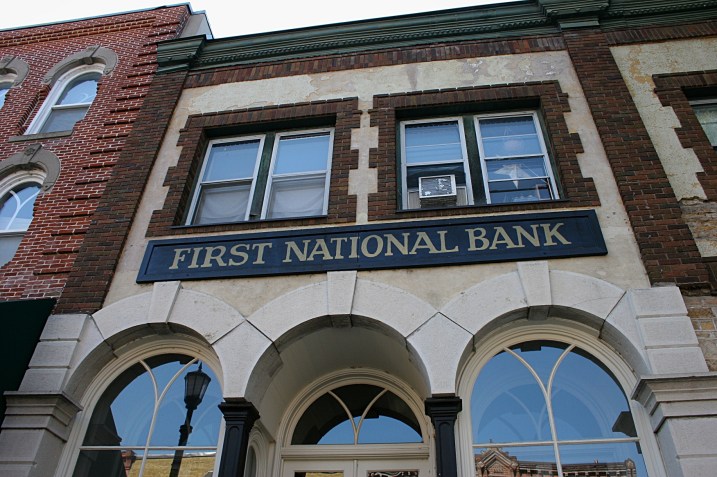
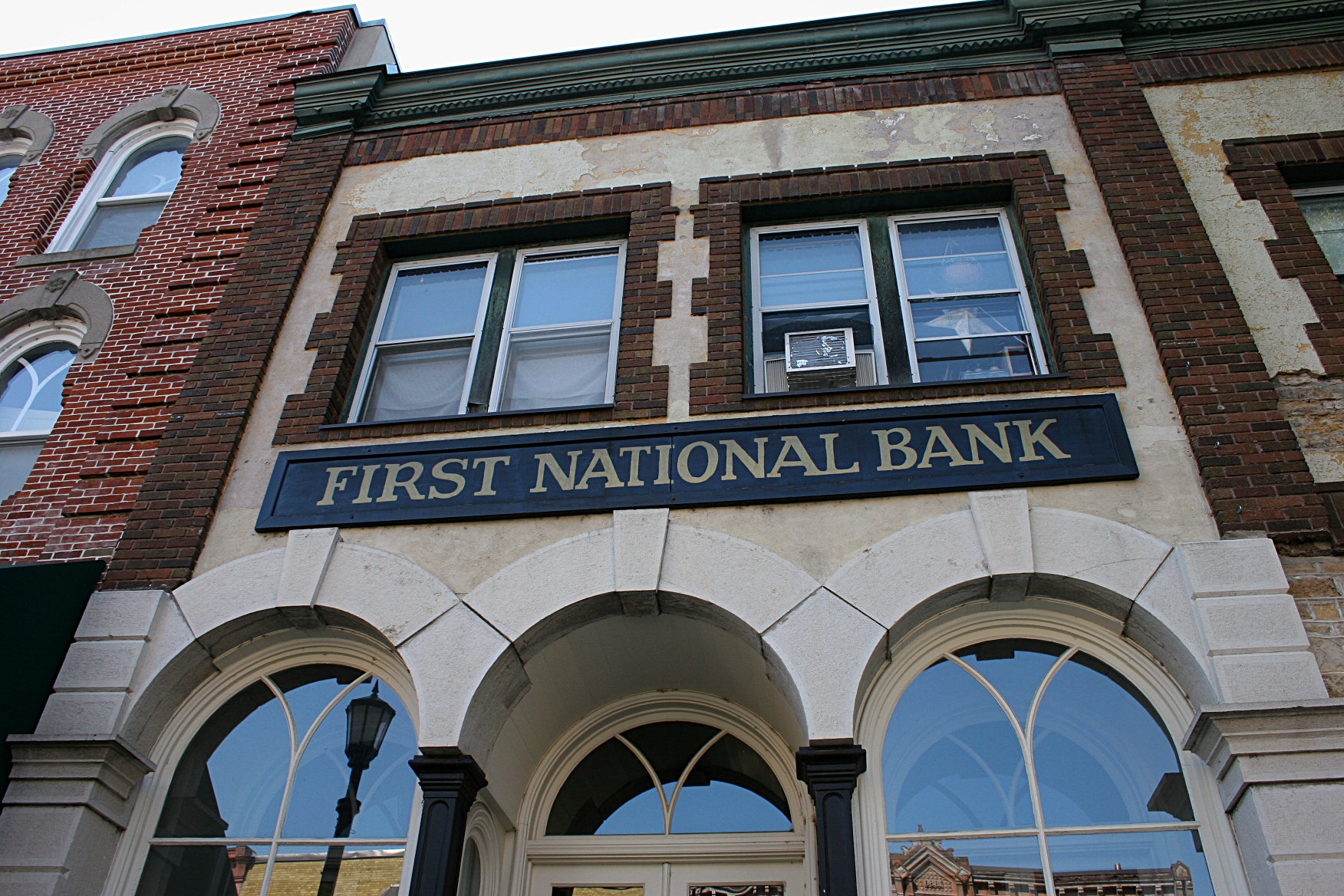
The front of the original First National Bank of Northfield. I didn’t photograph the entire building as the sidewalk in front of the bank was torn up and blocked for installation of sidewalk poetry.

It was all over in seven minutes with four shot dead, including acting cashier Joseph Lee Heywood who refused to allow the robbers into the vault; Swedish immigrant Nicolaus Gustafson; and outlaws Clell Miller and William Chadwell.
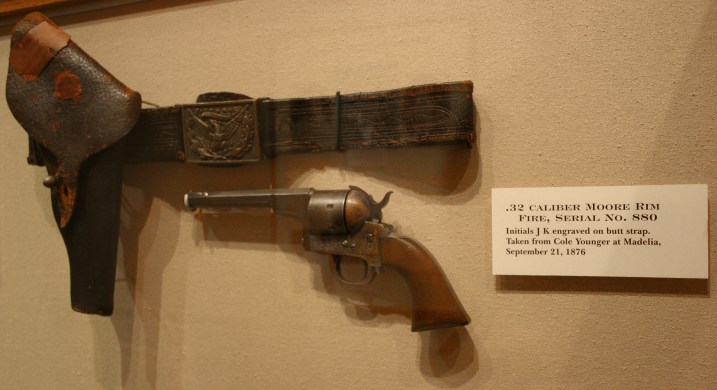
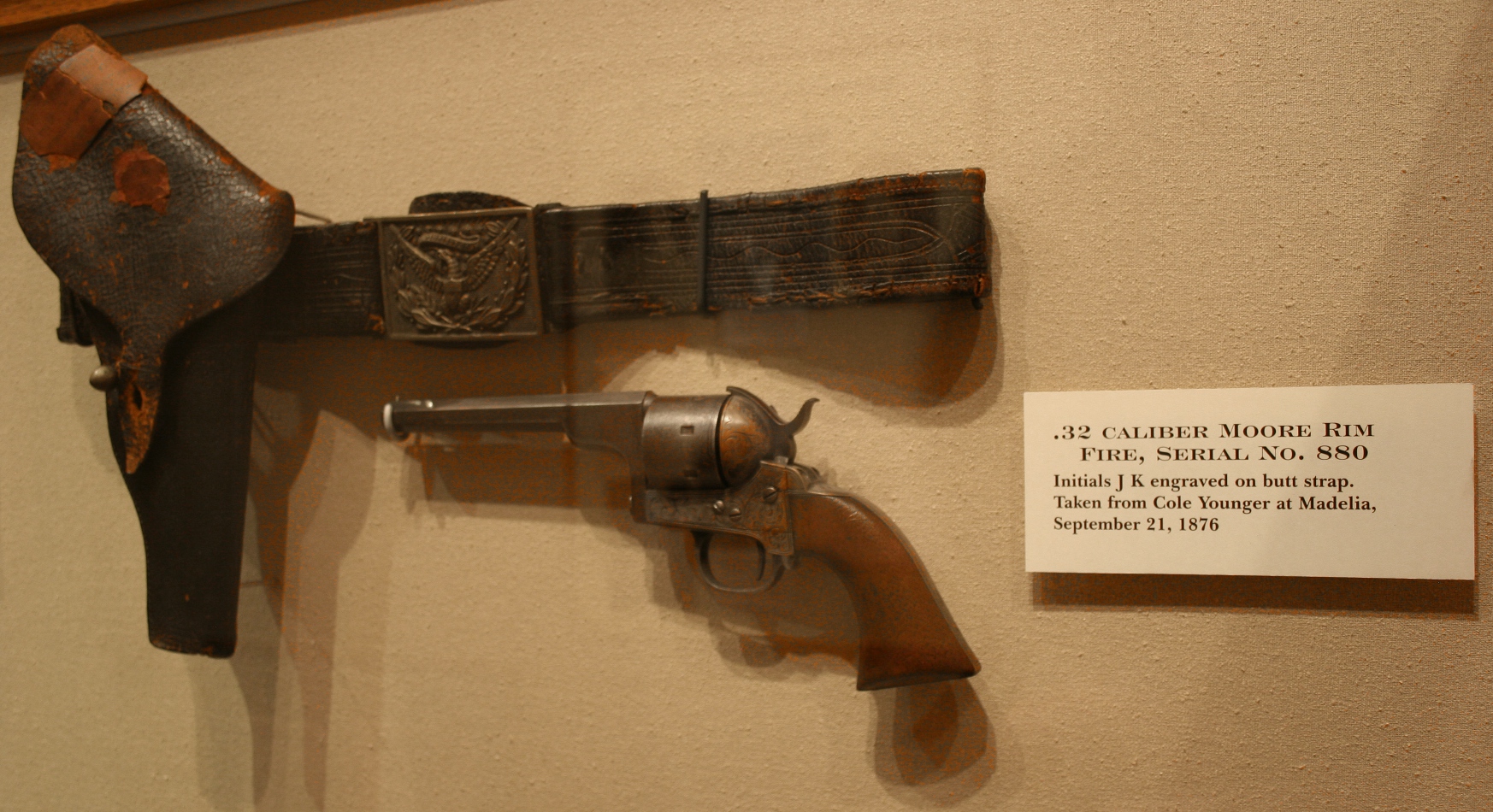
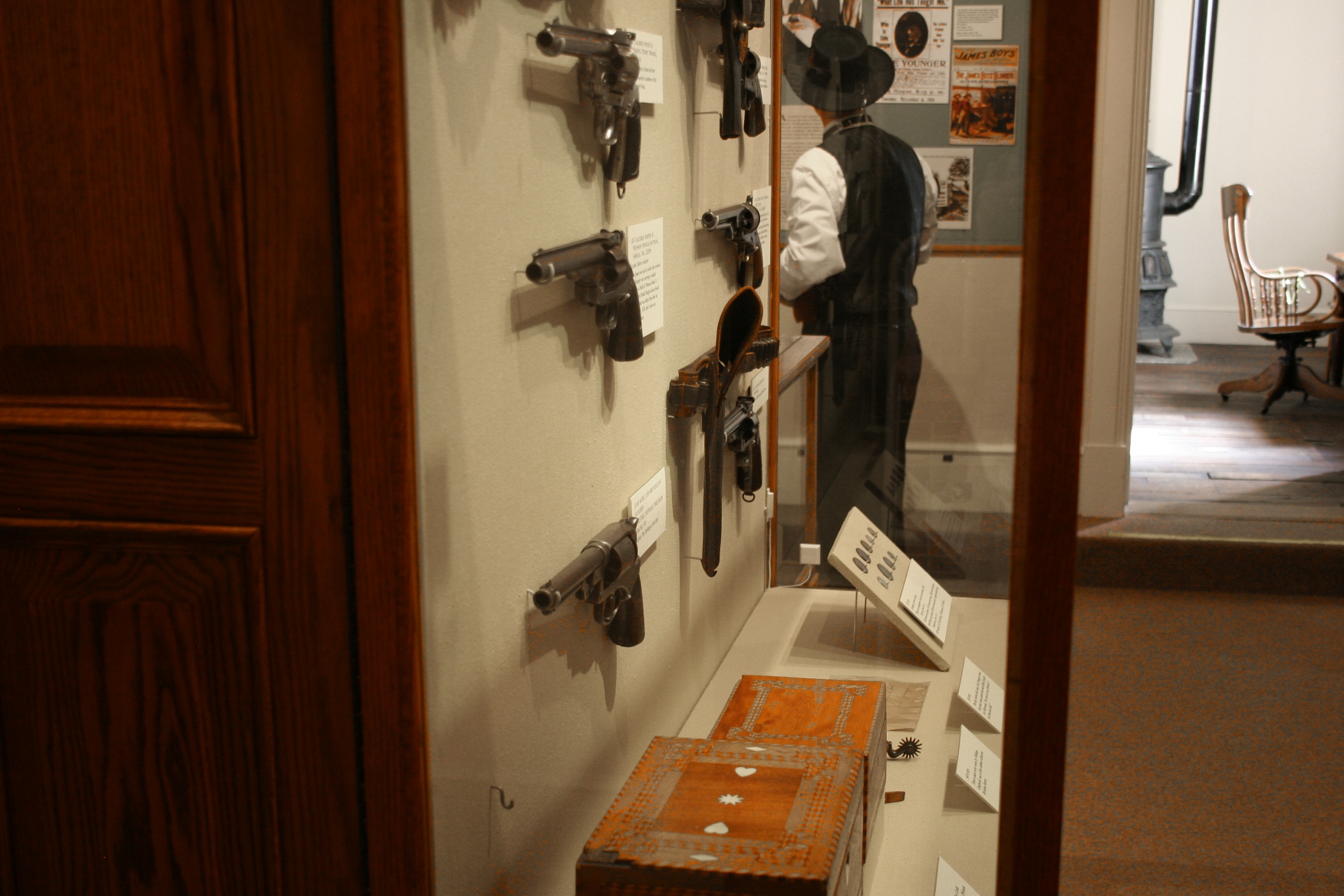
The gun confiscated from Cole Younger when he was captured two weeks later near Madelia. I shot this glass-encased weapon in available light, without a tripod and without flash, meaning quality is not there in this image.

Not until the end of the tour does Hakala reveal that efforts are currently underway to exhume and determine if the presumed body of gangster Miller, buried in his home state of Missouri, truly is Miller.

Hakala explains: Then-medical student Henry Wheeler, who shot Miller from an upper story level of a building across the street from the bank, dug Miller from his grave and shipped the body from Northfield to his Michigan medical school for dissection and study. Later, Wheeler would return the supposed body of Miller to his family in Missouri. But, as the story goes, Wheeler kept a skeleton, purported to possibly be Miller, in a closet of his Grand Forks, N.D., medical practice office. That skeleton is today owned by a private collector.

The Miller family, Hakala says, is cooperating in proposed plans to positively identify the body buried in Missouri via forensic testing. The body was badly decomposed and thus not identifiable by the time it was received by the Miller family for burial.

Wheeler’s actions, Hakala further says, would not have been all that unusual for the time period with a likely attitude of “I killed the guy. He’s mine.”

This recent development simply adds to the mystery and drama and varying versions of events and details which have long accompanied the James-Younger bank raid in Northfield. Hakala, a northeastern Minnesota native who has also lived and taught in Missouri, knows how perspectives and stories differ based on source locations.

Yet, Hakala assures that the minute-by-minute account he relates of the actual bank robbery is based on the eyewitness testimony of a bookkeeper, collaborated by a teller who also witnessed part of the hold-up.

The only portion of the original bank you’ll see in this post is to the right in the background, caught when I was photographing this display case in the adjoining museum space which is in a separate building.

I can’t possibly share with you here the entire scenario Hakala presented in his tour on Sunday. Nor can I show you images, because photography is not allowed inside the original First National Bank of Northfield. But I can tell you that walking upon the very same rough floor boards trod by outlaws with a 10-year history of successful raids on trains and in banks, eying the massive black vault (closed, but unlocked at the time of the crime) and seeing blood stains on the bank ledger makes an impression.
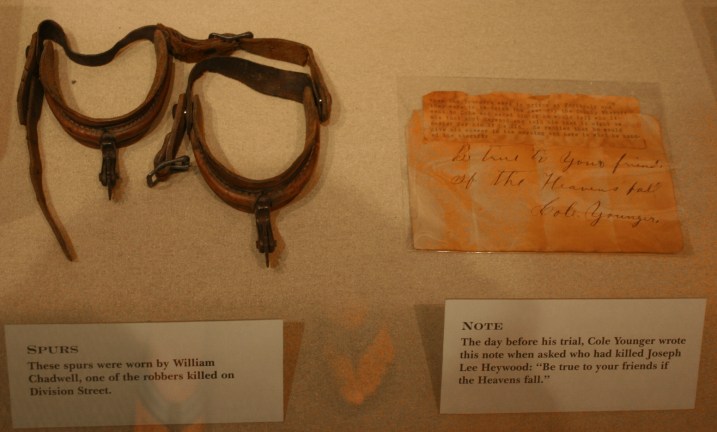
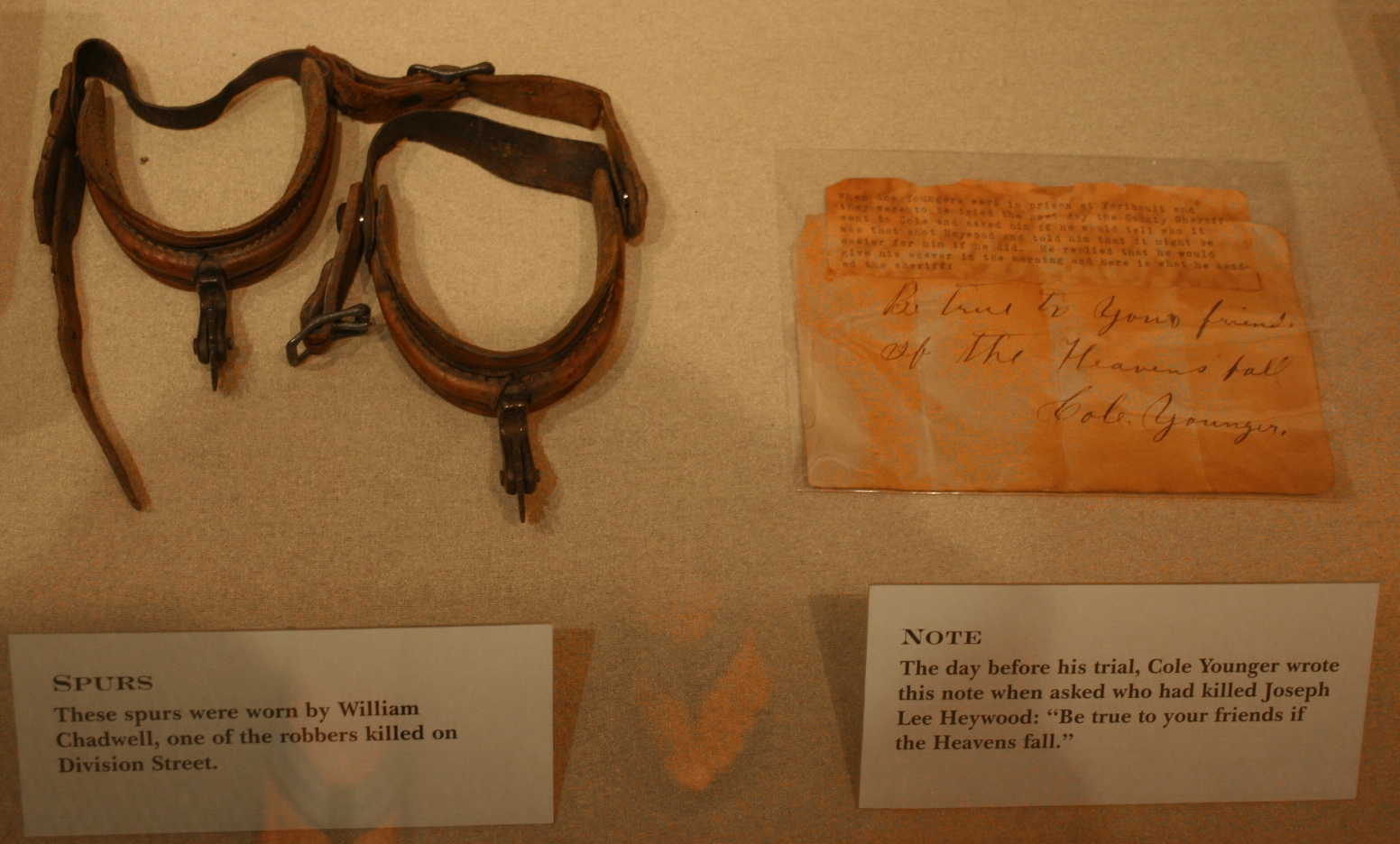
These two items in a display case caught my attention. On the right is a note written by Cole Younger the day before his trial. When asked who killed Joseph Lee Heywood, he answered. “Be true to your friends if the Heavens fall.” In other words, he wasn’t telling. To the left are spurs worn by outlaw William Chadwell, who was shot and killed on Division Street during the raid.

However, here are some select pieces of information presented by Hakala which I find particularly interesting:

  • Jesse and Frank James’ father was a Baptist minister.
  • The James-Younger Gang invented the “stick ’em up” bank hold-up, conducting the first bank raid during daylight business hours, in which no war was going on, in Northfield.
  • One theory surmises that the James-Younger Gang was trying to get back at the Union by robbing banks.
  • In following with that anti-Union theory, Hakala notes that Union General and post Civil War provisional governor of Mississippi Adelbert Ames was a member of the Northfield family—coincidentally Jesse Ames and sons—which owned the local Ames (flour) Mill. Adelbert’s father-in-law was Benjamin Butler, a Union general much-despised by Southerners. This could explain why the gang targeted Northfield since the Ames’ family had money in the First National Bank.
  • While there was $15,000 in the Northfield bank vault, the outlaws made off with only $26.70 in cash, and not from the vault, which was protected by hero/cashier Heywood.
  • The unarmed Heywood was shot out of frustration and “cold-blooded meanness” (Hakala’s words, not mine). He was also slit across the throat, just enough to scare him, and pistol-whipped.
  • Northfield townspeople were throwing cast iron skillets, tossing bricks and aiming birdshot at the trapped gang members as they tried to ride away from the narrow canyon-like street setting in Northfield.
  • A posse of some 1,000 people formed to track down the gang.  The three Younger brothers were shot and captured in a gun battle at Hanska Slough near Madelia. Charlie Pitts was killed there. Frank and Jesse James escaped to Missouri.
  • Jesse James was killed by a friend and fellow gang member, Robert Ford, in 1882 for the reward money.
  • Postcards featuring photos of the dead outlaws, Clell Miller and William Chadwell, were sold to the public after their bodies were taken to a professional photography studio in Northfield and photographed.
  • It is written into a lease on an apartment across the street from the original First National Bank that re-enactors can use the apartment each year for bank raid re-enactments. An actor is stationed in the upper level room to portray medical student Henry Wheeler shooting, and killing, Clell Miller.
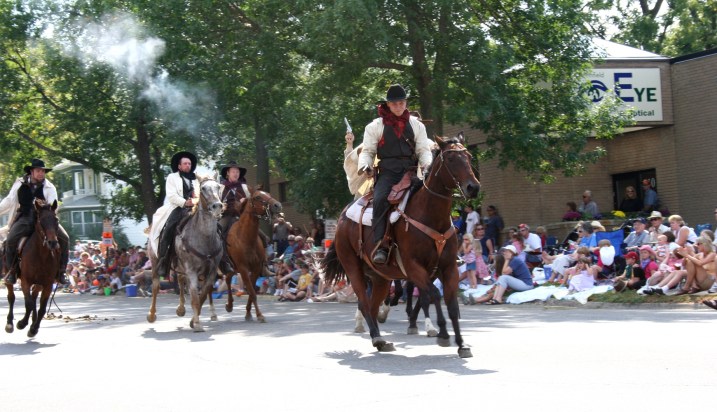
Another shot of the James-Younger Gang re-enactors riding in The Defeat of Jesse James Days parade several years ago.

If you wish to witness the seven-minute bank raid re-enactment, this is the week to do so. Performers will shrug into their long linen dusters, tuck their sidearms in place, saddle up and shoot it out at the Northfield Historical Society Bank Site & Museum, 408 Division Street in downtown Northfield.

Re-enactments are set for 6 and 7 p.m. Friday, September 7—the actual date of the robbery—and at 11 a.m. and 1, 3 and 5 p.m. on Saturday and at 11 a.m. and 12:30 p.m. on Sunday.
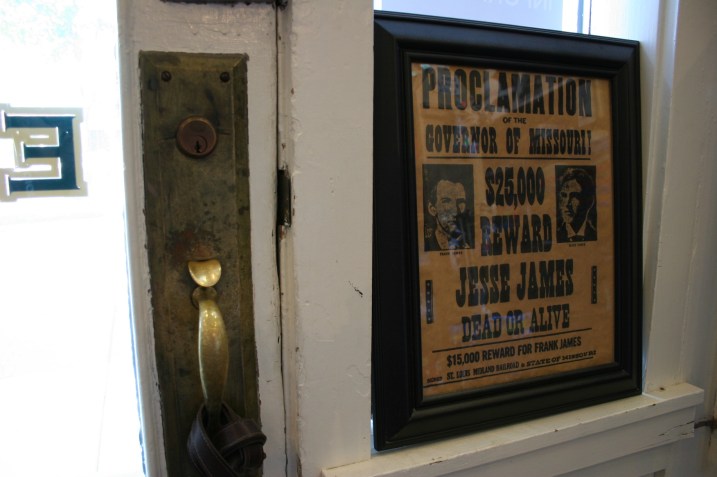
A copy of a wanted poster posted next to the front door of the museum.

For a complete listing of The Defeat of Jesse James Days activities, click here.

For more information about the bank site and museum, click here.
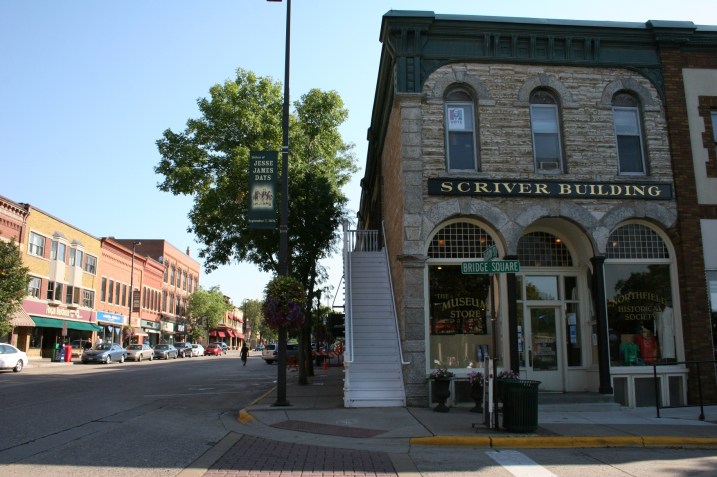
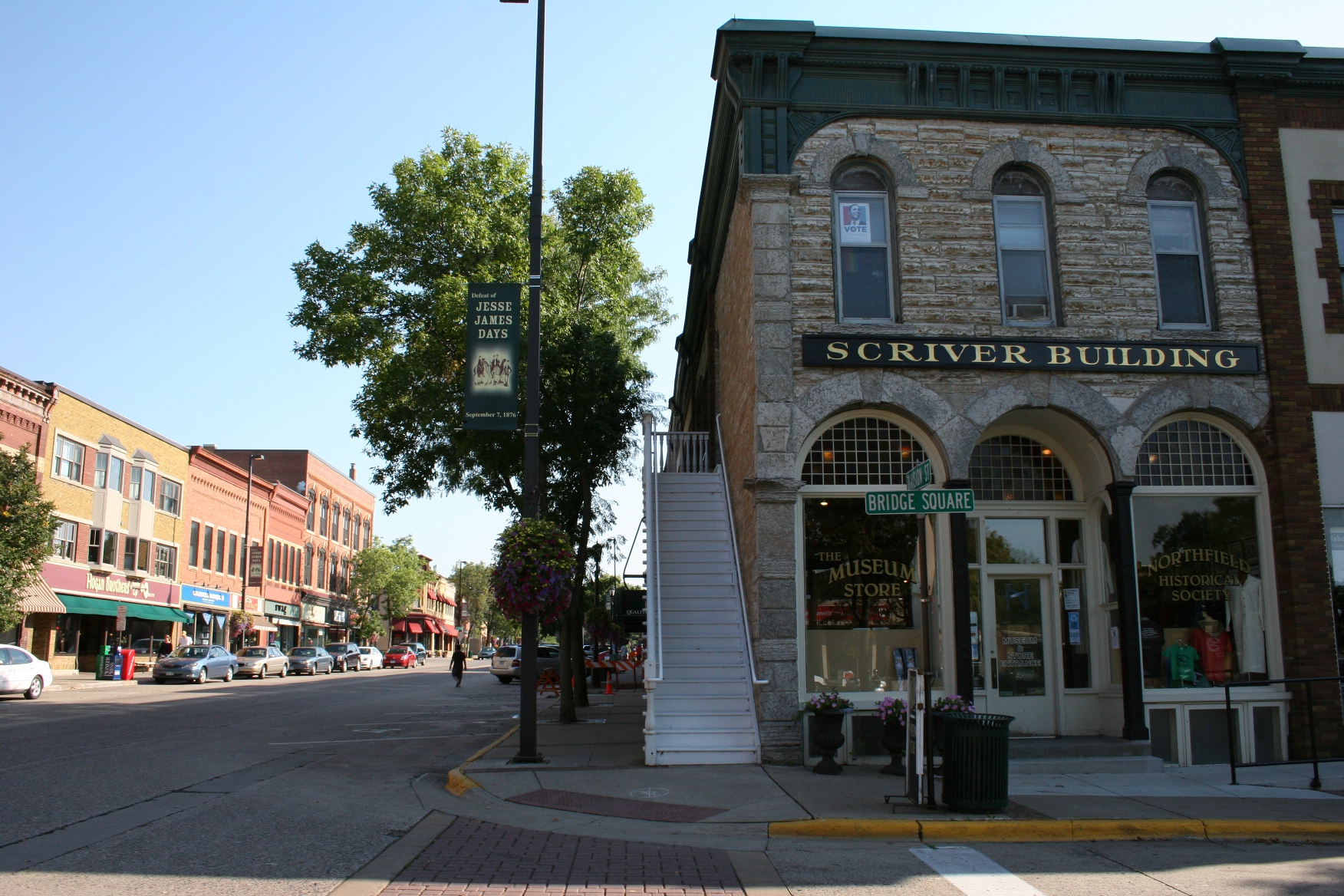
The front of the museum. If you look underneath the white steps, you’ll find three holes ringed in black, supposedly bullet holes made during the raid. It’s conjecture with nothing proven, according to Christian Hakala, who has his doubts about the holes being made by bullets. That’s Division Street on the left.
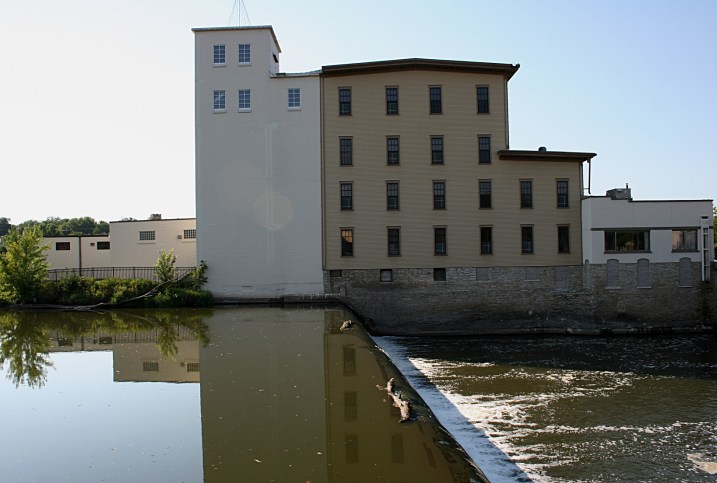
The original Ames Mill, once owned by Jesse Ames and sons, and today owned by Malt-O-Meal. It’s located around the corner and across the river from the bank. The company’s hot cereal is made here in the old flour mill.

© Copyright 2012 Audrey Kletscher Helbling


New exhibit highlights Rice County in the U.S.-Dakota War of 1862 September 2, 2012

IT IS EASY TO FORGET SOMETIMES, because I grew up in the region of Minnesota where the U.S.-Dakota War of 1862 was centered, that residents of the county in which I now live also played an integral role in the conflict.

Specifically, Rice County residents Bishop Henry Whipple and Alexander Faribault, after whom my community of Faribault is named, are key persons often noted in historical information written about the war.

I am always surprised that relatively few people from outside of southwestern and central Minnesota know so little about the bloody, six-week war between the Dakota and the white settlers and soldiers given it is a major, defining event in Minnesota history.

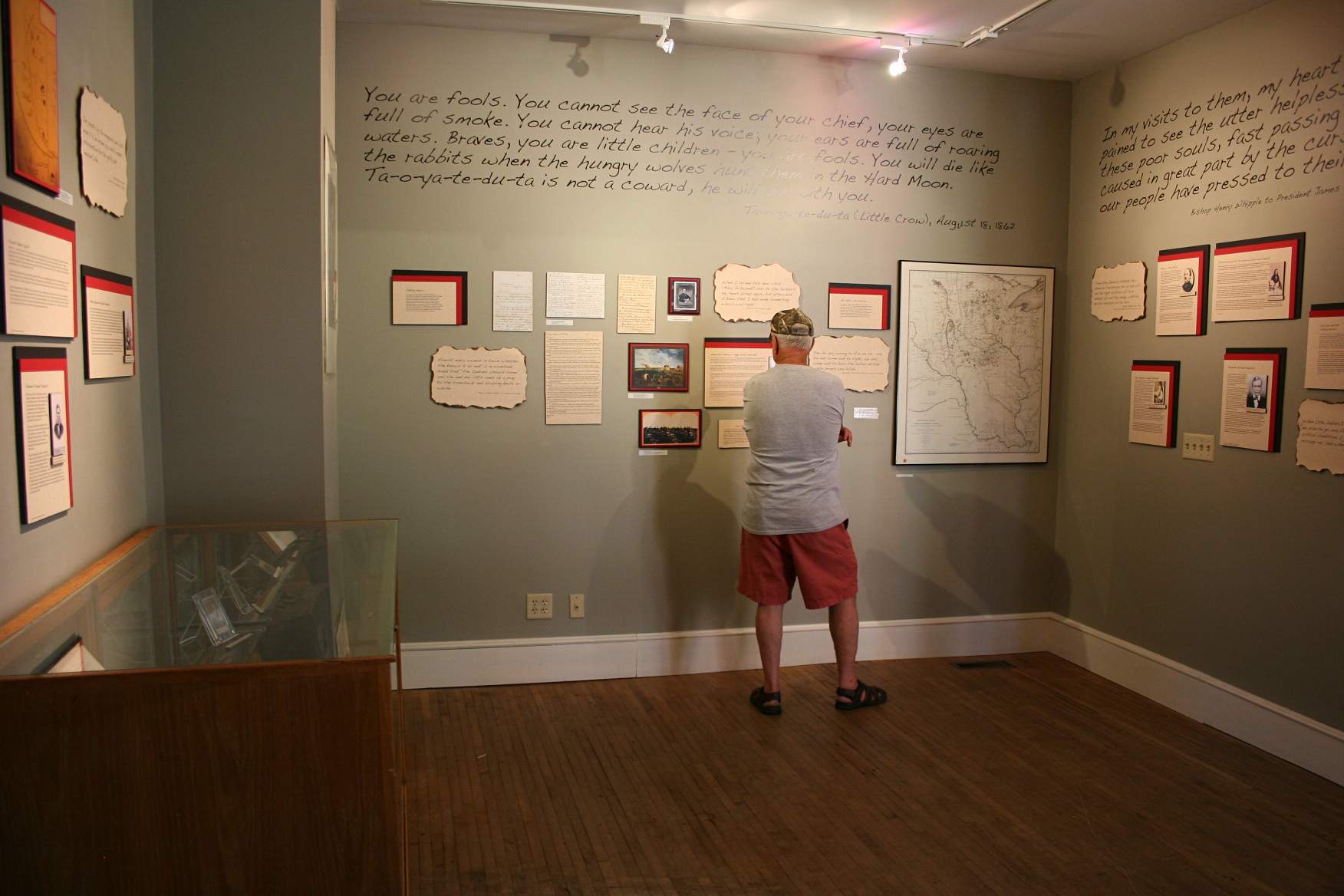
An overview of 1862, Through Rice County’s Eyes, which opened August 22 in Northfield.

However, awareness has grown considerably this year on the 150th anniversary of the war, including right here in Rice County. The Northfield Historical Society, partnering with the Rice County Historical Society, is currently showcasing an exhibit, 1862, Through Rice County’s Eyes.

I recently checked out the Northfield exhibit, which features mostly memorable quotes, volumes of summarized information and copies of photos. It’s a lot of reading.

But if you’re interested in educating yourself, it’s worth the time and concentration needed to absorb the information presented in this exhibit. And I’ll admit to occasionally skimming the postings because I am more of a visual, multi media, show-and-tell kind of history learner. I also had a pretty good background of knowledge going into the exhibit.

This sculpture of Alexander Faribault trading with a Dakota trading partner stands in Faribault’s Heritage Park near the Straight River and site of Faribault’s trading post. Faribault artist Ivan Whillock created this sculpture which sits atop a fountain known as the Bea Duncan Memorial Fountain.

I knew, for example, that fur trader Alexander Faribault was one-quarter Dakota and married to Mary Elizabeth Graham, whose mother was a family member of a Dakota chief. I knew, too, that Faribault was involved in the negotiating and translating of land treaties between the government and the Dakota before the war and that he benefited financially.

I was aware that Alexander Faribault sheltered the Dakota.

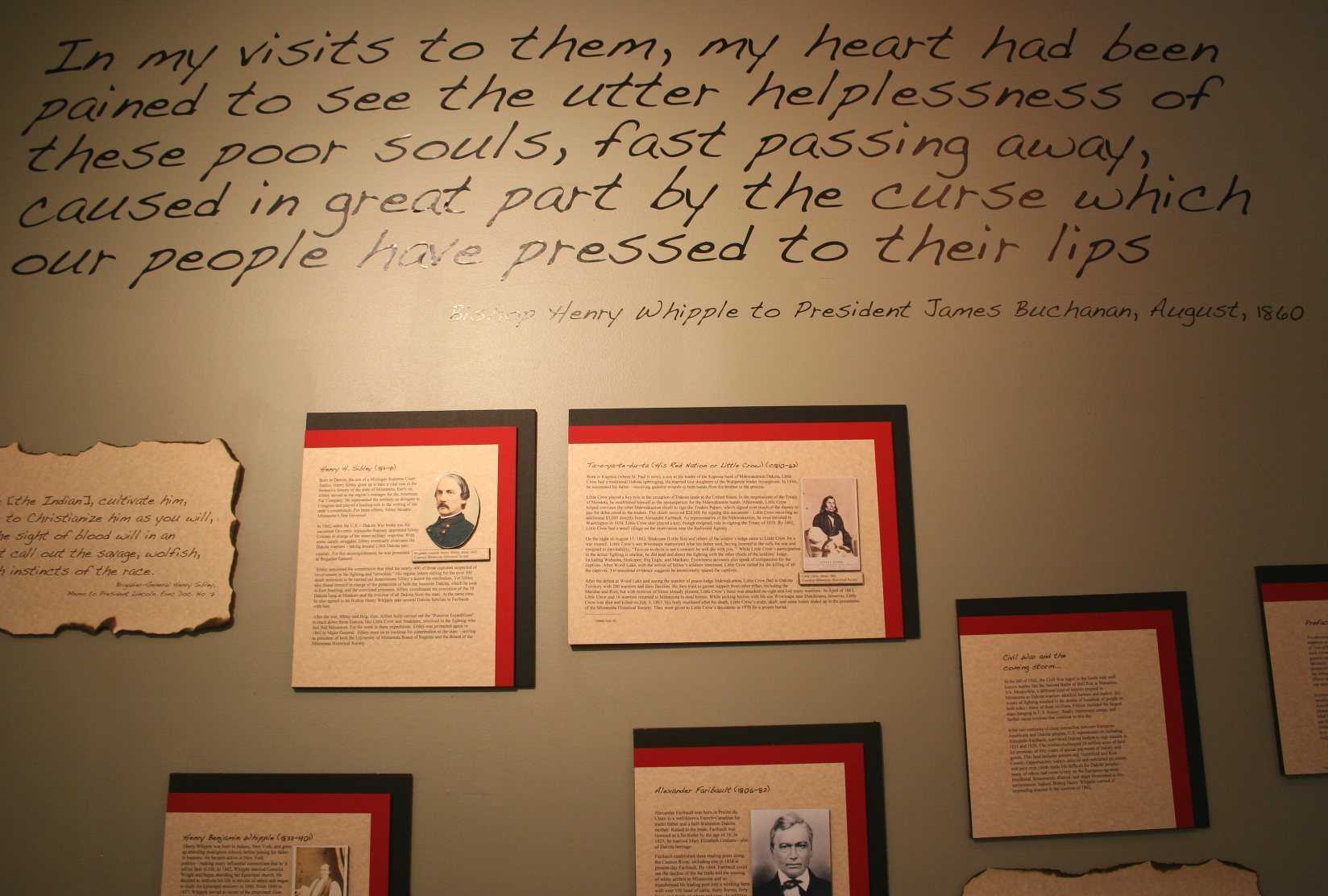
Above the photos and info is this quote by Bishop Henry Whipple to President Buchanan in August 1860: “In my visits to them, my heart had been pained to see the utter helplessness of these poor souls, fast passing away, caused in great part by the curse which our people have pressed to their lips.”

But I had forgotten that Bishop Henry Whipple, a long-time advocate for the rights of the Dakota and known to them as “Straight Tongue,” worked to find a safe refuge for them in the city of Faribault.

Alexander Faribault opened his land to the Dakota. Information in the exhibit states:

This land was the only safe-haven of its kind in a state now prejudiced in fear and anger against anyone with Dakota blood.

According to info in the exhibit, Alexander Faribault, whom you recall was one-fourth Dakota, also experienced prejudice against him. By 1869, this once successful fur trader, flour mill owner and politician had to sell his land and assets, including the land occupied by the Dakota.

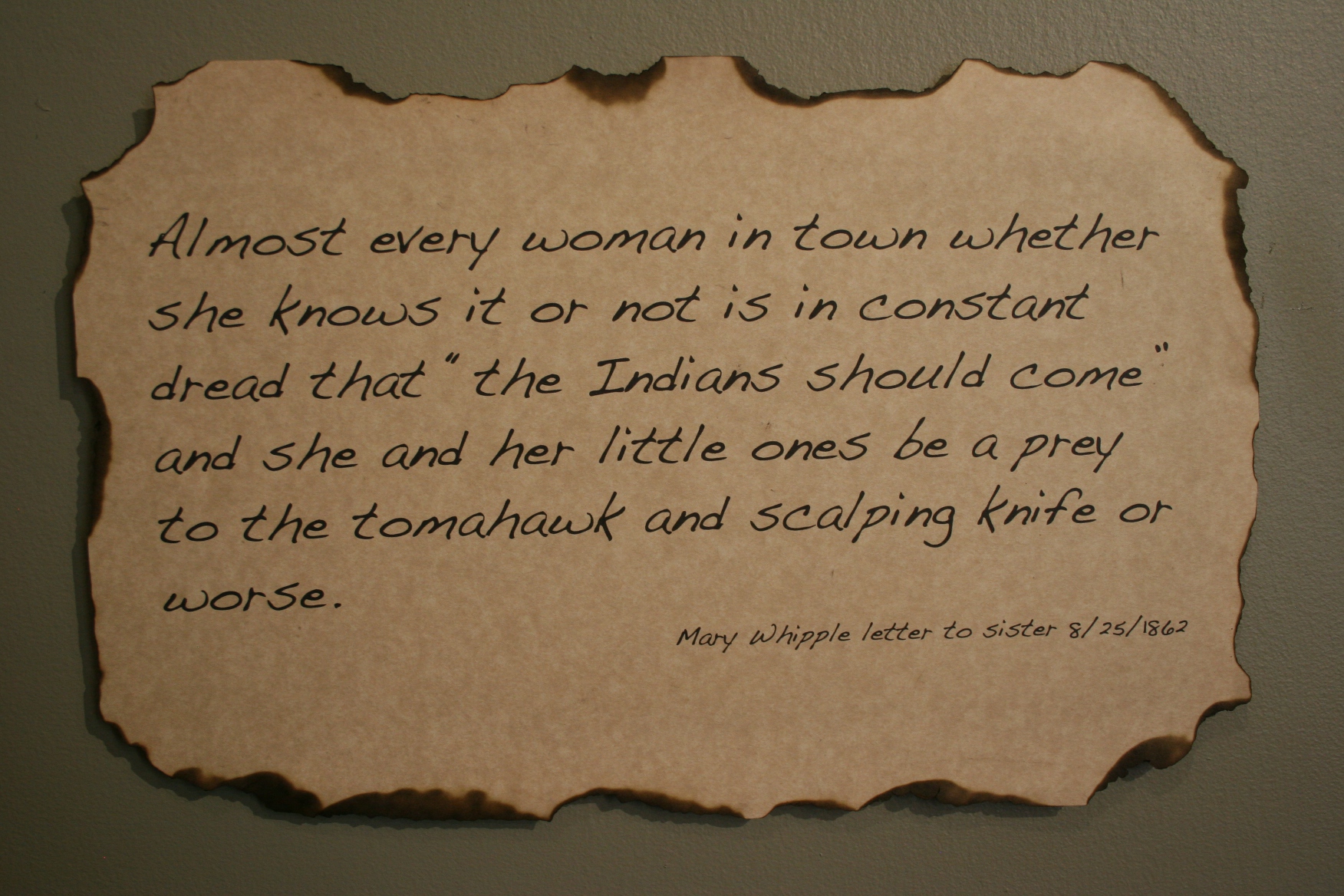
Equally interesting is the quote, below, attributed to Mary Whipple. Even though her husband, the bishop, worked tirelessly to help the Dakota, fear still existed in his home community.

A quote from a letter written by Mary Whipple to her sister during the U.S.-Dakota War.

Perhaps the most interesting fact I learned relates to that of Lt. Rollin Olin, a decade-long resident of Northfield. He was second in command of the Third Minnesota Regiment at the Battle of Wood Lake—the final battle of the war—and a member of a five-man military tribunal which tried the Dakota following the war. He signed more than 300 death sentences for nearly 400 Dakota charged with murder, rape and/or robbery.

For me, that raises the obvious question: How could someone who fought against the Dakota judge them without bias? All members of the tribunal, in fact, had fought the Dakota. The answer, of course, is that Lt. Olin and the other four could not.

Likewise, the Northfield Historical Society is wisely careful to indicate that its new, temporary exhibit may not please everyone or include everything on the topic of Rice County’s connection to the war. On the NHS website, you’ll read this disclaimer:

As varied as these and other local perspectives may be, any exploration of the U.S.-Dakota War of 1862 suffers from the inevitable limitations facing every historical examination—limitations such as scope and biases, past and present, which impact the telling and perception of the stories and data. In presenting the exhibit 1862, Through Rice County’s Eyes this fall, NHS endeavors to draw visitors into thoughtful interest and discussion of this momentous event and its aftermath by sharing local connections. Come and critically examine this exhibit.

The exterior of the Northfield Historical Society, 408 Division Street, Northfield.

FYI: To learn more about 1862—Through Rice County’s Eyes, click here to the NHS website.

To learn more about the Minnesota counties, county by county, involved in the U.S.-Dakota War of 1862, click here.

© Copyright 2012 Audrey Kletscher Helbling

 

Minnesota Museums Month: The Minnesota Machinery Museum, on the prairie May 1, 2012

THINK OF MUSEUMS in Minnesota, and what pops into your mind?

Probably the Science Museum of Minnesota or the Minnesota Children’s Museum or the SPAM Museum in Austin or any other such notable museum.

During May, “Minnesota Museums Month,” I challenge you to think beyond the obvious to those small town museums that are tucked away in nondescript buildings or along back roads or are mostly unknown except to those living within a region.

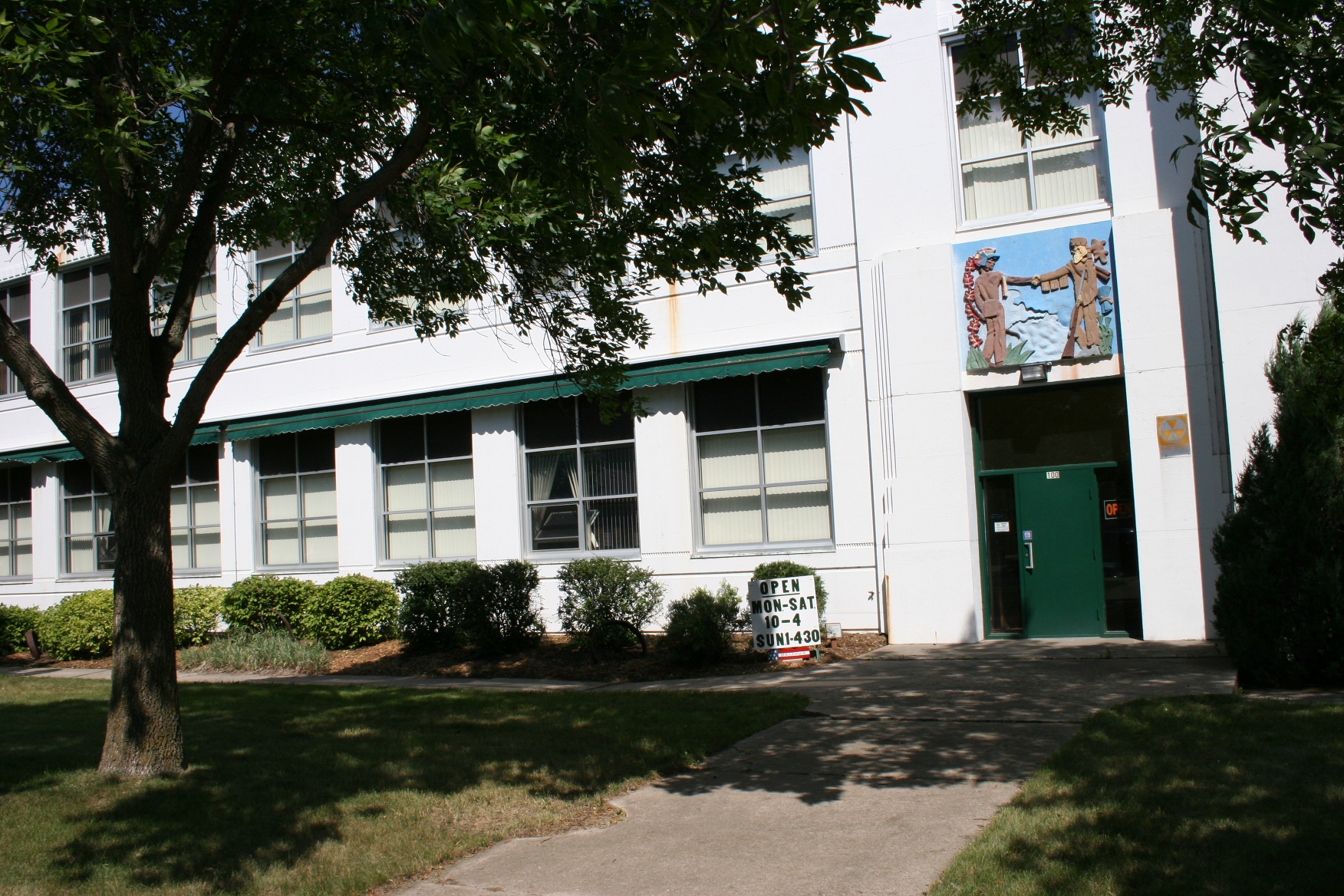
The Minnesota Machinery Museum in a 1939 WPA school building in Hanley Falls.

That leads me directly to Hanley Falls, home of the Minnesota Machinery Museum.

I expect already most of you are asking, “Where the heck is Hanley Falls?”

Hanley Falls, a small farming community, sits along State Highway 23 in southeastern Yellow Medicine County, nine miles south of Granite Falls on the southwestern Minnesota prairie.

It is one of those “blink and you miss it” type towns all too often dismissed by travelers simply flying by on the highway. Let me tell you, Hanley Falls is worth several hours of your time to tour this rural life museum which opened as the Yellow Medicine County Agricultural and Transportation Museum in 1980 and in 1994 became the Minnesota Machinery Museum.

For anyone who appreciates our state’s rich agricultural heritage, this museum rates as a must-see in the heart of our state’s richest farmland. I grew up in this strong agricultural region, in Redwood County next door to the east, and toured the museum for the first time in 2009. Yes, even I was unaware of its presence, having left the prairie in 1974 for college and subsequent employment.

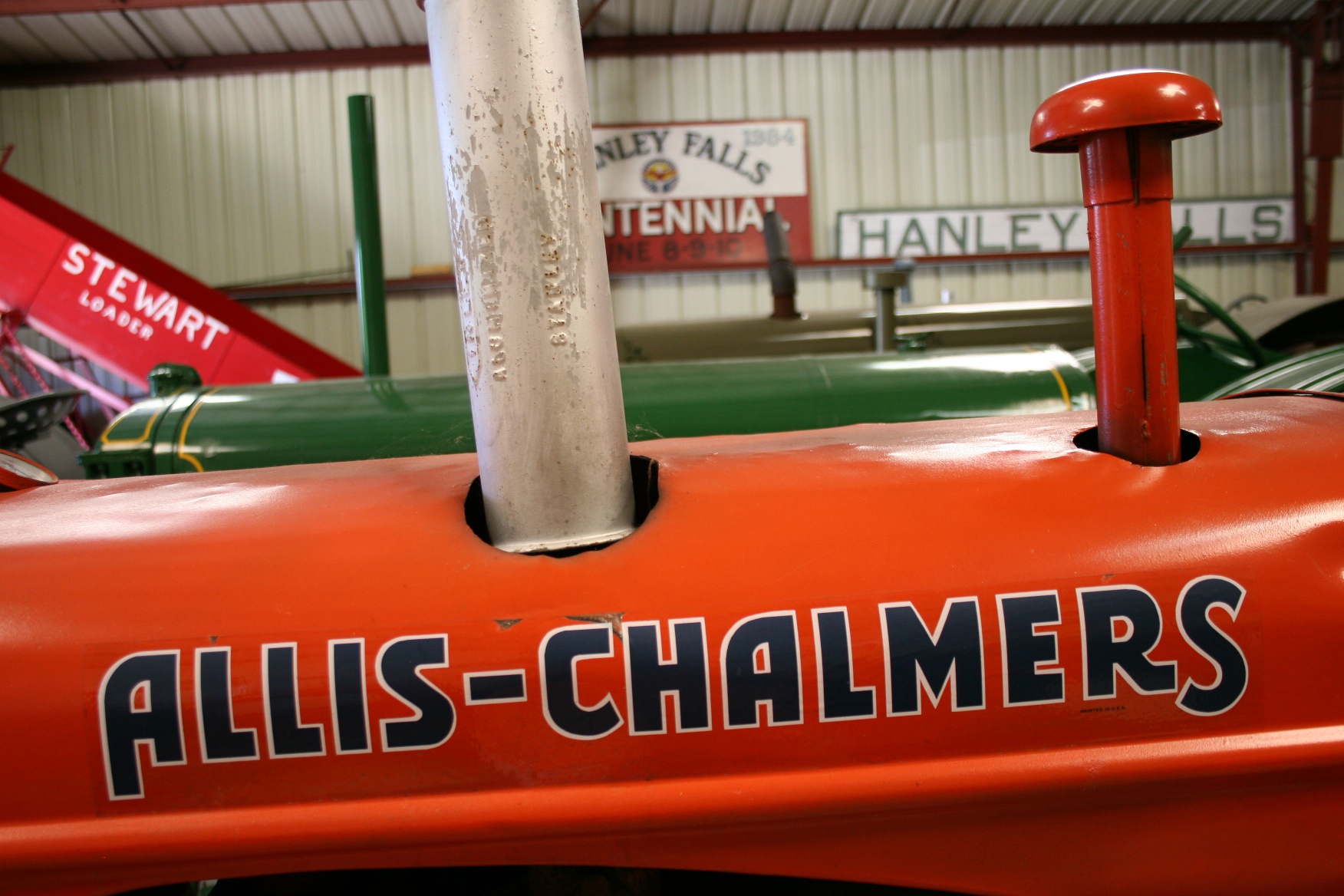
You'll see plenty of old tractors and farm machinery, along with vintage cars and trucks.

The Minnesota Machinery Museum, which is somewhat of a misleading name because it’s not all about farm machinery, reconnected me to my rural roots and educated me on the area’s agricultural history. During my 2009 visit, I learned that visitors will discover “the things you would find on a typical farm before the 1950s” with thousands of artifacts primarily from surrounding communities in a several-county area.

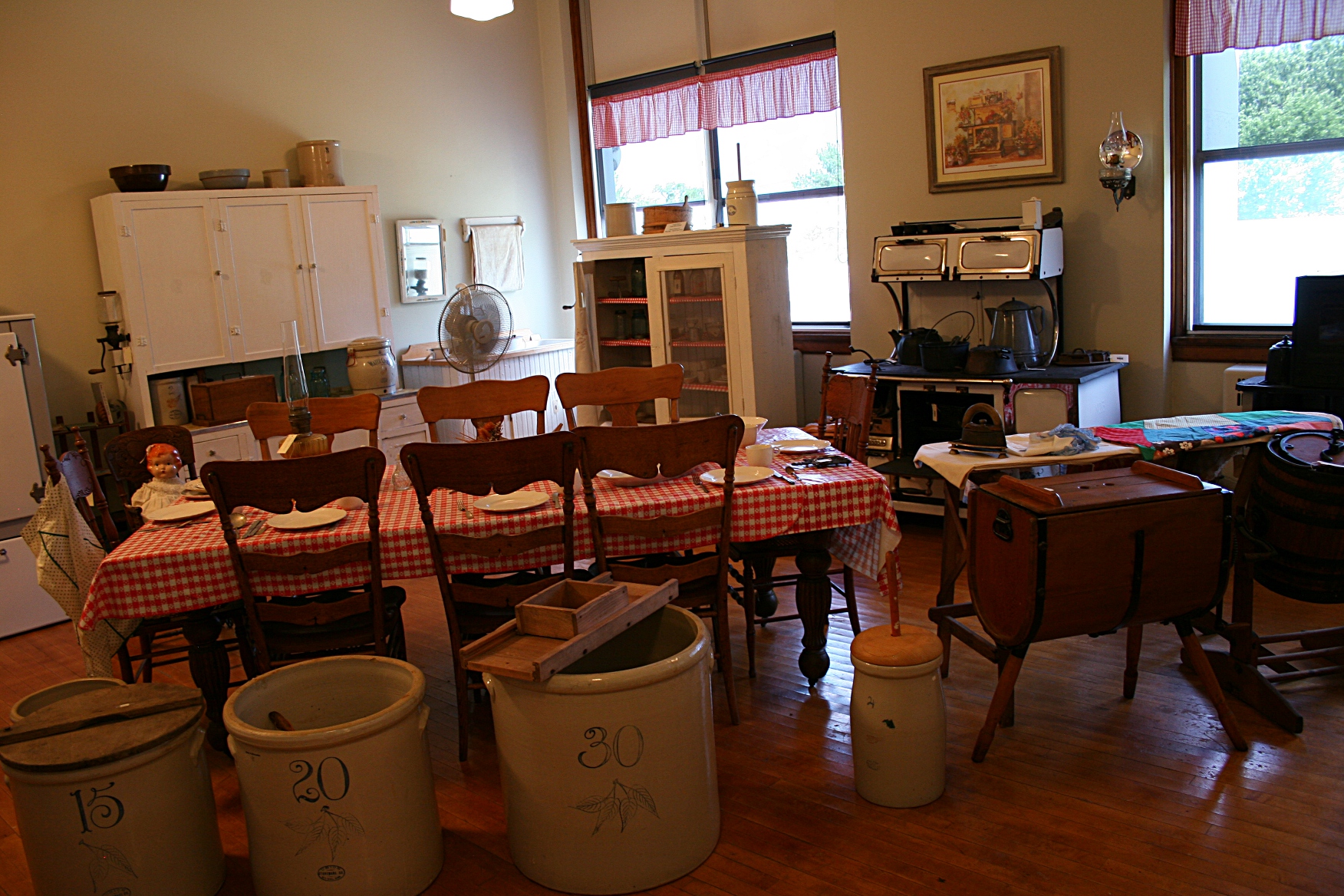
An old-style farm kitchen on the second floor of the museum.

All of those artifacts are housed in five buildings, including a sprawling two-story 1939 Works Project Administration school, on six acres. The first floor of that former school, during my visit, was packed with mostly farm-related equipment while the second floor housed the domestic side of rural life.

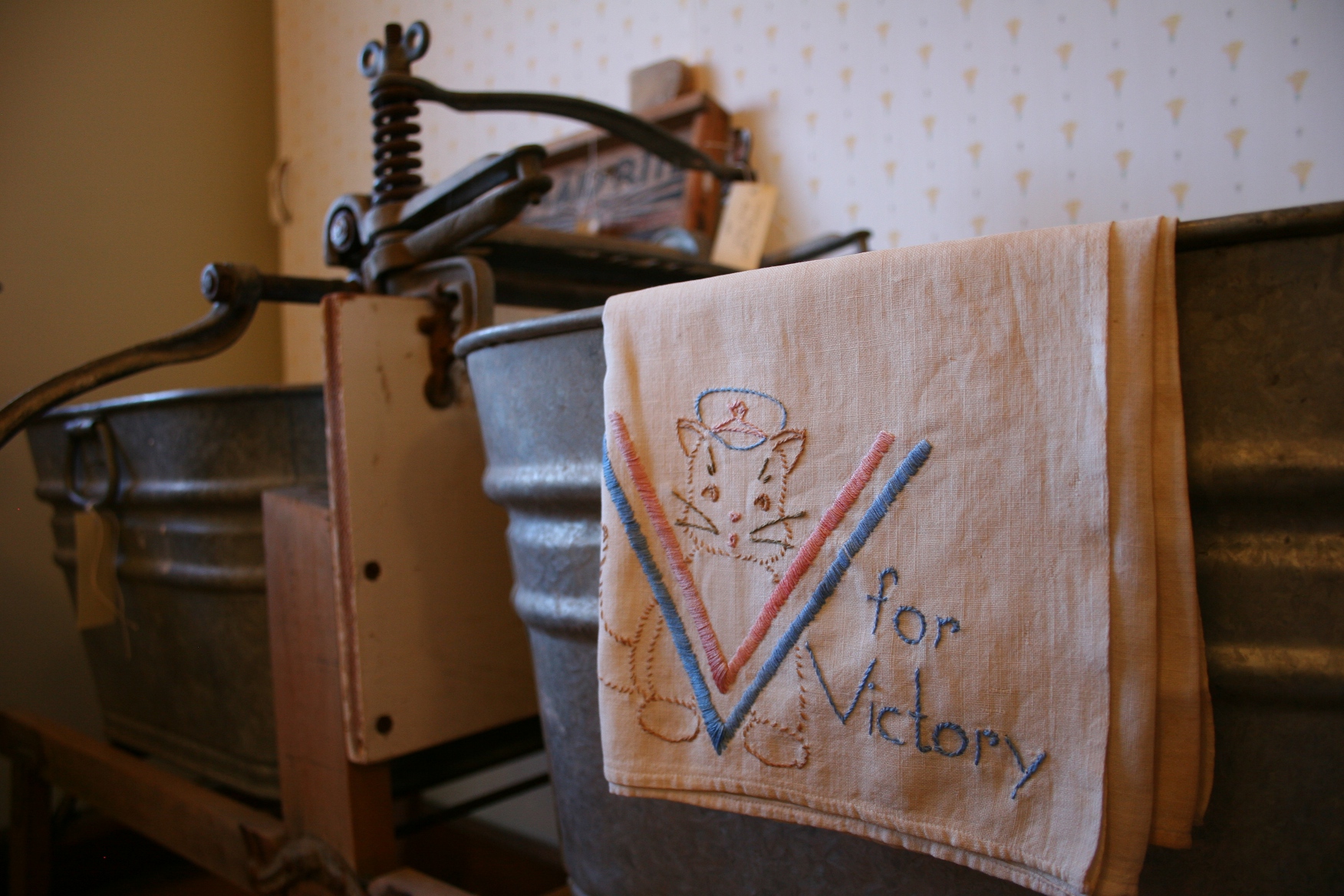
A vintage embroidered dish towel and old wash tubs, both familiar to me. My mother used a wringer washer with wash tubs during the early years of my life on a southwestern Minnesota dairy and crop farm.

It is the mission of the museum, according to its website, “to recapture a century of stories about farm life. Implements, tools, tractors and gas engines in mint condition along with rural art help you look back to an era when neighbors worked together to harvest their crops, raise barns and build a better life for their families.”

Read those words again. They are the essence of this place—the feeling of community, the sense of neighborliness, the embodiment of that which defined rural life at one time. Yes, that life has changed. Neighbors don’t always know neighbors. Oversized farm machinery has, for the most part, replaced the need for neighbors to work together. Barns are falling into heaps of rotting wood. This museum preserves a way of life that exists mostly in stories now.

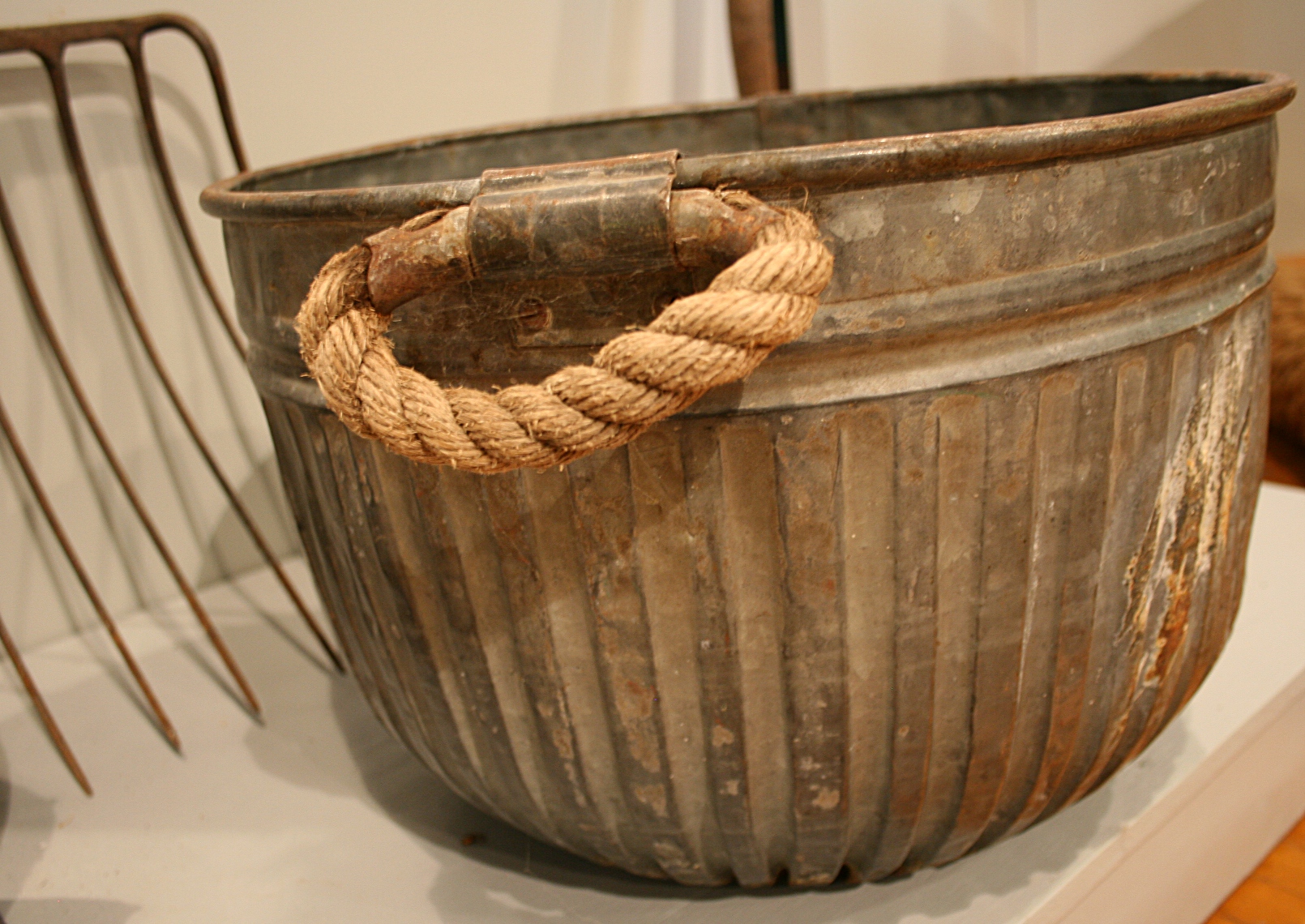
This bushel basket in the museum brought back memories of feeding cows.

The Minnesota Machinery Museum is as impressive as any you’ll visit in Minnesota. Take time to seek it out, to turn off the highway into Hanley Falls rather than driving by without even a thought of the historical treasure that lies within this small southwestern Minnesota prairie community.

FYI: The Minnesota Machinery Museum is open May – September from 10 a.m. – 4 p.m. Monday – Saturday and from 1 p.m. – 4:30 p.m. on Sunday and is closed on holidays. Click here for more information about the museum.

© Copyright 2012 Audrey Kletscher Helbling
 

Elephant poop paper and other discoveries at a Wisconsin museum April 18, 2012

ELEPHANT DUNG PAPER: The elephant’s high-fibrous diet makes for excellent paper!

If I had not read the above words at The Paper Discovery Center in Appleton, Wisconsin, I would have thought this to be a bunch of crap.

But would the creators of a paper discovery center spread untruths? I think not. After my recent visit to this museum, I followed up with online research. That led me to elephantdungpaper.com and more information about the elephant poop paper making process. Click here for details.

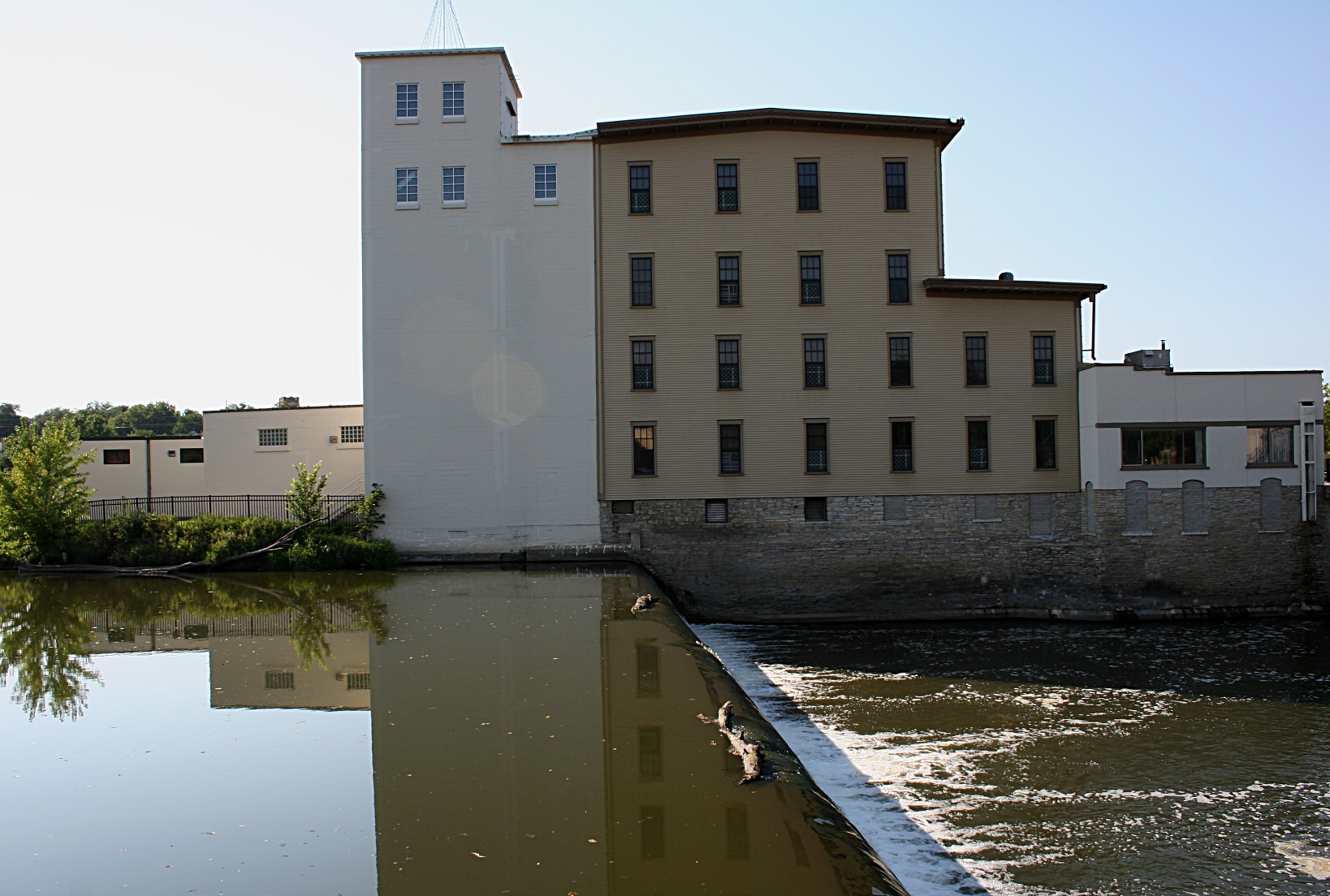
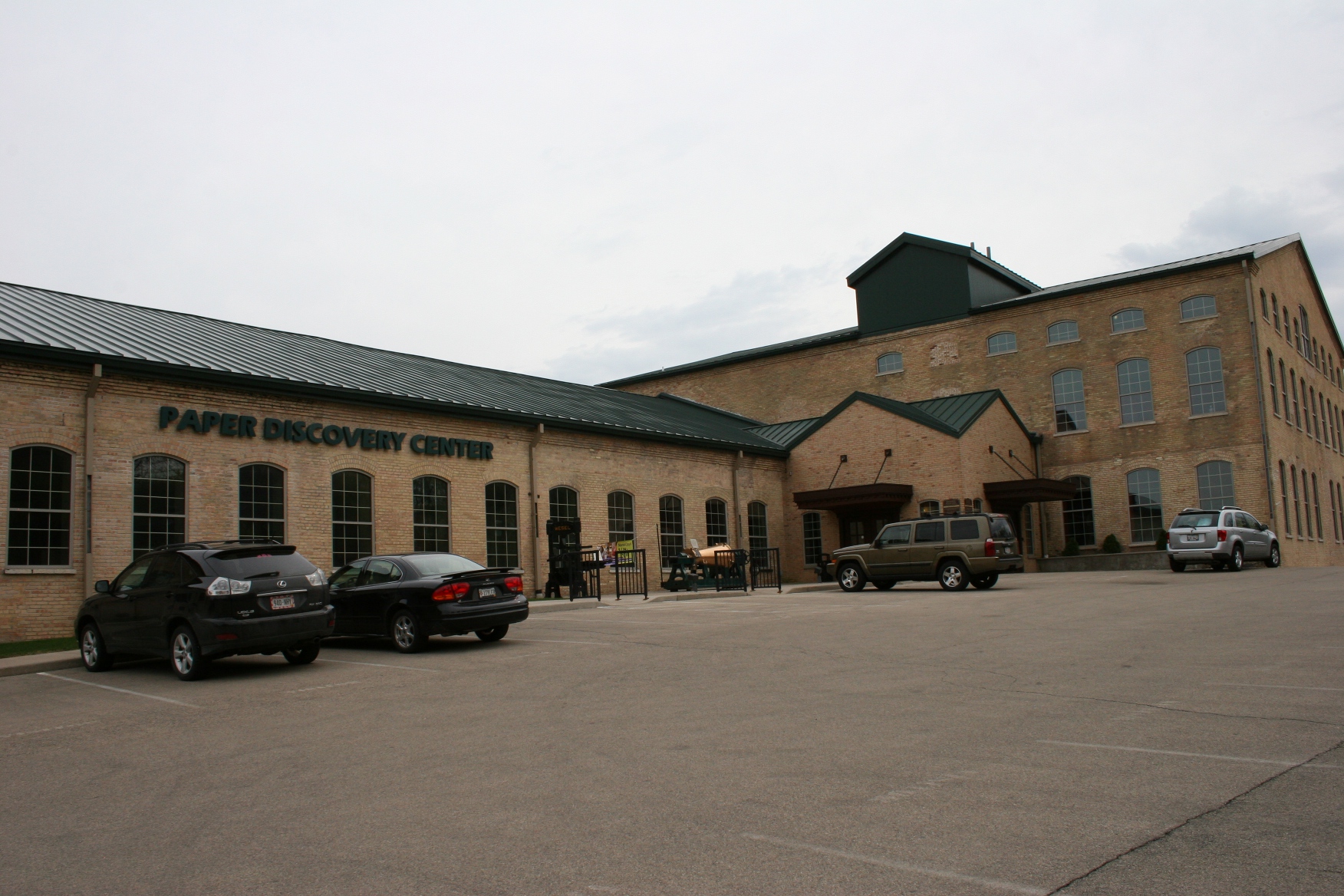
The Paper Discovery Center in Appleton, Wisconsin, with an attached coffee shop on the right, located along the banks of the Fox River. These brick buildings are stunning.

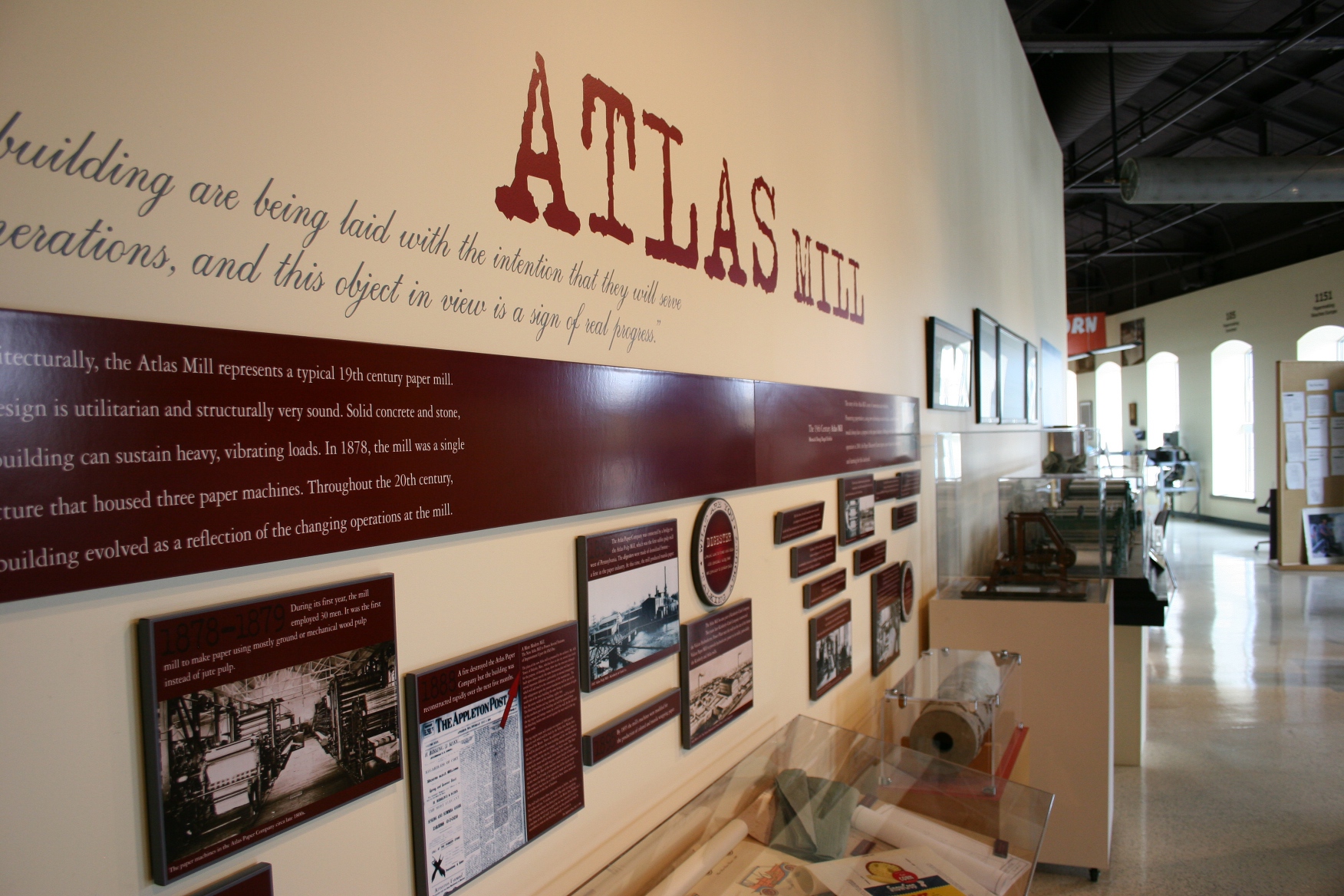
There’s no elephant dung paper making happening in the 1878 former Atlas Mill along the banks of the raging Fox River in Appleton. But visit this hands-on discovery center and you can make paper by recycling newspapers and other paper into “new” paper.

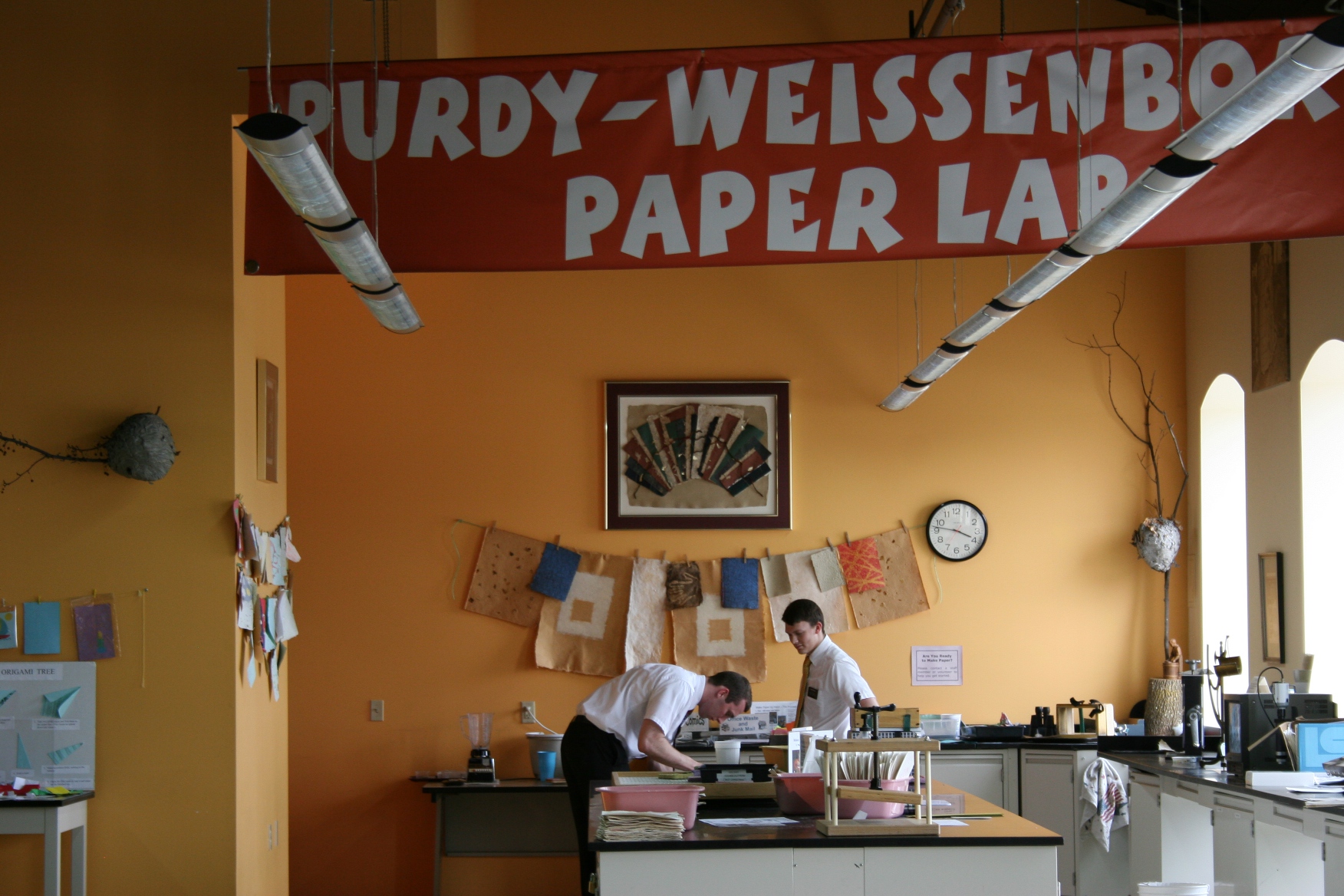
Two volunteers from the Church of Jesus Christ Latter-day Saints staffed the paper making station on a recent Saturday afternoon. Visitors can make new paper here from recycled paper.

And if you have more than an hour of time—which is all my family had—you can learn lots about paper via child-friendly interactive displays. Kids would totally love this place.

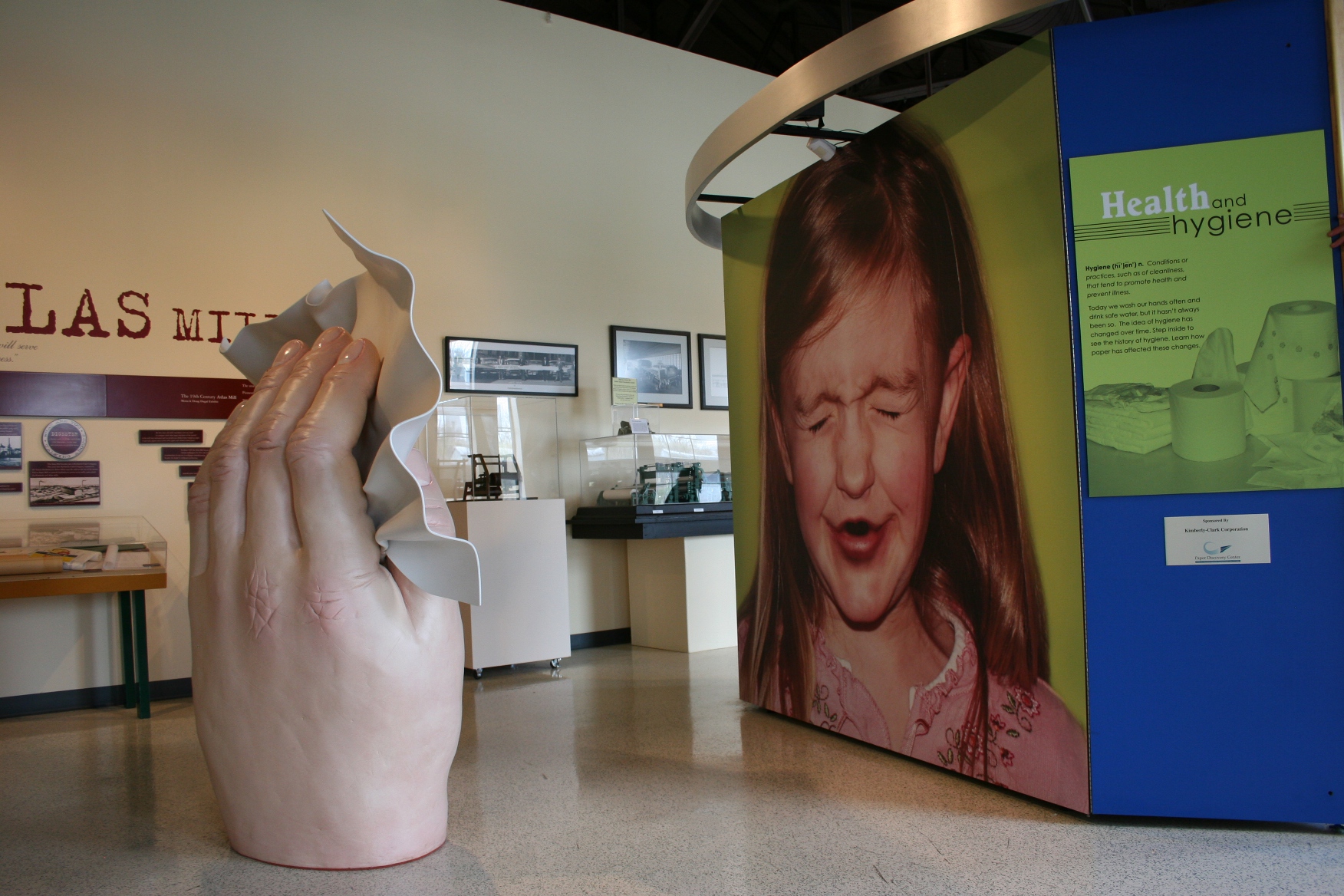
A motion-activated sensor above the model's head triggers a sneeze.

I was amused by the motion-activated sneeze that sounded in the health and hygiene kiosk next to an oversized hand clutching a tissue.

Reading an informational display about diapers, I was not amused to learn that pioneers sometimes changed their babies’ diapers only once a day and did not always wash diapers between uses.

My 26-year-old daughter was a bit startled to learn that, before toilet paper, corn cobs were used in outhouses. She even suggested that I seat myself in the mini outhouse for a photo opp. I declined, assuring her I’d spent enough time in an outhouse having lived the first dozen years of my life in a farmhouse without a bathroom.

In the “From Tree to Tissue” exhibit, visitors can follow the process of producing tissue paper, no corn cobs involved. You’ll find plenty to entertain and enlighten you at this former mill operated by Kimberly-Clark Corporation until 2000, according to the museum attendee.

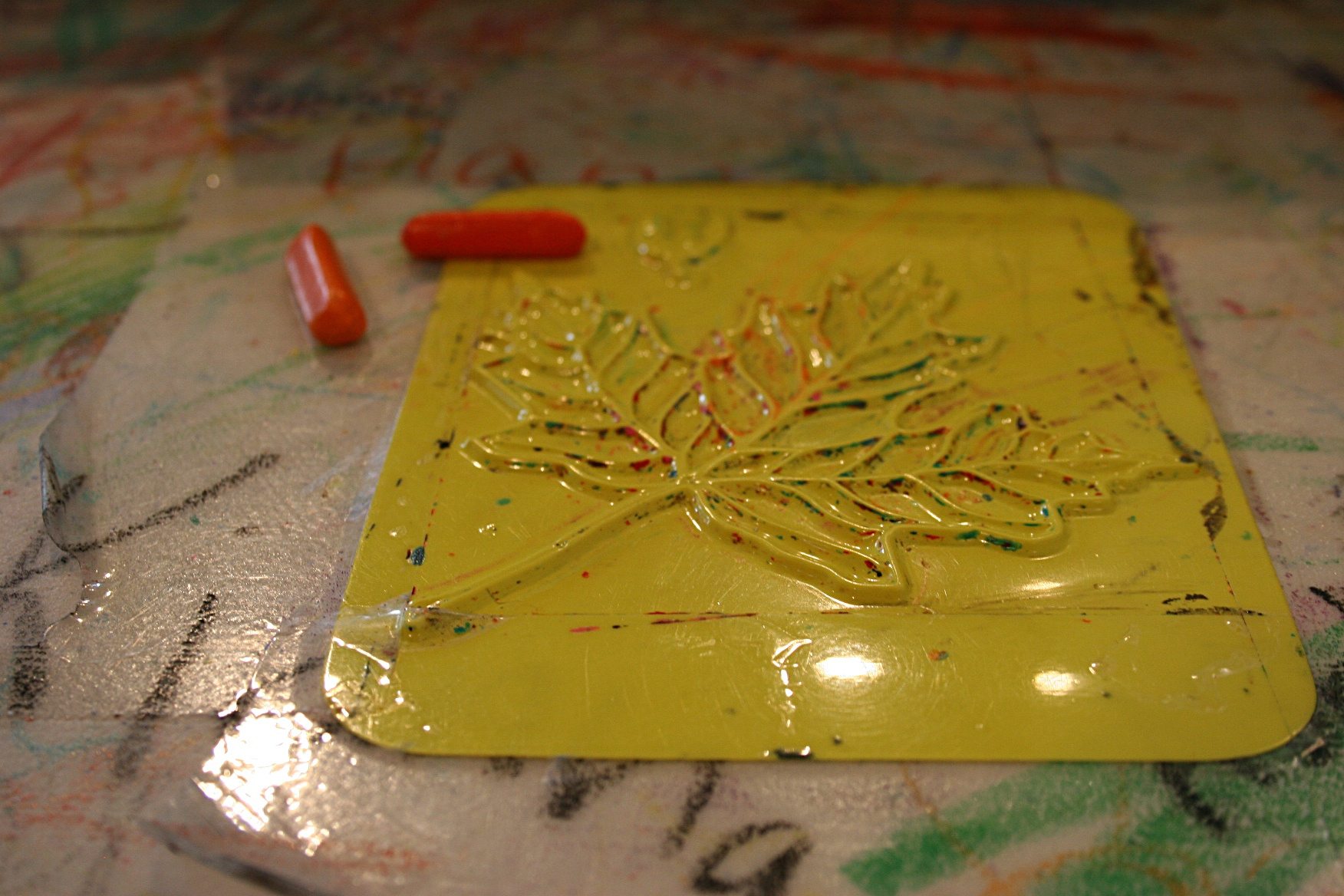
Sit down at a table, choose a color crayon, a mold and a piece of paper and create a leaf rubbing.

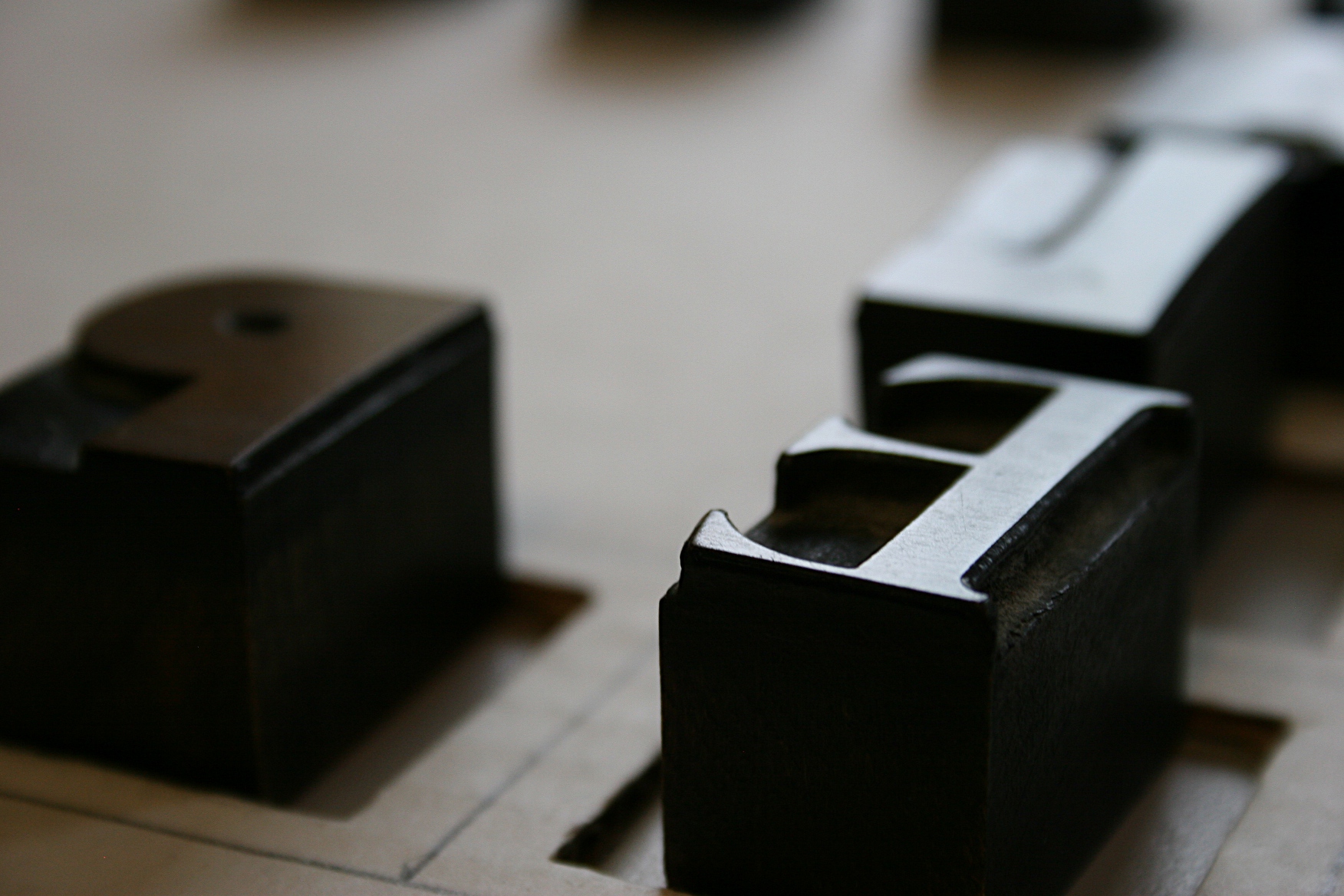
Authentic wood type is on display at a station where visitors can solve a crossword puzzle.

Assume the role of someone in the papermaking industry at this interactive exhibit.

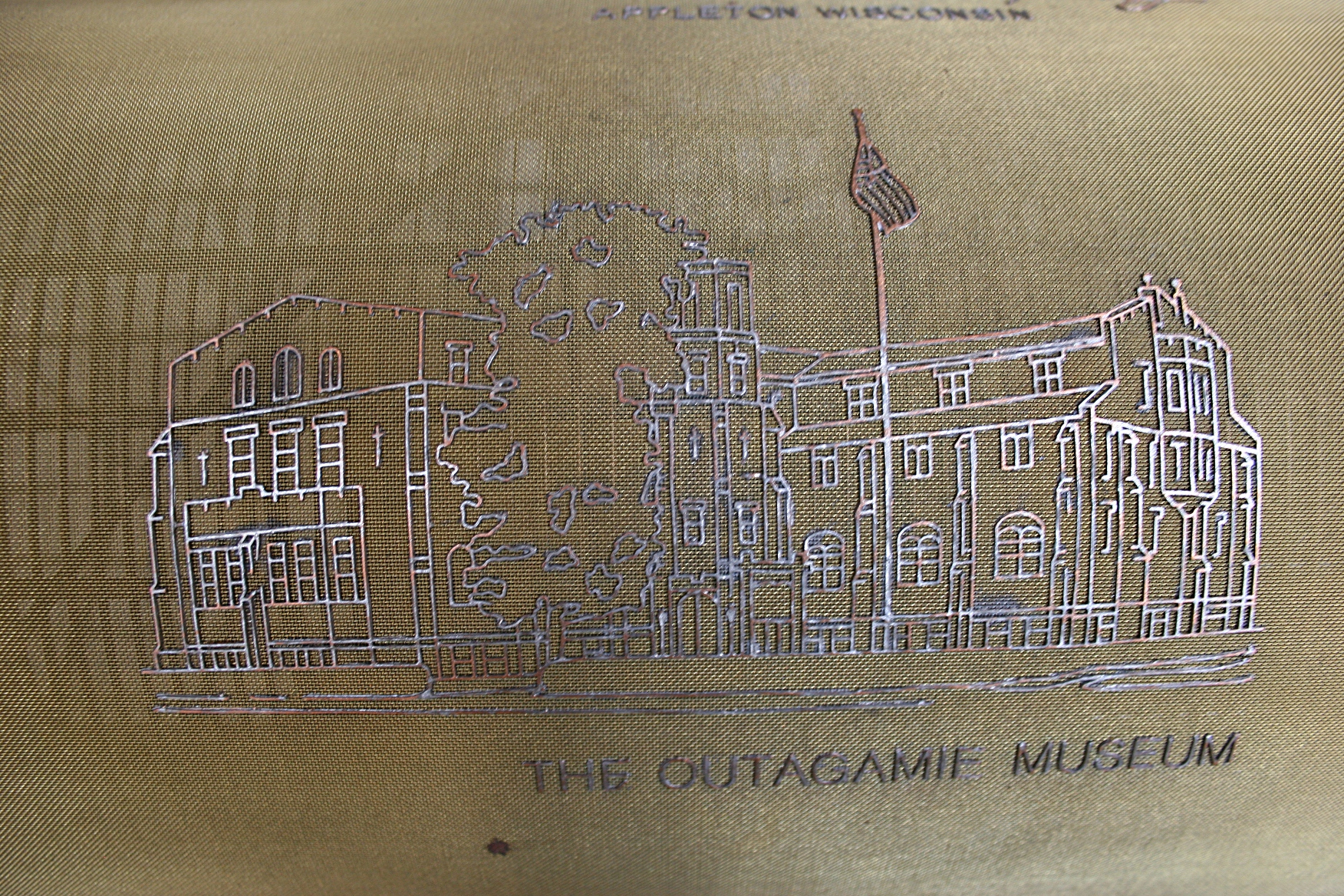
Learn how watermarks, like this one, are printed onto paper.

Study the history of the Atlas Mill originally housed in this building which served as a Kimberly-Clark Corporation paper research center prior to its closing about a decade ago.

FYI: For more information about The Paper Discovery Center, 425 W. Water Street, Appleton, Wisconsin, click here. If you visit the museum, allow yourself plenty of time. We arrived only an hour before closing, leaving us only enough time to make paper and rush through the exhibits.

Copyright 2012 Audrey Kletscher Helbling
 

Inside the Owatonna orphanage museum: Heartbreaking stories and photos January 18, 2012

A telegram sent to an Owatonna orphanage in 1892 announcing the arrival of two sisters.

WESTERN UNION TELEGRAM, August 19, 1892:

Please meet Godman and two little waifs afternoon train.

It is an archaic word, that word “waif.” So I must page through my Webster’s New World Dictionary to confirm that I fully understand its meaning.

I read:

2 a person without home or friends; esp. a homeless child   3 a stray animal

The definition is mostly as I expect, except for the “stray animal” part.

It hurts my heart to read the telegram sent in 1892 to the Minnesota State Public School for Neglected and Dependent Children in Owatonna.

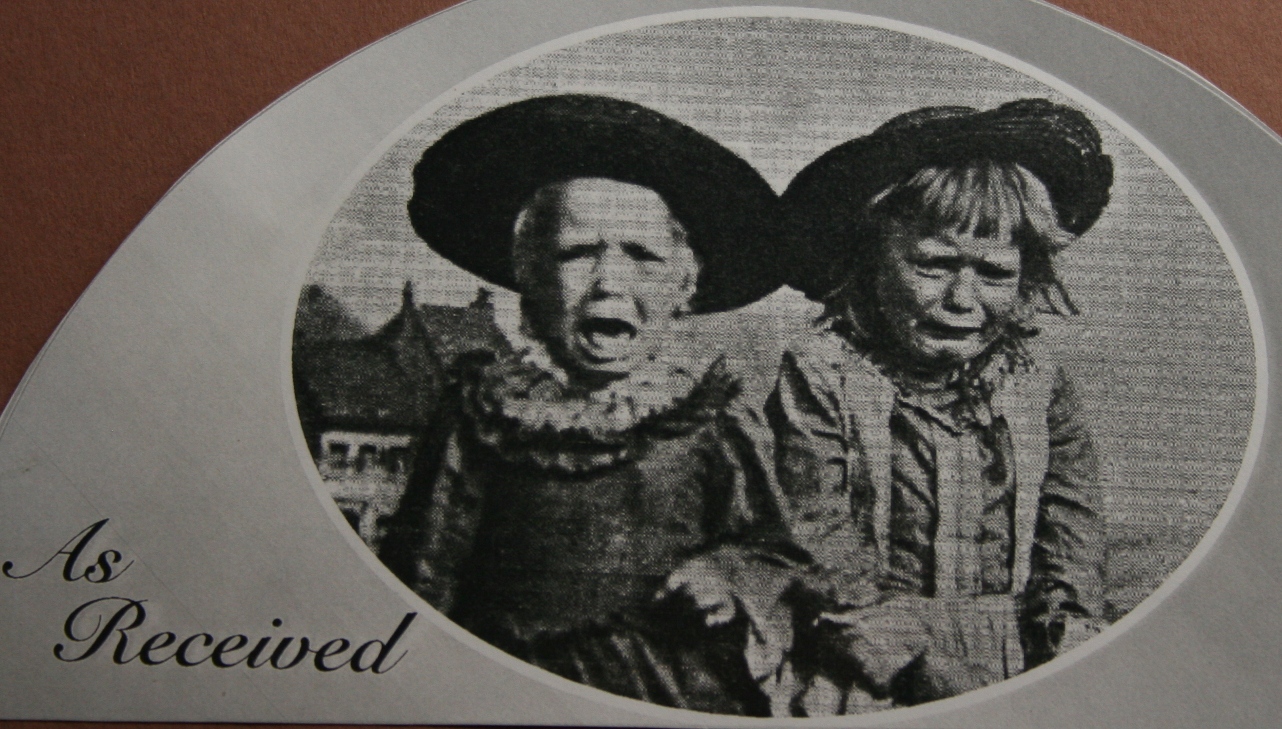
It hurts even more to view the photo of the “waifs,” sisters Mary and Clara, taken on the day they arrived. You can see the despair in their eyes, almost hear their wailing, feel their terror. If I could step back into time, to that day in August 1892, I would wrap those little girls in my arms and hold them and stroke their hair and give them all the love they never knew.

Sisters Mary and Clara, upon their arrival at the Minnesota State School.

Of all the documents and images displayed at the former school, now a museum, this one of the sisters sticks with me for the emotions it captures and evokes. I first saw the photo several years ago during an initial visit to the Minnesota State Public School Orphanage Museum. I have never forgotten it.

This past weekend I was back at the orphanage site to tour a new Owatonna Arts Center exhibit, “Where are the Children,” by Judy Saye-Willis. The Northfield artist taps into the location to pull together an introspective display about children with input from a variety of artists and a writer. I was especially impressed with the graphite drawings of children by Cambridge artist Marilyn M. Cuellar. (Note that Cuellar’s art pieces displayed in Owatonna are copies and not originals.)

The former state school dining area is now a beautiful public venue.

After perusing that exhibit, I walked toward the museum part of the building, through the former school dining room that today serves as a venue for wedding receptions, concerts and more. I hadn’t intended to go to the museum, but my husband had already wandered over there.

Signage under a state school photo in a section of the museum.

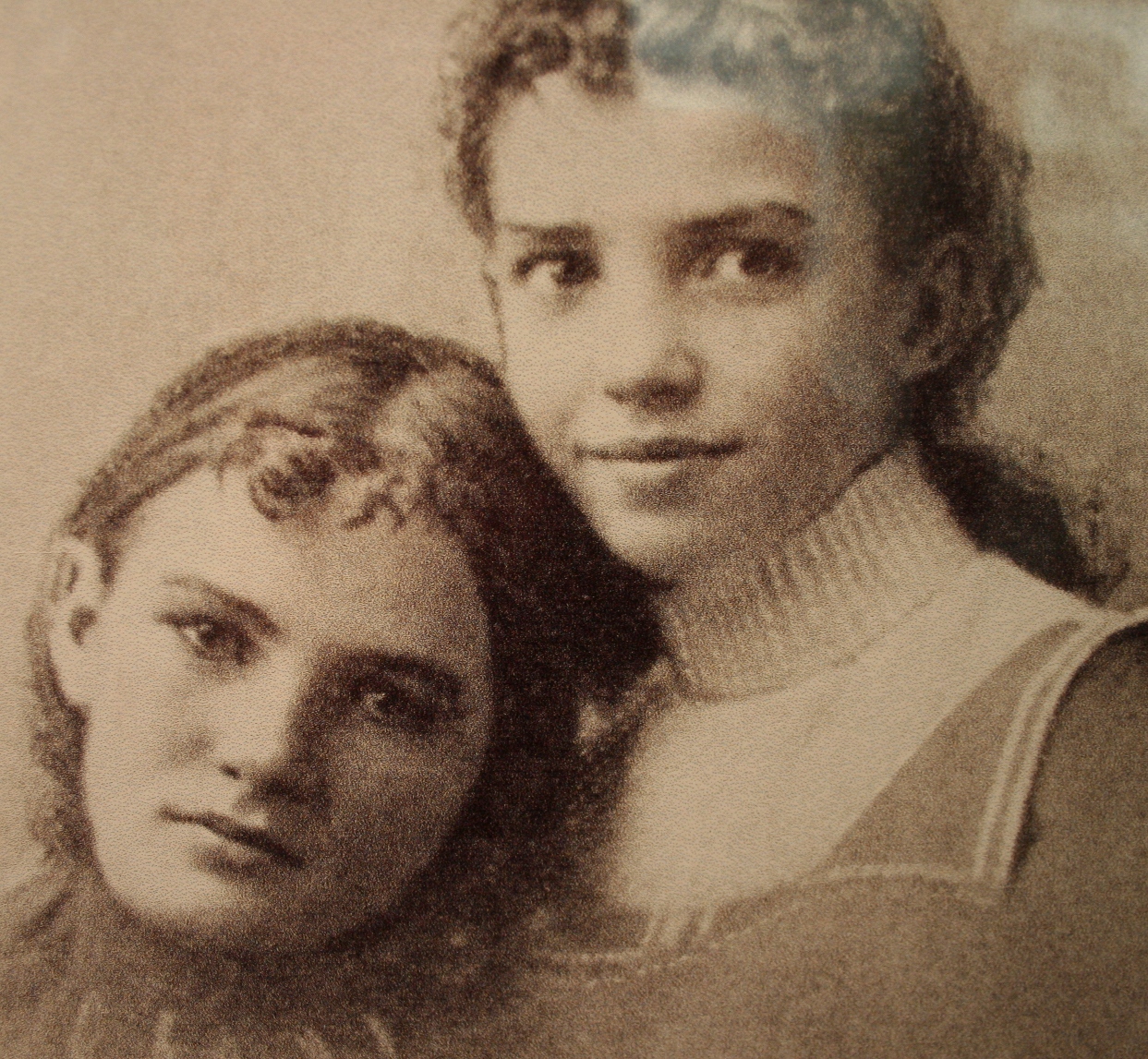
This visit I didn’t study each document and photo in depth. Rather, I swept through the U-shaped exhibit area, focusing on specific segments to photograph like the 1892 telegram and photos of the two sisters, including this one taken at a later date.

Mary and Clara, hardly recognizable as the same sisters who arrived in 1892.

I paused, though, to listen to a visitor talk to me privately about her father and an aunt who lived here. She spoke without a hint of bitterness, which surprised me given the negative experiences of many children who called this school home. Her father eventually was placed with a southern Minnesota farm family. In many instances, these families physically and emotionally abused the state schoolers. Her father, she said, was hit once, but never again.

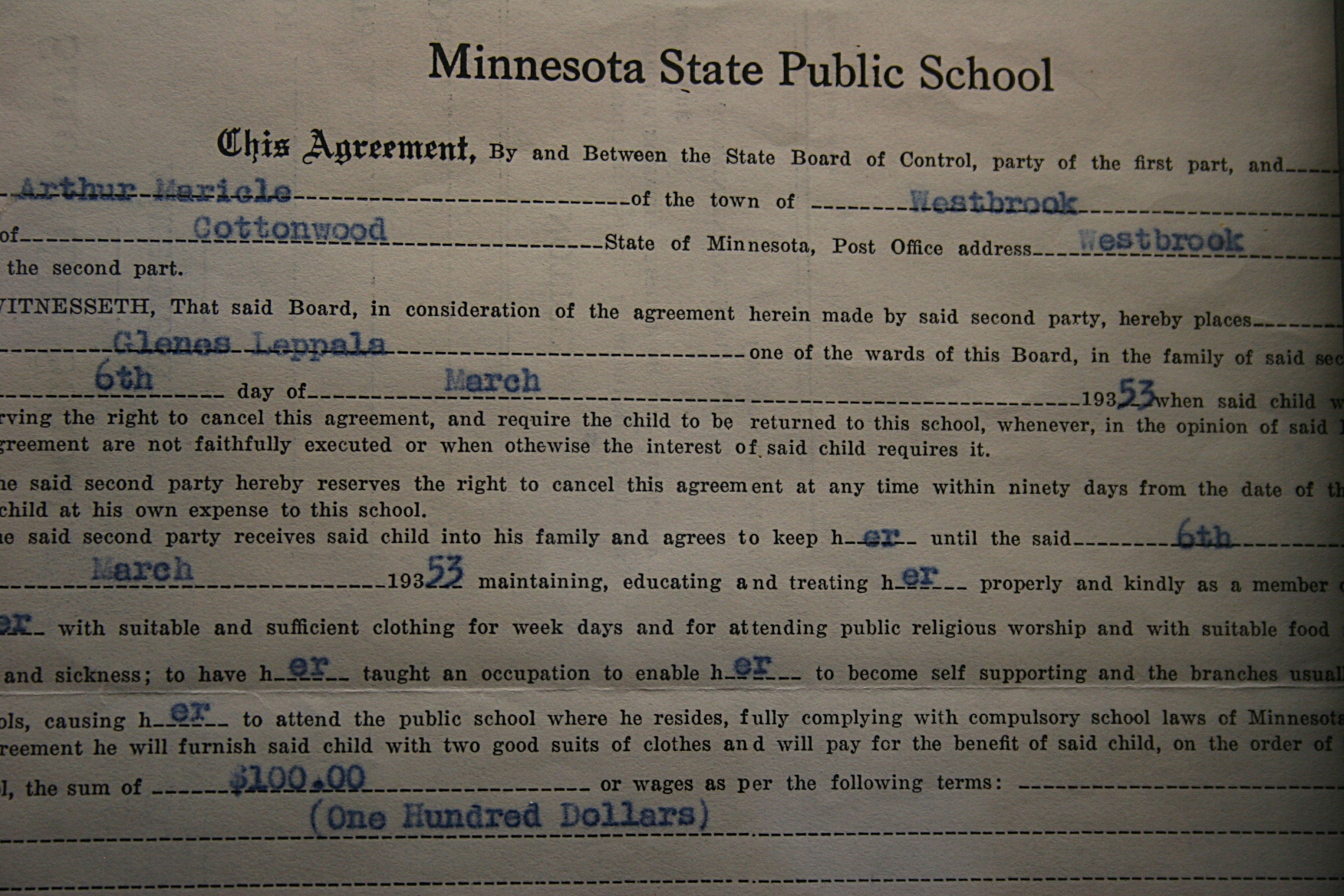
Contracts were signed between the school and families, typically farm families, allowing state schoolers to live with and work for these families. The families were to provide $100 in wages and two suits of clothing.

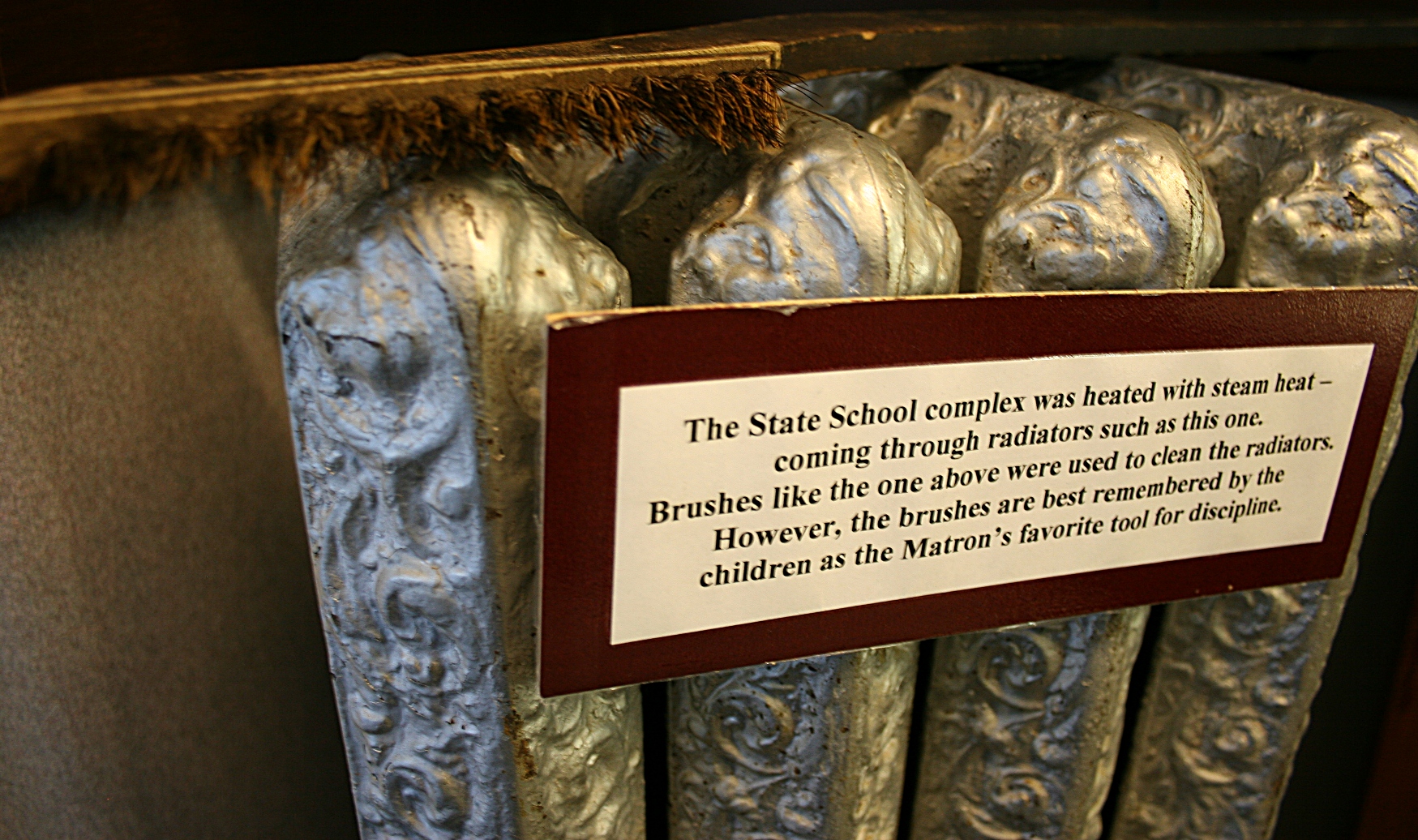
Later, I would photograph a radiator brush, “a Matron’s favorite tool for punishment,” according to the Fall 2010 issue of the museum newsletter, The Radiator Brush.

A dreaded radiator brush rests atop a radiator in the museum.

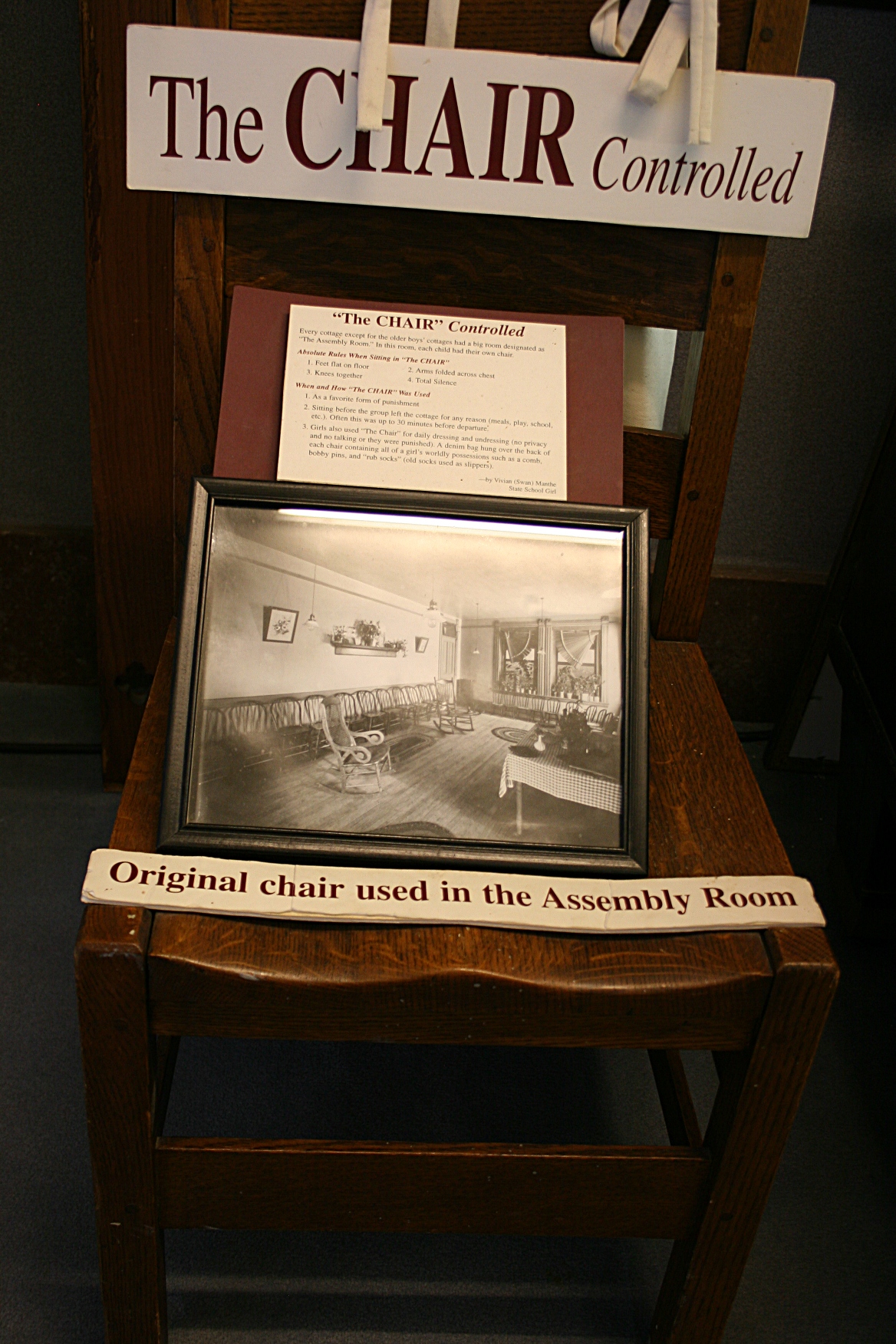
Next, I photographed “the chair,” also used to punish children.

Chairs like this one on display in the museum were used to control and punish children and keep them in their place.

I cannot imagine living here in this institution, separated from family.

Yet the school, despite its failings, offered for many children a better alternative than remaining in abusive and neglectful home settings too tragic to even fathom.

And so that is how sisters Mary and Clara, two little waifs who had been “the victims of extreme cruelty and neglect,” ended up on a train bound for the Minnesota Public School for Neglected and Dependent Children.

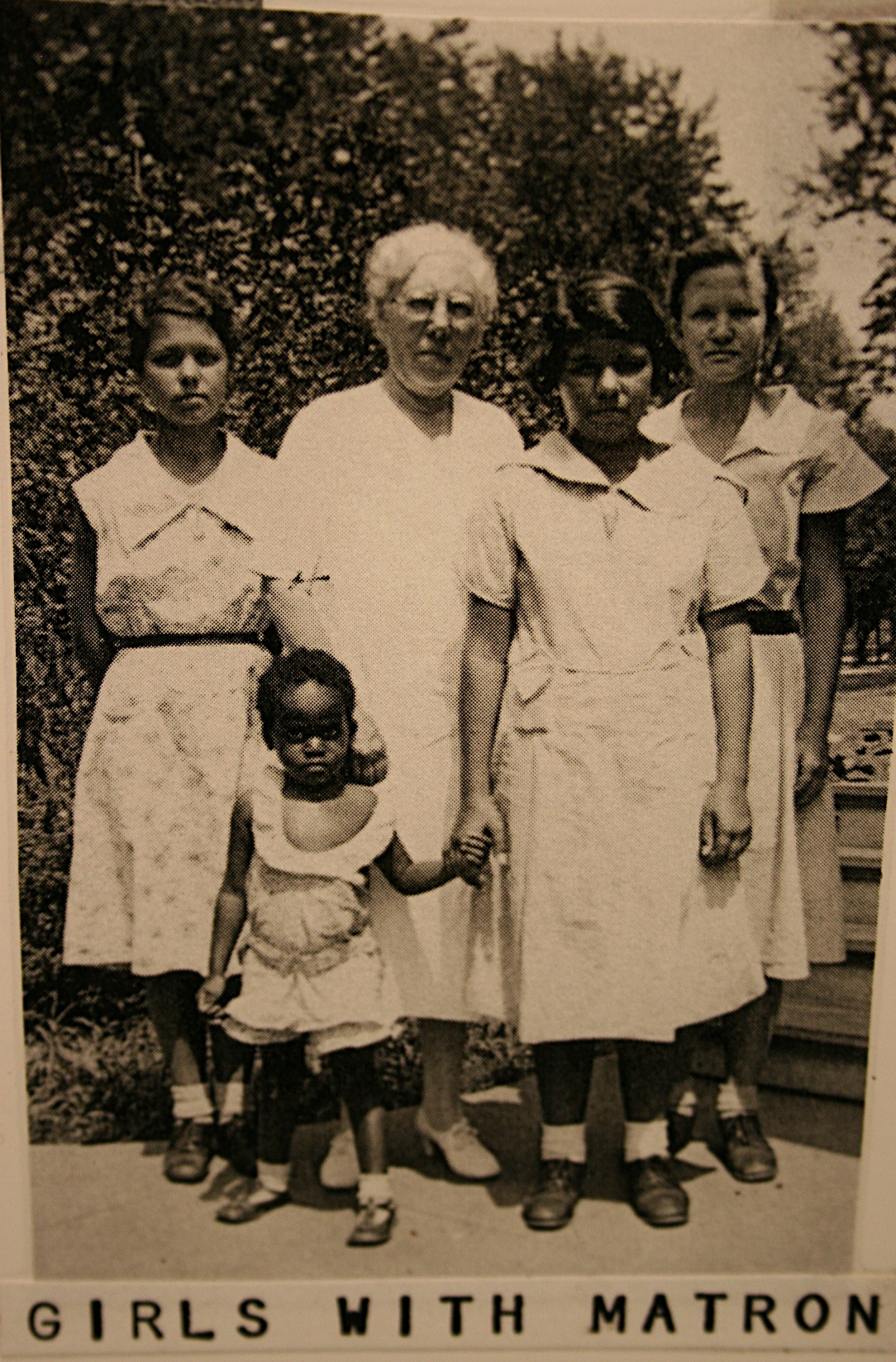
One of the photos on display in the museum of a matron and her girls.

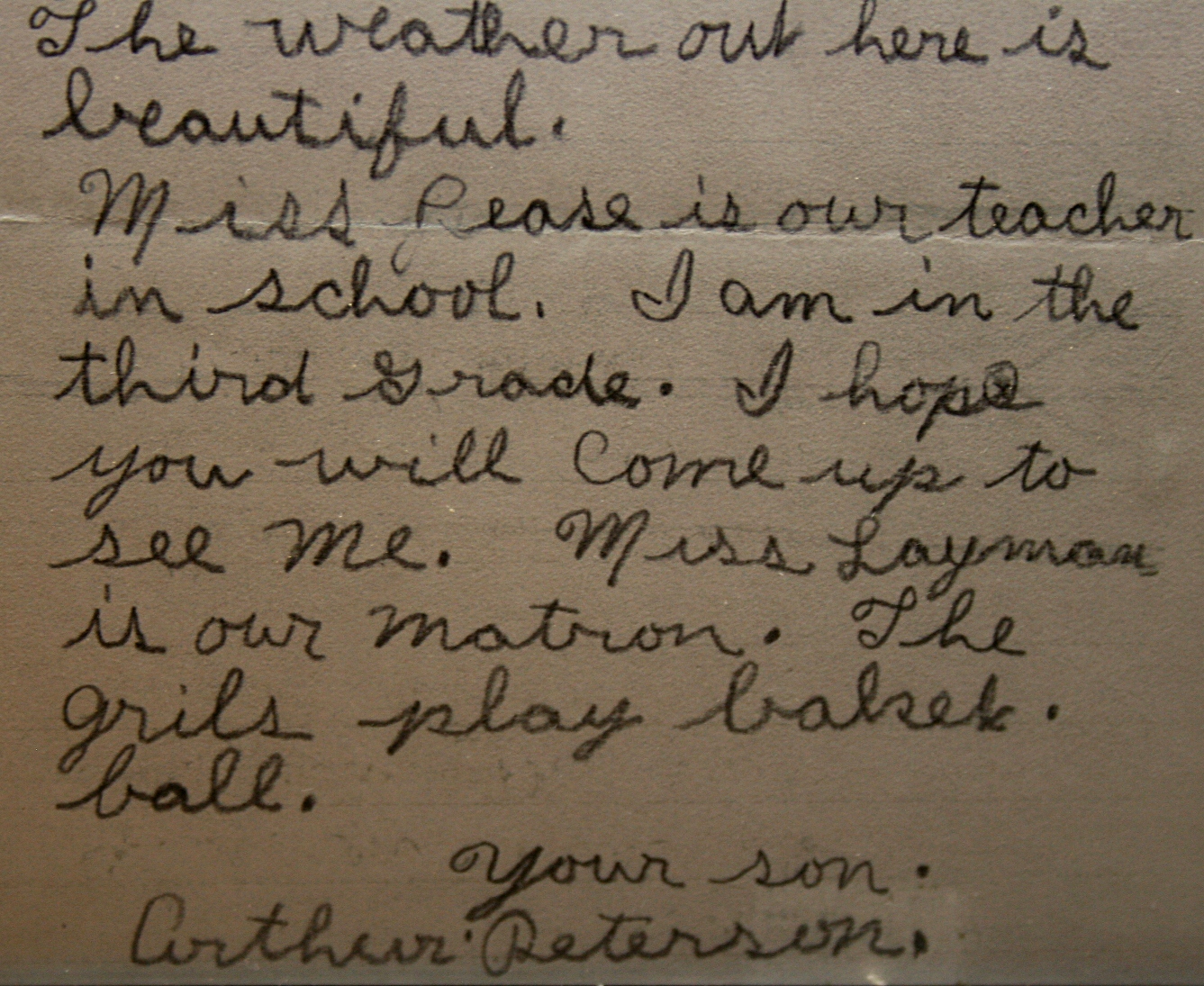
A snippet of a letter from third grader Arthur Peterson to his mother. You can almost hear the desperation in his words: "I hope you will come up to see me."

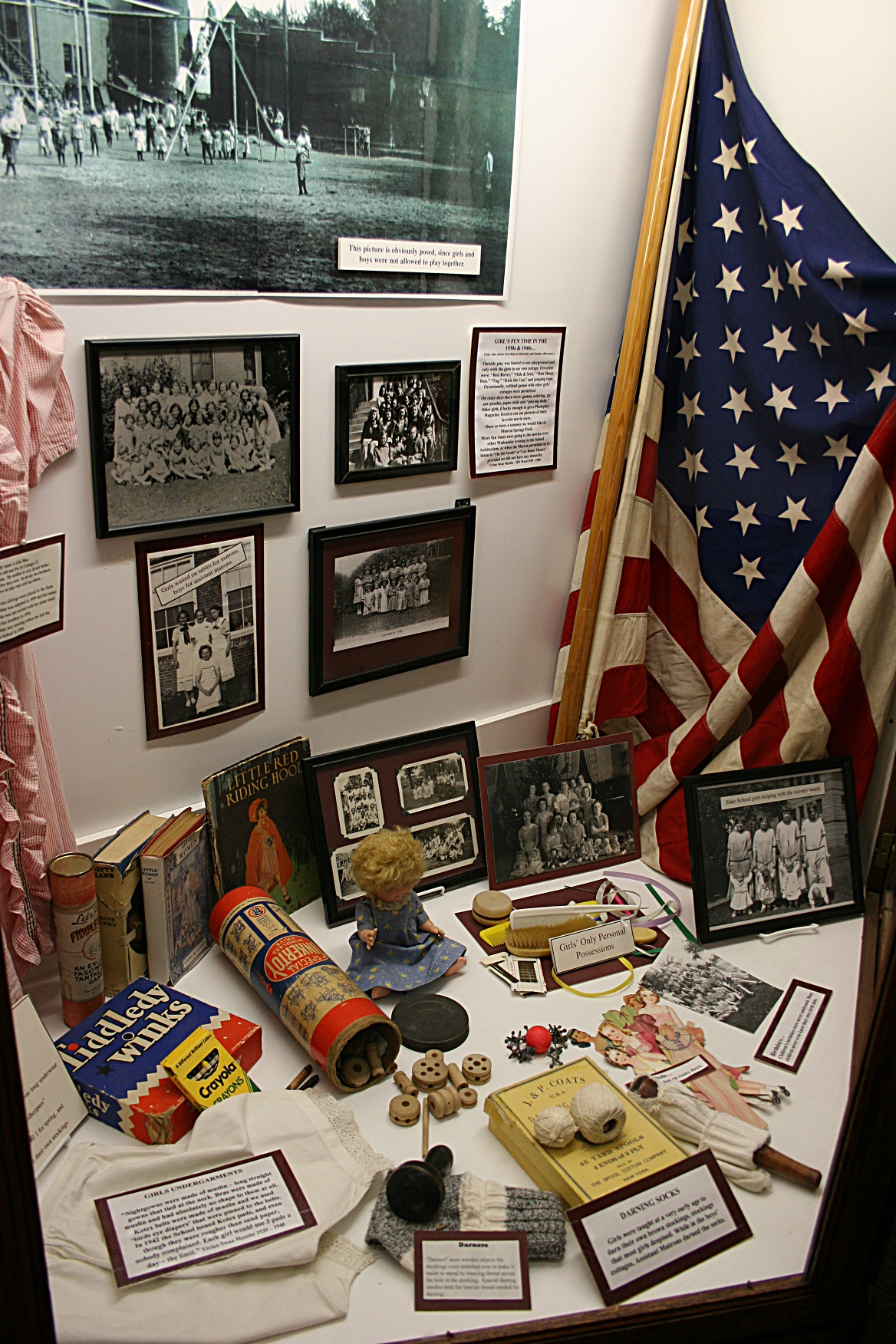
Museum exhibits, mostly in words and photos, but also artifacts, tell visitors about life at the state school.

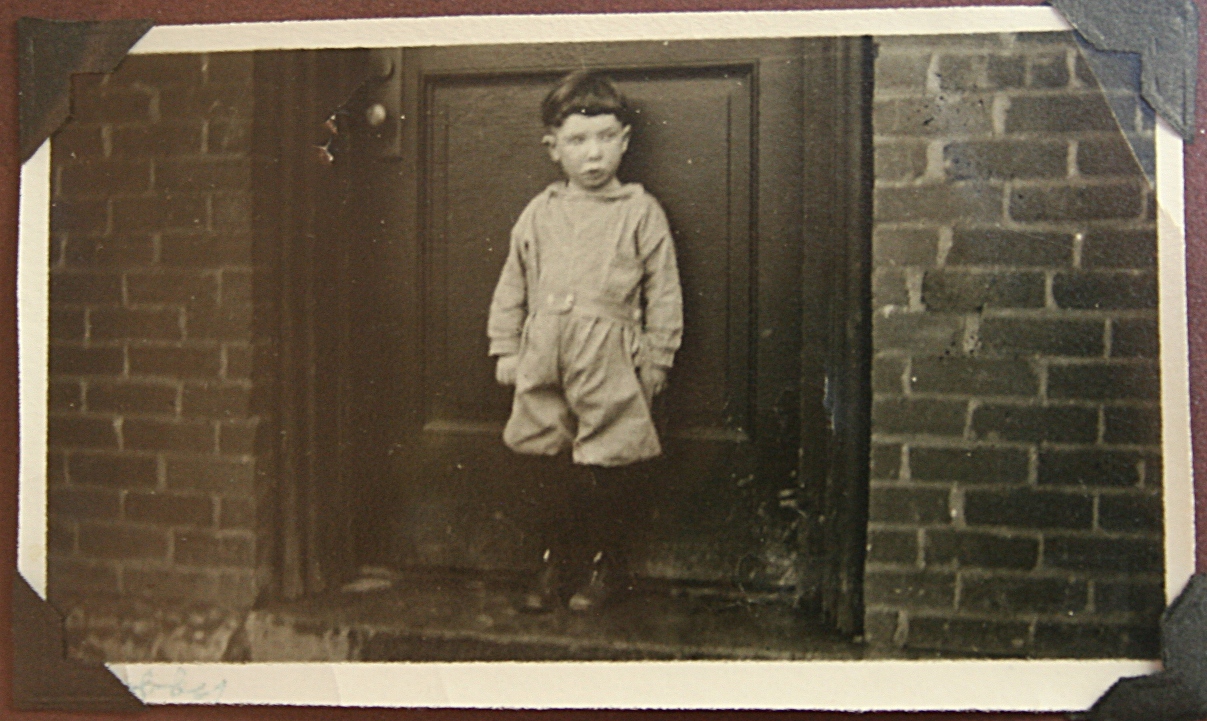
This photo of a little state school boy caught my eye. The museum's collection includes more than 1,100 original photos and an additional 150 reproductions. You can't help but be moved by such soulful images.

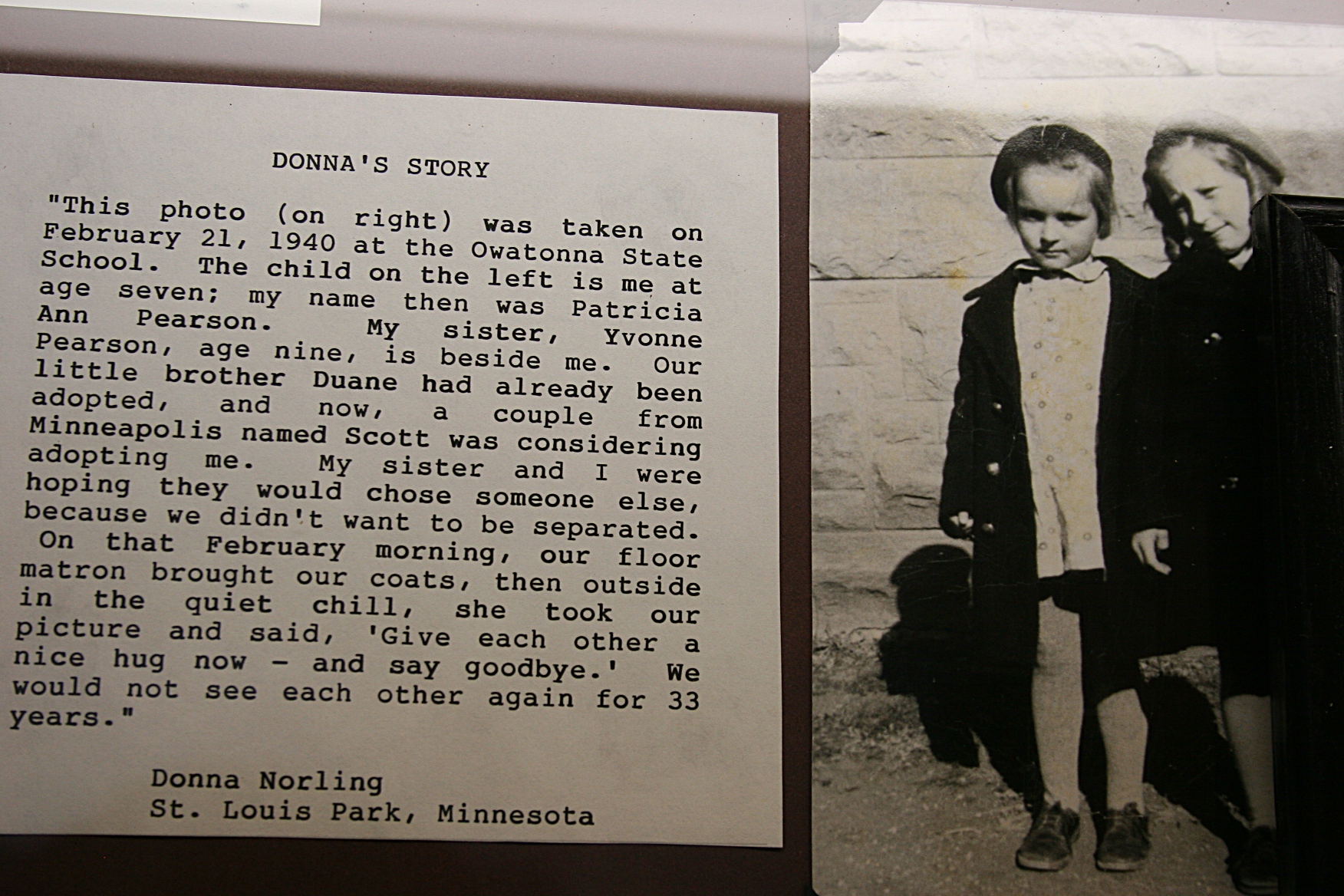
Patricia Ann Pearson, 7, left, and her sister, Yvonne, 9, on the day they were separated. They would not see each other for 33 years. Theirs is only one of thousands of heart-wrenching stories of separation.

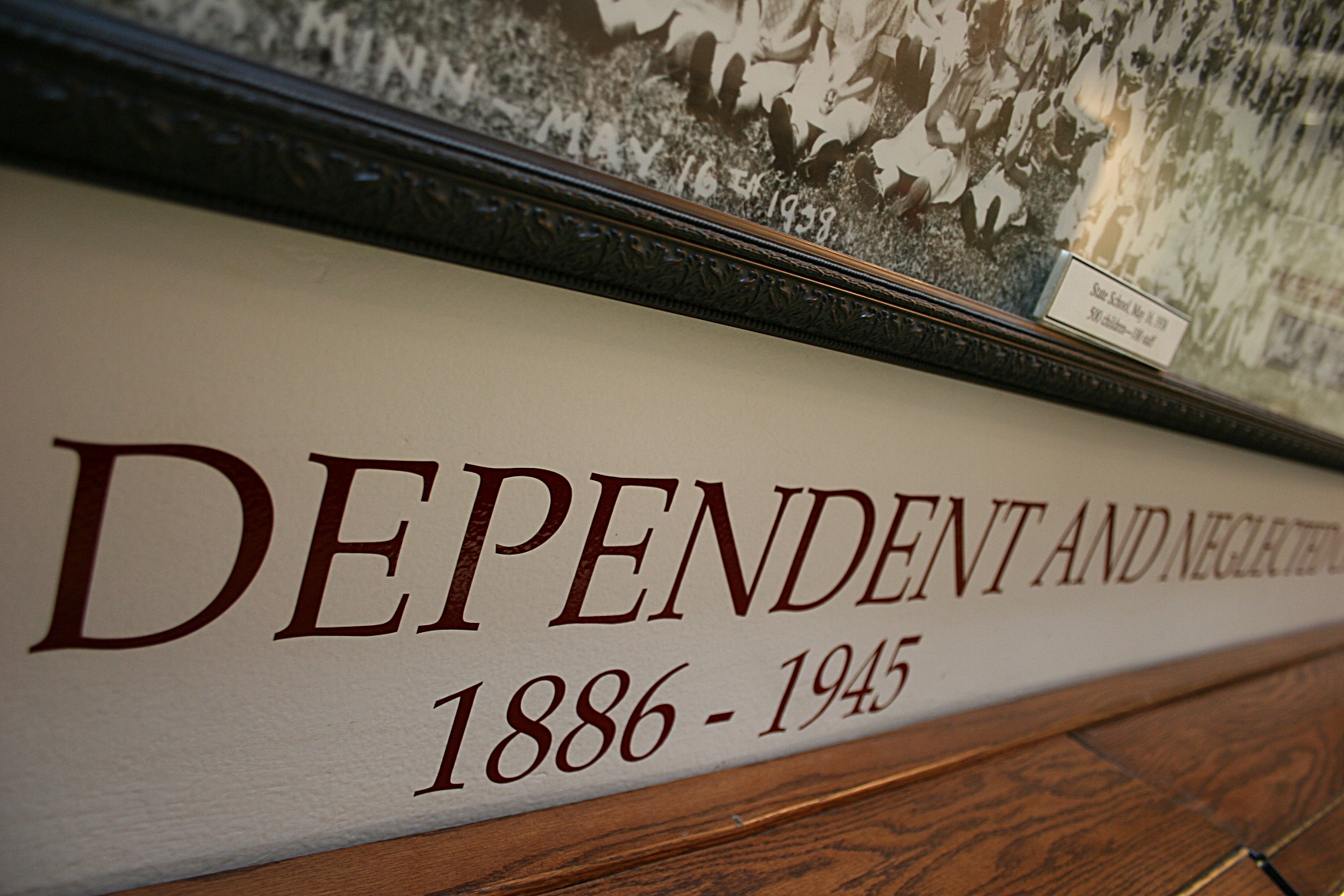
FYI: From 1886-1945, nearly 11,000 orphaned, abused and/or abandoned children were sent to the Minnesota State Public School for Neglected and Dependent Children. Today visitors can tour the former school grounds, including a cottage and the cemetery. Click here to learn more about the museum. In 2011, an estimated 7,000 visitors toured the museum and Cottage 11.

Click here and then click here to read two previous blog posts I published about C-11.

© Copyright 2012 Audrey Kletscher Helbling
 

No cameras allowed on these historic premises January 4, 2012

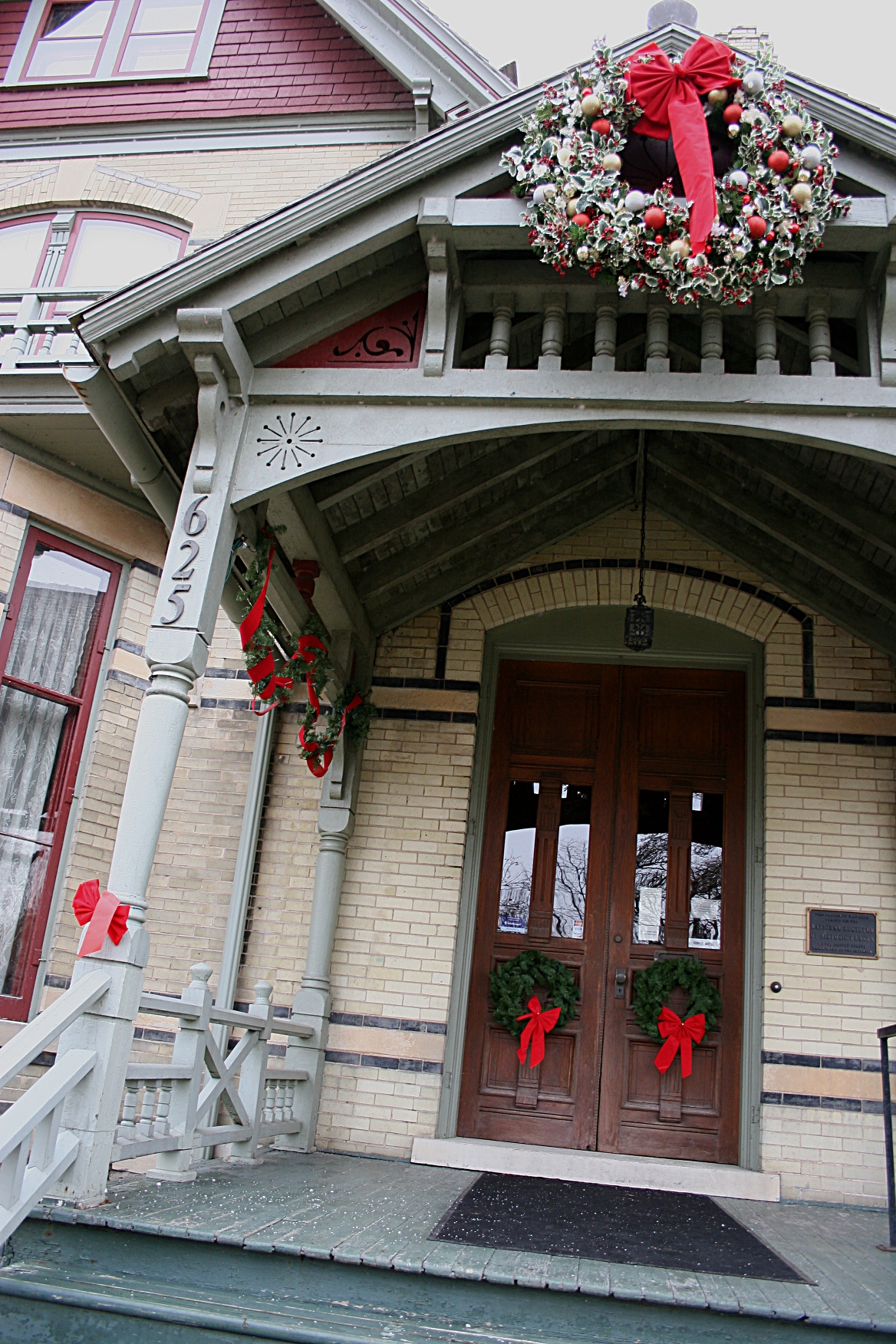
The main entry to the Hearthstone Historic House Museum in Appleton, Wisconsin, located at 625 W. Prospect.

NO PHOTOGRAPHY ALLOWED.

Post a sign with that message or speak those words to me and you’ll find yourself with one unhappy woman. I can’t help it. My camera is a natural extension of me, so when I can’t photograph I’m unsettled and discontented.

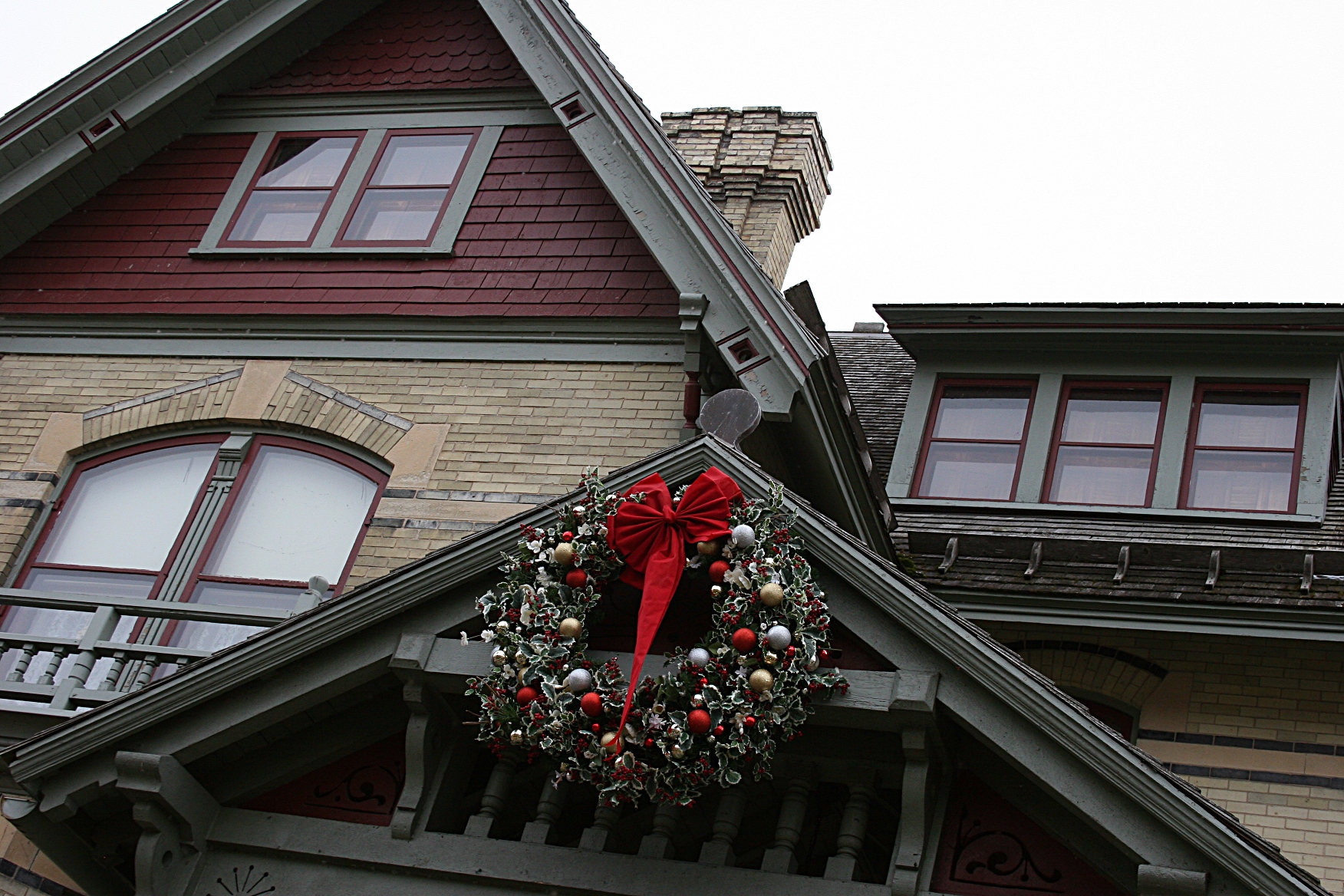
I never expected to encounter a photo ban at an 1882 historic home I toured in Appleton, Wisconsin on Saturday afternoon. But I hadn’t even reached the wreath-adorned double front doors of the Hearthstone Historic House Museum when my daughter pointed to the sign banning photography.

I automatically hugged my Canon EOS 20-D DSLR closer to my right side as we waited for a tour guide to unlock the front door and allow us access into this Victorian home, the first residence—in the world—electrified from a centrally located hydroelectric plant.

If you think I would simply accept the “no photos” rule without question, then you don’t know me. I asked and was told photography would be disruptive to the tour. “Even without flash?” I pursued.

Yes.

I contemplated for some time how I could sneak in a photo or two. But with tight quarters and visitors packed into the home’s rooms, taking covert photos wasn’t even a remote possibility. Besides, the click of the shutter button would surely give me away and I was not about to become the first tourist kicked out of this lovely mansion.

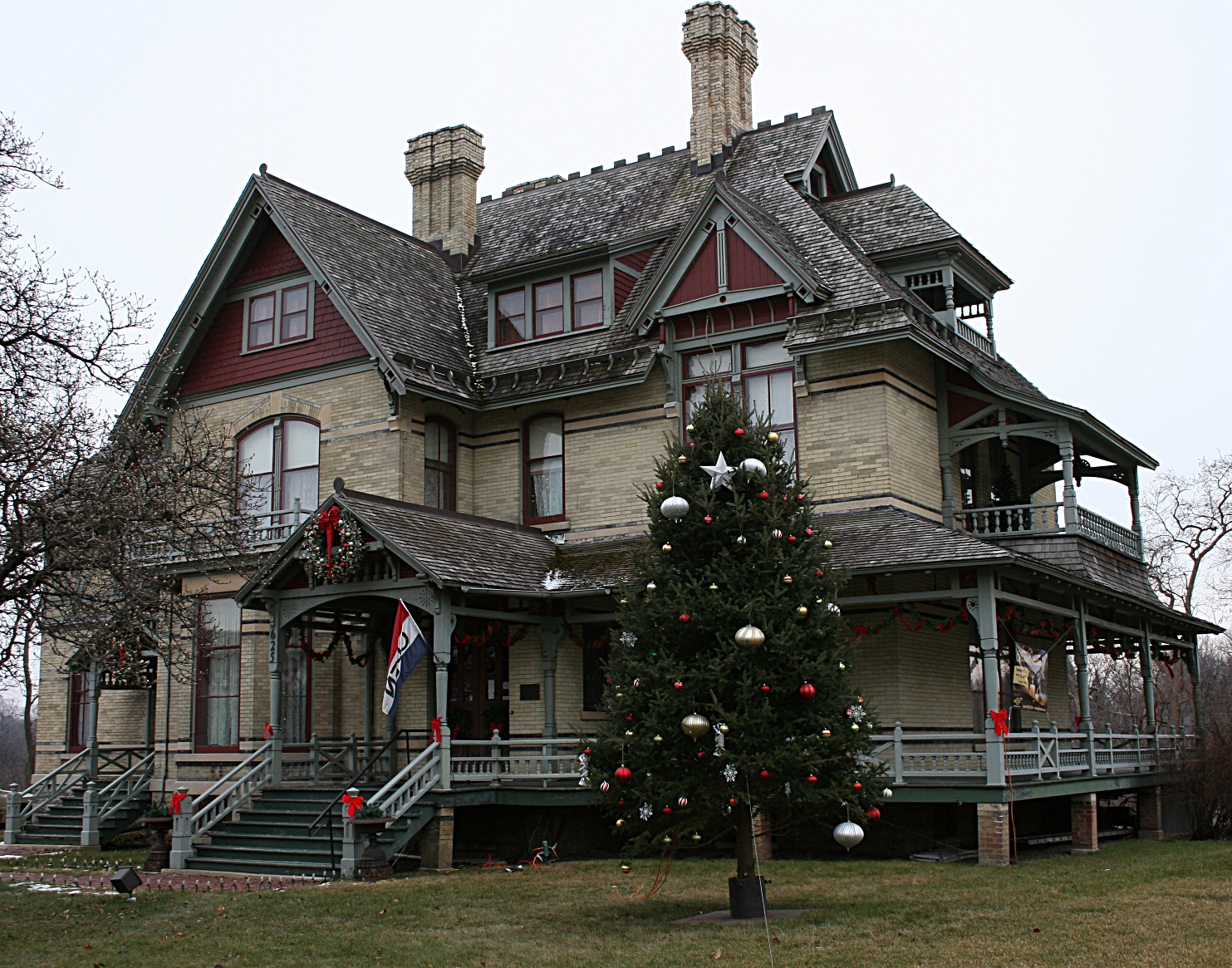
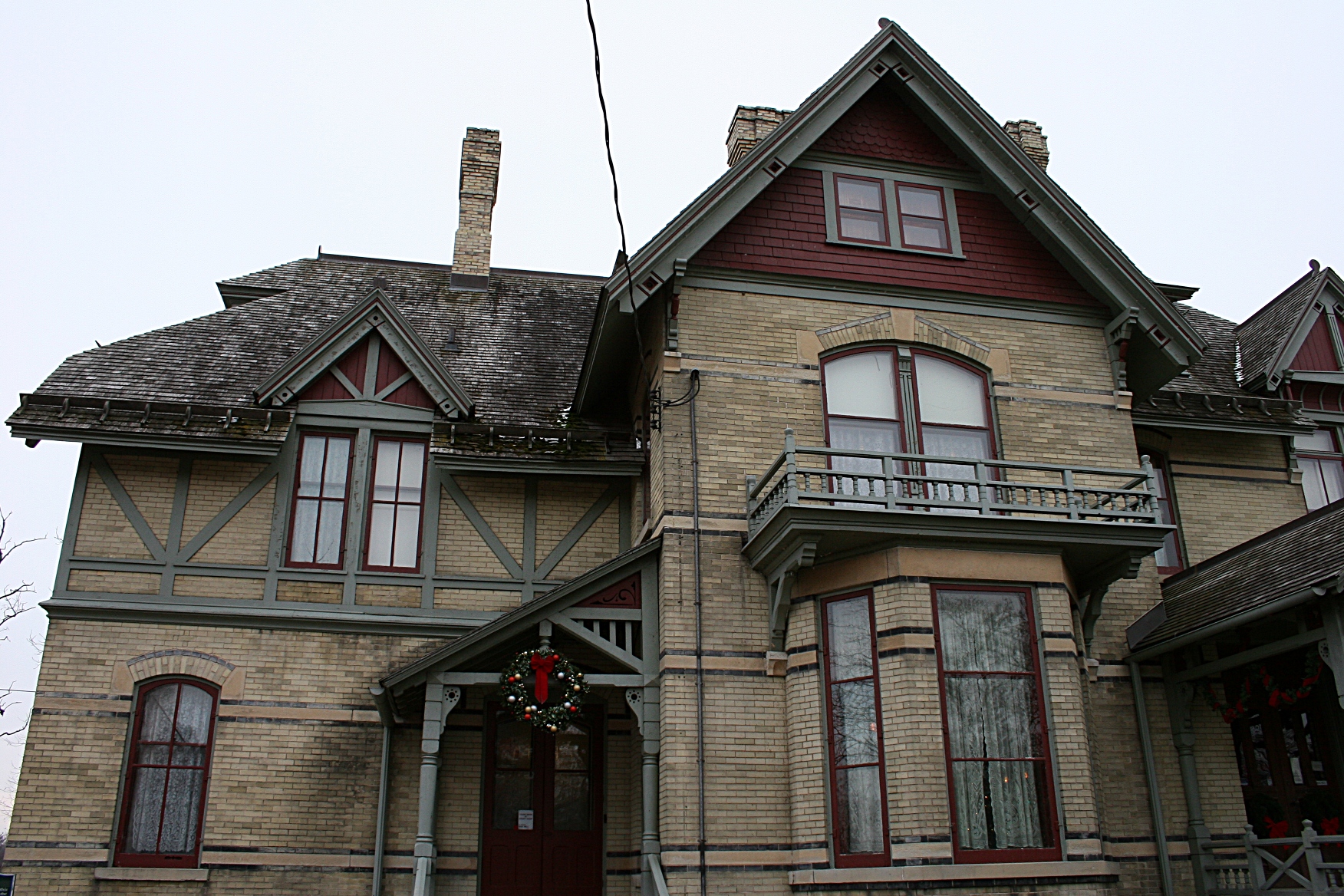
So you will need to settle for exterior images of this house built for Henry J. Rogers, today’s equivalent of the CEO of the Appleton Paper and Pulp Company. He lived here with his wife, Cremora, and their daughter, Kitty, for some 10 years until the nearby paper mill was destroyed by fire.

The original home of Henry J. Rogers and family sits along the Fox River.

From the exterior, this hilltop riverside home, built for $17,000, isn’t nearly as impressive as I’d expected. But inside, ah, inside, the décor is about as opulent and detailed as any historic residence I’ve ever toured.

Nine fireplaces grace rooms defined by wood—inlaid floors, detailed carvings, wood trim and ceilings and, well, wood everywhere. But I suppose when you live in Wisconsin and head up a paper company, finding wood to construct your mansion isn’t a problem.

An Edison phonograph, a stained glass window in the grand hall entry, floor-to-ceiling windows and a hand-painted ceiling in the parlor, the focal point fireplaces, and a dining room table set for Christmas dinner all impressed me.

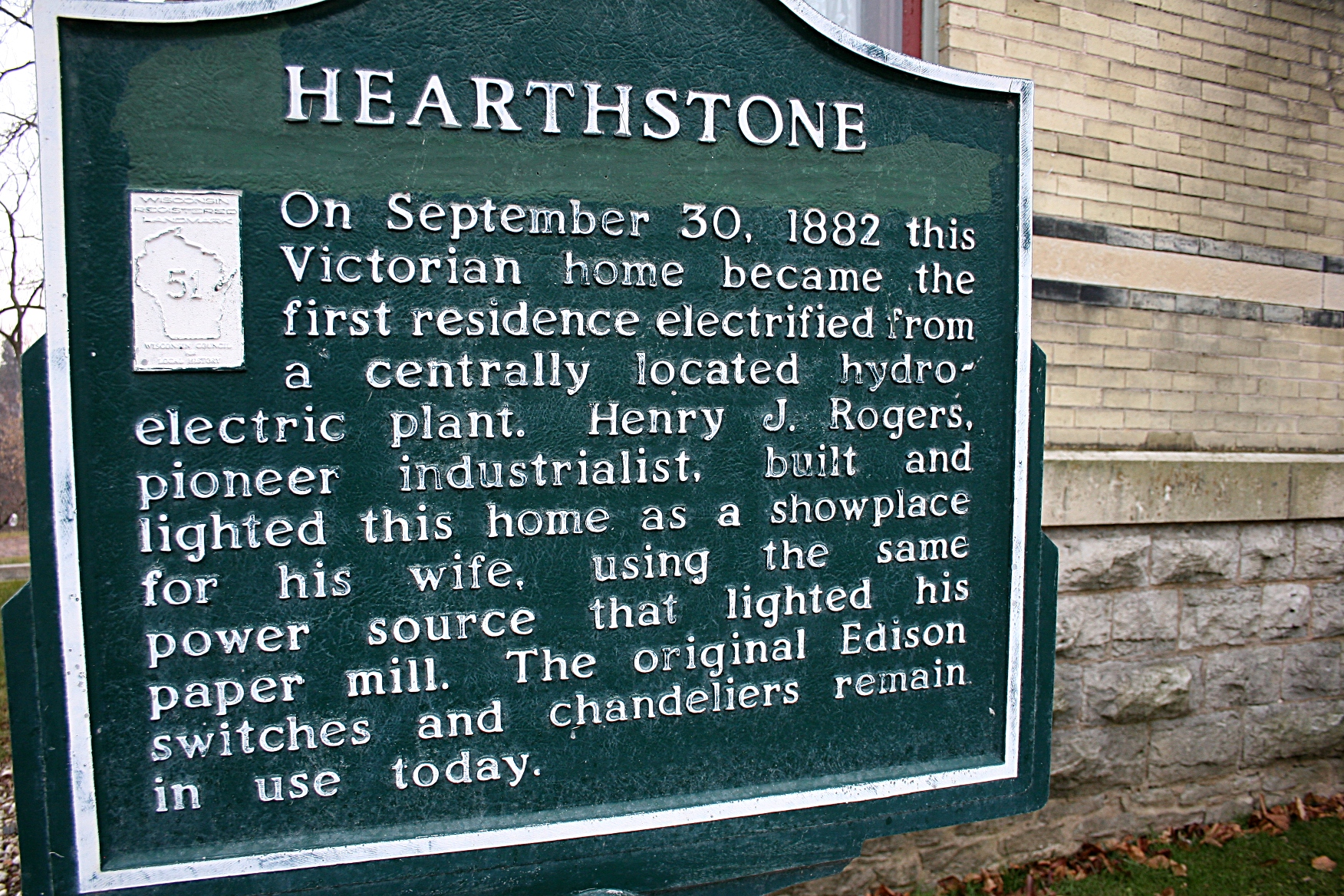
A sign explains the house's historical significance. The house is on the National Register of Historic Places.

In retrospect, I suppose I should have been most impressed by the rare 1882 light switches and electroliers still in operation. After all, the lighting ranks as the reason this home holds such historic value. But, honestly, I’m not all that scientific minded. The décor and personal stories shared by our tour guide interested me far more than the hydro-electric powered lighting system.

Our guide informed us that the Rogers family was charged $1 a month per light bulb for the 50 light bulbs in the house. In the 1880s, $50 was a sizeable chunk of money to pay for monthly electrical usage. That reveals the substantial wealth of this family.

Rogers, however, eventually died with only $12 to his name after moving to Chicago and losing money in a silver market that crashed, a second tour guide later told me.

The story, though, that truly snatched my interest involves Kitty. When she became engaged, the Rogers’ daughter verified the authenticity of her diamond by etching her and her fiancé’s initials into a library window (still there). Not to be judgmental here, but I was not at all surprised when the tour guide revealed that the marriage did not last.

Later, while touring the second floor, we were informed that Henry and Cremora slept in separate bedrooms because the couple thought they would catch tuberculosis from one another by breathing in the same night air. OK, then. But, I suppose I must consider the time period and the lack of knowledge regarding diseases.

Finally, the tidbit I found most personally appropriate involved visitors to the Rogers’ mansion. They would leave their calling cards, the equivalent of today’s business cards, on a table in the great hall. Visitors would bend the corners of their cards in a certain way, depending on the reason for their visits. The family would then decide whether they wanted to see the guest.

At that point in the tour, I considered scribbling “Here to take photos” on my business card and dropping it onto the foyer table.
The Rogers' home, which was home to nine other families and which once housed a restaurant called The Hearthstone in the 1930s, is not yet fully-restored to the 1880-1895 time period.

Inside and outside, Hearthstone is decorated with Christmas trees and other holiday decor for a "Victorian Christmas" special event which continues through January 14.

NOTE: Lest you consider me disrespectful of rules, I am not. I understand, somewhat, the “no photography” rule at the Hearthstone house. And I most certainly understand why flash photography would not be permitted in an historic place.

One other point I want to mention: During my tour of the Hearthstone mansion, a visitor’s cell phone rang and she proceeded to answer it, right in the middle of the tour. Now that I found disruptive.
© Copyright 2012 Audrey Kletscher Helbling