Minnesota Prairie Roots

Writing and photography by Audrey Kletscher Helbling

A quick tour of the impressive Pierce County, Wisconsin, courthouse November 20, 2014

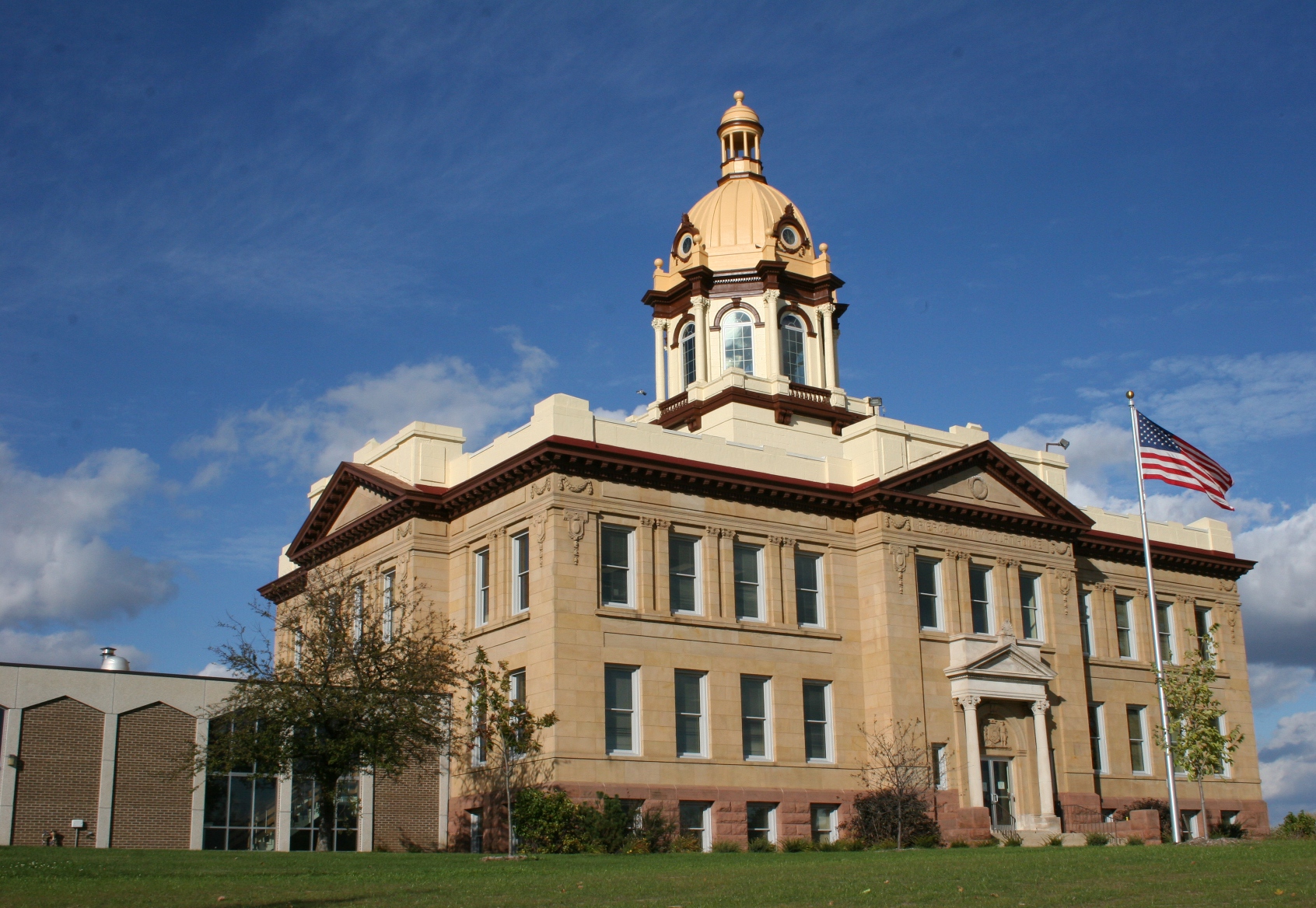
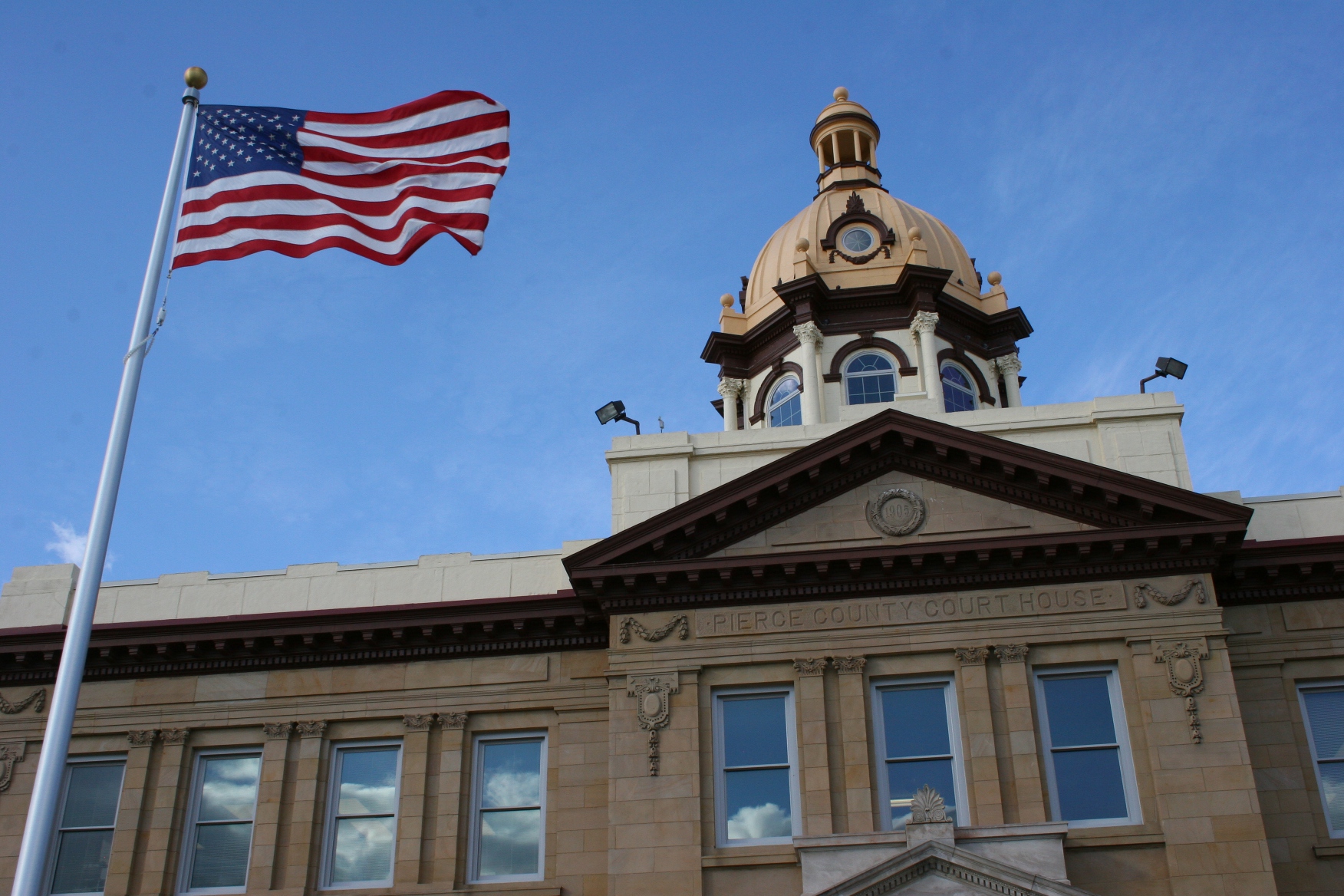
The stately Pierce County Courthouse in Ellsworth, Wisconsin.

The stately Pierce County Courthouse in Ellsworth, Wisconsin.

IT’S AN IMPRESSIVE BUILDING defining a hilltop in the center of Ellsworth, The Cheese Curd Capital of Wisconsin.

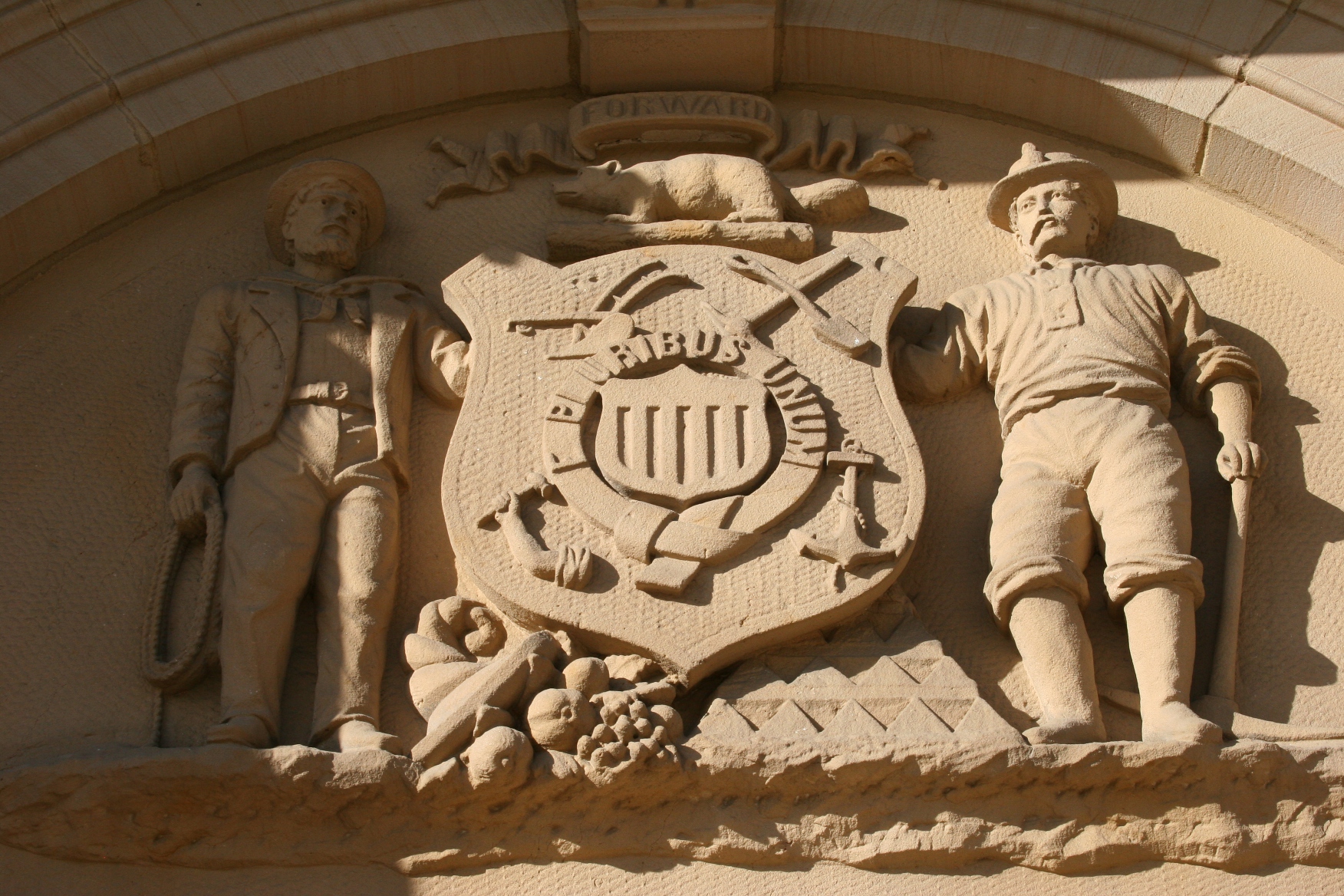
This beautiful stone sculpture rises above the front courthouse entry. Anyone know anything about the sculpture?

This beautiful stone sculpture rises above the front courthouse entry. Anyone know anything about the sculpture?

Stately columns, a dome, stone sculptures and a certain sense of strength mark the Pierce County Courthouse constructed in 1905 at a cost of $85,000.

After picking up coveted cheese curds at Ellsworth Cooperative Creamery, my husband and I returned to the courthouse we’d passed along Main Street en route to the creamery during an early October visit. We both appreciate old architecture and the courthouse, which is on the National Register of Historic Places, seemed a must-see.

Up close details of the upper exterior.

Up close details of the upper exterior.

Designed in the Beaux Arts Style of architecture by St. Paul architects Buecher & Orth, this massive structure presents a powerful presence, seemingly fitting for a place that serves as the center of county government and houses the courts. A jail was built adjacent to the courthouse and completed in 1968.

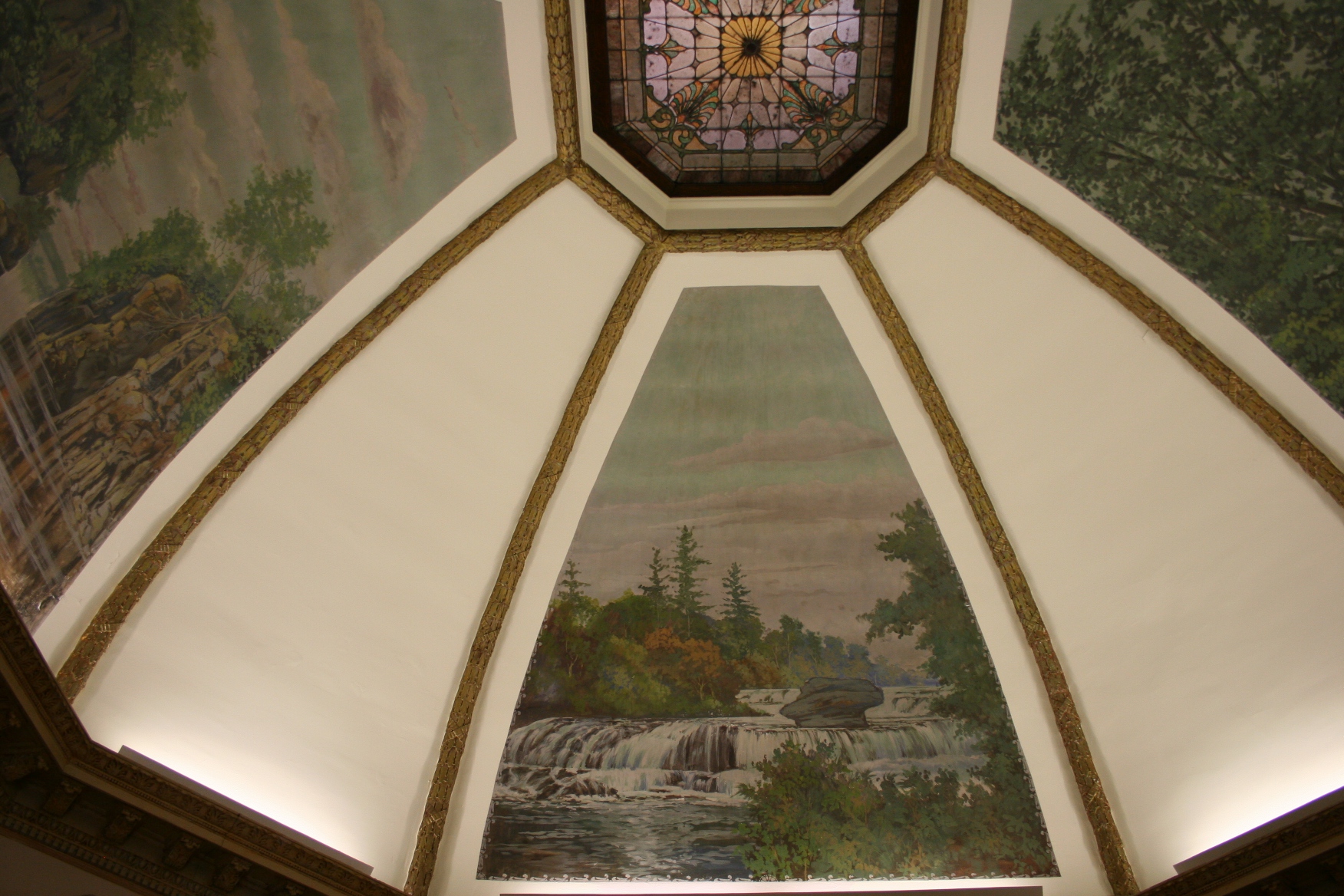
Rotunda murals depict the area's natural beauty.

Rotunda murals depict the area’s natural beauty.

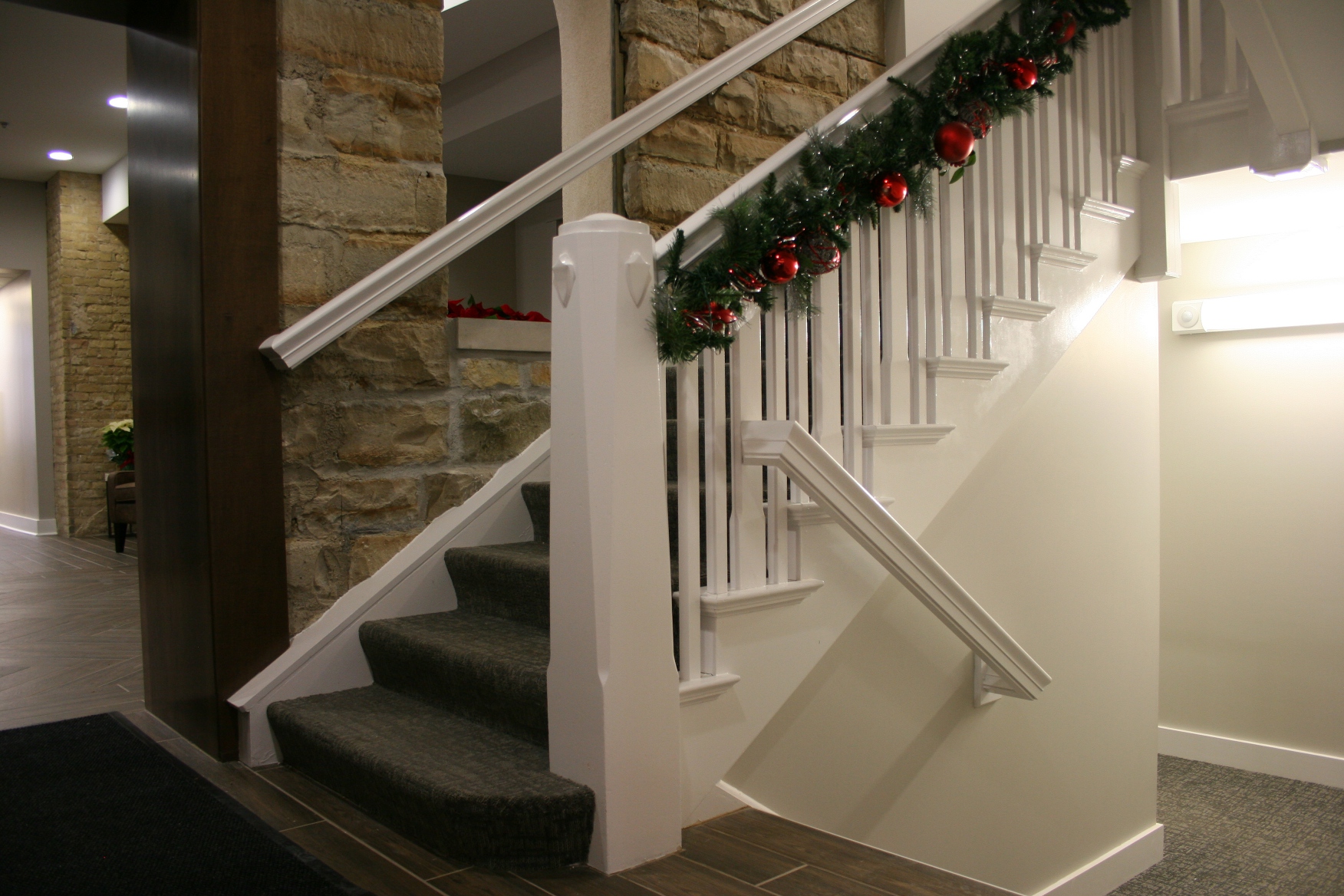
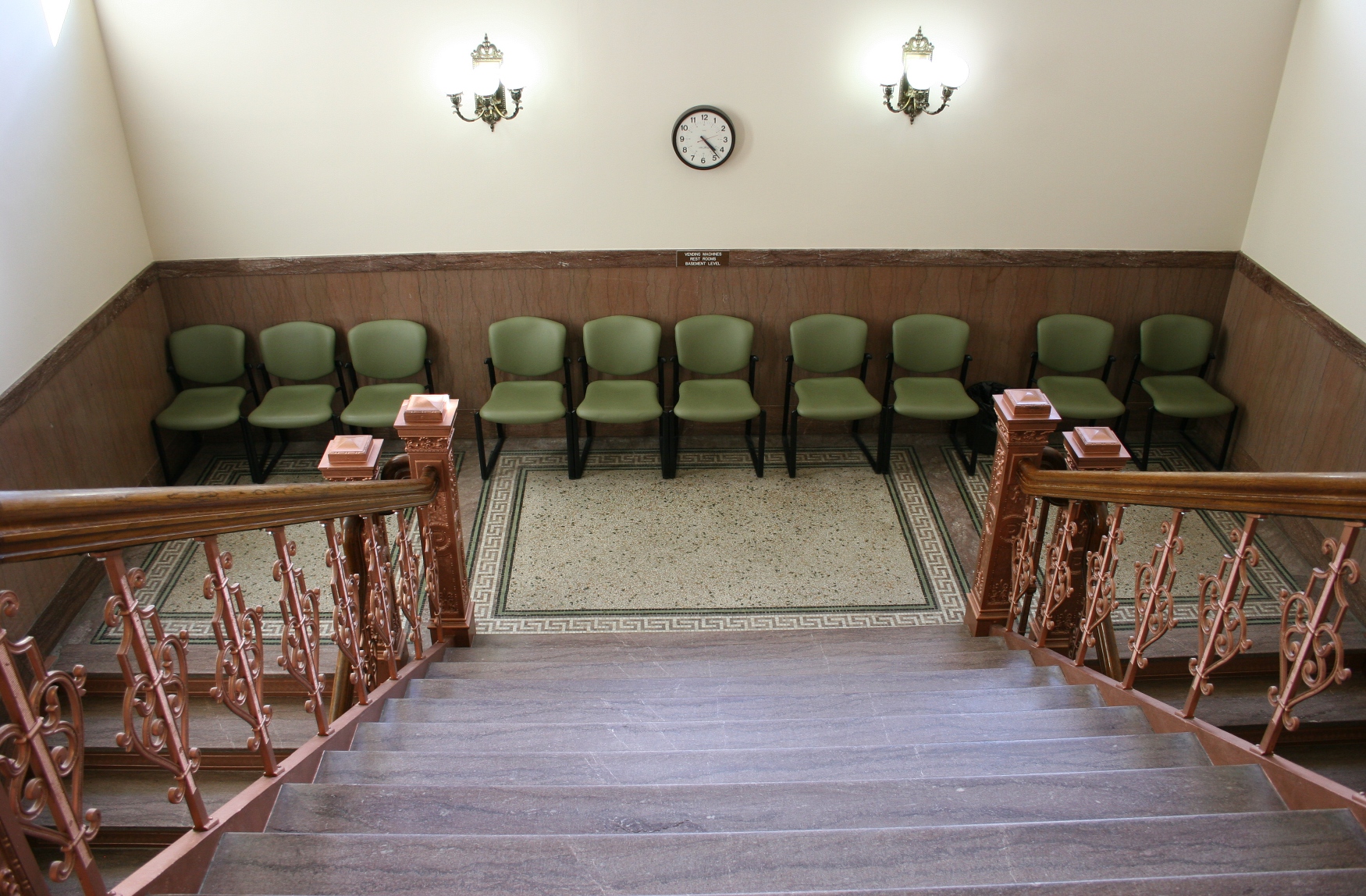
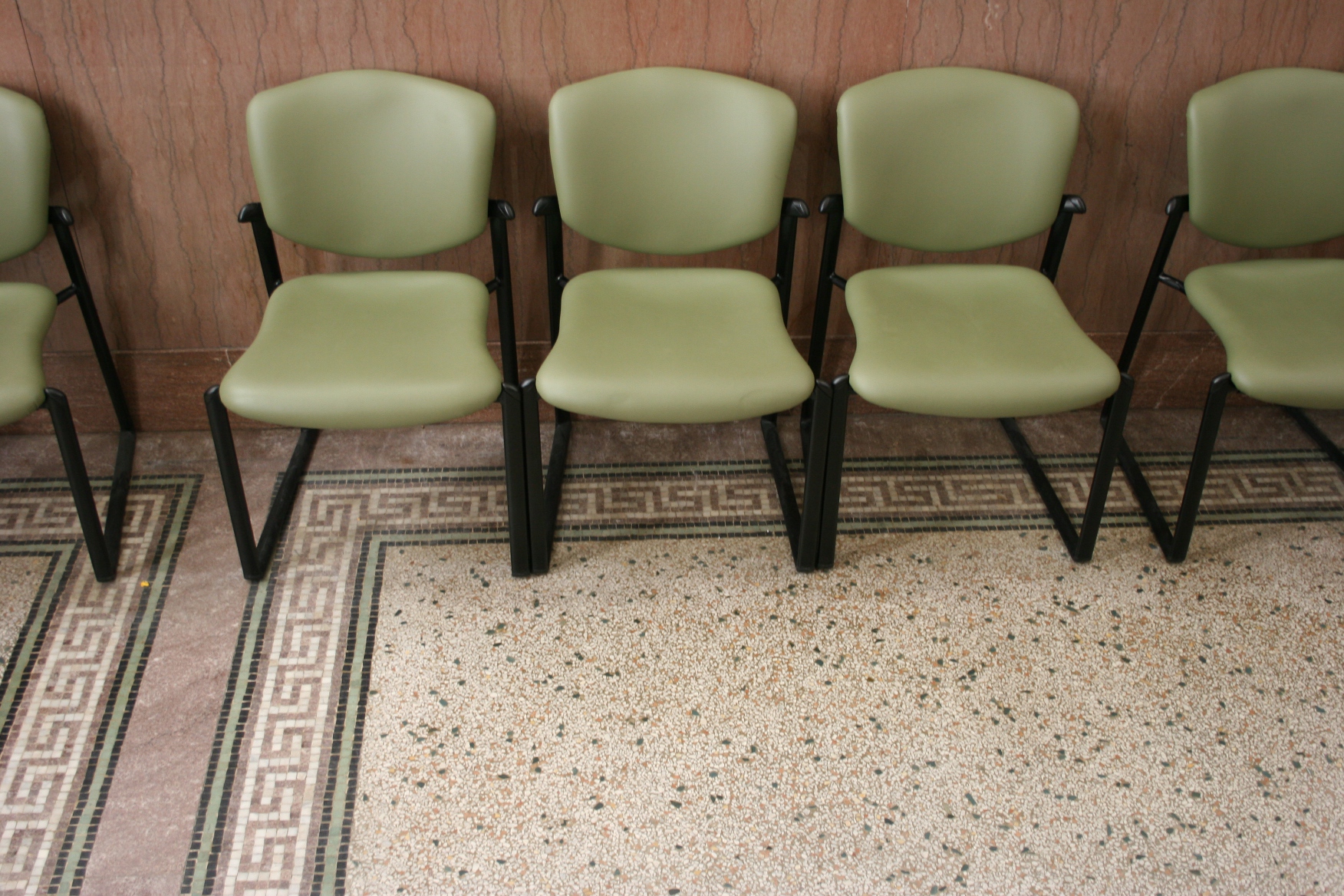
Public space along the impressive stairway.

Public seating along the stairway landing.

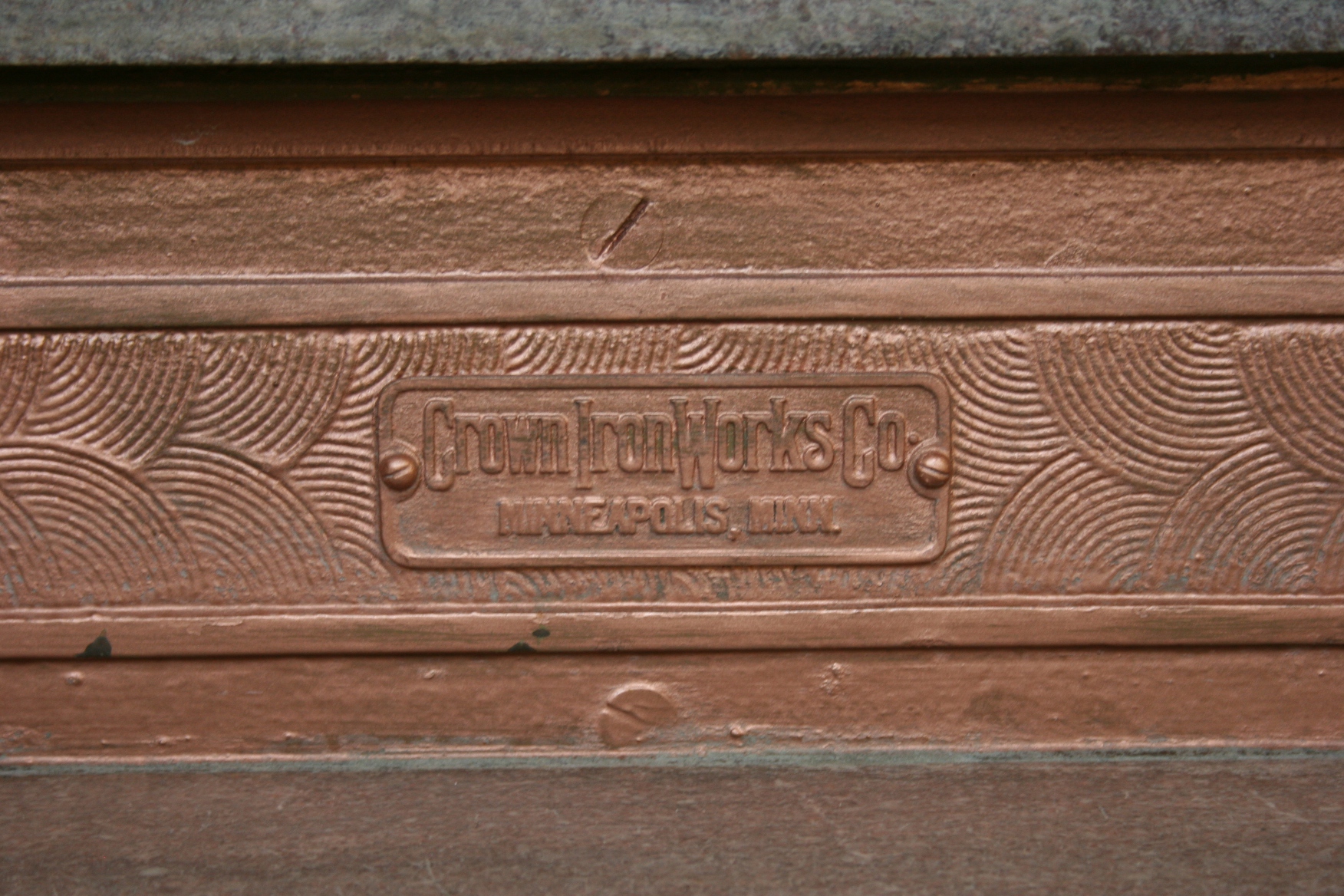
Details on the stairs credit the source of the work.

Details on the stairs credit the source of the work.

Look at that beautiful floor.

Look at that beautiful floor.

The law, in the form of a deputy sheriff, showed up when we self-toured the public space of the courthouse. I don’t know if he was dispatched to check out “the woman with the camera” and her companion or he simply happened upon us. But I sensed that we were being watched. And I suppose that’s OK in today’s world.

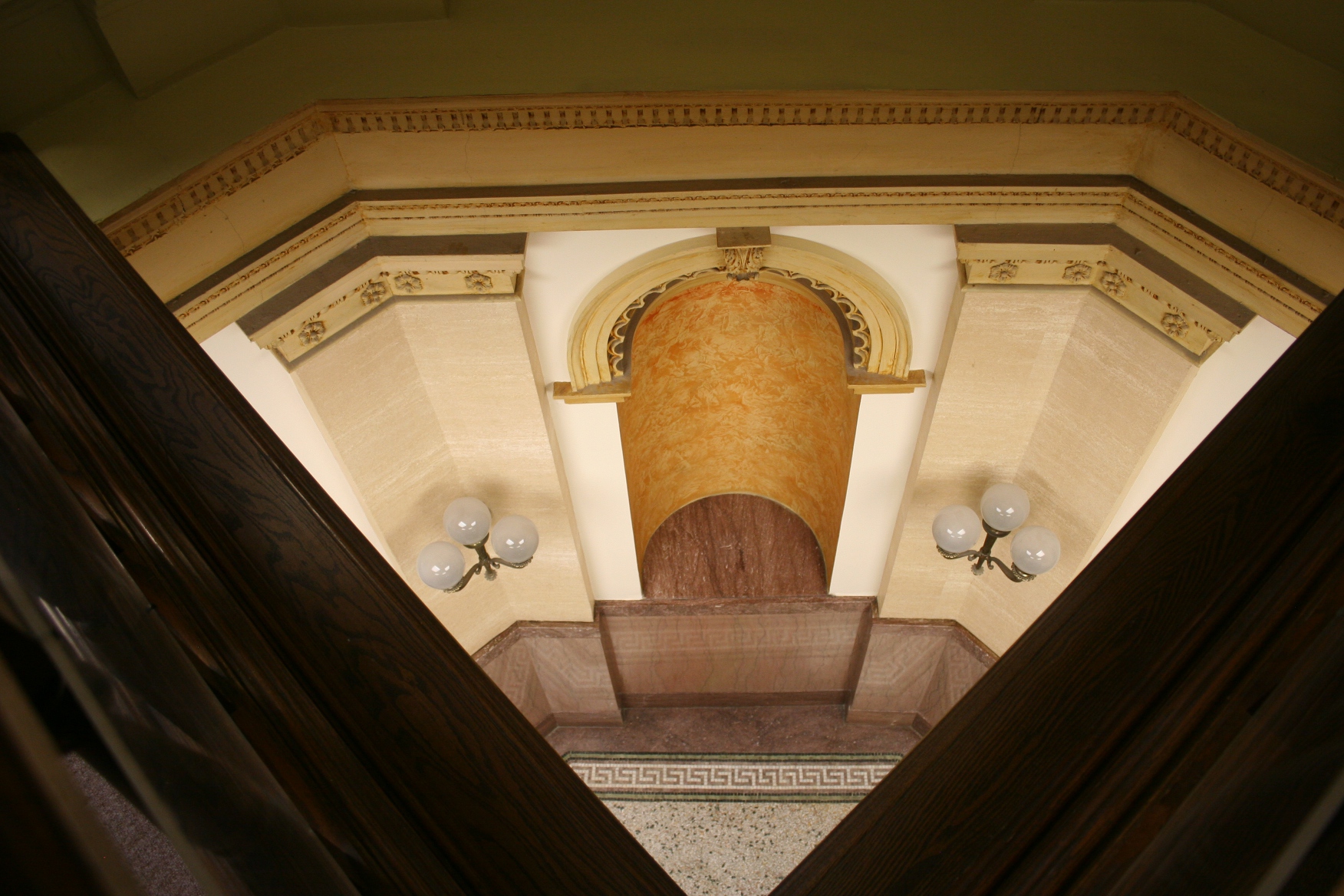
Looking down from the rotunda.

Looking down from the rotunda.

Our tour proved brief given the public space is small and I wasn’t about to enter the courtroom, although I was tempted.

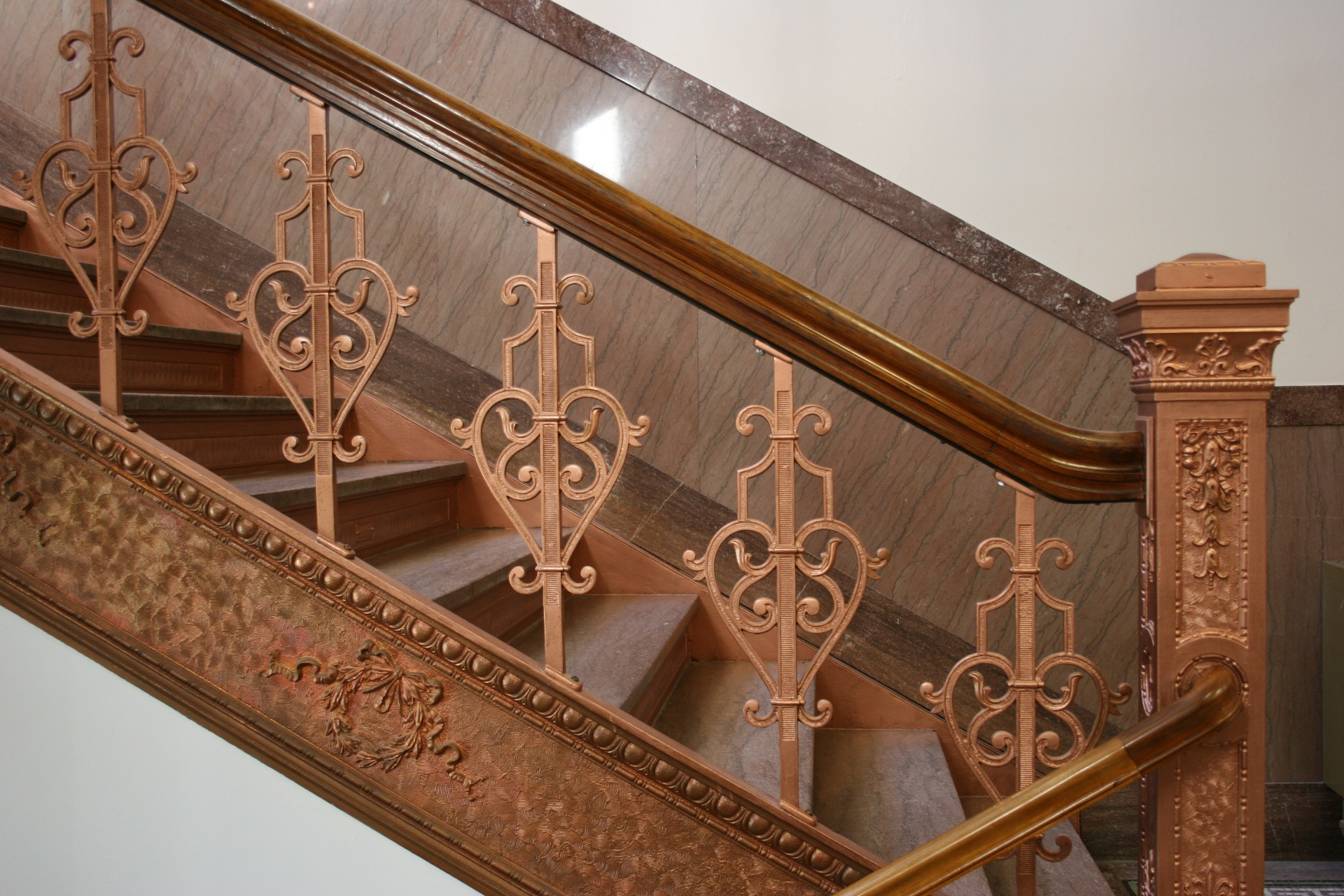
Beautiful railings, although my husband questioned whether this was meant to be the color.

Beautiful railings, although my husband questioned whether the color is original or mimics the original.

Interestingly enough, the Pierce County, Wisconsin, courthouse has a twin courthouse in Rugby in Pierce County, North Dakota. Same architect. Same style. Built in 1908 and also on the National Register of Historic Places.

© Copyright 2014 Audrey Kletscher Helbling


Discovering an historic church in Garden City January 10, 2014

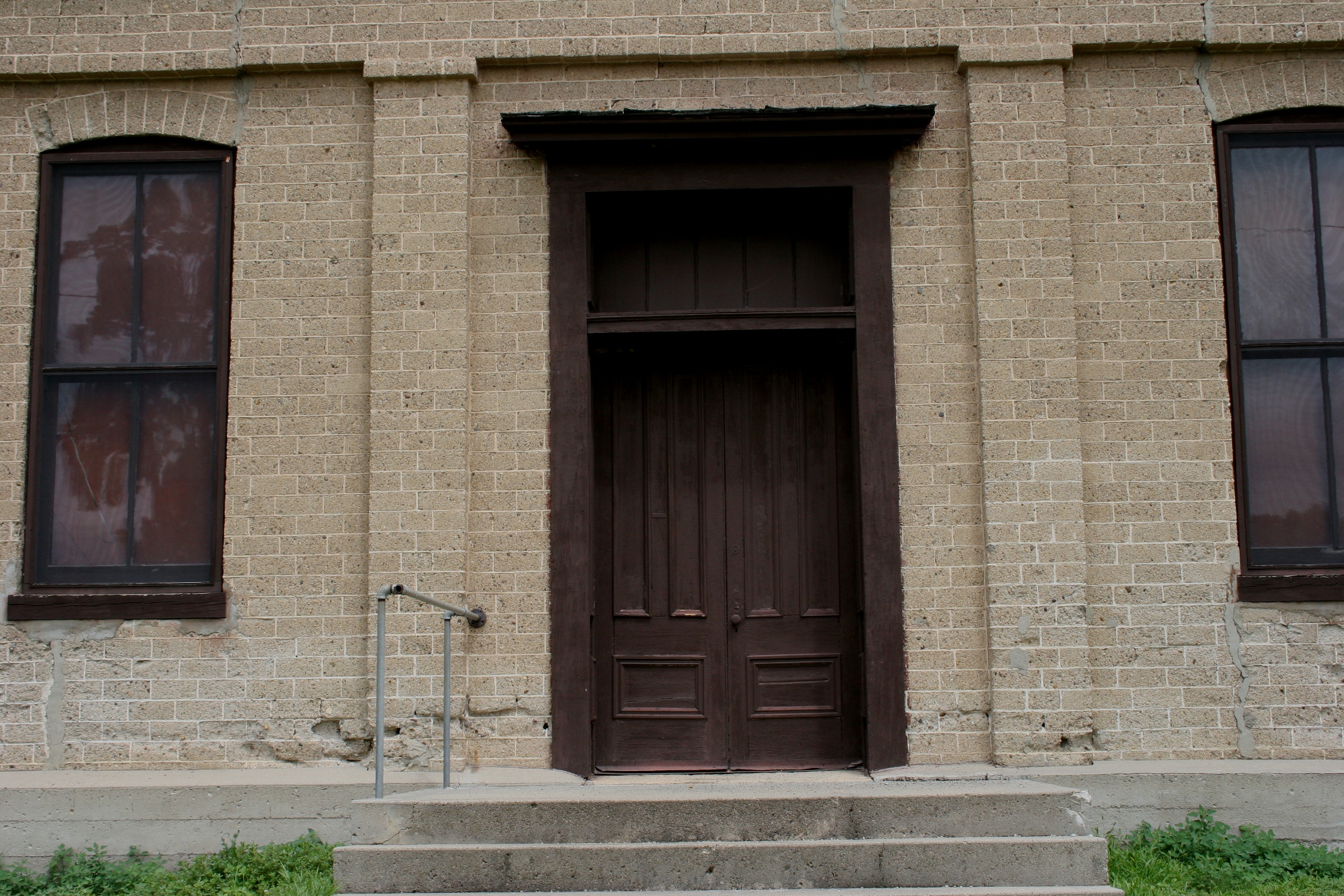
I found the doors of First Baptist Church locked while in Garden City this past July.

I found the doors of First Baptist Church locked while in Garden City this past July.

THE FRUSTRATING FACT for me as a photographer, when I come upon an aged church, is that most often I find the doors locked. I understand. Churches need to protect not only their buildings but also the valuables therein.

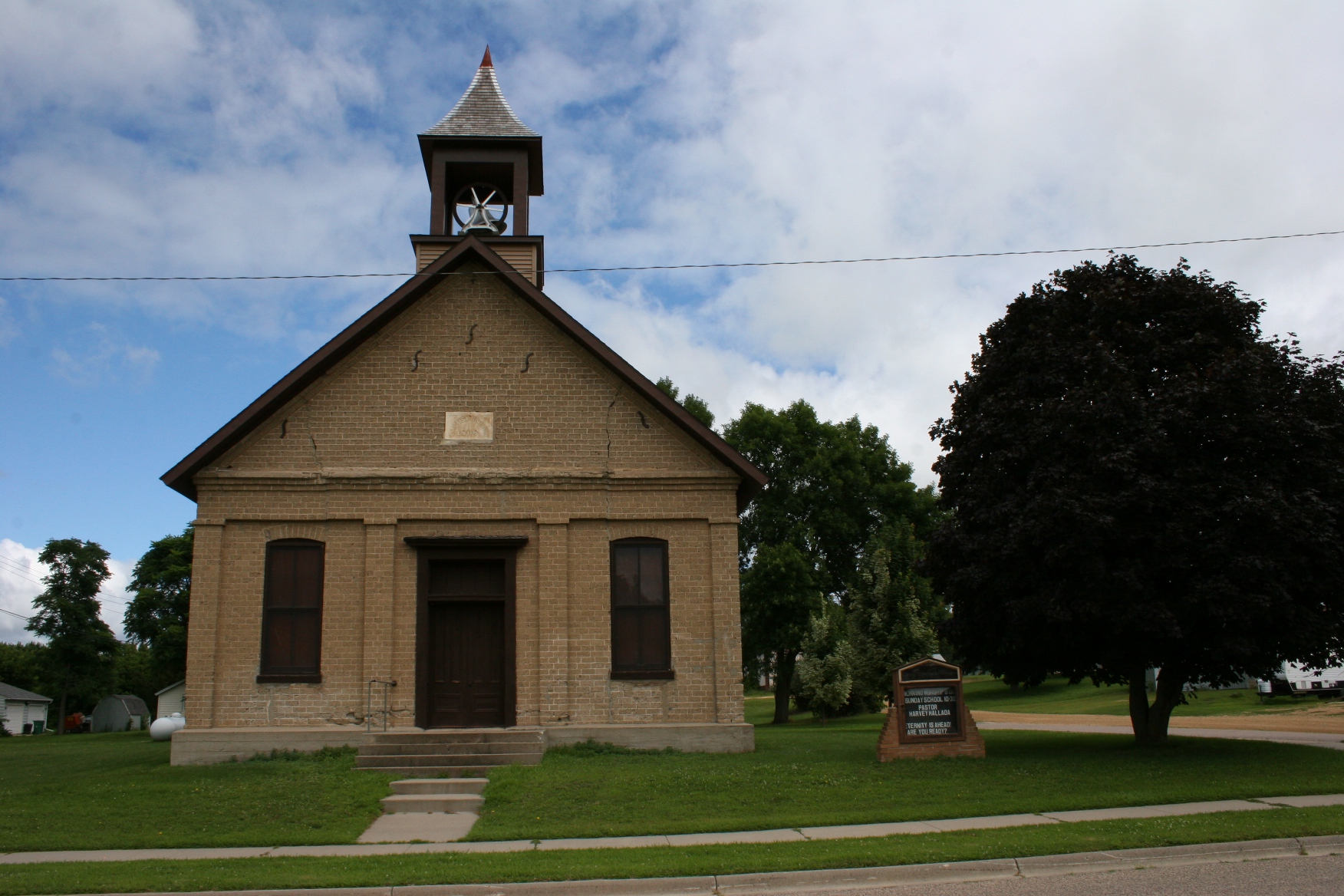
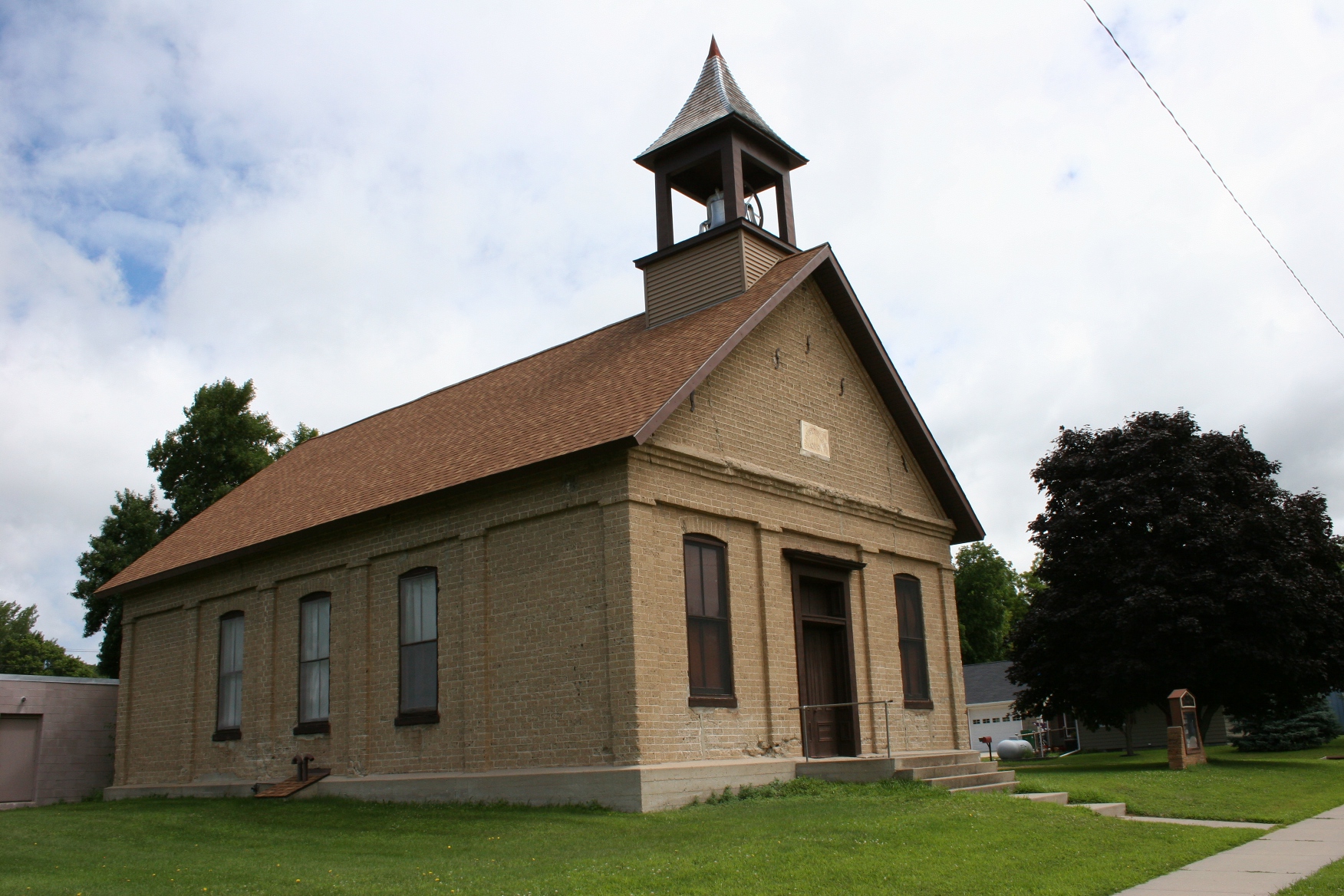
My first glimpse of this historic 1868 church.

My first glimpse of this historic 1868 church.

So, unless you have been inside the First Baptist Church in Garden City or seen interior photos elsewhere, you will simply have to imagine what lies within this church constructed in 1868 a block from the Watonwan River.

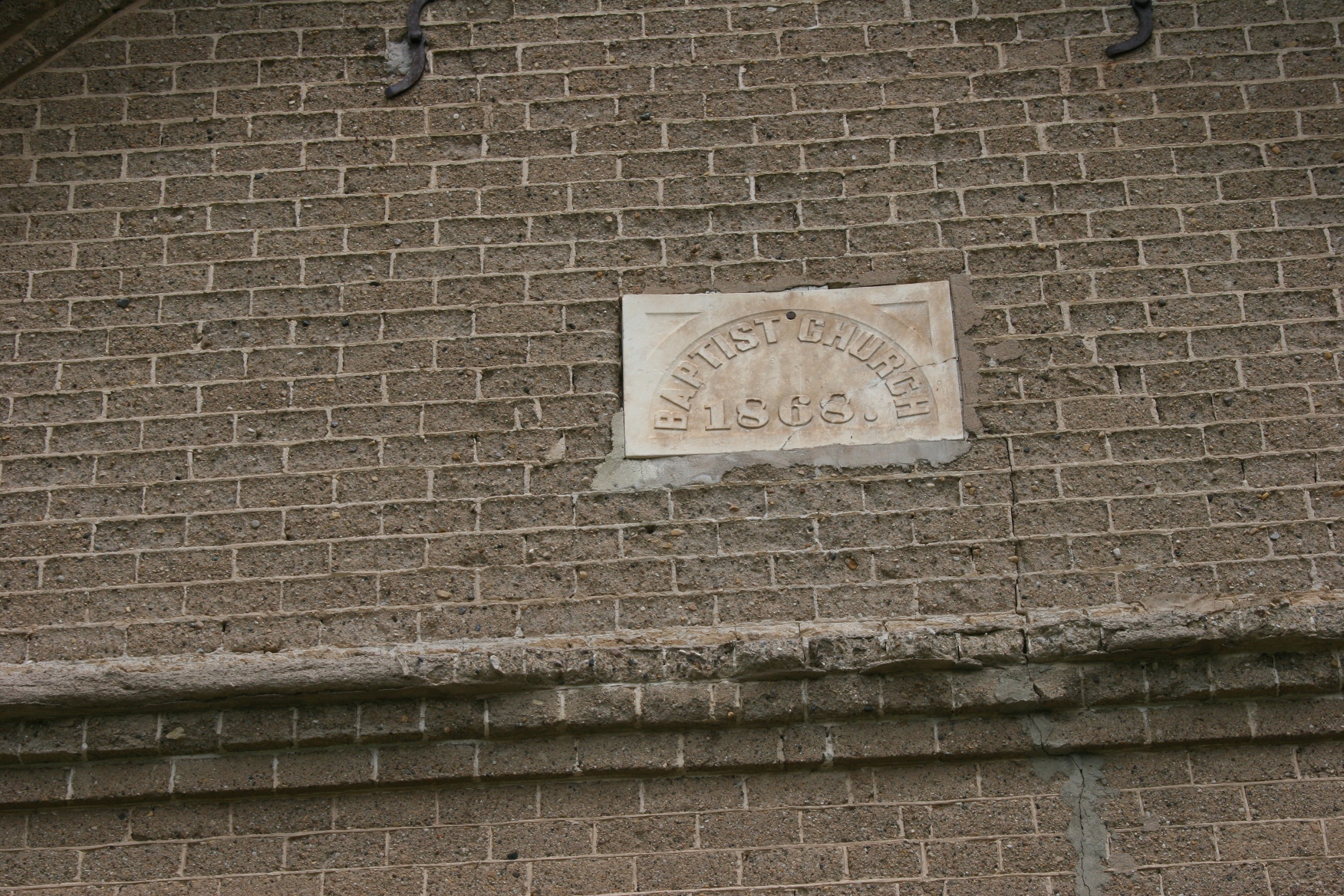
Those 1868 cement blocks, up close.

Those 1868 cement blocks, up close.

Built of locally-made Geist and Huntzelman cement blocks, the building holds special significance as the earliest known use of concrete blocks in Minnesota. In 1980, the church was placed on the National Register of Historic Places.

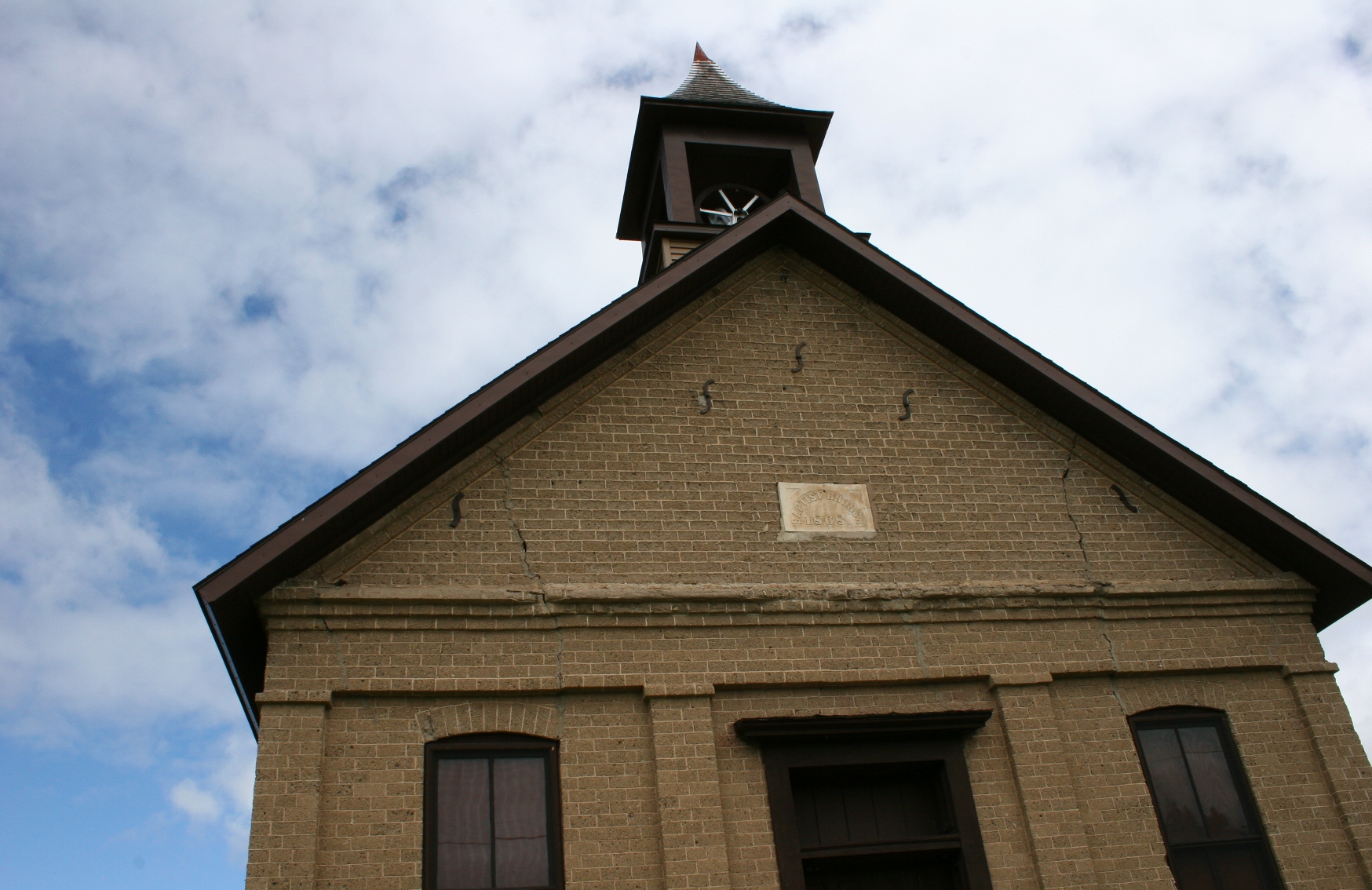
Looking up toward the belfry.

Looking up toward the belfry.

It is built in the Greek Revival style, with a belfry added later. In 1959, a concrete block addition was added at the rear of the church.

How wonderful that this remains a functioning church.

How wonderful that this remains a functioning church.

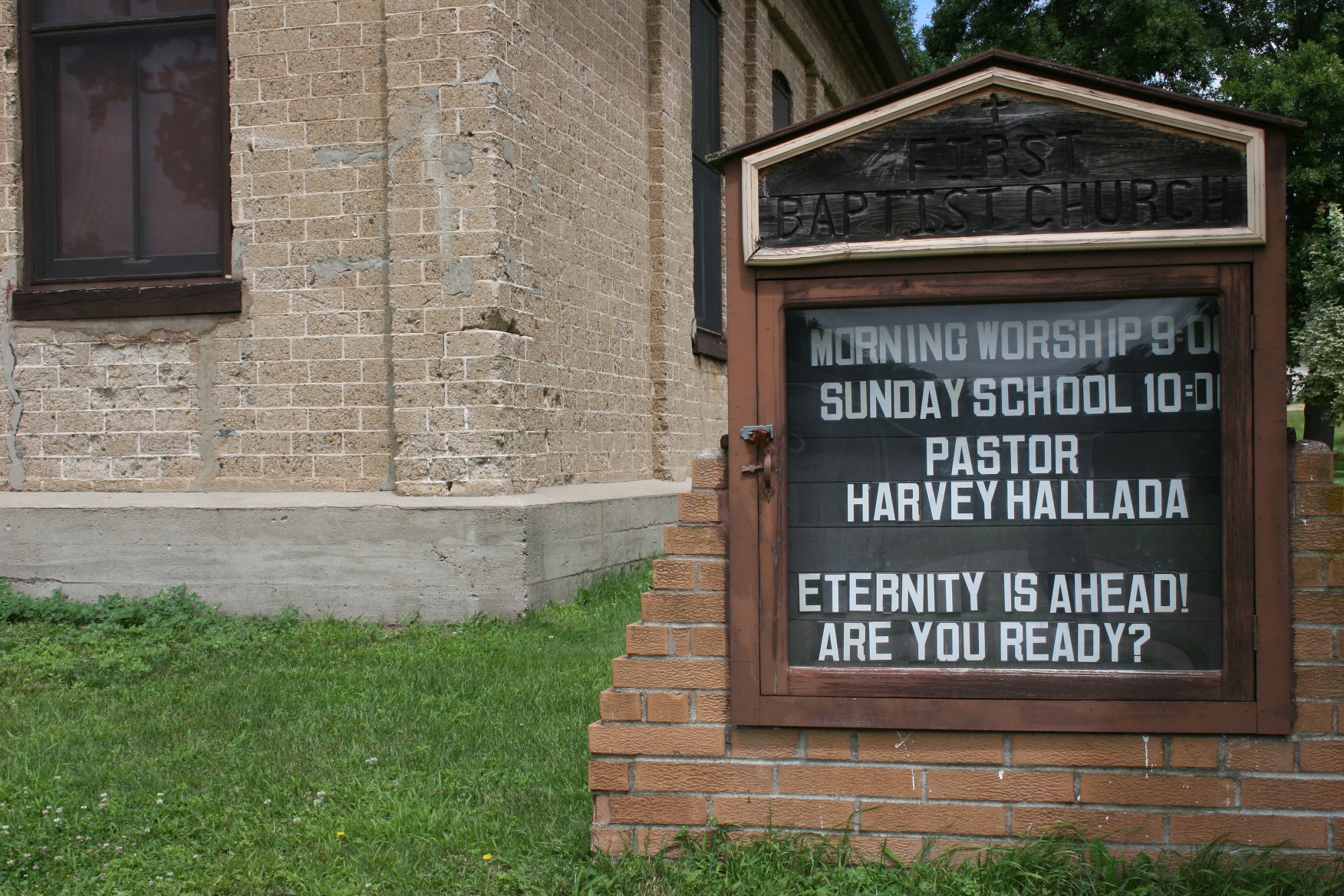
Apparently the structure still functions as a church with the Rev. Harvey Hallada leading 9 a.m. Sunday worship services.

Now sometimes photographers, like my friend Jackie who blogs at “Who Will Make Me Laugh,” find a church door open. Jackie appreciates old churches, barns and drives in the country as much as I do. So be sure to click here to read Jackie’s post showcasing Pilot Mound Lutheran Church in the Chatfield area. She found one gem of a church and several other wonderful old buildings and scenes while on a recent Saturday afternoon drive with her husband.

I’d encourage all of you to follow Jackie and another photo blogger, Dan over at Dan Traun Photography, if you enjoy viewing photographic results of a drive in the country or through the city (that would be Dan).

A side view of the church in Garden City, located 60-70 miles from my home.

A side view of the church in Garden City, located 60-70 miles from my home.

I’d encourage you also to find time in 2014 for country drives. There is much to be discovered nearby, in our own backyards, if only we will take the time to look.

FYI: These photos were taken in July during a brief stop in Garden City, south of Mankato along U.S. Highway 169. See posts from the past two days for additional images shot in Garden City.

© Copyright 2014 Audrey Kletscher Helbling


A watercolor photo of an historic Minnesota library August 12, 2013

HE’S PULLED INTO the 15-minute parking spot in front of the library on a rainy Saturday afternoon. I wait in the front passenger seat as my husband dashes inside to return a DVD and pick up a book for me.

I am grateful for his consideration, that I am not the one racing up the sidewalk in the rain.

As I watch the rain glide in sheets across the windshield, I notice how the old stone library, with its signature stained glass windows, appears distorted. The colored windows, in soft shades of rose and wheat, seem undefined, as if brushed in watercolor.

In that moment I stretch downward, reaching for the camera bag at my feet, considering that the dreamy scene unfolding before me might just make for an interesting image. Leaning slightly back, I aim my camera lens upward and snap several photos.

I don’t know what to expect. But later, when I upload the images into my computer, I am pleased to see the surreal first frame exactly as I had hoped. Dreamy. Like a painting.

This marks an epiphany for me as a photographer. When I am willing to think beyond the confines of a neat, orderly, precise photo, the unexpected happens. And it’s  magic.

An unedited image of Buckham Memorial Library in Faribault as taken through the front windshield of our family car while rain was falling. The unusual hue of the sky is from the tint in the windshield.

FYI: The 1929 Thomas Scott Buckham Memorial Library, built of Kasota stone, was designed in the Art Deco style by Charles Buckham of Vermont and is on the National Register of Historic Places. Anna Buckham gifted the library to the city of Faribault in memory of her husband, Thomas Buckham, a prominent local judge and avid Greek scholar with a special interest in the arts.

Anna Buckham chose a Greek theme for the library which includes a Greek window designed by world-renowned stained glass artist Charles Connick of Boston.

In the library’s Great Room, Alfred J. Hyslop, a former art professor at Carleton College in Northfield, painted four Greek murals depicting scenes from Olympia, Athens, Sparta and Delphi.

And, yes, I really should photograph the Connick window and murals to show you. I see this library, use this library, all the time. I’ve simply grown complacent to its artful beauty.

© Copyright 2013 Audrey Kletscher Helbling


Montgomery, Part II: Entertaining & inspiring the folks of South Central Minnesota in an historic dance hall March 5, 2013

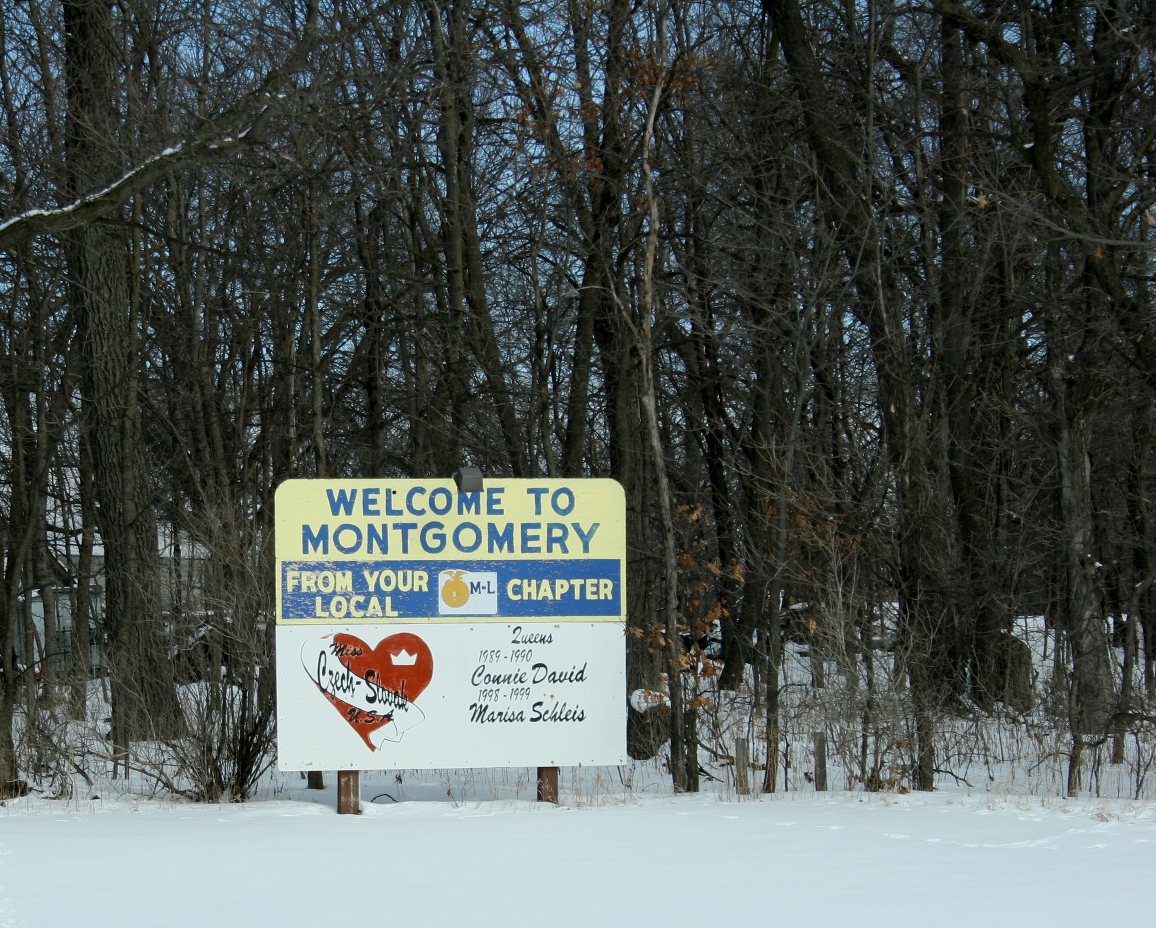
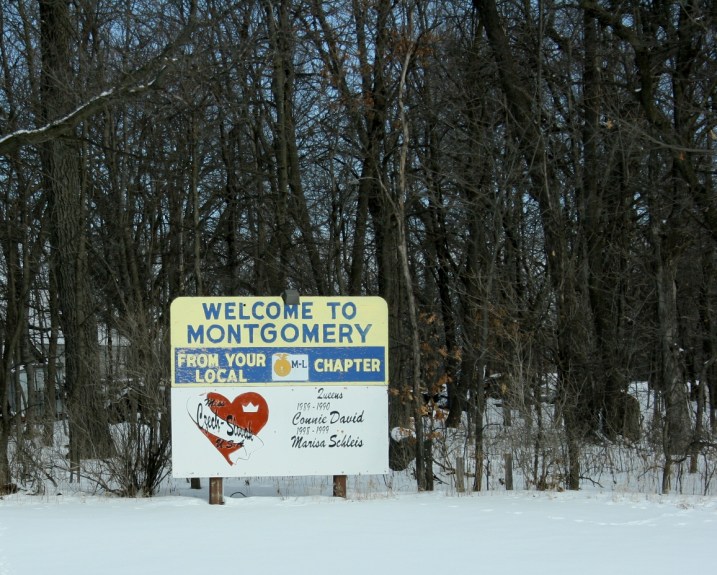
A sign just off Minnesota Highway 13 welcomes travelers to Montgomery.

A sign near the Minnesota Highway 13 and 21 intersection welcomes travelers to Montgomery.

IN RURAL SOUTHERN MINNESOTA, in the heart of Czech country, in a community with a fading welcome sign noting local Miss Czech-Slovak U.S.A. queens Connie David (1989-1990) and Marisa Schleis (1998-1999), you’ll discover an unexpected treasure.
The red-roofed building in the distance is Hilltop Hall.

The red-roofed building in the distance is Hilltop Hall.

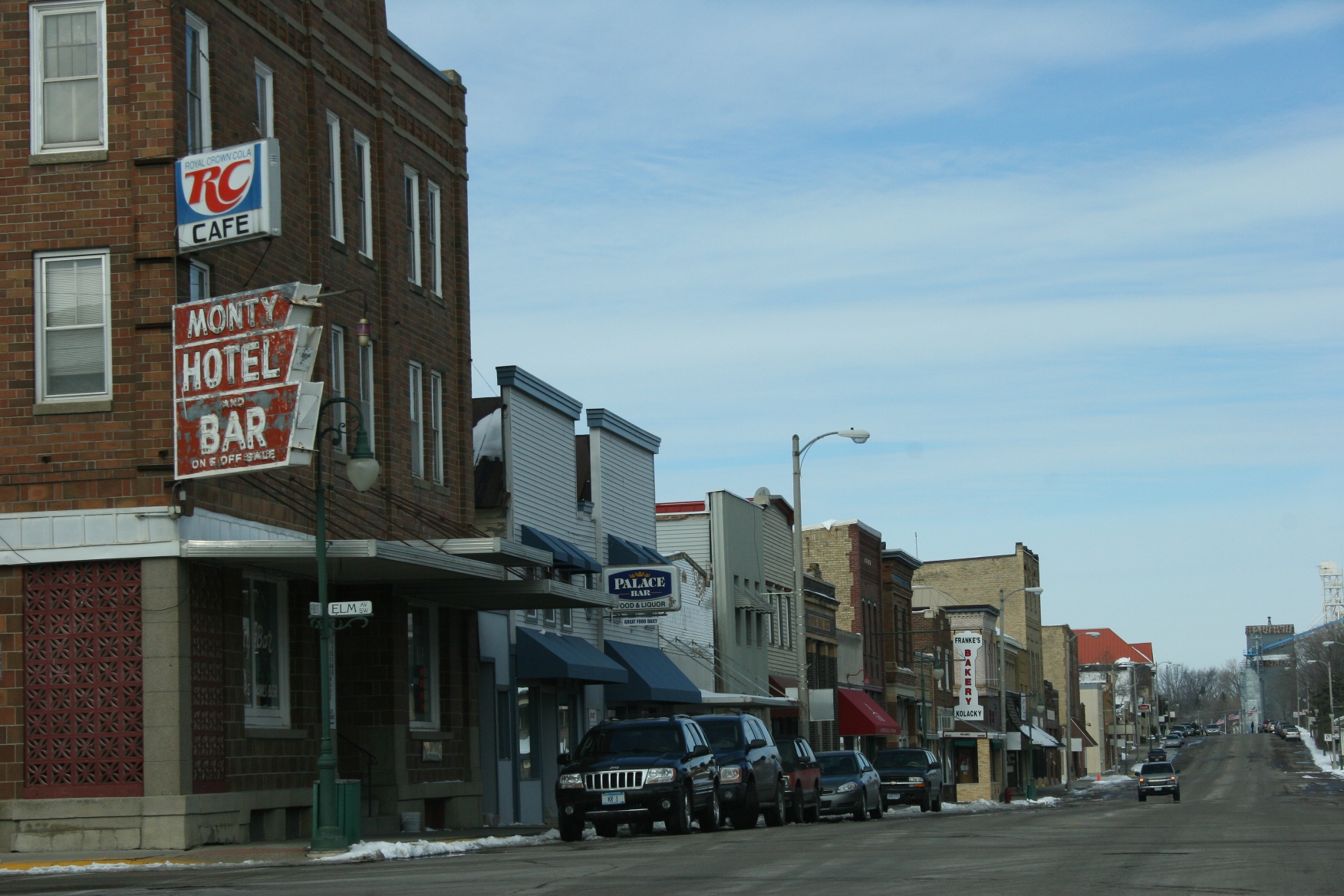
Historic Hilltop Hall sits on the north end of First Street in Montgomery, past the library and chiropractic office, the eateries and bars, the newspaper and accounting offices, the antique shops, even farther than the bakery which bakes ethnic kolacky, just two doors up from the meat market, source of homemade sausage.
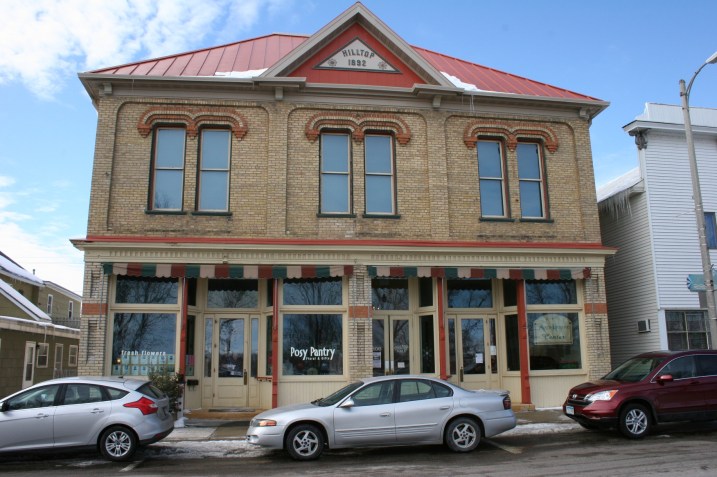
Hilltop Hall was "falling apart," John Grimm says of the building he bought in the early 1990s. He reroofed, gutted and reconstructed and/or restored the interior.

Hilltop Hall was “falling apart,” John Grimm says of the building he bought in the early 1990s. He reroofed  the hall and gutted and reconstructed and/or restored the interior.

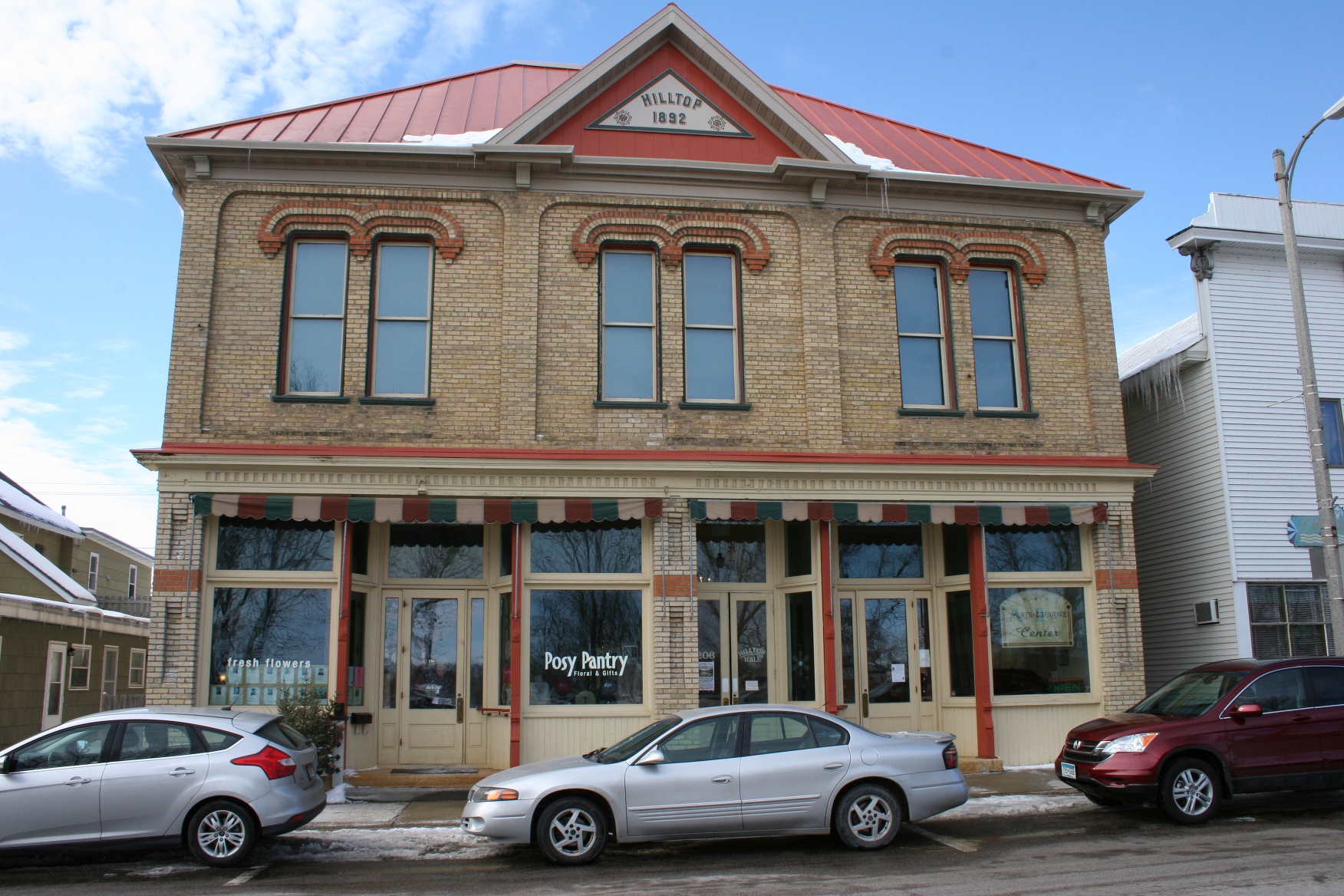
The red-roofed 1892 brick structure on the National Register of Historic Places represents a center of culture in this self-proclaimed Kolacky Capital of the World, a farming town of nearly 3,000 notably proud of its Czech heritage.
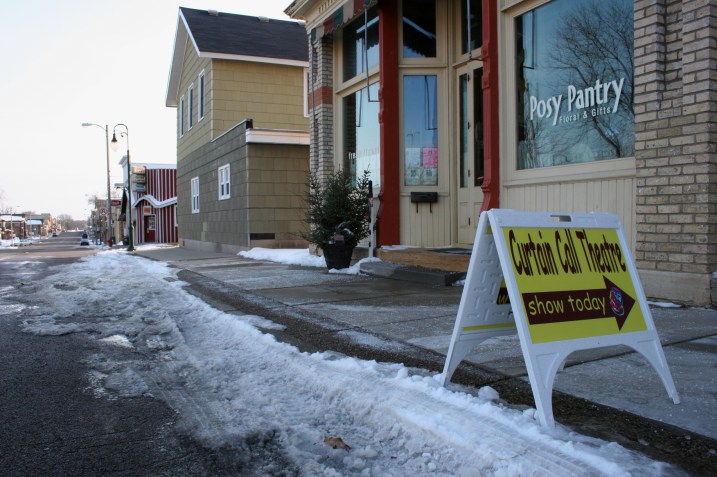
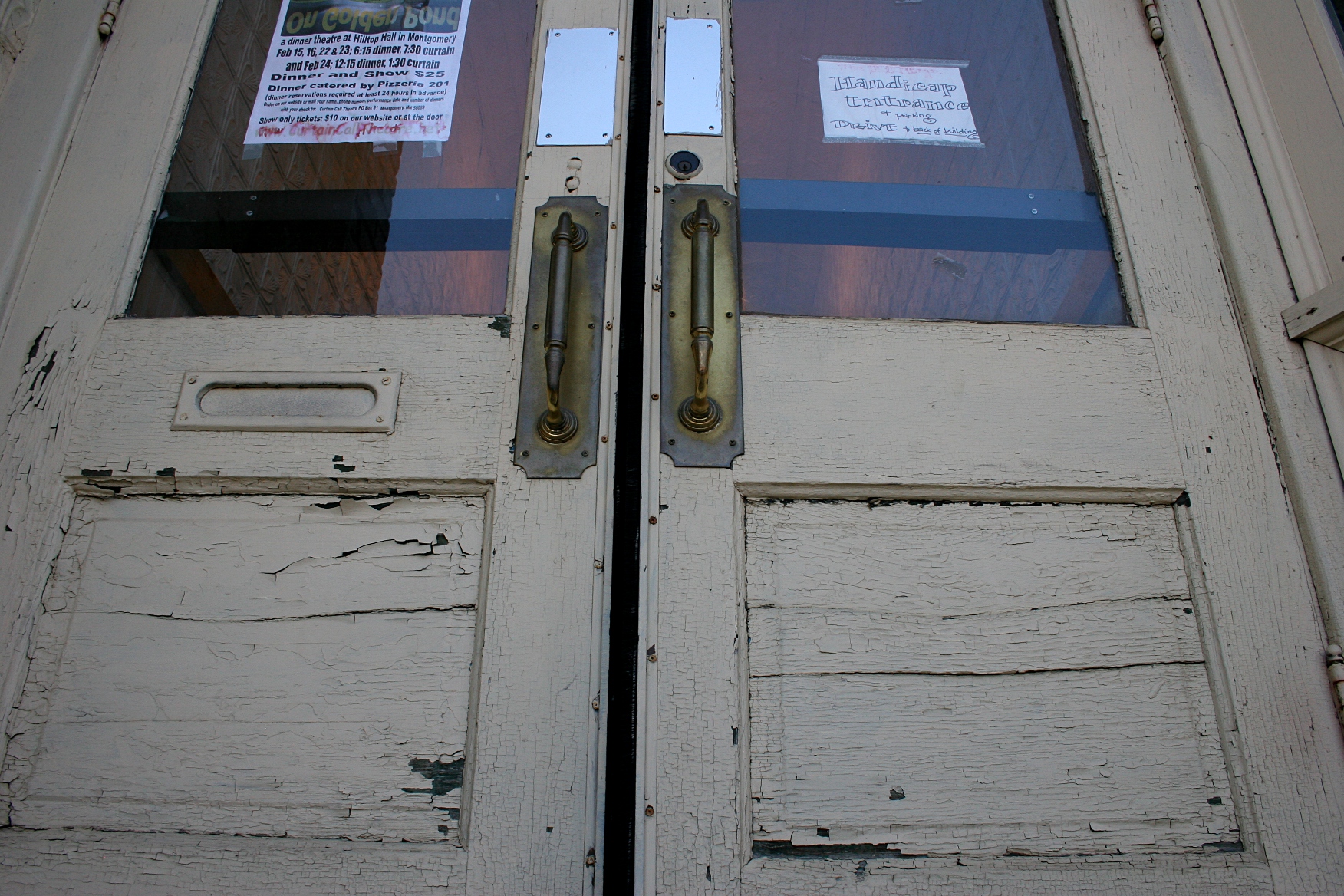
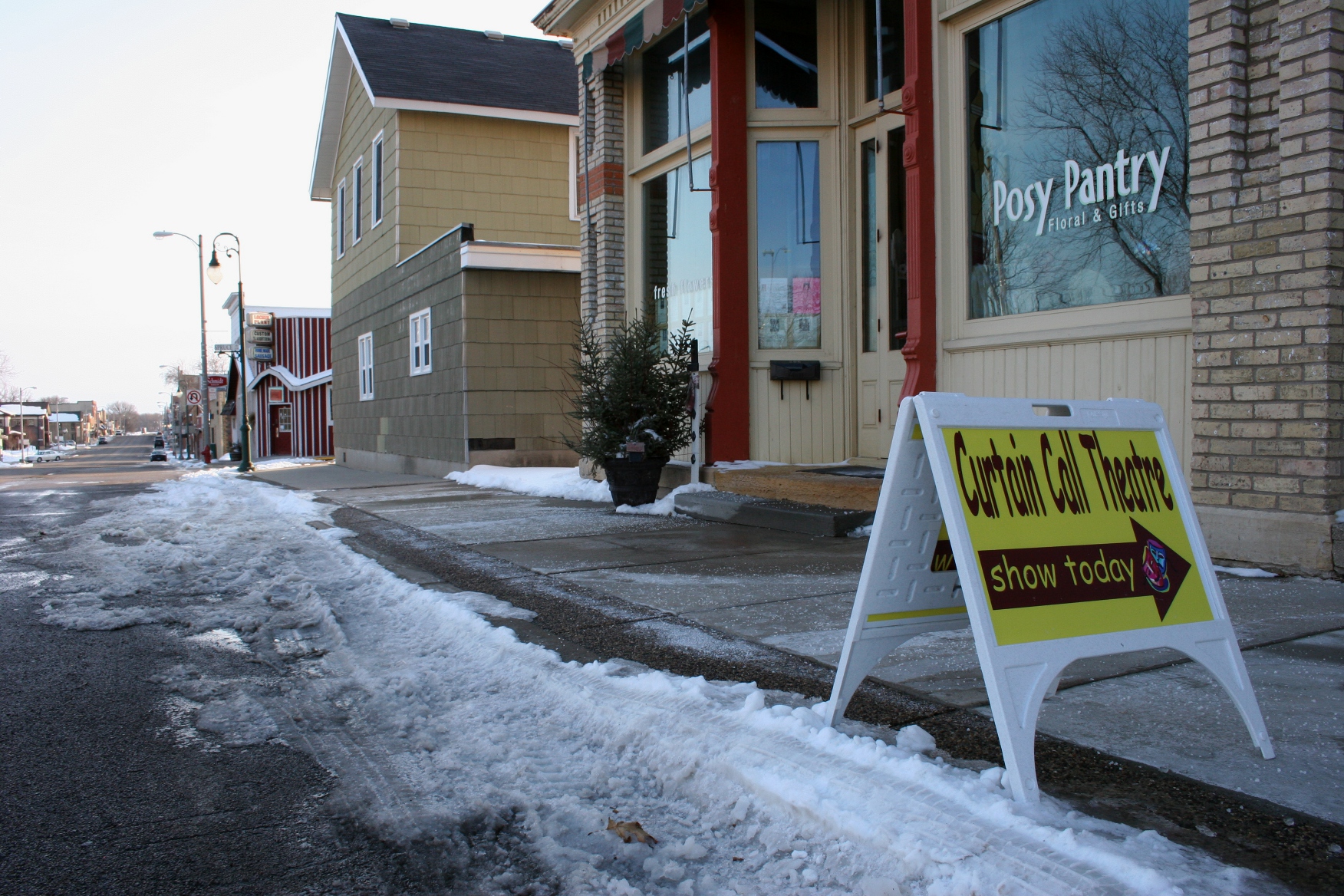
A sign outside Hilltop Hall directs guests to the Curtain Call Theatre performance of "On Golden Pond." The area theatrical group also performs in neighboring New Prague.

A sign outside Hilltop Hall directs guests to the Curtain Call Theatre performance of “On Golden Pond.” The area theatrical group also performs in neighboring New Prague.

The community should also be proud of Hilltop, a rare small town gem which hosts once-a-year comedic performances by Curtain Call Theatre and monthly Hilltop Happenings Series variety shows in the second floor 75-foot by 45-foot vintage concert and dance hall. The main floor is home to the Montgomery Area Arts & Heritage Center—featuring rotating historic and artistic exhibits—and a floral/gift shop, Posy Pantry.

Native Wisconsinite John Grimm, 72, a retired airline pilot, entrepreneur and former Le Sueur County commissioner who has lived in the Montgomery area since 1992, represents the driving force behind this cultural center nestled into a hill across the alley from St. John’s Lutheran Church.

This composer and singer—by passion, not profession—and a team of equally enthusiastic musicians six months ago revived the variety shows which have been an irregular part of Hilltop since Grimm purchased and restored the building in the early 1990s. He bought the old hall, he says, “to save a significantly historic building” and “to create a place where local folks could perform.”
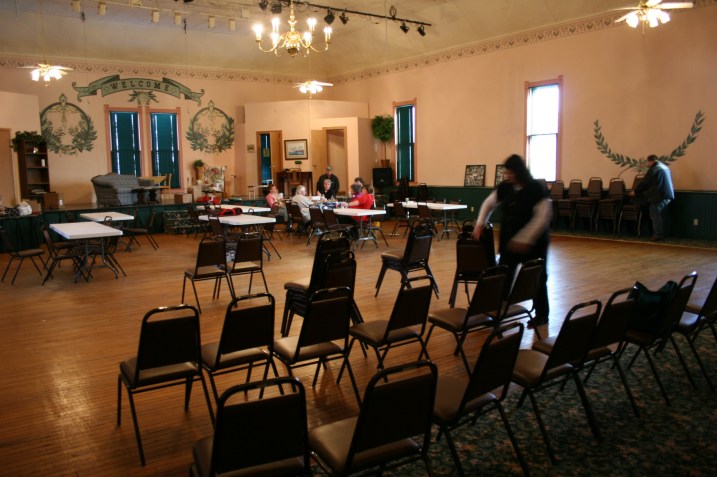
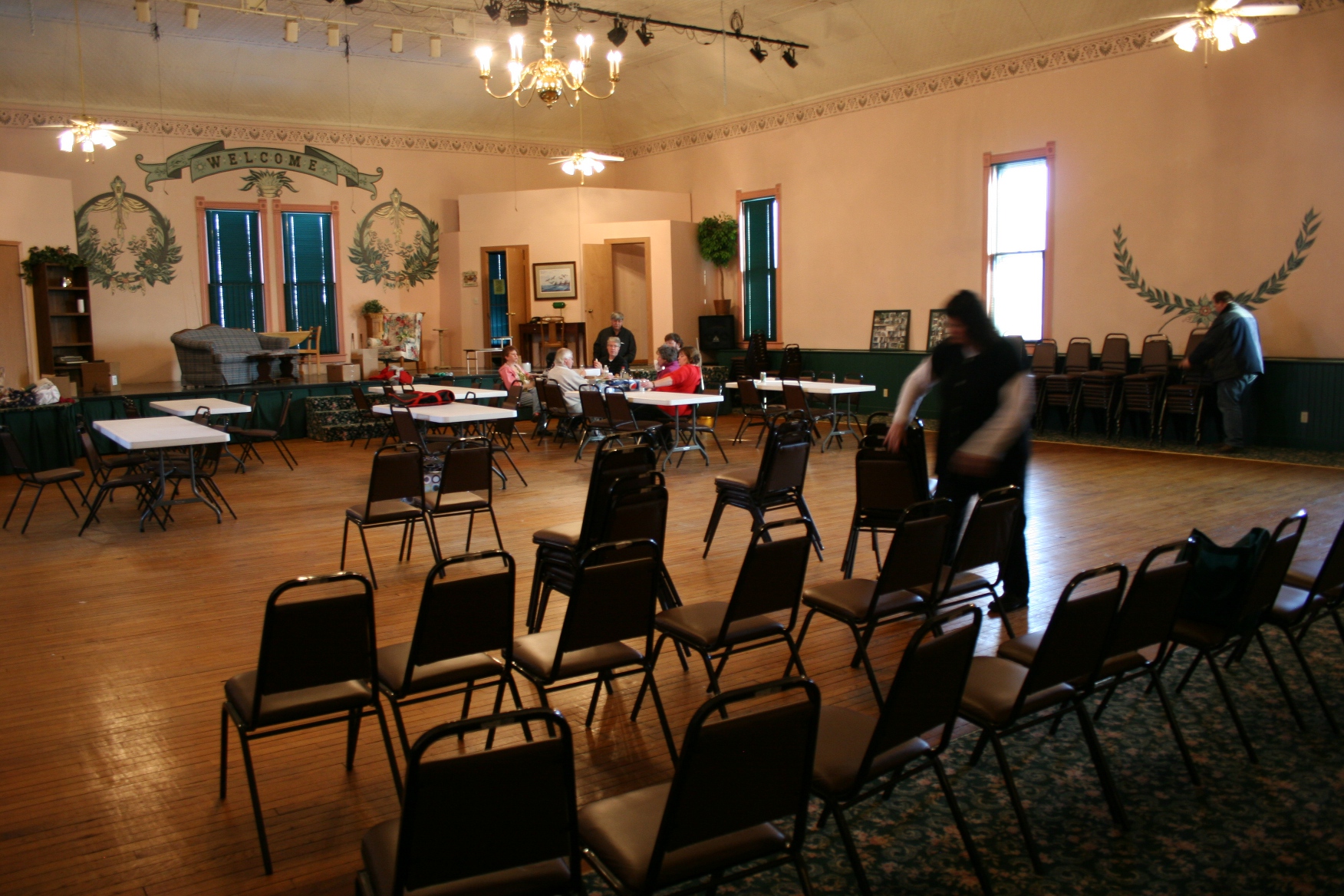
Except for a small section which was damaged by water, this wood floor is original.

Except for a small section which was damaged by water, this wood floor is original. Here volunteers stack chairs following the final performance of “On Golden Pond” while the cast enjoys pizza.

Now on Sunday afternoons, during the recently-resurrected variety shows, audiences ranging from 30 – 100 gather in the upper floor venue, feet planted on the restored wood floor, to hear next-door Lutheran pastor, Bob Kaul, strum his folk style guitar music or professional musician Craig Wasner of Northfield perform or Grimm present his Elvis impersonations (or other musical selections).

In a kicked back atmosphere where performers arrive two hours before the 4 p.m. – 6 p.m. show to rehearse, if necessary, and then sit among the crowd, the audience will hear a wide range of music from gospel to pop, folk, country, classical and more presented by regular troupe members from the Montgomery, Le Sueur, New Prague and Northfield areas.

Among the crowd favorites, Grimm notes, is 2012 Montgomery-Lonsdale High School (now Tri-City United) graduate Jesse Beulke, a gifted musician studying psychology and music at Minnesota State University, Mankato, with aspirations of becoming a professional composer. Beulke’s classical music selections on the piano have drawn standing ovations. “The audience recognizes his talent,” Grimm says.

Other regulars include musicians Wade and Mary Lou Fradenburgh, Maren Wasner and Wendy Zaske.
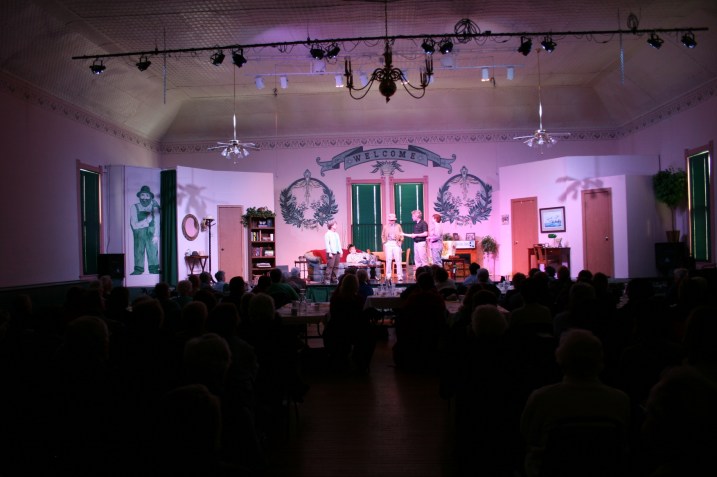
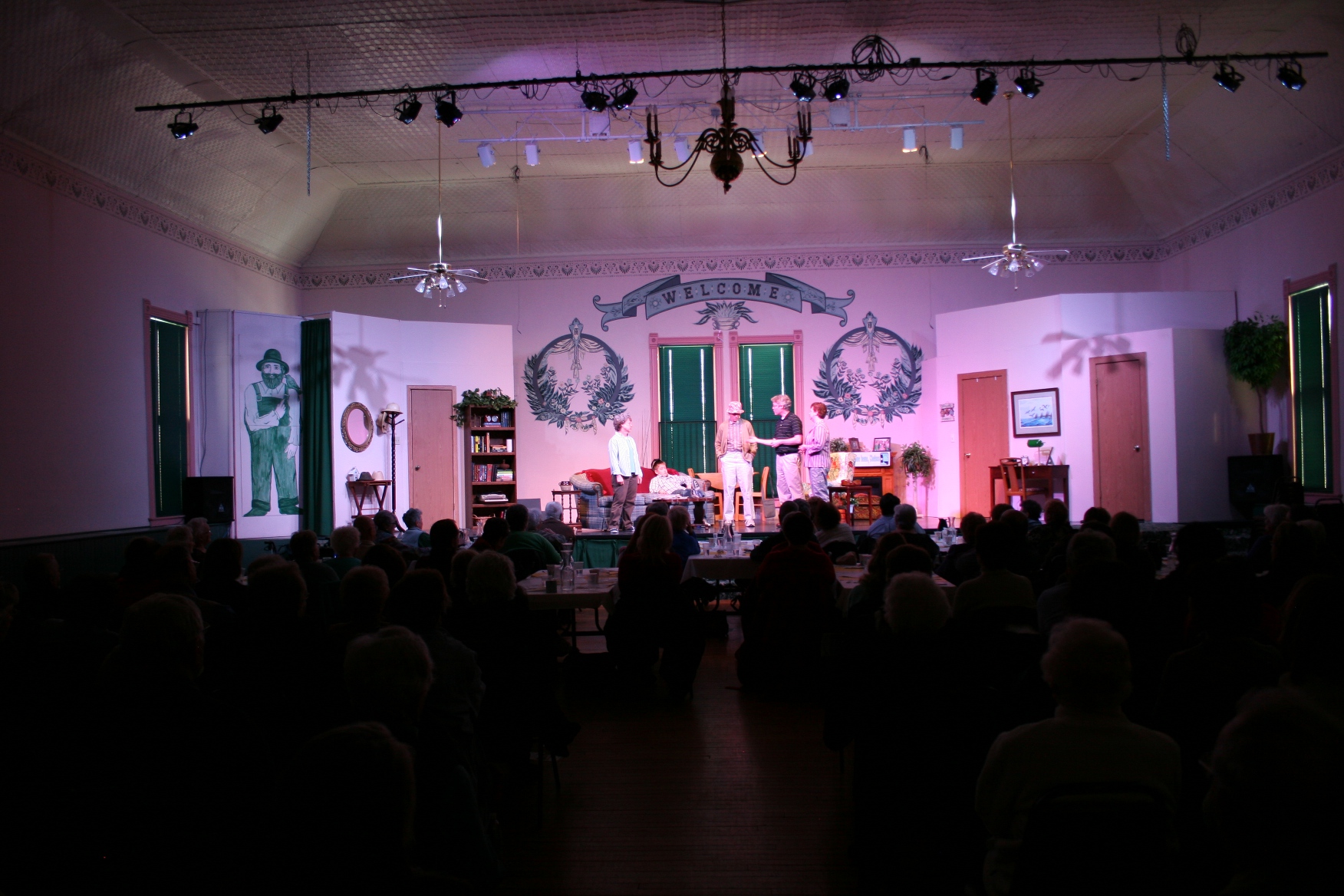
A view of Hilltop Hall's performance venue shows John Grimm and Fran Bohlke playing the lead roles in "On Golden Pond."

A view of Hilltop Hall’s performance venue shows the cast of “On Golden Pond.” John Grimm, center, plays the lead role along with Fran Bohlke of Shakopee, left in Curtain Call Theatre’s production. This marked Bohlke’s third time playing Ethel Thayer. She previously played the part during performances in Worthington and Luverne. Stenciling in the hall was either replicated or restored, depending on condition.

Grimm is planning to add original humorous skits to the monthly Sunday variety shows, tapping into his passion for performing. Fran Bohlke, who played Ethel Thayer opposite Grimm’s Norman Thayer Jr. in the Curtain Call Theatre’s recent performances of “On Golden Pond” at the Hilltop, will also sing at the March 24 show.

While Grimm and his troupe welcome guest performers, those entertainers must audition for what’s billed as “a unique mix of breathtaking talent, lighthearted entertainment and tasty snacks—all in one lovely historic place…that brings entertainment, enjoyment and inspiration to the folks of South Central Minnesota.”
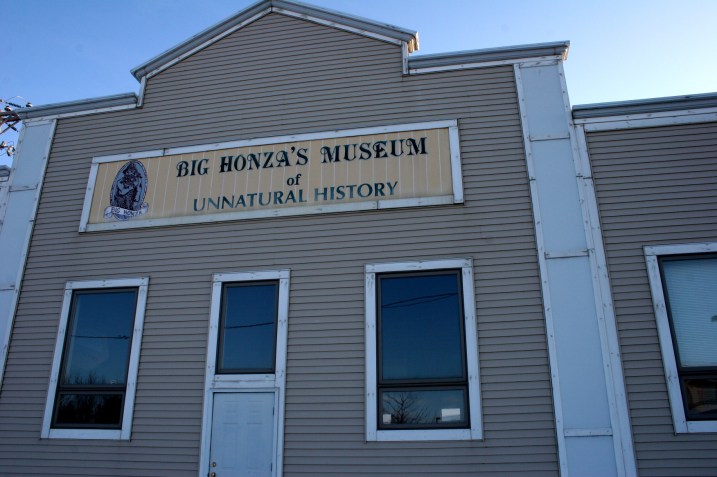
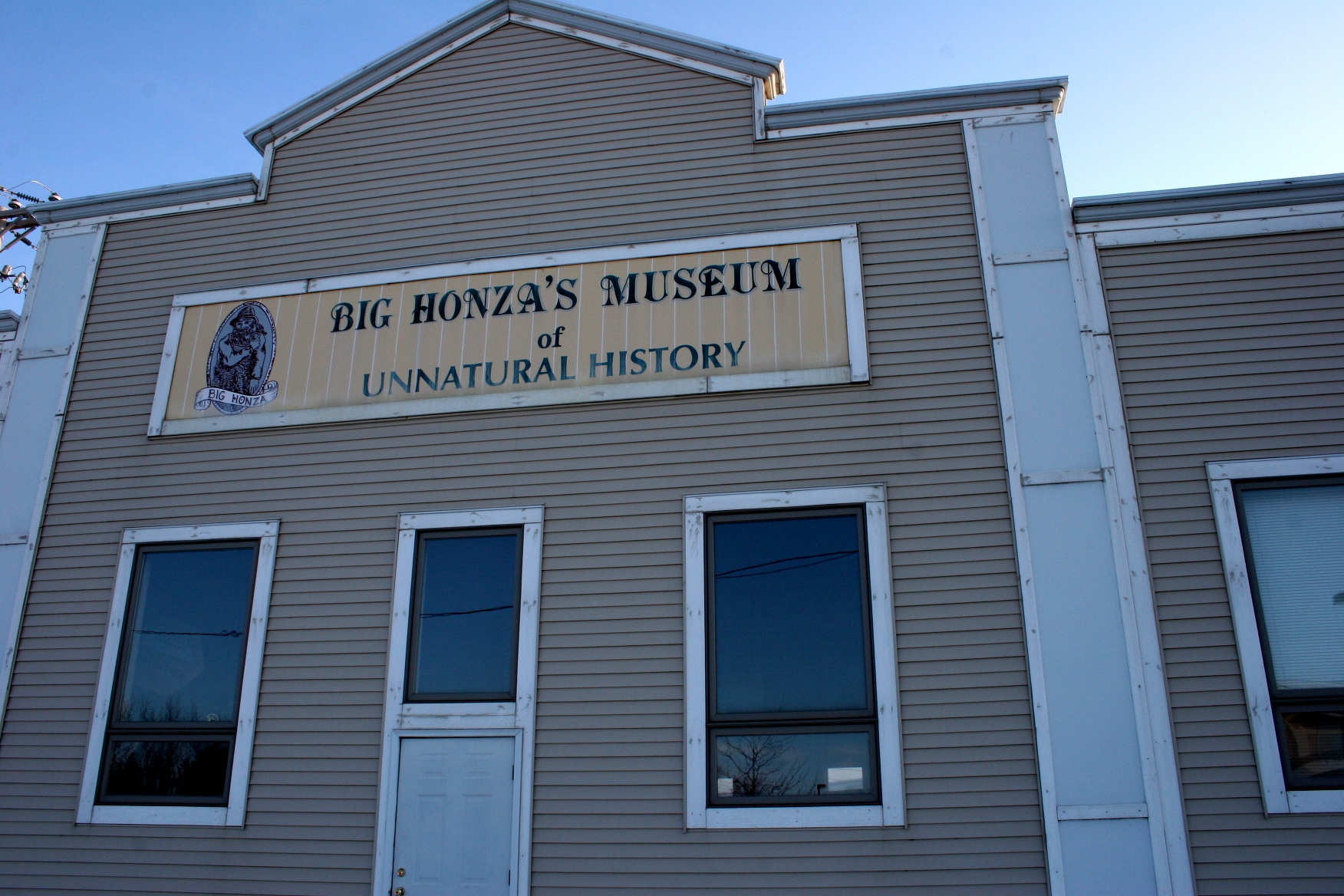
Big Honza's Museum of Unnatural History.

Big Honza’s Museum of Unnatural History.

The snacks include freshly-popped popcorn from the popcorn machine tucked in the hall’s second floor corner kitchen and pizza from Pizzeria 201 just down First Street in the historic Westerman Lumber Company office and residence. Grimm also owns that 1895 building which is on the National Register of Historic Places. Next door you’ll find Big Honza’s Museum of Unnatural History, another project of the creative Grimm.
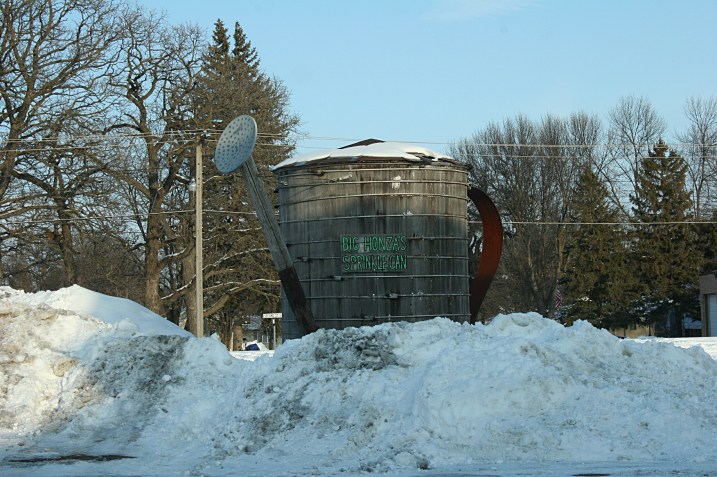
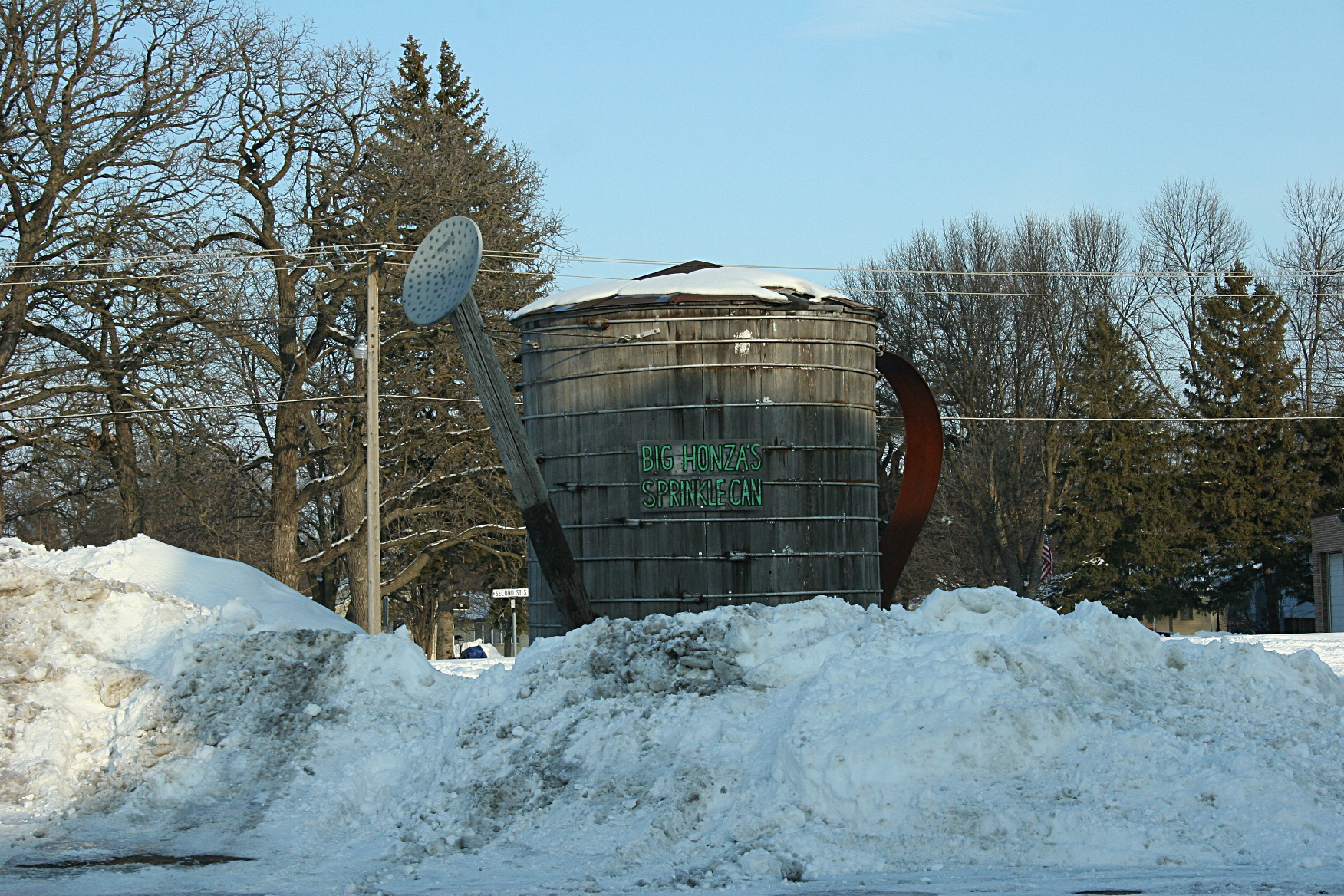
Big Honza' sprinkling can located near his museum.

Big Honza’ sprinkling can located nest to the Big Honza museum.

As Grimms tells it, the fictional Big Honza Giganticzech originated when he penned a musical for Montgomery’s annual Kolacky Days celebration, embellishing local history to create the town’s version of Paul Bunyan. That led to the museum where visitors will see items like Big Honza’s airplane/corn shredder, a chain driven concertina and more. The museum is open by appointment or ask the folks at the Pizzeria to let you in; they have a key.

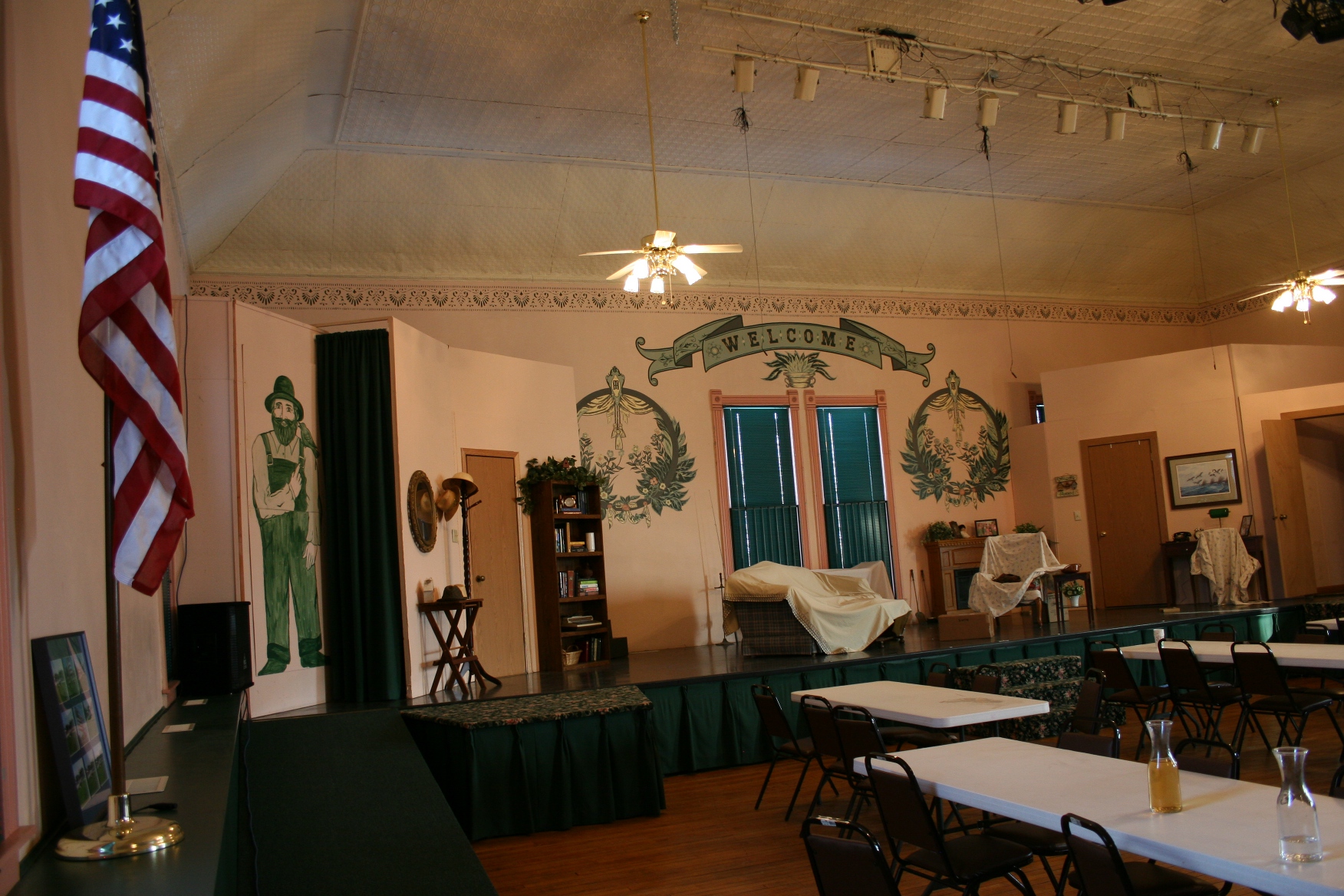
A view of the set for "On Golden Pond" with Big Honza painted on the wall to the left.

A view of the set for “On Golden Pond” with Big Honza painted on the wall to the left.

At Hilltop Hall, a rendition of Big Honza is painted onto a wall of the stage where those Curtain Call Theatre comedies are presented each February. Grimm enjoys the intimate setting of the old dance hall which will seat about 100 during the dinner theatre shows. On a recent Sunday afternoon, dinner guests savored chicken breast with pasta and sauce, roasted cauliflower and fresh fruit in a meringue-topped shell catered by Pizzeria 201. Other audience members arrived later just for the show.

“People look forward to it,” Grimm says of the yearly winter plays first performed at the Hilltop in 1999 with “Bull in a China Shop.” Other shows have included “The Odd Couple,” “Moon Over Buffalo,” The Dixie Swim Club,” and more. “Bathroom Humor” is slated for February 2014.

Set requirements, due to limited space in the built-on stage area, are the biggest restrictions in selecting a play, Grimm says. He doesn’t worry about the number of performers as a spiral staircase hidden behind the stage allows actors and actresses to slip down to the first floor floral shop to await their cues. Grimm installed the staircase after removing the building’s original freight elevator, a decision he today regrets.
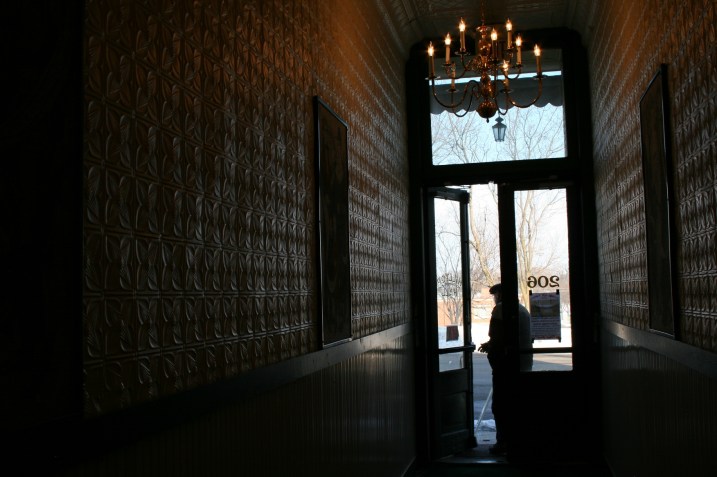
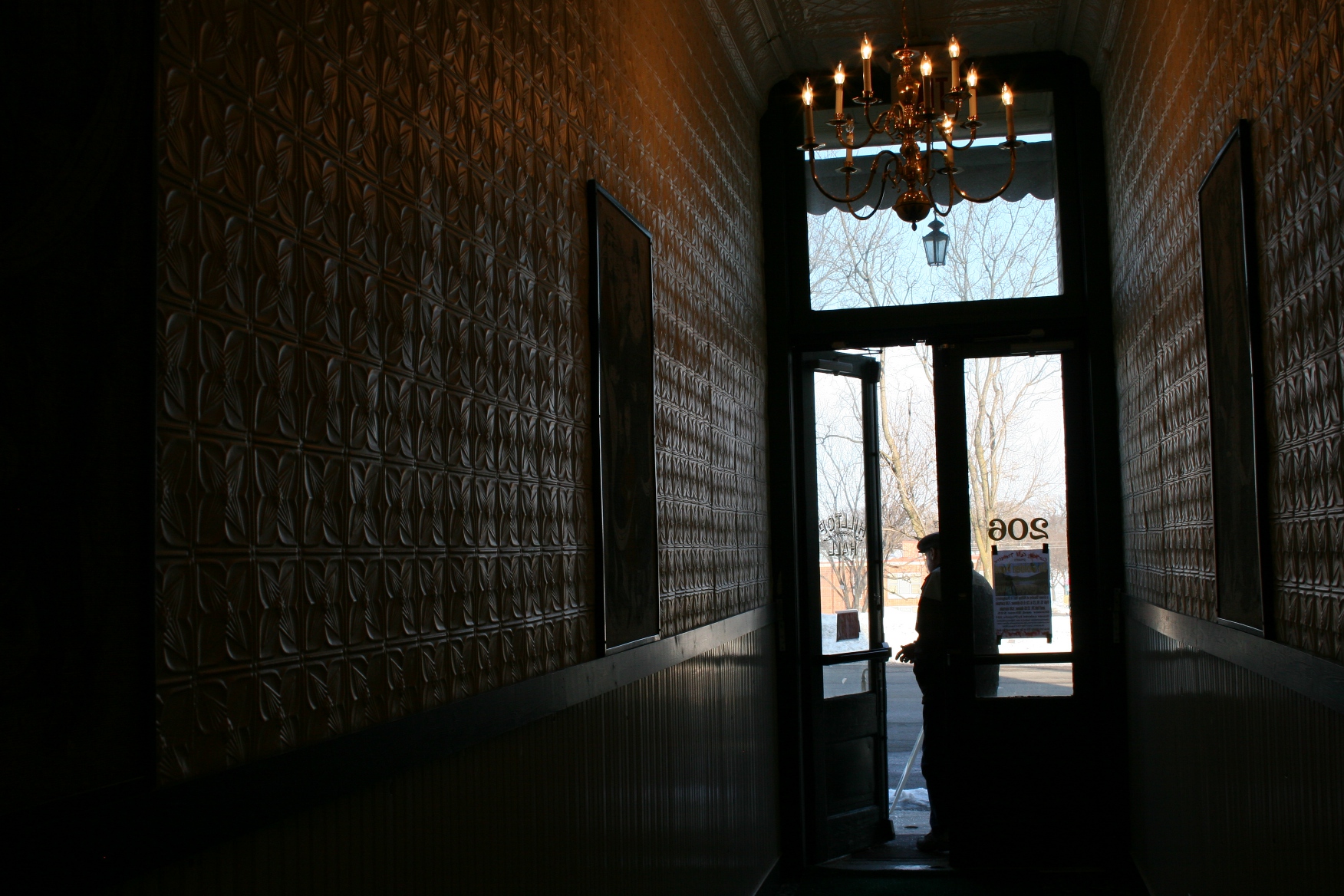
When Grimm purchased Hilltop Hall, site of a laundromat, he found 10 inches of lint covering these walls as dryers had been vented into the hallway. This hall runs between the heritage center and floral shop and leads to a stairway to the performance space.

When Grimm purchased Hilltop Hall, site of a laundromat, he found 10 inches of lint covering these walls as dryers had been vented into the hallway. This hall runs between the heritage center and floral shop and leads to a stairway to the performance space. The chandelier is not original to the building.

He’s never regretted, though, his decision to buy the old dance hall, although Grimm admits some people think he’s crazy. But his passion for singing and entertaining—he’s composed several hundred songs, made four CDs and authored a play, “It’s About Us”—for promoting Montgomery, and for offering this arts venue, drive him.

With annual taxes on the building at $10,000-plus and a monthly light bill of some $200, his Hilltop project is a “money losing situation,” Grimm says. He justifies the expense noting that he doesn’t take vacations, so his vacation money goes into his arts endeavor.
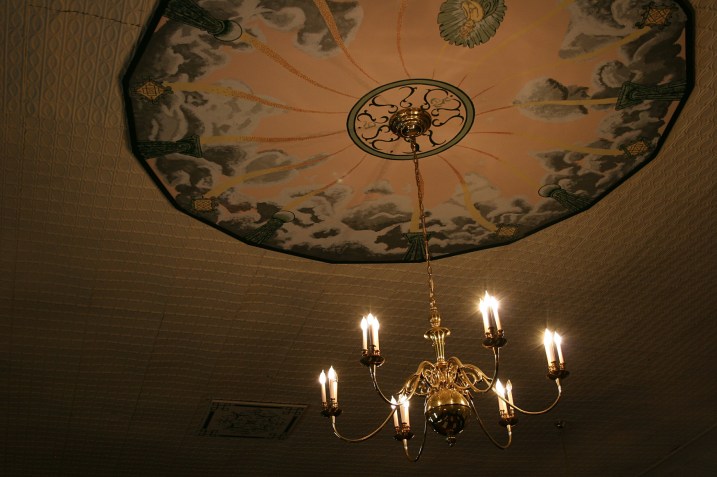
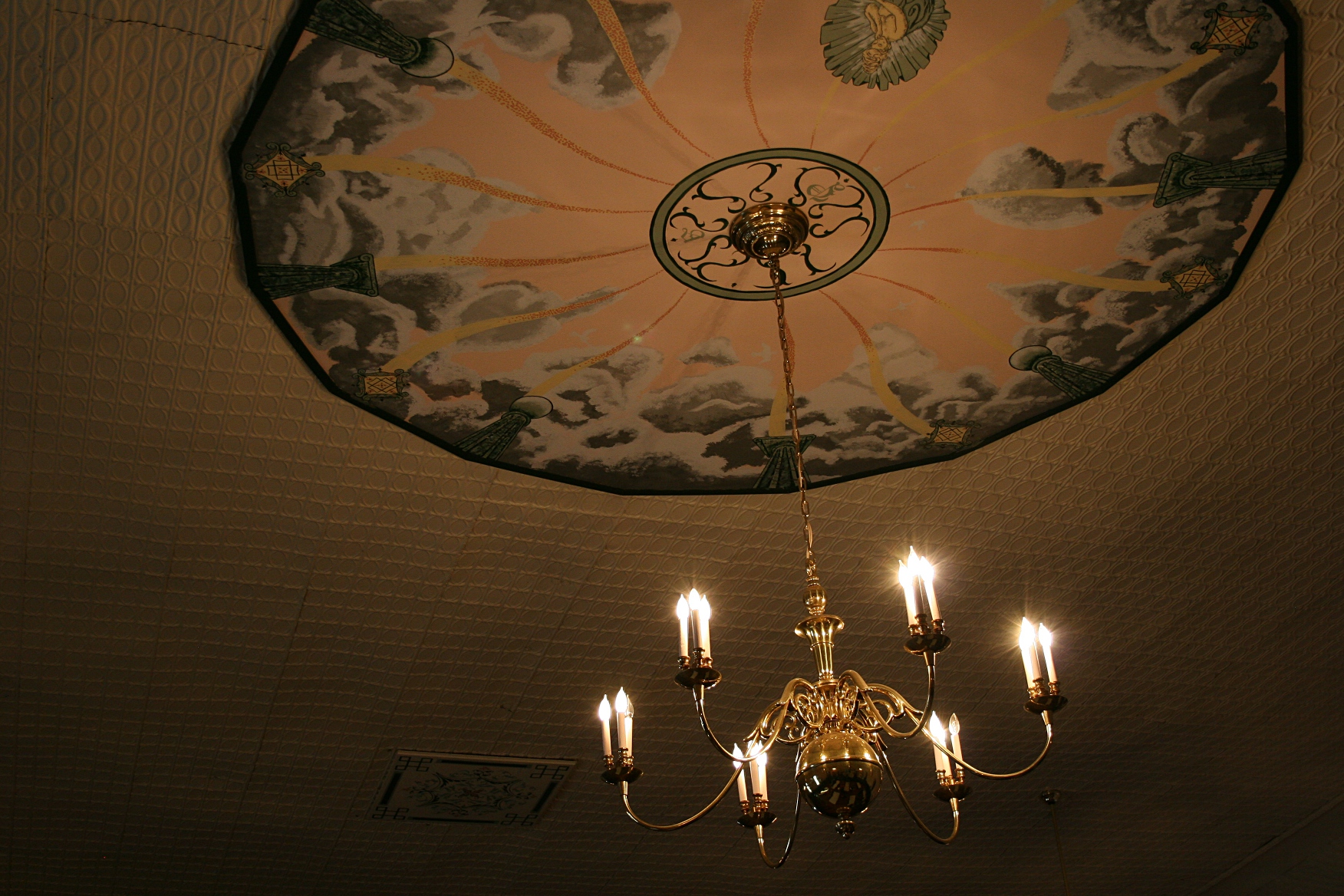
The ceiling plaster had crumbled, so an artist laid on his back to re-create this mural on sheetrock in the center of the performance space.

The plaster had crumbled, so an artist laid on his back to re-create this ceiling mural on sheetrock in the center of the performance space. The chandelier is antique but not original to the hall. The original lights could not be restored, Grimm says.

Grimm admits an ineptness at promoting and that Hilltop Hall is under-utilized. But he won’t compromise his conviction not to allow alcohol into the building which is also used for the occasional community meeting, piano recitals and exercise classes.

For now he’s focused on those monthly variety shows, bringing “pizza, performers & plenty of pizzazz” to the folks of South Central Minnesota at the historic Hilltop Hall in Montgomery.
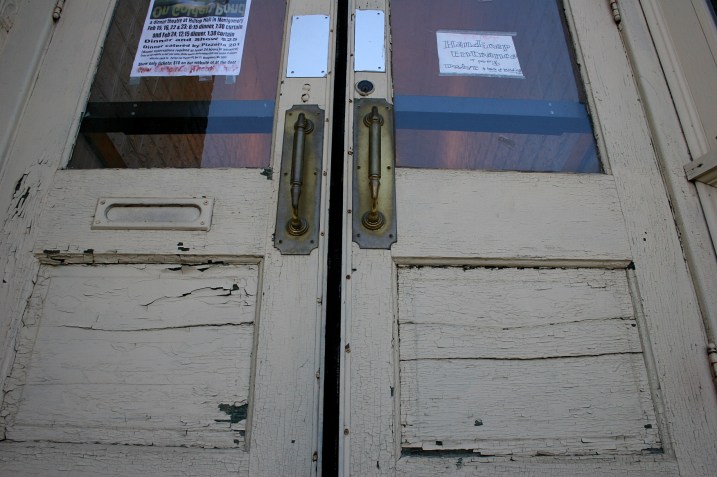
These exterior doors open to the hallway leading to the performing arts center.

These exterior doors open to the hallway leading to the upstairs performing arts center. A handicapped accessible entry is at the rear of the building off the alley.

FYI: Upcoming Hilltop Happenings Series shows are set for 4 p.m. – 6 p.m. on Sundays, March 24, April 28, May 26 and June 30. Admission is free although donations are accepted to help defray production and overhead costs.

The 2013 billing promises “…popular favorites to concert hall classics; from costumes and comedy to inspirational gospel and harmonic collaborations.”

Hilltop Hall is located at 206 First Street North in Montgomery’s downtown business district.

To learn more about the people and places in this post, be sure to click on their highlighted names. I’d encourage you, especially, to click on Jesse Beulke’s link to hear two original compositions, “I Guess It’s Goodbye” and “Rise,” by this gifted young composer and musician.

CHECK BACK FOR MORE posts from Montgomery.

© Copyright 2013 Audrey Kletscher Helbling


A sweet surprise: An old sorghum mill on a southern Minnesota elk farm & more August 10, 2012

HOW MANY TIMES HAS MY FAMILY driven Minnesota Highway 60 east of Elysian, unaware of Okaman Elk Farm to the south not far from the highway? Too many.

My husband Randy and I almost missed Okaman’s again last Sunday as we traveled along Waseca County Roads 3 and 5. If not for the colorful miniature train transporting kids and adults along the shoulder of the road, we likely would have passed right by.

Passing by the Okaman Elk Express in our car on a Sunday afternoon.

But that train stopped us in our tracks and caused us to turn around and drive back to the farm.

There we discovered much more than a plain old elk farm. We also found family-friendly activities, a farmers’ market, art, animals and history.

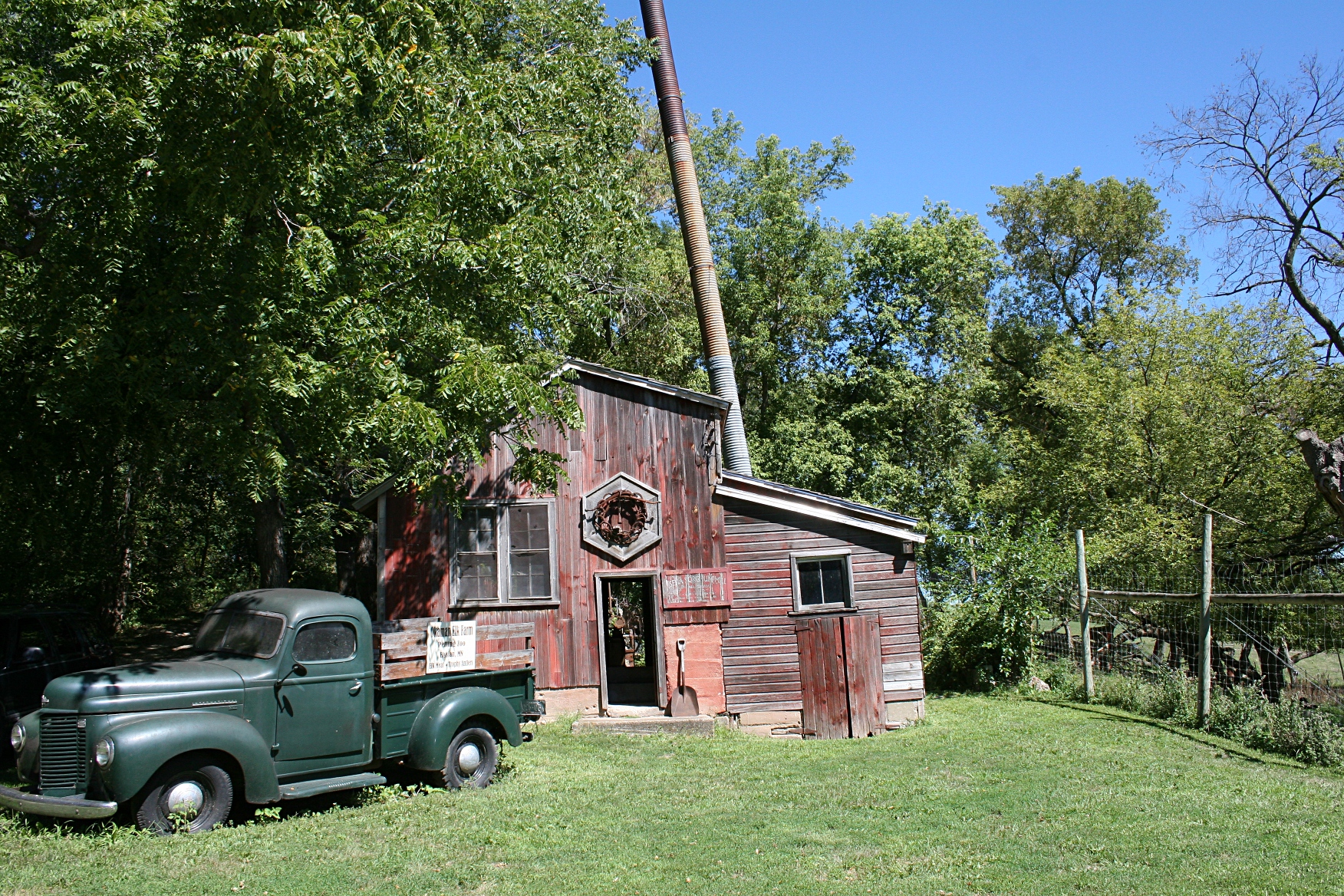
The historic Seha Sorghum Mill.

In 1991, Don and Joyce Kaplan bought this historic place to raise elk and then sell the meat. Their business sits on the site of Okaman, a town established in 1855 between Lake Elysian and Lily Lake. Here, according to a posted sign, several hotels, a theater, the Buckout Flour Mill, the Okaman School and the Seha Sorghum Mill were located.

Inside the sorghum mill.

It is that 1895 sorghum mill, which produced and sold sorghum syrup until 1953, that most interested me. Randy and I poked our way through and around the old mill trying to determine how the whole operation worked. I think he understood the process much better than me.

Apparently wagons of sorghum were unloaded atop the hill behind the mill where the canes were crushed and the juice then flowed into steam-heated cookers, or something like that.

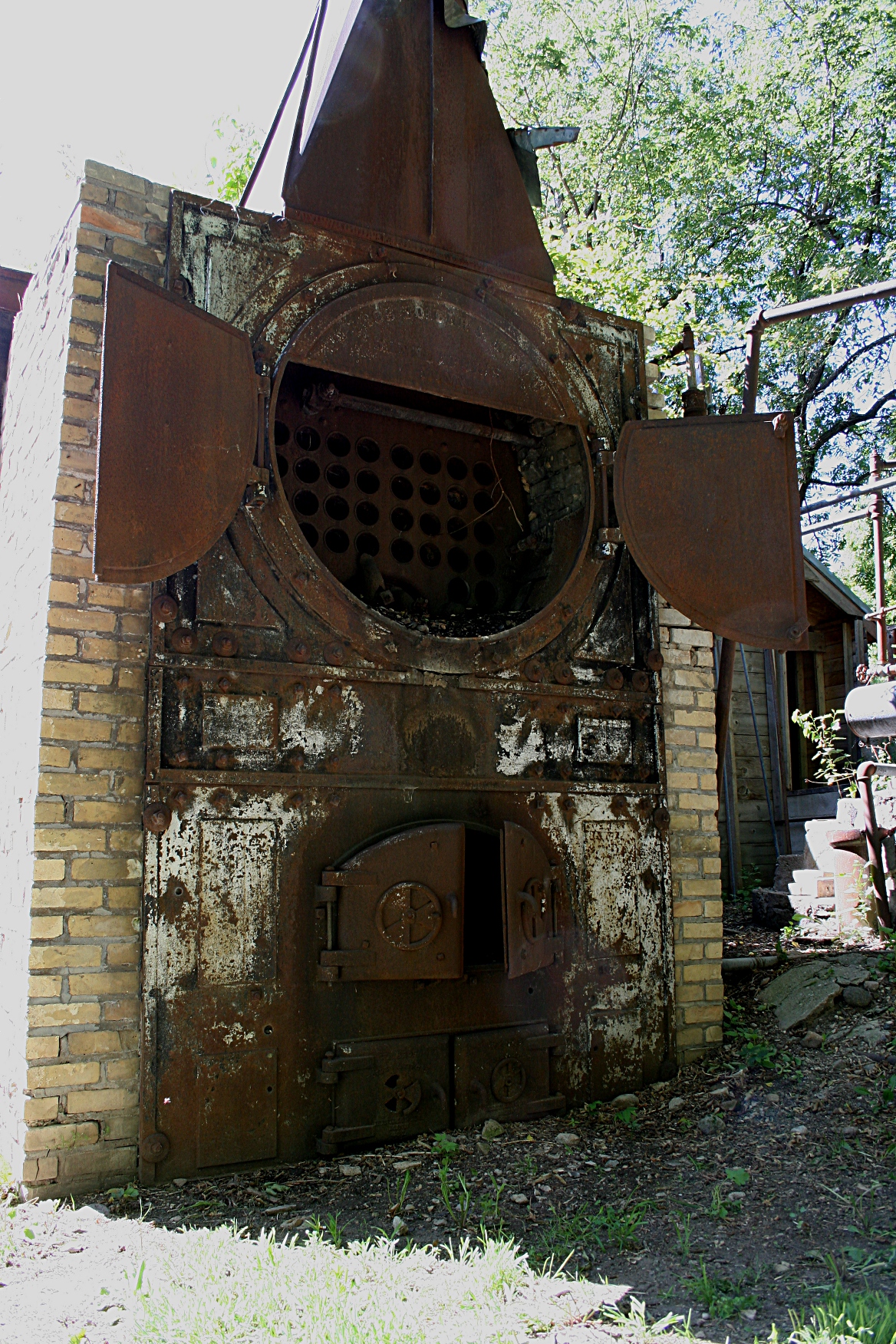
The original steam boiler stands behind the sorghum mill.

According to the Waseca County Historical Society website, Cornelius L. Seha built the mill, today the only known historical sorghum mill remaining in Minnesota and added to the National Register of Historic Places in 1979.

Because the mill today is basically an old building and steam boiler with weeds and brush growing around the holding tanks, equipment and structures, everything is left open to self-interpretation. Perhaps someday this historic site can be restored and specific educational information posted.

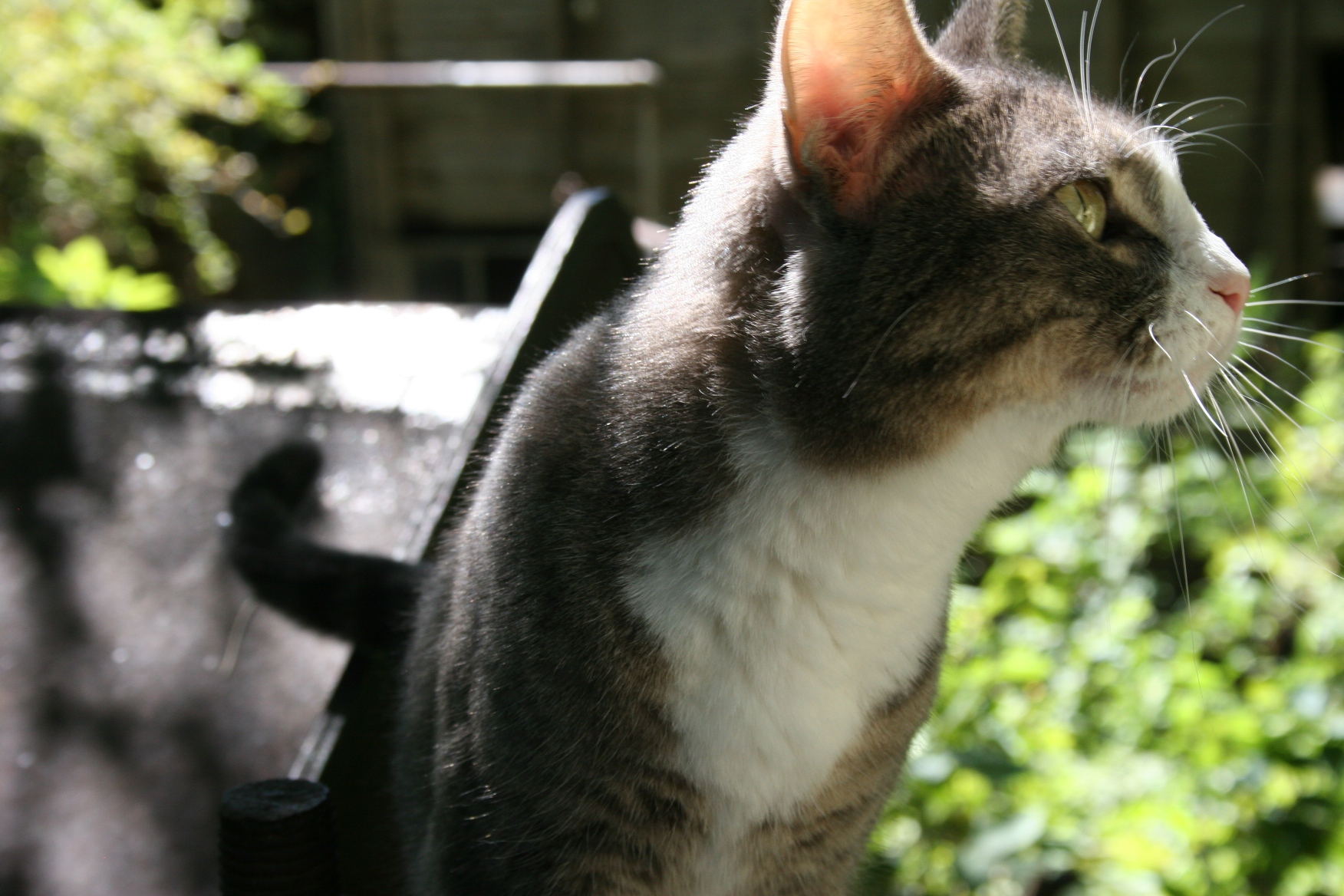
Cats roam the farm.

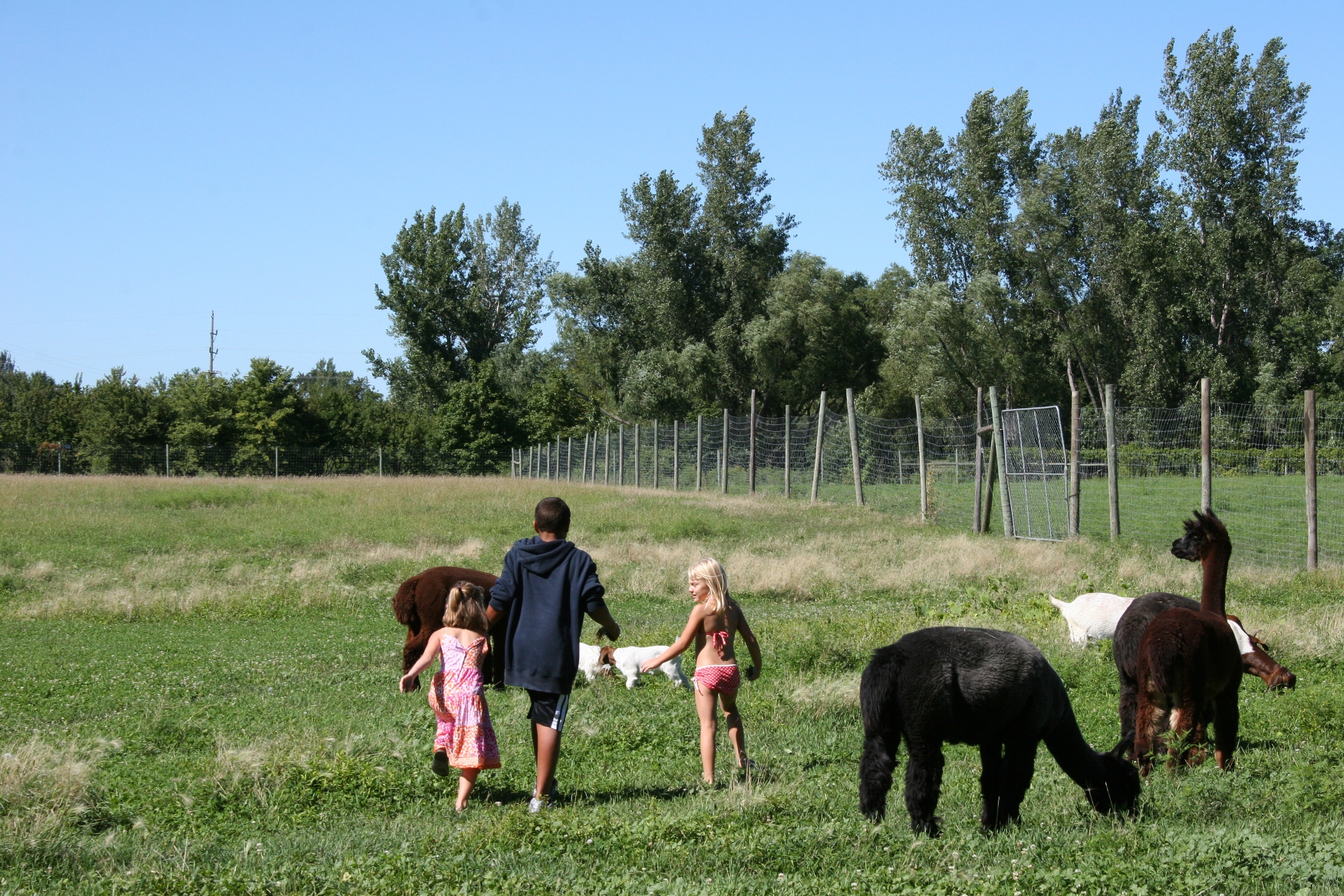
Then, perhaps, the younger farm visitors will be more interested in the historic buildings. They are, for now, focused on  the donkeys and alpacas, the goats and elk and dog, and especially, the cats and kittens. Or perhaps the playground equipment.

Visitors are free to wander the pasture with the alpacas, donkeys and goats.

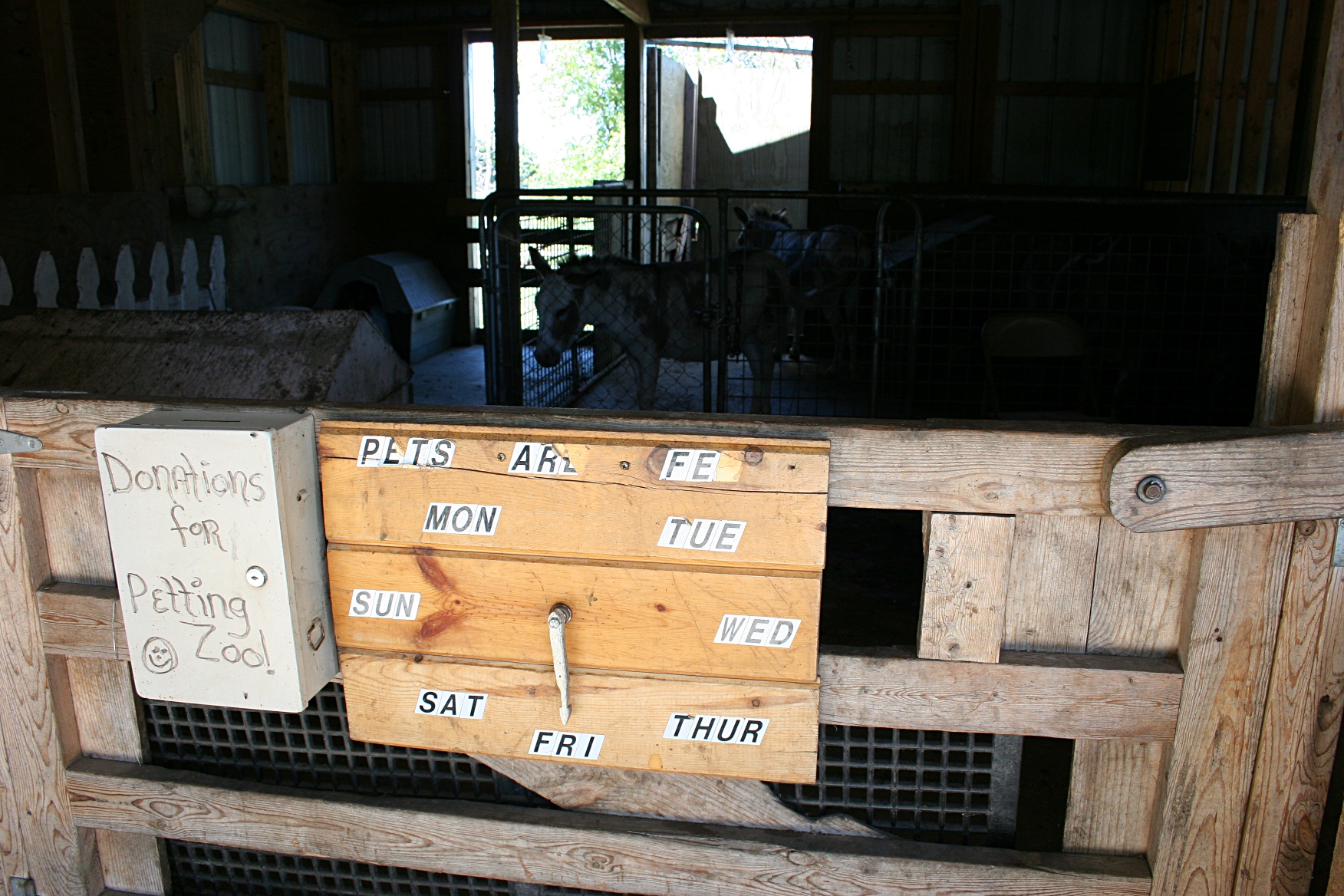
Loved this sign at the petting zoo telling visitors that the animals are fed daily.

The farm is open seven days a week to the 3,000 – 4,000 visitors who stop by annually, says Joyce Kaplan. The Kaplans may not always be around, but guests are invited to peruse the place on their own. Just follow a few rules like:

You can enter the petting zoo pens or pastures at your own risk. Please don’t allow children to chase the animals and no dogs allowed. Close gates behind you.

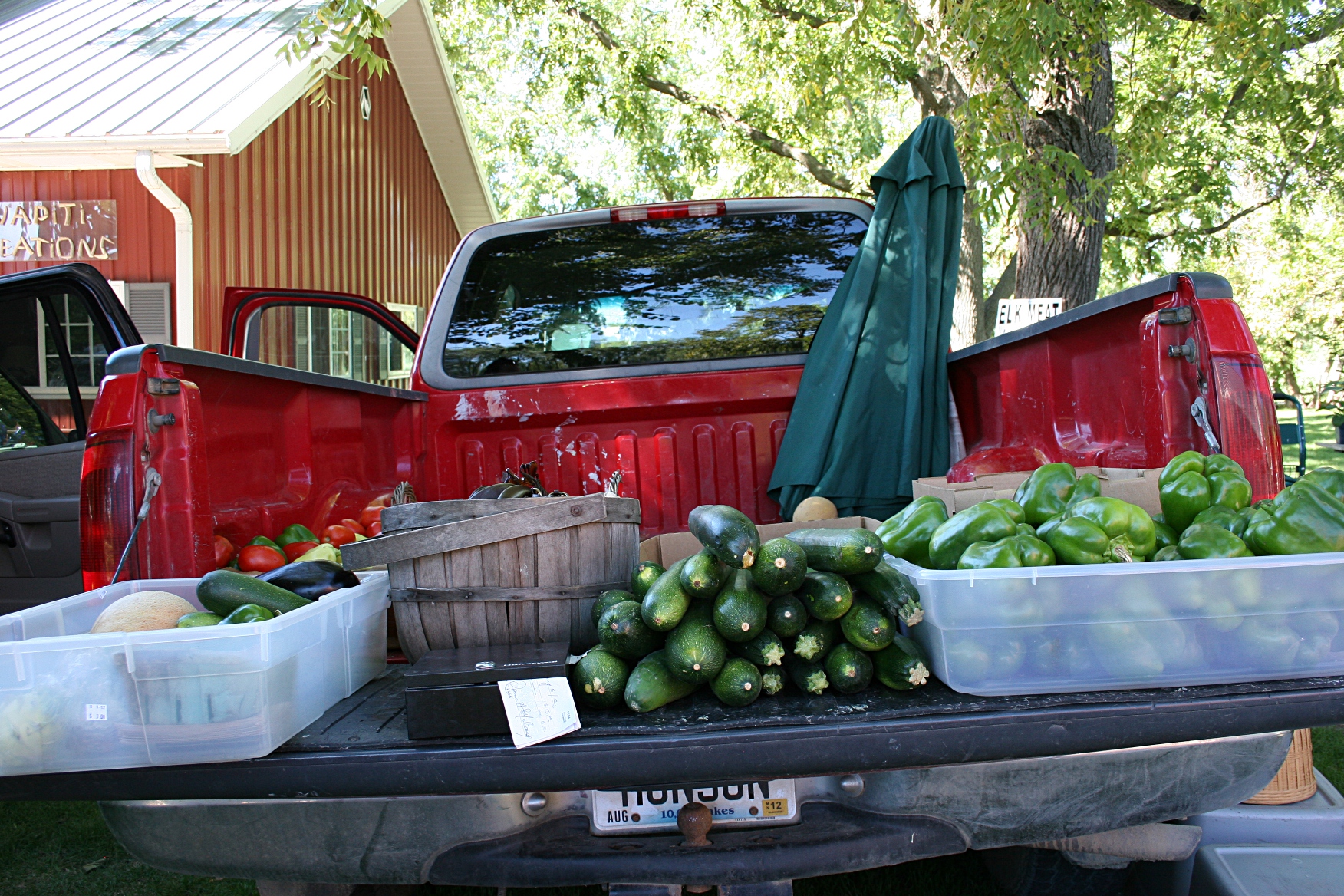
Veggies from R & C Produce of Otisco.

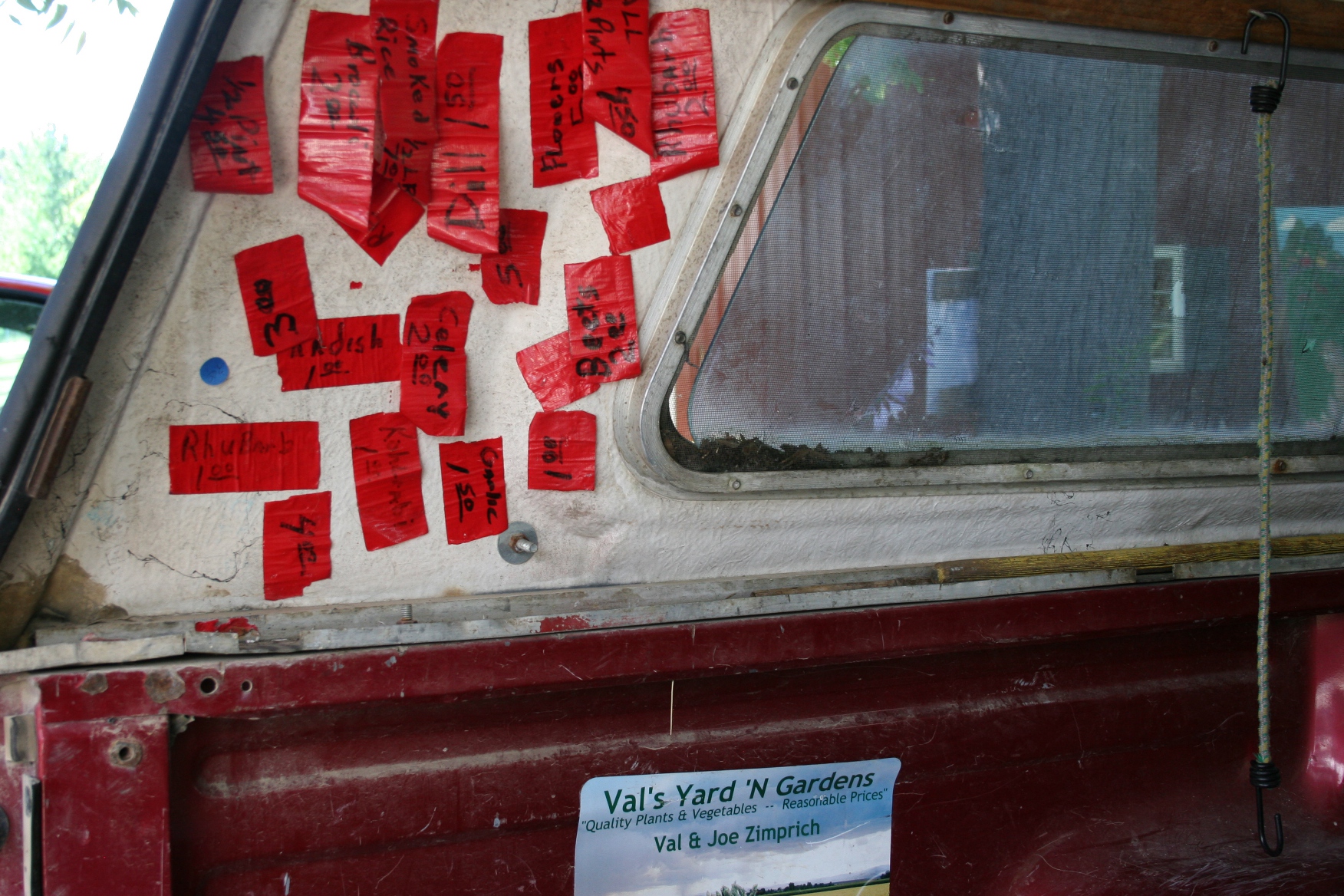
Canned mixed veggies from Val’s Yard ‘N Gardens (Joe & Val Zimprich of Le Center).

Reusable price stickers in the back of the Zimprichs’ truck.

While the farm is always open, on Sundays from 1 p.m. – 4 p.m. during the summertime harvest and into October, farmers’ market vendors set up in the farmyard peddling their garden fresh produce and other products.

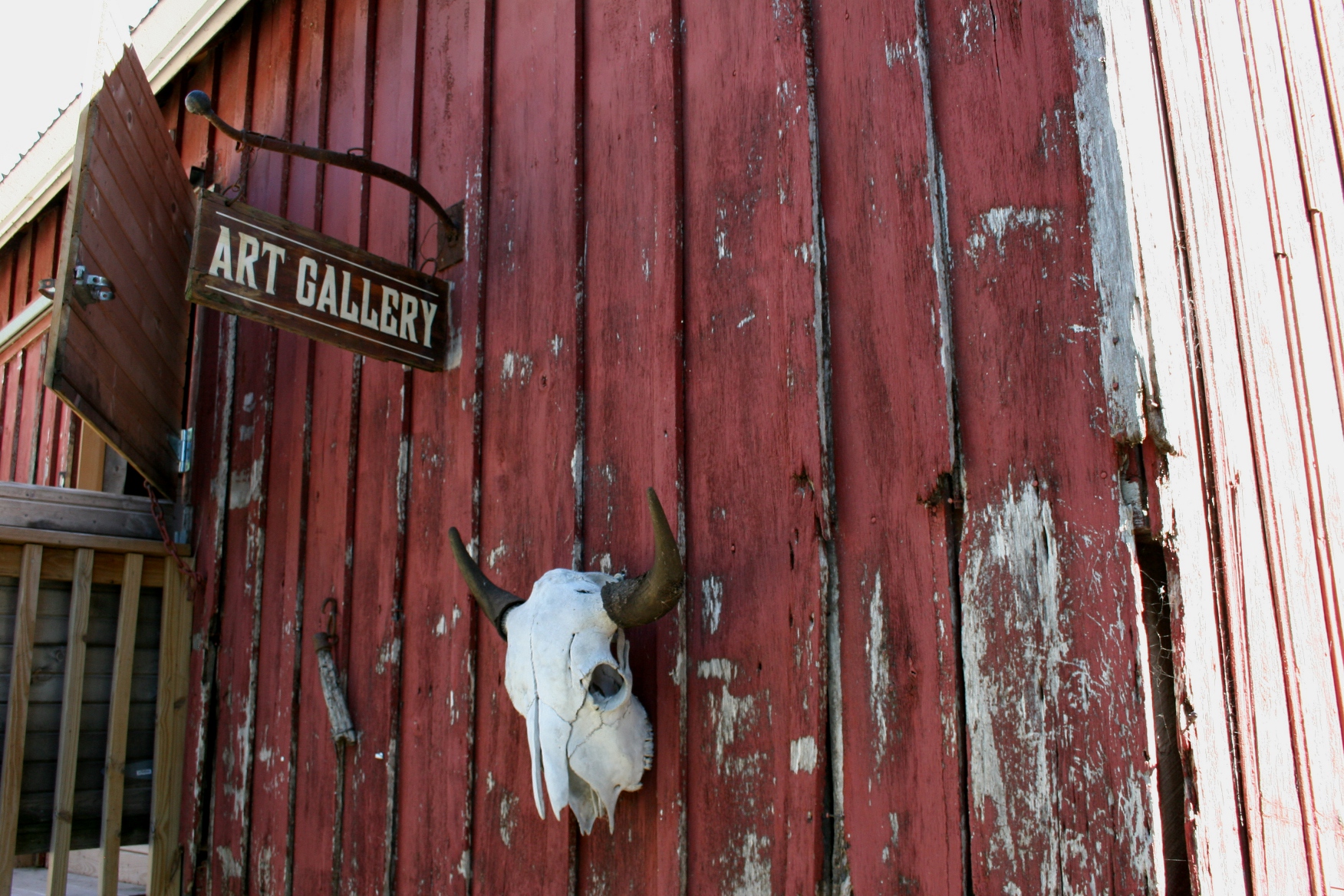
An art gallery is housed in an old barn.

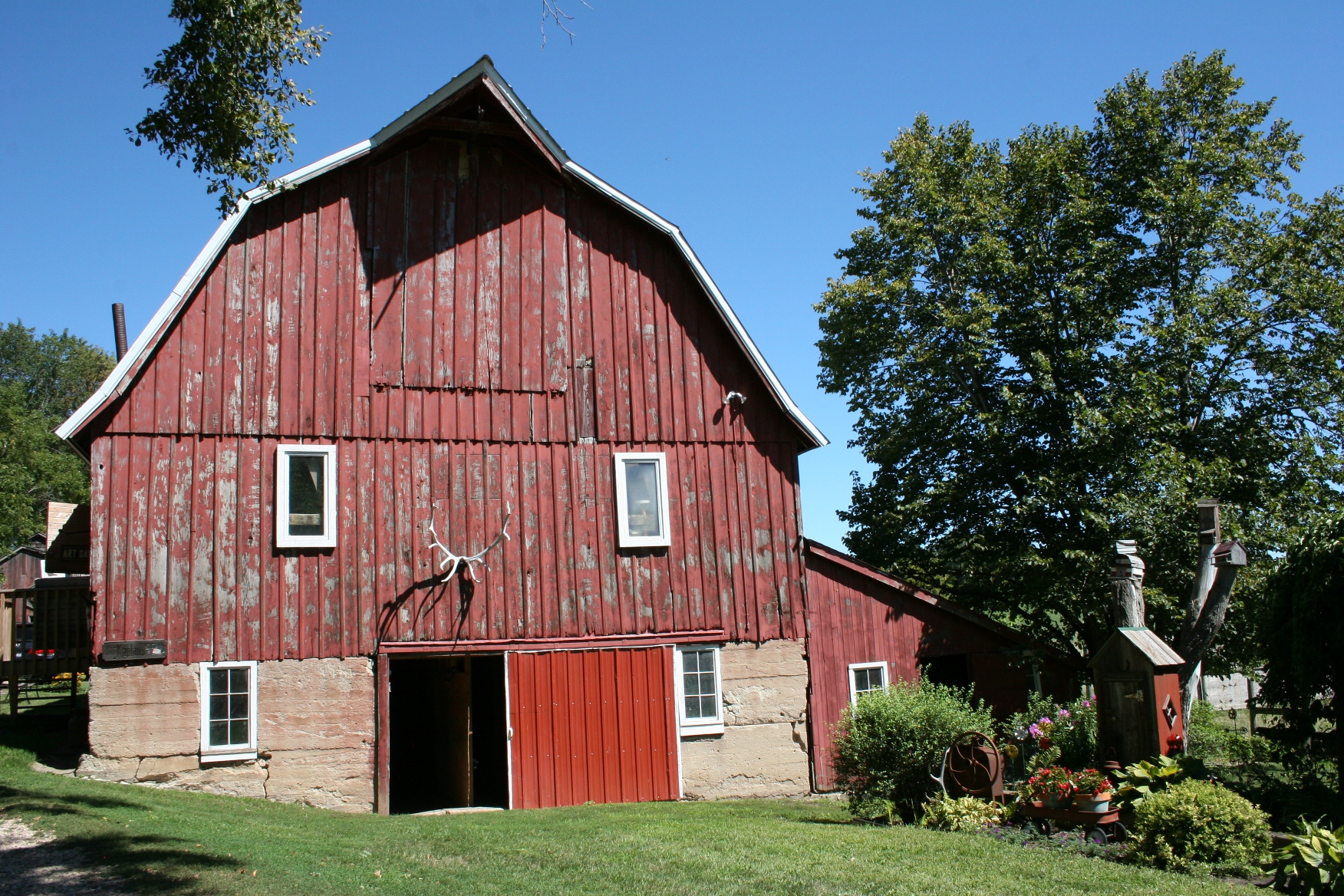
That beautiful old barn, with an art gallery and studio in the haymow.

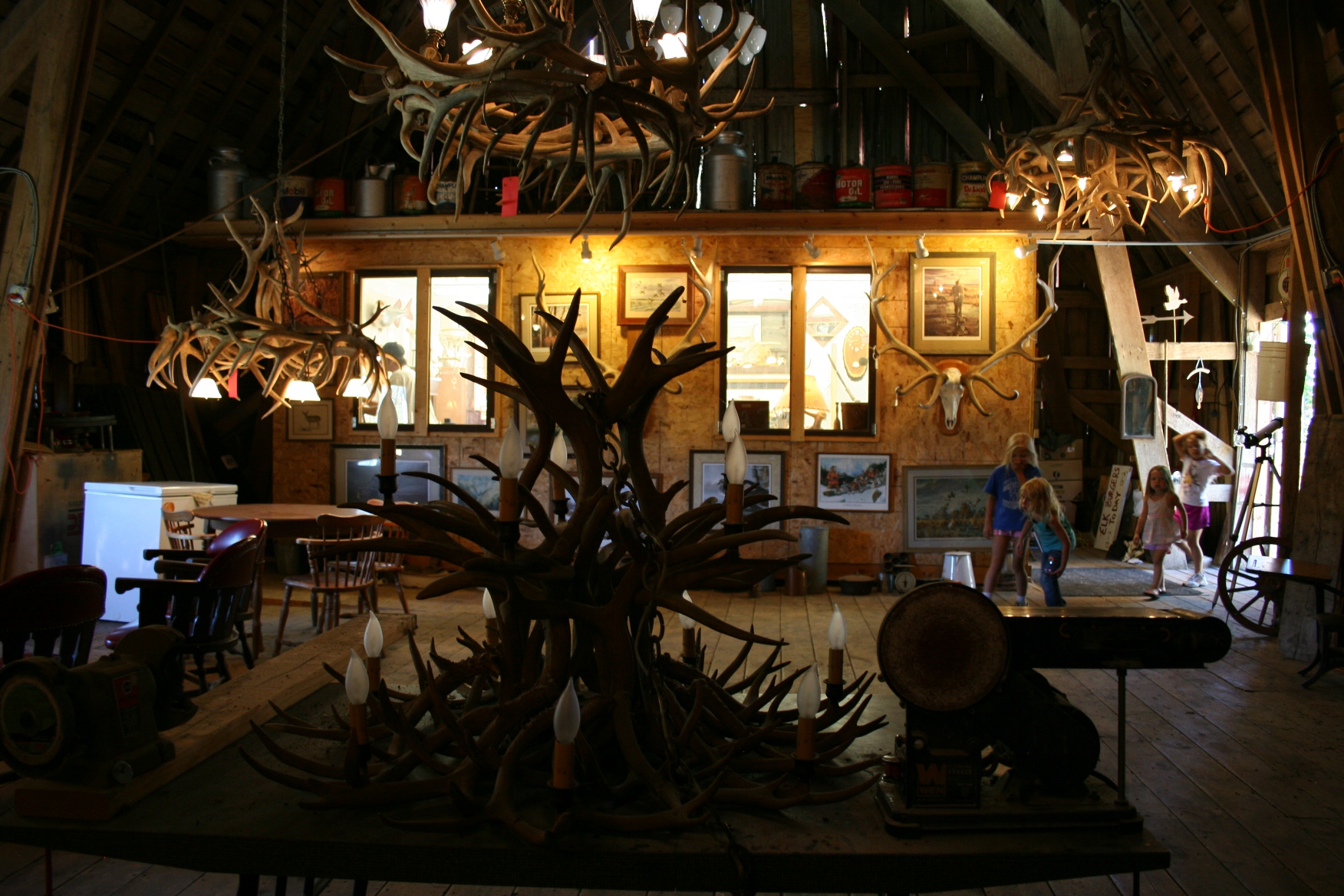
Antler art, including chandeliers, inside the art gallery with Paul Ristau’s art studio behind the windows pictured here.

Inside the gift shop and adjacent art gallery, you’ll find gifts anytime and the creations of artist and craftsman Paul Ristau, who renovates homes and businesses and is a mason specializing in stone fireplaces. He was doing some tile work for the Kaplans and ended up as their in-house artist focusing on the creation of antler art. He has a workshop in the haymow-turned-art-gallery where his elk antler chandeliers are a focal point.

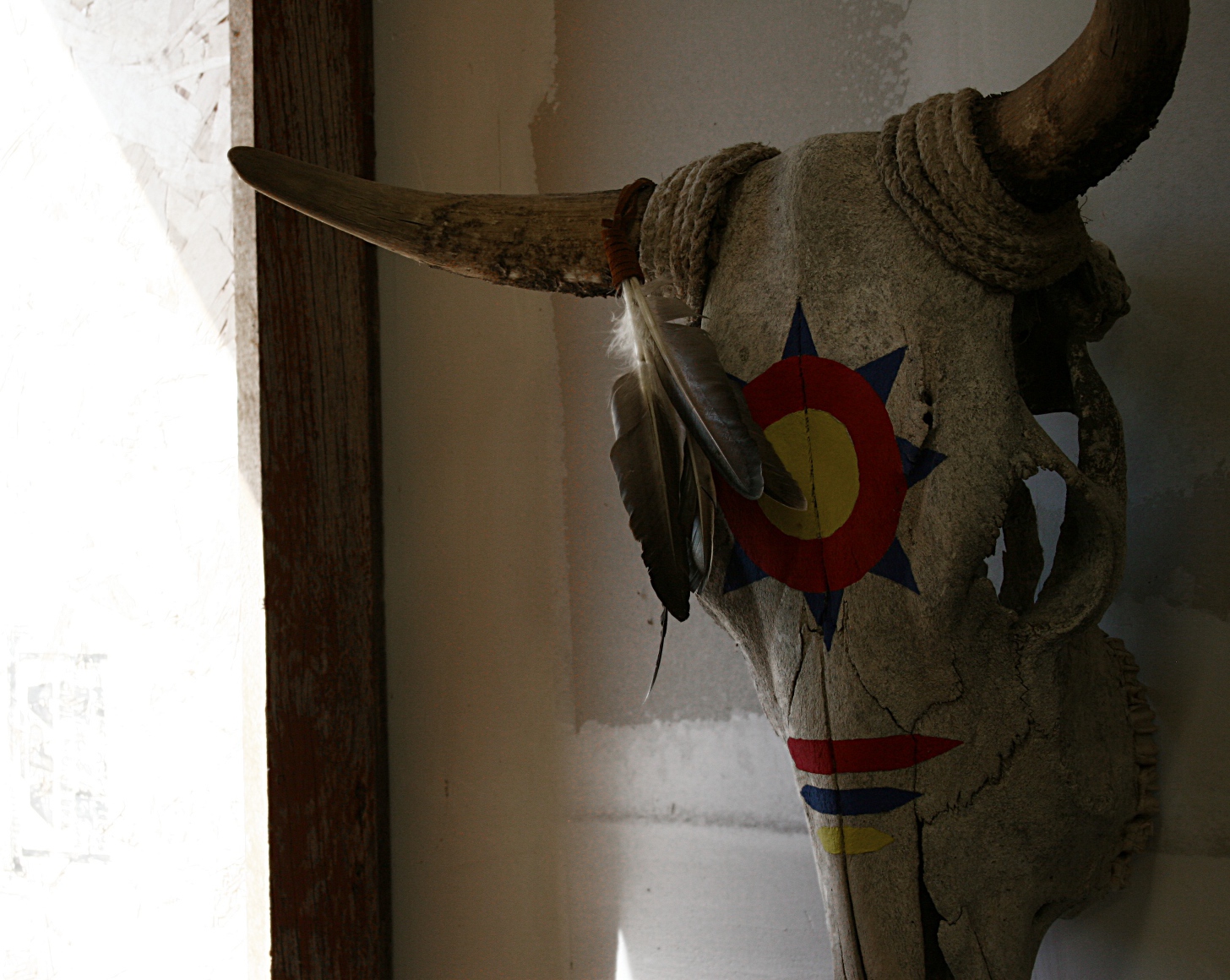
A Native American influence on art hung in Paul Ristau’s studio.

A Native American influence is visible in Ristau’s art given his interaction with those living on the White Earth Indian Reservation where he once drove bus.

Of course, the farm also sells elk meat, inside the original 1893 homestead. The farm is now down to 23 elk, according to Joyce Kaplan who says she grew up on a farm and has been cleaning barns all her life and maybe it’s time soon to stop cleaning barns.

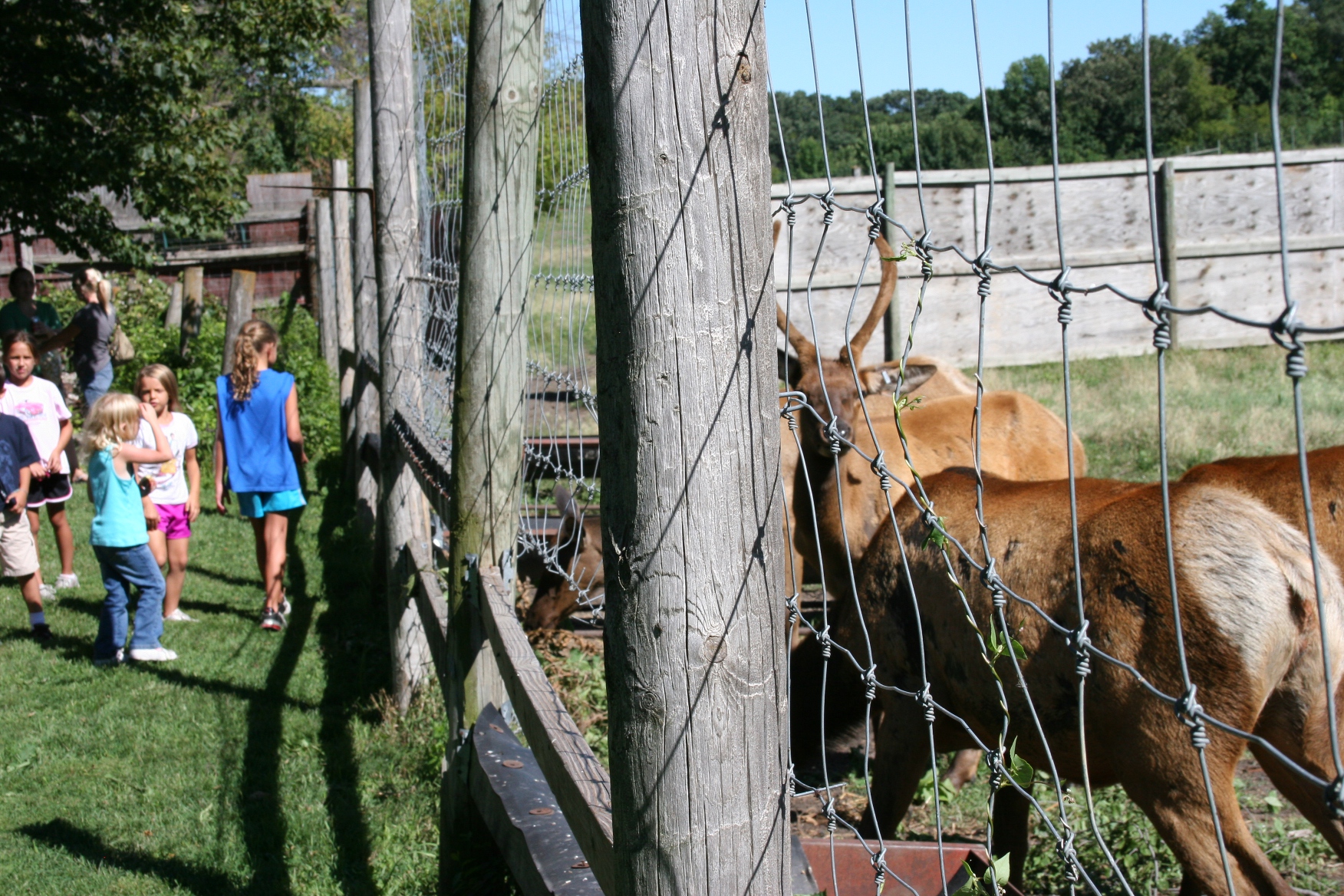
The final activity of the day, feeding apples to the elk.

On the Sunday I visited, her husband was handing out apples so the kids could feed the elk.

And the Okaman Elk Express was chugging along the shoulder of the roadway, thrilling the kids and, bonus, drawing in visitors like my husband and me.

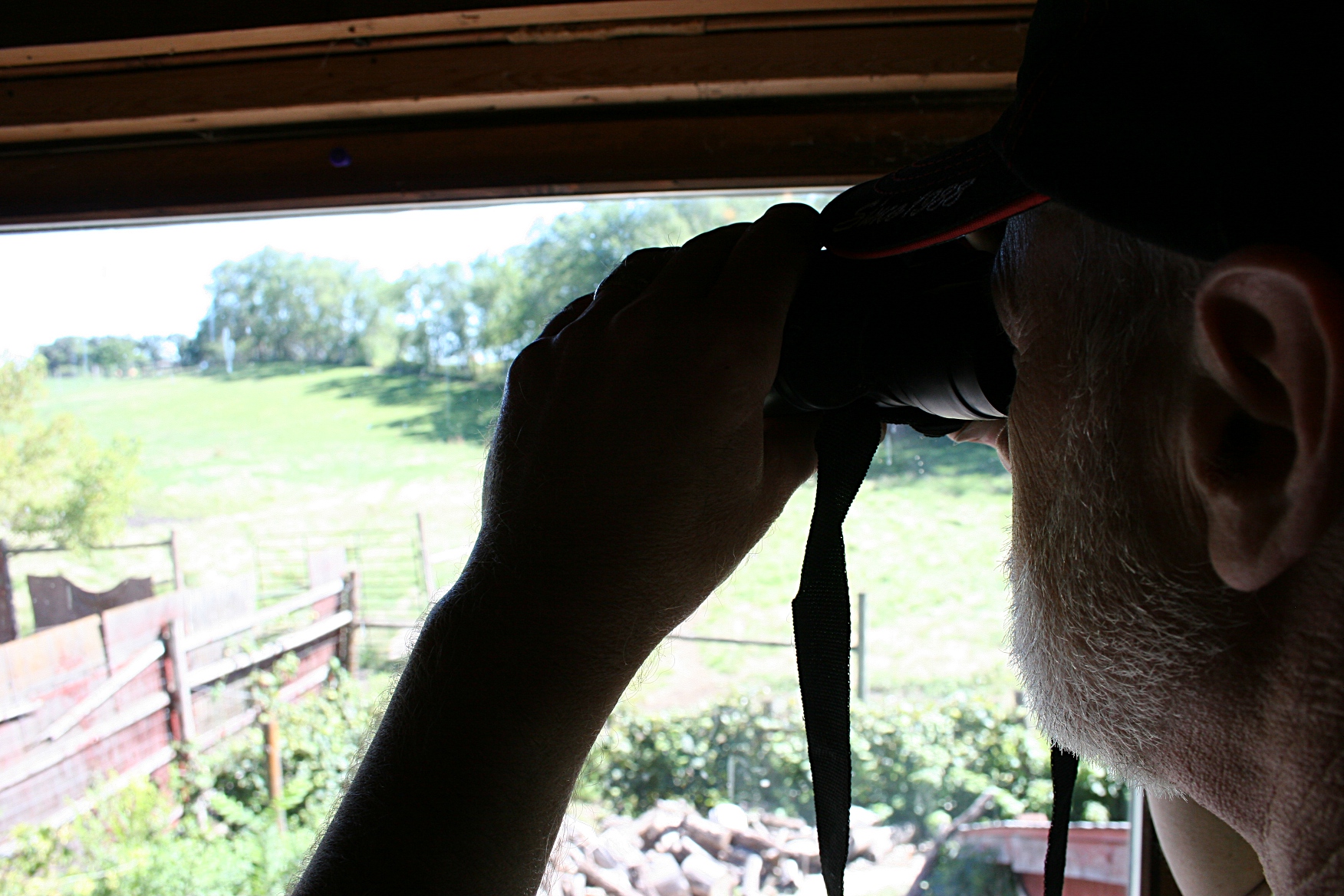
You’ll find binoculars in the barn to view the elk in the pasture.

FYI: To find Okaman Elk Farm, take Minnesota Highway 60 east of Elysian 1 ½ miles and then turn south to the intersections of Waseca County roads 3 and 5. The farm is open year-round. Click here to reach the farm’s website.

© Copyright 2012 Audrey Kletscher Helbling

 

If you appreciate old buildings, you must visit historic downtown Appleton, Wisconsin January 9, 2012

I’M NOT A MALL KIND OF GIRL. Never have been. Never will be. If you want to while away an afternoon window or power shopping at a sprawling indoor mall, don’t ask me.

But invite me to explore an historic downtown and I can’t get there fast enough. I delight in the detailed architecture, the charming ambiance, the folksy shops, the comfortable feel and the visual appeal of a downtown that hearkens more to yesteryear than to the modern day 21st Century.

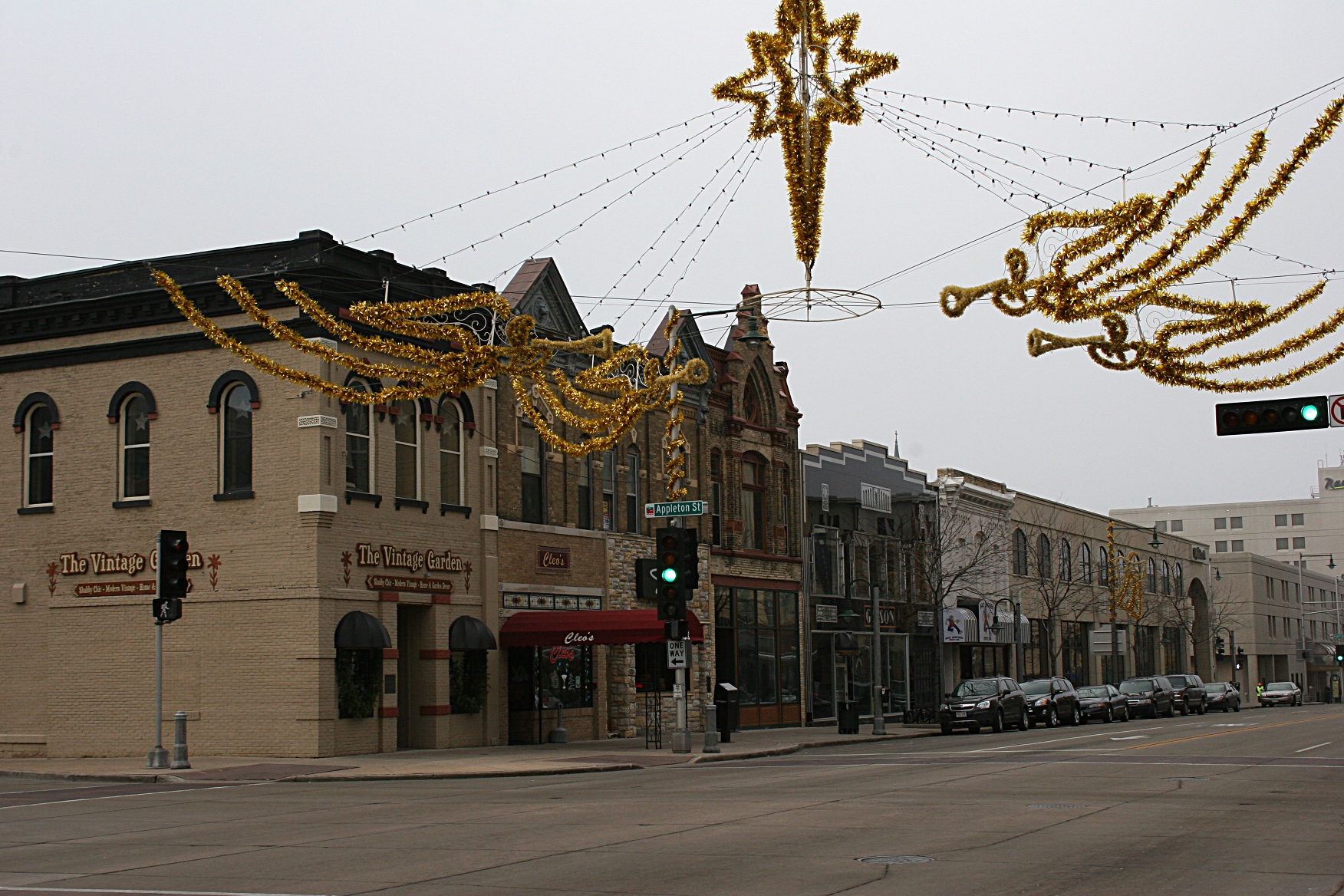
A row of old buildings in downtown Appleton, Wisconsin, on a December morning..

Knowing this about me, you’ll understand exactly why I am so enthralled with downtown Appleton, a city of 72,400 in eastern Wisconsin and home to the 7-acre College Avenue Historic District with 27 buildings dating from 1857-1932 on the National Register of Historic Places.

This downtown is my kind of place—described as “one of Wisconsin’s folksiest, funkiest and friendliest downtowns.”

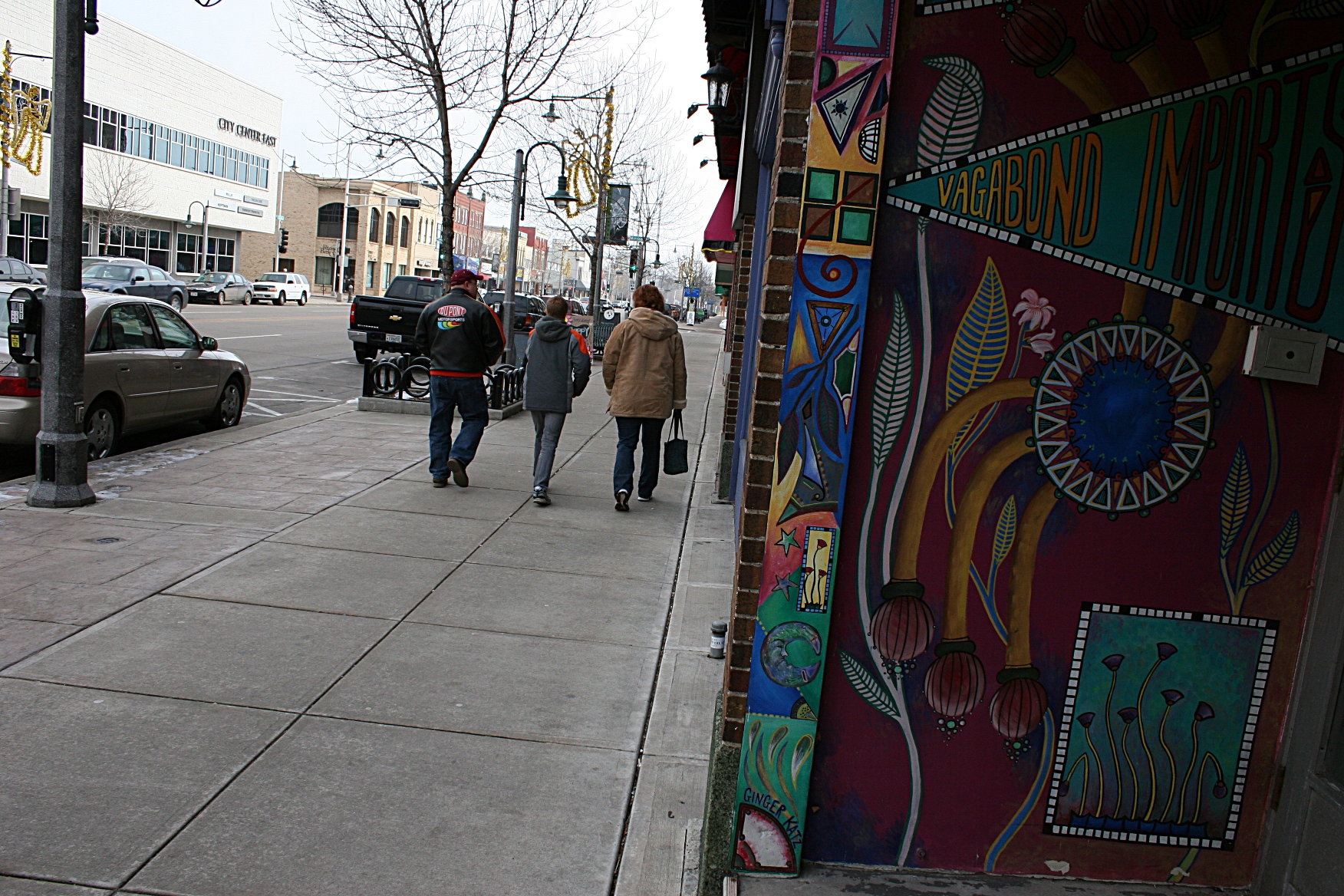
The exterior of funky Vagabond Imports.

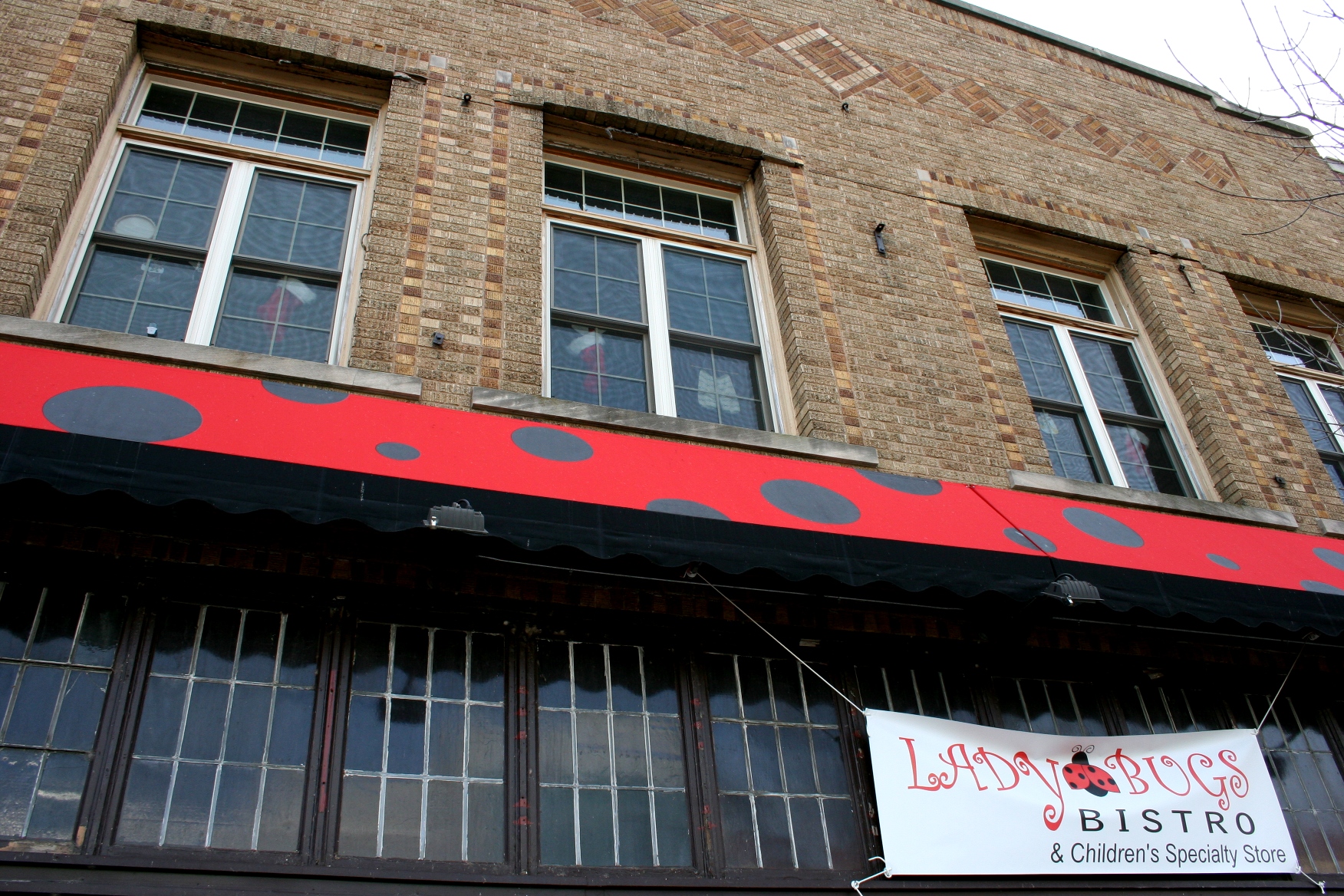
Loved the downtown signage, especially on Lady Bugs Bistro & Children's Specialty Store.

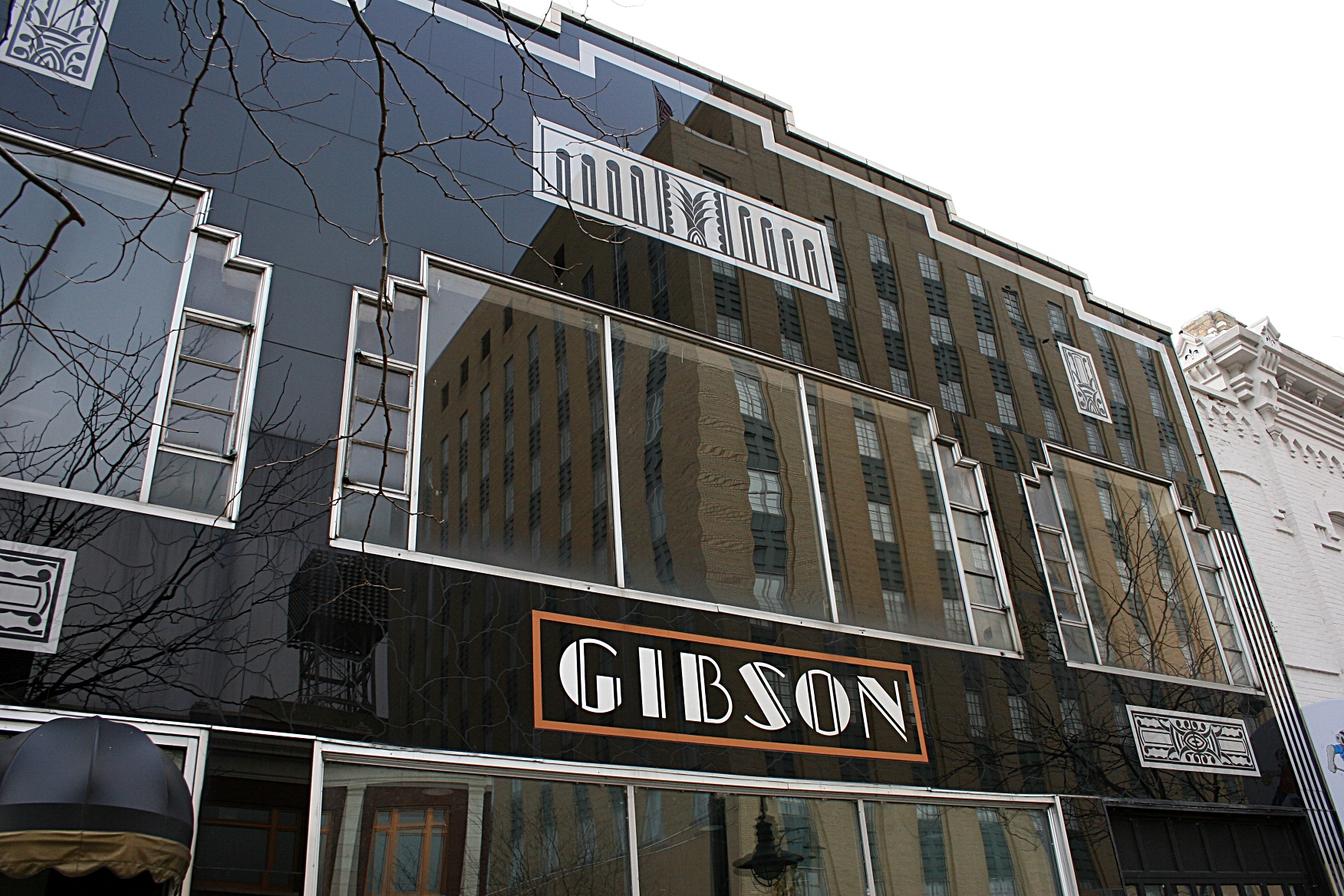
One of the more unique downtown buildings brought to mind the Roaring 20s and flappers and F. Scott Fitzgerald.

I’ll add photogenic to that list of superlative adjectives.

During my brief tour of downtown Appleton recently, I couldn’t stop gawking at the lovely aged buildings with their artsy signage. Even the more modern buildings meld nicely with the old, a sometimes difficult transition to make.

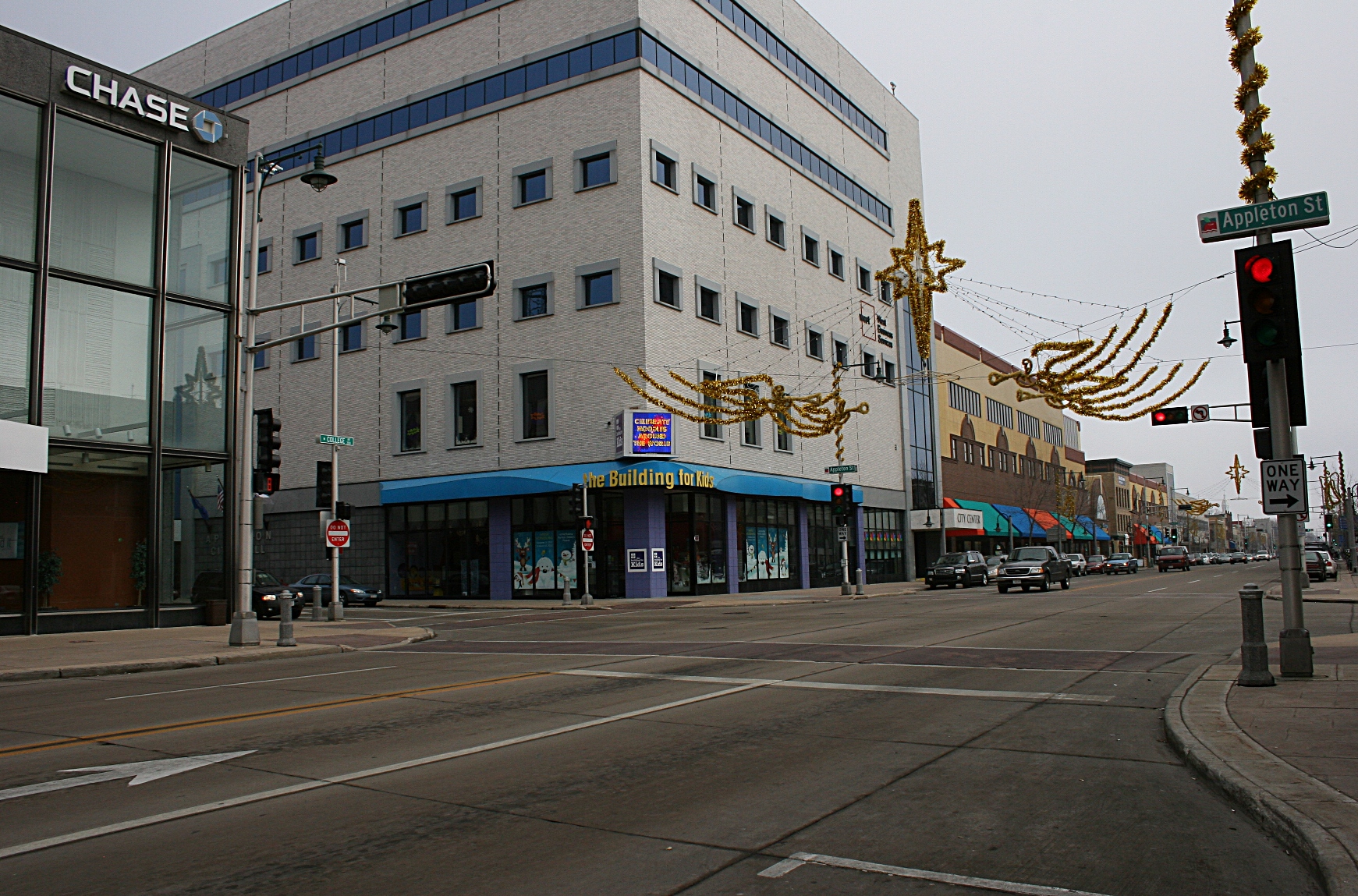
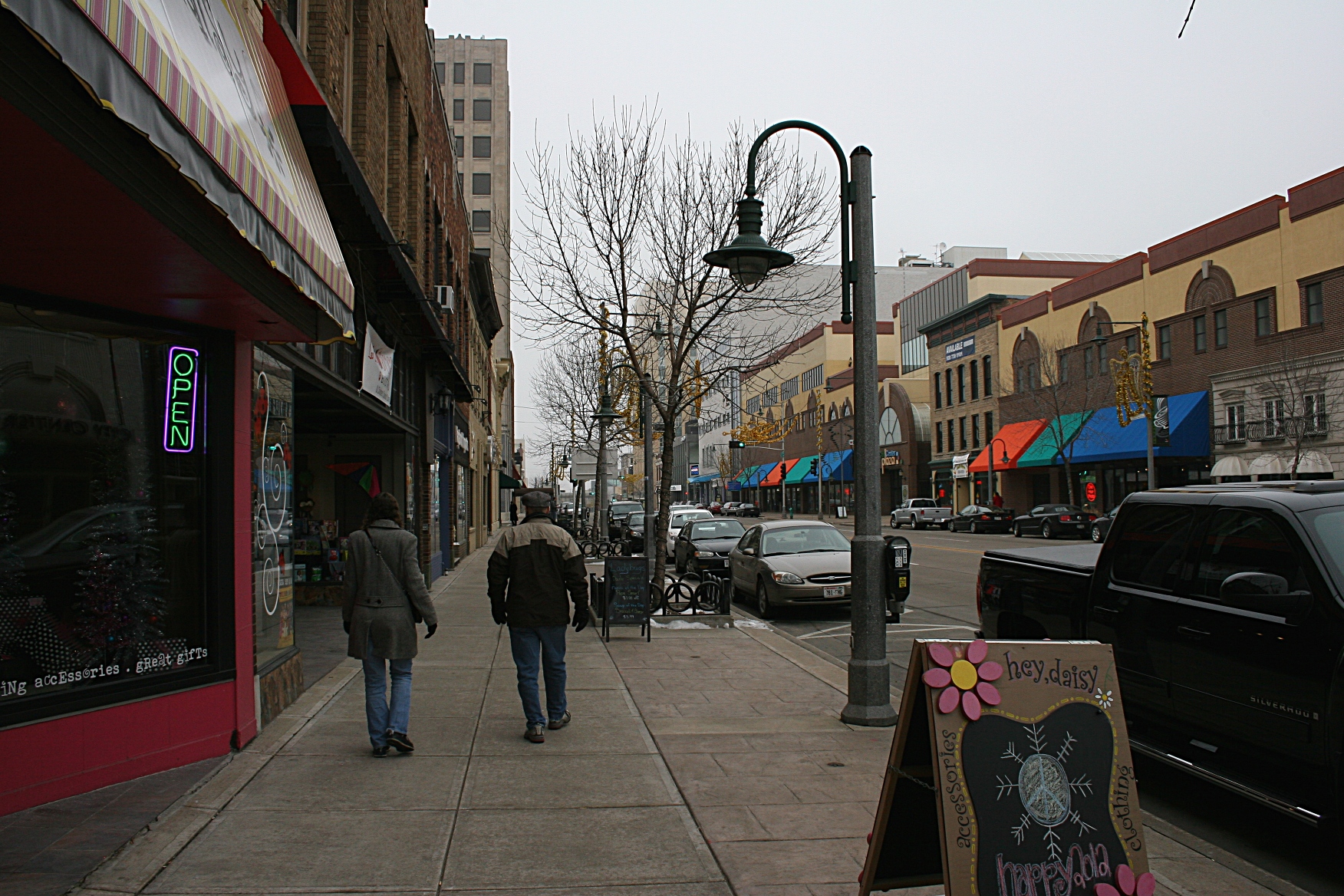
Downtown Appleton, along College Avenue, melds the new with the old.

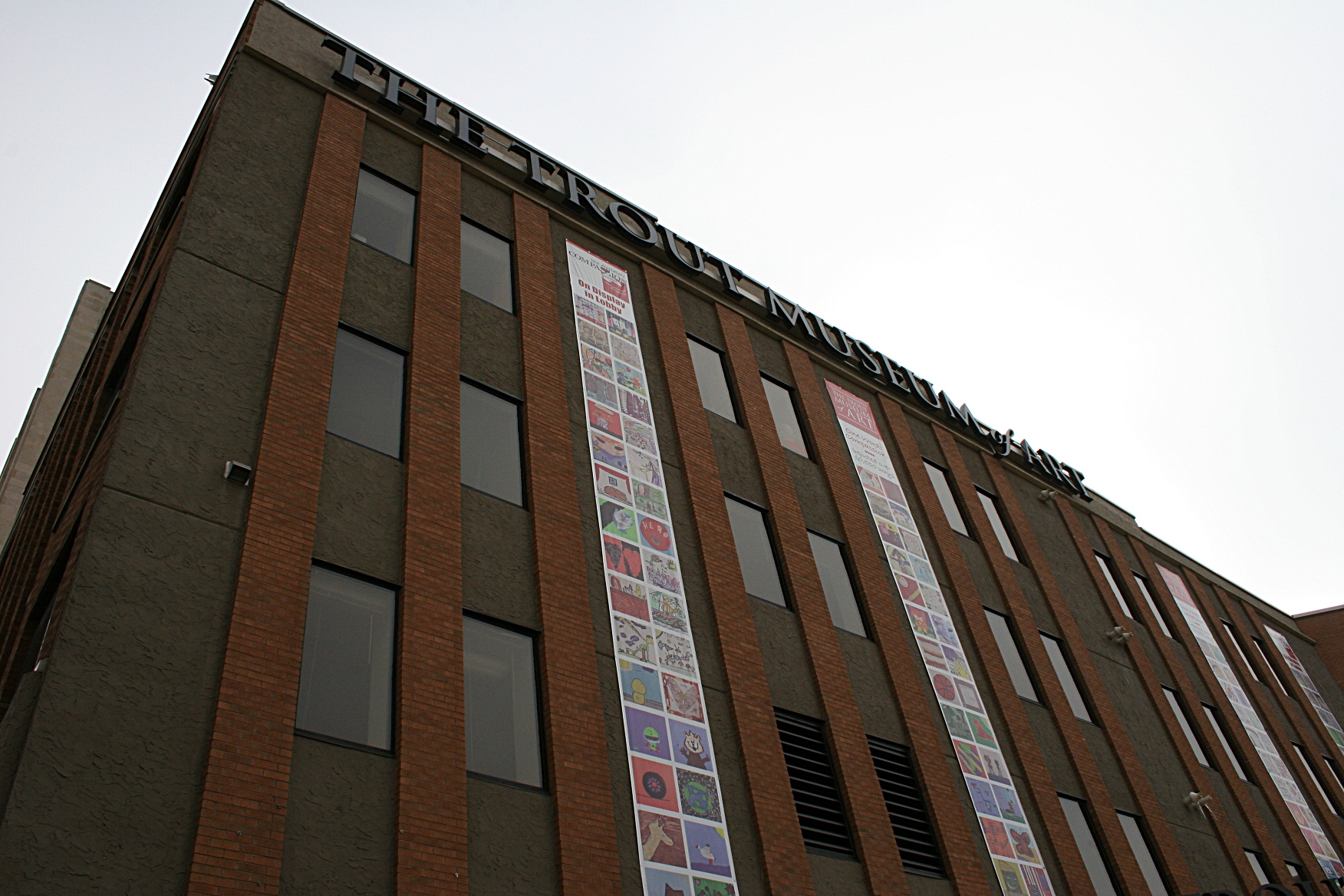
The Trout Museum of Art moved into the Riegel building in 2002.

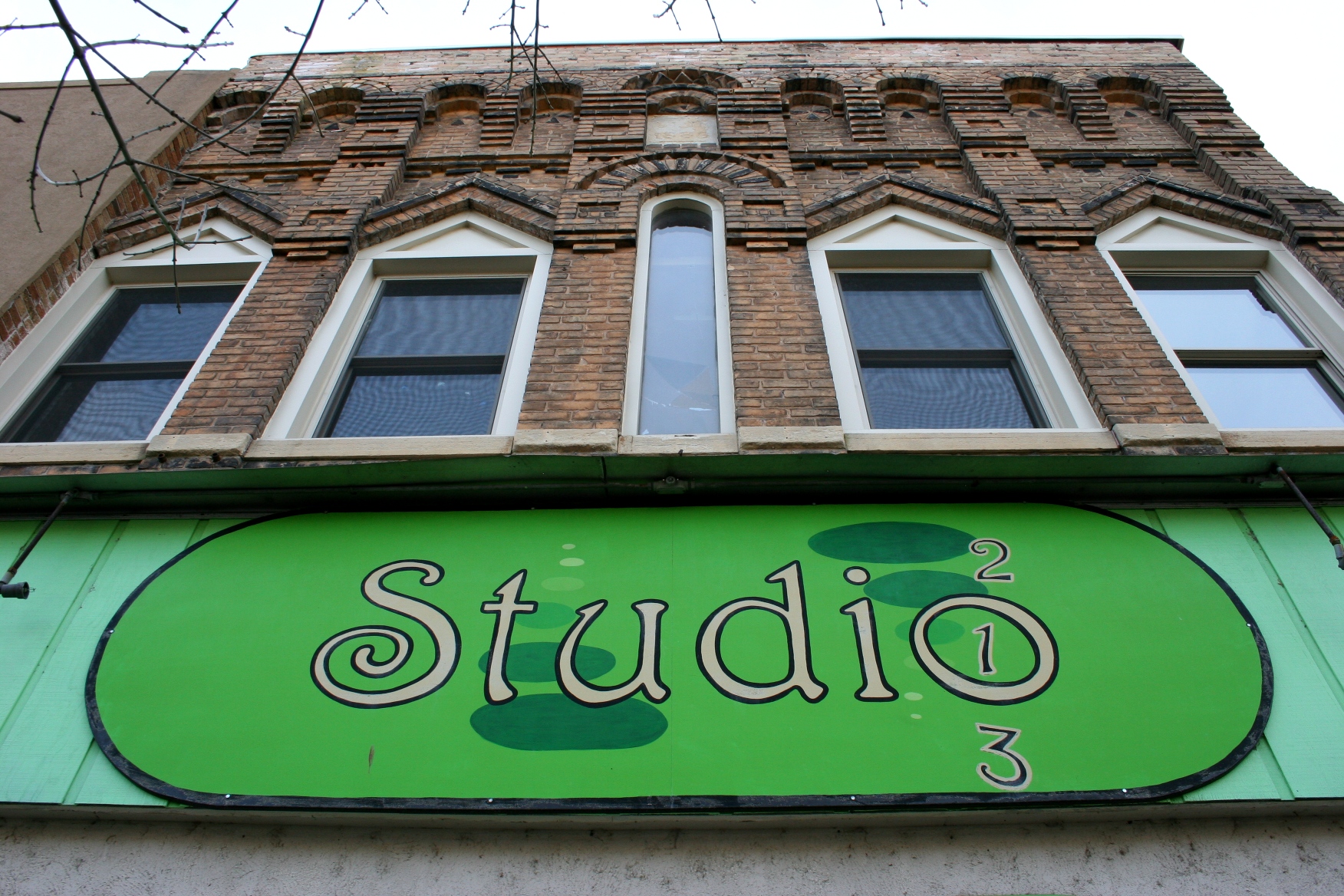
Studio 213 features art, collectibles and handcrafted items.

I found myself wishing for more time to explore and photograph the details of this historic district. However, my husband and second daughter, whom I’d accompanied downtown (the daughter lives in Appleton), will only put up with so much of my photographic dawdling.

So on this Saturday, the photo shoot was short and sweet. But I’ll be back to further embrace a downtown that’s already romanced her way into my heart.

My husband and second daughter head toward the Winter Farm Market at City Center (colorful awnings to the right) while I linger to photograph the street scape and hey, daisy.

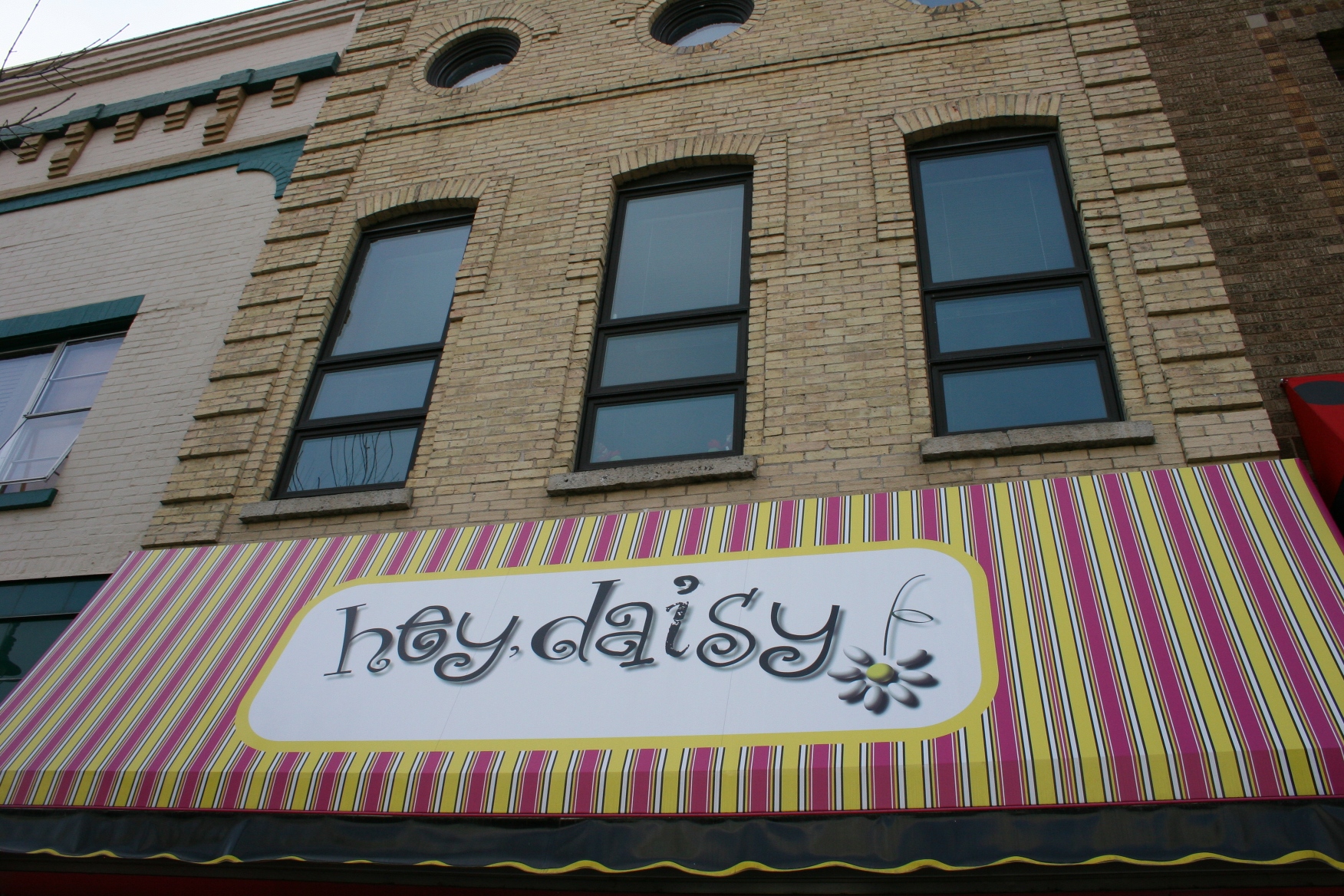
The charming front of hey, daisy, a women's clothing, accessories and gift store.

Downtown Appleton decorated for the Christmas season.

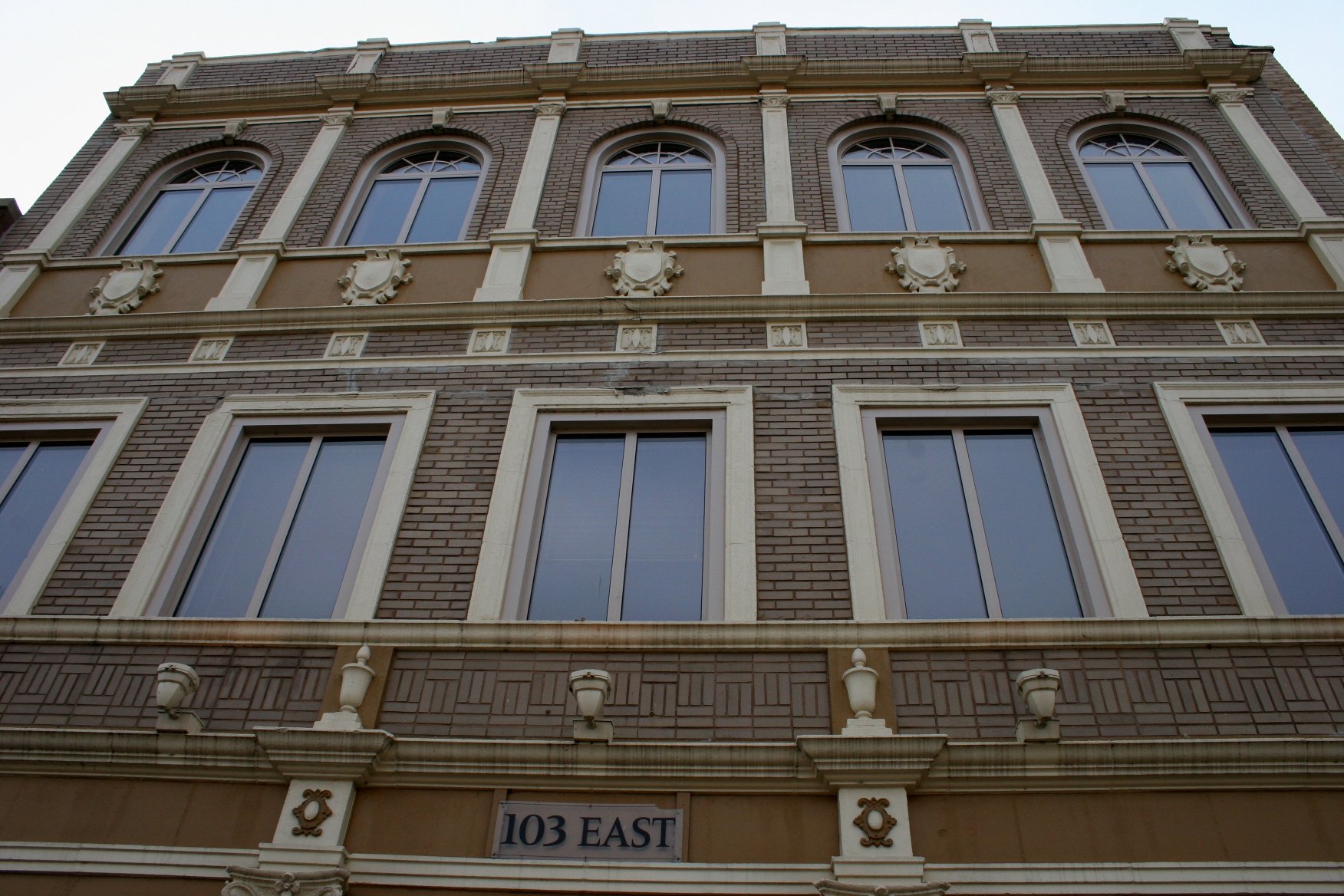
Another beautiful historic building at 103 East College Ave. in downtown Appleton.

© Copyright 2012 Audrey Kletscher Helbling
 

No cameras allowed on these historic premises January 4, 2012

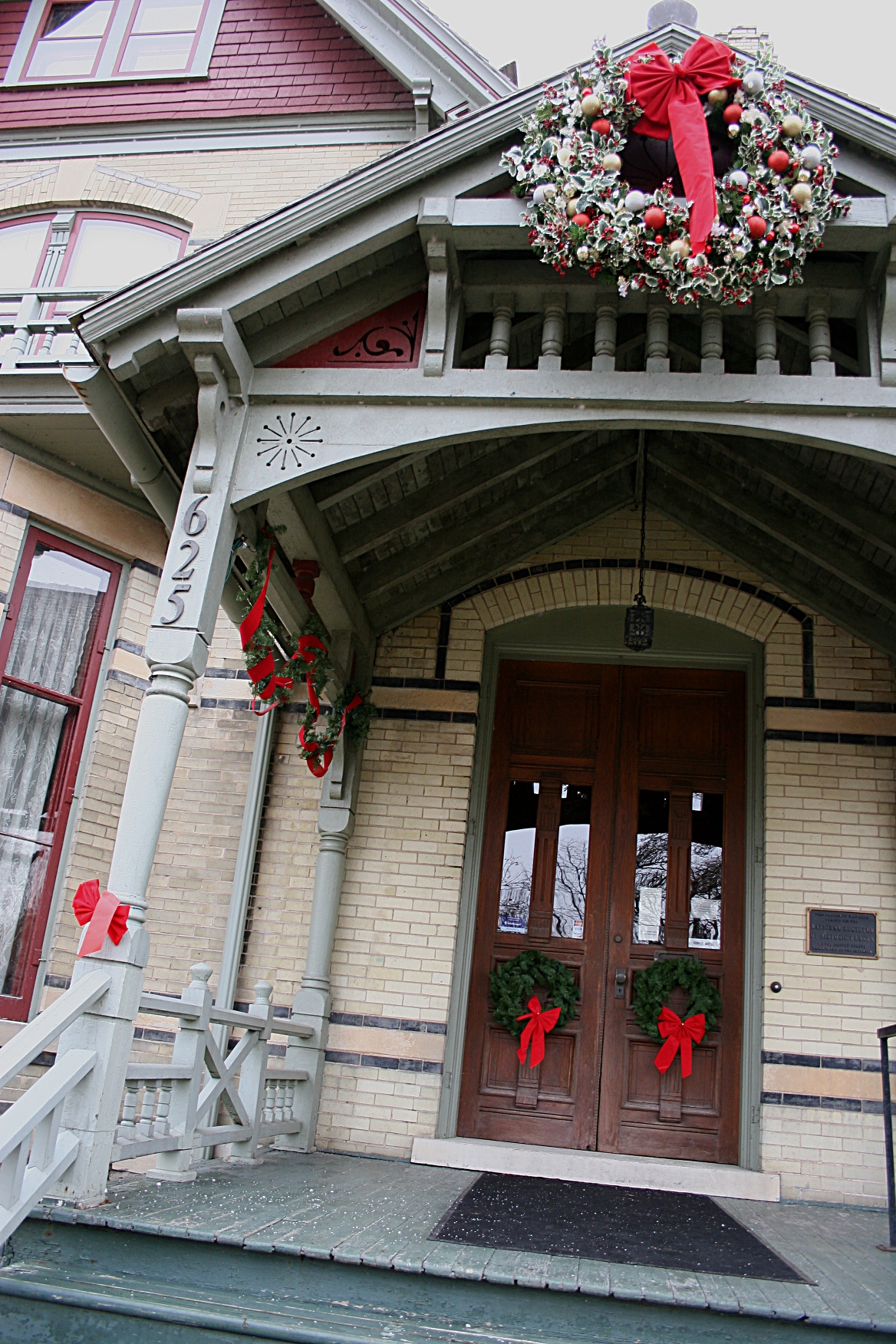
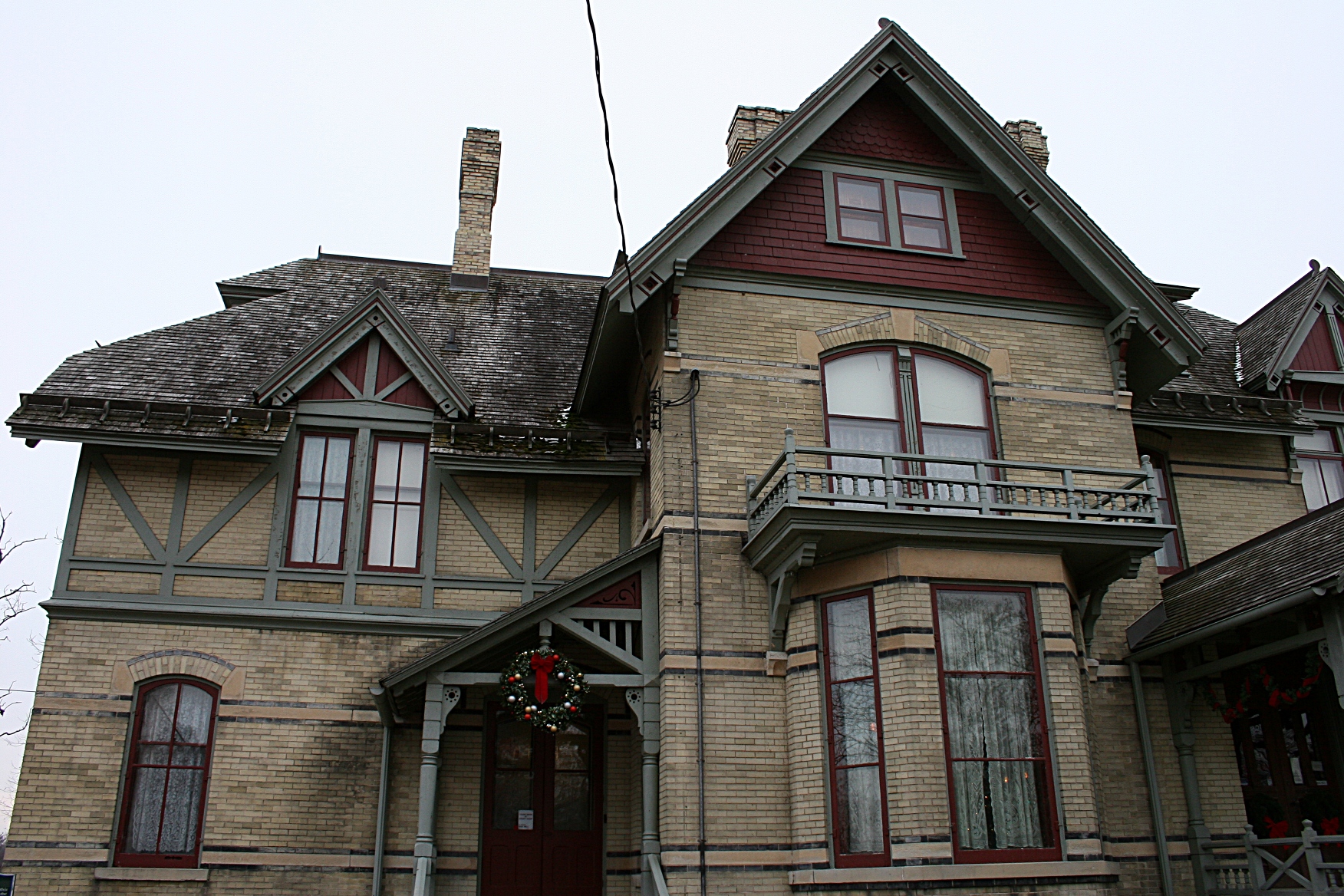
The main entry to the Hearthstone Historic House Museum in Appleton, Wisconsin, located at 625 W. Prospect.

NO PHOTOGRAPHY ALLOWED.

Post a sign with that message or speak those words to me and you’ll find yourself with one unhappy woman. I can’t help it. My camera is a natural extension of me, so when I can’t photograph I’m unsettled and discontented.

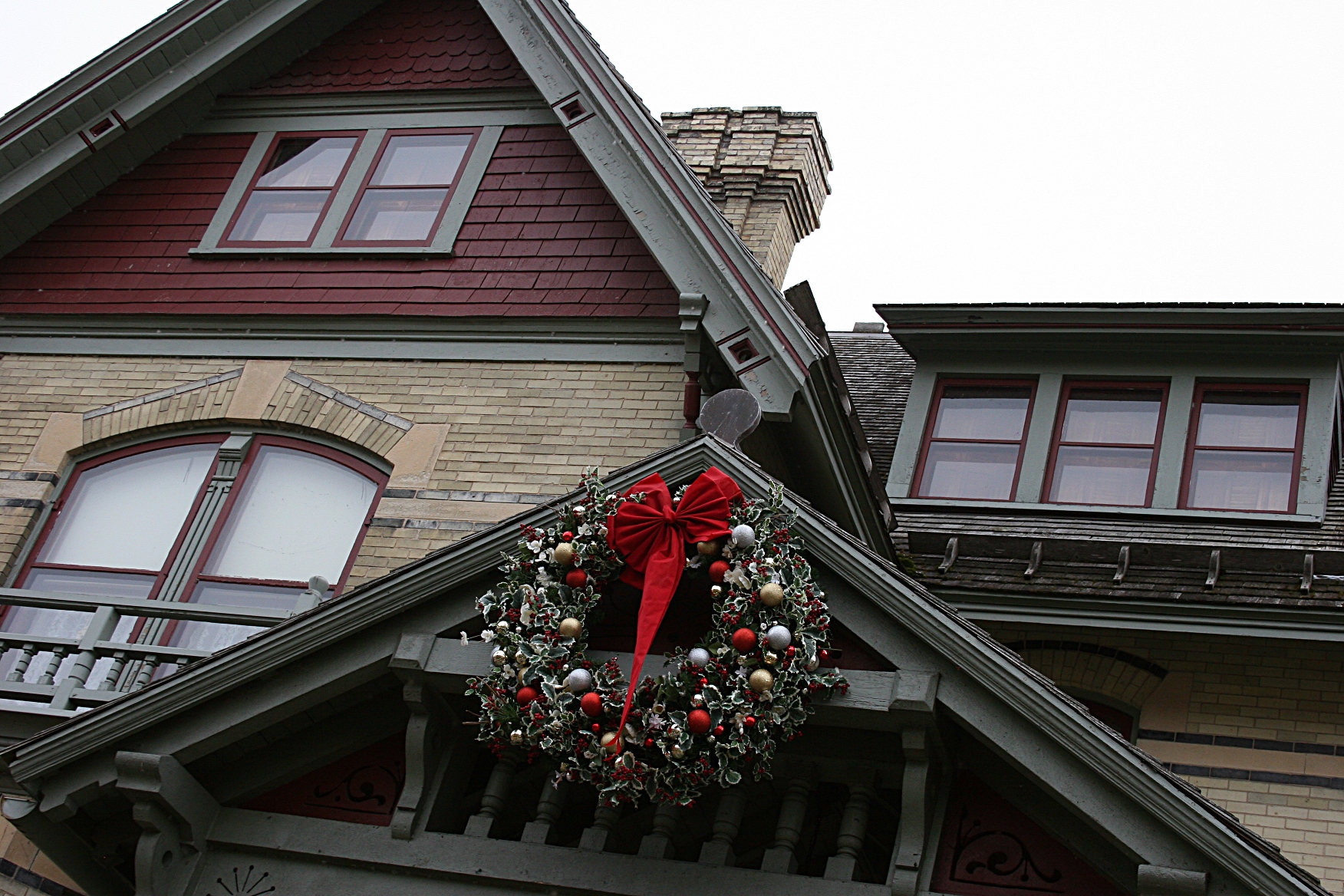
I never expected to encounter a photo ban at an 1882 historic home I toured in Appleton, Wisconsin on Saturday afternoon. But I hadn’t even reached the wreath-adorned double front doors of the Hearthstone Historic House Museum when my daughter pointed to the sign banning photography.

I automatically hugged my Canon EOS 20-D DSLR closer to my right side as we waited for a tour guide to unlock the front door and allow us access into this Victorian home, the first residence—in the world—electrified from a centrally located hydroelectric plant.

If you think I would simply accept the “no photos” rule without question, then you don’t know me. I asked and was told photography would be disruptive to the tour. “Even without flash?” I pursued.

Yes.

I contemplated for some time how I could sneak in a photo or two. But with tight quarters and visitors packed into the home’s rooms, taking covert photos wasn’t even a remote possibility. Besides, the click of the shutter button would surely give me away and I was not about to become the first tourist kicked out of this lovely mansion.

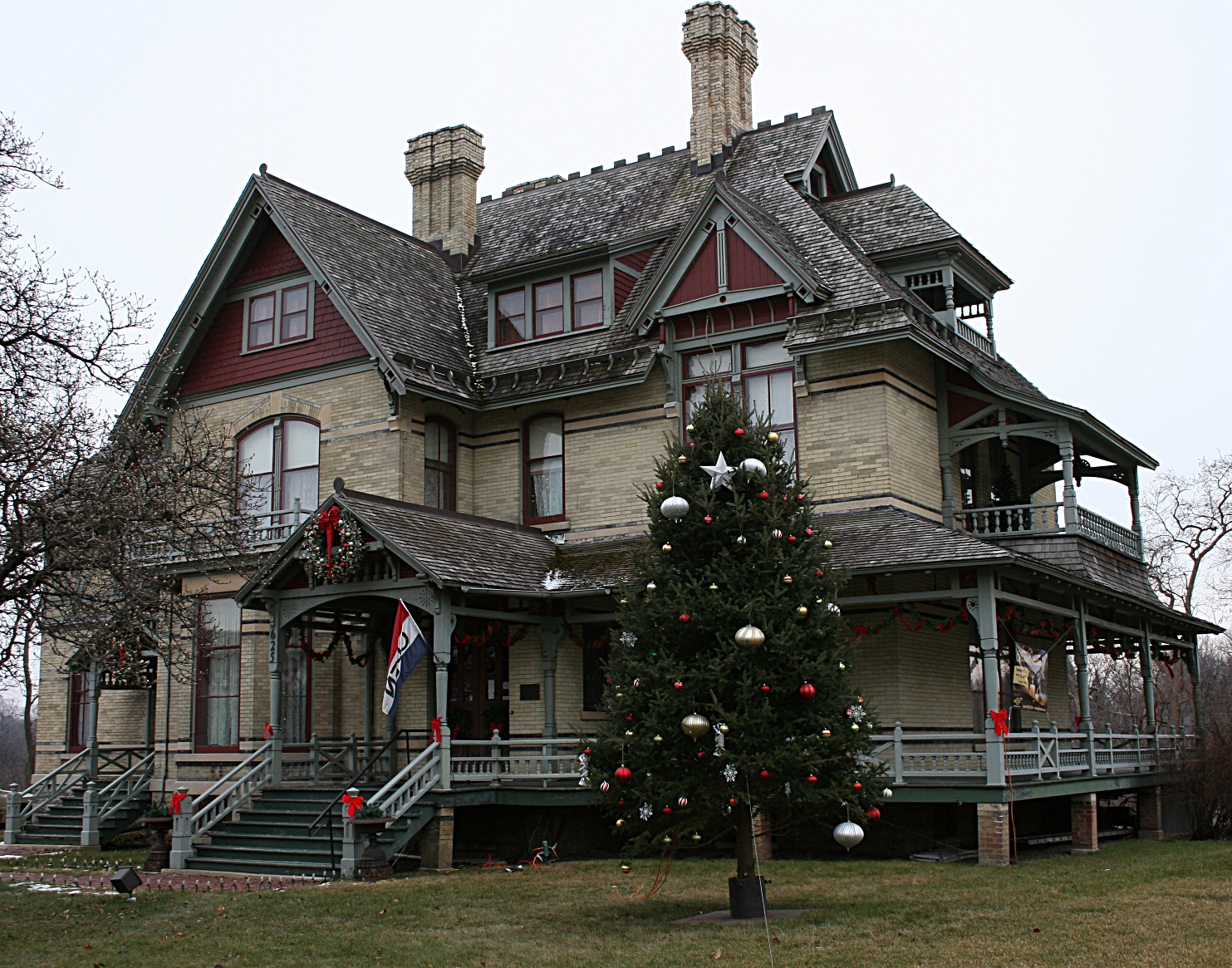
So you will need to settle for exterior images of this house built for Henry J. Rogers, today’s equivalent of the CEO of the Appleton Paper and Pulp Company. He lived here with his wife, Cremora, and their daughter, Kitty, for some 10 years until the nearby paper mill was destroyed by fire.

The original home of Henry J. Rogers and family sits along the Fox River.

From the exterior, this hilltop riverside home, built for $17,000, isn’t nearly as impressive as I’d expected. But inside, ah, inside, the décor is about as opulent and detailed as any historic residence I’ve ever toured.

Nine fireplaces grace rooms defined by wood—inlaid floors, detailed carvings, wood trim and ceilings and, well, wood everywhere. But I suppose when you live in Wisconsin and head up a paper company, finding wood to construct your mansion isn’t a problem.

An Edison phonograph, a stained glass window in the grand hall entry, floor-to-ceiling windows and a hand-painted ceiling in the parlor, the focal point fireplaces, and a dining room table set for Christmas dinner all impressed me.

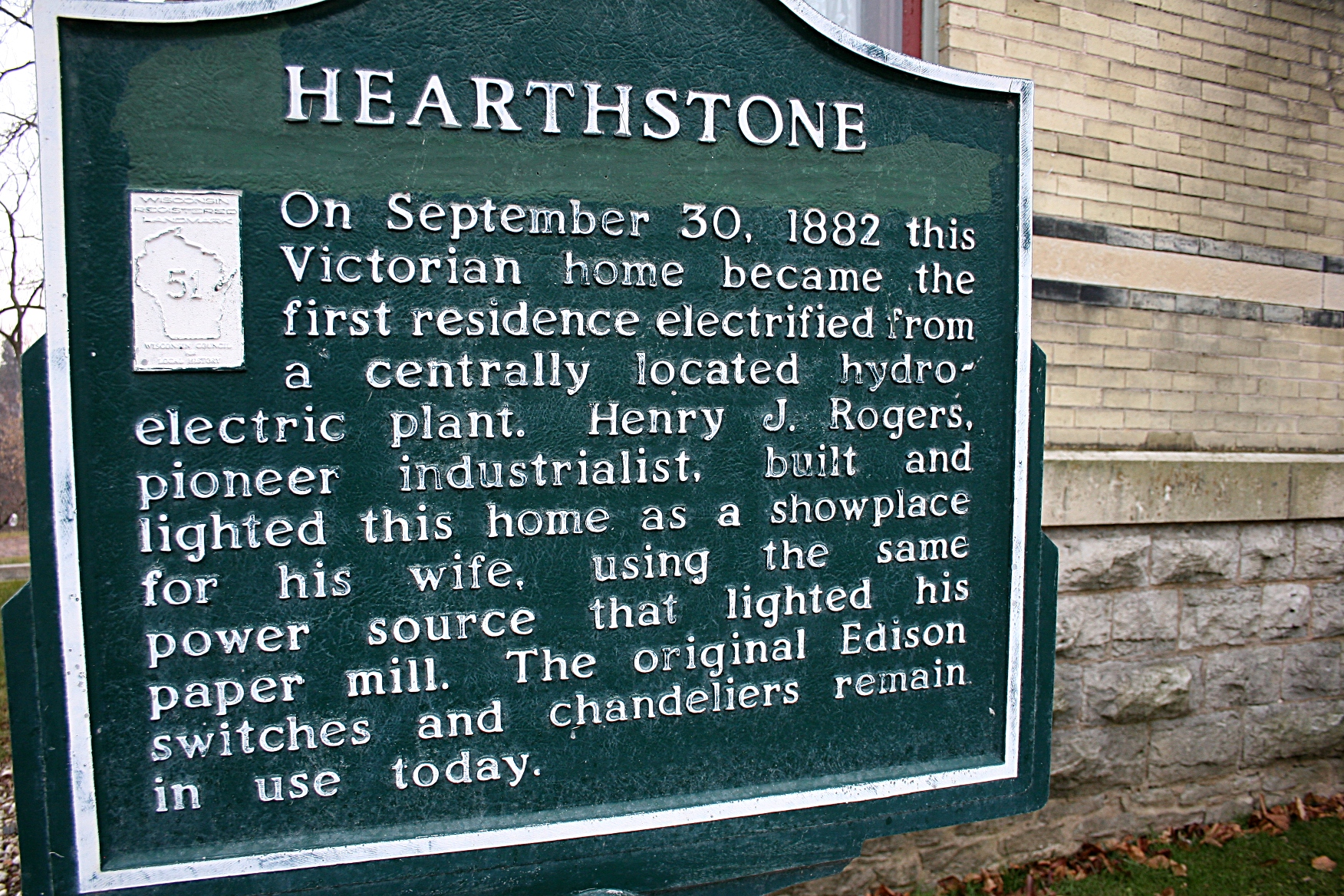
A sign explains the house's historical significance. The house is on the National Register of Historic Places.

In retrospect, I suppose I should have been most impressed by the rare 1882 light switches and electroliers still in operation. After all, the lighting ranks as the reason this home holds such historic value. But, honestly, I’m not all that scientific minded. The décor and personal stories shared by our tour guide interested me far more than the hydro-electric powered lighting system.

Our guide informed us that the Rogers family was charged $1 a month per light bulb for the 50 light bulbs in the house. In the 1880s, $50 was a sizeable chunk of money to pay for monthly electrical usage. That reveals the substantial wealth of this family.

Rogers, however, eventually died with only $12 to his name after moving to Chicago and losing money in a silver market that crashed, a second tour guide later told me.

The story, though, that truly snatched my interest involves Kitty. When she became engaged, the Rogers’ daughter verified the authenticity of her diamond by etching her and her fiancé’s initials into a library window (still there). Not to be judgmental here, but I was not at all surprised when the tour guide revealed that the marriage did not last.

Later, while touring the second floor, we were informed that Henry and Cremora slept in separate bedrooms because the couple thought they would catch tuberculosis from one another by breathing in the same night air. OK, then. But, I suppose I must consider the time period and the lack of knowledge regarding diseases.

Finally, the tidbit I found most personally appropriate involved visitors to the Rogers’ mansion. They would leave their calling cards, the equivalent of today’s business cards, on a table in the great hall. Visitors would bend the corners of their cards in a certain way, depending on the reason for their visits. The family would then decide whether they wanted to see the guest.

At that point in the tour, I considered scribbling “Here to take photos” on my business card and dropping it onto the foyer table.

The Rogers' home, which was home to nine other families and which once housed a restaurant called The Hearthstone in the 1930s, is not yet fully-restored to the 1880-1895 time period.

Inside and outside, Hearthstone is decorated with Christmas trees and other holiday decor for a "Victorian Christmas" special event which continues through January 14.

NOTE: Lest you consider me disrespectful of rules, I am not. I understand, somewhat, the “no photography” rule at the Hearthstone house. And I most certainly understand why flash photography would not be permitted in an historic place.

One other point I want to mention: During my tour of the Hearthstone mansion, a visitor’s cell phone rang and she proceeded to answer it, right in the middle of the tour. Now that I found disruptive.

© Copyright 2012 Audrey Kletscher Helbling
 

Downtown Faribault in December in black & white December 22, 2011

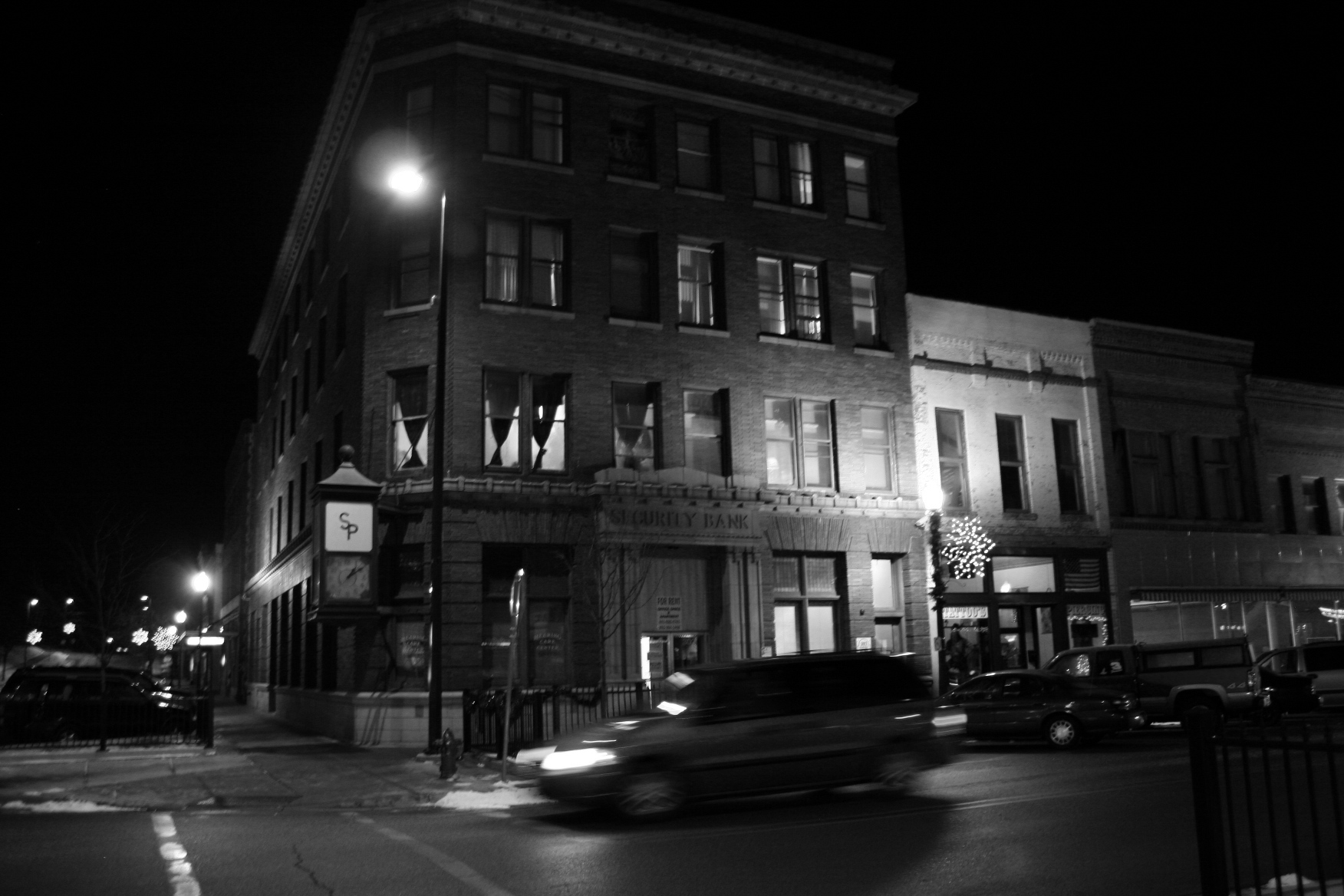
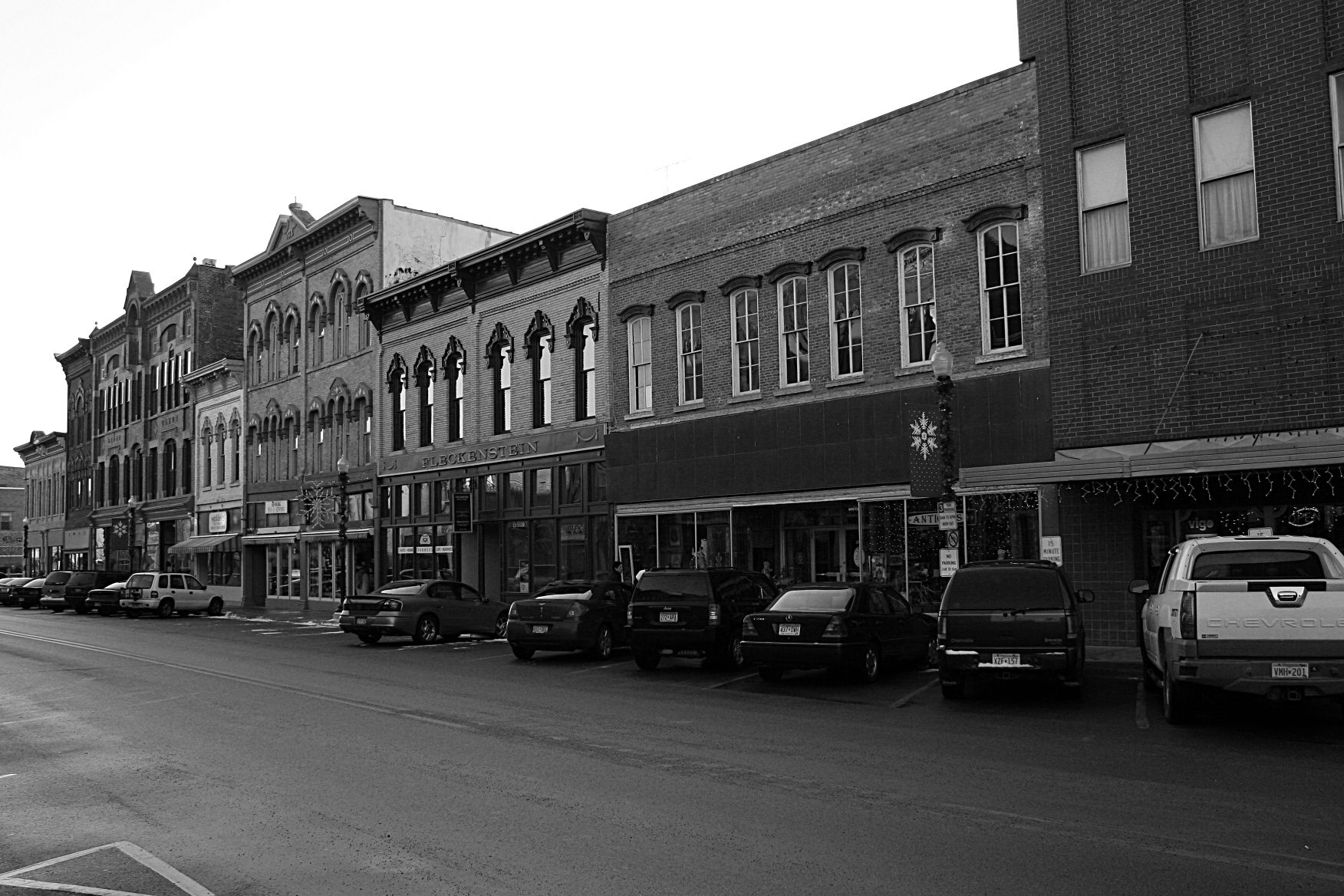
The former Security Bank building anchors a corner of Central Avenue in downtown Faribault.

PHOTOS DEVOID of distracting color possess a certain surreal, dreamy quality and a vintage feel that have always appealed to me.

Some of the best images I’ve seen hearken from years ago which just goes to prove that technology doesn’t always equate better results.

While filing through photos I shot in historic downtown Faribault on Saturday afternoon and evening, I decided to play with my photo editing tools and desaturate several images. I liked the results so much that I stripped every frame of color.

The results, I think, impress even more upon the viewer the history of this early Minnesota community that stretches back to its founding by fur trader Alexander Faribault in 1852.

We’re a city rich in history with 40 properties on the National Register of Historic Places.

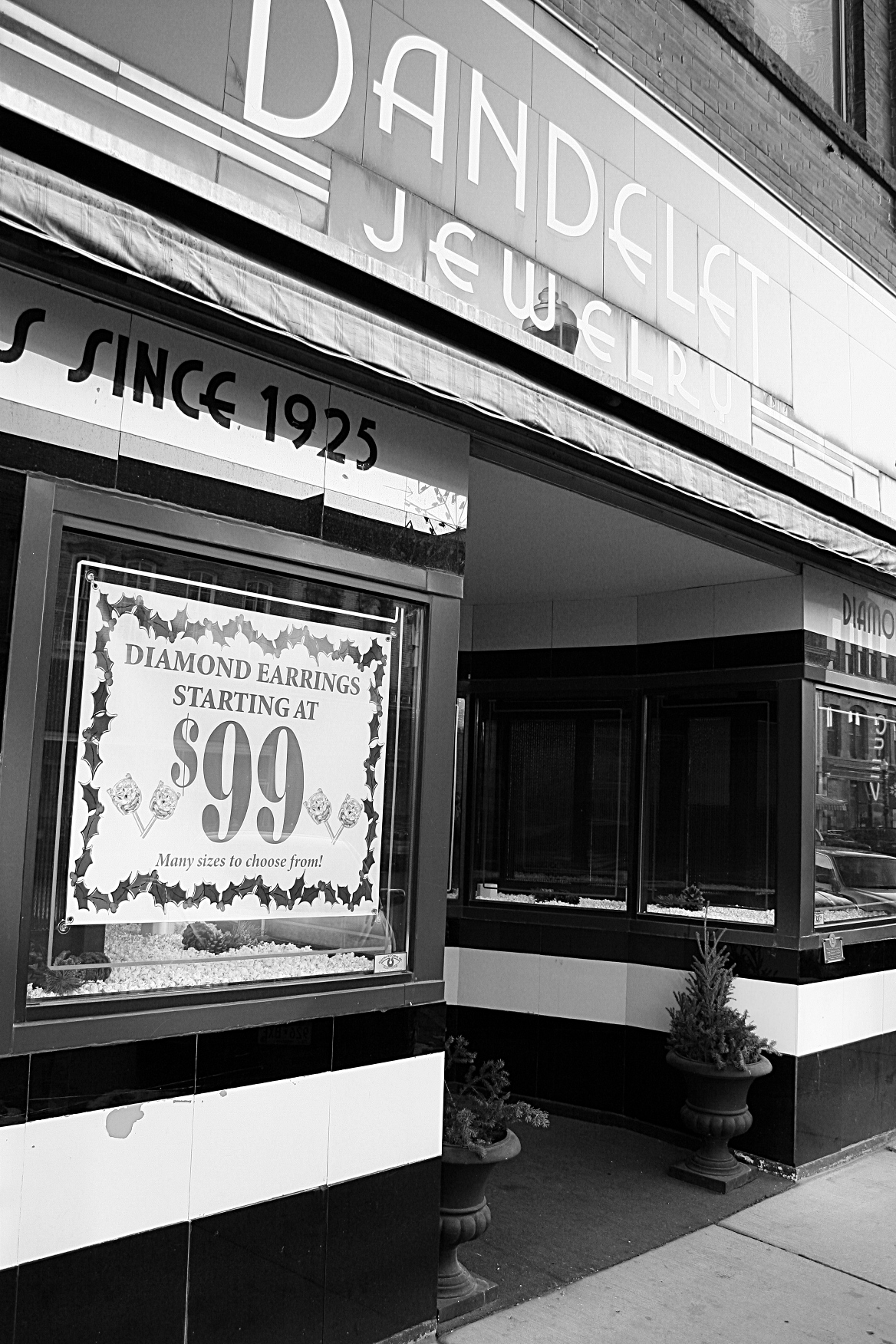
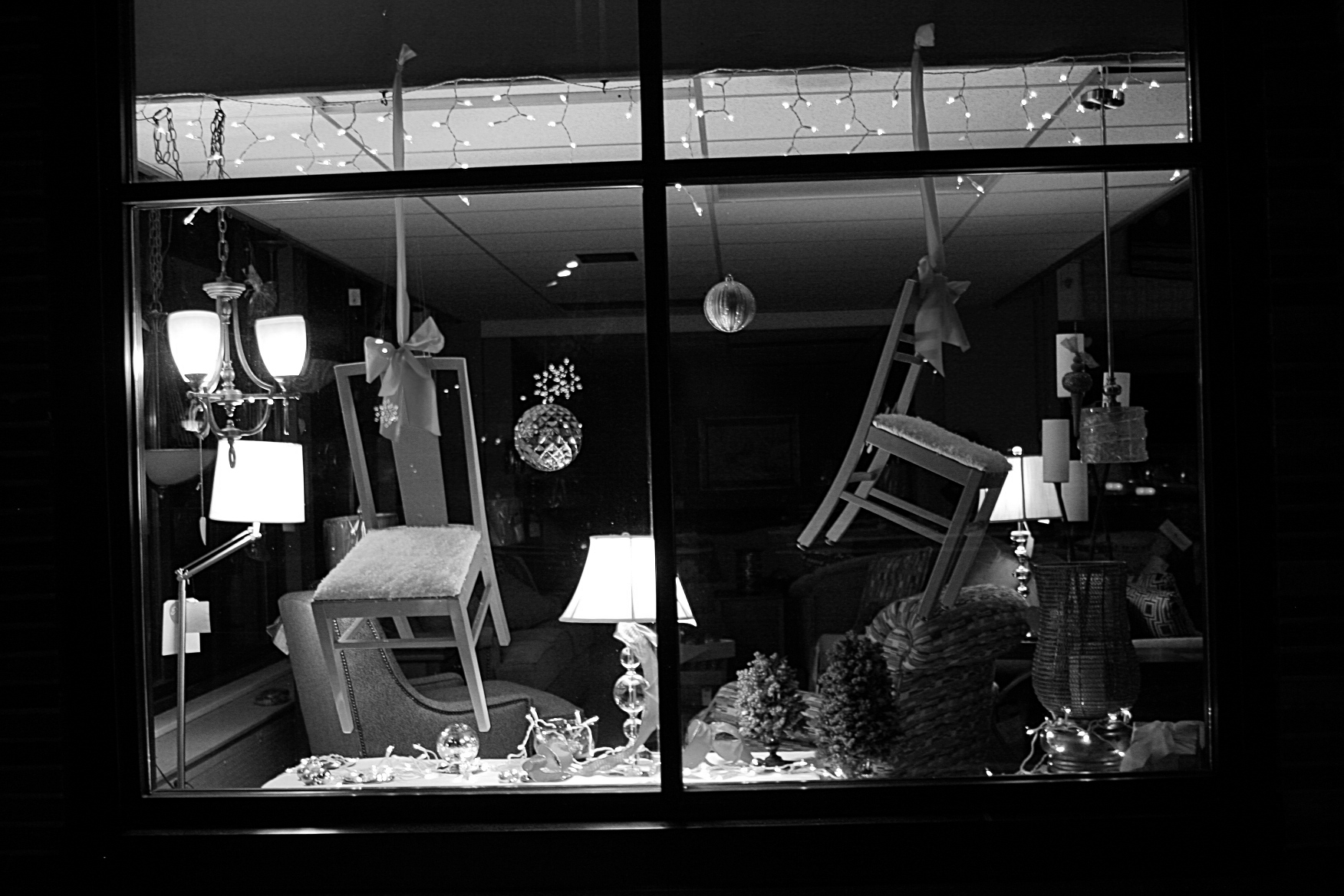
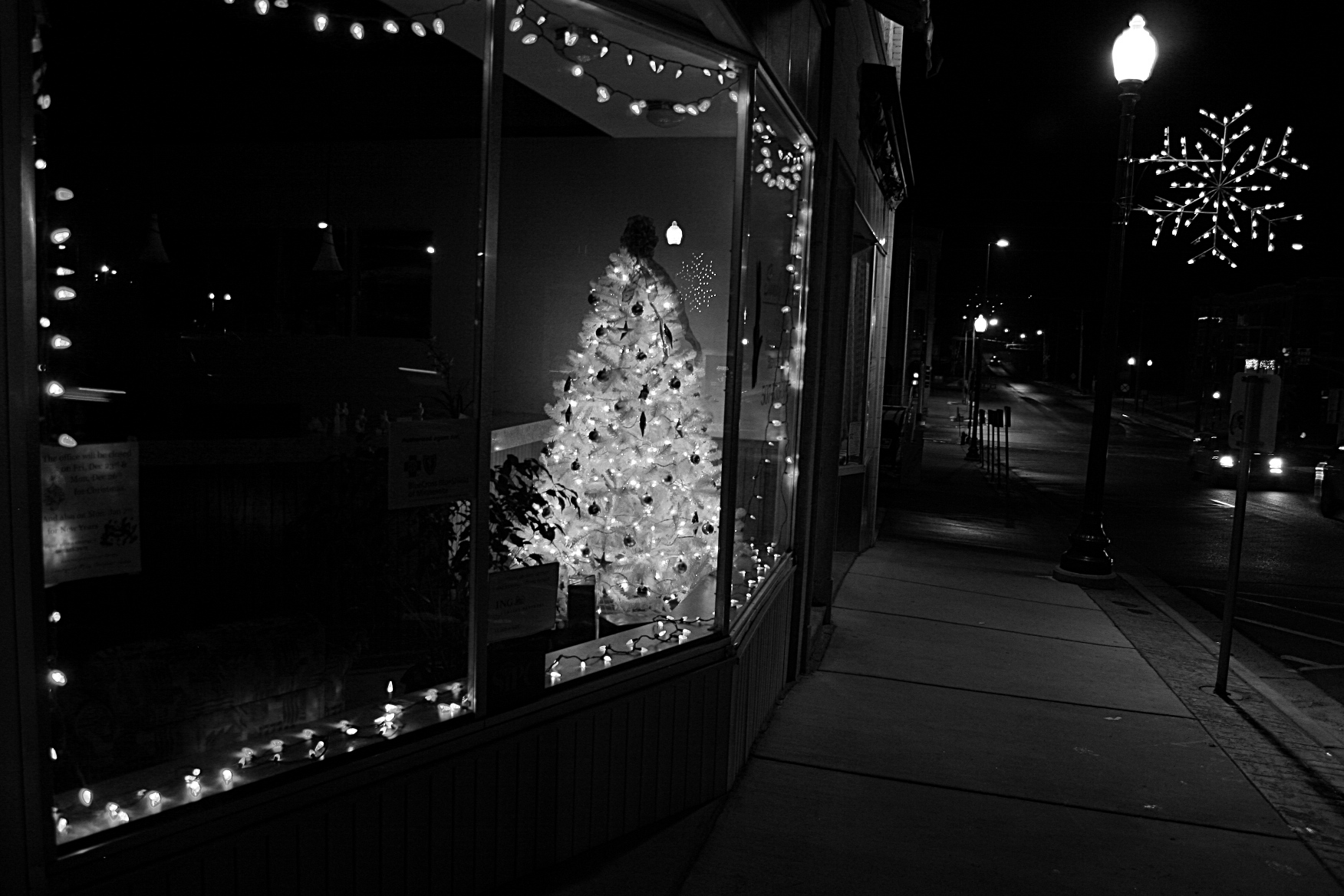
With that perspective, please join me on a quick photo tour of the downtown area. Certainly much more comprises our downtown than what you see in the seven images here.

I invite you to explore on your own, to immerse yourself in the history that defines Faribault.

Historic buildings along Central Avenue.

Dandelet Jewelry occupies the former 1882 Dandelet Dry Goods building, which was renovated in 1985.

A scene from the movie, "Grumpy Old Men," was shot in the former drug store to the right in this image. Today the building houses a pawn shop.

A holiday display window at Erickson Furniture, in business since 1956 and located along Fifth Street Northwest just a block off Central Avenue. Erickson Furniture won first place in the Main Street window decorating contest with its suspended green chairs, holiday ornaments and lights.

Holiday decorations in a business window along Third Street Northwest just off Central.

A sign in the window of Burkhartzmeyer Shoes, a third-generation family-owned shoe store founded in 1949.

CLICK HERE to read a previous post about Faribault’s historic downtown.

Copyright 2011 Audrey Kletscher Helbling
 

Connecting to God at country churches August 28, 2011

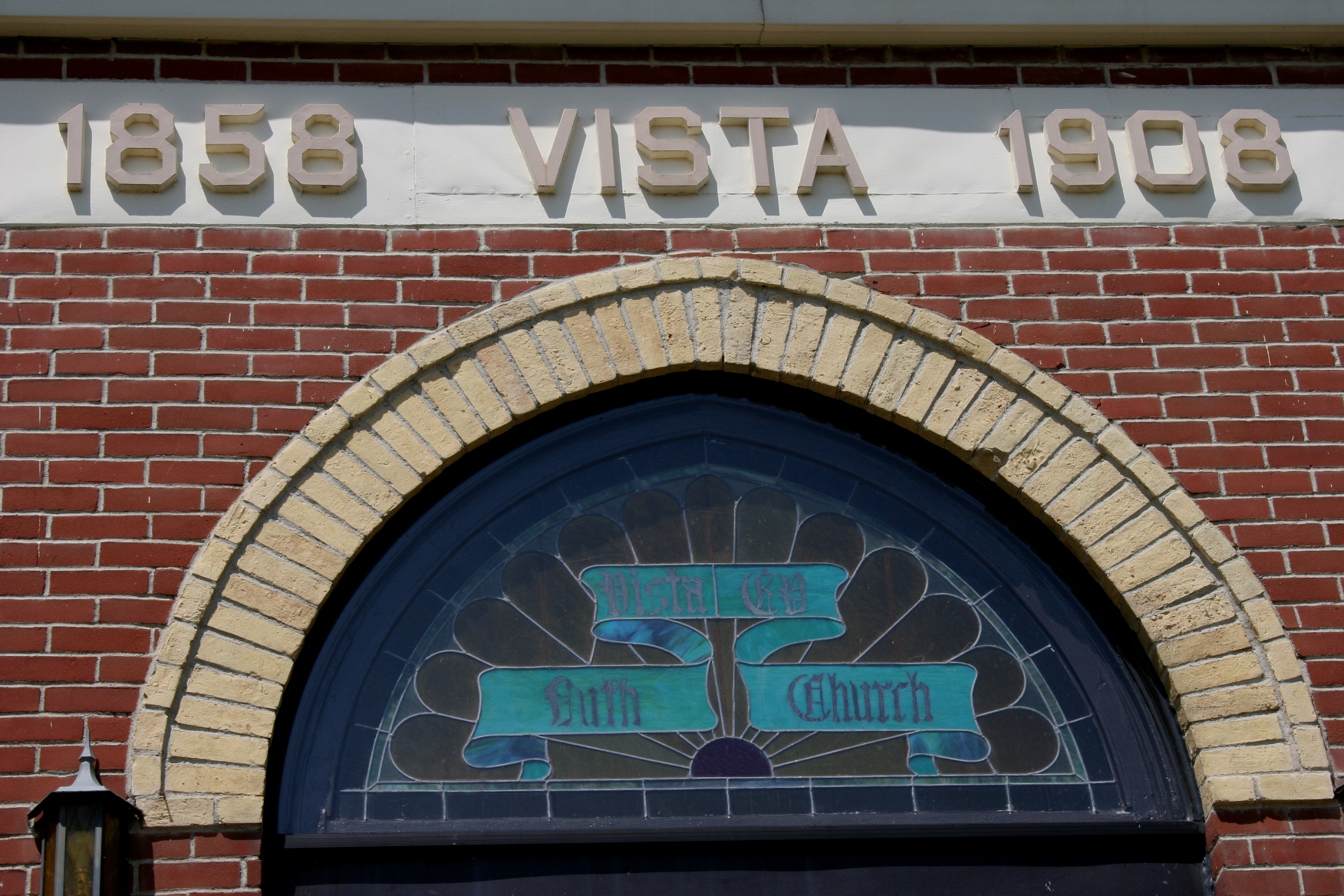
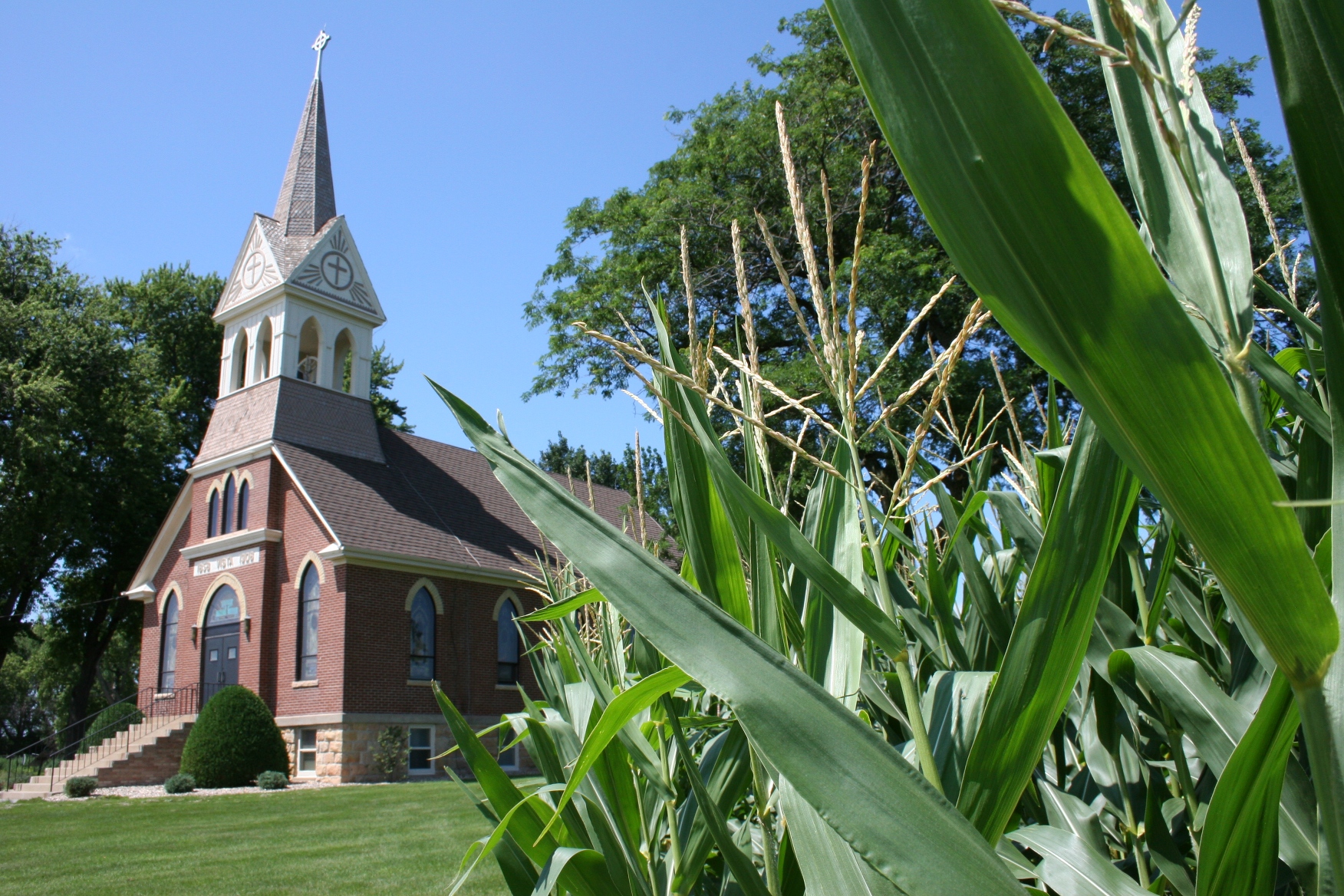
Vista Evangelical Lutheran Church, located at the intersection of Waseca County Roads 20 and 56 northeast of New Richland was built in 1908 and is on the National Register of Historic Places.

DURING THE PAST FEW YEARS, whenever I spot an old country church and have the time to stop and photograph it, I do.

I possess a sincere appreciation for the history, architecture, beauty and art found in these rural houses of worship.

There’s also something about a church in the country that exudes a deep sense of peace not found in a church built in a town and surrounded by homes or businesses, confined by concrete or pavement.

In the country, a church feels more closely connected to God by the sky, the land, the stirring of the wind through the trees, the background buzz of bugs on an end-of-summer day.

Serene. Peaceful. Calm. A certain sense of comfort comes from walking through a country churchyard, through the adjoining cemetery that links to farm fields where congregational forefathers worked the land and, on Sunday mornings, paused to thank God for the blessings bestowed upon them.

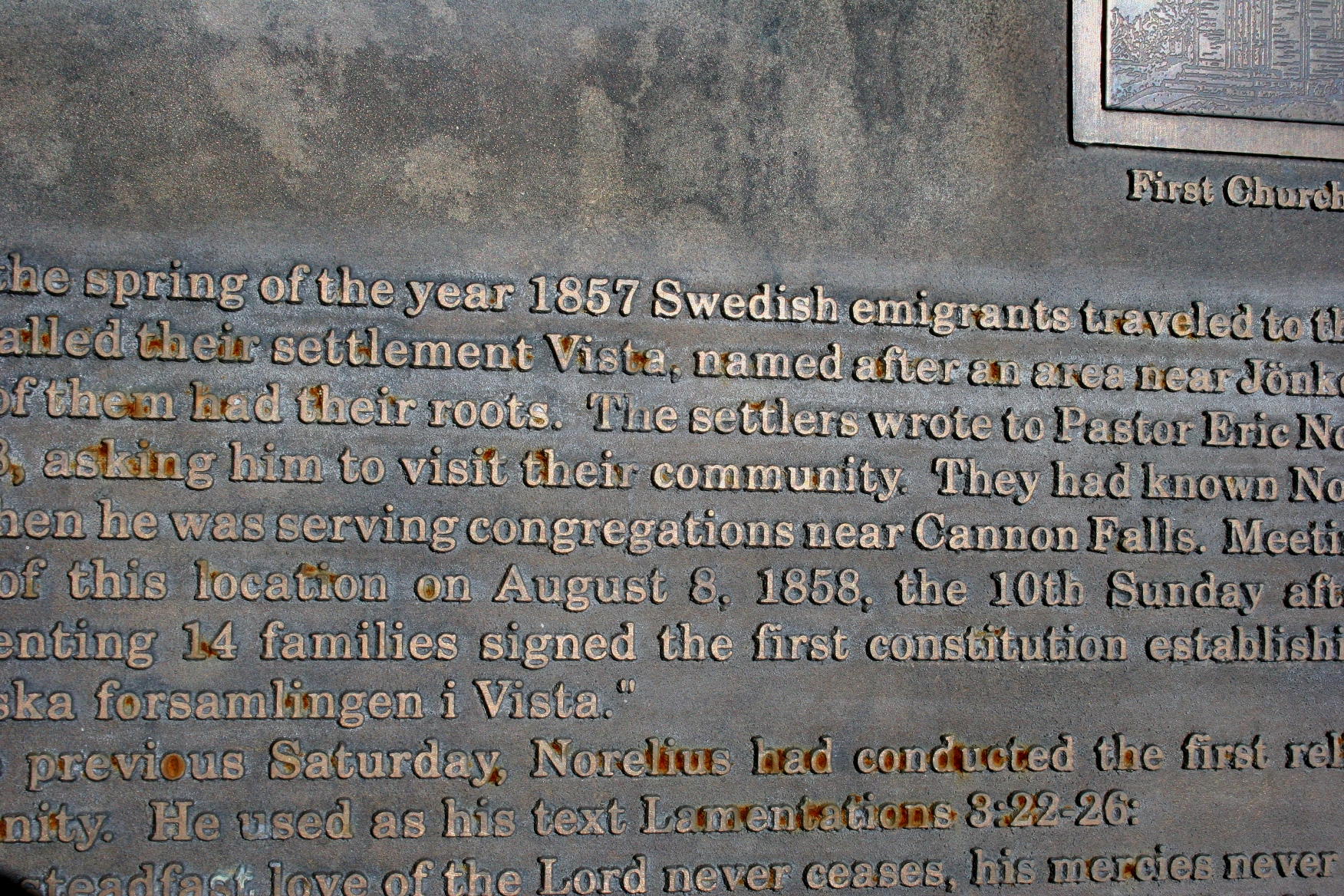
A plaque at Vista details the congregation's Swedish roots and history. Early settlers met on a hill north of the current church on August 8, 1858, and signed a constitution.

Most times on these brief visits to country churches, I find the doors locked. It wasn’t always this way. Perhaps even a decade ago, I could have walked inside. But times are different. Worry about theft requires locked doors.

So I can only imagine the sun streaming through stained glass windows, the worn pews, the ornate altar, the frayed rope of the bell pull.

Nearly every old country church features irreplaceable stained glass windows.

As I circle the church exterior, I consider the families that have come together here to celebrate baptisms and marriages and to mourn the loss of loved ones. Ashes to ashes, dust to dust.

Cornfields snuggle up to Vista's church yard. It's the most beautiful of settings.

Here, standing with my feet planted next to the church next to a corn or soybean field overlooking the picturesque countryside, I can feel the almighty presence of God the Creator as I contemplate words from “Beautiful Savior,” my favorite hymn:

Beautiful Savior, King of creation, Son of God and Son of Man!

Truly I’d love thee, Truly I’d serve thee,

Light of my soul, my joy, my crown.

#

Fair are the meadows, Fair are the woodlands, Robed in flow’rs of blooming spring;

Jesus is fairer, Jesus is purer,

He makes our sorr’wing spirit sing.

Vista's steeple rises above the countryside as a local landmark.

A lovely grassy area of shade trees lies to the north and west of the Vista church.

© Copyright 2011 Audrey Kletscher Helbling

Verses one and two of “Beautiful Savior” are from The Lutheran Worship hymnal.


Take time to stop and appreciate small towns August 11, 2011

In tiny Belview, you'll find the 1901 Odeon Hall. Listed on the National Register of Historic Places, this Queen Anne style building features a barrel-vault ceiling. Still in use today for wedding receptions and community events, etc., Odeon Hall once also featured vaudeville shows, motion pictures, concerts and more.
I WANT TO THROW a challenge out there. The next time you’re driving through/near small-town Minnesota, or small-town wherever, stop. Pull off the highway and drive along Main Street. Park your vehicle. Get out. Walk. Look. See.
Notice the buildings, the architecture, the signage, the history. Consider what centers the town: the café, the post office, the grain elevator, the churches, the school—if there is a school.

Families, retirees and even single people choose to live, to work, to worship together, to celebrate, to mourn, to live their lives here. This is their home, not just some town in the middle of nowhere that you must pass through to get from destination A to destination B.

I have, in recent years, begun to appreciate the small towns and rural areas of Minnesota more than ever. I grew up on a dairy and crop farm in southwestern Minnesota, which is about as rural as you can get. But I haven’t always valued that upbringing like I should.

As I’ve gotten into the art of photography, I’ve begun to view these towns with a fresh perspective. I notice what, in the past, I’ve overlooked or taken for granted because of my rural roots.

Let me show you some photos I took recently in and near Belview, a community of 375 located four miles north of State Highway 19 in northwestern Redwood County. Belview lies about 10 miles from my hometown of Vesta, another one of those small towns that motorists zip by without a second thought. I bet you didn’t know that Vesta is the home of the nation’s first electric cooperative. I thought so.

That’s the thing about small towns. If you stop and walk and look and see, and I emphasize the word, see, you will discover more than just a place to drive through when getting from point A to point B. You will discover the heart and soul of community.

Move in close to view the details, like the front of Odeon Hall. I attended a cousin's wedding dance here decades ago. Imagine the celebrations inside this historic building.

Most small towns, like Belview, are fortunate to still have a place where you can get your hair cut and styled. I appreciate the simple lines of this brick building located along Main Street.

I discovered this poster in the window of a Main Street building advertising a local band, HickTown Mafia. The band plays "country with a kick, rock with an attitude," according to the group's website.

I found this abandoned former gas station (I think) on a downtown corner. This charming building practically shouts for someone to reopen it as a bakery, coffee shop, antique store or some other such venue. Perhaps the two local wineries/vineyards and other area vendors could market their products here.

The Parkview Home, a Belview nursing home, was once home to my maternal grandfather and to other extended aging family members. I've been here often to visit relatives and, during high school, to sing Christmas carols with the Luther League. The building was damaged in a July 1 tornado (note the blue tarp on the roof) and residents have been temporarily displaced.

Northwest of Belview, you'll find picturesque Rock Dell Lutheran Church. My Uncle Merlin and Aunt Iylene Kletscher were married here in November 1964, the last time I was inside the church.

A side view of Rock Dell.

Near Rock Dell you'll find Swedes Forest Township Hall in the middle of corn and soybean fields.

FOR MORE INFORMATION about Belview, click here and here. Also read my previous post about Rainbow Antiques, Crafts and Junque in Belview by clicking here.

TAKE MY CHALLENGE and report back to me on the treasures you discover in a small town or rural area.

© Copyright 2011 Audrey Kletscher Helbling