Minnesota Prairie Roots

Writing and photography by Audrey Kletscher Helbling

Ring, not rain, dance in a Wisconsin park June 20, 2014

Filed under: Uncategorized — Audrey Kletscher Helbling @ 6:00 AM
Tags: , , , , , , , , , ,

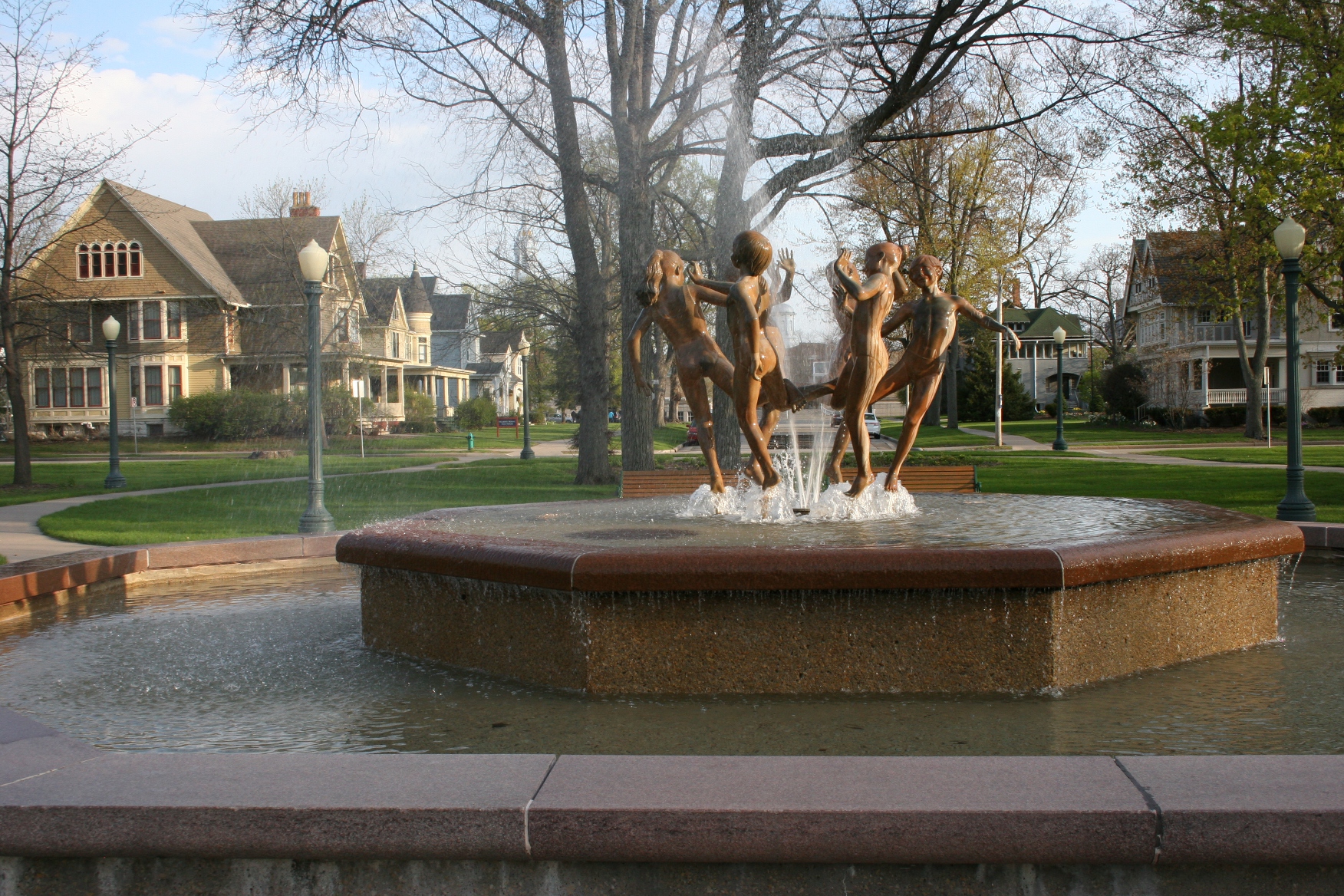
CITY PARK IN APPLETON, WISCONSIN, is one of those parks that causes you to linger and appreciate.

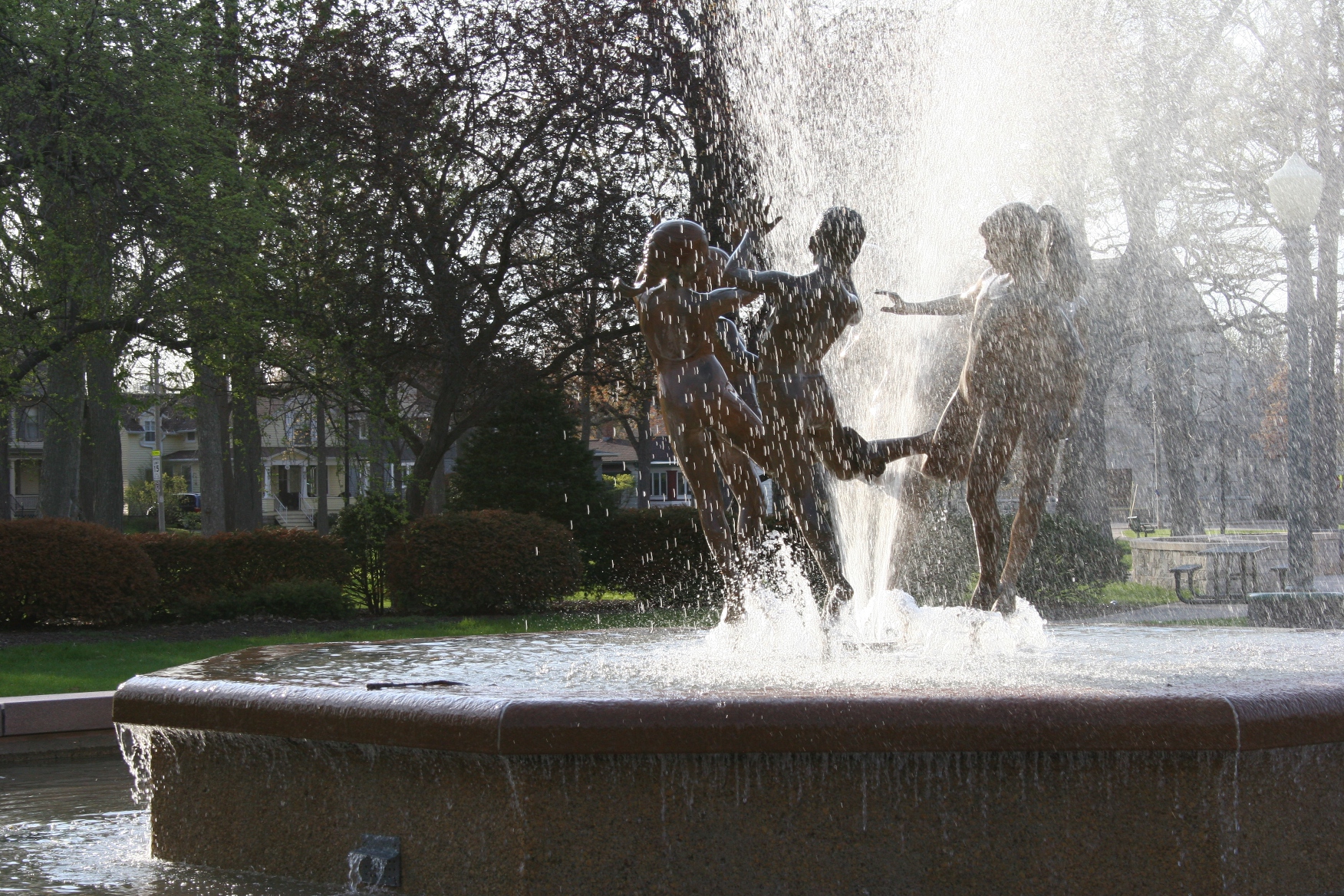
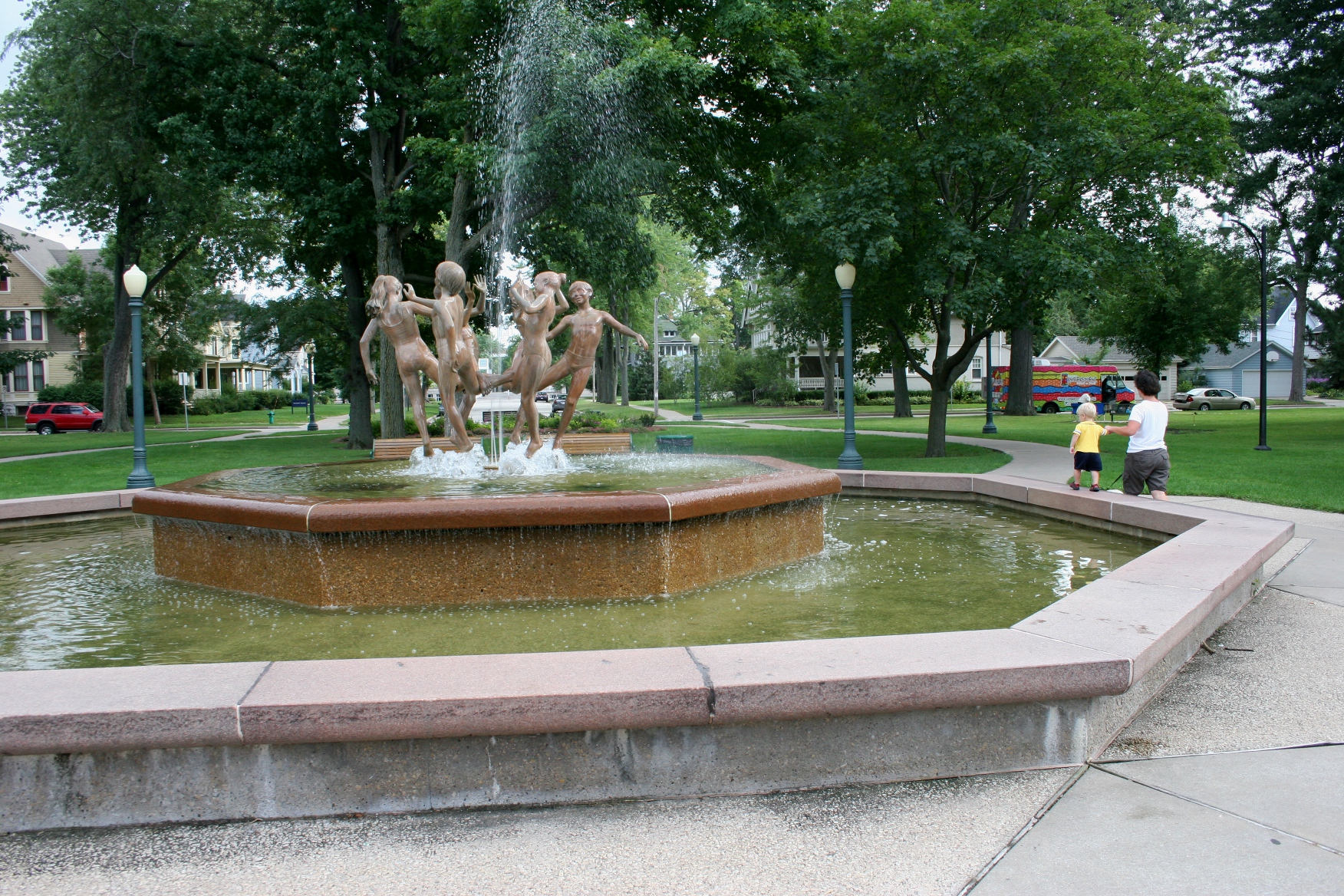
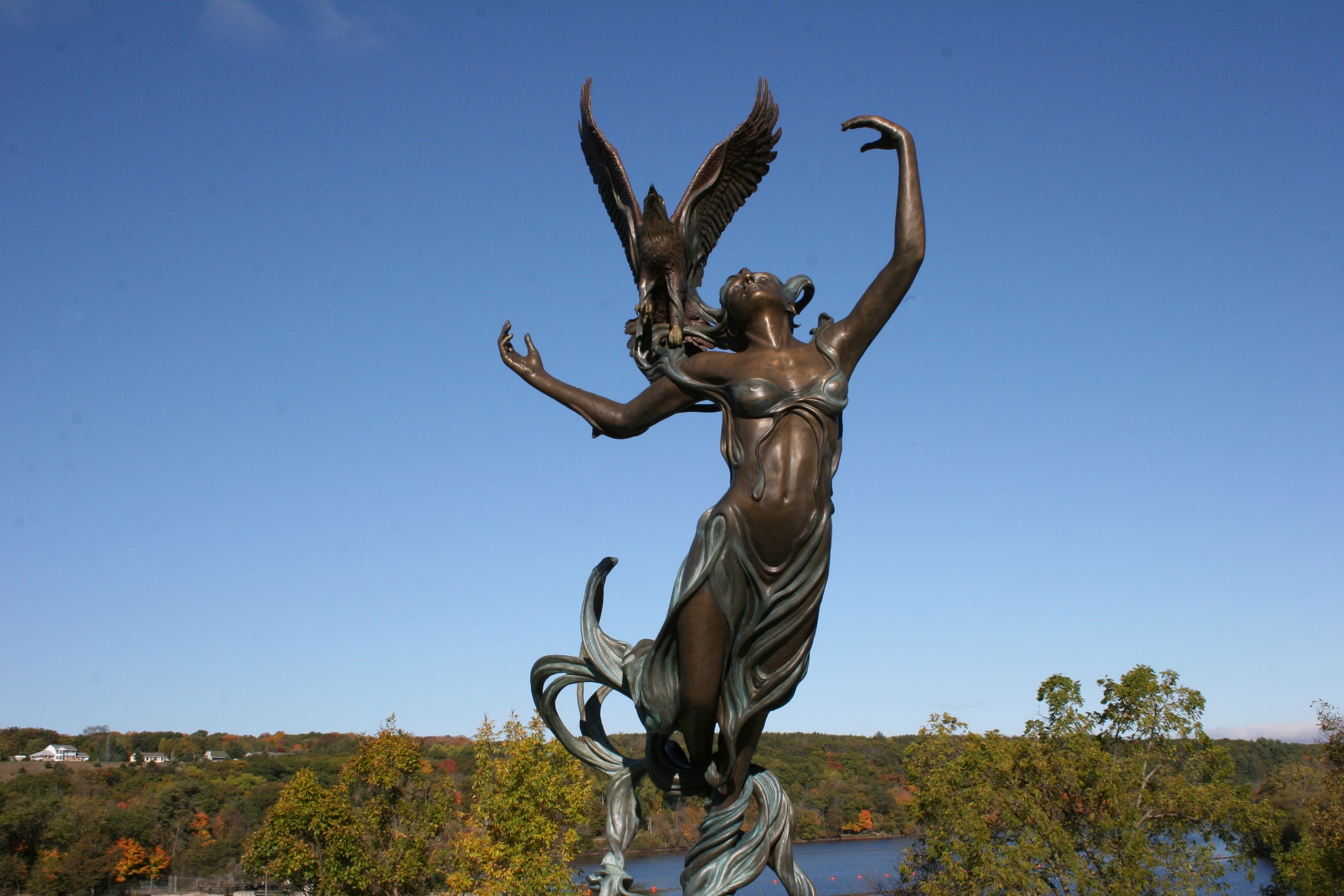
"Ring Dance" by sculptor Dallas Anderson serves as City Park's focal point. Private donations paid for the $483,000 fountain sculpture which was dedicated in August 1996.

“Ring Dance” by sculptor Dallas Anderson serves as City Park’s focal point. Private donations paid for the $483,000 fountain sculpture which was dedicated in August 1996.

It’s the setting as much as the fountain sculpture focal point that pull me into this neighborhood park next to Lawrence University on the eastern edge of downtown.

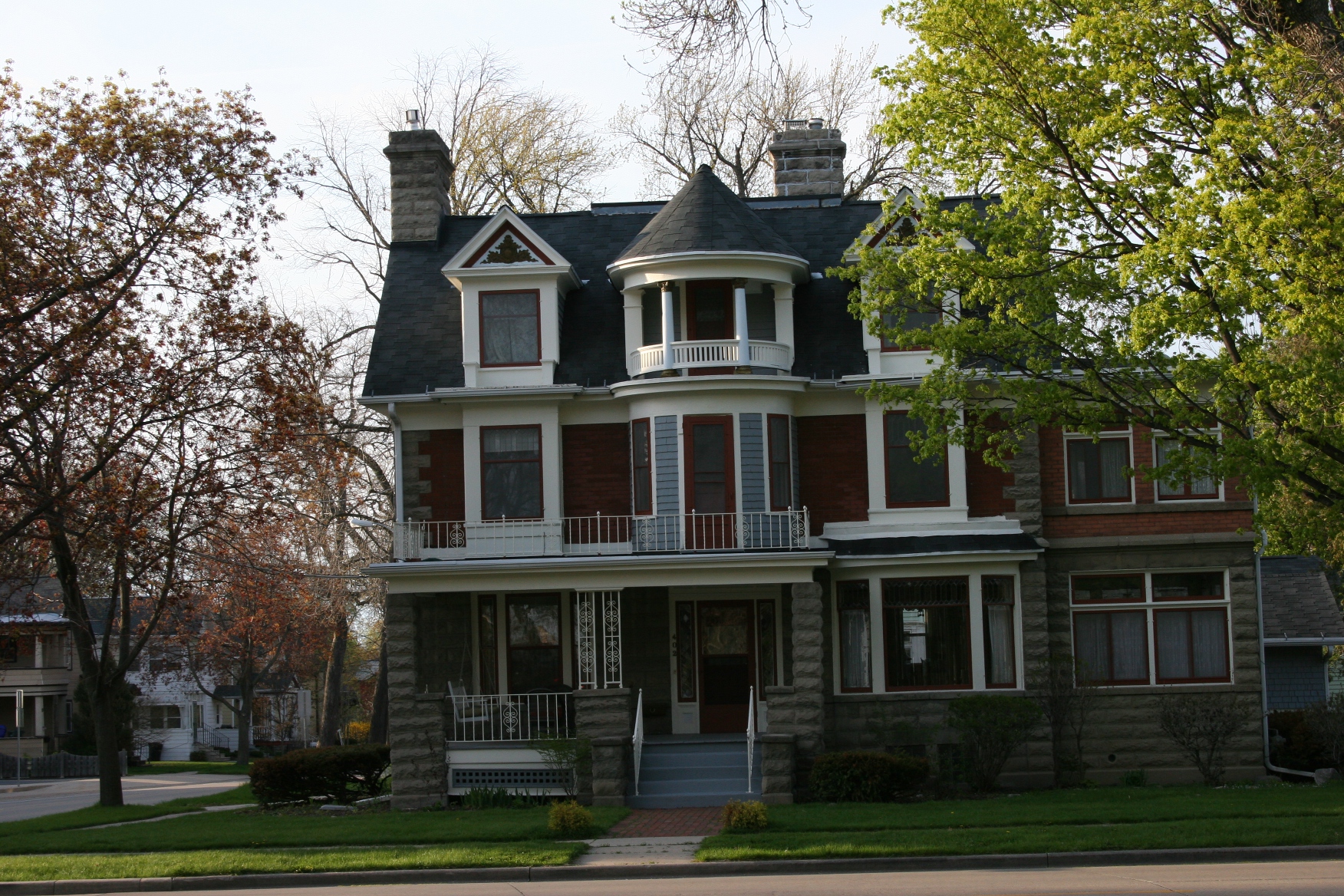
Spectacular one-of-a-kind historic homes define the neighborhood.

Spectacular one-of-a-kind historic homes define the neighborhood.

Historic, sprawling homes draw my eyes to inviting front porches and turrets and other architectural details. Homes so lovely I would move into any of them if I had the money.

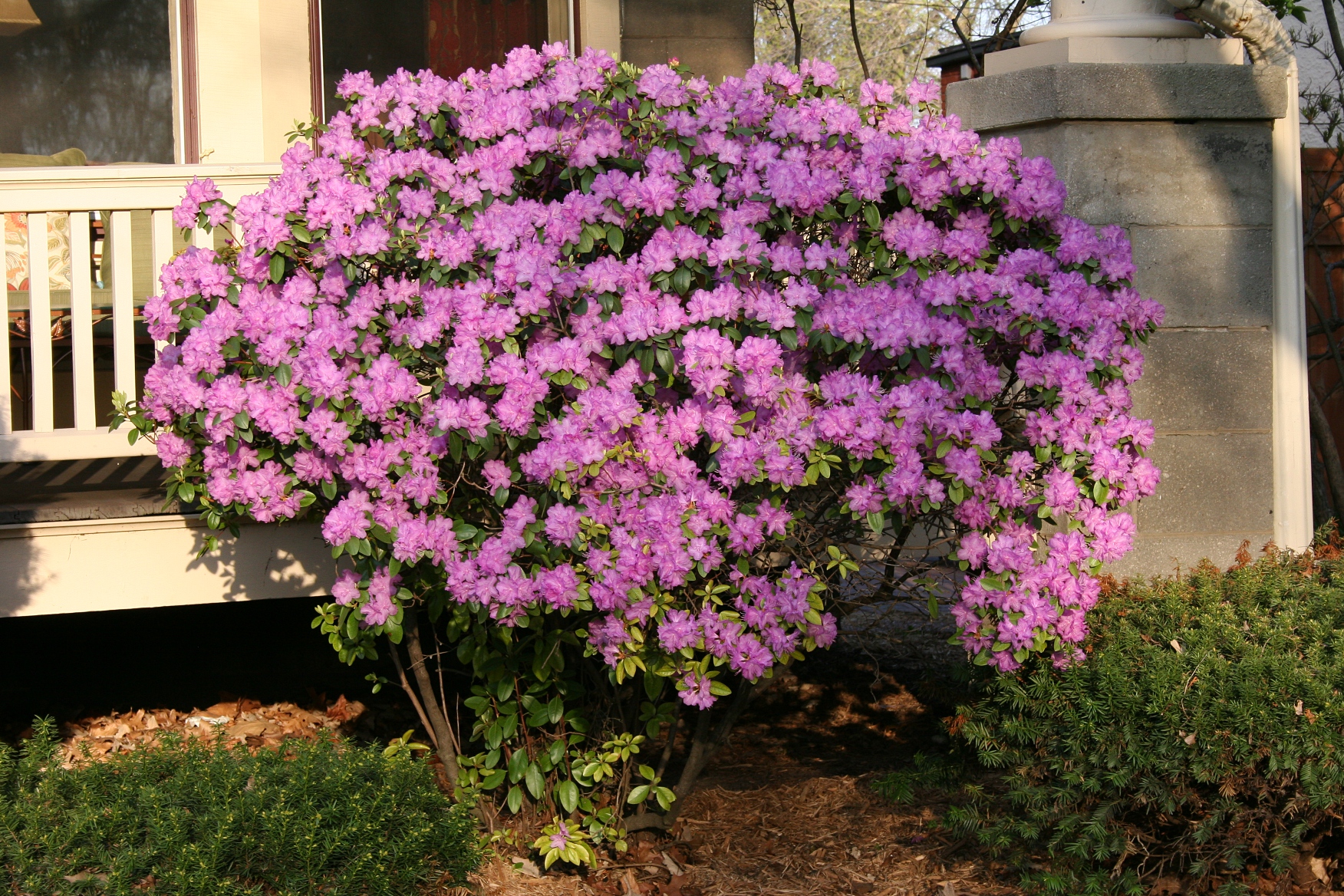
A beautiful bush flowers during my May visit to City Park.

A beautiful bush flowers during my May visit to City Park.

Rather, I covet that which I cannot own, imagine gleaming wood floors creaking with age, thick plaster walls, shining banisters, banks of windows streaming sunlight into rooms pasted with cabbage rose wallpaper.

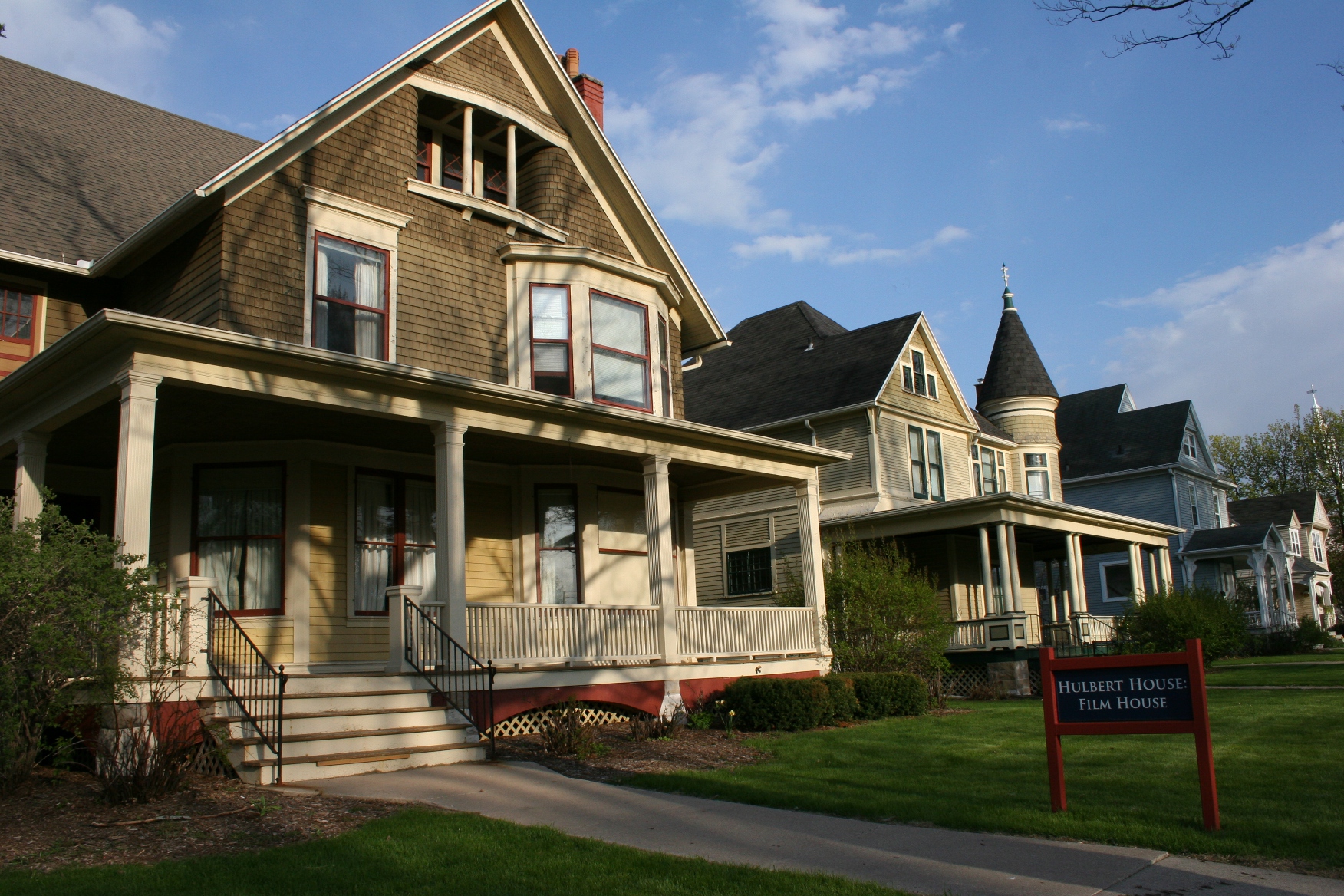
Hubert House Film House

The Hubert House Film House, right across from City Park, is part of Lawrence University.

The writer in me is writing the stories of these homes as my eyes scan exteriors while strolling the park perimeter.

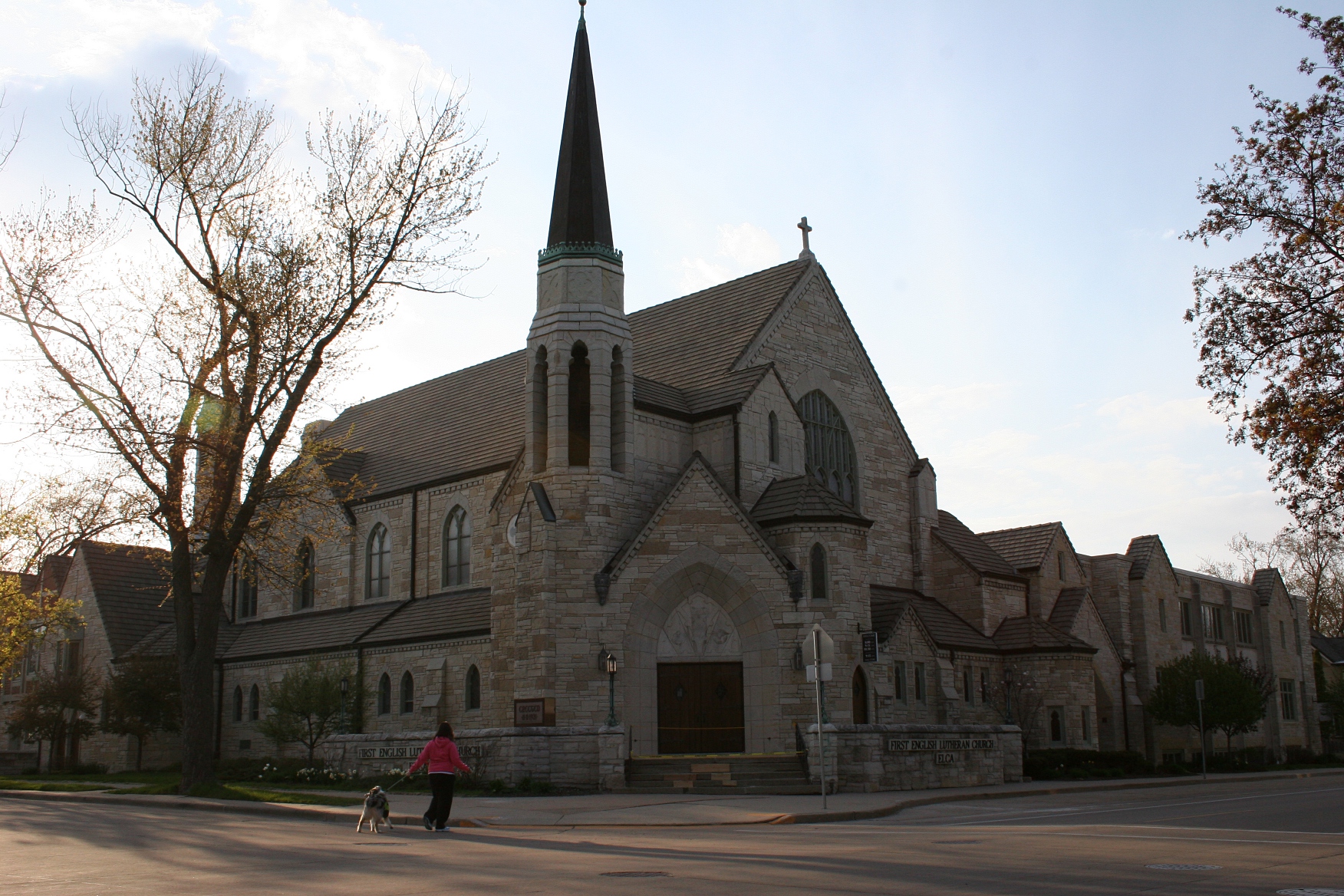
Impressive First English Lutheran Church.

Impressive First English Lutheran Church.

And then, I pause to study First English Lutheran Church, a strong stone structure that dominates a street corner. Stunning.

close-up

Moving in as close as I can without water spraying onto my camera.

Back in City Park, the lure of water leads me to the fountain, where sculpted children dance, ankles intertwined.

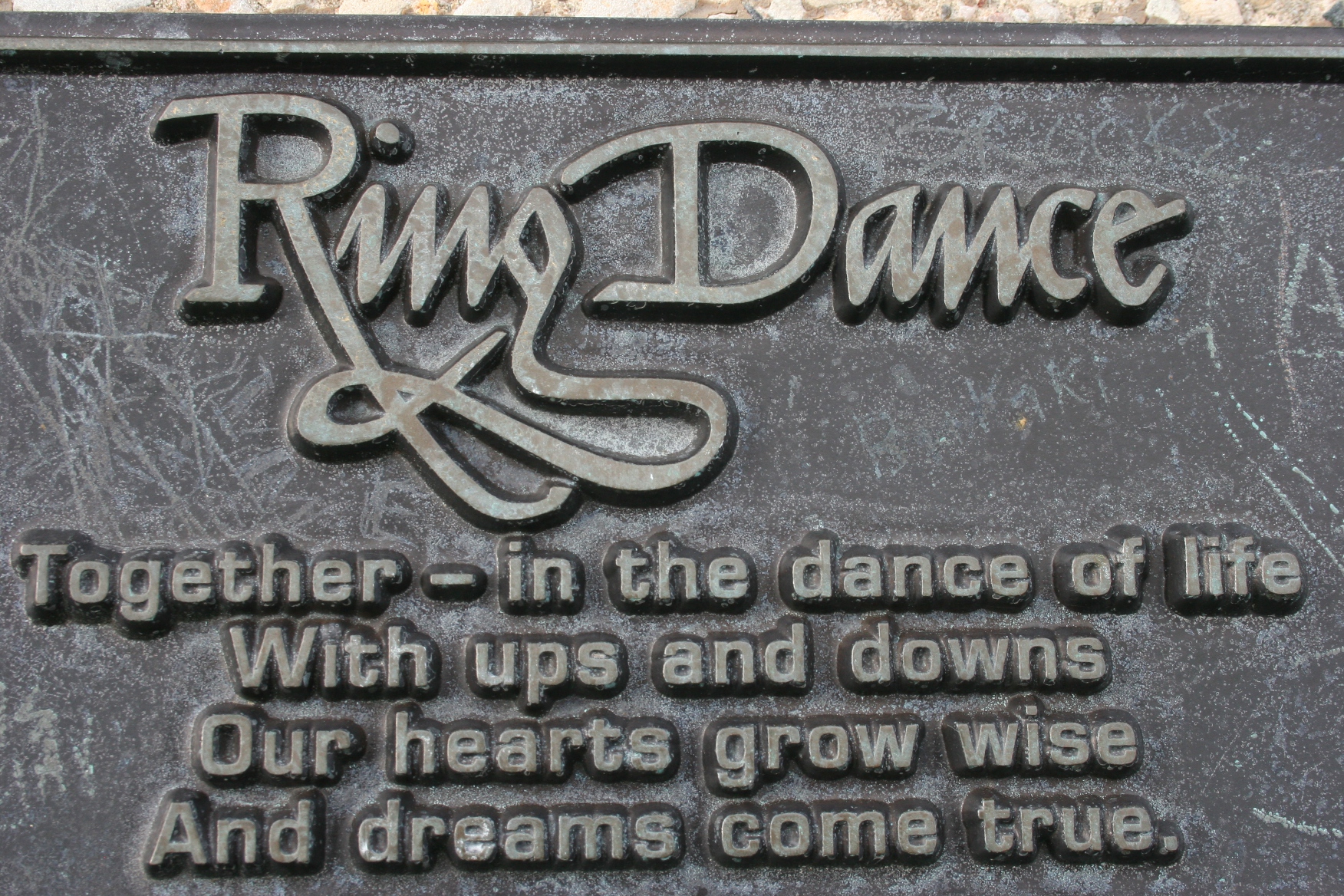
Fountain information imprinted upon a plaque.

Fountain information imprinted upon a plaque.

If I could, I would join the circle, the “Ring Dance,” washing away worries.

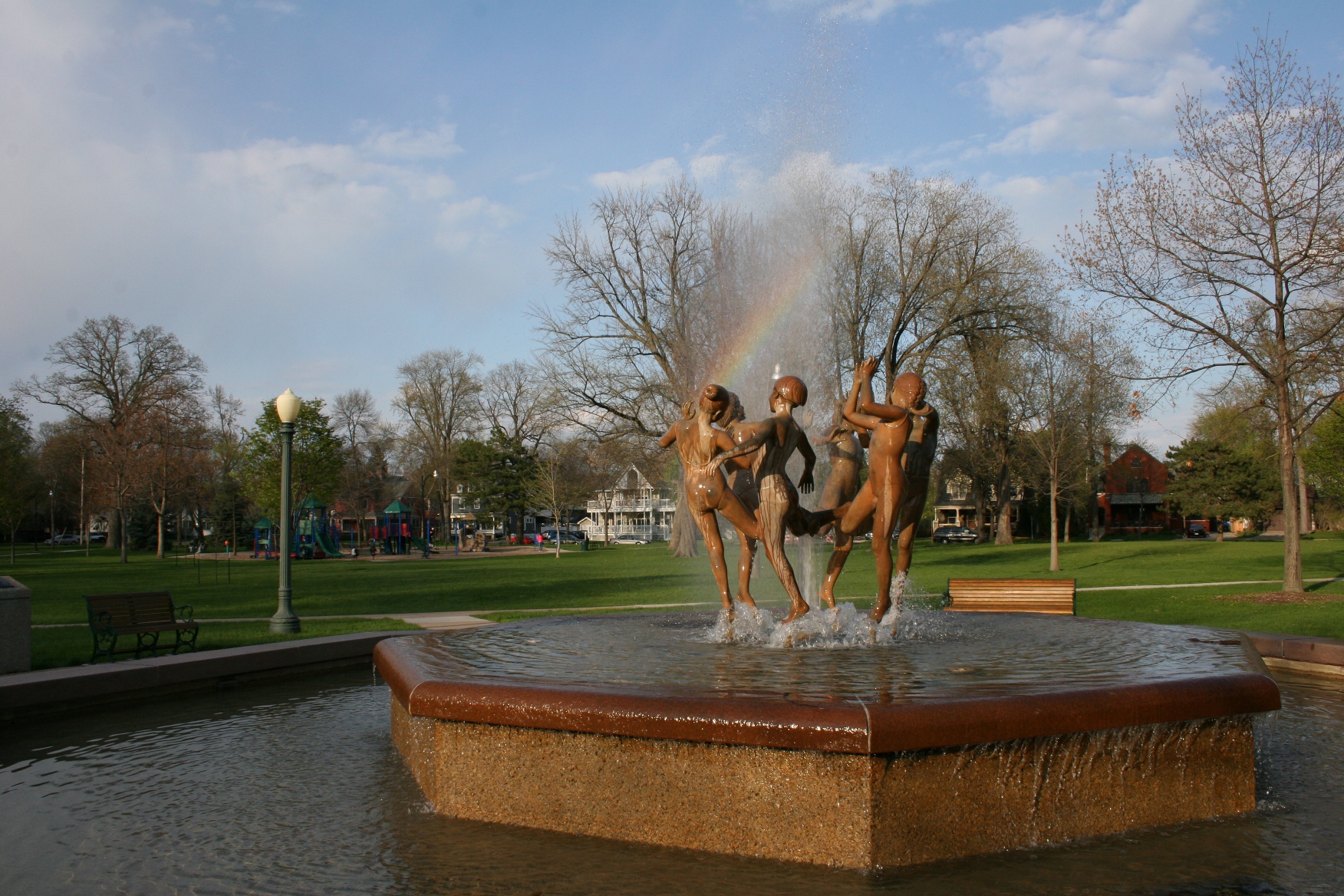
A rainbow...

A rainbow…

But on this evening, sunlight on water beaming a rainbow, I simply appreciate the moment.

Rush of bubbling water. Sunlight fading in the golden hour. Time here, with the man and daughter I love.

BONUS PHOTOS from an earlier visit in August 2011:

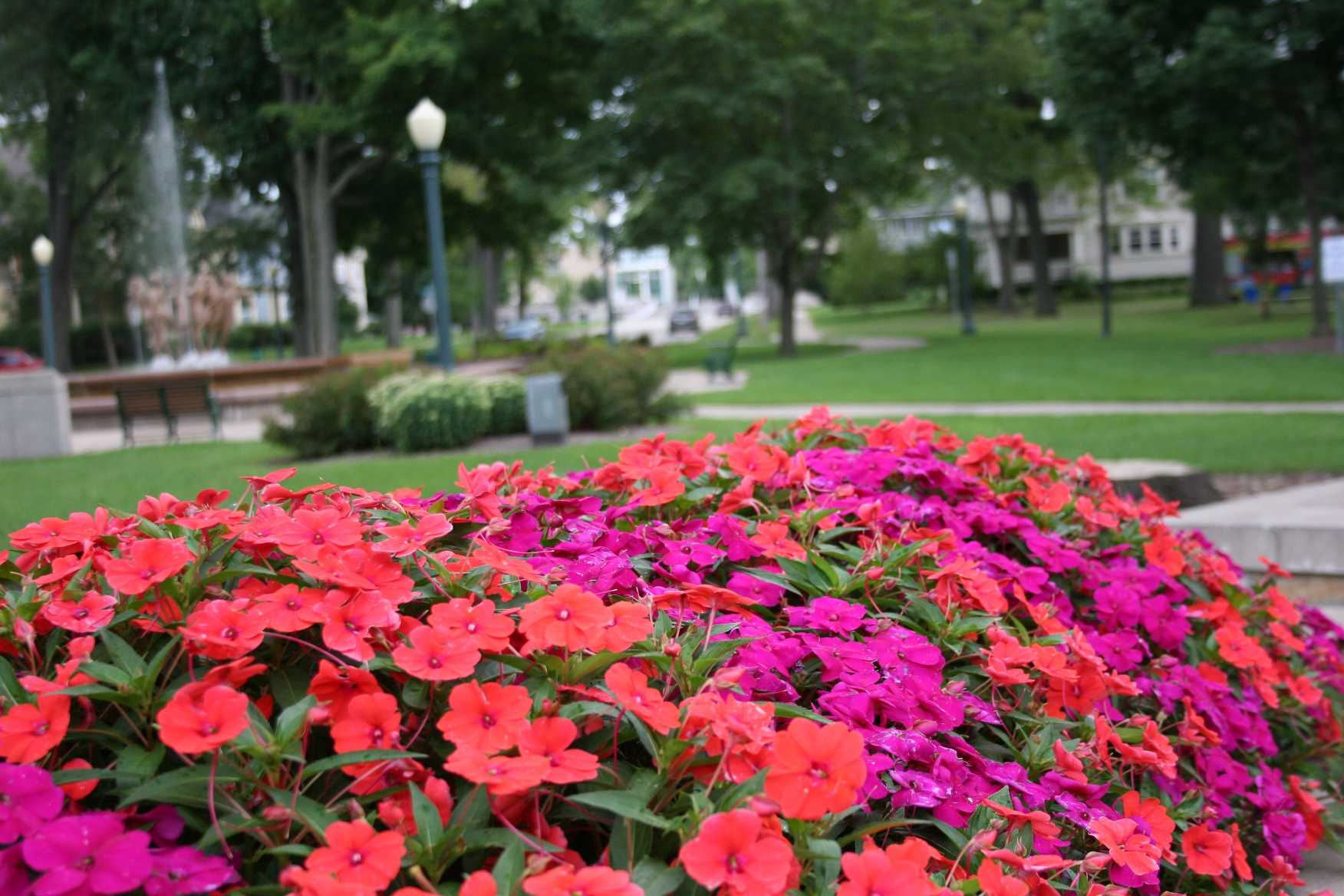
Impatiens fill planters in the park.

Impatiens fill planters in the park.

Time with grandma in the park.

Circling “Ring Dance.”

A food truck stops at City Park.

A food truck stops at City Park.

FYI: For more information about “Ring Dance” sculptor Dallas Anderson, click here.

This coming Sunday, June 22, City Park, 500 E. Franklin Street, hosts the annual Juneteenth Festival sponsored by African Heritage, Inc., and the City of Appleton. The noon to 5 p.m. free admission event celebrates freedom, unity and community. The fest  includes performances by Chicago-based Ayodele Drum & Dance, a Michael Jackson impersonator and other musicians; showing of “Stone of Hope: Black Experiences in Appleton,” a pop-up museum exhibit; games; and children’s activities. Food vendors will also be on site. For more information about Juneteenth Festival, click here.  

Click here to read a previous post from City Park. And watch for a future post on an unusual tree discovered here.

© Copyright 2014 Audrey Kletscher Helbling


Flood prep underway in Faribault June 18, 2014

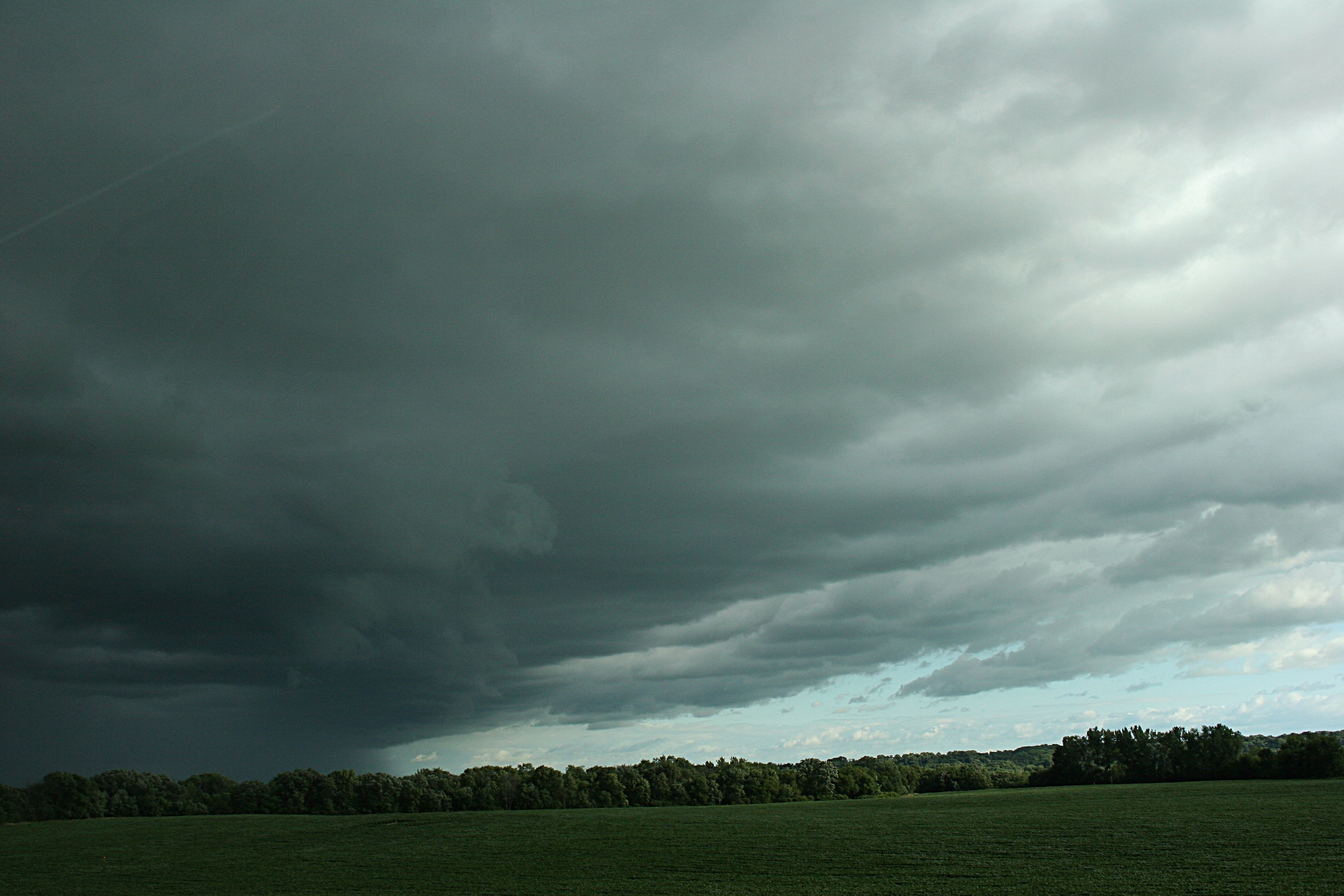
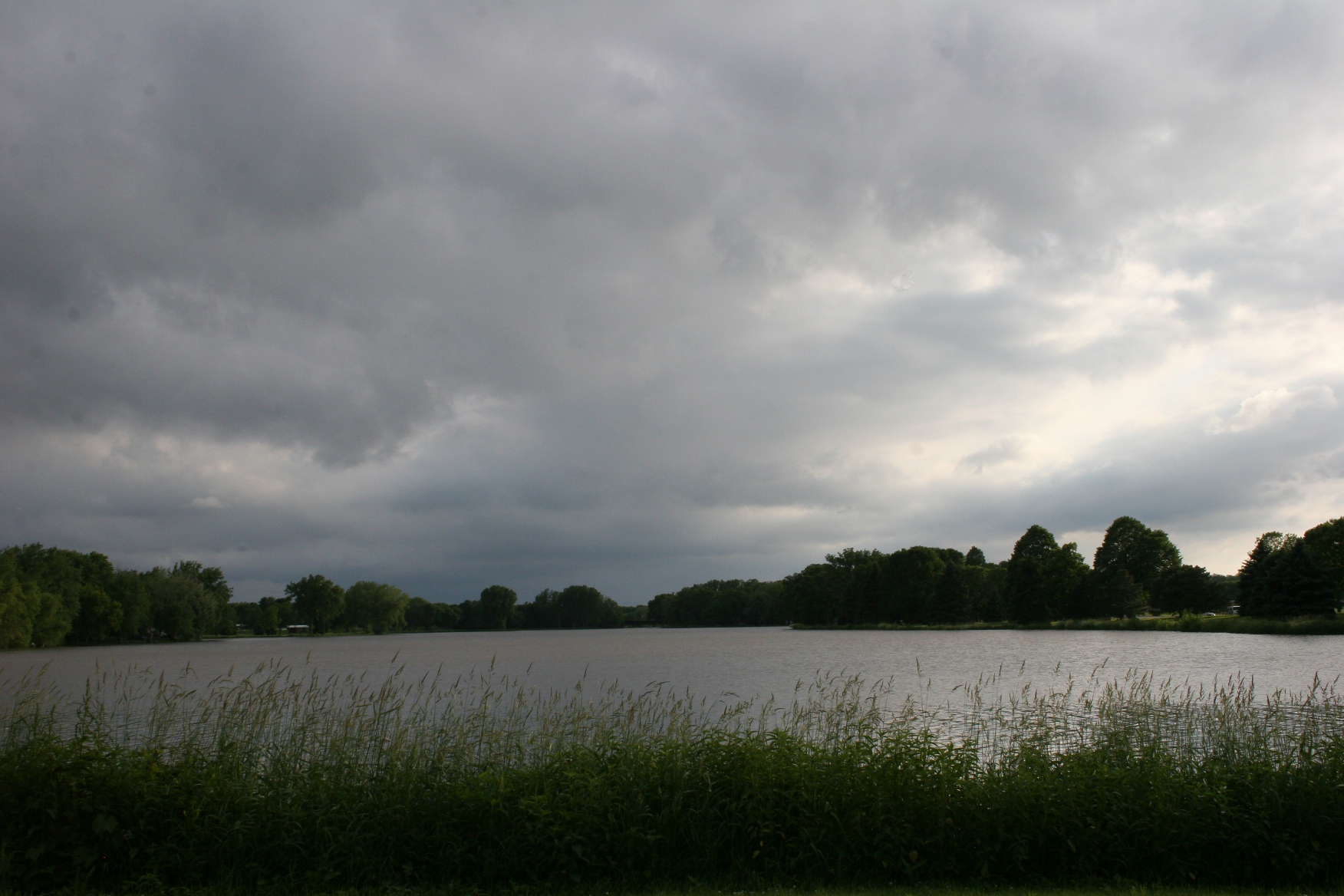
Early Thursday evening along the banks of the Cannon River in Faribault, clouds build to the west.

Early Wednesday evening along the banks of the Cannon River in Faribault, rain clouds build to the west.

FARIBAULT HOLDS ITS COLLECTIVE breath Wednesday evening as grey clouds hang heavy over this southeastern Minnesota city, once again threatening rain.

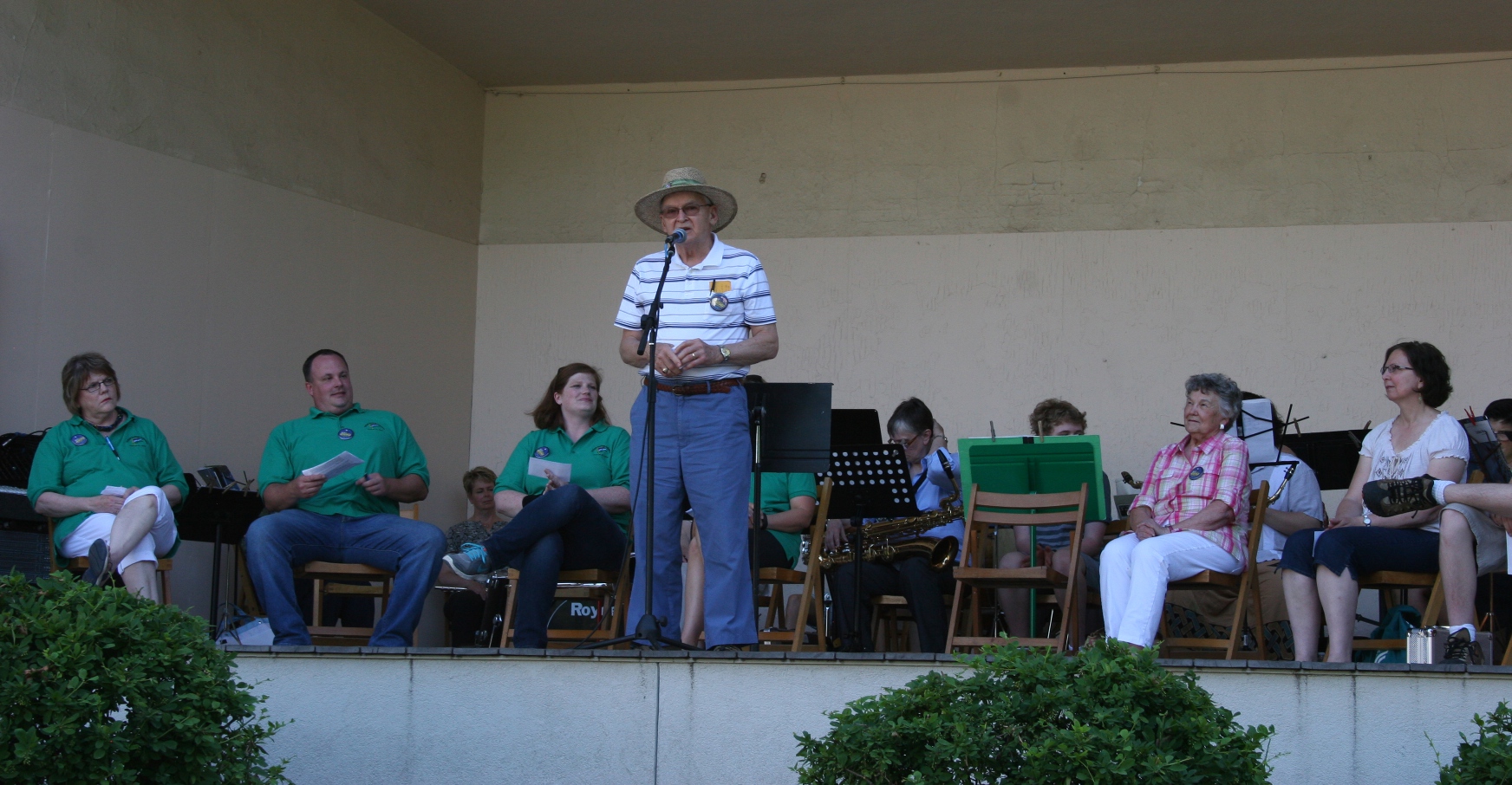
Co-honorary parade grand marshall Roy Anderson addresses the crowd at the opening of Heritage Days.

Co-honorary parade grand marshal Roy Anderson addresses the crowd at the opening of Heritage Days.

At Central Park, where the annual Heritage Days celebration kicks off with an opening ceremony, Mayor John Jasinski cuts short his welcome. He’s got more serious matters on his mind—tending to a community where a State of Emergency was declared Wednesday morning.

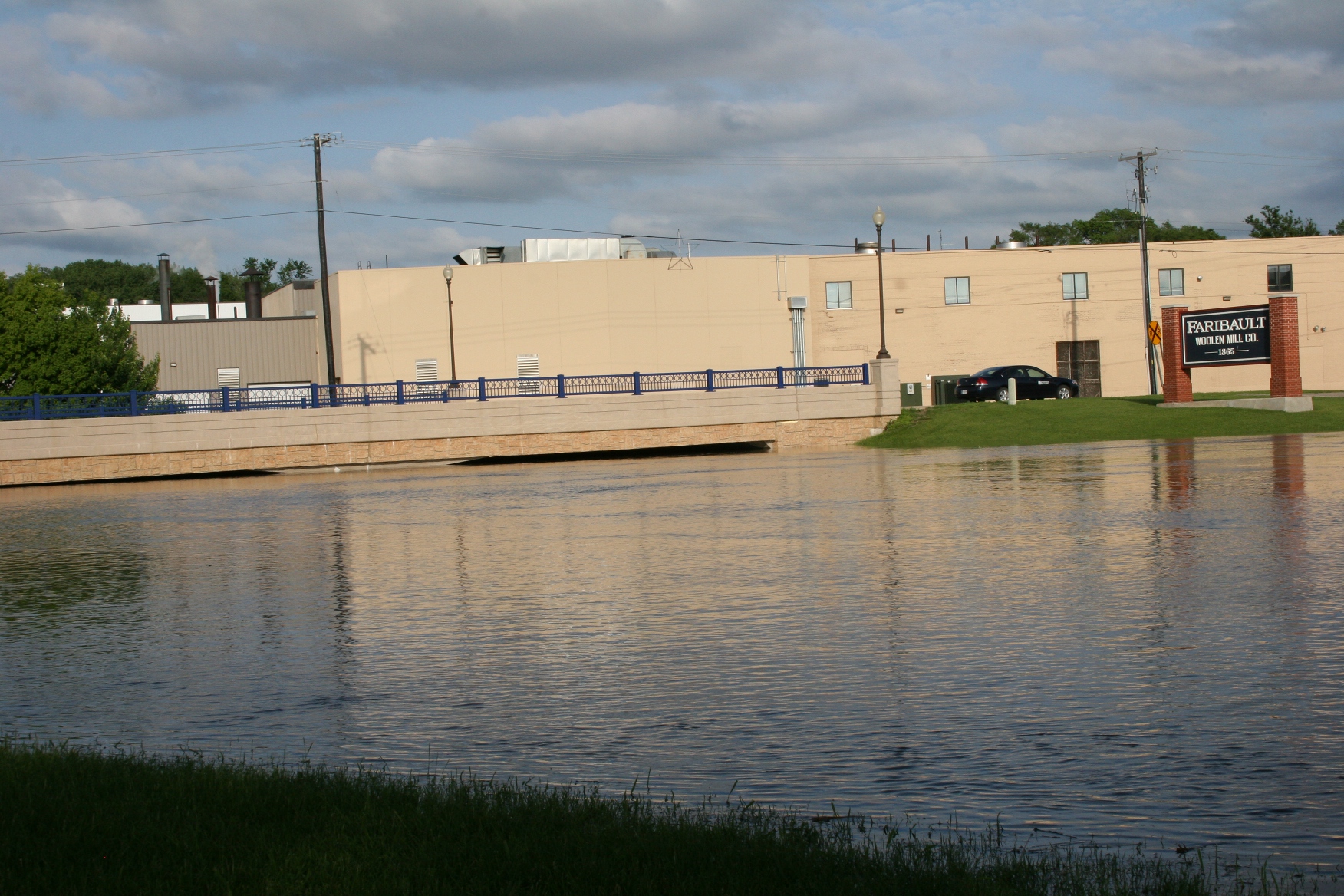
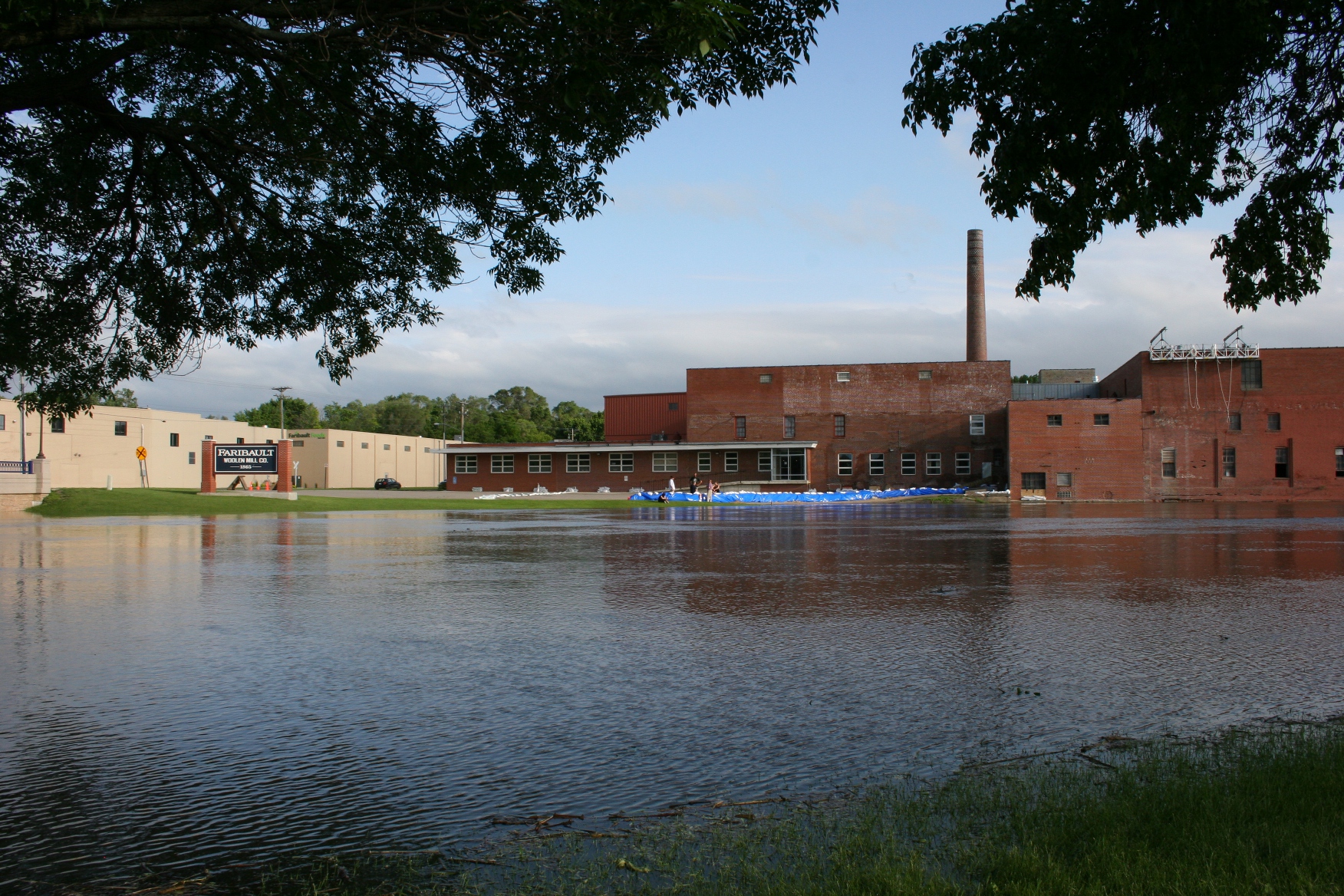
The rising Cannon River along Second Avenue nearly skims the bridge. Faribault Foods is in the background and the Faribault Woolen Mill is to the right.

The rising Cannon River along Second Avenue nearly skims the bridge. Faribault Foods is in the background and the Faribault Woolen Mill is to the right. This is near the Rice County Fairgrounds along a major roadway through the city.

The waters of the Straight and Cannon rivers, which run through town, are rising. And the city is preparing for possible flooding, with reminders of the September 2010 flash flood ever present.

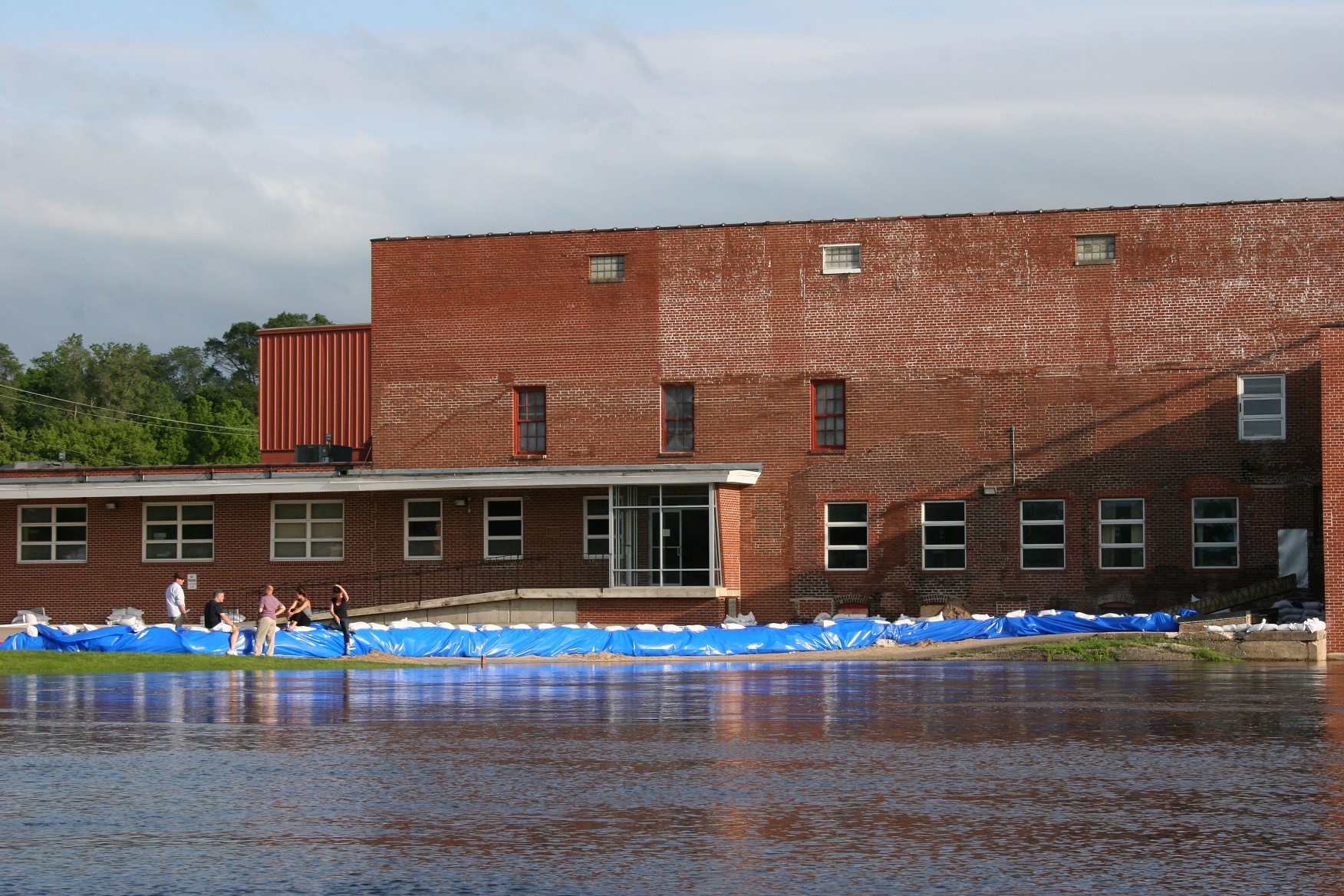
Sandbags have been placed in the mill parking lot next to the Cannon River.

Sandbags have been placed in the mill parking lot next to the Cannon River.

At the Faribault Woolen Mill, Heritage Days tours have been canceled with the focus instead on sandbagging and protecting the historic building that sits along the Cannon River.

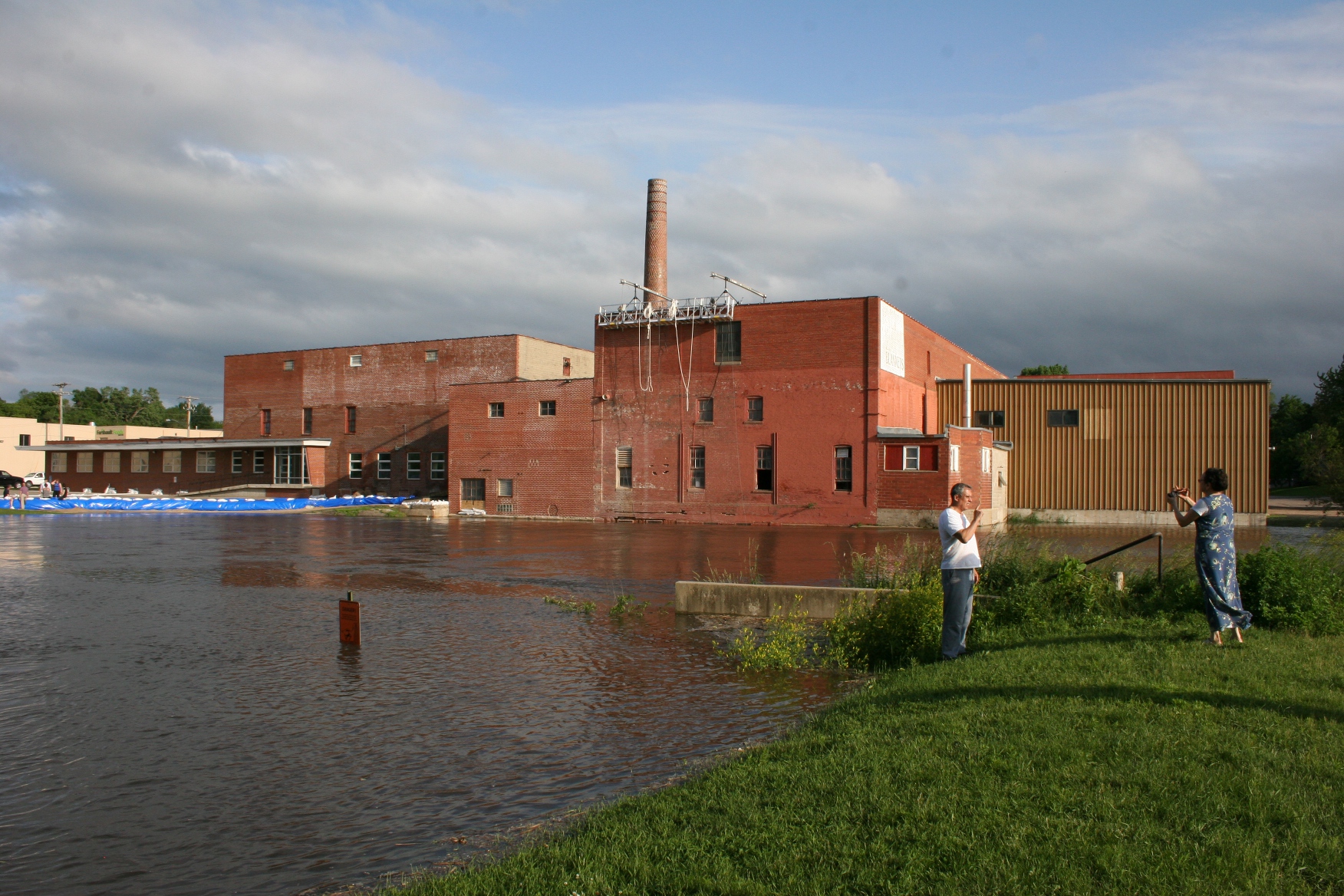
Photographing the rising Cannon River. The dam here is no longer visible.

Photographing the rising Cannon River. The dam here is no longer visible. Typically, the river does flow against the rear of the mill.

Locals flock to Father Slevin Park, next to the Cannon, next to the Woolen Mill, Wednesday evening to photograph the scene. The Cannon River dam is no longer visible.

Sandbags protect the Faribault Woolen Mill from the rising Cannon River.

Sandbags protect the Faribault Woolen Mill from the rising Cannon River.

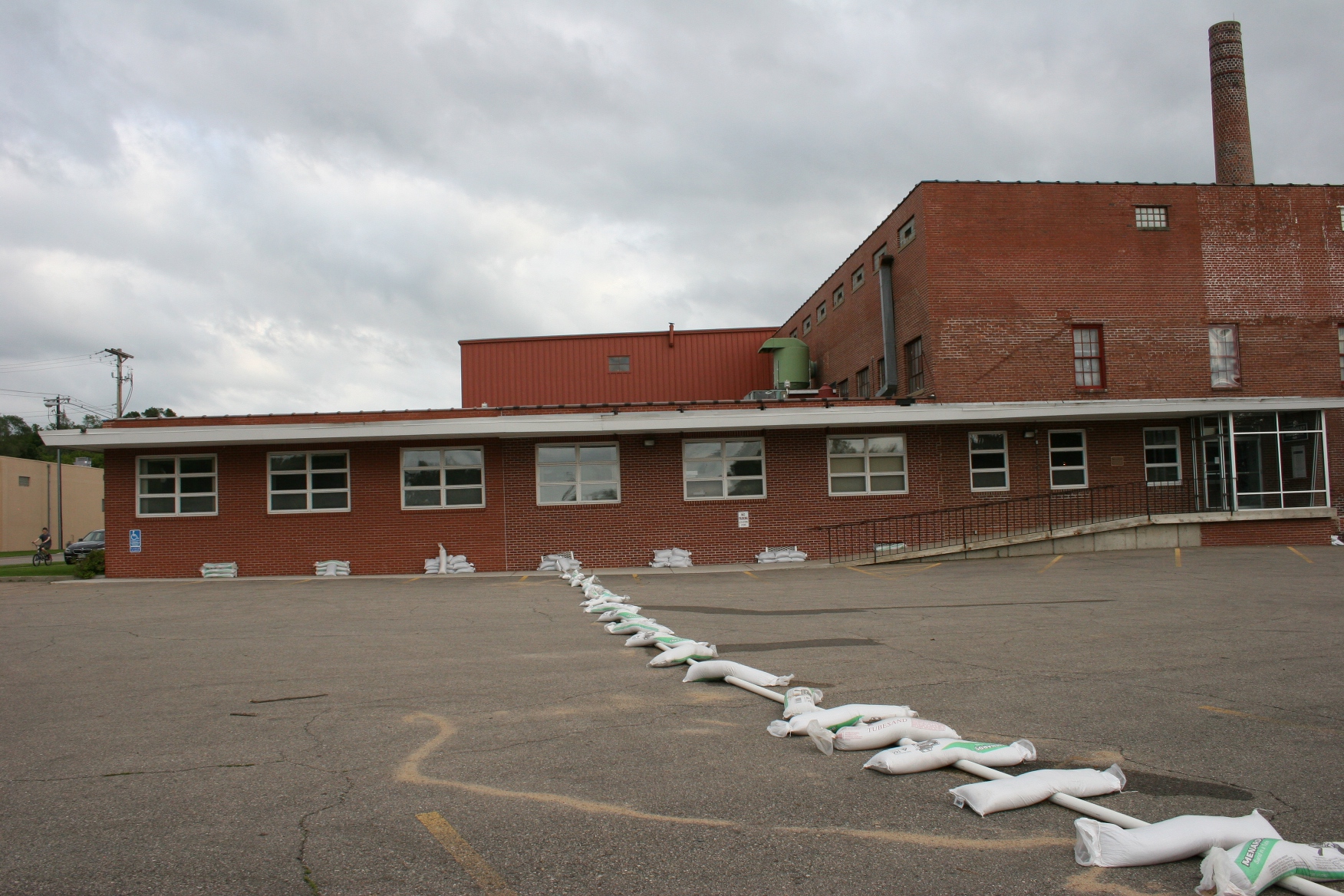
Sandbags hold down a pipe at the Faribault Woolen Mill factory and retail store.

Sandbags hold down a pipe at the Faribault Woolen Mill factory and retail store.

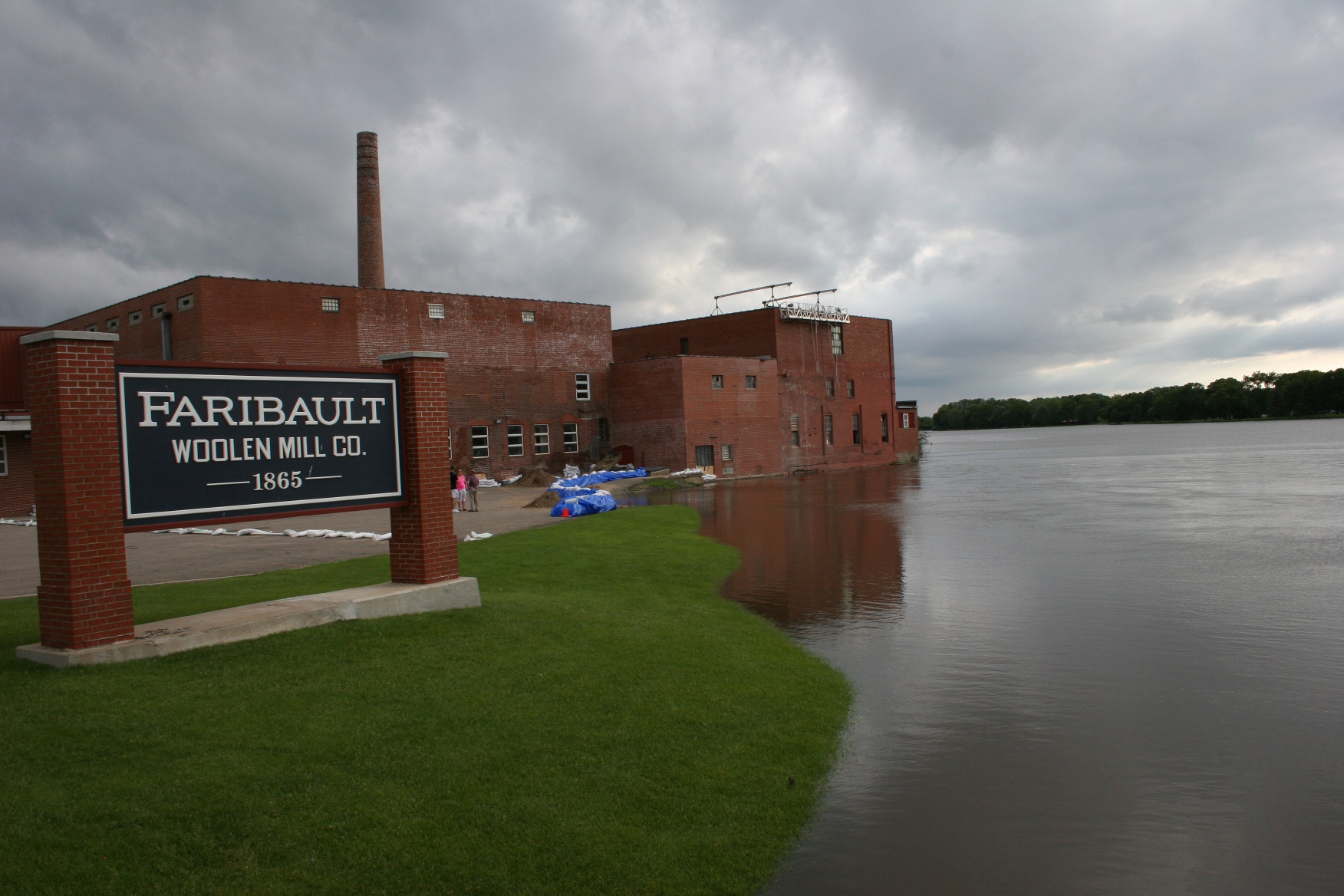
An overview of the Cannon River, looking south from Father Slevin Park to the Faribault Woolen Mill.

An overview of the Cannon River, looking southeast from Father Slevin Park to the Faribault Woolen Mill and Faribault Foods.

Several layers of sandbags rim the parking lot next to the factory store.

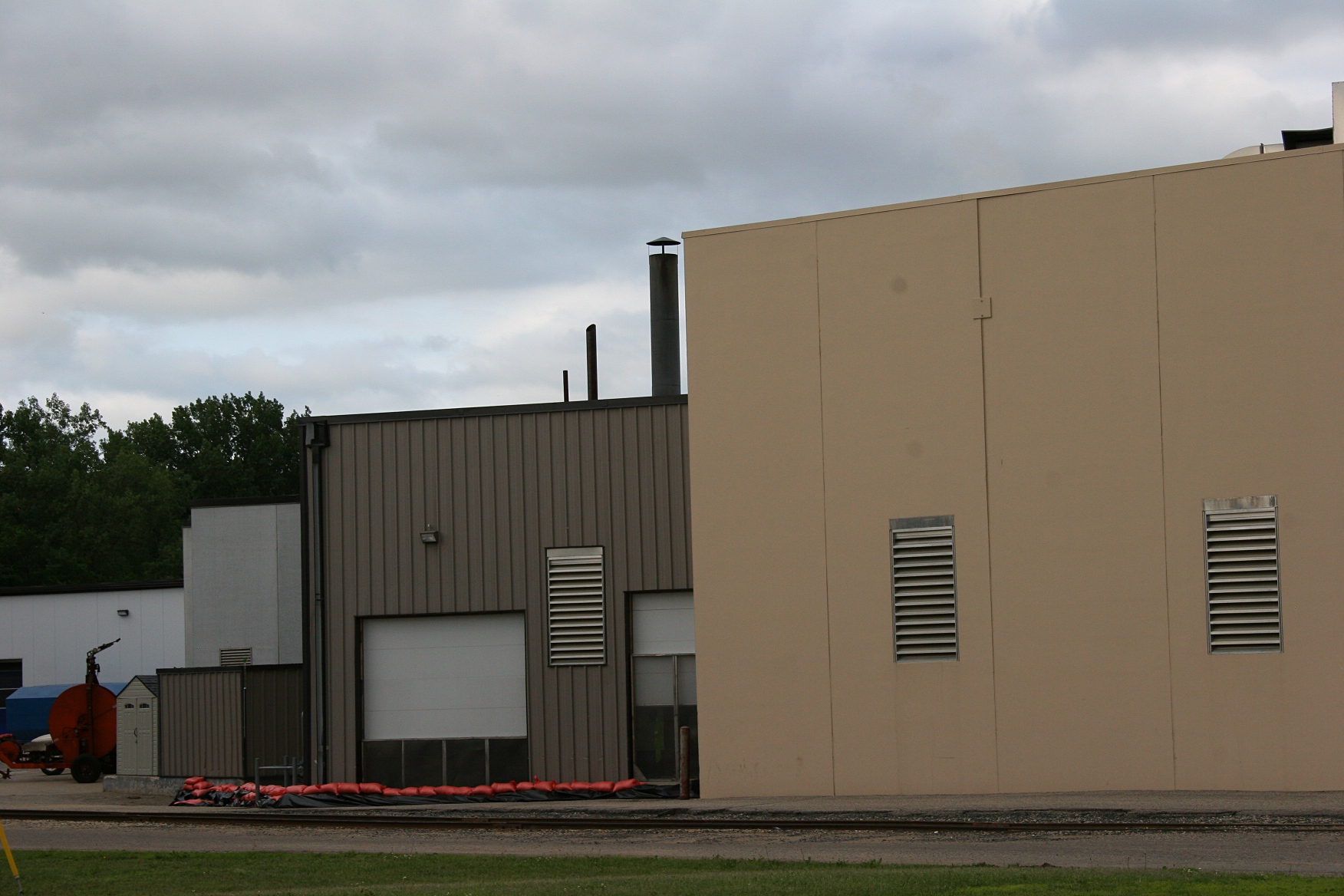
Sandbags also protect Faribault Foods.

Sandbags also protect Faribault Foods.

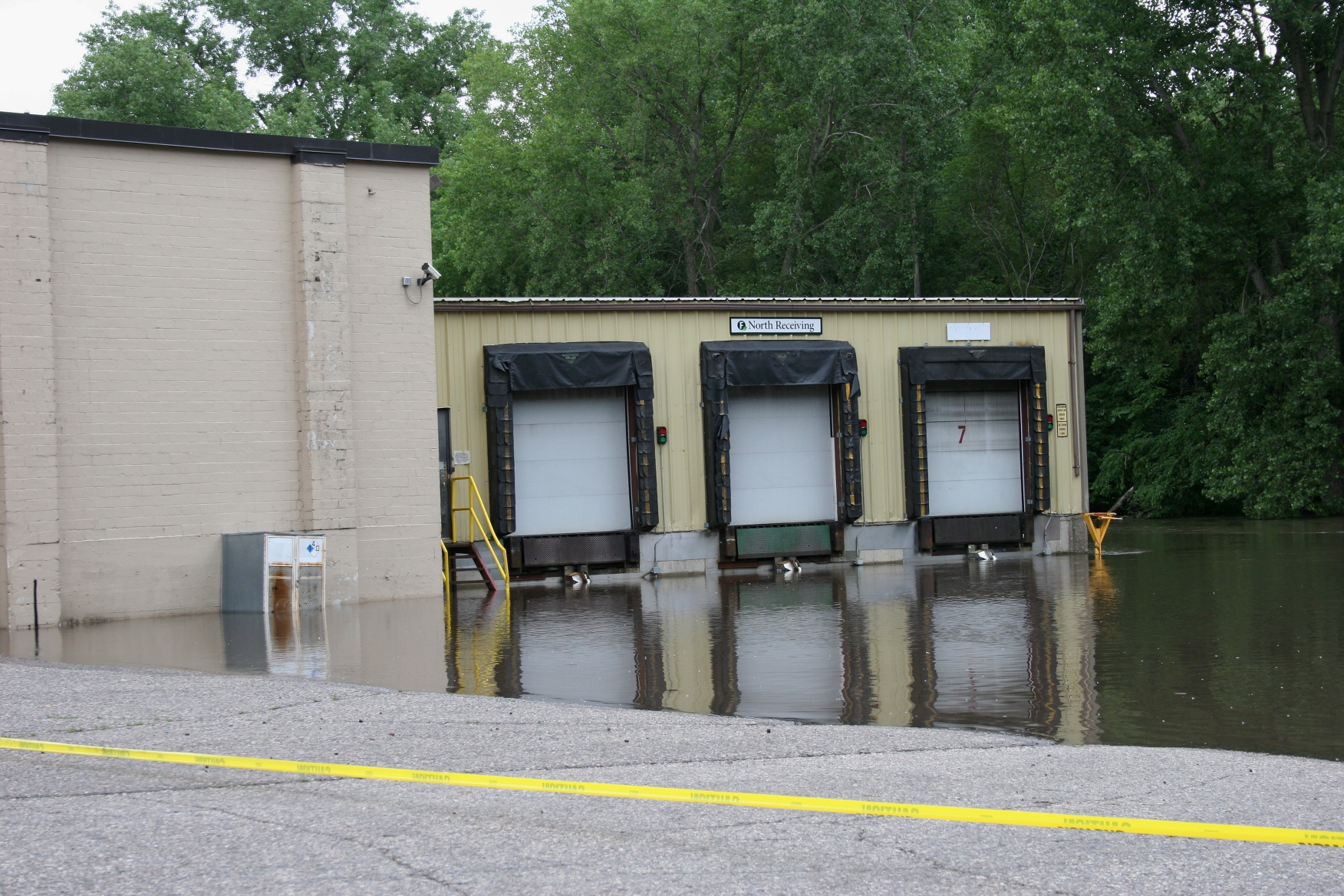
Straight River floodwaters block access to a Faribault Foods loading dock.

Straight River floodwaters block access to a Faribault Foods loading dock.

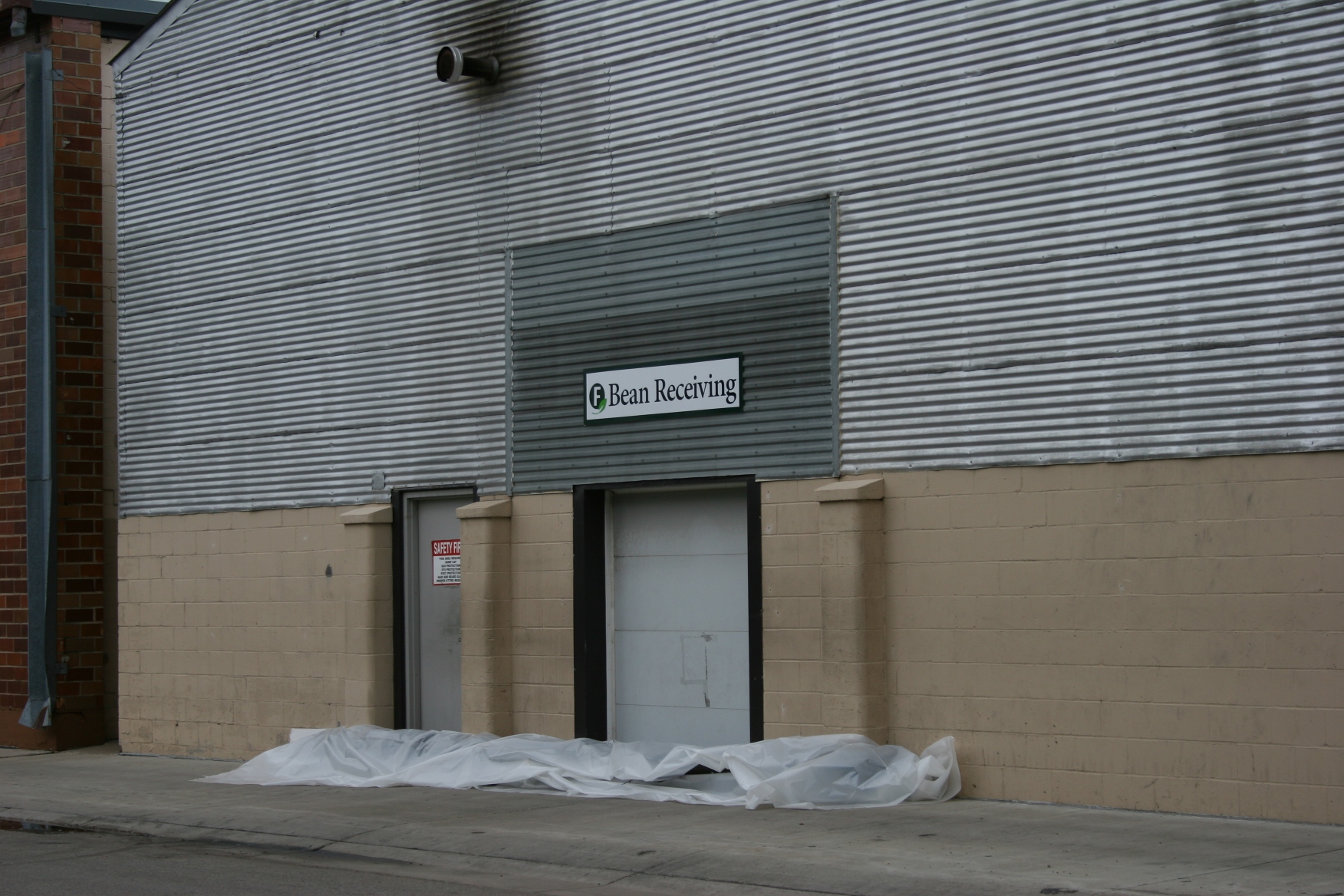
Sandbags border the door to bean receiving at Faribault Foods.

Sandbags border the door to bean receiving at Faribault Foods.

Directly across Second Avenue, sandbags likewise protect Faribault Foods. Behind the canning company, the rising Straight River has already blocked access to loading docks. Other doors are also barricaded with plastic-covered sandbags.

Working to protect the city's wastewater plant, which sits along the Straight River.

Working to protect the city’s wastewater plant, which sits along the Straight River.

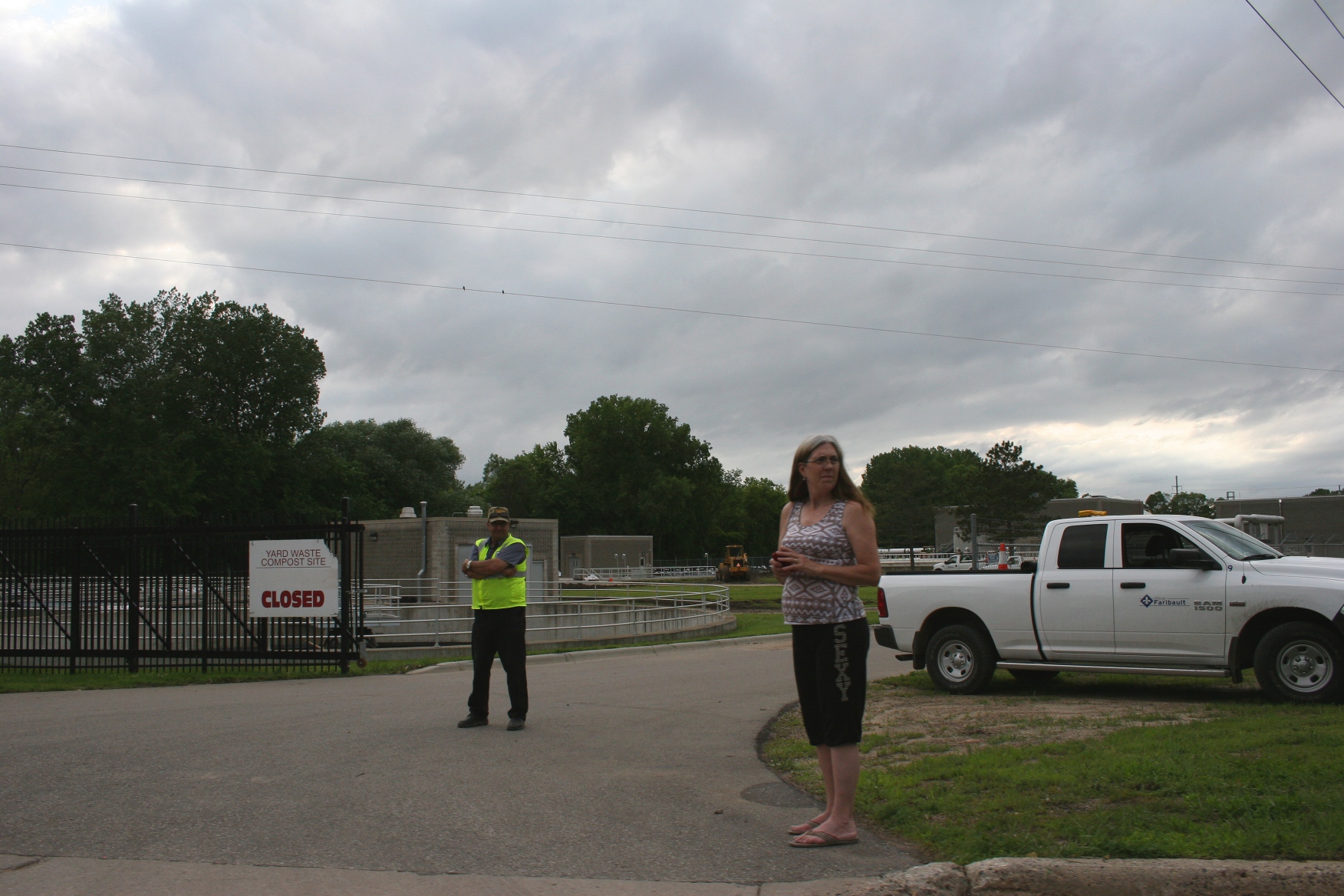
The entry to the city's treatment plant.

The entry to the city’s treatment plant.

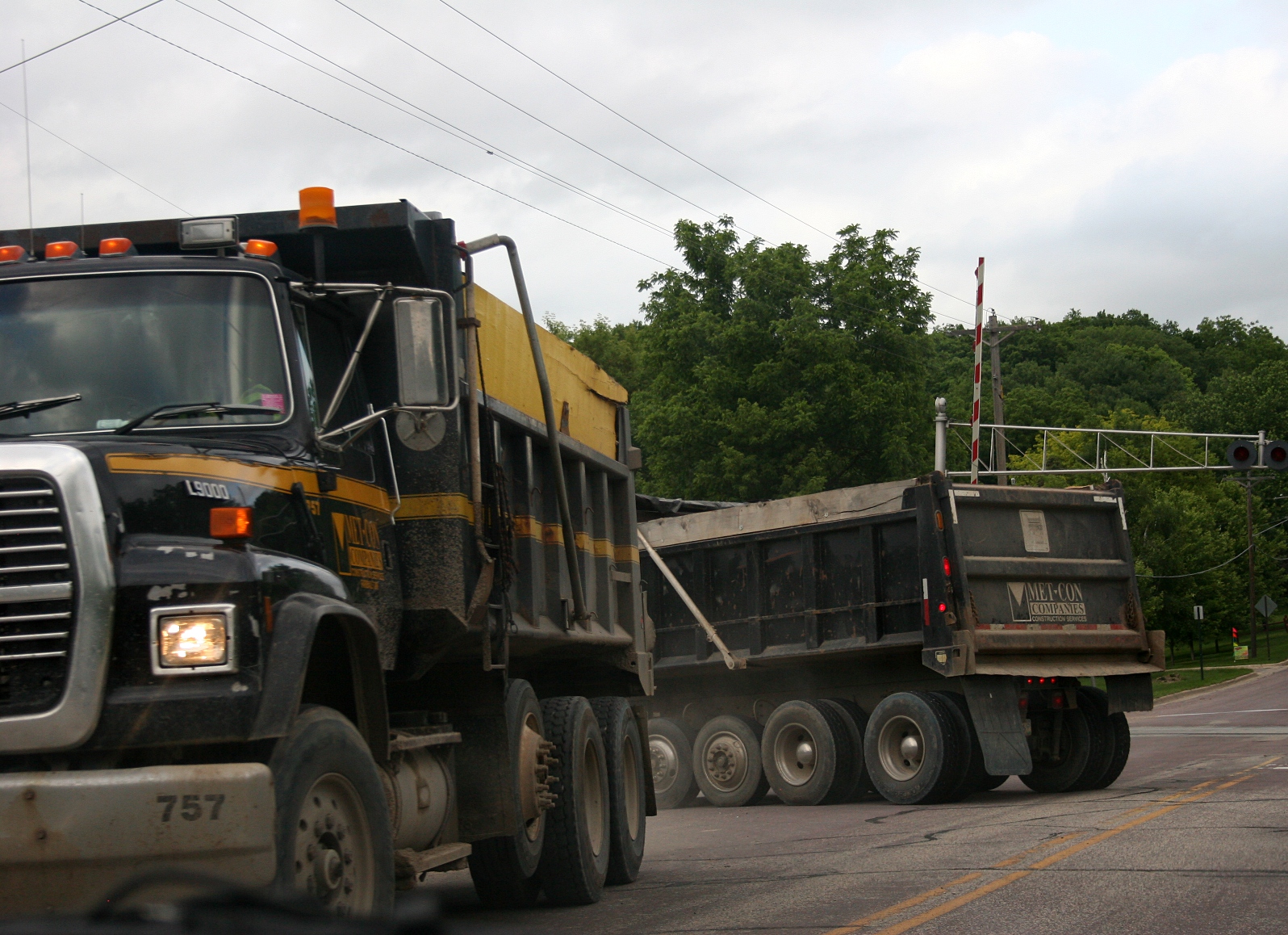
Just down the road, at the city’s wastewater treatment plant, a steady flow of dump trucks enter and exit the facility, presumably delivering sand. Sandbags are already in place here.

Sandbag central.

Sandbag central.

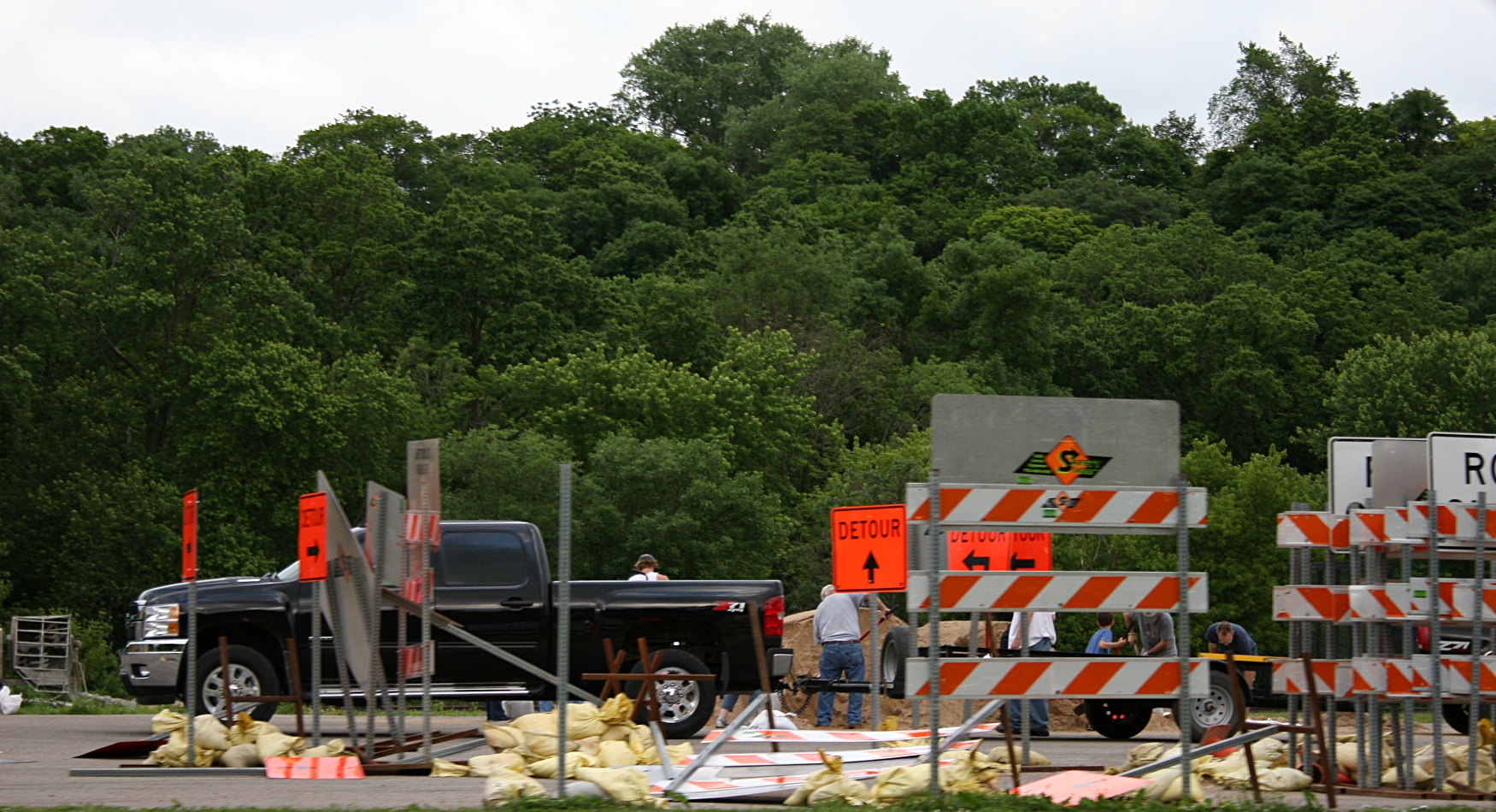
Near the Faribault American Legion, just a block off the historic downtown, workers shovel sand into bags at the city’s sandbag central. Road closed signs are at the ready.

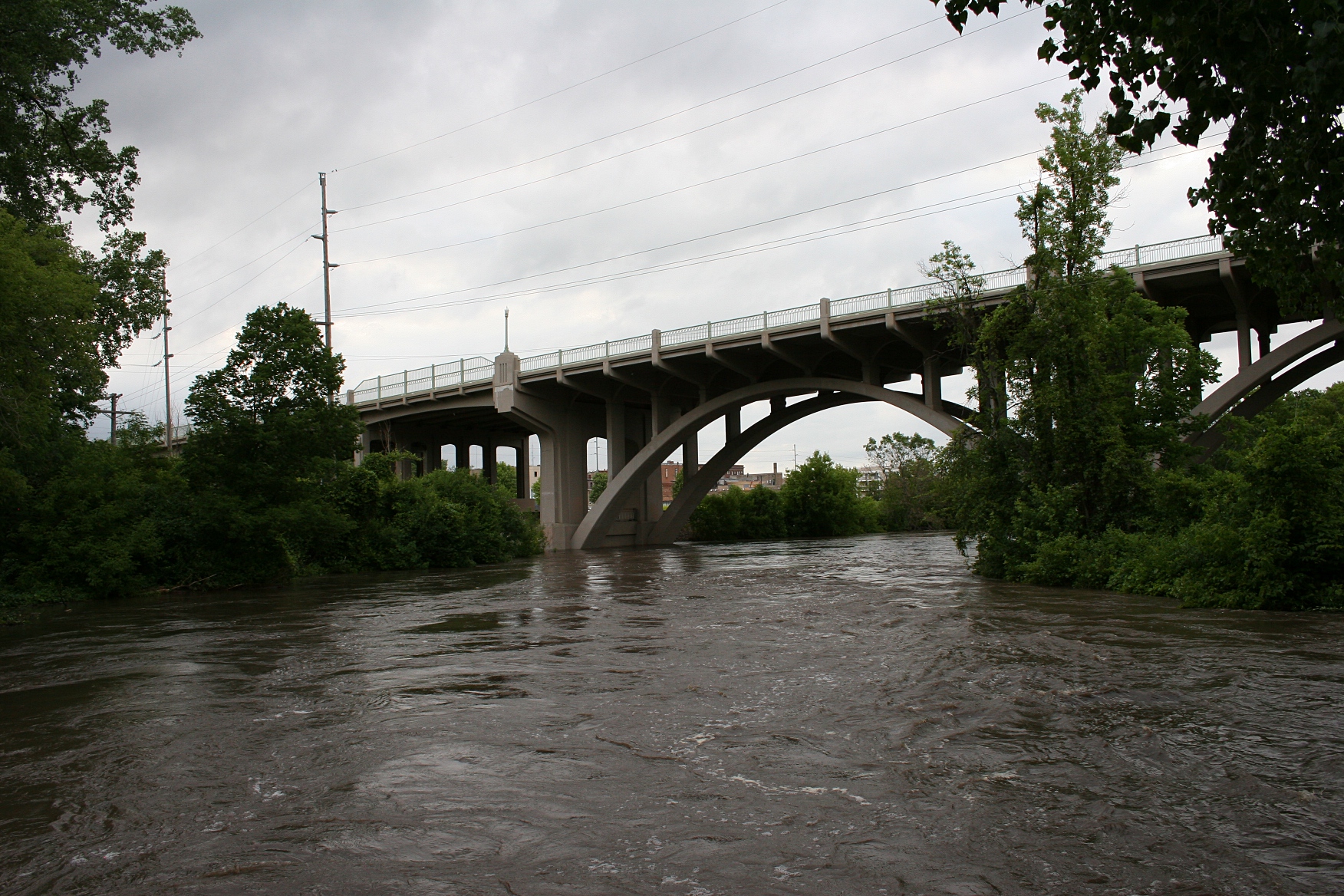
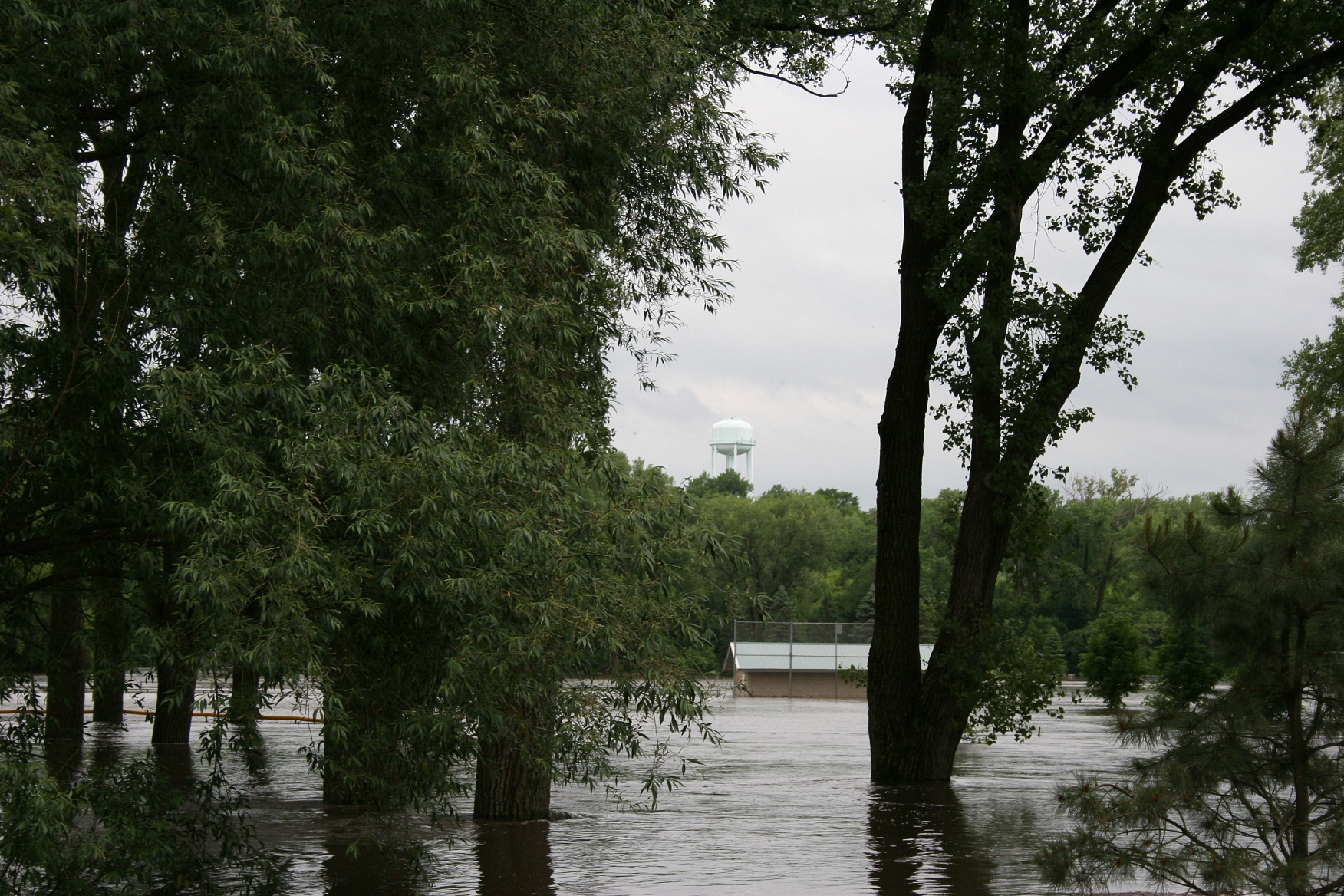
The Straight River has flooded Teepee Tonka Park and churns here toward the Highway 60 viaduct connecting the east and west sides of Faribault.

The Straight River has flooded Teepee Tonka Park and churns here toward the Highway 60 viaduct connecting the east and west sides of Faribault.

Flooded Teepee Tonka Park.

Flooded Teepee Tonka Park.

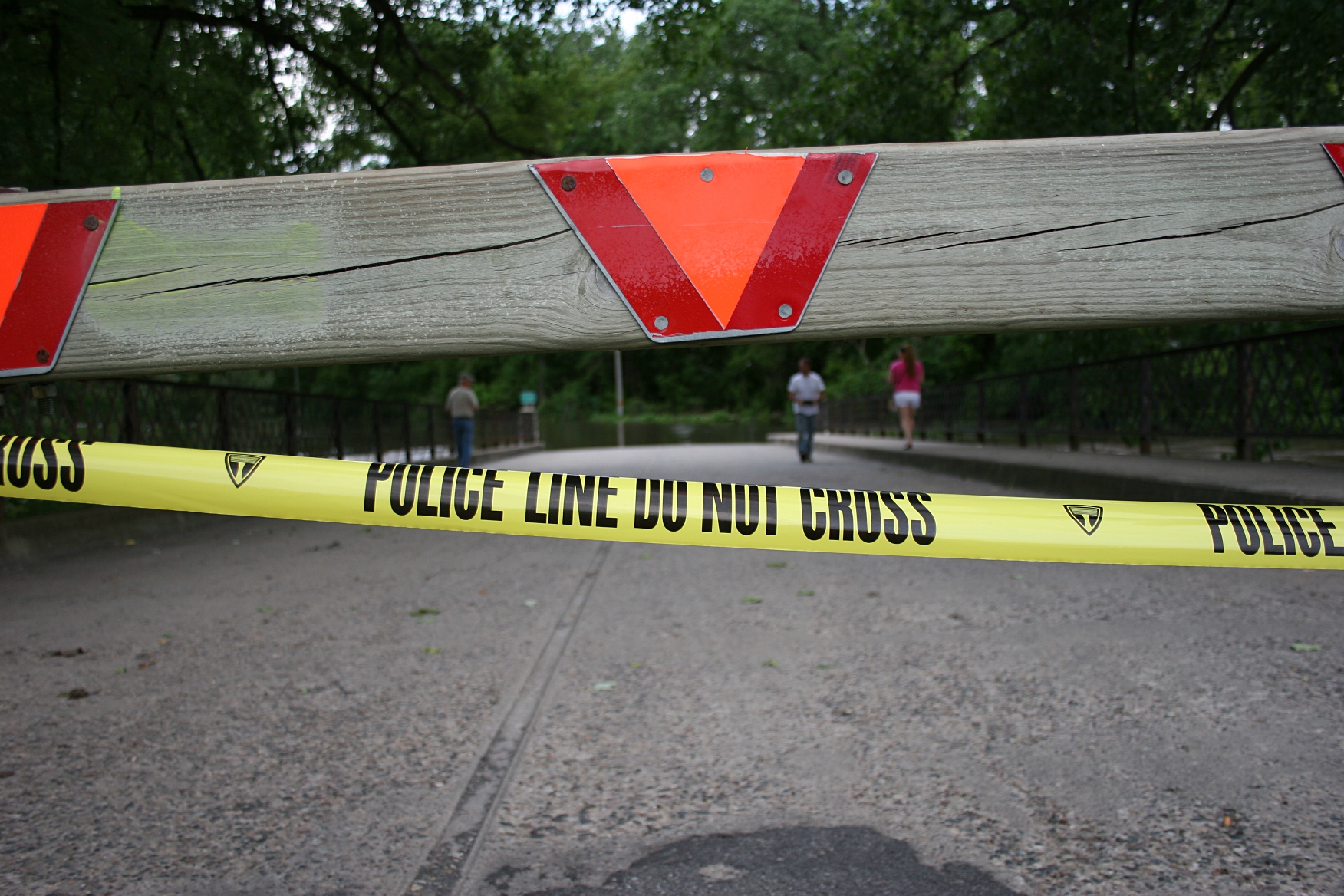
Across the Straight River in Teepee Tonka Park, the bridge into the park is blocked and the river rushes in a frenzy.

The bridge into Teepee Tonka Park is partially flooded and thus closed.

The bridge into Teepee Tonka Park is partially flooded and thus closed.

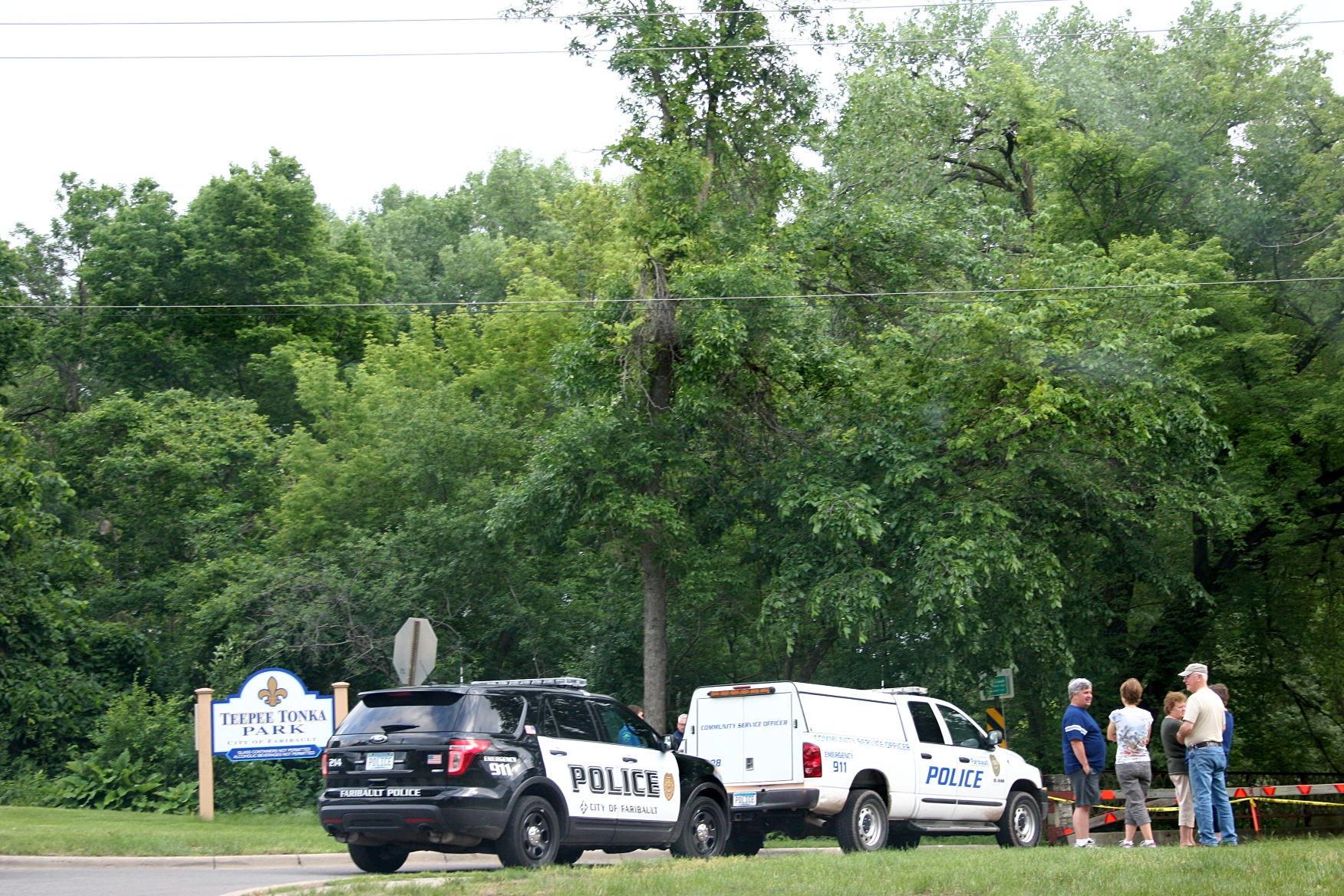
Onlookers step across police tape to photograph the scene—until the cops cruise up and advise that “the tape is there for a reason.” They don’t want anyone tumbling into the muddy, raging waters.

Police arrive to protect the curious public at Teepee Tonka Park.

Police arrive to check out the situation at Teepee Tonka Park.

Darkness falls and Faribault waits.

© Copyright 2014 Audrey Kletscher Helbling
 

Too much rain & too little June 17, 2014

Filed under: Uncategorized — Audrey Kletscher Helbling @ 6:00 AM
Tags: , , , , , ,

RAIN, RAIN, GO AWAY, come again another day.

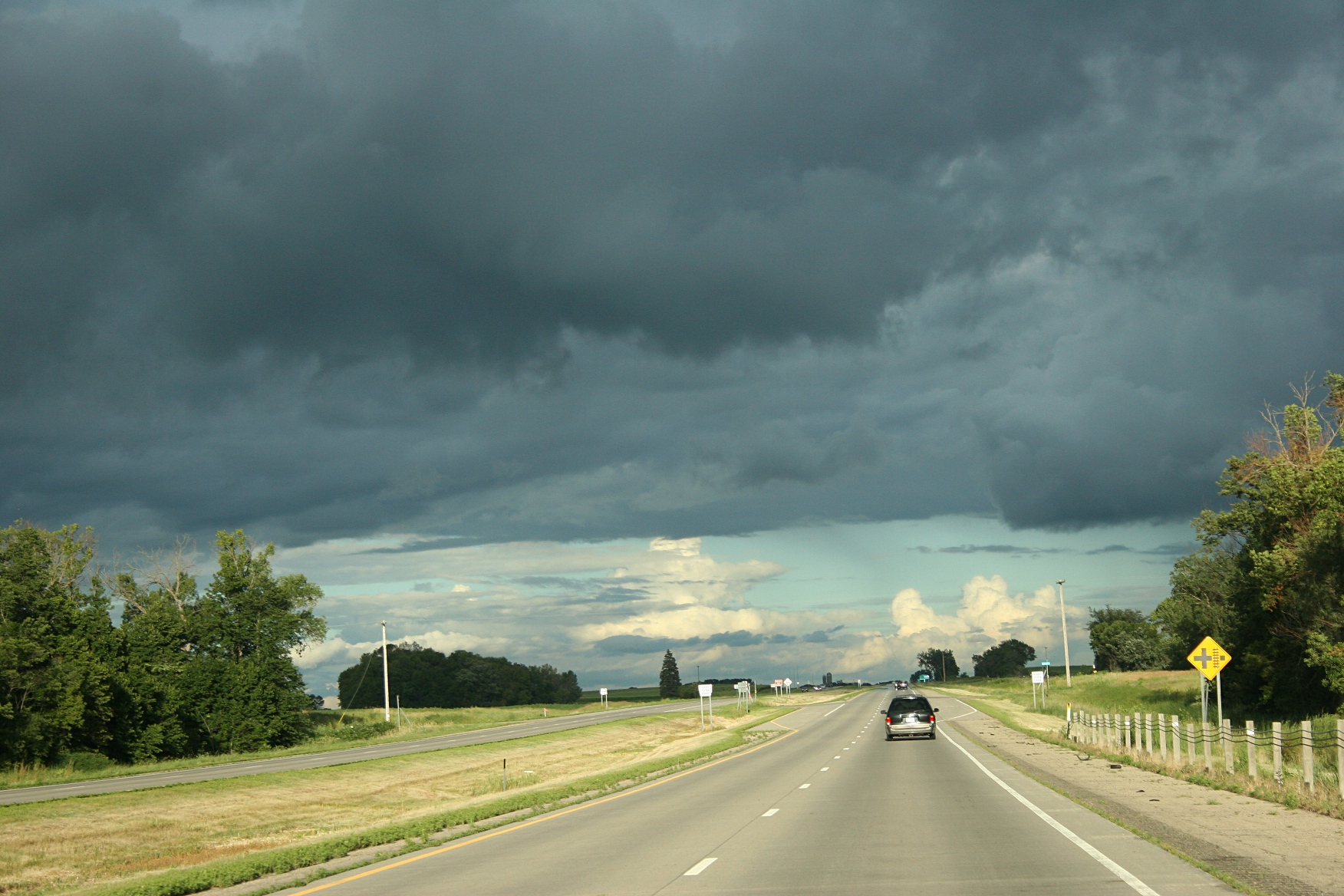
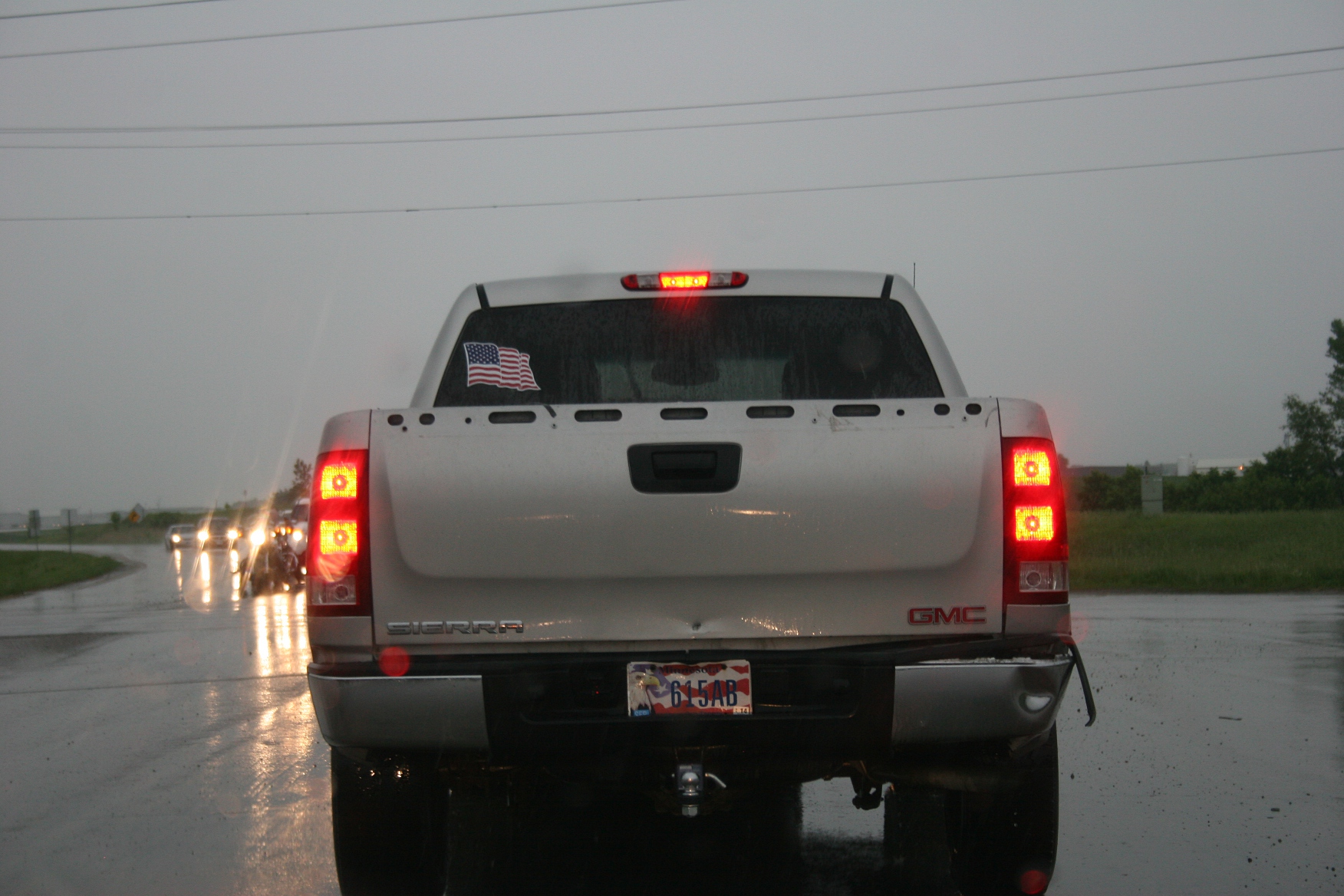
Driving home in the rain Saturday afternoon near Owatonna.

Driving home in the rain Saturday afternoon near Owatonna.

Minnesotans are wishing just that. Give us some dry weather after this perpetual rainfall which has inundated our state in recent days.

If only we could ship this moisture west…to California.

My friend Norma would certainly welcome it. She tells me of temps over 110 in the southern central valley region. Dirt, not dust, storms brought unhealthy brown fog that lingered for two days. She tells of waves of dirt and brushing dirt from her car.

I cannot imagine.

She worries about valley fever spores that swirl in the arid climate. Valley fever is a lung infection brought on by inhaling a microscopic fungus that is found in the region’s soil.

She is concerned, too, about orange growers and other farmers. Already food prices are rising in grocery stores.

This area of California needs rain.

Just like Minnesota doesn’t need more moisture right now.

© Copyright 2014 Audrey Kletscher Helbling


I’m not a tree hugger, but… June 2, 2014

Filed under: Uncategorized — Audrey Kletscher Helbling @ 6:00 AM
Tags: , , , , , ,

MY AUNT JEANETTE has been duly informed.

The ancient cottonwood stands on the north edge of Vesta, Minnesota.

The ancient cottonwood stands on the north edge of Vesta.

If she ever attempts to have the massive/towering/gigantic cottonwood in her yard cut down, I will be right there hugging that tree.

Now I am not a tree hugger in the true definition of a tree hugger. I would not scamper onto the limb of a tree to prevent its removal. For one thing, I am not agile like a squirrel. Secondly, I am not an outspoken, protesting type person, at least not in public.

But I did protest privately to my aunt when she mentioned cutting down that beautiful sprawling cottonwood gracing her yard.

The tree is messy, she explained, wondering then if I’d like to clean up the cottony seeds and sticky bud capsules dropped onto her lawn.

Point taken.

Yet, this cottonwood deserves special consideration given it’s likely the oldest tree in my southwestern Minnesota prairie hometown. It’s certainly the biggest in girth and the tallest tree in this community of some 320.

I can imagine the early settlers arriving in this mostly treeless land, wind-bent prairie grasses stretching for miles before them. And then, in the distance, the shimmering leaves of a cottonwood.

Or perhaps one of them brought a cottonwood seedling here, planted it on the north edge of this new prairie town.

Decades later, a tire swing looped by a rope to a limb, the sturdy cottonwood still stands strong against the vast prairie sky in my beloved hometown.

© Copyright 2014 Audrey Kletscher Helbling


Black squirrels, oh, my May 23, 2014

Filed under: Uncategorized — Audrey Kletscher Helbling @ 6:00 AM
Tags: , , , , ,
Squirrel number one scampers from the park across the street as soon as I approach with my camera. I don't have a telephoto lens, thus the distant view.

Squirrel number one scampers from the park across the street as soon as I approach. (I don’t have a telephoto lens.)

NO, THIS IS NOT one of those “Why did the chicken squirrel cross the road?” joke stories.

Rather, I am wondering, have you ever seen a black squirrel?

I manage to get a bit closer to squirrel number two.

I manage to get a bit closer to squirrel number two.

I hadn’t until last weekend while at City Park in downtown Appleton, Wisconsin.

My second daughter, who attended college in western Wisconsin and now lives on the eastern side of the state, couldn’t believe I’d never, in nearly 60 years of life, seen anything but grey or red squirrels.

My husband also had never spotted a black squirrel although he once saw an albino in the woods on his central Minnesota childhood farm home.

There are plenty of trees in Appleton's City Park, where I snapped one quick shot before the squirrel scooted out of camera range.

There are plenty of trees in Appleton’s City Park, where I snapped one quick shot before the squirrel scooted out of camera range.

I don’t recall any squirrels on my native southwestern Minnesota prairie farm while growing up. Maybe the shortage of trees had something to do with their absence.

In any case, I was intrigued by the two black squirrels in City Park. My daughter found my interest rather amusing. Sometimes it just doesn’t take much to entertain me.

© Copyright 2014 Audrey Kletscher Helbling
 

A Minnesota prairie sunset May 5, 2014

Filed under: Uncategorized — Audrey Kletscher Helbling @ 6:00 AM
Tags: , , , , ,

MY HUSBAND SCURRIED back to my mother’s house, told me to grab my camera and hurry.

And hasten we did.  Between her house and the neighbors, along the grass alley a block. Turn west at my uncle and aunt’s house. Fast-walk another block.


Prairie sunset 52


Focus on the setting sun, the sky colored in layered shades of orange and yellow, pink and purple.


Prairie sunset 54


Oh, how I love the sunset on my beloved prairie in my hometown of Vesta, Minnesota.


Prairie sunset 55


I can never get enough of it.


Prairie sunset 56


This moment when day transitions into evening with beauty unequal on a land that stretches flat into forever.

Spectacular sunset, like poetry sweeping across the prairie sky.

Copyright 2014 Audrey Kletscher Helbling


No April Fool’s: Sixty degrees, then snow & tornadoes April 1, 2014

Filed under: Uncategorized — Audrey Kletscher Helbling @ 6:00 AM
Tags: , , , ,

THEY THRONGED TO RIVER BEND Nature Center Sunday afternoon.

Walking the trails.

Walking the trails, this a rare one that wasn’t snow-covered and icy.

More warm weather outdoor enthusiasts than I’ve ever seen at this nearly 750-acres of woods, prairie and water on Faribault’s east side.

Handcrafted signs guide visitors along trails.

Handcrafted signs guide visitors along trails.

Bare-headed baby tucked in mother’s arms. Elementary-aged boy in helmet zipping his scooter down a tarred path. Elderly couple snugged on a bench.

Trees tapped to collect sap in bags.

Trees tapped to collect sap in bags.

Folks clustered around an evaporator that cooked freshly tapped maple syrup.

Kids played in the water with sticks similar to this scene.

Kids played in water with sticks similar to this scene.

A trio of kids crossing a stick bridged across a rush of water.

A family picnicking.

Guy in shorts; boy in snowpants.

Abdi studies by the swamp.

Abdi studies by the swamp.

Abdi, a native of Ethiopia, benched by the swamp/pond studying for his medical lab class in the quiet of nature, away from his noisy apartment building.

A 20-something teaching archery to kids just outside the interpretive center.

And us, threading our way along still icy trails, slushing through melting snow. Me, grabbing my husband’s hand to keep from slipping, his snow boots gripping the ice, mine not.

Patches of green grass mingle under water with dead leaves.

Patches of green grass mingle under water with dead leaves.

My eyes grasping for green and finding it in patches of emerging grass.

The brightest green discovered--moss on a log.

The brightest green discovered–moss on a log.

Green moss on dead logs.

The tiniest of green plants poking through the dormant prairie grass.

A snippet of green cedar upon snow.

A snippet of green cedar upon snow.

Searching for signs of spring.

Trees reflected in a "lake" of water from the snow melt.

Trees reflected in a “lake” of water from the snow melt.

Finding it in watercolor paintings.

I've never seen this much water roaring over the nature center waterfall.

I’ve never seen this much water roaring over the nature center waterfall.

Water roaring over limestone in a three-tied waterfall.

Water rushes down a trail.

Water rushes down a trail.

Slogging through water, with grass and dead leaves squishing beneath our boots.

Sunday and sixty degrees. Glorious. Spring.

And then came blizzards (northern Minnesota) and tornadoes (southwestern Minnesota) on Monday with temps plunging into the 20s and 30s overnight.  A wind advisory remains in effect until 10 a.m. today for a portion of Minnesota sweeping from southwest/central to southeast with sustained winds of 25 – 35 mph topping at 50 mph, according to the National Weather Service.

No April Fool’s.

FYI: According to an article in The Marshall Independent, a twister was sited near Taunton Monday afternoon with structural damage from the storm reported five miles north of Minneota. On Monday, a tornado warning and a blizzard warning were issued simultaneously for a portion of southwestern Minnesota.

In Yellow Medicine County, the West Central Tribune of Willmar reports structural damage from a tornado at three farm sites southeast of St. Leo.

© Copyright 2014 Audrey Kletscher Helbling
 

Bluff ice art March 31, 2014

Filed under: Uncategorized — Audrey Kletscher Helbling @ 6:00 AM
Tags: , , , , , , , ,

PERHAPS I AM too easily impressed.

But I have not visited the ice caves at Apostle Islands National Lakeshore in northern Bayfield County, Wisconsin.

Ice formations by La Crosse 1

Thus the ice formations gracing the Mississippi River bluffs along Interstate 90 on the Minnesota side near La Crosse, Wisconsin, impress me.

Ice formations by La Crosse 2

There is no stopping along I-90 to view or photograph this natural ice art up close. Rather, I rely on the rapid fire of my camera to capture the scene for later study.

Ice formations by La Crosse 3

Every time I see this water frozen in the icebox of winter, I marvel at its beauty.

I remember, too, how once upon a time I snapped icicles from the milkhouse roofline to engage in sword fight battles with my siblings.

Ice formations by La Crosse 4

The flip side of my mind views the ice formations as powdered sugar icing dripping down the sides of a homemade chocolate birthday cake baked by my mother.

That’s the thing about art—man-made or natural. It’s always open to interpretation.

FYI: These photos were taken 10 days ago. Since then, the weather has warmed to around 60 degrees in southern Minnesota, meaning these formations are likely disappearing.

© Copyright 2014 Audrey Kletscher Helbling
 

All about eagles in Wabasha March 20, 2014

A section of a map on the floor of the National Eagle Center shows the location of Wabasha along the Mississippi River.

A section of a map on the floor of the National Eagle Center shows the location of Wabasha along the Mississippi River.

DRIVING INTO WABASHA, Minnesota, late on a Sunday morning in mid-March, we spot a bald eagle soaring high above this historic river town.

The stunning National Eagle Center, along the river and a block off the main downtown business district.

The stunning National Eagle Center, along the river in the heart of downtown Wabasha.

The bird’s welcoming appearance seems fitting given my husband and I have come here to tour the National Eagle Center, a modern two-story educational facility with banks of two-story windows and a second floor outdoor observation deck overlooking the Mississippi River.

A second story observation deck outfitted with numerous binoculars, allows visitors to view the eagles along the Mississippi River.

The observation deck, outfitted with binoculars, gives visitors like my husband a view of eagles along the Mississippi River.

This ideal riverside setting allows visitors like us to observe eagles riding river bluff air currents, scooping fish from the water and perching in trees. Wabasha, with its year-round open water, proves an inviting locale for eagles.

The activity area includes a replica eagle's nest, upper left.

The activity area includes a replica eagle’s nest, upper left.

Inside the center, hands-on interactive activities—from stepping inside a mock eagle’s nest to testing the weight of an eagle to experiencing the majestic bird’s vision to creating eagle art to scoping eagles through binoculars and more—occupy all ages.

You can get up close to the resident eagles.

You can get up close to the resident eagles.

But, unequivocally, the major draws are the resident eagles, birds that were injured, treated and could not be released back into the wild. Bald eagles Angel, Columbia, Harriet and Was’aka call this place home while Donald is the sole golden eagle here. The 32-year-old Harriet is perhaps the best known, appearing numerous times on television and serving as the model for Minnesota’s Support Our Troops vehicle license plate.

Donald, the single resident golden eagle.

Donald, the single resident golden eagle.

Handlers tend the tethered eagles in a viewing room while answering questions among a curious crowd snapping photos with cell phones and cameras.

Eagles suspended from the ceiling and a view of the river from the second floor of the eagle center.

Eagles suspended from the ceiling and a view of the river from the second floor of the eagle center.

Thrice daily, the center presents an educational program on eagles. On this Sunday, staffer Bucky, with humor, skill, knowledge and audience engagement, entertains and educates young and old (that would be Randy and me).

A mural provides information about Wabasha and its open water draw for eagles.

A mural provides information about Wabasha’s history and eagles.

We learn, for example, that Wabasha provides the perfect environment for bald eagles with the river, protected habitat and bluffs. Eagles nest across the river and at nearby Read’s Landing.

Dressed as an eagle, a staffer wanders through the eagle center.

Dressed as an eagle, a staffer wanders through the eagle center.

When Bucky shares that eagles are territorial, he mimics the bird’s high-pitched call then asks us to practice our eagle calls. Kids giggle. Adults laugh at the attempts.

During the presentation, Bucky occasionally checks on an elementary-aged boy who is keeping a replica eagle egg warm in the pouch of his sweatshirt. Eagle nests can measure up to nine feet wide and 20 feet deep and weigh as much as three tons.

The current eagle count tallied.

The current eagle count tallied.

Today, Minnesota is home to 1,200 active eagle nests. When the eagle expert asks how many of us can see eagles in our home areas, nearly all 17 of us raise our hands.

But it wasn’t always that way. Randy and I are among the audience few who remember a time when these birds were endangered. Shortly after World War II, the pesticide DDT was introduced, washing into waterways where fish and aquatic life absorbed the toxin. When eagles ate the fish, they, too, were impacted. The DDT weakened their eggshells, resulting in eggs that broke during incubation or failed to hatch. The pesticide was banned in 1972.

My husband, second from right, plays a bald eagle.

My husband, second from right, plays a bald eagle.

To visually explain the chain reaction, Bucky chooses three kids to role play a mosquito, a small fish and a large fish. I know precisely whom he will pick to play the bald eagle. The bald guy in the third role, my husband, makes his acting debut.

Bucky proves his point as, one by one, the performers “ingest” DDT.

Bucky and Angel.

Bucky and Angel.

A few minutes later, after this educator pulls out a board the length of an eagle’s wing span (6 ½ to 7 feet), he exits the room and returns with resident bald eagle Angel. The 11-pound female came to the center in 2000 after suffering a broken wing.

Perched on Bucky’s gloved arm, Angel is the model of perfect human imprinted behavior. She is a guest at many Native American ceremonies and also makes educational appearances.

Shortly after Randy shot this photo of Angel eating a rat, I left the room.

Shortly after Randy shot this photo of Angel eating a rat, I left the room.

I enjoy Angel, until feeding time. Bucky pulls a white rat from a plastic container. For awhile, I watch as the eagle uses her beak and talons to rip apart the rodent. I stop photographing the scene and hand my camera to Randy. By then I’m looking down. He snaps a few photos, hands the camera back to me and shortly thereafter I exit the room to view the resident eagles who are not dining.

Rather they are simply perched, an activity which occupies 94 percent of their lives.

You'll find binoculars throughout the eagle center.

You’ll find binoculars throughout the center for viewing eagles.

Later, Randy will search me out, inform me that I left at just the right time—before rat pieces started flying toward the audience.

#

BONUS PHOTOS:

A bald eagle was part of the show in the gym. No, it did not fly.

A bald eagle was part of “Wings to Soar” in the nearby St. Felix gym. No, the eagle did not fly.

WHILE IN WABASHA, we also took in the National Eagle Center sponsored program, “Wings to Soar.”

Dale wandered through the audience with the birds, like this owl.

Dale wanders through the audience with an owl.

In St. Felix auditorium several blocks from the eagle center, Southerners John Stokes and Dale Kernahan presented an educational flying raptor program that, yes, involved birds of prey flying over our heads.

Here an owl flaps its wings. The birds skimmed over our heads during the show.

Here an owl flaps its wings. Some of the birds skimmed over our heads during the show.

Stokes advised anyone who was afraid of birds to leave. That would be me. But I stayed and did just fine with the owls and hawks. But when Kernahan walked out with a vulture and then allowed it to fly at low altitude, I slunk into my folding chair.

On the right, you'll see the second story riverside observation deck.

On the right is the second story riverside observation deck.

FYI: March marks special “Soar with the Eagles” weekends in Wabasha. March 22 – 23 you can attend Sky Hunters, a flying bird show.

This girl is looking up at these...

Inside the National Eagle Center, this girl is looking up at these…

...birds suspended from the glass ceiling.

…birds suspended from the glass ceiling.

In the first floor gift shop, shown here...

In the first floor gift shop, shown here…

...Joseph found a plush toy eagle.

…Joseph finds a plush toy eagle.

The National Eagle Center truly appeals to all ages, to anyone who appreciates the beauty of this majestic bird.

Check back for another post from the National Eagle Center and for additional photos from Wabasha.

© Copyright 2014 Audrey Kletscher Helbling
 

A love & hate relationship with winter March 14, 2014

Filed under: Uncategorized — Audrey Kletscher Helbling @ 6:00 AM
Tags: , , , , , ,
Along a gravel road somewhere between Nerstrand and Kenyon, Minnesota.
Along a gravel road somewhere between Nerstrand and Kenyon, Minnesota. That’s the driveway, not the road.
FOR ALL OF THE TIMES I’ve spurned this winter of brutal cold and deep snow, I must confess to a certain appreciation for the poetic dreaminess of a snowy rural landscape.

Winter exposes, uncovers, bares the basics to the eyes in a way that the fullness of summer cannot.

Power lines and roads cut horizontal swaths. Farm sites beckon like a welcome oasis in a sea of white. Bare-branched trees flag the sky.

A red barn seems redder, a steely grey bin greyer. And a white farmhouse simply vanishes.

This is winter. Spurned. And, sometimes, loved.

© Copyright 2014 Audrey Kletscher Helbling