Minnesota Prairie Roots

Writing and photography by Audrey Kletscher Helbling

In the conservatory with the camera, Part II March 5, 2014

GROWING UP, I LOVED the mystery board game Clue. Determine the murderer, weapon and mansion room in which the crime was committed and you win the game.

Simple? Not necessarily. The game requires a great deal of concentration, plotting and even some deception.

While Clue includes a cast of characters with interesting names like Colonel Mustard and Mrs. Peacock, what most intrigues me are the rooms. Imagine a home with a lounge, a billiard room and a conservatory. Yes, a conservatory, smaller in scale than the one I toured Sunday afternoon at Como Park.

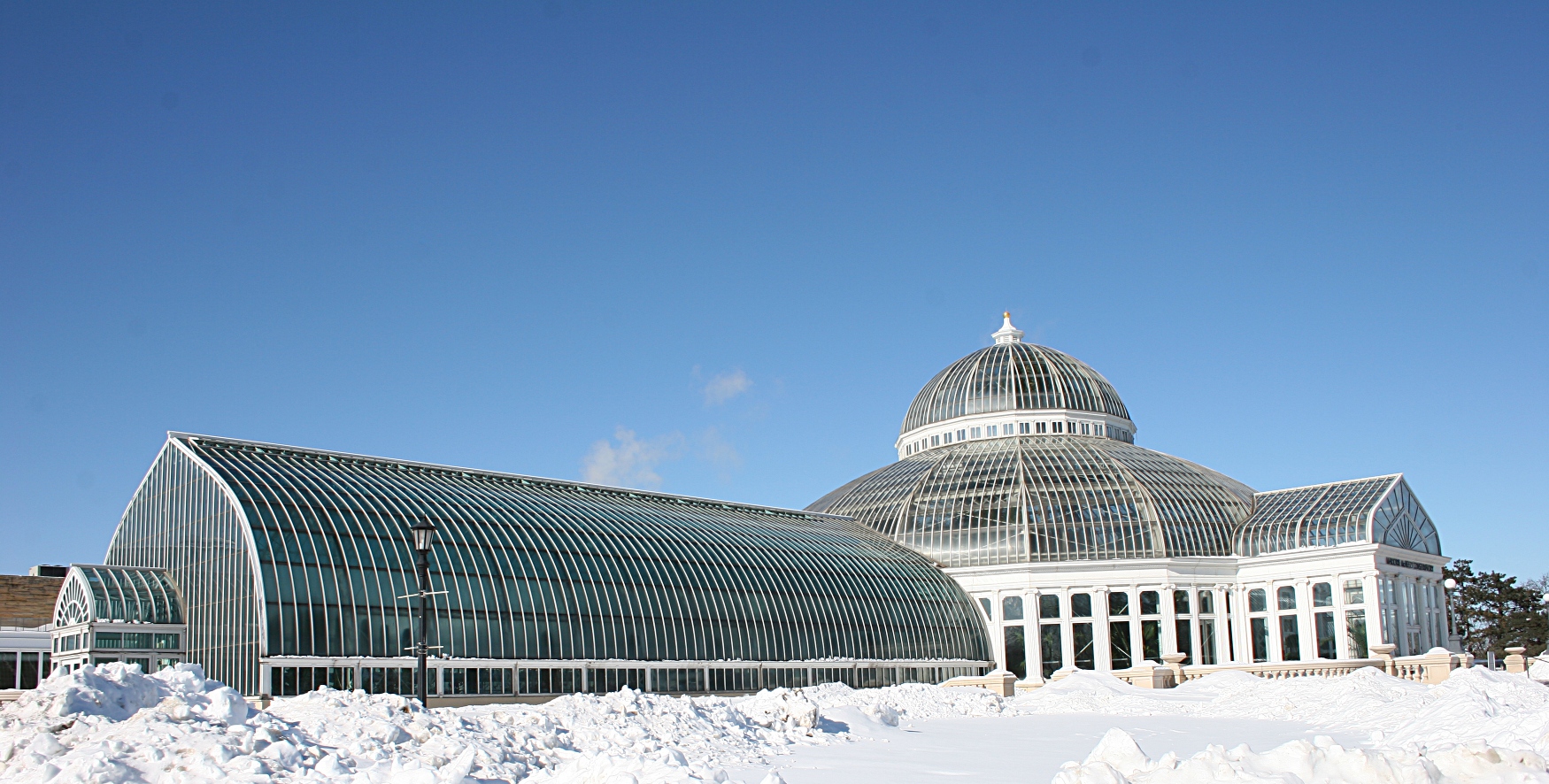
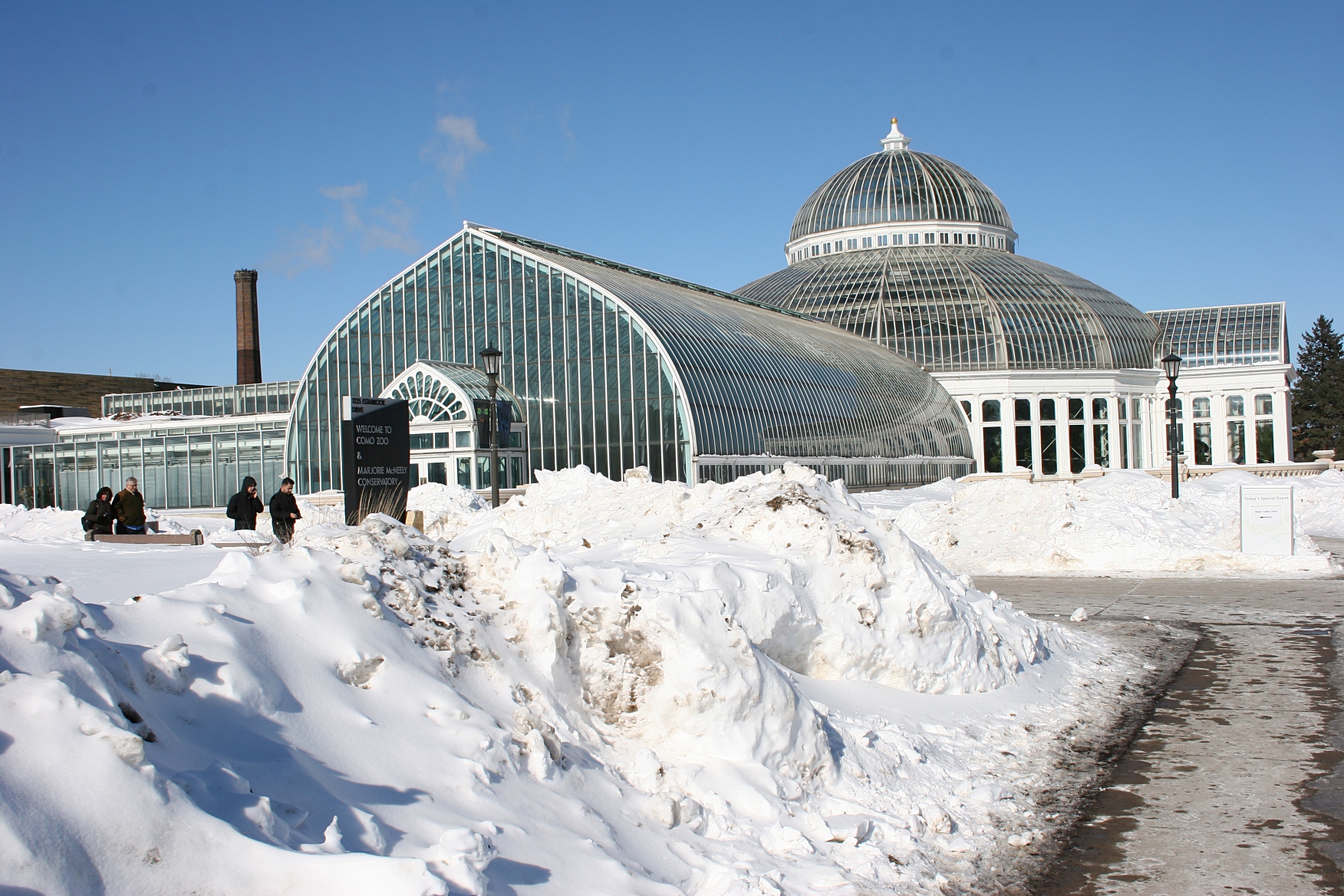
The Mzarjorie McNeely Conservatory at Como Park in St. Paul, Minnesota.

The Mzarjorie McNeely Conservatory at Como Park in St. Paul, Minnesota.

The Marjorie McNeely Conservatory, with its winding paths, nooks and extensive foliage, would present the perfect setting for a St. Paul-based mystery. In the shrouded mist of the Fern Room, I can almost imagine a shadowy figure lurking. In the Palm Dome, I can envision a chase. Inside the Sunken Garden, I can picture a stand-off on opposite ends of the garden.

Ah, yes, my imagination appears to be in overdrive. Blame winter madness. Blame the need to escape.

And so we shall…

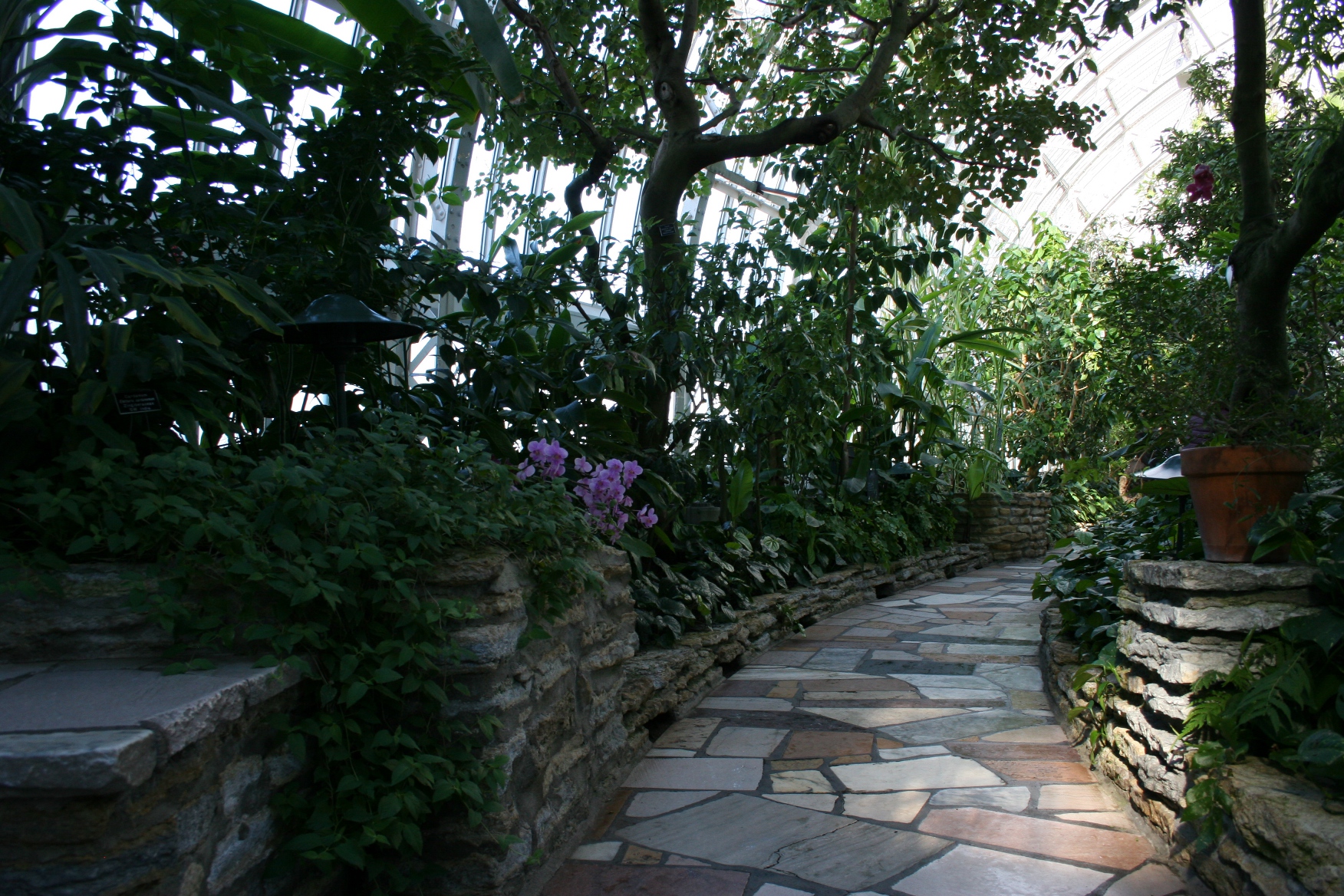
Follow this path through the North Garden.

Follow this path through the North Garden.

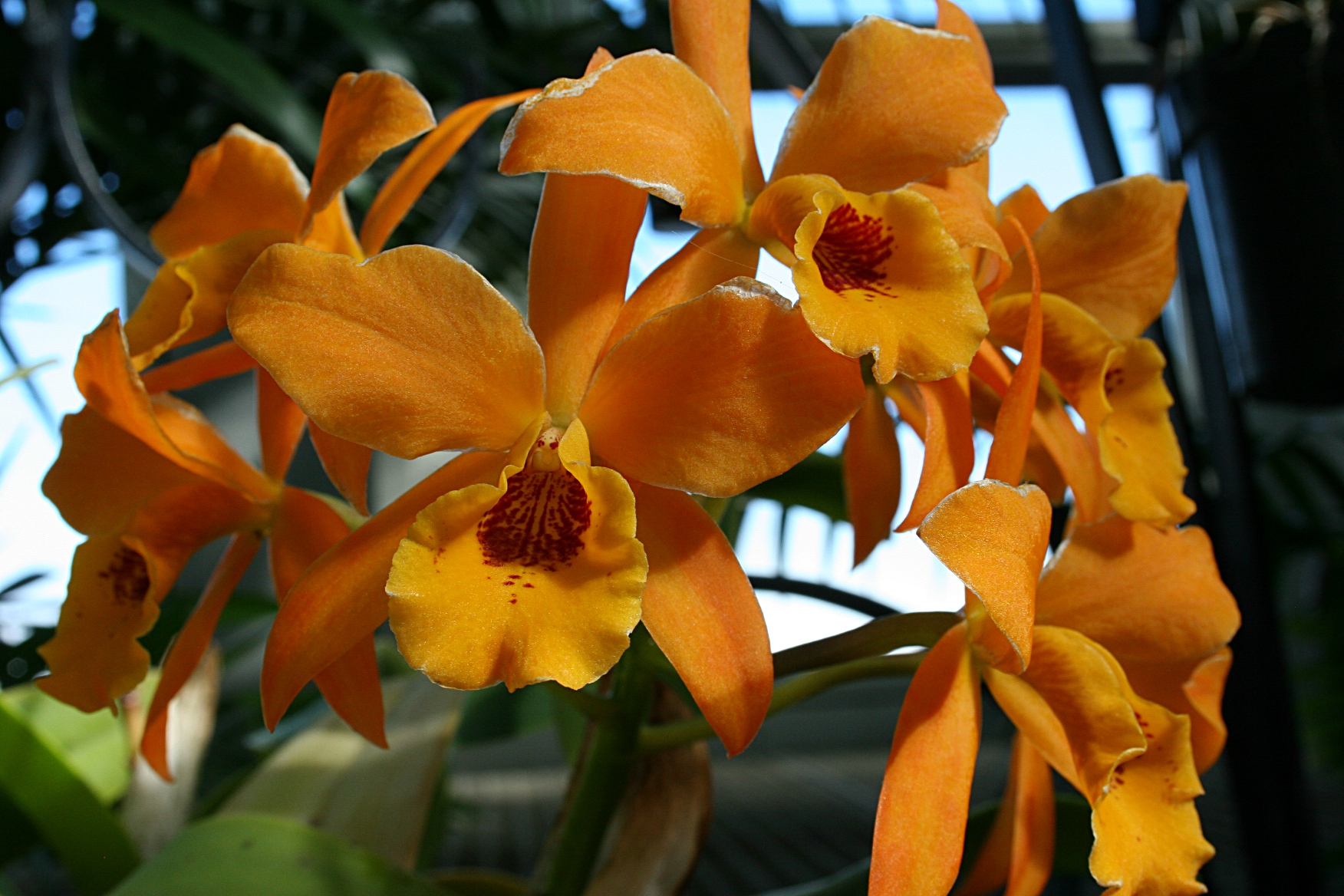
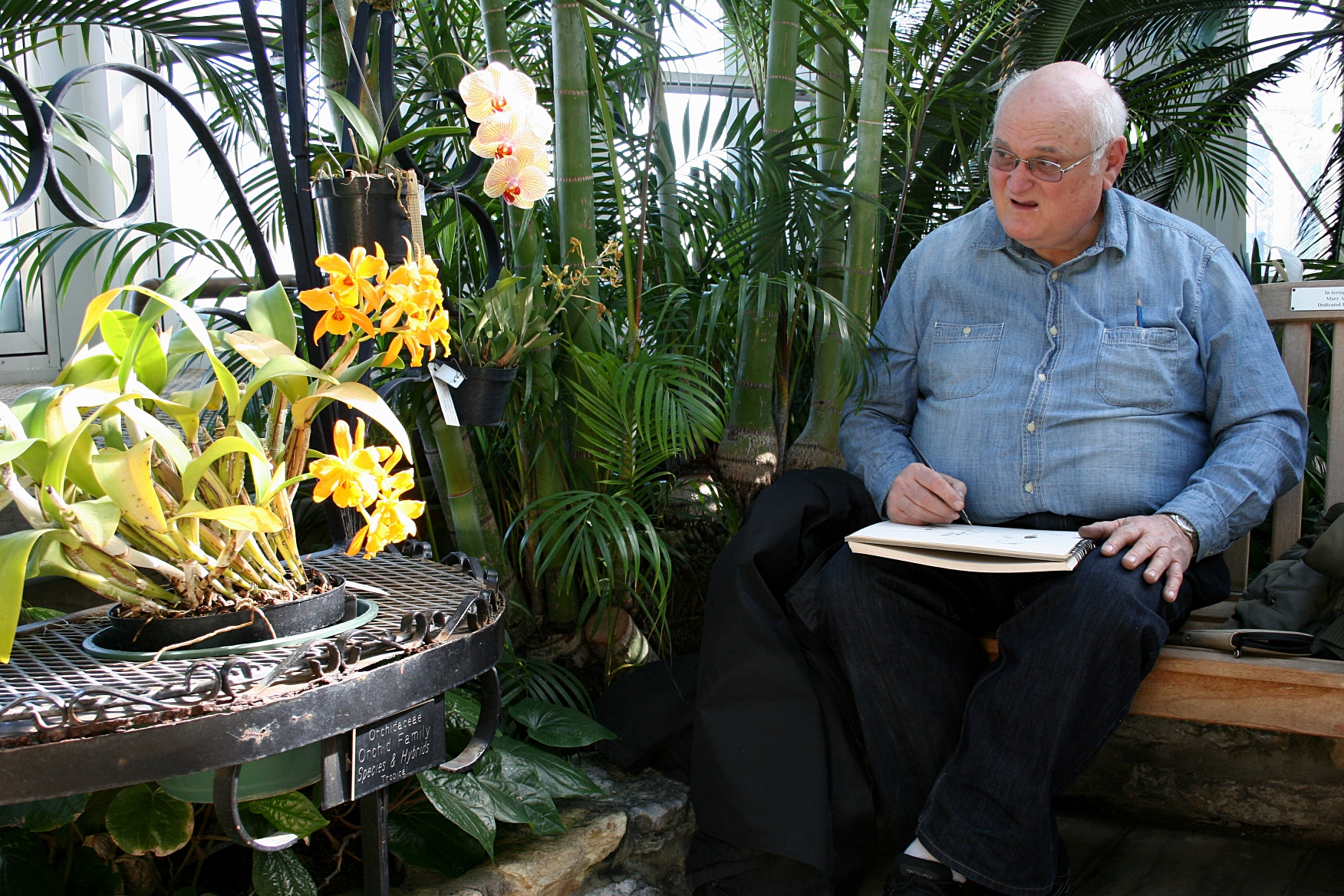
Stop to enjoy the orchids, these in the Palm Dome.

Stop to enjoy the orchids, these in the Palm Dome.

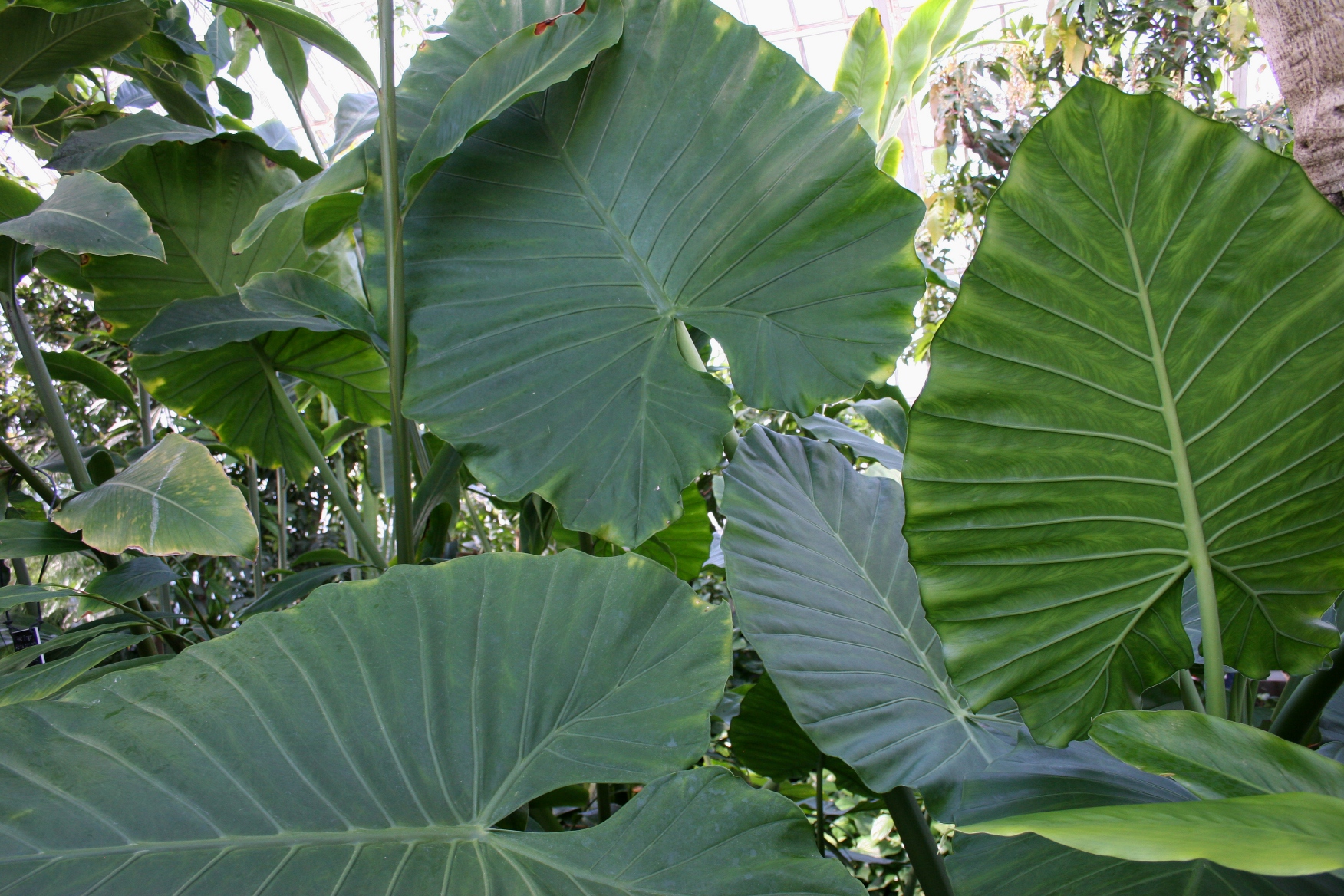
Appreciate leaves as big as an elephant's ears.

Appreciate leaves as big as an elephant’s ears.

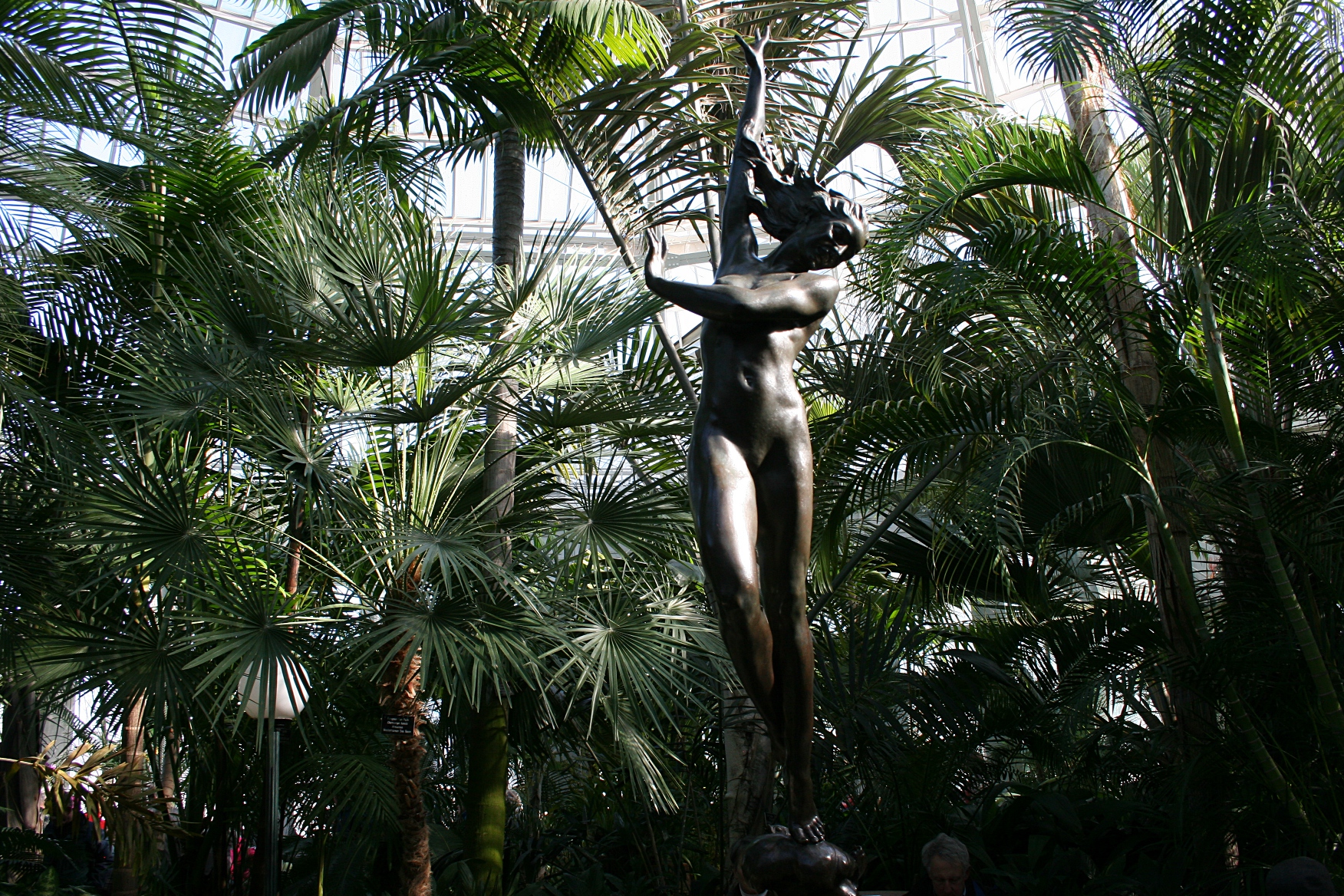
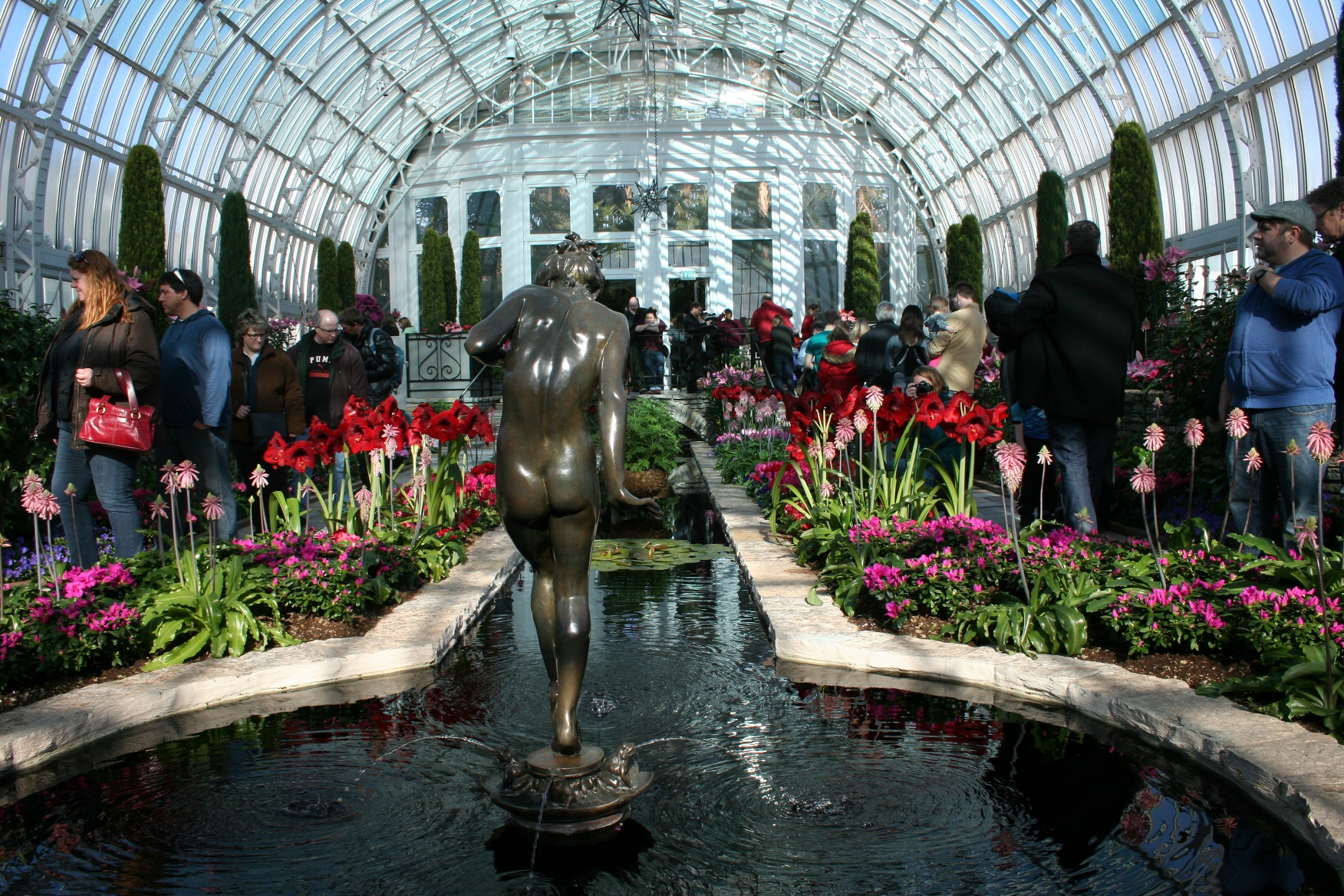
Admire the art, including this statue in a Palm Dome fountain.

Admire the art, including this statue in a Palm Dome fountain.

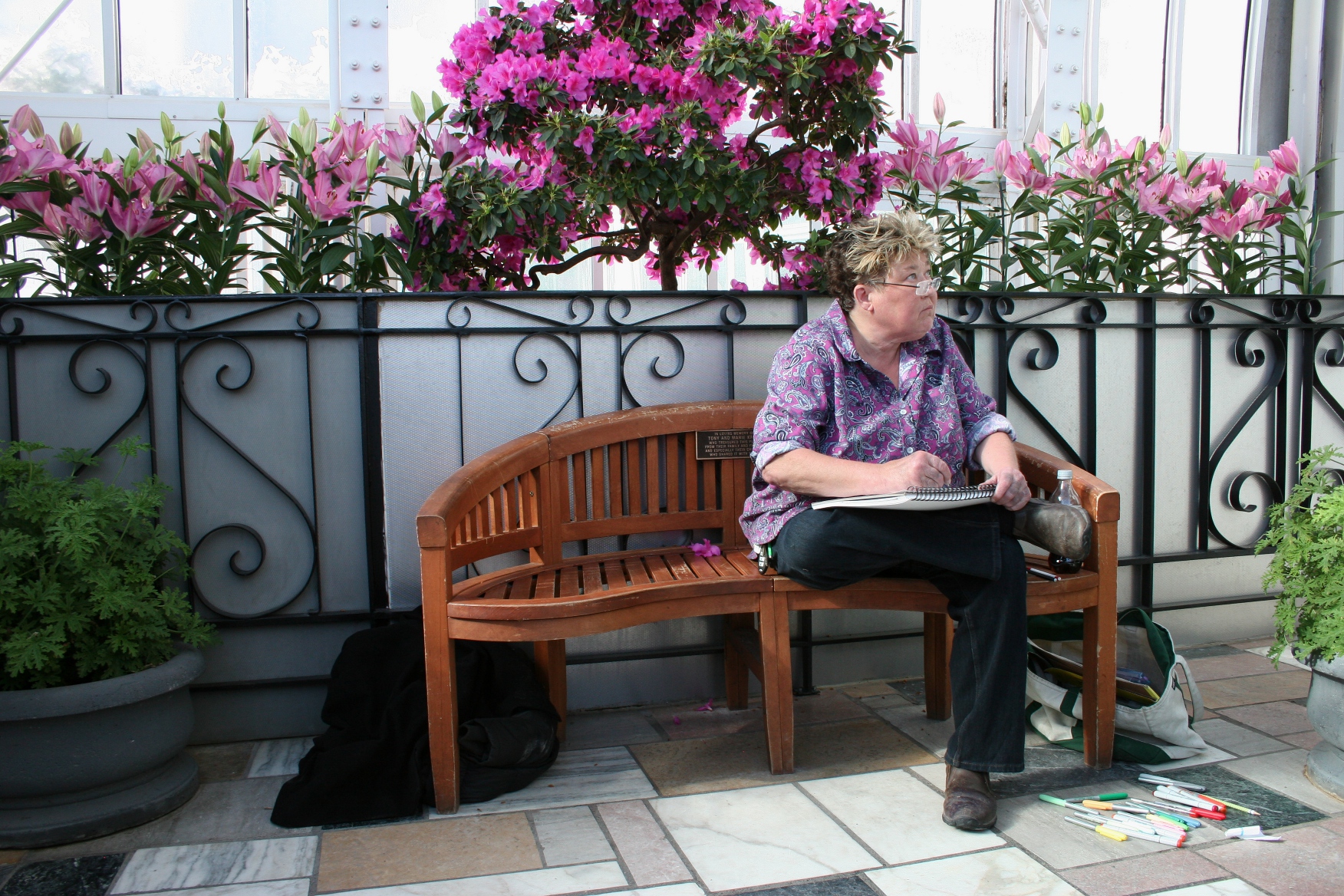
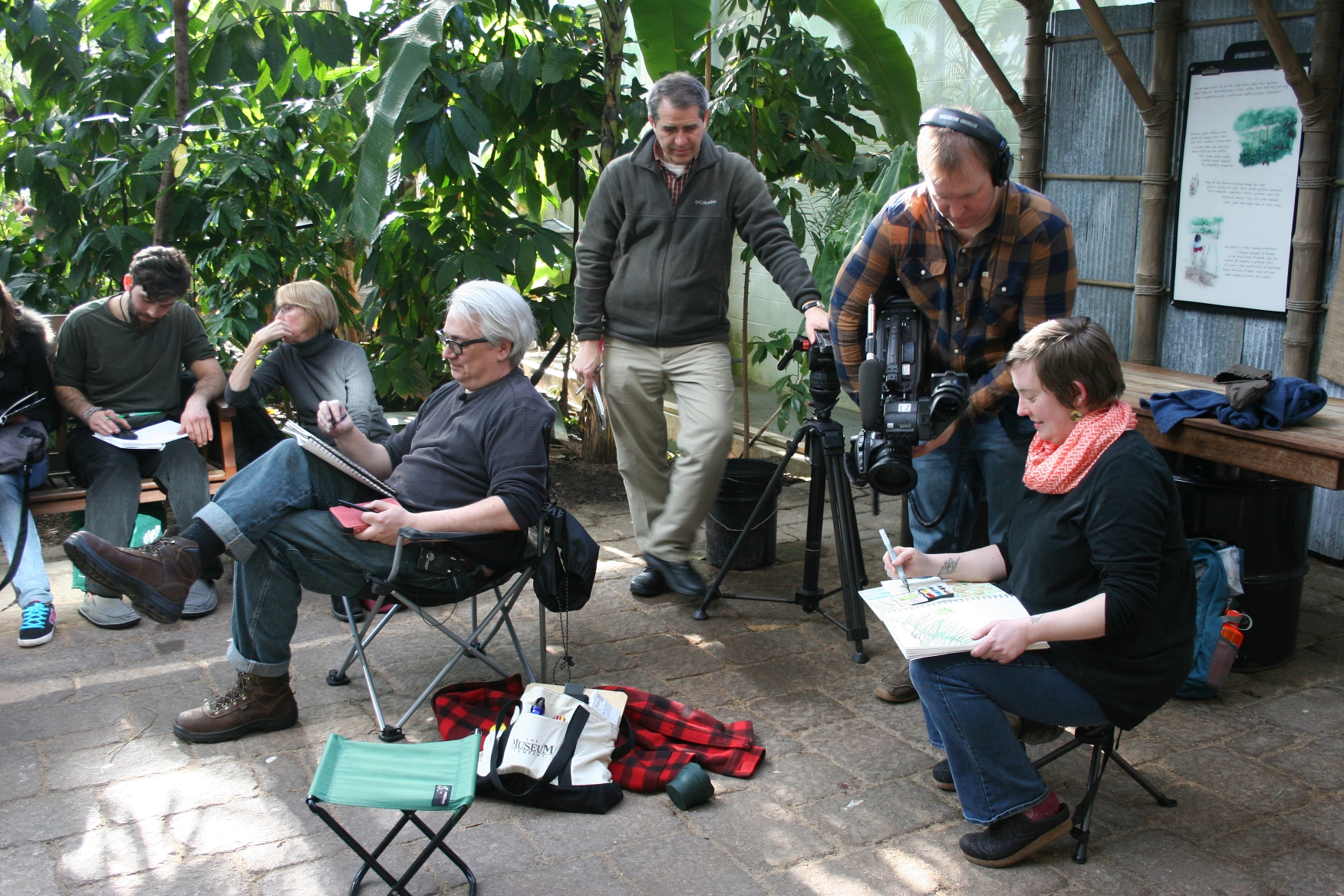
Or create art like this member of the Metro Sketchers working in the Sunken Garden.

Observe a member of the Metro Sketchers creating art in the Sunken Garden.

Or photograph the film crew filming the artist's work.

Photograph the cameraman filming the artist’s work.

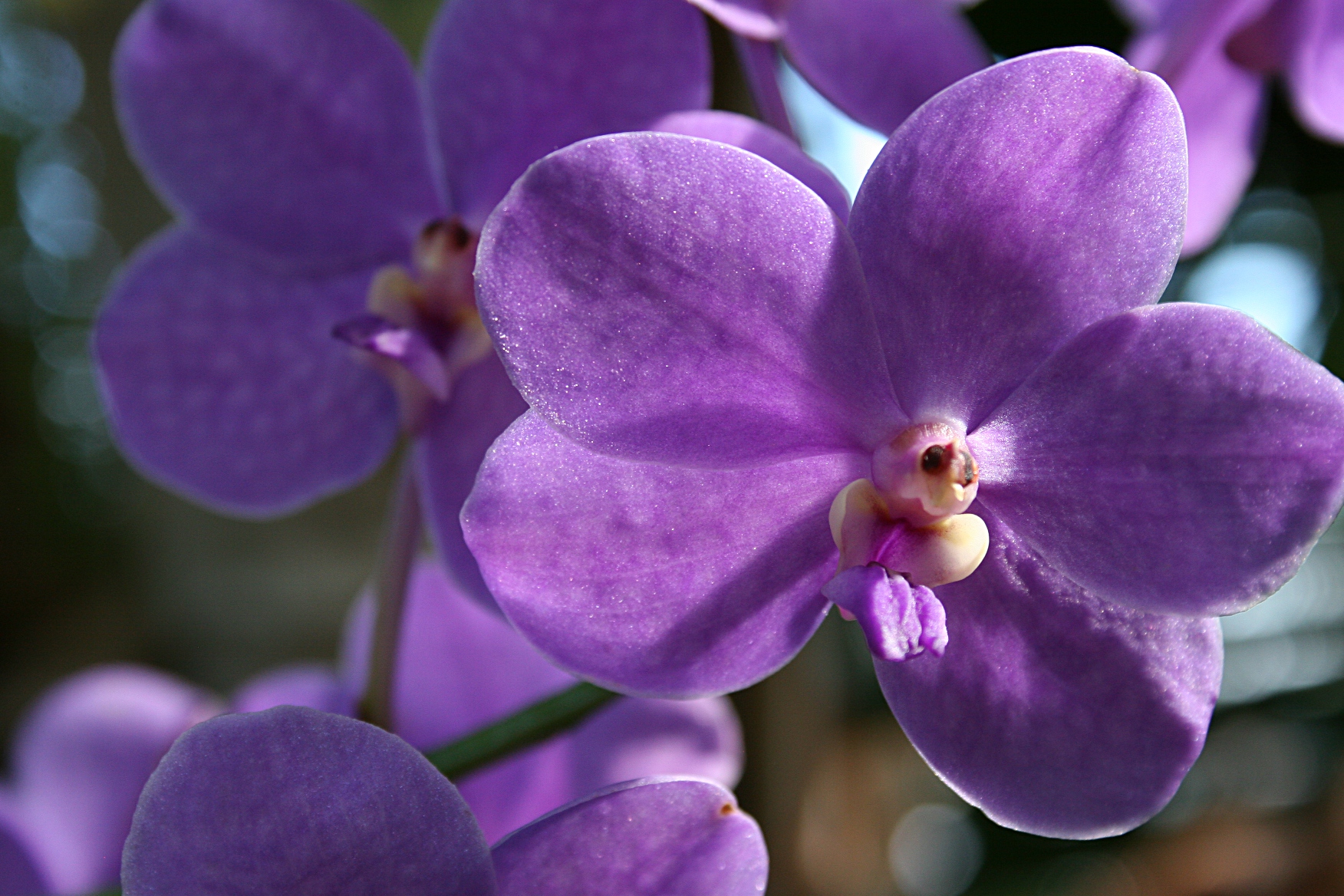
Admire the simplistic beauty of orchids.

Admire the simplistic beauty of orchids.

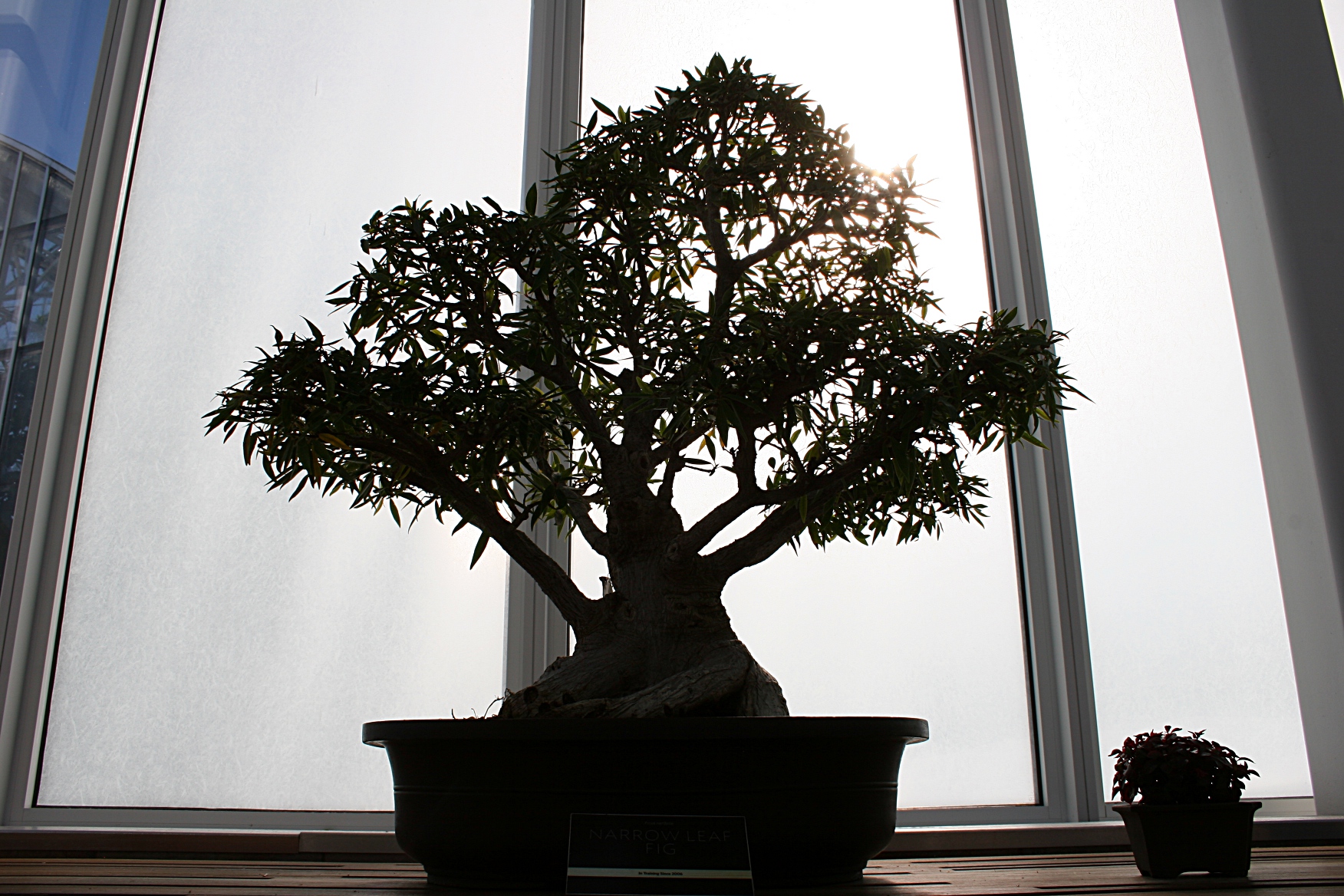
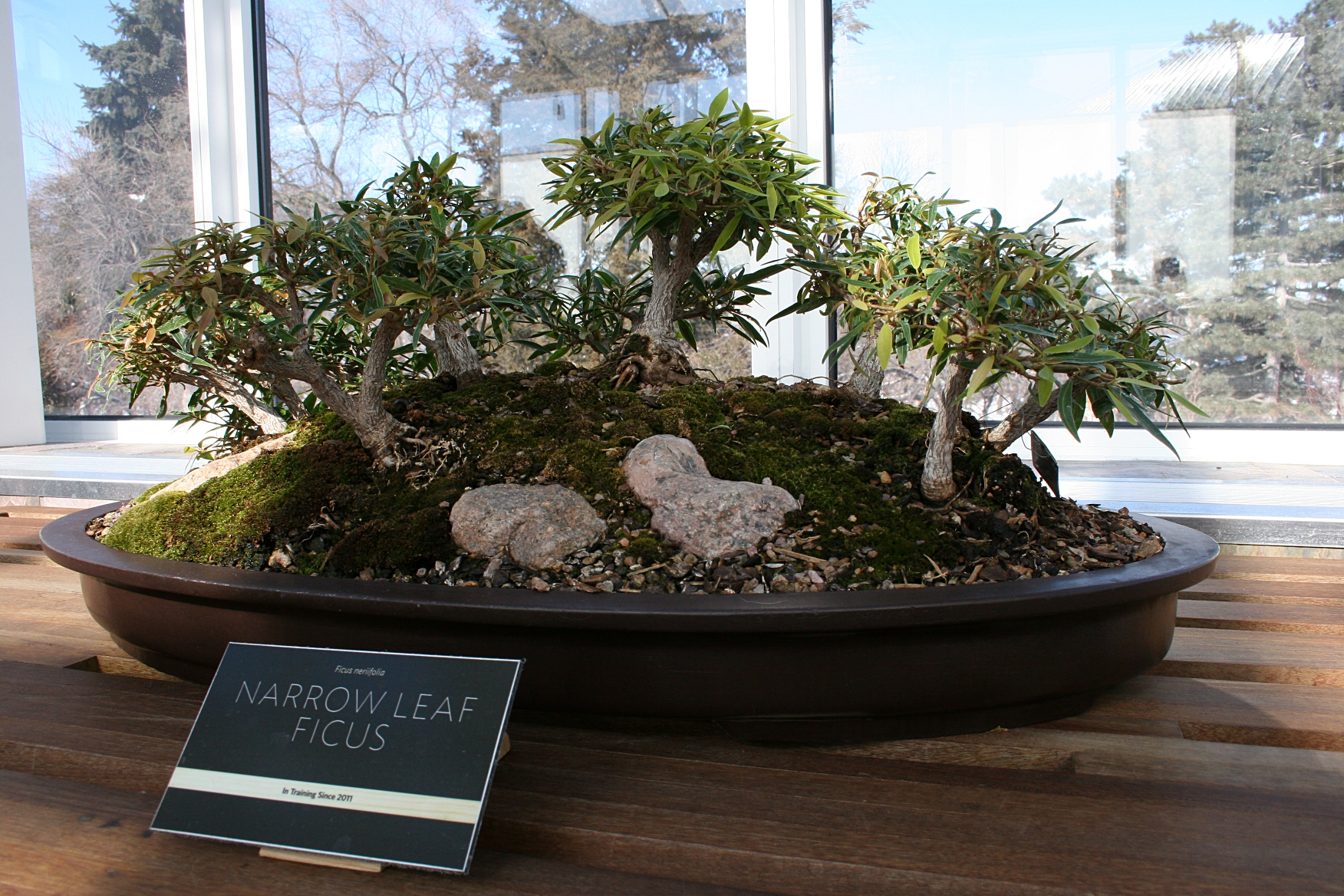
Notice the contrast of a bonsai tree against a steamed window knowing only glass separate the plant from a snowy landscape.

Notice the contrast of a bonsai tree against windows, knowing only glass separates the plant from a snowy landscape.

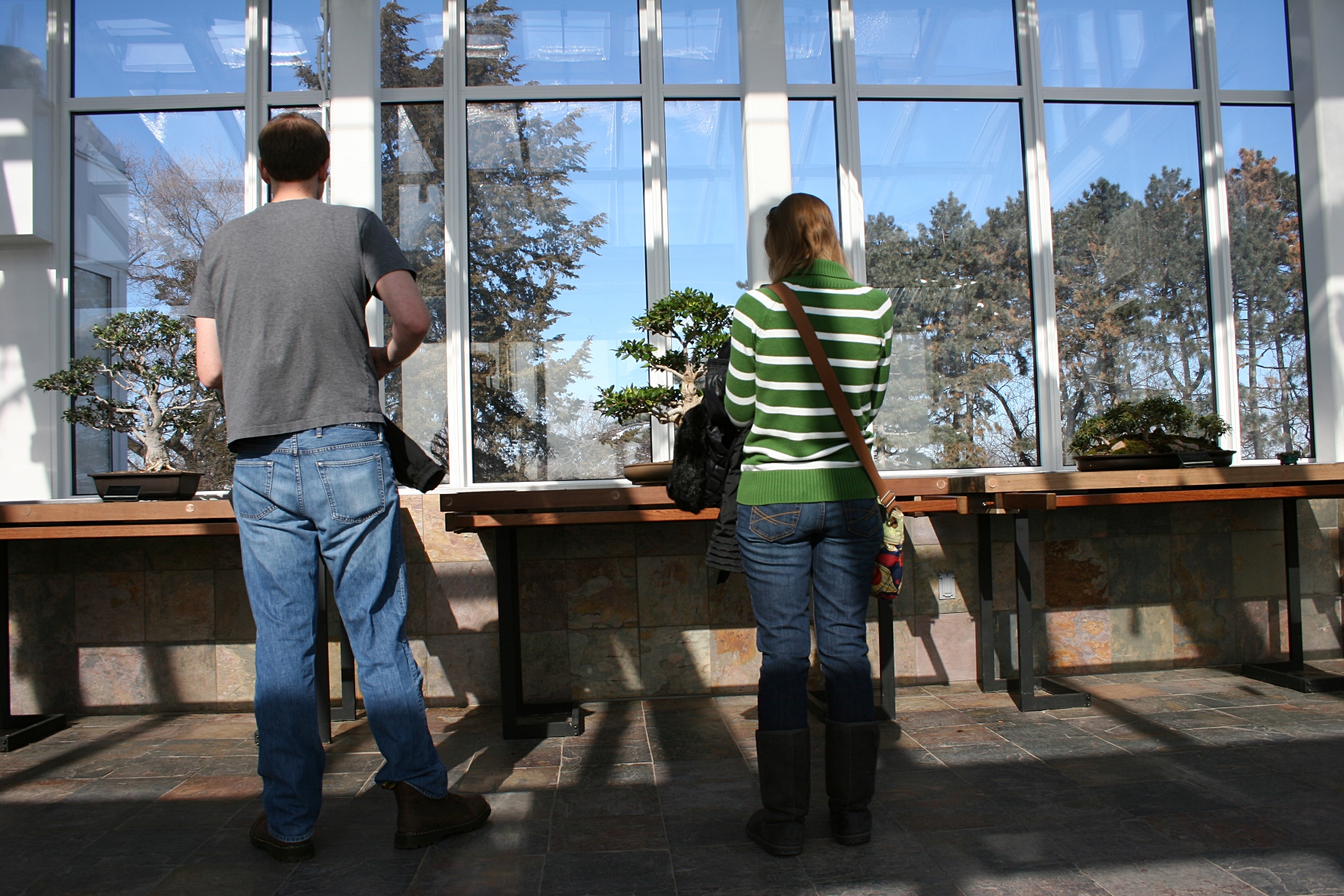
Mention to your daughter and son-in-law how nice one of these bonsai trees would look sitting on a window ledge in their St. Paul apartment.

Mention to your daughter and son-in-law how nice one of these bonsai trees would look on a window ledge in their  apartment.

Because you are so smitten by these mini trees, consider for a moment how you might smuggle one out of the conservatory. You realize this is an impossibility given the crowd, the staffing and that you left your winter coat in the car.

Because you are so smitten by these mini trees, consider for a moment how you might smuggle one out of the conservatory. You realize this is an impossibility given the crowd, the staffing and that you left your winter coat in the car.

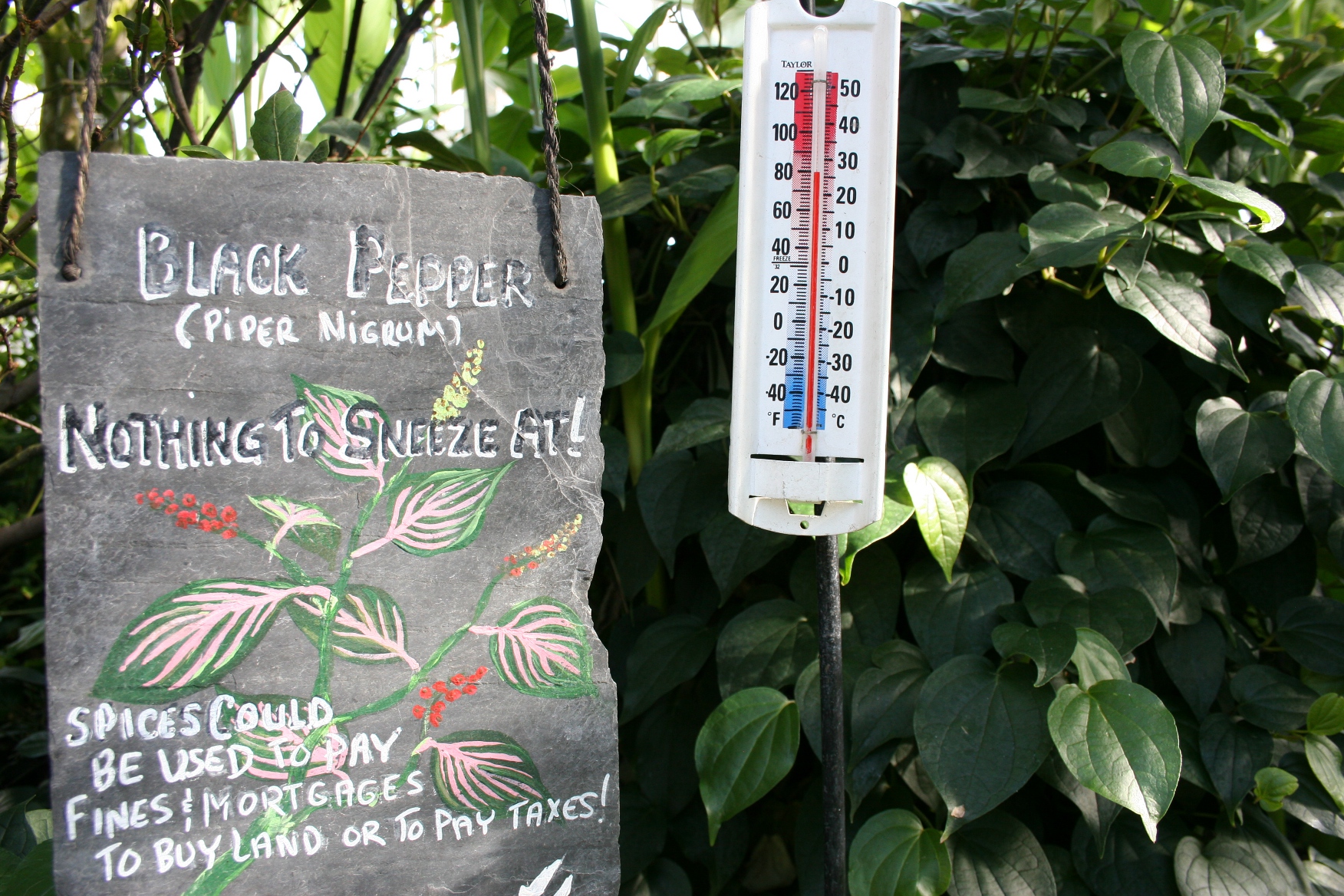
Imagine that you are aboard a ship in a fleet transporting exotic spices.

Pretend you are aboard a ship in a fleet transporting exotic spices.

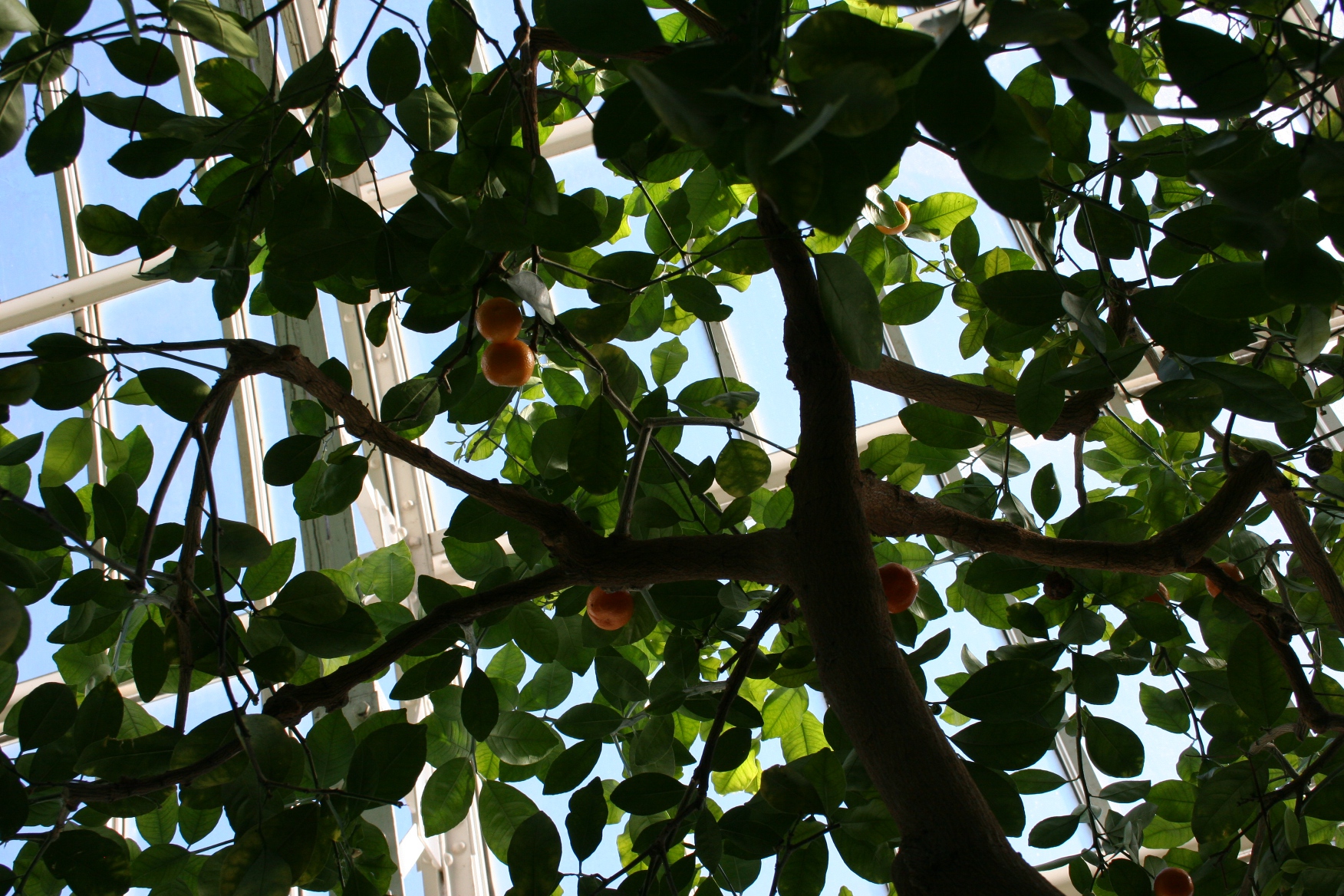
If only you were a little taller, you'd grasp one of those oranges. Wait a minute. Where's that tall son-in-law?

Banish the temptation to pick a juicy orange. (Where’s that tall son-in-law?)

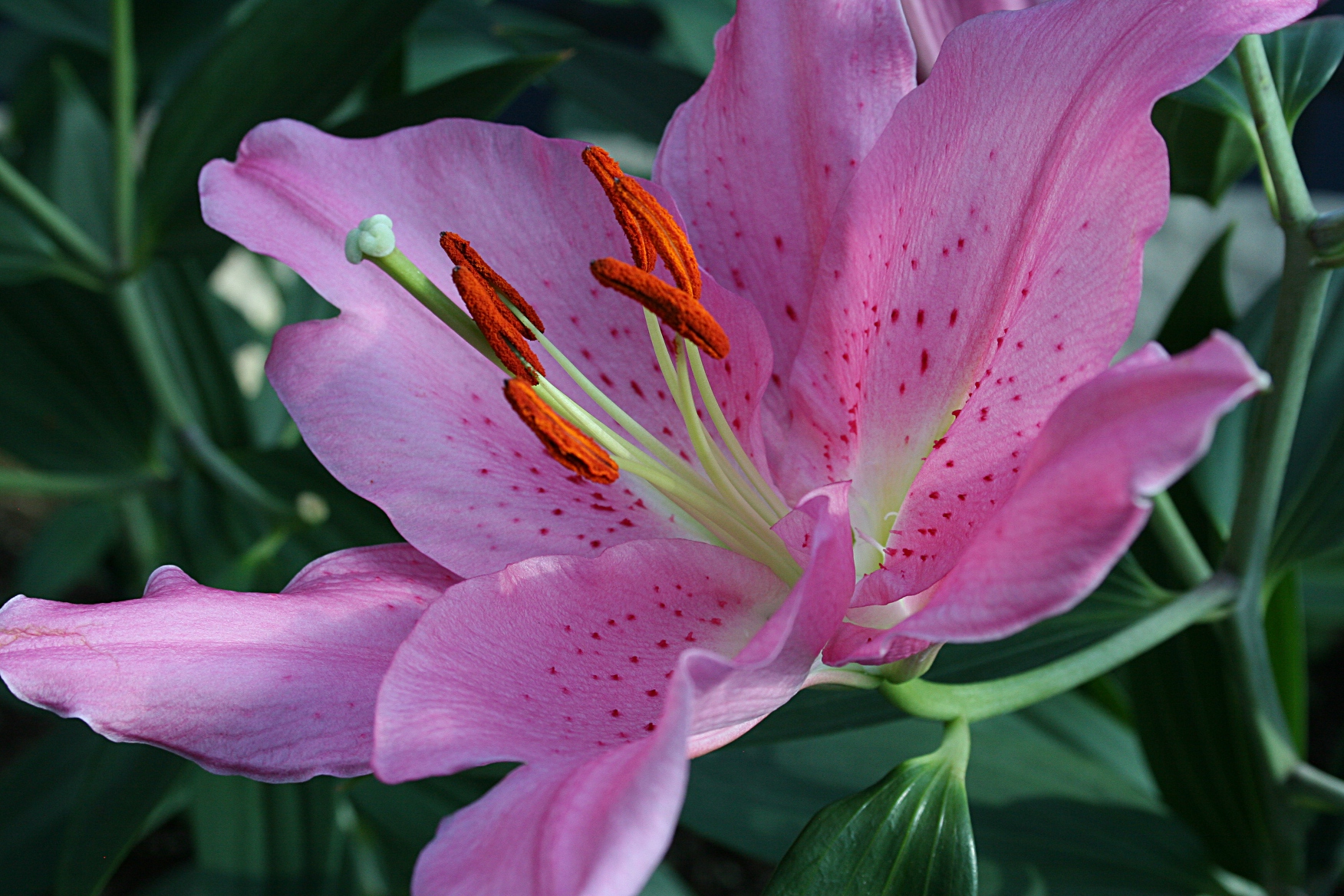
If only you could snip a few lilies to take home, to carry you through the next few months. Until spring...

If only you could snip a few blooms to take home, to carry you through the next few months. Until spring…

FYI: To read my first post from Como Park Conservatory, click here.

Copyright 2014 Audrey Kletscher Helbling


Guilty of escaping a Minnesota winter: In the conservatory with the camera… March 4, 2014

Photographing the Marjorie McNeely Conservatory in the cold Sunday afternoon.

The Marjorie McNeely Conservatory in St. Paul on Sunday afternoon.

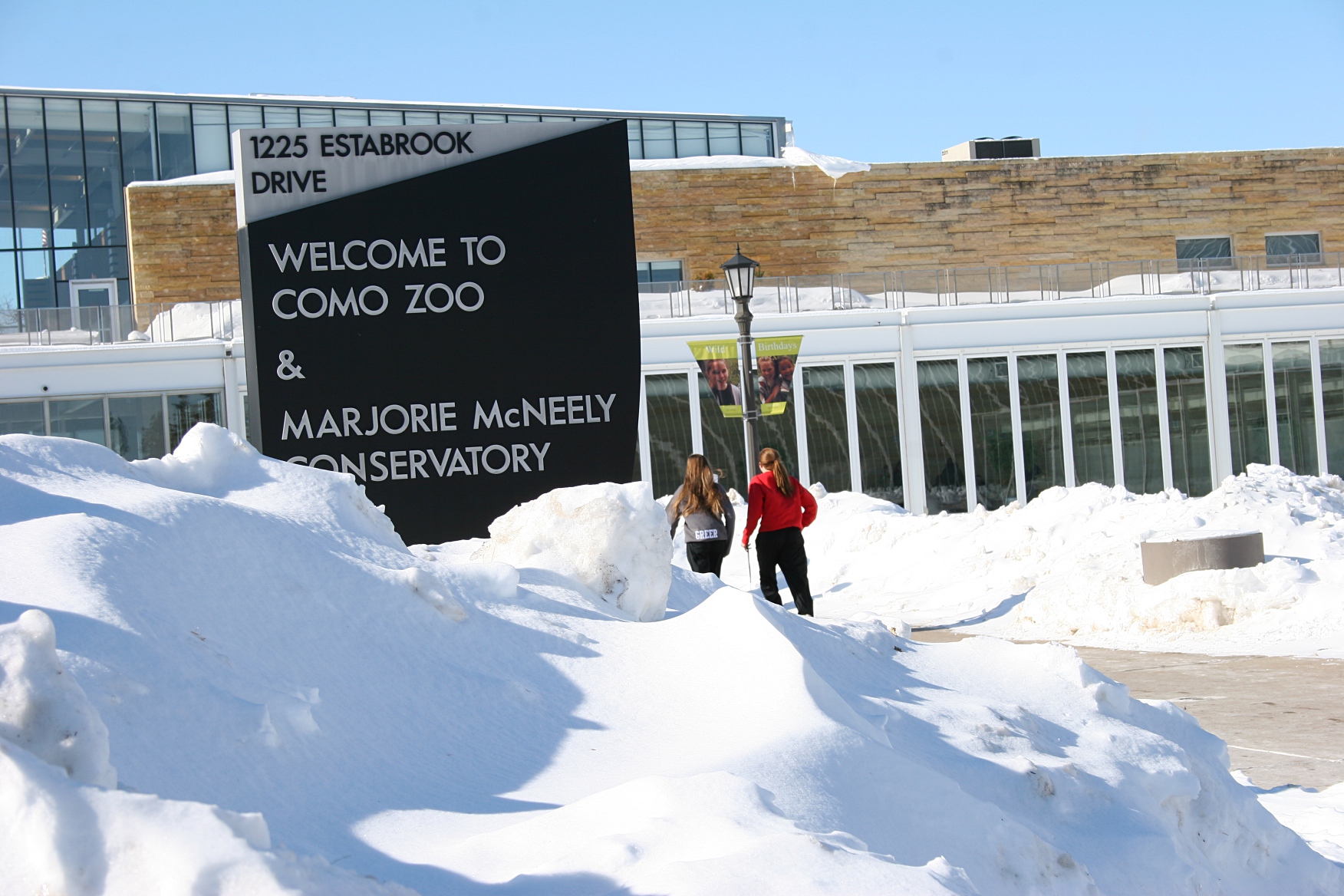
“SHE’S CRAZY,” the woman remarked to her companion, not realizing I overheard her as I photographed the exterior of the Como Park Zoo and Conservatory.

I wasn't the only one racing from vehicle to the Como Park Zoo & Conservatory minus a coat.

I wasn’t the only one racing from vehicle to the Como Park Zoo & Conservatory minus a winter coat.

The outdoor air temp hovered around five degrees Fahrenheit. Add in the windchill and the “feels like” temp likely plummeted to minus 25 degrees. And I was coatless.

Was I crazy? Perhaps. But stir craziness marked precisely the reason I came here on a sunny Sunday afternoon on the second day of March with my husband, eldest daughter and son-in-law. I needed a respite from the coldest Minnesota winter in 35 years. And I might add a particularly snowy one.

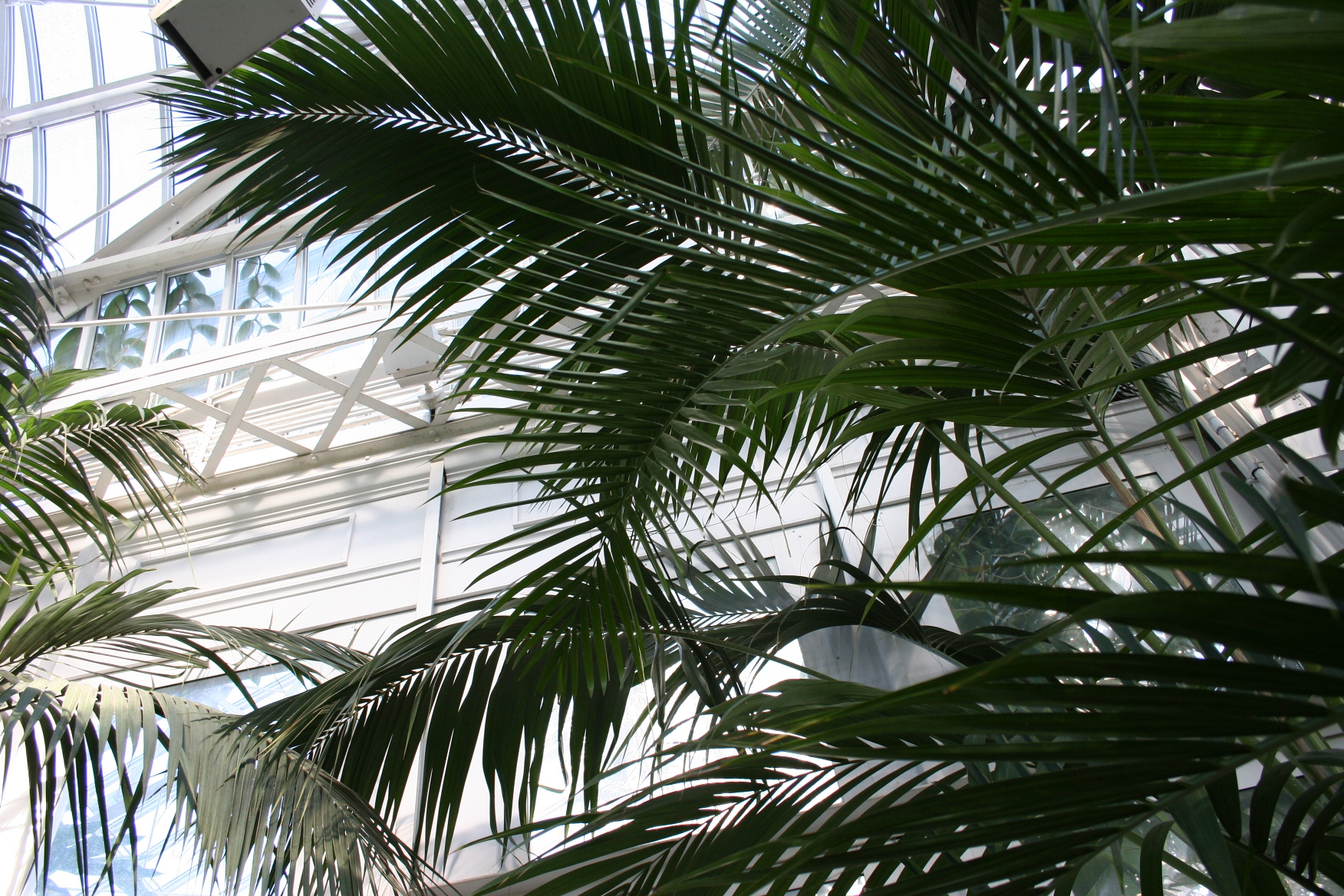
Looking up at the palm trees.

Looking up at the palm trees.

For a snippet of an afternoon, I pretended I was in the tropics, in a land of lush greenery and flowing rivers and blooming flowers.

Temps were downright hot inside the Conservatory, the reason I left my coat in the car.

Temps were downright hot inside the North Garden, the reason I left my coat in the car.

Not difficult to imagine in the 80-degree warmth of the North Garden,

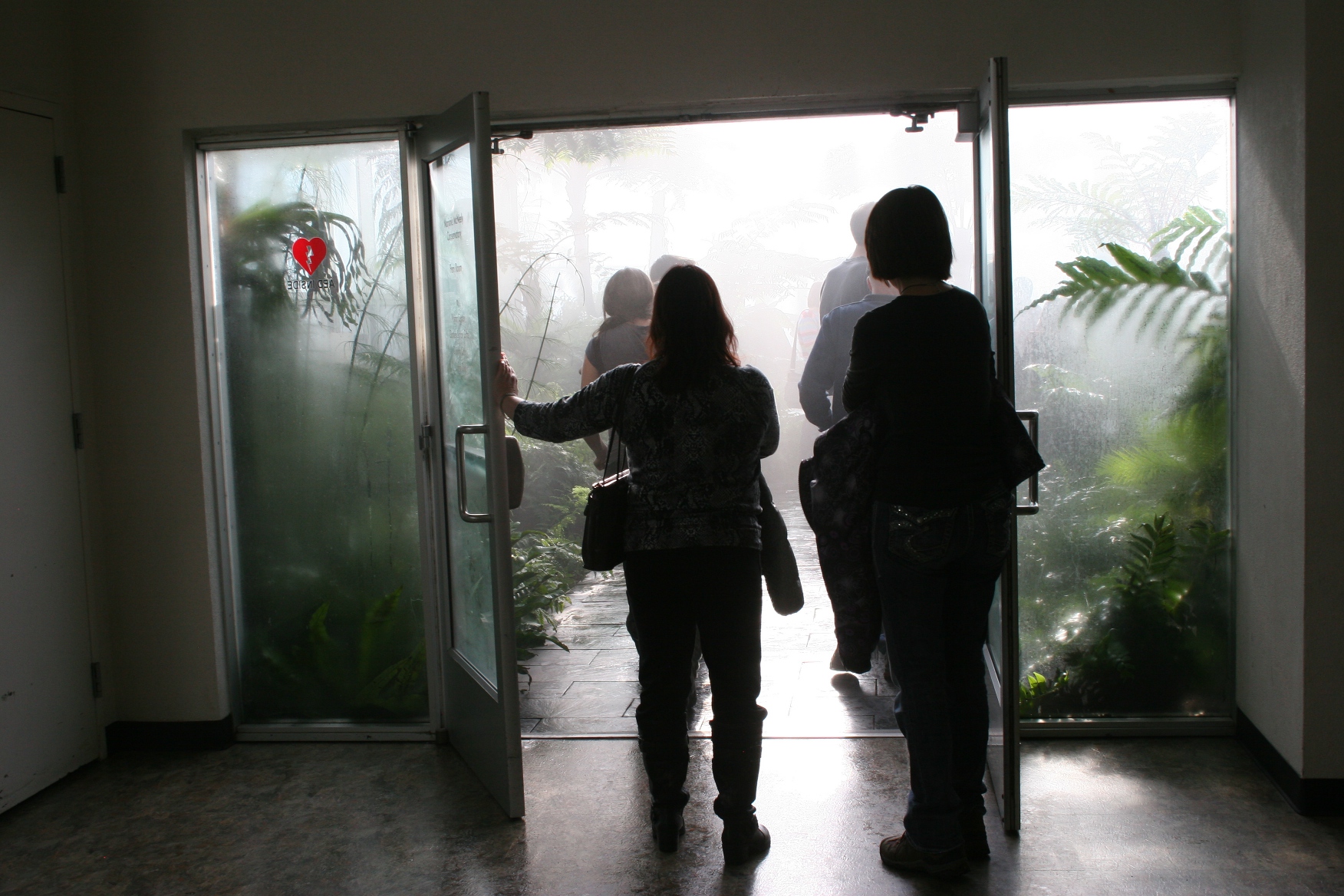
I tucked my Canon inside my camera bag before entering the humid/misty Fern Room.

I tucked my Canon inside my camera bag before entering the humid/misty/foggy Fern Room.

in the smothering humidity of the Fern Room

Lilies and other flowers perfumed the Sunken Garden.

Lilies and other flowers perfumed the Sunken Garden.

or in the Sunken Garden scented by the blossoms of blooming flowers.

Lines of people streamed through the Sunken Garden, by far the most crowded space.

Lines of people streamed through the Sunken Garden, by far the most crowded space.

This was exactly what I needed, as did hundreds of others. Conservatory paths were packed with people meandering through the gardens, pausing to photograph flowers and/or simply basking in the warmth and beauty.

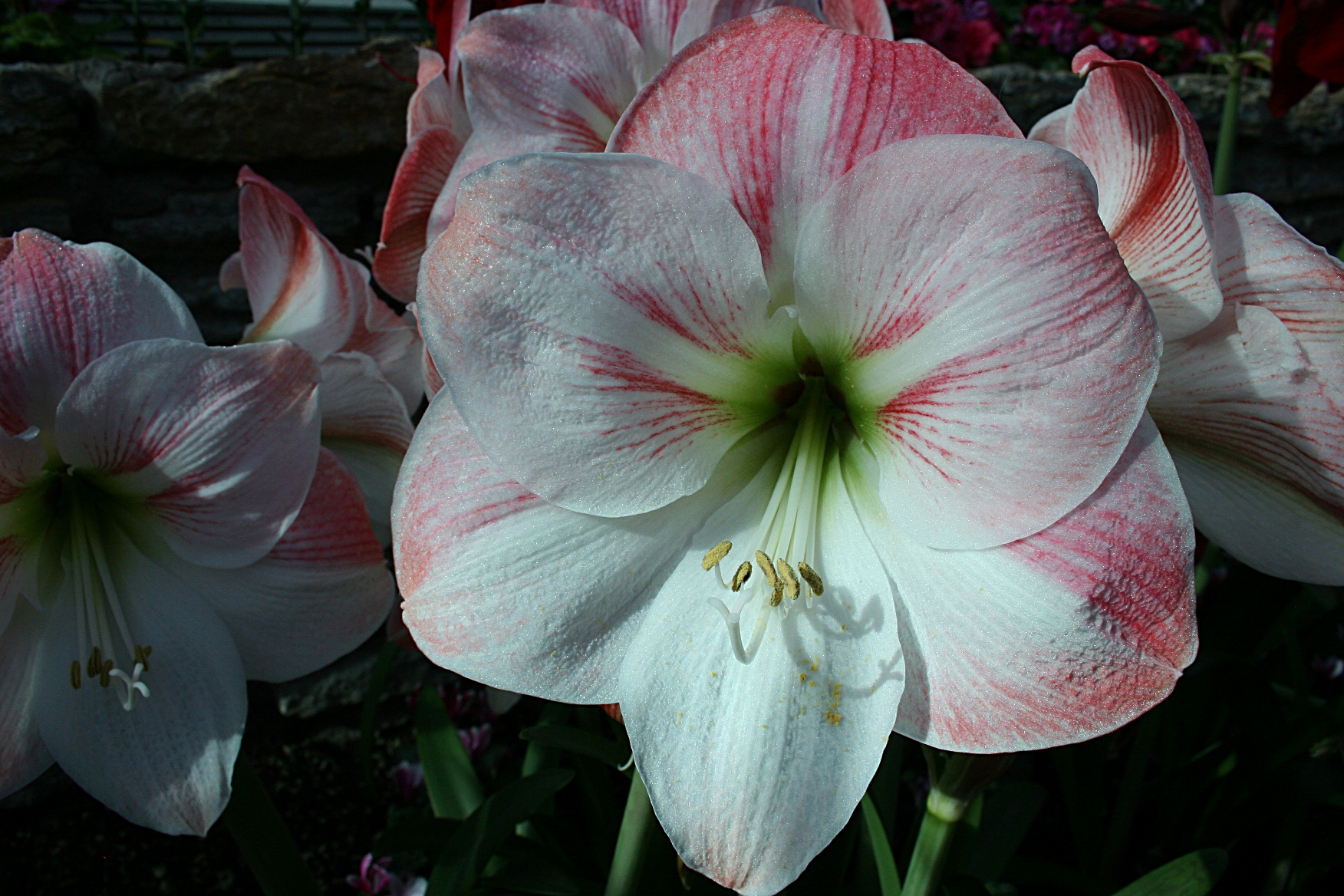
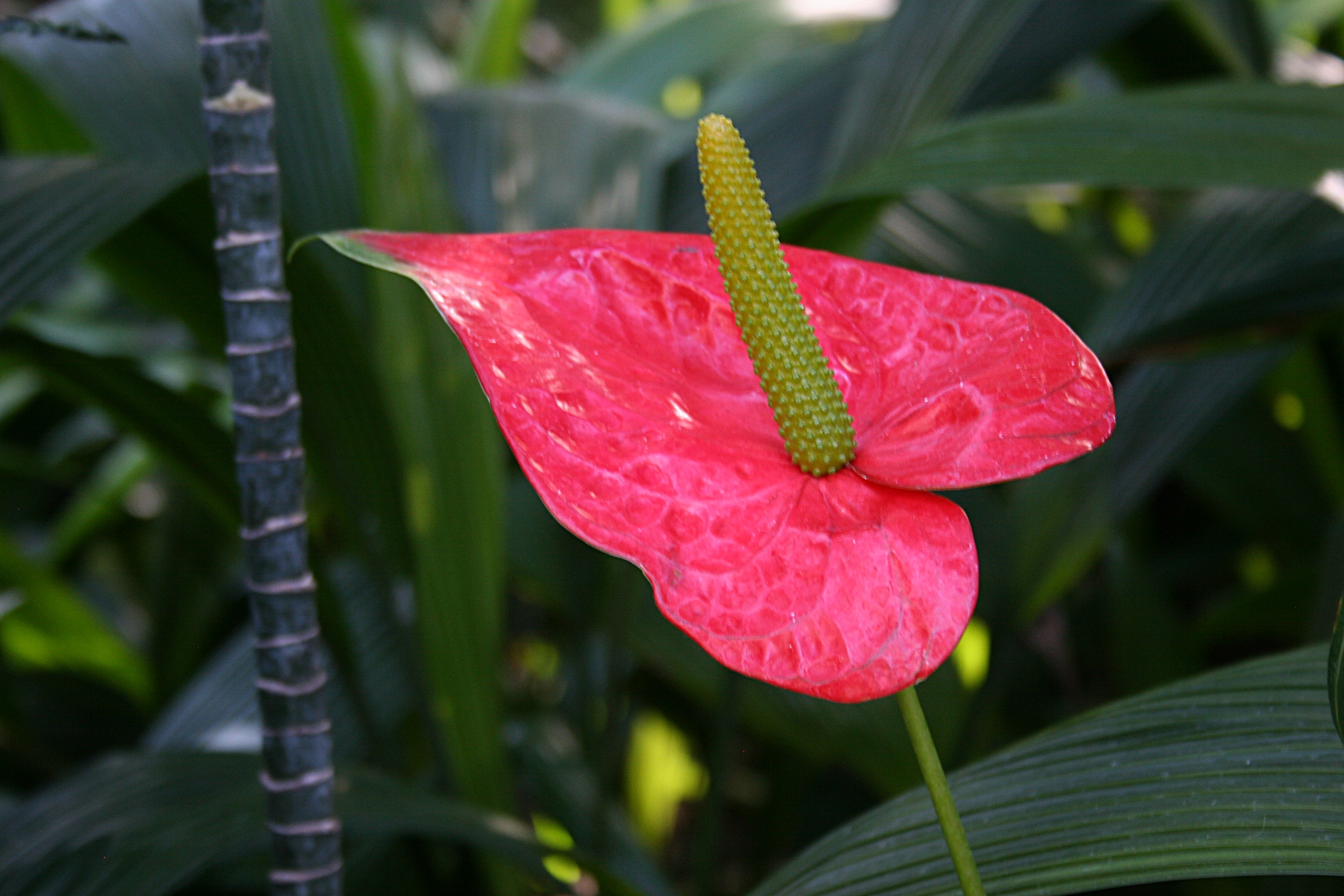
I can't recall the name of this flower, but I paused to photograph it because I like its shape and sheen.

I can’t recall the name of this flower, but I paused to photograph it because I like its shape and sheen.

Crowded conditions were not conducive to creative photography as I had to move along lest I hold up others. But I managed.

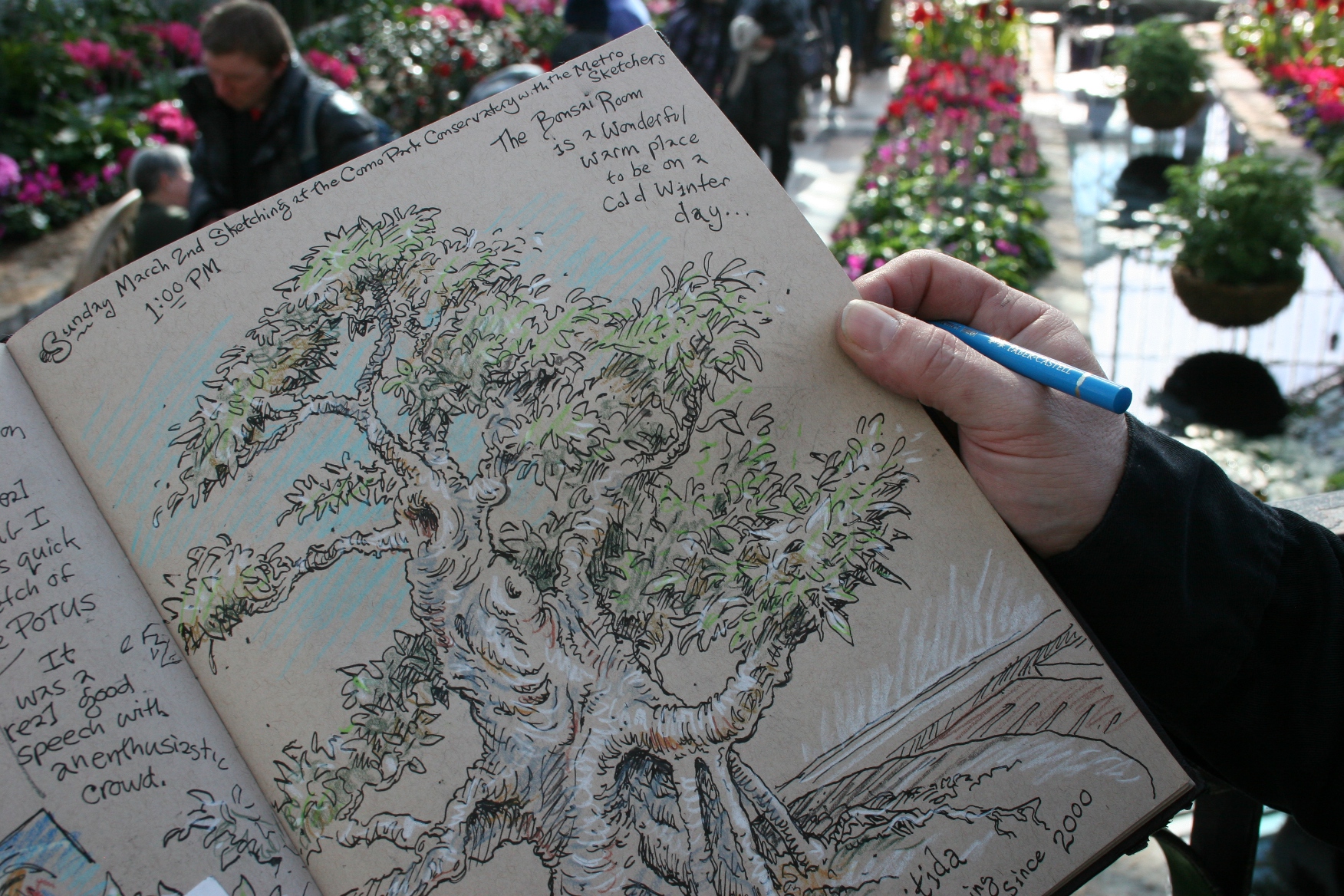
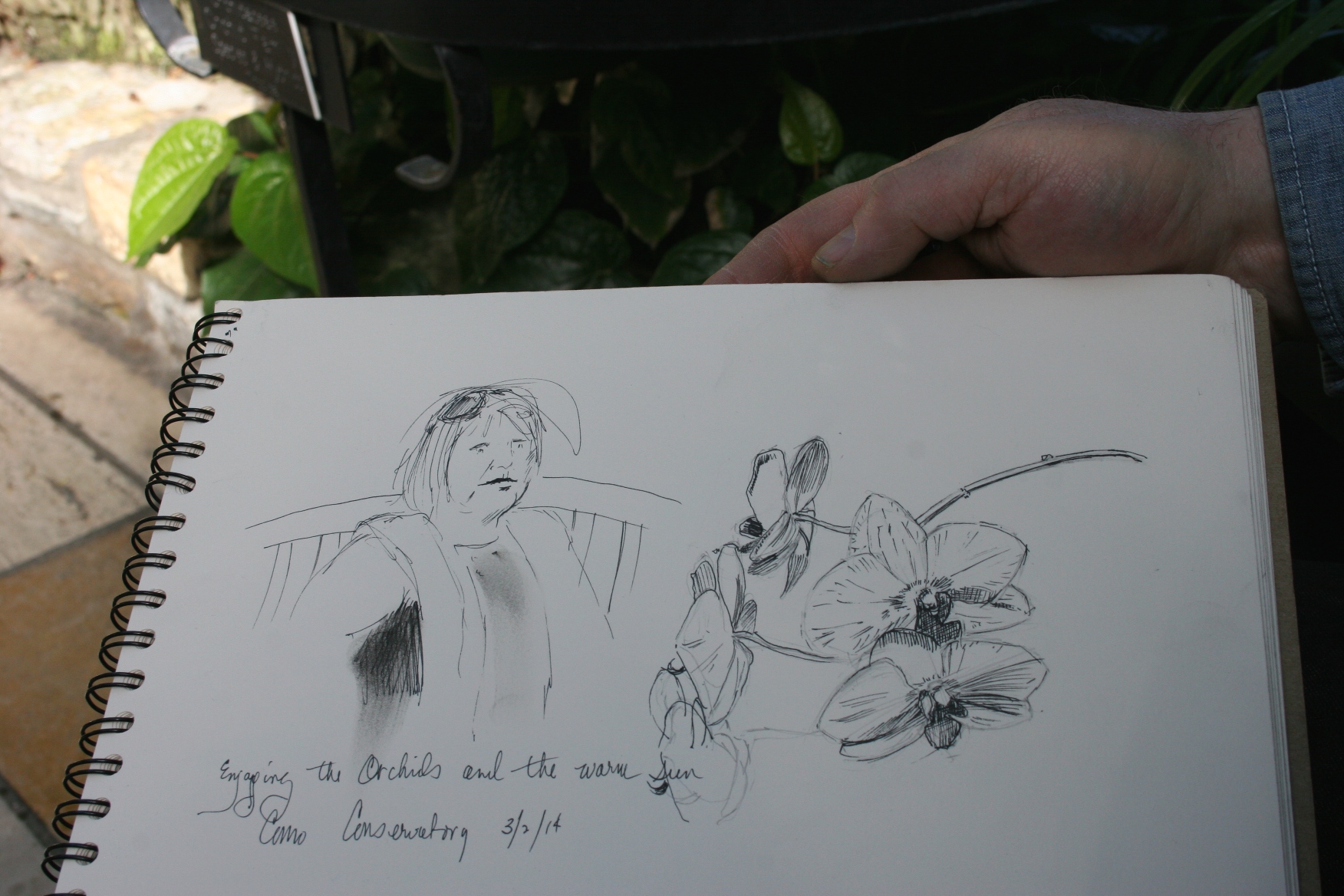
An artist sketching in the Sunken Garden flipped his sketchbook back to reveal his favorite sketch of the day, that of a bonsai tree. His art is spectacular.

An artist sketching in the Sunken Garden flipped his sketchbook back to reveal his favorite sketch of the day, that of a bonsai tree. His art is spectacular. My apologies for failing to ask his name.

Metro Sketchers, artists who monthly gather to create art at a chosen location, recorded the scenes unfolding before them.

Thomas Winterstein of St. Paul sketches a scene in the Palm Dome.

Thomas Winterstein of St. Paul sketches a scene in the Palm Dome.

I chatted with a few,

Thomas Winterstein's sketch.

Thomas Winterstein’s sketch.

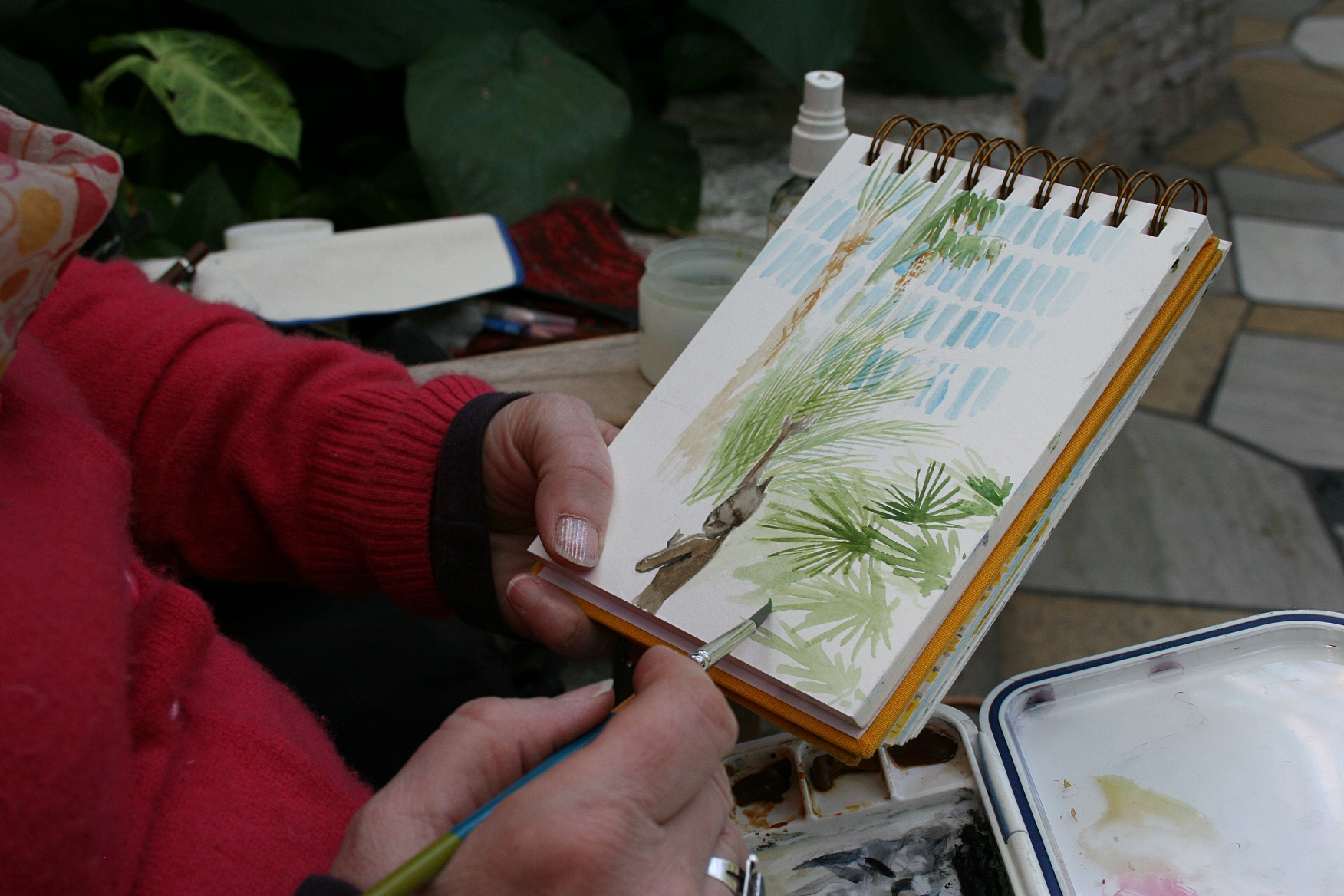
admired their art and their ability to create with paint and pencils and other mediums.

Watercolor artist Kathleen Richert paints a fountain in the Palm Dome.

Watercolor artist Kathleen Richert paints a fountain scene in the Palm Dome.

I wondered, too, if my California native son-in-law was at all impressed. After all, palm trees and other warm climate plants certainly aren’t foreign to him.

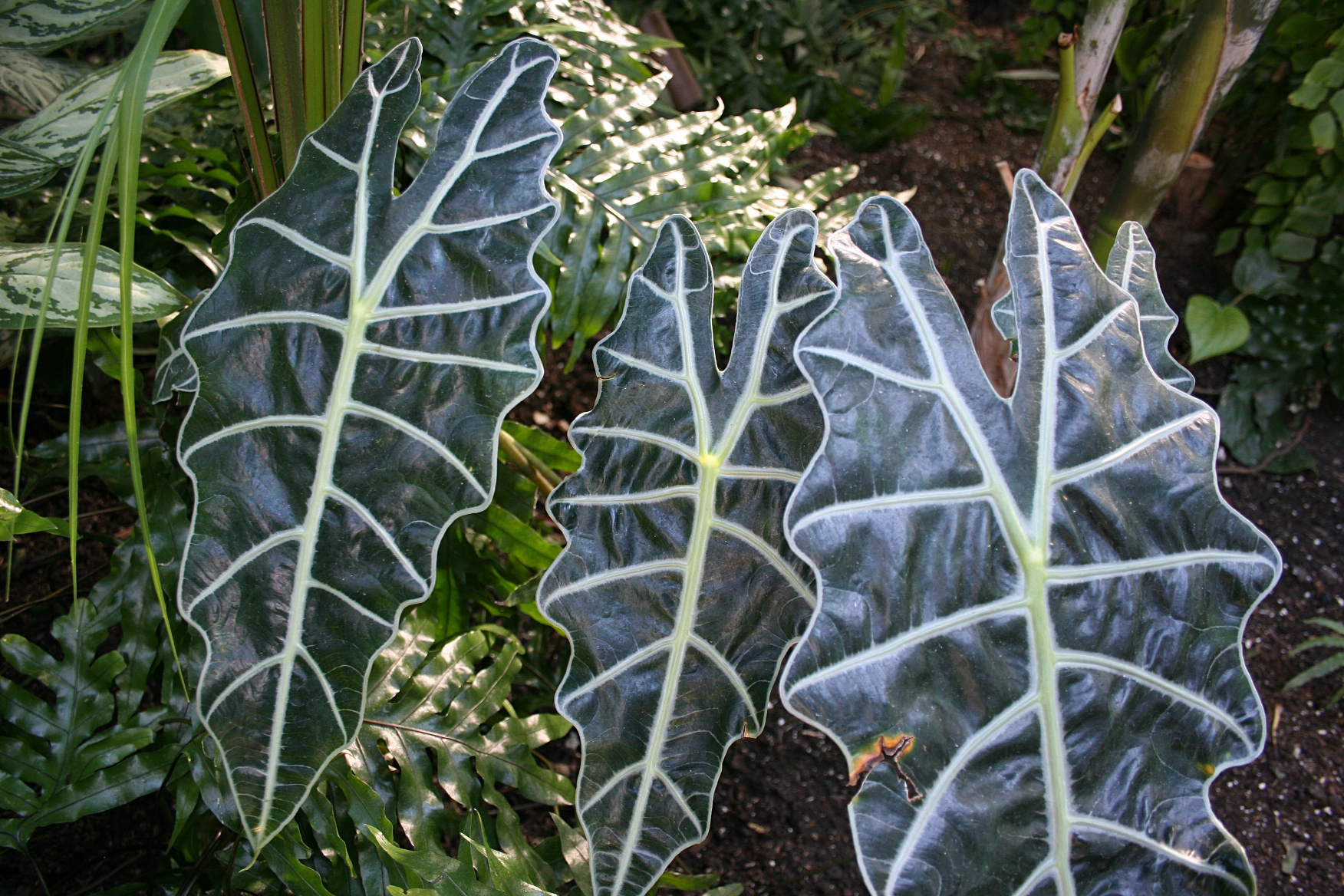
I have no idea what plant this is, but I love the leaves.

I have no idea what plant this is, but I love the leaves.

To this Minnesotan, though, the Marjorie McNeely Conservatory at Como Park in St. Paul proved impressive and mentally uplifting in this longest and coldest of Minnesota winters.

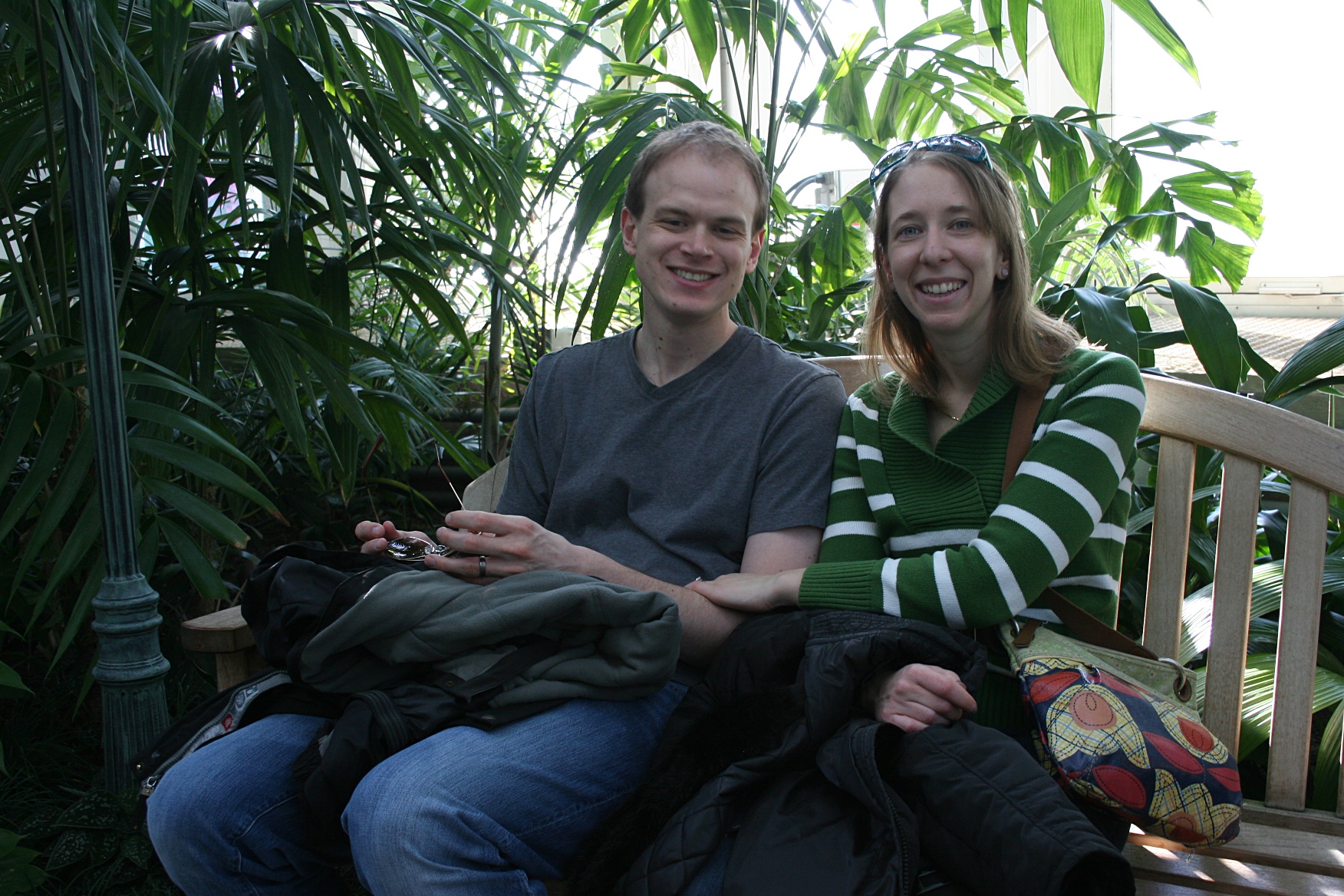
Even though you're not supposed to snap posed portraits, I managed to take a quick shot of my daughter and her husband in the Palm Dome.

I managed a quick shot of my daughter and her husband in the Palm Dome, even though portraits are banned.

FYI: Just for the record, I left my coat in the daughter’s car as I did not want to carry it around in the Conservatory while also juggling a camera. The daughter was kind enough to drop Mom and Dad off at the sidewalk leading to the Conservatory. She and her husband then circled the parking areas for an incredibly long time before squeezing into a tight parking space. I’d advise driving a small vehicle here and not attempting to park in the unplowed gravel lot where vehicles were getting stuck.

Check back for more photos.

© Copyright 2014 Audrey Kletscher Helbling
 

A Halloween treat: Perry the corpse flower blooms at Gustavus Adolphus College October 31, 2013

THE TIMING COULDN’T BE BETTER.

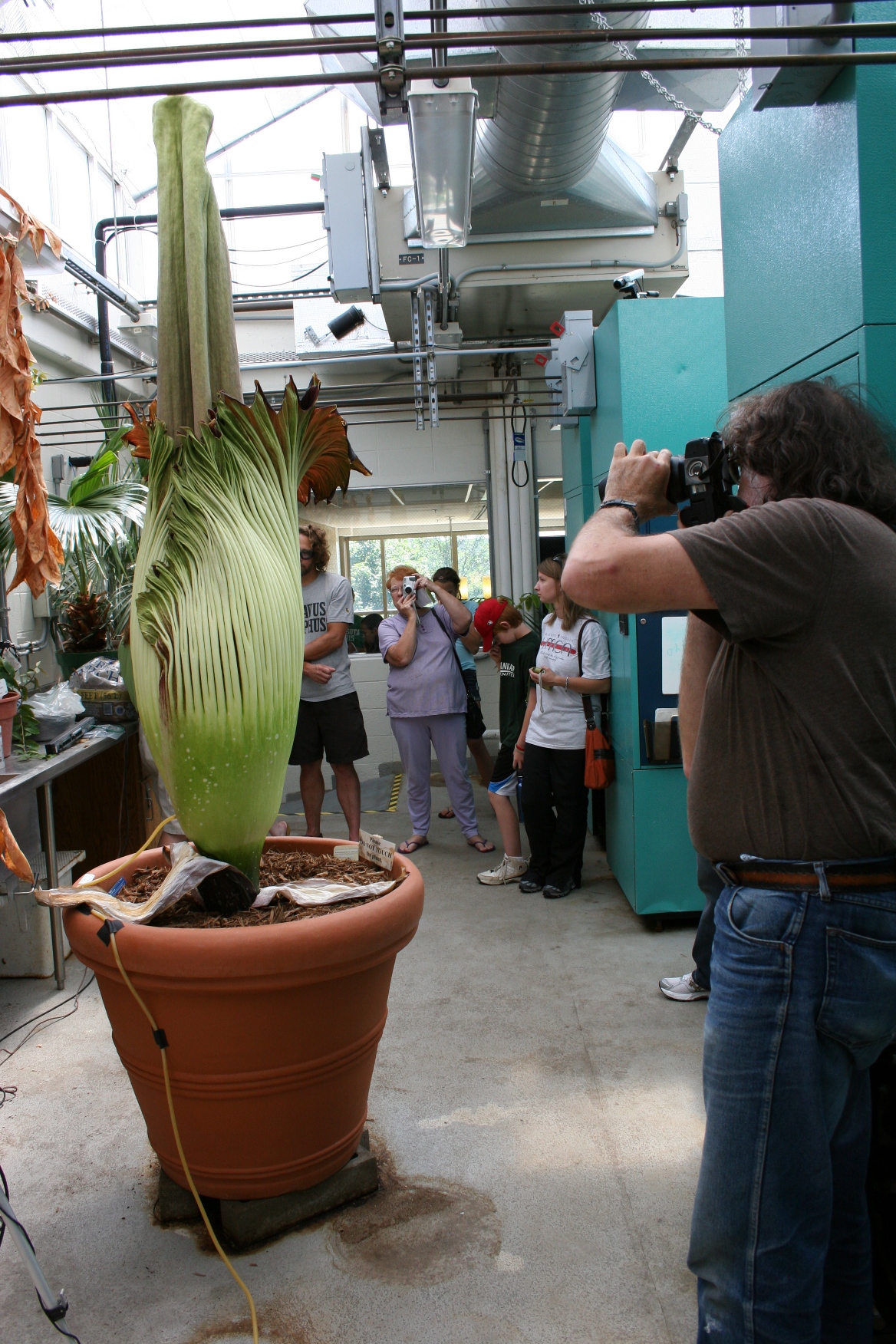
Visitors came with cameras in hand to photograph the rare blooming of Perry, which lasted until Sunday.

Visitors came with cameras in hand to photograph Perry in July 2010.

At 2 a.m. today, Perry the corpse flower began blooming in a third floor greenhouse in the Alfred Nobel Hall of Science on the campus of Gustavus Adolphus College in St. Peter.

What better day than Halloween for the rare blossoming of this rare tropical plant emitting the stench of death or rotting meat, depending on your nose and opinion.

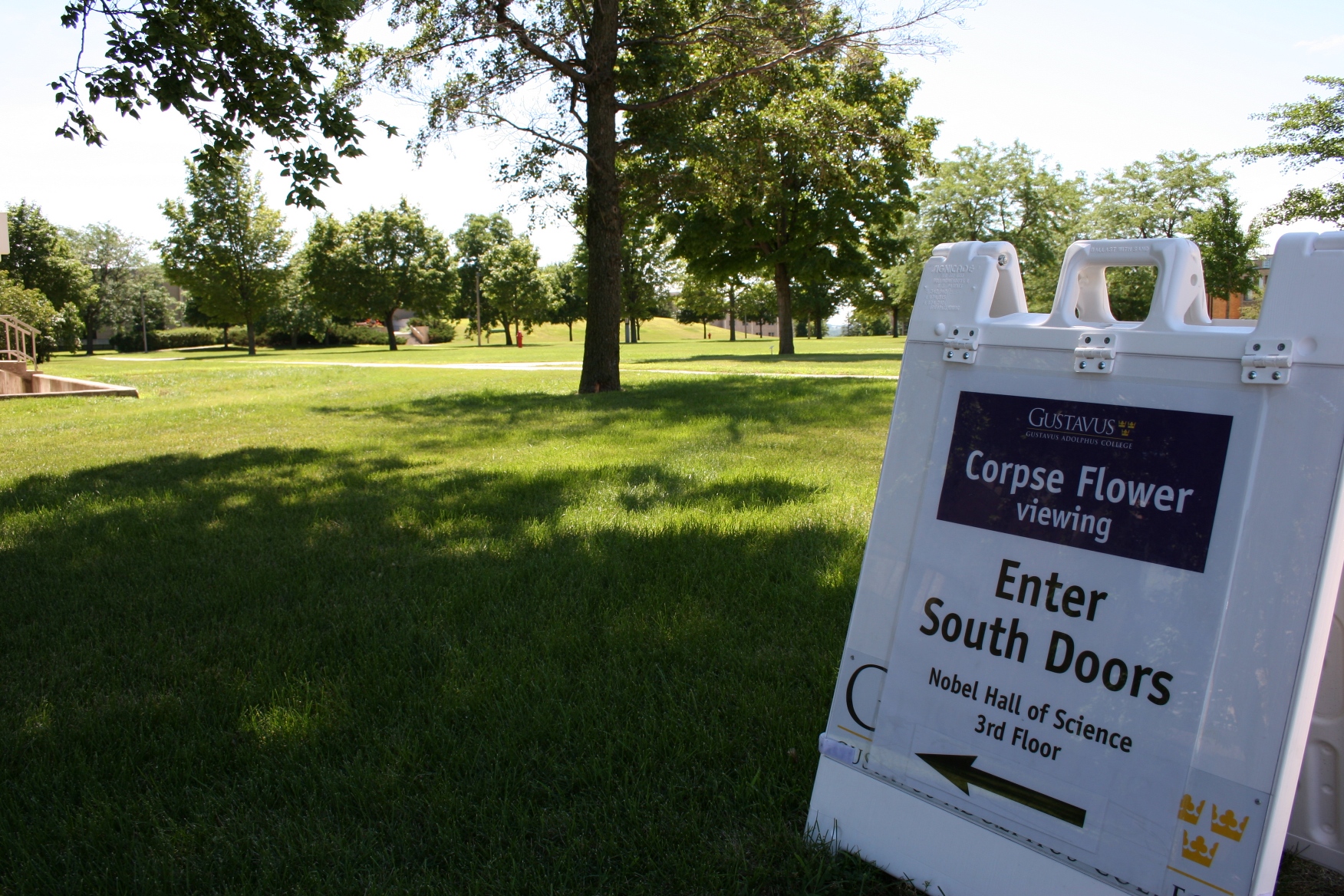
A sign at Gustavus Adolphus College directs visitors to the Nobel Hall of Science where "the corpse flower" grows in a third floor greenhouse.

A sign at Gustavus Adolphus College directs visitors to the Alfred Nobel Hall of Science where “the corpse flower” is blooming in a third floor greenhouse. Minnesota Prairie Roots file photo 2010.

You can view, and smell, this mammoth Amorphophallus titanum, nicknamed Perry, from 2 p.m. – 9 p.m. today (Halloween) or from noon to 8 p.m. on Friday, November 1.

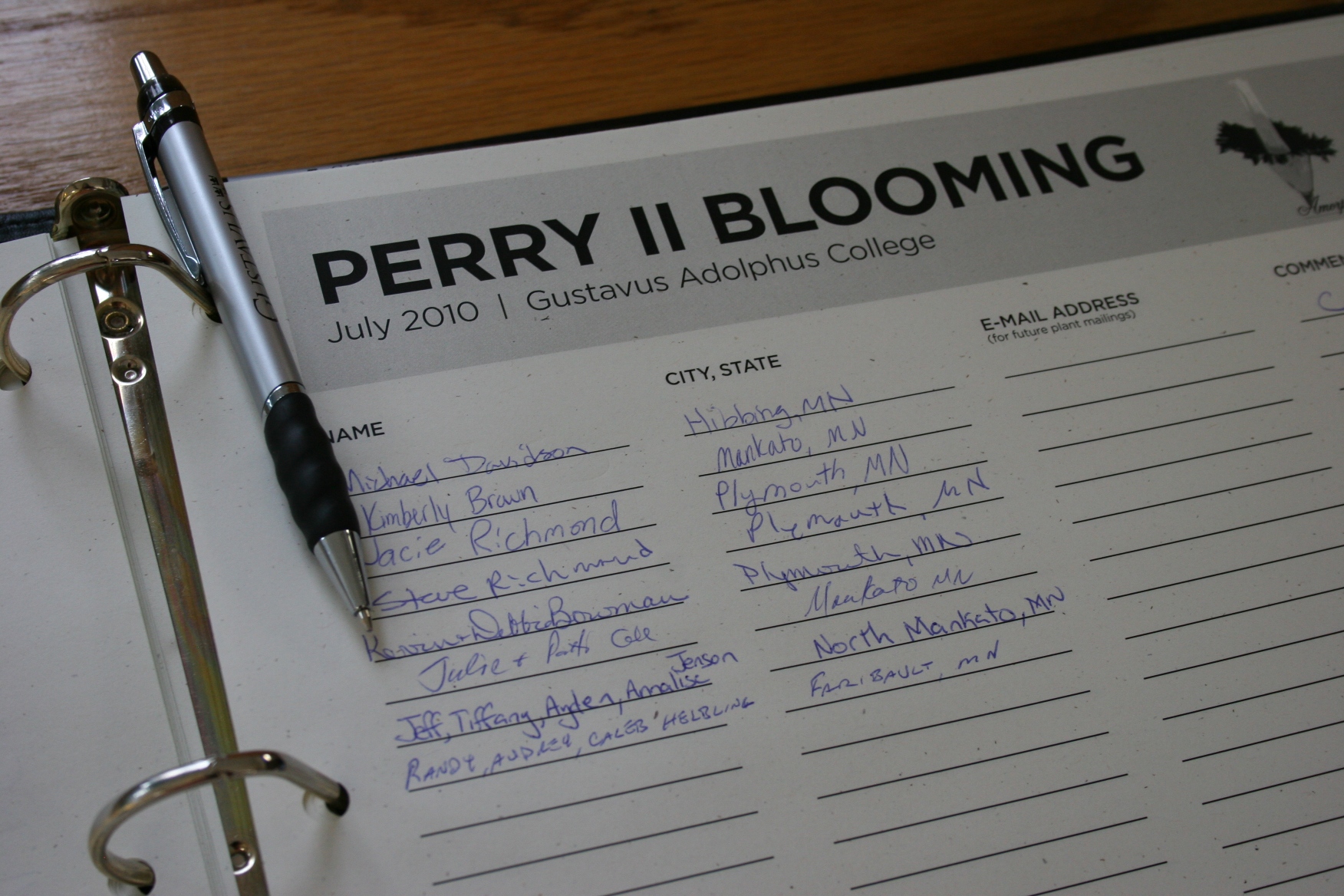
As of noon Friday, most visitors who signed Perry's guestbook came from the St. Peter-Mankato area. However, as word of the blooming spread, visitors were expected from all over--some had already come from Paris and Sweden (they were already visiting in the area).

The Petty guestbook signed by visitors in 2010. Minnesota Prairie Roots file photo.

I saw Perry when the plant bloomed in 2010.  (You can view photos from that visit by clicking here.)

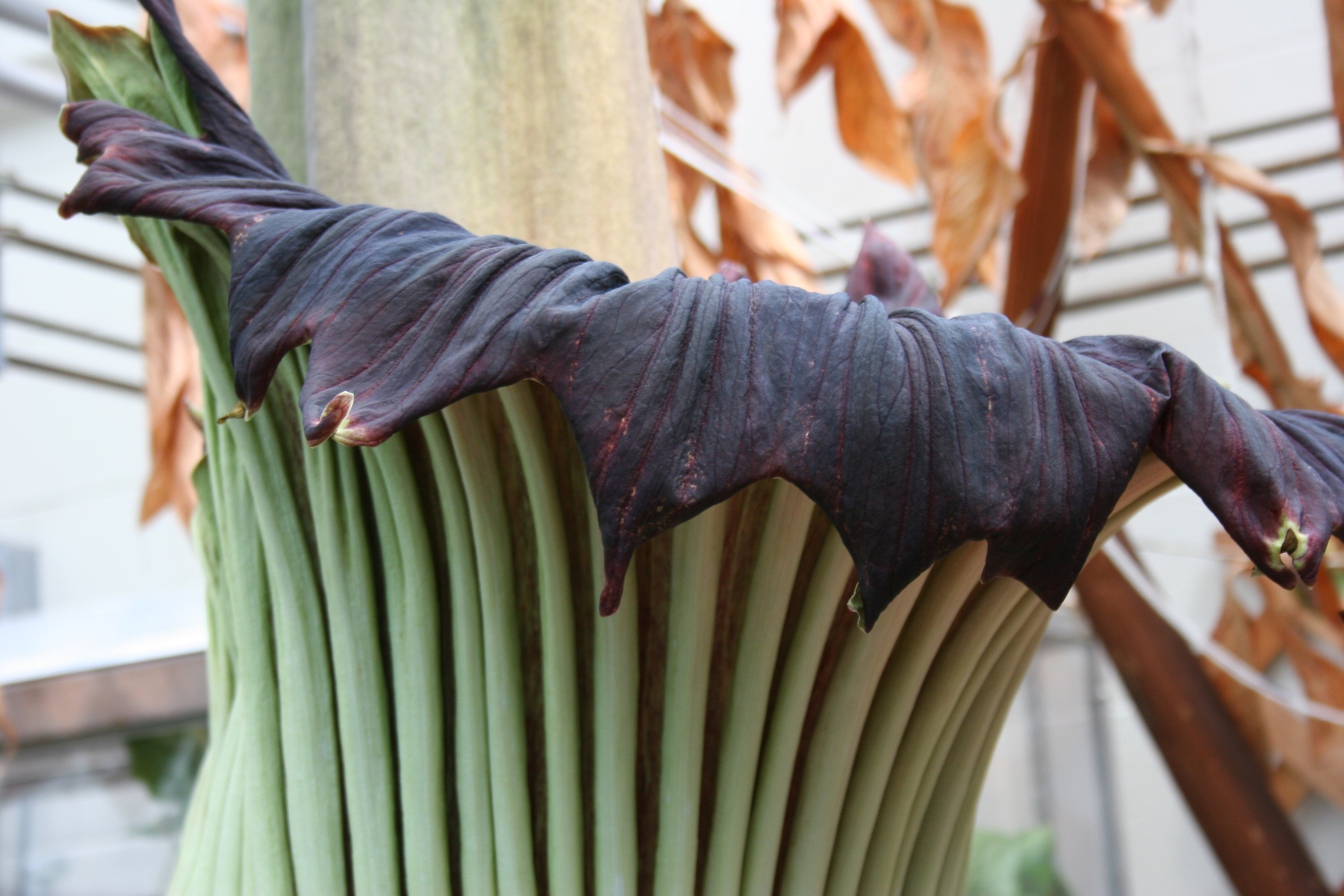
A close-up of Perry's unfolding spathe, an outer purple vase-like sheath.

A close-up of Perry’s unfolding spathe, an outer purple vase-like sheath. Minnesota Prairie Roots file photo 2010.

If you plan to see Perry in person, make haste. If you can’t get to St. Peter, then click here to watch Perry via web cam.

Happy Halloween!

Copyright 2013 Audrey Kletscher Helbling
 

In St. Peter: Waiting for the corpse flower to bloom October 29, 2013

PERRY MANIA is invading Gustavus Adolphus College in St. Peter.

A shot through a window into the viewing area shows Perry beginning to open.

A shot through a window into the viewing area shows Perry beginning to open in late July 2010.

OK, that may be a bit of a stretch. You decide, But interest in the predicted early November blooming of Perry, otherwise known as the “corpse flower,” is strong.

Think web cams, “featured news” on the college website, headlines in the St. Peter Herald, a Perry blog and even Perry themed t-shirts, cap, mugs, tote bag, bumper sticker and other merchandise available for purchase.

A close-up of Perry's unfolding spathe, an outer purple vase-like sheath.

A close-up of Perry’s unfolding spathe, an outer purple vase-like sheath. Minnesota Prairie Roots file photo 2010.

And all of this because the rare tropical plant, a native of Sumatra in Indonesia and with the largest unbranched inflorescence in the world, is about to blossom.

This mammoth plant, which can reach heights of eight to 10 feet and a life span of 40 years, is noted for its distinct rotting flesh/rotting meat odor.

A shot through the window into the viewing area of the titan arum.

A shot through the window into the viewing area of the titan arum shows the high level of interest in the corpse flower. Minnesota Prairie Roots file photo 2010.

Three years ago, my husband, son and I were among the 5,000 plus curious who flocked to the third floor greenhouse in the Nobel Hall of Science to view, and smell, the Amorphophallus titanum, aka Titan Arum. Gustavus named its plant, seeded in 1993, after the Titan Hyperion, associated with intellectual curiosity. That would be Perry, for short.

I don’t recall the precise smell of Perry only 12 hours after the plant began blooming in late July 2010. But I do remember thinking the odor was not nearly as bad as I had imagined and that I’ve smelled worse (like a slurry pit being emptied) while traveling through rural Minnesota.

One of the Yang boys wards off the offending odor with a perfumed bandanna.

The odor was too much for this boy, who covered his face with a perfumed bandanna when visiting Perry in 2010. Minnesota Prairie Roots file photo.

But others, such as elementary-aged kids from Edina, pressed perfumed bandannas to their noses.

A diagram explained the life cycle of "the corpse plant."

A diagram explains the life cycle of “the corpse plant.” Minnesota Prairie Roots file photo 2010.

To see, and smell, a corpse flower in bloom is a rare opportunity, one limited to only a few days. This marks Perry’s third blooming. And there isn’t exactly an abundance of these plants in the world, one of the reasons Gustavus botanists are invested in conservation of the Titan Arum. Gustavus received 20 Titan Arum seeds from a San Francisco physician  in 1993 and Perry is the result.

Visitors came with cameras in hand to photograph the rare blooming of Perry, which lasted until Sunday.

Visitors came with cameras in hand to photograph the rare blooming of Perry in July 2010. Perry has previously bloomed in 2007 and 2010. Minnesota Prairie Roots file photo 2010.

Is Perry worth seeing, worth smelling, worth photographing? Definitely.

If you’re hypersensitive to odors, though, pack your perfumed bandanna.

FYI: As early November nears, be sure to check the Gustavus Adolphus website (click here) often for updates on Perry and the precise date when blooming is expected. Some Facebook fans are predicting blossoming on Halloween or even earlier.


Exploring Wisconsin’s High Cliff State Park & a disappointing discovery October 22, 2013

Entering the park.

Entering the park.

AN AUTUMN AFTERNOON in High Cliff State Park in east central Wisconsin, even with grey skies and the occasional spurt of drizzle, is magnificent.

On a recent Saturday, my daughter who lives in nearby Appleton, husband and I explored this sprawling park near Sherwood along the banks of Wisconsin’s largest inland body of water, Lake Winnebago.

Sky and lake and land meld in this photo taken from atop a tower in High Cliff State Park. Photo by Miranda Helbling.

Sky and lake and land meld in this photo taken from atop a tower in High Cliff State Park. Photo by Miranda Helbling.

But it was not the lake—more on that later—which impressed as much as the view of the valley from high atop the park. To see acres and acres and acres of trees below, buffeted by the lake on one side, transitioning into the golden, russet and reddish hues of the season is something to behold.

Old limestone quarry walls below a hillside of trees.

Old limestone quarry walls below a hillside of trees.

Likewise, limestone walls, remaining from the days when this stone was quarried from this land, provide a neutral backdrop to flaming maples and other trees bursting with color on hillsides.

Kiln ruins.

Kiln ruins.

And then there are the old kilns, once used to create quick lime for use in plaster and cement and for agricultural purposes. I’m thankful mining operations here ceased in 1956. To totally decimate this place of natural beauty would have been a tragedy.

When we discovered what other park visitors were gathering, Randy began harvesting hickory nuts too and stuffing them into his jacket pockets.

When we discovered other park visitors gathering nuts, Randy began squirreling away hickory nuts, too, stuffing them into his jacket pockets.

For this beautiful park proves a lovely spot to picnic on a Saturday—a place where families pluck coveted hickory nuts from the ground to dry and crack and later eat plain or in cakes or cookies.

Here a family prepares to celebrate a wedding, placing burlap runners upon picnic tables covered with white plastic tablecloths inside the park shelter.

The tower...

The tower…

and the view from the tower. Photo by Miranda Helbling.

and the view from the tower. Photo by Miranda Helbling.

Couples and families climb 64 steps to the top of a wooden tower for a spectacular view of the valley. I keep my feet firmly planted on the ground, neck craned, waving to my husband and daughter high above me.

Red Bird, Chief of the Winnebago.

Red Bird, Chief of the Winnebago.

A 20-something man squats on a fence for a photo; only his balance keeps him from tumbling off and over the cliff. Nearby a statue of Red Bird, chief of the Winnebago, stands, sure and solid atop a rock.

Winnebago. It is also the name of the 131,939* acre lake which borders the western edge of High Cliff State Park and runs 28 miles long and eight miles wide near the towns of Fond du Lac, Oshkosh, Neenah and Menasha.

Blue-green Lake Winnebago as photographed from the beach at High Cliff State Park.

Blue-green Lake Winnebago as photographed from the beach at High Cliff State Park.

While impressive in size and fierceness—this day churning and roiling and rolling in waves—Lake Winnebago disappoints me.

A close-up of the lake. No photo editing of the blue-green color.

A close-up of the lake. No photo editing done of the water’s hue.

I do not expect to see a lake that is green, as in it appears someone dyed the water green for a St. Patrick’s Day celebration. Why, I wonder, is a body of water this massive so overgrown apparently with blue-green algae? I am no scientist. But I suspect run-off (of chemicals) from lawns and farm fields into waterways that flow into Lake Winnebago, has created the problem.

Looking from the rock wall toward the marina.

Looking from the rock wall toward the marina.

Honestly, I would never swim in this water, or even dip my toes into this lake. My daughter shares that a friend swam in Lake Winnebago this past summer and broke out in a rash.

Just another view of the lake and the area where boats slip into shore.

Just another view of the lake and the area where boats slip into shore.

Researchers from the University of Wisconsin-Milwaukee are currently studying the lake, hoping to learn more about dangerous toxins produced by the blue-green algae, according to an article published in the Milwaukee, Wisconsin Journal-Sentinel. Drinking water for four area cities, including Appleton, comes from Lake Winnebago. The water is treated, of course, but it still concerns me to think this lake, in this condition, is a source of drinking water.

This lake is a popular fishing spot, too.

After viewing the lake’s poor water quality, I’m thankful these researchers have secured a $750,000 five-year grant from the National Institution of Environmental Health Sciences and the National Science Foundation to study the lake.

The quality of this lake water scares and saddens me and, truly, detracted from my experience at High Cliff State Park, an otherwise lovely place of exceptional natural beauty.

* NOTE: Various sources cite different sizes for Lake Winnebago. The Wisconsin Department of Natural Resources lists the lake at 131,939 acres, about the same acreage size of Mille Lacs Lake in Minnesota.

#

BONUS PHOTOS:

A colorful collage of leaves on a trail near the kiln ruins.

A colorful collage of leaves on a trail near the kiln ruins.

The only remaining building in

The only remaining building on the former site of Clifton, a town which existed here until the quarries closed. This 1800s building is now a museum and interpretative center, but was not open on the day we were at the park. Efforts are currently underway to save the structure from demolition, according to information on the Friends of High Cliff website. I have no idea why anyone would want to destroy this historic store.

A scenic view shot from near the lake.

A scenic view shot from near the lake.

Autumn in the picnic grounds of High Cliff.

Hickory nuts, in their protective outer shell, litter the picnic grounds.

© Copyright 2013 Audrey Kletscher Helbling
 

A photo essay: Loving autumn in Minnesota October 14, 2013

Filed under: Uncategorized — Audrey Kletscher Helbling @ 6:00 AM
Tags: , , , , , , ,
A favorite part of my backyard, vintage lawn chairs along a limestone pathway now covered with leaves.

A favorite part of my backyard, where vintage lawn chairs edge a limestone pathway now strewn with leaves.

OF ALL THE SEASONS, autumn rates as my favorite in Minnesota.

My neighbor's maple tree.

My neighbor’s maple tree.

Crisp days. Cobalt skies. Colors changing.

The bees are busy this time of year, here working a black-eyed Susan.

The bees are busy this time of year, here working a black-eyed Susan, among the native wildflowers in my yard.

Sharp shadows and angled light.

Leaves upon that limestone path.

Leaves upon that limestone path.

Earthy scents rising from fallen leaves and ripening crops.

A bloom in a patio pot.

A bloom in a patio pot.

Bursts of red and orange, mixed with shades of brown, that color the earth.

Hibiscus mahogany splendor, planted in two patio pots, has nearly reached the roof line of the garage.

Hibiscus mahogany splendor, planted in two patio pots, has nearly reached the roof line of the garage.

Dappled light. Dancing leaves. Magical.

An abundance of produce—acorn squash baking, fresh tomatoes thrown into a pot of chili, the crunch of biting into a SweeTango apple from a local orchard.

A backyard campfire.

Prolific zinnias are still blooming.

Prolific zinnias are still blooming.

I love this season.

There's nothing prettier than an autumn leaf.

There’s nothing prettier than an autumn leaf.

This autumn.

Another view of that stunning hibiscus mahogany splendor.

Another view of that stunning hibiscus mahogany splendor.

I do.

© Copyright 2013 Audrey Kletscher Helbling
 

Autumn beauty in Nerstrand Big Woods State Park October 3, 2013

A baby's sock lost along a path at Nerstrand Big Woods State Park in rural rice County Minnesota.

A baby’s sock lost along a path at Nerstrand Big Woods State Park in rural Rice County, Minnesota.

A single sock.

When I paused to photograph this oak leaf, my husband dubbed the trail Acorn Trail.

When I paused to photograph this oak leaf, my husband dubbed the trail Acorn Trail.

A single oak leaf.

Countless bees and butterflies flitted among the wildflowers.

One of the many bees and butterflies swarming the wildflowers.

A single bee.

The solo head of an unidentified plant in the afternoon sunlight.

The solo head of an unidentified plant in the afternoon sunlight.

Solitude.

In the quiet of the woods, beautiful berries discovered.

In the quiet of the woods, beautiful berries discovered.

Beauty.

Clusters of wildflowers edge the woods.

Clusters of wildflowers edge the woods.

Wind bending wildflowers and weeds, the sun beating upon our backs as we curve into the shaded woods.

My husband, Randy, pauses to look over the ravine.

My husband, Randy, pauses to look over the ravine.

Pause at the rust-hued railing, glimpse to the ravine below where water once flowed when rain was plentiful.

Couples and families hiked the trails through the park.

Couples and families hike the trails through the park.

Lost in thoughts. Savoring the solace which embraces us even as groups of hikers pass us by.

A tree line in the park shows leaves beginning to change color.

A tree line in the park shows leaves beginning to change color.

We have come here to Nerstrand Big Woods State Park on a Sunday afternoon to see the fall colors, only beginning to show.

The sign welcoming visitors to Nerstrand Big Woods State Park, known for its beautiful fall colors.

The sign welcoming visitors to Nerstrand Big Woods State Park, known for its beautiful fall colors.

But we have come here, too, my husband and I, to walk together, to hold hands, to embrace this afternoon in a place not far from home, yet so far away.

BONUS PHOTOS:

The road running east and west past the park.

The road running east and west past the park.

Berries pop with color near the entry into the park.

Berries pop with color near the park entry.

Leaves of purple and green along a path in the woods.

Along a path in the woods.

The park features an abundance of wildflowers.

The park features an abundance of wildflowers.

The sumac has already turned color.

The sumac has already turned color.

FYI: Nerstrand Big Woods State Park offers numerous organized activities to engage visitors in the season.

For example, from now until October 19, the park is hosting a Fall Photo Quest scavenger hunt. Bring your digital camera or borrow one at the Visitor Center where you will get instructions. Collect fall photos while learning why and how leaves change color.

On Saturday, October 5, from 1 p.m. – 4 p.m., gather native seeds for planting in park restorations. Sign up at the Visitor Center.

The following Saturday, October 12, from noon – 4 p.m., join the Autumn Trees Scavenger Hunt, collecting clues along trails as you discover which leaf belongs to which tree. Stop at the Visitor Center to start your adventure.

Click here for details on the above listed programming at Nerstrand Big Woods State Park.

Also on Saturday, October 12, St. John’s United Church of Christ, Wheeling Township, sponsors its 17th annual Big Woods Run beginning at the country church near the park. Registration deadlines are October 7 and 8. After the race, enjoy a luncheon featuring homemade soups and more, an awards ceremony and a bake sale. For more info, click here.

This Saturday, October 5, from 10:30 a.m. – 1 p.m., Nerstrand United Methodist Church, 12 Maple Street in Nerstrand hosts its annual Fall Festival. The event features gift baskets, a silent auction, a bake and produce sale, and lunch. Hot beef sandwiches, chili, chicken wild rice soup and homemade pies with ice cream will be served.

Nerstrand Big Woods State Park is located just west of Nerstrand or northeast of Faribault.

© Copyright 2013 Audrey Kletscher Helbling
 

Chasing the light in Luverne September 18, 2013

An overview of the gallery's inviting first level.

An overview of the gallery’s inviting first level.

WALK INTO THE BRANDENBURG GALLERY in Luverne with a camera and you likely will feel unworthy and intimidated, but mostly in awe.

Brandenburg is among natives honored on a lower level hallway Rock County Hall of Fame. He's on the lower right.

Brandenburg is among native residents honored in a lower level hallway Rock County Hall of Fame. He’s on the lower right, inducted in 1992. Brandenburg graduated from Luverne High School in 1963 and, after college, worked as picture editor at the nearby Worthington Daily Globe while also freelancing for National Geographic. He left the Globe in 1978 to do contract work for National Geographic.

This gallery houses the work of native son Jim Brandenburg, probably Minnesota’s best-known nature photographer.

A Brandenburg bison photo hangs to the left and the photographer talks about his work in a video, right.

A Brandenburg bison photo hangs to the left and the photographer talks about his work in a video, right.

For more than three decades, Brandenburg traveled the globe photographing for National Geographic. Yes, he’s that good. He’s accumulated numerous awards and has been published in so many places I can’t possibly list them all. (Click here to read his biography.)

Some of Brandenburg's photo books.

Some of Brandenburg’s photo books.

For years I’ve wanted to tour this gallery in the extreme southwestern corner of my state, to view, close up, the images I’ve seen in books, plus more. I wanted to study his photos—the light, the angles, the perspective.

Light plays upon walls, floors and Brandenburg photos in a stairway display.

Light plays upon walls, floors and Brandenburg photos in a stairway display.

Brandenburg is known for his focus on light. Light, as all serious photographers understand, can make or break a photo. This noted photographer features some of his best “light” photos in a published collection, Chased by the Light—A 90-Day Journey. Images from that book are among those showcased in the gallery.

The first floor of the gallery, which doubles as the Luverne Chamber of Commerce office, is artfully and comfortably decorated.

The first floor of the gallery, which doubles as the Luverne Chamber of Commerce office, is artfully and comfortably decorated. Here are three of Brandenburg’s prairie photos. The tall grass prairie, he says, played in to his development as a photographer. He calls prairie grass magical.

Given my deep love for my native southwestern Minnesota prairie, I most appreciate Brandenburg’s prairie images, displayed on the first floor of the gallery. If you doubt that beauty exists on the prairie, you won’t after seeing these photos.

Brandenburg's published books include Brother Wolf--A Forgotten Promise.

Brandenburg’s published books include Brother Wolf–A Forgotten Promise. The photographer says he swapped a hunting rifle for a camera and never tires of capturing an animal with his camera. The red fox , not the wolf as one would expect, is his favorite animal.

The gallery’s lower level offers a variety of images, but focuses on scenes from Minnesota’s northwoods, where Brandenburg now lives and works near Ely. Think mostly wolves.

The lower level gallery, also a conference space.

The lower level gallery, also a conference space.

After meandering through the gallery, I contemplated not only the talent Brandenburg possesses as a photographer, but his deep knowledge of the natural world and the patience required to wait for the ideal light or for an animal’s arrival. To anticipate, to react or not, to click the shutter button at the precise moment takes a certain talent. And I was graced, for an hour, to walk in the light of such incredible talent.

The entry to the gallery, located in the Rock County Courthouse square.

The gallery, located in the Rock County Courthouse square.

FYI: The Brandenburg Gallery, 213 East Luverne St., is open from 8 a.m – 5 p.m. Monday – Friday and from 10 a.m. – 5 p.m. Saturdays. There is no admission fee. Note that I had difficulty finding the gallery as the address does not seem to coincide with the street on which the gallery is located. When you see the courthouse, you’ve found the gallery, located right next door in the old county jail, now the Rock County Veterans Memorial Building. The building is actually along McKenzie Street.

A familiar scene to me, autumn leaves photographed in the Big Woods of Minnesota, within 20 miles of my home.

A familiar scene to me, autumn leaves photographed in the Big Woods of Minnesota, within 20 miles of my home.

Also, note that I asked permission to photograph in the gallery and was given the OK to do so.

FYI: Please click here to read my first in a series of posts, on Blue Mounds State Park, from the Luverne area.

© Copyright 2013 Audrey Kletscher Helbling


Rugged Blue Mounds State Park on the southwestern Minnesota prairie September 17, 2013

Welcoming visitors to Blue Mounds State Park in rural Rock County, Minnesota.

Welcoming visitors to Blue Mounds State Park in rural Rock County, Minnesota.

YOU WOULD THINK, considering I am a native of southwestern Minnesota, that I would have visited Blue Mounds State Park many times.

But I hadn’t, ever, and it has been on my list of must-see places for the past several years. That and the Brandenburg Gallery in Luverne, four miles to the south. That would be Jim Brandenburg, perhaps Minnesota’s best-known nature photographer. He grew up in rural Luverne, near the South Dakota border.

Hundreds of windmills now define this region of southwestern Minnesota.

Hundreds of windmills now define this region of southwestern Minnesota.

Recently my husband and I traveled to this corner of Minnesota specifically to see these two sites. It was well worth the long drive that took us through many small agricultural communities, past acres and acres of cropland, and past hundreds of wind turbines which define so much of the landscape in this region now. While I understand their energy value, these unnatural giants, in my opinion, have ruined the aesthetics of the prairie. I like my prairie big, open and wide, without monstrosities to detract from its natural beauty.

Beautiful natural scenery.

Beautiful natural scenery.

Thankfully, preserved and protected prairie remains in places like Blue Mounds State Park and nearby Touch the Sky Prairie and in Brandenburg’s images.

Hiking the path up and through the prairie grass.

Hiking the path up and through the prairie grass.

On the Saturday we hiked Blue Mounds, strong winds buffeted the land, bending prairie grasses as we climbed a hillside,

Mounds of flat rock naturally planted upon the prairie.

Mounds of flat rock naturally planted upon the prairie.

A close-up shot of that in-ground flat rock.

A close-up shot of that in-ground flat rock.

examined and walked upon clumps of huge rock,

My husband inside the portion of the park where rock was once quarried.

My husband inside the portion of the park where rock was once quarried.

An impressive quarry wall of Sioux quartzite.

An impressive quarry wall of Sioux quartzite.

admired towering cliffs of Sioux quartzite,

The prickly pear cactus seemingly grows right out of the rock.

The prickly pear cactus seemingly grows right out of the rock.

bent low to study the prickly pear cactus, an unexpected plant in this northern climate. In the distance, we glimpsed the park’s herd of bison.

One example of the many prairie wildflowers.

One example of the many prairie wildflowers.

Look at the size of that Sioux quartzite rock compared to my husband.

Look at the size of that Sioux quartzite rock compared to my husband.

Just inside the park entry, I spotted this couple getting wedding photos taken among the prairie grasses and wildflowers.

Just inside the park entry, I spotted this couple getting wedding photos taken among the prairie grasses and wildflowers.

I stopped more often than not to photograph wildflowers and the prairie grass and rocks and the overall scenery in this stunning spot on the prairie, unlike any I’ve ever viewed in Minnesota.

From a gravel road that loops past the park, I photographed this rugged rock line.

From a gravel road that loops past the park, I photographed this rugged rock line.

This prairie differs from the flat, cropped agricultural prairie of my youth. This prairie rolls and rises and meets the sky and feels wild and rugged and untamed. I almost expected to see horses galloping across the land, like a scene out of a western. It has that feel.

Pasture land near the park for these grazing sheep. Note their wool clinging to the fence.

Pasture land near the park for these grazing sheep. Note the tufts of wool clinging to the fence.

I observed sheep and cattle grazing in an abundance of rocky pastures nestled between corn and soybean fields. And from the hilltops, the land seemed to stretch in to forever in all directions.

BONUS PHOTOS:

No rock climbing for us, but if you're a rock climber, Blue Mounds allows this sport.

No rock climbing for us, but if you’re a rock climber, Blue Mounds allows this sport.

Photographing wildflowers is more my type of "sport."

Photographing wildflowers is more my type of “sport.” That proved a challenge in the wind.

Farms like this border Blue Mounds State Park.

Farms like this border Blue Mounds State Park.

We followed this gravel road around the park and past a country church in the distance.

We followed this gravel road around the park and past a country church in the distance.

Sheep graze in a pasture near the country church.

Sheep graze in a pasture near the country church.

And because I value detail, I set my camera on the prairie and took this shot.

And because I value detail, I set my camera on a rock on the prairie and took this shot.

CHECK BACK for more posts from this region of Minnesota. I’ll take you into Luverne to view the Brandenburg Gallery and other points of interest.

© Copyright 2013 Audrey Kletscher Helbling
 

Autumn on my doorstep September 12, 2013

Filed under: Uncategorized — Audrey Kletscher Helbling @ 6:32 AM
Tags: , , , , , ,
The first maple leaf to fall on my back doorstep.

The first maple leaf to fall on my back doorstep.

I DID NOT STAGE this photo. I noted this single maple leaf on the steps leading to my back door (ignore the need for paint there on the bottom wood trim) and the phrase, “autumn on my doorstep” popped into my brain.
I grabbed my camera and, walla, my first post about autumn. Typically I would be thrilled that autumn is sneaking into southern Minnesota. It is my favorite season with cooler temps, crisp air and stunning hues.
But this year, because of our incredibly long winter with a foot of snow on May 2 (I’m not making this up; click here) followed by a cold and rainy month of June, I was not ready for this arrival of fall. I want more summer with longer days and lazy afternoons and not even the remotest thought of snow.

With a little photo editing, I transformed that leaf on my back steps in to hues we can expect to see in a few weeks, maybe less. Have you noticed the tinge of yellow and orange in the trees here in Minnesota?

With a little photo editing, I transformed that leaf on my back steps in to hues we can expect to see in a few weeks, maybe less. Have you noticed the tinge of yellow and orange in the trees here in Minnesota? Or wherever you live?

I’ve lived here 57 years now. I should know better. This is Minnesota. Unpredictable. Weather always changing. Autumn knocking on my door. Should I let her in?

Copyright 2013 Audrey Kletscher Helbling