Minnesota Prairie Roots

Writing and photography by Audrey Kletscher Helbling

October beauty along I-90 in southeastern Minnesota October 31, 2011

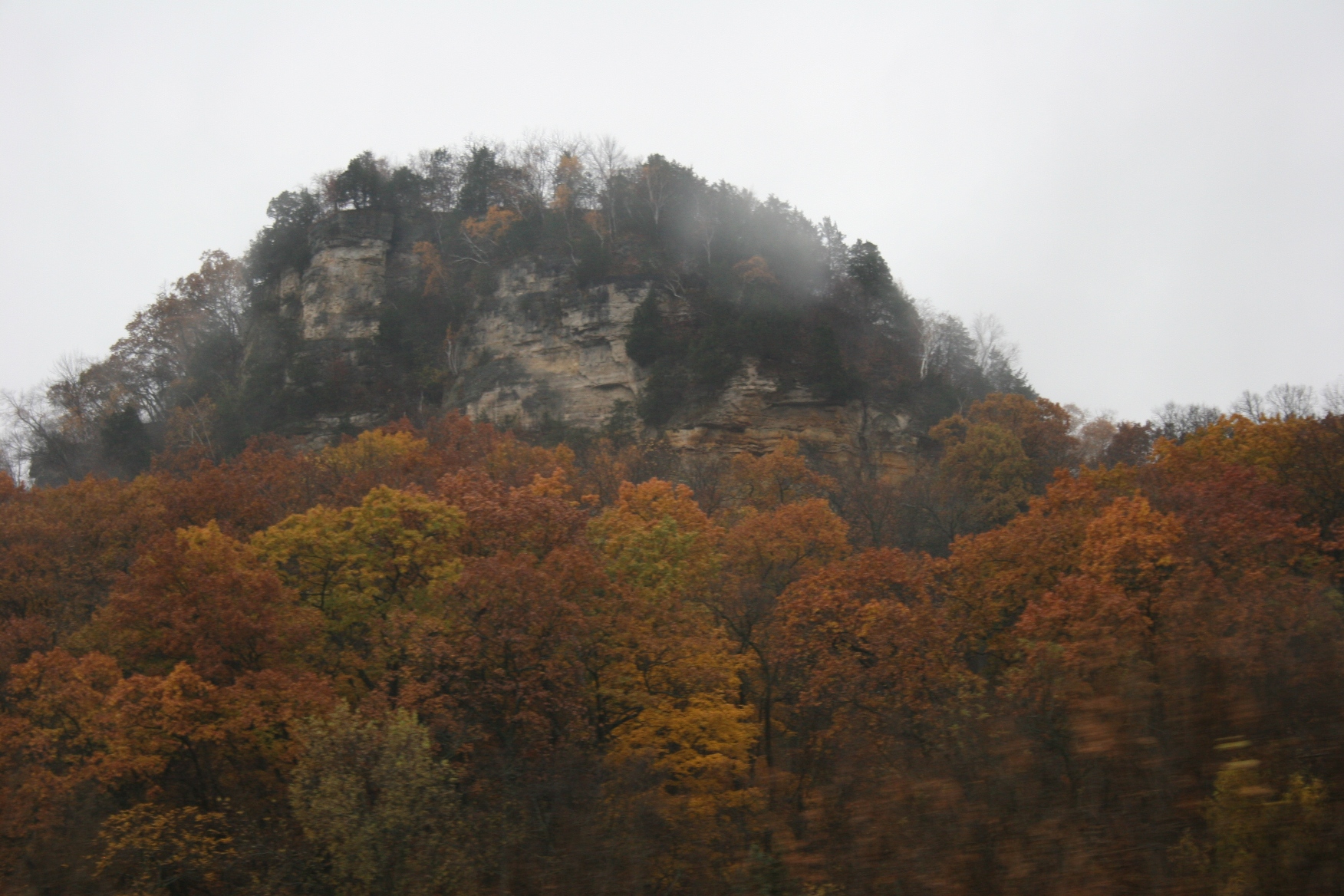
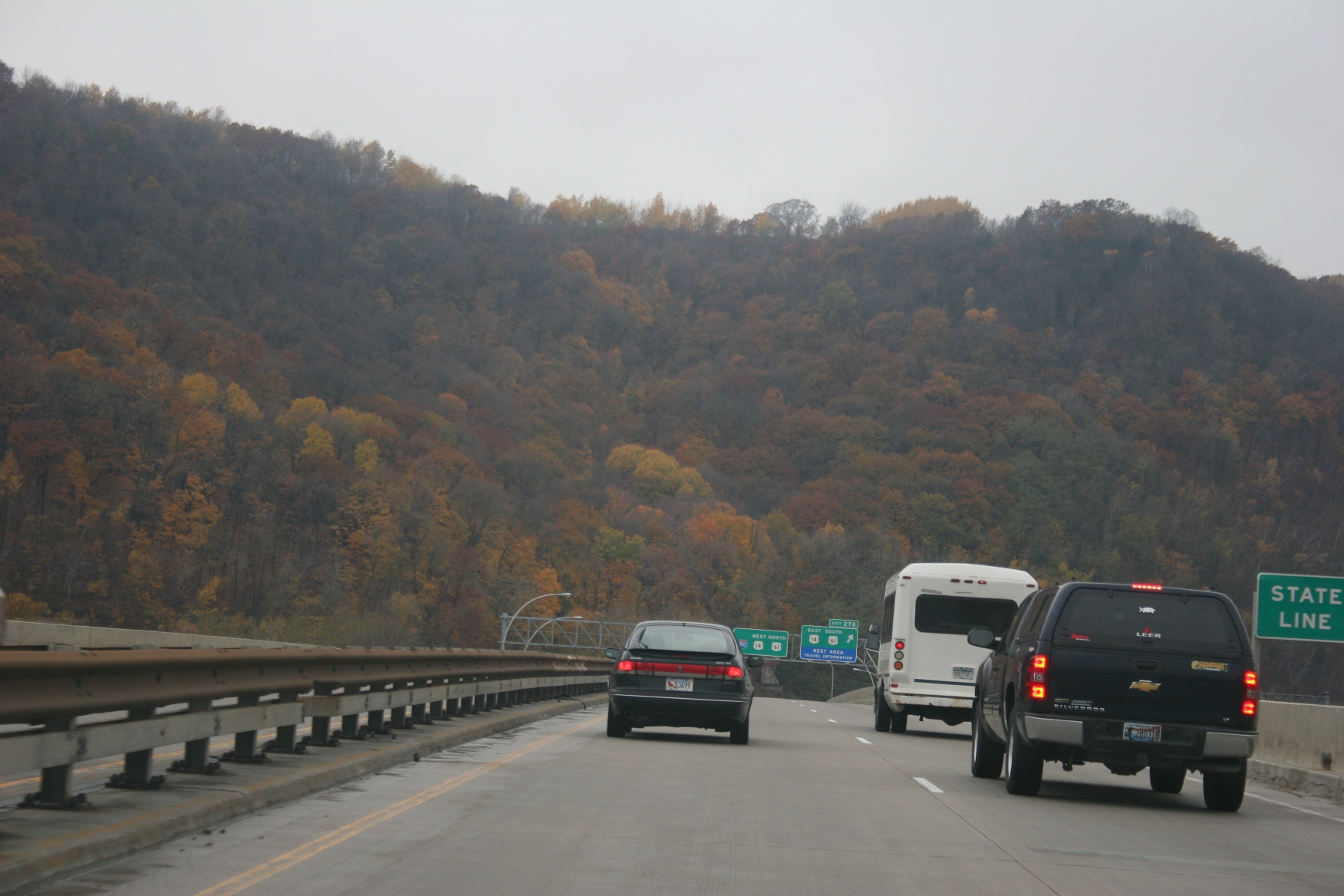
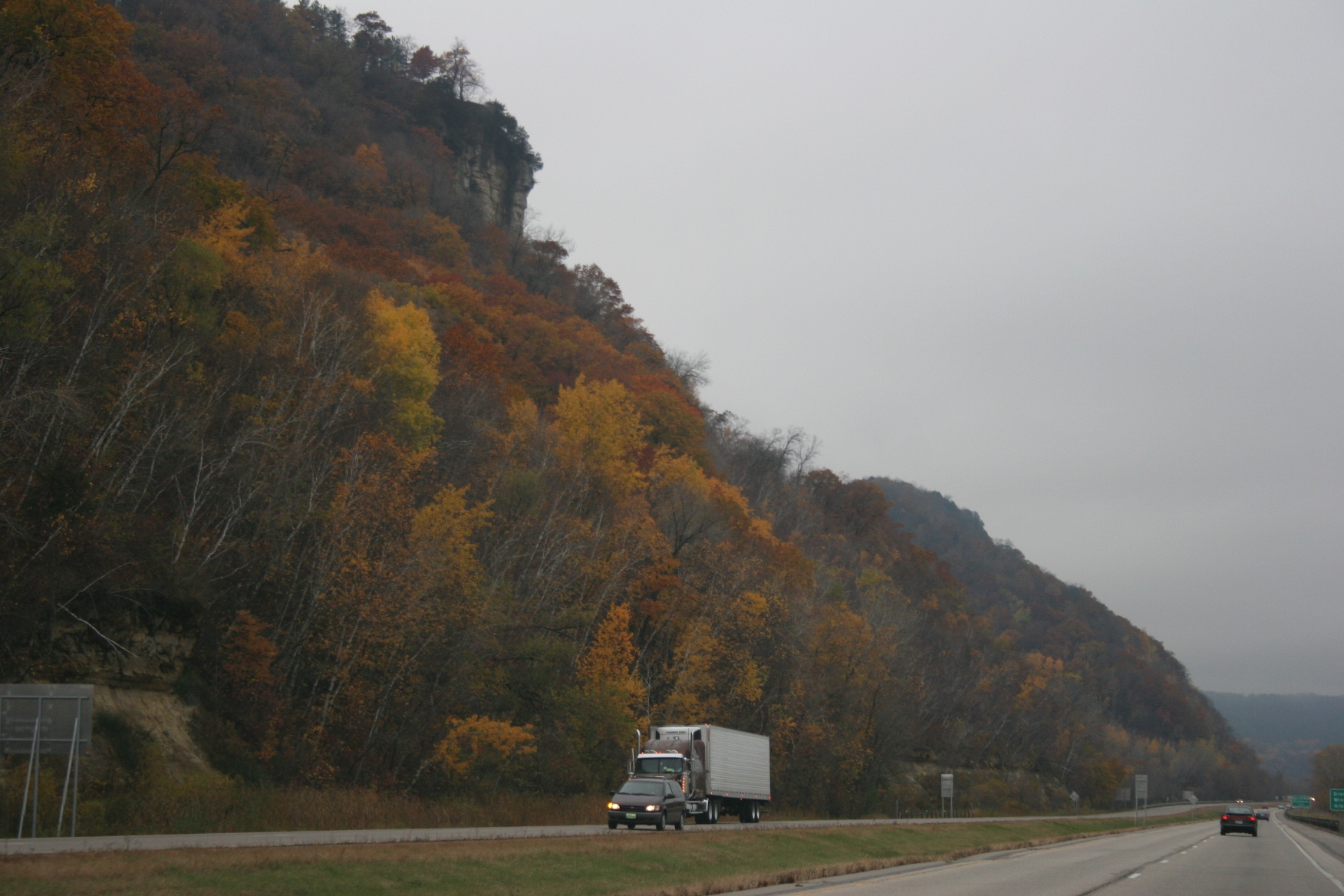
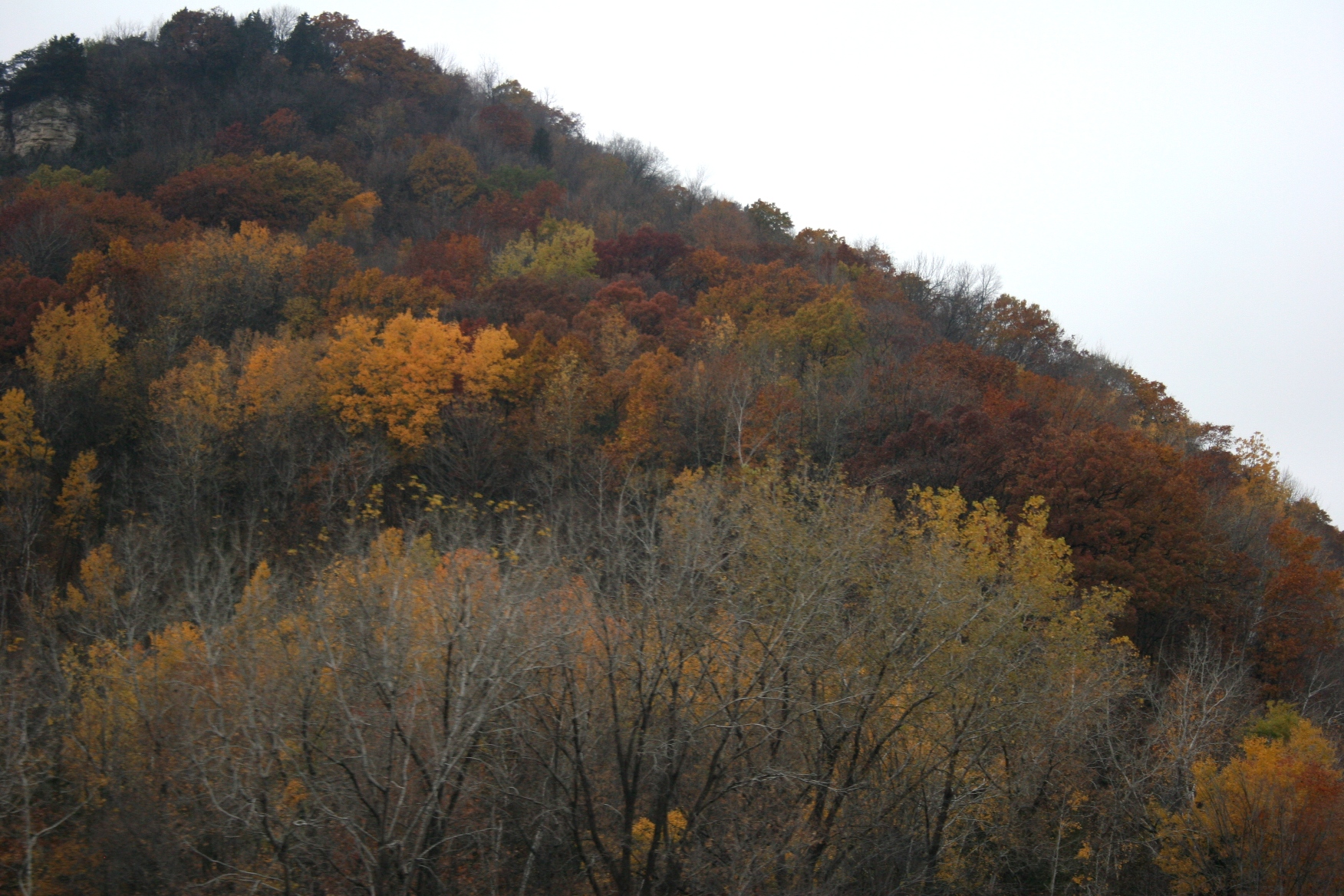
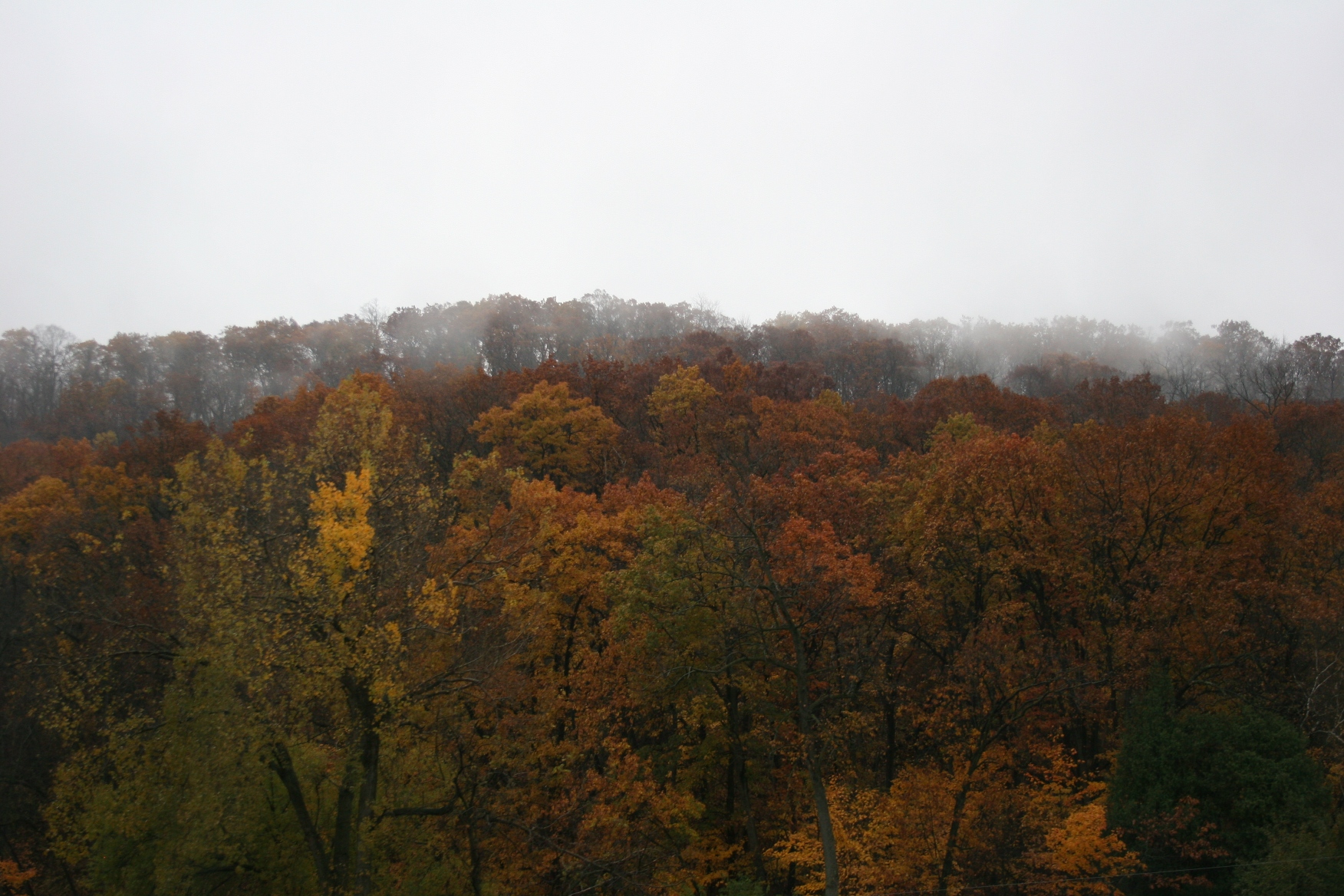
Hillsides of colorful trees along I-90 in southeastern Minnesota Sunday morning.

I DID NOT EXPECT IT—leaves rusting under a gloomy, grey sky which gripped the second to last day of October like an iron fist.

Autumn seemed determined to hang on, to stand strong and sturdy against winter for one final weekend.

And it was a glorious one. Not glorious in the sense of sunny skies and warm weather.

But beautiful and wondrous and spectacular in the surreal scene of clouds and wisps of fog that pressed against the wooded Mississippi River bluffs along Interstate 90 in southeastern Minnesota Sunday.

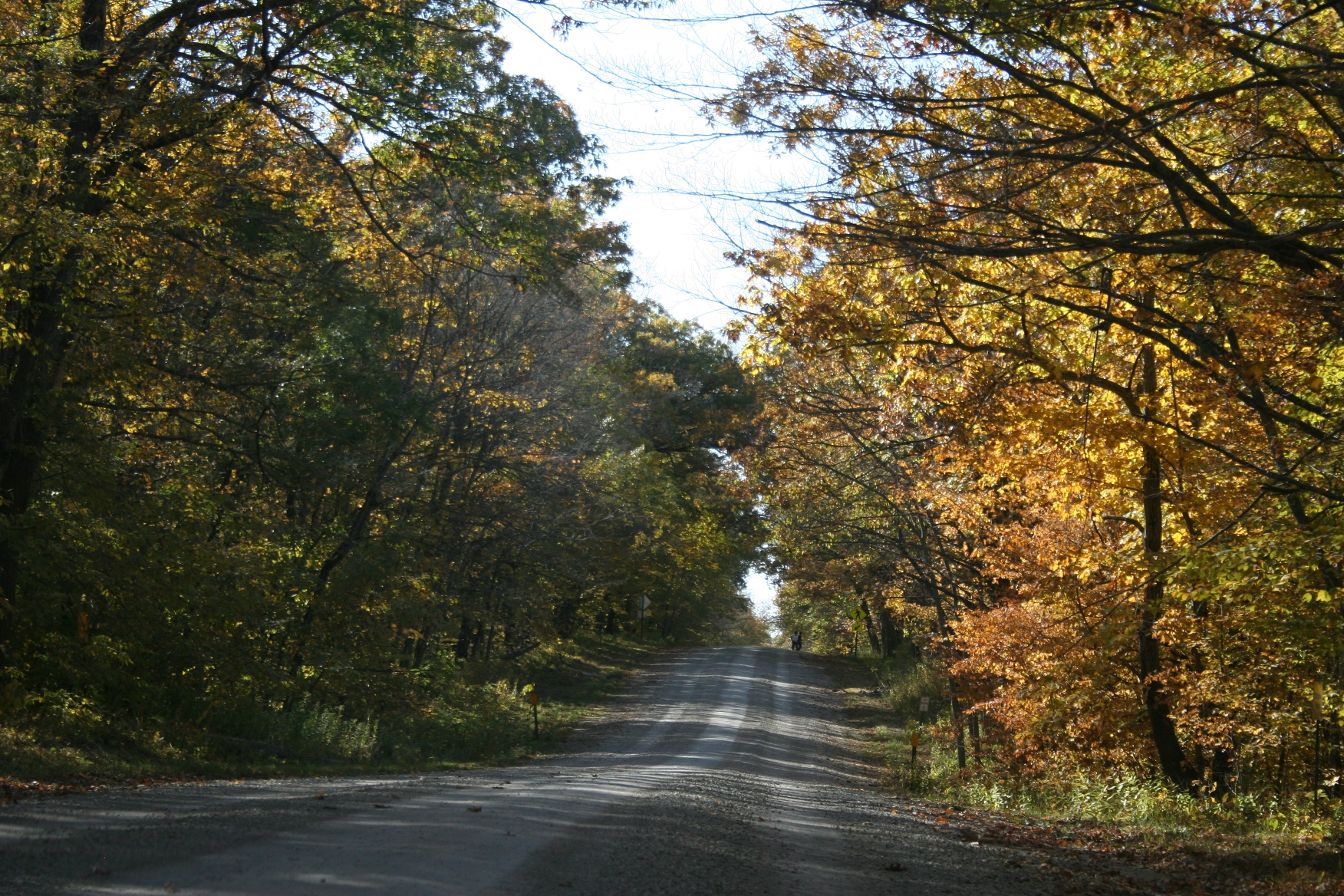
As my husband and I traveled through the area between Nodine, Minnesota, and La Crosse, Wisconsin, and onto Tomah, I couldn’t take my eyes off the hillsides of trees shaded in muted hues of rust and moss green and the occasional spark of golden yellow.

I did not expect this so-late-in-October autumn beauty.

Despite the drive day of off-again, on-again rain and mist and pressing-down-upon-you iron grey skies, I felt myself appreciating the irrepressible beauty of the natural world around me.

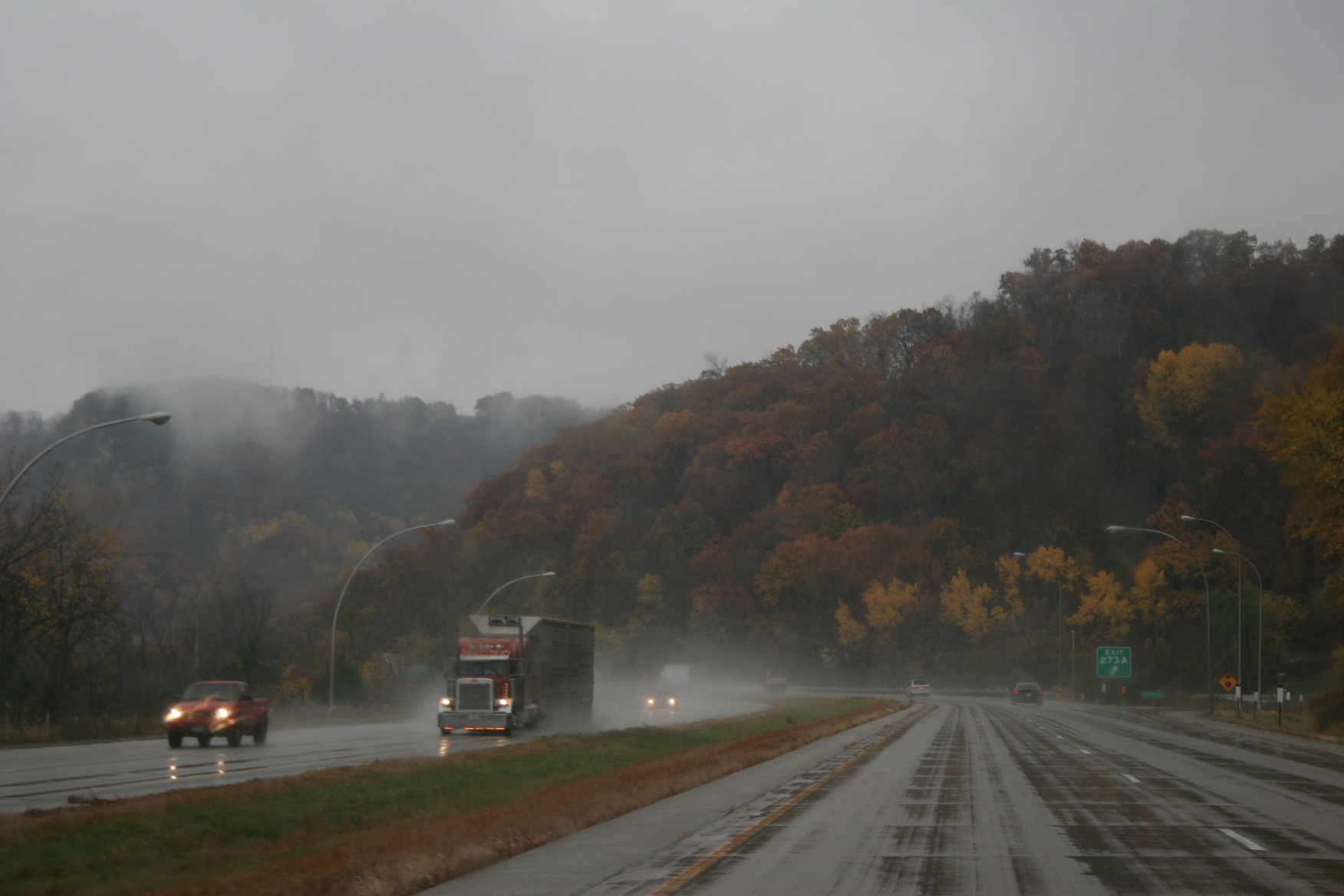
Even on the dreariest of days, around each curve in the highway, a new scene unfolded and I couldn’t stop taking pictures between swipes of the windshield wiper blades.

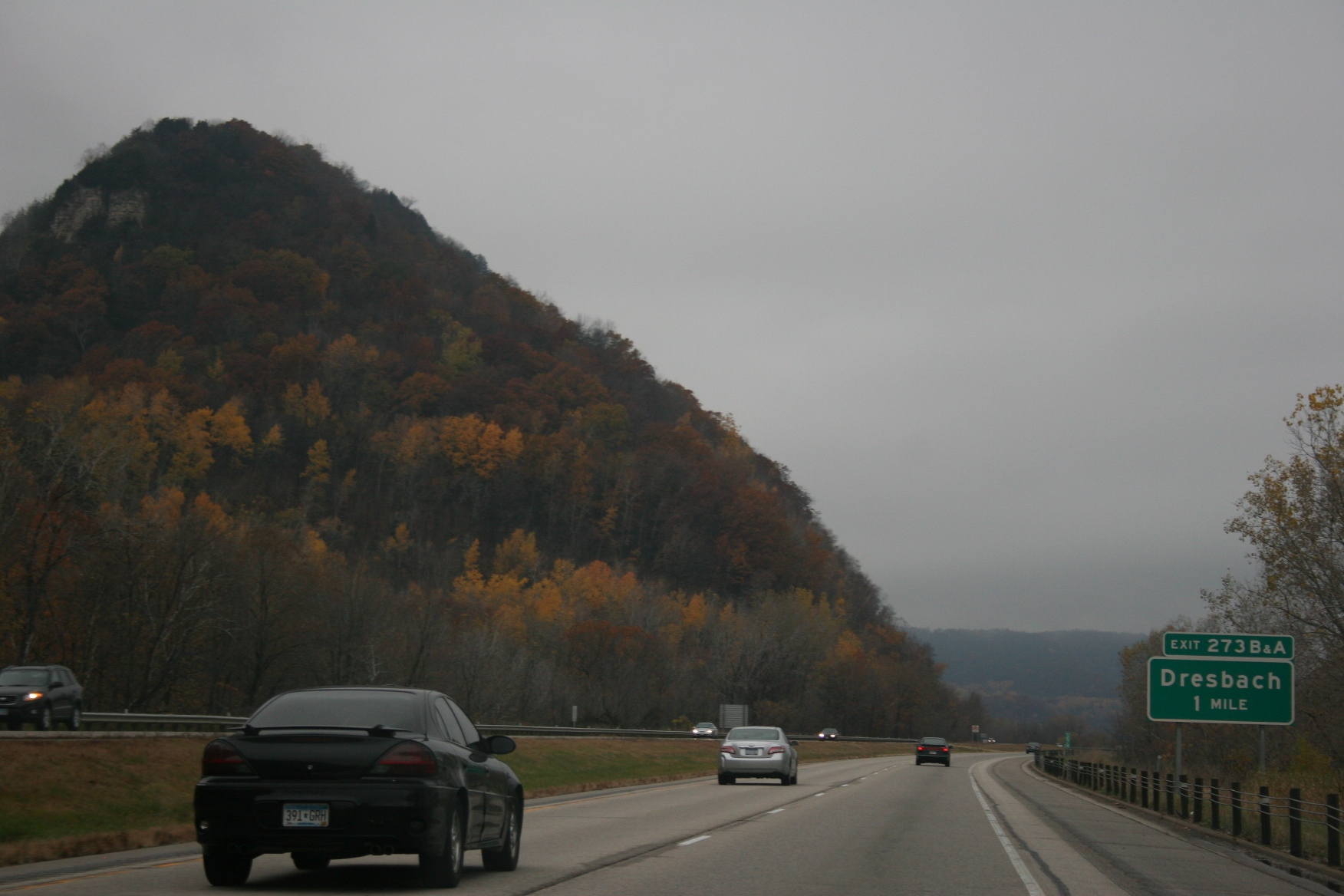
Driving I-90 near Dresbach, heading toward La Crosse, fog shrouded the wooded bluffs.

Woods fade into sky into stone in this surreal setting Sunday morning near La Crosse.

And then, several hours later, we saw the same trees from a different perspective as we drove back from Tomah. Here we are driving into Minnesota from La Crosse.

I-90 hugs the bluffs on one side, the Mississippi River on the other along this picturesque stretch of winding roadway between the border and Dresbach.

Approaching Dresbach...

What most surprised me were all the leaves still clinging to branches. I expected most would have been blown off by fierce autumn winds. And the colors, oh, the rust of oaks, so beautiful.

© Copyright 2011 Audrey Kletscher Helbling


On our way to church in North Morristown October 12, 2011

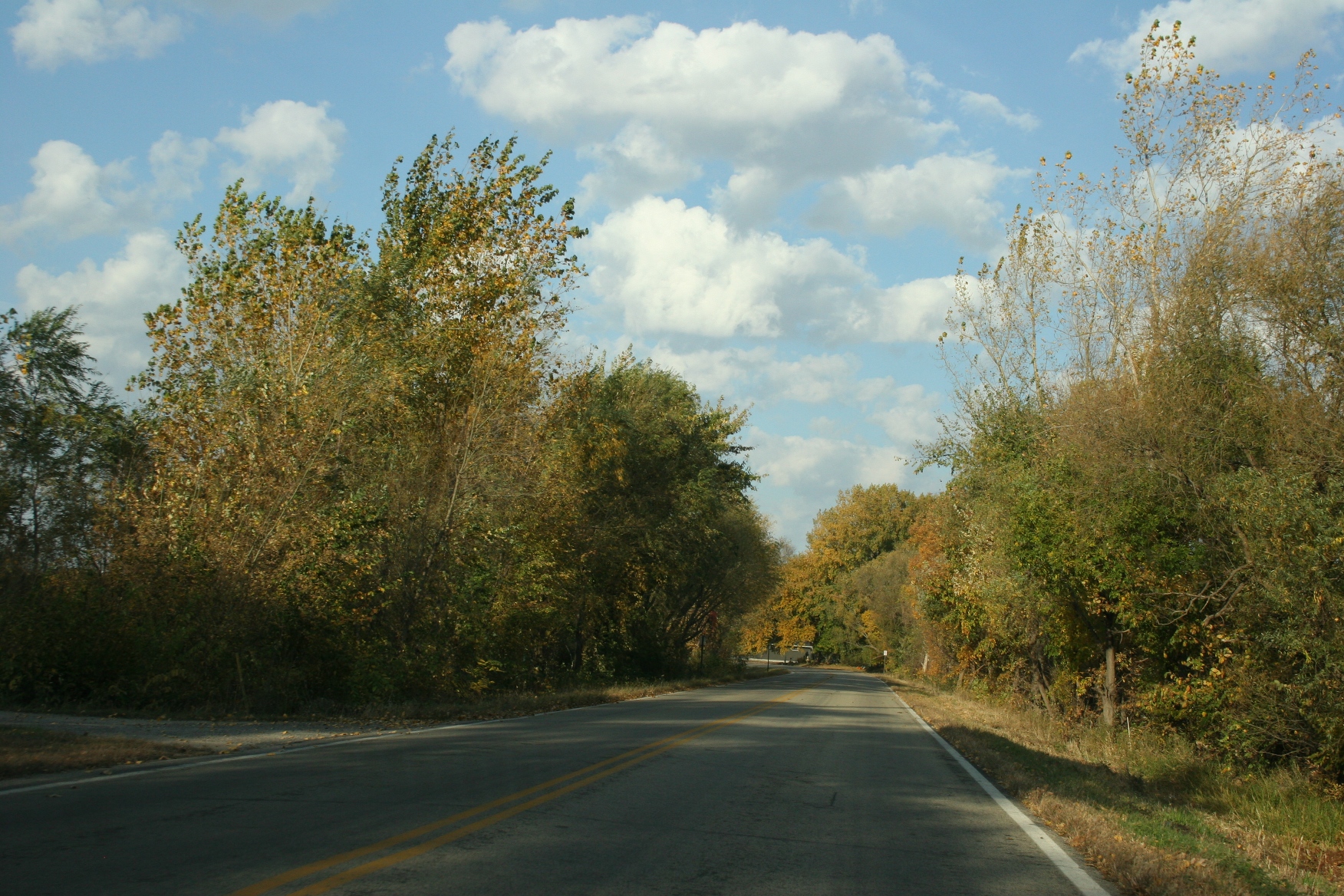
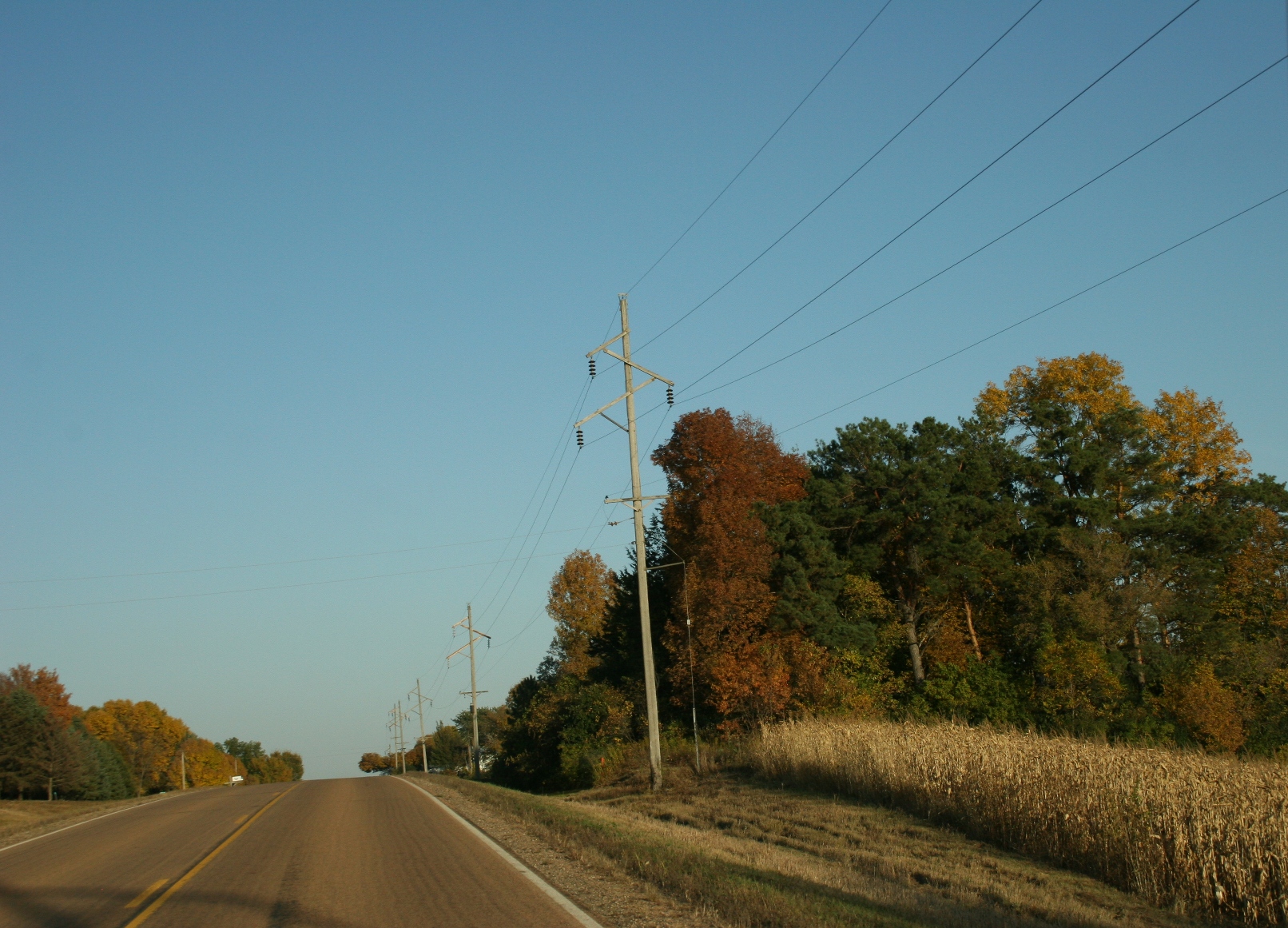
ON OUR WAY TO CHURCH on Sunday morning in North Morristown, my husband and I drove through some mighty fine country.

Past…

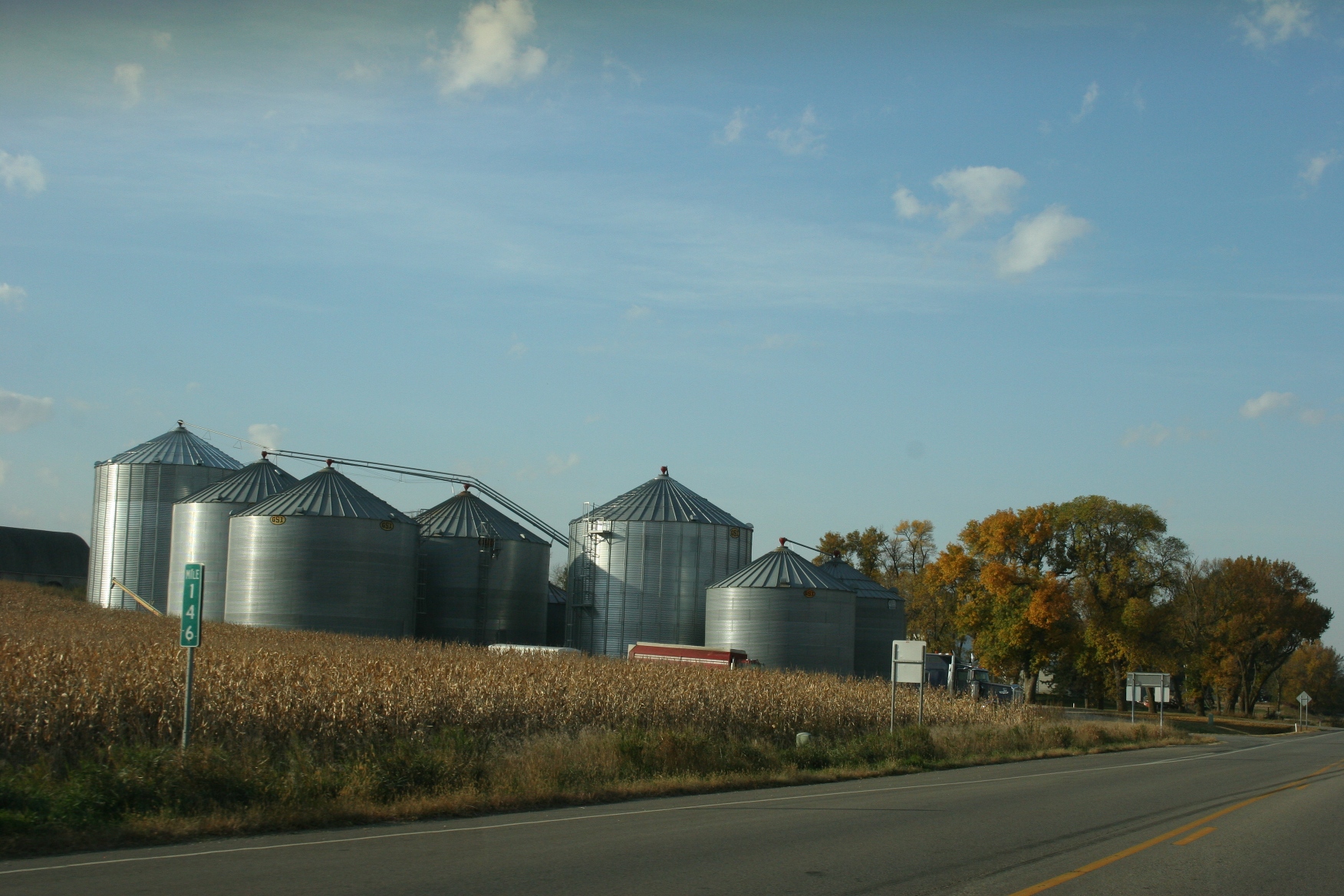
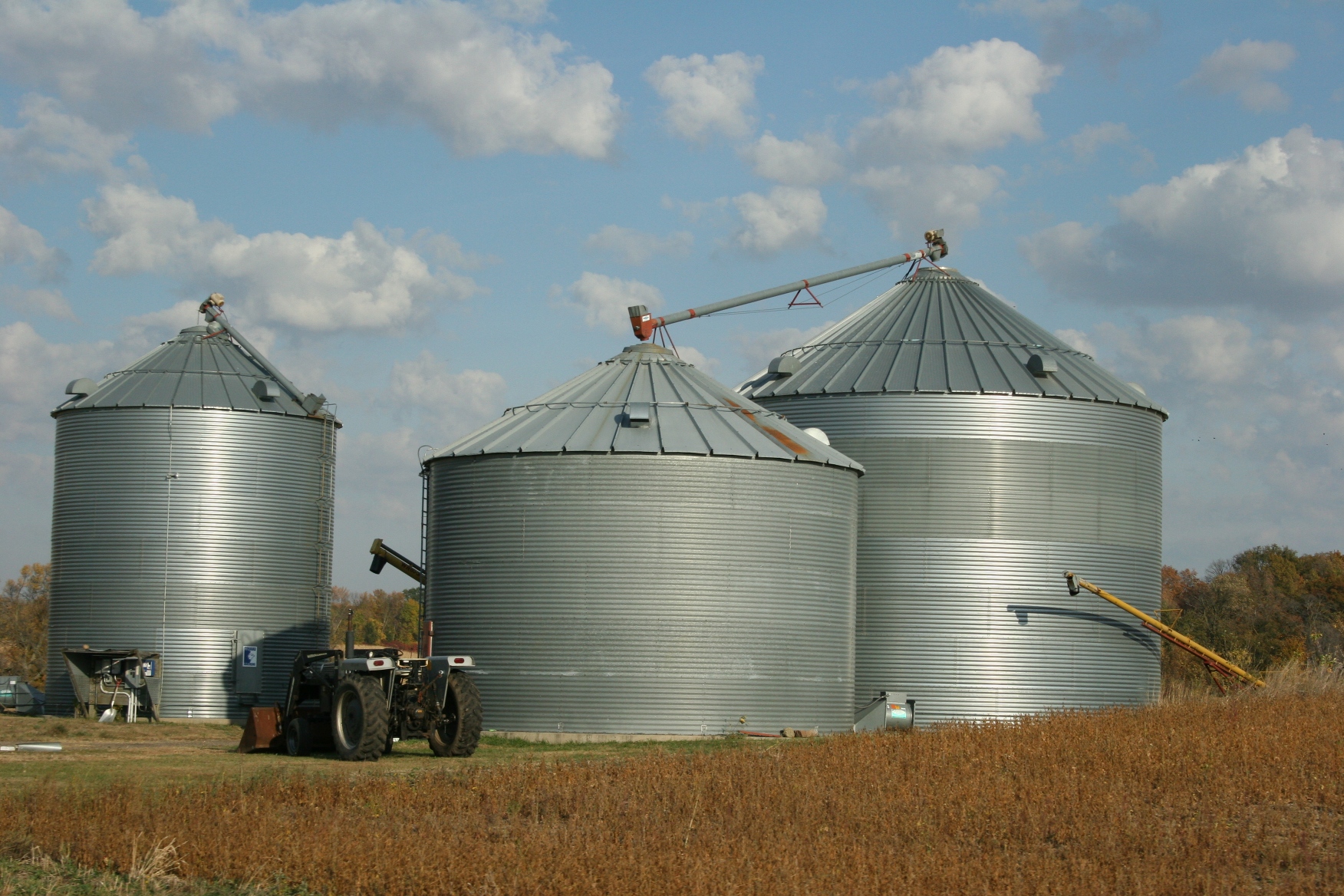
grain bins awaiting the season’s yield

autumn’s glory edging Cannon Lake

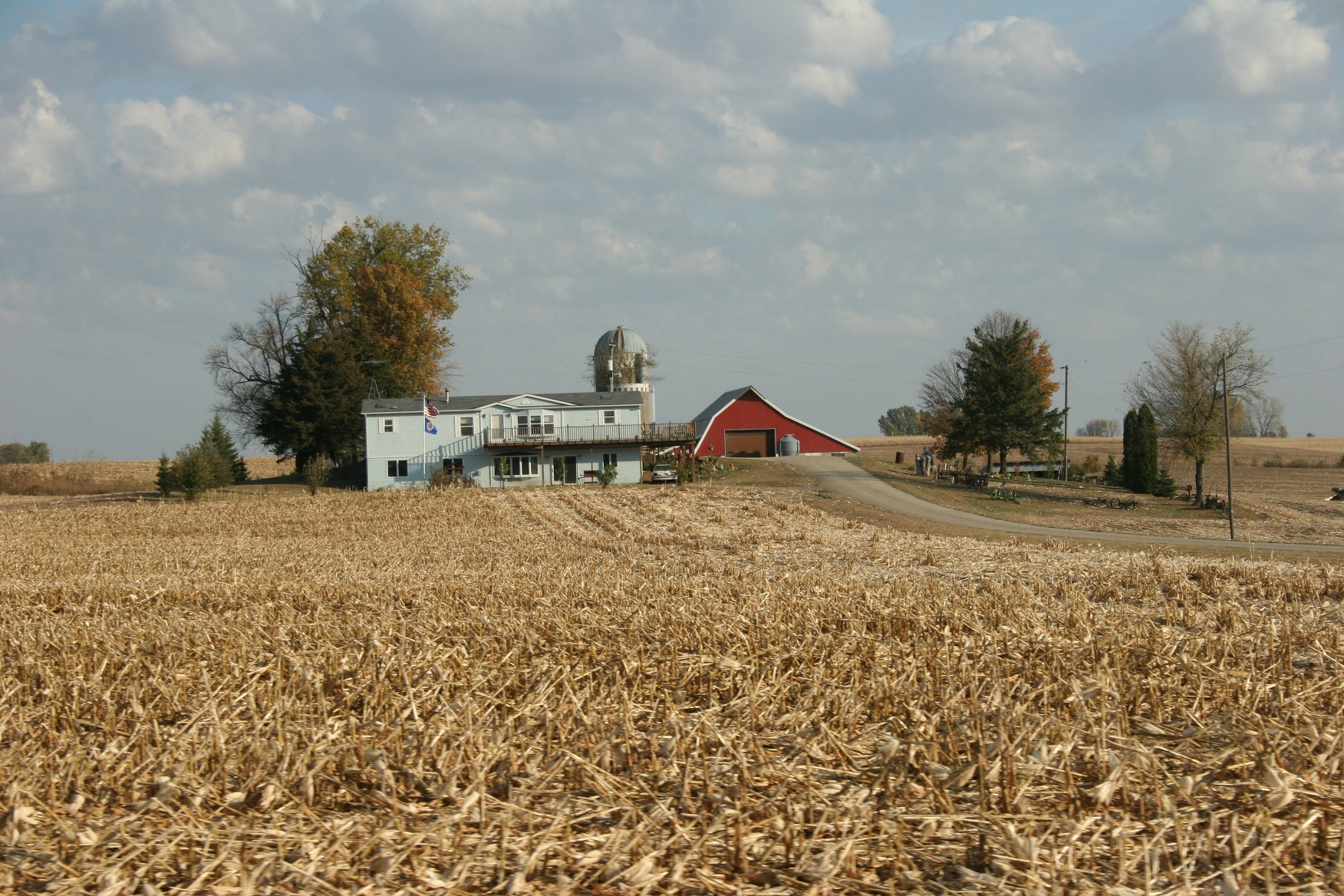
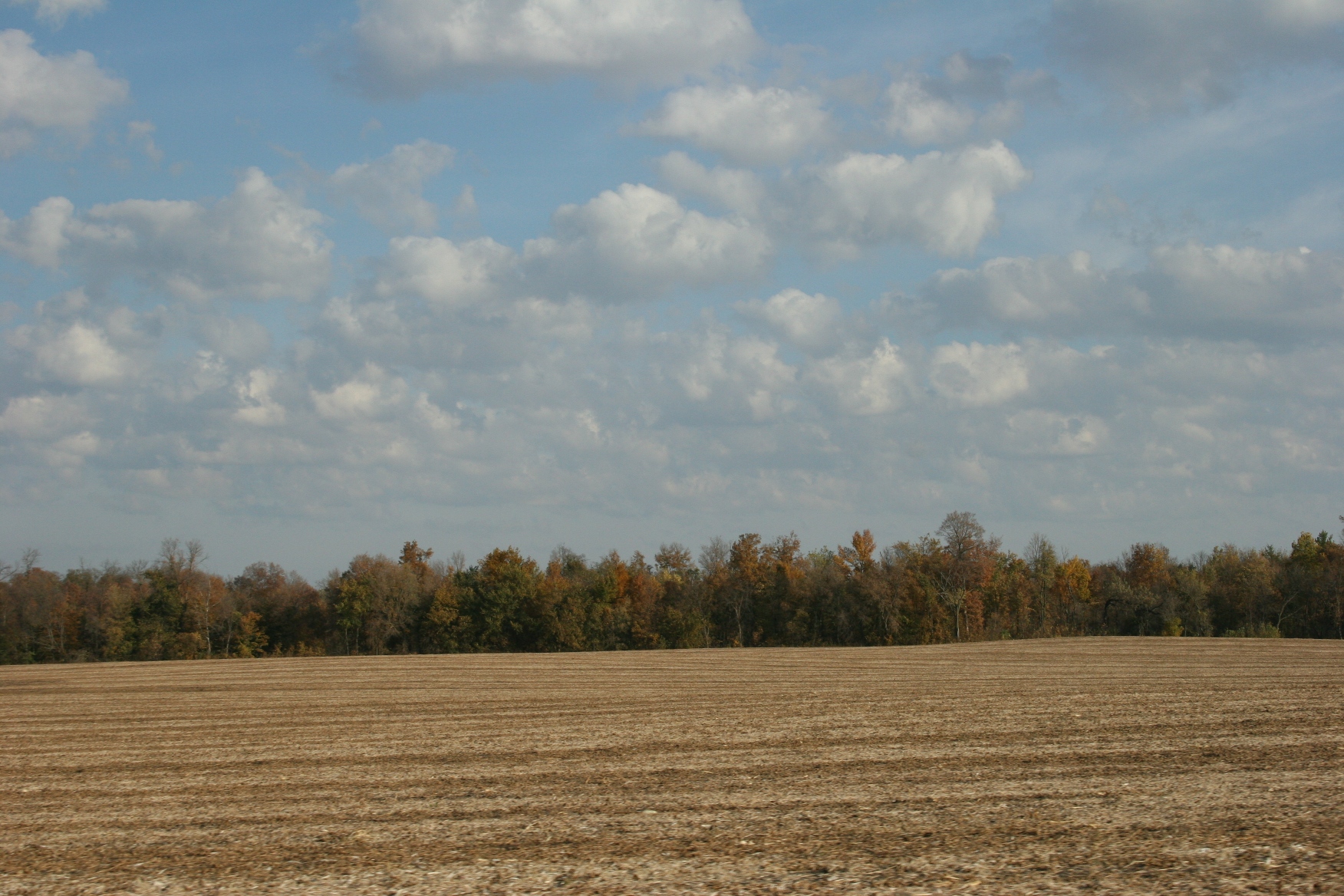
harvested corn fields

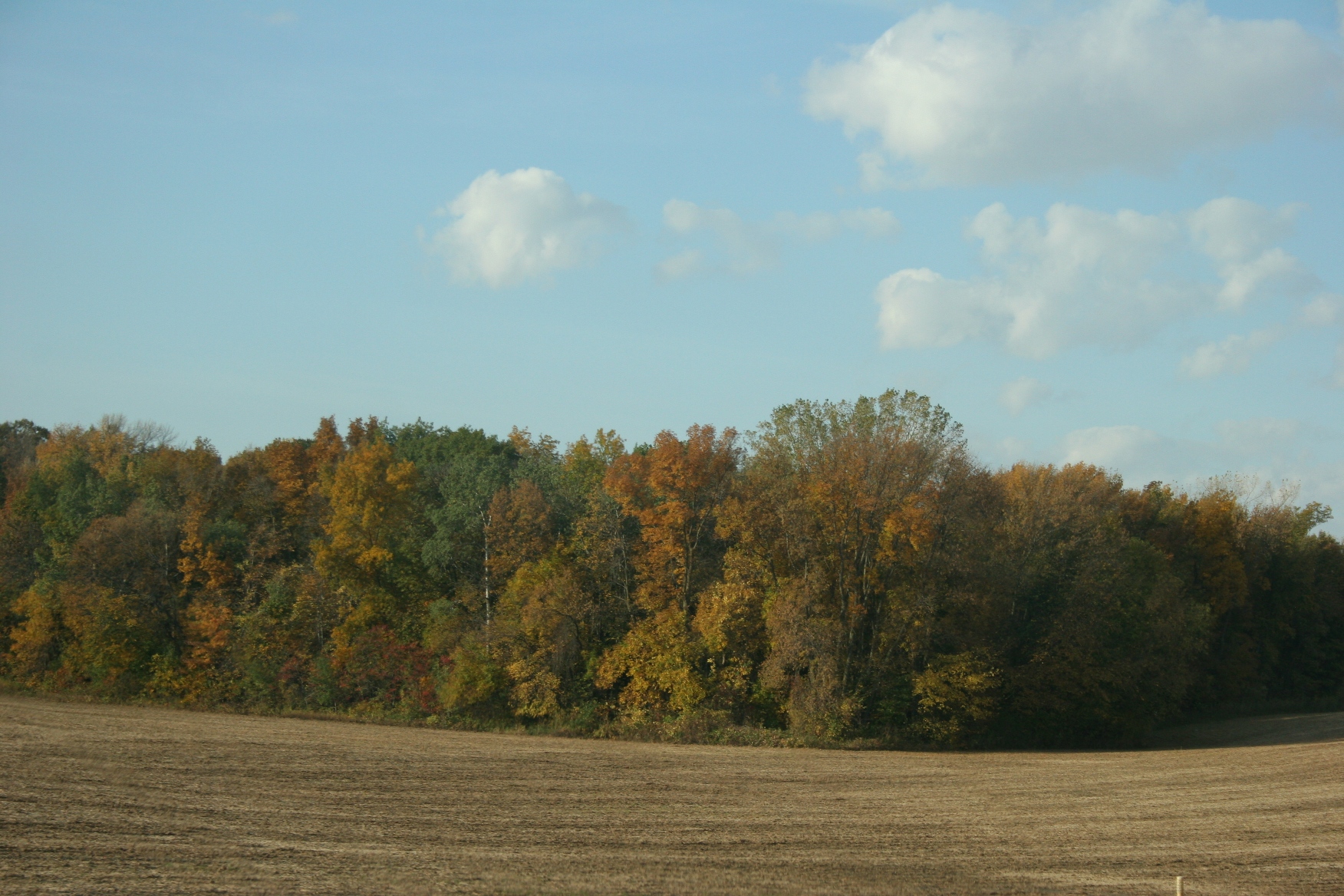
tree line and crop line

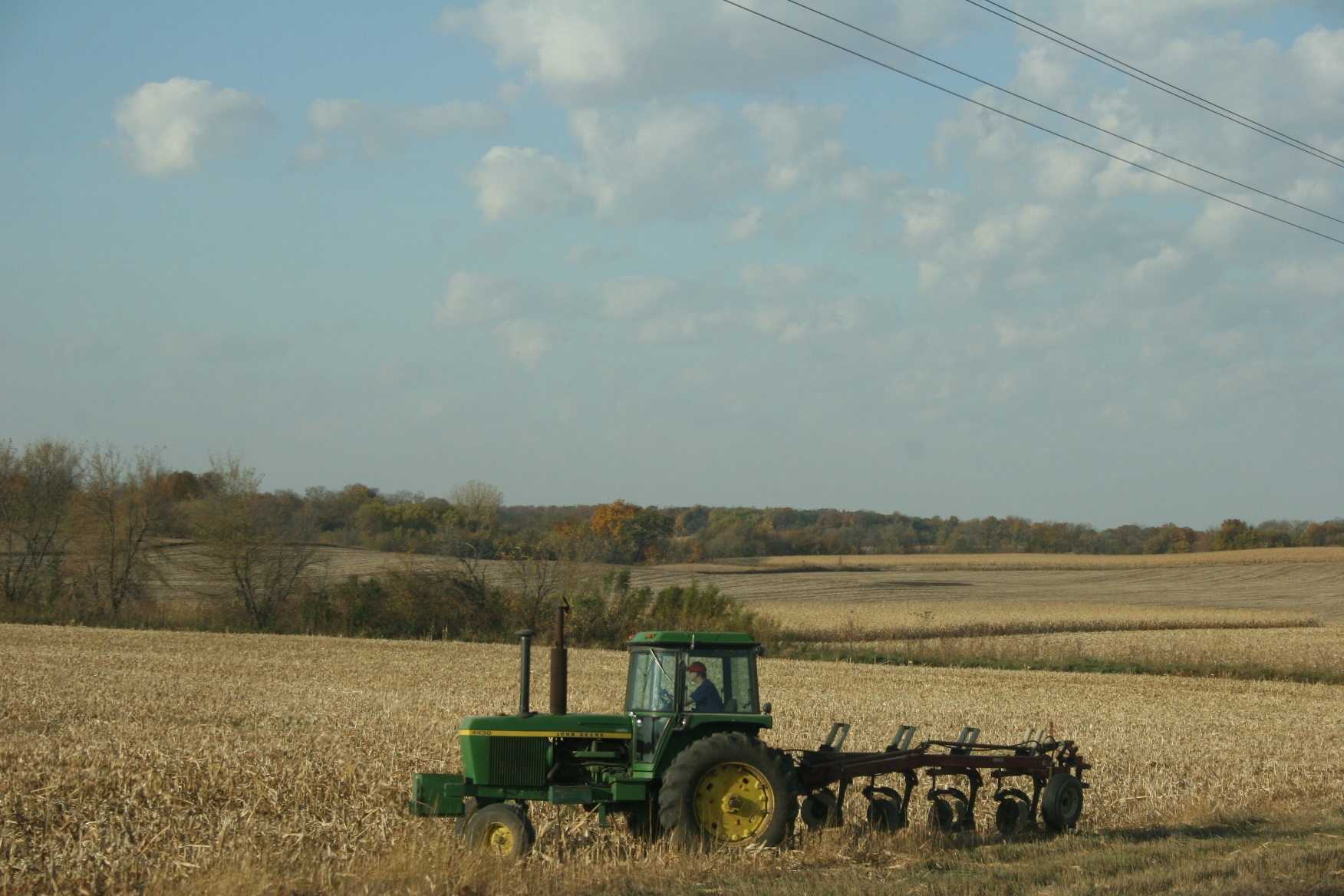
a farmer laboring

beauty and bounty

a clutch of bins

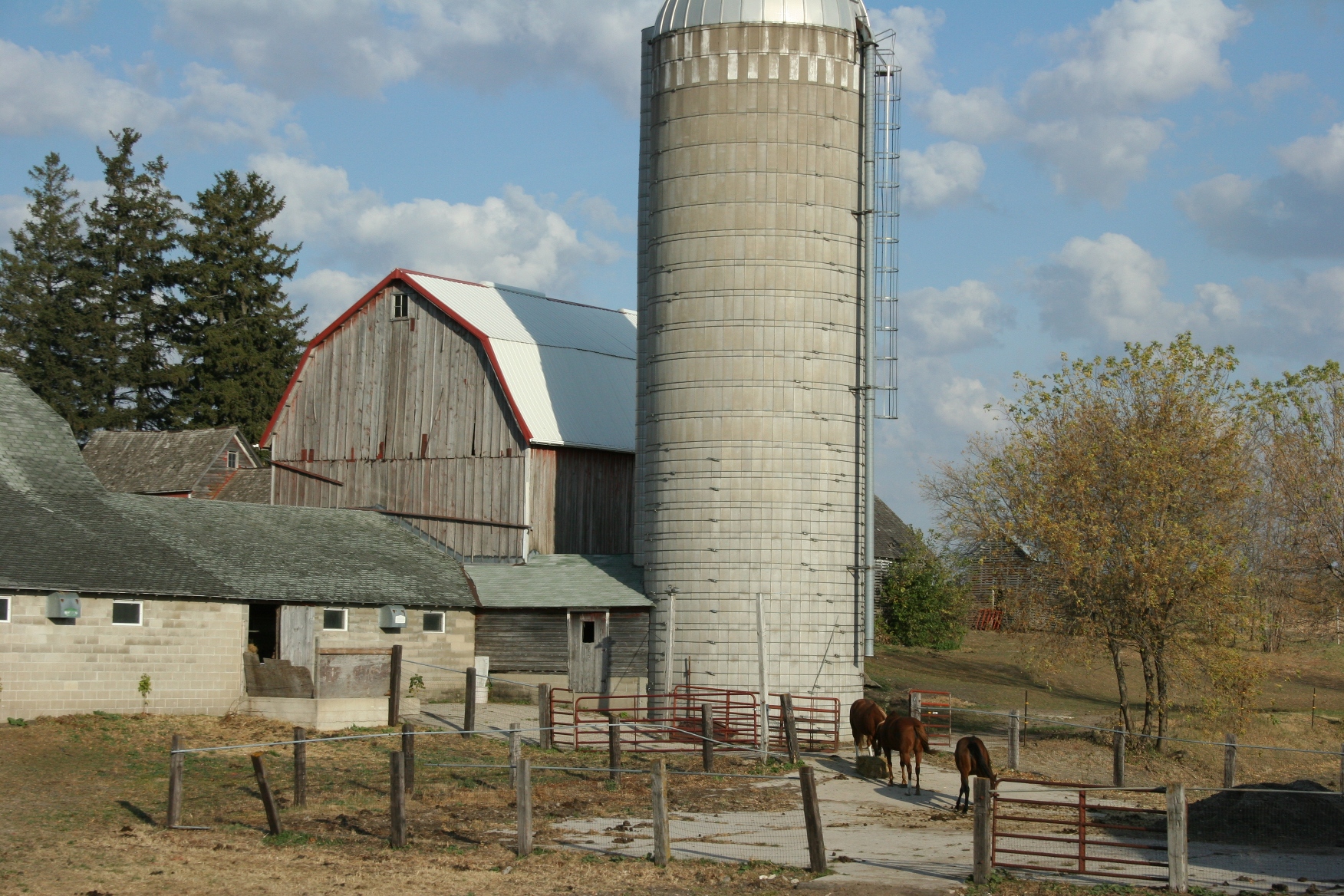
horses dallying in a barnyard

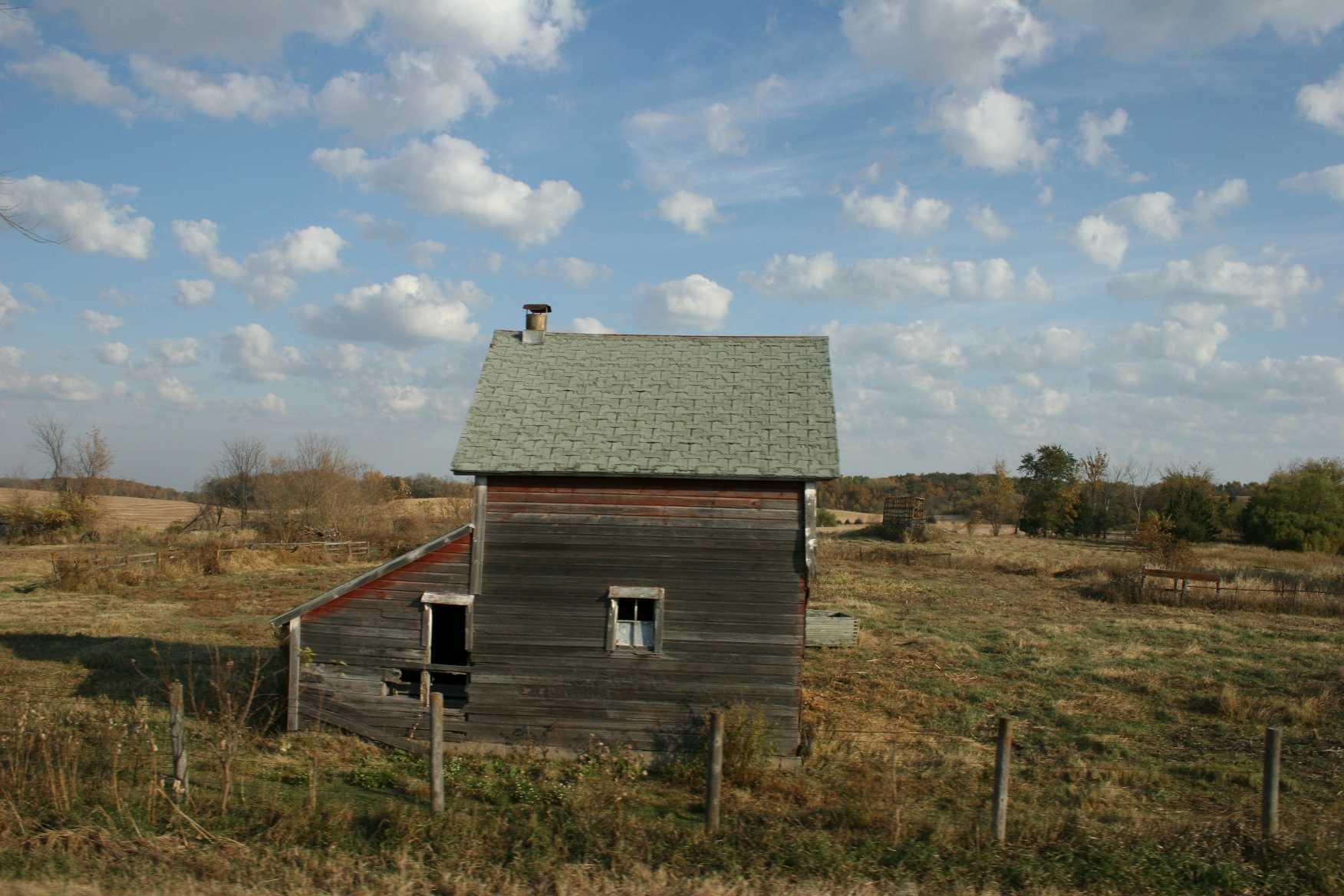
a shed weathered by time

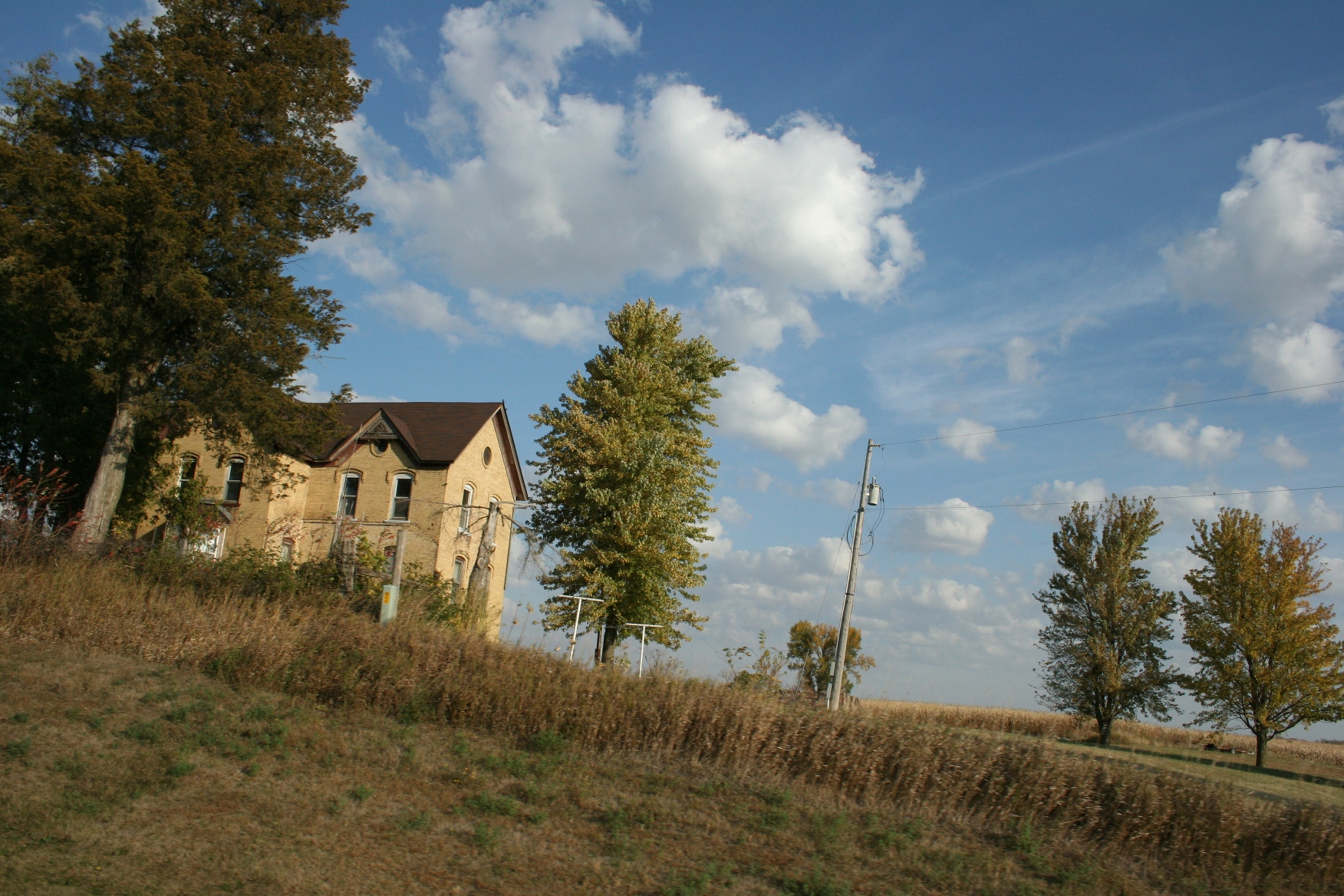
an old brick house on a hill

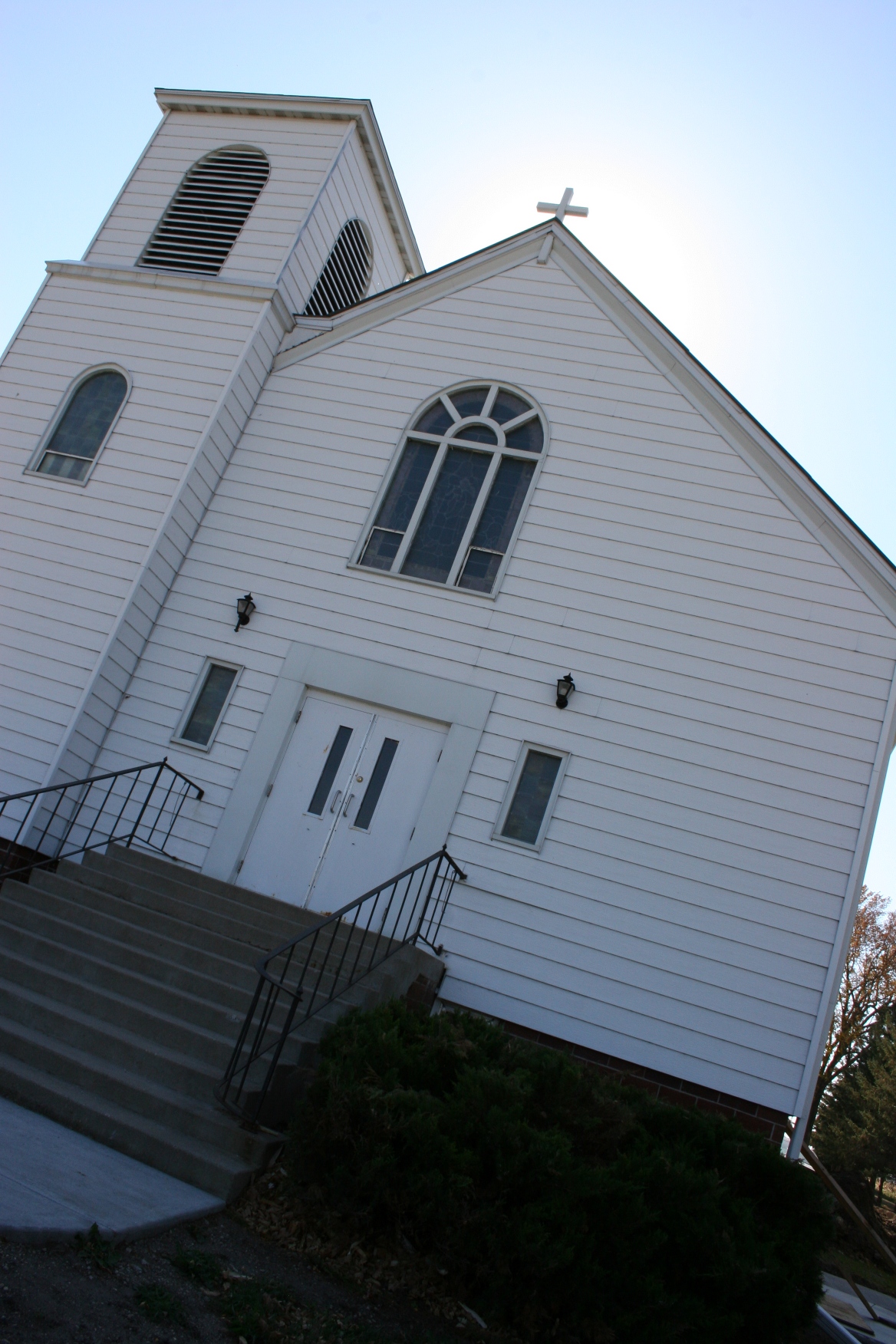
to Trinity Lutheran Church, North Morristown.

We savored the best of a lovely, gorgeous, stunning, beautiful, wonderful, photographic October morning that transitioned into an unbelievably warm afternoon.

Typically we don’t get this many balmy October days here in Minnesota, meaning we need to appreciate each one while secretly hoarding memories of these days for the long winter months ahead.

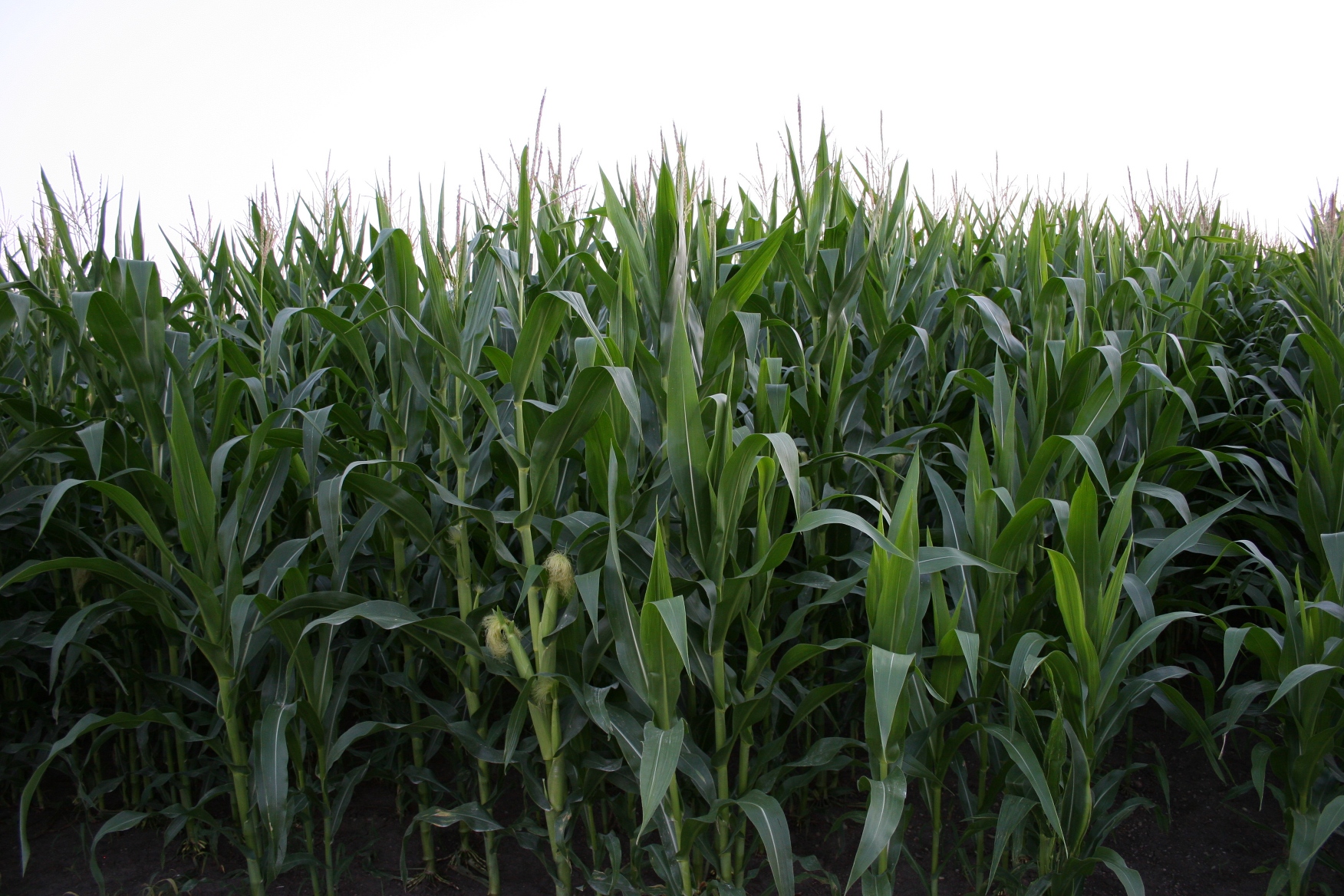
For now I want to remember this Sunday, this drive west of Faribault to the little country church, Trinity Lutheran, edged by an alfalfa field and across the road, acres of corn.

I want to remember the warmth of the day and of the people with whom we worshiped.

I want to remember, too, the good food and fellowship afterward in the church basement as we celebrated this congregation’s annual fall dinner and craft sale.

CHECK BACK for posts about dinner and about Trinity church.

© Copyright 2011 Audrey Kletscher Helbling


A scenic secret in Faribault October 7, 2011

Filed under: Uncategorized — Audrey Kletscher Helbling @ 6:56 AM
Tags: , , , , , , ,

FARIBAULT IN THE FALL, but any time really, rates as a beautiful city.

Historic buildings. Diverse landscape of wooded hills and open spaces. Rivers running through.

But not until this week did I discover perhaps one of its best kept scenic secrets, or at least best kept to me.

That would be City View Park.

City View Park on Faribault's east side at sunset.

Located next to the city water towers along Parshall Street above Roosevelt School and across from Trump’s Orchards, this hilltop park offers a panoramic, scenic view of Faribault and beyond.

How have I missed this?

Sunday afternoon as my husband and I were returning home from a fall drive, we turned onto Parshall Street, a favorite road into town in the autumn.

That’s when I noticed the teenage boys hanging out atop the hill. That’s when I also noticed the sign, City View Park. We did a quick turn-around and drove back up the hill.

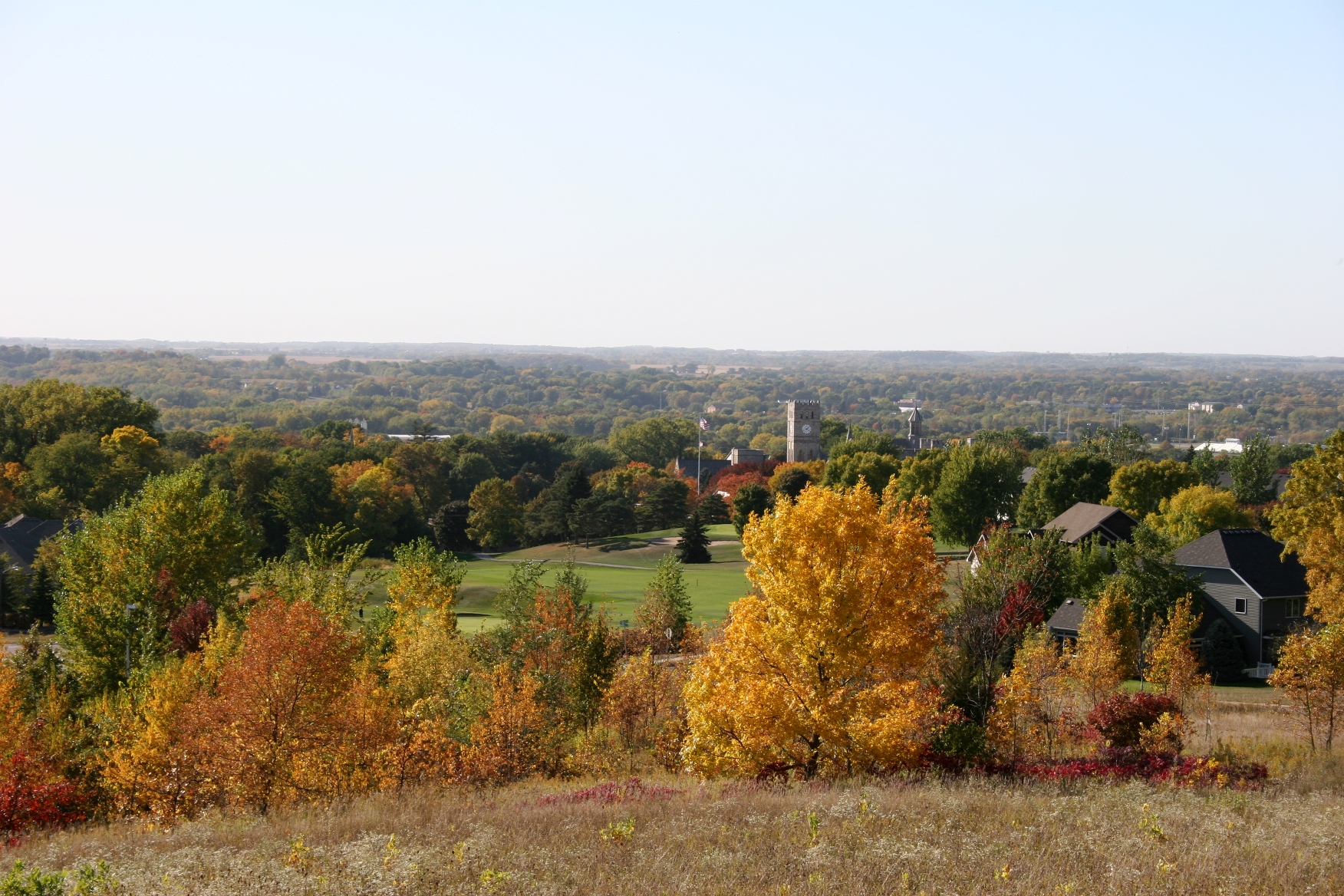
And here’s what we saw—a spectacular view of Faribault in all its hazy, late Sunday afternoon autumn glory.

Near the center of this photo you can see the clock tower at Shattuck-St. Mary's, a private college prep school.

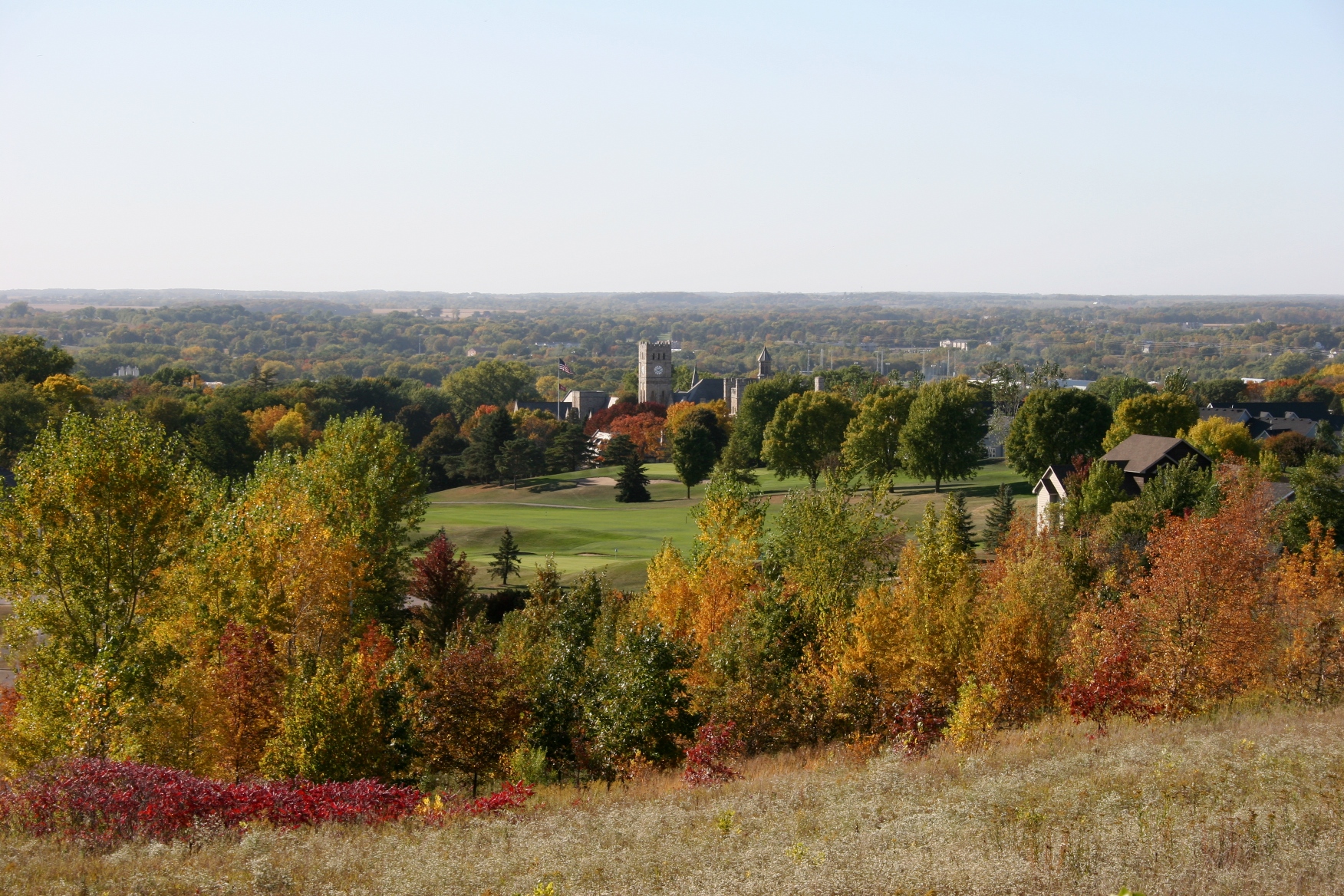
A slightly different view of the same scene as above.

Early Monday evening, after we’d picked raspberries at a friend’s house along Rice County Road 25/197th Street East, another great road for beautiful fall colors, we rushed back to City View Park to view the sunset.

Gorgeous. Absolutely gorgeous.

Watching the sun set at City View Park on Monday evening.

Trees block the view in some spots of the park. But even they are stunning against the setting sun.

While I was shooting pictures, a woman walked by. “I didn’t know this park was here,” I commented.

She lives nearby, told me the park has been here for about two years.

I checked the city website and couldn’t find any mention of City View Park.

But it’s there, folks, in all its spectacular fall-color-viewing splendor. Follow the streets to the water towers on the east side and you’re there.

After you've checked out City View Park, follow County Road 25 east of Faribault for more beautiful fall colors.

More colorful trees on the other side of Rice County Road 25.

© Copyright 2011 Audrey Kletscher Helbling


Inside the colorful Big Woods of Minnesota October 5, 2011

EVERY TIME I HEAR the words “Big Woods,” author Laura Ingalls Wilder and her book, Little House in the Big Woods, pop into my mind. It’s a natural reflex given my deep love for the Little House books. Think grade school teacher reading the series to her students after lunch and me growing up about 20 miles from Walnut Grove, Wilder’s brief childhood home on the southwestern Minnesota prairie.

That all said, Laura was born in 1867 in a log cabin in the Big Woods of Wisconsin some seven miles from Pepin.

I visited the Ingalls’ home site many years ago with my family, when my girls were elementary age and we were deep into reading the Little House series. The Big Woods and cabin are long gone, replaced now by open prairie and a replica cabin.

Yet, only a short drive east of my Faribault home, I can experience the Big Woods at Nerstrand Big Woods State Park. I have no idea if these woods are anything like those in Wisconsin in the late 1800s. But I like to think they are.

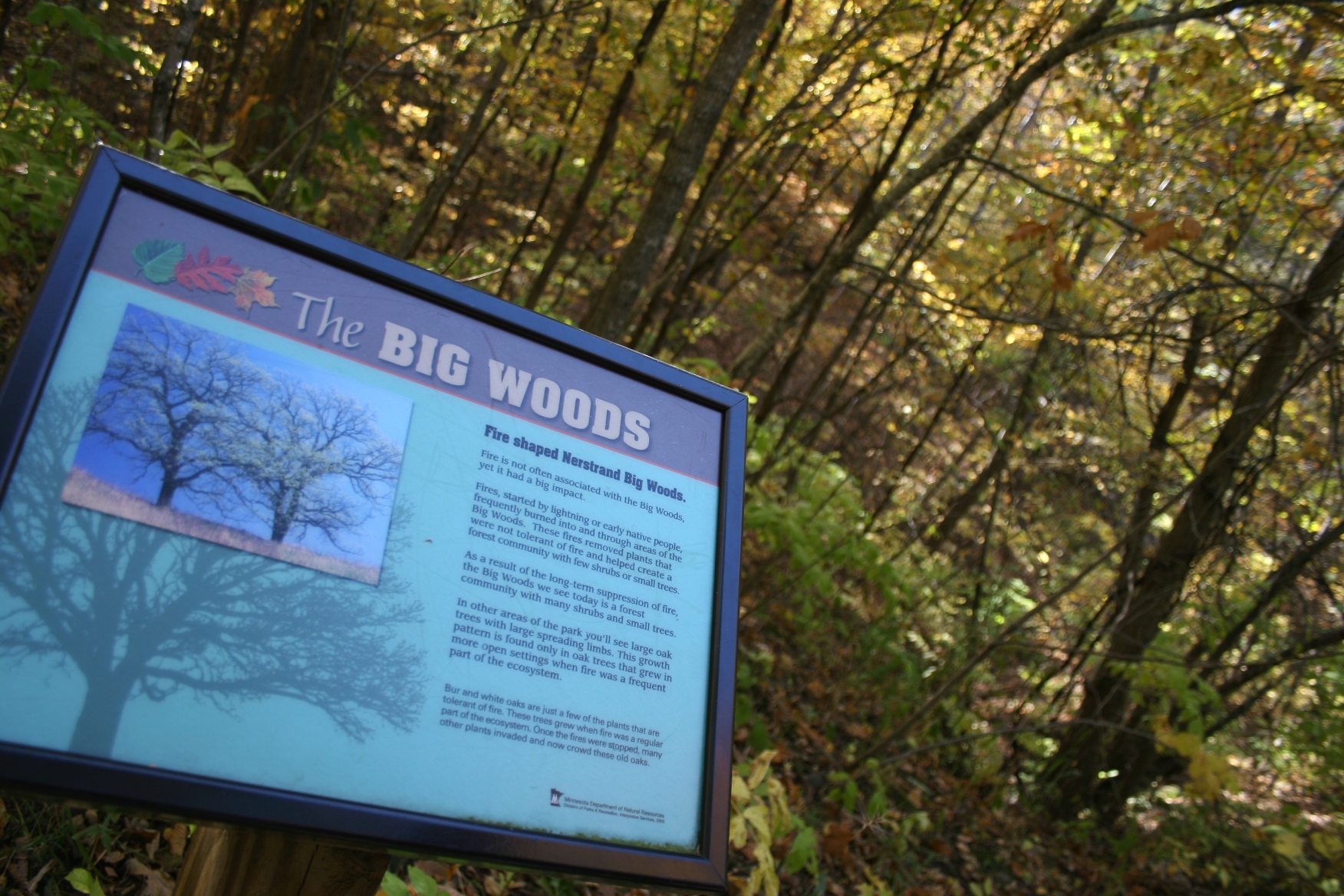
An informational sign along a trail in Nerstrand Big Woods State Park.

Check out the history section of the Minnesota Department of Natural Resources website and you’ll find this information about the Nerstrand woods:

“When the first settlers arrived in 1854, they discovered an island of woods in the vast oak savanna prairie which now makes up Nerstrand Big Woods State Park. Sugar maple, basswood, oak, hickory, aspen, elm, ash, and ironwood trees shade the land.”

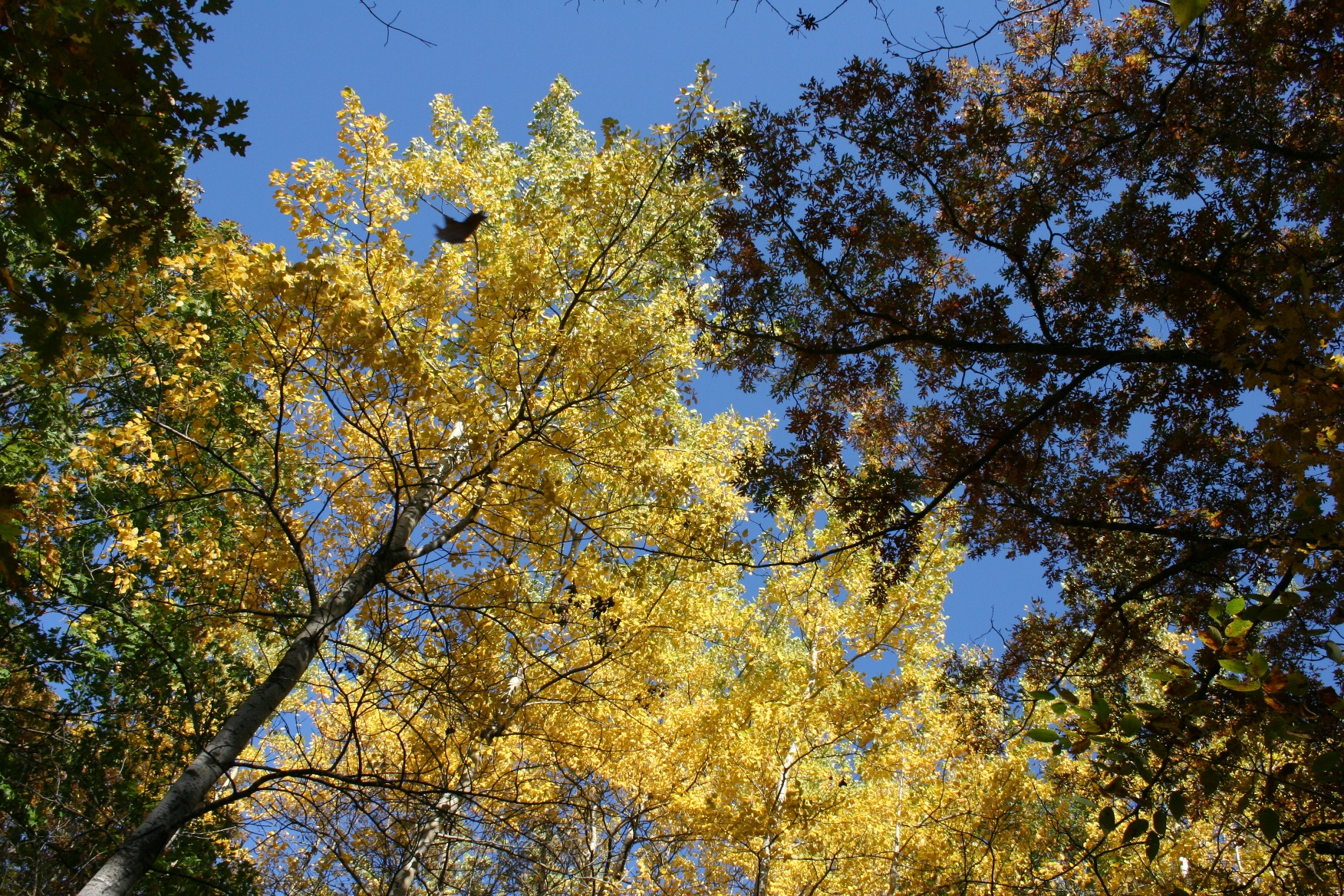
I spent half my time in the Big Woods looking, and aiming, my camera skyward.

The park boasts a lovely picnic grounds sheltered by trees like this one.

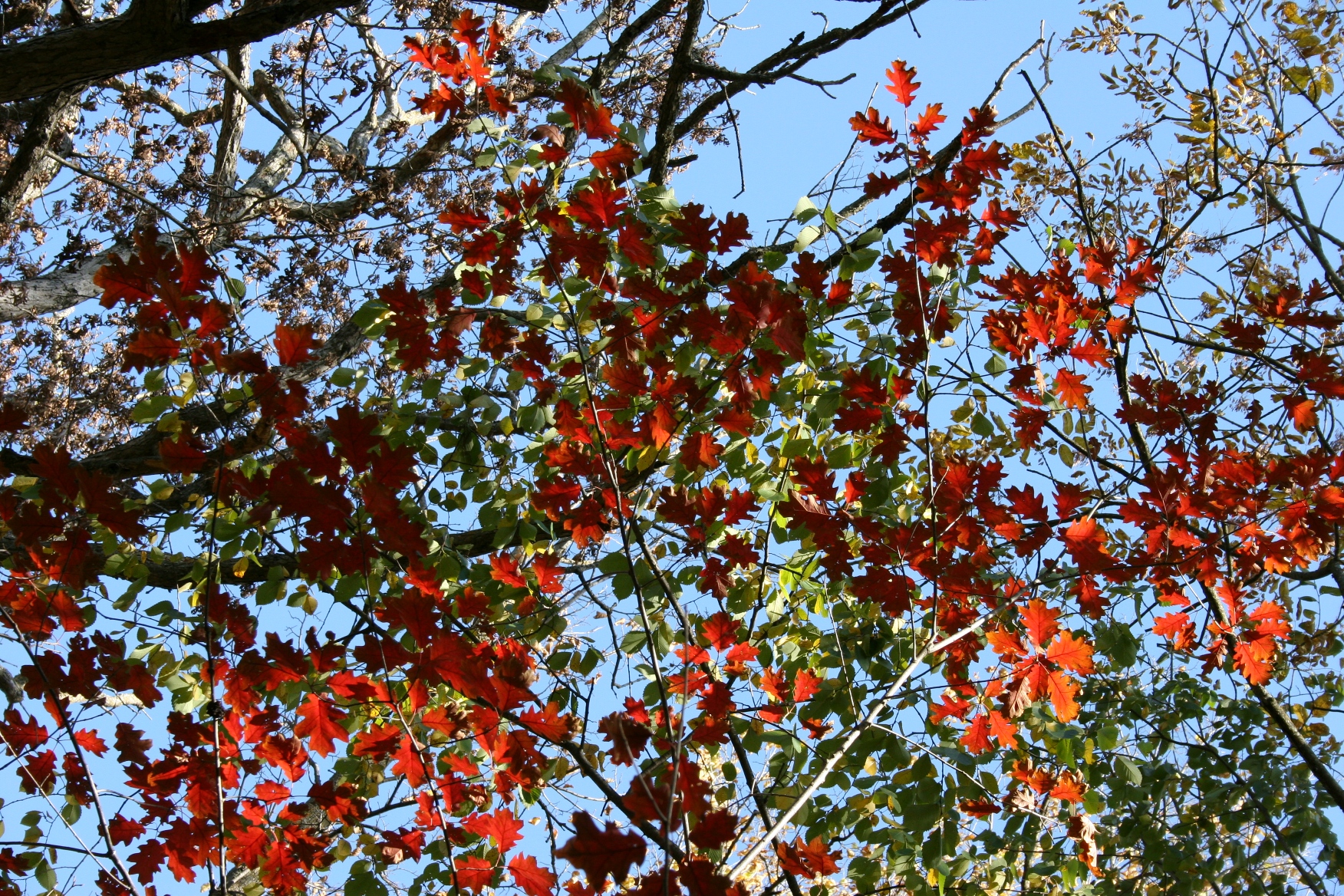
A close-up look at oak leaves changing color.

This time of year those trees flame in fiery hues, making Nerstrand a popular destination for viewing fall colors in Minnesota.

Sunday afternoon, following a fall color drive to the Sogn Valley area in northwestern Goodhue County, my husband and I stopped briefly at this state park just west of Nerstrand. We managed to find a space in a parking lot packed to overflowing in this park teeming with visitors.

If you’re seeking a quiet, people-free escape, you won’t find it here on a weekend.

But you will find a perfect fall experience complete with the earthy scent of decaying leaves; brilliant reds and yellows painted on the cobalt palette of sky; drifts of leaves to plow through; the crisp crunch of leaves beneath feet; a spirit of friendliness among visitors hiking into the Big Woods; a respite from the busyness of life; and an opportunity to savor the fleeting days of autumn in Minnesota.

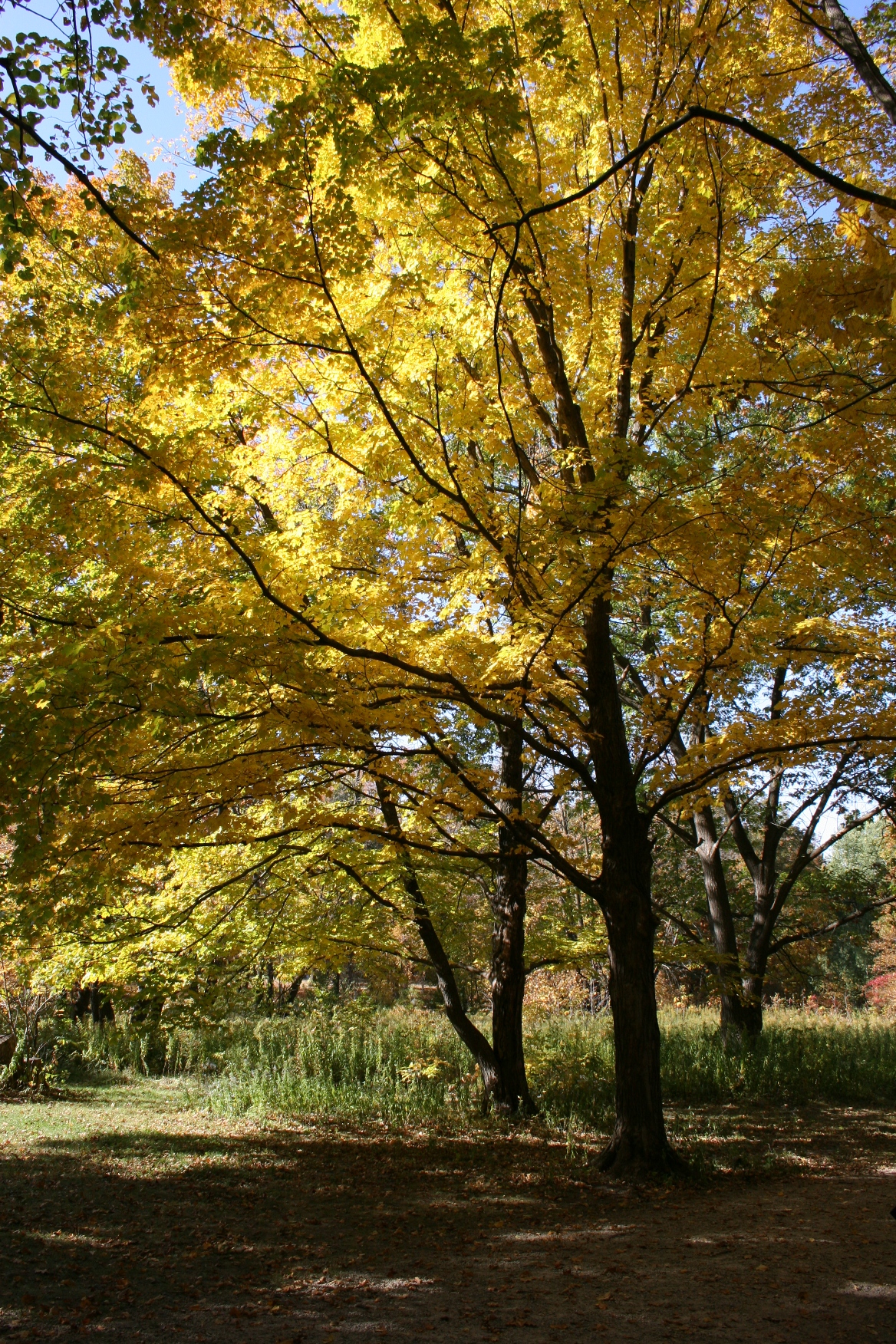
Everywhere trees provided a colorful canopy of color.

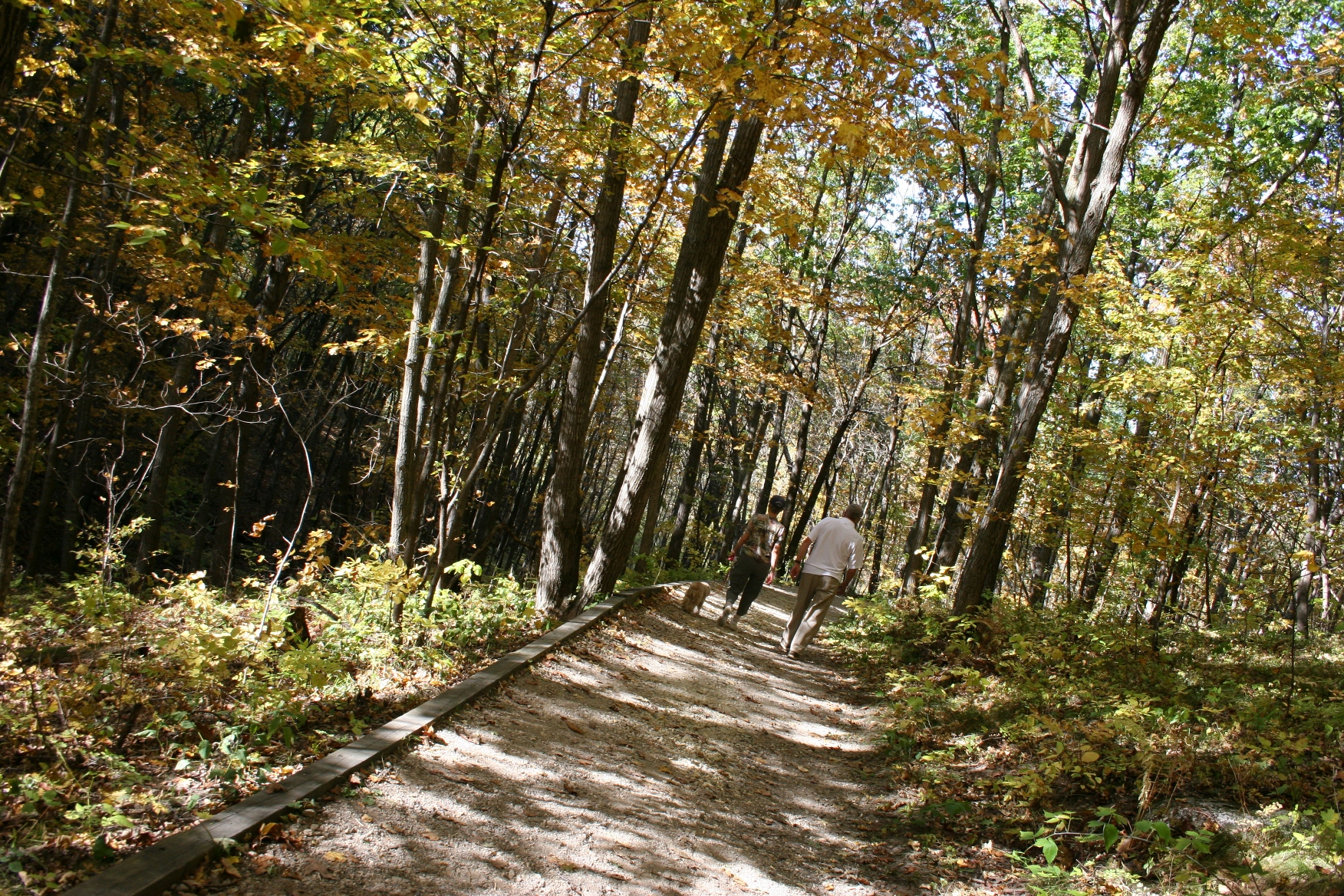
Well-kept and well-traveled paths take hikers deep into the Big Woods.

Along the path, a bursting milkweed pod.

Follow this gravel road west of the park entrance for three miles to Caron Park.

BEYOND THE STATE PARK, there’s more to see at places probably known mostly to the locals:

Follow the gravel road (Rice County Road 88) west of the state park three miles to Caron Park, a 60-acre county park that is a remnant of the Big Woods. You’ll find 1.5 miles of hiking trails here, a lovely waterfall and few people. Late Sunday afternoon we saw a single truck parked in the parking lot.

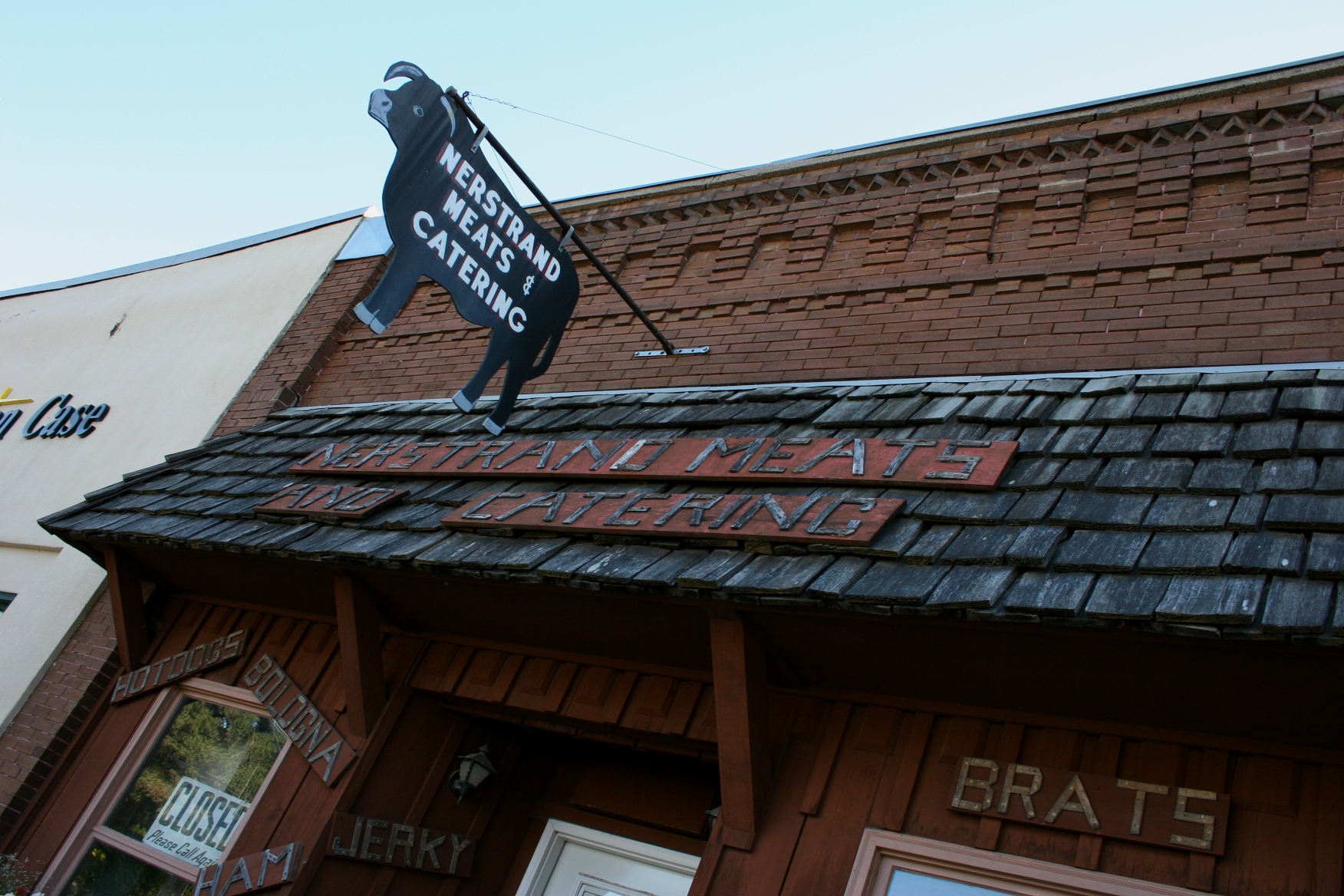
Nerstrand Meats & Catering, a family-owned business since 1890.

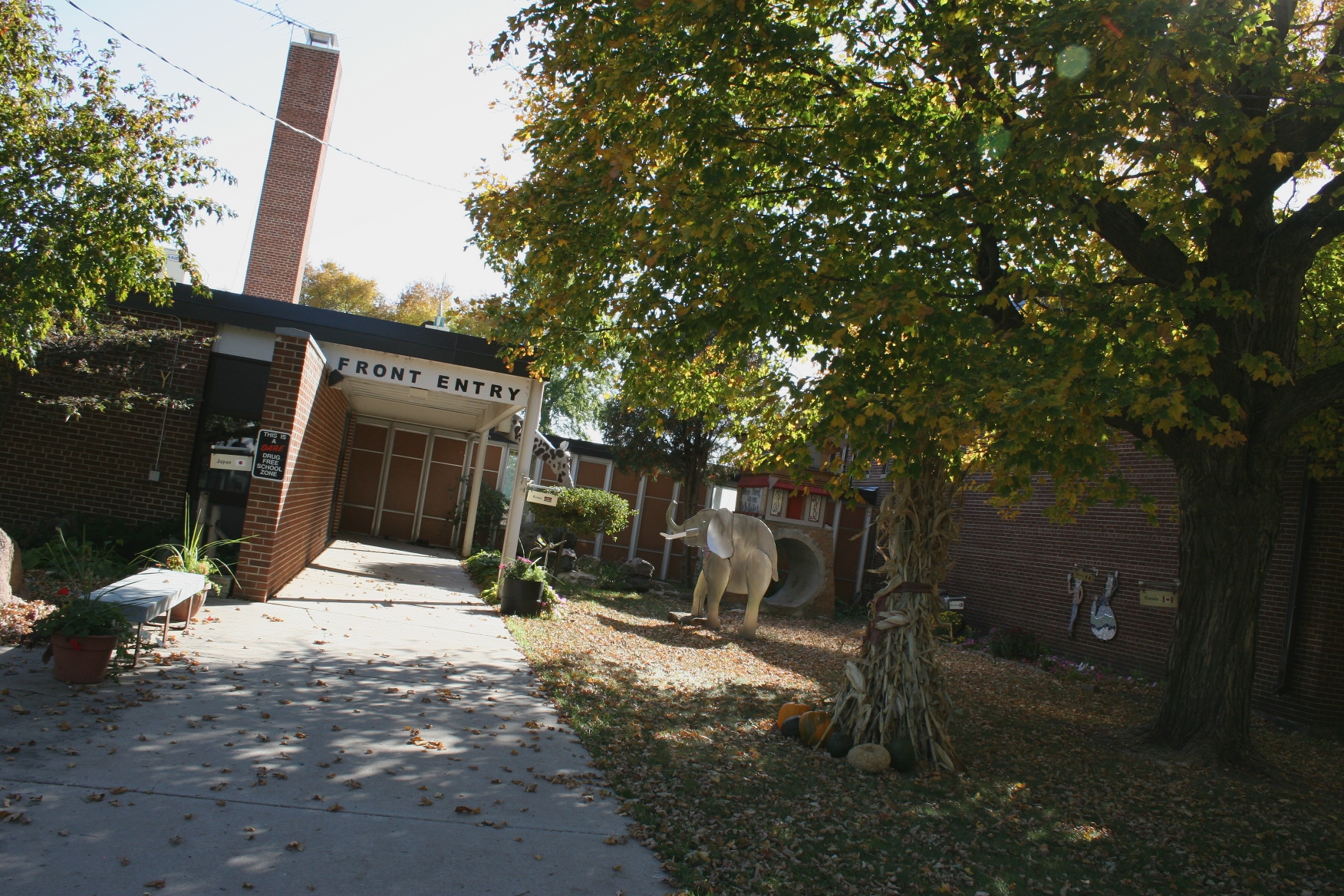
To the east of the park lies the small town of Nerstrand, worth a stop to check out Nerstrand Meats (open 8 a.m. – 5:30 p.m. Monday – Friday and from 8 a.m. – 4 p.m. Saturdays), the International Peace Garden at the local charter school, Nerstrand Elementary, and Main Street small-town Minnesota. (Watch for a future post on interesting signage in Nerstrand. Click here to read a previous post about the Peace Garden.)

A snippet of Nerstrand Elementary School and its International Peace Garden.

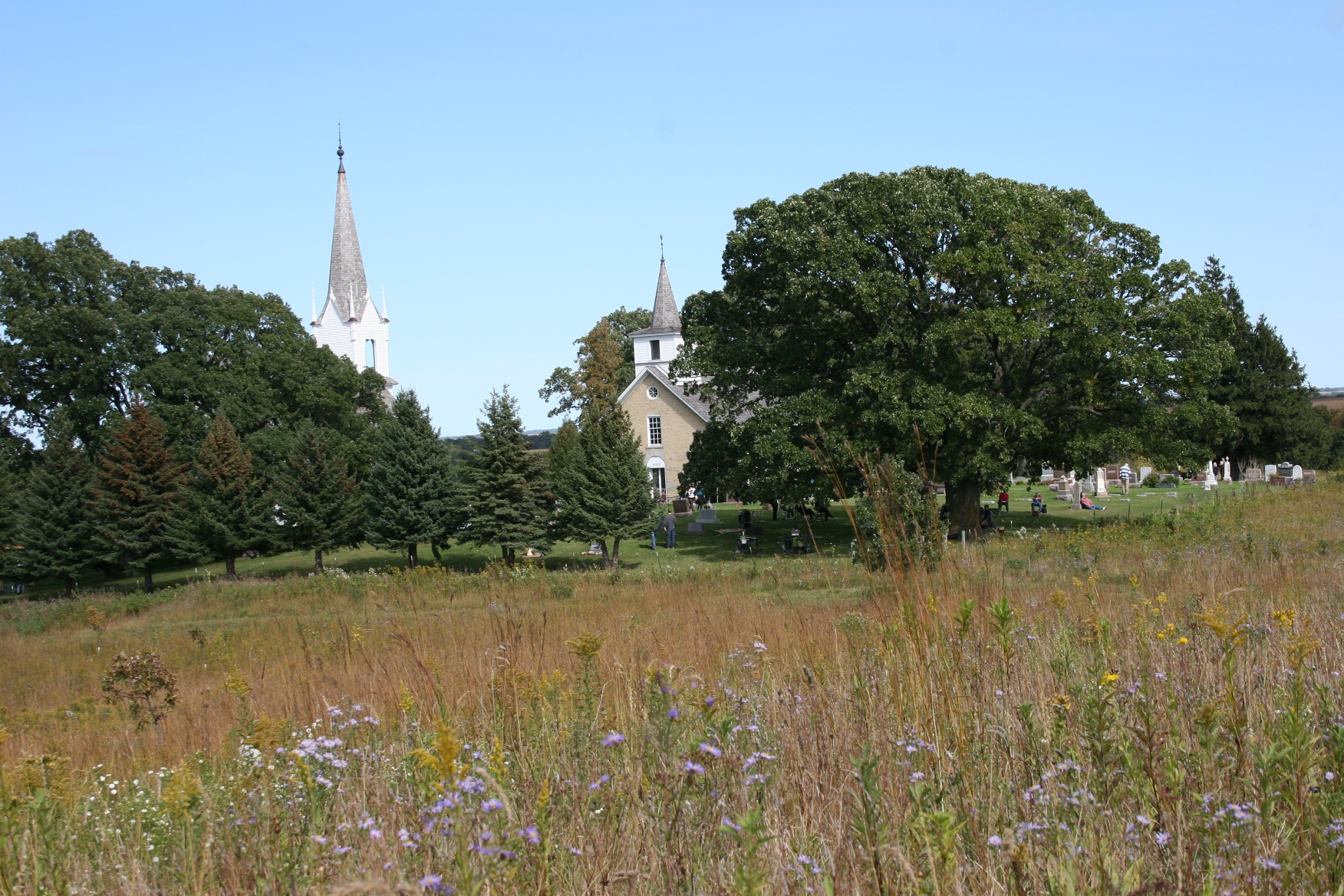
North of Nerstrand Big Woods State Park, along Rice County Road 30, sit the historic and picturesque 1862 and 1894 Valley Grove churches surrounded by 50 acres of rolling prairie grasses and trees. From high atop this hillside location, you’ll get a spectacular view of the fall colors. You can also hike a prairie path here. (Click here to read a previous post I wrote about Valley Grove’s annual fall country social.)

A view of the Valley Grove churches from the prairie that edges the churchyard.

To assure that you don’t miss out on these color viewing opportunities, I’d highly recommend hopping in your vehicle sooner than later. Leaves are changing and falling as I write and we all know these splendid days won’t last forever in Minnesota.

© Copyright 2011 Audrey Kletscher Helbling


Starry, starry night July 21, 2011

THE HOUR HAD SLIPPED well past midnight when I joined my sister Lanae and my son on the patio.

“Is there a place for me to sit?” I asked, as I stood still, waiting for my eyes to adjust to the blackness of the night.

“There’s a lawn chair next to me. Caleb’s lying on the patio.”

And so he was and she was and now I was—the three of us clustered under a sky filled with more stars than I’ve seen since my last visit to the southwestern Minnesota prairie.

I gazed skyward, quickly finding the Big Dipper.

“Do you see the Milky Way,” my astronomy-loving 17-year-old asked. I pivoted my head to the right and pointed.

We sat in silence, for minutes, simply staring at the immense sky studded with all those stars.

“This is what I miss about this place,” my sister said, finally breaking the contemplative silence. “The stars.”

And she is right. It is one of many things I miss about my native southwestern Minnesota. Only in rural areas like this, mostly untouched by light pollution, can you view the night sky as it is meant to be seen.

“Did you see that?” my boy enthused, eying the same falling star I had just seen shooting a trail of light across the dark.

“This is better than that place we went to in St. Cloud,” he said. He was referring to a high school astronomy class field trip last summer to the St. Cloud State University planetarium. I remember his visit there, how unimpressed he was with the whole thing and how he disliked being caught in Twin Cities rush hour traffic on the drive home.

No doubt experiencing the night sky here at my brother’s place just north of Lamberton—where only rural yard lights and small-town lights in the distance punctuate the darkness—would outshine any planetarium any night.

And, for sure, traffic jams are not an issue.

© Copyright 2011 Audrey Kletscher Helbling


Hot as “you know what” in Minnesota July 18, 2011

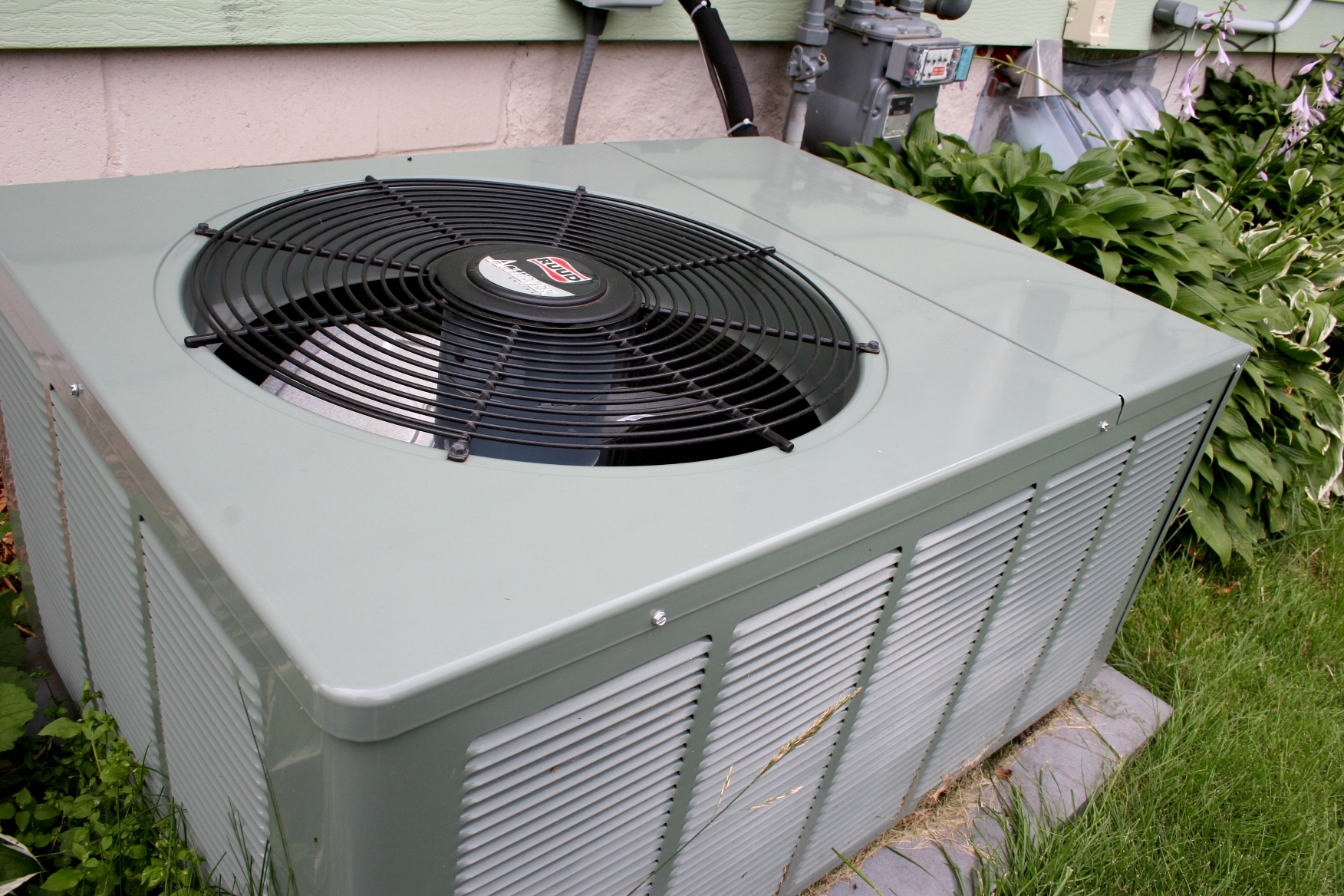
Air conditioners will be working overtime in Minnesota this week.

SO, MINNESOTANS, here’s the weather question of the day: “How hot is it outside?”

Although I’m of German heritage, I’d unequivocally state, “hotter than a Finish sauna.”

With a predicted dewpoint in the 70s (Sunday it reached an almost unheard of 81) and temperatures in the 90s today, the National Weather Service in Chanhassen has continued an extensive heat warning for central and southern Minnesota and west central Wisconsin through 9 p.m. Wednesday.

Heat indexes of more than 105 degrees (some media outlets are saying 110 – 117 degrees) are expected for several-hour stretches during the afternoon, creating “a dangerous situation in which heat illnesses are likely.” Ya think?

That means, folks, that we need to keep ourselves cool (preferably in an air conditioned building), drink plenty of fluids (and we’re not talking alcohol here) and stay out of the sun.

Don't increase your fluid intake via alcohol.

Honestly, when I stepped outside Sunday evening, I felt like I couldn’t breathe. You can guess how long I stayed outdoors. Long enough to turn around and walk back inside the house. I had been out earlier photographing the air conditioner you see above. I had a little trouble with the camera lens fogging over as soon as I stepped outdoors. The windows on our house also fogged, a phenomenon I have not previously seen except when I cook pasta. Weird stuff this weather.

All joking aside, this heat and humidity can be downright dangerous, especially for anyone working outdoors.

I know of some teens supposedly heading to the corn fields early this morning to detassel corn in the Stanton/Northfield area. Here’s my advice: Gulp water, by golly, then gulp some more. Slather on the sun screen, wear a cap and, if you’re at all feeling out of sorts, immediately tell your supervisor. Today would not be the day to tough it out. And, yes, I do know of what I write. As a teen I detasseled corn on days so hot it seemed as if the heavy air would suffocate me in the corn rows.

If you, or your teen, is starting a job this week as a corn detasseler, take extra precautions to avoid heat-related health issues. Also, don't quit. Every week in the cornfield won't be like this one and you' likely work only til noon.

Now, with those dire warnings out of the way, let’s talk about the words and phrases we Minnesotans use to describe this stretch of humid, hot weather. Let me pull out my Minnesota Thesaurus and thumb through the pages.

Here are some select synonyms for our current weather: steamy, muggy, scorching hot, sweltering, a real barn burner, so hot you could fry an egg on the pavement, like a sauna, “it’s not the heat, it’s the humidity”…

Whichever words you choose from that non-inclusive list, you might want to add, “It could be worse.” We Minnesotans like to tack that little phrase onto our statements lest, by not adding that qualifier, we leave ourselves open to worse circumstances/situations/weather. We do not want to tempt fate.

After all, come December, we could get socked with a raging blizzard that dumps two feet of snow on us followed by a week of temperatures plummeting to 20-below, and that’s without the windchill. We wouldn’t want to invite a Siberian winter by forgetting, this week, to say, “It could be worse.”

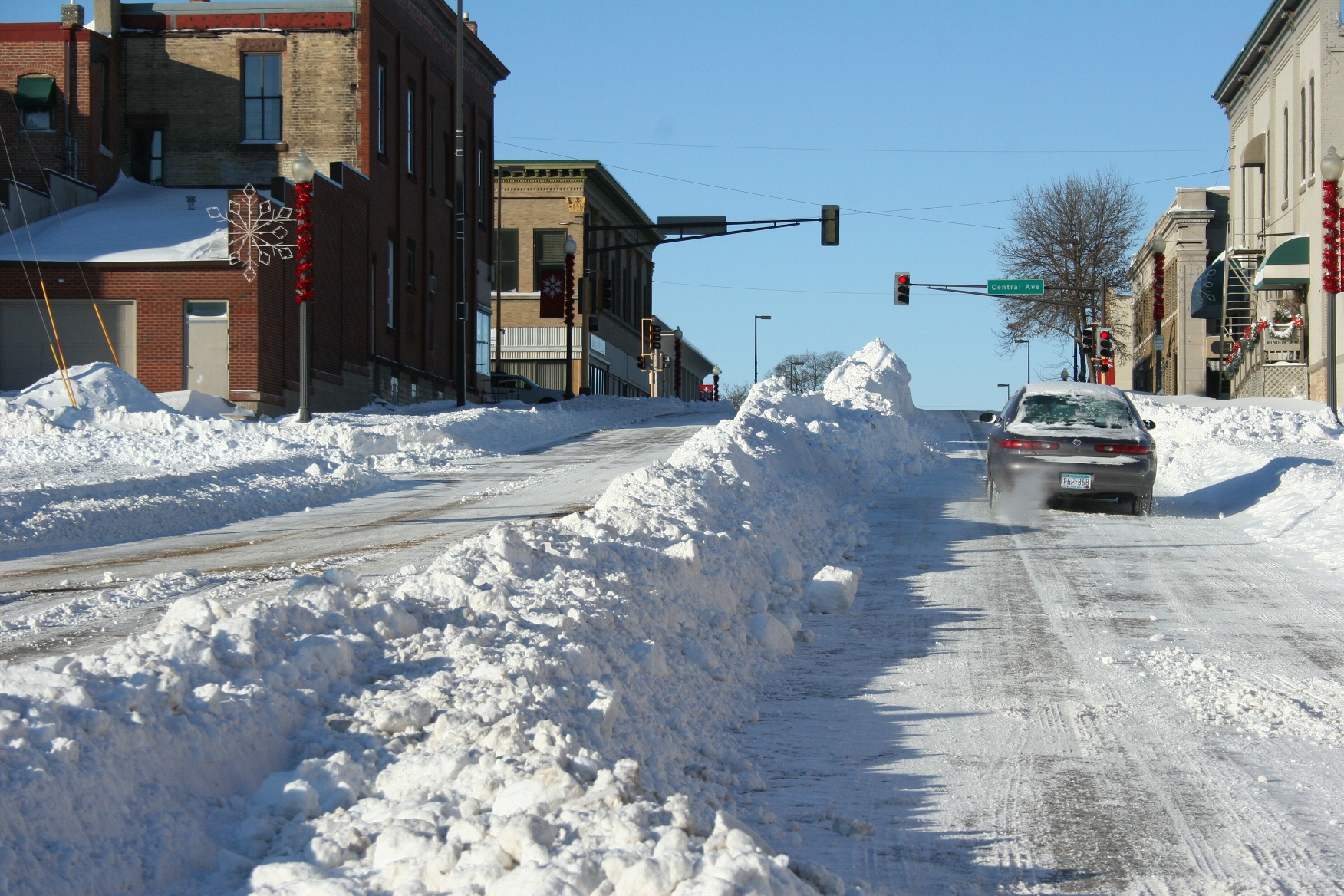
A snow pile divides traffic lanes along Fourth Street/Minnesota Highway 60 a block from Central Avenue in Faribault following a December 2010 snowstorm.

In summary, it’s best, really, not to overly-complain about the hellish, hot, scorching, stifling, steamy, sticky, sweltering, miserable, muggy, unbearable, oppressive heat and humidity. OK, then?

And, please, don’t be thinking, “Whatever, Audrey.”

IT’S YOUR TURN to speak up. How would you describe this weather we’re experiencing in Minnesota? How are you coping? Add your ending to this prhase: “It’s so hot in Minnesota that…”  Submit a comment and tell me whatever.

© Copyright 2011 Audrey Kletscher Helbling


An update from storm-damaged Belview July 13, 2011

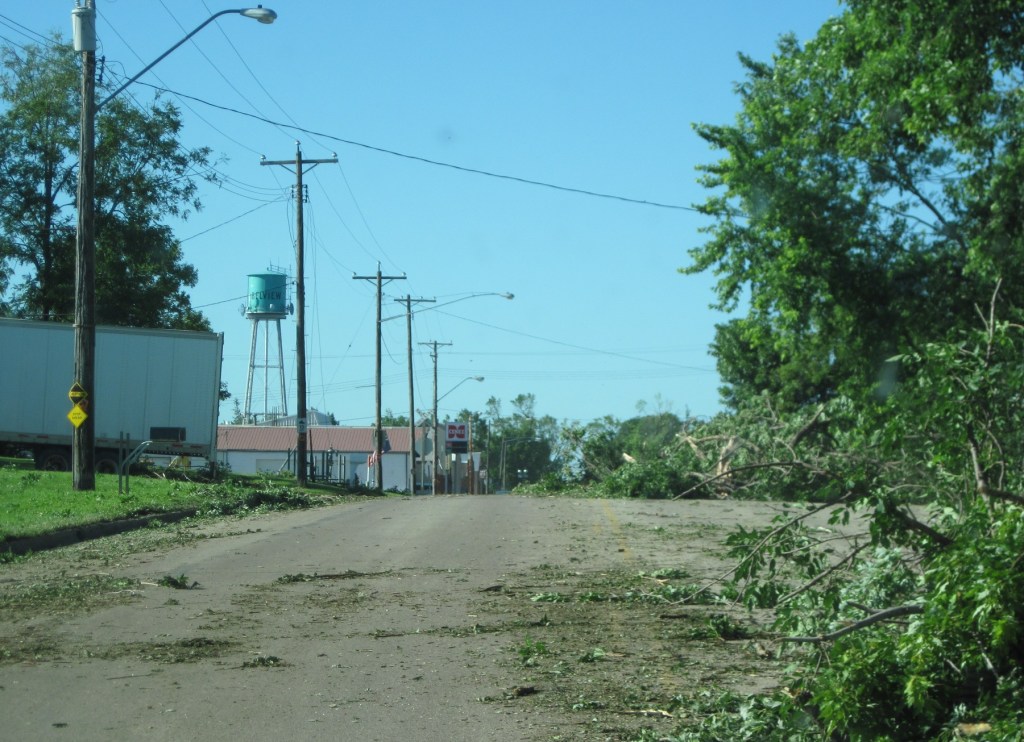
Entering Belview from Sacred Heart at 9 a.m. on July 2, the morning after the tornado. Photo courtesy of Merlin and Iylene Kletscher.

LESS THAN TWO WEEKS after an EF-1 tornado ravaged the small town of Belview in southwestern Minnesota, I emailed City Clerk/Treasurer Lori Ryer for an update.

I know she’s busy dealing with issues in the aftermath of the July 1 storm, so I asked only for a brief summary, with a specific request for information about Parkview Home. The nursing home, according to Ryer, received major roof damage that resulted in flooding of the building. Initially, 25 residents were evacuated and taken to care centers in nearby Wabasso, Olivia and Redwood Falls.

Since then, Parkview has closed for repairs, residents have been discharged and admitted to new nursing homes, and staff has been laid off.

When the nursing home will reopen remains uncertain as assessments are still being made. But Ryer anticipates, after talking to staff on Tuesday, that Parkview will be closed for at least several months.
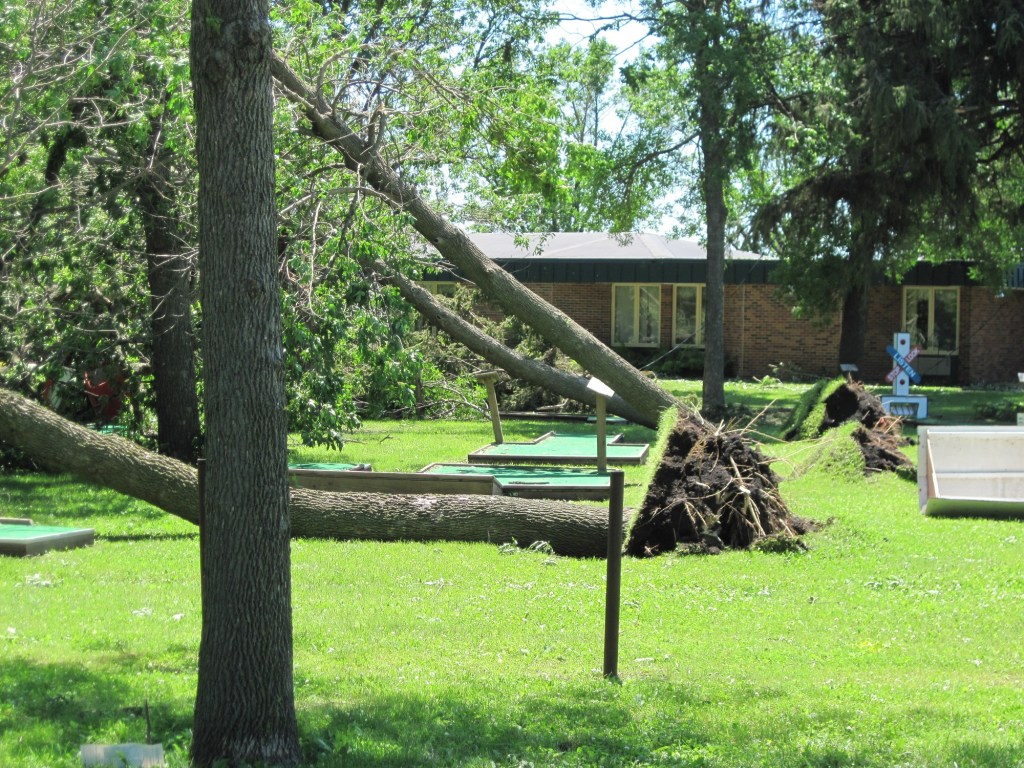
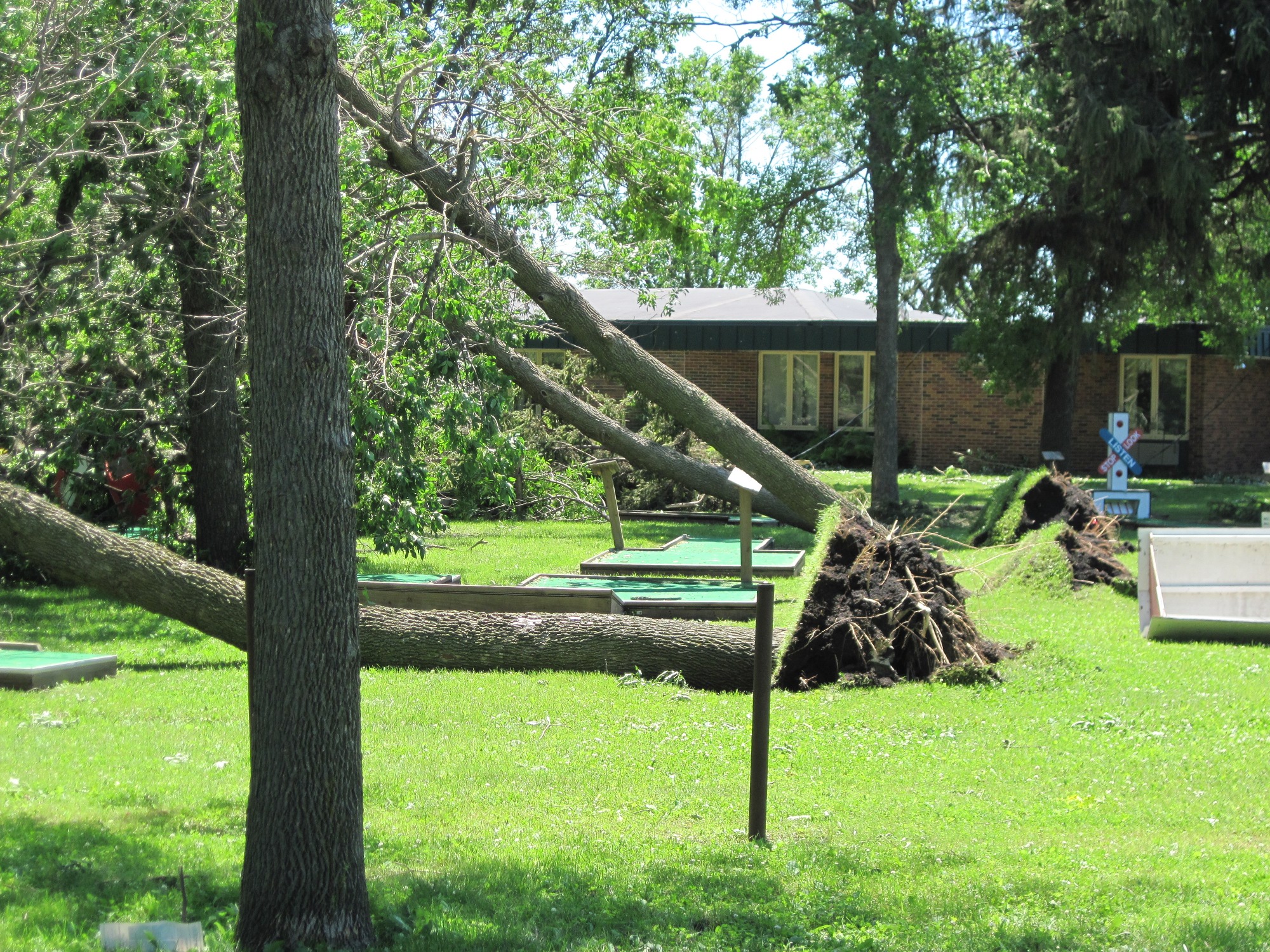
This photo shows Parkview Home and mini golf in the park. Photo courtesy of Merlin and Iylene Kletscher.

Parkwood Apartments, which is attached to the nursing home, was not damaged, but was without power from Friday afternoon, July 1, until the following Monday evening. Some apartment residents left to stay with family members briefly, but everyone has now returned, Ryer says.

Bridgewood Assisted Living was not damaged, but was without power also.
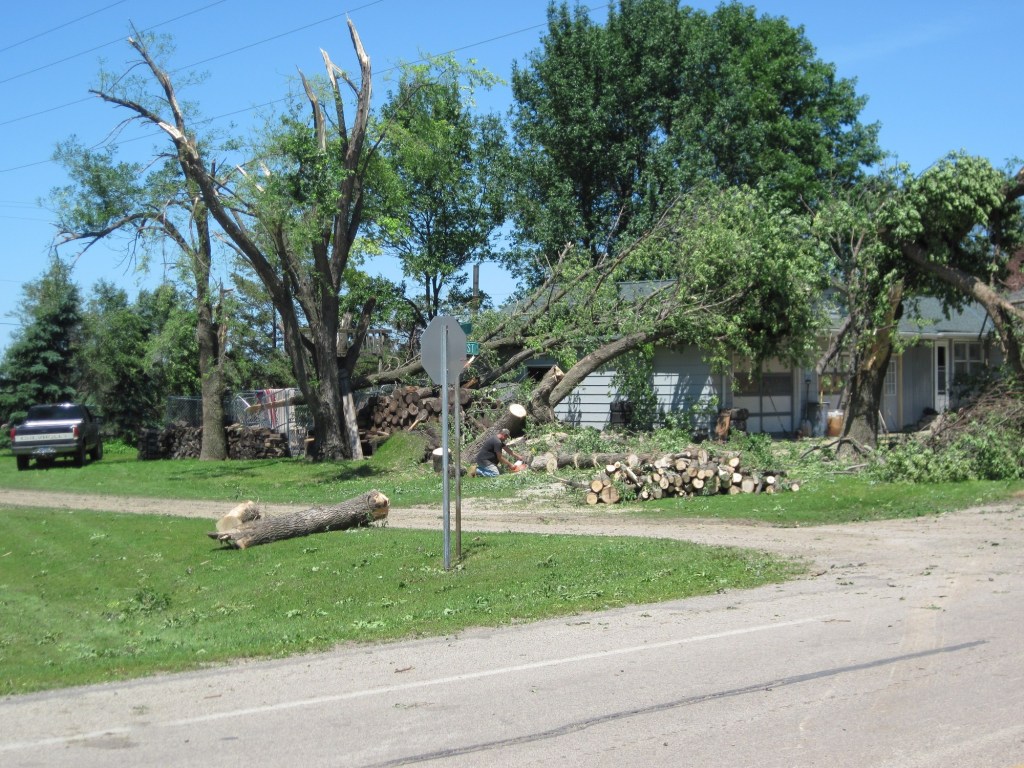
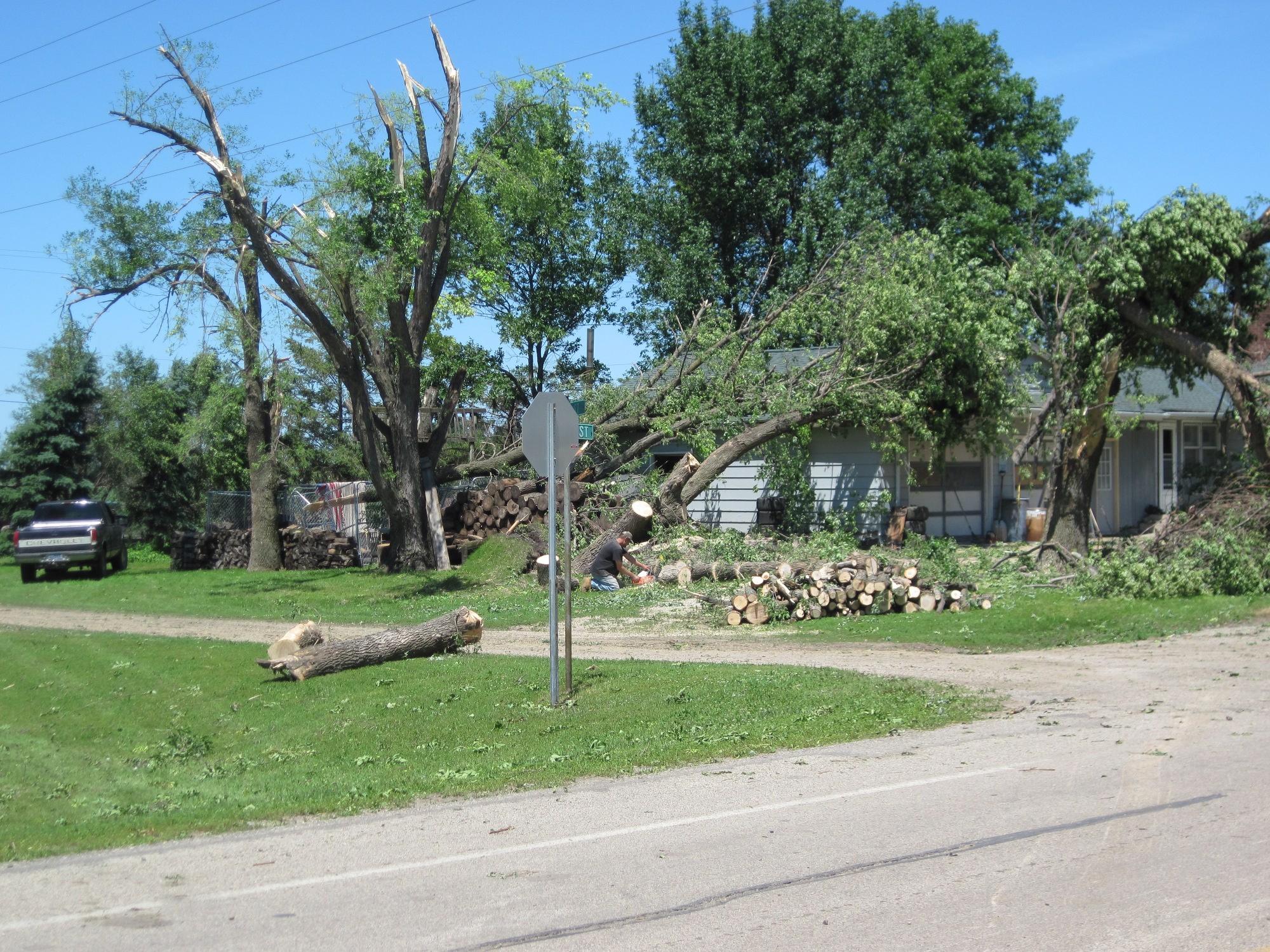
Damage along South Main Street in Belview. Photo courtesy of Merlin and Iylene Kletscher.

Throughout the rest of this community of 375 residents, many home and business owners are still awaiting insurance adjusters. Many homes received minor damage, several moderate, and a few major, damage from results of the 95 – 105 mph tornadic winds, Ryer says.

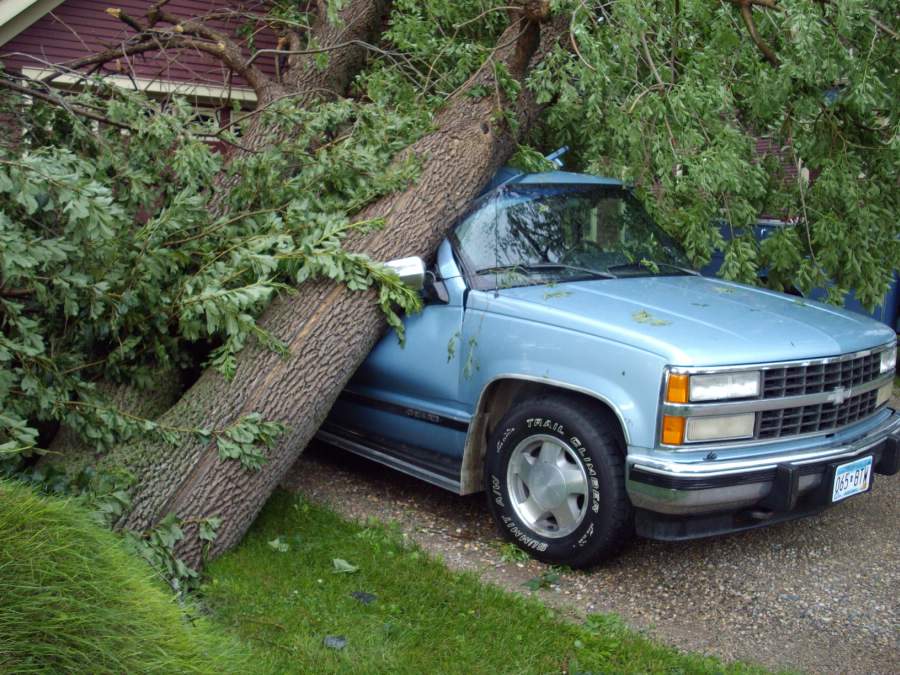
Many garages and sheds were destroyed and quite a number of cars totaled due to trees falling on them, the city clerk continues.
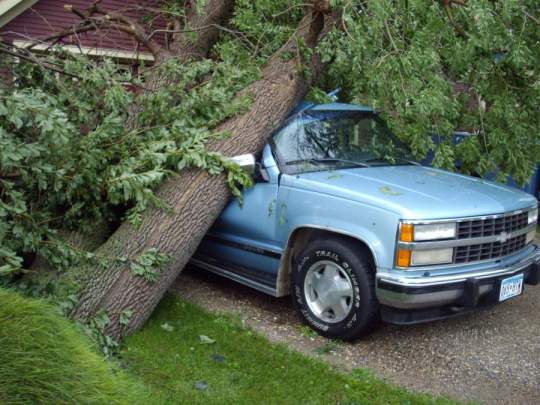
Tom Johnson's SUV was totaled when a tree fell onto it during the Belview tornado. Photo courtesy of Tom and DeLores Johnson.

The Belview school building received major damage, resulting in relocation of the Belview Learning Center summer program. Ryer hopes that program will be up and running in the Belview school building before the new school year begins.

Despite the destruction in her community, Ryer manages to remain positive: “With all that being said, I still marvel at the fact that we had no injuries during the storm or in the days of clean-up afterwards.”

LIKE RYER, I, TOO, marvel that no one was injured or killed by this storm which swept across Minnesota into Wisconsin July 1. My hometown of Vesta, just down the road from Belview, was hit by a series of downbursts with wind speeds of 90 – 100 mph.

I have many family members living in areas affected by the storms. Damage was minimal to their properties, but most lost trees. A cousin living near Wood Lake, however, saw substantial damage to the family’s farm. My home church, St. John’s Lutheran in Vesta, had half the roof ripped off.

St. John's Evangelical Lutheran Church in Vesta with the roof half missing. Photo courtesy of Brian Kletscher.

In a few weeks I’m returning to my hometown for the annual Kletscher family reunion. I’m trying to prepare myself for what I’ll see—my little prairie town with fewer trees, the church where I was married now temporarily closed. I always look forward to worshiping there with my mom when I return home.

I expect it will be the trees, though, that I will miss the most. A friend recently told me that the small towns of southwestern Minnesota are like oasises in a land mostly devoid of trees, except for the trees in those towns and the groves that shelter farm sites. He is right.

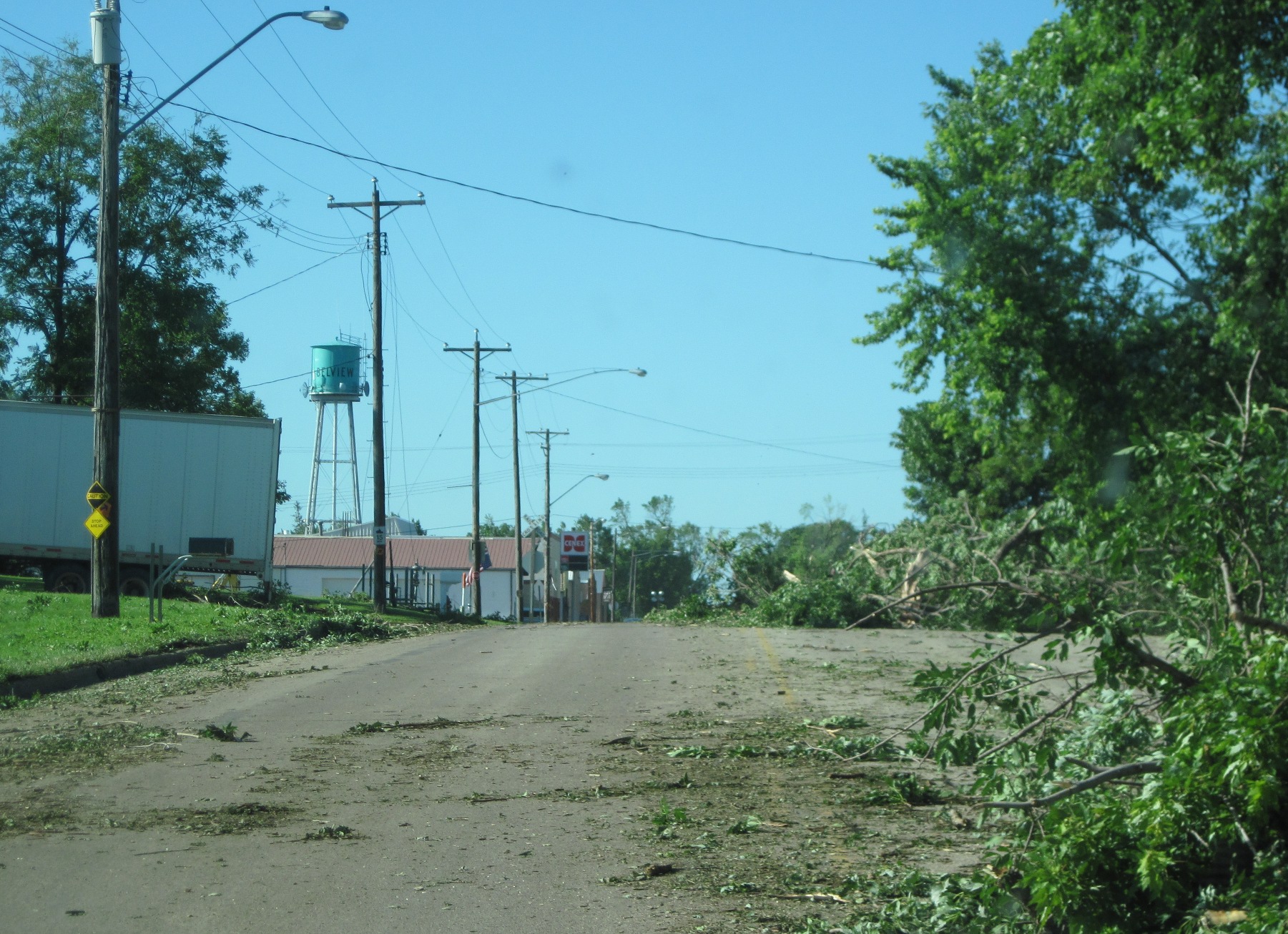
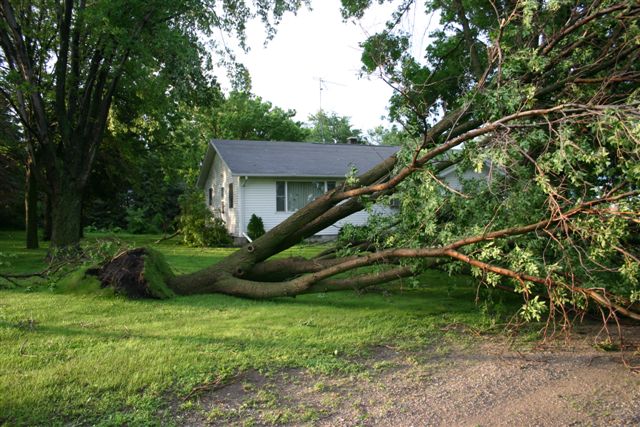
The communities of Belview and Vesta lost many trees in the July 1 storms. This photo is along a Belview street north of the city park. Photo courtesy of Merlin and Iylene Kletscher.

But those of us who grew up on this land, and those who live there, appreciate the wide open spaces, the big sky, the fields of corn and beans and those small towns.

Prairie people are strong, caring, determined folks who come together in time of need. I’ve seen that over and over again in the stories I’ve heard and the comments I’ve received on my blog posts while covering the recent storm damage.

To the residents of Belview and Vesta, Tyler and Ruthton, and all the farm places in between, I know you’ll make it through these challenging days. Your roots reach deep into the prairie and no storm can rip away what you have—each other.

© Copyright 2011 Audrey Kletscher Helbling


Ominous skies near Nerstrand July 2, 2011

Filed under: Uncategorized — Audrey Kletscher Helbling @ 10:40 AM
Tags: , , , , , , , , , , ,

HAD I NOT KNOWN about the storm damage earlier that evening in southwestern Minnesota, I may not have worried so much.

Had my sister not called from Waseca and advised my husband and me to “get home,” I may not have worried so much.

Had the clouds not turned dark and foreboding, looming low enough to nearly brush the earth, I may not have worried so much.

Had my friend Fritz kept quiet and not shared her tales of tornado terror, I may not have worried so much.

But Friday evening when a strong storm hit my hometown of Vesta, when my sister warned of the approaching storm, when the sky threatened and when Fritz told her stories, I worried. I cannot help myself. Storms scare me.

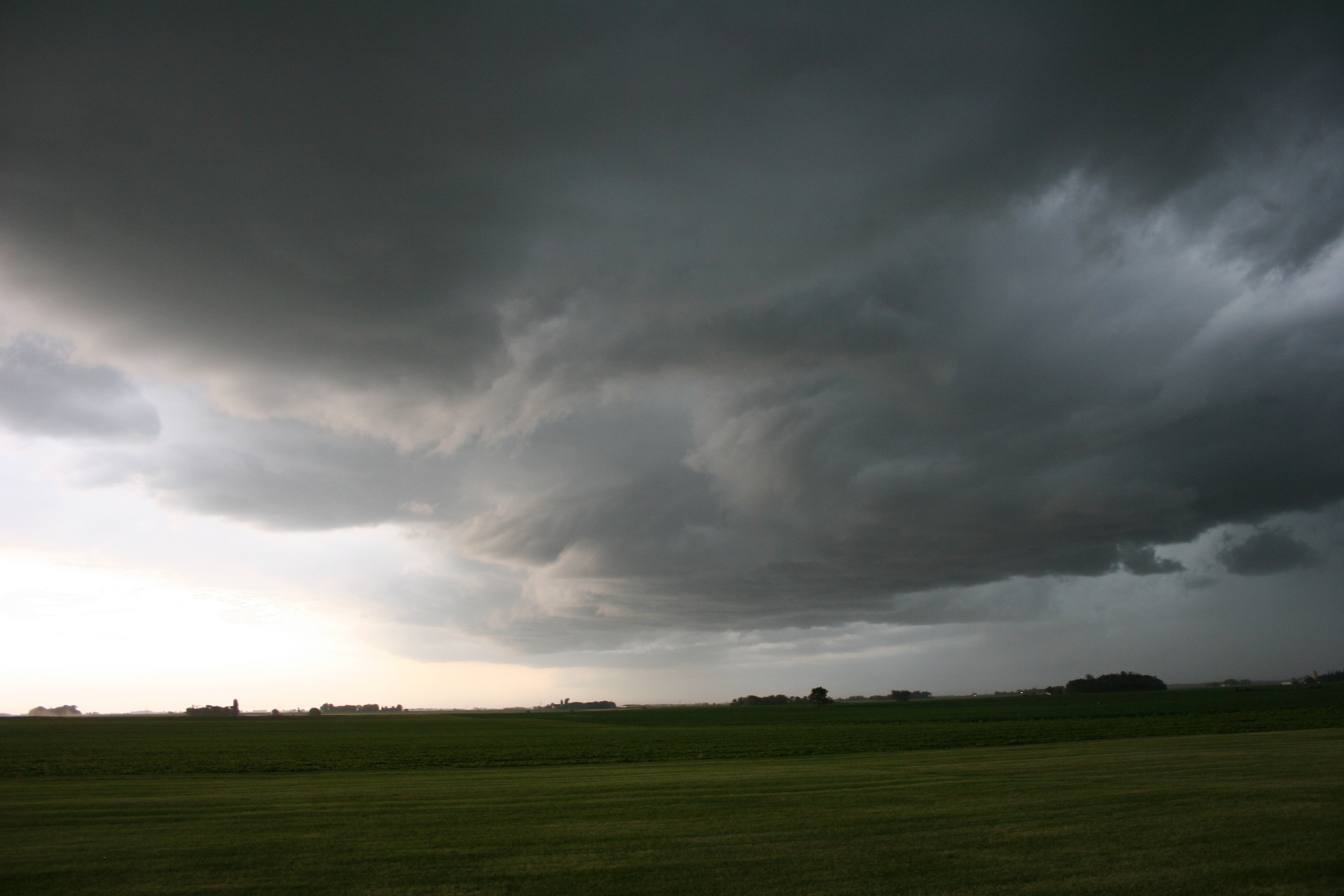
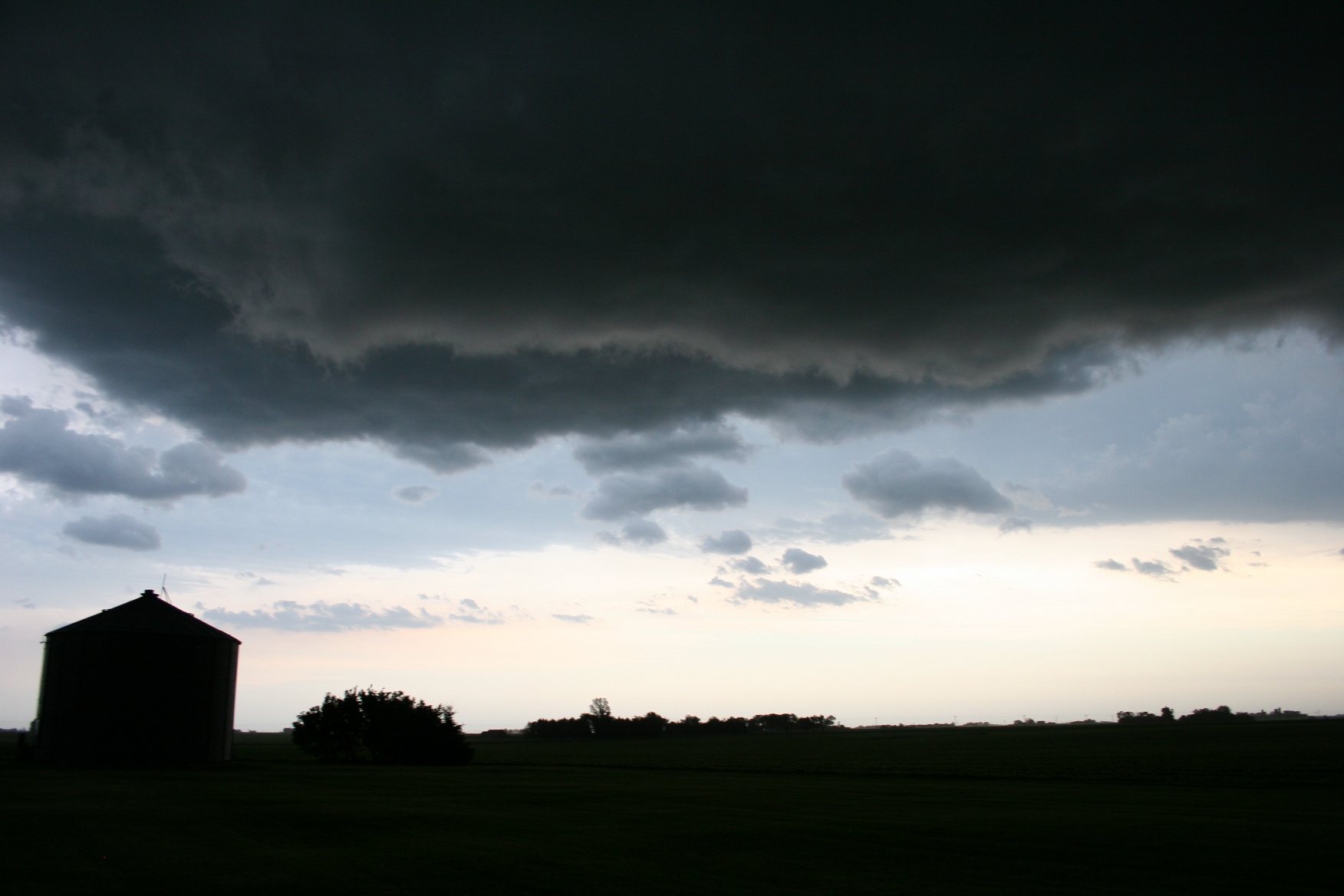
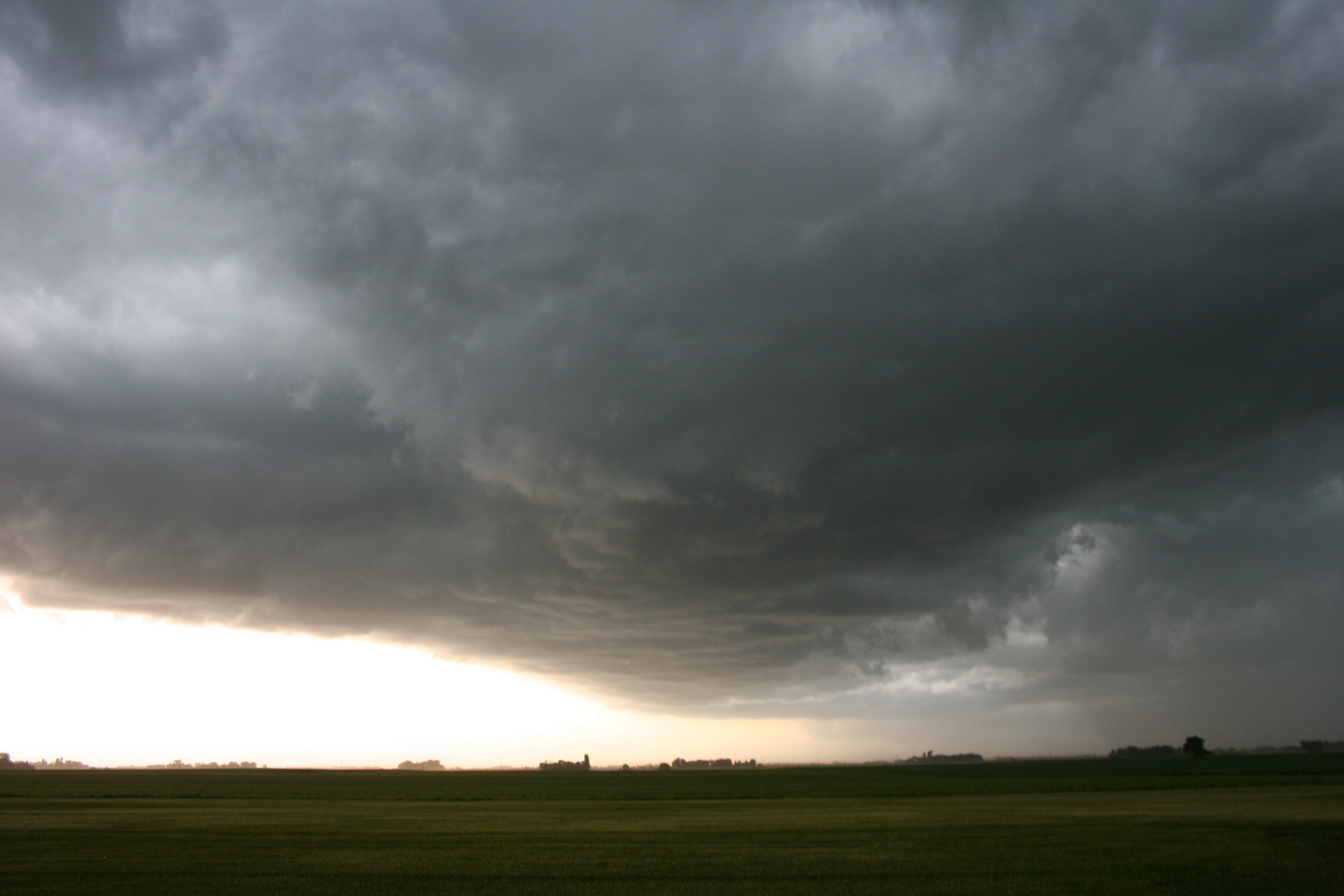
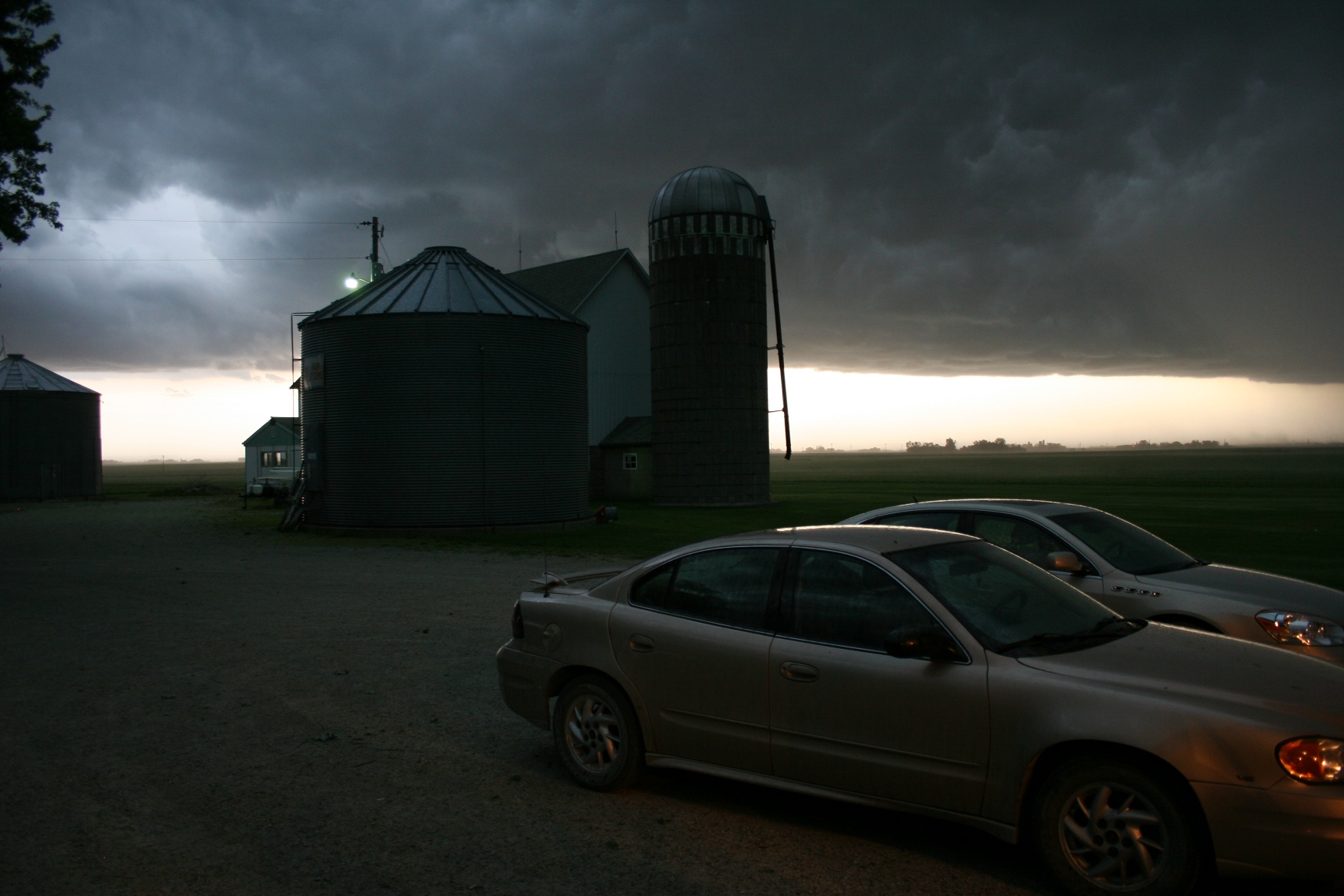
And here are the images, taken at a farm near Nerstrand where I was attending a party, to prove why I was concerned.

Despite my fear, I must admit that the skies held a certain ominous beauty.

Spectacular lightning—our own fireworks show—crisscrossed the sky for hours. I attempted a few lightning shots, but could never get the timing right. And when you’re scared, holding the camera still enough for a slow shutter speed doesn’t work. Rain also kept me from pulling out my Canon.

The evening ended without any severe storms in our locale, despite skies that I swore would drop a tornado at any minute.

But in my hometown, the results were different. If you haven’t read my earlier post today about the storm in Vesta, click here. My brother was stopped twice trying to get into town to check on our mom, who is OK.

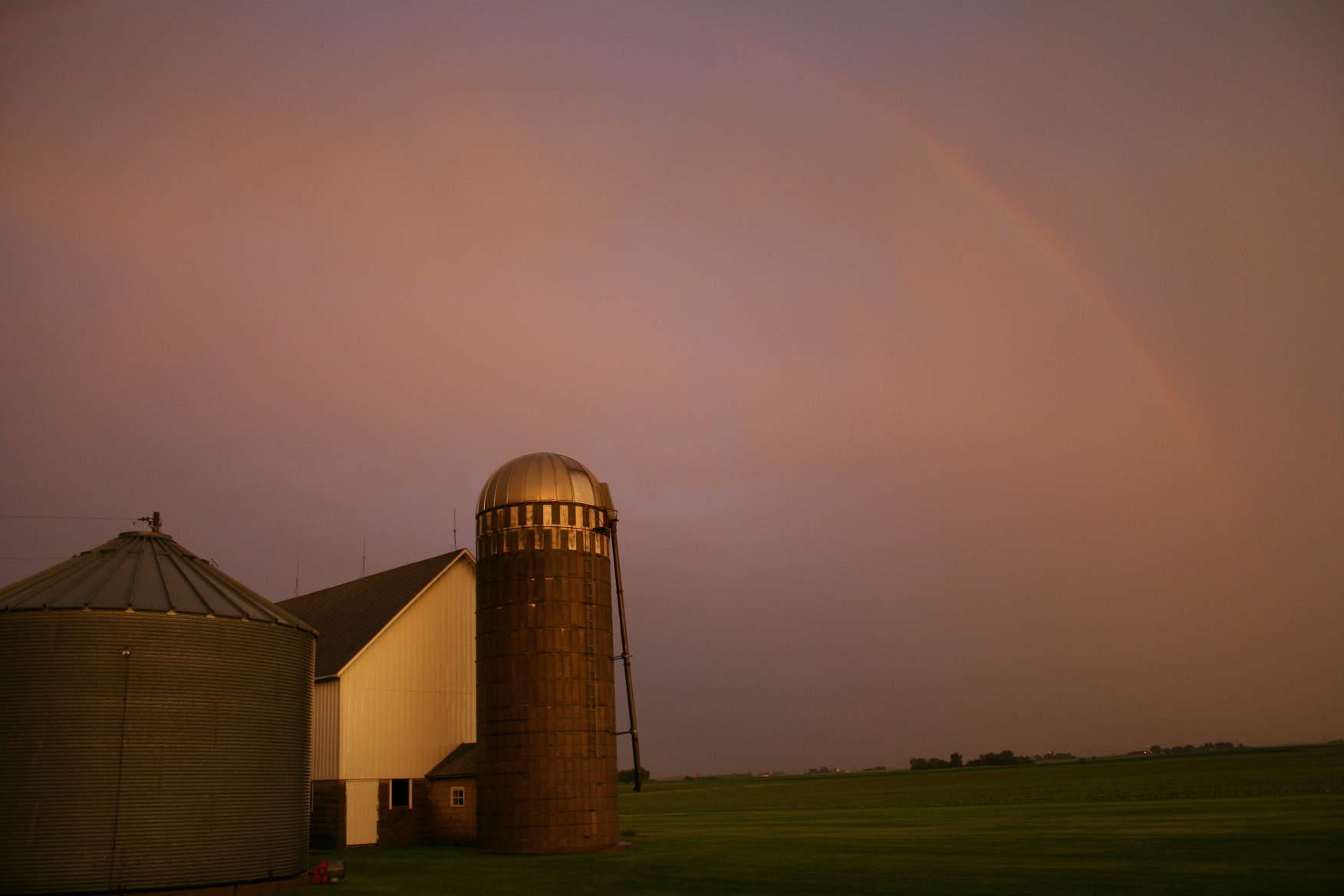
After the ominous clouds and the rain, this rainbow appeared.

© Copyright 2011 Audrey Kletscher Helbling
 

Storm rips through my hometown of Vesta

WHENEVER ONE of my siblings calls saying, “I just want you to know Mom is OK, but…,” I prepare myself mentally for her latest health crises.

But Friday evening when my sister Lanae reached me via cell phone while my husband and I were en route to a party near Nerstrand Big Woods State Park, the news was totally unexpected.

My hometown of Vesta in Redwood County in southwestern Minnesota had been struck by straight-line winds.

While my mom’s house—once the retirement home of my paternal grandparents—had gone apparently unscathed, other structures in town were damaged. But at least my mother and aunts and uncles and a niece were safe.

In my sister’s early report, which came second-hand via relatives in the area, she shared that half the roof was ripped off our home church, St. John’s Lutheran. Hours later, after arriving home from the party, I found photos in my email in-box of the storm’s destruction. I nearly broke down and cried when I saw my home church with the partially missing roof.

St. John's Evangelical Lutheran Church in Vesta with the roof half ripped off during the Friday evening storm.

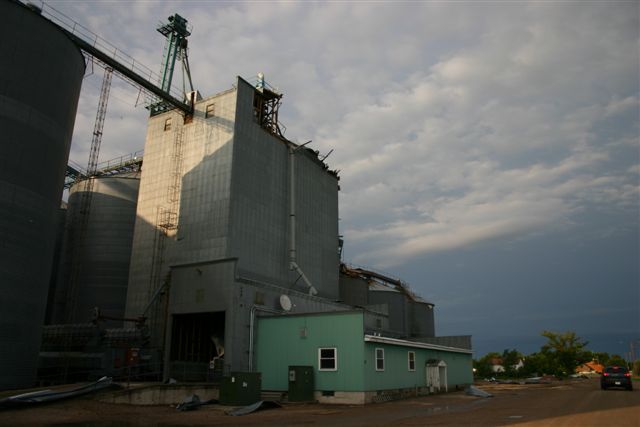
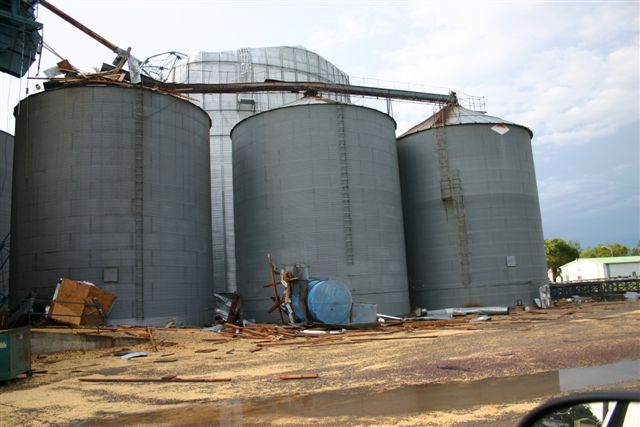
The images also showed damage to the grain elevator and bins in Vesta and trees down on the home place half a mile from town.

Damage to one of the grain bins at the local elevator.

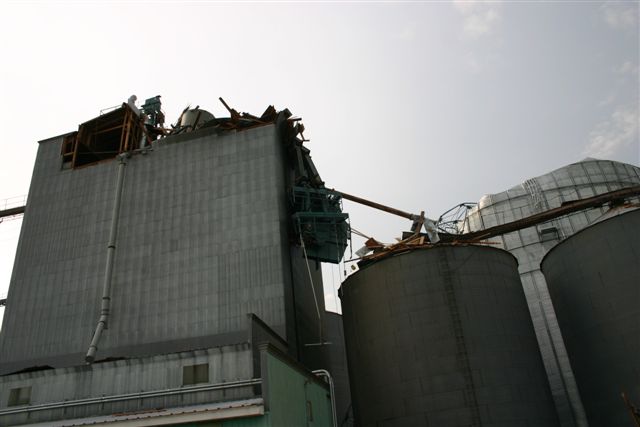
The grain elevator complex, the visual defining landmark in the farming community of Vesta, was ravaged by winds. You'll see the damage near the top of the old grain elevator.

A close-up of the damage wrought upon the old elevator.

Another shot showing some of the debris and damage at the elevator complex.

The wind toppled trees on the farm where I grew up a half mile south of Vesta.

During that phone conversation with my sister, as my husband and I drove along the gravel road toward the gathering with friends, I wanted nothing more than to turn around, pack our suitcase and drive to Vesta 2 ½ hours away.

That’s exactly how I felt more than three decades ago when I lived in Gaylord and the farm where I grew up was hit by a tornado, taking down a silo and tossing grain wagons around the field.

But on this Friday evening, with storms rolling in from the west, I knew this was not practical. I would need to rely on my siblings to keep me informed. My middle brother, who lives in Lamberton some 25 miles away, was on his way to Vesta. I called my two daughters to tell them about the storm.

I wanted so much, though, to also speak with my mom. I needed the comfort of hearing her voice. I wanted to learn about her storm experience. But the phone lines were down in Vesta. Even though Mom owns a cell phone, I doubt she remembers how to use it. She’s never quite adjusted to technology.

And so now it’s Saturday morning and I am exhausted after a night of tossing and turning. Storms do that to me.

Thoughts of my home church—where I was married and attended the funerals of my father, Grandma Kletscher, Grandpa Bode and Uncle Mike—churned through my mind. I worried about where congregants will worship, whether the interior of the church was damaged, if the church, my home church, can be repaired.

I hope today to get some answers and, if I do, I’ll pass that information along to you.

I’ll also share images I shot last night of the storm clouds hanging dark and ominous over the farm site where we gathered with friends for an early Fourth of July celebration.

Nature provided the fireworks—lightning bolt after lightning bolt zig-zagging horizontally across the forbidding sky for hours. Except for some wind and rain, our area escaped the storm that ravaged Vesta and Marshall and other communities to the west.

IF YOU HAVE STORM stories to share from last evening, please submit a comment. KLGR Radio in Redwood Falls is this morning reporting winds of up to 100 mph in Redwood County and the sightings of possible funnel clouds. Click here to read that news report.

FOR THOSE OF YOU UNFAMILIAR with southwestern Minnesota, Vesta sits along State Highway 19 half way between Redwood Falls and Marshall.

Photos courtesy of Brian and Vicki.

©  Copyright 2011 Audrey Kletscher Helbling
 

A Lake Agnes love story June 24, 2011

IT APPEARED TO BE nothing short of a love story played out on a west central Minnesota lake.
Two love birds—or more accurately, ducks—met along the shoreline of Lake Agnes in Alexandria which, to those of you who do not live in Minnesota, claims to be the birthplace of America what with the Kensington Runestone and all found here.
But I digress.

The mallards cared not one wit about the vikings or the Runestone or even me, watching their every move. The drake and the hen had eyes only for each other.
And so the romance spawned on Lake Agnes, on this lake with the name of Greek (not Scandinavian) origin meaning pure/holy/chaste.

© Copyright 2011 Audrey Kletscher Helbling