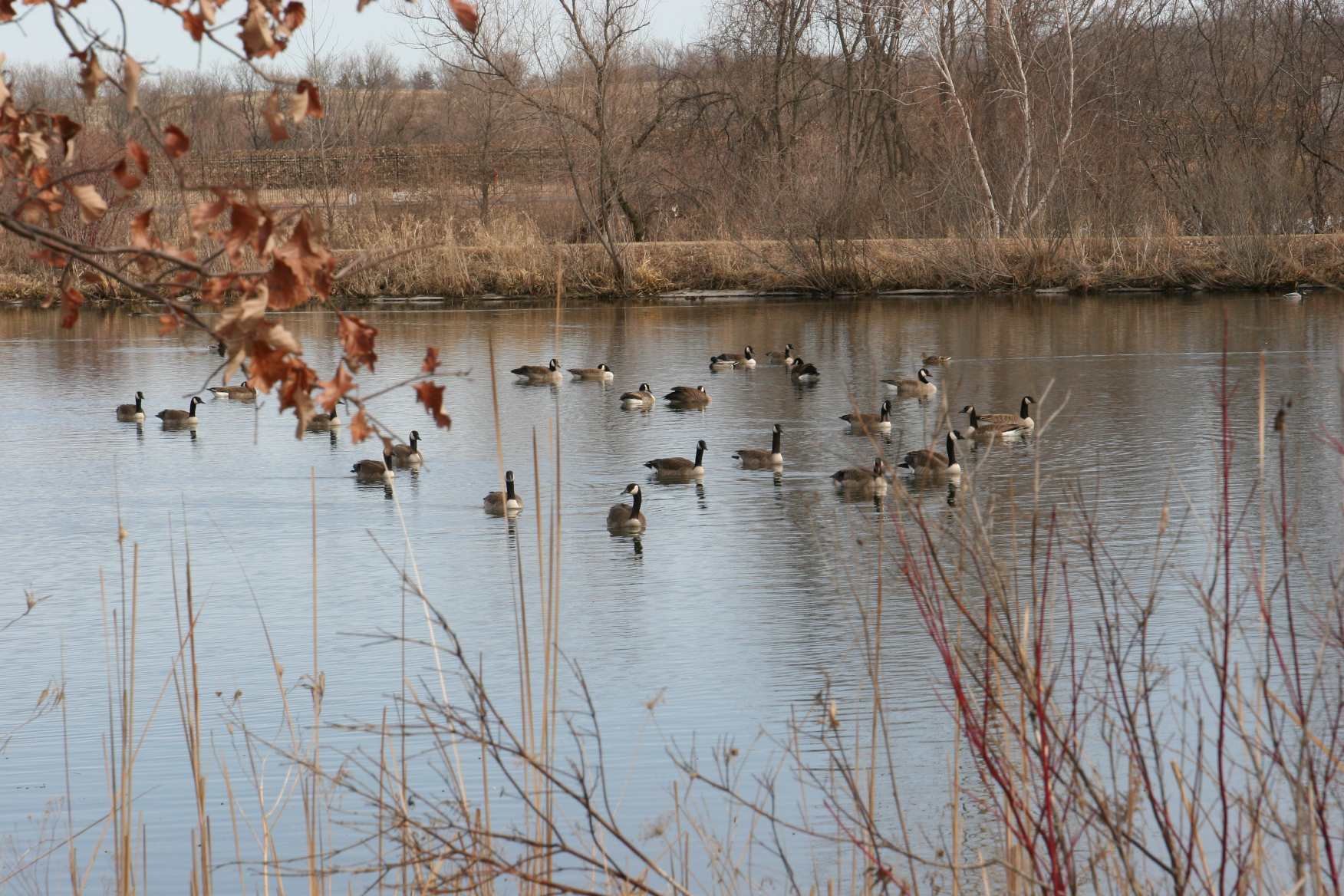
In one of two open ponds at Faribault Energy Park, geese settle in. (Minnesota Prairie Roots copyrighted photo March 2022)
AFTER WHAT SEEMED an especially long, cold winter in Minnesota, spring is emerging. And although the calendar confirms that with the vernal equinox on March 20, I need only look around me to verify this change in seasons.
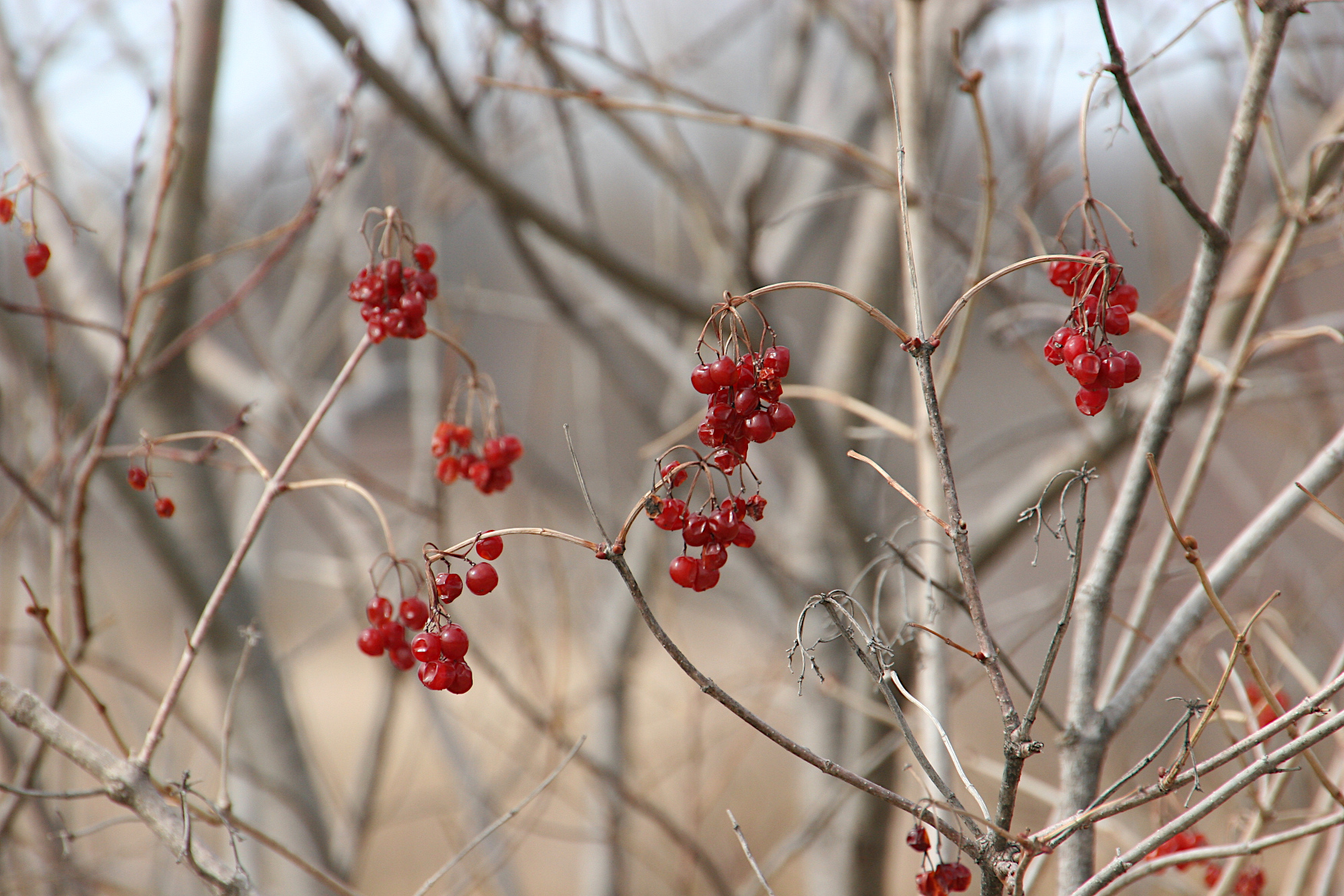
Last year’s berries still cling to branches. (Minnesota Prairie Roots copyrighted photo March 2022)
Several days of gloriously warm weather, capping with 70 degrees on Monday, meant lots of time outdoors in the warmth and sunshine. And nature, mostly nature.
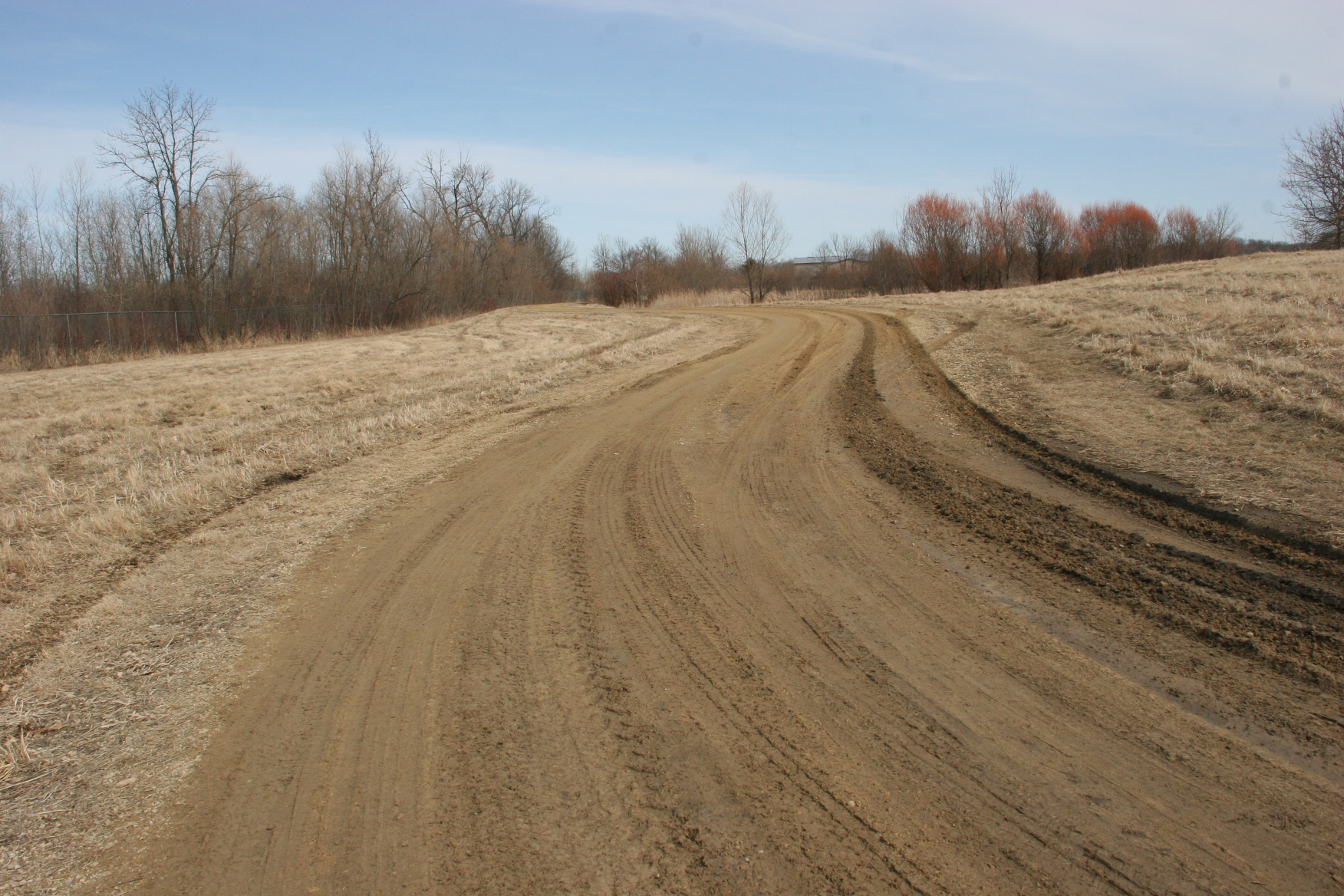
Dirt roads wind around ponds at Faribault Energy Park. (Minnesota Prairie Roots copyrighted photo March 2022)
I especially delight in following the packed dirt roads at Faribault Energy Park. Even with its location next to busy Interstate 35, the park provides, for me, a preferred place to immerse myself in the outdoors. I love the wide sky, the prairie feel of this landscape.
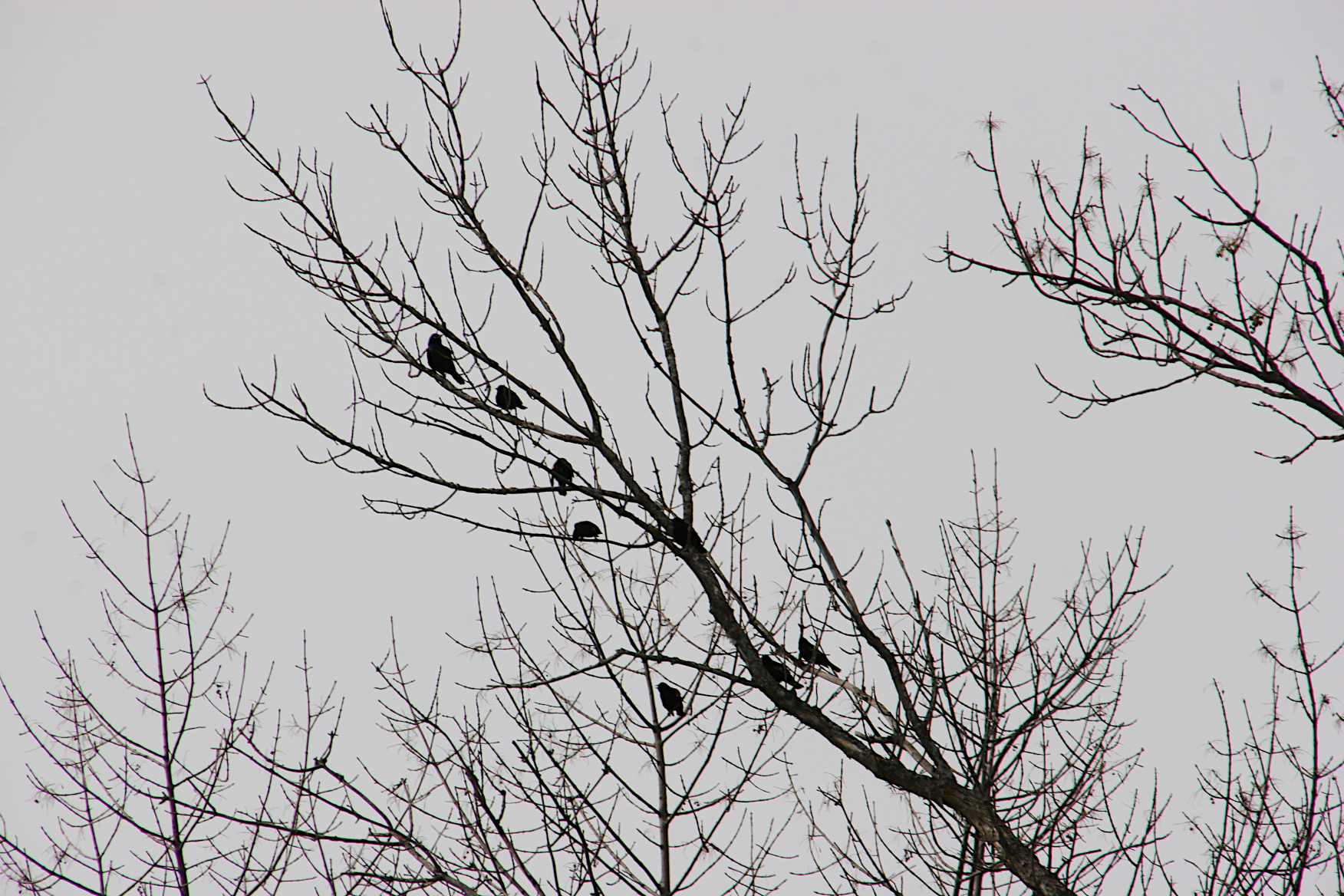
Just a snippet of the blackbirds I saw in these trees. (Minnesota Prairie Roots copyrighted photo March 2022)
As I began my walk around the on-site ponds that attract waterfowl aplenty, I hear first the overwhelming chorus of birdsong. Red-winged blackbirds, perched high atop a cluster of trees, trill a song of spring. I welcome the music.
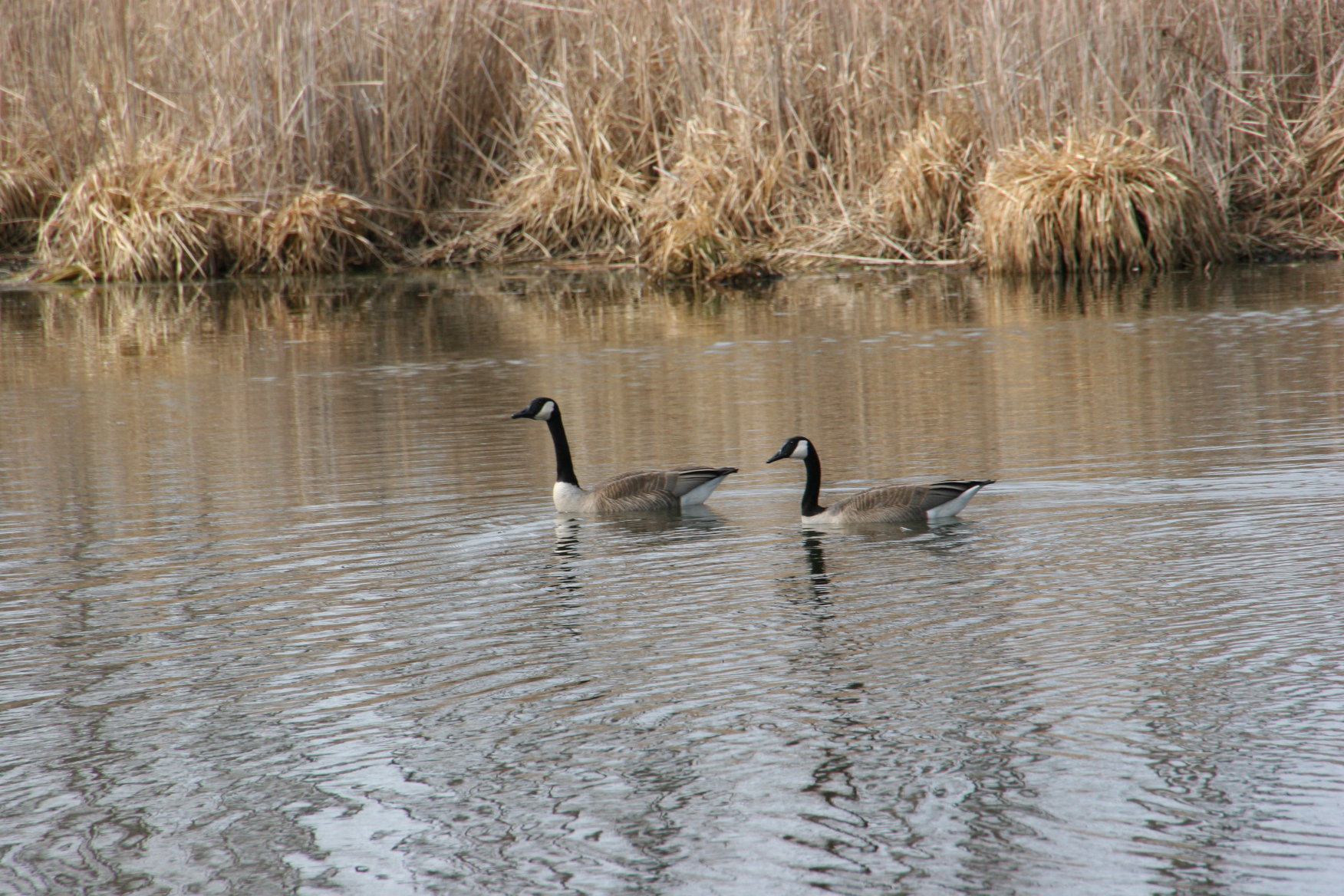
Canadian geese. (Minnesota Prairie Roots copyrighted photo March 2022)
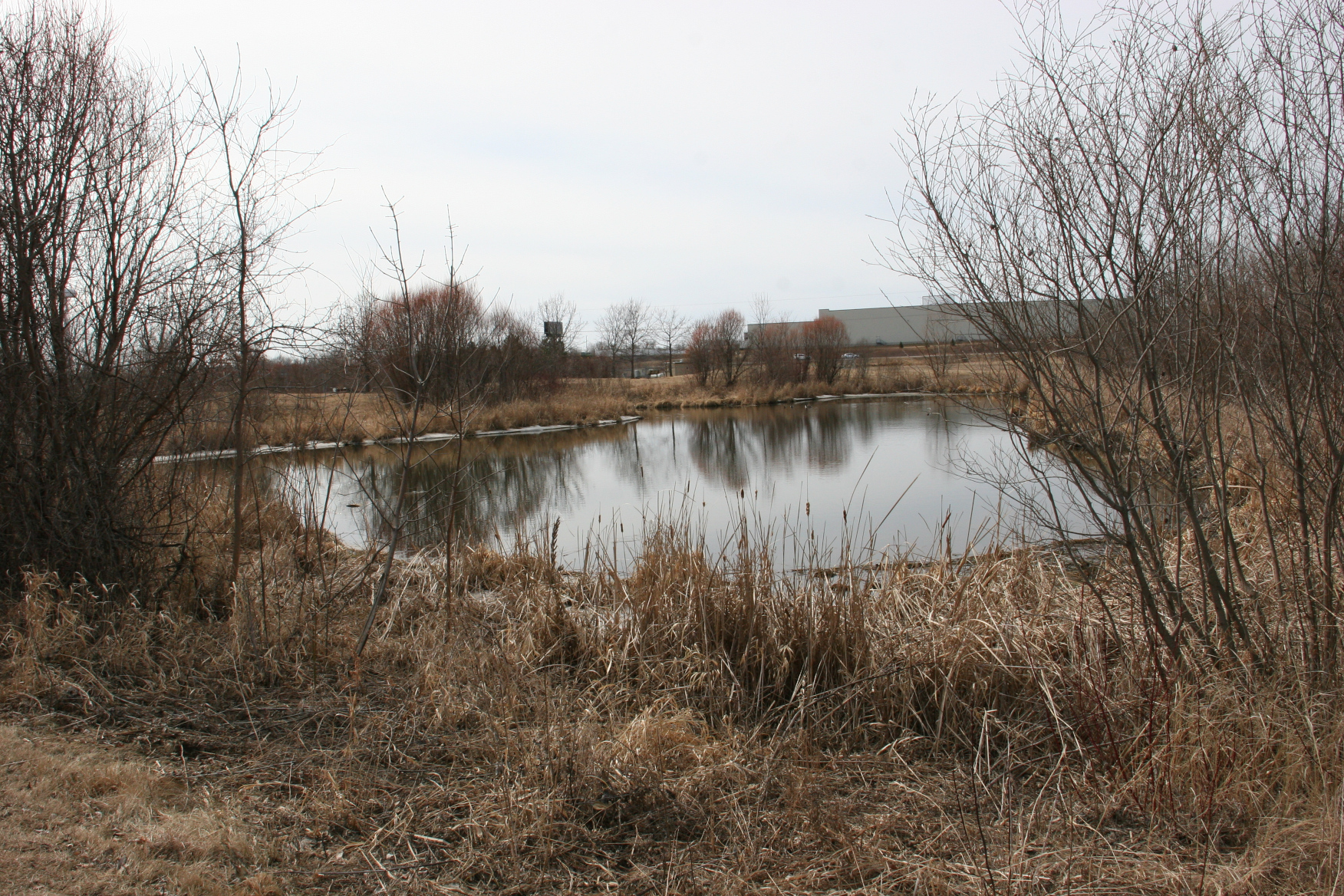
An overview of the smaller pond. (Minnesota Prairie Roots copyrighted photo March 2022)
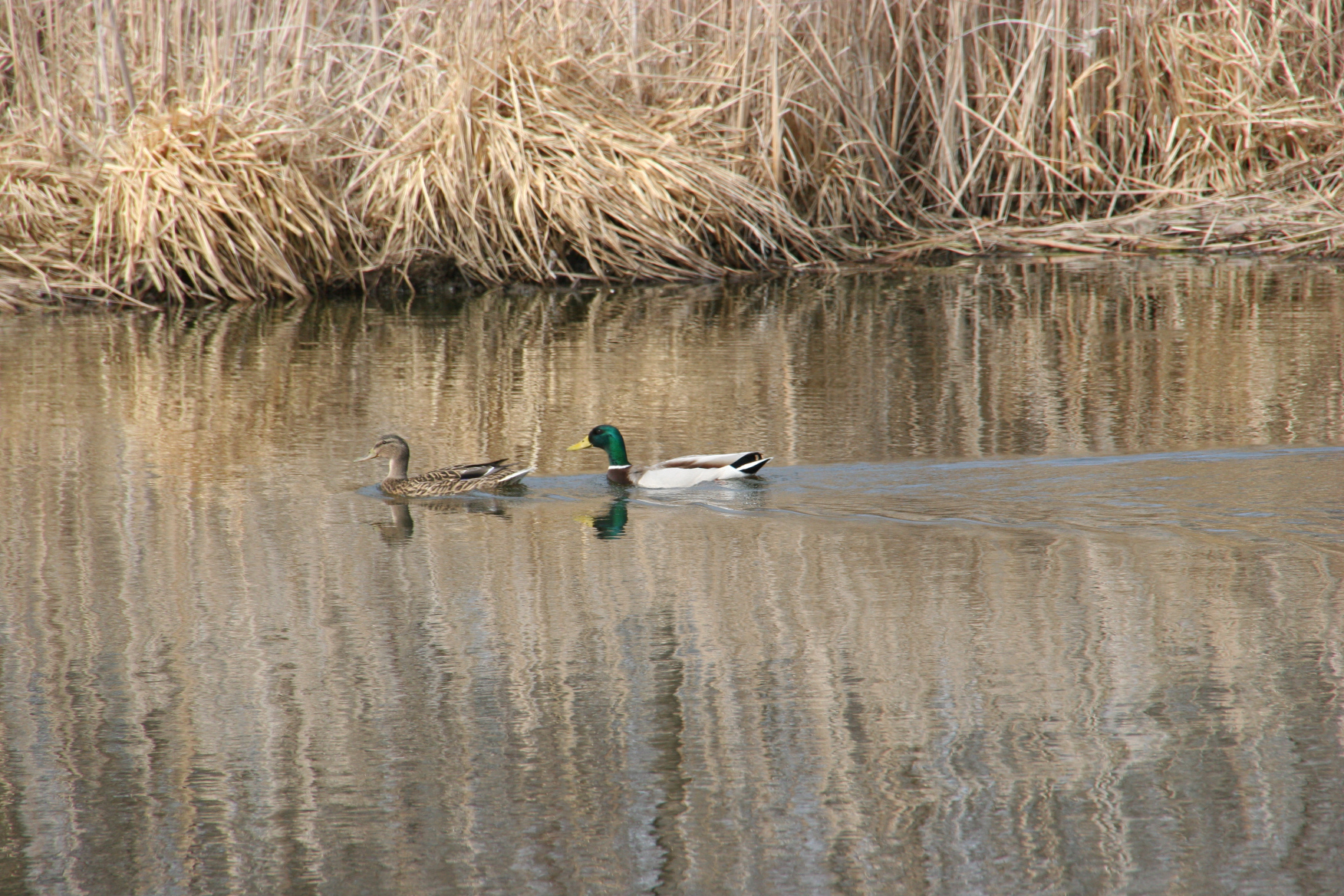
A mallard drake and hen. (Minnesota Prairie Roots copyrighted photo March 2022)
On two of the three ponds, I observe ducks and geese—mostly geese—rippling gracefully across the open water.
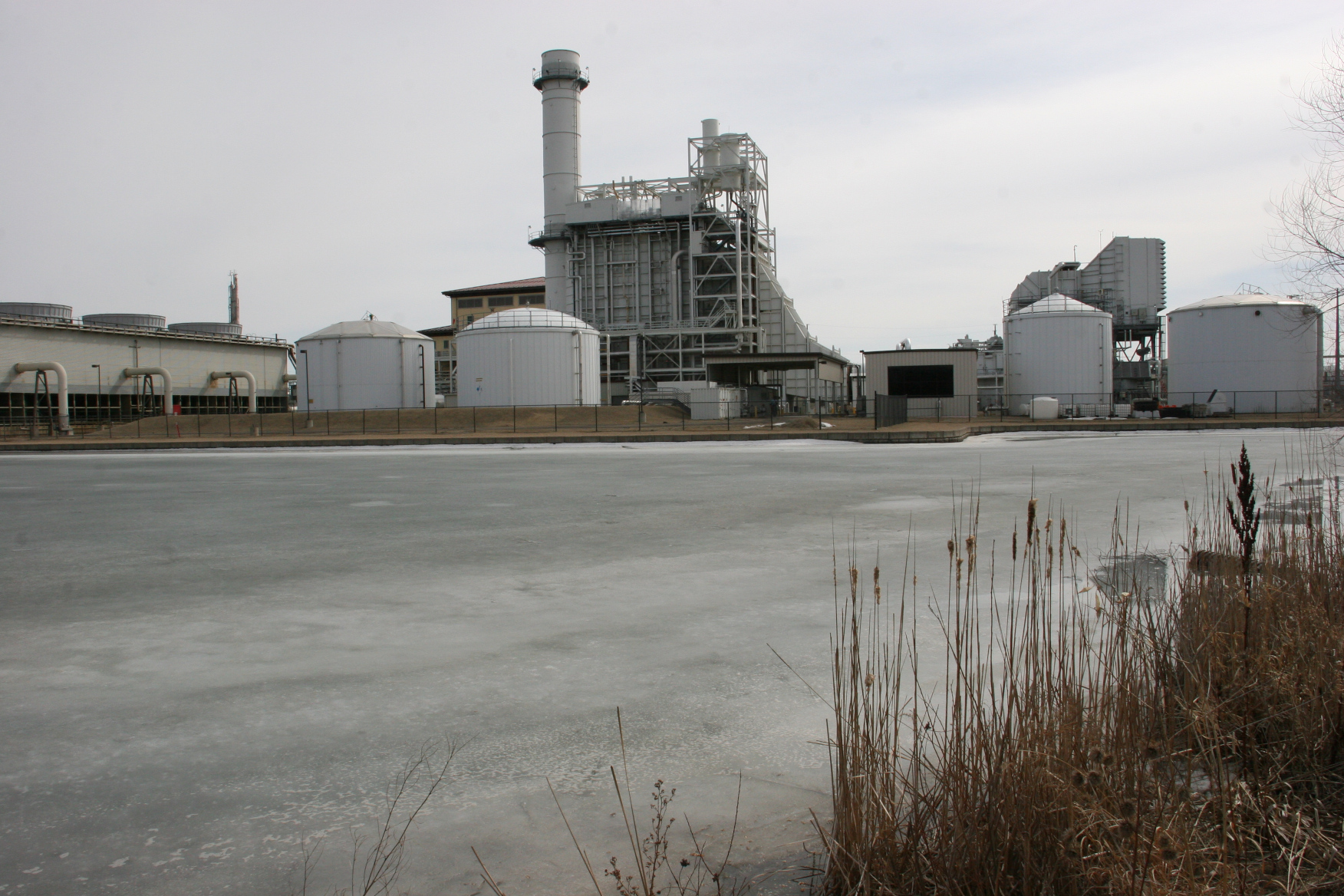
This pond right next to the energy plant was mostly iced on the first day of spring. (Minnesota Prairie Roots copyrighted photo March 2022)
The water on the pond nearest the energy plant remains frozen except along the fringes where an angler catches and releases bass and bluegills. It’s a good place to fish with kids, he says, or for someone like him, a kid. I laugh.
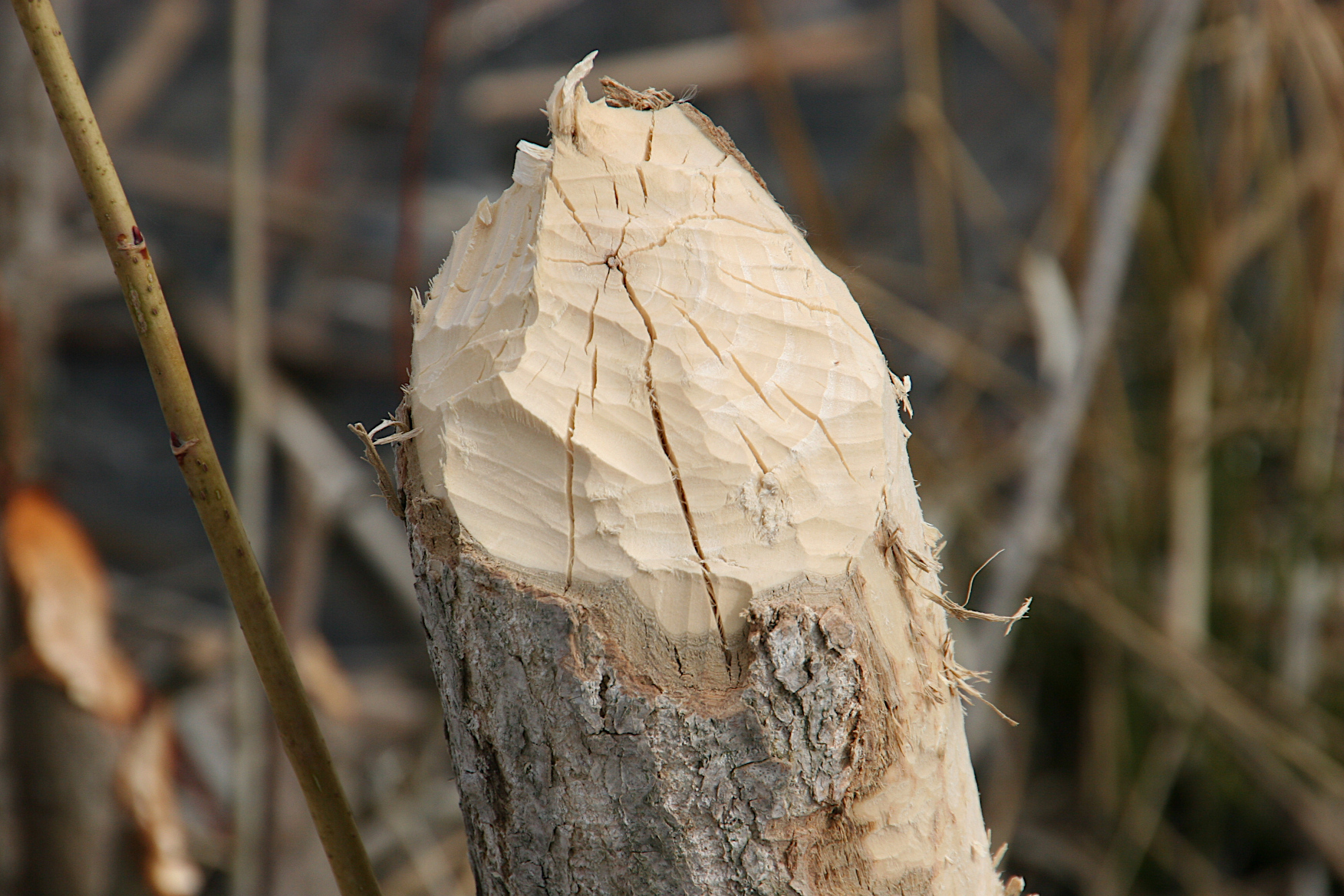
By the pond, evidence of a busy beaver. (Minnesota Prairie Roots copyrighted photo March 2022)
As I follow the paths and walk along main pond’s edge with camera slung around my neck, I notice the remnants of seasons past interwoven with signs of spring.
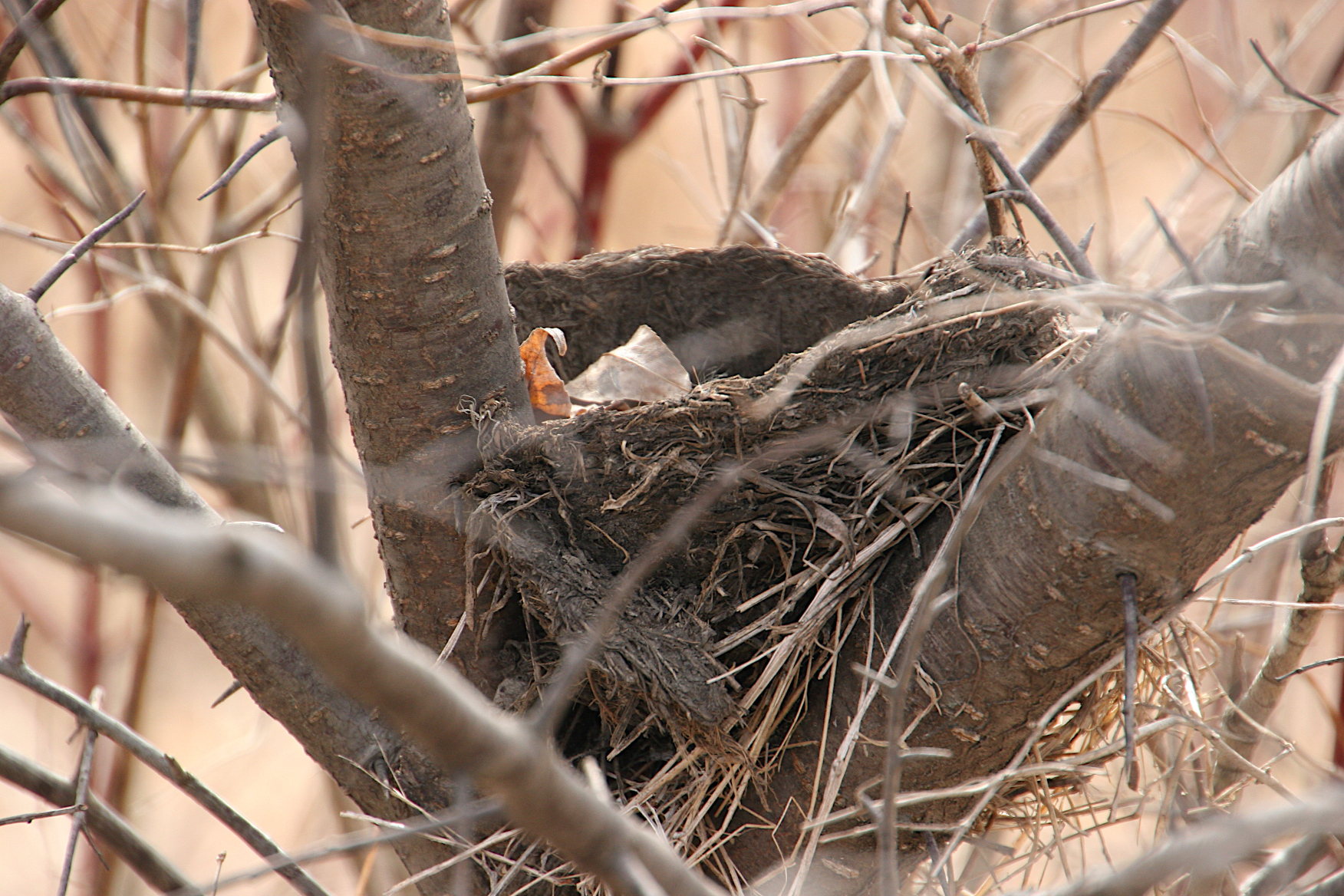
Nearly hidden, last season’s nest. (Minnesota Prairie Roots copyrighted photo March 2022)
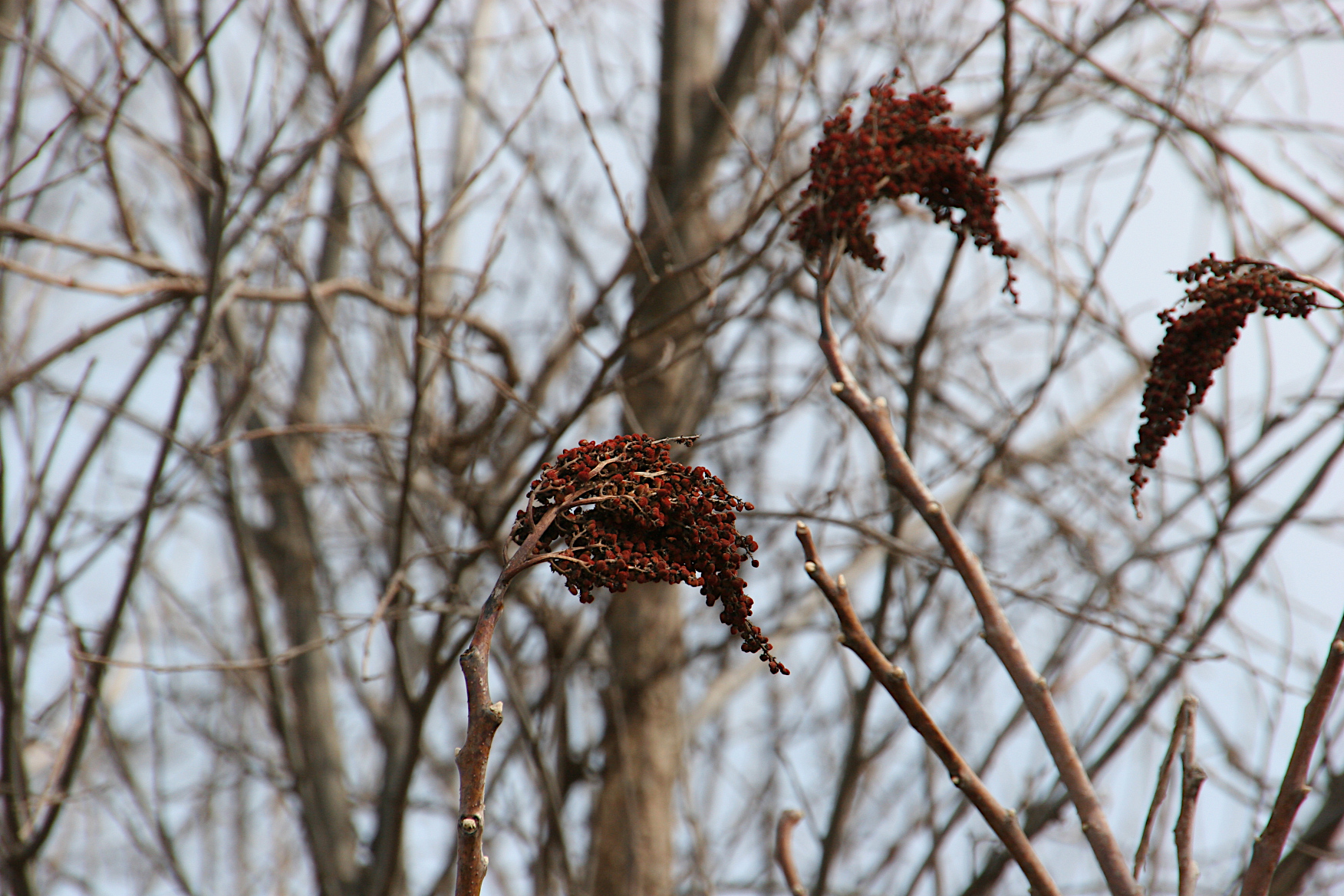
Sumac remnants. (Minnesota Prairie Roots copyrighted photo March 2022)
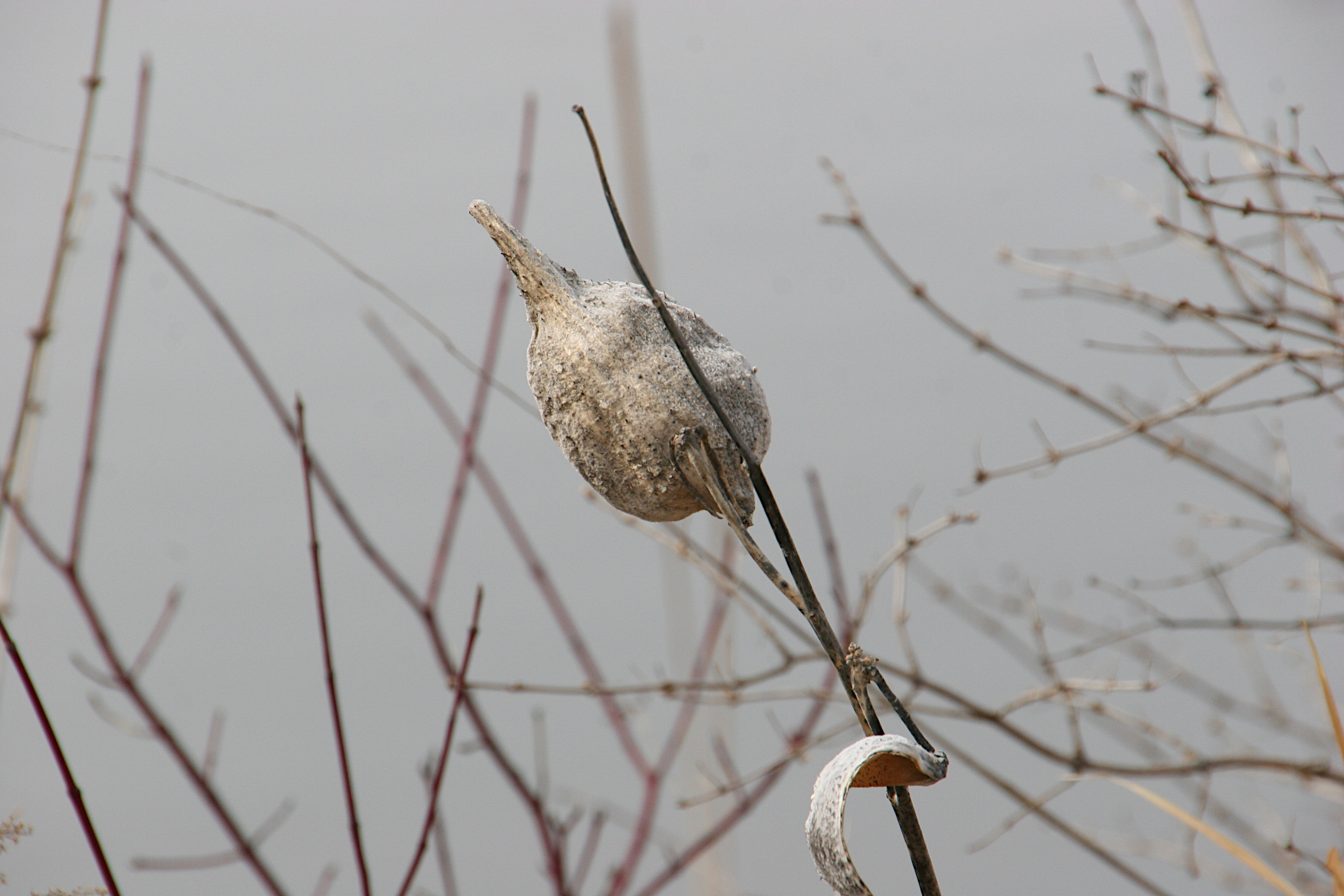
A dried milkweed pod. (Minnesota Prairie Roots copyrighted photo March 2022)
Dried leaves, sumac, grasses, cattails, berries, milkweed pods, pine cones, even a bird nest tucked low in the crook of a tree, remain from months earlier.
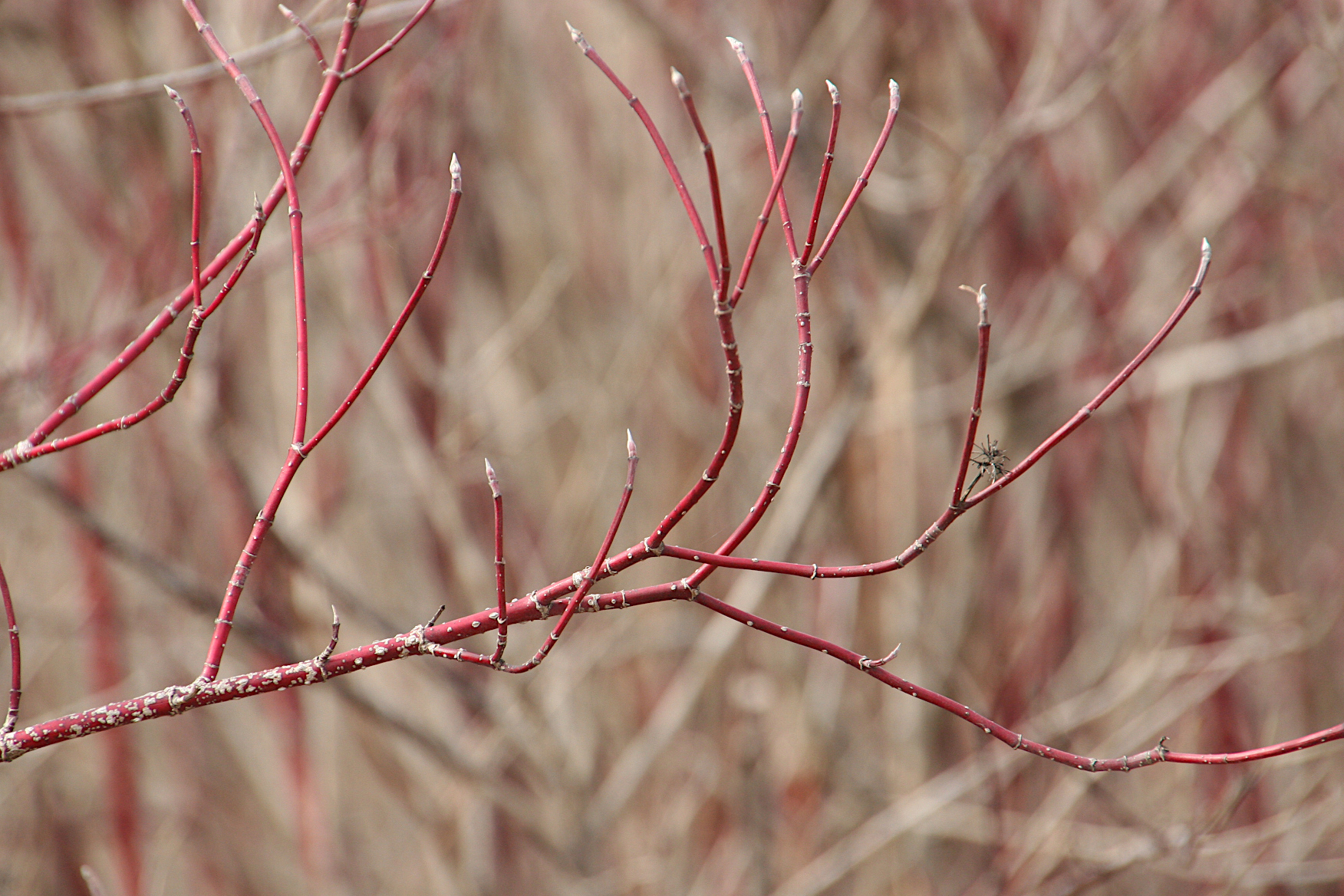
Dogwood. (Minnesota Prairie Roots copyrighted photo March 2022)
But now, amid all those visuals of autumn and winter, spring pops. Red dogwood colors the brush.
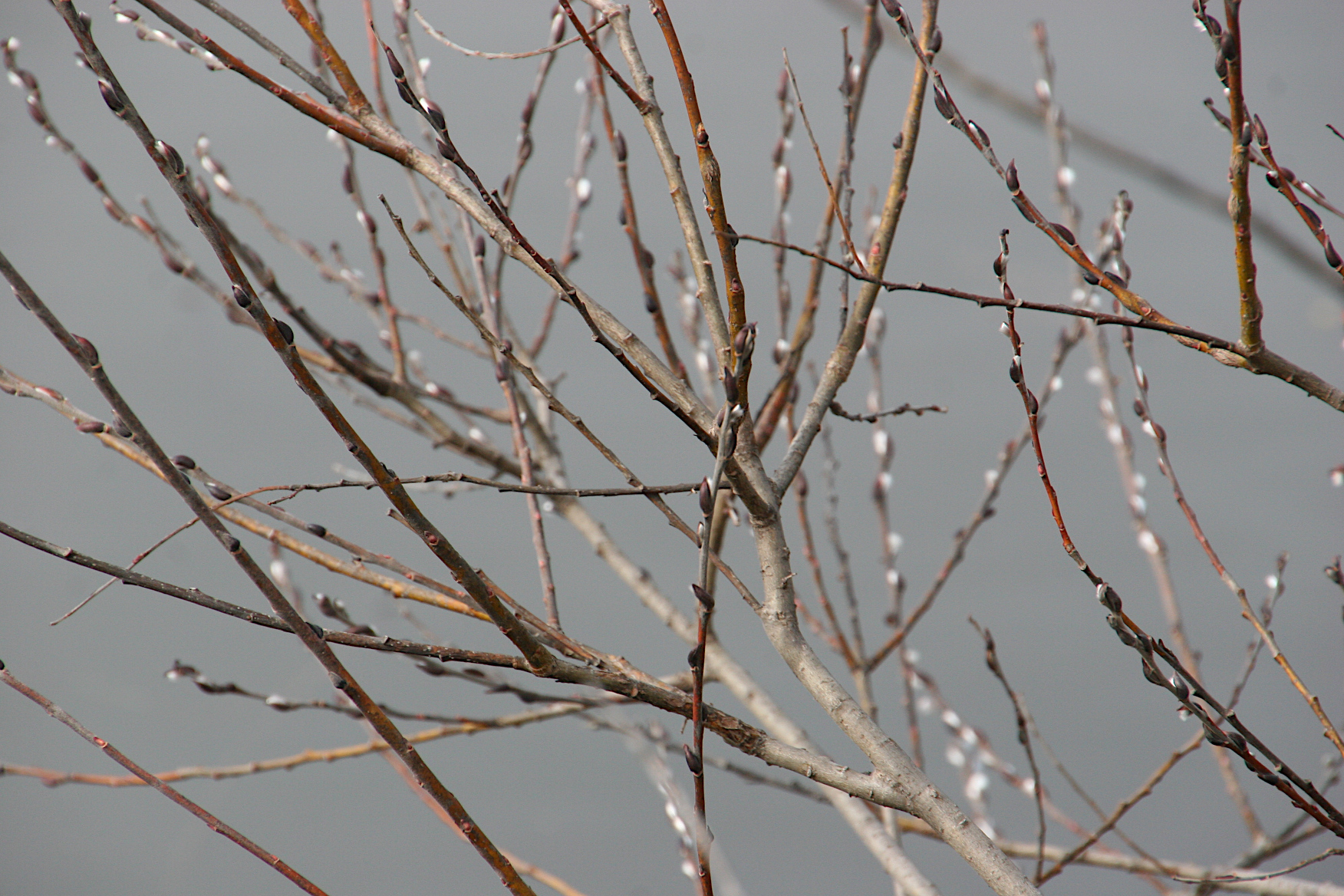
Pussy willows just beginning to open on the first day of spring. (Minnesota Prairie Roots copyrighted photo March 2022)
Pussy willow buds open, tracing a line of mini cotton balls along slender branches.
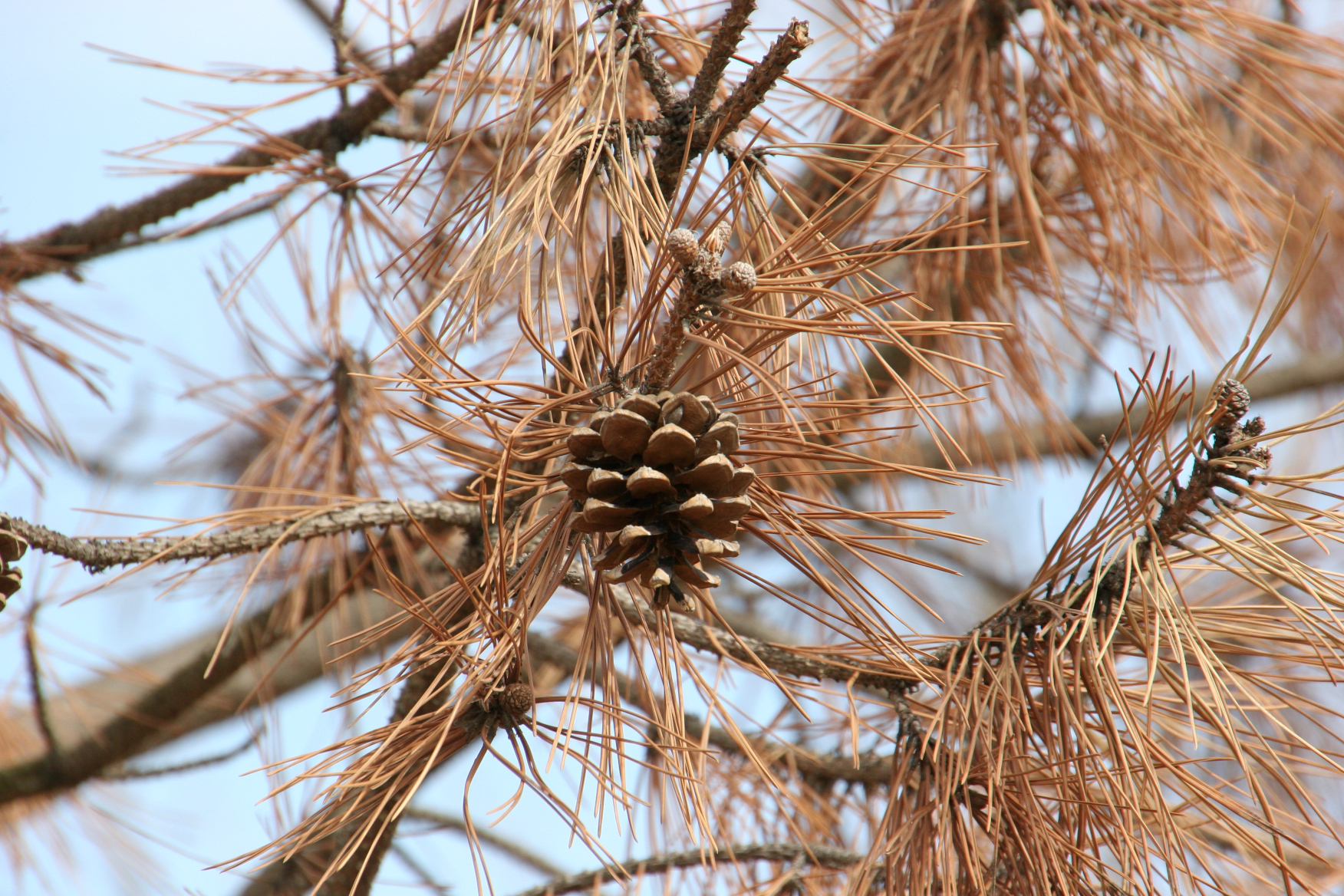
Last season’s pinecones. (Minnesota Prairie Roots copyrighted photo March 2022)
I take in this seasonal change. With my eyes, then my camera. And I listen to those blackbirds in concert, interrupted by the occasional applause of geese against the background music of I-35 traffic.
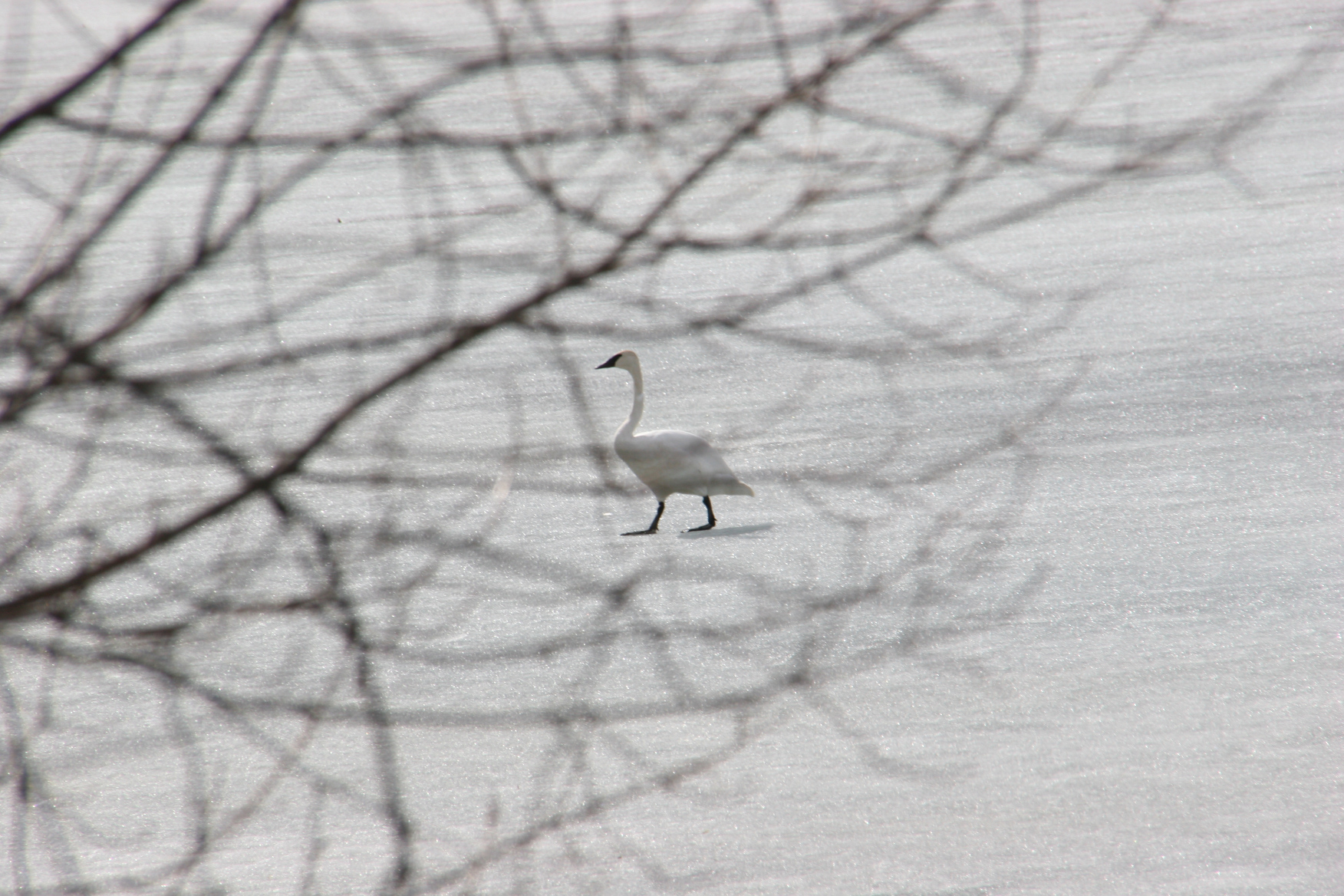
A swan navigates across a frozen pond (near the Energy Park) by I-35. (Minnesota Prairie Roots copyrighted photo March 2022)
It’s good to be here, to experience the beginning of spring. To connect to the earth along muddy dirt roads. To feel, hear and observe the transition of seasons as we step into spring in southern Minnesota.
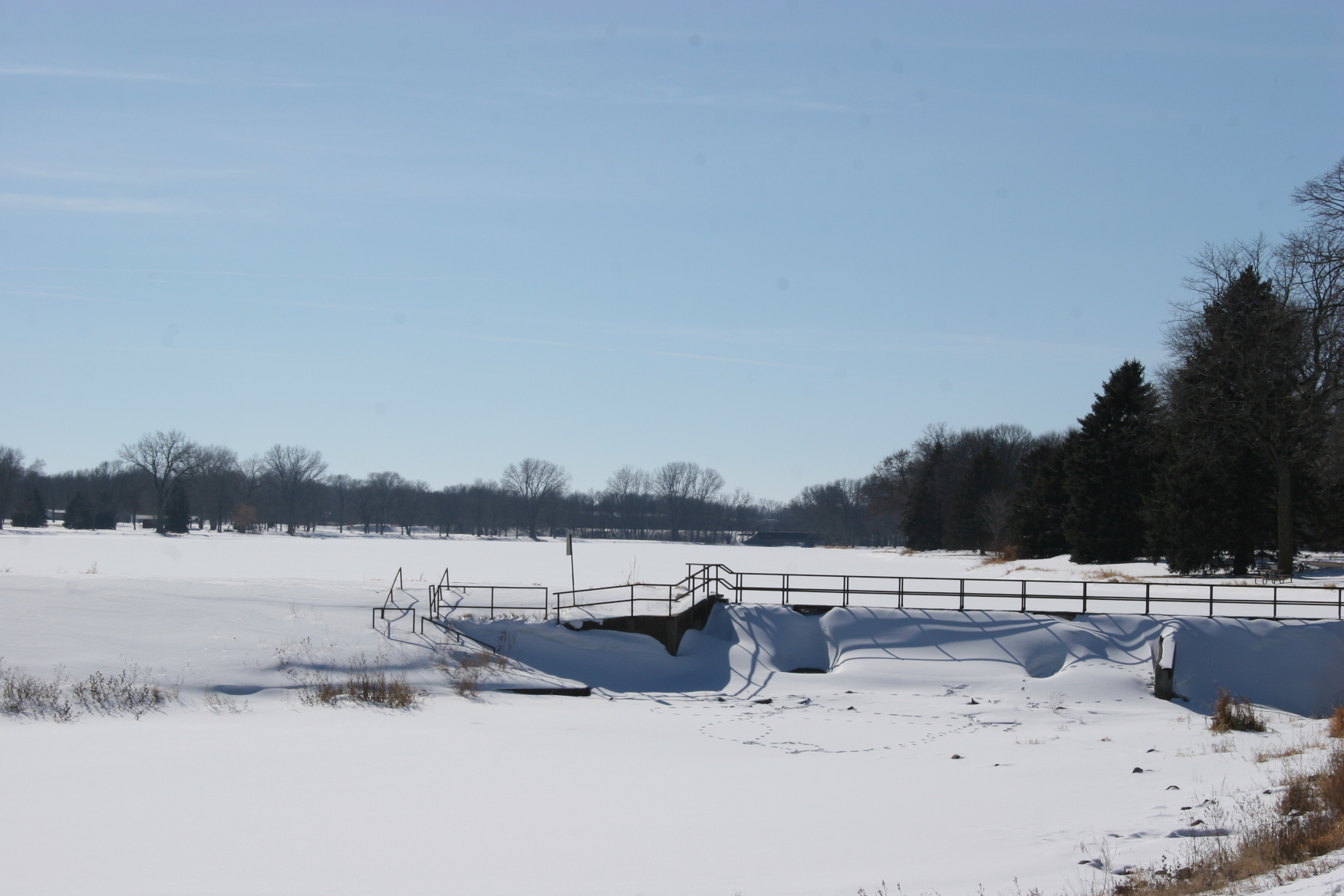
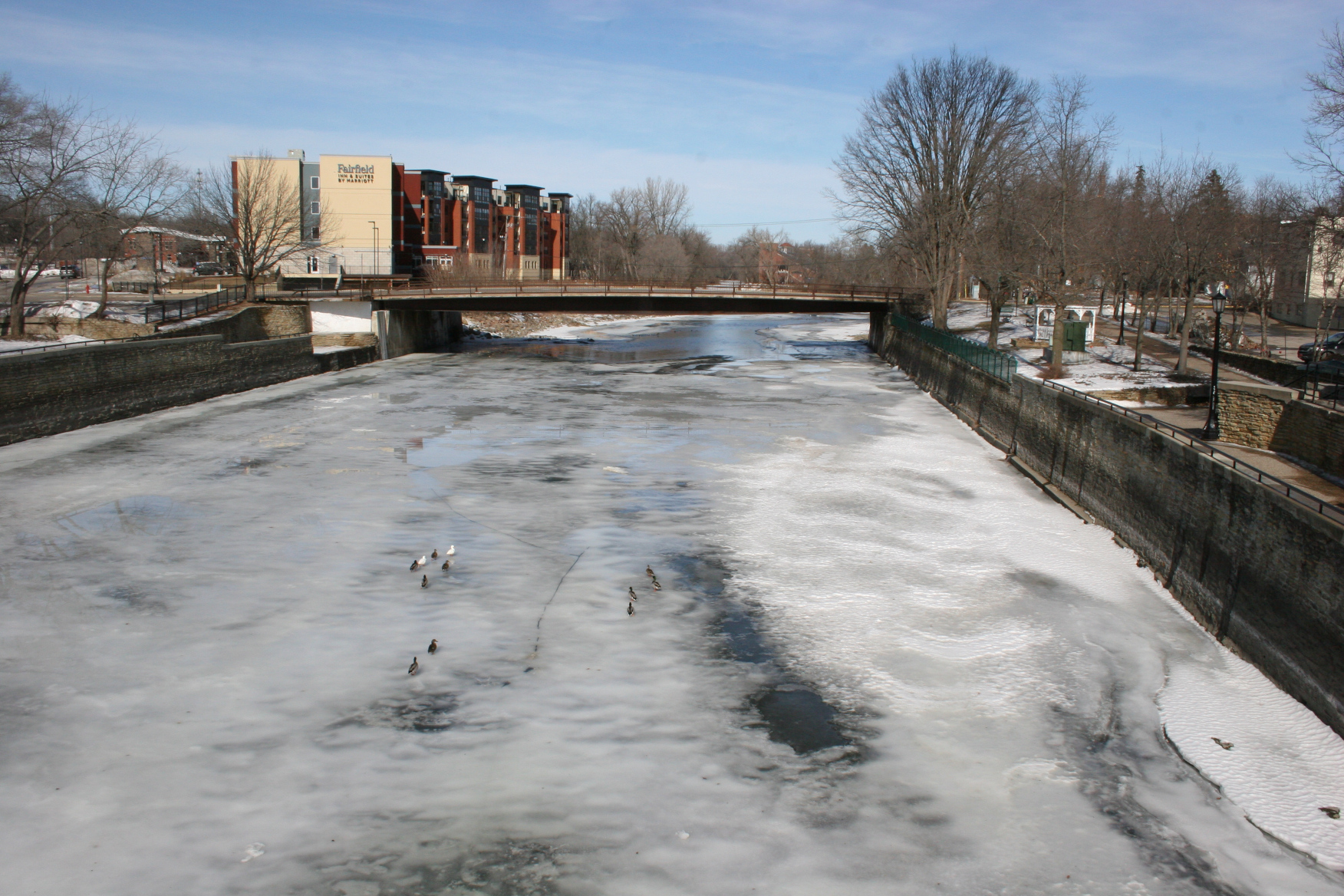
A wide view of the frozen Cannon River and dam adjacent to the Rice County Fairgrounds. (Minnesota Prairie Roots copyrighted photo March 2022)
THE SHIFT IN SEASONS seems subtle. But it’s there. In the lengthening of days. In brilliant sunshine that cuts through snowbanks, streams of water flowing and puddling. Iced rivers, too, are beginning to thaw.
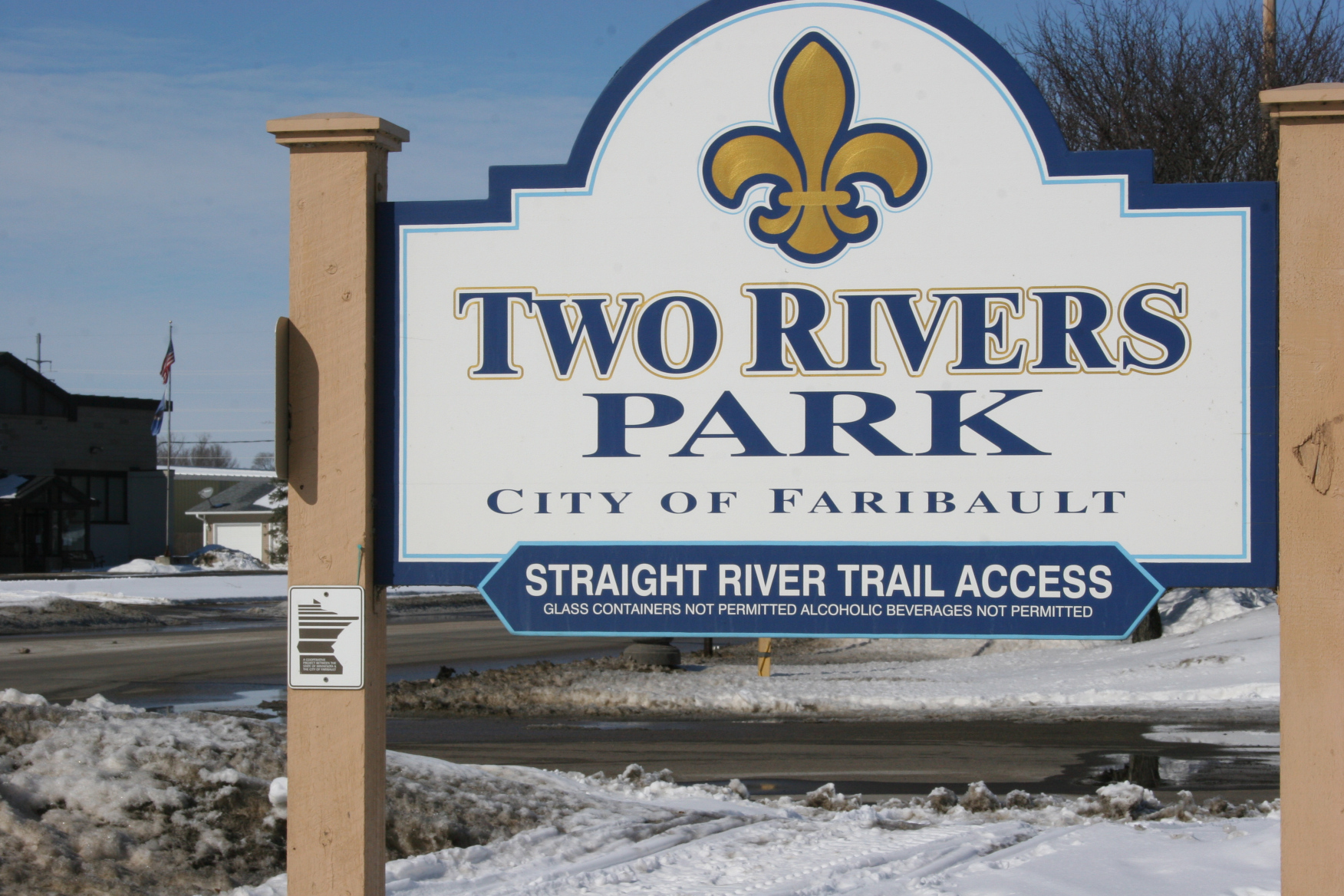
Signage marks this park just off Second Avenue on Faribault’s north side. (Minnesota Prairie Roots copyrighted photo March 2022)
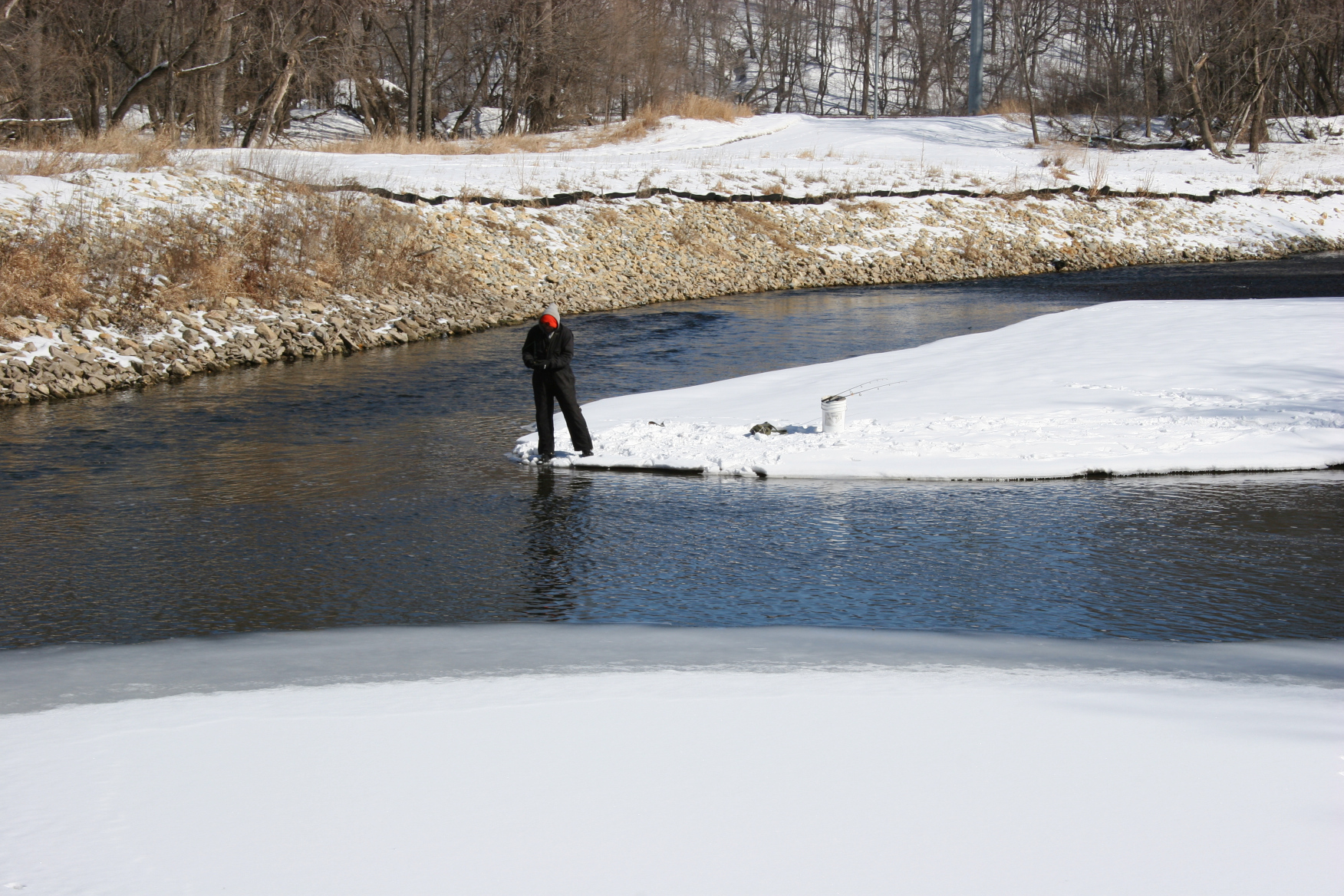
Fishing where the Cannon and Straight Rivers meet in Faribault. (Minnesota Prairie Roots copyrighted photo March 2022)
At the convergence of the Straight and Cannon Rivers, an angler fishes in the open water. His orange stocking cap covered by his hooded sweatshirt layered beneath black coveralls jolt color into an otherwise muted landscape. Randy and I watch as he reels in a large fish, then unhooks and plops it onto the snow. A northern, Randy guesses. We watch for awhile, content to see the river flow, sun glinting upon the surface.
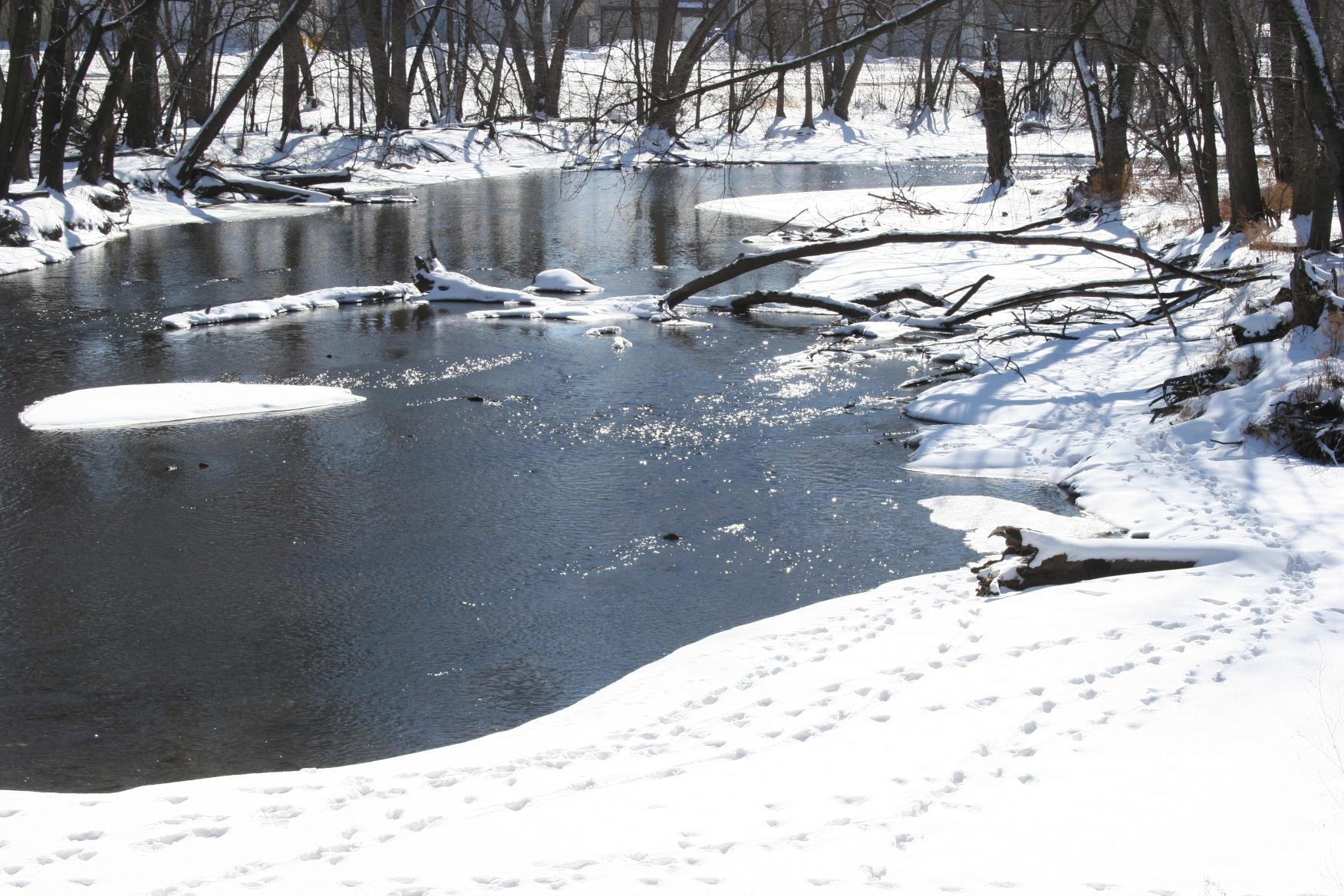
The beautiful open Cannon River at Two Rivers Park. (Minnesota Prairie Roots copyrighted photo March 2022)
We make our way back to the parking lot, after I pause to photograph the mostly open river sweeping between snowy woods. There’s sometime serene about such a scene. Peaceful, even as traffic drones by on nearby Second Avenue.
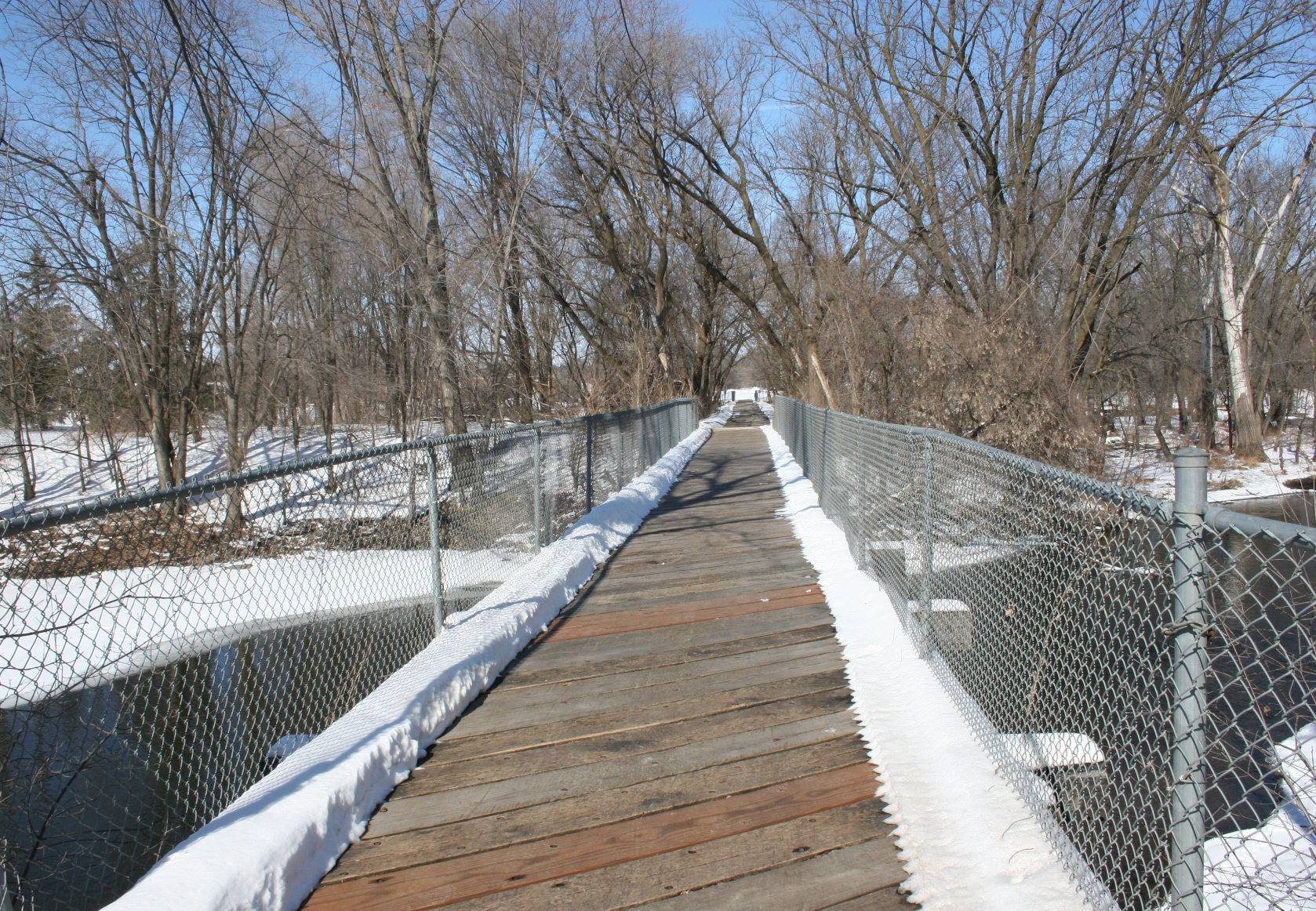
Pedestrian bridge over the river. (Minnesota Prairie Roots copyrighted photo March 2022)
On the trail, we cross bridges constructed of uneven angled boards that always trip me. I pause to peer into the river.
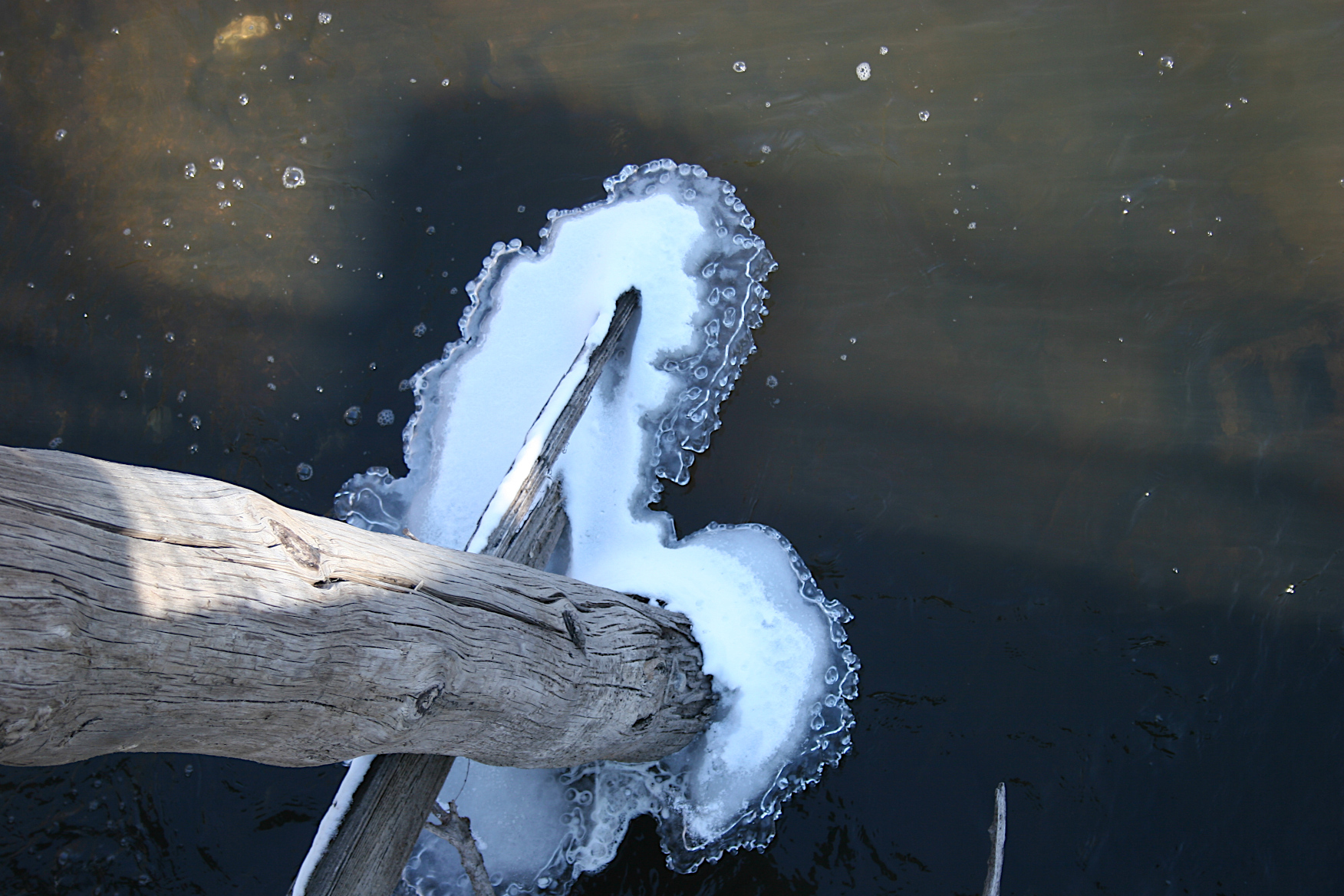
Ice rings a pedestrian bridge support post in the otherwise open river. (Minnesota Prairie Roots copyrighted photo March 2022)
Birdsong, a sure auditory sign of spring’s approach, resounds as I lean over the bridge railing to see the open water below. Both hint of winter’s retreat.
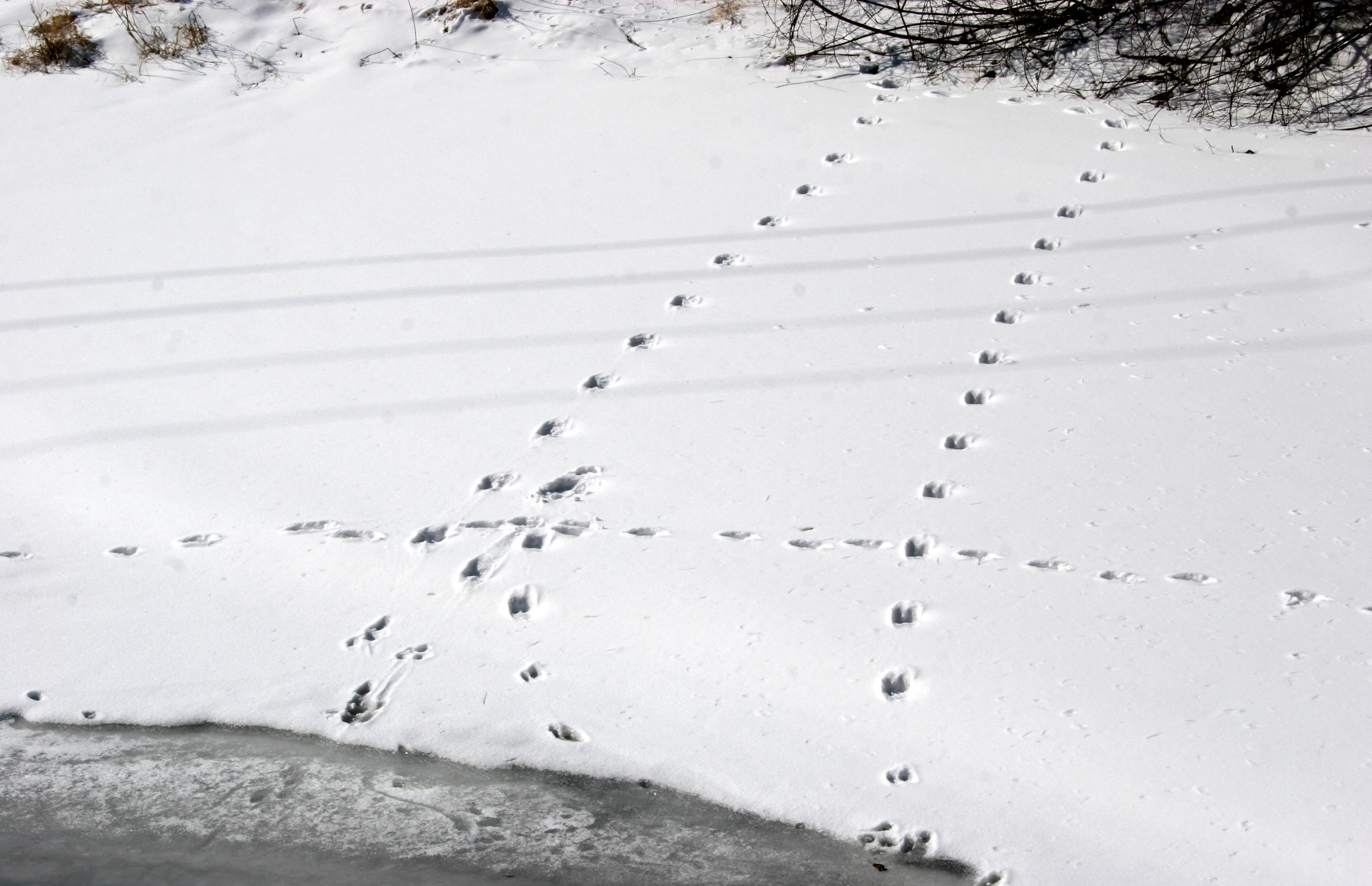
Animal tracks remind me of tic-tac-toe. (Minnesota Prairie Roots copyrighted photo March 2022)
Far below I observe animal tracks crossing the snow in a tic-tac-toe pattern leading to water’s icy edge.
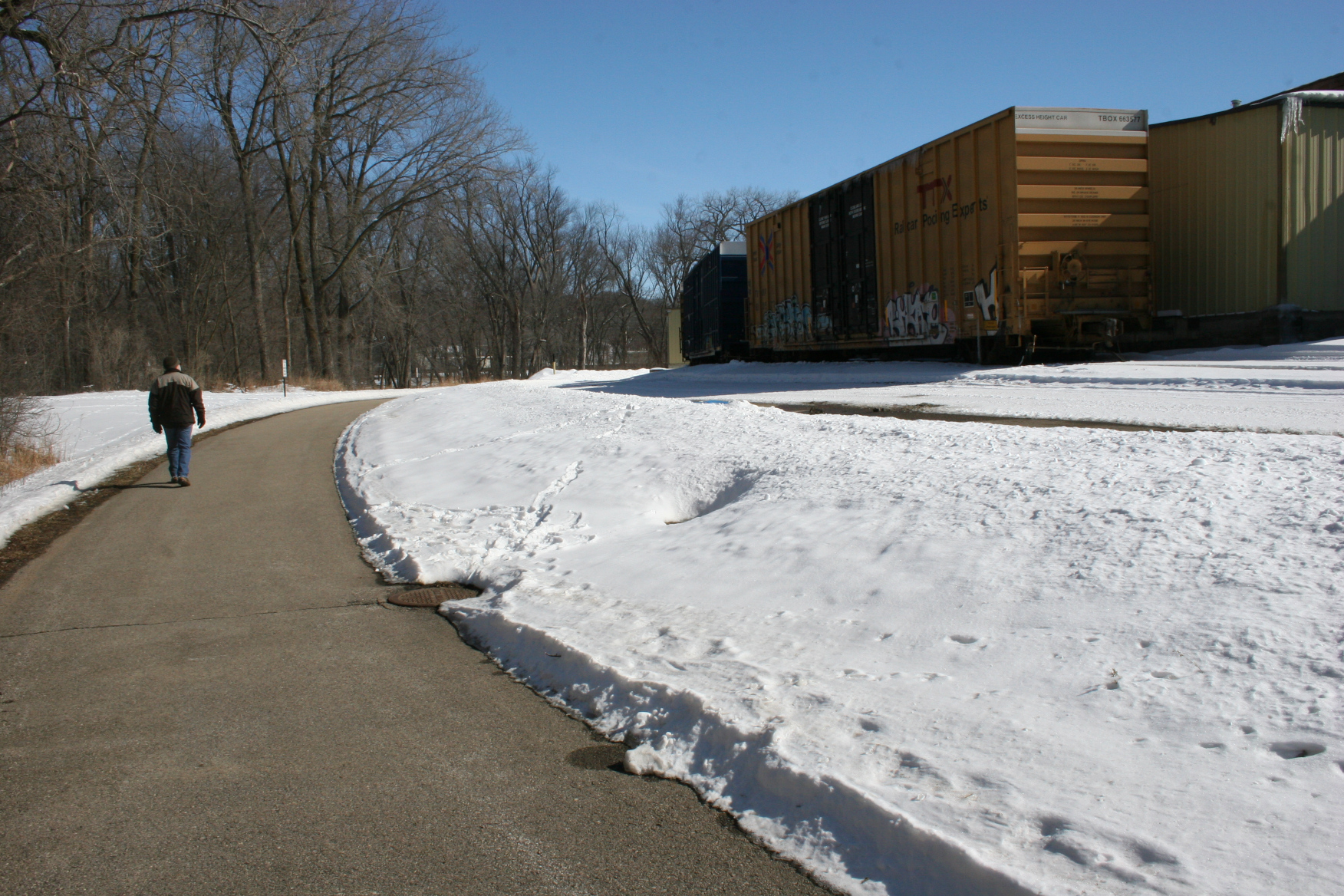
Following the Straight River Trailalongside the former vegetable canning company. (Minnesota Prairie Roots copyrighted photo March 2022)
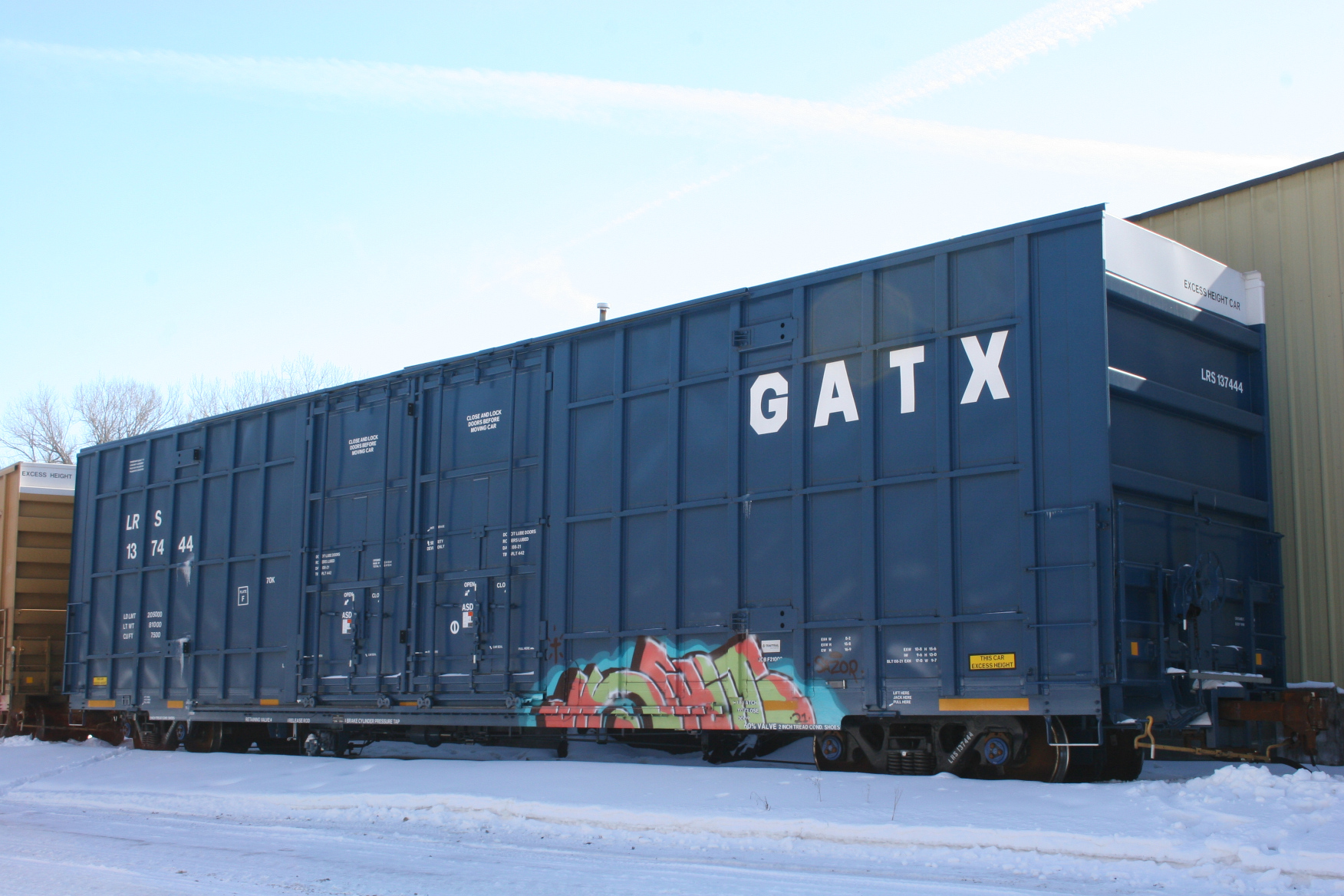
Curving along the path near the former Faribault Foods canning company, stationary boxcars sidle against the building.
Boxcar graffiti. (Minnesota Prairie Roots copyrighted photo March 2022)
Graffiti colors the boxcar canvases.
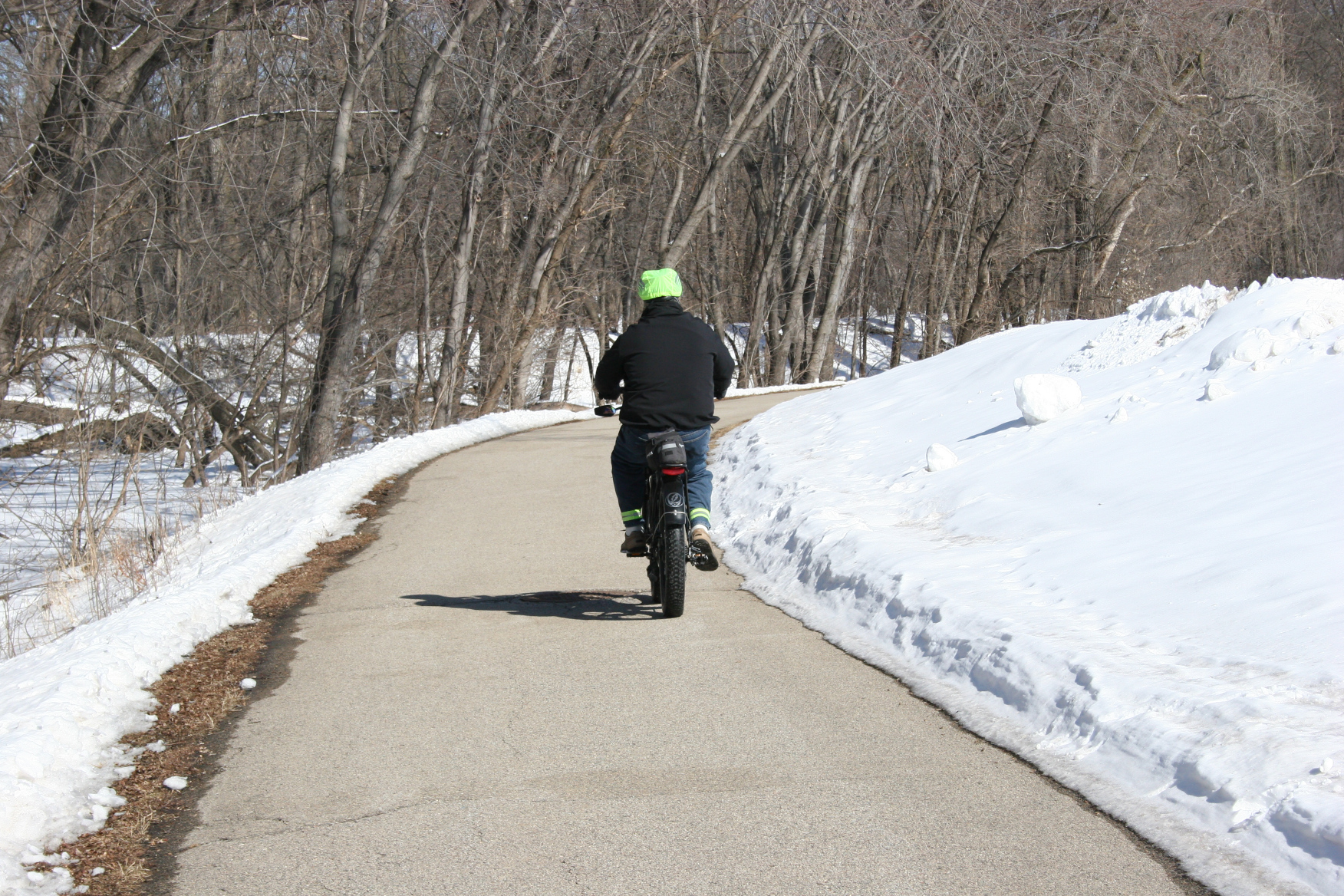
Biking the Straight River Trail in March. (Minnesota Prairie Roots copyrighted photo March 2022)
We walk for awhile, then retrace our steps. Randy warns of an approaching cyclist and we step to the right of the trail in single file. “Hi, Randy,” the guy on the fat tire bike shouts as he zooms past. We look at each other. His identity remains a mystery.
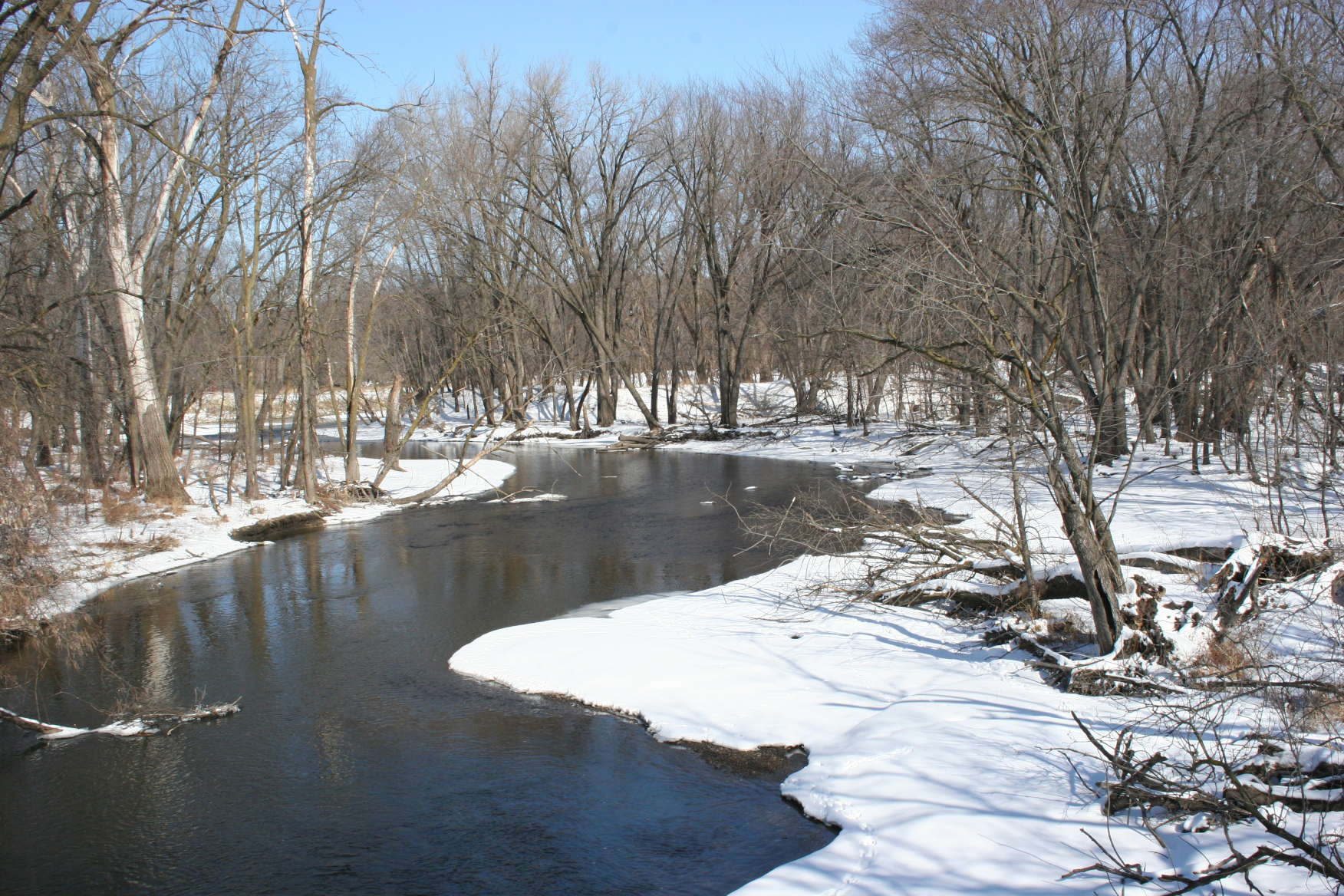
The scenic Cannon River snakes toward the Straight River. (Minnesota Prairie Roots copyrighted photo March 2022)
Back on the bridges, I pause again to view the Cannon River snaking across the landscape like a pencil path following a maze. More photographs.
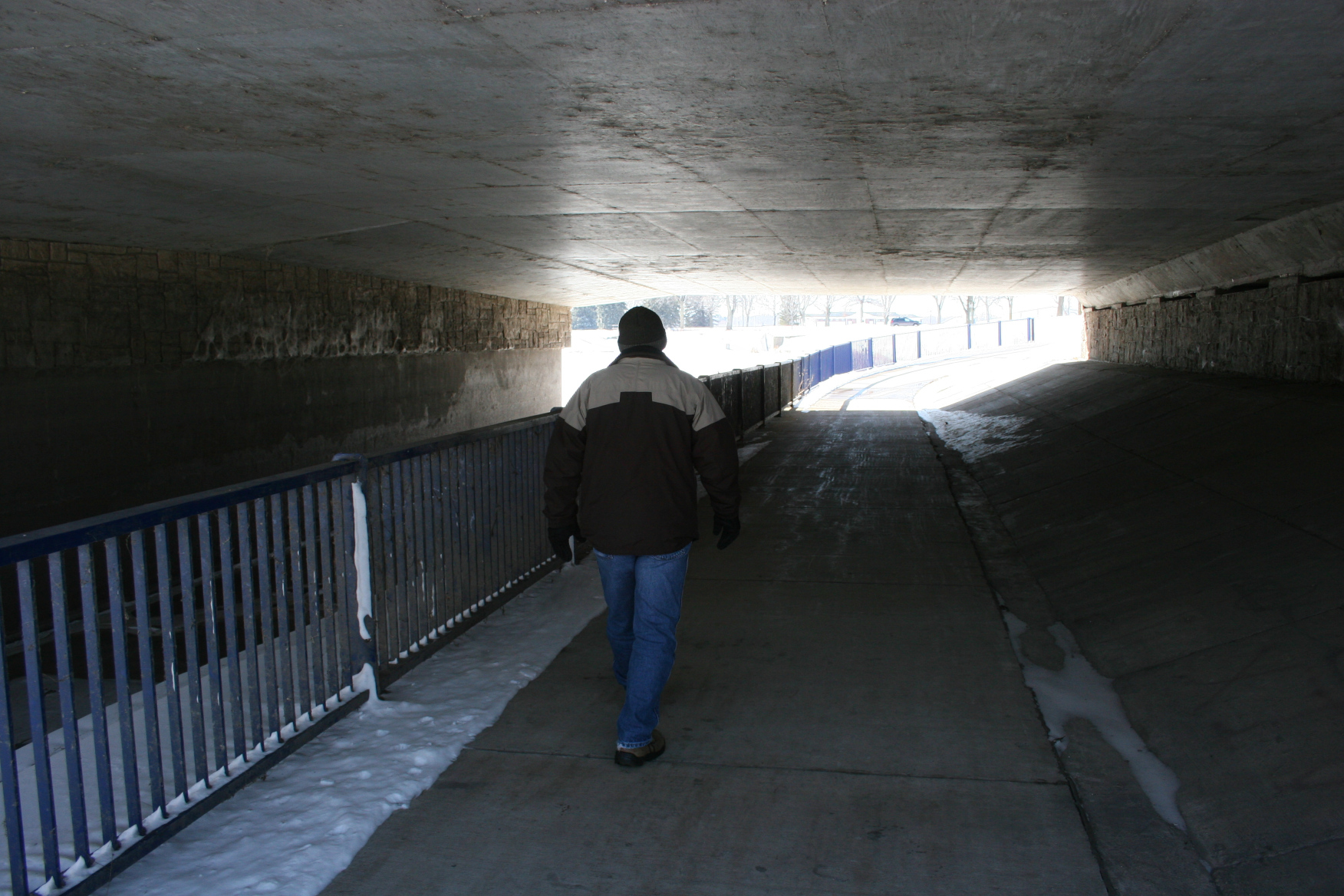
Randy follows the tunnel under Second Avenue toward North Alexander Park. (Minnesota Prairie Roots copyrighted photo March 2022)
Before heading home, we divert briefly toward North Alexander Park, taking the tunnel under the Second Avenue bridge where, on the other side, the scene opens wide to the frozen, snow-layered river. In warm weather, anglers fish here, below the dam in open water.
Picnic shelter at Father Slevin Park by the Cannon River. (Minnesota Prairie Roots copyrighted photo March 2022)
Now the place is mostly vacant, just like the riverside picnic shelter.
Shadowing of the trailside fence outside the tunnel. (Minnesota Prairie Roots copyrighted photo March 2022)
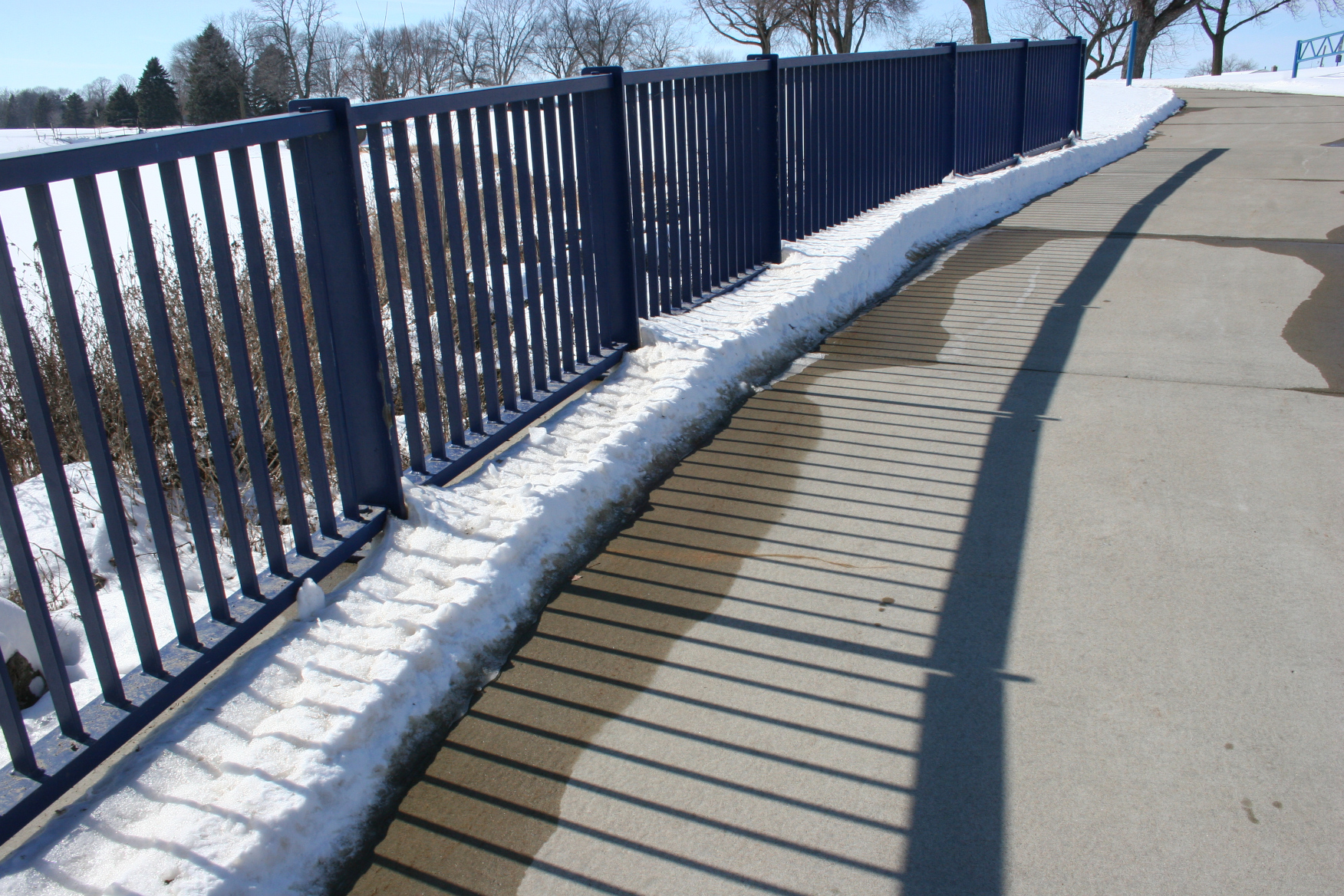
By now we are cold, ready to conclude our afternoon jaunt. As I stride downhill toward the tunnel, I notice shadows of fence slats spaced upon the concrete. Art to my eyes. I stop, photograph the fence and fence shadows as they arc. Even in this moment, I see signs of spring along the river, beneath the blue sky.
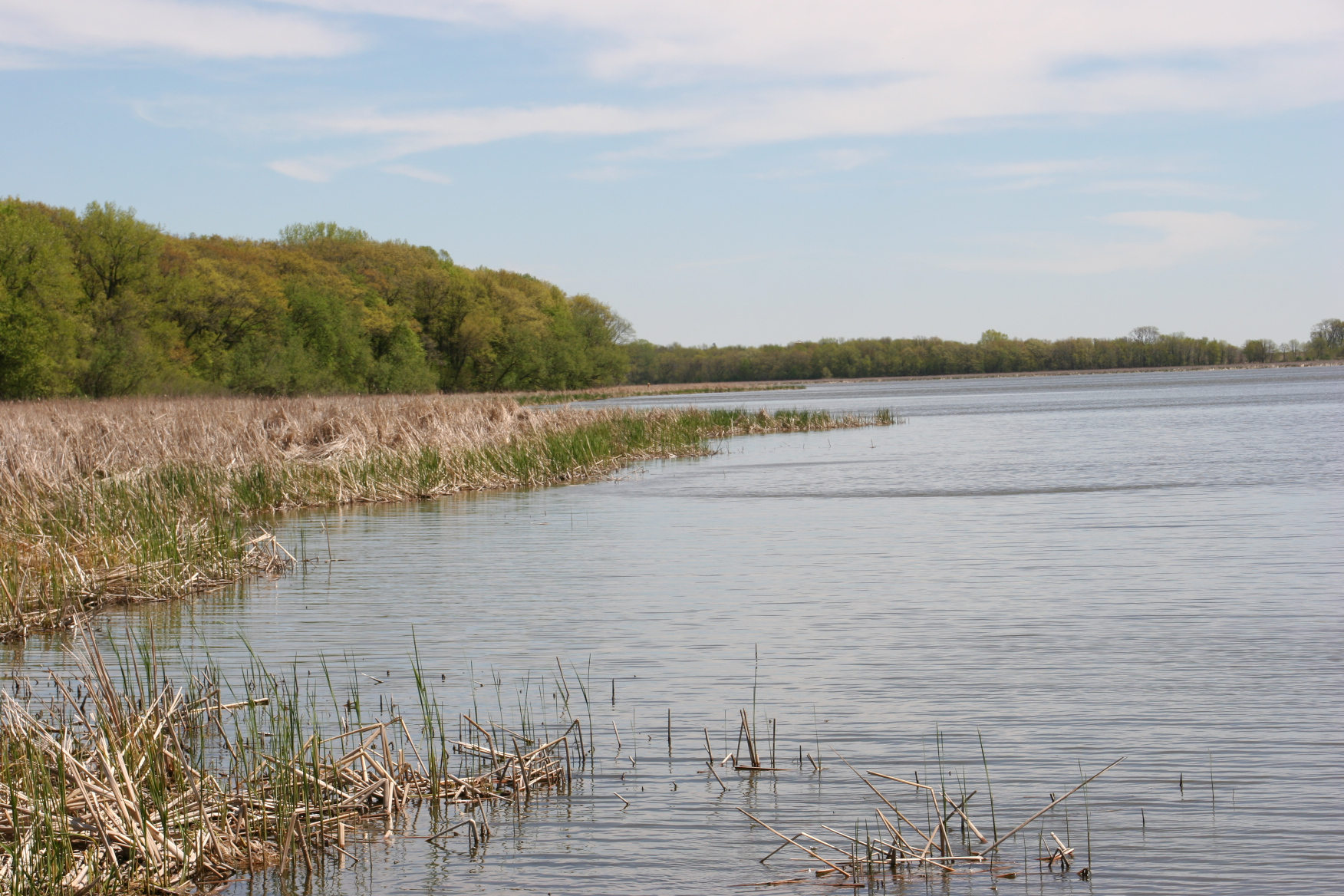
A view of frozen Rice Lake at Rice Lake State Park on February 19. (Minnesota Prairie Roots copyrighted photo February 2022)
IN THEORY, THE PLAN seemed a good one. Randy and I would hike in a nearby state park on February 19, the first of four “free entry” days to Minnesota’s 75 state parks and recreation areas.
Mid Saturday morning, we packed sandwiches, fruit, granola bars and almonds for a picnic lunch, although we would eat in the comfort and warmth of our van. Temps in the 20s do not allow for outdoor dining.
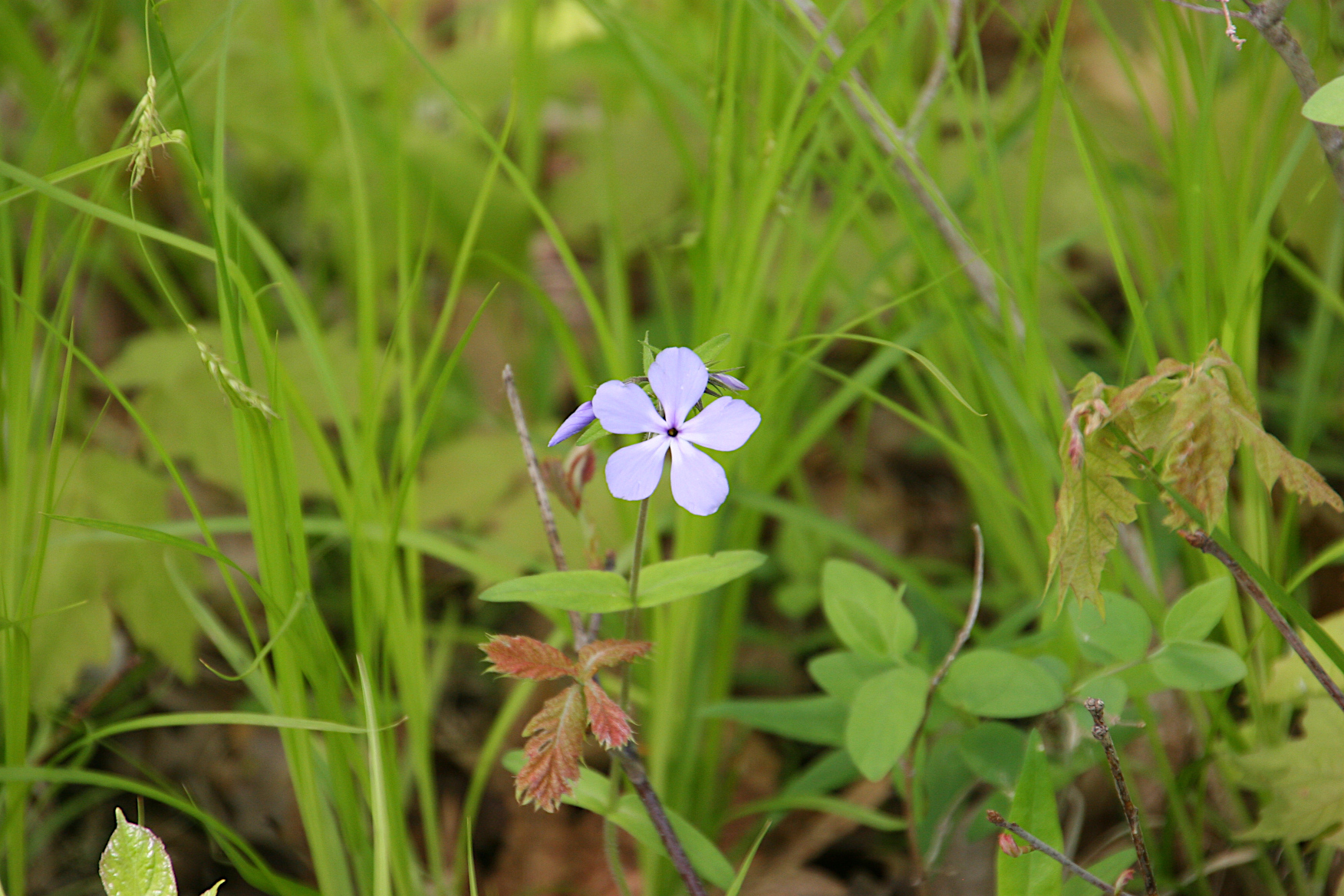
Wildflowers abound in the woods at Rice Lake State Park in this spring-time photo. (Minnesota Prairie Roots copyrighted file photo May 2022)
Originally we intended to drive to Carley State Park south of Plainview. It’s a park we have not visited. But part way there, I suggested we wait. A description of Carley’s Whitewater River-hugging Wildflower Trail and Virginia bluebells carpeting the forest floor in May prompted the change in plans.
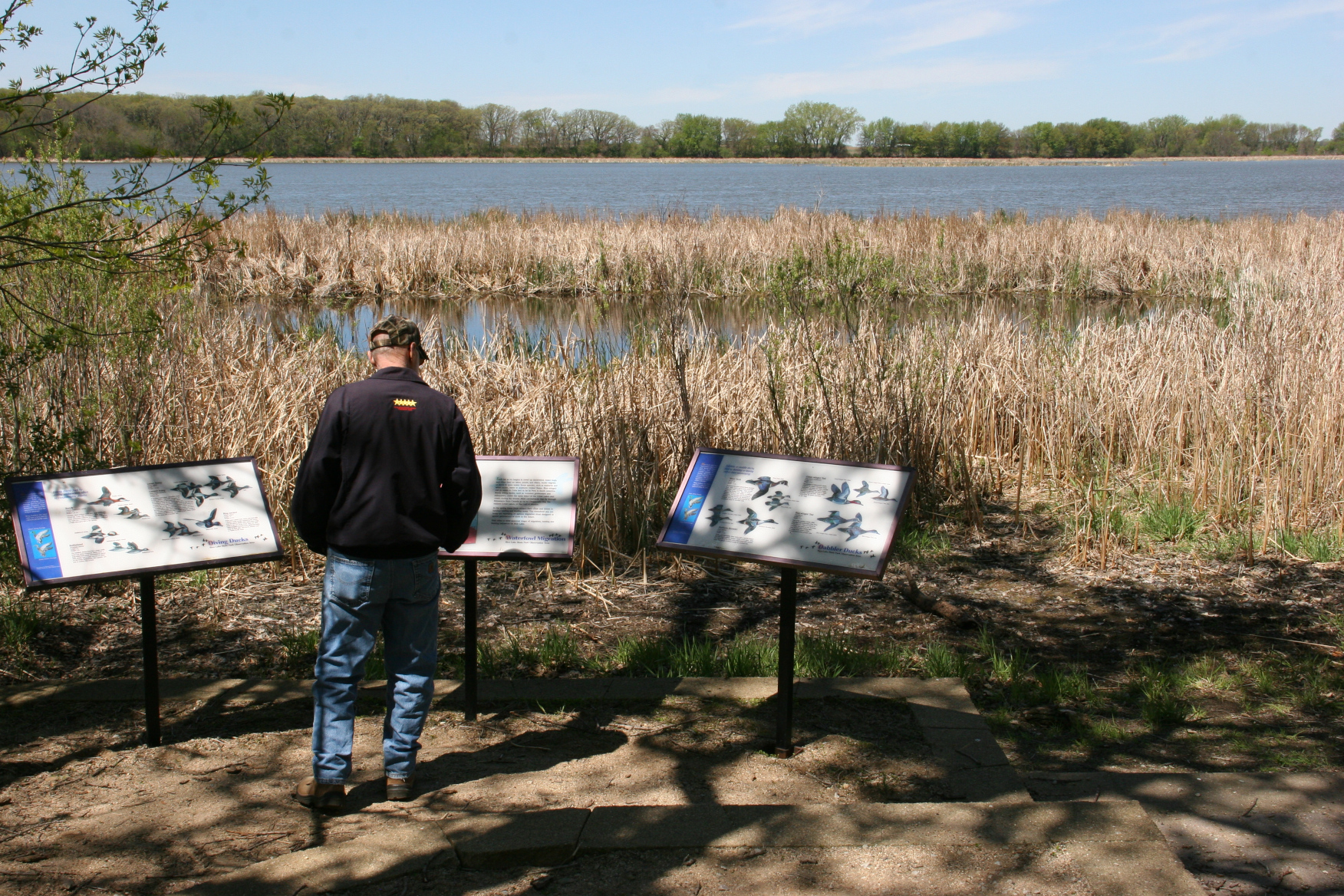
Randy reads signs about waterfowl posted by the lake during a May 2020 visit to Rice Lake State Park. (Minnesota Prairie Roots copyrighted file photo May 2020)
Instead, we aimed for Rice Lake State Park some eight miles east of Owatonna. We’ve previously been there, although not in winter. Following back paved county and gravel roads, I already envisioned hiking the park’s trails along frozen Rice Lake. I imagined the quiet of the woods, the beauty of the snow-covered landscape. Such were my expectations. I also felt excited to participate in the Rice Lake State Park Challenge, a special free entry day event that involved finding passwords to claim a possible prize.
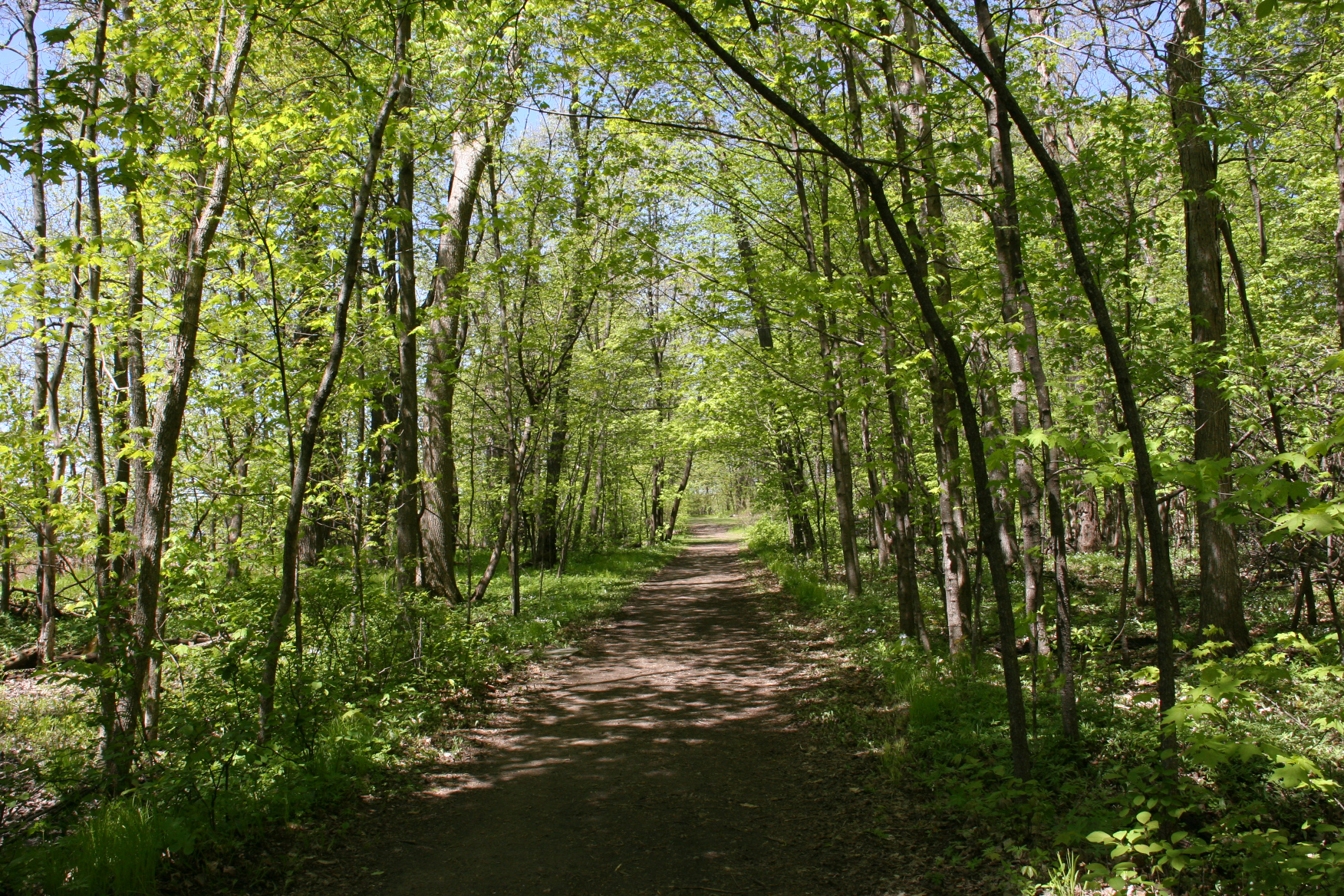
Walking into the woods at Rice Lake State Park in the spring. (Minnesota Prairie Roots copyrighted file photo May 2020)
When we pulled into the park, I checked in at the park office for a map and the challenge entry form. As I was about to leave, the park staffer warned, “Be careful, the trails are icy.” I would soon discover for myself just how right she was in that assessment.
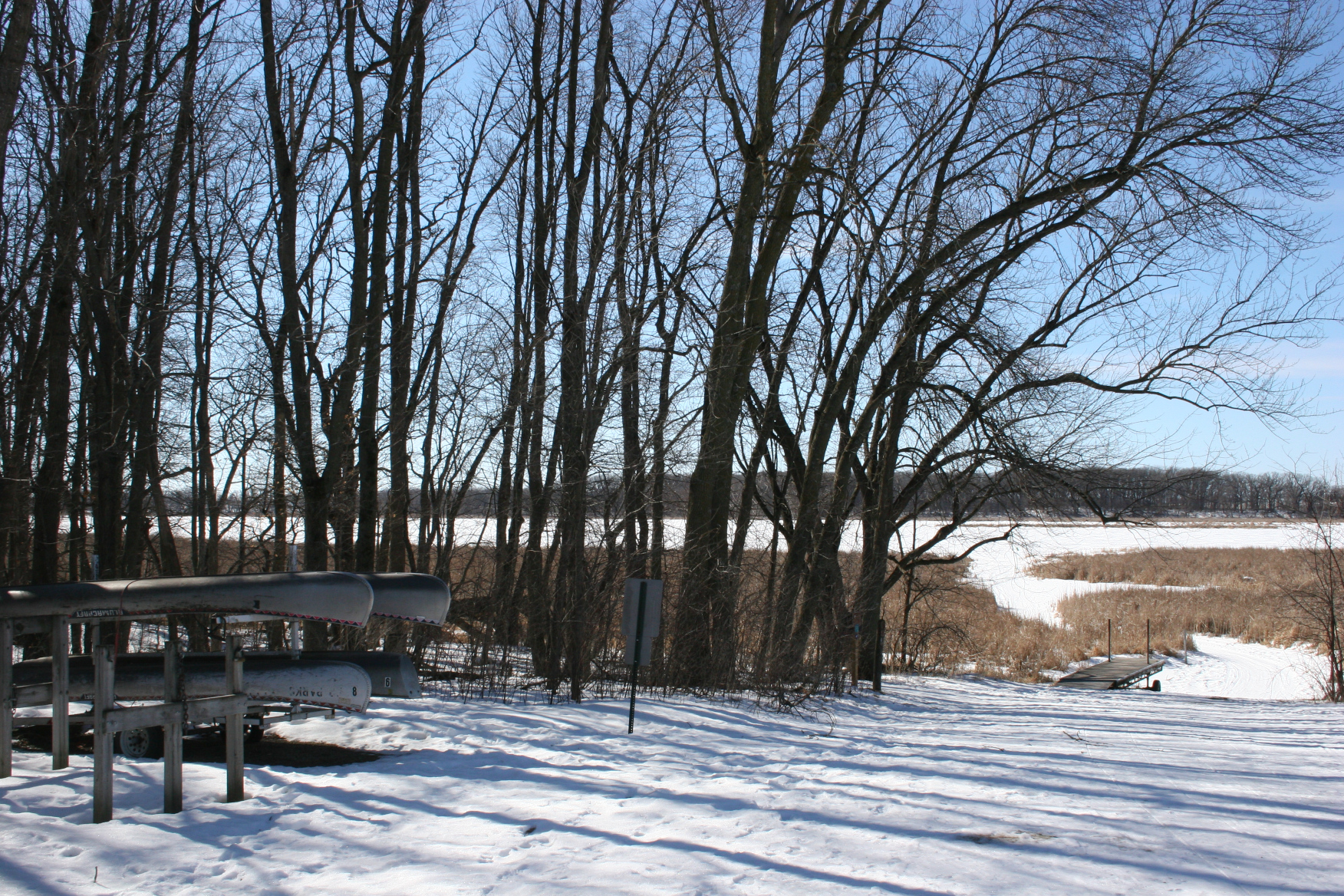
Rental canoes are stacked next to the parking lot and lake. The trail we took started at the edge of the woods near lake’s edge. (Minnesota Prairie Roots copyrighted photo February 2022)
The snow-packed, icy parking lot offered the first clue to conditions. I carefully stepped from the van, draped my camera strap around my neck and aimed toward the lakeside trail. Not even part way there, I was already grasping Randy’s arm. As someone who’s broken her right shoulder and left wrist in falls (the last requiring surgery), I have no desire to fall and break a third bone. Note that neither occurred in winter but rather in May and June and involved a missed step inside a hospital and a rain-slicked wooden step in a friend’s backyard.
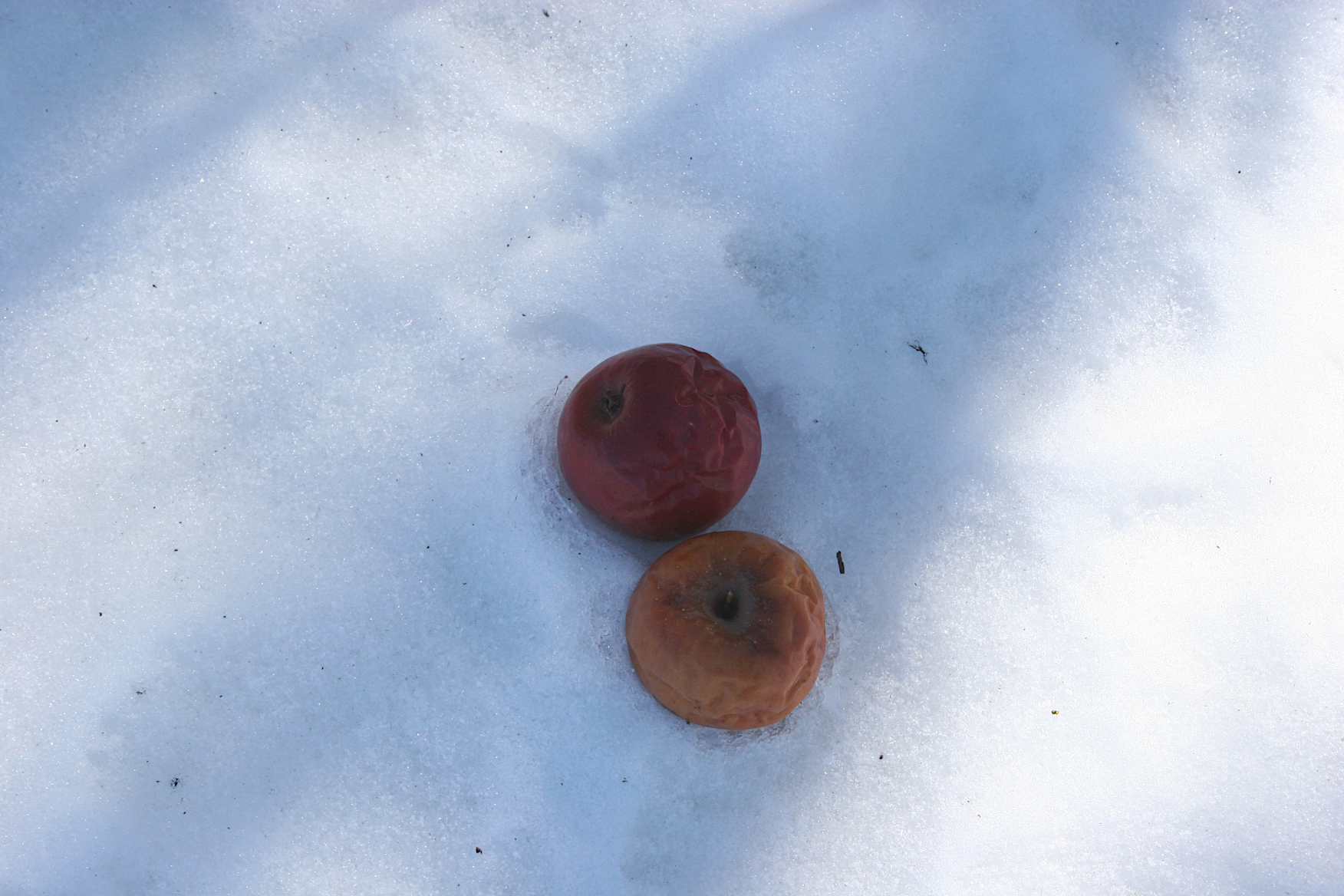
On the way back to the van, I spotted these apples in the snow. Deer food? (Minnesota Prairie Roots copyrighted photo February 2022)
At the beginning of the trail at Rice Lake State Park, I paused, observed and assessed that, yes, the trail was, indeed, icy. But I was willing to try, hoping conditions would improve. They didn’t. Soon Randy and I found ourselves crunching through the snow aside the trail rather than traversing the ice-packed path. Not even 20 feet in, Randy advised that perhaps we best turn around. I agreed.
Lake and sky meet at Rice Lake State Park during a spring visit. (Minnesota Prairie Roots copyrighted file photo May 2020)
Disappointment filled my thoughts. I didn’t realize how much I had anticipated this time in nature, in the woods, by the lake. And now…plans would pivot. We realized conditions would likely be the same at other state parks. So we headed west to Owatonna for that picnic lunch and more.
#
TELL ME: If you live in southern Minnesota, where can I find clear trails for winter hiking? If you live elsewhere, where do you like to hike this time of year?
#
FYI: Minnesota has three more upcoming “free entry” to state parks and recreation areas in 2022. Those dates are April 23, June 11 and November 25. I highly-recommend a warm weather hike in Rice Lake State Park. It’s especially peaceful.
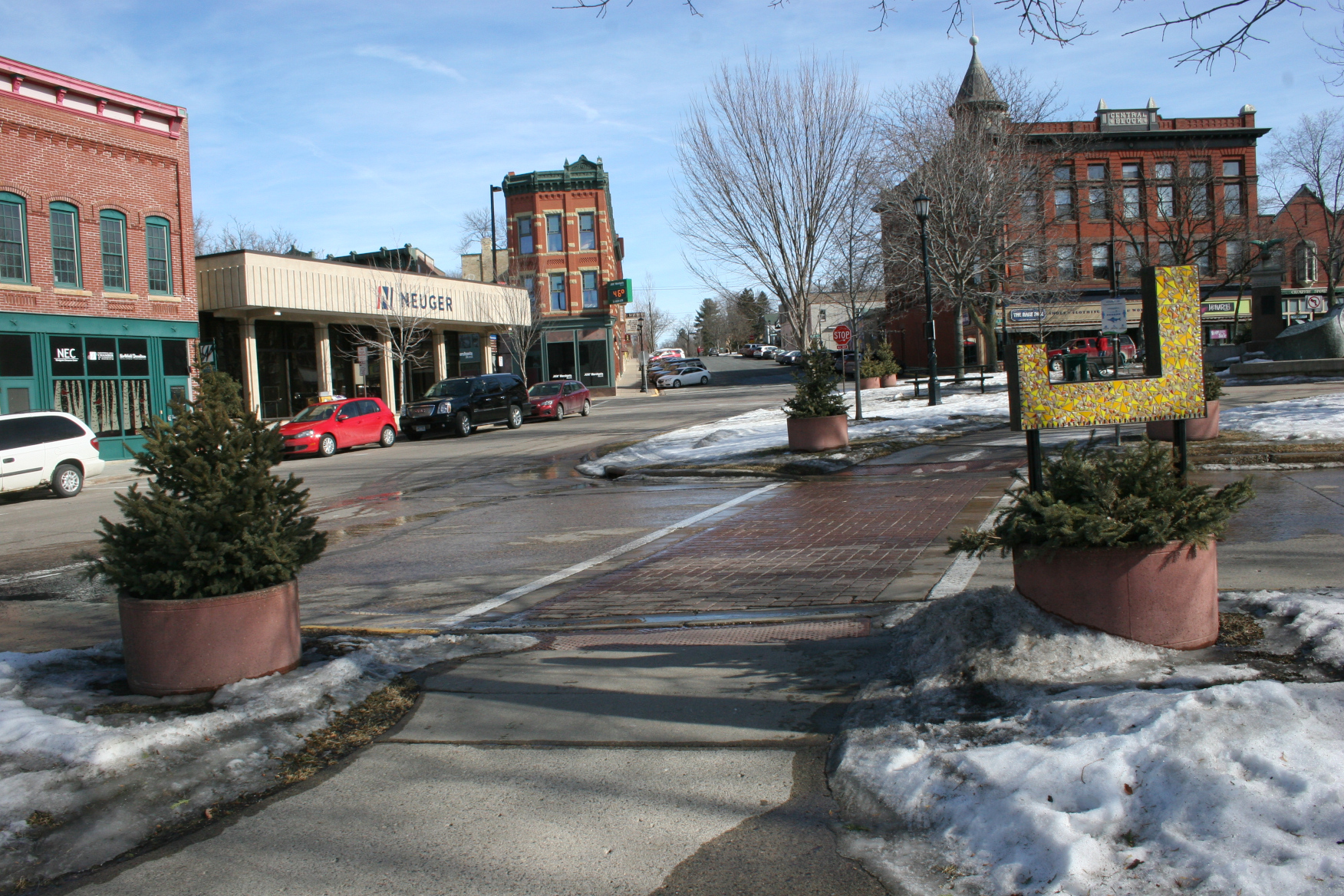
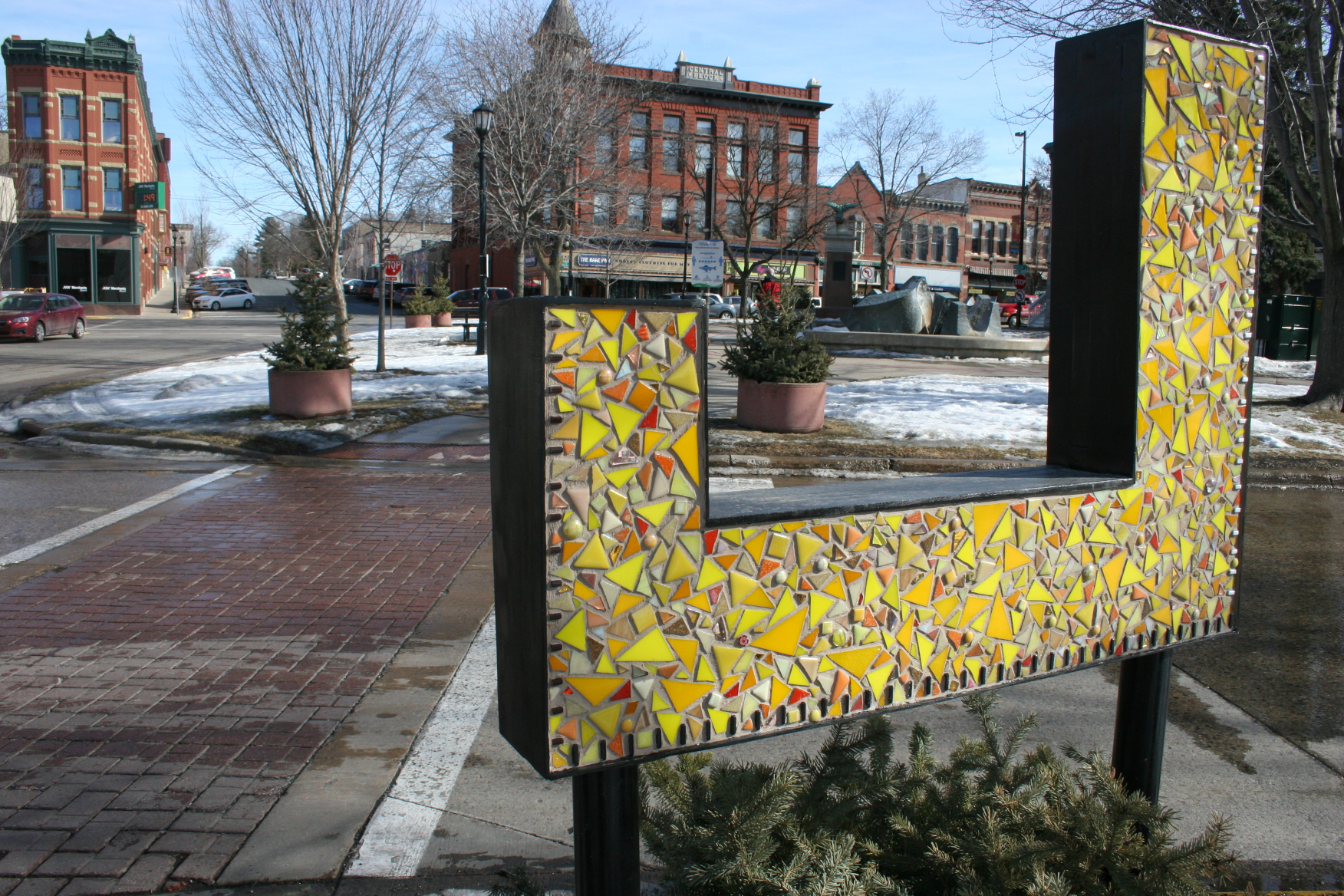
“Framing the Scene,” a relatively new art installation, right, in the heart of historic downtown Northfield.
AS A MEGA APPRECIATOR of outdoor public art, I delighted in the recent discovery of some new, at least new-to-me, art staged in historic downtown Northfield. This southern Minnesota river town boasts a thriving community of literary, visual and performing artists.
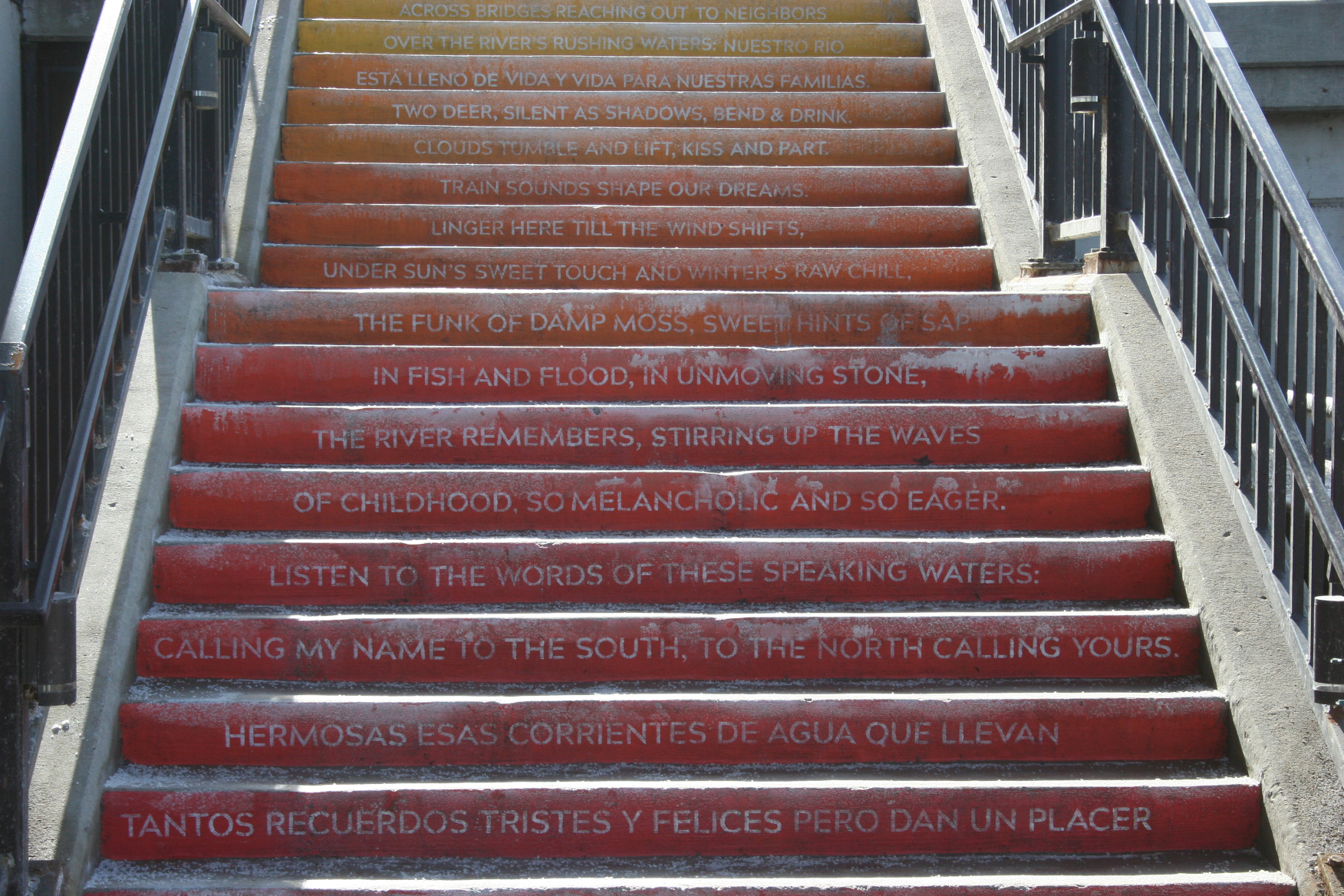
This shows a section of Northfield’s “Poem Steps,” a collaboration of 17 local poets. These poetry steps (covered here with salt residue) are along the Riverwalk. (Minnesota Prairie Roots copyrighted photo February 2022)
Here you’ll find poems imprinted in sidewalks, painted on steps and read at poetry readings in a city with a poet laureate. Here you’ll see outdoor sculptures scattered about town. Here you can listen to a concert at Bridge Square, a local church, St. Olaf or Carleton Colleges or elsewhere. Here you can enjoy live theater. Here you can appreciate the works of creatives at the Northfield Arts Guild and many other venues.
Northfield truly is synonymous with the arts.
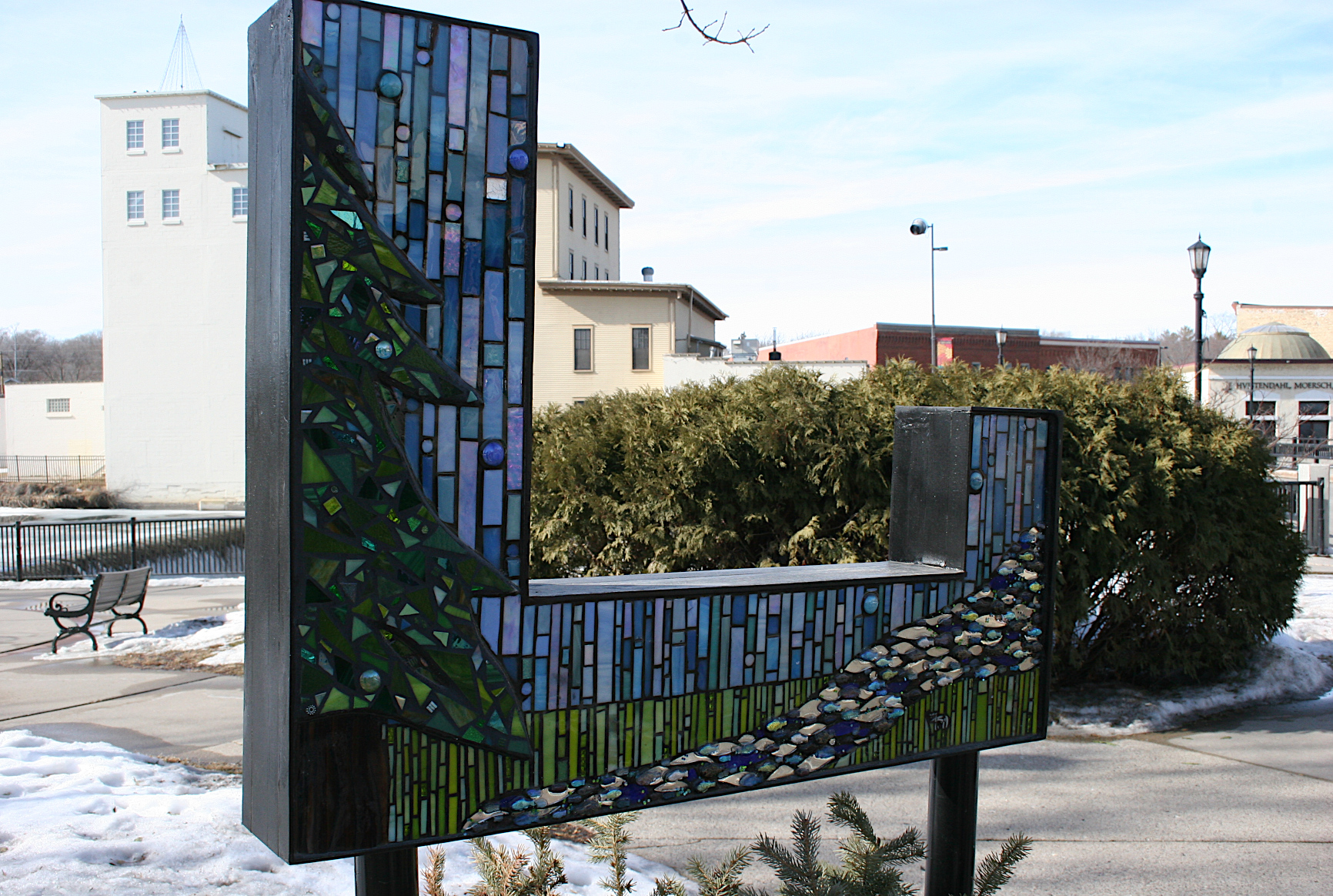
The riverside-themed side of Erin Ward’s “Framing the Scene.” In the background water rushes over the Ames Mill Dam next to the historic mill on the Cannon River. (Minnesota Prairie Roots copyrighted photo February 2022)
So when I spied a recently-installed sculpture, “Framing the Scene” by St. Paul glass artist Erin Ward, I felt a jolt of excitement. The free-standing, two-dimensional mosaic frames the nearby Cannon River and Riverwalk on one side and Bridge Square on the other. It’s meant to be an interactive sculpture for framing photos.
The Cannon River flows through downtown Northfield. (Minnesota Prairie Roots copyrighted file photo February 2022)
Ward was among five artists awarded $2,000 grants from the Minnesota Arts Board for the Northfield Downtown Development Corporation’s 2021 Artists on Main Street projects. That program aspires to get “creative placemaking” into the historic downtown. The intersection of arts and culture, downtown revitalization and historic preservation all factor into the artistic endeavors.
“Framing the Scene” meets all of those criteria, in my creative opinion. The artwork itself represents the vision and skills of a talented artist. The art adds to the downtown Northfield experience. That experience is one of dipping in and out of mostly home-grown local shops or of dining in an historic setting. The cliques “quaint and charming” fit Northfield. This is a community rich in history, rich in historic architecture, rich in natural beauty and rich in art.
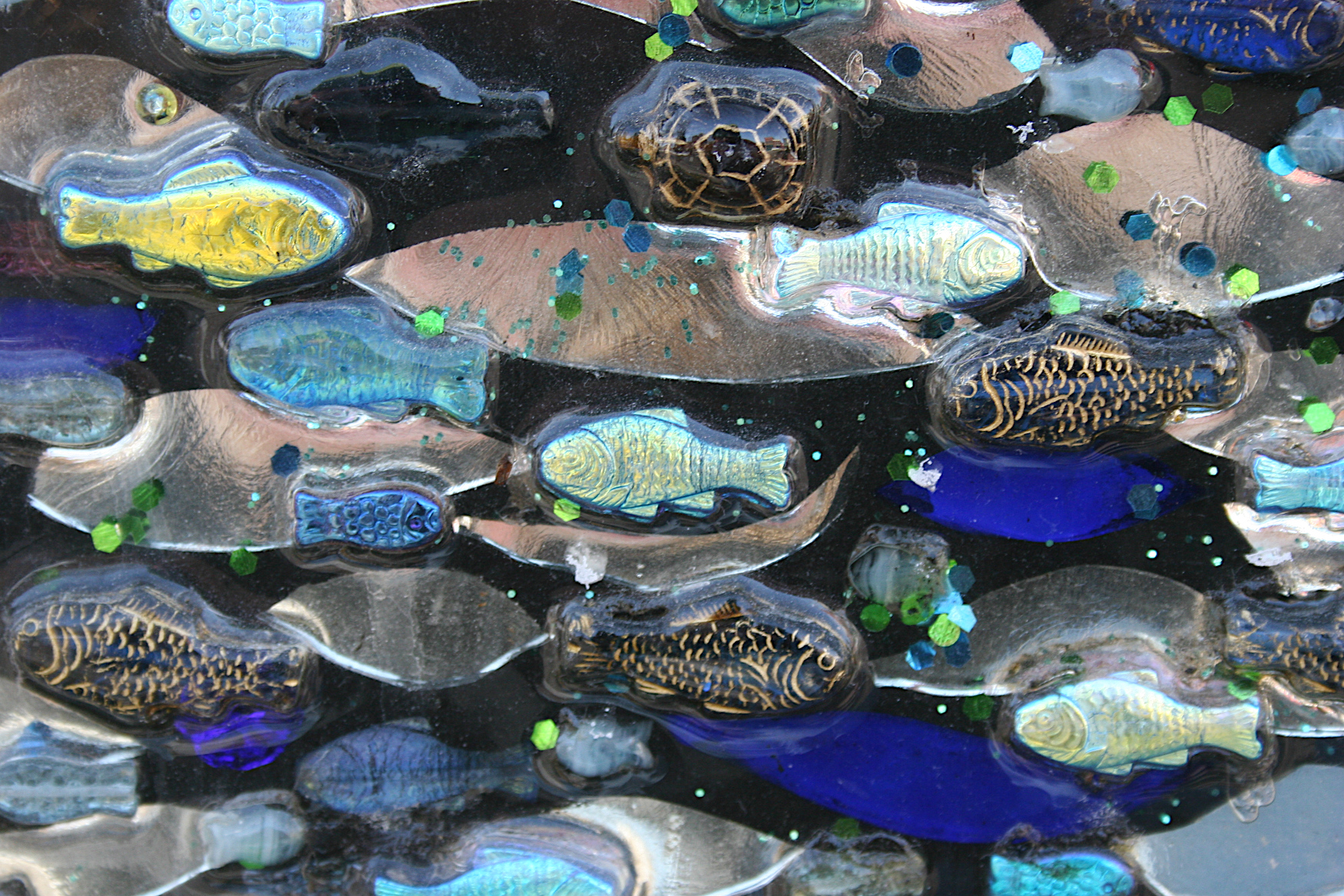
So much detail in the mosaic… (Minnesota Prairie Roots copyrighted photo February 2022)
I appreciate how Ward melded art and nature in creating a mosaic which honors both. As I studied her interpretation of the Cannon River, I recognized the thought she invested in this detailed art of many many pieces. Her river evokes movement in waters teeming with fish and the occasional turtle. Assorted greens and blues evoke a sense of calm and peacefulness. Ward’s art honors this river which runs through. This river of life, now a backdrop to a community which still appreciates her beauty, her recreational qualities, her history, her aesthetic value.
This side of Ward’s mosaic focuses attention toward Bridge Square and buildings downtown. (Minnesota Prairie Roots copyrighted file photo February 2022)
And then, on the flip side of “Framing the Scene,” bold pieces of mostly yellow, orange and red triangles create a completely different feeling. It’s as if sunbeams fell from the sun in a chaotic, jumbled mix of happiness. That’s my interpretation.
This side of the art looks toward Bridge Square, community gathering spot in downtown Northfield. Place of concerts and popcorn wagon, Santa house and quiet bench-sitting. Place of artistic activism. And beyond that, to the back of the frame, historic buildings rise.
One final look at Ward’s interpretation of the Cannon River in historic Northfield. (Minnesota Prairie Roots copyrighted photo February 2022)
Art rises in Northfield, enriching the lives of locals and the lives of visitors like me, come to town to follow the Riverwalk, to walk along Division Street and, then, to pause near Bridge Square and frame the scene.
Please check back for more posts about art in historic downtown Northfield, Minnesota.
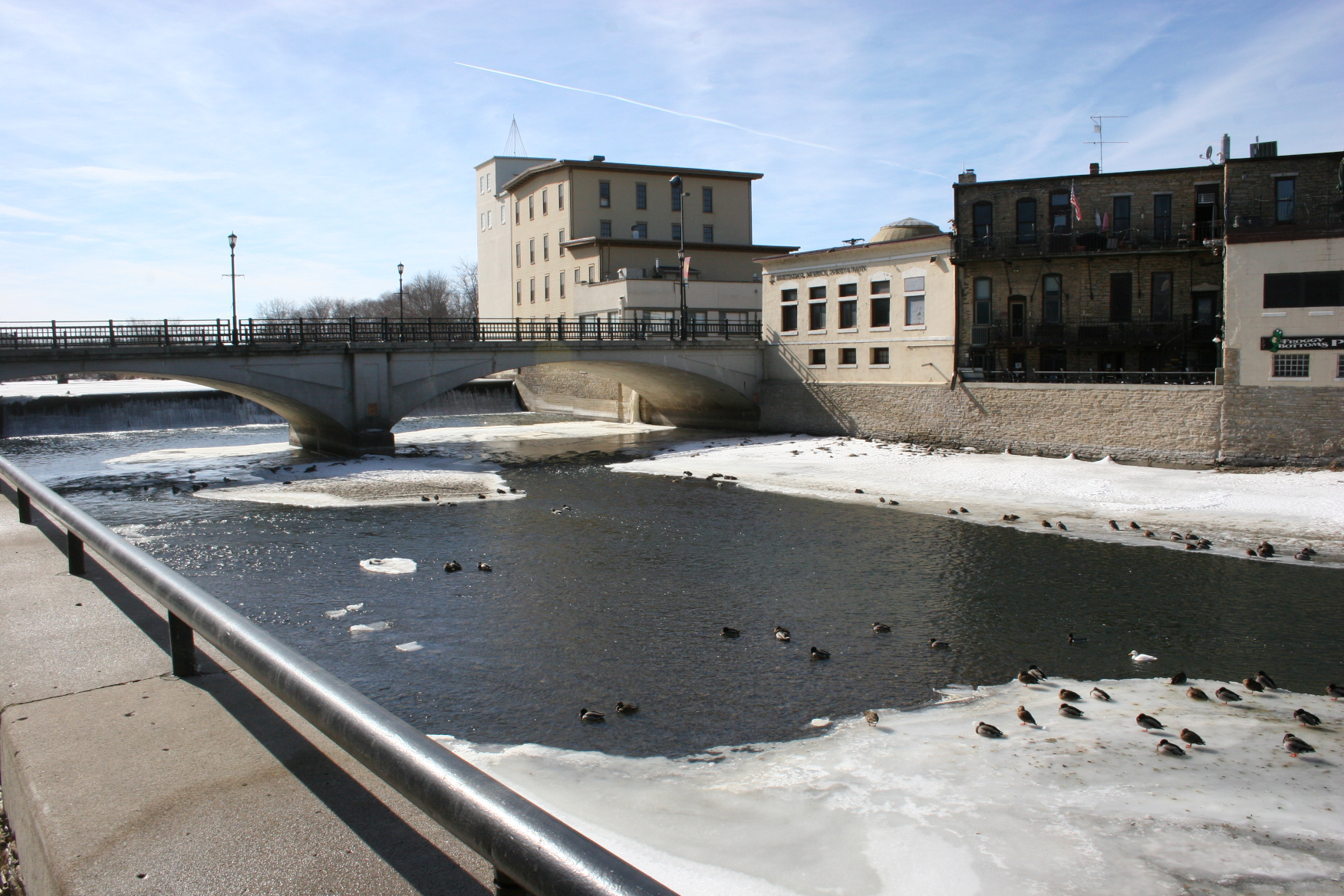
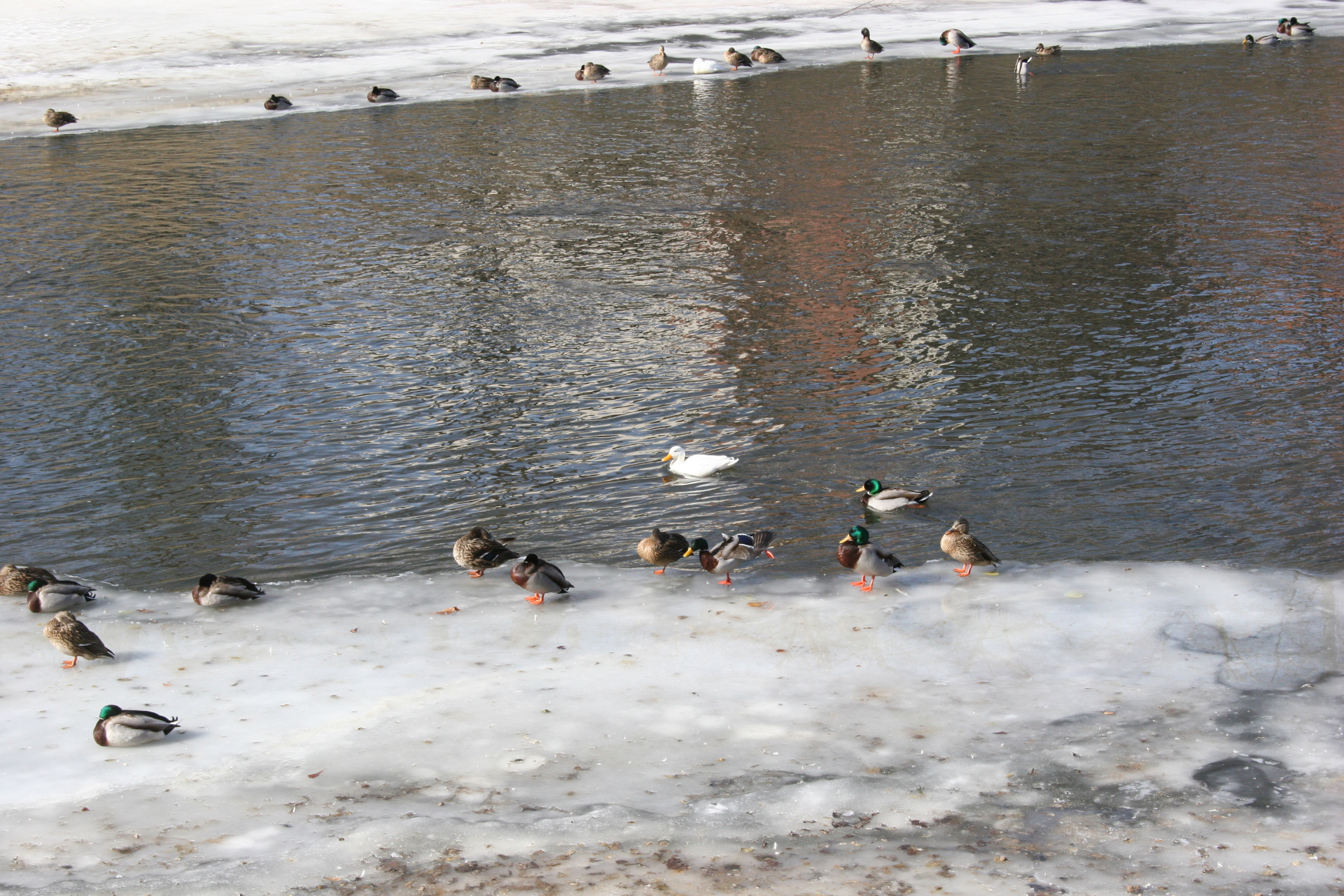
A cluster of ducks, including two white ducks, follow the partially frozen Cannon River in downtown Northfield. (Minnesota Prairie Roots copyrighted photo February 2022)
“DUCK, DUCK, GRAY DUCK!” If you’re not a native Minnesotan, you might stop me right here and protest. “It’s Duck, Duck, Goose!” you likely would correct. And then I would protest.
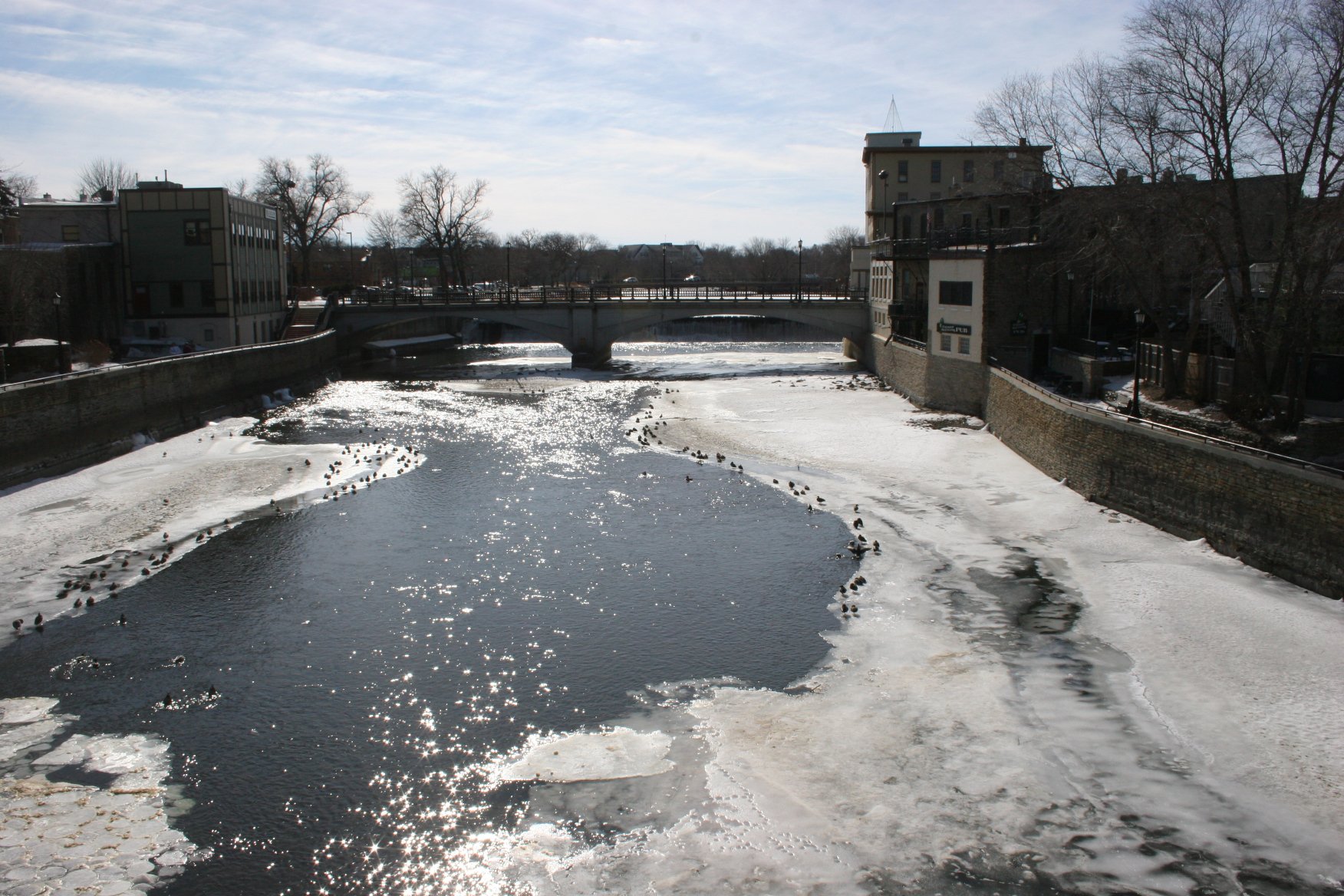
Ducks border both sides of the Cannon River on a February afternoon in Northfield. (Minnesota Prairie Roots copyrighted photo February 2022)
A few years back, in October 2017 to be exact, a tight end for the Minnesota Vikings initiated a game of Duck, Duck, Goose following a touchdown. Ohio native Kyle Rudolph was quickly corrected. Here in Minnesota, we term that children’s game Duck, Duck, Gray Duck. Not Goose. But Gray Duck. That set off a storm of conversations in which many a Minnesotan defended our name for this game which involves participants sitting in a circle, tapping each other on the head and calling out “Duck” or assorted versions thereof. The child pegged as the “Gray Duck” then tries to catch the person who is “It.”
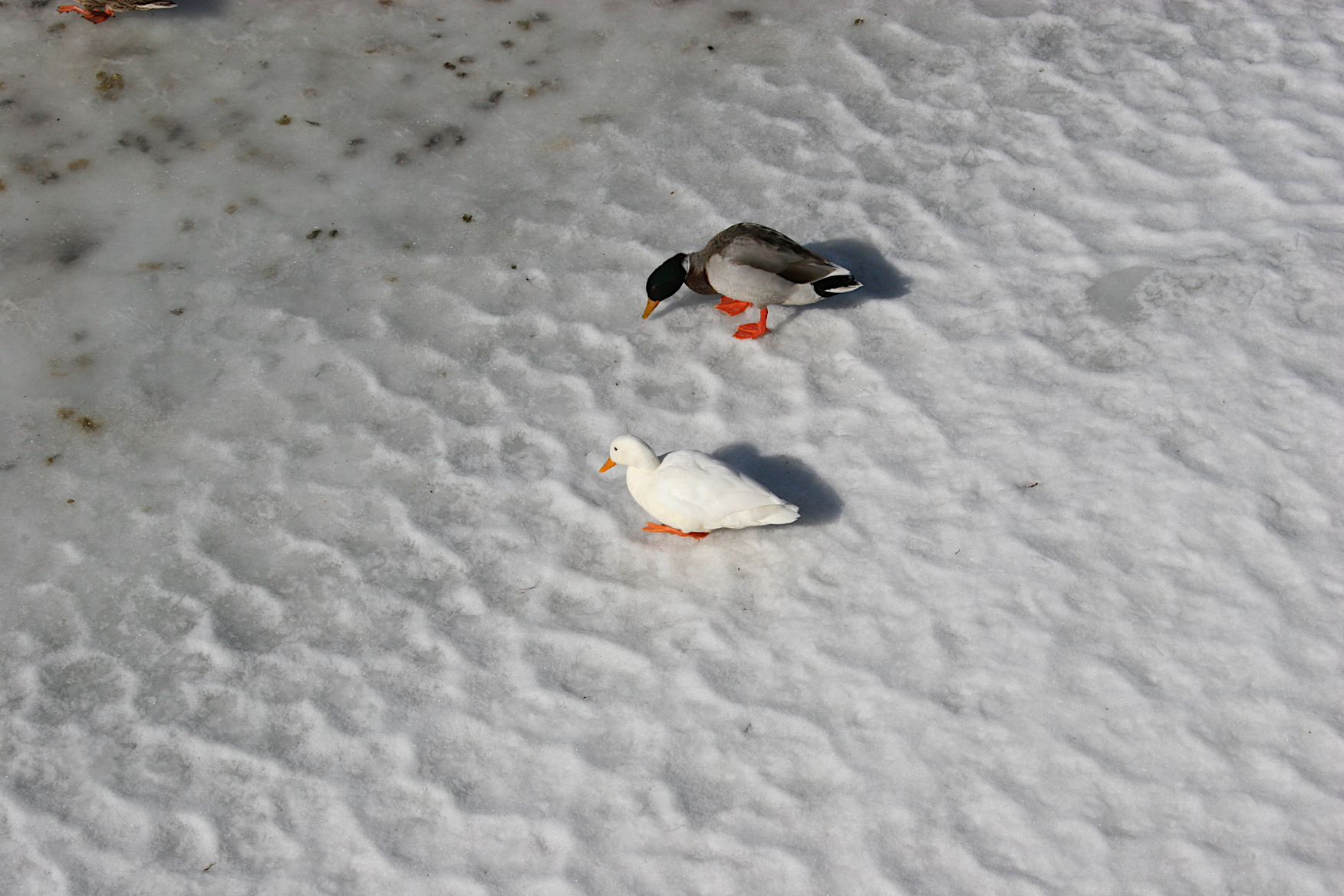
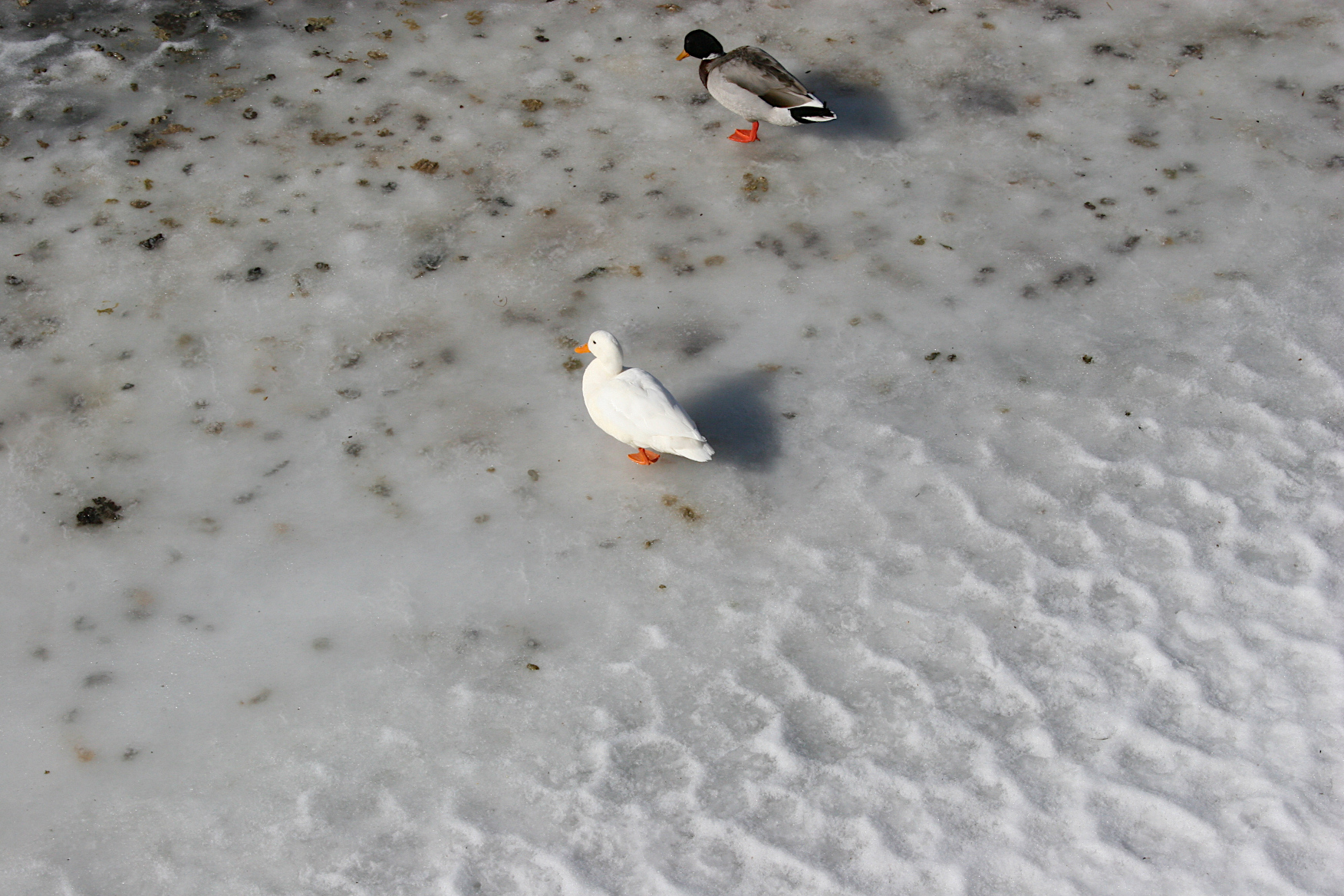
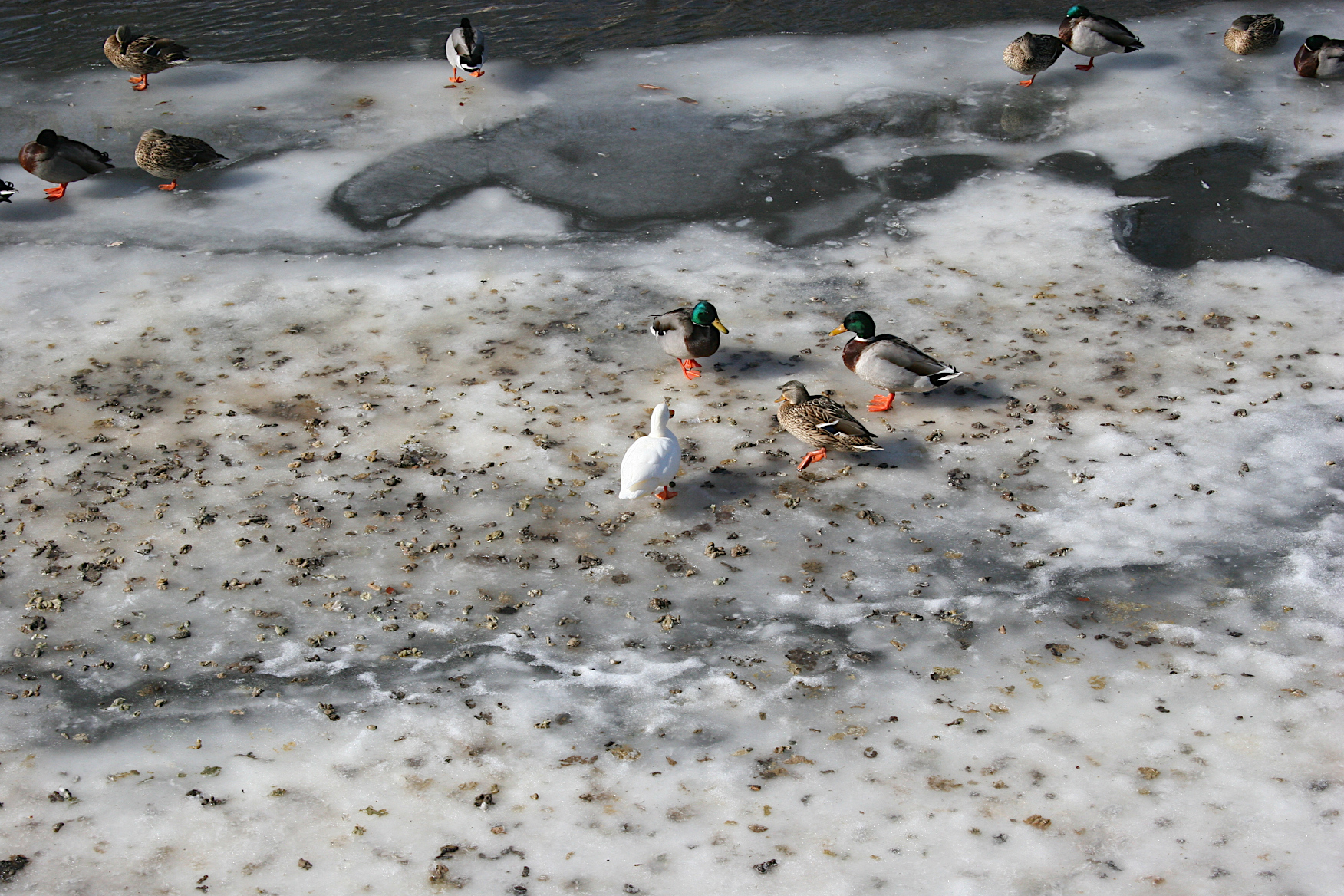
Nearly camouflaged against a snowy backdrop, an uncommon white duck. (Minnesota Prairie Roots copyrighted photo February 2022)
Duck thoughts fly through my head as I consider a scene on the Cannon River in the heart of downtown Northfield Sunday afternoon. There, among the drake mallards with brilliant iridescent green heads and the hens in their unassuming shades of brown, were four white ducks. All white with brilliant orange beaks and webbed feet.
Looking the other direction from the pedestrian bridge offers a view of ducks edging the open river. (Minnesota Prairie Roots copyrighted photo February 2022)
I was thrilled to finally see these white ducks Randy has previously spotted flying over Northfield on his way to work. These, he said, are not domestic ducks given their propensity to fly just like any other wild duck.
I watched this pair for awhile and they appeared to get along just fine. (Minnesota Prairie Roots copyrighted photo February 2022)
We can only guess at their origins since we are uninformed, except when it comes to Duck, Duck, Gray Duck. Perhaps the white ducks resulted from a genetic mutation. Or the mixing of wild and domesticated. Whatever the reason, these waterfowl drew our interest.
Ducks hang out together on the frozen Cannon River. (Minnesota Prairie Roots copyrighted photo February 2022)
I wondered if the other ducks would exclude/shun/avoid the white ducks. As I watched them walk across the ice and swim in patches of open water, I observed no ostracization. We could learn a thing or ten from those ducks.
Randy follows the trail along the Cannon River in North Alexander Park, Faribault. (Minnesota Prairie Roots copyrighted photo February 2022)
BEFORE TUESDAY TEMPS ROSE to around 40 here in southern Minnesota, there was the cold. Brutal cold. Mornings of minus below zero. Strong winds making the outdoors feel even colder.
Late Sunday morning, when the temperature hovered in the 20s with a brisk wind, Randy and I followed the paved trail bordering the Cannon River in North Alexander Park. It’s a favorite Faribault walking path.
River (left), tree and trail. (Minnesota Prairie Roots copyrighted photo February 2022)
The river draws me here. I find waterways soothing, calming, quieting to the spirit, even when frozen.
I also appreciate how this particular path wends around trees and along the river. The curving trail invites a leisurely, poetic pace, a time for reflection, a time to slow down and delight in the natural world without distractions.
Little distracted us, except the trumpeting of two Trumpeter Swans gracefully flying high overhead as we exited the van to begin our walk. Absent were the usual crowds of waterfowl frequenting the river in Minnesota’s other seasons.
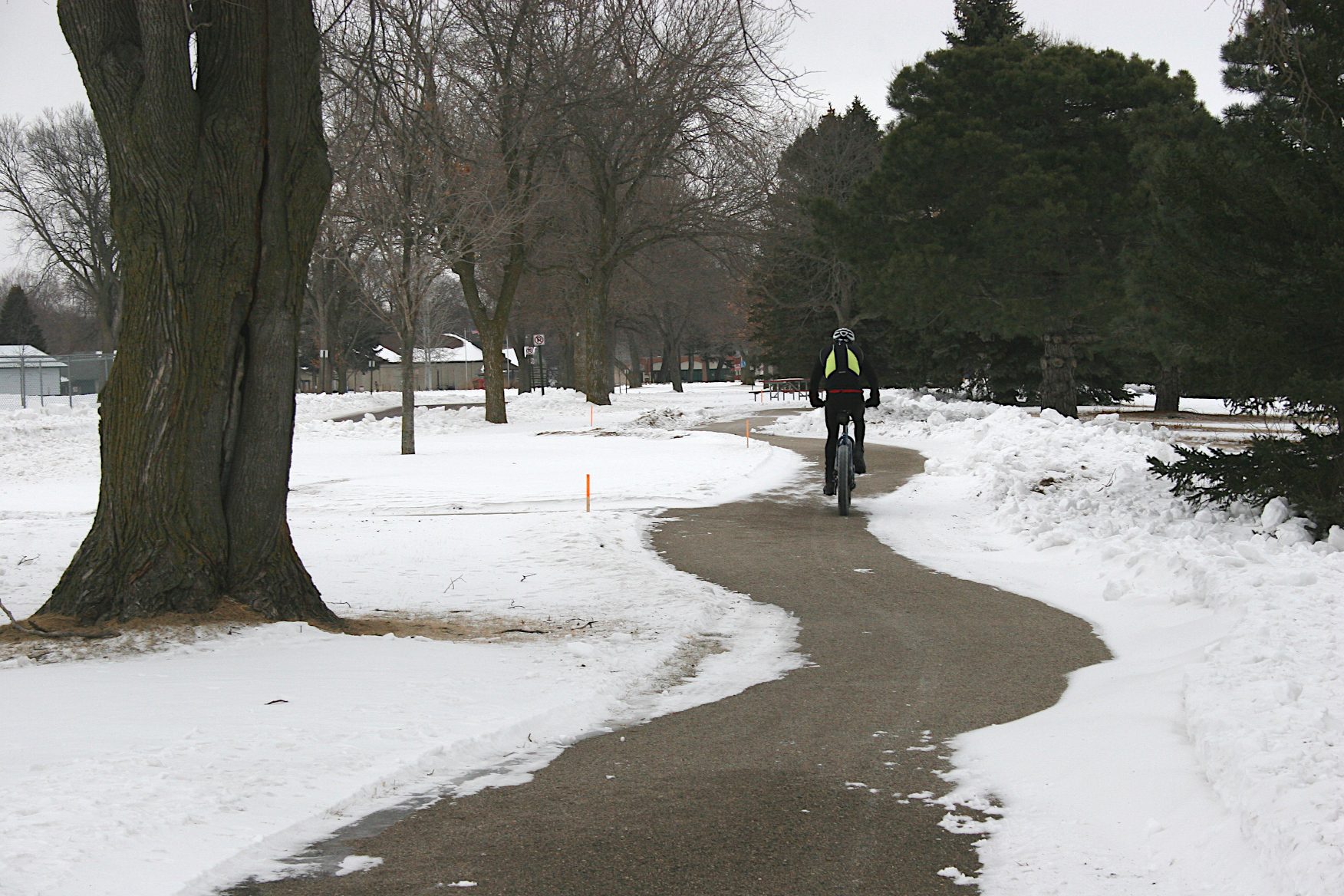
Biking the riverside trail on a fat tire bike. (Minnesota Prairie Roots copyrighted photo February 2022)
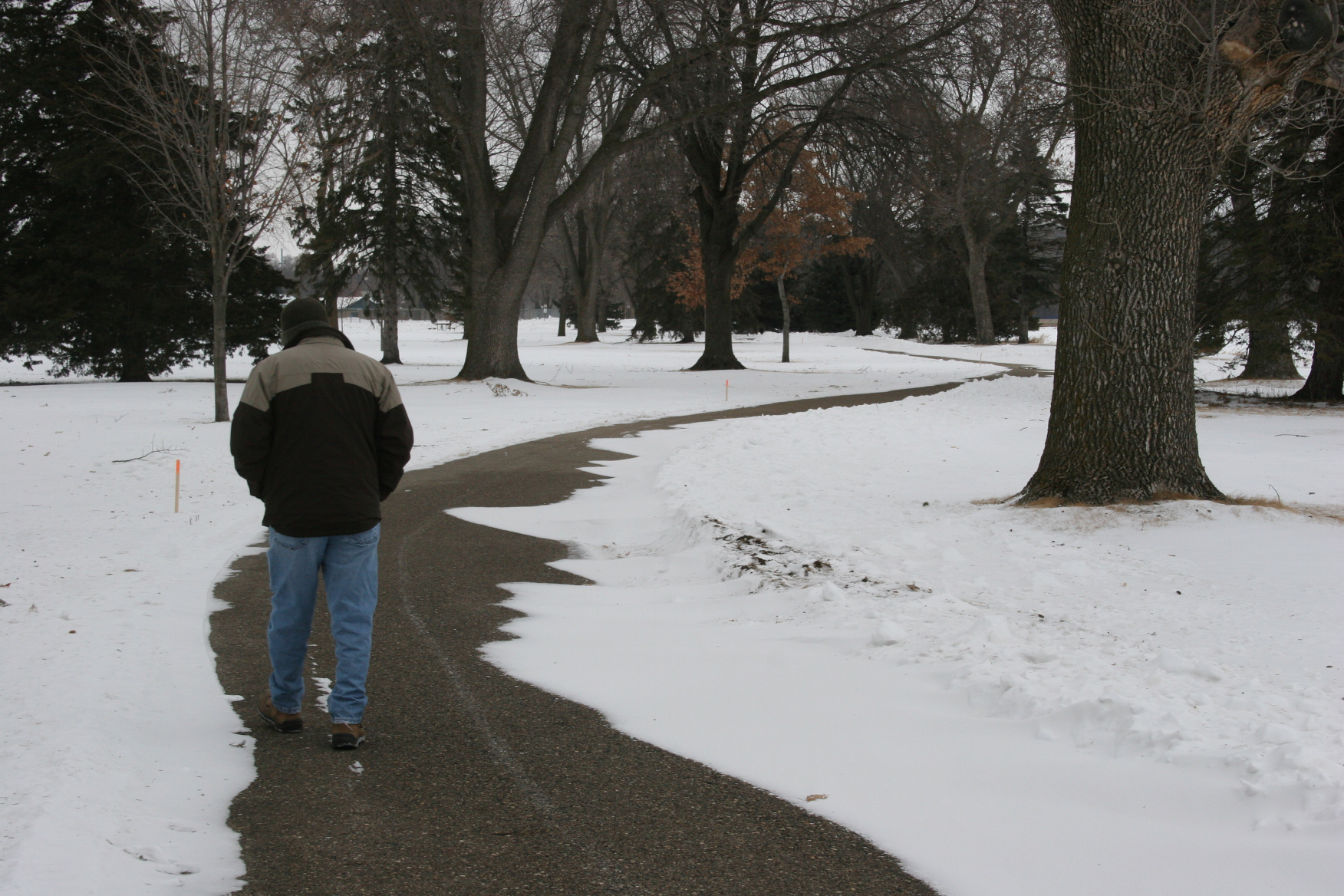
We encountered only one other person—a biker zooming on a fat tire bike.
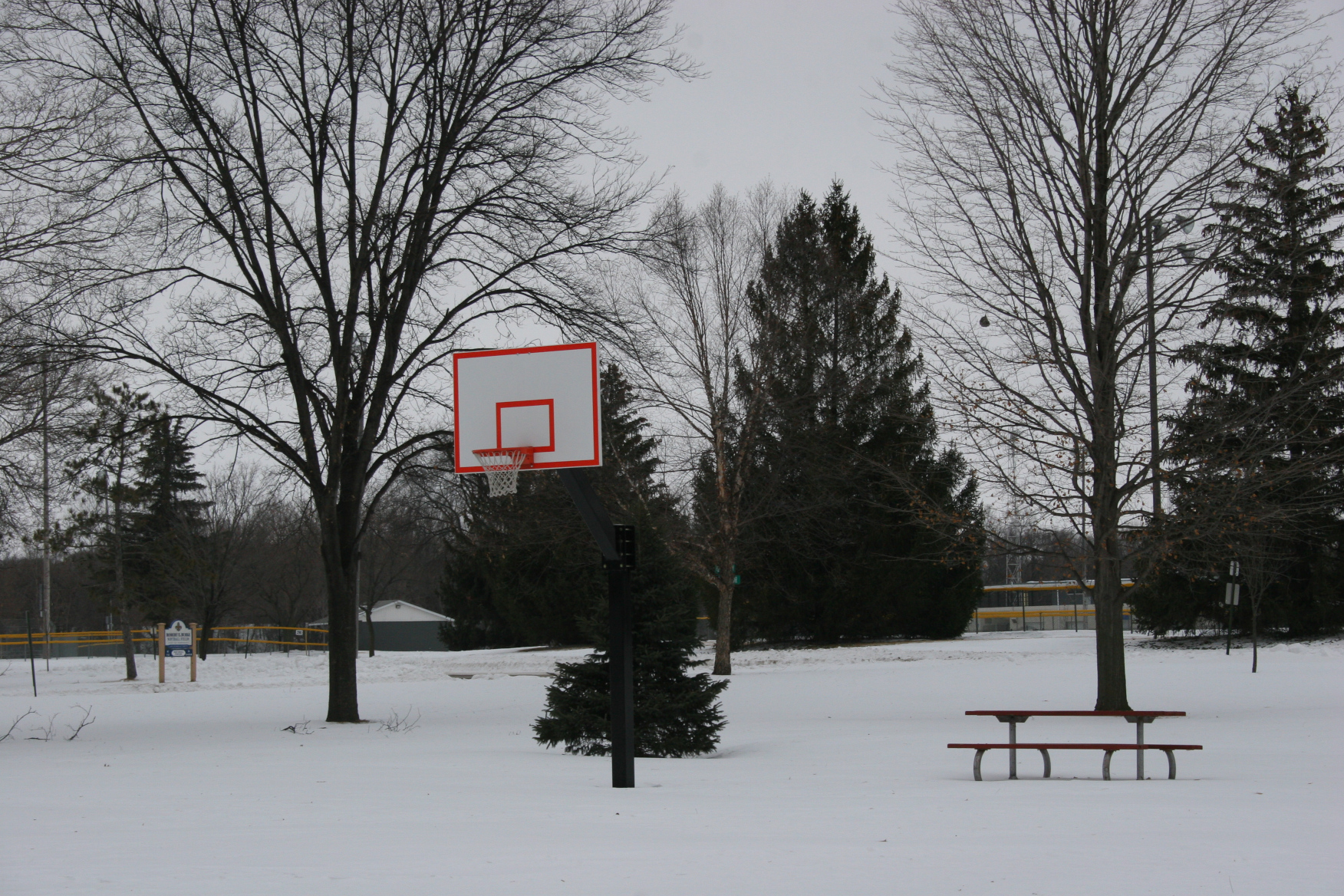
A spot of color at the basketball court. (Minnesota Prairie Roots copyrighted photo February 2022)
It was the winter landscape which focused my attention. The whiteness of it all. The absence of color in a mostly grey and black-and-white world. Only the bold orange outlines on basketball rims and backboards jolted color into the scene. In the summer, young people cram these courts, dribbling and jumping and dunking and scoring points. Raucous play among youth, wonderful to witness.
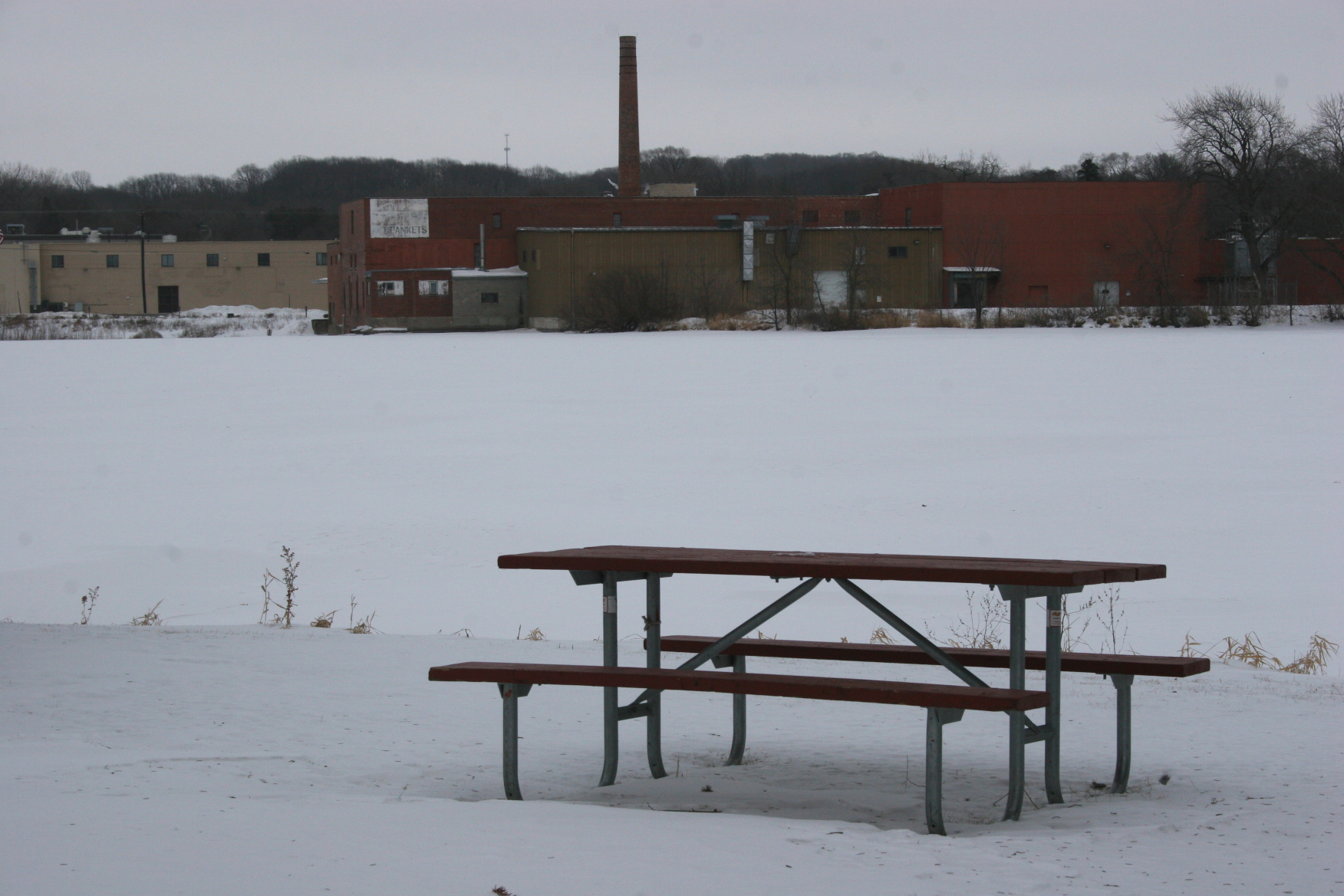
A riverside picnic table remains, even in winter. In the background is the Faribault Woolen Mill, across the Cannon River. (Minnesota Prairie Roots copyrighted photo February 2022)
On this February morning, summer lingers in memories of those pick-up basketball games, riverside picnics and following this trail in flip flops under leafy canopies of green.
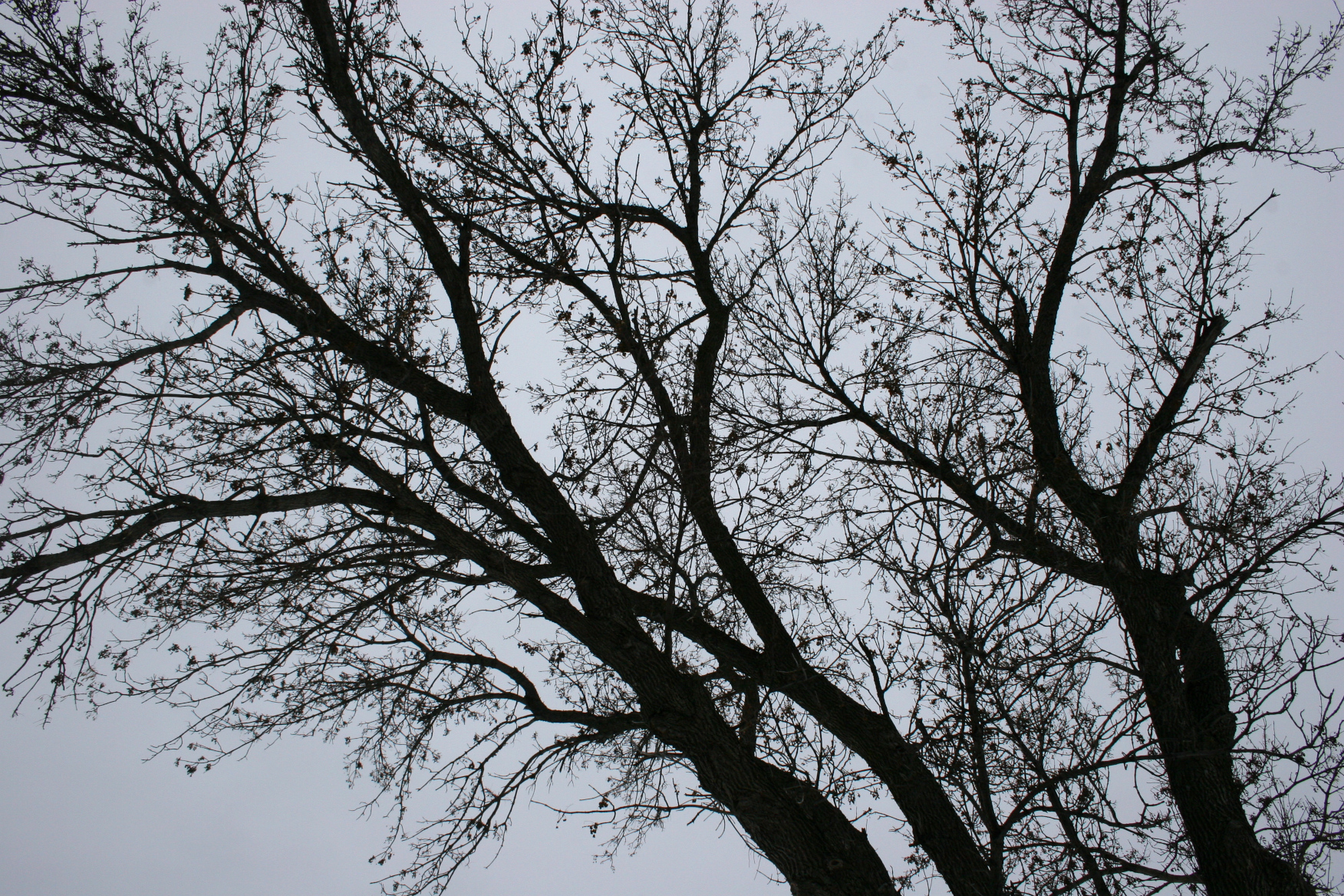
I find bared branches particularly beautiful. (Minnesota Prairie Roots copyrighted photo February 2022)
Today the branches bare themselves to winter. Naked, exposed, vulnerable.
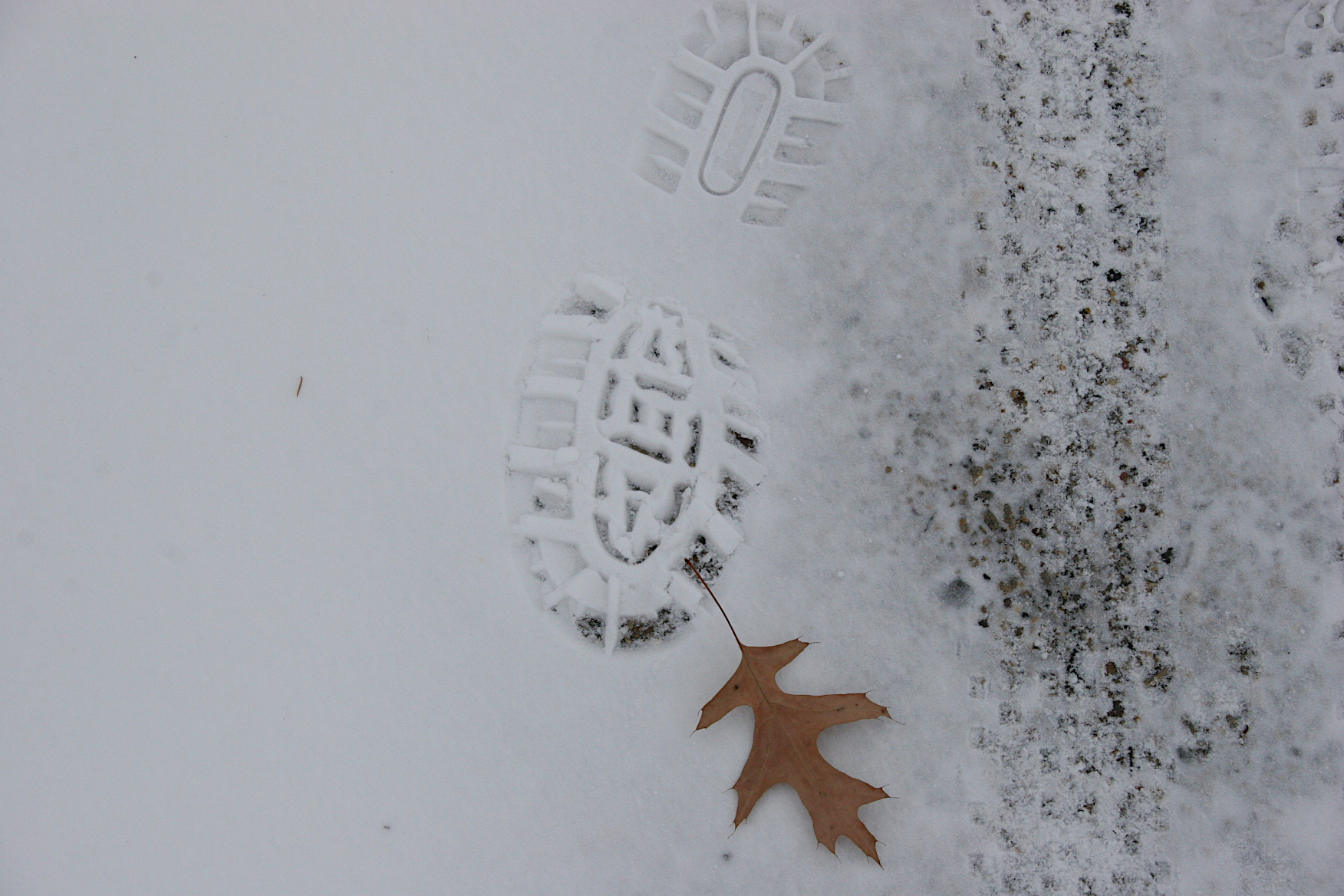
Details in boot print, tire track and oak leaf. (Minnesota Prairie Roots copyrighted photo February 2022)
I notice in the snow, next to the imprint of a boot and a bike tire track, a lone oak leaf. In any other season, I might miss this. But not now. Not in the depth of winter.
Finger drifts creep onto trail’s edge. In the distance to the right sits the Faribault Woolen Mill. (Minnesota Prairie Roots copyrighted photo February 2022)
I notice, too, finger drifts along trail’s edge. Creeping. Stretching. Wind-blown fingers of snow that may be perceived as threatening. Or artsy. I choose artsy.
Randy heads back toward the van, along the riverside trail, the woolen mill in distant view across the Cannon River. (Minnesota Prairie Roots copyrighted photo February 2022)
Across the river, I see the Faribault Woolen Mill, weaver of wool (and wool blend) blankets, throws, scarves and much more since 1865. The mill is widely-admired, respected for its quality products. Craftsmanship at its finest. As Randy and I retrace our steps, this time leaning into a strong wind, I would welcome a locally-woven wool scarf wrapped around my neck for warmth.
Soon we reach the van, climb inside the wind-sheltered space and head toward the park exit. It is then Randy spots a large bird overhead, following the river. An eagle, we determine, based on wing span, flight and river route. It’s too high for our aging eyes to fully verify identity. But we’ve seen eagles here before and that is enough. Enough to end our Sunday morning winter walk with the wonderment we always feel in watching this majestic bird tracing the Cannon River.
#
TELL ME: If you live in a cold climate state, do you bundle up and head outdoors for recreational activities? Where do you go? What do you do?
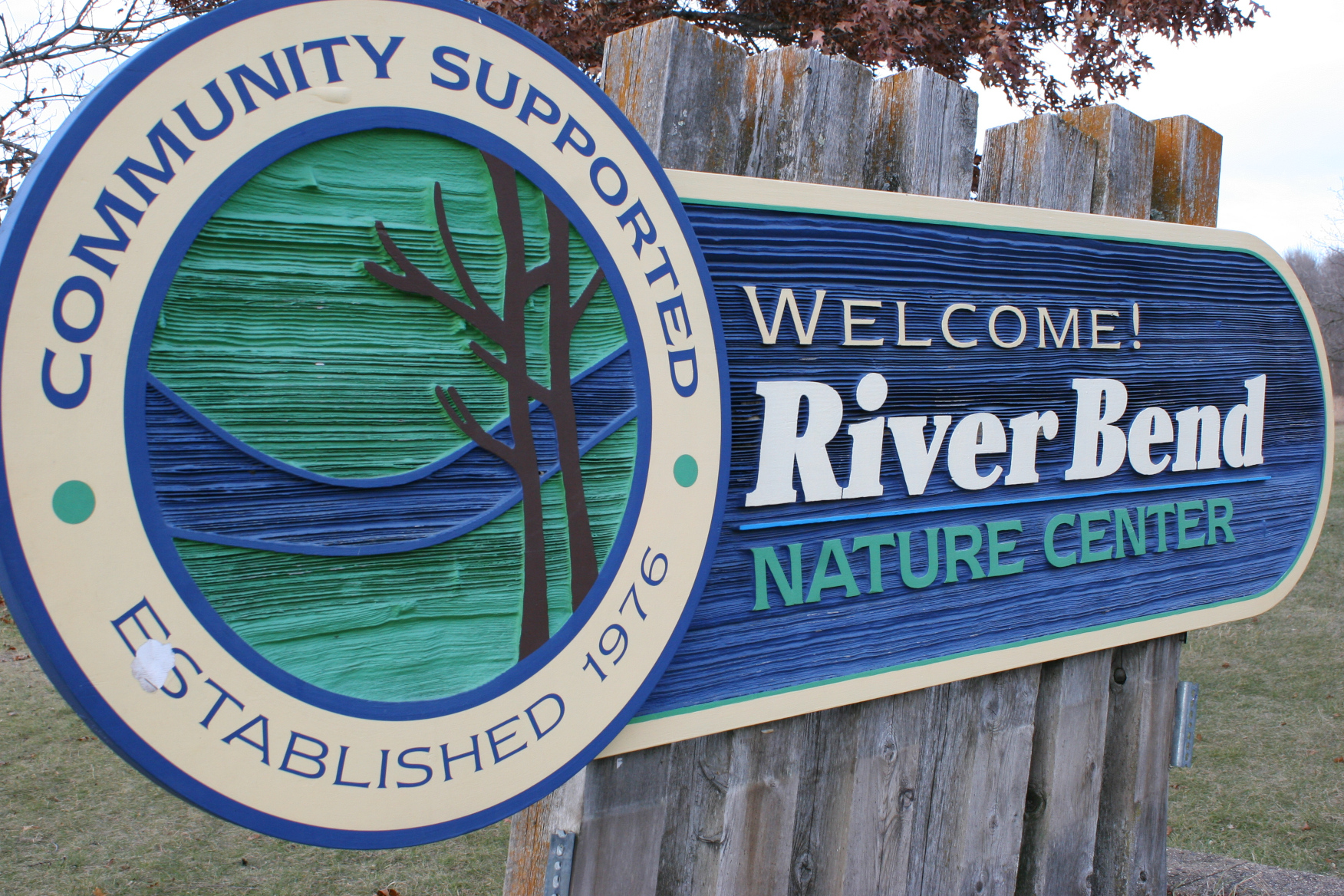
This sign stands near River Bend Nature Center’s interpretative center. (Minnesota Prairie Roots copyrighted file photo November 2021)
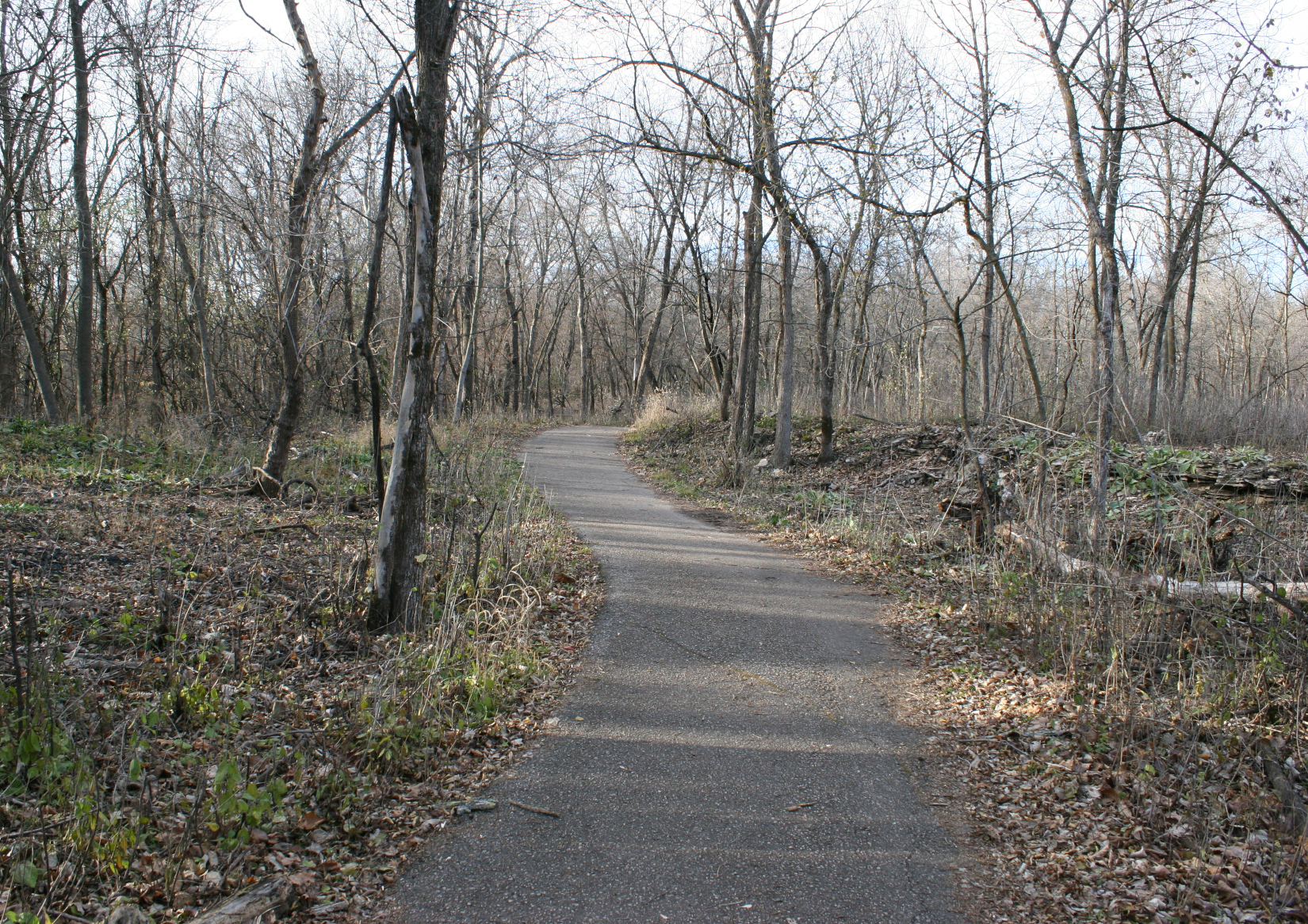
MONTHS AGO,BEFORE SNOW FELL and the season officially transitioned to winter, I followed a paved trail into the woods at River Bend Nature Center and then a grassy path to a wetlands overlook.
River Bend, on Faribault’s east side, rates as a favorite outdoor destination. That November day I embraced the lingering remnants of autumn, now overtaken by the cold and snow of winter.
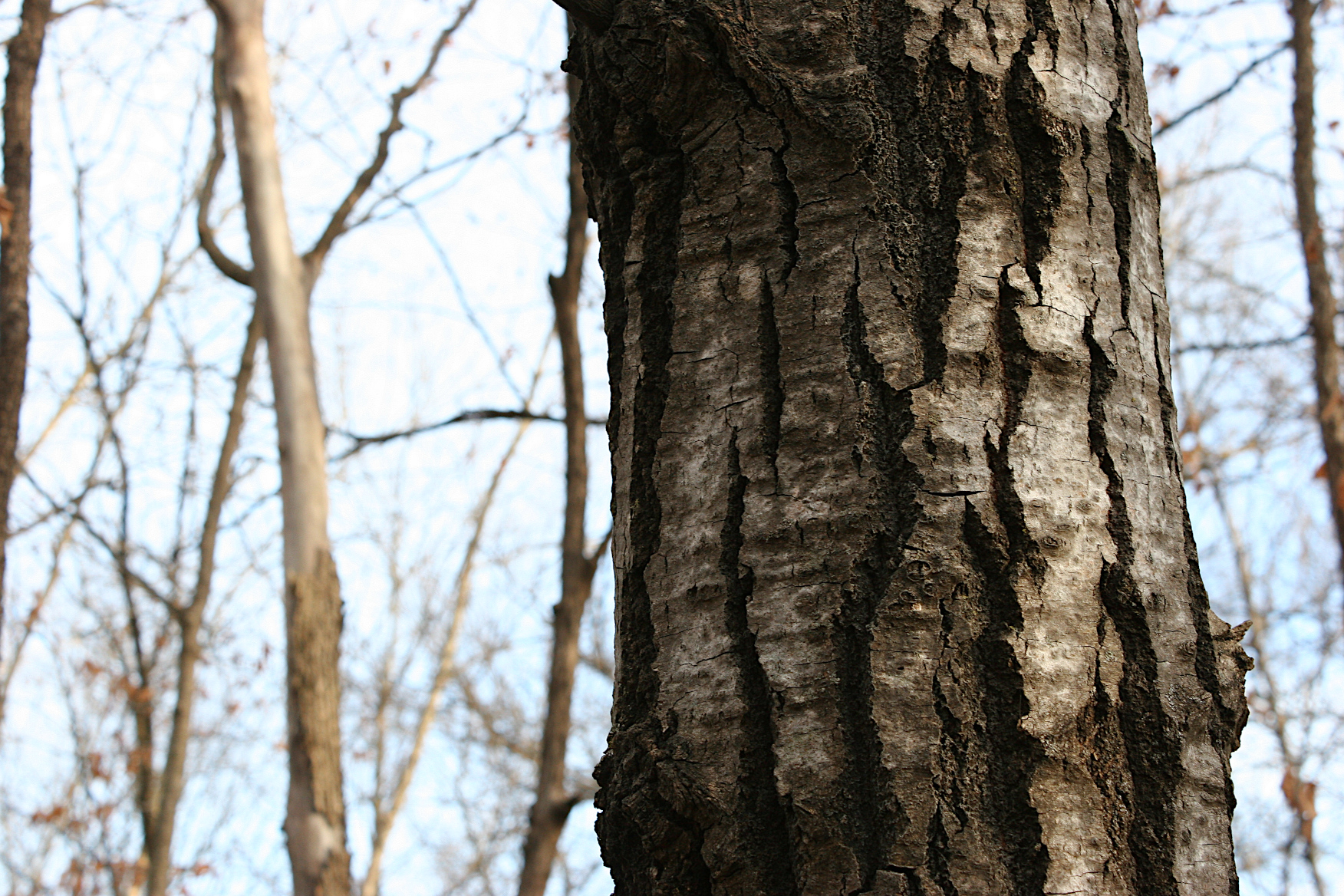
Rugged bark draws my eye as I hike. (Minnesota Prairie Roots copyrighted file photo November 2021)
Even in the muted hues of autumn’s end, beauty exists.
But, for me, taking in the evolving landscape stretches beyond simply seeing that which unfolds before me. It’s also about looking back. To my childhood on the southwestern Minnesota prairie.
One of many wooded trails in River Bend. (Minnesota Prairie Roots copyrighted file photo November 2021)
When I hike the wooded trails of River Bend, I see my younger self riding my bike through the grove back on the farm. Except the bike was a horse, not a bike. I grew up in the era of TV Westerns—of “Rawhide” and “Bonanza.”
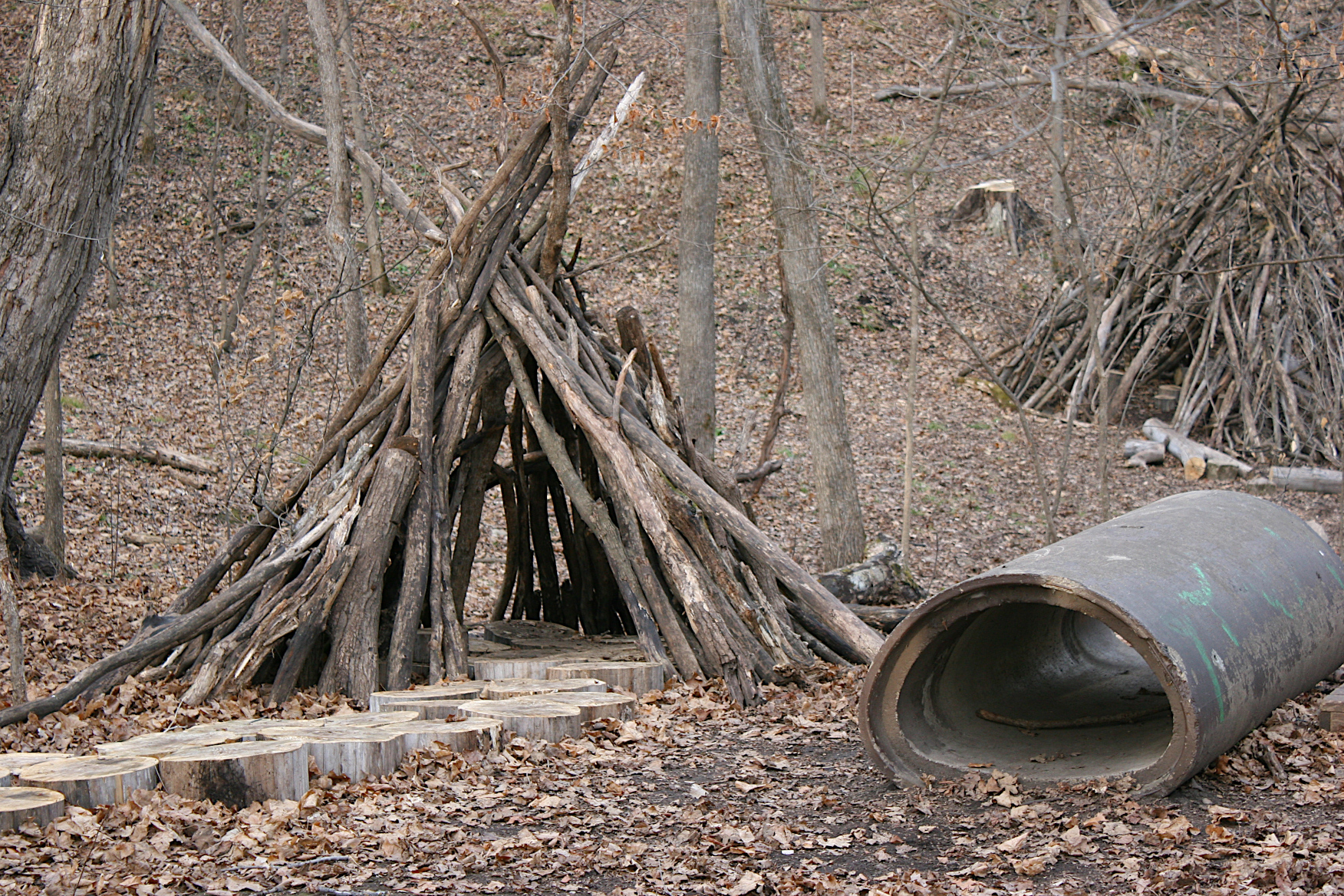
The kids’ play area at River Bend. (Minnesota Prairie Roots copyrighted file photo November 2021)
Fallen branches at River Bend angled into a shelter resemble those built by me and my siblings. We also constructed buildings by looping baler twine around tree trunks. And we crafted a house, too, from discarded wire fencing. Oh, the imaginations of farm kids let loose in the grove.
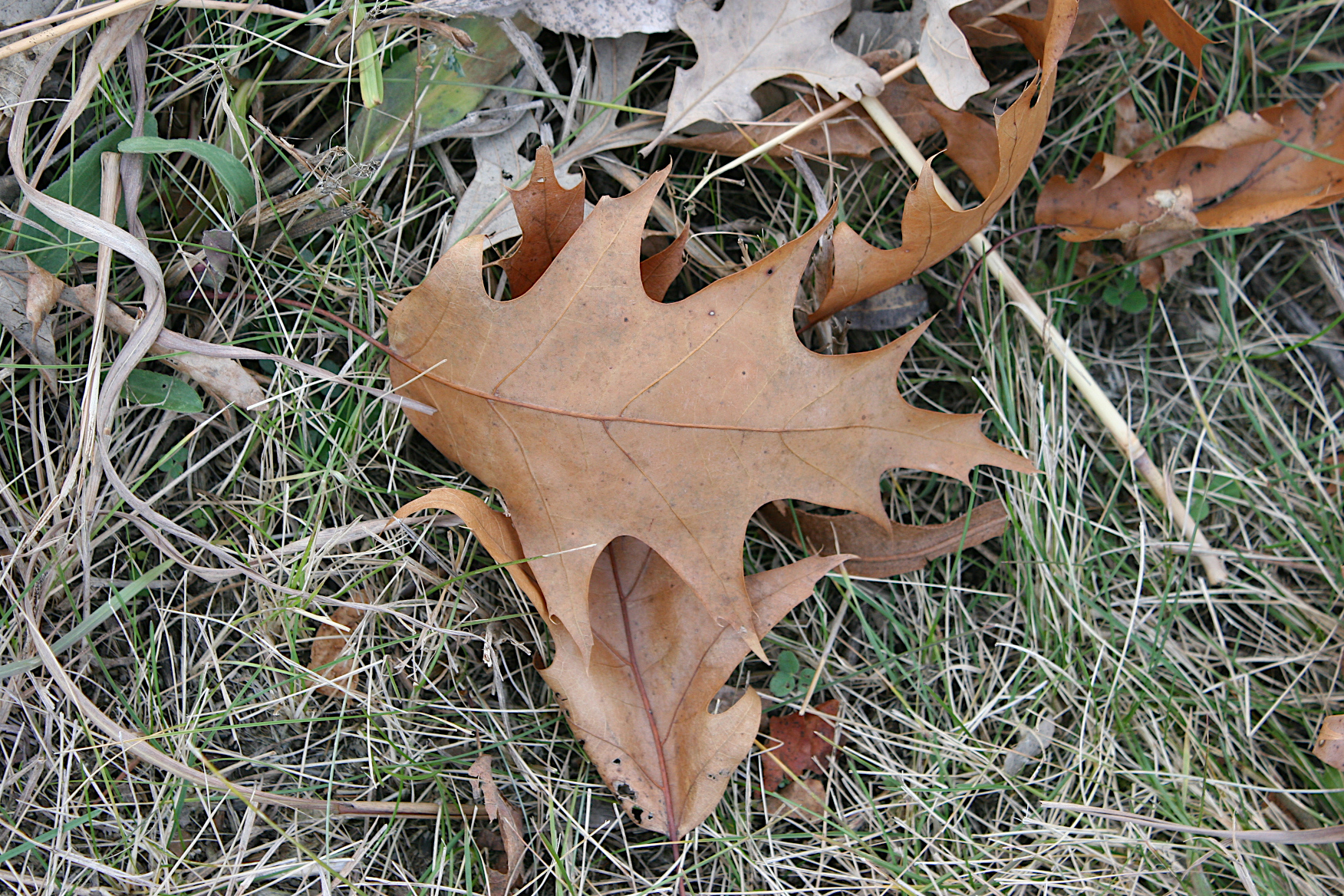
Dried oak leaves. (Minnesota Prairie Roots copyrighted file photo November 2021)
Dried leaves scattered in the woods bring more memories. Each autumn, I gathered fallen leaves into piles, then dropped the leaves into lines. Walls. Constructing leaf houses filled many a recess at Vesta Elementary School. And many an autumn day for my siblings and me.
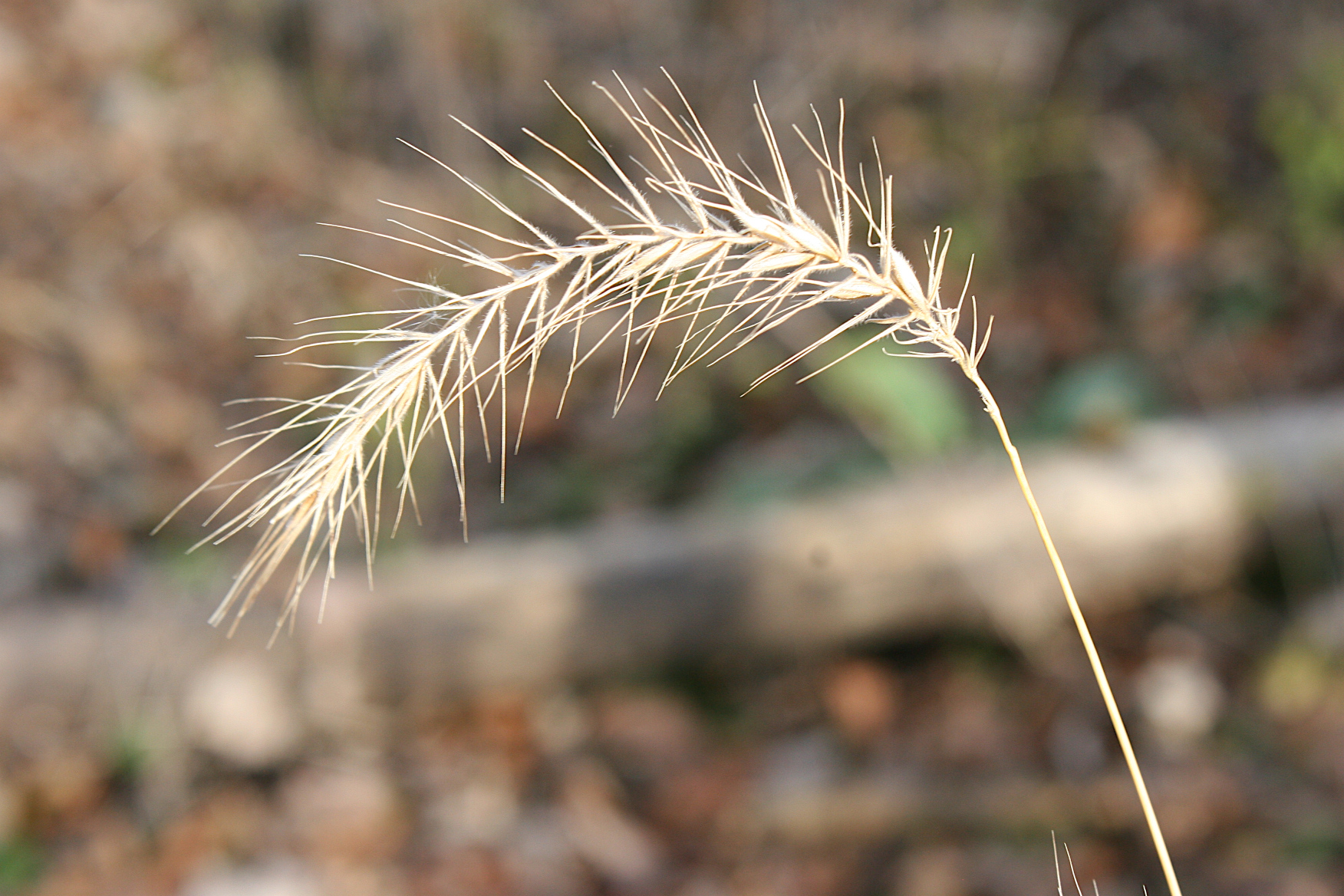
A single dried grass stem holds simple beauty. (Minnesota Prairie Roots copyrighted file photo November 2021)
I recall, too, hiding in tall grass between the granary and the south grove. When I scan the prairie expanse of River Bend, I imagine myself vanishing. Hiding from brothers with cap guns holstered at their sides. Yes, I owned a cap gun, too, and wore a straw cowgirl hat, although we called them cowboy hats back then.
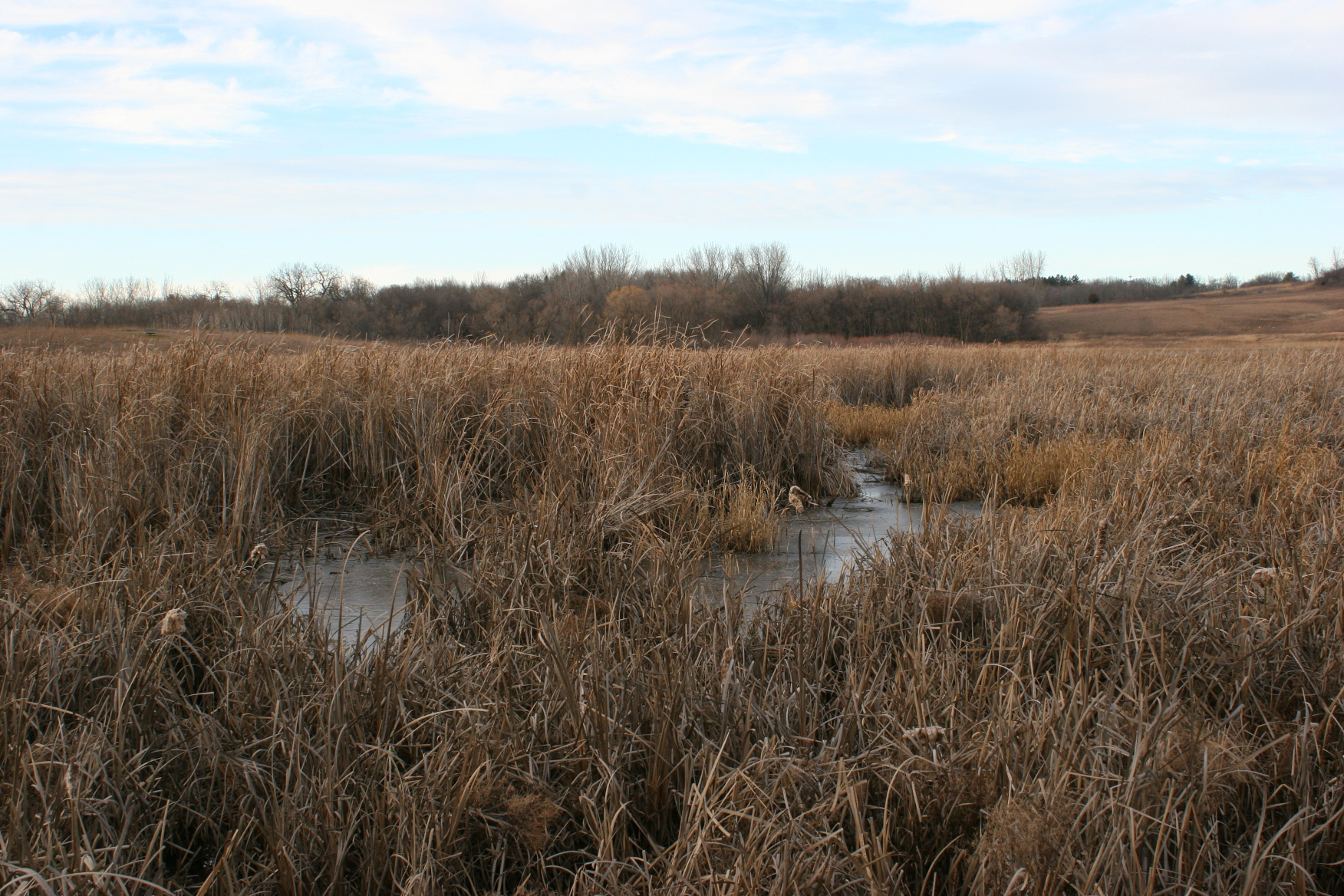
The wetlands on prairie’s edge. (Minnesota Prairie Roots copyrighted file photo November 2021)
My father owned a gun, which he used once a year to hunt for pheasants in the slough hole (as we redundantly termed the slough on our farm). When I look across the wetlands at River Bend, I think of the one time my oldest brother and I accompanied Dad to the low lying pothole to hunt for pheasants. I don’t recall whether that hunt was successful. Eventually, Dad drained the slough to add more tillable acreage. I often wonder about the sensibilities of draining prairie potholes and how that affected the land. The undrained wetlands of River Bend are mostly dry in this drought year.
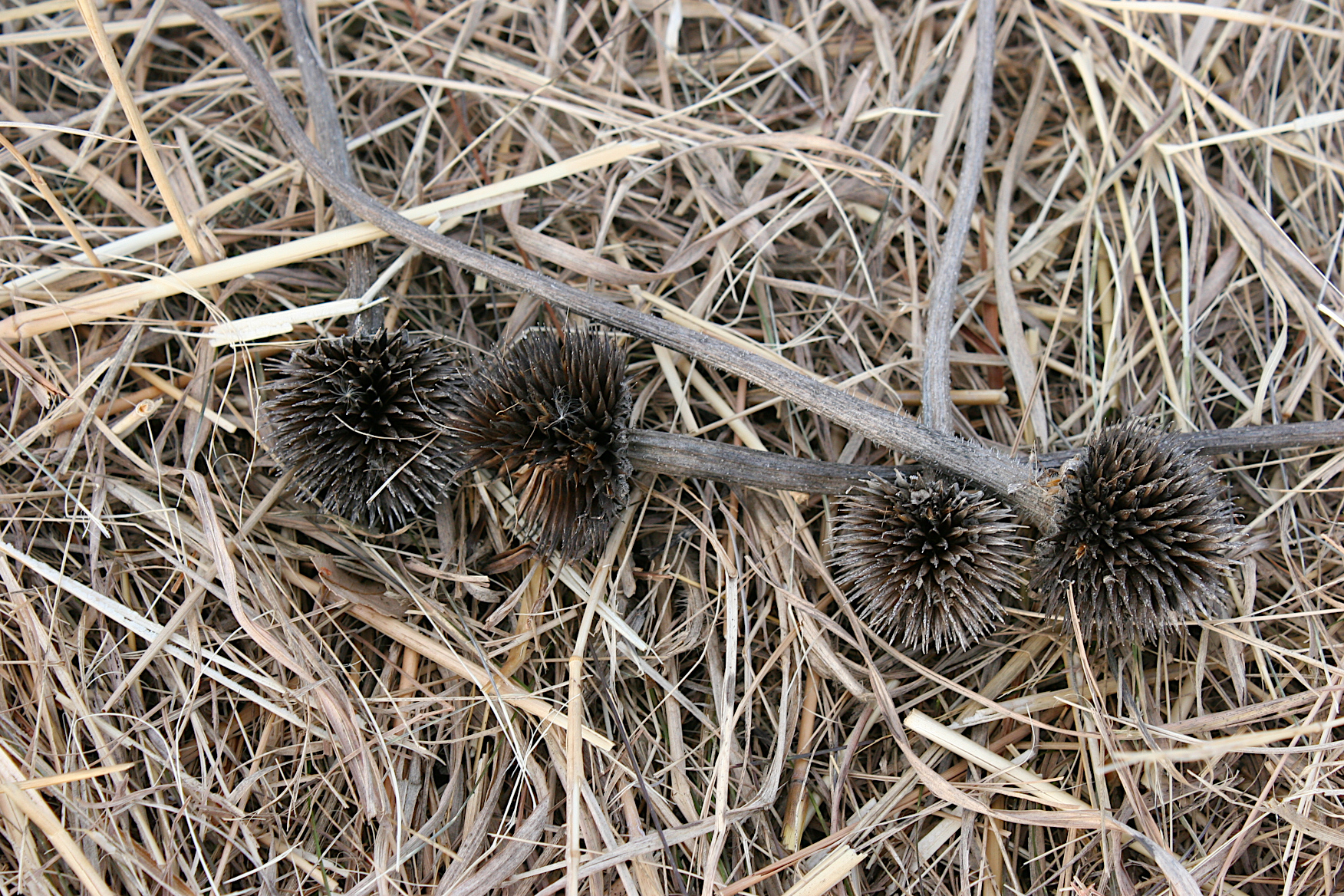
While walking the prairie, I spotted dried seedheads. Coneflower seeds lying atop the grass, where they will eventually reseed. Nature recycling.
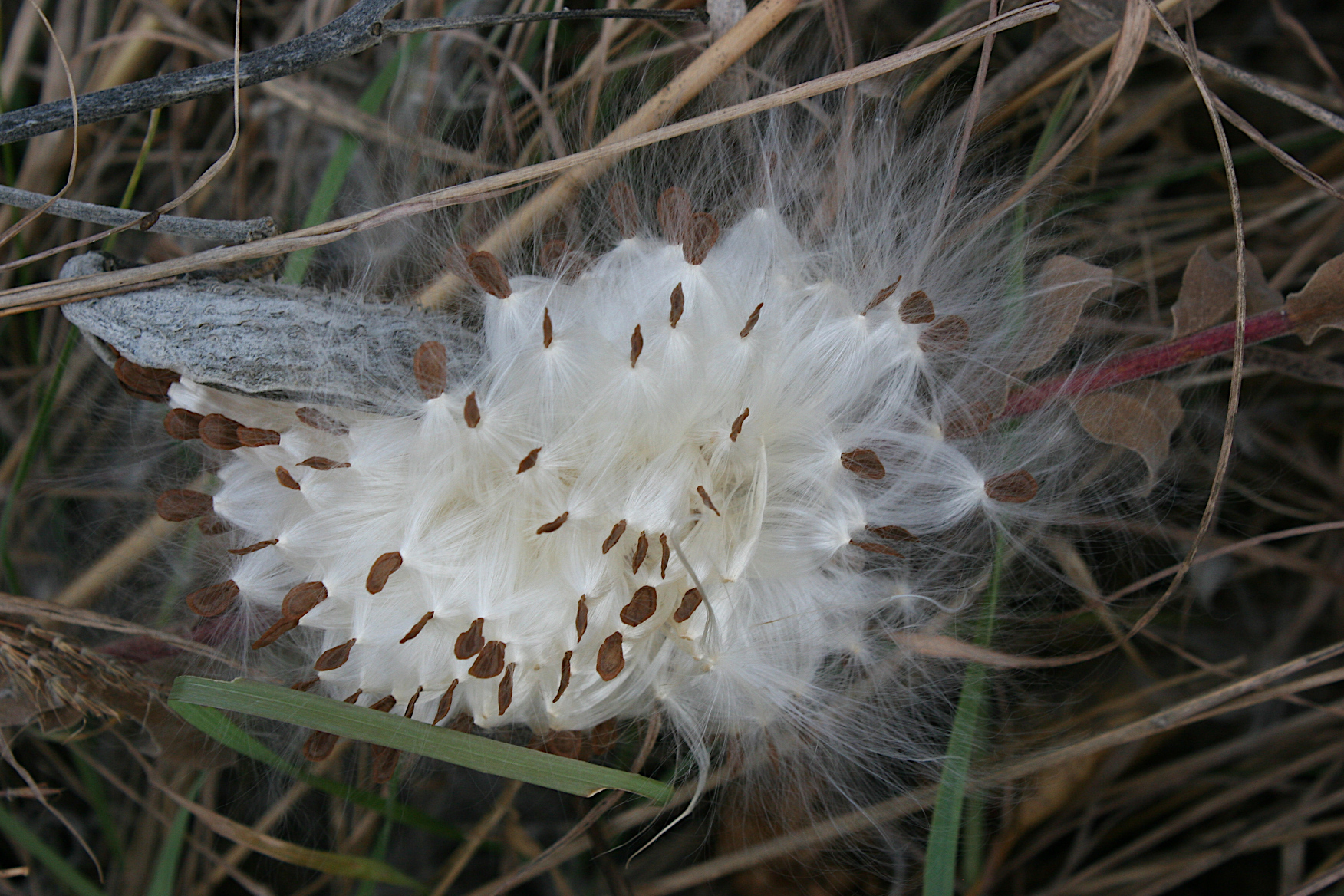
Milkweed pods, too, flourish in River Bend’s prairieland. Back on the farm, I pulled milkweeds from soybean fields. “Walking beans” is the correct term. Walking between soybean rows pulling unwanted weeds—especially cockleburs and thistles. Only detasseling corn ranks as worse. I’ll walk beans or shovel manure any day (and I did plenty of that) over corn detasseling on a hot and humid July day.
A dried milkweed pod burst open on the prairie. (Minnesota Prairie Roots copyrighted file photo November 2021)
Those dried milkweeds at River Bend bring one final memory. And it is a Christmas memory. One year I crafted a Christmas ornament for my Aunt Rachel from a milkweed pod and a discarded holiday card. (My mom saved everything.) I cut out an elfin girl dressed in a glittery red suit, her face framed by a pointy hood. Then I taped the cut-out to a toothpick and stuck the impish child into the downy snow of an open milkweed pod. Beautiful.
These are the childhood memories sparked by my November walk through River Bend Nature Center. I feel grateful for this sprawling natural space, for the peace it brings me as I follow trails into the present. And into the past.
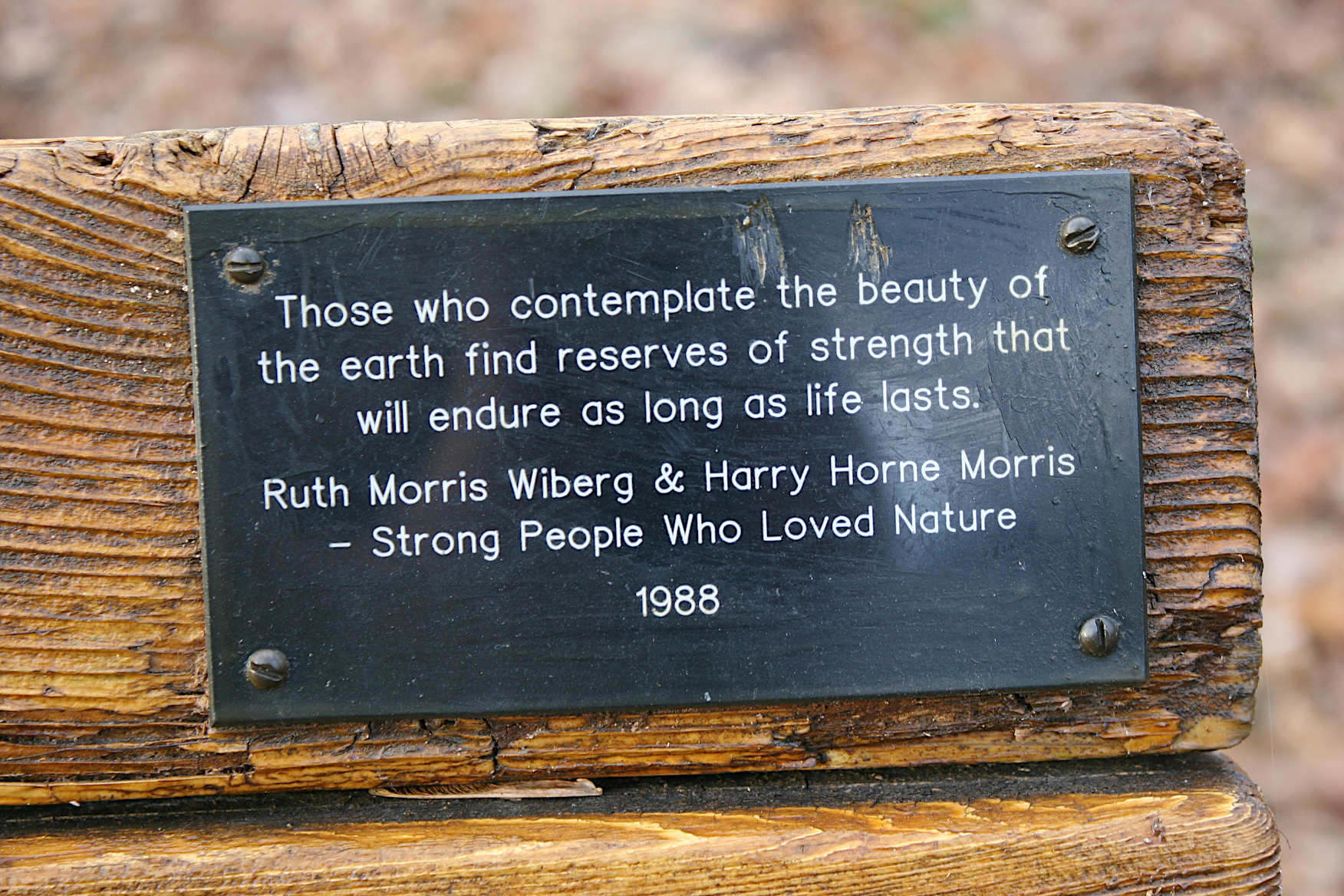
A memorial plaque on a bench at River Bend Nature Center. (Minnesota Prairie Roots copyrighted photo November 2021)
AT RIVER BEND NATURE CENTER in Faribault, you’ll find an abundance of inspirational memorial messages. On benches. On pavers. Even under a tree near the interpretative center.
Recently, I paused to read this quote: Those who contemplate the beauty of the earth find reserves of strength that will endure as long as life lasts.
The message seems especially fitting right now, as many of us seek beauty in nature while living in a pandemic world. My appreciation for the outdoors/for nature and the peace and escape it provides has deepened in the past two years. A walk in the woods, along a river, across the prairie, anywhere outdoors, renews my spirit. Strengthens me.
I wondered about the source of the quote I photographed. It comes from Rachel Carson’s book, Silent Spring, published in 1962. The American writer, marine biologist and conservationist is credited with launching the environmental movement with her book. She was deeply concerned about the future of our planet. Her writing prompted changes in laws that protect our world, our environment.
I feel gratitude for writers and environmentalists like Carson. But I also feel grateful for Ruth and Harry, “Strong People Who Loved Nature.” Strength and love go a long way in this world.
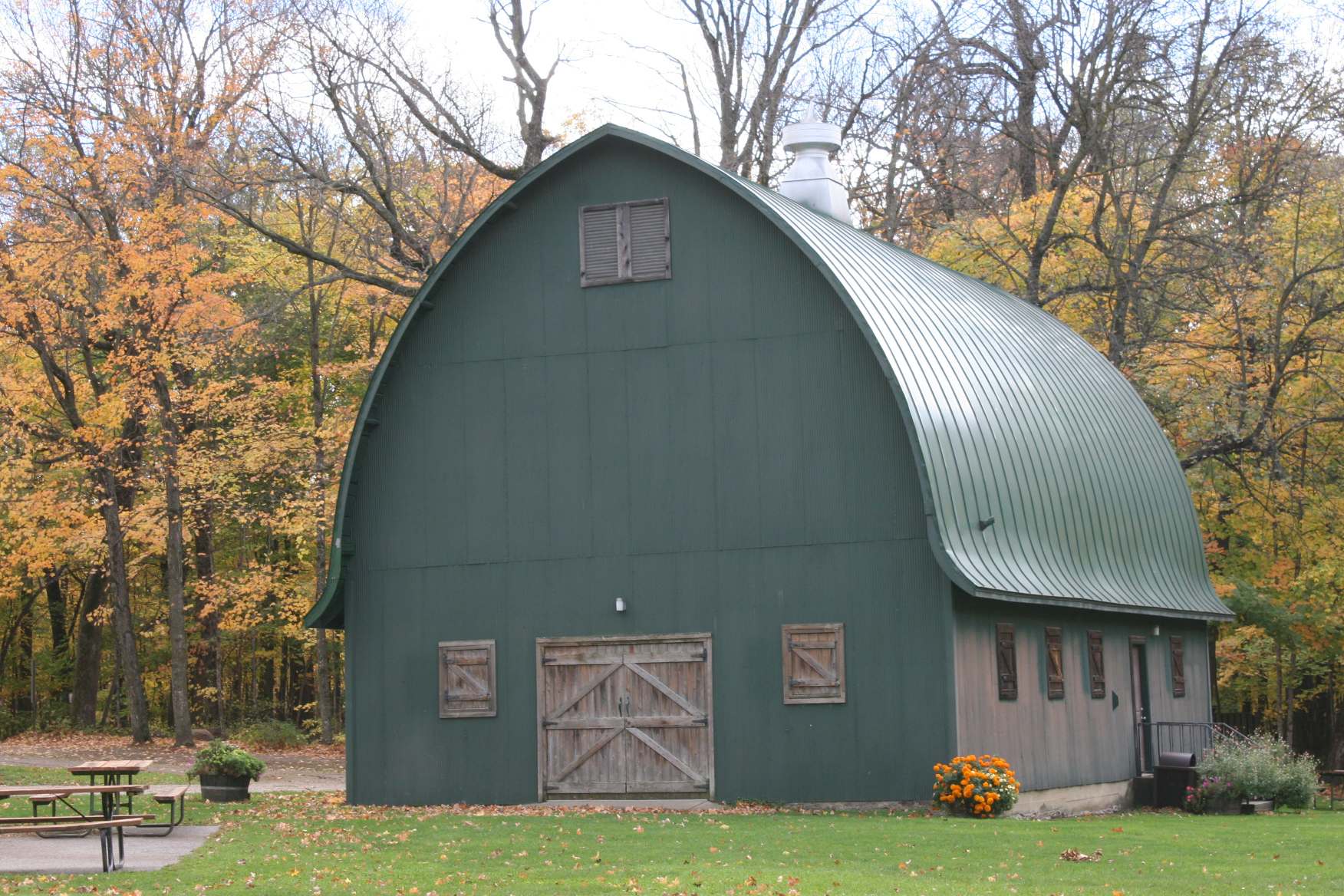
Richter Woods County Park and the on-site barn in LeSueur County. Minnesota Prairie Roots copyrighted photo October 2021.
EACH DAY OF SUNSHINE and warmth this late in October in Minnesota presents as a gift. We long-time Minnesotans understand that and celebrate. One less day of winter. One less day of cold and snow when the season of autumn extends. The recent weather has proven simply glorious.
Richter Woods Barn. Minnesota Prairie Roots copyrighted photo October 2021.
Late last week Randy took two days off work to savor these final days of autumn. And while we didn’t travel far, we delighted in nearby discoveries. We got a late start on Thursday, catching up on some much-needed rest. So we stayed close to home, aiming for western Rice County into LeSueur County.
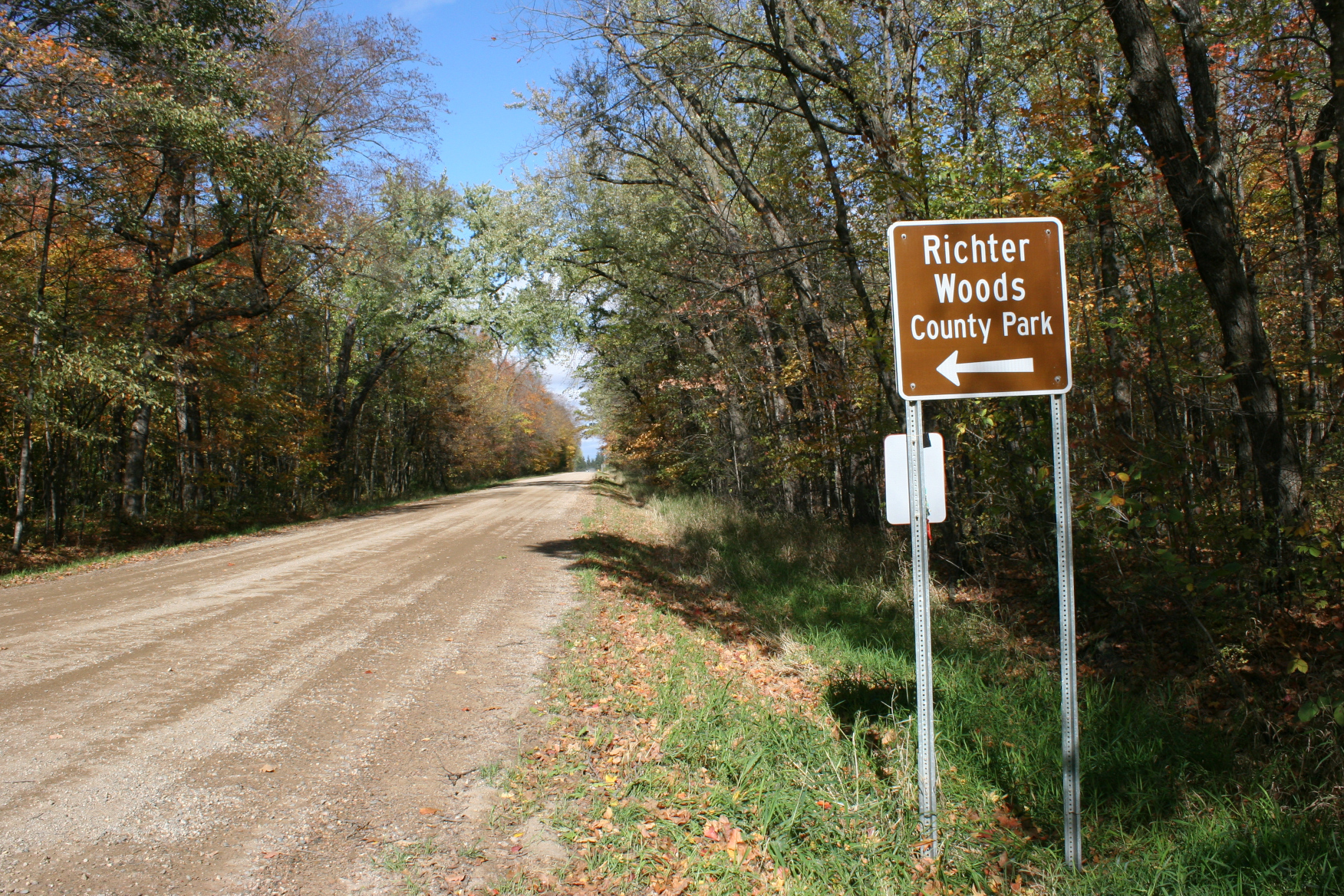
Trees line both sides of the gravel road leading to Richter Woods. Minnesota Prairie Roots copyrighted photo October 2021.
Eventually, we landed at Richter Woods County Park 1.5 miles west of Montgomery. I’d heard of the park, but had yet to visit.
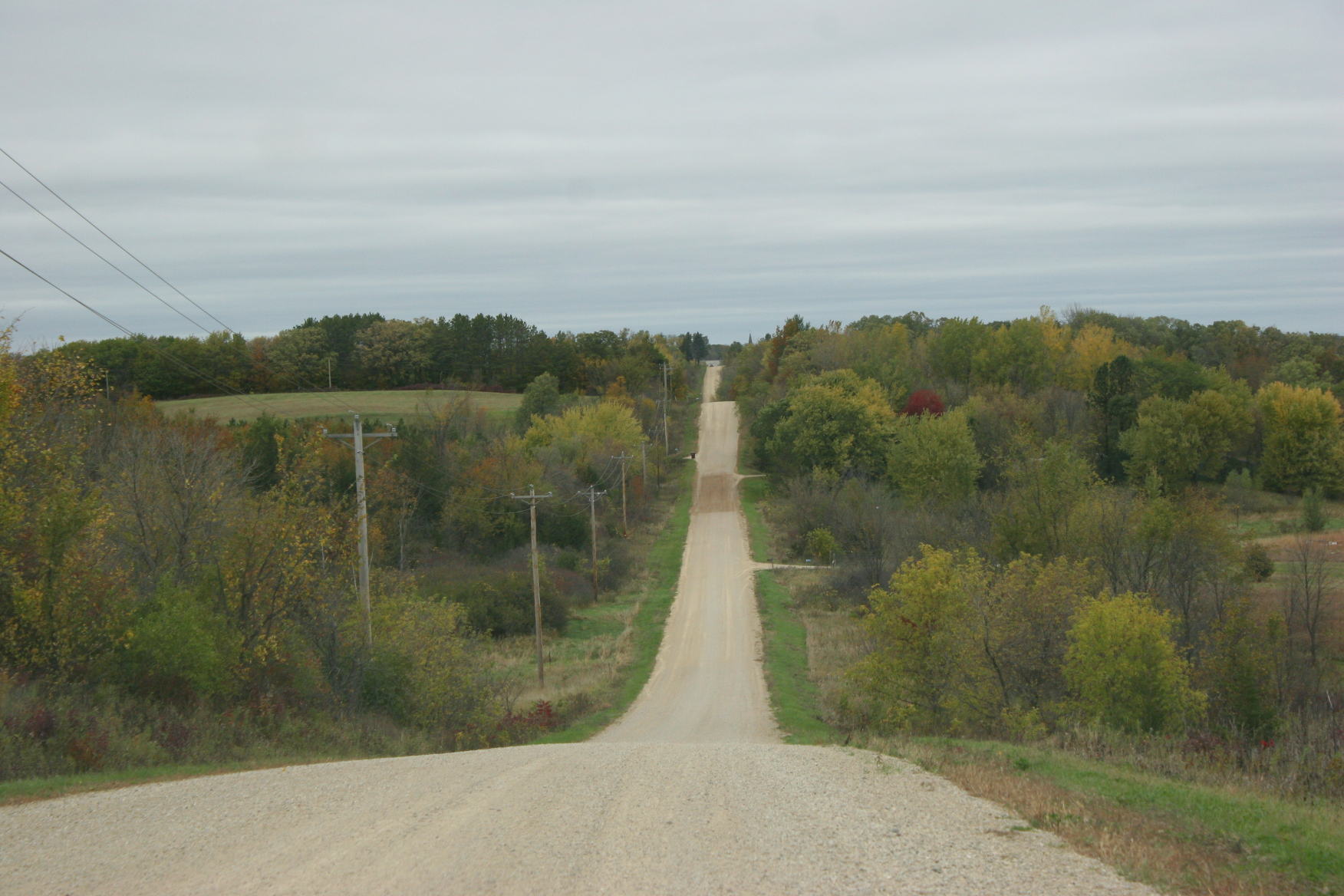
The hilly countryside near Trondjhem Church, rural Lonsdale. Minnesota Prairie Roots copyrighted photo October 2021.
We followed the slow-paced route there along mostly back country gravel roads.
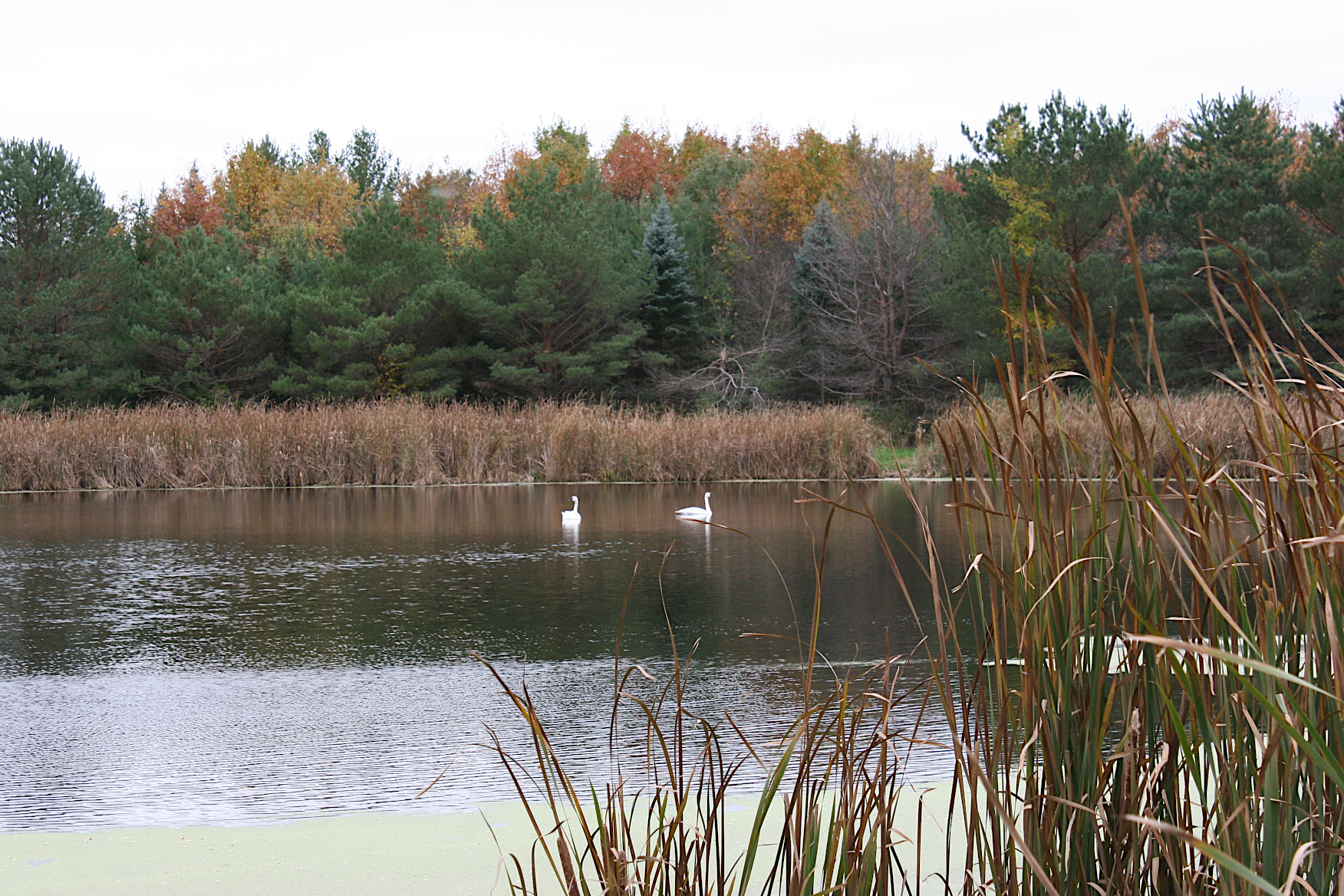
An unexpected sighting of two swans. Minnesota Prairie Roots copyrighted photo October 2021.
We paused once so I could photograph a pair of swans gliding across a small lake.
An aged barn along a gravel road. Minnesota Prairie Roots copyrighted photo October 2021.
I photographed, too, a weathered barn with fieldstone foundation. I often wonder how long barns will remain a landmark of our rural landscape. I feel an urgency to document their existence before roofs cave, boards rot, and only foundations remain.
A playground sits next to Richter Barn. Minnesota Prairie Roots copyrighted photo October 2021.
At 80-acre Richter Woods, a mammoth barn looms, centering the park gathering space. The barn is available to rent for $75/day from April-October. With a spacious loft and main level, the barn offers plenty of room for events like weddings, reunions and much more.
Looking up to the haymow. Trees shadow the barn door. Minnesota Prairie Roots copyrighted photo October 2021.
I couldn’t access the locked barn. But I could envision the interior, especially the haymow with its curved wood frame. Many bridal couples covet rustic settings like this. I wonder whether many have discovered this barn circled by woods in the quiet countryside near Montgomery.
A splash of red/pink flowers bloom on a bush next to the green barn. Minnesota Prairie Roots copyrighted photo October 2021.
As much as I appreciated the barn, I couldn’t get over the forest green color. I longed to see that barn in red, a historically-accurate hue. I expect others, too, have wondered at the unusual color choice. As a photographer, I find a red barn much more visually-pleasing.
One of two trails we took into Richter Woods. Minnesota Prairie Roots copyrighted photo October 2021.
No maps in this mailbox. Minnesota Prairie Roots copyrighted photo October 2021.
There are lots of picnic tables on-site, some nice, others not so much. Minnesota Prairie Roots copyrighted photo October 2021.
Before pulling out our picnic lunch to dine near the barn, Randy and I stretched our legs. We followed a leaf-strewn dirt trail into the woods with no map to guide us. The on-site mailbox was without the promised maps.
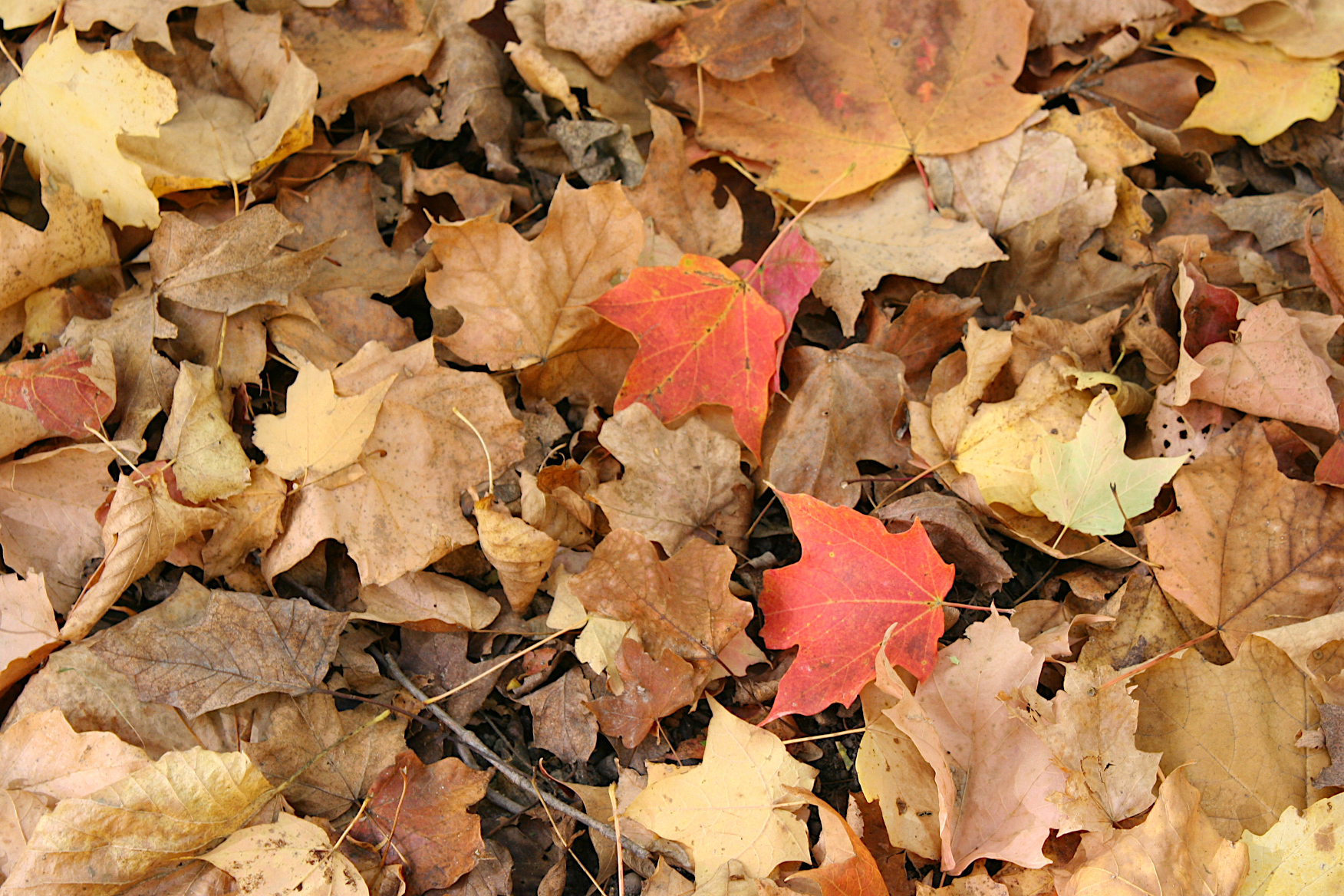
Maple leaves galore. Minnesota Prairie Roots copyrighted photo October 2021.
Maple leaves, especially, blanket the earth.
Looking up toward the colorful tree canopy. Minnesota Prairie Roots copyrighted photo October 2021.
In a few spots, I looked overhead to a canopy of red and yellow trees set against the deep blue sky of October.
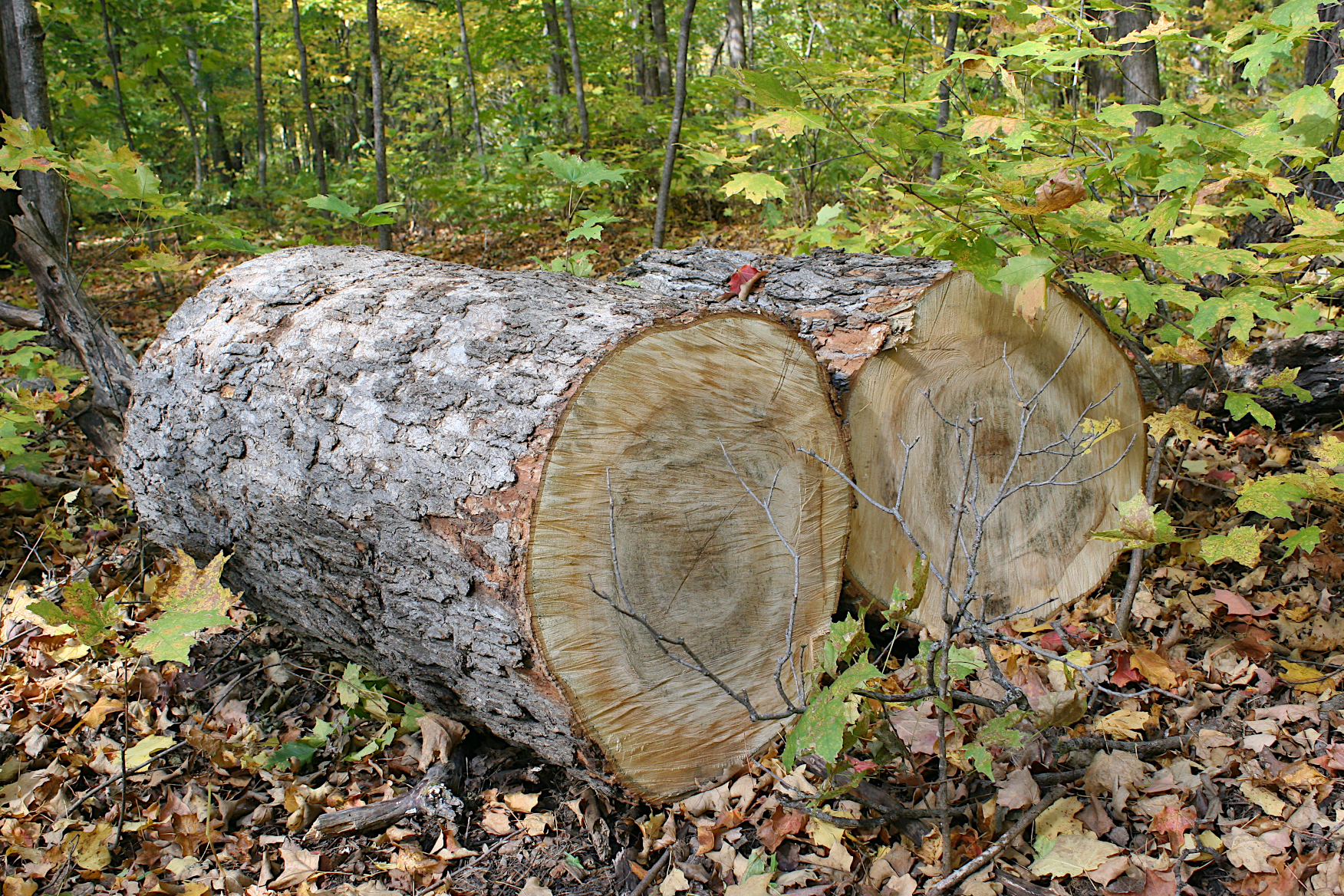
A recently-sawed tree. Minnesota Prairie Roots copyrighted photo October 2021.
We noticed, too, the many rotting and recently-sawed trees, I felt inwardly thankful for an afternoon without strong winds to possibly topple dead trees, loose branches.
Mushrooms on a fallen tree. Minnesota Prairie Roots copyrighted photo October 2021.
Mushrooms thrive in decay.
Loving the graceful curve of the barn roof. Minnesota Prairie Roots copyrighted photo October 2021.
Mostly, though, I noticed the peace. The quiet. I feel incredibly grateful to have access to natural settings like Richter Woods County Park. And I feel grateful, too, to live in this decidedly rural region of Minnesota within an hour of downtown Minneapolis. I feel grateful for gravel roads to follow. For barns that still stand. For warm and sunny October days that draw me into the countryside, into the woods.
#
PLEASE CHECK BACK as I take you on to more backroads in Rice and LeSueur counties.
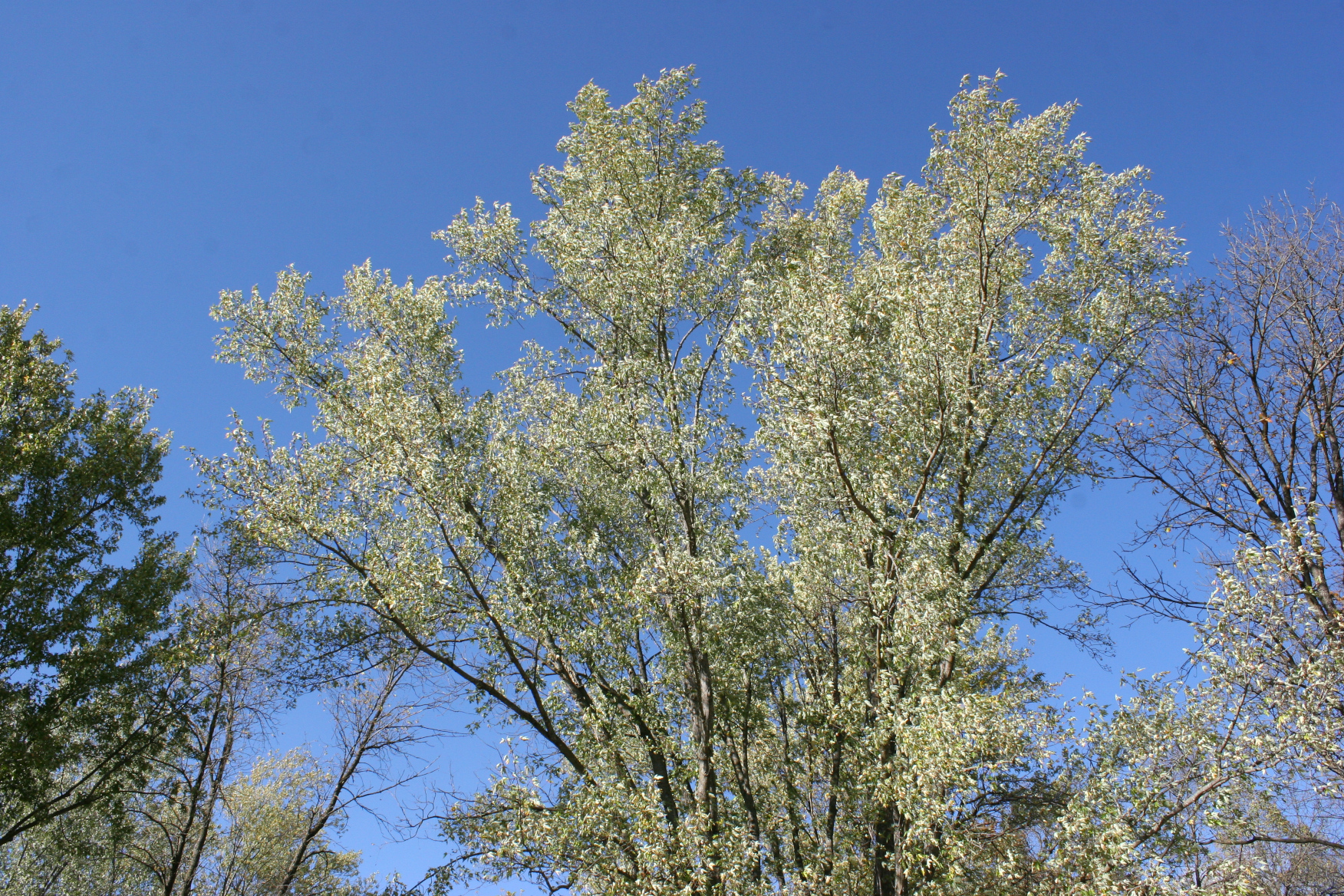
On the expanse of grass outside the woods, silver maples shimmer against the blue sky of autumn. Minnesota Prairie Roots copyrighted photo October 2021.
A MILE EAST OF FARIBAULT just off Minnesota State Highway 60, the 61-acre Falls Creek County Park offers an escape into the woods. Mostly undiscovered, it’s rare to encounter others while hiking here.
Last Sunday afternoon, Randy and I headed to the park, pulling into the vastly over-sized gravel parking lot pocked with potholes. From there, we headed downhill across a grassy expanse, past the picnic shelter and toward an opening in the woods.
A wooden footbridge over Falls Creek allows entrance to narrow dirt trails. There are no maps to guide hikers, so you must rely on visual cues, obscured in October by fallen leaves. But we’ve been here before, always taking the main trail following the creek.
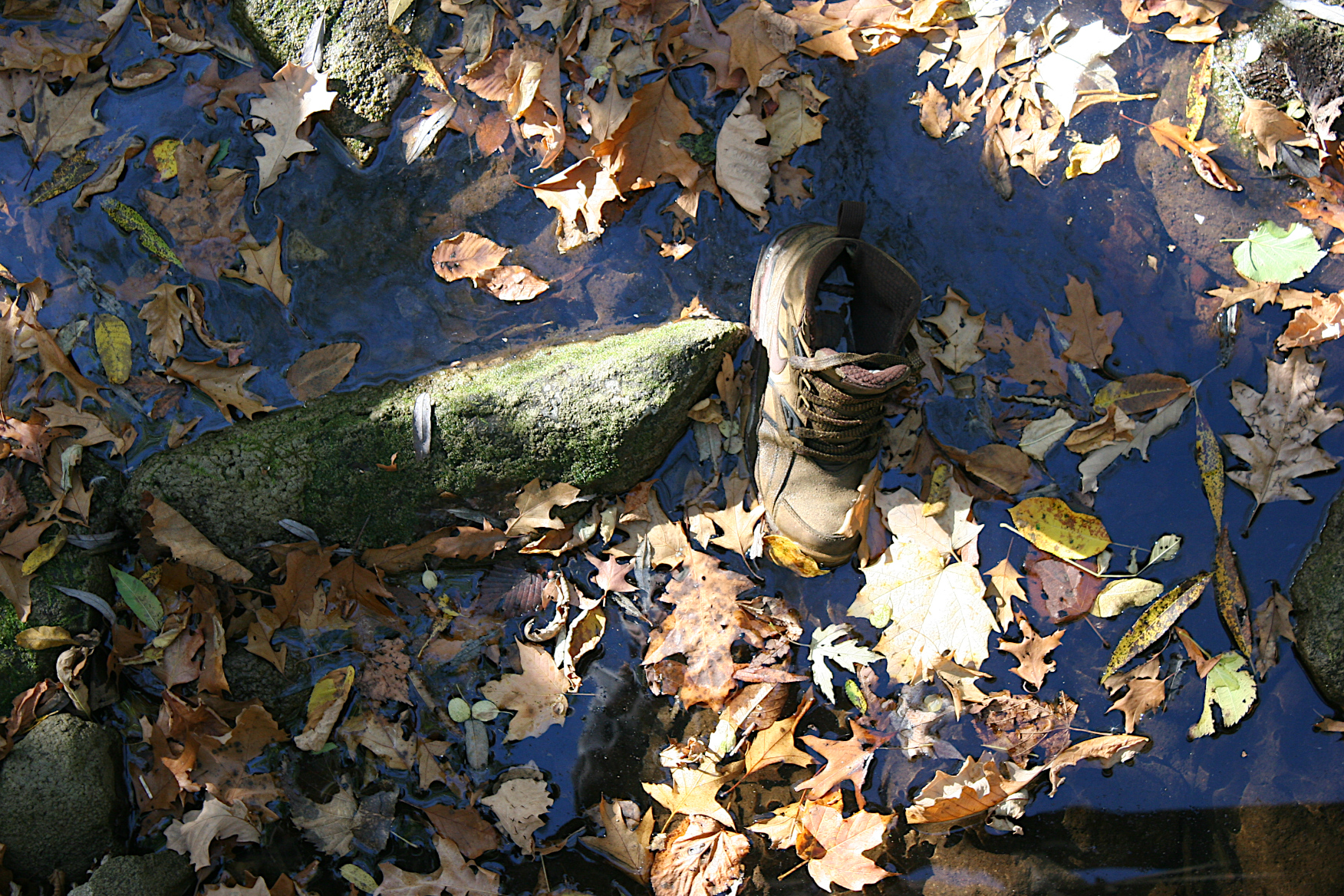
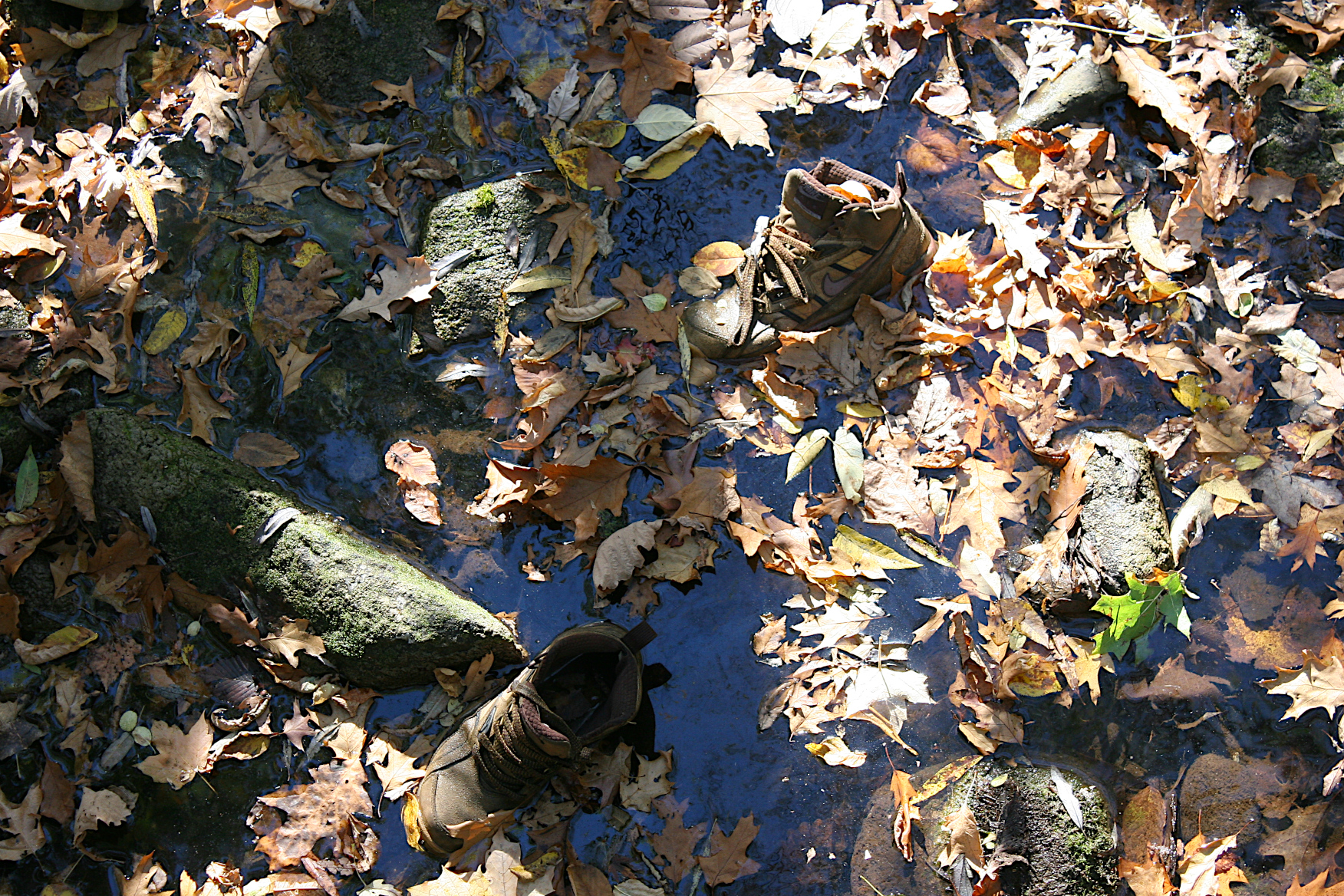
An unusual find in the creek: shoes/boots. Minnesota Prairie Roots copyrighted photo October 2021.
The creek is always my first stop. I pause on the bridge, typically to watch water rush over and around rocks. But this visit, the shallow water pooled, littered with leaves and a pair of hiking boots—perfectly good hiking boots from the looks of the shoes. I wondered how they landed there, in the water.
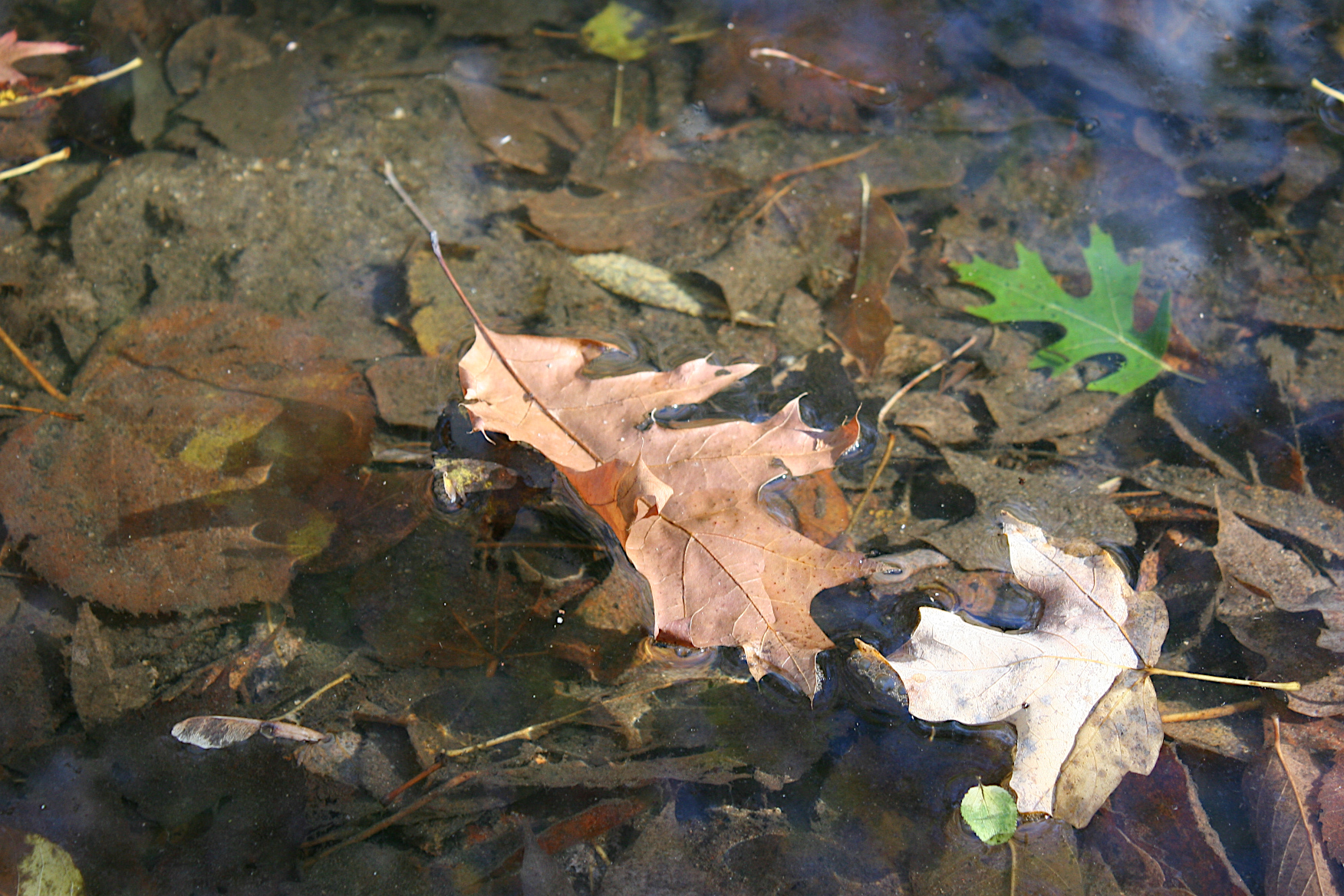
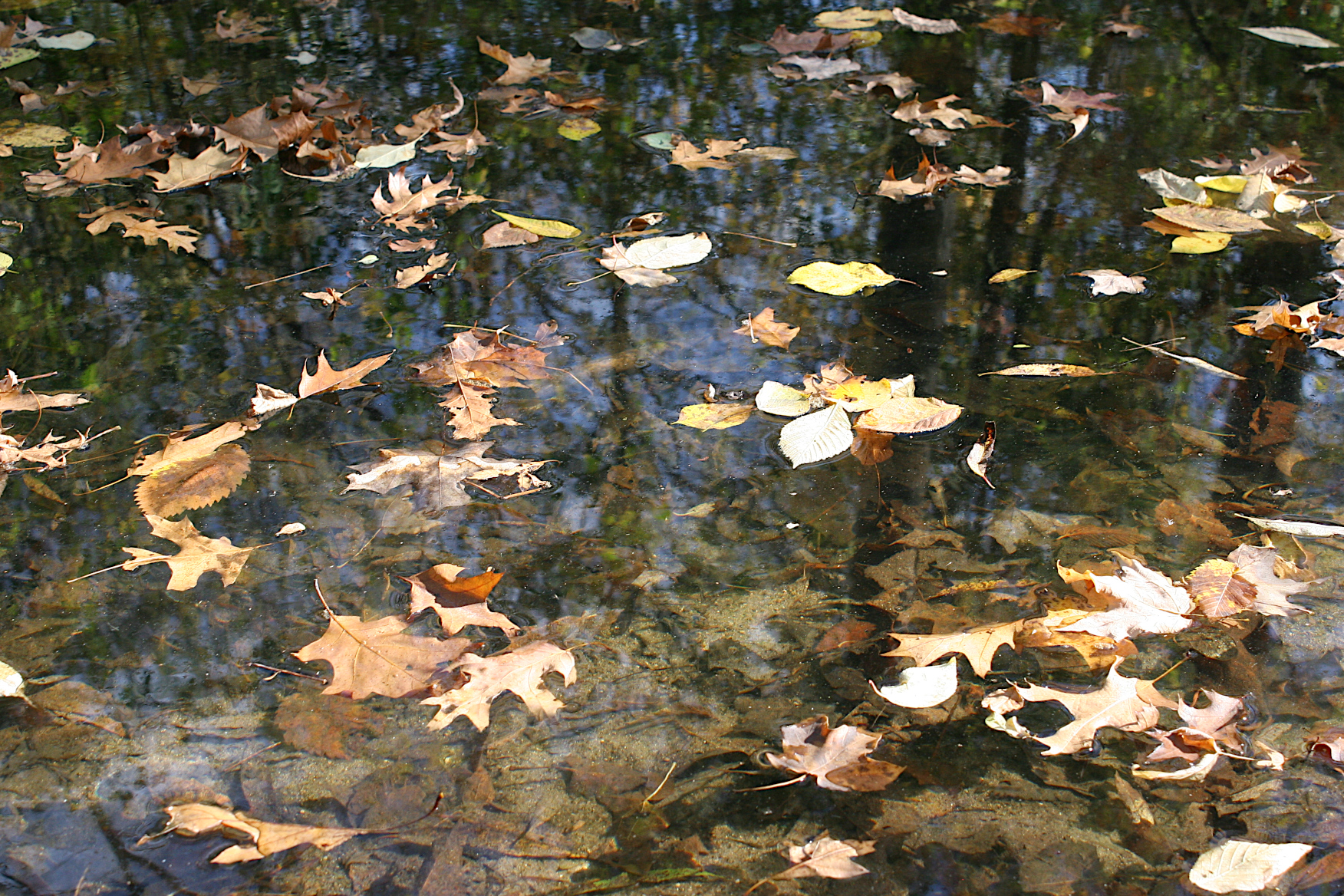
In the places where water remains in the creek, leaves float.Minnesota Prairie Roots copyrighted photo October 2021.
Mostly, the creek bed was dry, a result of this year’s drought. In areas where water remains, minnows darted. The water is at least clear, a rarity in this agricultural region.
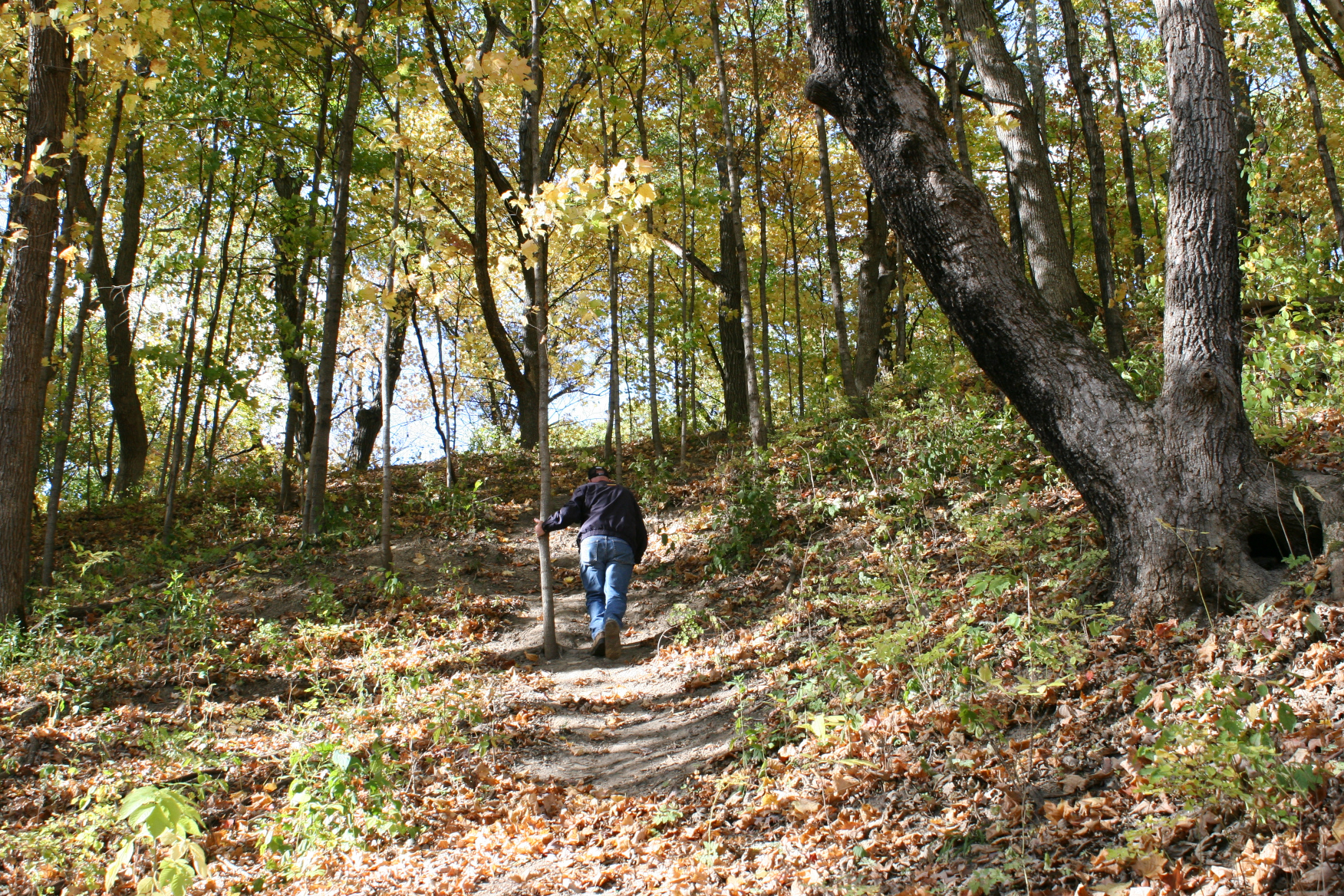
Randy scales a steep hill into the woods. Minnesota Prairie Roots copyrighted photo October 2021.
A short distance into the woods, Randy spotted a worn path up a steep hillside. I’d never noticed this during prior visits. Before I could dissuade him, he hoofed his way up, slipping and sliding and grabbing onto trees. When Randy lost his footing, I feared he would tumble and injury himself. As much as I yearned to follow, I recognized my limitations and my desire to keep my bones in-tact.
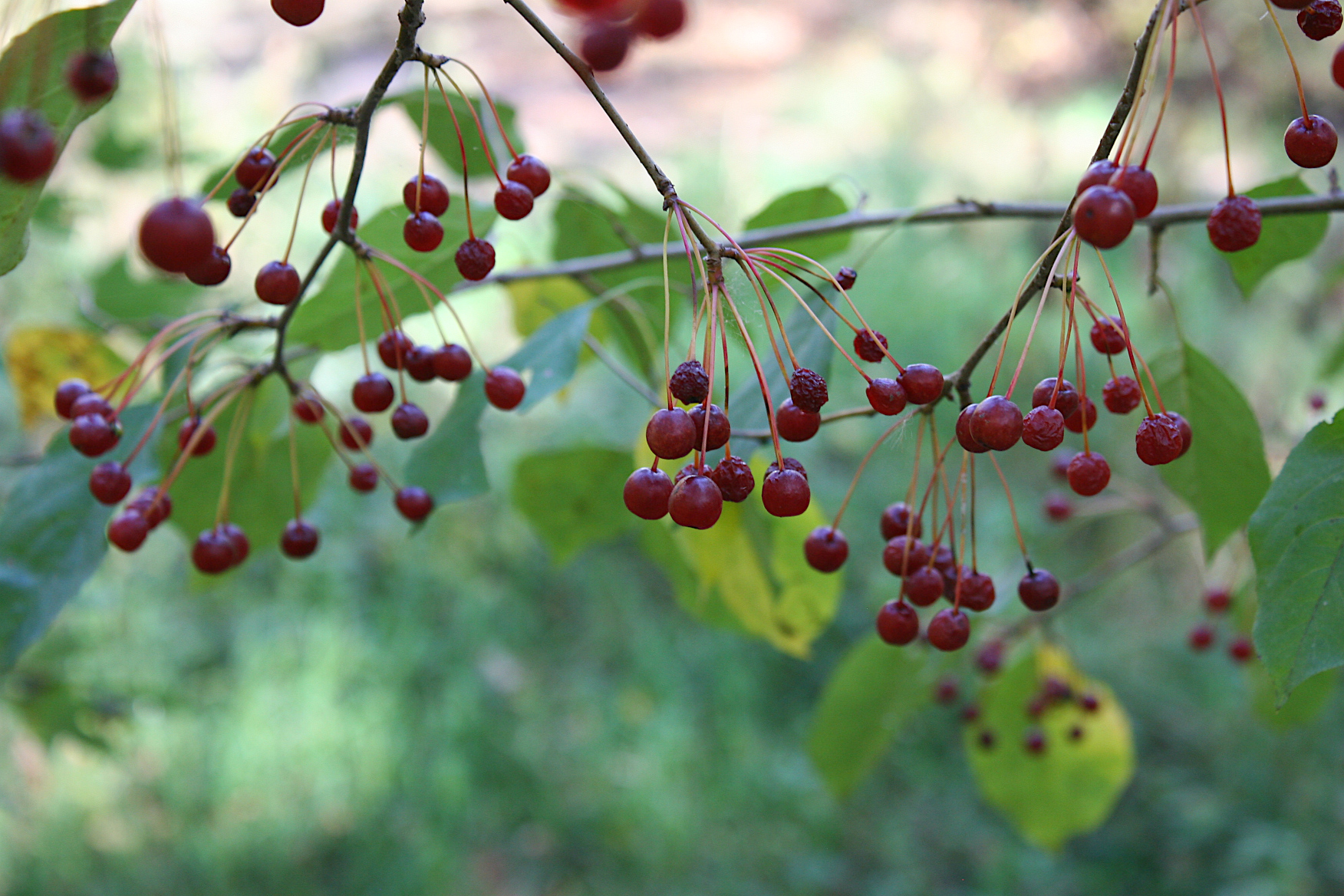
Berries jolt color into the woods. Minnesota Prairie Roots copyrighted photo October 2021.
As he disappeared along the hilltop treeline, I continued along the creek route. But soon my mind went to that niggling place of worry, about the time I reached the point where the path sidles next to the eroded creek bank. One misstep and I could plunge over the edge. Not that it’s that high. But far enough to cause injury.
I backtracked, dug in my backpack for my cellphone (hoping for service), and then called Randy. He answered. “I didn’t come here to walk alone,” I told him, also inquiring about his location. He couldn’t pinpoint that except to say that he would head back. I feel thankful that Randy, unlike me, possesses a good sense of direction.
Remembering the hiking boots/shoes in the creek. Minnesota Prairie Roots copyrighted photo October 2021.
“I don’t like being out here alone,” I added, noting that I’d observed two people on the path, too far away for me to clearly see them. Obviously those hiking shoes dumped in the creek prompted the beginning of a mystery plot in my writer’s brain.
Despite that concern, I aimed for the strangers…finding a cordial couple about my age examining mushrooms on a decayed tree. We talked mushrooms and my missing husband and they offered to help find him should need be. Their story of getting lost in these very same woods did nothing to assure me that Randy would find his way back. But he did. At a different point, where an unseen spring ran down the hillside and he did more slipping and sliding, this time in mud.
Randy follows the leaf-laden trail as it edges close to the eroded creek bank. Minnesota Prairie Roots copyrighted photo October 2021.
We reversed course and, together, followed the creek-side path deeper and deeper into the woods…until turning around and retracing our steps. I wished again for a trail map guide.
Near the footbridge, pools of water remain, collecting the fallen leaves of autumn. Minnesota Prairie Roots copyrighted photo October 2021.
We veered briefly off the path to another trail leading to the creek. Again, no water. Only rocks on a dry creek bed.
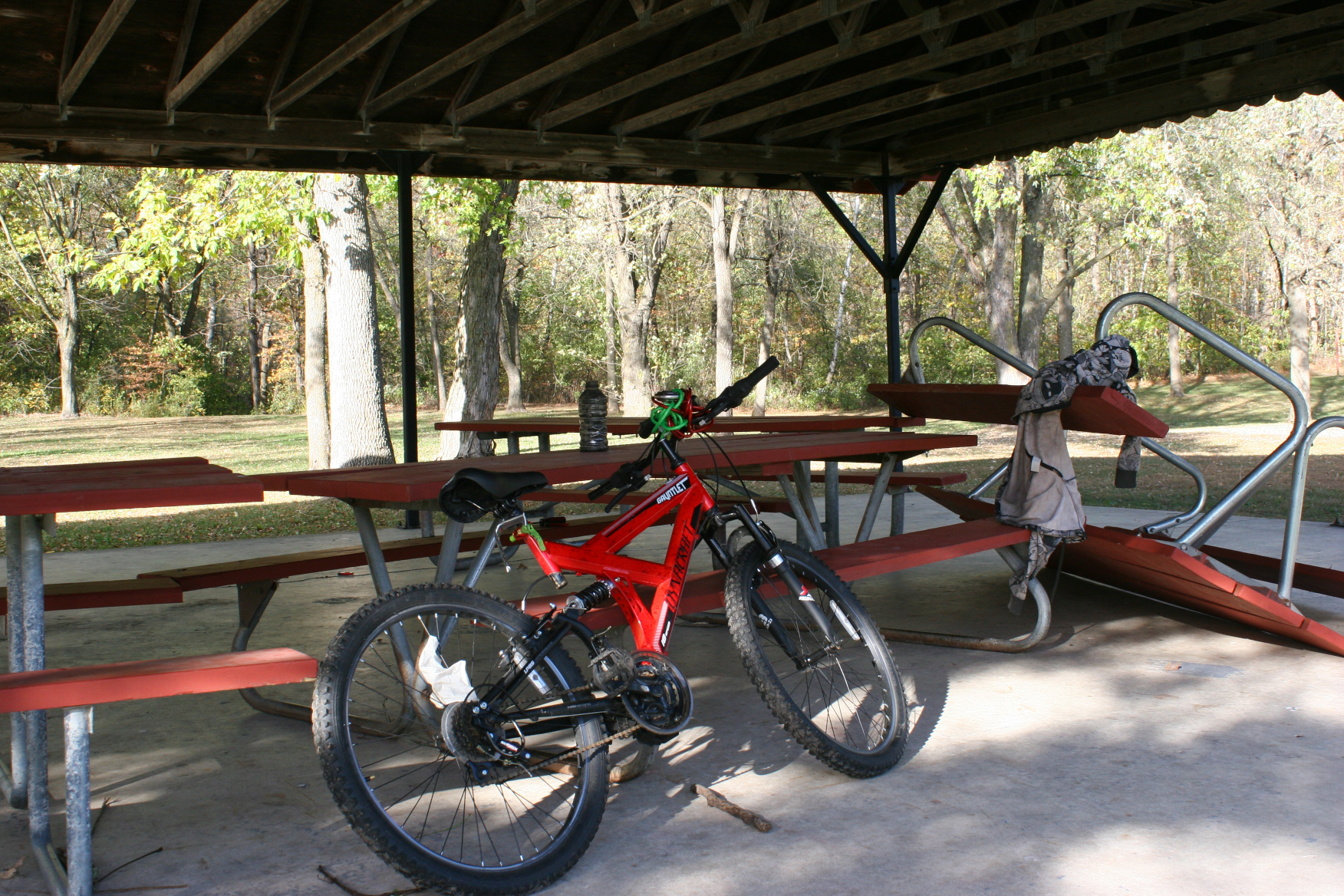
Seemingly abandoned in the shelter. Minnesota Prairie Roots copyrighted photo October 2021.
Then it was back to the main route, a pause on the bridge to again wonder about those hiking boots and then a pause at the shelter to speculate about an abandoned bike, jacket and beverage bottle.
Not a soul remained at Falls Creek Park. At least no one visible to us. Only mysteries—of abandoned and tossed belongings and of unmarked trails leading deep into the woods.















 Minnesota Prairie Roots
Recent Comments