Minnesota Prairie Roots

Writing and photography by Audrey Kletscher Helbling

The Beat: “In Minnesota, poetry matters” September 27, 2012

WHY DID IT TAKE ME until recently to determine that poetry is meant to be read aloud, preferably by the poet, and not just silently to one’s self?

I came to that realization in April after reading my poem, “Her Treasure,” to an audience gathered in an historic Zumbrota theater for Crossings at Carnegie’s “Poet-Artist Collaboration XI.”

That poetry-inspired art celebration proved pivotal for me, prompting a personal recognition that poetry is as much performance art as it is an intimate experience.
The Beat logo

And now the independent, nonprofit Northern Community Radio, with studios in Grand Rapids and Bemidji, Minnesota, recognizing the importance of poetry read aloud, is bringing poetry to the public via The Beat, broadcasting a poem a day by a poet with a Minnesota connection.

The Beat, according to NCR’s website is “Northern Community Radio’s daily reminder that, in Minnesota, poetry matters, and Minnesota poets are proving that every day.”

I proved that on September 17 with the reading of my poem, “Her Treasure.” Because traveling hundreds of miles up north from southern Minnesota was neither practical nor cost effective for me, The Beat producer Steve Downing, himself a published poet, read my poem. You can listen to Downing’s fine rendition of “Her Treasure” by clicking here.
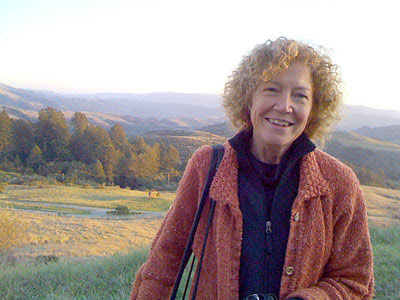
Minnesota’s 2011 Poet Laureate, Joyce Sutphen of Chaska.

Since early July, an assortment of about three dozen poets—from the well-known John Berryman, James Wright, Joyce Sutphen, Louis Jenkins, Will Weaver and Sean Hill—to the complete unknowns have been featured on The Beat.
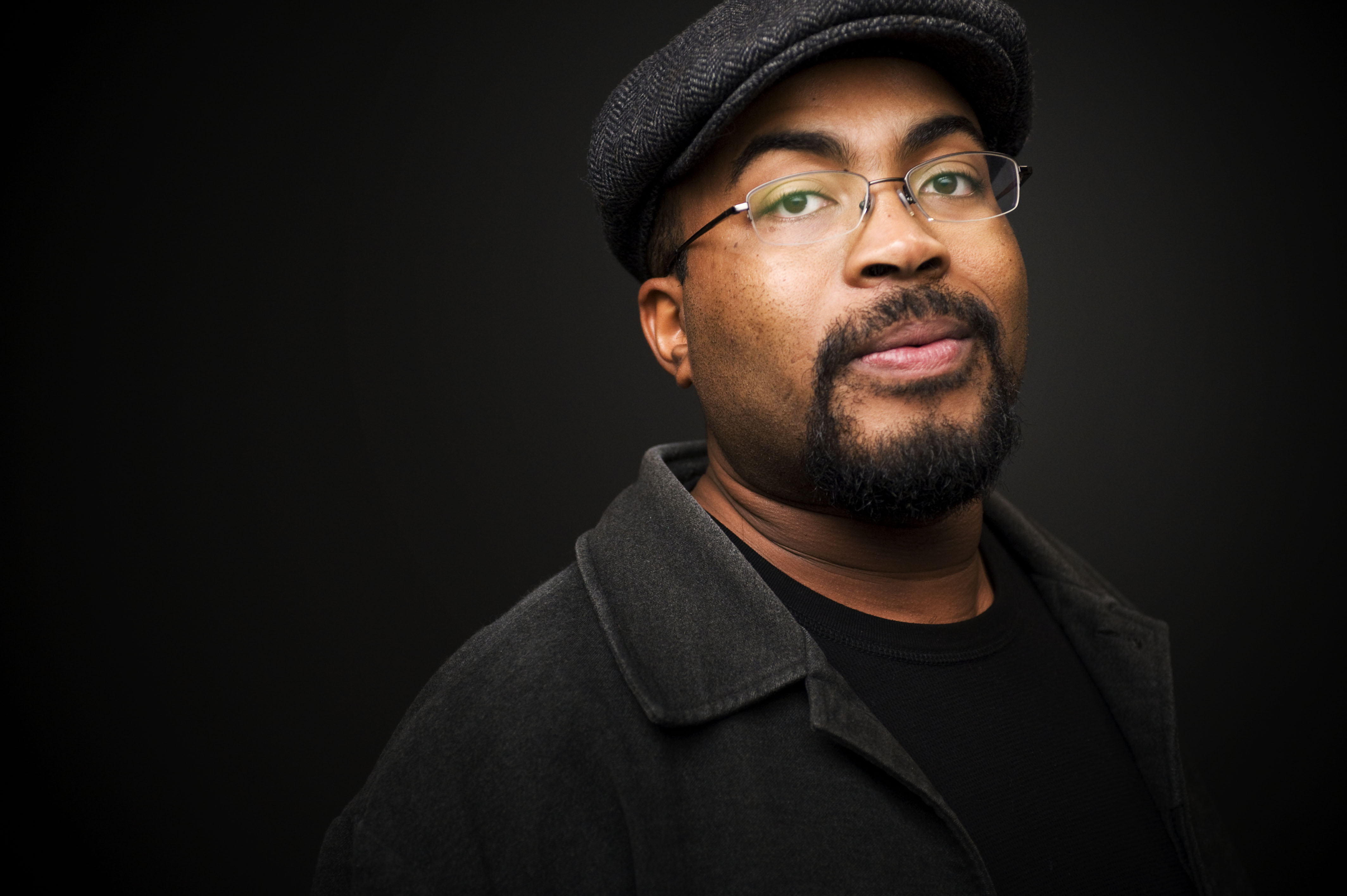
Poet Sean Hill recently moved from Bemidji to Alaska where he is teaching creative writing at a university in Fairbanks. Milkweed Editons will publish his second collection of poetry in 2014.

The show airs weekdays between 7:30 – 8 a.m. and then again between 3:30 – 4 p.m. on 91.7 FM in north-central and northeastern Minnesota, 90.5 FM in north-central and northwestern Minnesota and on 89.9 FM in the Brainerd area. With 150,000 listeners under the NCR signal, coverage extends from Grygla on the north to Pierz on the south to Fertile on the west and Hermantown on the east.

And for those outside the coverage area, like me, The Beat can be heard via audio streaming from kaxe.org or via the KAXE online archives.

“Reaction from poets and listeners, including folks who thought they hated poetry, has been unconditionally affirmative, making us think this was a success story waiting to happen,” says producer/poet Downing, also a former high school English teacher, published essayist, arts administrator and lifelong musician.
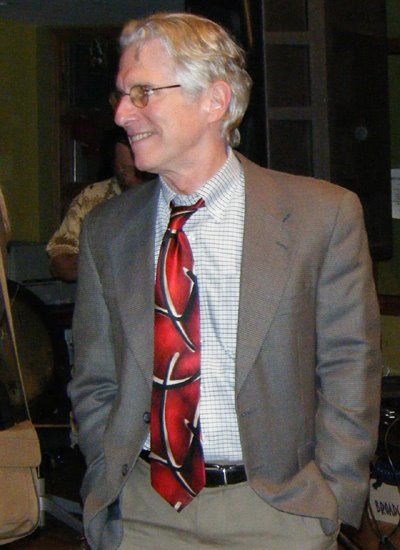
Steve Downing, poet and producer of The Beat

He and two others—NCR’s program director, who interviews writers for her long-standing RealGoodWords show, and a design-artist NCR staffer who is also a poet and has taught English at the college level—have been evaluating the hundreds of poetry submissions coming in from across the state.

“We didn’t know what to expect, but no one thought we’d be swamped, which we are,” Downing says. “It’s a nice problem to have but a problem nevertheless.”

The three-person jury meets every Friday to look at/listen to submissions. “The jury looks for creative work that, first, sparks a positive ‘gut’ response; that demonstrates originality; that makes smart word choices; and that’s provocative, in the best sense of the word,” Downing explains.

He advises submitting poets to avoid the topics of partisan politics, religion and lost love and to remember that the Federal Communications Commission is listening.

The range of topics is “all over the place,” Downing says, although some poems are somewhat “Minnesota-centric,” covering subjects like family farms, old barns, and the state’s flora, fauna and weather.

Broadcasting these poems on its community-based public radio stations helps fulfill NCR’s overall mission “to build community in northern Minnesota by way of radio programming, cultural events and interactive media.”

The Beat is currently funded by a one-year $30,000 allocation from the Minnesota Arts & Cultural Heritage Fund.

The history of The Beat, however, stretches back several years to The Beat Cafe, a live-on-air pledge drive program which, among other Beat content, featured Downing reading his poems, with live bass and percussion accompaniment. The success of that first show prompted discussion on how to make this happen again. So come spring 2013, The Beat Cafe fundraiser will be back with live-on-air poetry and music.

Says Downing: “Think berets, dark glasses, shawls, candles in wine bottles…”

Between now and then, though, Downing will continue to air selected poetry by Minnesota poets, known and unknown, and will apply again for state funding to continue the popular poetry program, The Beat.

#

FYI: If you’re a Minnesota poet and would like your writing considered for The Beat, email text or, preferably, audio versions (e.g. MP3) of your poetry to Downing at this address: sdowning@kaxe.org

A poem should take three minutes or less to read.

Once accepted for The Beat, poets have recorded their poems at KAXE in Grand Rapids, KBXE in Bemidji and at KFAI in Minneapolis or on their own devices. NCR also offers the option of Downing or others reading a selected poem if the poet cannot record his/her work.

I contacted Downing about writing this post after my poem was selected by the jury for airing on The Beat.

© Copyright 2012 Audrey Kletscher Helbling
Artwork and photos courtesy of Northern Community Radio


A Minnesota arts collage, from theater to poetry September 15, 2012

FOR A FEW SECONDS THERE, I searched the dictionary of my brain for that word which temporarily eluded me. Collage. That would be it.

Remember when that art form was especially popular, when, as a school assignment, you had to scrounge up ten zillion magazines and then snip out images themed to a specific subject and glue it all in a jumbled mess onto a piece of paper?

Today I present a collage—not a jumbled mess, though—of art.

Let’s take the biggest focal piece first. A Hudson.

A Hudson, like this one I photographed several years ago at a Faribault car show, centers “The Car.” Do not expect, though, to see a real Hudson on stage, only the shape of one.

The Hudson centers the stage at the Paradise Center for the Arts during a production of The Car by Carol Wright Krause. My husband and I saw this play by the Faribault-based The Paradise Community Theatre Friday evening. I’d rate it as one of the best I’ve ever seen performed locally.

Here’s a summary of the play written by director Gabe Talamantes:

The Car is about a family’s car, which as Ed (a character in the five-person drama) puts it “is a miracle of modern American engineering.” This miracle car is a character in itself, a highly theatricalized version of a 1954 Hudson. It takes us on a journey into the lives of the Banners and the challenges an all American family faces as they struggle through two decades of change at home and abroad. We will see how they choose to overcome such difficulties.

Now, why am I so enthusiastic about The Car? Because it moved me to tears. When a theatrical performance can evoke such a strong emotional reaction from me, I will embrace it with unbridled enthusiasm.

That break-down moment for me came near the end of the play, when Vietnam War veteran Hal Banner (played by Todd Ginter), broke down in the arms of his father, Ed Banner (Chuck Larsen). He was no hero, Hal said, pointedly telling his father that he (Ed) would never understand the horrors of war. And then Hal got specific, talking about seeing the eyes of those he killed.

That’s when the tears trickled down by cheeks and I struggled mightily to keep from sobbing. In that moment, I heard my Korean War veteran father, not Hal/Todd. My dad, too, spoke of seeing the eyes of those he killed on the front lines in Korea.

Later, when I congratulated Todd on his performance, he told me that he had talked to several veterans in preparation for his role. And it was the eyes which they spoke of and which he knew he needed to emphasize in that heartrending father-son conversation. It is easily the most powerful moment in the play.

I wondered how many audience members might be veterans and at that moment suppressing war memories and feelings, as my father did.

But this play is about so much more than war. It also addresses the issue of prejudice when Hal brings home a Japanese wife, portrayed by Carrie Jendza whose mother came here from Korea some 40 years ago. Carrie presents a stunning performance as do Susan Dunhaupt as Ed’s wife, Geneva, and Faribault High School sophomore Emily Remmey as Beth Banner, Hal and Sumiko’s daughter.

The prejudice starts right away when Ed Banner insists on calling Sumiko the Americanized “Sue.” He slides in references to “slant eyes” (there’s the “eye” thing again) and other derogatory comments.

In real-life, prejudice is an issue in Faribault, home to many Latino, Somali and Sudanese family. It is no secret that prejudice exists in my community. You can read about it in a previous post by clicking here.

I didn’t spot a single minority in the audience Friday evening,  not unusual despite Faribault’s sizable minority population.

There, that’s all I’m telling you about The Car, other than to advise you to see this powerful and memorable production. It’s community theater at its best for the superb acting and the unforgettable messages delivered.

Faribault artist Vivian Jones created this watercolor, “It Was Grandma’s Car,” for the current “car pARTS” show.

Additional performances of The Car at the Paradise, 321 Central Avenue, Faribault, are set for 7:30 p.m. on September 15, 20, 21 and 22 and at 2 p.m. September 16. Call (507) 332-7372 or click here to reach the Paradise website. According to info published in the theater program, production of The Car is made possible through a Minnesota State Arts Board Operating Support Grant.

While you’re at the play, be sure to check out the exhibit, “car pARTS,” in the Carlander Family Gallery.

The Beat logo.

NOW LET’S PLACE another piece in that art collage. On-air poetry.

In July, Northern Community Radio began airing poetry on its weekday morning show during a segment called The Beat.

On Monday my poem, “Her Treasure,” will air on 91.7 KAXE (89.9/Brainerd) and on 90.5 KBXE. Now I won’t be able to listen to whomever reads my poem between 7:30 a.m. – 8 a.m. and again between 3:30 p.m. – 4 p.m. Faribault is well outside the coverage area which extends from Thief River Falls to Hermantown to Pierz. Eventually, though, I’ll be able to listen to the reading of my poem online.

You can listen to The Beat via online streaming. (I’m not smart enough to figure that out and my former in-house techie now lives at NDSU in Fargo.)

I’m in the company of some mighty fine poets, from novices to Minnesota’s 2011 poet laureate, Joyce Sutphen, to well-known Minnesota writer Will Weaver. You can check out the current listing of The Beat poems/poets by clicking here.

The poems chosen for airing were selected through a juried process.

Connie Ludwig, right, and I pose for a photo with her watercolor, “Pantry Jewels” (above my head) inspired by my poem, “Her Treasure.” This photo was taken in April at Crossings at Carnegie in Zumbrota.

Just, FYI, “Her Treasure” is the same poem featured in “Poetry Artist Collaboration XI” at Crossings at Carnegie in Zumbrota last April. To read my poem, click here.

I love this whole concept of The Beat, of Northern Community Radio’s “daily reminder that, in Minnesota, poetry matters, and Minnesota poets prove that every day.”

You can expect a forthcoming detailed post from me on this project funded by Minnesota’s Arts & Cultural Heritage monies.

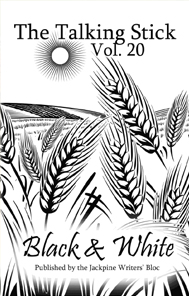
The cover of last year’s The Talking Stick 20.

NEXT, LET’S PLACE the third piece in this arts collage. More poetry, plus fiction and creative nonfiction.

Today I’m missing out on a book release party for The Talking Stick 21 in the Park Rapids area. This anthology, published by The Jackpine Writers Bloc, represents some fine writing by Minnesota writers. You can, referencing back to The Beat, listen to the poetry of Sharon Harris, a Jackpine member and one of the key producers of the collection.

I’ve been published in two previous volumes of The Talking Stick (including receiving an honorable mention for my poem, “Hit-and-Run,” in volume 19) and will be published again in this newest volume. My poem, “Broken,” was chosen from among 275 submissions for publication.

To learn more about The Talking Stick, click here. To learn more about The Jackpine Writers’ Bloc, click here.

THAT’S IT. Now, go ahead, add your own pieces to this art collage via your comments.

© Copyright 2012 Audrey Kletscher Helbling


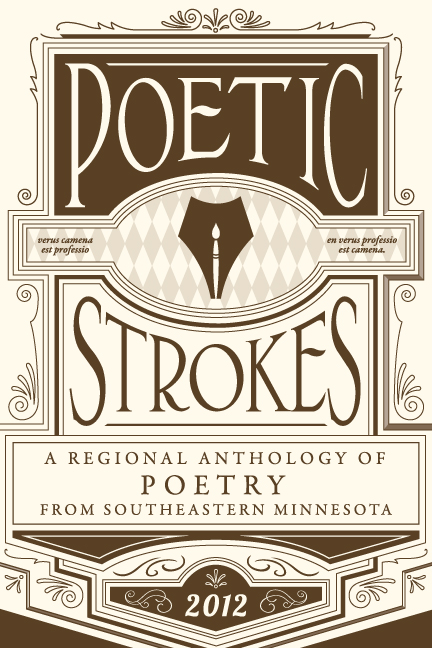
Poetic Strokes: Strong regional writing April 12, 2012

COULD YOU WRITE a poem about bacon?

Julie Hathaway of Rochester did. She penned “Bacon,” one of 30 poems selected for publication in 2012 Poetic Strokes: A Regional Anthology of Poetry from Southeastern Minnesota.

When I saw the poem title, I had my reservations. How could bacon possibly be poetic?

Julie proves that bacon, bacon grease specifically, can certainly be poetic when connected to your past—to fried eggs and fried potatoes and a cast iron skillet—and to your life today. This unlikeliest of topics made for a nostalgic read in a volume that highlights some strong regional writing.

You’ll find poems like “Zumbro River Almanac” by Kevin Strauss of Rochester, where the Zumbro slices through the heart of the city. Other poems in the volume, such as “To the North” by Betty J. Benner of Austin, “Sunrise” by Nicole Borg of Wabasha and “Jacobs Lake” by John Chernega of Winona, also possess a strong sense of place.

And then there are poems like “Scottie’s Apple Pie” by Bev Jackson Cotter of Albert Lea. It’s perhaps the sweetest verse in this volume as Bev writes about the precious memories a mother tucks into her heart after baking a pie from the crab apples her four-year-old picks.

On the opposite end of youth, Peter C. Allen of Kenyon writes about his aged, dying father in a poignant poem.

Then, to lighten the mood, Riki Kölbl Nelson of Northfield compares a first snowfall to rollicking, out-of-control children slitting bed covers and spilling feathers from a sky castle. It is a playful image.

All in all, this sixth edition of Poetic Strokes, a project of Southeastern Libraries Cooperating and financed with Minnesota’s Arts and Cultural Heritage fund monies, is a delight to read. You will find copies of 2012 Poetic Strokes now available for check-out from libraries within the 11-county SELCO system.

FYI: My poem, “Writing Poetry as the Sun Rises,” is published in this 2012 anthology as one of 30 poems selected from 202 submissions.

© Copyright 2012 Audrey Kletscher Helbling


Celebrating the regional poetry of Minnesota March 27, 2012

THREE APPARENTLY is the lucky number connected with this year’s soon-to-be-released sixth Poetic Strokes anthology published by my regional library system, Southeastern Libraries Cooperating.

At least, on the surface, with 30 poems by 30 poets from 13 communities, all those threes seem to point to that conclusion.

But I don’t bank success on luck—even if my poem of three verses—is among those that published.

Now I’m not privy to the criteria judges used to evaluate the 202 poems submitted by 202 poets from 34 communities within the 11 SELCO counties. But I trust their judgment to select the 30 best works.

Penning a poem worthy of publication takes time, effort and talent. I know. I’ve received my share of dismissals, including last year’s rejection of my three poems submitted to the Poetic Strokes competition. In retrospect, I can see now that those poems needed refining.

While none of us like rejection, it is often the best/only way to show us we can do better. On several occasions I’ve rewritten rejected poems and then had them accepted elsewhere.

I realize, too, that judges’ personal preferences in poetry and the publication itself also factor into acceptance or rejection of a poem. For example, when I’ve submitted to Lake Region Review and The Talking Stick, I’ve considered that these are Minnesota anthologies rooted in the region. I’ve successfully published in both.

Any of you who’ve read my poetry understand that I am a regional writer, with most of my poems connected to the land, specifically my native southwestern Minnesota. I am rooted to the geography of the prairie and to my experiences growing up there. That connection defines my distinct, poetic voice.

Take my poem, “Writing poetry as the sun rises,” just published in Poetic Strokes 2012. At first glance, the title seems to suggest I’ve veered from my voice. Not so. If not for my life-long deep appreciation of prairie sunrises and sunsets (even though I no longer live on the prairie), I may not have looked up from my computer one morning to appreciate the rising sun and then write about it.

Apparently my Minnesota prairie roots voice resonates with judges as I’ve entered numerous competitions and had my poems accepted for publication or display, including in the upcoming Poet-Artist Collaboration XI at Crossings at Carnegie in Zumbrota. Click here to learn more about that gallery show.

Five of my poems have also published in three volumes of Poetic Strokes. Make that six in four volumes. (This year’s competition allowed submission of only one poem.)

Copies of Poetic Strokes 2012 will be available for check-out at all SELCO libraries during the first week of April, National Poetry Month. Because the anthology was funded by the Minnesota’s Arts and Cultural Heritage Fund, the volume will not be sold. Published poets will each receive five complimentary copies.

To read a list of the poets published in this year’s Poetic Strokes—including five from my county of Rice—click here.

As long as we’re talking poetry here, SELCO will launch its Poets at the Library tour with an appearance by Morris-based writer Athena Kildegaard at 7 p.m. Monday, April 2, at the Owatonna Public Library. Kildegaard, a current Minnesota Book Award poetry finalist with Bodies of Light, has also written Rare Momentum. Both were published by the respected Red Dragonfly Press in Red Wing. Kildegaard’s third poetry collection, Cloves & Honey–love poems, has just been released by Nodin Press.

Poets Laura Purdie Salas, Barton Sutter, Su Smallen and Todd Boss—one of my personal favorites—are also part of the SELCO tour. Click here to learn more about Poets at the Library.

Now, I am not so naïve as to believe that all of you like and embrace poetry. But if you haven’t read poetry in awhile, then I’d suggest you try reading it again. Today’s poetry is not the rhyming, elitist poetry of your youth.

I will be the first to tell you, emphatically, that I find some poetry so totally out there that I have no hope of understanding it. That’s OK. Find a poet whose voice resonates with you and then listen and appreciate the words that touch your soul.

© Copyright 2012 Audrey Kletscher Helbling


Poets & artists collaborate in Zumbrota and I’m in March 13, 2012

Filed under: Uncategorized — Audrey Kletscher Helbling @ 7:52 AM
Tags: , , , , , , ,

I SET A GOAL for 2012 to write more poetry. I’ve posted a contest list on my office desk and filed information in a three-ring binder. But all the best-laid plans and organizing are meaningless unless I follow through with my intentions.

Thus far, I’m doing OK, although not penning poetry probably as frequently as I should be.

Yet, I’ve already seen my initial efforts, including poetry revision, rewarded with the acceptance of a poem into Crossings Poet-Artist Collaboration XI in Zumbrota.

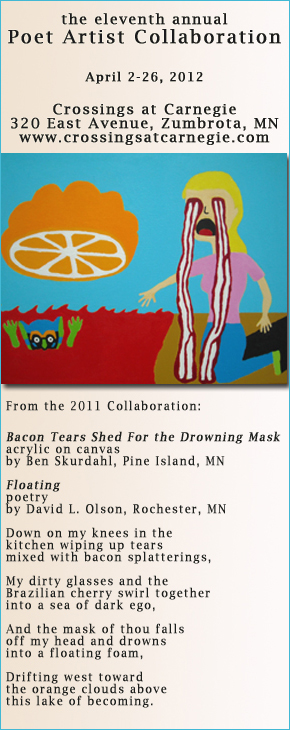
The exhibit, which will be installed on April 2 at Crossings at Carnegie, pairs poetry with art.

Poets were invited to submit up to three poems for consideration. Then four professional writers/poets juried the poetry—this year more than 180 poems—and selected 26 for inclusion.

I’m honored and thrilled to have my writing in this exhibit.

Marie Marvin writes in an e-mail to the selected poets: “It was exciting to receive such a fine outpouring of exceptional work from so many talented poets for this collaboration. Jurists told us they were a pleasure to read, and selecting those to be included was a difficult task.”

Additionally, Laura McDonough of Crossings tells me jurists were given complete license and no specific guidance during the selection process and did not know the identity of the poets.

But, she surmises, “They look for excellence and magic.”

Now artists, who also were juried for the collaboration, are working their magic creating  pieces of art inspired by the poetry.

Paired poets and artists will not know each others’ identities until the show is installed. Nor will the names of participating poets and artists be revealed to the public until April 2. I asked.

I’m not disclosing the content of my poem which I unsuccessfully submitted to previous contests and then reworked for this competition to make it a stronger, better poem. Yes, time allowed me to view my writing with fresh eyes and see areas where I could improve.

Naturally, I’m wondering how “my artist” will interpret my quite visual poem.

I’ll find out on Saturday, April 21, when I attend a reception beginning at 7 p.m. at Crossings at Carnegie, 320 East Avenue, in Zumbrota. Poets and artists will discuss their works. Please join me and the 25 other poets and 26 artists at this celebration during April, National Poetry Month.

FYI: MARIE MARVIN, who opened Crossings in 2001 to create an oasis for artists, writers and musicians, is the driving force behind the Crossings Poet-Artist Collaboration. She discussed her love for “mixing up the arts” with poet Beverly Voldseth and, between the two of them, the first collaboration took shape in April 2002.

The collaboration also includes publication of an exhibit book offered at a nominal cost to participating poets and artists and their families.

Crossings is housed in a former Andrew Carnegie Library built in 1908 in the Classical Revival style. I can’t wait to see the building as I appreciate libraries, history and architecture.

Zumbrota, a community of around 3,000, is located along U.S. Highway 52 about 25 miles north of Rochester.

Click here for more information about the art center.

IF YOU’D LIKE to share information about a similar poet-artist collaboration in Minnesota, please submit a comment with details.

© Copyright 2012 Audrey Kletscher Helbling

Graphic courtesy of Crossings at Carnegie


Beyond poetry anthologies May 21, 2011

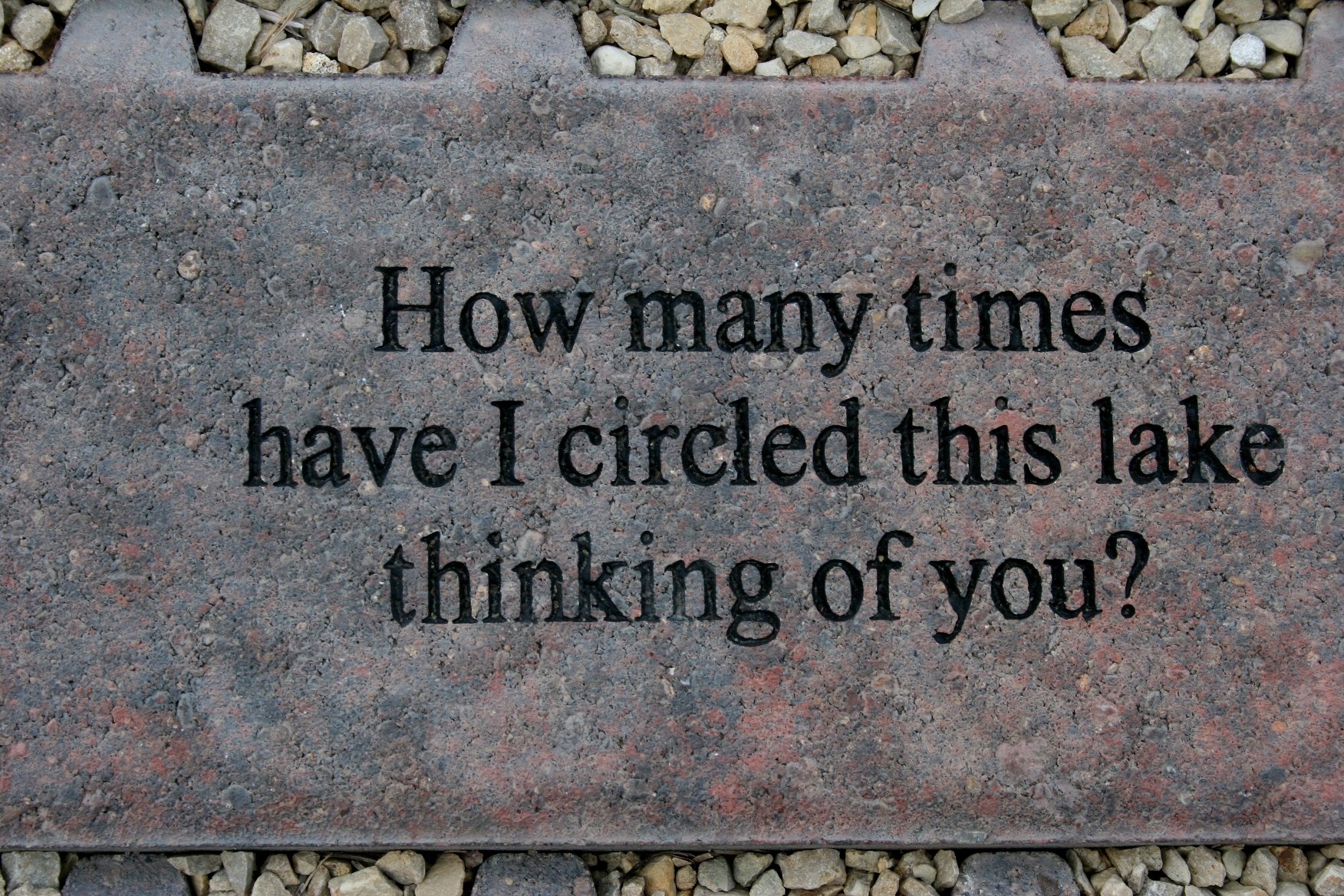
Poetic words imprinted upon a paver at the Lake Harriet bandshell in south Minneapolis.

WHAT AN EXCITING time to read, and write, poetry.

Yes.

Read on.

If you’re among those who consider poetry boring, unapproachable, complex and difficult to understand, then you’ve read only boring, unapproachable, complex and difficult to understand poems.

Yes, those types of poems exist.

But today, oh, today, poetry is pushing beyond simply words printed in anthologies to highly-public and engaging venues.

At least three Minnesota communities—St. Paul (Everyday Poems for City Sidewalk), Mankato (WordWalk) and now Northfield (Sidewalk Poetry Contest)—have embraced sidewalk poetry, poems imprinted upon sidewalks.

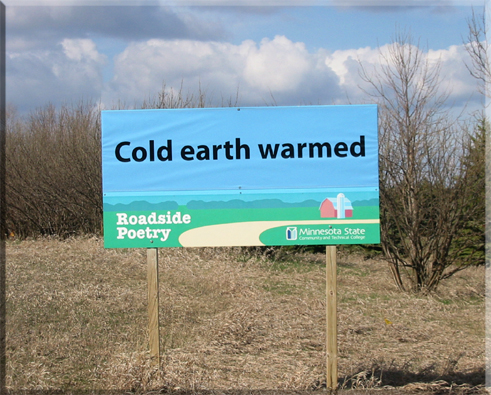
In Fergus Falls, the Fergus Area College Foundation sponsors a seasonal poetry contest and posts the winning poem on four Burma Shave style billboards. I won the spring Roadside Poetry Project competition. (Click here to read a story published today in The Marshall Independent about my writing and my Roadside Poetry poem.)

The first line in my spring poem posted on four billboards.

In Hackensack, as part of its annual summer Northwoods Art Festival and Book Fair, the Northwoods Art Council has invited Minnesota poets to submit poems for display. Attendees then read and vote for their favorite poems.

But the latest news in the poetry world comes from St. Paul poet Todd Boss and Minneapolis art director/animator/designer Angella Kassube, who have created “motionpoems.” The pair defines these poems as “a hybrid of poetry and film.”

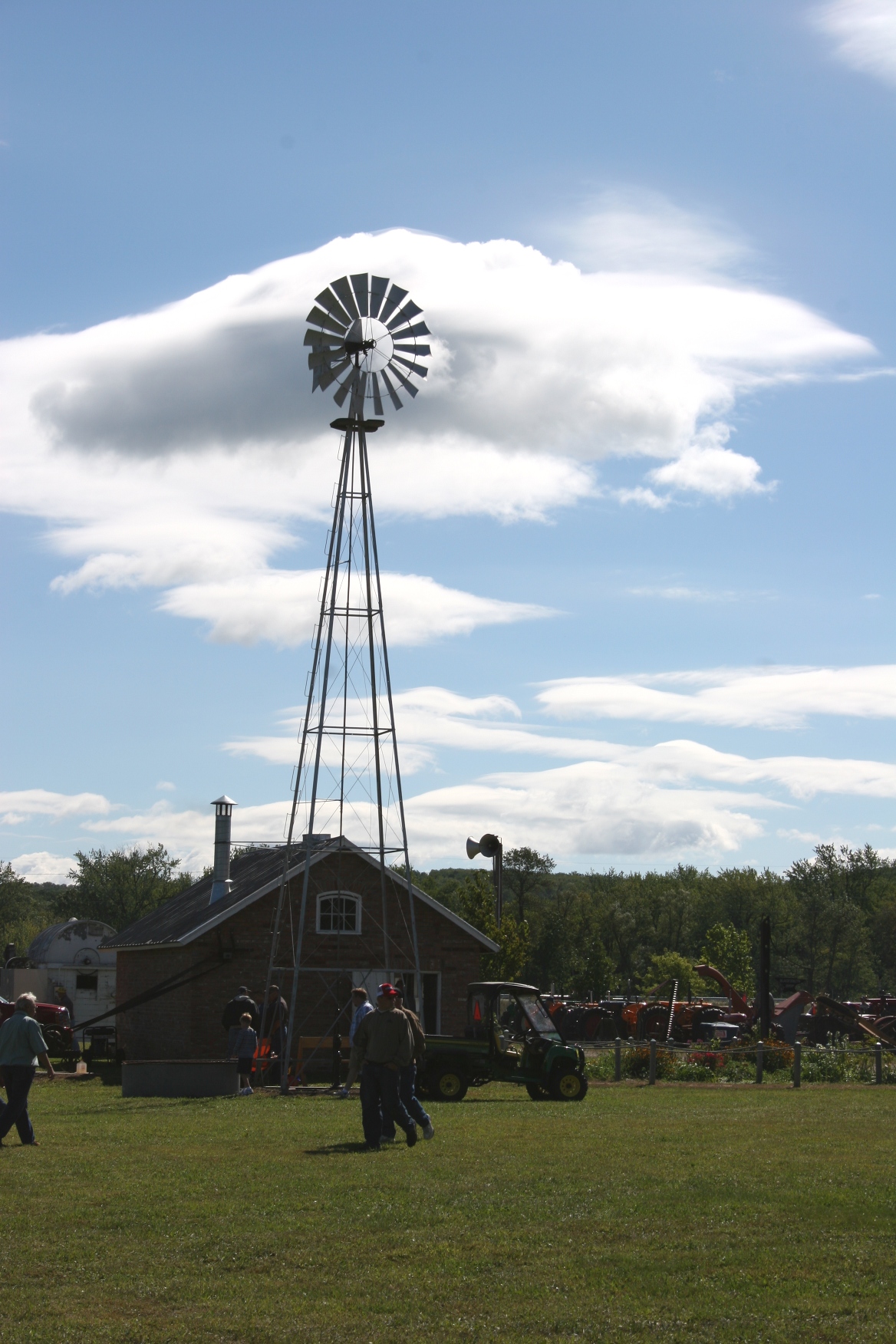
The windmill is the subject of a motionpoem written by Toss Boss. I took this photo at the Rice County Steam and Gas Engines grounds near Dundas last fall.

In short, they bring poems to life via animation. From what I’ve seen and heard online, this approach works, making poetry more accessible, understandable and, dare I say, exciting. But don’t take my word for it. Click here and view several motionpoems, including my favorite, Todd Boss’ THE GOD OF OUR FARM HAD BLADES.

The duo started this project two years ago, creating more than 20 poems. Now they are expanding, collaborating with New York publisher Scribner’s respected annual Best American Poetry anthology, 2011 volume, to produce 12 – 15 motionpoems. They’ll work with writers ranging from Pulitzer Prize winners to emerging writers. Eventually, the motionpoems will be accessible, for free, online.

I see great promise in these new approaches to poetry that reach beyond printed poems and poetry readings. I see the promise for reaching a wider, more receptive audience.

WHAT’S YOUR TAKE on sidewalk or billboard poetry and/or motionpoems? Would you be more likely to read these types of poems than traditionally-published poetry?

© Copyright 2011 Audrey Kletscher Helbling

Roadside Poetry Project photo courtesy of Paul Carney


Pigs and poetry May 14, 2011

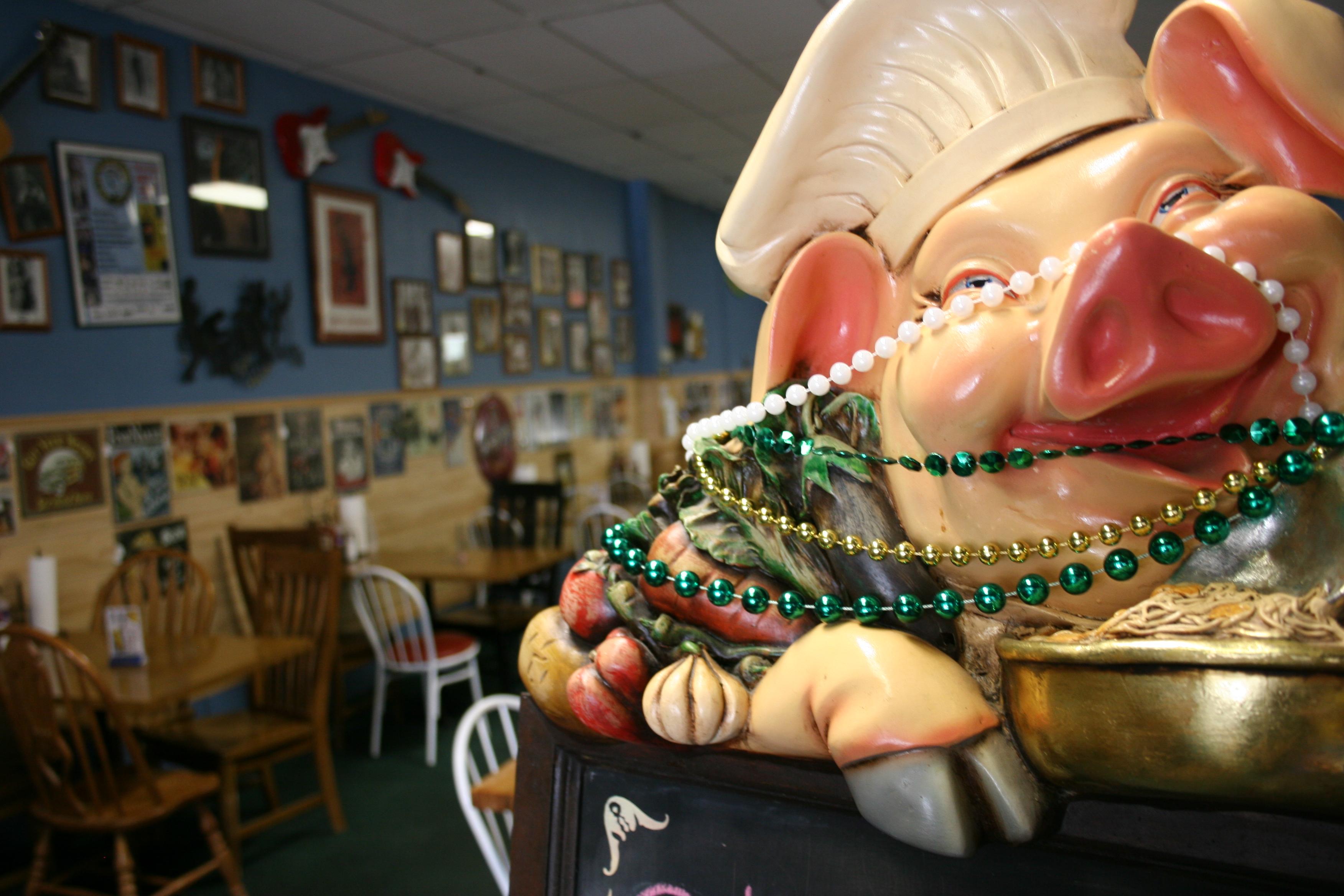
This pig greets diners at Piggy Blue's Bar-B-Que in Austin, Minnesota. This image is posted here for pig illustration purposes only, not because it's specifically related to the following story.

IN A WEEK, my sister-in-law is moving from Minot, North Dakota, to Missouri. In August, my brother-in-law, an Air Force man, will join her and their young son.

She’s leaving early to seed the garden, plant the orchard and ponder the purchase of pigs. This has always been Jamie’s dream, to own a country acreage where she can grow fruits and vegetables and raise an Old McDonald variety of animals.

Chickens, rabbits, goats and a pig or two comprise her animal acquisition list.

But about those pigs…I overheard a man advising her last Saturday to “hold off” on the pigs for awhile. He didn’t give a reason, only suggested she wait.

Her husband, Neil, although supportive of his wife’s plan, also has reservations about the swine. If Jamie wants a pig, Neil says he can shoot one. He would be right. The Missouri Department of Conservation advises residents to “shoot ’em on sight” in an online article about the problem of feral pigs running rampant.

Thankfully we do not have a wild pig problem in Minnesota. Our problem would be an overabundance of deer.

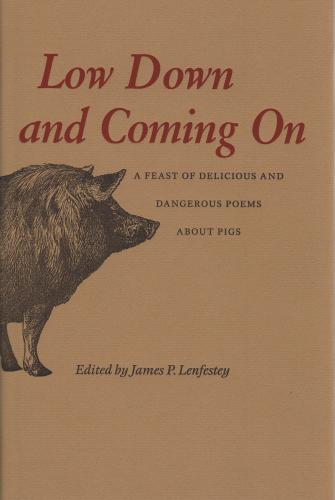
But we do have a book of pig poetry featuring 133 pig poems penned by 103 poets like Robert Bly, Louise Erdrich and Bill Holm. Red Dragonfly Press, a solely poetry not-for-profit literary organization based in Red Wing, published Low Down and Coming On: A Feast of Delicious and Dangerous Poems About Pigs. James P. Lenfestey edited the 232-page anthology printed last October.

Tomorrow (May 15) several of the pig penning poets, including Lenfestey, will read from the book at a “Pig Gig” slated for 2 p.m. at the Litchfield Opera House in Litchfield.

Now if my sister-in-law wasn’t preoccupied with packing for Missouri, I’d propose she check out this pig gig for pig pointers prior to purchasing pigs.

© Text and Piggy Blue’s photo copyright 2011 Audrey Kletscher Helbling