Minnesota Prairie Roots

Writing and photography by Audrey Kletscher Helbling

From Wisconsin: A book about food, friendship, family, love, trauma & place April 2, 2025

(Book cover sourced online)

I FOUND THE BOOK in the new fiction section of my local public library, the place where I discover reading materials that grow me, stretch me, teach me, and, yes, entertain me. The Funeral Ladies of Ellerie County by Claire Swinarski fits all four of those categories. I love this book. Underline love.

I did not expect this reaction when I randomly pulled the novel from the shelf, drawn by its catchy title printed in a colorful font, drawn by the simple cover art of a lakeside Northwoods cabin. I do, indeed, judge a book by its covers, front and then back synopsis. These covers hit all the marks for me, someone who appreciates stories rooted in rural. Stories that are simple, yet complex. Stories that make me think, that tap into my empathy, that move me. Stories that are strong in place.

(Book cover sourced online)

In some ways, this book reminds me of the writing of Minnesotan Lorna Landvik, author of the popular Patty Jane’s House of Curls, The Tall Pine Polka, Once in a Blue Moon Lodge and more, most of which I have read. But the author of The Funeral Ladies of Ellerie County hails from neighboring Wisconsin, which is similar to Minnesota, but different.

These are what we call bars (the kind you eat) in Minnesota and Wisconsin. Maybe elsewhere. (Minnesota Prairie Roots copyrighted file photo)

At the heart of this story are the funeral ladies, a group of long-time friends who prepare meals for mourners at St. Anne’s Catholic Church. Casseroles—not hotdish as we call casseroles in Minnesota—concocted with canned cream soups. Shredded beef. Peanut butter bars. Pies made with Door County cherries. Food for the body and soul. This reminded me of the Reception Committee in my childhood home church on the southwestern Minnesota prairie. That group of Lutheran women prepared funeral hotdishes comprised of hamburger, pasta, a vegetable and assorted canned cream soups with salt and pepper for seasoning. The recipes are published in the 1985 St. John’s Anniversary Cookbook. The covers of that cookbook have fallen off my tattered copy. A cookbook is central to Swinarski’s novel.

The point here is that The Funeral Ladies of Ellerie County is absolutely relatable for me. I felt comfortably at home with the story initially, even when I learned of a heartbreaking scam involving main character Esther Larson. That shapes the story. Then the story-line focus shifts from friendship, faith and family to tough topics after a Food Network star and his children arrive to bury his estranged wife in her hometown.

Mental health gets attention in this book. (Minnesota Prairie Roots copyrighted file photo)

Without revealing too much of the plot, know that family relationships, love and trauma weave into this novel. That trauma is post traumatic stress disorder, experienced by paramedic Cooper Welsh after participating in a holiday parade interrupted by a deadly shooting. In real-life, six people died in November 2021 when a driver plowed his SUV into a Christmas parade in Waukesha, Wisconsin, killing six and injuring many others. I expect Swinarski patterned her fictional tragedy loosely after this event or the many other mass shootings this country experiences.

I appreciate that the author, even in this fictional account of such violence and its personal aftermath, writes with authenticity. As a reader, I felt emotionally invested. I was rooting for Cooper and for those who love him. Swinarski doesn’t just touch on PTSD. She dives into it head on, writing in her acknowledgments that she talked to individuals dealing with PTSD to craft Cooper’s life story. That research shows.

A sign along the interstate advertises Ishnala Supper Club in Lake Delton near the Wisconsin Dells. (Minnesota Prairie Roots copyrighted file photo)

She writes, too, in an authentic Wisconsin voice with a strong sense of place. Noodles in chili (yes, it’s a thing in Wisconsin). Beer not wine. Brandy old-fashioneds, Wisconsin’s signature drink. Supper clubs. And eating at the popular Wisconsin-based fast food chain, Culver’s.

There are so many reasons to love The Funeral Ladies of Ellerie County. Even if you’re a Lutheran from Minnesota who eats hotdishes, not casseroles.

© Copyright 2025 Audrey Kletscher Helbling


With thoughtful gratitude on Veterans Day November 11, 2022

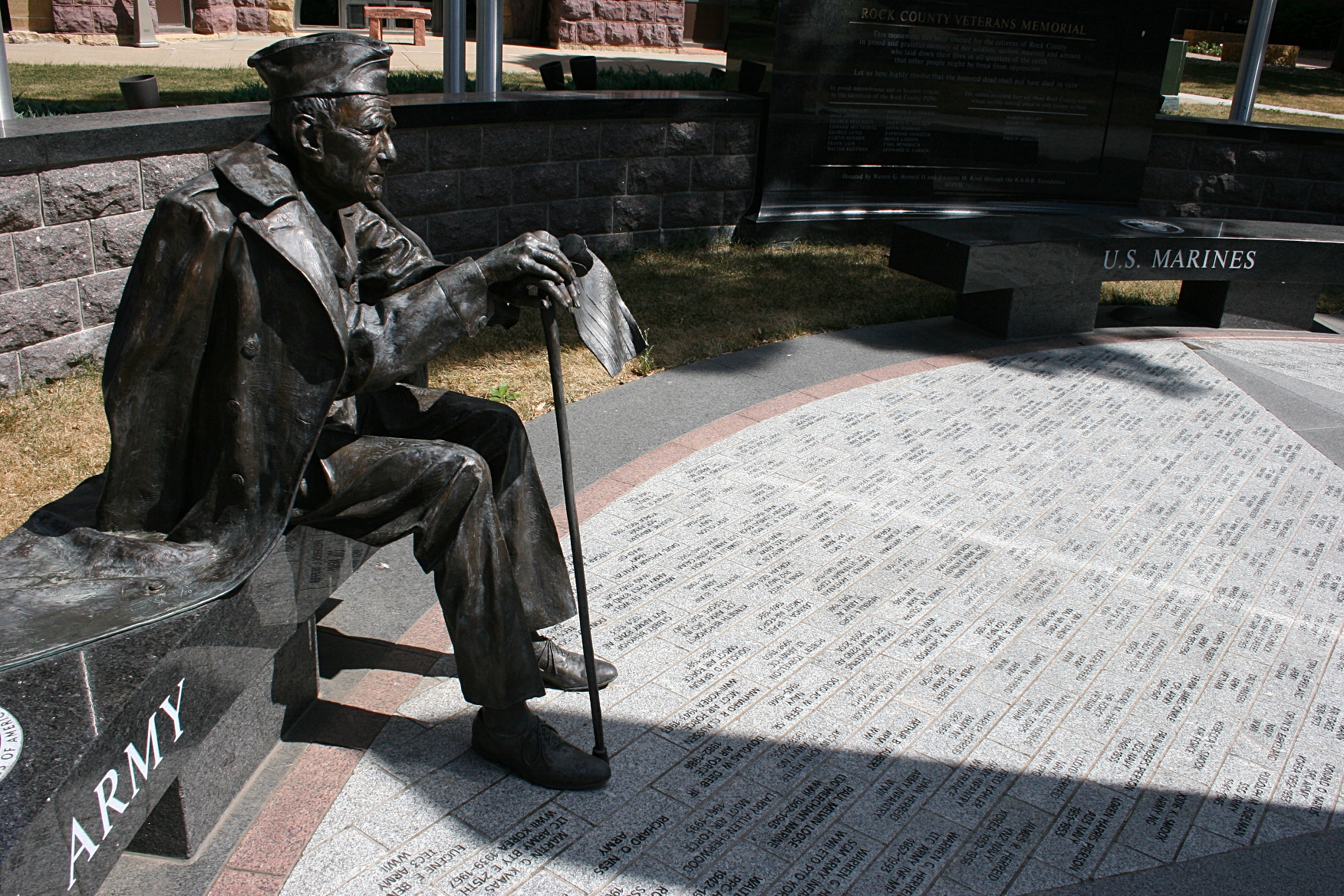
A bronze statue titled “Poppie” personalizes the Rock County Veterans Memorial in Luverne as do the names of some 1,600 veterans engraved in pavers. I’ve seen a lot of veterans memorials and this is among the most impressive. (Minnesota Prairie Roots copyrighted file photo August 2013)

NEARLY EVERY COMMUNITY has one. A veterans memorial. I appreciate that public recognition of military service in communities from rural to urban. Yet, acknowledgment of our veterans must stretch beyond public memorials.

Today, Veterans Day, I pause to personally thank the individuals who have served our country. That’s important to remember—individual service and sacrifice. I expect most of you can rattle off names of those in your circle who engaged in combat or other military work. They left their homes, their everyday lives, to answer the call of duty.

I feel gratitude to individuals who, either by draft or by choice, stood strong for democracy. Words like courage, commitment, strength, fortitude…filter into my thoughts when I think of our veterans.

But I also think of the physical, emotional and mental challenges too many combat veterans face post-war. I can never comprehend the pain, the trauma, the grief experienced by those who fought in war zones. I only know how my own father, an infantryman in the Korean War, battled the demons of war during his lifetime. That glimpse was enough to elicit deep concern within me.

We are making strides in recognizing and treating post traumatic stress disorder, for example. Not until near his 2003 death was my dad aware of his PTSD. He never got the intervention and help he needed upon arriving home from war. I’m thankful for the help available today, although I expect sometimes it’s not easily-accessible and not nearly enough.

Suicide among veterans remains high. After hearing a few of my dad’s stories of war atrocities and killing, I recognize the emotional and mental tolls on health. Returning to everyday life after experiencing the traumas of war brings challenges civilians will never fully understand. We need to be there for our veterans in ways that matter—support, compassion, care, understanding—with gratitude in our hearts.

TELL ME: If you’re a veteran, what would you like to hear today, Veterans Day? How can we as a country better honor and help you? If you know a veteran, what have you done to honor and help veterans?

© Copyright 2022 Audrey Kletscher Helbling


A letter to Dad on Veterans Day November 11, 2021

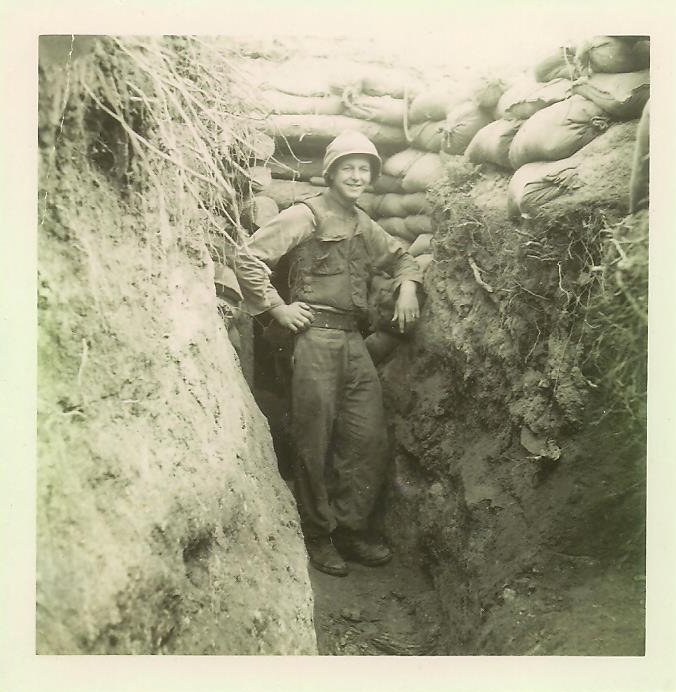
U.S. Army Cpl. Elvern Kletscher, my father, in the trenches in Korea. (From my father’s photo collection)

DEAR DAD,

I’m sorry.

I’m sorry I didn’t take the time to ask. And then to listen.

I’m sorry I didn’t recognize earlier that you were suffering.

I’m sorry I was too busy with my own life and family to realize that I could have, should have, tried to understand.

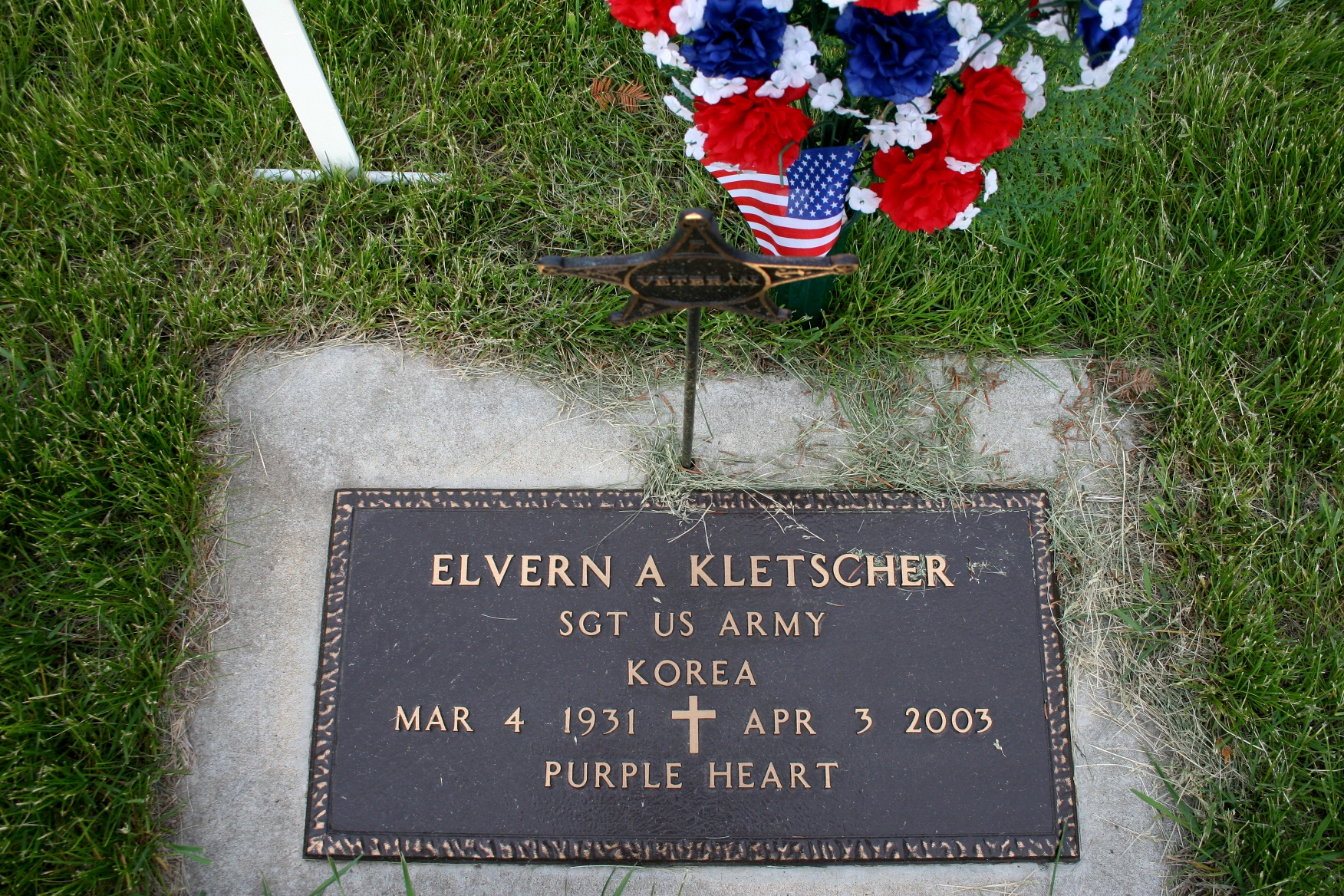
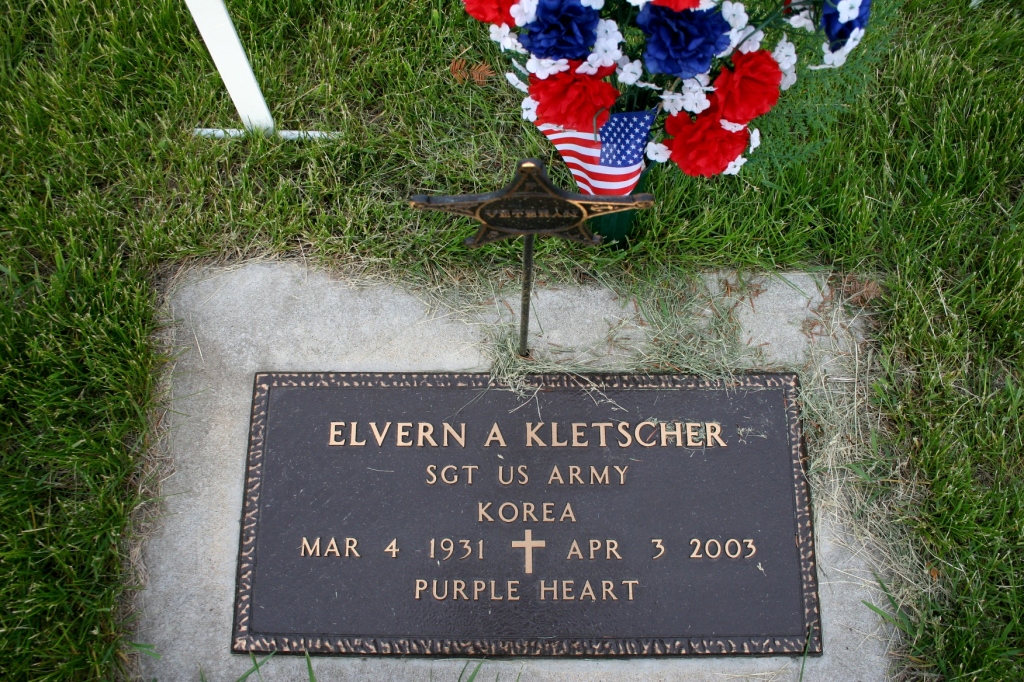
An in-ground marker honors my father, Elvern Kletscher, a Korean War veteran and recipient of the Purple Heart for wounds he suffered at Heartbreak Ridge in Korea while killing a sniper. (Minnesota Prairie Roots copyrighted file photo 2011)

Nearly 19 years have passed now since your burial, since that brutally cold early April day when I wrapped my arm around Mom in the wind-swept hilltop Vesta Cemetery. I felt her body shivering, shaking with grief as she accepted a folded American flag.

Moments like that imprint upon me as I remember you—husband, father, grandfather, son, brother…and veteran.

You were buried with military honors. The firing of guns. The mournful playing of taps. An in-ground military marker notes your final rank as a sergeant in the US Army. Awarded the Purple Heart, albeit 47 years after you were wounded on Heartbreak Ridge in Korea.

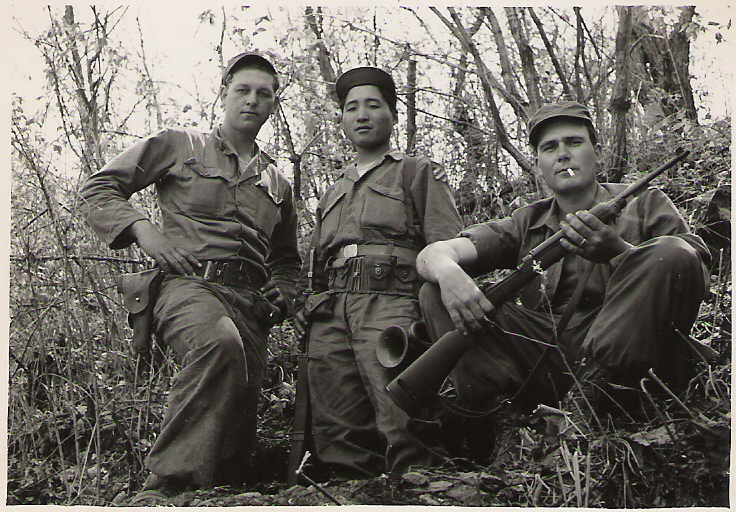
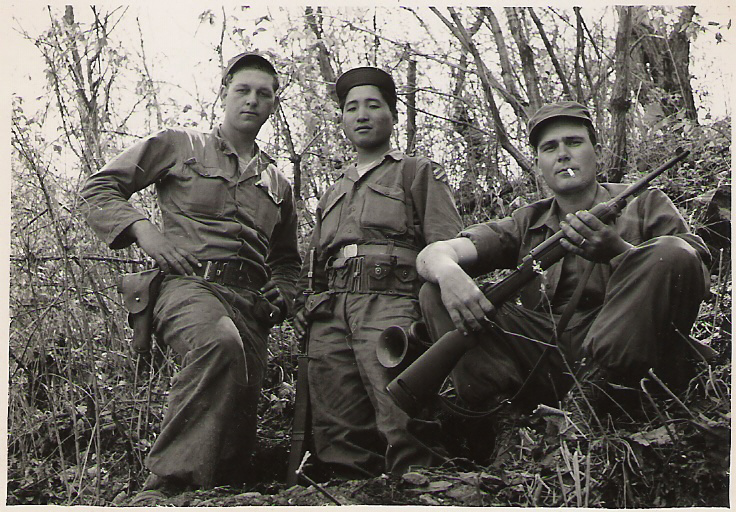
My father, Elvern Kletscher, left, with two of his soldier buddies in Korea. (From my father’s photo collection)

Today, on Veterans Day, I think of you. Honor you. And consider how fighting as a boots-on-the-ground combat soldier in the mountains of Korea forever changed you.

I recall the few stories you shared through the decades. You watched as a mortar killed your friend Ray, who was scheduled to leave Korea the next day. He left behind a wife and infant daughter. Dad, your grief led me to search for that “baby” two years after your death. I found Teri living in Iowa and with only minimal knowledge of her birth father. I have yet to meet her, but want to some day.

Some day. Days and weeks and months and years pass and then some day is too late. Now I hold a shoebox brimming with curled black-and-white photos and other items from your time in the Army. Your Selective Service System registration certificate. A well-worn mini black book of prayers, hymns and devotions from the Ladies Aid in Vesta. Faith and prayer carried you through many a hellish day and night in Korea.

On the back of this photo, my dad simply penned “a letter from home.” I appreciate this photo of my dad taken by an unknown buddy in Korea. (From my father’s photo collection)

In a letter to your parents, a copy tucked into a folder labeled “Korea” in my office file cabinet, you termed the war-torn Asian country a “hell hole.” Likewise, an over-sized embroidered decal declares “RETURNED FROM HELL.”

I have no doubt that war was hell for you. “Shoot or be shot,” I remember you saying. You spoke, too, of bitter cold, of hunger, of orphans begging for food across barbed wire fences. Of horrible war-time atrocities that I can’t bear to write here.

My dad carried this memorial service bulletin home from Korea. In the right column is listed the name of his fallen buddy, Raymond W. Scheibe. (From my father’s collection)

And then when you arrived home—bringing with you a folded memorial service bulletin from Sucham-dong, Korea, dated July 31, 1953, and including your buddy Ray’s name—the horror and grief you experienced remained. But few, if any, acknowledged your struggles back then. You were expected to resume life as usual, returning to rural Minnesota to farm the land, to milk cows, to marry and raise a family. Post traumatic stress disorder (PTSD) was not yet recognized.

I’m sorry, Dad. Sorry about the neighbor who laughed as you dove to the ground when a rifle fired during pheasant hunting.

I’m sorry, Dad, for the fear you felt when guns fired during a small town parade.

I’m sorry I wasn’t there for you like I should have been.

Near the end of your life, you found empathy and care in your veterans’ support group. That comforts me. Those men understood what you’d experienced. For that I am grateful. They provided the emotional support I failed to give you. I’m sorry, Dad. So sorry.

With love,

Audrey

© Copyright 2021 Audrey Kletscher Helbling


Raising awareness of PTSD, moral injury & suicide & how we can help March 31, 2017

The veterans of Shieldsville and elsewhere are honored in this “Never Forgotten” memorial. Minnesota Prairie Roots file photo.


I WISH I’D KNOWN then what I know now.

How often have you thought that following an epiphany moment? That came for me Wednesday evening during a community meeting and film screening at the Faribault American Legion Post 43 on post traumatic stress disorder and the related topic of suicide.


This photo from my dad’s collection is tagged as “Kim, Rowe, Allen & me, May 1953 Machine Gun Crew.” That’s my father on the right.


I walked away from the gathering with a new perspective and regrets that I hadn’t thoroughly understood the mental anguish suffered by my Korean War veteran father. He fought on the front line as an infantryman—kill or be killed. As a result, he dealt with life-long issues that greatly affected his life and thus his family, too. He died 14 years ago on April 3.


My father, Elvern Kletscher, on the left with two of his soldier buddies in Korea.


Now, just days before the anniversary of his death, I gained insight beyond his PTSD diagnosis. I learned of the term “moral injury.” In a separate clip shown before airing of the feature film “Almost Sunrise,” a soldier explained how the realities of war can inflict wounds upon the soul. As I listened, the concept made total sense to me. Here was my dad, armed with a rifle and other weapons, forced to shoot the enemy or die. To take the life of another human countered everything he held to be morally right. I can only imagine how that tore him apart. It would anyone.


My dad carried home a July 31, 1953, memorial service bulletin from Sucham-dong, Korea. In the right column is listed the name of his fallen buddy, Raymond W. Scheibe.


I recall his few stories of being so near the enemy that he could see the whites of their eyes. “Shoot or be shot,” he told me. I observed, too, the lingering pain he felt in watching his buddy Ray blown apart the day before the Nebraska solider was to leave Korea. I remember Dad’s stories also of Korean children begging for food across a barbed wire fence.


My dad’s military marker in the Vesta City Cemetery.


Dad was wounded in Korea, struck by shrapnel on Heartbreak Ridge. He earned a Purple Heart, awarded some 50 years after he left the battlefield. While his physical injuries healed, the wounds to his heart, to his soul, remained. He suffered from life-long moral injury, as I see it now.


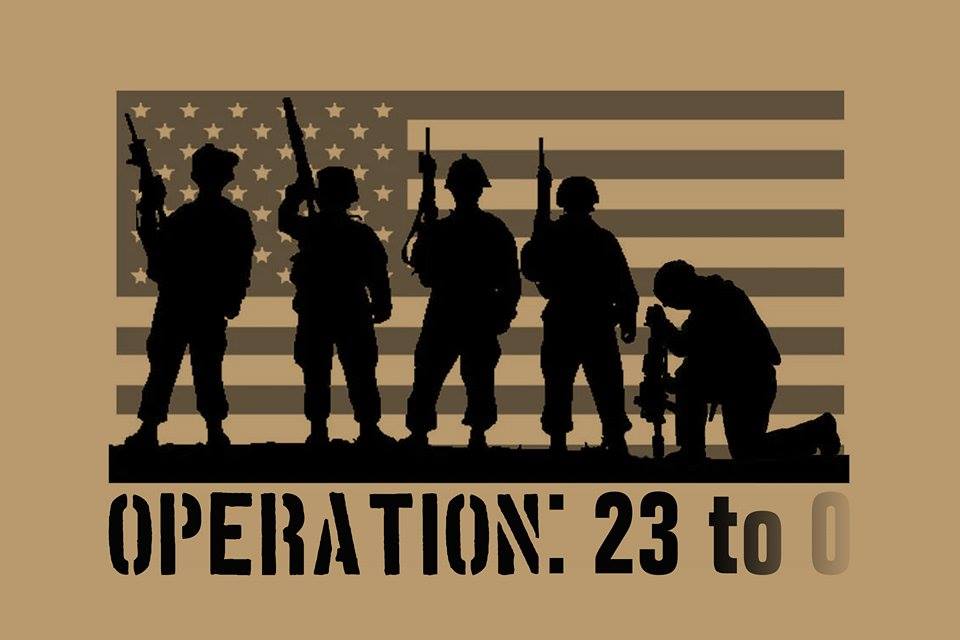
The number 23 represents the 22 veterans and one active duty military individual who commit suicide daily. The goal is to bring that number to zero. Graphics credit: Operation 23 to Zero.


I am grateful to the local Legion and Faribault Elks Lodge, specifically to Kirk Mansfield, a strong local advocate for veterans and head of Operation 23 to Zero in southern Minnesota, for organizing Wednesday’s community event. Operation 23 strives to help veterans and to create awareness of PTSD, suicide and more.


Promo graphics credit of “Almost Sunrise.”


Showing of “Almost Sunrise,” a film that followed two Iraqi War veterans on a 2,700 trek from Milwaukee to Los Angeles, also gave me insights into the personal demons soldiers face upon returning home from the battlefield. It is a touching film that left me crying. The Wisconsin soldiers, as they walked across the country and in follow-up therapy, found personal and relationship healing. They found the strength within to forgive themselves. Only they—not their families—could lead them to that point of healing.

While Wednesday’s event focused on veterans, the information shared can apply to anyone who has suffered from PTSD, whether from domestic abuse or other trauma, Mansfield noted.

In a separate clip from the film, a speaker offered these tips for helping individuals dealing with mental health challenges:

  • Show empathy by listening.
  • Remind the individual that he/she has a purpose in life.
  • Offer to be a mentor.
  • Reiterate how important they are to you. Tell them they matter.

That’s great advice.


I photographed this pillow last September when the Vietnam Traveling Memorial Wall came to Faribult. The veteran volunteering in the MIA-POW tent told me his wife sewed this pillow from an over-sized t-shirt. As the message conveys, we all need to be here for one another.


Mansfield challenged those in attendance to take what they’d just learned and help others. So I am, with this story. I have the ability to use the written word to create awareness. When we are educated and aware, then we can begin to help our family members, our friends, our co-workers, our acquaintances via listening, supporting, encouraging and reminding them just how much they mean to us. That is powerful.


FYI: To read a story I wrote about my dad, “Faith & Hope in a Land of Heartbreak,” published in the book, God Answers Prayers, Military Edition (page 12), click here.

© Copyright 2017 Audrey Kletscher Helbling