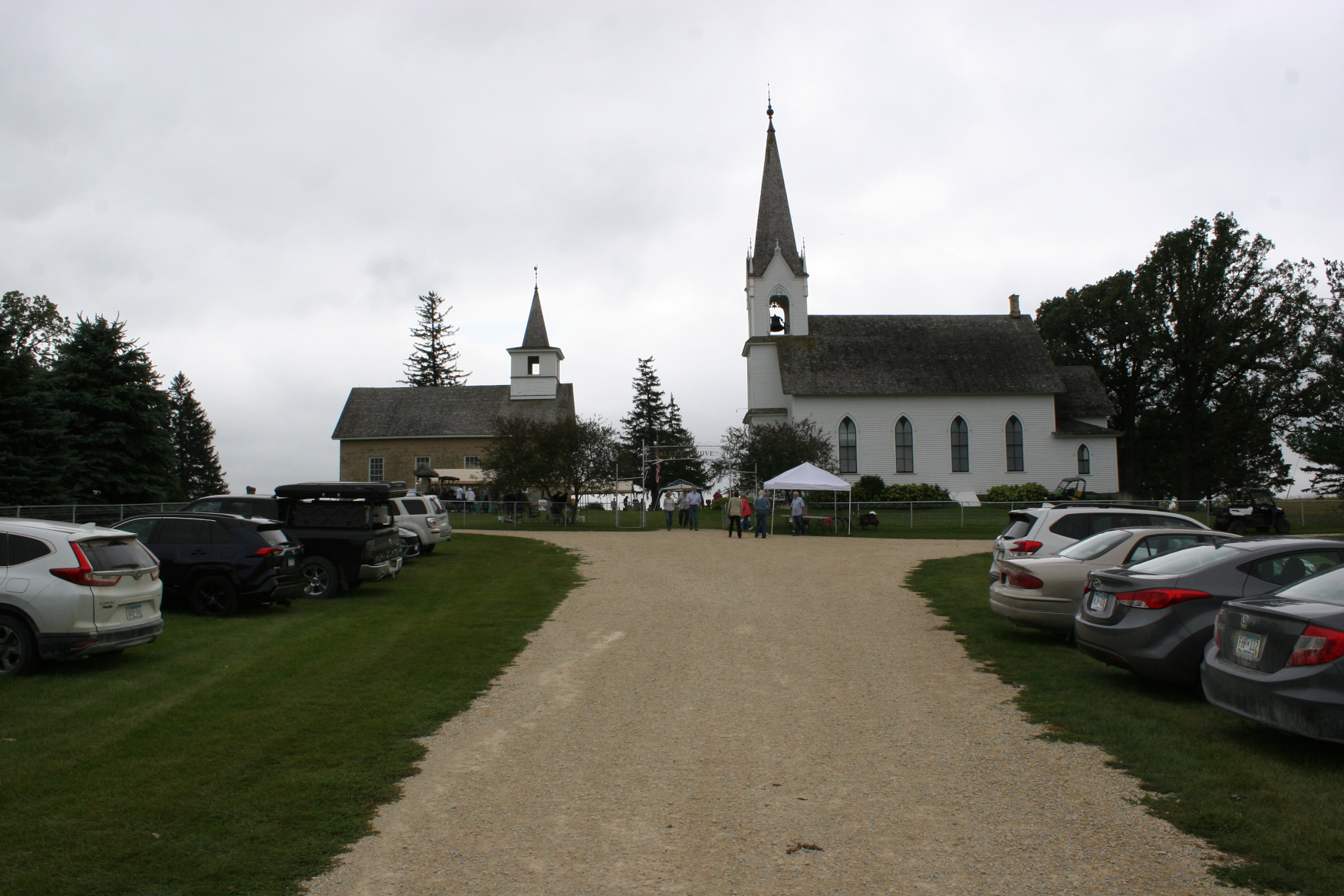
Vehicles line the gravel driveway leading to the hilltop Valley Grove churches, rural Nerstrand, during the September 18 Country Social. (Minnesota Prairie Roots copyrighted photo September 2022)
A COUNTRY SOCIAL EVOKES an essence of history, of community celebration, of activities that hearken to a bygone era. The Valley Grove Country Social held on Sunday afternoon high atop a hill near Nerstrand Big Woods State Park fits that and beyond. This site, the location of two historic churches and an adjoining cemetery, marks one of my favorite places in rural Rice County for its history, natural beauty and peace.
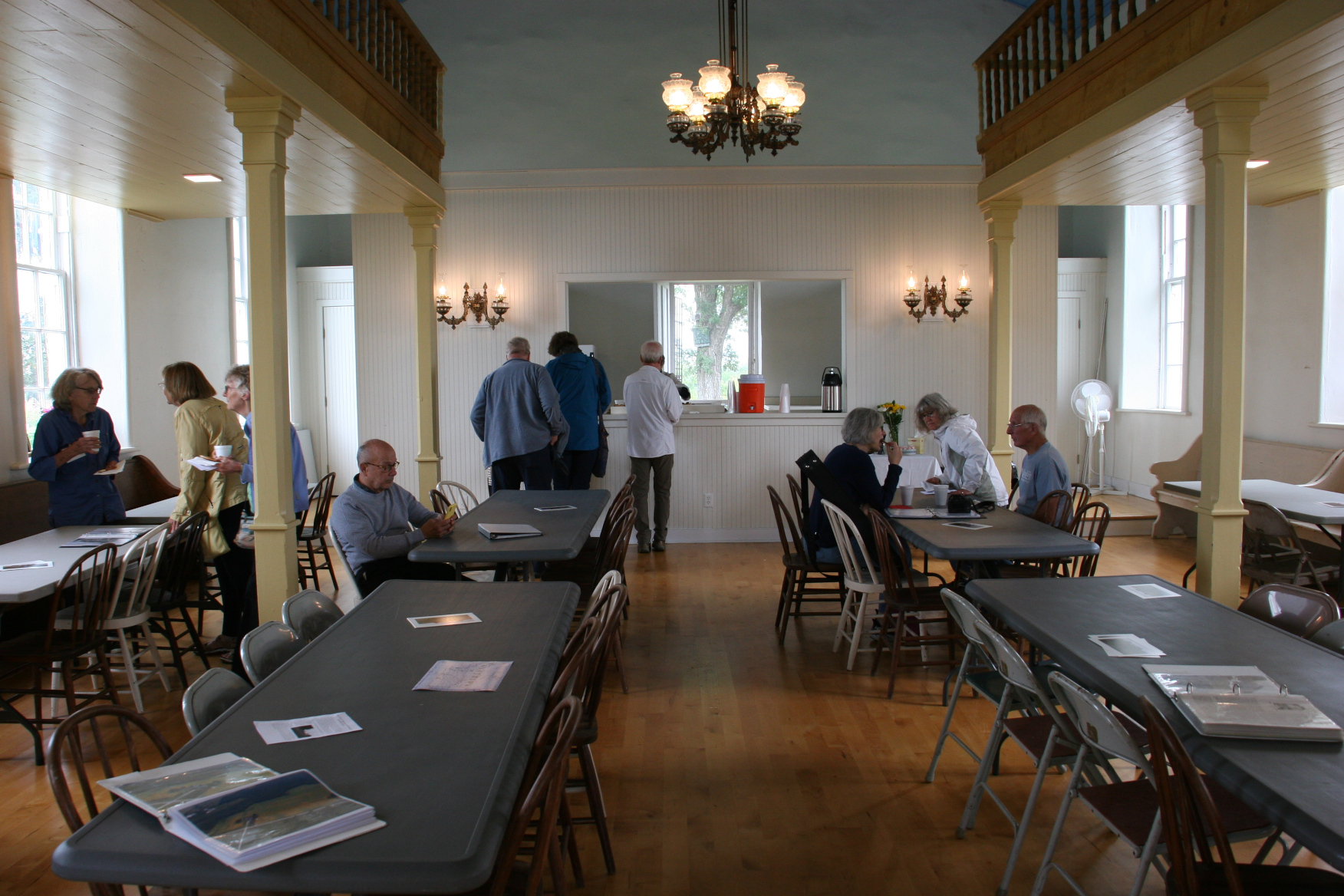
Inside the stone church, now used for fellowship, folks grab refreshments, converse and view historical information and art. (Minnesota Prairie Roots copyrighted photo September 2022)
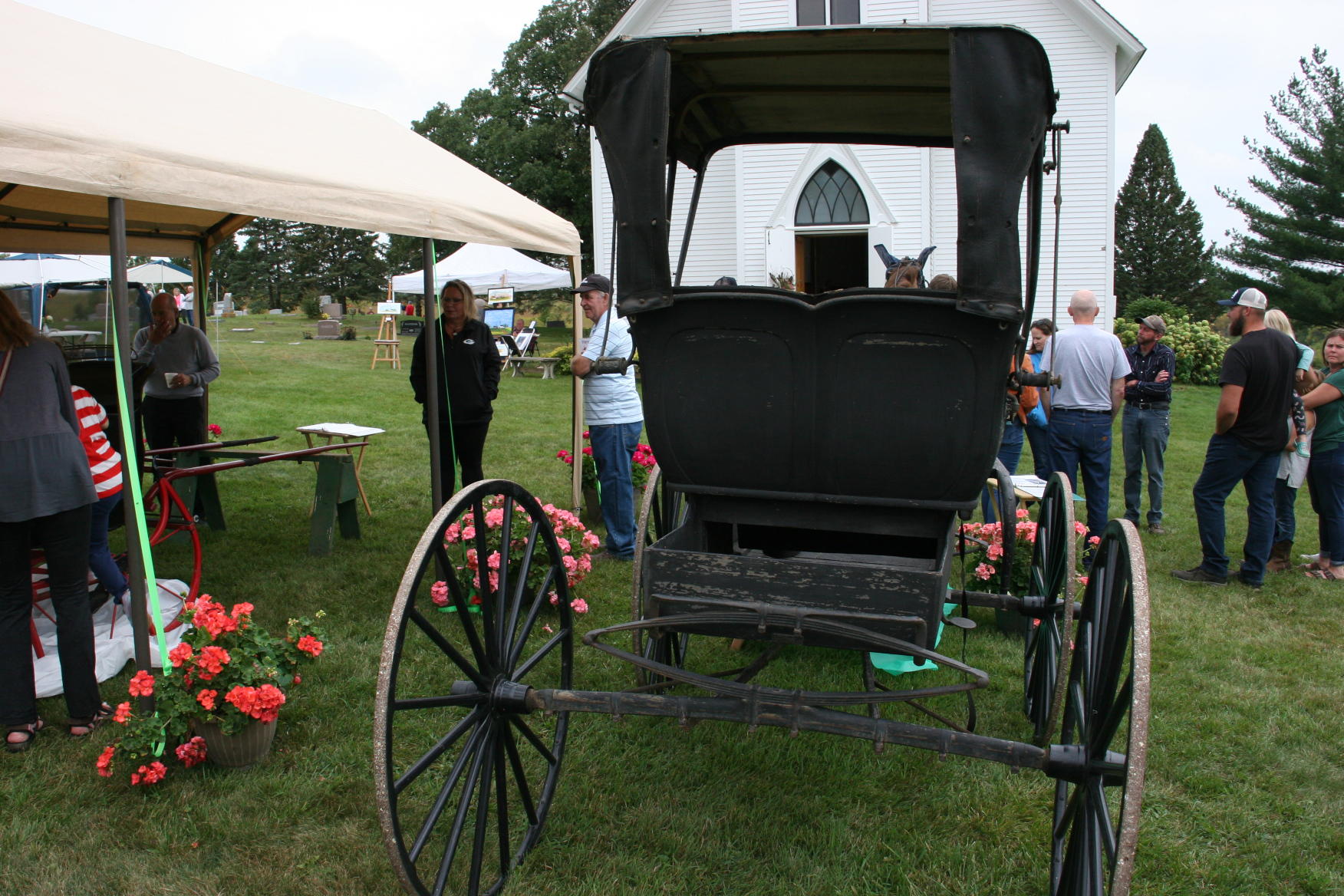
A vintage buggyadds another historic aspect to the Valley Grove Country Social. (Minnesota Prairie Roots copyrighted photo September 2022)
On this September afternoon, I delighted in an event that brings people together to celebrate Norwegian heritage and history, people and place, stories past and present, the arts, and, oh, so much more.
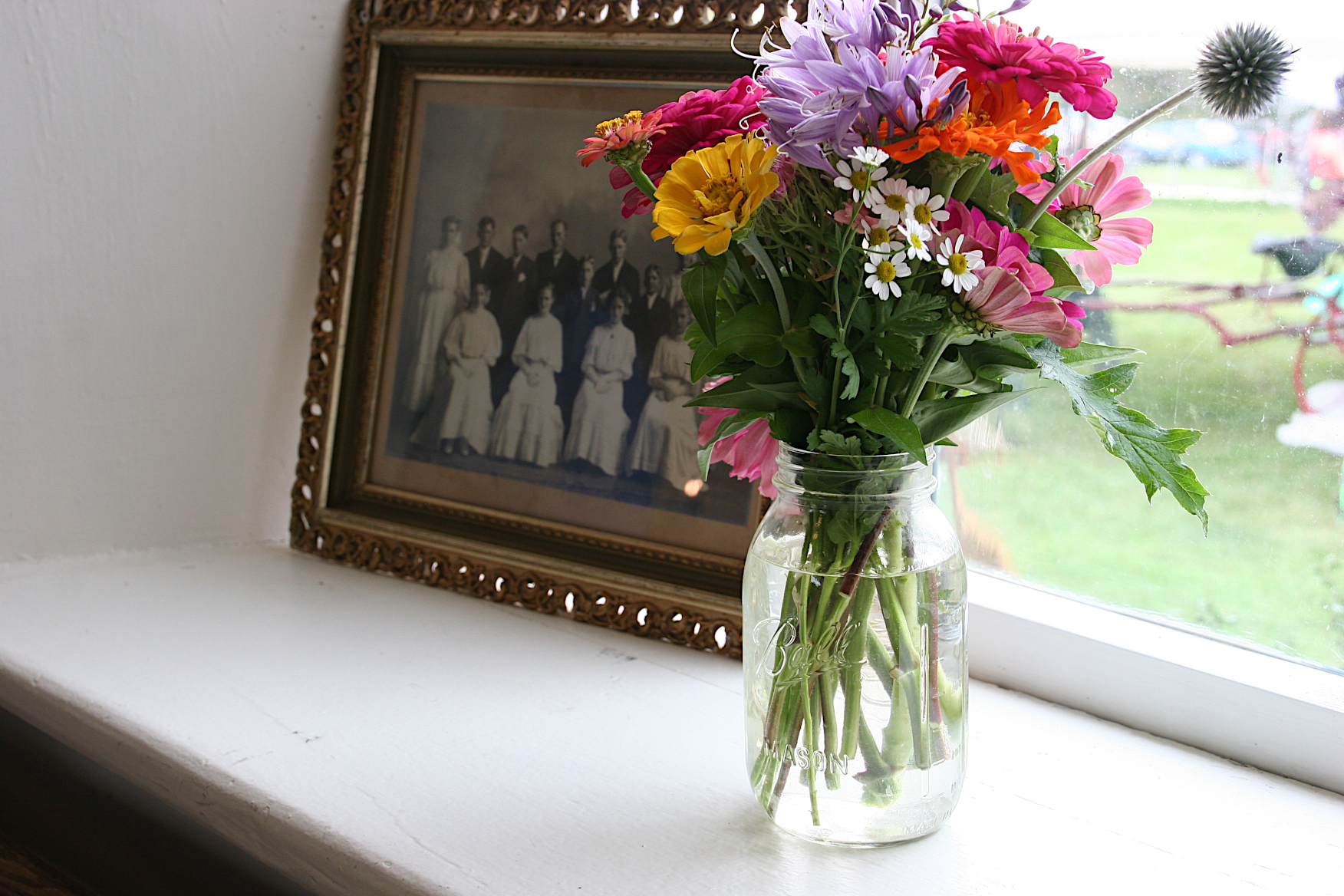
Bouquets and vintage photos edge window sillsin the oldest church. (Minnesota Prairie Roots copyrighted photo September 2022)
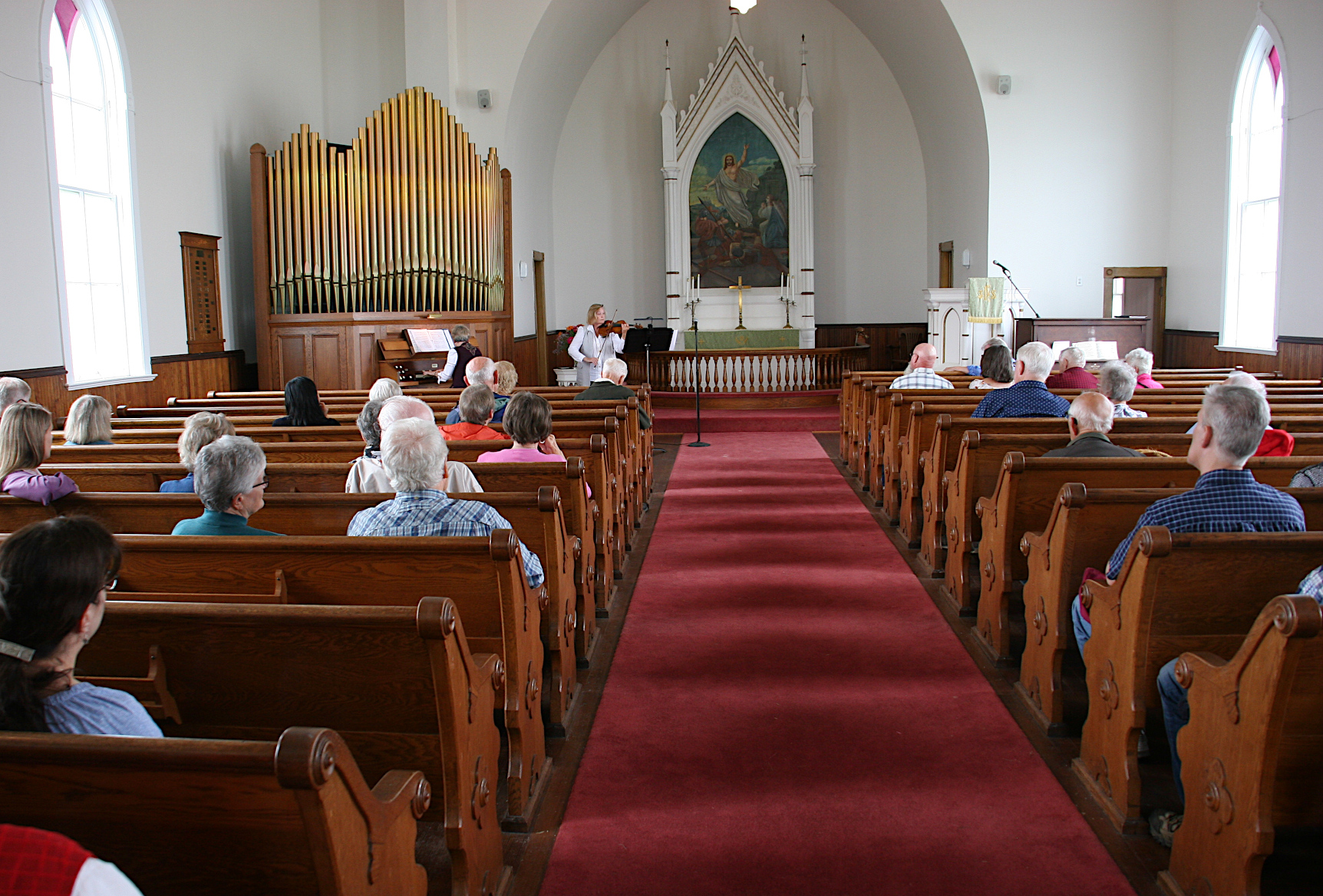
An organist and violinist play during a recital in the newer church. (Minnesota Prairie Roots copyrighted photo September 2022)
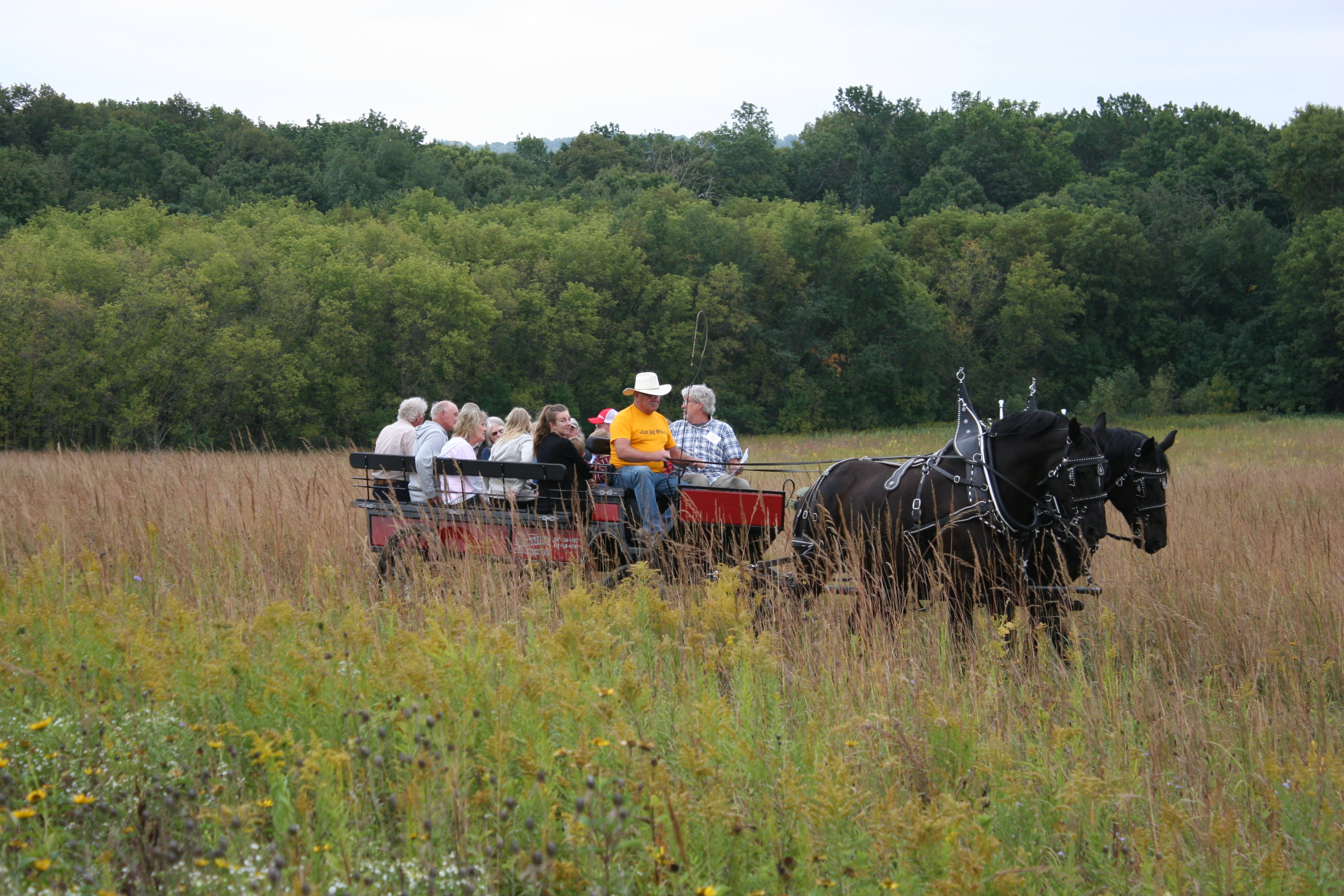
Horse-drawn wagon rides onto the prairie drew many passengers throughout the afternoon. (Minnesota Prairie Roots copyrighted photo September 2022)
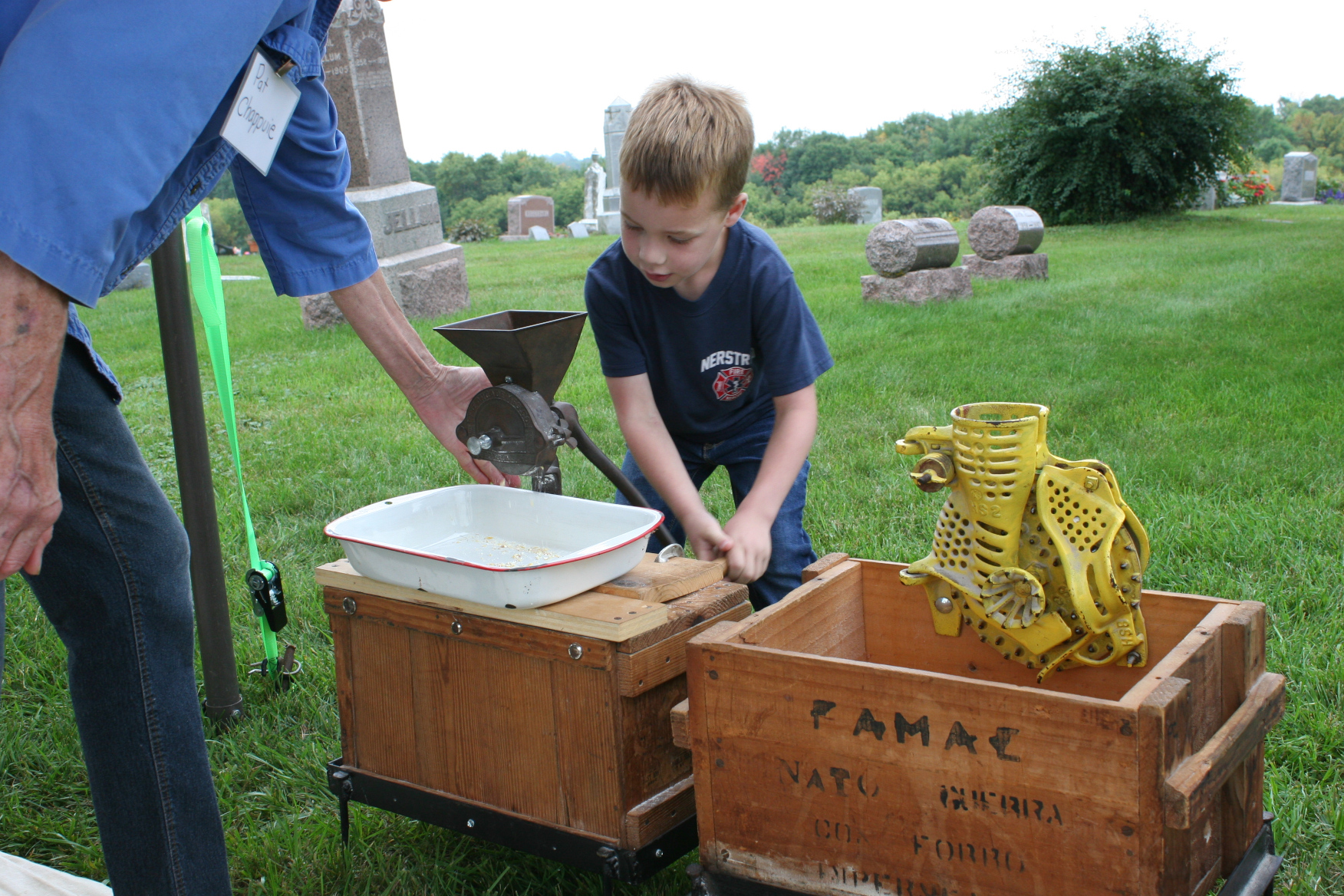
Grinding corn as part of the hands-on learning opportunities. (Minnesota Prairie Roots copyrighted photo September 2022)
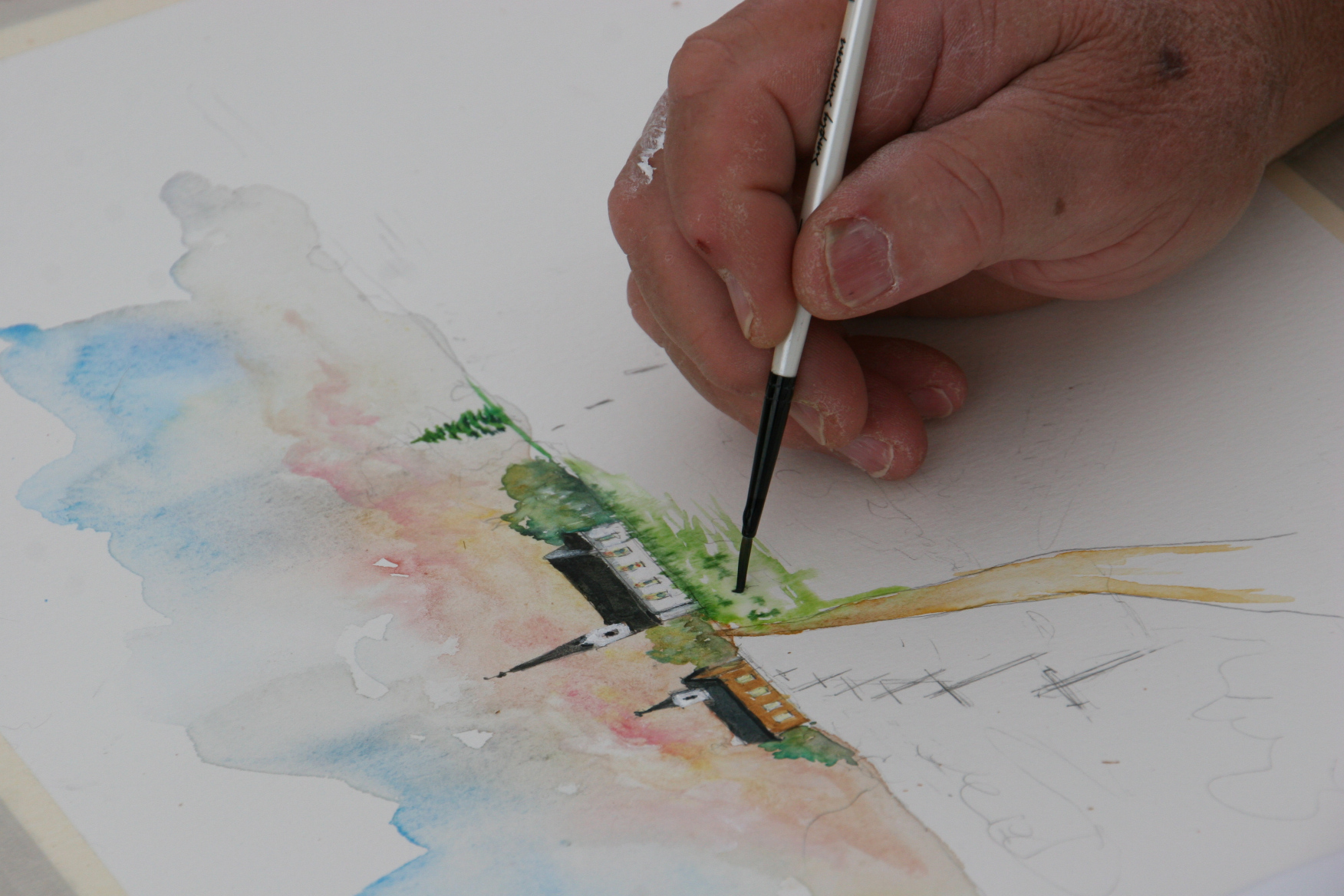
Northfield artist David Allen brought his brushes, watercolors and paper to paint on-site. (Minnesota Prairie Roots copyrighted photo September 2022)
From garden and prairie flowers tucked into Mason jars set atop window sills in the 1862 stone church to a recital inside the 1894 church to horse-drawn wagon rides to kids grinding corn to an artist painting, the scope of activities proved broad. There was something for everyone from the youngest to the eldest. Generations mingled, connected. One taught, the other learned.
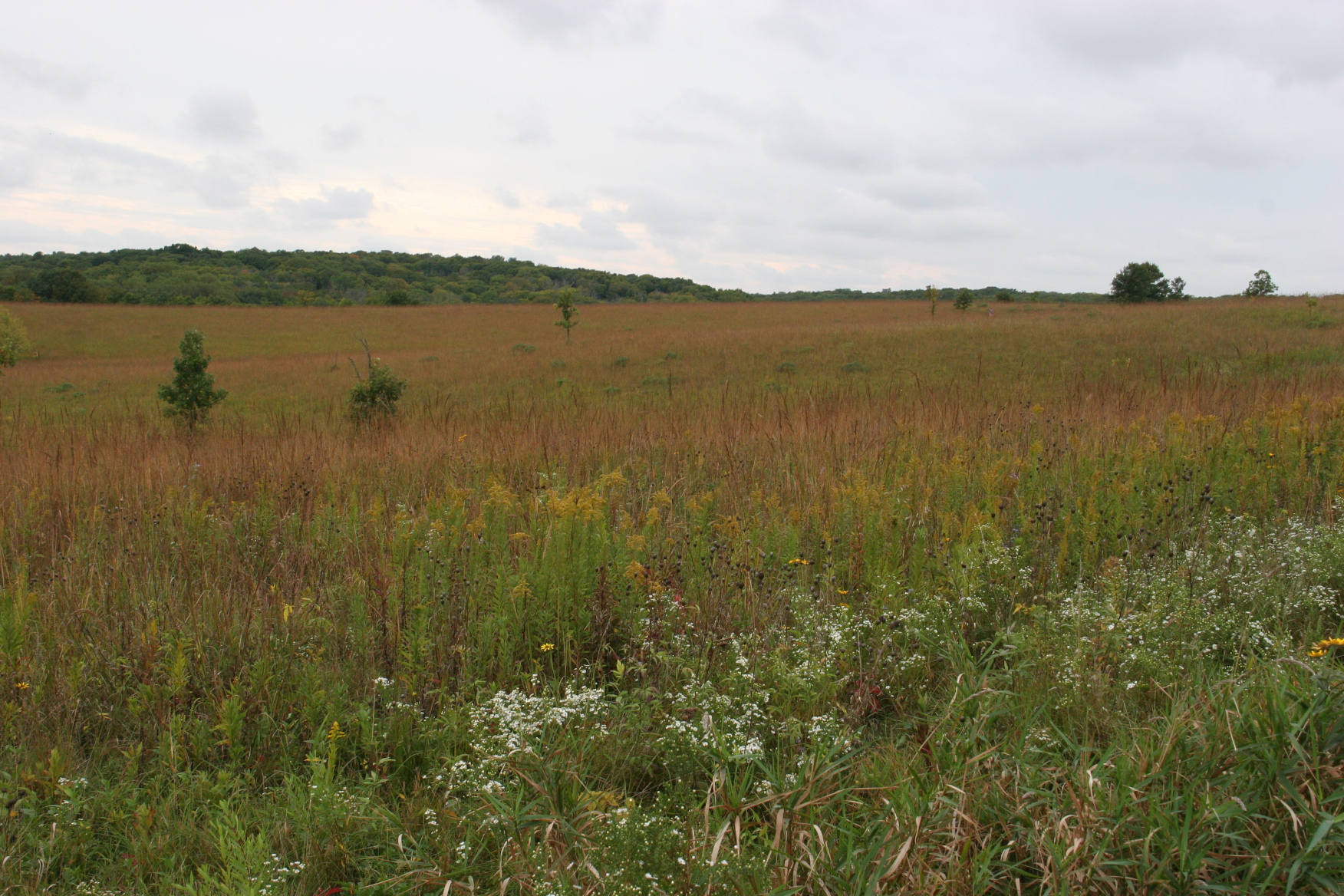
From cemetery’s edge, the open prairie. (Minnesota Prairie Roots copyrighted photo September 2022)
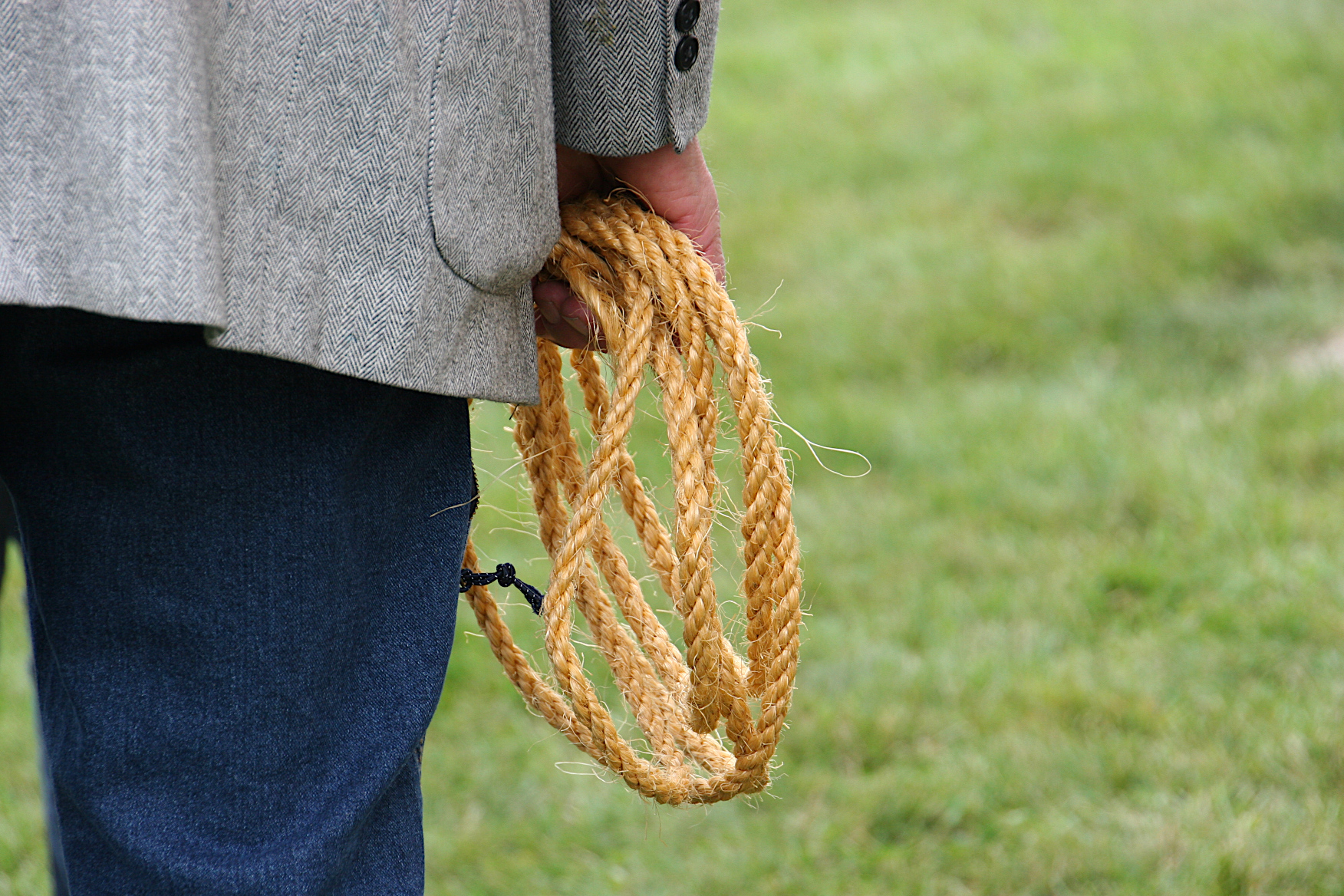
Rope making, a nod to Valley Grove’s agrarian roots, was part of the Country Social. (Minnesota Prairie Roots copyrighted photo September 2022)
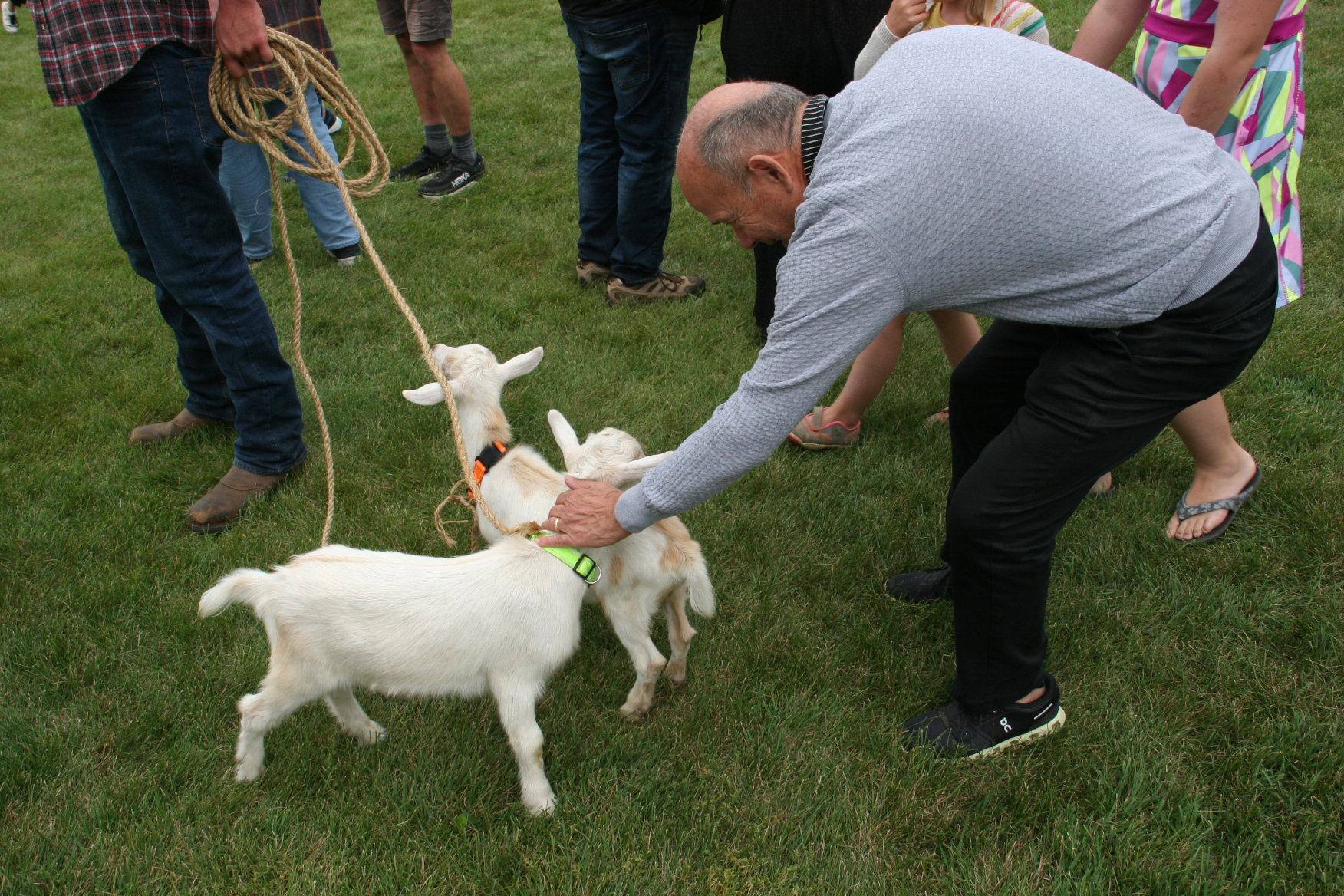
All ages were drawn to these two goats. (Minnesota Prairie Roots copyrighted photo September 2022)
To observe, to converse, to listen, to feel, to experience all of this imprints upon my soul gratitude for those who know this place, this Valley Grove, is worth preserving and sharing. Although I hold no personal connection here, I feel connected. It is my faith, my love of the land, especially the surrounding prairie and farmland, and the quiet of this remote rural location which cause me to feel comfortably at home, at peace.
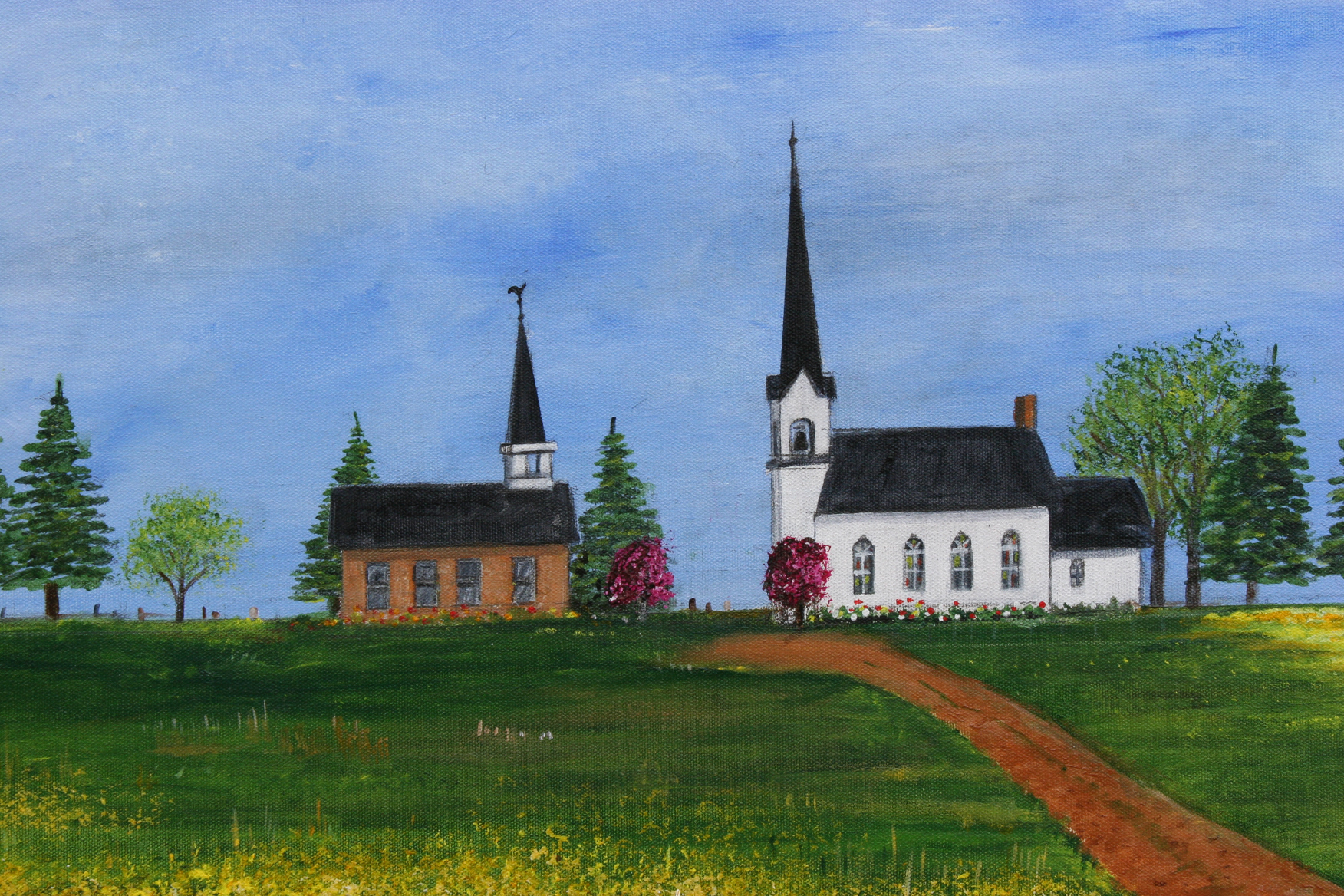
One of David Allen’s paintings of Valley Grove. (Minnesota Prairie Roots copyrighted photo September 2022)
If you’ve never visited Valley Grove and live near enough to tour, then do. I’ve been here many times to walk the cemetery and grounds, to hike through the prairie, even once sitting on the front steps of the wooden church for a picnic lunch. The churches are locked when not open for events or special services like a wedding or Christmas Eve worship.
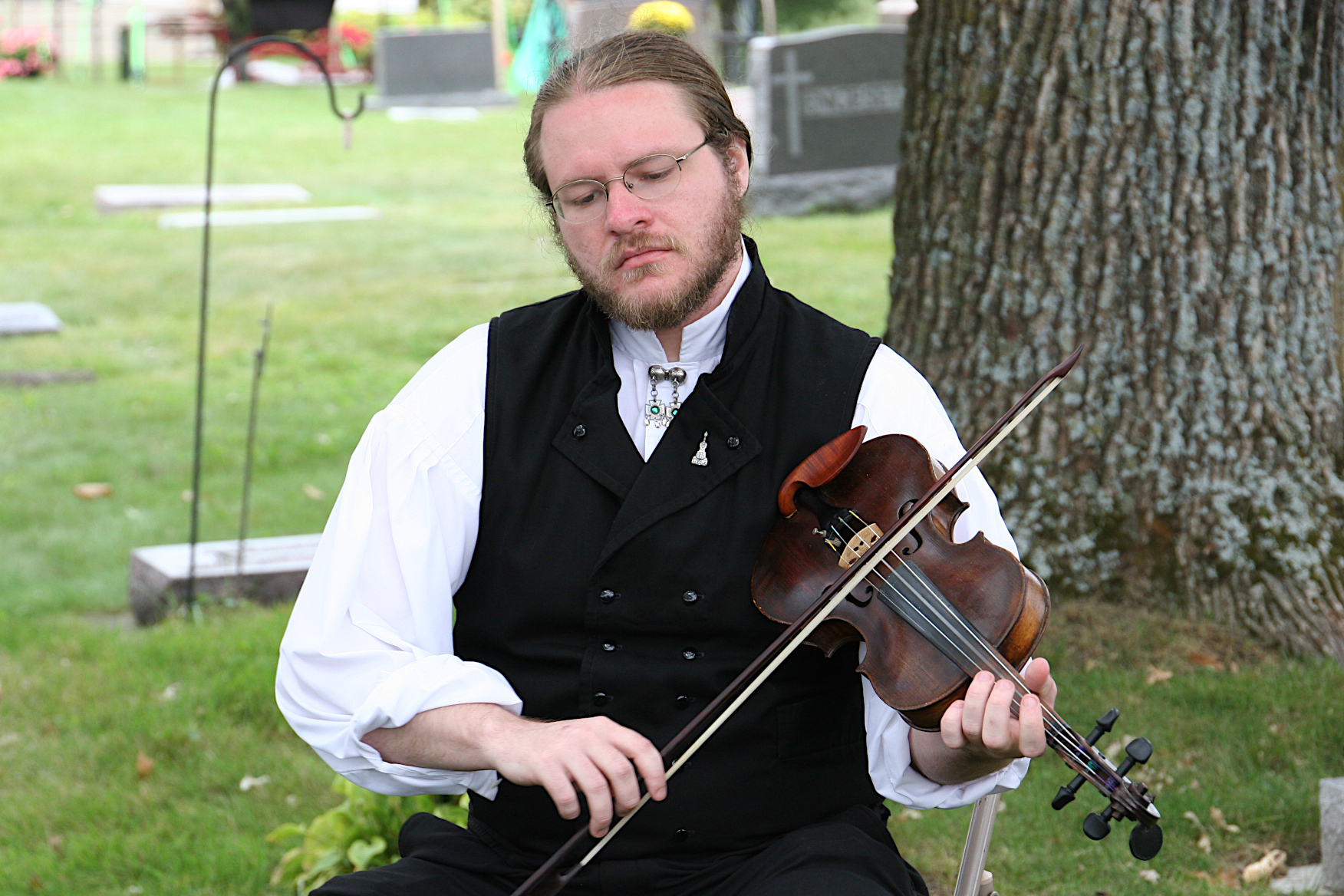
A musician performs with the group Hutenanny under the oak trees in the cemetery.
Still, whether inside or outside the two churches, a sense of the past prevails. Gravestone after gravestone bears the names of Norwegian immigrants and their descendants. Study the markers and stories begin to emerge, whether real or imagined. I can only imagine the joys and sorrows shared here.
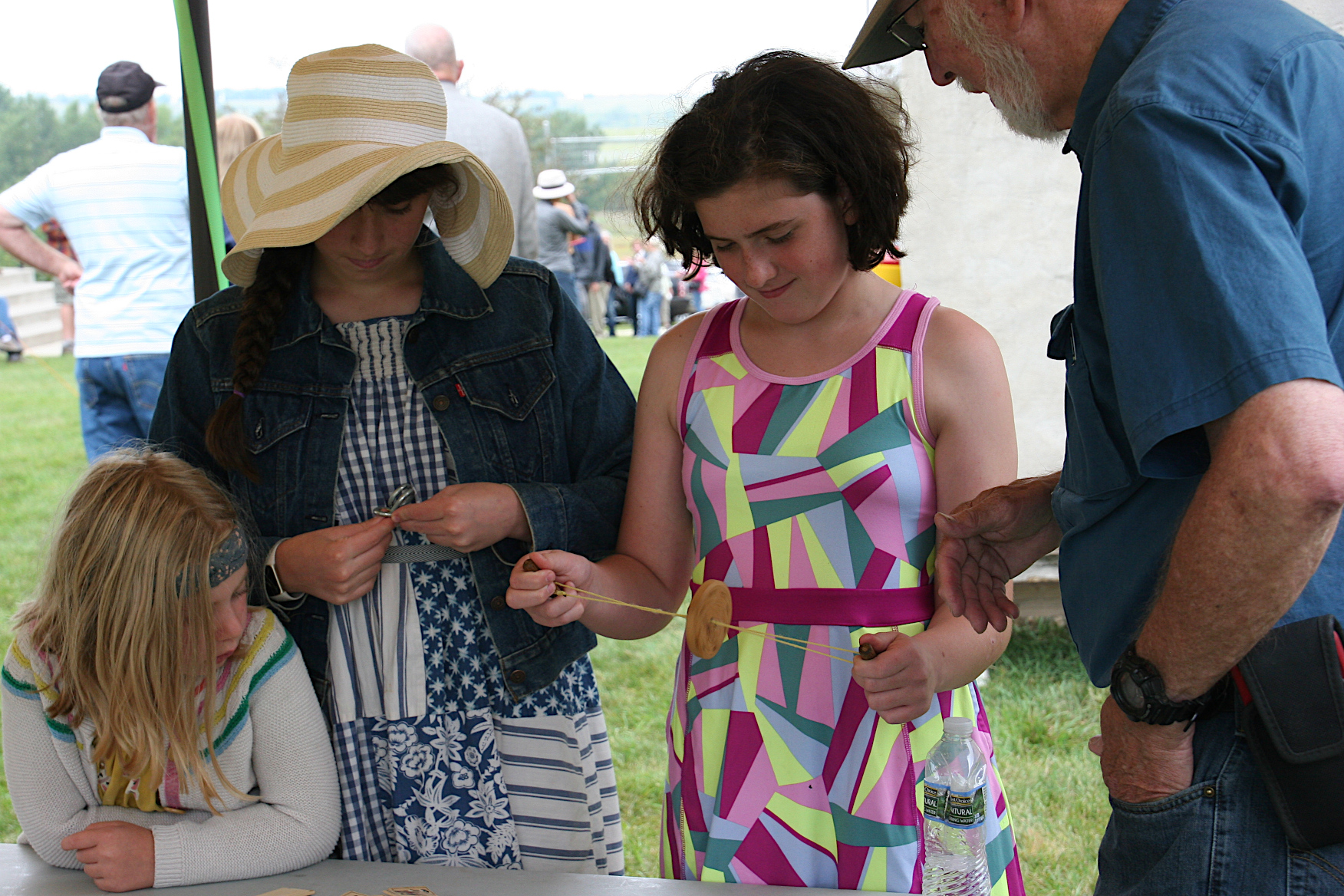
Toys of yesteryear were available to try. (Minnesota Prairie Roots copyrighted photo September 2022)
Valley Grove is about more than a place where historic churches stand next to a cemetery. It is a gathering spot for those who are celebrating, those who are grieving, those who are remembering and, on this afternoon of a Country Social, a place of connecting with community.
Signage marks an entry to Wapacuta Park near my Faribault home. (Minnesota Prairie Roots copyrighted photo September 2022)
FOR 38 YEARS I’VE LIVED in the same house, “the Swanson house,” along Willow Street in Faribault. Just below Wapacuta Park, blocks from the home of town founder Alexander Faribault. Wednesday evening I learned information about the park up the hill, about my neighborhood, which left me feeling unsettled and troubled, but newly-informed.
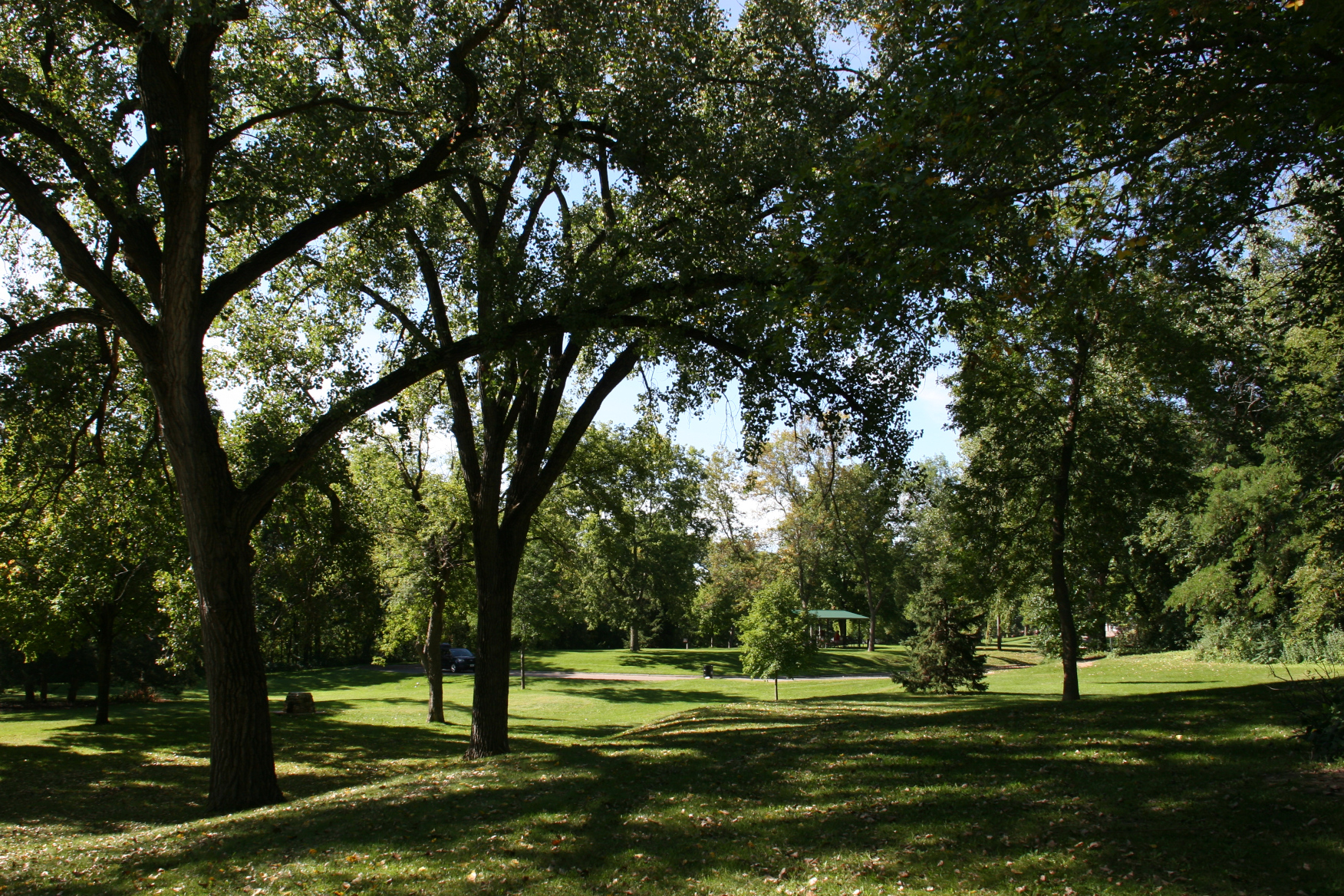
This shows just a small section of Wapacuta Park, shelter in the distance. (Minnesota Prairie Roots copyrighted photo September 2022)
The park atop the hill, according to Susan Garwood, executive director of the Rice County Historical Society, was used by the Wahpekute, one of the seven “Council Fires” of the Dakota Nation, for honoring their dead. Not for final burial of their loved ones in this place which now houses a picnic shelter, playground, disc golf course and basketball courts, but rather for the construction of scaffolding to temporarily hold the deceased. Letters and other documents verify the placement of the scaffolding in Wapacuta (incorrectly spelled) Park.
I had no idea. No idea at all that this hilltop land held such importance in the lives, and deaths, of these Indigenous Peoples who called Rice County home long before French Canadians and others settled here.
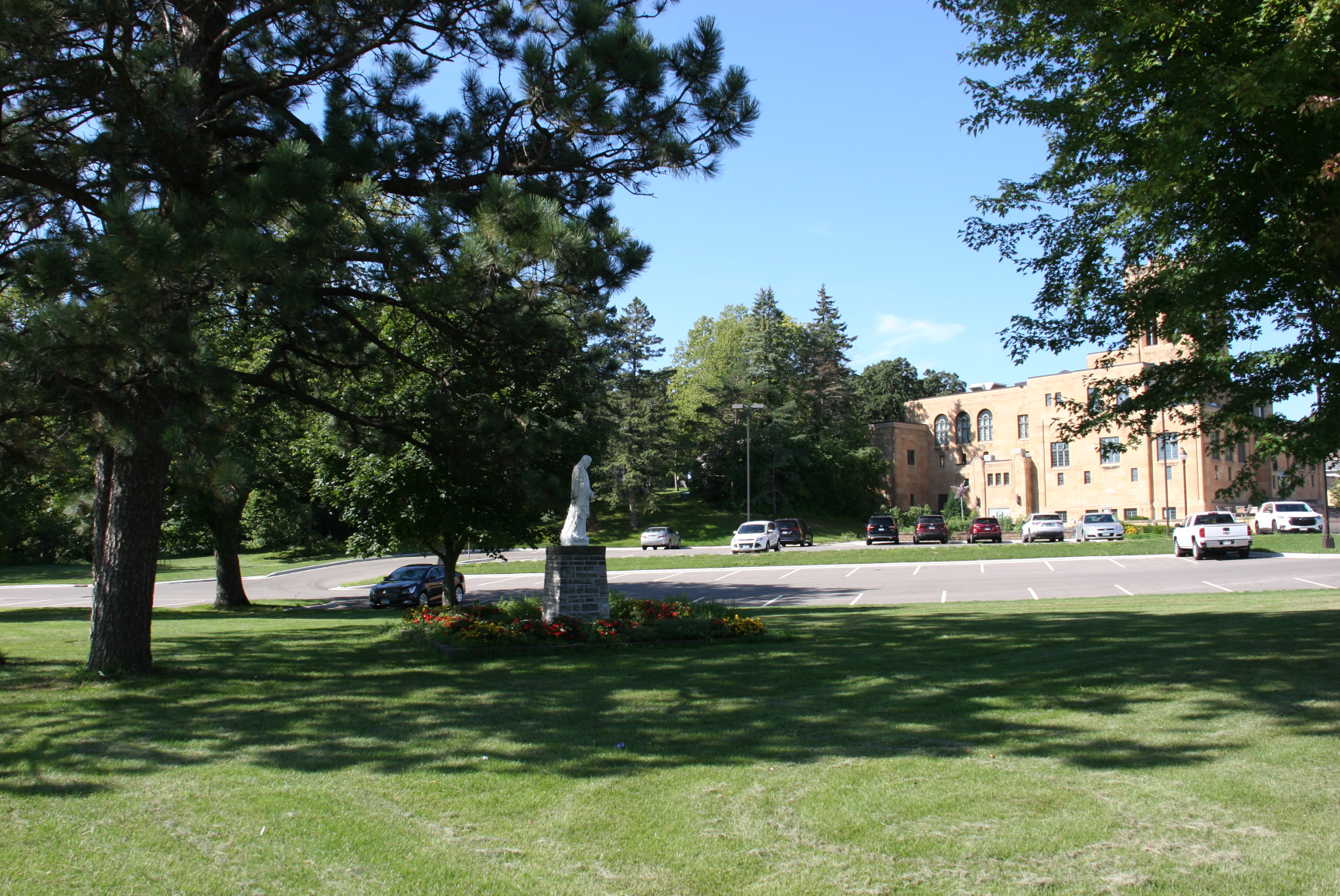
Peace Park, where Wahpekute were buried, is located near Buckham Memorial Library in the background. (Minnesota Prairie Roots copyrighted photo September 2022)
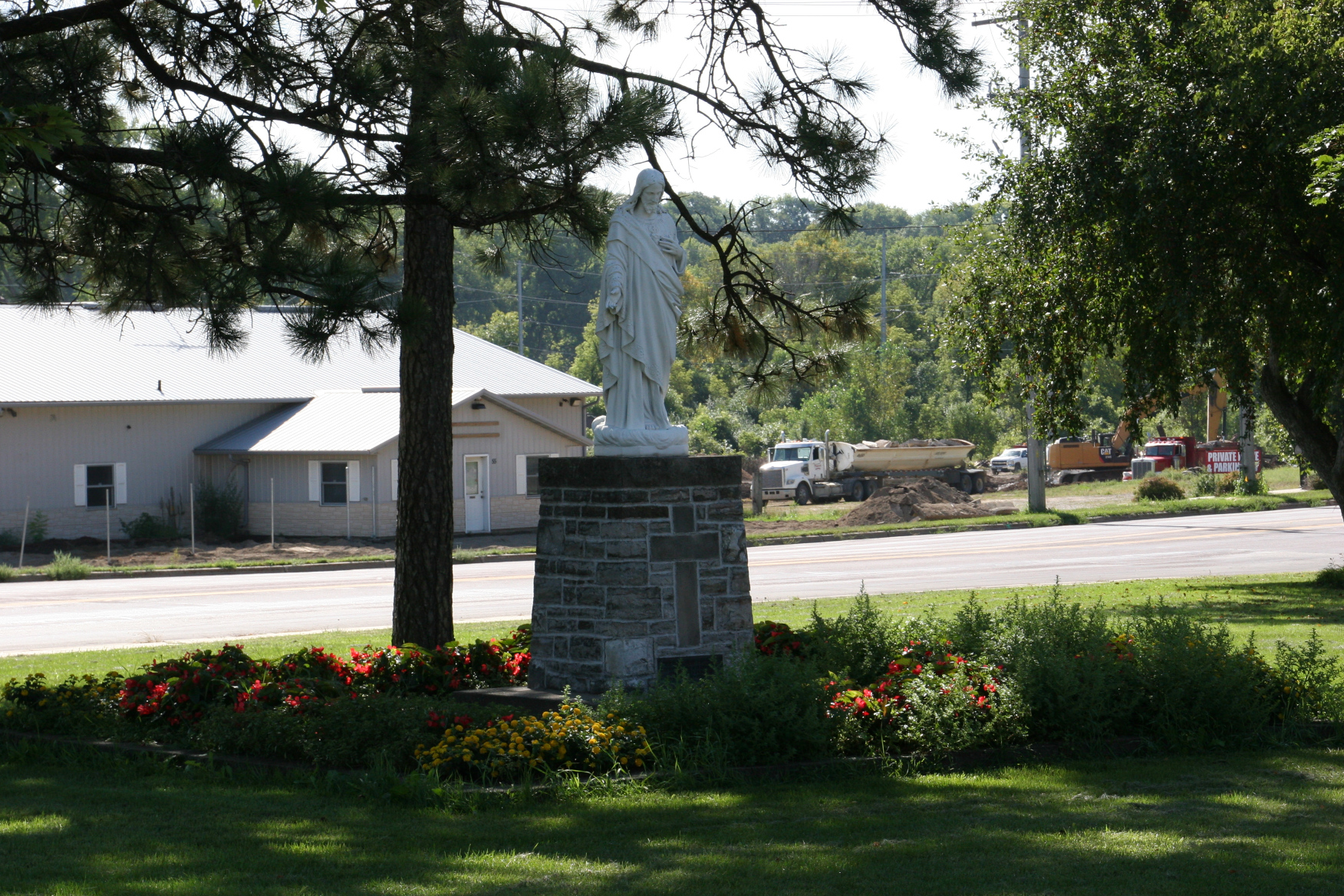
The monument in Peace Park honors those who served in WW II. There is no mention that this slice of land is a Wahpekute burial site. (Minnesota Prairie Roots copyrighted photo September 2022)
The WW II monument at Peace Park. That’s Willow Street running aside the park. The area across the road is being cleared for apartments and senior housing. (Minnesota Prairie Roots copyrighted photo September 2022)
But Garwood shared even more unknown-to-me information. After a year, the bodies of the Wahpekute were removed from the scaffolding to a nearby burial spot. That’s the current day Peace Park, located near the intersection of Minnesota State Highway 60, Division Street and Willow Street by Buckham Memorial Library. The site, she said, is considered a cemetery, confirmed many decades ago by the discovery of bones wrapped in bark and hide. There were 14 burial mounds and sacred sites in the county, according to Garwood, who said this is closely-guarded information known to historians.
To learn all of this proved enlightening and left me wondering how many others are unaware. And what can be done to raise awareness and respect? Garwood asked the same question during her public presentation on “The Indigenous History of the land that is now Rice County, Minnesota.” She was the first presenter in a new endeavor, the Faribault Diversity Coalition Speaker Series, which will introduce those who call/called Faribault home through these monthly speaking events at the Paradise Center for the Arts.
This was part of an outdoor art installment at Bridge Square during Northfield’s Earth Day celebration. (Minnesota Prairie Roots copyrighted file photo April 2022)
Near the end of her hour-plus-long talk followed by questions and comments, Garwood encouraged attendees to remember and acknowledge the Wahpekute, who are still here. She referenced a Land Acknowledgment Statement and “Eagle Relatives” sculpture now in place in neighboring Northfield. She also mentioned efforts underway to honor the culture, history and places of the Wahpekute in Faribault. She encouraged all of us to become informed, to educate ourselves, to listen to the stories of Indigenous Peoples.
These first peoples lived in harmony with nature, with the land, Garwood noted. Life changed when fur traders came to the area and a dependency grew as the Wahpekute traded for goods that would make their lives easier. The US-Dakota War of 1862, centered to the west in Redwood, Renville and Brown counties, brought more change, including the loss of life, land and relocation for Indigenous Peoples. That aspect of Garwood’s talk was familiar to me given I grew up in Redwood County.
This sculpture of Alexander Faribault with a Dakota trading partner stands in Faribault’s Heritage Park near the Straight River. Faribault artist Ivan Whillock created this artwork gracing the Bea Duncan Memorial Fountain. (Minnesota Prairie Roots copyrighted file photo)
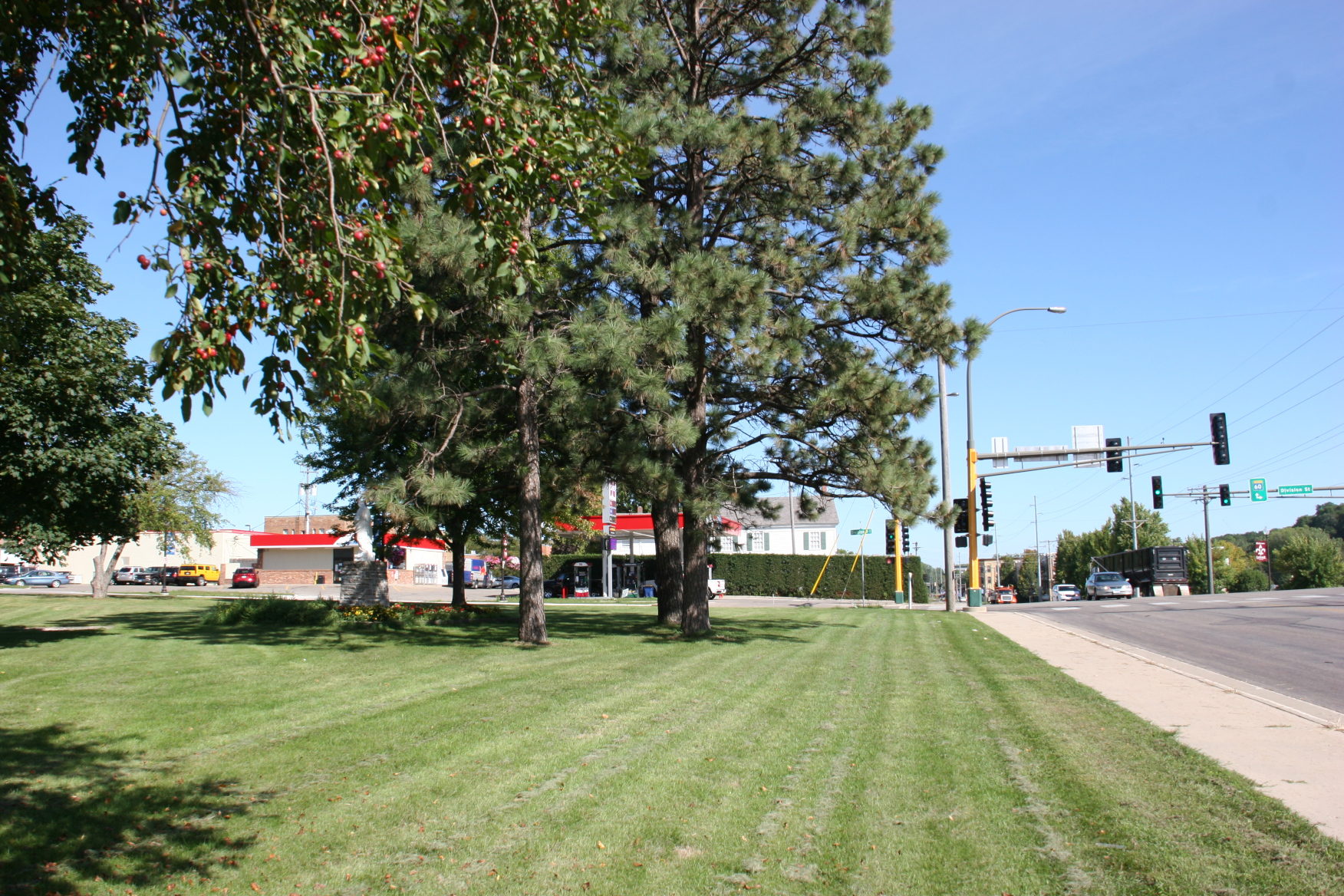
Peace Park is located at a major Faribault intersection. The Alexander Faribault house can be seen in the background, just to the right of the red-roofed gas canopies at the local co-op and behind the hedge row. (Minnesota Prairie Roots copyrighted photo September 2022)
Garwood focused primarily on the Wahpekute, the first people of Rice County, the “Shooters Among the Leaves.” They were, she said, hunters and gatherers who did not work the land but rather moved from place to place to find food, to sustain themselves. Every lake in the county was home to a Wahpekute village, she said. Rivers, too. Teepee Tonka Park along the banks of the Straight River in Faribault was among their riverside homes. Not far from Peace Park. Not far from Wapacuta Park. Near my home.
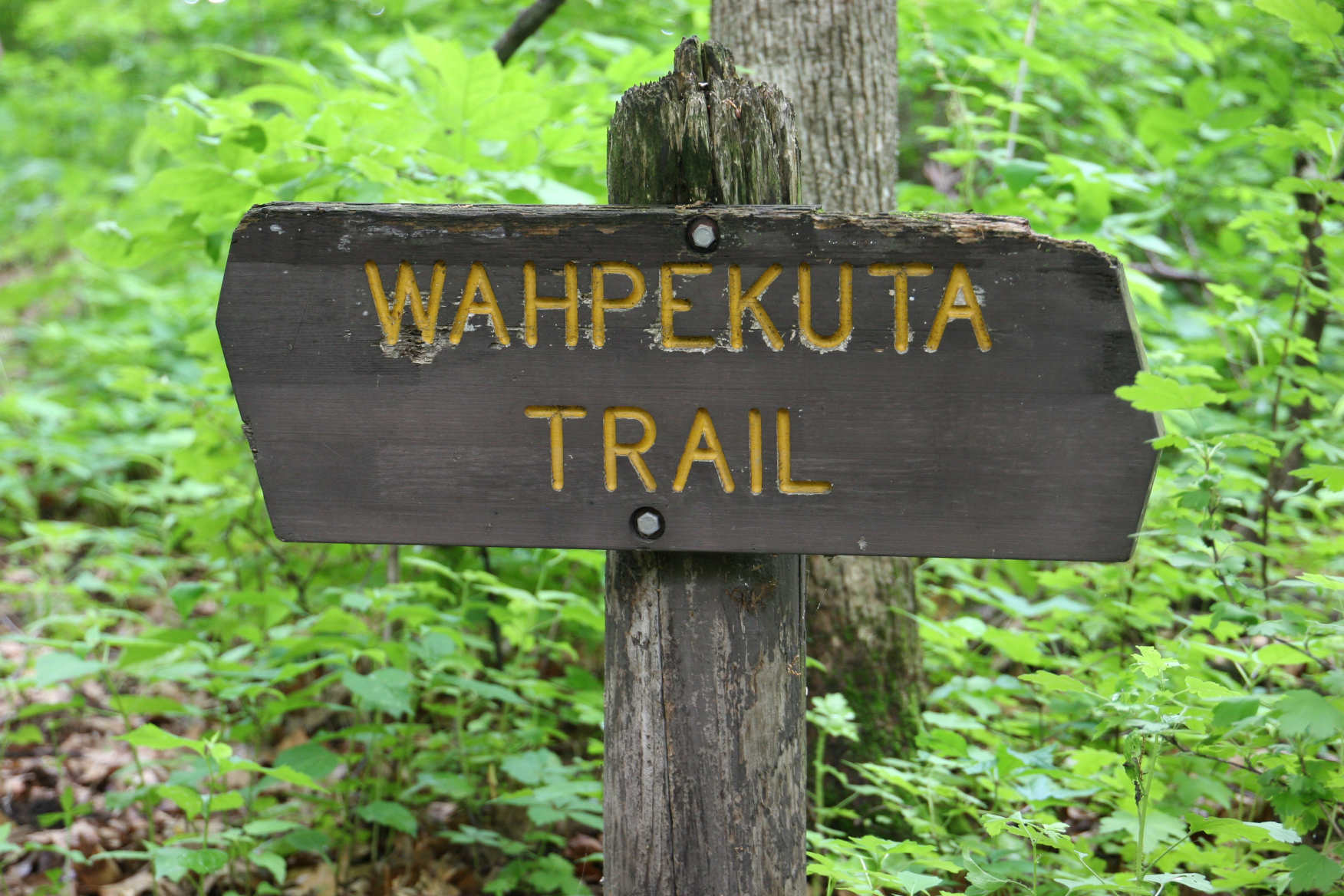
Following the Wahpekuta Trail (albeit incorrectly spelled) at Sakatah Lake State Park, rural Waterville, Minnesota. (Minnesota Prairie Roots copyrighted photo June 2022)
IF I WAS TO CLIMB the hill behind my house through the tangle of weeds, wildflowers and woods, I would reach Wapacuta Park. But it’s easier to take the street and then the mowed hillside to this Faribault city park.
Years ago, this was the go-to spot for our family—for the kids to zoom down the towering slide and scale the massive rock in the summer and to slide down the sledding hill in the winter. Today it’s a place to occasionally take the grandkids to play on the updated playground.
My research shows this sign at Sakatah Lake State Park should be spelled differently, as Wahpehkute. (Minnesota Prairie Roots copyrighted photo June 2022)
A posted map of the park. (Minnesota Prairie Roots copyrighted photo June 2022)
To the west, along Minnesota State Highway 60 between Faribault and Waterville, Sakatah Lake State Park also reflects the Dakota influence in its name. The native Dakota called the land thereon Sakatah or “singing hills” in their native language.
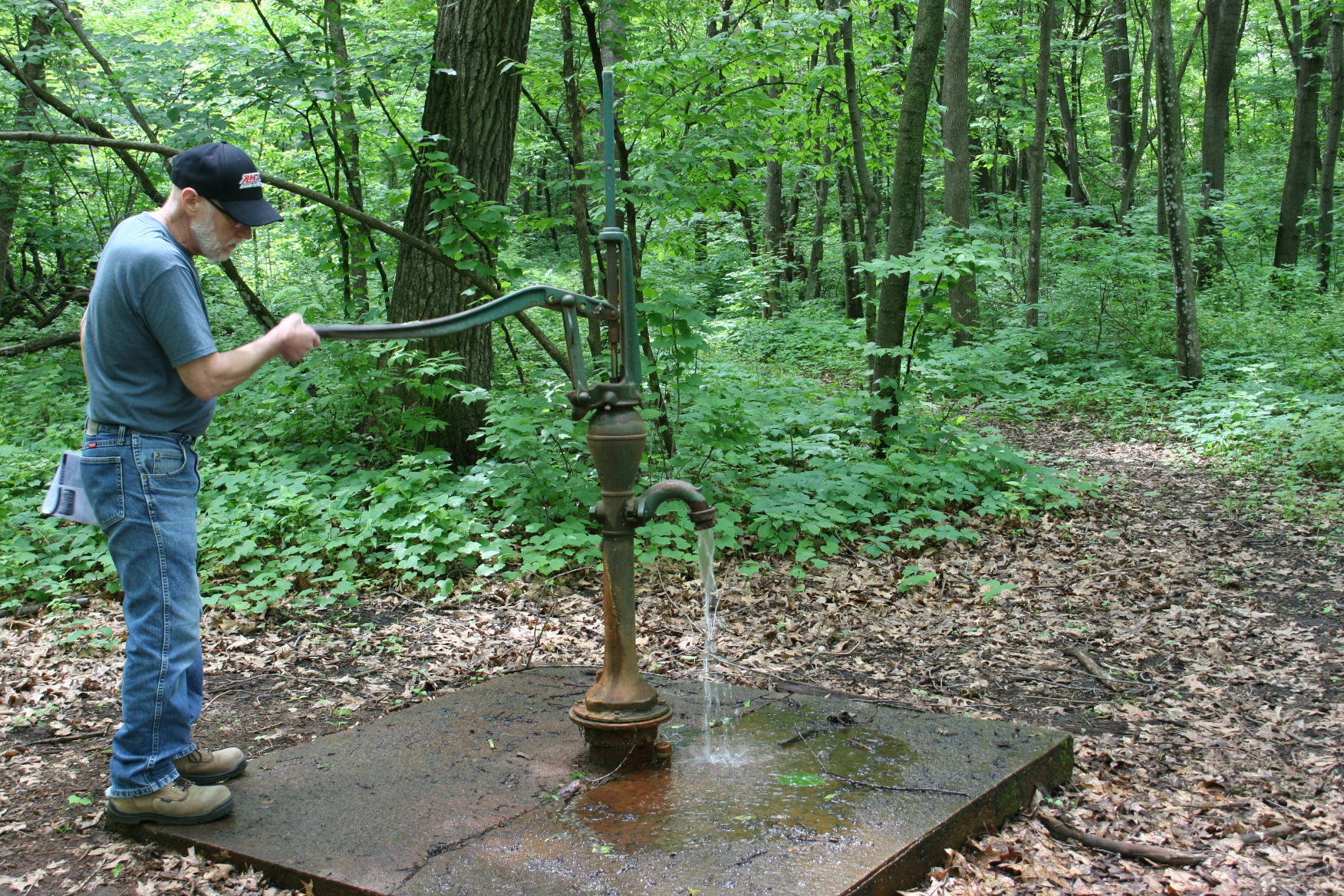
Native peoples sourced water directly from the Sakatah lakes, unlike here via a water pump. (Minnesota Prairie Roots copyrighted photo June 2022)
The Sakatah Singing Hills State Trail runs through the park for three miles. That trail spans 39 miles from Faribault to Mankato, another Dakota-sourced name correctly spelled Mahkato, meaning “greenish blue earth.” Mankato is the site of the largest mass execution in US history with 38 Dakota hung on December 26, 1862, after the US-Dakota War of 1862. It is a horrible atrocity in our state’s history and one which, to this day, remains unknown to too many Minnesotans.
Southern Minnesota lakes are typically polluted/green, not sky-tinted. Here the fishing pier at Sakatah State Park is inaccessible, not linked to land, due to excessive ice damage last winter. (Minnesota Prairie Roots copyrighted photo June 2022)
We are a state with many location names tracing back to the Dakota—Mankato, Wabasha, Wabasso, Sleepy Eye, Winona, Winnebago… Even the name Minnesota comes from the Dakota Mnisota, meaning “sky-tinted waters” and referencing the Minnesota River.
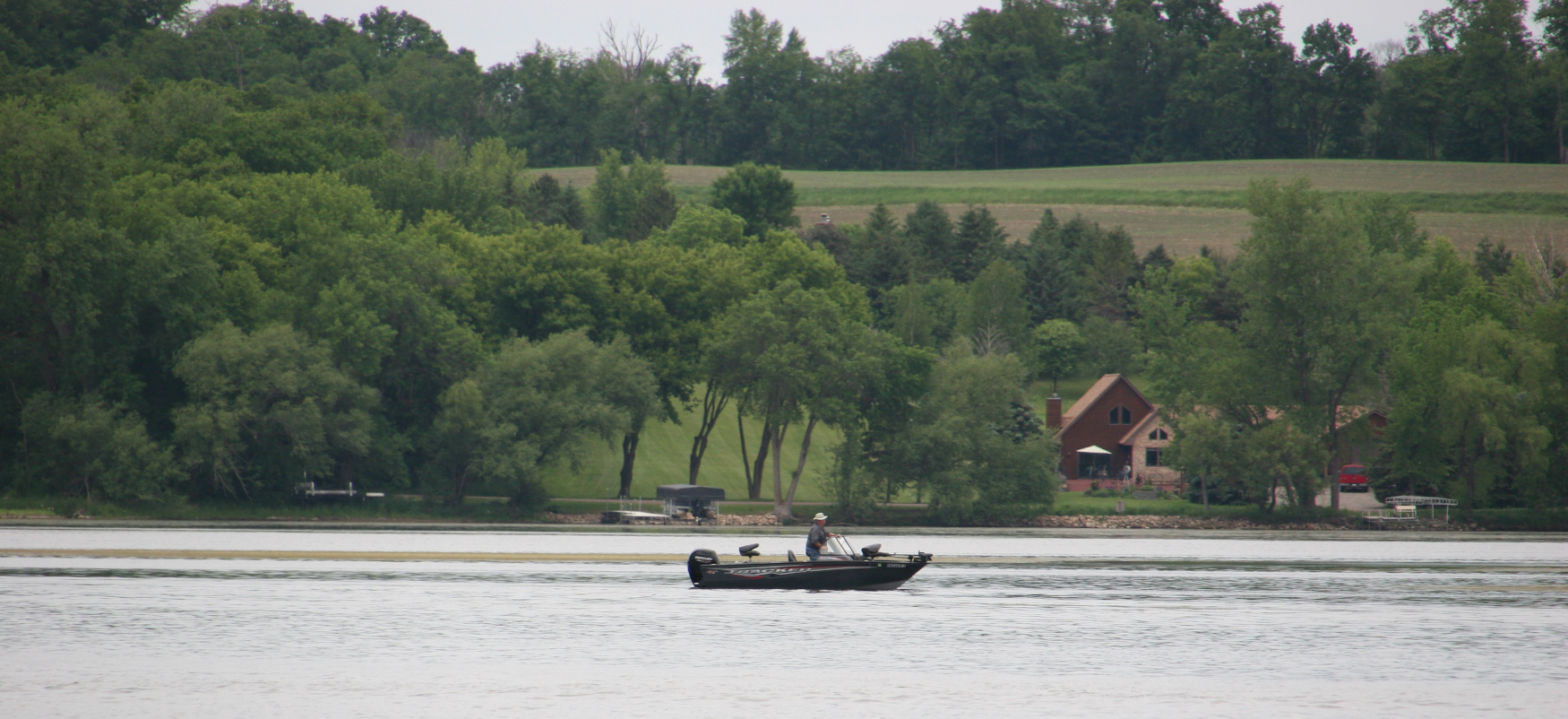
I saw several motorboats on the lake at Sakatah. (Minnesota Prairie Roots copyrighted photo June 2022)
On a mid-June visit to Sakatah Lake State Park, rural Waterville, I thought about the Dakota who lived on this land, including at a village on the point separating Upper Sakatah and Lower Sakatah Lakes. I imagined the Wahpekute gliding across the lakes in canoes, angling for fish in these waters.
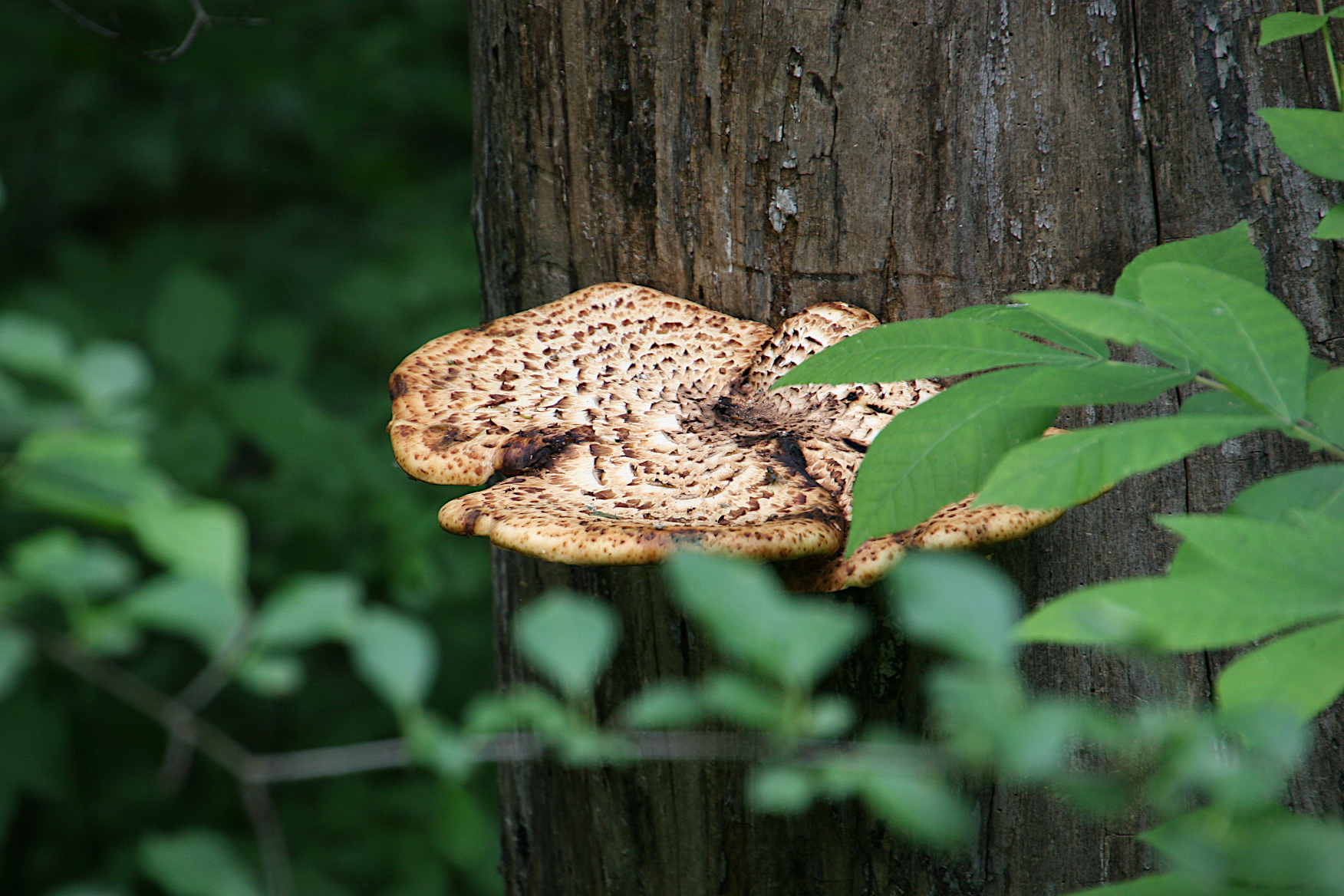
Mushrooms cling to a tree in the woods. (Minnesota Prairie Roots copyrighted photo June 2022)
Then, as I followed the Wahpekuta Trail, I wondered about hunting and berry picking and perhaps mushroom gathering in the denseness of woods.
The Sakatah campgrounds fill quickly, like many Minnesota state parks. (Minnesota Prairie Roots copyrighted photo June 2022)
And, instead of campers in these trees, I imagined tipis.
We have much to learn as we follow the trails of history.(Minnesota Prairie Roots copyrighted photo June 2022)
I have much to learn about the Wahpekute. But at least I hold basic knowledge of their early presence here, of their importance in the history of this place I call home.
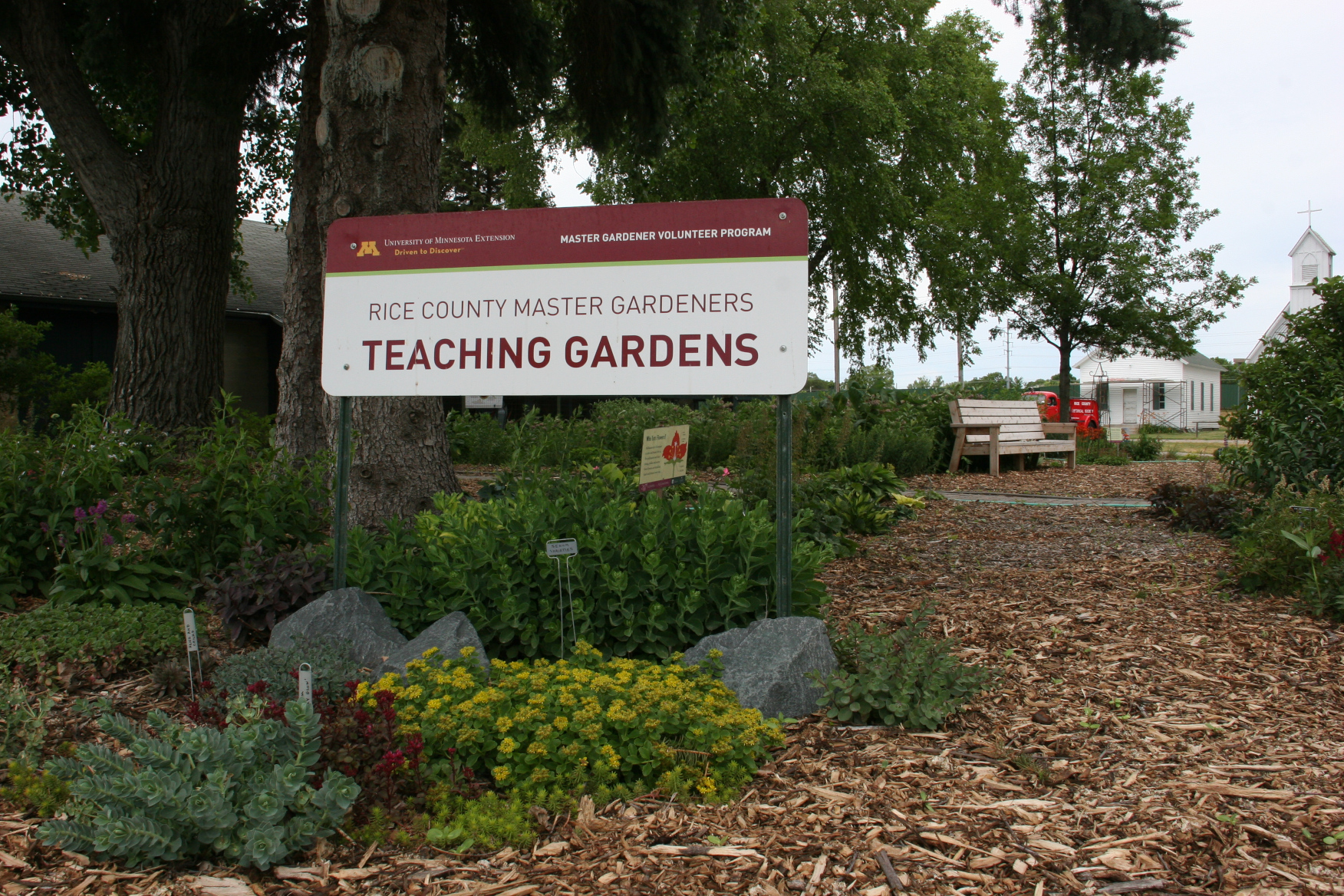
Next to the conservation building, with an historic church and school in the background, the Teaching Gardens grace the Rice County Fairgrounds.(Minnesota Prairie Roots copyrighted photo July 2022)
AT THE RICE COUNTY FAIRGROUNDS in Faribault, an unexpected oasis brings nature into a setting of buildings, grandstand and roadways. It’s a welcome respite, this Rice County Master Gardeners Teaching Gardens.
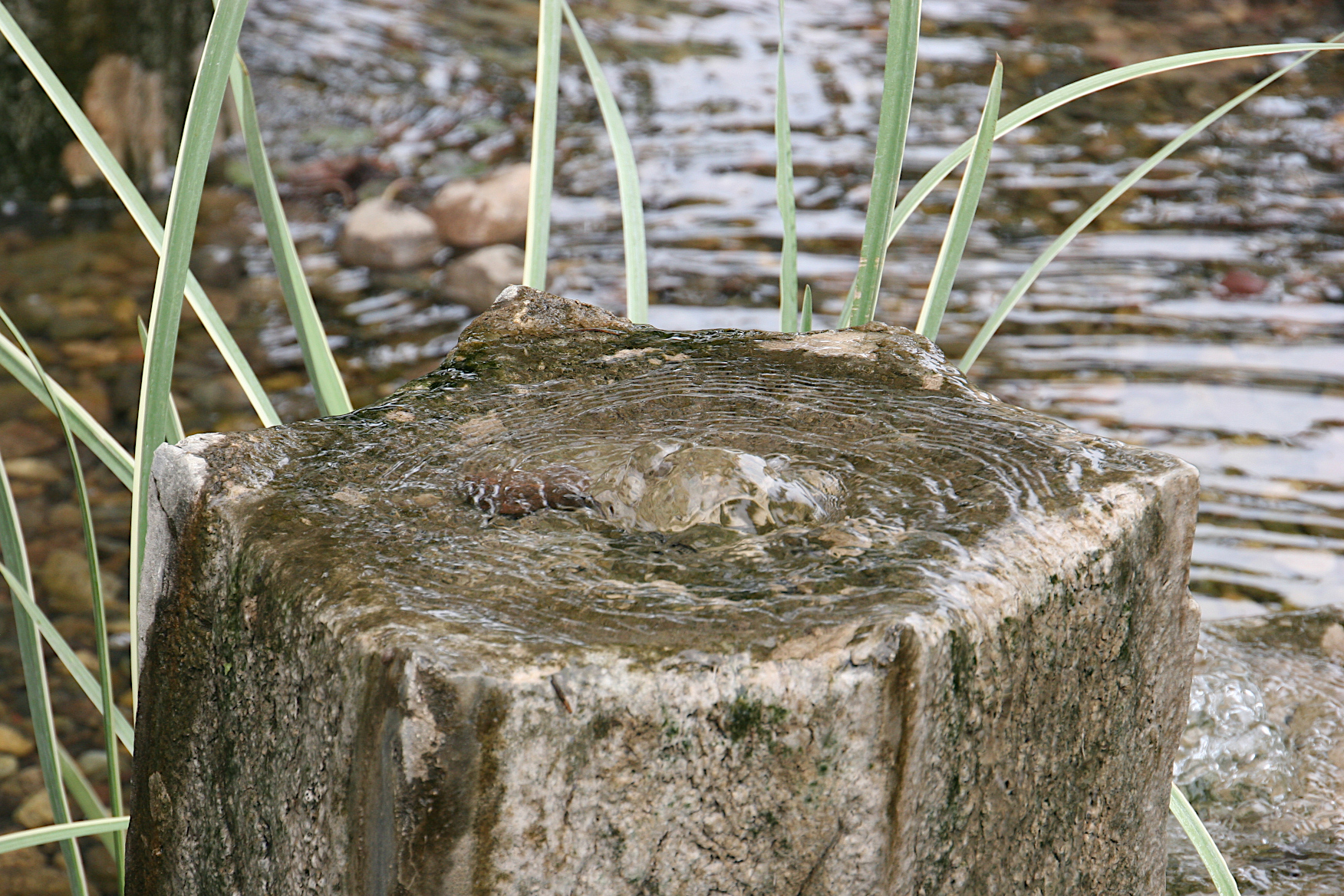
I love the “tree stump” water feature that blends so naturally into the garden. (Minnesota Prairie Roots copyrighted photo July 2022)
On a Sunday in early July, Randy and I packed a picnic lunch and set out for the fairgrounds garden, a place we haven’t previously lunched. There we settled onto a fountain-side shaded bench, the soothing rush of water creating a peaceful ambiance.
Clematis. (Minnesota Prairie Roots copyrighted photo July 2022)
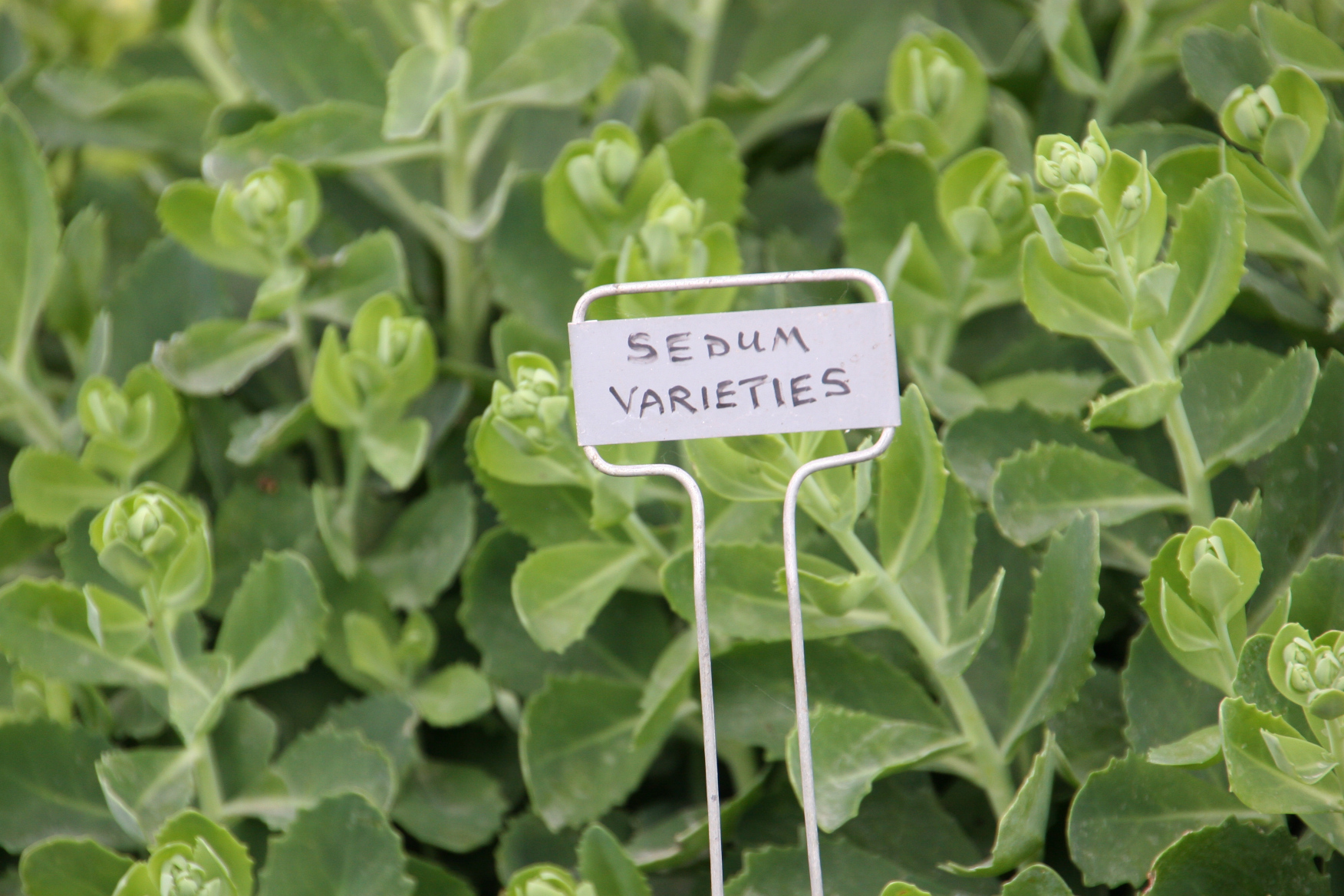
Sedum. (Minnesota Prairie Roots copyrighted photo July 2022)
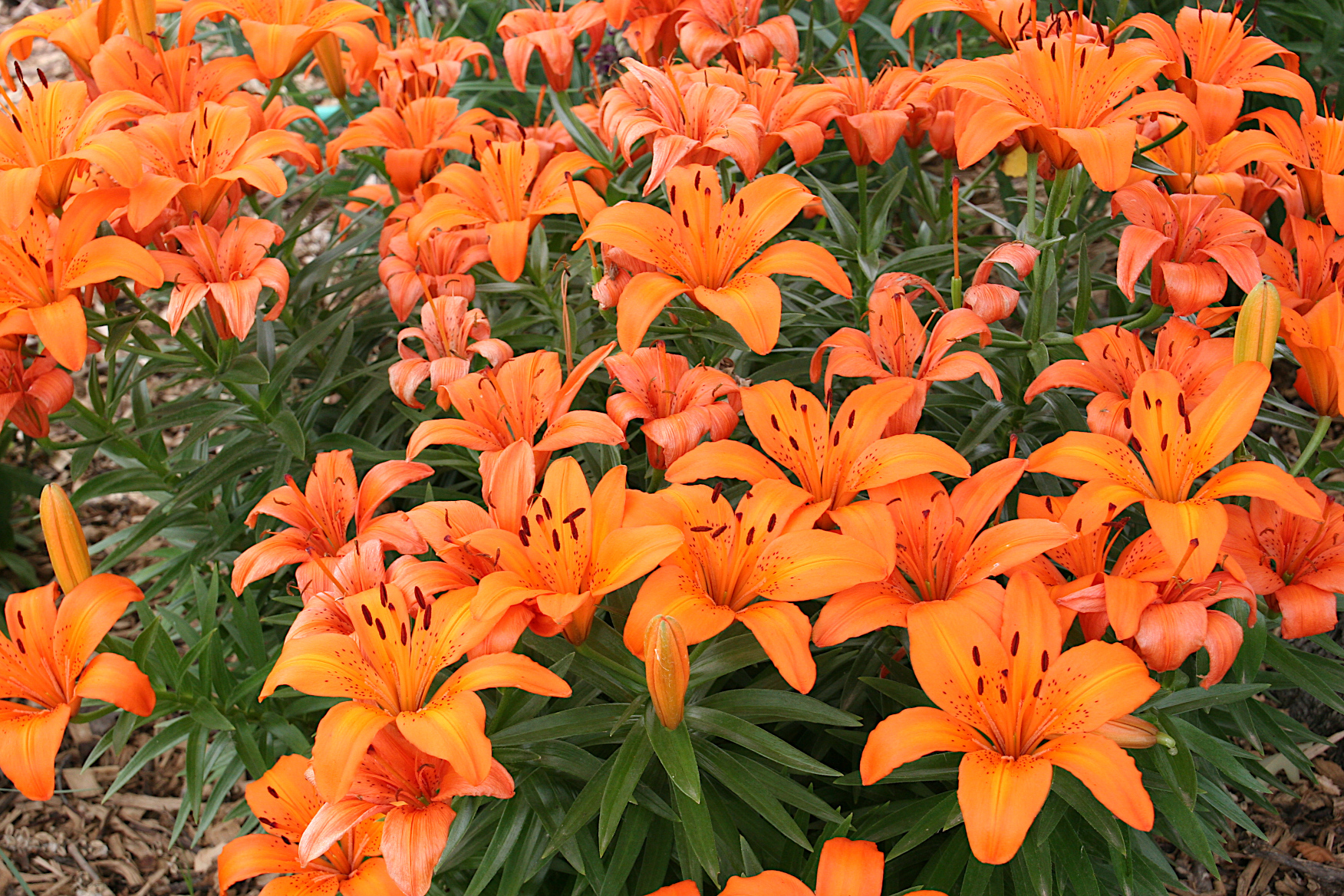
Lilies. (Minnesota Prairie Roots copyrighted photo July 2022)
Afterwards, I ambled through these gardens, admiring the plants and blooming flowers. Clematis climbing an arbor. Sedum. Hosta. Lilies and roses and Pig Squeak. Masses of milkweed for monarch caterpillars. Eggplant, prickly pear cactus, Mugo pine and much more.
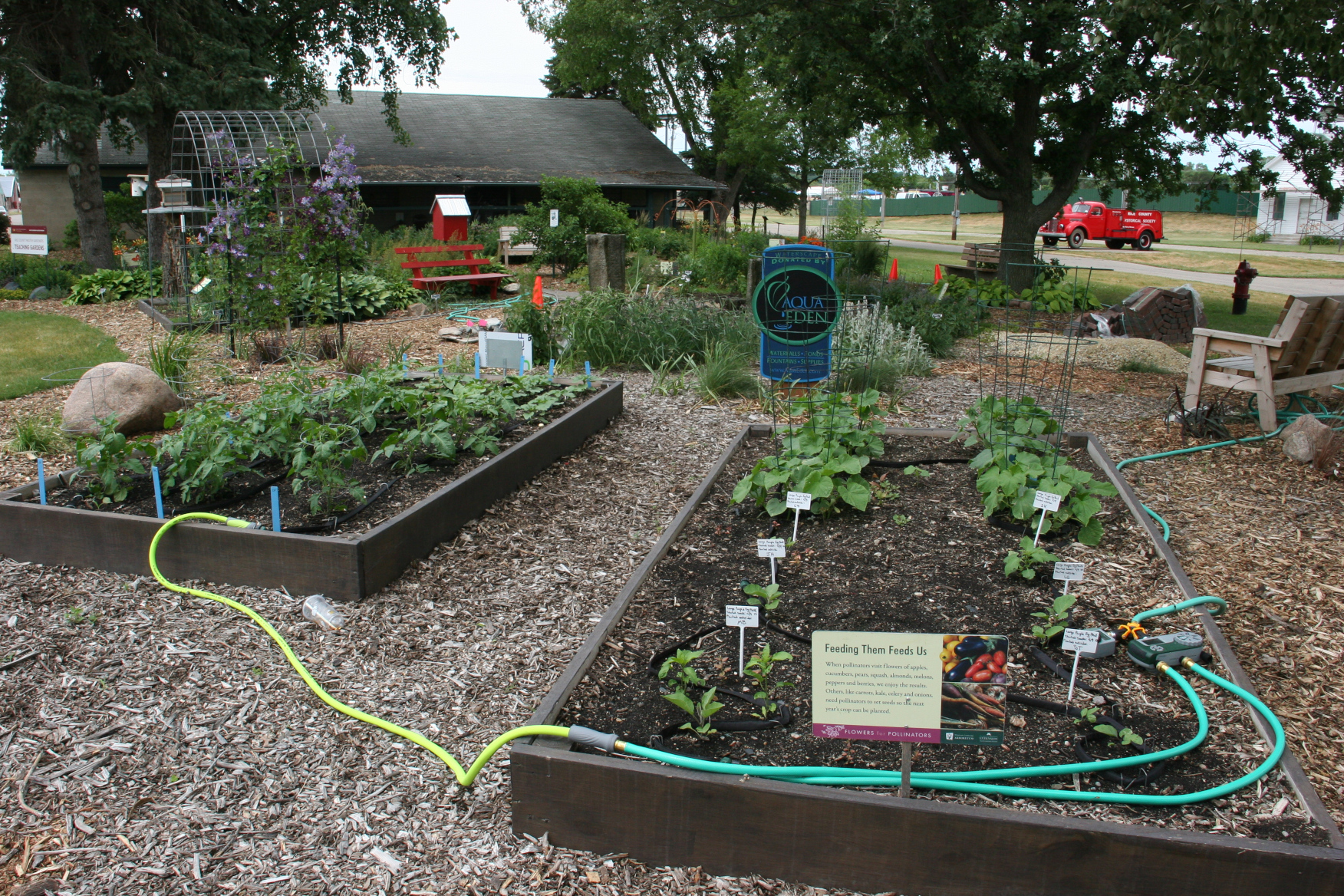
An overview of the gardens with vegetables in the foreground. (Minnesota Prairie Roots copyrighted photo July 2022)
If you’re into gardening, and even if you’re not, this compact garden patch showcases a wide variety of plants that are beautiful to behold. Some are grown as seed trial plants for the University of Minnesota.
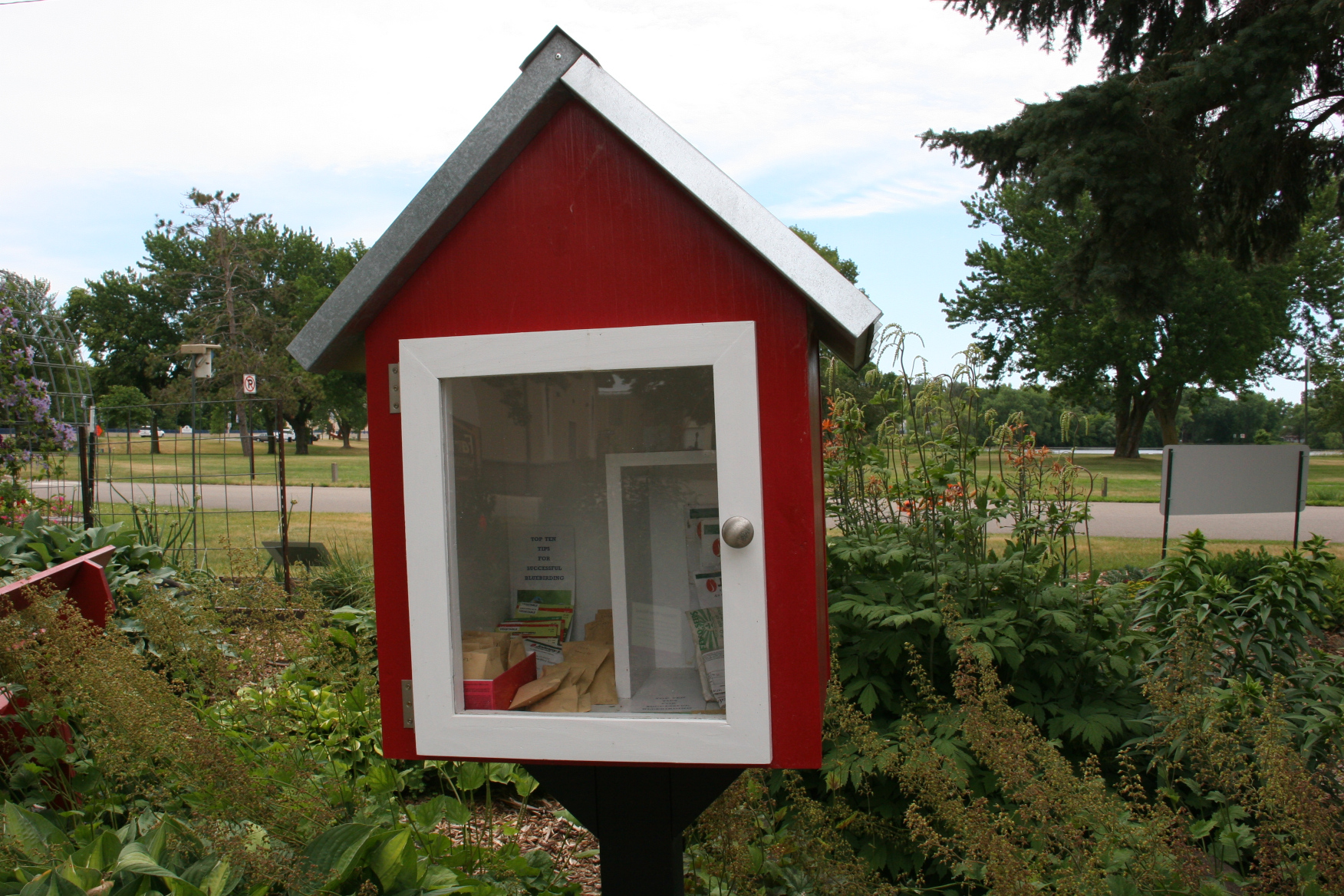
The Seed Library. (Minnesota Prairie Roots copyrighted photo July 2022)
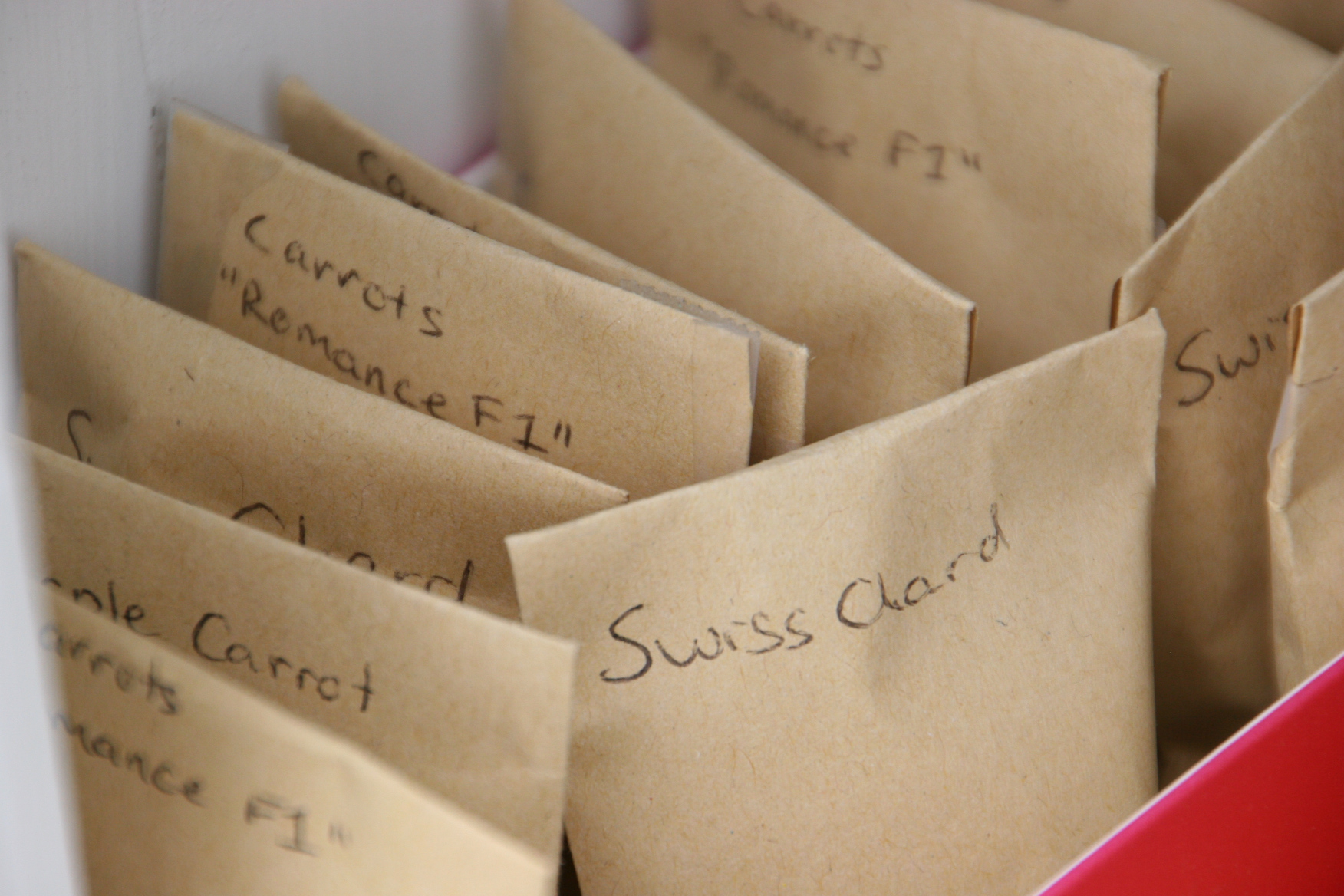
Seed packets inside the library.(Minnesota Prairie Roots copyrighted photo July 2022)
There’s a seed library, too, with packets of seeds tucked into a tiny red house similar to a Little Free Library.
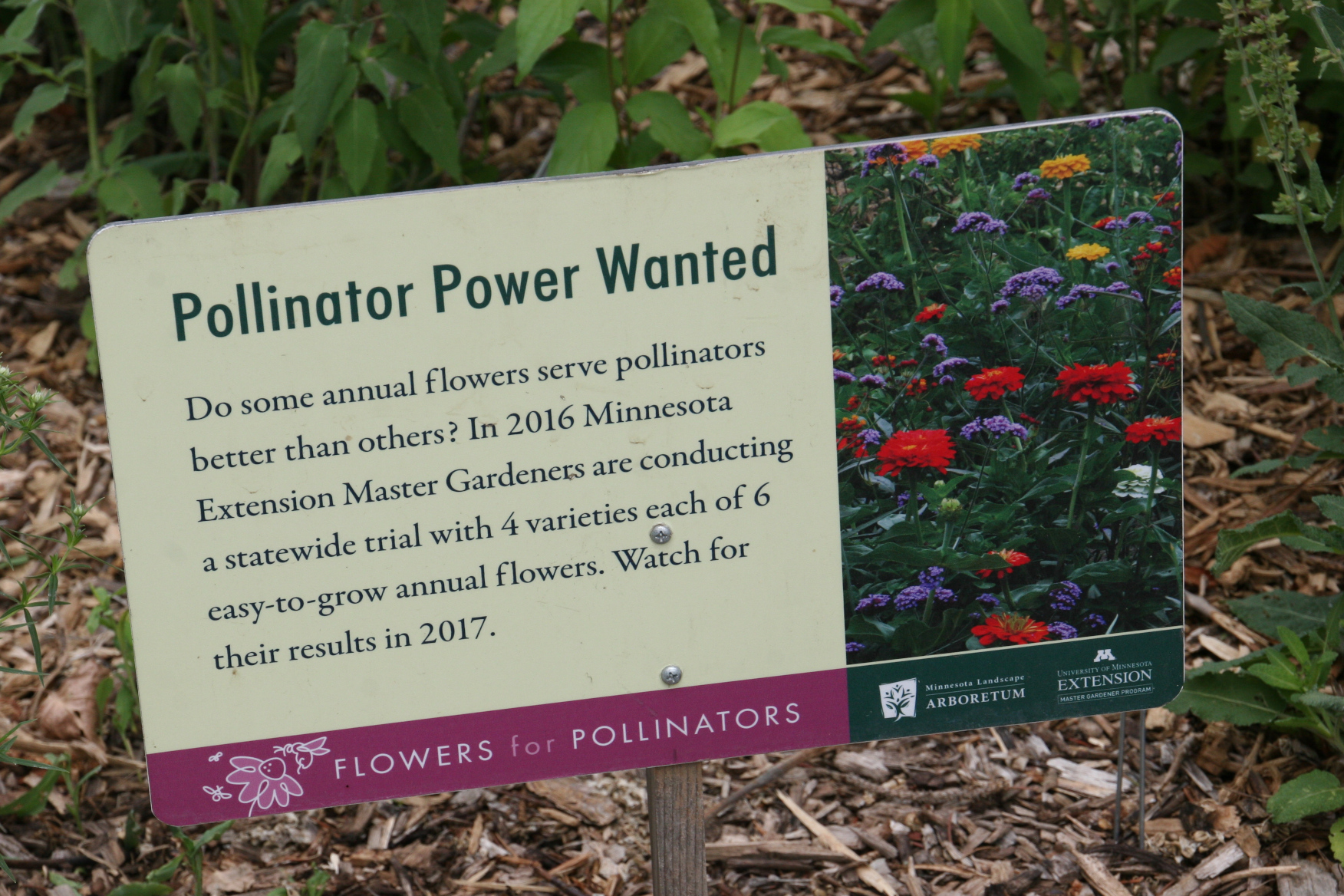
Informational signage in the gardens. (Minnesota Prairie Roots copyrighted photo July 2022)
Strategically-placed signs identify plants and provide information about gardening in general. This is, after all, a teaching garden.
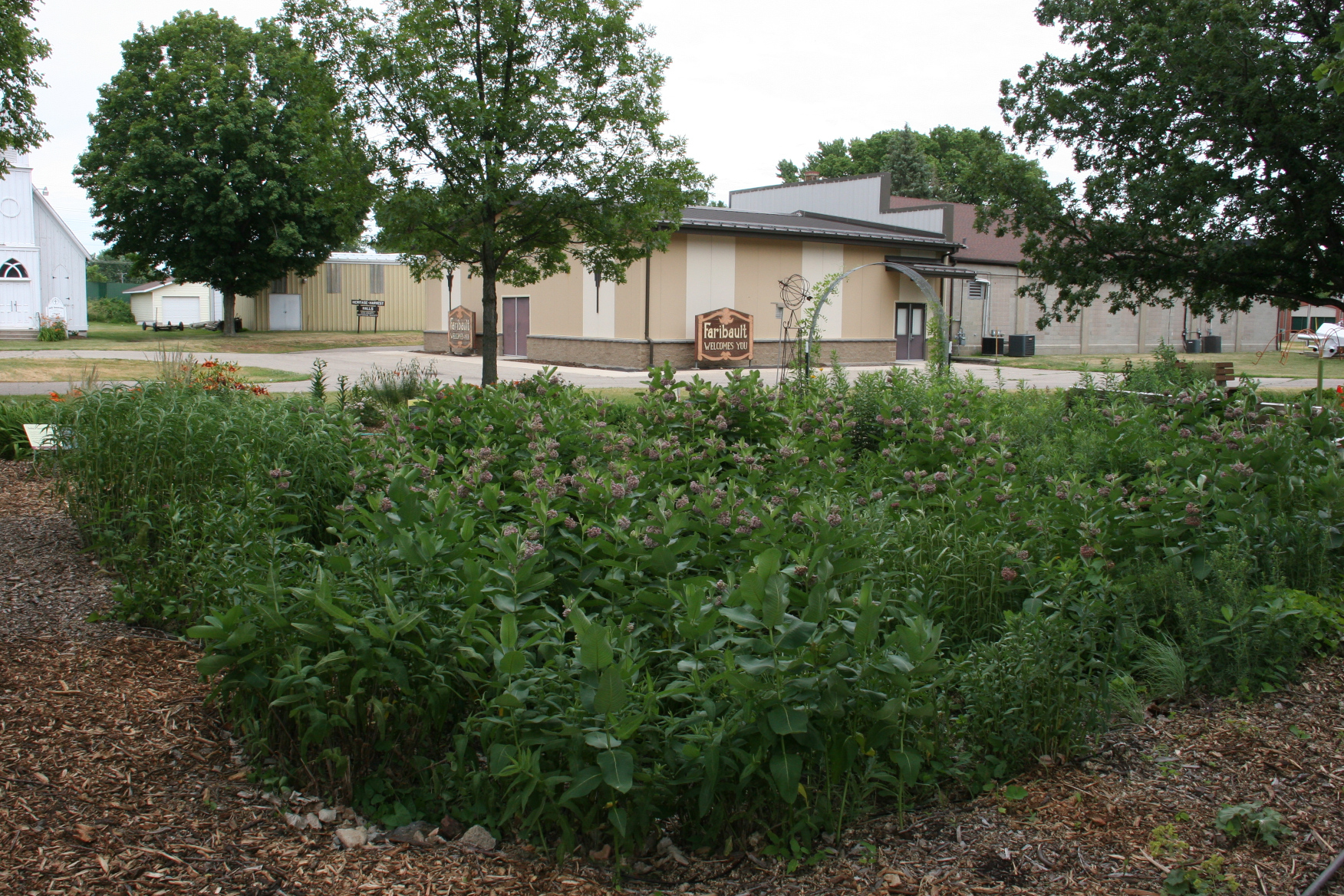
The milkweed patch with the Rice County Historical Society in the background. (Minnesota Prairie Roots copyrighted photo July 2022)
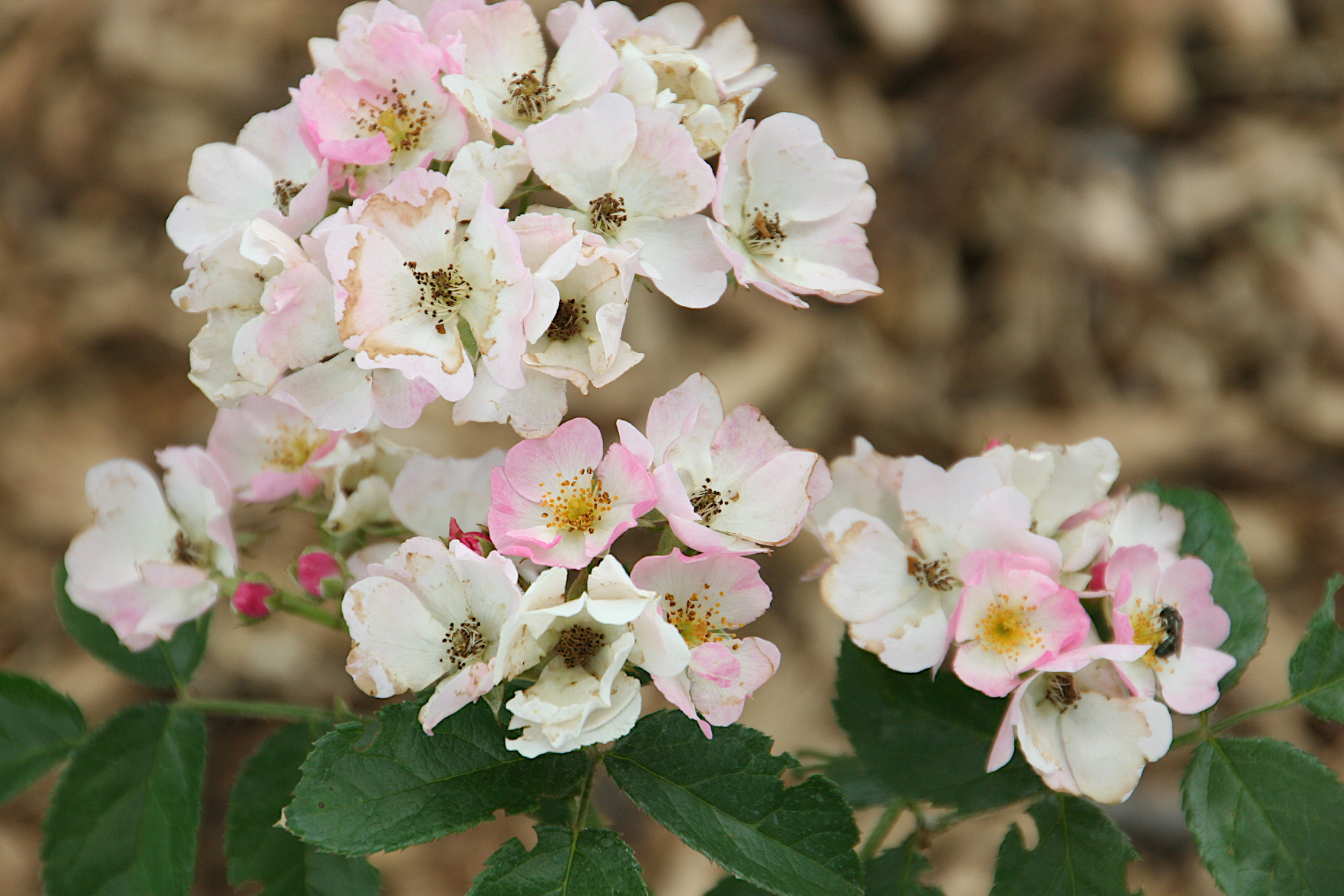
Roses. (Minnesota Prairie Roots copyrighted photo July 2022)
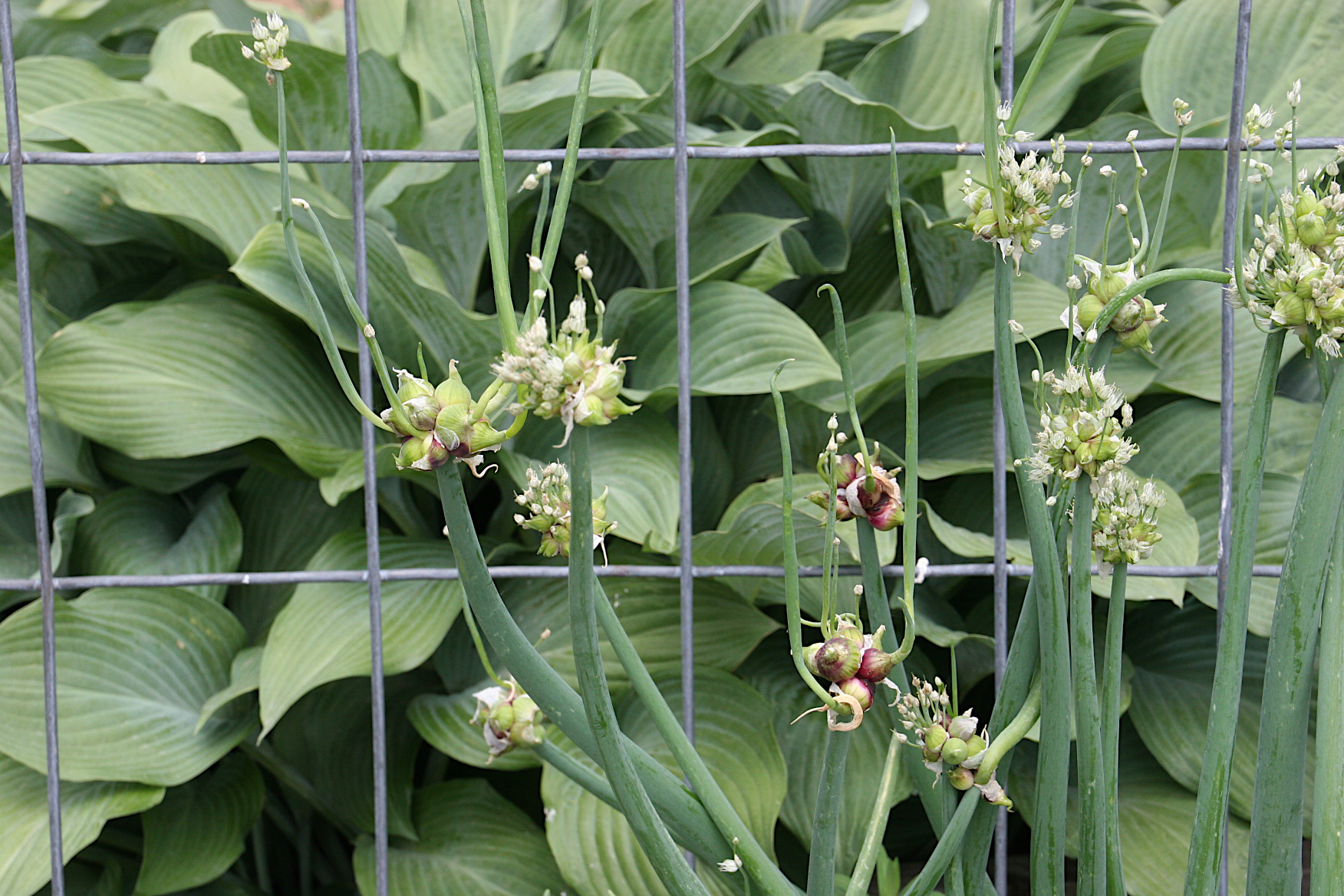
I believe these are onions gone to seed. (Minnesota Prairie Roots copyrighted photo July 2022)
But for me, these gardens proved primarily a spot to retreat for a bit, to immerse myself in a place that feels restful, soothing, calming. Connecting to nature, whether in a natural or cultivated setting always, always renews my spirit.
TELL ME: Have you found a similar oasis mini garden where you live?
Please check back for more photos from this lovely teaching garden in additional posts.
I see grief in the grey tile, part of a “Love Remains” mosaic displayed on the exterior of the Faribault Area Chamber of Commerce and Tourism office. Barb Larson, a Chamber employee, was murdered there in 2016, shot to death by her ex-husband, a former Faribault police officer. (Minnesota Prairie Roots copyrighted file photo)
I HAD A MUCH DIFFERENT POST planned for today. But then the identity of a homicide victim was released by the Rice County Sheriff’s Department and my focus shifted. I knew the 41-year-old man shot to death in neighboring Morristown early Tuesday morning. A suspect was arrested at the scene and has been charged with second-degree murder.
The victim, Brian, grew up two blocks away, where he and his sister lived with their grandparents. The siblings attended the same Christian day school as my children. The pair were older. On the occasional days the school bus didn’t run, their grandpa would stop to pick up my girls and all four kids rode to school together.
Much time has elapsed since then. Yet, I remember Brian, his short, slim frame and reddish hair. Many years have passed since I’ve seen him out and about walking around Faribault, always wearing a backpack. I have no idea what he did in life, but that connection to him and his family all those years ago means something. My heart hurts for his sister.
WITHIN MY CIRCLE OF CONNECTIONS
This isn’t the first time homicide has indirectly affected me. In May 2004, the father of a close friend was murdered. In May 2010, the sister of a blogger friend from Duluth was murdered by her ex-husband. In May 2013, a former neighbor’s daughter and unborn baby were killed by their husband/father.
Violence has touched my life too many times.
IN MY NEIGHBORHOOD
In May 1999, a SWAT team swept through my neighborhood searching for a knife used in the stabbing death of a 19-year-old some two blocks from my house.
On another occasion, a breathless young man showed up on our doorstep one evening, pleading for us to let him inside. Randy and I refused, not wanting to put ourselves or our family in danger. Instead I called 911. As I begged the police to hurry, a group of men rounded the corner of our house obviously looking for the guy at our door. That they didn’t dash up our front steps and attack him still surprises me all these years later. The potential for violence was real. Eventually law enforcement arrived and left with the young man safely inside a squad car.
And then there was the middle-of-the-night awakening to a woman across the street screaming for help. Screaming for someone to call 911, which I did. Again, I urged officers to hurry. Eventually police arrived as did an ambulance. I never learned what happened on that night all those years ago, only that no one died.
When I count all of these violent acts to which I have been indirectly exposed, I consider the number high. I expect most of you have never known a murder victim (or a murder victim’s family) or had to call 911 to report a crime in progress. I’m thankful if that fits you.
HOW I’VE REACTED
I’ve learned a few things through these experiences. I’ve learned that, no matter who you are or where you live, violence can touch you personally. And when it does, you find the strength, the resolve, the ability to do something. That may mean making a 911 call. That may mean showing up with food and a hug and doing anything you can to support a friend. That may mean mailing an encouraging card, phoning, texting, emailing. Remembering. For those families who’ve lost loved ones to acts of violence, remembering is vitally important. Their lives are forever changed and they need our love and support.
These are my thoughts today as I consider how violence has, once more, indirectly entered my life.
Aiming my camera lens skyward on a beautiful mid-May afternoon at Falls Creek County Park, rural Faribault. (Minnesota Prairie Roots copyrighted photo May 15, 2022)
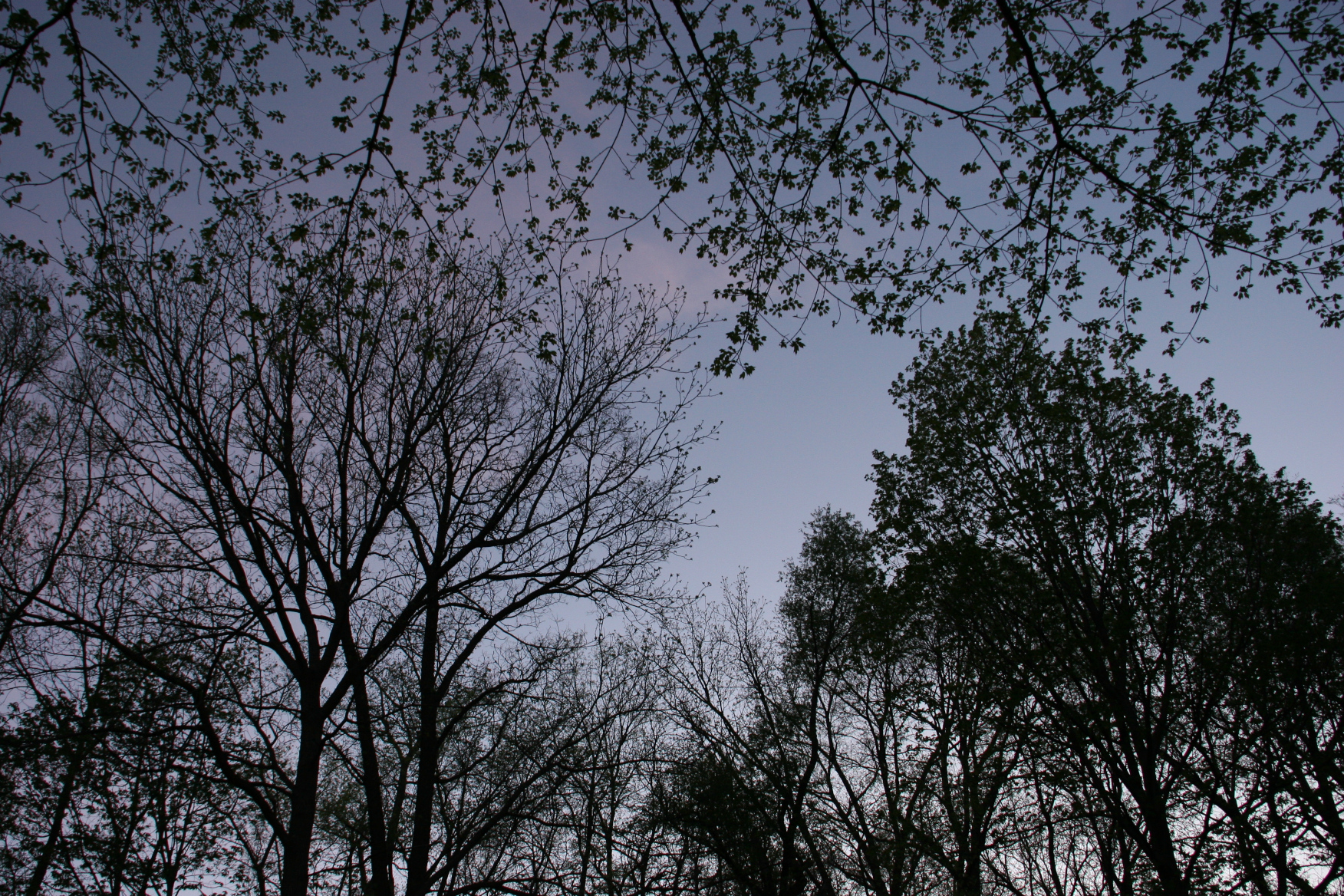
I FIND MYSELF, daily, tipping my head back to view the trees, leaves unfurling, greening the landscape.
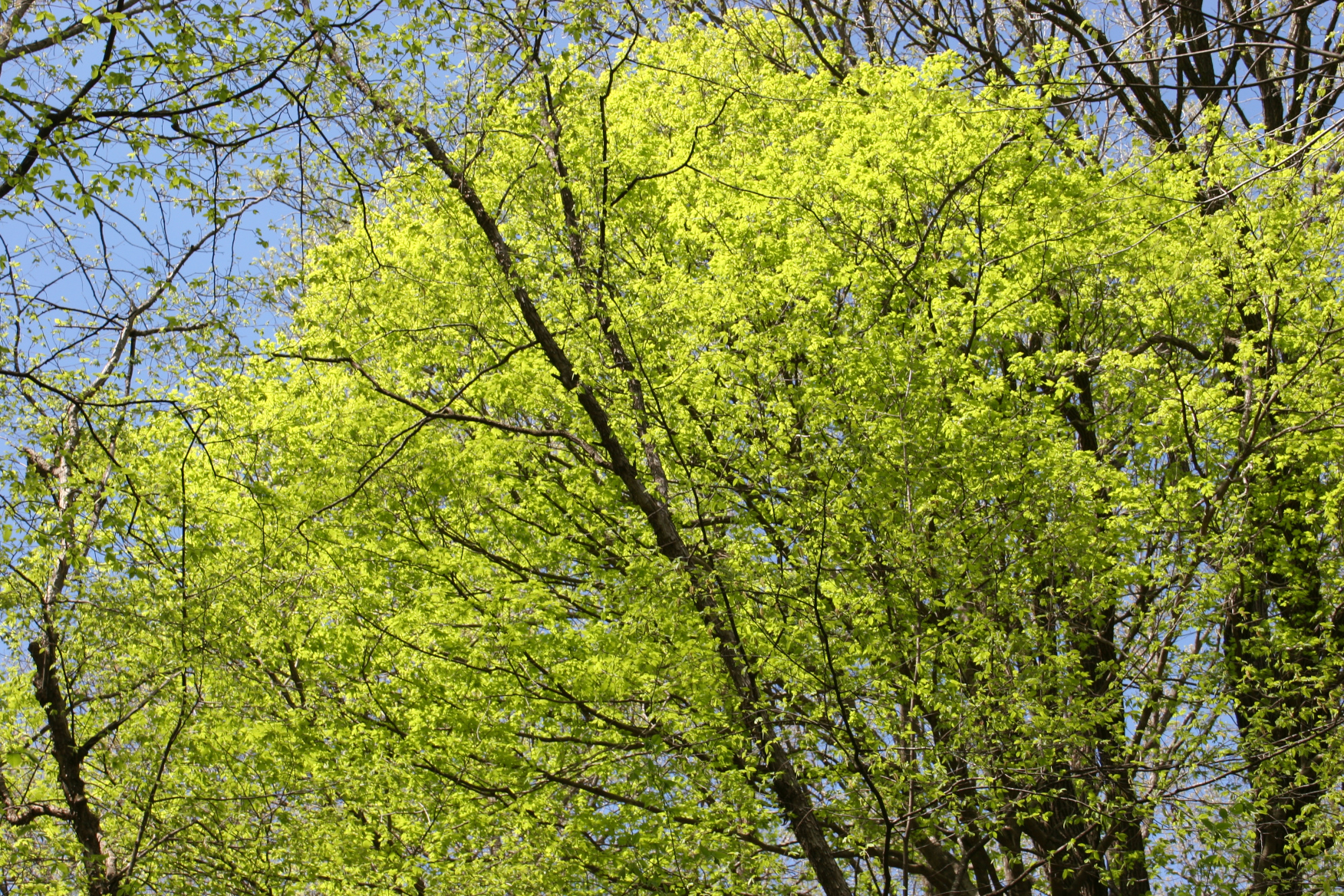
An especially vivid green tree in the woods at Falls Creek Park. (Minnesota Prairie Roots copyrighted photo May 2022)
In these early days of a much-too-late spring in Minnesota, the greens appear especially intense, vivid, lush. The infusion of color is almost like visual overload after months of living in a colorless, drab world. I welcome the change with my eyes wide open.
At sunset, hillside trees and the maple in my backyard create an artsy scene. (Minnesota Prairie Roots copyrighted photo May 2022)
From the woods that bump against my backyard to area parks and nature centers, I feel such gratitude for places where I can immerse myself in nature. Even if that’s simply looking skyward.
Even though buckthorn is an invasive tree, the scent of its flowers is lovely. Photographed at Falls Creek County Park. (Minnesota Prairie Roots copyrighted photo May 2022)
In this tech-centered world, we need to pause, to take a break, to connect, really connect, with nature. Falls Creek County Park, just east of Faribault along Minnesota State Highway 60, offers such a place to embrace the natural world.
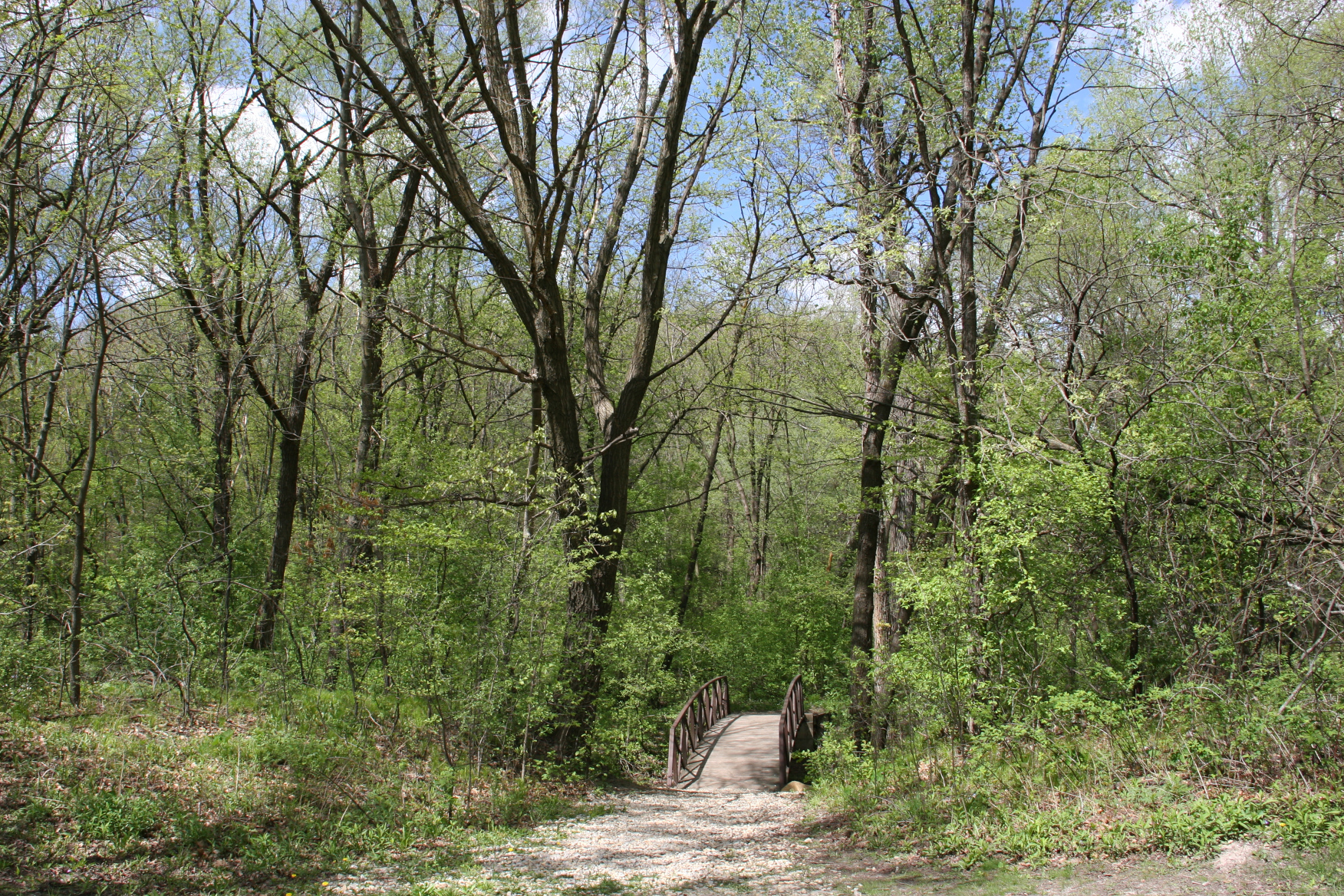
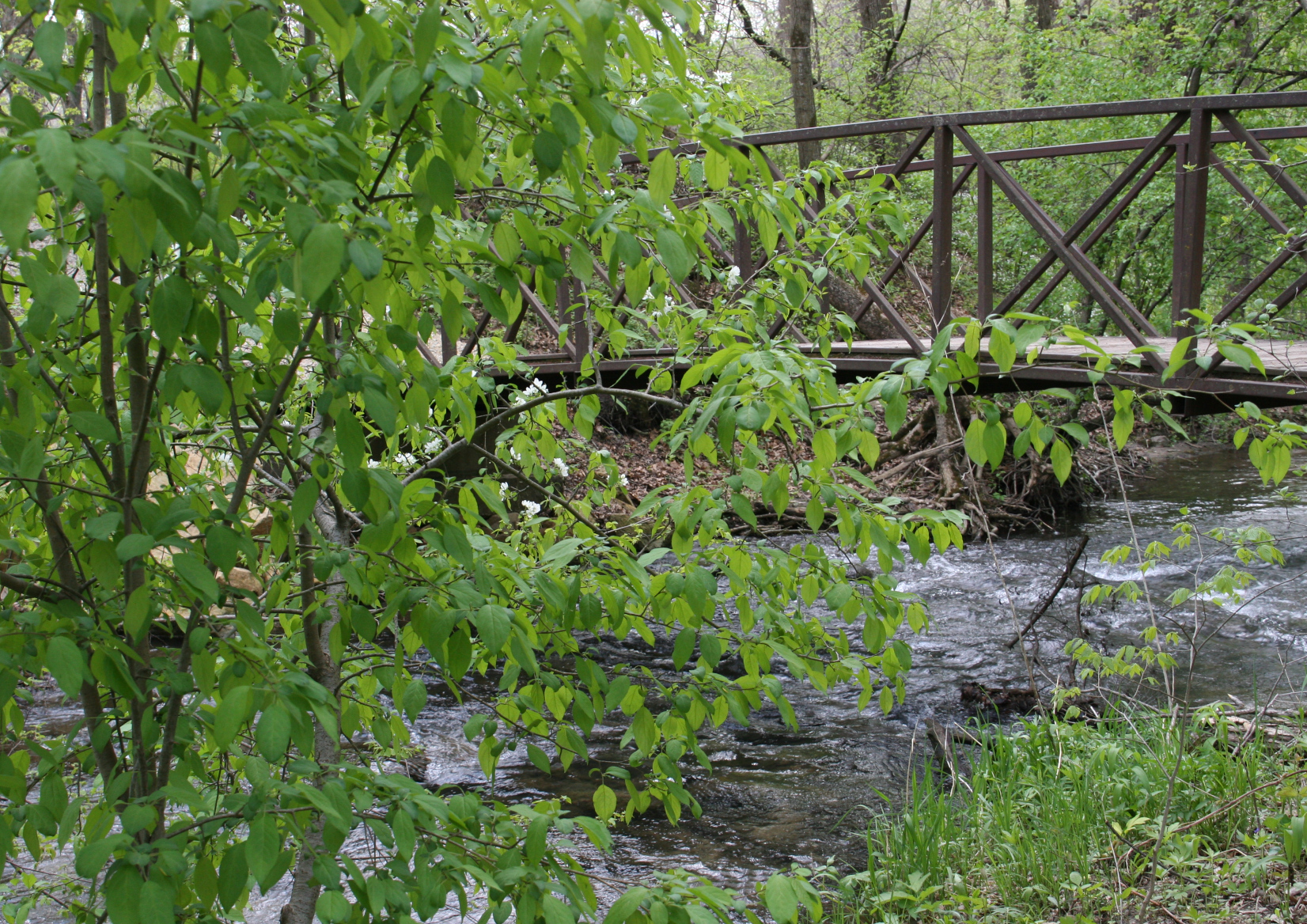
A footbridge leads into the woods at Falls Creek County Park. (Minnesota Prairie roots copyrighted photo May 2022)
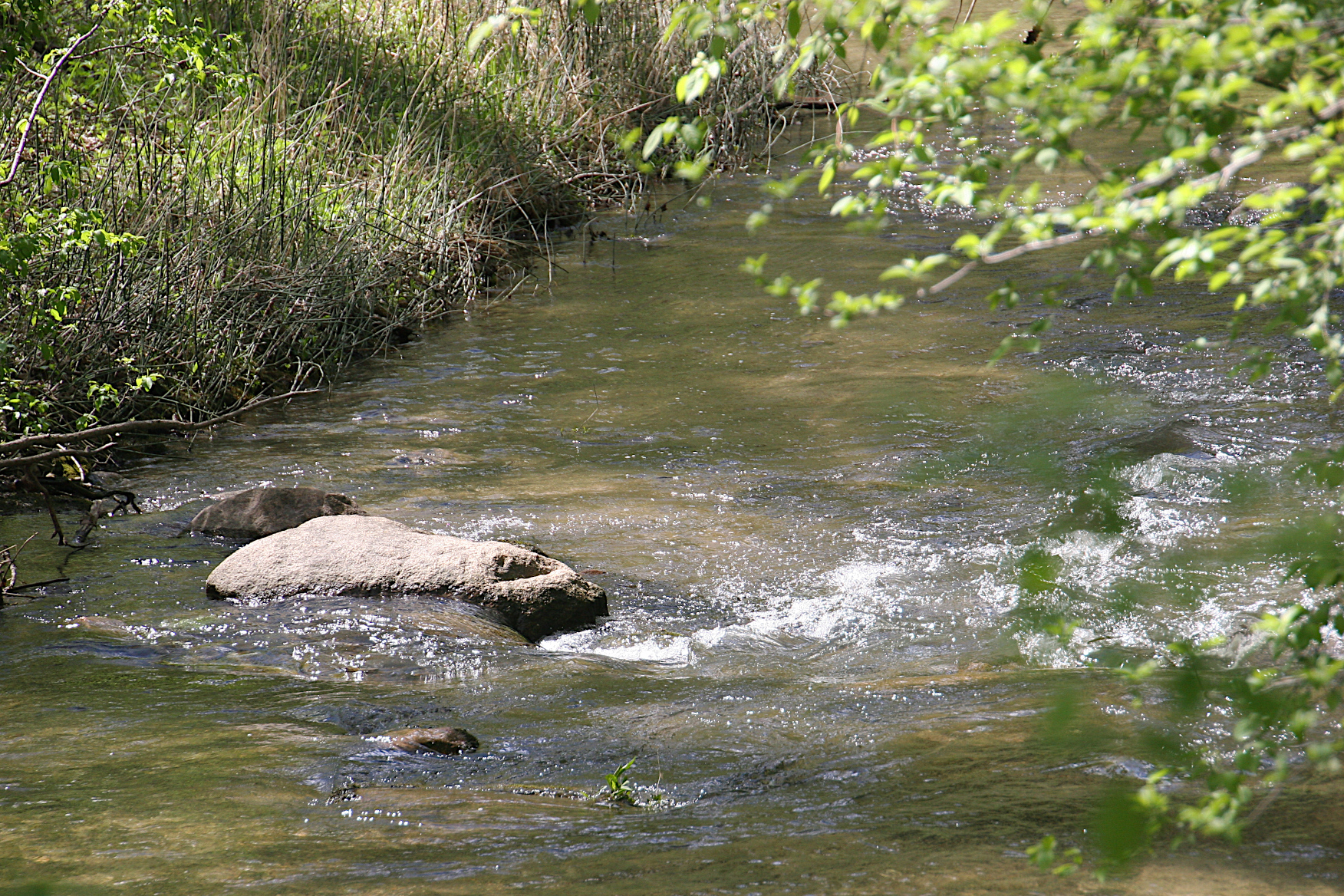
So soothing…water rushing over rocks in Falls Creek. (Minnesota Prairie Roots copyrighted photo May 2022)
Falls Creek flows under the footbridge. (Minnesota Prairie Roots copyrighted photo May 2022)
As soon as I step onto the footbridge over Falls Creek, I feel a sense of peace. In the sound and sight of water rushing over rocks. There’s nothing more soothing than that symphony, except perhaps the rush of wind through trees.
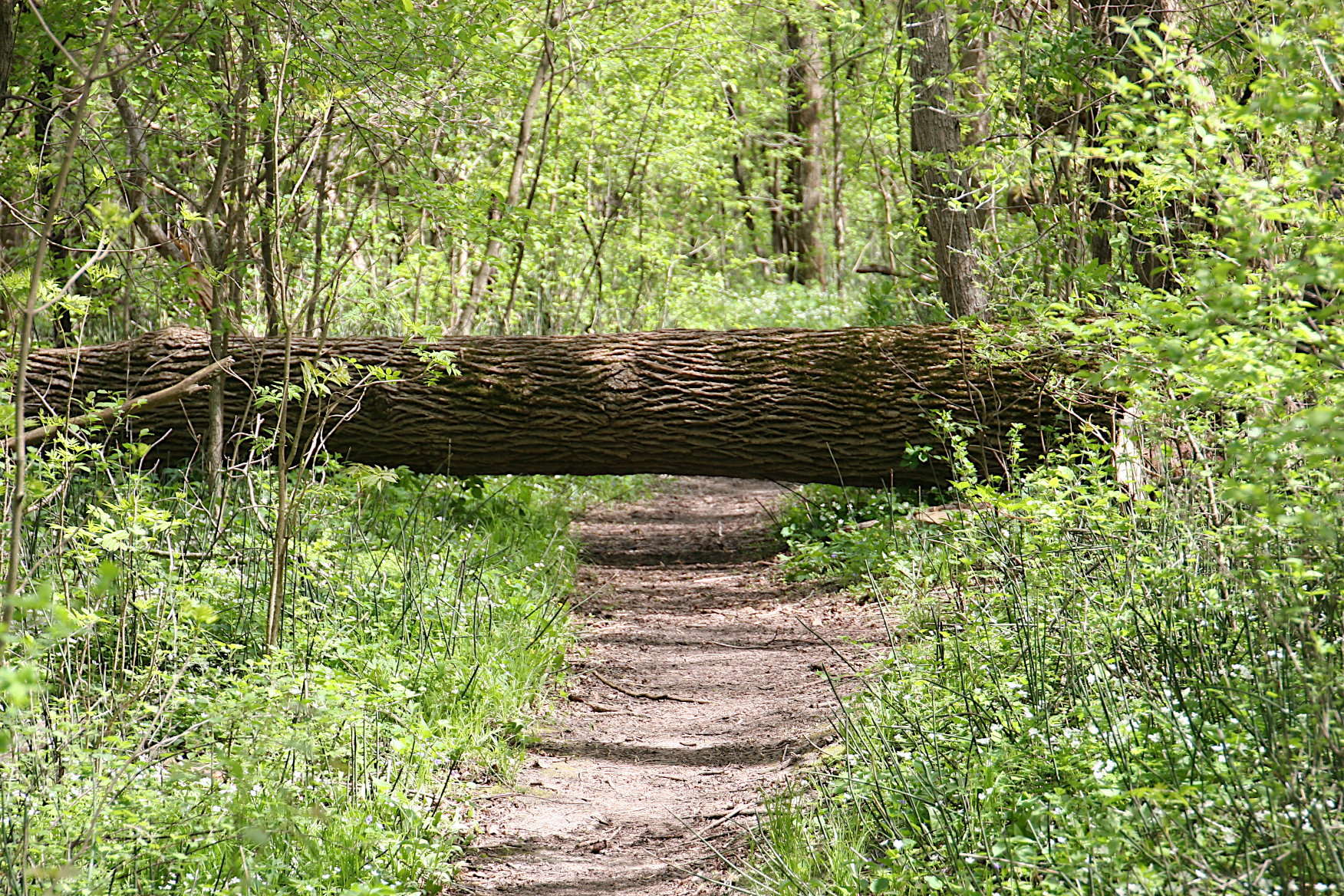
A fallen tree blocks the trail at Falls Creek Park. (Minnesota Prairie Roots copyrighted photo May 2022)
This park is more wild than tamed. Narrow dirt trails, packed hard by hikers’ shoes, call for caution. Roots can trip. Sections of eroded creek bank along the main path require focused walking, especially over a makeshift bridge of branches. In one area, a large, fallen tree blocks the route.
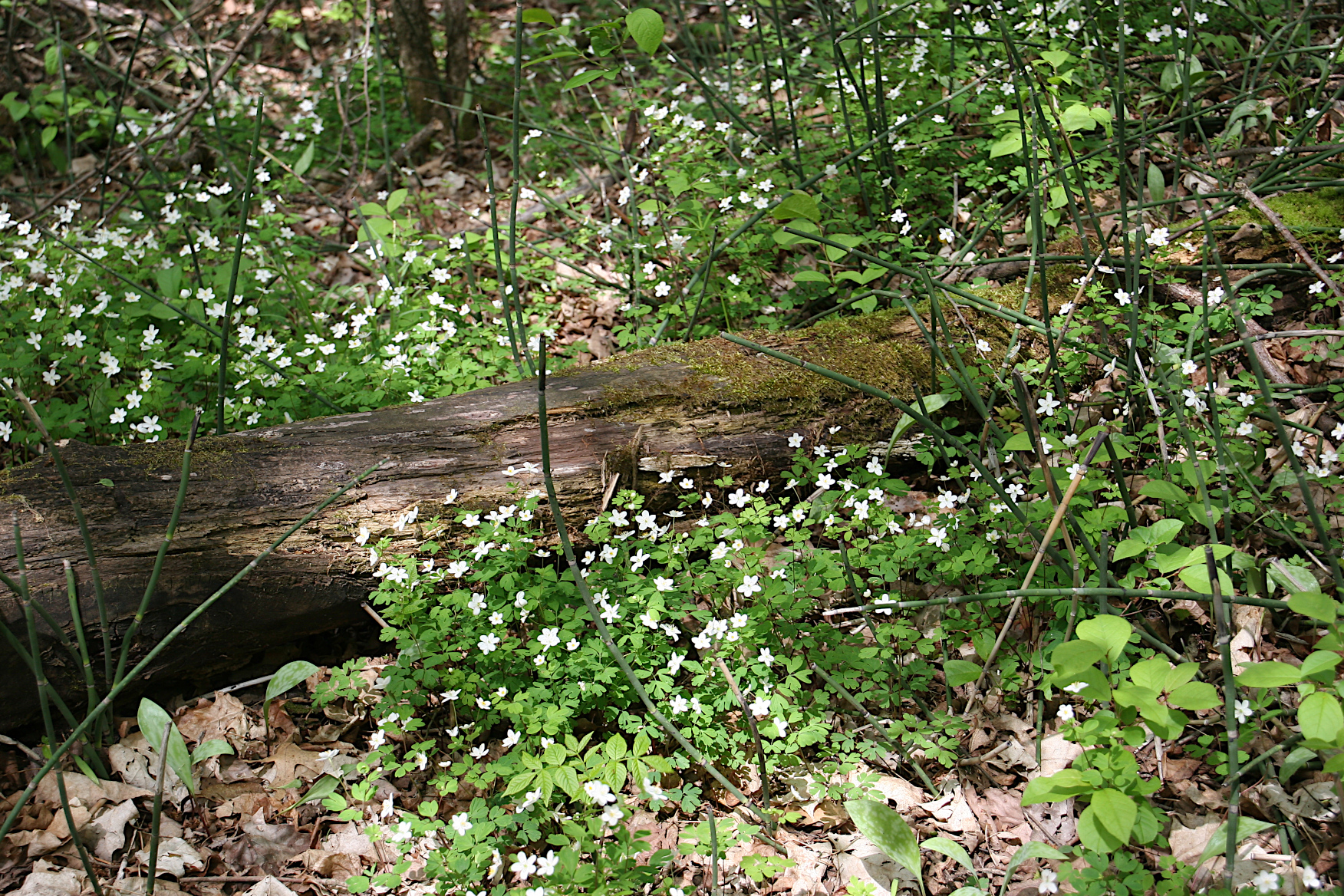
Wildflowers galore in the park woods. (Minnesota Prairie Roots copyrighted photo May 2022)
Still, despite the obstacles, this park is navigable. And worth visiting, especially now, when wildflowers blanket the woods. White, yellow, purple.
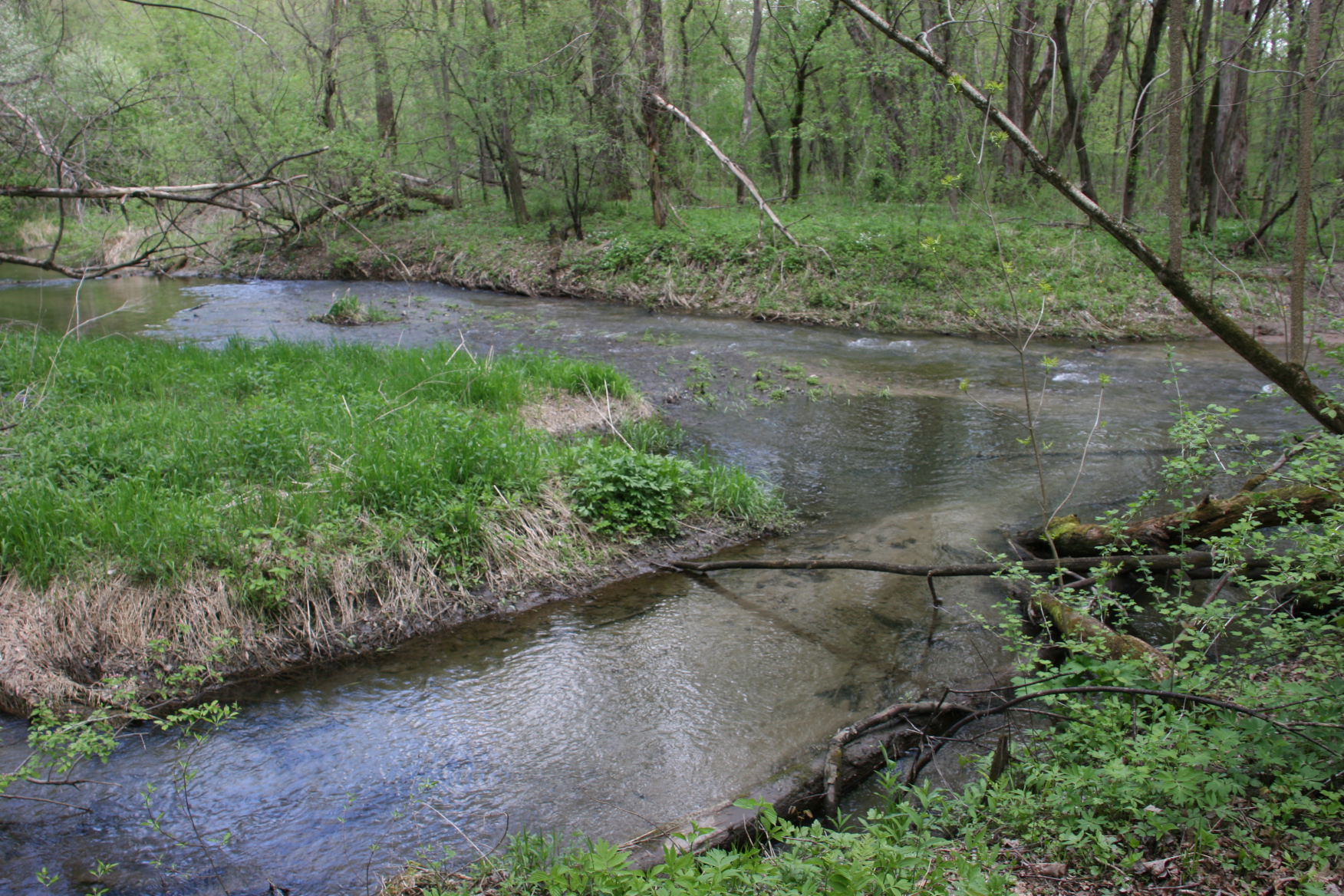
Winding Falls Creek. (Minnesota Prairie Roots copyrighted photo May 2022)
On a recent hike through Falls Creek County Park, Randy and I encountered another hiker and his two unleashed dogs who rushed us. I didn’t appreciate that, never do. But we also met a pre-teen girl and her dad on the bridge, she with book—some series about drama divas—in hand. The title fits his daughter, the dad said. They come to the park to read and to listen to music along the creek. How wonderful, I thought, to see this young girl into reading. And reading in the woods besides.
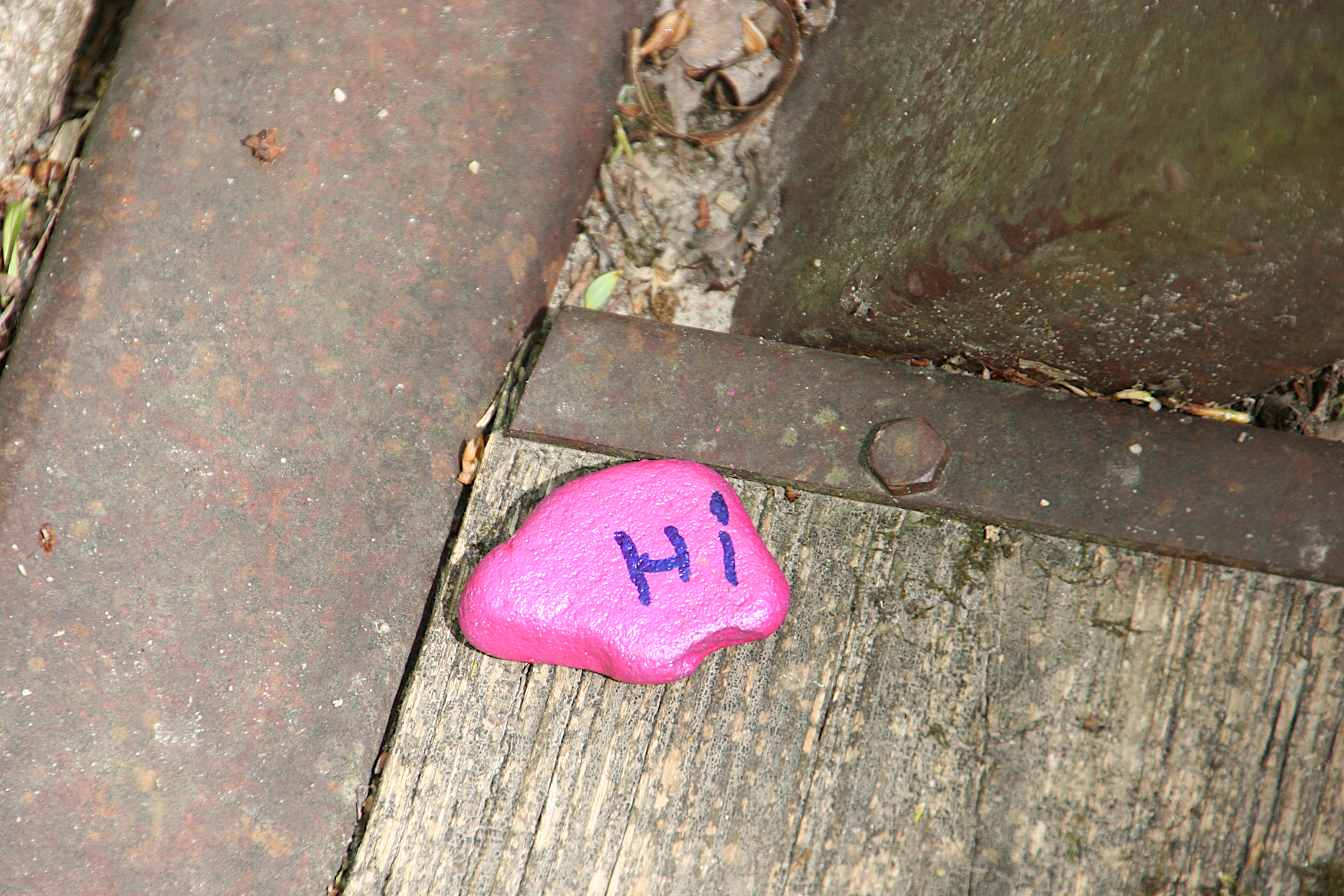
On the bridge, the first stone I spotted. (Minnesota Prairie Roots copyrighted photo May 2022)
I tipped the pair off to painted stones I’d discovered, pointing to the bright pink stone at the end of the footbridge. I found two more in the woods. “Look to your right,” I said. I delight in such unexpected messages that always cause me to smile and uplift me.
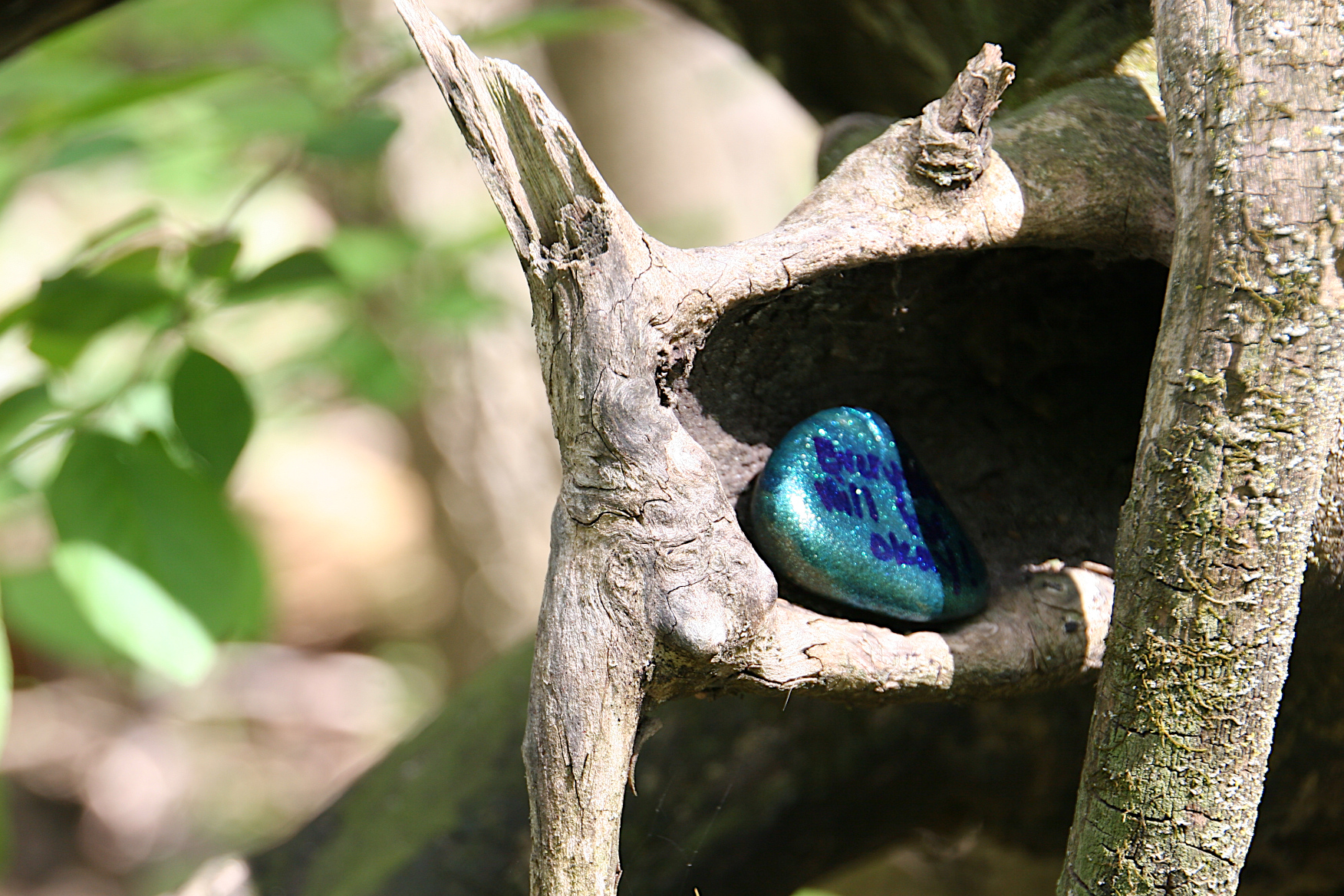
An encouraging message on a stone tucked into a tree. (Minnesota Prairie Roots copyrighted photo May 2022)
On this day, I took to heart the words—Everything will be okay!—printed on a stone painted a metallic, glittery turquoise. On this day, I needed to read that encouraging message left in the woods, left for me to see as I immersed myself in nature, in this Minnesota spring.
Part of a temporary public art installation at Northfield’s Earth Day Celebration. (Minnesota Prairie Roots copyrighted photo April 2022)
IN THE GEOGRAPHICAL BACKGROUND of my childhood, I knew of the “Indian Reservations” to the northwest near Granite Falls and then to the east near Morton. My hometown of Vesta sits between the two, no longer referred to as “reservations” but as the Upper Sioux Indian Community and the Lower Sioux Indian Community.
A Dakota man and Alexander Faribault are depicted trading furs in this sculpture at Heritage Park near the Straight River and site of Faribault’s trading post. Ivan Whillock created the sculpture which graces the Bea Duncan Memorial Fountain in my community of Faribault. (Minnesota Prairie Roots copyrighted file photo 2012)
Today I live 120 miles to the east in Faribault, next to Wapacuta Park. Rice County is the homeland of the Wahpekute (not Wapacuta), a tribal band of the Dakota.
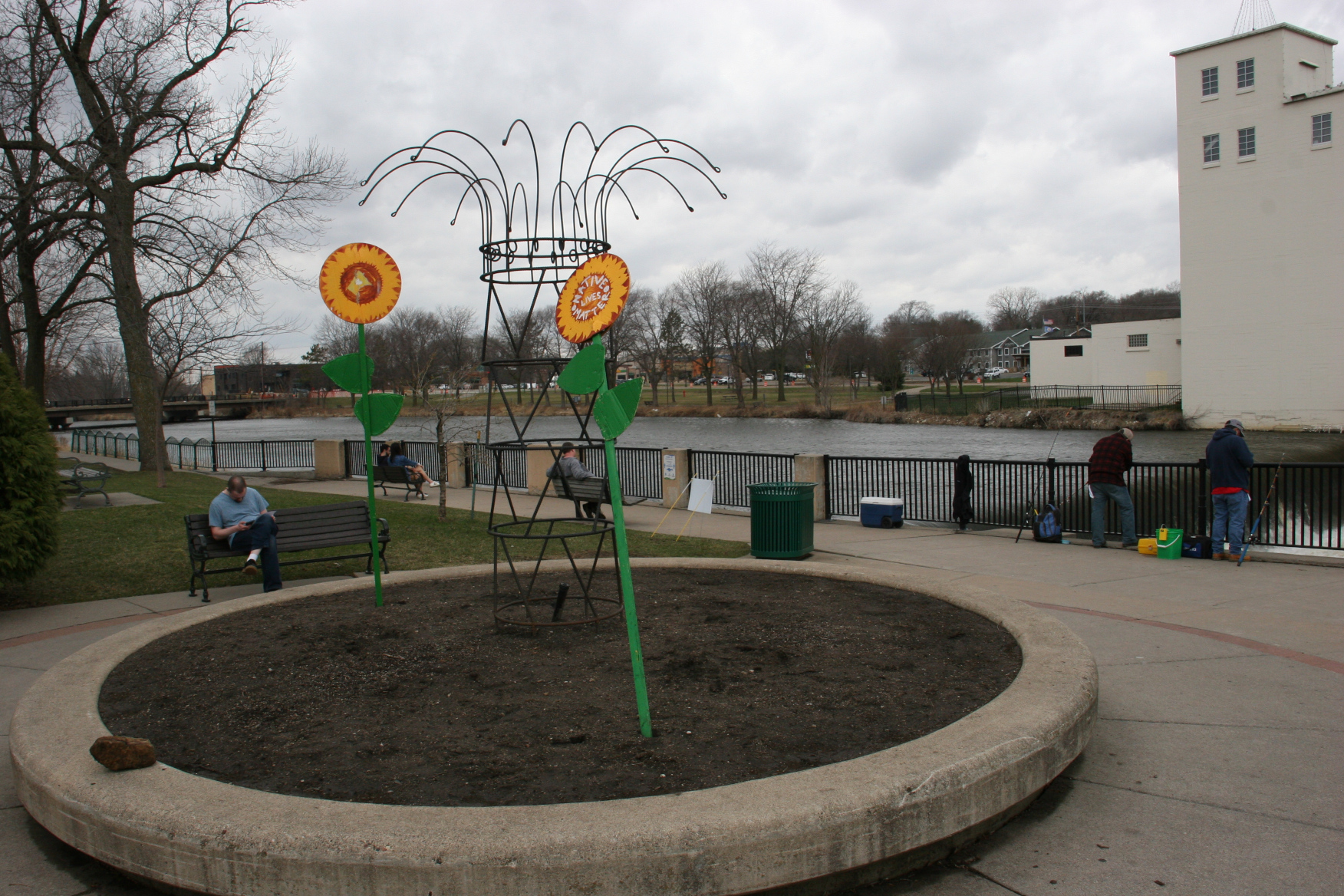
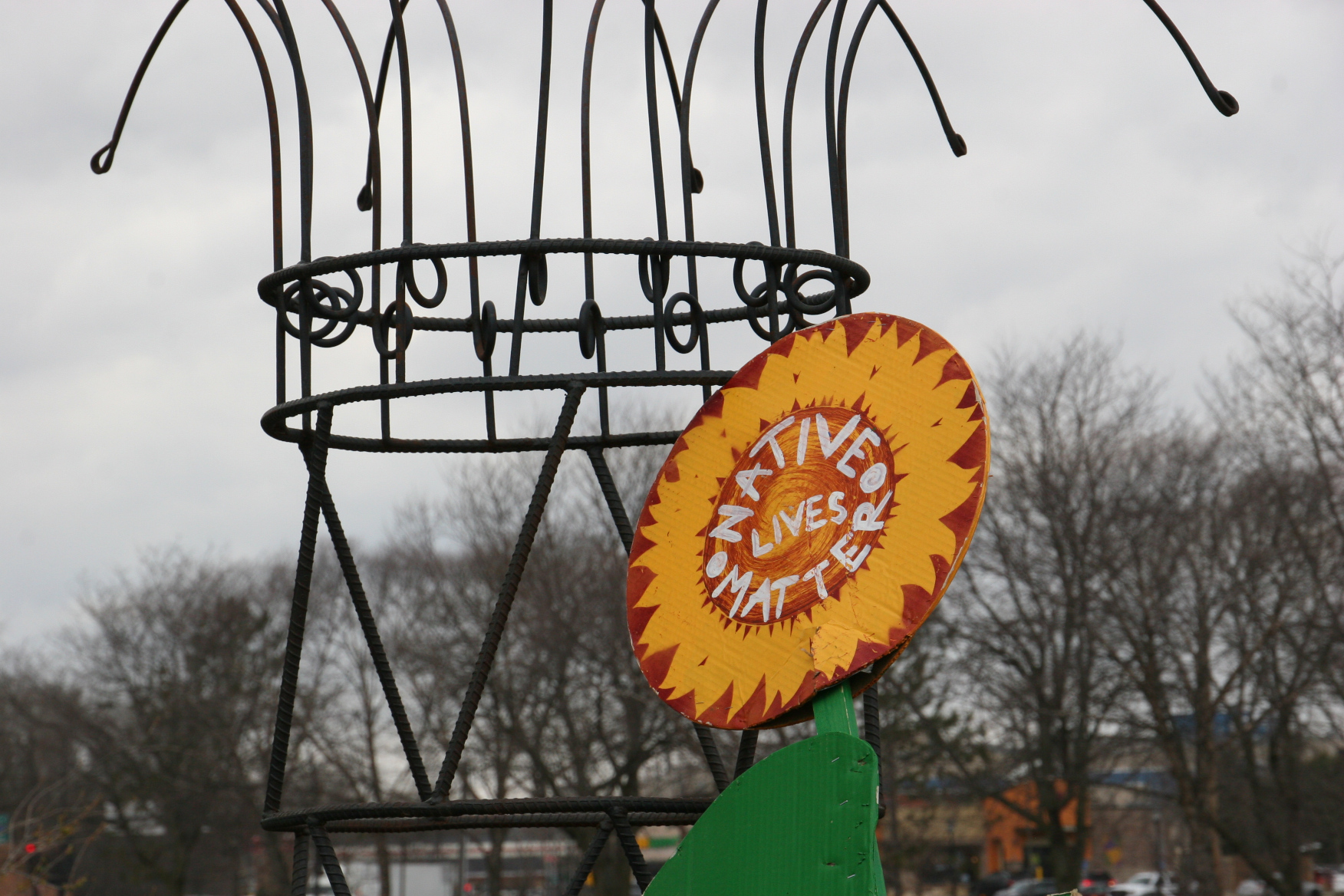
The Earth Day art carried two messages: NATIVE LIVES MATTER and CLIMATE JUSTICE. (Minnesota Prairie Roots copyrighted photo April 2022)
A temporary public art installation at the recent Earth Day Celebration in neighboring Northfield prompted me to reflect on Indigenous people in southern Minnesota. Growing up in Redwood County, my knowledge of area Native Americans focused primarily on “The Sioux Uprising.” History teachers then used that term, rather than the current-day “US-Dakota War of 1862,” which should tell you a thing or ten about how biased that perspective back in the 1970s. How thankful I am that my awareness and understanding have grown and that attitudes are shifting to better reflect all sides of history.
The message grows, blossoms in the Earth Day art. (Minnesota Prairie Roots copyrighted photo April 2022)
We stand on the homelands of the Wahpekute and other Bands of the Dakota Nation. We honor with gratitude the people who have stewarded the land throughout the generations and their ongoing contributions to this region. We acknowledge the ongoing injustices that we have committed against the Dakota Nation, and we wish to interrupt this legacy, beginning with acts of healing and honest storytelling about this place.
NATIVE LIVES MATTER fits the spirit of the Land Acknowledgment Statement. Those three words caused me to pause, to think, to consider what I’d been taught all those decades ago and how my thinking has shifted as I’ve aged, opened my mind and learned.
Dakota beadwork displayed and photographed at the Rice County Historical Society Museum, Faribault, in 2010. (Minnesota Prairie Roots copyrighted file photo 2010)
The Rice County Historical Society, which exhibits a collection of Native American artifacts in its Faribault museum, shares a statement similar to the City of Northfield’s on its website:
We acknowledge that the land that is now Rice County, MN, was their (Dakota) homeland and for many tribal members today, it is still their home.
In all of this, I feel a sense of gratitude regarding increasing public recognition of the land history and contributions of Indigenous People in Minnesota. In my home area of Redwood County, nearly 1,000 individuals from the Mdewakanton Band of Dakota call the Lower Sioux Indian Community home. To the east in Yellow Medicine County near Granite Falls, nearly 500 individuals from the Dakota Oyate call the Upper Sioux Indian Community home.
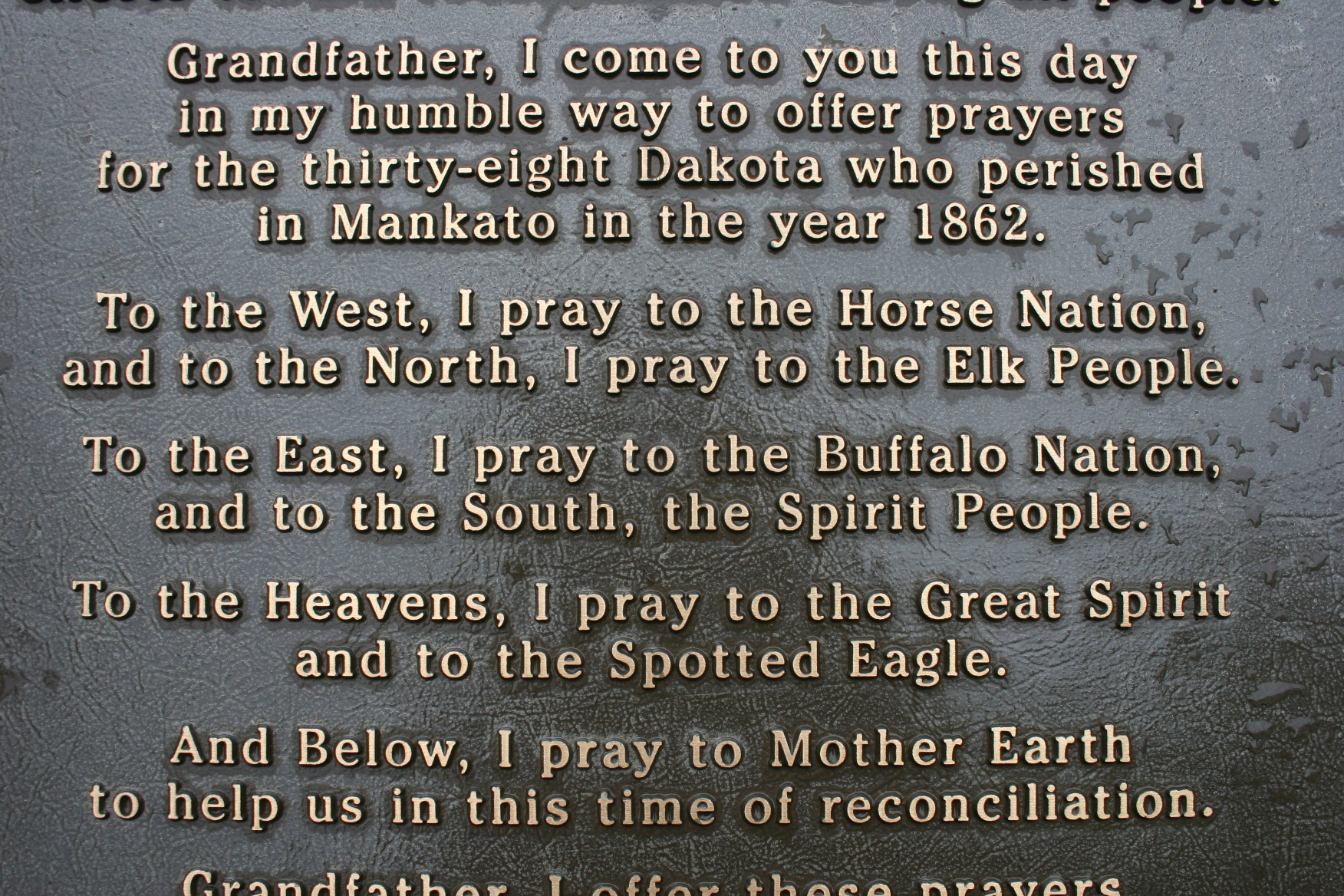
Words on a marker in Reconciliation Park in Mankato where 38 Dakota were hung on Dec. 26, 1862. (Minnesota Prairie Roots copyrighted file photo 2012)
I hope educators in my home area are today teaching students about the local Dakota and even bringing elders into classrooms. I graduated, after all, from Wabasso High School, the name Wabasso coming from a Native word meaning “white rabbit.” I would then go on to attend college in Mankato, site of the largest mass execution in the US with 38 Dakota killed in a public hanging on December 26, 1862.
I would be remiss if I did not share that, during the US-Dakota Conflict of 1862, family members on my mom’s side fled their rural Courtland farm for safety in St. Peter. They later put in a claim to the US government for crop loss.
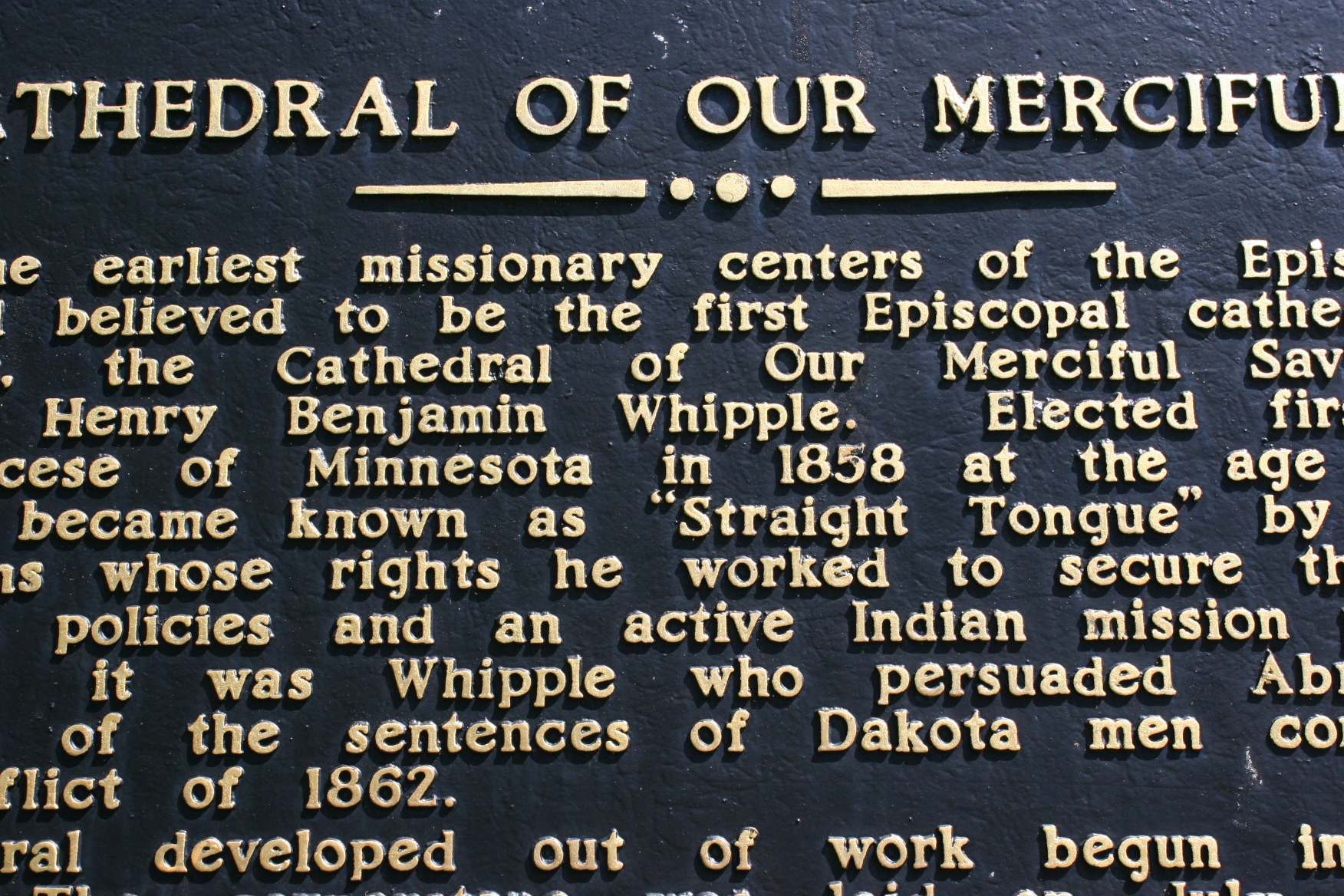
Details on a sign outside the Cathedral of our Merciful Savior in Faribault. Bishop Henry Whipple, who served here, advocated for the rights of Native Americans and had a strong friendship with them. (Minnesota Prairie Roots copyrighted file photo 2020)
Now, 160 years after that event in my ancestors’ history, I continue growing my knowledge, widening my understanding of Minnesota history and of the Indigenous people who first called this land home.
A graphic of Minnesota is painted on the back of the art installation. (Minnesota Prairie Roots copyrighted photo April 2022)
Also, I suggest you read an article on the Minnesota Public Radio website about efforts to change the Minnesota State flag. The flag depicts, among other details, a Native American in the background riding off into the sunset while a settler focuses the foreground, hands on a plow, rifle nearby. I agree that change is needed. But, as too often happens, the issue has become politically-charged.
THIS IS A COVID-RELATED public service announcement for residents of Faribault and then of broader Rice County. But, even if you don’t live here, read on.
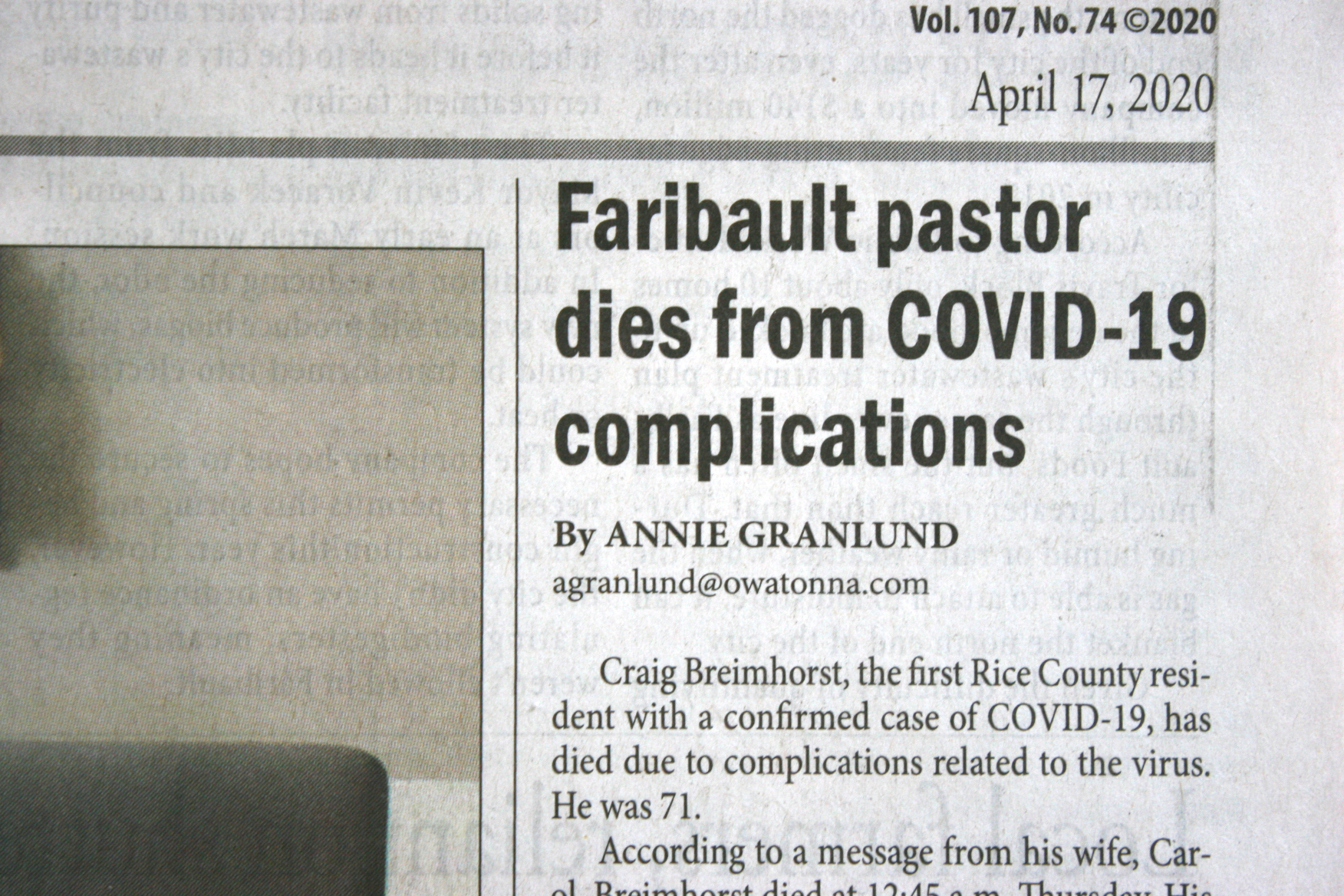
From the front page of the Faribault Daily News. (Minnesota Prairie Roots file photo April 2020)
In a county with a population of about 67,000 we have lost 163 of our friends/family/neighbors to this awful virus. And, yes, I’ve known some of those who died. My heart hurts.
Early on in the pandemic, there was no vaccine to protect against serious illness or death. Much was unknown. That has changed. We have vaccines now and approved options to treat those with COVID. And, yes, the vaccine is less effective against the omicron variant with many break-through cases. Yet, those who are vaccinated/fully-boostered are much less likely to become seriously ill or die than the unvaccinated.
Our vaccination rate in Rice County seems stalled at around 64 percent. We can do better.
Free, from the national government stockpile, N95 masks which Randy and I recently got from Hy-Vee. (Minnesota Prairie Roots copyrighted file photo January 2022)
And we can do a heckuva a lot better at wearing face masks in indoor public settings. The omicron variant is highly-contagious and it’s our responsibility as members of this community to do our best to protect ourselves and others. Underline others. This is not solely about me, myself and I. This is about community, the common good. Our friends. Our neighbors. Our families. Our co-workers. Masking is one way to prevent the spread of this virus. There are people in our communities/families/circles who are especially vulnerable to complications from COVID because of age and/or health issues. Wearing face masks is one simple way to show we care about the health of others by helping prevent spread of the virus.
N99 masks are now available for free locally through the City of Faribault and Rice County.
Now our local government officials have made finding protective face masks a whole lot easier by offering free N99 masks to the public. The City of Faribault received a shipment. Residents can pick up masks at city hall, the fire station, the police department, the community center and the library, while limited supplies last.
And, yes, the tighter, snug-fitting filter masks (N99, N95, KN95) are necessary to effectively protect against the highly-transmissible omicron variant. Cloth masks, gaiters, etc. are not nearly as effective against omicron as the earlier delta variant. Still, anything is better than nothing. But let’s opt for the now available N99, N95 or KN95.
The best protection is still vaccination, which includes the booster shot.
I remain concerned about our overtaxed healthcare system with overworked staff, delays in care due to staff and ICU shortages, and more. I’m not talking just COVID here. I’m talking healthcare for every single one of us who may need it. Stuff happens. Heart attacks. Motor vehicle accidents. Cancer. This list goes on and on. Again, this is about all of us, not me, myself and I.
#
NOTE: I moderate all comments and will not publish anti-mask and anti-vaccine views or misinformation on this, my personal blog. Thank you for doing your part to keep our communities healthy.
Nine healthcare executives—including the head of the world famous Mayo Clinic—signed a letter which published in newspapers throughout Minnesota. These two statements banner the message:
We’re heartbroken.
We’re overwhelmed.
The carefully-crafted letter is powerful. Emotional. Factual. And, oh, so necessary. I feel deep gratitude to these healthcare leaders who joined in sending a strong message to Minnesotans. We need to hear this. All of us. Vaccinated. And unvaccinated.
The decision not to get vaccinated affects every single one of us. That’s clear in the words of these medical professionals, in daily media reports and in information from the Minnesota Department of Health. Emergency rooms are full. Hospital beds are full. And that means challenges in accessing healthcare. For treatment of COVID-19, cancer, injuries, heart attack… That should concern anyone and everyone. None of us knows when we might need immediate emergency medical care. The situation is “critical,” according to the letter.
I appreciate the honesty. The statement “…every day we’re seeing avoidable illness and death as a direct result of COVID19” points directly to the root of the current crisis. And the frustrations felt in the medical community. “How can we as a society stand by and watch people die when a simple shot could prevent a life-threatening illness?” Exactly. How? Why? I don’t get it and I share the frustrations of those nine Minnesota healthcare leaders and their associated healthcare teams.
They conclude their letter with an “ask.” Get vaccinated and boosted. Wear a mask (regardless of vaccination status). Socially distance. Get tested if you feel sick. Encourage others to follow those steps. None of that is new. But it just does not seem to be sinking in. Especially in rural areas. My roots are rural. I love and care about our rural communities. But the truth is that in many areas of Greater Minnesota, vaccination rates are low, COVID case counts high. This virus doesn’t care about rural or urban boundaries.
In Faribault, I see very few people masking in public. Our vaccination rates in Rice County could be better, especially in those under age 49. Of those eligible for the vaccine, from age five on up, only 62% have completed their vaccine series, according to Rice County Public Health (December 13 statistics). We’ve already lost 147 of our friends, family members and neighbors to COVID in our county. Some died before vaccines became available. And I expect, although I can’t confirm, that some recent deaths of seniors may be from break-through cases in that vulnerable population. But many likely are among the unvaccinated, a situation repeating throughout the country.
I feel for the doctors, nurses and other medical personnel staffing our hospitals. I have no doubt they feel heartbroken and overwhelmed. The stress. The demands. The never ending flow of COVID patients. The death all around. The grief. The helplessness. Day after day after day. Endless physical and mental exhaustion.
I am grateful for their fortitude. Their strength. Their compassion. Their care. And now, today, I feel grateful for this united message from nine healthcare professionals calling on all of us to come together, to do our part to end this pandemic.
#
NOTE: I moderate all comments and will not publish anti-vaccine, anti-mask and other such views on this, my personal blog.
GRIEF RUNS LIKE A RIVER through the communities of Faribault and Northfield. Rushing. Rising. Roaring. Flooding over banks.
This week, three tragic events have claimed the lives of three. A beloved priest. A woman who lived a life of service. And an, as yet, unidentified individual.
We are two Rice County communities collectively mourning.
The latest loss occurred at 9:25 pm Thursday when a car slammed into the Warsaw Town Hall in a fiery crash that set both vehicle and hall afire, according to the Rice County Sheriff’s Department. The driver, the sole occupant of the car westbound on County Road 39/230th St. West, remains unidentified. This location, a T intersection (CR 39 and Dalton Avenue meet), has been the site of numerous crashes.
UPDATE, November 2, 2021:The driver of the vehicle involved in the fiery crash has been identified as Robin (Robinson) Roberts of Waseca. My heart breaks for Robin’s family, whom I know. Robin was the granddaughter of my former, and now-deceased, next door neighbors. She was a beautiful soul in every way from her mega smile to her loving and caring spirit. She cared for her Uncle Terry after his dad passed and his mom was no longer able to care for him. Terry had downs syndrome and was like a brother to Robin. We felt blessed to have Terry (who passed several years ago) and his parents living next door to us for many many years. And I feel blessed, too, to have met Robin, a joyful and kind woman who brought much compassion and love into this world.
Only a day prior at 9:36 am Wednesday, another tragedy occurred, this one nearly 300 miles to the north on Lake Vermilion in Greenwood Township near Tower. Eva Gramse, 72, of Faribault died in a fiery house explosion, according to the St. Louis County Sheriff’s Department. Her husband, Michael, was found outside their cabin and was airlifted to a Duluth hospital with severe injuries.
The Gramses are well-known in Faribault. Michael Gramse founded MRG Tool & Die, now led by their son Rod as president of the company. But the couple’s imprint extends beyond their business with both actively involved in the community. Michael Gramse has advocated for youth pursuing careers in trades. And Eva, according to media reports, advocated for underprivileged children and led a bible study at her church, Peace Lutheran. I knew of her from previous involvement with Faribault Lutheran School, a Christian school my children attended. I expect the depth of Eva’s impact on my community will emerge in the coming days as friends and family share stories of this woman who meant so much to them.
By all accounts, Father Denny as he preferred to be called, was beloved by many. With 41 years in the priesthood, including time at a Venezuelan mission, he touched many lives. Those who knew him speak to his kindness, his love of the outdoors, his support of the local Latino community, his overall caring spirit and love of people. My connection to him comes through dear friends served by this man of God. Their hearts are broken.




















 Minnesota Prairie Roots
Recent Comments