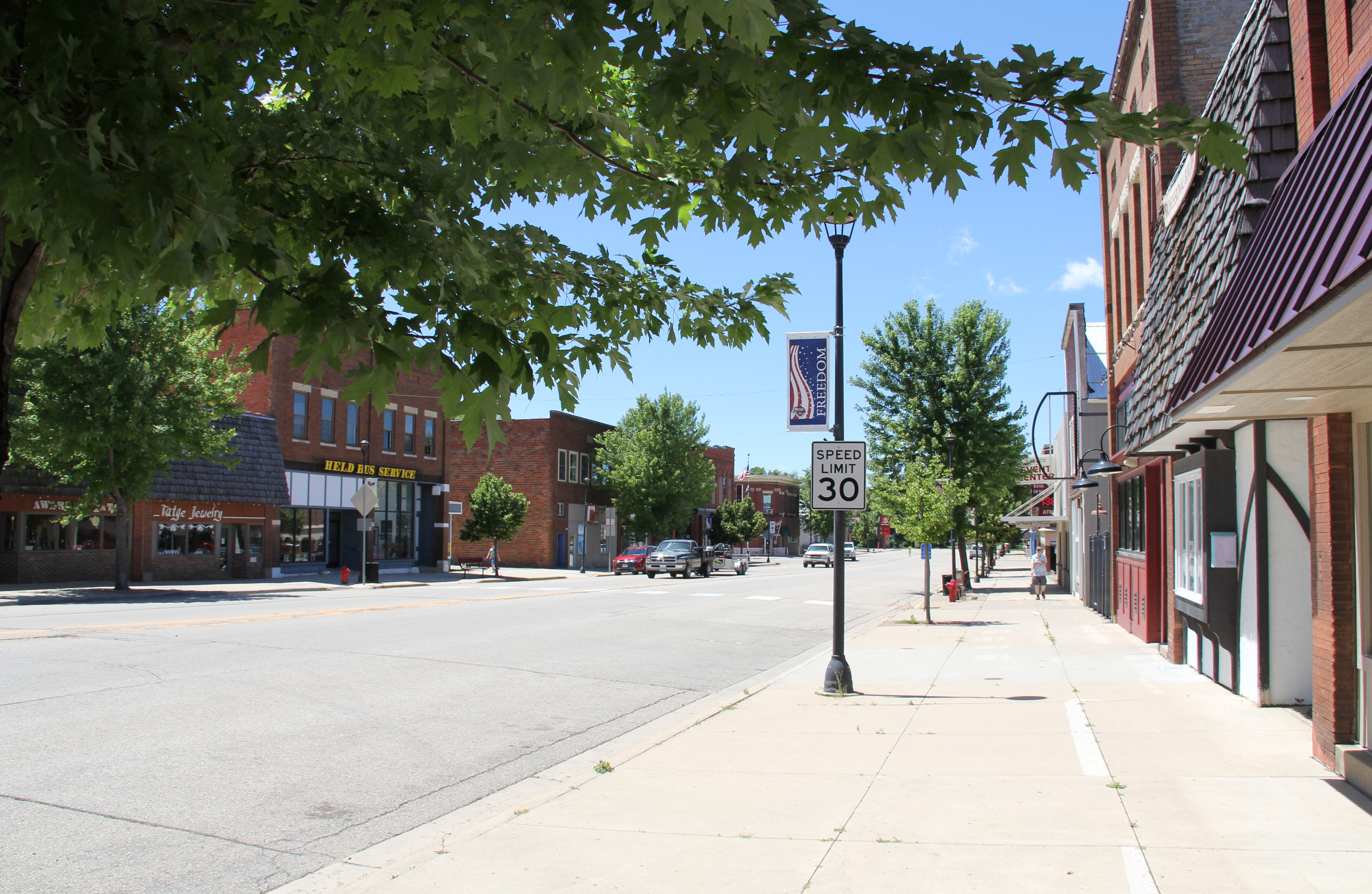
A view of Kenyon’s downtown business district along Minnesota State Highway 60 which runs through the heart of this southern Minnesota community. (Minnesota Prairie Roots copyrighted photo June 2024)
EVERY SMALL TOWN I’ve ever visited, and I’ve been to a lot, has unique, identifying qualities that make it memorable. In Ellendale, it’s the old-fashioned grocery store and meat market. In Montgomery, it’s the veterans’ photos displayed downtown, the bakery, the arts and heritage center, the murals and vintage signage. And in Kenyon, it’s the roses growing along the boulevard, the signs, the thrift shops and more.
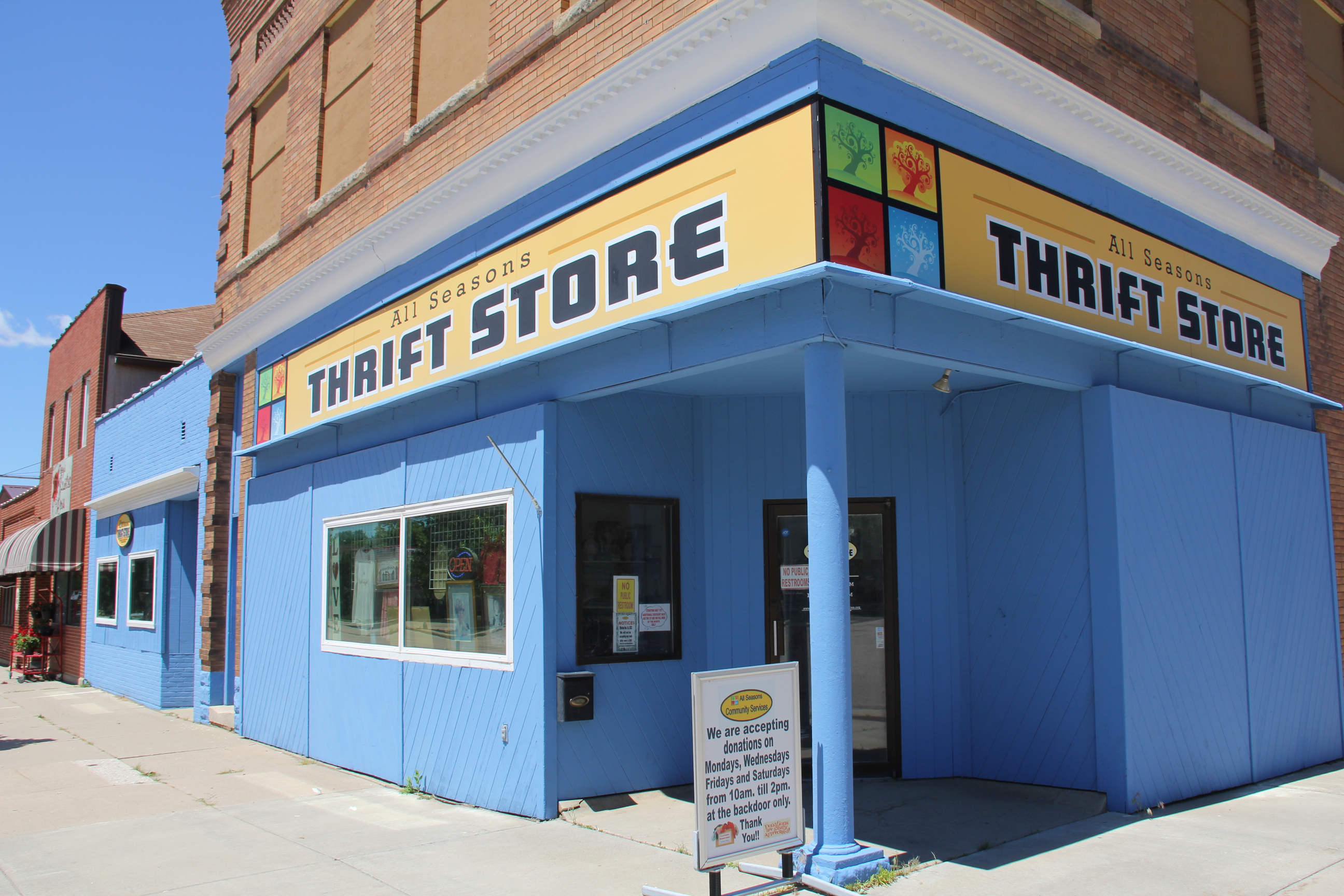
One of two fabulous thrift shops in Kenyon, the other SIFT Thrift Store. (Minnesota Prairie Roots copyrighted photo June 2024)
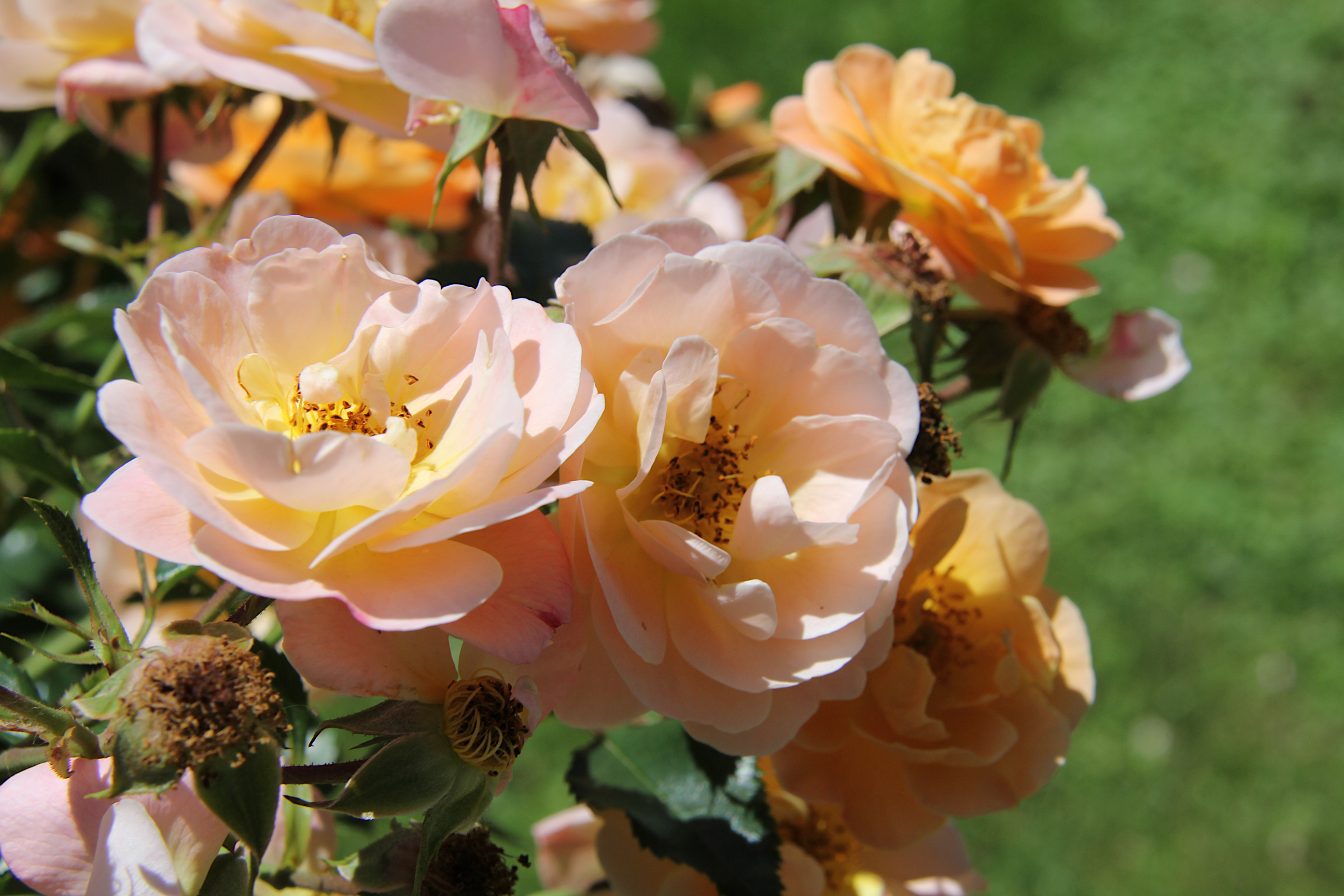
Among the many tree shrub roses blooming in the Boulevard of Roses along Highway 60 through Kenyon. (Minnesota Prairie Roots copyrighted photo June 2024)
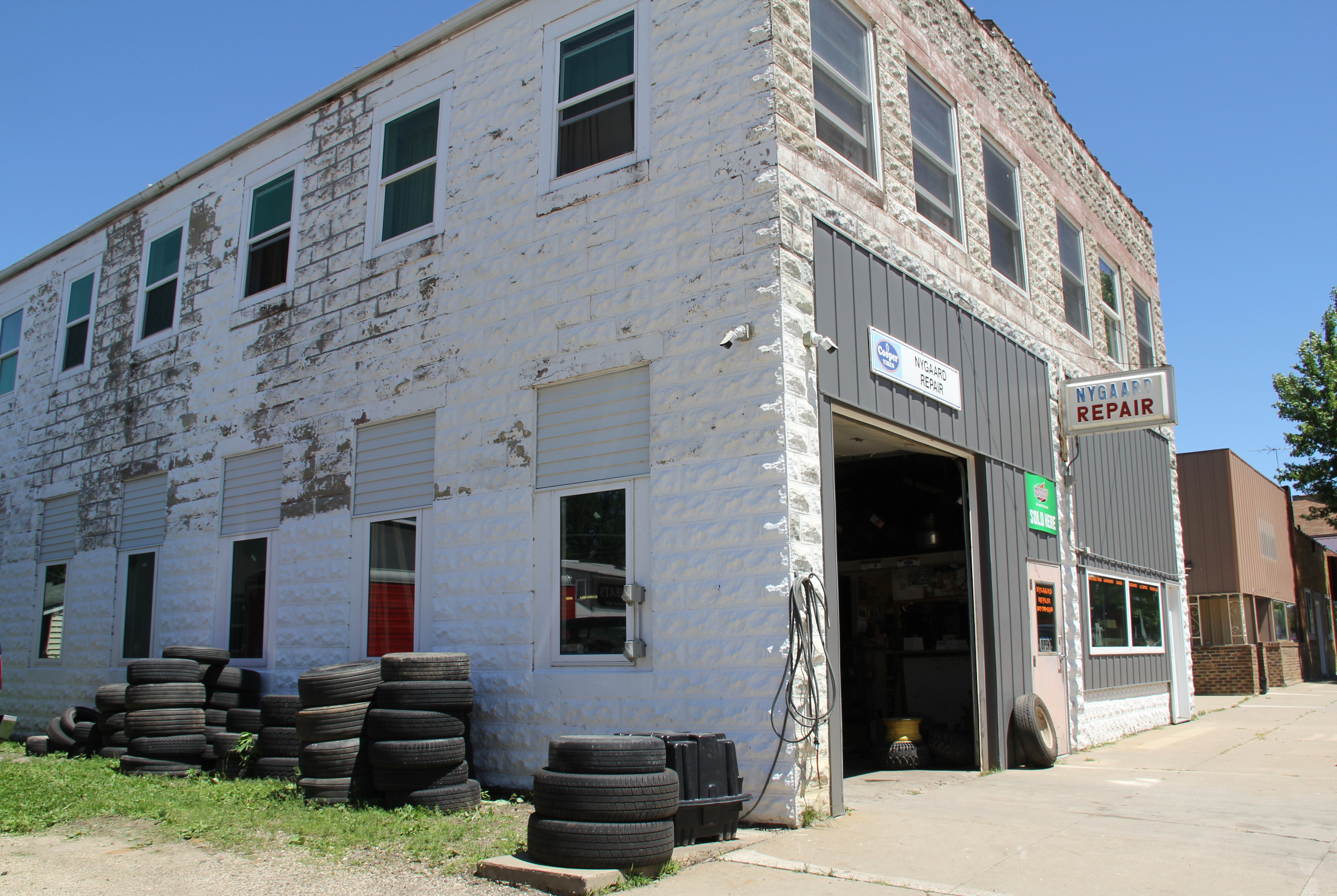
I peered inside Nygaard Garage to see a car on a hoist. (Minnesota Prairie Roots copyrighted photo June 2024)
There’s so much to see in these rural communities, if only we stop, exit our vehicles and walk. We miss a lot when we simply wheel by. I encourage you, next time you drive into an Ellendale, a Montgomery, a Kenyon, to explore. On foot.
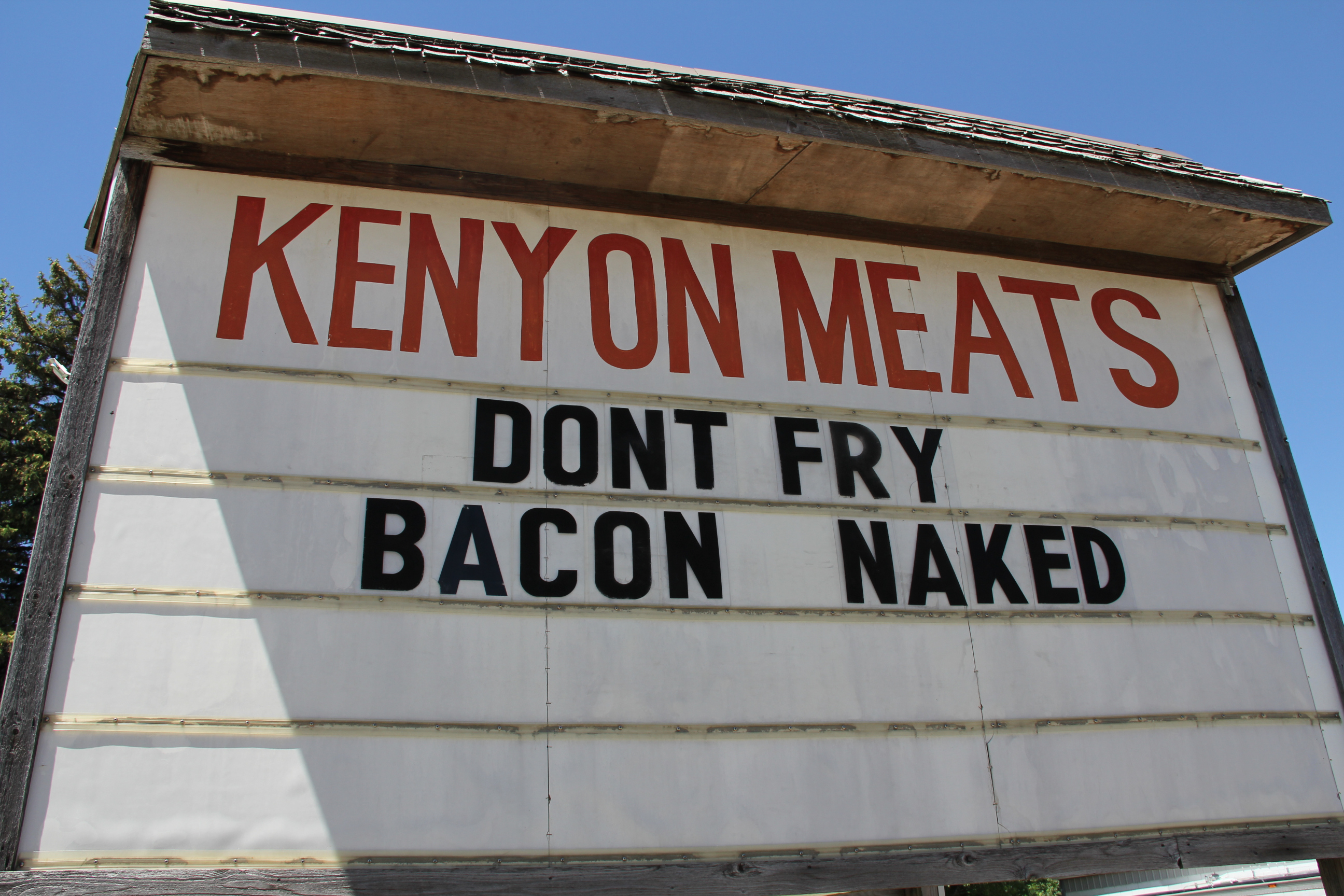
Kenyon Meats draws attention with humorous signage. (Minnesota Prairie Roots copyrighted photo June 2024)
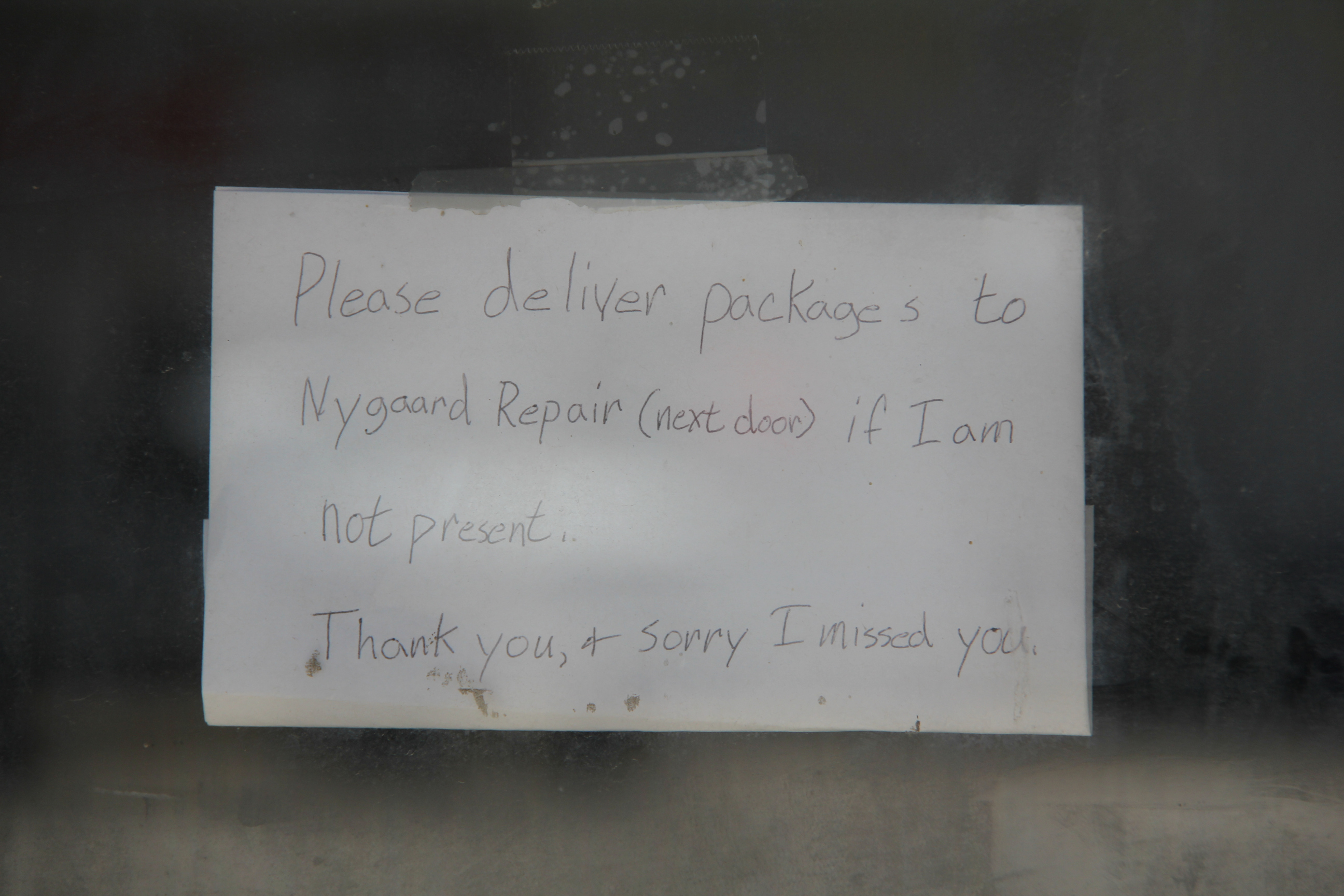
A note in a storefront window. (Minnesota Prairie Roots copyrighted photo June 2024)
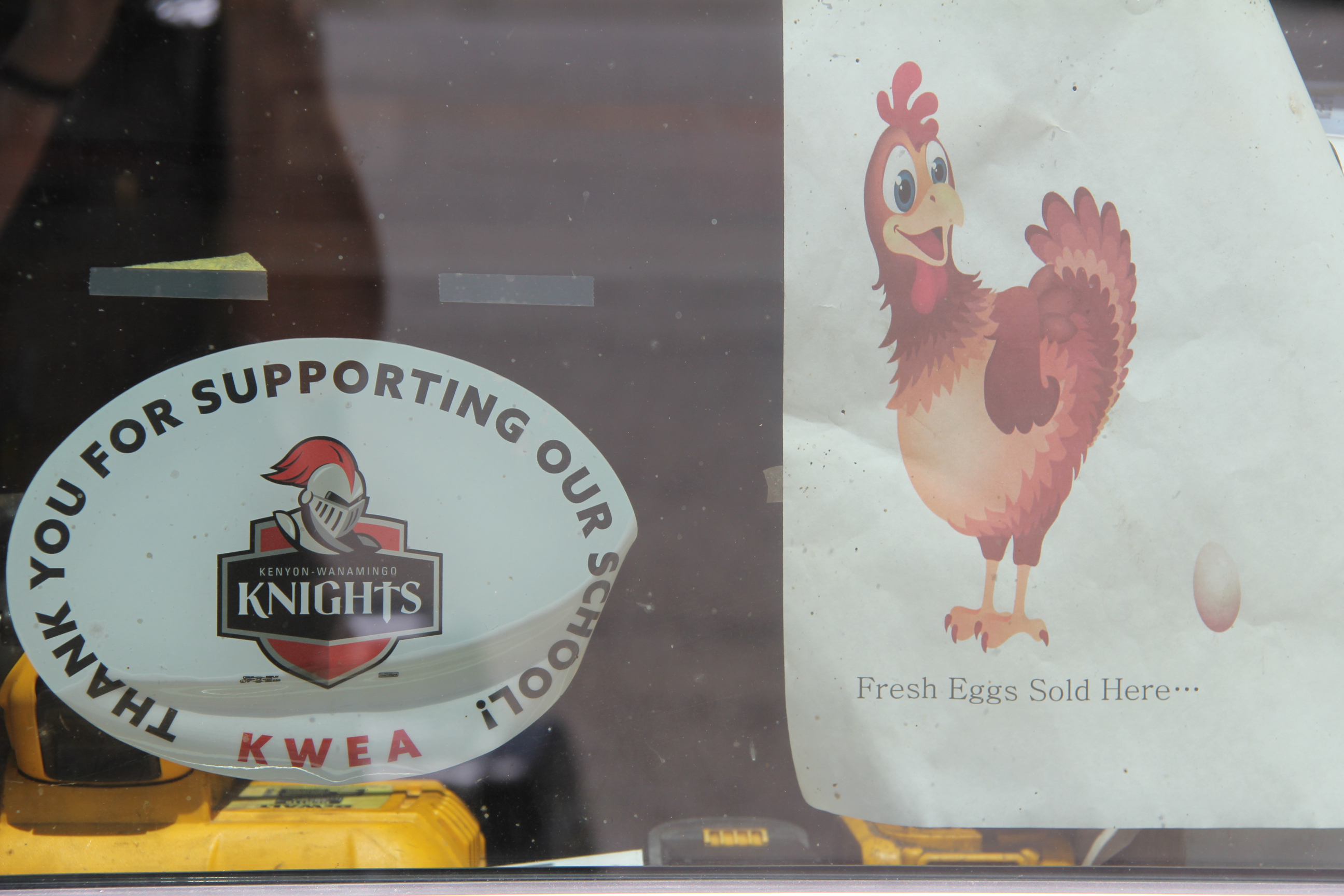
I spotted several signs noting eggs for sale and support for the local school. (Minnesota Prairie Roots copyrighted photo June 2024)
I did that recently in Kenyon, starting at Kenyon Meats, working my way through the several-block downtown business district. I moved at a slow pace, zooming in on details. Like handwritten notes posted in windows, business signs, community notices. Those show the nuances of place. I chatted with a barber and a restaurateur.
I saw two barbershops located across the street from one another, one with a laundromat in the back. (Minnesota Prairie Roots copyrighted photo June 2024)
The laundromat behind Dick’s Barber Shop. (Minnesota Prairie Roots copyrighted photo June 2024)
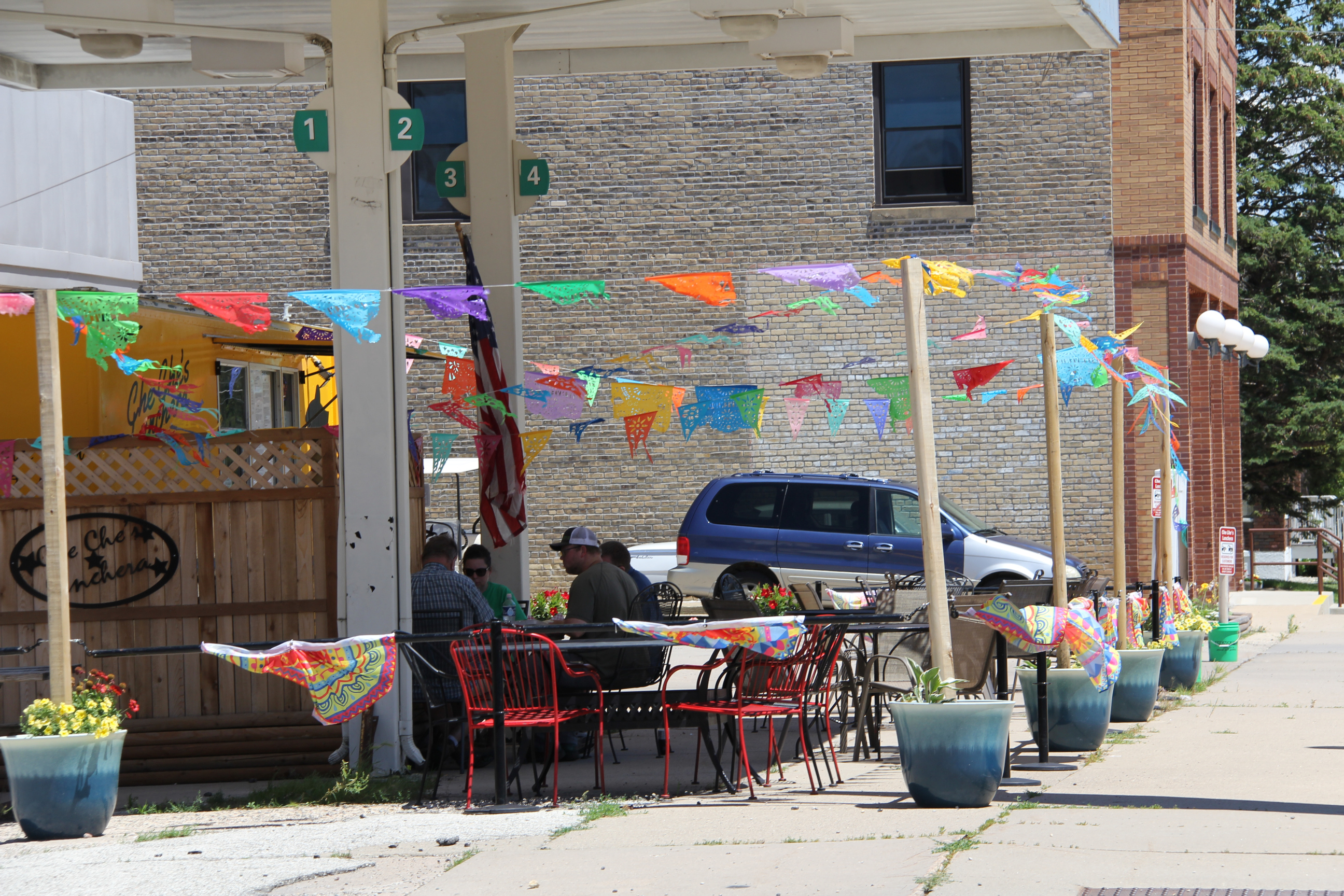
Colorful flags mark the permanent location of the food truck Che Che’s Lunchera on the corner of Highway 60 by the former BP station. (Minnesota Prairie Roots copyrighted photo June 2024)
Kenyon, with a population of just under 2,000, impresses me with its variety of businesses. Meat market, barbershops, floral and gift shop, jewelry store, two thrift shops, grocery store, repair shops/garages, insurance agencies, hardware store, municipal liquor store, restaurants, newspaper office, vet clinic, sign shop, bus service and more. Even a food truck parked on the corner of busy Minnesota State Highway 60. And that’s mostly in the core downtown area.
A sign posted downtown for this Saturday’s car and truck show. (Minnesota Prairie Roots copyrighted photo June 2024)
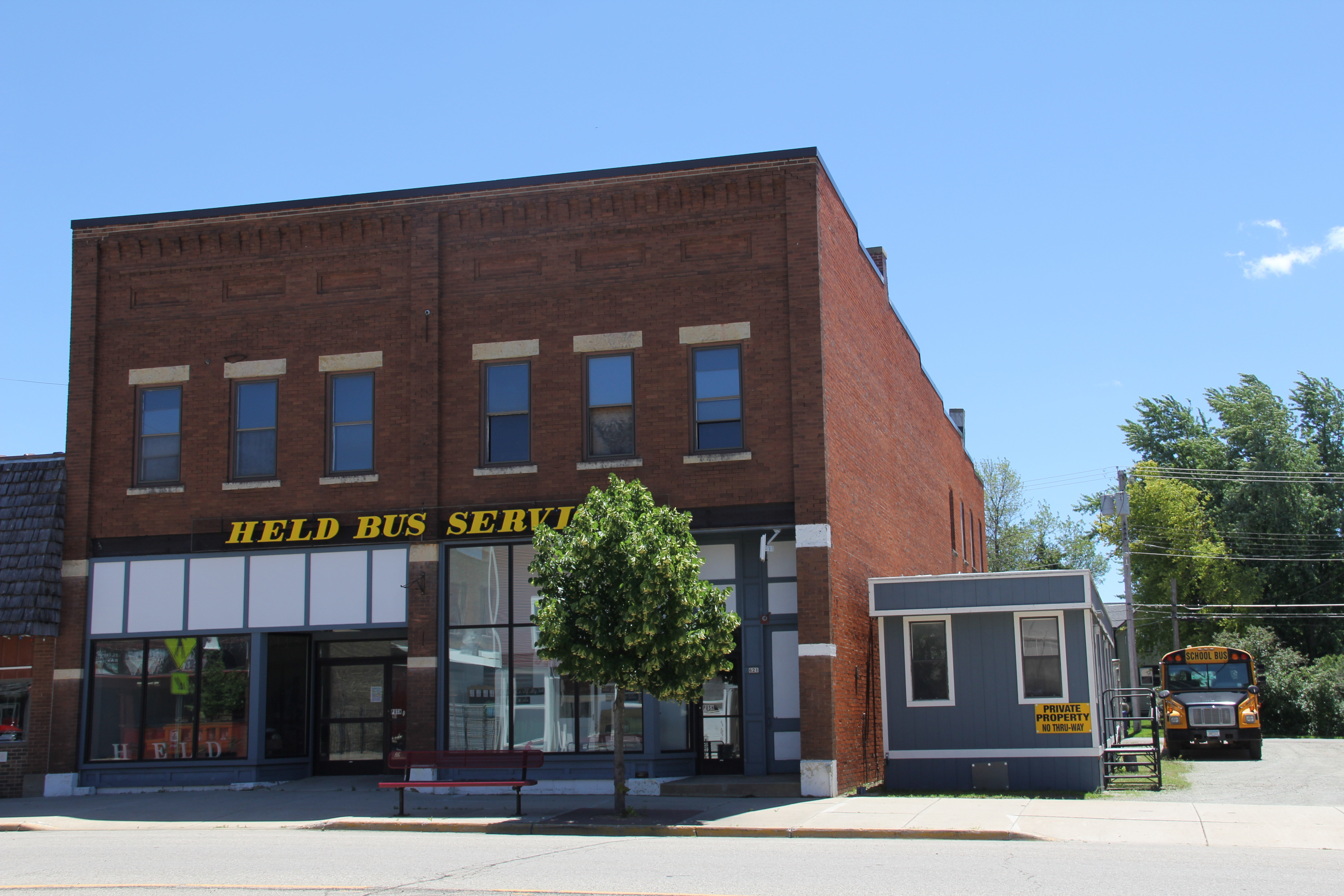
Held Bus Service is located right downtown Kenyon. (Minnesota Prairie Roots copyrighted photo June 2024)
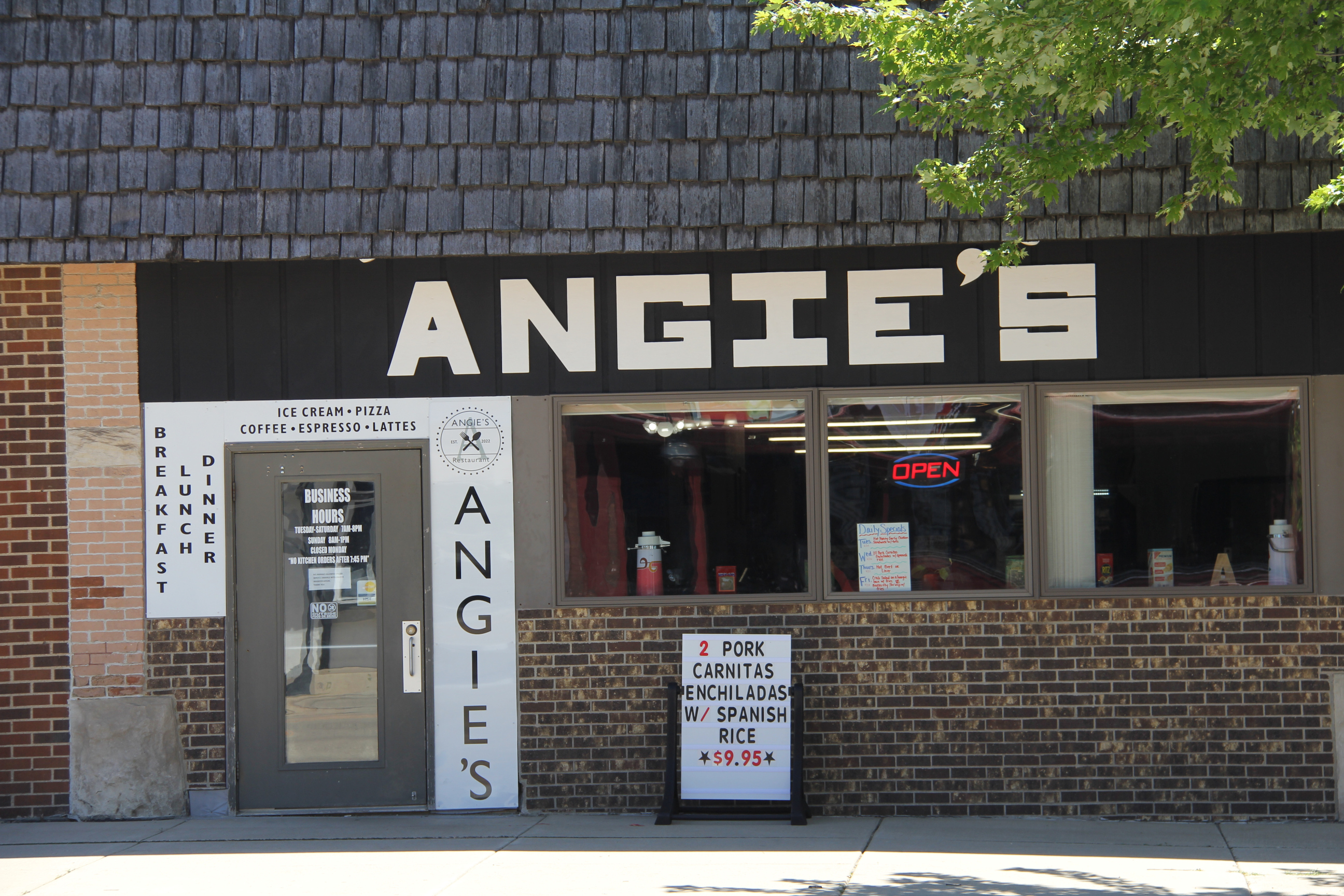
Next time I stop in Kenyon, I need to eat at Angie’s Restaurant. (Minnesota Prairie Roots copyrighted photo June 2024)
This week, Kenyon, like so many small towns, hosts a community celebration that is all about bringing people together. Rose Fest runs August 14-18 with a parade, car and truck show, vendor and craft market, city-wide garage sales, a regatta at the pool, BINGO, fire department water fights, tractor pull, magic show, music, food, food and more food… A true community celebration in every sense of a small town summer event that requires a great deal of planning and enthusiastic volunteers.
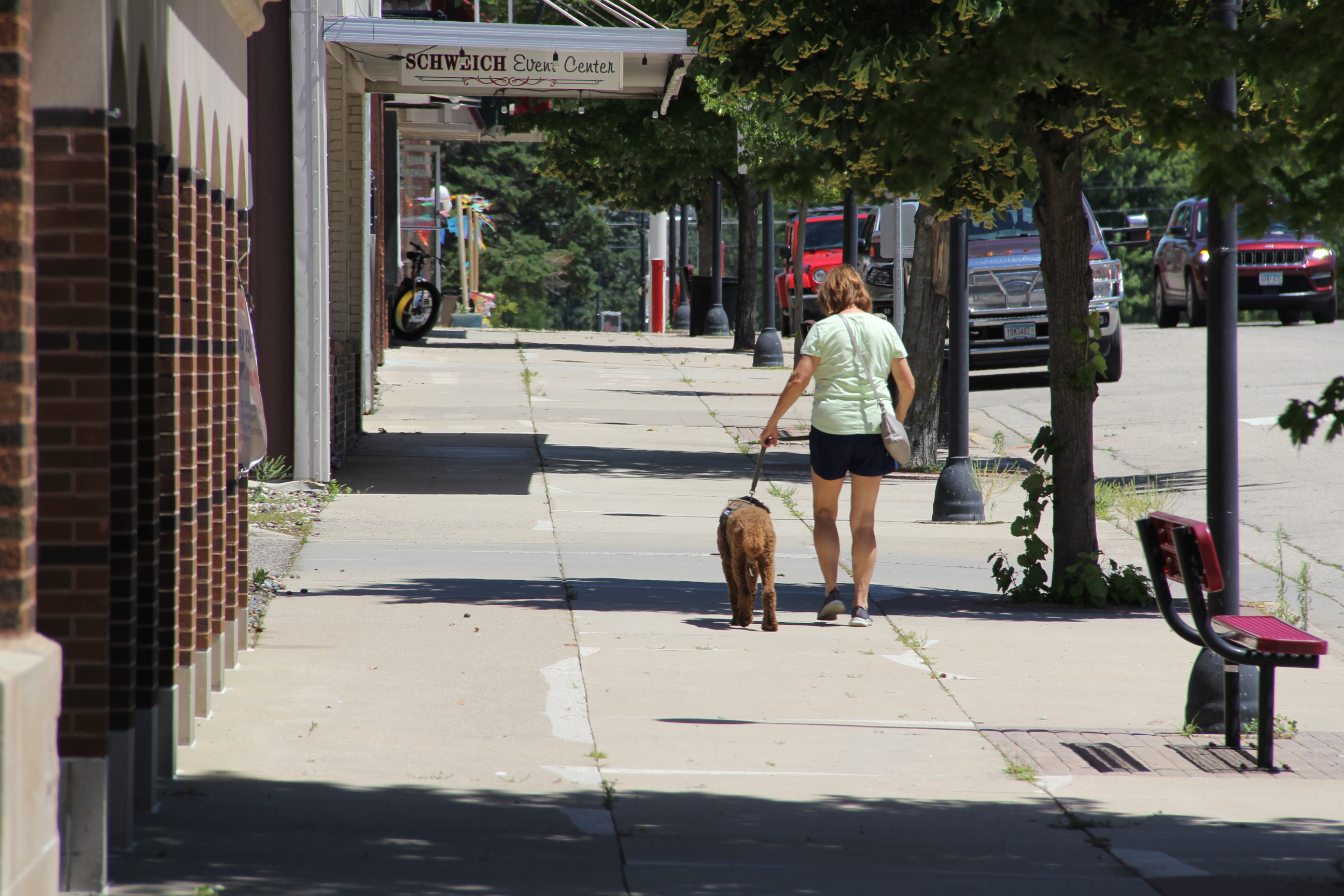
Walking the dog in downtown Kenyon. (Minnesota Prairie Roots copyrighted photo June 2024)
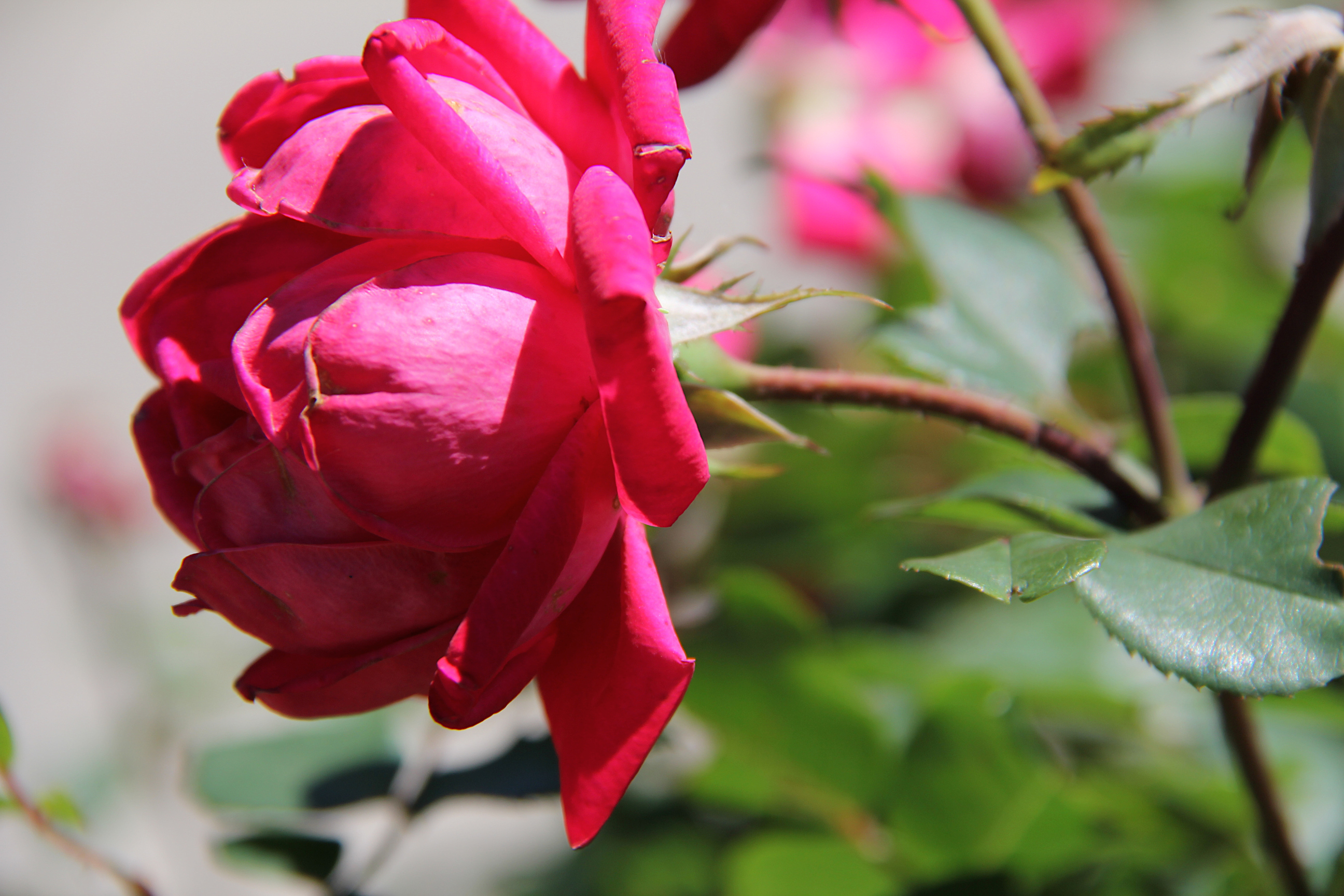
Among the many roses blooming in Kenyon’s Boulevard of Roses. (Minnesota Prairie Roots copyrighted photo June 2024)
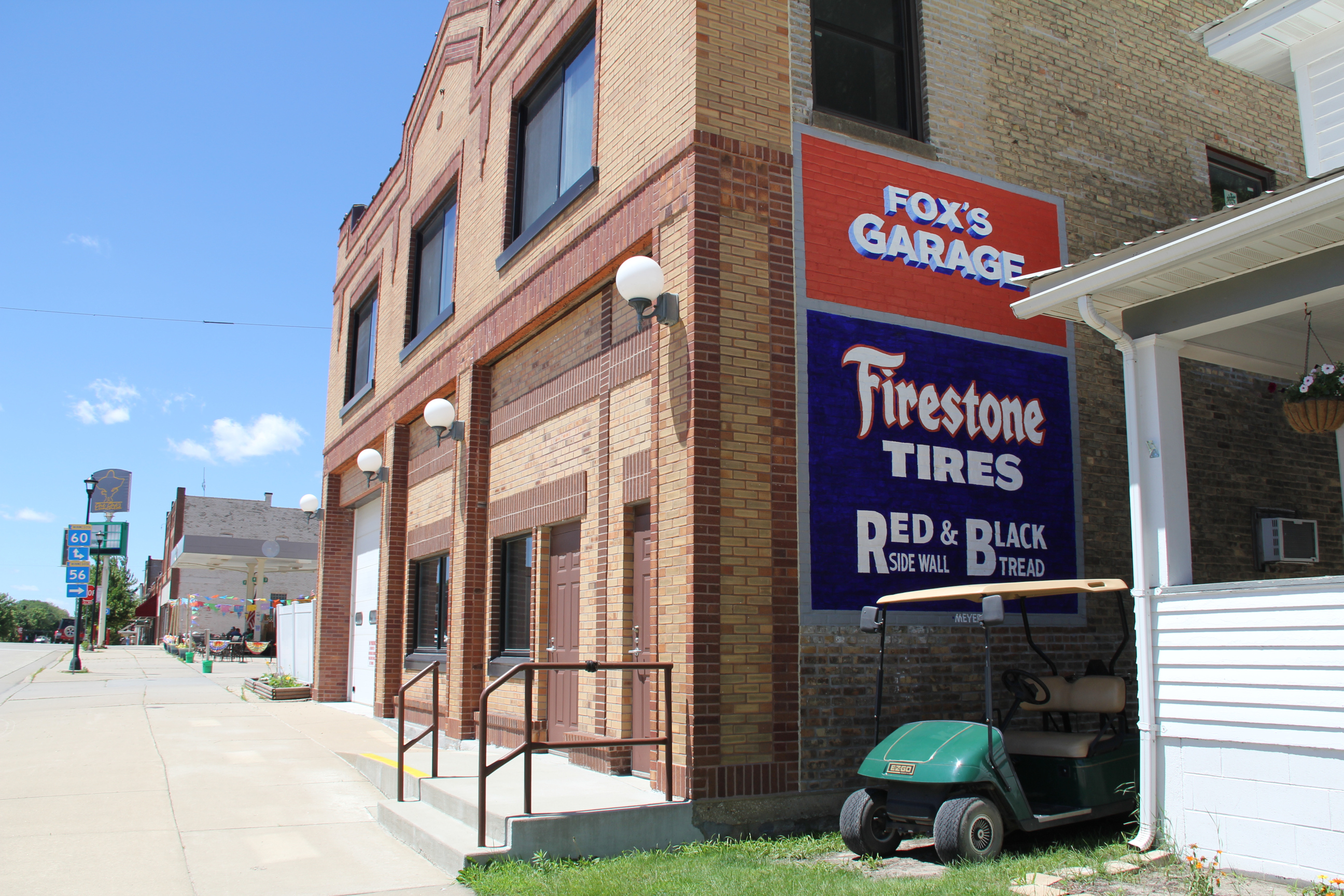
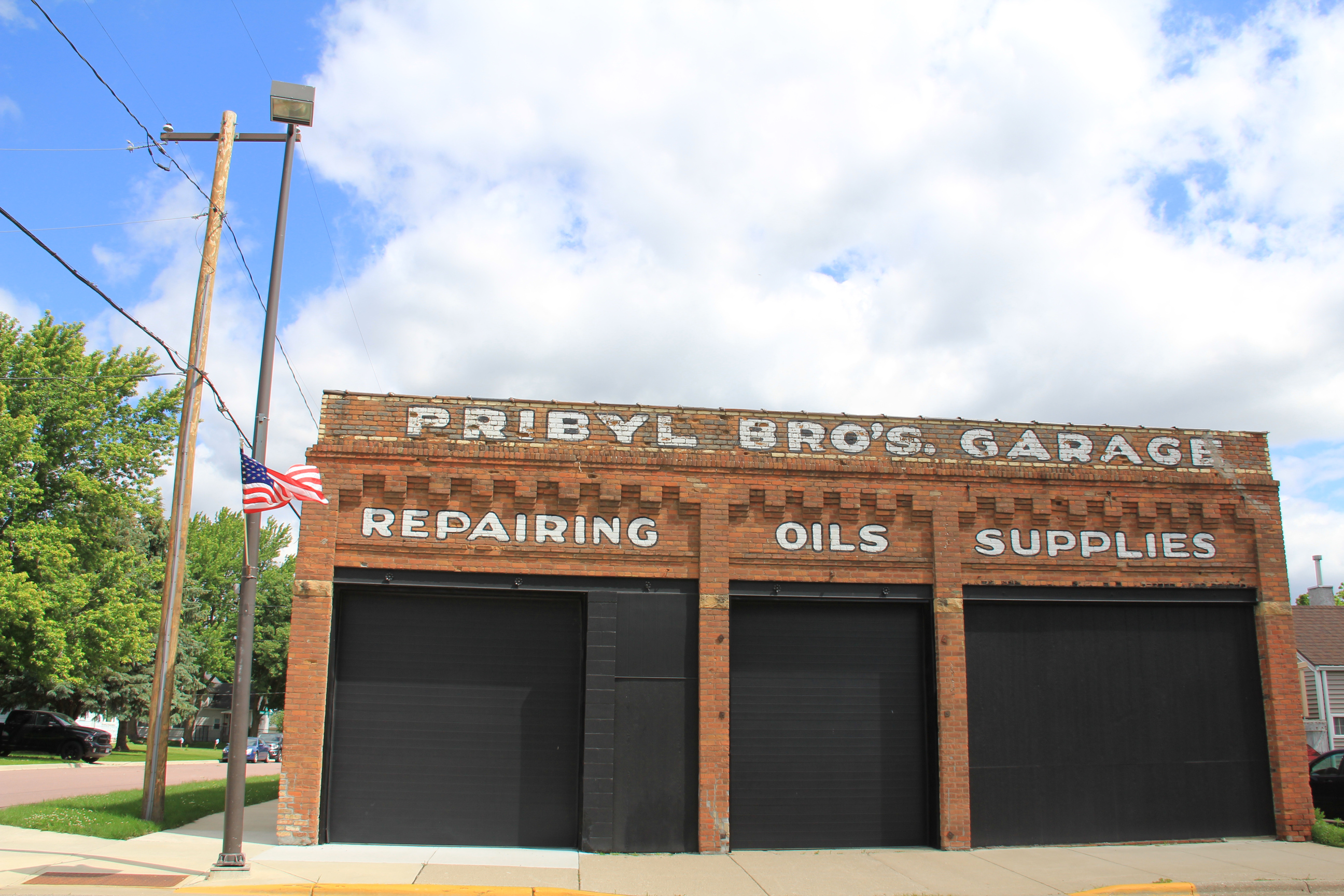
One of my favorite finds in Kenyon, this Fox’s Garage signage. This building once housed the Martin Fox Garage. (Minnesota Prairie Roots copyrighted photo June 2024)
At the heart of everything are the people—those who grew up here or moved from elsewhere to settle into this place—who call Kenyon home. Theirs is a community worthy of our pause. Stop. Walk. Smell the roses. Appreciate all that this small town offers. Just like so many other rural Minnesota communities.
#
NOTE: Watch for more posts from Kenyon as I have many more photos showcasing this southern Minnesota community.
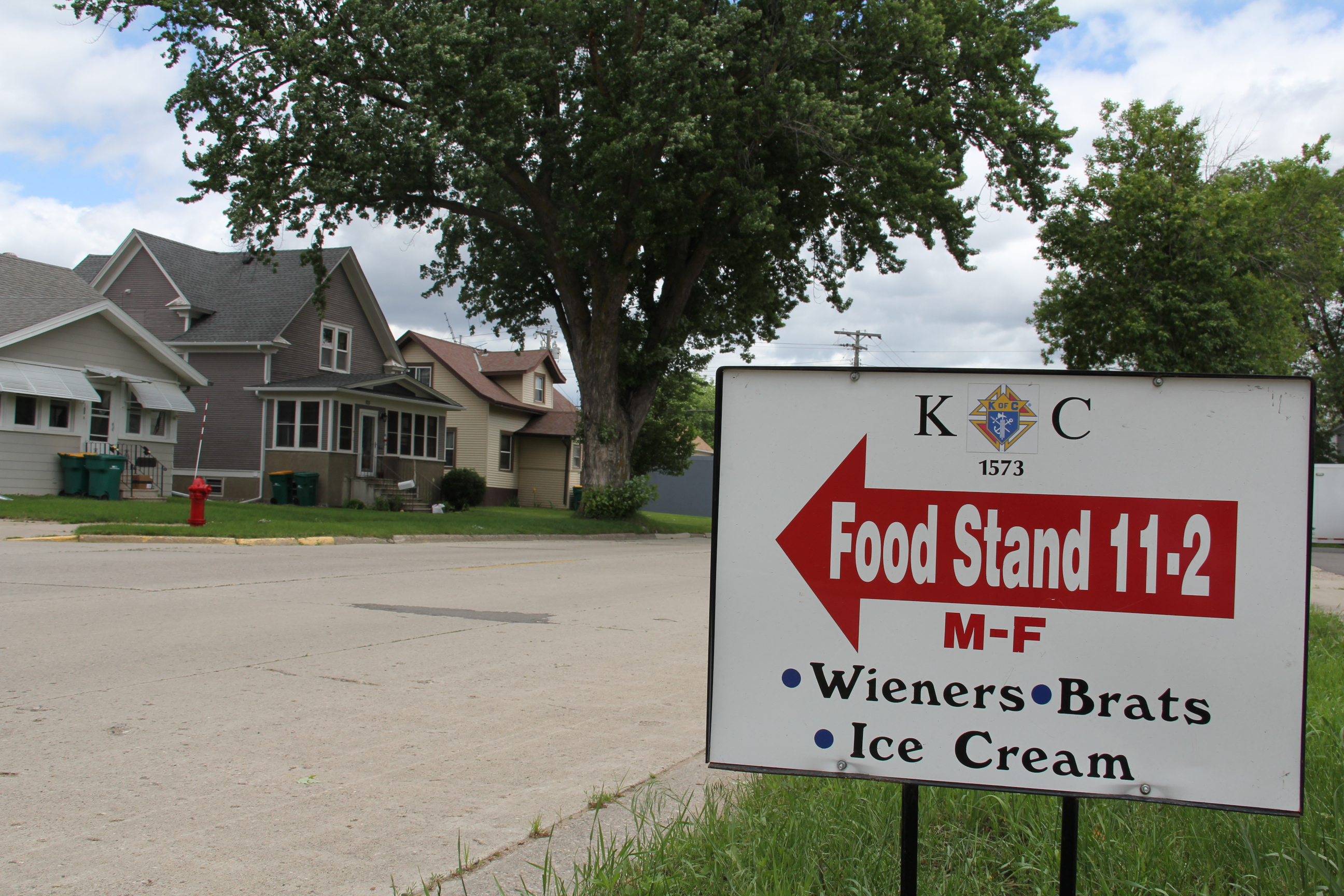
Along a main route into Montgomery’s downtown, this sign points to the KC Food Stand several blocks away. (Minnesota Prairie Roots copyrighted photo June 2024)
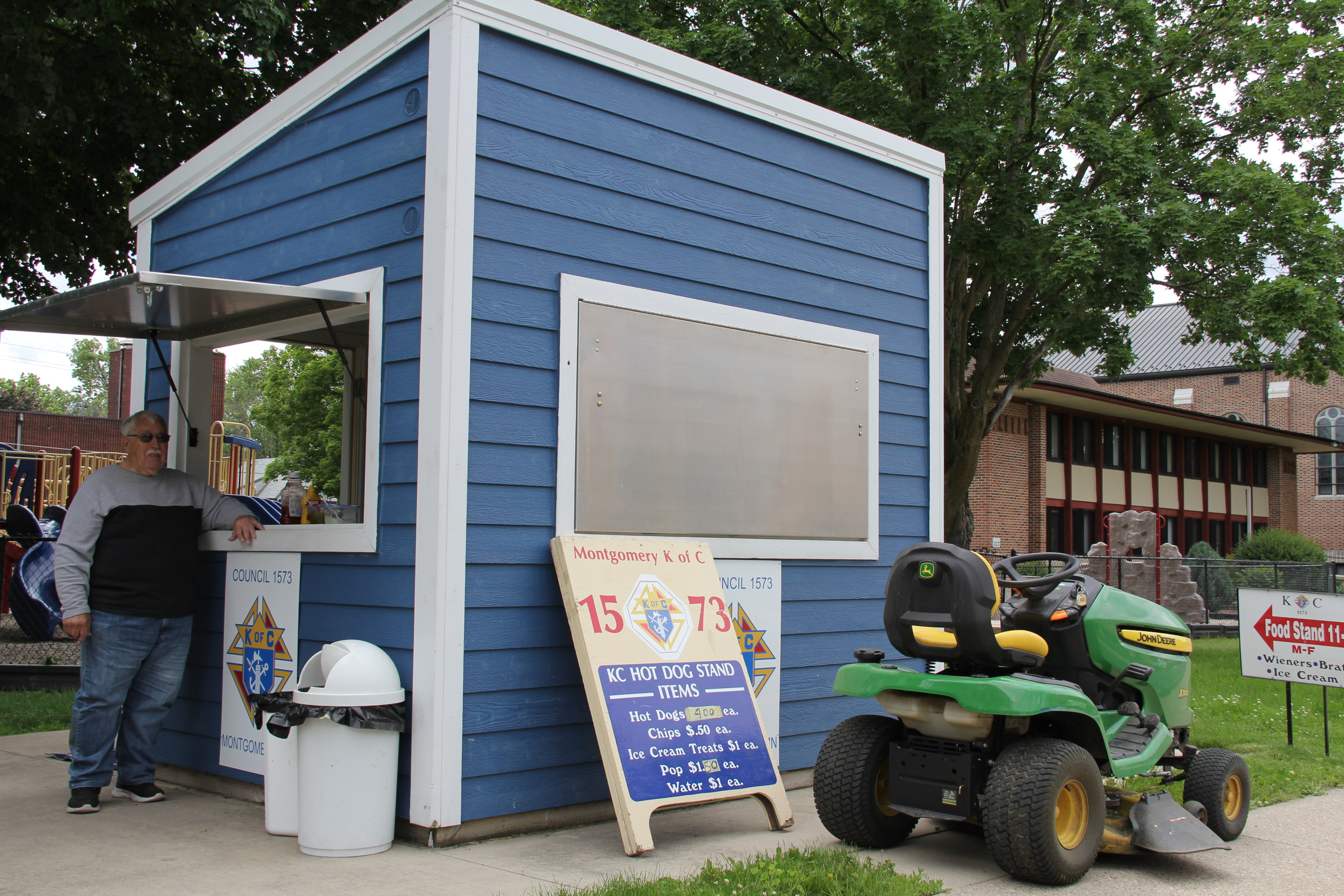
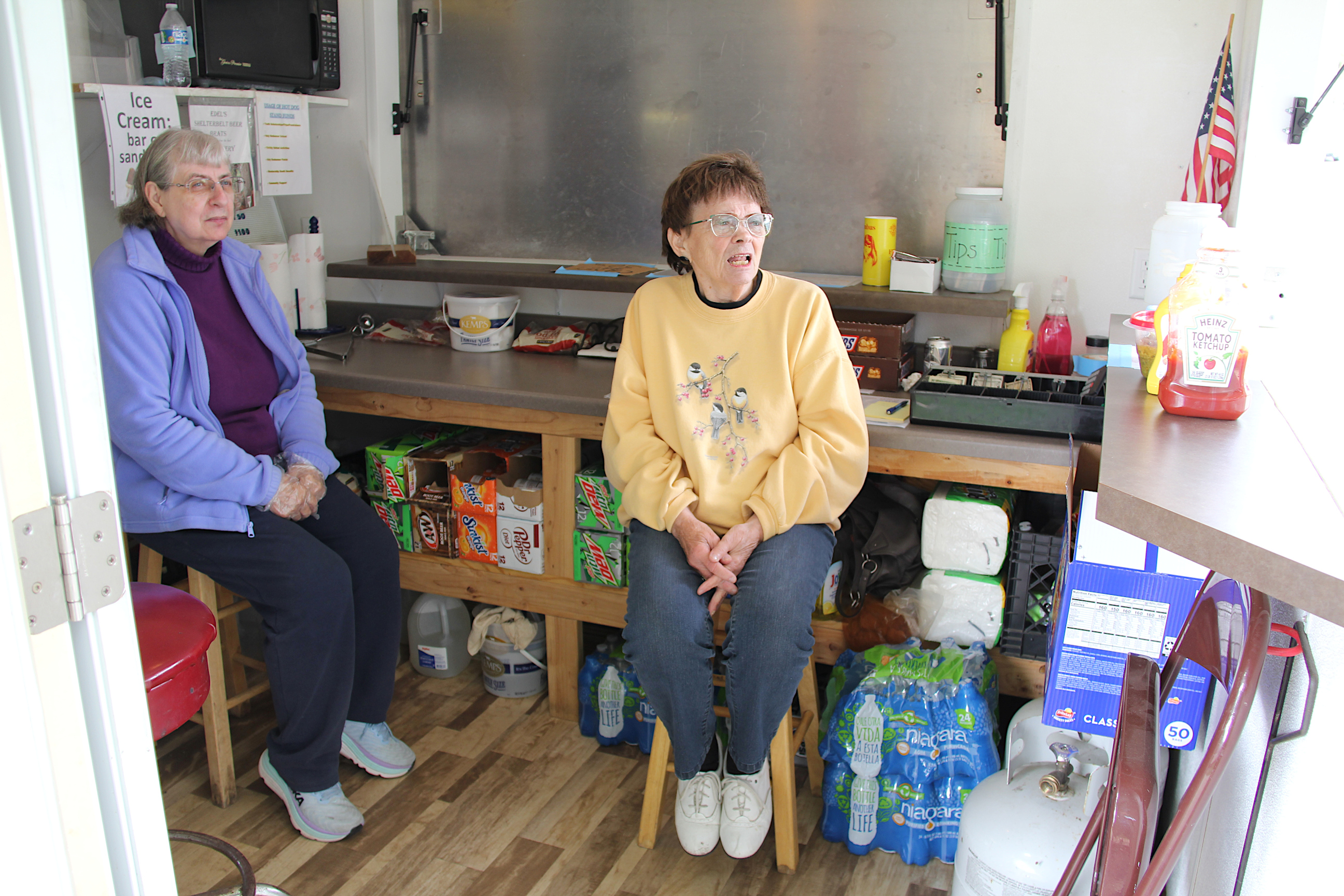
Volunteer Ernie at one of two walk-up food service windows at the KC stand. (Minnesota Prairie Roots copyrighted photo June 2024)
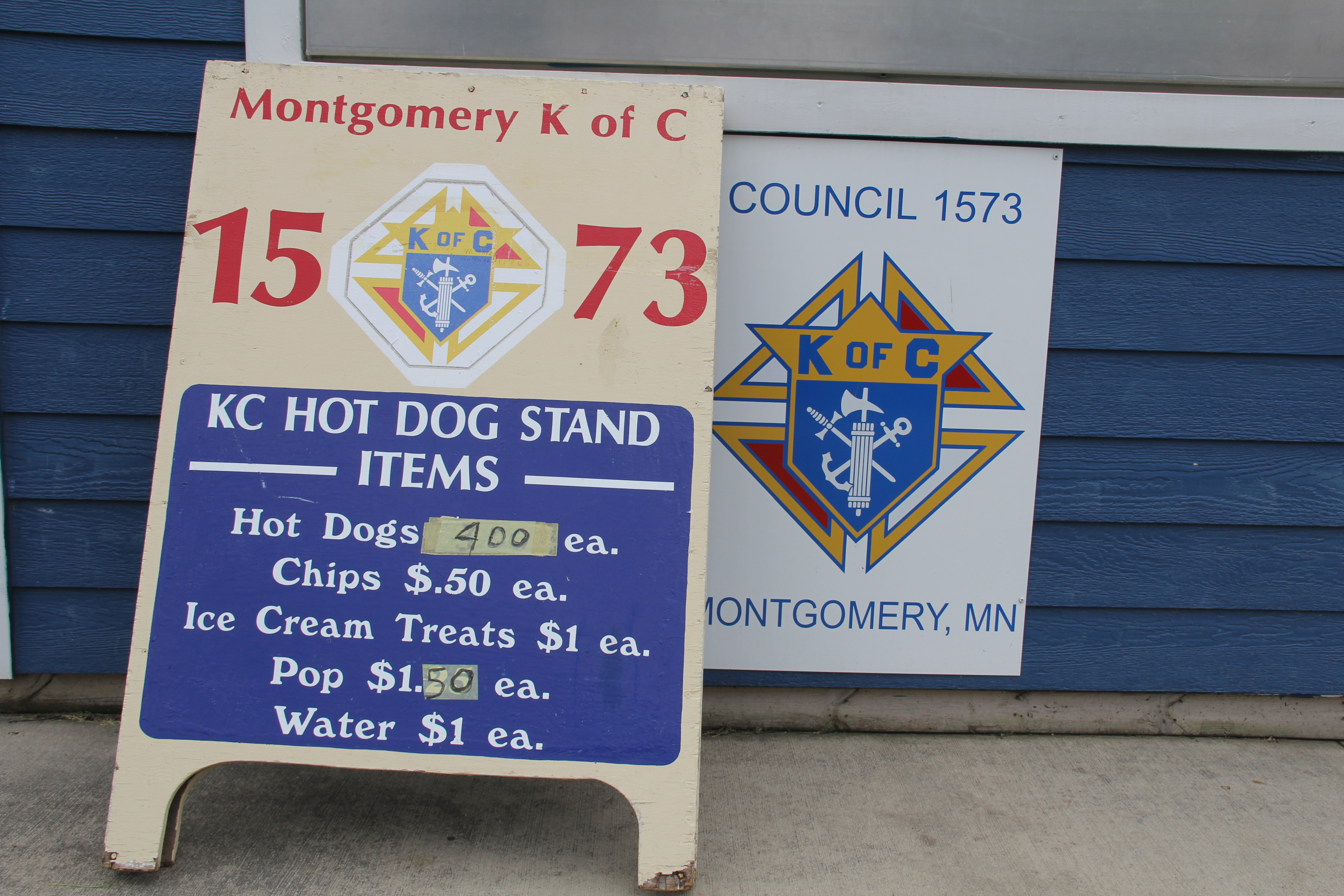
The small corner building with walk-up food service windows houses the Knights of Columbus Council #1573 Food Stand. And, by all accounts, business is brisk. Every weekday, from 11 a.m. – 2 p.m., from June until Labor Day, volunteers run this street-side stand at 206 Vine Avenue West.
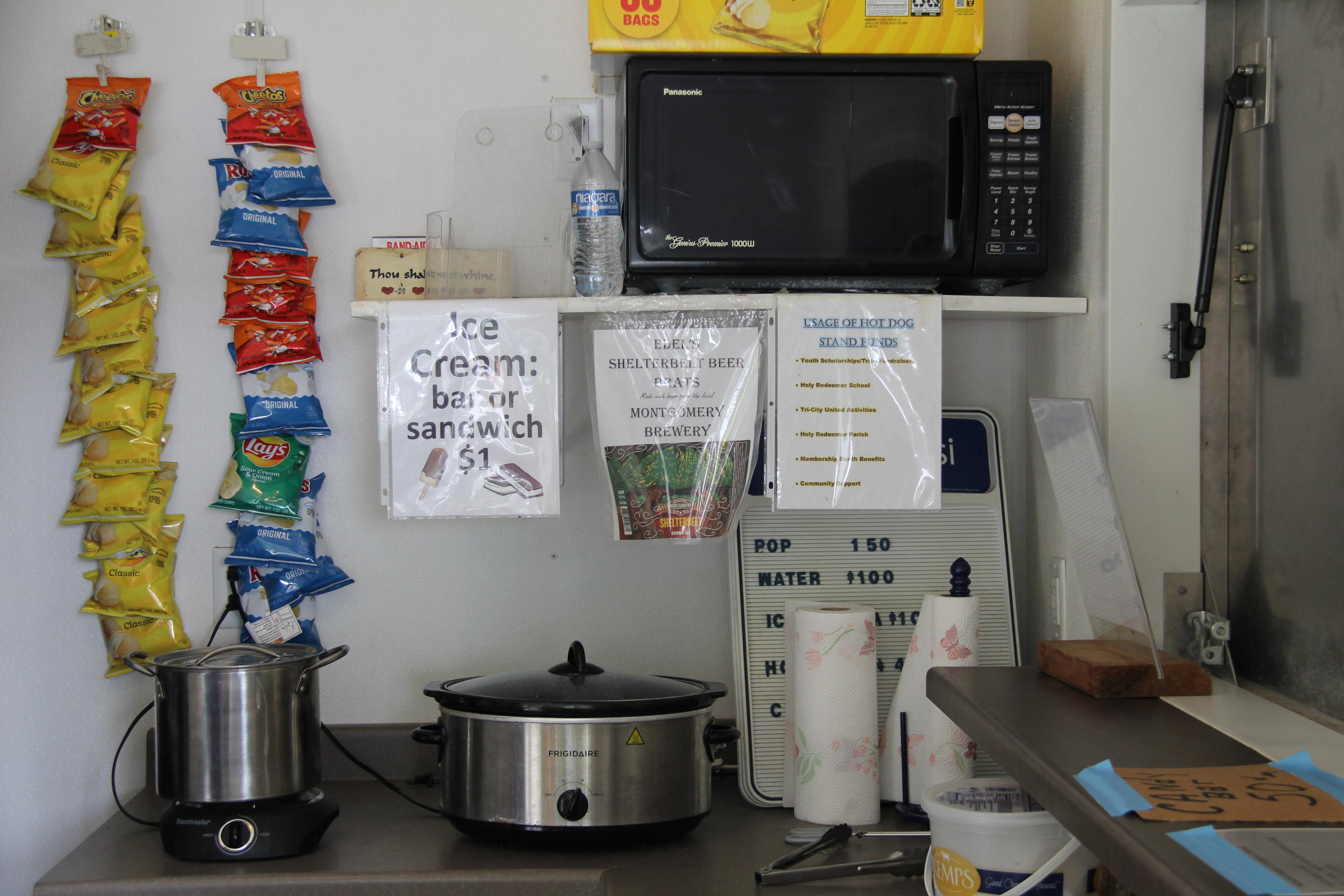
Food and signs, including a sign that reads “Thou shalt not whine.” (Minnesota Prairie Roots copyrighted photo June 2024)
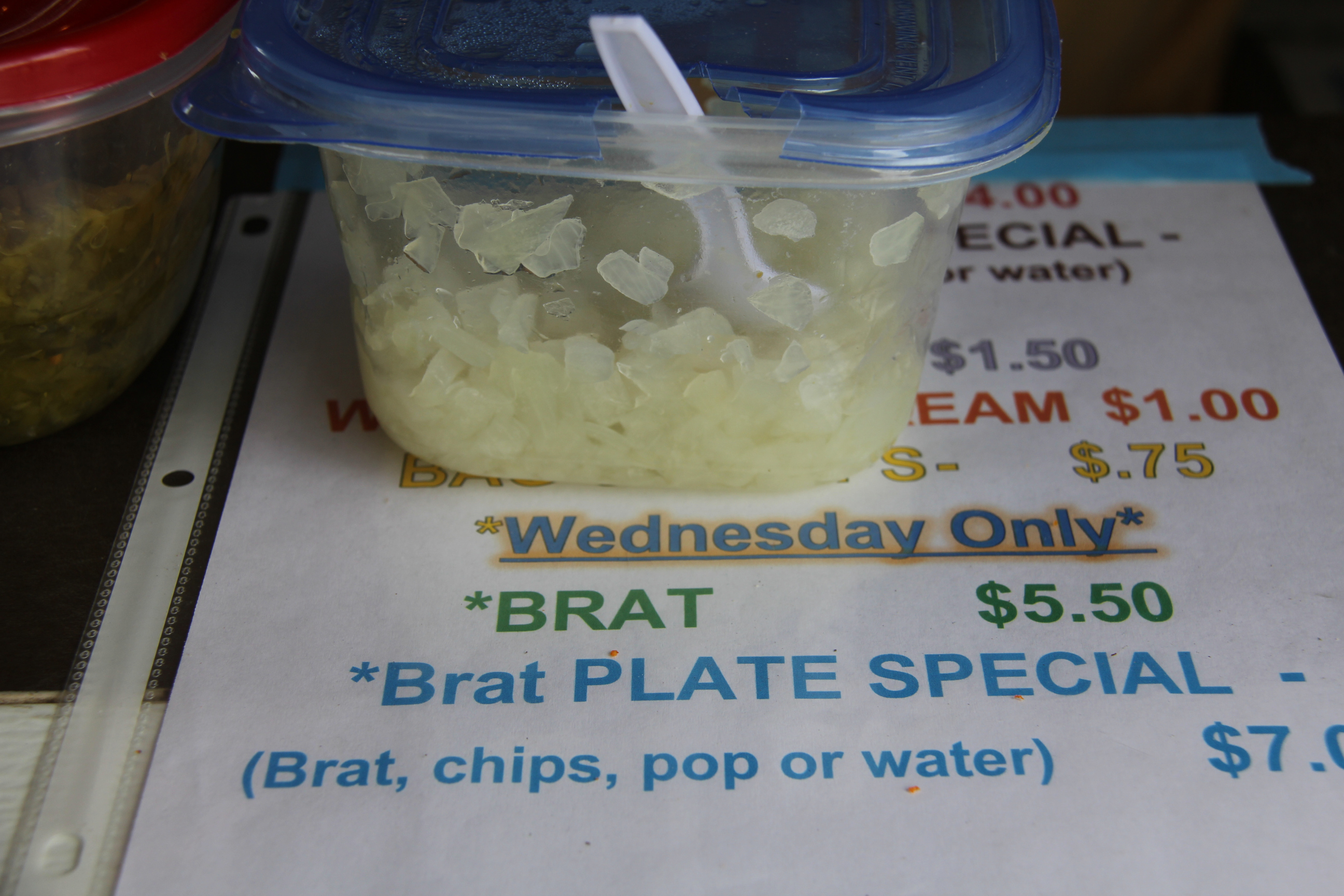
On the Thursday I stopped by, drawn by street signage to check out this food stand, Ernie, Jean and Evelyn were running things. The offerings are simple, basic: wieners (not hot dogs), brats, pork burgers, chips, candy bars, ice cream treats, pop and water. Not all meats are served daily. Wednesday is Brat Day. Pork burgers are served on Fridays.
Evelyn, left, and Jean await customers on an afternoon in early June. (Minnesota Prairie Roots copyrighted photo June 2024)
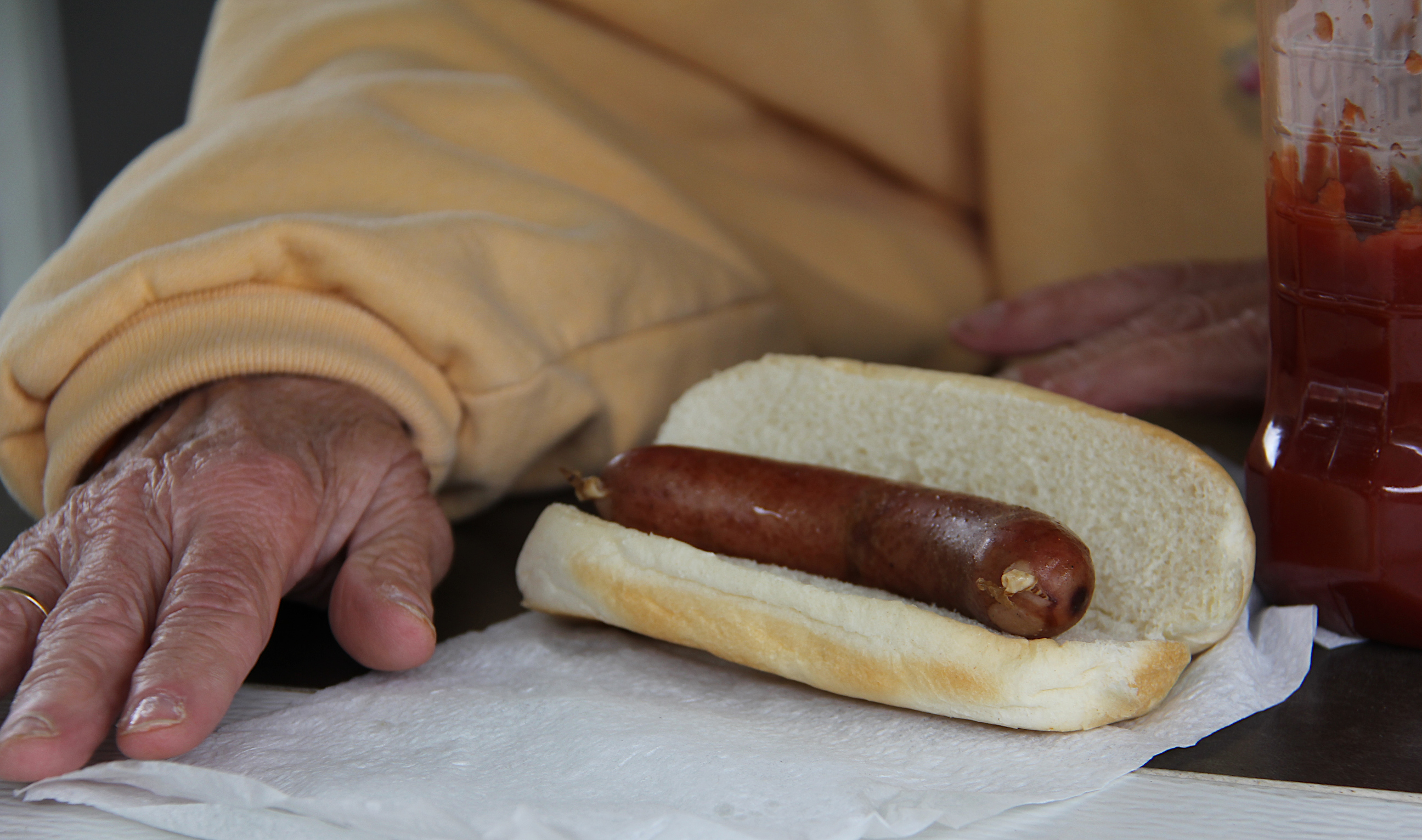
Jean serves a wiener/hot dog from Edel’s Meat Market. (Minnesota Prairie Roots copyrighted photo June 2024)
Condiments and menu specials at a serving window. (Minnesota Prairie Roots copyrighted photo June 2024)
The meat comes from Edel’s Meat Market just down the street. The brats, Edel’s Shelterbelt Beer Brats, are made with Shelterbelt beer from Montgomery Brewing, also just down the street. This food stand is all about supporting local.
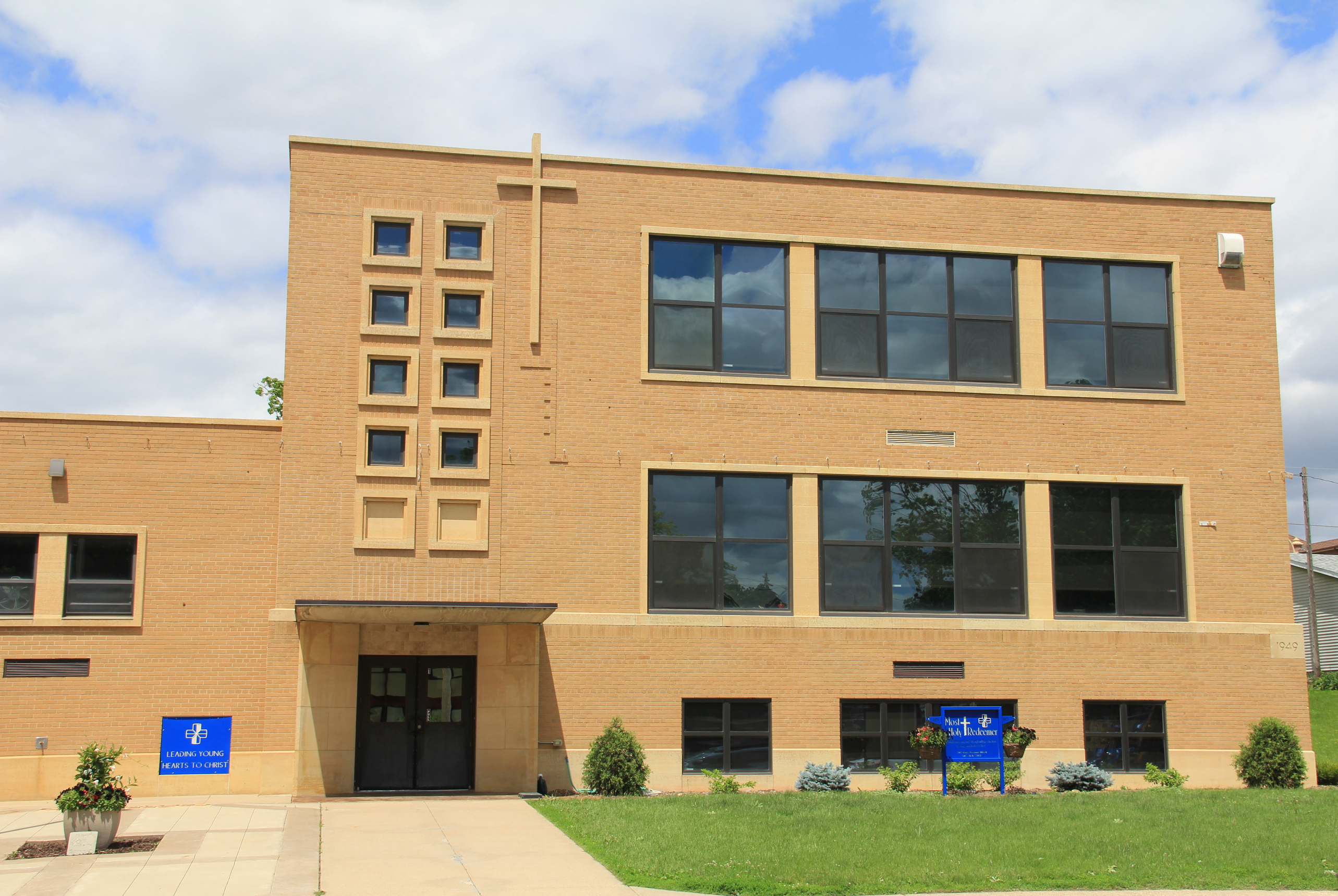
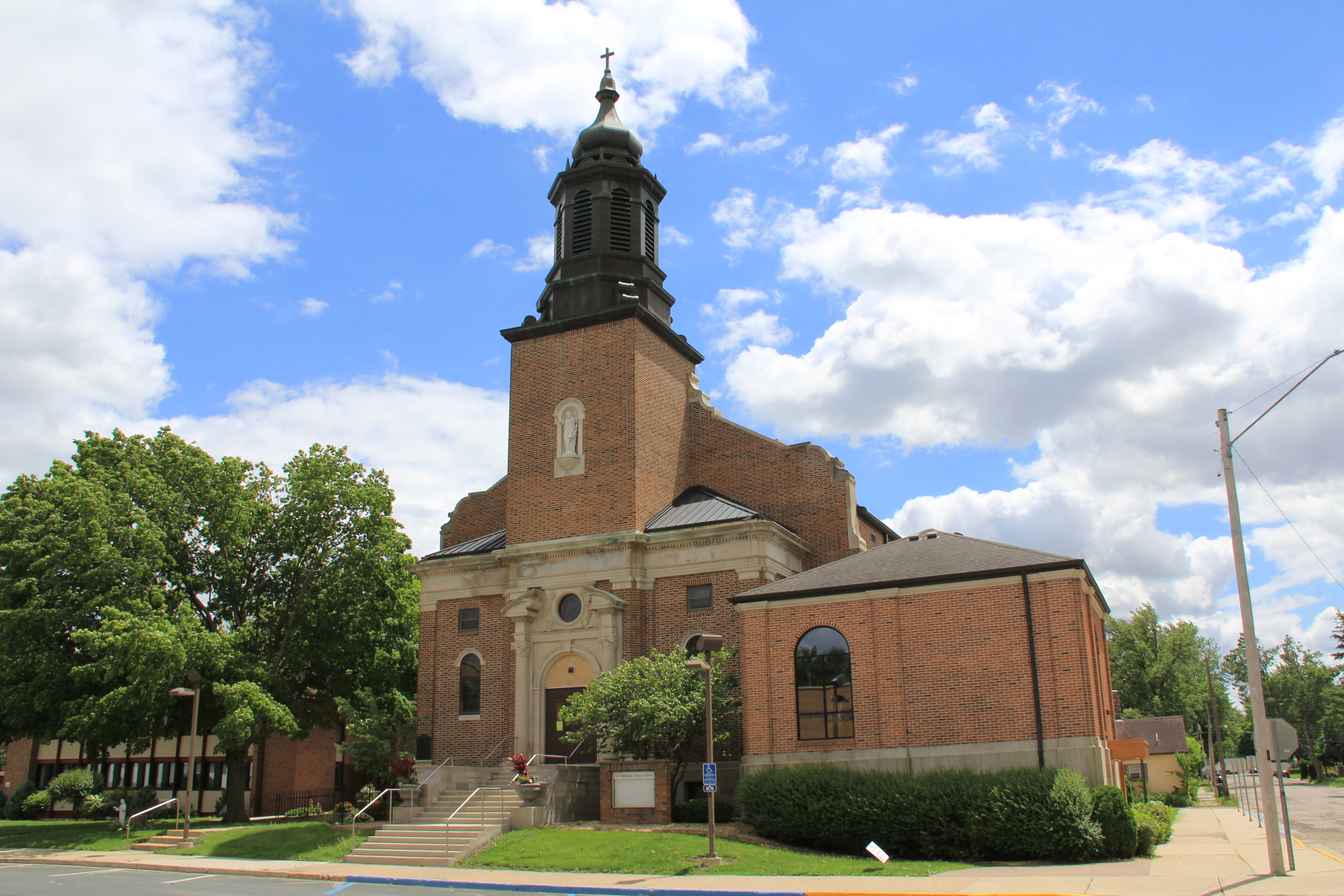
Most Holy Redeemer Catholic School, Montgomery. (Minnesota Prairie Roots copyrighted file photo June 2024)
Proceeds from the stand benefit local entities: youth scholarships/trips, Most Holy Redeemer Catholic Church and School, Tri-City United (the public school) activities, membership death benefits and the Montgomery community in general.
Signage at the KC Food Stand. (Minnesota Prairie Roots copyrighted photo June 2024)
Funds raised here are no chump change. In 2023, the stand grossed $12,000, netted $8,000, according to volunteer Ernie. The KC stand has been around since the 1950s, although not always at today’s location. The stand is meeting a need in the community, the trio of volunteers agreed.
The KC Food Stand is on the same block as Most Holy Redeemer Church, just to the east on the corner. (Minnesota Prairie Roots copyrighted file photo June 2024)
It follows the Knights of Columbus principles of charity, unity and fraternity by giving to the community and bringing people together. I love this about small towns, the way folks work together for the good of people and place. That’s happening in the small blue building on the corner of Vine in Montgomery every weekday during the summer.
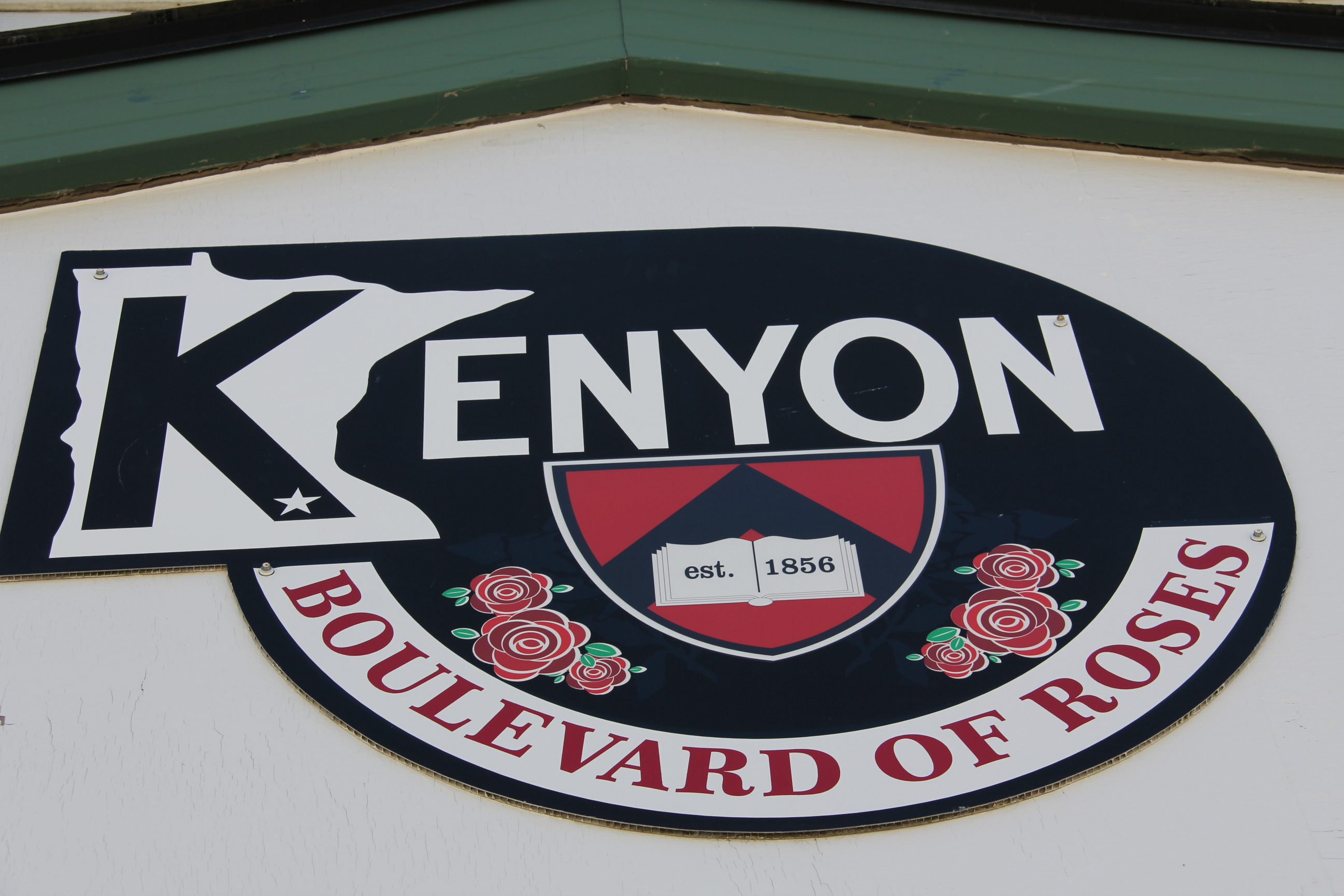
This identifying signage is posted on Kenyon’s city building. (Minnesota Prairie Roots copyrighted photo June 2024)
WHEN IT COMES to branding, everything is coming up roses in Kenyon. Literally.
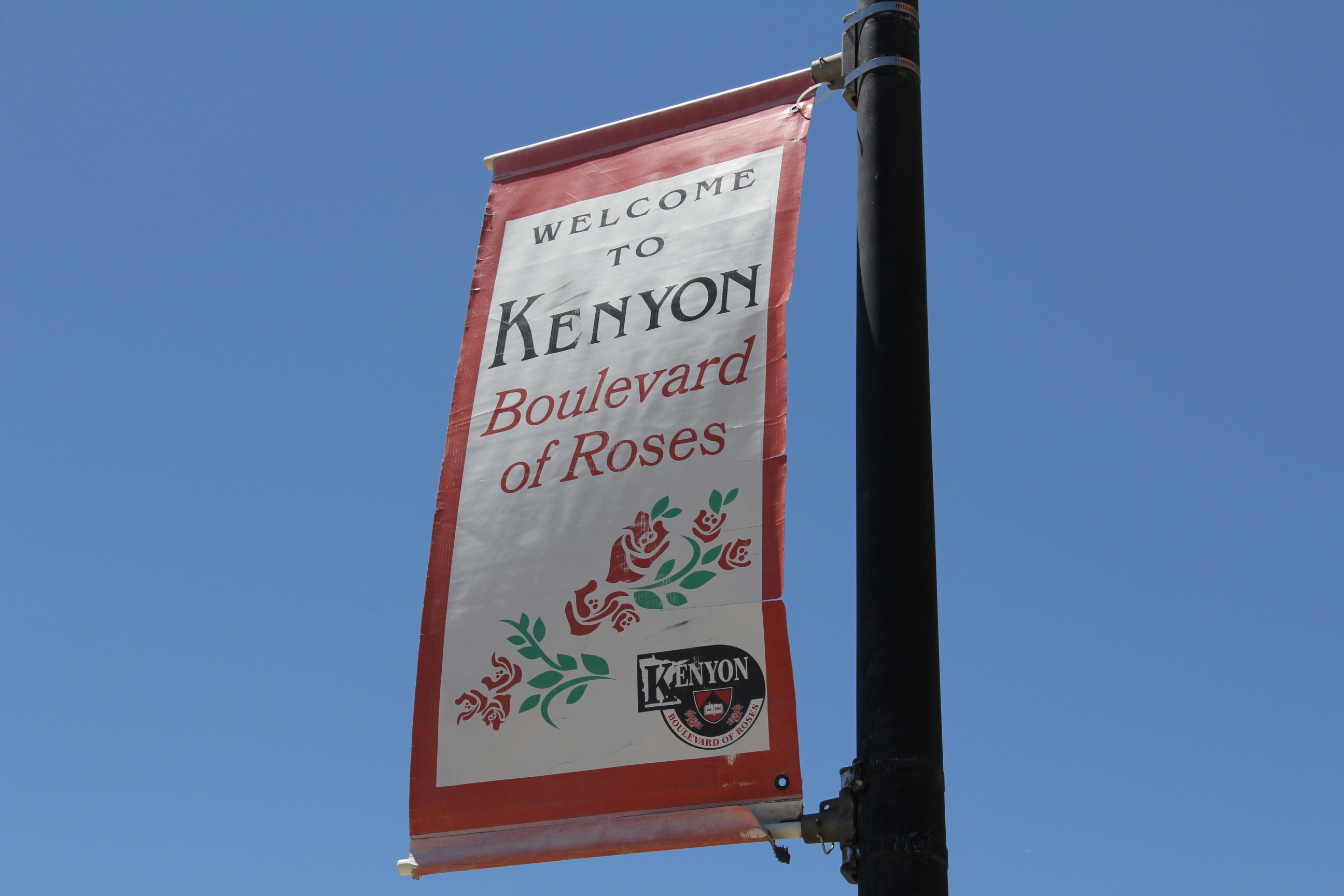
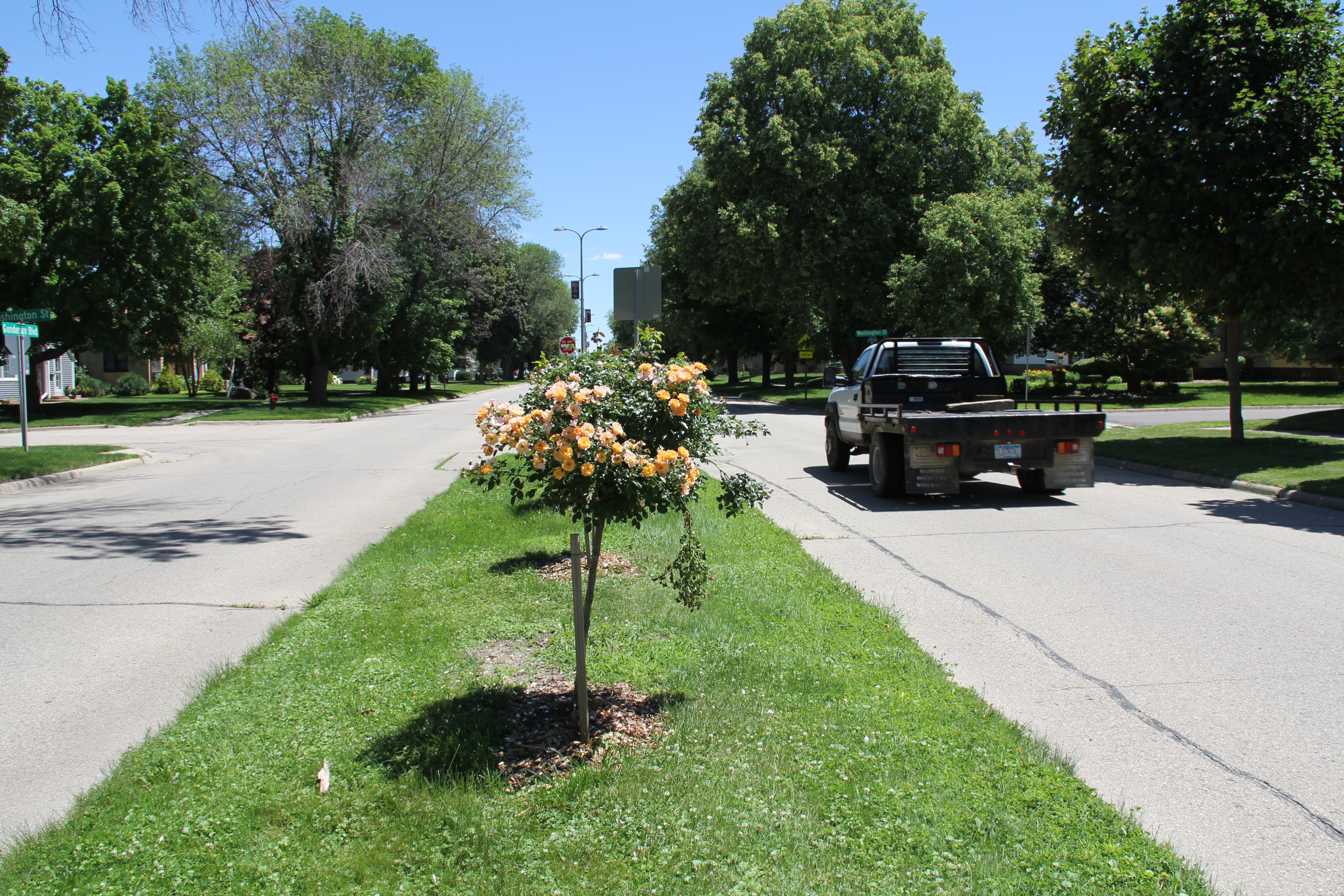
Welcome to Kenyon and its Boulevard of Roses. (Minnesota Prairie Roots copyrighted photo June 2024)
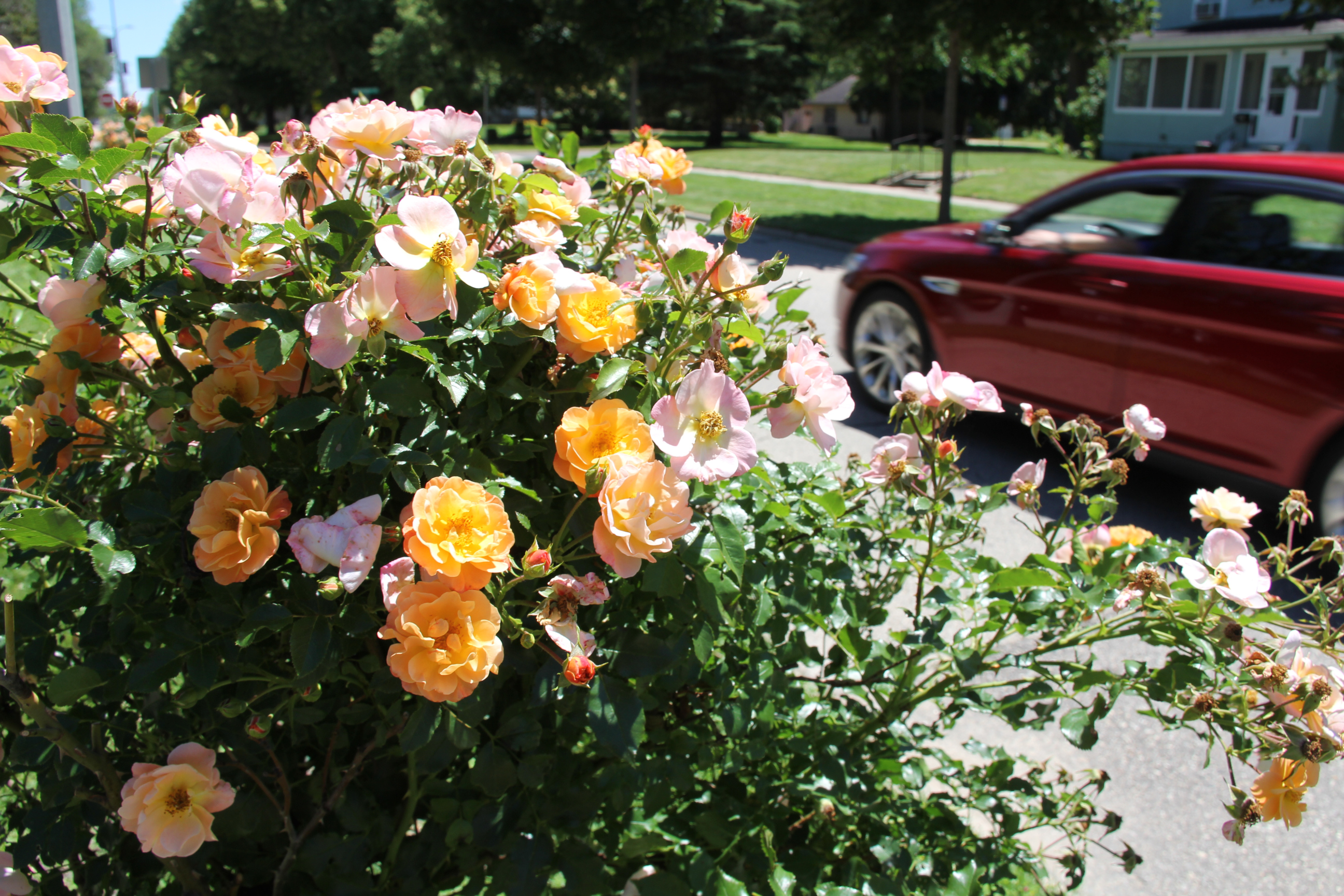
Roses bloom throughout the summer in the boulevard. (Minnesota Prairie Roots copyrighted photo June 2024)
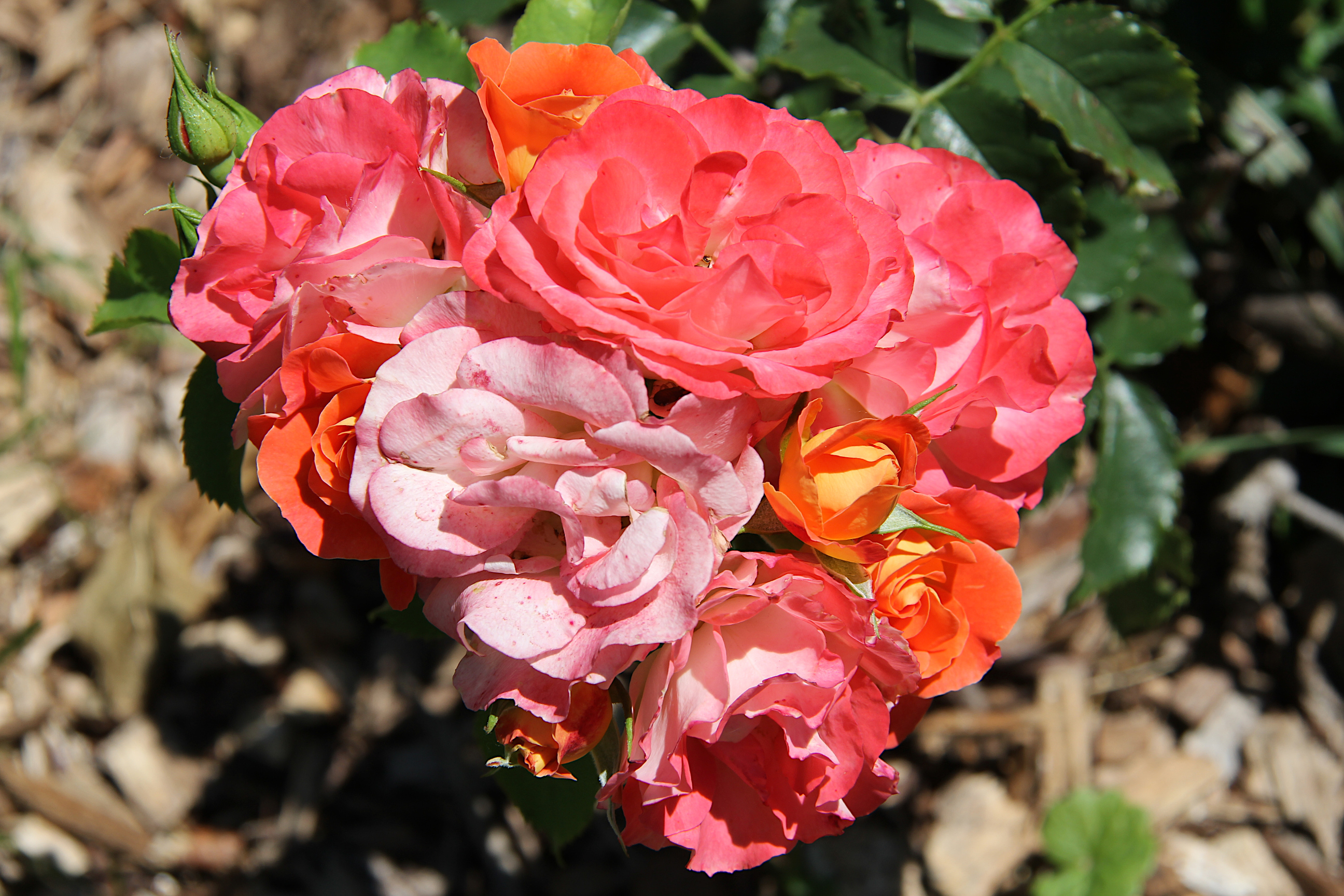
So many lovely roses… (Minnesota Prairie Roots copyrighted photo June 2024)
This community of just under 2,000 identifies itself via its Boulevard of Roses which is, indeed, a rose-filled boulevard on Minnesota State Highway 60/Gunderson Boulevard. For blocks along this heavily-traveled roadway on the west side of downtown, tree roses grow, blooming beauty into the landscape.
So many beautiful roses in assorted hues. (Minnesota Prairie Roots copyrighted photo June 2024)
Whether growing individually or in clusters, these tree roses are glorious. (Minnesota Prairie Roots copyrighted photo June 2024)
Traffic whizzes by on both sides as you smell/view the roses. (Minnesota Prairie Roots copyrighted photo June 2024)
Recently, I stopped to smell the roses. Literally. I dipped my nose into the perfume-scented flowers, delighting in their fragrance as semi trucks and other motor vehicles blew by me only feet away. Smelling the roses here requires caution. I’ve often wished Kenyon had a public rose garden, allowing for rose viewing, and smelling, in a peaceful setting.
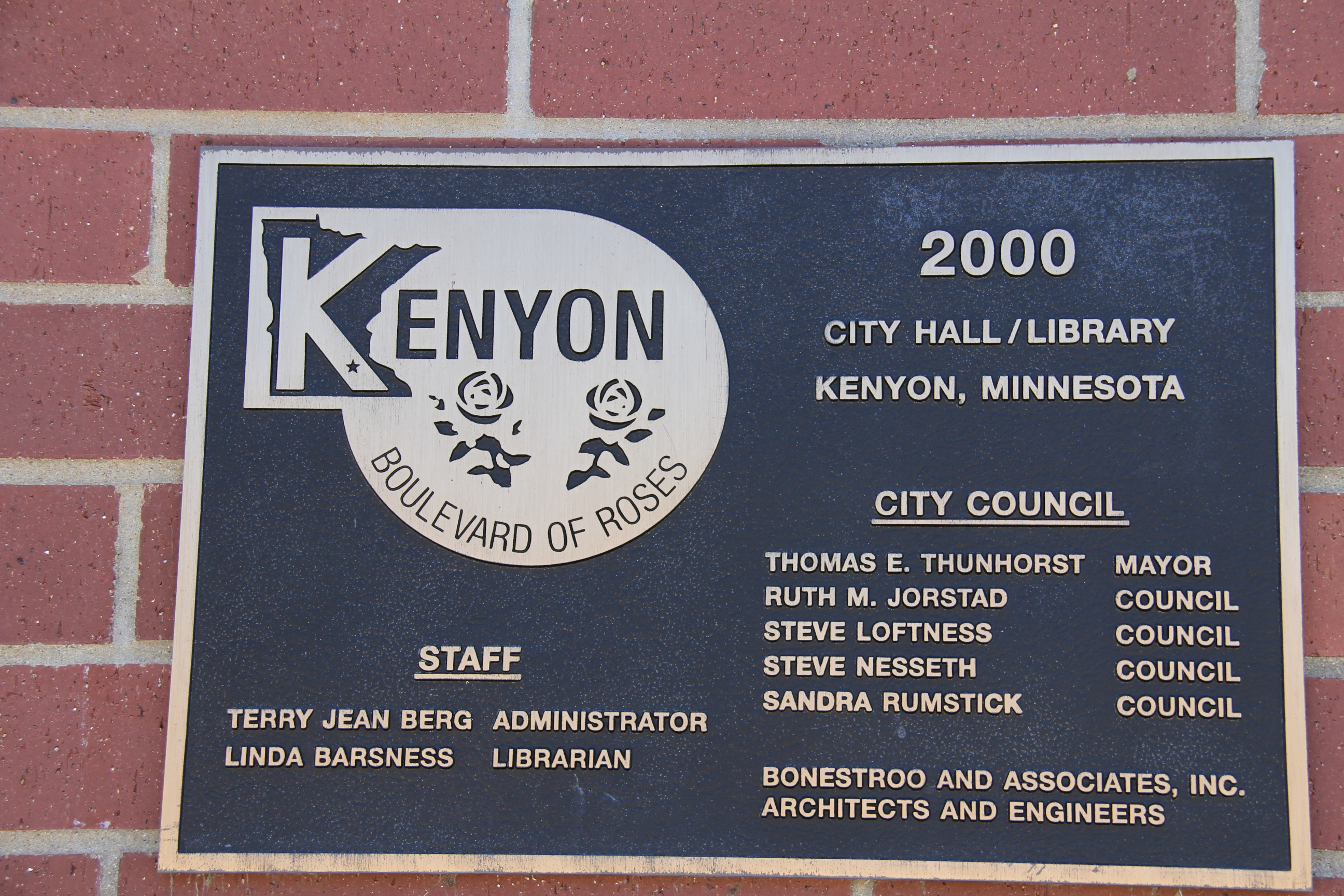
Even a plaque on Kenyon’s city building has the rose brand. (Minnesota Prairie Roots copyrighted photo June 2024)
But that the city has this, this Boulevard of Roses, is a gift. Back in 1962, city employee Lloyd Jystad asked to plant 10 tree roses to spruce up the boulevard. Permission granted. He cared for the rose bushes, which require burying in the ground before winter and then uncovering in the spring. From that initial request, the rose idea grew to include some 100 bushes, which are still cared for by city employees today. The Boulevard of Roses was dedicated in June 1968. That’s a long time of growing and tending roses.
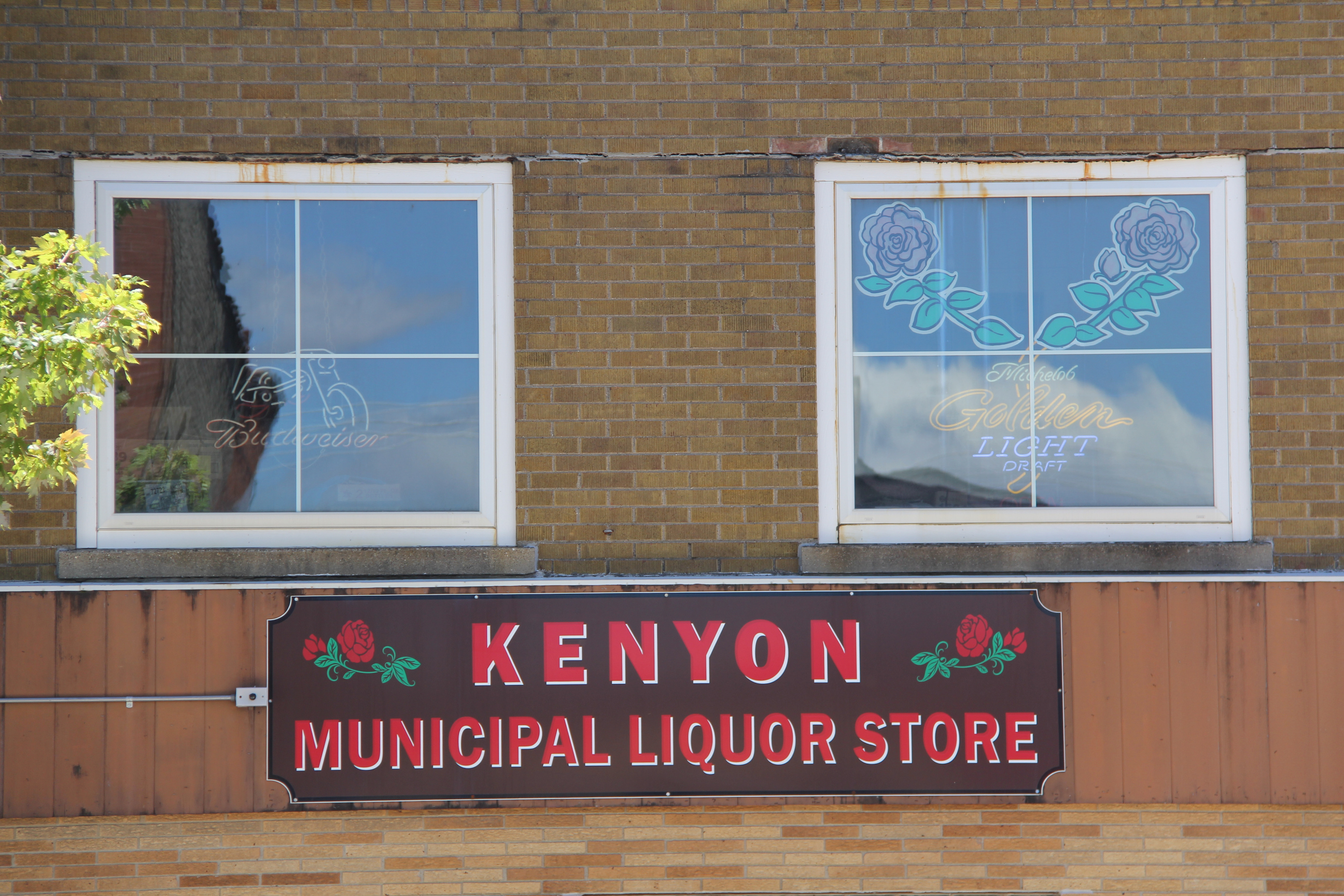
Rose branding on the city liquor store. (Minnesota Prairie Roots copyrighted photo June 2024)
Throughout Kenyon, roses bloom. In many ways, it’s remarkable for a community this small to have such a strong identifier. But I saw roses everywhere during a recent visit, far beyond the real ones that bloom along the highway. The red rose symbol graces many a sign in Kenyon.
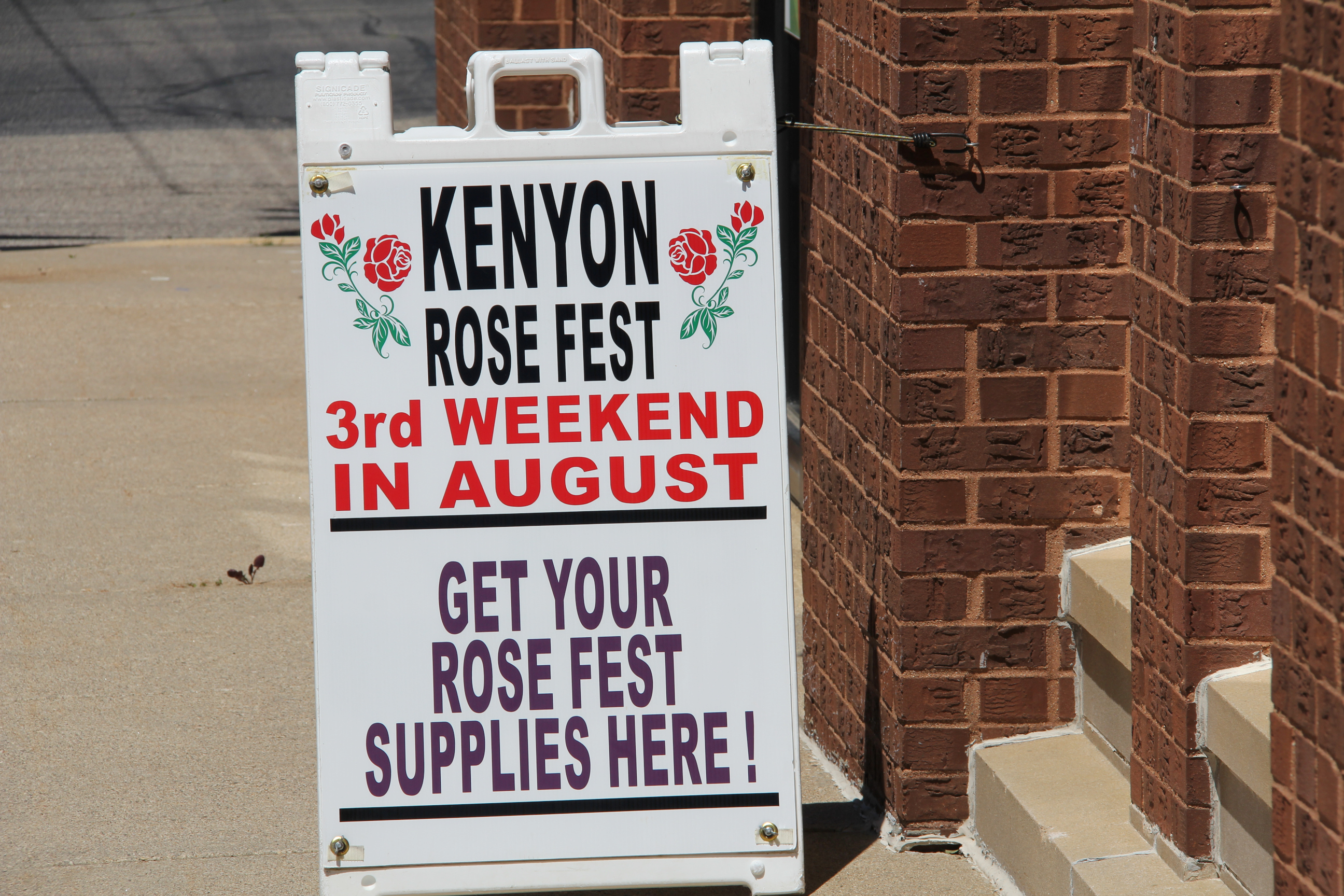
A sandwich board sits outside a small business well in advance of Rose Fest. (Minnesota Prairie Roots copyrighted photo June 2024)
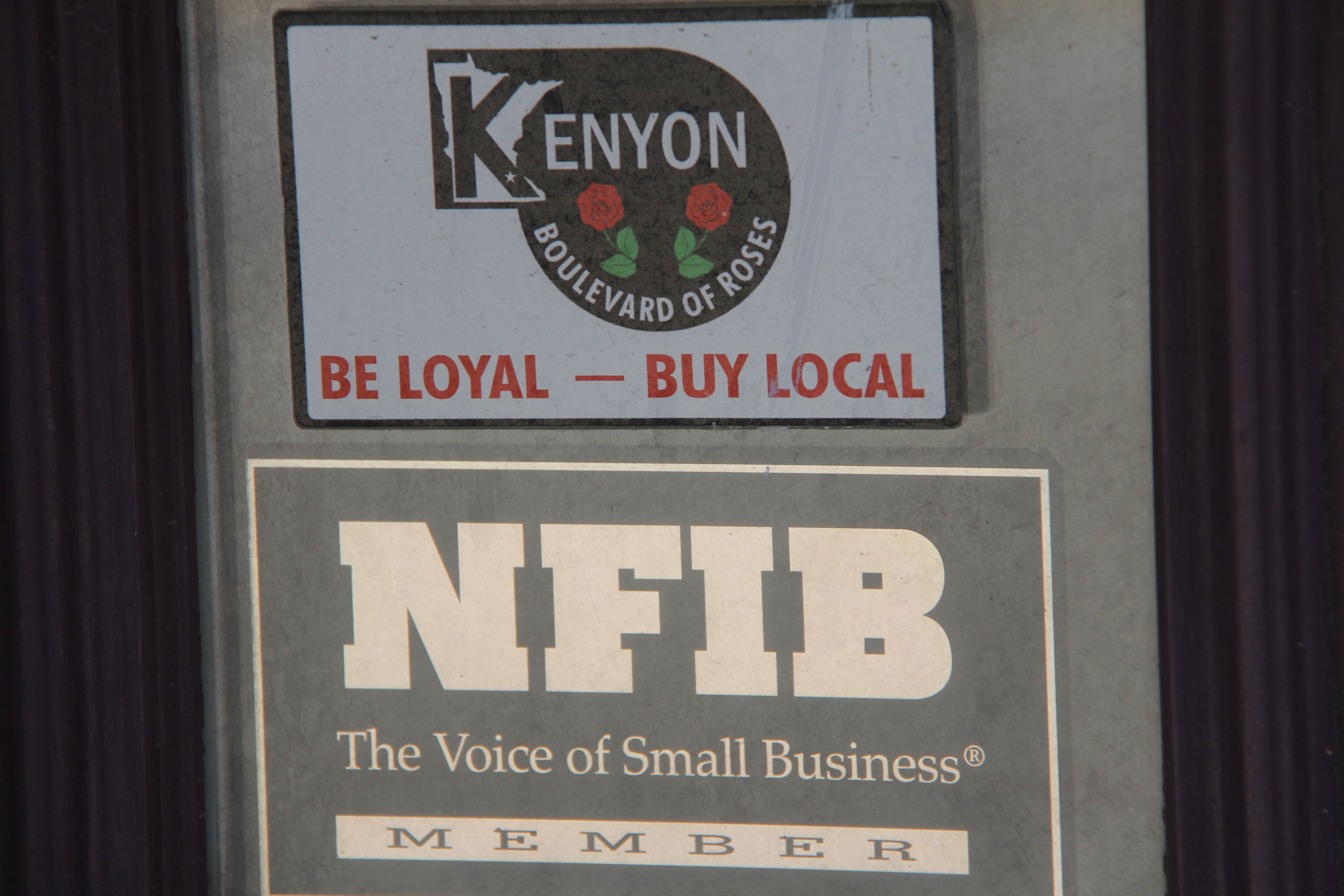
Business branding on a shop door. (Minnesota Prairie Roots copyrighted photo June 2024)
Promoting the upcoming Rose Fest car and truck show in a storefront window. (Minnesota Prairie Roots copyrighted photo June 2024)
The city also celebrates roses in August with the Kenyon Rose Fest, this year August 14-18. It’s your typical small town summer celebration with fest royalty, a parade, a car and truck show, vendor and craft market, great food, and more. Mostly, Rose Fest is about connecting people and community. It brings folks together to celebrate small town life.
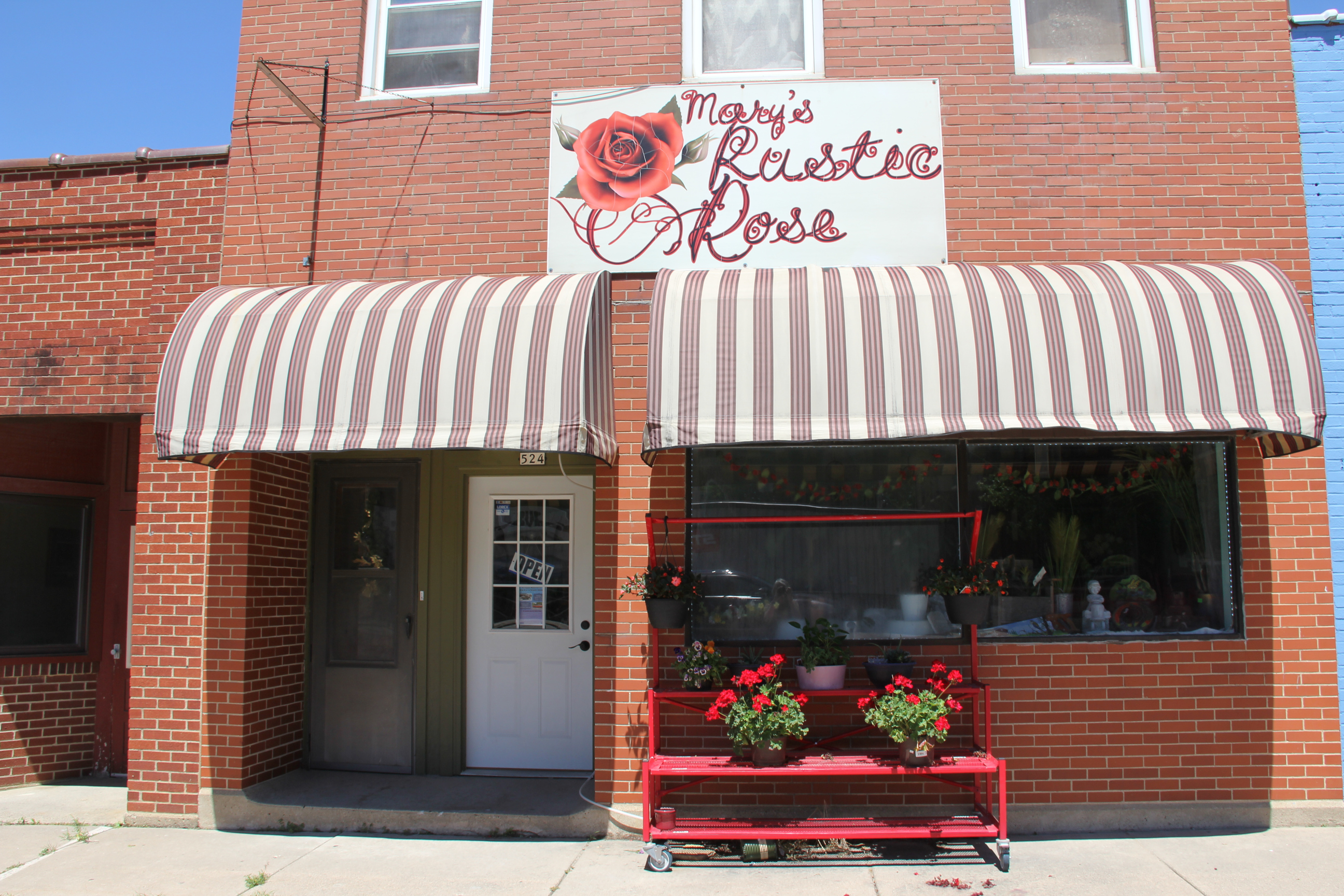
A fitting name for a floral shop in Kenyon. (Minnesota Prairie Roots copyrighted photo June 2024)
I often wonder if motorists, as they drive through Kenyon in their hurry from Point A to Point B, even notice the beauty they’re passing by in the Boulevard of Roses. I’m here to say it’s worth your time to stop, exit your vehicle and smell the roses. Life is much sweeter when we slow down and appreciate the nuances of small towns like Kenyon with its Boulevard of Roses.
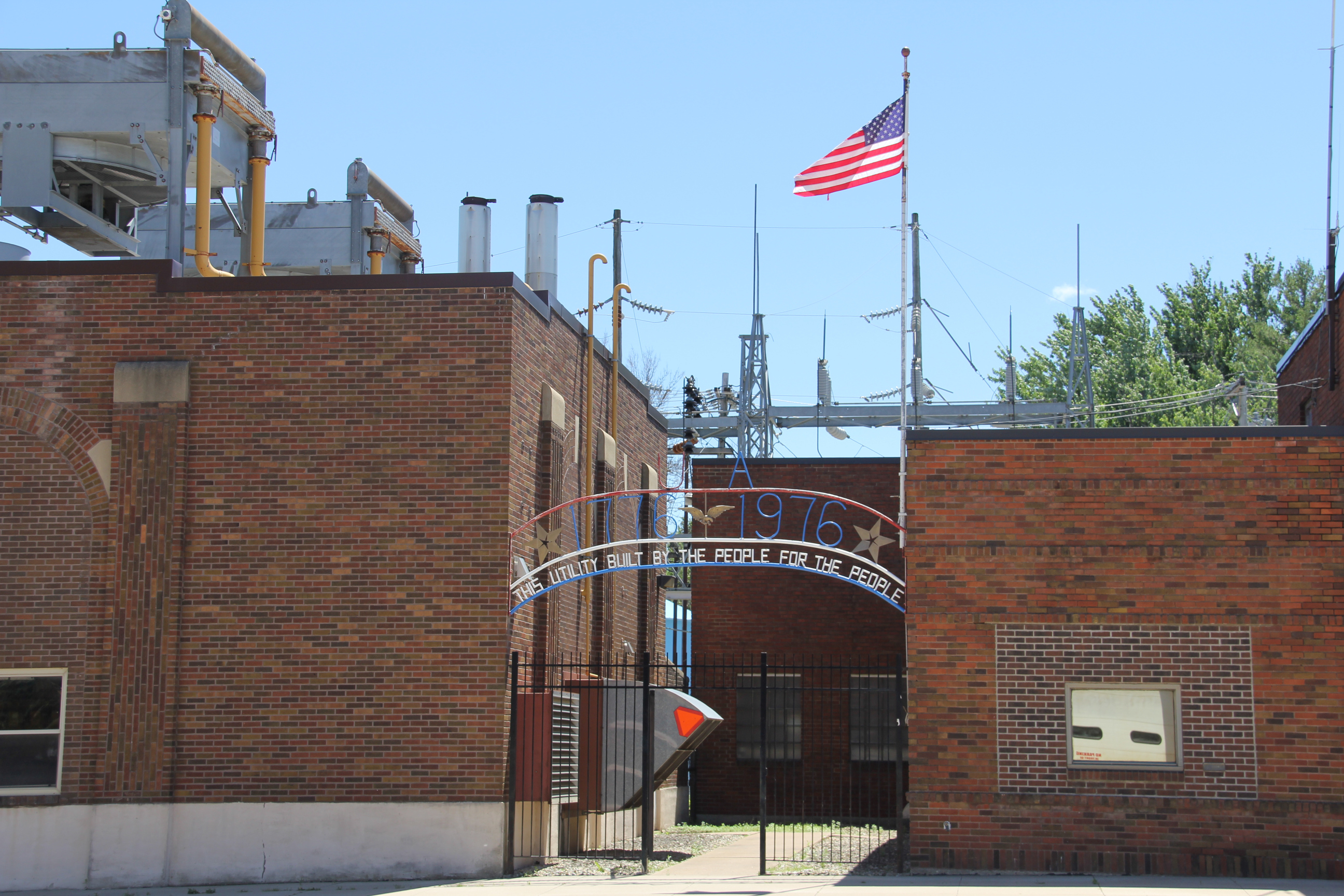
At the Kenyon Public Utilities building, signage marks the birth and bicentennial of our country from 1776-1976. (Minnesota Prairie Roots copyrighted photo June 2024)
BUILT BY THE PEOPLE FOR THE PEOPLE. I suppose in many ways that could describe the building of America. We are a nation built by the people on the principles of freedom, of democracy. That’s important to remember in the hoopla of the Fourth of July, a holiday synonymous with BBQs, parades, fireworks and a day off from work.
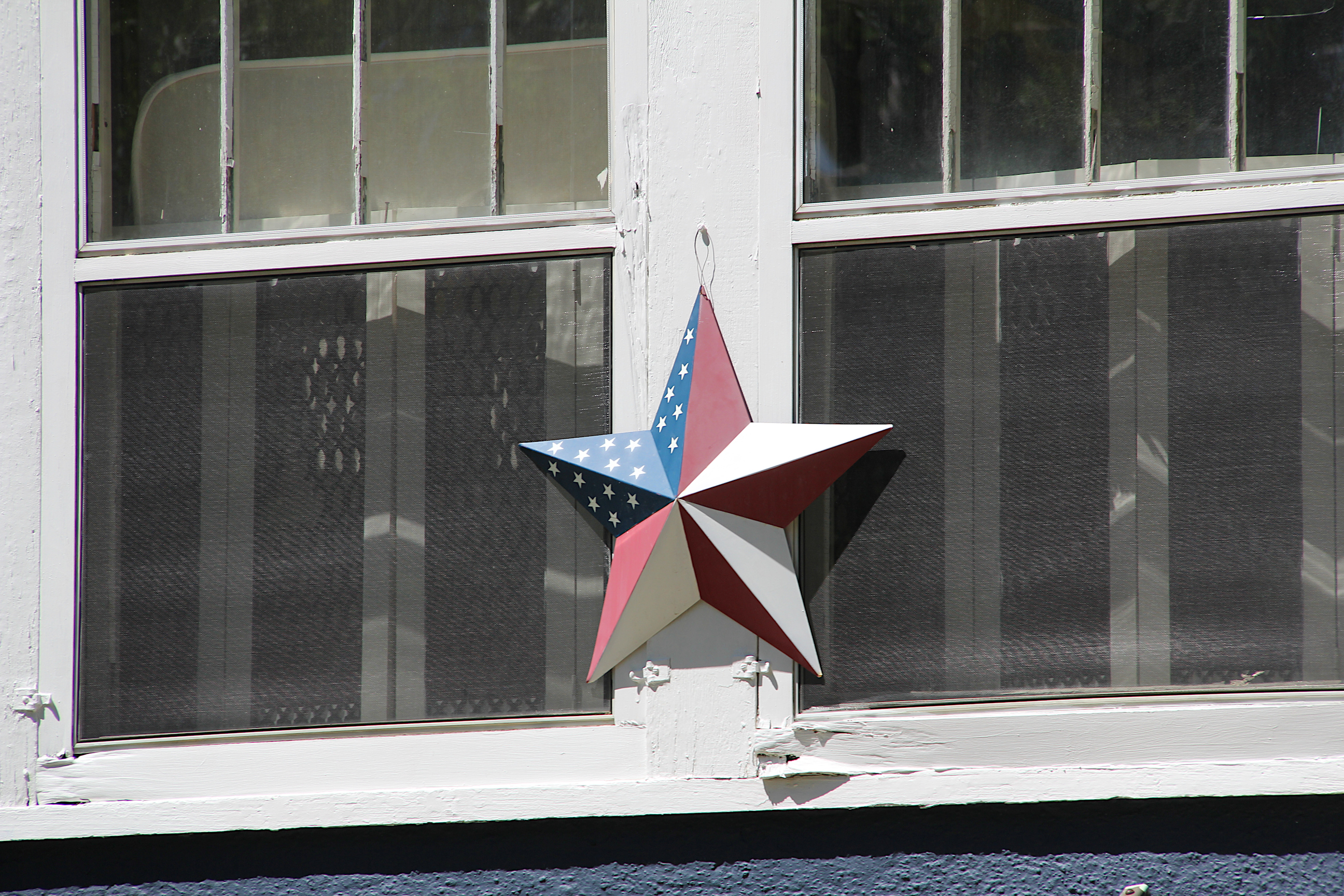
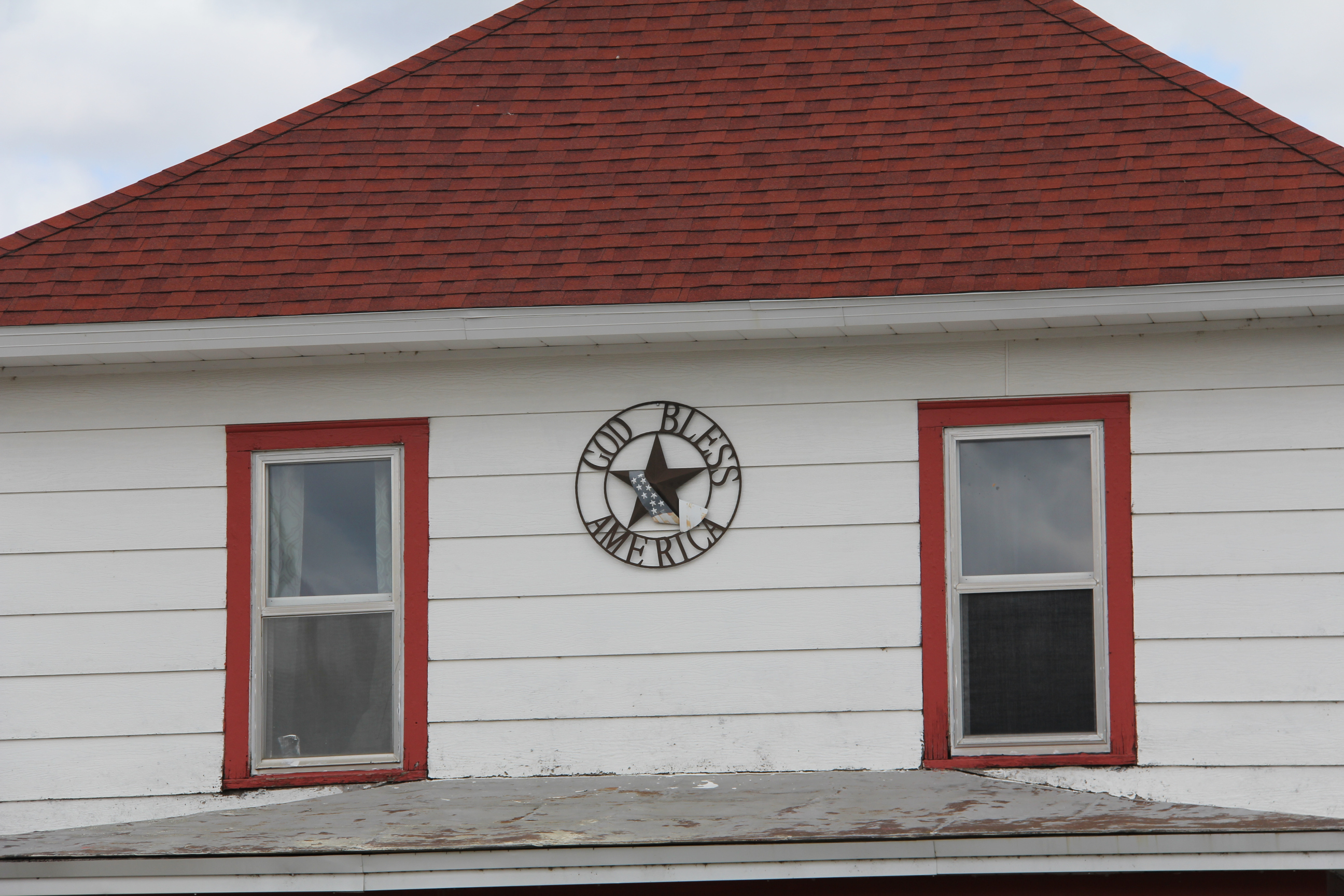
Spotted on a house in Kenyon. (Minnesota Prairie Roots copyrighted photo June 2024)
But the founding of our country, the birth of a nation, is at the core of our July Fourth celebration. Or at least it should be.
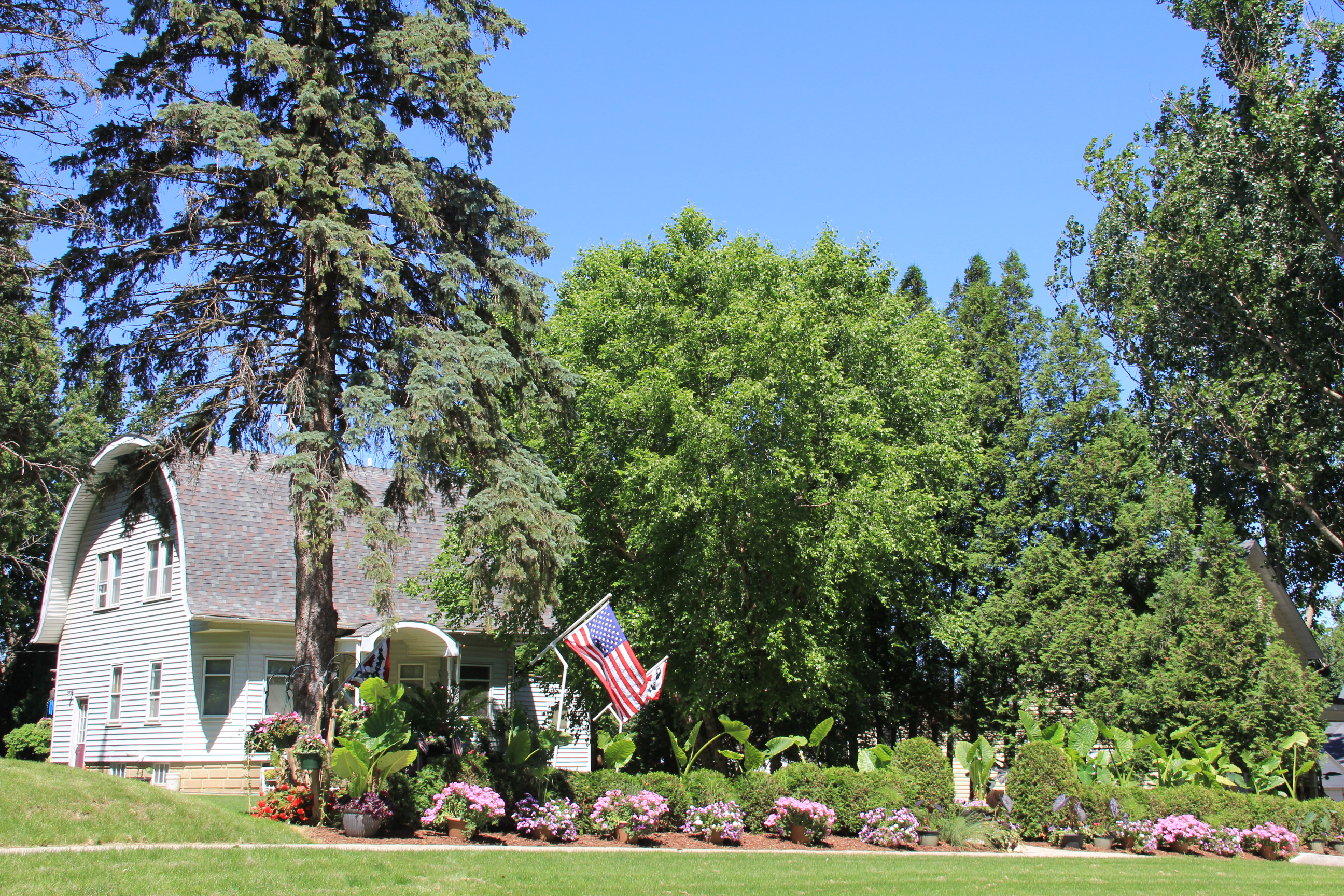
A stunning house along Red Wing Avenue showcases beautiful landscaping and the red-white-and-blue. (Minnesota Prairie Roots copyrighted photo June 2024)
On recent day trips to several small towns in southern Minnesota, I noticed the red-white-and-blue on full display. Visual reminders that loyalty to country and liberty are still cherished.
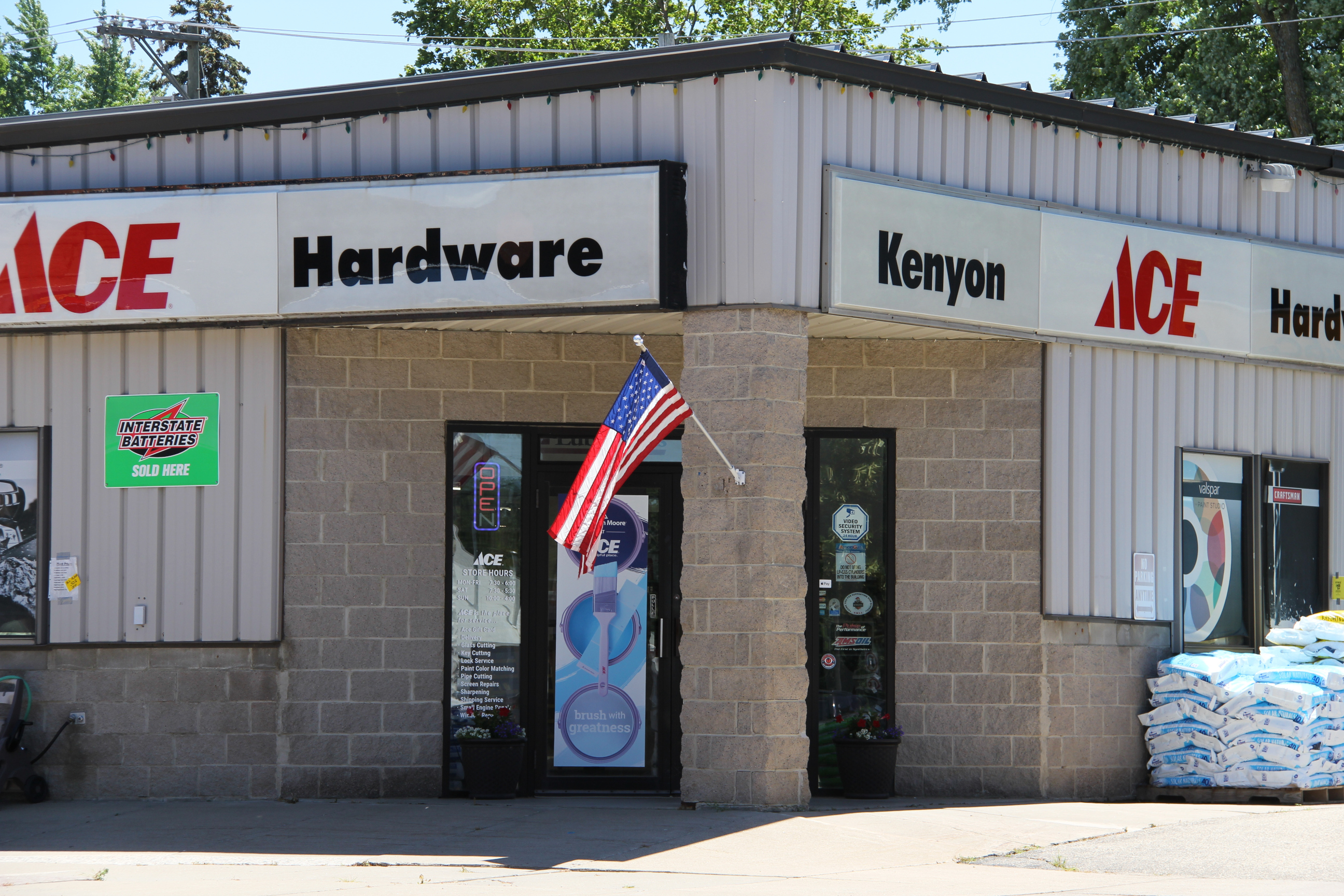
A flag flies at Kenyon’s hardware store. (Minnesota Prairie Roots copyrighted photo June 2024)
I appreciate when people, businesses, governments showcase the colors of this country in ways that honor and respect the integrity of America. Not to make a political statement.
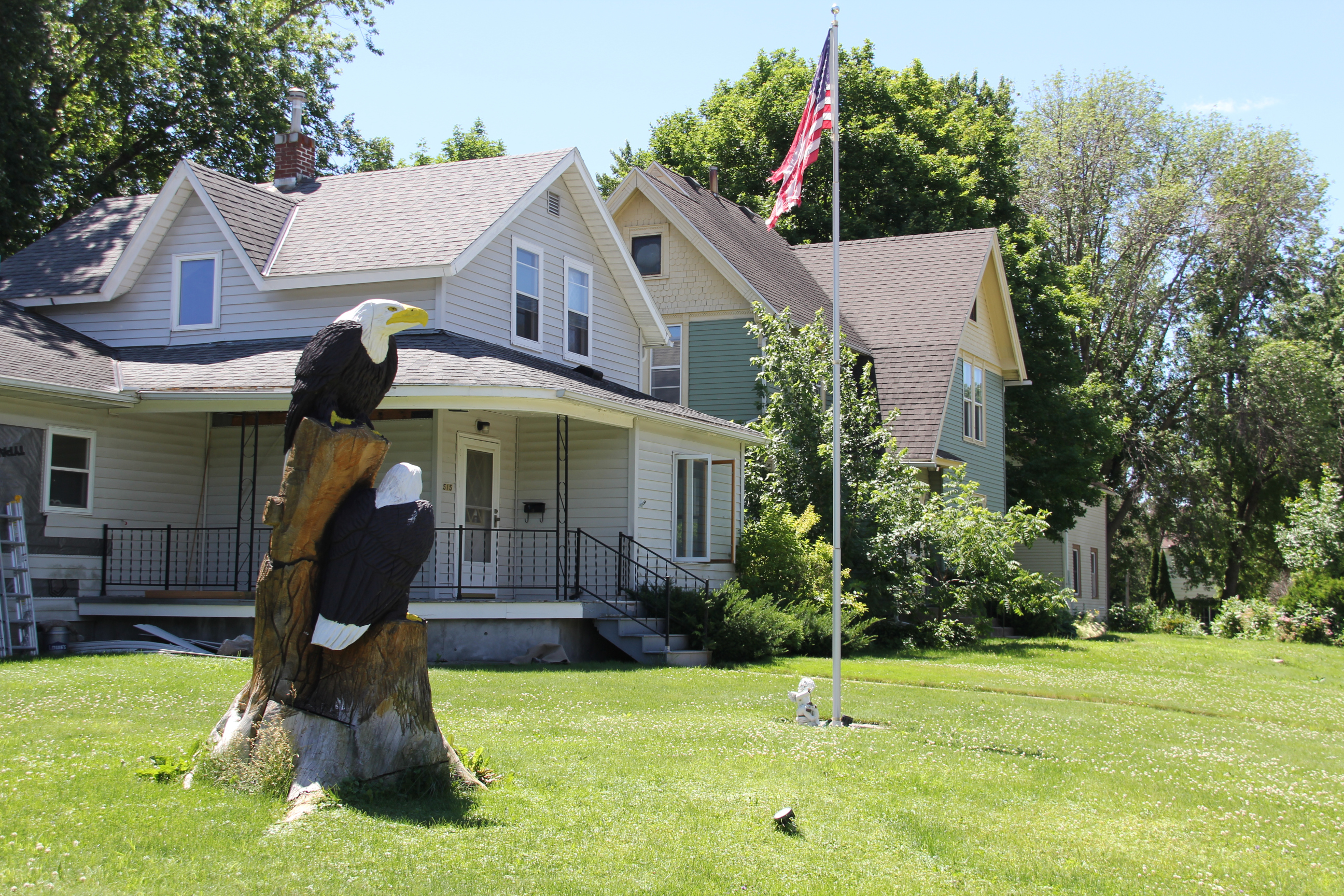
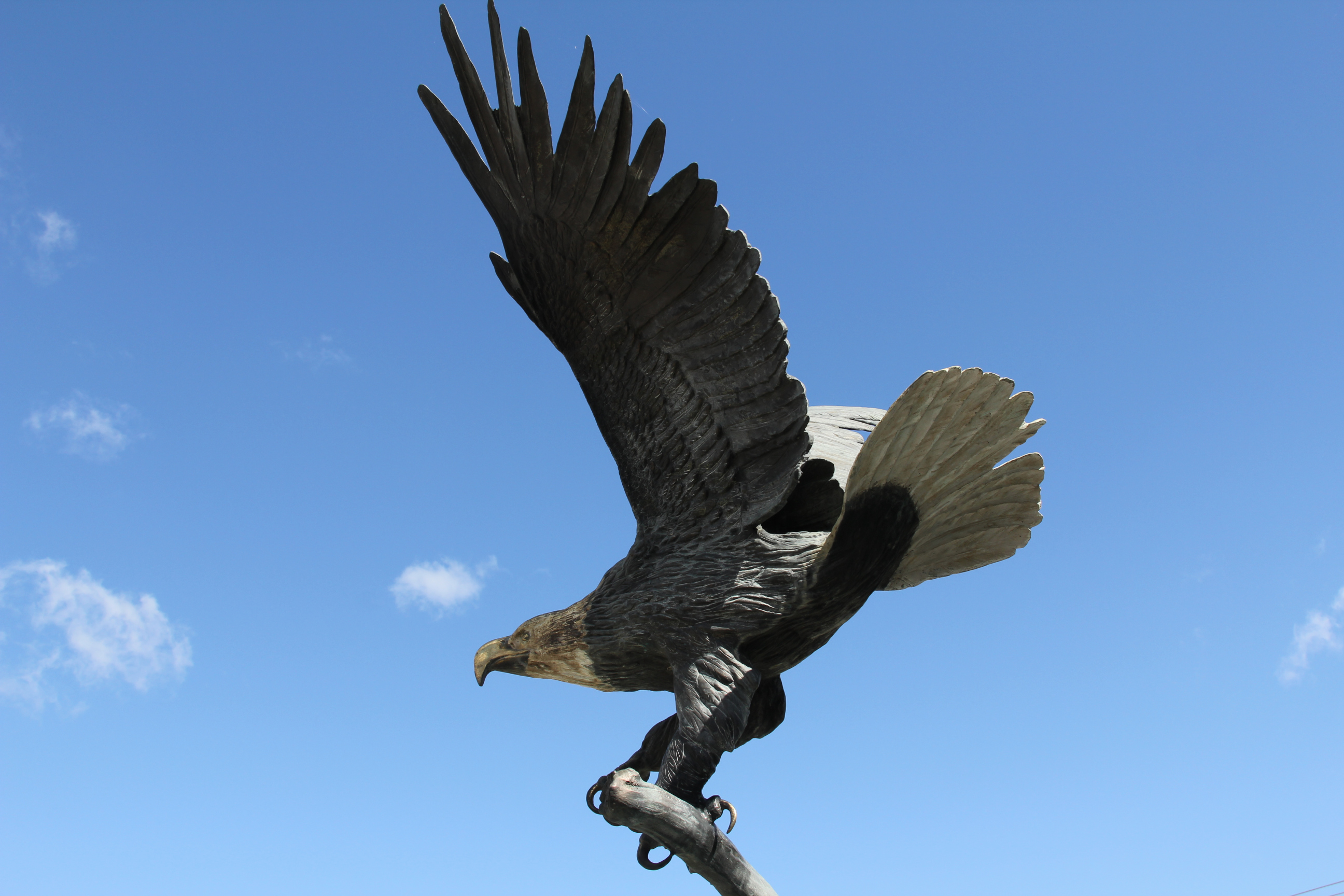
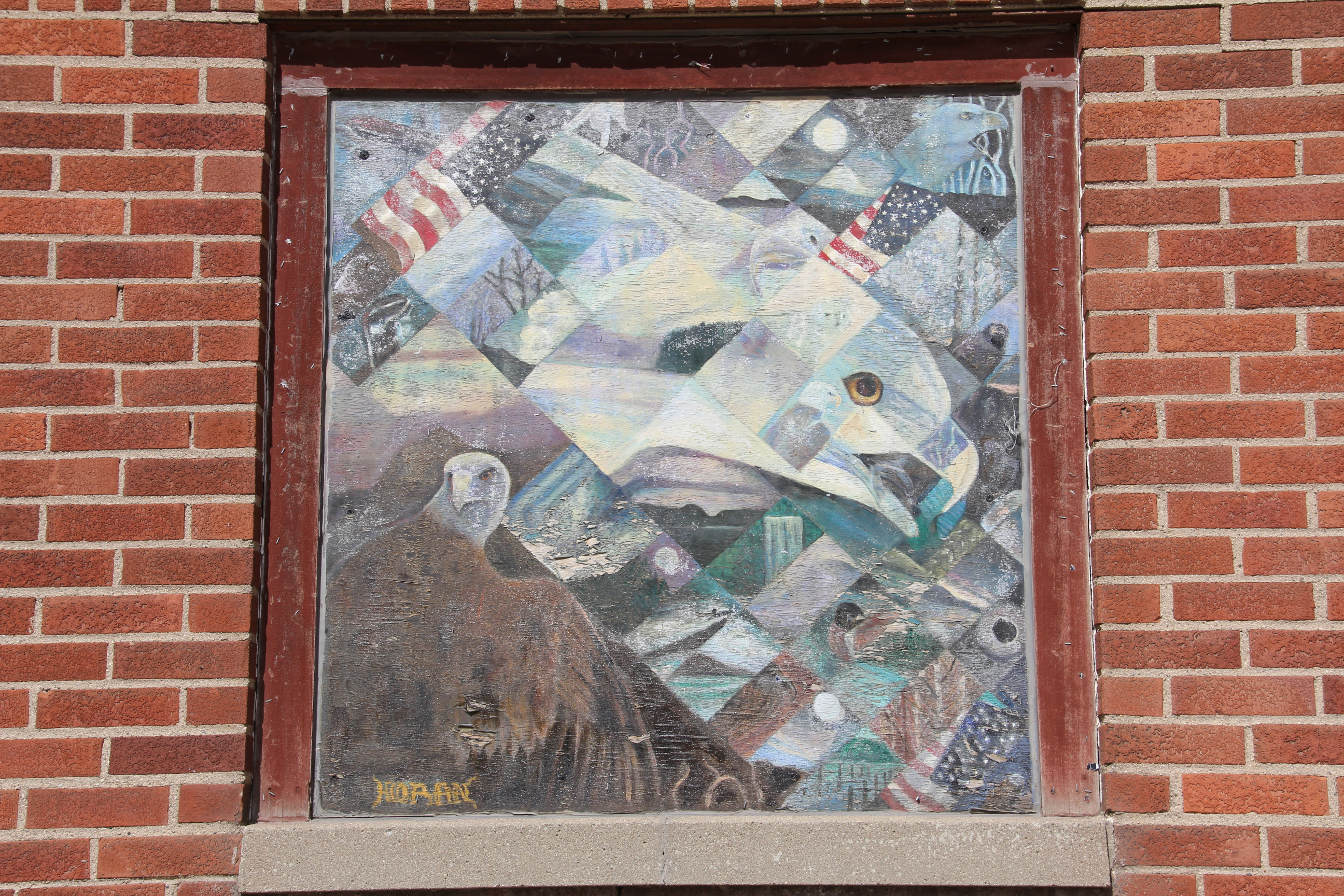
Patriotism in carved eagles and an American flag in a Kenyon neighborhood. (Minnesota Prairie Roots copyrighted photo June 2024)
In Kenyon, a rural community of just under 2,000 in Goodhue County, I found an array of red-white-and-blue. From Main Street to residential neighborhoods, locals have infused the colors of our country into the landscape.
Allan and Connie Turner have lots of kitschy handcrafted art in their yard at the corner of Red Wing Avenue and Eighth Street next to the Kenyon water tower. (Minnesota Prairie Roots copyrighted photo 2024)
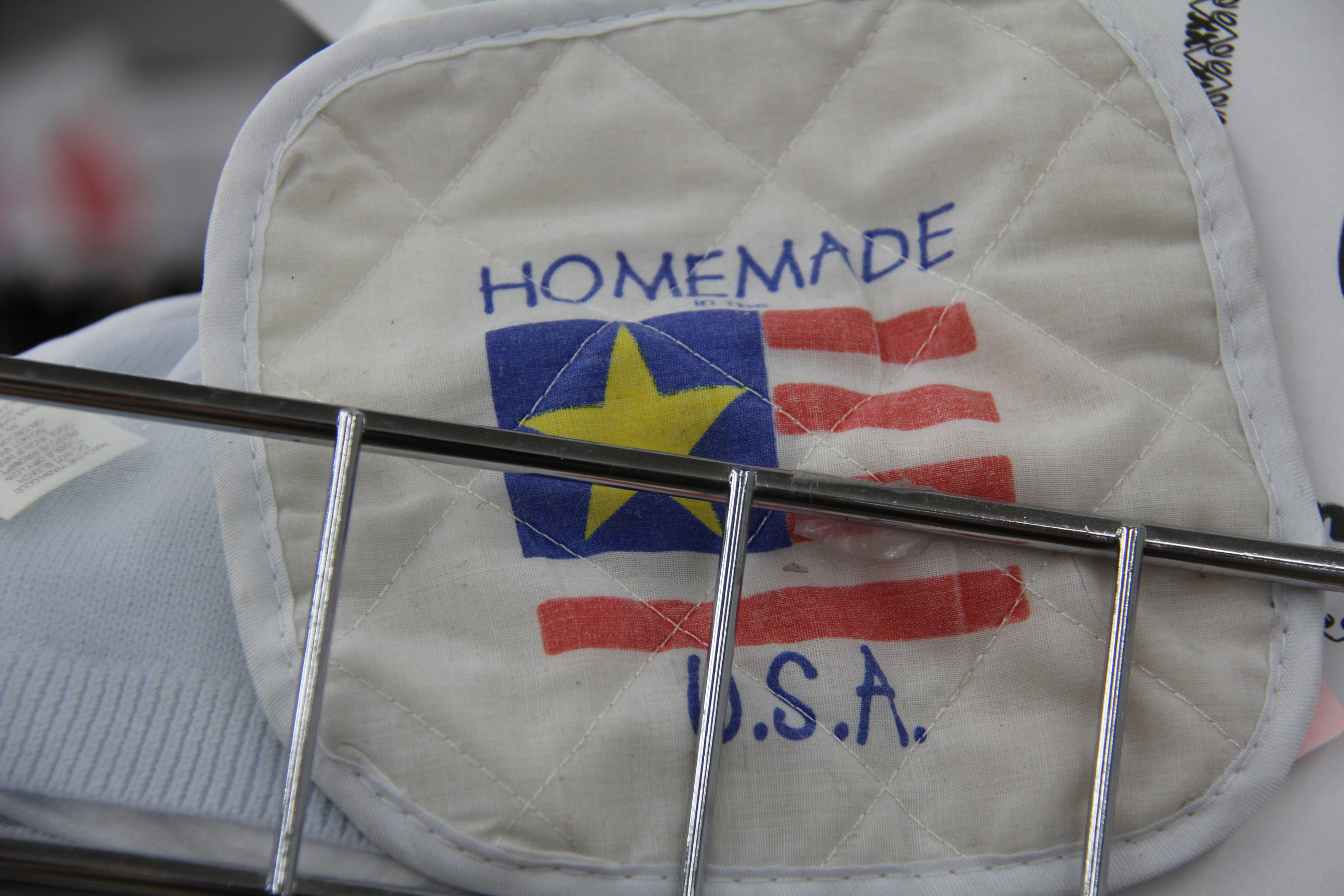
American made sold at All Seasons Thrift Store. (Minnesota Prairie Roots copyrighted photo June 2024)
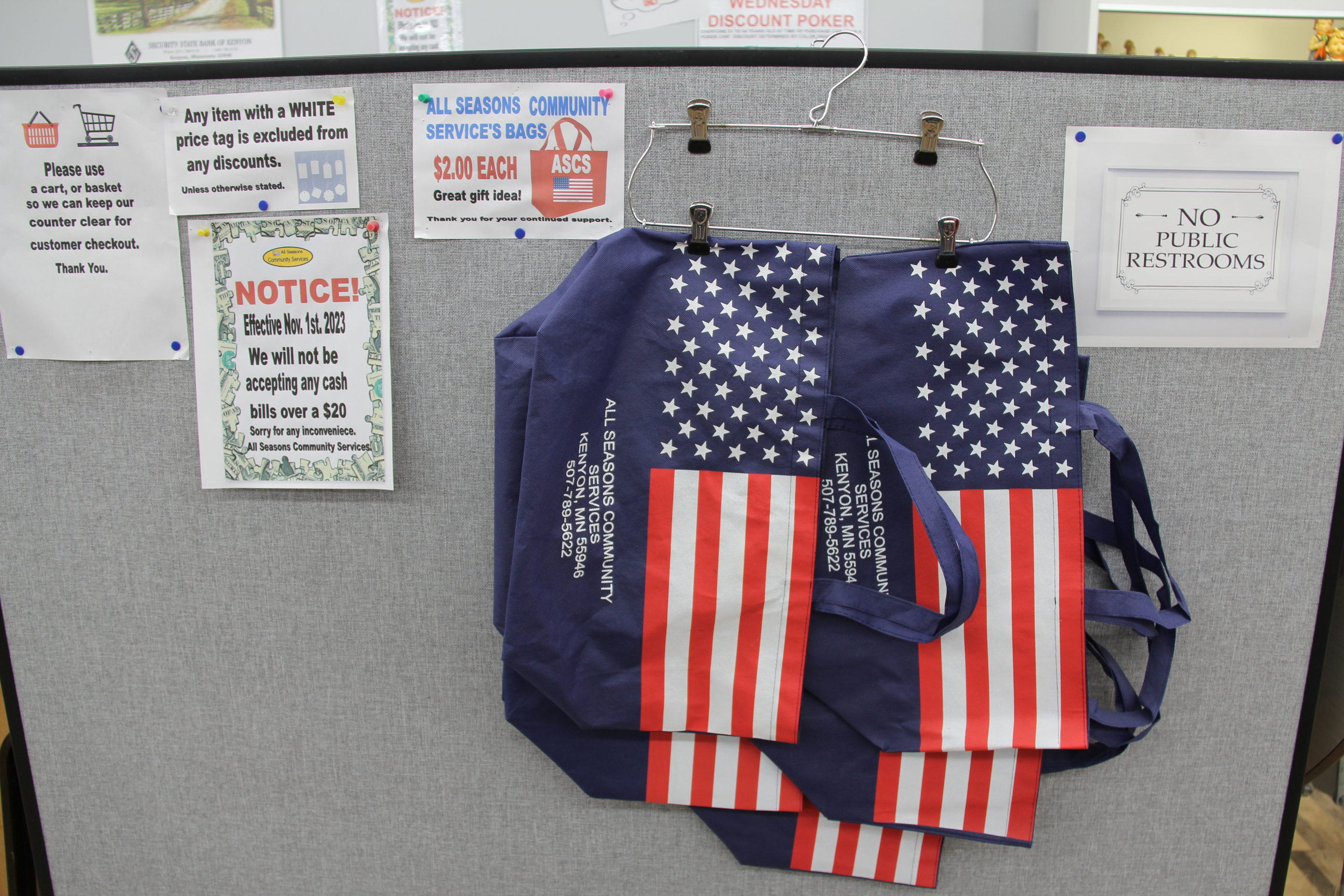
Patriotic bags for sale in the thrift shop. (Minnesota Prairie Roots copyrighted photo June 2024)
Flags fly. Kitschy yard art celebrates the Fourth. Even inside a thrift store, American pride shows.
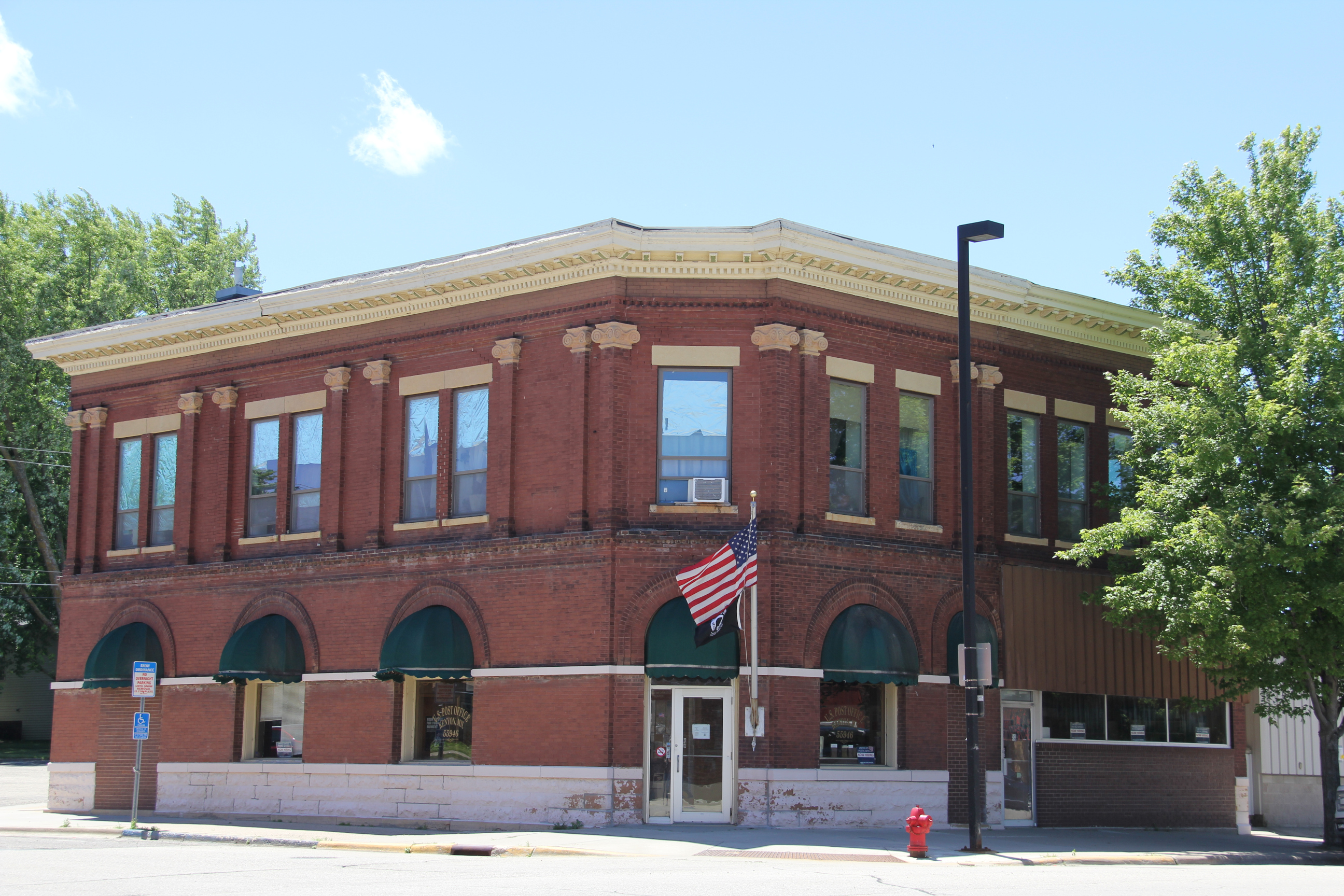
An American and MIA flag fly at the Kenyon Post Office. (Minnesota Prairie Roots copyrighted photo June 2024)
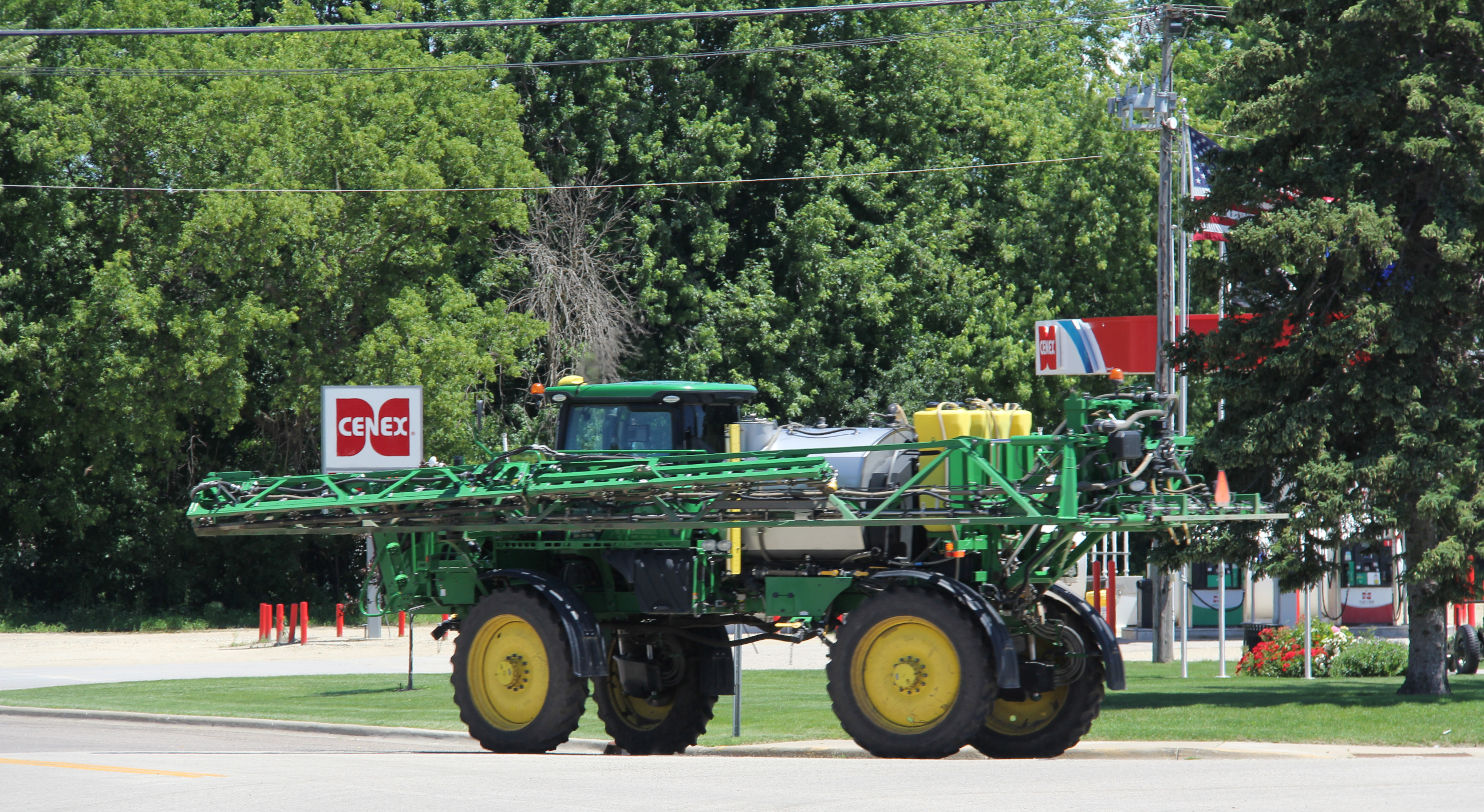
An American flag is barely visible to the right as a sprayer passes Kenyon’s veterans’ memorial. (Minnesota Prairie Roots copyrighted photo June 2024)
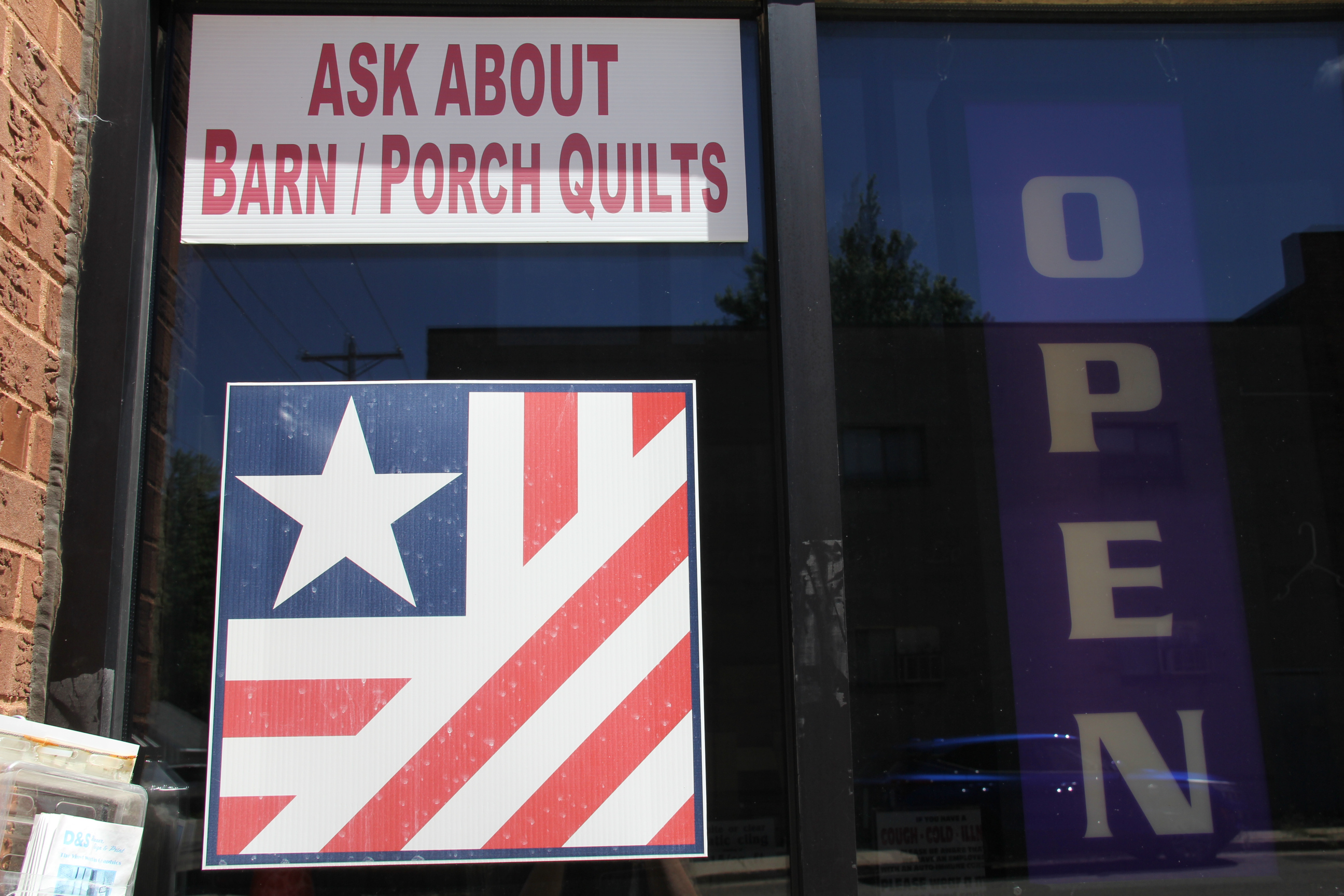
A patriotic barn and porch quilt, available at D & S Banner, Sign & Print. (Minnesota Prairie Roots copyrighted photo June 2024)
This is America. From small town to big city. From coast-to-coast. No matter where we live in this big wide country, we are, today, one nation celebrating the birth of our nation.
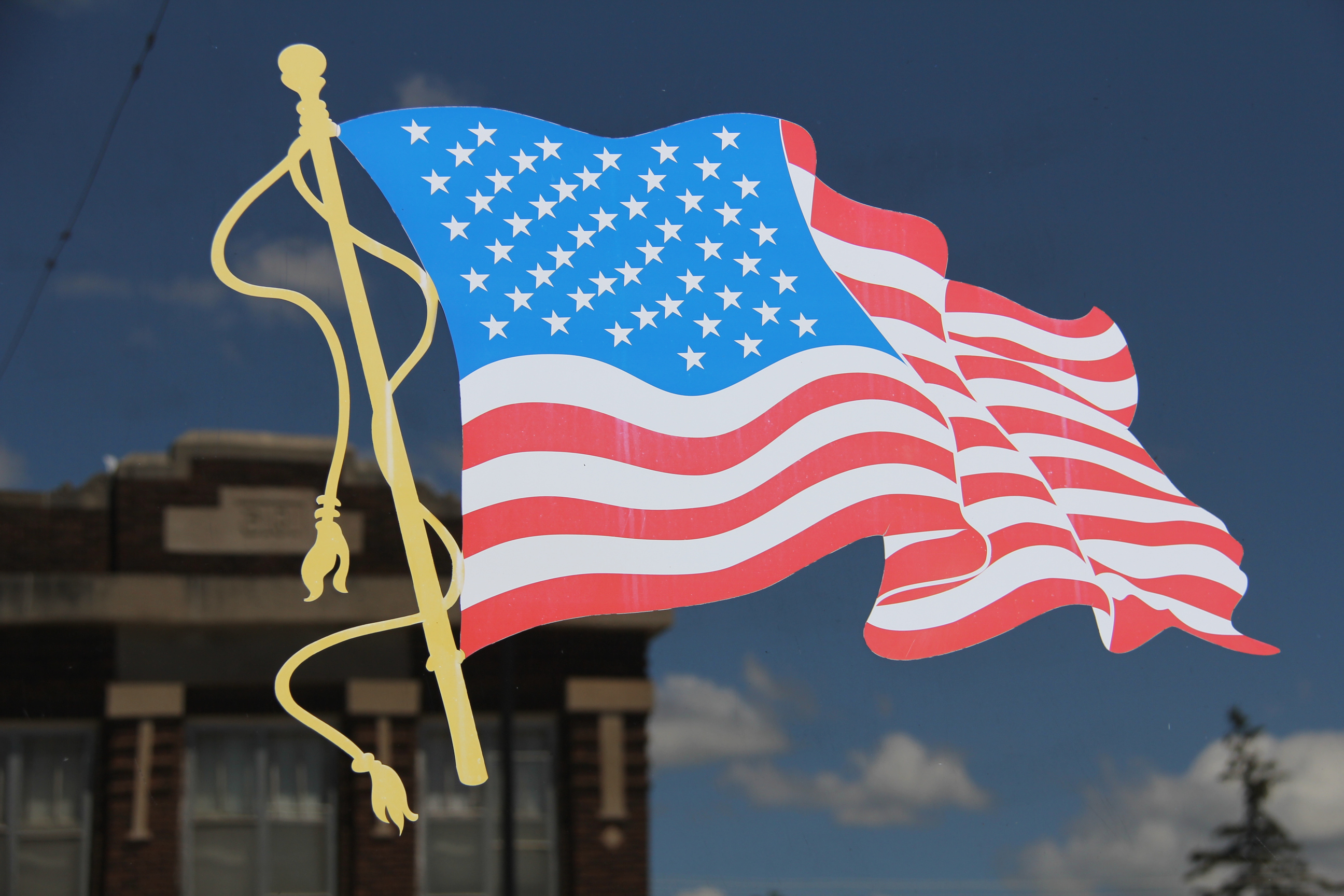
One of several flag decals in the windows of the VFW. (Minnesota Prairie Roots copyrighted photo June 2024)
Happy birthday, America! And happy Fourth of July, dear readers!
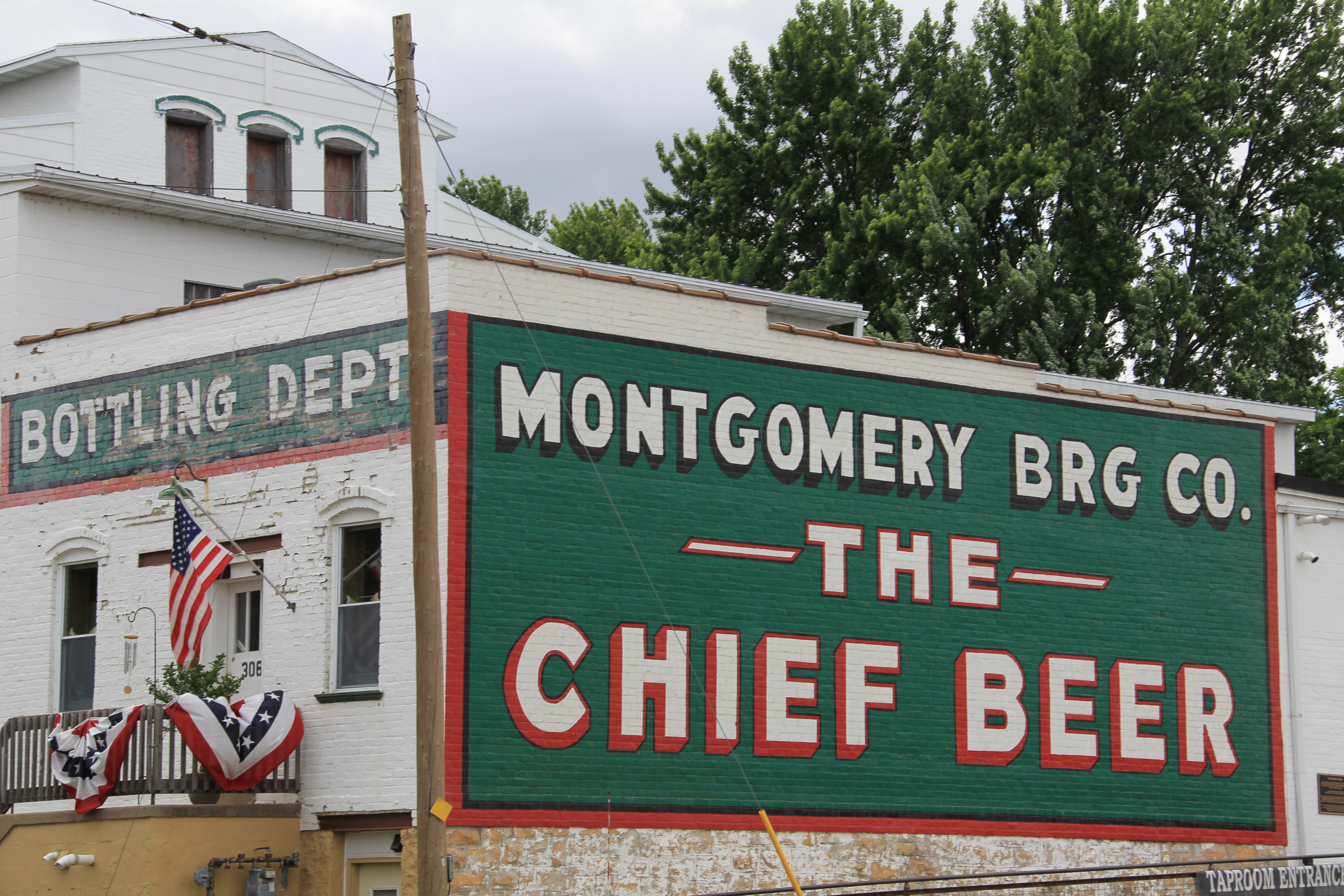
American pride displayed at a brewery in Montgomery, Minnesota. (Minnesota Prairie Roots copyrighted photo June 2024)
O say, does that star-spangled banner yet wave
O’er the land of the free and the home of the brave.
A flag flies from the popular Franke’s Bakery in downtown Montgomery. (Minnesota Prairie Roots copyrighted photo June 2024)
How often have you sung those words, heard those lyrics, considered the meaning of our national anthem? Perhaps, after time, the words have become simply rote, voiced without much thought of their meaning.
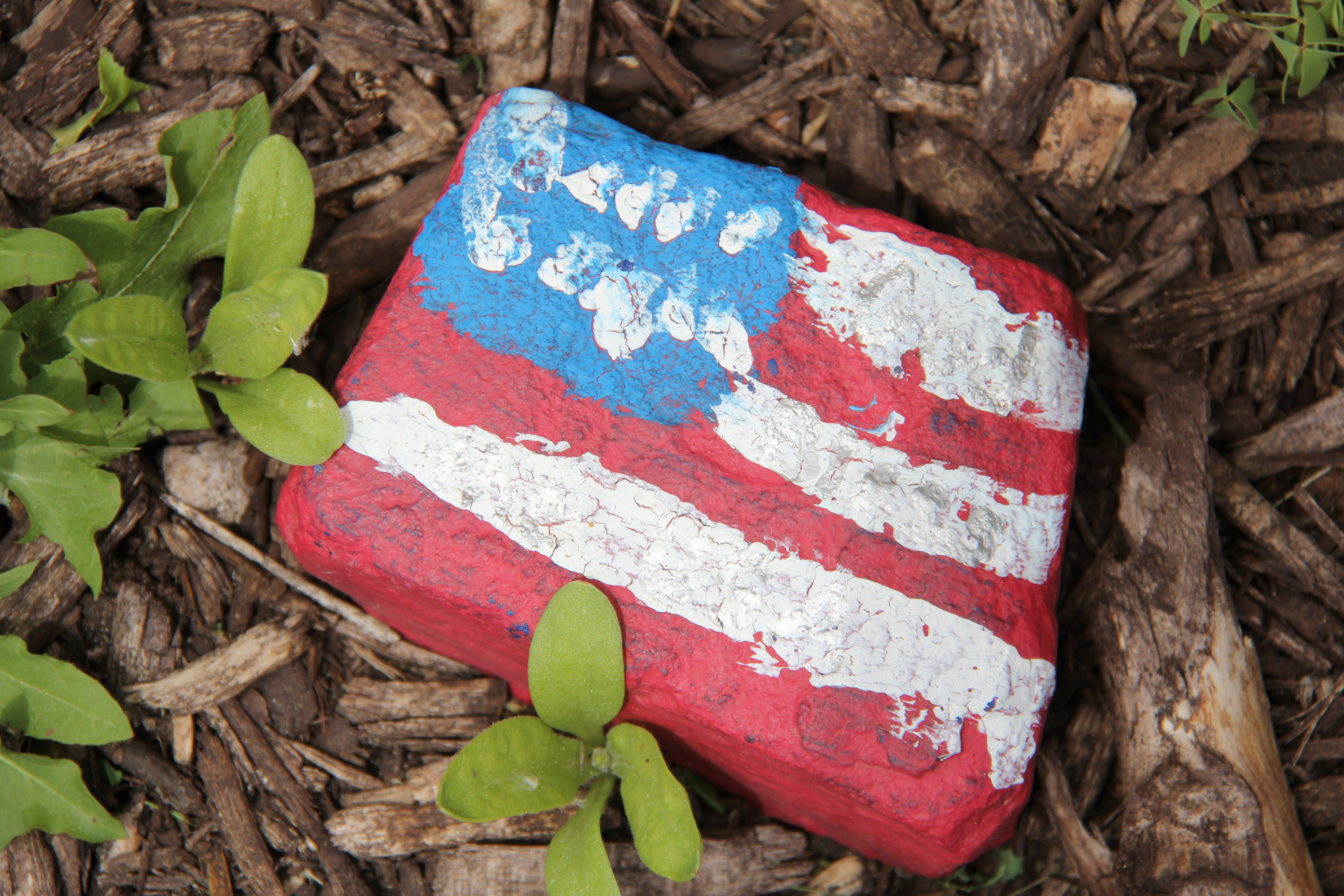
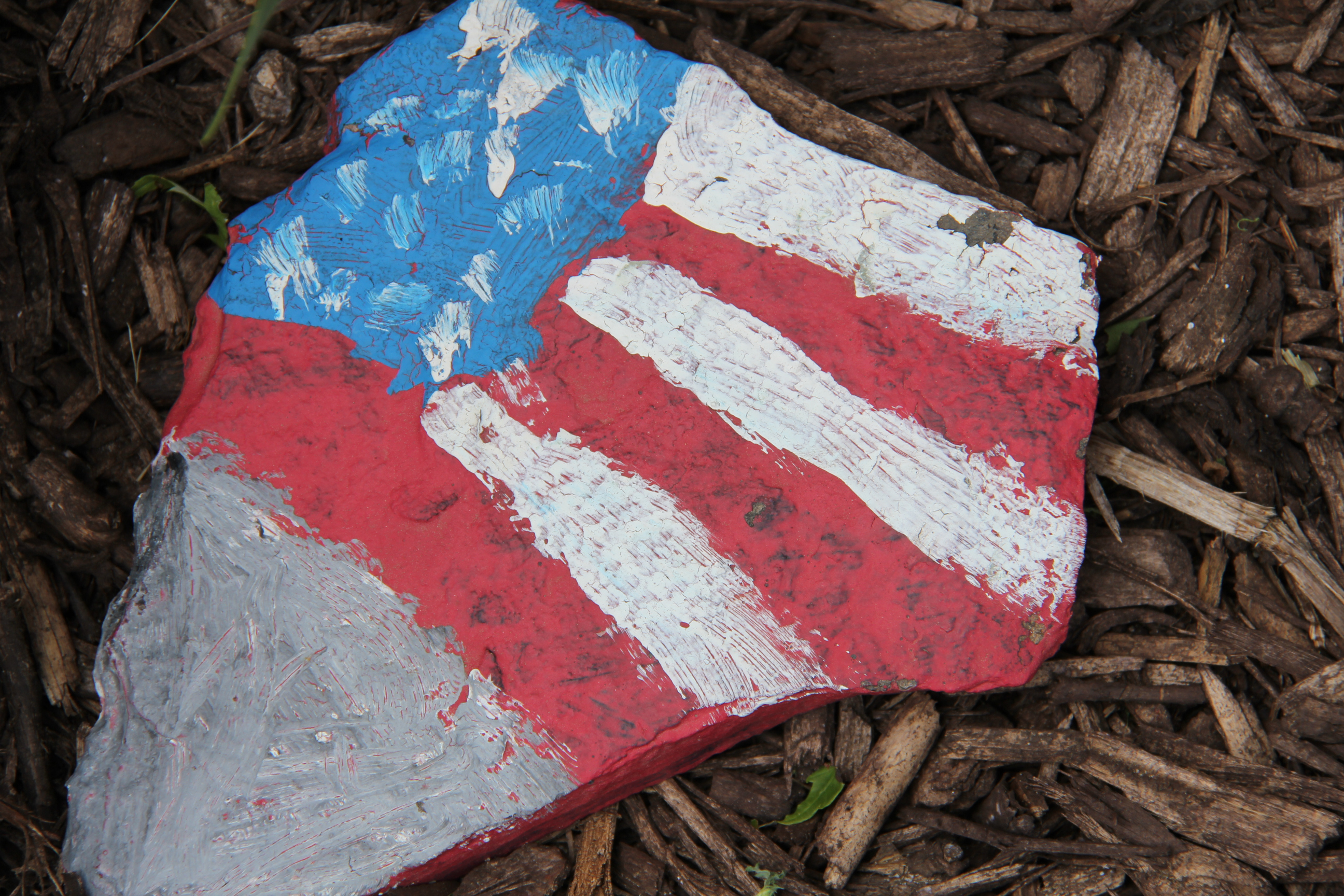
A flag rock in a flower garden at Most Holy Redeemer Catholic School. (Minnesota Prairie Roots copyrighted photo June 2024)
Our nation’s birthday seems a good time to ponder the depth of bravery required to attain and maintain our freedom. It’s come at great cost with loss of life and physical, mental and emotional trauma. And, at times, with events that have rocked the very core of our democracy.
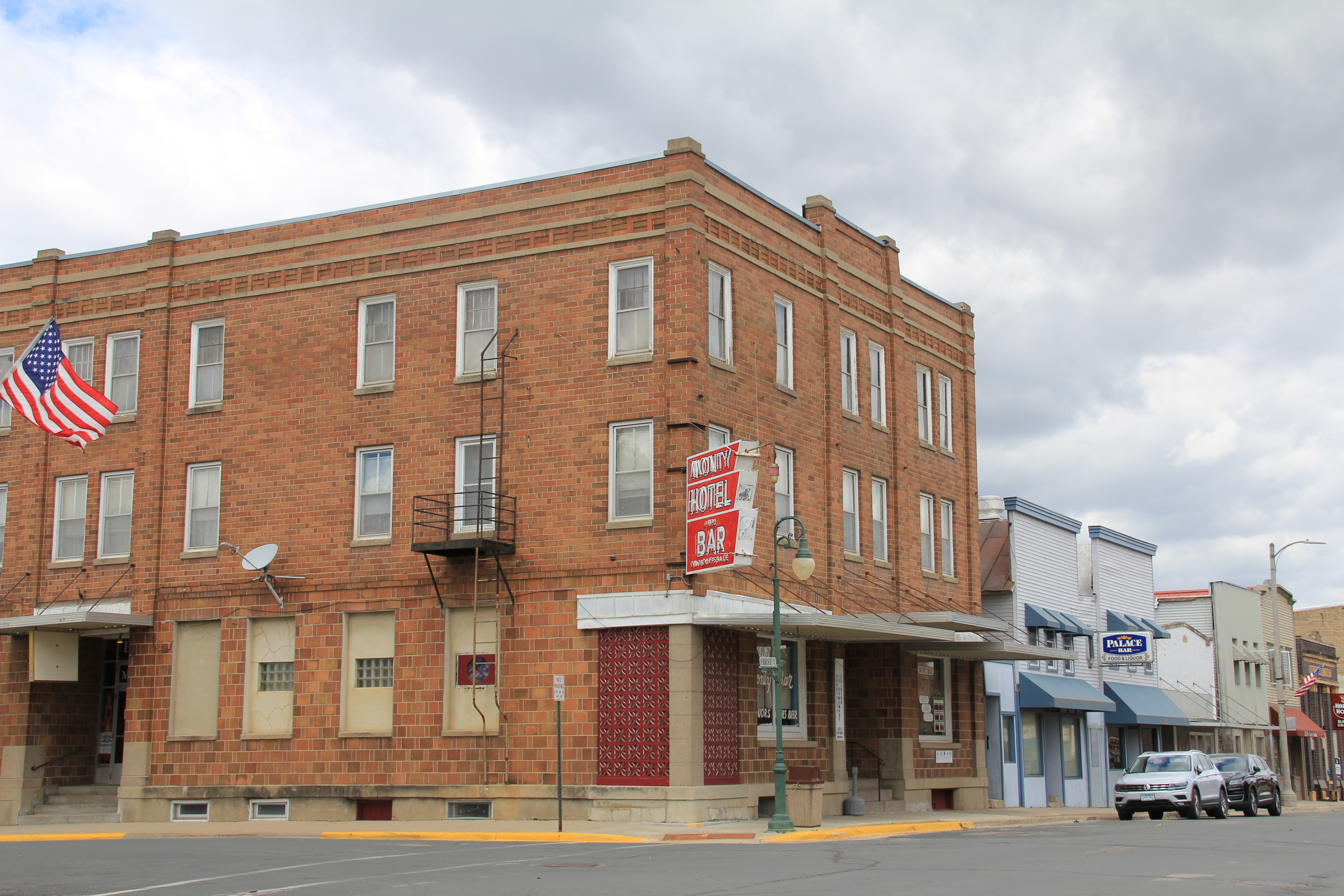
A flag flies near The Monty Bar, a mammoth building anchoring a corner. (Minnesota Prairie Roots copyrighted photo June 2024)
Through everything, our flag still waves—sometimes tattered, torn and abused—but still there. A symbol of our country and the freedoms we live.
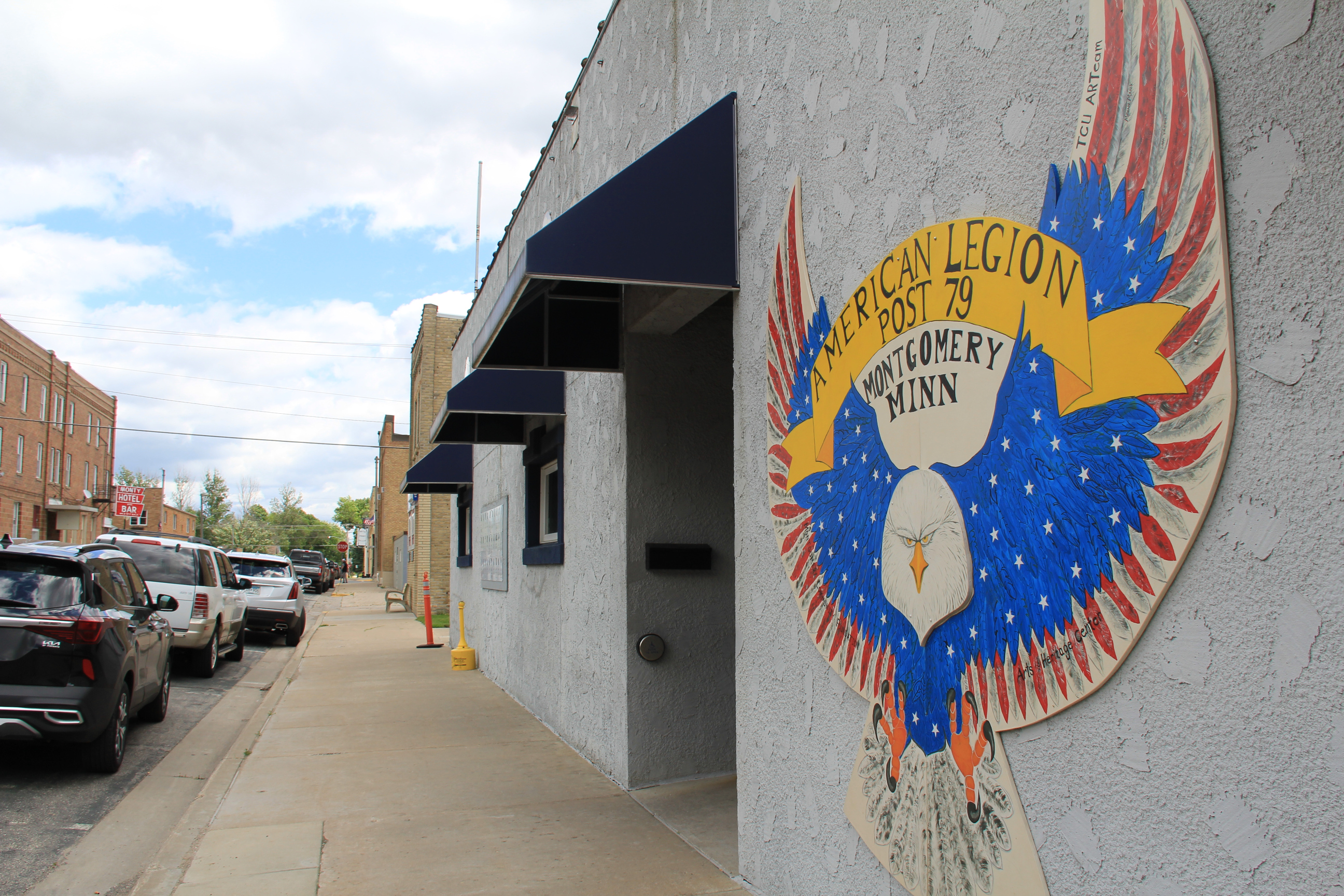
Patriotic art on Legion Post 79 is part of The Montgomery Wings Mural Walk. (Minnesota Prairie Roots copyrighted photo June 2024)
It always amazes me how small towns, especially, fly so many American flags. Take Montgomery, a southern Minnesota community that honors its veterans with photos and bios of them posted throughout the downtown area. Montgomery also flies a lot of U.S. flags.
To the far right in this photo, an oversized flag flies along Main Street Montgomery. (Minnesota Prairie Roots copyrighted photo June 2024)
Those flags mostly grace lampposts, but also flagpoles, businesses and flower gardens. The red-white-and-blue flashes color into Main Street and elsewhere, creating a visual of patriotism. There’s something about a crisp, new American flag publicly displayed that swells the heart with love of country.
Another flag rock in a Most Holy Redeemer garden. (Minnesota Prairie Roots copyrighted photo June 2024)
My country ‘tis of Thee, sweet land of liberty of Thee I sing…let freedom ring.
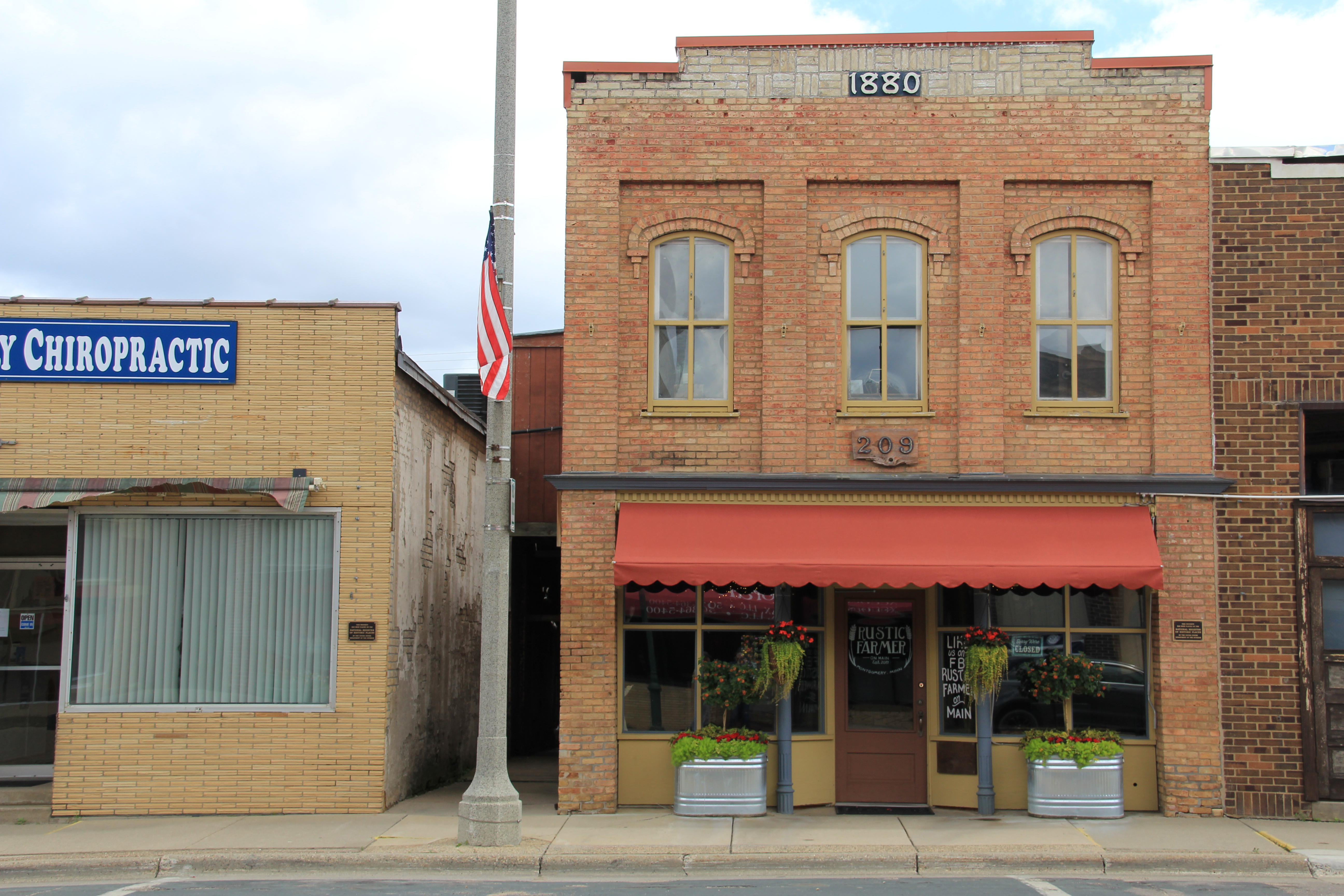
A flag drapes on a pole outside The Rustic Farmer on Main, an event center and community gathering spot in Montgomery. (Minnesota Prairie Roots copyrighted photo June 2024)
Let freedom ring, unsuppressed by anyone who may attempt to silence it via words, actions, ego, authority. Let freedom ring strong and loud in this land.
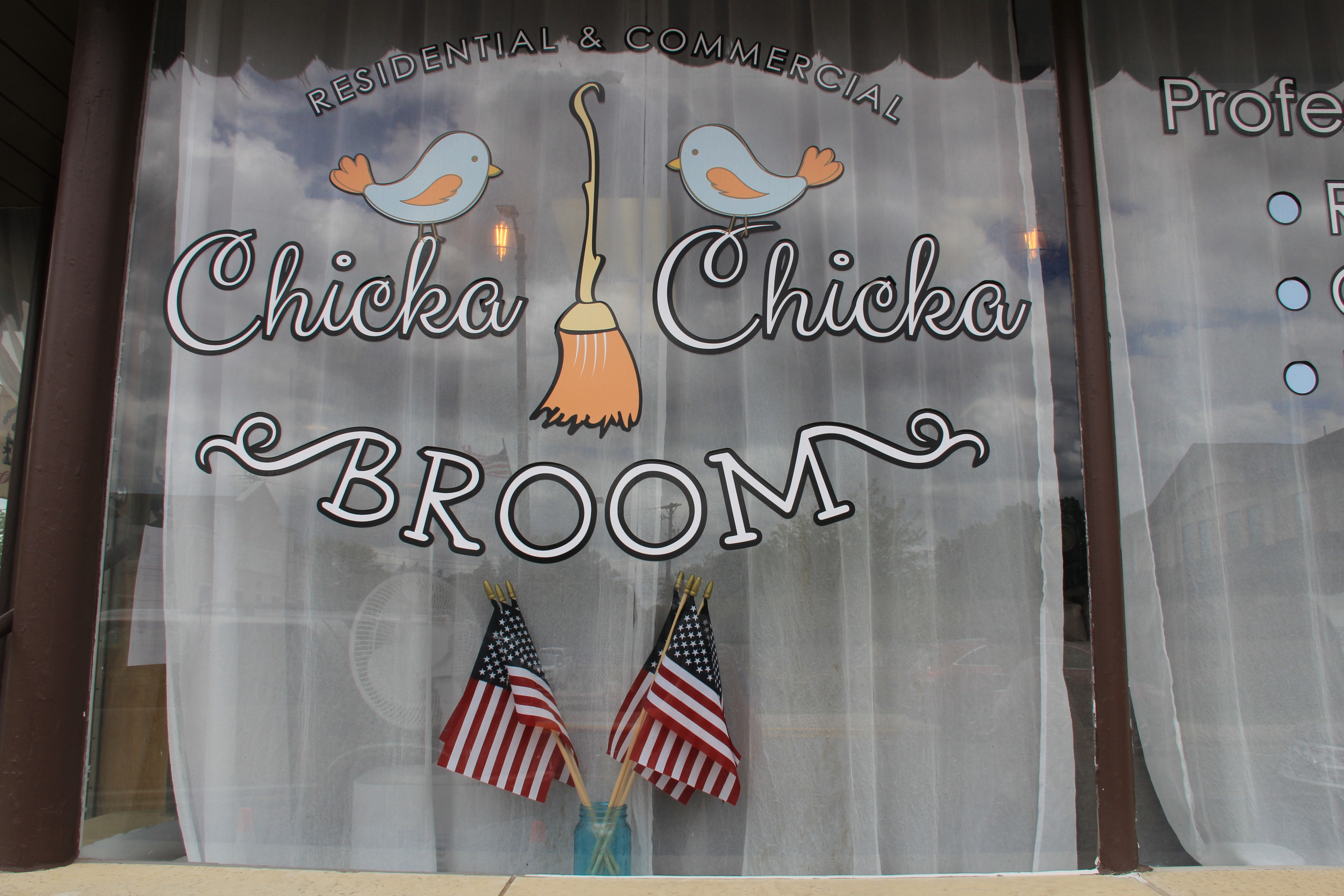
Even small flags like this in the storefront window of a cleaning service make an impact. (Minnesota Prairie Roots copyrighted photo June 2024)
Let the flag fly as a symbol of a free people, a free country, where democracy is to be valued, cherished and respected.
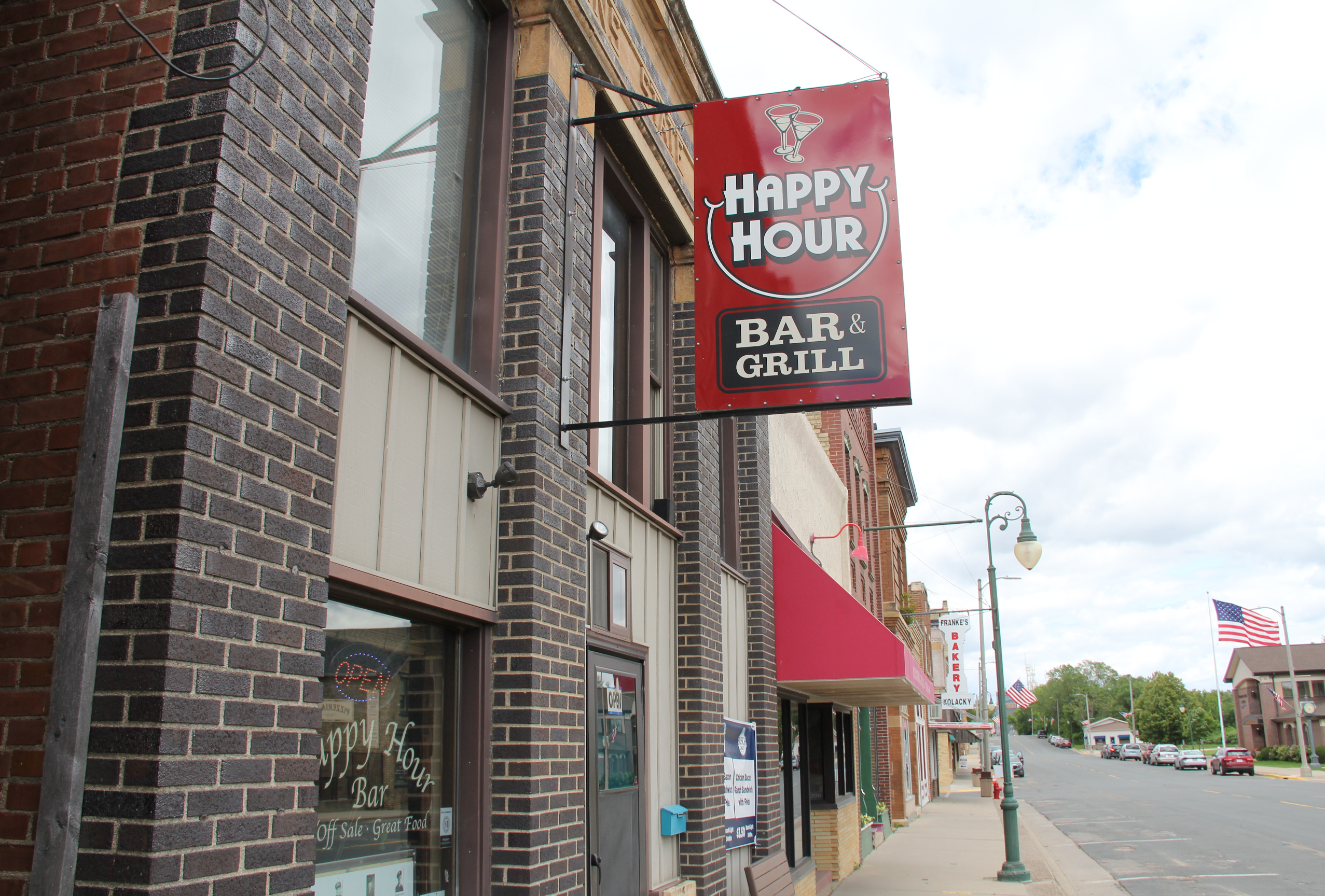
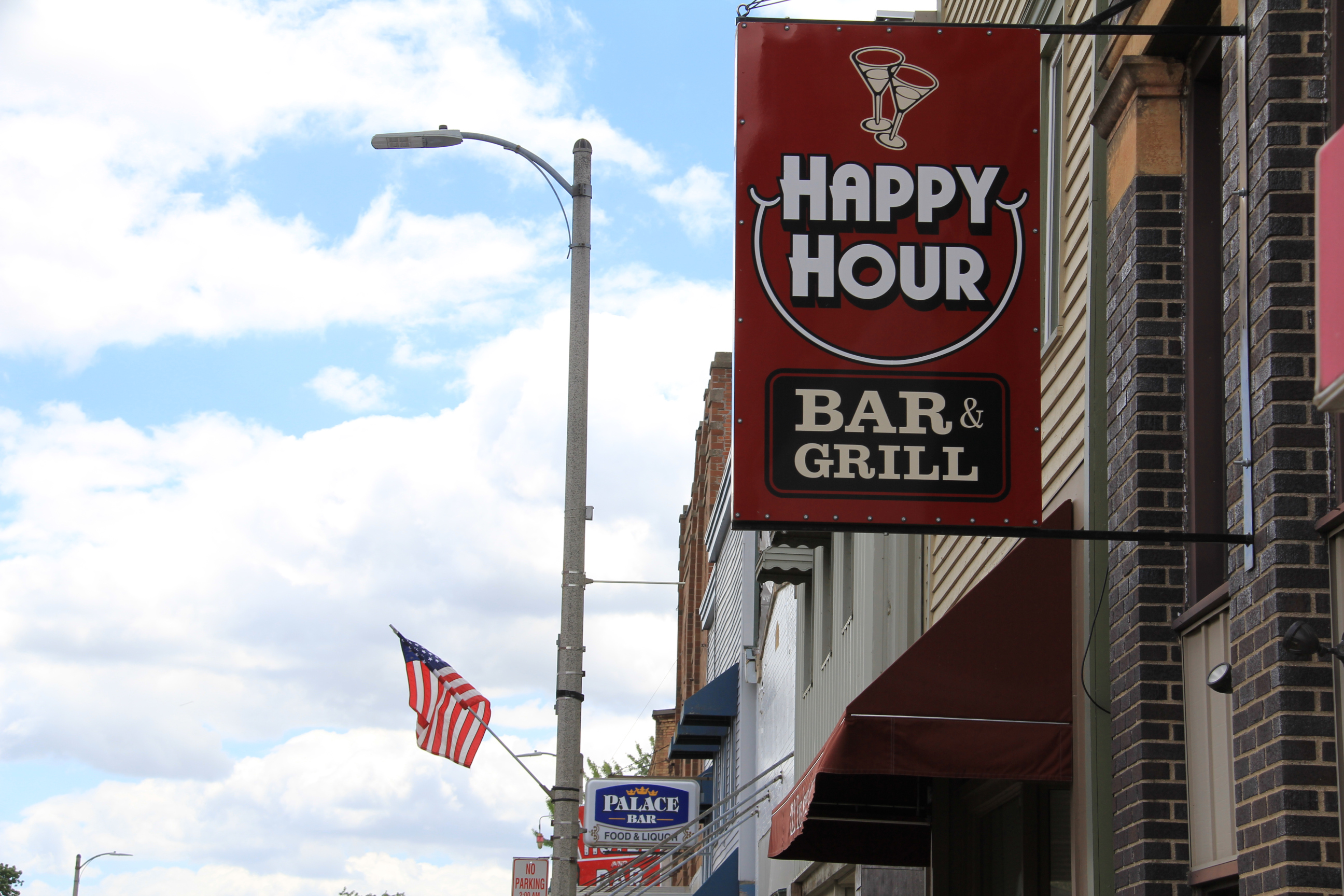
Montgomery has a lot of drinking establishments and a lot of American flags. (Minnesota Prairie Roots copyrighted photo June 2024)
This Fourth of July, the 248th birthday of the United (emphasis on united) States of America, let’s remember the freedoms we have and vow to always honor them. Always.
This eagle graces the veterans’ memorial in Morristown. (Minnesota Prairie Roots copyrighted file June 2024)
AMERICAN FLAGS, eagles, freedom, democracy…those symbols, those words imprint upon my vision, upon my mind as I consider our nation’s 248th birthday on July 4.
Outside the Morristown Legion, a place to dispose of worn out American flags, which are then burned in a special ceremony held by Legion members. (Minnesota Prairie Roots copyrighted photo June 2024)
Admittedly, recent years have proven challenging on so many levels in our country. Division, chaos, discontent have been all too common. That cannot be denied. But, on the Fourth of July, I hope we can all pause, set aside our differences, and appreciate the freedoms we have as U.S. citizens. I hope we understand, too, that our freedoms should never be taken for granted. Ever.
Eagle art on the exterior of the Corner Bar in Waterville. (Minnesota Prairie Roots copyrighted photo June 2024)
A message spotted on a house in downtown Waterville. (Minnesota Prairie Roots copyrighted photo June 2024)
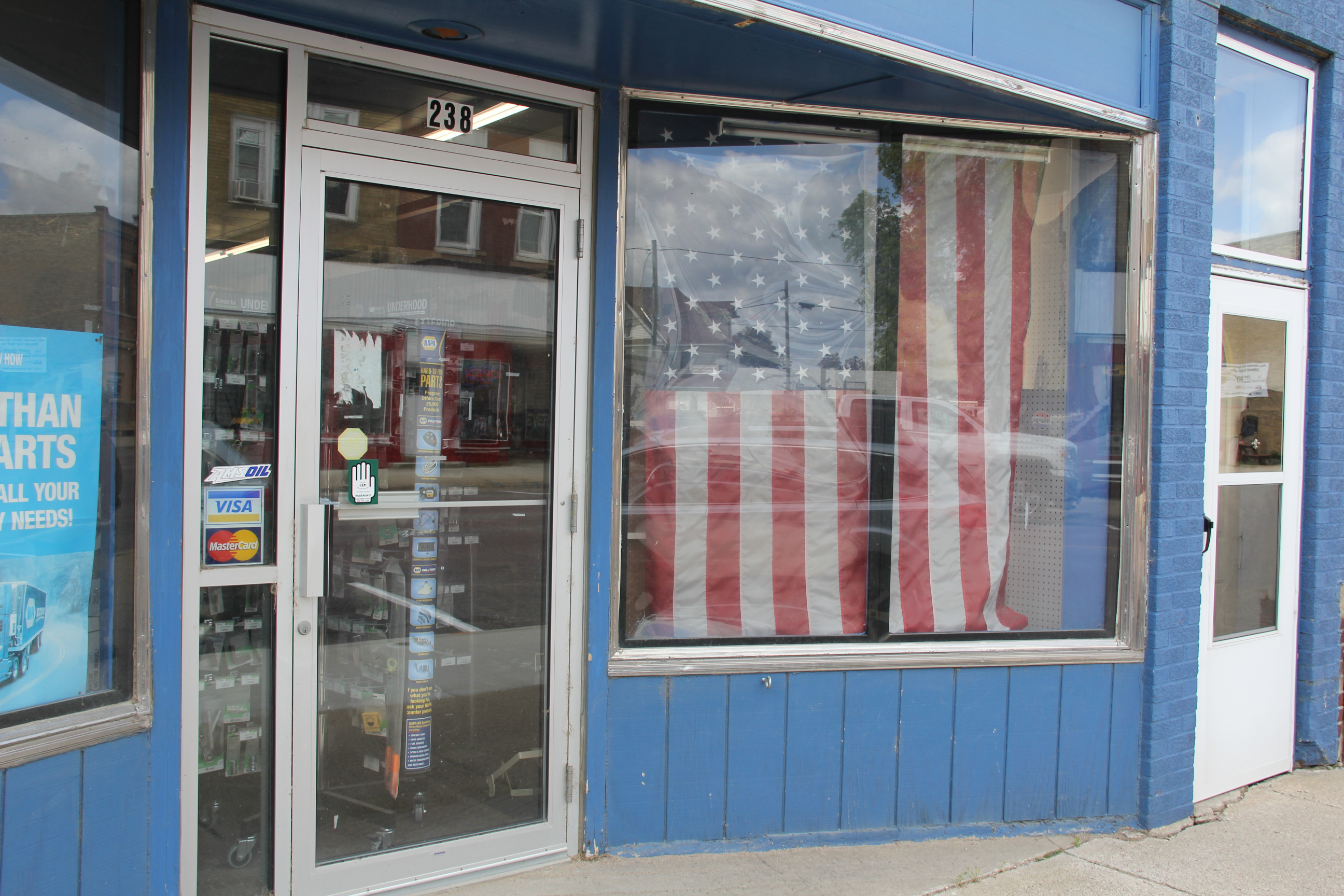
Patriotism in the front window of Twin Lakes Auto Parts in Waterville. (Minnesota Prairie Roots copyrighted photo June 2024)
On recent day trips to small southern Minnesota communities, I captured images that express love of country. I appreciate those displays of American pride seen along Main Streets. From flags to messages to art, these are reminders that our democracy is to be cherished and celebrated.
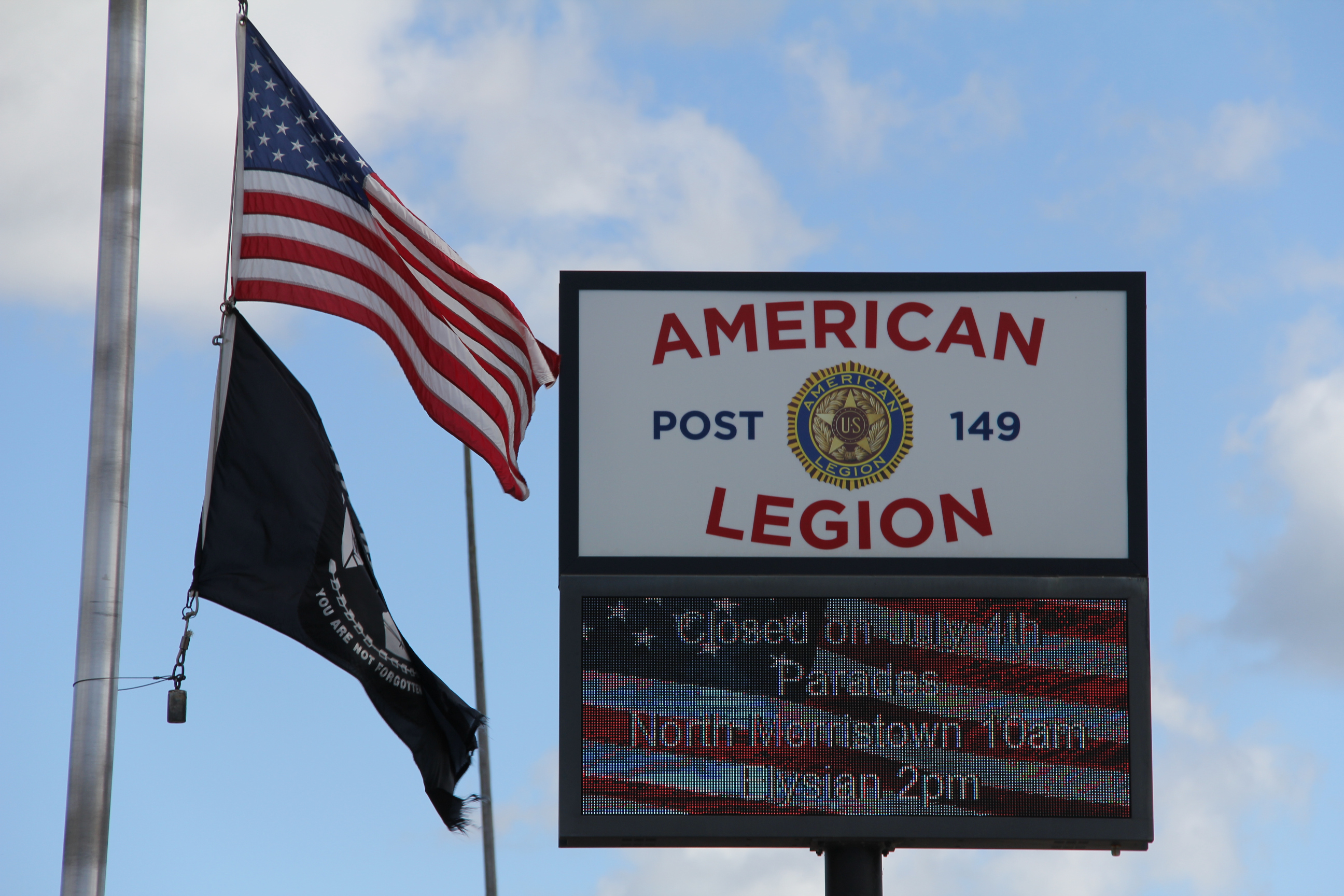
Nearby July 4 celebrations are promoted on the Morristown Legion sign. (Minnesota Prairie Roots copyrighted photo 2024)
All across my region of Minnesota, small towns host July Fourth celebrations. Families and neighbors gather for backyards BBQs. Kids wave flags. Fireworks erupt in the black night sky.
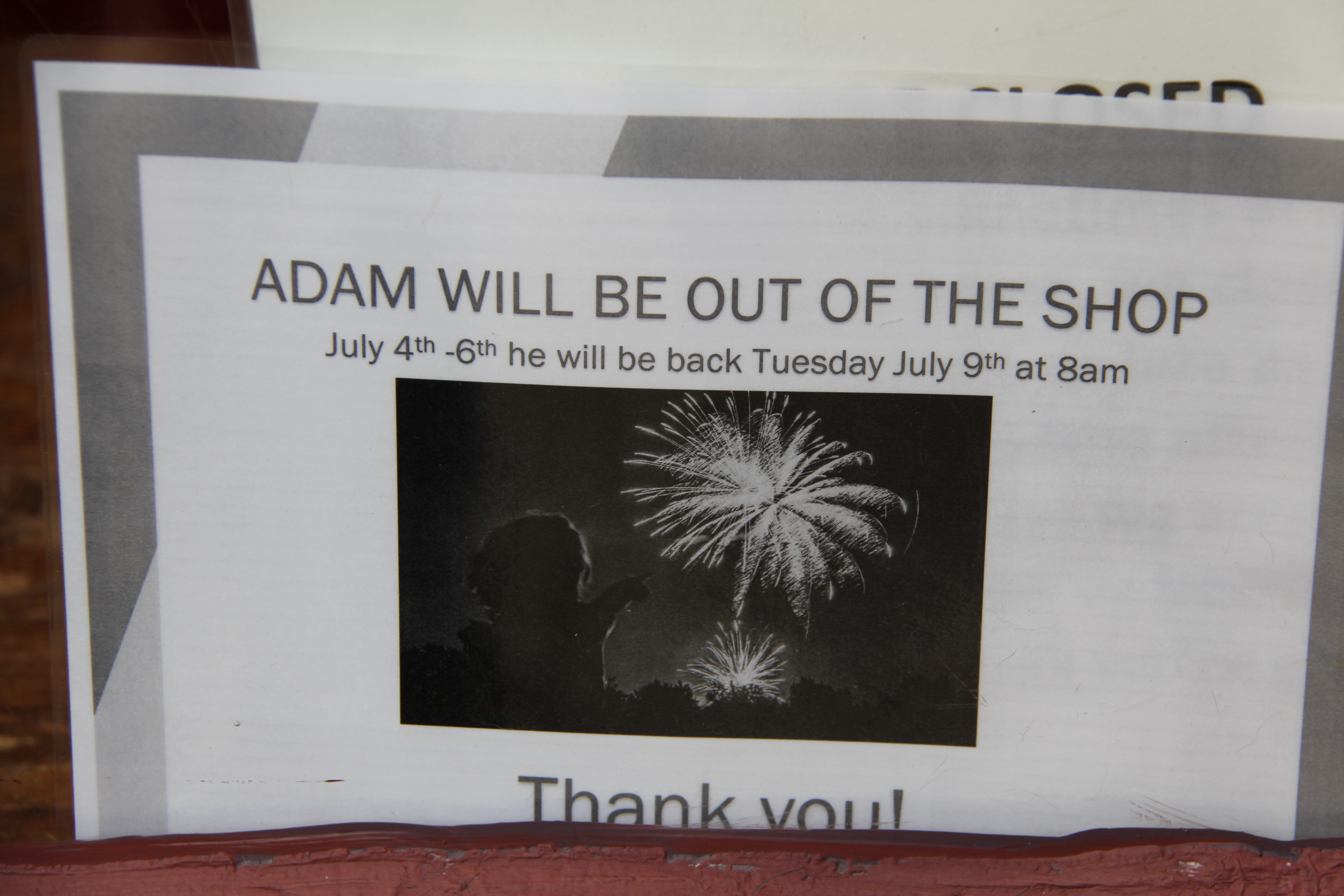
Posted in the window of Bridge Square Barbers in Northfield. (Minnesota Prairie Roots copyrighted photo June 2024)
There is reason to feel jubilant and hopeful and proud to be an American.
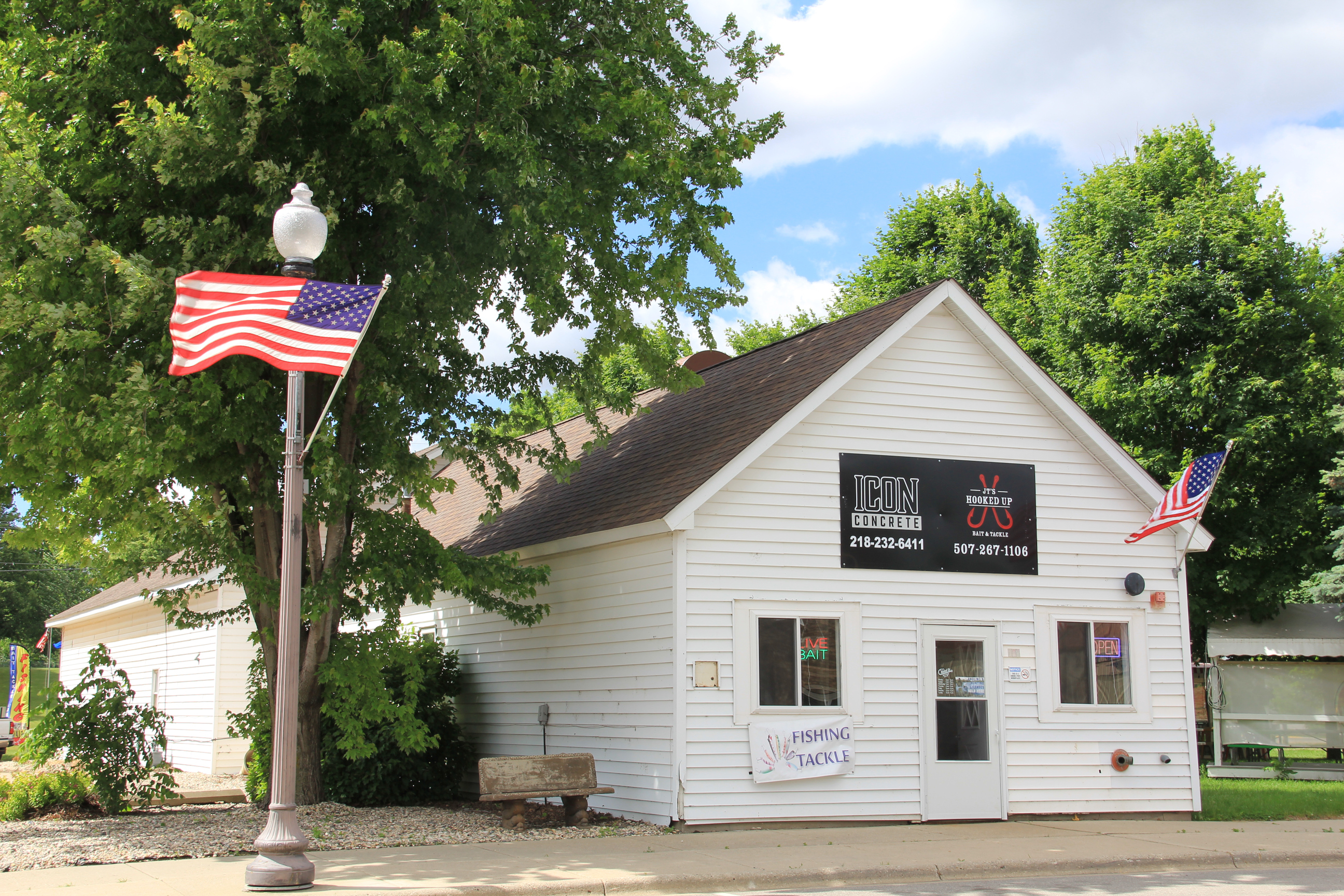
American flags fly on and near a bait shop in downtown Elysian. (Minnesota Prairie Roots copyrighted photo June 2024)
AMERICAN PRIDE RUNS STRONG in many small towns. At least that’s my take after a recent tour of several communities in my area.
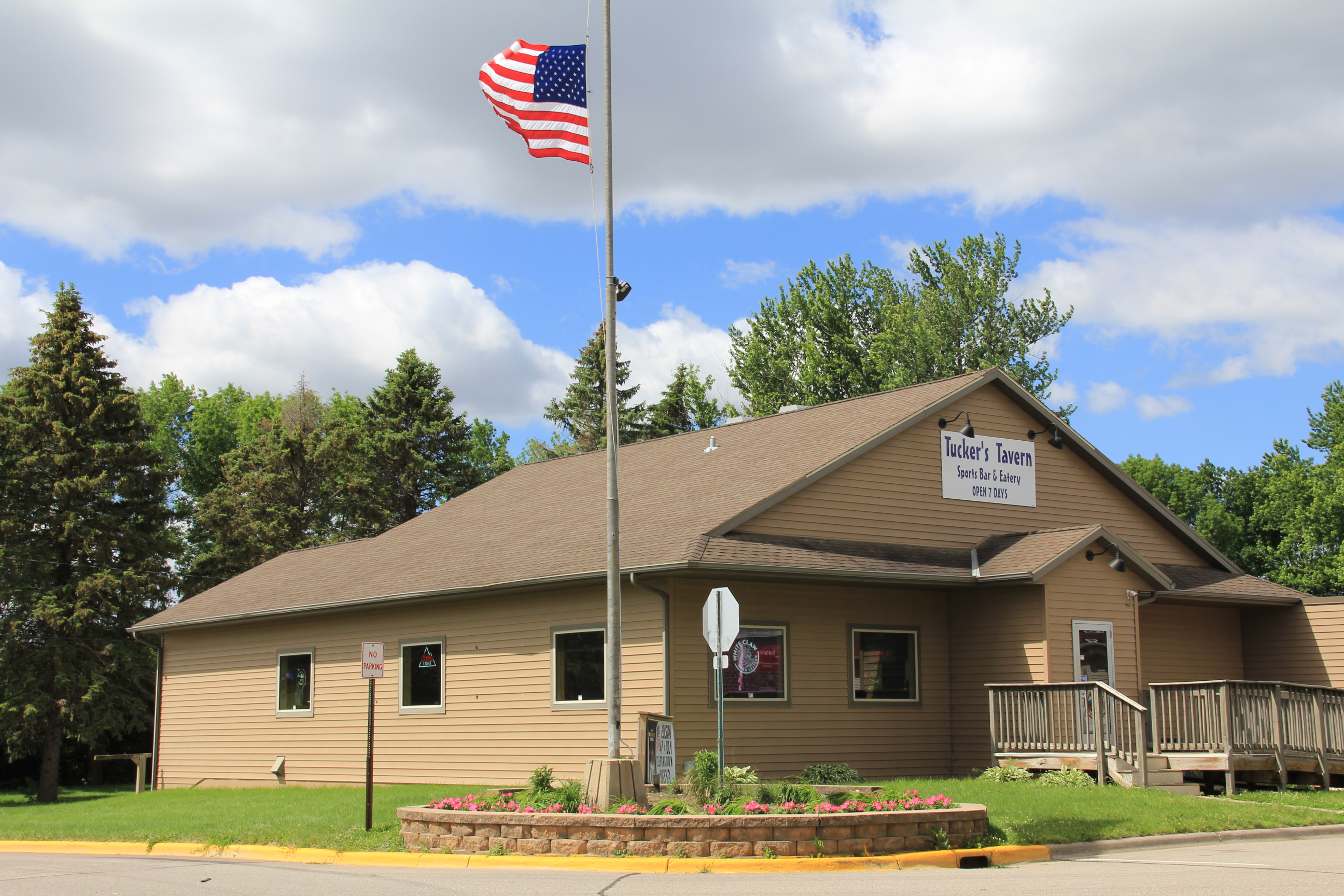
A flag flies high outside, Tucker’s Tavern, a popular restaurant and bar anchoring a downtown corner in Elysian. (Minnesota Prairie Roots copyrighted photo June 2024)
Take Elysian, a lakeside community of 724 year-round residents in Le Sueur and Waseca counties. The summer-time population swells well beyond that as cabin owners, campers and others flock to the area.
Flags fly in downtown Elysian. (Minnesota Prairie Roots copyrighted photo June 2024)
Walk through the several blocks of Elysian’s downtown, and you’ll see American flags flying from lamp posts, buildings and flagpoles, lending a patriotic feel to this southern Minnesota town.
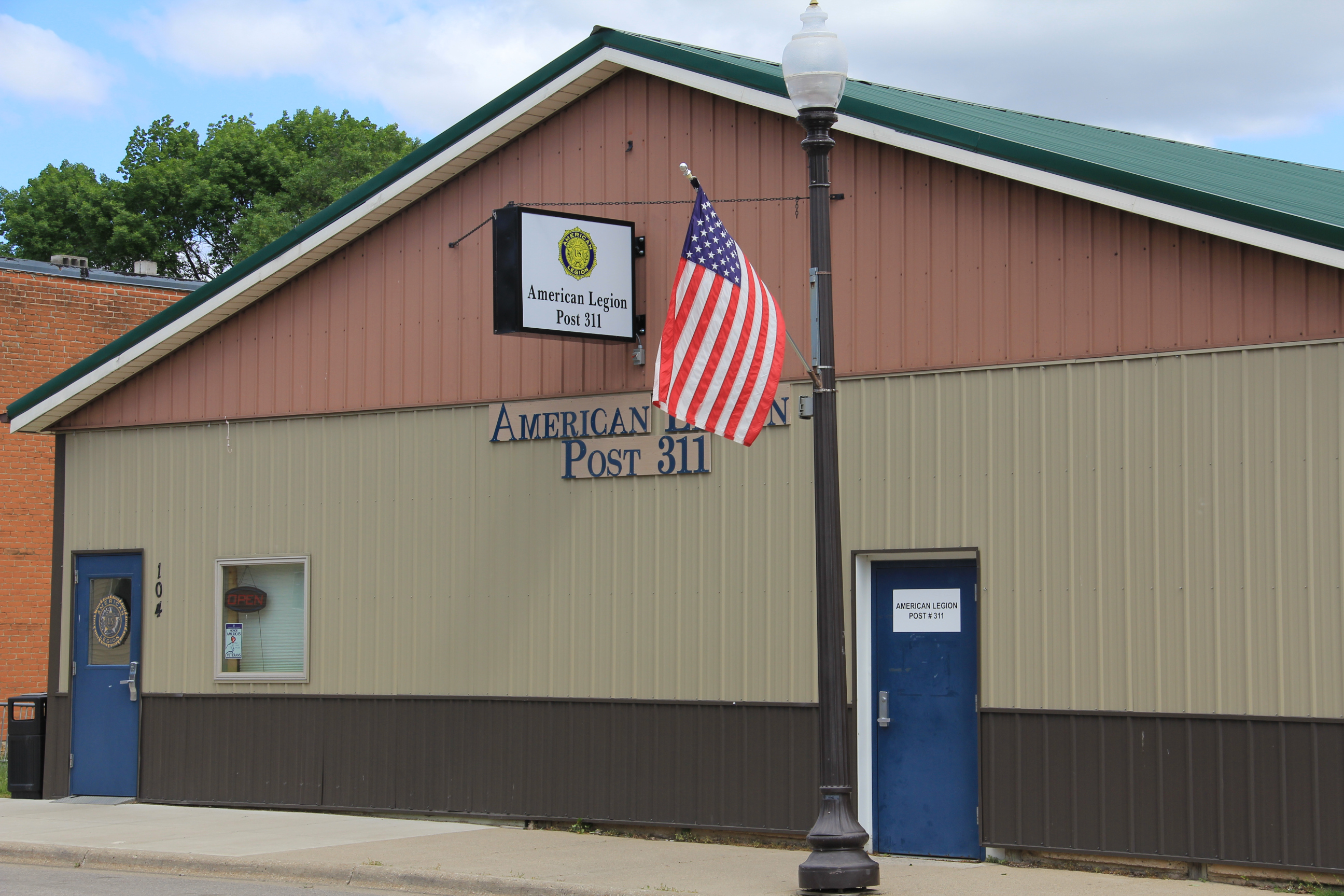
As expected, an American flag flies by the Legion. (Minnesota Prairie Roots copyrighted photo June 2024)
Flags line the street in downtown Elysian. (Minnesota Prairie Roots copyrighted photo June 2024)
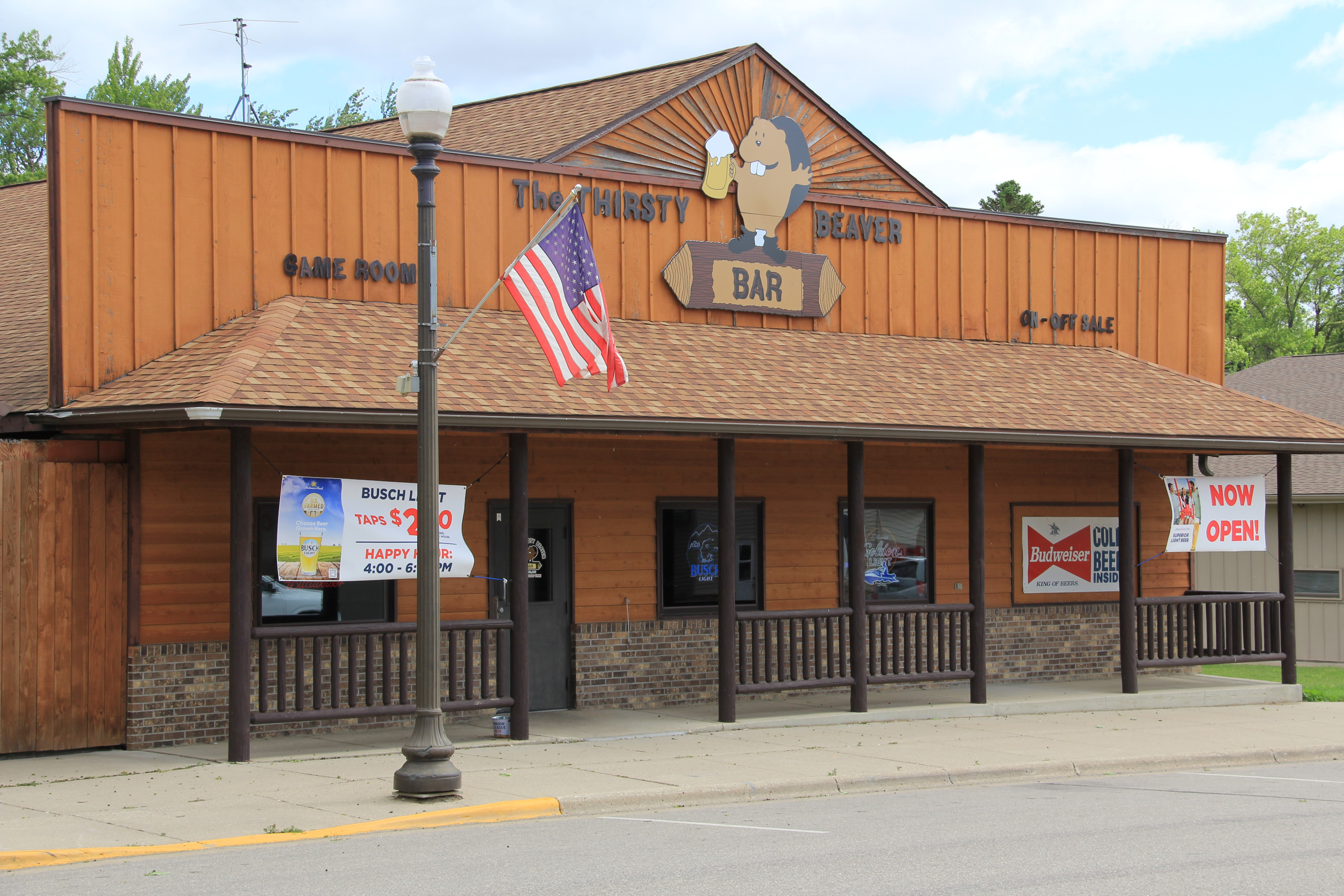
Flying the flag outside The Thirsty Beaver. (Minnesota Prairie Roots copyrighted photo June 2024)
In a community that celebrates the Fourth of July in a big way with six days of events running from July 2-7, the prolific flag display seems especially fitting. July 4th and the American flag are, of course, synonymous. As are days packed with July 4th events that draw crowds of locals and visitors.
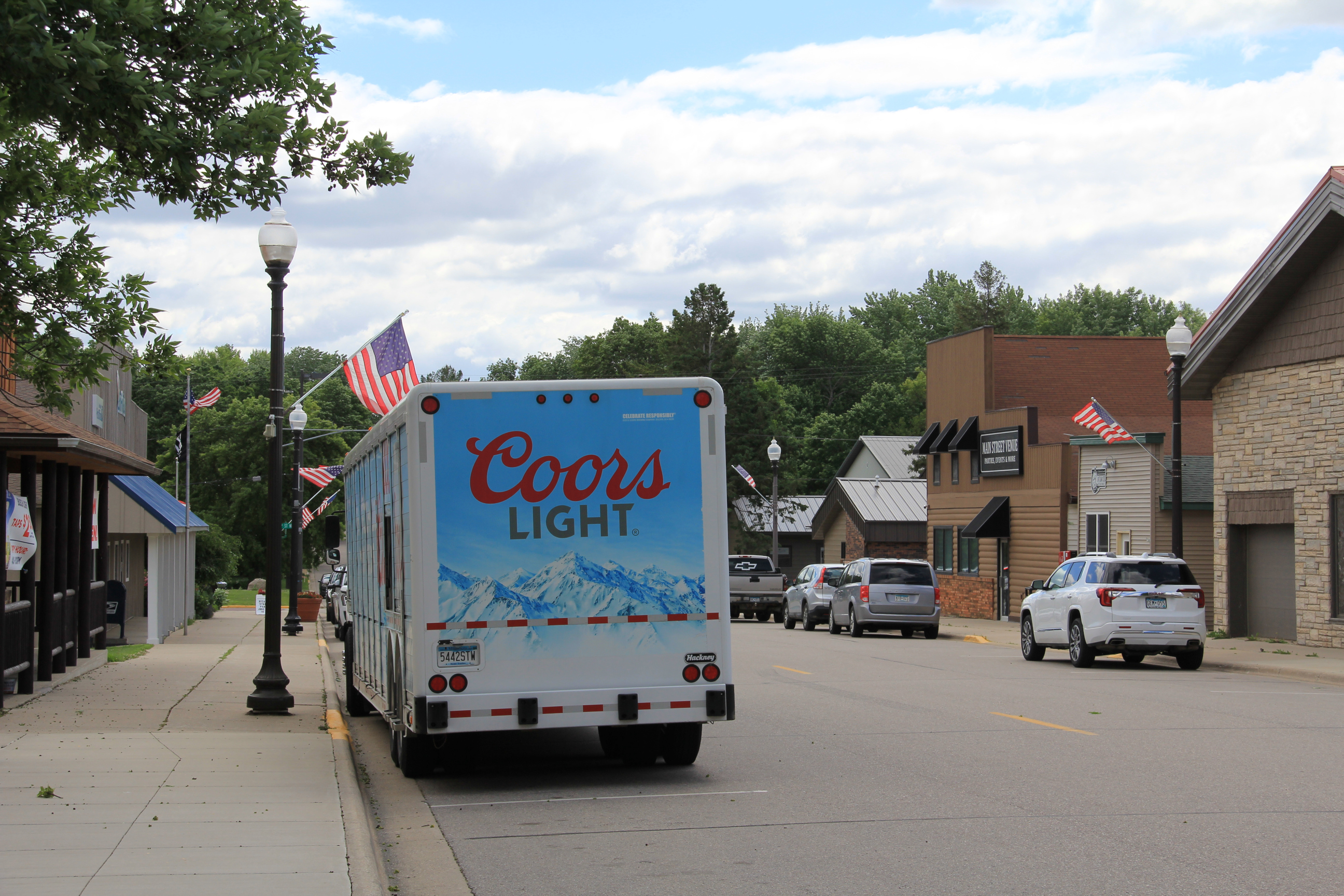
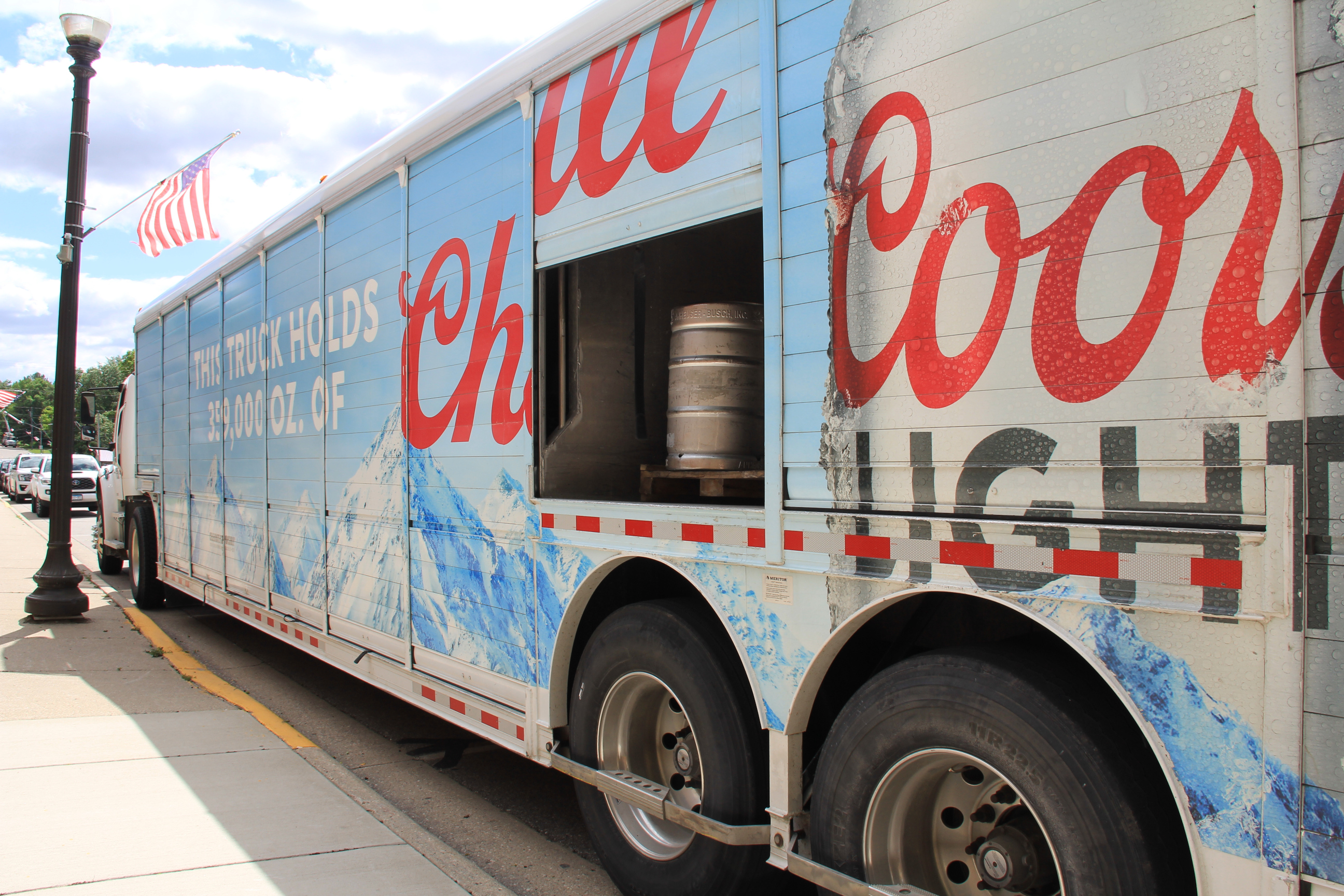
Red, white and blue in a beer delivery truck and an American flag. (Minnesota Prairie Roots copyrighted photo June 2024)
Elysian has an impressive array of activities planned: pageants, a medallion hunt, turtle races, street dances, street and boat parades, arm wrestling, kids’ fishing contest and power pedal pull, flea market, chicken and pancake feeds, bean bag and cribbage tournaments, car show. July 5th fireworks… (Click here for more information.)
One of my favorite old buildings in Elysian, graced by a flag. (Minnesota Prairie Roots copyrighted photo June 2024)
Love of country and love of community merge to create this July Fourth celebration in Elysian, a small town where patriotism shows in the American flags that fly, in the gathering to celebrate our nation’s birthday.
#
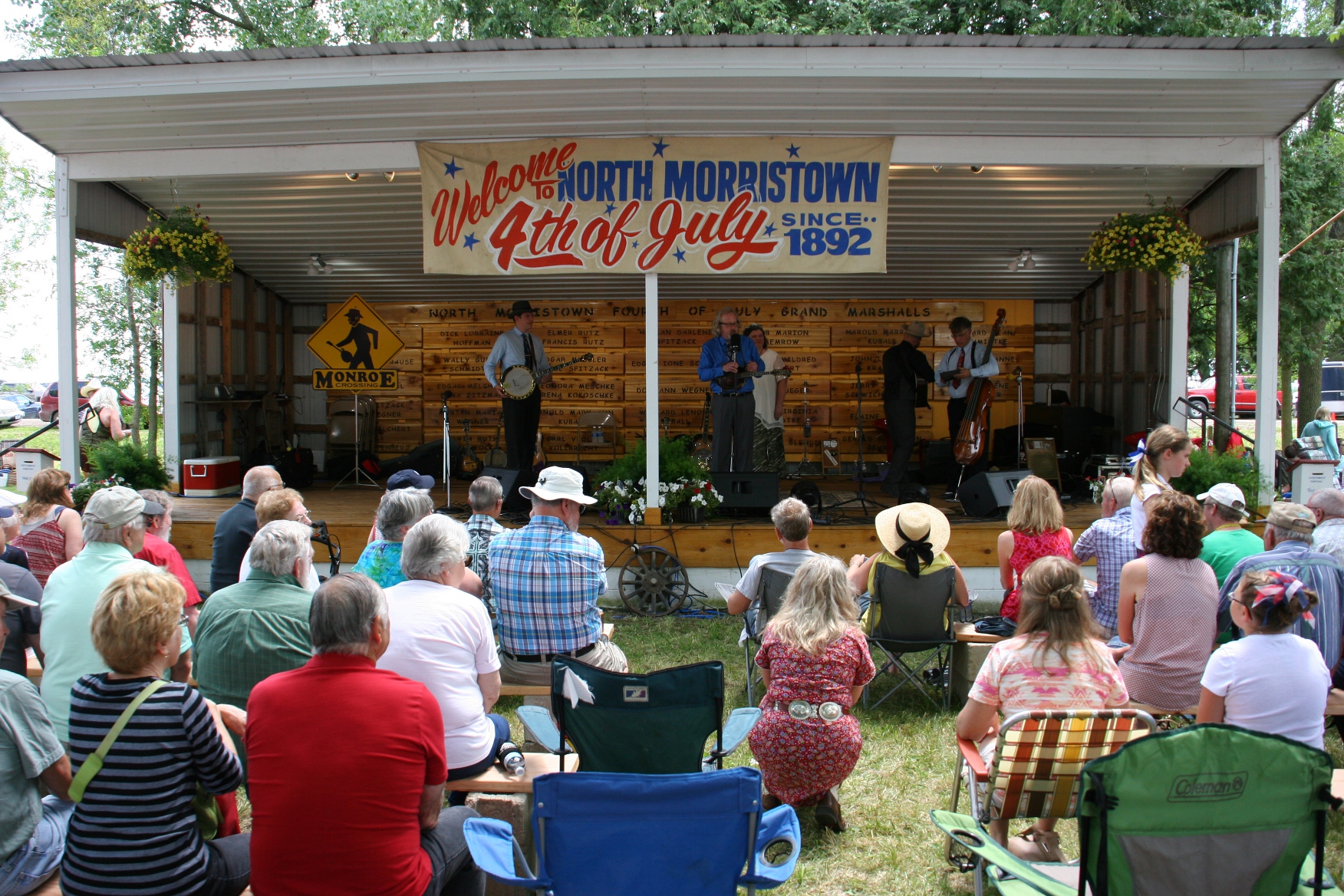
The popular bluegrass band, Monroe Crossing, performs in North Morristown in 2016. (Minnesota Prairie Roots copyrighted file photo July 4, 2016)
FYI: Other area communities also celebrate the Fourth in big ways. That includes the 131st July 4th celebration in North Morristown, where a parade, patriotic program (including a flag raising ceremony), games, kids’ rides, food stands (including homemade pies), music (including the ever-popular Monroe Crossing, with performances at 1:30 p.m. and 4 p.m.), fireworks and much more define July 4th. Events are held on the festival grounds across from Trinity Lutheran Church and School in North Morristown, a spot in the middle of farm fields in southwestern Rice County. (Click here for more information.)
To the south of Owatonna in Blooming Prairie, this small town hosts its 50th Old Fashioned 4th of July beginning on July 3, then continuing on July 4 and 6. It truly is an event for families, with lots happening for kids. Games, pony rides, races, a kids’ pedal tractor pull, inflatables, painting, etc. Adults will find plenty to do also with a fine arts fair and vendor market, music, a tractor pull, parade, fireworks and more. (Click here for more information.)
#
NOTE: Check back to see more photos of U.S. flags gracing other small towns in my area of southern Minnesota.
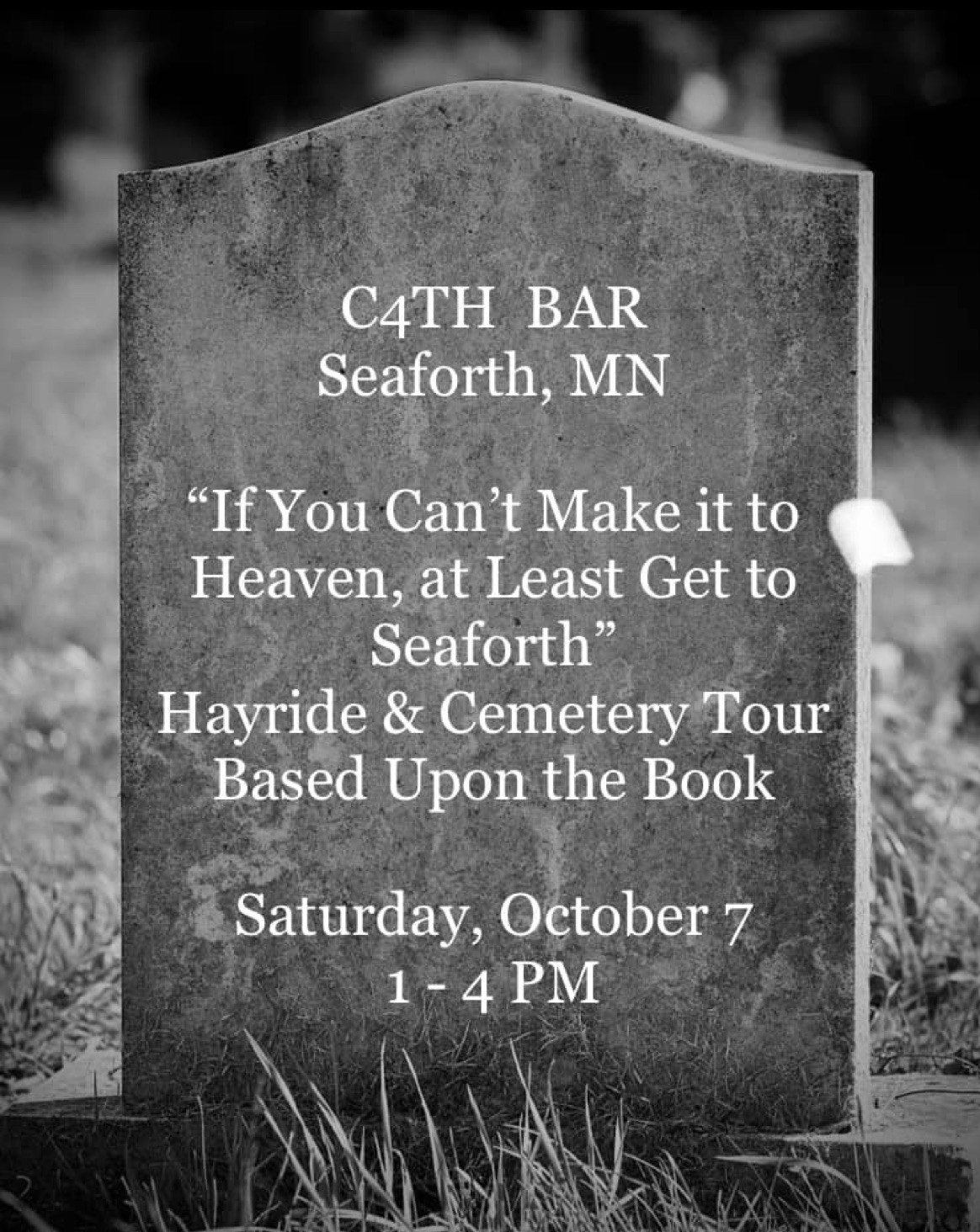
Promo for Saturday’s event, courtesy of Elizabeth Johanneck.
THEY ARE LONG-TIME FRIENDS. Friends who grew up together, who have a history of experiences and stories and of being there for one another. And they are both authors of books rooted in rural Redwood County, the land which shaped and grew them and their enduring friendship.
On Saturday, October 7, Twin Cities resident Elizabeth “Beth” Johanneck, author of If You Can’t Make it to Heaven, at Least Get to Seaforth—The Monica Stories and Then Some, and Granite Falls resident Cynthia “Cindy” Bernardy Lavin, author of the children’s book I Think I’ll Call You Annie: Based Upon a True Story (which Beth illustrated), return to Seaforth, population 77, for a 1-4 pm event sure to draw lots of interest.
The C4th Bar hosts the afternoon activities, which include a meet-and-greet (1-3 pm) with the authors and Monica Pistulka Fischer, prominently featured in Beth’s collection of short stories and art from the Seaforth and Wabasso areas. Books will be available for purchase.
Event promo courtesy of Elizabeth Johanneck.
But there’s much more planned than a book signing and time to chat with the long-time friends. The event also includes a hayride and self-guided tour of St. Mary’s Cemetery just northwest of Seaforth. Attendees can visit the gravesites of locals included in both books.
Image sourced online.
Back at the bar, Cindy, a retired elementary school teacher, will read her book about Seaforth’s most famous pig and offer a pig art project for kids.
The original painting of “Seaforth Main Street,” featured here on the cover of Beth’s book, will be on display at Saturday’s celebration. (Minnesota Prairie Roots copyrighted file photo 2023)
Art is an important part of this celebration as art is an integral part of Beth’s book. Her book includes the only printed collection of selected paintings by her grandfather, Arnold Kramer, dubbed “Minnesota’s Grandpa Moses.” He documented early to mid 1900s rural life and scenes, creating an historical agrarian treasure of some 400 paintings upon his retirement from farming. His original painting, “Seaforth Main Street,” which graces the cover of Beth’s book, will be displayed at Saturday’s celebration.
The C4th Bar is also honoring Kramer and several other Seaforth residents (and one pig) with special drinks: “The Grandpa Moses” for folk artist Arnold Kramer; “The Angie” for business owner Angie Bergen; “The Monica” for Monica Pistulka Fischer; and “The Annie” for Dana and Connie Dittbenner and Annie the Pig. “The Monica” and “The Annie” are non-alcoholic drinks. Hot chocolate and make your own s’mores will also be available.
No event is complete without music. The celebration features the live music of Cowboy Dave Gewerth.
It will be quite an afternoon in Seaforth. I can almost envision the scene of a packed bar, of Beth and Cindy mingling, of glasses raised, of stories shared, of memories made. That’s the thing about small towns, especially—you may leave, but you remain forever connected to the place, the events, the people. Like Beth and Cindy, long-time friends who on Saturday return to their roots to celebrate publication of their books, but, more importantly, Seaforth and its residents.
Disclaimer: I edited and proofed the manuscript for Beth’s book. My poem, “Her Treasure,” is printed in the book as a companion piece. Beth, Cindy and I attended Wabasso High School together, graduating with the class of 1974. Beth and I were also lockermates.
The cover of Elizabeth Johanneck’s new book features the art of her grandfather, Arnold Kramer. (Minnesota Prairie Roots photo July 2023)
DECADES REMOVED from southwestern Minnesota, Twin Cities writer Elizabeth Johanneck and I remain rooted to the prairie—the land and people and smalls towns which shaped us. We both grew up on Redwood County farms, were Wabasso High School classmates and today hold a deep respect and fondness for the place we once called home.
Beth, as she’s known to me, recently published a book,If You Can’t Make it to Heaven, at Least Get to Seaforth—The Monica Stories and Then Some. This book features short stories and snippet observations in Beth’s humorous storytelling style, plus paintings and photos. These could be my stories, my memories, just with different characters and settings. Any prairie farm kid likely will feel the same.
ABOUT SEAFORTH & MONICA
But where is Seaforth? And who is Monica? Seaforth, population 77, is a farming community located along County Road 7, south of Minnesota State Highway 19 in central Redwood County. It’s near my hometown of Vesta, seven miles to the northwest. Monica Fischer is Beth’s friend, former co-worker and a character. A baby shoe in a pot of egg coffee and pantyhose found clinging inside a pant leg during Catholic Mass are among the many entertaining Monica stories that left me laughing aloud. By the time I’d finished reading this section of the book, I felt like I knew Monica well. Everyone should have a friend like her.
GROWING UP ON THE MINNESOTA PRAIRIE IN THE 1960s
And everyone should be so fortunate to have experienced rural Minnesota life in the 1960s, as Beth and I did. It is Part 2, “Random Nonsense of a MN Country Mouse,” that I find most similar to my childhood. Both farmers’ daughters with many siblings, Beth and I share the commonalities of being raised on the land among aunts and uncles and cousins and grandparents and immediate family who loved us deeply.
As in “The Monica Stories,” Beth writes about her personal experiences in a casual conversational style. It’s as if she and I are chatting over cups of coffee, and Beth does like her coffee. I connect with her stories about “the grove,” jars of pocket gopher feet in the freezer, grab bags, bloodsuckers, The Weekly Reader, hearing corn grow and more.
Her humor-infused short stories stretch into adulthood, into becoming a parent and grandparent. These are not earth-shattering remembrances, but rather observations about everyday life and events that could be mine, could be yours, but are definitively Beth’s.
NIBBLES OF COUNTRY INSIGHTS
In a section titled “Country Mouse Nibbles,” Beth shares her thoughts on topics in a sentence or two, the first being “When You Are Raised Close to the Land.” I fully understand—the smell after autumn harvest, looking to the west for approaching storms, filled fruit jars crowding root cellar shelves… And “Holding onto Memories”—Distant cheers from a local ball game are souvenirs worth saving for winter. Truly poetic words.
FEATURING THE ART OF “MINNESOTA’S GRANDPA MOSES”
There is much to be cherished in this book beyond pages and pages of rural memories and insights. Beth also intersperses photos, most from Seaforth. But it is Part 3, “Paintings by Arnold Kramer, Minnesota’s ‘Grandpa Moses,’” which is an historic agrarian art treasure. Following his retirement, Seaforth farmer Arnold Kramer took up painting, visually documenting early to mid-1900s rural life and scenes. He became well-known for his folk art style paintings done in primary colors. Beth’s book holds the only printed collection of paintings by her grandfather. The self-taught artist created more than 400 works of art and was dubbed “Minnesota’s Grandpa Moses” by the University of Minnesota at the peak of his creativity in the 1960s.
Book signing promo courtesy of Elizabeth Johanneck.
Beth’s book is also available for purchase at Chapter Two Bookstore in Redwood Falls and online at Amazon and Barnes & Noble. Both her book and Cindy’s achieved bestseller status on Amazon following their release.
Julie Kramer, author of bestseller Stalking Susan, praises Beth’s book in her back cover endorsement, calling it “a delightful collection from a farm girl who grew up near the Minnesota home of Laura Ingalls Wilder.” I agree. Fully.
Photographed in Kilkenny, Minnesota, in January 2020, this pub no longer exists. I loved the name, the sign, the graphic in this Irish community. (Minnesota Prairie Roots copyrighted file photo January 2020)
ENCLAVES OF IRISH scatter throughout Minnesota from unincorporated settlements to small towns to big cities.
Kilkenny, proud of its Irish heritage, maintains a twinship with Kilkenny County in the Old Country. And each September, the community celebrates St. Patrick’s Day with Half-Way to St. Paddy’s Day complete with parade and, in the past, toilet bowl races. I’ve never attended, but need to and document this event.
Irish pride on Kilkenny, Minnesota’s water tower. (Minnesota Prairie Roots copyrighted file photo January 2020)
Three years ago while out and about on one of those rural drives I so enjoy, Randy and I passed through Kilkenny, marked by a signature silo style light green water tower decorated with a shamrock. There was no doubt we were in an Irish proud small town.
Murphy’s Pub was once Kilkenny’s gathering spot. It closed, replaced by The Toy Box Saloon. (Minnesota Prairie Roots copyrighted file photo January 2020)
At the time, Murphy’s Pub centered the core of Kilkenny, which, as I recall, is about a handful of businesses. Today that Irish-tagged pub with the memorable ale drinking leprechaun signage is closed, replaced by The Toy Box Saloon. That doesn’t quite hold the same Irish appeal as the name Murphy’s Pub. But you will still find Irish brew, like Finnegan’s Irish Amber.
St. Patrick’s Bonin Field. (Minnesota Prairie Roots copyrighted file photo summer of 2015)
In Scott County to the north, in unincorporated St. Patrick, I discovered a strong Irish enclave centered around a church, cemetery, ballpark and tavern. St. Patrick of Cedar Lake Township Catholic Church and its surrounding cemetery sit high atop a hill across from St. Patrick’s Tavern and next to the ball field. The ballpark, St. Patrick’s Bonin Field, is named after Father Leon Bonin, a strong supporter of local baseball.
The appealing leprechaun signage on St. Patrick’s Tavern. (Minnesota Prairie Roots copyrighted file photo summer of 2015)
That this rural place is proud of its Irish heritage is clear. I need to return to St Patrick, perhaps pop into the bar for a brew. Make that an Irish stout.
St. Patrick of Cedar Lake Township Catholic Church and cemetery. (Minnesota Prairie Roots copyrighted file photo summer of 2015)
During my one and only visit in the summer of 2015, I mostly wandered the cemetery. I find cemeteries historically and artistically interesting.
Irish immigrants buried in the St. Thomas Church Cemetery. (Minnesota Prairie Roots copyrighted file photo March 2018)
Back in Le Sueur County, I meandered through the St. Thomas Church Cemetery in the unincorporated settlement of St. Thomas. During my March 2018 visit, I found plenty of Irish buried here.
A closed Irish-named bar in St. Thomas, Minnesota. (Minnesota Prairie Roots copyrighted file photo March 2018)
Down the road a bit, I spotted an apparently abandoned Callahan’s Bar.
An appropriately-named township hall in an Irish enclave. (Minnesota Prairie Roots copyrighted file photo March 2018)
And then I saw Derrynane Town Hall, Derrynane being a small village in County Kerry, Ireland. Ah, yes, Irish roots run deep in pockets of rural Minnesota.
This St. Patrick’s Day I celebrate Kilkenny, St. Thomas and St. Patrick. What a delight to have found these backroad places of Irish heritage in rural southern Minnesota.













 Minnesota Prairie Roots
Recent Comments