Minnesota Prairie Roots

Writing and photography by Audrey Kletscher Helbling

Expecting severe weather in parts of Minnesota, maybe even “strong tornadoes” April 27, 2025

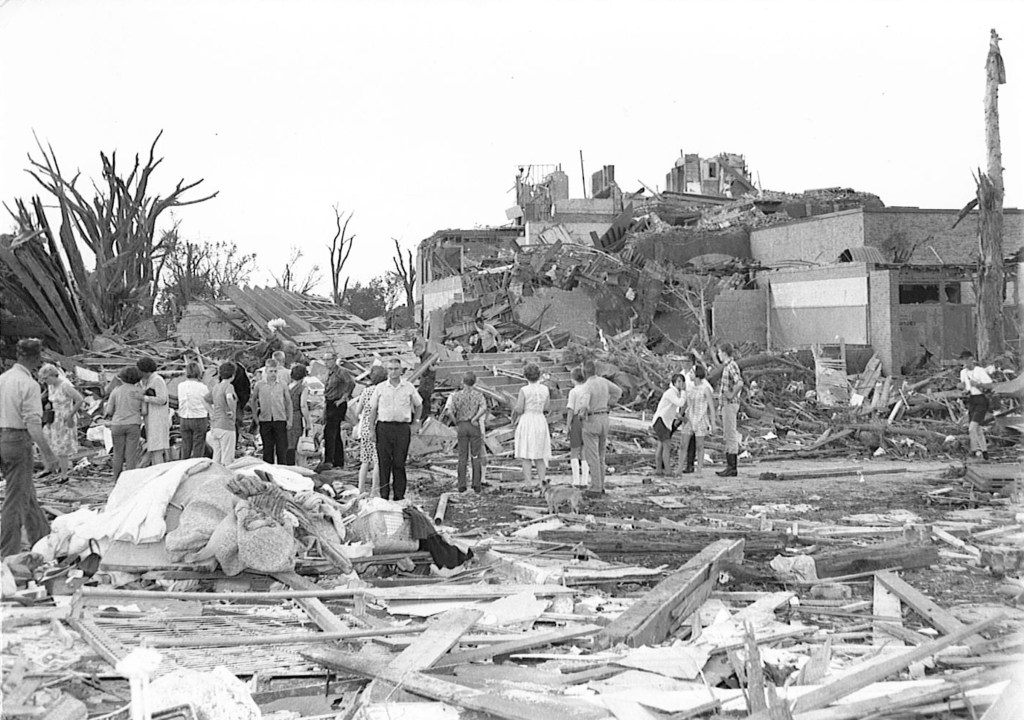
Surveying the destruction at Tracy Elementary School, which was destroyed by a June 13, 1968, F5 tornado. (Photo by The Tracy Headlight Herald and courtesy of Scott Thoma)

FOR DAYS NOW WE’VE HEARD the warnings and been advised to prepare for impending bad weather in parts of Minnesota and Wisconsin. Here’s the latest from the National Weather Service website as of early Sunday afternoon: Regardless of the risk level, an episode of dangerous weather is likely Monday, with all hazards possible…

The NWS breaks that weather threat down to include tornadoes (a few strong), large hail, damaging winds and frequent lightning. OK, then. I’m listening.

I live in southern Minnesota, which is under a “moderate” risk of severe storms. Now that word choice may not sound all that threatening until you consider that “moderate” ranks as number four on a scale of one to five. “High” risk, #5, tops the scale. Central and eastern Minnesota and western Wisconsin fall in this “moderate” risk area for severe weather.

Weather forecasters seem pretty confident in their predictions. So I have to go with what they’re saying and remain watchful and informed. And stay in contact with my friend Brad, a Minnesota native who lives in North Carolina and is retired from the NWS. He’s like my personal weather forecaster. (Thanks, Brad.)

Eric Lantz, 16, of Walnut Grove, shot this award-winning photo of the Tracy tornado as it was leaving town. He often took photos for the Walnut Grove Tribune, owned by his uncle, Everett Lantz. This image by Eric was awarded third place in the 1968 National Newspaper Association contest for best news photo. (Photo credit and copyrighted Eric Lantz)

I emailed Brad that “I really really really don’t like tornadoes,” not that anyone does. But I do have a bit of history with tornadoes stretching back to June 1968. On June 13, 1968, a violent F5 tornado with wind speeds of 261-318 mph devastated the small southwestern Minnesota town of Tracy, killed nine and injured 125. Days after that deadly twister, Dad, Mom, my siblings and I piled into the car for the 25-mile drive south of our family farm to view the destruction. The imprint of those scenes has stuck with me, which is likely the reason I respect and fear tornadoes.

More recently, in September 2018, five tornadoes (the largest an EF2) swept through my county of Rice, including in Faribault. Randy and I sheltered in our basement as strong winds raged, ripping the electrical mast from our house and downing trees throughout our neighborhood and nearby. It was frightening to be huddled in the basement, to hear that roaring wind and then to be plunged into darkness. But damage to our property was minimal. And no one was killed or injured in the county. Today I can look out my office window or walk into my backyard to see visual reminders of that severe storm in what I call “tornado trees.”

Going back further, I recall seeing the destruction in St. Peter, 40 miles to the west of my community, after a tornado touched down there on March 29, 1998. A young boy died. A childhood friend lost his home. Prior to reaching St. Peter, the tornado devastated Comfrey in southwestern Minnesota.

In 1980, a tornado took down a silo, tossed a silage wagon, ripped the railing off the house and more on my childhood farm. That was literally too close to home. It was home. I was working as a newspaper reporter some 65 miles away and raced back to Vesta the next day to see the damage. While working as a reporter in Gaylord, I also reported on and photographed damage left by a tornado.

On July 7, 2011, downbursts during severe weather heavily-damaged my childhood church, St. John’s Lutheran, and caused other damage in my hometown. In neighboring Belview, an EF1 tornado touched down on that same date causing widespread destruction. My personal weather forecaster friend, Brad, grew up in Belview.

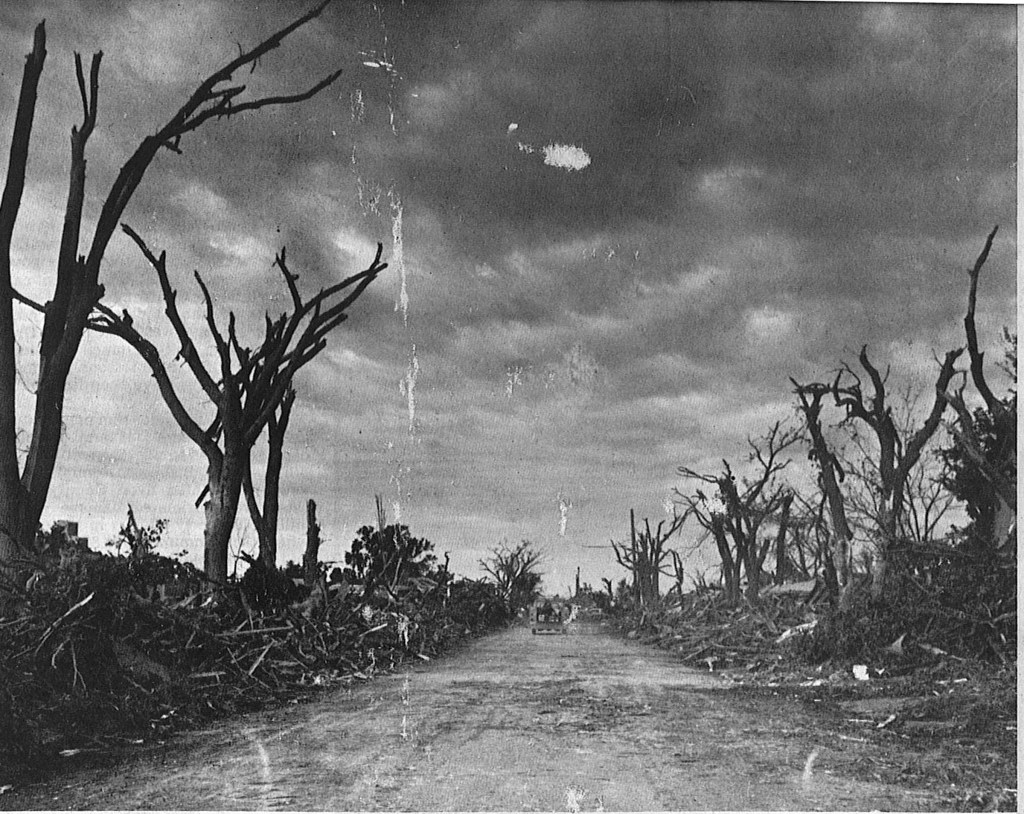
A residential street in Tracy, once covered in branches and debris, had to be plowed to allow vehicles to pass following a June 13, 1968, tornado. (Photo by The Tracy Headlight Herald and courtesy of Scott Thoma, Tracy native and author of “Out of the Blue,” a book about the Tracy tornado)

Yes, I have a history with severe storms and tornadoes. How about you?

Be alert, prepared and safe, everyone, especially my friends in Minnesota and Wisconsin.

© Copyright 2025 Audrey Kletscher Helbling


A bit like the Dust Bowl inside my house June 1, 2022

Filed under: Uncategorized — Audrey Kletscher Helbling @ 5:03 AM
Tags: , , , , , , , , , , , , ,

I’d encourage you to read this book about The Dust Bowl. It’s riveting and informative, filled with stories.

I AM A THROW the windows open, let fresh air flow into my house kind of person. I dislike stuffiness, feeling closed in by lack of air movement. Randy sometimes calls me “Ida.” He’s referencing my paternal grandmother, who slept with her bedroom window cracked, even in the winter. While I don’t do that, I’ve opened windows on cool-ish days. Hey, I gotta get some fresh air in the house.

Monday was one of those days when I should have kept the windows clamped shut. Why? Because of the wind. Fierce, strong, relentless winds blew all day, even blowing in destructive storms and tornadoes into parts of central Minnesota. And while we avoided that here in Faribault, our lawn is littered with maple leaves, small branches and twigs.

At one point Monday afternoon, Randy and I launched from our lawnchairs upon hearing a loud crack. We convened with our next door neighbor, attempting to determine what cracked and fell in the woods behind our homes. But we couldn’t determine the source in the denseness of greenery and felt thankful a tree or limb did not land on our houses and garages. The woods are littered with dead trees and broken branches from a 2018 tornado. That storm cut a destructive path through our neighborhood with trees falling on vehicles, roadways, houses, garages and, for us, the electrical wire and meter ripped off our house.

I digress. On Memorial Day, winds whipped all day. And our windows were open. Wide open. I should have known better. But, at the time, I was thinking only of keeping the house cool without switching on the air. I’m all about conserving energy and saving money because, you know, everything costs so darned much these days.

By evening meal prep, I realized just how dirty the house had gotten. Grit layered the kitchen counters, the table, the floors, the… I had no desire or energy to clean beyond swiping a rag across surfaces to reveal a line of dirt.

Heavy duty cleaning awaited me Tuesday morning. I spent hours washing surfaces and floors, spraying a layer of visible dirt from the bathtub, vacuuming. I could have prevented this, if only I’d kept the windows closed.

I should have, could have, learned from my Grandma Ida. Over the weekend, I was reading the Kletscher family history compiled by my Uncle Merlin. He included this story:

My family lived through the very dry years of the 30s commonly referred to as The Dust Bowl years. I recall my mother telling how she could wipe off the table in the morning after breakfast and by noon it would be covered with dirt and dust blown into the house by the dry winds. I always wondered why she had the habit of covering everything that was setting out on the table or counter with a dish towel. I also recall my father telling about gathering wind blown tumbleweed from the fence lines so they could have feed for the livestock. He felt sorry for the animals but that was all they could find for feed.

From my own childhood, I recall a Good Friday dust storm which layered our rural southwestern Minnesota farmhouse with dirt. Mom left the windows open a crack before we accompanied her on a shopping trip to nearby Marshall. A dust storm swept through while we were gone. We spent hours thereafter wiping, sweeping and vacuuming dirt from the house, just like I did on Tuesday.

I have not yet finished cleaning following the wild winds of Memorial Day 2022. I have the second level to vacuum and wipe down. But compared to those Minnesotans who lost homes, vehicles and more to tornadoes, a little (OK, a lot) of dirt seems like nothing.

© Copyright 2022 Audrey Kletscher Helbling


Wild December weather in Minnesota December 16, 2021

Filed under: Uncategorized — Audrey Kletscher Helbling @ 11:30 AM
Tags: , , , , , , , , , ,
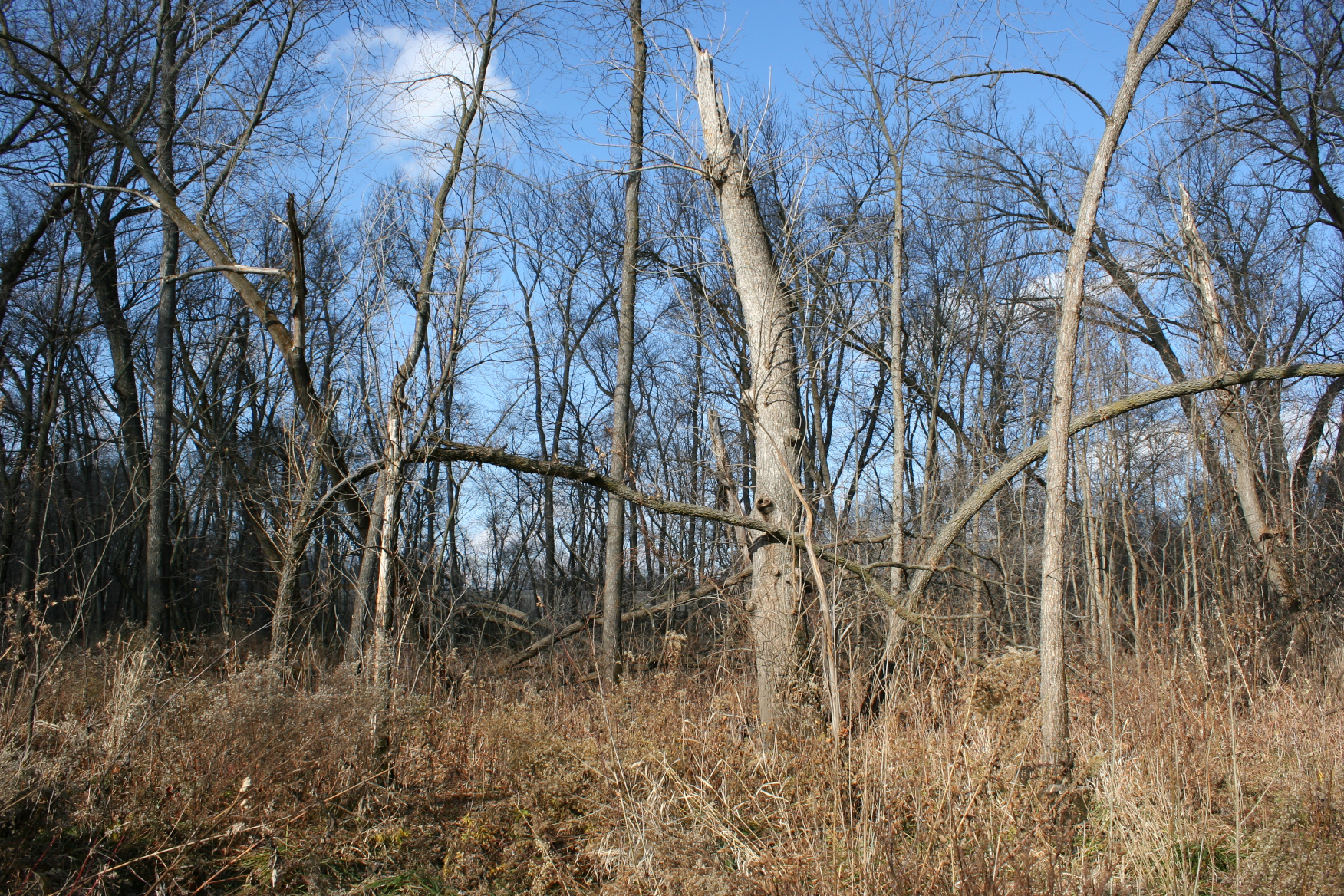
Tornado trees” in the Cannon River Wilderness Area Park, used here for illustration only. These trees were damaged in a September 2018 tornado. (Minnesota Prairie Roots copyrighted file photo)

UPDATE: December 21, 2021 11:36 AM The National Weather Service has now confirmed at least 16 tornado touchdowns in Minnesota on December 15.

THE WEATHER OF WEDNESDAY broke December records in Minnesota in warmth, wind and tornadoes. It proved an unsettling day. And evening. And night.

Around 7:30 pm, emergency warning sirens blared in Faribault as a severe thunderstorm rolled through the region. Randy and I sheltered in the basement with our cell phones, flashlights at the ready, and radio tuned to an Owatonna station. We’ve experienced severe weather before. A September 2018 tornado raced through our neighborhood (and other parts of Faribault and beyond), uprooting trees, damaging vehicles and buildings. Winds ripped a power line and conduit from our house then, dropping the line across our driveway. Evidence of that storm remains in a “tornado tree” still standing in the wooded hillside directly behind our garage.

As we waited in the basement Wednesday evening, I braced for the same roaring of the storm, the plunge into darkness. But that never happened, much to my relief. The roaring would come later.

FIRST-EVER LIKELY TORNADOES

Other parts of Minnesota, though, got hit hard. A tornado reportedly touched down in the small town of Hartland 45 minutes to the south of Faribault just off Interstate 35. And an hour to the southeast in the community of Plainview, another twister reportedly struck. If confirmed by the National Weather Service, these will be the first-ever recorded tornadoes in Minnesota in December.

FORCEFUL WINDS

Strong winds also defined Wednesday’s weather with speeds reaching nearly 80 mph in some places, according to multiple media reports. Those high wind reports came from cities like Redwood Falls (my home area) in southwestern Minnesota and Rochester in southeastern Minnesota. Here in Faribault, the wind speed likely reached some 60 mph. That proved unsettling for me as I crawled into bed and heard an intense roar. At first I thought the sound was a train. But it didn’t take long for Randy and me to realize this was the wind. A look through the blinds revealed swaying treetops and our neighbor’s row of evergreens dancing in the strong winds. After viewing that and with the ongoing roar, sleep didn’t come quite as quickly.

Along Interstate 35 just to the south by Owatonna, winds toppled a semi shortly after midnight. The same happened in other locations throughout southern Minnesota.

DENSE FOG

Earlier in the day, we felt the strengthening of the wind as we drove from Belview back home to Faribault. Many hours earlier, fog factored in to our travel. Dense fog. Horrible, awful fog. We thought of turning back. But Randy insisted on continuing, understanding the importance of visiting my mom, probably for the last time, in her long-term care center. I questioned the sensibility of his decision. But we made it the 120 miles safely to Belview. Then back. Despite the dangerous driving conditions, worsened by the failure of too many drivers to switch on their headlights. The farther west we drove, the higher the number of vehicles without lights. West of Redwoods Falls, a semi sat in the ditch along State Highway 19. The driver apparently blew a stop sign on a county road, crossing 19, our route. The semi could have easily T-boned a vehicle in the dense fog along this well-traveled roadway. But that didn’t happen.

Many prayed for our safe travels and, as a woman of faith, I feel gratitude for those prayers. Before leaving the Belview care center, the hospice chaplain prayed for “travel mercies” upon us, a new-to-me phrase recently shared by a dear friend. I love that phrase. It sounds so poetically beautiful and so deeply personal.

The weather of Wednesday also brought warmth. Our temperature monitor showed 62 degrees. Unbelievably warm for December in Minnesota. This morning, the temp is in the 20s with occasional snow bursts. I see no damage from yesterday’s high winds in my neighborhood. Even the “tornado tree” still stands on the wooded hillside. I expect sleep will come more easily tonight.

#

TELL ME: I welcome your weather reports from Wednesday and today. Please share in the comments section.

© Copyright 2021 Audrey Kletscher Helbling


Rice County still needs volunteers to help with storm clean-up October 17, 2018

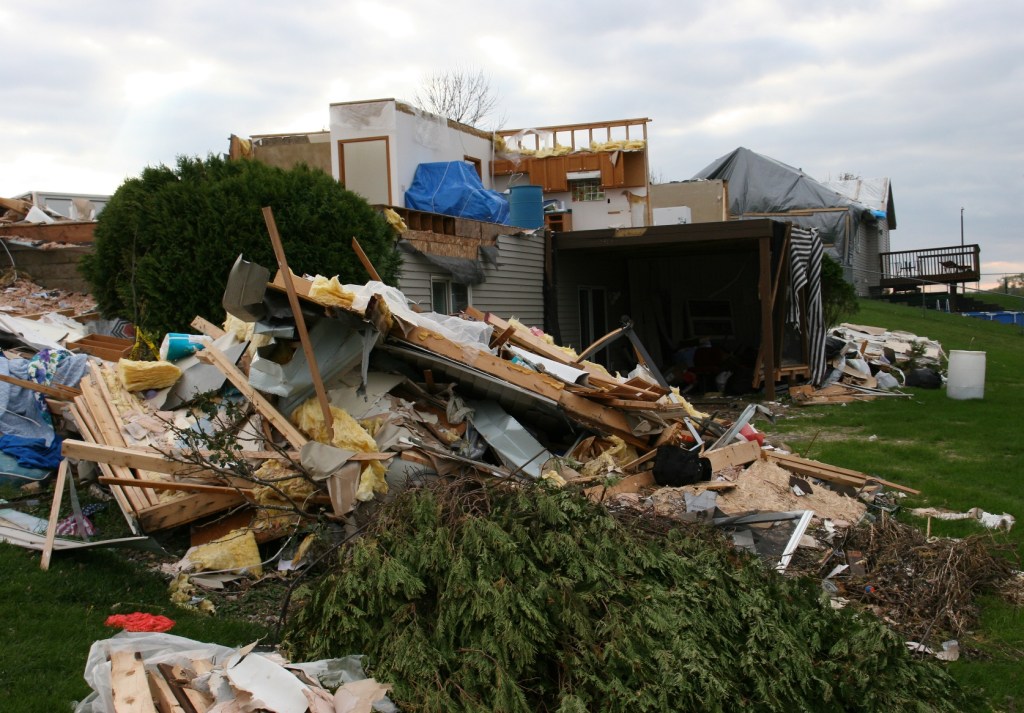
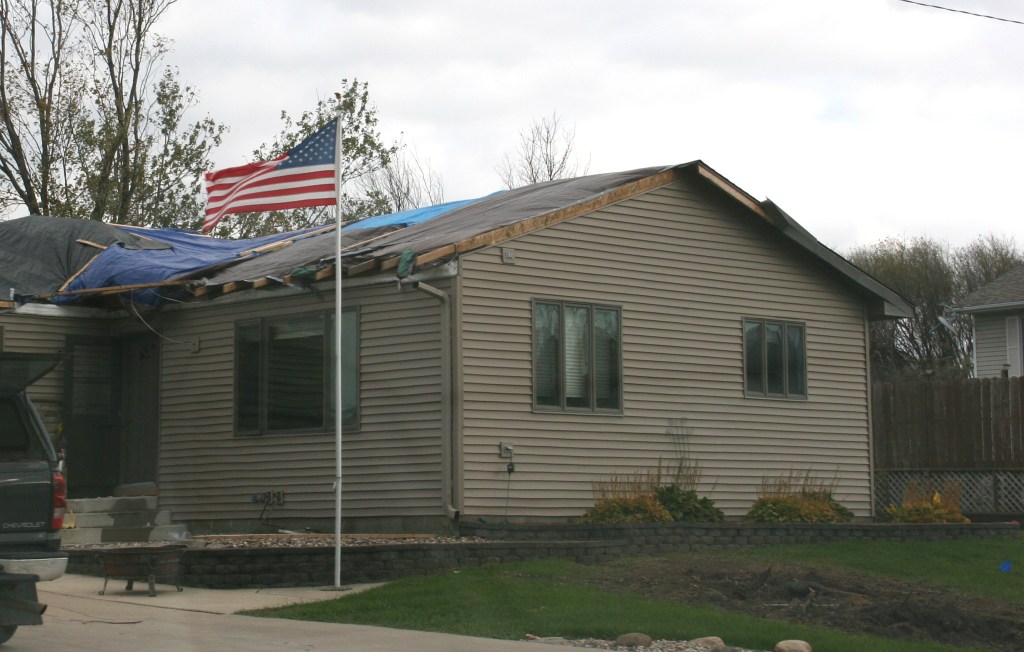
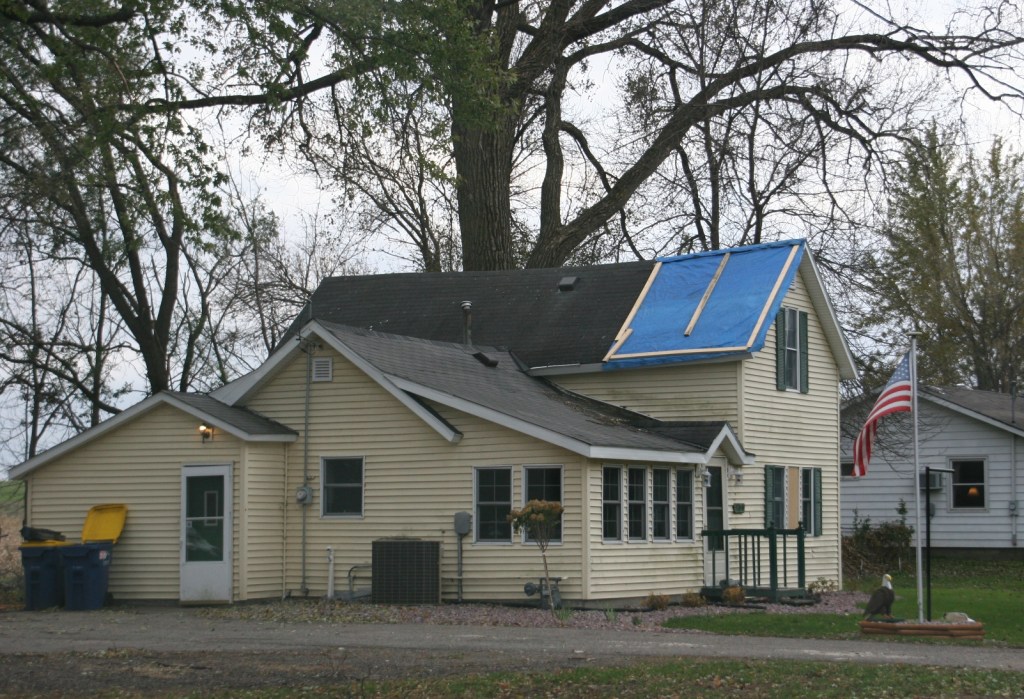
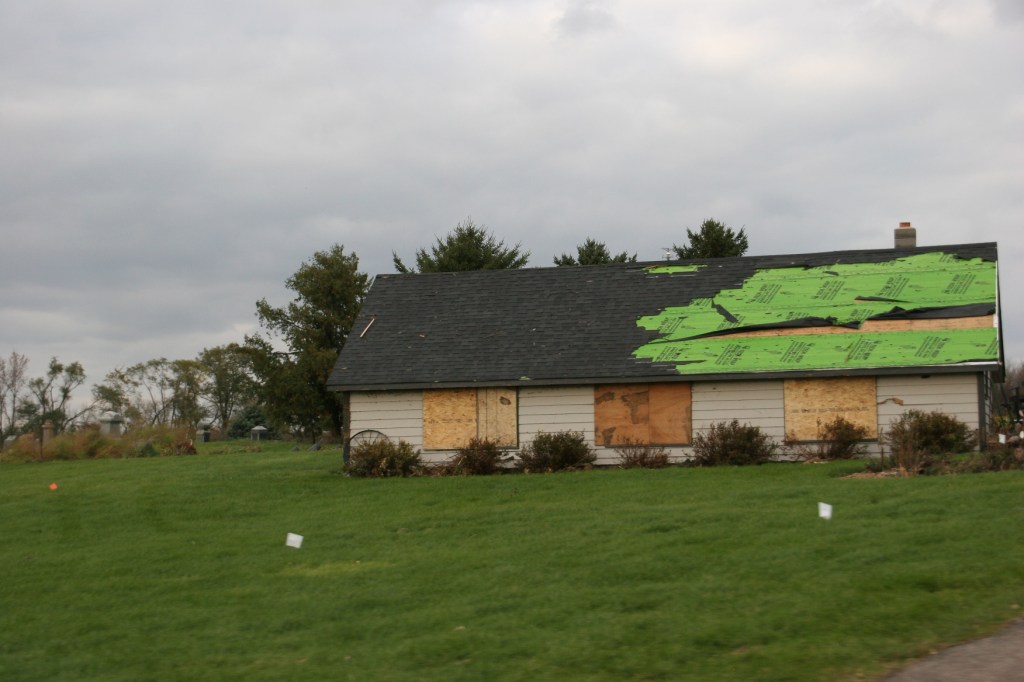
Several days ago I photographed this home destroyed September 20 by an EF-2 tornado in Morristown. This small town was the hardest hit in a massive storm system that spawned 16 tornadoes and straight line winds in southern Minnesota. An EF-2 has wind speeds of 120 – 130 mph.


FOUR WEEKS AFTER MULTIPLE TORNADOES and severe storms ravaged Rice County, folks in my area still need assistance.


In the same Morristown neighborhood.


So, for the third time, Rice County Emergency Management is coordinating volunteer clean-up efforts. We need your help. This Saturday, October 20, exactly a month after those storms.


More damage in the same block in Morristown.


Although I’ve not joined these organized efforts, I assisted a friend after three trees fell in her yard, one landing on her house. Randy and I also checked on and helped an elderly neighbor. And then we got around to removing two limbs from our yard, with the help of a friend and his chainsaw.


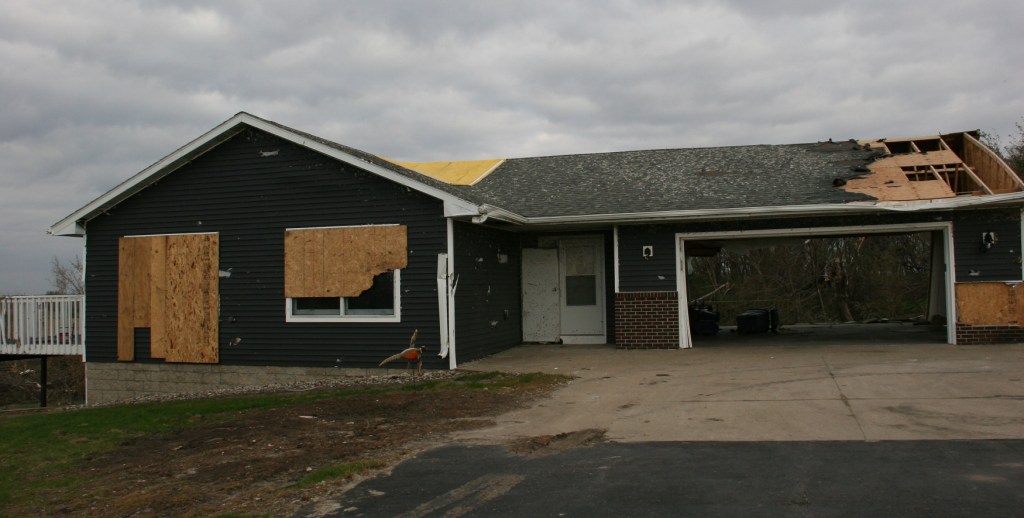
More tornado damage in Morristown.


Do you see a word repeating in this post? That would be help. After a devastating storm like this, help is essential.


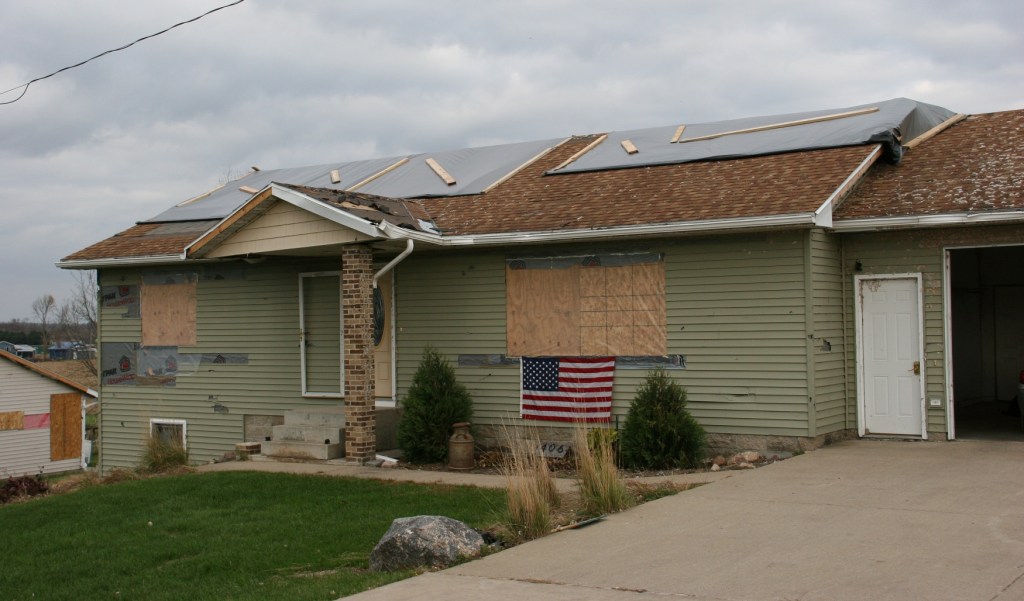
In a nearby neighborhood in Morristown, roof damage.


If you can help, register beginning at 7:30 a.m. Saturday for a two or four-hour shift at volunteer headquarters, the 4-H building at the Rice County Fairgrounds on the north side of Faribault. It seems fitting that the 4-H building serves as the coordination center. Part of the 4-H motto includes pledging hands to larger service.


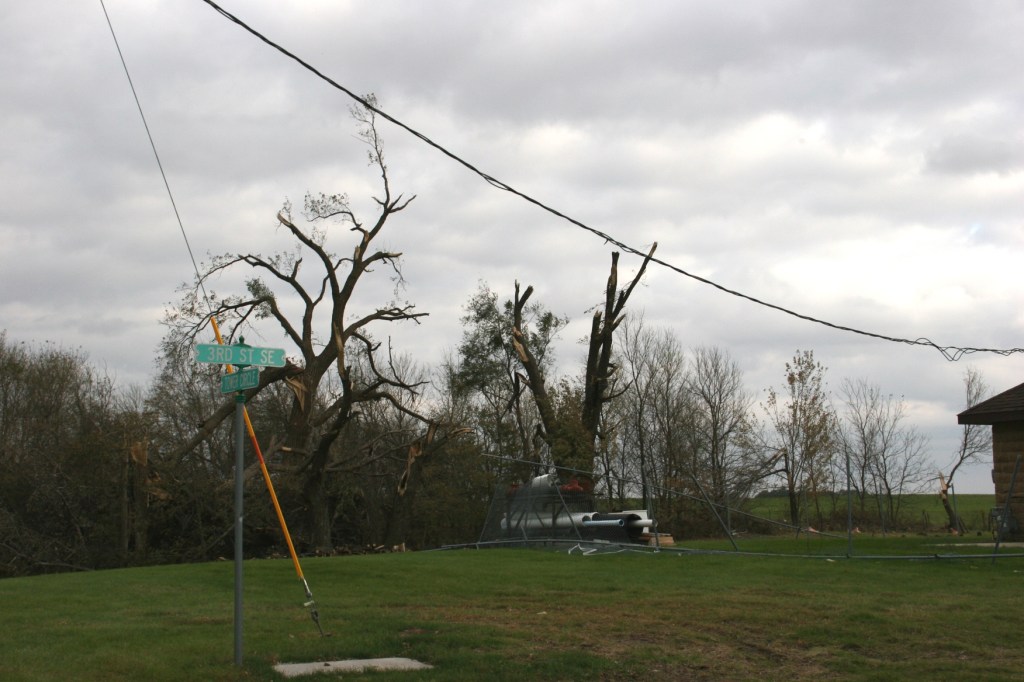
Twisted trees, the telltale signs of a tornado, these near the water tower in Morristown.


Lots of hands are needed to remove trees and brush, pick up debris from farm fields and more.


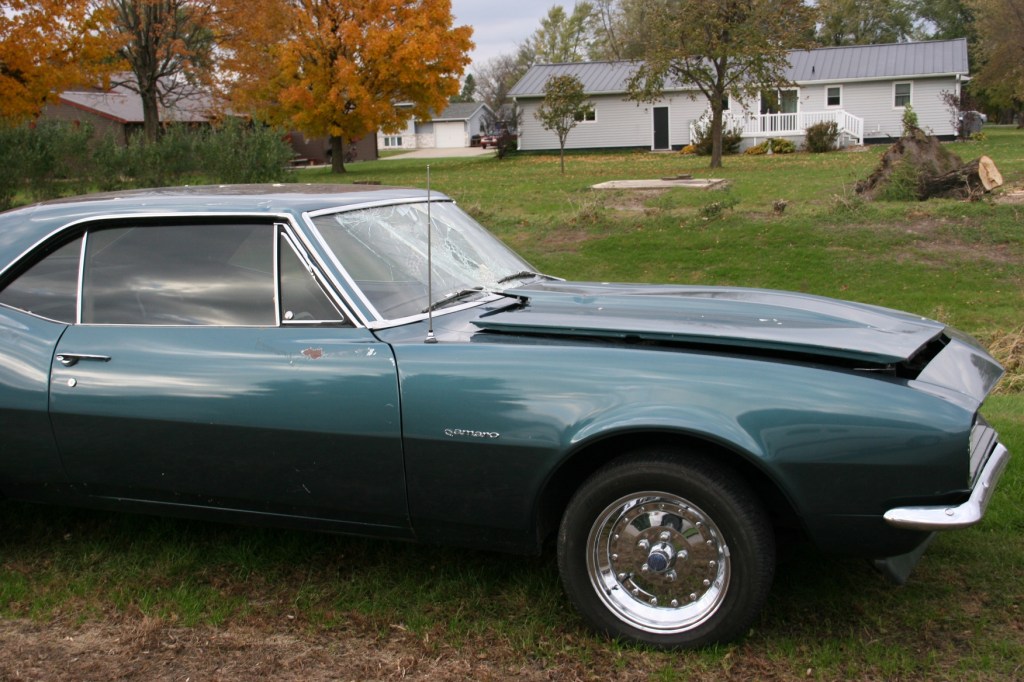
This damaged Camaro is parked in the Morristown neighborhood hard hit by a September 20 tornado.


We’re only an hour from Minneapolis along Interstate 35. We’d welcome you from the metro to help us, your neighbors to the south. We’d welcome you from Iowa to help your neighbors to the north. We’d welcome anyone with the ability to help.


In the countryside near Morristown.


As I’ve been out and about the county during the weeks since the storms, I’ve noted the destruction and all of the work yet to be done. It’s heartbreaking really to see homes destroyed, farm buildings demolished, chunks of metal strewn across fields, and endless uprooted and damaged trees (including in my neighborhood).

Help is definitely needed. But so is the hope that help brings.

I have friends waiting for claims adjusters, contractor estimates and insurance payments. They’re waiting for contractors to replace roofs, siding, rafters, a garage door, fences… It’s stressful and, sometimes, overwhelming. They, and so many others, need to know someone, anyone, cares. And care comes in two ways, via help and hope.

FYI: Click here to read more detailed information about this Saturday’s volunteer clean-up efforts.

© Copyright 2018 Audrey Kletscher Helbling


7:04 PM, June 13, 1968, Tracy, Minnesota June 13, 2018

Filed under: Uncategorized — Audrey Kletscher Helbling @ 7:04 PM
Tags: , , , , , , ,

ELLEN HANEY. Mildred Harnden, Barbara Holbrook. Ellen Morgan. Fred Pilatus. Paul Swanson. Walter Swanson. Nancy Viahos. Otelia Werner.

They ranged in age from two to 84. The same age as my granddaughter and just a few years younger than my mom.

On this evening 50 years ago, the nine died in an F-5 tornado that ravaged the rural farming community of Tracy in my native southwestern Minnesota.

At 7:04 p.m. today, church bells will ring in Tracy, marking the precise time the twister, with wind speeds surpassing 300 mph, roared into town killing those nine residents, injuring 125 and desecrating the landscape.


A residential street, once covered in branches and debris, had to be plowed to allow vehicles to pass. Photo by The Tracy Headlight Herald and courtesy of Scott Thoma, Tracy native and author of Out of the Blue, a book about the Tracy tornado.


All these decades later, the visual memories of that devastation still flash before my eyes in twisted, broken trees and piles of jumbled lumber, once homes. I was an impressionable almost 12-year-old when my dad drove our family 25 miles southwest from our farm to Tracy just days after the storm. You don’t forget a scene like that—such utter and chaotic destruction that a place no longer resembles a town. For that reason I’ve always feared and respected tornadoes.

I’ve written many times about the Tracy tornado. I’d encourage you to read those posts by clicking here.


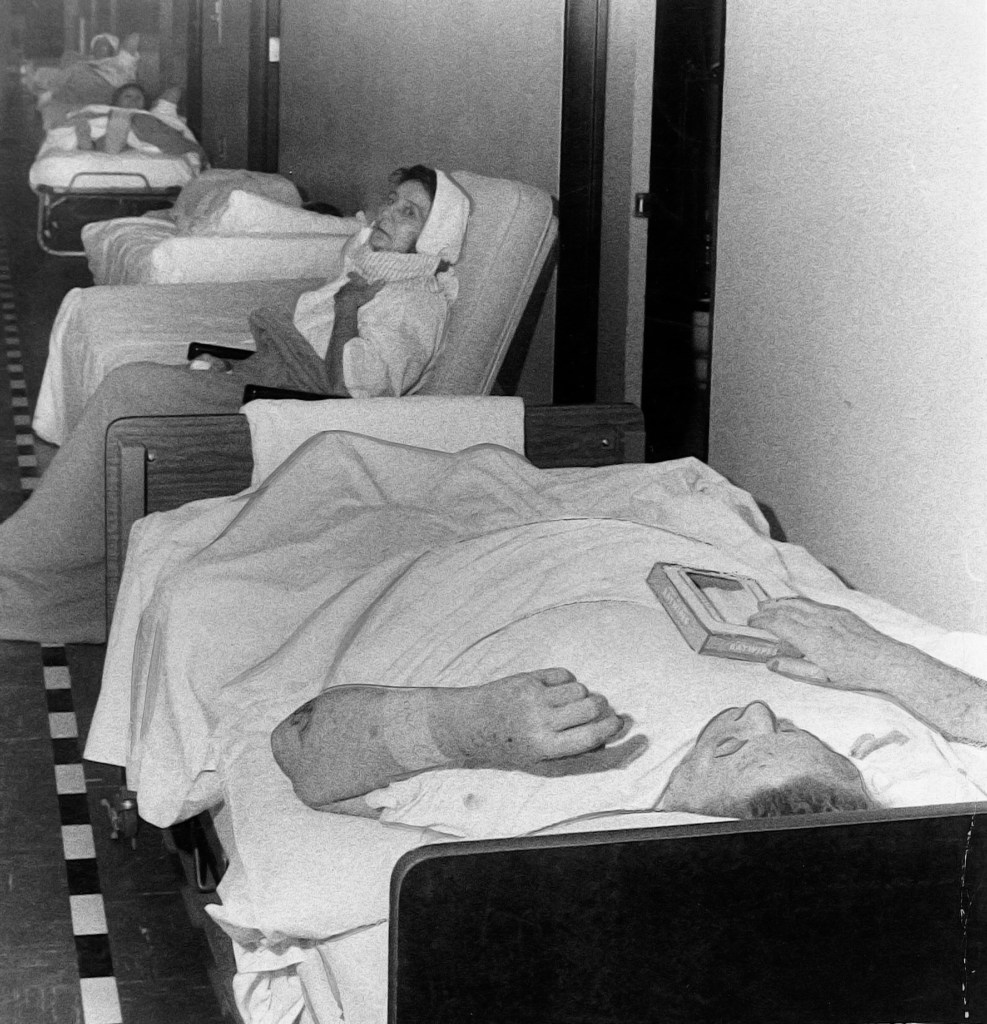
Some of the injured at the Tracy Hospital. Photo by The Tracy Headlight Herald and courtesy of Scott Thoma.


Tracy residents, current and former, remain committed to honoring the memories of those who died in the June 13, 1968, tornado. Last weekend the town held events to commemorate the 50th anniversary. That included tolling of the Lutheran church bell and the release of nine black balloons. A noted Twin Cities meteorologist and storm chaser came to town as did Scott Thoma, hometown boy who authored a book, Out of the Blue, about the tornado. Locals shared tornado stories in words and in photos posted on a memory wall. A Tornado Tree Memorial has long been in place. Selected 2018-2019 Tracy area high school graduates will receive scholarships given in the names of those who died. Monies from the sale of “Never Forget” t-shirts are funding those financial gifts.

Never Forget. Those two words have themed this 50th anniversary remembrance.


Surveying the destruction at Tracy Elementary School, which was destroyed. Photo by The Tracy Headlight Herald and courtesy of Scott Thoma.


Down in Nashville, Tracy native and award-winning songwriter Dennis Morgan, penned, performed and recorded a song, “The Ballad of the Tracy Tornado, 50 Years Later.” Morgan was just 15 and cleaning a calf pen when he and his family spotted the twister from their farm west of town. They raced to get their father from a field where he was cultivating corn before sheltering in a neighbor’s basement. Morgan sent 300 copies of his ballad CD to his hometown with all sale proceeds designated for the Tracy Fire Department and Ambulance Service.


Eric Lantz, 16, of Walnut Grove, shot this award-winning photo of the Tracy tornado as it was leaving town. He often took photos for the Walnut Grove Tribune, owned by his uncle, Everett Lantz. This image by Eric was awarded third place in the 1968 National Newspaper Association contest for best news photo. This copyrighted photo is courtesy of Scott Thoma with the original copyright retained by Eric Lantz.


While researching this post, I also noted an iconic, award-winning tornado photo on the City of Tracy website. The image was taken by then 16-year-old Eric Lantz for the Walnut Grove Tribune. Today that photo takes me back to this small town on the prairie as, at 7:04 pm 50 years later, I schedule this post to publish. I shall never forget…


© Text copyright of Audrey Kletscher Helbling
Images copyrighted as noted.


From sunshine to storm on Labor Day September 4, 2017

Filed under: Uncategorized — Audrey Kletscher Helbling @ 9:55 PM
Tags: , , , , , , , , ,

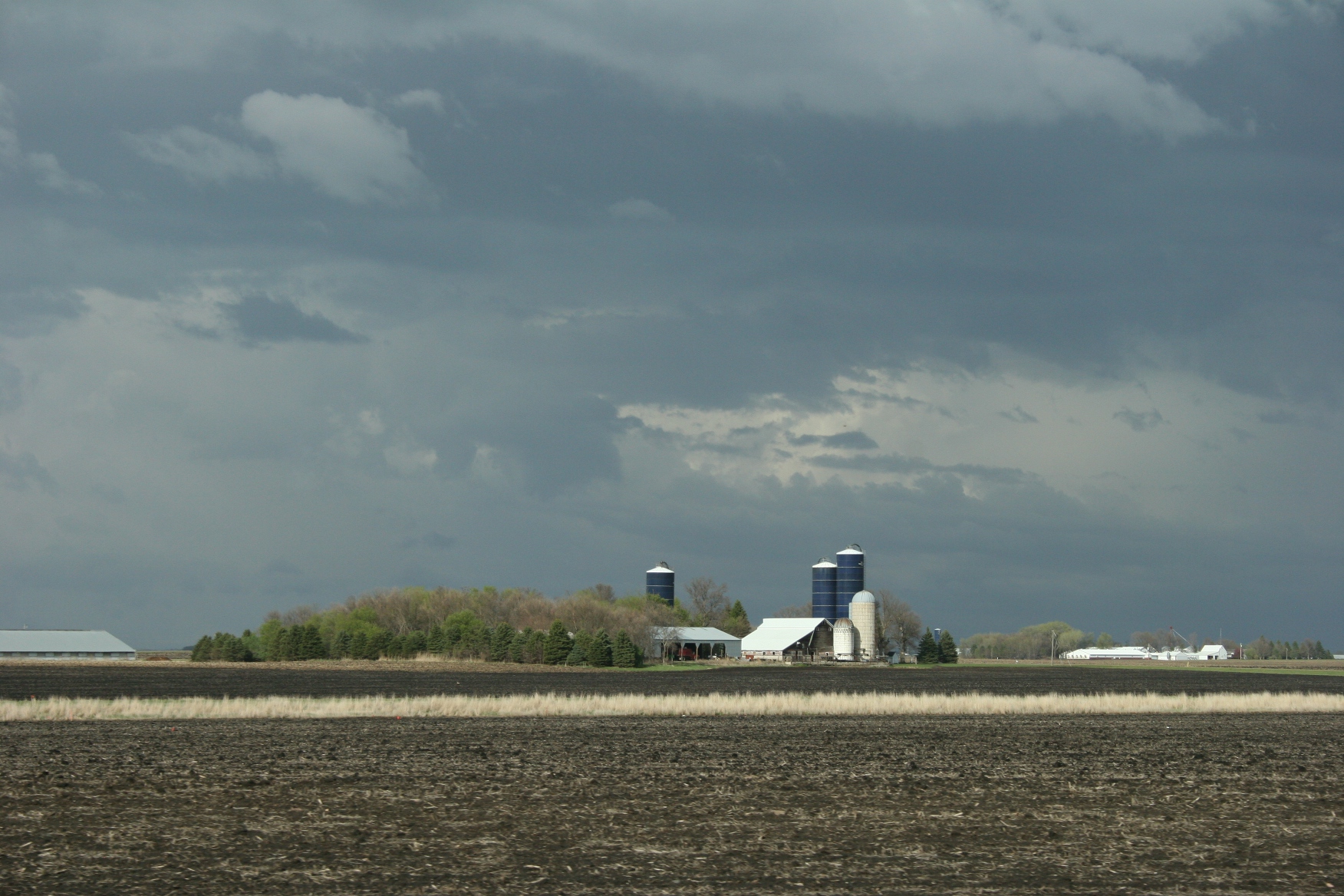
Looking to the north and the Minnesota River Valley just outside Delhi around 4 p.m. Monday.


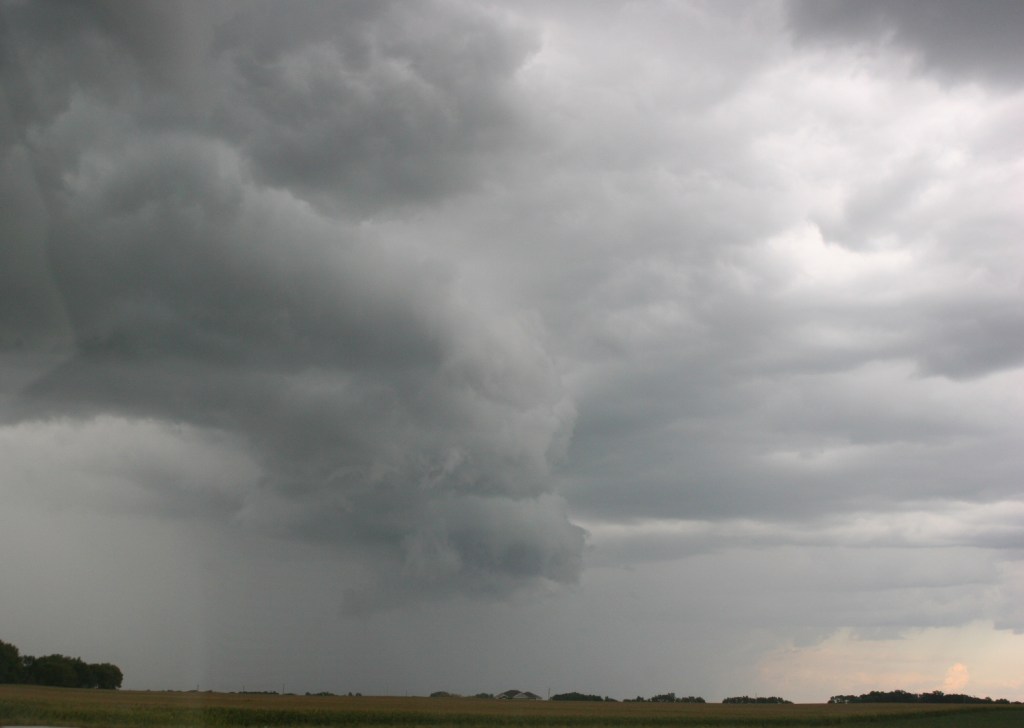
TO THE NORTH, storm clouds bruised the sky late Labor Day afternoon.


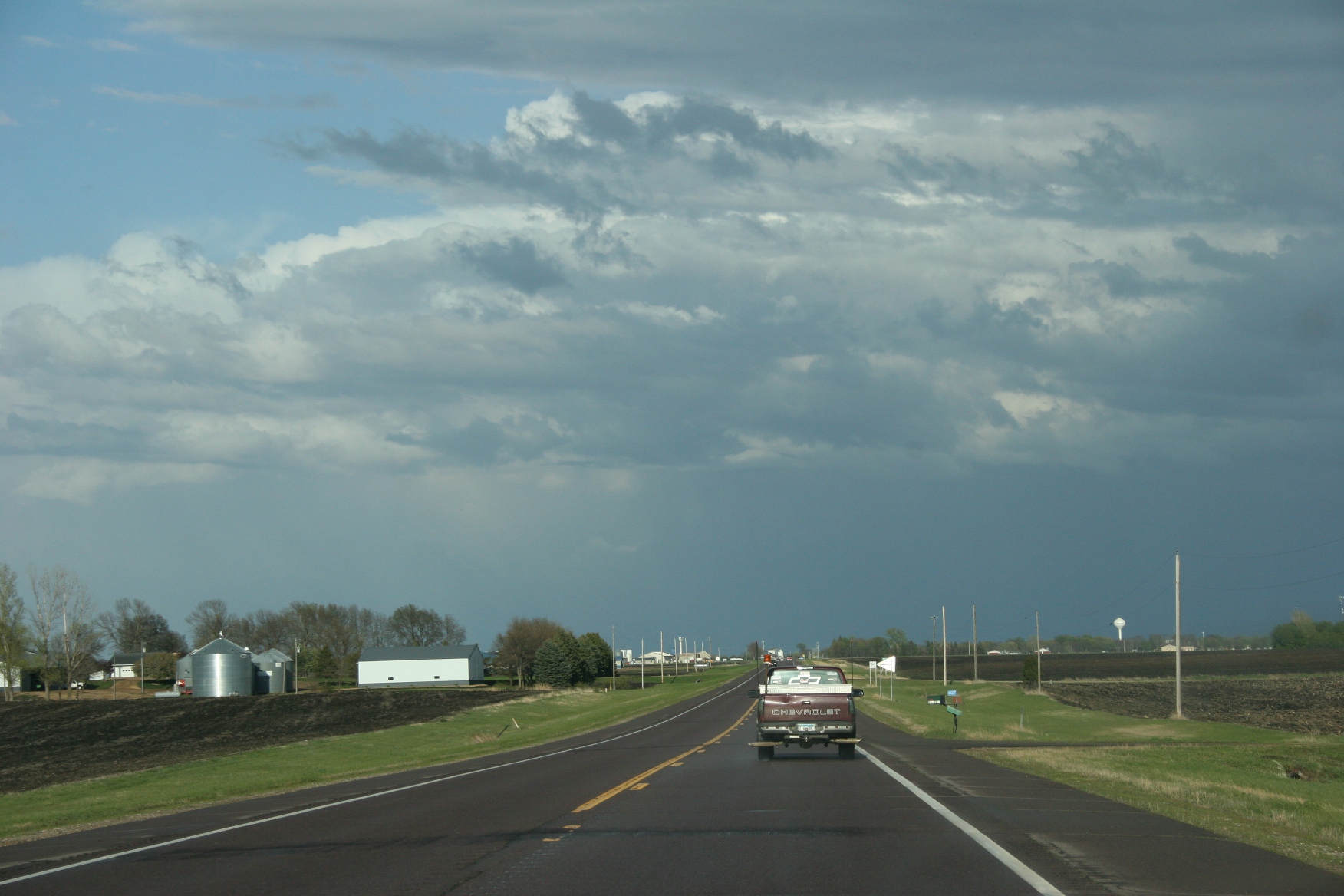
To the east of Delhi heading toward Redwood Falls.


Brooding blue, then masses of grey before the rain gushed near New Ulm as we drove east from the southwestern Minnesota prairie toward home. The rainfall, while heavy at times, seemed nothing more than a September downpour.


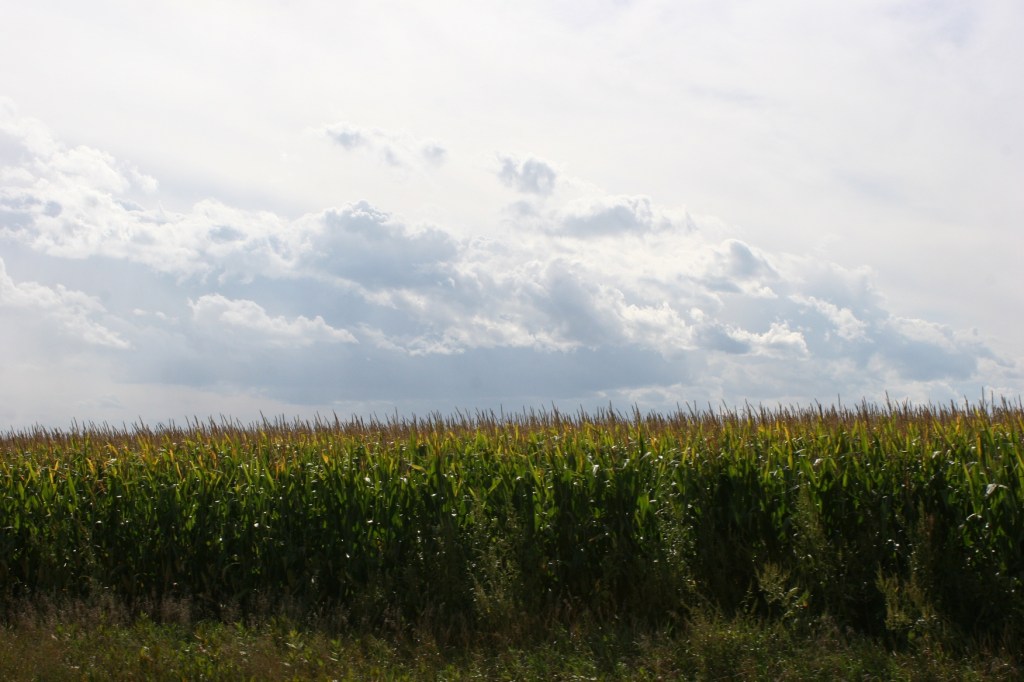
Sky and corn define this area of Minnesota.


Well before we got to Mankato, the rain stopped.


The farther east we drove, the more ominous the clouds appeared.


Yet clouds continued to stack and I began to consider the possibility of severe weather as we entered Waseca, then Steele, counties. Randy switched on the radio to a local station but then turned it off when our son called from Boston. I ended the conversation as we reached Owatonna and exited U.S. Highway 14 onto Interstate 35.

Rounding the entrance ramp, Randy noticed a state highway patrol car and, then, a short distance later, another. By that time the rain had ramped. Wheels hydroplaned. And the wind blew so fierce the van rocked.

“I’m scared,” I said. “I want to get off the interstate.” Randy steered the van off the next exit, much to my relief. But I was still scared. I don’t like storms or strong winds like these of probably 50 mph. I’ve seen the damaging power of tornadoes and straight line winds and I respect them enough to fear them.


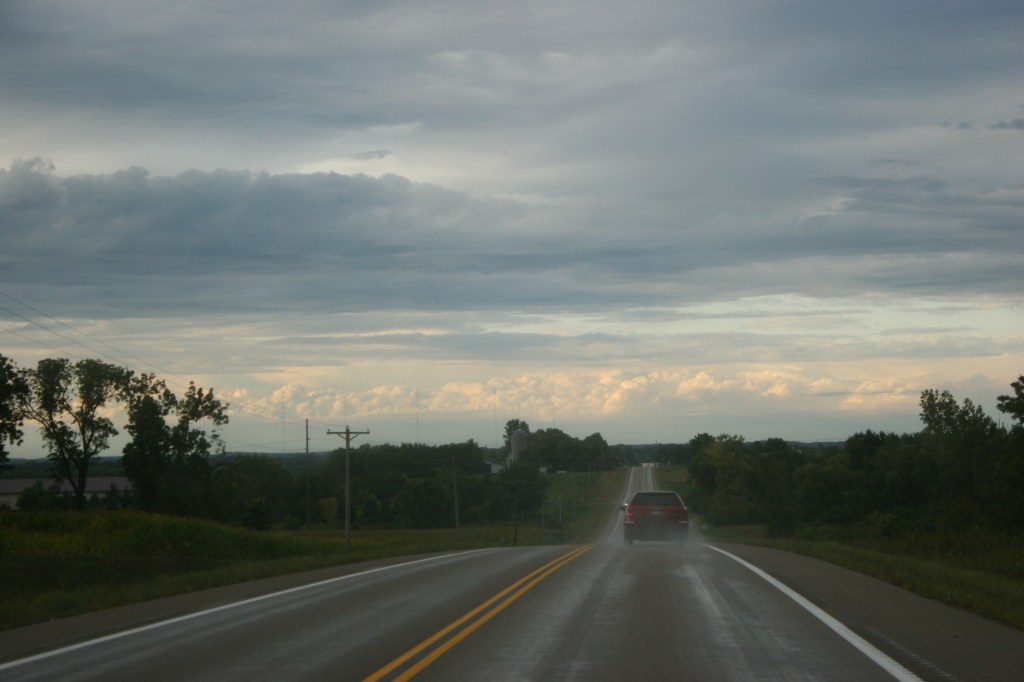
Just a few miles from Faribault on Rice County Road 45.


We drove through part of Owatonna, the wind still whipping trees. The short detour off I-35 proved enough to semi calm me before Randy directed the van out of town along a back county road. I wanted nothing more than to get home to Faribault. I’d had enough of the wind and the rain on an otherwise glorious September day in southern Minnesota.


TELL ME: Have you ever been caught on the roadway in a storm that scared you? I’d like to hear about your experiences.

© Copyright 2017 Audrey Kletscher Helbling


Minnesota tornado memories twist through my mind today May 6, 2015

Filed under: Uncategorized — Audrey Kletscher Helbling @ 5:00 AM
Tags: , , , , , ,

FLASHBACK TO JULY 24, 2010, between 11 p.m. and midnight. We—my husband, Mom and 16-year-old son—are hunkered down in a car along a Redwood County road in rural southwestern Minnesota north of Walnut Grove. We’ve just left an outdoor pageant showcasing excerpts from the stories of Laura Ingalls Wilder.

Now we are on the prairie, in the middle of a storm. Rain rushes in torrential sheets, forcing my husband to pull over and stop. Winds rock the car with ferocity and flatten roadside grass. Flashes of lightning slice through the blackness, revealing swaying trees.

I am terrified, fearful that the wind—which I later learn raged at 70 mph—will toss our car into the ditch, perhaps into water that buffets a section of this roadway. The darkness is so black that I have no idea where we are.

I press my head into the back of the front driver’s seat, praying. I am clutching my son’s sweaty hand.

For 45 minutes we endure the storm. When we arrive at my Mom’s house in my hometown, I am so relieved I could kiss the ground.

I respect storms.

The photo by Eric Lantz illustrates the cover of Scott Thoma's just-published book.

This photo of the Tracy, Minnesota, tornado by Eric Lantz illustrates the cover of Scott Thoma’s book about that tornado. Book cover image courtesy of Scott Thoma.

On June 13, 1968, Minnesota’s first F5 tornado, the most powerful with wind speeds in excess of 300 mph, ravaged the community of Tracy, the next town west of Walnut Grove and some 30 or so miles from the farm where I then lived. That tornado killed nine and left a lasting imprint upon my impressionable young mind.

A residential street, once covered in branches and debris, had to be plowed to allow vehicles to pass. Photo by The Tracy Headlight Herald and courtesy of Scott Thoma, Tracy native and author of Out of the Blue, a book about the Tracy tornado.

A residential street, once covered in branches and debris, had to be plowed to allow vehicles to pass. Photo by The Tracy Headlight Herald and courtesy of Scott Thoma, Tracy native and author of Out of the Blue, a book about the 1968 Tracy tornado.

Decades later a tornado would strike my childhood farm, taking down a silo and tossing silage wagons like toys.

I respect storms.

On March 29, 1998, multiple devastating tornadoes wreaked destruction upon Comfrey in southwestern Minnesota and St. Peter, some 40 miles west of where I now live. A young boy died.

I respect storms.

In July 2011, high winds partially ripped the roof off St. John’s Lutheran Church in Vesta, the church I attended while growing up. That same day, a tornado struck nearby Belview.

I respect storms.

Visitors to the Minnesota History Center in St. Paul can experience the 1965 tornado outbreak in a replica basement of a 1960s rambler. Through a multi-media presentation, that deadly series of tornadoes

Visitors to the Minnesota History Center in St. Paul can experience the May 6, 1965 tornado outbreak in a replica basement of a 1960s rambler. Through a multi-media presentation, visitors can experience those tornadoes in this exhibit titled “Get to the basement.” Those are words I heard as a child and still repeat today whenever tornado warning sirens blare in Faribault.

Today marks 50 years since the biggest tornado outbreak in Twin Cities history. Six twisters—four rated as high as F4 with winds of 166-200 mph—touched down in multiple communities, killing 13 and injuring 683. Interestingly enough, I don’t remember that 1965 tragic tornado event. We may not have had a television yet then. And, at age nine, I likely did not concern myself with something that happened seemingly so far away in “the Cities.” I should have.

I respect storms. Do you?

© Copyright 2015 Audrey Kletscher Helbling
 

Memories of the June 13, 1968, Tracy tornado: “Pain, anguish and blood…” June 12, 2013

HE DOESN’T RECALL the details like it was yesterday.

Yesterday, after all, was 45 years ago.

Eric Lantz, 16, of Walnut Grove, shot this award-winning photo of the Tracy tornado as it was leaving town. He often took photos for the Walnut Grove Tribune, owned by his uncle, Everett Lantz. This image by Eric was awarded third place in the 1968 National Newspaper Association contest for best news photo.

Eric Lantz, then 16, of Walnut Grove, shot this award-winning photo of the Tracy tornado as it was leaving town on the evening of June 13, 1968. He often took photos for the Walnut Grove Tribune, owned by his uncle, Everett Lantz. This image by Eric was awarded third place in the 1968 National Newspaper Association contest for best news photo. Copyrighted photo courtesy of Scott Thoma with original copyright retained by Eric Lantz.

But for Mankato resident Steve Ulmen, certain memories of the aftermath of the deadly Tracy tornado of June 13, 1968, stick with him.

He was only 22 then, a college student and a senior member of the Mankato Civil Air Patrol squadron dispatched on a search and rescue mission to Tracy 90 miles away in southwestern Minnesota. They were the first responders, handling crisis management until other local and state officials arrived.

A residential street, once covered in branches and debris, had to be plowed to allow vehicles to pass. Photo by The Tracy Headlight Herald and courtesy of Scott Thoma, Tracy native and author of Out of the Blue, a book about the Tracy tornado.

A residential street, once covered in branches and debris, had to be plowed to allow vehicles to pass. Photo by The Tracy Headlight Herald and courtesy of Scott Thoma, Tracy native and author of Out of the Blue, a book about the Tracy tornado.

Ulmen remembers entering Tracy, feeling overcome by the sheer devastation. The F5 tornado, with wind speeds surpassing 300 mph, killed nine and injured 125. Destruction was massive.

“It looked like we were driving into a dump site, or a burned out slum, or what I would imagine a bombed out city would have looked like after World War II,” Ulmen recalls.

With experience as a hospital orderly, he was assigned to the emergency room at the Tracy hospital—removing victims from ambulances and placing them on gurneys and moving others around.

Some of the injured at the Tracy Hospital. Photo by The Tracy Headlight Herald and courtesy of Scott Thoma.

Some of the injured at the Tracy Hospital. Photo by The Tracy Headlight Herald and courtesy of Scott Thoma.

“There were victims coming in and lying on stretchers even in the hallways, as it was a small hospital,” Ulmen remembers. “Some were suffering from fractures, some from cuts and scratches. All were in one degree of shock or another and needed assistance and someone to talk to them and try and calm them down.

“There was pain, anguish, and blood, that I remember. As long as casualties kept coming in, we stayed on duty.”

The CAP squadron, comprised of cadets (high school age, 18 and under) to supervising senior members, volunteered for several days in the ravaged community. Among other duties, the patrol established a communications system based out of “an old military surplus deuce and a half 4-wheel drive vehicle” equipped with “radios of every description.”

Surveying the destruction at Tracy Elementary School, which was destroyed. Photo by The Tracy Headlight Herald and courtesy of Scott Thoma.

Surveying the destruction at Tracy Elementary School, which was destroyed. Photo by The Tracy Headlight Herald and courtesy of Scott Thoma.

Ulmen remembers the satisfaction he felt in helping those in distress.

Among his memories, Ulmen recalls a particular incident, one he still wonders about now 45 years later. “I was driving either my vehicle or an emergency vehicle, I forget which, and I went through an intersection. The stop sign was bent and twisted from the tornado and wasn’t pointing at the street I was on; it looked like it was pointed at another street. Nevertheless, the local cop saw me run the stop sign, pulled me over, and gave me a ticket,” Ulmen says. “Some thanks for coming all the way from Mankato and volunteering my service to a community in distress. My superiors were not impressed with this either, but I ended up having to pay the ticket as I recall.

“It is funny what you remember from 45 years ago.”

FYI: The community of Tracy is marking the 45-year anniversary of the deadly tornado with special events on Thursday, June 13. Click here to learn more in a post published here several days ago.

To learn more about Steve Ulmen, who served with the CAP for 17 years until he was about 27, click here. Ulmen, who is retired after 34 years of working in the corrections field, is also a published writer. He’s written a western screenplay, later rewritten and published as his first western novel, Toby Ryker. He then published a sequel, Deadwood Days. His most recent works include a book of historical fiction, Blood on the Prairie—A Novel of the Sioux Uprising (actually the first book in the Toby Ryker trilogy), and Bad Moon Arising, a fictional story based on his experiences as the first probation officer in LeSueur County beginning in 1969.

Ulmen and his wife of 42 years, Ida Mae, live in Mankato, his hometown.

© Copyright 2013 Audrey Kletscher Helbling
 

Remembering the June 13, 1968, killer tornado in Tracy, Minnesota June 10, 2013

Eric Lantz, 16, of Walnut Grove, shot this award-winning photo of the Tracy tornado as it was leaving town. He often took photos for the Walnut Grove Tribune, owned by his uncle, Everett Lantz. This image by Eric was awarded third place in the 1968 National Newspaper Association contest for best news photo.

Eric Lantz, then 16, of Walnut Grove, shot this award-winning photo of the Tracy tornado as it was leaving town on June 13, 1968. He often took photos for the Walnut Grove Tribune, owned by his uncle, Everett Lantz. This image by Lantz was awarded third place in the 1968 National Newspaper Association contest for best news photo. Copyrighted photo is courtesy of Scott Thoma with original copyright retained by Lantz.

TORNADO WARNING. Those two weather words, more than any other, cause me to panic. For good reason.

I was not quite twelve when an F5 tornado, with wind speeds surpassing 300 mph, struck the nearby community of Tracy on June 13, 1968. The twister left nine dead, 125 injured and buildings demolished.

I remember, a day or two afterward, our family piling into our Chevy for the 25-mile drive through southwestern Minnesota farm country to view the devastation. Twisted trees. Flattened homes and businesses. Boxcars haphazardly tossed.

This photo by the Tracy Headlight Herald shows a damaged boat and overturned car sitting atop the rubble after the Tracy tornado.

This photo by the Tracy Headlight Herald shows a damaged boat and overturned car sitting atop the rubble after the Tracy tornado. Photo courtesy of Scott Thoma.

A catastrophic scene like that impresses upon a young mind a deep fear and respect for the power of a tornado.

Added to the visual impact was my father’s spotting of the tornado from our farm those many miles to the north and east as he did the evening milking. He thought the twister was much nearer. Decades later, a less severe tornado would hit the farm place, and the community, where I grew up. Two summers ago, severe winds also ravaged my hometown of Vesta.

This Thursday, the residents of Tracy and others will gather to commemorate the 45th anniversary of the Tracy tornado touchdown.

The photo by Eric Lantz illustrates the cover of Scott Thoma's just-published book.

The photo by Eric Lantz illustrates the cover of Scott Thoma’s book.

Tracy native Scott Thoma of Willmar, who wrote Out of the Blue, a book about the Tracy tornado, is among those on the Tracy Tornado Memorial Committee and the coordinator for Thursday’s program. The June 13 event will feature an evening of remembrance and fundraising and a coming together of community.

At 7:03 p.m., the moment the killer twister touched down in Tracy, attendees will honor the nine who died with a moment of silence in Central Park. Thoma will read their names and a bell will toll for each: Ella Haney, 84; Mildred Harnden, 75; Barbara Holbrook, 50; Ellen Morgan, 75; Fred Pilatus, 71; Paul Swanson, 60; Walter Swanson, 47; Nancy Viahos, 2; and Otelia Werner, 75.

Longtime resident, the Rev. Homer Dobson, will “say a few words,” Thoma says.

A photographer for the Tracy Headlight Herald captured this scene at the demolished Tracy Elementary School.

A photographer for the Tracy Headlight Herald captured this scene at the demolished Tracy Elementary School. Photo courtesy of Scott Thoma.

I expect the commemoration will be an emotional event, and rightly so. Even with the passage of nearly five decades, grief lingers. And each time a tornado devastates a community and lives are lost, such as in Moore, Oklahoma (struck, like Tracy, by an F5), memories resurface, fear rises.

Besides remembering the nine, the community will continue raising funds for a new tornado memorial to replace the one falling into disrepair. Over $10,000 have been raised with about $5,000 more needed for the six-foot high black granite monument that will sit along U.S. Highway 14 near the “Tornado Tree” sculpture. That steel tree, built in 1989, replicates the original tornado tree, a gnarled elm that withstood the forces of the twister.

An artist's rendering of the tornado monument. The words on the bench will read "Tracy Tornado Monument" and an engraving of Eric Lantz's tornado photo will be etched below the clock and above the story. Image courtesy of Scott Thoma.

An artist’s rendering of the tornado monument. The words on the bench will read “Tracy Tornado Monument” and an engraving of Eric Lantz’s tornado photo will be etched below the clock and above the story. Image courtesy of Scott Thoma.

The new three-sided marker will feature the story of the tornado and a well-known photo by Eric Lantz etched on the front, according to Thoma. Names and ages of the tornado victims will be listed on another side. And on the back side, visitors will find a stone bench.

On all three sides, a clock will be etched into the stone, stopped at 7:03 p.m., the time the tornado reached the Tracy city limits.

The memorial is expected to be done this summer and unveiled during Boxcar Days, an annual community celebration, on September 2.

In the meantime, there’s still memorial money to be raised and Thoma is doing his part, donating $3 to the monument fund for every book sold. He is selling Out of the Blue from 11 a.m. – 3 p.m. Thursday at the Tornado Tree Memorial along Highway 14. Root beer floats will also be available with all proceeds directed to the memorial.

Thoma will talk about the tornado and his book at 4 p.m. at the Tracy Library. I read and reviewed Out of the Blue a year ago and you can read that review by clicking here.

As is customary with most small town events, there’s a meal involved in the Tracy tornado anniversary. Folks will gather at the fire hall from 5 p.m. – 8 p.m. for a “freewill donation potluck supper,” Thoma says. The Tracy Community Band plays at 7 p.m. across the street in Central Park. And at 8 p.m., somewhere in town, the Tracy Library will show the movie Twister.

If you’re interested in buying a copy of Out of the Blue and/or donating to the Tracy Tornado Memorial fund, email Thoma at scott@thomabooks.com or call (320) 894-6007.

You can also order his book online by clicking here.

If you lived through the Tracy tornado or have any stories to share about the storm, please submit a comment. I’d like to hear from you. Other comments are also welcome.

© Copyright 2013 Audrey Kletscher Helbling
 

Tornado threat ends my mom’s 80th birthday party April 16, 2012

Filed under: Uncategorized — Audrey Kletscher Helbling @ 9:18 AM
Tags: , , , , , , ,

“EVERYBODY, MAY I HAVE your attention, please. There’s been a tornado warning issued for Lyon County. So if you would like to leave, you may want to do so now.”

With that announcement from my middle brother, guests celebrating at an 80th birthday party open house for my mother on Sunday afternoon in the Vesta Community Hall scattered, scurrying to their vehicles as gray clouds threatened in the neighboring county to the west.

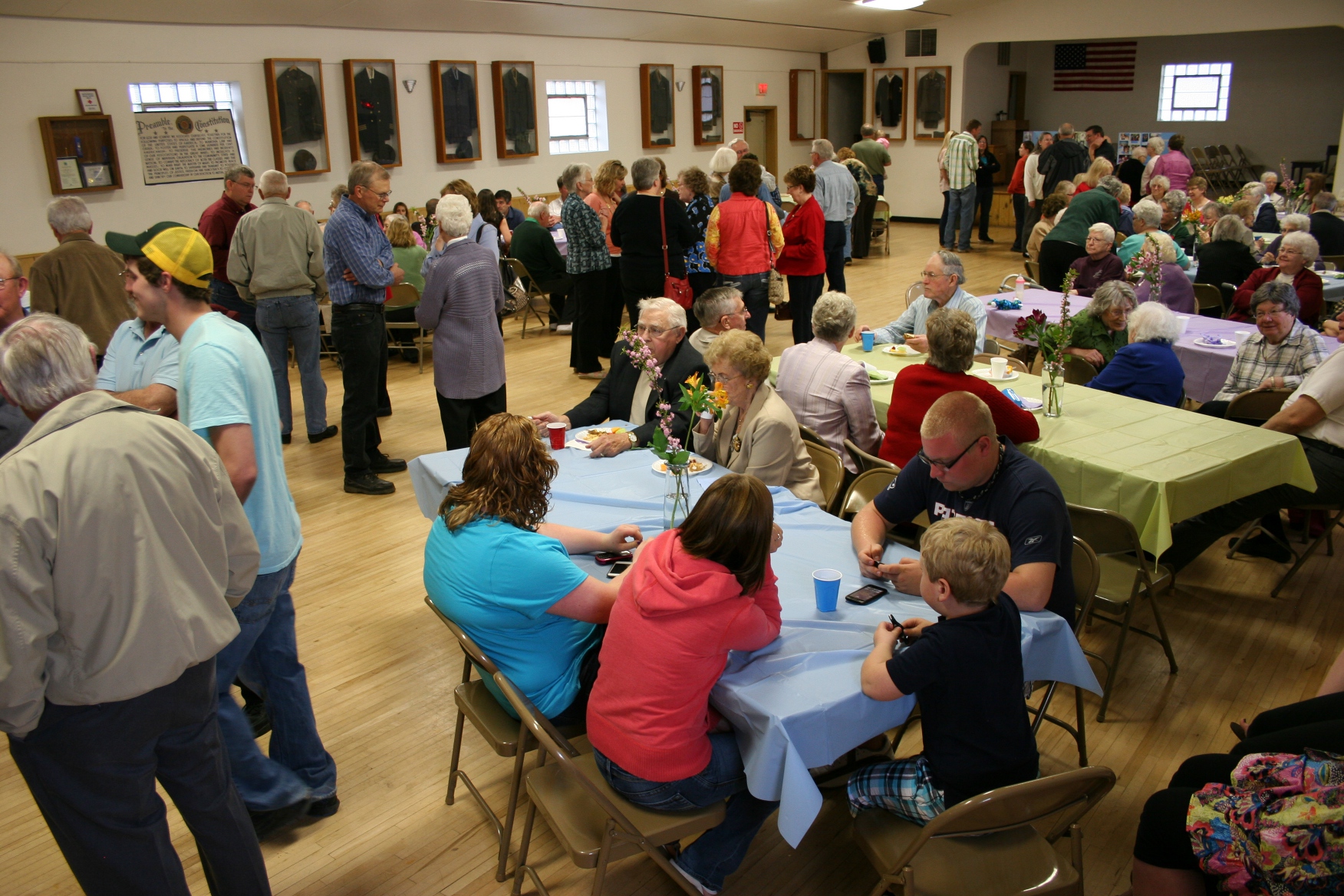
Some of the guests gathered in the Vesta Community Hall for my mom's 80th birthday party.

It had been a weekend of severe weather, with tornadoes devastating parts of Oklahoma, Kansas and Iowa, killing five. Now the remnants of that powerful storm were moving into southwestern Minnesota.

Everyone at the party—except a cousin who joked that maybe my brother was pulling a ruse to get guests to leave—was taking the news with serious concern in a community which last July was struck by devastating 90 – 100 mph winds. Others in attendance live on farms that were hit by a tornado in that same 2011 storm system. And at least one guest was from St. Peter, devastated in a 1998 tornado.

My brother’s announcement around 3:30 p.m. brought an abrupt end to a gathering of several hundred in the old community hall in a town of around 300, where, if you had to seek immediate shelter, you would need to flee to homes or huddle in bathrooms at the hall. All guests chose to leave, some plotting routes home based on the approaching storm.

One—my eldest daughter—would later find herself in the heart of the fast-moving storm as she drove along U.S. Highway 212 back to Minneapolis. My youngest brother, who also typically drives 212, back to Woodbury, changed his route after seeing a wall cloud to the north and being advised by a policeman at a Redwood Falls gas station to follow Minnesota Highway 19. That would keep him to the south of the storm.

My husband and I, along with our son, left Vesta perhaps an hour later than our daughter, with my youngest brother probably a half hour behind her.

We had no idea they were driving toward the storm. Until we switched on the radio to a New Ulm station which, for the next hour, broadcast repeated tornado warnings for the Brownton area, a small town along U.S. Highway 212. At the first announcement, I realized our eldest may be precisely in the path of the tornado.

With sporadic cell phone coverage, it took me awhile to reach and warn her of her of the impending danger.

Eventually we connected. My daughter was fully aware, having seen a wall cloud and driven through hail. She didn’t know if she had passed Browntown; she had just driven by Glencoe. Unable to find a road map anywhere in our van, I tried to visualize the string of communities along U.S. 212. I told her I thought she was east of Brownton. Later, after stopping at a New Ulm gas station to view a Minnesota map, I confirmed her location to the east of the storm.

Then there was my youngest brother to worry about, again, as another tornado warning had been issued, this one for Sibley County. Highway 19 would take him right into that county. Fortunately, that storm would stay some five miles to the north of his route. I didn’t even try to phone him again as I knew he was listening to the radio and was alert to the situation.

And so the 2 1/2-hour drive back to Faribault for us progressed as we listened to several radio stations, catching the latest weather updates, our eyes shifting often to the north, to those dark, dark skies under which our loved ones were traveling.

When our daughter phoned to say she’d nearly reached her Minneapolis home, I finally relaxed and the radio was switched off as we drove into heavy rain under dark, but not foreboding, clouds.

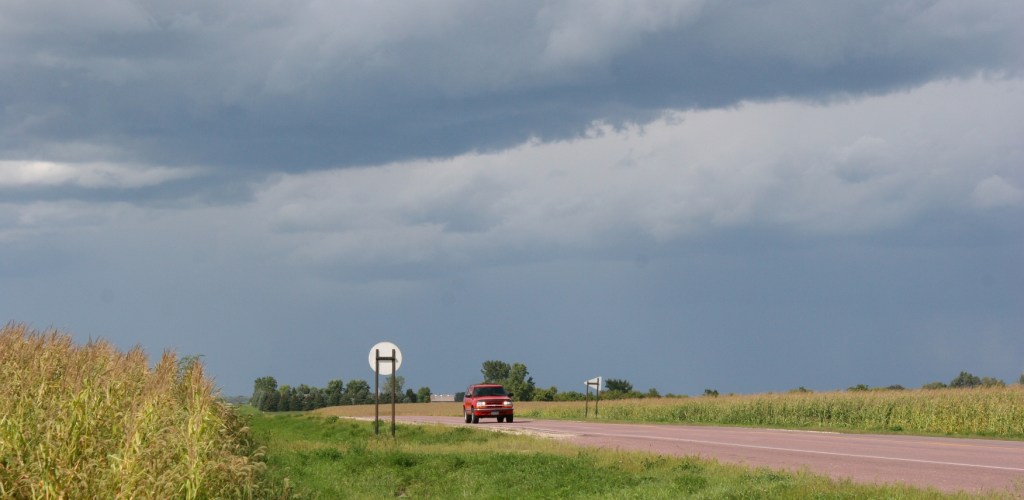
Looking to the north as we drove east back to Faribault.

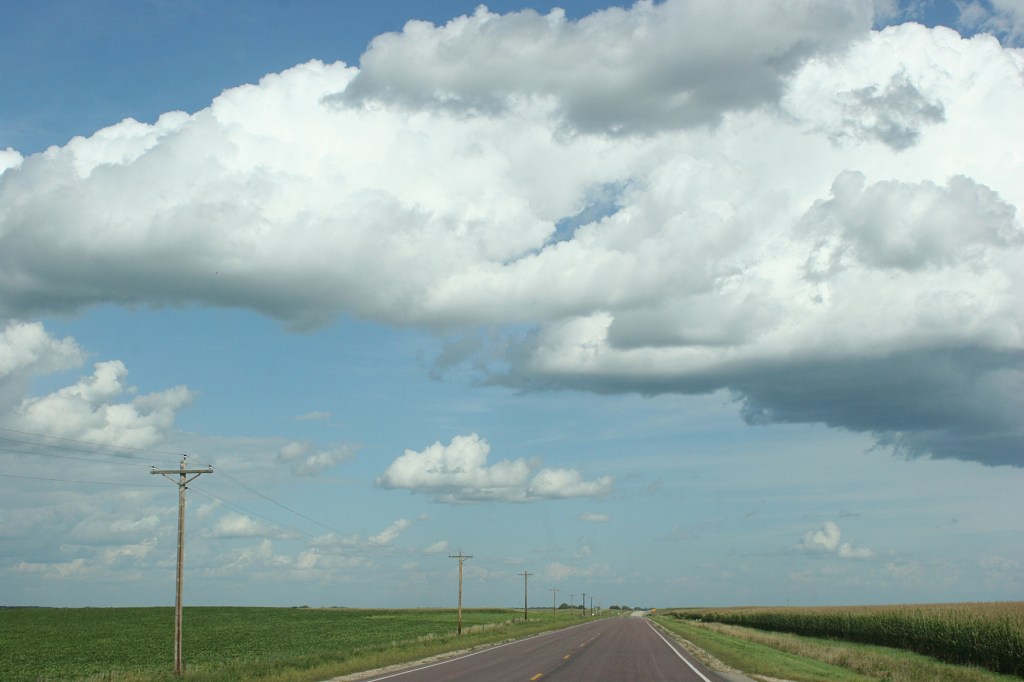
On U.S. Highway 14 near Nicollet, just to the south of Sibley County.

FYI: I have not checked many media outlets yet to determine whether any of the areas in the tornado warning areas experienced tornado touch-downs. However, from initial reports I heard last night, Minnesota came out relatively unscathed. Tornado sirens never did sound in my hometown of Vesta. But still, we were prepared with the warning just to the west in next-door Lyon County.

Copyright 2012 Audrey Kletscher Helbling