Minnesota Prairie Roots

Writing and photography by Audrey Kletscher Helbling

Historic “Wrapped in Love and Glory” honors women of the mill & more in Faribault December 12, 2016

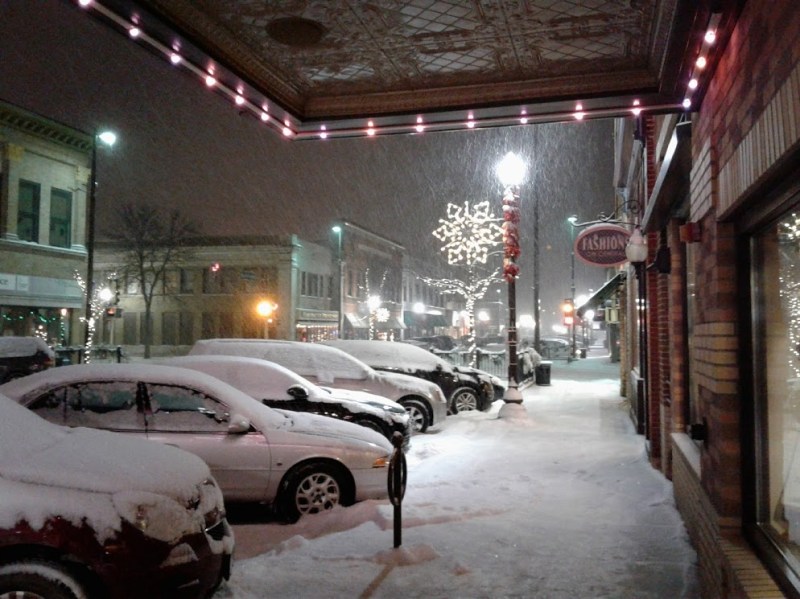
The scene outside the Paradise Center for the Arts during intermission of "Wrapped in Love and Glory."

The scene outside the Paradise Center for the Arts during intermission of “Wrapped in Love and Glory.” I snapped this cell phone photo of Central Avenue while standing under the theater marquee.

SNUGGED INSIDE FARIBAULT’S historic Paradise Center for the Arts on a cold and snowy Saturday evening, I awaited the world premiere of “Wrapped in Love and Glory” penned by native son and playwright Michael Lambert.

A promotional poster hangs outside the Paradise.

A promotional poster hangs behind glass outside the Paradise.

My expectations—in performance and in the storyline—ran high. It takes a confident writer to pen a play that focuses on local history. And it takes an equally confident cast to perform it before a hometown crowd. Lambert and The Merlin Players did Faribault proud in presenting the stories of local women who wove blankets for American troops at the historic Faribault Woolen Mill during WW II. The mill, still in existence today, continues to weave blankets for the military.
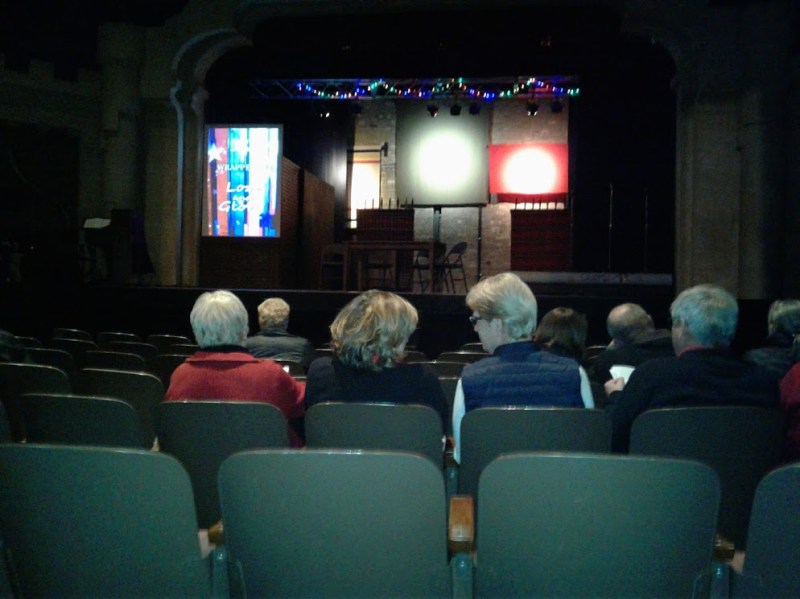
Before the play opened, I took this cell phone image of the set showing Woolen Mill blankets suspended with the video screen to the left.

Before the play opened, I took this cell phone image of the set showing Woolen Mill blankets suspended with the video screen to the left. Lighting was insufficient to truly reflect the simplistic beauty of the display.

Against a backdrop of mill blankets from Lambert’s personal collection, narrators, actresses and singers took the stage of this intimate theatre for the two-hour production. This playwright mixed music of the era, like “Boogie Woogie Bugle Boy,” “Blue Skies,” “I’ll Be Home for Christmas” and 23 other songs in to the narrative. The music, performed primarily by a trio of women in Andrews Sisters style—think synchronized hand motions, swaying and tipping microphones on stands—with the loveliest of voices, ranged from sweet crooning to rhythmic.

Music and dialogue complemented each other as did video clips of actors (soldiers) reading letters written to the women back home. Authentic letters that Lambert gathered from within the Faribault community. Letters with endearments like darling, sweetheart, dearest.

Video stills also featured newspaper headlines, photos and more, adding to the historic context.

Some of the cast members of "Wrapped in Love & Glory" pose inside the Faribault Woolen Mill. Photo by Edward Brown.

Some of the cast members of “Wrapped in Love & Glory” pose inside the Faribault Woolen Mill. Photo by Edward Brown and courtesy of The Merlin Players.

Lambert wove a lot of history in to “Wrapped in Love and Glory.” History of WW II. And then local history. Of the Faribault Woolen Mill, which contracted with the U.S. government to supply 250,000 drab olive Army blankets and sleeping bags for troops. Of the Cannon River, along which the mill sits. Of WW II pilot and WASP Betty Wall (Elizabeth Strohfus) presented with the Congressional Gold Medal in 2010. Of Heisman Trophy winner Bruce Smith. Of German prisoners-of-war working at the Faribault Canning Company. All flowed in the storyline, along with familiar names like Klemer and Caron.

It was a story that made me consider the dedication of the hardworking women who wove those blankets for American soldiers serving in the cold mountains of Italy, storming the beach at Normandy, or training in places like Chicago. The women who exchanged letters with those soldiers. The women who relied on each other and their inner strength during a time of war and of separation. The women who kept America running.
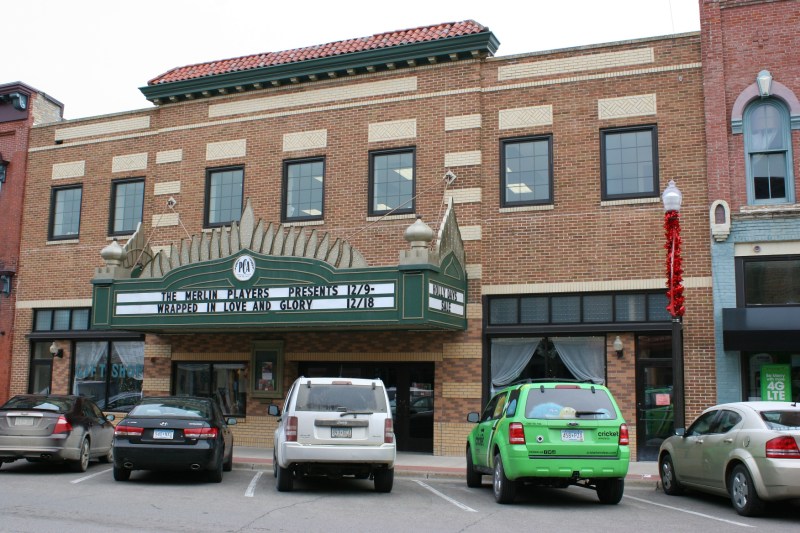
On Saturday morning, before snow began falling, I took this photo of the historic Paradise Center for the Arts.

On Saturday morning, before snow began falling, I took this photo of the historic Paradise Center for the Arts.

FYI: Additional performances of “Wrapped in Love and Glory” are set for 7:30 p.m. December 15, 16 and 17 and at 2 p.m. December 18 at the Paradise Center for the Arts, 321 Central Avenue, in historic downtown Faribault. Call (507) 332-7372 for ticket information. Or click here.

© Copyright 2016 Audrey Kletscher Helbling


Experience holiday festivities this weekend in Faribault December 8, 2016

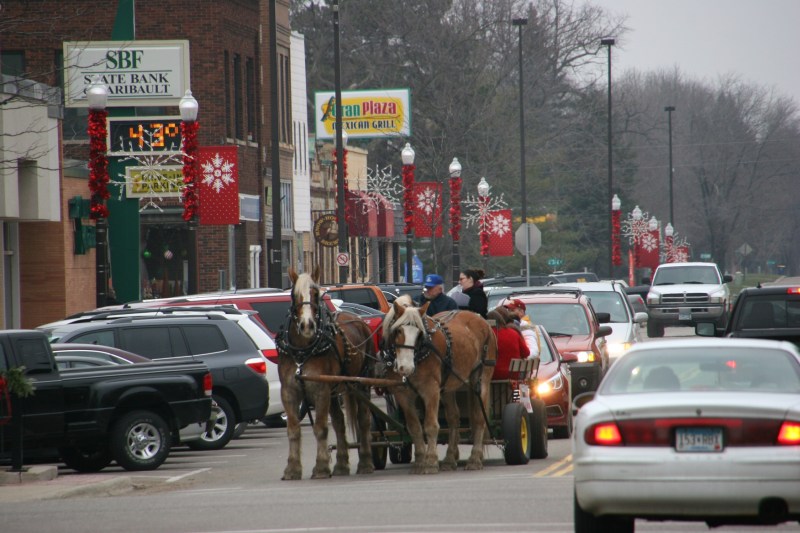
Mike Fuchs guides his team or horses southbound on Central Avenue in historic downtown Faribault late Saturday afternoon.

A scene along Central Avenue during the 2015 holiday season. Minnesota Prairie Roots file photo.

THE SPIRIT OF THE SEASON blankets Faribault this weekend with holiday events ranging from a figure skating show to a kids’ Christmas party to concerts to a home-grown theatrical production and much more.

Dark wood and stone define the cathedral interior.

Dark wood and stone define the sanctuary at The Cathedral of Our Merciful Saviour. Minnesota Prairie Roots file photo.

When I started jotting a list of events, even I was astounded. I could schedule my entire weekend around enjoying myself rather than focusing on holiday prep. If I wasn’t donating blood on Friday evening, I could kick my weekend off by attending Handel’s Messiah, presented at 7:30 p.m. by the Cannon Valley Regional Orchestra at The Cathedral of Our Merciful Saviour, 515 Second Avenue Northwest.

Some of the cast members of "Wrapped in Love & Glory" pose inside the Faribault Woolen Mill. Photo by Edward Brown.

Some of the cast members of “Wrapped in Love & Glory” pose inside the Faribault Woolen Mill. Photo by Edward Brown and courtesy of The Merlin Players.

I already have tickets for The Merlin Players performance of “Wrapped in Love & Glory,” an original play written by Faribault native Michael Lambert. “The show weaves together the letters, history and music of the women working in the Faribault Woolen Mill to make blankets for the troops fighting overseas during WW II,” according to a TMP press release. Twenty-six songs from that era are incorporated in to the production.

The show opens at 7:30 p.m. Friday at the Paradise Center for the Arts, 321 Central Avenue, with additional evening performances set for December 10 and 15 – 17. Sunday shows are at 2 p.m. on December 11 and 18. Click here for more information or call (507) 332-7372.

This jar of veggies carries the perfect name, "Summer in a Jar."

Canned produce sold at the summer Faribault Farmer’s Market. Minnesota Prairie Roots file photo.

Also at the Paradise are the creations of area artists. Perfect for holiday giving. Additionally, from 1 – 4 p.m. Saturday, the Winter Farmers’ Market opens inside the Paradise with local vendors selling everything from eggs to maple syrup to soap, baked goods and more.

Historic buildings in downtown Faribault are decorated for the holiday season.

Historic downtown Faribault. Minnesota Prairie Roots file photo.

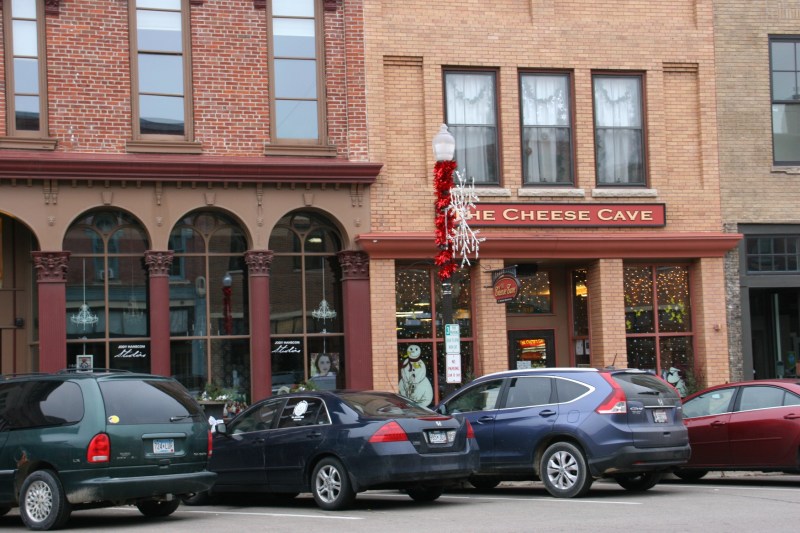
Historic downtown Faribault will be one busy place Saturday as Faribault Main Street also hosts its second annual Holiday Snack Contest from noon – 3 p.m. While you shop, you can sample tasty treats at local businesses. All through-out the downtown, local shopkeepers (and even a pop-up shop) offer a variety of goods—shoes, home décor, antiques, electronics, specialty gifts, baked goods, cheese

We wanted to sample all of the beers on tap, so we ordered a flight.

A sampling of flight offerings at F-Town. Minnesota Prairie Roots file photo.

And let’s not forget the beer. Drink it on-site at F-Town Brewing, just off Central, or purchase a growler to take home. Or check out a local liquor store for F-Town beers.

The cast, with the little Snowflakes on the right as audience favorites.

A scene from the 2012 ice skating show at Shattuck. Minnesota Prairie Roots file photo.

If you’re out and about with your family, drive to Faribault’s east side for Shattuck-St. Mary’s School’s annual Christmas Walk. The free community event begins with a “Christmas Spectacular on Ice” show at noon in the SSM Sports Complex. Festivities continue thereafter until 4 p.m. on the Shattuck campus with musical performances; activities for kids in Morgan Refectory; visits with Santa and Mrs. Claus (from 1:30 – 4 p.m.) in The Inn; and a 3:30 p.m. holiday concert in The Chapel of the Good Shepherd.

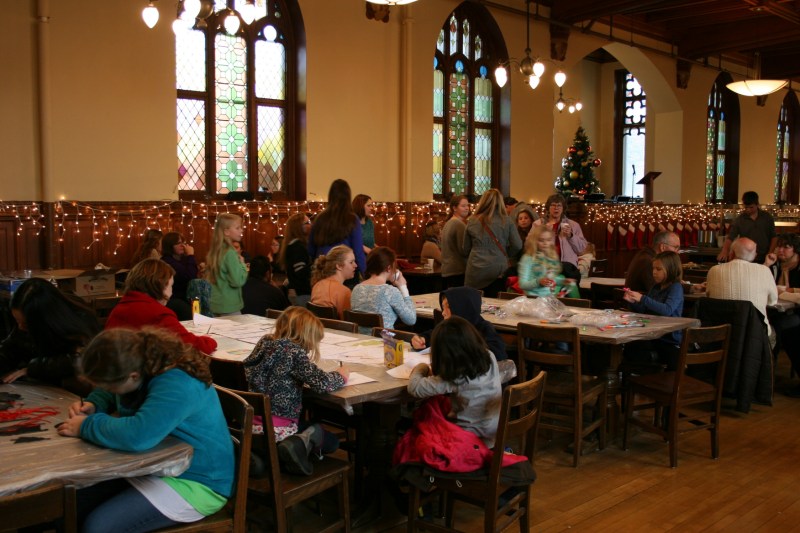
Kids worked on holiday crafts in the dining hall.

Kids worked on holiday crafts in the dining hall at Shattuck. Minnesota Prairie Roots file photo.

On Sunday, there’s more family-oriented fun, this time at the Faribault Eagles, 2027 Grant Street, as the club hosts its annual free Kids Christmas Party from noon to 3 p.m. for kids 12 and under accompanied by an adult.

Nearby at the Faribo West Mall, shoppers can take in a 3 – 3:30 p.m. Sunday concert by the Faribault High School Orchestra followed by the Faribault Area Community Band’s “A Christmas Concert for Busy People.” That concert title seems especially fitting given the season and all that’s happening in Faribault. These pre-Christmas weekends are busy ones in my southeastern Minnesota community.

© Copyright 2016 Audrey Kletscher Helbling
 

Minnesota remembers Abraham Lincoln 150 years after his assassination April 14, 2015

THE PISTOL WEIGHS HEAVY in my hand. Cold metal and wood against warm flesh nestled in my palm. I am surprised, really, by the weight and smallness of this curved 1840 Philadelphia Derringer, which is exactly like the deadly weapon John Wilkes Booth fired at President Abraham Lincoln on April 14, 1865.

An 1840 Philadelphia Derringer, like the pistol used to assassinate President Abraham Lincoln.

My husband holds an 1840 Philadelphia Derringer. Minnesota Prairie Roots file photo 2009.

I wrote that paragraph in 2009 after attending a meeting of the Cannon Valley Civil War Roundtable. There an area collector showcased Lincoln memorabilia. I’ve never forgotten that petite pistol he allowed me to cradle.

Today, especially, I feel the weight of that Derringer. April 14 marks 150 years since Booth shot our 16th President as he watched the play, Our American Cousin, in Ford’s Theatre in our nation’s Capitol.

The assassination of Lincoln—the President who, via the Emancipation Proclamation set slaves free in “rebellious states”—stands as a memorable and pivotal moment in U.S. history.

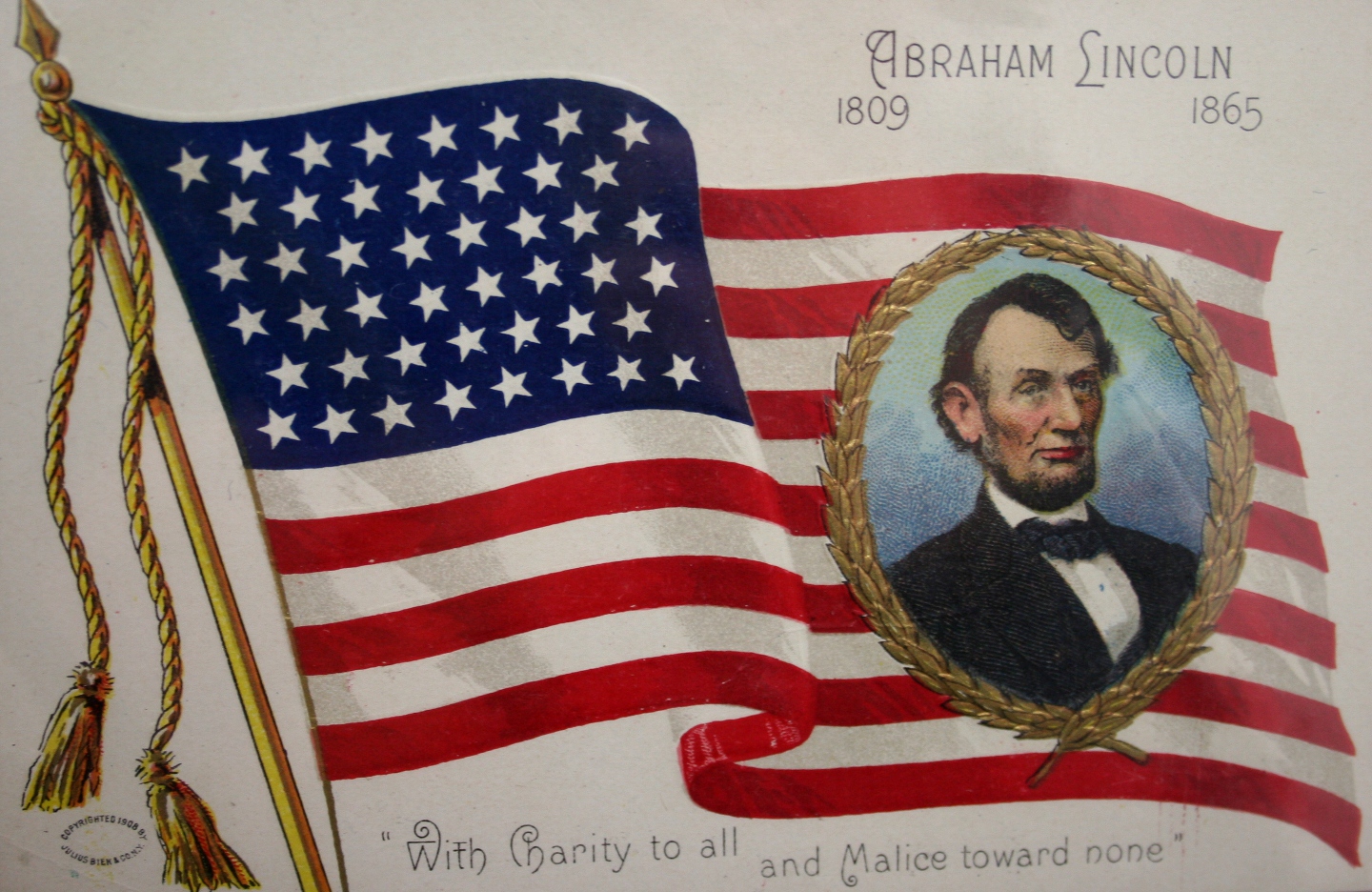
A Lincoln postcard which a collector brought to a Cannon Valley Civil War Roundtable meeting several years ago.

A Lincoln postcard which a collector brought to a Cannon Valley Civil War Roundtable meeting in 2009.

Today we honor this remarkable leader of humble roots, author of the Gettysburg Address wherein he vowed “that we here highly resolve that these dead shall not have died in vain—that this nation, under God, shall have a new birth of freedom—and that government of the people, by the people, for the people, shall not perish from the earth.”

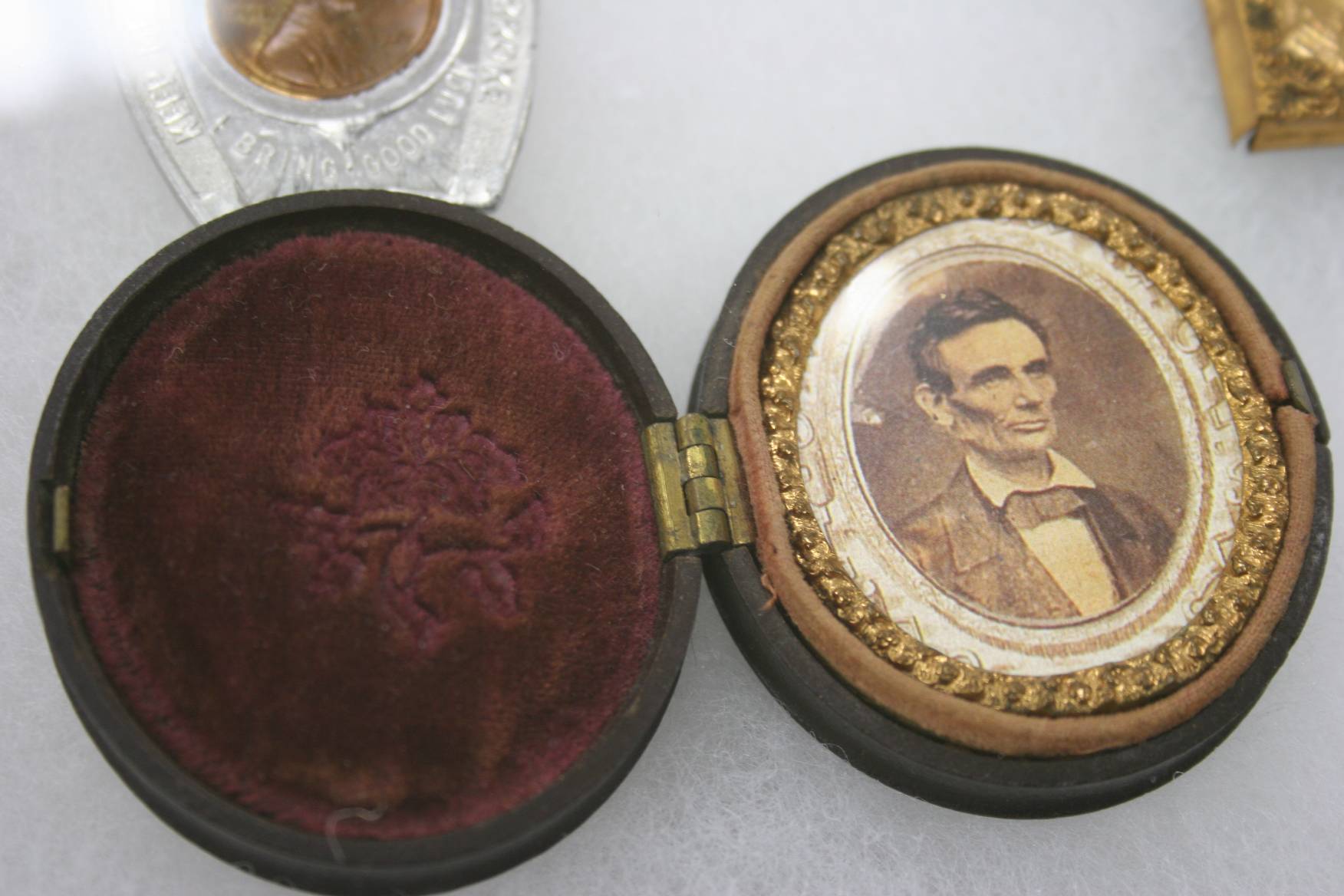
An original photo of Abraham Lincoln in Roger's collection.

An original photo of Abraham Lincoln from a southern Minnesota collector’s collection.

I’m also particularly fond of a lesser-known Lincoln quote: “All that I am, or ever hope to be, I owe to my angel mother.”

Promotional poster for the Lincoln event in Northfield, Minnesota.

Promotional poster for the Lincoln event in Northfield, Minnesota.

Throughout our nation and even here locally in Rice County, folks are publicly remembering Lincoln on the 150th anniversary of his death. At The Grand Event Center, The Northfield Historical Society this evening presents Our American Cousin, A Night That Changed Our Nation, The Assassination of President Abraham Lincoln. Held in an 1899 historic opera house/theatre with balcony booths much like those in Ford’s Theatre, the event includes summary presentations on the assassination and the nation’s reaction; a snippet from Our American Cousin; and a re-enactment of Lincoln’s assassination. Tickets are available in advance and at the door, although there is no guaranteed seating the day of the show.

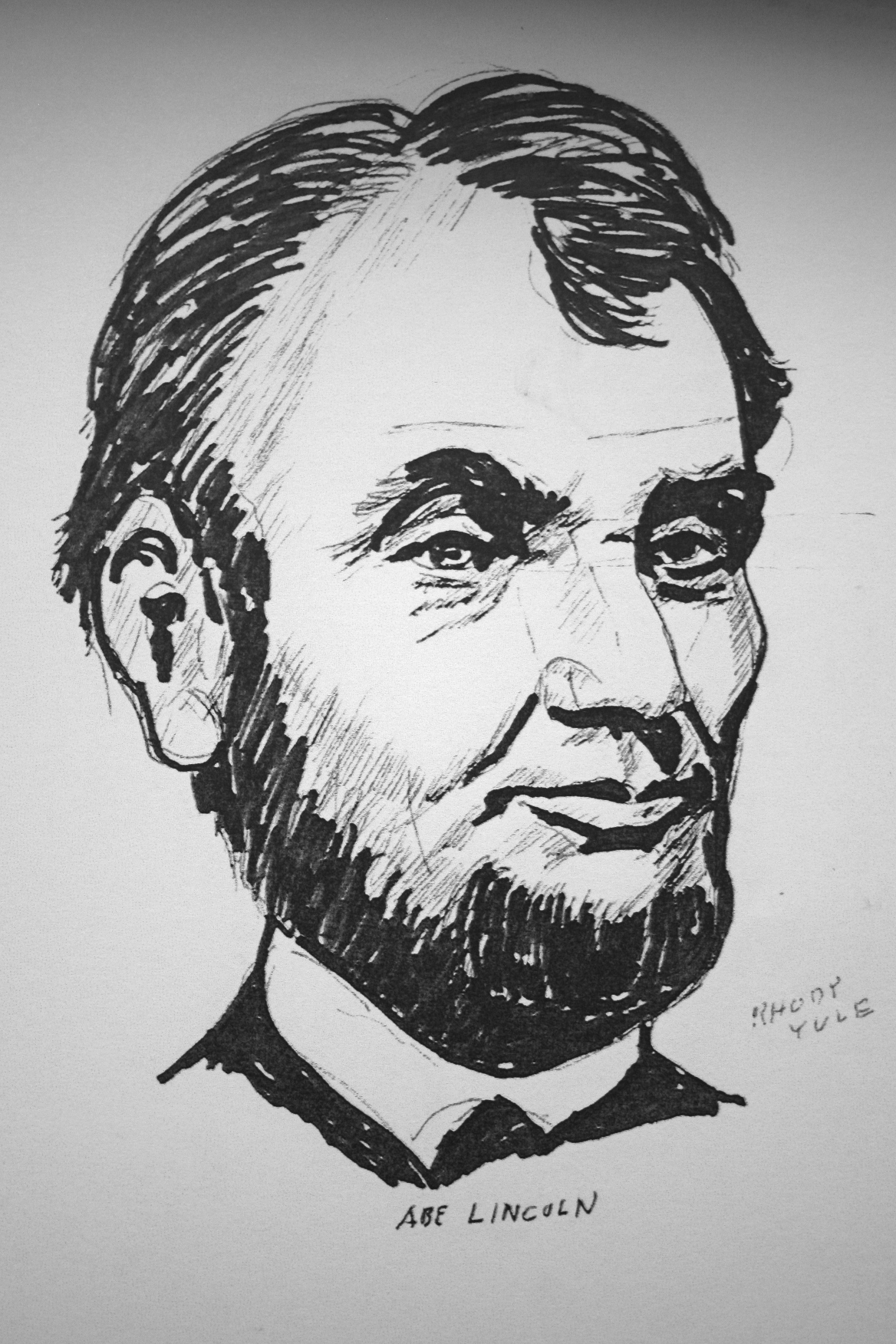
An ink drawing of Abraham Lincoln by my artist friend, Rhody Yule, now deceased.

An ink drawing of Abraham Lincoln by my artist friend, Rhody Yule, now deceased.

At 7 p.m. on Thursday, April 16, the President of the Wood Lake Battlefield Preservation Association will arrive on horseback at the Faribault Senior Center, 19 West Division Street, Faribault. There, at the monthly meeting of the Cannon Valley Civil War Roundtable, Tom Hosier of Rochester, dressed in period costume, will talk about Lincoln’s assassination. The presentation is free and open to the public.

A poster promoting the upcoming Lincoln's Traveling Troupe performance.

A poster promotes the upcoming Lincoln’s Traveling Troupe performance.

In Mankato, Lincoln’s Traveling Troupe will present the “true and dramatic story of Lincoln’s assassination” and its immediate aftermath in The Heavens Are Hung in Black, a play written by Lincoln historian and re-enactor Bryce O. Stenzel. Show times are 7 p.m. Friday, April 24, and Saturday, April 25, and 2 p.m. Sunday, April 26, at the Bethlehem Lutheran Church Dining Room.

How will you remember Lincoln today or this month?

© Copyright 2015 Audrey Kletscher Helbling


A must-see holiday play: The Santa Diaries December 10, 2014

I THOUGHT I MIGHT make it through a local holiday theatrical production without crying.

But I didn’t.

The Santa Diaries actors, left to right, Thomas Drenth as Timmy; Samuel Temple as Marley the Dog; and Michael Lambert as Will Hawes. Photo by Edward Brown and courtesy of The Merlin Players.

The Santa Diaries actors, left to right, Thomas Drenth as Timmy; Samuel Temple as Marley the Dog; and Michael Lambert as Will Hawes. Photo by Edward Brown and courtesy of The Merlin Players.

Saturday evening found me seated on the far right side of the Bahl Family Auditorium, near the back of the Paradise Center for the Arts restored theatre in historic downtown Faribault, wiping away tears during The Merlin Players performance of The Santa Diaries.

The play penned by Mala Burt and Laura Ambler and debuting in Minnesota, in Faribault, resounds with the age-old theme of discovering what is truly most important in life.

For main character Will Hawes, played by seasoned actor Michael Lambert, that is deciphering whether he truly values his success as a Hollywood actor over love and family. A return to his small hometown at Christmas causes Hawes to reexamine his choices in life.

During an especially creative scene in which Hawes is dreaming, he is advised to “open your heart and listen.”

This holiday chorus line will have you laughing out loud. Photo by Edward Brown, courtesy of The Merlin Players.

This holiday chorus line will put you in the Christmas mood and have you laughing out loud. Photo by Edward Brown, courtesy of The Merlin Players.

That could be the mantra for a production that mixes serious topics with humor. From the Hotdish Ladies (“Casseroles” in the original script, but this is Minnesota) bearing Sweet Potato Hotdish to a chorus line to the moment that made me cry—hearing the inner thoughts of Martha (played by Stephanie Weiss) wanting nothing more than her family home for Christmas—The Santa Diaries touches the heart.

You will laugh. You may cry. And, with absolute certainty, you will consider your own family and your life priorities as The Santa Diaries unfolds.

The older I grow, the less I care about the worldly trappings of Christmas. Like Martha, I just want my family home for Christmas. That won’t happen. Not precisely on Christmas Day. But we will have 1 ½ days together prior. And I am grateful for that. (The college son arrives home from Boston in exactly eight days.)

While The Santa Diaries presents a rather predictable happy ending—hey, you can’t have a holiday show that ends badly—real life isn’t that way. I know that. You know that. Life is messy. Work and distance and disagreements and busyness keep families apart.

But there is hope. People change. Situations change. We grow older and wiser. And, like main character Will Hawes, we eventually figure it out, that family is more important than money and success and work and schedules and, well, whatever else fills the time we could be with those we love.

The Paradise Center for the Arts is the cultural hub for theater and art in a historic theatre along Faribault's Central Avenue.

The Paradise Center for the Arts is the cultural hub for theater and art in a historic theatre along Faribault’s Central Avenue. Each December a holiday show is featured. This photo is from a past performance.

FYI: Additional performances of The Santa Diaries are set for 7:30 p.m. December 11, 12 and 13 and for 2 p.m. December 14. Julianna Skluzacek is the artistic director for the play featuring 28 passionate performers ranging from elementary age to decades older.  Call (507) 332-7372 for tickets from noon – 5 p.m. Tuesday – Saturday or noon – 8 p.m. Thursdays. Tickets may also be purchased an hour before show times. I wouldn’t wait, though. Tickets are selling quickly.

The playwrights are flying into Minnesota from the East Coast on Friday and will be here for all three weekend performances.

© Copyright 2014 Audrey Kletscher Helbling

The Santa Diaries photos copyright of Edward Brown/The Merlin Players and published here with permission.


Sweet vintage signage in Sleepy Eye & a theatre in need of rescue June 9, 2014

Classic vintage signage on the King Koin Launderette.

Classic vintage signage on the King Koin Launderette in Sleepy Eye.

EVERY TIME I PASS through Sleepy Eye along U.S. Highway 14 in southwestern Minnesota, I admire the same business signage, especially on the King Koin Launderette downtown.

With no time ever to stop for a proper photo shoot, I settle for a drive-by shot.

That laundromat sign is just so classic. You gotta love it.

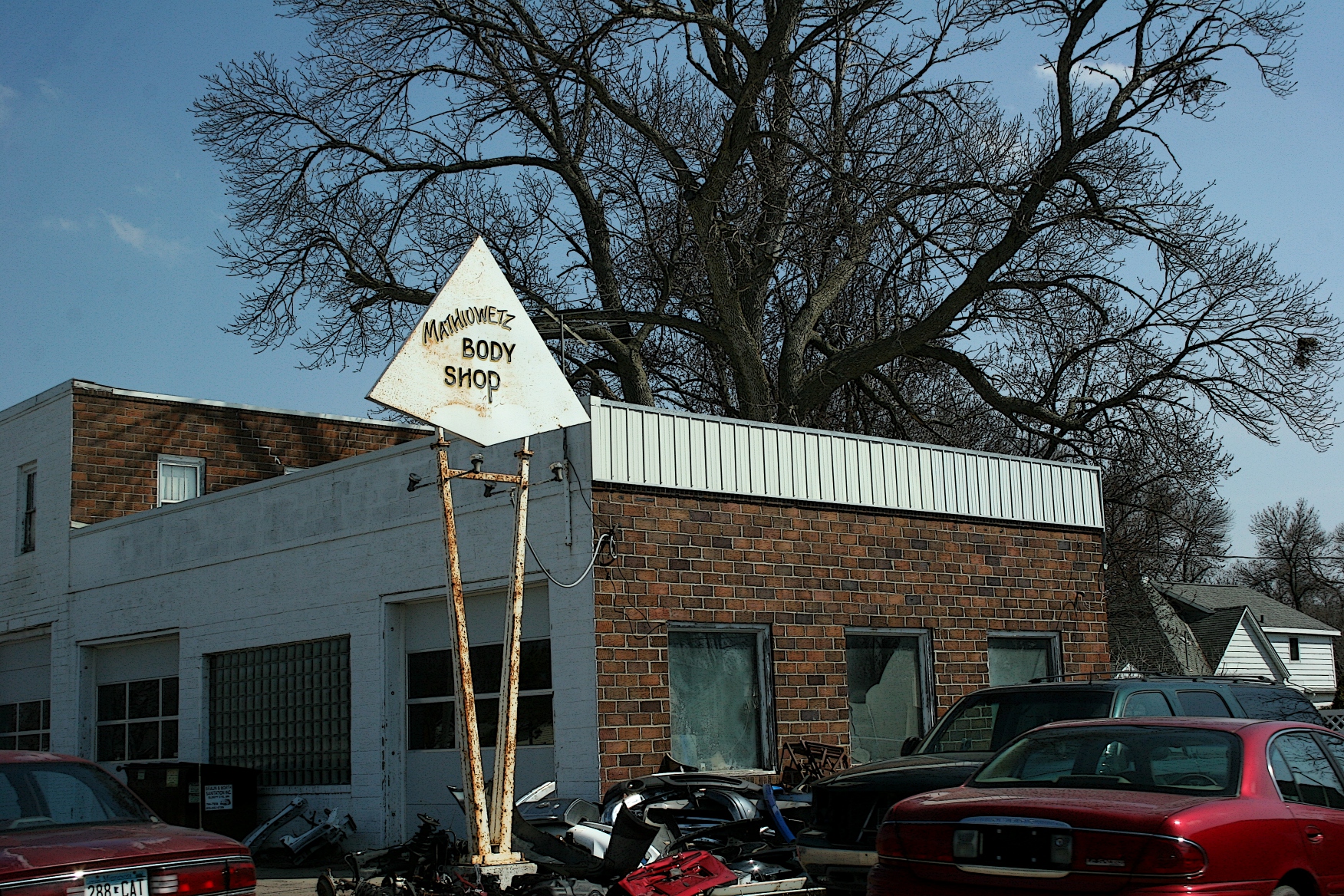
Another eye-catching sign on the west side of Sleepy Eye.

Another eye-catching sign on the west side of Sleepy Eye.

Ditto for the simple geometric sign that’s likely marked Mathiowetz Body Shop for years. The garage style building and clutter of vehicles tell me this is a body shop, even if I miss the sign.

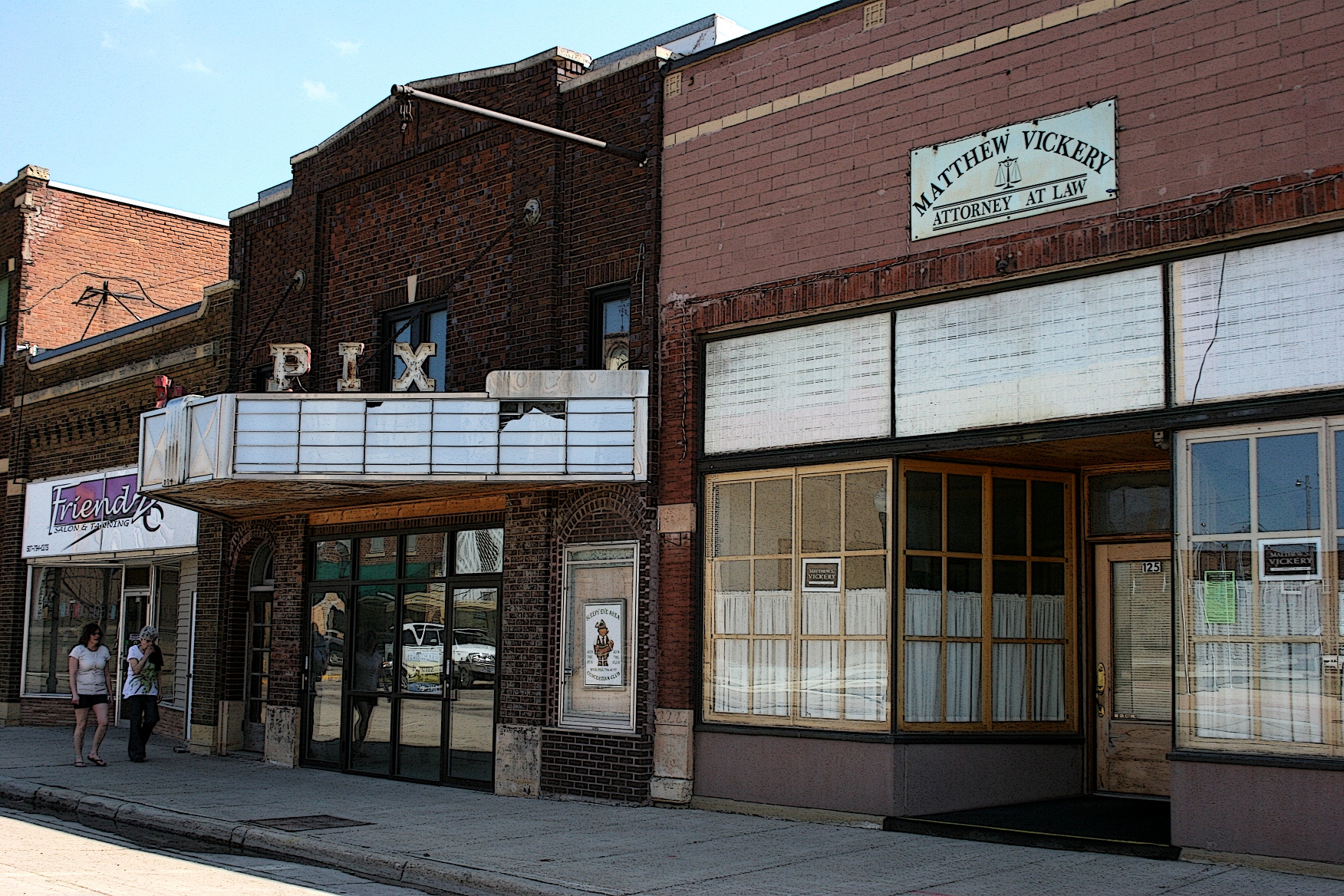
Can the PIX Theatre be reclaimed?

Can the PIX Theatre be reclaimed?

And, finally, there’s the PIX Theatre. Each time I observe the clearly abandoned building with those three aging letters and the hole in the marquee, I want to scream, “Please, somebody, anybody, buy this place and restore it.”

© Copyright 2014 Audrey Kletscher Helbling

 

The legend of the Edmund Fitzgerald lives on February 11, 2014

DECADES AGO WHILE TOURING an open iron ore pit on Minnesota’s Iron Range with my parents and perhaps a sibling or two, I met a sailor. Red. His nickname was attributed to his rust-hued hair and beard.

He was a hulk of a young man, crammed into a seat with me on a school bus that bumped down a rugged road into the bowels of the earth.

I honestly do not remember much about Red except that hair and his job laboring on a ship that sailed Lake Superior. We likely talked about the mammoth trucks in the pit. I told him I would be starting college soon and we exchanged addresses.

That fall of 1974, Red sent a few letters, tucked inside official Great Lakes Carriers’ Association envelopes. I can’t recall the content of that correspondence and I soon forgot about Red as I immersed myself in college life.

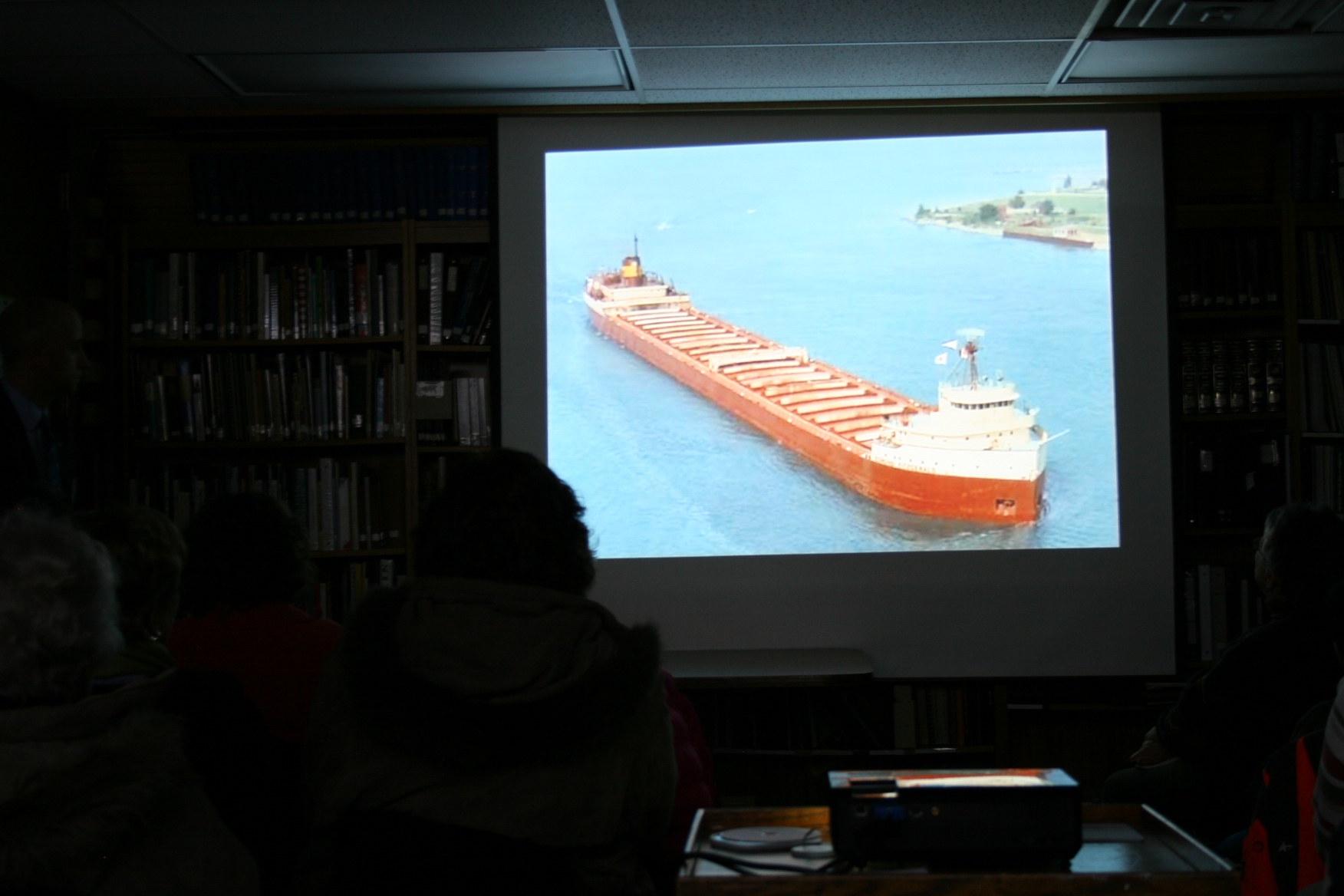
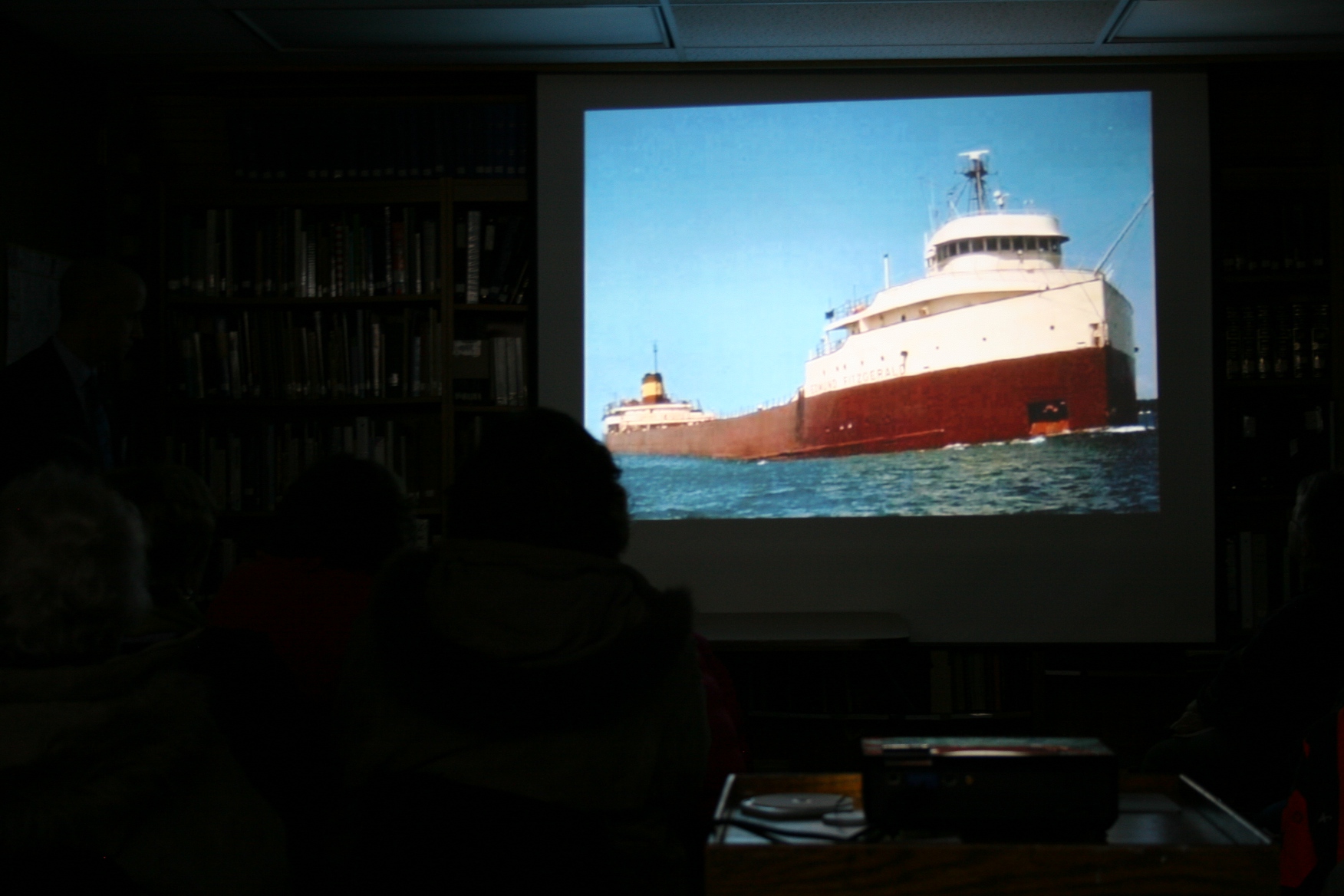
The Edmund Fitzgerald stretched more than two football fields long. This photo is among many shown in a presentation by diver Jim Christian.

The Edmund Fitzgerald stretched two football fields long. This photo is among many shown in a presentation by diver Jim Christian at the Rice County Historical Society.

Yet, I never really have forgotten him, because of The Edmund Fitzgerald, the iron ore carrier which sank in Lake Superior on November 10, 1975, during a fierce storm. I’ve often wondered whether Red may have been on board that ship. Not likely. But the slight possibility exists.

This past Sunday, I thought about Red for the first time in decades when I attended a presentation on The Edmund Fitzgerald at the Rice County Historical Society in Faribault. The event coincides with The Merlin Players’ Valentine’s Day opening of the play, Ten November, at the Paradise Center for the Arts.

Christina Schweitz, second from left, says is is "an honor" to perform as one of The Three Sisters in The Merlin Players' play, Ten November.

Christina Schweitz, second from left, says it is “an honor” to perform as one of The Three Sisters in The Merlin Players’ play, Ten November. She is flanked by the other “sisters,” Lisa Quimby, left, and Gail Kaderlik.

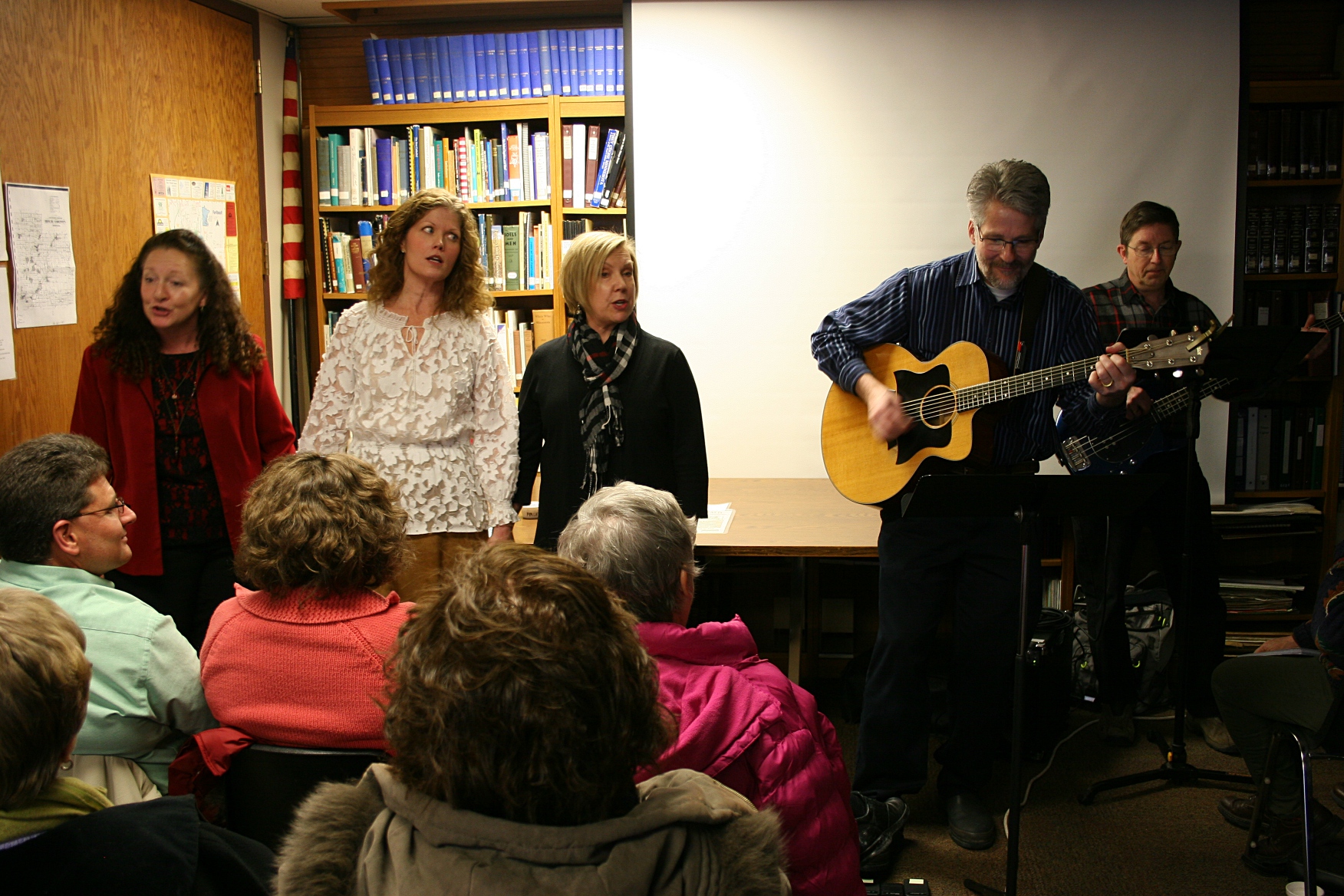
Inspired by folk singer Gordon Lightfoot’s ballad, “The Wreck of the Edmund Fitzgerald,” the theatrical production is filled with humor and compassion and heartwarming tales, according to performer Lisa Quimby. She was among five musicians—three of them female singers—presenting several songs at Sunday’s museum event. The women represent “The Three Sisters,” a trio of waves, each wave larger than the previous and sometimes cited as a contributing factor to the ship’s sinking.

We were shown a half-hour version of this one-hour documentary for sale at the historical society.

We were shown a shortened version of this PBS documentary available for purchase at the historical society.

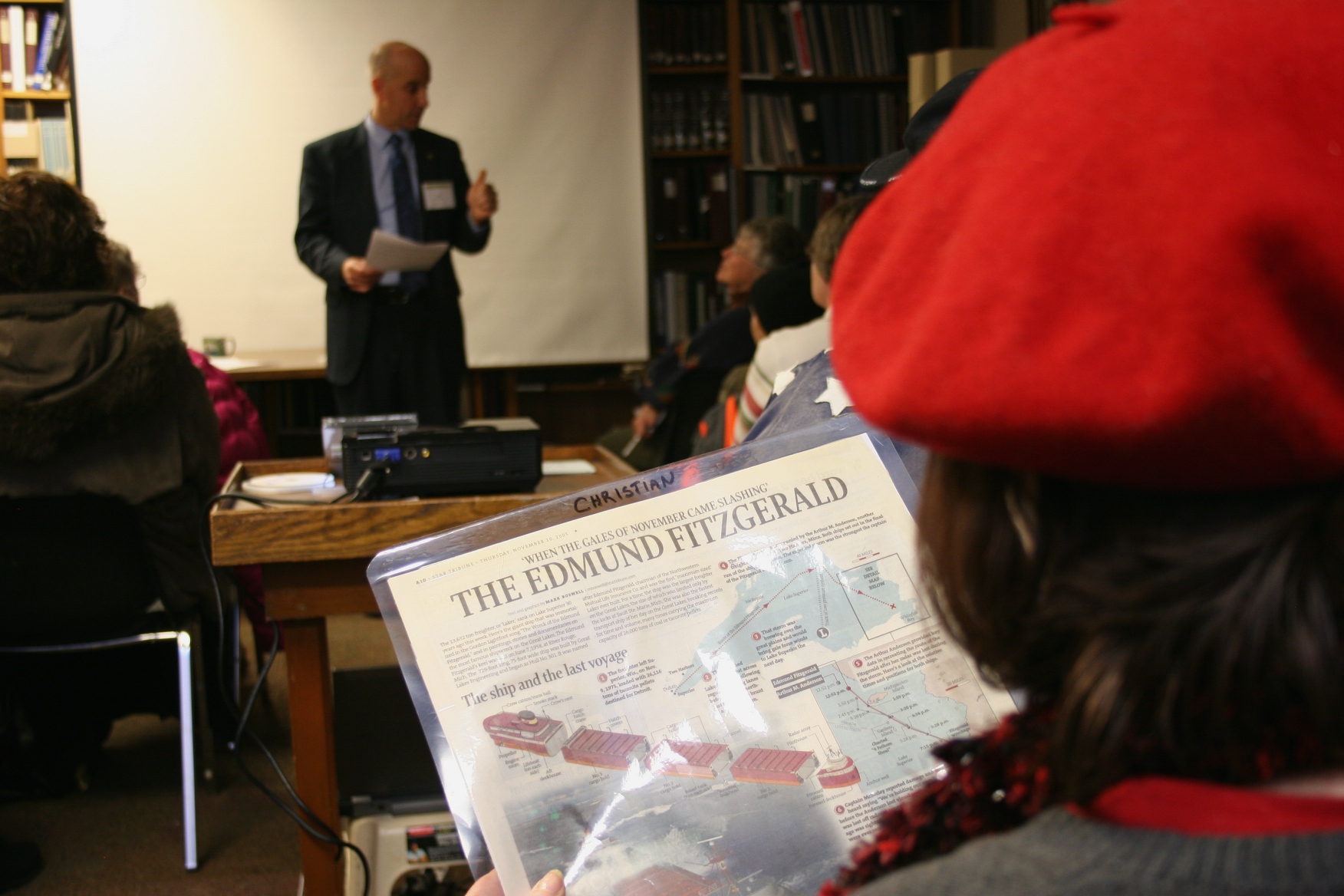
Diver Jim Christian gestures as he provides information on the iron ore carrier and theories on why it sank.

Diver Jim Christian gestures as he provides information on the iron ore carrier and theories on what caused The Fitz to sink.

Based on information I gleaned Sunday after watching The Edmund Fitzgerald Investigations—a half-hour PBS documentary by Ric Mixter—and a presentation by Minnesotan Jim Christian, who has been diving for 28 years and has explored The Fitz wreckage, I wonder if anyone will ever truly know the precise cause of this tragedy.

Newspaper clippings about The Fitz were passed among audience members while Jim Christian spoke.

Newspaper clippings about The Fitz were passed among audience members while Jim Christian spoke. The ship was built in 1958.

Twenty-nine men aboard The Edmund Fitzgerald lost their lives in the stormy waters of Lake Superior on November 10, 1975. That is a fact.

Some 26,000 tons of taconite pellets, like these, filled the cargo holds of The Edmund Fitzgerald as it journeyed across Lake Superior on November 9 and 10, 1975.

Some 26,000 tons of taconite pellets, like these, filled the cargo holds of The Edmund Fitzgerald as it journeyed across Lake Superior on November 9 and 10, 1975.

Winds on that fateful day were described as “hurricane” force with a gale warning issued during the time the 729-foot long by 75-foot wide carrier was en route from Superior, Wisconsin, to Detroit, Michigan, with 26,000 tons of taconite pellets. The ship, loaded with 15 percent more than its originally designed maximum carrying capacity, according to Christian, rode low in the water while storm waves rose to 70 feet. Can you imagine?

Around 7:15 p.m. on November 10, The Edmund Fitzgerald disappeared. The wreckage was later discovered 17 miles northwest of Whitefish Point, Michigan, and has been the focus of many dives and investigations since.

The legend lives on, as does that connection many of us have to The Edmund Fitzgerald, whether through song or theatre or diving or letters written decades ago by a sailor named Red.

Another photo from Jim Christian's presentation shows the 729-foot long Edmund Fitzgerald.

Another photo from Jim Christian’s presentation shows the 729-foot long Edmund Fitzgerald.

HERE ARE SOME OF THE THEORIES offered during Sunday’s presentation as contributing to/cause of The Fitz sinking in Lake Superior in the gales of November 1975. Seas then were termed by a skipper as “the worst (he’d experienced) in 44 years on the lake.”

  • Leaking hatch covers caused by failure to tighten each of the 68 clasps on each of the 21 hatch covers.
  • Mesh screens, rather than watertight walls, separated the three cargo holds.
  • An inability to turn the carrier with three “seas” coming at the ship from three directions.
  • “Beat by the lake” during the fierce storm.
  • The Three Sisters theory of wave building upon wave, overtaking the carrier and causing the cargo to shift forward.
  • Flaws in structural design with weakness in the cargo capacity and too much flex in a ship that was ridden “too hard.”
  • Structural failure of the ship, built in 1958 and the largest carrier on Lake Superior for nearly two decades.
  • Pushing the ship too fast, causing The Fitz and its companion traveler, The Arthur M. Anderson (which made it through the storm), to feel the full fury of the storm.
  • Previous damage to the carrier during grounding and collisions with another ship and with lock walls. The keel had been repaired twice and was termed as “loose again” when The Fitz set sail on November 9.
  • Loaded with too much taconite, causing the ship to ride low in Lake Superior.
  • Negligence.

You can choose to believe what you wish. I’d suggest you do your own research.

This fact I know, though: The legend lives on…

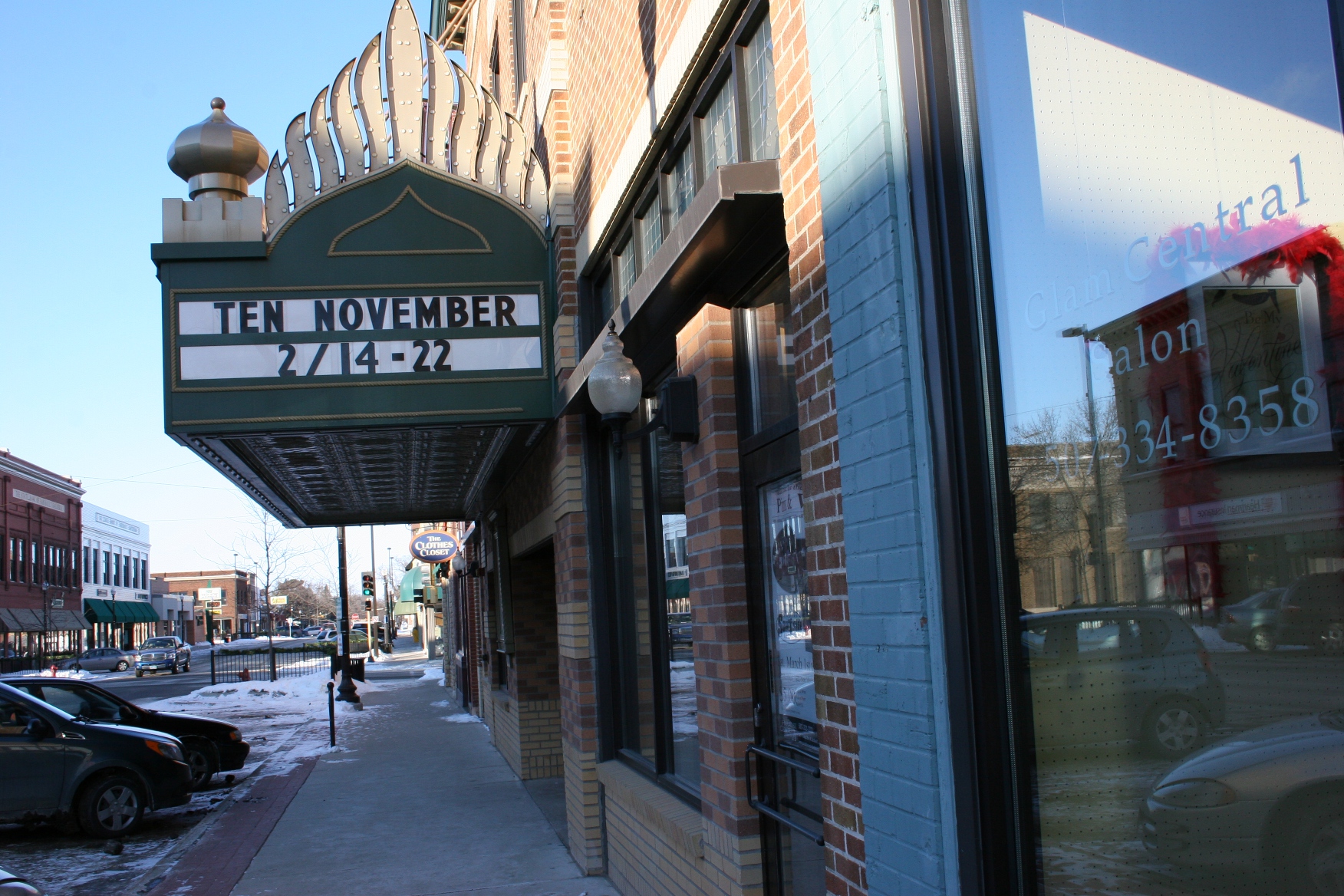
The Paradise Center for the Arts marquee advertises the opening of Ten November.

The Paradise Center for the Arts marquee advertises the opening of Ten November.

FYI: To learn more about The Edmund Fitzgerald, click here to read information on the Great Lakes Shipwreck Museum website.

Performances of Ten November by The Merlin Players are set for 7:30 p.m. February 14, 15, 20, 21 and 22 and for 2 p.m. February 16 at the Paradise Center for the Arts, 321 Central Avenue, Faribault. Click here for more information about this play directed by Eric Parrish, a seasoned director and a professor at Minnesota West Community and Technical College in Worthington.

© Copyright 2014 Audrey Kletscher Helbling
 

Believing in the magic of Santa and of community theatre December 11, 2013

ALTHOUGH I’VE TRAVELED TO NEW YORK, albeit only once and in the late 1970s, I’ve never been to Macy’s.

I’ve watched the Macy’s Day parade, though, on television and this year heard a brief first person account from my 19-year-old son. He attends college in the Boston area and spent his Thanksgiving break in the Big Apple.

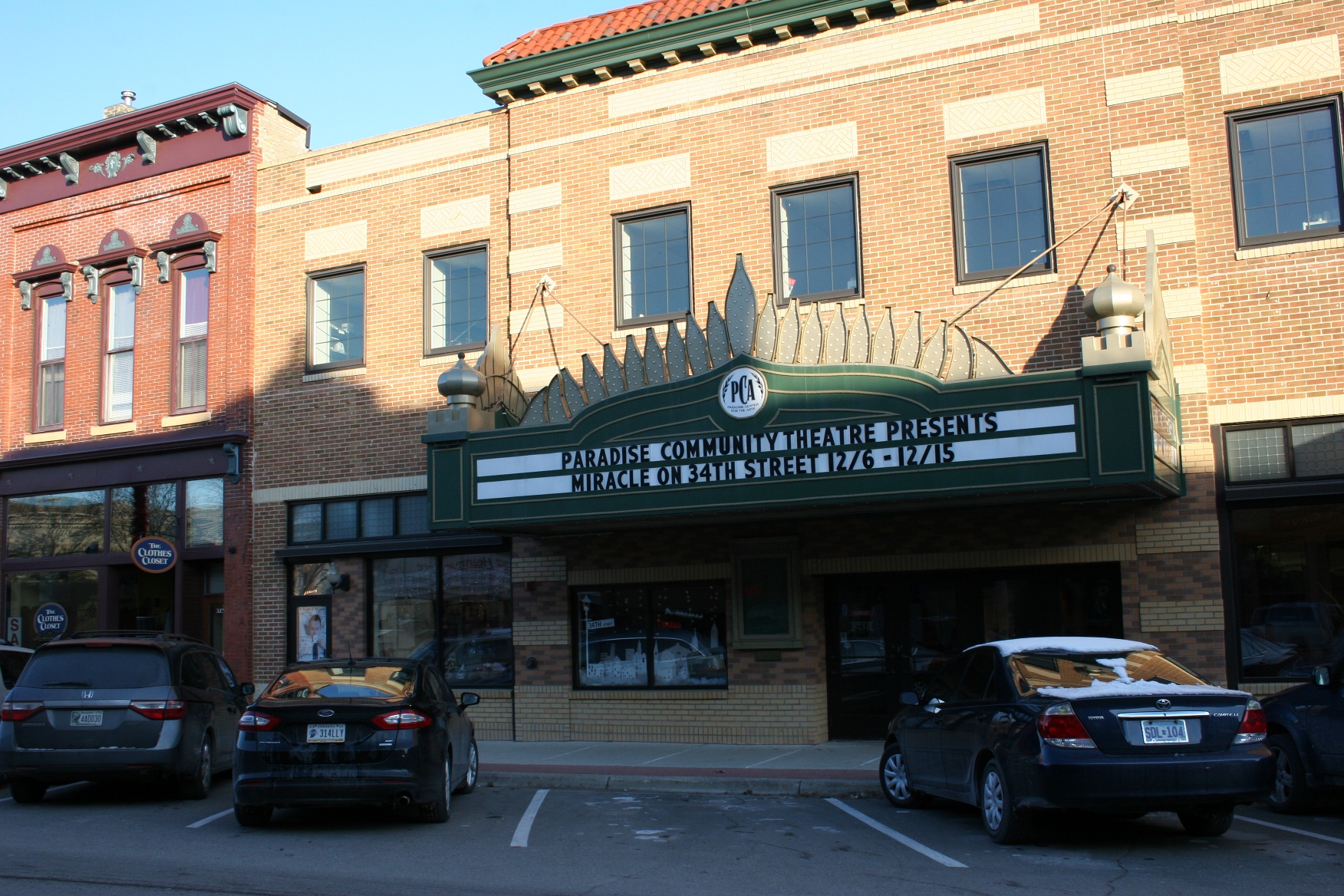
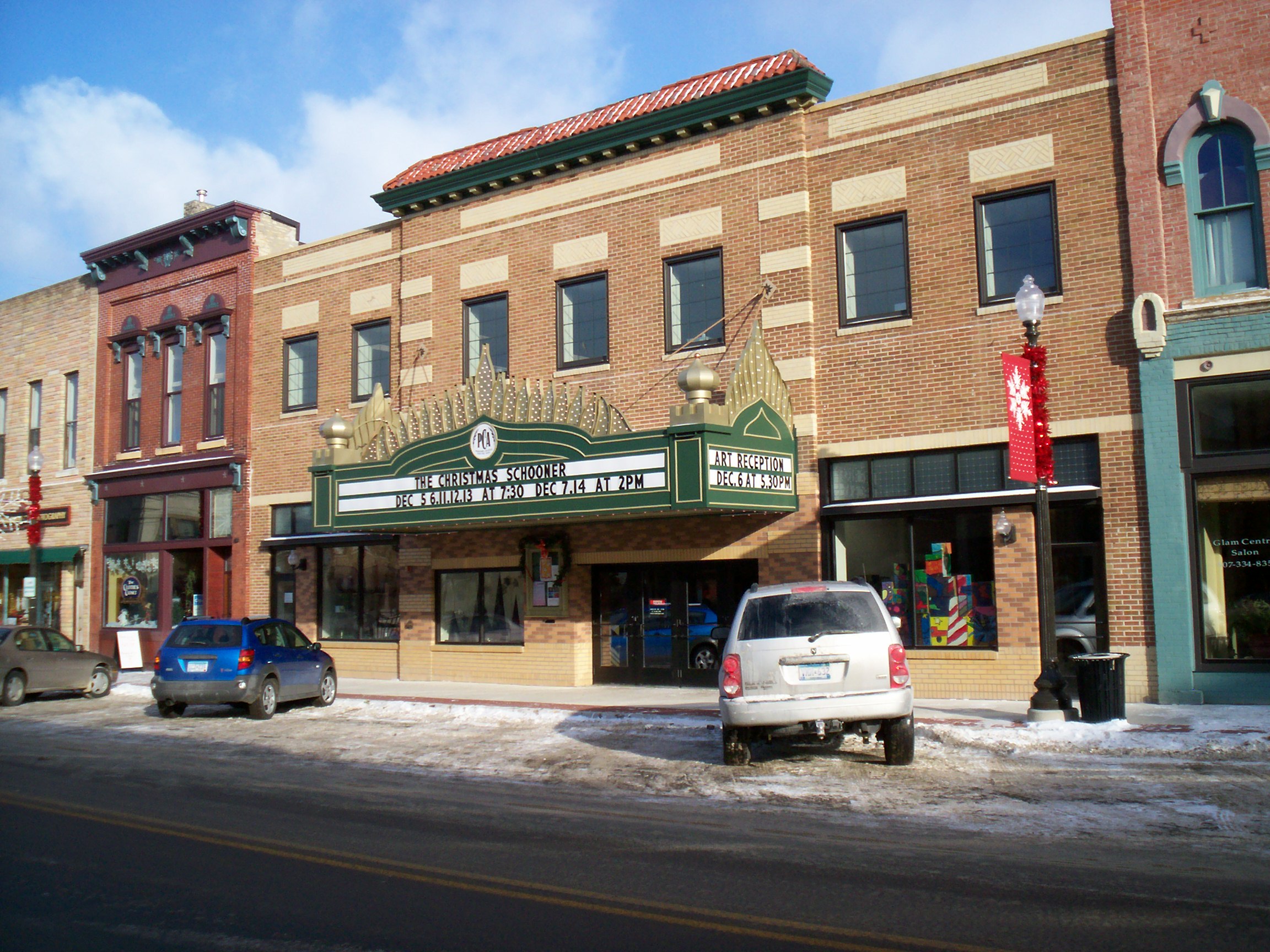
The historic Paradise Center for the Arts in downtown Faribault.

The historic Paradise Center for the Arts in downtown Faribault.

Saturday evening, thanks to the Paradise Community Theatre’s production of Miracle on 34th Street, The Musical, I visited the aforementioned New York department store and watched (imaginatively speaking) a portion of the parade.

Plus I was swept into the holiday spirit by songs such as “It’s Beginning to Look a Lot Like Christmas” and by the acting of 31 gifted performers. The cast includes a lot of dedicated young actors and actresses who bring abundant energy and talent to the stage.

With the exception of a cold theater (due to furnace problems), a not-so-good seat (I waited too long to reserve my ticket), and occasional difficulty hearing the singers above the orchestra, I thoroughly enjoyed the performance.

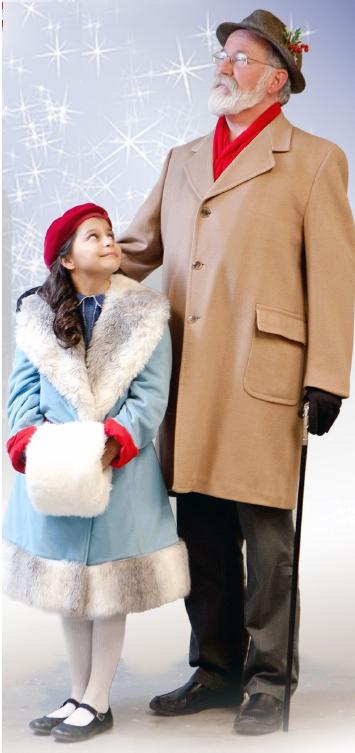
Malia Hunt as Susan Walker and Jerry Fox as Kris Kringle. Photo by Betsy Cole Photography and courtesy of the Paradise Center for the Arts.

Malia Hunt as Susan Walker and Jerry Fox as Kris Kringle. Photo by Betsy Cole Photography and courtesy of the Paradise Center for the Arts.

This classic Christmas story, which was unfamiliar to me (I know, I know), thrusts you right into the magic of the holiday season. Do you believe in Santa Claus? Do you believe in love? You will after viewing this splendid performance of Miracle on 34th Street in which Kris Kringle claims that he truly is Santa Claus. Northfield resident Jerry Fox portrays as convincing of a Santa Claus as you’ll ever see, both in appearance and demeanor.

And adorable 10-year-old Malia Hunt of Faribault exudes absolute confidence in her main character role as Susan Walker, the little girl who wants a father for Christmas, along with a farmhouse, a swing in the backyard and a cow.

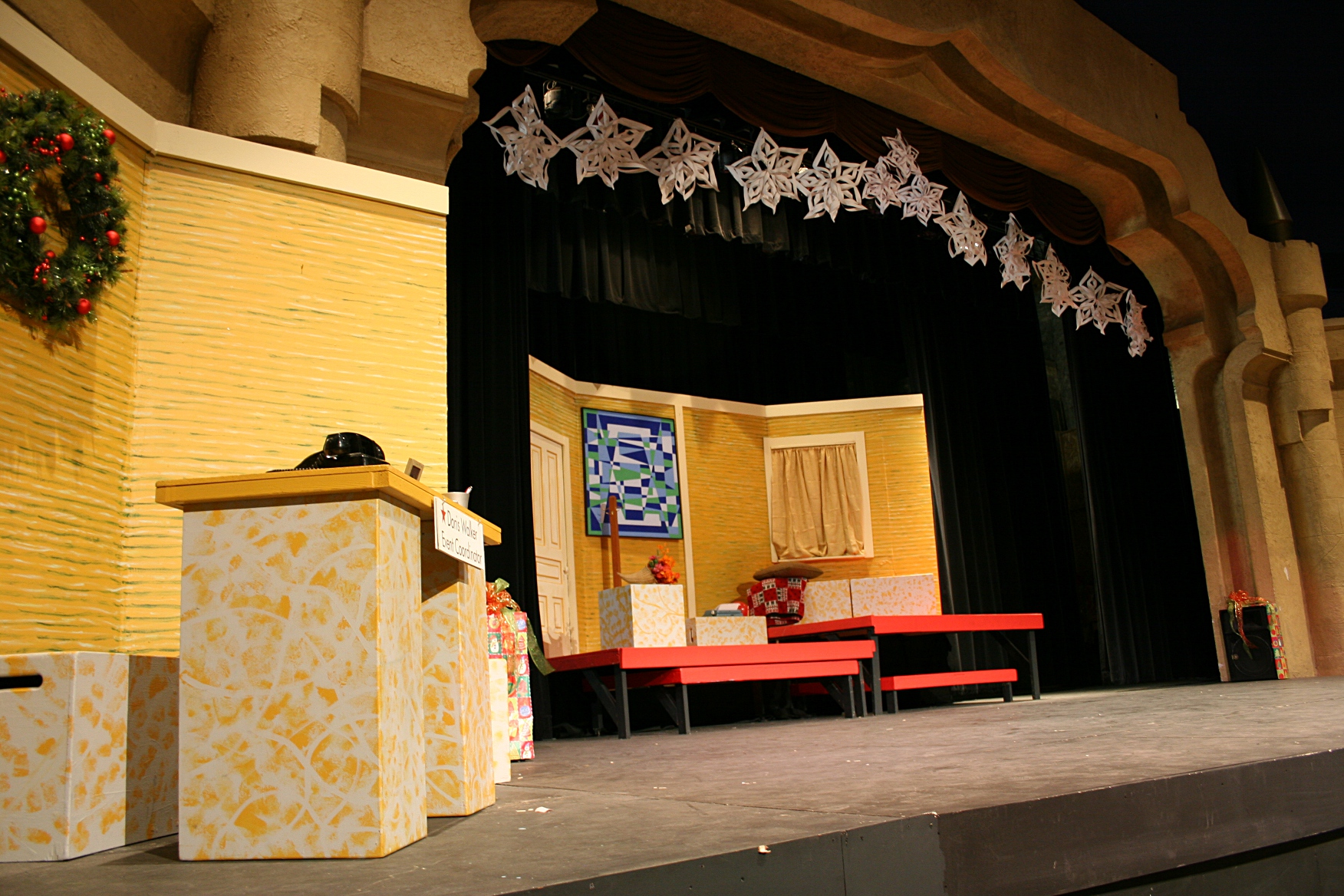
The sets are constantly changing in the performance. This set shows the Macy's Department Store desk of Doris Walker (Sydney Place-Sallstrom), left, and Doris and Susan Walker's apartment, center stage.

The sets are constantly changing in the performance. This set shows the Macy’s Department Store desk of Doris Walker (Sydney Place-Sallstrom), left, and Doris and Susan Walker’s apartment, center stage.

My favorite line in the entire show comes from Jackson Hemann of Medford, who plays Thomas Mara, Jr., the young son of a New York district attorney determined to prove Kris Kringle is not Santa.

When Kringle’s attorney, Fred Gaily (Mickey Morstad), asks Thomas why he believes in Santa, the young boy replies: “My mommy told me so.”

Ah, to possess such child-like faith.

“Faith,” Kris Kringle declares during the performance, “is believing in something when your common sense tells you not to.”

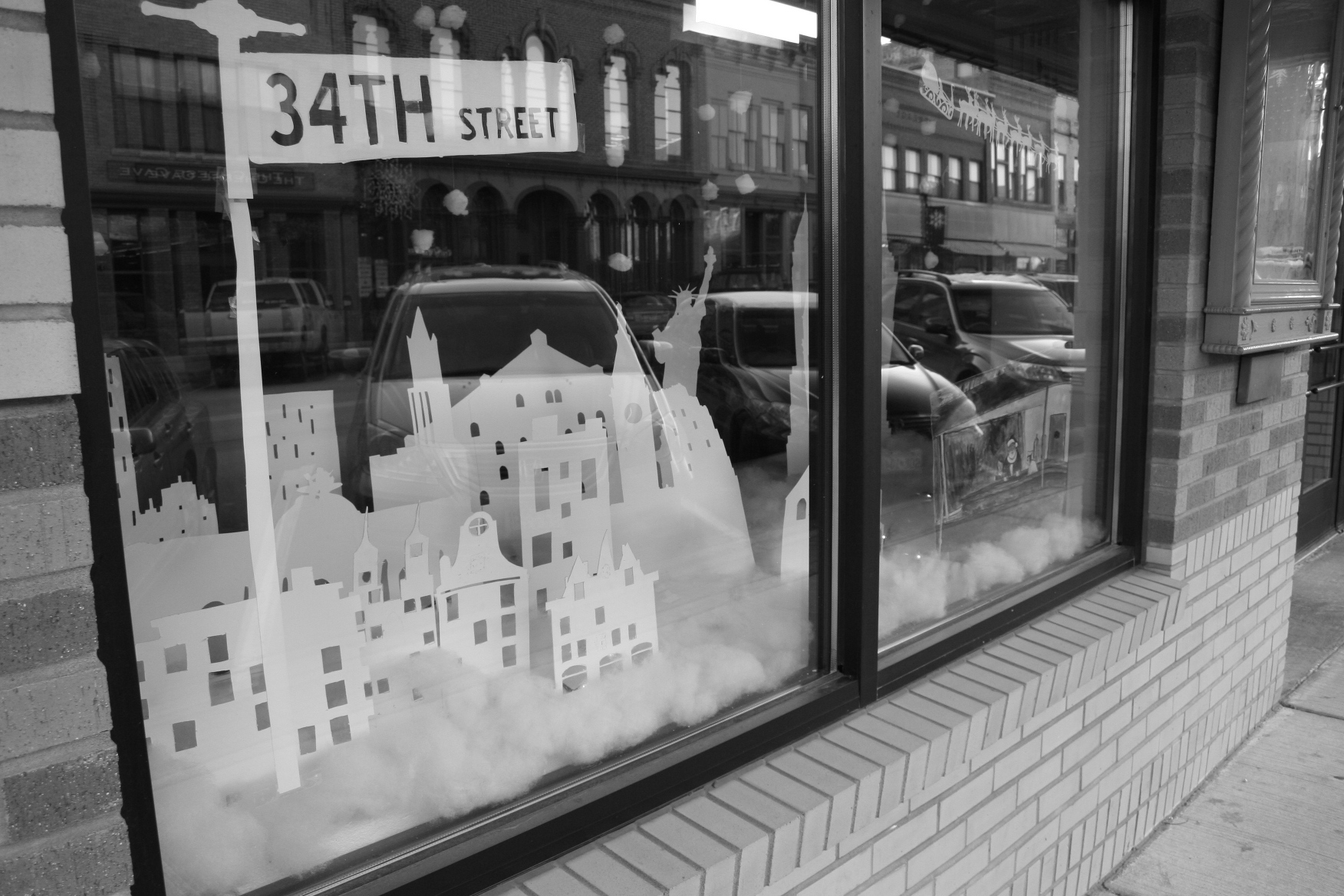
An artistic interpretation of Miracle on 34th Street graces a front window at the Paradise Center for the Arts, which reflects some of downtown Faribault's historic buildings.

An artistic interpretation of Miracle on 34th Street graces a front window at the Paradise Center for the Arts with some of downtown Faribault’s historic buildings reflected on the glass.

When the show ended at 10 p.m., children clustered around Fox. Don’t try telling them he isn’t really Santa Claus.

They believe in the magic of Santa Claus, just like I believe in the magic of theatre to transport me from Central Avenue in Faribault, Minnesota, to 34th Street in New York City.

FYI: Additional performances of Miracle on 34th Street are set for 7:30 p.m. this Thursday – Saturday, December 12 – 14, and at 2 p.m. on Sunday, December 15, at the Paradise Center for the Arts, 321 Central Avenue in historic downtown Faribault. Click here for more information. As of early Tuesday afternoon, only limited seating remained for the Friday and Saturday shows with the Sunday afternoon performance nearly sold out.

My husband and I attended Miracle on 34th Street compliments of an event hosted by South Rice County Chapter of Thrivent Financial for Lutherans. This did not influence my decision to review the performance nor the content of my review.

© Copyright 2013 Audrey Kletscher Helbling
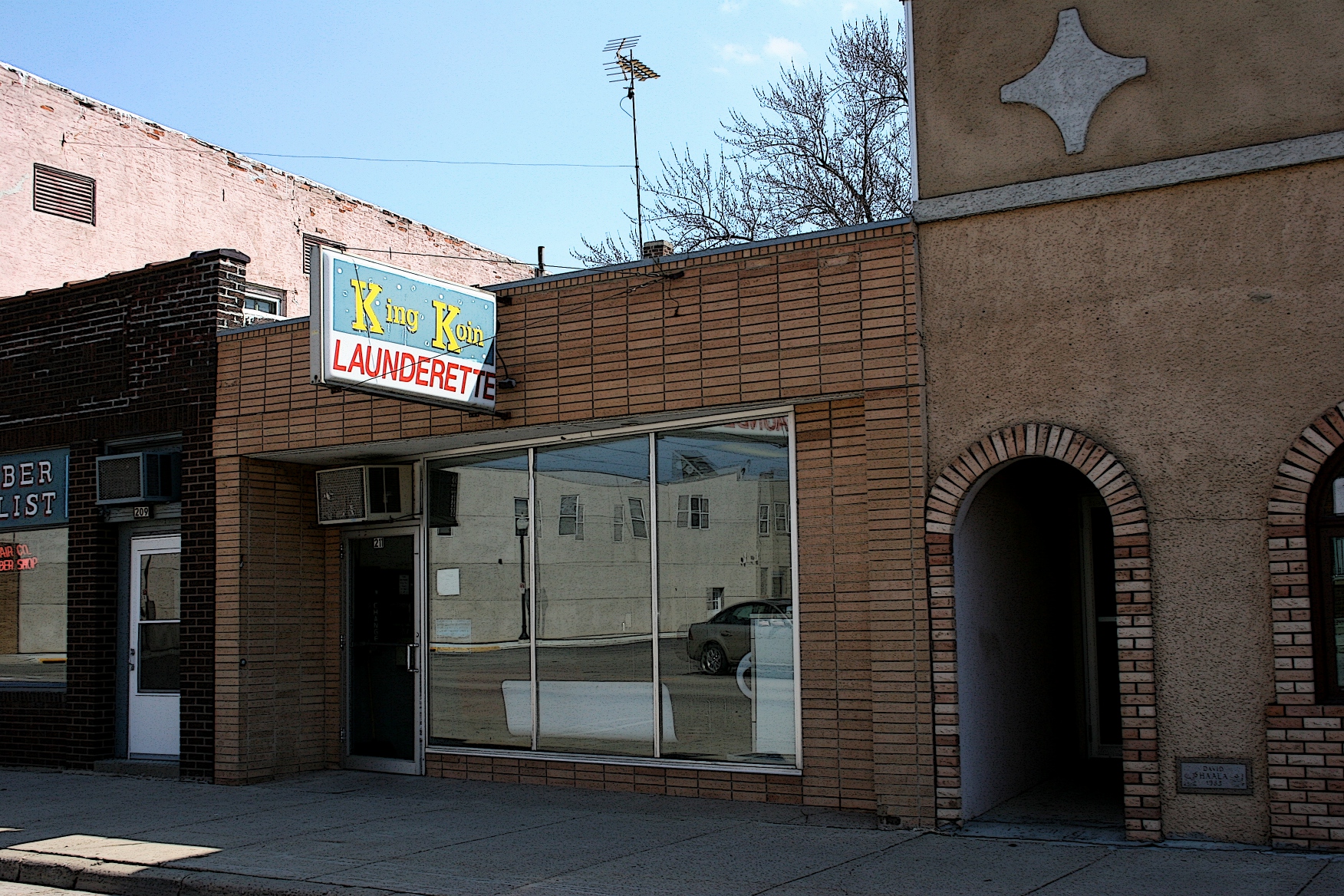
Photo of Jerry Fox and Malia Hunt by Betsy Cole Photography and courtesy of the Paradise Center for the Arts.


In Luverne: “Go digital or go dark” August 29, 2013

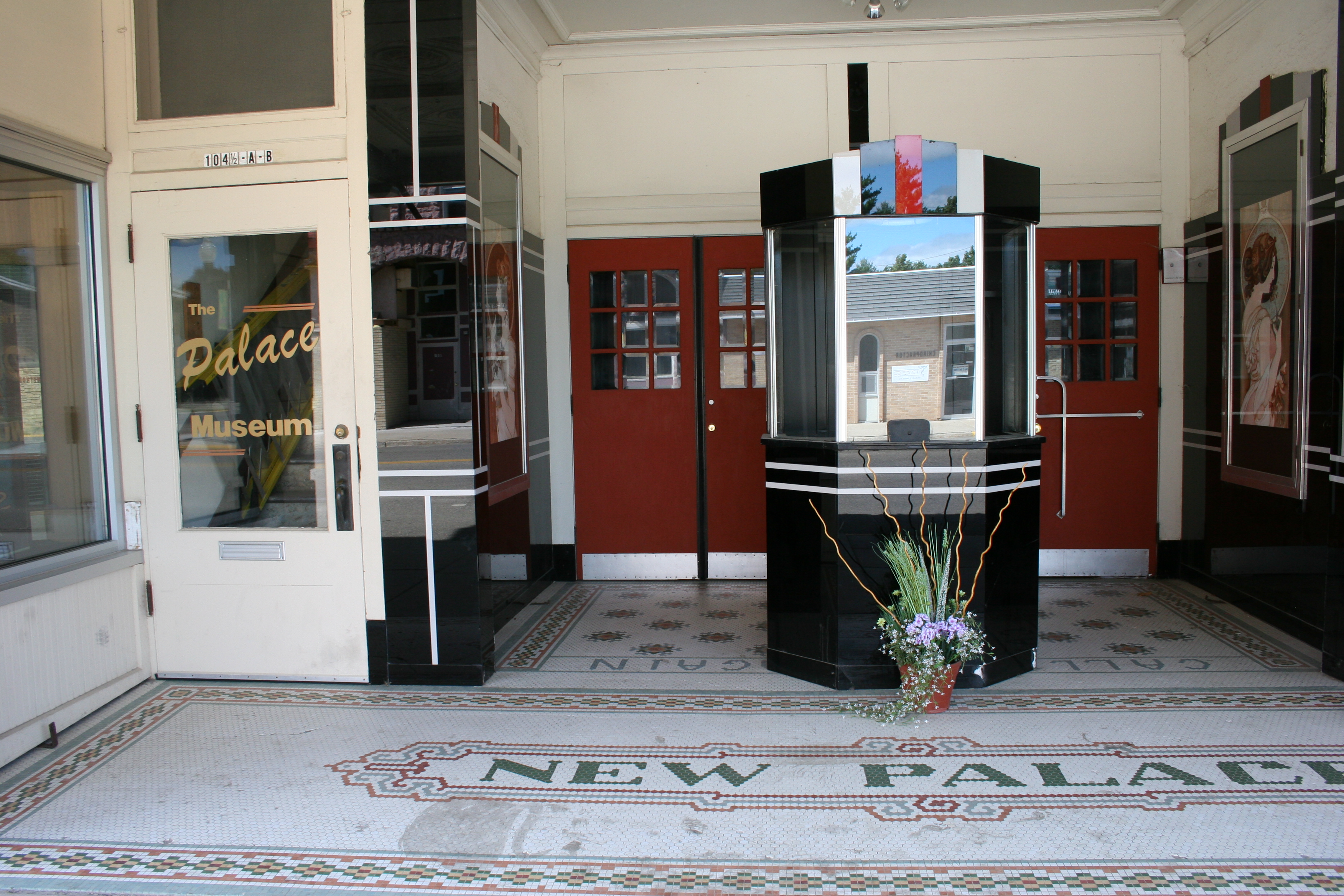
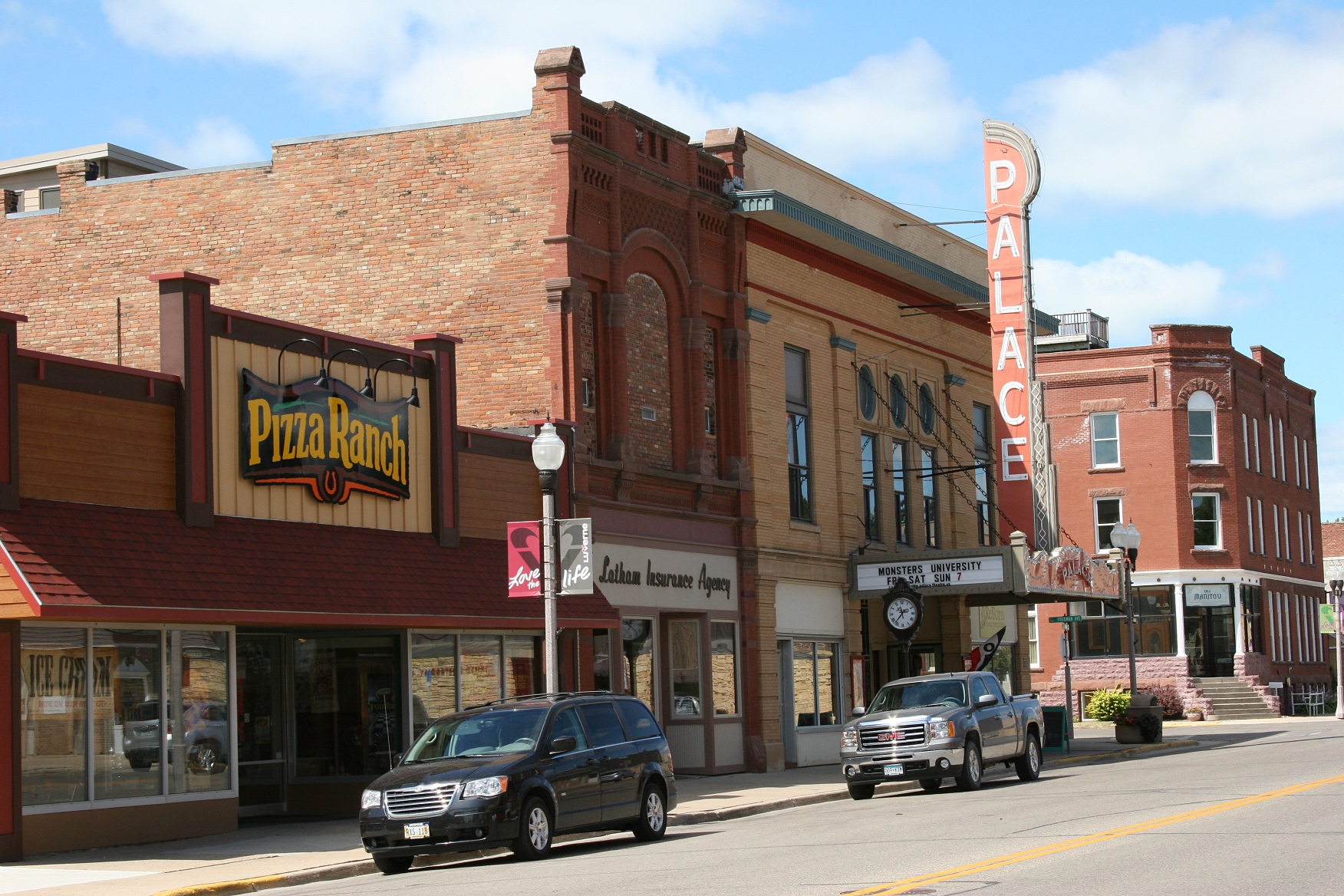
The entry to the historic Palace Theatre in downtown Luverne, Minnesota.

The entry to the historic Palace Theatre in downtown Luverne, Minnesota.

THE DOORS TO THE OLD THEATRE were locked, much to my dismay, on a recent Saturday visit to Luverne in extreme southwestern Minnesota.

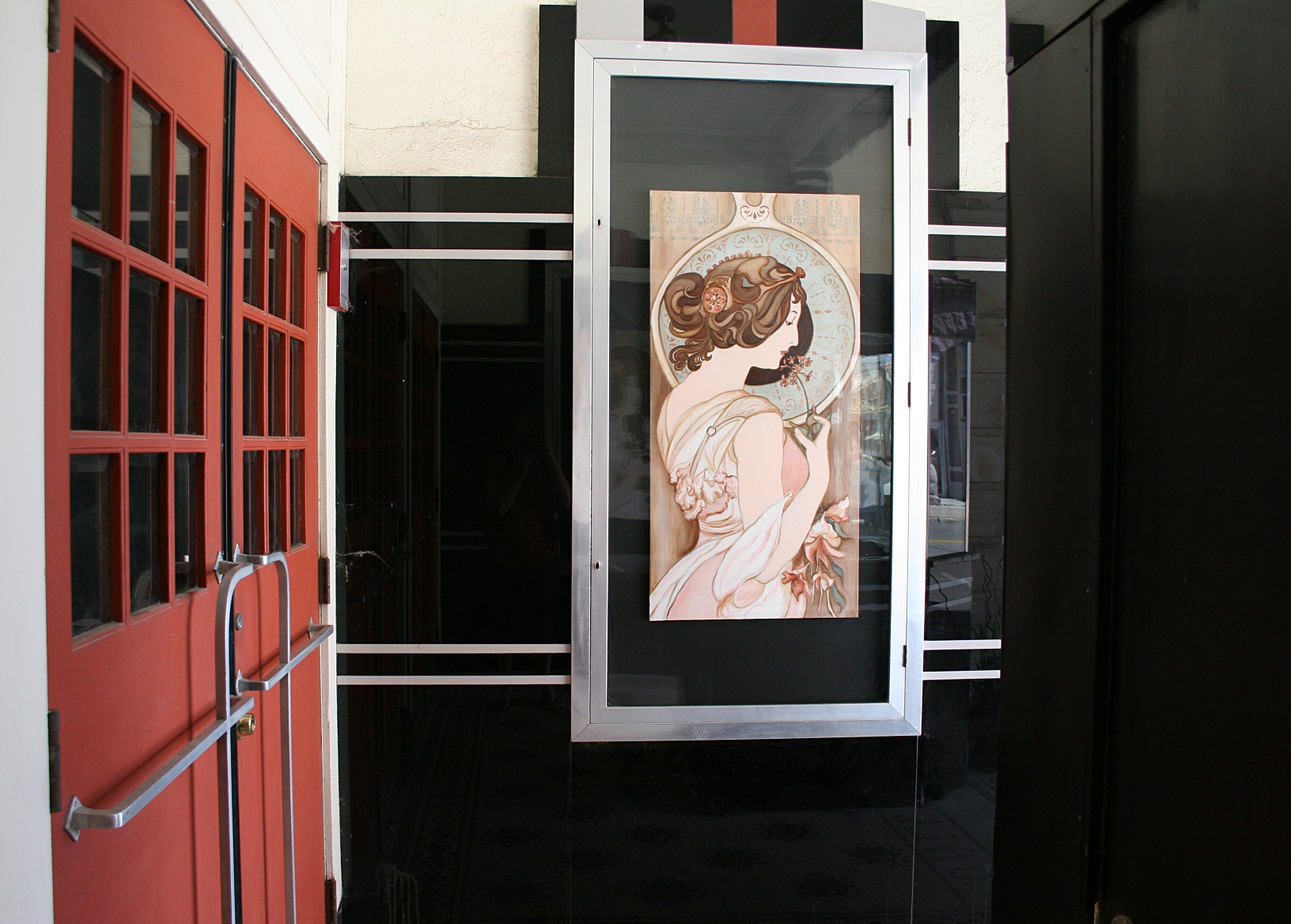
Charming exterior art.

Charming exterior art.

If only I could have gotten inside to view the original painted wall panels, stage curtains, pipe organ, and artistic wall and ceiling décor inside the 1915 Palace Theatre.

I am a fan of old theatres and of old buildings in general. But you know that if you’ve followed Minnesota Prairie Roots.

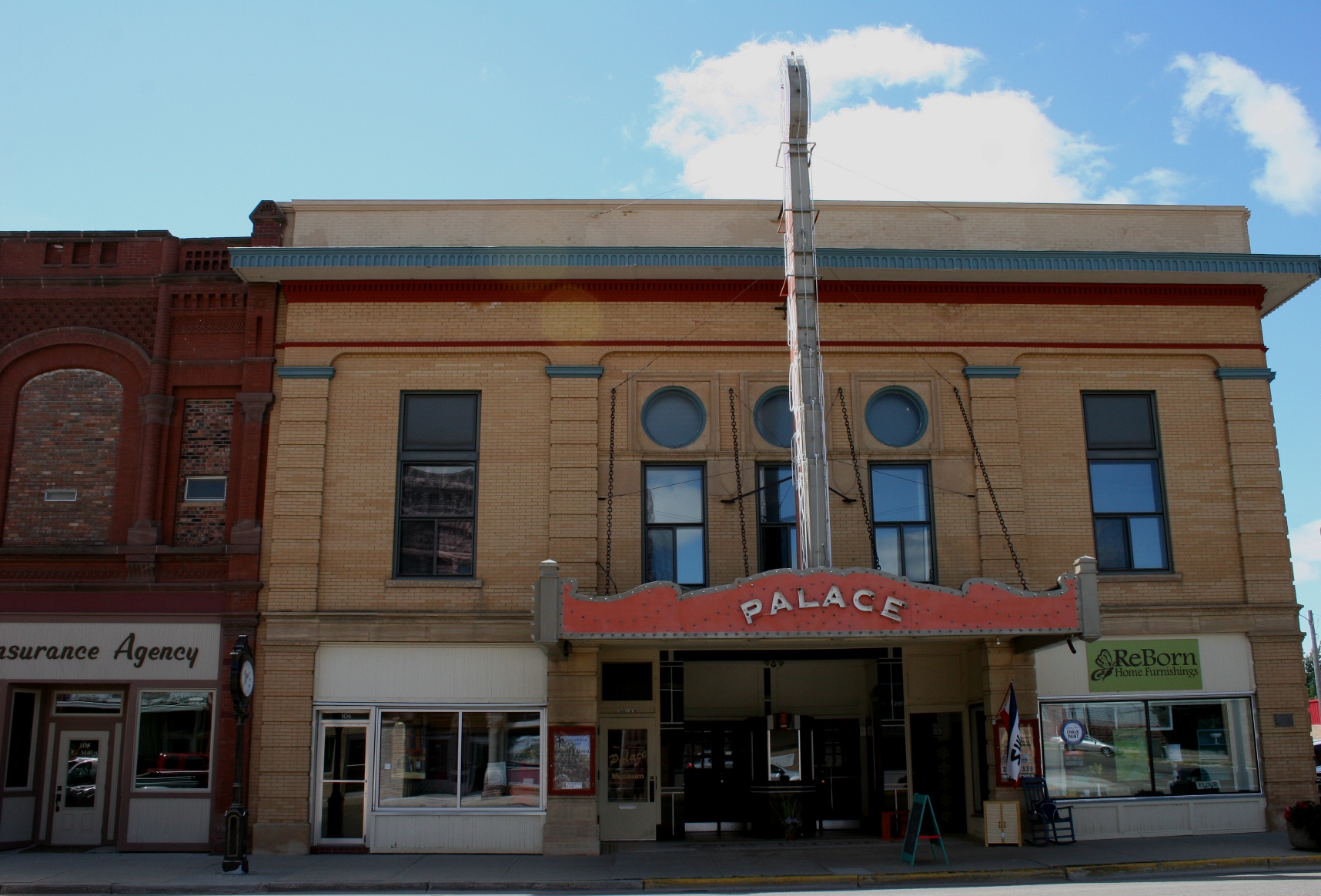
That's ReBorn, in the right corner of the city-owned theatre building at 102 E. Main Street.

The city-owned Palace Theatre at 102 E. Main Street, operated by the nonprofit Blue Mound Area Theatre.

That Luverne appreciates the value of its historic theatre enough to preserve the building, which hosts a variety of cultural and other events, pleases me. The building was placed on the National Register of Historic Places in 1978.

Theatre supporters are currently working to continue one aspect of the building’s use, that of showing movies. Through the “Go Digital or Go Dark” campaign, efforts are underway to raise $75,000 for the purchase of a digital projector. At the end of 2013, film companies will no longer produce 35mm film, necessitating the switch.

Now I’m not a big movie watcher, having last viewed an in-theatre movie several years ago. But I like the option of a local theatre, which my community of 23,000 no longer has. Sad. Truly sad.

I expect the good folks of Luverne would miss their movies, too, should funding not come through for the digital projector.

A notable sign draws the eye to the Palace.

A notable sign draws the eye to the Palace.

A special fundraising event, “A Night at the Palace,” slated for Saturday, September 7, will raise monies specifically for that projector. Click here to learn more.

There’s just one more bit of information you should know about the Palace Theatre. Six years ago, on September 6, the Palace Theatre hosted the world premiere of The War, a Ken Burns documentary on World War II. Luverne is one of four communities featured in the film.

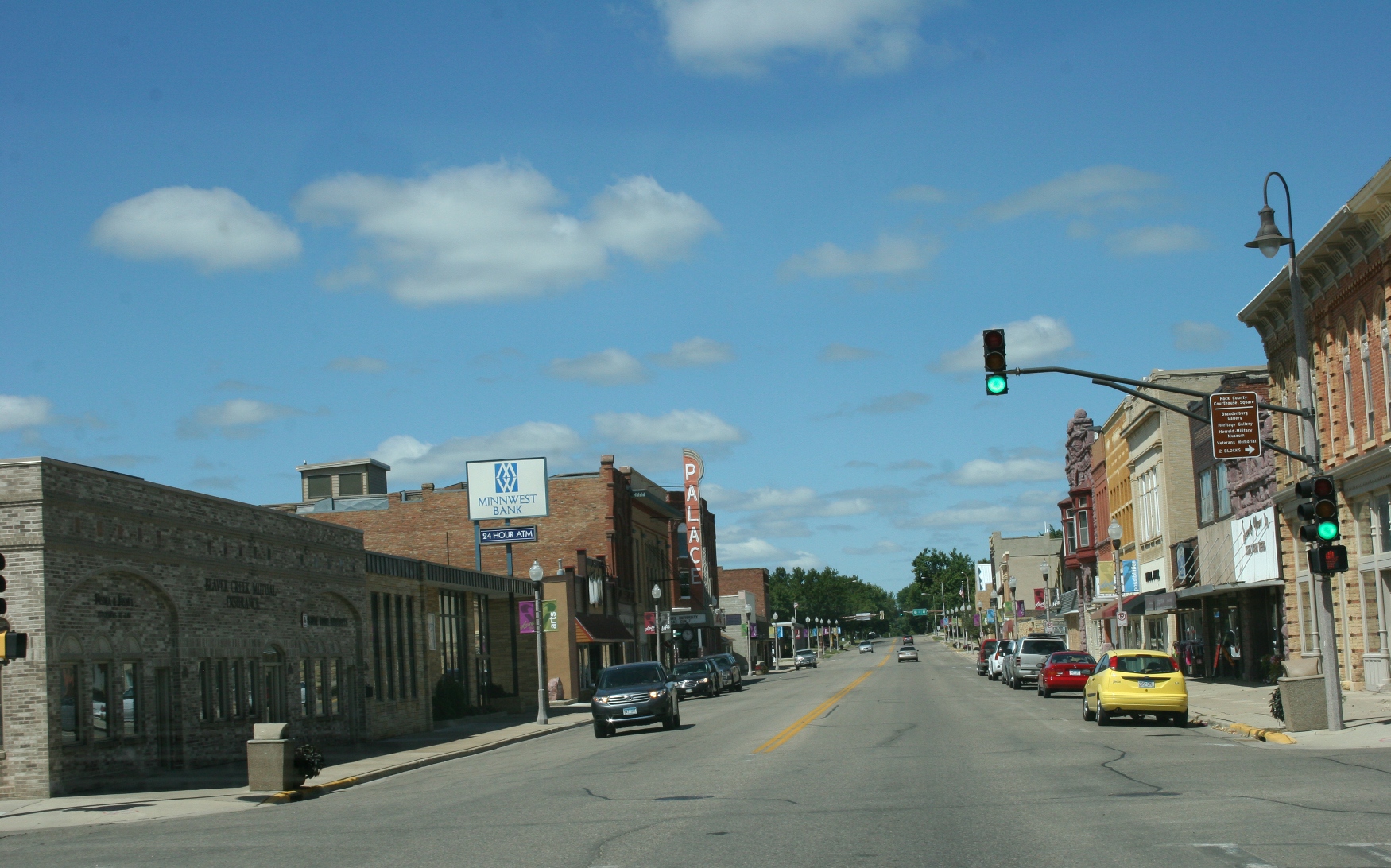
Downtown Luverne, Minnesota.

Downtown Luverne, Minnesota.

Of all the venues which could have been selected for the debut showing, the Palace Theatre was chosen. That, my friends, says a lot for the community of Luverne and the historic theatre.

FYI: To learn about another Luverne theatre in need of funding for a digital projector, click here and read about the Verne Drive-in.

If you wish to donate monies (via PayPal) toward purchasing a digital projector for the Palace Theatre, click here.

© Copyright 2013 Audrey Kletscher Helbling
 

Discovering a drive-in movie theatre in Luverne & a nation-wide effort to save these icons August 15, 2013

A FEW WEEKS AGO, while traveling specifically to Luverne in the southwestern corner of Minnesota to tour the Brandenburg Gallery and Blue Mounds State Park, I discovered a vanishing icon of American culture.

That would be a drive-in movie theatre on the south edge of town just off Interstate 90.

Verne Drive-in entry sign

The Verne Drive-In Theater, built in the 1950s, is one of only a few drive-ins remaining in Minnesota. Others include the Long Drive-In in Long Prairie, the Starlite 5 Drive-In Theatre in Litchfield, the Vali-Hi Drive-In in Lake Elmo and Sky-Vu Drive In in Warren. I think I’ve covered them all.

Nearly a year ago, the Cottage View Drive-In in Cottage Grove, in a controversial move, was closed and the land sold for construction of a Walmart store. (Click here to see Minnesota Public Radio photos of a September 2012 event celebrating the Cottage View’s 46-year history.)

Although I didn’t see a show at the Verne Drive-In, my husband and I drove through the vacant theatre parking lot on a Saturday morning just to check out the place and reminisce. We went to a few outdoor movies together when our community of Faribault still had a drive-in theatre. We also each attended drive-in movies separately while growing up. Me in Redwood Falls and he once in the Little Falls area and then near Brainerd.

Verne Drive-in, screen w filmstrip

I expect most of you hold on to some drive-in movie memories whether its cramming into the trunk of a car, making out with a long forgotten boyfriend or girlfriend, waiting in line for a concession stand snack or burger, tuning in to a movie via those little boxes stationed throughout the gravel parking lot, piling the kids into the car in their jammies for a night out under the stars…

At the Verne Drive-In a young couple, who went on their first date at the drive-in four years ago, recently became engaged there.

Drive-in theatres, most assuredly, are a part of our history, our culture, our growing up years and our personal memories.

Verne Drive-In exit sign film strip

Once commonplace in communities across the country, drive-ins are vanishing with only 368 remaining in the U.S., according to Project Drive-In established by Honda Motor Company. Honda, via an online and texting voting process, is giving away digital movie projectors to five drive-in theatres. The goal is simple: to save as many drive-ins as possible.

The financial challenge for drive-ins today lies in the need to switch to digital projection by the end of 2013, an upgrade which costs an estimated $80,000.

For theatres like the one in Luverne, winning a free digital projector through the Project Drive-In giveaway would be huge. You can vote online and/or via texting for these two Minnesota drive-ins daily for the next 25 days: the Verne Drive-In or the Long Drive-In. Click here for more information.

Project Drive-In also includes opportunities to donate monies toward saving our nation’s drive-ins and to pledge to go to a drive-in movie theatre. Win. Win.

WHAT MEMORIES DO YOU have of drive-in movie theatres? Let’s hear.

© Copyright 2013 Audrey Kletscher Helbling
 

A Wisconsin school honors orphans via “The Orphan Bed Exhibit” April 25, 2013

The main building at the orphanage, built in 1886, housed offices, a reception room, chapel/auditorium, boys' cottage, living quarters for employees, a sewing room, attic and linen storage. This main portion today serves as the Owatonna city administration building.

The main building at the Owatonna orphanage, built in 1886, housed offices, a reception room, chapel/auditorium, boys’ cottage, living quarters for employees, a sewing room, attic and linen storage. This main portion today serves as the Owatonna city administration building. File photo from December 20, 2011, blog post.

THREE HUNDRED AND TWENTY miles from the Minnesota State Public School Orphanage Museum in Owatonna, a group of Lutheran school students in Hales Corners, Wisconsin, just southwest of Milwaukee, are honoring orphan children of the 1920s and 1930s.

The story of how this came to be involves me, a dedicated and creative middle school language arts teacher/musical theater director, and a bit of personal family history.

Several weeks ago, teacher Judy Lillquist, a native of Le Sueur, MN., who has lived in Wisconsin for 20-plus years, commented on a December 2011 blog post I published after a visit to the Owatonna museum. (Click here to read that story.)  She discovered my orphanage stories while researching for her school’s production of  Annie Jr. My posts included photos of simple orphans’ beds in a stark orphanage bedroom. (Click here to read my second orphanage post.)

The boys' bedrooms are stark, devoid of anything homey. This small room slept three.

This photo of an orphan’s bed inspired Lillquist to create “The Orphan Bed Exhibit.” The orphans were not allowed to sleep on their pillows; those were just for show. File photo.

Those orphan bed photos inspired Lillquist to work with her students in creating “The Orphan Bed Exhibit” which accompanies the school’s spring musical, Annie Jr., showing this Friday and Saturday at Hales Corners Lutheran Middle School.

Working with middle schoolers on a musical seems challenging enough. So I really have to admire Lillquist’s efforts to personally connect her students and audience members to the plight of actual orphans via “The Orphan Bed Exhibit.” The exhibit includes a synopsis of the inspiration behind the project.

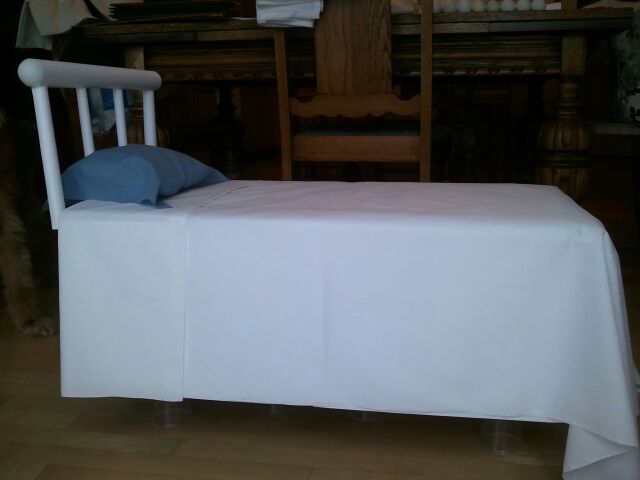
The orphan bed designed by Lillquist.

The orphan bed designed by Lillquist.

Using cardboard boxes, paper, tape, glue, clearance bed sheets and other everyday materials, Lillquist’s sixth graders built 20 orphan beds. Those attending the musical will see silent orphan statues (students), attired in tattered dresses, stationed next to those beds.

Beds were packed tight into sparse bedrooms in the cottage.

Beds were packed tight into sparse bedrooms in the Owatonna orphanage cottages. File photo.

The scene is meant to make a powerful impact. Lillquist explains:

In my research for the play, I began formulating an idea of somehow showing our audience how important it is for us to count our blessings. I for one am very thankful for a warm home and comfortable bed. It gives me a heavy heart knowing that the orphan children of those days were not so fortunate, my husband’s dear grandmother among them.

…The beds pay homage to the orphan boys and girls of the 1920s and 30s. Our plucky little orphan girls get to play that role for a little while. Some children played that role their entire lives. This is simply to honor their memory.

A photo of some of the school's residents on exhibit in Cottage 11, which housed boys ages 6 - 13.

An Owatonna school orphans photo displayed in Cottage 11, which housed boys ages 6 – 13.

For Lillquist’s family, this is personal as her husband’s grandmother and siblings were placed in a state orphanage after their mother died. Lillquist shares:

Once placed, she would wave across the lunchroom at her two brothers. When she was finally fortunate enough to be adopted, her new family decided one year to go back to the orphanage to adopt her sister. That was her birthday present. She was in her 80s when she told us this story.

She never saw her brothers again once she left the orphanage and she could not bear to tell us what eventually happened to her sister.

Can you imagine?

I expect “The Orphan Bed Exhibit,” combined with the theatrical performance of Annie Jr., will drive home the message Lillquist intends:

Our families are blessed and that’s the message of the exhibit.

FYI: Hales Corners Lutheran Middle School, 12300 West Janesville Road, Hales Corners, Wisconsin, presents “The Orphan Bed Exhibit” at 6:30 p.m. Friday, April 26, and at 12:30 p.m. Saturday, April 27. The curtain rises on Annie Jr. a half hour later.

Thank you to Hales Corners students, and especially to Lillquist, for their dedication to this project. I am honored to have been, in some small way, a part of this undertaking.

© Copyright 2013 Audrey Kletscher Helbling
“The Orphan Bed Exhibit” image courtesy of Judy Lillquist