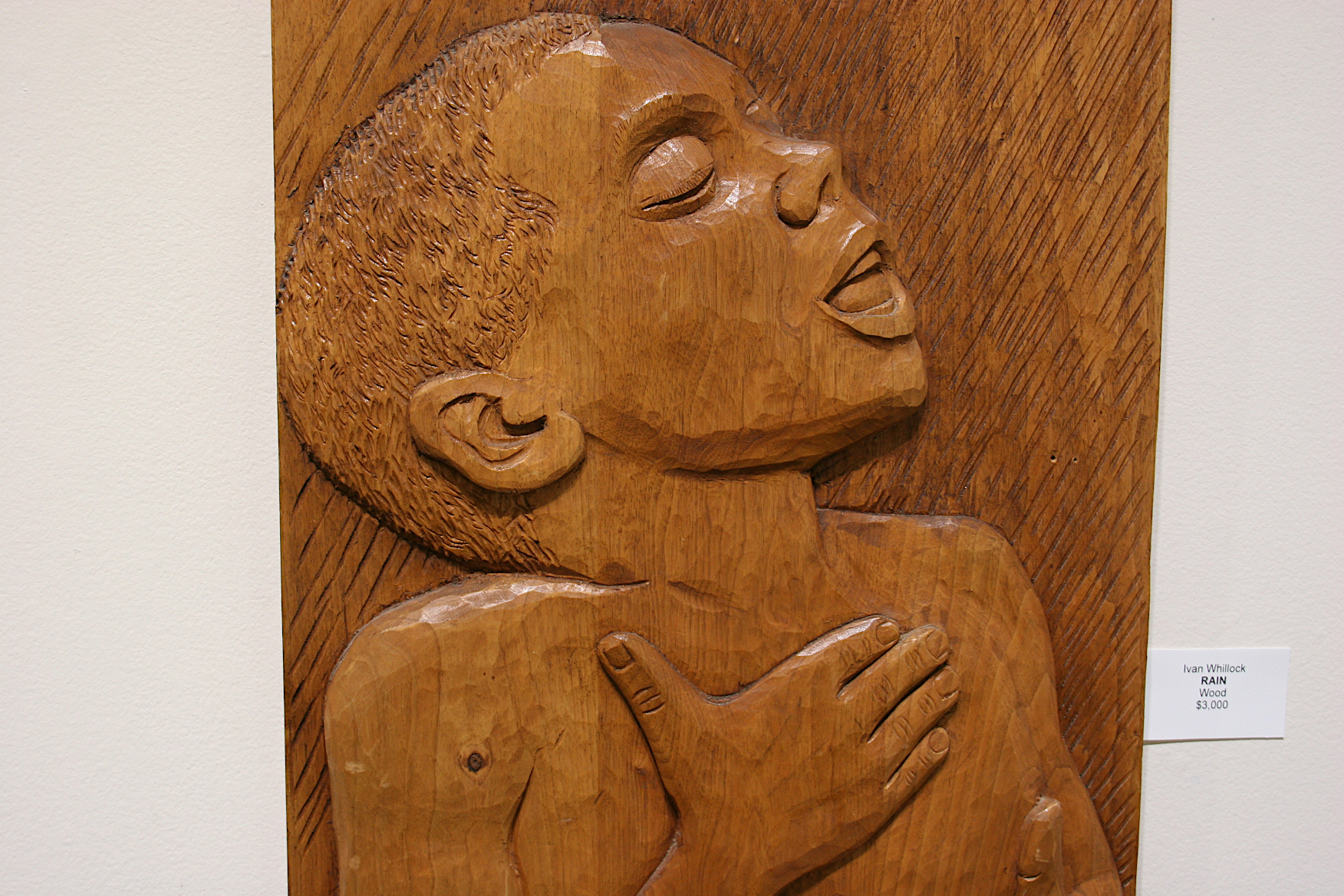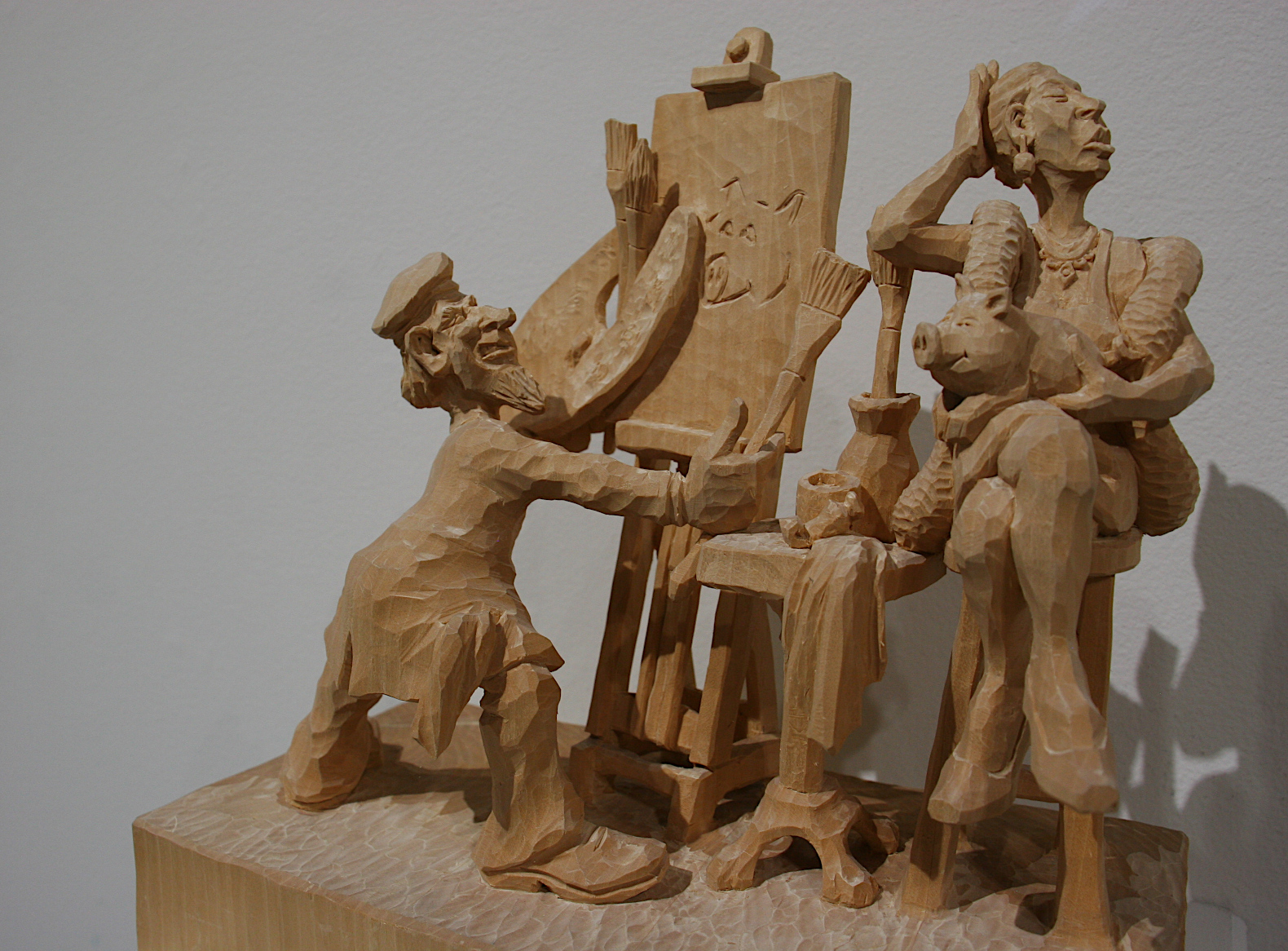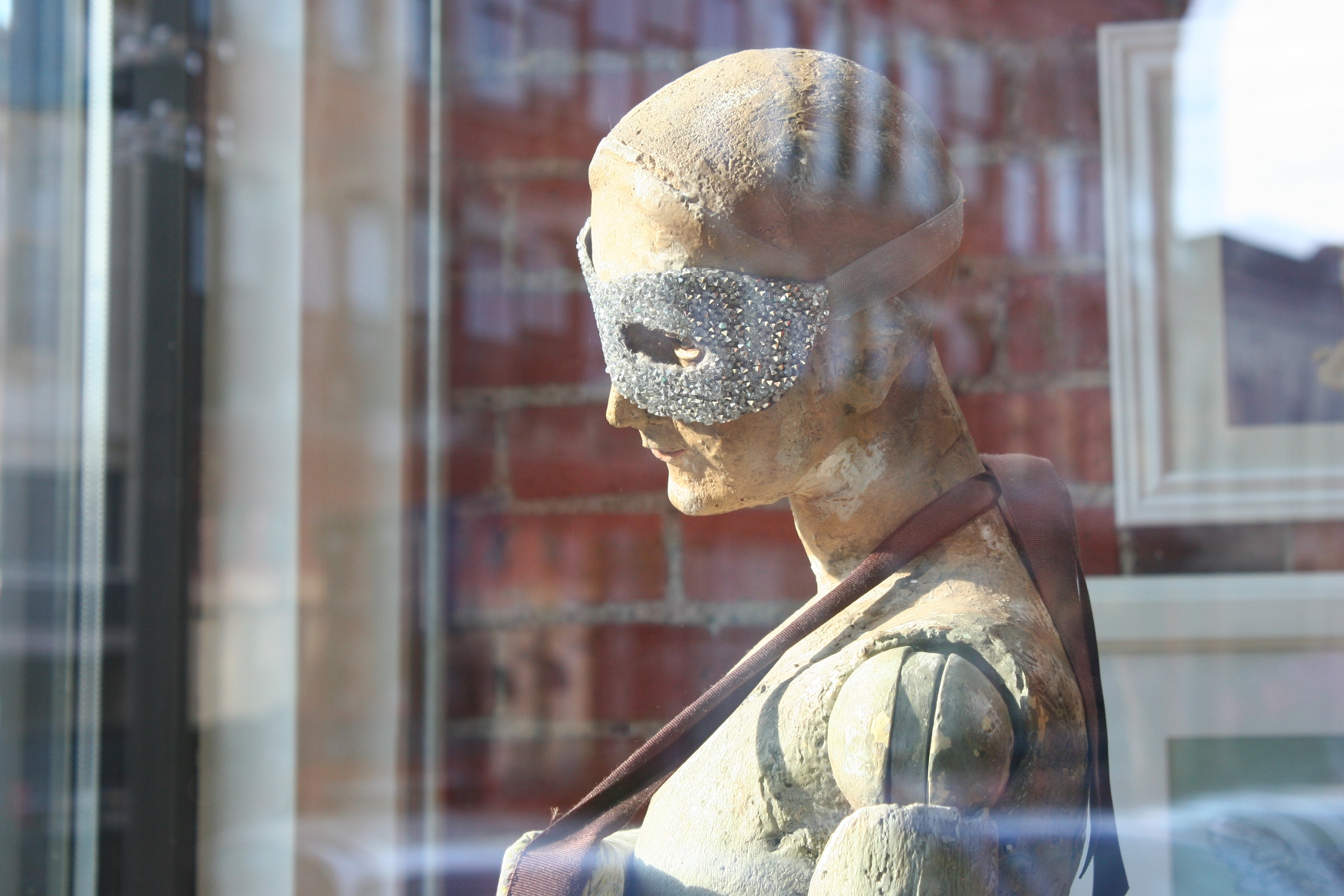
“Rain” by Ivan Whillock priced at $3,000 and exhibited at the Paradise Center for the Arts in Faribault. (Minnesota Prairie Roots copyrighted photo October 2022)
TO HAVE ACCESS TO THE ARTS, whether visual, literary or performing, here in southern Minnesota is such a gift. The arts enrich our lives, open our minds to new ideas and experiences, feed our souls, entertain us and, for me, also inspire.
As someone who grew up in rural southwestern Minnesota with minimal exposure to the arts, I especially value galleries, theaters, libraries, and any place that gives me access to creativity. Creating with images and words is my passion and my life’s work. I embrace the work of fellow creatives, who, like me, must create.
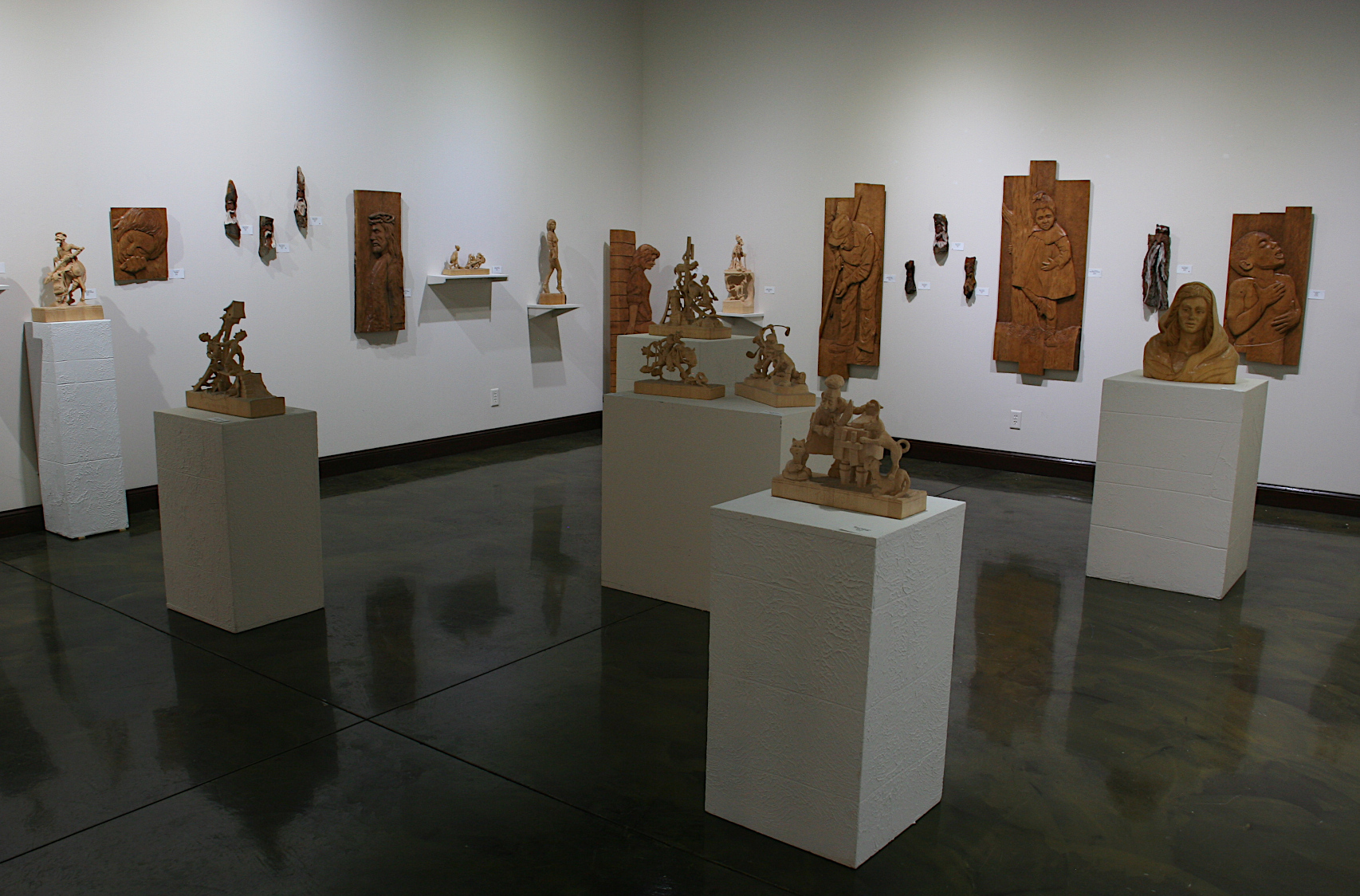
Woodcarvings fill the main gallery at the Paradise. (Minnesota Prairie Roots copyrighted photo October 2022)
Recently, I stopped by the Paradise Center for the Arts in historic downtown Faribault. The PCA centers the arts in my community with four galleries, theater, music, art classes and more. Here in this space, creatives converge. And we as a community are the better for that. I hope those in neighboring Northfield, Owatonna, Waseca and even small town Montgomery, feel the same gratitude for their arts centers.
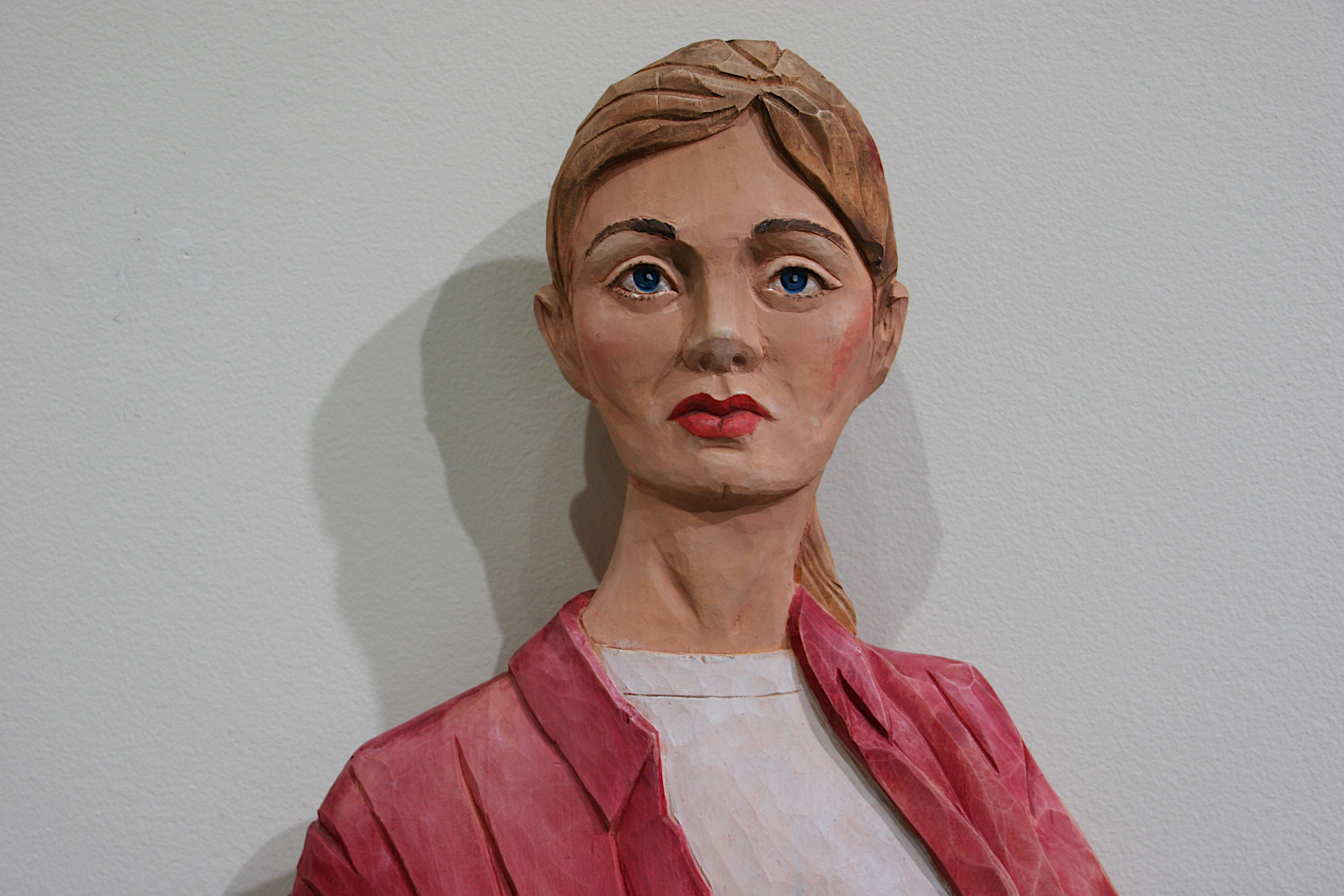
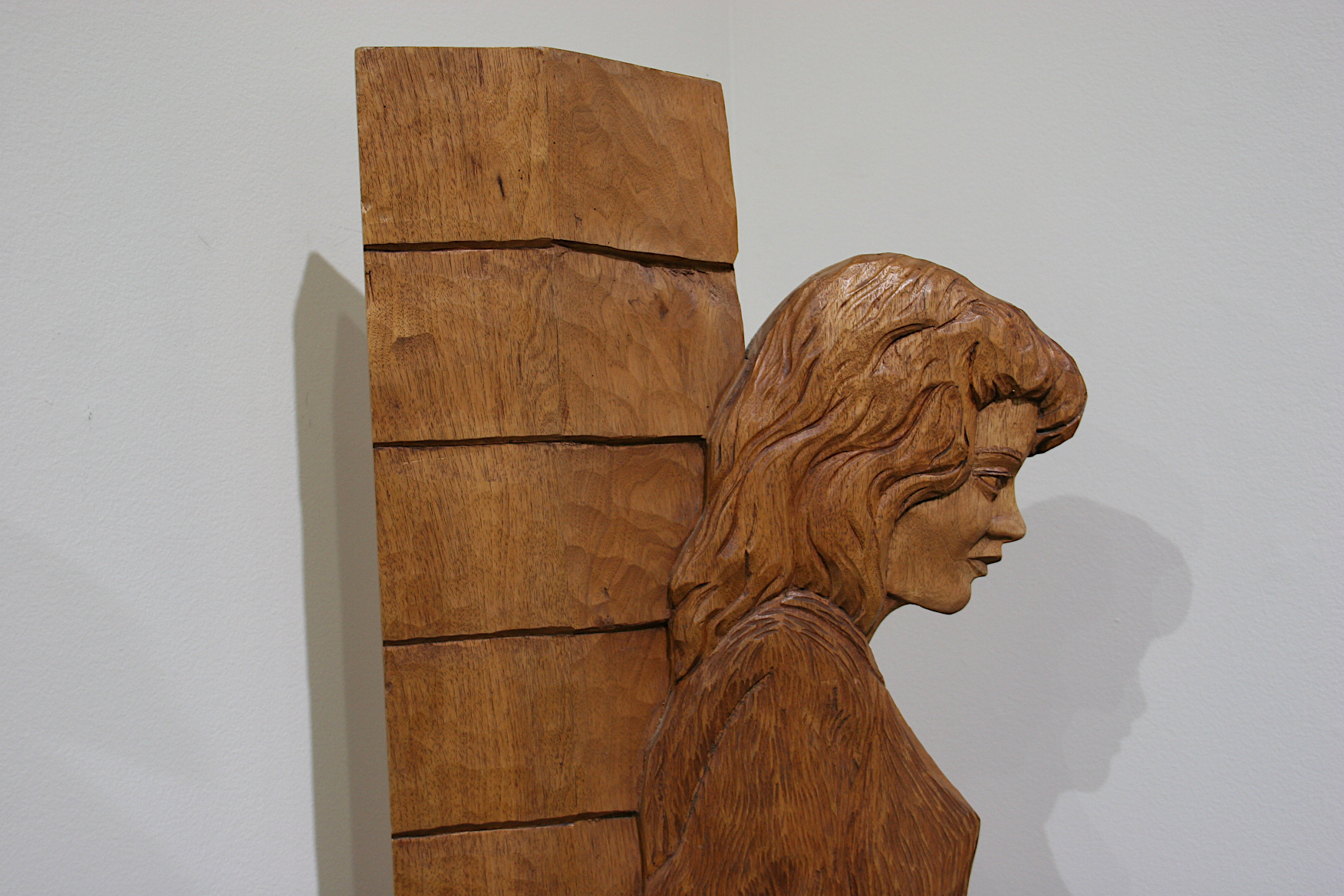
“Eileen” by Ivan Whillock, priced at $1,500. (Minnesota Prairie Roots copyrighted photo October 2022)
The arts broaden our perspectives, make us think, laugh, cry, ponder… When I write and photograph, I feel a sense of purpose and fulfillment if my work resonates, prompts emotions, stirs interest and more. I expect the artists currently exhibiting at the Paradise feel the same. There is joy in getting art out there into the community, joy in connecting.
Marv Kaisersatt specializes in caricatures such as “Portrait of a Pig,” displayed but not for sale. (Minnesota Prairie Roots copyrighted photo October 2022)
As I meandered through the Paradise’s current exhibits, I observed incredible talent and variety in the art displayed. Inside the largest gallery, I meandered among woodcarvings by three Faribault artists, two carving for more than 40 years. Ivan Whillock and Marv Kaisersatt, are award-winning long-time carvers, nationally and internationally-recognized. Their work is decidedly different, but their creative skills decidedly the same—excellent. Both are quiet, humble men.
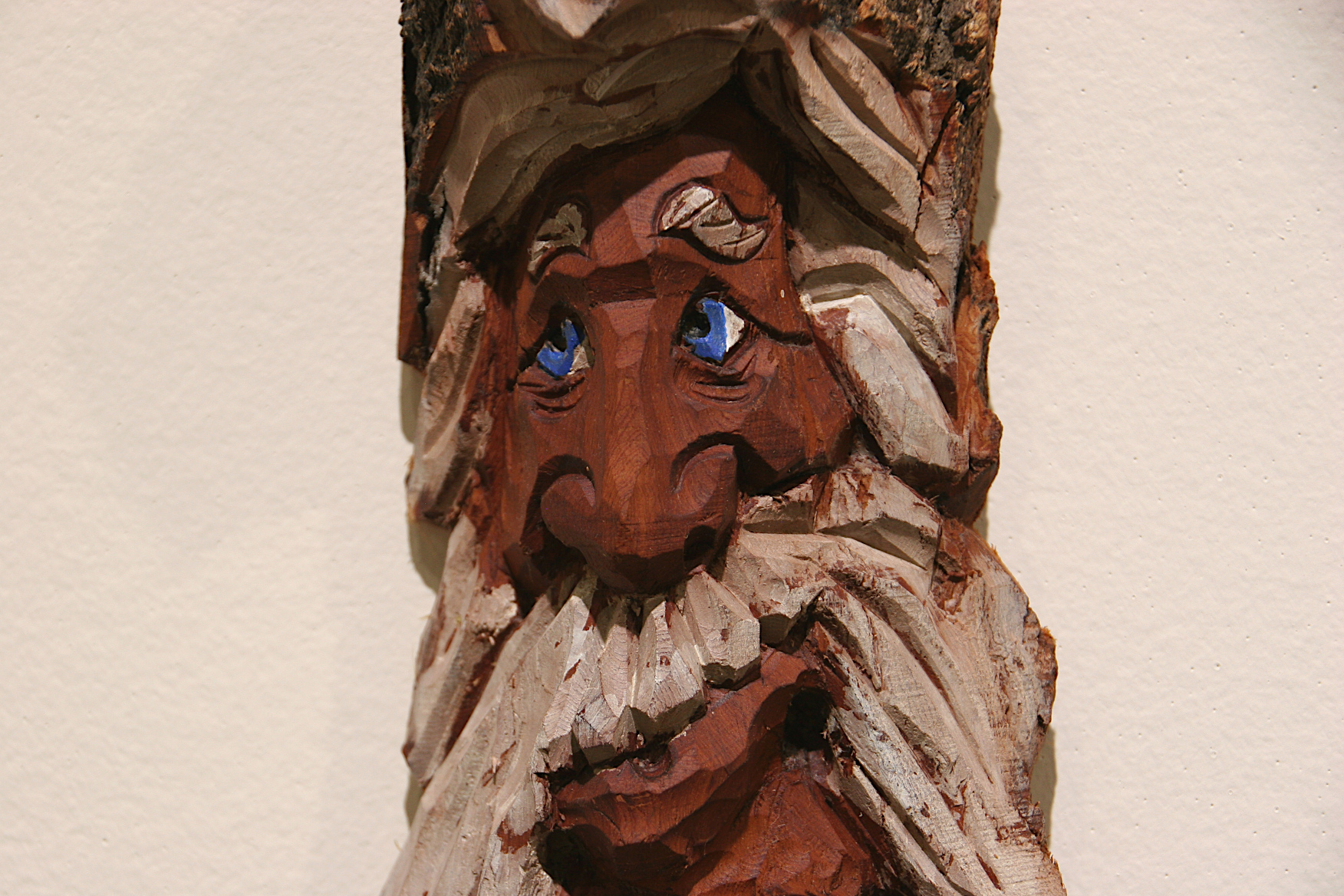
“Wood Spirit” by Chris Whillock, priced at $40. (Minnesota Prairie Roots copyrighted photo October 2022)
Chris Whillock, Ivan’s son, is a talented carver in his own right. The pair create at Whillock Studio in Faribault and operate the Whittling Shack, source for woodcarving supplies, their art and more.
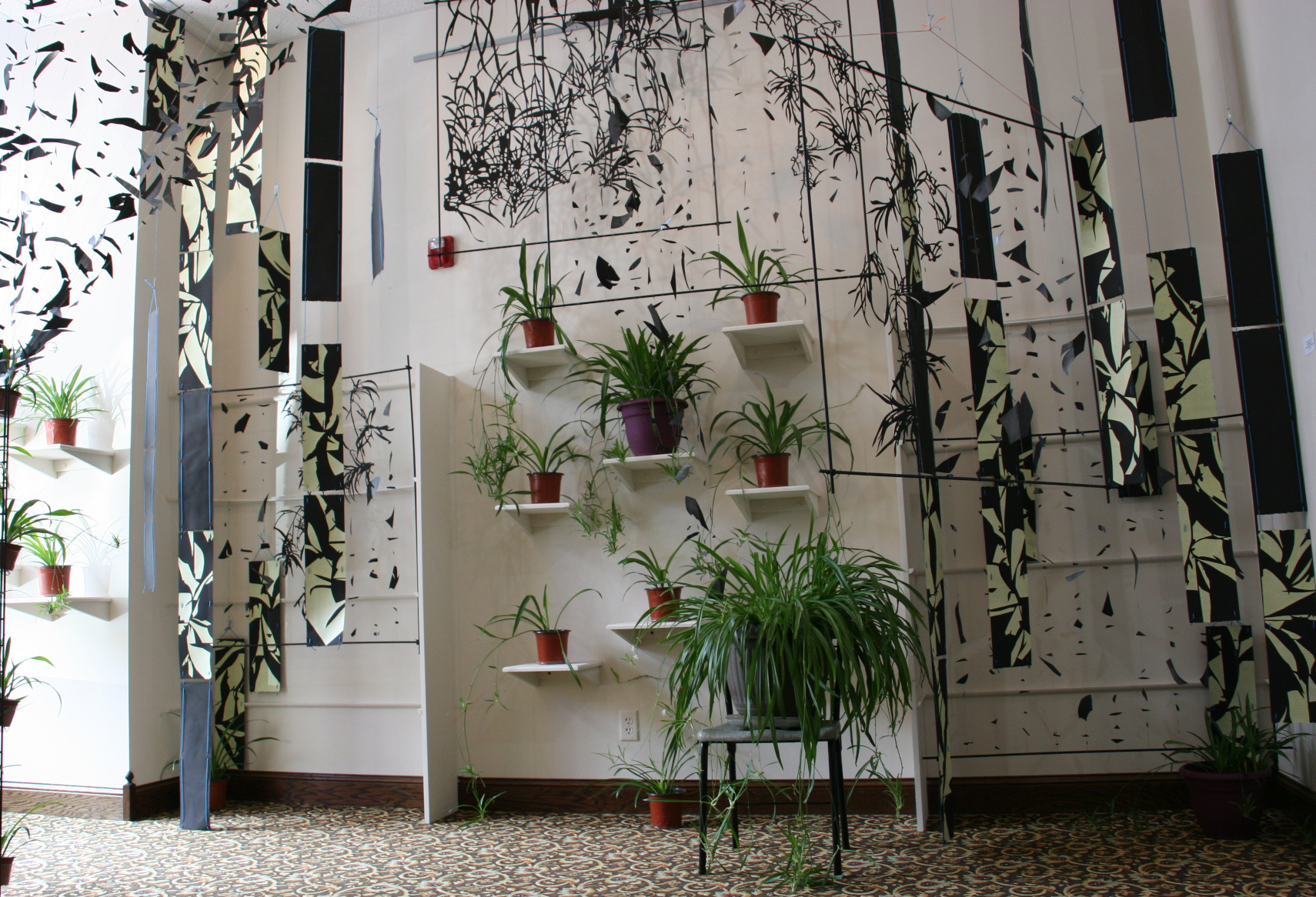
The plant-filled installment by Shelley Caldwell. (Minnesota Prairie Roots copyrighted photo October 2022)
In one of the most unusual installments I’ve ever seen is the art of Shelley Caldwell who lives in rural Faribault County near the Iowa border. Her artistic use of plants to shape art left me standing temporarily immobile, wowed by her imaginative creativity. Peace comes in connecting with nature and I felt that in the scene before me—all that green interspersed with light, air and a sense of movement. Her exhibit also includes mixed media drawings.
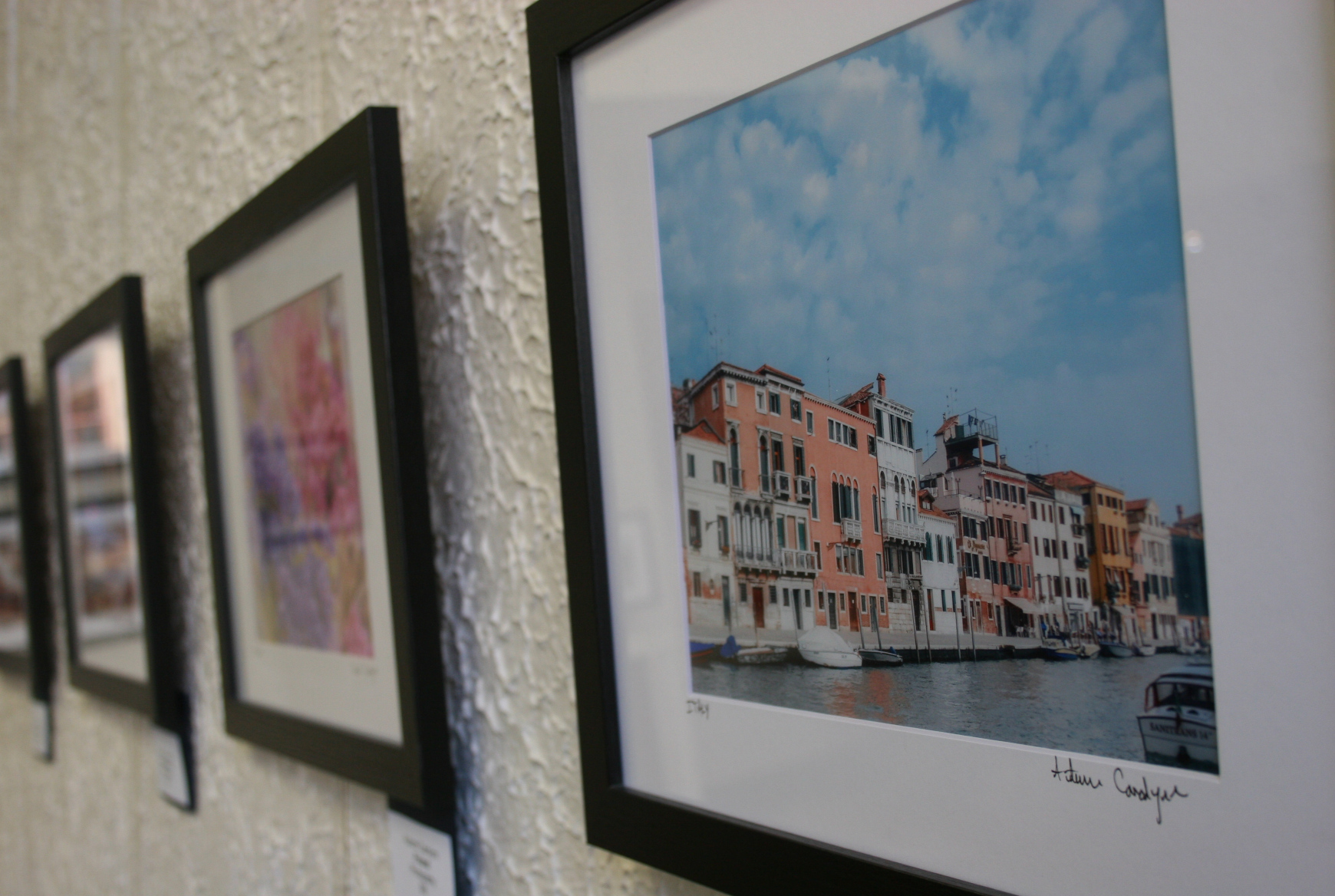
Photos of Autumn Carolynn line a gallery wall at the Paradise Center for the Arts. (Minnesota Prairie Roots copyrighted photo October 2022)
The images of Minneapolis-based travel photographer and writer Autumn Carolynn are displayed in another gallery. Studying the work of other photographers, especially one as talented as Autumn, helps me grow my skills, even if I’m not a world traveler. Her images take me to places I have never seen and never will. She expands my world through her photos and that, too, is an artful purpose.
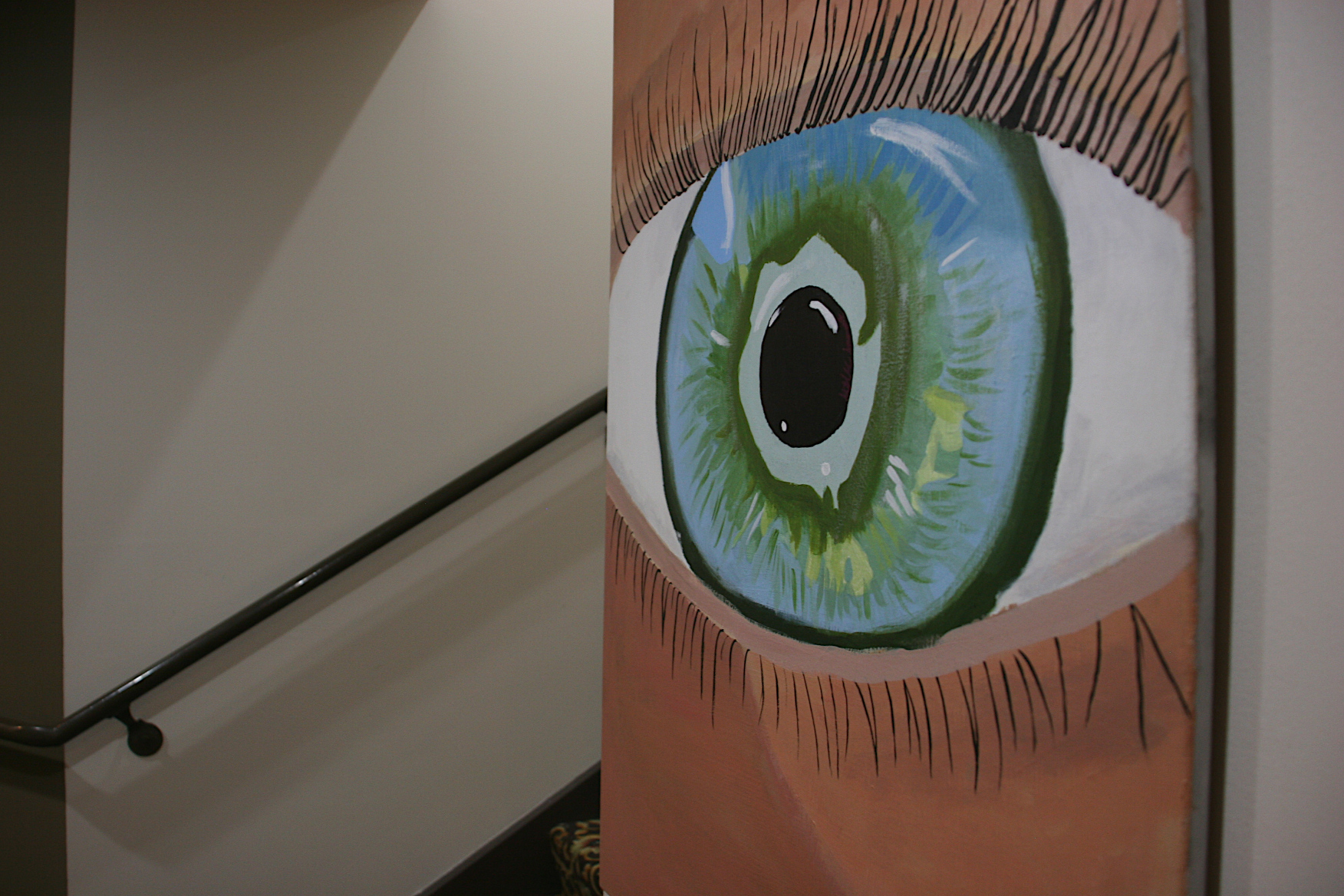
This is an untitled acrylic and latex on canvas by Bethlehem Academy senior Tyler Hogate. (Minnesota Prairie Roots copyrighted photo October 2022)
In the final gallery, the art of selected students from Bethlehem Academy in Faribault is highlighted. I never fail to be impressed by the talent of these young people. I feel gratitude to their teachers, the PCA and others who support them in their creative pursuits. Now, more than ever, students need the arts as an outlet, a way to express themselves, a way to connect.
This shows a snippet of Ivan Whillock’s “He’s Late,” priced at $6,000. (Minnesota Prairie Roots copyrighted photo October 2022)
And now, more than ever in these unsettled times, we as a community, a state, a country, a world, need the arts.
FYI: The exhibit by artists featured here continues until November 12.
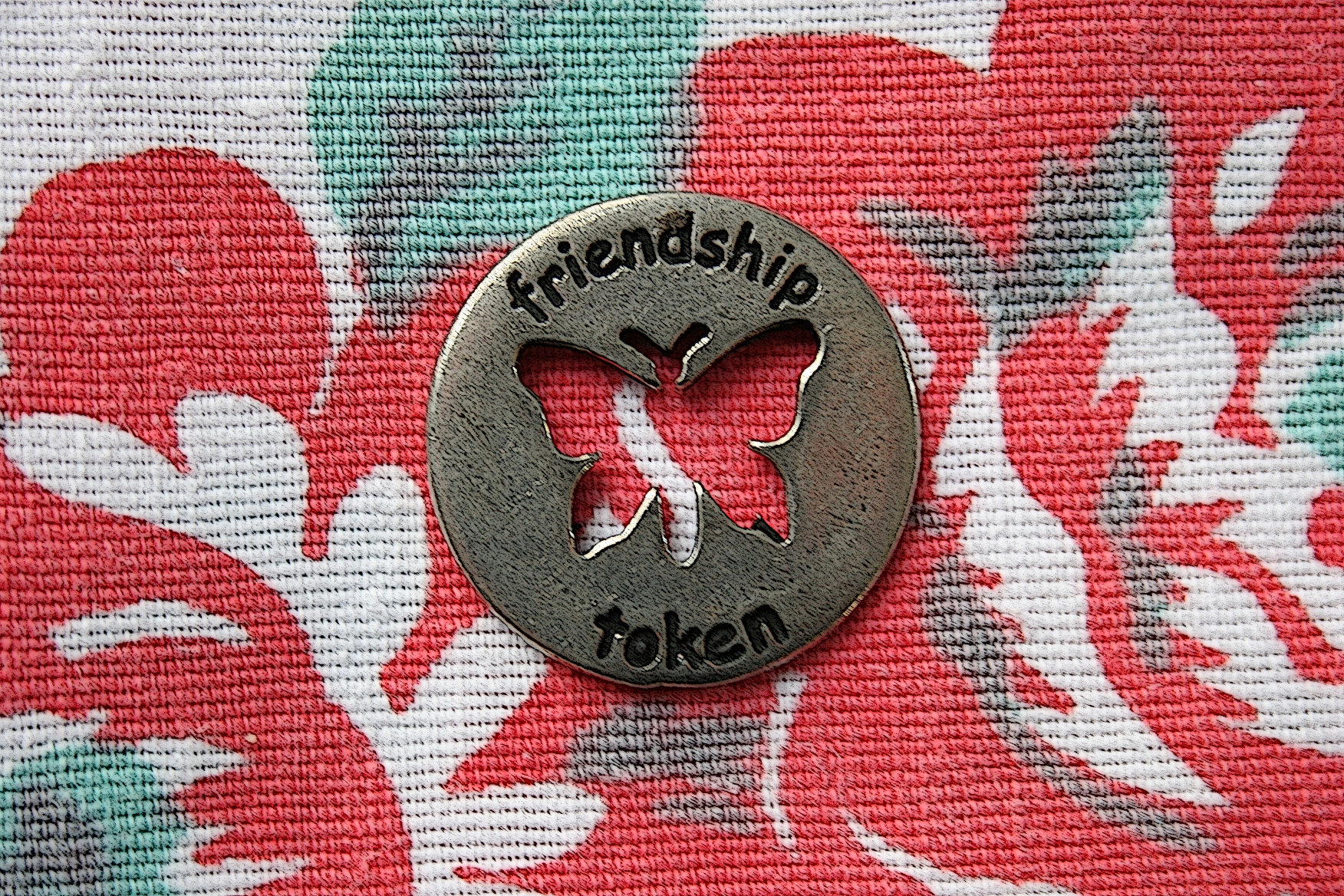
(Minnesota Prairie Roots edited and copyrighted photo October 2022)
GLINT OF SUNSHINE on metal caught his eye while mowing lawn. Five feet from the stop sign, Randy found the quarter-sized round in the grass. A friendship token with a center butterfly cut-out.
Like a writing prompt, my mind wandered to the story behind the token in our yard. How had it gotten there? When? Why? Plots form. Characters emerge. Tension builds.
I imagine the metal circle tossed by an angry friend. I picture friends—pre-teen or teen girls, simply because the token seems like something that age demographic would value—arguing. Perhaps their disagreement was over a boy or some weighty matter like name-calling or something trivial. No matter the reason, it was enough for one to fling the symbol of friendship onto a stranger’s lawn.
Or perhaps the coin was simply lost, fallen from a pocket. That scenario feels better, even if loss never feels good. I expect the physical reminder of friendship provided comfort and reassurance. Touch the coin when stressed, when missing a friend, when needing a moment of connection to someone who cares about you and loves you.
Friendships, no matter our ages, hold such importance. These are our people—those who get us, support us, encourage us, care about us, hold us dear. I cherish friends, from those who are on the level of just beyond everyday acquaintances to those with whom I can share anything and trust that they will listen, keep confidences and be there for me in joyful as well as challenging times. I reciprocate.
EVER-CHANGING
Certainly, friends come and go. The friends I had in grade school through college are mostly now friendships of memory. Memories of jumping rope during recess, dining at Club 59 in Marshall senior year and sitting cross-legged on dorm beds far away from home, our worlds opening wide. These friends will always hold a piece of my heart.
Moves, life changes, circumstances, differences and more change friendships, grow friendships, end friendships. That’s a given in life.
Technology has changed how we connect, form relationships. Through blogging, I’ve grown some close friendships with other bloggers. I never expected this, to first connect online and then develop friendships (think visiting one another, dining together, emailing one another and more). It’s wonderful, this widening of my friends circle. That circle is large, encompassing friends now from New York, North Carolina, Pennsylvania, Texas, even the Netherlands, and other locales, including many places in Minnesota.
ACCEPTING, LOVING, SUPPORTIVE
Life is hard. There’s no denying that we all face challenges at some point in life. But true friends lighten those struggles by their simple, non-judgmental presence, by their support and encouragement. Family histories, grievances and experiences don’t get in the way. These are our friends. Pure. Simple. They accept and love us as we are, for who we are.
I may not carry a friendship token in my pocket. But I understand its symbolism, its importance. I hope whoever lost or tossed that metal circle into my yard has reclaimed her friendship or realized the friendship was not worth continuing. Sometimes that’s the hard truth, too, that not all individuals should remain our friends. Sometimes the friendship token needs to be tossed into a stranger’s yard, left behind so we can move forward.
TELL ME: How do you define friendship and how has it changed for you through the years?
Sunrise on Horseshoe Lake in the central Minnesota lakes region. (Minnesota Prairie Roots copyrighted photo September 2022)
I’M FEELING A BIT INTROSPECTIVE these days. Perhaps it’s the season. Perhaps it’s the state of the world. Perhaps it’s the challenges faced by people I love, people in my circle. I can’t pinpoint a specific reason for feeling this way, only a recognition that my thoughts seem more reflective.
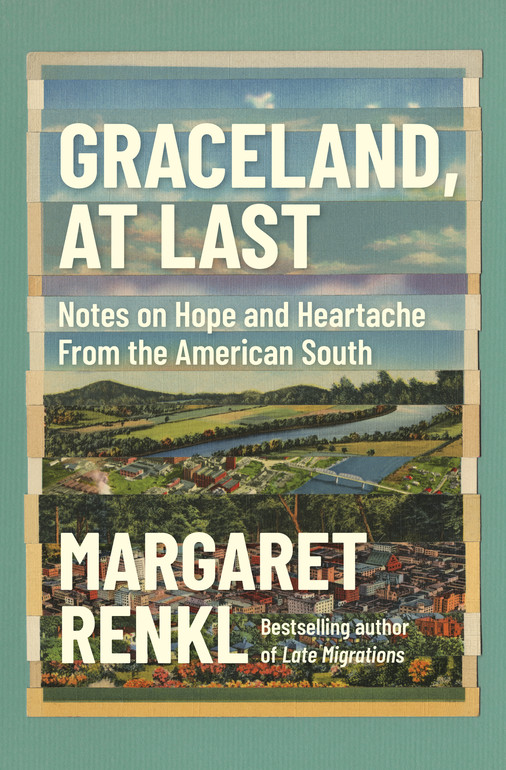
(Book cover credit: Milkweed Editions)
My reading follows that thread. I just finished Graceland, at Last—Notes on Hope and Heartache From the American South by Margaret Renkl. A friend recommended this award-winning book published by Minneapolis-based Milkweed Editions. She knew I would appreciate the essays therein which cover topics ranging from politics to social justice to the environment to family, community and more. So much resonated with me, inspired me, focused my thoughts. To read about these issues from a Southern perspective enlightened me.
Yes, this book includes political viewpoints that could anger some readers. Not me. Equally as important, Renkl also writes on everyday topics like the optimism of youth. I especially appreciated her chapter, “These Kids Are Done Waiting for Change.” In that essay on youth activists, she concludes: They are young enough to imagine a better future, to have faith in their own power to change the world for good.
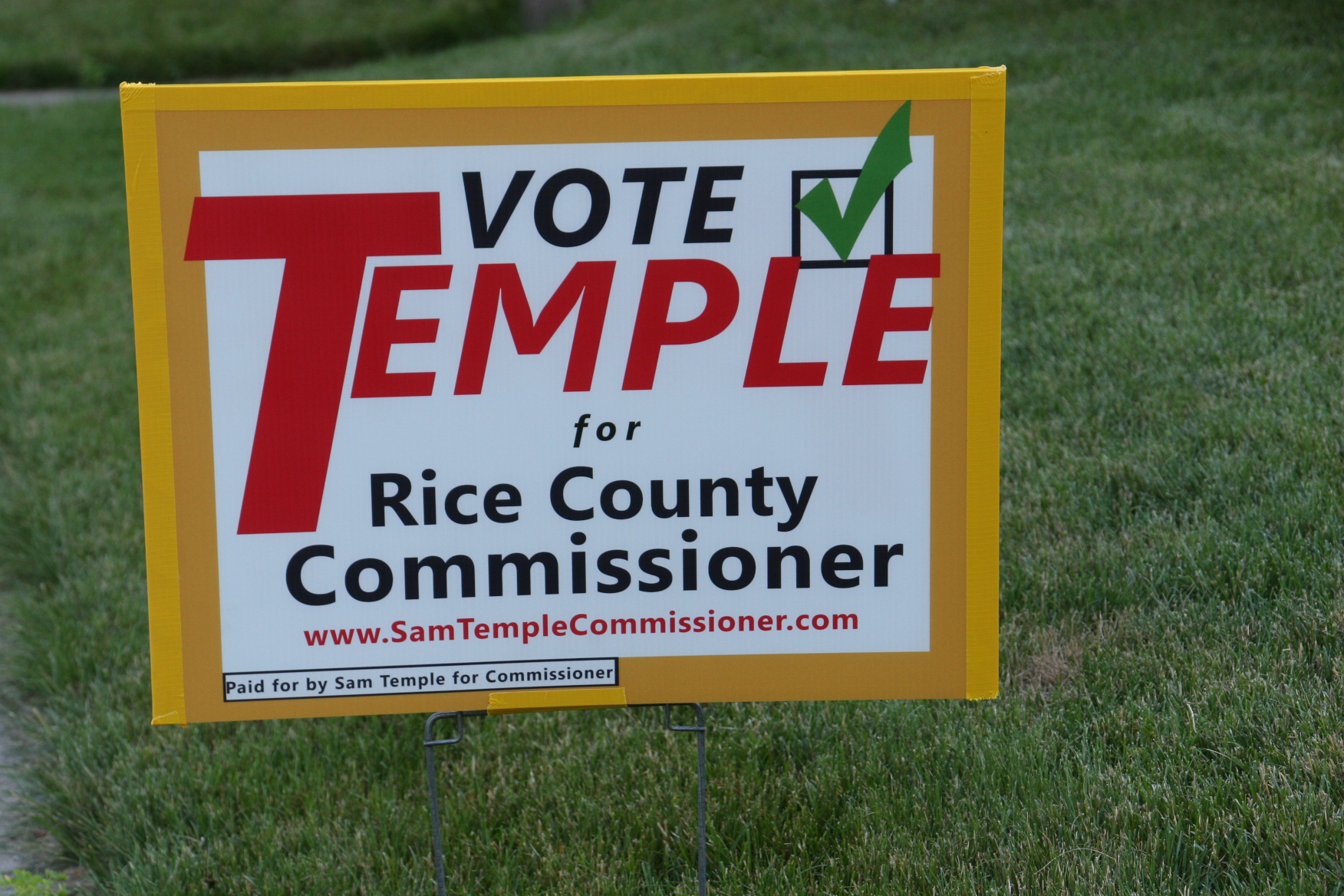
Sam Temple, 21, is running for county commissioner in Rice County. (Minnesota Prairie Roots copyrighted photo July 2022)
That quote fits a young candidate running for Third District county commissioner in my county of Rice. Last week I attended an American Association of University Women-sponsored debate between the two candidates, one 21, the other 67. It’s refreshing to see a young person running for public office, someone who cares deeply about his community, about issues, about history, about humanity. He is well-informed, experienced in public service, thoughtful, a good listener, invested, and brings a new, young voice into the public realm. I felt hopeful as I listened to the two candidates answer written questions submitted by the audience. There was no mud-slinging, no awfulness, but rather honest answers from two men who seem decent, kind, respectful and genuine. Those attributes are important as I consider anyone running for public office. Candidates may disagree, and these two do on some issues, but that didn’t give way to personal or political attacks.
Among Faribault’s newest apartment complexes, Straight River Apartments. Many new apartment buildings have been built in the past year with more under construction. Yet, this is not enough to meet demand. (Minnesota Prairie Roots copyrighted file photo 2022)
Renkl, in Graceland, writes on pertinent topics of concern to many of us, including those seeking election to public office. In “Demolition Blues,” an essay on housing changes in her neighborhood, she shares how housing has become unaffordable for many who work in the Nashville metro. The same can be said for my southern Minnesota community, where high rental rates and housing prices leave lower income and working class people without affordable housing. That’s linked to a severe shortage of rentals and single family homes.
It would be easy to feel discouraged by real-life issues that flow into our days whether via a book, an election, personal experiences, media… But then I think of those young activists, the young candidate running for office in my county, and I feel hope for the future.
Among the many sympathy cards I received after my mom died. (Minnesota Prairie Roots copyrighted file photo January 2022)
I feel hope, also, within. We each possess the capacity to “do something.” That needn’t be complicated as Renkl writes in her essay, “The Gift of Shared Grief.” She reminds readers of the importance of sending handwritten condolences. I understand. My mom died in January and I treasure every single card with handwritten message received. There’s something profoundly powerful and personal about the penned word, about connecting beyond technology. It doesn’t take much effort to buy a greeting card, write a few heartfelt sentences and mail it. Yet, the art of connecting via paper is vanishing. I’d like to see more people sending paper birthday cards again…I miss getting a mailbox filled with cards.
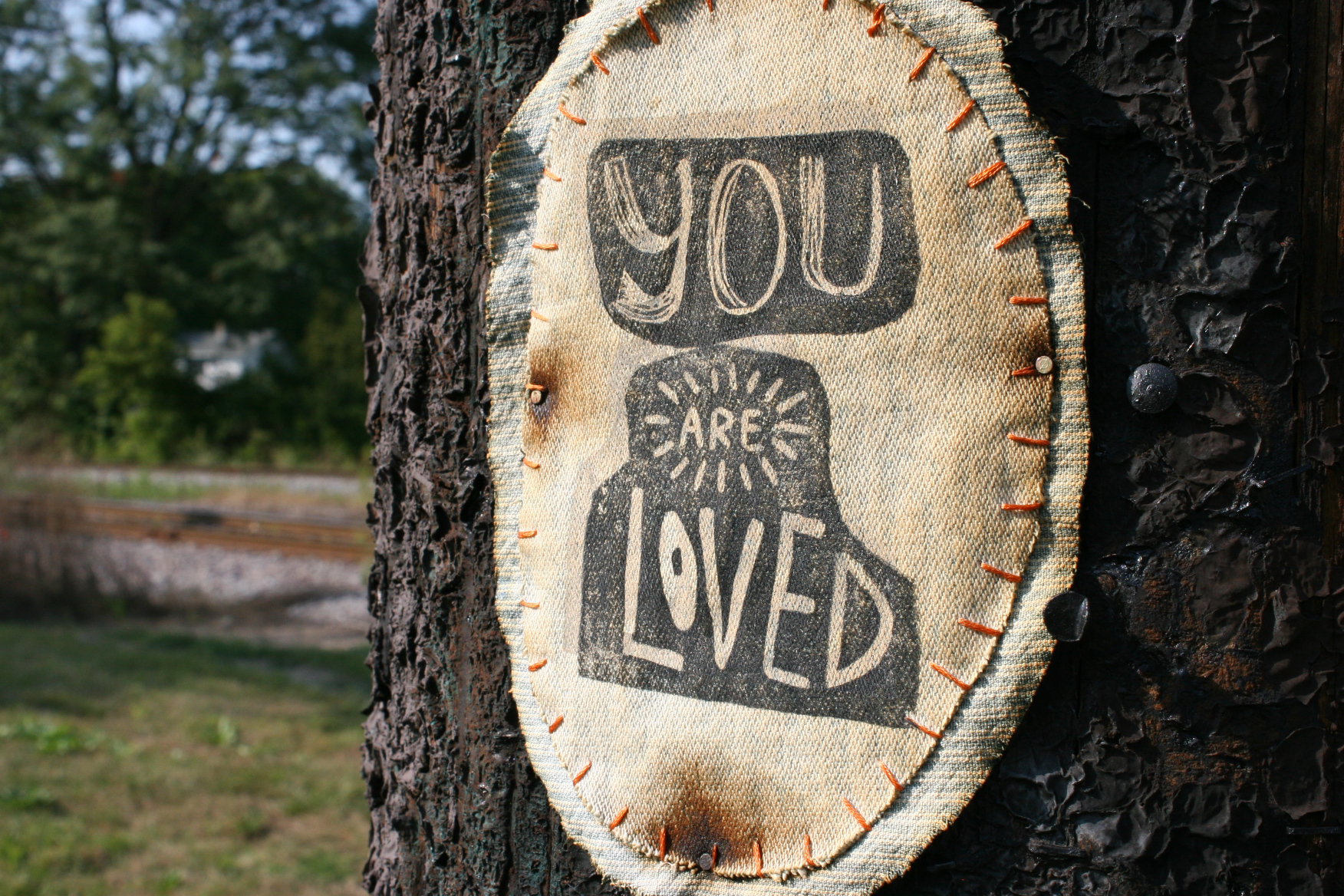
I photographed this message along a recreational trail in the Atwood Neighborhood of Madison, WI., several years ago. To this day, it remains one of my favorite public finds and photos. (Minnesota Prairie Roots copyrighted file photo)
One final essay penned by Renkl, “What It Means to Be #Nashvillestrong,” took me back to that candidate forum last Thursday. When asked to identify the most pressing issue people face locally, the younger candidate replied with “personal issues.” He’s right. No matter what we face jointly as a society (such as inflation), it is personal issues which most challenge us. Author Renkl, referencing a text from a friend, calls those—cancer, death, etc—our “private Katrina.” That in no way minimizes the death and destruction of large-scale disasters like Hurricane Katrina. But we all have something. Her friend texted: One day the sun is shining and all is intact, the next day everything is broken. And the rest of the world goes on. You’re trapped in your own crazy snow globe that’s been shaken so hard all the pieces fly loose.
And when those pieces fly loose in our circle, in our community and beyond, what do we do? We can, writes Renkl, be the hands that help our neighbors dig out.
The Straight River roils by at the dam in Owatonna. I see struggles. I see strength. (Minnesota Prairie Roots copyrighted file photo)
WHAT’S YOUR DEFINITION of strength? Whom do you consider strong? Have you faced a challenge, or multiple challenges, in life that required strength? While our answers vary, especially on the third question, I expect threads of commonality in responses.
Strength, from my perspective, is about fortitude and endurance. It’s about somehow finding the ability to face a challenge, to persevere, to come out on the other side with a renewed sense of personal power. Not power in the sense of control, but power that reaffirms one’s ability to deal with whatever life throws at us.
We all have something, right? Financial hardships. Health issues. Loss. Pain. Family members who are struggling. But, admittedly, when we are in the middle of a lot, it can sometimes feel like we are alone, that others live perfect lives unencumbered by issues that drain, stress and, yes, sometimes overwhelm. Nothing could be further from the truth. I repeat: We all have something, whether individually or within our families. We are not alone.
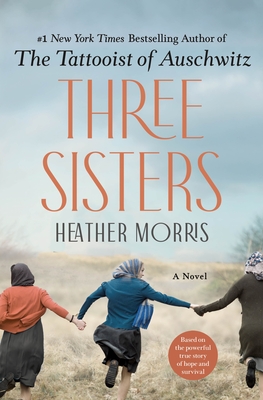
(Cover image from Goodreads)
The novel, Three Sisters by Heather Morris, prompted me to write on the topic of strength. Although fictional, the book is based on a true story about three sisters held in a concentration camp. This is a story of indescribable atrocities witnessed and experienced. This is also a story of irrepressible strength and hope. I encourage you to read this novel and also watch Ken Burns’ newest documentary, “The U.S. and the Holocaust,” which happened to air at the same time I was reading the book. Together, the two were almost too much for me to emotionally take in. It’s a lot to comprehend the inhumanity and cruelty of mankind. Those sent to concentration camps certainly exhibited strength, whether they survived or not.
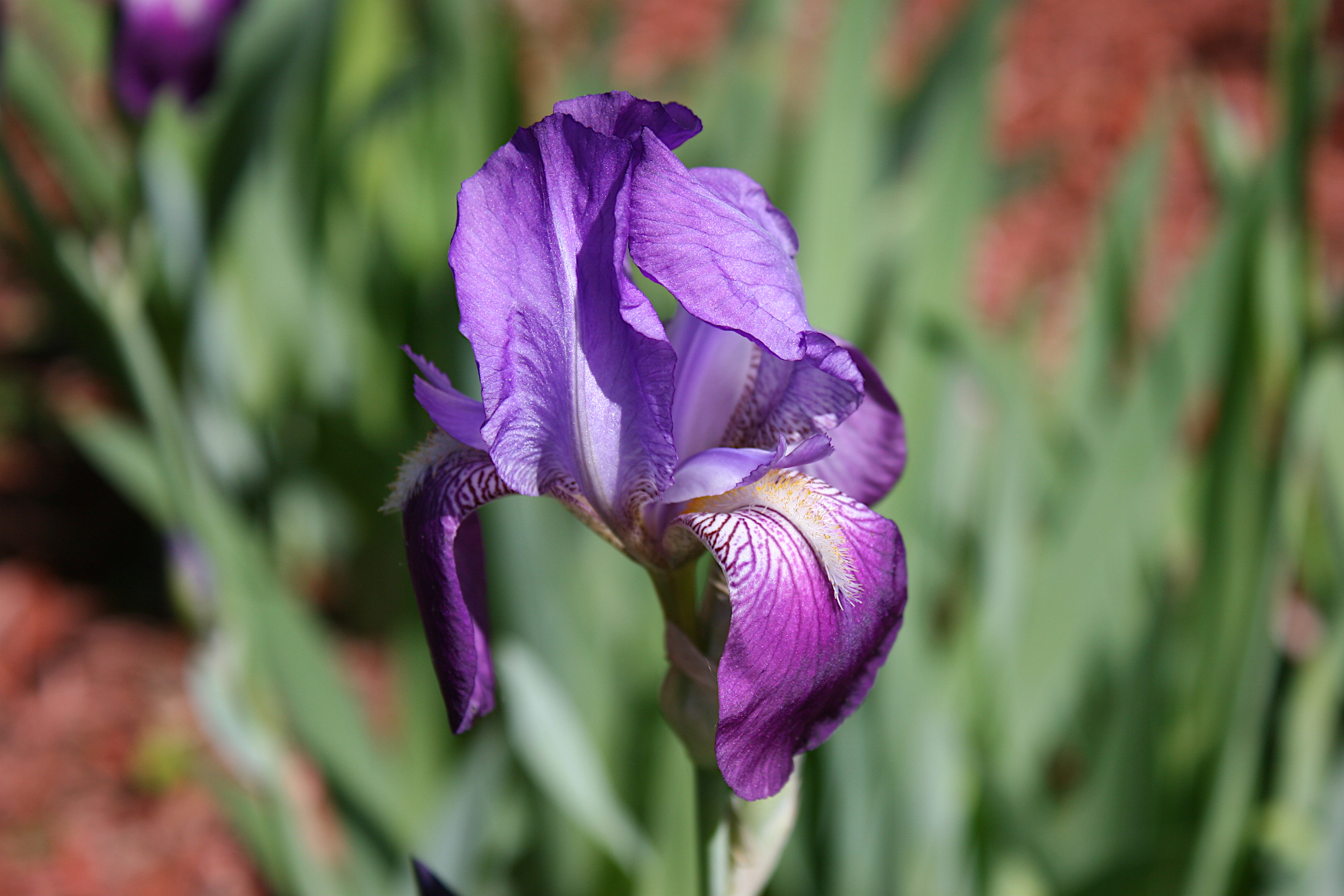
In reading Three Sisters, I learned that gladiolus (the flower) signify strength. And the iris, which is part of the glad family, denotes hope. The iris was my mom’s favorite flower. “Hope” is a word I’ve held, and continue to hold, close. “Hope” is not simply a wish. By my definition, it is an active verb that focuses on light shining through darkness. It is a word, too, that envelopes gratitude and believing that things will get better.
I keep this stone on my office desk. (Minnesota Prairie Roots copyrighted file photo)
My name, Audrey, means noble and strong. I wish I’d asked my mom why she chose that name for me, her first-born daughter. I never did, and now she’s gone, but the name fits. I’ve had to be strong many times throughout my life. We all have something, right? Challenges can make us better, more empathetic and compassionate people. That is the good that arises from struggles.
This message refers to struggles with mental illness. (Minnesota Prairie Roots copyrighted file photo)
This week, especially, with World Mental Health Day on October 10, I consider mental health. From anxiety to depression to brain disorders like bi-polar and schizophrenia, these are undeniably hard diagnoses which require incredible strength to face. Simply getting up in the morning, functioning, can prove difficult. There are no cures. No quick fixes. Medication can manage, therapy can help. And even though we are getting better at recognizing and understanding, stigma remains. We can do better at supporting, encouraging, helping. We need more mental health professionals to meet the growing demand for mental health care.
Strength. Hope. Those two words inspire and uplift. Gladiolus and iris. Those two flowers represent the same. From the pages of a novel about three Holocaust survivors to my name to life experiences, I understand what it means to be strong, to feel hope.
TELL ME: I’d like to hear your thoughts on strength and hope.
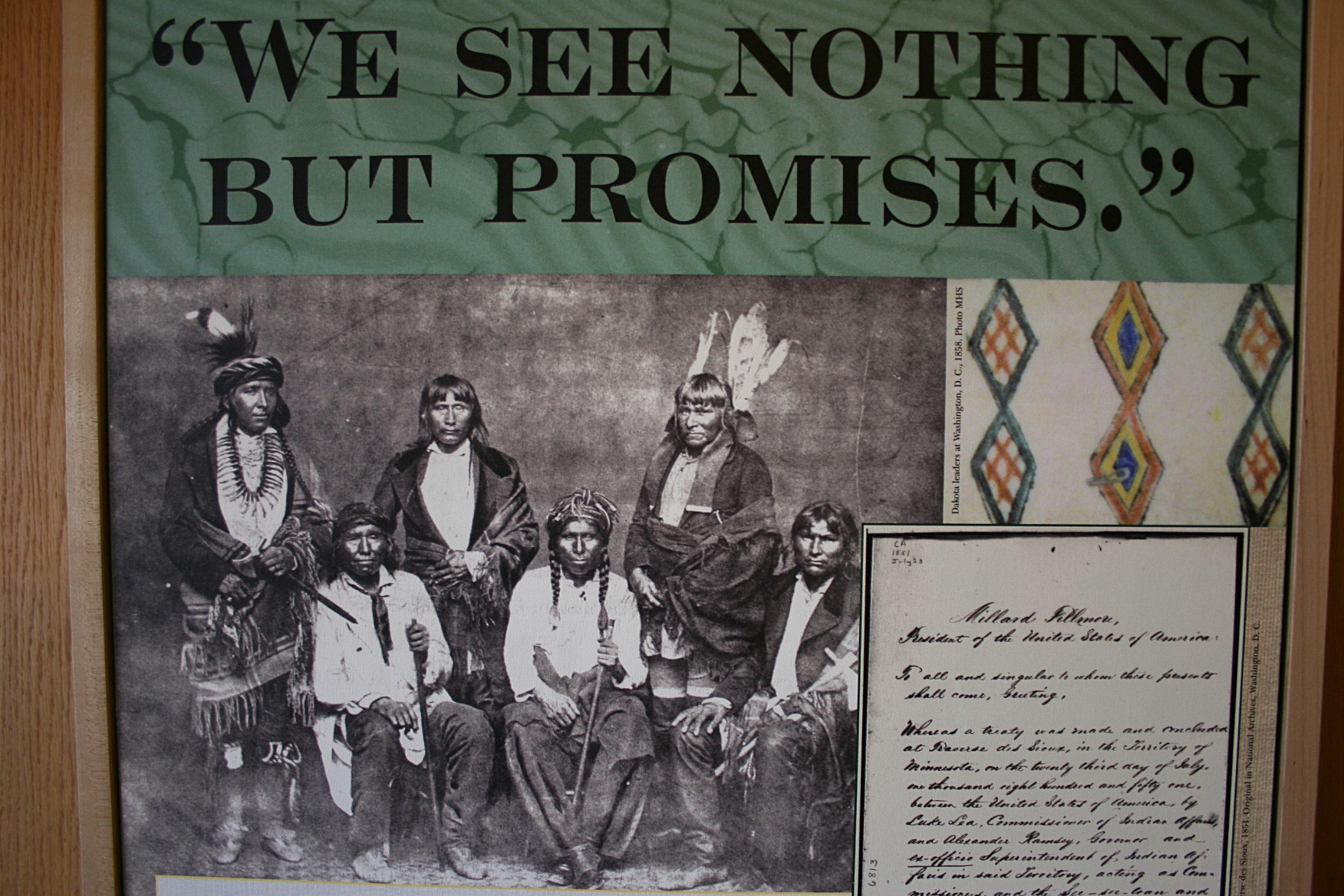
A photo panel at the Traverse des Sioux Treaty Center in St. Peter shows Dakota leaders photographed in Washington D.C. in 1858. The photo is from the Minnesota Historical Society. Broken promises led to the 1862 war.(Minnesota Prairie Roots file photo)
TODAY, INDIGENOUS PEOPLES’ DAY, I think of the US-Dakota War of 1862. When as a high school student I studied that war, I felt an immediate connection to the event which occurred in my home county and neighboring counties in southwestern Minnesota. My interest sparked because this happened in my backyard. Today I have a much better understanding of the 1862 conflict among the native Dakota peoples, the settlers and the government. My learned “white” perspective has shifted, my viewpoint has broadened. That has come through listening, reading, educating myself.
A public art installation at Northfield’s 2022 Earth Day celebration. Northfield has a Land Acknowledgement Agreement. (Minnesota Prairie Roots copyrighted file photo April 2022)
I see the same shift in attitudes throughout our nation, state and communities today. Land acknowledgment agreements are being written. There’s an awareness that indigenous peoples are the original inhabitants of the land, including in my home county of Redwood and my home of the past 40 years, Rice County.
I recently learned that the Wahpekute, part of the Dakota Nation, placed their dead on scaffolding on land just up the hill from my Faribault home. Land that is now a city park. After a year, the bones of the deceased were moved a few blocks away to a permanent burial grounds. That cemetery is not marked as such. Up until a presentation by Susan Garwood, director of the Rice County Historical Society, I was unaware that Peace Park was a sacred place, not simply a triangle of land with a WW II memorial along busy streets. Efforts are underway in Faribault to landmark such places of importance, to honor the Dakota.
A must-read novel based on fact.
It starts at a grassroots level, this unraveling of the truth, this recognition, this acknowledgment. I’ve toured museum exhibits, read books, attended presentations and more to assure that I am informed. I highly-recommend reading the award-winning book, The Seed Keeper by Diane Wilson. (Click here to read my review.)
I value that awareness of Indigenous Peoples’ food, culture, history and more is growing. In Minneapolis, diners can enjoy North American traditional indigenous food at award-winning Owamni by The Sioux Chef, for example.
Back in my home county, the Lower Sioux Indian Community is working hard to assure its culture remains strong through ongoing traditional events and teaching of the Dakota language.
A bison herd has been reintroduced to the prairie at Minneopa State Park near Mankato. (Minnesota Prairie Roots copyrighted file photo 2019)
I still have much to learn about the Indigenous Peoples of Minnesota. That I admit. Perhaps much of it is really unlearning. Today I pause to honor those who called this place, this southern Minnesota, home first, back when prairie grasses stretched high, bison roamed and the land was respected.
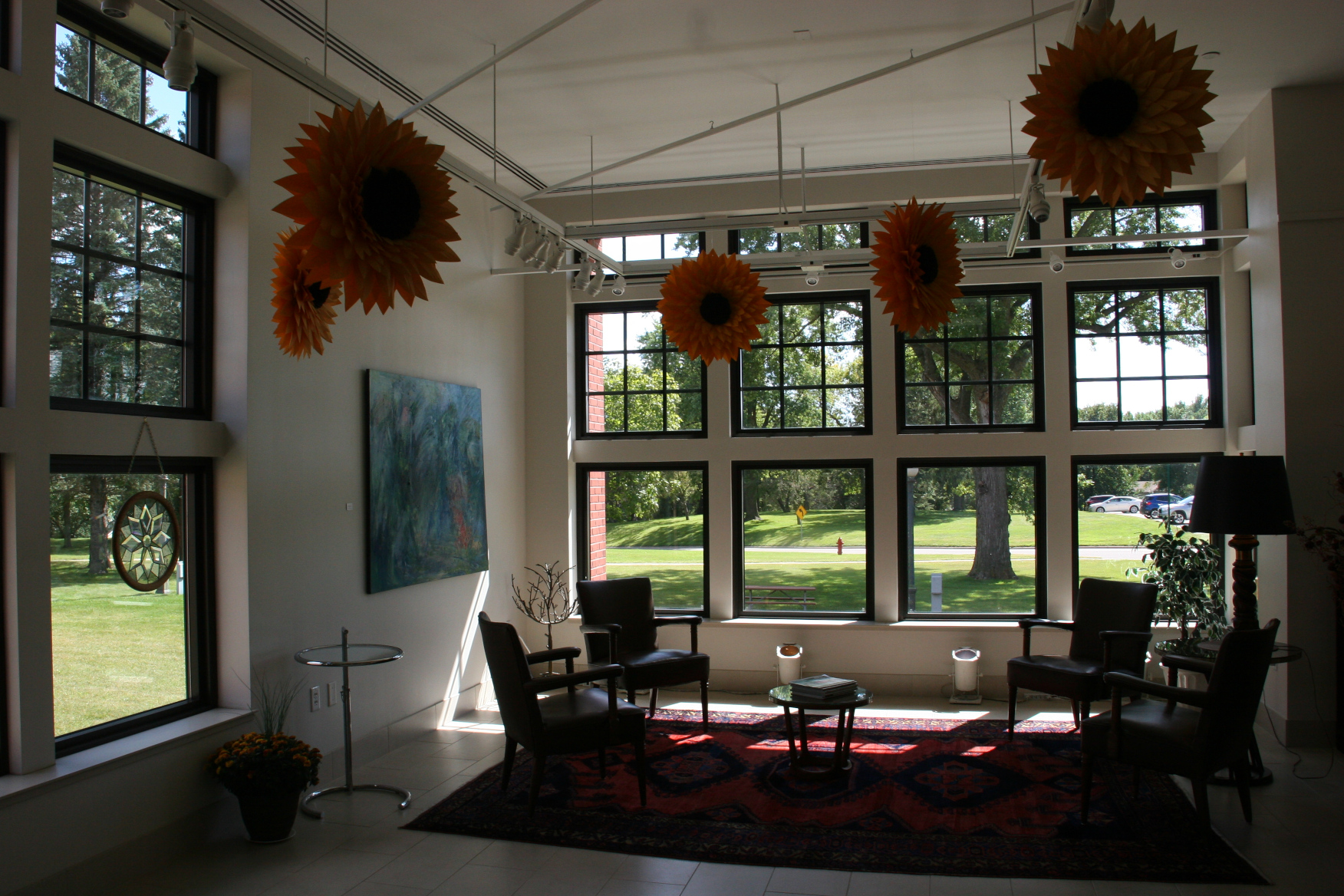
A paper sunflower dangles from the ceiling in a space at the Owatonna Arts Center. (Minnesota Prairie Roots copyrighted photo September 2022)
YELLOW, TALL AND DRAMATIC, the sunflower exudes strength and happiness. I love this flower, so prevalent now in the Minnesota landscape.
Paper sunflowers add a sunny element to an already sun-drenched seating and exhibit area at the Owatonna Arts Center. (Minnesota Prairie Roots copyrighted photo September 2022)
But this year especially, this strong, simple, sunny flower symbolizes much more than the end of the growing season, the ripening of crops, the transition into autumn. The sunflower, as we’ve come to learn this year, is the national flower of Ukraine, the symbol of peace.
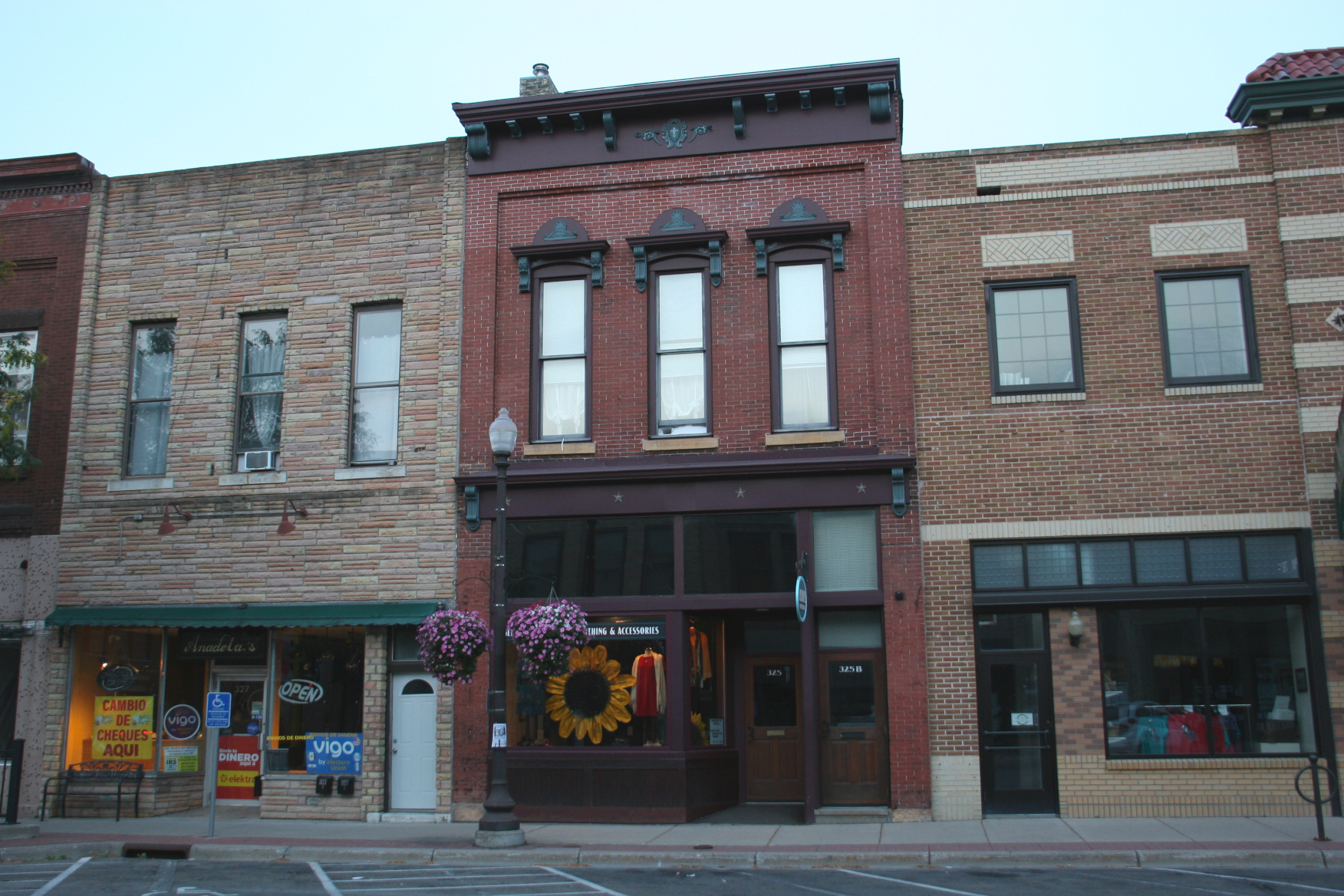
In historic downtown Faribault, sunflowers crafted from milk jugs brighten the window of Fashions on Central, a women’s clothing and accessories shop operated by the Faribault Senior Center. (Minnesota Prairie Roots copyrighted photo September 2022)
Every time I see a sunflower now, I think of the people of Ukraine and the war that still rages there. I remember watching, in the first days of the Russian invasion, media footage of people fleeing the country, people who looked very much like the average Minnesotan. And I thought, this could be us, this could be me.
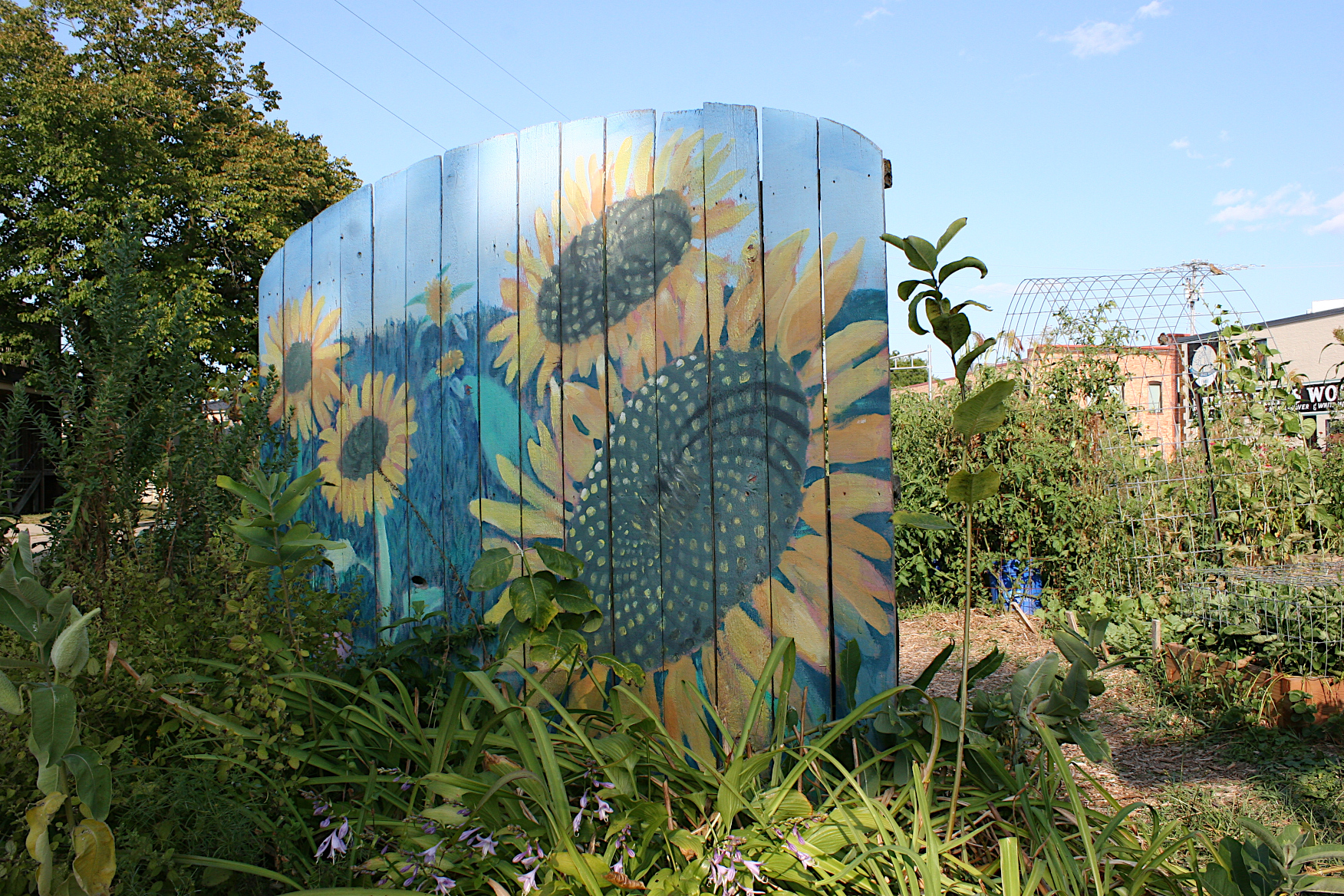
Sunflowers flourish on a fence panel by a community garden plot in Madison, Wisconsin. (Minnesota Prairie Roots copyrighted file photo September 2020)
As the war goes on and on, it is easy to move onto the next headline, to forget about the horrors, the atrocities, the death, the destruction and displacement happening in Ukraine. But then I see a sunflower and I am once again reminded of the suffering in Ukraine, of the elusiveness of peace.
I photographed these sunflowers last autumn at Apple Creek Orchard, rural Faribault. (Minnesota Prairie Roots copyrighted file photo October 2021)
Here in Minnesota, sunflower fields draw families into mazes under bold blue autumn skies. It’s all about the experience and making memories and photo ops among sunny flowers. Thoughts are far from Ukraine in those moments. But even then, in imagining the scene, I see yellow and blue, the colors of the Ukrainian flag. And my thoughts shift back to the people of Ukraine and those who love them, including people right here in Minnesota. In Pittsburgh. Throughout the world.
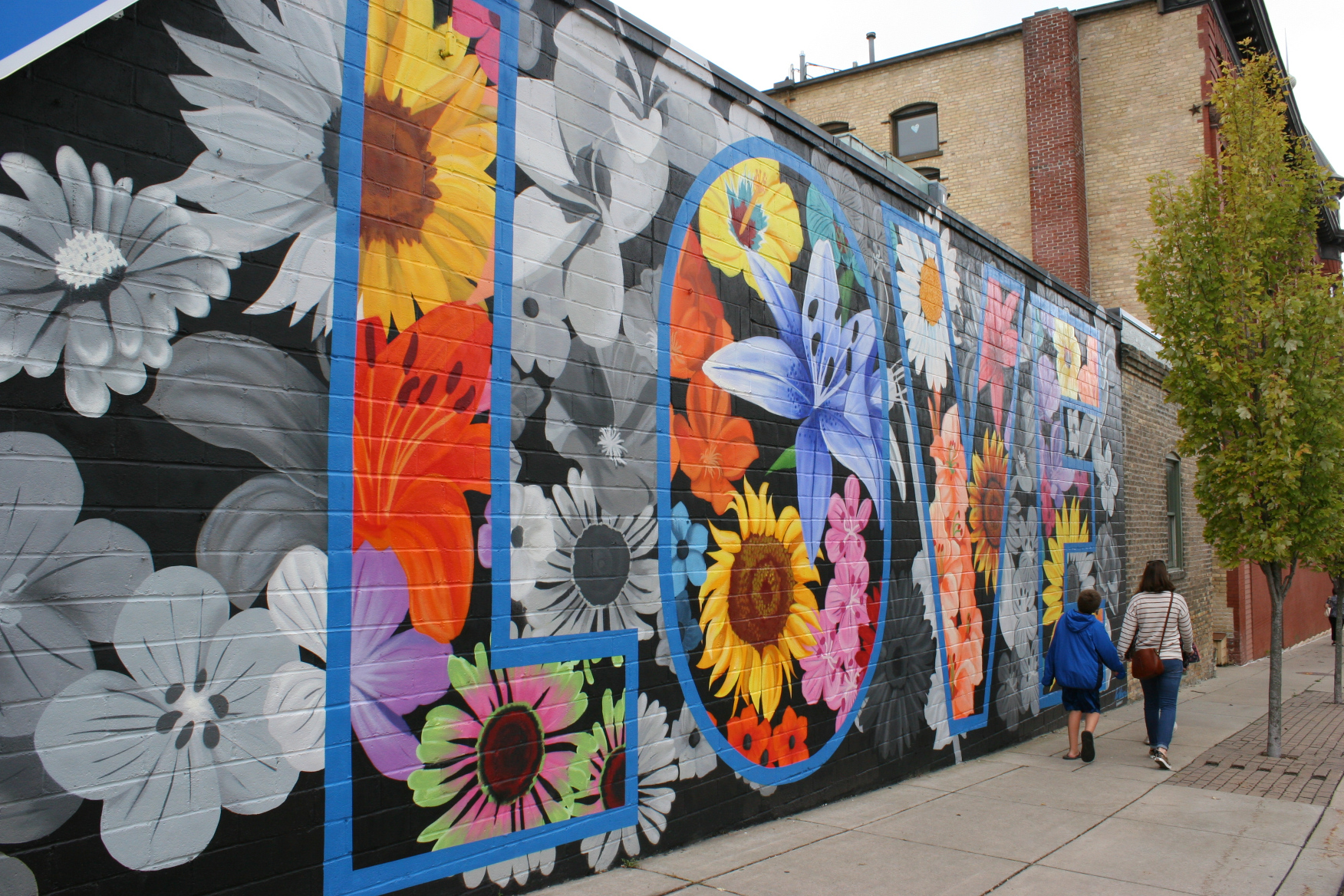
This LOVE mural in Northfield includes sunflowers among the featured flowers. (Minnesota Prairie Roots copyrighted file photo September 2021)
This year, the sunflower has also evolved to symbolize resistance, unity and hope. We’ve certainly seen that happening in Ukraine. Hope is a powerful word, one I’ve latched onto through challenging times. Hope infuses strength. And hope grows sunflowers that rise tall and dramatic in the landscape, their sunny heads turning toward the light of peace.
My son drew this image of the attack on the Twin Towers for a class assignment some 20 years ago. To this day, this drawing illustrates how deeply 9/11 impacted even the youngest among us. (Minnesota Prairie Roots copyrighted image)
TODAY I REMEMBER, honor, grieve.
I remember the September 11, 2001, terrorist attacks on our country, my heart heavy with the weight of loss. Nearly 3,000 individuals died on that day when terrorists hijacked four planes—two hitting the World Trade Center twin towers, another crashing into the Pentagon and the fourth slamming into a field in rural Shanksville, Pennsylvania.
Twenty-one years later, I recall exactly where I was when I learned of the attack. I expect that is the same for most every American, that moment in time forever locked in to memory.
I was in my living room with my 7-year-old son, who was not feeling well and home from school, and his friend, whom I was caring for that day. My husband called from work to inform me of the events unfolding in New York City. I switched on the television and watched in horror as the second plane targeted the second tower.
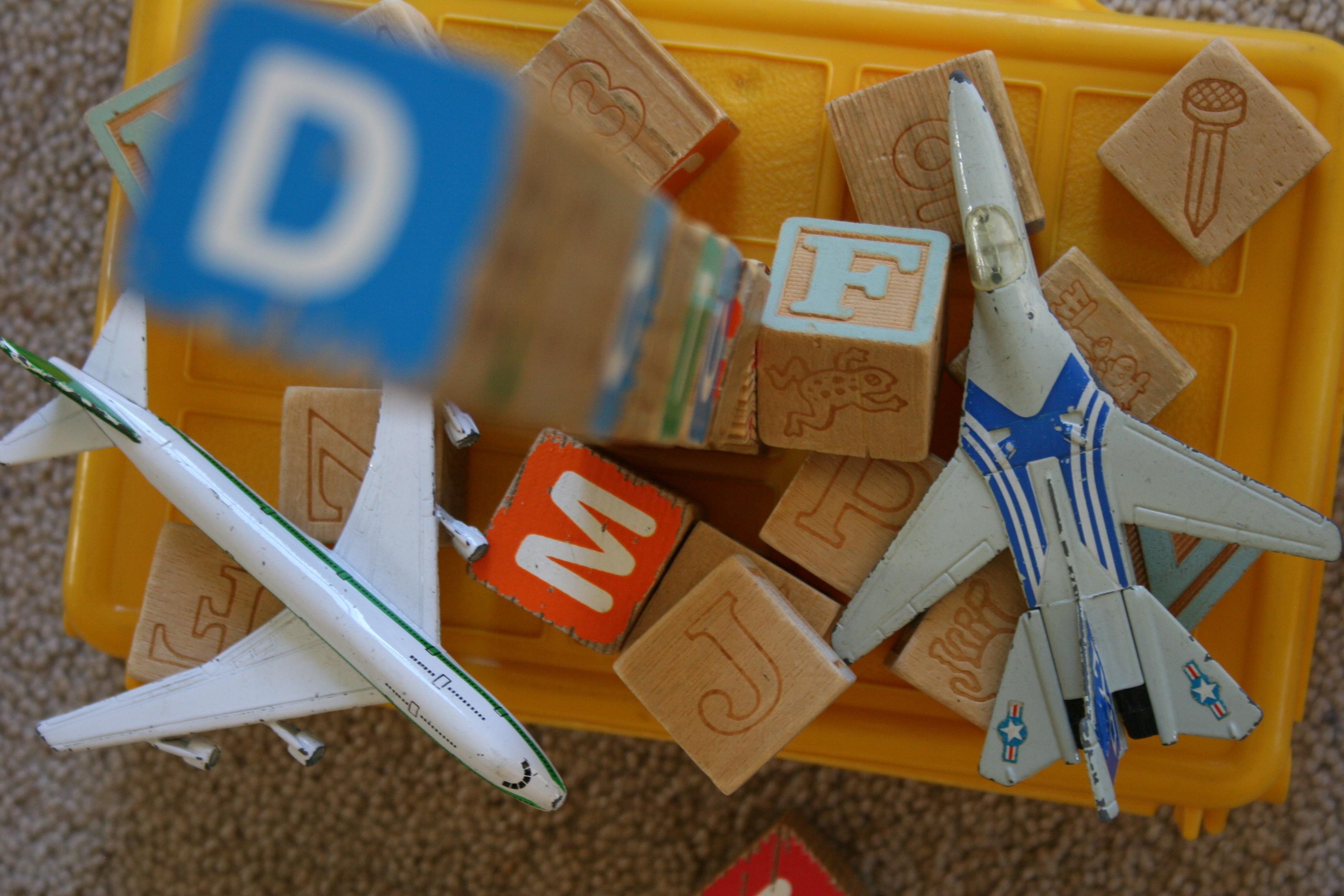
I reconstructed a tower using the same blocks my son and his friend used on September 11, 2001, to duplicate what they saw on television. These are also the same airplanes they flew into the tower. (Minnesota Prairie Roots copyrighted file photo)
Perhaps I should have switched off the TV, not exposed two young boys to the horrific scenes. But I didn’t. Soon Caleb and Sam were building towers from wooden blocks and flying toy airplanes into the stacks, the blocks cascading into a pile.
That visual sticks with me and in many ways reflects how, even in Minnesota, far far away from the epicenter of death and destruction, the impact on ordinary life was experienced. Something as simple as two children playing on my living room represented reality.
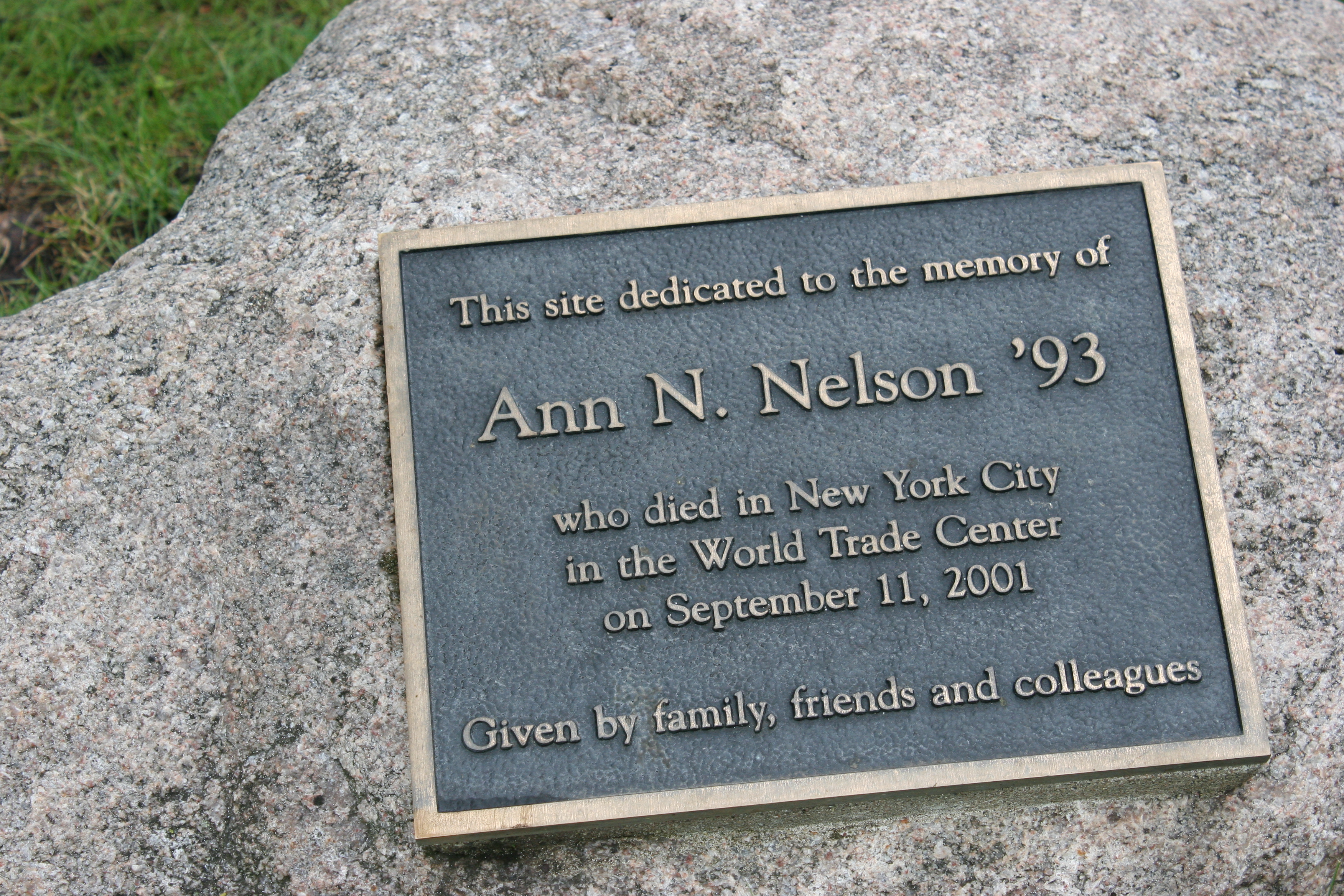
On the campus of Carleton College in Northfield, Minnesota, a plaque honors alumna Ann N. Nelson, who died on 9/11. (Minnesota Prairie Roots copyrighted file photo)
I recall, throughout that day and in the weeks thereafter, feeling unsettled, wondering if more attacks would follow. It was a time of uncertainty and certainly of fear in our country. But it was also a time of unity. We were united in our horror, our grief and in our determination to stand strong as a nation. At least that’s my observation.
Perhaps today, on the 21st anniversary of 9/11, we can temporarily reclaim that sense of unity which has seemingly vanished. We can, whether in Minnesota or New York City, pause to mourn those who died, to support those who grieve personal losses and to reflect on this memorable moment in American history.
TELL ME: Where were you when you heard about the 9/11 terrorist attacks? And how are you feeling today?
A rural Rice County, Minnesota, cemetery. (Minnesota Prairie Roots copyrighted file photo used for illustration only)
NOT AGAIN. My reaction zipped in a flashpoint of disbelief over yet another young Minnesota man shot and killed by police while experiencing a mental health crisis.
The latest to die is Jordyn Hansen, 21, formerly of Faribault. He recently moved to Otsego in the northwest metro to live with an aunt and uncle. There, according to his aunt who was interviewed by a reporter from the Minneapolis Star Tribune, they hoped Jordyn could recover away from a previous lifestyle that amplified his mental health challenges. He had a history of mental illness and substance abuse and had been in treatment.
When Jordyn experienced another crisis early Sunday morning, his family members called police. Narratives of what happened after law enforcement arrived are vastly different. The police say one thing, the family another. In the end, the family seeking help for their loved one is now attending a funeral, which will be held this morning at my church in Faribault.
Both cases involved families seeking help in a crisis. Both involved police response. Both involved knives and tasers and six gunshots that killed two young men. Each only 21 years old, with families and friends who loved them.
I could cite many similar cases, but I’ll leave it at that as I process how upset I feel about the deaths of Jordyn and of Kobe. I can’t put myself inside the heads of responding police officers. Nor was I there to witness what unfolded during each emergency. But I can, as a mother and community member, express my deep concern for this ongoing loss of life among those experiencing a mental health or other crisis. Why does this keep happening? And how can we “fix” this so no family member has to worry about their loved one being shot and killed when they call for help?
Jordyn’s family has started a gofundme fundraiser to help cover his funeral expenses. The goal is $10,000. Jason Heisler, Kobe’s father, donated $21 to the cause. I assume he chose that amount because both his son and Jordyn were 21 at the times of their deaths. It should be noted here that the National Alliance on Mental Illness defines autism as the following:Autism spectrum disorder is a developmental condition that affects a person’s ability to socialize and communicate with others. Consider that when you think of Kobe, who was on the autism spectrum.
Jason Heisler left (in part) this powerful comment on Jordyn’s gofundme site: …preventable should of never happened to this beautiful boy and his family. A mental crisis is not a crime.
Let me repeat that: A mental crisis is not a crime.
#
I am grateful to the many professionals, individuals and organizations (like the National Alliance on Mental Illness) that are working hard to improve mental healthcare and the response to those in a mental health crisis. Through education, training, advocacy, understanding, awareness, compassionate response and intervention, change is happening. Yet, the pace of change feels too slow. A key component in all of this is listening and communication. The approach to individuals in a mental health crisis needs to be thoughtful. A shift in attitudes to recognize that mental health is health should be the standard, not the exception.
I encourage you to help cover Jordyn’s funeral expenses by donating via his gofundme page or giving directly to his family. Thank you.
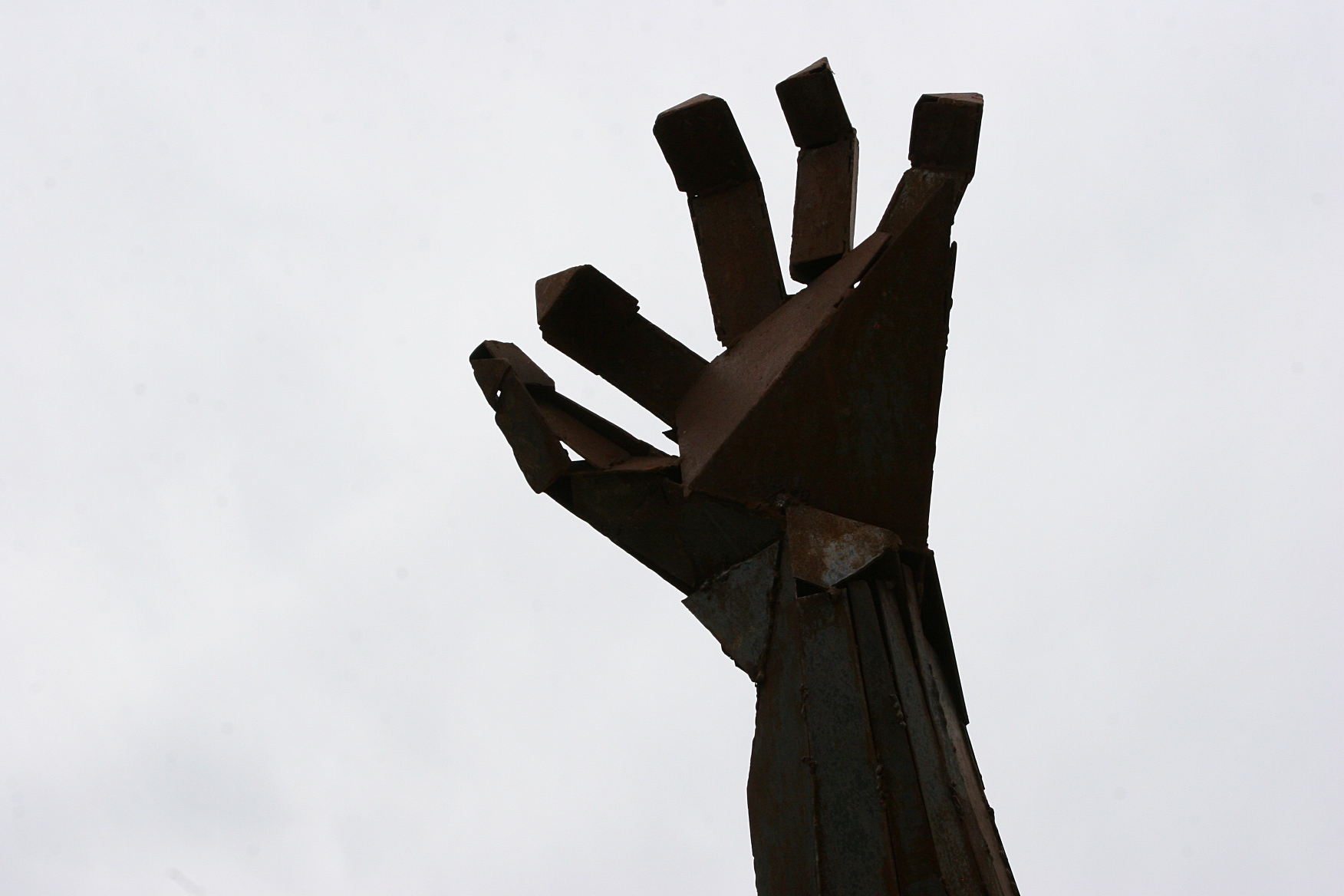
A hand reaches skyward in a mental health themed sculpture that once graced a street corner outside the Northfield, Minnesota, Public Library. (Minnesota Prairie Roots copyrighted file photo 2019)
WHEN HE HEARD ME rant for the umpteenth time about “people just don’t get it, they don’t understand,” he advised, “Then you need to educate them.”
He, my husband of 40 years, is right. Venting to Randy about offensive terminology and uninformed/misinformed comments and attitudes about mental illness does nothing other than temporarily ease my frustrations. Speaking out, writing, based on my observations and experiences, can make a difference. So write about my concerns I will, with the disclaimer that I am not a medical professional.
I photographed this shirt at an event at the Northfield Public Library. This message refers to the struggles with mental illness. (Minnesota Prairie Roots copyrighted file photo September 2019)
WORDS MATTER
Today—on the heels of recent offensive lyrics by Beyonce’—seems the right time to share what’s bothered me for way too long. The pop singer used the derogatory term, “spaz/spazzin,” in her new release, “Heated.” Although she was referencing spastic diplegia, a form of cerebral palsy causing motor impairments in limbs, and not mental health, the analogy fits. Her word choice proved offensive to people who are disabled. And rightly so. To her credit, Beyonce’ acknowledged her unintentional slur and is changing the lyrics. Just like Lizzo, who used the same wordage not all that long ago.
For the millions who each day bravely face mental health challenges and for those who love them, everyday careless language can hurt. Words like crazy, insane, nuts, it’s all in their head, off their rocker, out of his/her mind…are hurtful. As hurtful as the lyrics sung by Beyonce’ and Lizzo.
Recently, while reading a Good Morning America Book Club selection published in 2021, I came across this phrase: “the usual terrible but addictive schizophrenic medley.” In the context of this fictional story, the character was not talking about anything mental health related, but rather about what she was seeing on Instagram. I stopped reading and considered how insulting those words, especially to someone diagnosed with schizophrenia. I doubt the author intended to offend. But she did.
Buttons previously available for the taking at the Northfield library. (Minnesota Prairie Roots copyrighted file photo)
IF YOU HAD…
Now you might say I’m being overly-sensitive. But consider if you, or someone you loved, was diagnosed with cancer, diabetes, whatever, and uncaring words (which I can’t even think of) were tossed out there. It’s no different for those diagnosed with bi-polar, schizophrenia, depression, anxiety, post traumatic stress disorder…
I’m thankful individuals undergoing cancer treatment and/or who have survived cancer, for example, are not subjected to negative/offending words and behavior, but rather are supported with encouragement, fundraisers, even hot dishes delivered to their homes. That type of care and attitude should be a model for how all of us treat individuals dealing with a mental health crisis and their families. We should respond with equal love, compassion, care and understanding. And tangible support.
A sign explains the story behind the “Waist Deep” sculpture in Northfield. (Minnesota Prairie Roots file photo September 2019)
CHANGING ATTITUDES, BUT MORE IS NEEDED
I recognize attitudes toward mental health are changing, that, as a whole, we are growing more informed, finally beginning to reduce the stigma of brain disorders. But much work remains. Individuals in a mental health crisis should have immediate access to care. Busy, understaffed emergency rooms are often the first-line treatment option. I don’t know of a single doctor who would send a person experiencing a heart attack home. Individuals in a mental health crisis, the equivalent of a heart attack, deserve the same immediate life-saving care. Yet the wait to see a psychiatrist often exceeds six weeks, at least here in greater Minnesota. That’s unacceptable.
There’s a need for more mental healthcare professionals and in-patient treatment and recovery centers. There’s a need for more funding, more research. Insurance companies should not determine care/medications or refuse to fully cover mental healthcare expenses.
This sculpture, once located outside the Northfield library, is called “Waist Deep” and addresses mental illness. (Minnesota Prairie Roots copyrighted file photo 2019)
IT STARTS WITH EACH OF US
At a grassroots level—that’s each of us individually—more compassion, support, understanding are needed. A few years ago I walked into a southwestern Minnesota brewery and spotted a man sporting a jacket advertising a neighboring brewery. Imprinted on the back was an image of a straitjacket. I could not believe what I was seeing, especially after also reading the offensive name of the brewery. Later I looked online to read the brewery’s list of “Crazy Good Beer” with words like manic, catatonic, lobotomy, kookaloo… in the craft beer names. Simply writing this makes my blood pressure rise. I wanted to rip that jacket right off that beer drinker, so strong was my anger in that moment. Imagine the uproar, for example, if a brewery used words like chemo or radiation in its beer names or used an IV drip as its logo. Somehow a straitjacket is OK? Not from my perspective.
Imagine, too, if you have gone through cancer treatment and someone said you will be fine now that you’ve completed treatment. In the back of your mind, you recognize that the cancer could return despite the treatment. It’s no different for someone with a serious mental illness. Drugs work for awhile and then they don’t. Medications and therapy help manage symptoms, but there is no cure. Symptoms can return. Relapses, crises, happen.
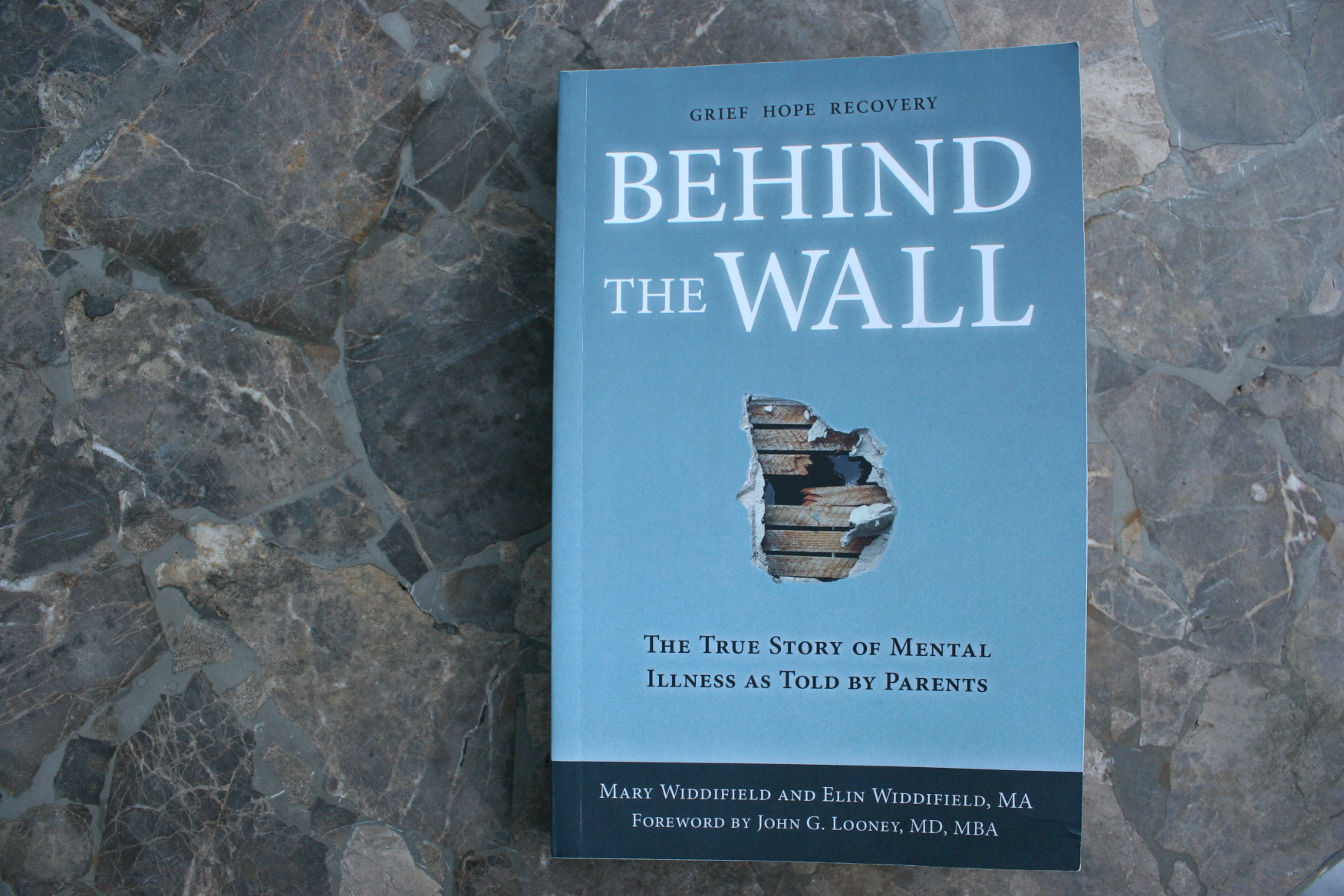
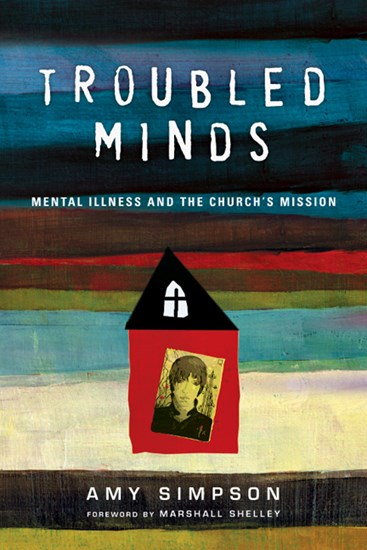
I highly recommend this book, among many I’ve read on the topic of mental illness. (Minnesota Prairie Roots copyrighted file photo)
GRATITUDE & RESOURCES
I appreciate every single person who has made a concerted effort to understand mental health, mental illness specifically. I appreciate organizations like the National Alliance on Mental Illness, which works tirelessly to support individuals and their families who face mental health challenges. I appreciate NAMI’s advocacy work and education. I appreciate mental healthcare professionals. And, most of all, I admire those individuals who deal with mental illness—whether depression, anxiety, post traumatic stress disorder, schizophrenia, bi-polar… They are among the strongest people I know and they deserve, yes, deserve, our love, compassion, understanding, support and respect.
The Tin Woman sculpture from Lockerby Sheet Metal lies outside the log cabin at the Rice County Historical Society in Faribault where she will be placed. (Minnesota Prairie Roots copyrighted photo July 2022)
WHENEVER I THINK of a tin man, I think of three specifics: The Tin Man from The Wizard of Oz, The Tin Man and his family in Faribault, and the absence of a heart.
This Lockerby Sheet Metal Tin Man awaits reassembly outside the county museum. (Minnesota Prairie Roots copyrighted photo July 2022)
In the classic tale by L. Frank Baum, The Tin Man is in need of a heart, or love. The Scarecrow needs a brain. And the Lion needs courage.
The family includes a baby in a buggy. (Minnesota Prairie Roots copyrighted photo July 2022)
Now you can take away whatever you want from Baum’s book, for there are, indeed, many take-aways. But the basics of love, knowledge and courage stick all the way along The Yellow Brick Road to The Emerald City.
The Tin Woman, up close with her vivid red lips. (Minnesota Prairie Roots copyrighted photo July 2022)
I wish I didn’t believe this to be true. But too often these days I see heartless Tin Man after heartless Tin Man (you may also insert “woman” here) following a narrow pathway of self-focus with no regard for others. There’s no self-awareness of how actions, words, decisions hurt others. Or perhaps, more accurately, there’s no care for how others are affected by what we say or do. That can apply in business, in politics, in relationships, in friendships, in families…
The family even has a dog. (Minnesota Prairie Roots copyrighted photo July 2022)
Sometimes I feel like our collective hearts are missing or atrophying and we really ought to work harder at being kinder, more caring, more considerate, more loving. Better people. Period.
The Tin Man and Woman stand outside Lockerby Sheet Metal in September 2010, when the Straight River flooded. That event devastated the business. (Minnesota Prairie Roots copyrighted file photo September 2010)
That leads me to The Tin Man and his family in Faribault. A few weeks ago I photographed them at the Rice County Historical Society, where they’ve been hanging out for awhile. Originally, their home was at Lockerby Sheet Metal, which closed abruptly in October 2018 after 110 years in business in Faribault. I’m thankful this family found a new home at the RCHS. They are local icons.
A sign on the Rice County Historical Society states its goal. (Minnesota Prairie Roots copyrighted photo July 2022)
Keeping this family together, recognizing their collective value, says something about the heart of a community. Locals care about The Tin Man and family from an historic, artistic and business perspective. And, perhaps, also from a love perspective. These creations of Lockerby Sheet Metal can visually represent community love. Yes, that’s the marketing, creative and hopeful side of me writing.
This knight metal art sculpture from Lockerby Sheet Metal stands inside the RCHS entry. (Minnesota Prairie Roots copyrighted file photo)
Even as I believe too much heartlessness exists in today’s world, I also believe that we are capable of growing our love for one another, of strengthening our hearts. Rather than follow a self-focused narrow Yellow Brick Road, we can pause, stop, consider. Pause. Stop. Consider. When we recognize how our words and actions affect others, then we no longer rattle around like a Tin Man (or Woman) without a heart.
Recent Comments