Minnesota Prairie Roots

Writing and photography by Audrey Kletscher Helbling

An April 1 commentary about candy, but not really April 1, 2025

Filed under: Uncategorized — Audrey Kletscher Helbling @ 6:00 AM
Tags: , , , , , , , ,
Lots of jelly beans and other candy were sold in a Minnesota shop I visited years ago. (Minnesota Prairie Roots copyrighted file photo used for illustration only)

ONCE UPON A TIME in The Land of Plenty, there lived a ruler who, before he took office, declared that he would be king for a day, or some such wordage. He relished power and absolute control with the zeal of a kid unleashed in a candy store. Except even kids in a candy shop realize they can’t devour every piece of sticky taffy, every morsel of chocolate, every jelly bean in sight. Their stomachs would hurt. And they would soon be barfing all over the kingdom.

But the narcissistic leader, who promised to make the country the best it had ever been (because he craved praise and power), apparently did not understand this about consuming too much candy. Or he didn’t care. Once in office, the-man-who-would-be-king gathered his team, granting unfettered powers to one of them in particular. He pulled out his guidebook and magical pen and scrawled his signature across endless pieces of paper imprinted with orders to create an even more wonderful and efficient Land of Plenty, at least in his eyes. Such was his insatiable desire for adoration, domination and control. His plan to become king for a day extended well beyond a day into mindless infinity.

Candy galore in another Minnesota candy shop. (Minnesota Prairie Roots copyrighted file photo used for illustration only)

He proposed acquiring more land to add to his empire, focusing his efforts on the countries of Adanac and Dnalneerg, both of which wanted nothing to do with him, understandably so. But that didn’t stop the ruler from obsessing on the topic, for he was a determined man. Do this. Do that. Say this. Say that. Toss out an endless stream of threats and vitriol and perhaps some of it would stick like gum to the bottom of a shoe.

On and on it went. Each day something new. More taxes, which he called “tariffs” and a good thing for his subjects. He advised those who farmed the land to “have fun.” He fooled no one (OK, maybe some too many) with his spin on tariffs. Mass firings, deportations, funding cuts, closures and more (too many actions to count really) happened daily under the ruler’s authoritarian hand.

If anyone protested, spoke up or voiced opposition, the ruthless leader worked to quiet them. There were street snatchings and threats. Intimidation. Disrespect. Denial. Deflection. Distraction. Lies. Verbal attacks. He used all sorts of tactics to create fear, to suppress anyone who disagreed with him, his team and his/their words and actions. That included bullying the printers, lawyers and judges of the land, calling them all sorts of derogatory names. He threatened to come after them, to silence them, to show them who held the power. Sometimes he succeeded, sometimes not.

In this fictional story, chocolates are banned from candy shops. (Minnesota Prairie Roots copyrighted file photo used for illustration only)

Yet, one plan appealed to the unsuspecting masses. And that was the opening of more candy stores, with promises to give away millions, perhaps even billions, of pounds of candy. To qualify, subjects needed only to sign an irrevocable loyalty pledge, which seemed reasonable on the surface. But there’s always the fine print. They would need to agree with the mighty ruler’s ideology and actions or risk losing four years of a free candy supply or, worse yet, be locked up for rebellious attitudes or other so-called subversive acts. If the subjects looked even closer at the fine print, they would see that candy shops were forbidden from carrying chocolate. Surely that would be the deal breaker for most because, well, who doesn’t love chocolate? All candy, in fact, was to be colorless.

Nearly endless flavors of taffy and candy are sold in this mega Minnesota candy shop. (Minnesota Prairie Roots copyrighted file photo used for illustration only)

But most failed to read the fine print, so focused were they on a four-year supply of free candy. Such a sweet deal. They trusted that the ruler had their best interests in mind. He didn’t. Even kids understand that too much candy can cause a tummy ache that leaves them regretting their selfish gluttony.

This, my friends, is no April Fool’s Day joke.

#

FYI: While this short story is written as fiction, it is (as is most fiction) rooted in truth. It is also a commentary, a way for me to use my voice. Whether you agree or disagree with the content is your prerogative and right. Just note, though, that this is my personal blog and that I moderate all comments and have the final say in those I choose to publish or not.

© Copyright 2025 Audrey Kletscher Helbling


Oh, sweet baby boy, how I love you March 26, 2025

Filed under: Uncategorized — Audrey Kletscher Helbling @ 6:00 AM
Tags: , , , , , , , , ,
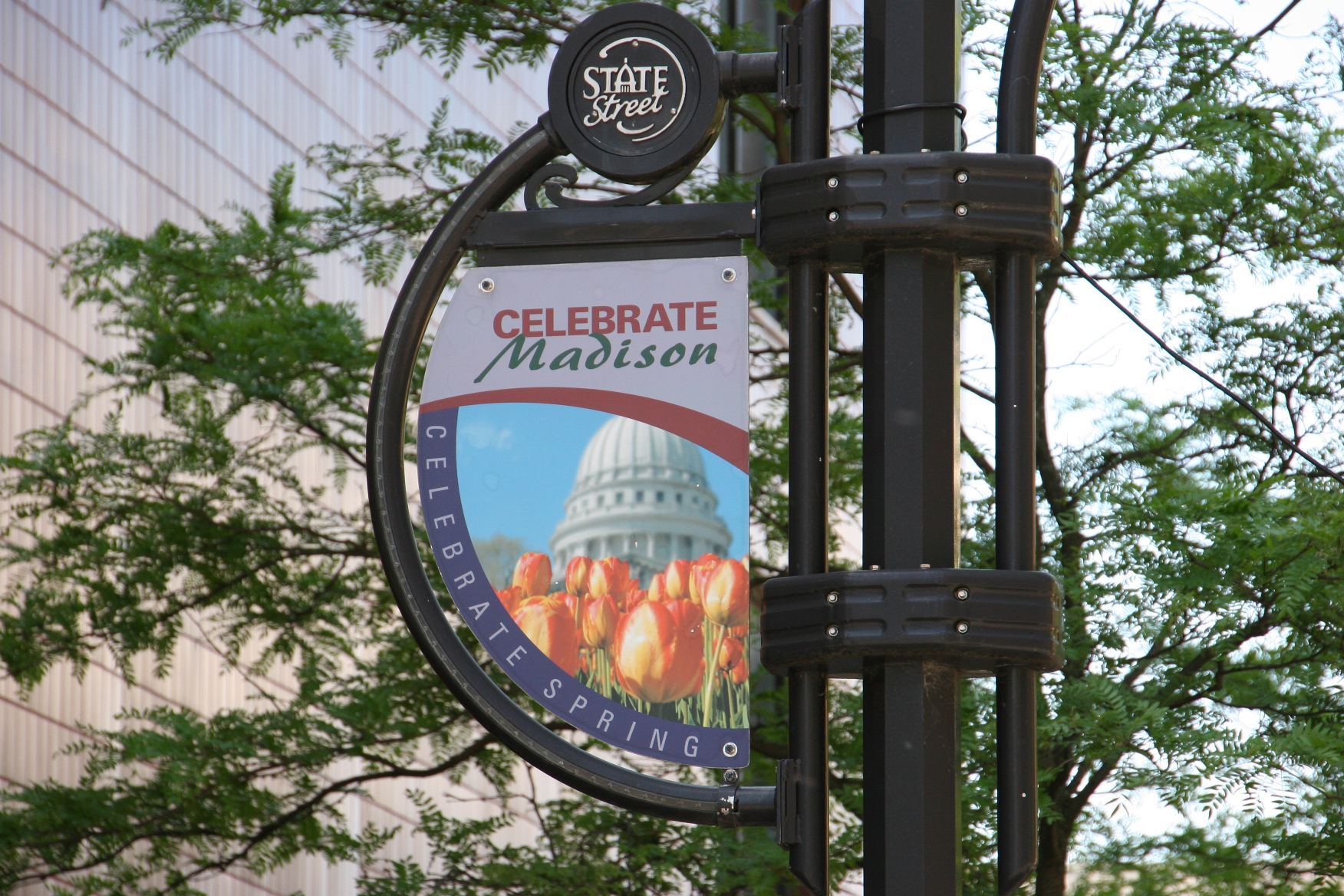
A banner in downtown Madison, Wisconsin, shows the state capitol. I love Madison with its lakes, green space, bike trails, etc. (Minnesota Prairie Roots copyrighted file photo)

FOR WEEKS, RANDY AND I wanted to drive the four hours to Madison, Wisconsin, to visit our second daughter and her family. But each time, one of us was sick with or recovering from a cold. We were not about to make the trip until we were both fully healthy. Last weekend we were.

Friday morning we packed, loaded the van, then hit the road, crossing the Mississippi River into Wisconsin at La Crosse. That marks about the half-way point from Faribault to Madison. By early afternoon we’d arrived at our daughter and son-in-law’s home in the capital city.

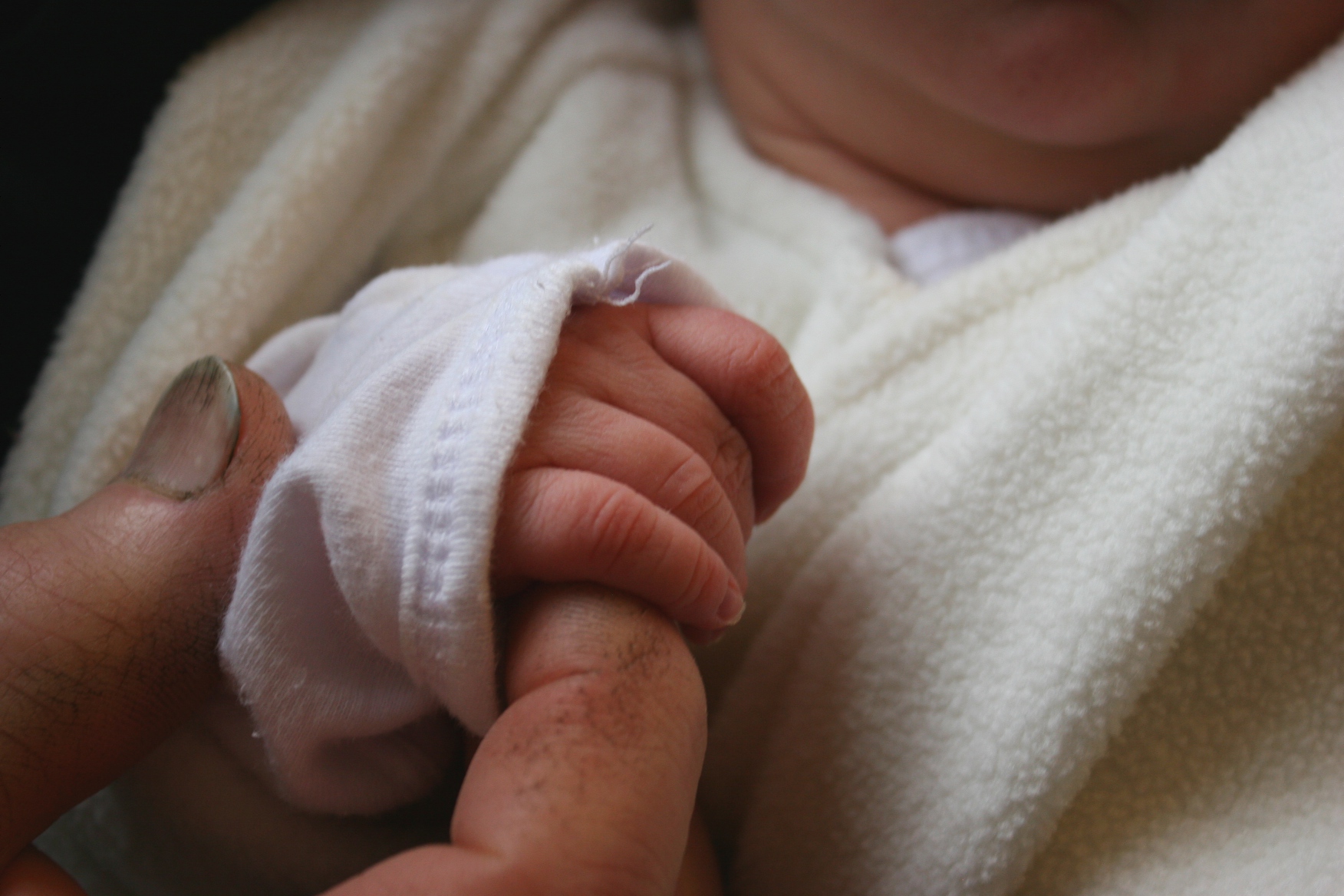
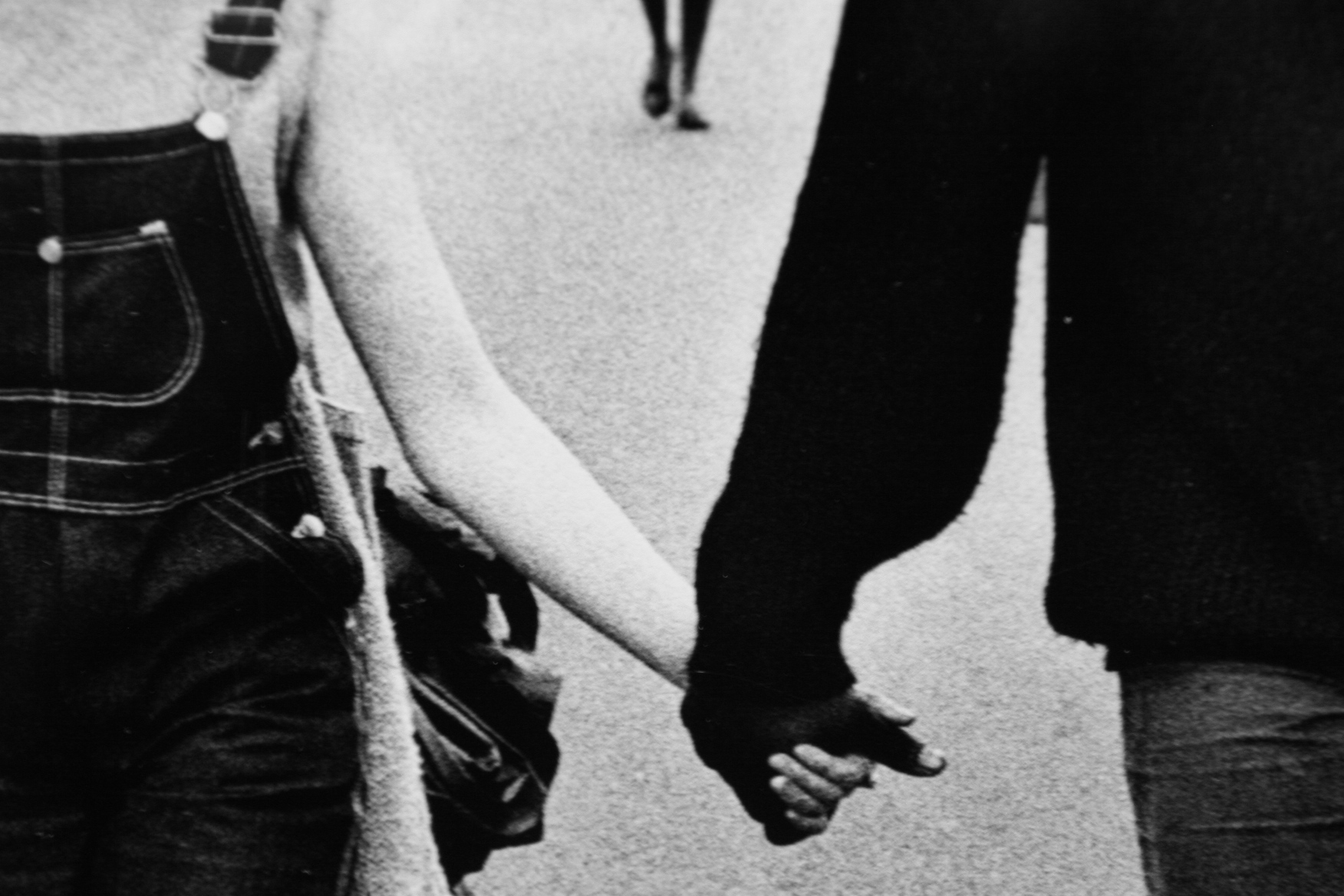
Holding Grandpa’s finger. This is not Everett’s hand, but that of our eldest grandson, now in kindergarten. Photo used for illustration only. (Minnesota Prairie Roots copyrighted file photo)

I couldn’t exit the van fast enough. I wanted to see my grandson. Everett was born in mid-January and I’ve only seen him once in person since then. Video chats and photos filled the gap. But they are not the same, as we all know.

That sweet baby boy, who was an even 10 pounds at birth, now weighs nearly 17 pounds. He’s filled out. He’s smiling, cooing, interacting. And this grandma couldn’t have been happier. I watched him, cuddled him, played with him, read to him, talked to him, kissed him, rocked him, fed him, burped him, rubbed his tummy… Randy and I sent the parents out on a dinner date so they could have time alone together and we could have time alone with our grandson.

There’s nothing quite like spending time with a baby, especially a dear one, to make you forget about all the craziness happening in the world. And we know there’s plenty of chaos and reasons to feel concerned on multiple levels right now. I needed to be with Everett…to calm my spirit, to distract me, to remind me of love, of peace, of hope for the future.

In the days I spent with Everett, we bonded, grew our love for one another, gazed into each other’s eyes. Precious precious moments that I hold now in my memory, in my heart. I miss him so much already.

I called him sweet baby, darling boy, my love, all terms of endearment that carried a heart full of love.

(Book cover sourced online)

When I read It’s Hard to Be a Baby, a picture book written by Cheryl B. Klein and illustrated by Juana Medina, to Everett, his mama and I laughed. Babies have no idea, none, how difficult it is to be an adult sometimes. I’m thankful they don’t. But I suppose babies do struggle occasionally when we adults can’t figure out why they’re crying. Are they hungry, cold, tired, in need of a diaper change, bored…? None of us have quite figured out why Everett is so enamored with the living room ceiling fan. It’s not even turning. Yet he smiles broadly and coos every time he sees that fixture. It makes him so happy.

I love watching my second daughter with her son. Miranda’s a natural. So loving and tender, deeply in love with this baby who nearly cost her her life. She experienced severe postpartum hemorrhaging after Everret’s difficult birth. He was big; she is not. Miranda needed blood transfusions. A team of doctors and other medical staff at UnityPoint Health-Meriter Hospital in Madison worked to stop the bleeding and save her. I shall be forever grateful to them. This was a reminder that, yes, there can be complications and women can still die during childbirth.

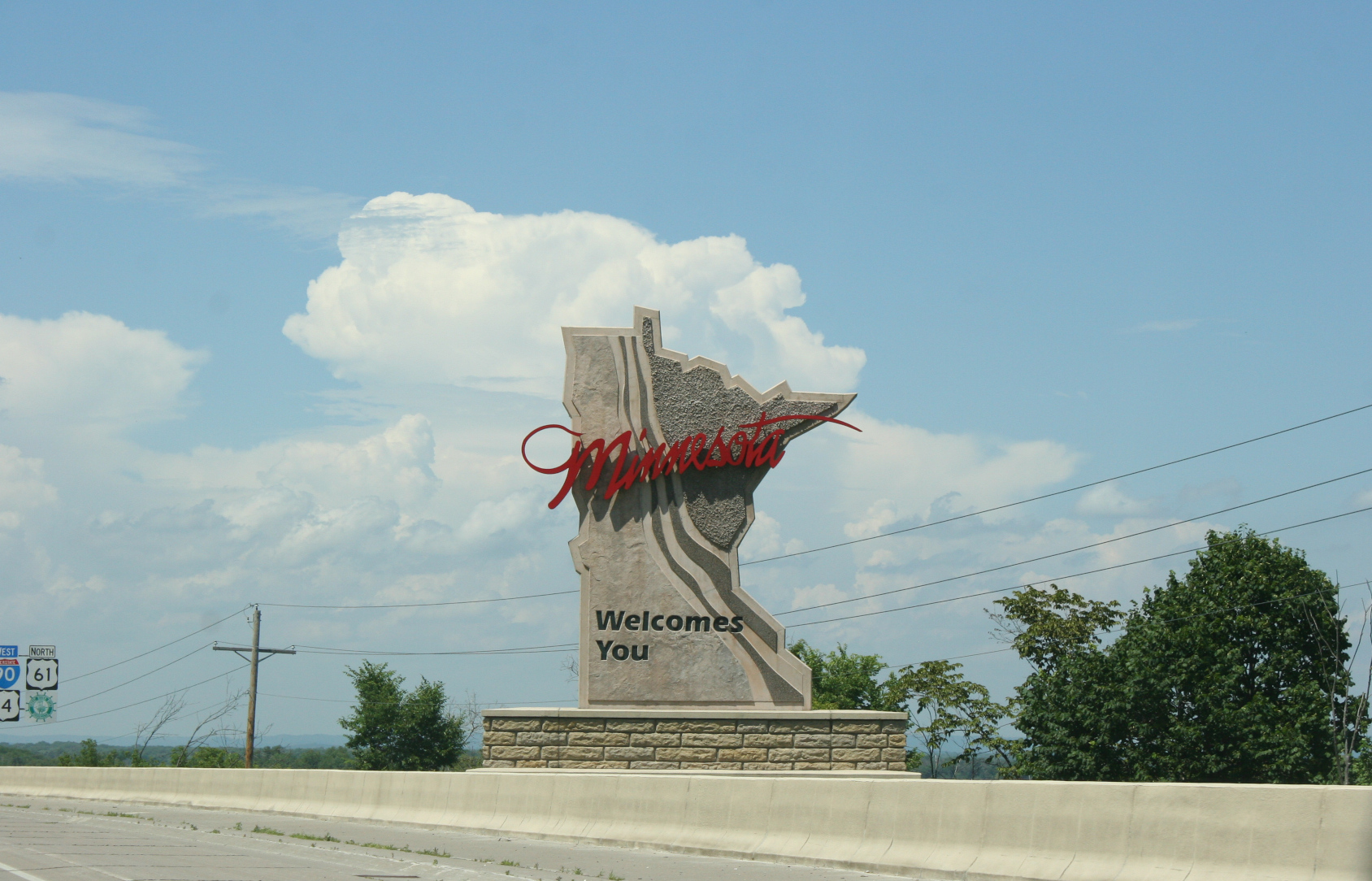
Located at the entry point to Minnesota near La Crosse, Wisconsin. (Minnesota Prairie Roots copyrighted file photo)

Since Miranda became a mom, I feel, too, a strengthening of our relationship in this shared experience of motherhood. I’m the mother of three, the grandmother of three. Two of my grandkids live only 35 minutes away. But not Everett, and that’s hard. So I whispered in his ear, “Move closer to Minnesota.” Then I turned to ask my daughter, “Did you hear that?” She did.

© Copyright 2025 Audrey Kletscher Helbling


Reflecting on seasons as Minnesota transitions to spring March 19, 2025

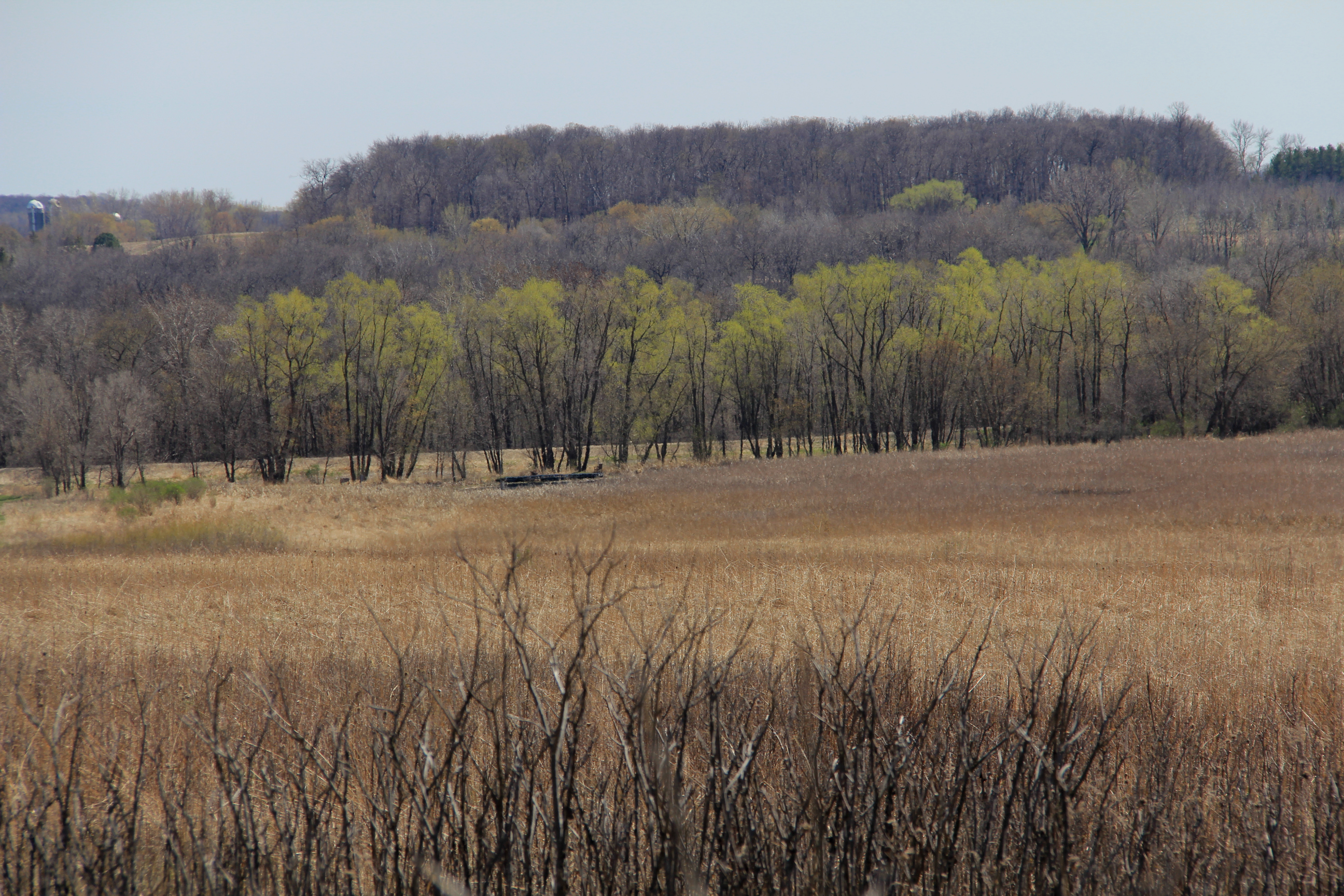
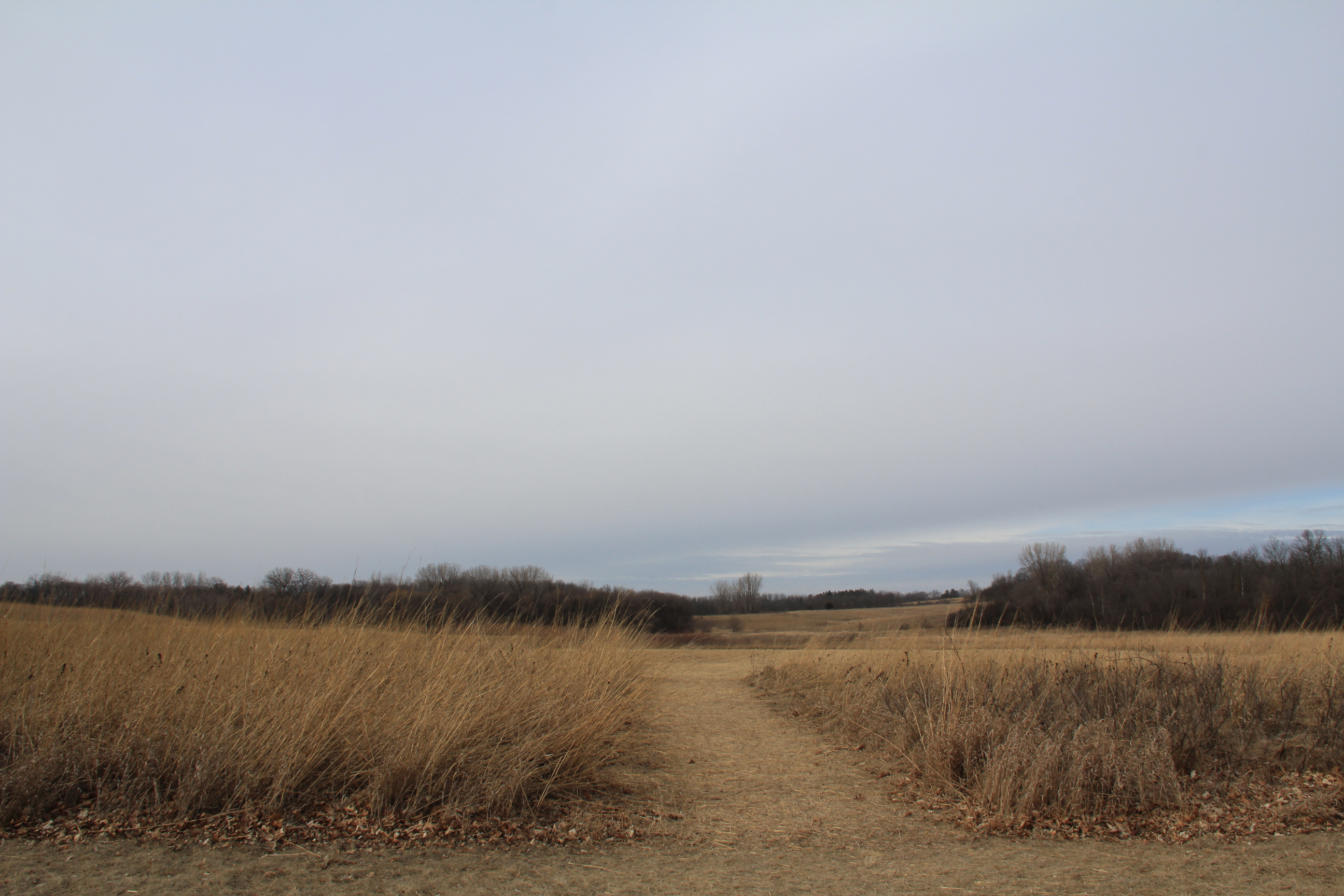
The prairie at River Bend Nature Center, Faribault. (Minnesota Prairie Roots copyrighted photo February 2025)

IN THE IN-BETWEEN SEASON of not exactly winter, but not quite spring here in Minnesota (although the calendar says otherwise), I feel like I’m waiting. Waiting for snowfalls to end. Waiting for the landscape to transition from drab browns and grays. Waiting for vibrant colors to appear.

My neighbor’s spring flowers. (Minnesota Prairie Roots copyrighted file photo 2023)

There’s a sense of anticipation and wonder when buds form, when the first tender shoots of spring bulbs emerge from the soil, then flower. Purple crocuses. Sunny yellow daffodils. Followed by tulips and other flowers in a rainbow of hues.

Spring wildflowers at Kaplan’s Woods Park, Owatonna. (Minnesota Prairie Roots copyrighted file photo)

I love the beginning of spring—real spring, not the teasing warm days of early and mid-March or simply a date (March 20) on a calendar.

Spring erupts in Minnesota at Falls Creek Park, rural Faribault. (Minnesota Prairie Roots copyrighted file photo May 2022)

I love when the landscape is flush in green, a green so vibrant that it’s almost indescribable.

Oak leaves at River Bend. (Minnesota Prairie Roots copyrighted photo February 2025)
The starkness of this time of year in Minnesota focuses the eye on details, like the rough bark of a tree in the woods at River Bend. (Minnesota Prairie Roots copyrighted photo February 2025)
Dried seedheads at River Bend. (Minnesota Prairie Roots copyrighted photo February 2025)

While I await the greening of the landscape, I remind myself to appreciate the natural world around me as it is now. The stubborn dried oak leaves that clung to branches through the fierce winds of winter. The rough textured bark of a tree. The dried seed heads and leaning swamp and prairie grasses. All hold the seasoned beauty of days, of weeks, of months, of time.

Animal prints in the snow in my backyard. (Minnesota Prairie Roots copyrighted photo February 2025)

Seasons are not timed by a calendar date, but by the natural world. Authentic spring arrives in Minnesota on her own timetable. Often unhurried. But sometimes abrupt.

The woods at River Bend await the budding of spring. (Minnesota Prairie Roots copyrighted photo February 2025)

As I await spring’s bloom and budding, I realize that the seasons of life also should not be hurried. The years pass too quickly, although we are mostly ignorant of that in our younger years. I understand that now in this advancing season of my life.

For several minutes, I watched and photographed this bald eagle soaring high above the Straight River at River Bend Nature Center. (Minnesota Prairie Roots copyrighted photo February 2025)

I value the moments more, recognizing that seasons end. And seasons begin.

© Copyright 2025 Audrey Kletscher Helbling
 

Remembering singer Roberta Flack February 24, 2025

My vintage single of Roberta Flack’s hit song, “The First Time Ever I Saw Your Face.” (Minnesota Prairie Roots copyrighted photo February 2025)

WHEN ROBERTA FLACK SANG, her words flowed effortlessly. Soothing. Her voice like poetry singing words of love.

Flack died today (Monday) at age 88, news which pulled me back to the early 1970s and her Grammy award-winning singles, “The First Time Ever I Saw Your Face” (1973) and “Killing Me Softly With His Song” (1974). I love those two hits of new love and of love exposed.

I filed through my vintage 45 rpm vinyls until I found Flack’s, then dropped the record onto the turntable to once again immerse myself in feelings of young love. I was in high school when Flack’s singles released and then became Billboard hits.

The songs are universal in theme, undeniably beautiful in delivery. At least that’s my perspective as a Baby Boomer who can’t read a single musical note, can’t carry a tune and knows she likes a song when she likes it.

The timing of Flack’s death during February, Black History Month, seems worth noting, too. She accomplished much as a Black woman. At the age of 15, Flack received a full scholarship to Howard University, a historically Black private college in Washington DC. She earned a bachelor’s in music in 1958, going on to teach music while also pursuing a singing career. Clearly, she accomplished her goals.

(Book cover sourced online)

In researching her background, I learned of a 2023 children’s picture book autobiography, The Green Piano: How Little Me Found Music, written by Flack and by Tonya Bolden with illustrations by Hayden Goodman. The title references a piano Flack’s father found in a junkyard, then refurbished and painted a grassy green. Flack was nine years old when she got that first piano. That it came from a junkyard reminds me of the bicycles my maternal grandfather pulled from the junkyard, repaired, painted and gifted to me and my siblings. I was just as thrilled to have my own bike as Flack was to have her own piano.

Flack’s backstory of growing up in a family that valued music and recognized her talent is a love story, too. If only every child would be loved so deeply and encouraged to follow his/her dreams, what a beautiful world this could be.

TELL ME: Whose music do you appreciate and why? And if you remember Roberta Flack, I’d like to hear your thoughts on her and her work.

© Copyright 2025 Audrey Kletscher Helbling
 

An African spiritual plus my thoughts during Black History Month February 3, 2025

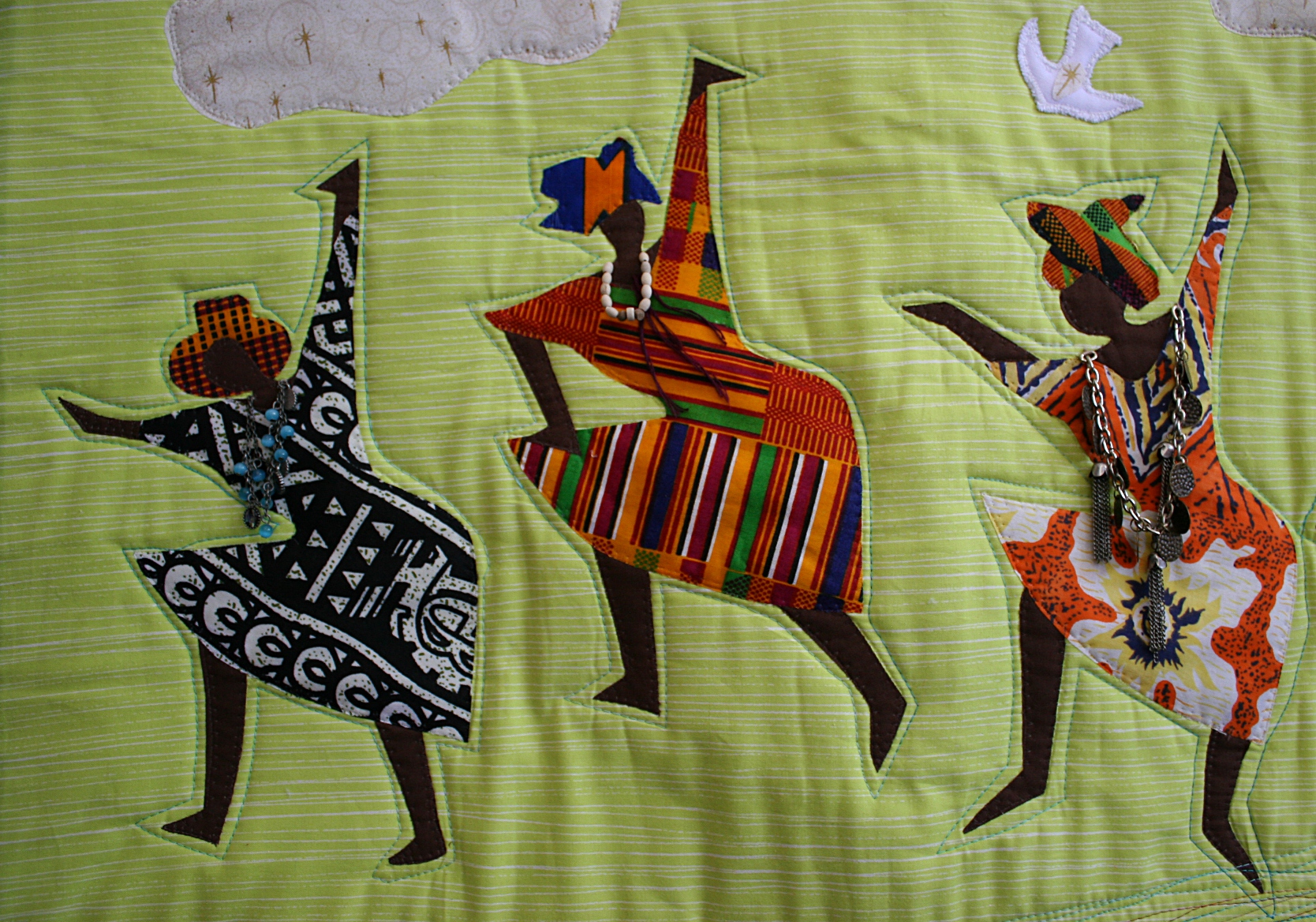
This Nigerian-themed quilt art was created years ago by my friend Susan. The art reflects to me the joy of an African spiritual. The fabric came from Nigeria, where Susan’s father-in-law served as a Lutheran missionary. (Minnesota Prairie Roots copyrighted file photo)

THE SONG WAS UNEXPECTED during Sunday morning worship at the conservative Lutheran church I attend in Faribault. But it was fitting for the day and for my feelings, which have leaned deeply into discouragement recently.

The African American spiritual, “There Is a Balm in Gilead,” proved a temporary balm for my soul. The old school word “balm” holds a healing connotation. The song’s refrain encourages: There is a balm in Gilead to make the wounded whole. There is a balm in Gilead to heal the sin-sick soul.

As I sang the refrain, I wondered, what or where is Gilead? Later research revealed that, during Old Testament days, Gilead was a mountainous region east of the Jordan River and an important source of medicinal herbs. That makes sense as it relates to the lyrics.

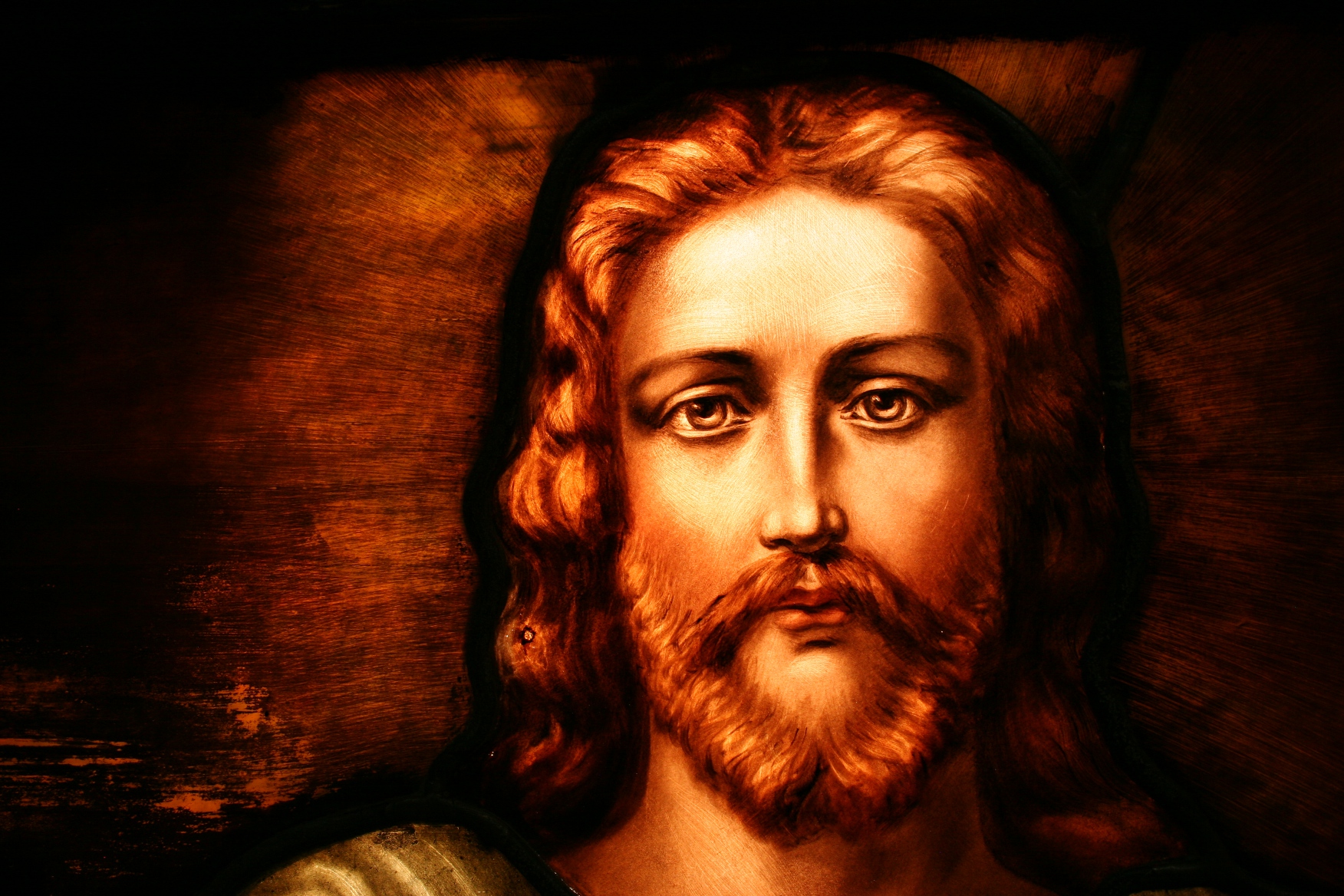
Christ’s face in a stained glass window in the sanctuary of my church, Trinity Lutheran, Faribault. (Minnesota Prairie Roots copyrighted file photo)

In the New Testament, “balm of Gilead” refers not to an herb which heals physically, but to Jesus through whom spiritual healing comes. That also makes sense as it relates to lyrics of the song printed on page 749 of the Lutheran Service Book.

Events of recent weeks in this country have me feeling apprehensive, unsettled, worried, in need of a healing balm. I know I am not alone in these feelings as we face economic challenges, upheaval, chaos and uncertainties on endless levels. Each day seems to bring something of new concern. No matter where you stand politically or spiritually, you have to feel the tension and uncertainties in this country.

A snippet of a photo by Stephen Somerstein from the exhibit, “Selma to Montgomery: Marching Along the Voting Rights Trail,” which I saw at St. Olaf College in Northfield, Minnesota, in 2015. (Minnesota Prairie Roots copyrighted file photo)

On Sunday, as I sang the African American spiritual, I allowed myself to be swept into the healing words of hope and comfort. It was not lost on me that, sitting on the end of my pew, was a family of mixed race—an African American father, White mother and three biracial children, one a darling baby boy of ten months. I thought of my own newborn grandson, who is mixed race. What does the future hold for these two little boys? Will they face challenges simply because of their skin color? I’d like to think not. But…

And I thought, too, of the new calendar month of February, in which we celebrate Black History Month, focusing on Black history, culture and education. I reflect on slavery, on Civil Rights leaders, on racial disparities, diversity, equity and inclusion, wondering how I, personally, can educate myself and make a difference.

A message left by a visitor to the Selma exhibit at St. Olaf College. It’s so applicable to today. (Minnesota Prairie Roots copyrighted file photo)

It truly does start with each of us standing up for what is good and right and decent and not going along with what we know in our hearts, minds and souls to be wrong. And then, maybe then, we’ll find our balm in Gilead.

© Copyright 2025 Audrey Kletscher Helbling


Reflecting on the legacy & celebrating the work of Martin Luther King, Jr. January 16, 2025

I took this photo of a student watching a video of Martin Luther King, Jr. in the exhibit “Selma to Montgomery: Marching Along the Voting Rights Trail” at St. Olaf College in 2015. It was an especially powerful exhibit. (Minnesota Prairie Roots copyrighted file photo 2015)

AS MARTIN LUTHER KING, JR. DAY approaches, I feel such gratitude to this activist, this civil rights leader, this man of integrity, love, justice and peace who left this world a better place. King inspires me to be better, live better, do better.

I appreciate that King is celebrated not only on a national level, but also locally in our cities and small towns. Even without a local celebration, we can each do our part to honor him by taking a moment to reflect on King’s legacy. His words inspire. As a writer, I especially value how eloquently he spoke with such power, passion and conviction.

His messages continue to resonate.

“Darkness cannot drive out darkness, only light can do that. Hate cannot drive out hate, only love can do that.”

“Injustice anywhere is a threat to justice everywhere.”

“I have a dream…”

And then there’s this quote, unfamiliar to me until now, but, oh, one that I find particularly fitting for each and every one of us: “Life’s most persistent and urgent question is, ‘What are you doing for others?’”

Visitors could photograph themselves at the Selma exhibit and express their thoughts. (Minnesota Prairie Roots copyrighted file photo 2015)

The community of St. Peter is taking that King quote and running with it on Monday, January 20, during an MLK Day of Service. The St. Peter Good Neighbor Diversity Council and Gustavus Adolphus College are partnering in this event to “foster a ‘Beloved Community’ and address issues of social justice and equity.” I love the word choices of “Beloved Community.” Already that shows me a depth of care for one another that will thread through Monday and beyond.

MLK Day in St. Peter begins with information shared about local service opportunities from 11:30 a.m.-1 p.m. in the campus center at Gustavus. Then later, folks can gather to share stories and conversations about King’s dream and how that is not yet realized. That’s from 1-2:30 p.m. in the Center for Inclusive Excellence at Gustavus and from 7-8:30 p.m. at the St. Peter Community Center.

To promote service and conversations personalizes this, takes the day well beyond just a commemoration.

Opinions expressed in the exhibit polling place at the Selma exhibit. (Minnesota Prairie Roots copyrighted file photo 2015)

Over in Northfield, the Northfield Human Rights Commission is celebrating MLK Day with a 7-8 p.m. gathering at the high school. The theme, “Mission Possible: Protecting Freedom, Justice and Democracy in the Spirit of Nonviolence 365” seems a fitting title for this event. Freedom. Justice. Democracy. Nonviolence. All are important and relevant words to carry with us 365 days of the year.

Minneapolis City Council member Robin Wonsley, a person of color who hails from Chicago, studied at Carleton College in Northfield and worked on racial justice and worker’s rights for several organizations, is the keynote speaker.

Additionally, and perhaps the aspect I appreciate most about the Northfield event, is a presentation of the annual (since 1998) Northfield Human Rights Award. That goes to an area individual, group or organization that has contributed to the advancement of human rights in Northfield. I think people need to be recognized when they’ve worked to create a “Beloved Community” via advancing human rights.

Photographed in August 2018 in the storefront window of a business in downtown Faribault, Minnesota. Minnesota Prairie Roots copyrighted file photo 2018)

In Owatonna, the Owatonna Human Rights Commission, Rainbowatonna, Alliance for Greater Equity and Riverland Community College are partnering to celebrate MLK Day with a lunch from noon to 1 p.m. at the Steele County History Center followed by a guest speaker. Seema Pothini, a Minnesota author and head equity specialist for the Equity Literacy Institute will talk.

Even if you can’t attend an event like one of the three I’ve highlighted here, I hope you will take time on Monday, January 20, to reflect. Consider the great work of Dr. Martin Luther King, Jr. Ponder how much has changed and how much work remains to be done. And then do what you can, no matter how big or how small, to live a life focused on love, justice, peace and service to others. Be the light that drives out darkness.

© Copyright 2025 Audrey Kletscher Helbling
 

Defining a Minnesota cold snap January 15, 2025

Filed under: Uncategorized — Audrey Kletscher Helbling @ 5:00 AM
Tags: , , , , , , , ,
Bring out the cold weather gear like this photographed at a vintage snowmobile show during a past Winterfest. (Minnesota Prairie Roots copyrighted file photo)

WITH AIR TEMPS DIPPING into the single digit subzero range and windchills at around minus 25 degrees on recent mornings in Minnesota, we’ve been in a bit of a cold snap. We’ll get a several-day respite of 30 degrees before temps plunge again, dipping to even colder early next week when an arctic front moves in.

All this cold got me thinking about ways to define a cold snap. It’s not only about the way it feels, but also how it sounds and looks, yes, looks.

Here’s how a cold snap feels: Like a slap on the cheeks. Biting, bitter, unbelievably cold. Exposed skin can freeze in 10-15 minutes.

The cold of a cold snap also feels like ice on bare feet during a night-time trip to the bathroom. But even before that, cold feels like I-don’t-want-to-get-out-of-bed-from-under-these-warm-covers-because-the-house-is-cold. Our thermostat is set at 62 degrees at night. Comfortable, except during a cold snap when outdoor air seems to infiltrate the indoors.

Legendary lumberjack Paul Bunyan has made wearing buffalo plaid flannel fashionable in Minnesota. Here he’s depicted on an ice machine outside Thurlow Hardware and Rental, Pequot Lakes. (Minnesota Prairie Roots copyrighted file photo)

These are the days of layering, of pulling out the warmest flannel or fleece. I wear a tee, topped by a flannel shirt, topped by a sweatshirt or sweater. Randy has pulled out his heavy duty quilt-lined flannel shirt that visually widens his girth. Who cares about fashion? Not me. The goal is to stay warm.

In the evenings, with the thermostat set at 68 degrees, we find additional warmth under fleece throws or, whoever grabs it first, under an especially warm fleece-lined denim quilt. We opt not to crank up the heat in an effort to keep our energy bill down. Even with that, heating an old house with natural gas gets costly.

Chicken Wild Rice Soup, one of my favorite soups, served at a fundraiser in St. Peter years ago. I made a batch of this soup earlier this week. (Minnesota Prairie Roots copyrighted file photo)

A cold snap feels like dry, itchy skin; aching joints; a parched throat. I’m drinking more water and tea. Water flowing from the tap first thing in the morning is ice cold. I’m cooking more soups and comfort foods like Chicken Wild Rice Soup and lasagna.

These deeply cold mornings, Randy warms the van before leaving for work. The sound of tires on the street past our house carries a sharpness and, if snow layers the pavement, tires crunch. Bitter cold holds a distinct, almost indescribable, sound.

Frost art on an upstairs window during a past winter. (Minnesota Prairie Roots copyrighted file photo)

Inside and outside, a cold snap is visible. I see it in the line of frost edging the bottoms of exterior doors. I pull a rag rug snug against the lower edge of the front door to block the draft. I see cold in the intricate frost patterns painted on bedroom windows upstairs.

These cold winter days have me dreaming of summer days at a central Minnesota lake cabin. (Minnesota Prairie Roots copyrighted file photo July 2020)

And when I look outside from my relatively warm house, it simply looks cold, the sky clear, the bright sunshine only an illusion of warmth. For many Minnesotans, though, warmth is a reality as residents escape to warmer places like Arizona, Texas and Florida. Whether for a week, a month or the entire winter, these vacationers and snowbirds seek a break from the bitter cold and snow of a Minnesota winter.

I can’t help but think about those experiencing homelessness, including right here in Faribault. Where are these individuals living, sleeping? Surely not in the tents I’ve seen pitched along the river bottom. In the metro area, facilities are opening as warming centers. So, yeah, even though I’m not fond of this cold snap, at least I have a home.

© Copyright 2025 Audrey Kletscher Helbling
 

Remembering Mom three years after her death January 13, 2025

Me with my mom in January 2020, right before COVID restrictions stopped visits to care centers. I saw little of Mom in the final years of her life due to the pandemic. (Minnesota Prairie Roots copyrighted file photo January 2020 by Randy Helbling)

TODAY, JANUARY 13, MARKS three years since my mom died. I hadn’t intended to write about this anniversary date. But then two friends blogged on topics that changed my mind.

My dear friend Beth Ann from North Carolina, who blogs at It’s Just Life, writes today about observing a grocery store encounter between a daughter and elderly mother that reminded her of her sweet mom whom she lost several years ago. The point of Beth Ann’s post is that grief comes in the most unexpected of moments and hits you hard. She’s right.

Hot fudge pudding cake slathered with real whipped cream and topped with sprinkles. (Minnesota Prairie Roots copyrighted file photo)

Then my friend Sue, who lives in Minnesota, winters in Arizona and blogs primarily about food at Ever Ready, published a post featuring Hot Fudge Sundae Cake. Waves of nostalgia and grief swept over me as I scrolled through Sue’s post. Hot Fudge Pudding Cake, as my family called this delectable, easy-to-make dessert, was a favorite of Mom’s and of me.

Neither Sue or Beth Ann could have known I would be reading their words on the third anniversary of Mom’s death. But I did. And it was meant to be because my grief needed an outlet. My friends’ writing prompted me to write this post.

The cover of the altered book created by Kathleen. (Minnesota Prairie Roots copyrighted file photo)

In the process of writing, I headed upstairs to pull a mini keepsake book from a closet. My friend Kathleen, formerly of Minnesota and now of Idaho, created the altered book for me following my mother’s death. She tapped into my blog to pull quotes, information and photos that truly summarize Mom’s life and our relationship. The book brims with words of love, faith, family and farm life, all at the essence of my mom. It truly is one of my most treasured possessions.

The first page in the keepsake book shows my mom holding me. (Minnesota Prairie Roots copyrighted file photo)

So on this day, while the grief of losing Mom feels particularly heavy, it is the creativity of friends that comforts me. Beth Ann’s “Right There in the Baking Aisle” resonates. Sue’s shared recipe brings smiles as I remember. And Kathleen’s keepsake mini altered book stirs within me so many memories of the mom I loved, and still love.

TELL ME: Who are you grieving? What can spark your grief? What comforts you in grief?

© Copyright 2025 Audrey Kletscher Helbling
 

Inspiring words for all of us from President Jimmy Carter’s funeral January 9, 2025

Encouraging words posted near a garden in the heart of downtown Faribault. (Minnesota Prairie Roots copyrighted file photo)

THEIR WORDS WERE MOVING, heartfelt, inspiring. Words that spoke to a selfless, loving, compassionate and kind man. Qualities we should strive to emulate.

It was not lost on me, as I watched the televised funeral of President Jimmy Carter this morning, that some of those attending the service at the National Cathedral in Washington DC have veered far from those traits. When you’re in public office, you are held to higher standards. Or at least you should be. I hope the politicians in the crowd were listening intently.

But I don’t want to get into a political discussion here. Rather, I want to offer a recap of the eulogies that really resonated with me.

A partial quote by civil rights leader and Senator John Lewis displayed on a window in Dundas, Minnesota. (Minnesota Prairie Roots copyrighted file photo)

I was especially impressed with the message delivered by Carter’s grandson Jason Carter. As I listened to this young man speak with such sincerity and eloquence, I thought, he should run for President some day. He spoke of a grandfather who was the same in public as in private, living a life of love and respect. Love. Respect. I can respect a man who, along with his wife, washed and reused plastic bags (as do I), still had a landline with dangling cord (I do) and wore crocs (I don’t). Jason brought laughter to the Cathedral while getting across his strong messages of faith, love and respect.

Peace art by Gracie Molden, Faribault Lutheran School, previously displayed at a student art show at the Paradise Center for the Arts. (Minnesota Prairie Roots copyrighted file photo)

Then there’s Ted Mondale who read the eulogy written a decade ago by his father, Vice President Walter Mondale. The stand-out lines written by the elder Mondale were these: that he and Carter “told the truth, obeyed the law and kept the peace.” Those words repeated in my head. I found myself thinking, if only all leaders held to those principles.

An especially bright spot in the heart of downtown Faribault is the Second Street Garden, a pocket garden with positive messages. (Minnesota Prairie Roots copyrighted file photo August 2019)

President Joe Biden, a long-time friend of Jimmy Carter and likewise a man of faith, focused on strength of character. Carter was, he said, a man of character who treated everyone with dignity and respect. There’s that word again—respect. He called Carter “a practitioner of good works” who followed the guideline of “love thy neighbor as thyself.” That statement followed Biden’s comment that faith requires action. I agree. There’s no doubt Carter lived his faith given his humanitarian work. Carter, Biden said, lived a life filled with the power of faith, hope and love.

From my personal art collection, peace dove art by Jose maria de Servin. (Minnesota Prairie Roots copyrighted file photo)

The Rev. Andrew Young, former US ambassador to the United Nations, spoke of a President who grew up as a minority in Sumter County, Georgia, among the majority Black. He celebrated Carter’s ability to get along with everyone, saying the President loved all of God’s children.

Certainly, many additional meaningful words were shared. But these are the messages that struck me as specific, yet broad. Words for all of us. Words that should inspire us to live better, be better.

It was fitting, too, that the gospel reading came from Matthew 5:1-16. That includes The Beatitudes from Jesus’ sermon on the mount and the four verses following. Blessed are…the poor…the meek…the peacemakers… Blessed are those who mourn.

On this national day of mourning for 100-year-old President Jimmy Carter, I feel inspired. Inspired to let my light shine (Matthew 5:16), not in a spotlight-on-me kind of way, but as someone who can light the world by being kind, caring and compassionate. By living a life of love and respect.

© Copyright 2025 Audrey Kletscher Helbling

 

Honoring President Jimmy Carter & a related personal story January 8, 2025

President Jimmy Carter in 2014. (Photo credit: LBJ Presidential Library)

HONEST. COMPASSIONATE. HUMBLE. All describe President Jimmy Carter, who died December 29, 2024, at the age of 100 and whose national funeral will be held Thursday at the Washington National Cathedral. A private funeral and burial will follow in Plains, Georgia.

In many ways, the name of Carter’s hometown, Plains (minus the “s”), describes this soft-spoken man. He was the son of a peanut farmer, grew up in a house without electricity or indoor plumbing, took over the family farm upon the death of this father. Having grown up on a family farm, in a home without a bathroom and closely rooted to the land, I understand Carter’s plain beginnings.

That Carter would go on to become governor of Georgia, the 39th President of the United States, winner of the Nobel Peace Prize and a beloved humanitarian proves that anyone can come from the plainest of places and make a positive difference in this world, emphasis on the word “positive.”

Peace on a tombstone at Valley Grove Cemetery, rural Nerstrand, Minnesota. (Minnesota Prairie Roots copyrighted file photo 2024)

BUILDING A LEGACY OF SERVICE

Certainly, Carter was not perfect—no one is—but the legacy he leaves is, at its core, that of service to others. We should all strive for that. To do good. To help others. To show love, kindness and compassion. For Carter, nowhere was that more evident than in his post-presidency work with Habitat for Humanity. He didn’t just pose for photo ops. He picked up a hammer and actually helped build Habitat houses.

He also built world peace. During his presidency, Carter helped negotiate a peace treaty between Israel and Egypt in 1979. His efforts led to signing of the Panama Canal Treaty in 1977. His work in the areas of peace, democracy, human rights, and economic and social development earned him that coveted Nobel Peace Prize.
Blessed are the peacemakers” fits President Jimmy Carter. This is a tombstone at Valley Grove Cemetery, rural Nerstrand. (Minnesota Prairie Roots copyrighted file photo 2024)

AN INTERNATIONAL CRISIS & MY CONNECTION

I was just finishing college and starting my career in journalism when Carter was in and ending his presidency. In 1981, while working as a newspaper reporter for the Mankato Free Press, I covered a major national event with a Carter connection. That was the homecoming of Bruce Laingen, one of 52 Americans held hostage for 444 days in Iran. Laingen, a native of Minnesota, was the top American diplomat at the U.S. Embassy in Tehran when protesters stormed the embassy in November 1979. Carter tried unsuccessfully to get those hostages released. On January 20, 1981, the day President Ronald Reagan was sworn into office, the hostages were finally freed. The timing of that release was obviously deliberate. Carter’s re-election bid failed in part due to the hostage crisis.

In my work as a reporter for the Free Press’ St. James News Bureau (my apartment) I covered the southern Minnesota angle on that international crisis. I drove from St. James to nearby small town Odin several times to interview Arvid Laingen at his business, the Odin Feed Mill. We talked about his brother Bruce and his captivity in Iran. I remember photographing Arvid against the feed mill backdrop, American flag draped from the building. When Bruce and the other hostages were released, I joined my regional editor and a Free Press photographer in covering Laingen’s homecoming parade in Odin. Well wishers lined the streets on that cold winter day. Yellow ribbons, which had become a national symbol of hope during the hostage crisis, ringed trees.

My work as a young journalist for a regional southern Minnesota daily newspaper connects me indirectly to President Carter. I admire Carter’s efforts to free the hostages. I can appreciate how defeated he must have felt as days ticked by and the Americans remained in captivity. But he did not let defeat define him. Carter went on to do incredible work worldwide after leaving the highest office in the country. Anyone who remains humble and serves selflessly earns my respect. Carter was clearly a man of integrity, of principles, of faith, someone who never forgot his roots. If only others in public office followed his path of plainness…

© Copyright 2025 Audrey Kletscher Helbling