Minnesota Prairie Roots

Writing and photography by Audrey Kletscher Helbling

In Hastings: The comfortable familiarity of an old-fashioned grocery store November 1, 2012

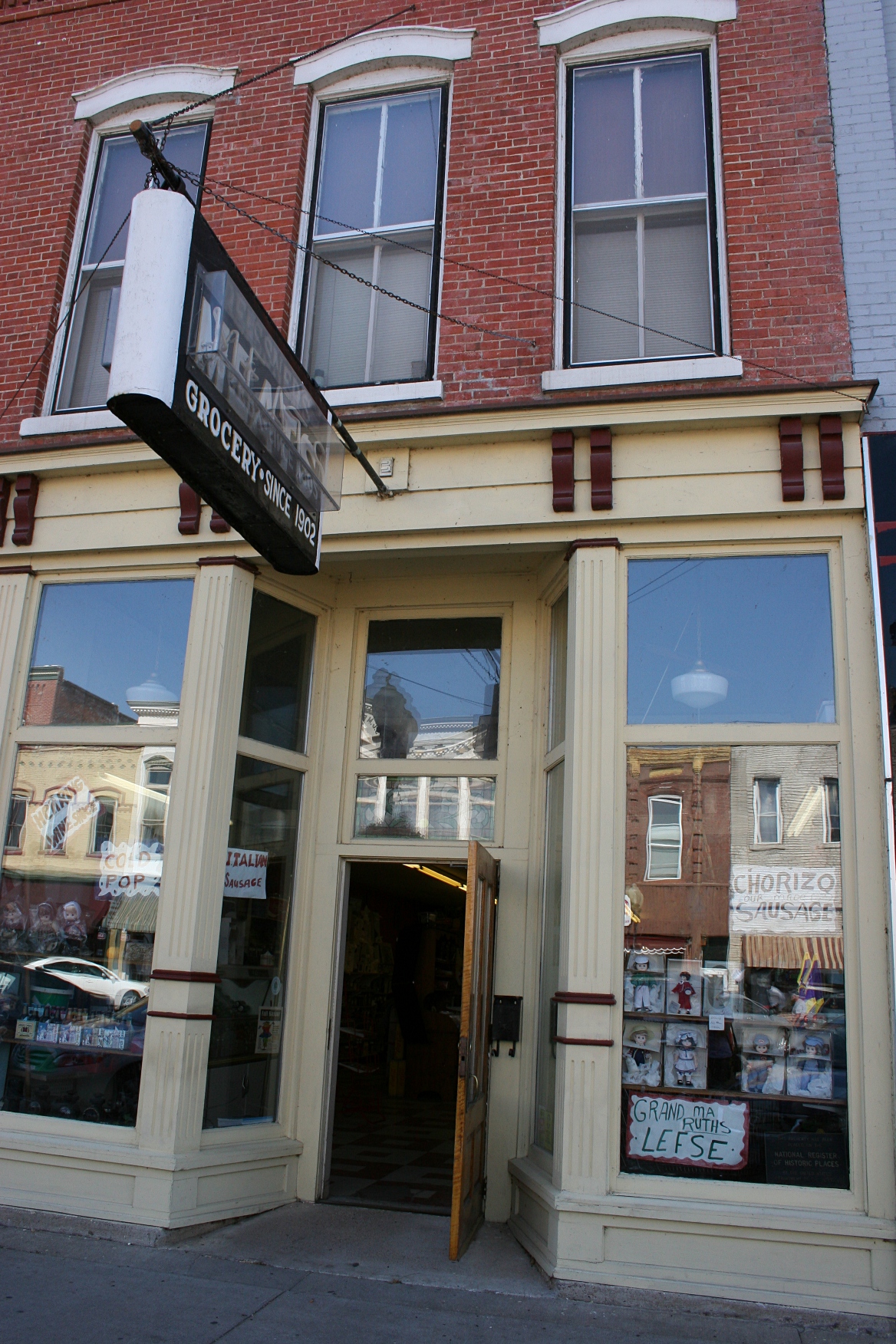
Reissner’s Meats & Grocery in historic downtown Hastings, Minnesota.

YOU KNOW HOW SOMETIMES, when you step into a place, you feel like you’ve been there before, but you haven’t.

That would be Reissner’s Meats and Grocery in historic downtown Hastings.

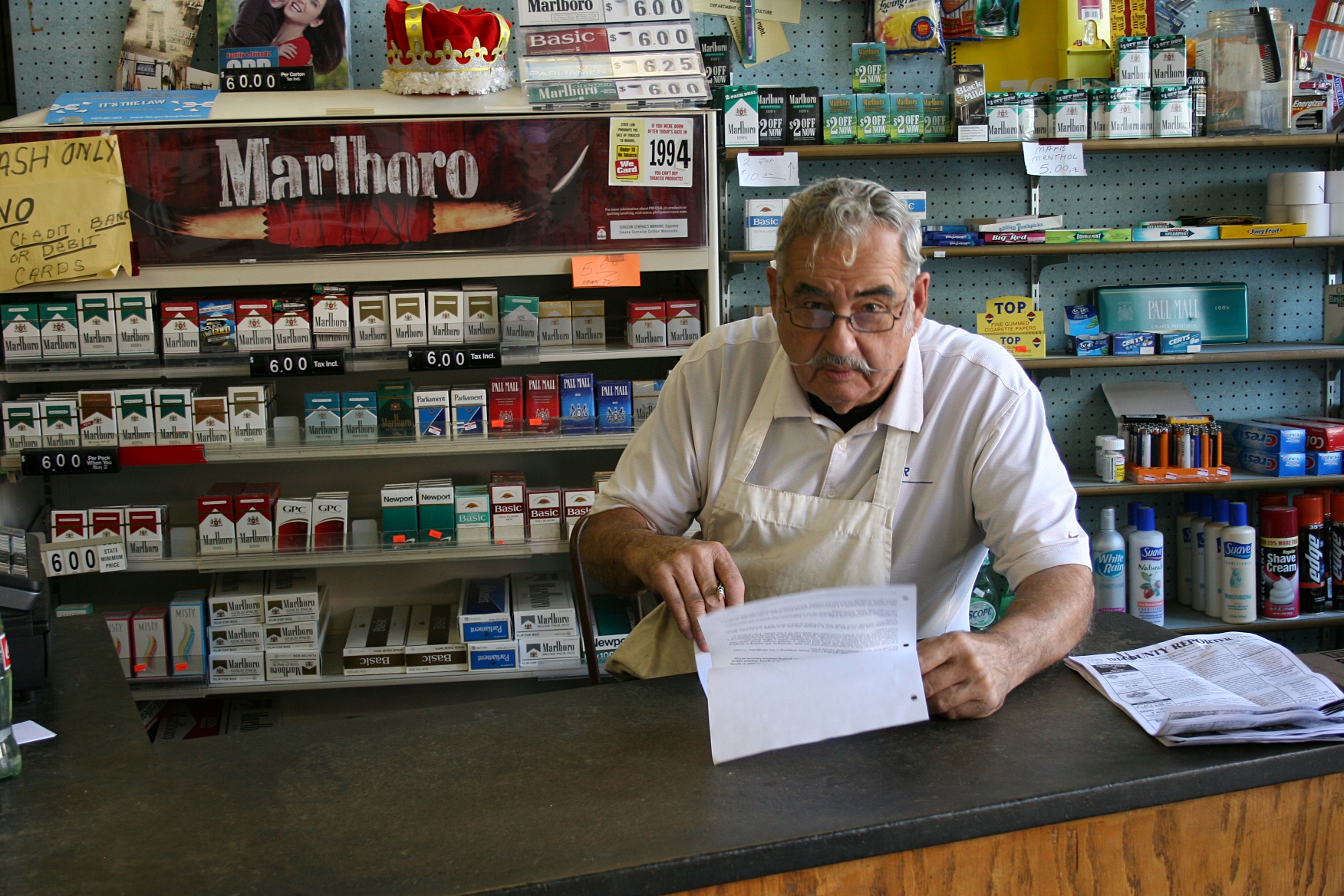
Third-generation owner Dick Reissner.

Entering this narrow two-aisle store with a mustachioed, gray-haired shopkeeper in a butcher’s apron leaning on the front counter, I experienced a sense of familiarity tracing back to my childhood. Reissner’s reminds me of the corner grocery in my hometown of Vesta where I purchased my favorite Tootsie Pop suckers, Bazooka bubble gum and yellow packs of Juicy Fruit gum from the candy counter on many a trip to town with Mom.

Honestly, I cannot remember much else about Rasmussen’s Grocery except the candy and the wood floors and the big old screen door that banged shut behind me.

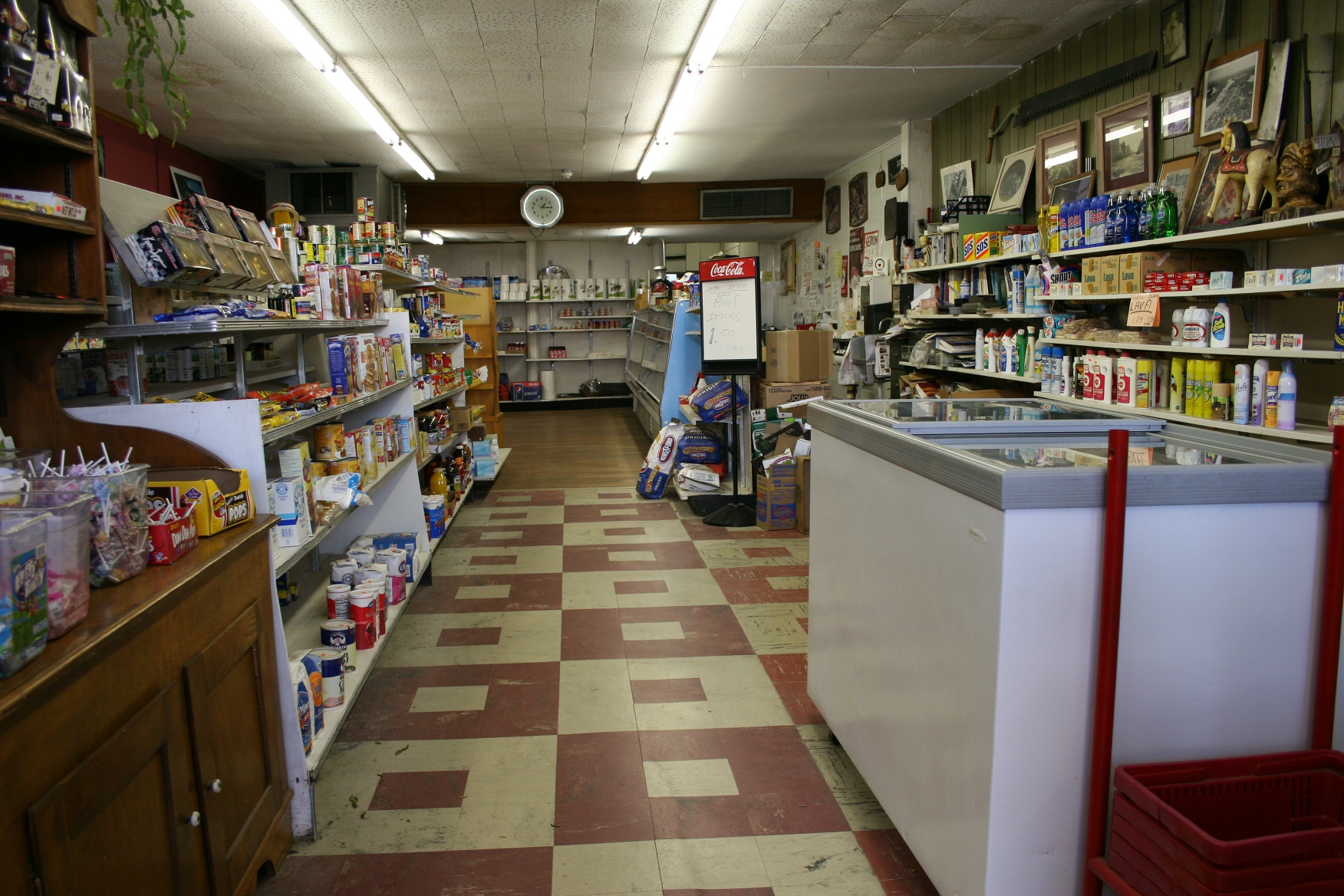
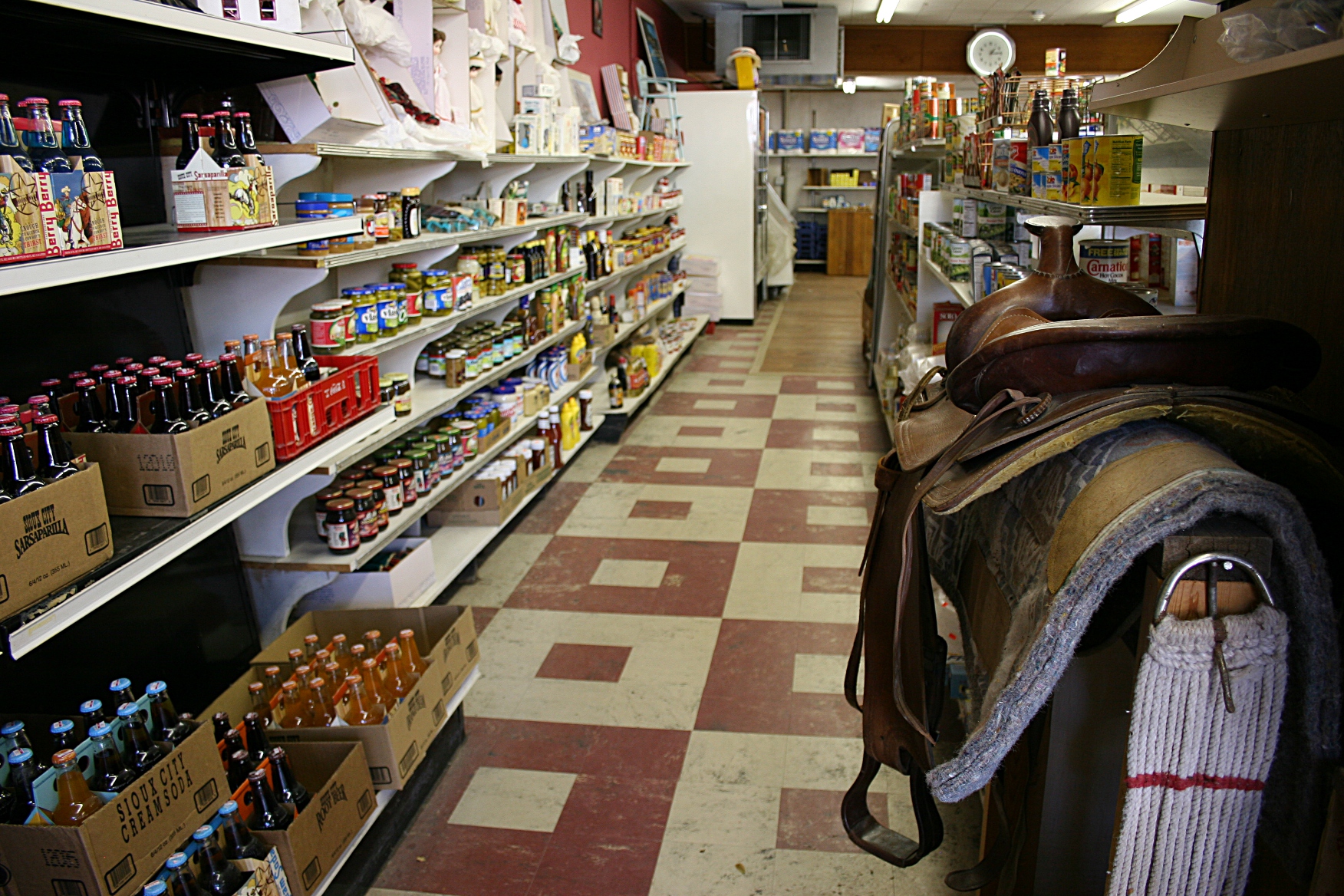
Aisle one with the candy counter to the left.

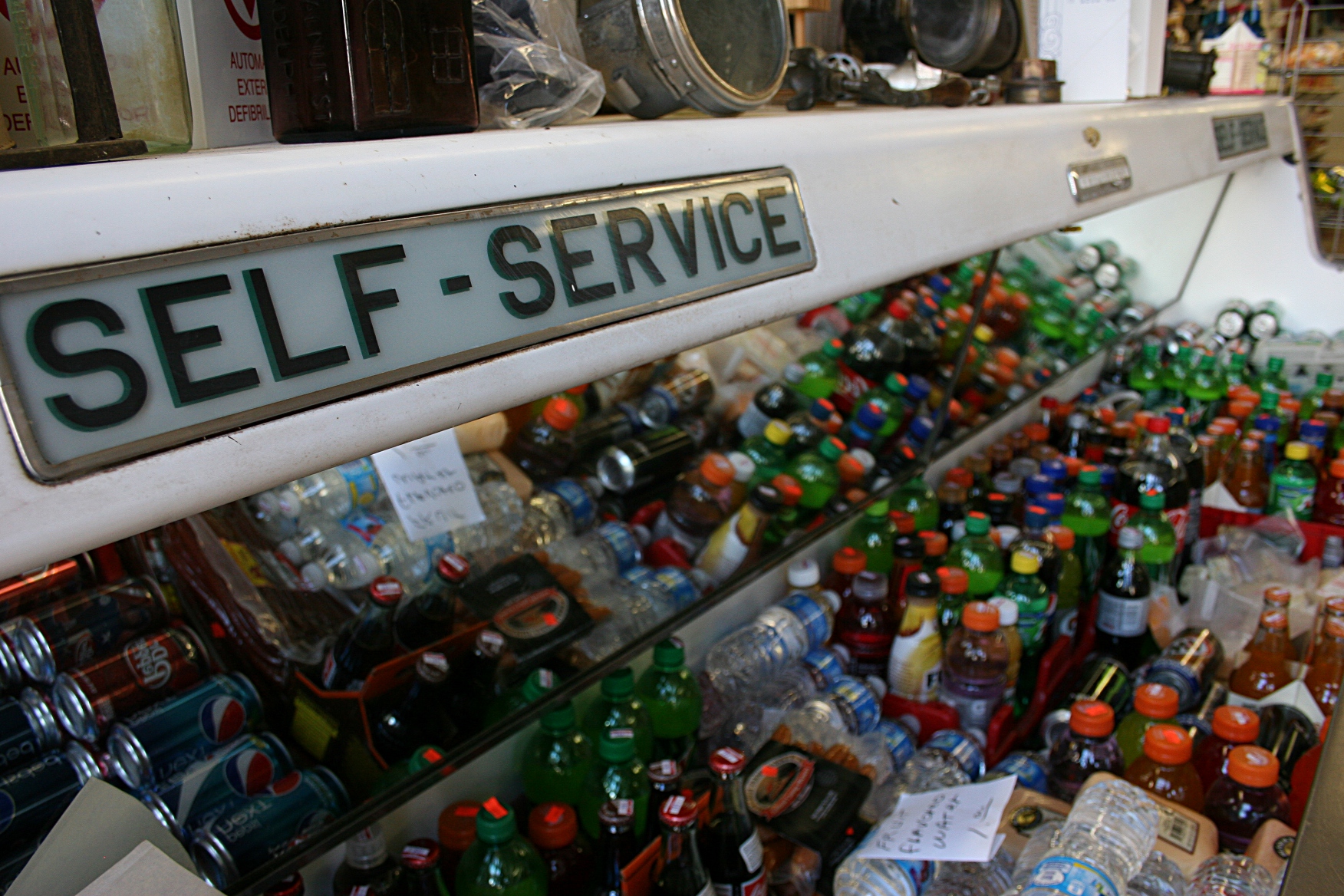
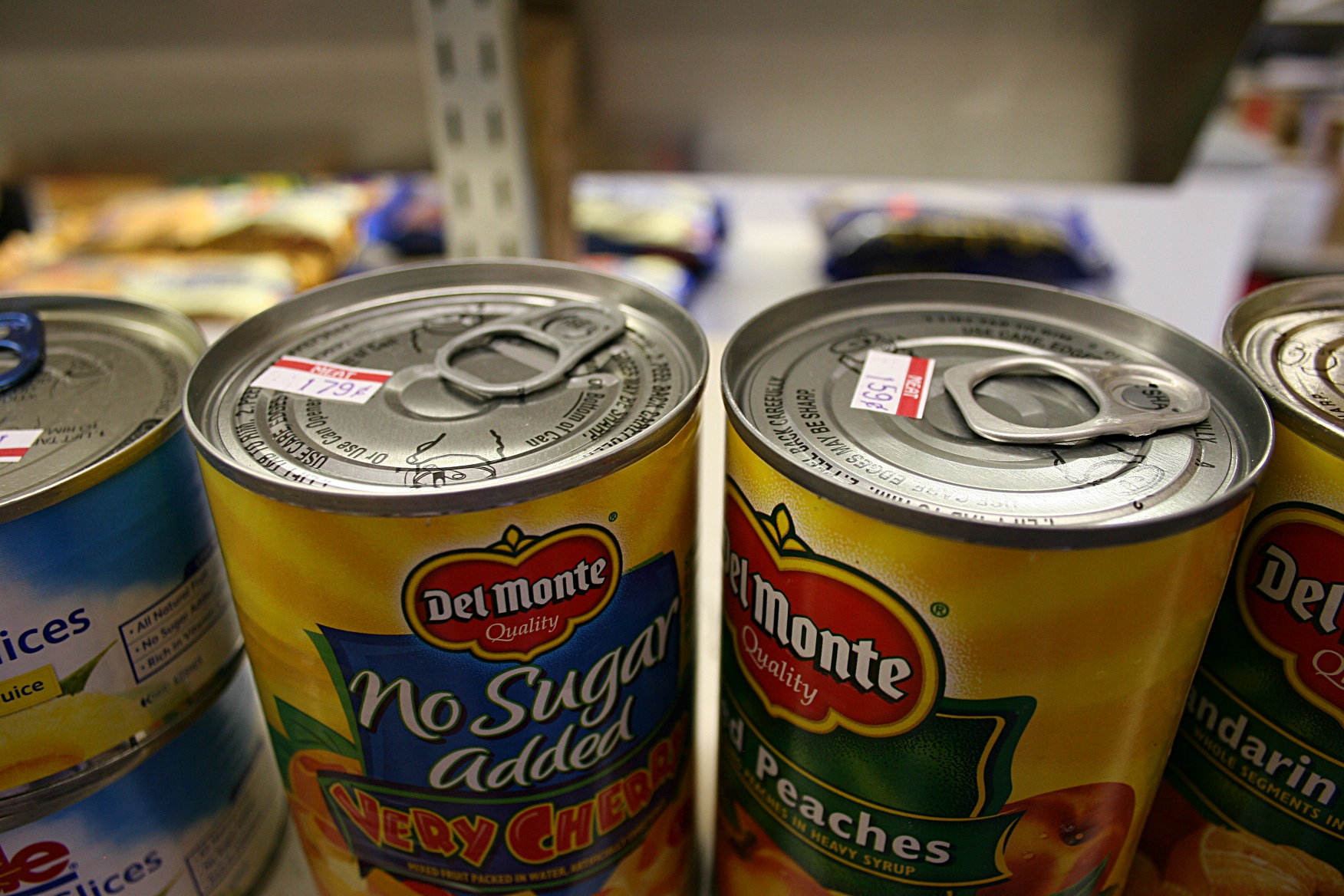
Reissner’s in Hastings possesses that same nostalgic feel, even a vintage look in the red-and-white tile floors, the mishmash of merchandise, the hulking and energy-sucking open cooler that holds pop, and the price stickers adhered to canned foods and more.

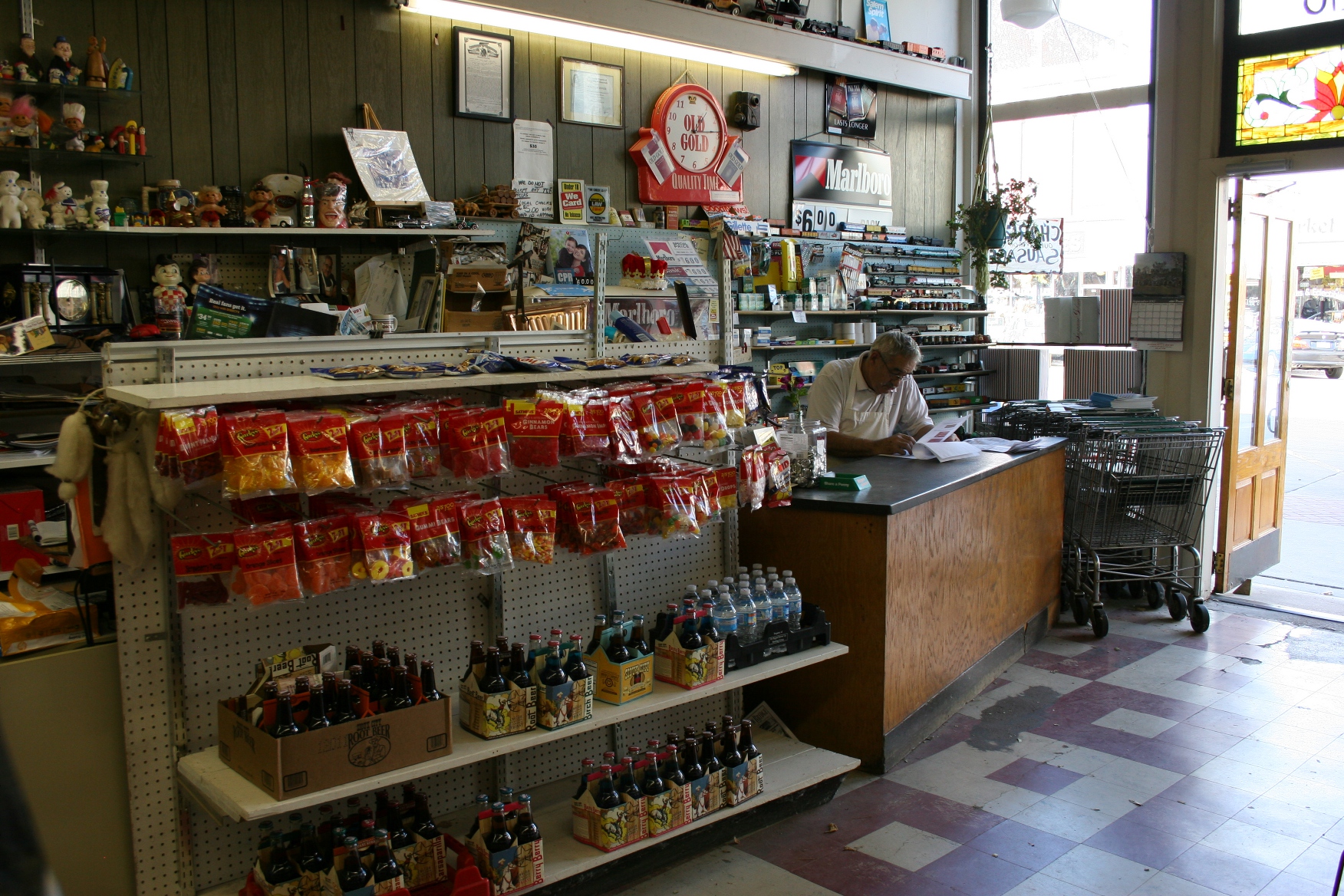
Dick Reissner reads at the front counter while I explore his store.

Richard (Dick) Otto Reissner was preoccupied with reading when I walked in on a recent Saturday afternoon and didn’t seem to want to be bothered. So I didn’t query him with the list of questions formulating in my mind as I perused the aisles.

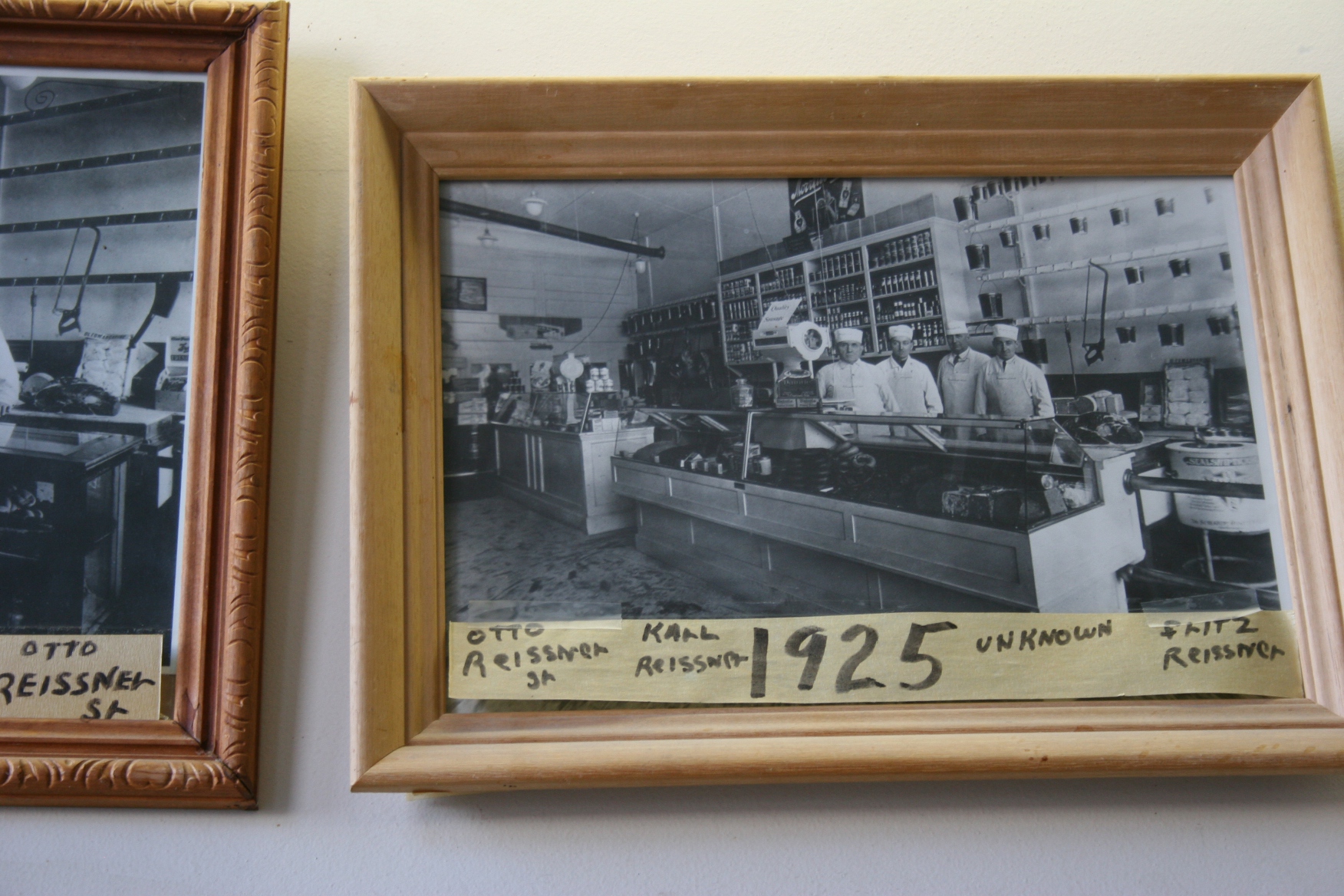
Vintage photos which clued me in as to the history of this place.

Therefore I have no stories to share with you about this third-generation family business. Only photos.

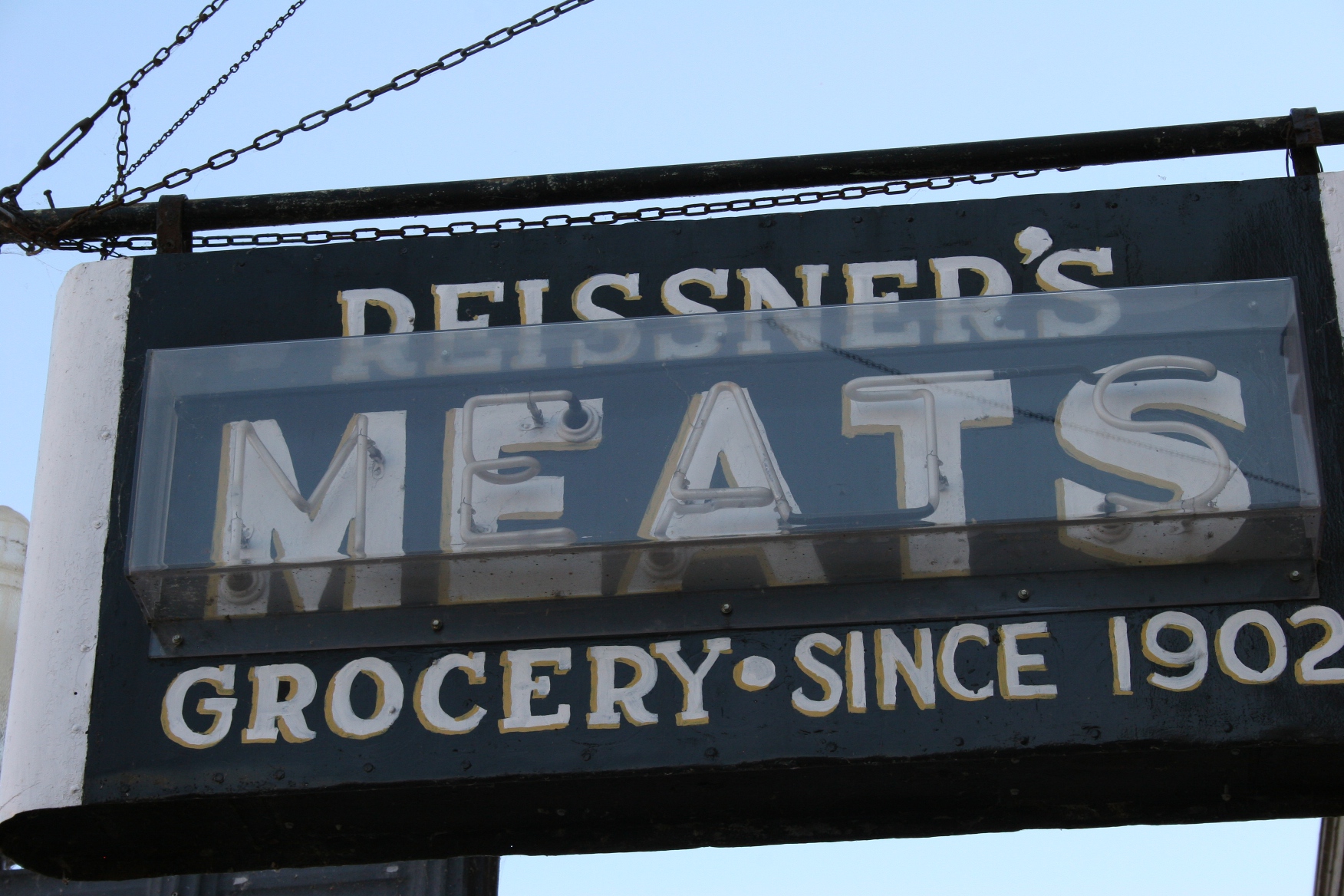
The exterior sign, which dates the business to 1902.

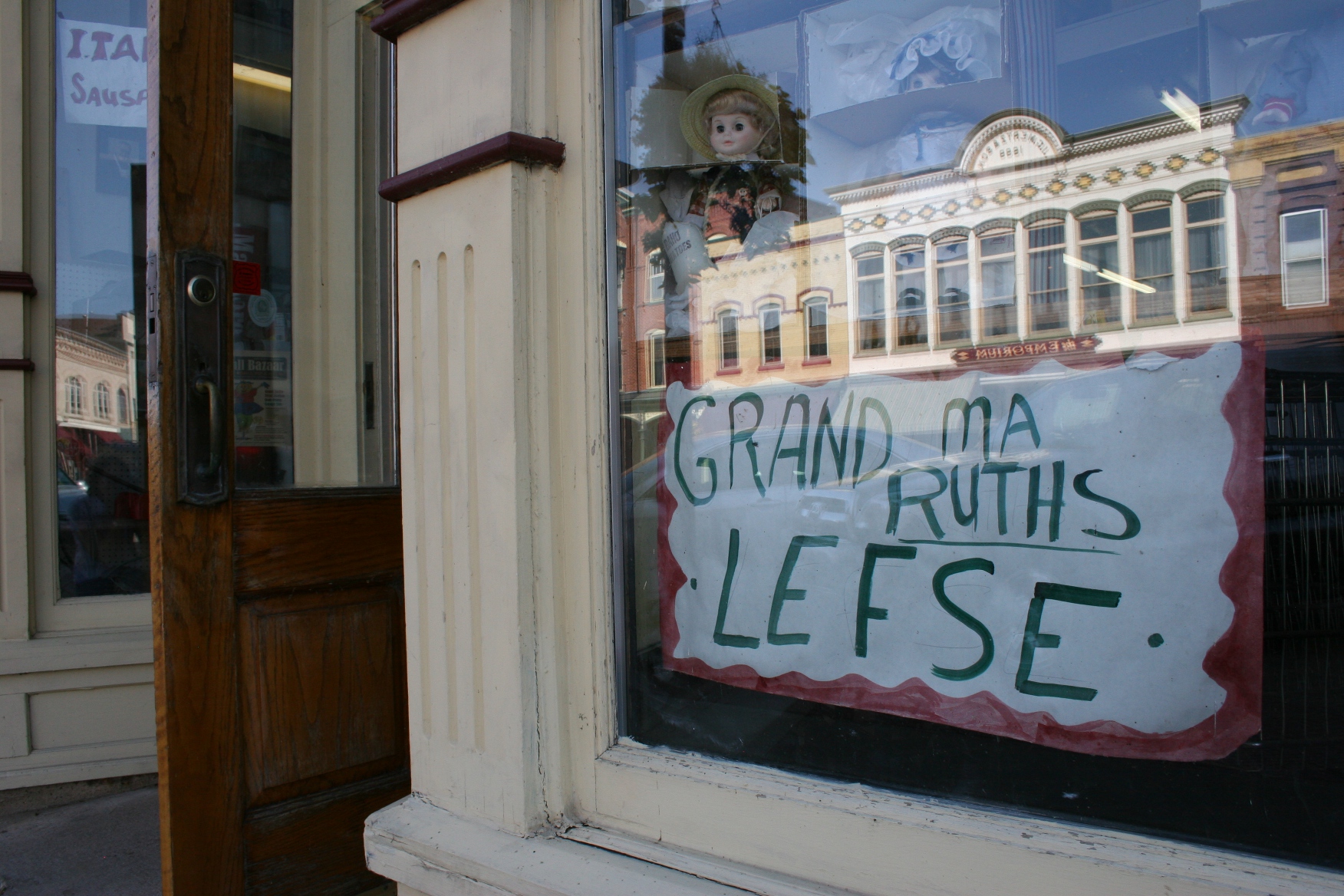
I totally forgot to search for the lefse or ask about  Grandma Ruth.

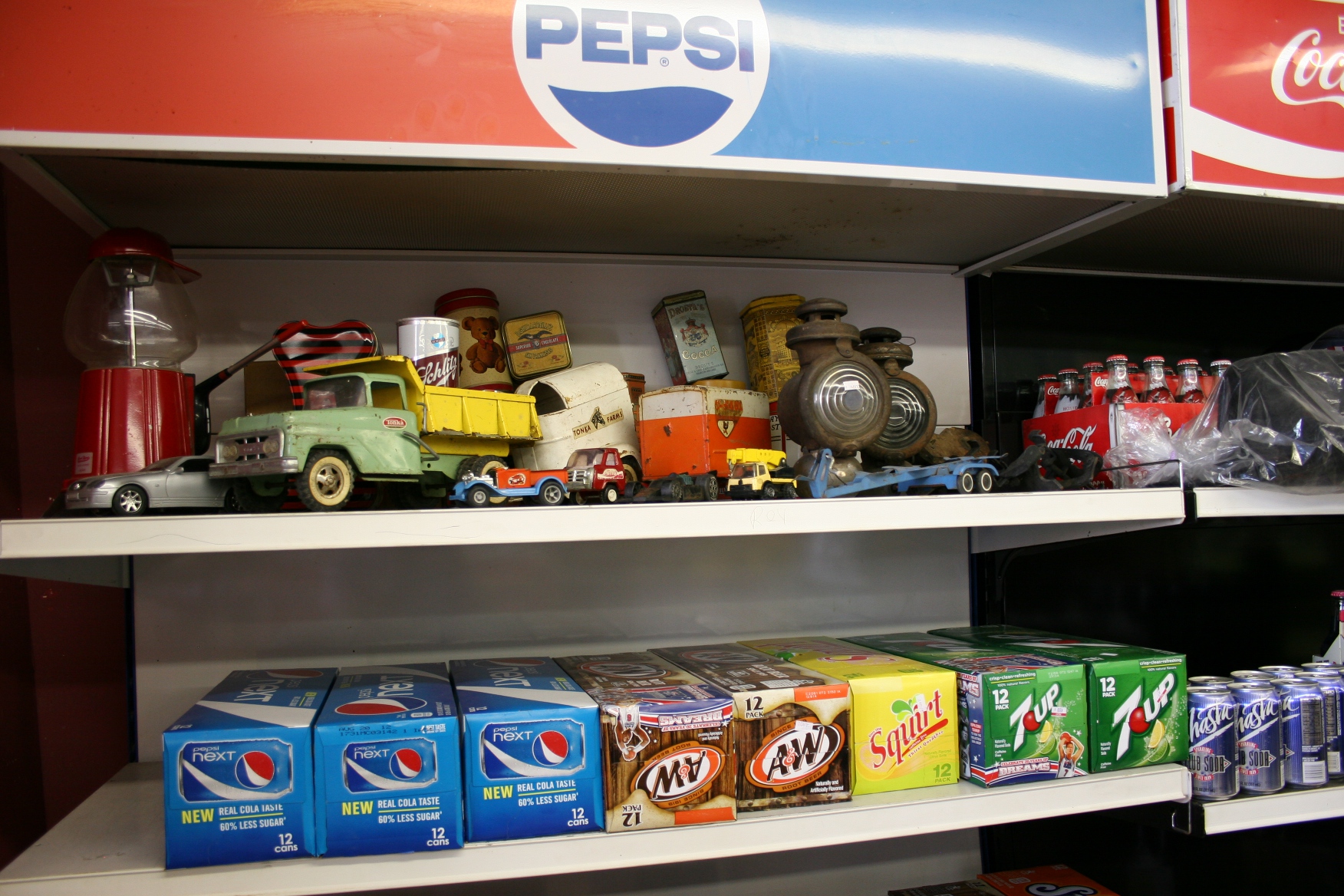
The vintage toys, etc., are not for sale.

An old, old cooler…

How often do you see price stickers on food anymore?

I have no clue, none, why there’s a saddle, right, in the grocery store.

© Copyright 2012 Audrey Kletscher Helbling


Lovin’ Hastings’ historic downtown October 30, 2012

Filed under: Uncategorized — Audrey Kletscher Helbling @ 6:51 AM
Tags: , , , , , , , ,

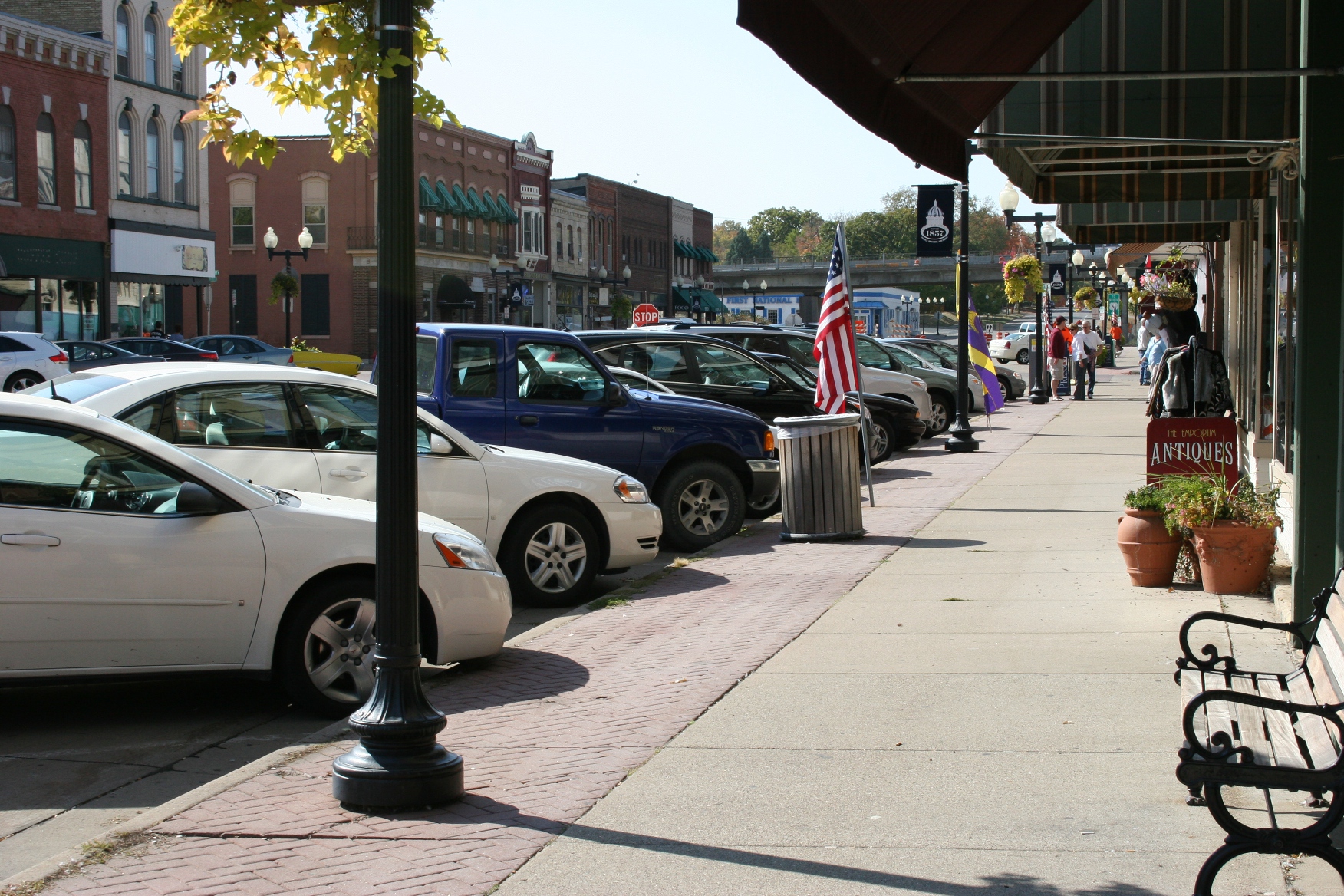
Just a sampling of the historic buildings in downtown Hastings, Minnesota.

WHY I’VE NEVER VISITED historic Hastings, a Mississippi River town an hour from my Faribault home, prior to a few weeks ago remains a mystery to me.

Jammed with building after building after building hearkening from yesteryear, Hastings’ downtown holds precisely the type of architecture and vintage imprint that I find especially appealing.

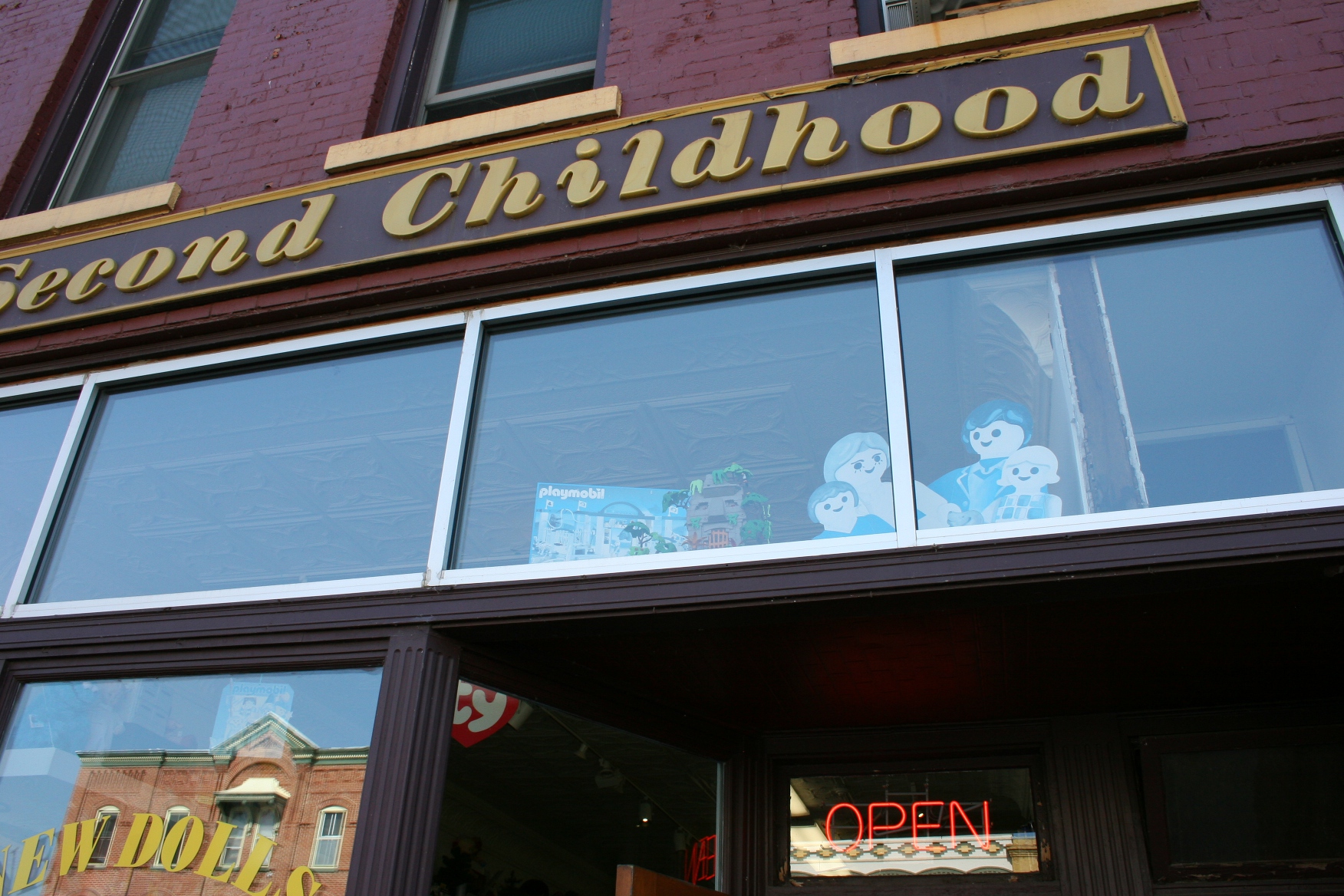
Looking up at Second Childhood Toys.

I could just stand there and gawk at the upper floors of these mostly brick buildings—at the arched windows, the detailed trim, the dates that define a building’s birth—for a good spell.

Stroll the sidewalks of downtown Hastings at a leisurely pace and step inside the many charming shops.

But the sidewalk level, too, offers an equal amount of charm with a multitude of antique and gift shops, a sweet spot to sample ice cream or candy, and more.

Relaxing on an early autumn afternoon in downtown Hastings, when the weather was still warm.

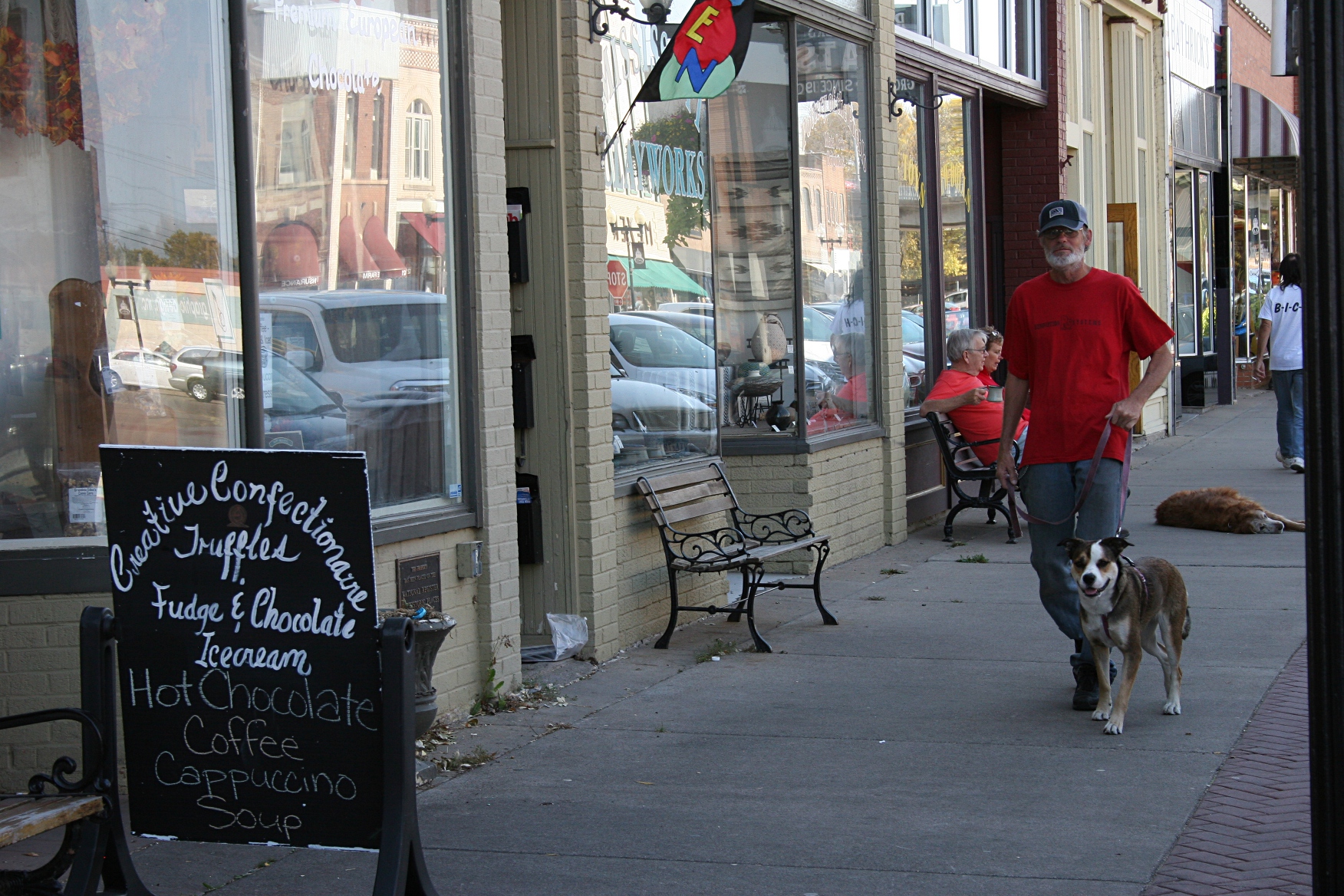
It’s the kind of Main Street where folks lollygag, where locals relax on a bench and sip coffee, where a dog lazes in the middle of the sidewalk and no one minds skirting around the canine, where trolls lurk near the bridge.

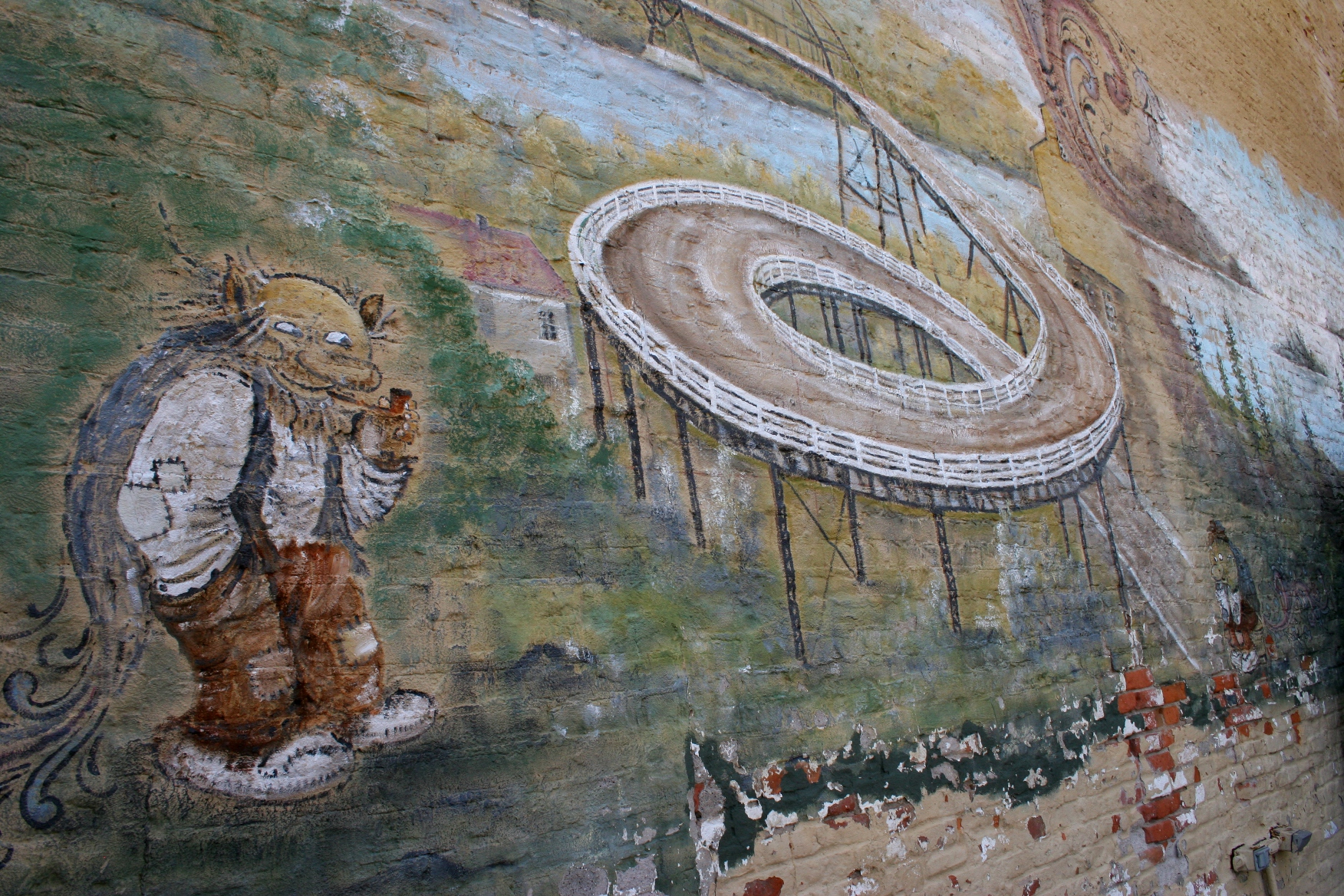
In Oliver’s Grove 1819, a downtown park, I found this mural of trolls and the old spiral bridge which once crossed over the Mississippi from Hastings to Wisconsin. Hastings was originally called Oliver’s Grove after Lt. William G. Oliver who arrived here in 1819.

This describes the Hastings I found on a Saturday afternoon in early autumn. Hastings, with its historic district, reminds me of Faribault’s downtown. Except Faribault seems to be mostly undiscovered.

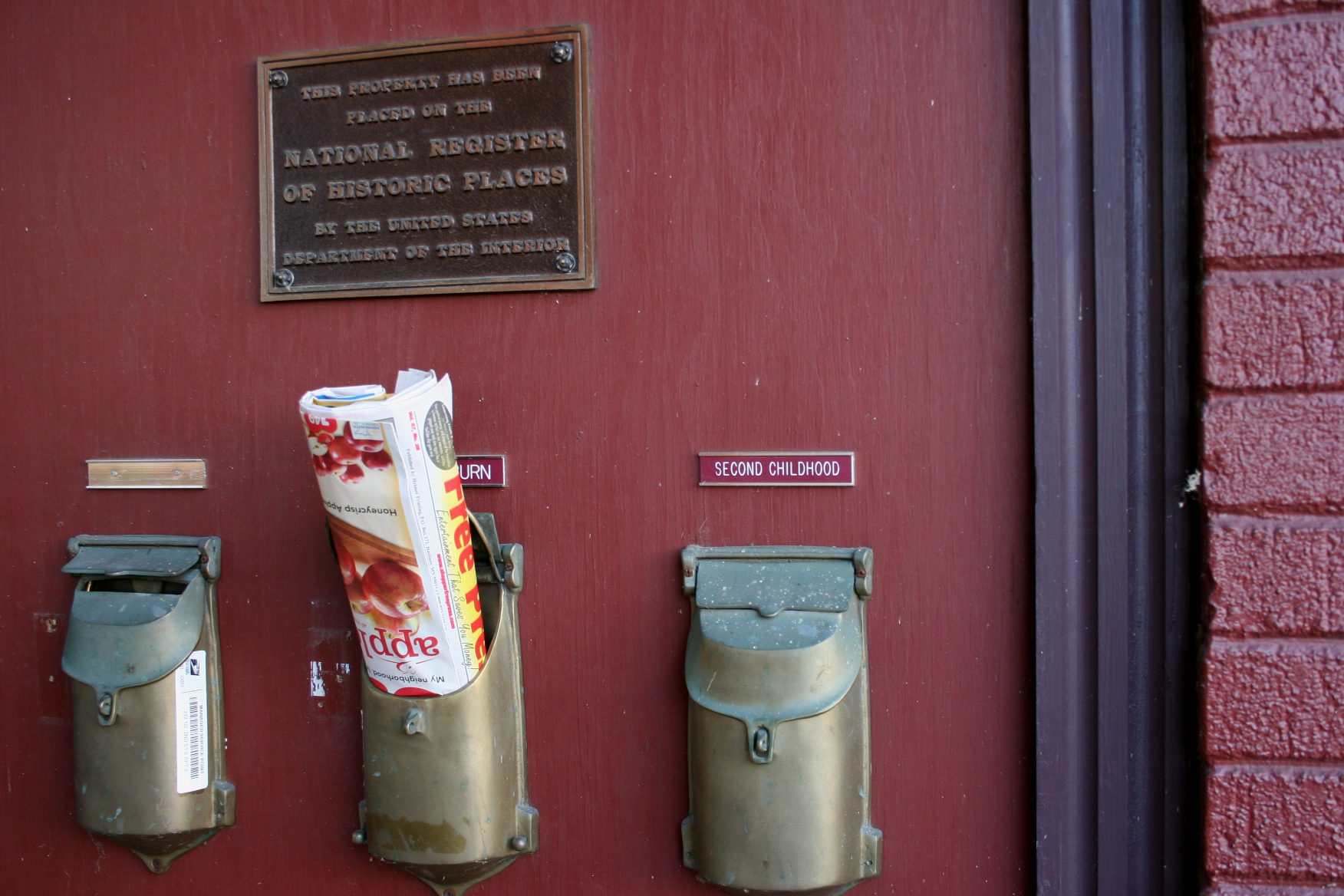
Mailboxes and an historic marker on a door in the business district.

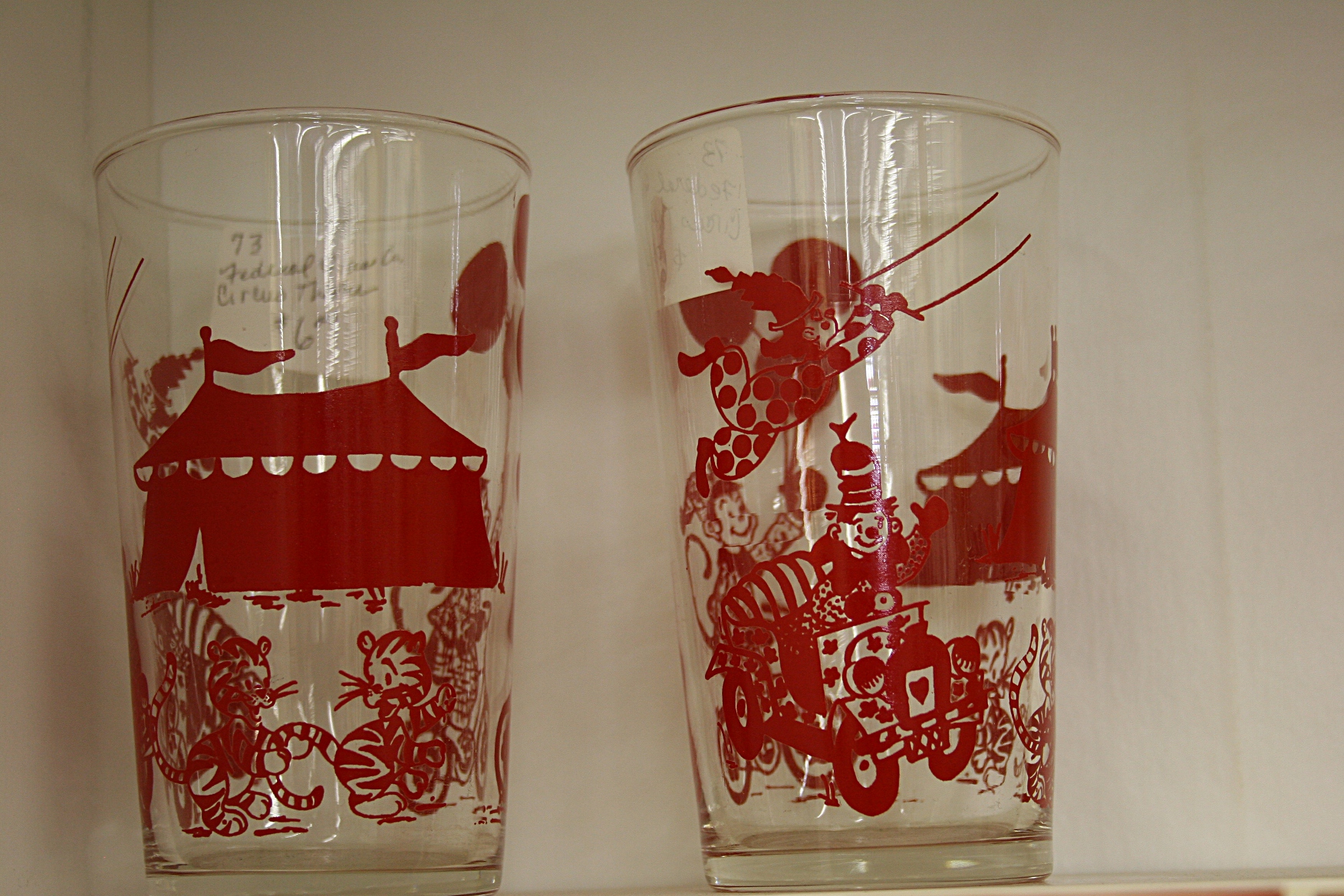
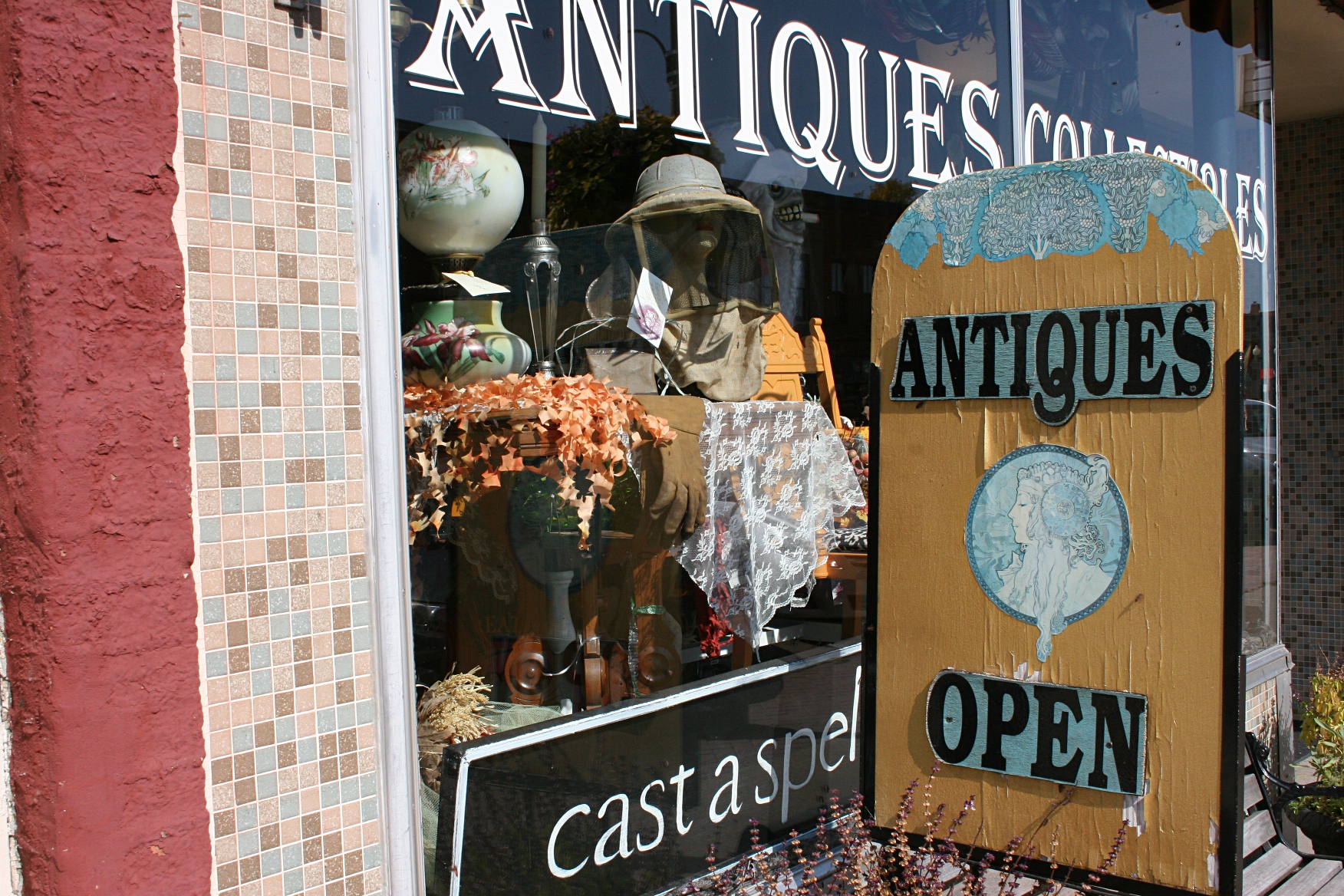
These circus glasses caught my eye inside an antique shop, Second Street Antiques and Collectibles, I believe. It was difficult for me to resist purchasing these as I collect vintage glassware.

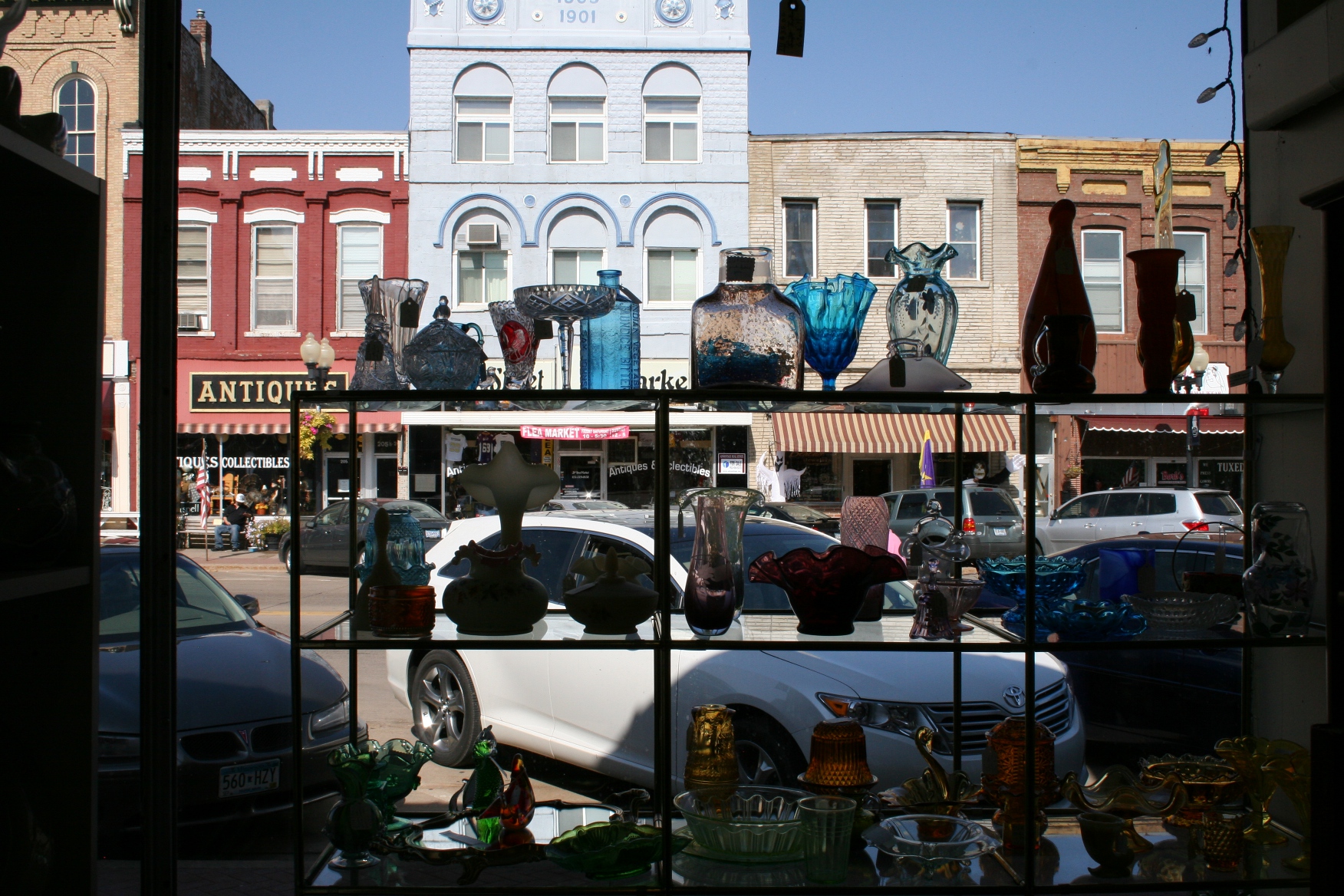
Inside the same antique shop, looking across the street at a row of historic buildings.

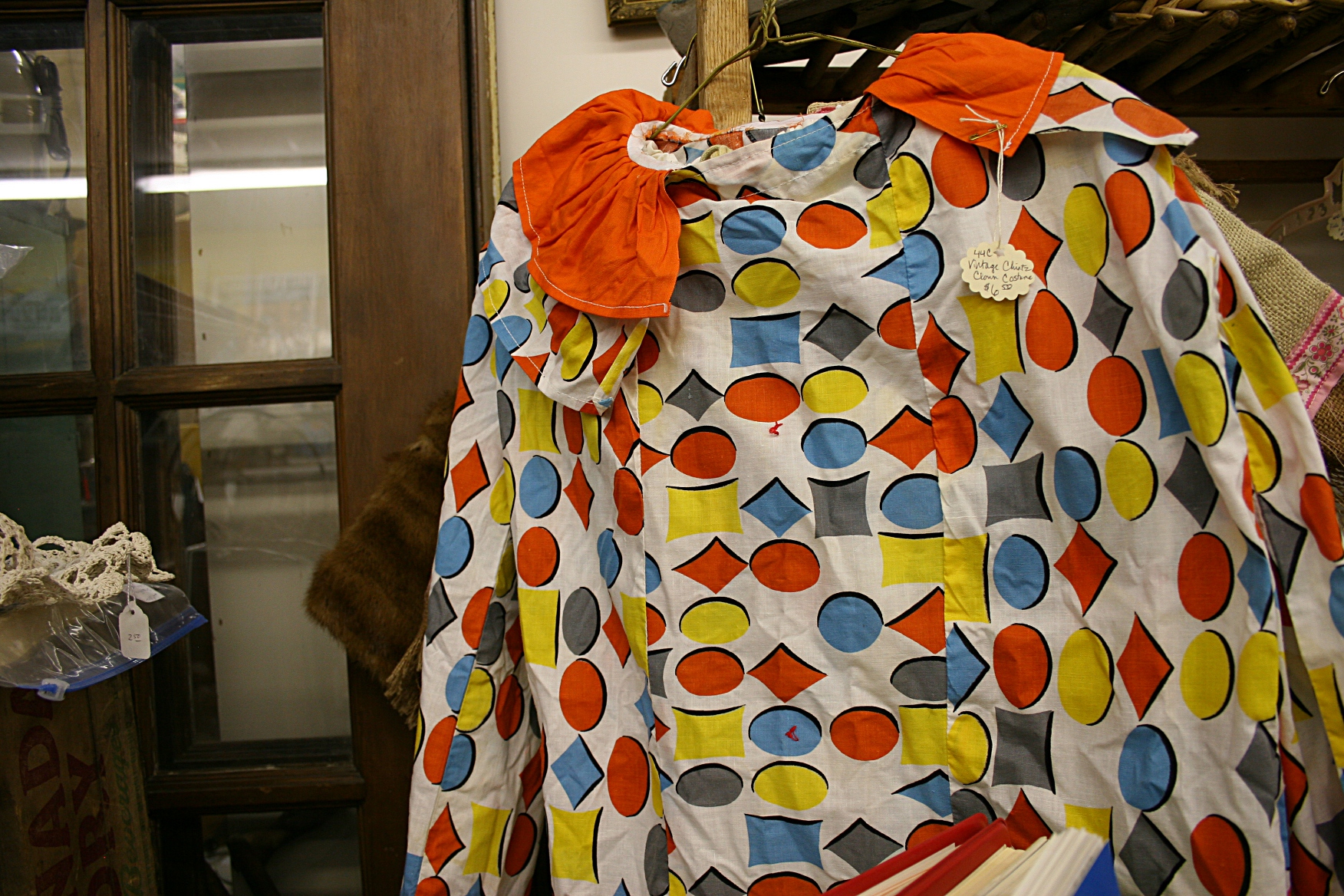
Just in time for Halloween…a vintage clown costume in the same antique mall.

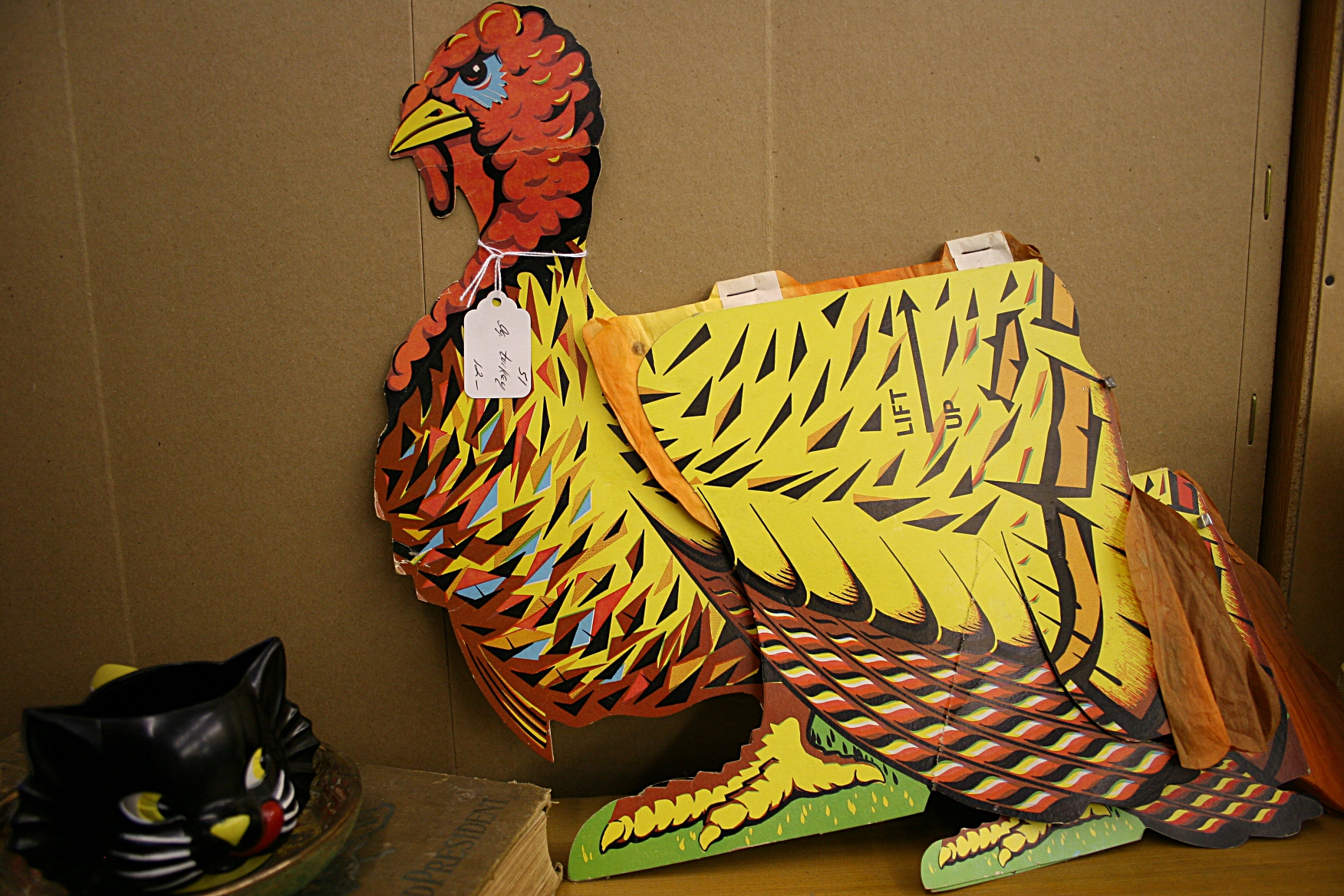
A vintage turkey decoration for the table, a few booths over from that Halloween costume.

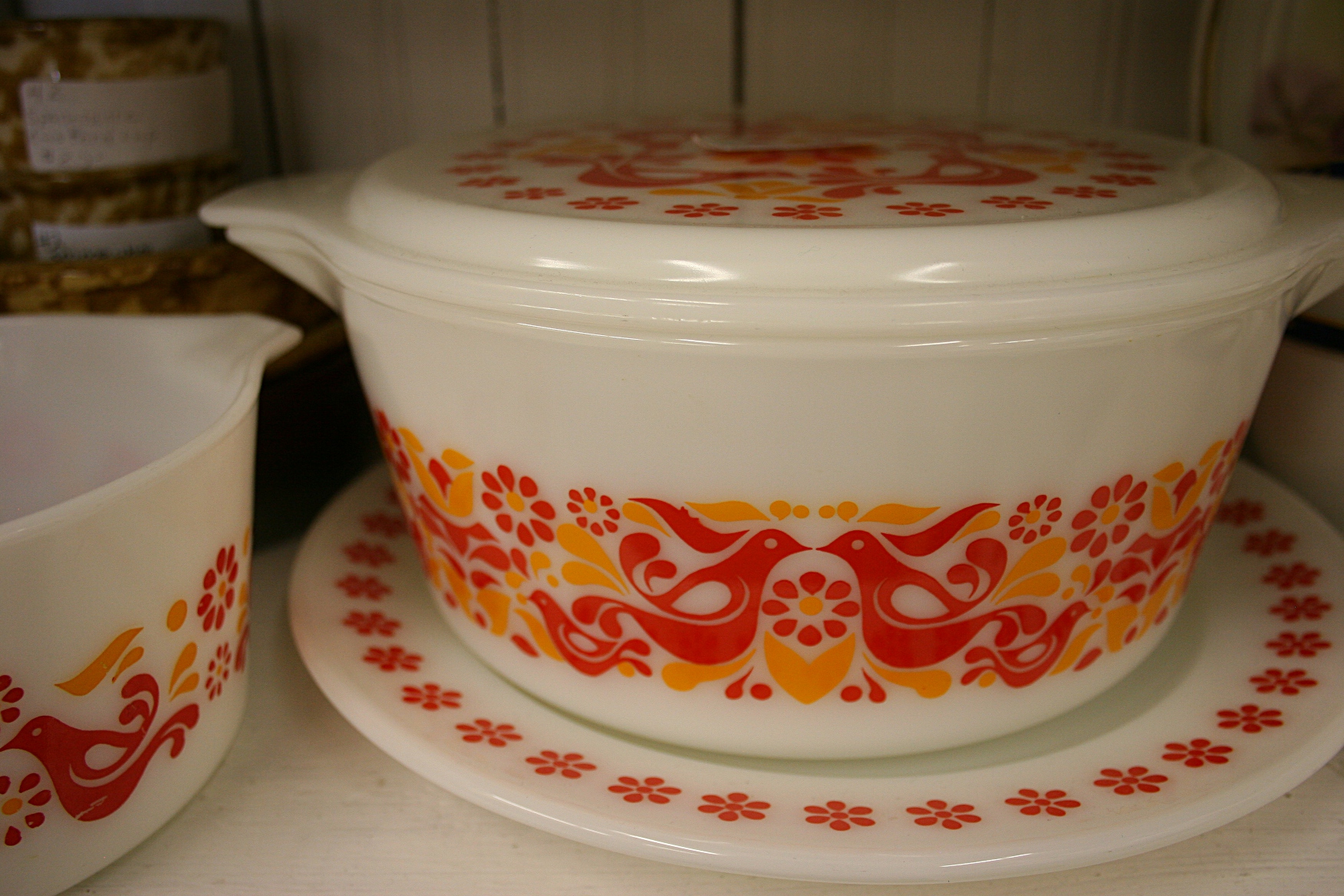
One more seasonal find, a casserole in autumn hues.

So many antique shops to visit and not enough time to see them all.

Walking the dog in historic downtown Hastings on a warm and sunny Saturday earlier in autumn.

PLEASE CHECK BACK for more posts from historic Hastings.

© Copyright 2012 Audrey Kletscher Helbling


Healthy & hearty dining at the retro Highland Cafe in southeastern Minnesota October 22, 2012

A side view of the Historic Highland Store and Cafe.

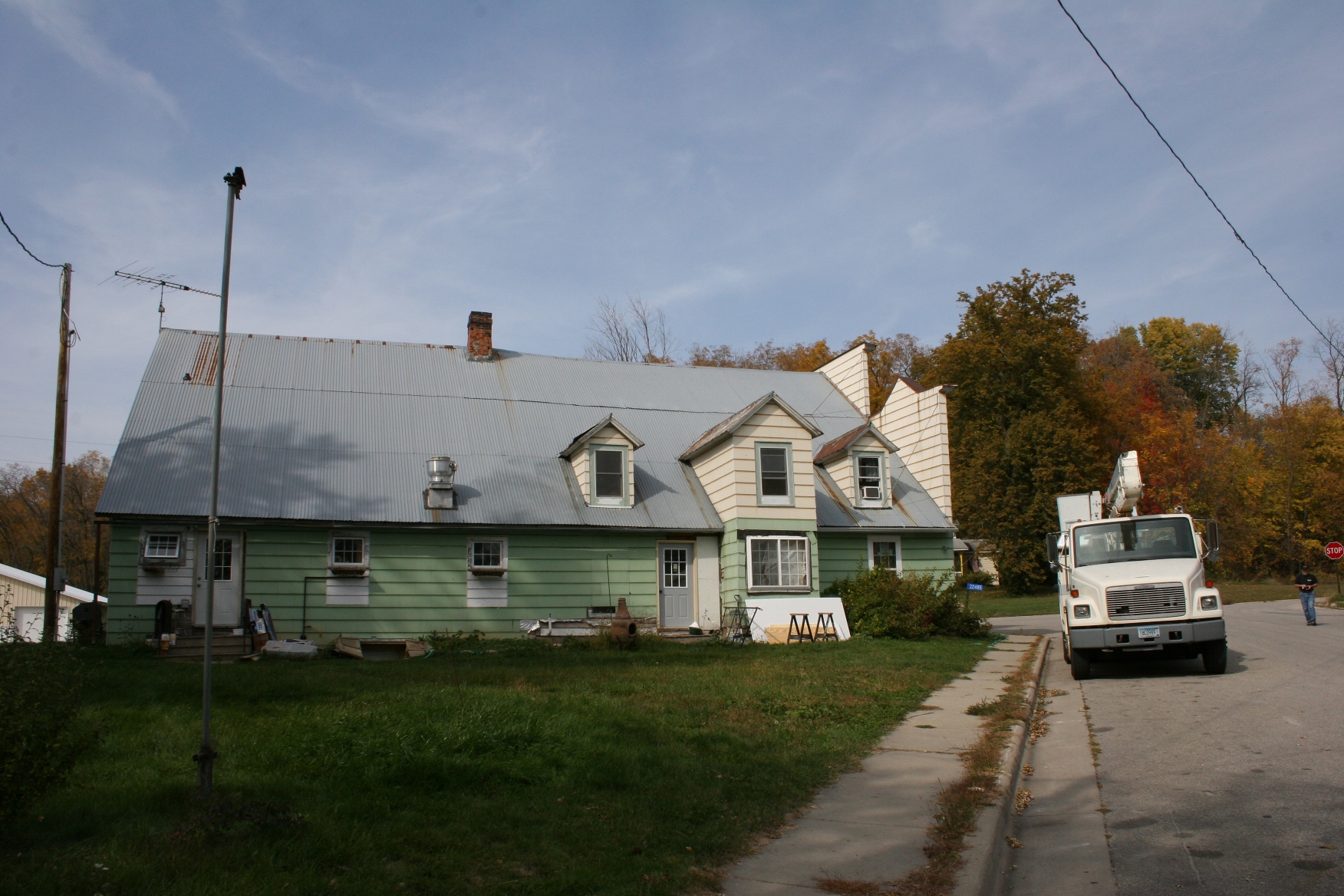
FROM THE EXTERIOR, a side view of the Historic Highland Store and Cafe in unincorporated Highland in rural Fillmore County, Minnesota, presents a mishmash of angles, work in progress and a corrugated metal roof that seems more fitting for a machine shed than a restaurant.

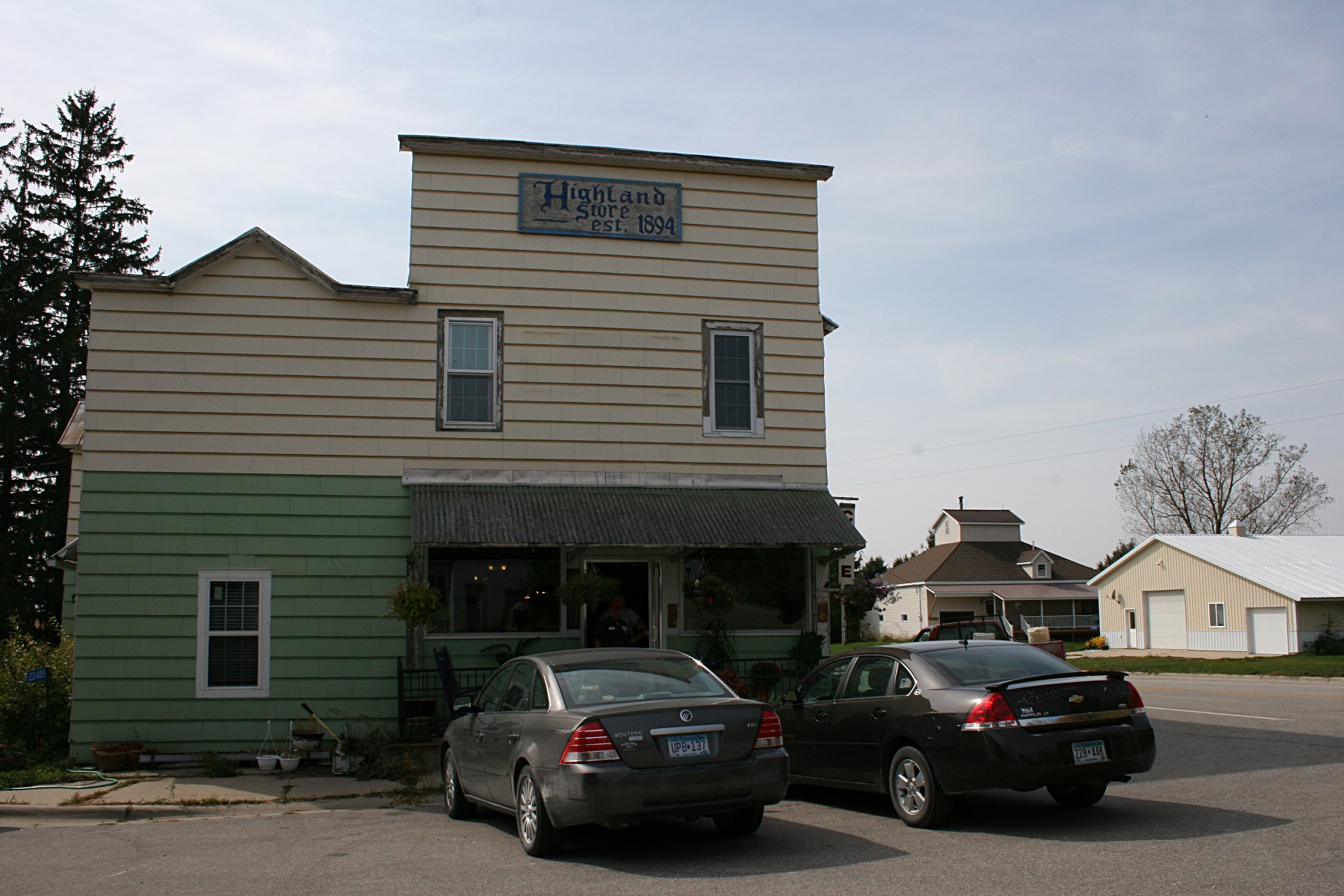
Face on, the front facade is rather plain and unassuming, until you aim your focus upward to the weathered wooden sign: “Highland Store est. 1894.”

The unassuming front of the Highland Cafe.

That single simple sign hints at the treasure you’ll discover once you step inside this combination cafe, mini-store and Seventh Day Adventist mission outreach next to County Road 10.

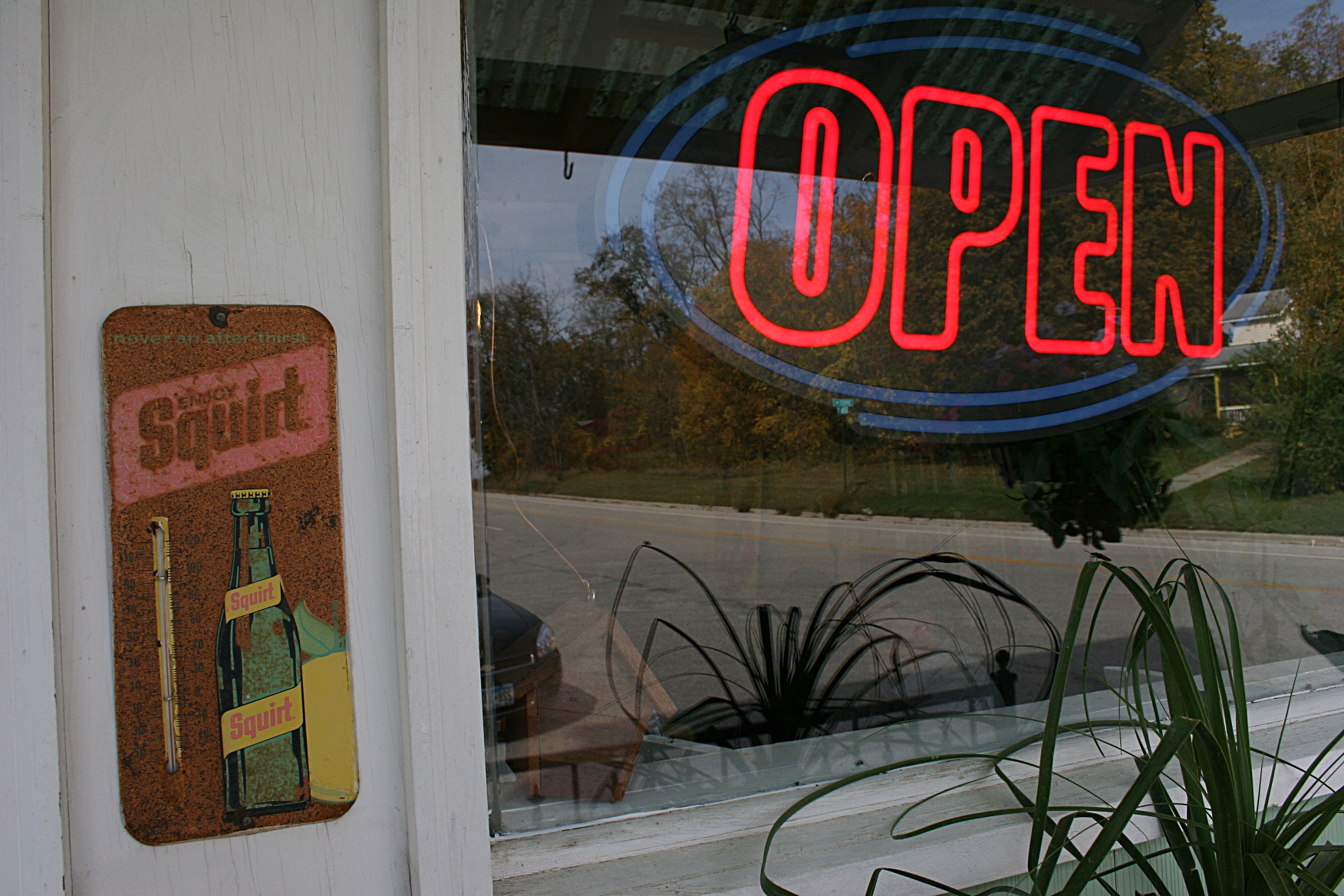
A vintage pop sign and a neon OPEN sign next to and on a front window.

Enter this historic building in Highland and you just have to stop and take in the novelty of this place which once served as a general store in this strong agricultural and tourism region of southeastern Minnesota.

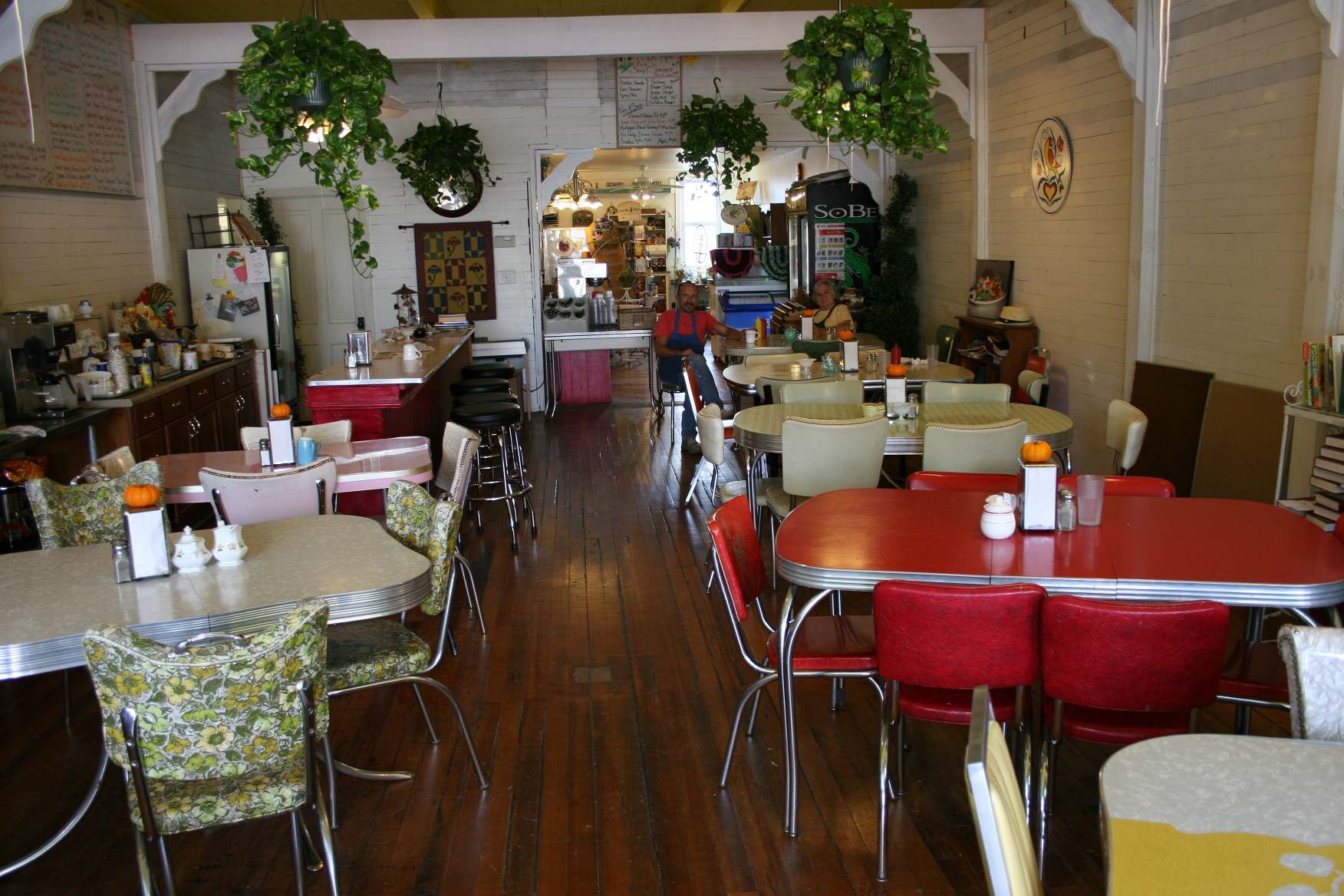
A dining room overview with a mini gift shop tucked in the back.

The cafe’s charm and good, home-cooked and healthy food draw not only locals, but tourists/users of the area’s state recreational trails and regional diners from Rochester some 50 miles to the north and west.

My husband and I have come here for lunch early on a Monday afternoon in early October while on a day trip to view the fall colors. We prefer one-of-a-kind small-town cafes to chain restaurants and are thrilled with the unique, down-home atmosphere we discover at the Highland Cafe. It’s as if we’ve walked into the kitchens of our childhood, minus the red-and-white checked linoleum floor.

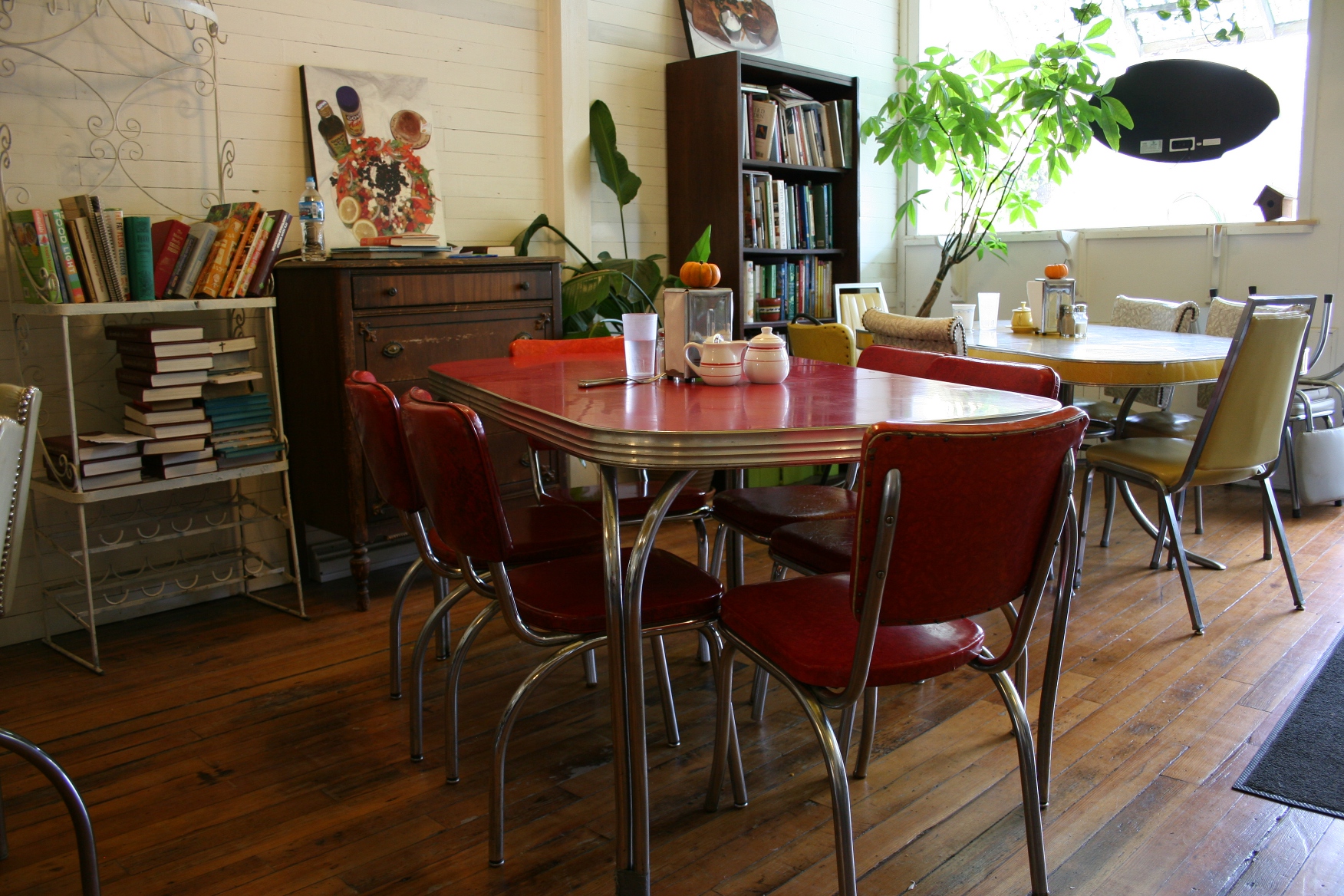
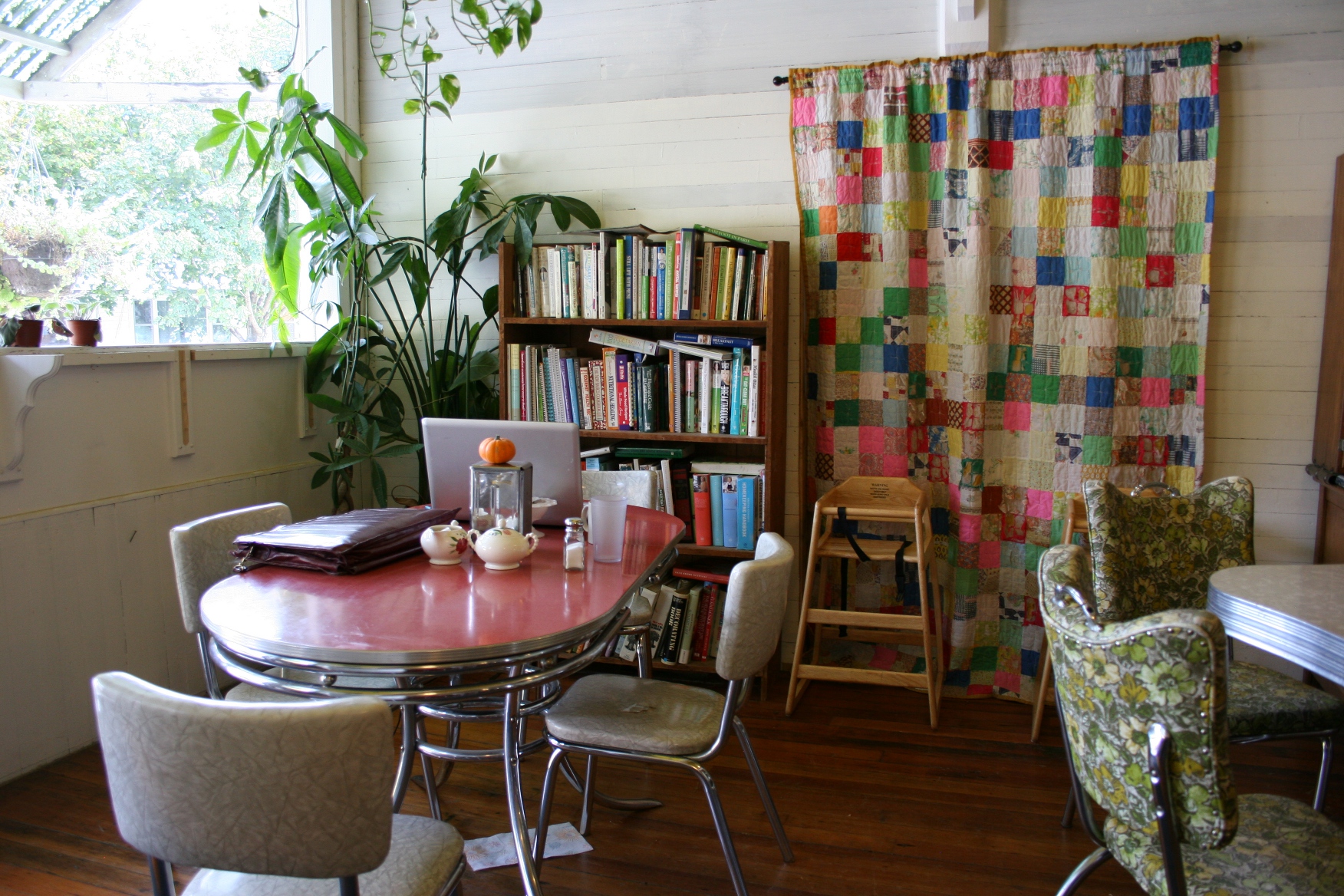
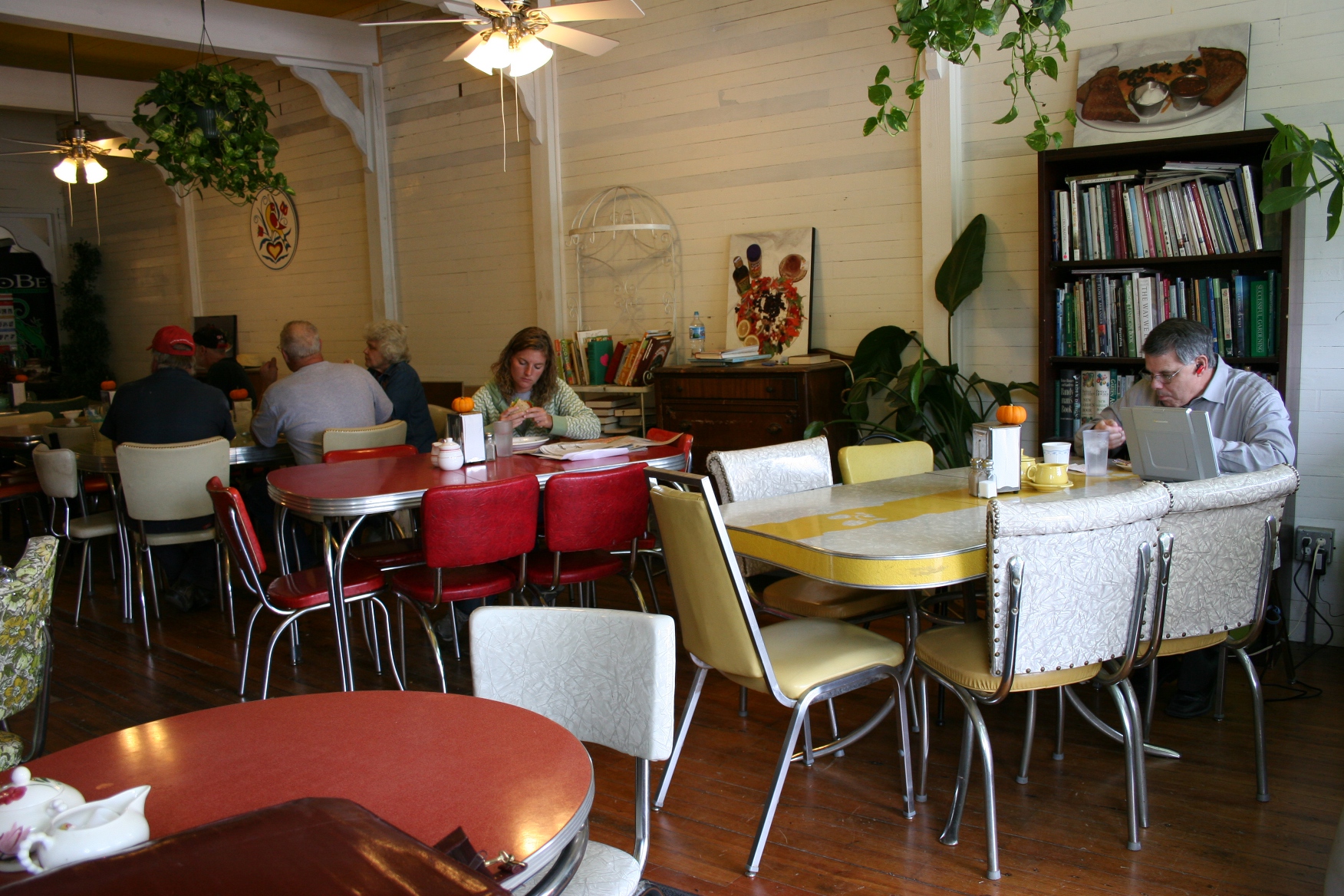
This is the scene near the front of the dining room where vintage tables and chairs are drenched in sunlight on an October afternoon. This is the kind of spot where you can read a book, work on your laptop or chat it up with the locals or others.

This eatery features the original wood floor topped by a mix of 1940s and 1950s vintage laminate chrome-legged/edged tables and chairs that set the mood for casual dining. There’s nothing matchy, matchy perfect about the décor here and that unpretentiousness suits me perfectly.

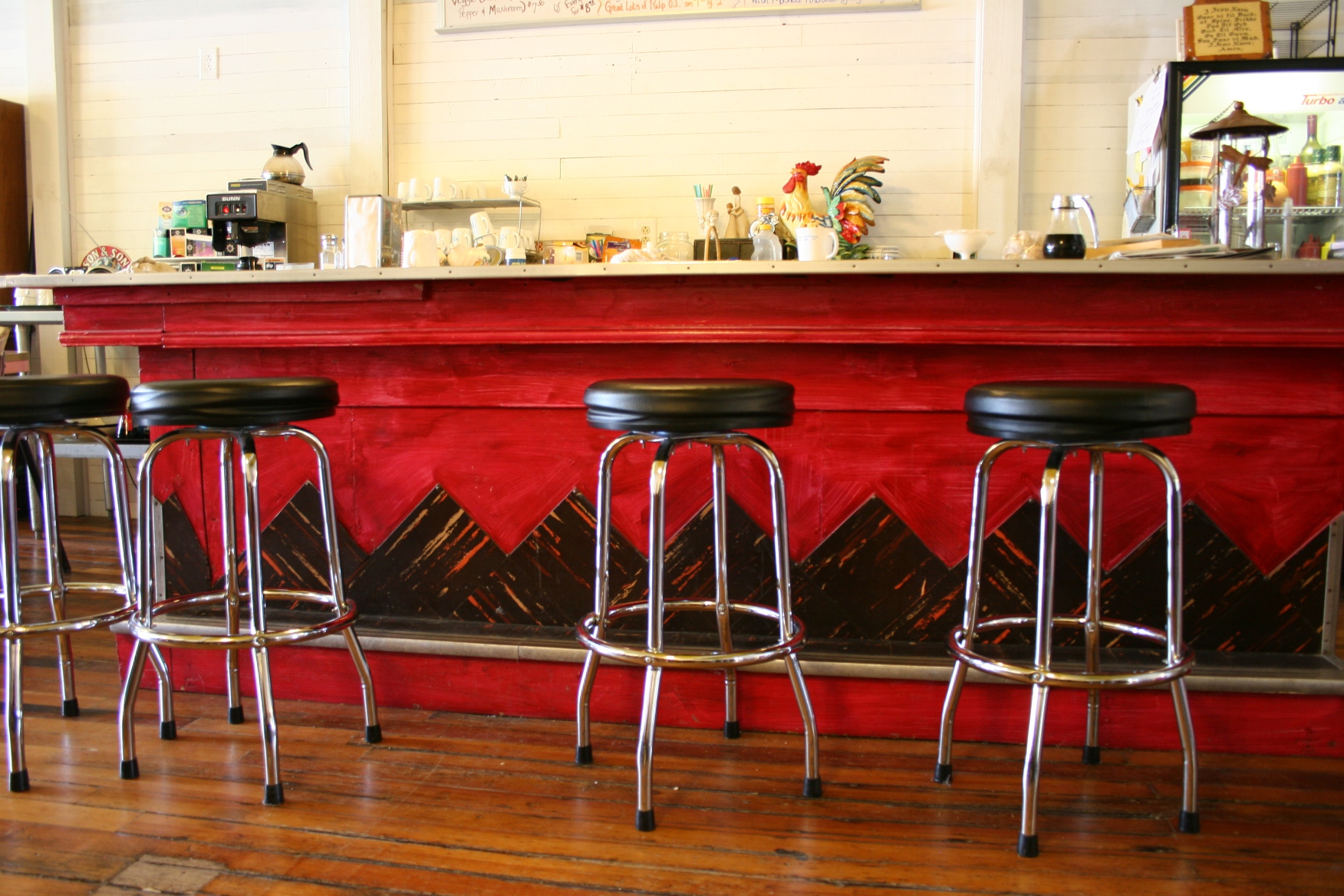
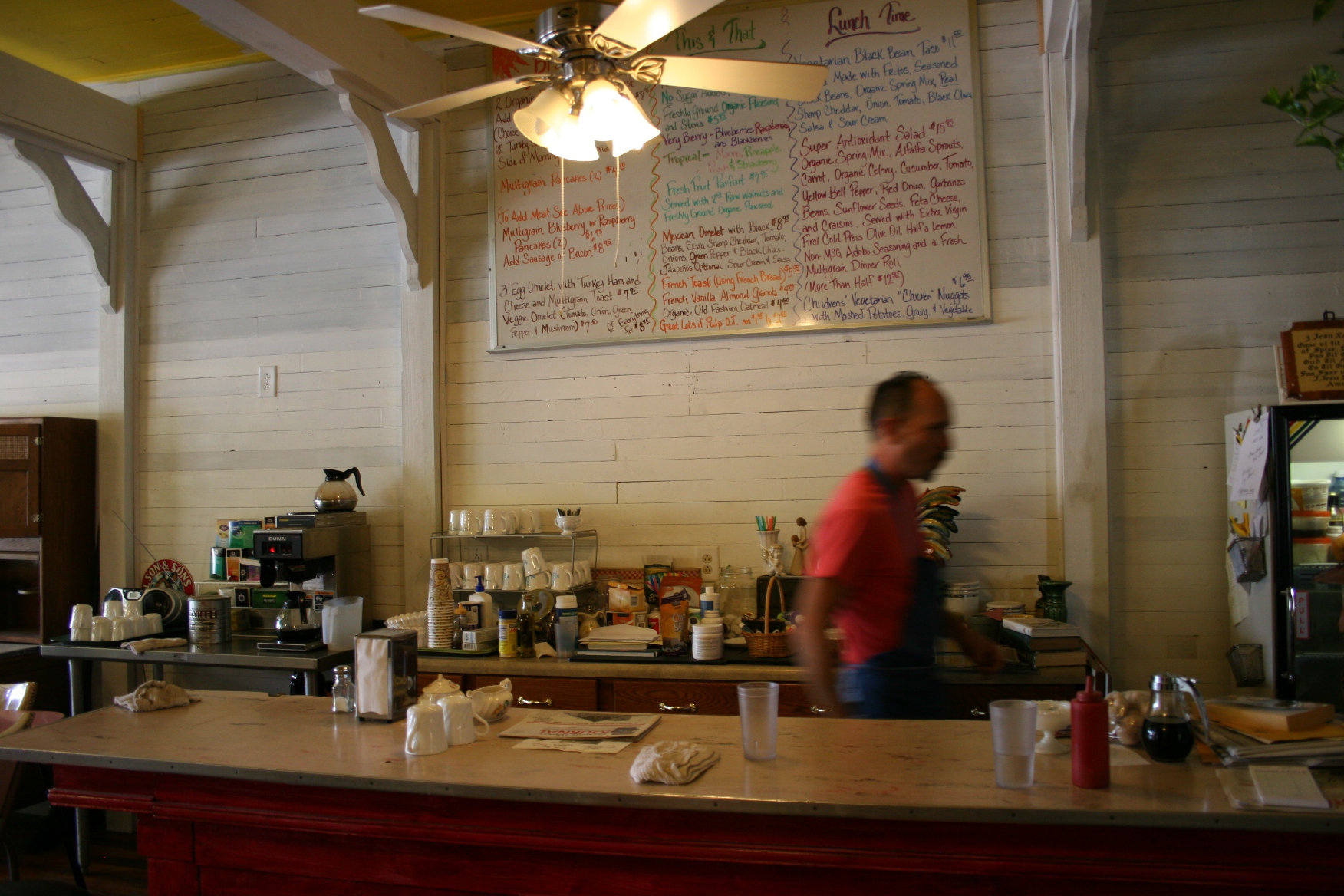
The absolutely fabulous lunch counter.

If you prefer to dine at a lunch counter, you’ll find one of those, too, painted in the most unexpected eye-jolting red that contrasts with the dark wood floor and cream-hued wood plank walls.

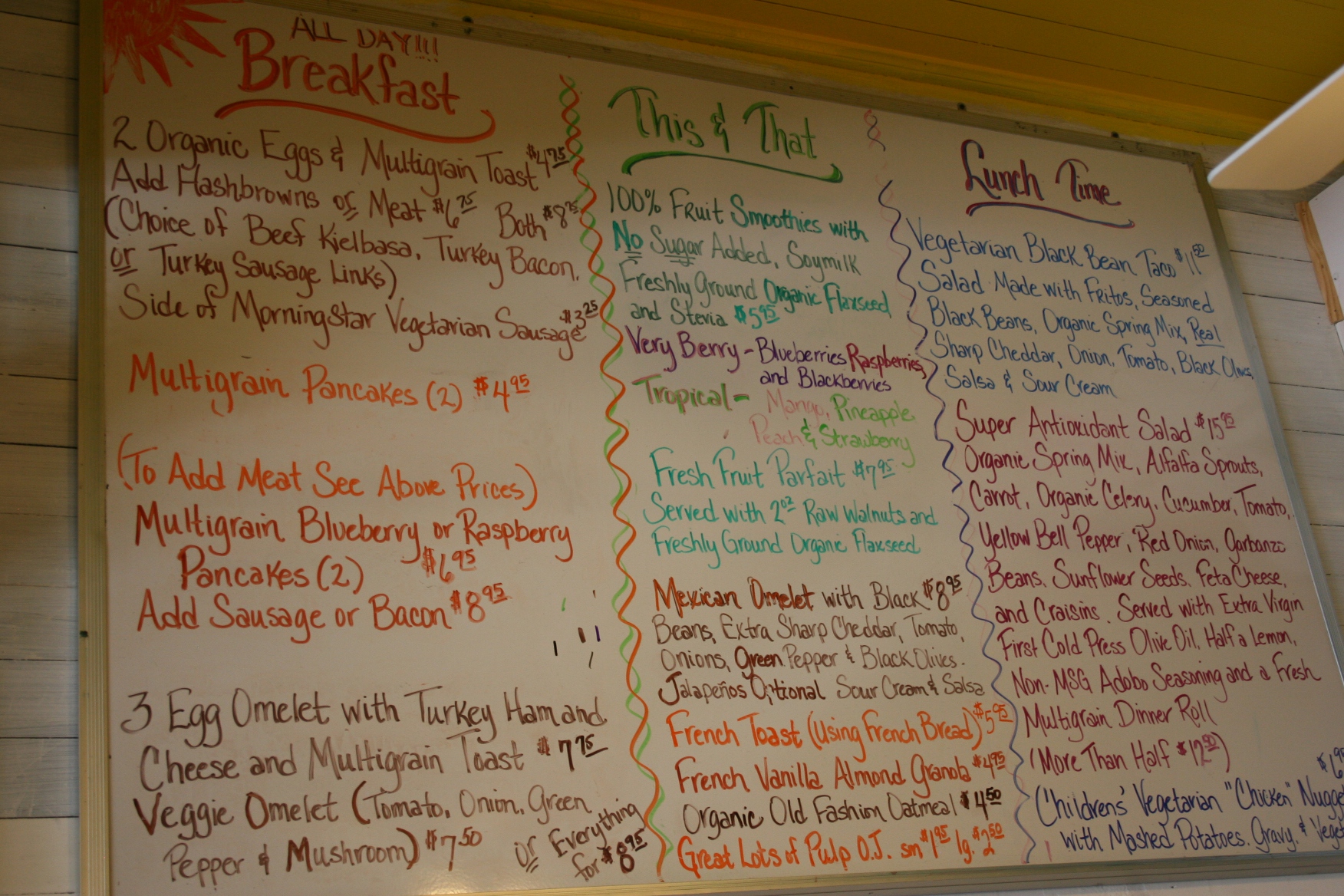
The main menu offers plenty of healthy choices.

The Highland Cafe, you’ll discover, is as much about the casual country atmosphere as about the food. You’ll read words like organic, multigrain, no sugar, soymilk, super antioxidant and fresh on the whiteboard main menu. You’ll also find comfort foods, like real mashed potatoes and gravy, along with fresh vegetables harvested from the cafe garden out back.

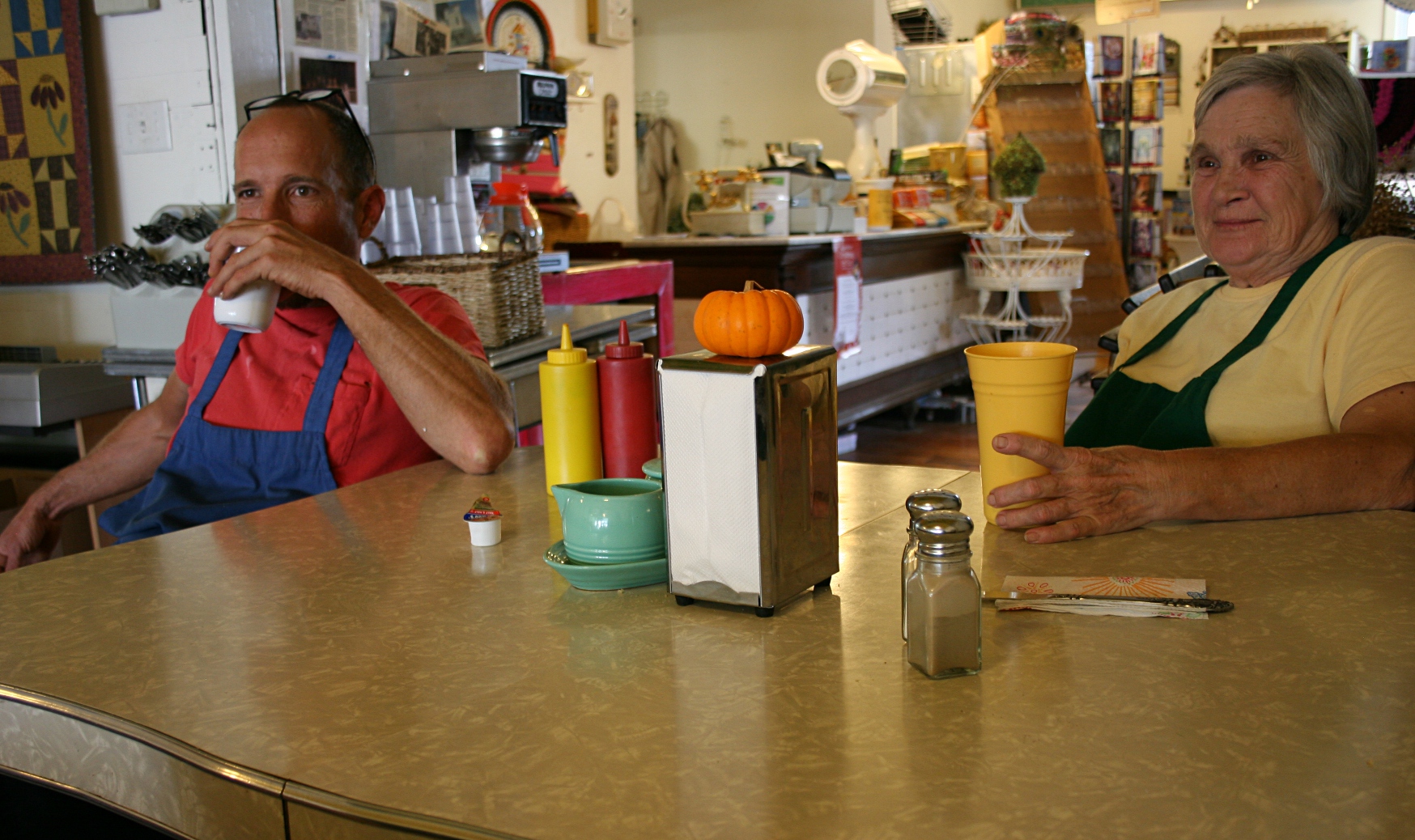
Troy Starks hustles behind the lunch counter toward the kitchen.

Even once mostly meat-and-potato eating local farmers have come around to eating healthier, says Troy Starks who on this Monday is waiting tables while his sister, cafe owner Vicki Hudson, is shopping for groceries. It took some time and convincing, but those stolid farmers are now sometimes ordering the cafe’s super oxidant salads.

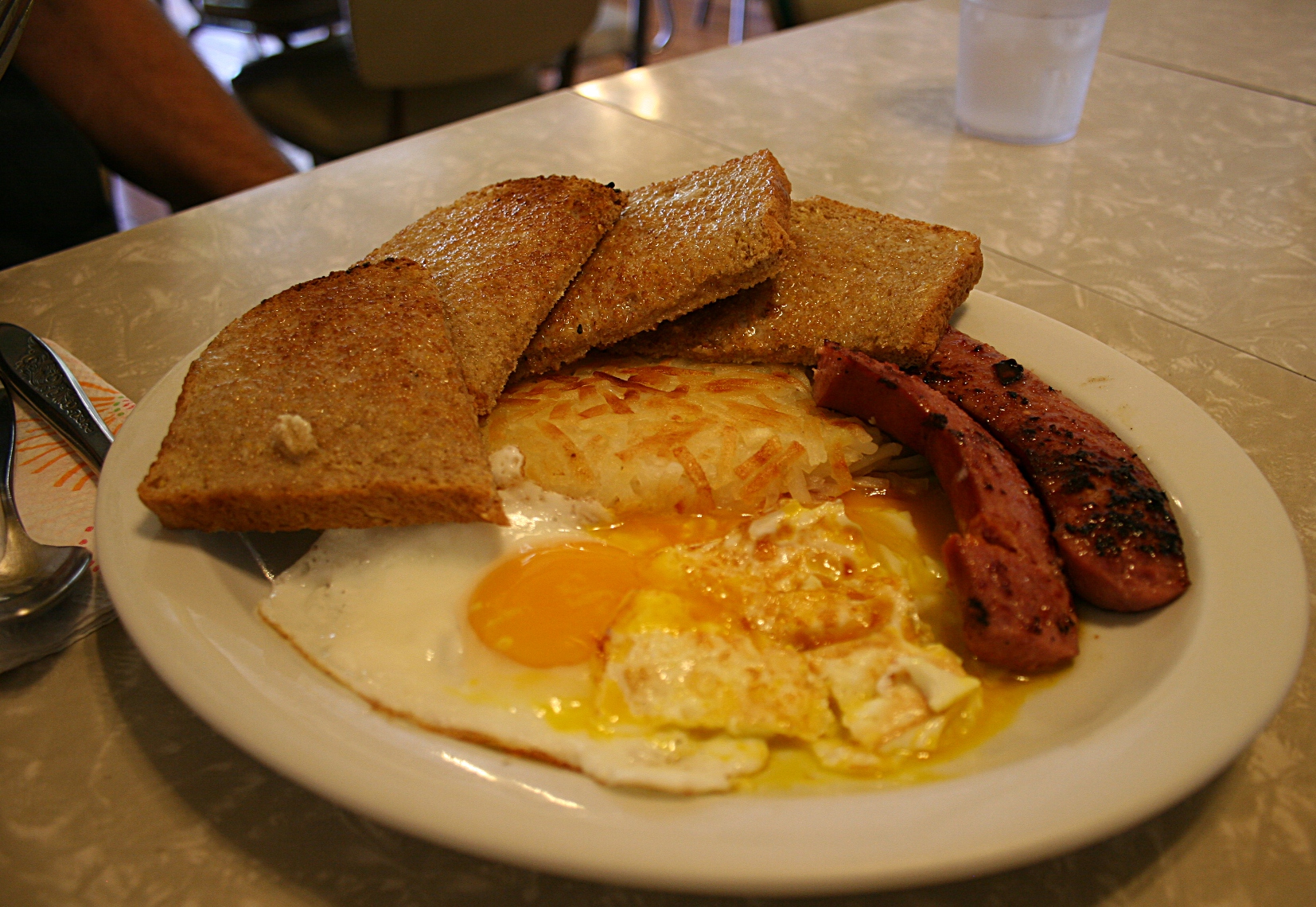
The hearty breakfast my husband ordered, even though the hour was well past breakfast: two organic eggs, multigrain toast, hashbrowns and kielbasa. He broke the egg yolks before I photographed his meal.

While my husband and I await our orders—his a plate of breakfast foods and mine a chicken salad sandwich and a bowl of corn chowder—I strike up a conversation with R.J., dining alone at the table next to us. He’s eating a burger. Turns out young R.J. farms just up the road and sells his grass-fed, antibiotic-free beef to the cafe.

When I point out to R.J. that he’s paying to eat the beef he sold to the cafe, he shoots back with a quick-witted, “Well, at least I know it’s (the beef) good.”

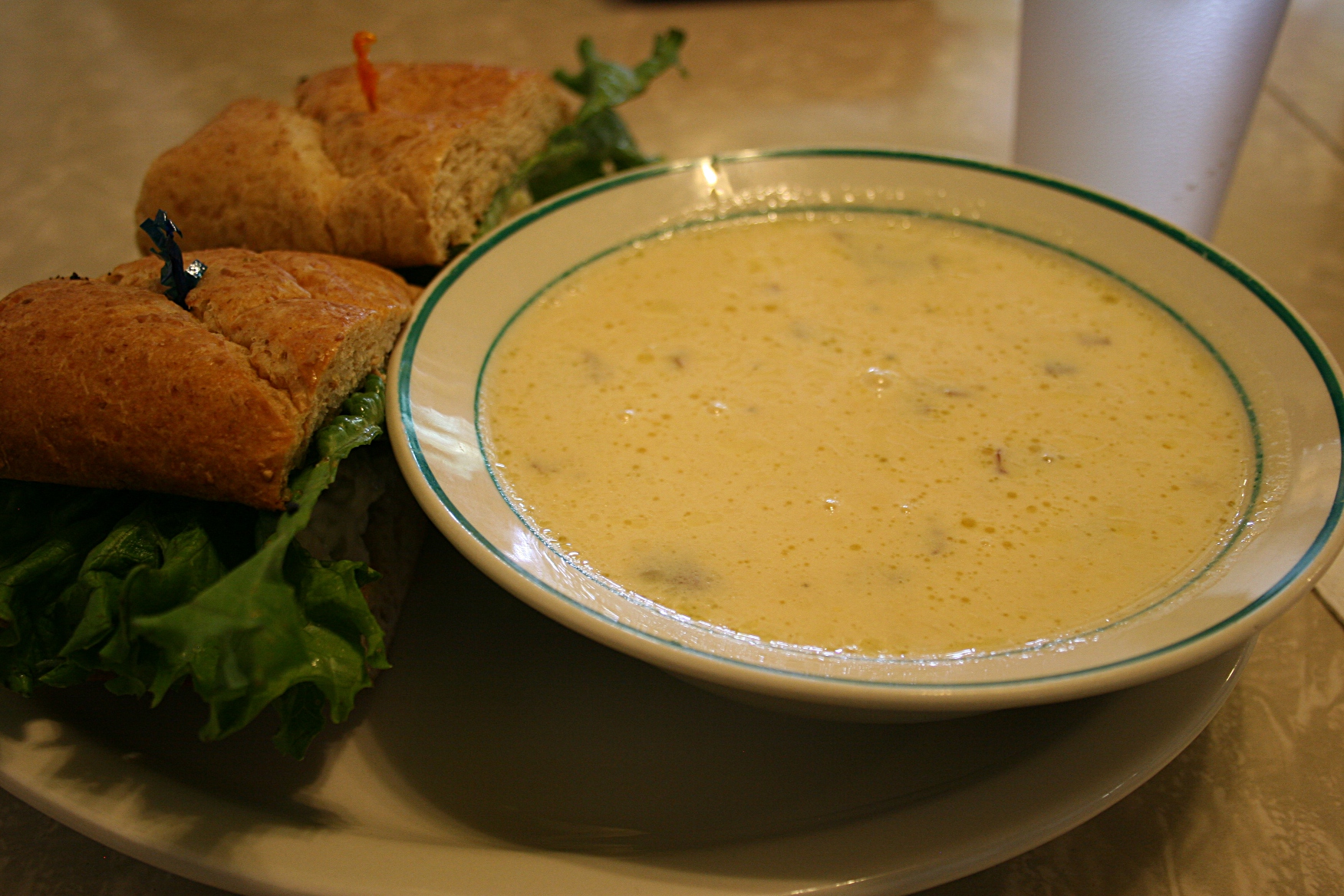
My meal: a chicken salad sandwich and tasty corn chowder.

Good and filling most assuredly define the food here. I wished I wasn’t too full to order a slice of pie or bread pudding or a piece of apple crisp for dessert. But I am. Next time…

And this, dear readers, is where I originally ended this post, which has been sitting in my draft box. Now I must add to this story because cafe owner Vicki Hudson announced to me in an email on Friday that the cafe she purchased five years ago will be closing just before Thanksgiving.

Her mother Sharyn Taylor, the cafe’s chief cook, is “getting tired and will not be up to working another year, so we are closing our doors,” Vicki writes. “…we are going to turn the upstairs into a bed and breakfast and then sell it as a combination bed and breakfast and cafe. It would not be the same without my mom and I feel she has done a tremendous job the past five years.”

Vicki continues: “Maybe there will be someone out there interested in carrying on.”

There. If you are interested in carrying on the fine tradition of the Historic Highland Store and Cafe, preserving a piece of southeastern Minnesota history and more, contact Vicki. Honestly, don’t you just love this unique small town dining spot? I do.

The dessert menu on this particular Monday in October.

FYI: The Historic Highland Store and Cafe is located along Fillmore County Road 10 southeast of Lanesboro in unicorporated Highland. Hours are from 7 a.m. – 3 p.m. Monday-Friday, closed Saturdays and open from 8 a.m. – 3 p.m. Sunday, until just before Thanksgiving.

Yes, the cafe is closed on Saturdays because the building also serves as a ministry for the Seventh Day Adventist Highland Chapel with Sabbath school beginning at 9:30 a.m. followed by an 11 a.m. church service and vegetarian potluck. Bible study is also held at 7 p.m. on Wednesdays and is open to all.

For more information about the Historic Highland Store and Cafe, click here to reach the cafe’s website.

After the lunch rush, Troy Starks and his mom, Sharyn Taylor, sit down to relax and chat. Sharyn is the cafe’s cook.

A comfy and cozy front corner of the cafe.

Even early on a Monday afternoon, the cafe is fairly busy. Occasionally local Amish dine here, intriguing tourists who come to this region of Minnesota. None were here on the Monday we visited. We were told that young Amish women have also worked here on occasion in the kitchen. And at least one  did not show up for work one day, having left the Amish order to “go Englisch.”

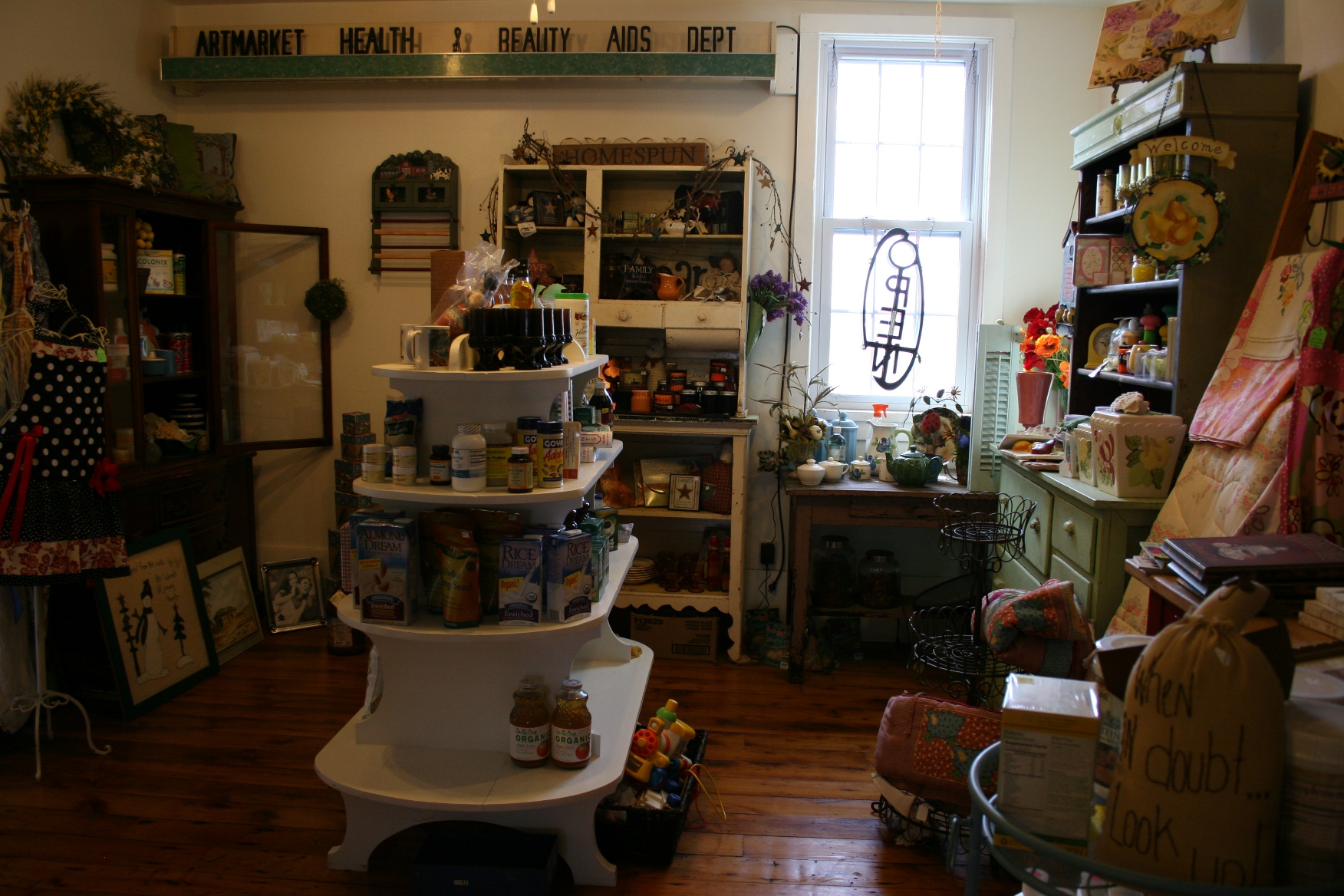
The art market and health and beauty aids department behind the dining room offers an eclectic mix of merchandise.

© Copyright 2012 Audrey Kletscher Helbling


One final look at Door County, Wisconsin October 15, 2012

Filed under: Uncategorized — Audrey Kletscher Helbling @ 7:29 AM
Tags: , , , , , , ,

DOOR COUNTY, WISCONSIN, truly is what you make it.

With that in mind, and understanding that I did not even begin to see and do everything a visitor can see and do at this scenic tourist destination in northeastern Wisconsin, here’s one last look at some photos I shot on a recent one-day visit.

You can explore the stunning natural beauty of Door County…

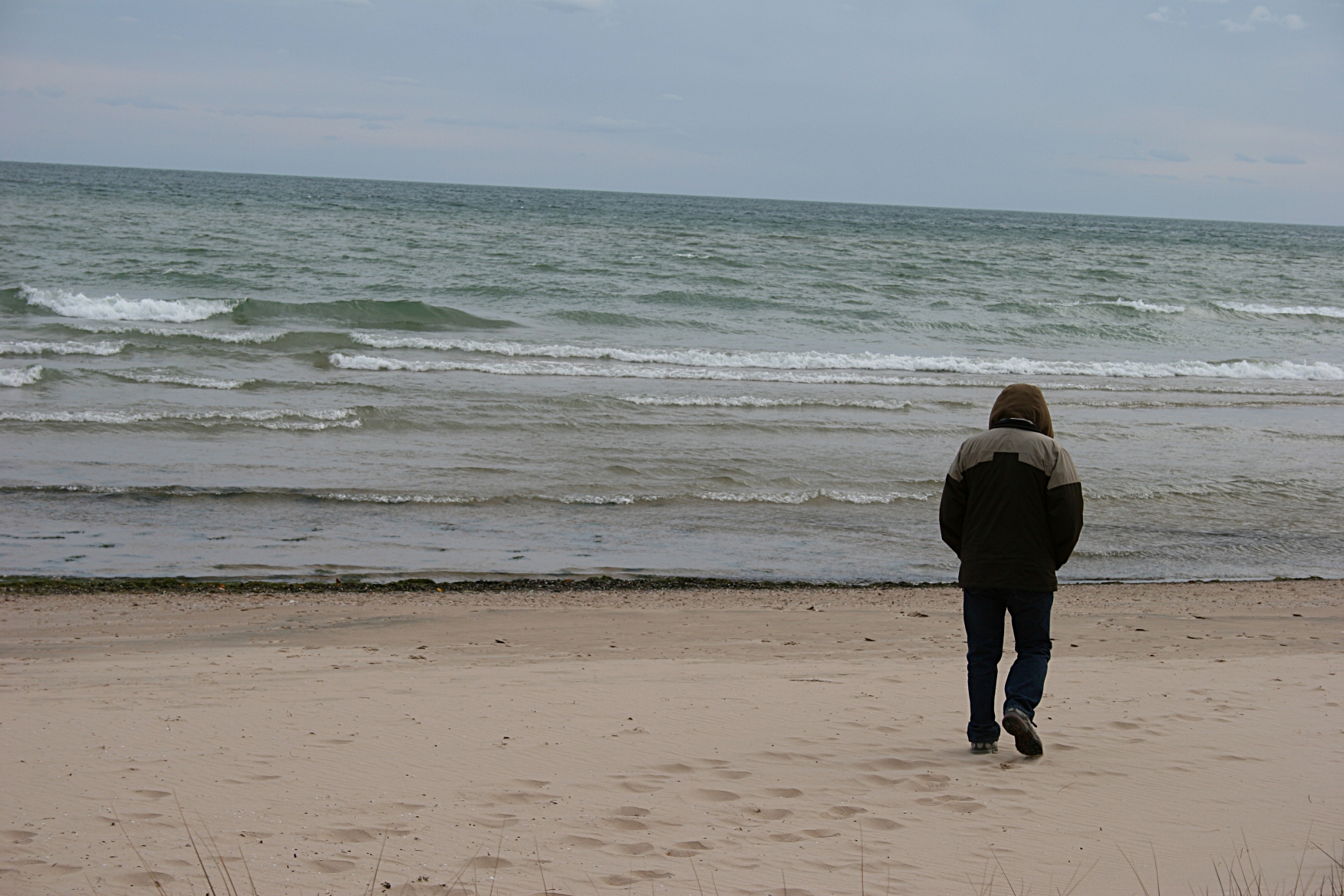
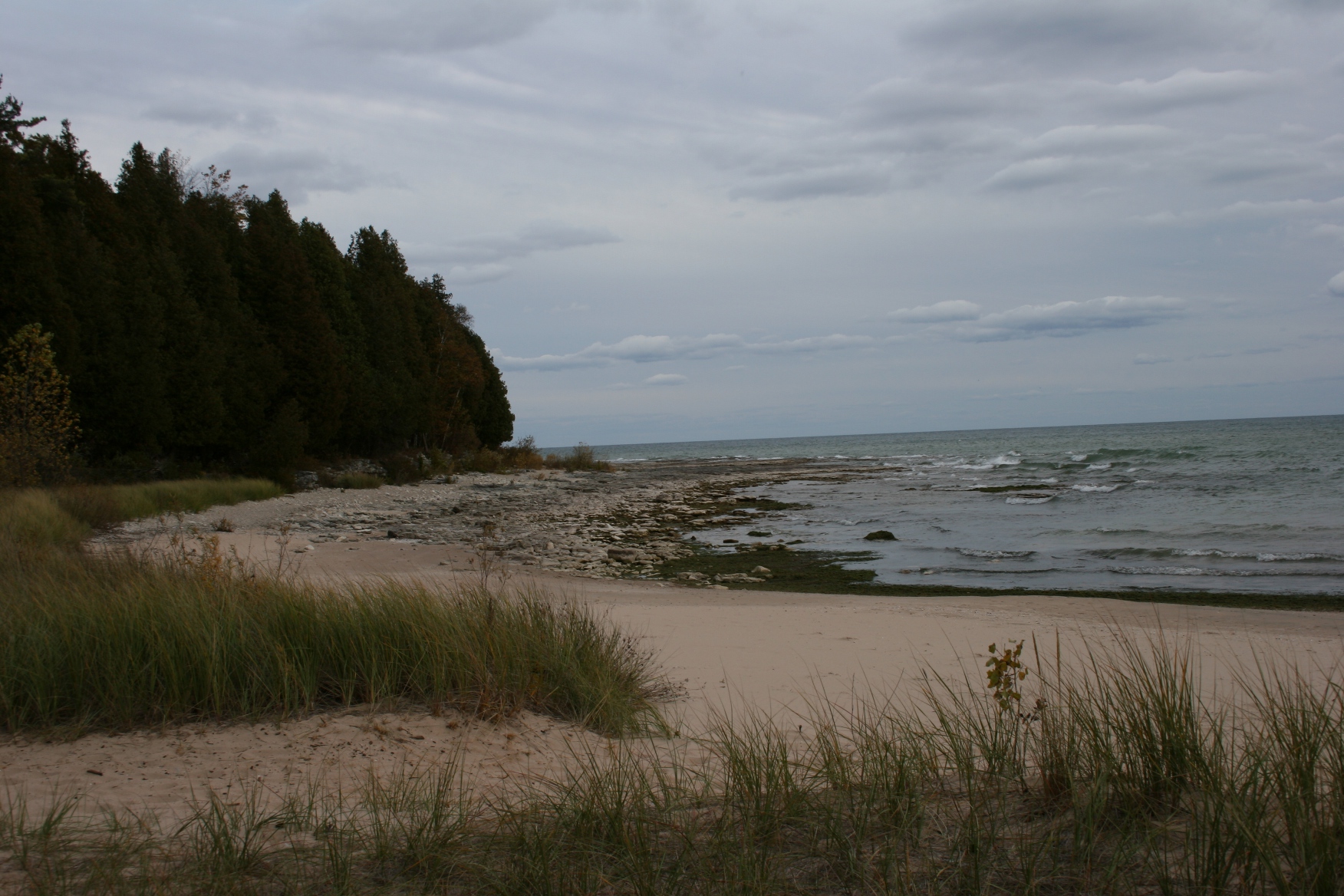
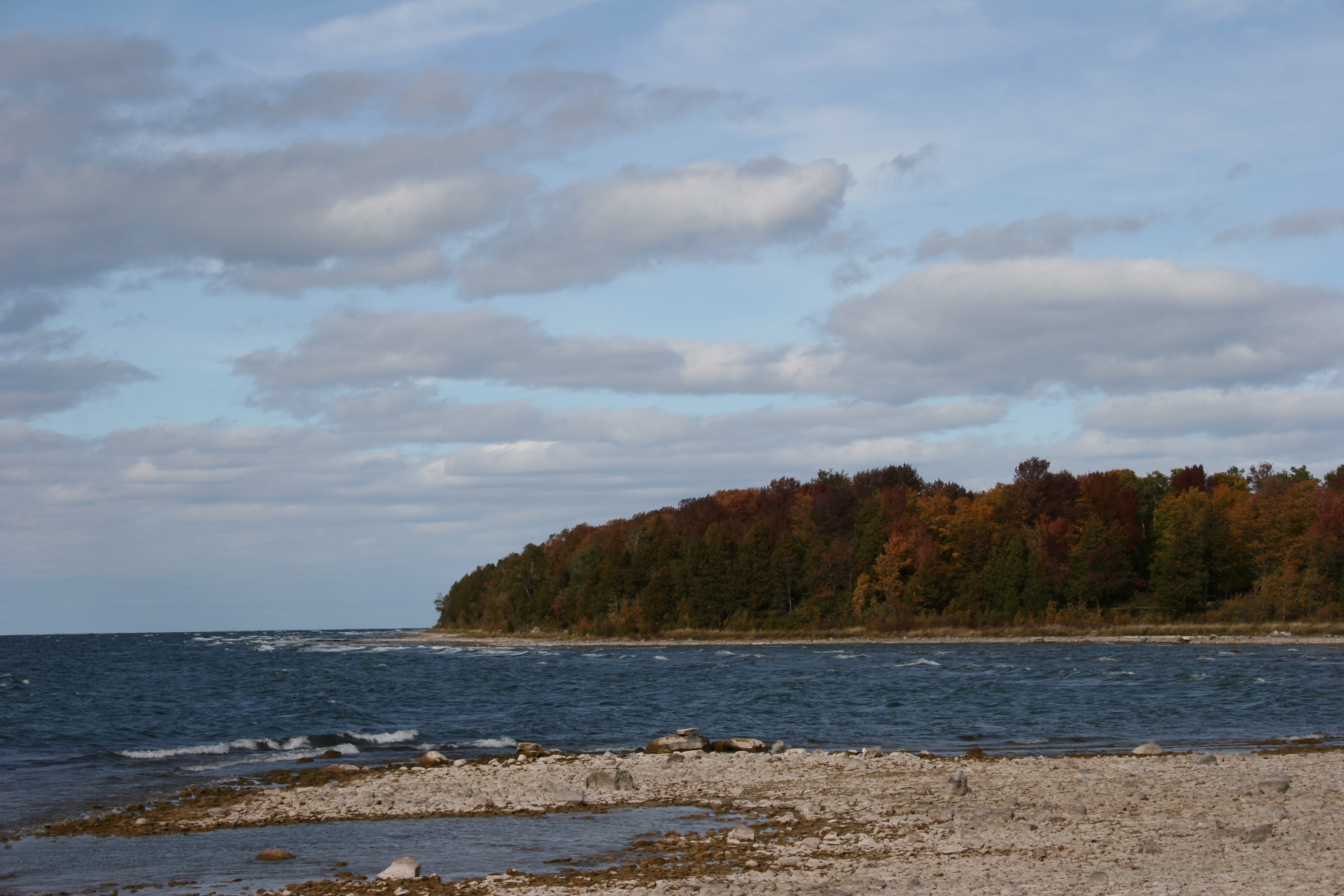
My husband walks along the beach at Whitefish Dunes State park along Lake Michigan on a recent cold and windy afternoon in October.

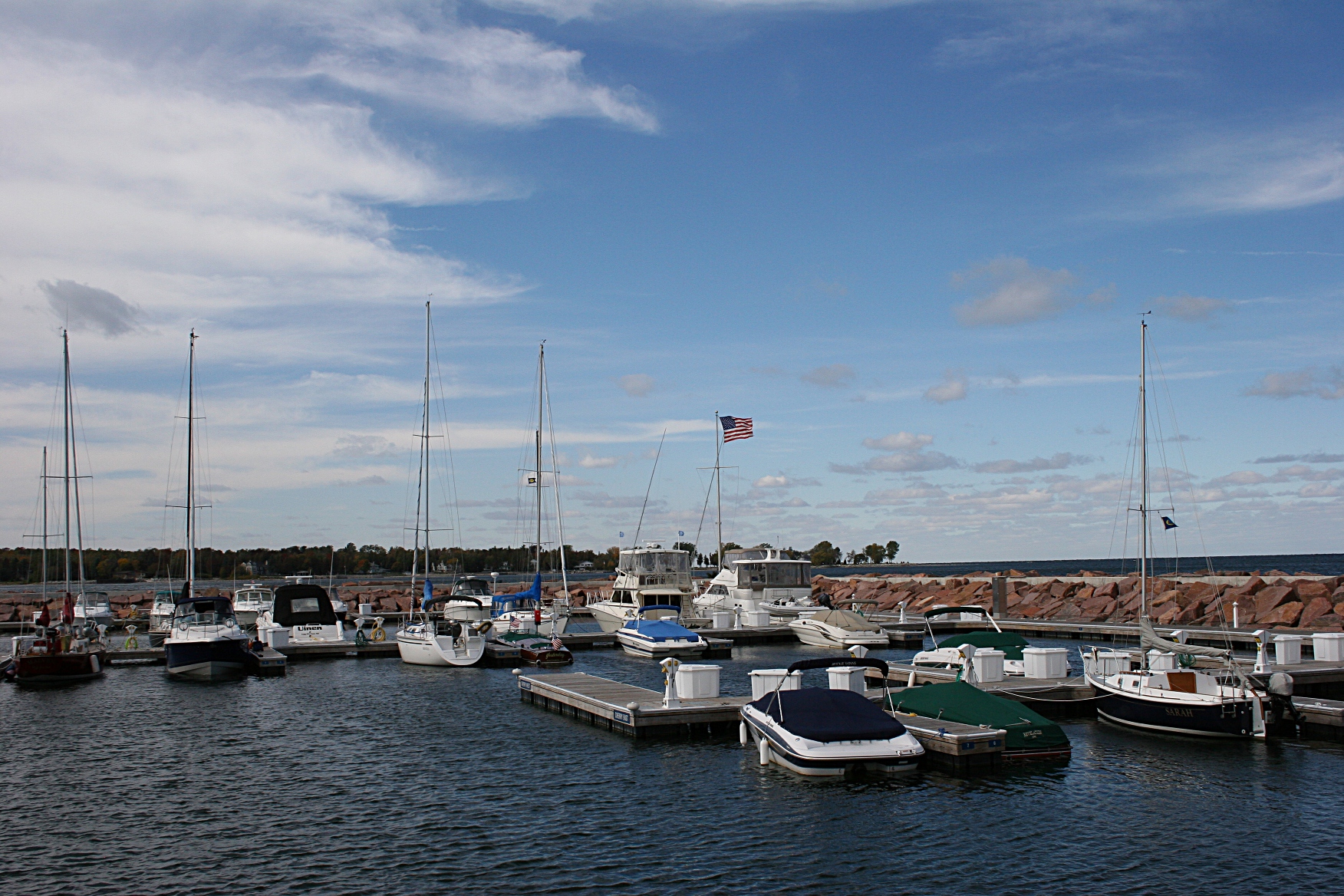
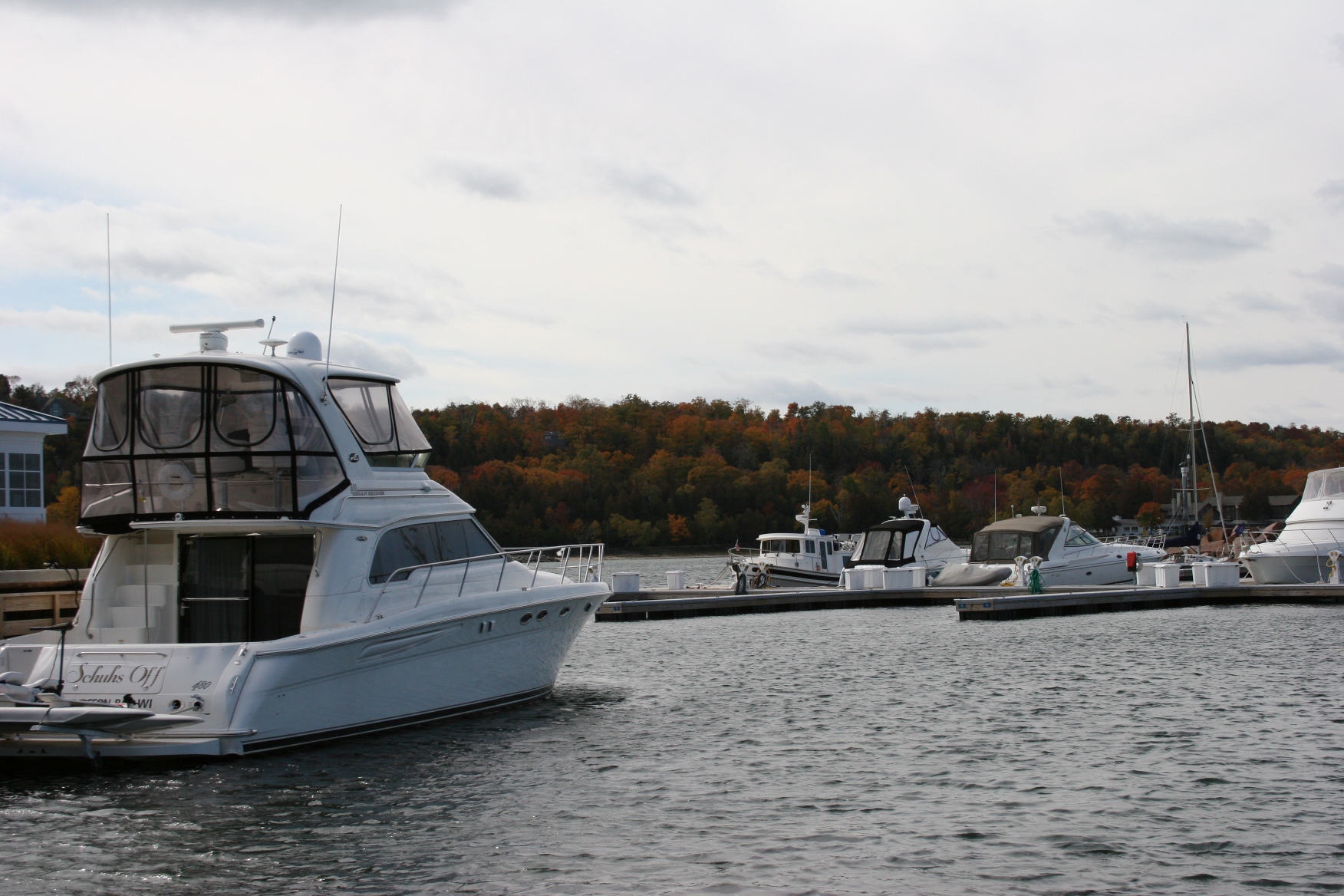
The harbor at Egg Harbor on the western side of Door County.

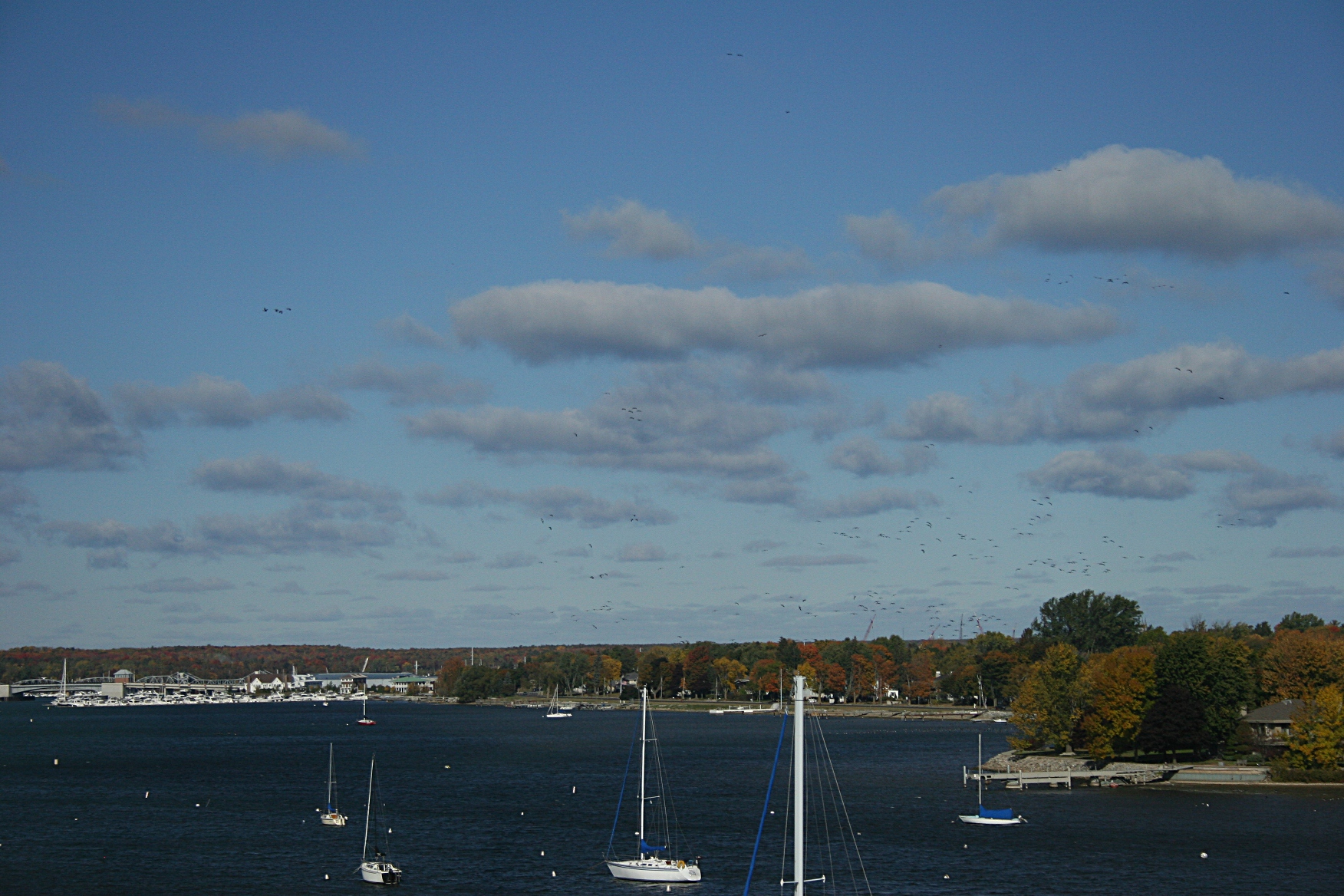
A view of the bay while crossing a bridge into Sturgeon Bay, the beginning of Door County.

…or shop the antique and gift shops…

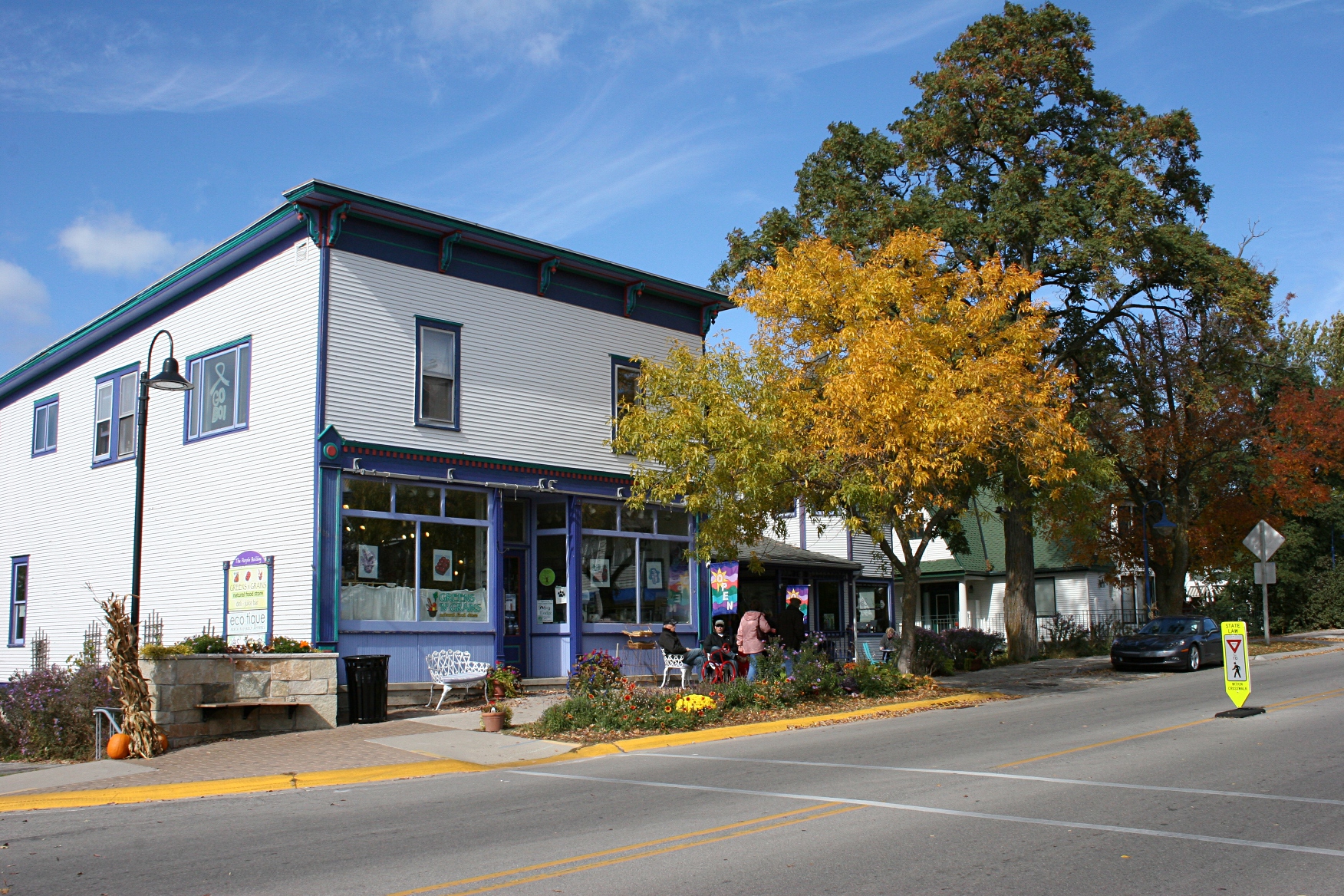
One of the many shops in cozy Egg Harbor.

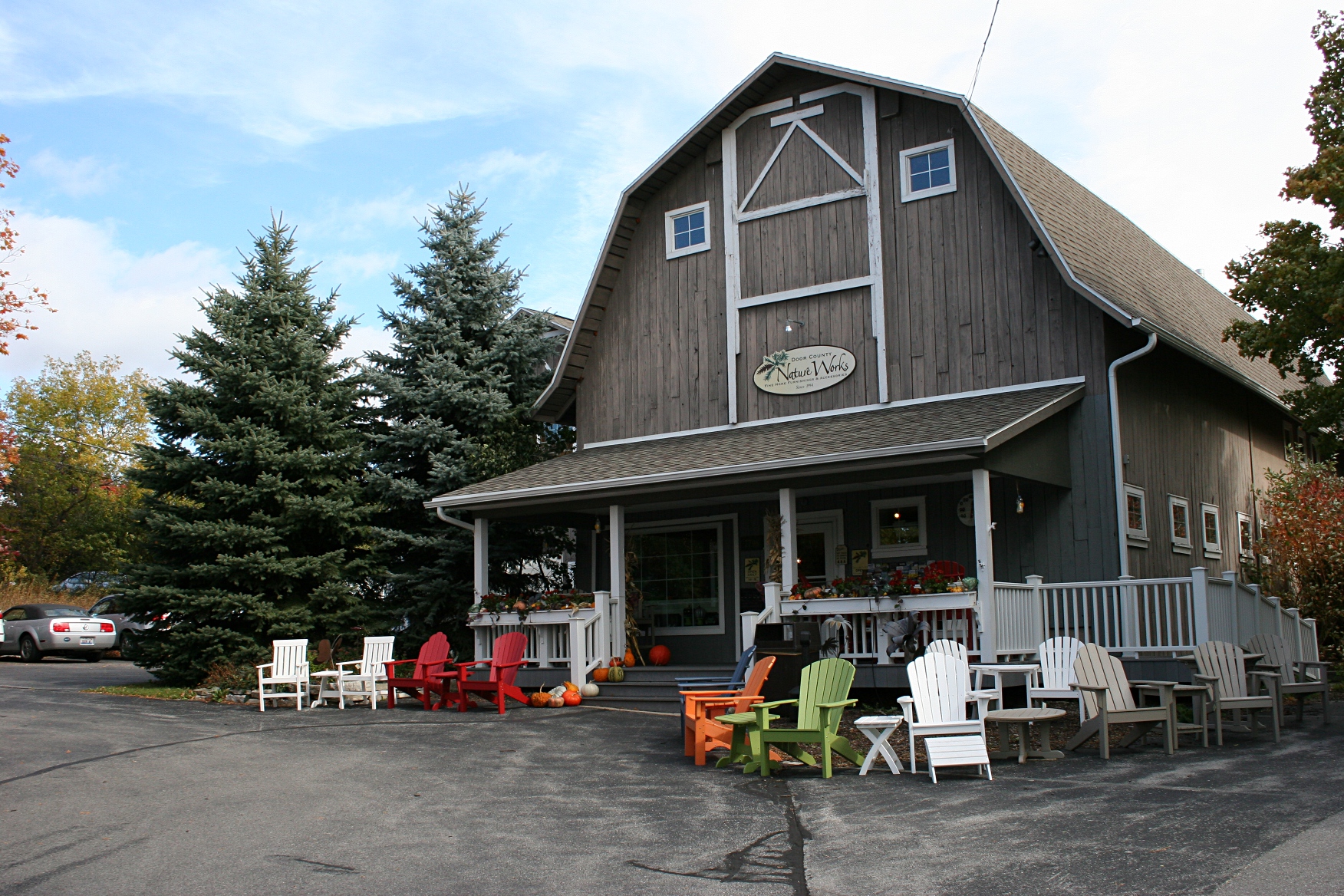
Nature Works, an Egg Harbor gift shop.

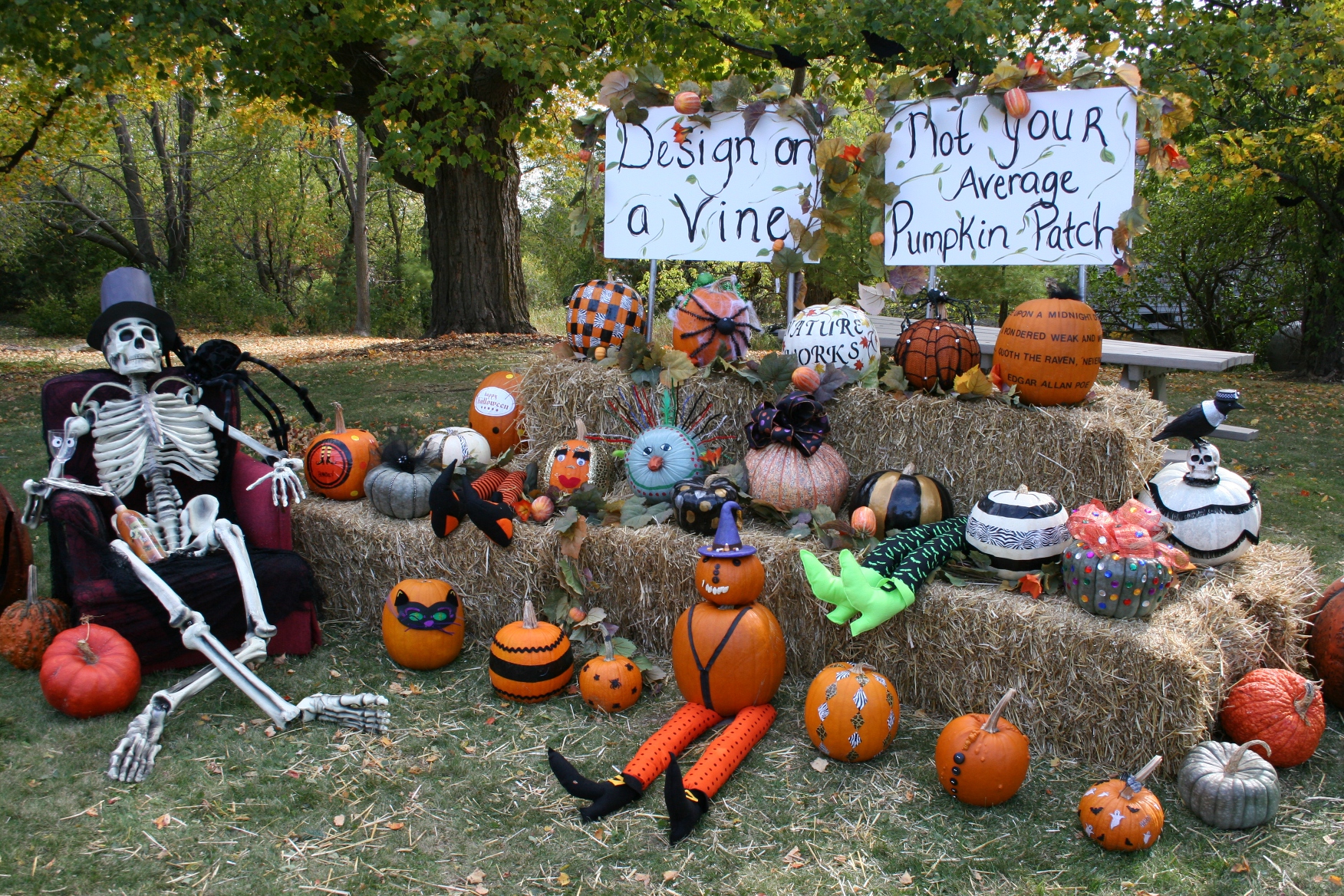
A festive display outside of Nature Works.

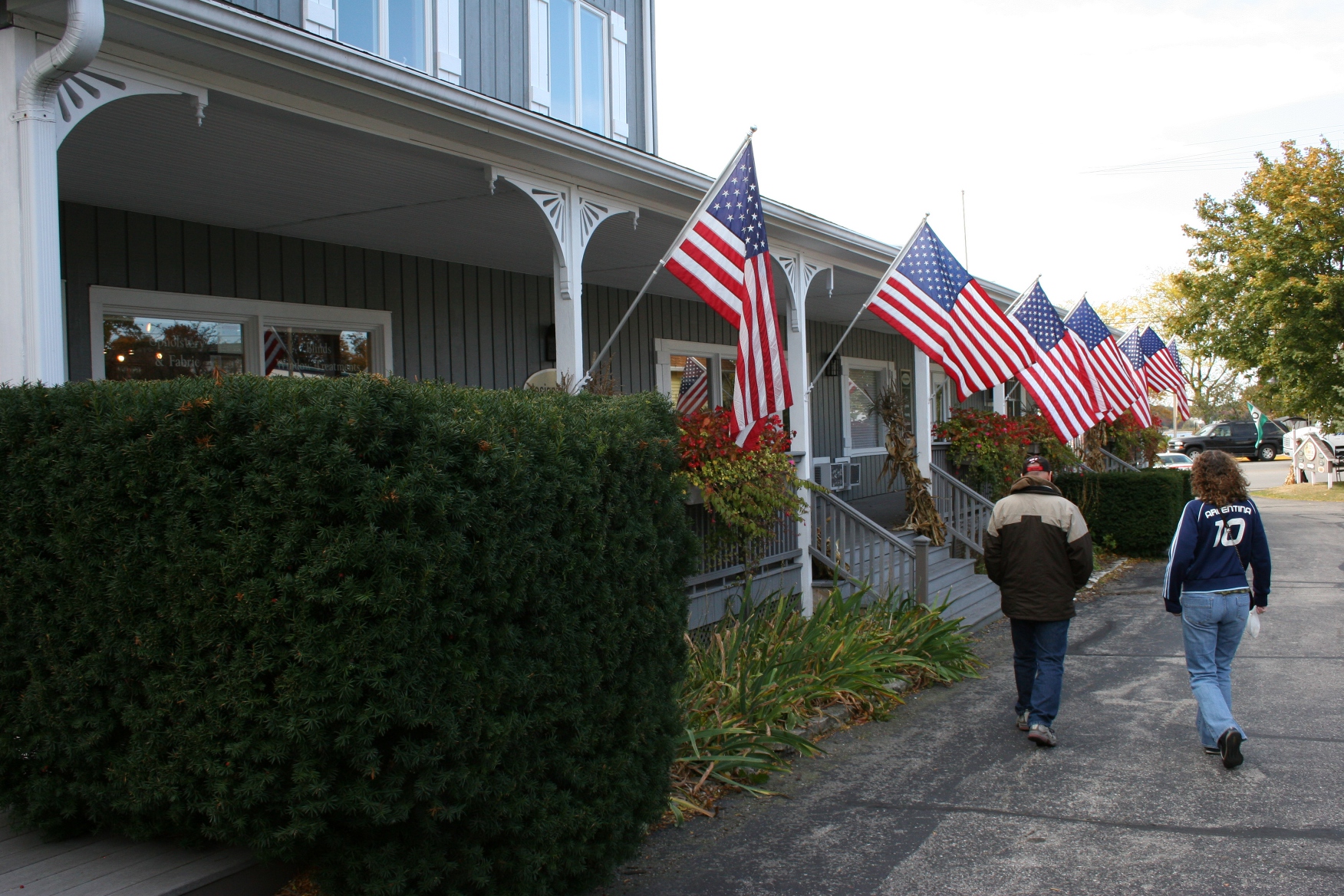
A row of flags add a bit of Americana charm to a scene in Egg Harbor.

…or wine and dine…

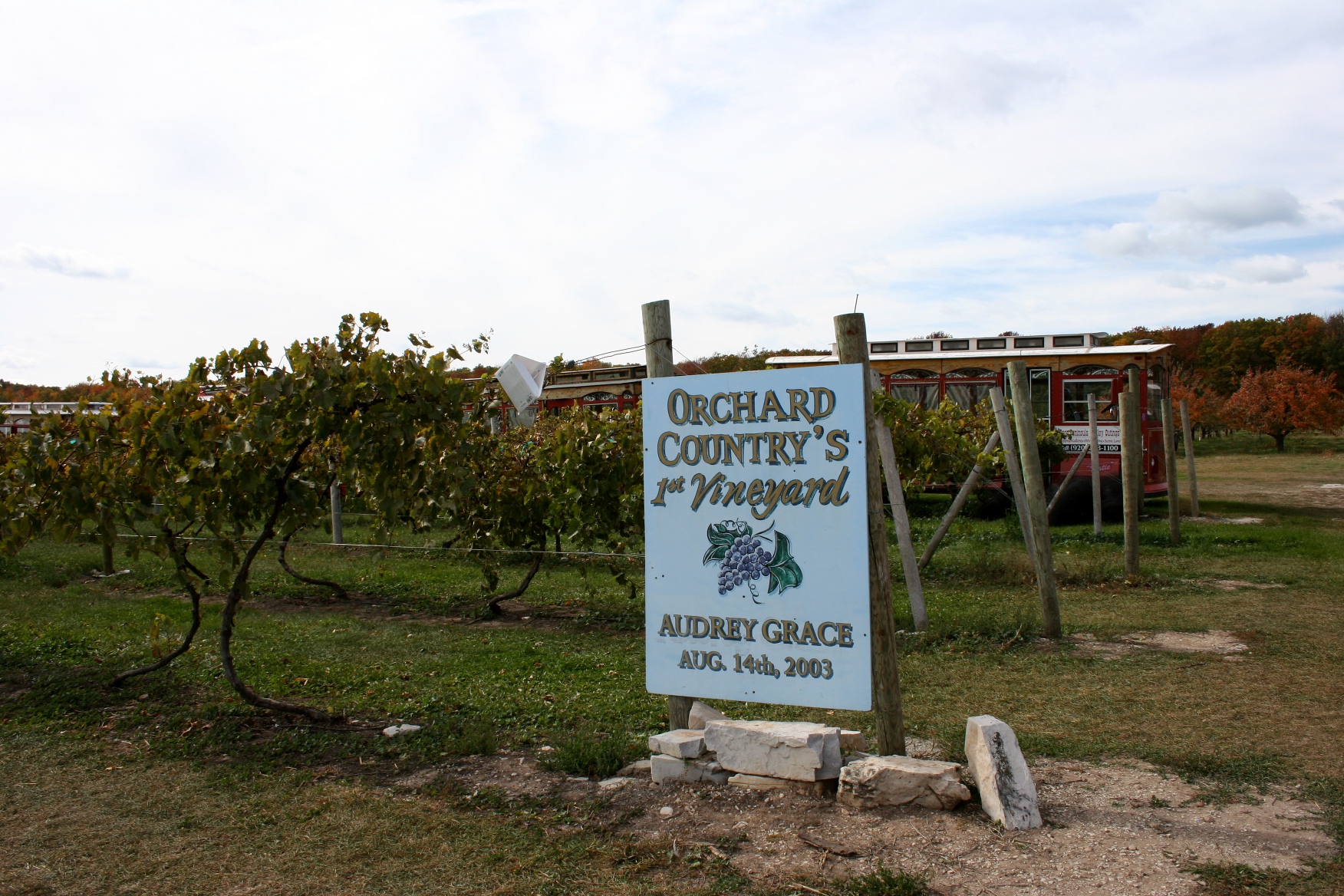
I just had to photograph the Audrey Grace vineyard at Lautenbach’s Orchard Country Winery south of Fish Creek, even if my middle name is not Grace.

…or take in the arts scene…

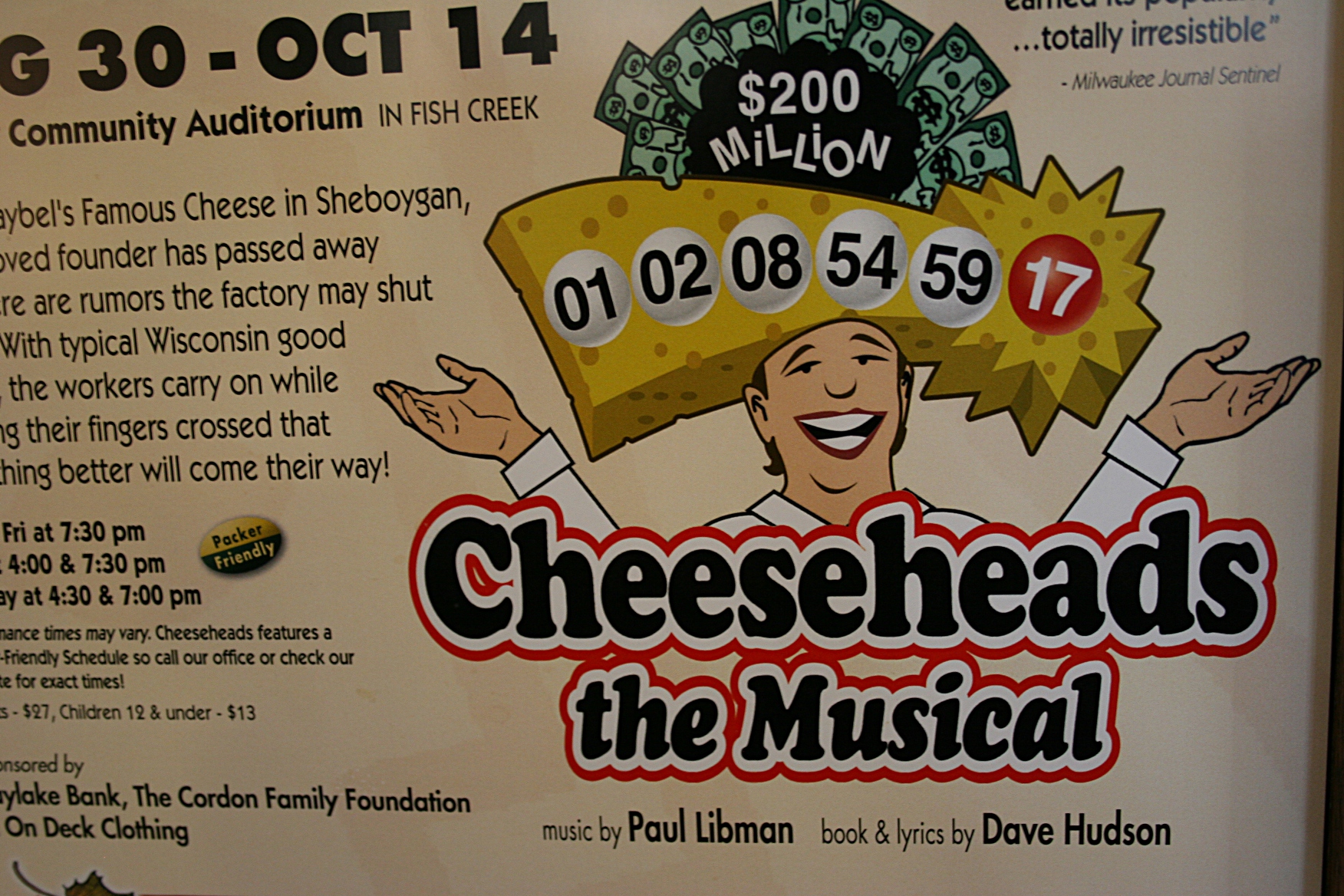
I spotted this sign for the Cheeseheads musical inside Julie’s Cafe in Fish Creek.

…or check out the historic buildings…

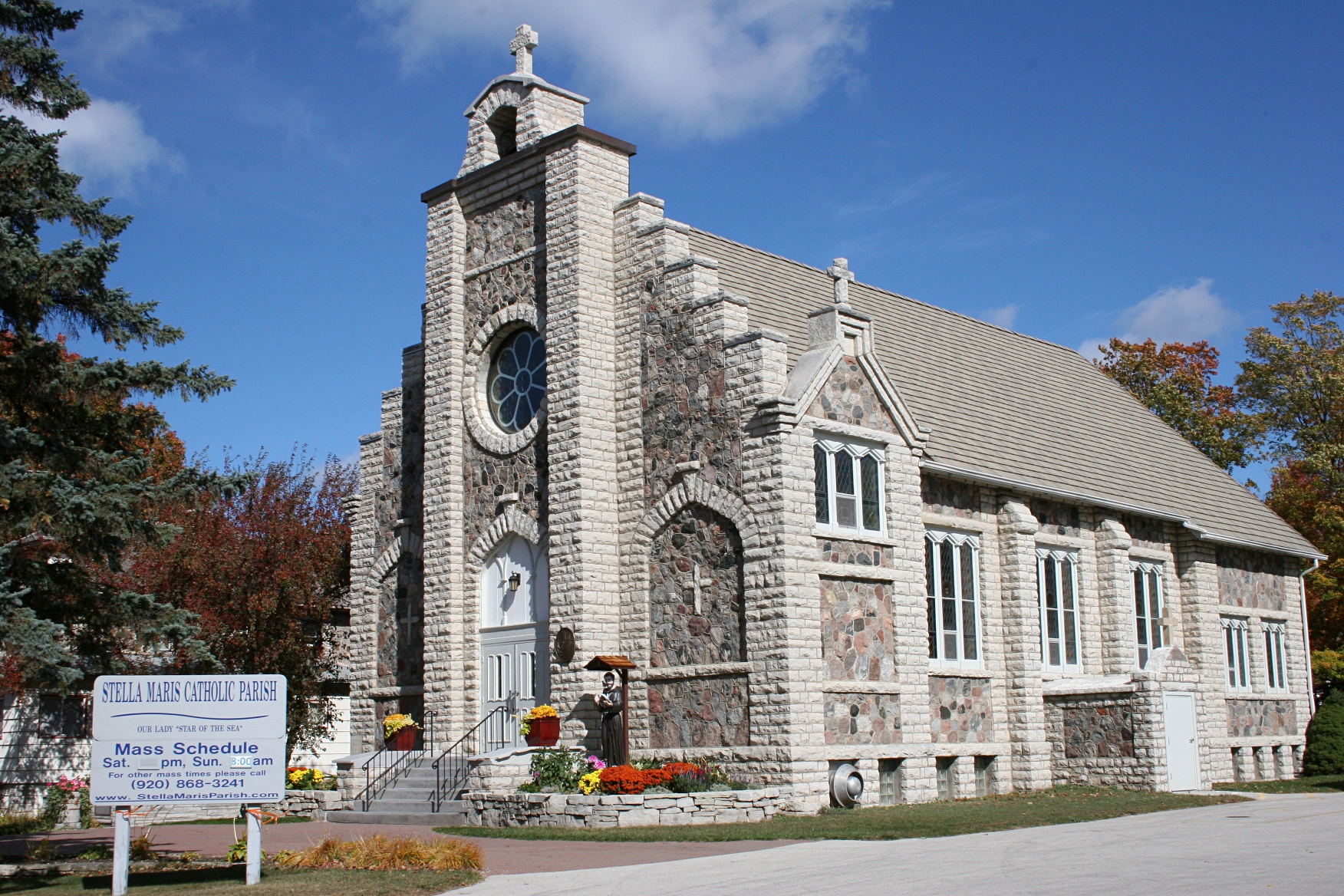
Look at this absolutely magnificent pink and gray granite church, St. John the Baptist, which I photographed at Egg Harbor. The 1907 church, constructed from stone harvested from local farmers’ fields, is part of the Stella Maris (“Star of the Sea”) Catholic Parish.

READERS, PLEASE VISIT my blog archives to see previous posts I published recently on Door County.

Copyright 2012 Audrey Kletscher Helbling


Scenic and “touristy” Door County, Wisconsin October 11, 2012

Filed under: Uncategorized — Audrey Kletscher Helbling @ 7:32 AM
Tags: , , , , , , , ,

DOOR COUNTY, WISCONSIN.

I’d heard so much about it—”touristy,” fish boils, “you’ll love the small towns,” wine, cherries…

To be honest with you, I wasn’t 100, not even 50, percent certain I wanted to visit this northeastern Wisconsin peninsula cozied by Green Bay on the west and dwarfed by massive Lake Michigan on the east.

I am neither a woman who enjoys shopping or masses of people. So a one-day trip to Door County did not come without a bit of trepidation.

One of many Door County shops, this one in Egg Harbor on the western side of the peninsula.

What I discovered is this: Yes, lots of people visit this scenic tourist destination, but not so many on a Friday in early October that I felt overwhelmed. And, yes, the western side of this peninsula could definitely be classified as “touristy,” because, after awhile, the endless wineries, antique and gift shops, candy stores, etc., all begin to blend together.

Collectibles for sale at Peninsula Antique Center near Egg Harbor.

You can only sample so much wine, flavored balsamic vinegar, flavored olive oils, cheese spreads and cherry salsa before you become disinterested. Fortunately my traveling companion husband and second daughter agreed that by the time we reached Fish Creek, we’d sipped enough wine, sampled enough oil and vinegar and salsa and cheese spreads, but no sweet stuff, thus requiring a stop for a shared truffle and shared fudge.

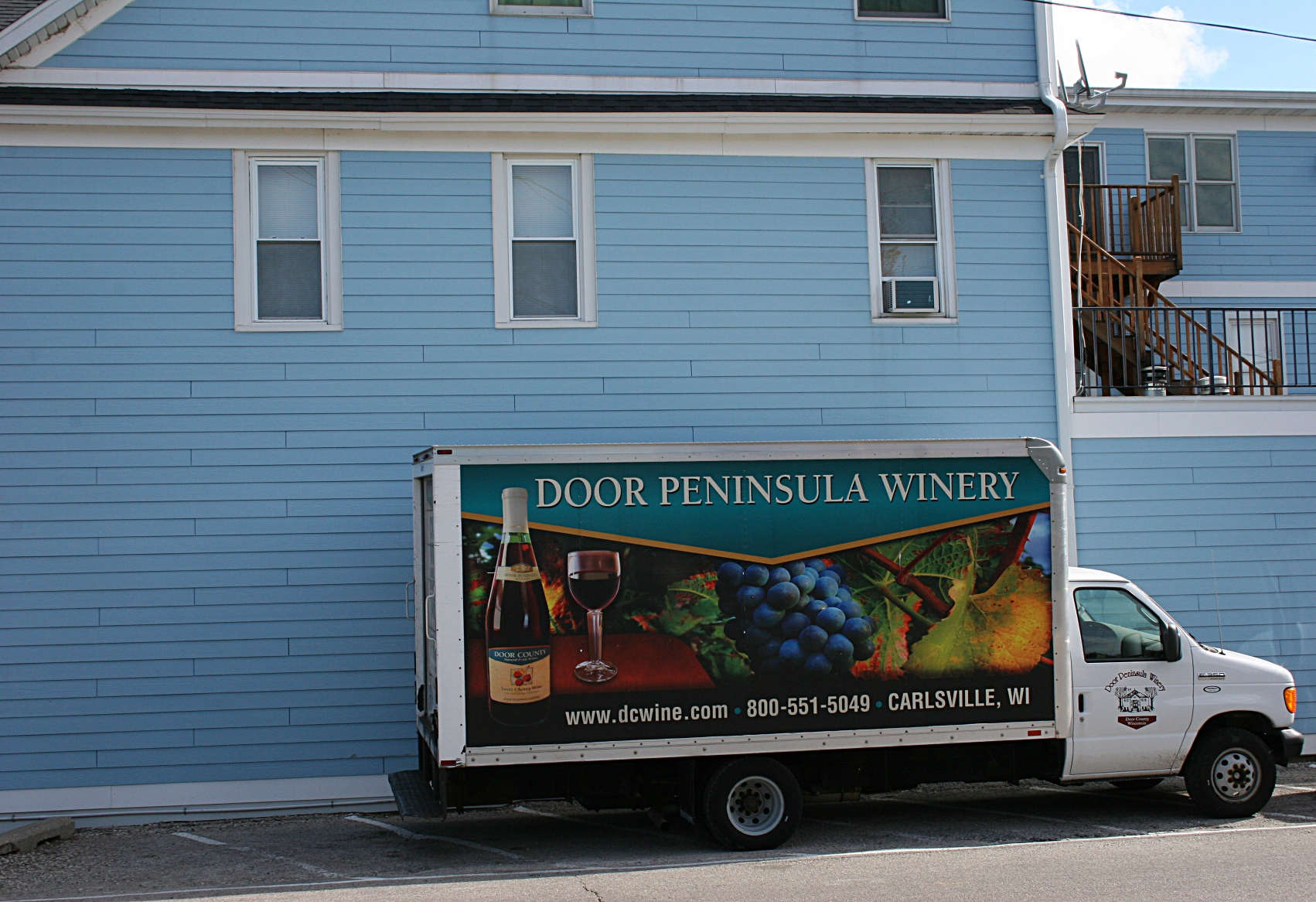
A winery truck parked in Egg Harbor.

I must interject here that we were pleasantly surprised to find Door County wines to be reasonably priced—the ones we purchased being around $10.

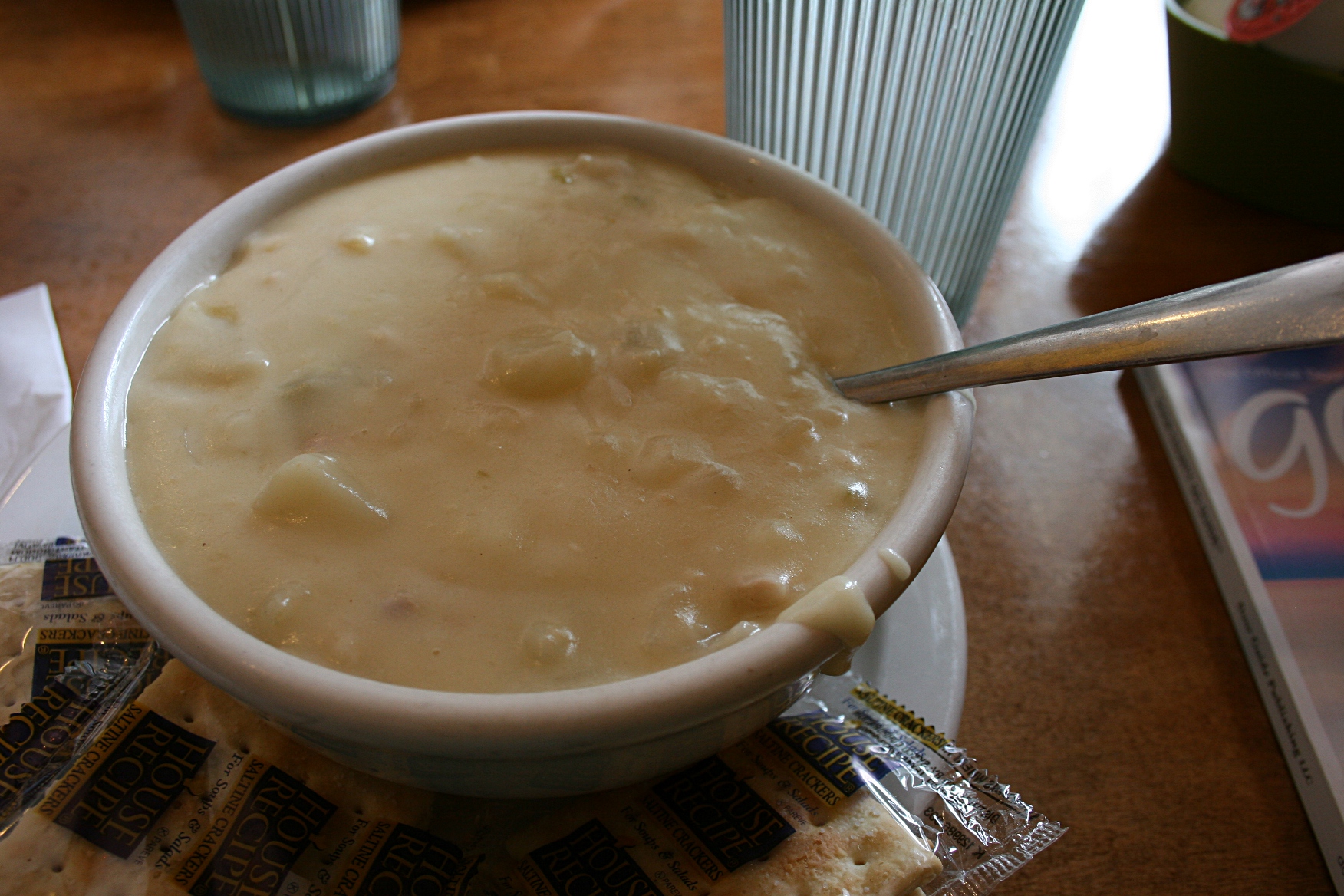
After stopping at numerous shops, it was time for a break and a little lunch at Julie’s Park Cafe & Motel in Fish Creek, conveniently located next to the Peninsula State Park entrance. I ordered the day’s soup special of fish chowder while my husband ordered an 8-ounce burger topped with bleu cheese and the daughter chose a chicken sandwich topped with onions and cherries.

My bowl of fish chowder was burn-the-roof-of-your-mouth hot, but bland in taste and appearance. Is this typical of fish chowder? I don’t know given this was my first time eating fish chowder.

I wish I could tell you our food was over-the-top delicious. But my daughter had to search for the cherries in her sandwich. I found the fish chowder bland. The burger was good, my husband said, but too much at eight ounces, the only burger size available. The thin, dry fries were more like shoestring potatoes than fries.

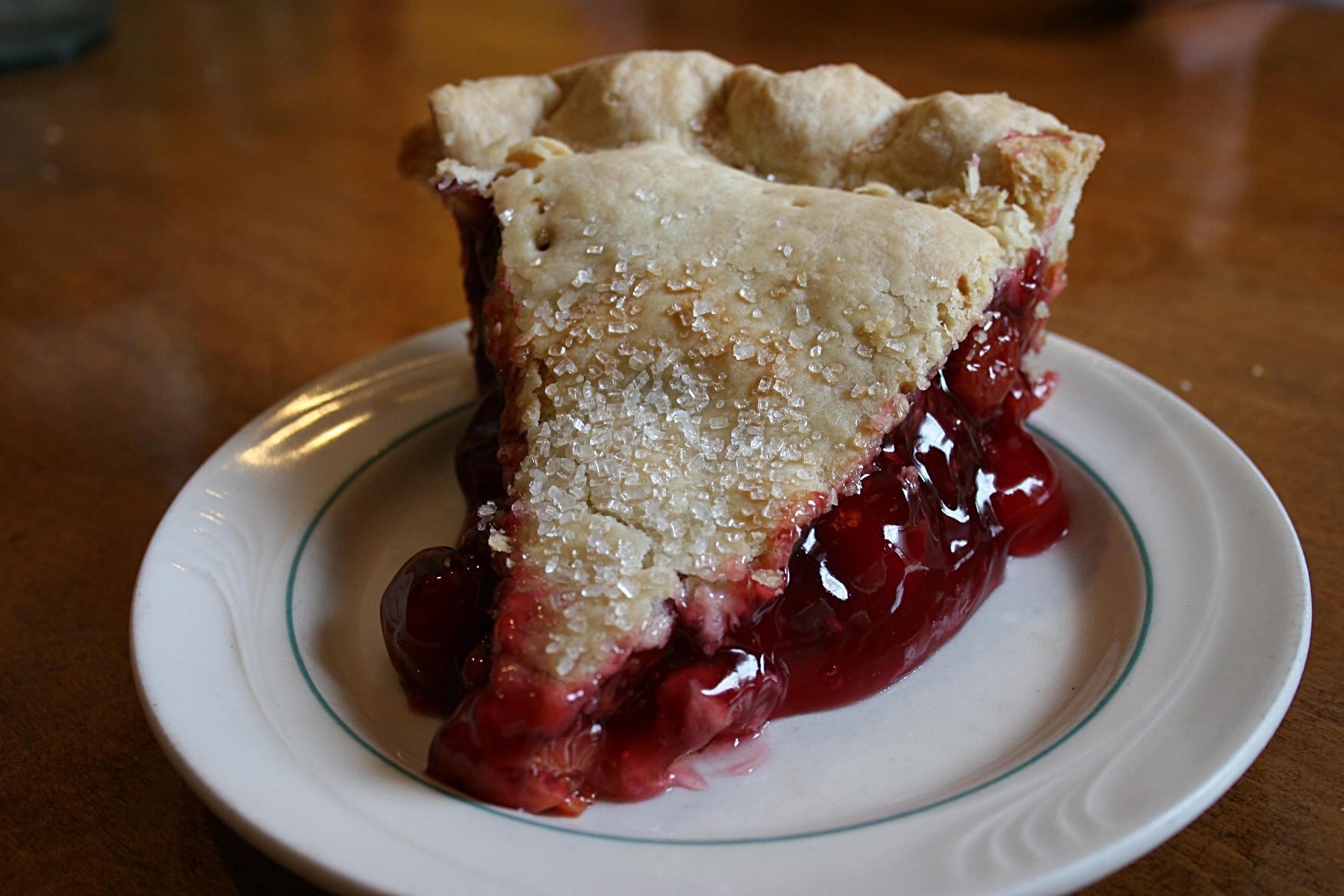
Scrumptious Door County cherry pie from Julie’s Cafe.

As disappointing as two of our three main menu choices were, Julie’s Cafe redeemed itself with the generous slice of tart Door County cherry pie we ordered and shared. No visit to Door County should come without a purchase of something “cherry,” whether wine, salsa, dried or fresh (when in season) cherries or, most recommended by me, cherry pie, even if it was $5 a slice.

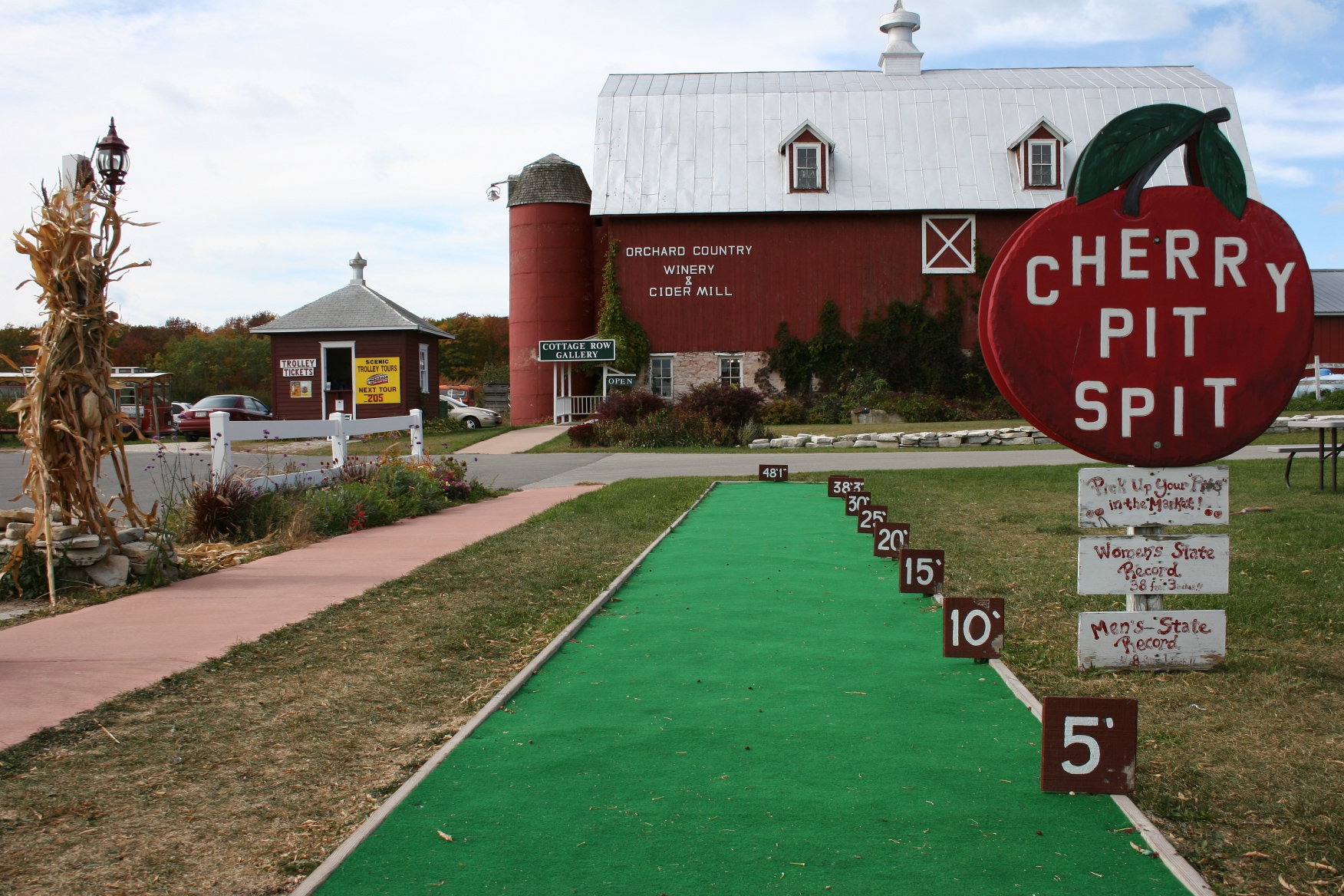
No one was spitting cherry pits into the strong cold wind when we stopped at Lautenbach’s Orchard Country Winery at Fish Creek.

I’d love to visit Door County during the cherry harvest and inquired as to when that might be. Our vibrant and friendly waitress at Julie’s Cafe did not know, which surprised me.

But then I suppose you could say I wasn’t exactly the most prepared tourist either, approaching Door County with the attitude of “we’ll stop when we see something we want to see.” That seemed a workable plan for a first time visitor.

Even on a bone-chilling cold and windy day, vendors were set up streetside in Egg Harbor.

Door County, though, deserves much more than a quick no-itinerary one-day trip. It deserves careful planning so you see beyond the storefronts, drive beyond the two main routes—42 on the more “touristy” western side and 57 on the less populated rural side—and discover all this lakeside land has to offer. For it was the glorious, natural beauty of this place which most charmed us.

Scenic Whitefish Dunes State Park on the eastern side of the peninsula.

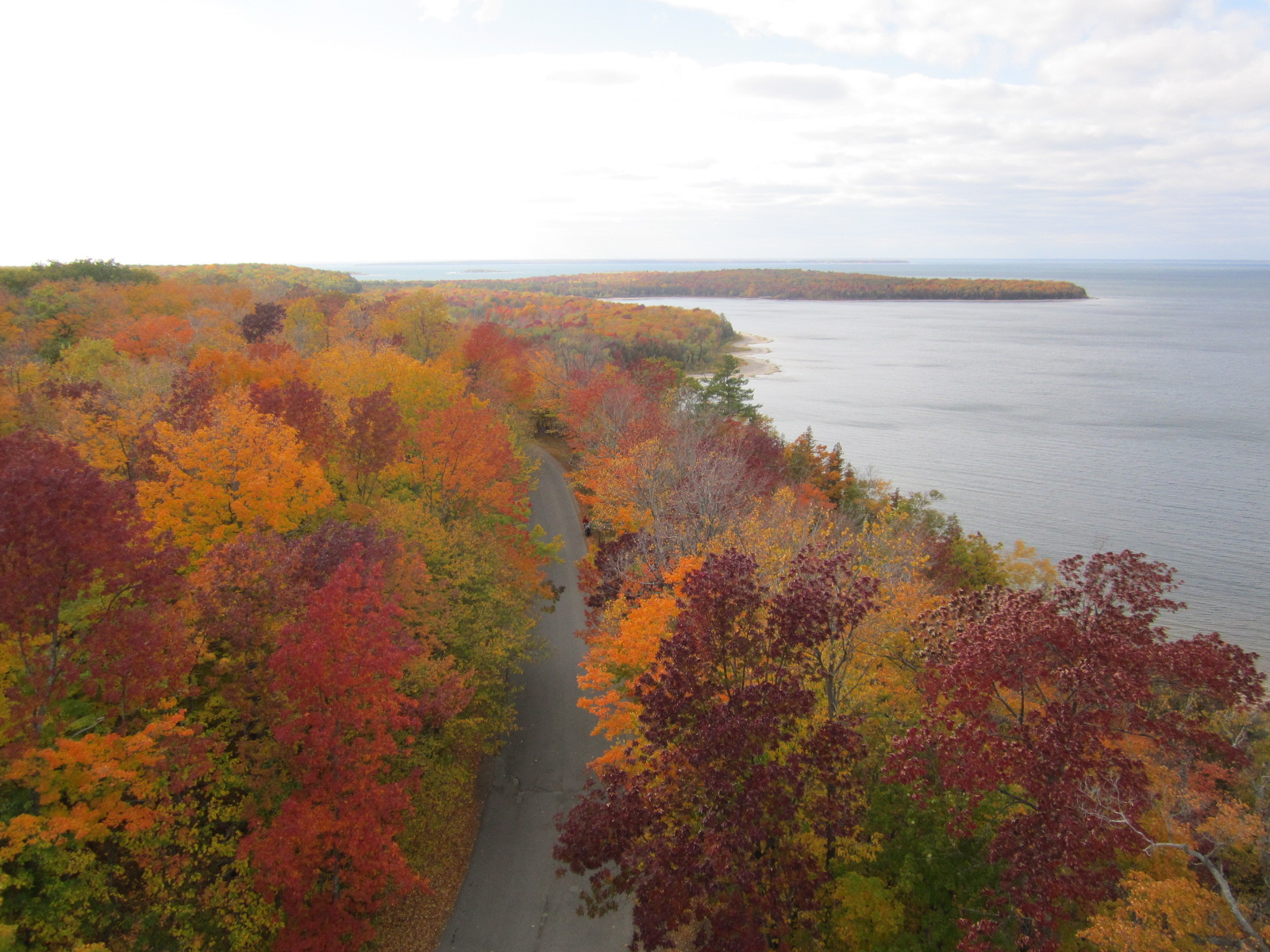
Glorious autumn colors as photographed by Miranda Helbling from Eagle Tower in Peninsula State Park at Fish Creek on the western side of the peninsula along Green Bay.

Scenic Egg Harbor.

TO READ A PREVIOUS POST about Door County, click here to see photos of Peninsula State Park.

© Copyright 2012 Audrey Kletscher Helbling


Autumn splendor in Door County, Wisconsin October 9, 2012

Filed under: Uncategorized — Audrey Kletscher Helbling @ 7:47 AM
Tags: , , , , , , ,

HOW DOES ONE EVEN BEGIN to describe the glory of an autumn landscape?

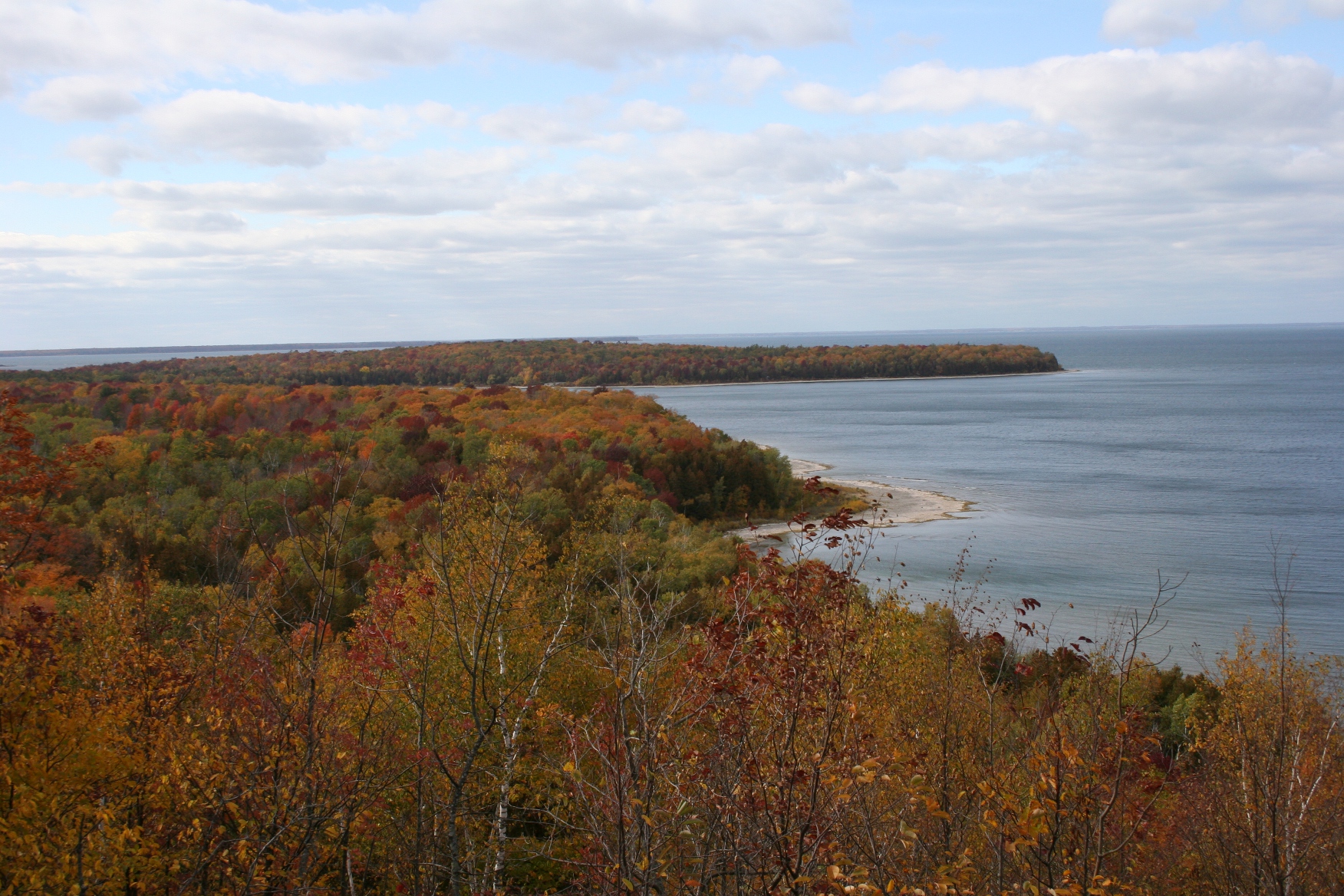
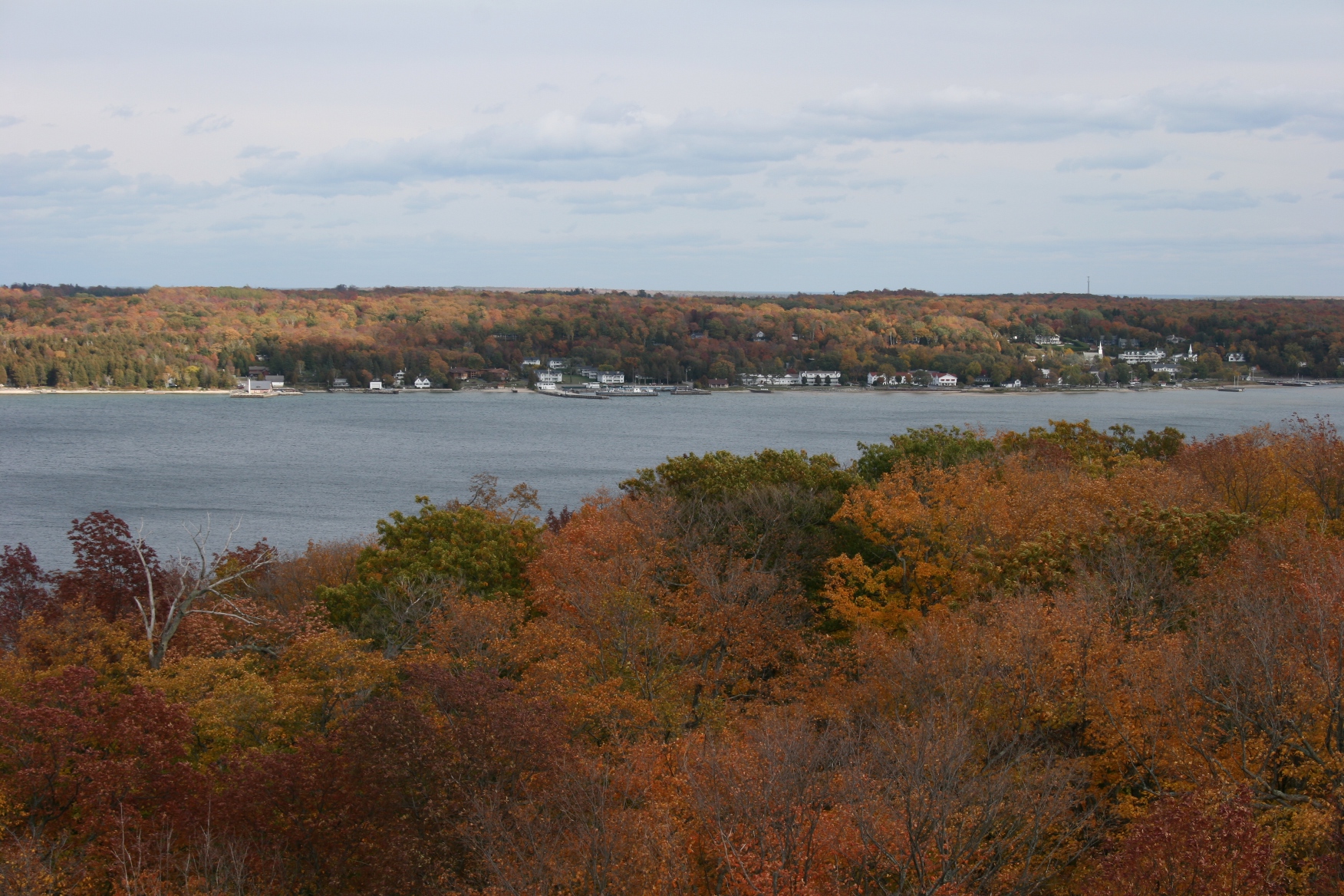
A view from the Eagle Panorama overlook  in Peninsula State Park where you can see Horseshoe, Strawberry and Chambers Islands, Welcker’s Point and the Upper Michigan shoreline.

Peninsula State Park in Fish Creek in Door County, Wisconsin, shows us what words can never summarize. Natural blazing beauty beyond belief.

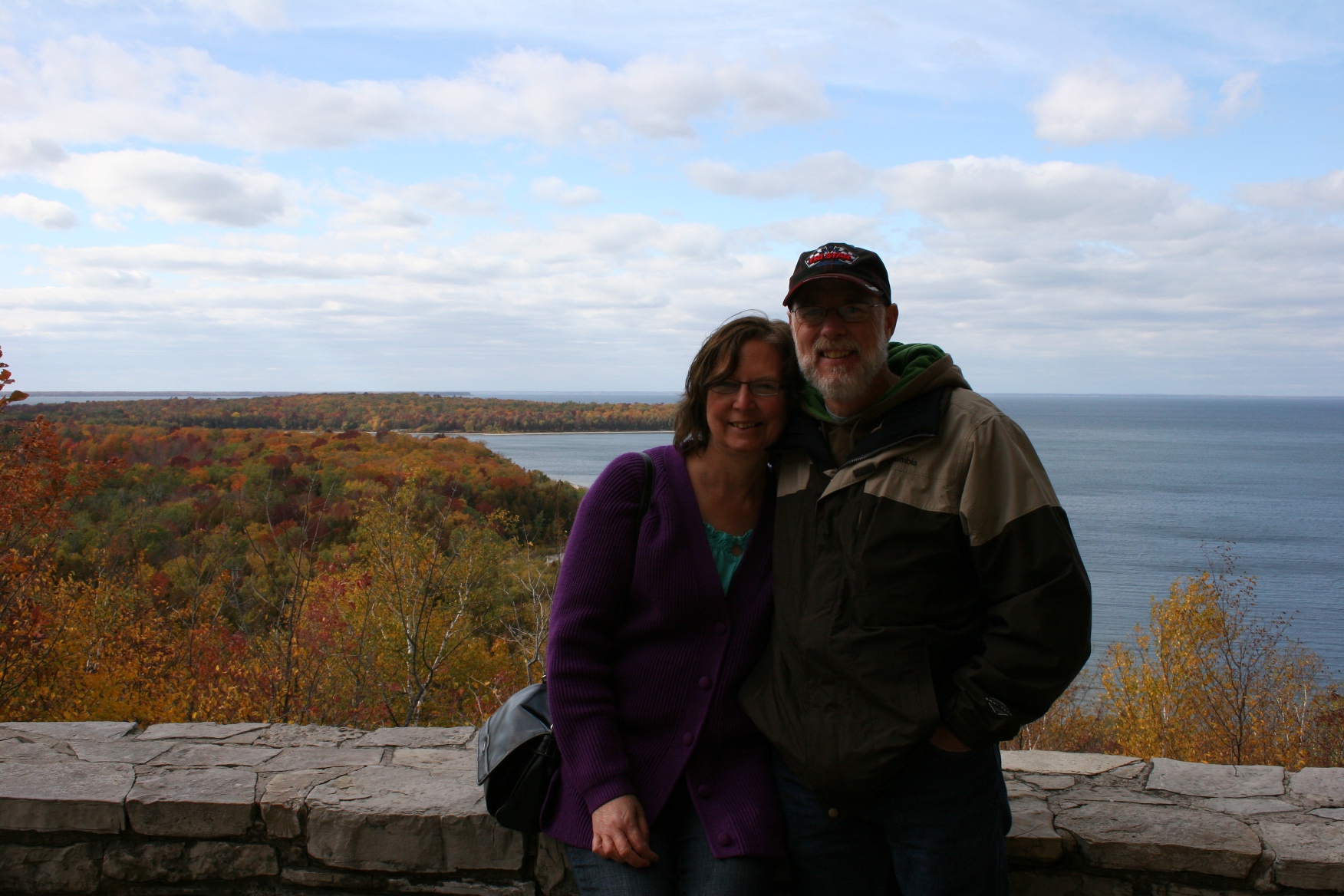
My husband, Randy, and me at Eagle Panorama. Yes, Randy is wearing the shell of his winter coat over a heavy hooded sweatshirt. I was not smart enough to bring along my winter coat or a hat.  Photo by Miranda Helbling.

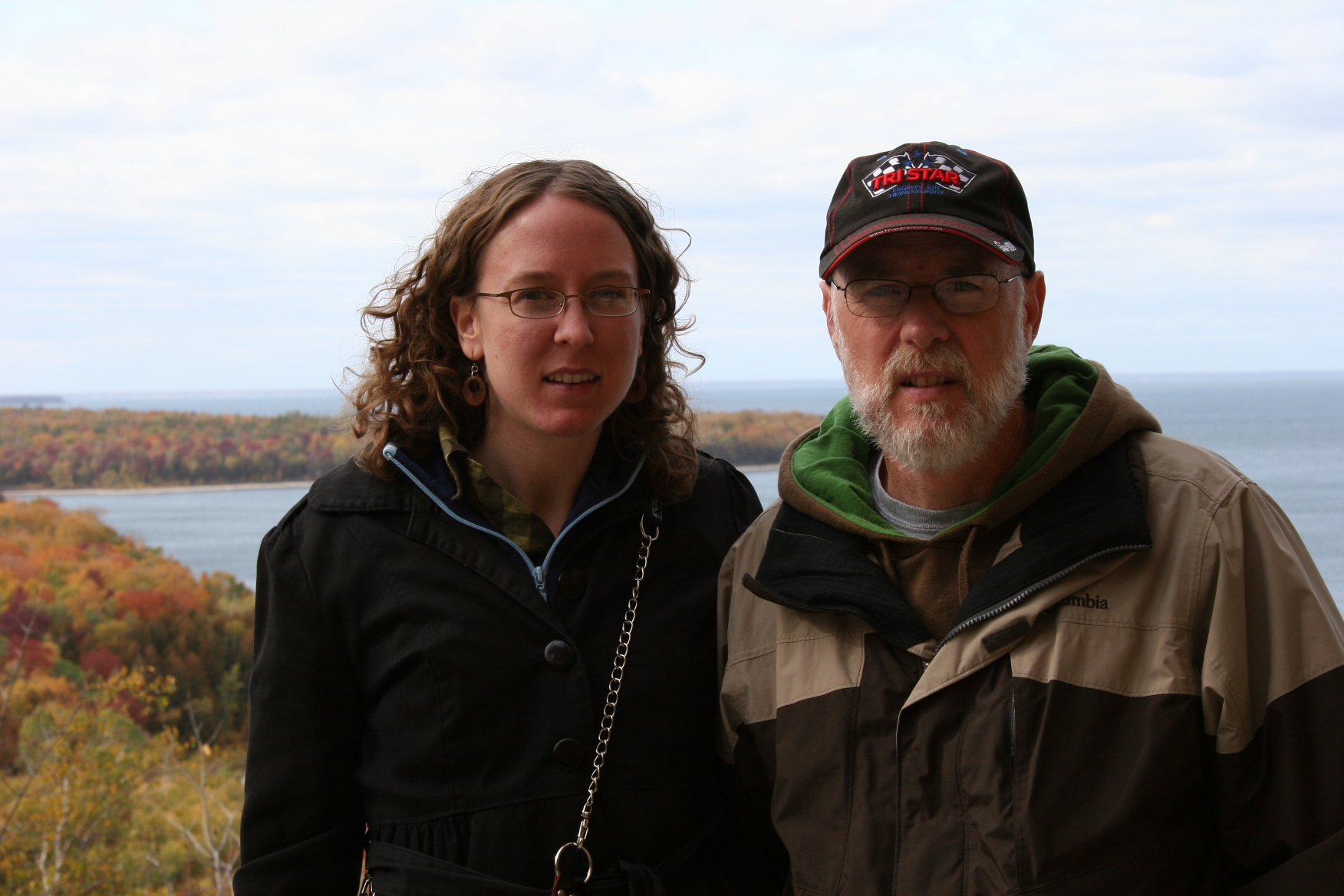
My husband, Randy, with our daughter Miranda, who has lived and worked as a Spanish medical interpreter in Appleton, Wisconsin, an hour south and west of Door County, for nearly two years. This image was shot at Eagle Panorama.

My husband, Randy, daughter Miranda and I toured northeastern Wisconsin’s scenic peninsula on Thursday when fall colors were at their prime.

Except for the raging wind blasting us from Green Bay on the west side and, later, Lake Michigan on the east, we savored the day. How could we not, with colors this stunning, these from Peninsula State Park?

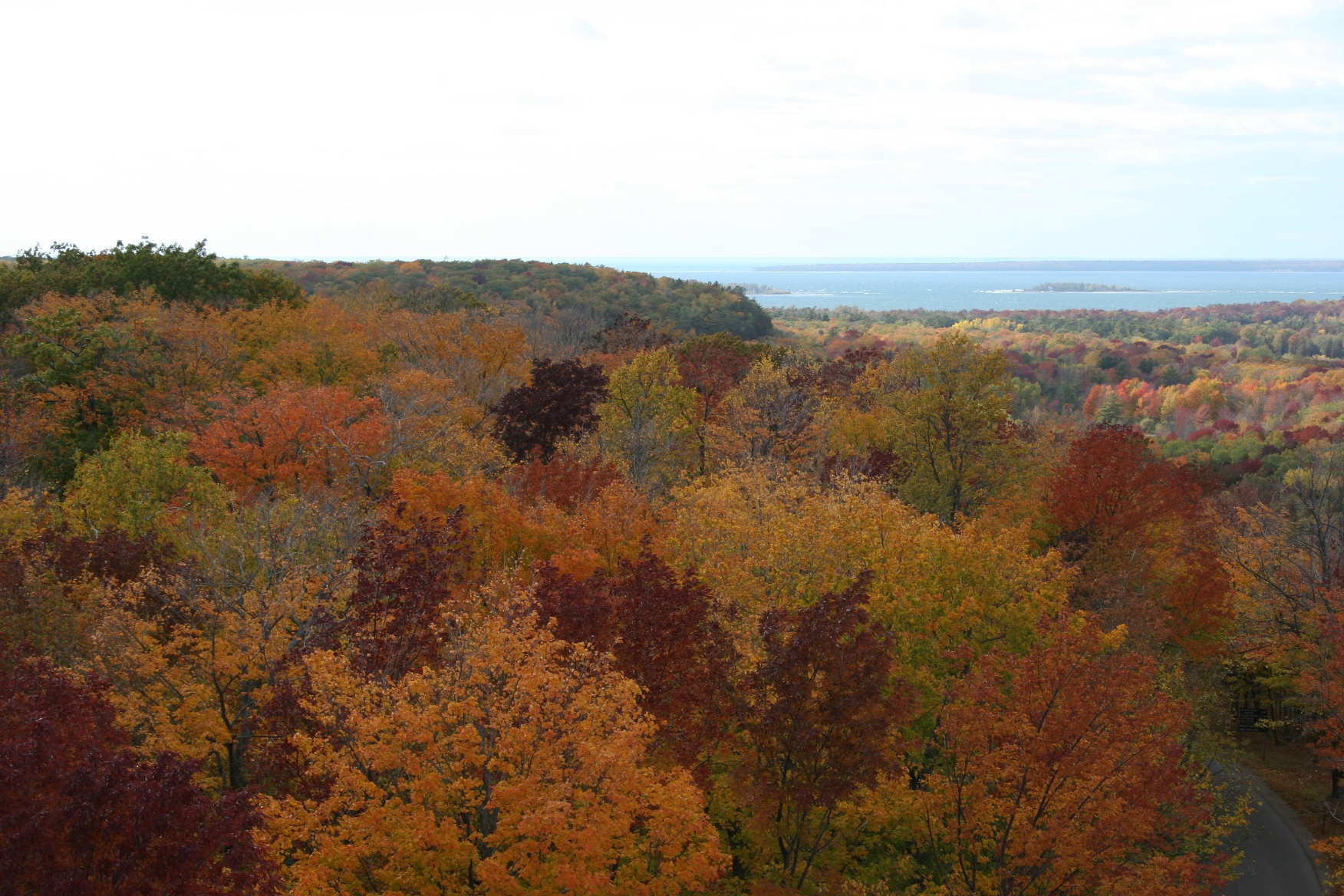
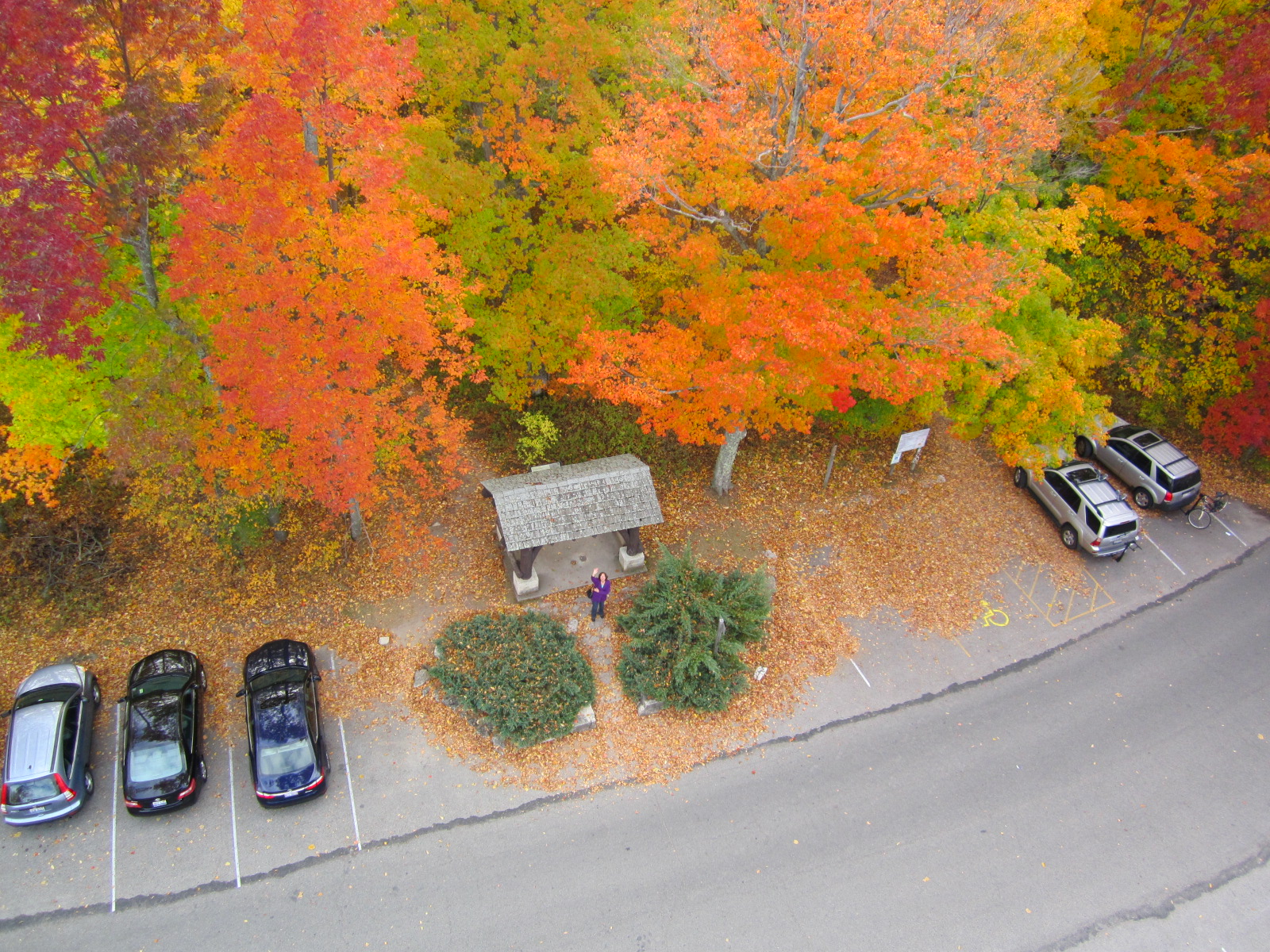
Treetop view from Eagle Tower. Photo by Randy Helbling because I would not climb the 75-foot tall tower which rises 225 feet above the shoreline. You can barely see Shore Road, bottom right, the road we drove through the park.

See me standing down there waving at my daughter atop 75-foot Eagle Tower? Photo by Miranda Helbling.

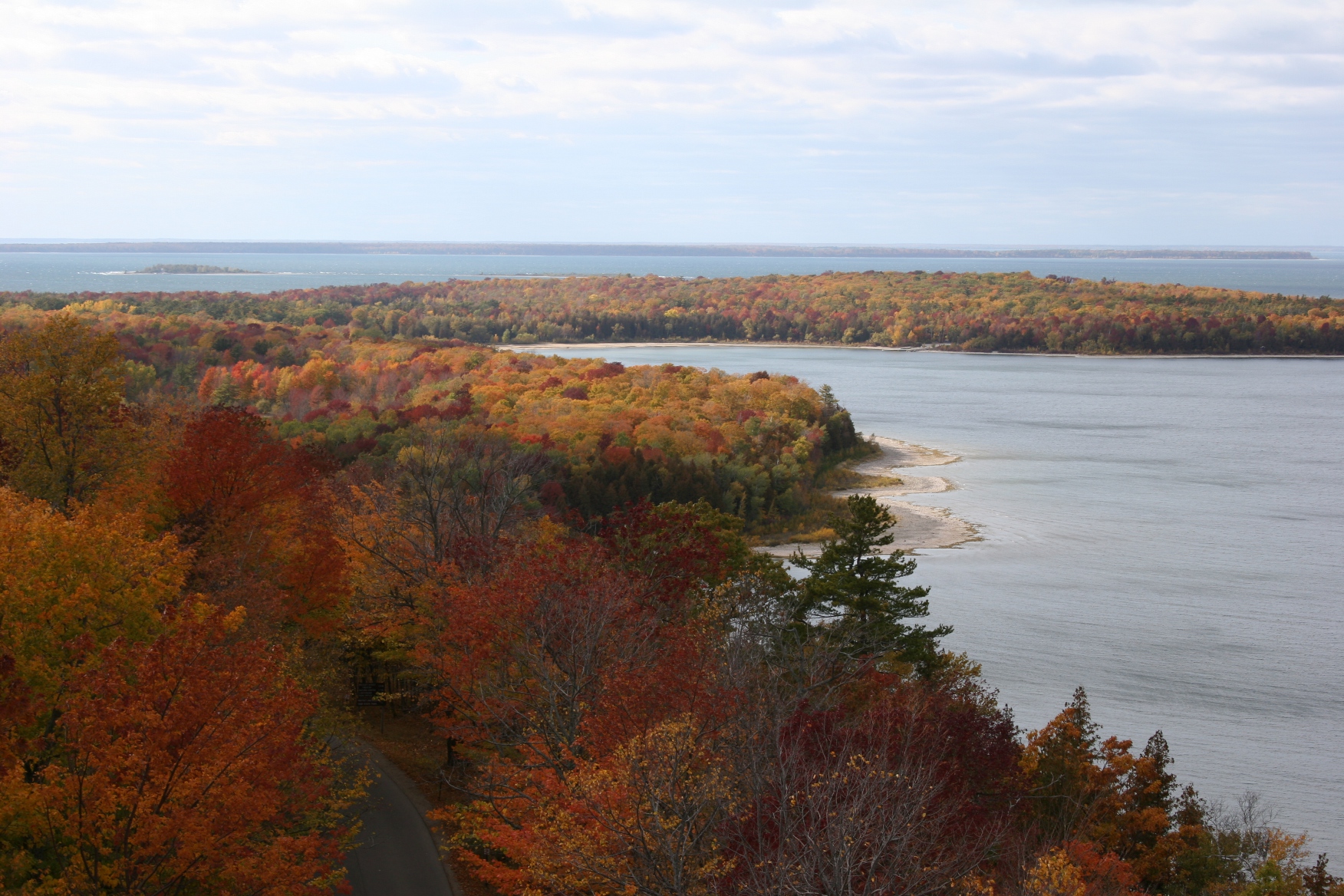
If I wasn’t afraid of heights, I could have seen this view from Eagle Tower shot by my husband, Randy. The road on the left is Shore Road, the route we took through Peninsula State Park.

Eagle Tower, built in 1914 as a forest fire observation platform, offers a scenic view of Green Bay and beyond. Photo by Randy Helbling.

Horseshoe Island as seen from Eagle Panorama, not to be confused with Eagle Tower.

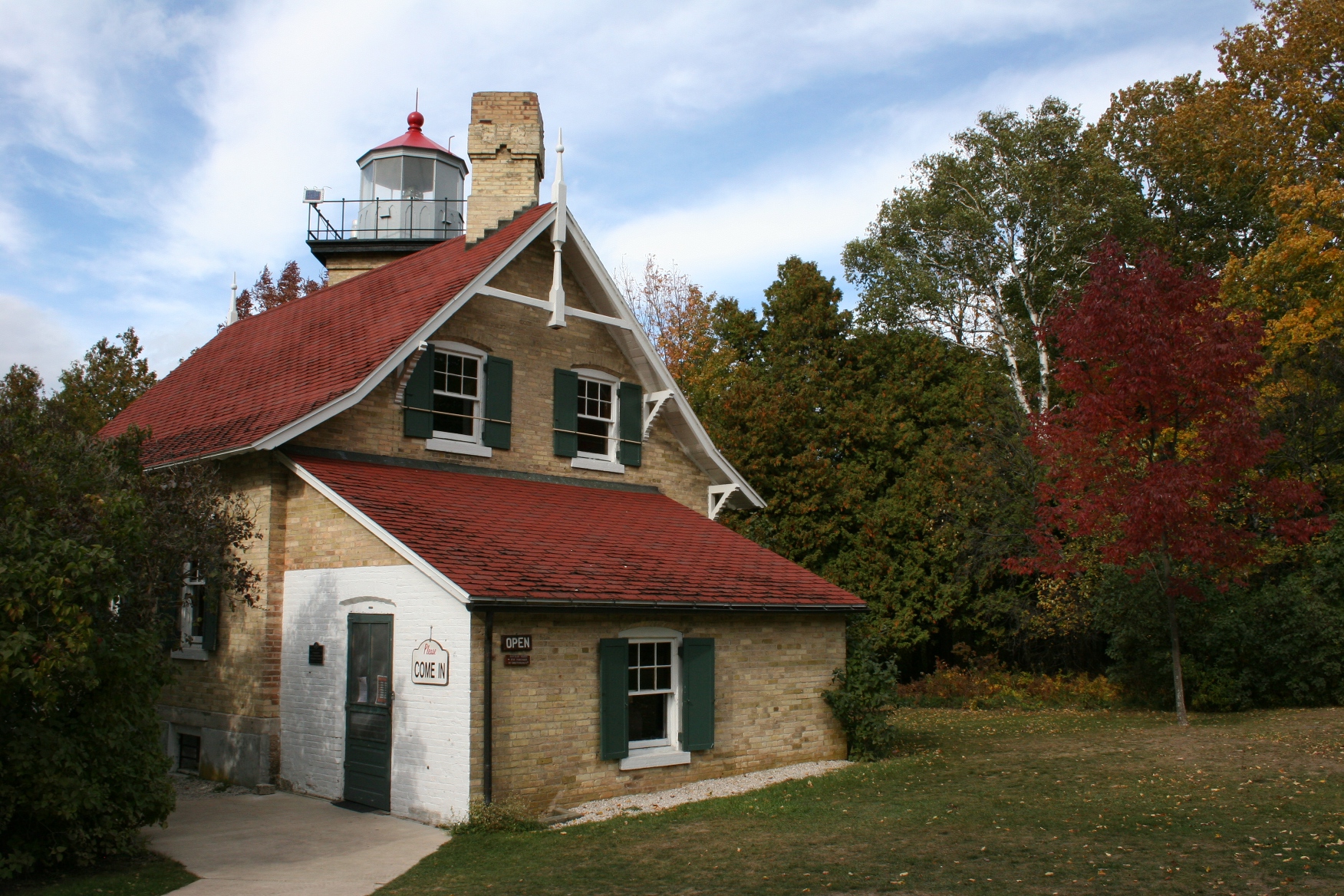
The Eagle Bluff lighthouse, built in 1868 and on the Wisconsin State Register of Historic Places. Door County is home to 11 lighthouses. No, we did not tour any and saw only this one.

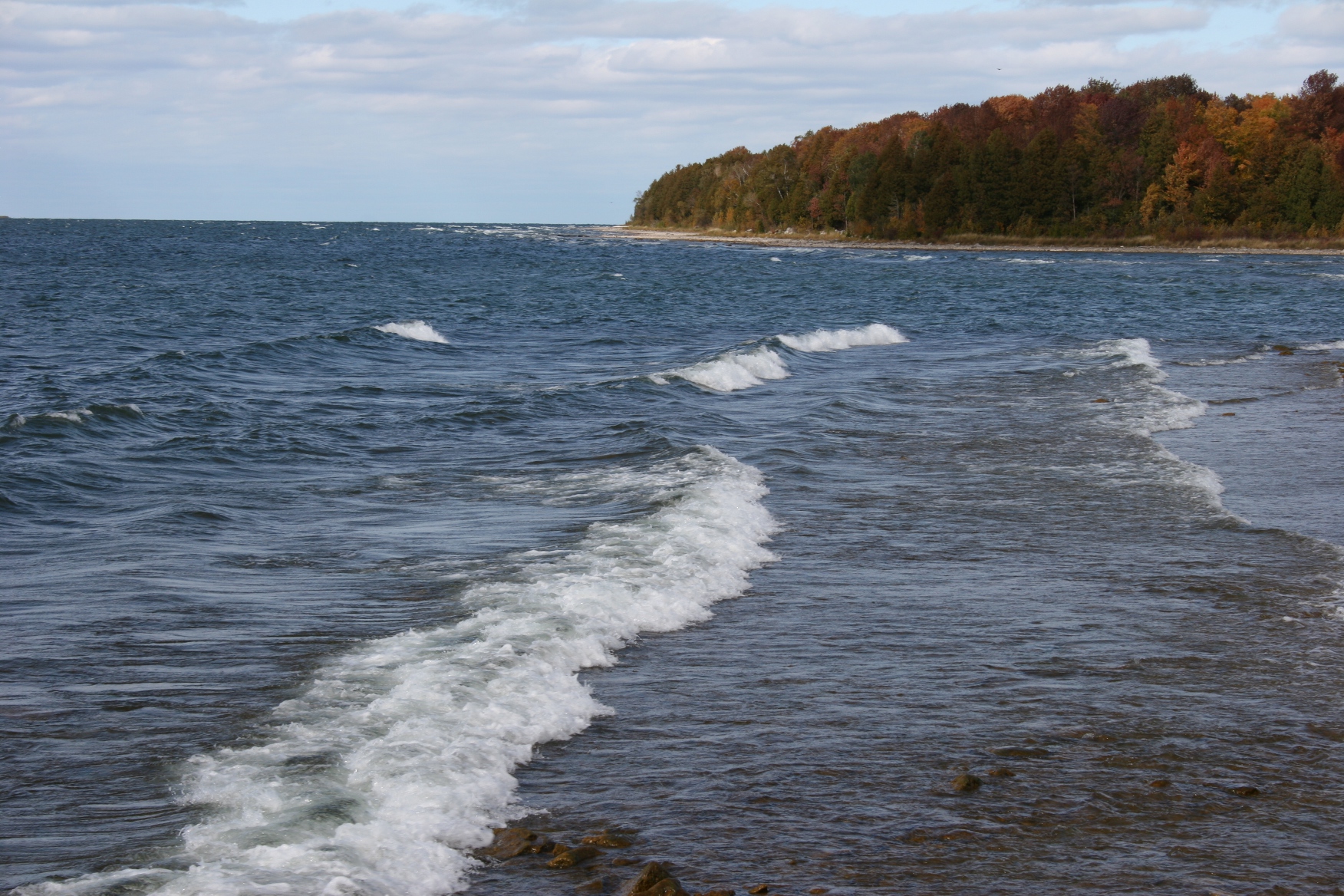
Remember my earlier mention of the wind? Well, these waves on Green Bay show you just how windy it was on Thursday morning when a wind advisory was in affect for Door County. I believe winds were around 25 – 30 mph.

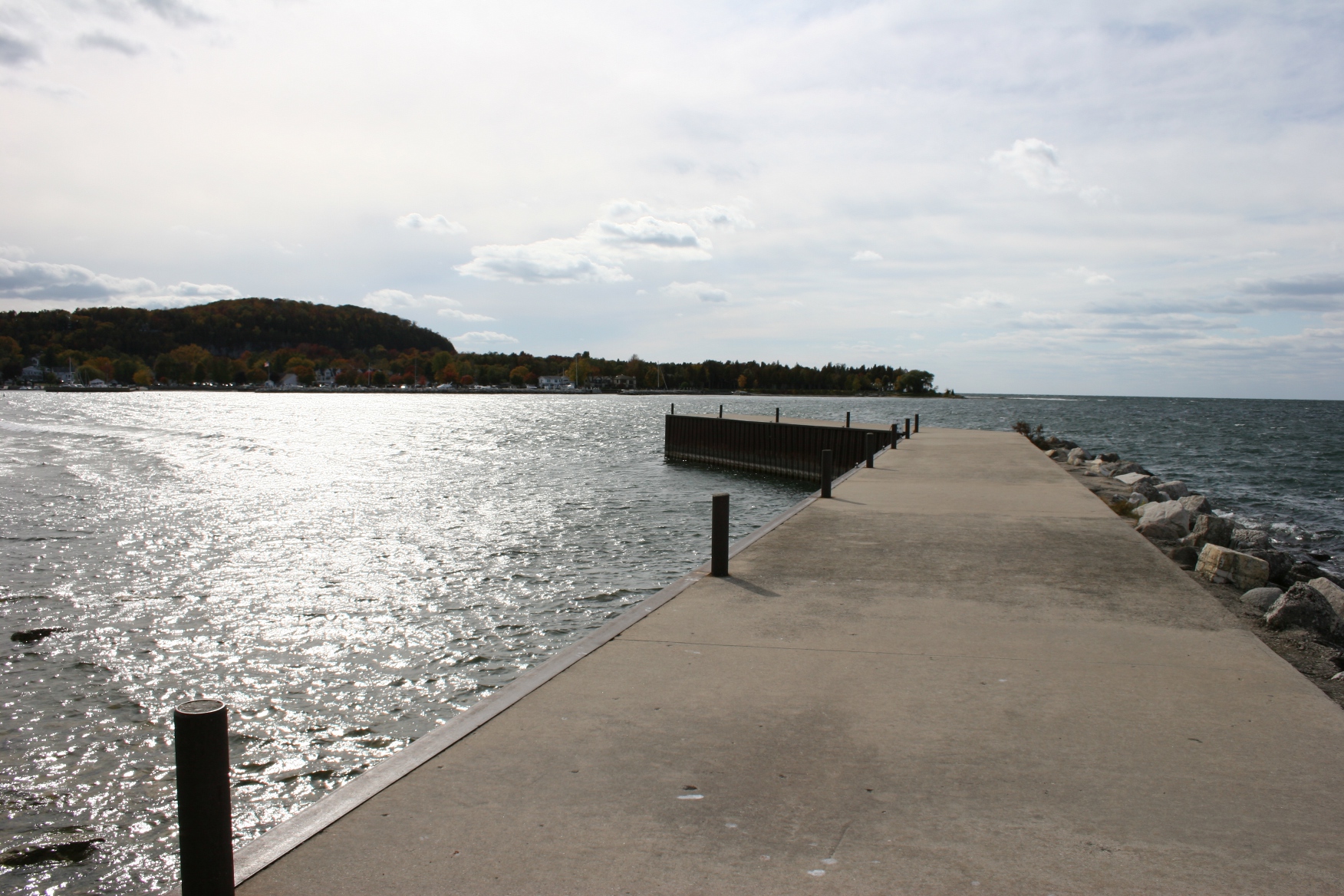
Near the pier in Peninsula State Park.

Do not let this illusion of calm waters fool you. We did not walk very far onto the pier because of the fierce wind.

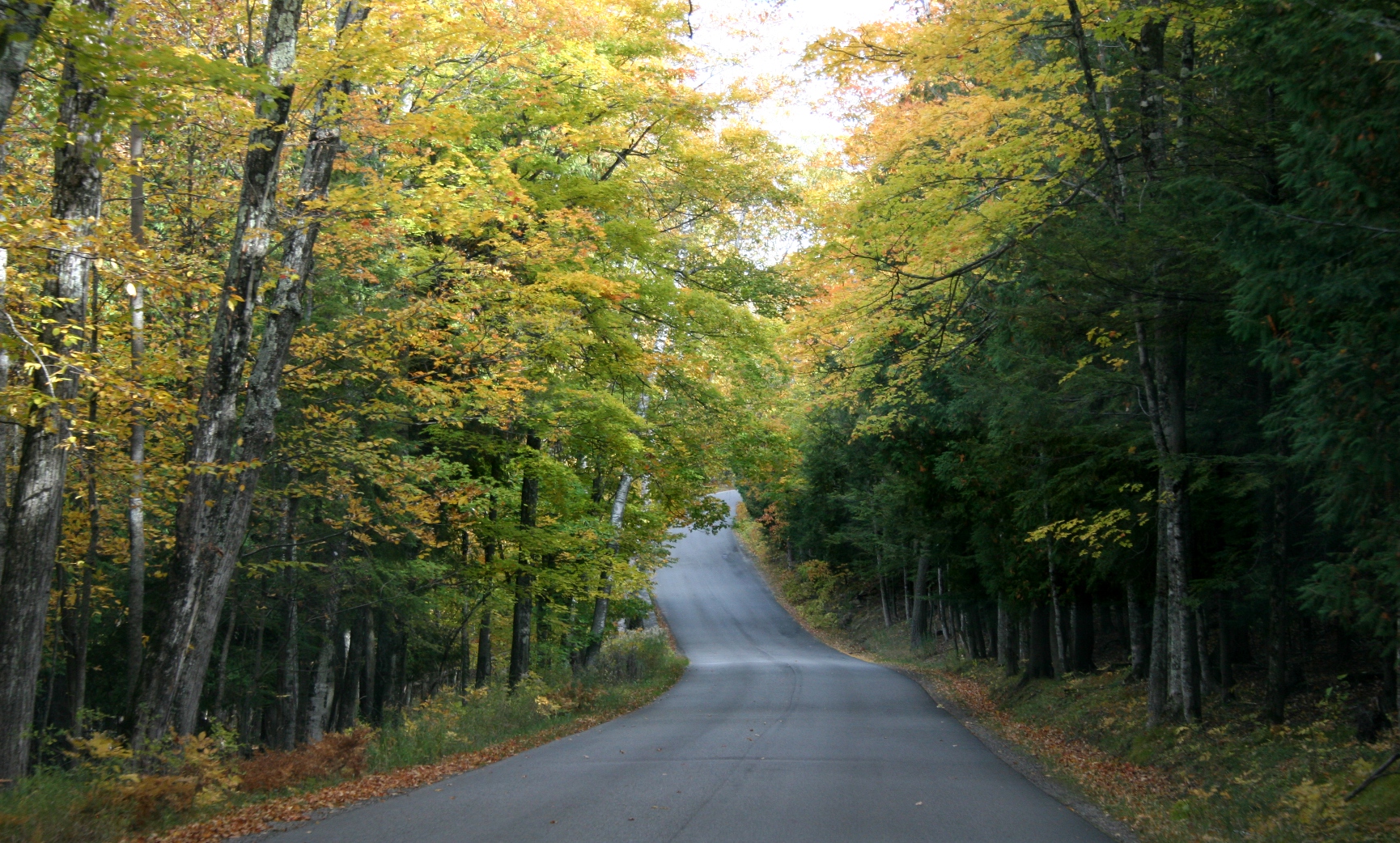
It’s a scenic drive along Shore Road through Peninsula State Park in Fish Creek.

HAVE YOU VISITED Door County? If so, what were the highlights of your trip?

CHECK BACK for additional posts of Door County.

© Copyright 2012 Audrey Kletscher Helbling


The Smithsonian in Hanley Falls & Hanley Falls in the Smithsonian (exhibit) September 20, 2012

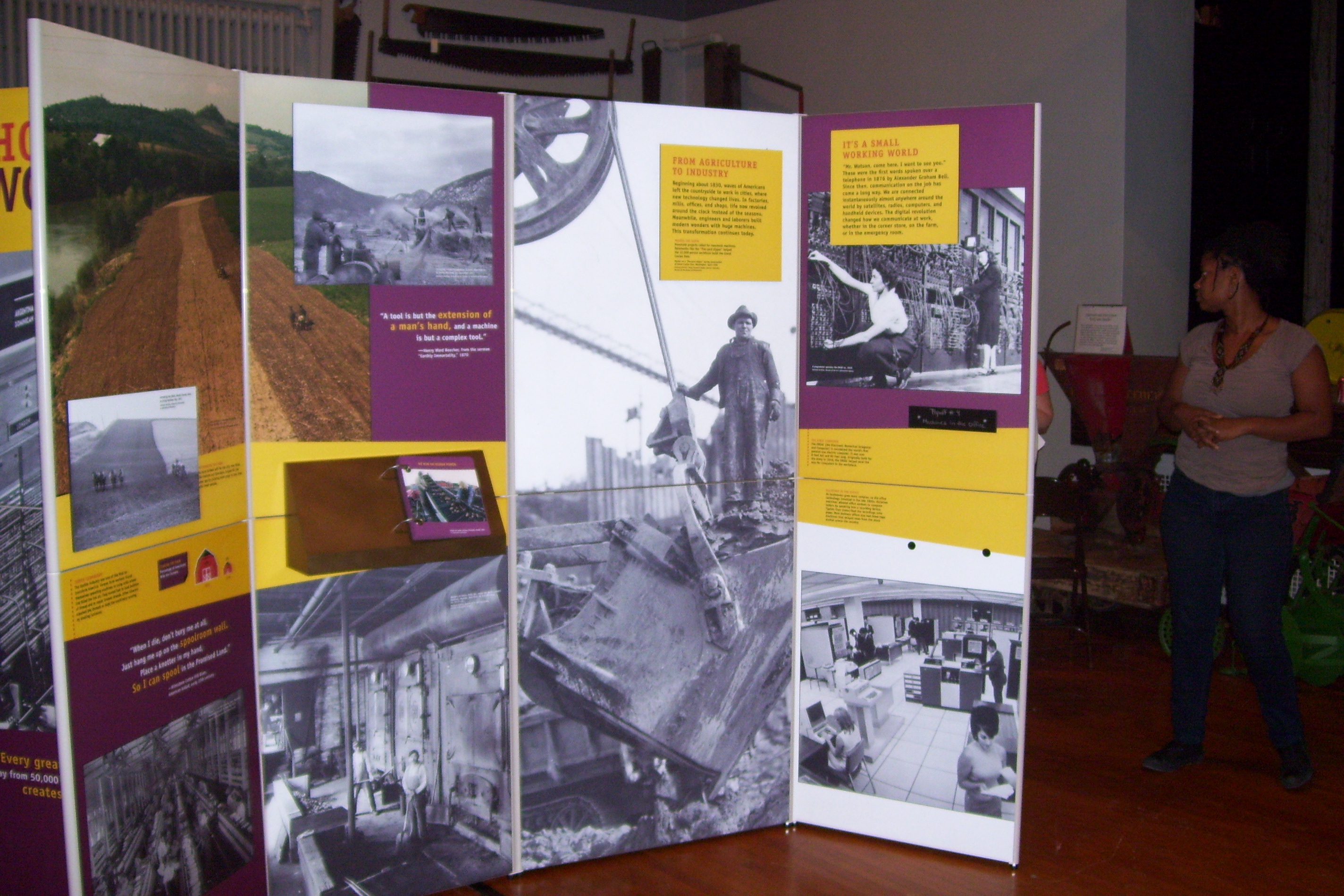
The Smithsonian’s Museum on Main Street exhibit, “The Way We Worked,” features snippets from Minnesota. Photo courtesy of Minnesota’s Machinery Museum, Hanley Falls, in rural southwestern Minnesota.

I DOUBT MANY of the 304 residents of Hanley Falls, rural Yellow Medicine County, Minnesota, have ever visited the Smithsonian or even traveled to Washington D.C.

But now this internationally-acclaimed museum has come to Hanley Falls via “The Way We Worked,” a Museum on Main Street project developed by the Smithsonian Institution Traveling Exhibition Service and adapted from an original exhibition from the National Archives.

Bottom line, if you can’t bring the people to the museum, bring the museum to the people.

Specifically, from now through October 20,  Minnesota’s Machinery Museum in Hanley Falls is hosting the exhibit on where, how, who and why Americans work.

But that’s not all. Hanley Falls is part of “The Way We Worked,” as are several other Minnesota places and people.

Says Museum Director Laurie Johnson: “It is an honor in itself to be hosting a Smithsonian Traveling Exhibit. To be an actual part of the exhibit traveling all over the U.S. is a very big honor.”

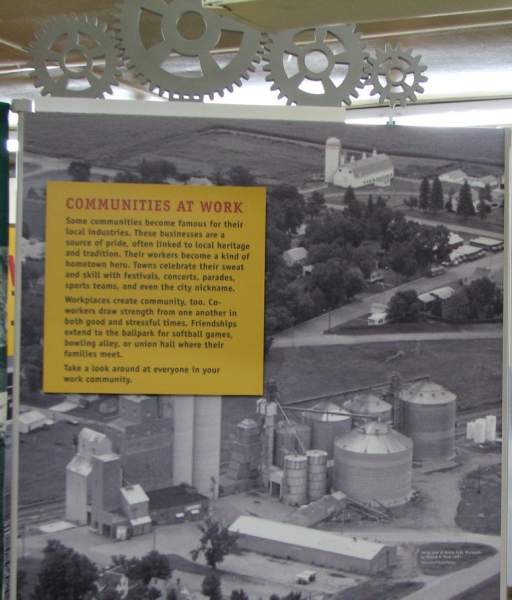
Hanley Falls’ place in the exhibit falls in the “Communities at Work” section and features a 1987 aerial view photo of Hanley Falls by Vincent H. Mart sourced from the Minnesota Historical Society. The MHS photographic collection includes 5,697 aerial views from around Minnesota photographed by Mart between 1962-1988.

The 1987 Vincent H. Mart photo showing a portion of Hanley Falls and now part of the Smithsonian traveling exhibit. Photo courtesy of Minnesota’s Machinery Museum.

Mart’s black-and-white shot #5,655 in the MHS archives, and now in the Smithsonian exhibit as image 196, shows the then Hanley Falls Farmers Elevator (now the Farmer’s Co-op Elevator) on the west side of town, plus Bennett Transportation (bus company) and the fourth-generation Oftedahl family farm. As a side note, the elevator celebrated its 100th anniversary this past July on Minnesota’s Machinery Museum grounds with more than 2,000 in attendance.

According to Johnson, the scene in the photograph no longer looks the same. Several of the grain bins were damaged in a wind storm and the main office was  moved and an elevator built to the southwest of the Oftedahl farm. The old elevator remains and is still used by the Farmer’s Co-op.

The exhibit copy which accompanies the Hanley Falls photo reads, in part:

The reminders of a town’s main industry imprint its landscape and identity. Silos dominate the skyline in Hanley Falls, Minnesota as they do in most small, agricultural communities.

And here’s how Johnson summarizes what the Hanley Falls photo tells us about “The Way We Worked:”

Farming is a way of life here and has been for many generations. The exhibit talks about “community” and we are definitely a community that works, worships, (has) neighborhood get-togethers and plays together.

Johnson, who lives on a farm about 10 miles north of Hanley Falls, further explains that the local elevator, banks and gas station provide jobs in town. Some residents work in neighboring towns. Many are retired.

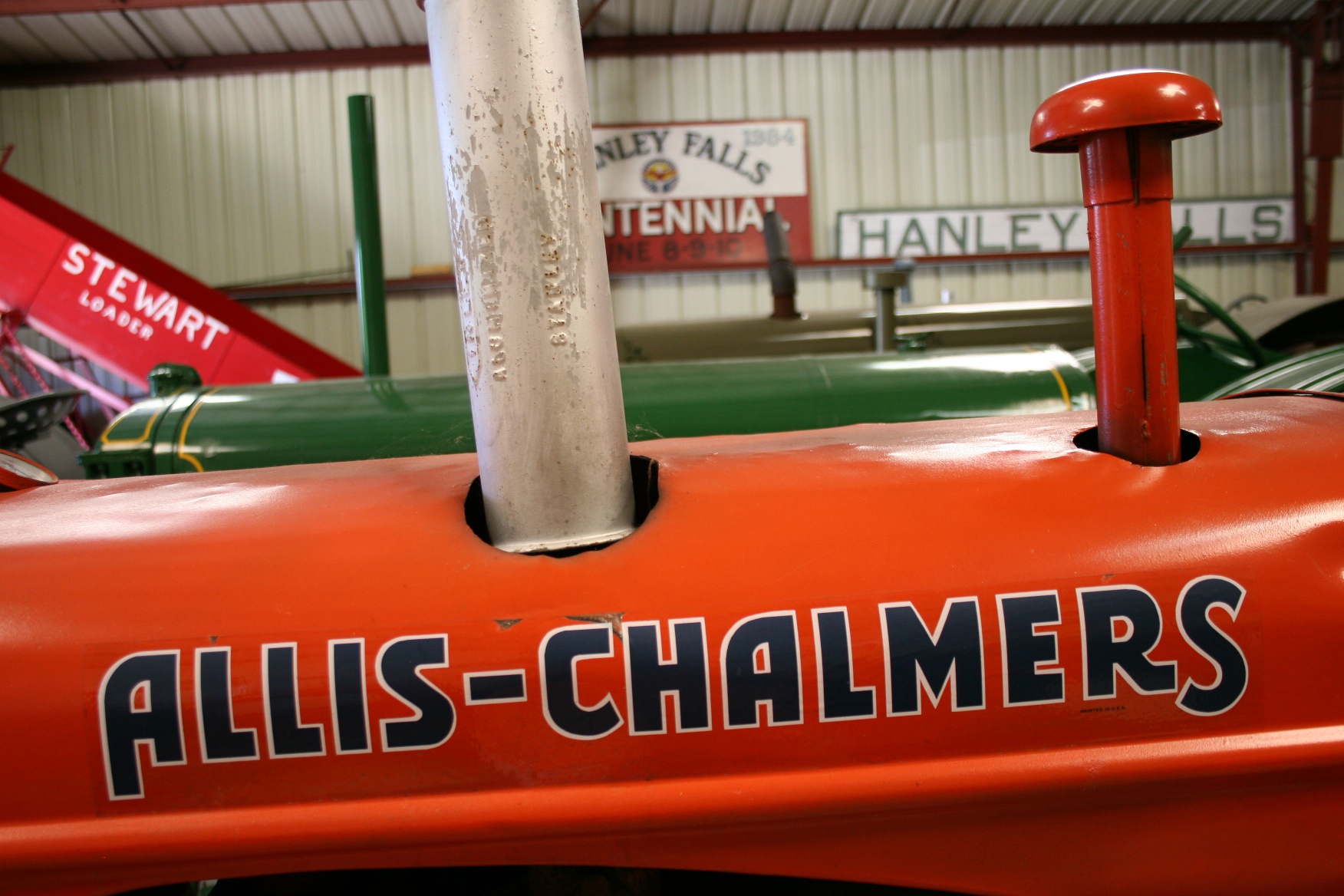
You’ll find plenty of old tractors and farm machinery, along with vintage cars and trucks, in the museum’s outbuildings. Minnesota Prairie Roots file photo.

Already the Smithsonian show is attracting more visitors to Minnesota’s Machinery Museum, defined by Johnson as “an agricultural museum recalling farm life in stories and artifacts from how we farmed with horses to a farm kitchen, bedroom, parlor and general store…preserving our agricultural heritage for generations.”

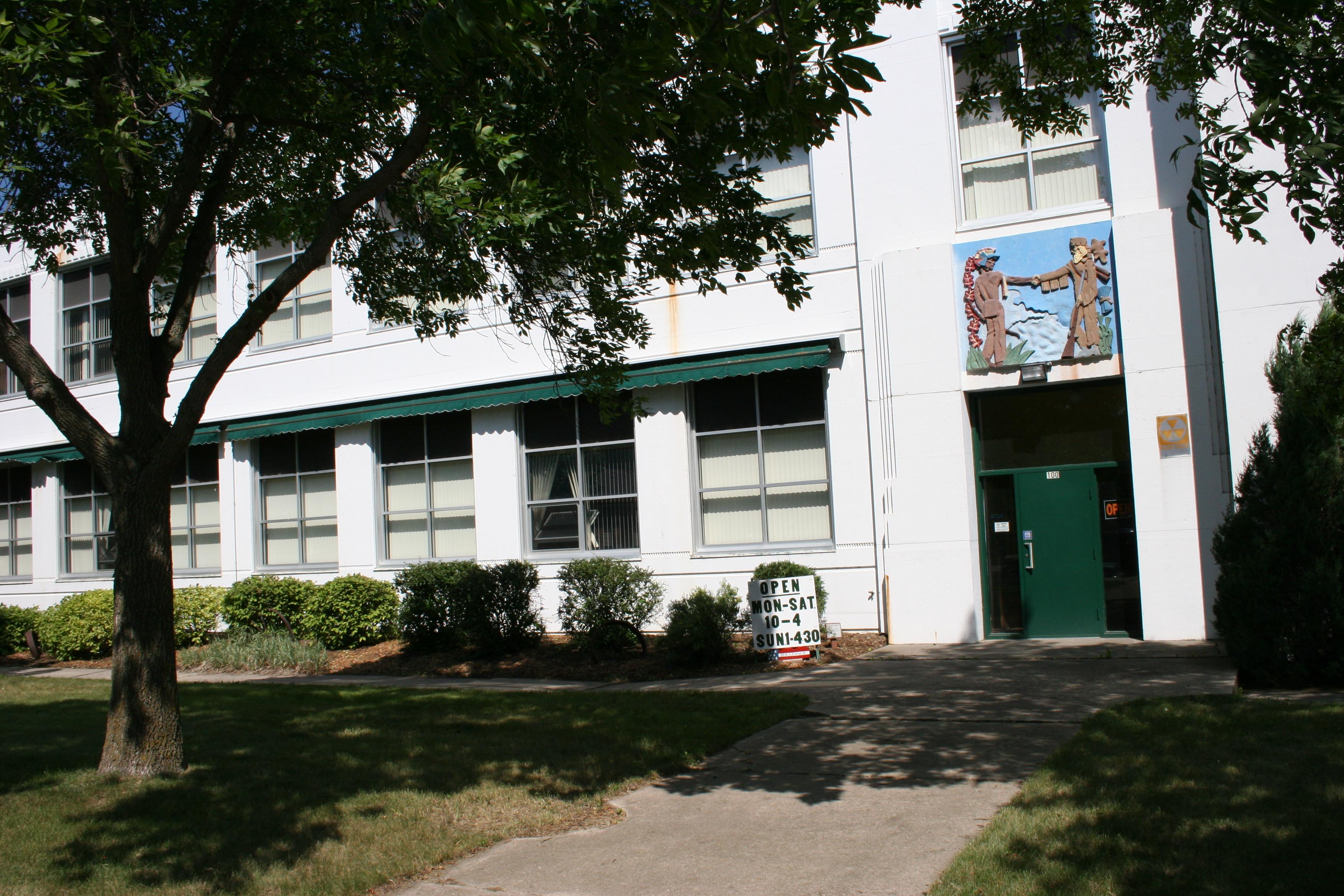
The entrance to the portion of the museum housed in the former school, a WPA building. Minnesota Prairie Roots file photo.

The five-building Yellow Medicine County museum complex, which includes the former Hanley Falls School built in 1939 by the Works Progress Administration, rests on six acres. You’ll find antique tractors, automobiles, gas engines, threshing equipment and other machinery and artifacts in the outbuildings.

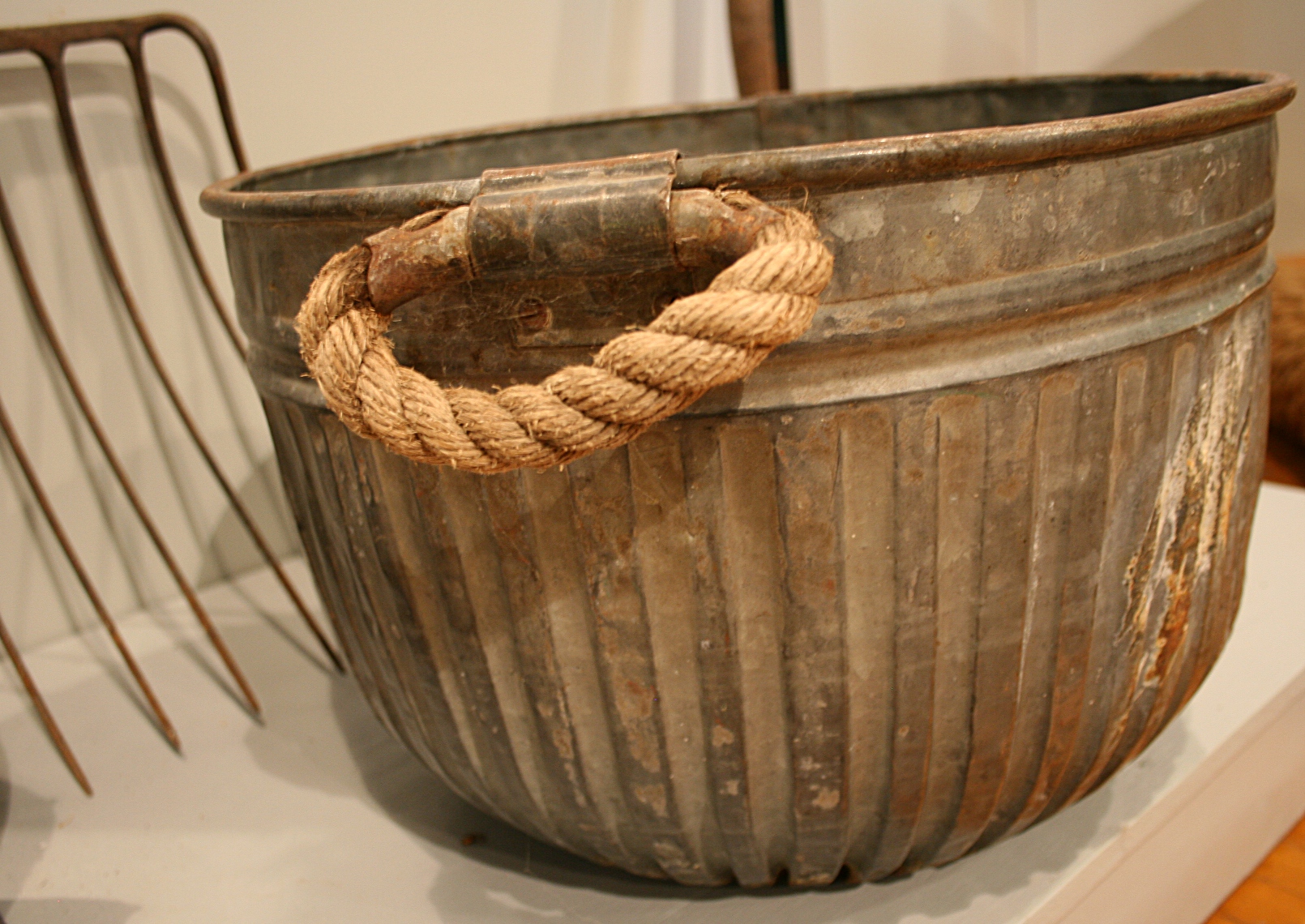
A bushel basket, one of the many ag items displayed at the museum. Minnesota Prairie Roots file photo.

Until October 20, you also can find five multi-sided kiosks featuring photos, videos, flip booklets and other interactive activities as part of the Smithsonian’s “The Way We Worked” exhibit.

Besides Hanley Falls, other Minnesota places/information in the show are a photo of women sorting sweet potatoes; quotes from Earl Bakken, founder of Minneapolis-based Medtronics, maker of the first self-contained pacemaker; a 1974 photo from Danheim Dairy in New Ulm; a SPAM Town banner; mention of the Moorhead Spuds (hometown pride for the town team); and a 1928 photo of St. Paul Gas and Light Company workers at a dance.

Johnson has no idea how the Hanley Falls photo became a part of this national touring exhibit. She discovered the town’s inclusion while vacationing in Tennessee, where she stopped to view the exhibit.

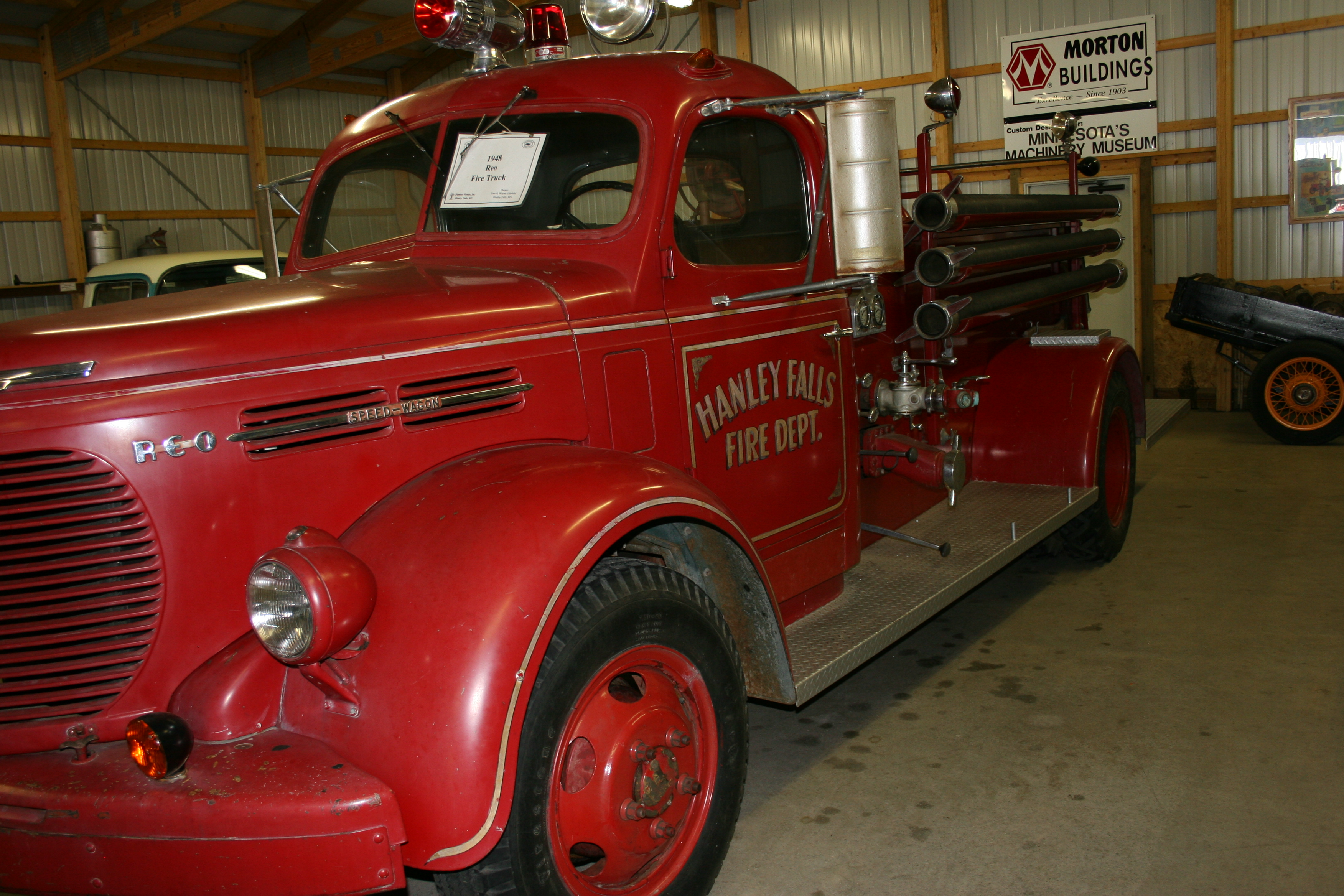
An old Hanley Falls fire truck is among vehicles housed in the outbuildings. Minnesota Prairie Roots file photo.

After leaving Hanley Falls, the exhibit will travel to five other Minnesota locations, including the Wright County Historical Society in Buffalo (Oct. 27 – Dec. 8); the Winona County Historical Society in Winona (Dec. 15 – Jan. 26); the Steele County Historical Society in Owatonna (Feb. 2 – March 16); the Virginia Area Historical Society in Virginia (March 23 – May 4); and the Depot Preservation Alliance in Baudette (May 11 – June 22).

In Hanley Falls, “The Way We Were” can be viewed between 10 a.m. – 4 p.m. Monday – Saturday or from 1 p.m. – 4:30 p.m. on Sunday. The museum season was extended to accommodate the show.

Admission to Minnesota’s Machinery Museum is free, but monetary contributions are accepted via a free will donation box.

Located in southwestern Minnesota, Hanley Falls sits nine miles south of Granite Falls or 20 miles north of Marshall along Highway 23. Go one block west of Highway 23 and then a block north to find the museum.

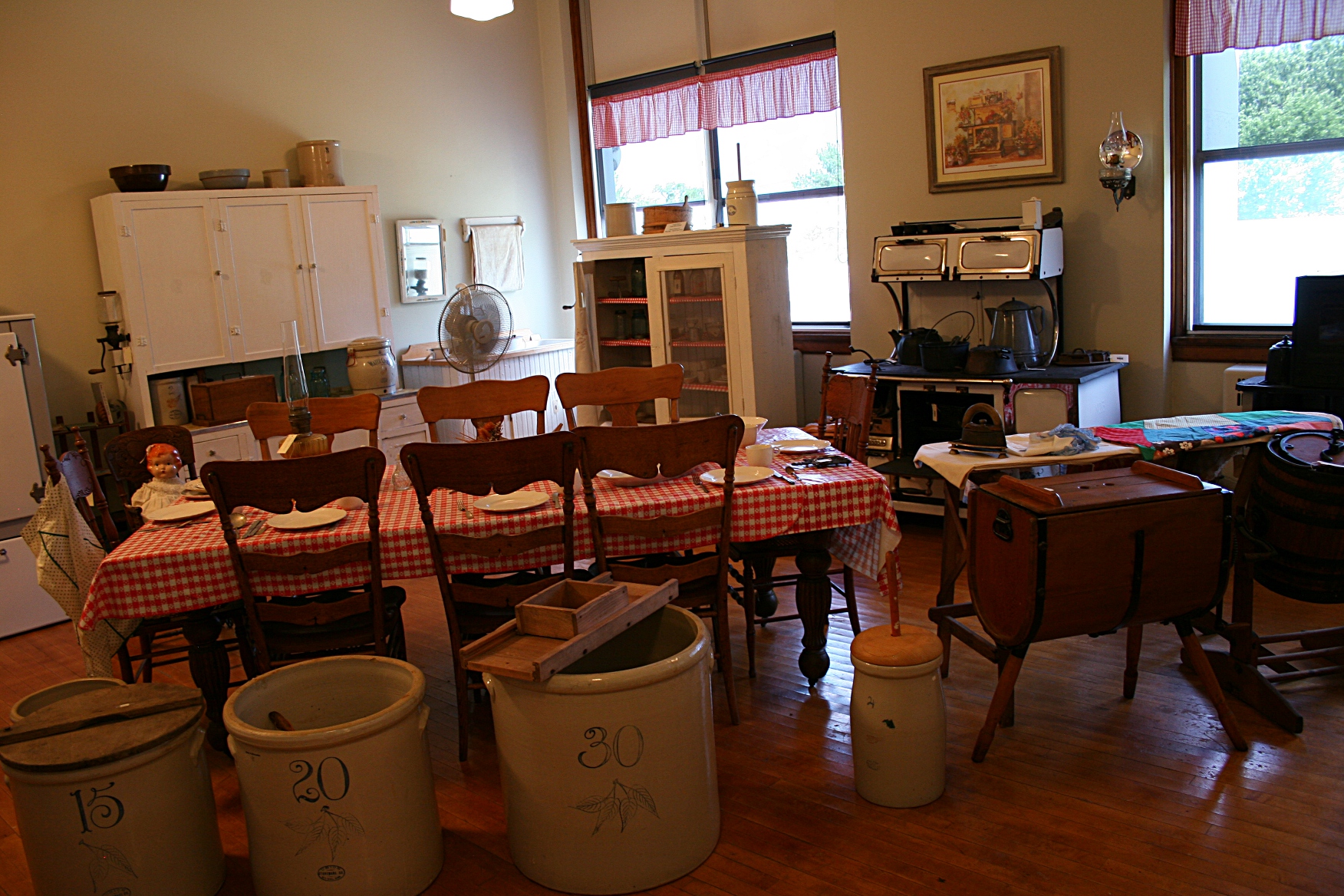
An old-style farm kitchen on the second floor of the museum. Minnesota Prairie Roots file photo.

“The Way We Worked” is presented in Hanley Falls in collaboration with the Minnesota Humanities Center. Funding, says Johnson, is via the Center; The Clean Water, Land & Legacy Amendment (Arts & Cultural Heritage Fund); the Smithsonian Institute; the National Endowment for the Humanities; and the United States Congress.

Minnesota’s Machinery Museum previously hosted the Smithsonian’s Museum on Main Street projects “Barn Again” and “Between Fences.”

FYI: To learn more about Minnesota’s Machinery Museum, click here to link to the museum website.

For more info about “The Way We Worked,” click here.

To view additional photos by Vincent H. Mart in the Minnesota Historical Society archives, click here.

© Copyright 2012 Audrey Kletscher Helbling


One person’s junk…Hot Sam’s Antiques, Part III September 19, 2012

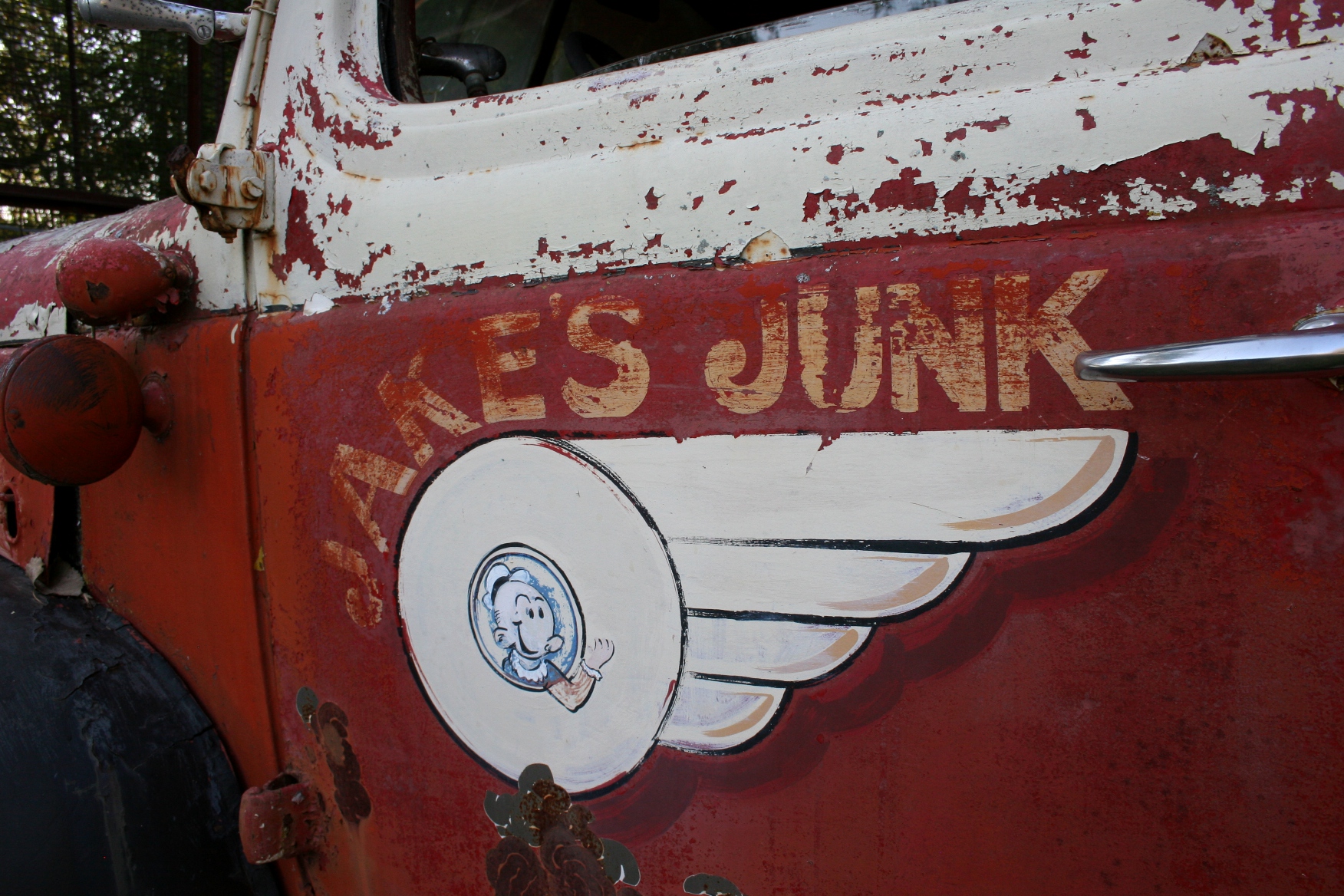
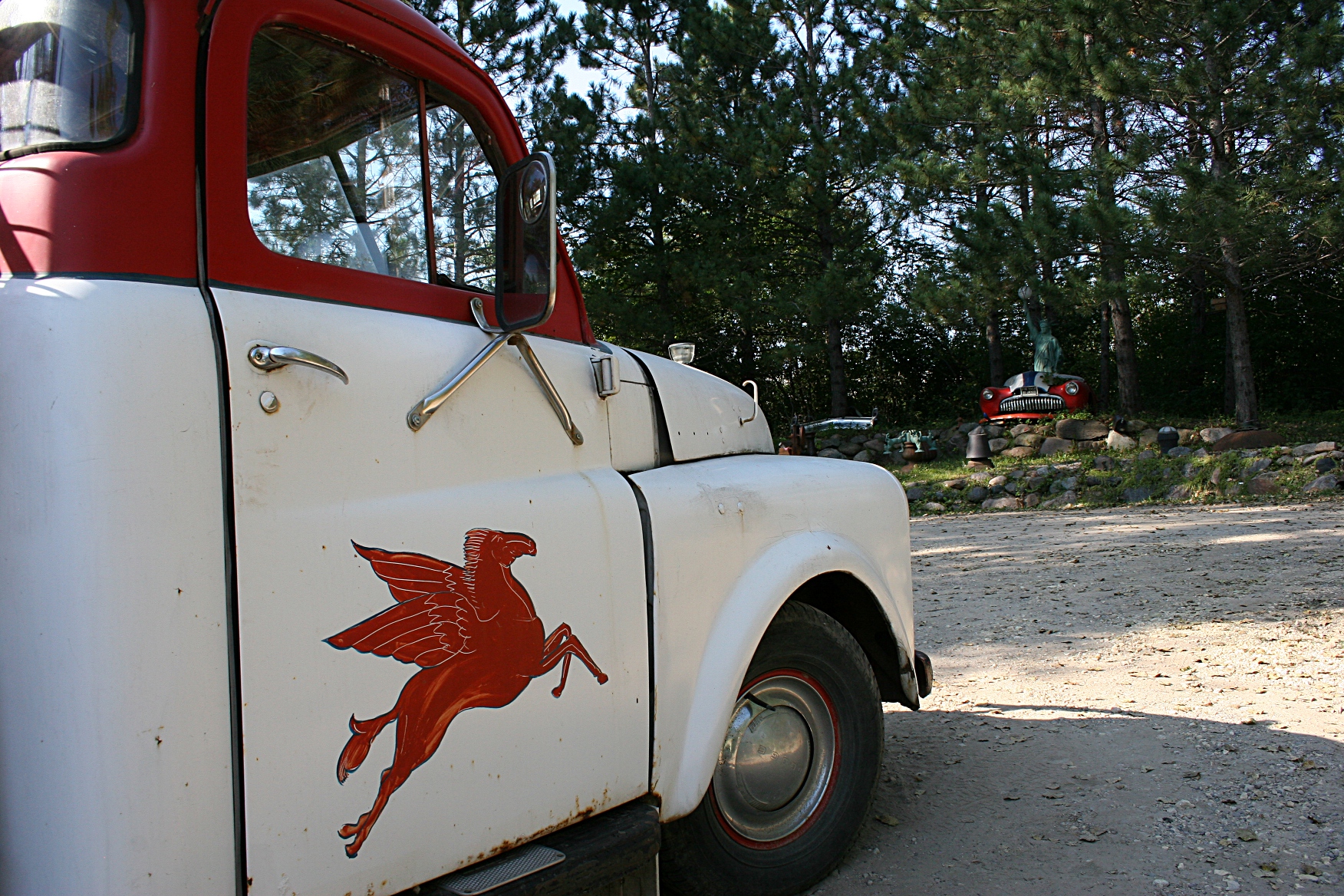
Truck door signage, a nod perhaps to Jake Hood, owner of Hot Sam’s Antiques, Lakeville, Minnesota.

ONE MAN’S (or woman’s) junk is another man’s (or woman’s) treasure.

That adage could aptly be applied to Hot Sam’s Antiques, rural Lakeville, Minnesota.

I’ve posted about this antique theme park twice already. Click here and here to read those stories. But Hot Sam’s deserves a third post. Why? Think upcycling and recycling.

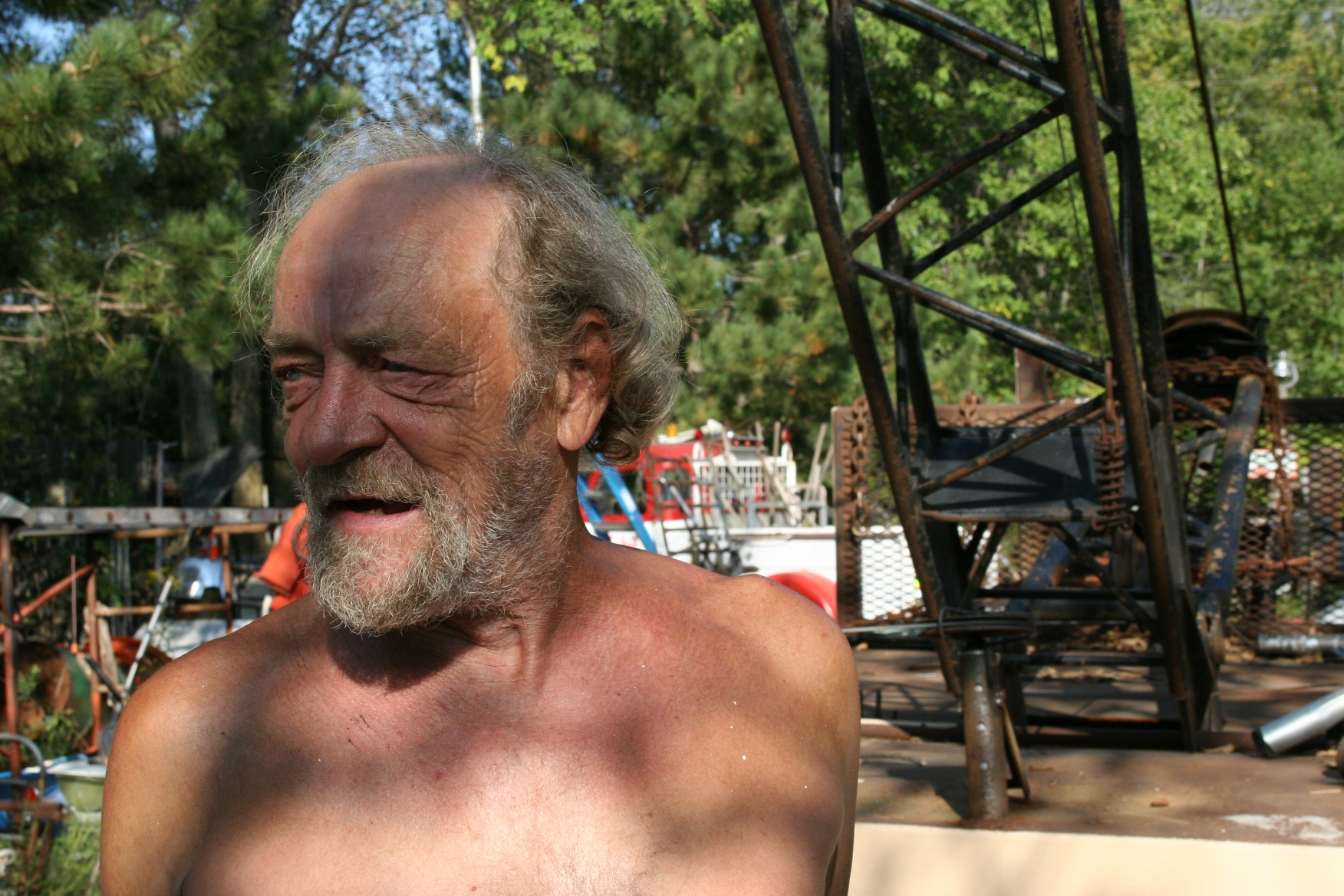
Barry, artist and upcycler of stuff at Hot Sam’s Antiques.

I appreciate businesses like Hot Sam’s Antiques which sell or re-purpose used stuff. We are too much a throw-away society although, in recent years, it’s become suddenly chic to upcycle or purchase vintage/used. I hope the trend lasts beyond the current economic depression.

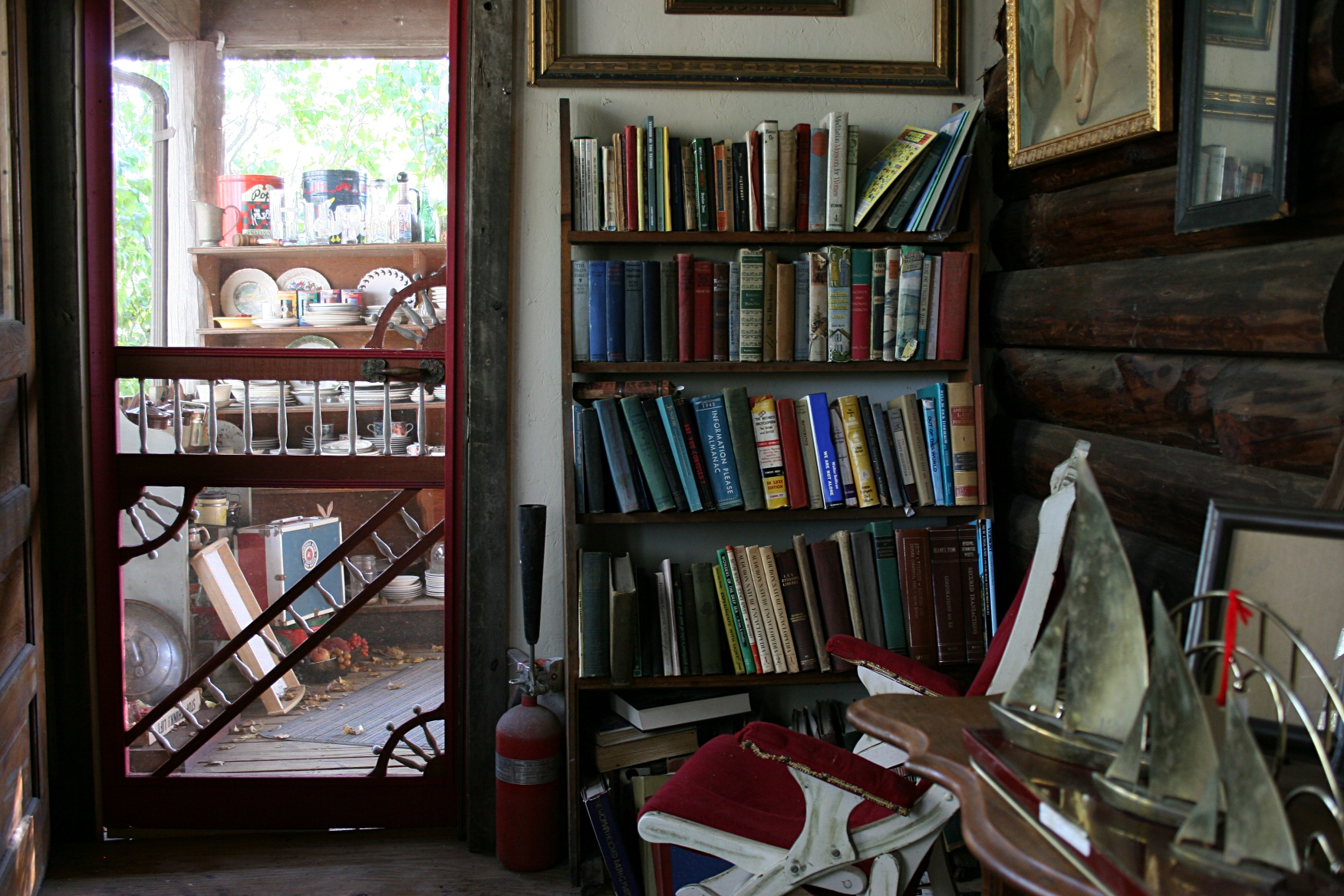
Inside the log cabin at Hot Sam’s is a bounty of antiques, collectibles and other used merchandise. The door leads to the wrap around porch, where you’ll find more goods.

For decades I’ve shopped at rummage sales and thrift stores. The bottom line is that I am careful with my money, a trait instilled in me while growing up in a farm family with little money. Think eating white rice with cinnamon and sugar for a meal. Think no birthday presents. Think shopping only for clothes hung on the sales rack.

My parents worked hard to provide for our family of eight, but it was not easy for them. I never realized, though, that we were poor until I grew into adulthood. That’s a credit to my parents’ love and care.

Because of my upbringing, I tend to bargain shop and put less value on material possessions than many in today’s society. For example, of all the furniture in the house my husband and I own, only five—the sofa, recliner, twin bed frame, entertainment center and my office desk—are pieces we bought new.

Likewise, nearly all of the art I own originates from rummage sales, thrift or antique stores, or recycled art sales.

There. That should explain why I appreciate places like Hot Sam’s Antiques.

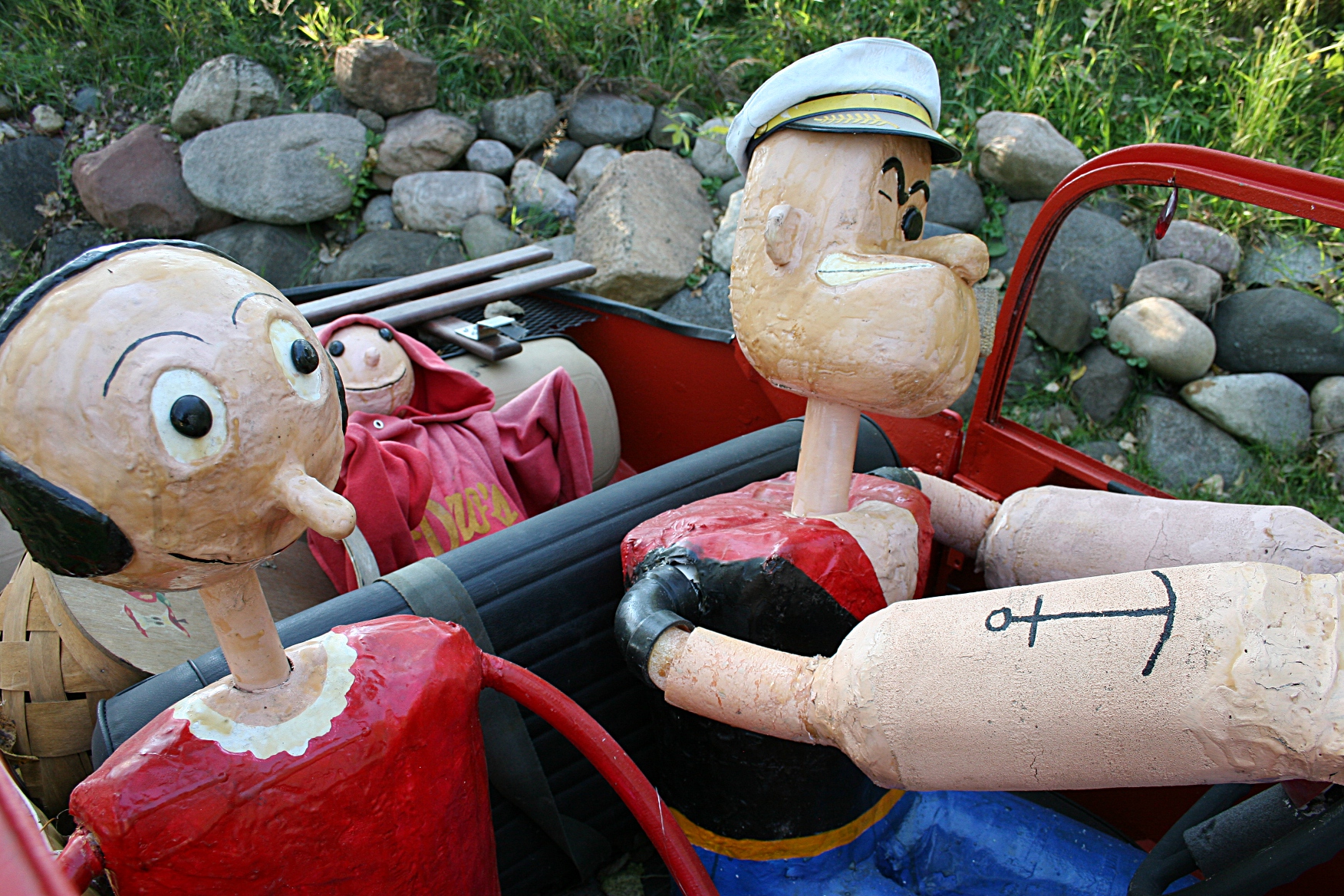
And I also like Hot Sam’s because of the creative art pieces such as Popeye and Olive Oil and Sweet Pea riding in the family car. I watched “Popeye” cartoons while growing up.

Somewhere in my memory bank I possess a memory of my dad telling us to watch for the flying red horse en route to visit relatives in the Cities. I couldn’t tell you now where that red horse was located, but I’m fond of this icon. In the background you”re correctly seeing a Statue of Liberty jutting from the front end of a partial vintage car.

I rode in a taxi once in Chicago. It didn’t look anything like this one at Hot Sam’s. But that’s my single taxi experience.

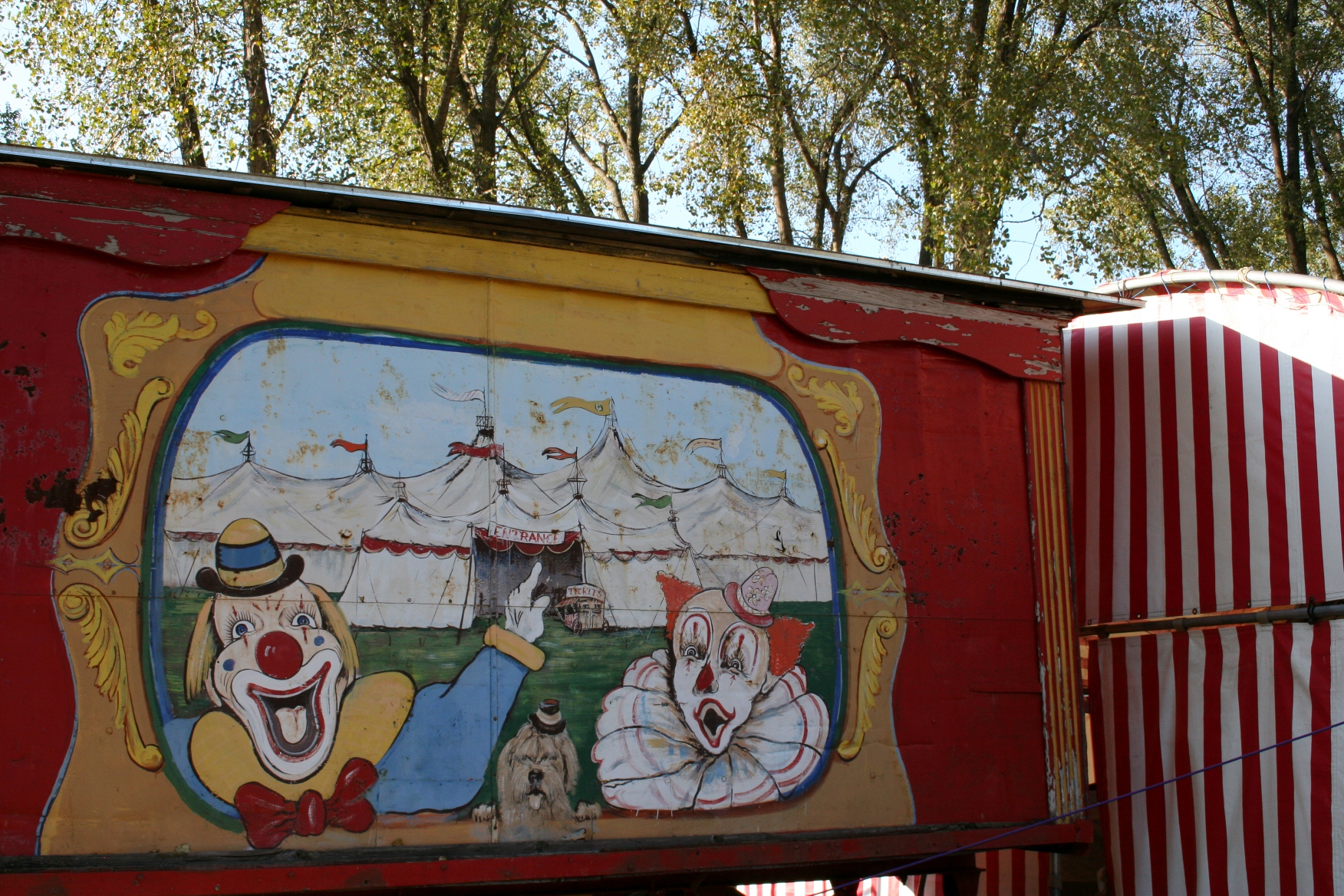
I’d like to attend a circus once… See why I love this place?

Ten years or more before I experience the validity of this statement.

© Copyright 2012 Audrey Kletscher Helbling


My adventure at a Minnesota “antique theme park,” Part II September 18, 2012

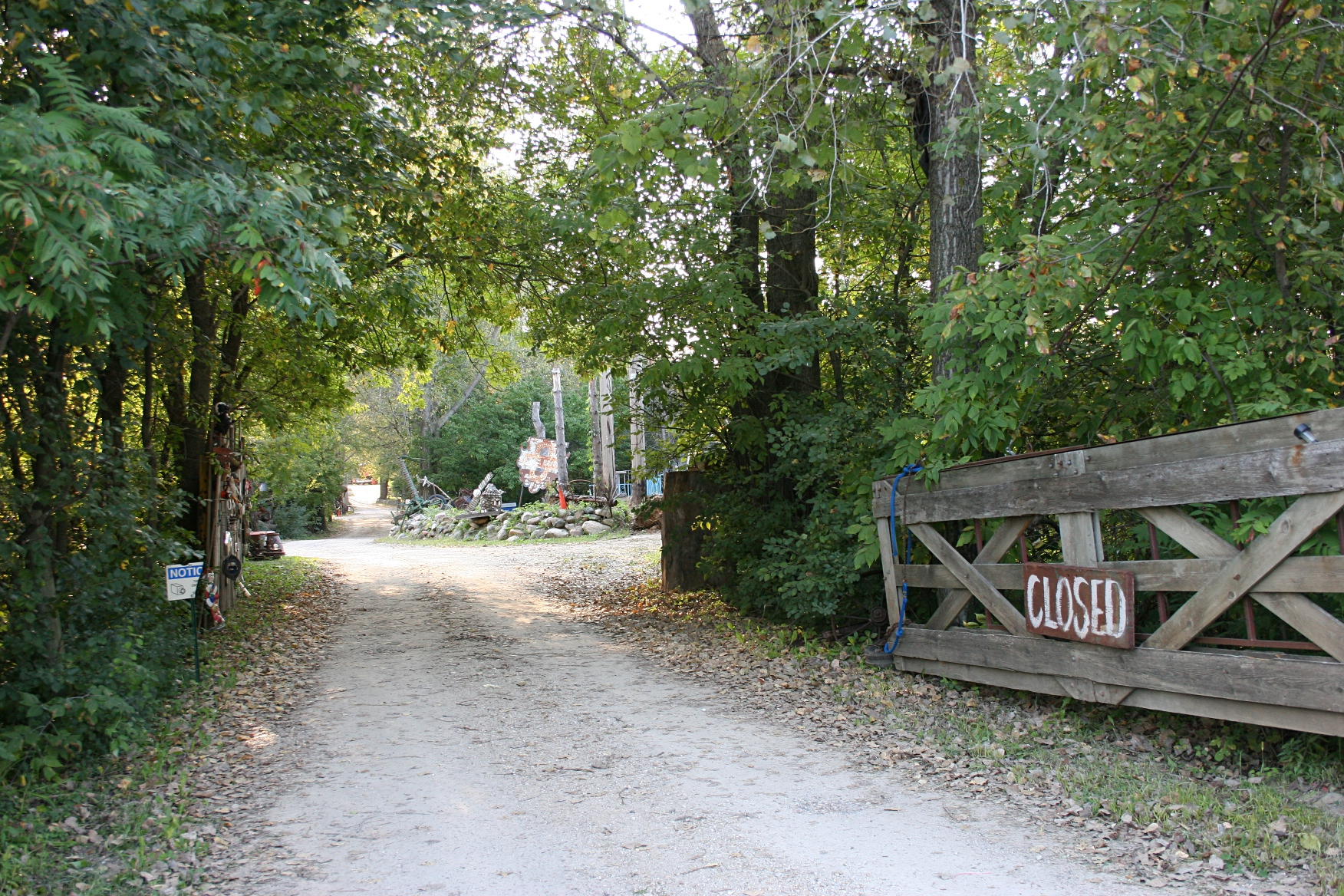
Would you follow this driveway into the woods? I did. And what an adventure.

“I’M A LITTLE SCARED,” I admitted as we turned off Pillsbury Avenue just south of Lakeville, Minnesota, onto a narrow, hard-packed gravel road. Thick dark woods crept to the edge of the driveway and my imagination ran wild with fairy tales that ended badly.

What lurked in those woods? I glanced toward my husband, who was guiding our van into the unknown. “I hope there’s not a big dog.” I imagined a ferocious canine, teeth bared, legs planted in a defensive stance.

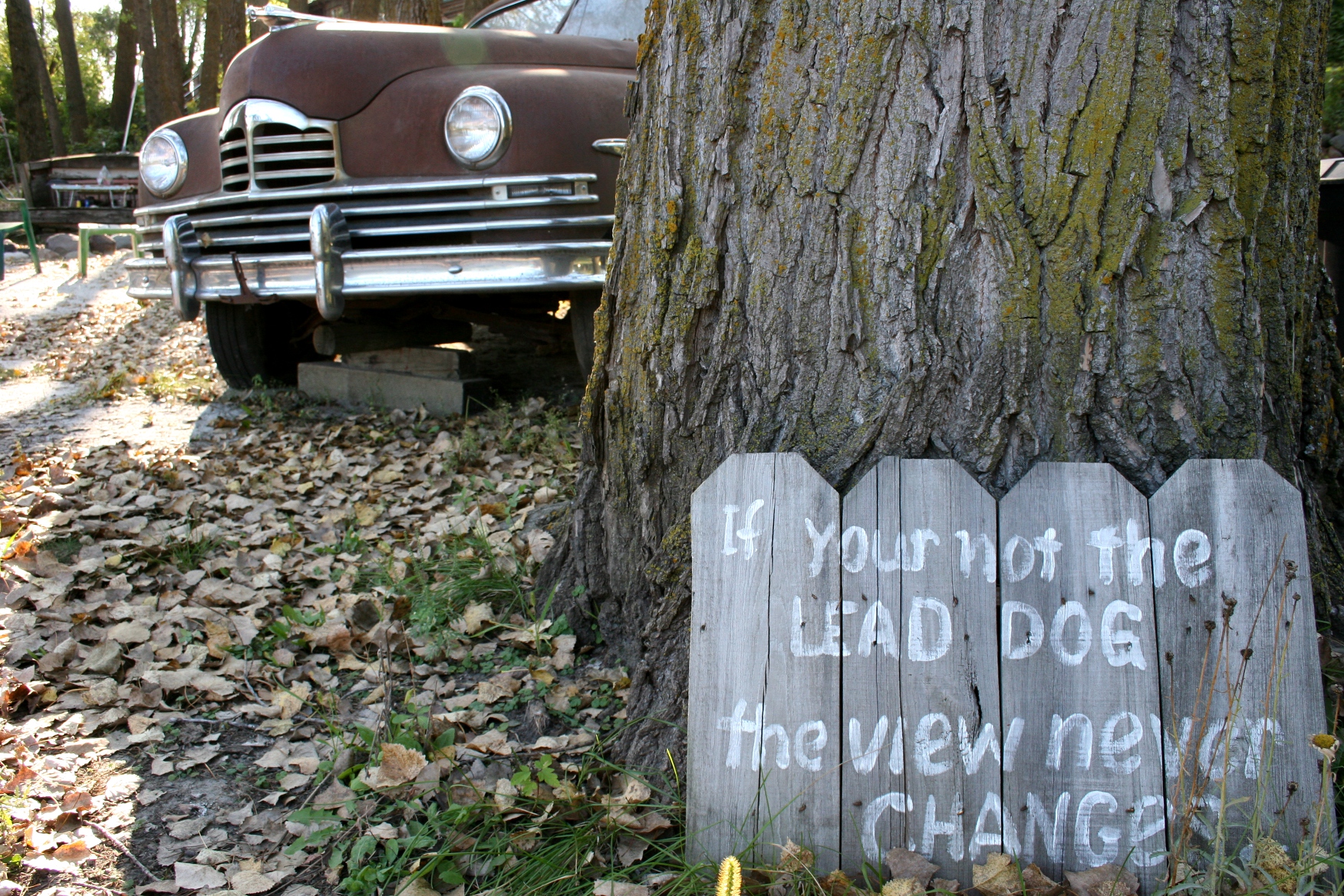
A dog-themed sign, one of many signs on the property. And, no, spelling is apparently not a priority here.

There were no guard dogs—unless you count the little dog interested only in pursuing a baby bunny and not humans. There were no bad endings.

But I wanted to warn you, lest you initially think like me and consider backing out even before you enter the wonderment which is Hot Sam’s Antiques.

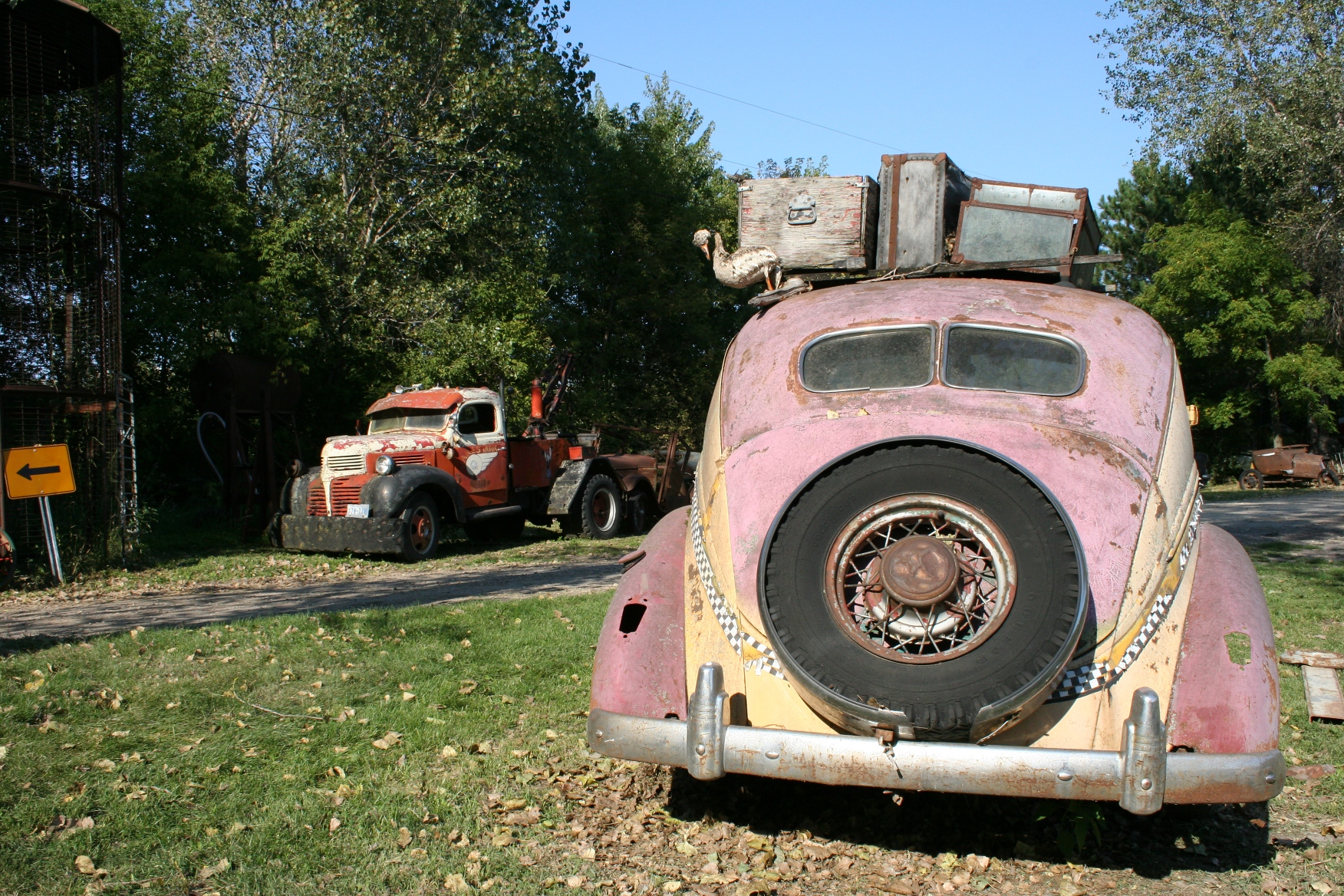
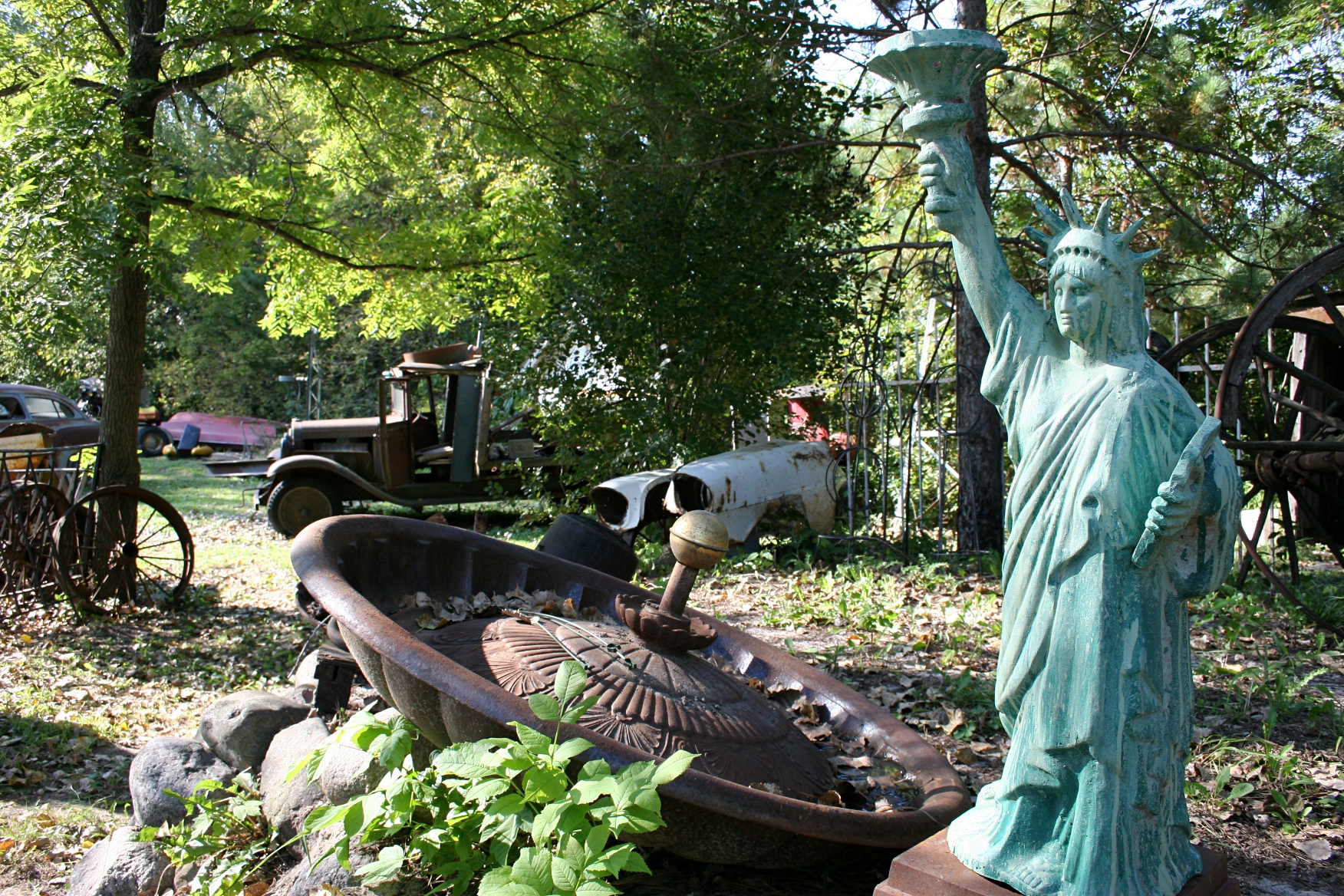
Junk cars line the driveway, left. And, yes, that’s a Statue of Liberty standing in that red junk car in the background.

This place is part junkyard, sculpture garden and antique shop.

If you like your picking places all nice and neat and tidy, then this may not be your shopping venue.

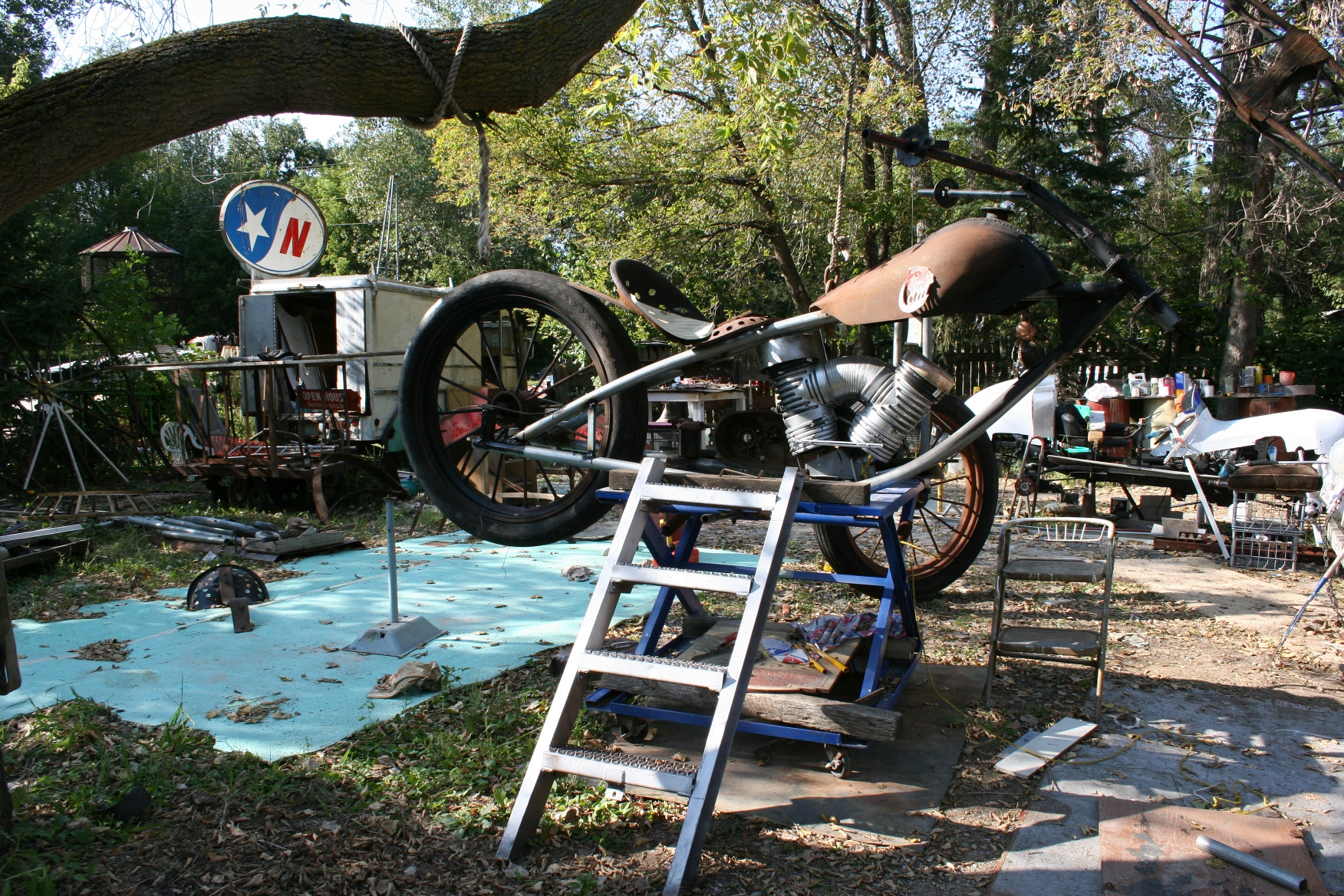
Under construction in the woods, an over-sized motorcycle sculpture currently lashed to a tree limb among the junk.

But if you are adventuresome, don’t mind scuttling around junk (aka art/fabulous finds/treasures), have lots of time to meander and appreciate a one-of-a-kind place bursting with creativity, then, welcome to Hot Sam’s Antiques.

FYI: Click here to read my first post introducing you to Hot Sam’s Antiques. I have so much to show you that I will be writing a third post.

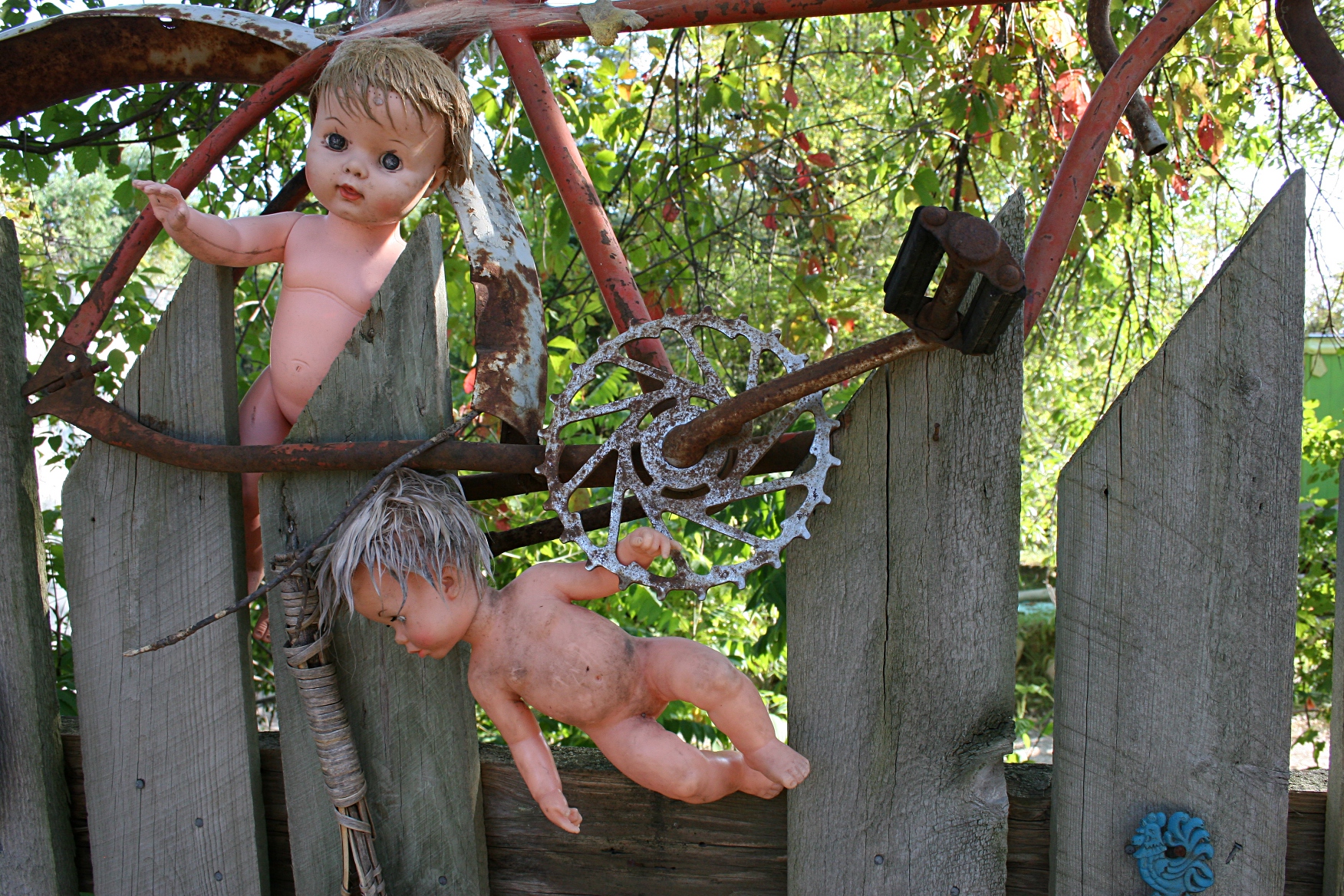
Along the driveway, you’ll see this fence decorated with an eclectic collection of stuff.

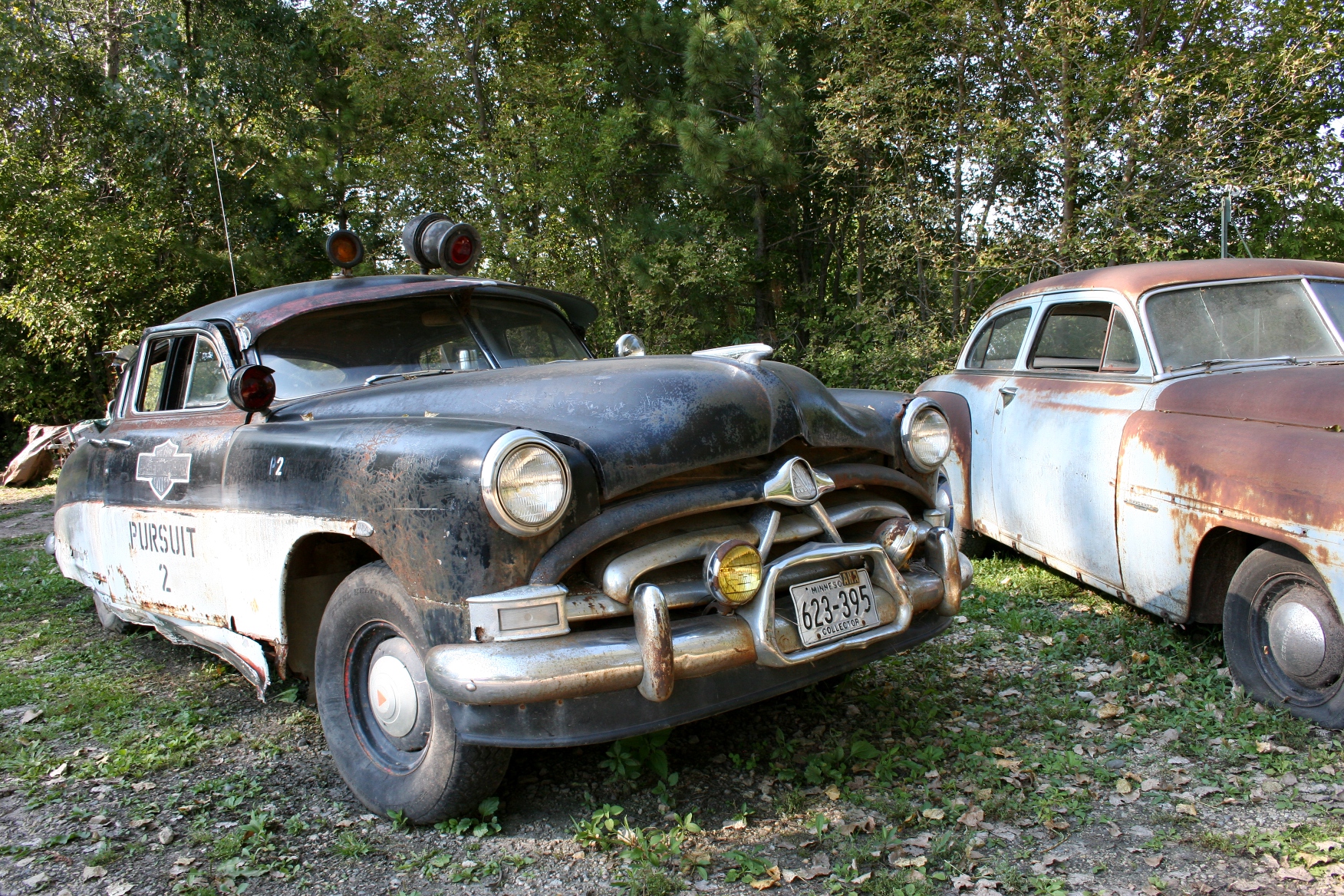
Just more abandoned vintage cars along the side of the driveway.

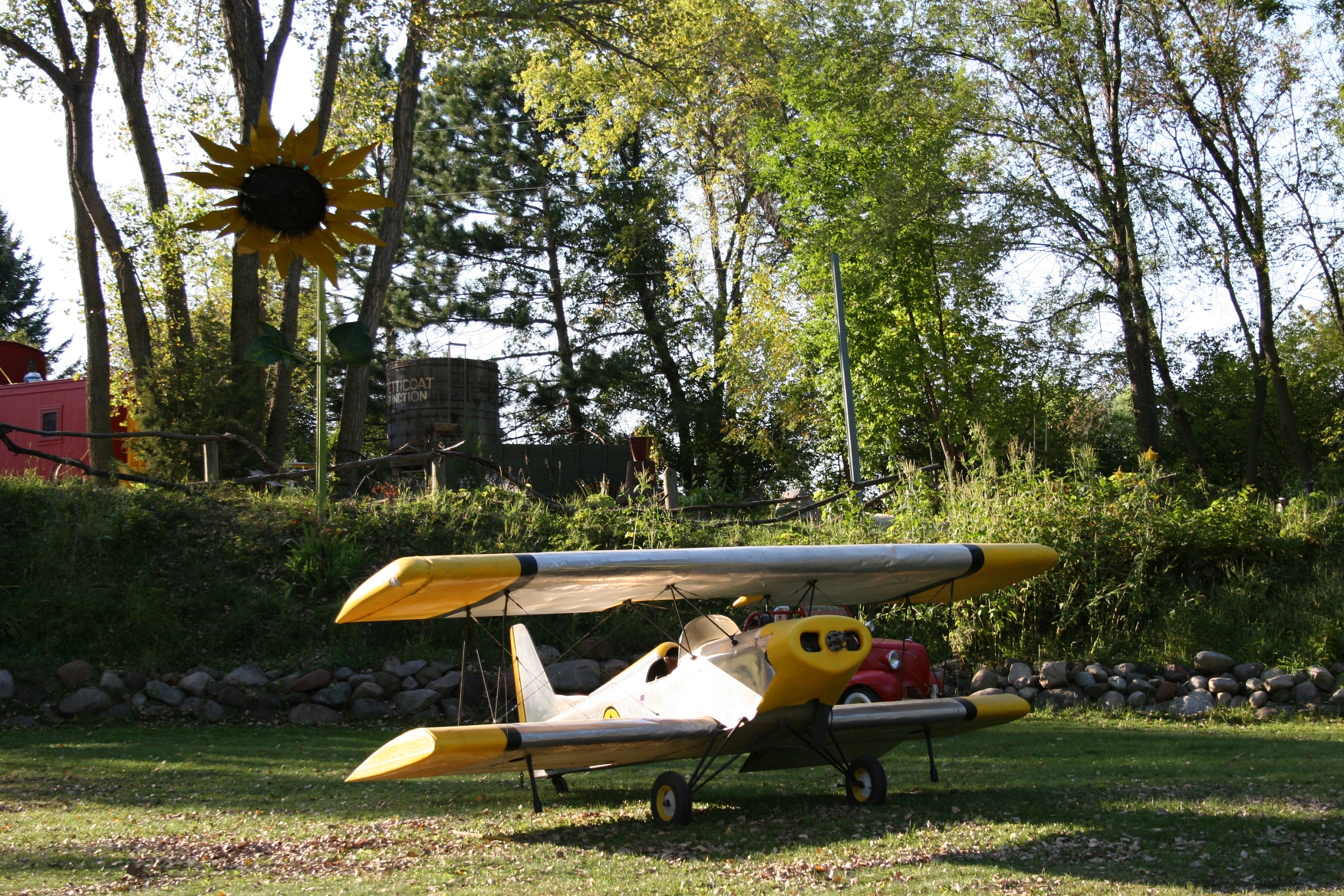
One of two planes on the property; the other one’s nosedived into the swampland. Yup, that’s a train in the background, behind the gigantic sunflower and to the left.

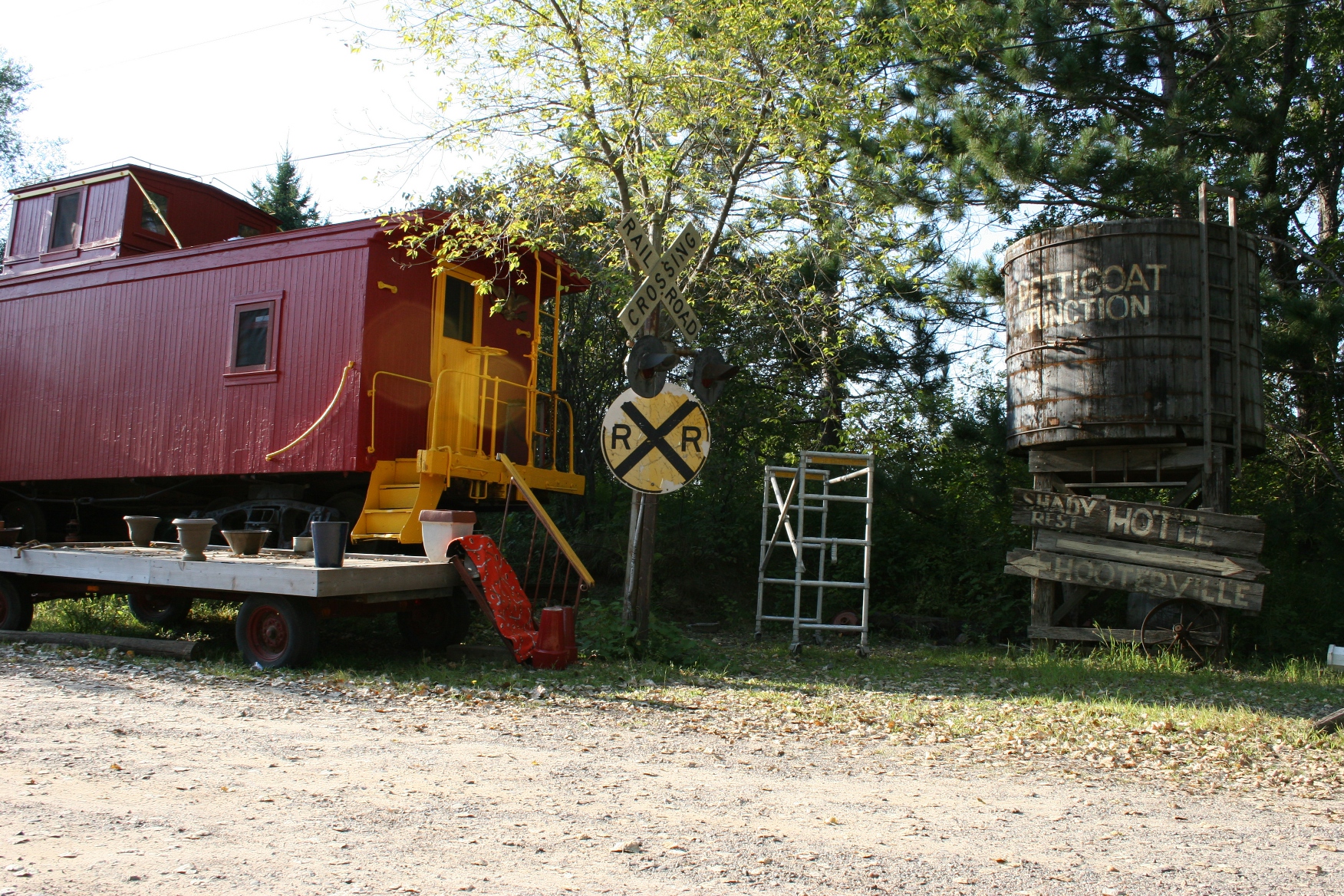
Following its theme park theme, Hot Sam’s pays tribute to the 1960s television sitcom, “Petticoat Junction,” via several on-site train cars (including this caboose) and a water tank. You’ll find antiques and collectibles inside the boxcars.

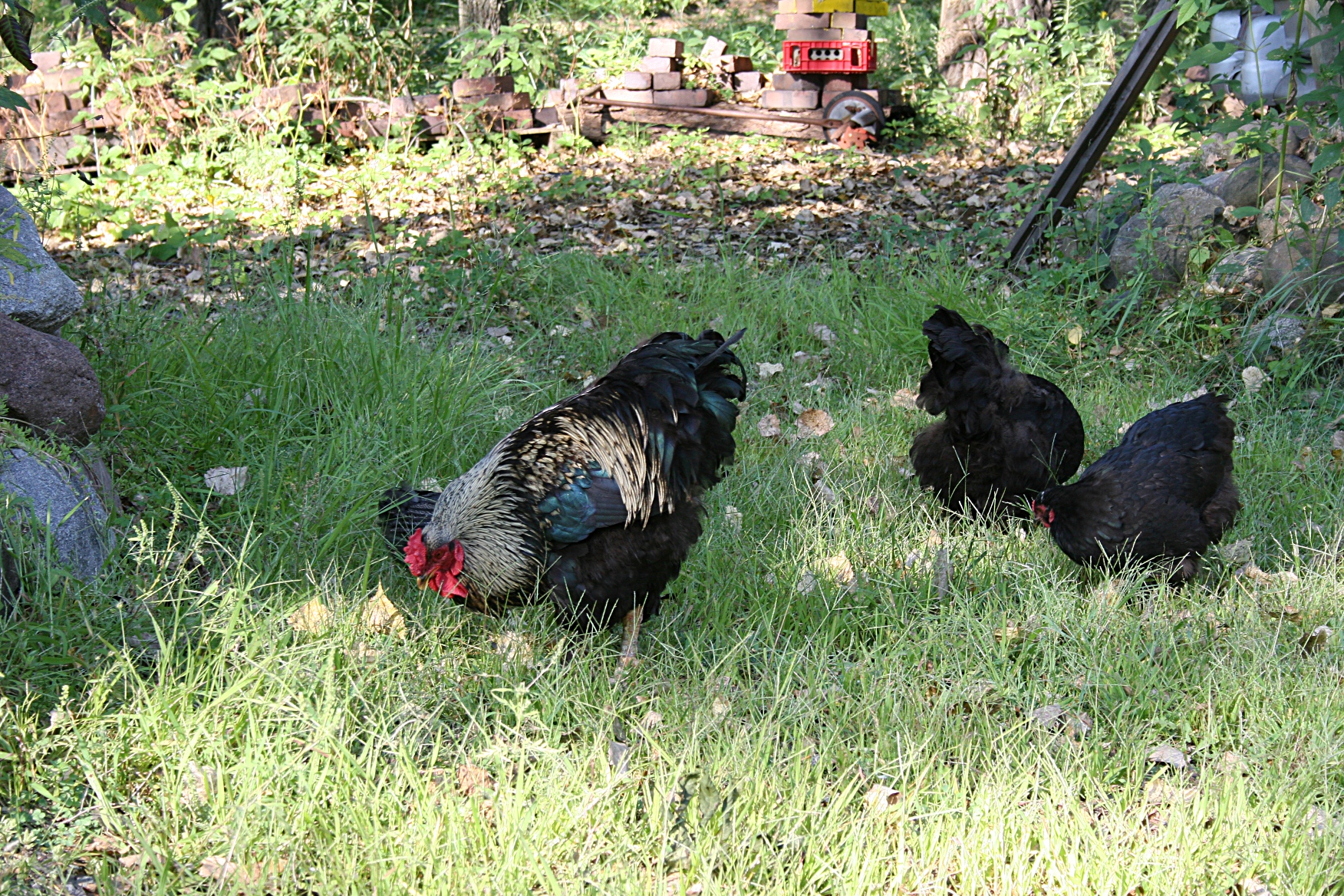
Anyone who knows me and how much I fear chickens will appreciate that I actually photographed these fowl roaming at Hot Sam’s.

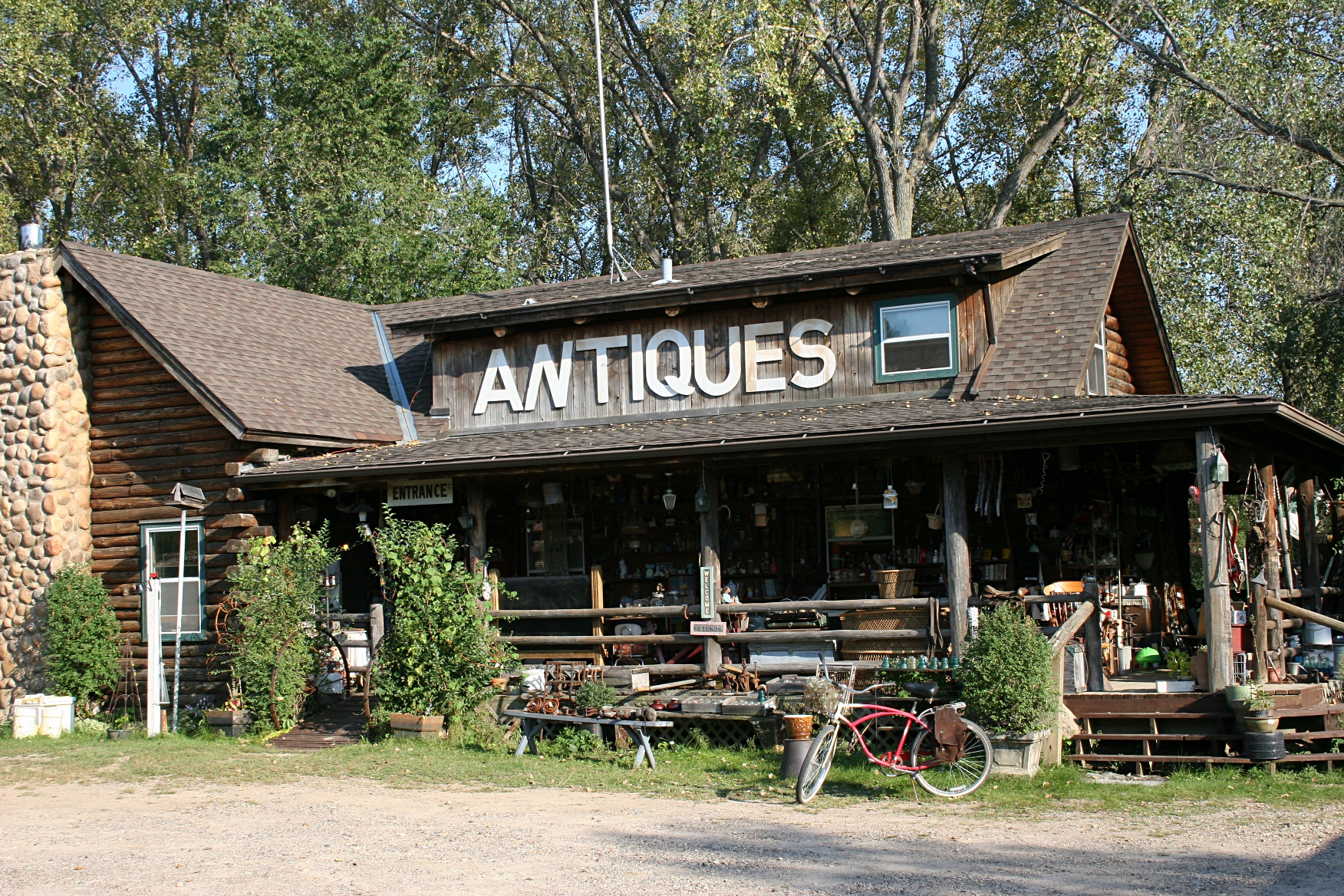
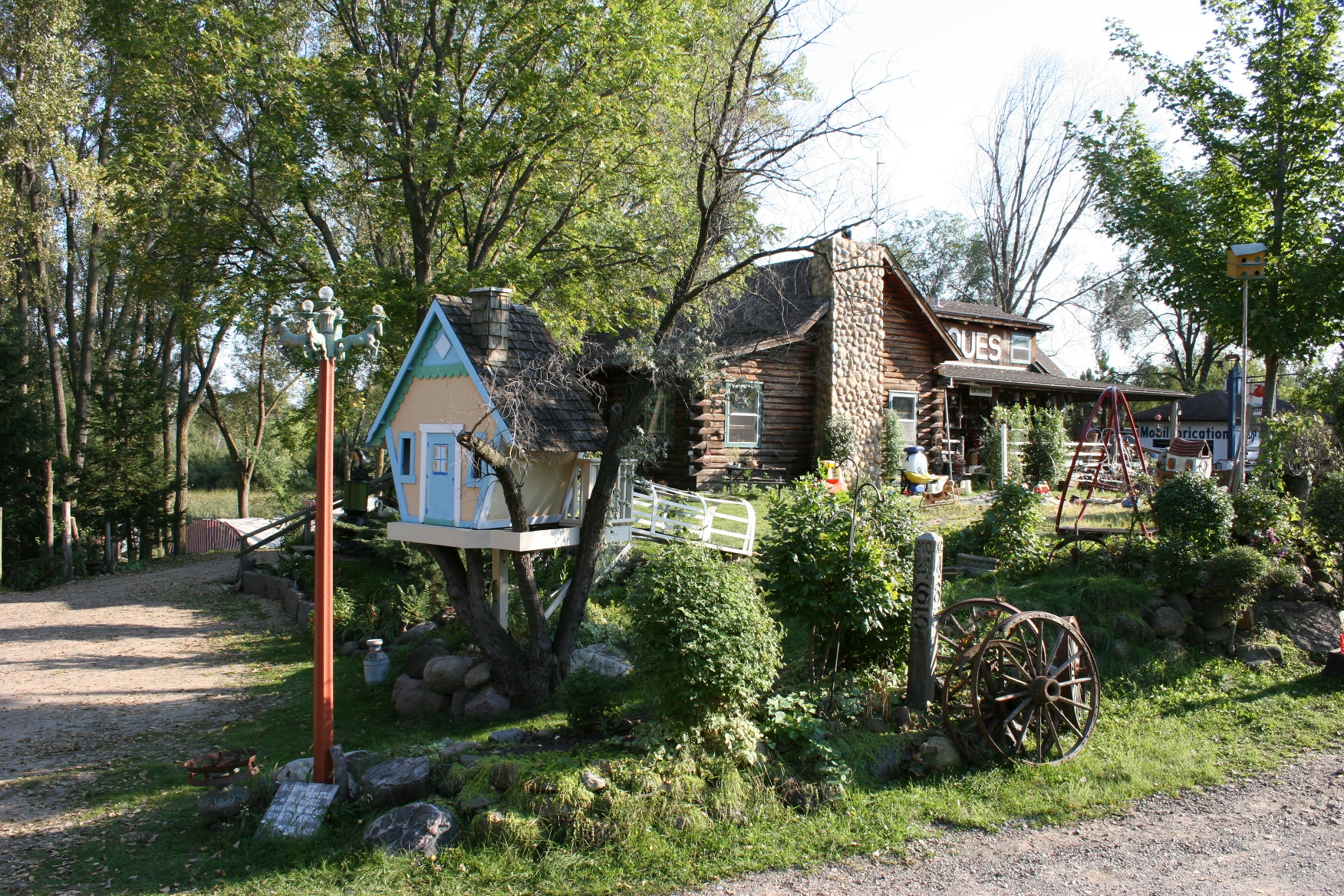
This log cabin is simply bursting with antiques and collectibles, inside and out.

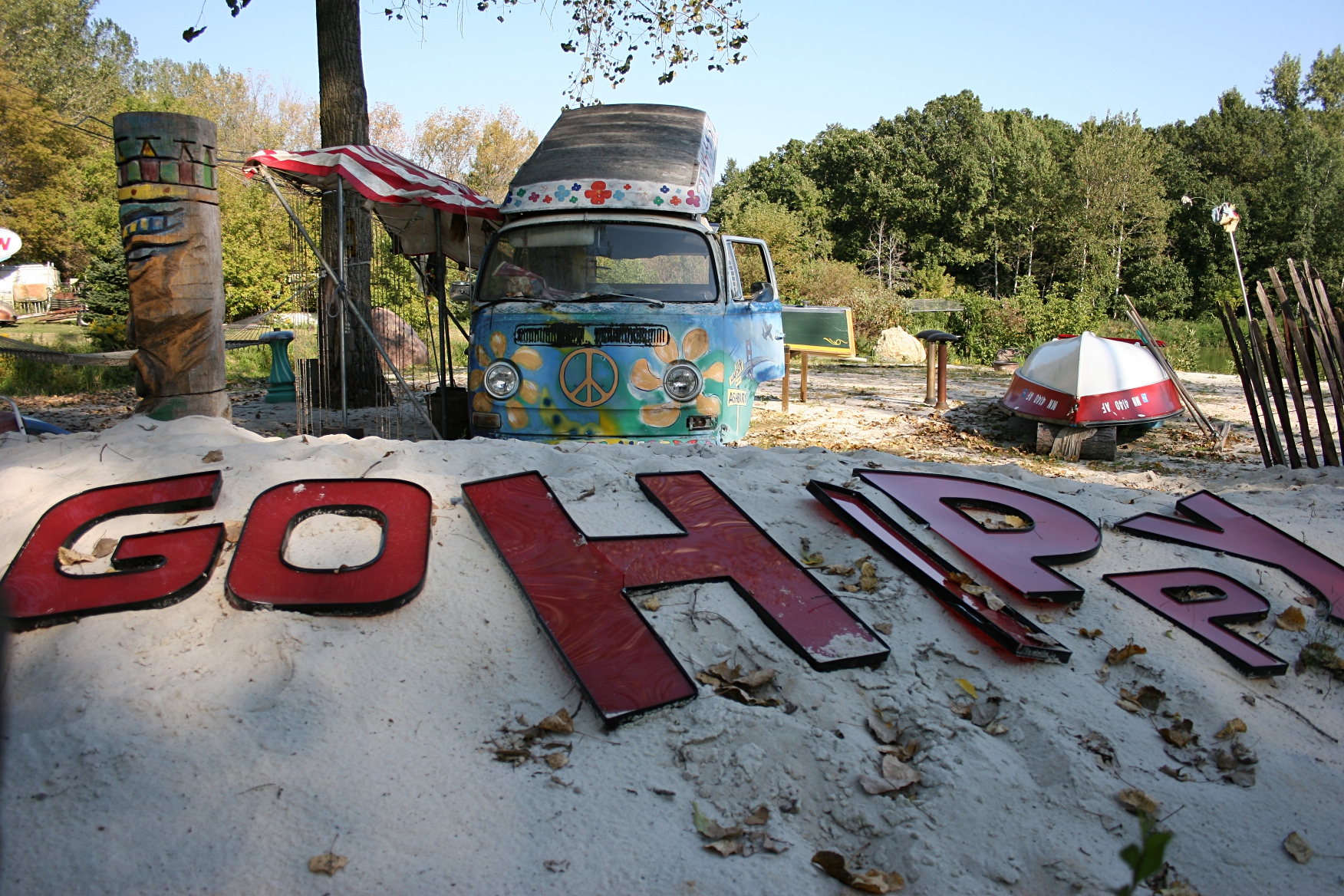
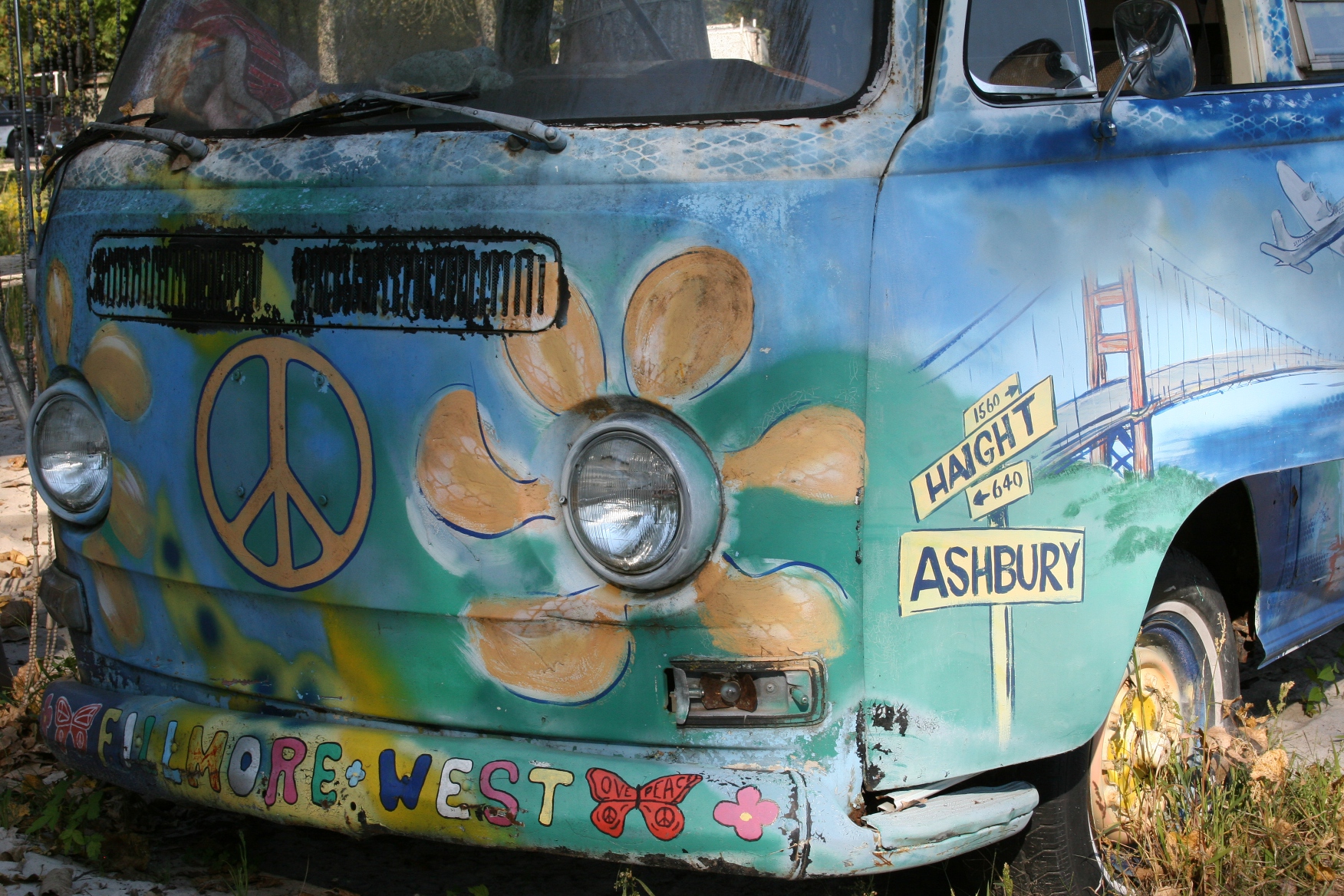
The hippie van, parked along the beach in the theme park area of Hot Sam’s.

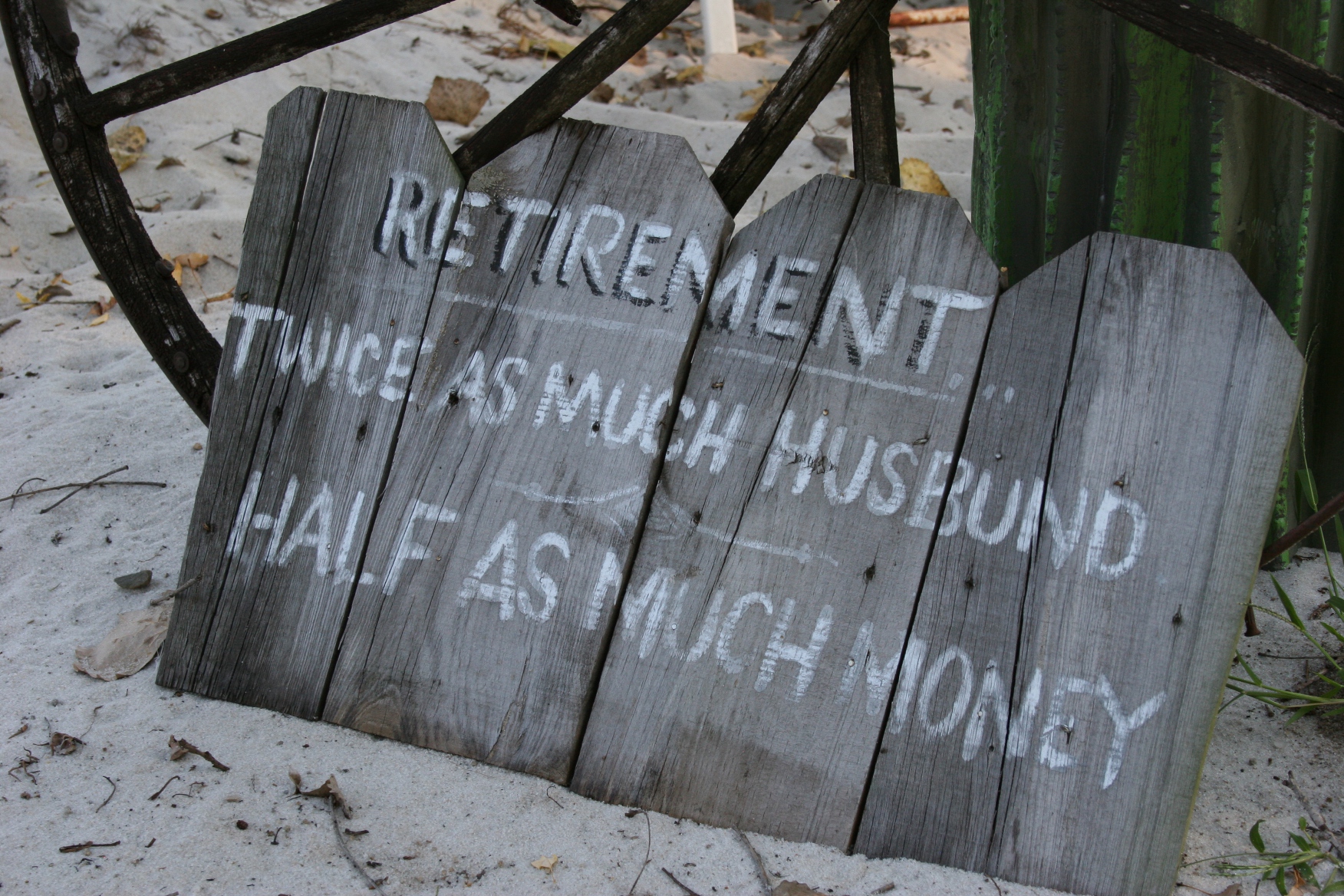
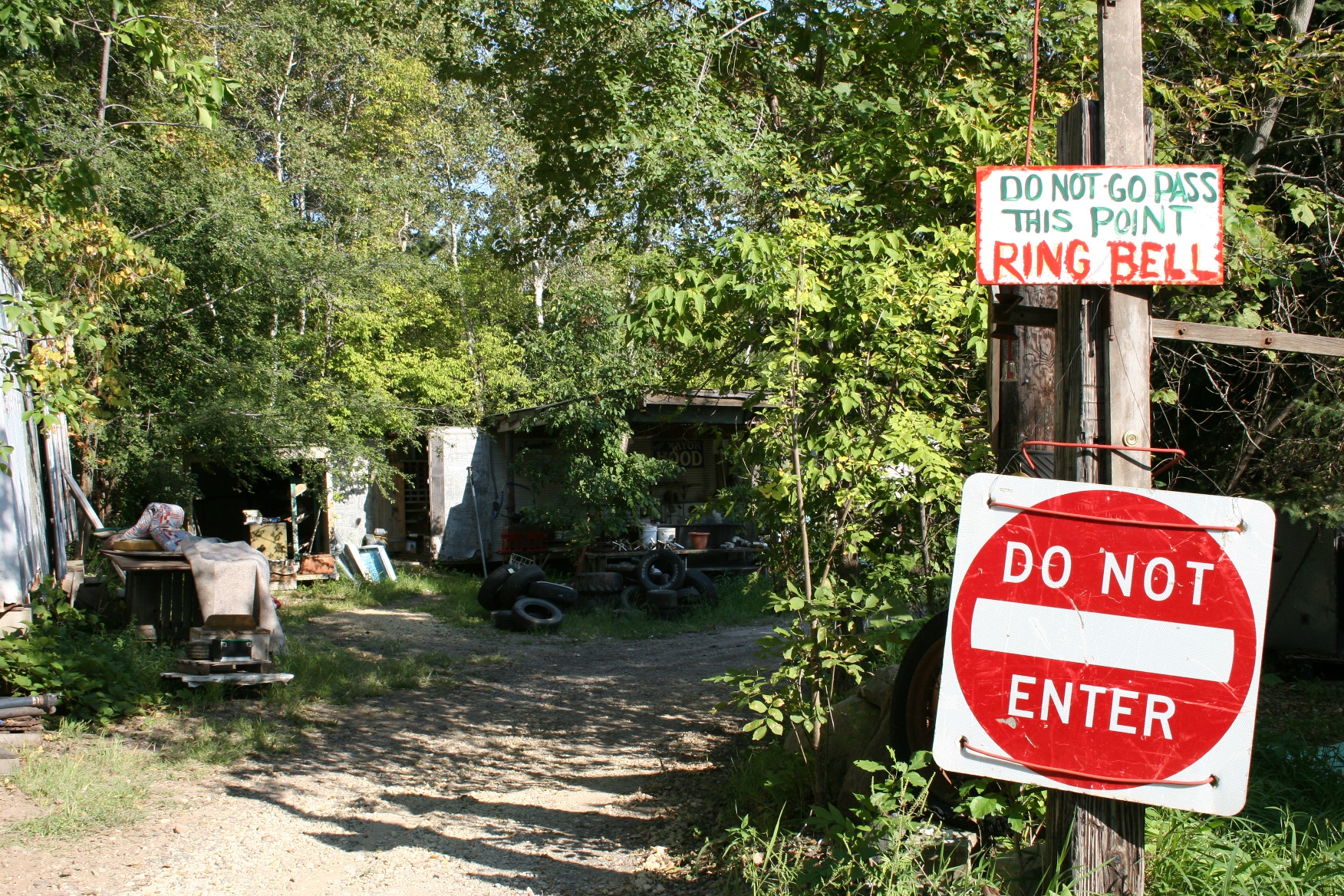
I was tempted, quite tempted, to disobey these signs. Next visit…

© Copyright 2012 Audrey Kletscher Helbling


Touring Hot Sam’s, an “antique theme park” near Lakeville September 17, 2012

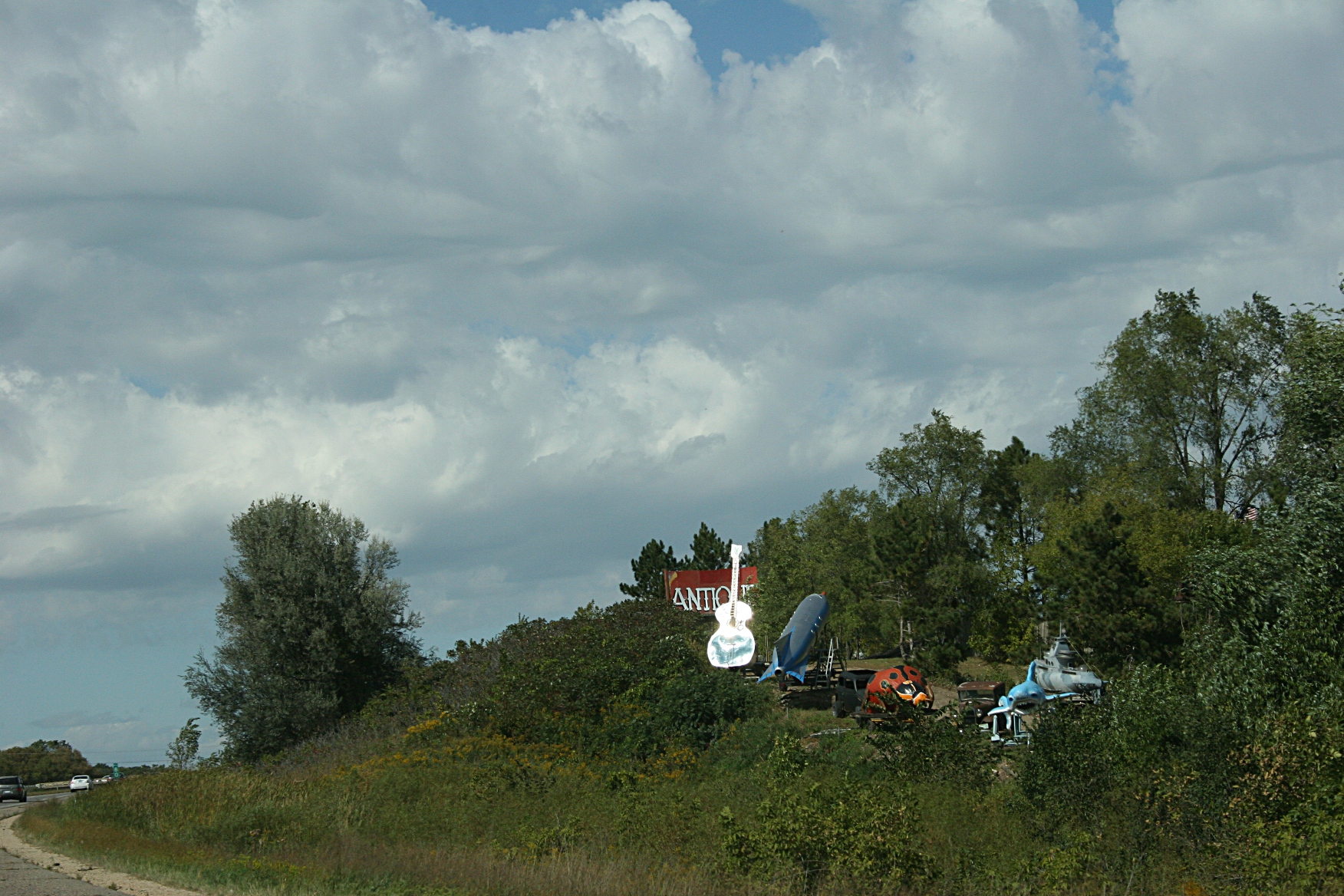
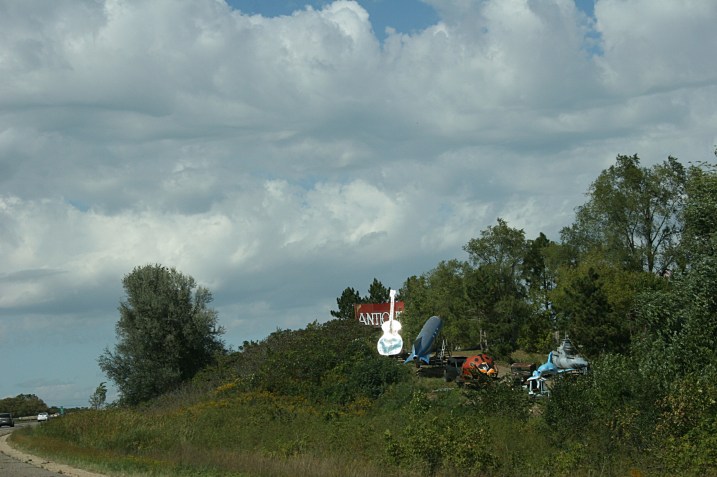
Northbound on Interstate 35 just south of Lakeville, you’ll see this roadside art marking the location of Hot Sam’s Antiques.

YOU’VE SEEN THE ECLECTIC COLLECTION, I’m sure, if you’ve ever traveled Interstate 35 northbound near Lakeville.
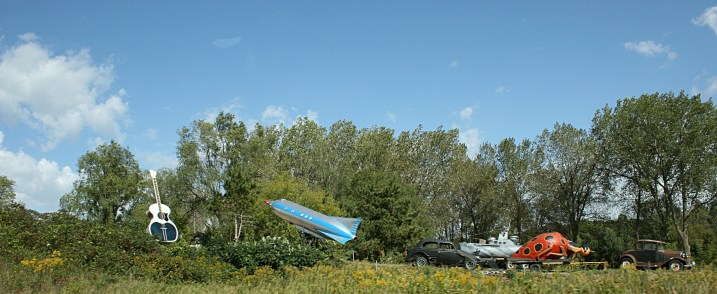
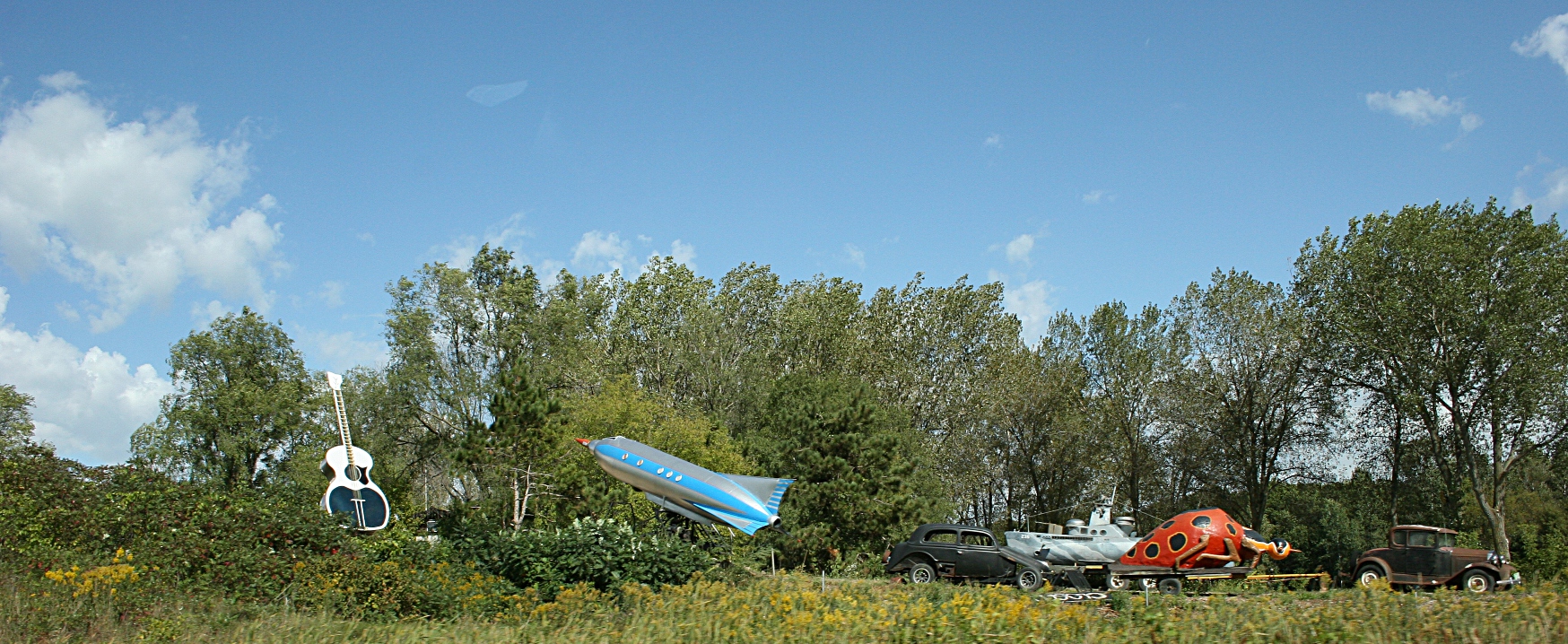
Just another view of the eclectic art collection, shot while traveling the interstate. No stopping for this photo.
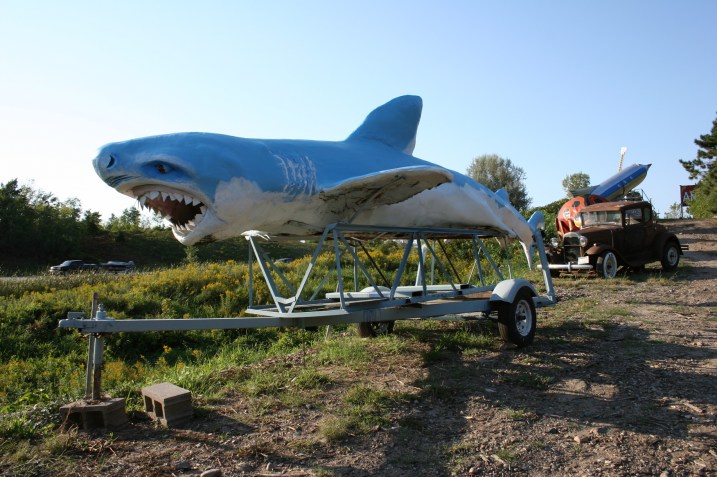
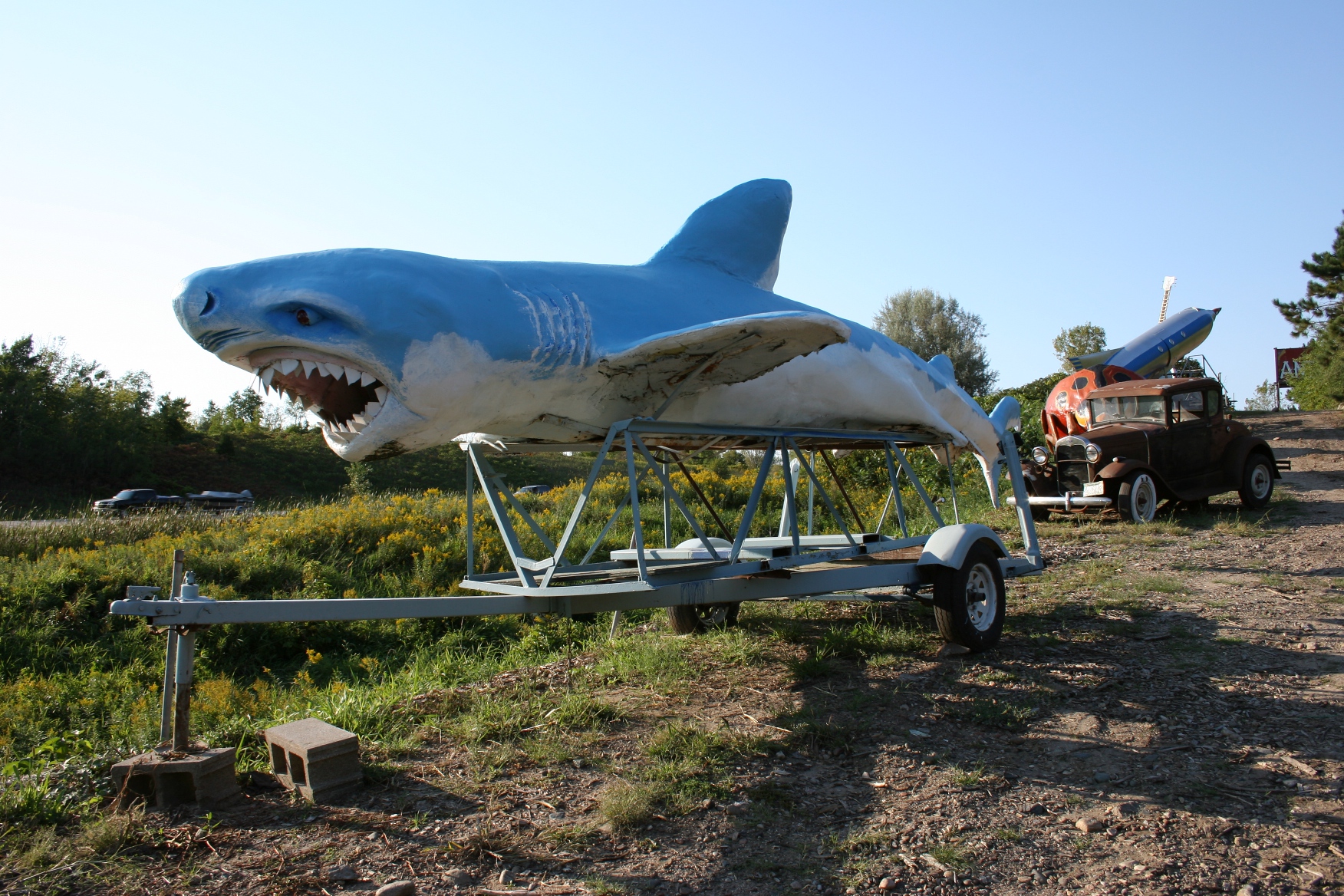
You’ll see the fearsome shark first as you’re driving north on I35.

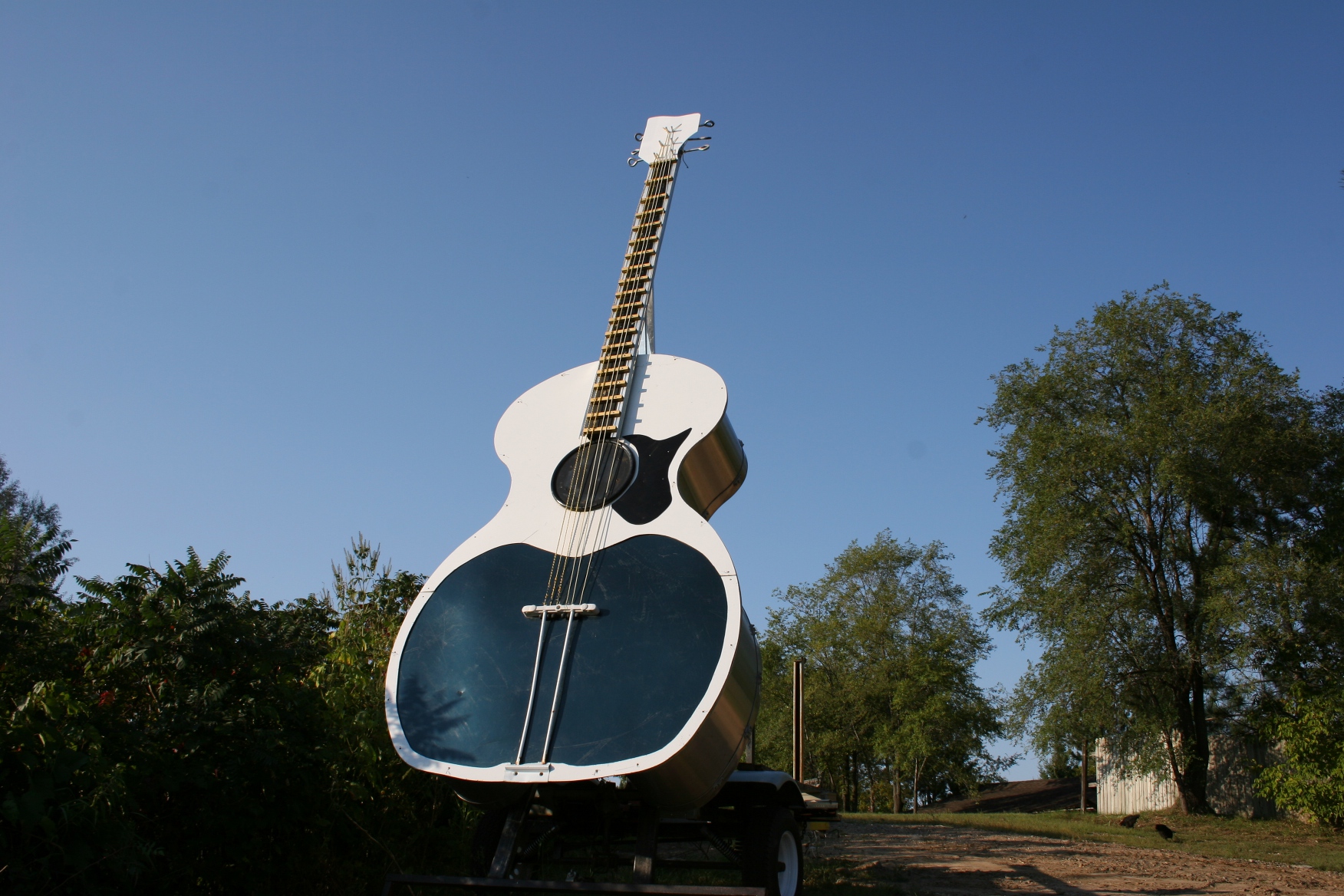
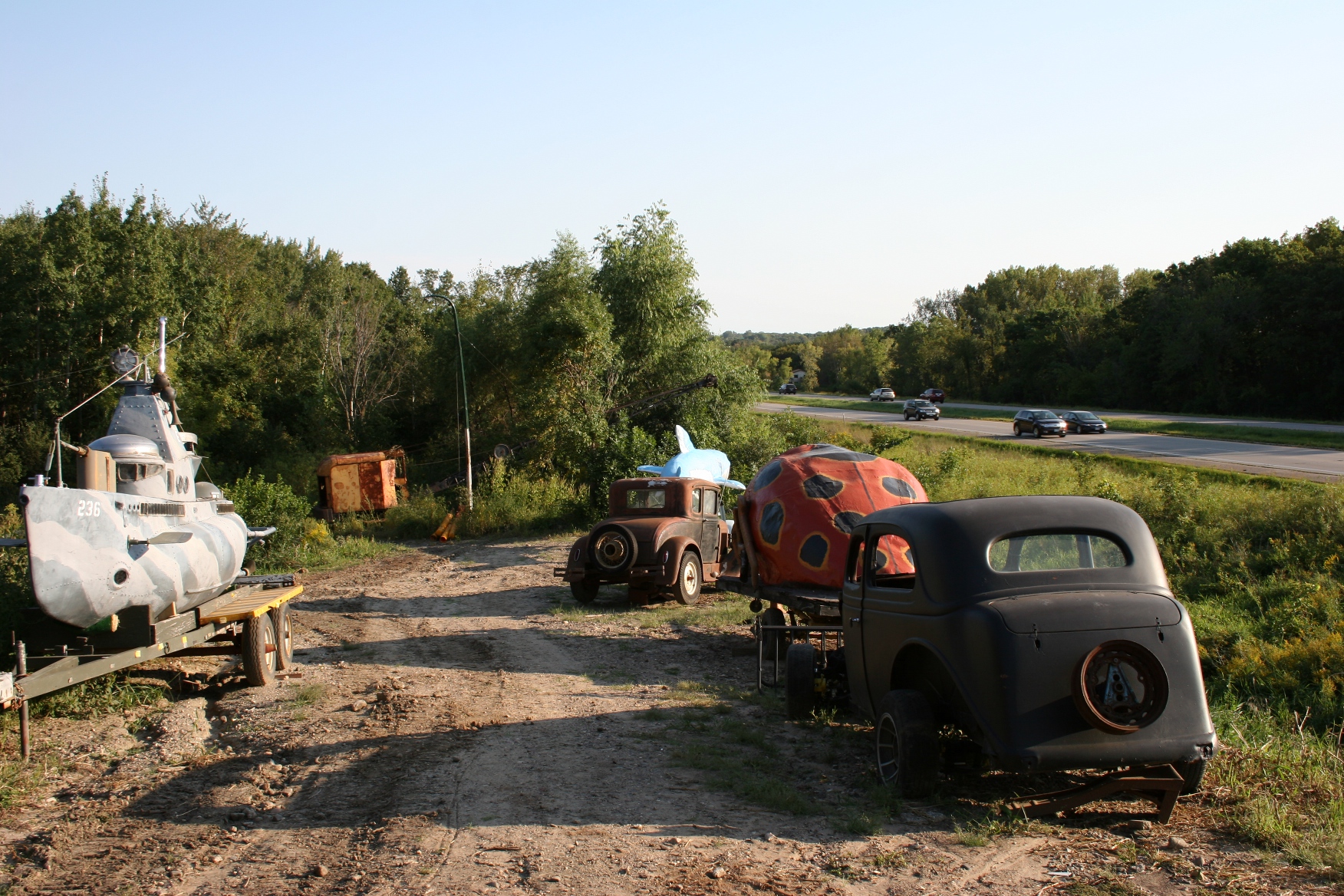
Just south of exit 81 atop a hill on the east side of the interstate, a red ANTIQUE sign draws your eye to a mish-mash of stuff. Several rusting cars. A rather vicious looking blue shark (although I’m sure you don’t notice the detailed sharp teeth while racing along the interstate at 70 mph). A lady bug. A rocket and a submarine. And, heck, there’s an oversized guitar, too.
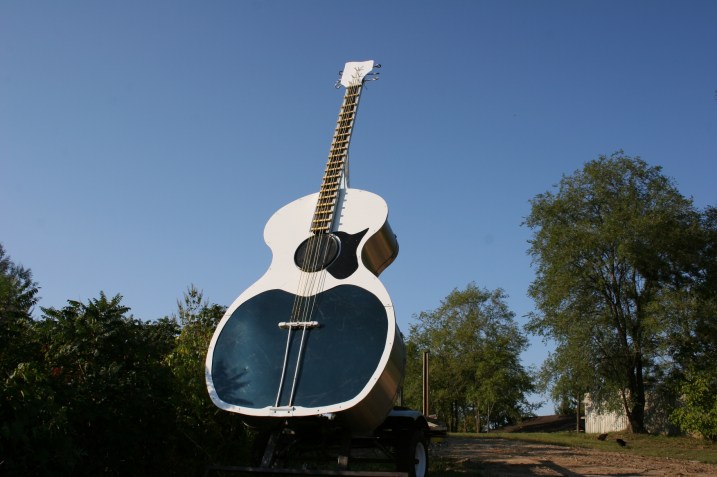
At the north end of the line, the ginormous guitar.
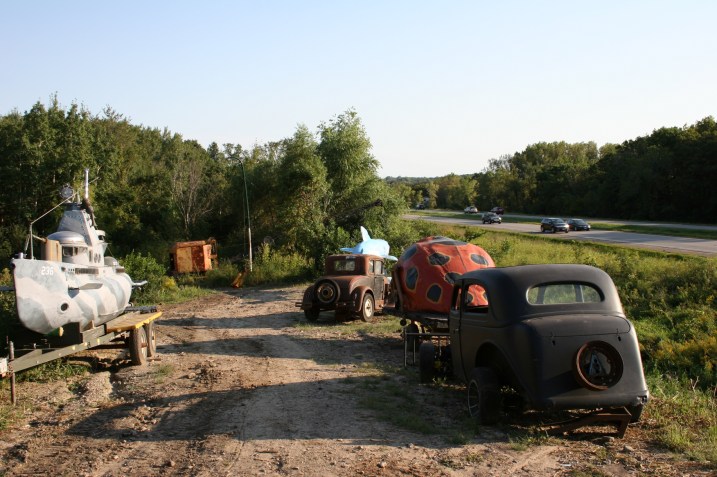
A view from atop the hill, in the middle of the eclectic collection.

For 30 years I’ve seen the changing collection and always wondered about Hot Sam’s Antiques. Now, after a recent Saturday afternoon visit, I need wonder no more.
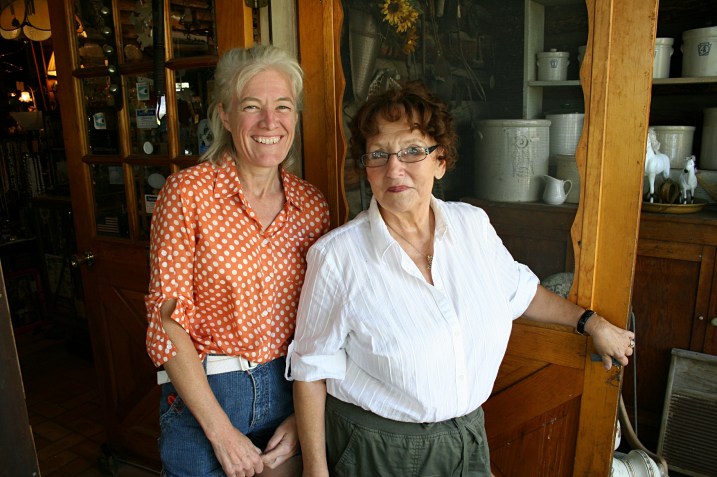
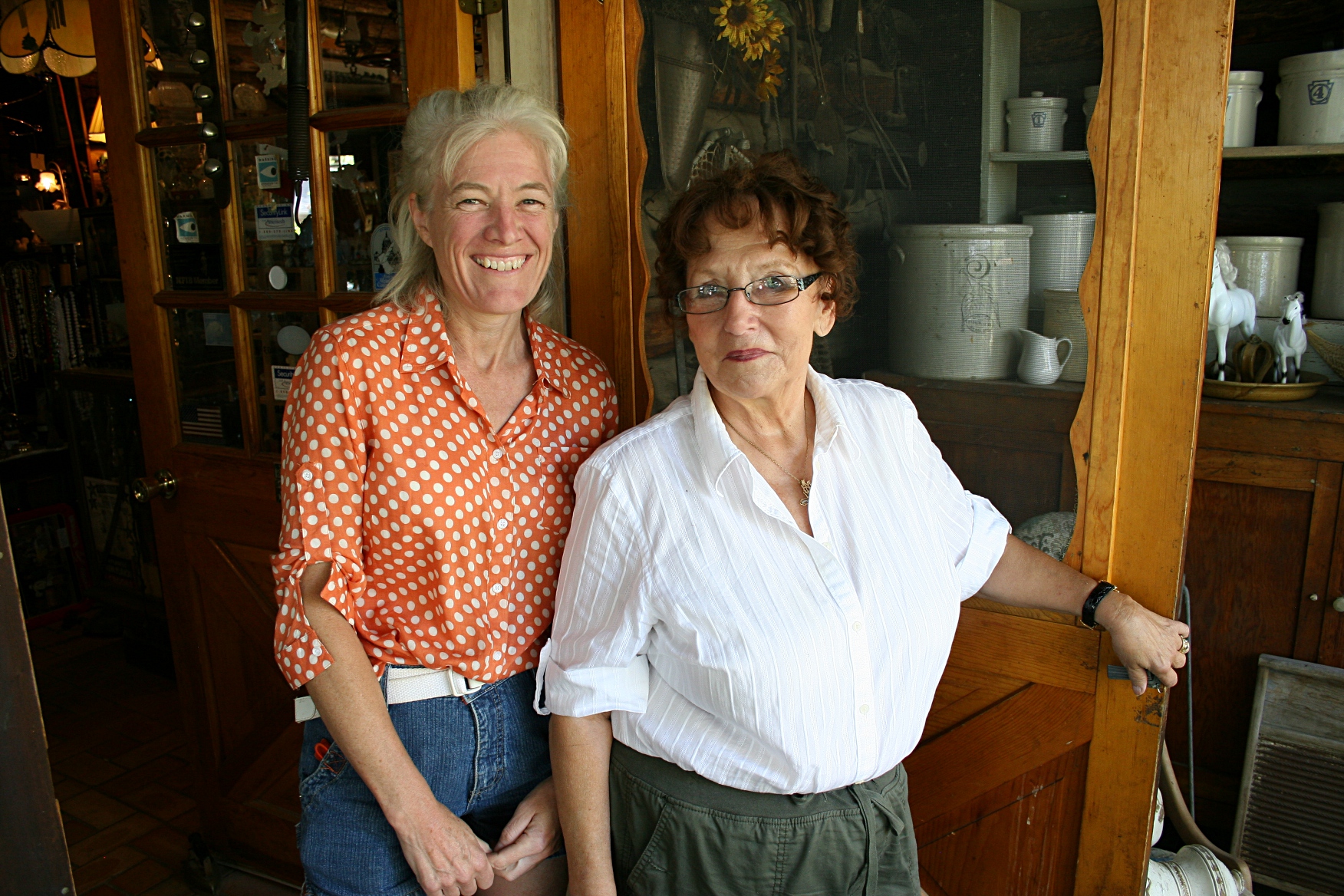
Kathy Sakry, left, and Aina Puritis on the front porch of the log cabin.

Honestly, how to begin to describe this place seems an impossibility, until I meet Aina Puritis—pronounce that Latvian first name with a silent “A” and a long “i”—a part-time employee of three months. “I’ve never seen anything quite like this,” I tell Aina.

“You got that right, honey,” she agrees, then offers her definition. “It’s an antique theme park, a mix of this and that.”
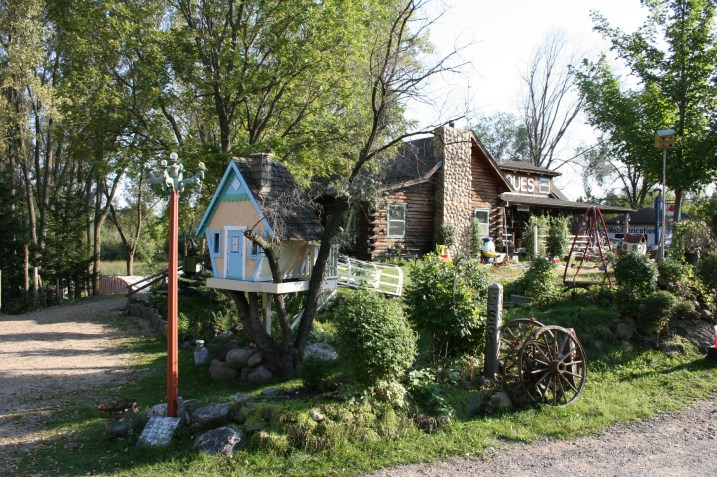
The log cabin, back and to the right, is packed with antiques and collectibles. I spotted the charming, cottage style treehouse, left, but didn’t even check to see if I could explore inside. I was running short on time.

Aina nails Hot Sam’s with that description because, in addition to thousands of antiques and collectibles crammed inside and outside a log house, outbuildings and train cars and scattered upon the grass and through the woods and along the sides of the narrow gravel drive, you’ll discover a wonderment of creations fitting a theme park.
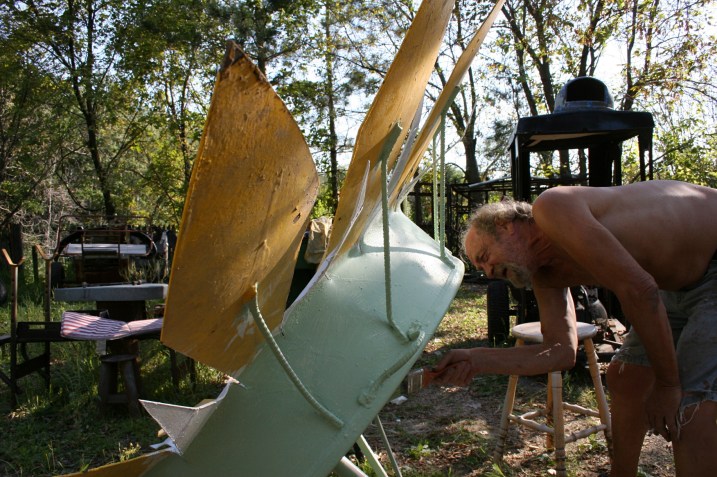
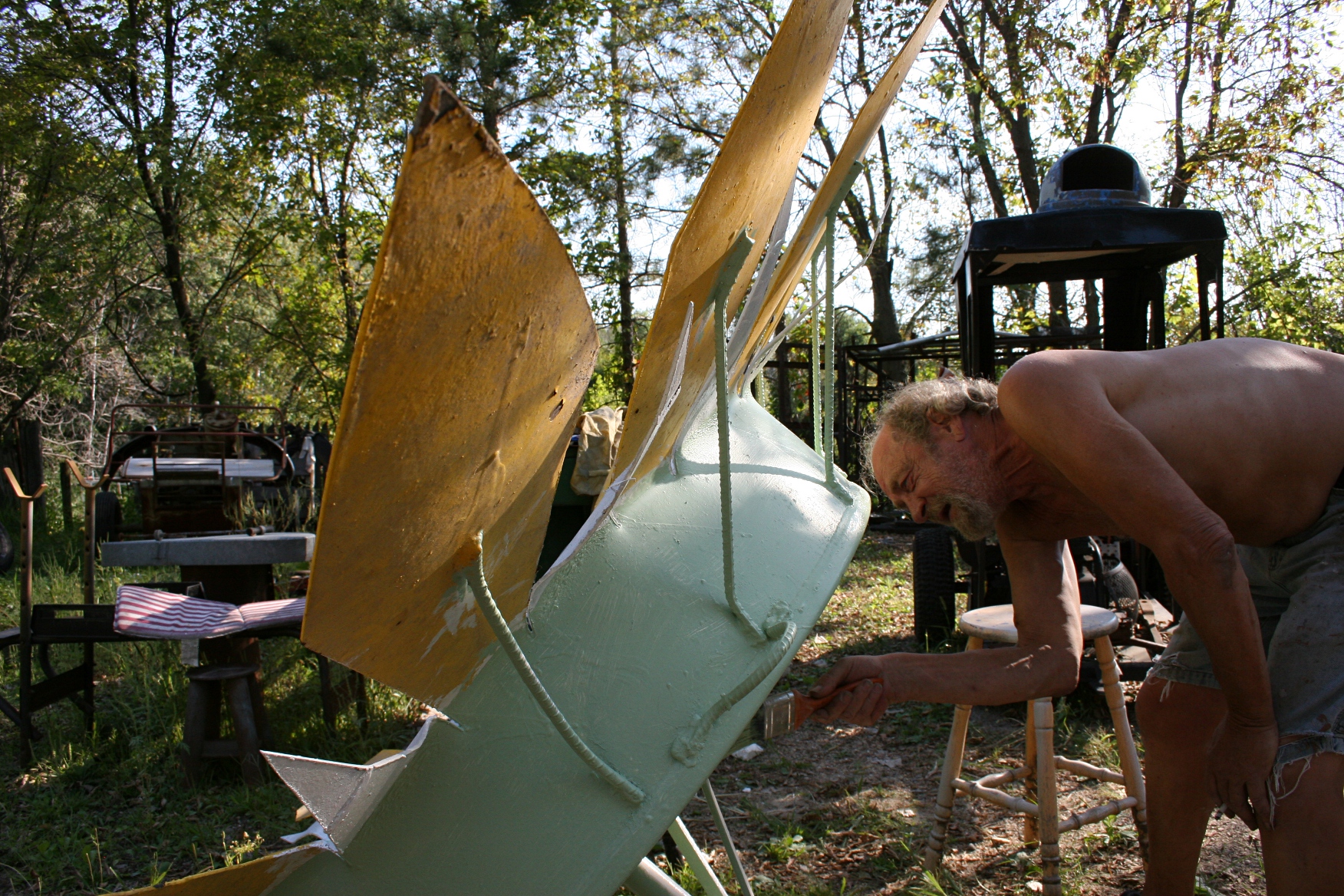
Barry was painting a giant sunflower when I came upon him among the junk in the woods.

You might find Barry (no last name offered), a retired laser cutter turned artist, back in the woods among all the junk working on his latest sculptures—painting a giant sunflower or building an oversized motorcycle roped and suspended from a tree limb.
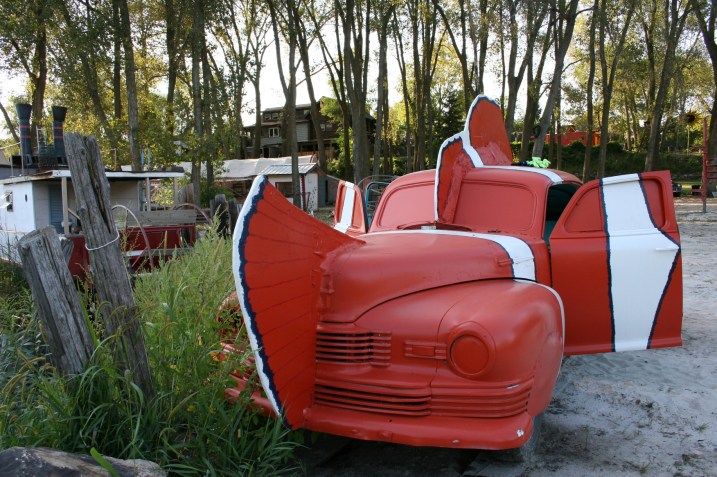
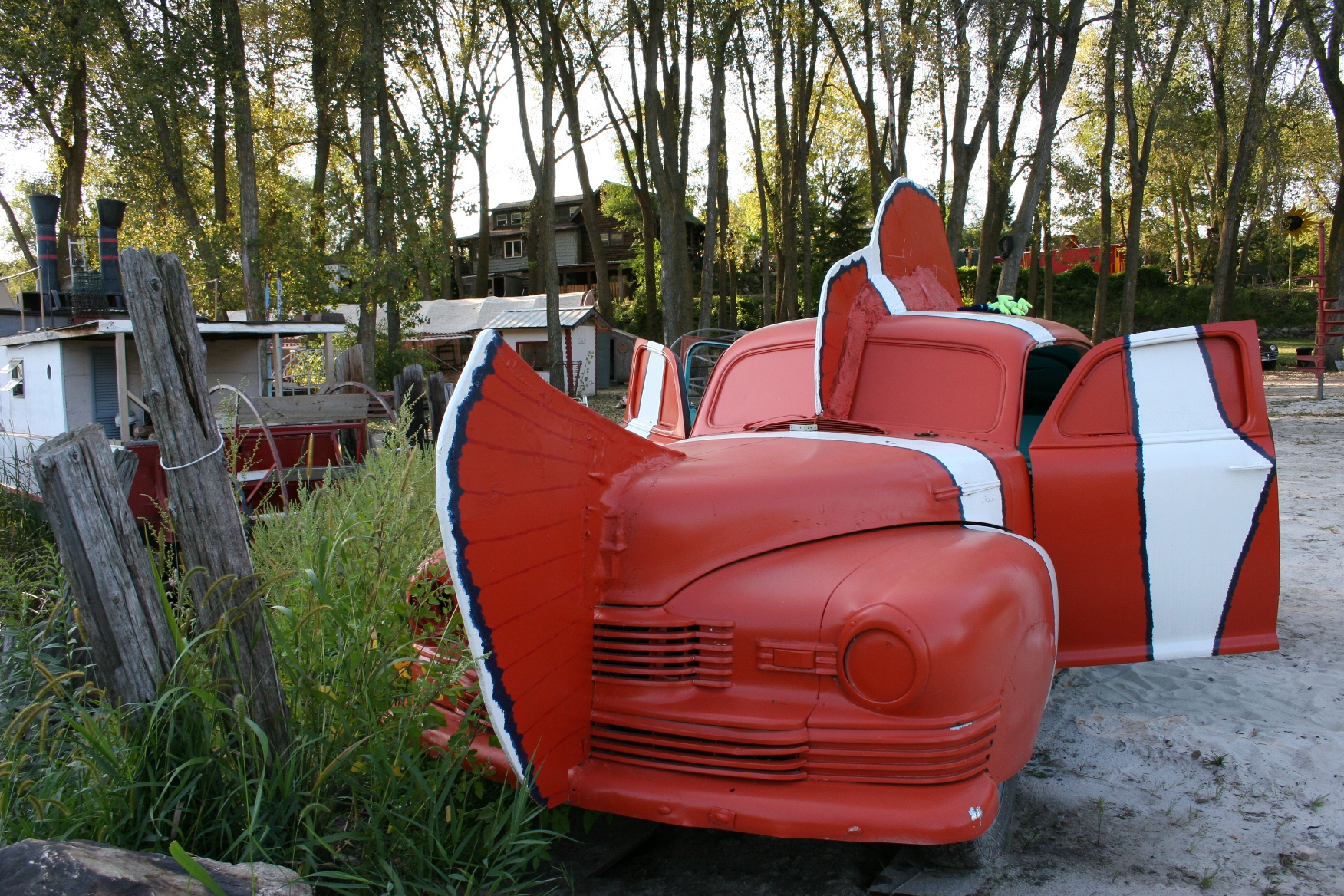
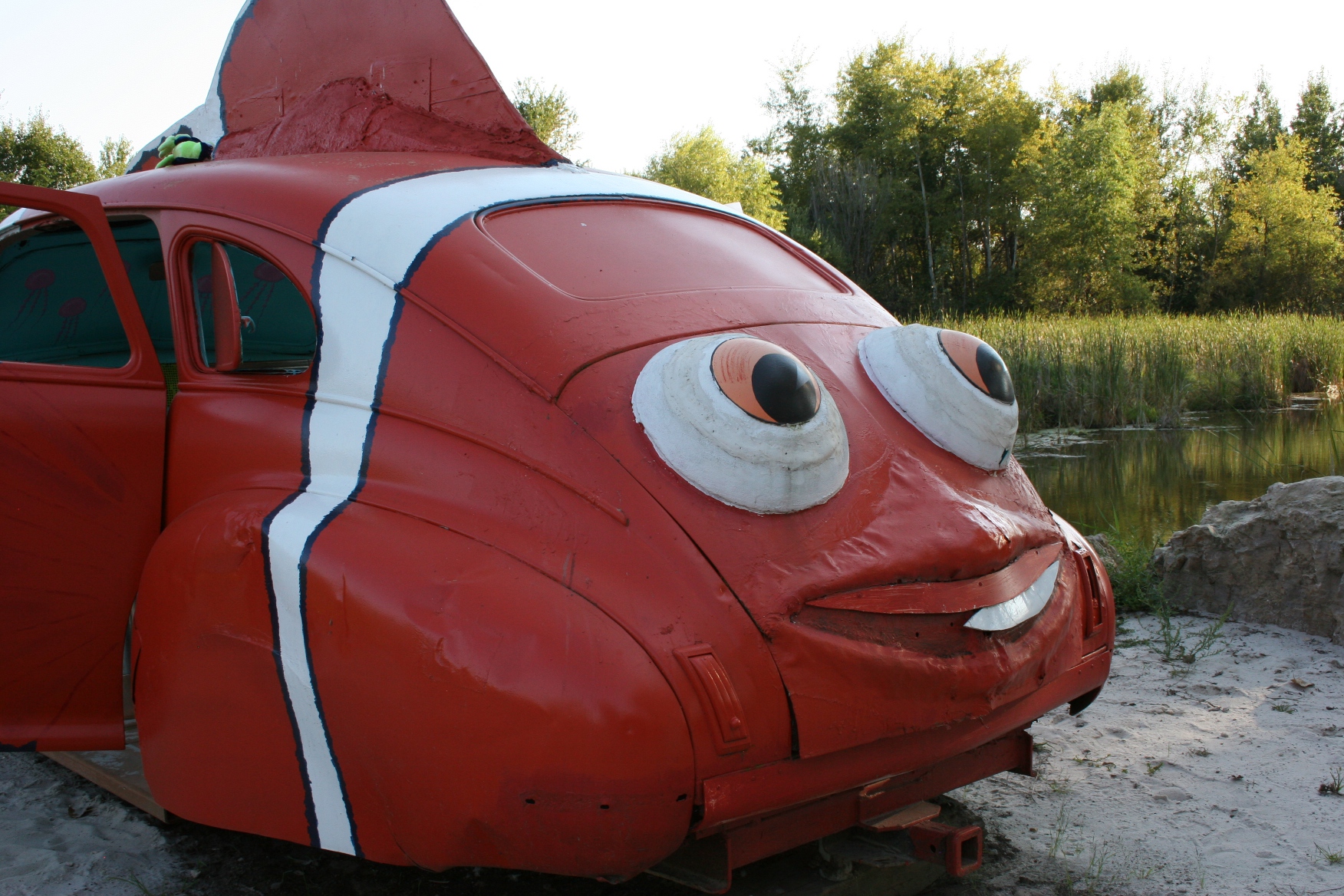
Nemo from the back, looking toward the log cabin on the hill, center, a boat on the left and train cars in the distance to the right.

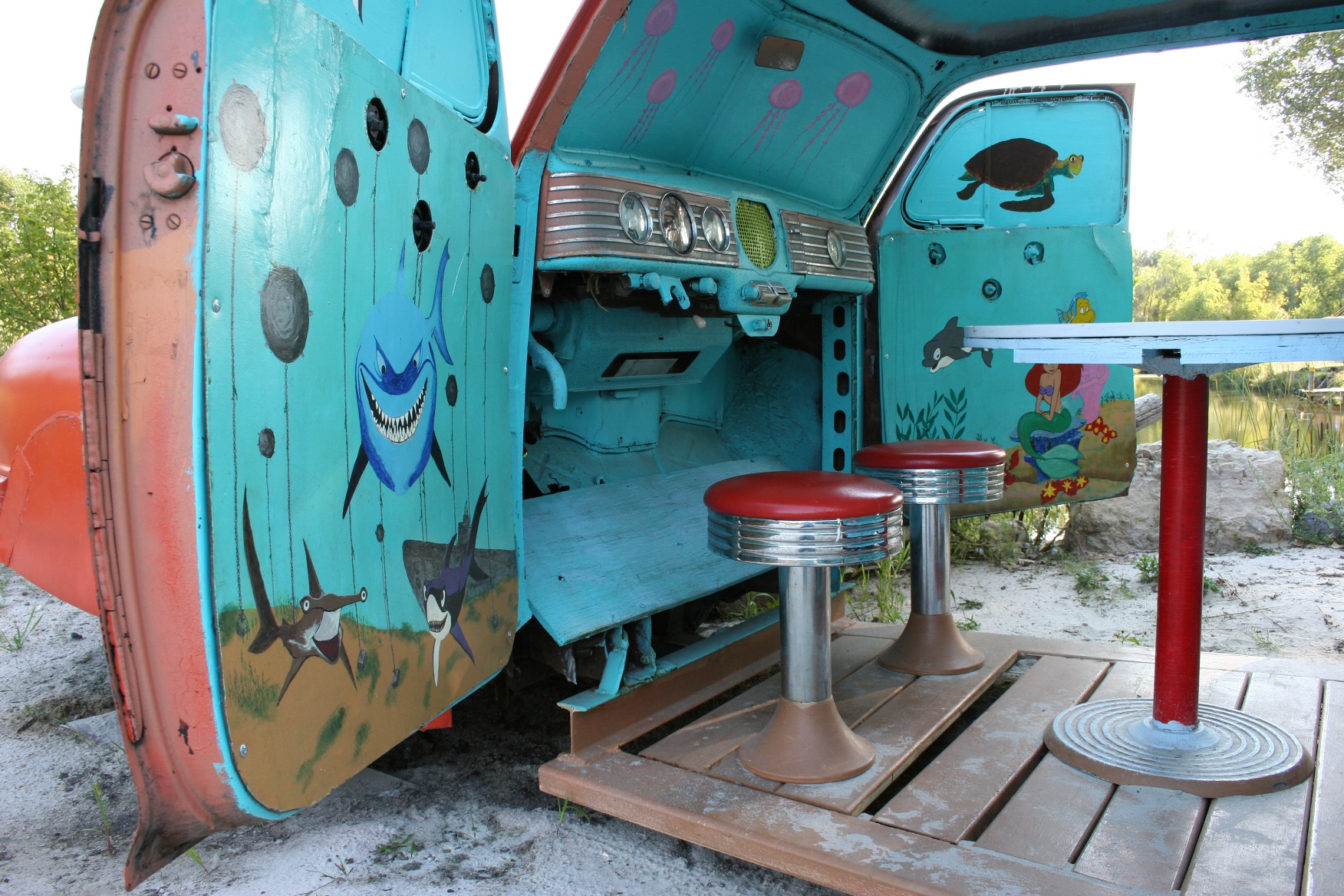
He takes credit for transforming a vintage car into the Disney cartoon fish Nemo via orange paint, the addition of fins and eyes and some major interior redecorating. Nemo’s beached in sugar fine sand along a ribbon of water which meanders into the 10-acre property.
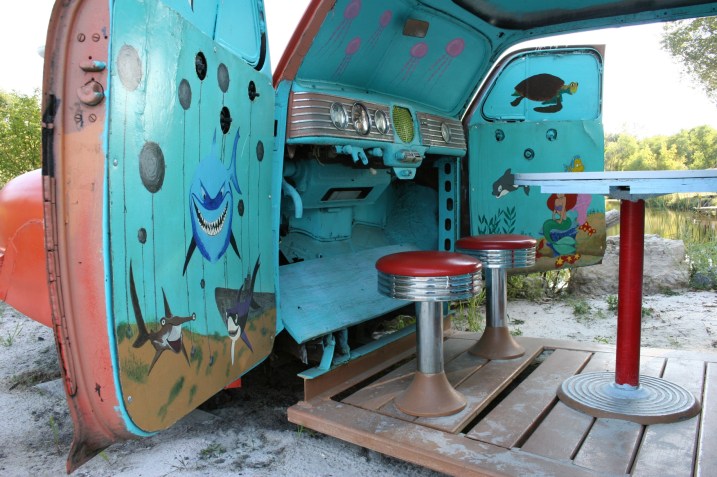
Inside Nemo, my absolute favorite part of the entire antique theme park. Who would ever think you could turn an old car into something so incredibly magical?

The tropical beach scene seems oddly out of place given the native swampland grass and surrounding woods and the autumn leaves littering the sand. But no one claims anything’s exactly as it should be at Hot Sam’s.
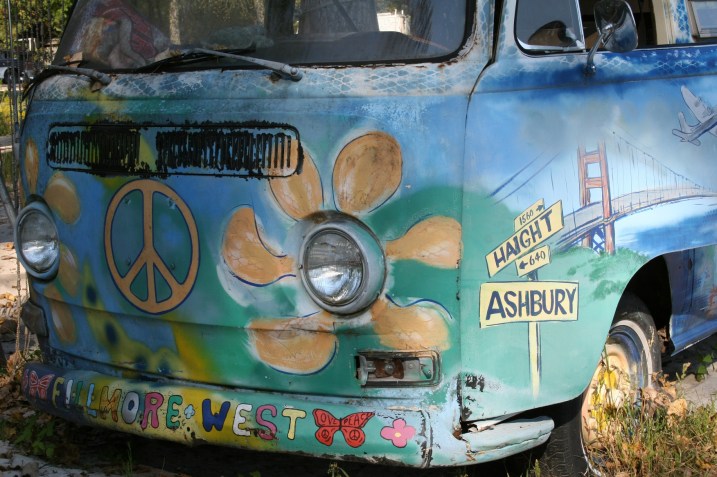
A close-up of the hippie van parked in a beach setting with fine white sand and even a hammock.

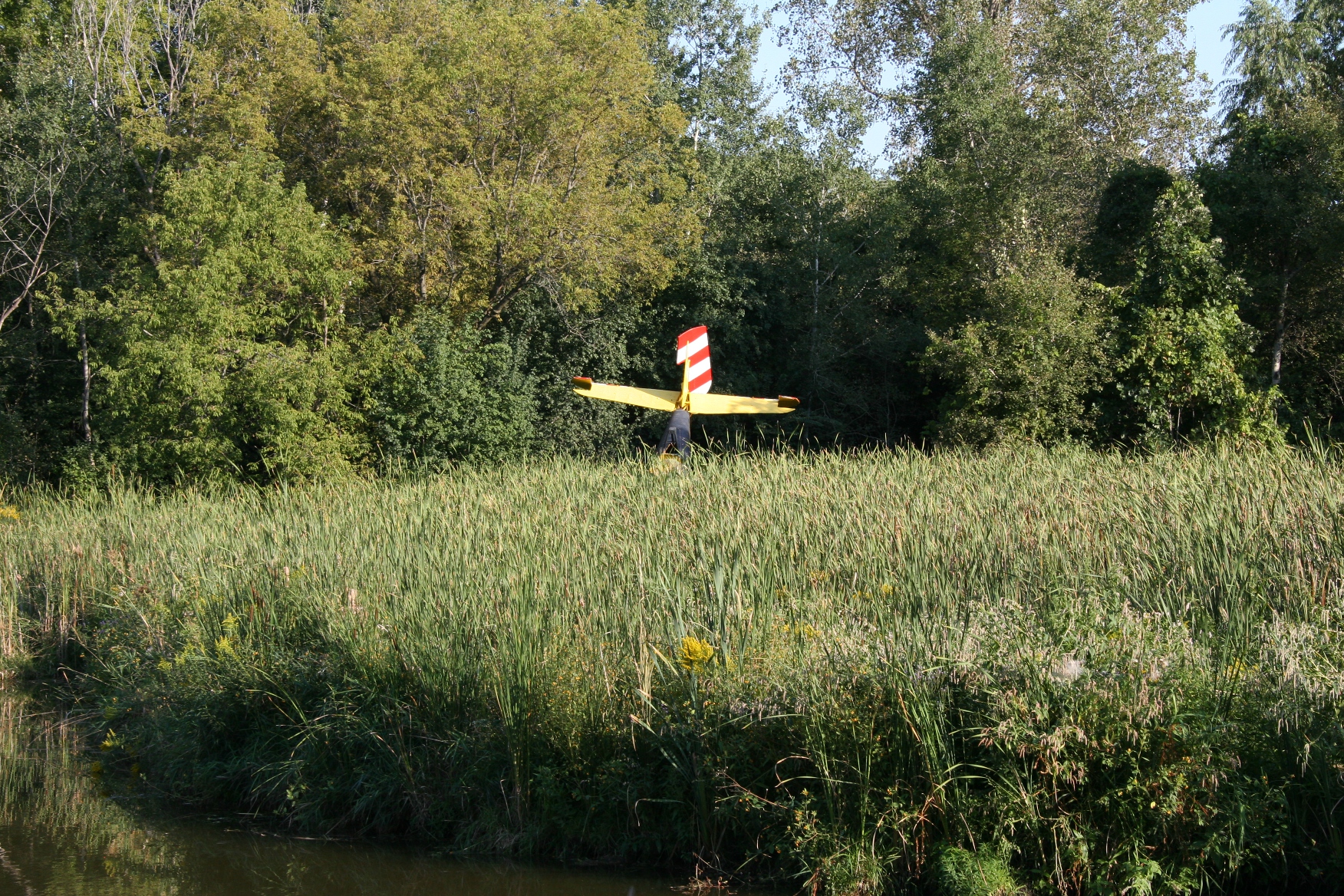
That’s part of the appeal, to see a peace-out hippie van parked on the beach; the wreck of the S.S. Minnow from the 1960s T.V. sitcom, Gilligan’s Island, hugging the shore; the canary yellow tail of a crashed airplane poking through the swampland grass across the water.

“It became a labor of love,” Kathy Sakry says of this whole intriguing place. She’s the significant other of Jake Hood, who, along with his mother, Gladys Hood, 26 years ago transformed a field with a two-car path into Hot Sam’s Antiques. Nine years prior to that, the business was located in Burnsville. Gladys died in December 2010.

Kathy prefers not to explain the story and inspiration behind the antique theme park, choosing instead to hand over a reprint of an article written by Gladys and published in Reader’s Digest. To summarize, Gladys’ father, Hyreeg, an Armenian immigrant living in Detroit, collected scrap metal to raise money for a flagpole upon which he flew a U.S. flag symbolizing his pride in becoming an American.
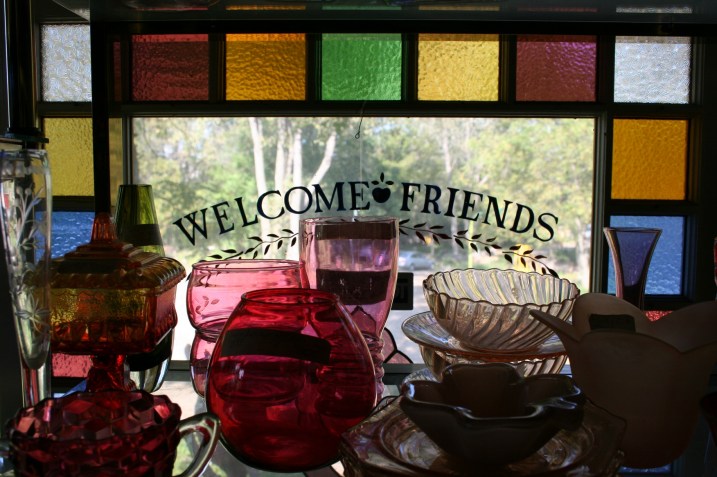
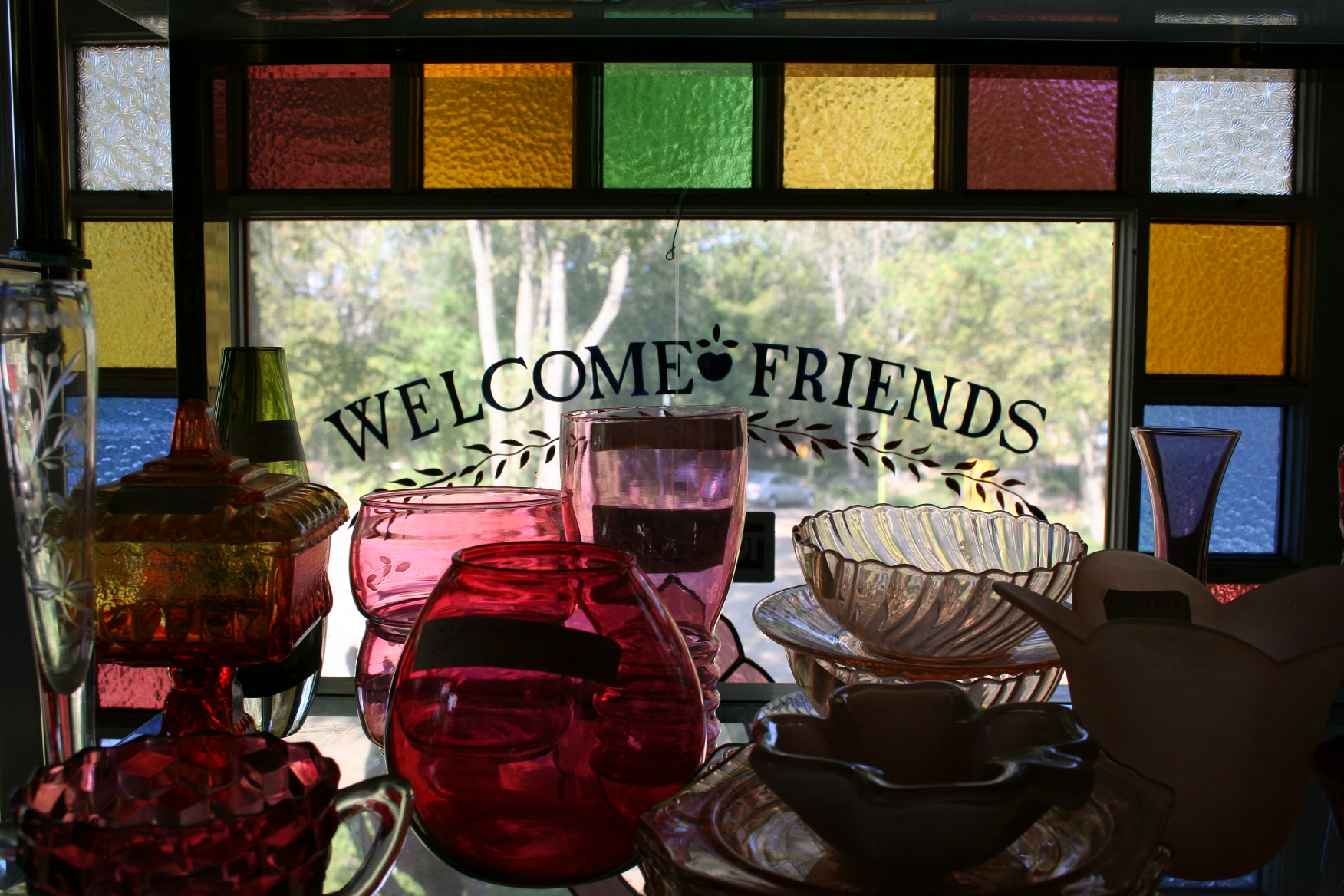
Inside the log cabin, I found this collectible glassware and this welcoming sign, which seems to exemplify the welcoming spirit of Hot Sam’s Antiques.

Gladys wrote in 2002 that she acquired her father’s love for hard work and collecting (she would go “picking” with him as a child) and continued his legacy via her business. She collected for practical and recycling reasons and for the joy of sharing in the memories of those who visit Hot Sam’s.
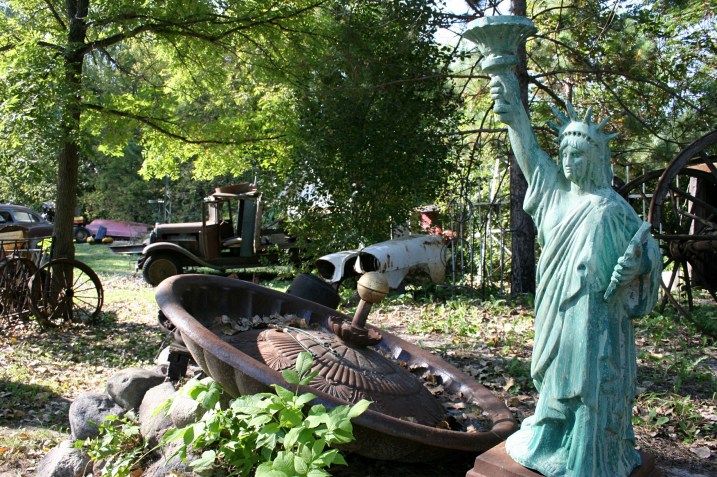
I saw at least three Statues of Liberty on the property.

Whether a tribute to her father’s patriotism or not, numerous replicas of the Statue of Liberty are planted on Gladys’ tangible slice of the American dream.

About that business name… Kathy says Hot Sam was Gladys’ nickname, a name she preferred to her given Gladys, which taunting youngsters reinvented into, well, you can figure that out, during her childhood.

Then Kathy shares more about Gladys and a clearer picture emerges of this strong woman. She once raced cars, breaking the land speed record on Daytona Beach in 1956.
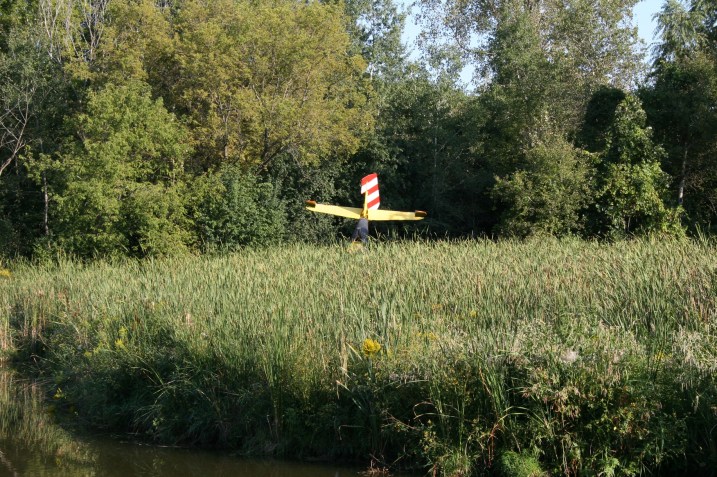
This mock, crashed airplane is positioned across swamp grass on the property.

Despite her prior days of daring, competitive racing in a man’s world and of traveling, Gladys seldom left Hot Sam’s once established, Kathy relates. And when she did, it was to attend air shows with her adopted daughter, airline and aerobatic pilot Julie Clark. The bi-plane and staged, mock plane crash at Hot Sam’s are perhaps visual connections to Julie, whose birth father was murdered in 1964 while piloting a plane which subsequently crashed, killing all 44 aboard. Or perhaps the planes reflect Gladys’ general affection for air shows.

While wandering the grounds of Hot Sam’s, you have to wonder where Jake and Gladys acquired all this stuff and Kathy says only that they are buyers and sellers. She wants me to talk to Jake and sets off to find him. But I am anxious to photograph this magical antique theme park in the perfect, golden hour around sunset. I never do connect with Jake.

I am not the only photographer here on this late Saturday afternoon. I meet a young couple and their two children primping for a family photo shoot with St. Louis Park-based portrait photographer Jess Sandager of Olive Avenue Photography. Later I meet up with the family and photographer near the beach. Jess tells me Hot Sam’s is well-known in the photo industry.

Although I’d like more details, I won’t keep Jess from the waning, perfect light.

I watch for a minute as Jess works her camera, photographing the little boy on a tractor and then mom and baby.

The beached Nemo.

Father and son, in the meantime, are now heading toward the orange fish on the beach, toward Nemo—dad walking, son running…
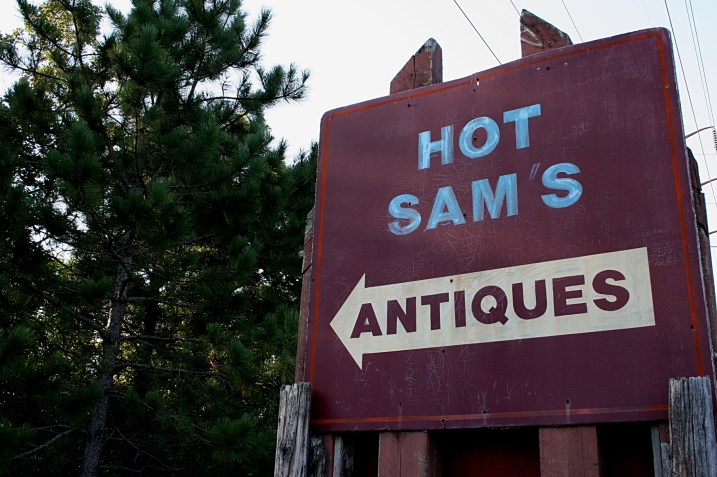
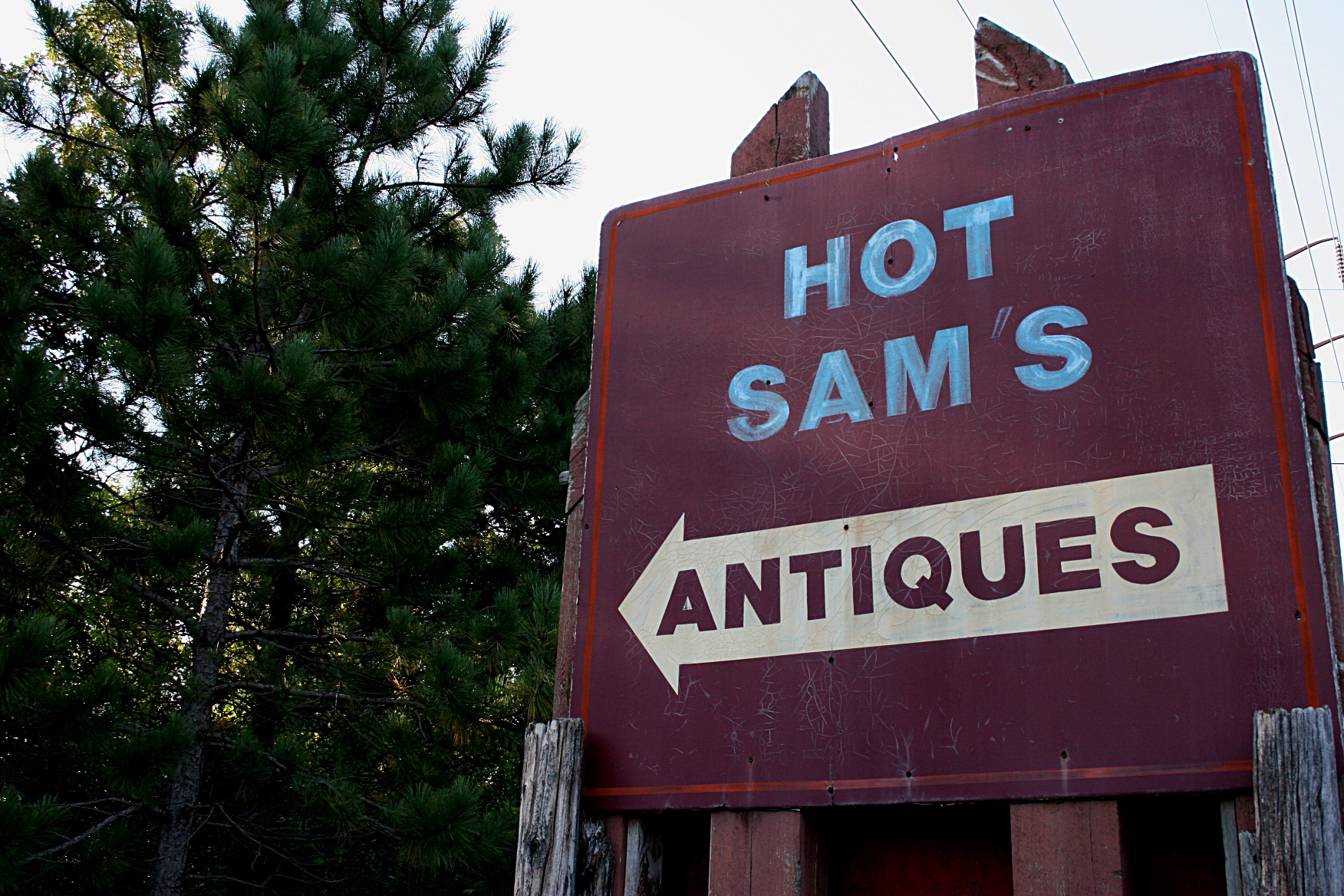
Watch for this sign at 22820 Pillsbury Avenue South directing you onto the narrow gravel road into Hot Sam’s Antiques.
FYI: To get to Hot Sam’s Antiques from Interstate 35, take exit 81 near Lakeville and go east on Dakota County Road 70 about half a mile to the stoplight. Then turn south onto Kenrick Avenue/County Road 46. Continue approximately 1 1/2 miles on Kenrick, which turns into Pillsbury Avenue. Hot Sam’s is located on the west side of the road at 22820 Pillsbury Avenue South, Lakeville. You’ll see a sign.

Hours are from 10 a.m. – 6 p.m. weekdays (except closed on Thursday) and Saturday and from noon to 6 p.m. on Sunday.

Check back for more photos from Hot Sam’s because there’s so much more I need to share with you.

© Copyright 2012 Audrey Kletscher Helbling