Minnesota Prairie Roots

Writing and photography by Audrey Kletscher Helbling

Elephant poop paper and other discoveries at a Wisconsin museum April 18, 2012

ELEPHANT DUNG PAPER: The elephant’s high-fibrous diet makes for excellent paper!

If I had not read the above words at The Paper Discovery Center in Appleton, Wisconsin, I would have thought this to be a bunch of crap.

But would the creators of a paper discovery center spread untruths? I think not. After my recent visit to this museum, I followed up with online research. That led me to elephantdungpaper.com and more information about the elephant poop paper making process. Click here for details.
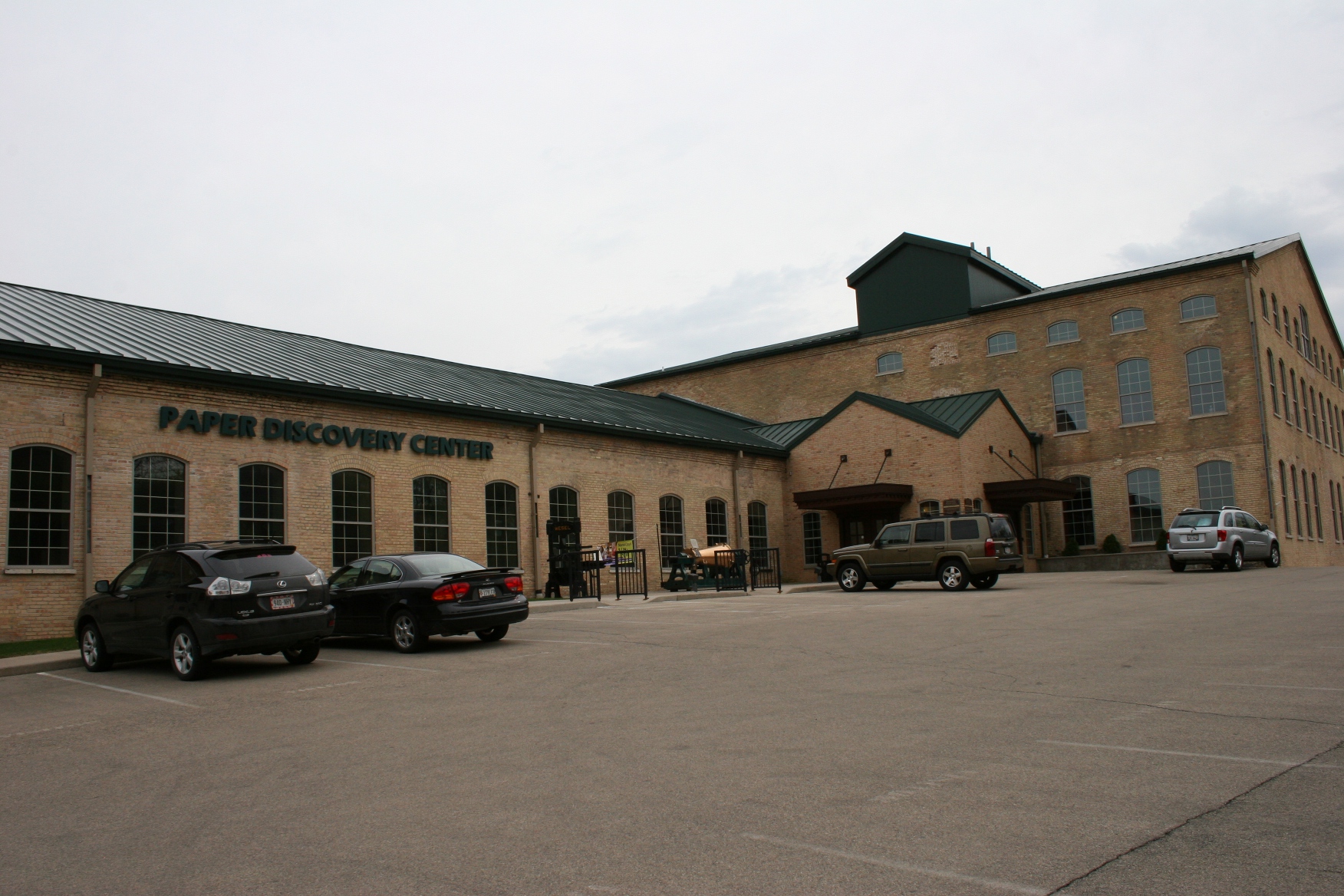
The Paper Discovery Center in Appleton, Wisconsin, with an attached coffee shop on the right, located along the banks of the Fox River. These brick buildings are stunning.

There’s no elephant dung paper making happening in the 1878 former Atlas Mill along the banks of the raging Fox River in Appleton. But visit this hands-on discovery center and you can make paper by recycling newspapers and other paper into “new” paper.
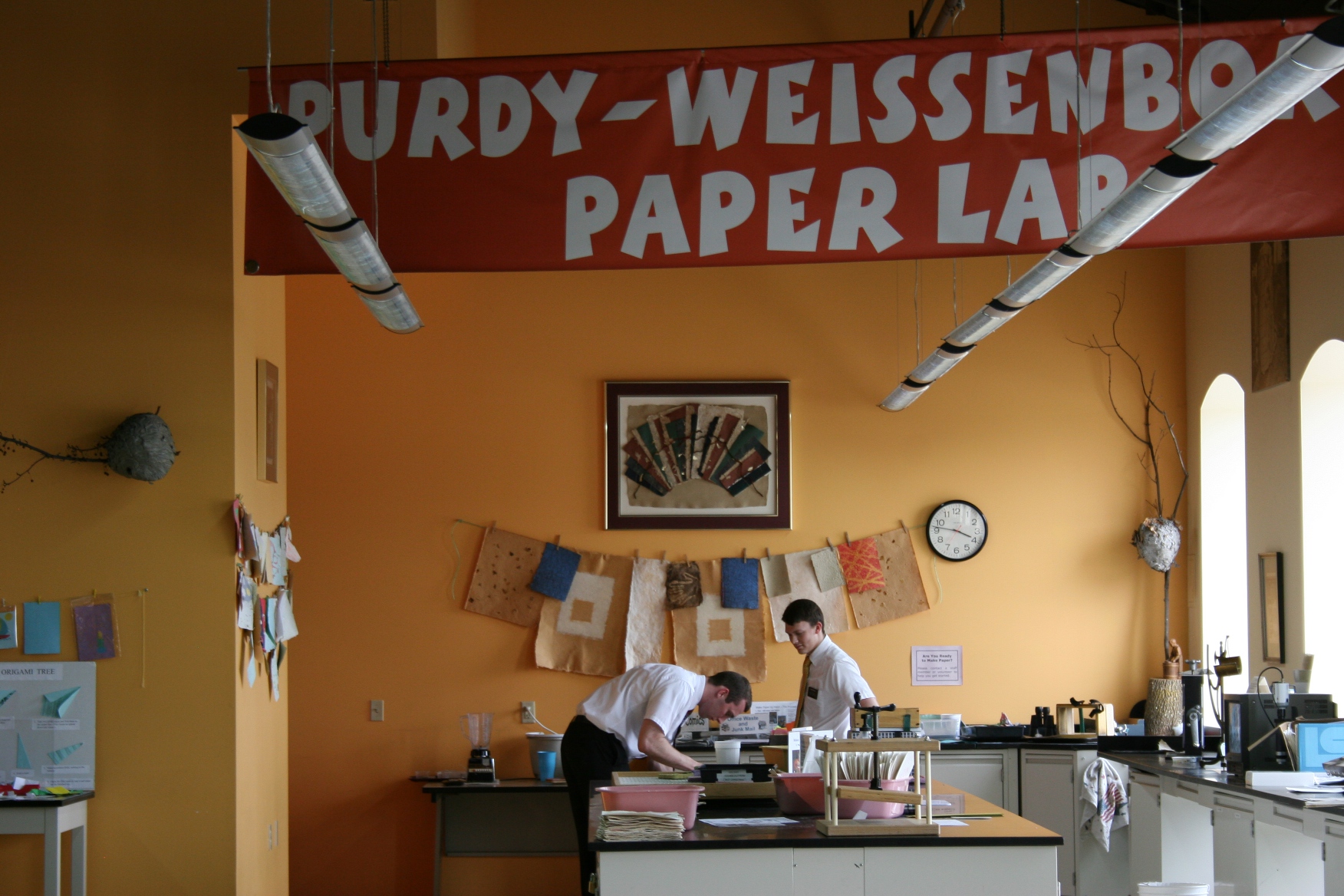
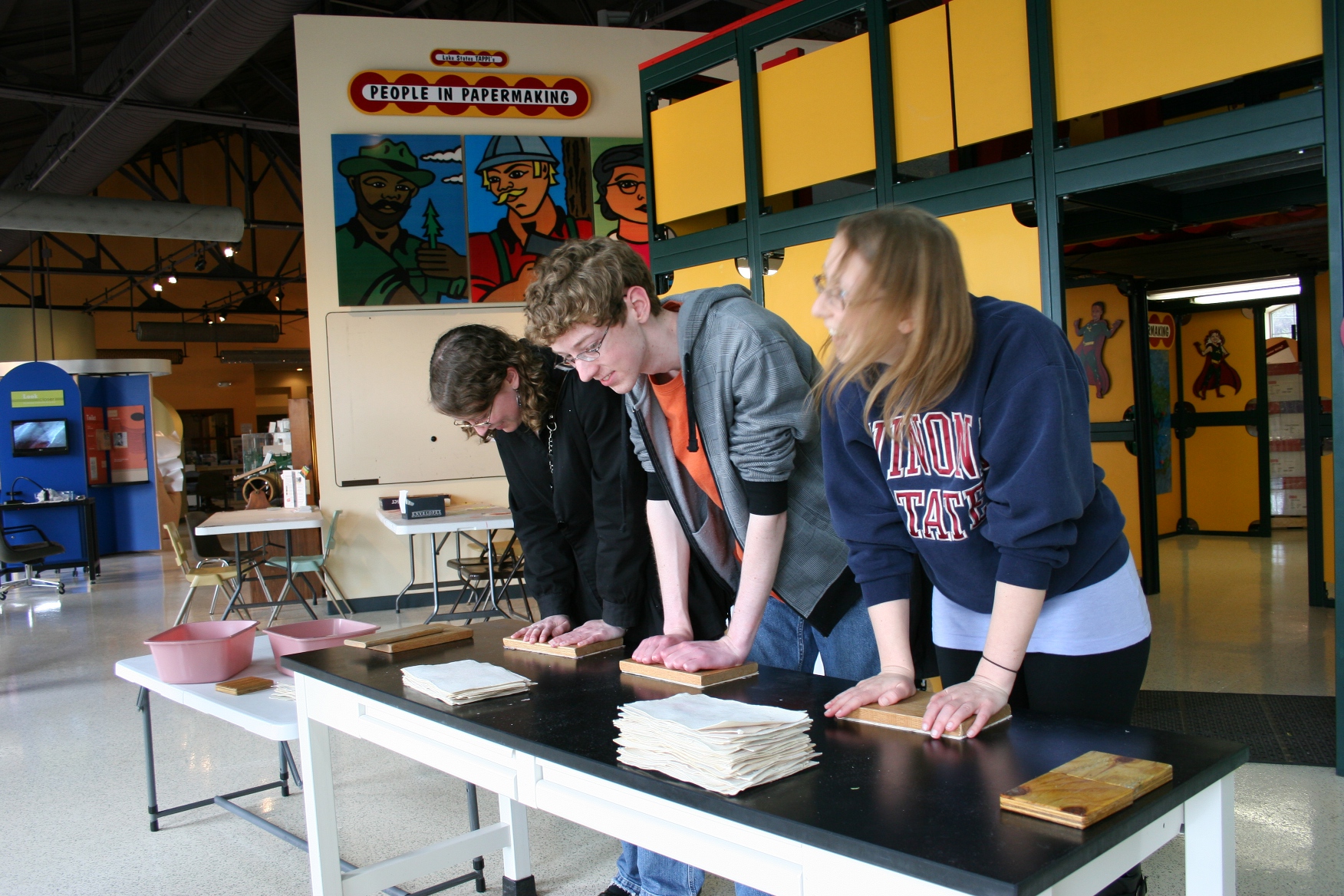
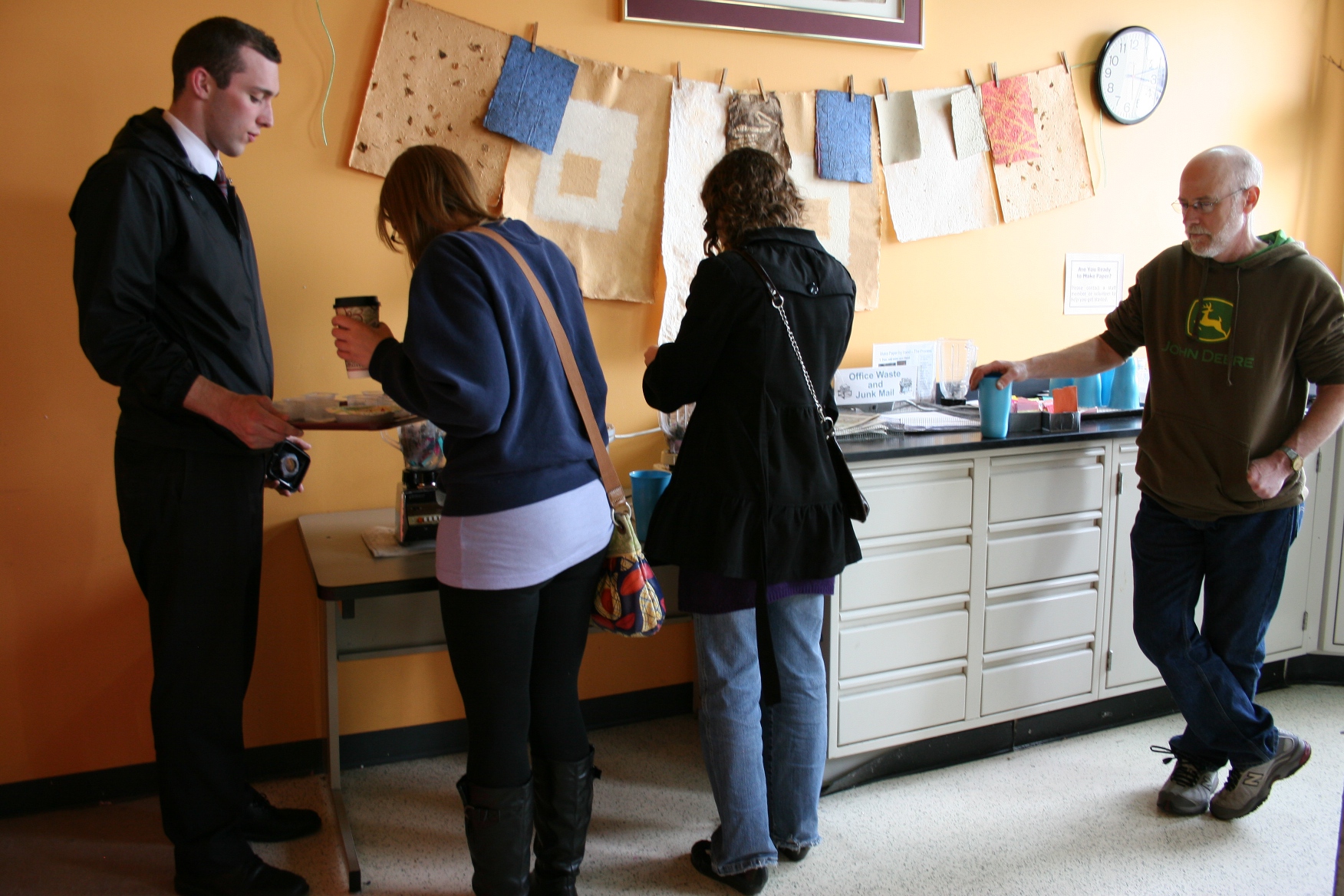
Two volunteers from the Church of Jesus Christ Latter-day Saints staffed the paper making station on a recent Saturday afternoon. Visitors can make new paper here from recycled paper.

And if you have more than an hour of time—which is all my family had—you can learn lots about paper via child-friendly interactive displays. Kids would totally love this place.
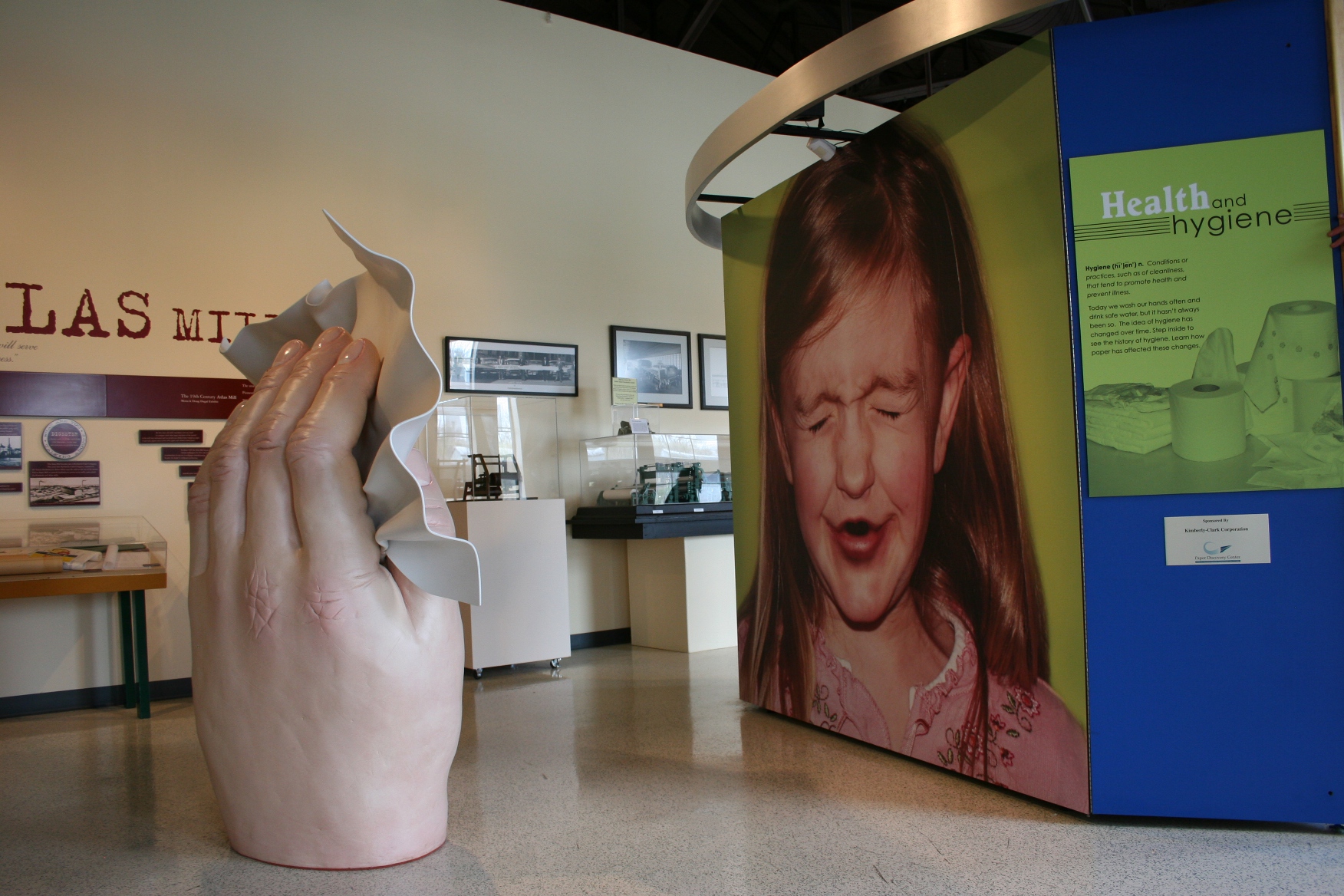
A motion-activated sensor above the model's head triggers a sneeze.

I was amused by the motion-activated sneeze that sounded in the health and hygiene kiosk next to an oversized hand clutching a tissue.

Reading an informational display about diapers, I was not amused to learn that pioneers sometimes changed their babies’ diapers only once a day and did not always wash diapers between uses.

My 26-year-old daughter was a bit startled to learn that, before toilet paper, corn cobs were used in outhouses. She even suggested that I seat myself in the mini outhouse for a photo opp. I declined, assuring her I’d spent enough time in an outhouse having lived the first dozen years of my life in a farmhouse without a bathroom.

In the “From Tree to Tissue” exhibit, visitors can follow the process of producing tissue paper, no corn cobs involved. You’ll find plenty to entertain and enlighten you at this former mill operated by Kimberly-Clark Corporation until 2000, according to the museum attendee.
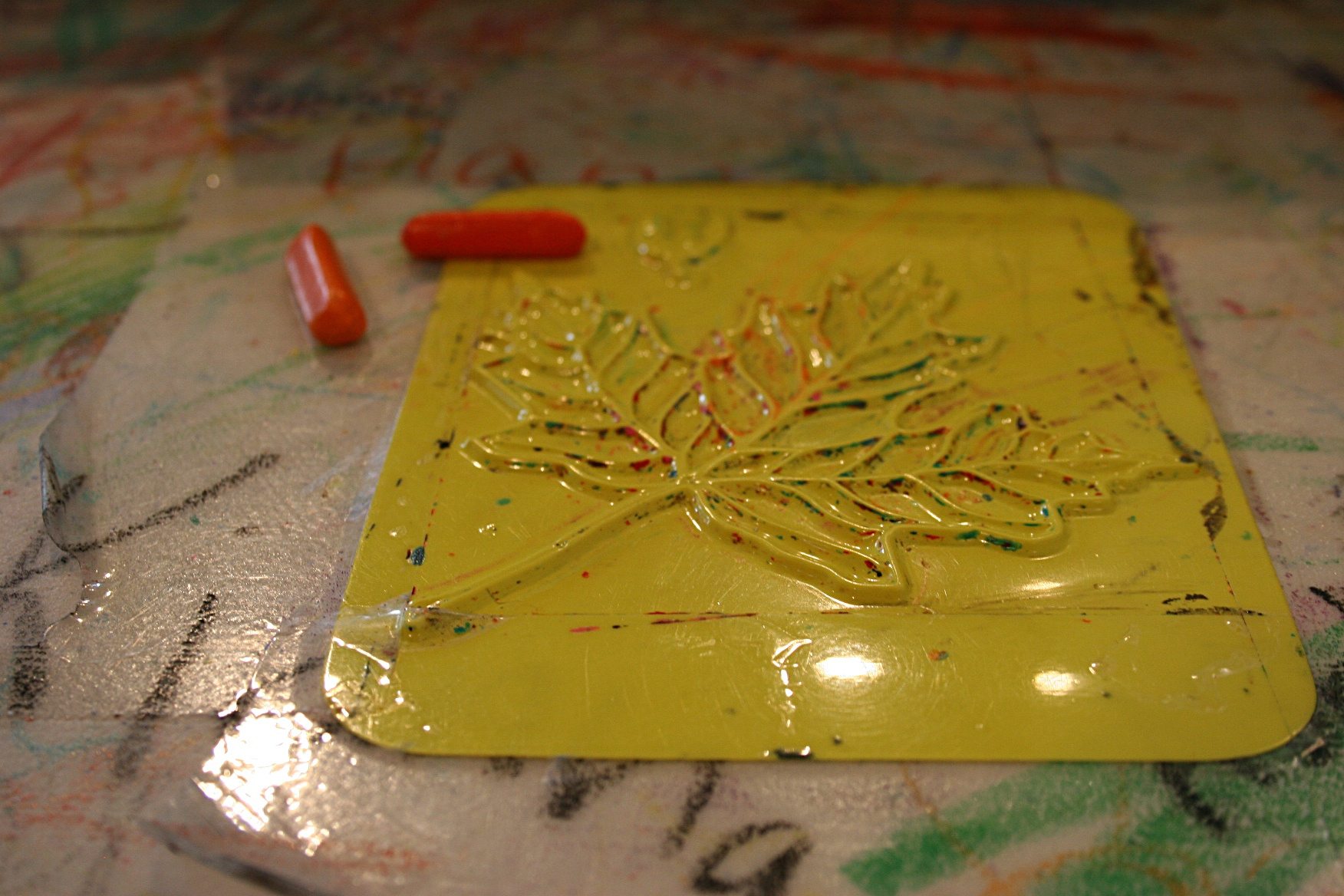
Sit down at a table, choose a color crayon, a mold and a piece of paper and create a leaf rubbing.
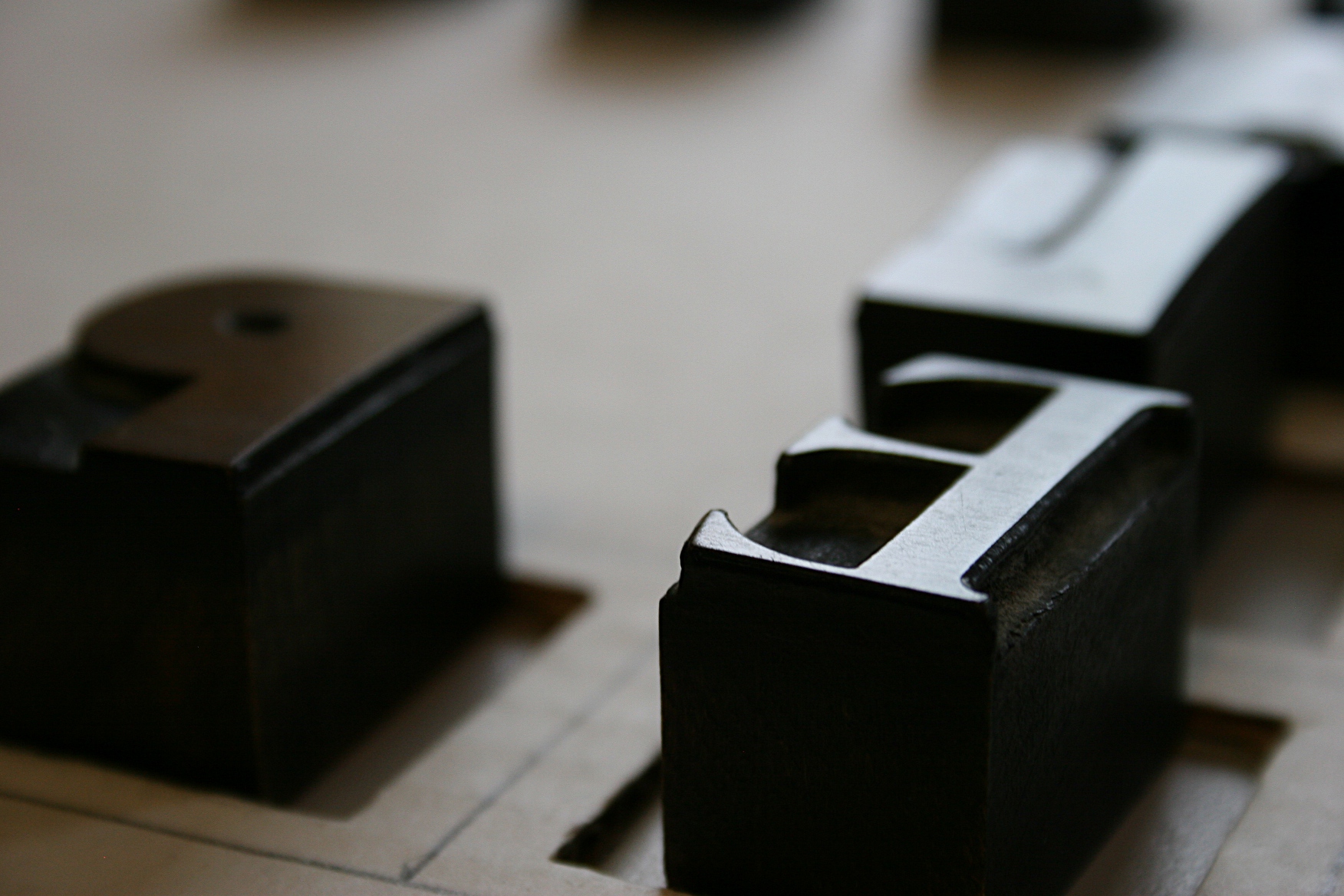
Authentic wood type is on display at a station where visitors can solve a crossword puzzle.

Assume the role of someone in the papermaking industry at this interactive exhibit.
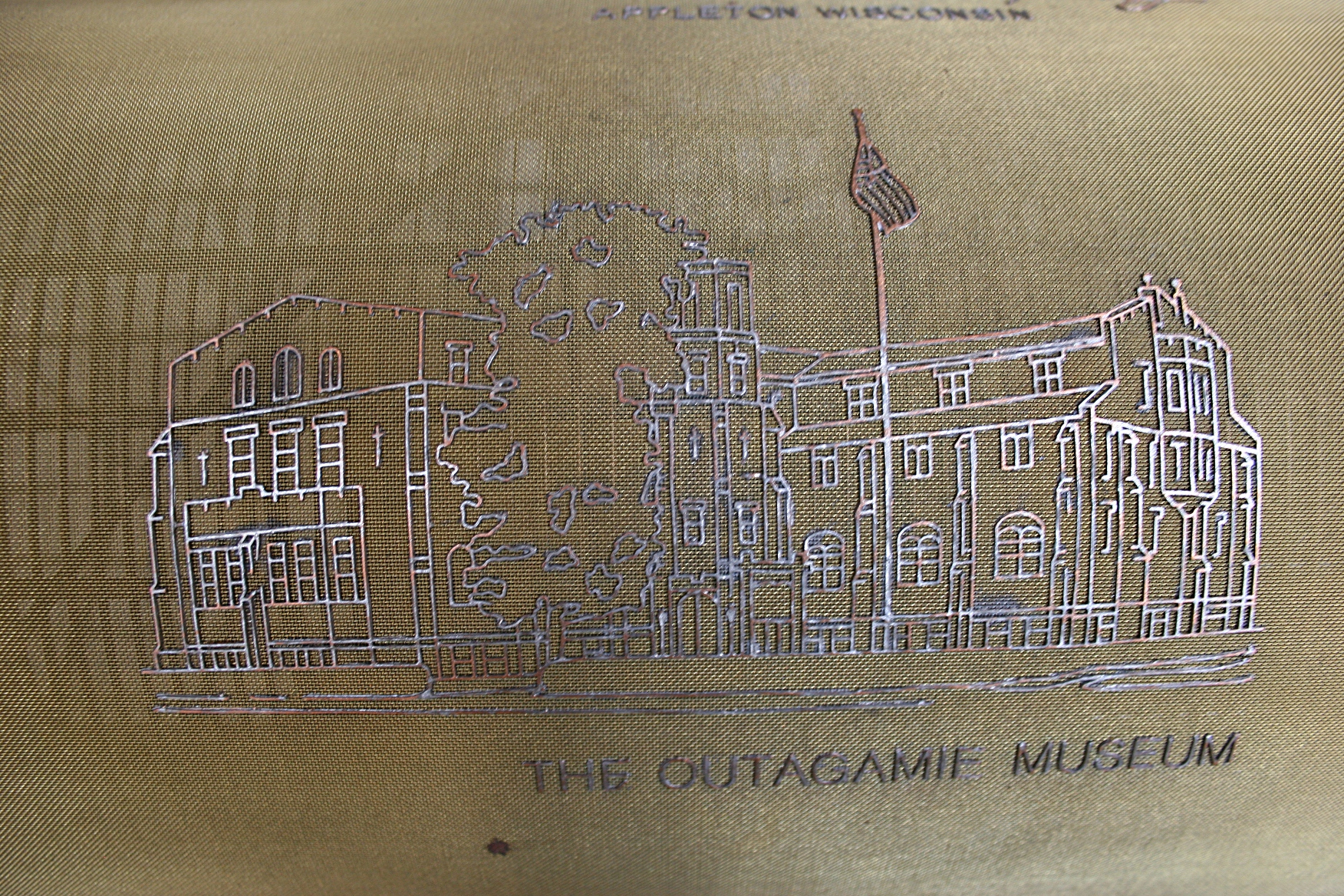
Learn how watermarks, like this one, are printed onto paper.
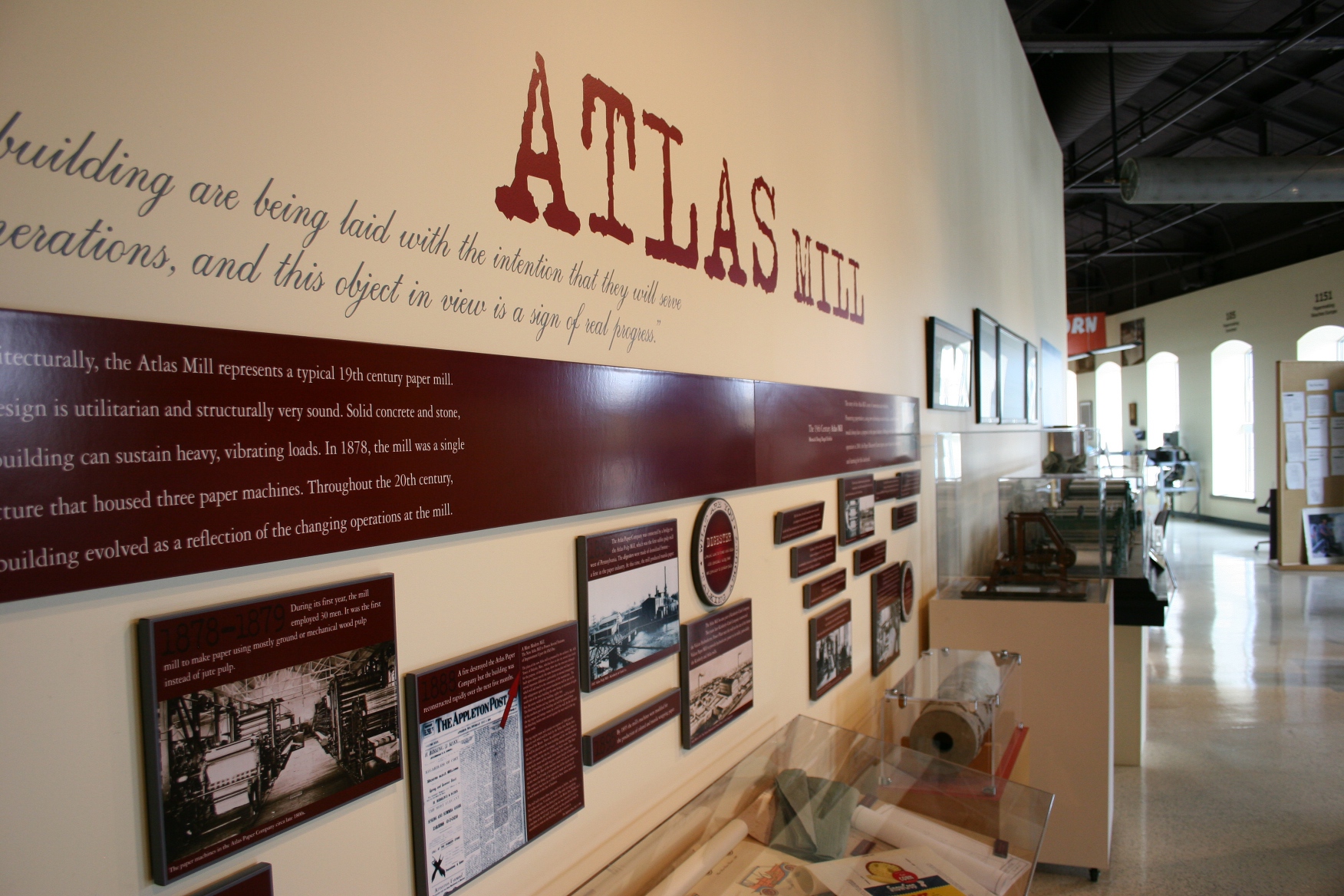
Study the history of the Atlas Mill originally housed in this building which served as a Kimberly-Clark Corporation paper research center prior to its closing about a decade ago.

FYI: For more information about The Paper Discovery Center, 425 W. Water Street, Appleton, Wisconsin, click here. If you visit the museum, allow yourself plenty of time. We arrived only an hour before closing, leaving us only enough time to make paper and rush through the exhibits.

Copyright 2012 Audrey Kletscher Helbling


In search of genuine pearls in Sciota Township April 10, 2012

Filed under: Uncategorized — Audrey Kletscher Helbling @ 7:25 AM
Tags: , , , , , , ,

IT IS THE ROAD less traveled that often leads to the best discoveries even, if at first, the journey doesn’t appear all that promising.

Recently, my husband and I followed back gravel roads from Randolph to Northfield. We were expecting bucolic farm sites complete with grand red barns and white wood-frame farmhouses wrapped in inviting country porches. Instead, we found mostly ramblers and split levels and other modern homes that, if clumped along a cul-de-sac, could have been in suburbia.

It was disappointing to find all these houses strung, like so many imitation pearls, along the smooth neckline of a wide gravel road. I wanted the real thing—pearls spilling across grandma’s bosom.

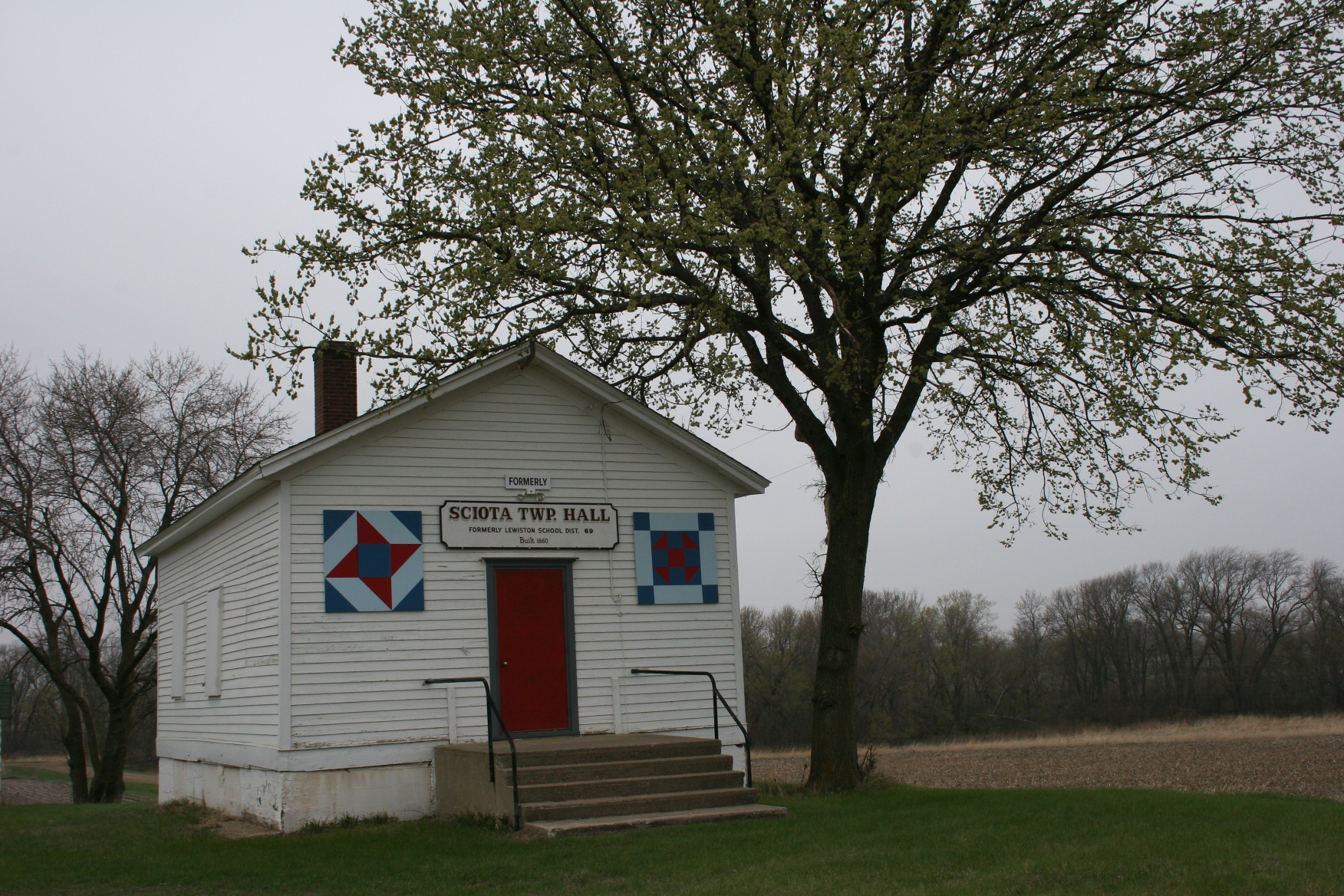
But then, when I’d nearly given up hope of finding anything genuine, we came across the old Sciota Town Hall at the corner of Alta Avenue and Sciota Trail/310th Street East in the southeastern hem of Dakota County.

The former Sciota Town Hall and, before, that, the Lewiston School, built in 1860

I couldn’t tumble from the van fast enough to photograph this former hall, originally the Lewiston School District 69 schoolhouse built in 1860. It is one of Dakota County’s oldest remaining schoolhouses and originally sat on the north side of the Cannon River in Lewiston, a town long gone (not to be confused with the still-existing Lewiston in Winona County).

In the fall of 1879—and I don’t know the reason—the 18-foot by 30-foot school building was moved to the south side of the Cannon, to its current site atop a hill at the intersection of two gravel roads.

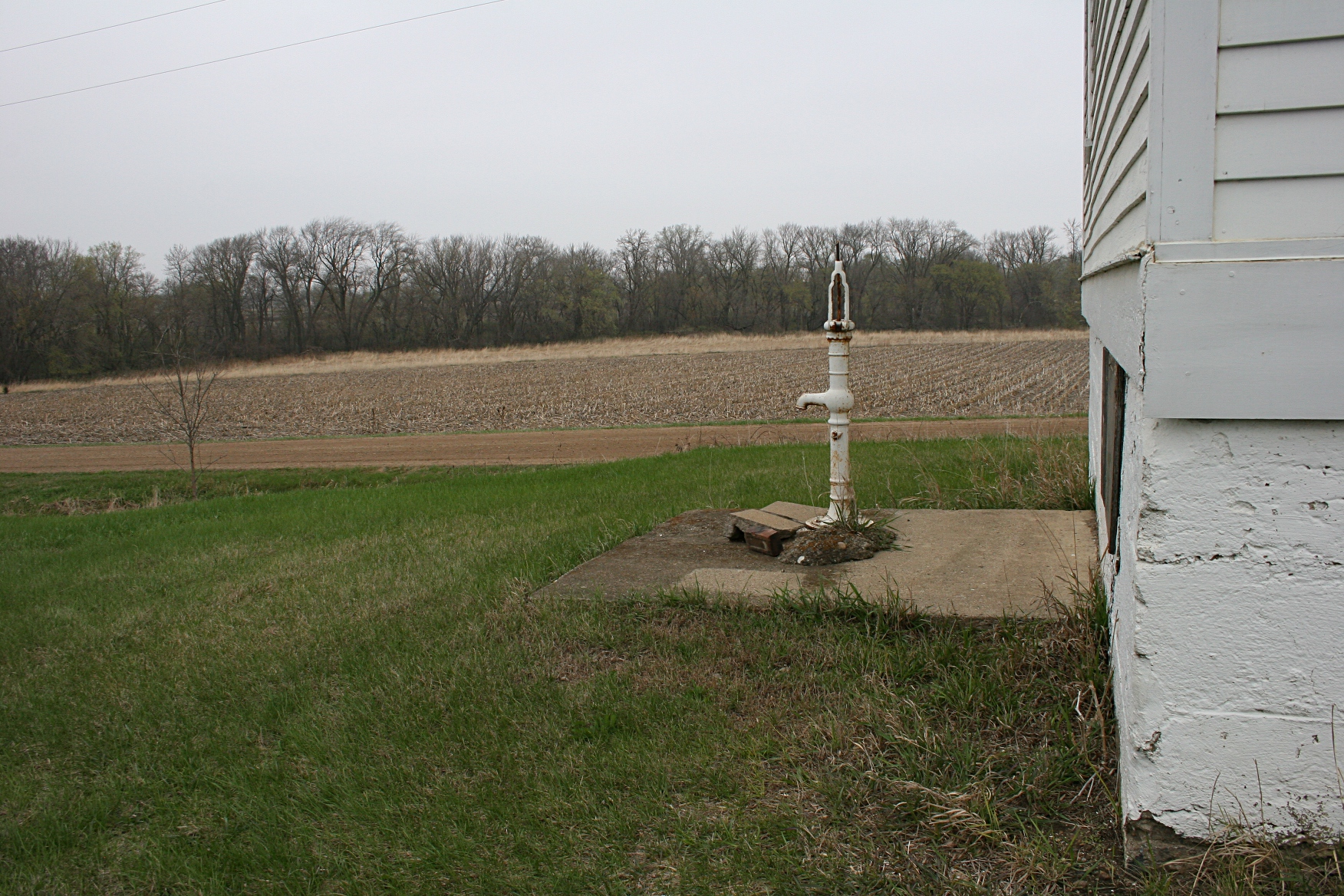
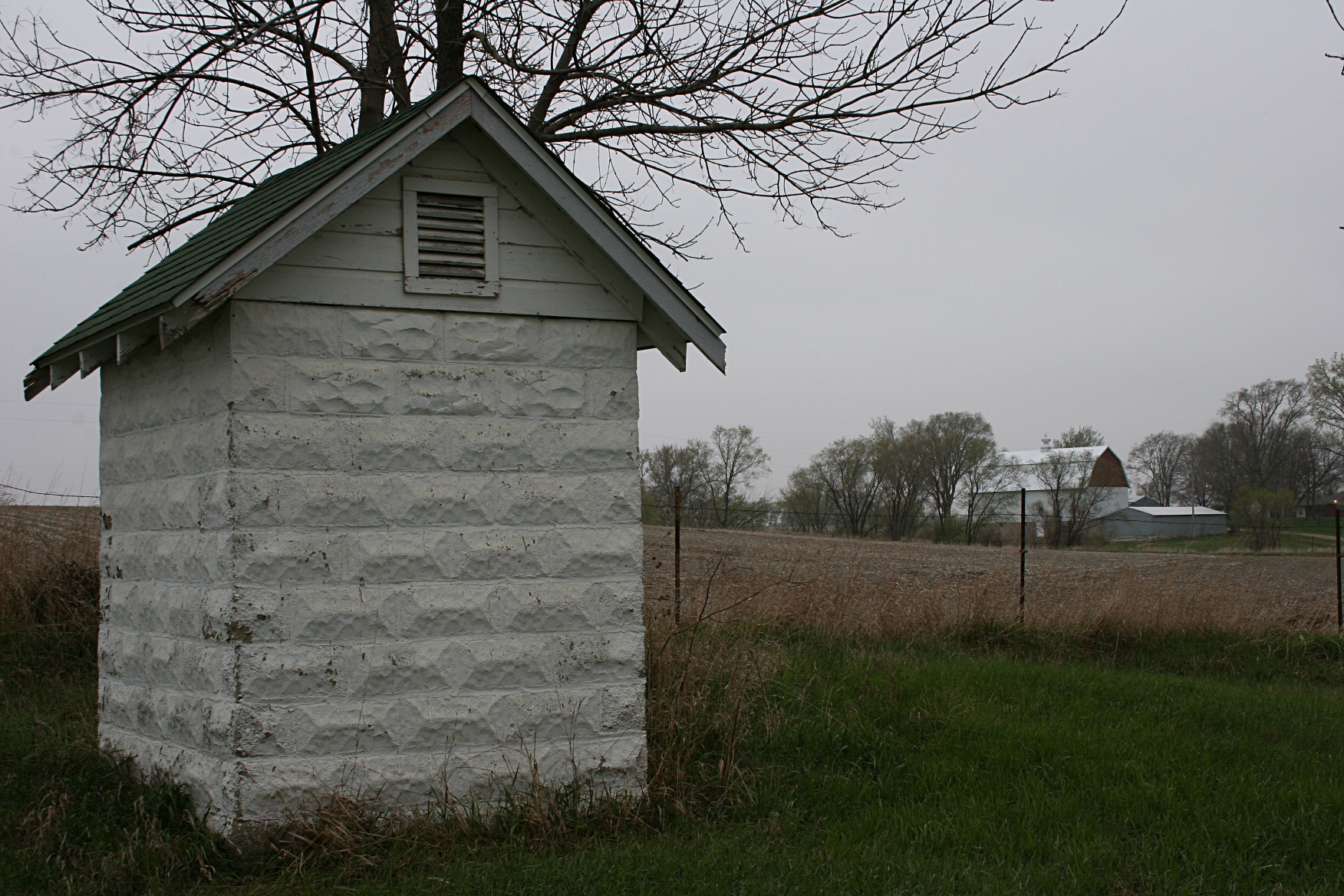
Two stout block outhouses still buffet the school as does an aged water pump minus its handle.

A water pump behind the old schoolhouse.

One of two outhouses on the property. Over the barbed wire fence, in the distance, a farm site, not all that common anymore in Sciota Township.

It’s easy to imagine this place once teeming with children from neighboring farms as they pushed out the schoolhouse doors, legs flailing, into the schoolyard.

It’s easy to imagine, too, the rhythmic thrust of the pump gushing cold well water into their cupped hands, droplets splashing upon their worn leather shoes.

Had the doors of this former schoolhouse been unlocked, I could have imagined more, much more.

FYI: The Sciota Town Hall is no longer housed in the historic building, but in a modern pole shed style structure. Click here to see a photo of the 2005 town hall and to learn more about Sciota Township. Does anyone know whether the former town hall/school ever is opened for any type of historic celebrations or other events?

© Copyright 2012 Audrey Kletscher Helbling
 

In which we travel to Wisconsin and make paper April 9, 2012

Filed under: Uncategorized — Audrey Kletscher Helbling @ 3:20 PM
Tags: , , , , , , ,

WHO WOULD HAVE thought that making paper could be so much fun for a bunch of grown-ups?

Not me.

But making paper at The Paper Discovery Center in Appleton, Wisconsin, on Saturday proved so much fun for our family that I declared, “I could really get into this paper making.”

At that moment my 18-year-old son, Mr. Logical Scientist-Math Guy, clarified: “Technically we did not make paper.”

He would be right. We did not transform a tree into paper. Rather, we recycled the Sunday comics and other paper into new paper.

And here is how we did it with the assistance of two patient and friendly young missionaries from the Church of Jesus Christ of Latter-day Saints who volunteer at the discovery center.

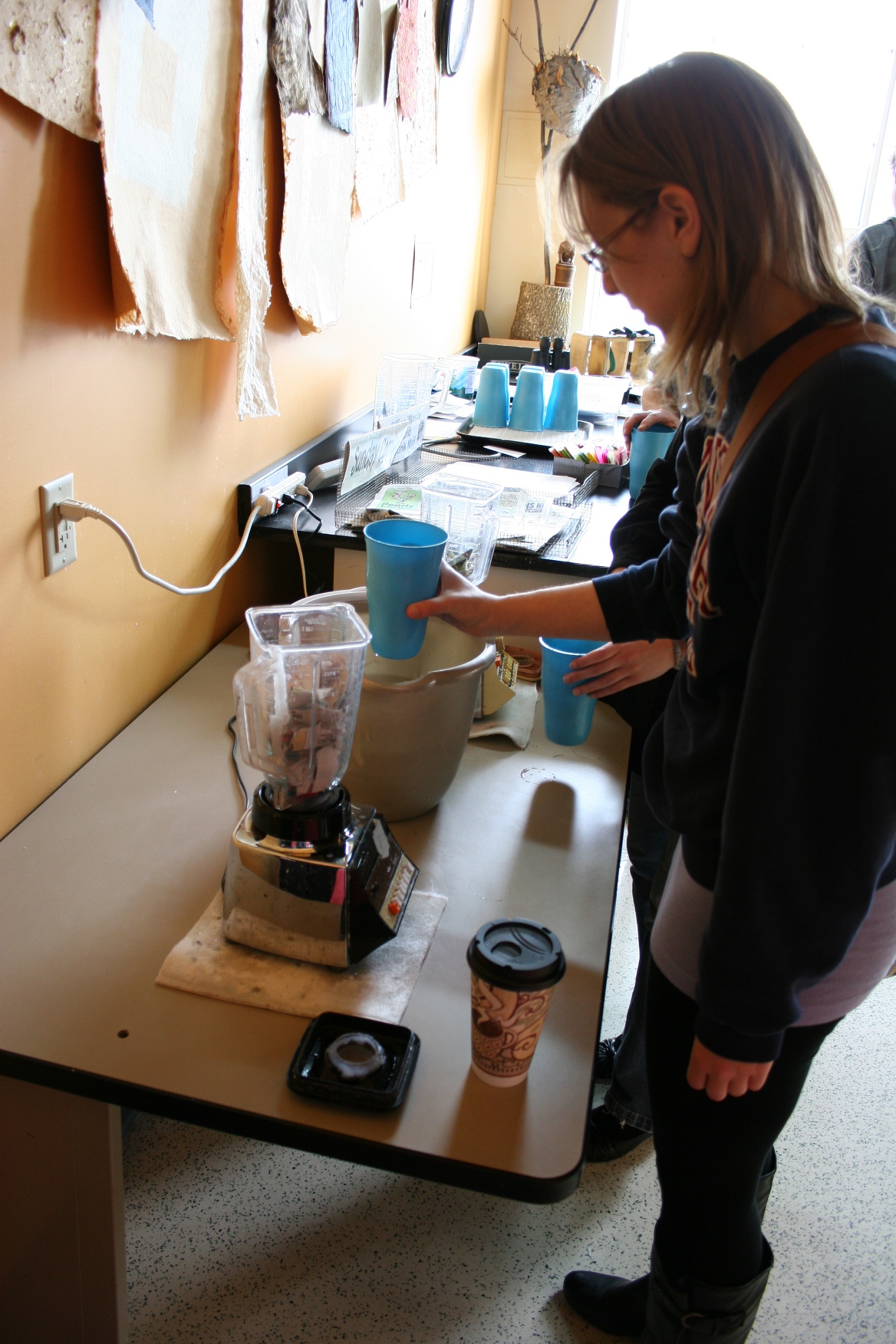
First, peruse the paper samples to determine what type of paper you would like to make. Ideally, you (your daughter) should drink your (her) coffee before coming to The Paper Discovery Center. But, if you (your daughter) are (is) fortunate enough, the nice lady at the front desk will allow you (your daughter) inside with your (her) coffee as long as you (she) promise (s) to keep a lid on it (the coffee cup, that is).

After you have torn your selected papers into postage stamp size pieces, drop the paper into the blender and add water, about three-fourths of the blue cup shown here.

Here you can add condiments (that's what I call them) like glitter and pressed flowers to the mix before blending in an ancient blender. A garage sale blender would work great for this part of the paper making. On the left is one of the patient paper making volunteer instructors. That's my husband waiting his turn.

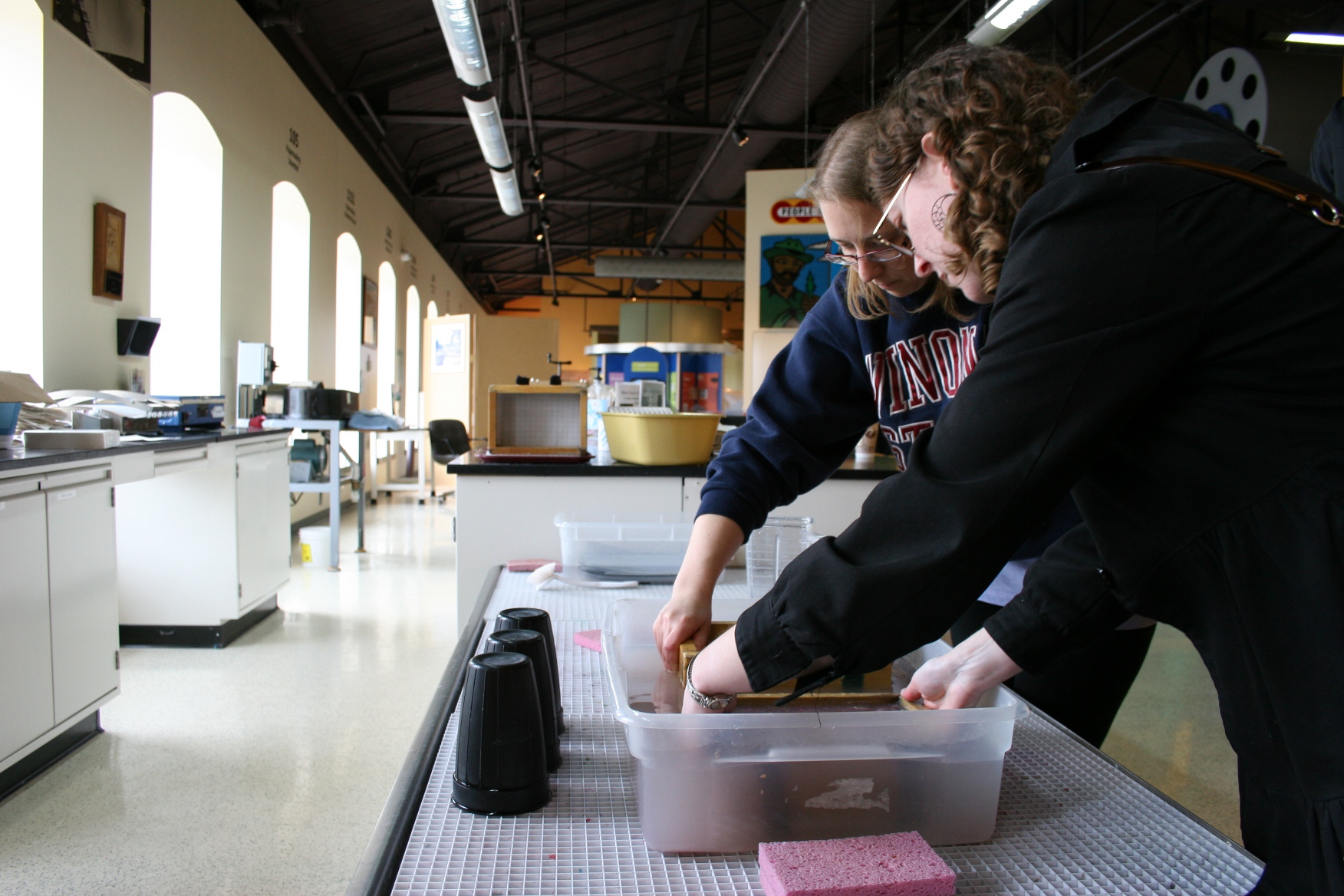
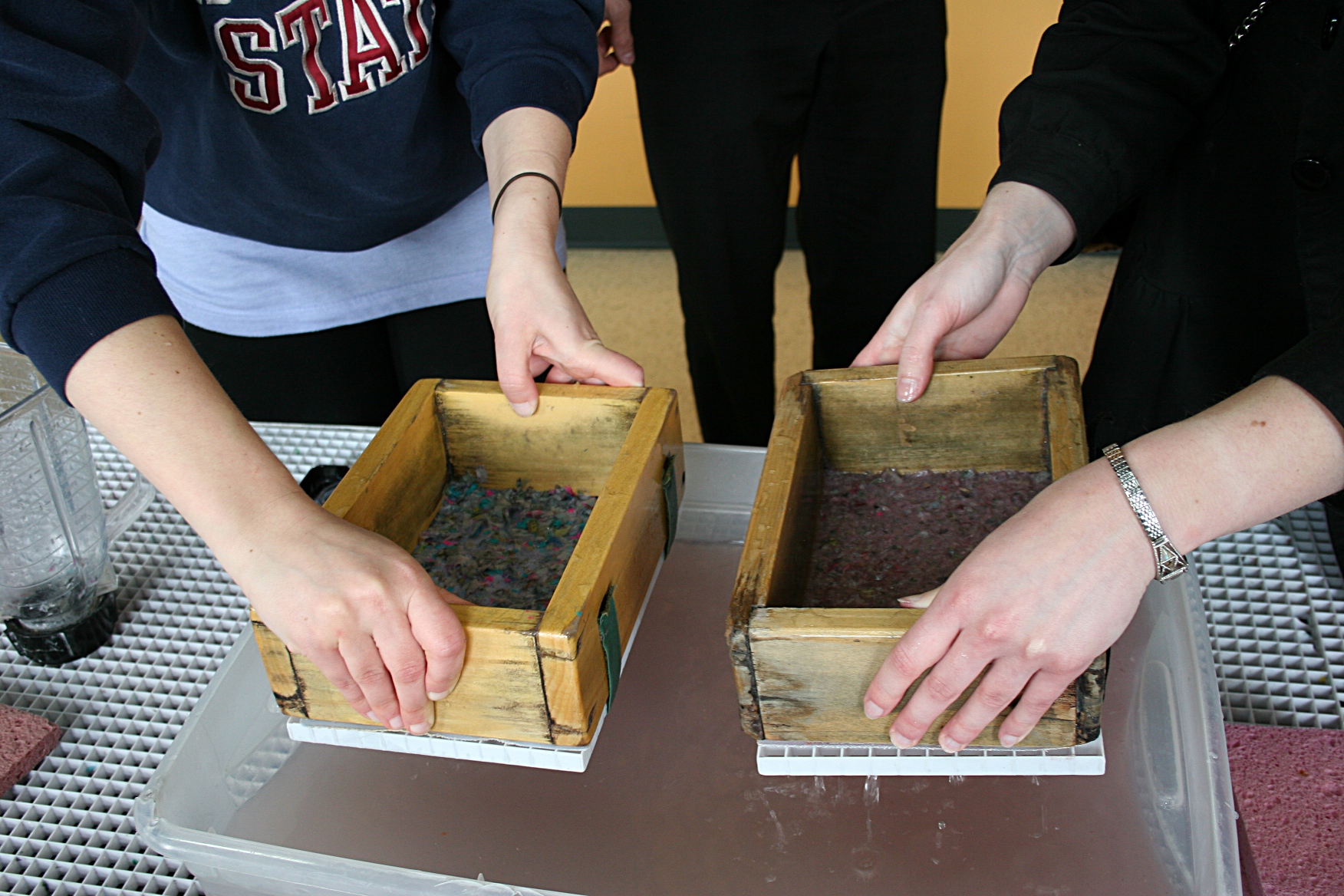
Next, pour the blended paper pulp into a screen inside a wooden form and immerse in water. Here's where you get to dip your fingers into the pulpy water and swish everything together.

Evenly ease the forms from the water to reveal your paper. Remove the forms and sponge excess moisture off.

Move to the next table and lay an absorbent sheet of paper (can't recall the name, but it starts with a "c") on top of your paper. Put a board on top and press. The idea is too absorb even more water. Repeat several times.

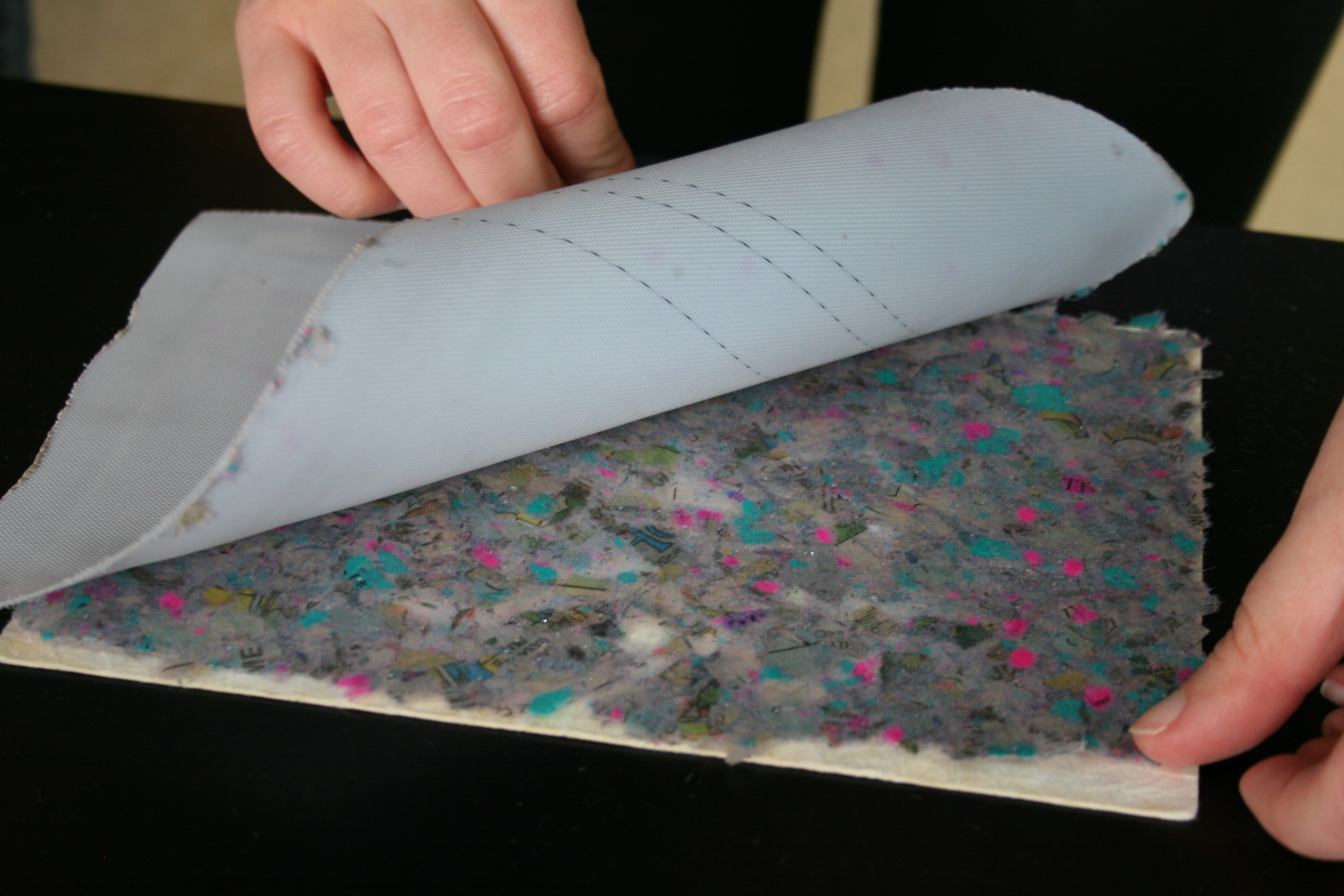
Pull back the absorbent paper to reveal the recycled paper you've made. But you're not done yet. Next, move to a contraption that exerts 2,000 pounds of pressure onto the paper, binding the fibers. After that, move to a machine that applies heat to the paper. Keep your fingers out of both.

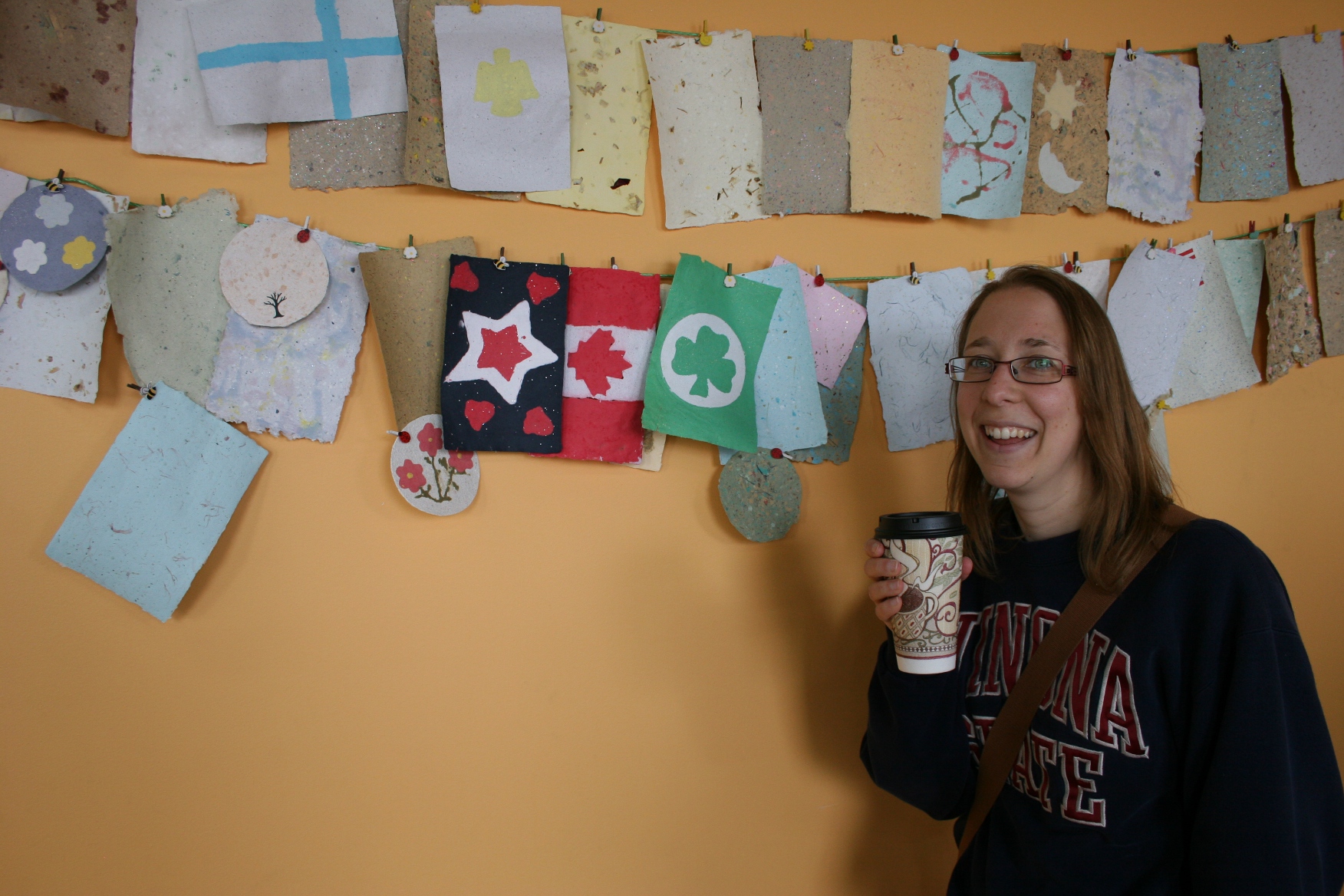
Finally, pose for a photo with the paper you've just created.

HAVE YOU EVER MADE paper like this? I’d like to hear, especially if you’ve made your own forms, etc. This may just be an art I’d like to try at home.

PLEASE CHECK BACK for another post from The Paper Discovery Center in Appleton, Wisconsin.

© Copyright 2012 Audrey Kletscher Helbling
 

At the railroad swap meet in Randolph April 5, 2012

Filed under: Uncategorized — Audrey Kletscher Helbling @ 6:39 AM
Tags: , , , , , , ,

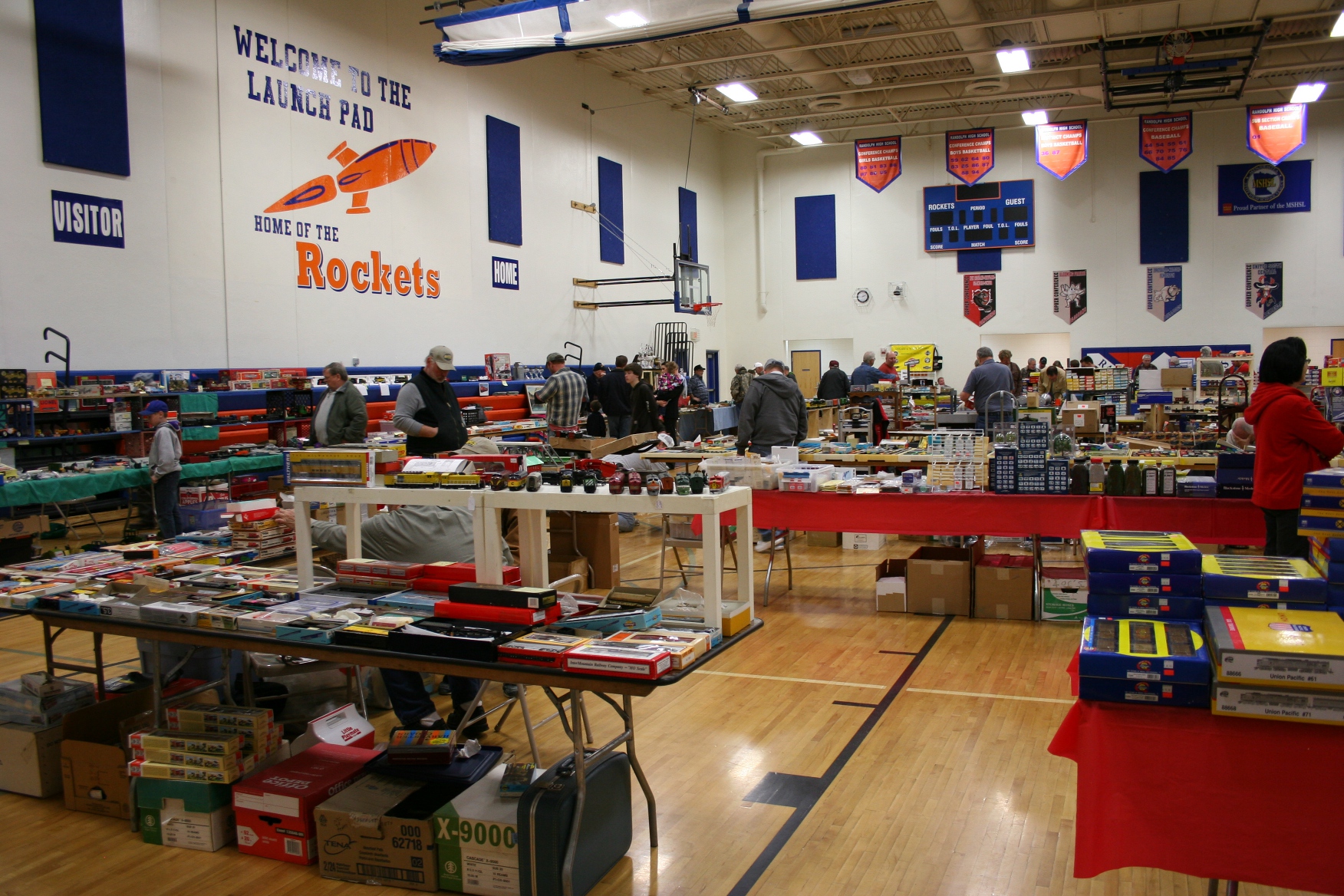
Vendors packed a gym at the Randolph School with their railroad merchandise.

IF I WAS INTO TRAINS or railroading, I could have spent hours filing through the collections of railroad-related merchandise offered at the Randolph Railroad Days Swap Meet on Saturday.

But after awhile, admittedly because I know little about this railroading hobby, the goods started to blend together. So I had to pick and choose and focus on the details to keep myself from becoming lost in the sheer volume of the offerings.

That said, join me on this select tour of the swap meet in a gym at the Randolph School. I was more than a bit distracted by the school’s icon, the rocket, displayed everywhere, even on the gym floor. I’m wondering “why Rockets?” other than the obvious connection to the “R” in Randolph. But that’s another topic because, you know, I did photograph those Rockets.

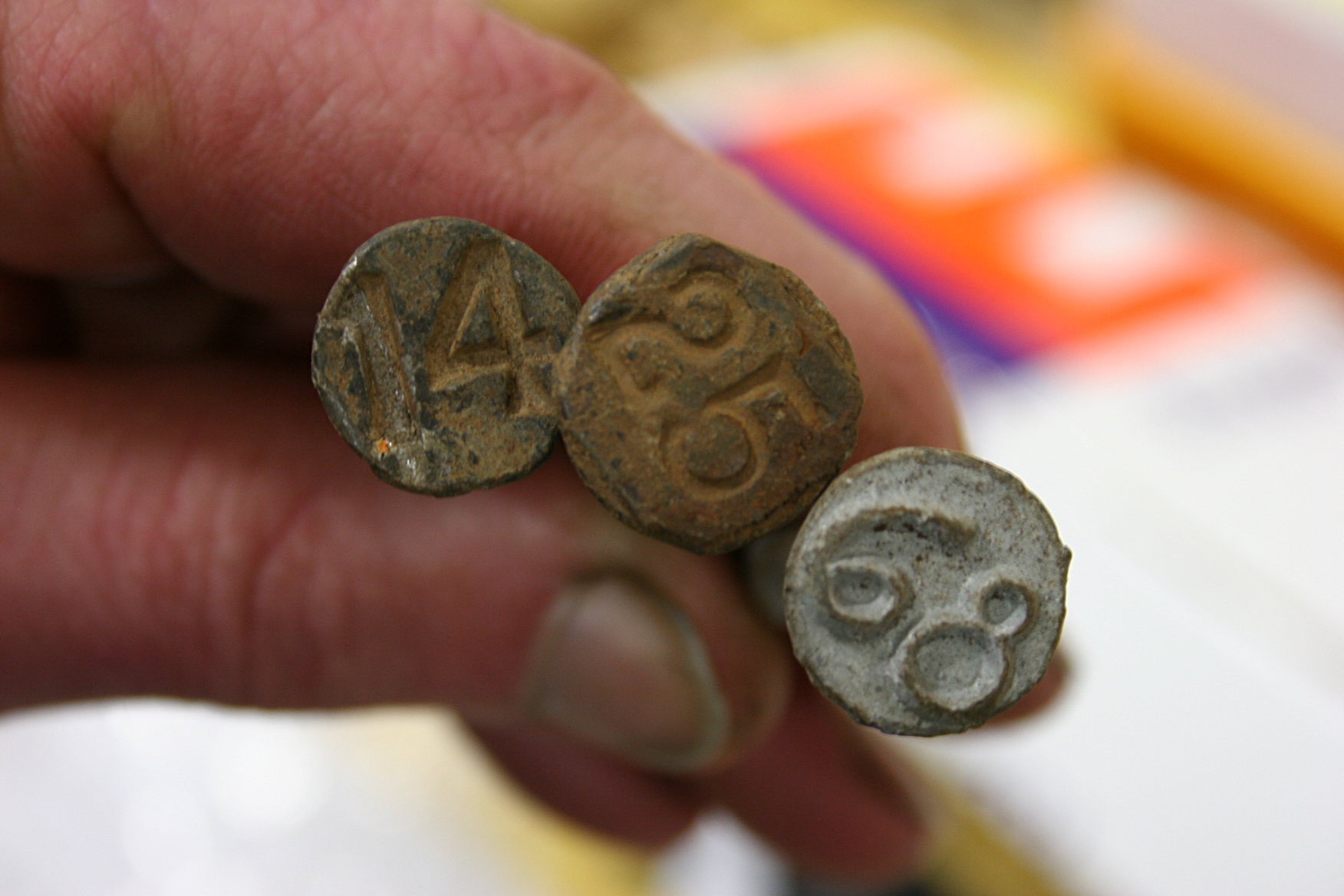
Railroad date nails drew my attention. The numbers represent the years.

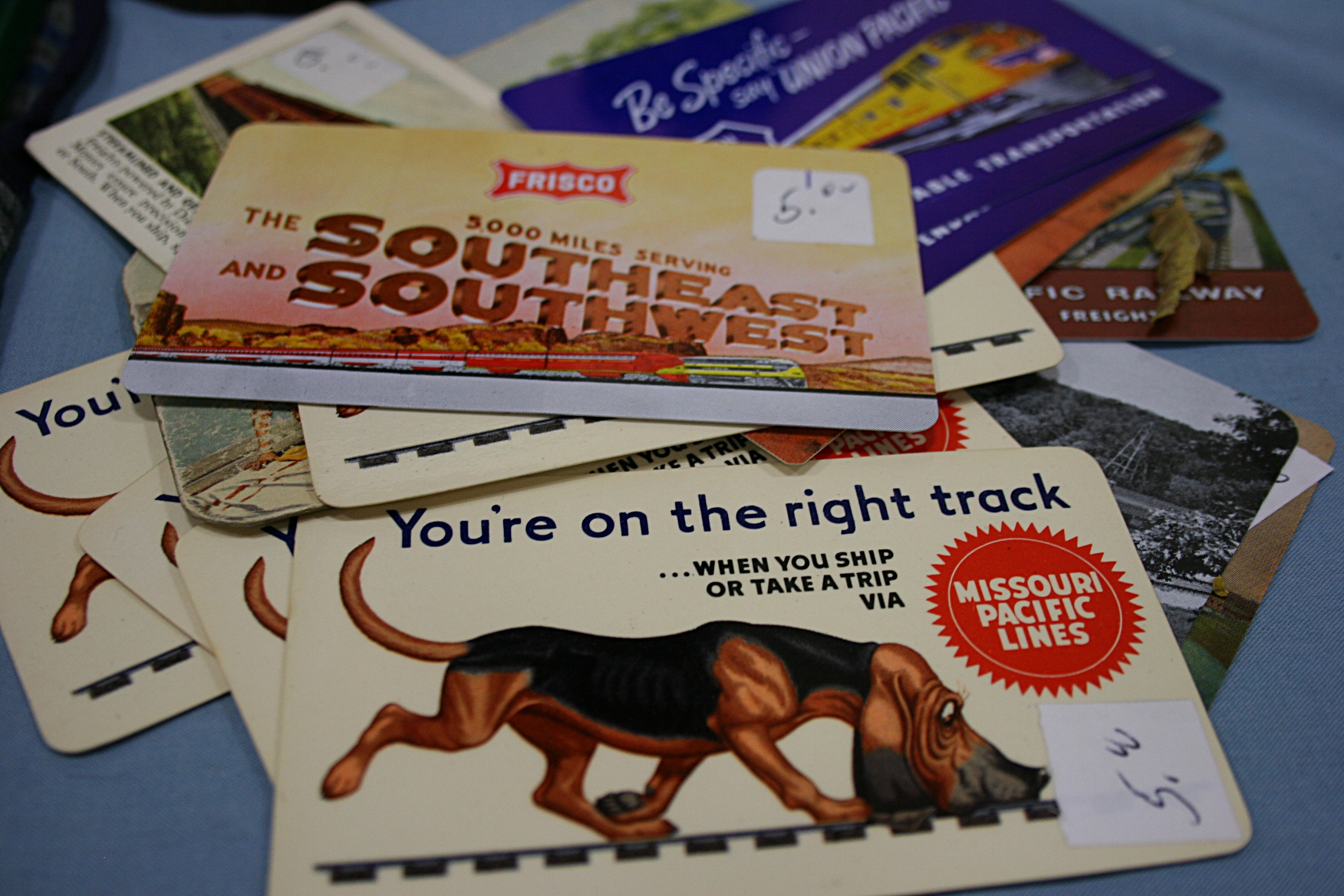
Pocket-size calendars, which I choose to call "railroad art."

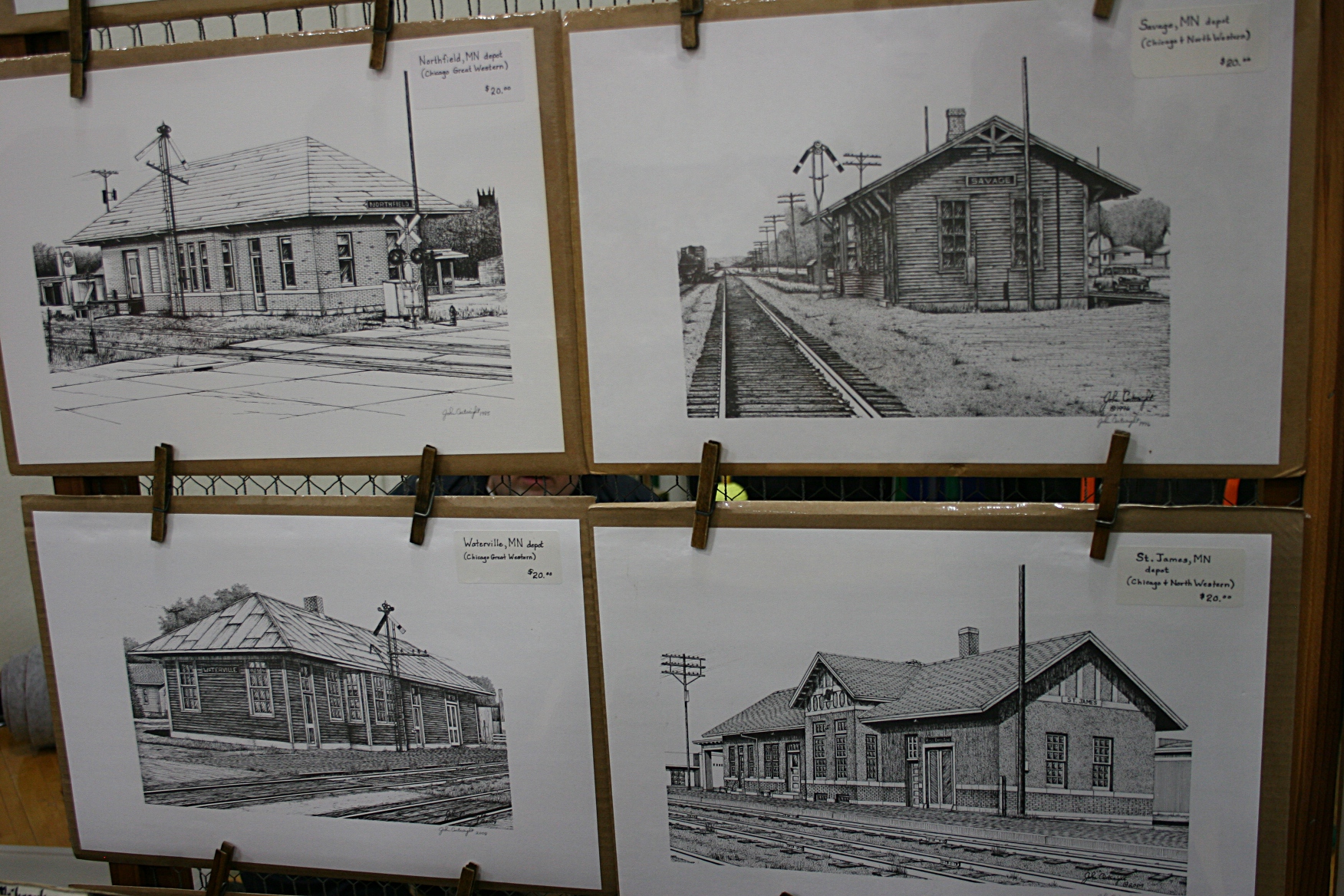
And then there's railroad art like this created by John Cartwright. The Shoreview artist was selling prints of his ink drawings. Visit his website at ArtRail.com for more information.

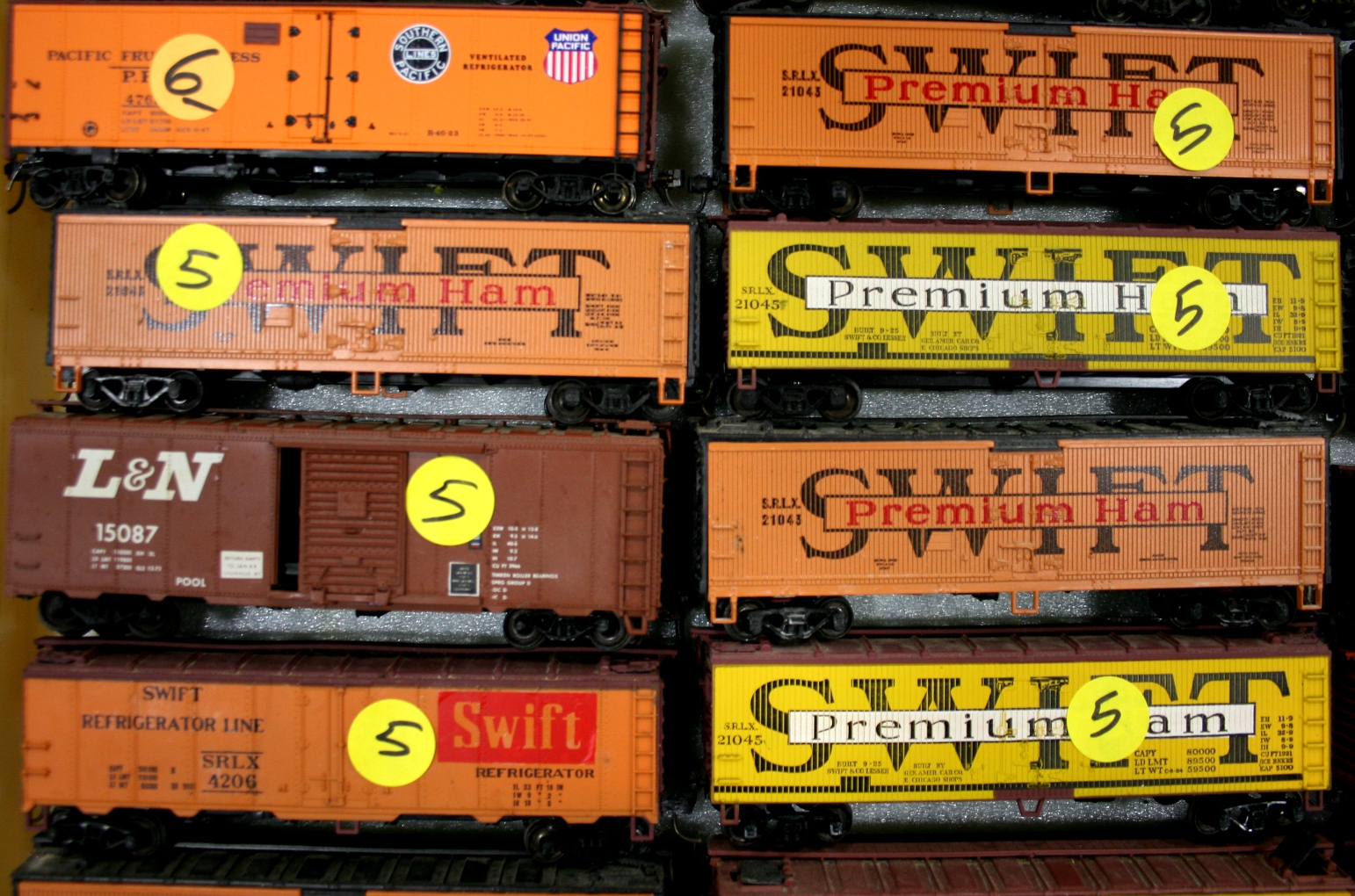
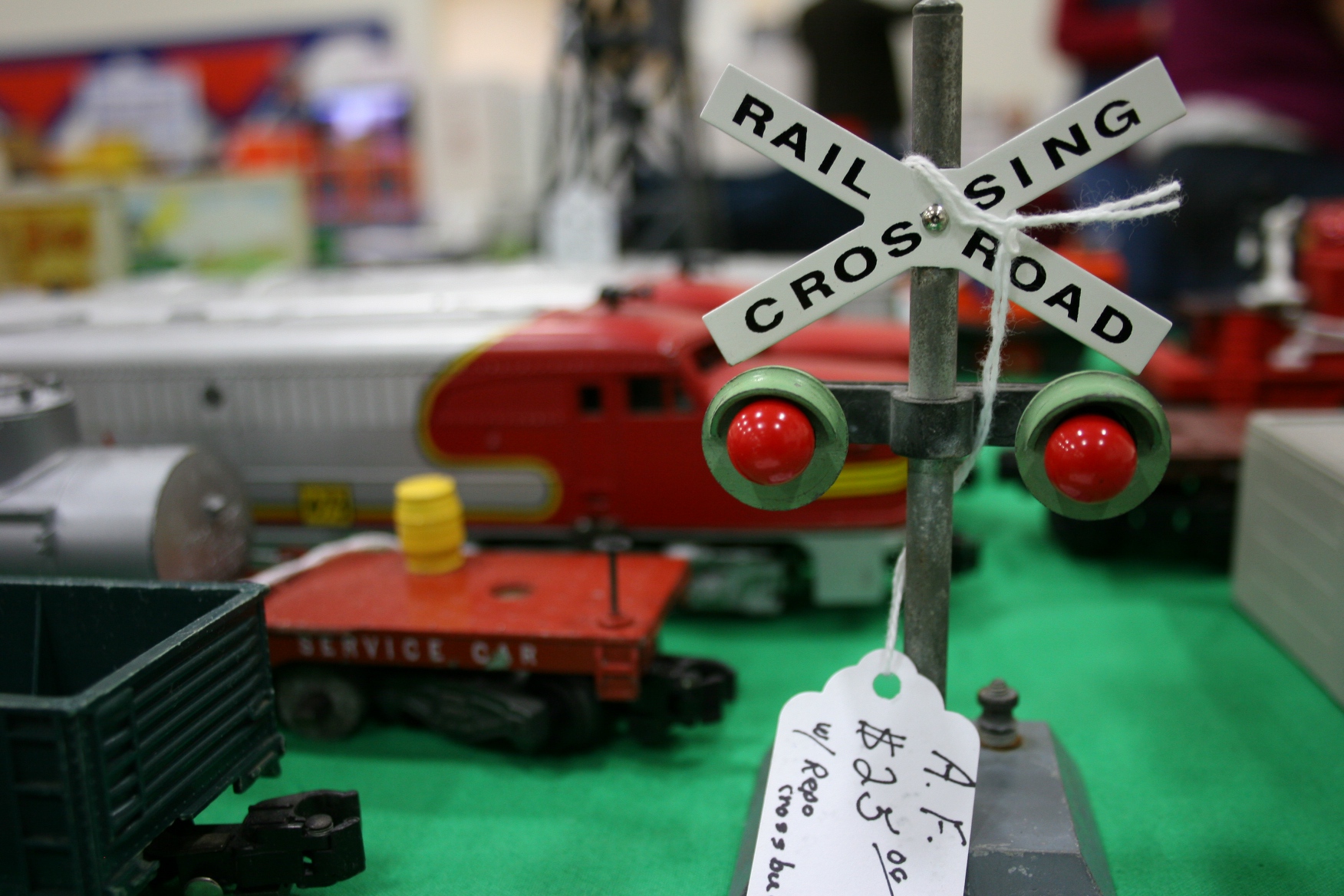
Toy/model trains galore were available for purchase.

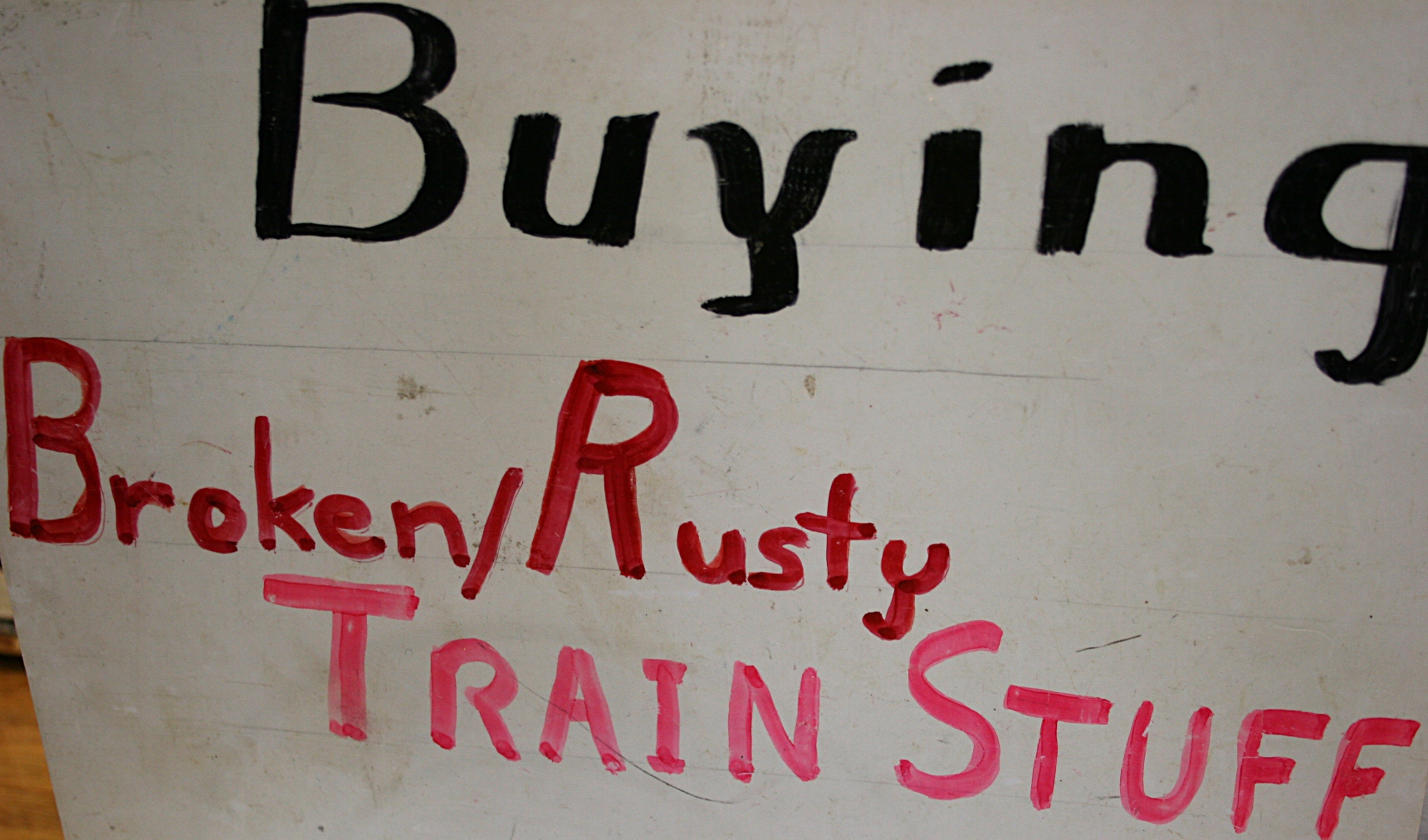
Condition doesn't matter to this swap meet buyer.

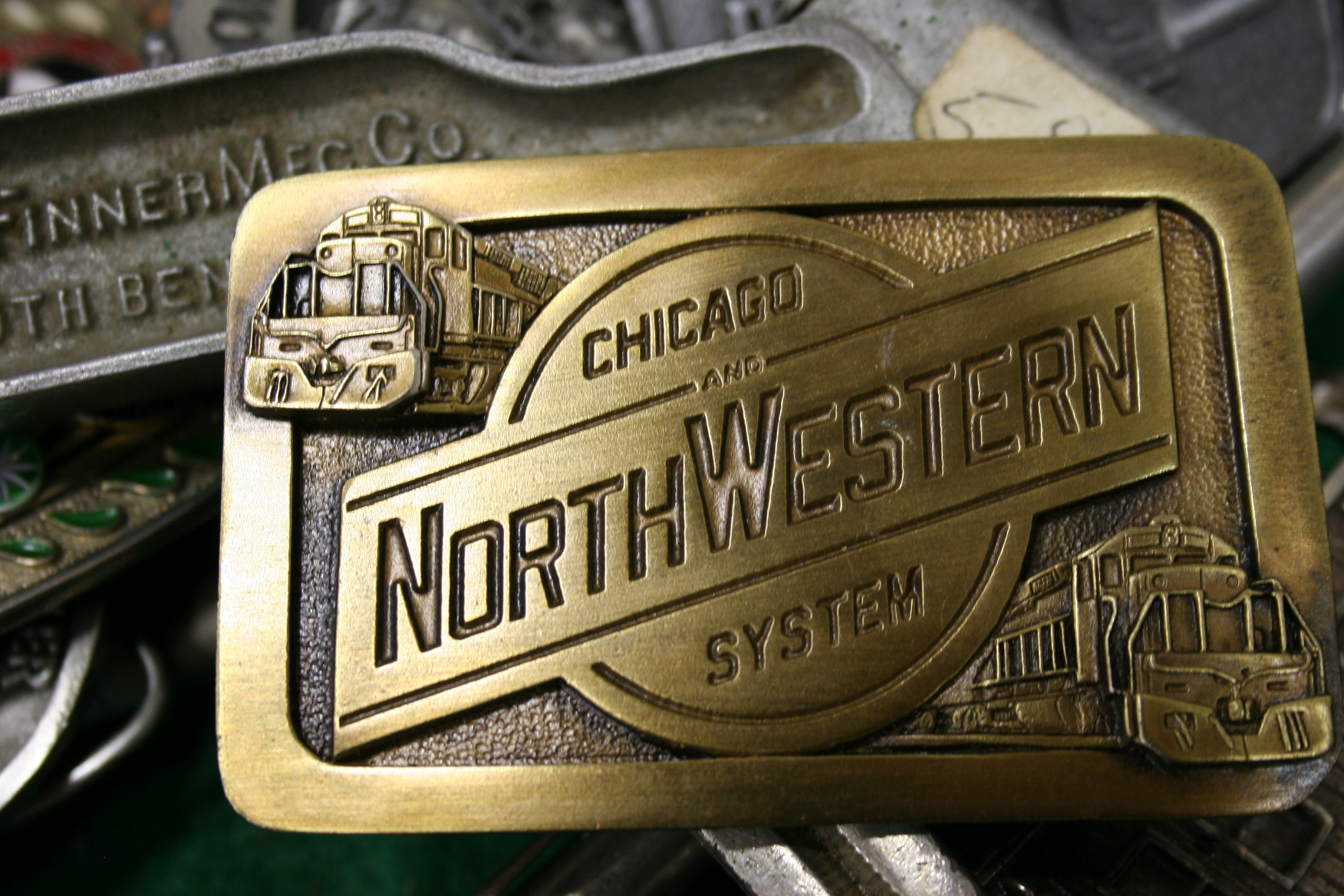
I found this attractive belt buckle among an assortment of buckles.

Yes, this hobby could get expensive. The details in train set-ups impressed me.

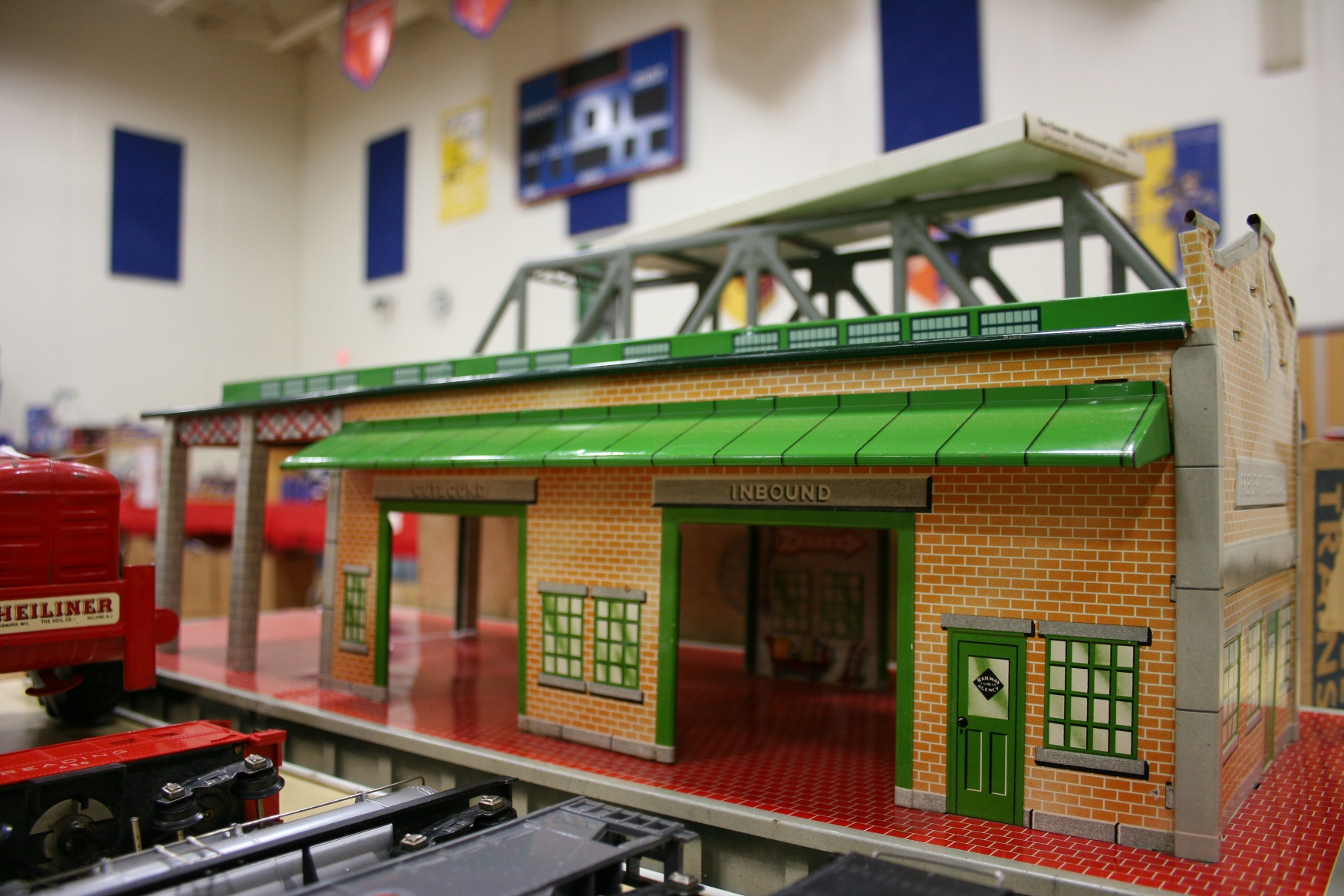
This replica toy depot caught my eye because it reminded me of the metal dollhouse I had as a child. Oh, how I wish my mom had kept the vintage dollhouse and not given it to my cousins.

Just the cheerful, vivid colors alone are enough to make you smile.

© Copyright 2012 Audrey Kletscher Helbling
Thank you to railroad artist John Cartwright for allowing me to photograph his beautiful ink drawing prints. You can learn more about this award-winning artist by clicking here.


The Last Supper Drama begins Holy Week at a rural Minnesota church April 3, 2012

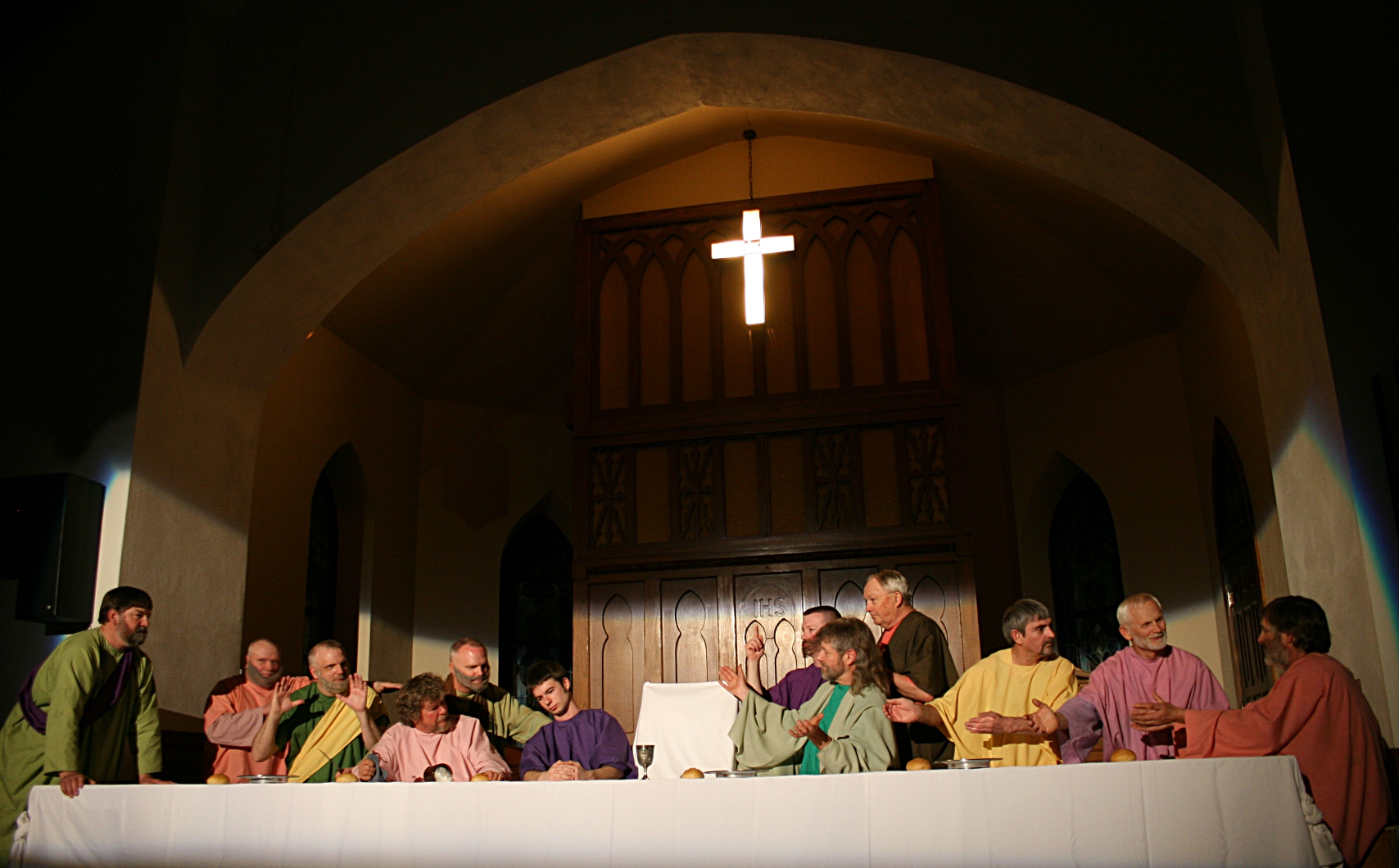
St. John's 50th presentation of The Last Supper Drama in the sanctuary with the actors positioned just as the disciples are in Leonardo da Vinci's painting. However, in the drama, an empty chair represents Christ.

THOUSANDS OF MILES from Milan, Italy, in the flat farm fields of Rice County in southeastern Minnesota, Leonardo da Vinci has left his mark on a small congregation.

For 50 consecutive years, St. John’s United Church of Christ, Wheeling Township, has presented The Last Supper Drama, a theatrical interpretation of the master artist’s most famous painting created in 1495 as a mural in an Italian monastery.

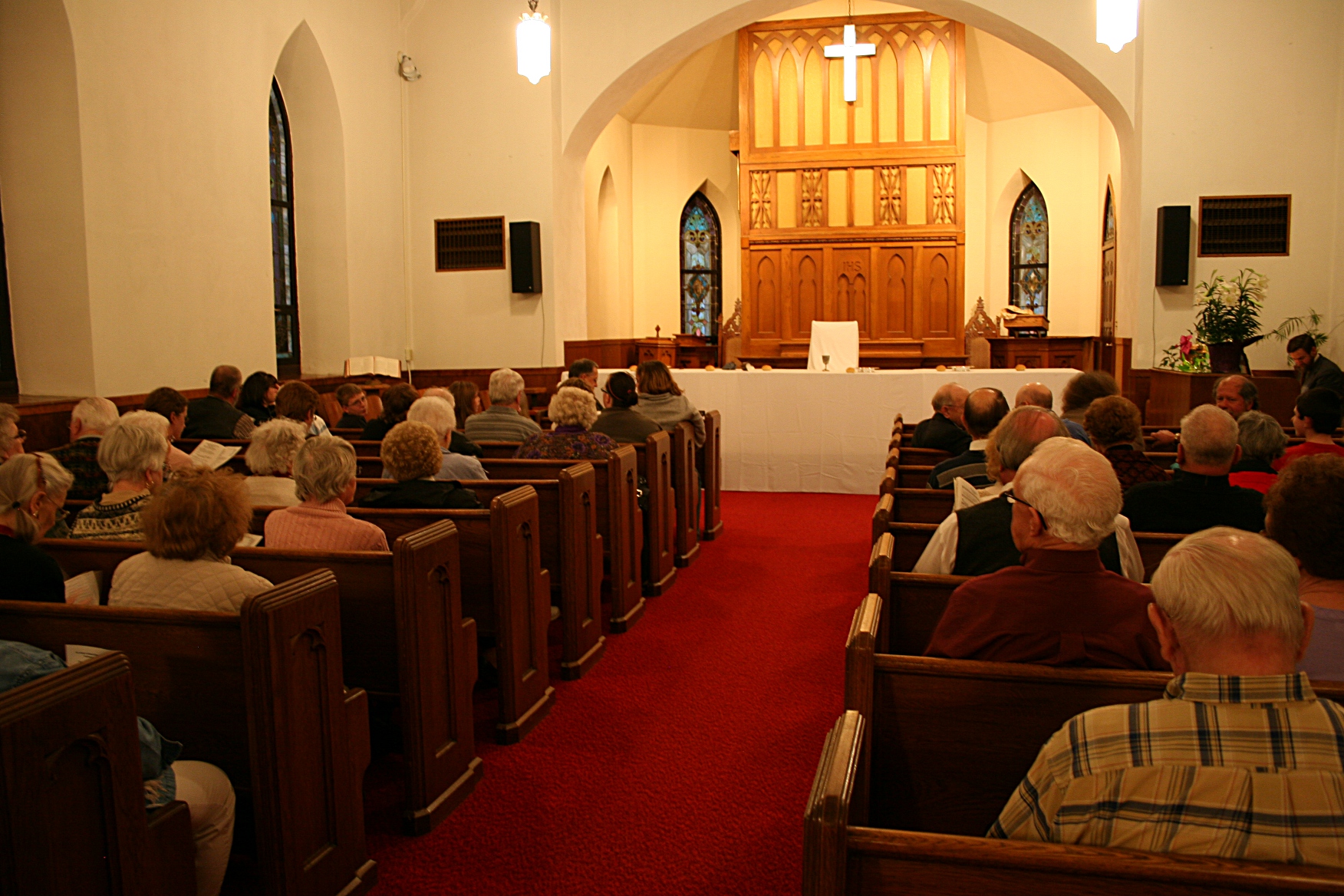
The rural Faribault church was nearly full for the golden anniversary of The Last Supper Drama.

Palm Sunday evening I joined a sanctuary full of worshipers to view the drama which inspires and moves for its touching, personal account of Christ’s last meal with his 12 disciples. In the script written so many years ago by a former St. John’s pastor, each of Jesus’ followers speaks of his personal relationship to the Lord.

In the reverent near-darkness of this late 1800s limestone church, the cast, in loud, clear, animated voices and with gestures fine-tuned by years of practice and presenting, truly bring to life da Vinci’s painting. They speak of their failures and deaths, of their love for Christ.

“Be not faithless, but believing,” advises doubting Thomas, played this evening by Thad Monroe.

Claims Don Katra as Matthew: “My life really began when I met and followed Him.”

Most of the actors are shown here as they pose for photos after the performance.

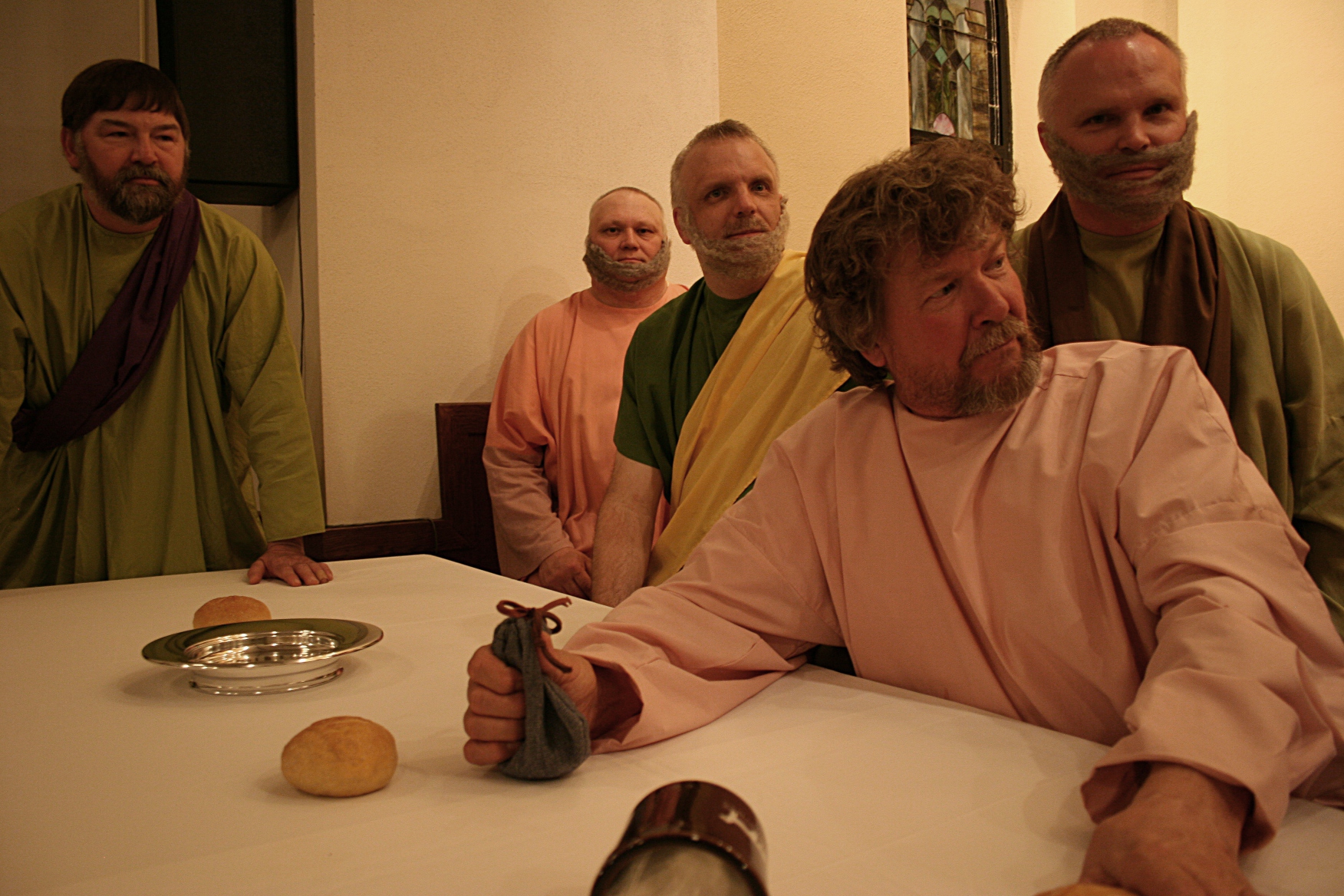
Judas grips the bag of silver, his reward for betraying Christ.

Even Gordie Wiegrefe as Judas the betrayer, admits, “It was too late. They wouldn’t take the silver back. I failed my Lord.”

The moment when Christ announces that one of his disciples will betray him is the precise moment da Vinci captures in his painting. In St. John’s performance, the defining moment of betrayal comes when Judas slams a jingling bag of 30 pieces of silver onto the table.

Later, after the drama concludes, St. John’s Pastor Lora Sturm tells worshipers, “Let us feel the light of His love as we enter the darkness of this Holy Week.”

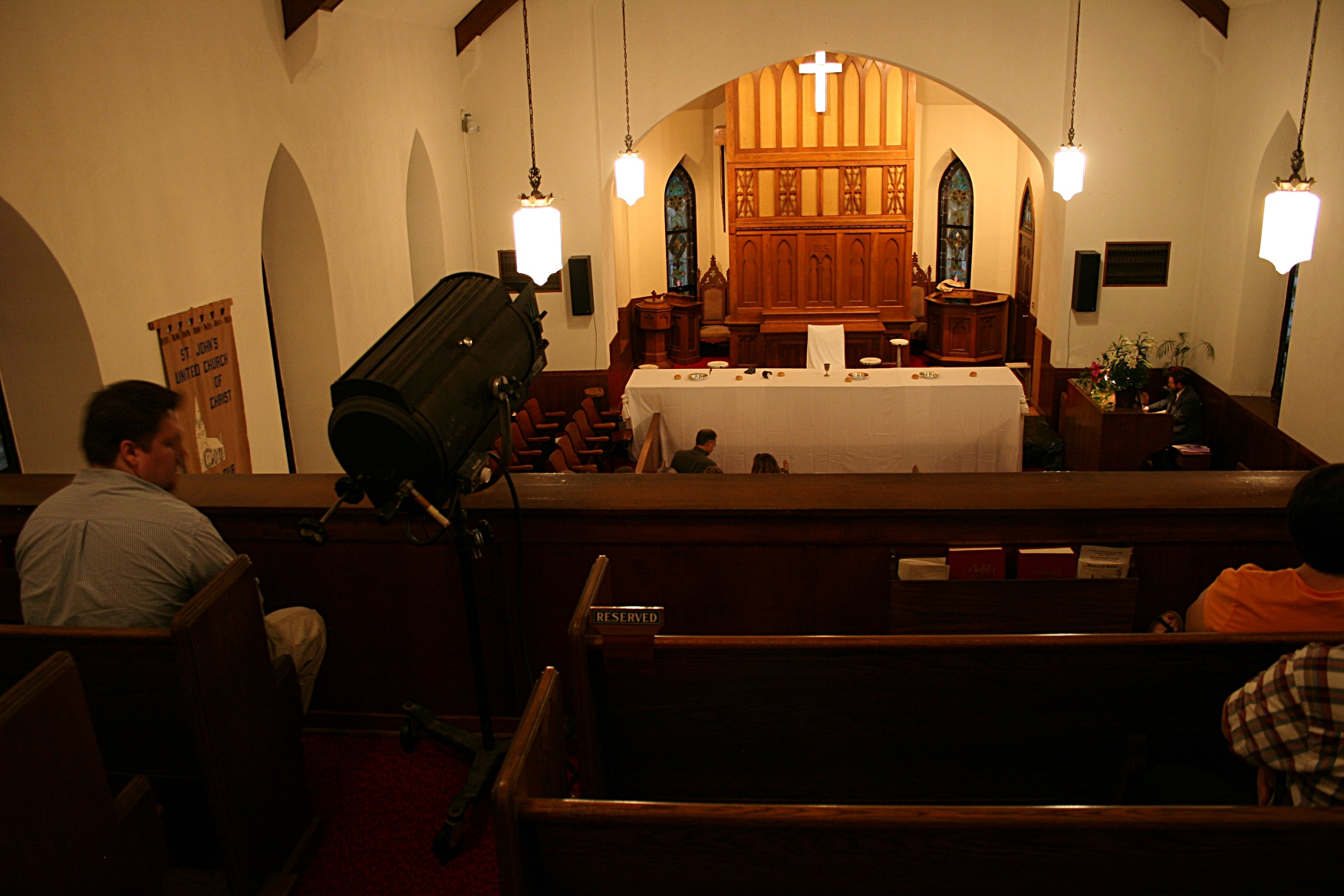
A view from the balcony before the drama begins shows the spotlight to the left and The Last Supper table below. The actors enter, spotlighted in the dark church, to take their seats at the table. There they "freeze" in place to mimic Leonardo da Vinci's painting.

That message resonates as a spotlight first illuminates a cross suspended above the altar in the dark sanctuary, then moves down to an empty chair representing Christ and finally pans out to shine upon all 12 disciples. It is how the drama opens and ends, impressing upon attendees the darkness of Holy Week which concludes on Sunday in the glorious light of the resurrected Lord.

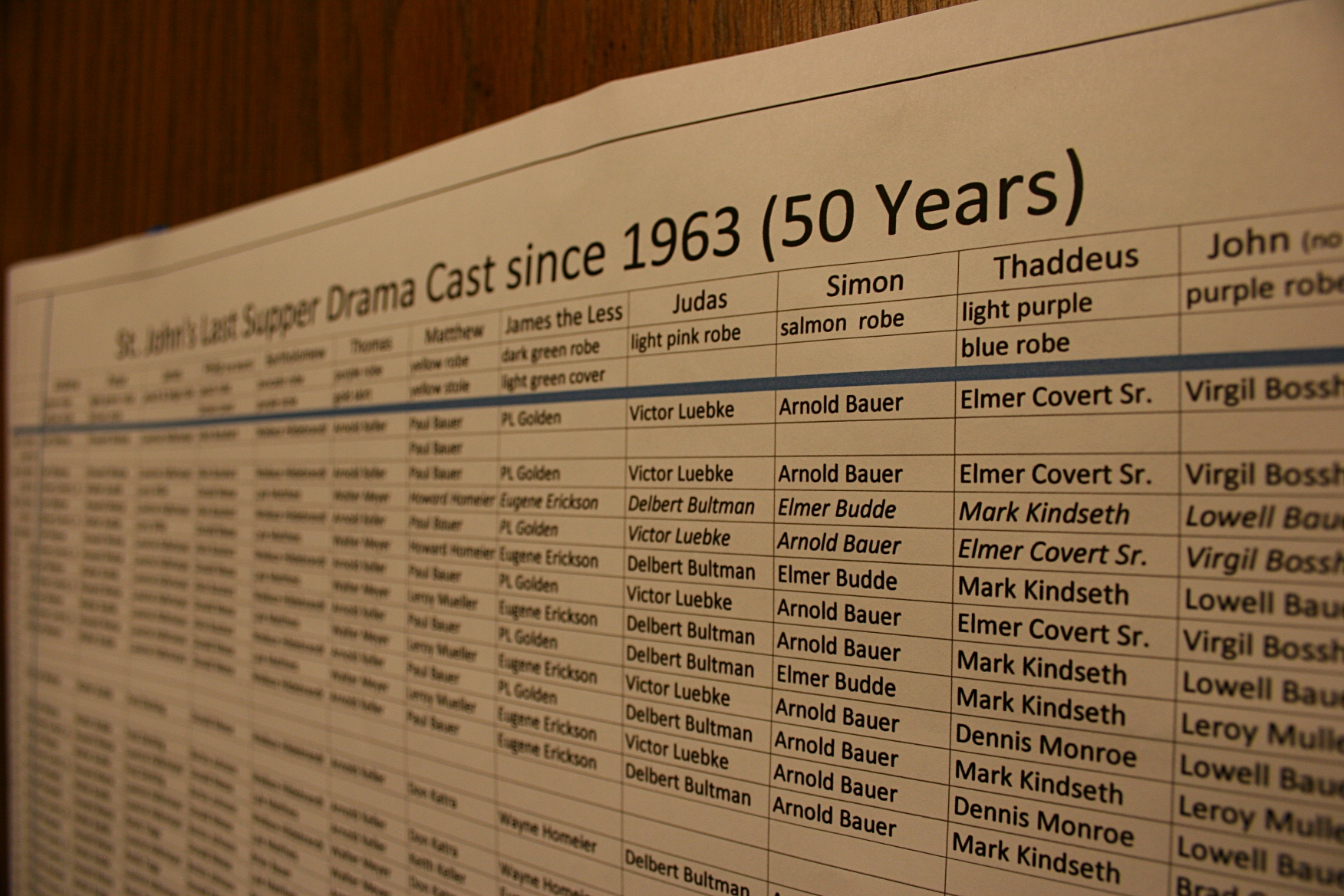
Spreadsheets on display Sunday evening listed those involved in the St. John's drama through-out its 50-year run.

FOLLOWING SUNDAY’S 50th anniversary performance, special recognition was given to those who have been part of St. John’s The Last Supper Drama. Original 1963 cast members Wallace Hildebrandt and Luverne Hafemeyer stood up to applause.

Other 50-year history trivia includes:

  • Seventy individuals have participated in the drama since 1963.
  • The role of John has been played by 10 actors.
  • The youngest actor was Kyle Keller who in 2011 assumed the role of Philip.
  • The oldest cast member was Kyle’s grandpa, Arnold Keller, who was 76 years old when he last acted in 1997.
  • Nine individuals have performed 20 or more times in the St. John’s drama.

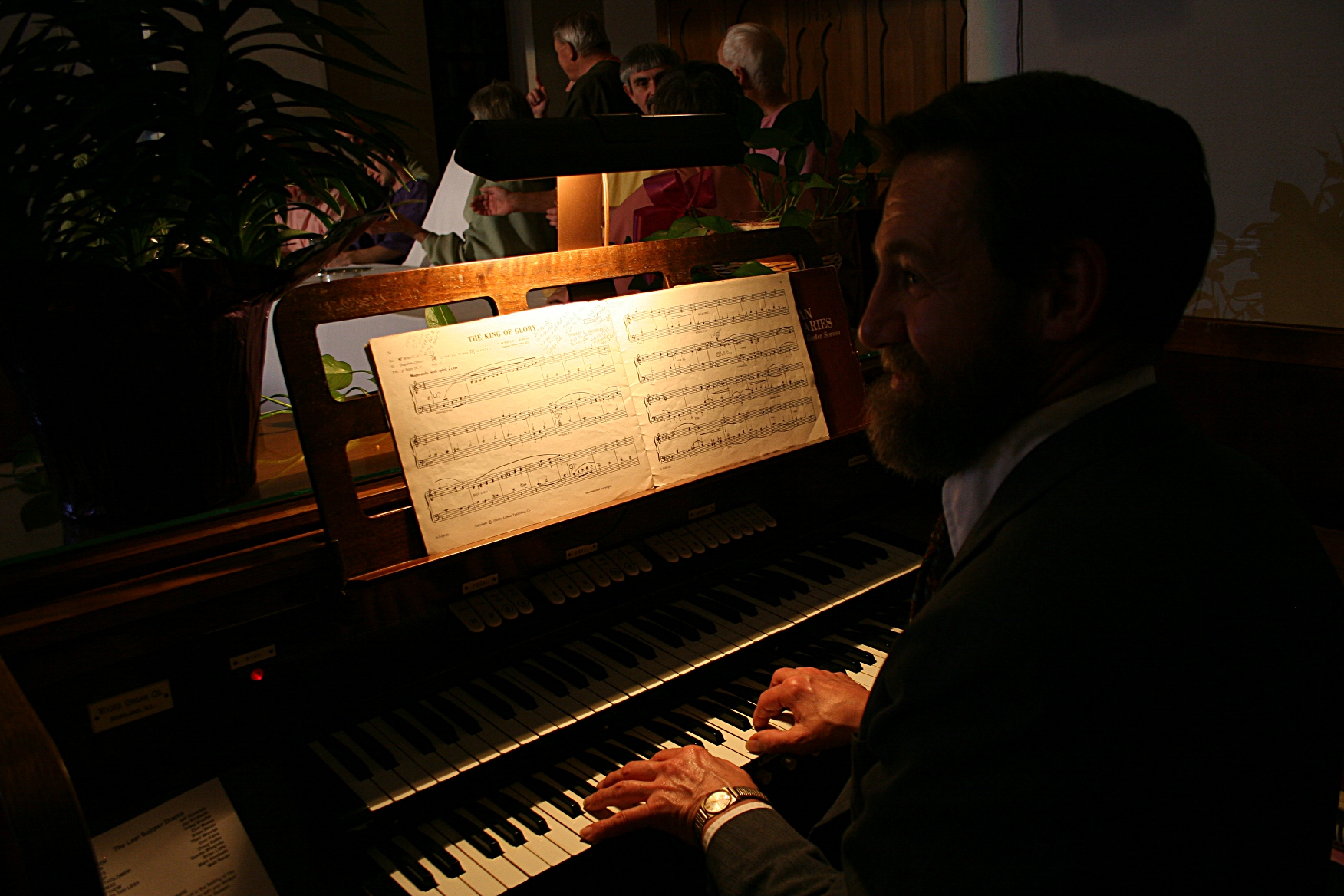
Craig Keller has been the long-time drama organist, playing the same music every year. The script and music remain unchanged in 50 years. Craig's father, Arnold, was an original cast member.

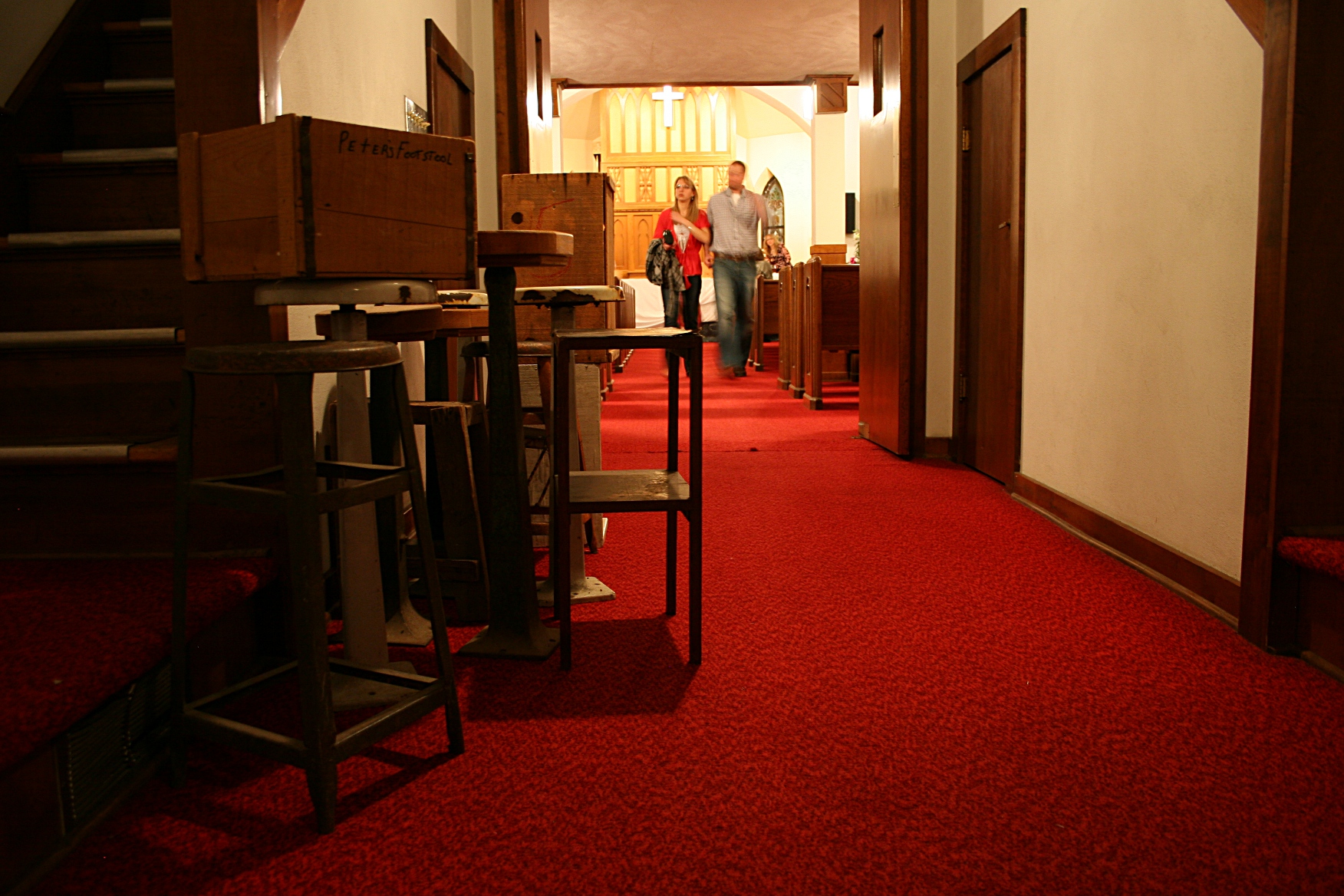
After the performance the cast took their stools and footrests out of the church, grouping them together (left) in the sanctuary entry. Later they carried the seats into a balcony storage area. Each stool is labeled with a disciple's name. They are the original stools, first used 50 years ago.

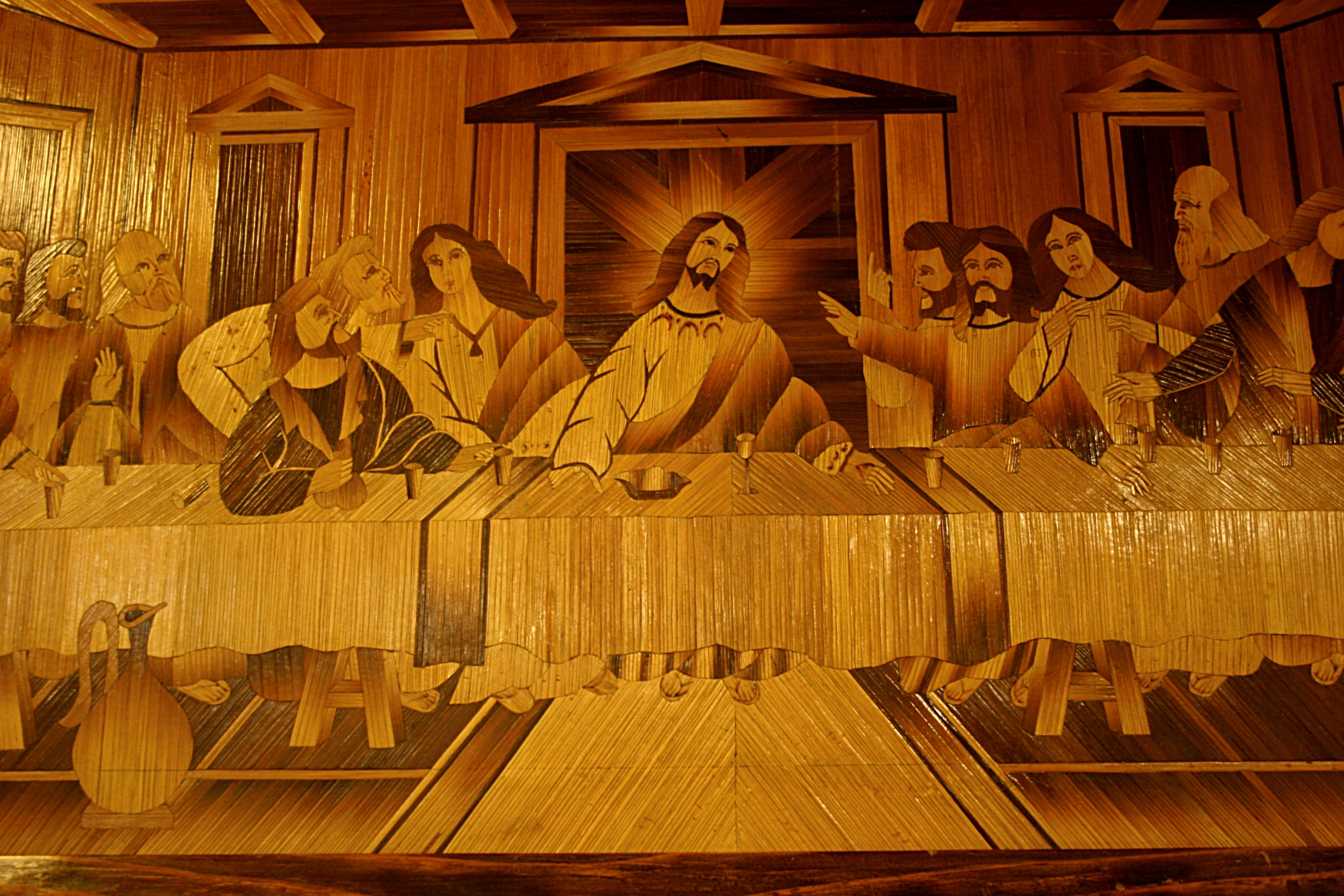
This artistic rendition of The Last Supper hangs in the St. John's Fellowship Hall.

After the performance, folks gathered in the social hall for cookies and beverages.

A tray of cookies awaits audience members and performers.

TO READ A PREVIOUS POST I wrote about the 2011 drama, click here.

© Copyright 2012 Audrey Kletscher Helbling
 

All aboard for the Randolph model train show April 2, 2012

Filed under: Uncategorized — Audrey Kletscher Helbling @ 7:06 AM
Tags: , , , , , ,

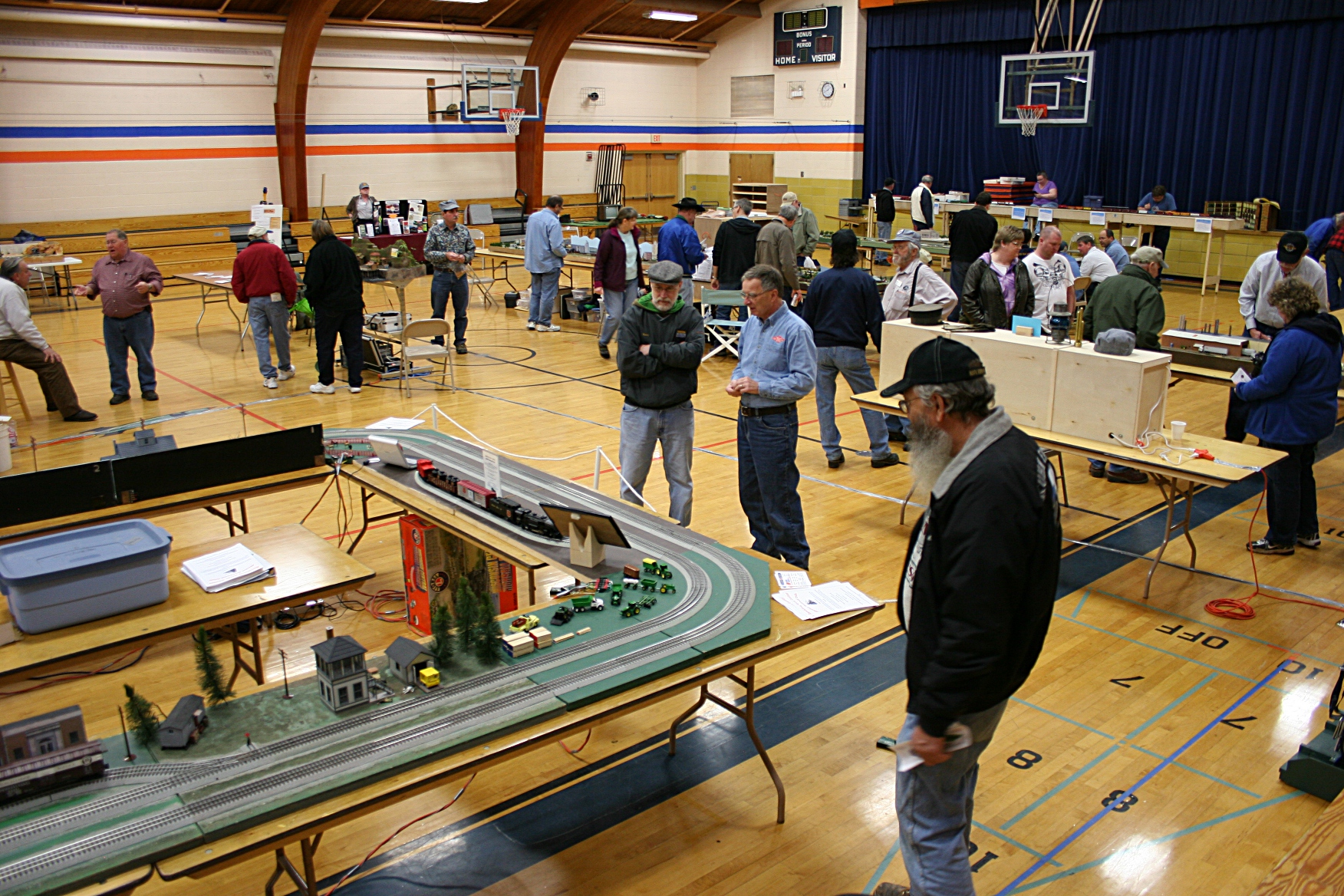
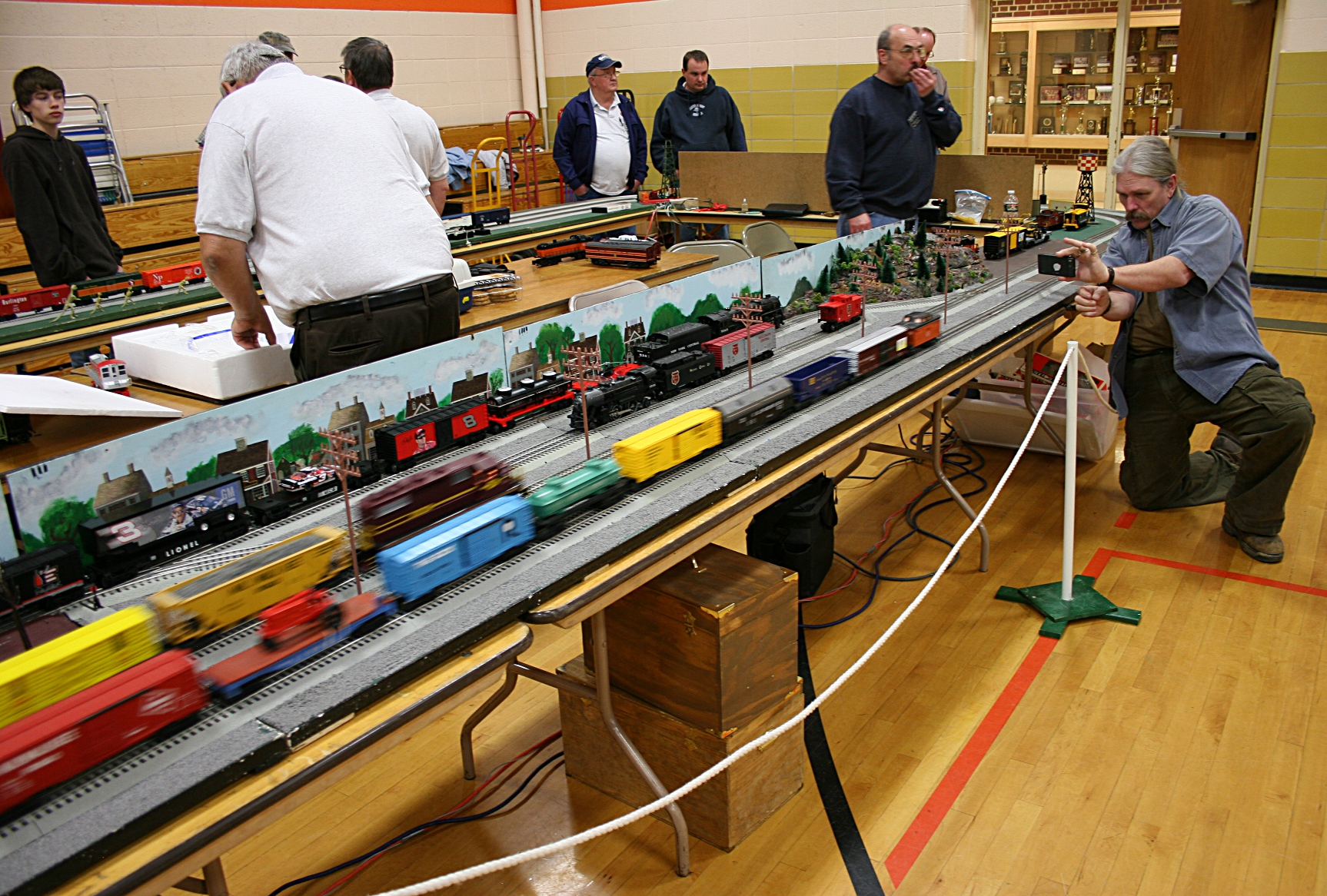
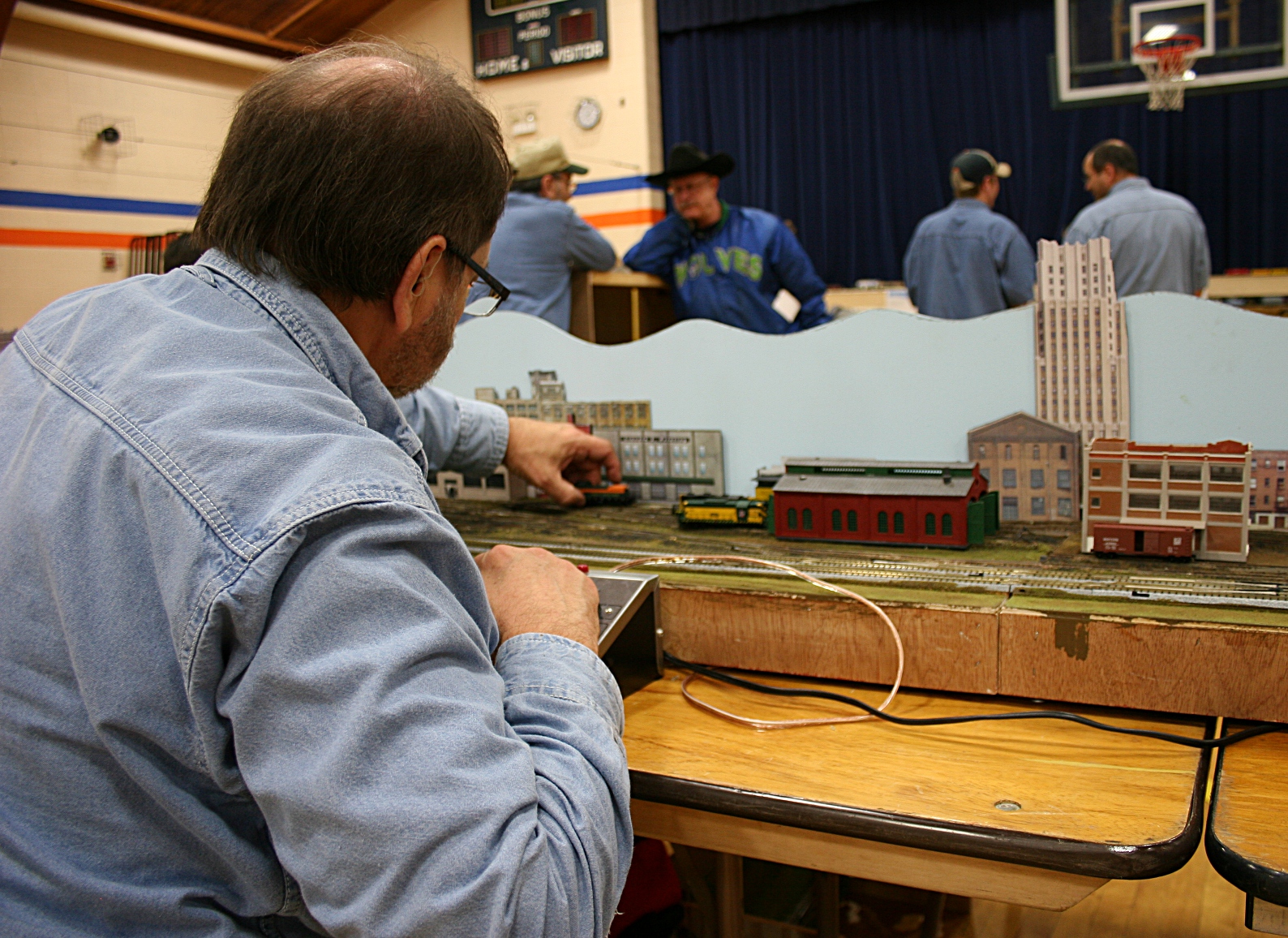
Railroad enthusiasts displayed their trains in the Randolph School gym Saturday. One participant told me he enjoys the social aspect of these gatherings. Last year he went to train shows on 16 weekends.

I WAS DEFINITELY out of my element on Saturday poking through two gyms packed with all things railroad at the annual Randolph Railroad Days.

You might even say I was overwhelmed by the sheer volume and variety of railroad-related merchandise vendors were selling and by the train set-ups hobbyists were displaying. I tried to meander on my own, unnoticed, no easy task when you’re sporting a DSLR camera and occasionally crawling on the floor. People tend to notice.

“Just pretend I’m not here,” I told at least one teen (or pre-teen), who scooted out of my viewfinder range when he spotted me aiming the lens his direction.

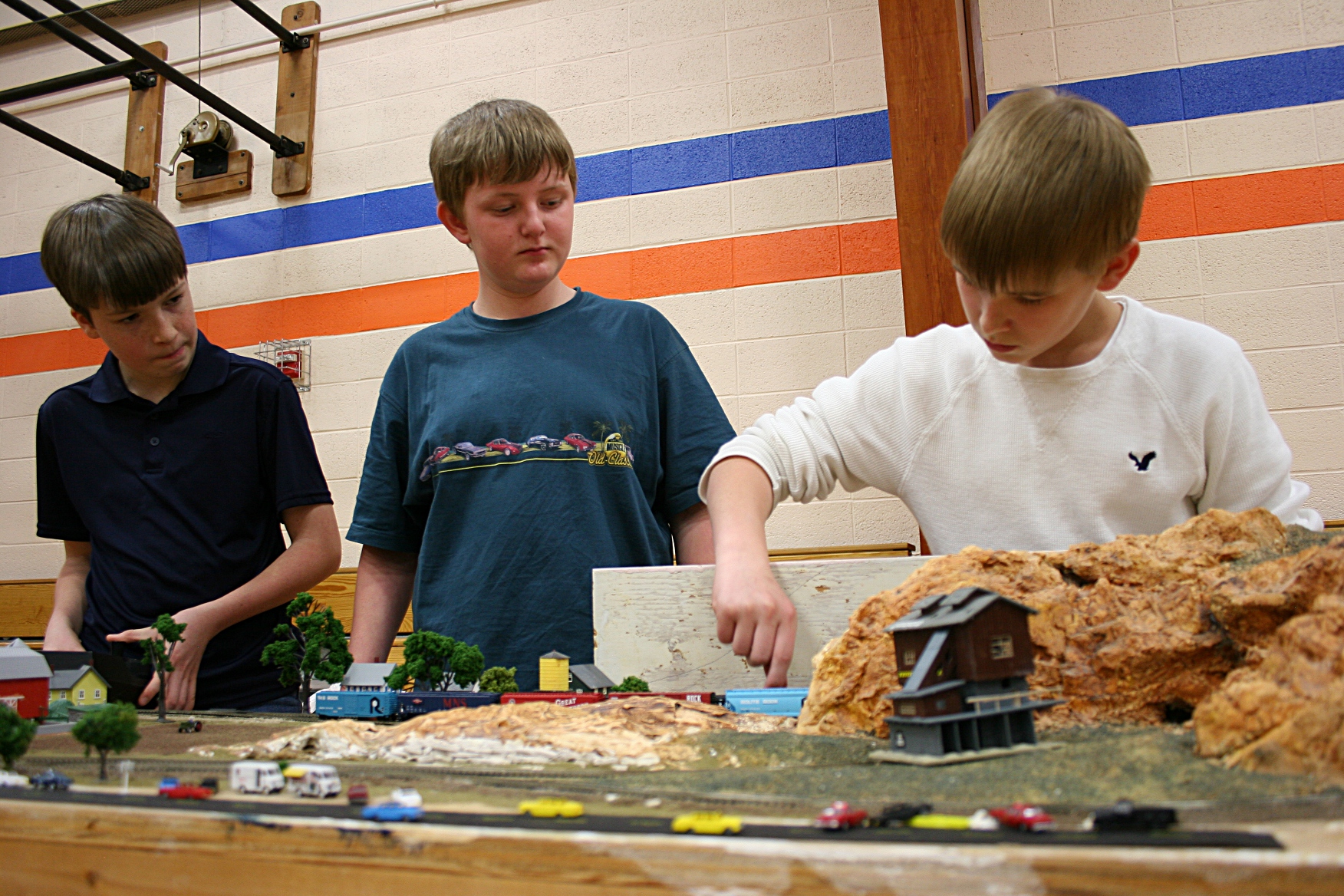
I managed to snap this photo after telling this trio to ignore me and my camera.

As for the younger elementary-aged boys, I found keeping up with them as they darted from one train model to the next an impossible pursuit.

The middle-aged men seemed mostly interested in engaging me in conversation about the details of model railroading. I decided beforehand that I wasn’t taking notes and that my attendance at this event would be more about my observations and about having fun and not about learning the intricacies of this hobby.

Like engineers, most participants tend their trains. However, I witnessed a small fire, at an unattended table, when a wire shorted. I did not respond quickly enough to either extinguish the flames or take a photo.

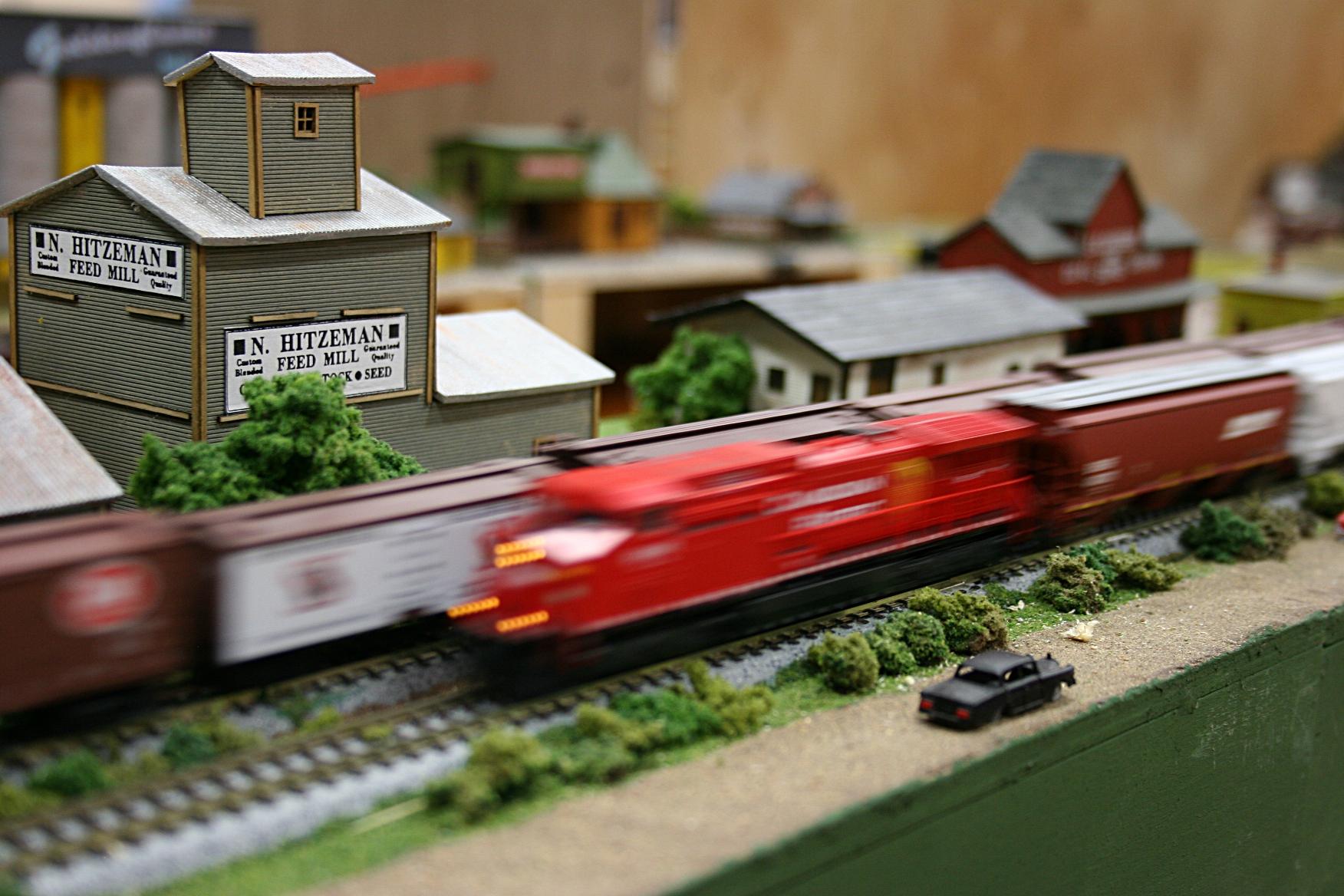
As you can see by the blurred train, these trains speed around the tracks.

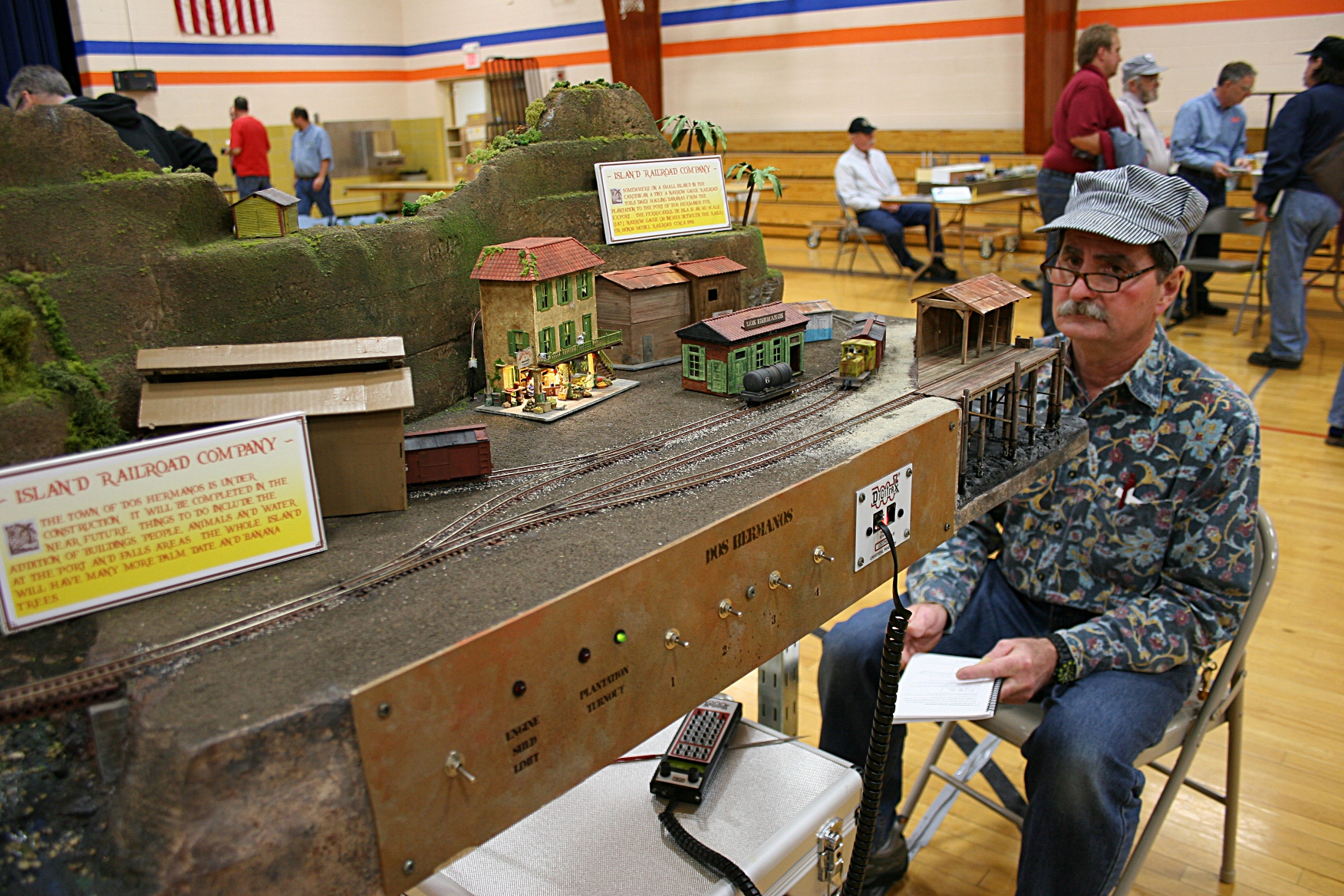
I judged this "banana train" display as the most creative with mountains and waterfalls in a tropical South American setting. I wanted to hop on board. The waterfalls are on the other side of the mountains.

The overseers—two elderly gentleman perched on bleachers and viewing the action below—were content to let the younger ones set up and run the show, they told me when I climbed to get a different perspective. (They tagged themselves “the overseers.”)

Here’s what I concluded: No matter your age, there’s something magical and mesmerizing about watching toy trains travel a track.

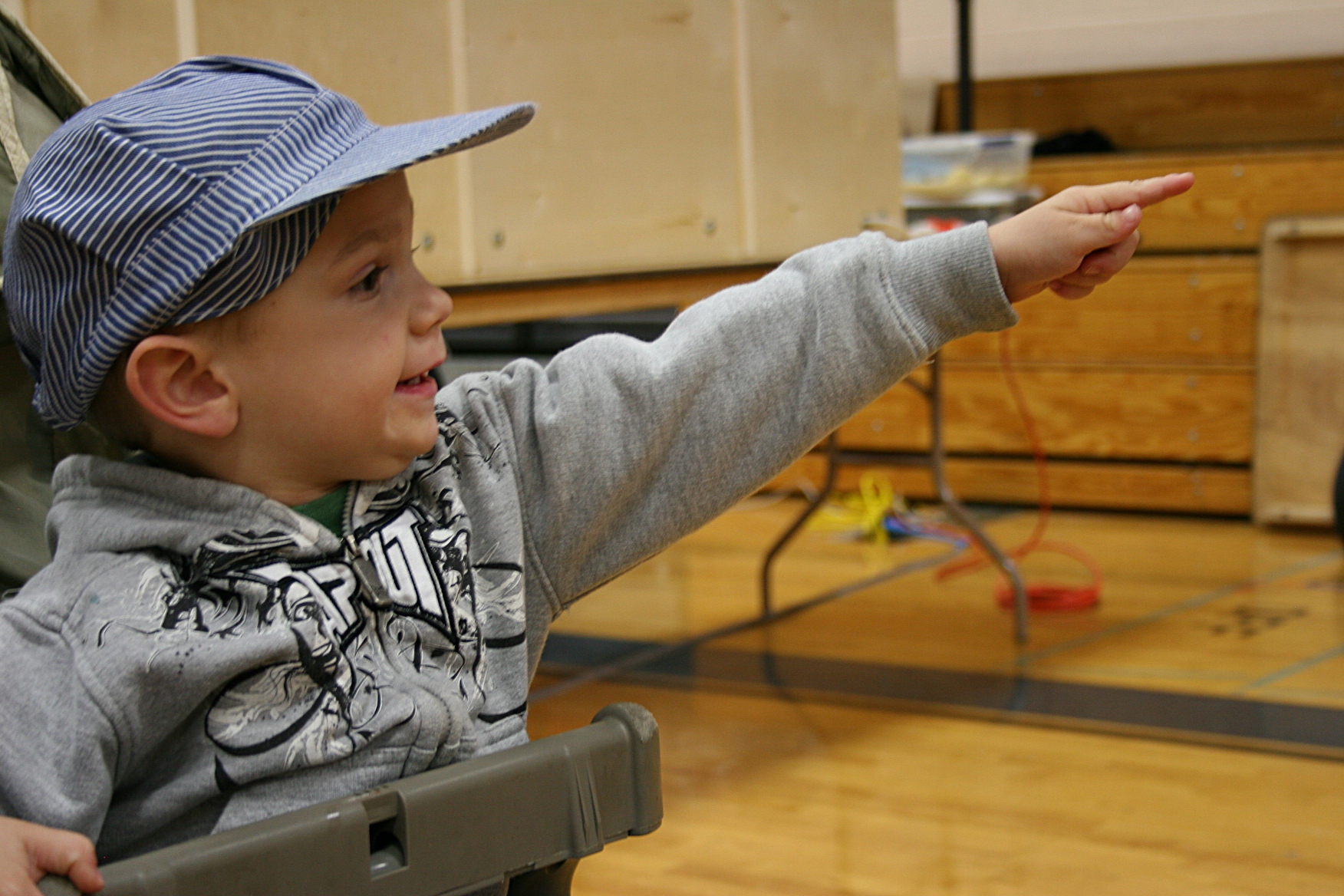
Two-year-old Eli, confined to his stroller, points to trains circling a track.

Eli was pointing to this train set-up being photographed by another railroad enthusiast with his cell phone.

The details in the train displays impressed me. One engineer asked if I saw a cat sitting on a fence outside a barn. I couldn't find it. Then he pointed to a cat so tiny I wished I had a magnifying glass.

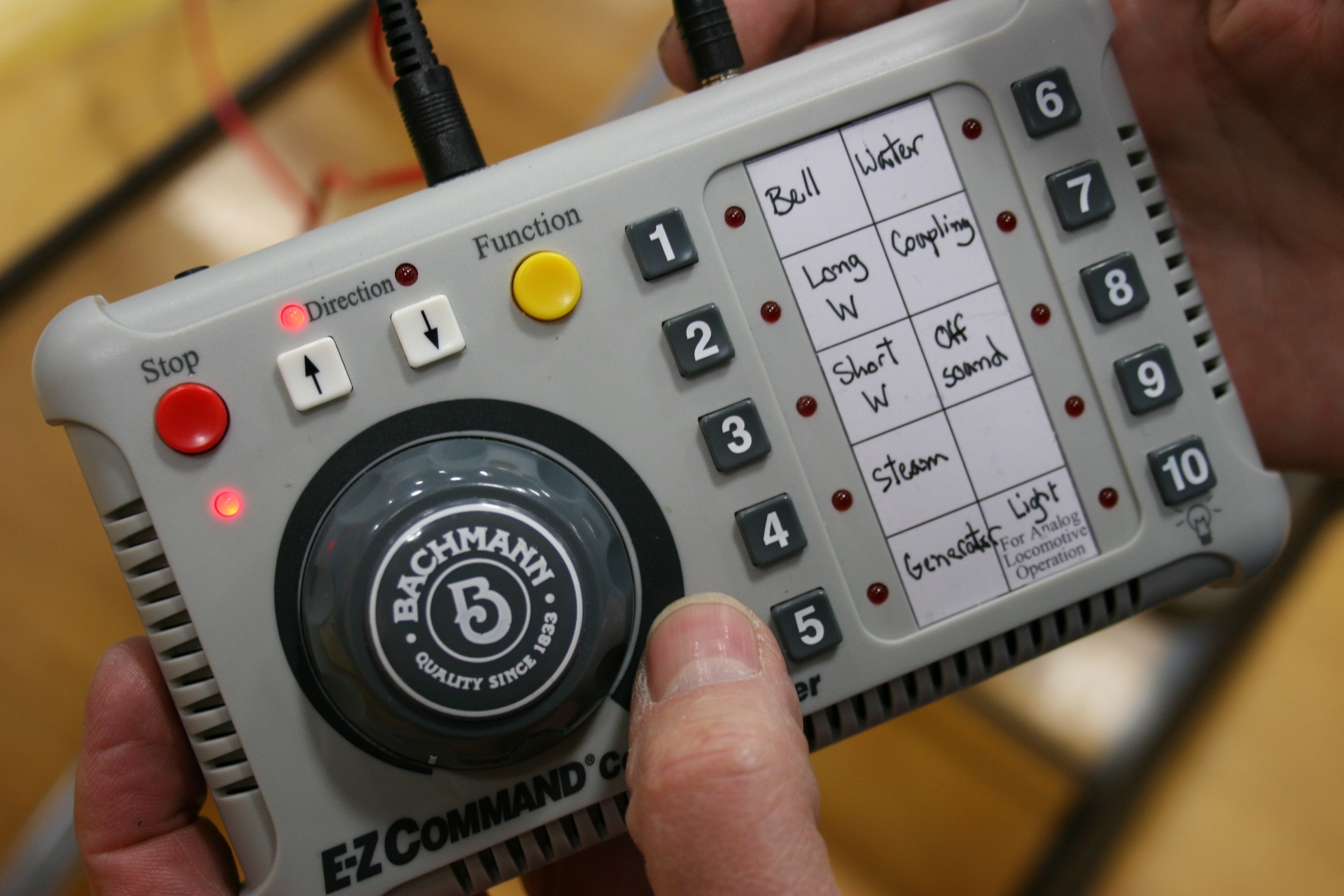
Railroad enthusiast Jim from Northfield demonstrated the sounds, etc., that he can control on his train with the simple push of a button. Amazing.

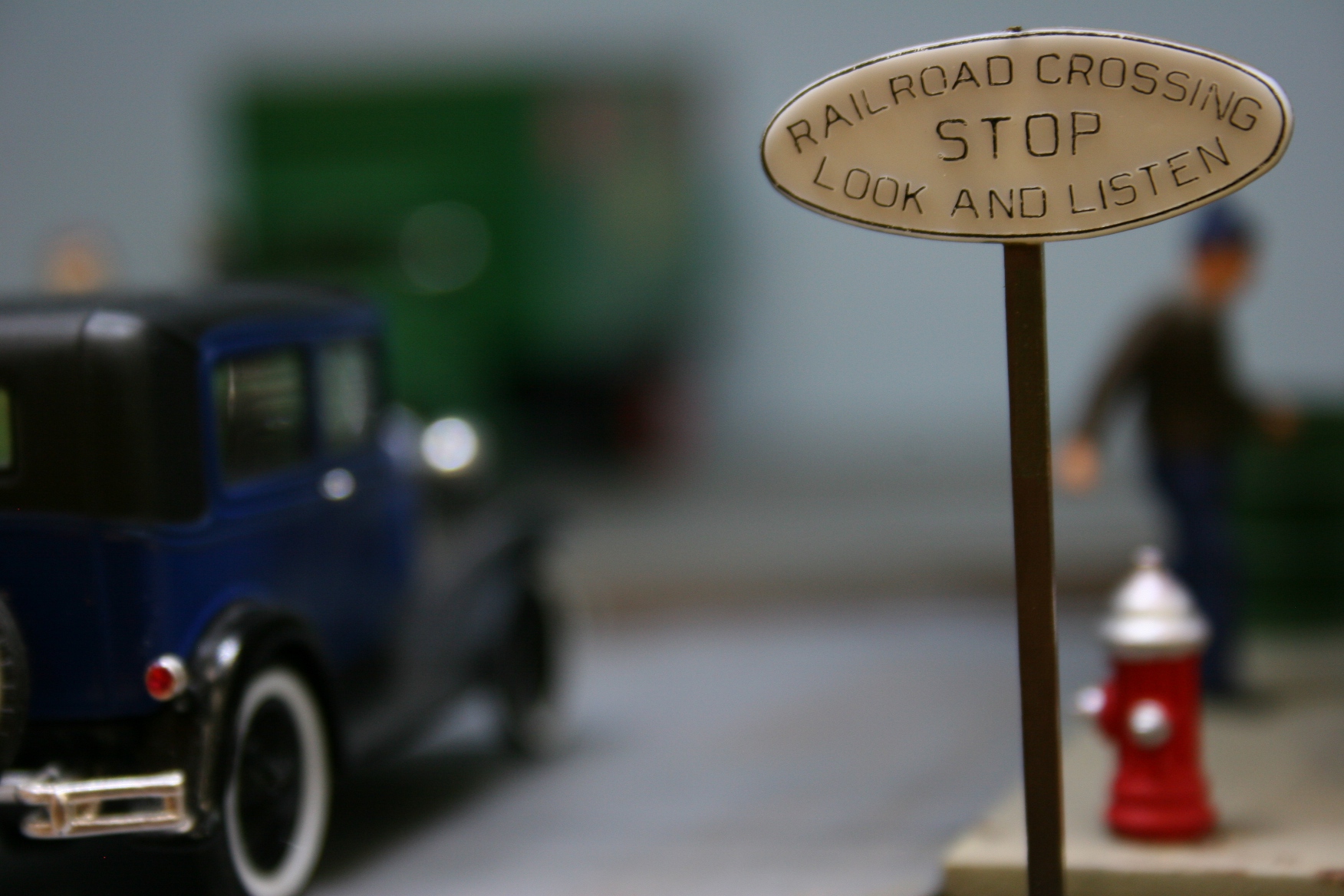
These matching signs made me chuckle.

WHAT PULLS YOUNG and old alike to thrill in model trains?

Check back for photos from the Randolph Railroad Days swap meet.

© Copyright 2012 Audrey Kletscher Helbling
 

Appreciating the corner gas station March 14, 2012

THERE’S NOTHING PARTICULARLY appealing about filling up with gas these days. Pull up to a generic convenience store/gas station, pump your own gas and then kiss a sizable wad of your money goodbye.

It wasn’t always that way, though, either in gas prices or service or the cookie-cutter service stations.

Maybe because my Uncle Harold once owned a gas station/garage in my hometown of Vesta, I am drawn to former full-service gas stations, specifically those angled into a street corner. My uncle’s station was neither angled nor on a street—his sat along Minnesota State Highway 19.

Most old-style corner service stations have long closed, although the buildings still exist, either vacant or re-purposed. They possess a nostalgic and architectural charm that spells magic.

Just look at this fine example in Morristown, a town of about 1,000 residents in Rice County, Minnesota, within 10 miles of my Faribault home.

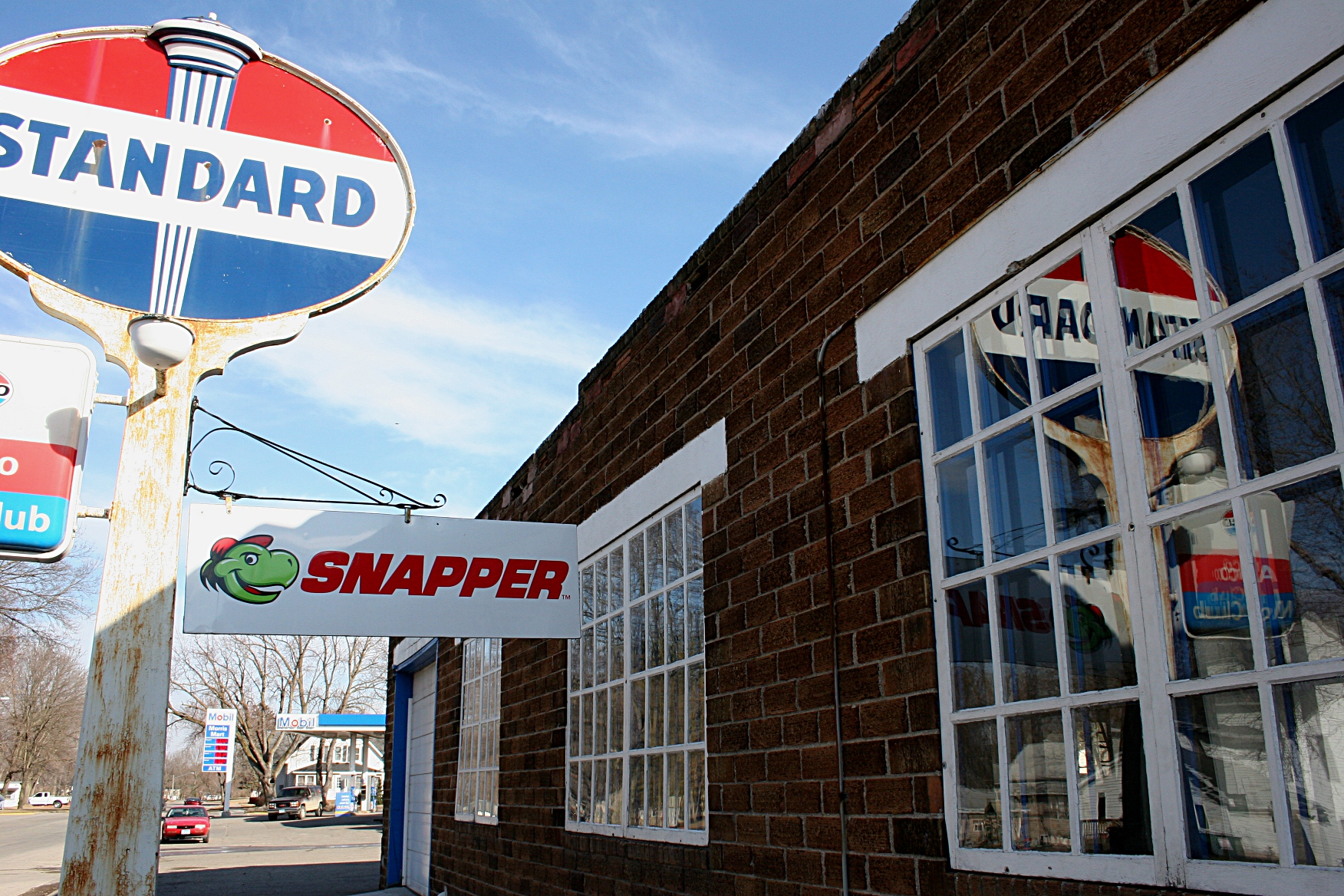
The old corner style gas station and vintage Standard Oil sign on Morristown's main street.

For years I’ve passed by this building, but never once stopped to photograph it. I have recently come to realize that such a plan of inaction, of thinking I’ll photograph a scene when I have more time, is unwise. Waiting equals only regret when a structure is torn down or falls into a rotting heap.

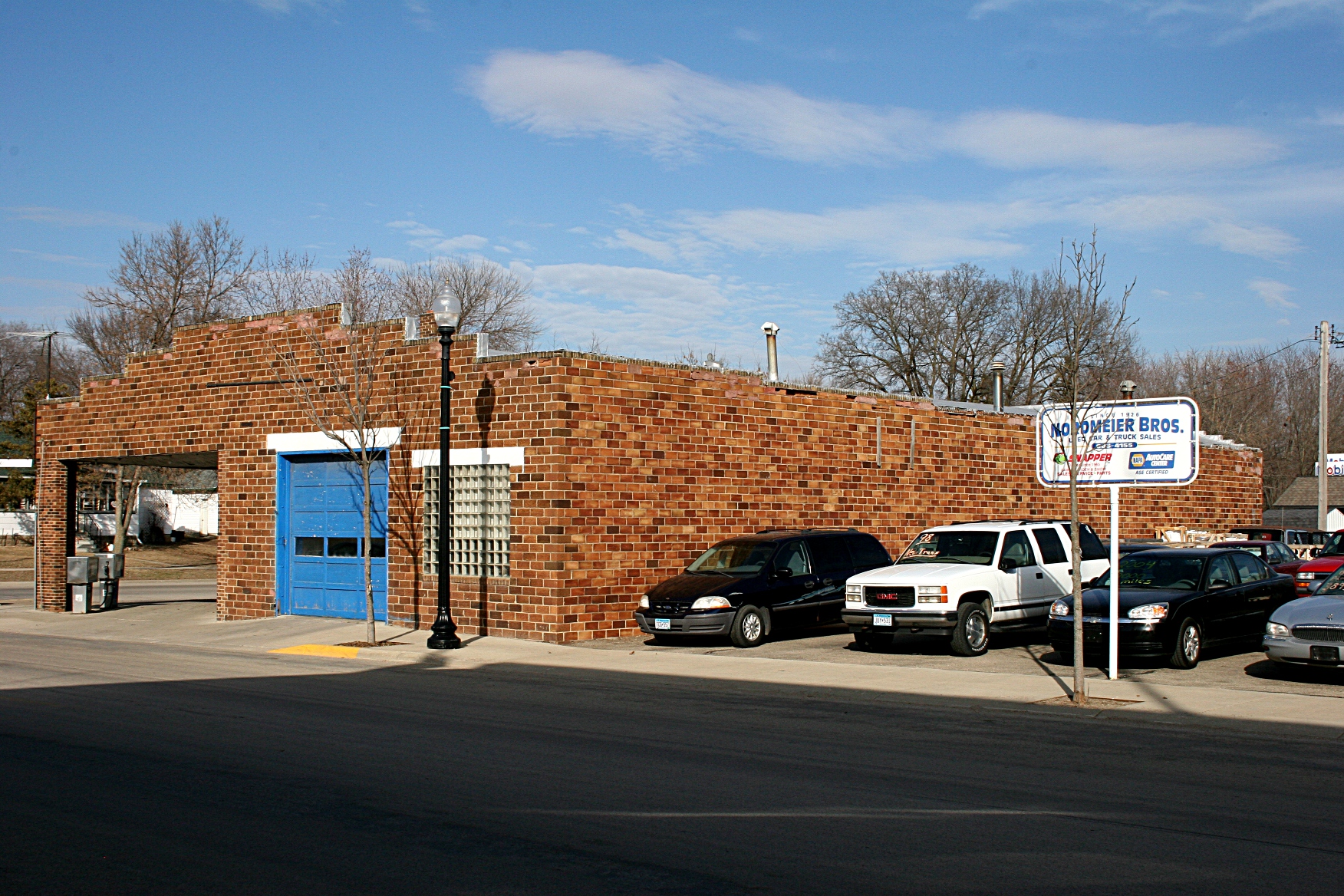
That’s not likely to happen anytime soon at Nordmeier Brothers, in business since 1926. The sturdy brick building with the brilliant blue doors appears, from the exterior, to be structurally-stable. And although the old gas pumps have long been abandoned, Nordmeier still operates a garage and sells used vehicles.

I love how the vintage Standard Oil sign reflects on the windows of the garage late on a sunny afternoon in March. There's a modern Mobil station/convenience store next door.

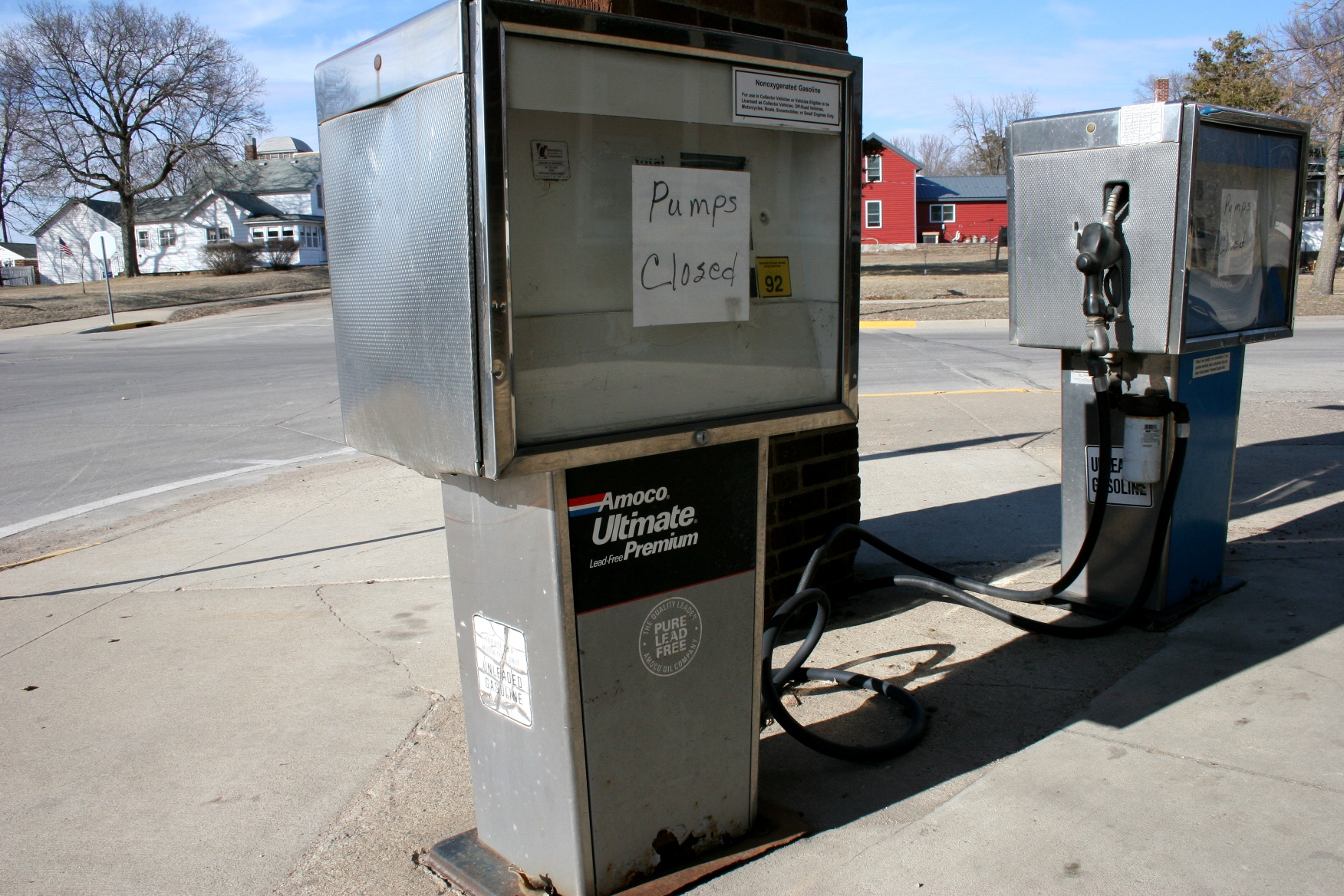
Old, abandoned gas pumps at Nordmeier.

There’s much to be said for long-standing family businesses like Nordmeier Brothers that have anchored small-town Main Streets and stuck it out through economic difficulties. Not that Morristown is devoid of vacant buildings—it certainly isn’t.

But at least it has this lovely corner gem of a building, a place that hearkens to years past and the memories of full service gas stations and lower, much lower, gas prices.

I'm an appreciator of vintage signs, too. I hope the folks of Morristown value this sign.

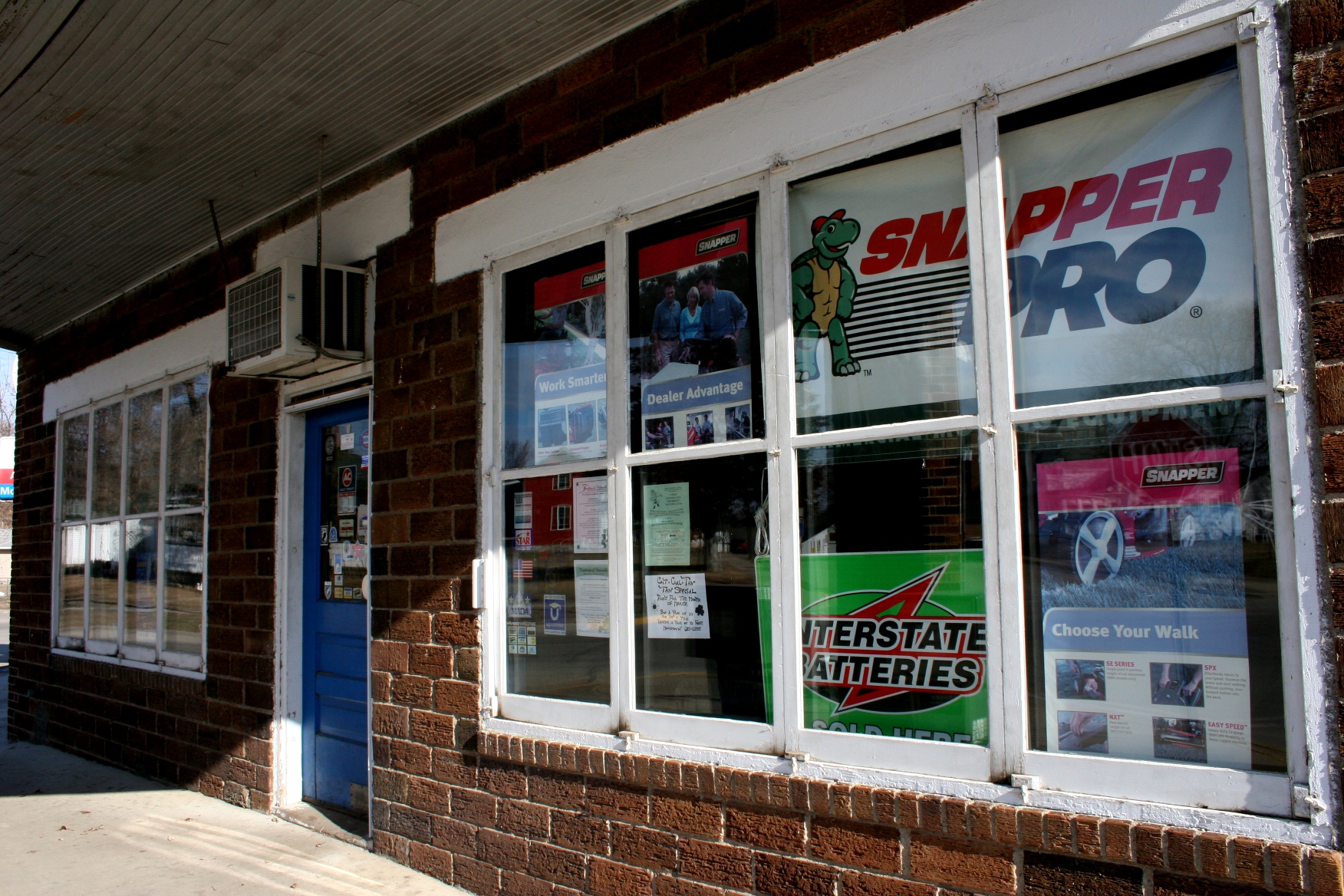
It takes awhile to read all the window and door signage, a small-town art form of its own.

You can pick out a vehicle right here at Nordmeier Brothers in downtown Morristown. The business once was a Chevrolet dealer until GM began pulling franchises several years ago.

© Copyright 2012 Audrey Kletscher Helbling
 

Moody March in Minnesota March 8, 2012

Filed under: Uncategorized — Audrey Kletscher Helbling @ 7:44 AM
Tags: , , , , , , ,

An abandoned farmhouse along Minnesota State Highway 19 east of Vesta on the southwestern Minnesota prairie.

WINTER IN MINNESOTA this time of year and in November often seems stripped of color, a drab world of black-and-white mimicking the melancholy mood of those who wish only for spring.

So it takes some effort to appreciate this month of March which can’t quite decide whether to pursue spring or linger awhile yet in winter.

One day she’s dark and brooding, the next bright and cheery. Understanding her mood swings can be a challenge.

Sometimes you just have to accept who she is and realize that even in her colorless world, a certain sense of beauty prevails.

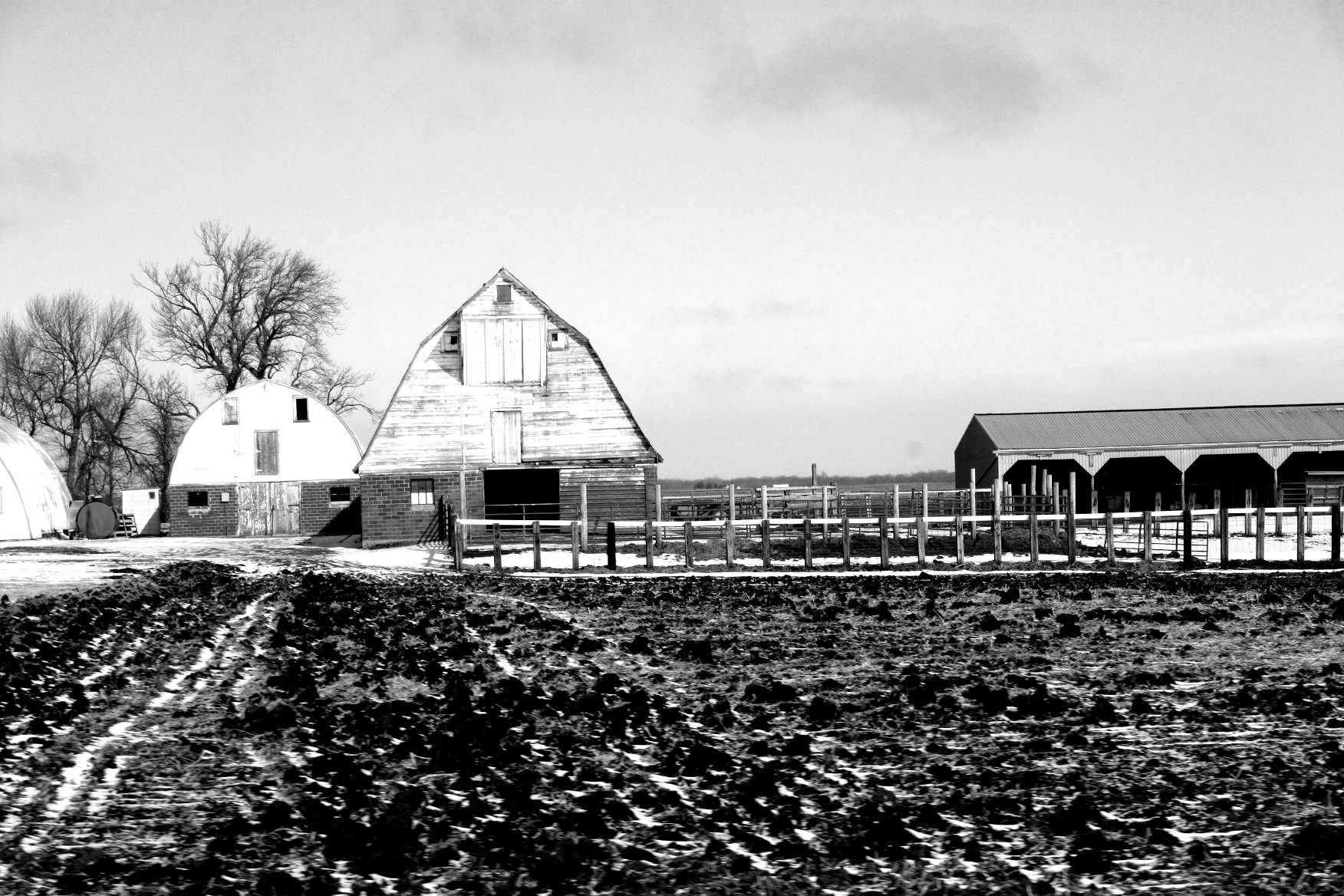
An aging windmill and a cluster of old buildings define this picturesque farm site along Minnesota State Highway 60 just west of Waterville in southeastern Minnesota.

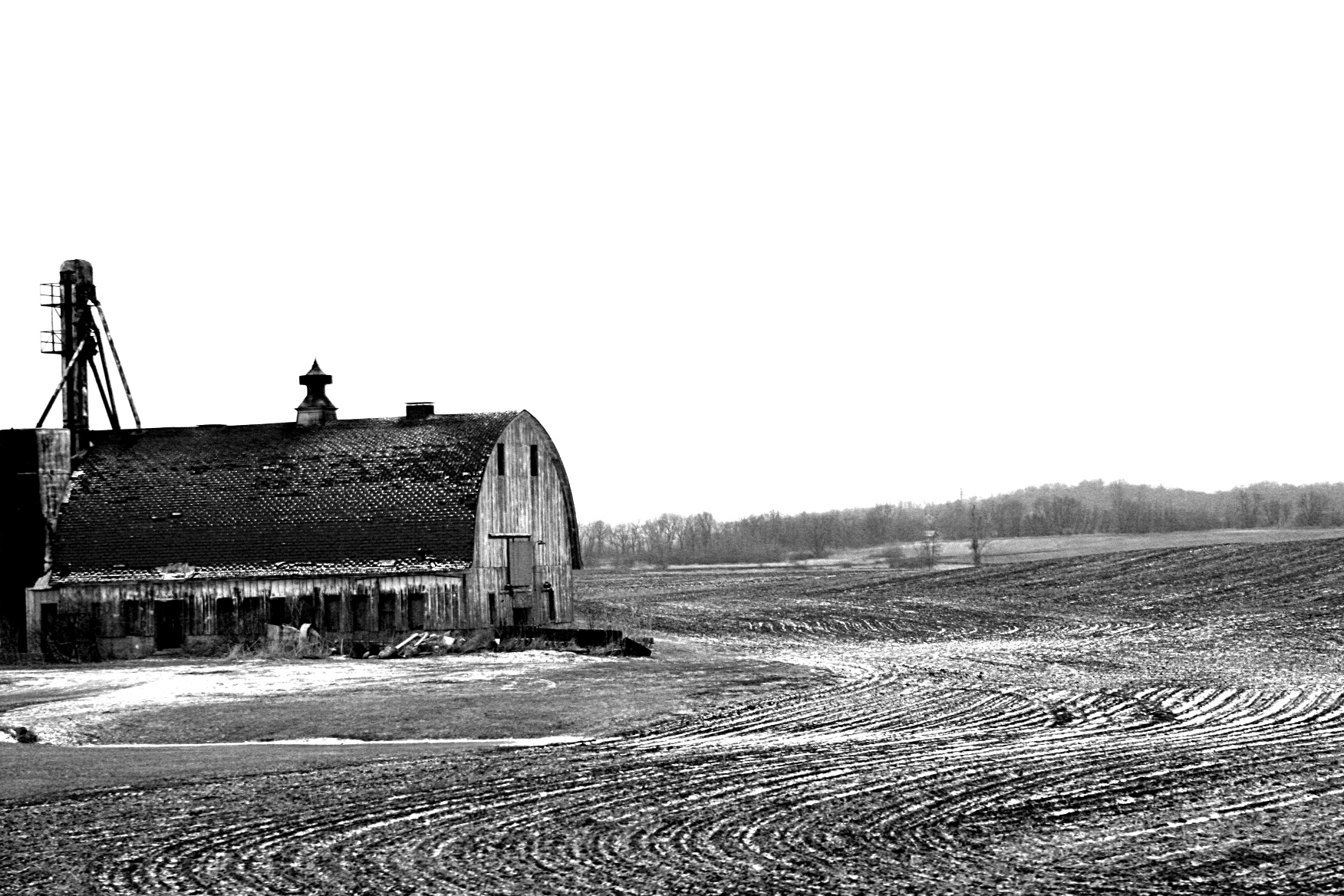
The sweeping curves in the field drew my eye to photograph this scene west of Waterville along State Highway 60.

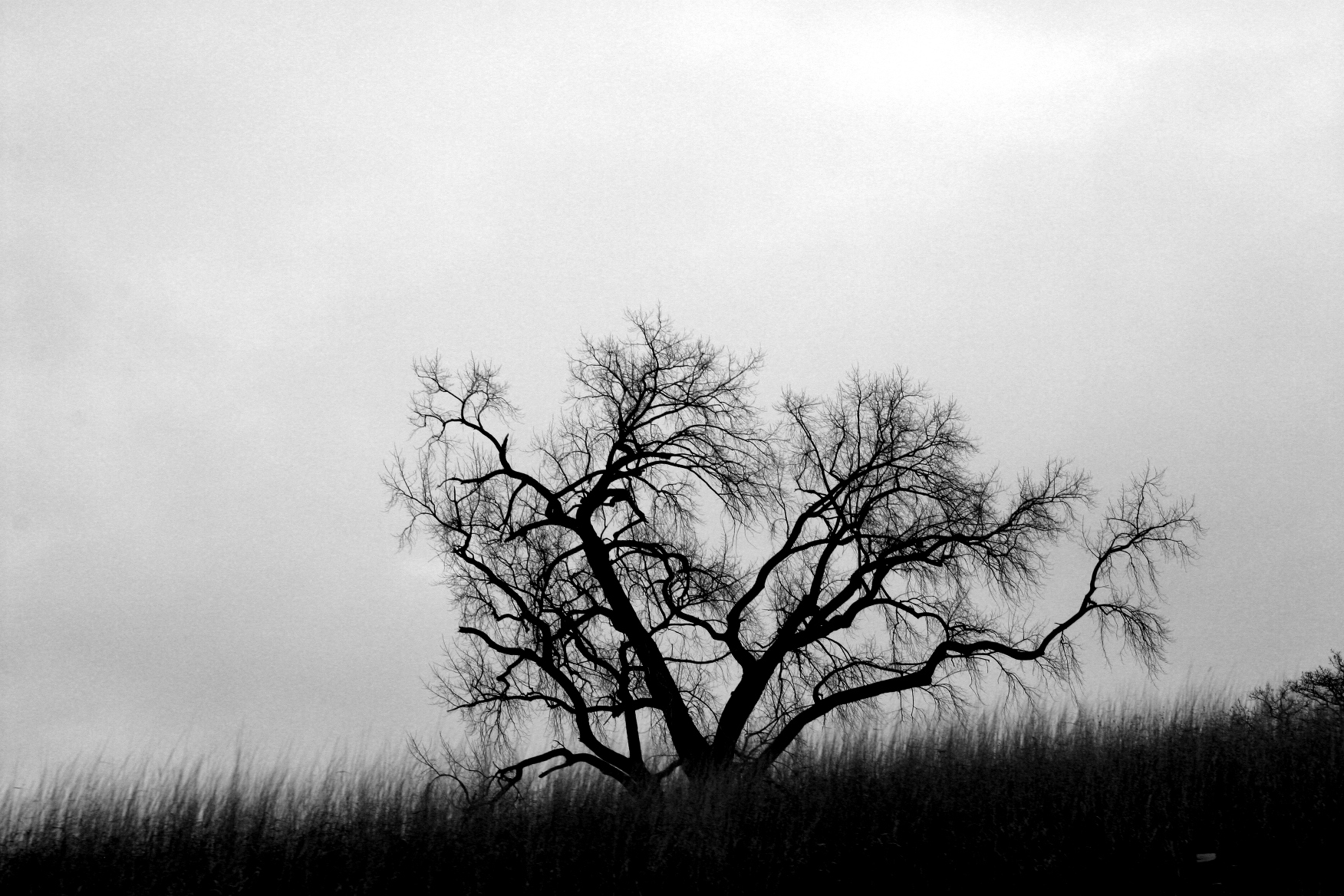
A lone tree along Minnesota State Highway 60 between Faribault and Waterville on a brooding March morning.

Farm sites mark the landscape along a back county road between New Ulm and Morgan.

All of these images were taken last Saturday morning from a moving vehicle while traveling through southern Minnesota. Each has been edited to create a more artsy, earthy feel.

© Copyright 2012 Audrey Kletscher Helbling
 

Perspectives on life presented in Saint Peter galleries March 6, 2012

Filed under: Uncategorized — Audrey Kletscher Helbling @ 7:53 AM
Tags: , , , , , , ,
The Arts Center of Saint Peter, 315 South Minnesota Avenue, St. Peter, Minnesota.

The Arts Center of Saint Peter, 315 South Minnesota Avenue, St. Peter, Minnesota.

LIKE BLACK AND WHITE, night and day, the artwork of Pamela Bidelman and Kay Herbst Helms, at first glance, holds no comparison.

Pam, of St. Peter, is a painter, working in the more abstract in her current exhibit, “lamina,” installed at the Arts Center of Saint Peter Moline Gallery.

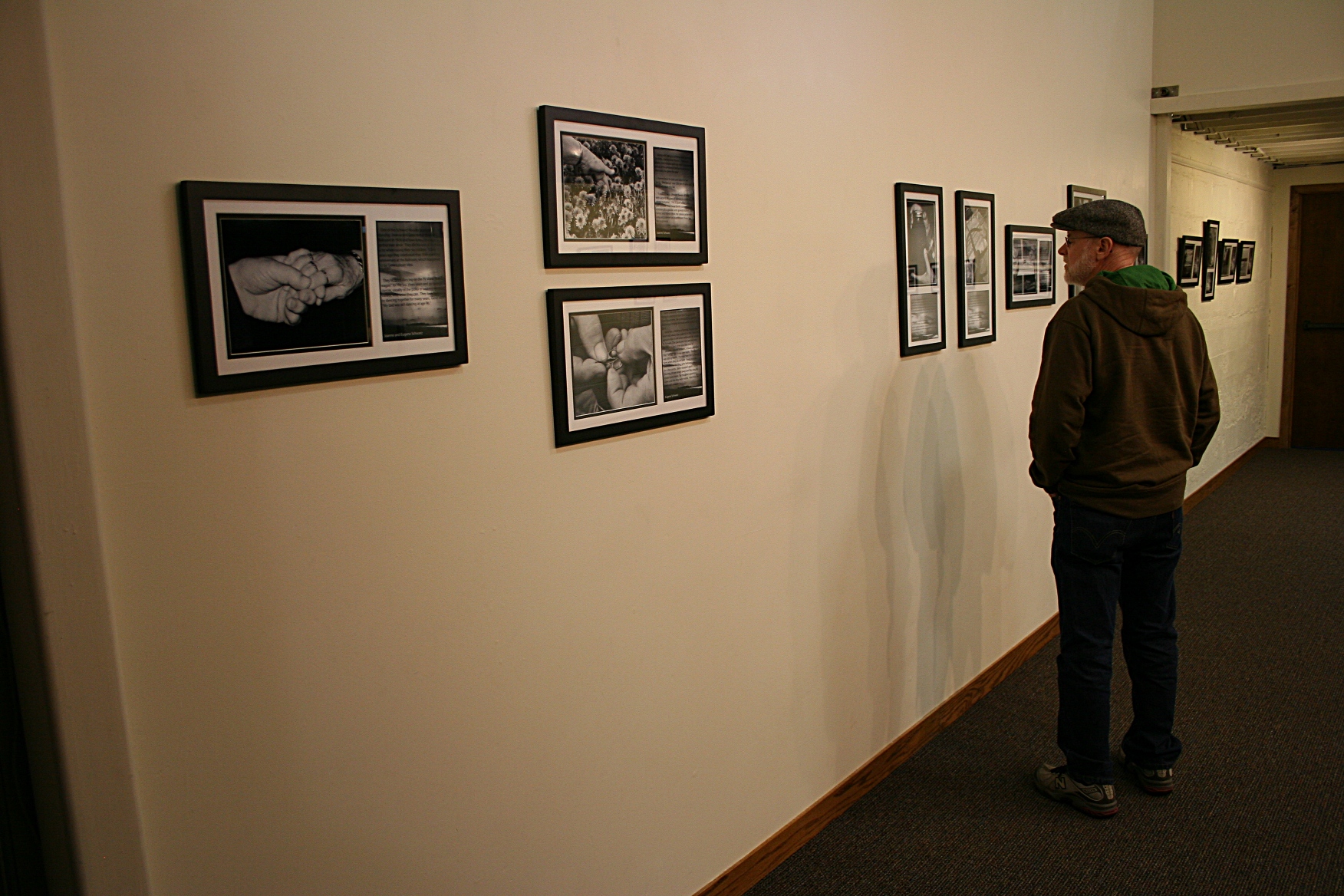
Kay, of Mankato, is a photographer, grounded in the earth with her black-and-white, rural-themed images in “What Sustains Us: considering the hands and the land of rural south central Minnesota.” Her art is showcased in the Lower Level Gallery of the Arts Center.

Both artists distinguish themselves in their individual approaches to art. Therein lies the essence of art—the ability to create and express one’s self in a truly personal style that emerges from the heart and soul of the artist.

I am more of a down-to-earth appreciator of art, meaning abstracts puzzle and challenge my mind to consider what the artist is attempting to convey.  I don’t have to think so hard to understand real-life art.

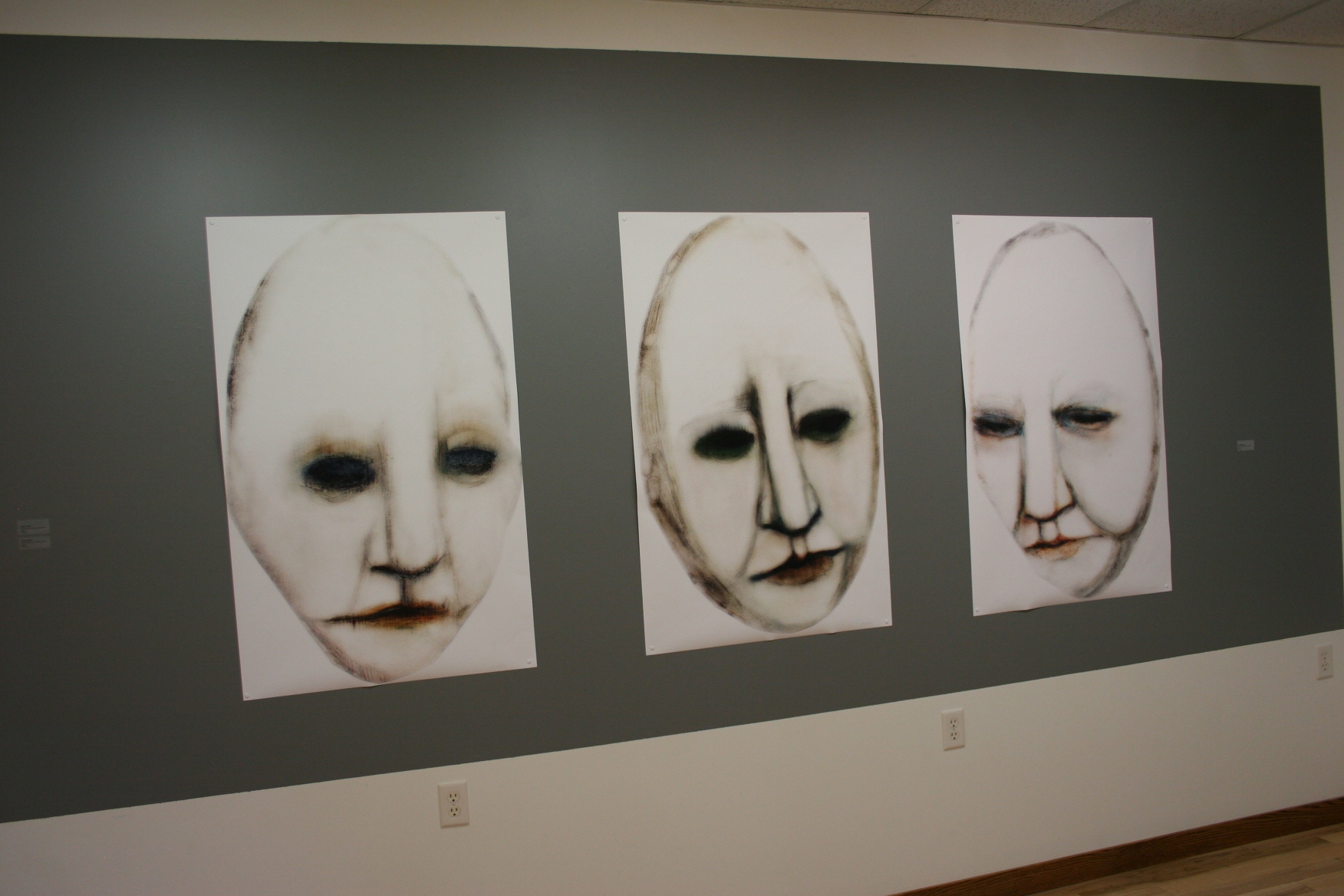
Yet, it’s good for me to view more abstract art like that created by Pam and to talk with her and learn that she is trying to show, in her exhibit, “the quality of skin as a container…deconstructing the body parts…the fragility of life.”

Three almost ghost-like faces, with undefined, haunting eyes, created by Pam Bidelman.

I expect that her artistic expression connects to her former profession as a clinical social worker. One can only imagine the experiences she drew on while creating her current exhibit.

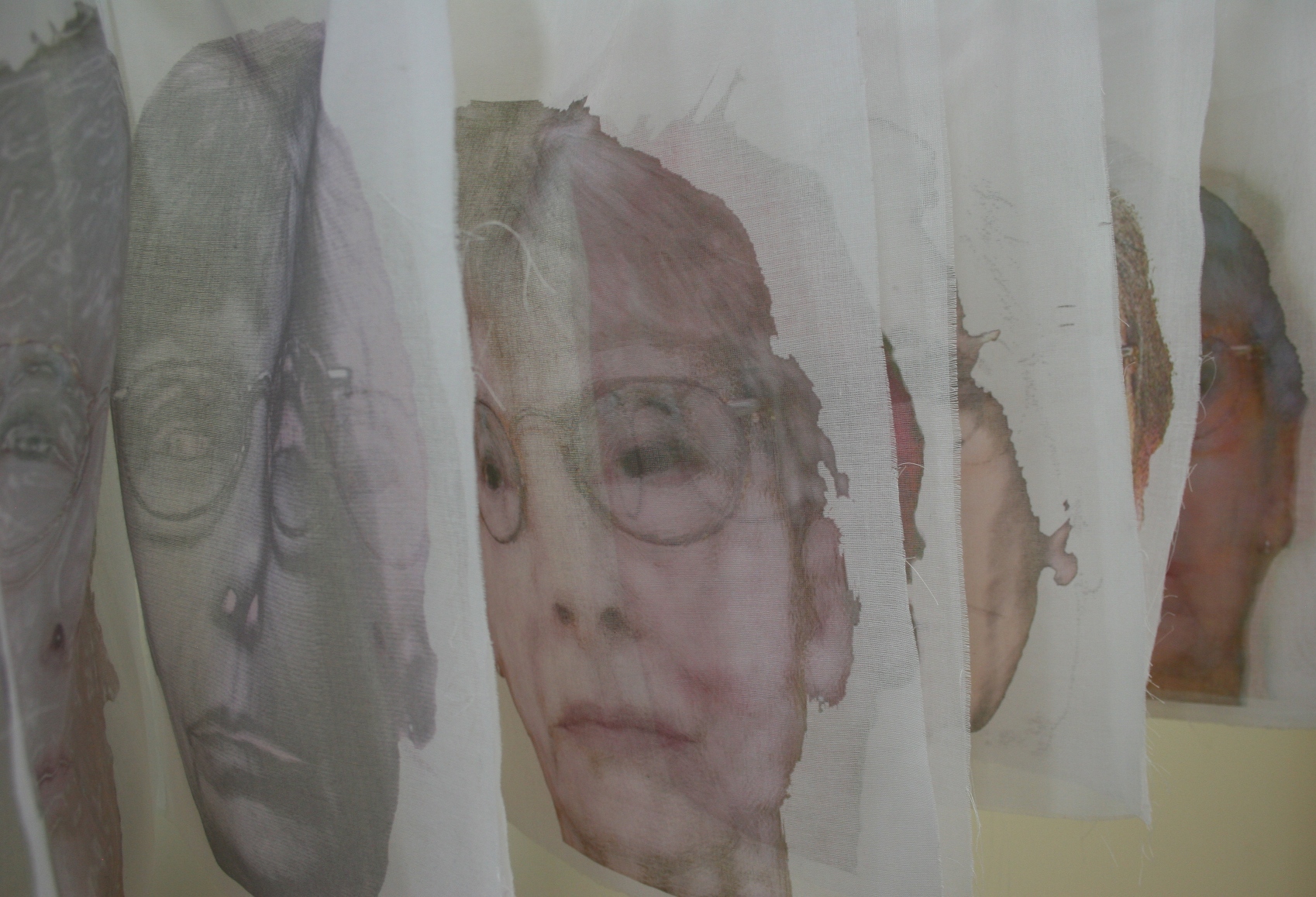
There’s a certain translucency to Pam’s pieces that I interpret as a sense of vulnerability.

A series of suspended faces, again with that vulnerable quality.

In Kay’s work, vulnerability also exists, in the primarily close-up black-and-white images she’s shot, mostly of hands, and in the accompanying short stories she writes about her subjects. I know rural people. It is not always easy for them to open up, to allow introspective photos and insights into their lives.

Kay gained their trust and shares her discoveries in art that is as honest as a hard day’s work on the farm.

For example, she writes in her interview with Sharon Osborne:

Sharon tells the story of her uncle, a retired farmer. Her aunt has answered the phone and the caller asked, “What’s your husband doing on this cold, blustery, snowy day?”

Her aunt replied, “What else do farmers do on a cold winter’s day other than crack walnuts down the basement?”

Viewing Kay Herbst Helms' photos in "What Sustains Us." She focuses primarily on hands in her images.

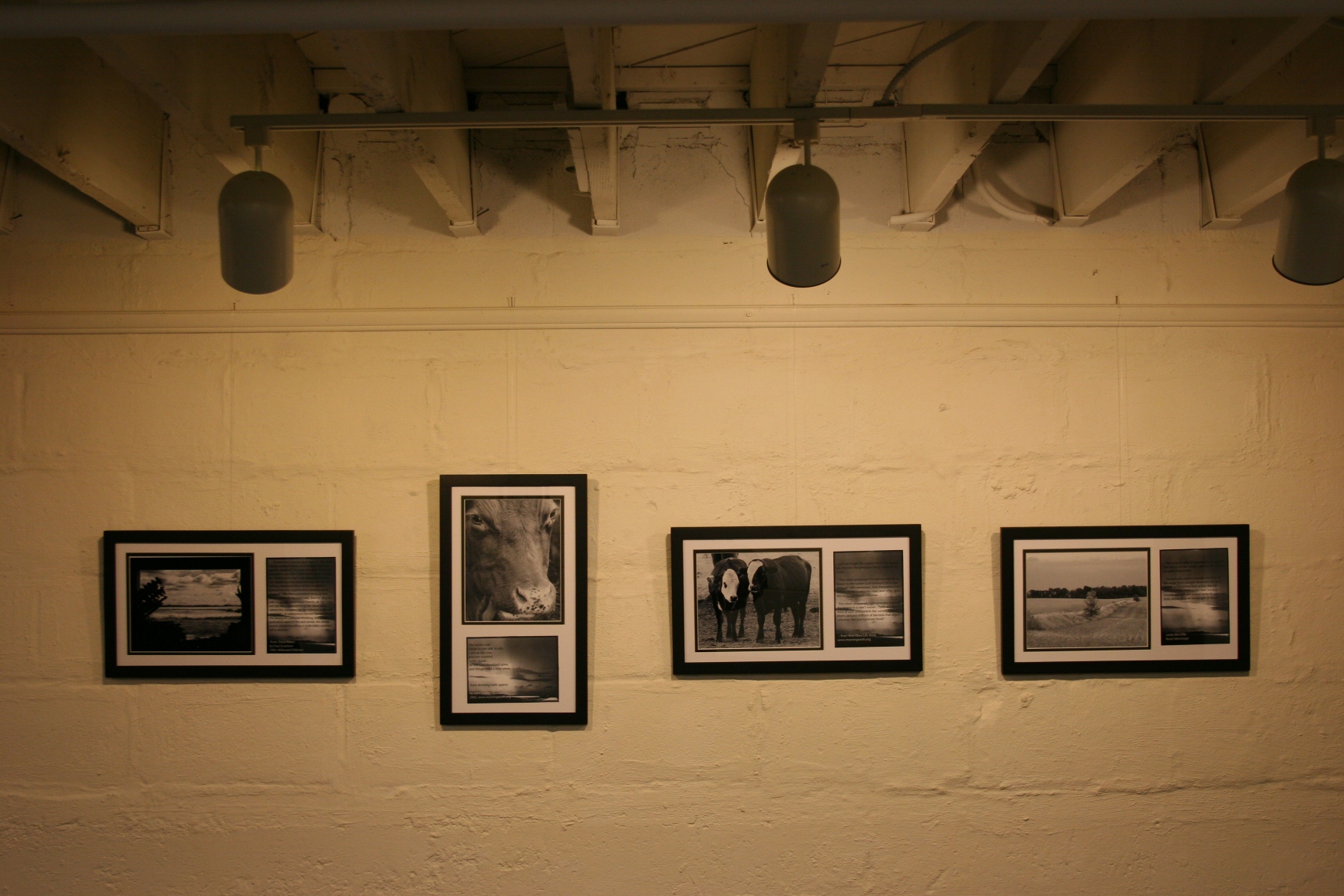
With other photos, Kay pairs poetry by Paul Gruchow and the poetic words of additional writers.

She is, says Kay, connecting the elements of hands, land, photographs and words in her exhibit.

Kay accomplishes that with the spirit of an artist rooted deep in her appreciation of rural life and the rural landscape.

Both exhibits are distinctly different. Yet each can be appreciated for the unique perspectives they offer on life.

Several of Kay's images include cattle, following the exhibit's rural theme.

FYI: Both artists’ projects were supported by grants from the Prairie Lakes Regional Arts Council with funding provided by the McKnight Foundation. Their exhibits run through March 18.

Kay created a previous, similar project, “Blessed Are the Hands That Have Served,” focusing on photos of 13 retired School Sisters of Notre Dame.

Click here for more information about the Arts Center of Saint Peter.

Check back for another post from the art center wherein you will meet two more artists.

© Copyright 2012 Audrey Kletscher Helbling
 

There is weather outside of the Twin Cities March 5, 2012

Filed under: Uncategorized — Audrey Kletscher Helbling @ 11:02 AM
Tags: , , , ,
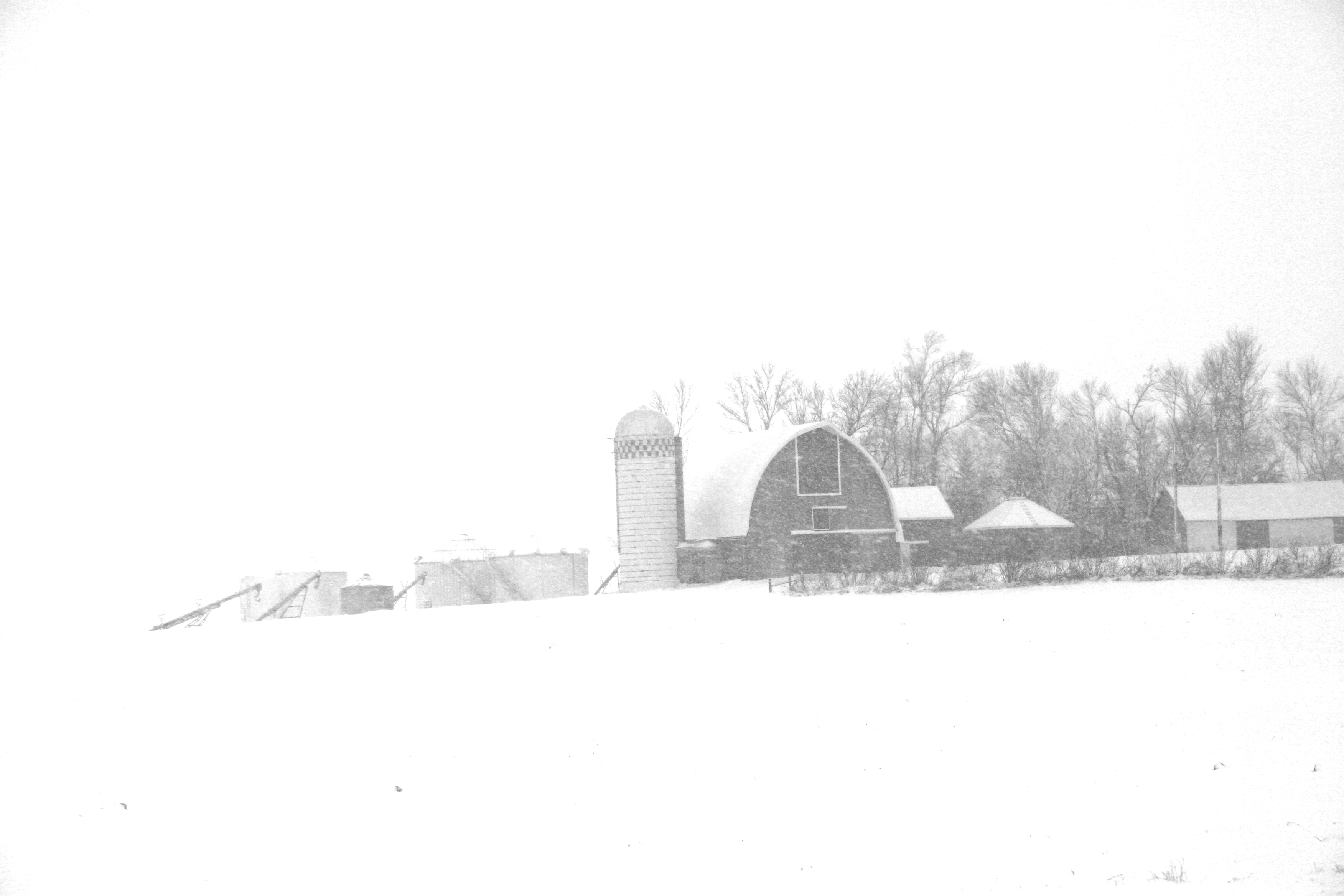
A farm site along Minnesota State Highway 67 between Vesta and Echo on Sunday morning.

A farm site along Minnesota State Highway 67 between Vesta and Echo on Sunday morning.

HONESTLY, I HAVE LIVED in Minnesota long enough that I should know better.

I shouldn’t believe the weather forecasters all the time, especially if those forecasters are based in the Twin Cities. How much or little do they care about the weather in rural Minnesota?

Case in point: This past weekend my husband and I traveled 120 miles west to visit my mom in Redwood County. The forecast, which we always diligently check before driving that direction in the winter, called for occasional flurries. That sounded doable to us.

So Saturday morning we set out, bucking strong winds, to reach our destination. The farther west we drove, the more snow we saw blanketing the landscape. Fortunately those strong Saturday winds did not whip up a blizzard.

Sunday morning, however, we awakened to a Winter Wonderland of snow falling in graceful flakes. You know, the kind of snow that makes you just want to stand there and take it all in for the sheer snow globe beauty of it.
So much for occasional flurries.

Thankfully, no wind accompanied the snow, which continued at a steady pace well into the afternoon. It marked an early departure for us.

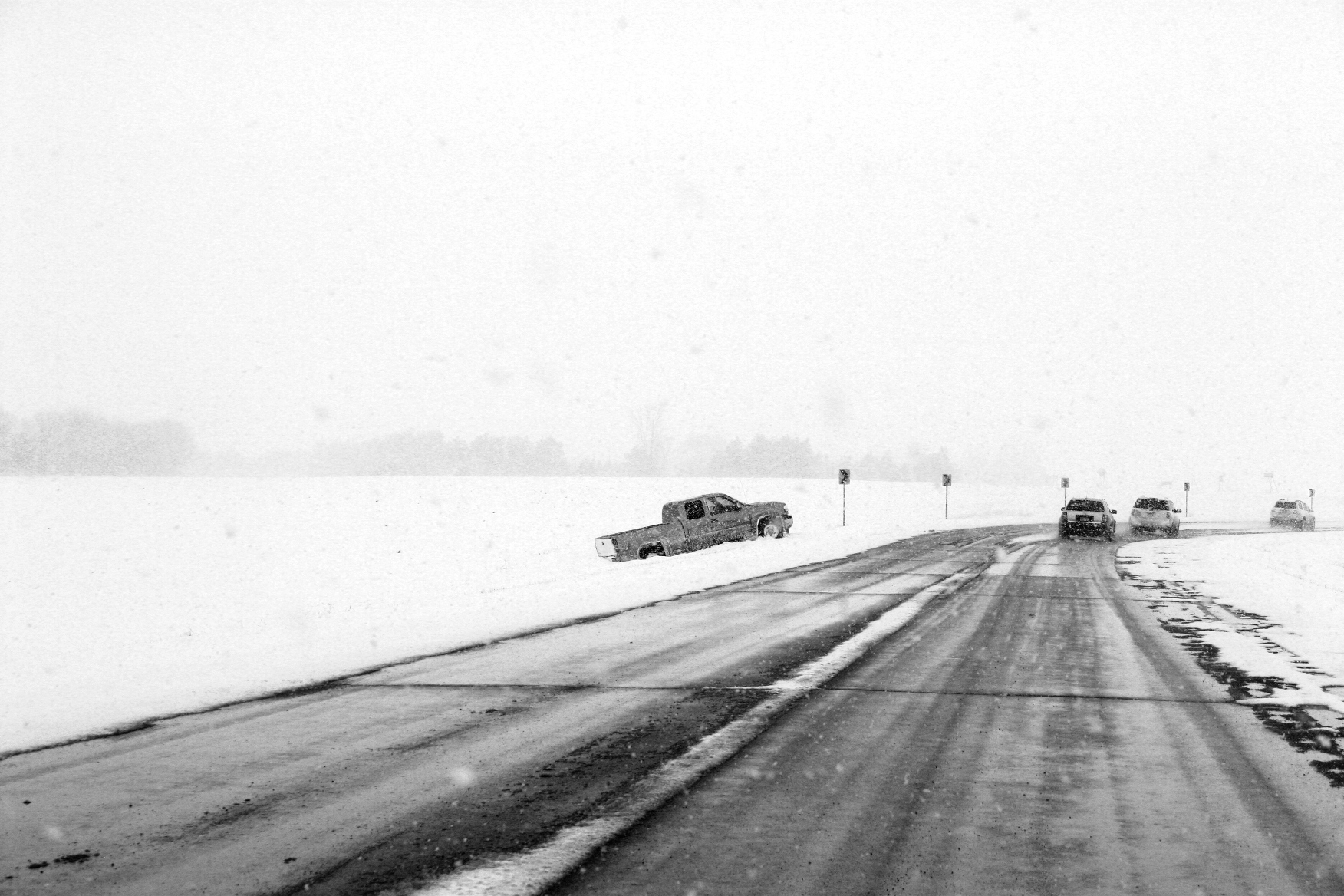
A few miles north of Vesta, we came across this truck spun off the Minnesota State Highway 19 curve.

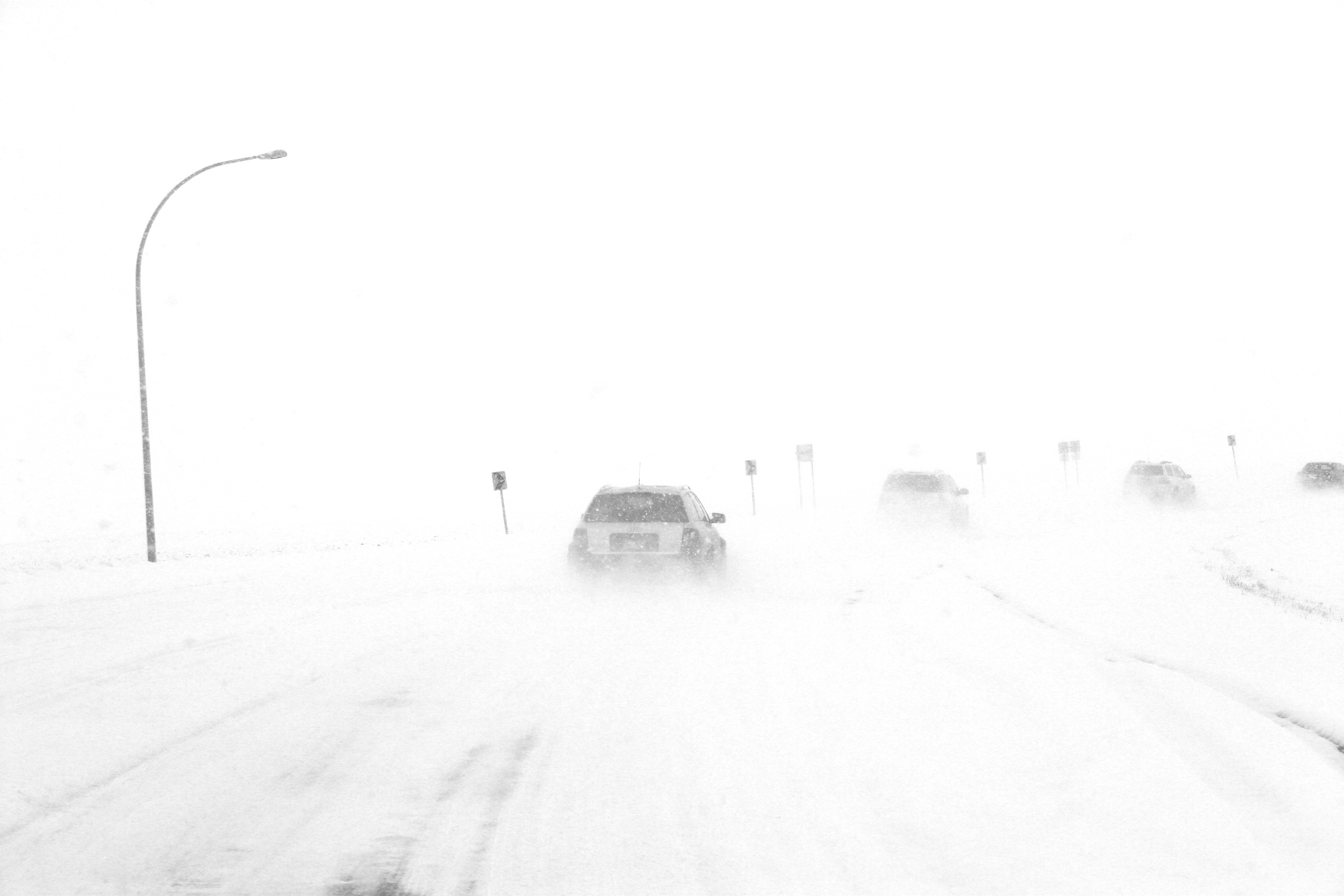
We rounded the curve and drove eastbound into this low visibility, snow-covered roadway situation. Fortunately, shortly after I shot this image, the eastbound lane was mostly cleared of snow. The westbound lane was not.

Pulling onto Minnesota State Highway 19 at Vesta, we realized this could be one long trip back to Faribault. It was slow going until we reached Sleepy Eye, where the snow finally began to clear and roads improved. We followed state highways rather than the short-cut, back county roads we usually travel.
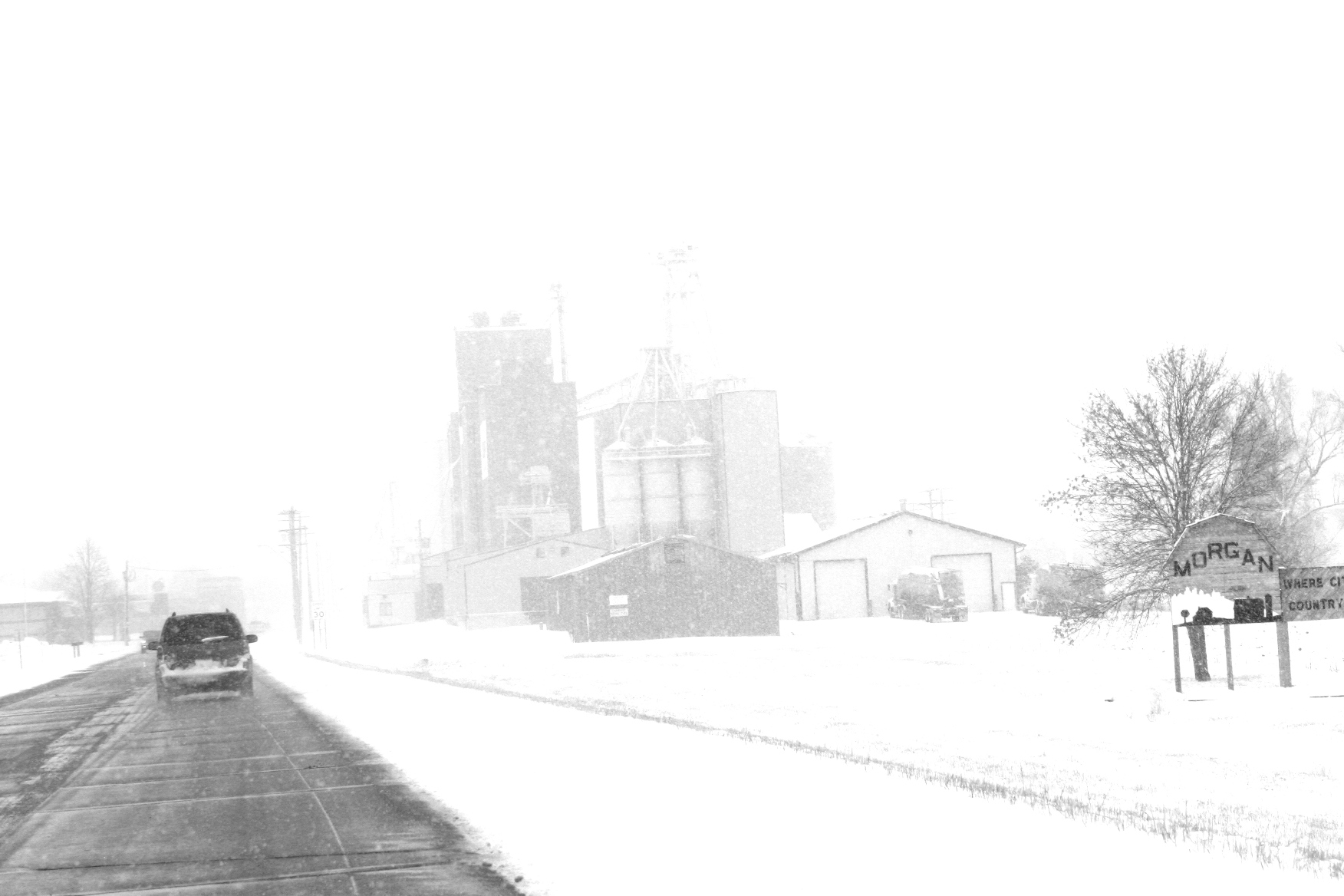
When we drove into Morgan about 30 miles later, snow was still falling strong and steady.

That evening, unpacked and cozied on the couch for the10 p.m. news, the weatherman reported only flurries in southwestern Minnesota. No mention of the several inches that slicked up highways and made for difficult travel.

Between Evan and Sleepy Eye, this pick-up truck cut across the prairie on back roads.

IF YOU LIVE in rural Minnesota, where do you turn for the most accurate weather forecasting?

© Copyright 2012 Audrey Kletscher Helbling