Minnesota Prairie Roots

Writing and photography by Audrey Kletscher Helbling

Perspectives on life presented in Saint Peter galleries March 6, 2012

Filed under: Uncategorized — Audrey Kletscher Helbling @ 7:53 AM
Tags: , , , , , , ,
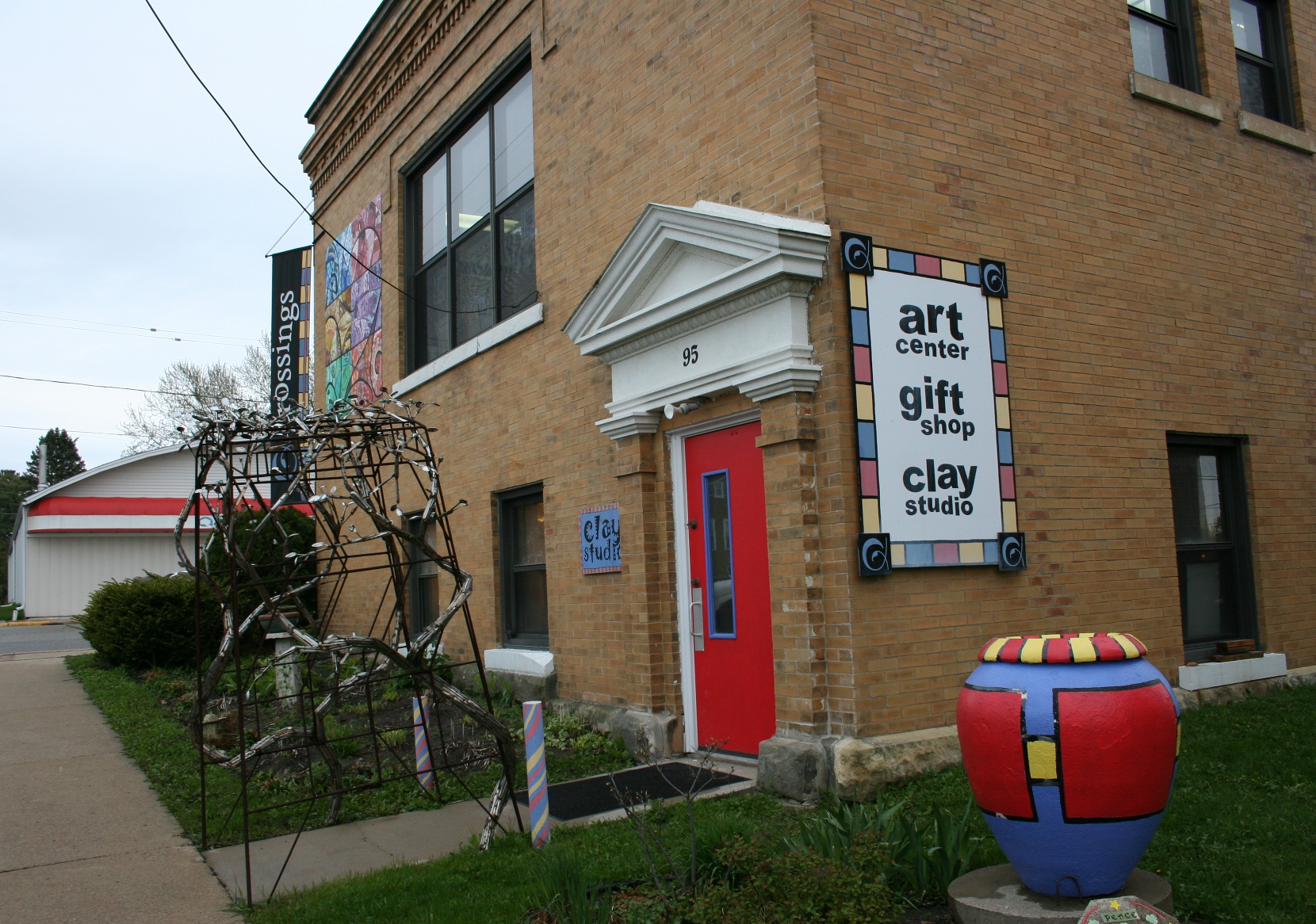
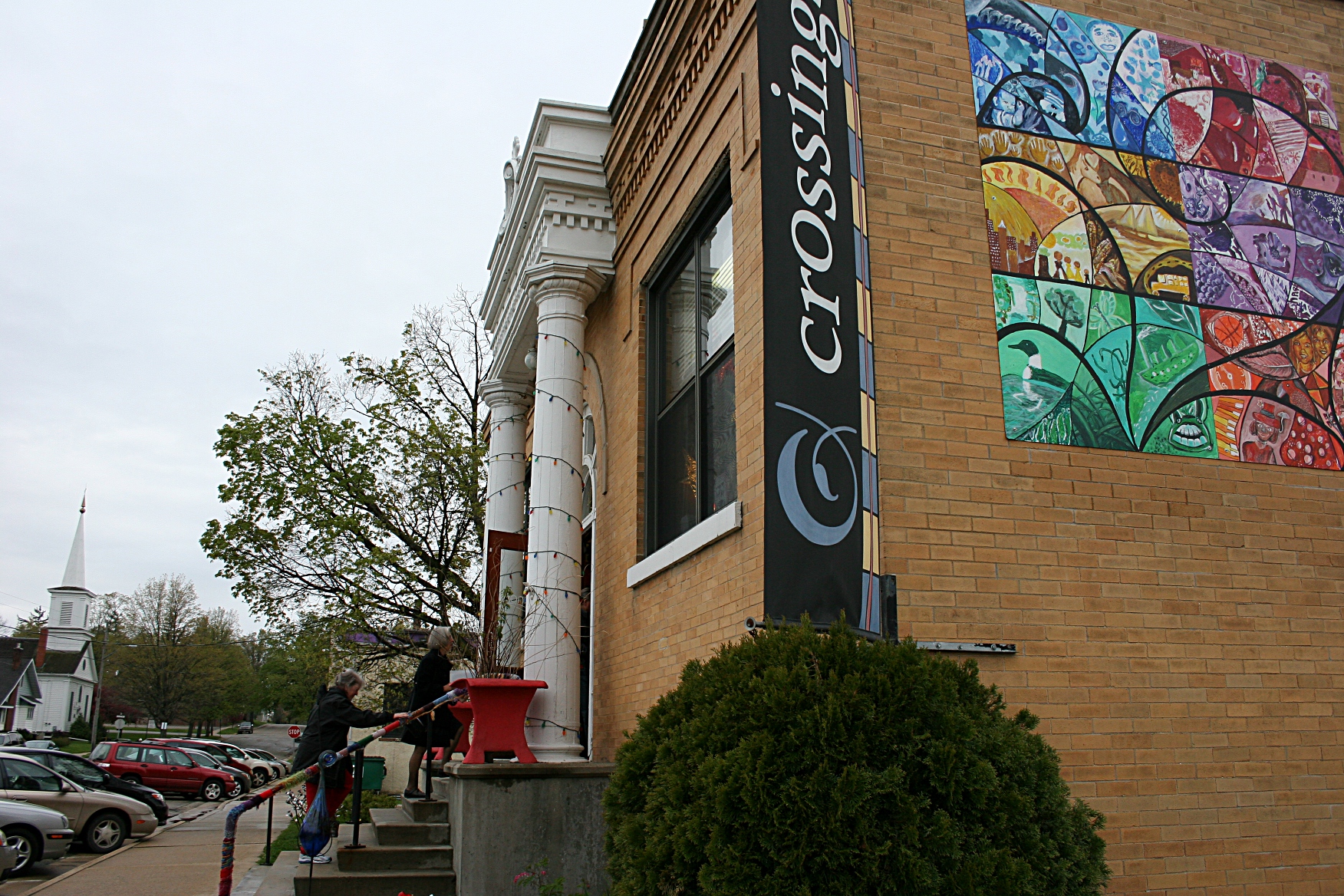
The Arts Center of Saint Peter, 315 South Minnesota Avenue, St. Peter, Minnesota.

The Arts Center of Saint Peter, 315 South Minnesota Avenue, St. Peter, Minnesota.

LIKE BLACK AND WHITE, night and day, the artwork of Pamela Bidelman and Kay Herbst Helms, at first glance, holds no comparison.

Pam, of St. Peter, is a painter, working in the more abstract in her current exhibit, “lamina,” installed at the Arts Center of Saint Peter Moline Gallery.

Kay, of Mankato, is a photographer, grounded in the earth with her black-and-white, rural-themed images in “What Sustains Us: considering the hands and the land of rural south central Minnesota.” Her art is showcased in the Lower Level Gallery of the Arts Center.

Both artists distinguish themselves in their individual approaches to art. Therein lies the essence of art—the ability to create and express one’s self in a truly personal style that emerges from the heart and soul of the artist.

I am more of a down-to-earth appreciator of art, meaning abstracts puzzle and challenge my mind to consider what the artist is attempting to convey.  I don’t have to think so hard to understand real-life art.

Yet, it’s good for me to view more abstract art like that created by Pam and to talk with her and learn that she is trying to show, in her exhibit, “the quality of skin as a container…deconstructing the body parts…the fragility of life.”

Three almost ghost-like faces, with undefined, haunting eyes, created by Pam Bidelman.

I expect that her artistic expression connects to her former profession as a clinical social worker. One can only imagine the experiences she drew on while creating her current exhibit.

There’s a certain translucency to Pam’s pieces that I interpret as a sense of vulnerability.

A series of suspended faces, again with that vulnerable quality.

In Kay’s work, vulnerability also exists, in the primarily close-up black-and-white images she’s shot, mostly of hands, and in the accompanying short stories she writes about her subjects. I know rural people. It is not always easy for them to open up, to allow introspective photos and insights into their lives.

Kay gained their trust and shares her discoveries in art that is as honest as a hard day’s work on the farm.

For example, she writes in her interview with Sharon Osborne:

Sharon tells the story of her uncle, a retired farmer. Her aunt has answered the phone and the caller asked, “What’s your husband doing on this cold, blustery, snowy day?”

Her aunt replied, “What else do farmers do on a cold winter’s day other than crack walnuts down the basement?”

Viewing Kay Herbst Helms' photos in "What Sustains Us." She focuses primarily on hands in her images.

With other photos, Kay pairs poetry by Paul Gruchow and the poetic words of additional writers.

She is, says Kay, connecting the elements of hands, land, photographs and words in her exhibit.

Kay accomplishes that with the spirit of an artist rooted deep in her appreciation of rural life and the rural landscape.

Both exhibits are distinctly different. Yet each can be appreciated for the unique perspectives they offer on life.

Several of Kay's images include cattle, following the exhibit's rural theme.

FYI: Both artists’ projects were supported by grants from the Prairie Lakes Regional Arts Council with funding provided by the McKnight Foundation. Their exhibits run through March 18.

Kay created a previous, similar project, “Blessed Are the Hands That Have Served,” focusing on photos of 13 retired School Sisters of Notre Dame.

Click here for more information about the Arts Center of Saint Peter.

Check back for another post from the art center wherein you will meet two more artists.

© Copyright 2012 Audrey Kletscher Helbling


There is weather outside of the Twin Cities March 5, 2012

Filed under: Uncategorized — Audrey Kletscher Helbling @ 11:02 AM
Tags: , , , ,
A farm site along Minnesota State Highway 67 between Vesta and Echo on Sunday morning.

A farm site along Minnesota State Highway 67 between Vesta and Echo on Sunday morning.

HONESTLY, I HAVE LIVED in Minnesota long enough that I should know better.

I shouldn’t believe the weather forecasters all the time, especially if those forecasters are based in the Twin Cities. How much or little do they care about the weather in rural Minnesota?

Case in point: This past weekend my husband and I traveled 120 miles west to visit my mom in Redwood County. The forecast, which we always diligently check before driving that direction in the winter, called for occasional flurries. That sounded doable to us.

So Saturday morning we set out, bucking strong winds, to reach our destination. The farther west we drove, the more snow we saw blanketing the landscape. Fortunately those strong Saturday winds did not whip up a blizzard.

Sunday morning, however, we awakened to a Winter Wonderland of snow falling in graceful flakes. You know, the kind of snow that makes you just want to stand there and take it all in for the sheer snow globe beauty of it.

So much for occasional flurries.

Thankfully, no wind accompanied the snow, which continued at a steady pace well into the afternoon. It marked an early departure for us.

A few miles north of Vesta, we came across this truck spun off the Minnesota State Highway 19 curve.

We rounded the curve and drove eastbound into this low visibility, snow-covered roadway situation. Fortunately, shortly after I shot this image, the eastbound lane was mostly cleared of snow. The westbound lane was not.

Pulling onto Minnesota State Highway 19 at Vesta, we realized this could be one long trip back to Faribault. It was slow going until we reached Sleepy Eye, where the snow finally began to clear and roads improved. We followed state highways rather than the short-cut, back county roads we usually travel.

When we drove into Morgan about 30 miles later, snow was still falling strong and steady.

That evening, unpacked and cozied on the couch for the10 p.m. news, the weatherman reported only flurries in southwestern Minnesota. No mention of the several inches that slicked up highways and made for difficult travel.

Between Evan and Sleepy Eye, this pick-up truck cut across the prairie on back roads.

IF YOU LIVE in rural Minnesota, where do you turn for the most accurate weather forecasting?

© Copyright 2012 Audrey Kletscher Helbling
 

Friendly Fargo welcomes three Minnesotans March 1, 2012

Clean, quiet, friendly, inviting modern decor...I'd definitely recommend the Fairfield Inn.

FARGO GETS a bad rap.

OK, maybe the name isn’t all that appealing, as my 18-year-old noted. I suppose you could misconstrue Fargo as “Too-Far-To-Go.”

The wind definitely bites in Fargo. The land is most assuredly flat.

But I am here to tell you that the people are most certainly friendly. From Corey at the Fairfield Inn Marriott to the young mom and her daughter at Space Aliens Grill & Bar to Emma, our tour guide at North Dakota State University, every person we met welcomed my family with warmth during a recent visit to Fargo. Yes, they did.

Corey from the Fairfield front desk phoned our room shortly after our arrival to verify that we were satisfied with the accommodations. We were.

Later, helpful Corey even pulled out a map of the city and highlighted a route from the hotel to Space Aliens and to NDSU. He also advised us to allow 15 minutes of travel time to the college campus the next morning.

Pulling into the parking lot of Space Aliens, we noted a neon sign with this message: “Earthlings welcome.” Yes, a humorous welcome like that makes anyone feel at home.

Along Fargo's mall/restaurant strip, you'll find Space Aliens at 3250 32nd Ave. S.

In the ideal light of a setting sun, I photographed this image before entering Space Aliens.

Then before I stepped into the restaurant, a young mom whom I’d asked about food recommendations, really did say, “Welcome to Fargo.”

“Can we eat with her?” her little girl asked, looking directly at me.

We didn’t. Eat with her.

I walked into the restaurant and shot this image as the sun set on Fargo. Just like looking through the doors of a fictional spaceship. I would have really loved this place as a kid, being a fan of "Lost in Space" and all.

We sat in a booth along the far wall in this dining room packed with young families. Yes, Space Aliens is definitely a kid-oriented place with all things space and a game room. Lots of lights. Lots of noise. We found the food to be over-priced for what we got in both quantity and quality.

We dined in a room where our waitress, a local college student, had to repeat the list of dips for fries three times above the din of diners. And gold star for her, she didn’t even appear annoyed by our inability to hear or our difficulty deciphering menus in poor lighting conditions.

The main dining area was mostly empty when we arrived. As you can see, lots to take in visually.

A final parting shot of Space Aliens, a particularly fun restaurant to photograph and with a great atmosphere for kids who love space and need to be entertained while dining out.

The next morning we awoke to the sun rising in splendid shades of rose for an 8:45 a.m. appointment at the university. Perfect day, despite the biting wind. Caring more about warmth than fashion, my husband, son and I clamped on our stocking caps and gloves for our campus tour led by the friendly, backward-walking Emma.

More Fargo friendliness followed during meetings with an admissions rep and engineering professor and during impromptu chats with two engineering students.

So there you have it. Fargo friendliness. Everywhere.

No wood chippers in sight, although I understand you’ll find one at the Fargo-Moorhead Convention and Visitors Center. (It’s the real wood chipper used in the Coen brothers’ movie, “Fargo,” from whence many Fargo stereotypes have evolved.)

I spotted not a single red-and-black buffalo plaid flannel shirt, except the one I wore upon our arrival from Minnesota.

Copyright 2012 Audrey Kletscher Helbling
 

Scenes along Interstate 94 driving toward Fargo February 27, 2012

Filed under: Uncategorized — Audrey Kletscher Helbling @ 8:49 AM
Tags: , , , , , , ,

The coal-fired power plant by Becker as seen from Interstate 94.

IN COUNTRY THAT’S primarily flat and open, you notice the details—the shape and height of clouds, the tint of the soil, the sharp angles of buildings, towers that break the monotony of horizontal lines and so much more.

At least I notice these things. Maybe you don’t.

Join me today on one final trek along Interstate 94 as we travel northwest toward Fargo, North Dakota. Begin to see, like me, man’s imprint upon the land.

I am neither endorsing nor criticizing the content of these images. I am simply showing you examples of what I noticed along that drive, beginning near Monticello, Minnesota. I’ve already shown you the skyscapes and the farm sites in previous posts.

These photos represent subjects that don’t fit into a single, well-defined category. They are, if anything, simply scenes that unfold upon the stage of this land, this wide, wide land.

I'd love to know the history behind this house in the Avon area.

You just don't see old corn cribs like this in use much anymore. Something about them so appeals to me visually.

Deep in the heart of dairy country, I spotted this vet clinic sign by Freeport.

Freeport, "The city with a smile!" is marked by this old-fashioned smiling water tower.

Drive I-94 and you'll see endless towers like this one where the tower dwarfs an abandoned building to the right.

This country is rural through and through. This may be an ethanol plant although I'm not sure. Anyone know?

I expected to see more trains than I did. These were near the plant in the photo above.

Who knew? A Budweiser plant in Moorhead.

© Copyright 2012 Audrey Kletscher Helbling
 

Traveling photography February 23, 2012

Filed under: Uncategorized — Audrey Kletscher Helbling @ 9:14 AM
Tags: , , , , , , ,

The clouds, the lighting, the red buildings slung against the sky drew my eyes and camera toward this farm along I-94 in western Minnesota.

I WASN’T ALWAYS a fan of winter photography. Honestly, who likes to navigate snow and ice and freeze your fingers off to shoot images? Not me.

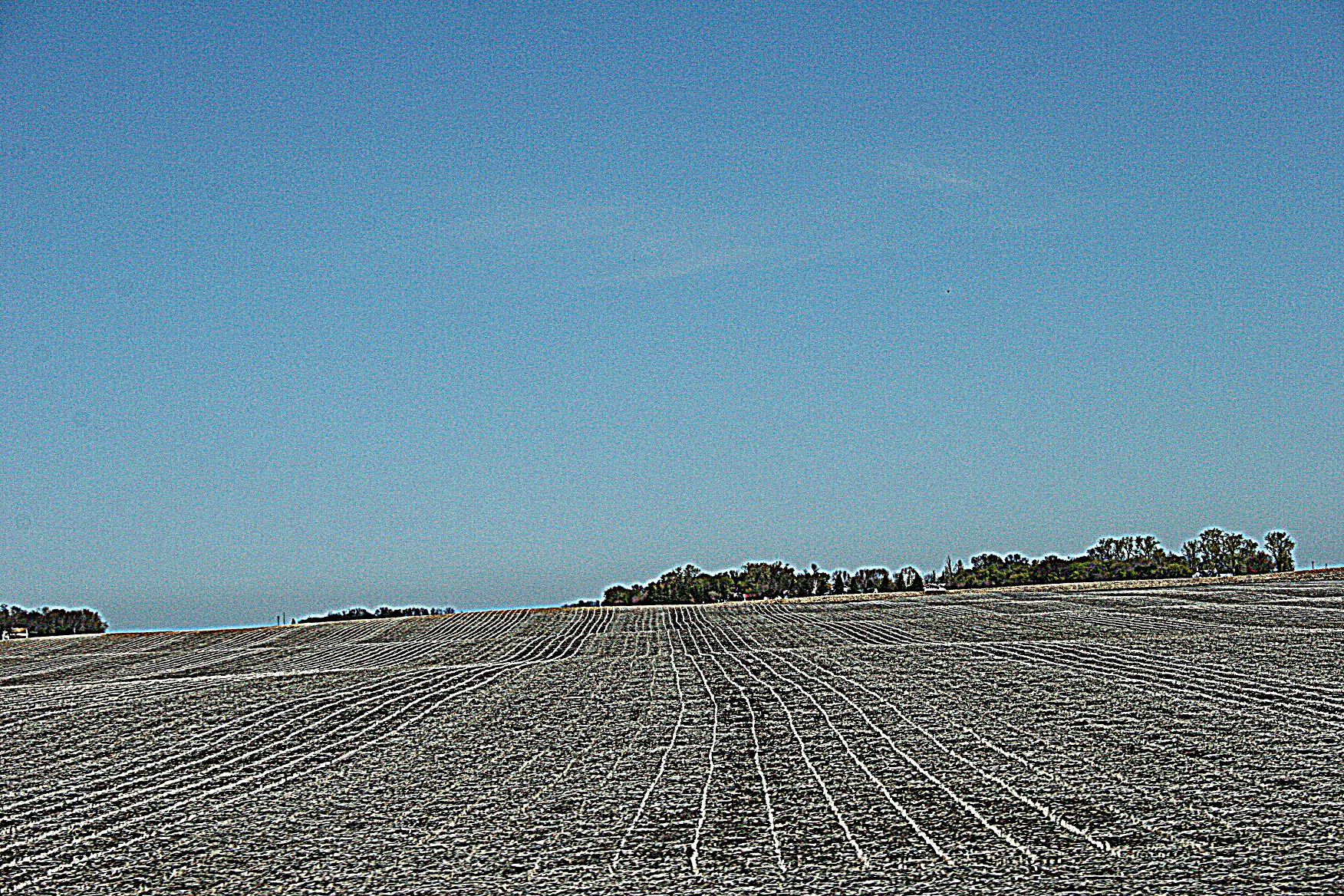
But, since discovering on-the-road travel photography—meaning I actually fire off frames while riding in a vehicle traveling at highway/interstate speeds of 55 – 70 mph—I’ve come to embrace winter photography.

I started clicking my shutter when I saw this picturesque farm in the Avon/Albany area. This is frame two.

By the third frame, this beautiful fieldstone barn came into my sight line.

In winter the landscape lies exposed, giving a photographer ample opportunity to see and photograph subjects which, in other seasons, remain hidden. And I, for one, appreciate that openness and vulnerability.

My eyes fly across the landscape as I ride shotgun, camera in hand set to a fast shutter speed (the sports mode in automatic settings), poised to click the shutter button.

The weathered barn and the lighting around the silos drew me to photograph this scene.

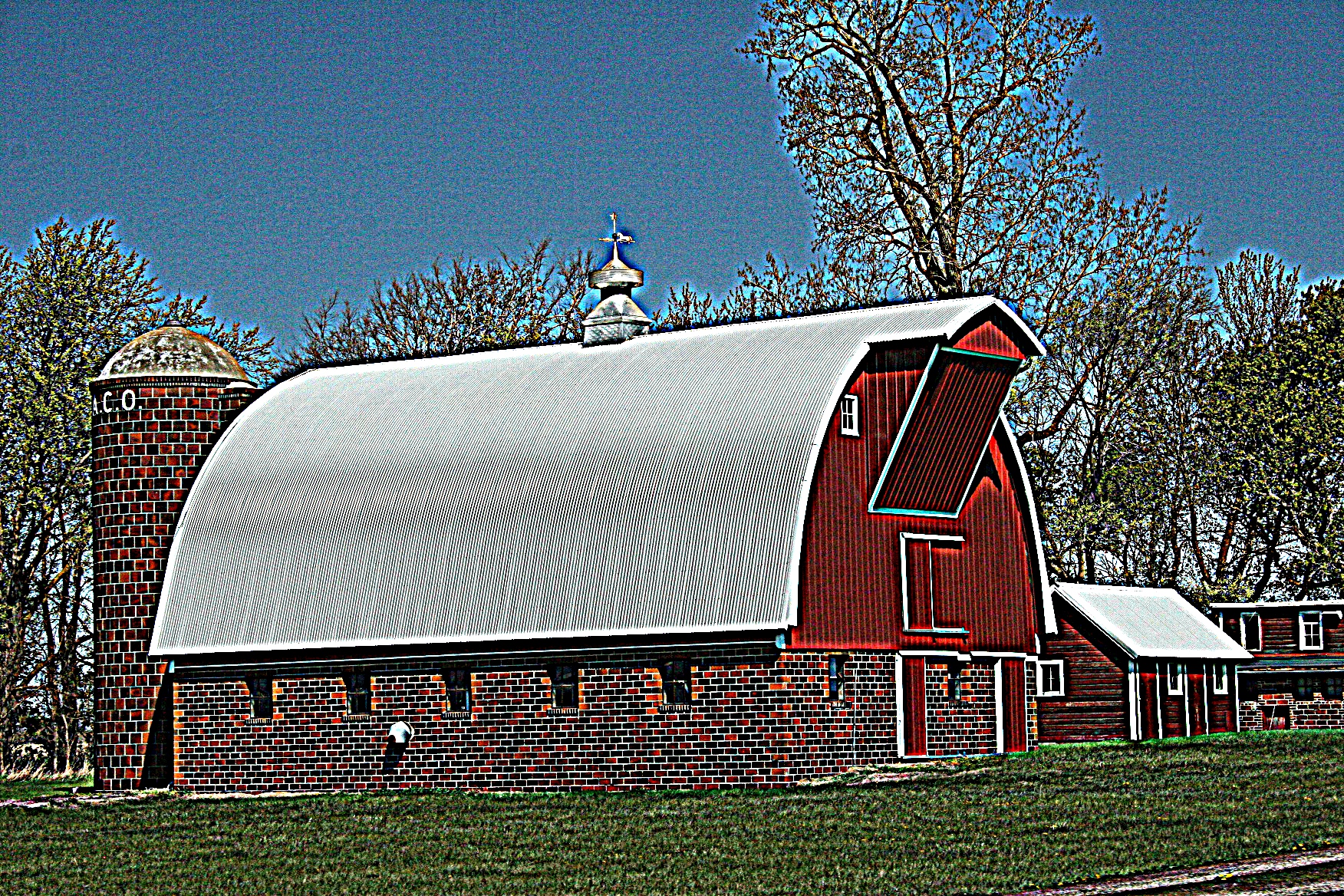
Farm sites, specifically barns, cause me to lift my ever-ready camera from my lap, focus and shoot. Sometimes I get the shot, sometimes I don’t. It’s all in the timing and the ability to compose on the fly.

Consistently, the quality of these on-the-road photos surprises me, in a good way. Often I couldn’t have gotten better results had I stood still in front of the subject, focused and composed with care and shot many frames.

Of course, I’ve missed plenty of photo ops, too, because I’ve been daydreaming or talking or been too slow to react.

I honestly thought I'd missed this shot. But when I saw the results, well, I was pretty pleased.

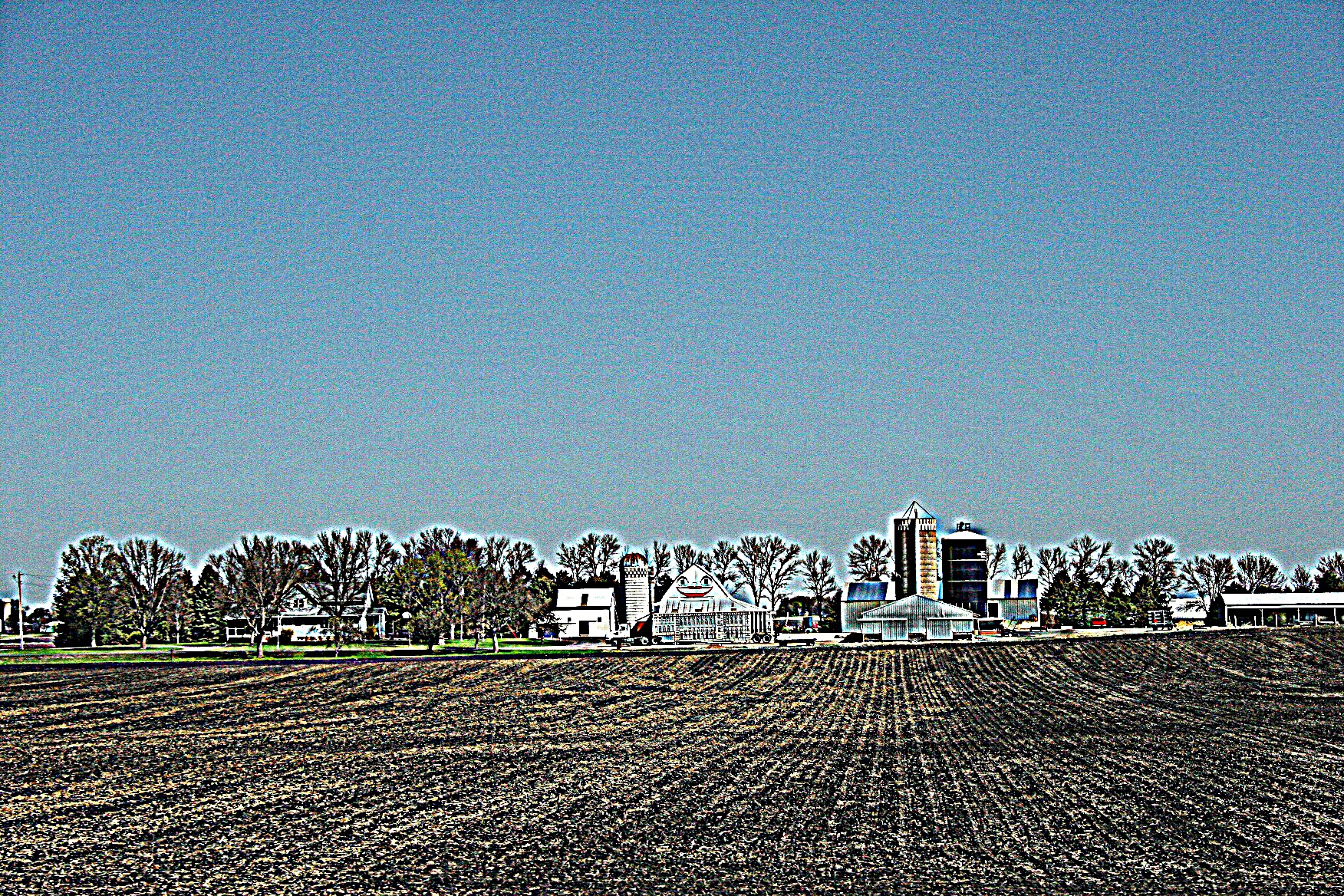
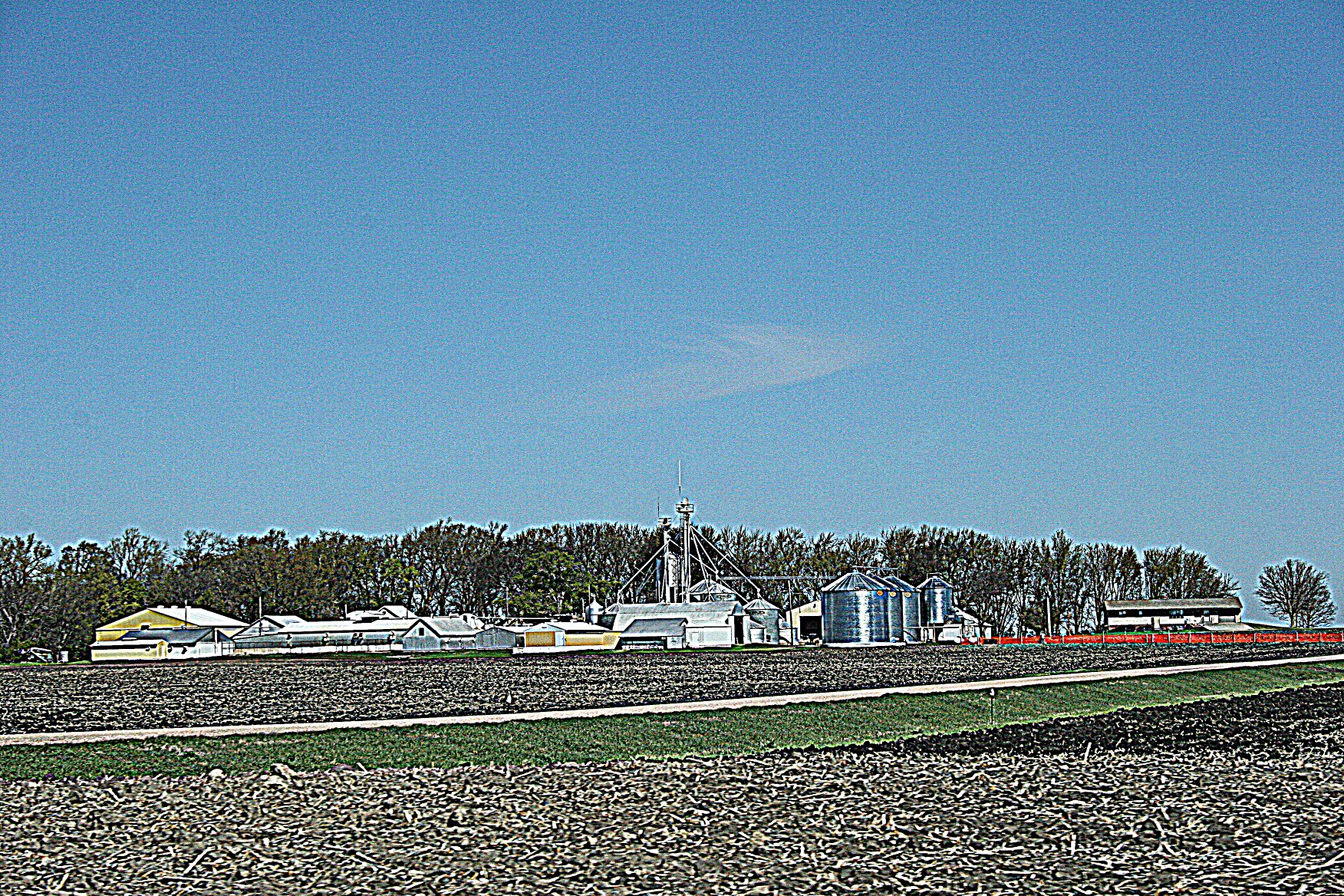
A recent trip along Interstate 94 to and from Fargo gave me plenty of time to practice on-the-road photography as I focused on farm sites, the landscape and whatever else I found of interest.

An added bonus comes once I download the images into my computer and notice details I failed to see while photographing scenes.

The next time you hit the highway as a passenger on a long road trip, consider trying this type of photography.

Clean your windows, adjust your camera, buckle up and you’re set to roll.

Just one more farm along I-94 that I couldn't resist photographing.

TELL ME, HAVE you ever photographed using this method? What works/doesn’t work for you? And what do you like to photograph?

NOTE: Except to downsize the above images, I have not edited them.

© Copyright 2012 Audrey Kletscher Helbling
 

On the road to Fargo, where sky meets land February 20, 2012

Filed under: Uncategorized — Audrey Kletscher Helbling @ 8:07 AM
Tags: , , , , , , , , , ,

Only 192 miles to Fargo, North Dakota. We've already driven 93.

SKY. That single word defines a road trip from Faribault to Fargo.

Don’t talk miles and time to me. Talk sky.

Once past the St. Cloud exit along Interstate 94, you start noticing the sky, how, the farther west you travel, the larger it becomes until the sheer immensity of that above overwhelms that below.

Sky meets land somewhere westbound along Interstate 94 toward Fargo.

For those who live in the confines of the city, where buildings and masses of streets and highways pull the sky downward and ground it, the vastness of the skies can unsettle the spirit and create a sense of vulnerability. You can’t help but feel exposed under brooding clouds and a sky that stretches into a distance without end.

Interstate 94 sometimes seems to run right into the sky as you drive west.

Yet, for me, a prairie native, there’s a certain sense of calm that comes from traveling into the sky. Because that is what you do when driving west from Minnesota toward the Dakotas. You drive into the sky.

After an initial awareness that you really are incredibly small compared to that above, you begin to notice the details. Or at least I begin to appreciate the details—like the hard edge where sky meets land, the ever-changing skyscape as clouds shift and the day wanes, the nuances in colors and texture that define firmament and field.

Power lines set against the backdrop of the sky provide a visual vertical respite for the eyes.

It is as if you’ve brushed yourself right into a landscape painting.

And I can’t get enough of it, of the strong horizontal lines that sweep across my vision, reconnecting me to my prairie past.

The landscape: flat and into forever near Fargo/Moorhead.

The ever-changing clouds blend with the rural landscape.

As the sun sets, the sky broods.

The sharp contrast of black and white against blue pleases my eyes.

Fence lines and farms slice through the land.

A church spire in the distance draws my eye in this place where my soul reconnects to the prairie.

ALL OF THESE IMAGES were taken with my DSLR camera, set at a fast shutter speed, while traveling along Interstate 94. Check back for more posts from this trip to Fargo.

© Copyright 2012 Audrey Kletscher Helbling
 

Three bald eagles on a Sunday February 19, 2012

Filed under: Uncategorized — Audrey Kletscher Helbling @ 4:12 PM
Tags: , , , , , , ,

AS OBSERVANT AS I AM, and I’m quite detail-oriented, I don’t profess to have an eagle eye. That would be my husband. Randy possesses an uncanny ability to notice birds of prey in the wild.

A few weeks ago he pointed out an owl perched on a fence post as we traveled along a state highway around dusk. He’s always spotting hawks circling overhead, riding the wind.

See the two eagles in the distant trees here on the west side of State Highway 13 near Waseca?

But this time, this past Sunday afternoon, he saw two bald eagles in a stand of trees several miles north of Waseca along Minnesota State Highway 13. Now typically nothing much raises Randy’s demeanor to a level of excitement. However, he was excited enough to swing our van into a U-turn, backtrack to the grove of trees and pause so he could gawk.

Although we’d seen eagles in the wild before, we’d never seen them this close—about 60 feet away horizontally and another 30 feet away vertically.

Parked along the wide shoulder of the highway, I shot this image of the eagles.

Stopping within feet of a deer carcass, the road kill that we figure drew the eagles to this grove of trees, Randy watched the birds while I photographed, wishing all the time for a telephoto lens.

After our brief eagle-watching, we continued on to Morristown, missed our turn and spotted another bald eagle. This time I requested we backtrack because I was, by then, already formulating this blog post in my mind.

We had just passed Veterans Memorial Park, a new memorial to veterans in this Rice County town of 1,000 residents. It features a bald eagle as the focal point.

This time, without highway traffic passing dangerously close, I exited the van and captured close up our nation’s majestic symbol of freedom.

The bald eagle, flanked by flags, at the vets park in Morristown.

A broad view of the new memorial, which includes pavers honoring veterans.

Shooting into the sun, I took this shot of the memorial eagle.

HAVE YOU EVER seen a bald eagle in the wild? Tell me about your experience.

© Copyright 2012 Audrey Kletscher Helbling
 

Ice art in rural Minnesota February 16, 2012

Filed under: Uncategorized — Audrey Kletscher Helbling @ 8:52 AM
Tags: , , , ,

CAN YOU IMAGINE how impressed I would be if ever I viewed the Saint Paul Winter Carnival snow and ice sculptures?

Up until Sunday, the only ice sculptures familiar to me clung to milkhouse and house rooflines or clumped like frozen waterfalls along bluffs in the Mississippi RiverValley.

In the winters of my youth, when winter truly was winter with mountains of snow from which to build forts and an abundance of icicles from which to grab swords, I welcomed the season.

The clash of icicle against icicle in a swordfight with my brothers and sisters entertained me between rounds of shoving manure into gutters and feeding cows and bedding straw and carrying pails of steaming milk replacer to calves huddled in the calf barn.

That and memories of boot-skating across patches of frozen water in the farmyard and along the edges of the cornfield encompassed my general experiences with ice.

Until Sunday.

For the first time, I viewed ice as anything but Nature’s art or a source of youthful entertainment or a peril to be avoided.

Horse and sleigh ice sculpture in Waseca, a rural southern Minnesota community.

Just south of the Waseca County Courthouse, partially in the shadow of a downtown building and along busy State Street/Minnesota Highway 13, artists Adam Scholljegerdes and Joe Christenson, with assistance from their families, crafted a horse and sleigh from ice blocks in celebration of Waseca’s 62nd annual Sleigh and Cutter Festival.

She’s a beauty.

For the first time ever in 62 years, ice sculpting was added to Sleigh and Cutter festivities. The event typically involves ice harvesting from Clear Lake, something which did not happen this year due to warm weather and open water. The ice sculpture is just south of the Waseca County Courthouse, a snippet seen here to the right.

Of course, I have nothing with which to compare this work of art. But suffice to say that the pair’s rendition of a horse pulling a sleigh impressed me, my husband and plenty of others who stopped to photograph the ice sculpture, even sit on the sleigh and pet the horse.

Even an ice horse needs petting.

This ice sculpture is a new addition to the annual winter festival which spans several weeks and weekends in February. This year’s fest, which included events like snowmobile races, card tournaments, ice fishing and a parade, runs through February 19. One final event, a Children’s Dream Catcher fundraiser for terminally-ill children in the Waseca area, is set for March 24.

For now, the ice sculpture serves as a visual focal point for the Sleigh and Cutter Festival.

Make haste, I say, if you want to view this temporary work of art in rural southern Minnesota.

This close-up image shows the blocks of ice that comprise the horse. Artists labored nearly 3 1/2 days transforming 50 blocks of ice into this work of art. Sculptor Adam Scholljegerdes worked on a team that recently won first place in the amateur division ice sculpting competition at the Saint Paul Winter Carnival. He is an artist at Brushwork Signs in Faribault, where I live. Joe Christenson has competed at the Saint Paul Winter Carnival since 1986.

An ice-sculpting sponsor points to the Waseca community's rural roots.

A back view of the sculpture, looking toward historic buildings in Waseca's downtown business district.

CLICK HERE for more information about Waseca’s Sleigh and Cutter Festival.

© Copyright 2012 Audrey Kletscher Helbling
 

Small-town Minnesota murals: Grassroots art January 30, 2012

Filed under: Uncategorized — Audrey Kletscher Helbling @ 8:20 AM
Tags: , , , , , , , , , , ,

DRIVE INTO MONTGOMERY or New Richland, Ellendale or West Concord, or many small Minnesota towns, and you’ll find grassroots art, my term for Main Street murals.

It’s art that’s out-front and public, depicting the history and feel of a community.

Such murals typically offer a visual snapshot of the past, impressing upon visitors and locals a defined sense of place.

In Ellendale, for example, a locomotive and depot comprise about a third of the 16-foot by 32-foot mural on the side of the Ellendale Café. The train points to the community’s roots as a railroad town, established in 1900 when the Burlington, Cedar Rapids and Northern Railroad passed through on its way to Minneapolis. Ellendale is named after the railroad president’s wife, Ellen Dale Ives, known for her humanitarian works.

The Ellendale Centennial Mural photographed last summer.

The Sweere brothers of the Twin Cities-based National Mural Company and natives of nearby Owatonna painted the 1999 Ellendale Centennial Mural.

The mural, by the way, is just across the street from Lerberg’s Foods, an old-fashioned grocery store established in 1901 and complete with a moosehead on the wall. (Click here to read an earlier post about this must-visit grocery store.)

The city section of the mural stretching along the side of the New Richland post office.

In neighboring New Richland, the Sweere brothers also created the 12.5-foot by 65-foot mural brushed onto an exterior cement block wall of the post office. In this 2003 grassroots art, train tracks visually divide the mural into city and country scenes. It is a point this community emphasizes—not the division of the two, but the link between rural and town. Each July this Waseca County town of 1,200 celebrates Farm and City Days.

The rural portion of the New Richland mural.

Should you be interested in moving to New Richland, you might want to click here and check out this deal: The city is offering free land to individuals looking to build a new home in the Homestake Subdivision on the northwest side of town within a year of acquiring the deed. (Note that you’ll need to pay the special assessments.) Just thought I’d throw that land offer out there.

A 1950s version of West Concord is showcased in the mural on the side of a bowling alley.

To the east, over in West Concord, cars, not trains, define that town’s mural on the side of Wescon Lanes next to West Concord Centennial Park. The art depicts a 1950s street-scape, a nod to a community that celebrates summer with weekly car cruises and an annual West Concord Historical Society Car and Truck  Show in July.

Just down the street, you can shop at Woody’s Auto Literature and More.

Montgomery, Minnesota's mural

Traveling back west over to Montgomery in Le Sueur County, you’ll spot a mural of Main Street just across from famous Franke’s Bakery, known for its kolacky (Czech pastry). Local sign-painter Victor Garcia painted the scene based on an early 1900s photo of this town founded by Czech immigrants.

A close-up shot of the Montgomery mural

So there you have it—abbreviated visual histories of four small southeastern Minnesota towns showcased in grassroots art. Think about that the next time you see a mural.

The Mural Society of Faribault created this mural honoring the Tilt-A-Whirl amusement ride, made in Faribault since 1926. Today Gold Star Manufacturing still produces the fiberglass cars for this ride.

DO YOU KNOW of any small towns that tell their stories via murals? In Faribault, where I live, five murals are posted on buildings in the downtown area. With a population of more than 20,000, Faribault isn’t exactly a small town, not from my perspective anyway. If you’re ever in the area, be sure to peruse the murals which depict differing aspects of this city’s history.

© Copyright 2012 Audrey Kletscher Helbling
 

A Minnesota prairie native discovers a ship docked in the Wisconsin woods January 26, 2012

I GREW UP on the southwestern Minnesota prairie, a mostly flat land vertically-interrupted only by small-town grain elevators and water towers, by silos and groves of trees hugging farm sites.

I never felt hemmed in. How could I feel confined under an endless sky in a land that stretches into forever, nearly unbroken before your eyes?

Perhaps that will help you understand why I sometimes struggle with trees. I’m not talking a tree here, a tree there, but trees packed so tight that they become a forest. Dense. Black. Blocking views. I need to, have to, see the land spreading wide before me if I’m exposed for too long to miles of thick woods.

Likewise, I prefer my land flat.

All of that said, time and age and exposure to geography beyond the prairie have resolved some of those space and landscape issues for me. I can, within limits, appreciate terrain that rolls and rises, trees that clump into more than a shelter belt around a farmhouse.

I can appreciate, too, geological anomalies like Ship Rock, a natural formation jutting out of seemingly nowhere from the trees that crowd State Highway 21 in Adams County near Coloma in central Wisconsin.

Ship Rock is located next to Wisconsin Highway 21 in the central part of the state.

Whenever I pass by Ship Rock, which has been numerous times since my second daughter moved to Appleton, Wisconsin, in December 2010, I am awestruck by this isolated pinnacle of Cambrian sandstone. Finally, this past summer, my husband, teenaged son and I stopped to climb around the base of the rock cropping and to photograph it (me mostly photographing rather than climbing).

Ship Rock rises from the flat landscape, a surprise in the Wisconsin woods.

My husband walks across the rocks below the looming Ship Rock.

If you can ignore the distracting graffiti, then you can appreciate the nuances of the mottled stone, the ferns that tuck into crevices, the surprise of this Ship Rock docked in the most unexpected of places. The rock formation truly does resemble a ship.

I am surprised by the ferns that grow in the tight spaces between rocks.

Grass sweeps between rocks in this August 2011 image taken at Ship Rock.

A month ago while traveling past Ship Rock, I snapped a photo. The ship seemed forlorn and exposed among the deciduous trees stripped of their summer greenery. Yet she also appeared threatening, a looming presence rising dark and foreboding above the land awash in snow.
I could appreciate her, even if she wasn’t a grain elevator or a water tower, a silo or a cluster of trees breaking a prairie vista.

Ship Rock, photographed from the passenger window of our van at highway speeds in December.

CLICK HERE for more information about Adams County, Wisconsin.

© Copyright 2012 Audrey Kletscher Helbling