Minnesota Prairie Roots

Writing and photography by Audrey Kletscher Helbling

My dream come true: A Little Free Library installed in my hometown on the southwestern Minnesota prairie July 3, 2012

IMAGINE GROWING UP in a town without a library and, all your life, wishing for a library in your hometown.

Then imagine one July day, when you have been gone for nearly four decades and are old enough to qualify as a senior citizen, that a couple drives into your hometown in their station wagon to deliver a library.

That scenario played out in my hometown on Sunday afternoon as Todd Bol, co-founder of the Little Free Library, traveled three hours from Hudson, Wisconsin, with his wife, Susan, and their two dogs to deliver and install a LFL at the Vesta Cafe in the southwestern Minnesota prairie town of Vesta.

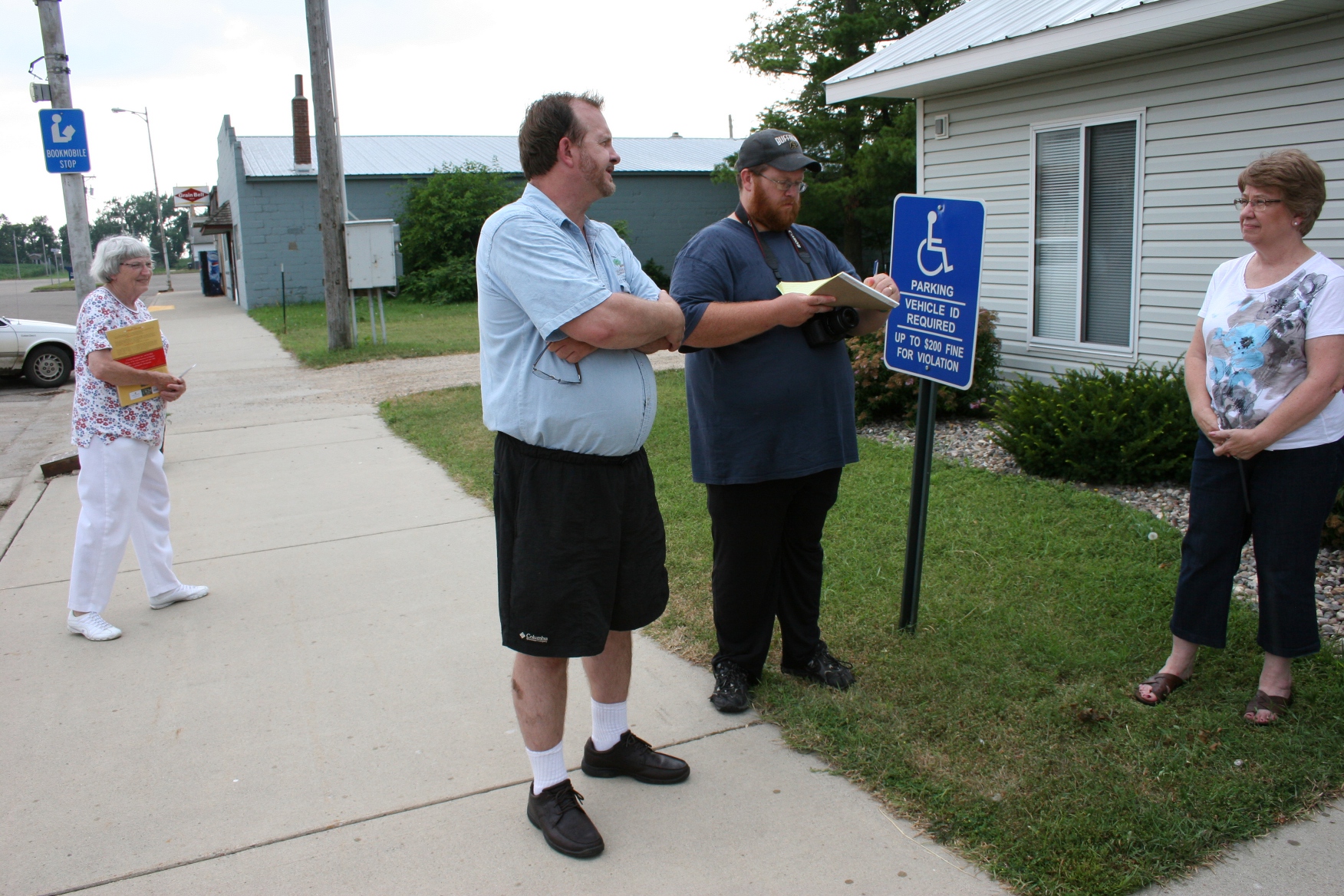
Troy Krause of The Redwood Falls Gazette interviews Little Free Library co-founder Todd Bol as Dorothy Marquardt, left, and Karen Lemcke of the Vesta Commercial Club listen.

“I love books. They are part of my heart and soul,” Todd Bol said Sunday as he stood outside the cafe near the over-sized birdhouse style library anchored on a post. I listened and snapped photos as Troy Krause, editor of The Redwood Falls Gazette interviewed this man who has seen his LFL story spread to media outlets worldwide, from The Huffington Post to The Los Angeles Times and beyond.

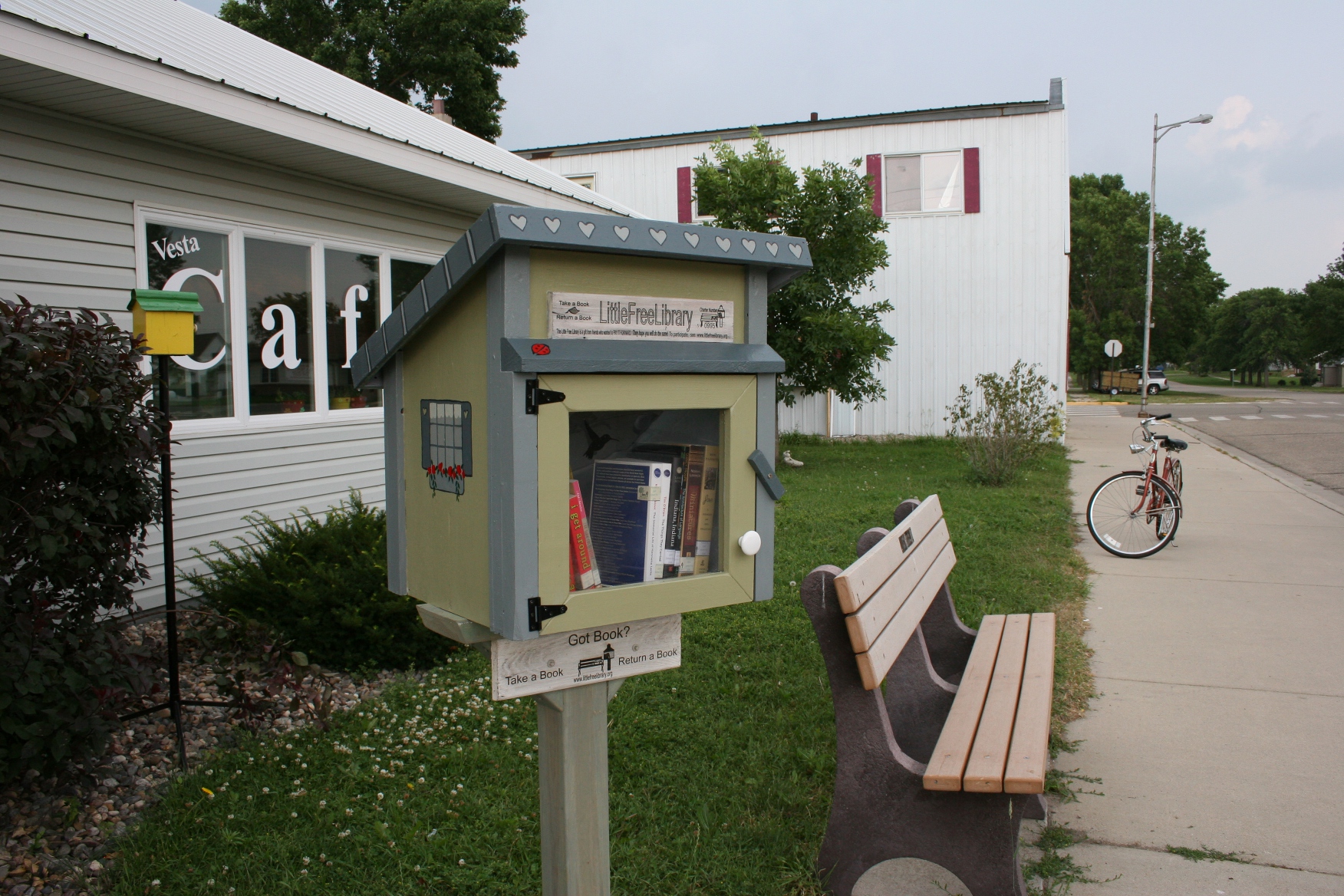
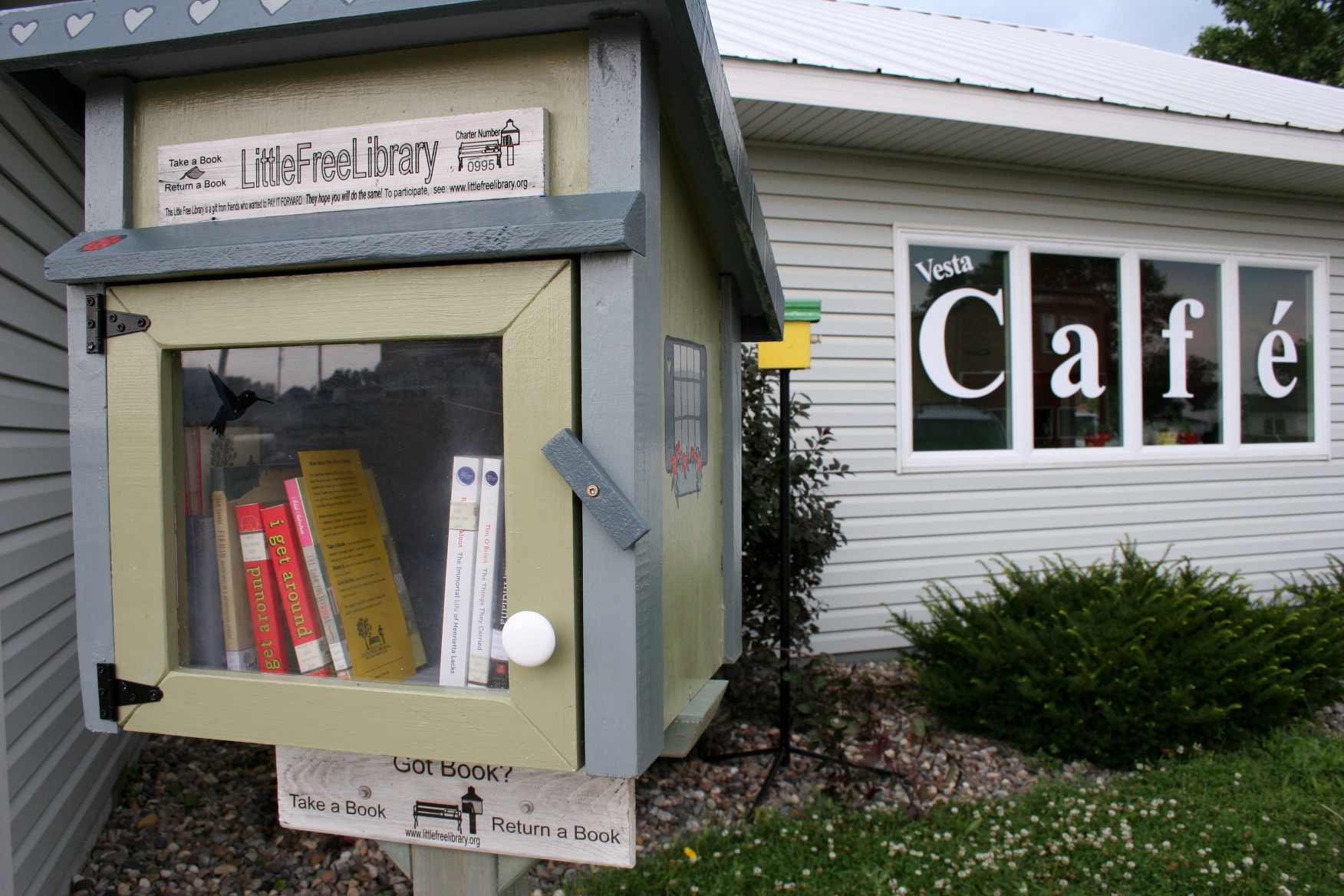
The LFL Todd and Susan installed outside the community owned Vesta Cafe.

Little Free Libraries are popping up everywhere across the country (and even outside the U.S.), bringing books to neighborhoods and cities and now, for the first time, to places likes Vesta, the seed plant for the “Small Towns Minnesota” movement of the LFL project, according to Bol.

The beautiful handcrafted library Todd Bol had built and painted for the residents of Vesta, population around 340.

He offered to donate the library, hand-built by an Amish carpenter from Cashton, Wisconsin, to Vesta after I blogged last November about a LFL in my community of Faribault and then issued this challenge to my hometown of some 340 residents:

I’d like to challenge the residents of Vesta to start a Little Free Library. How about in or near the Vesta Cafe? Make my dream of a library in my hometown come true. I’ll even bring some books for the library the next time I’m “back home.”

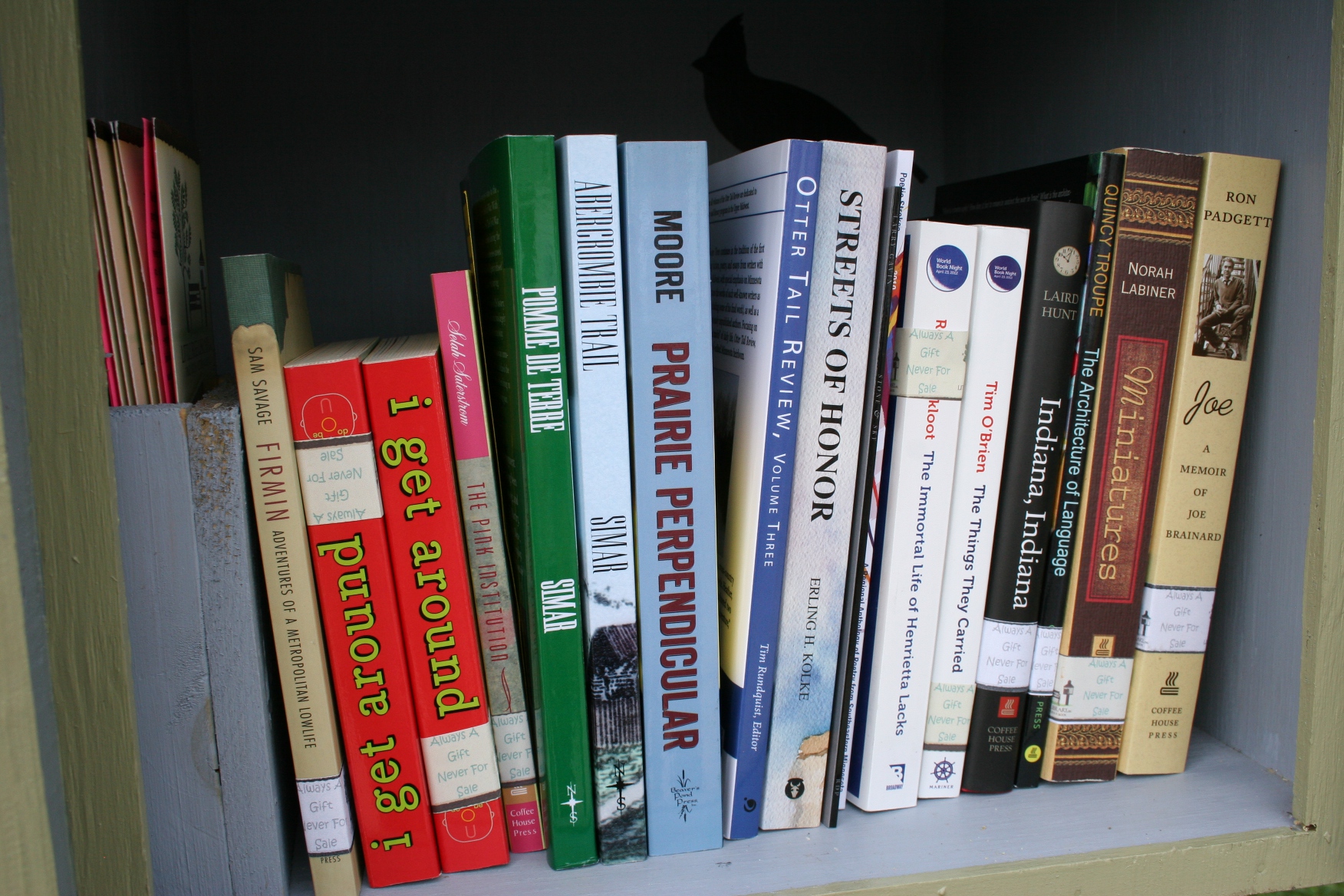
The books Todd Bol and I placed inside Vesta’s LFL. I plan to bring some books for children and teens the next time I’m back in Vesta. Anyone is welcome to donate books. Overflow books will go on a bookshelf inside the cafe and books will be rotated.

Sunday afternoon I delivered on that promise as did Bol with his promise. He brought the library and we filled it with books—his donated by Coffee House Press and mine from my bookshelves. Among my seven donations were two books of poetry, not something I would typically expect Vestans to read. But I wanted Vesta’s LFL to have a copy of Poetic Strokes—A Regional Anthology of Poetry from Southeastern Minnesota, Volume Four. That includes two poems I wrote, one titled “A school without a library.” (When I attended Vesta Elementary School, our library books were selected by students from the Redwood County Library in Redwood Falls 20 miles away and brought back to our school, then later returned and exchanged for a new selection of volumes.)

The other poetry book, Stone & Sky, was written by a Faribault High School English teacher who once lived in nearby Belview and who understands the prairie like I do.

Vesta resident and Vesta Commercial Club resident Dorothy Marquardt took home this book donated by Coffee House Press to Vesta’s LFL. Dorothy is an enthusiastic promoter of my hometown.

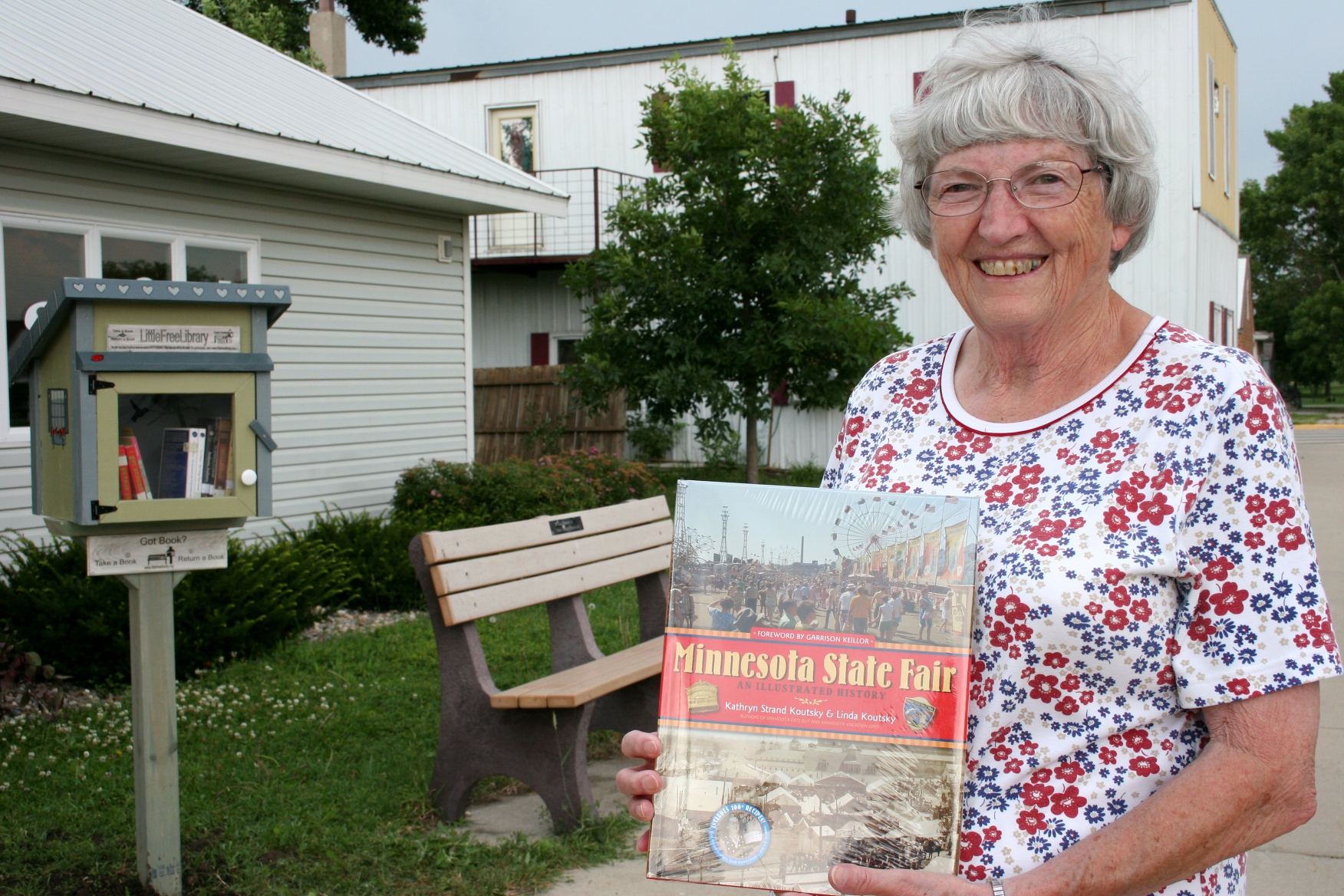
Dorothy Marquardt, a member of the Vesta Commercial Club, which worked with Bol on getting the LFL into Vesta, understands what a LFL will mean to area residents. Vesta recently saw its county bookmobile service end. “It’s kind of a godsend,” she said on Sunday, clutching a copy of Minnesota State Fair—An Illustrated History by Kathryn Strand Koutsky and Linda Koutsky with foreword by Garrison Keillor. Marquardt is officially the first reader to pull a book from Vesta’s LFL.

The team that worked to bring a Little Free Library to Vesta includes Dorothy Marquardt, left, and Karen Lemcke, representing the sponsoring Vesta Commercial Club, LFL co-founder Todd Bol and me (holding a copy of a poetry anthology I donated).

Monday morning, while dining in the cafe, I promoted the LFL to locals, moving between tables explaining how the library works. It operates on the premise of take a book, leave a book. Or take a book and bring a book back later to place inside the outdoor library. It’s all done on the honor system and done to promote literacy and encourage reading.

For me, the establishment of a LFL in my hometown is a dream come true. I always wanted a library while growing up. And now that I’m all grown up, my hometown finally has one.

The Little Free Library at the Vesta Cafe.

#

I’D LIKE TO ISSUE A NEW CHALLENGE TODAY. This one goes to the people of my native prairie, of southwestern Minnesota. I’d like to see more Little Free Libraries in the many small towns, like Vesta, that are without libraries and/or bookmobile service. Purchase a library via the LFL organization. Build your own. Work together—perhaps as a 4-H club or a church youth group or a civic organization or whatever—to bring a LFL into your town.

Be sure to officially register your LFL (there’s a small fee) so word of your library can be spread on the LFL website and via social media. Comment on this post and tell me that you are going to accept my challenge and bring a LFL to your community.

Finally, thank you, Todd Bol, for making my dream come true through your gift of a LFL to my hometown. It is my hope that the library in Vesta will inspire other communities to grow this project in rural Minnesota so that no child or adult, no matter where he/she lives, is without a library.

Thank you also to Karen Lemcke of the Vesta Commercial Club for working with Todd and me to make this project a reality.

This LFL, repurposed from a cranberry crate, needs a new home. Check The Redwood Falls Gazette to read how editor Troy Krause will be attempting to find a location for the library in southwestern Minnesota. Interested? Contact Troy.

FYI: Todd also dropped a LFL off in the neighboring community of Belview. And he left a third library with Troy Krause, editor of  The Gazette. Troy promised to publicize the availability of that third library. I’ll keep you posted on which town accepts the third LFL.

Click here to link to the LFL website and learn more about the Little Free Library project.

© Copyright 2012 Audrey Kletscher Helbling


Vesta & Belview celebrating one year after storms June 29, 2012

TWO REDWOOD COUNTY COMMUNITIES will come together to celebrate this Sunday, one year to the date after severe storms ripped through this region of southwestern Minnesota.

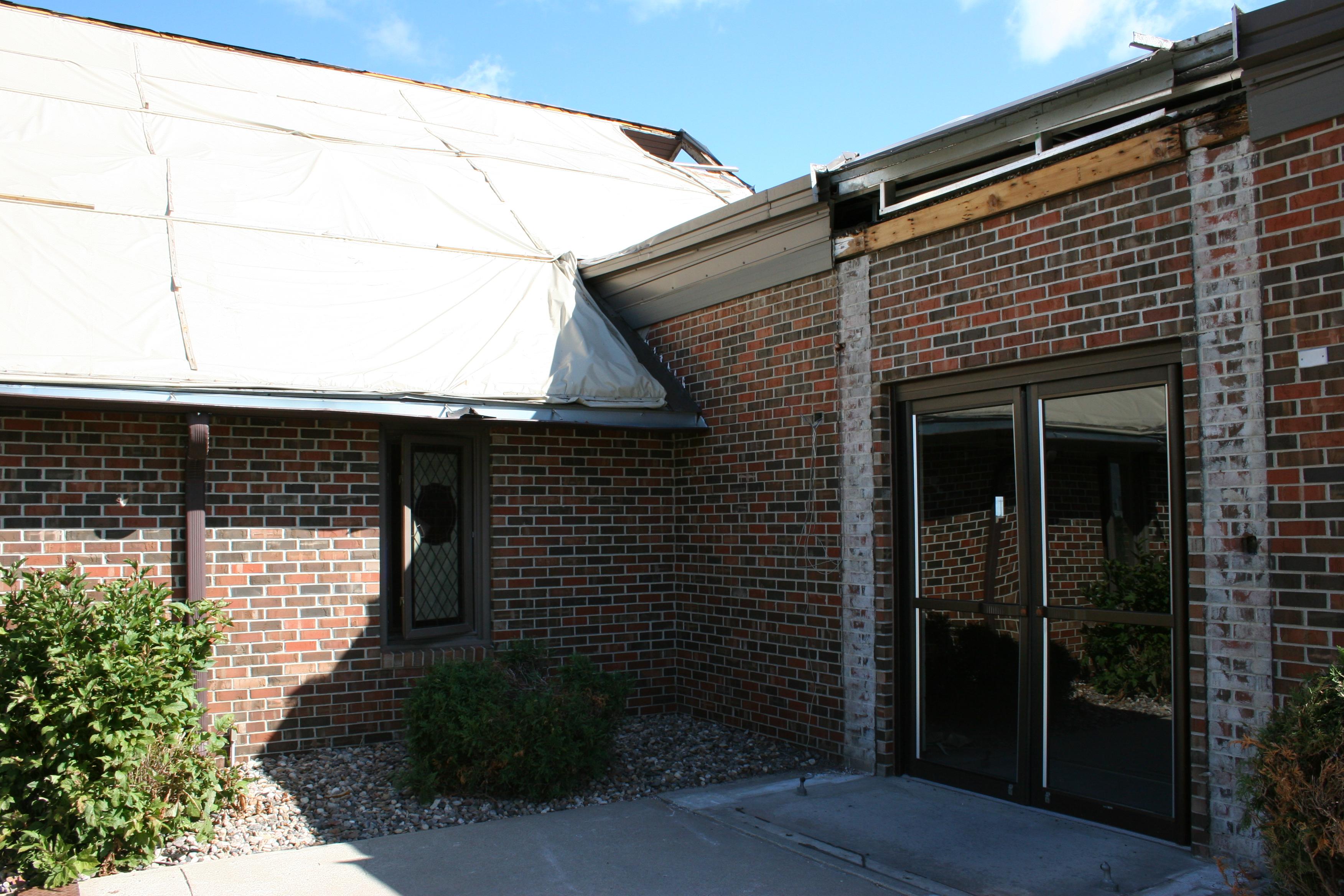
St. John’s Lutheran Church in Vesta, hours after a July 1, 2011, storm ripped half the roof from the sanctuary. Photo courtesy of Brian Kletscher.

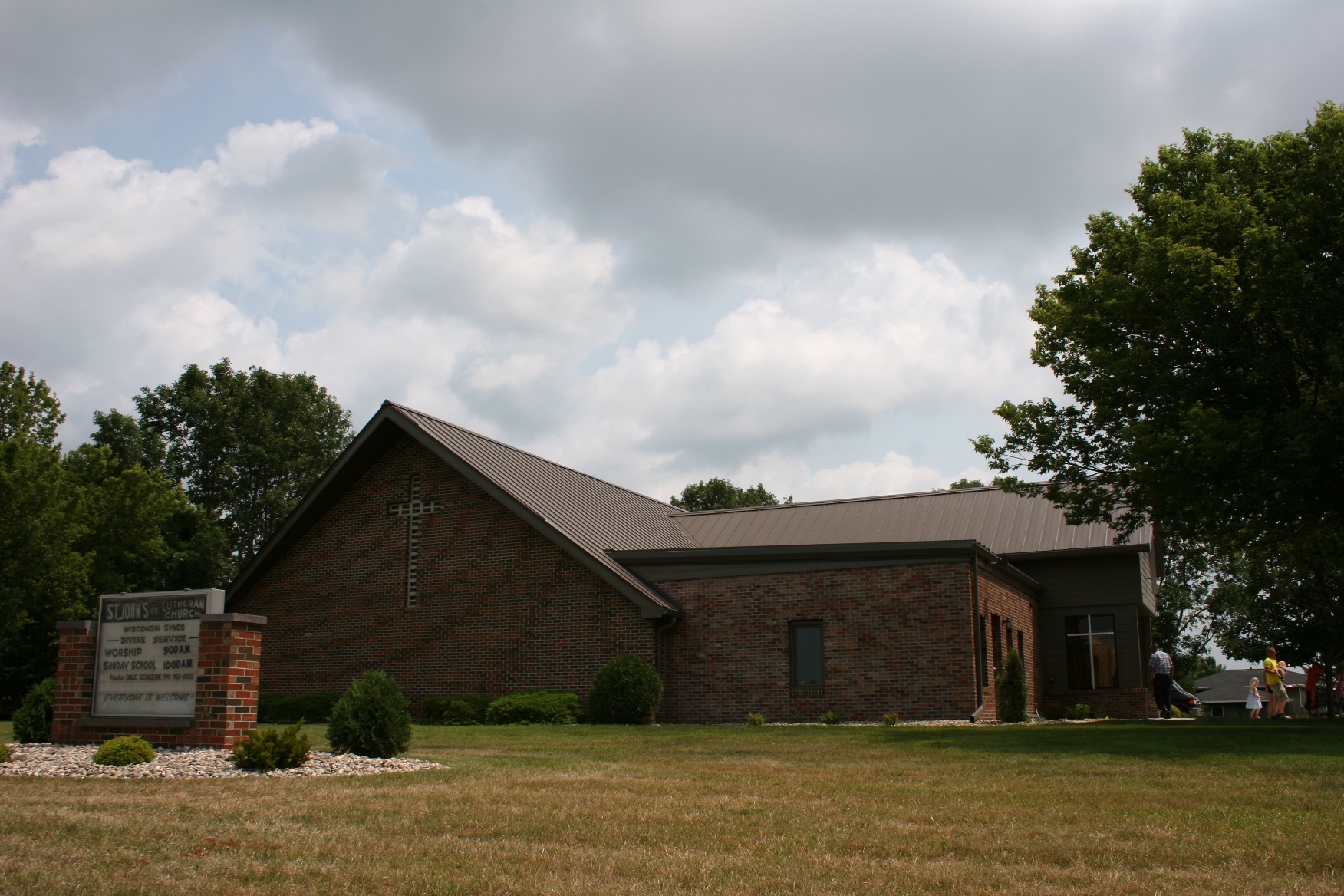
In my hometown of Vesta, area residents will remember the storm anniversary and rededicate St. John’s Evangelical Lutheran Church at a 10:30 a.m. worship service followed by a catered chicken dinner.

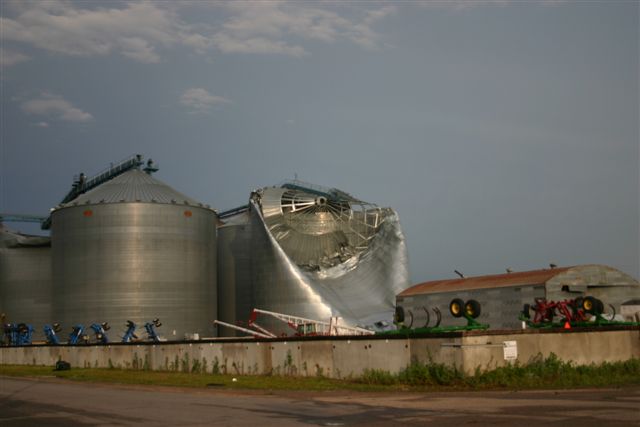
Damage to one of the grain bins at the local elevator. Photo by Brian Kletscher.

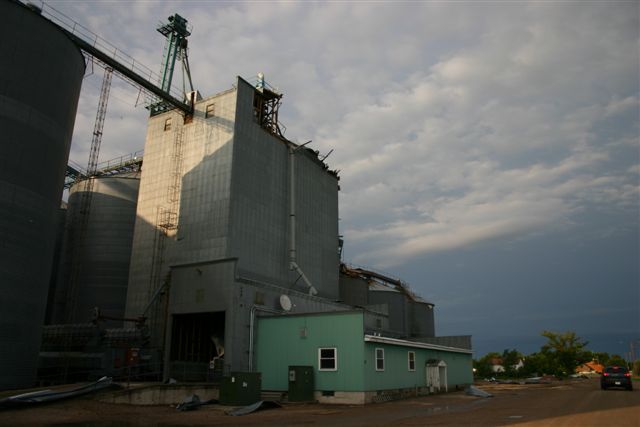
The grain elevator complex, the visual defining landmark in the farming community of Vesta, was ravaged by winds. You’ll see the damage near the top of the old grain elevator. Photo by Brian Kletscher

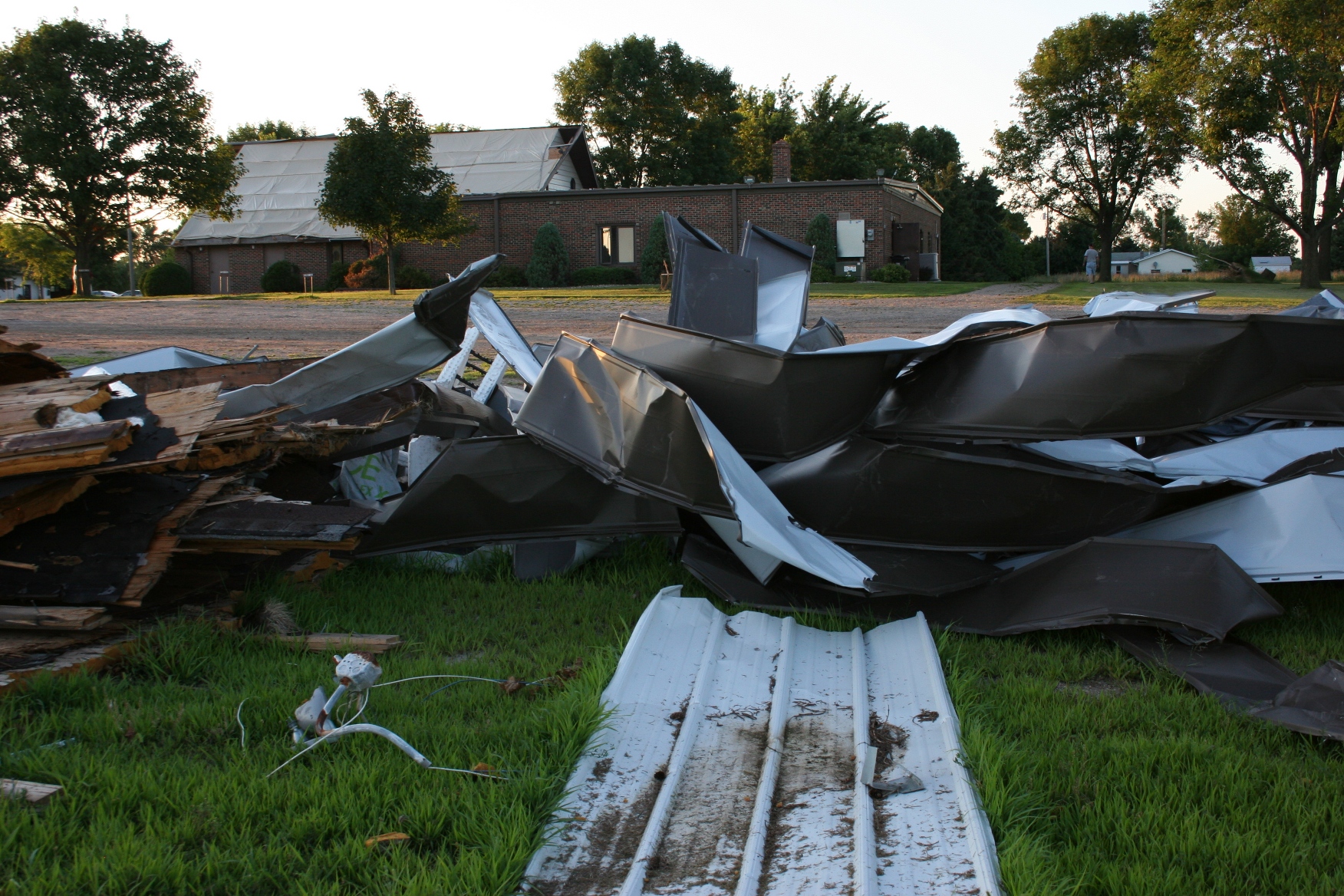
During the late afternoon of July 1, 2011, a series of downbursts with wind speeds of 90 – 100 mph swept through Vesta, ripping half the roof from St. John’s sanctuary, felling trees, denting grain bins, damaging the landmark grain elevator and more.

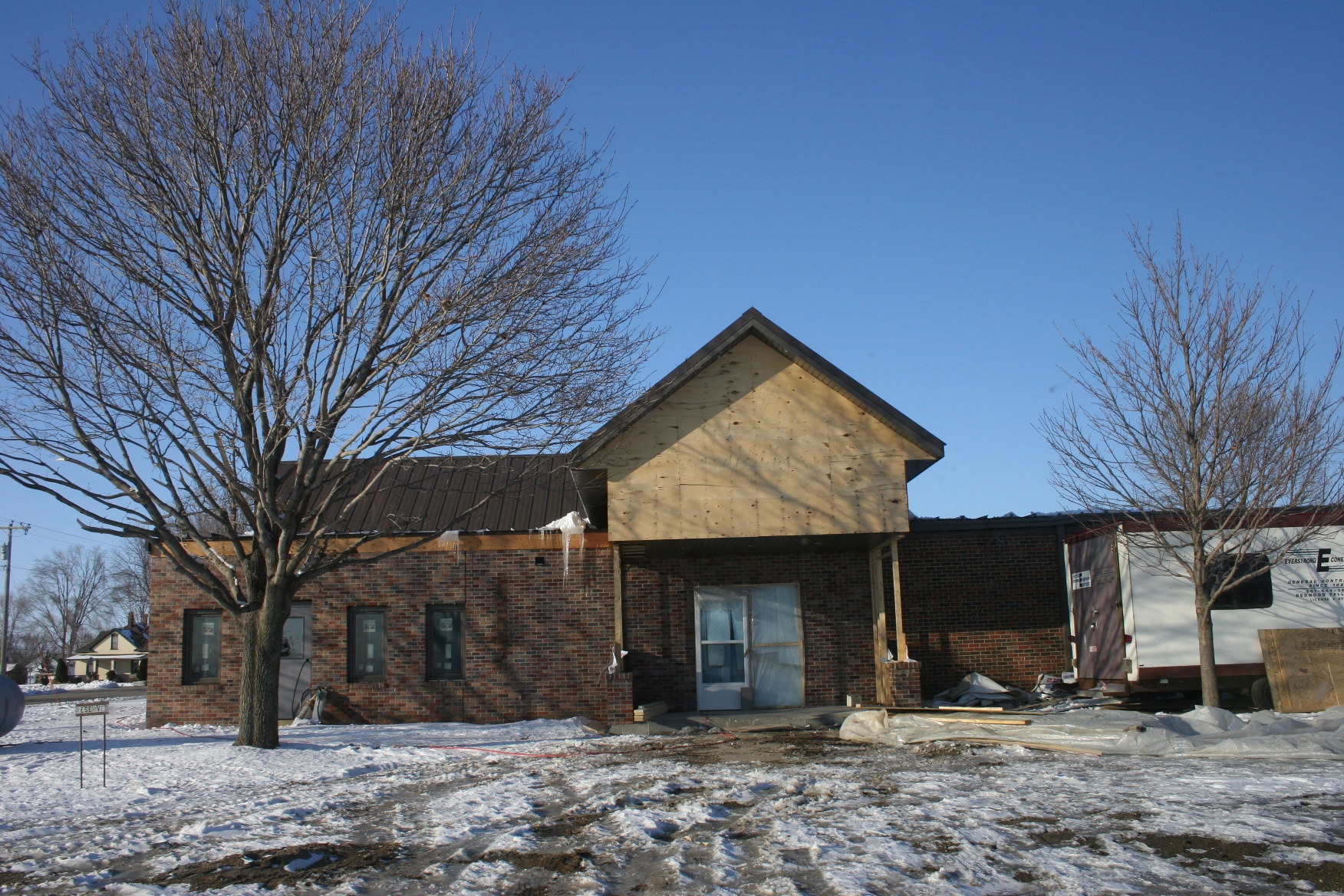
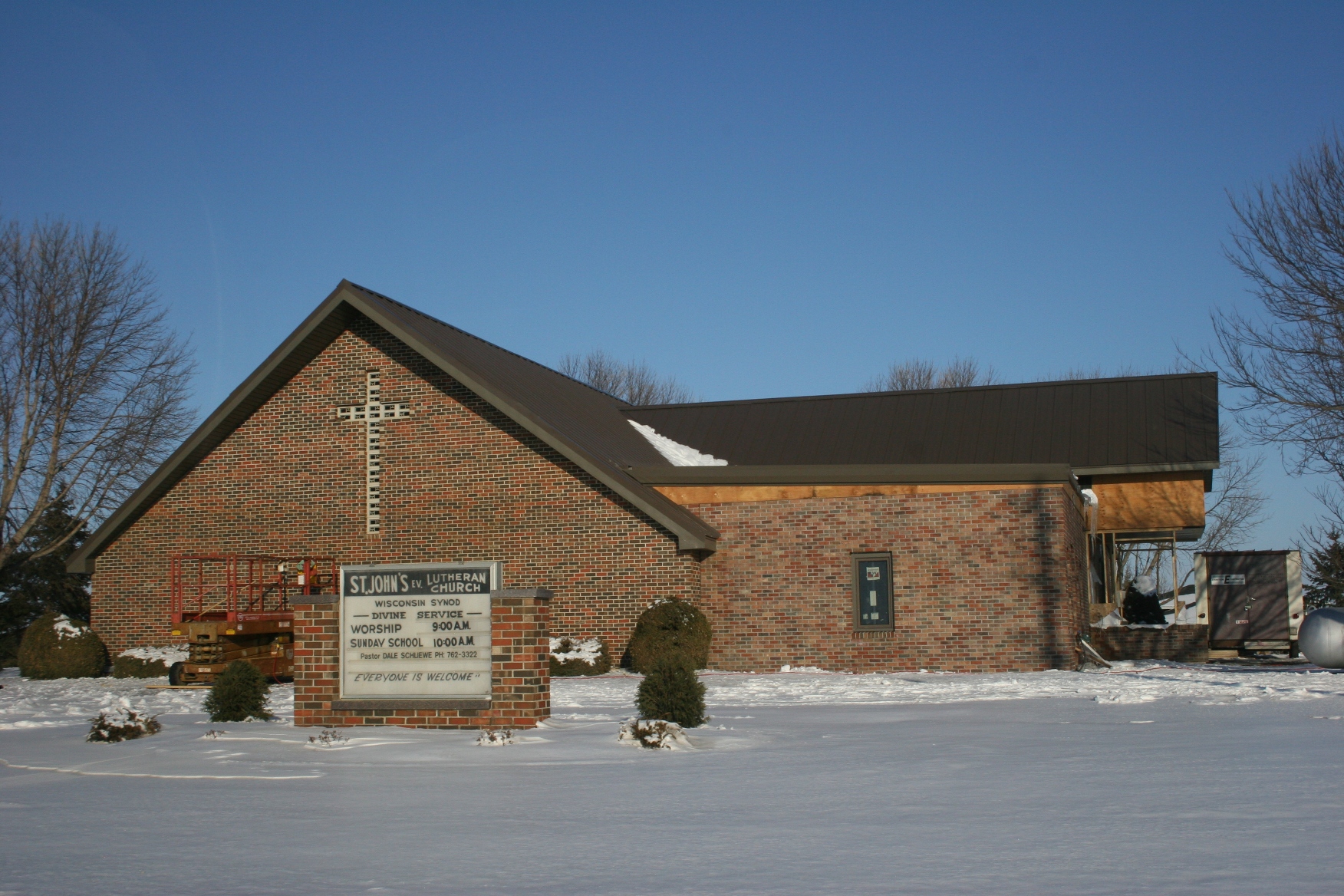
Under construction in March, a pastor’s office, bathroom and storage room were added to the south side of the early 1970s era church. Photo by Audrey Kletscher Helbling.

It took nearly a year for St. John’s to reopen after the congregation decided to expand the church as part of the roof reconstruction process.

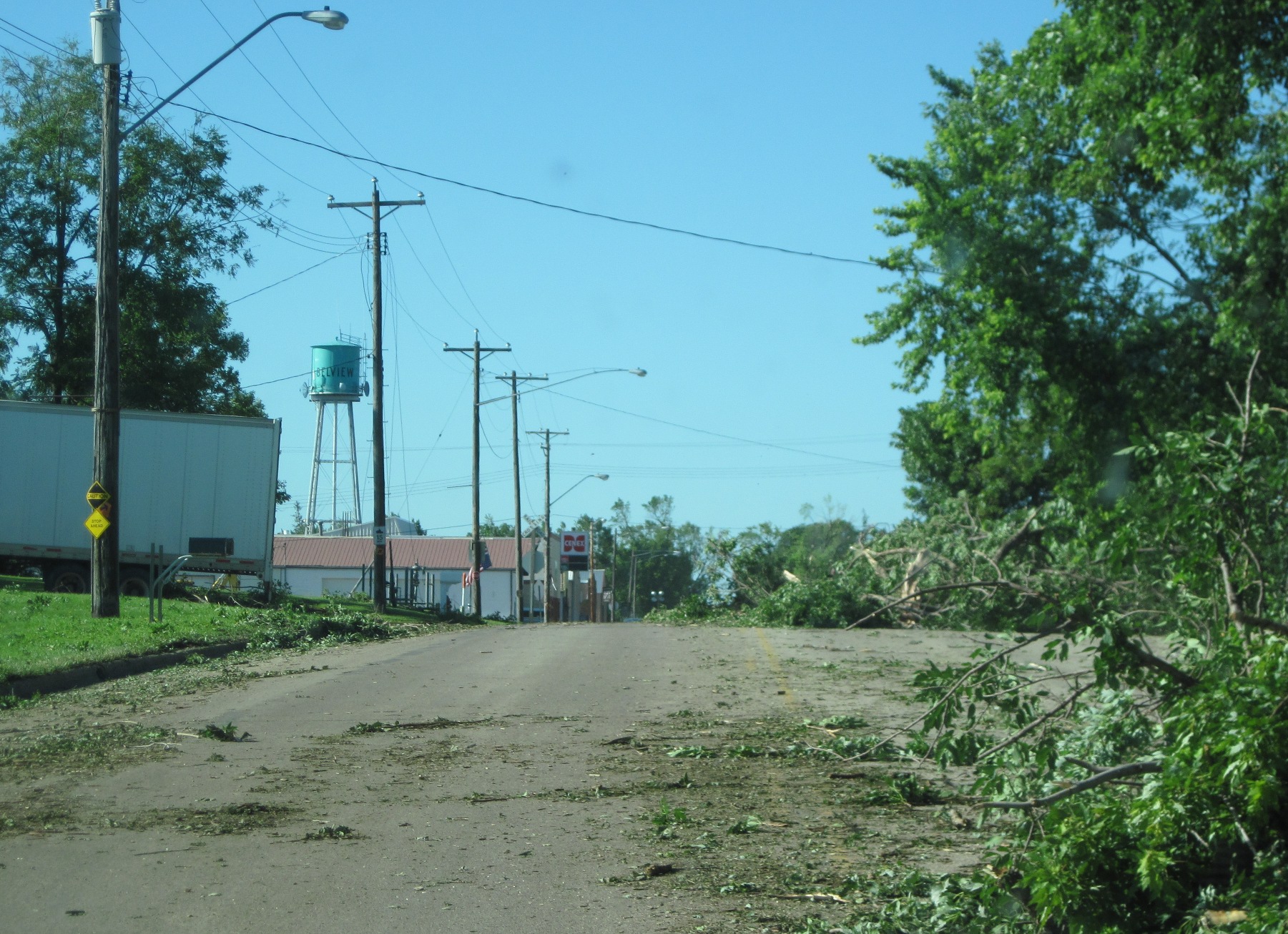
Entering Belview from Sacred Heart at 9 a.m. on July 2, the morning after the tornado. Photo courtesy of Merlin and Iylene Kletscher, who were not yet living in Belview when the storm hit.

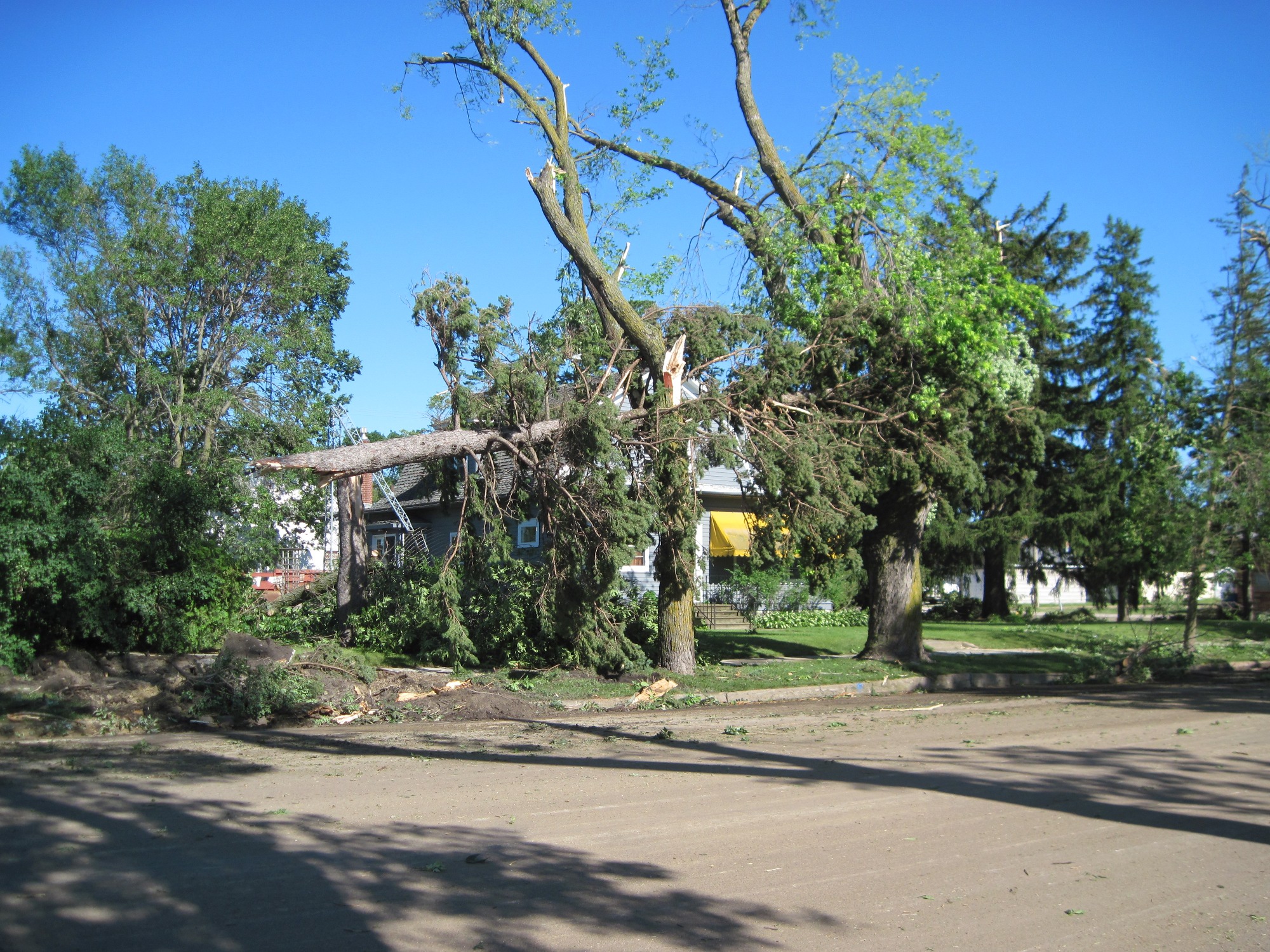
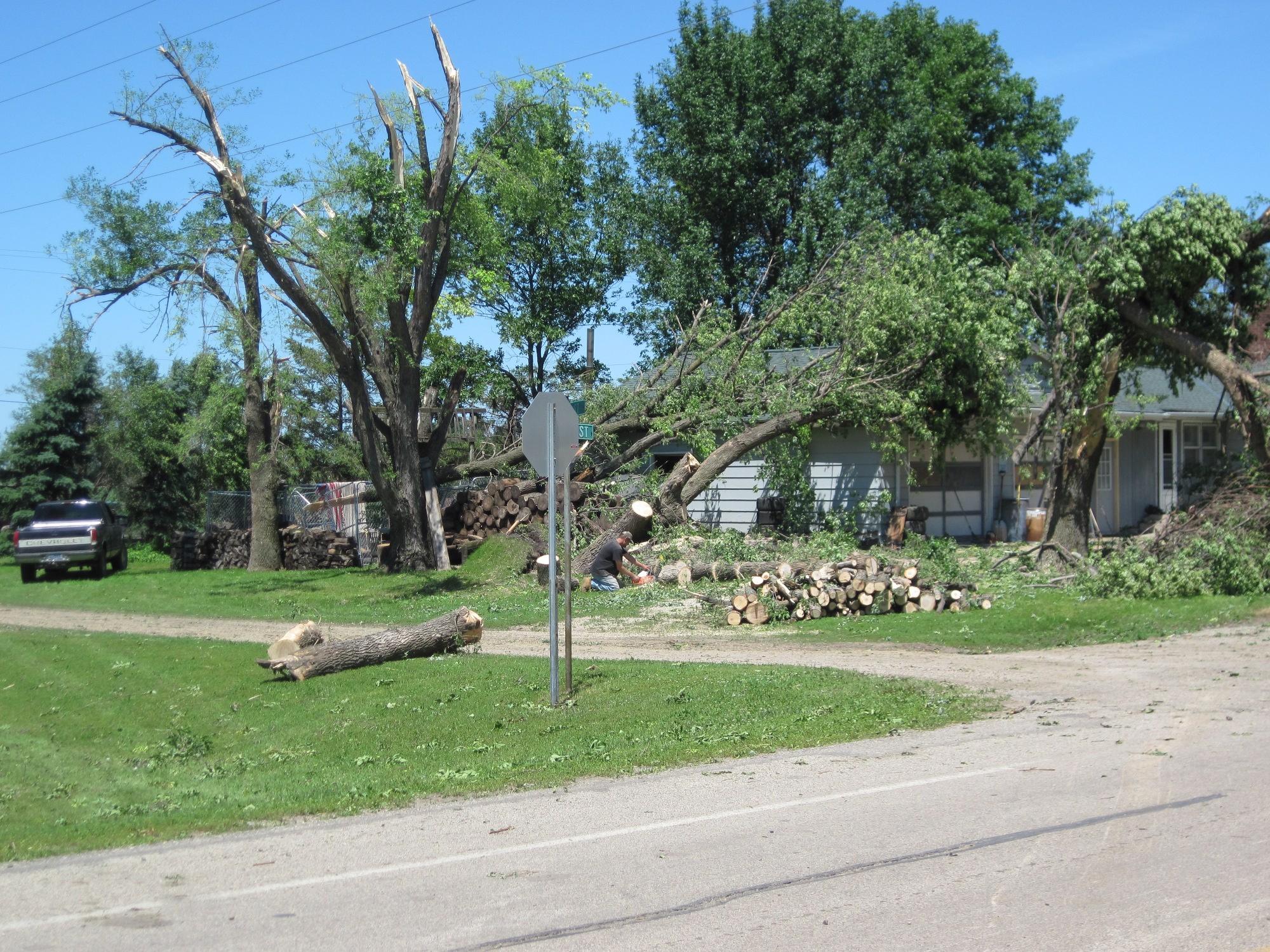
In Belview, about 10 miles to the north and east, residents will also mark the one-year anniversary of an EF-1 tornado which rode in on the same storm system. The tornado, with winds of 95 – 105 mph, wiped out many of this prairie town’s trees (which fell onto buildings and vehicles), damaged the nursing home to the point that it closed for awhile, wrecked roofs and more.

A month after the tornado, Belview’s Parkview Home (nursing home) remained closed as repairs were needed to the damaged roof, covered here with blue tarps. Photo by Audrey Kletscher Helbling.

The communities of Belview and Vesta lost many trees in the July 1 storms. This photo is along a Belview street north of the park. Photo courtesy of Merlin and Iylene Kletscher.

Jerry Hagen’s house, across the street from Merlin and Iylene’s home in a July 2 photo. Photo courtesy of Merlin & Iylene Kletscher.

Damage along South Main Street in Belview. Photo courtesy of Merlin and Iylene Kletscher.

A year later, Belview residents are celebrating with a catered community picnic supper and entertainment at the local park (or in the air conditioned historic Odeon Hall if the weather is too hot) from 4 p.m. – 6 p.m. Sunday.

“We know we can pull together when the going gets tough as was proven after the storm,” says City Clerk Lori Ryer. “Now we would like to pull together in a spirit of community and fellowship and say thank you to everyone in town and to those that helped.”

My Uncle Merlin and Aunt Iylene Kletscher will be among Belview residents attending that picnic, celebrating and listening to the music of Ron and Kathy and Friends. The Kletschers had just closed on the purchase of a foreclosed fixer-upper home along Belview’s Main Street when the tornado ravaged Iylene’s hometown. They lost most of their trees—one of the reasons the couple bought the property—and sustained damage to their house, which they had just begun renovating.

Says Merlin:

So far we have planted four flowering crabs, a new disease resistant elm tree, 13 lilac bushes and the city has the Main Street boulevard planted with really nice-sized maples. We have two churches with new roofs, the bank is putting a new roof on right now and there are also more homes in the process of new shingles, etc., now.

One year later, Belview is looking pretty darn good!

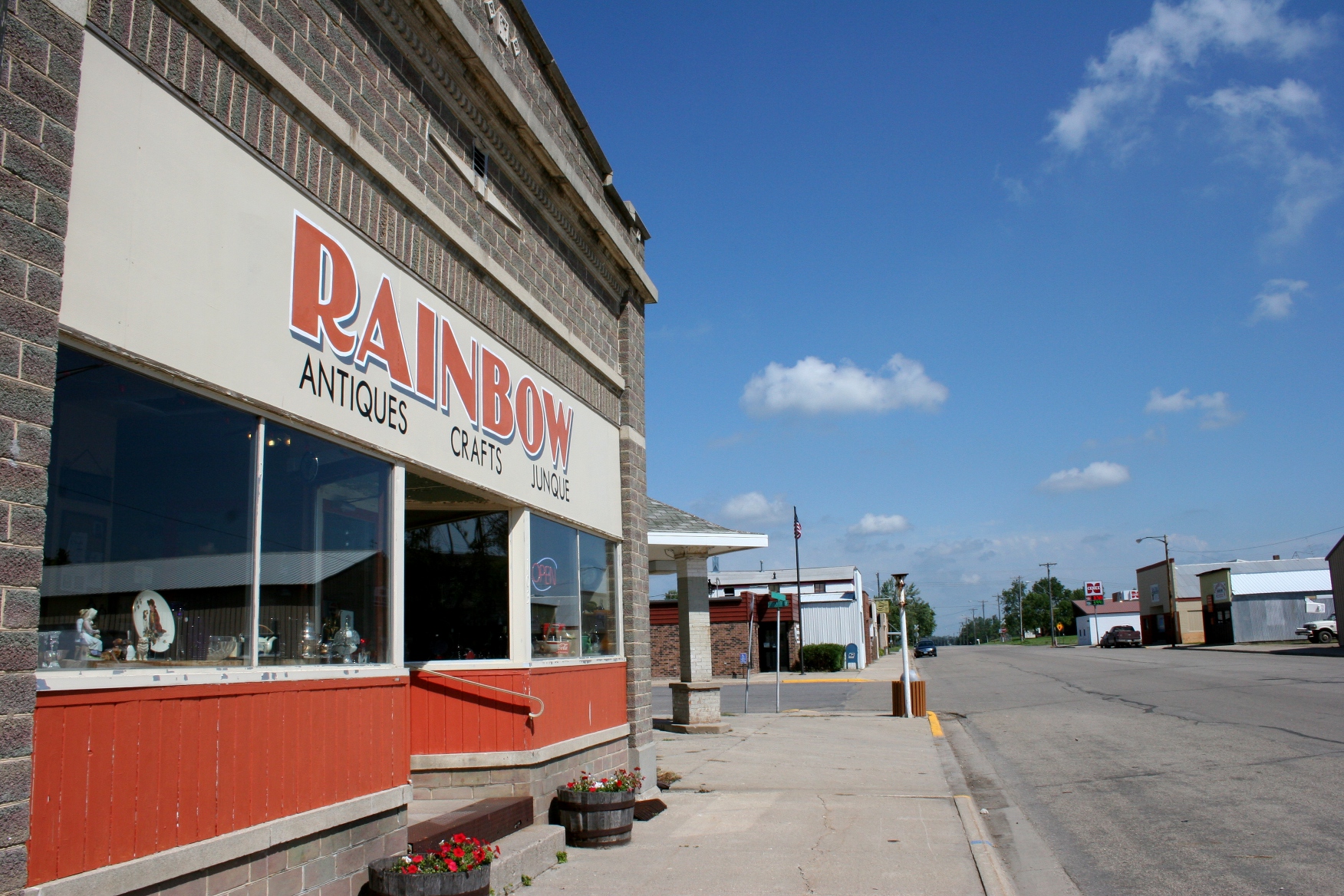
A portion of Main Street in Belview a month after the tornado. Photo by Audrey Kletscher Helbling

FYI: To read more about the July 1, 2011, storms and to view more storm damage photos, check the Minnesota Prairie Roots archives from July 2011. In addition to the damage in Vesta and Belview, many rural residences also were hit. The farm of my cousins, Danny and Marilyn Schmidt, was struck by a second EF-1 tornado which nipped the northwestern corner of Redwood County. Near the South Dakota/Minnesota border, the community of Tyler experienced an EF-2 tornado which followed a 3-mile path through Lincoln County. The tornadoes and wind storms were part of a massive storm system  on July 1, 2011, which began along the western edge of Minnesota and extended as far east as northwestern Wisconsin.

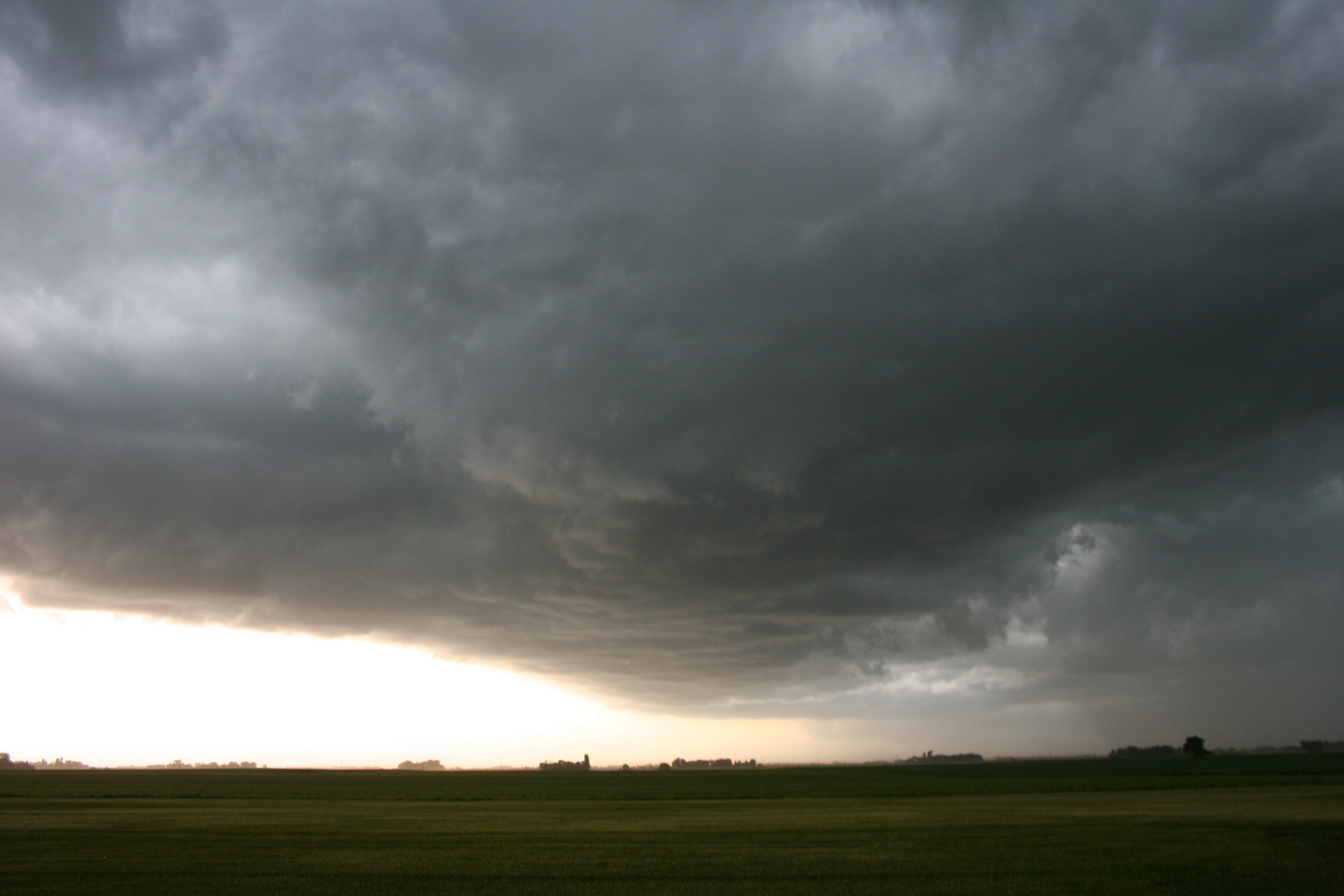
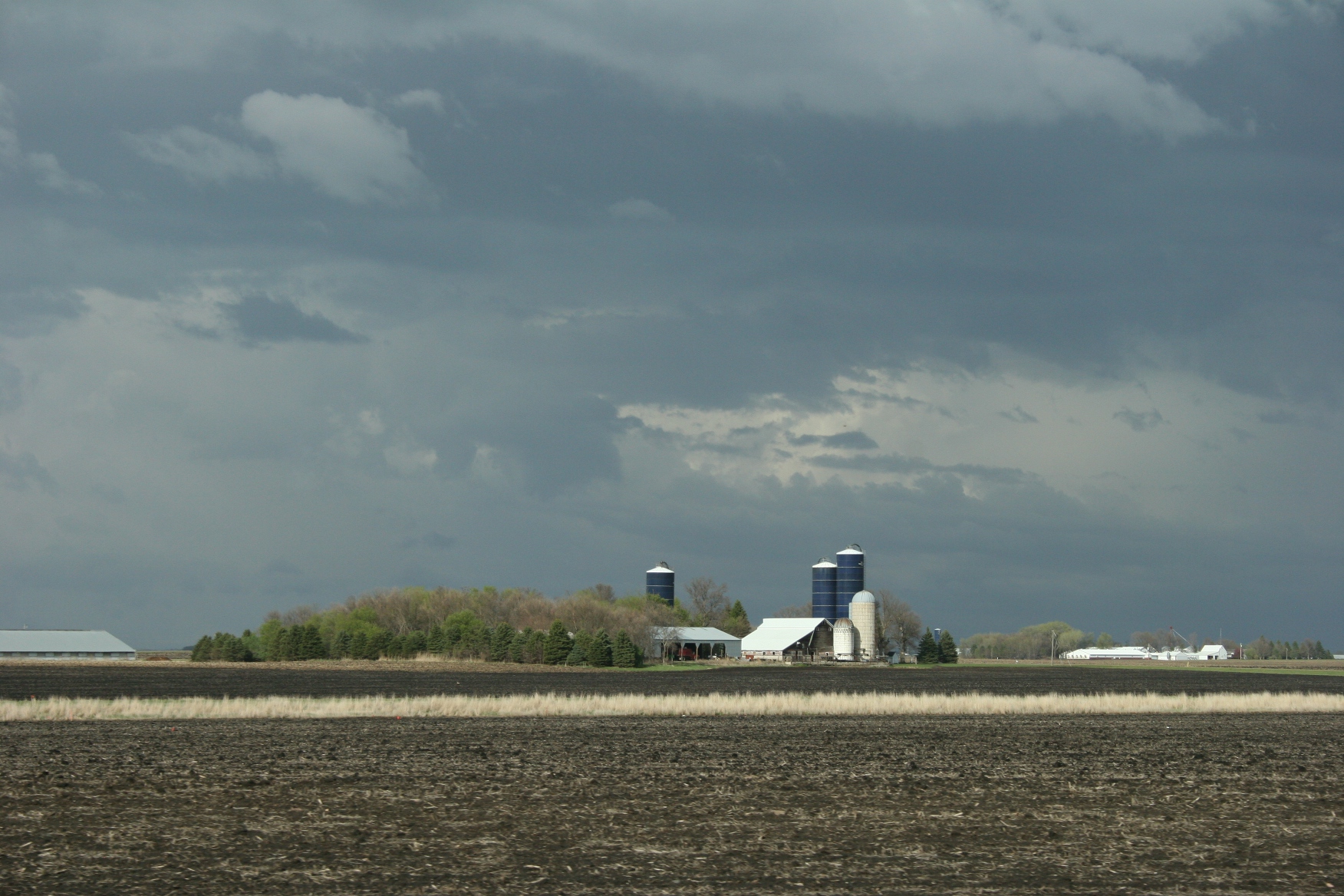
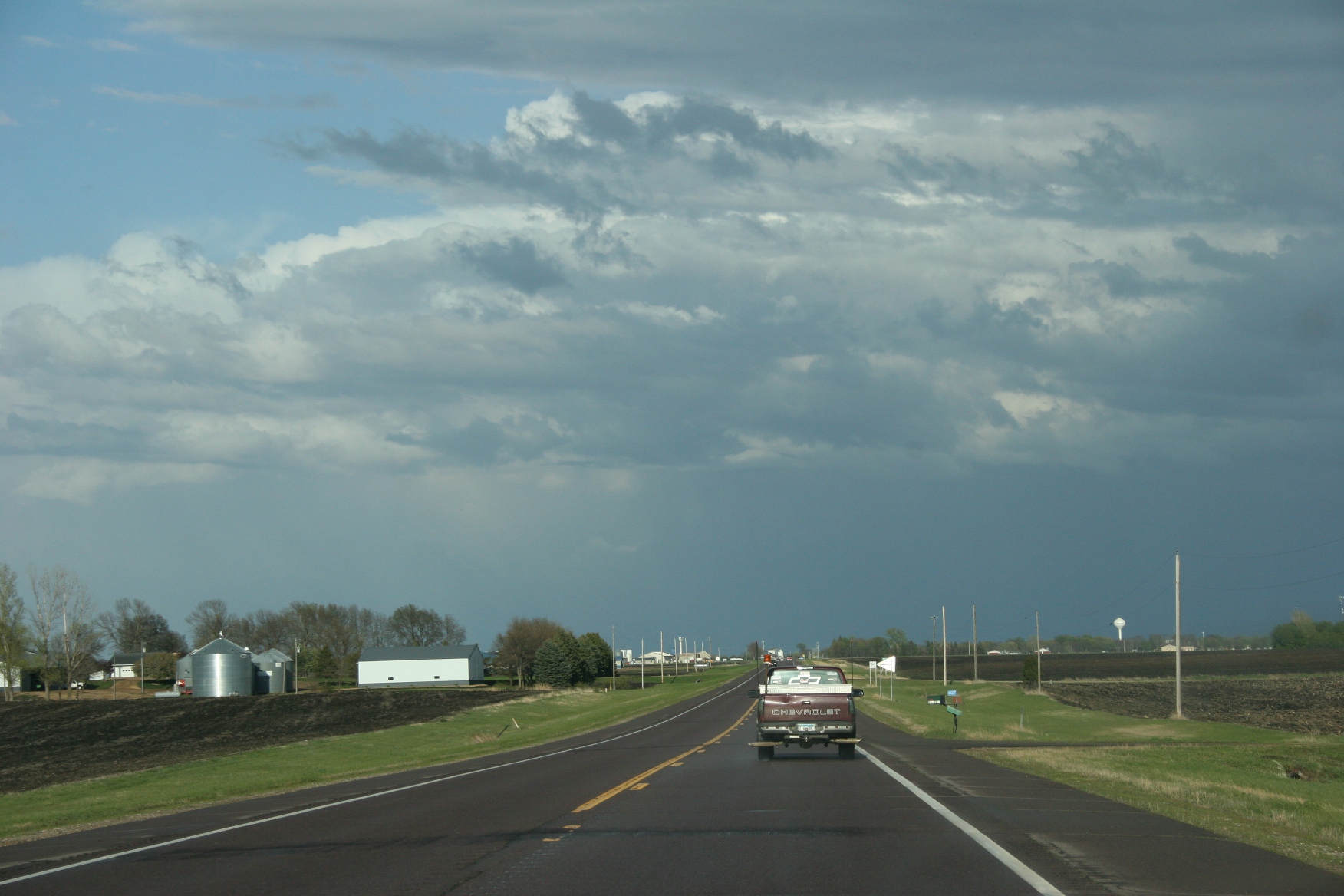
I was on my way with my husband to a party near Nerstrand not far from our Faribault home in southeastern Minnesota when these threatening clouds moved in during the early evening hours of July 1, 2011. It was while driving to our friends’ rural home that my sister Lanae phoned to tell me about the storm in our hometown and to warn me of the approaching bad weather. Fortunately the ominous clouds delivered only rain and nothing severe. But I was worried, very worried.

Copyright 2012 Audrey Kletscher Helbling


My Minnesota hometown celebrates summer with its famous chicken, dancing in the street & more June 14, 2012

Filed under: Uncategorized — Audrey Kletscher Helbling @ 8:20 AM
Tags: , , , , , , ,

I’LL NEVER FORGET the summer the neighbor boy coaxed me into riding with him on the Octopus during V-Esta Daze, my hometown’s annual summer celebration. What was I thinking as I settled into the amusement ride with Keith? What was he thinking?

I screamed the entire dizzying ride, scared out of my teenaged wits.

The same chicken dinner sign goes up every year inside the Vesta Community Hall. The price is updated when necessary.

While a carnival is no longer a part of V-Esta Daze, one aspect of the Vesta Commercial Club-sponsored celebration has remained constant. Since 1963, the Club has served its “famous barbecued chicken.”

It’s considered “famous,” I suppose, because V-Esta Daze became known for its chicken, just like Sauerkraut Days in Henderson is noted for its sauerkraut and Barnesville Potato Days is known for its potatoes.

The chicken dinner I enjoyed last summer at V-Esta Daze.

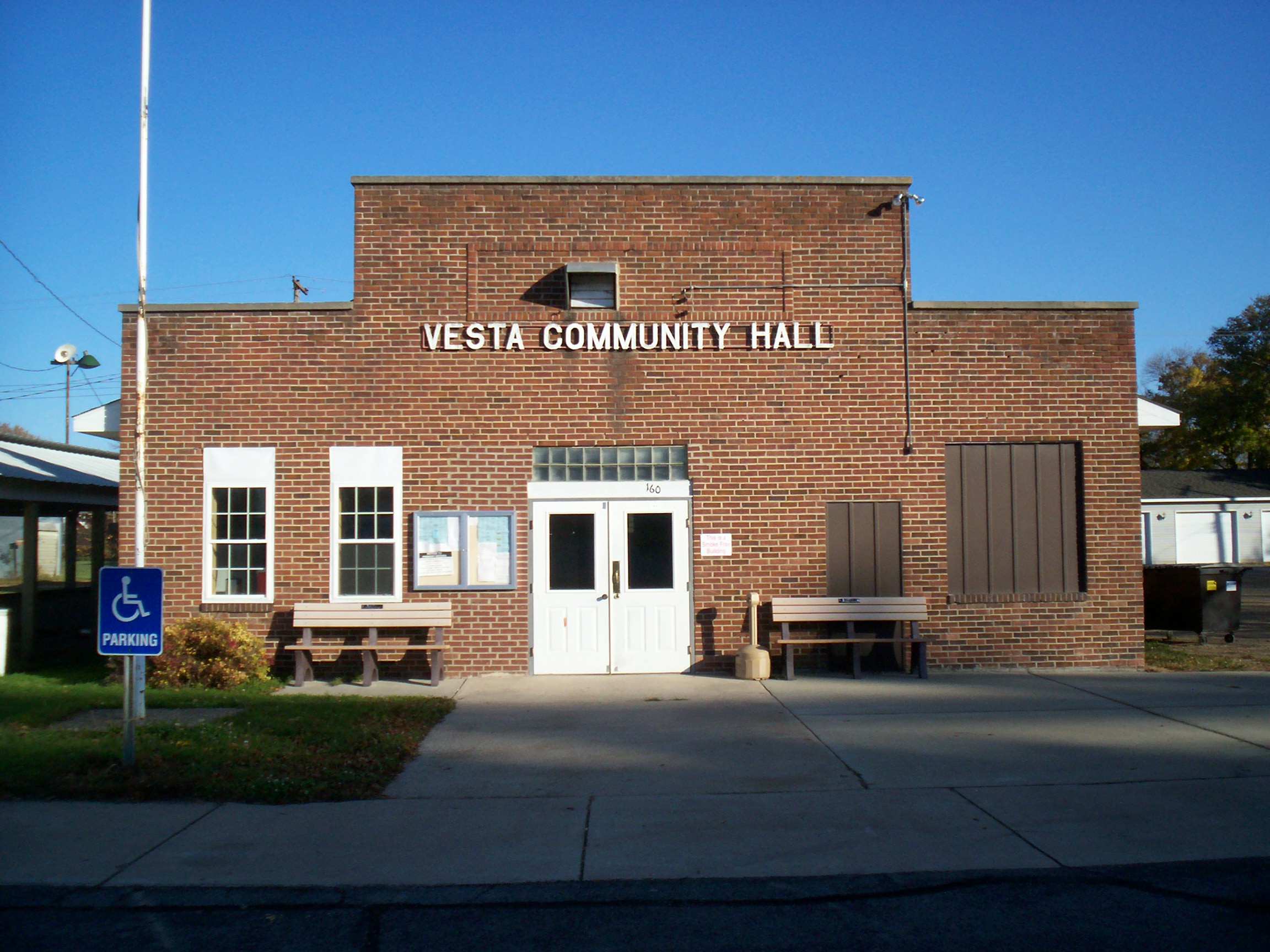
It is such comfortable familiarity, the same year-after-year offering of savory chicken grilled by the same volunteer men over a long pit of coals next to the old brick Vesta Community Hall that keeps locals and natives and those from neighboring towns returning.

This Friday, June 15, the crowds will be back, lining up at the hall between 5 – 8 p.m. for that famous chicken dinner.

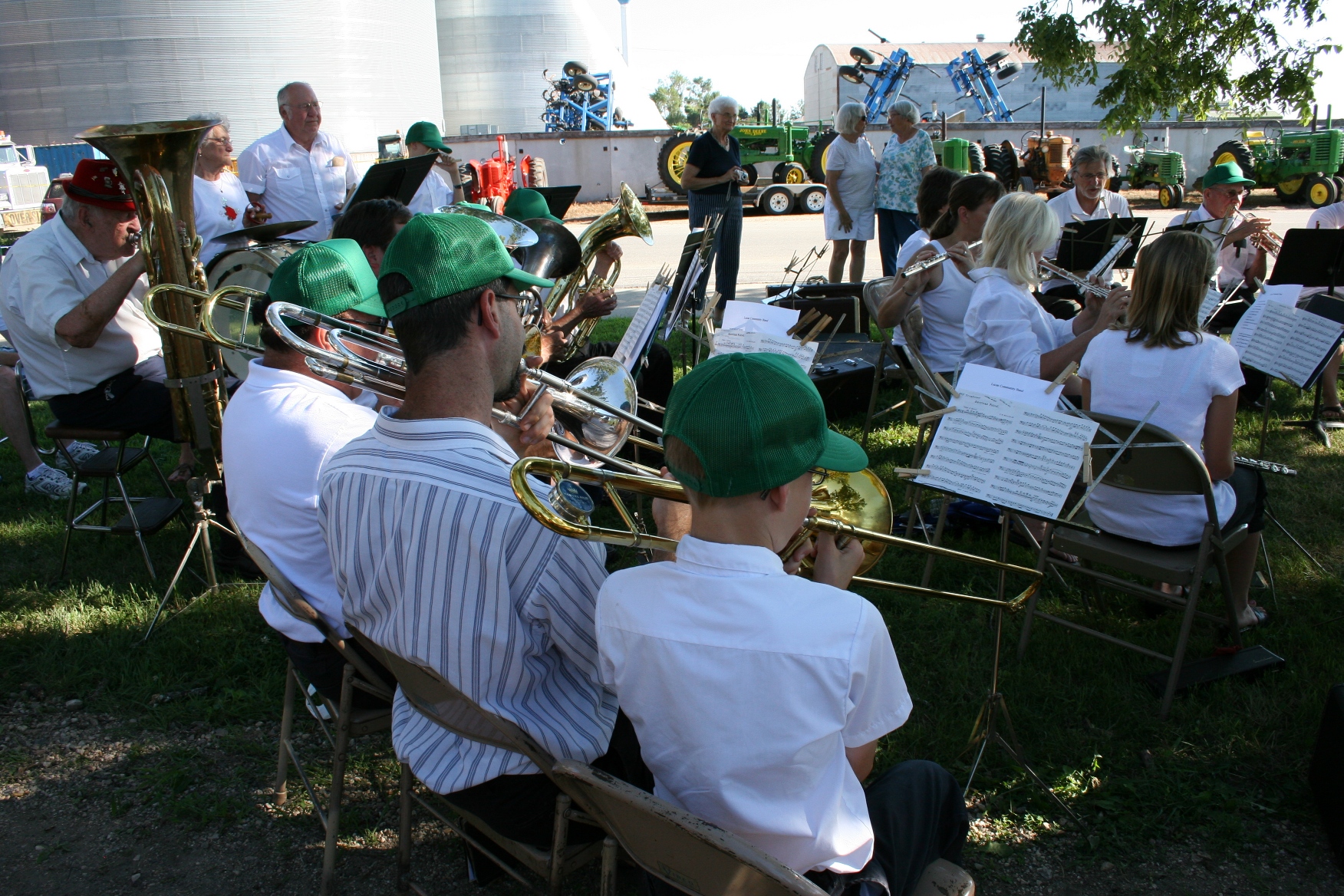
The Lucan Community Band played under the shade trees outside the community hall and across the street from the elevator at last year’s celebration.

Outside the hall, members of the Lucan Community Band will settle onto battered folding chairs to entertain the crowd with old favorites while folks listen and visit, catching up on the latest.

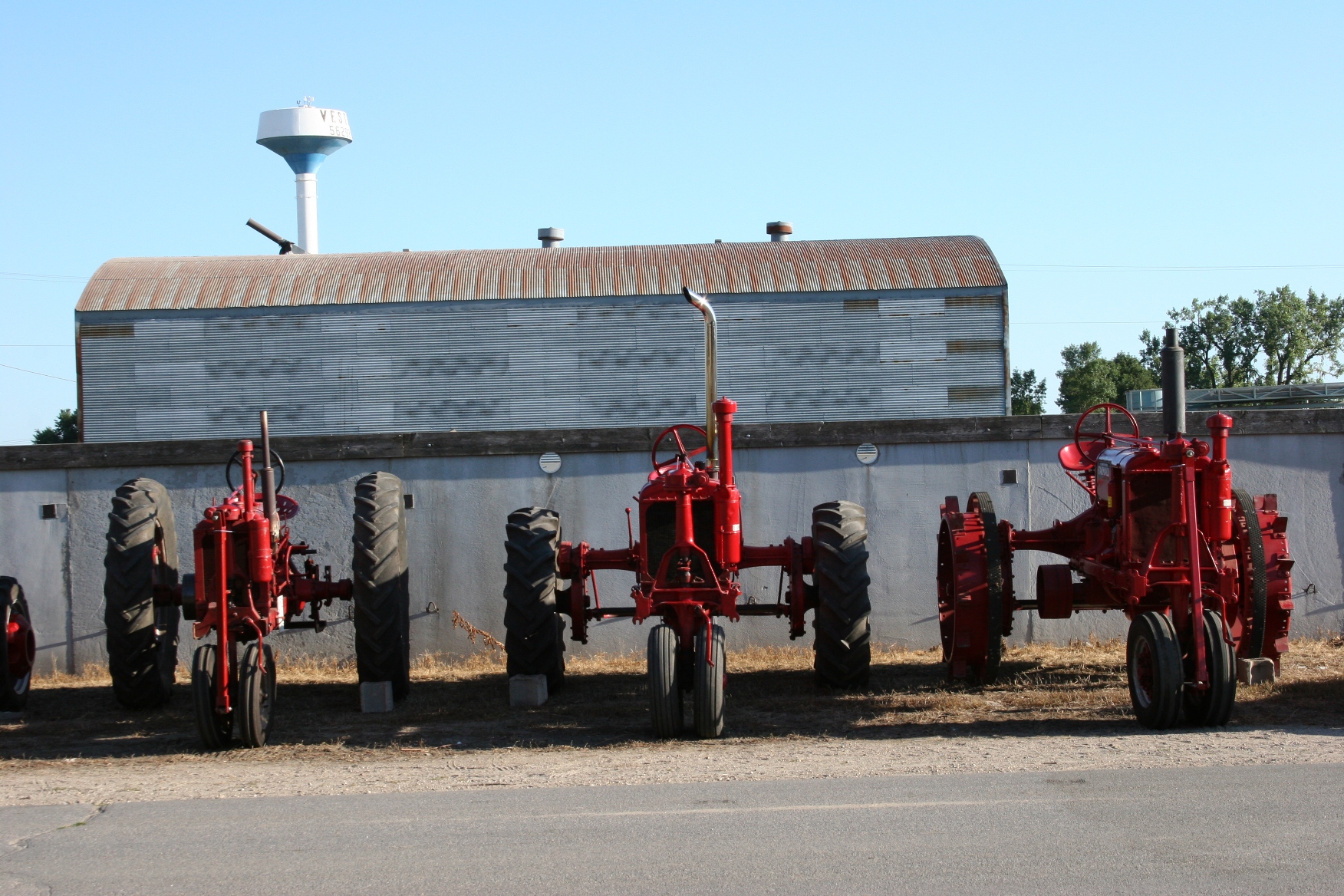
Area residents brought their vintage tractors to town for a tractor and car show last year. This year the show has been expanded to include “anything with wheels.”

Over on Main Street, tractors and cars and more will line up for the “Anything with Wheels” show between 4:30 – 8 p.m.

My cousin Dawn’s son, Kegan, enjoyed a pony ride at the 2011 celebration.

The Vesta Vikings 4-H Club is sponsoring a petting zoo and will be selling root beer floats.

Kids picked up hoses in water fights at last year’s V-Esta Daze.

Kids will engage in water fights near the hall from 6 – 8 p.m. I remember, when I was growing up, how fire departments from neighboring communities competed against one another to push a barrel along a cable with water shooting from a fire hose. I can still hear the pounding of water against metal, feel the excitement as the barrel flipped and turned and rode the cable until one team slammed the barrel into a post.

The only contests this year are the bean bag tourney beginning at 6 p.m. and the pie eating contest at 10 p.m.

In between and after, from early evening until 1 a.m., two musical groups will entertain at the street dance. And let me tell you, there’s nothing quite like dancing on the pavement of your one-block-Main-Street hometown while drinking beer on a sweltering summer night.

At least that’s what I remember, from years ago.

The Vesta Community Hall, center of the V-Esta Daze celebration. To the left is the covered BBQ pit.

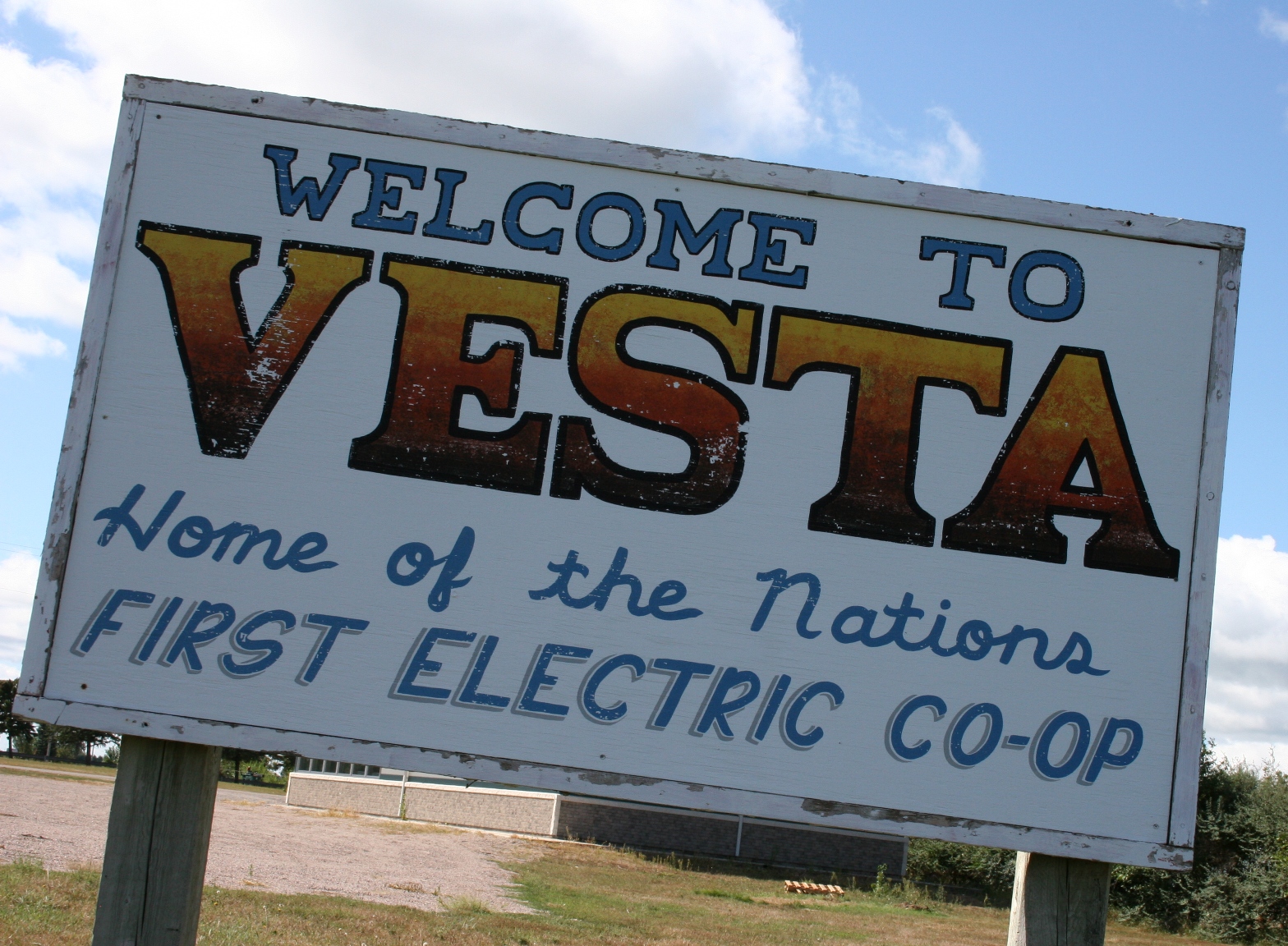
Along Minnesota Highway 19, this sign marks my hometown, population around 330 and home of the nation’s first electric co-op.

FYI: Vesta is located in southwestern Minnesota, half way between Redwood Falls and Marshall on State Highway 19.

© Copyright 2012 Audrey Kletscher Helbling


Ten months after the storm, a rural Minnesota congregation returns “home” May 4, 2012

St. John’s Evangelical Lutheran Church in Vesta, hours after a July 1, 2011, storm ripped half the roof from the sanctuary. Photo courtesy of Brian Kletscher.

“There is no place like home. We cannot wait to be back in our own church.”

And so, 10 months after a powerful July 1, 2011, storm packing winds of 90 – 100 mph ripped half the roof from St. John’s Evangelical Lutheran Church in my hometown of Vesta in southwestern Minnesota, congregants will worship for the first time in their rebuilt sanctuary this Sunday morning.

I expect many of St. John’s 323 baptized members feel exactly as my uncle, Milan Stage, does—simply happy to return to the comfortable familiarity of their home church.

Since the storm, parishioners have worshiped at their sister congregation in neighboring Echo. Says long-time St. John’s member Karen Lemcke, “We thank Peace Lutheran of Echo for allowing us to join their services for all of this time. It was enjoyable to be in fellowship with them but still nice to be back in our church.”

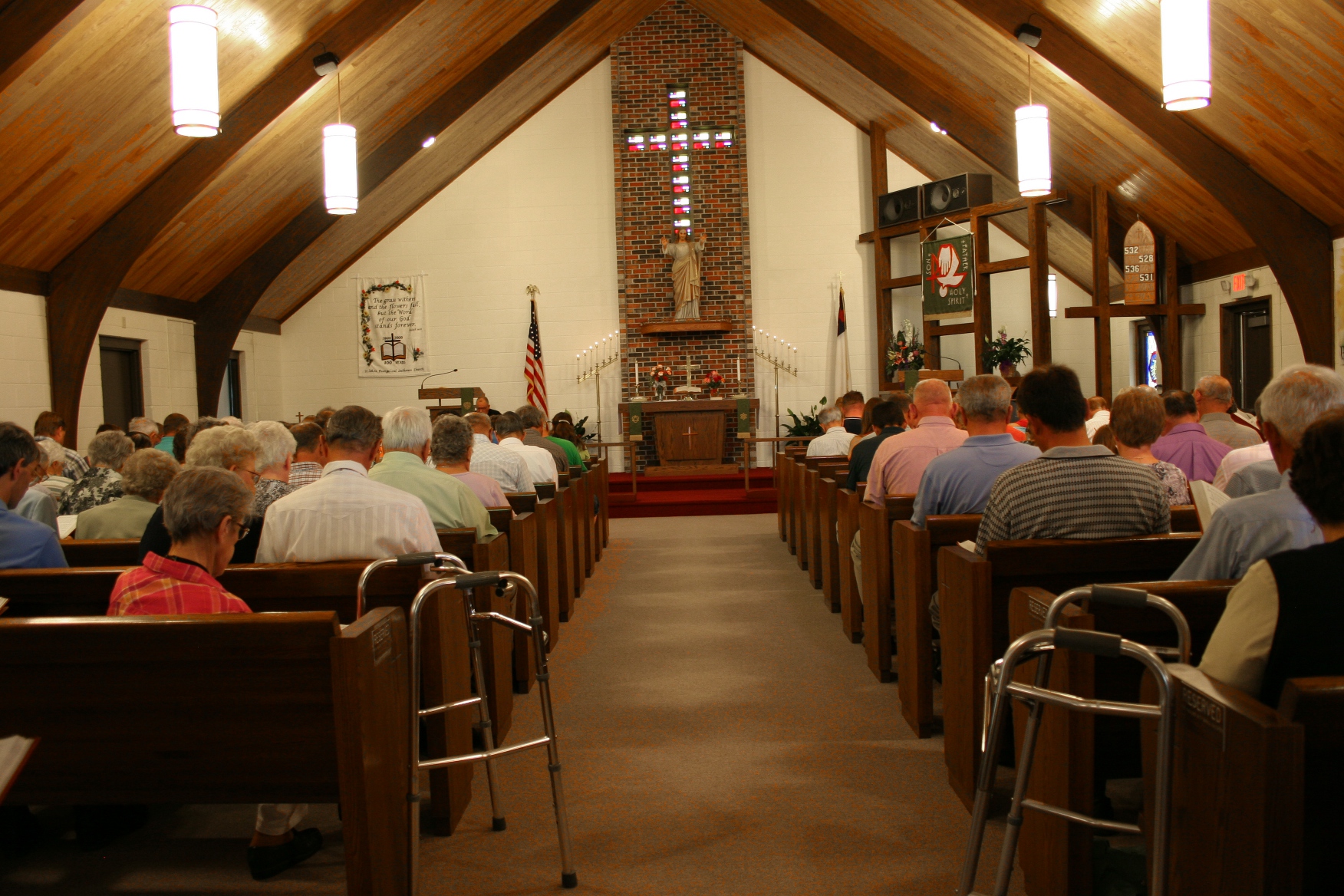
Inside St. John’s sanctuary in September, I listened to the wind flap the tarp that covered the damaged roof.

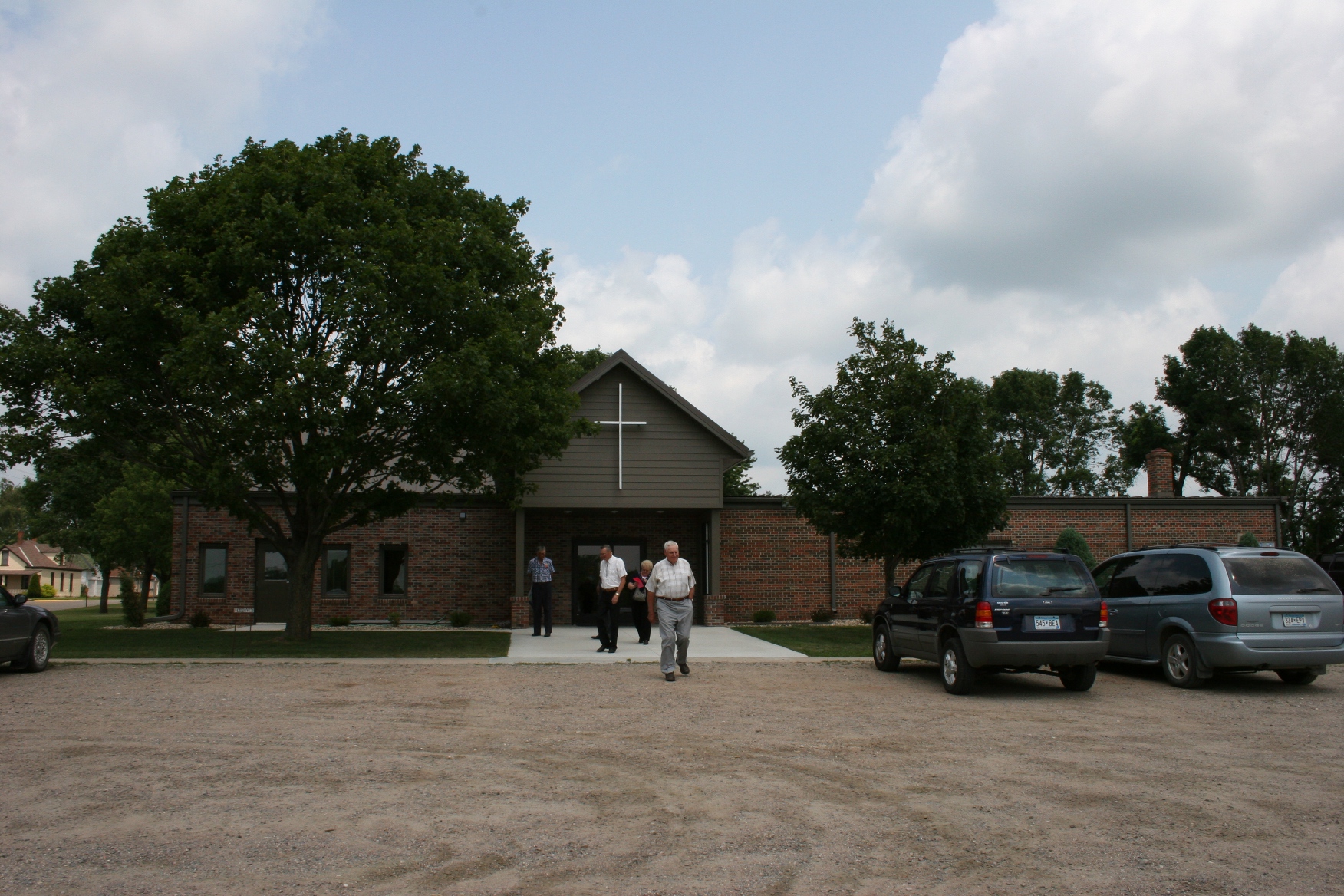
When worshipers arrive at St. John’s Sunday morning, they will enter through a new south-facing 20 x 40-foot addition which includes a handicap accessible bathroom, storage room and study area/office for the pastor.

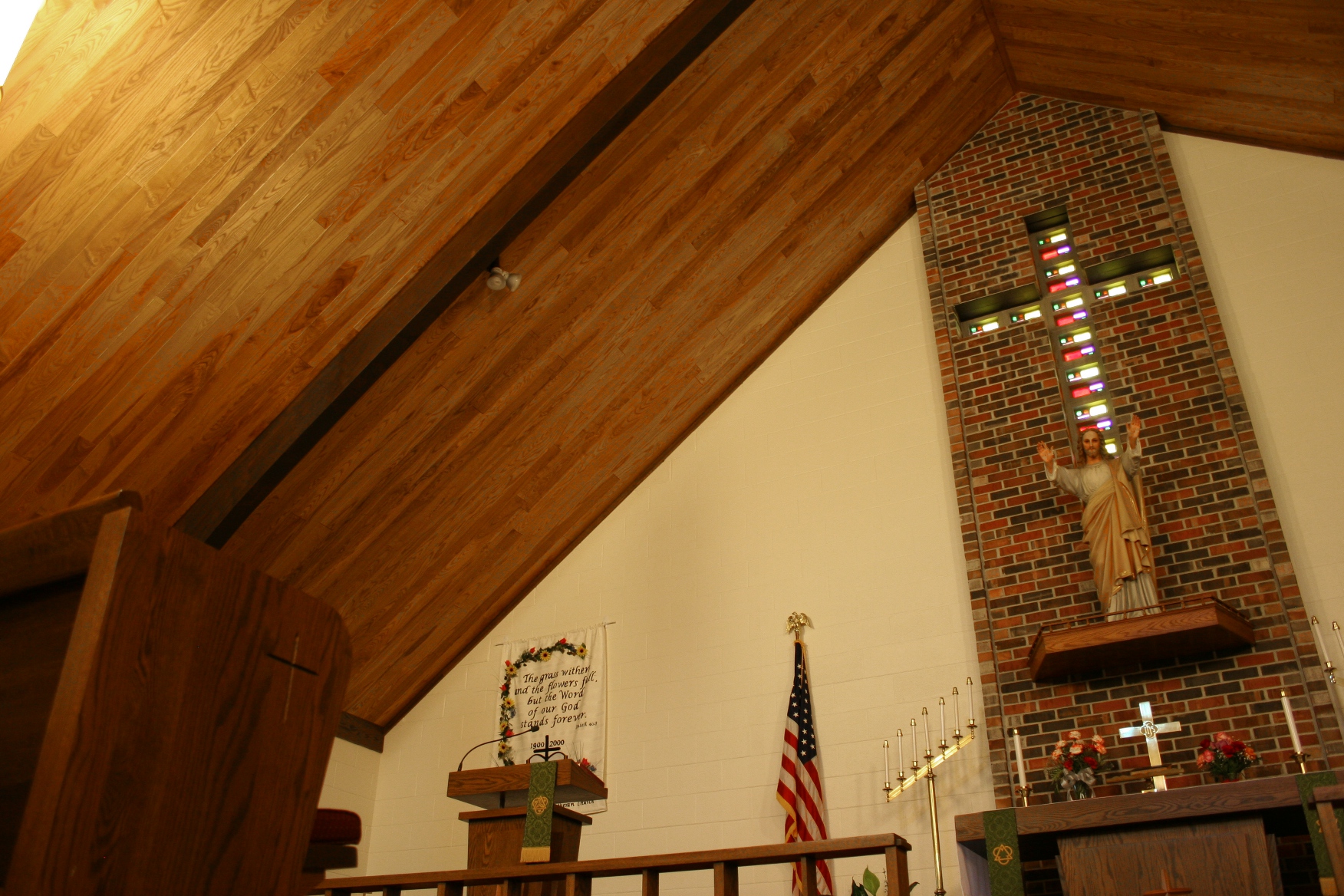
And above them a new south roof—the portion ripped off by the winds—and a new exterior steel roof cover the sanctuary refurbished with new ceiling planking and hanging lights.

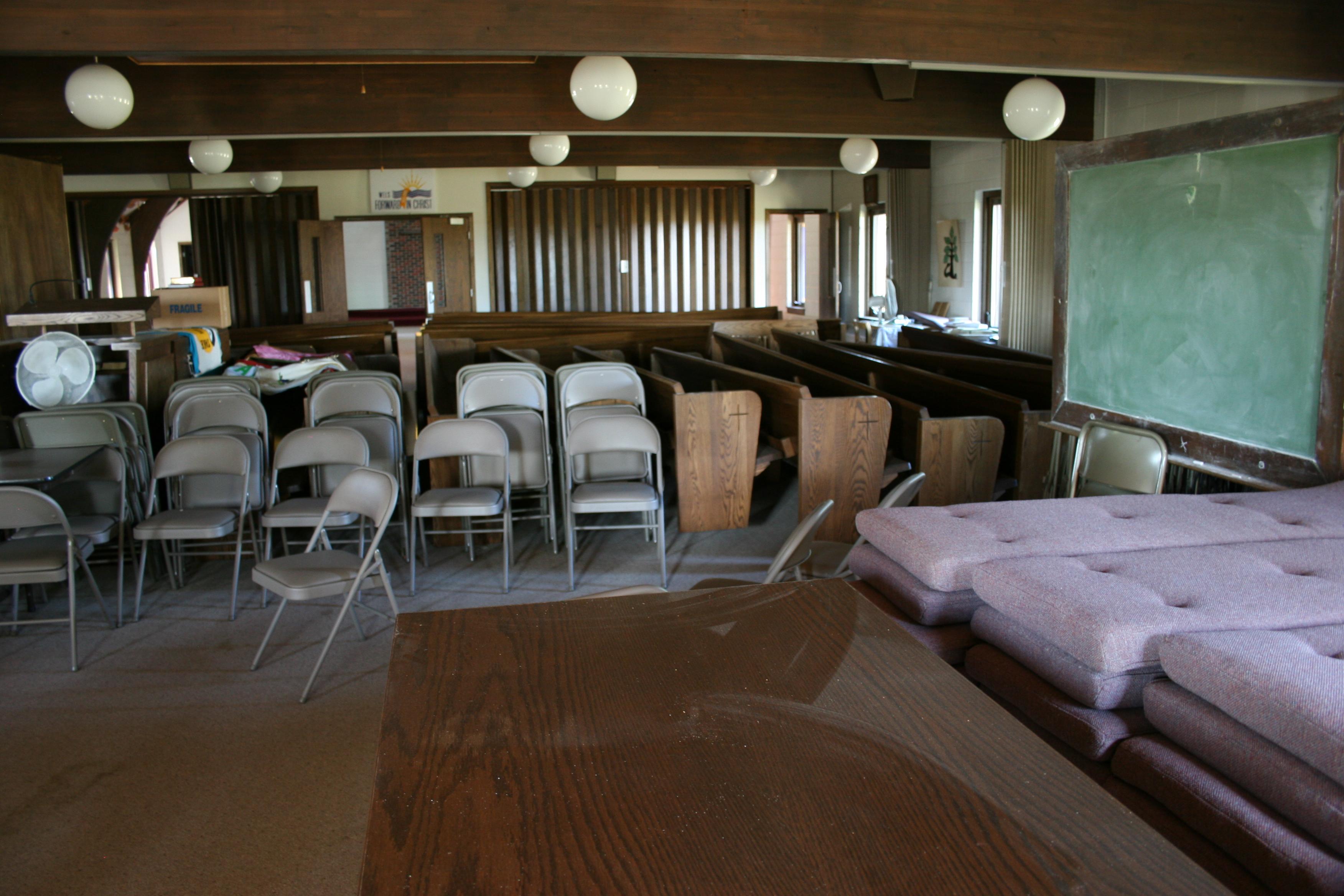
The pews and other items from the church were moved into the undamaged social hall after the storm.

They’ll walk on new carpeting and settle onto new pew cushions to hear the sermon delivered by a former St. John’s pastor, the Rev. Randy Bader, Mission Advancement Director of Great Plains Lutheran High School in Watertown, S.D.  Says Rev. Bader, in part:

I am planning on using the Holy Spirit-inspired words of Isaiah as the basis for the sermon. It includes these words: “For My thoughts are not your thoughts, neither are your ways My ways,” declares the Lord. “As the heavens are higher than the earth, so are My ways higher than your ways and My thoughts than your thoughts.”

We may wonder why our gracious God would allow such a dangerous and difficult situation to touch the lives of His people as it did on that July day last summer. So often we do not understand. But the truth is, we don’t have to understand. Jesus has a purpose for everything that he allows to happen to us, and His ultimate purpose is to bless and save us. 

…Trust Him. His love is the constant, in, and even through, challenging circumstances.

A debris pile on the edge of the church parking lot includes pieces of steel from the roof and brick from the bell tower. Photo taken in September 2011.

Under construction in March, a pastor’s office, bathroom and storage room were added to the south side of the early 1970s era church.

St. John’s members like my 80-year-old mom, especially, welcome the reopening of the church. It’s much easier for her to drive across town to worship services and other functions than to drive or catch a ride the eight miles to Peace Lutheran in Echo. I’m thankful for family members who’ve taken my mom to church services.

During the 10 months since the storm ravaged Vesta and the surrounding area, I’ve kept tabs on St. John’s, checking in most visits back to my hometown to see how the reconstruction was progressing. This, after all, is the church where I was married 30 years ago this May 15. It is the church where my family mourned the loss of our father, maternal grandfather, paternal grandmother and many other loved ones. We celebrated family weddings here and attended confirmations and worshiped here on Sunday mornings and on Christmas Eve.

The old saying goes that a church is not a building. That adage holds true if you consider the essence of a congregation.

But, there is much to be said for a physical structure, for the memories it holds, for the comfort it gives in familiarity. Boards and walls and details in construction and décor connect us to our past, to emotions and to loved ones. A place represents, if anything, a tangible legacy of faith.

And in a farming town like Vesta, population 330, a church building also serves as a place to gather, to swap rain gauge totals and crop reports, to exchange family news, to embrace each other in sorrow and in joy, to welcome the newest residents with baptism banners, to grieve the loss of neighbors and friends and family. A church building represents community within a community, the very soul of small town life.

© Copyright 2012 Audrey Kletscher Helbling


Tornado threat ends my mom’s 80th birthday party April 16, 2012

Filed under: Uncategorized — Audrey Kletscher Helbling @ 9:18 AM
Tags: , , , , , , ,

“EVERYBODY, MAY I HAVE your attention, please. There’s been a tornado warning issued for Lyon County. So if you would like to leave, you may want to do so now.”

With that announcement from my middle brother, guests celebrating at an 80th birthday party open house for my mother on Sunday afternoon in the Vesta Community Hall scattered, scurrying to their vehicles as gray clouds threatened in the neighboring county to the west.

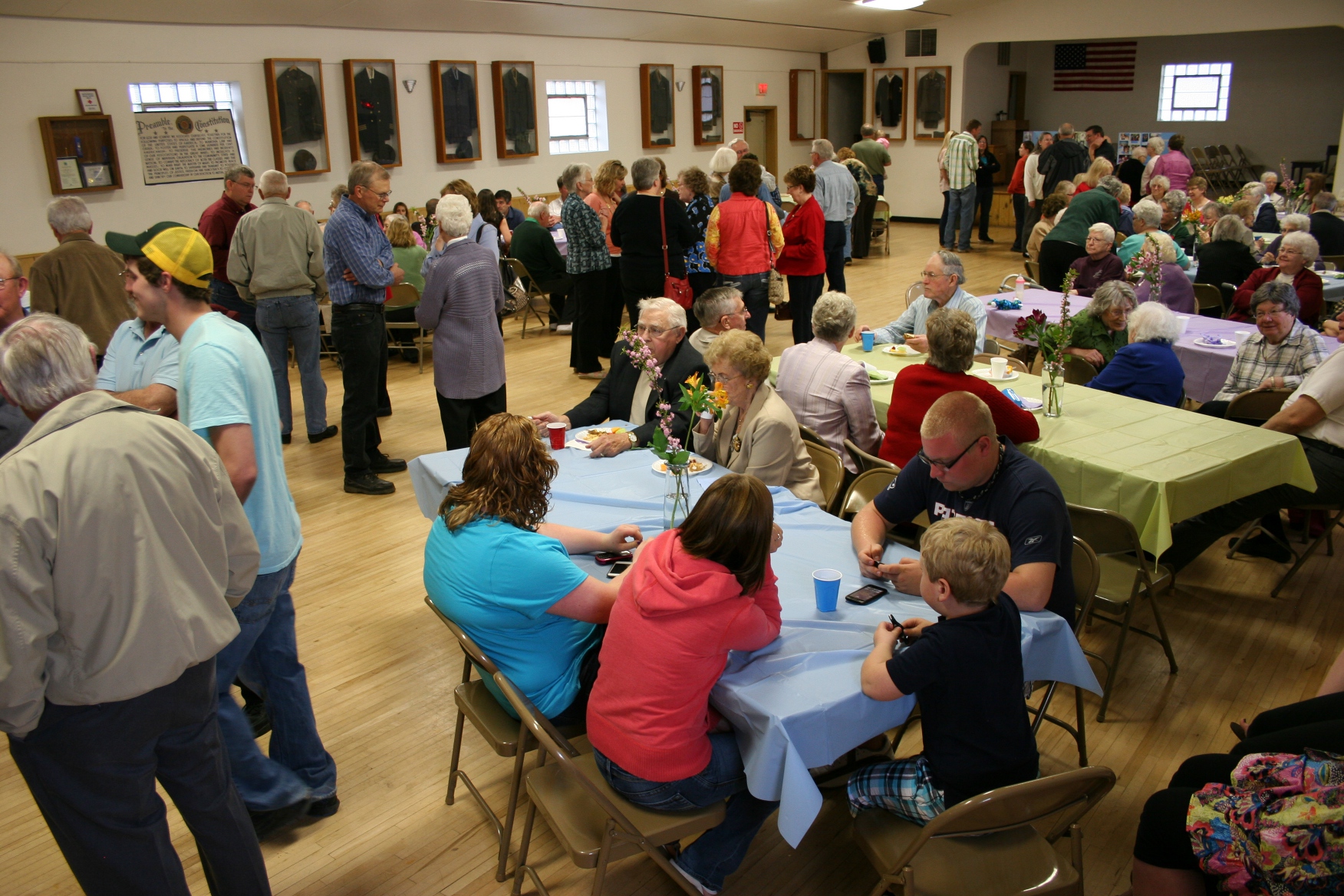
Some of the guests gathered in the Vesta Community Hall for my mom's 80th birthday party.

It had been a weekend of severe weather, with tornadoes devastating parts of Oklahoma, Kansas and Iowa, killing five. Now the remnants of that powerful storm were moving into southwestern Minnesota.

Everyone at the party—except a cousin who joked that maybe my brother was pulling a ruse to get guests to leave—was taking the news with serious concern in a community which last July was struck by devastating 90 – 100 mph winds. Others in attendance live on farms that were hit by a tornado in that same 2011 storm system. And at least one guest was from St. Peter, devastated in a 1998 tornado.

My brother’s announcement around 3:30 p.m. brought an abrupt end to a gathering of several hundred in the old community hall in a town of around 300, where, if you had to seek immediate shelter, you would need to flee to homes or huddle in bathrooms at the hall. All guests chose to leave, some plotting routes home based on the approaching storm.

One—my eldest daughter—would later find herself in the heart of the fast-moving storm as she drove along U.S. Highway 212 back to Minneapolis. My youngest brother, who also typically drives 212, back to Woodbury, changed his route after seeing a wall cloud to the north and being advised by a policeman at a Redwood Falls gas station to follow Minnesota Highway 19. That would keep him to the south of the storm.

My husband and I, along with our son, left Vesta perhaps an hour later than our daughter, with my youngest brother probably a half hour behind her.

We had no idea they were driving toward the storm. Until we switched on the radio to a New Ulm station which, for the next hour, broadcast repeated tornado warnings for the Brownton area, a small town along U.S. Highway 212. At the first announcement, I realized our eldest may be precisely in the path of the tornado.

With sporadic cell phone coverage, it took me awhile to reach and warn her of her of the impending danger.

Eventually we connected. My daughter was fully aware, having seen a wall cloud and driven through hail. She didn’t know if she had passed Browntown; she had just driven by Glencoe. Unable to find a road map anywhere in our van, I tried to visualize the string of communities along U.S. 212. I told her I thought she was east of Brownton. Later, after stopping at a New Ulm gas station to view a Minnesota map, I confirmed her location to the east of the storm.

Then there was my youngest brother to worry about, again, as another tornado warning had been issued, this one for Sibley County. Highway 19 would take him right into that county. Fortunately, that storm would stay some five miles to the north of his route. I didn’t even try to phone him again as I knew he was listening to the radio and was alert to the situation.

And so the 2 1/2-hour drive back to Faribault for us progressed as we listened to several radio stations, catching the latest weather updates, our eyes shifting often to the north, to those dark, dark skies under which our loved ones were traveling.

When our daughter phoned to say she’d nearly reached her Minneapolis home, I finally relaxed and the radio was switched off as we drove into heavy rain under dark, but not foreboding, clouds.

Looking to the north as we drove east back to Faribault.

On U.S. Highway 14 near Nicollet, just to the south of Sibley County.

FYI: I have not checked many media outlets yet to determine whether any of the areas in the tornado warning areas experienced tornado touch-downs. However, from initial reports I heard last night, Minnesota came out relatively unscathed. Tornado sirens never did sound in my hometown of Vesta. But still, we were prepared with the warning just to the west in next-door Lyon County.

Copyright 2012 Audrey Kletscher Helbling


Praying for the tornado survivors March 6, 2012

Filed under: Uncategorized — Audrey Kletscher Helbling @ 11:19 PM
Tags: , , , , , , ,

ON SUNDAY I ATTENDED morning worship services at Peace Lutheran Church in Echo, the sister congregation of St. John’s Lutheran Church in Vesta, the congregation of my youth.

St. John’s members have been worshipping at Peace since a July 1, 2011, series of downbursts with wind speeds of 90 – 100 mph ripped the south roof from the sanctuary.

St. John's, hours after the July 1 storm tore through Vesta. Photo courtesy of Brian Kletscher.

Just to the north, west and east in this region of southwestern Minnesota, EF-1 tornadoes with winds of 95 – 105 mph wreaked havoc on farms and on the neighboring community of Belview.

Eight months later, St. John’s is still in the process of rebuilding.

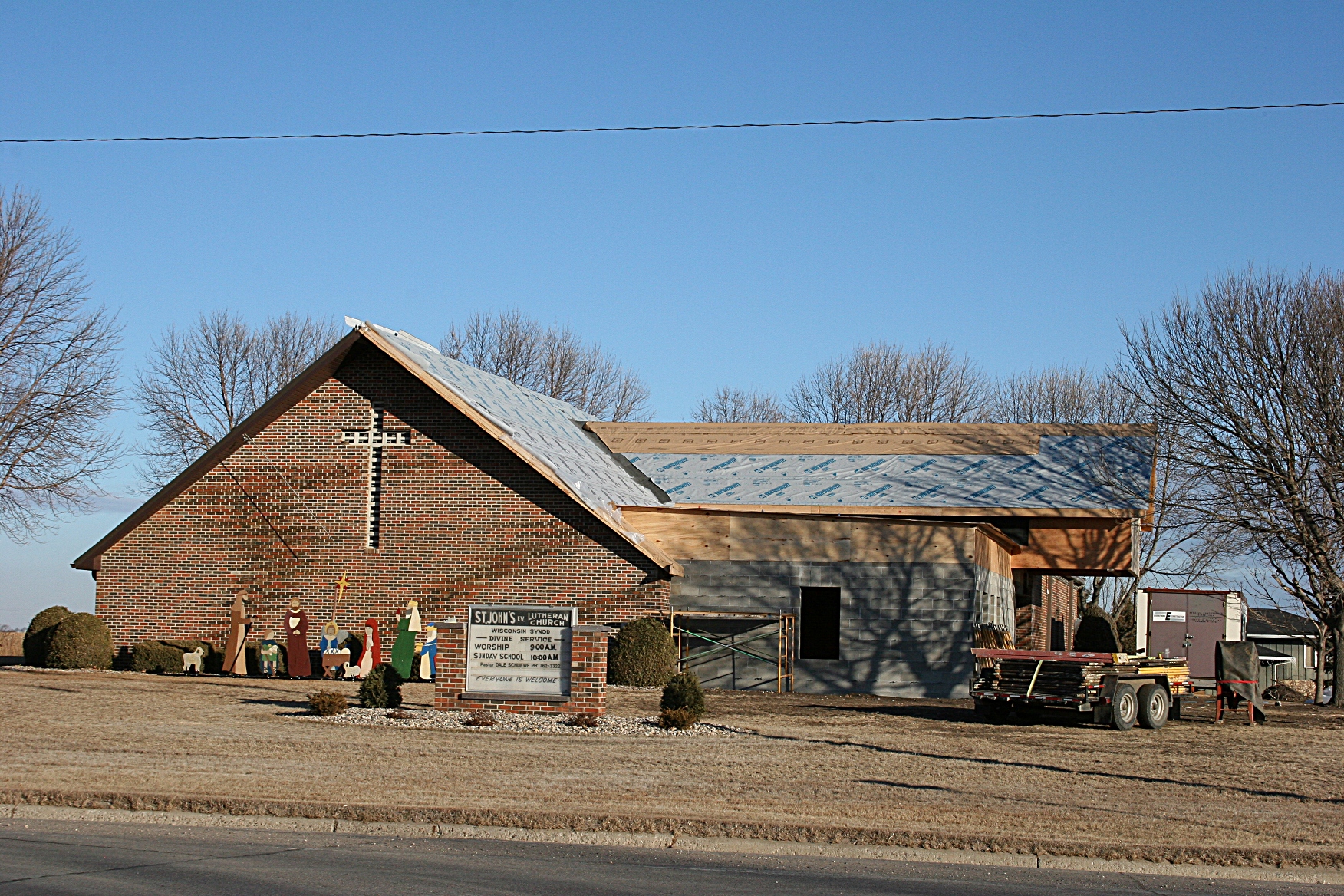
Eight months after the storm, St. John's is still under construction with a new addition to the right. Congregants had hoped to be back in the church by Easter, but that likely will not happen until May.

The narthex was expanded and a pastor's office and handicapped accessible bathroom were added on the southwest side of the church built in 1974. This photo and the one above were taken on Saturday.

Despite the inconvenience of driving additional miles to worship and the temporary loss of their church home, St. John’s members realize the situation could have been so much worse. No lives were lost in the storms and their church could be salvaged.

This we—visitors and members of the two sister congregations—understood as we bowed our heads to pray for the survivors of the recent deadly tornadoes.

© Copyright 2012 by Audrey Kletscher Helbling


Rebuilding a rural Minnesota church January 1, 2012

St. John's Lutheran Church in Vesta, hours after a July 1 "series of downbursts" with winds of 90 - 100 mph ripped half of the south roof off. Photo courtesy of Brian Kletscher.

FOR SIX MONTHS NOW, since strong winds ripped half the roof from St. John’s Lutheran Church in my hometown of Vesta, the congregation has been without a permanent place to worship.

The southern half of the roof was ripped off by high winds and toppled onto the bell tower, which has since been removed. It was attached to the sides of the entry, as seen in this image from September.

Inside the sanctuary I listened to the wind flap the tarp that covered the damaged roof in September.

The pews and other items from the church were moved into the undamaged social hall.

Ponder that for a moment. If you are a church-going person, how would you be impacted by the temporary closure of your church building?

Here’s how St. John’s members have dealt with the situation: They are worshipping at their sister congregation, Peace Lutheran in Echo, about 10 miles away. They are holding Sunday School classes in the Vesta Community Hall. They are rebuilding and expanding St. John’s.

Repairs and building expansion are underway at St. John's in this photo taken on December 23.

The south side church expansion includes an office, handicapped accessible bathroom and an enlarged narthex, according to my mom, who attends St. John's.

Like the strong prairie people they are, St. John’s folks are adapting. They are helping one another, offering rides to those who can’t/don’t wish to drive to Echo, especially during the winter months.

Yet, this absence of their church within their community can’t always be easy. Imagine losing a loved one who attended St. John’s, whose death could not be mourned in the comfort of familiar surroundings. The same goes for celebrating baptisms and weddings.

In a small town like Vesta, population around 330, a church knits people and lives together into a community of care. That still exists. But, without a building, it takes extra effort to maintain that closeness.

For those who call St. John’s home and for those of us who grew up in this congregation, the reopening of these church doors cannot come soon enough.

Will “soon” be Easter?

© Copyright 2011 Audrey Kletscher Helbling


More than a collection of vintage drinking glasses December 7, 2011

Filed under: Uncategorized — Audrey Kletscher Helbling @ 8:06 AM
Tags: , , , , , , , , , ,

Vintage glasses stashed in my kitchen cupboard.

THE BOTTOM CUPBOARD SHELF to the upper right of my kitchen sink is crammed so full of drinking glasses that they threaten to tumble out and onto the counter.

But I have not the heart to stash a single one away in storage.

These glasses serve as more than practical vessels for the milk my 17-year-old son gulps by the gallon or the cranberry juice I favor to quench my thirst.

Rather, these glasses represent my appreciation of the past. All 27 drinking glasses are vintage, culled from family and friends, from thrift stores and garage sales.

I uncovered these glasses in the attic of the home where my friend Joy grew up. After her parents died, Joy invited friends to shop for treasures. These glasses always remind me of Joy, whose spirit matches her name.

Details on the glasses from Joy. Fun fact: I don't like roosters.

An Archie Comic "Betty and Veronica Fashion Show" 1971 jelly jar/juice glass from my maternal grandfather.

These glasses belonged to my bachelor uncle, Mike, who farmed with my dad and was like a second father to me. He passed away in 2001 and these remind me of him and his love for me.

You could rightfully say that I collect vintage drinking glasses.

Like most collectors, my collection is rooted deep in the past. I can trace my glassware obsession back to the day I walked into Marquardt’s Hardware Store on the corner of Main Street in Vesta and selected four amber-colored glasses for my mother as a Mother’s Day gift. I can’t recall which siblings were with me, how much we spent or the year we purchased the glasses. But the simple act of us pooling our coins to buy Mom this gift remains as one of my sweetest childhood memories.

The amber glasses my siblings and I purchased for our mother more than 40 years ago.

Recently my mother gifted me with these glasses. I pulled them from the china cabinet where she’s always stored them—reserving them only for special occasions—snugged paper padding around them and carted them back to my home 120 miles away in Faribault.

Her gift to me is bittersweet. While I certainly appreciate having these memorable glasses, the fact that my mom has begun dispersing of her possessions makes me all too cognizant of her failing health and mortality. She is a wise woman, though, to part with belongings now, gifting children and grandchildren with items she knows hold special meaning.

Each time I reach into the cupboard for a glass, I find myself choosing an amber-colored one from Marquardt’s Hardware. It is the glass that reminds me of my mother and of her deep love for me. I want to drink deeply of her love. Today. Forever.

The four glasses that remind me of the love my mother and I share.

DO YOU HAVE a collection or a single item that means as much to you as my vintage drinking glasses mean to me? I’d like to hear. Please submit a comment.

© Copyright 2011 Audrey Kletscher Helbling


You can help: Establishing “water coolers of literacy” in rural Minnesota November 17, 2011

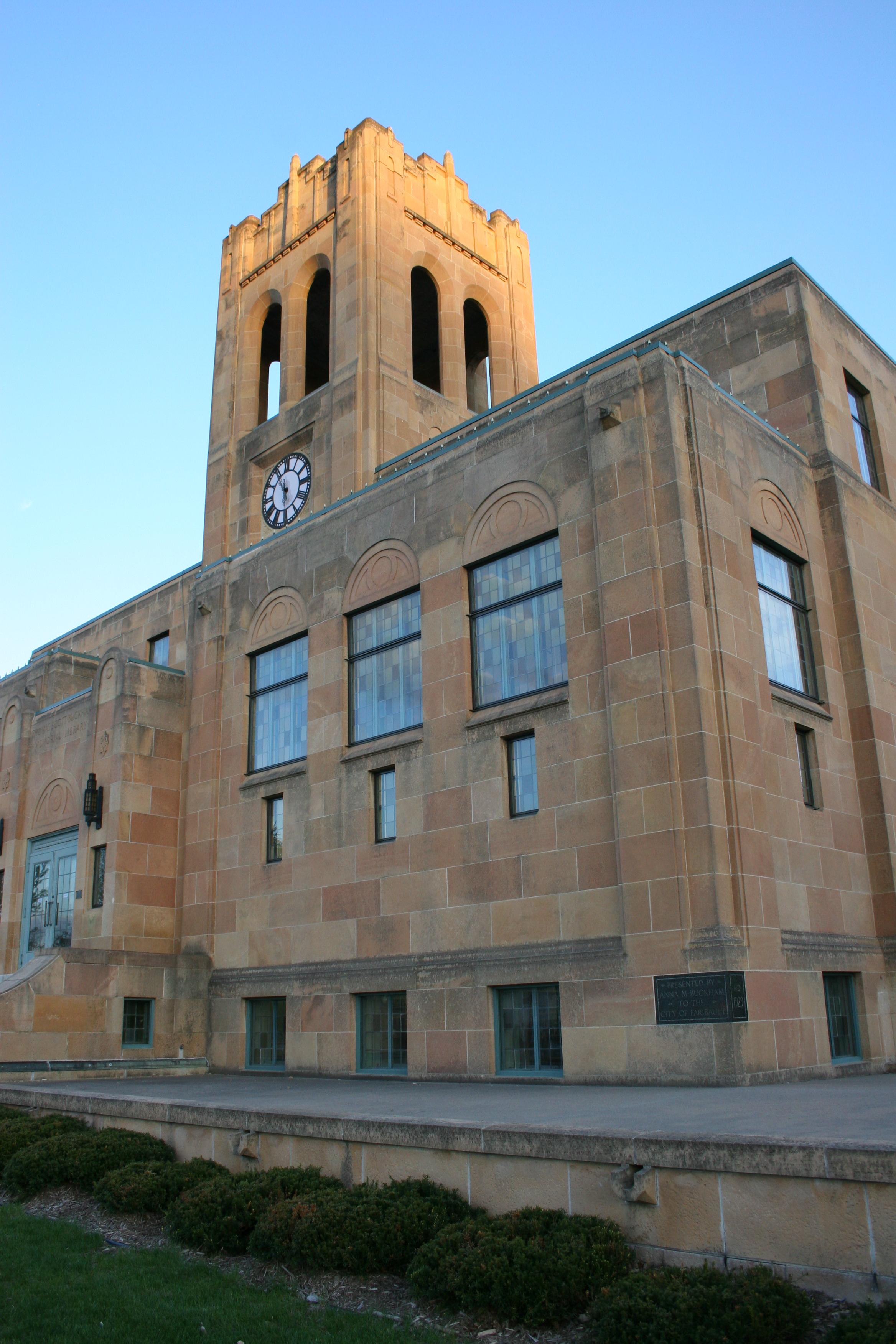
Buckham Memorial Library, Faribault

WHEN A NOTICE arrived in my e-mail in-box on Monday that Kathryn Stockett’s The Help was available for me at the local public library, I was thrilled. I’d been number 45 on the waiting list. I figured maybe I’d get the book in say seven years, long after I had forgotten it. Instead I waited only a few months.

Around 6:30 p.m. Monday, on my way to a church meeting, I stopped at Buckham Memorial Library in Faribault to pick up this bestselling novel. Much to my dismay, the library appeared closed. It was. And then I remembered the budget cuts that had trimmed evening hours to only Tuesdays and Thursdays.

As frustrated as I sometimes am about shortened night-time hours, I shouldn’t complain. At least I have a library in my community, unlike my hometown of Vesta in southwestern Minnesota. Like two dozen other small towns in Redwood, Cottonwood, Murray and Pipestone counties, Vesta residents rely on the services of the Plum Creek Bookmobile to deliver library materials. (Click here to learn more about that bookmobile.)

Once a month the bookmobile pulls onto Vesta’s Main Street, just as it does in towns like Currie, Iona, Revere and other towns you’ve probably not heard of unless you live or grew up in that rural area of Minnesota.

Given how often I use the Faribault library, I’d have a tough time with only once-a-month library access via a bookmobile. But I know that residents of these rural communities, like my 79-year-old mom, are grateful for their library on wheels.

Can more be done, though, to get books into the hands of these rural residents more frequently? I don’t expect that will come via public library systems with already financially-strapped budgets.

That’s why I’m particularly excited about the nonprofit Little Free Library project, co-founded two years ago by Todd Bol, a native of Stillwater now living in nearby Hudson, Wisconsin. I spoke at length with Bol earlier this week about this endeavor which places birdhouse-sized mini libraries mostly in front yards and in some public locales.

A Little Free Library seems the ideal way to fill a void in small towns without libraries.

But the problem lies in connecting to these sparsely-populated areas and growing these libraries. Bol wanted to pick my brain on how to best reach these communities and spread the word about opening a Little Free Library.
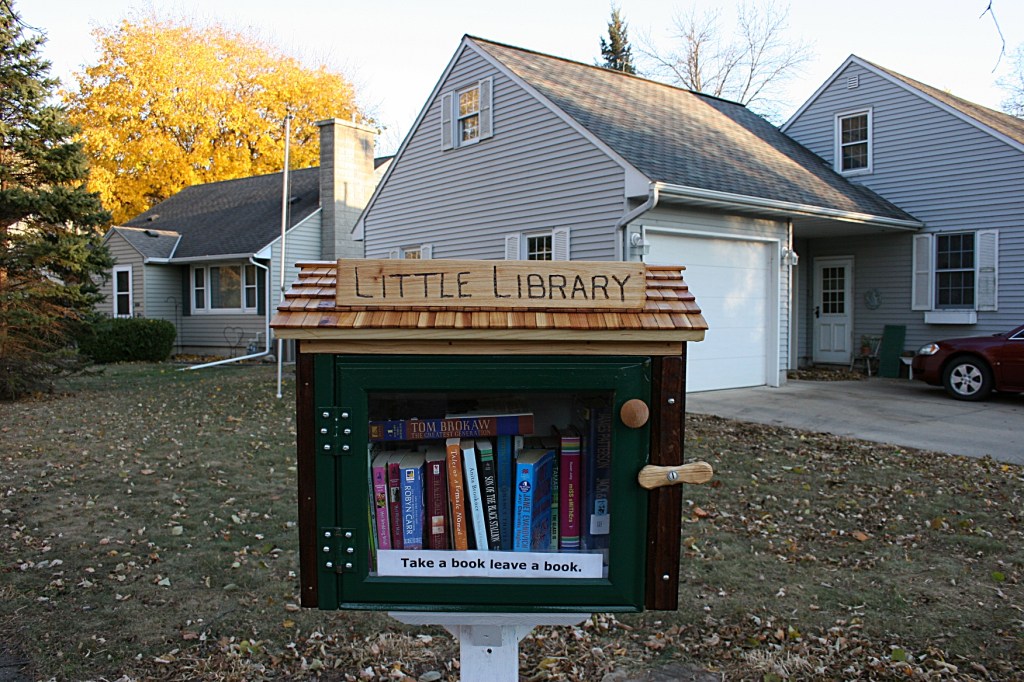
A recently-opened Little Free Library in a southwest Faribault neighborhood.

Several weeks ago a little library opened in Faribault. I learned about Dale and Joan Smith’s front yard library in the local daily newspaper on the same day I read about one opening in Detroit Lakes. Minnesota now has about a dozen Little Free Libraries with orders for some five more, Bol says. Two of those are going to Lakefield near Worthington in the southwestern corner of the state.

That’s the area I want to target for these libraries which operate on the premise of “Take a book, leave a book.” No library cards. No fee. No anything except a steward of the library and the sharing of donated books.

In a blog post published last week about the Smiths’ library, I challenged Vesta area residents to open a Little Free Library. Thus far, no one has responded.

Bol’s nonprofit is there to help, offering everything from advice to publicity to ready-built mini libraries. Those physical libraries range from a basic no-frills model priced at $375 to original art deluxe models listed at $1,000.

Or, like the Smiths in Faribault, you can build your own and then become a Little Free Library member, for a recommended $50 donation. That entitles you to benefits like a sign, sharing of your story online, listing on the LFL world-wide map and more. (Click here for membership details.)

With monies donated through the LFL’s “Pay It Forward” program, funding is available for underwriting library costs, for signs, donations of the library structure, etc.—all aimed toward helping others open village libraries. Currently the nonprofit is assisting soldiers with placing libraries in Afghanistan. No application process exists to apply for funds, but Bol hopes to eventually establish one.

Some 200 officially-registered Little Free Libraries have opened world-wide, according to Bol, who is especially excited about one planned for the Minneapolis Sculpture Garden. He’s also thrilled about an upcoming story in an Italian fashion magazine.

Defining himself as a “social entrepreneur by profession,” Bol focuses on change and making a difference. He views a Little Free Library as “a water cooler of literacy.” That comes from a man who says he “leans toward dyslexic” and reads primarily social engineering, quirky nonfiction and history books.
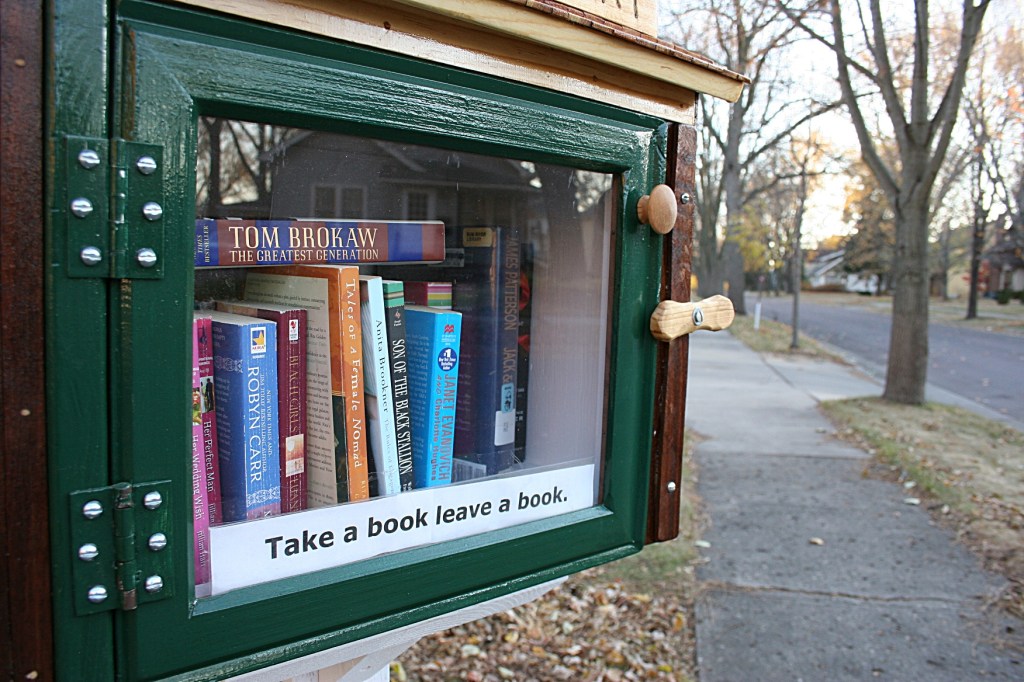
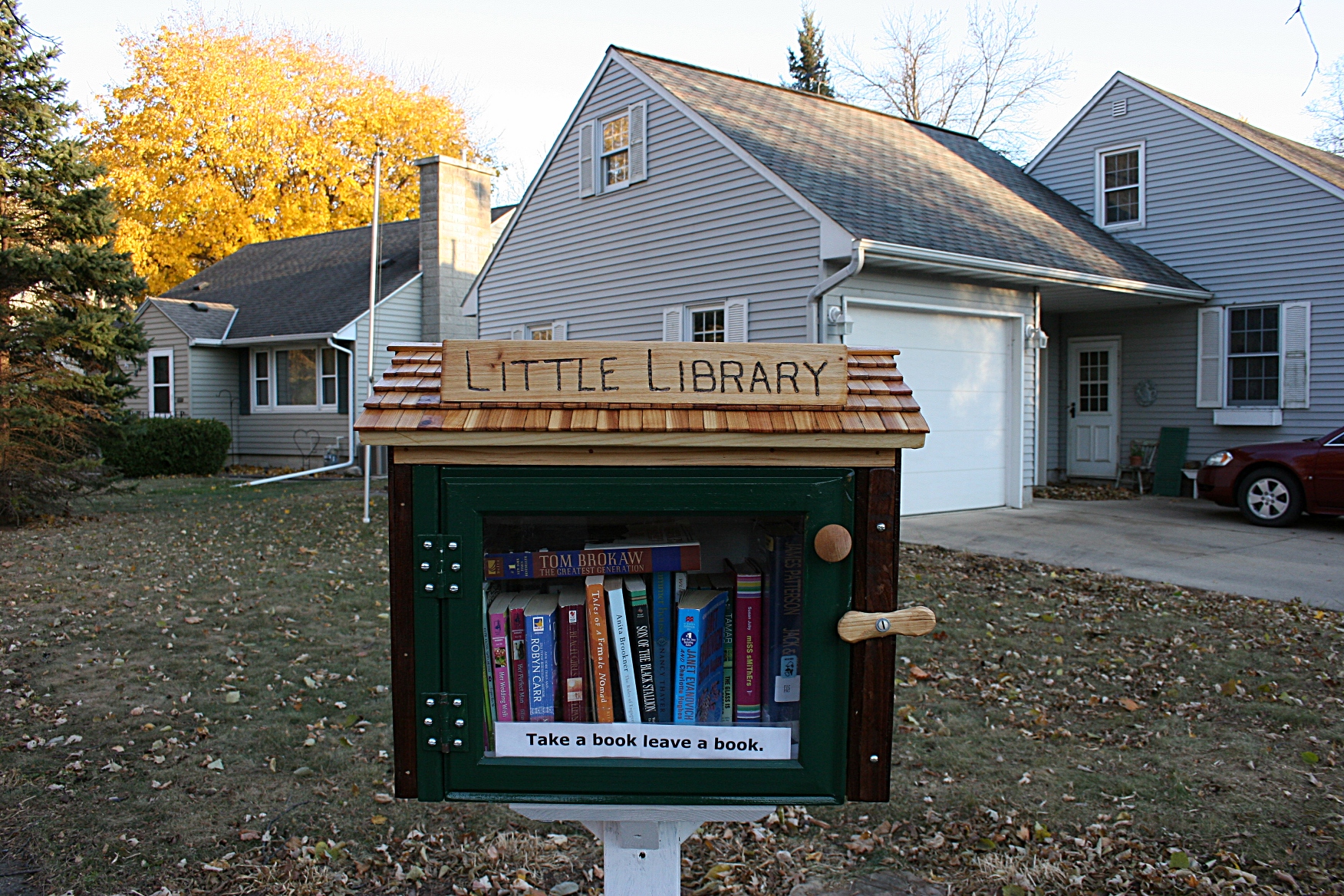
The Smiths of Faribault have filled their Little Library with a variety of books.

A LFL, Bol continues, becomes not only a place to get and give books, but also a community gathering spot, a “unique space of conversation” to discuss reading, books, education and more.

“There’s a sense of community being built through Little Free Libraries,” its co-founder says. He sees social interaction between neighbors who previously may not have met or spoken. A front yard library brings them together.

Bol remembers the moment he realized he was onto something with the Little Free Library concept. He had built and placed a schoolhouse-shaped library in his Hudson front yard honoring his mom, June A. Bol. When folks stopped by to shop at a garage sale he was holding and saw the mini library, they were intrigued. “That’s cute. Can I build it?” customers inquired.

From that spark of community interest, this social entrepreneur and his friend Rick Brooks of Madison, Wisconsin, ran with the idea and co-founded the Little Free Library movement.

Today Bol’s looking to engage others, like me, in spreading the word about these mini libraries. I didn’t come up with a brainstorm of an idea when we talked about how to best reach places like the small towns of southwestern Minnesota without libraries. I only suggested establishing a LFL in the area and then contacting small-town daily and weekly newspapers and radio stations in a publicity blitz.

He suggested a contest that would give away a Little Free Library, something he’s previously done.

Bottom line, it’s going to take networking to grow Little Free Libraries in more remote and rural areas.

Once the interest is established, it’s going to take individuals, families, neighbors and/or organizations to build and tend these libraries—perhaps a 4-H club or a 4-Her, a Boy Scout or Girl Scout, a church youth group, a Friends of the Library organization, a woodworker, a service club like Sertoma or Rotary or…

IF YOU HAVE ideas, any ideas, on how to grow Little Free Libraries in rural Minnesota, please submit a comment and share.

IF YOU HAVE a Little Free Library, plan to open one or need assistance in opening one, submit a comment. Most of all, tell others about this project.

FINALLY, if anyone is specifically interested in opening, building or funding a Little Free Library in my hometown of Vesta, let me know. It’s always been my dream to have a library in Vesta.

CLICK HERE for detailed information about the Little Free Library project.

© Copyright 2011 Audrey Kletscher Helbling


For the love of reading: Little Library opens in Faribault November 10, 2011

Buckham Memorial Library, Faribault

GROWING UP on a farm in rural southwestern Minnesota, all I ever really desired in my hometown was a library, a place where I could check out books and then read to my heart’s content.

Today Vesta, population around 340, still doesn’t have a library, although the bookmobile stops along the one-block Main Street once a month.

Fortunately I have, for nearly 30 years, lived within blocks of Buckham Memorial Library in Faribault. I go there often as did my three children, all of whom possess a deep passion for reading.

Just like Joan Smith of Faribault.

Joan, a member of the Rice County Library Board, loves reading and books so much—she can’t pass up a bookstore—that she and husband Dale have opened a library, in their front yard on Faribault’s south side.
As part of a growing world-wide “Little Free Library” movement, this retired couple decided, when encouraged by fellow book lover and library board member Pat Rice, to start a free library.
Dale, known for the log cabin style birdhouses he crafts and sells, had the skills to build the little library. The Smiths sized up books before deciding on the dimensions of 18 inches wide and 12 inches deep.
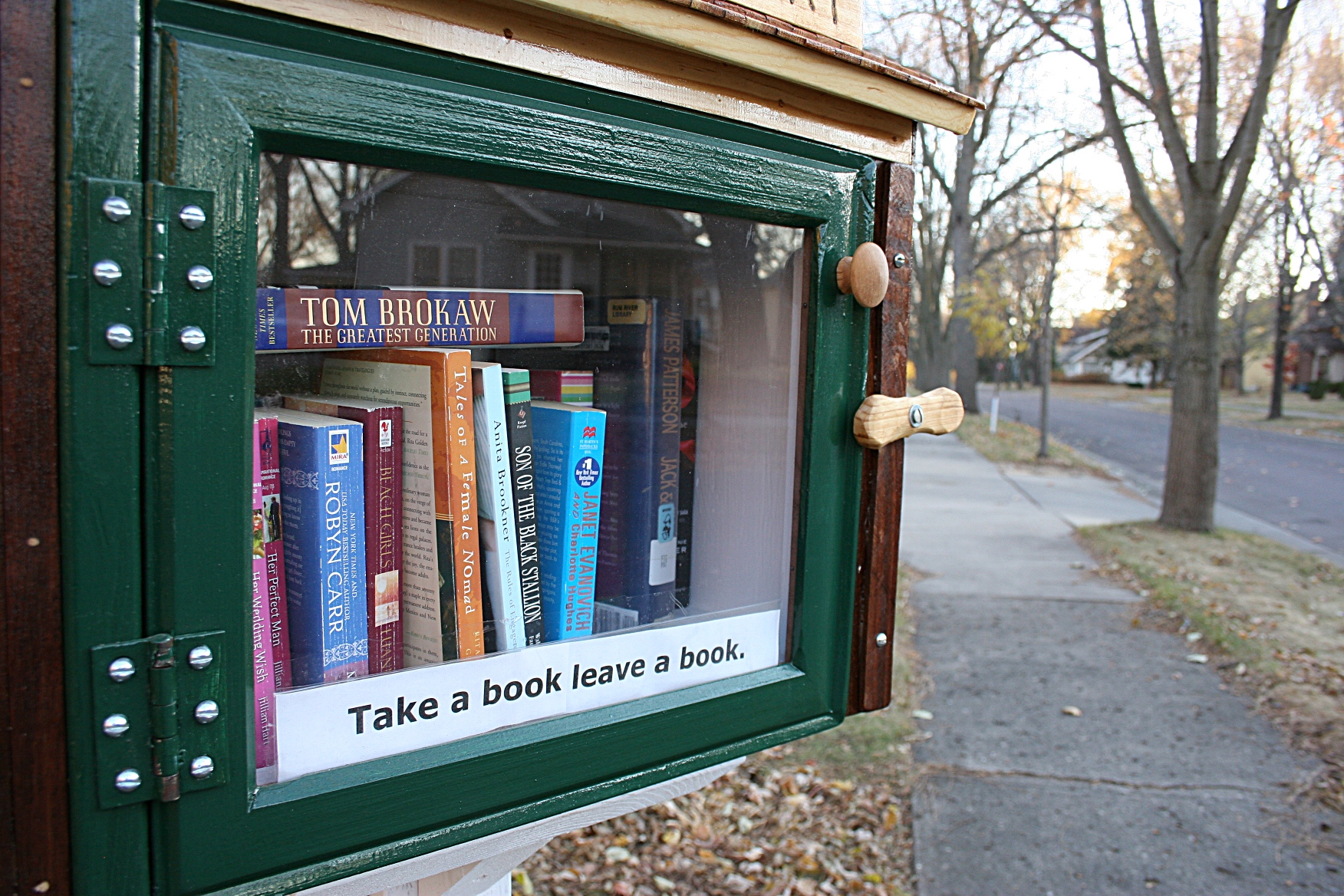
I counted 31 books in the Smiths' Little Library when I stopped to photograph it. "We all find ourselves with too many books," Joan says. "We need a place to share them." Her place is a Little Library.

That's the Smiths' house to the right at 825 Sixth Ave. SW. Feel free to knock on the door to drop off books, ask questions or thank them. Or simply drop by, open the library plexiglass door and take and/or leave a book.

Shortly before Halloween, the Little Library, situated atop a post at Joan’s eye level and within about a foot of the Fifth and Sixth Avenues Southwest sidewalk intersection, opened. (And, yes, folks, I got that right; two avenues do intersect by the Smiths’ house at 825 Sixth Avenue Southwest.)

Detailed with doors, windows and shutters, the Little Library stands at the intersection of Fifth Ave. S.W. and Sixth Ave. S.W. Here's a back view of the library Dale built.

Joan gushes over a project that shares her passion for reading and which she hopes will get others excited about reading and using the local public library.

“It’s (Little Library) another step toward reading and becoming a lover of books,” she enthuses.

Joan enjoys books, always has, ever since she was a young child living in Mankato, the childhood home of author Maud Hart Lovelace. Her mother read Lovelace’s Betsy-Tacy series to Joan as well as Little Women by Louisa May Alcott.

Later, when the family settled in the Faribault area, Joan attended a country school with less than two dozen old books on a library shelf. But her mother took her to Buckham Memorial Library, a place with plenty of books.

Joan understands the importance of reading to success in education. Although few children live in her neighborhood, Joan encourages her neighbors to grab a book from the Little Library when the grandchildren visit. She also wants the Faribault community to know: “This is for everybody and you’re welcome to come.” Already, those outside the neighborhood are stopping at the library.

It’s a library without rules or library cards. Take a book. Take a book and leave a book. Leave a book. Whatever works, Joan doesn’t care as long as people are reading.

You never know what books you'll find in the Little Library. Joan says she momentarily panicked after spotting a book with a library label. Turns out the donated book was a library discard.

She’s stocked the Little Library with books gathered from her home and from family members: mysteries and westerns, easy-reader children’s books and picture books, classics and the popular vampire series for teens and, well, whatever Joan collects, buys or no longer needs.

And, yes, the Smiths are accepting donations to their library. They’ve been asked, “What if everyone starts bringing you books?”

“That wouldn’t be a problem,” Joan responds. If she can’t use the books in their library, she’ll donate them wherever they are needed.

Dale Smith is open to considering requests to build little libraries. But the couple encourages interested individuals to construct their own libraries. (Dale’s pretty busy with that birdhouse building.)

Joan hopes their Little Library in southwest Faribault inspires others to open mini libraries and to read, yes, to read.

The Little Library is located right next to the sidewalk in the Smiths' front yard.

A front view of the Little Library looking toward Fifth Avenue Southwest.

FYI: Click here to visit littlefreelibrary.org for details on this library movement, including locations of existing libraries and how to start your own.

The website lists the following Little Free Library sites in Minnesota:

If you know of a Little Free Library in your neighborhood or plan to open one, submit a comment. I’d like to hear.

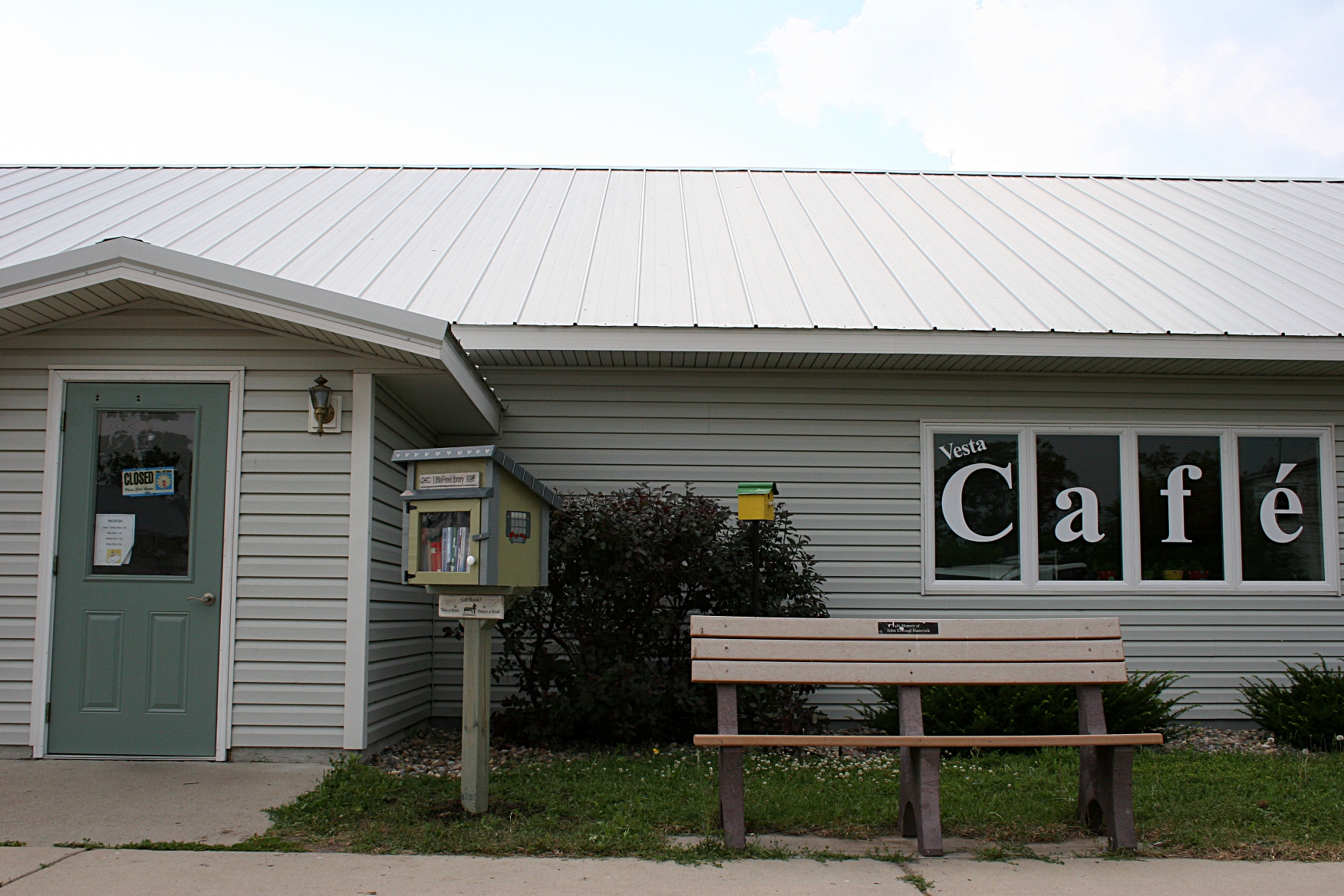
I’D LIKE TO CHALLENGE the residents of Vesta to start a Little Free Library. How about in or near the Vesta Cafe? Make my dream of a library in my hometown come true. I’ll even bring some books for the library the next time I’m “back home.”

Main Street Vesta and the Vesta Cafe, perhaps the perfect spot for a Little Free Library.

And I was thinking… maybe I should open a Little Free Library. I live along a well-traveled street in Faribault with lots of kids in the neighborhood. I love books, love to read…  Say, Dale, are you up to building another library?

© Copyright 2011 Audrey Kletscher Helbling