Minnesota Prairie Roots

Writing and photography by Audrey Kletscher Helbling

Fencing June 10, 2011

Filed under: Uncategorized — Audrey Kletscher Helbling @ 7:57 AM
Tags: , , , , , , ,

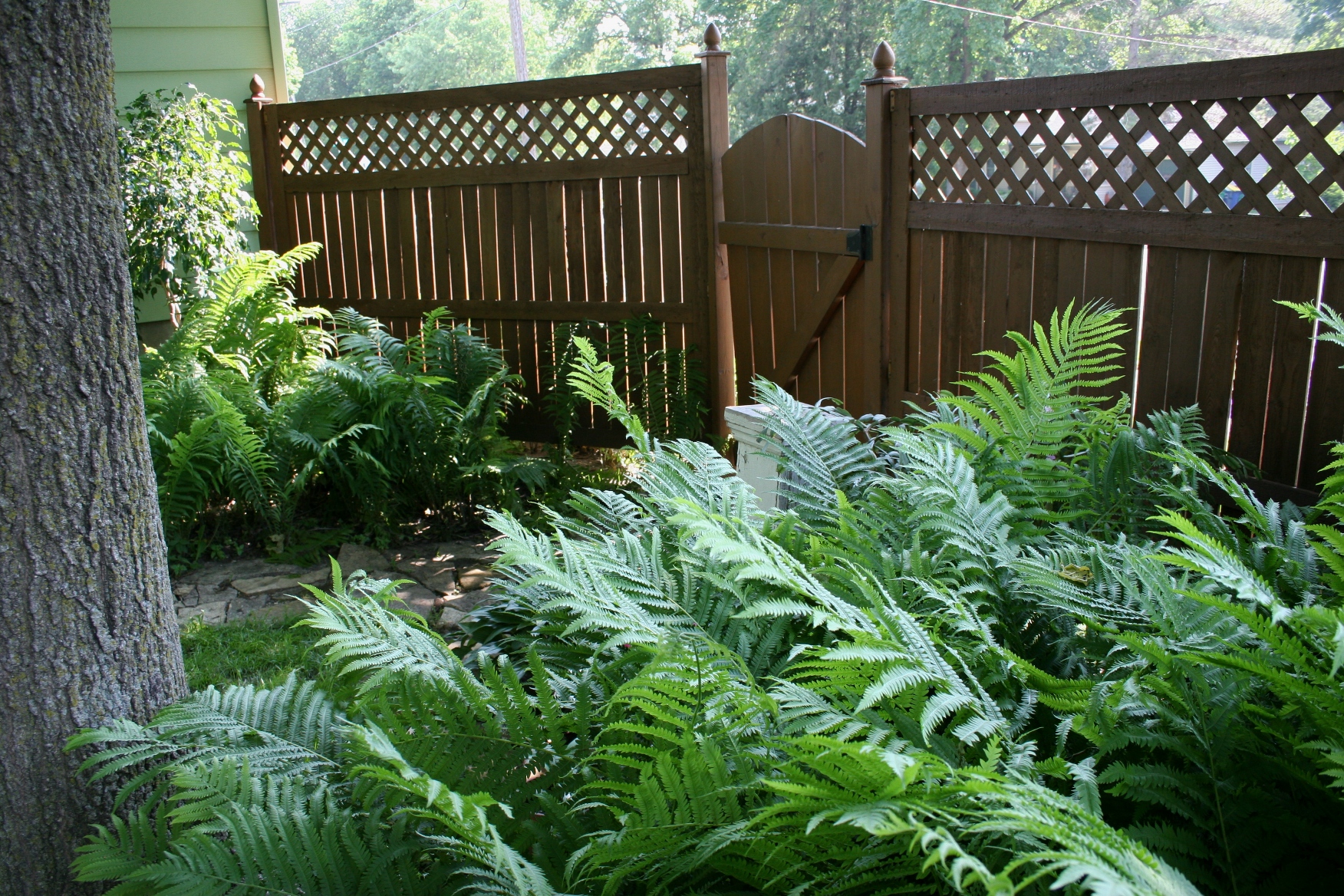
This is the first section of fencing, nearest the house, that I stained.

IT’S DONE, PEOPLE. Done. Done. Done.

Last Saturday, with the assistance of my I-finally-have-time-to-help-you husband, I finished staining the 10 lattice-topped fence panels that enclose our backyard. Please note that I use the singular “I” here rather than the plural “we.” This project belonged primarily to “me.”

It didn’t start out that way. Originally, I was supposed to stain the panels nearest the house using foam and bristle brushes. Then Randy was supposed to spray the remaining panels with a handy dandy cheap air-pumped sprayer we picked up at a big box store.

From the get-go, I did not think the sprayer system was a good idea. I was concerned about overspray (stain drifting onto flowers, plants, the lawn, the house, the neighbor’s fence, skin, eyeglasses, clothing…). I also doubted a sprayer would provide even coverage. Would the stain truly adhere to wood when misted, rather than brushed, on?

However, Randy remained determined that he could spray the panels, thereby saving me hours and hours and hours of labor. Nice thought from a man who claims, “I’m always thinking of you, dear. It’s my job to keep you happy.” Oh, so sweet…

Sometimes simply going along with a plan works better than arguing with one’s spouse. OK, I admit, I protested several times, telling Randy that since he really didn’t have the time to stain when the weather was cooperating, I would continue brushing. I might also have mentioned a few times that I didn’t think spraying the stain would work.

Finally, I was down to the last four panels, the ones nowhere near the house and thus safe to spray.

The last of the 10 panels that were stained.

But as sometimes happens in marriages, Randy and I experienced a communication break-down. He wanted me to stain the last panel, the one embedded in wild raspberry bushes. Having already battled wayward ferns, a floppy bleeding heart bush, heat and a sliver in my finger, I was in no mood for his chastising words: “You should have painted that panel by the raspberries.”

I burst into tears and suggested that he should be grateful for all I had done and that I had no intention of dealing with thorny raspberry bushes. So I didn’t.
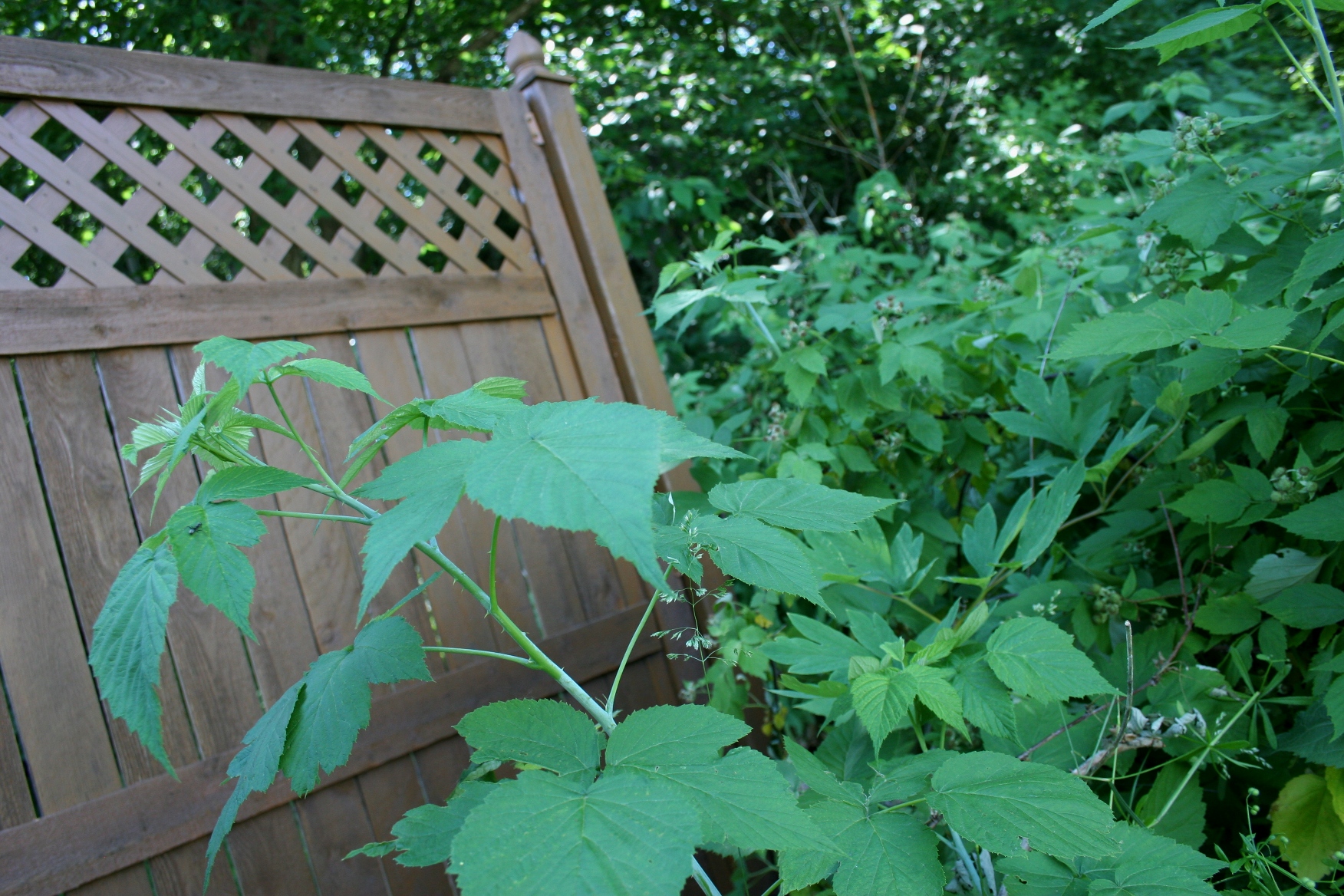
Wild raspberry bushes grow along one side of the last panel next to the woods.

Several days later he cut away the prickly branches closest to the fence before laying down plastic, filling the plastic spray tank with stain and spraying.

As predicted by me, the spray process failed. Picture a Holstein cow (that’s a black-and-white spotted cow for you non-agricultural people). Not how I want my fence to look. The nozzle clogged. This was not working.

I wanted to say, “I told you so.” But, instead, I mentioned that an apology would be accepted regarding his earlier criticism of my staining with a brush when I should have/could have waited for him to spray all of the panels (his words, not mine) in an hour with the sprayer.

“I wake up every morning apologizing,” Randy responded.

Did I tell you that my husband is also a funny guy? He makes me laugh.

In the end, he worked on one side of the fence while I stained on the other. We finished the three panels as a team.

As for that sprayer, Randy poured out the stain, cleaned the tank with paint thinner, then placed the unit in the original box. “We’ll sell it at a garage sale,” he said.

As you can see in this image, the fence panels are beginning to come apart. This is the third time we have stained the fence. It was last stained in 2005. I was extremely ill with whooping cough during that summer of staining, meaning I didn't have to stain the fence. I expect we'll put up a new fence before we stain this once again.

© Copyright 2011 Audrey Kletscher Helbling


Vote to rebuild parks in four flooded Minnesota communities June 9, 2011

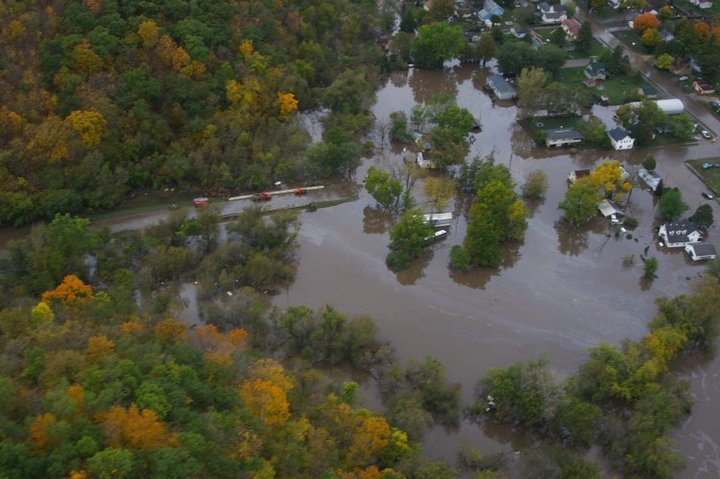
An aerial view of Hammond during the flash flood of September 2010. Photo courtesy of Michael Mann & Tina Marlowe.

FOR SOME TIME NOW, I’ve been committed to helping the folks of Hammond in southeastern Minnesota recover from a devastating September 2010 flood.

I’ve assisted in the best way I can—not physically—but with words and photos on this blog. We all possess talents and mine are not hanging sheetrock or swinging a hammer. I write. There is power in words.

Last October I brought you a series of stories and photos from Hammond and neighboring Zumbro Falls, where I interviewed several individuals and shot many photos showing the damage caused by the flooded Zumbro River. The women I spoke to shared heartbreaking stories. Yet, they remained strong. That impressed me.

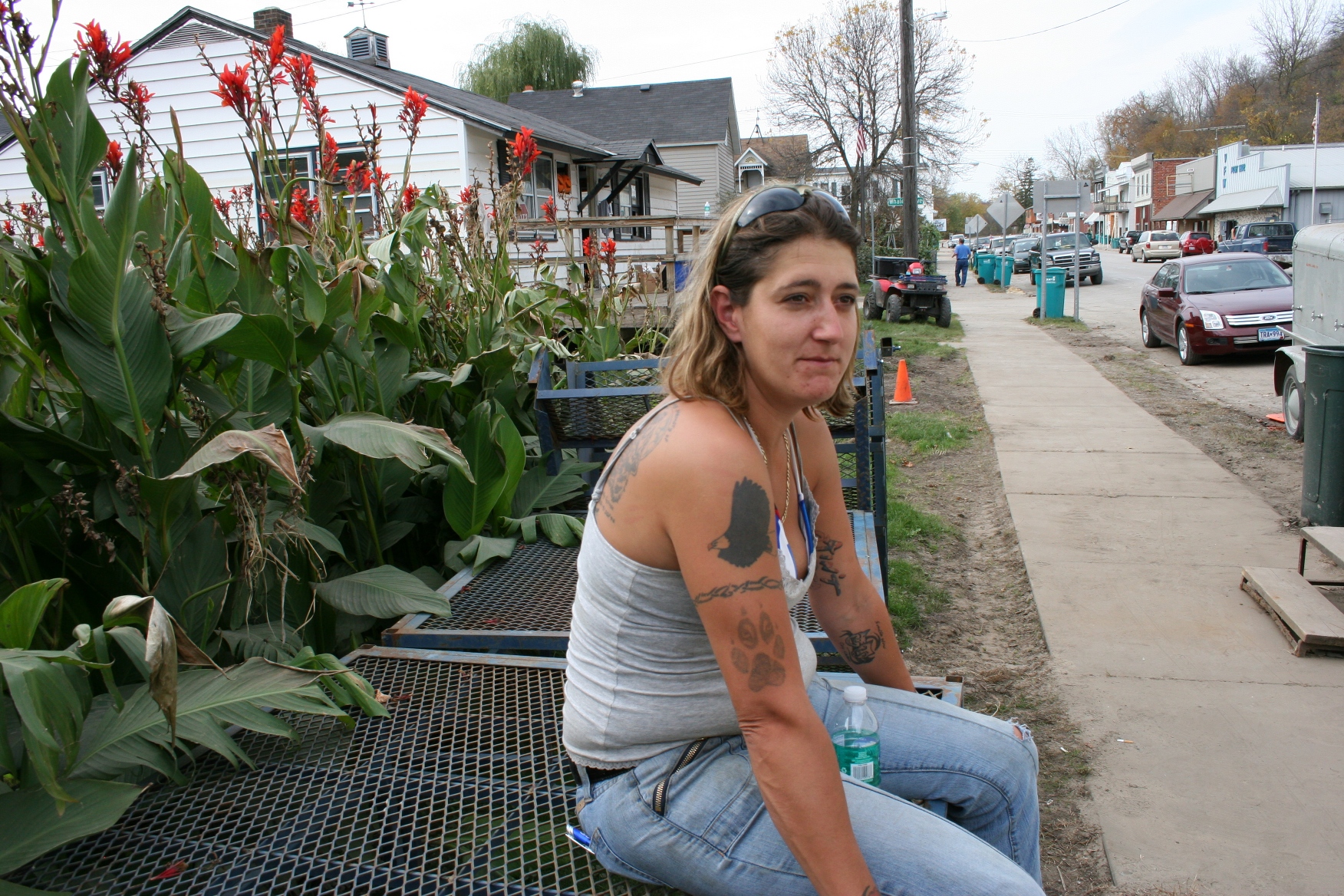
I spoke to Tracy Yennie in Zumbro Falls several weeks after the flood damaged her home.

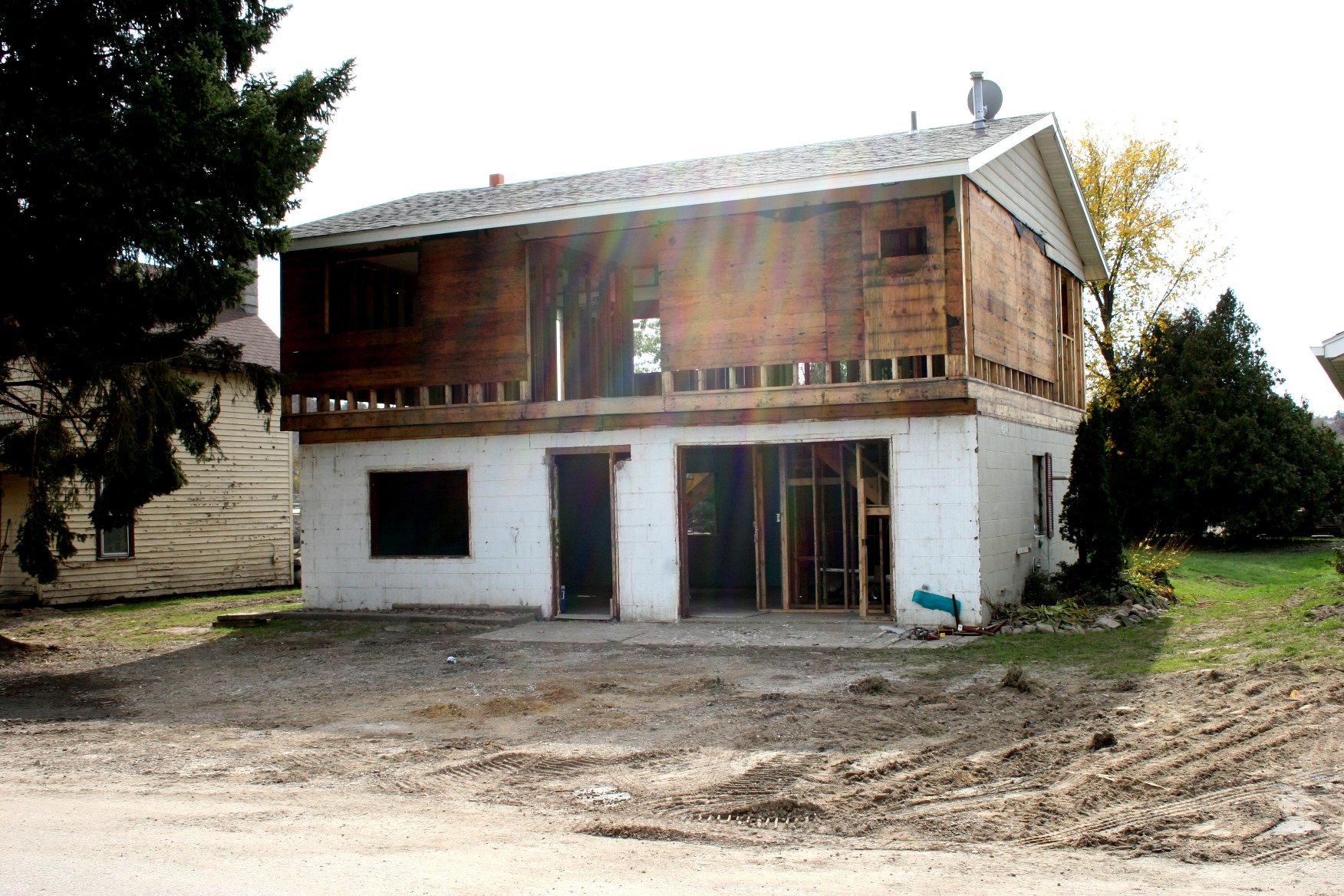
A gutted, flood-ravaged home in Zumbro Falls.

The exposed side of the restaurant/grocery, where a portion of a building once stood in Hammond. The building lies in a heap in the street.

I saw gutted homes and businesses, a child’s toy lying in a pile of discarded appliances. Truly, I could not fathom the personal loss of possessions and home.

In March I published a series of stories about Tina Marlowe and her family, who lost so much to the floodwaters in Hammond. Hers was one story of many that you will never hear. Some residents have decided not to return. Others await possible buy-outs or funding to repair their homes.

But beyond the individual losses, these towns have suffered as communities. They’ve lost gathering spots and places for their children to play. Parks need rebuilding. To do this, these communities need money.

Marlowe, who was recently elected to the Hammond City Council, has started the Hammond Park Flood Recovery Project and is accepting donations of monies, materials and labor to rebuild the recreational areas in her river hamlet.

Send donations to: City of Hammond Park Flood Recovery Project, 320 East Center Street, Hammond, MN. 55991. Click here to learn more about this effort.


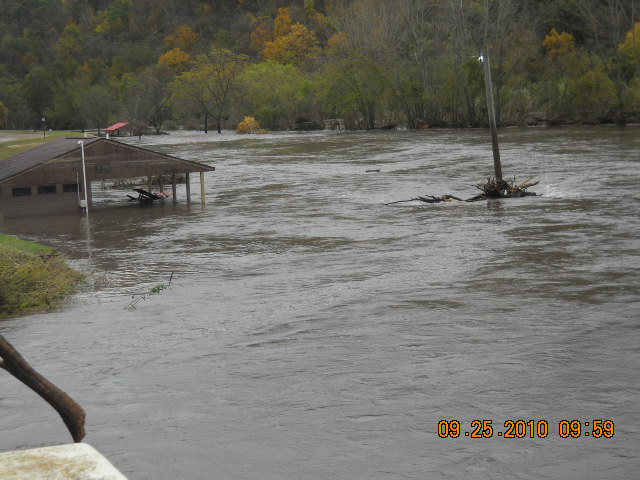
Hammond's riverside park was all but destroyed by the flood. Marks on the shelter roof show how high the water rose. A baseball field next to the shelter, with a fence around it, is covered by receding floodwaters. Jenny Hoffman took this photo on September 25, 2010.

The bridge connecting east and west Hammond during the flood, which also overtook the town's park. Photo courtesy of Micheal Mann & Tina Marlowe.

AND NOW A 16-YEAR-OLD Zumbrota-Mazeppa High School student, Amy Schultz, has stepped up, leading the push to secure a $50,000 Pepsi Refresh Project grant that will repair flood-damaged parks in Zumbro Falls, Hammond, Pine Island and Owatonna.

Schultz tried for a grant earlier this year, focusing solely on Zumbro Falls and Hammond. Now she’s expanded her area, hoping that the inclusion of Pine Island and Owatonna will mean more votes. The top 10 projects, those with the most votes, get the $50,000.

Simple? Yes. Just vote by:

Voting continues through June. When I checked the ranking for this project on Wednesday morning, Schultz’s idea stood at number 27. Let’s blast that number into the top 10.

This high schooler is determined. Just read this information I found online, in news releases she sent to cities, Chambers of Commerce and elsewhere: “The local parks are part of the fabric that joins these picturesque river towns together. It is where families and friends come to play and visitors come to sit by the riverside all summer long. So many memories have been made here over the years and we need to restore them for current and future generations.”

Convincing words from a young woman who wants to make a difference in four Minnesota communities still recovering from the September 2010 flash floods.

Vote today and every day until the end of June for the “Rebuild Parks in Owatonna, Zumbro Falls, Pine Island and Hammond MN” project.

© Copyright 2011 Audrey Kletscher Helbling
 

I’ve never met Garrison Keillor, but… June 8, 2011

SO, HOW WOULD YOU feel if a photo you took was incorporated into a video/slide show narrated by Garrison Keillor?

Would you slip on your red shoes, lace up the laces and dance a polka?

Since I don’t own red shoes like Keillor and I don’t polka, I enthused to my husband repeatedly about my stroke of luck. I haven’t really boasted to anyone else. We don’t do that sort of thing here in Minnesota. But, I thought maybe I could tell a few of you. A photo I shot of winter on the Minnesota prairie is part of a video/slideshow narrated by our state’s most famous storyteller.

Now, how does this happen to a blogger like me who happily blogs along each day with words and photos from Minnesota, without a thought, not a single thought, that Keillor may someday come into my life. Well, I didn’t exactly meet him and I haven’t exactly spoken to him, but…

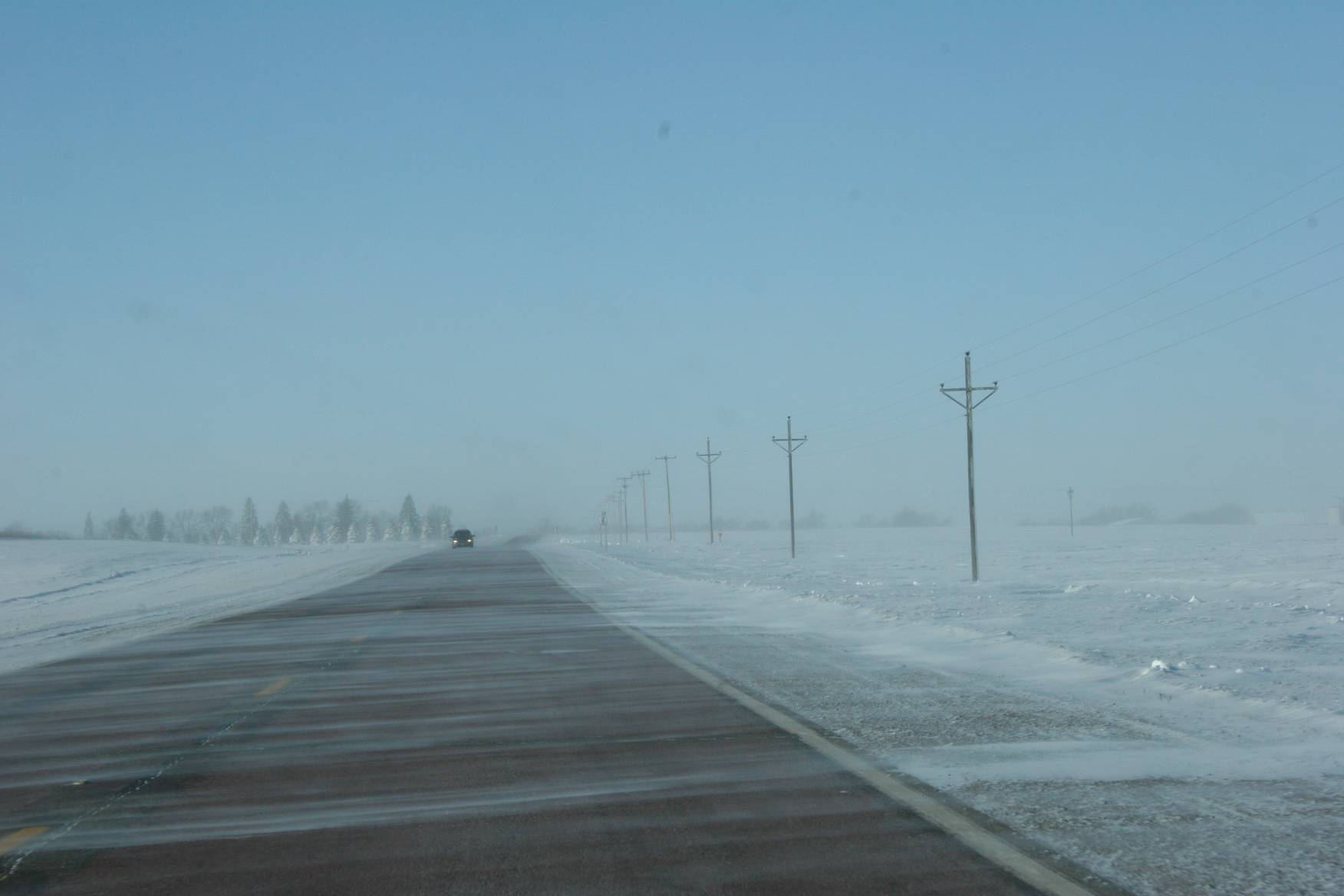
A MONTH AGO, Chris Jones, director of the Center for Educational Technologies at Gordon College in Wenham, Massachusetts, commented on my January 7, 2010, blog post, “Wind and snow equal brutal conditions on the Minnesota prairie.” He was inquiring about using my photo of winter on the prairie in a video/slideshow for retiring President R. Judson Carlberg and his wife, Jan.

Typically I do not personally respond to comments via email. I am cautious that way, protective of my email address and of anybody out there who may not have my best interests in mind. So I didn’t, just like that, snap your fingers, fire off a response to Jones. First I sleuthed. Honestly, I had never heard of Gordon College and I sure can’t spell Massachusetts.

Here’s what I learned from the college’s website: “Gordon College in Wenham, Massachusetts, is among the top Christian colleges in the nation and the only nondenominational Christian college in New England. Gordon is committed to excellence in liberal arts education, spiritual development and academic freedom informed by a framework of faith.”

I am Lutheran and that all sounded conservative enough for me.

So I emailed Jones, with several questions. You really didn’t expect me to not have questions, did you? I asked Mr. Gordon College guy: “Could you explain to me the nature of this video, which photo you are interested in using and where this video will be shown?”

That’s when he dropped Garrison Keillor’s name as the video/slideshow narrator. Sure. Yeah. Use my photo. Wherever. Whenever. Fine with me. Credit me and Minnesota Prairie Roots, send me a link to the completed video and allow me to blog about this and we’ve got a deal.

And so we did. Have a deal. After I promised not to publicly share the video with you. Sorry, I wish I could because it’s an entertaining media presentation, but I gave my word.

I also gave my word that I would make it clear to you, dear readers, that Garrison Keillor doesn’t just go around every day narrating surprise media presentations for college presidents’ retirement parties.

He met Jud and Jan Carlberg on a cruise. They struck up a friendship and, later, when the college was planning the video/slideshow, a Gordon writer “thought boldly, imagining this as a wonderful surprise for the Carlbergs, and started making inquiries,” Paul Rogati, Gordon’s CET multimedia designer, shared in a follow-up email. “When Mr. Keillor agreed to record the narration, the script was written for his style of monologue, with a reference to the winters on the prairies of Minnesota. Your image was a perfect match.”

"The photograph," taken along Minnesota Highway 30 in southwestern Minnesota.

And that is how my photo taken in January 2010 along Minnesota Highway 30 in southwestern Minnesota became connected to Garrison Keillor.

My prairie picture is one of many, many, many images incorporated into this retirement tribute to a “tall Scandinavian scholar from Fall River, Massachusetts” who was inaugurated as Gordon’s seventh president “in a swirling March blizzard” in 1993.

Yes, the whole piece is pure “A Prairie Home Companion” style and it’s a pleasure listening to Keillor’s silken voice glide across the words penned by authors Jo Kadlecek and Martha Stout.

The monologue opens like Keillor’s radio show, but “on Coy Pond on the campus of Gordon College.” It is a pond which “sometimes freezes up solid enough to go ice fishing on,” Keillor professes. And “there are rumors of an ice fishing shack being built” by the retired president with more time on his hands.

Several other references are made to Minnesota in a presentation that mixes humor with factual information about the Carlbergs’ 35-year tenure at Gordon, a “college which includes Lutherans” and which offers students off-campus experiences in places like the Minnesota prairie.

Then, finally, at the end of the video, the Carlbergs are invited to “sometime come up to the prairies of Minnesota to see what winter is all about.” A snippet of my photo appears on the screen, slowly panning out to show the full winter prairie landscape frame.

I’m not sure which the Carlbergs will do first in their retirement—sneak past Gordon College security and park an ice fishing shack on Coy Pond or visit southwestern Minnesota in winter, where, no doubt, “all the women are strong, all the men are good looking and all the children are above average.”

#

WHEN (not if) the Carlbergs travel to Minnesota in the winter, they will also see scenes like this on the southwestern Minnesota prairie:

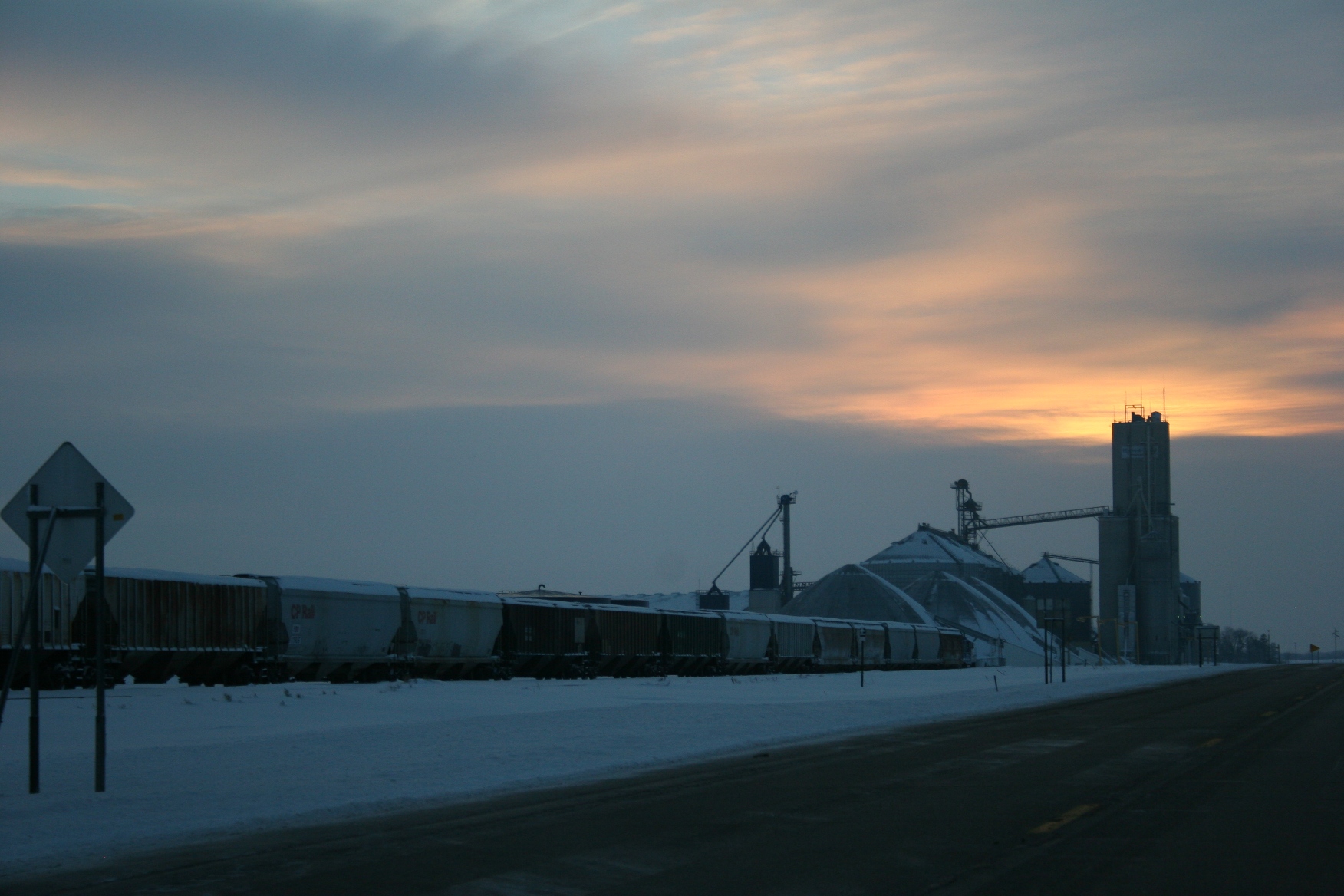
An elevator along U.S. Highway 14 in southwestern Minnesota.

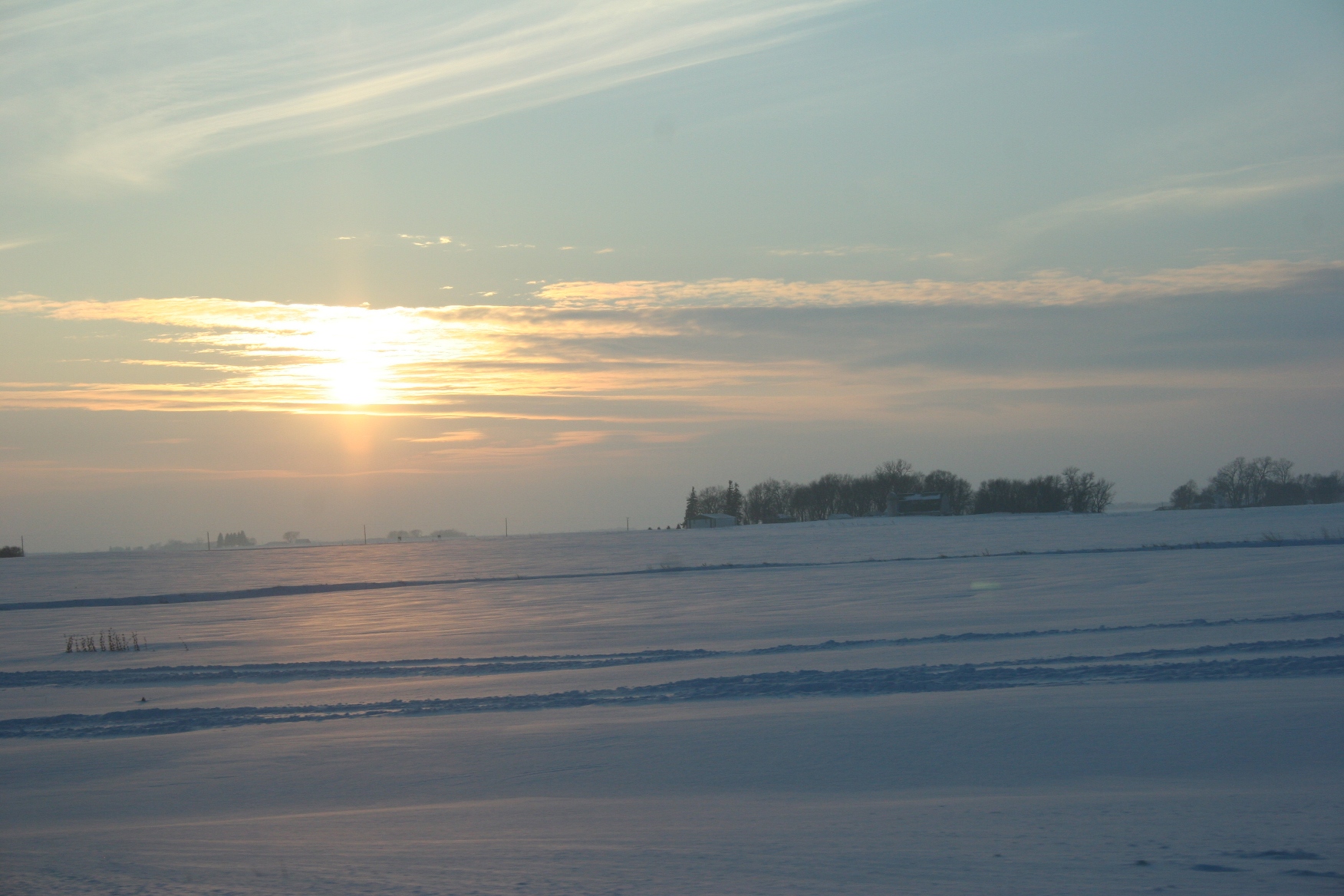
The sun begins to set on the Minnesota prairie.

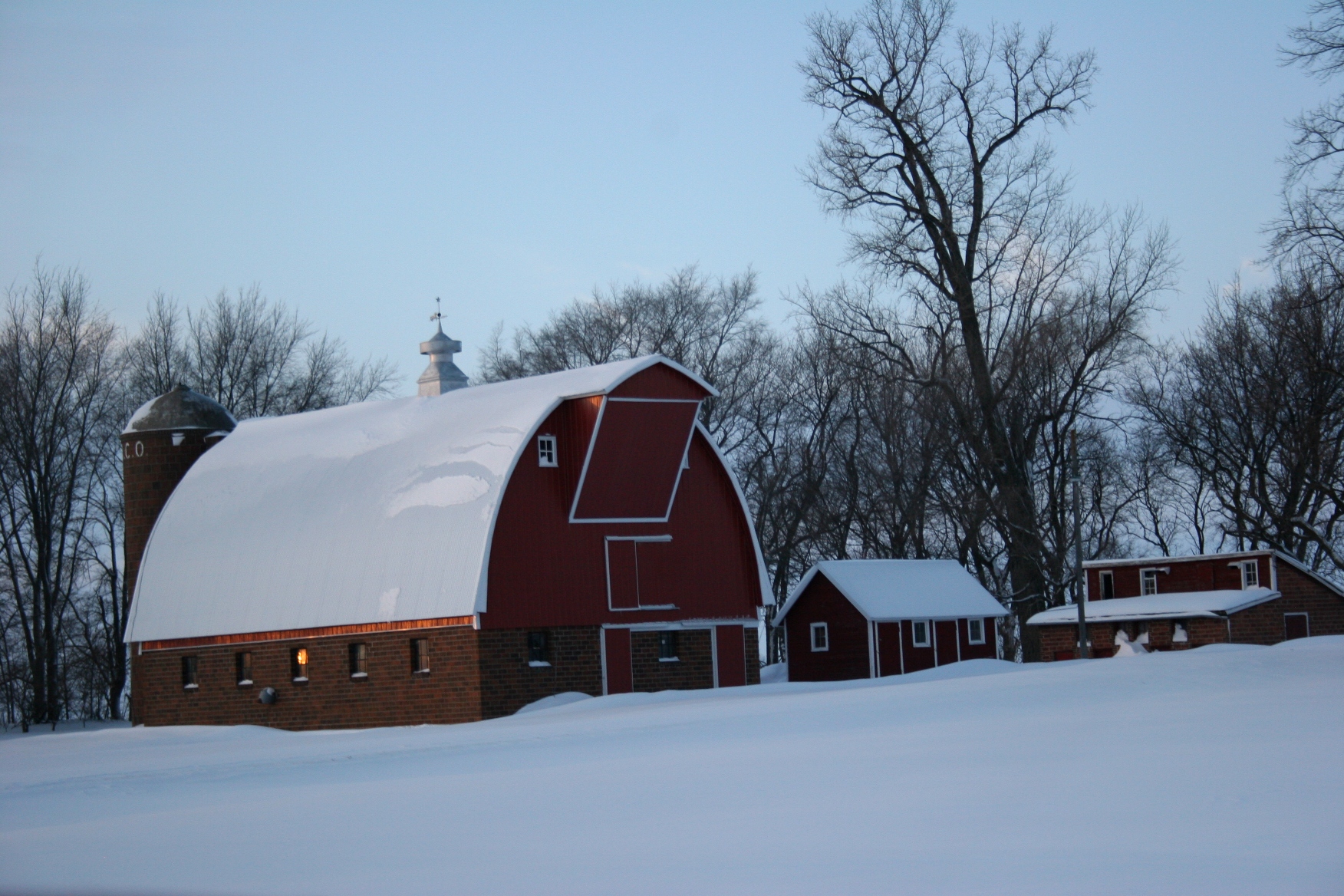
Barns abound in the agricultural region of southwestern Minnesota, this one along U.S. Highway 14.

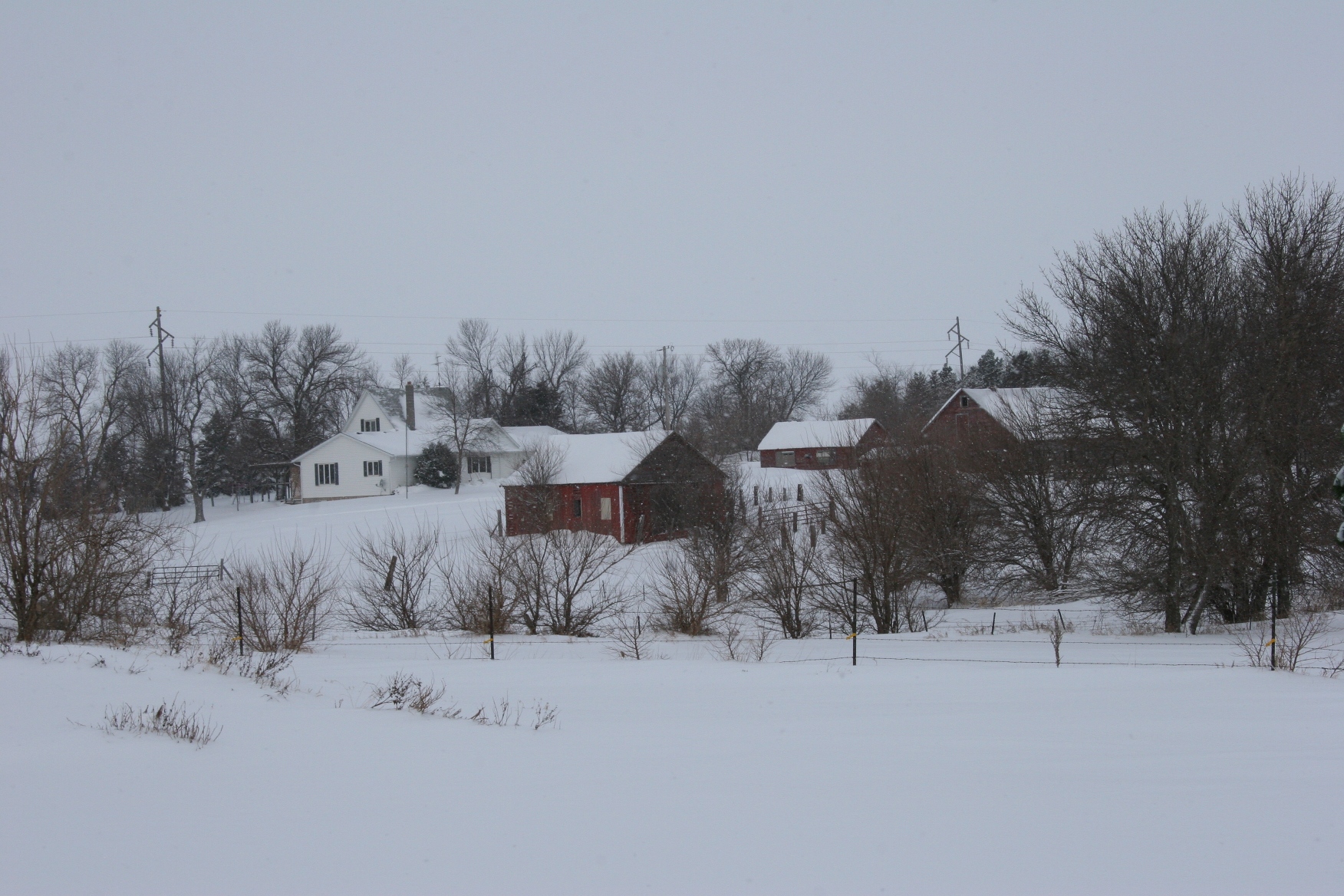
A picturesque farm site just north of Lamberton in Redwood County, Minnesota.

© Copyright 2011 Audrey Kletscher Helbling
 

When the power goes out June 7, 2011

Filed under: Uncategorized — Audrey Kletscher Helbling @ 8:50 AM
Tags: , , , , , ,

WHEN THE POWER goes out on a Monday evening, say at exactly 6:50 p.m., on one of the first oppressively hot days of a Minnesota summer, what do you do?

Here’s a recap of my 4 ½ hours without electricity.

Finish a late grilled chicken supper with the husband and teenage son, followed by the routine clearing of the table, washing dishes (there’s a reason I don’t own a dishwasher) and then taking out the garbage, which is typically the husband’s job, but he is mowing the lawn.

Notice that the under-sink garbage container reeks and is growing black something-or-other. Scrub off the unknown black growth and blast the garbage can with disinfectant.

Sweep the kitchen floor.

Pretty routine so far, right?

Water the plants on the patio.

Now what? Can’t get on the computer to check email or work on chapter one of the book you are editing.

Grab the stack of invoices and statements from the local lumber yard and try to figure out whether you’ve been billed and/or credited properly for materials purchased for the house project that has been a stressful, six-month undertaking. Mutter a few words that cannot be printed here.

Ask the son where his father has disappeared to and then spot him across the street talking to the neighbors, whom we’ve never met. Observe other neighbors outdoors, including those next door, who have stepped outside for a smoke. Apparently when the power goes out, smoking in a closed-up, without air conditioning, house becomes intolerable, or perhaps suffocating.

Grab a book and a notebook to read and take notes on a book you are reviewing for a magazine. In the fading light of day, that plan lasts through two pages.

Text the daughter in Wisconsin, who doesn’t text back.

Join the husband who decides, around 9 p.m., that a tour of the town is necessary to determine the source and extent of the power outage. A few blocks away, several Xcel Energy trucks ring an electrical substation.

This electrical substation near the viaduct in Faribault was the apparent location of Monday evening's power outage. I took this photo in March, as the city prepared for spring flooding.

Through-out downtown, street lights are dark,  store fronts lit. Figure that one out. Temporary stop signs replace non-functioning stoplights along Minnesota Highway 60, the main drag through Faribault. A grocery store, gas station and fast food restaurant stand dark and shuttered.

Realize that driving along unlit city streets ranks as unsafe given pedestrians and bikers think you can see them, but you can’t. No encounters. Just a realization that a city without street lights and with darkened homes and businesses appears eerie and dangerous. Wonder what strangers to Faribault think of driving into a darkened city.

Return home. Finally accept that power likely will not be restored for awhile. Light candles. Dig out the camping lantern, which hasn’t seen a tent in decades and serves as the primary light source during electrical outages.

Ask the teen, who has been reading a book all evening and who is lounging on the living room floor, to find some news on his cell phone. Still don’t understand how he can listen to the radio on his cell. No news found. However, he tunes into classical music and tries to convince his father to listen to Beethoven and Bach at work rather than classical rock. Son is working in his dad’s automotive machine shop for the summer. Dad isn’t convinced. Suggest a compromise—morning with the Moody Blues, afternoon with Beethoven.

Question the boy more about first day back at work, whether he’s been welcomed. Yeah. Encourage more conversation because usually the teen has head buried in the computer and such opportunities are rare. Learn that he lunched at the picnic table behind the automotive store. Ask whether conditions have improved in the outdoor dining area. Nope. Still a dumpster and trailer and scrap metal pile next to the picnic table. Suggest the boss give me a decorating budget to spruce up the place. Ain’t gonna happen. Son says he and Dad should bring lawn chairs.

Phone Xcel Energy for the second time. Hear that power should be back on by 11 p.m. It is 10:30 p.m. Earlier recording stated lights on at 8:50 p.m. Don’t believe smooth-talking woman. Decide to head to bed.

But, first, join son for star gazing in backyard. Listen to him complain about light pollution. Find the Big Dipper when he asks. Thinks parents cannot find it, are dumb. Suggest he take star gazing chart to southwestern Minnesota. He requests one night worldwide when all lights are turned off. Tell him that won’t happen. Looting. Other crimes.

Advise him to lock door and turn off lantern when done sky watching. Candles extinguished earlier. Off to bed. Just drifting off. Door rattles. Teen clomps. Wide awake. Power back on: 11:15 p.m.

ACCORDING TO AN ONLINE Faribault Daily News article, 2,700 homes were without power in northern Faribault, stretching to Cannon City Township. The apparent cause of the outage was a failure at a regional substation.

© Copyright 2011 Audrey Kletscher Helbling
 

A perfect summer day in Minnesota June 6, 2011

Filed under: Uncategorized — Audrey Kletscher Helbling @ 9:23 AM
Tags: , , , , , , , , ,

The sun sets on the prairie at River Bend Nature Center in Faribault on Sunday evening.

SUNDAY BROUGHT as perfect of a day as we have here in Minnesota. Sunshine. High temps without the humidity. No wind. A day to linger outdoors until the sunlight fades into the dark calm of a perfect summer evening.

Honestly, do days get any better than this?

In Minnesota, we gather these days into our memories, filing them away for the brutal months of winter, of bitter cold temps, snow (dare I mention that word?) and too much darkness.

For now we choose to celebrate the days of summer with family and friends, backyard barbecues and icy beer, laughter and conversation.

Here’s to the arrival of summer and the banishment of winter to some hinterland far, far, far away from Minnesota.

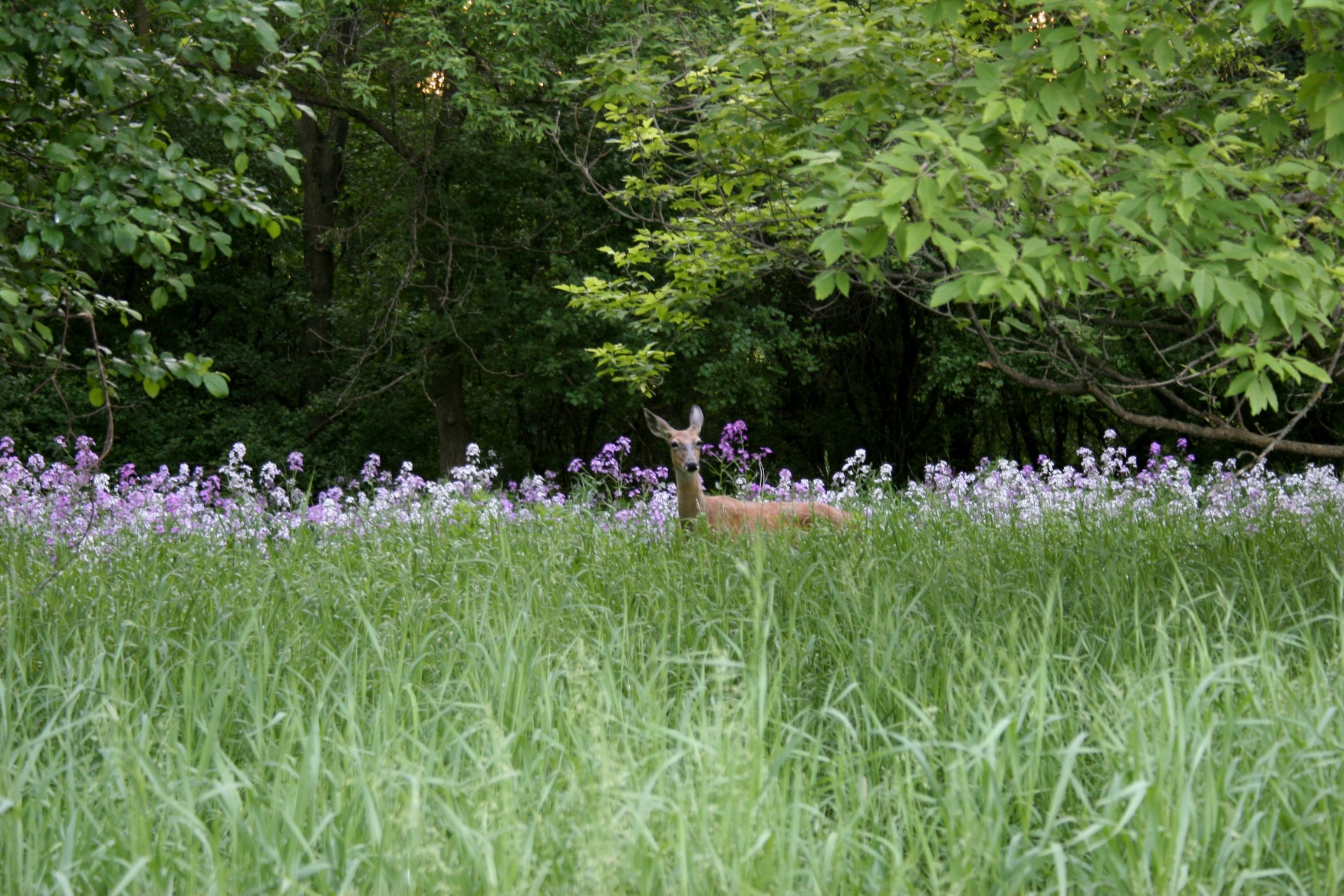
A deer I spotted just inside the nature center. (If only I had a telephoto lens.)

I saw this deer atop a hill at the nature center as my husband and I were leaving after a short hike. Same deer?

© Copyright 2011 Audrey Kletscher Helbling


A look back at a 1951 graduation speech about communism June 5, 2011

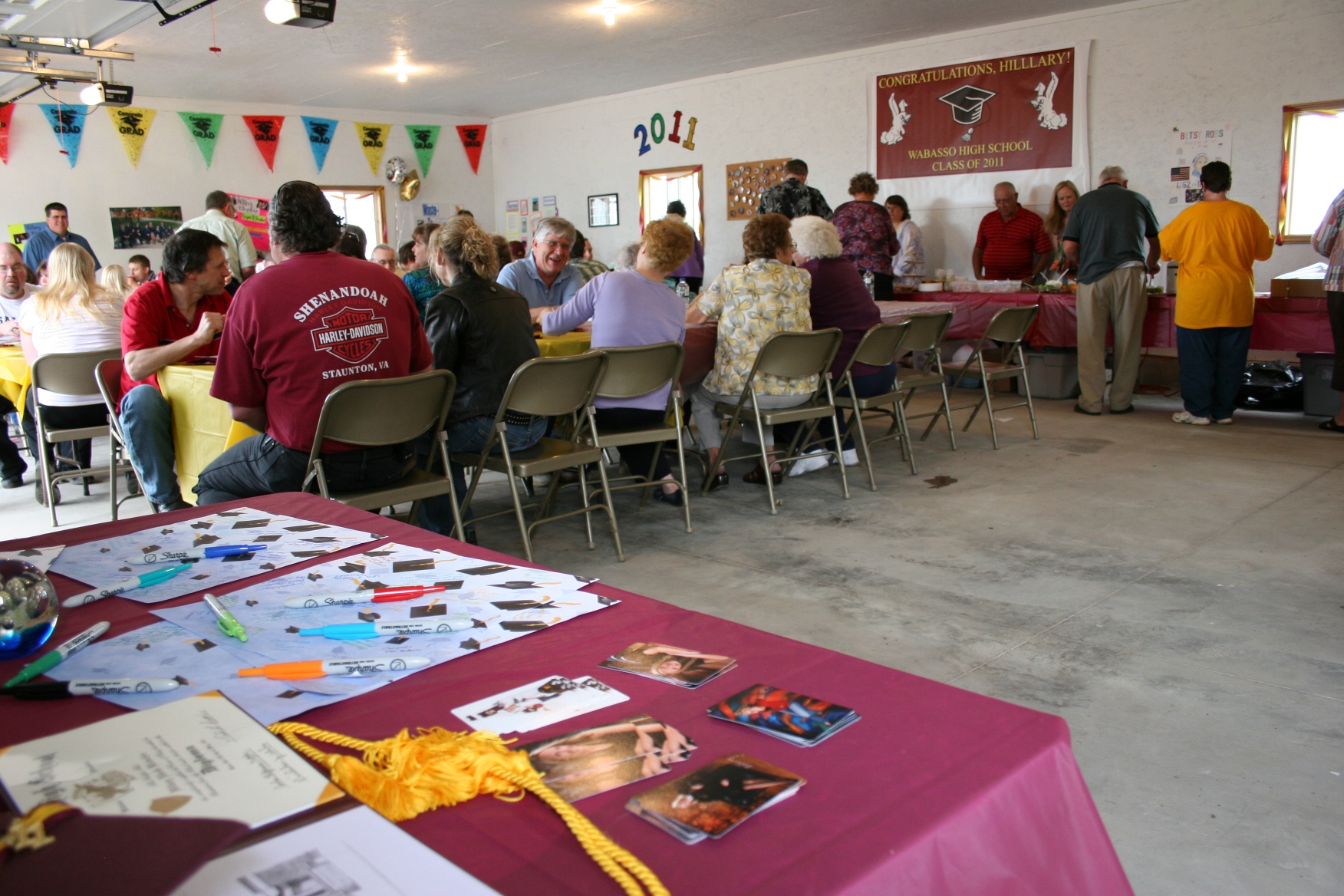
I recently attended this graduation reception for my niece Hillary, who graduated from Wabasso High School.

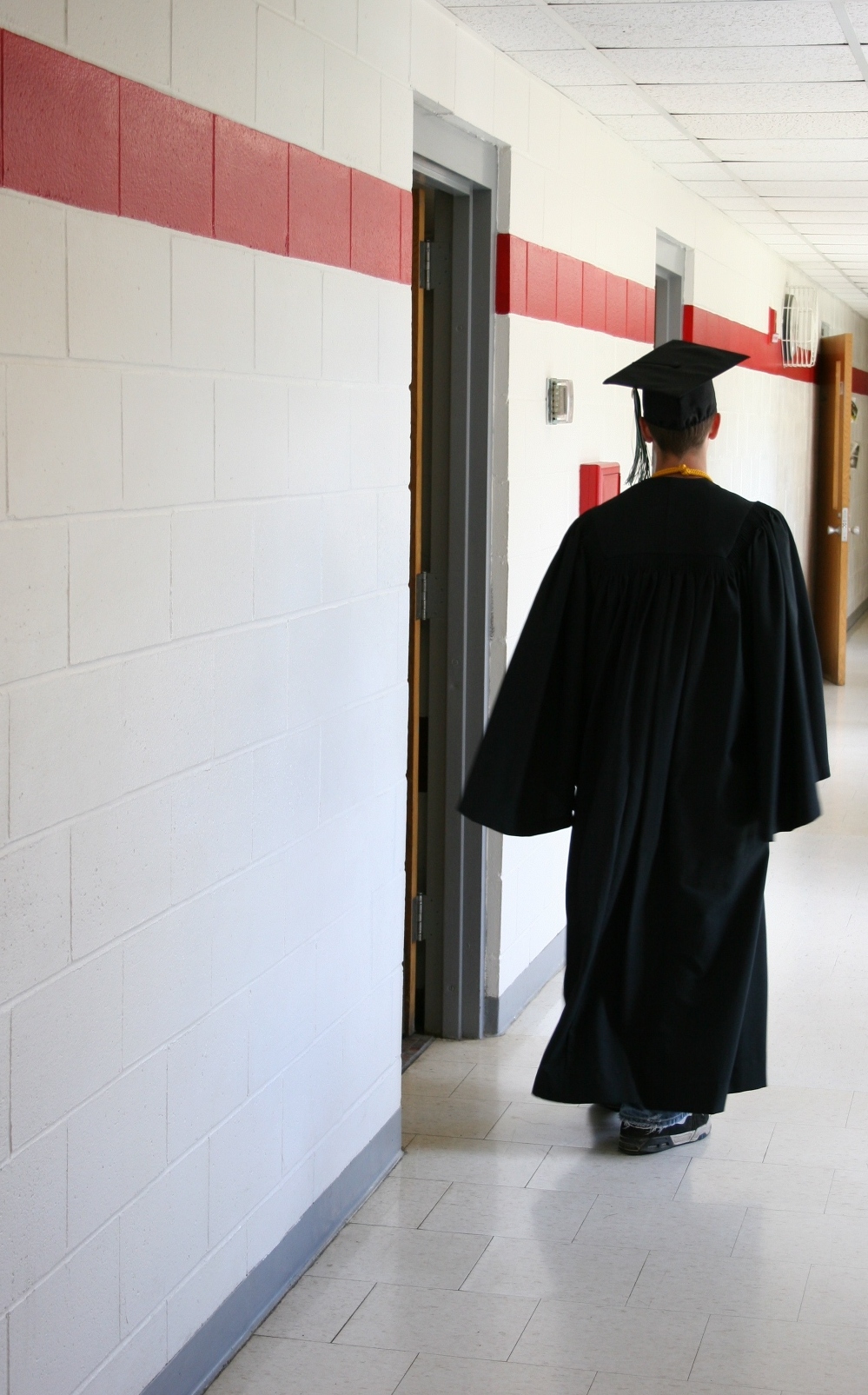
A soon-to-be 2010 graduate of Westbrook-Walnut Grove High.

IF YOU’RE LIKE ME, you’ve received invitations to numerous high school graduation receptions. You’ll make the rounds, shaking hands with the new graduates, inquiring about their future plans, congratulating their parents and then grabbing something to eat (pacing your food intake) before moving on to the next reception.

If you’re like me, you also have not attended a single graduation ceremony, unless your child is graduating or you are invited to a small-town high school where seating is not limited to four spaces per graduating senior’s family.

Therefore, you probably have not heard a student commencement speech in some time.

About a week ago my niece graduated as valedictorian of  Wabasso High School, my alma mater, and gave a graduation speech, of which I’ve received a copy. Hillary spoke about the past and how it weaves into the future. “As we become the people we are meant to be, we can hold onto the memories of yesteryear and the hopes of tomorrow,” she said in part. “The one thing that will always remain constant is the change in our lives.”

Now compare that to the speech (see below) given by Hillary’s grandmother, my mother, at Wabasso High School 60 years ago. Class of 1951 valedictorian Arlene Bode spoke about “Our Part in the Fight Against Communism.”

When my mom first told me the title of her speech, I laughed. “Who gives a graduation speech about communism?” I asked, and laughed again.

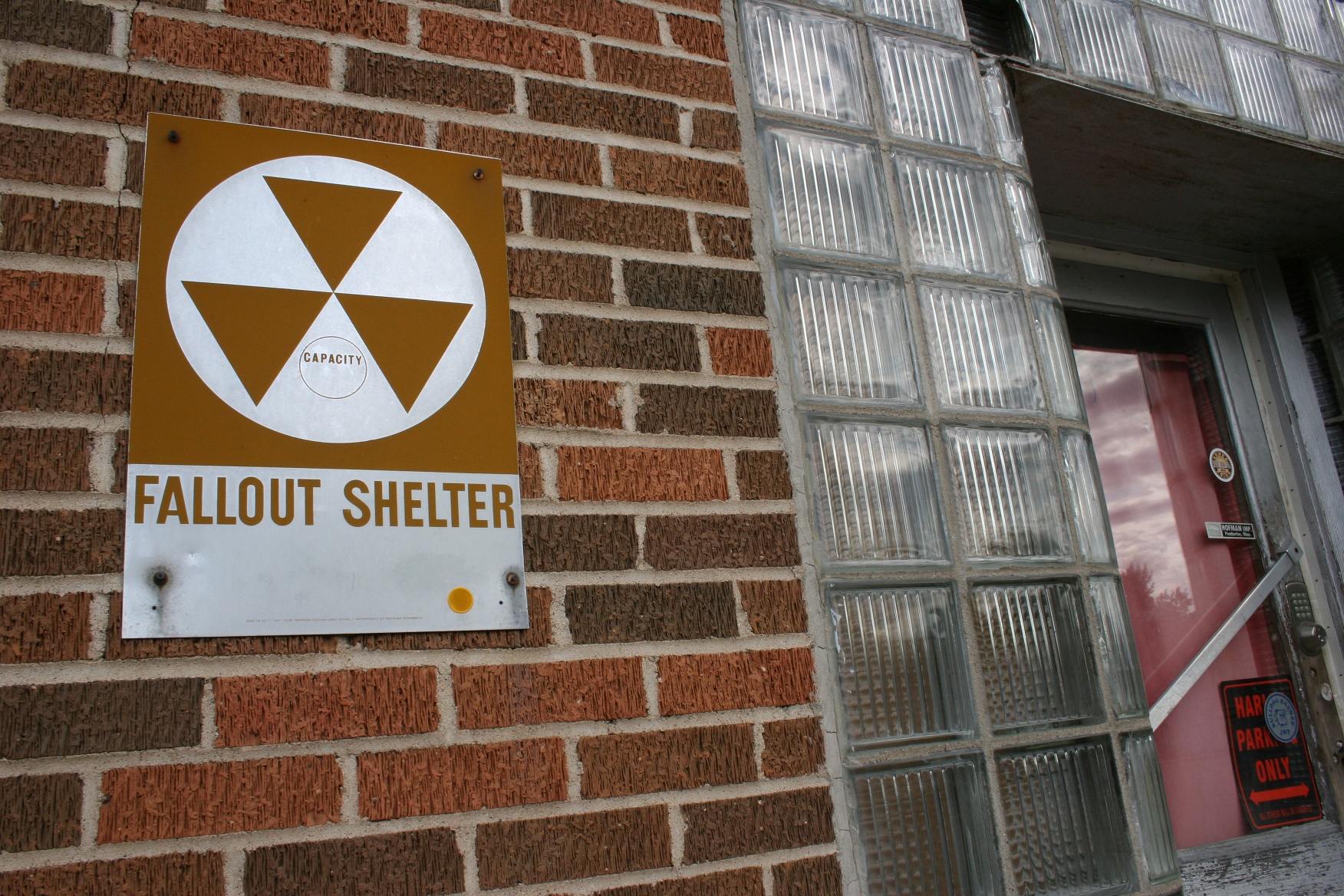
An old fallout shelter sign on a building in downtown Pemberton in southern Minnesota.

Then my 79-year-old mother reminded me of the time period—the Cold War, the fear of the Soviet Union, the Korean War, fallout shelters—and I understood. She doesn’t recall whether she chose the topic or whether the subject was assigned. But the content gives some youthful, historical insight into the world six decades ago:

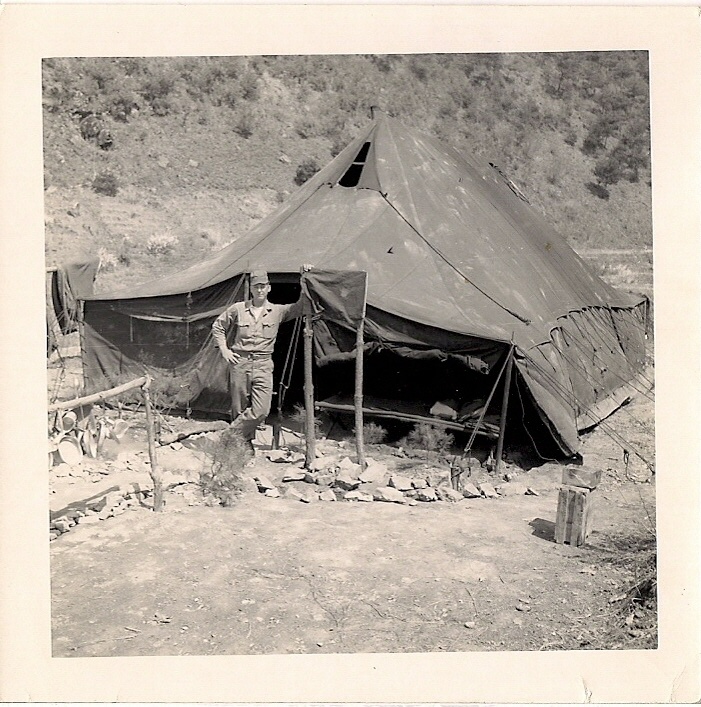
My father, a Korean War veteran, in Korea in 1953.

“WE, THE GRADUATING SENIORS, wish to take this opportunity to express our sincere gratitude to our parents, teachers, and all others who have helped us obtain our education.

OUR PART IN THE FIGHT AGAINST COMMUNISM

Communism is threatening the peace and security of our country. This is being brought more and more to our attention each day by the governmental leaders of the United States. We are sending our boys to Korea. We are conducting investigations to reveal any communist workers who may be in our government. We are sending Voice of America broadcasts behind the Iron Curtain to inform the people of how democracy works. But this is not enough. The tide of communism is moving ever forward. Most of Europe is communistic and it is spreading rapidly in Asia. This has happened just in the last few years. We must stop this tide before it is too late. It behooves us as graduating seniors to help in the fight against communism while there is still time.

Of course we must know what we are fighting against. The mere word communism is not enough. We must know what it means. The word communism is derived from the Latin word communis meaning common. It is said that communism is the distribution of income to each according to his need. They believe that all natural resources and most businesses should be owned by the government. They also believe in community ownership of property. This is the true meaning of communism, but it has an even greater meaning here in the United States. Senate hearings have shown that it is a politically controlled conspiracy, promoted by a foreign nation, for the overthrow of our government. If they should accomplish this overthrow it would be a decisive step toward placing the entire world under communistic government. According to Kenneth Goff, author of “Confessions of Stalin’s Agent,” the communist party has six main points in its program: Abolition of all governments, inheritance, private property, patriotism, family, and religion.

The communists strike first at the poorer class of people and at those who are not satisfied with present day conditions. They promise these people that under communism they will have all they want, such as rest, leisure, and social security paid by the State. But this is far from what really happens. What really happens is that these people lose their personal freedom and whatever they do is for the benefit of the communist party.

If we have an understanding of what communism means and how it works we can fight against it. Here are some of the things we can do.

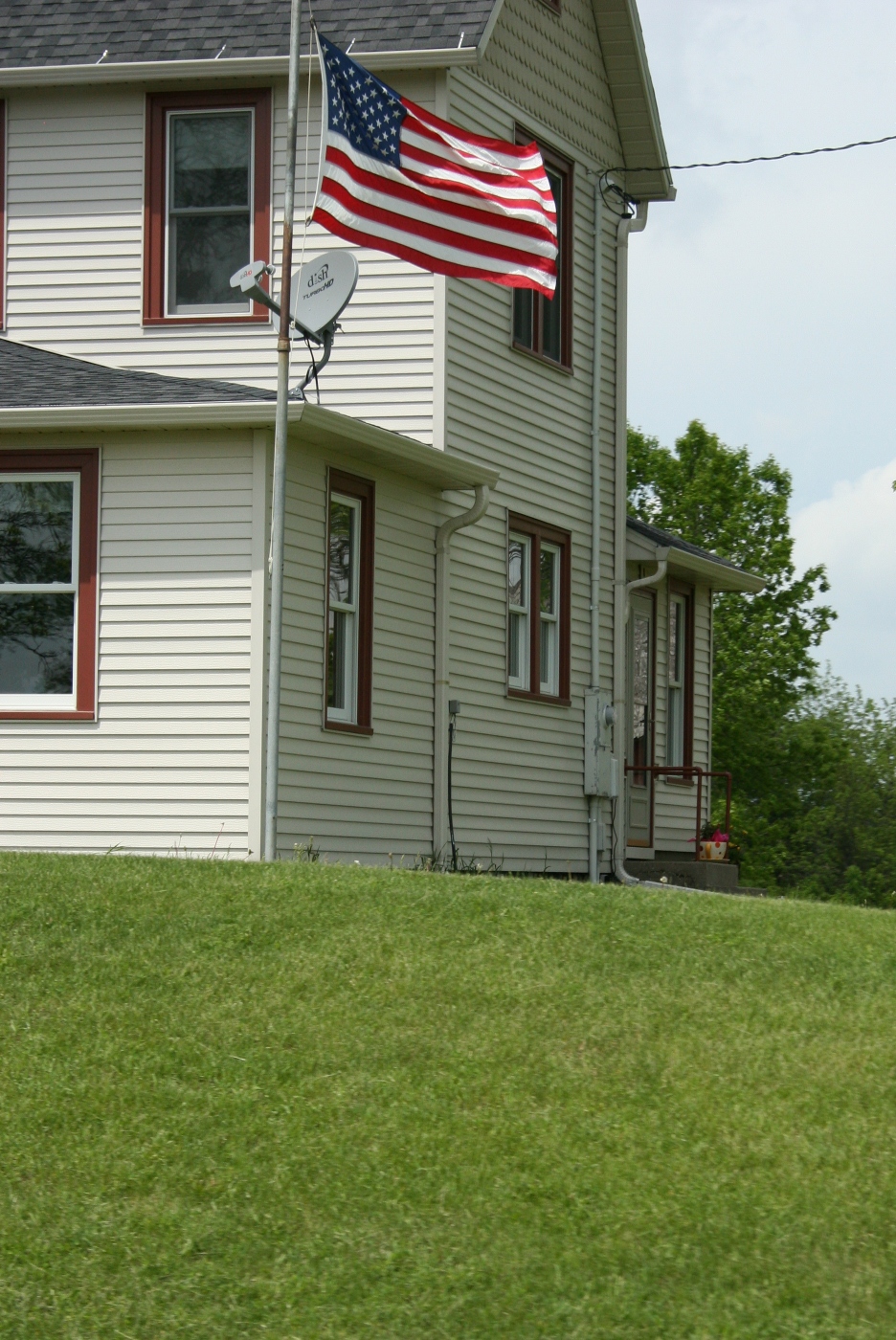
Patriotism displayed on a rural Minnesota home.

We must at all times practice democracy. Democracy means a sharing of respect, a sharing of power, and respect for the dignity of man. Democracy is promoted by a balanced economic distribution and an enlightenment of the people. We should see that parliamentary procedure is used in all organizations to which we belong such as, church organizations, community organizations, and women’s clubs. It is important to secure the wishes of the majority of the people without wasting time.

We must set a good example by being democratic in our every day life and in our dealings with others by working toward a definite goal in life, setting up ideals to follow, being a neighbor to all people regardless of their race, color, or religion, showing good judgment in all we do.

In a few years we will have a voice in our government and we must do our best to keep communists out of it. We can do this by voting at each election, which is one of the privileges of living in a democracy and one which we must never lose. But just casting a vote is not enough. We should know who we are voting for by studying the policies of each candidate to see what he stands for.

If each and every one of us practices democracy wherever we are we have done our part in the constant fight against communism. The part we play may seem small, but every little bit counts if we are to win over communism.”

AFTER READING MY MOM’S SPEECH several times, I wondered how often we as Americans pause to consider the freedoms we likely take too much for granted.

“We must at all times practice democracy. Democracy means a sharing of respect, a sharing of power, and respect for the dignity of man.”

WHAT’S YOUR TAKE on this 1951 graduation speech? Are any of her comments relevant today? What particularly struck you about this speech? I’d like to hear your specific reactions.

© Copyright 2011 Audrey Kletscher Helbling
Graduation speech © Copyright 1951 Arlene Bode Kletscher (Except for corrected errors in spelling, this speech is published here as originally written.)

2011 graduation speech excerpts © Copyright 2011 Hillary Kletscher


Chauncey, a Civil War soldier June 4, 2011

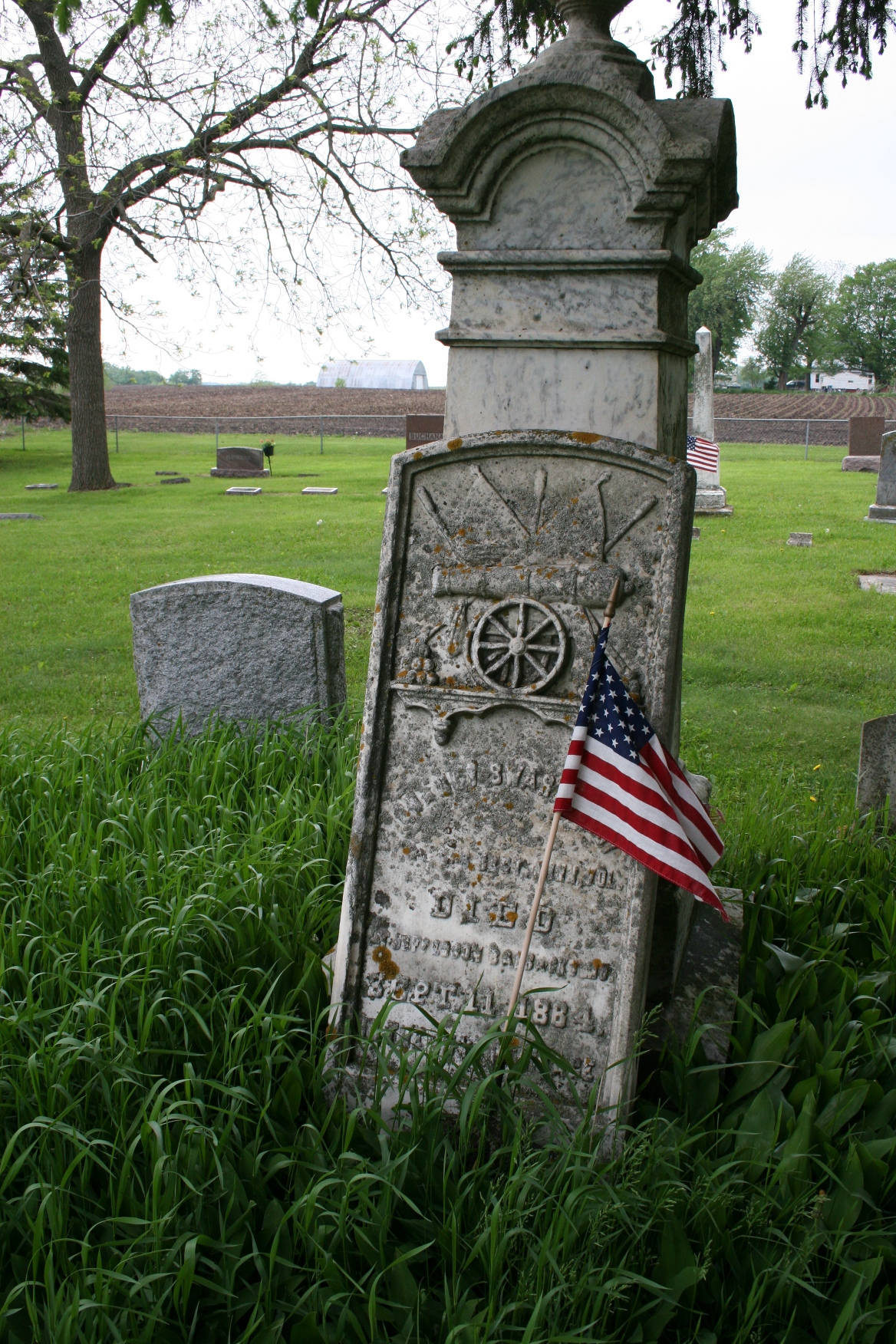
The grave of Chauncey Swartwoudt at the Cannon City Cemetery.

THE NAME ON HIS TOMBSTONE is barely readable as my husband, Randy, struggles to decipher the letters that form “Chauncey Swartwoudt.”

I like how the name rolls off my tongue—the Chauncey part at least. I’m unsure how to pronounce his surname.

He means nothing to me. His is just another tombstone marked by an American flag, among many in a Minnesota country cemetery.

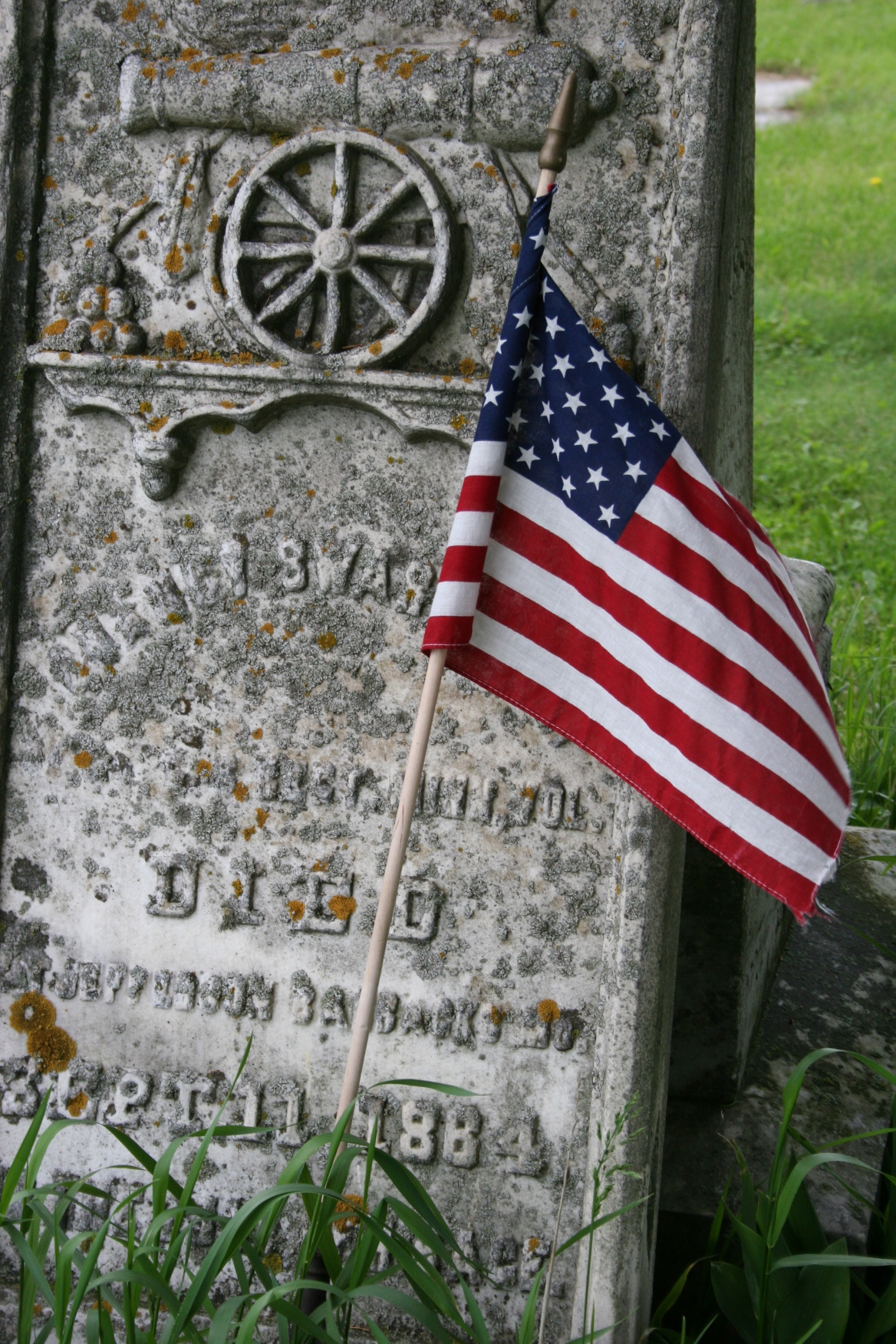
A close-up of Chauncey's tombstone, decorated for Memorial Day.

Yet, because of the size of this grave marker and the rectangular border surrounding it, I am drawn to this spot in the Cannon City Cemetery on Memorial Day.

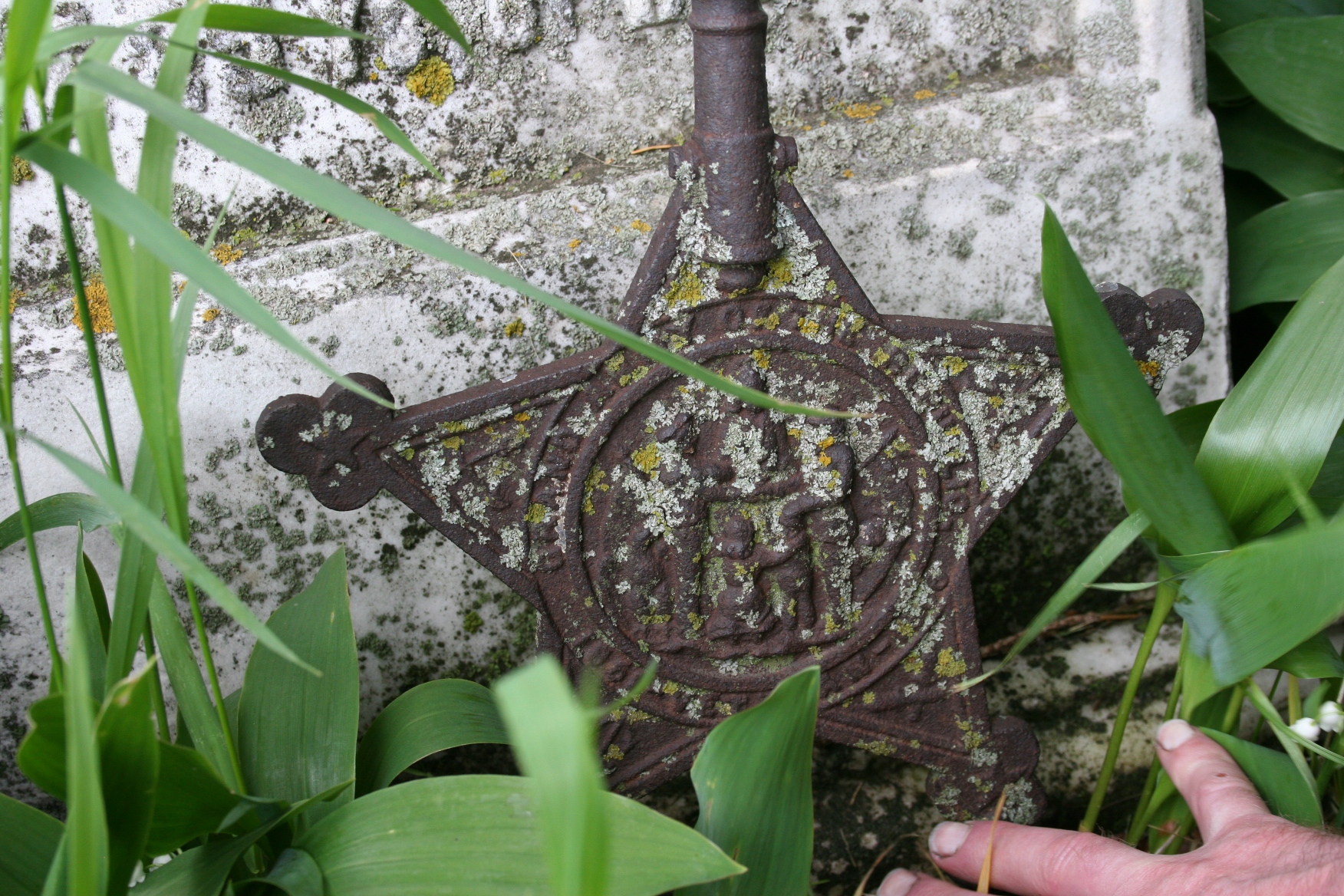
When I lean in close, I discover more. Or, more accurately, Randy uncovers a veteran’s star with difficult-to-read words. He decodes “The Grand Army of the Republic.” GAR equals veterans of the Union Army who served in the Civil War.

Randy pulls back foliage to reveal a GAR star with words that are barely readable and a design that we can't clearly see. Does anyone know what design graces the center of these old GAR stars?

Chauncey was mustered into the military on August 8, 1862, at the age of 22. He served as a Union Army private with Company C, Sixth Minnesota Volunteer Regiment. Two years, one month and three days later, on September 11, 1864, at the age of 24, he died at Jefferson Barracks in St. Louis, Missouri.

He was a soldier, the son of Henry and Catherine and brother of Charles. (He may have  had other siblings, but my quick research reveals only Charles.)

Nine years after Chauncey’s death, on March 15, 1873, Charles and Elizabeth Swartwoudt named their new-born son after his uncle. Little Chauncey lived only three years.

This is all I know about the elder Chauncey who fought in the Civil War, who died far from his Minnesota home. A young man of only 24, his entire life ahead of him.

Why did he die?

Detailed artwork, in the form of a cannon and cannonballs are engraved on Chauncey's tombstone.

Why is a cannon, with stacked cannonballs, etched into the cold stone of his grave marker? I’ve visited many Minnesota cemeteries and never seen such detailed art on the marker of a Civil War soldier.

It’s not like I should care. I have no connection to Chauncey. Yet I do care. He was a soldier, a son, a brother. I am a mother and a sister. He came home in a box. And a mother wept.

© Copyright 2011 Audrey Kletscher Helbling
 

Transitioning through parenthood and letting go June 3, 2011

Filed under: Uncategorized — Audrey Kletscher Helbling @ 7:14 AM
Tags: , , , , , , , , ,

In December we helped move my second daughter into an apartment as she started her first post-college job.

ONCE UPON A TIME, like 15 to 20, maybe even seven, years ago, I dreaded my kids graduating from high school, leaving for college and then eventually landing jobs. It would mean they no longer needed me and I could barely stand the thought of their absence.

But since then, since the two oldest followed the path of degrees, jobs and their own apartments, I’ve changed my attitude.

I rather like the lessening of parental responsibility that comes with their independence. It’s freeing. Not that I don’t worry about them; I still do. But it’s different now when they can basically fend for themselves.

My second oldest daughter graduated from the University of Wisconsin, La Crosse, last spring.

With that frame of mind, I recently visited my second oldest daughter in eastern Wisconsin, where she started work in December as a Spanish medical interpreter. Her first post-college job. Her first apartment of her own. She’d officially grown up.

I would have preferred that she settle closer to her hometown of Faribault instead of 300 miles away. But I’ve reminded myself many times that at least she’s in the U.S., within easy driving distance, and not in Argentina.

Nothing against Argentina. My daughter studied abroad in Buenos Aires and later returned for an internship. But I didn’t want her settling there, 6,000 miles away. I feared she might. Live there. Permanently.

That said, I have only myself to blame for the wanderlust spirits my 23-year-old and 25-year-old daughters possess. Because I grew up on a southwestern Minnesota dairy and crop farm, I seldom traveled as a child—once to Duluth and once to The Black Hills. I wanted my children to travel. I didn’t want them to be like me—someone who prefers, as my dad would have said, “to see the smoke from the chimney.”

And so I let them go, first as young children, to bible camp. Then, in high school, my eldest took her first out-of-state spring break mission trip to Texas. More mission and church and school trips followed as step by step by step they stretched their travel wings.

Then, during my eldest daughter’s freshman year of college, she signed up for a mission trip that took her to Paraguay. Heck, I had to dig out the globe to locate that country which borders Argentina, Brazil and Bolivia. I panicked, regretting for more than a few days my decision to raise children who enjoyed traveling.

Later, when my daughter journeyed to Costa Rica for a brief study sojourn, I barely gave her trip a second thought.

I could handle those short trips.

But then one summer the eldest worked in West Virginia and she was definitely gone for more than 10 days.

That, thankfully, prepared me for her sister’s decision to study abroad and do mission work in Argentina for six months and then return a second time for an internship.

Through the years, I’ve watched that desire to travel, to see the world, become an integral part of my daughters’ lives. The oldest one, who lives and works in the metro, is always plotting her next adventure.

The daughter who lives in Wisconsin will need to chisel away at her college loans and save some money before she can travel again. Right now she earns barely enough to pay the bills. But the time will come when she can resume traveling.

My oldest daughter and my son.

ALL OF THIS BRINGS ME back full circle to the first paragraph in this post, the one about lamenting my children growing up and leaving home. In a year my 17-year-old graduates from high school. He doesn’t know yet where he’ll attend college—whether close or far away. Life could take him anywhere.

Like his sisters, I won’t hold him back, won’t stop him from pursuing his dreams, from traveling to far away places. I’ve already let him go—to Spain on a Spanish class trip. That wasn’t easy, not easy at all, to allow my boy to journey so far at the age of 16.

But his sisters have blazed the way, have shown me that I can handle this part of parenting and handle it with grace. I’ve raised them all to be strong, independent and fearless individuals.

I’m beginning to enjoy this stage of life, with fewer parental responsibilities and new types of relationships forming with my adult children. I’m confident I’ve done my best as a parent, although best certainly isn’t perfect.

Now it’s time, almost, to move on, to continue supporting and encouraging my 17-year-old son as he transitions into adulthood and to always support my daughters, holding all three of them forever close, yet letting them go.

© Copyright 2011 Audrey Kletscher Helbling
 

Fancy pheasant at the BBQ contest June 2, 2011

Members of The Q Crew from Waldorf set up their tent and competed recently at the Minnesota in May BBQ Contest at the Rice County Fairgrounds in Faribault. It is the first time the event has been held here.

HERE’S HOW MUCH LITTLE I know about fancy food. Once while dining out with my 23-year-old daughter, I mistook balsamic vinegar for chocolate. I wondered why chocolate had been drizzled across a plate and served to us with bread.

So when I saw bacon-wrapped pheasant fancily-plated at the Minnesota in May BBQ Contest in Faribault recently, I was beyond impressed. This could have been on any upscale restaurant menu. But this appetizer had been prepared on the grill by an Appleton, Wisconsin, team and sent to the judges in the open class competition.

The artfully displayed bacon-wrapped pheasant prepared by a team from eastern Wisconsin.

This crisscross of raspberry chipotle sauce, bacon-wrapped pheasant and several sprigs of whatever artfully arranged on a square white plate would have wowed even Chef Gordon Ramsay. I was wowed, by the presentation and the taste—love that raspberry chipotle.

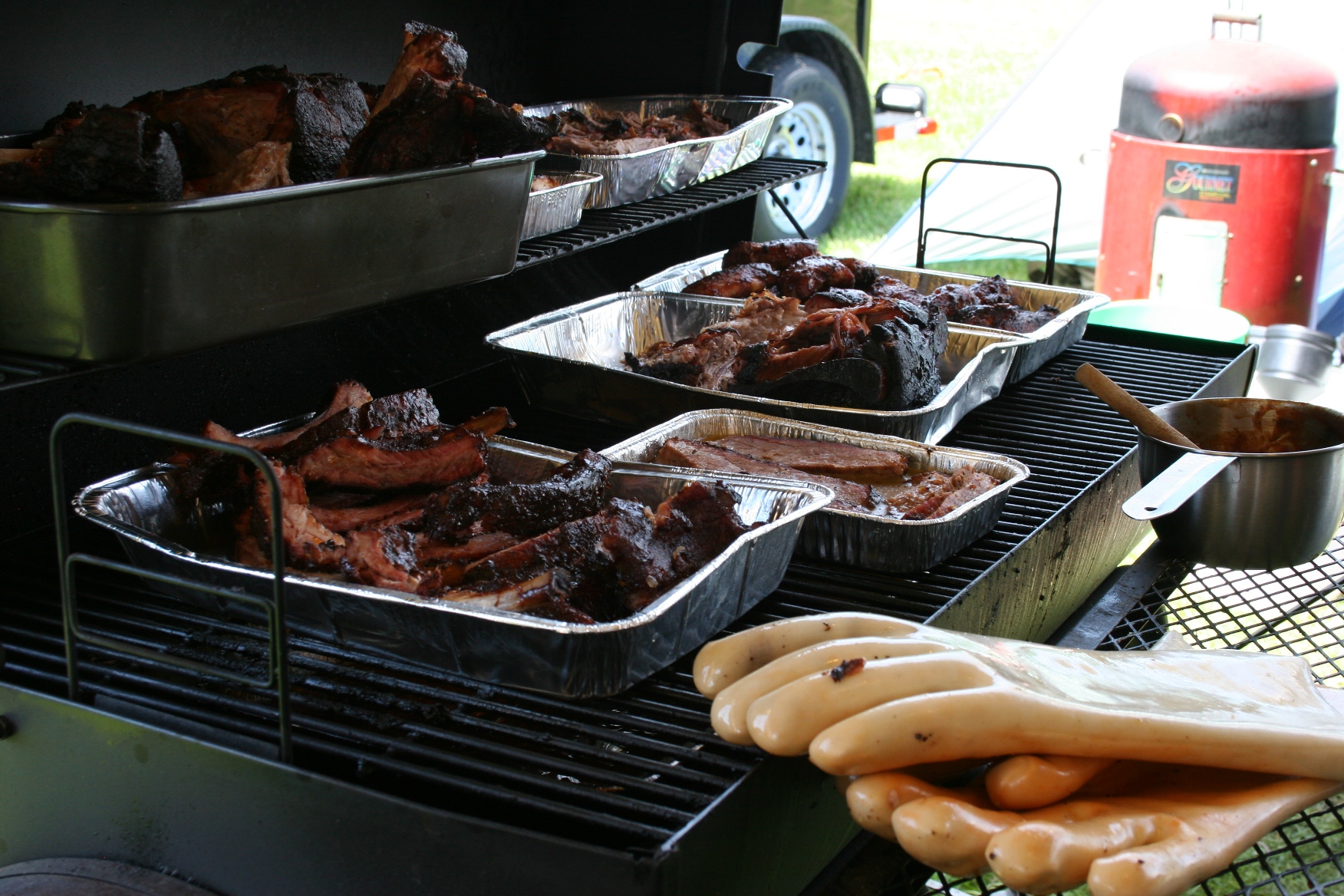
My husband and I sampled several meats as we wandered the Rice County Fairgrounds competition site. Chicken. Pork. Ribs. Brisket. And then an apple-topped cheesecake.

Another Wisconsin team handed me a fork and told my husband and me to eat whatever we wanted. They had prepared 60 pounds of meat for the competition, were tired of eating it and didn't want to take any home. So we didn't hesitate to taste some mighty fine BBQ and dug right in.

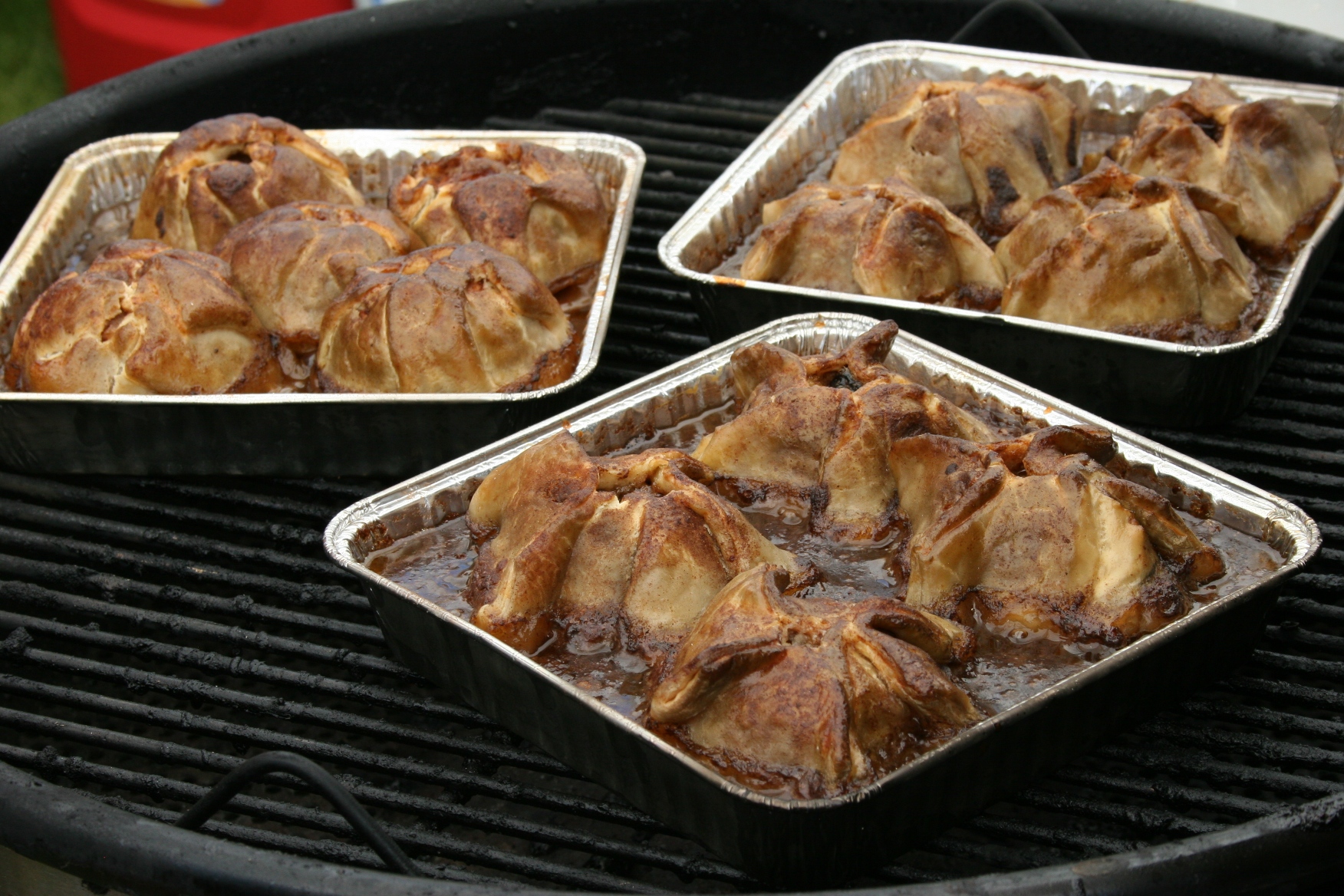
I wanted to try the apple dumplings tended by Tom Mcintosh of the fancy pheasant team, but those were going to the judges.

Tempting apple dumplings.

All in all, even though I arrived too late to watch competitors grill (due to pouring rain) and prepare their entries, I saw enough to realize you can do a lot with a grill, knowledge, creativity and a love of cooking.

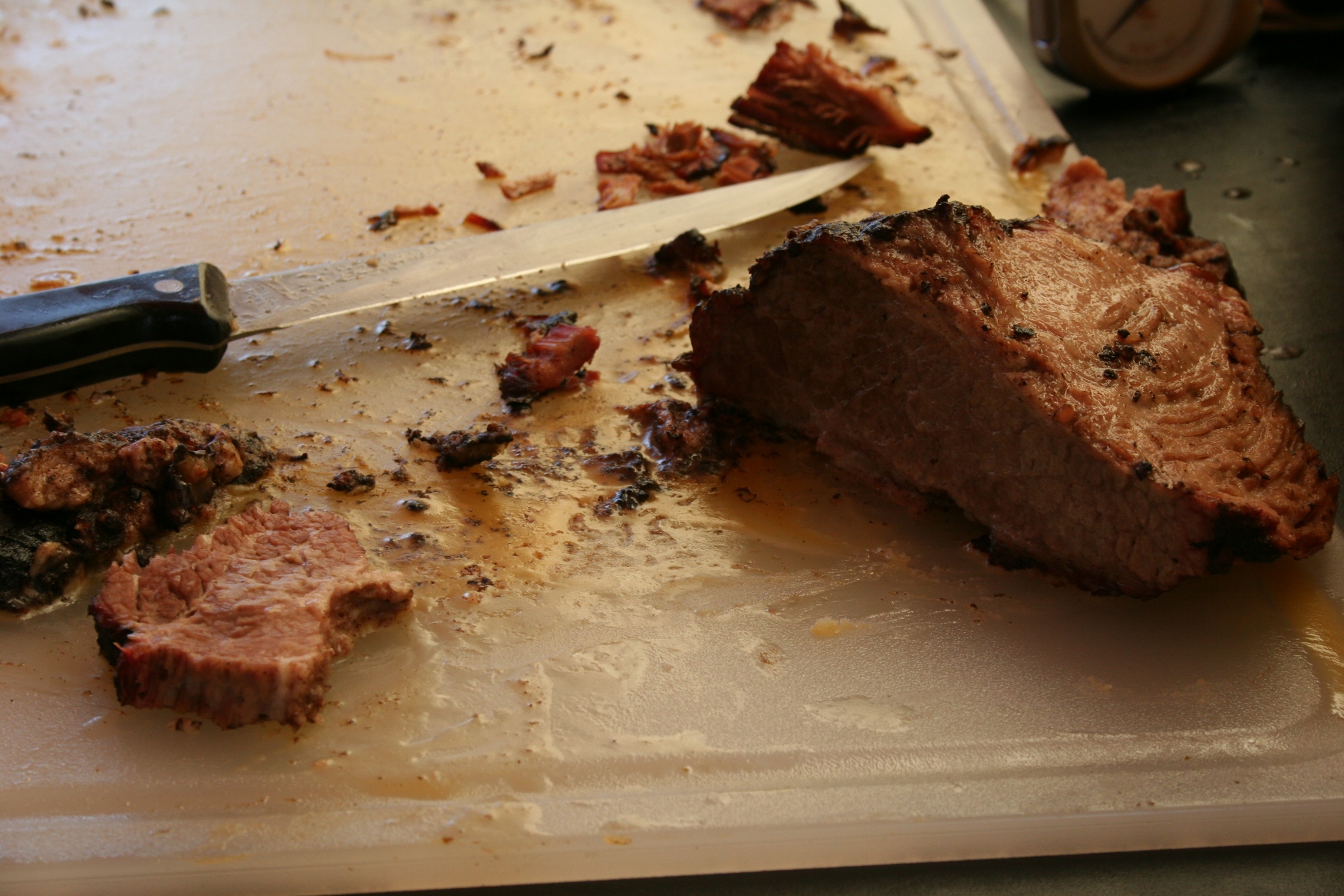
Left-over grilled meat prepared by a team from western Wisconsin.

© Copyright 2011 Audrey Kletscher Helbling
 

An almost-summer evening on the farm June 1, 2011

Filed under: Uncategorized — Audrey Kletscher Helbling @ 6:47 AM
Tags: , , , , , , , , , , ,

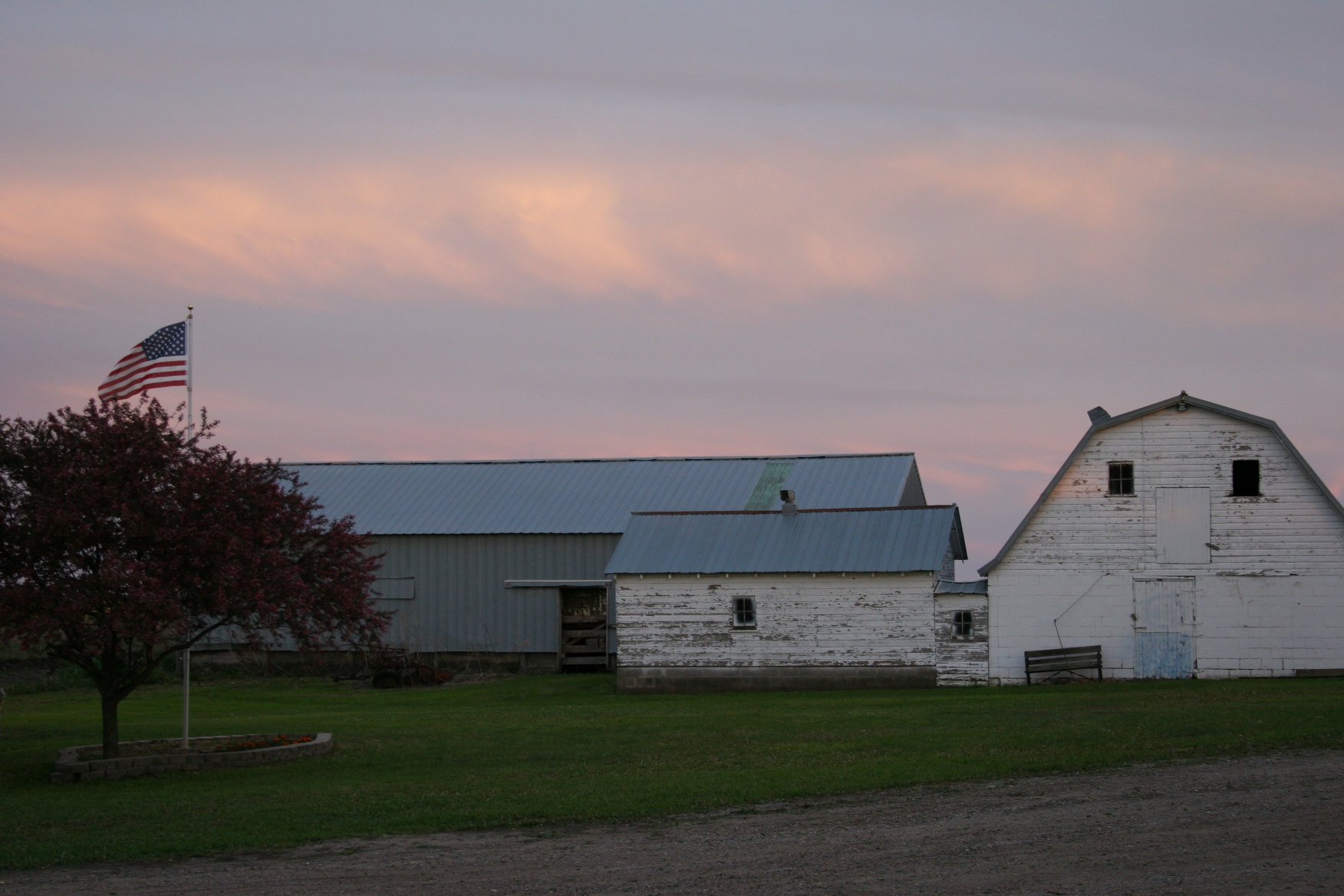
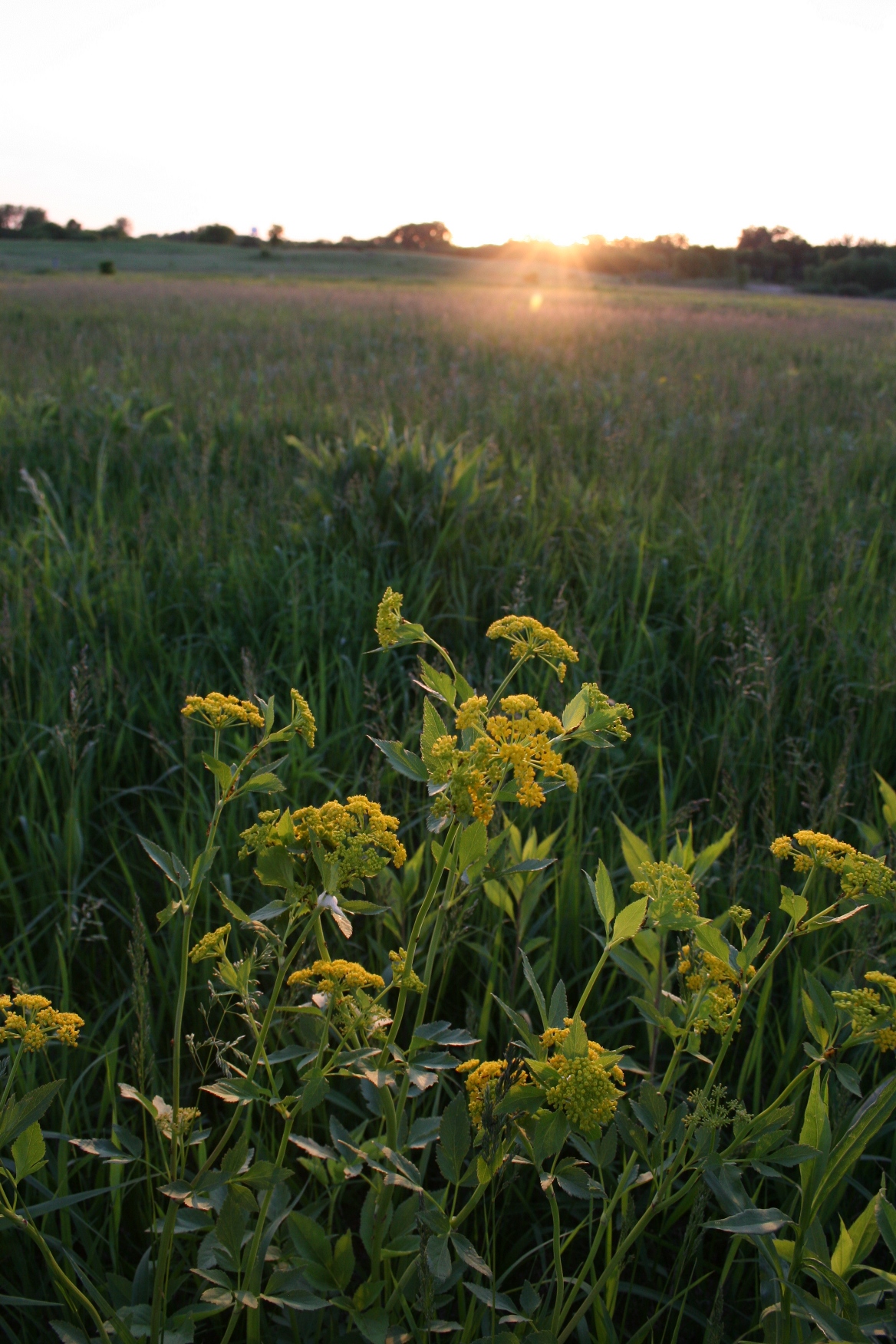
The sun sets on the farm site where I grew up in southwestern Minnesota.

OH, SWEET EVENING of almost-summer on my childhood farm. Daylight fades, washing the sky in the palest of prairie rose pink. Shadows sharpen before the last lingering rays of sunlight retire for the night.
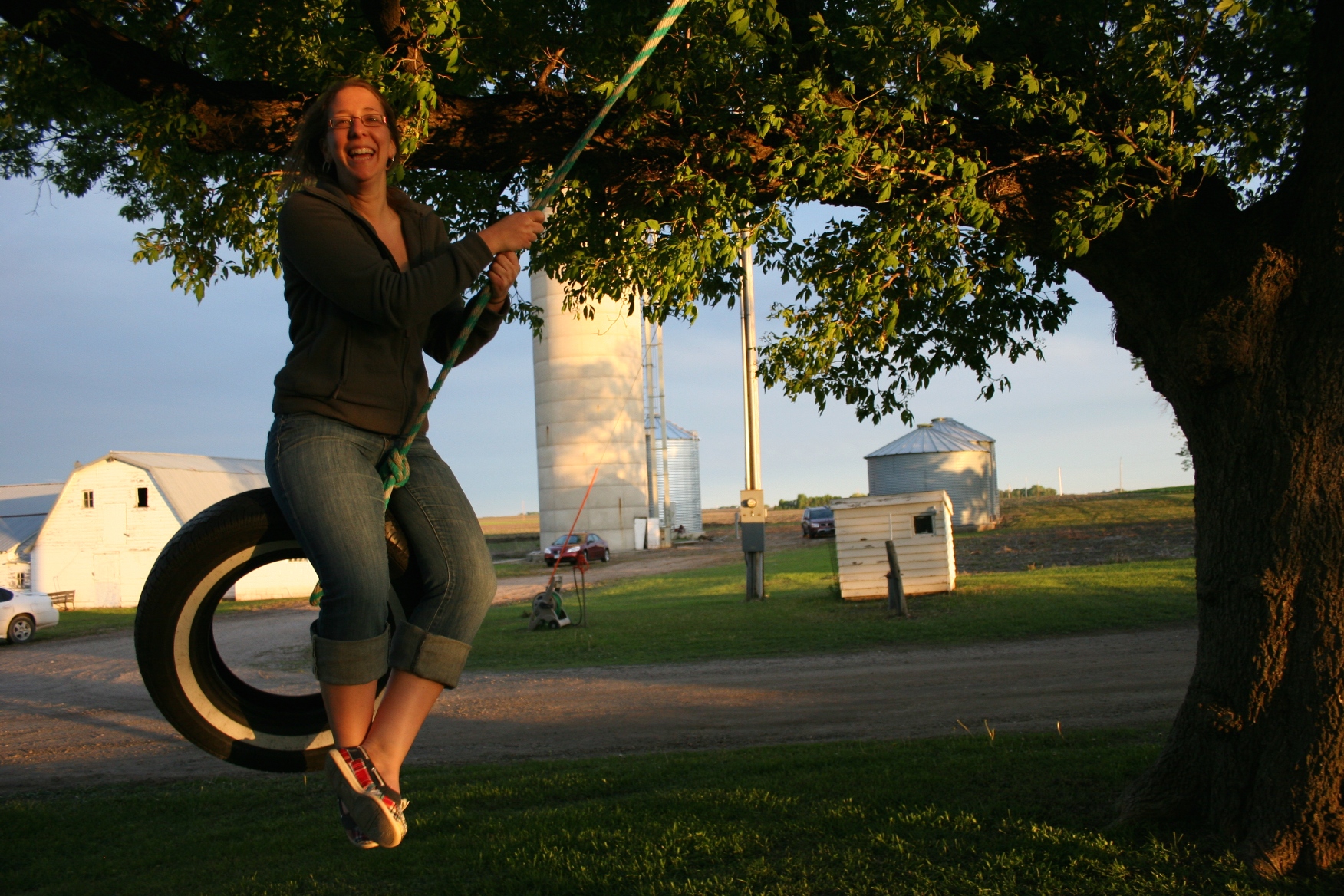
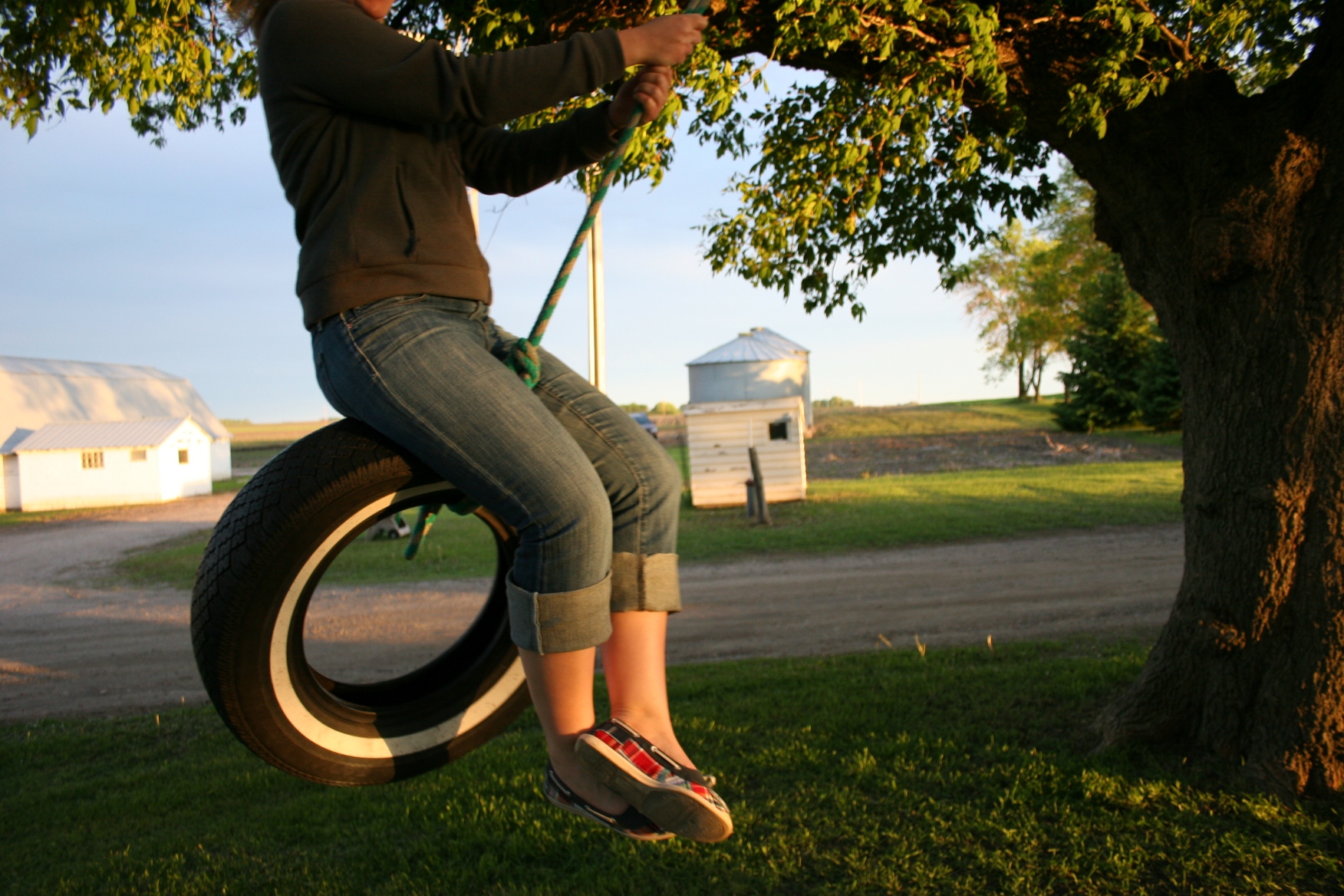
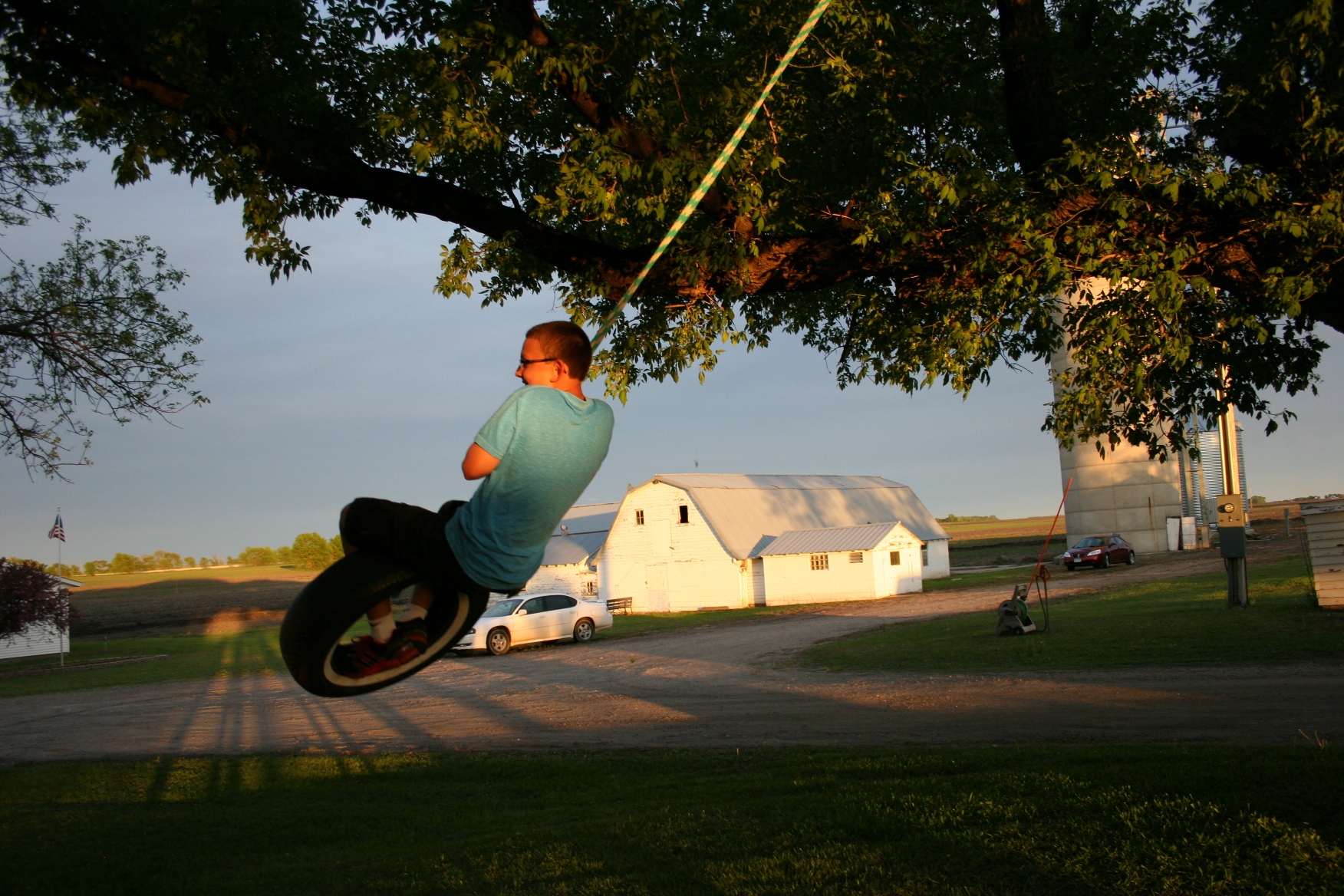
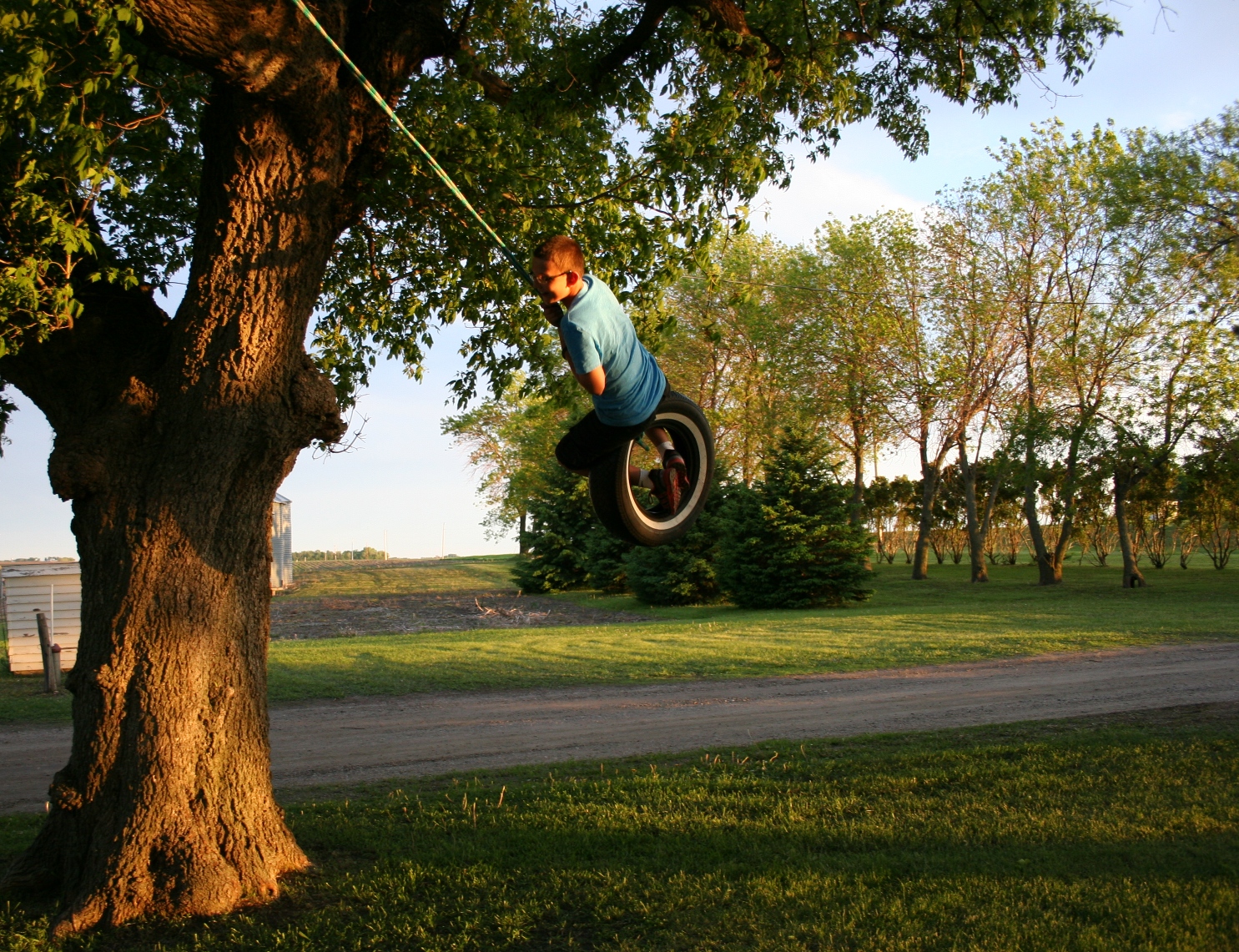
Underneath the branches of the sturdy old tree, which once sheltered a long-gone farmhouse and a tractor-tire sandbox, the cousins and siblings, ranging in age from 11 to 25, one-by-one grab double ropes, straddle a car tire and ask for a push.
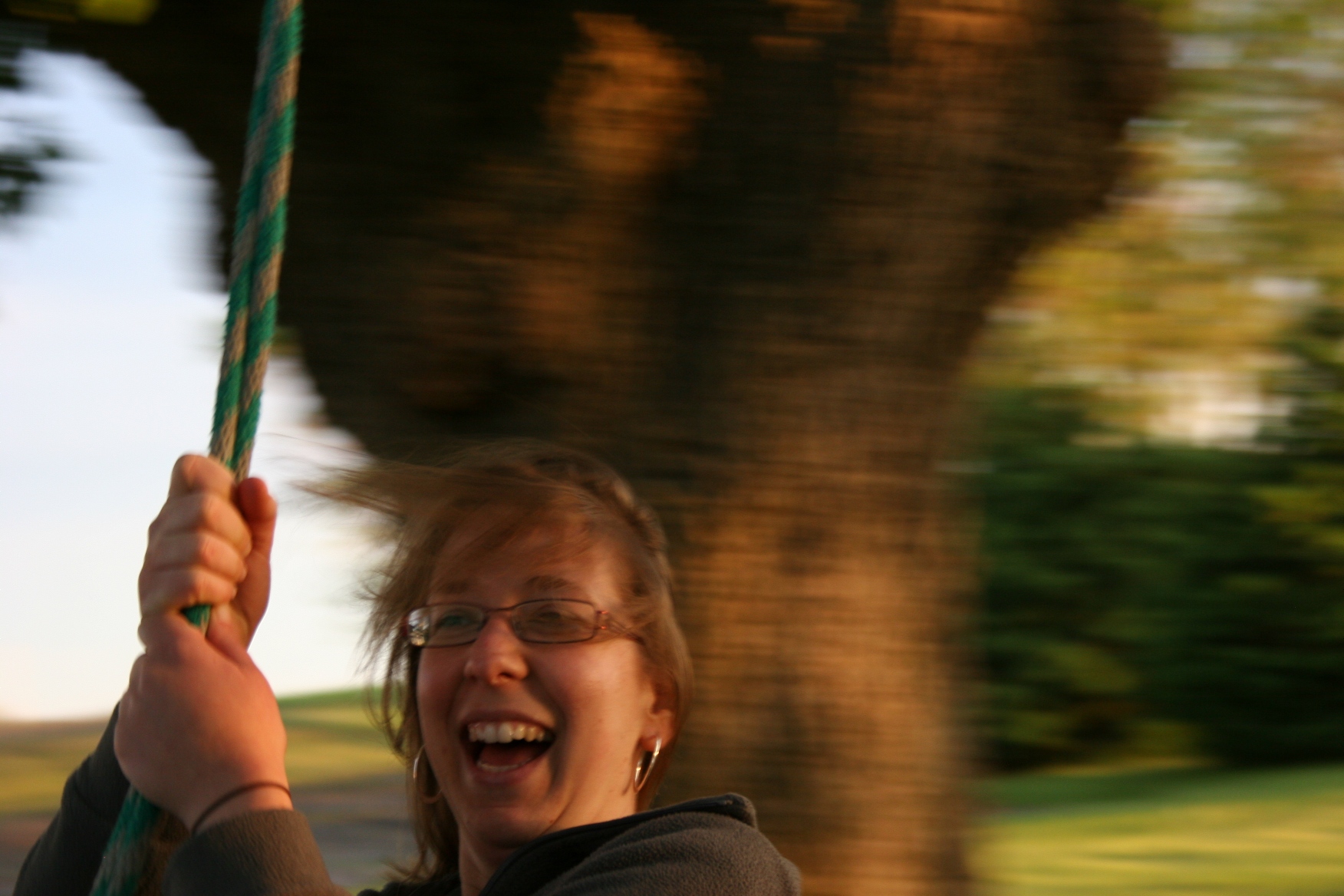
My 11-year-old nephew and a tire swing...

And then they are swinging through the air, spinning nearly out of control, dodging danger in a tree trunk, wisps of hair flying, smiles as wide as the prairie sky, until, finally, they plead for someone, anyone, to stop the dizzy-inducing carnival ride.

My oldest daughter...

...discovers joy on a tire swing...

...far from her big city home, in the place she calls "the middle of nowhere..."

...and sometimes "nowhere" can be as much fun as Minneapolis on an almost-summer evening.

Oh, sweet evening of almost-summer on the farm, when I grip my camera, dodge the swaying tire to capture the moments, to vicariously relive the exuberance of tipping my head back, catching the wind as I ride the tire swing. I feel the twirling, dizzy oblivion through the lens of my camera, wishing I could grasp the ropes, straddle the tire, stretch my toes heavenward and tickle the belly of the sky.

© Copyright 2011 Audrey Kletscher Helbling