One of the clocks in my small collection of vintage alarm clocks. (Minnesota Prairie Roots copyrighted file photo)
TIME TICKS. Things to do. Places to go. Appointments to keep. People to see. Conversations to have. Books to read. And for me, also, stories to write, deadlines to meet. Tick. Tick. Tick.
As I age, I feel more cognizant of time and the need to use it in the best possible way. The need to balance work and leisure. The need to spend more time with my core family. The need to use my talents in a positive way, in a way that makes a difference. The need to be there for, and serve, others. Tick. Tick. Tick.
We can’t stop time and aging. But we can manage how we use our time. I’m of the age where there’s significantly less time ahead of me than behind, although none of us knows the number of our days on this earth. Tick. Tick. Tick.
An important message displayed on a Scrabble board at LARK Toys, Kellogg, MN. (Minnesota Prairie Roots copyrighted file photo)
I hope we can all use our time to show compassion and empathy for others. Be kind. Be that person who listens rather than talks. Be that person who smiles, who hugs, who holds a door open. Be that person who sends an encouraging text or note. Be that person who reaches out to someone who is hurting, grieving, in need and do whatever you can to uplift and help. Tick. Tick. Tick.
I used magnetic words to create this short message on my fridge. (Minnesota Prairie Roots copyrighted file photo)
Think before you speak or write, because words matter. Words can build relationships or words can destroy them. In a time when vitriol runs rampant, pause before letting words fly across a keyboard or from your mouth. I expect we all hold regrets for words we’ve written or spoken. Use self-control. Ask like you care. Time ticks. Let’s use our time in a way that embraces goodness and kindness, love and compassion. Tick. Tick. Tick.
WHAT WOULD YOU like to add to this conversation about the use of time?
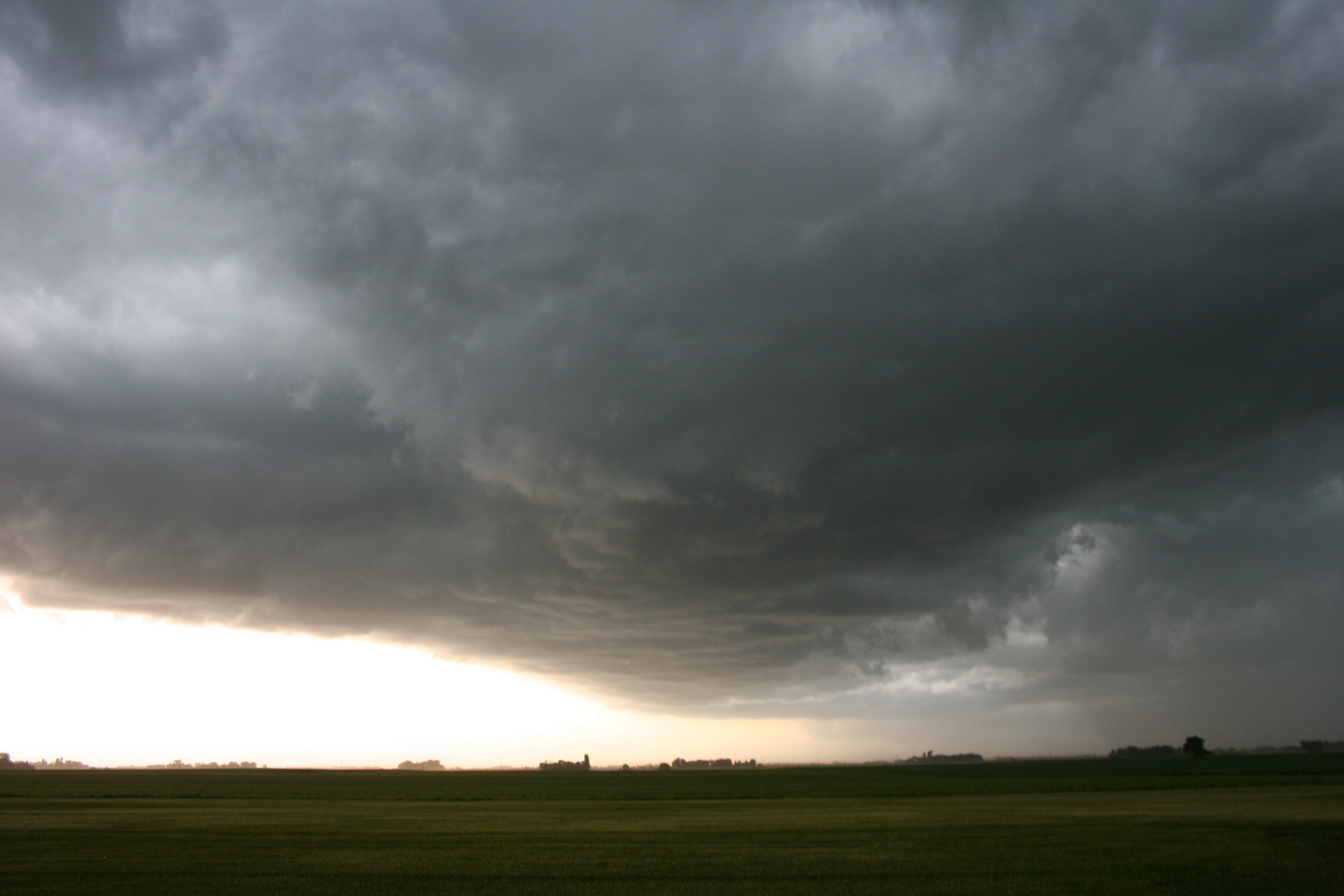
These are the most menacing (at least to me)clouds I’ve ever photographed. I shot this image in July 2011 on a friend’s country acreage between Faribault and Nerstrand. I don’t have any photos from yesterday as I was hunkered in my basement. (Minnesota Prairie Roots copyrighted file photo July 2011)
I OWE YOU a weather report.
The much-touted level 4 risk (out of 5) of severe storms here yesterday did not materialize. At least not in Faribault. But just to the east it did. A confirmed tornado touched down southeast of town in Richland Township, destroying several farm buildings and damaging a silo on a neighboring farm. That’s close enough for me. I feel badly for that farm family. Property damage was also reported by the Rice County Sheriff’s Department near Morristown, which is southwest of Faribault.
While that was happening, Randy and I were sheltering in our basement after warning sirens sounded just before 5:30 p.m. I’d prepared, earlier in the day gathering documents and items (yes, including my camera and Randy’s hearing aids) that I didn’t want blown away in a storm. My retired National Weather Service friend, who grew up in southwestern Minnesota, was keeping me updated on the weather throughout the day.
“PLEASE, JUST GET HOME.”
The biggest issue for me was that Randy was not yet home when the emergency sirens went off. I’d tried several times to reach him at work late Monday afternoon to warn him of the bad weather moving into our area. But his cellphone mostly doesn’t work inside the pole shed style garage in the countryside near Randolph. I texted and called numerous times in hopes that he might actually be in a part of the building with cell reception. I finally resorted to phoning the main garage in nearby Cannon Falls. Ideally, whoever answered could ring up Randy in the machine shop. That didn’t happen.
While I wanted Randy home, I really just wanted him safe. A pole shed, with no place to shelter, offers no protection during a storm. And I had no idea how weather-aware he was staying. Probably not too much given he’s swamped at work. He can’t hear warning sirens either.
In the end, it all worked out. Randy pulled into the driveway after sirens had been sounding for awhile. He’d stopped at the Faribault compost pile to drop off plant debris rather than driving directly home. Really? While sirens are wailing and a storm is moving in?
THREE LAUGHING EMOJIS
I recognize that Randy doesn’t fear storms. He doesn’t have the storm history that I do. I’m the one hustling us to the basement. It’s a bit of a joke with our adult kids. The second daughter, who lives in Madison, Wisconsin, texted yesterday, “Randy, get in the basement!” with three laughing emojis. Humor helps in a tense situation.
Many Minnesotans were not laughing yesterday as storms rolled in with tornado and severe thunderstorm warnings resulting in damaging winds and hail and that confirmed tornado between Faribault and Kenyon.
FEELING GRATEFUL THIS MORNING
This morning the sun is shining, popping through massive clouds in a deep blue sky. Crisp, cool air has replaced the heat and humidity of yesterday. Snow even fell in parts of northern Minnesota. Yesterday’s storms are behind us. I, for one, am thankful that strong tornadoes did not develop, that the National Weather Service and Twin Cities TV meteorologists prepared us and kept us informed, that my NWS friend, Brad, updated me and that Randy finally got home. Now, if only his cellphone would work inside that pole shed a 32-minute drive away. I’d feel much better next time severe weather rolls in.
#
TELL ME: If you live in Minnesota or a neighboring state, did you experience any storms and/or storm damage on Monday? How do you react to storms, including warning sirens going off?
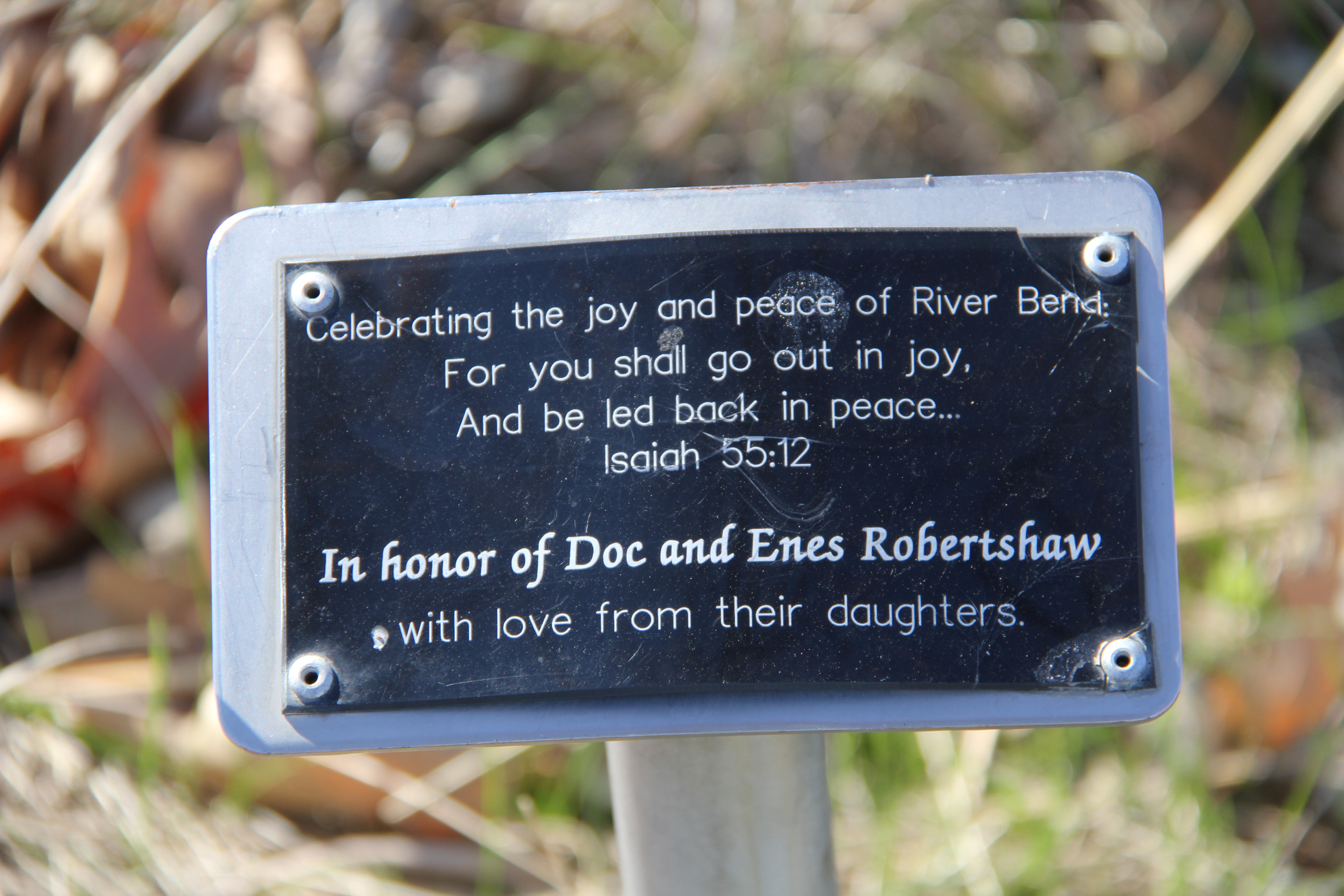
This small memorial plaque honors parents and River Bend with joyful words. (Minnesota Prairie Roots copyrighted photo April 2025)
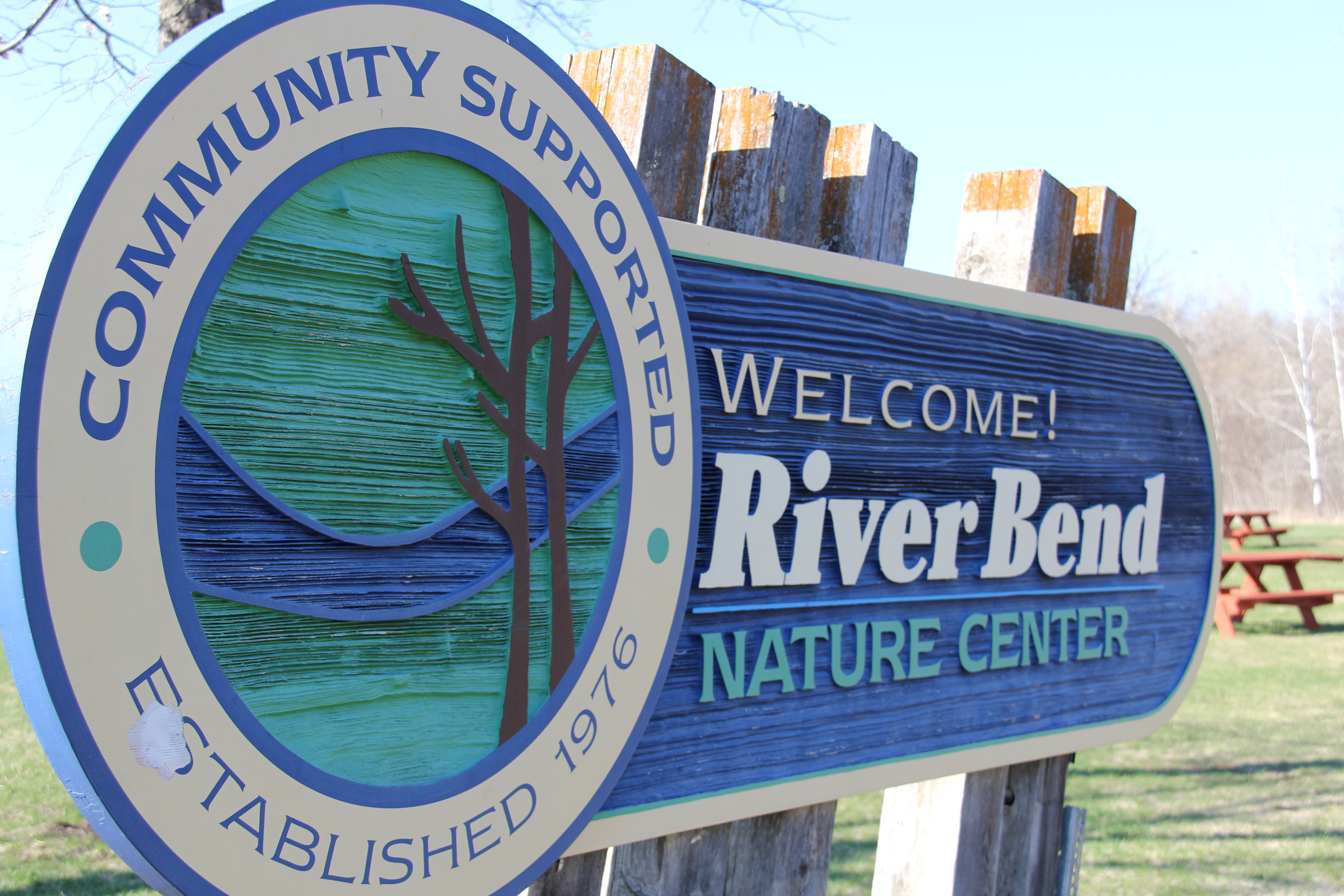
FOR YOU SHALL GO out in joy, and be led back in peace. Those words from Isaiah 55:12, printed on a memorial plaque by a tree near the River Bend Nature Center interpretative center, summarize well my feelings about this spacious public area of ponds and river, woodland and prairie in Faribault. Whenever I arrive here, I come with joyful anticipation. I always leave feeling refreshed, at peace. Nature has a way of infusing happiness while simultaneously calming the spirit.
I love the contrast of textured white bark against the bold blue sky of a sunny spring afternoon. (Minnesota Prairie Roots copyrighted photo April 2025)
After a long winter, which wasn’t particularly harsh by Minnesota standards, River Bend draws friends, families, couples, individuals and students to experience the unfolding of spring, me among them. This time of year, perhaps more than any other, I am cognizant of the natural world evolving, changing, teeming with life.
Buds unfurl as temps warm. (Minnesota Prairie Roots copyrighted photo April 2025)
In the shelter of woods, buds tip trees, unfurling with each warm and sunny day until the barren gray branches of winter morph into a canopy of green. We’re not quite there yet. But I see the greenery. I doubt there’s a green more intense than that of early spring.
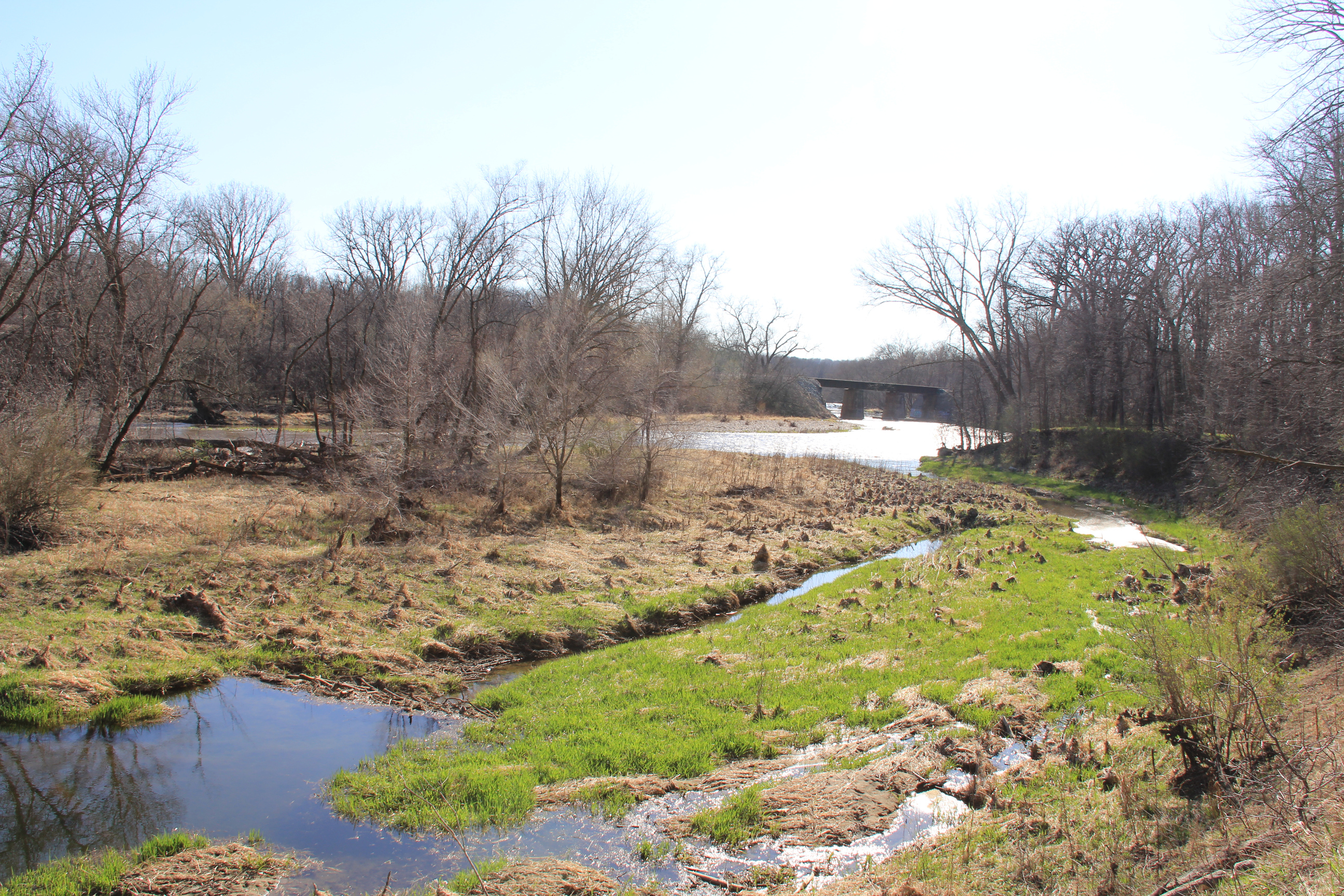
Pockets of green along the Straight River bottom. (Minnesota Prairie Roots copyrighted photo April 2025)
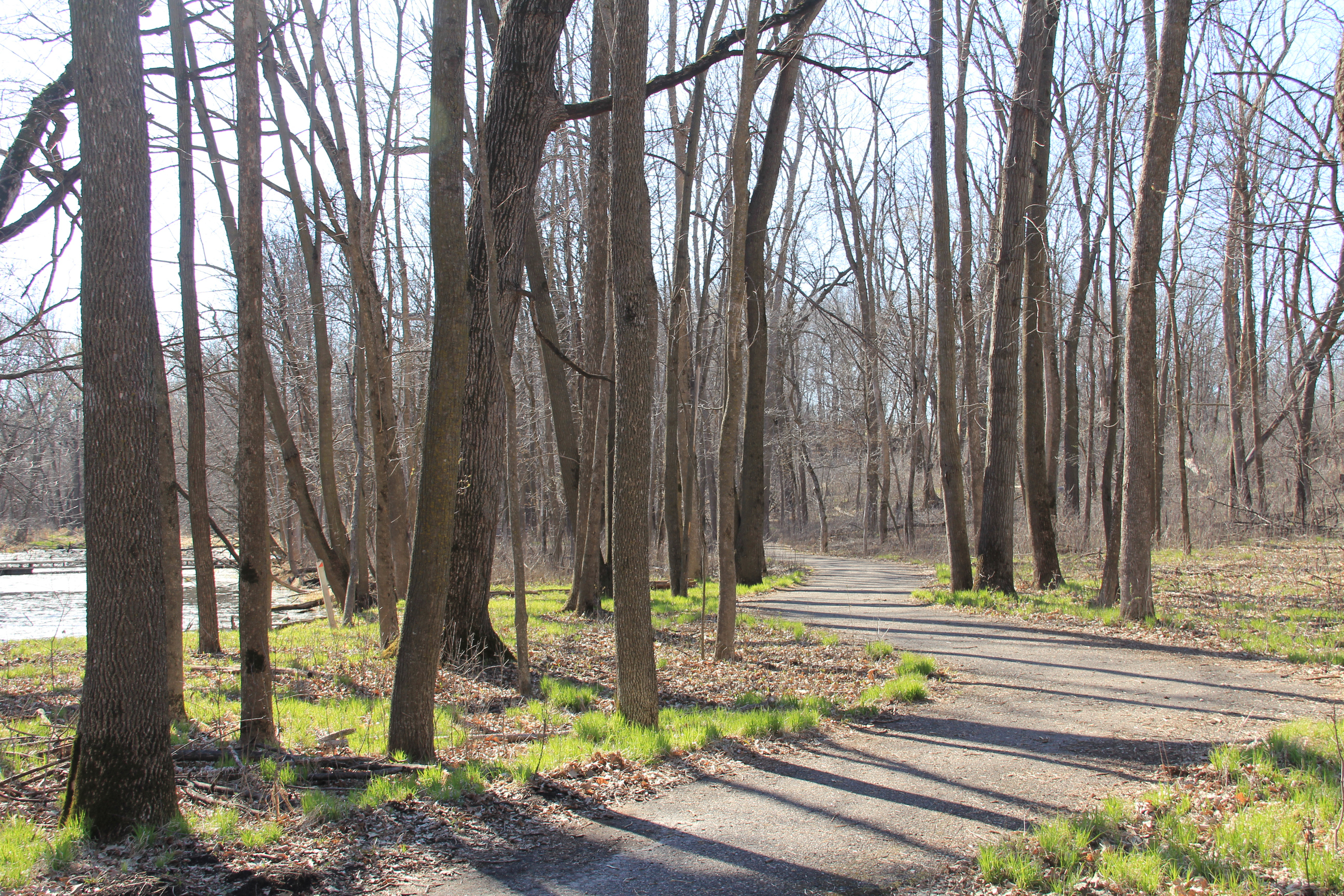
Sunlight slices shadows onto the path to the Turtle Pond and spotlights greenery. (Minnesota Prairie Roots copyrighted photo April 2025)
Sunlight illuminates patches of grass growing among limestone. (Minnesota Prairie Roots copyrighted photo April 2025)
On recent hikes at River Bend, I noticed vivid swaths of green by the Straight River, scattered patches of green on the forest floor, tufts of greenery clinging to a rocky hillside. Green. Green. Green.
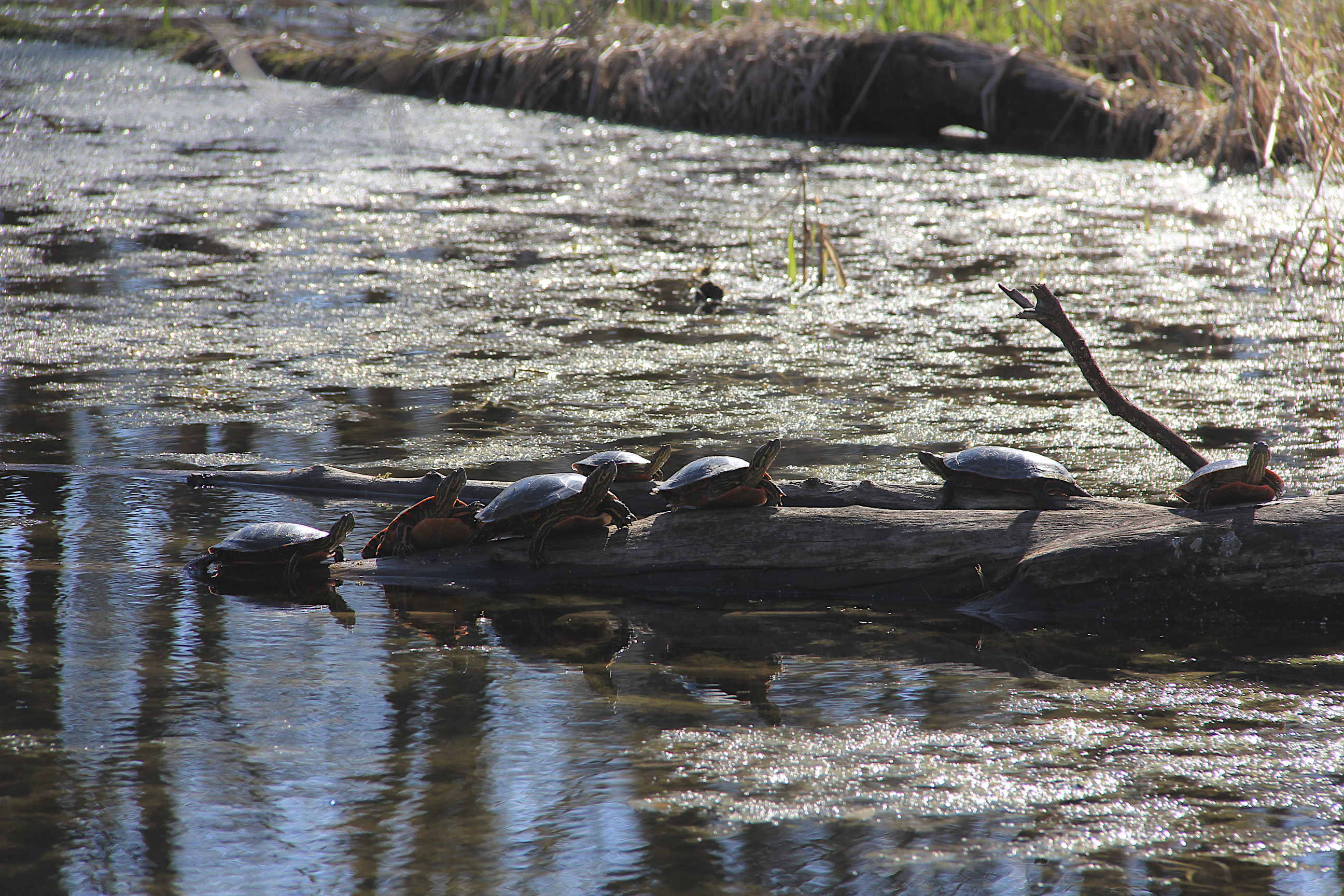
Lazy turtles on a log cause me to stop and linger. (Minnesota Prairie Roots copyrighted photo April 2025)
And sometimes turtles choose to hang out alone. (Minnesota Prairie Roots copyrighted photo April 2025)
At the Turtle Pond, I delighted in the emergence of painted turtles, a cluster of them sunning themselves on a weather-worn tree lying near pond’s edge. Others chose to sunbathe alone. I am always fascinated by these creatures. They impart a sense of serenity, perhaps giving us permission to pause and enjoy the simple things in life. Like watching lounging turtles, reminding us that life’s pace needn’t always be hurried.
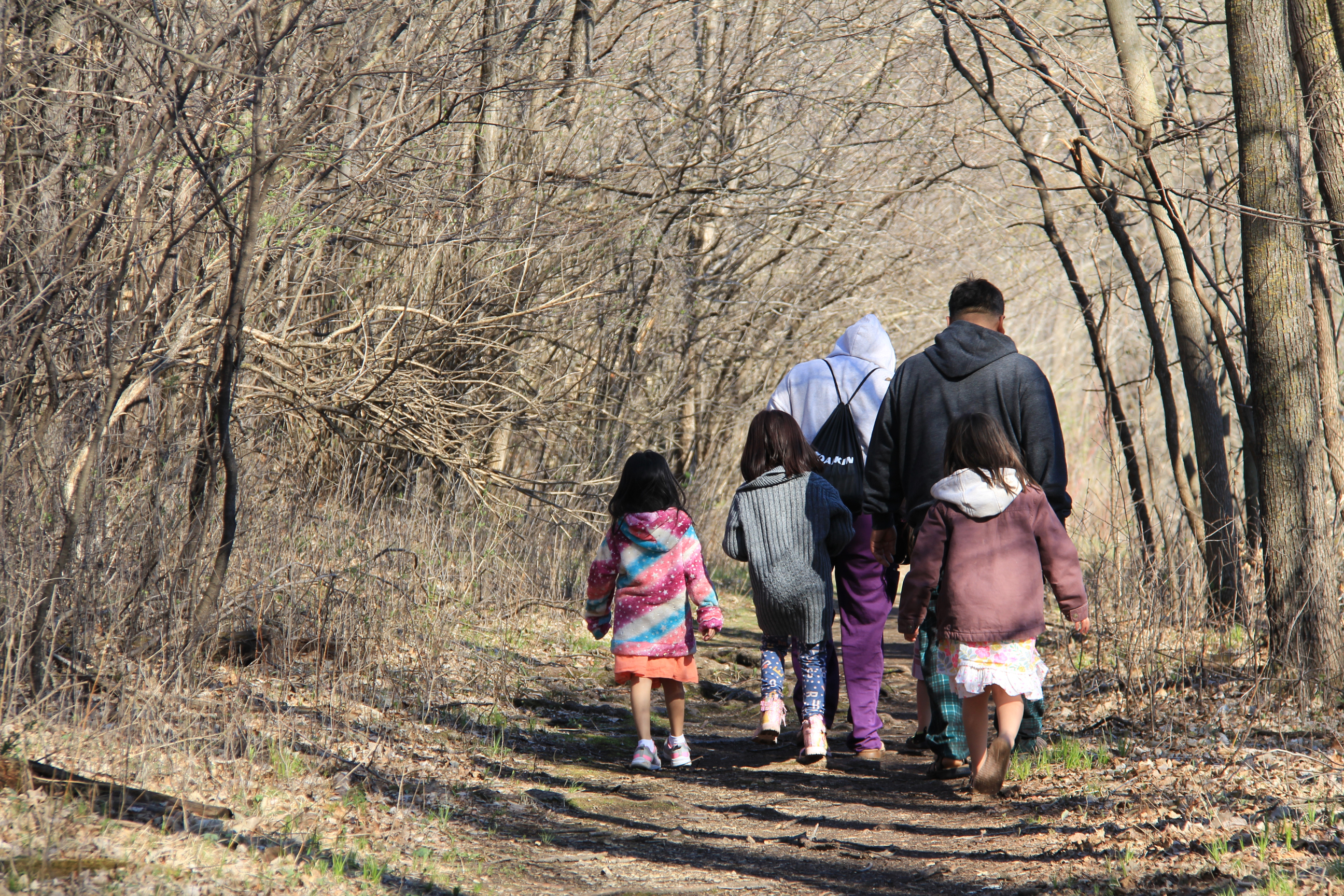
A family walks along a trail near the river. (Minnesota Prairie Roots copyrighted photo April 2025)
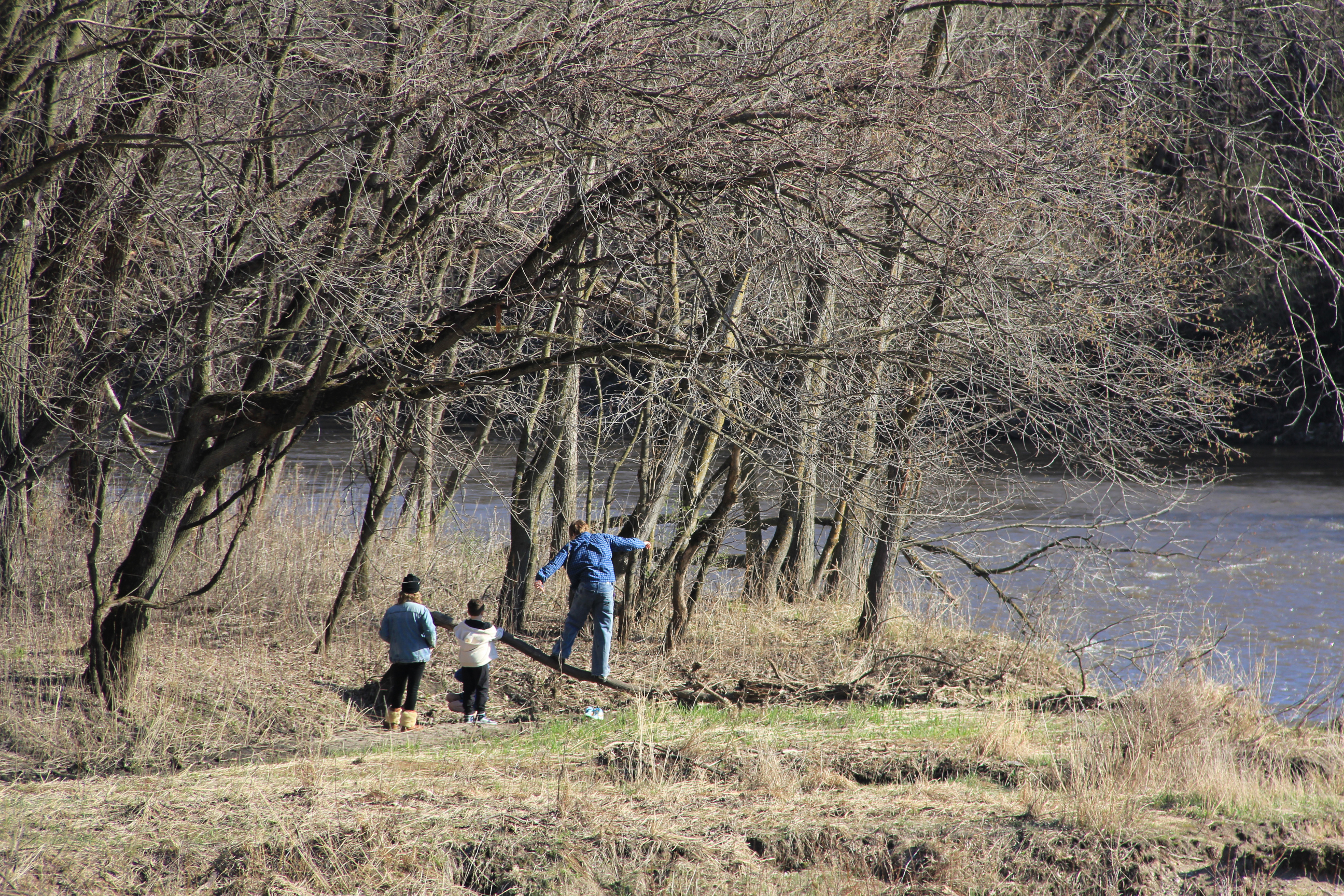
Natural entertainment…balancing on a tree branch. (Minnesota Prairie Roots copyrighted photo April 2025)
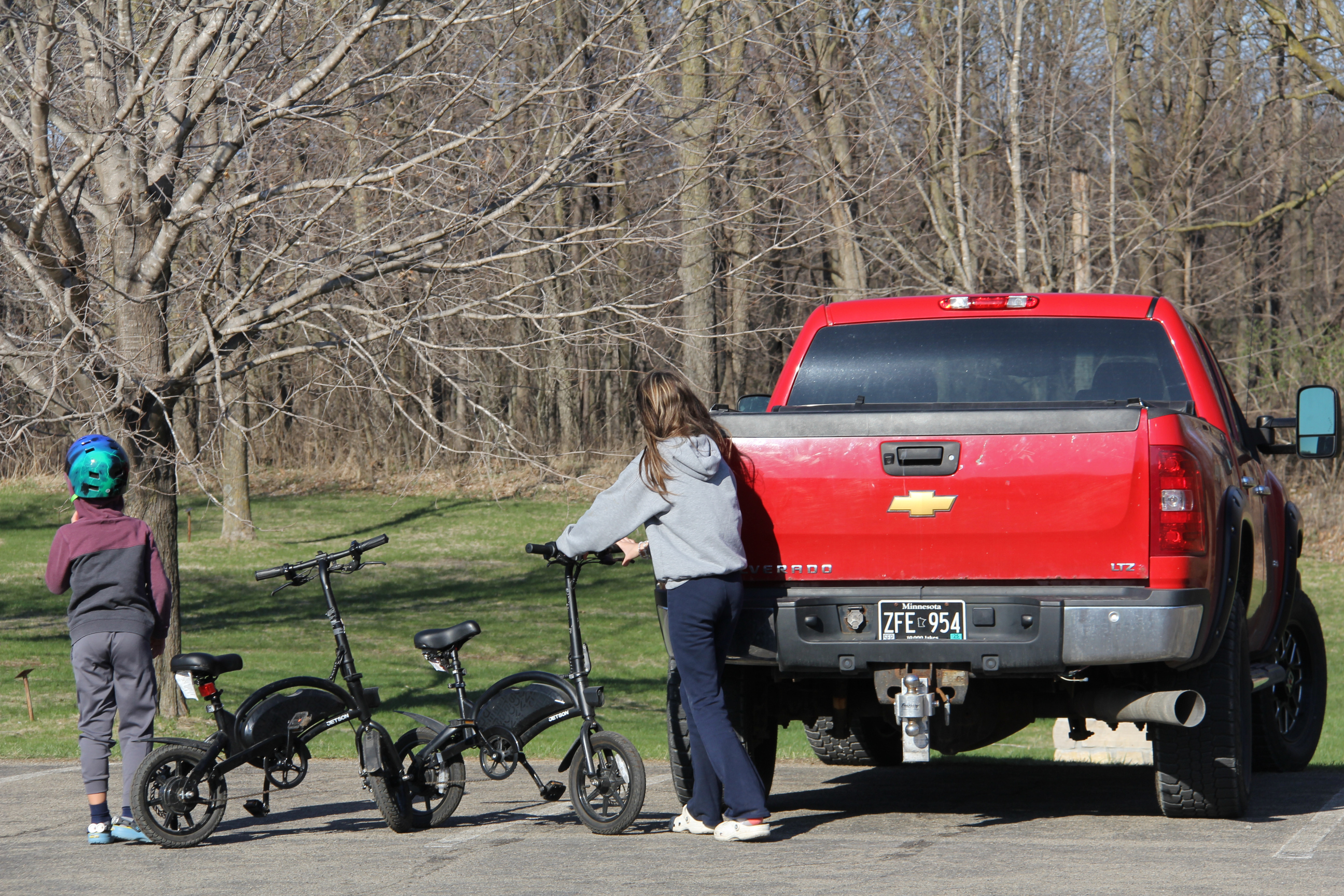
About to load up the bikes after biking at River Bend. (Minnesota Prairie Roots copyrighted photo April 2025)
I especially appreciate seeing families outdoors. Walking. Balancing on a fallen branch. Biking. Being away from the distractions of busy schedules and technology and everything that intrudes on time together outside in nature.
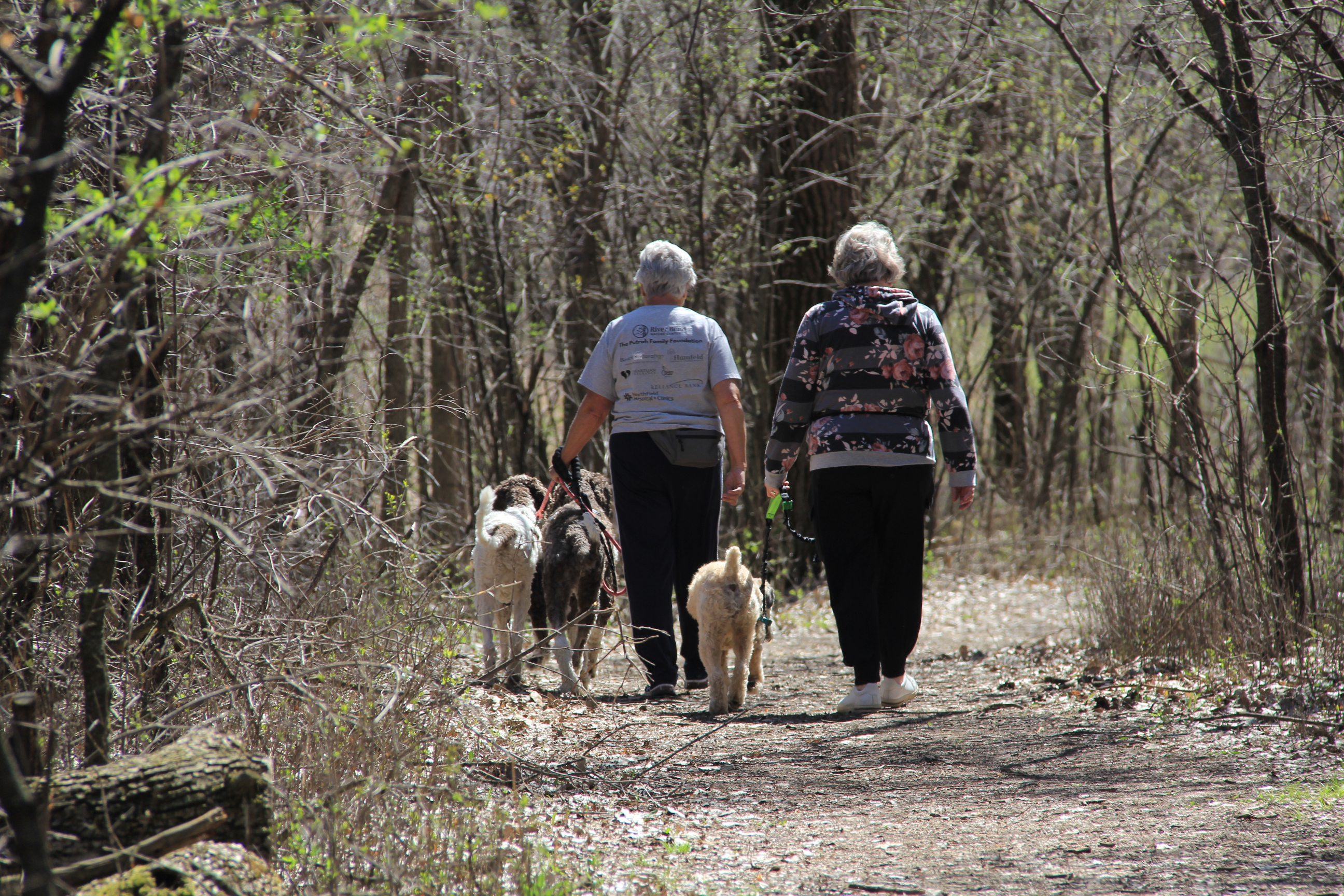
River Bend proves a popular place for humans and dogs. (Minnesota Prairie Roots copyrighted photo April 2025)
In the woods, we are sheltered and embraced while walking side-by-side, close to one another along narrow pathways. Conversations happen. We notice things, like squirrels scampering across dried leaves that hide as yet unseen spring wildflowers. Birds flit. The woods are beginning to awaken within our vision and hearing.
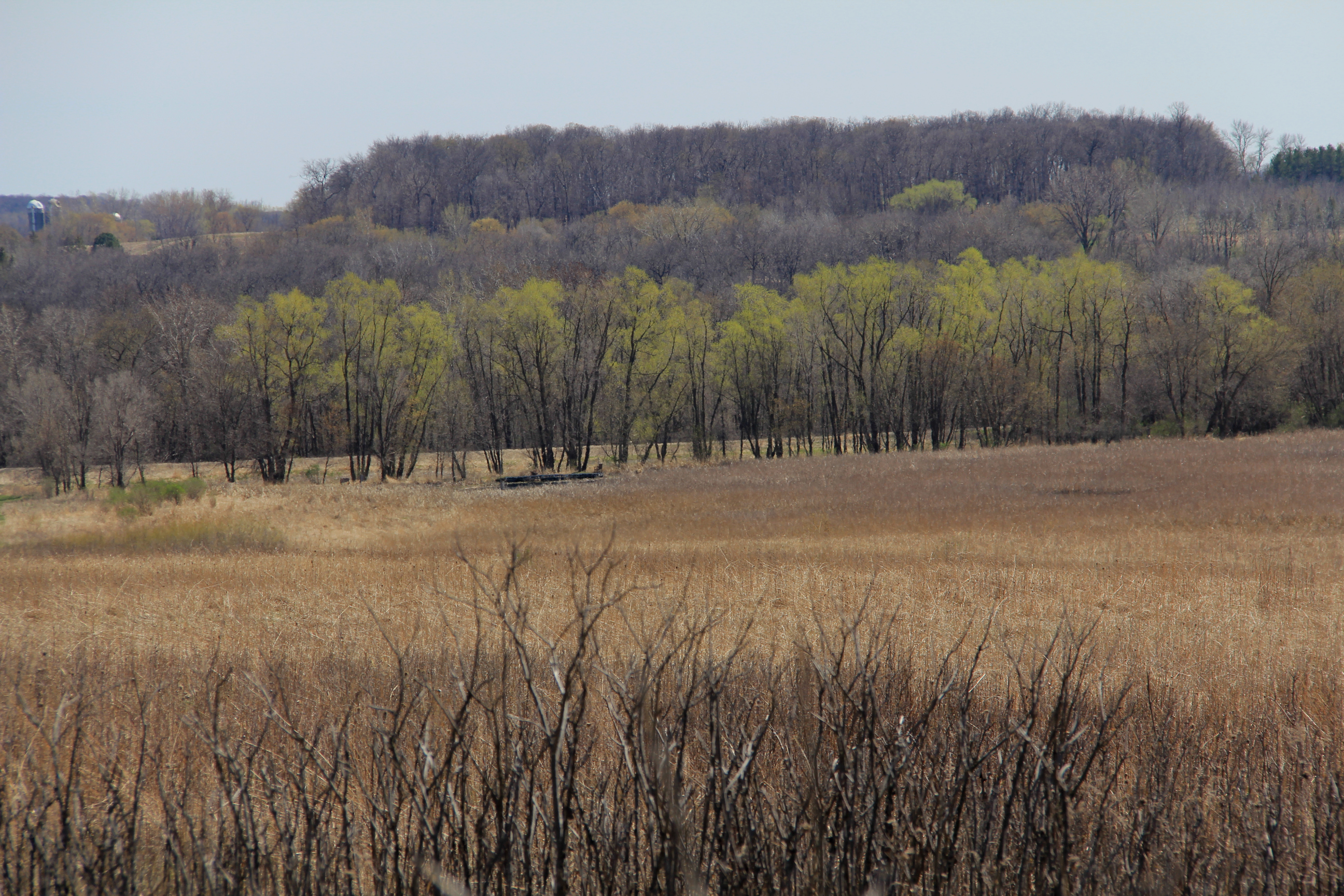
From a hilltop overlook, I view a diverse landscape of prairie and woods. (Minnesota Prairie Roots copyrighted photo April 2025)
Outside the woods on the prairie, I feel exposed but innately comfortable for I am of prairie stock. I know this wind. I know this wide sky. I know these tall grasses. This landscape would please Willa Cather, American author who wrote of the Great Plains and life thereon. In her novels, she shared a deep love of the land, of place.
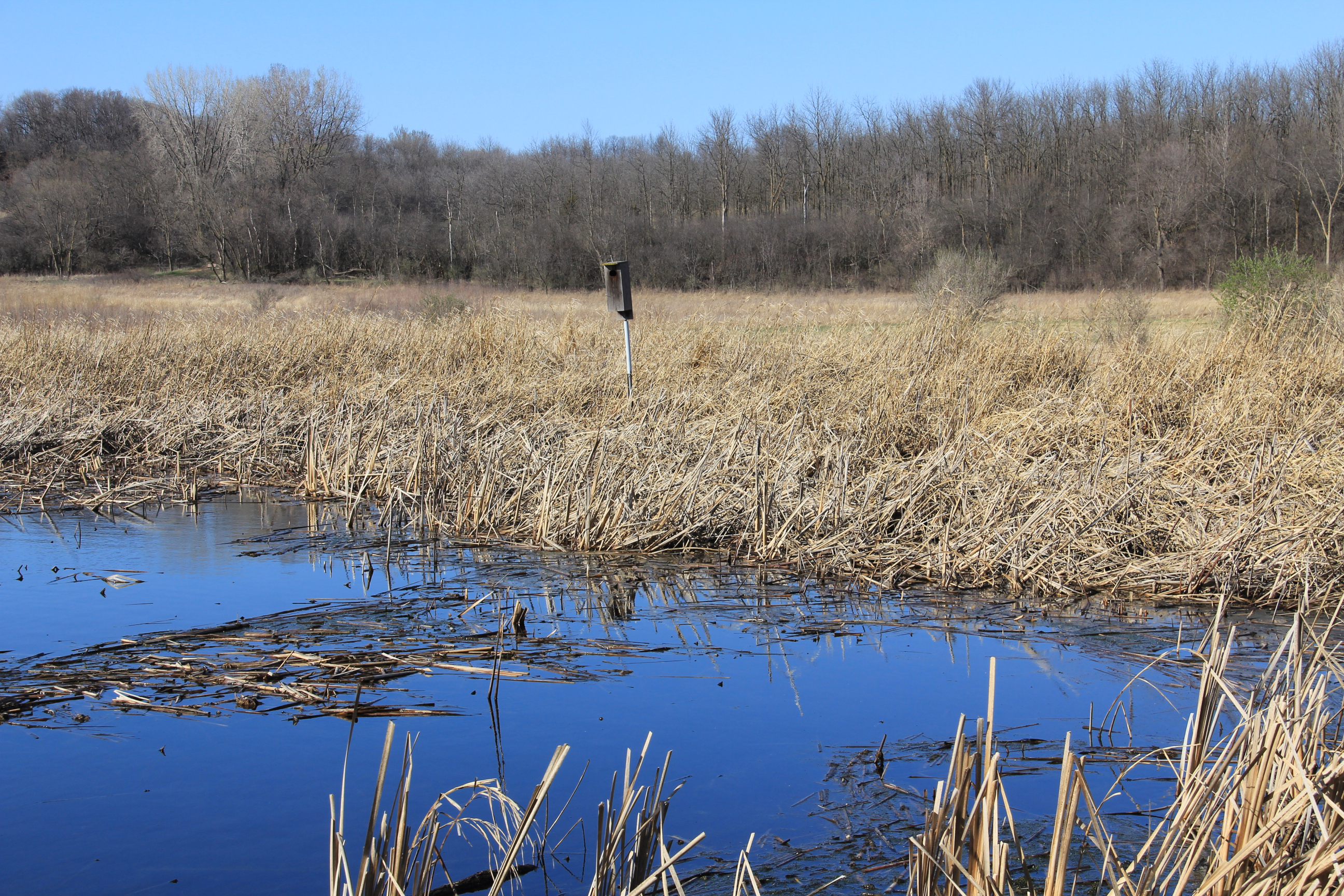
That blue of pond and sky…beautiful to behold. (Minnesota Prairie Roots copyrighted photo April 2025)
At the prairie-side pond, I stop to take in water and sky and land—below, above and beyond. The deep blue of the pond, a reflection of the blue sky, contrasts sharply with the muted brown of dried pond grasses and reeds. The scene is painterly beautiful.
River Bend covers hundreds of acres and is one of Faribault’s greatest treasures. (Minnesota Prairie Roots copyrighted photo April 2025)
My time at River Bend always leaves me feeling better as I forget about worries and responsibilities, deadlines and everyday distractions.
A sizable deer population lives at River Bend. (Minnesota Prairie Roots copyrighted photo April 2025)
Upon exiting the nature center, I am offered one final gift—three deer leisurely grazing alongside the road. They hold minimal fear of humans, so comfortable are they with the many visitors here. Yet, I can’t help but wonder if the deer would rather we just move along rather than watch them with wonder, our eyes, our souls, seeking joy and peace.
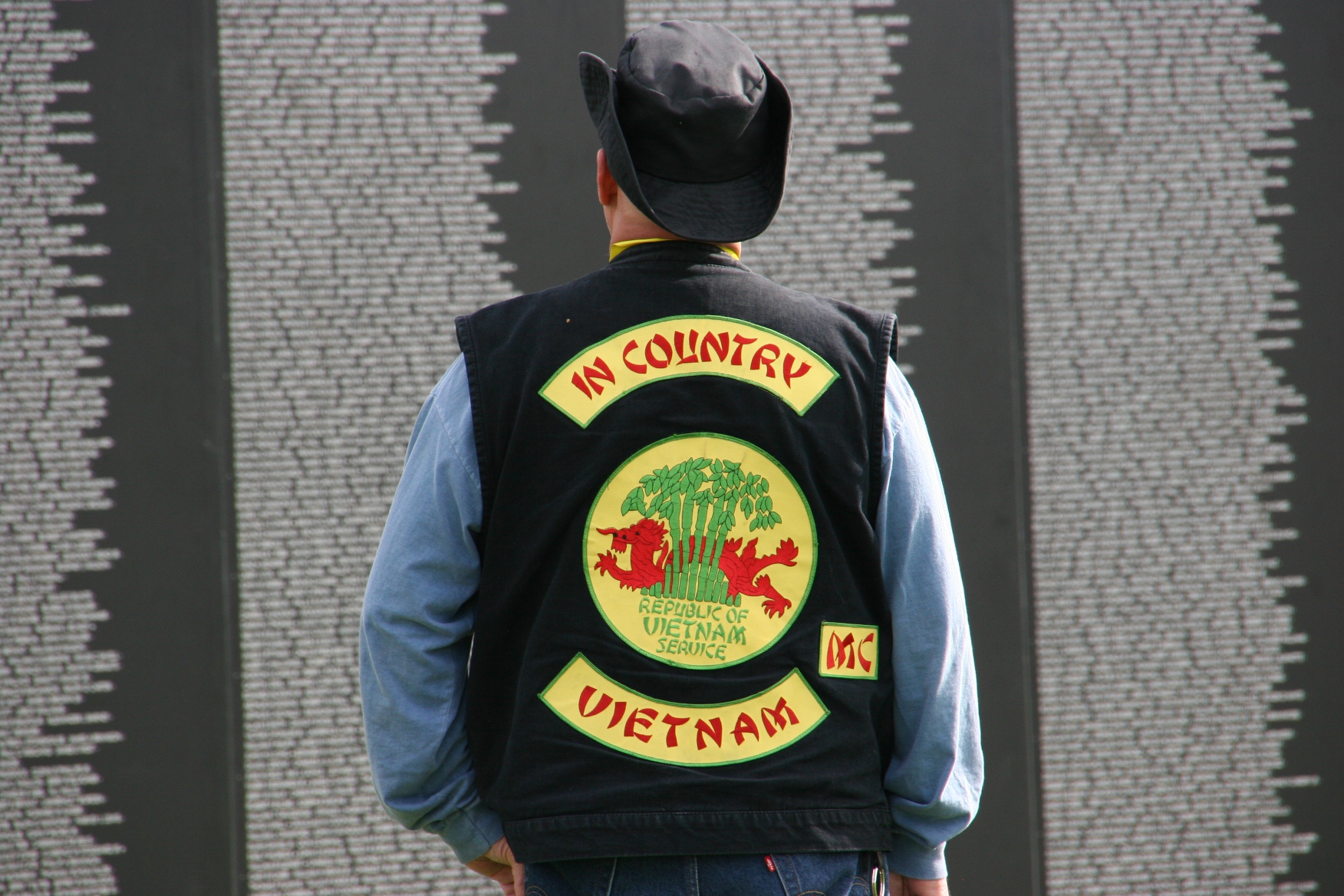
MENTION THE VIETNAM WARand the reaction will be mixed, depending. Some served. Some supported. Others protested. And some, like me, viewed the war as teens not quite old enough to vote, but old enough to care.
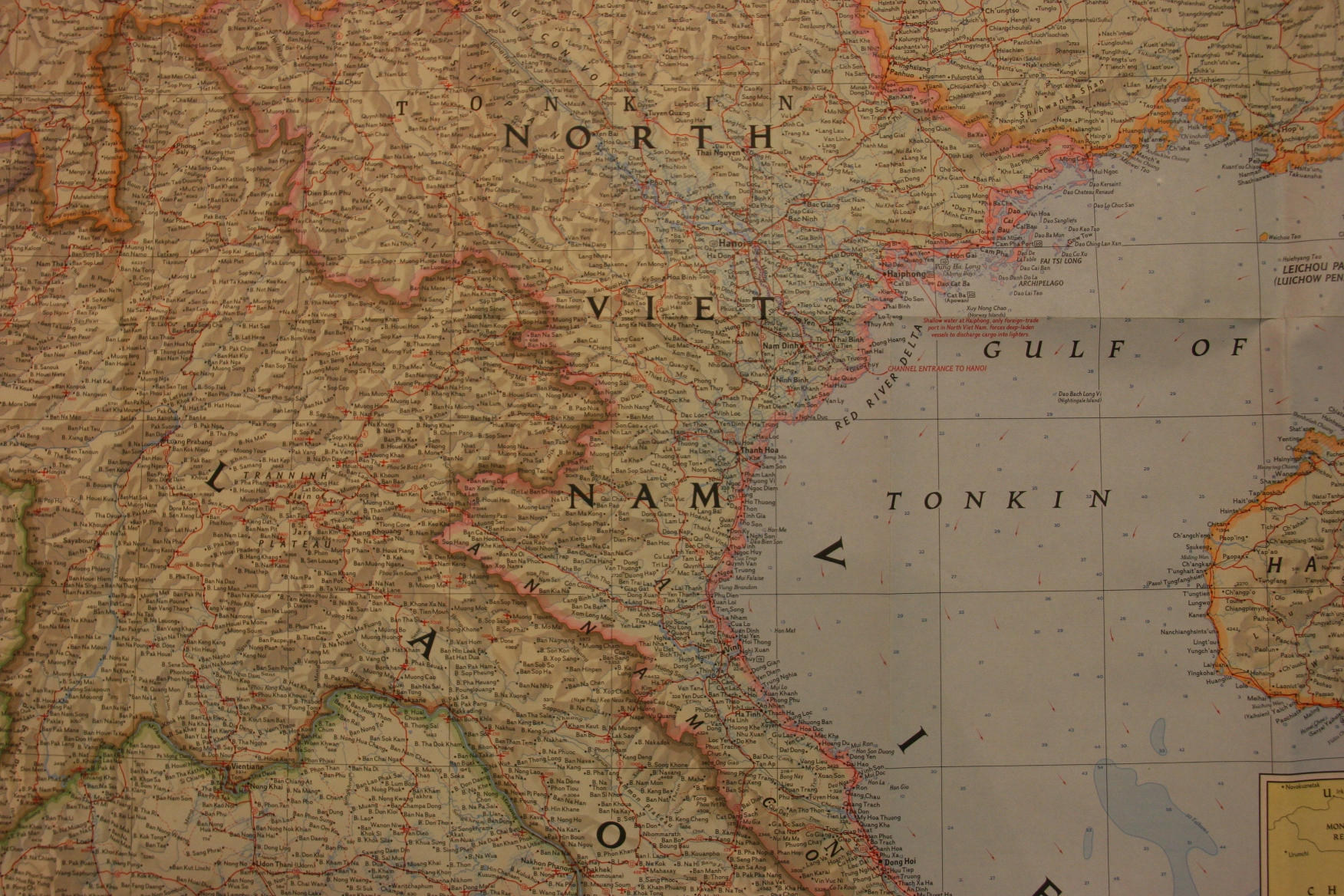
A map posted in the veterans’ lounge when the traveling wall was in Faribault. (Minnesota Prairie Roots copyrighted file photo 2016)
Fifty years ago on April 30, 1975, Communist forces seized control of the South Vietnamese capital, ending the war in what became known as “The Fall of Saigon.” Two years prior, with the signing of the Paris Peace Accords, the U.S. ended its direct military involvement in the conflict.
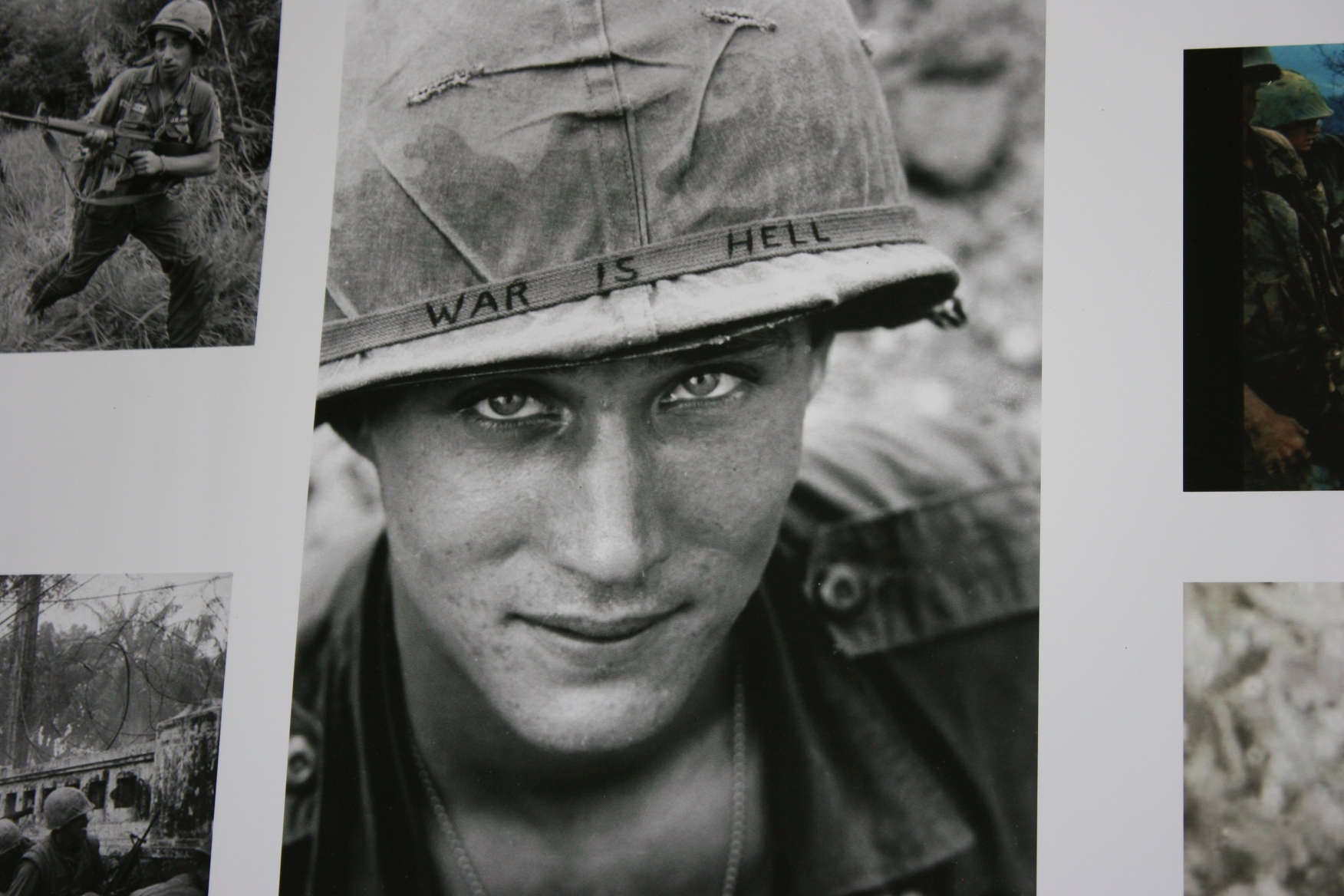
A soldier’s photo displayed in the traveling exhibit. (Minnesota Prairie Roots copyrighted file photo 2016)
But those two events did not end the pain and suffering or the issues which still linger and swirl regarding the Vietnam War.
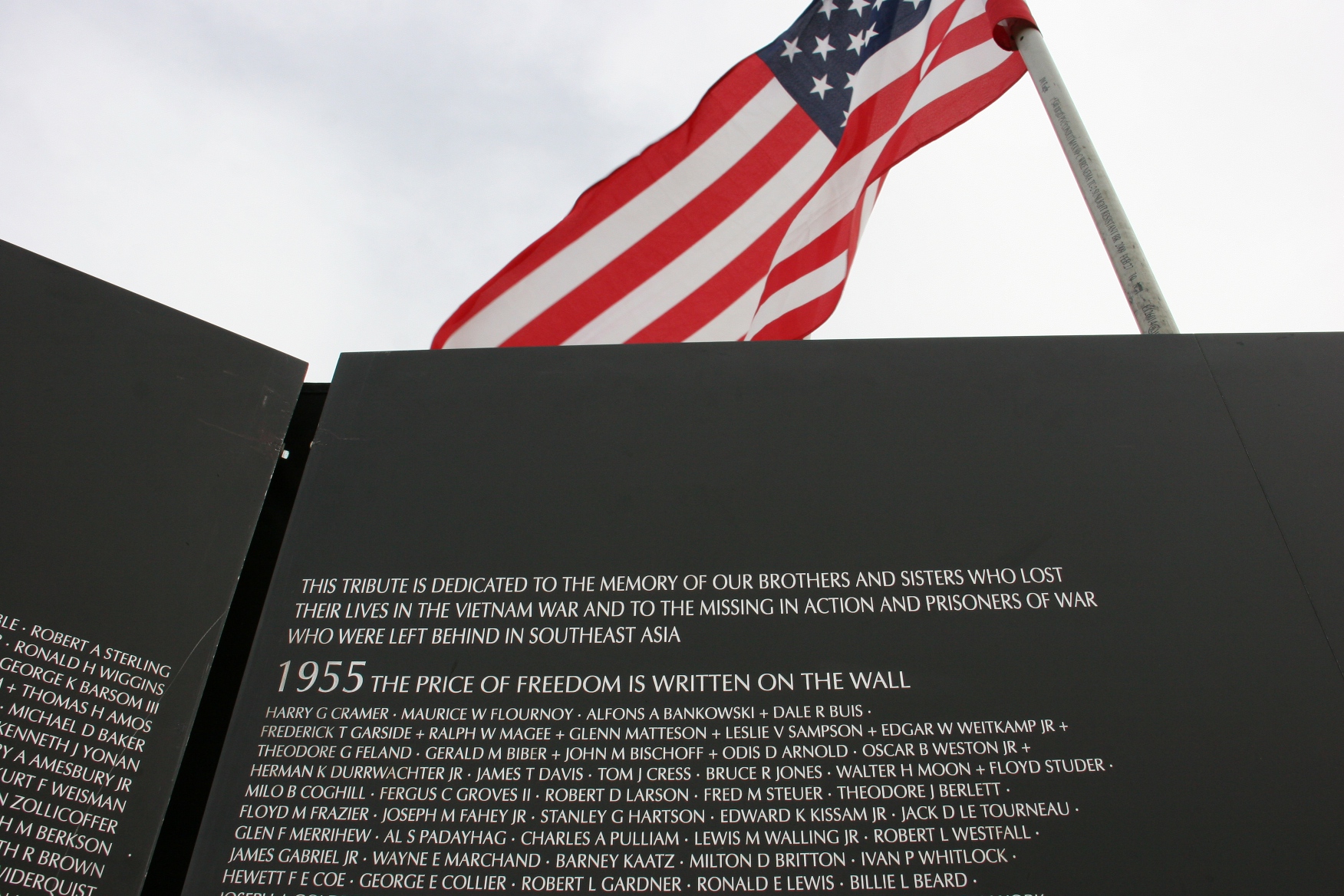
The purpose of the wall and the names thereon. (Minnesota Prairie Roots copyrighted file photo 2016)
At 6:30 p.m. on Tuesday, April 29, American Legion Post #43, Unit #43 Auxiliary and Operation: 23 to Zero are hosting a showing of the 47-minute documentary film, “Truths and Myths About the Vietnam War,” at the Legion in Faribault. The film was produced by the Atlanta Vietnam Veterans Business Association “to honor those who served in the Vietnam War, by providing factual information to address the decades of misinformation that has presented a skewed historical perspective of the war,” according to the AVVBA website. “We believe this a very important and long overdue film, one that captures the information and lessons learned most Vietnam War veterans want reported about the war.”
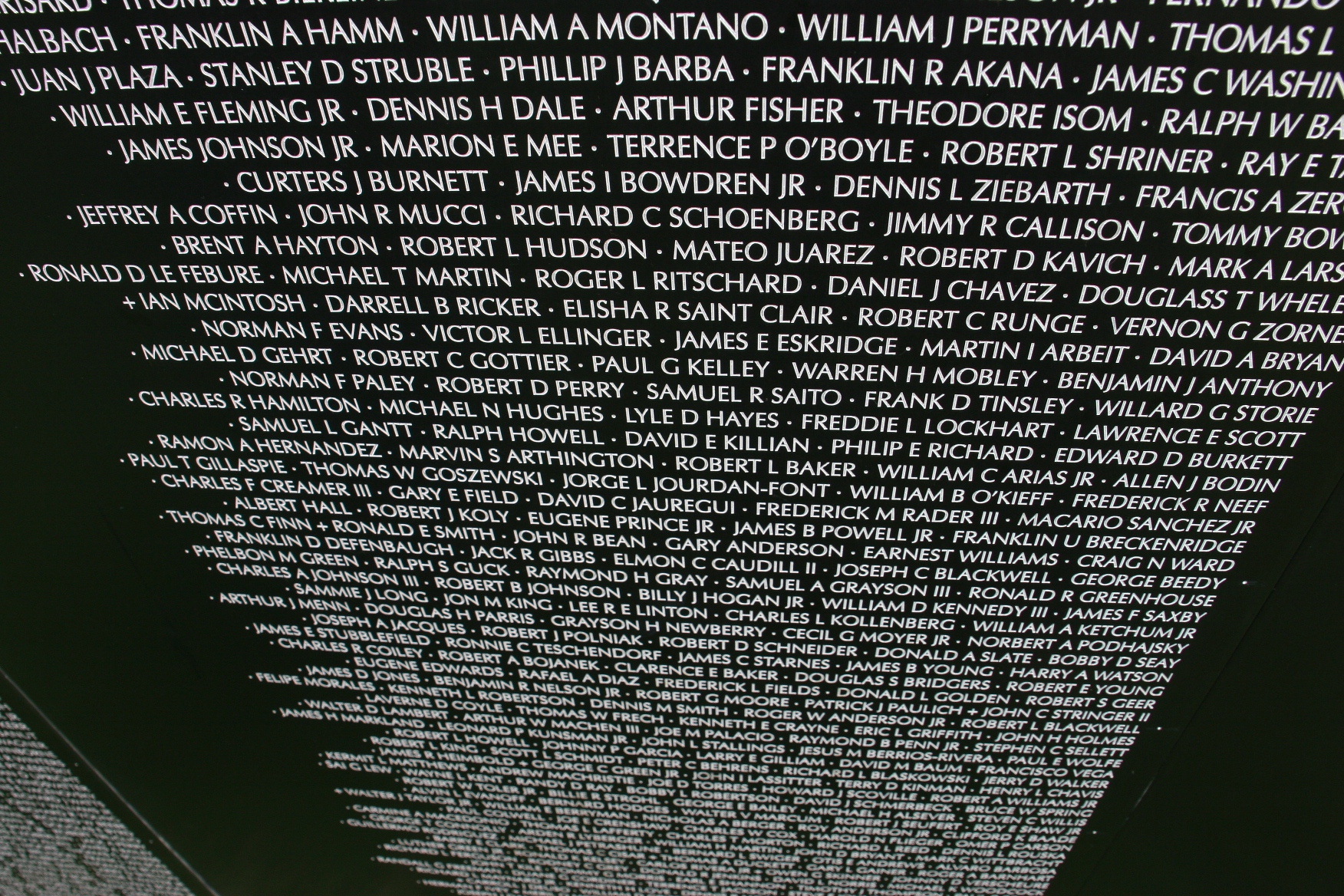
I lifted my camera and pointed the lens down at a panel filled with names of soldiers. (Minnesota Prairie Roots copyrighted file photo 2016)
Now I’m always interested in learning and considering different viewpoints. And it seems this 2024 documentary by Emmy Award-winning film producer David Naglieri will offer me some new insights and perspectives via a Medal of Honor recipient, those who served, and historians. The film promises to address many facets of the Vietnam War from media coverage to anti-war protests to politics to the treatment of returning soldiers and more.
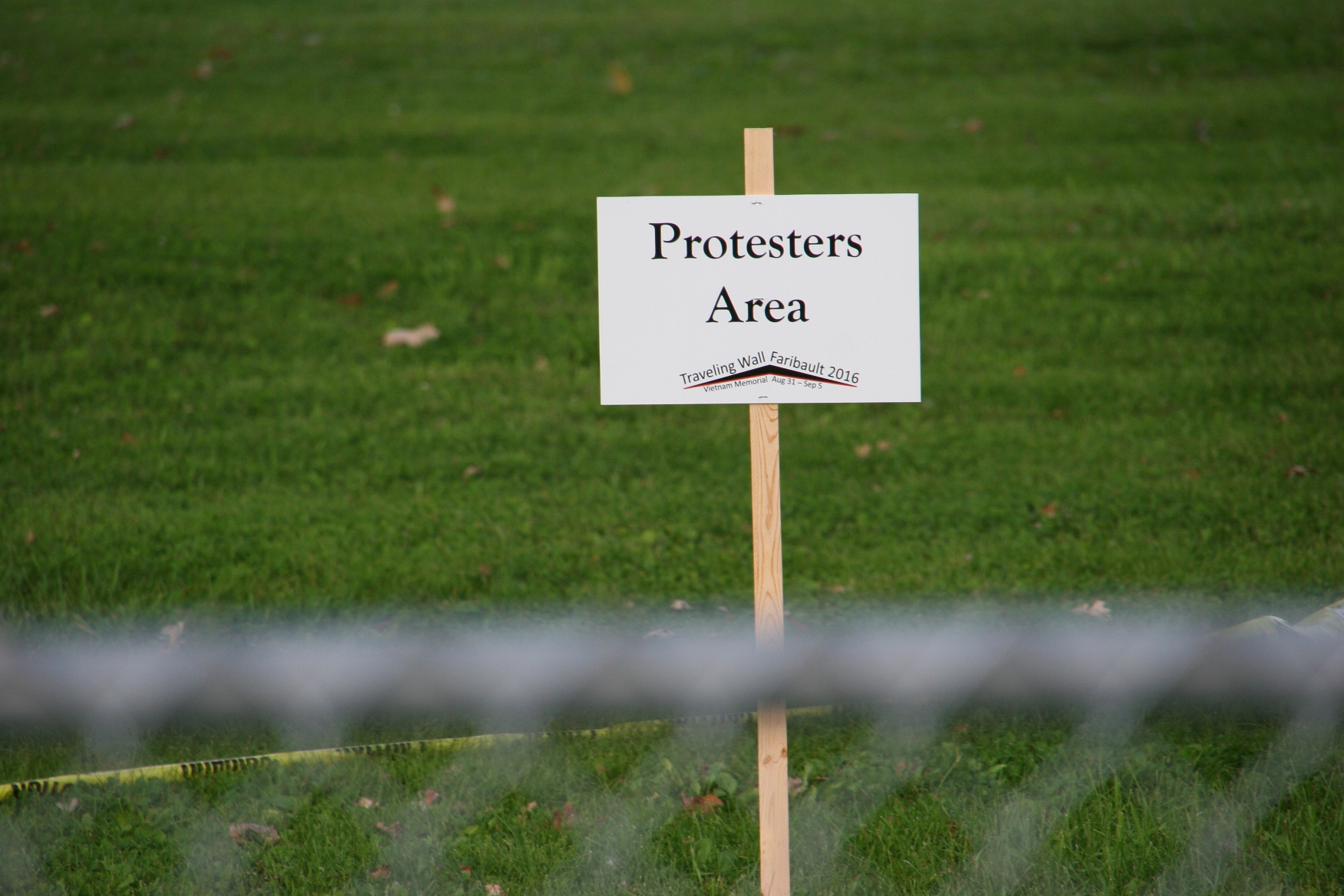
An area set aside for protesters on the northwest side of thefairgrounds.(Minnesota Prairie Roots copyrighted file photo 2016)
I well remember how poorly returning American soldiers were treated by many who opposed the war. They were not respected for their service. Rather, they were met with protests and disdain. I’m all for free speech and expressing our opinions via protests. But it had to be hard, really hard, for those Vietnam veterans, most of whom were drafted. I remember my own dad, who served on the front lines during the Korean War (“The Forgotten War”), sharing how he never felt supported and appreciated upon his return home.
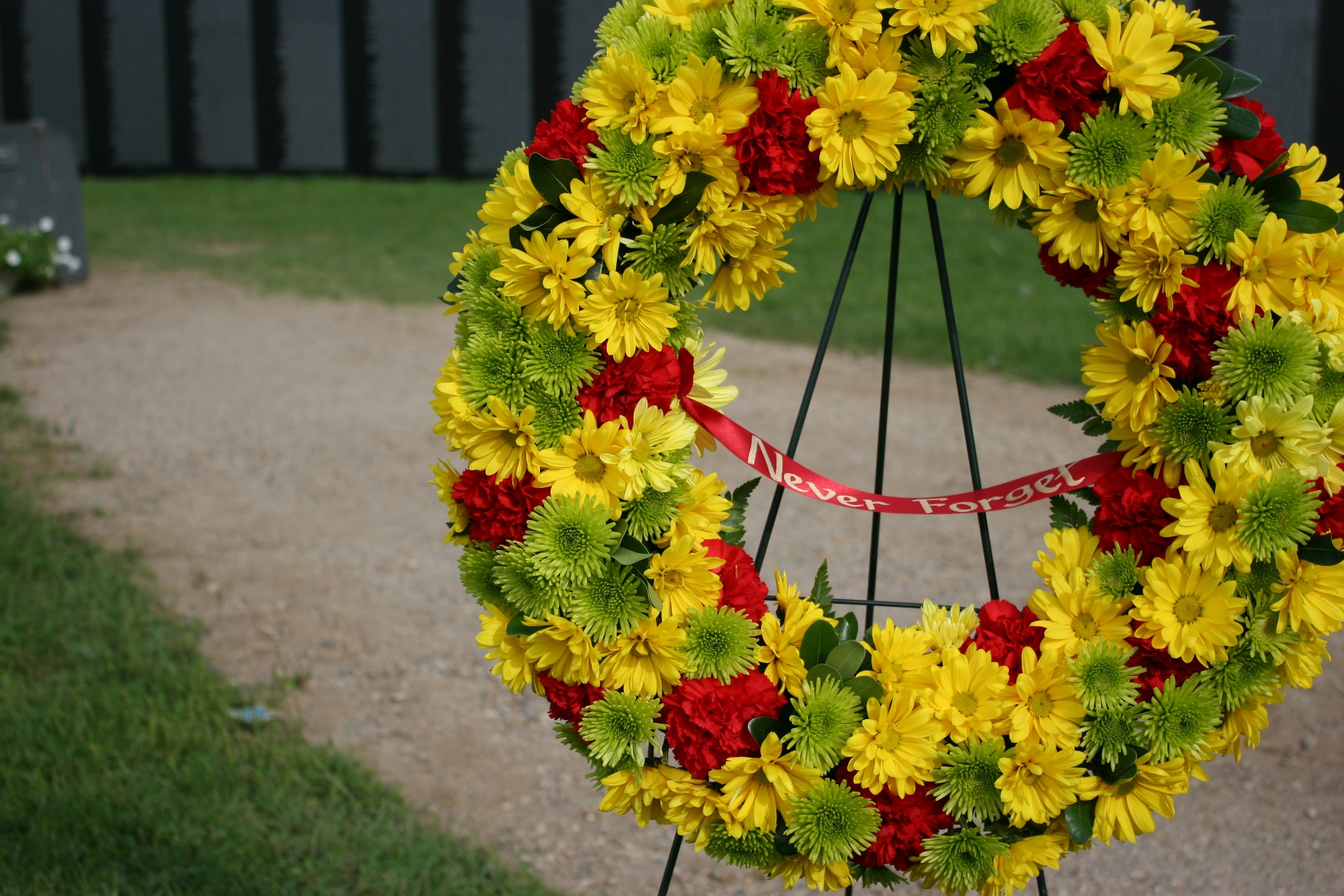
Multiple wreaths featured words of remembrance.(Minnesota Prairie Roots copyrighted file photo 2016)
Tuesday’s event at my local Legion, while focusing on the Vietnam War, will honor all veterans and offer them free wings during Wing Night. A social hour runs from 5:30-6:30 p.m. followed by the film screening from 6:30-8 p.m. The event is free and open to the public.
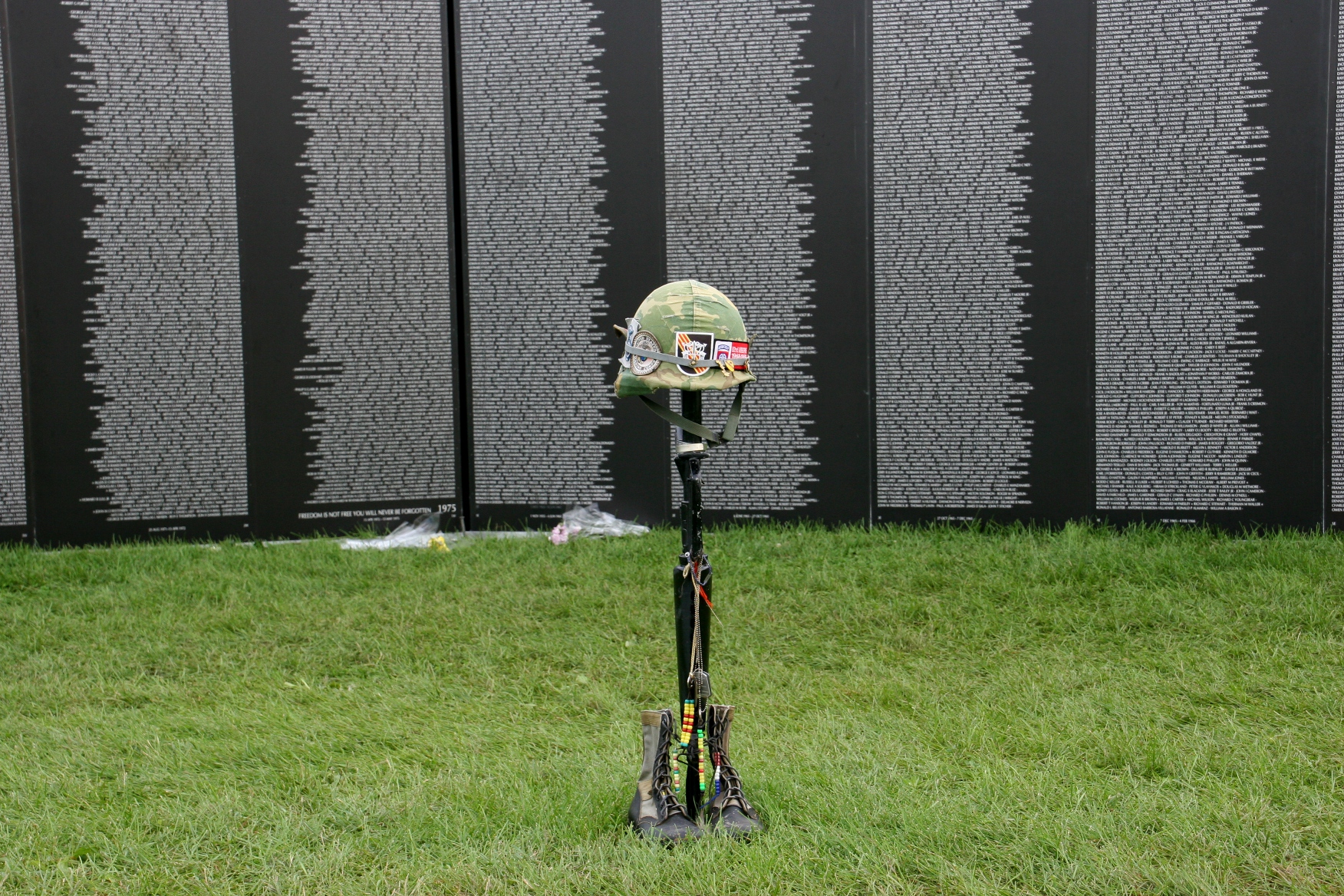
The ultimate honorary salute to a fallen soldier.(Minnesota Prairie Roots copyrighted file photo 2016)
I encourage you to attend, whether you are a veteran or friend/family member; were a war protester; were, like me, a Vietnam War-era teen (who wore a POW bracelet); or simply want to learn more about a war which claimed 58,220 American and millions of other lives and left countless traumatized.
If you served in the Vietnam War, lost a loved one in the war, protested or otherwise, please feel free to share your experiences/thoughts in a respectful comment.
Surveying the destruction at Tracy Elementary School, which was destroyed by a June 13, 1968, F5 tornado. (Photo by The Tracy Headlight Herald and courtesy of Scott Thoma)
FOR DAYS NOW WE’VE HEARD the warnings and been advised to prepare for impending bad weather in parts of Minnesota and Wisconsin. Here’s the latest from the National Weather Service website as of early Sunday afternoon: Regardless of the risk level, an episode of dangerous weather is likely Monday, with all hazards possible…
The NWS breaks that weather threat down to include tornadoes (a few strong), large hail, damaging winds and frequent lightning. OK, then. I’m listening.
I live in southern Minnesota, which is under a “moderate” risk of severe storms. Now that word choice may not sound all that threatening until you consider that “moderate” ranks as number four on a scale of one to five. “High” risk, #5, tops the scale. Central and eastern Minnesota and western Wisconsin fall in this “moderate” risk area for severe weather.
Weather forecasters seem pretty confident in their predictions. So I have to go with what they’re saying and remain watchful and informed. And stay in contact with my friend Brad, a Minnesota native who lives in North Carolina and is retired from the NWS. He’s like my personal weather forecaster. (Thanks, Brad.)
Eric Lantz, 16, of Walnut Grove, shot this award-winning photo of the Tracy tornado as it was leaving town. He often took photos for the Walnut Grove Tribune, owned by his uncle, Everett Lantz. This image by Eric was awarded third place in the 1968 National Newspaper Association contest for best news photo. (Photo credit and copyrighted Eric Lantz)
I emailed Brad that “I really really really don’t like tornadoes,” not that anyone does. But I do have a bit of history with tornadoes stretching back to June 1968. On June 13, 1968, a violent F5 tornado with wind speeds of 261-318 mph devastated the small southwestern Minnesota town of Tracy, killed nine and injured 125. Days after that deadly twister, Dad, Mom, my siblings and I piled into the car for the 25-mile drive south of our family farm to view the destruction. The imprint of those scenes has stuck with me, which is likely the reason I respect and fear tornadoes.
More recently, in September 2018, five tornadoes (the largest an EF2) swept through my county of Rice, including in Faribault. Randy and I sheltered in our basement as strong winds raged, ripping the electrical mast from our house and downing trees throughout our neighborhood and nearby. It was frightening to be huddled in the basement, to hear that roaring wind and then to be plunged into darkness. But damage to our property was minimal. And no one was killed or injured in the county. Today I can look out my office window or walk into my backyard to see visual reminders of that severe storm in what I call “tornado trees.”
Going back further, I recall seeing the destruction in St. Peter, 40 miles to the west of my community, after a tornado touched down there on March 29, 1998. A young boy died. A childhood friend lost his home. Prior to reaching St. Peter, the tornado devastated Comfrey in southwestern Minnesota.
In 1980, a tornado took down a silo, tossed a silage wagon, ripped the railing off the house and more on my childhood farm. That was literally too close to home. It was home. I was working as a newspaper reporter some 65 miles away and raced back to Vesta the next day to see the damage. While working as a reporter in Gaylord, I also reported on and photographed damage left by a tornado.
On July 7, 2011, downbursts during severe weather heavily-damaged my childhood church, St. John’s Lutheran, and caused other damage in my hometown. In neighboring Belview, an EF1 tornado touched down on that same date causing widespread destruction. My personal weather forecaster friend, Brad, grew up in Belview.
A residential street in Tracy, once covered in branches and debris, had to be plowed to allow vehicles to pass following a June 13, 1968, tornado. (Photo by The Tracy Headlight Herald and courtesy of Scott Thoma, Tracy native and author of “Out of the Blue,” a book about the Tracy tornado)
Yes, I have a history with severe storms and tornadoes. How about you?
Be alert, prepared and safe, everyone, especially my friends in Minnesota and Wisconsin.
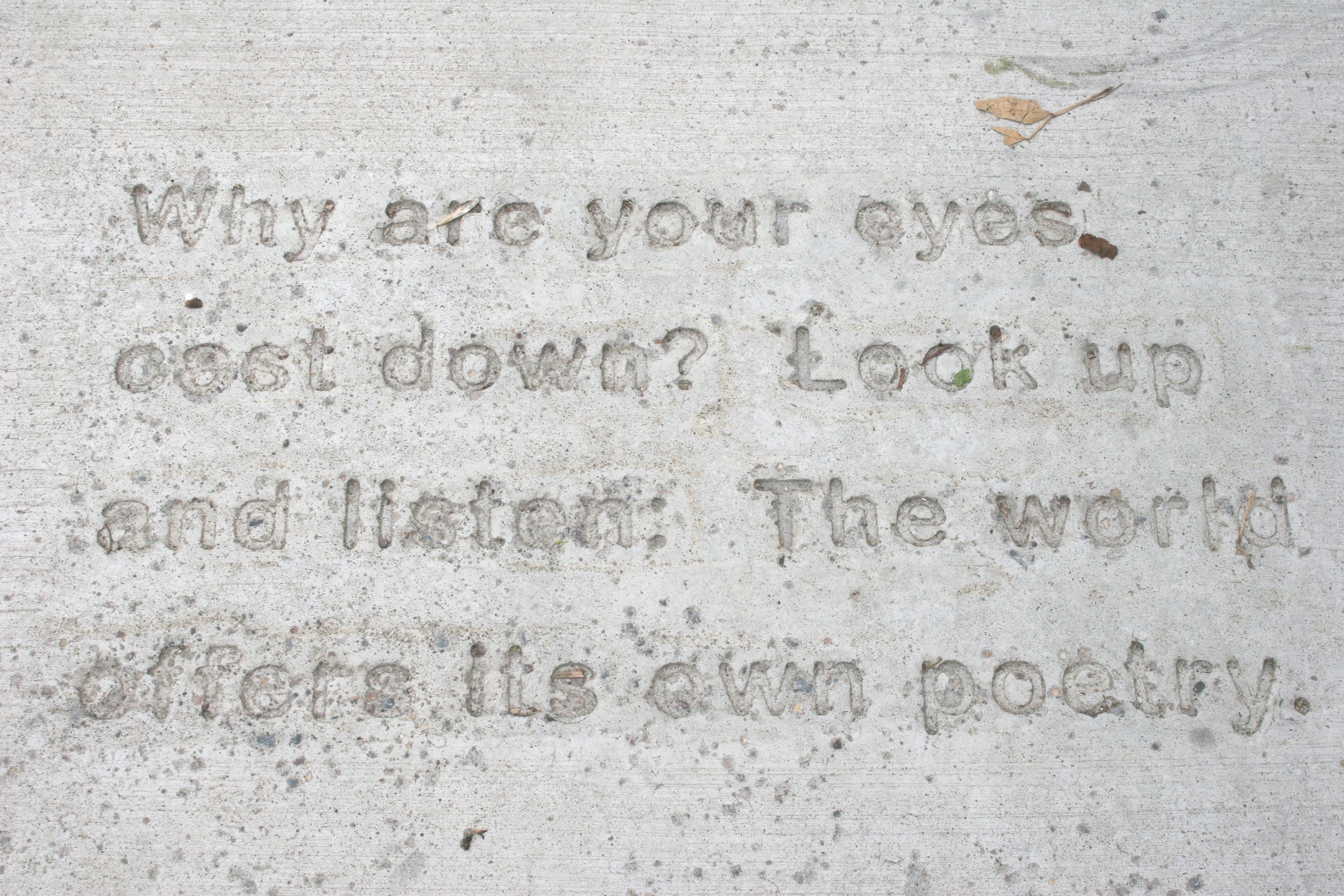
Sidewalk poetry in downtown Northfield, Minnesota, carries a powerful message. (Minnesota Prairie Roots copyrighted file photo)
I DON’T READ MUCH POETRY. I probably shouldn’t admit that given I’m a published poet. But I suspect most of you also are not big poetry readers. Yet, we all should be, especially me.
Becky Boling’s recently-released first collection of published poetry. The cover features the poet’s artwork. (Minnesota Prairie Roots copyrighted photo April 2025)
Poetry offers a creative way to view the world, to experience life, eliciting a whole range of emotional responses that connect us to each other, to the earth, to the past and present, and much more. I get excited when I discover a poet whose work truly resonates with me. And that would be the poetry of Northfielder Becky Boling.
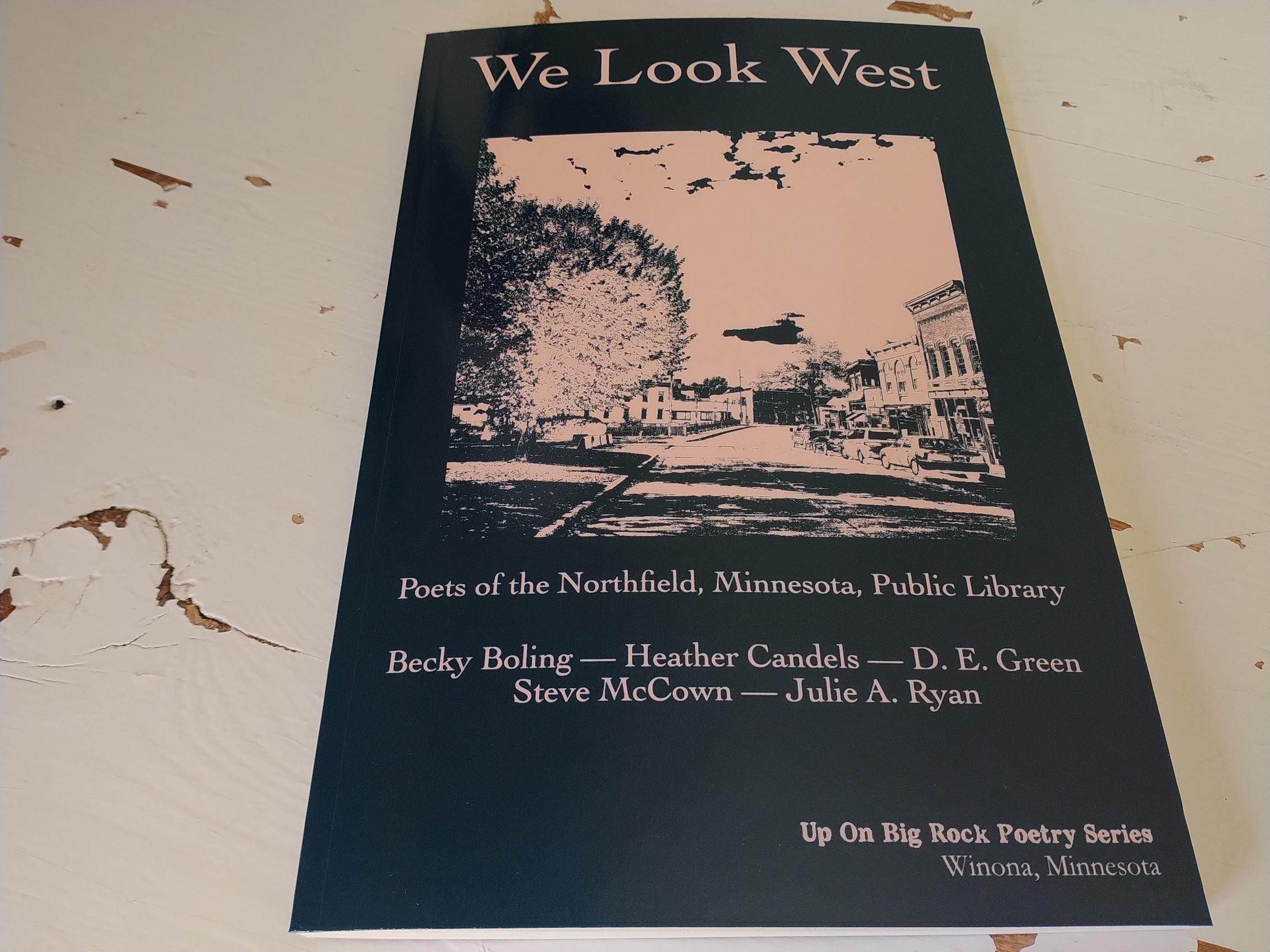
We Look West was published in early 2024 by Shipwreckt Book Publishing Company. (Minnesota Prairie Roots copyrighted file photo 2024)
A year ago, I met Boling when she dropped off a copy of the anthology, We Look West, a collaboration of the Poets of the Northfield Public Library. It includes her work and that of four other talented poets. I love the collection which takes the reader from the sunrise to the sunset of life. The poetry therein is so understandable and relatable.
A box holds bagged poems included in the “Poetry in a Bag” project. (Minnesota Prairie Roots copyrighted file photo 2024)
In May 2024, Boling, I and several other poets participated in a community poetry reading for the “Poetry in a Bag” project coordinated by Mercado Local, a Northfield marketplace for immigrants. Our poems were printed, rolled and bagged before distribution within our communities.
I would see Boling again in September 2024, when she and the other Northfield poets read from We Look West at Books on Central, a Rice County Area United Way used bookshop in Faribault.
Selected prose and poetry about the pandemic and social justice issues were published by the Ramsey County Public Library in this anthology. (Minnesota Prairie Roots copyrighted file photo)
The poetry of Becky Boling in her first published collection featuring 37 of her poems. (Minnesota Prairie Roots copyrighted photo April 2025)
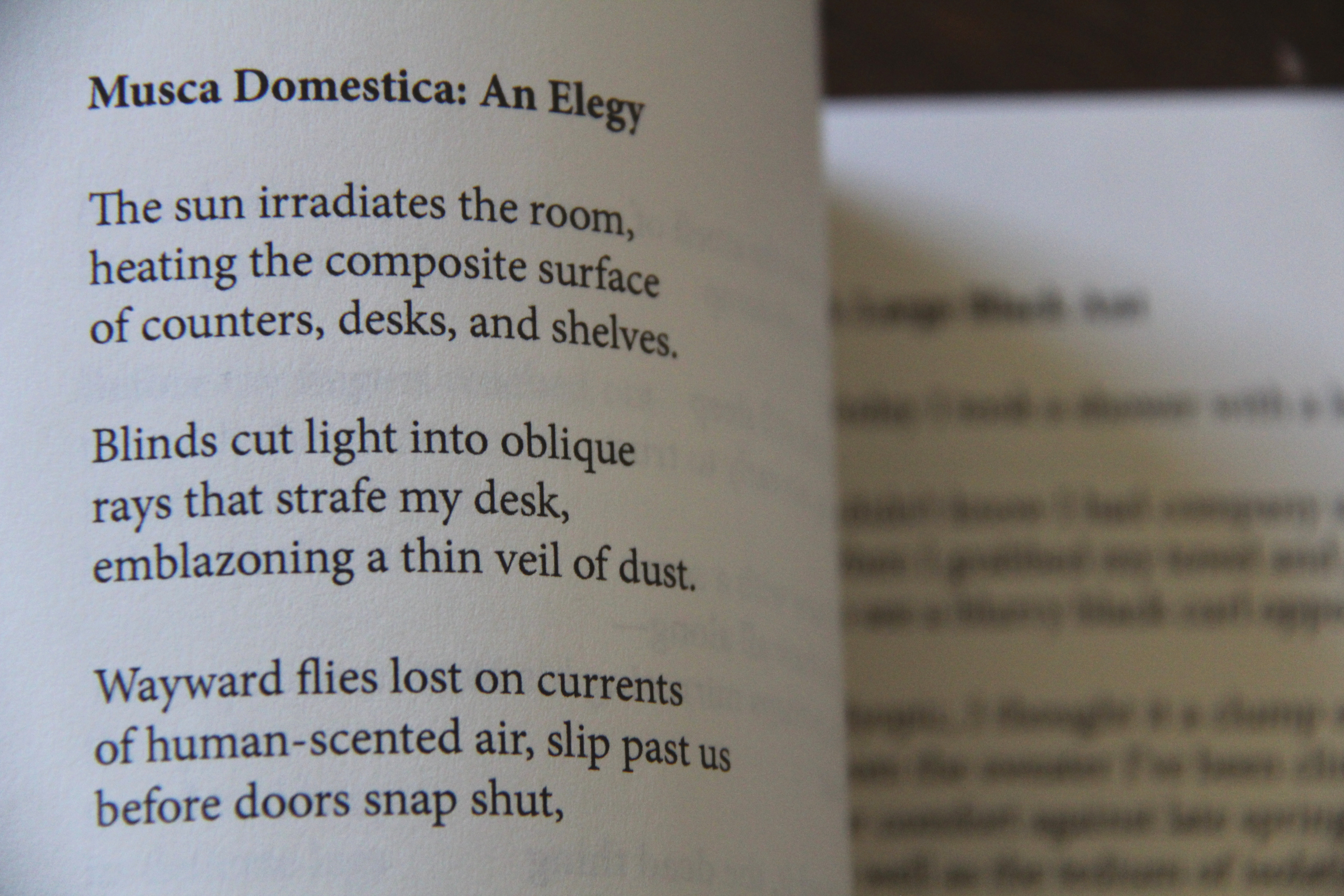
Because of those shared experiences, shared publications and shared love of words, I feel a sisterhood with Boling. So when she asked if I wanted a copy of her first solo poetry collection, I responded with an enthusiastic, “Yes!” Within the pages of Here Beyond Small Wonders, I found what I’ve come to expect from Boling—detailed writing, often about the most ordinary subjects—a dead mouse, a fly, walnuts… Topics you may not even consider poetry-worthy. But Boling has this ability to observe and engage all of her senses to craft words into connective, meaningful poetry.
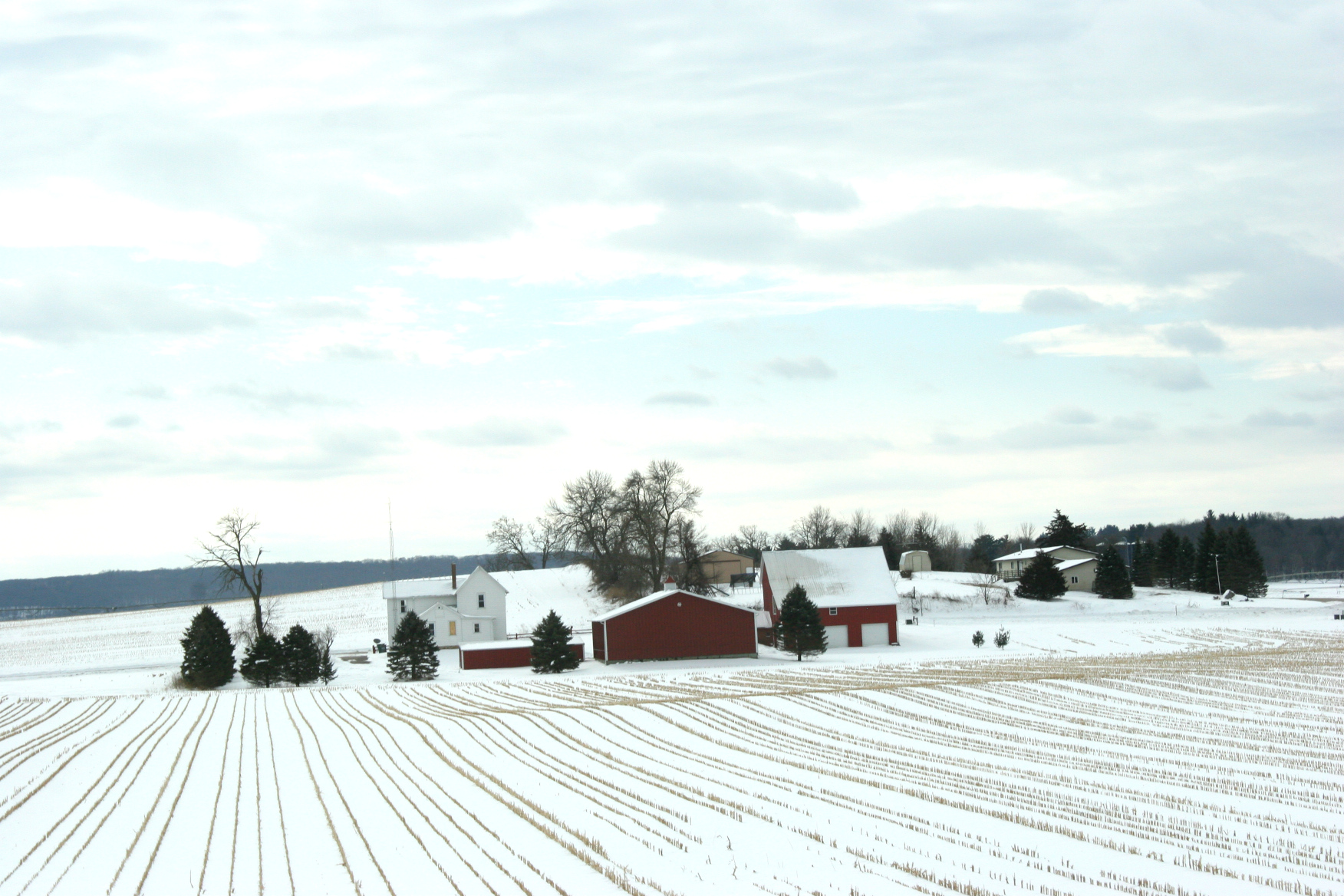
A Wisconsin farm site photographed from Interstate 90 could be a poetry prompt.(Minnesota Prairie Roots copyrighted file photo)
In her poem “Snow Pond,” she defines poetry: Poetry, like freezing temps, seizes the moment, recasts it—through the physics of sight, memory, language—resurrects it anew into patterns, sound and light, marks on a snowy page that glisten and melt on tongue, alight on the inner eye. That definition of poetry is among the best I’ve read, because it is poetry.
Clothespins on my clothesline clip clothing, not beach towels. (Minnesota Prairie Roots copyrighted file photo)
Anyone who writes poetry recognizes the challenges of finding just the right word, of stringing words together in a new, creative and succinct way, of connecting on an emotional level. But Boling makes the process look easy, taking the reader along with her, whether into her yard or onto the sandy shores of Lake Michigan. In her poem “Clothesline,” she writes of beach towels dancing in the wind. She takes the reader to the beach, to the sights, scents and sounds along the inland sea. I feel her fingertips unclipping the dried towels at end of day as she gathers them like weary babes into my open arms. I did not see that end coming. That element of surprise is, too, a mark of a gifted poet.
Kid-sized Adirondack chairs on a Minnesota beach. (Minnesota Prairie Roots copyrighted file photo)
Her “Adirondack Chair in Snow” is another favorite of mine in Boling’s collection of 37 poems published by Finishing Line Press. She writes of the typically-lakefront chair wedged into a snowbank outside her mother’s apartment building. But this poem is about so much more than an out-of-place chair buried in snow. Boling uses personification to write about her mother. In those six verses, I found myself missing my own mom, who died during the pandemic in January 2022. Boling’s emotions, my emotions, weave together in her writing and in my reaction.
My own artsy autumn leaf image, of leaves in the Cannon River. (Minnesota Prairie Roots copyrighted file photo)
In one of her longest poems, Boling writes about the transition to autumn in “Persephone’s Bouquet.” Unfamiliar with this Greek goddess, I learned that Persephone’s descent into the underworld is associated with the start of winter. Autumn themes Boling’s poem as the author gathers hot-pepper reds, creamy yellows…brazen scarlet…leaves, something I also enjoy doing in fall. But this is a poem about life, too, not just about a change in seasons. Plus, the poem connects to the cover of Here Beyond Small Wonders, Boling’s own autumn leaf art.
Her first collection of poems is about nature and place and seasons and life. Moments experienced. Details noticed right down to a tar-dark county road…horse flies, green heads glistening in the sun…reedy breath trembling into song. Boling, in her words, opens herself to a pool of words. And I, for one, embrace her poetic writing.
#
FYI: Becky Boling is a retired professor of Spanish and Latin American literature at Carleton College in Northfield. Her poetry and prose have been widely-published in literary journals and anthologies. She also served as a Co-Poet Laureate of Northfield. Click here to find Here Beyond Small Wonders on the Finishing Line Press website.
Faribault artist Kate Langlais painted this acrylic portrait of Pope Francis, displayed at the Paradise Center for the Arts, Faribault, in 2022. (Minnesota Prairie Roots copyrighted file photo March 2022)
HER COMMENT SUMMARIZES what many Catholics and others are likely thinking this week as they mourn the passing of Pope Francis on Easter Monday. Dorothy Storch writes this on the Facebook page of the Church of St. Patrick, Shieldsville. a rural southern Minnesota church near me: “Our Pope of peace and mercy, kindness and love. A man of God.”
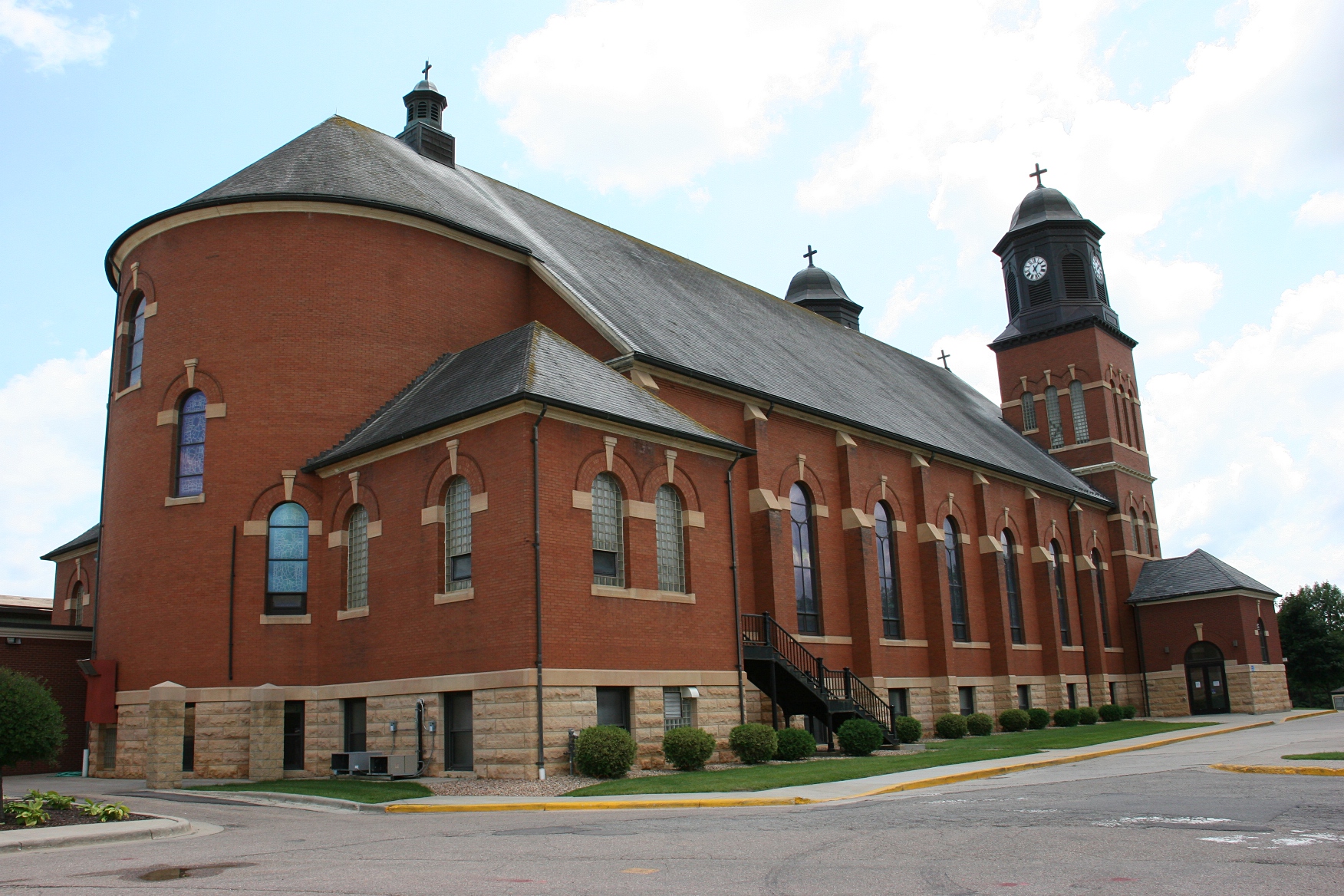
A side and rear view of St. Wenceslaus Catholic Church, New Prague. (Minnesota Prairie Roots copyrighted file photo)
Perhaps that could be written about previous popes and other faith leaders. But not always. And not with the depth of admiration for Pope Francis, often termed “The people’s pope.” He changed things up in the Catholic church, opening minds and hearts and relating to people in a way that made him seem more like one of us.
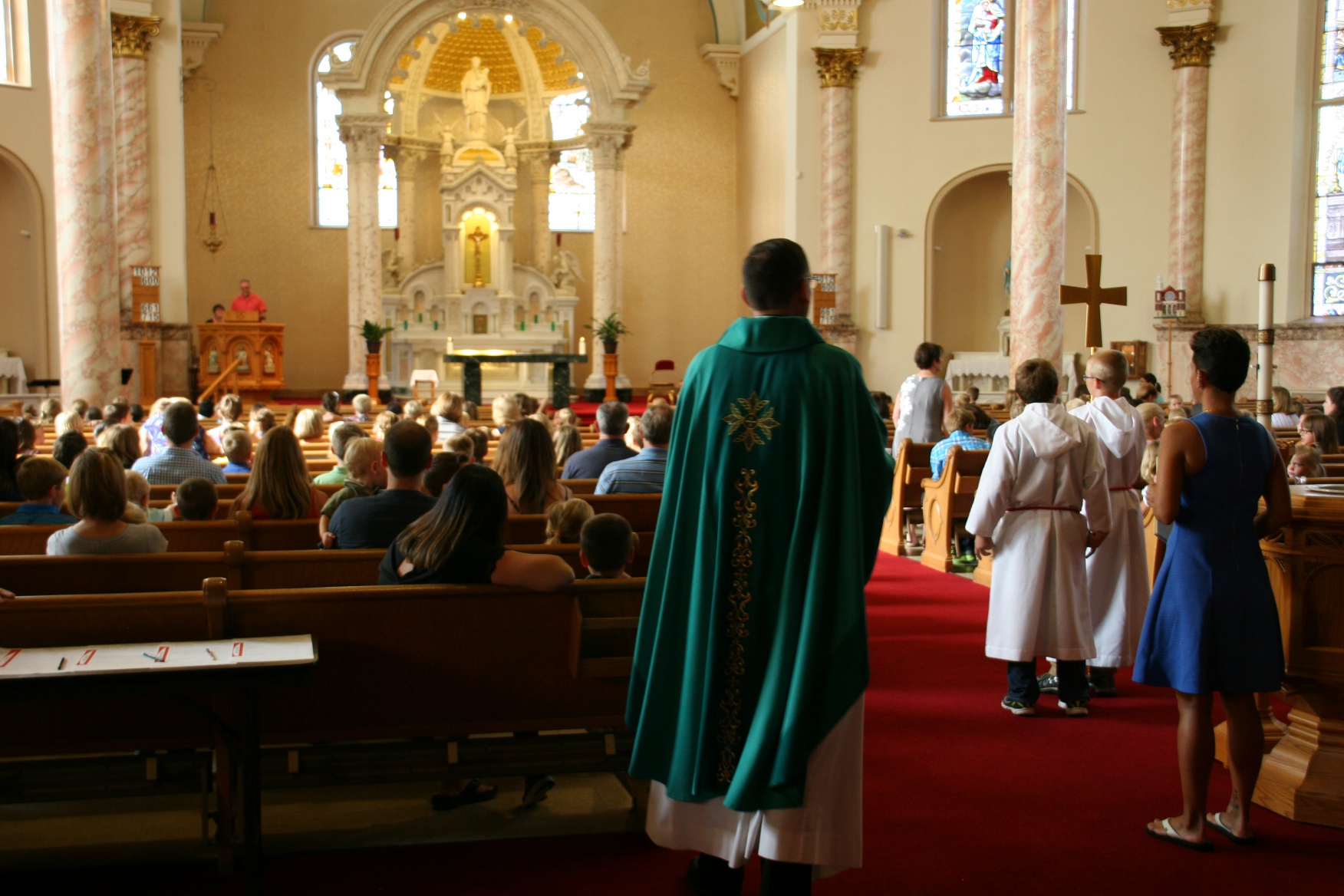
Mass, about to begin at the Basilica of Saint Stanislaus Kostka in Winona. (Minnesota Prairie Roots copyrighted file photo)
A posting on the Facebook page of the Church of St. Dominic, 16 miles to the northeast of Shieldsville in Northfield, explains: “His life was a shining example of humility, compassion, and servant leadership. Pope Francis reminded us through both word and action what it means to care for the poor, to welcome the outcast, and to live simply with a heart open to God. He walked closely with the people, always pointing toward mercy by living our faith with the same grace and humility.”
Loving words from the Bible in the heart of downtown Faribault. (Minnesota Prairie Roots copyrighted file photo)
Even though I am not of the Catholic faith, I’ve heard, read and seen enough media reports about Pope Francis to understand that he was, indeed, a compassionate man of both words and actions. Words, especially when you are a faith leader, require positive action. Pope Francis visited inmates, embraced those with disabilities, met with migrants, washed feet and much more. Washing someone’s feet is truly an act of humility and service.
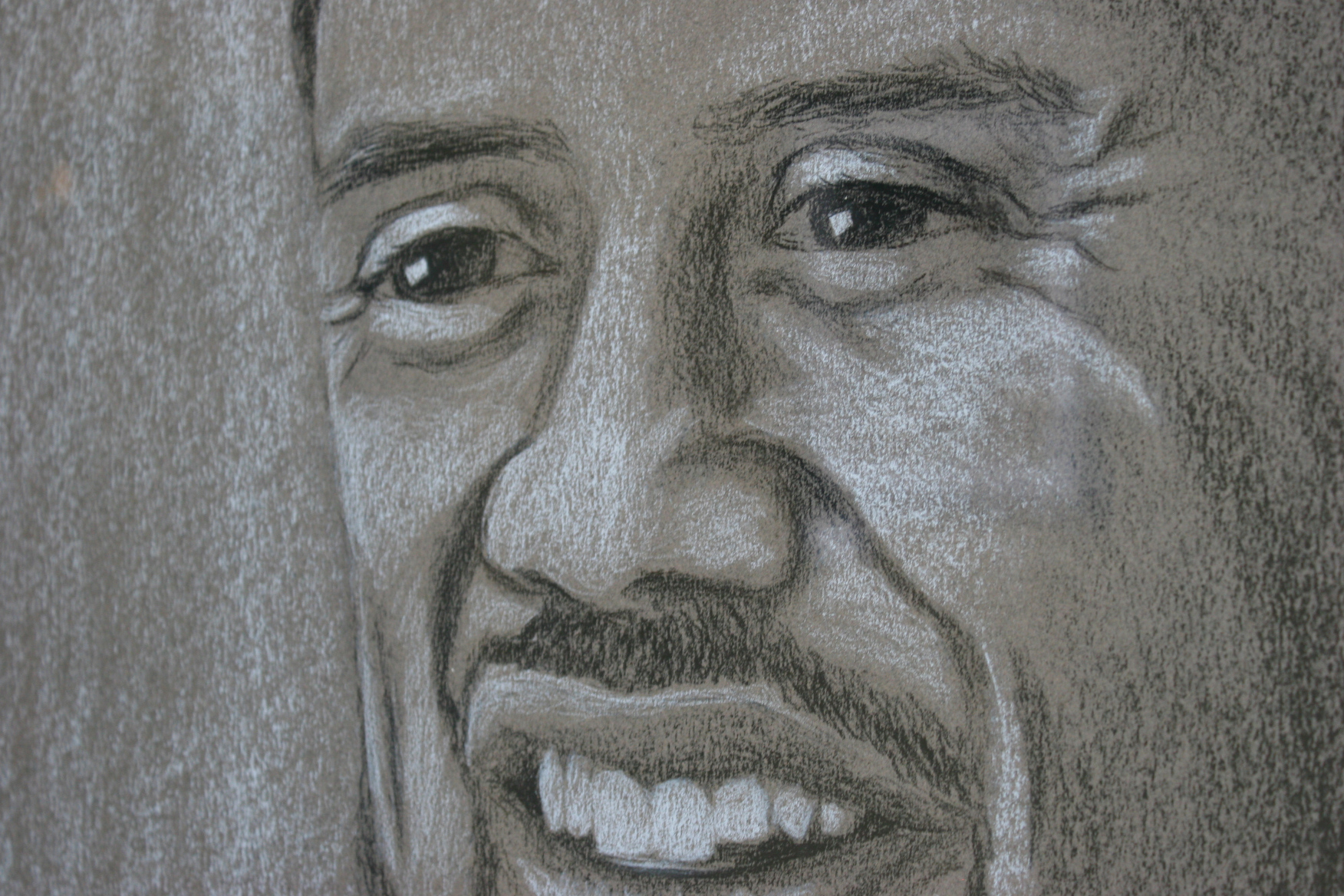
“Faysel,” who fled the war in Somalia.Kate Langlais created this portrait for an “I Am Minnesota” project featuring our state’s newest immigrants. (Minnesota Prairie Roots copyrighted file photo)
Pope Francis advocated for migrants, immigrants, refugees and others, calling for compassion and care. Born Jorge Mario Bergoglio to Italian immigrants in Argentina, this first pope of the Americas understood the plight of immigrants and other marginalized populations. He wasn’t afraid to speak up, to take a stand for what he thought was right, what Jesus would have him, and all of us, say and do. He gave voice to the voiceless, to those silenced by power, policies, politics and life-altering destructive actions. He built bridges, not walls.
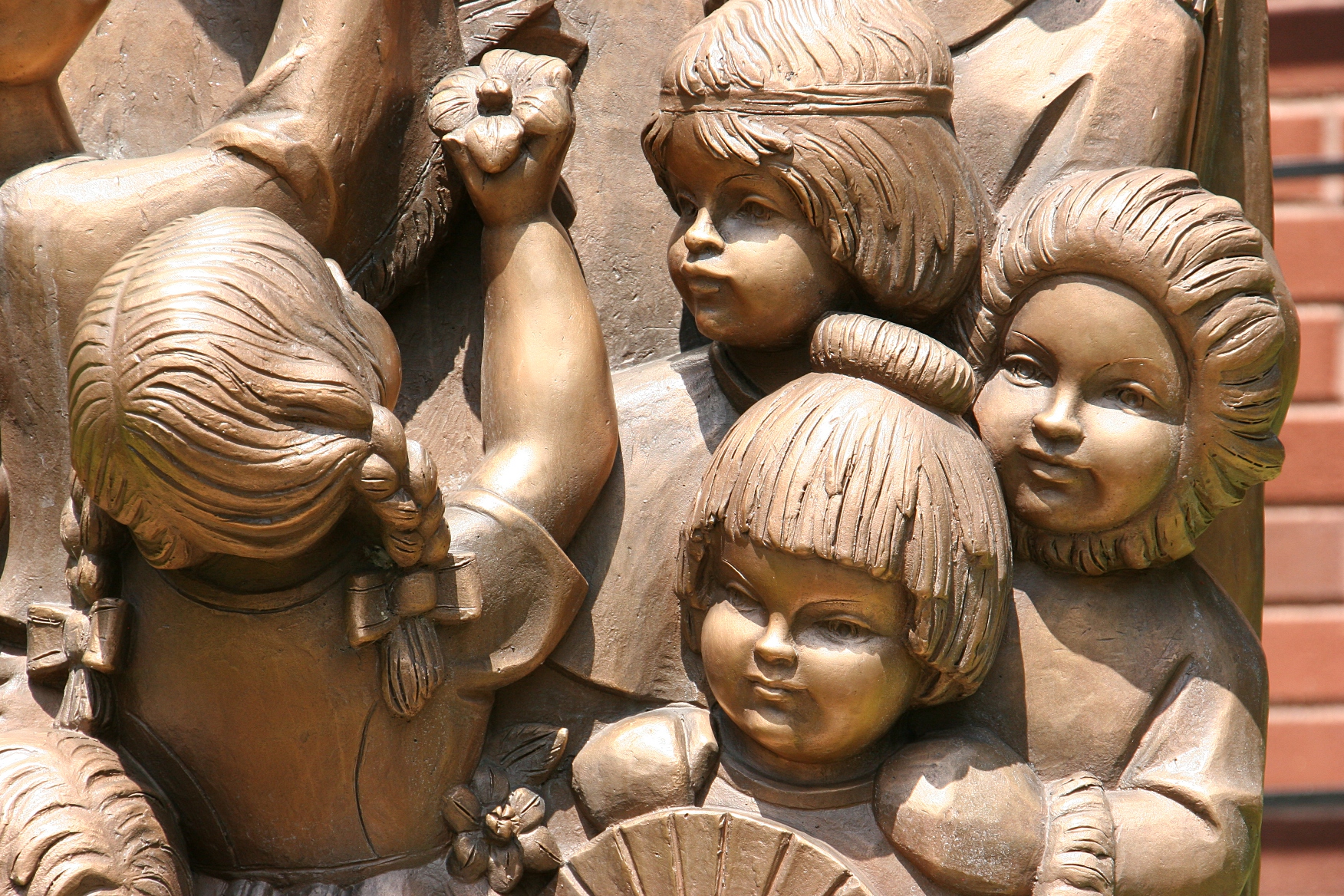
Children of many ethnicities are part of the Mary statue in Mary’s Garden at St. Wenceslaus Catholic Church, New Prague. (Minnesota Prairie Roots copyrighted file photo)
In acknowledging the passing of Pope Francis, a post on the New Prague, Minnesota, Catholic Community Facebook page calls him “a figure who has left an indelible mark on the Catholic Church and the world.” I agree with that assessment of a man who cared deeply about people, and about the environment. We could all learn from this thoughtful pope who intentionally took the papal name of Francis from Saint Francis of Assisi, a man of faith focused on poverty, peace and protecting the earth.
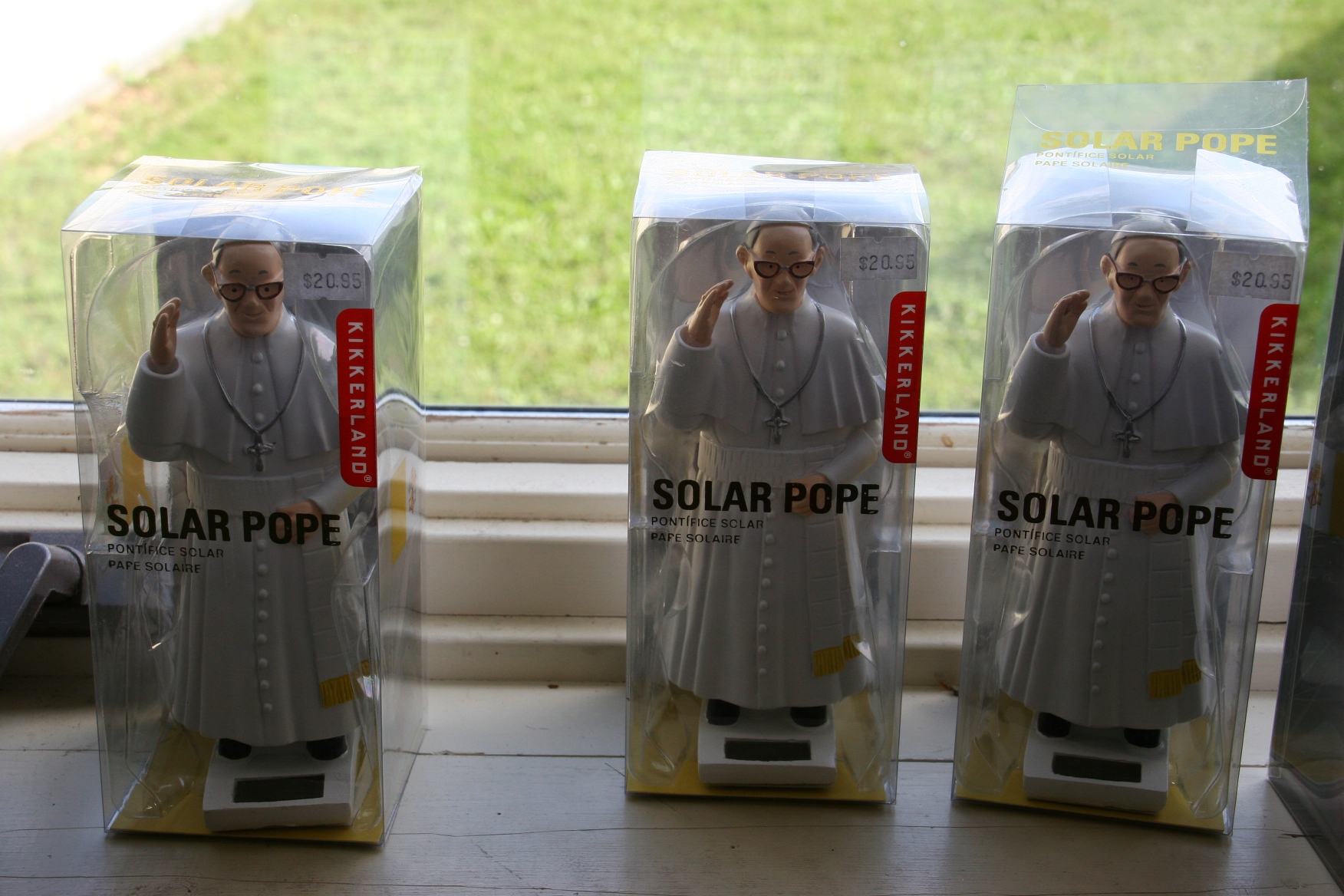
I expect Pope Francis would have laughed at these solar popes (not of him) which I photographed many years ago at LARK Toys in Kellogg, Minnesota.Minnesota Prairie Roots copyrighted file photo)
I love how Pope Francis loved. And I love how he loved to laugh. In 2024, he invited comedians from around the world to the Vatican, underscoring the importance of laughter, recognizing its healing power. I recently watched a video clip of him kissing an infant dressed in papal garb along a parade route. A member of his security team brought the baby girl to the pope riding in his Pope Mobile. His broad smile said it all. Pope Francis didn’t find the costumed infant to be disrespectful of him, but rather a reason to laugh. I need to laugh more. We all need to laugh more.
“Peace and Love,” an acrylic portrait by Angelina Dornquast. Photographed in an exhibit at the Paradise Center for the Arts, Faribault. (Minnesota Prairie Roots copyrighted file photo October 2024)
What a legacy Pope Francis leaves. It is my hope that the next pope selected by the conclave of cardinals will continue in the path of humility, compassion and kindness. I want Dorothy Storch from St. Patrick’s in rural southern Minnesota to describe the new pope as “our Pope of peace and mercy, kindness and love,” just as she did Jorge Mario Bergoglio, the son of immigrants. He who humbly served with compassionate words and actions, becoming a much-beloved and respected world faith leader.
Love at a past student art show at the Paradise Center for the Arts. (Minnesota Prairie Roots copyrighted file photo)
May Pope Francis, now lying inside a simple wooden coffin, rest in peace at the Basilica of Saint Mary Major, which sits in an area of Rome heavily-populated by immigrants. With his coffin and burial choices, “the people’s pope” makes a strong statement even in death about living with grace, humility and compassion, loving all, always.
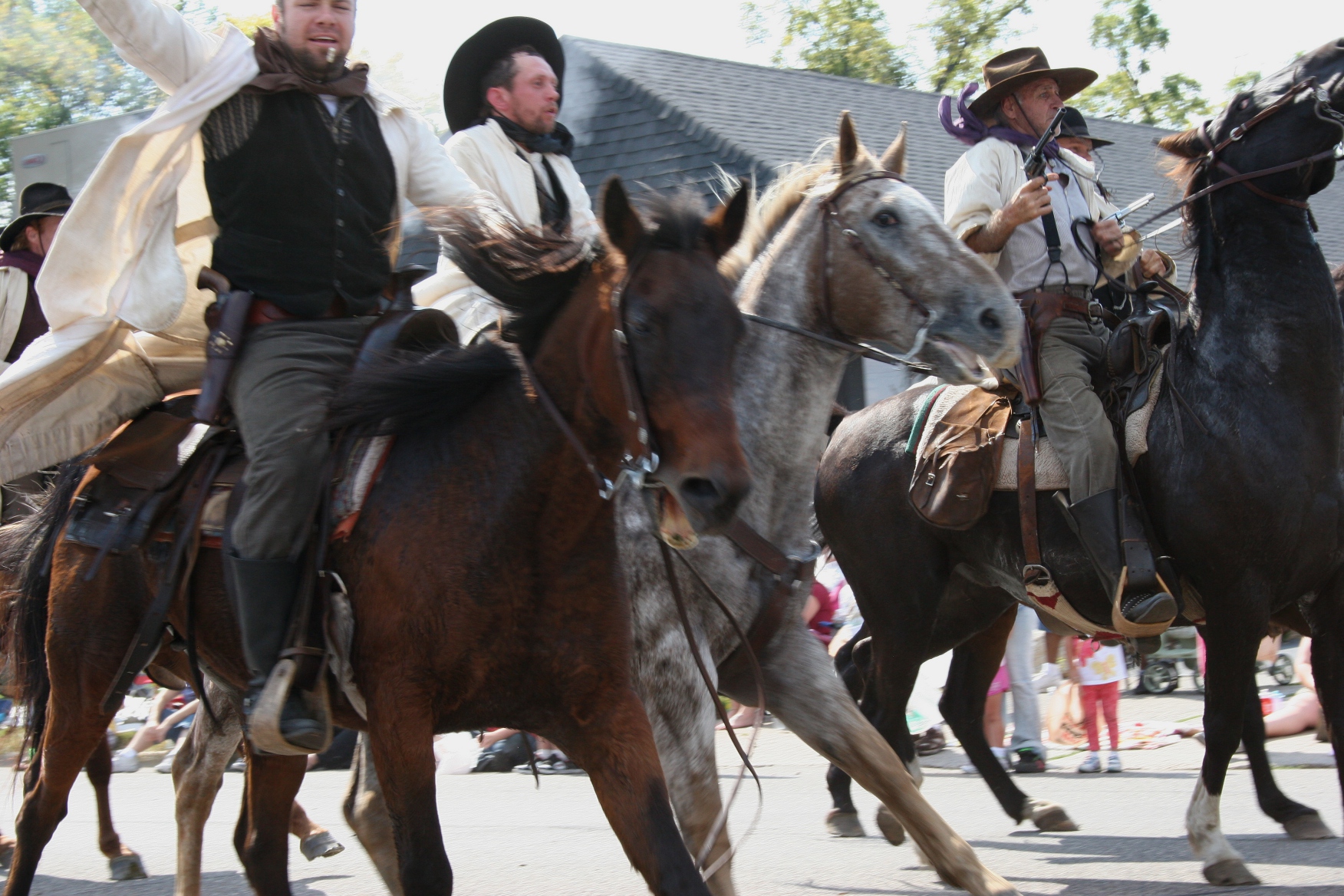
The James-Younger Gang shooting it out during a past Defeat of Jesse James Days parade. (Minnesota Prairie Roots copyrighted file photo)
NORTHFIELD, MINNESOTA is best-known as the community that, on September 7, 1876, thwarted plans by the James-Younger Gang to rob the First National Bank. Townspeople stood their ground against the outlaws, ending in the deaths of the acting bank cashier, a Swedish immigrant and two of the robbers before the gang fled. Northfield marks the failed bank robbery each September with a Defeat of Jesse James Days celebration. That draws 100,000-plus to this city of some 21,000.
Books I’ve purchased at a used book sale, not in Northfield, but in Faribault. (Minnesota Prairie Roots copyrighted file photo)
This week the masses will once again descend on this riverside college town, not for a historical occasion, but rather for one of Minnesota’s biggest used book sales, the Great Northfield Minnesota Book Fair. Certainly, crowds will not swell to levels gathered for the historical event in September. But they will be large, as I can attest from shopping past book fairs, although not recently.
The sale, sponsored by the Northfield Hospital Auxiliary, features an estimated 70,000 donated books, musical recordings, games and puzzles filling tables inside the Northfield Ice Arena. The goal is to raise $100,000 “to enhance healthcare in the Northfield Area.” That means funding special projects at the local hospital and clinics, supporting local health organizations and offering health education scholarships. The book fair began in 1961 and in 2018 hit $1 million in total sales.
Doors for this year’s sale open at 5 p.m. Tuesday, April 22, closing for the day at 9 p.m.. The fair continues until Saturday, April 26, with the following hours: 9 a.m.-9 p.m. Wednesday-Friday and from 8 a.m.-3 p.m. Saturday. Friday is half-price day. Saturday is $5 bag day until 12:30 p.m. From 1-3 p.m. Saturday everything is free. Yes, free.
Puzzles will also be sold at the Book Fair in Northfield. (Minnesota Prairie Roots copyrighted file photo)
Shopping this book fair almost leaves you feeling like you’re robbing the bank given the reasonable prices. Base prices for paperbacks are $1 and for hardcovers, $2, according to the Book Fair website. Of course, some are priced higher depending on rarity or newness. Musical offerings will cost a few bucks. Puzzles and games are priced around $5.
I’ve never shopped the first, or even the second or third, day of the sale. I suppose I’ve missed out by waiting, especially when looking for children’s books. But, hey, with a starting inventory of 70,000, it takes a while for the supply to diminish. There’s still plenty for people to haul out (and they do, by the wagon and box loads) during Saturday’s two-hour freebie close-out.
Defeat of Jesse James Days bobbleheads for sale at the Northfield History Center. (Minnesota Prairie Roots copyrighted photo April 2025)
Some 300 volunteers sort through donations, set up and run the sale in the sprawling ice arena with books separated into more than two dozen categories. The organization and efficiency are truly something to behold. The sheer size of this book fair is overwhelming. But then again, Northfield is a city that values books, knowledge and learning, as evidenced by its two liberal arts colleges, an independent bookstore, an engaged public library and an active writing community, especially of poets. That Northfield hosts one of Minnesota’s biggest book fairs should come as no surprise. This is a community which embraces books, and stands up to bank robbers.
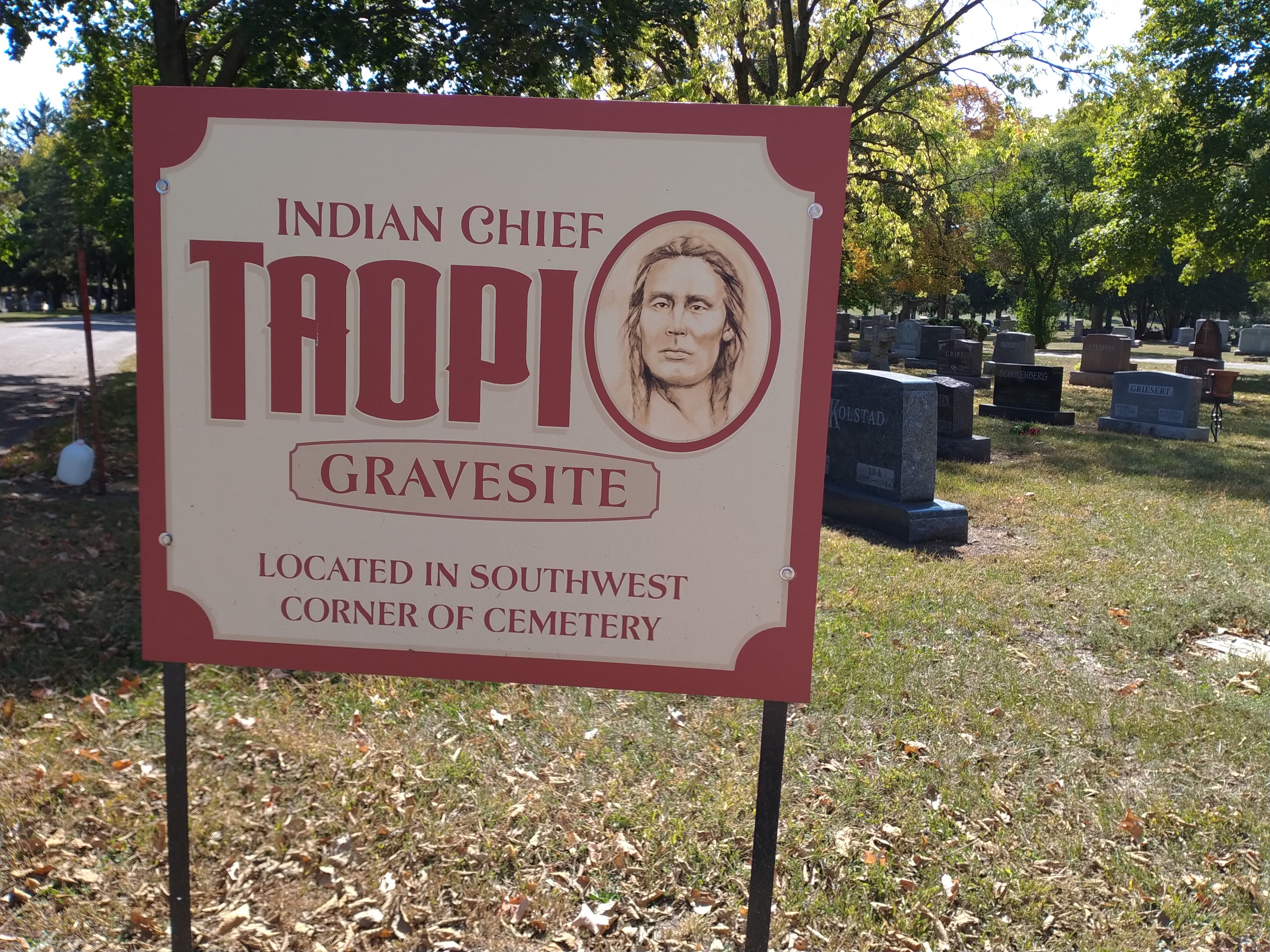
Prominent signage at Maple Lawn Cemetery directs visitors to the gravesite of Chief Taopi, “Wounded Man.” He was wounded in a battle with the Ojibwe. (Minnesota Prairie Roots copyrighted file photo)
HE FOUND HIMSELF AT ODDS with his own people. A “Farmer Indian” among “Blanket Indians.” A peace promoter among those who favored war. He was Chief Taopi, a member of the Little Crow Band of the Mdewakanton Dakota. He’s buried in Faribault, at Maple Lawn Cemetery.
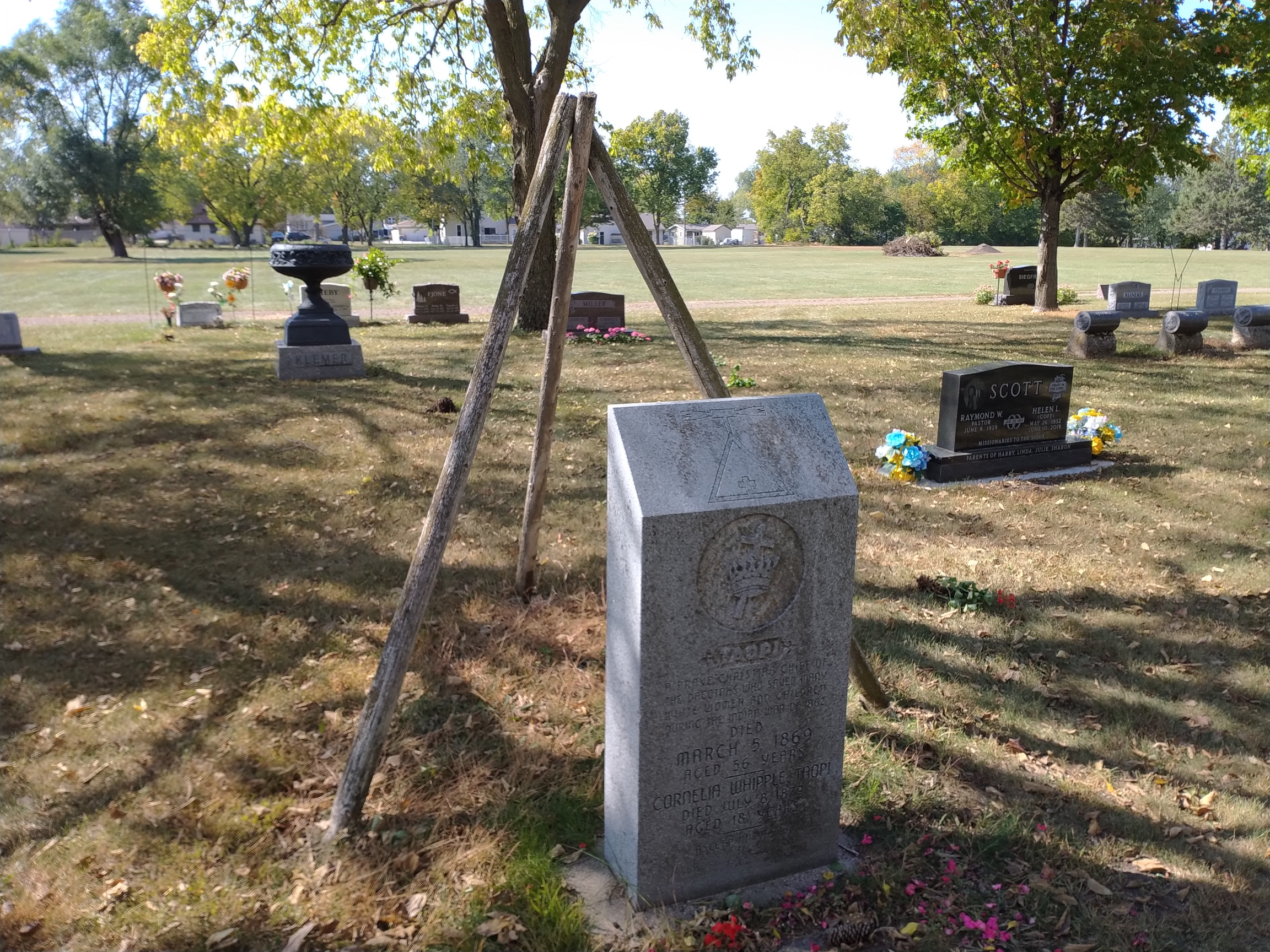
A tipi formation easily identifies the burial site of Taopi and his daughter, Cornelia Whipple Taopi. She died at age 18. He died at 56. (Minnesota Prairie Roots copyrighted file photo)
Recently, I attended a presentation about Taopi by Rice County Historical Society Executive Director Dave Nichols. It’s not the first time I’ve listened to local talks on the history of Native Americans in Minnesota, focused on those who called Faribault home. Each time I learn something new.
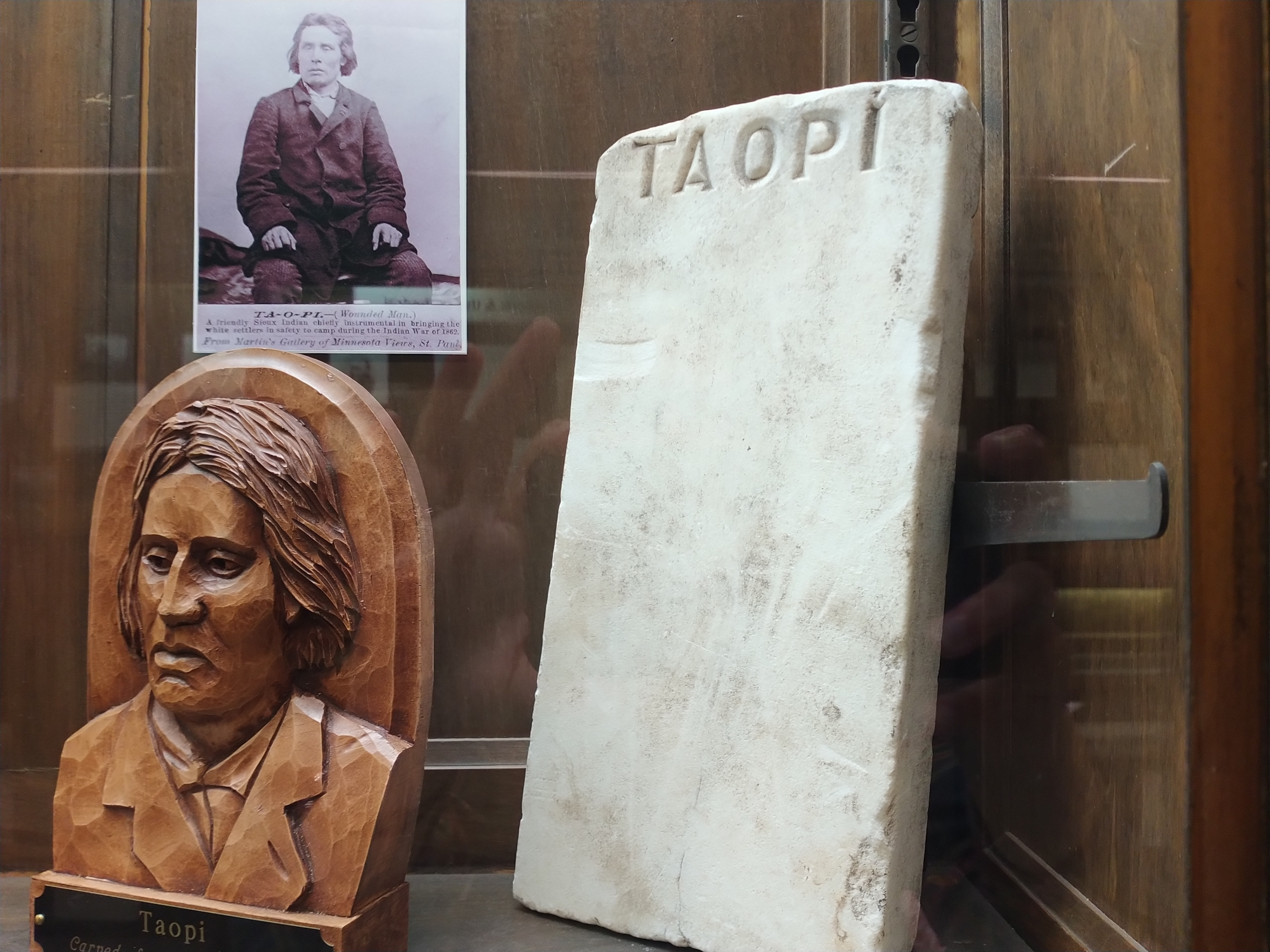
A Taopi exhibit at the Rice County Historical Society. The carving (by Ivan Whillock) and photo show Taopi with short hair as a “Farmer Indian.” (Minnesota Prairie Roots copyrighted file photo)
During his talk, Nichols called Taopi “a poster child for what an assimilated Dakota looks like.” And he didn’t mean that in a negative way. “You either assimilated or you would be destroyed,” Nichols said, qualifying that he wasn’t saying assimilation was right. Understood.
As settlers moved into Minnesota, pushing onto Native lands, the Dakota found themselves facing many challenges. Some, like Taopi, gave up their culture and adopted European ways, believing that was the only way to survive. That included learning to farm as the White man farmed. Taopi was considered the leader of the “Farmer Indians,” a term assigned during the U.S. Census. Dakota who continued in traditional cultural ways were labeled “Blanket Indians.”
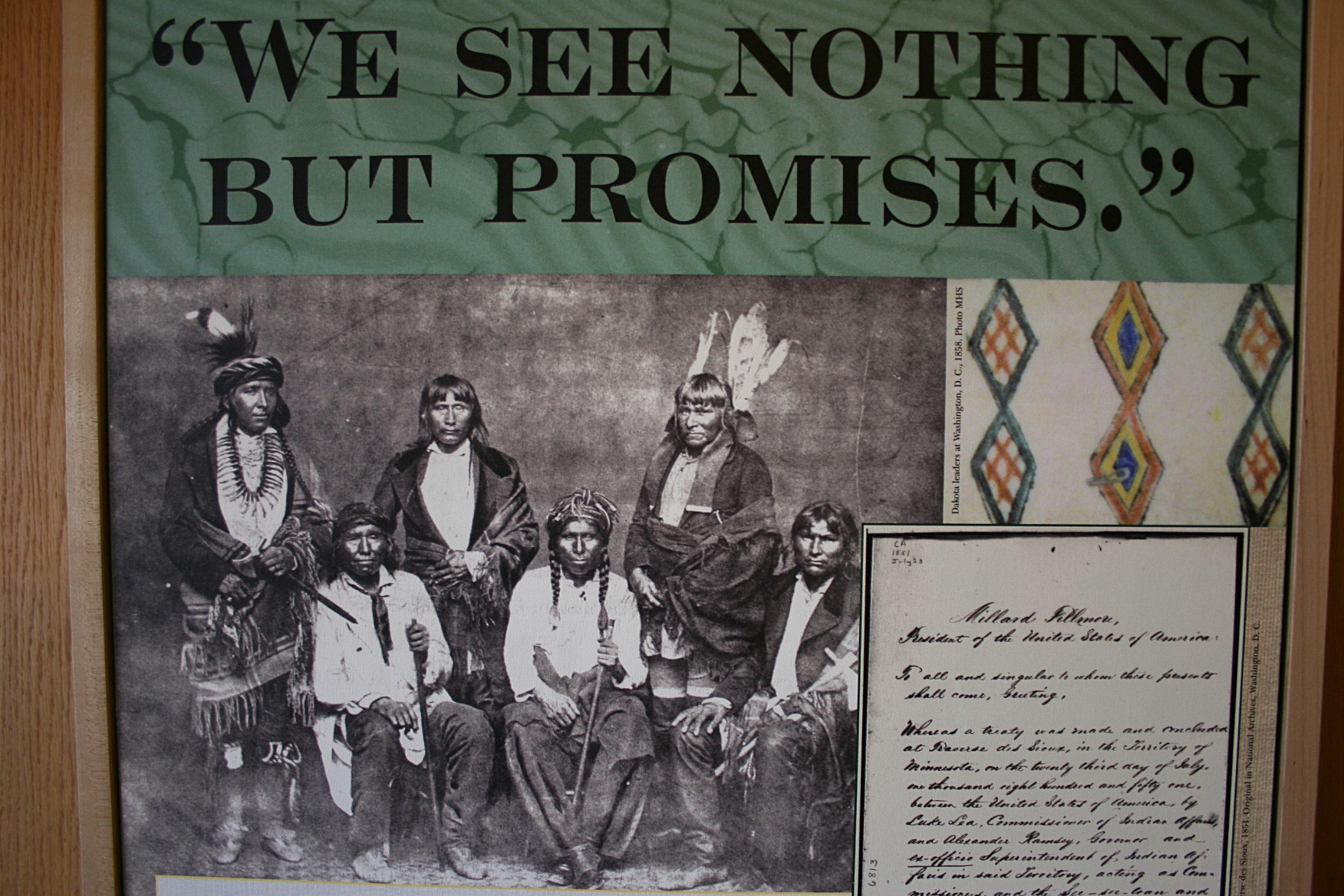
A photo panel at the Traverse des Sioux Treaty Center in St. Peter shows Dakota leaders photographed in Washington D.C. in 1858. The photo is from the Minnesota Historical Society. The war followed broken treaties. (Minnesota Prairie Roots copyrighted file photo)
Taopi farmed and established a school and mission, Hazelwood Republic, with chiefs Wabasha and Good Thunder on the Lower Sioux Reservation along the Minnesota River in southwestern Minnesota, Nichols shared. Because I grew up in that region, I’ve always been particularly interested in the Indigenous Peoples who were original inhabitants of the land, including Redwood and Brown counties. The region became the epicenter of the U.S.-Dakota War of 1862, which centered around issues of land, hunger and broken promises.
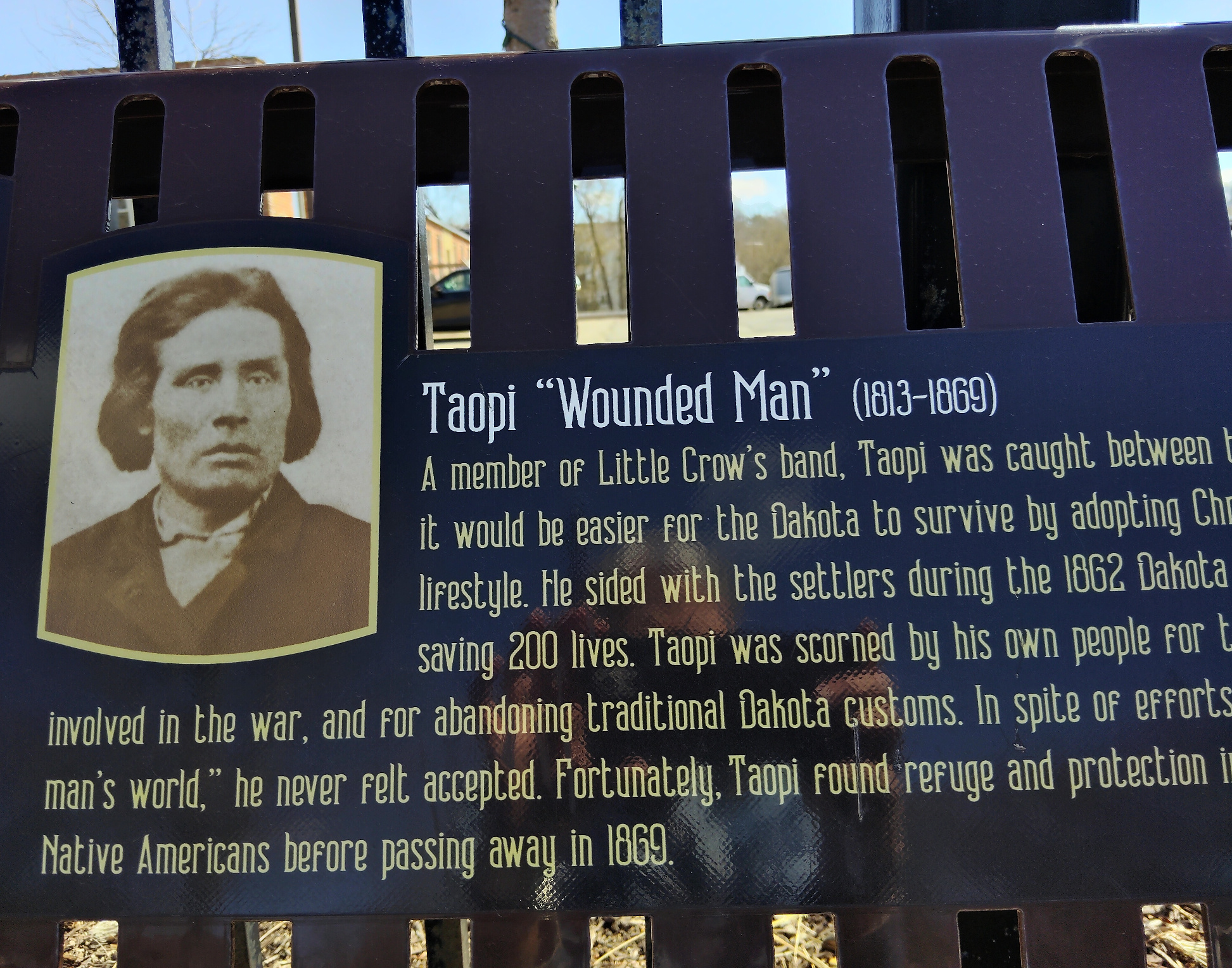
An historic-themed bench on the corner of Central Avenue and Sixth Street in Faribault highlights Taopi. (Minnesota Prairie Roots copyrighted photo April 2025)
That war facilitated the banishment of most Native Americans from Minnesota. If Taopi and other Dakota would have had their way, that war may not have happened. He led the Peace Party opposed to war, while his cousin, Little Crow, led the War Party, Nichols said. Taopi protected White settlers during the short war which claimed countless lives on both sides.
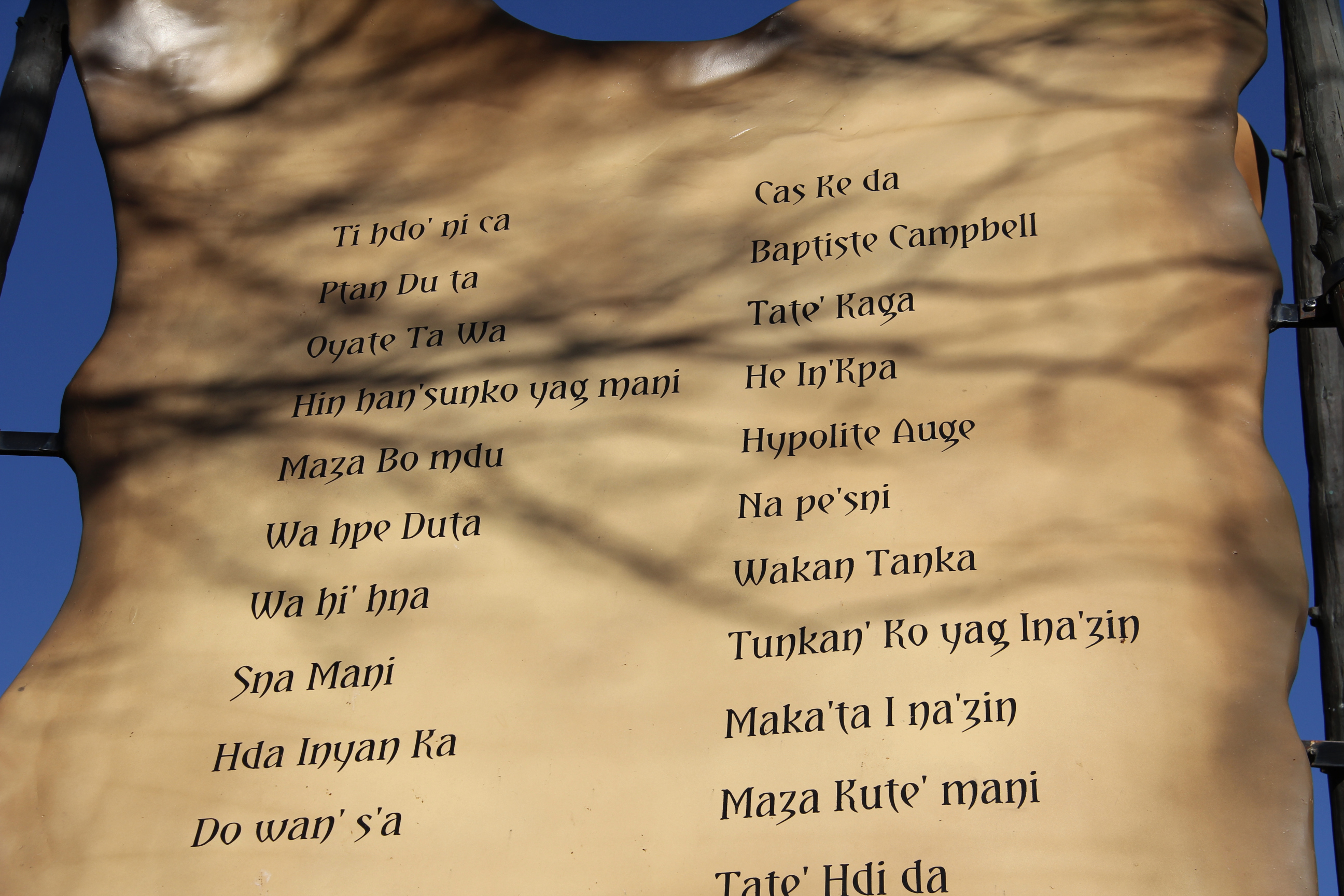
The names of the Dakota who were hung are listed at Reconciliation Park in Mankato. (Minnesota Prairie Roots copyrighted file photo)
Post-war, though, it mattered not to the U.S. government whether you were a Dakota person who opposed the war or who engaged in war, according to Nichols. All were considered guilty, imprisoned and eventually exiled from Minnesota (although not the Mdewakanton). Thirty-eight Dakota men were hung on December 26, 1862, in Mankato (40 miles from my community) during the largest mass execution ever in the U.S. It’s truly a tragic event in Minnesota history. But what multiples the awfulness is that 1,600 Dakota prisoners were marched to Mankato to watch the hangings before being marched back to Fort Snelling. That was new information I had not previously heard and it troubles me greatly.
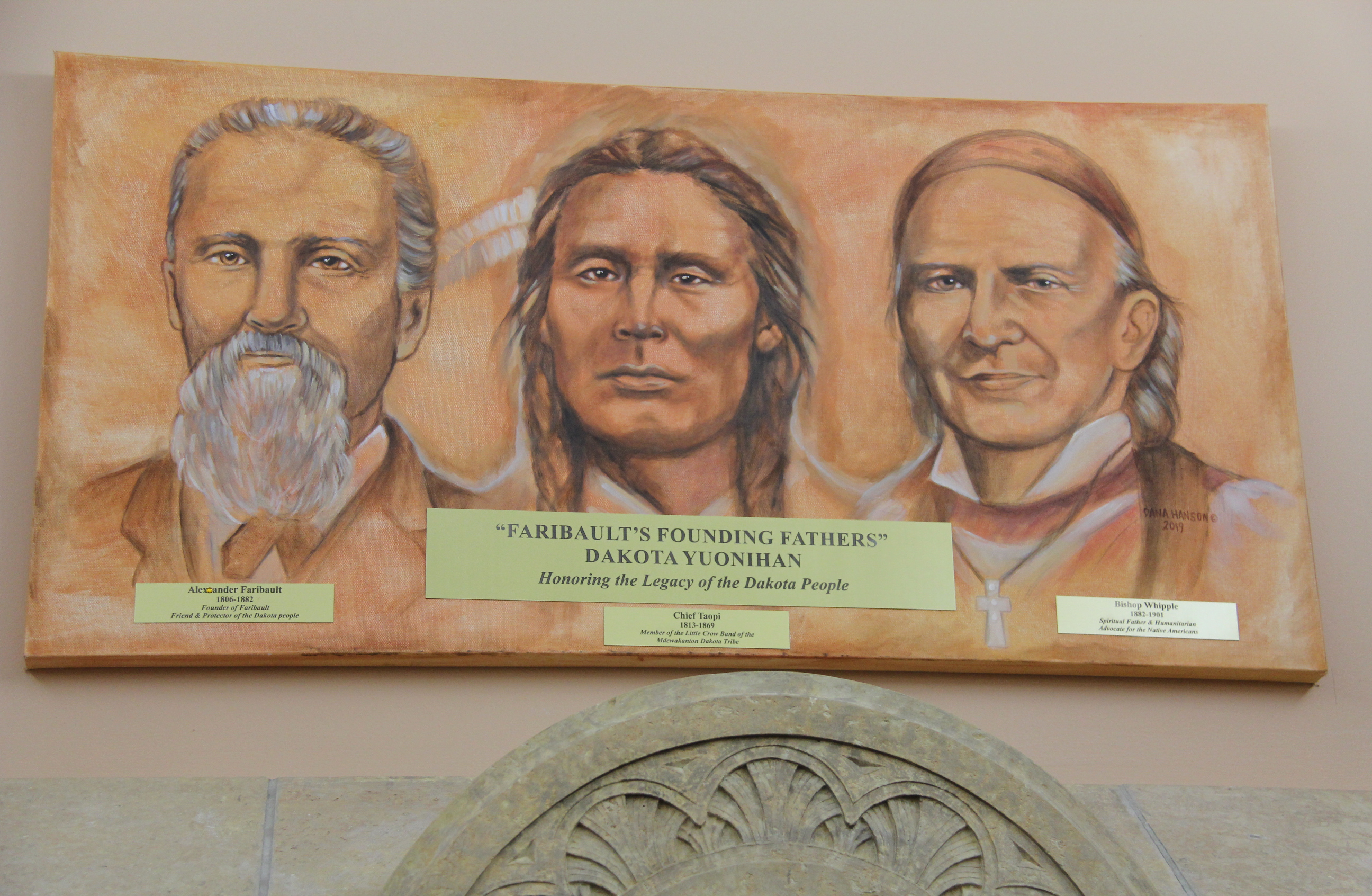
These portraits by Dana Hanson of Faribault’s Founding Fathers, Alexander Faribault (left to right), Taopi and Bishop Henry Whipple, hang in Buckham Memorial Library. (Minnesota Prairie Roots copyrighted file photo)
Taopi avoided prosecution and banishment, eventually landing in Faribault with 180 other Mdewakanton. About 80 were family members, according to Nichols. It was his friendship with Bishop Henry Whipple, who had long worked with and advocated for Native Peoples, that brought Taopi here. Town founder Alexander Faribault housed “the Peacefuls,” as the 180 were considered, on his land. They lived in tipis and lodges.
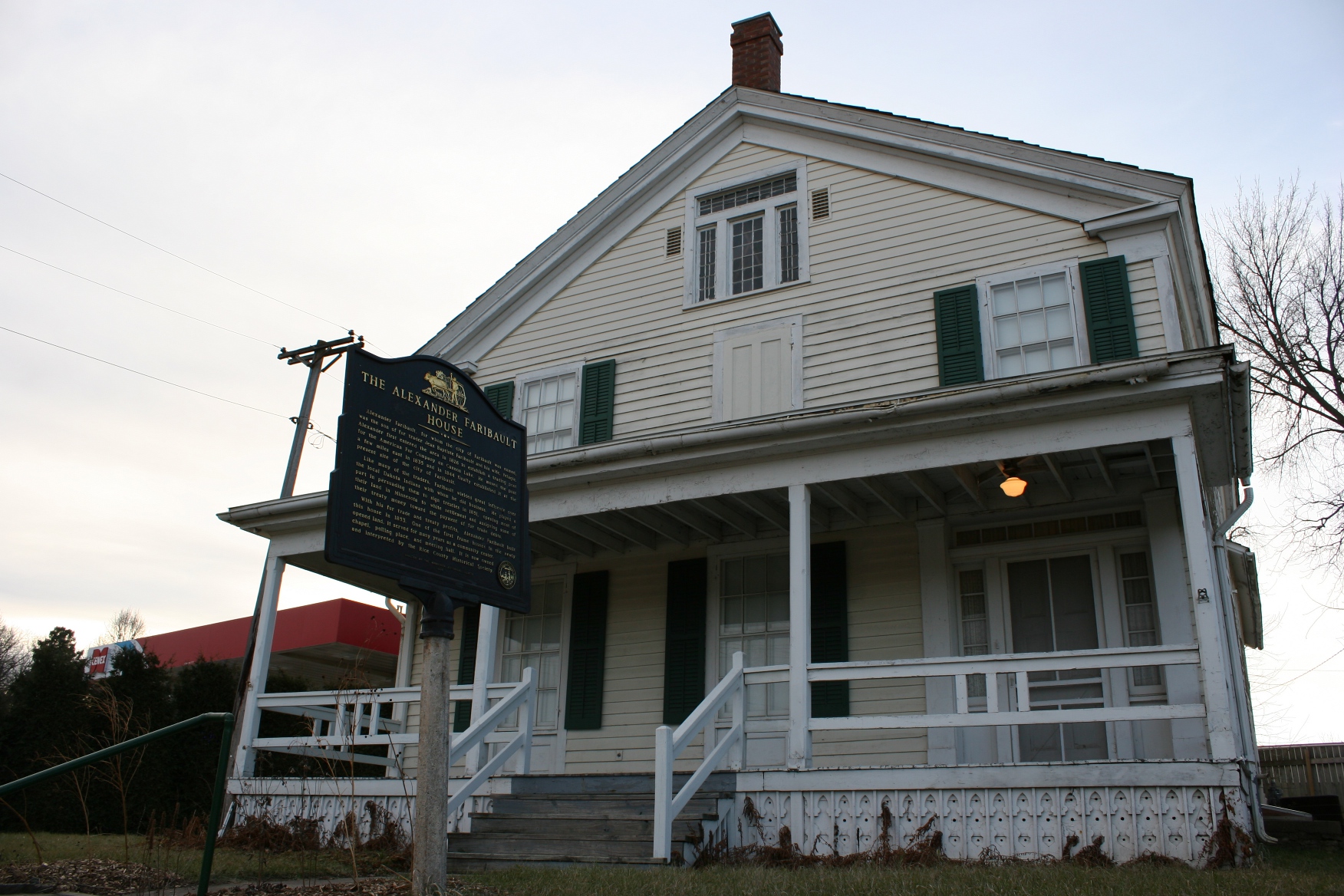
The home of fur trader and town founder Alexander Faribault. (Minnesota Prairie Roots copyrighted file photo 2017)
As you might rightly guess, not everyone in Faribault liked the Mdewakanton living among them. A wall was built in the area around Alexander Faribault’s house to protect them. Taopi became a community leader, said Nichols. As such he represented his people and mediated when necessary.
By the time of Taopi’s 1869 death, 90 of the 180 Mdewakanton who settled in Faribault had already left. But they left behind an imprint upon the land, not necessarily seen or appreciated even today. Yet, efforts are underway to change that with The Faribault Dakota Project. Nichols couldn’t speak specifically to that, only to say that local historian Jeff Jarvis has been working with the Dakota community on how to memorialize and honor the Indigenous Peoples of Faribault. That also includes the Wahpekute Dakota.
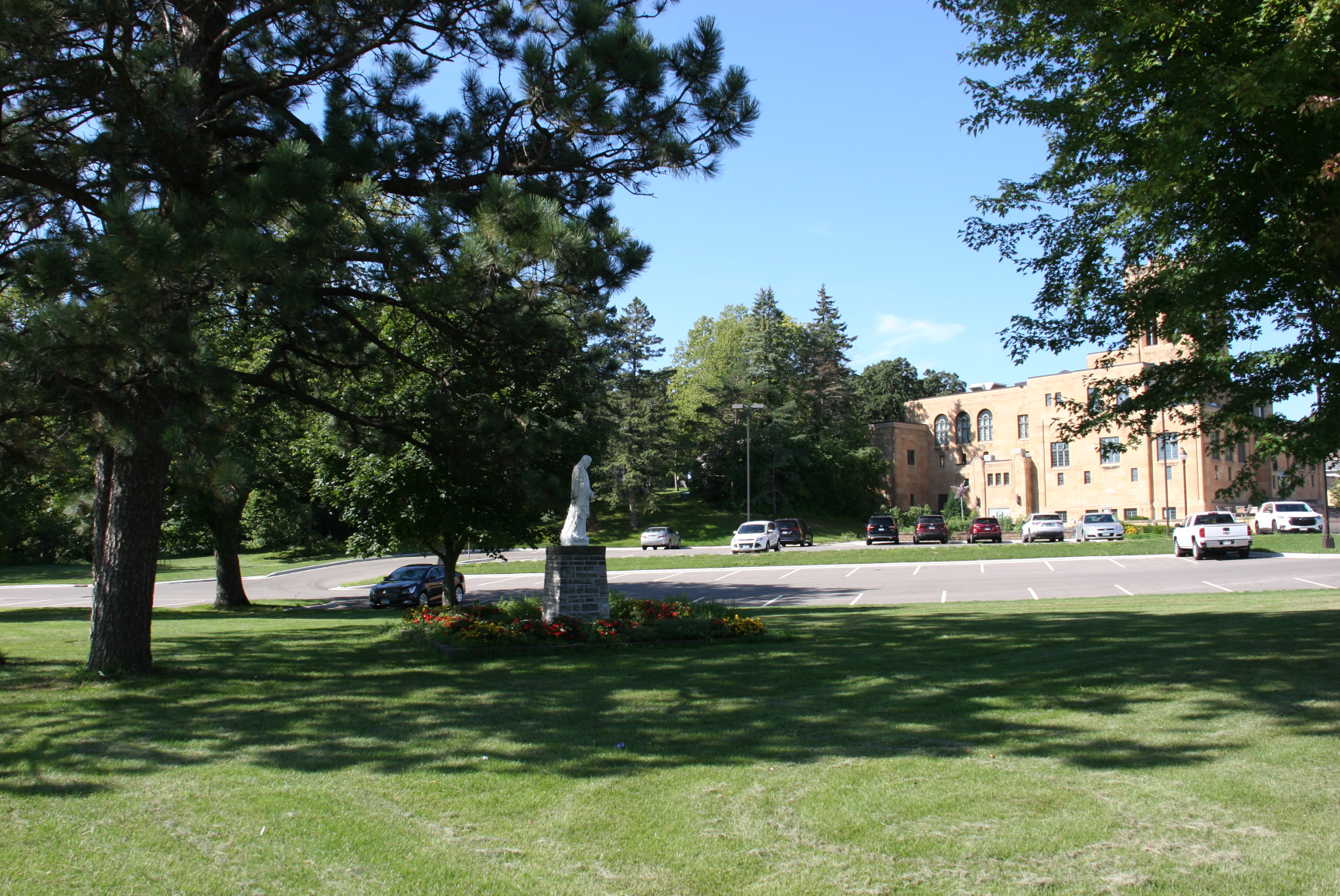
Peace Park, a protected Dakota burial site (but unmarked as such) next to the parking lot of Buckham Memorial Library. (Minnesota Prairie Roots copyrighted file photo)
Among the locales discussed by those attending Nichols’ talk was Peace Park, a triangle-shaped slice of property near Buckham Memorial Library. Alexander Faribault donated the land to the city with the stipulation that it never be developed. According to Nichols, the park is a protected burial site, where at least two Dakota are buried. Their bones were unintentionally uncovered in 1874 and then reburied. Today nothing marks that land as a cemetery. Rather a faith-based WWII monument stands in Peace Park. There is no reference to the Dakota. Perhaps some day this will be righted and the land publicly recognized as sacred ground. That is my hope as I continue to learn about the Dakota who once called Faribault home. I am grateful for every opportunity to grow my knowledge of them and their importance in local and state history.
#
FYI: Here are some suggested Dakota-connected places to visit in Faribault: the Rice County Historical Society Museum, Maple Lawn and Calvary cemeteries, the Cathedral of Our Merciful Saviour, a mural on the Central Park Bandshell and information on an historic-themed bench along Central Avenue.
Two fun facts:A small southeastern Minnesota town in Mower County near the Iowa border is called Taopi, named after the Mdewakanton Dakota chief. It suffered a devastating tornado in April 2022. The town celebrates its 150th birthday this year.
A woman attending Dave Nichols’ talk named her horse Taopi after Chief Taopi.
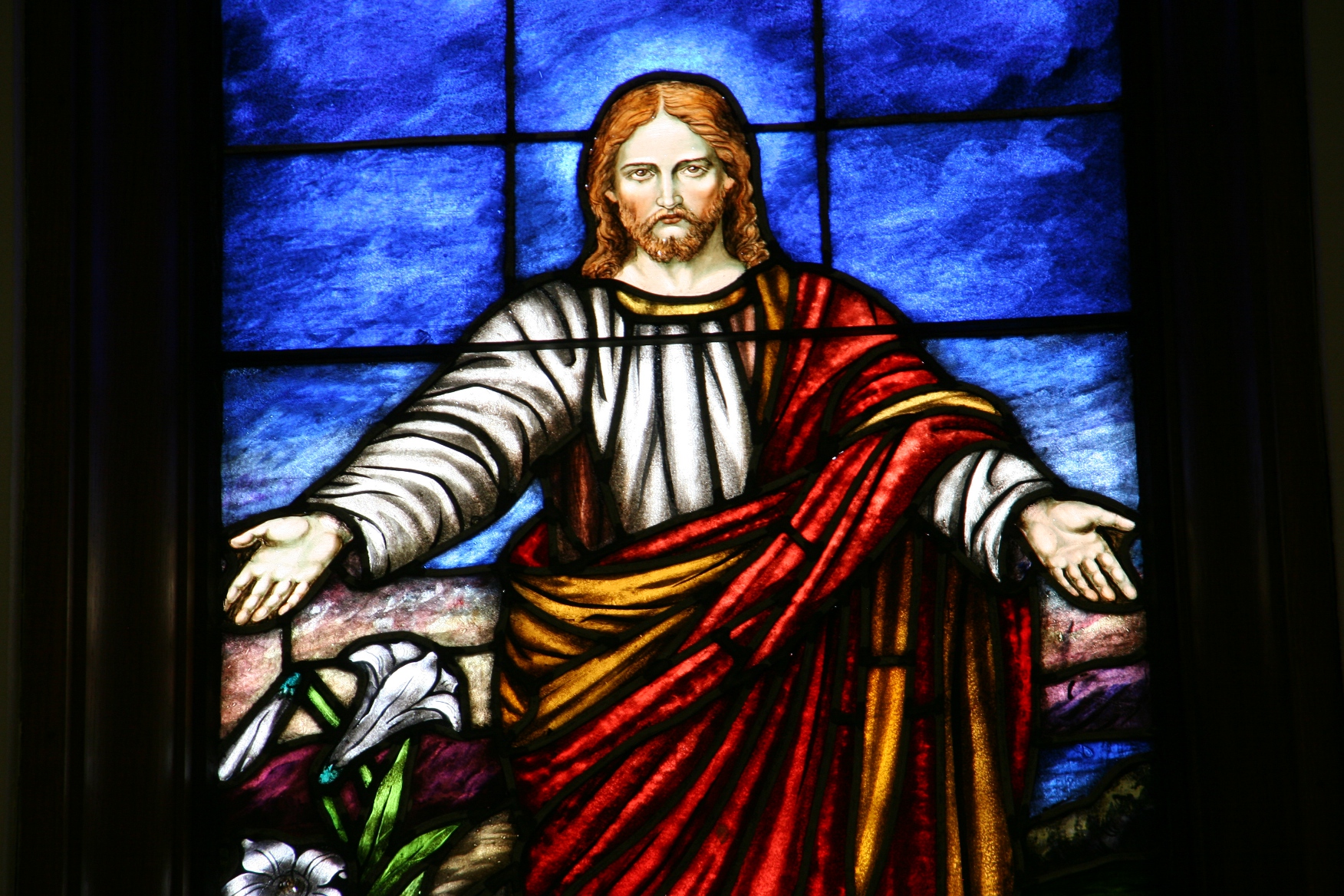
This stained glass window of the women at Jesus’ empty tomb rises above the altar at Holden Lutheran Church, rural Kenyon, Minnesota.(Minnesota Prairie Roots copyrighted file photo)
EASTER SUNDAY MARKS a day of celebration among Christians as we rejoice in the resurrection of Jesus and the promise of eternal life.
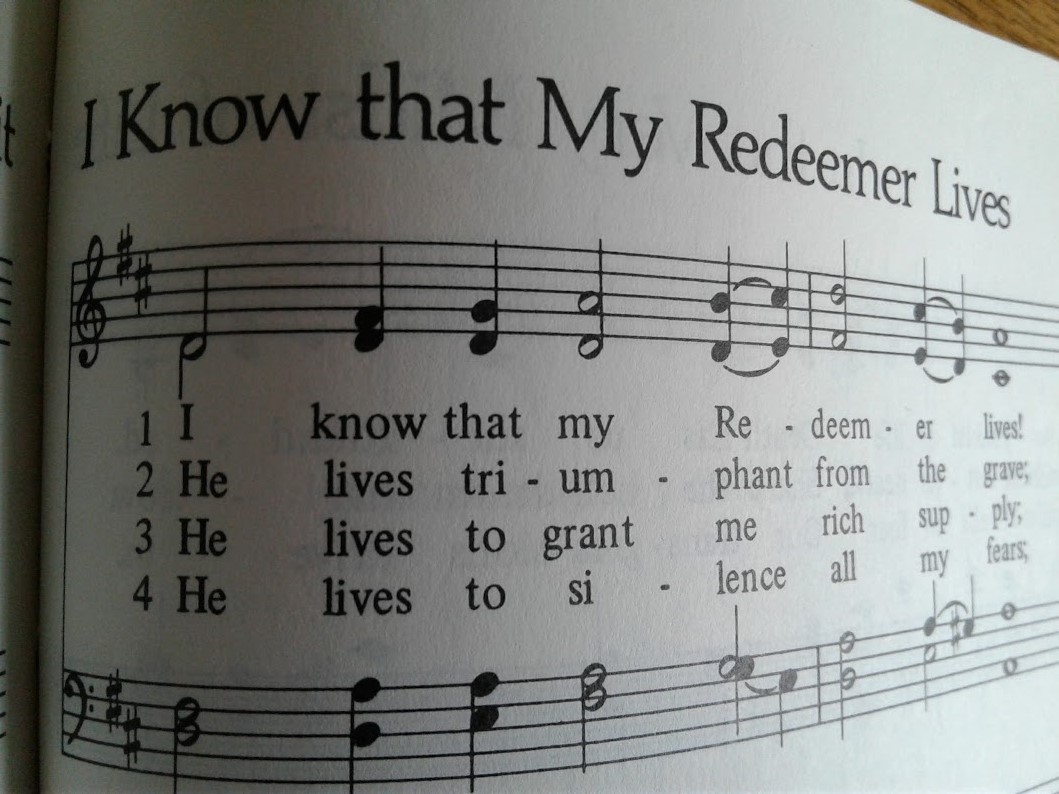
My favorite Easter hymn. (Minnesota Prairie Roots copyrighted file photo)
It is a day of joyful song, of prayerful gratitude, of alleluias.
Eggs dyed with my mom many years ago.(Minnesota Prairie Roots copyrighted file photo)
It is a day, too, to gather with family over brunch or a ham dinner. It is a day to find Easter baskets and hidden eggs.
It is a day of memories made and memories remembered. It is a day of missing those loved ones no longer with us, but loving on those who are near or far.
The risen Lord centers the trio of stained glass windows above the altar at Trinity Lutheran Church, Wanamingo. (Minnesota Prairie Roots copyrighted file photo)
It is a day when the sun rises on a struggling world, where hope is needed now more than ever.
Have a blessed and joy-filled Easter, dear friends!





























 Minnesota Prairie Roots
Recent Comments