Minnesota Prairie Roots

Writing and photography by Audrey Kletscher Helbling

Winter walk: Of woods & river & hungry ducks February 3, 2021

I WAS DETERMINED this past Sunday to get out of Dodge. I needed a change of place, something new to photograph. So I decided we’d head about 20 minutes south on Interstate 35 to check out the snow sculptures at Owatonna’s Bold & Cold Winter Festival.

Well, we never got there. Suffice to say the best-laid plans were thwarted by developing health situations with our parents. Our phones were blowing up on Sunday. And I’d lost my desire to leave Faribault. I’d been awake since 4:55 a.m. and, come afternoon, my energy level plummeted. Randy suggested I nap for a bit. I tried.

The trail we walked edges the Straight River.

Then, about mid-afternoon, I declared myself weary of everything and ready for a walk. I pulled on a warm parka, laced my snow boots, grabbed a stocking cap and mittens, switched out the lens on my camera and headed out the door. Destination: A Faribault city trail that runs parallel to Central Avenue and along the Straight River.
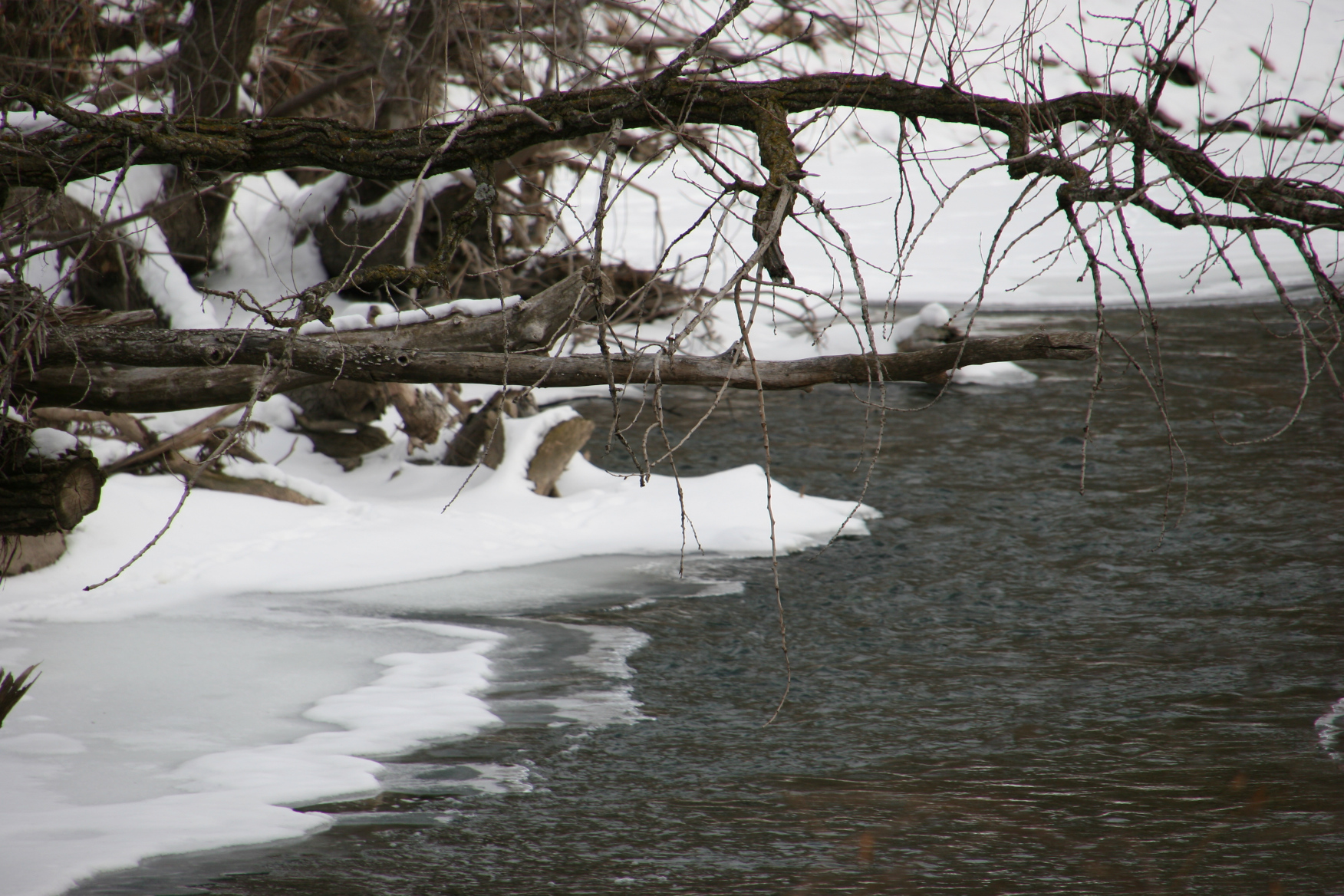
Branches overhang the Straight River.

As Randy and I walked, I felt my mood shifting away from worry about loved ones to the natural world around me. Bare trees rising above the snow. Others leaning or broken. Black against white.
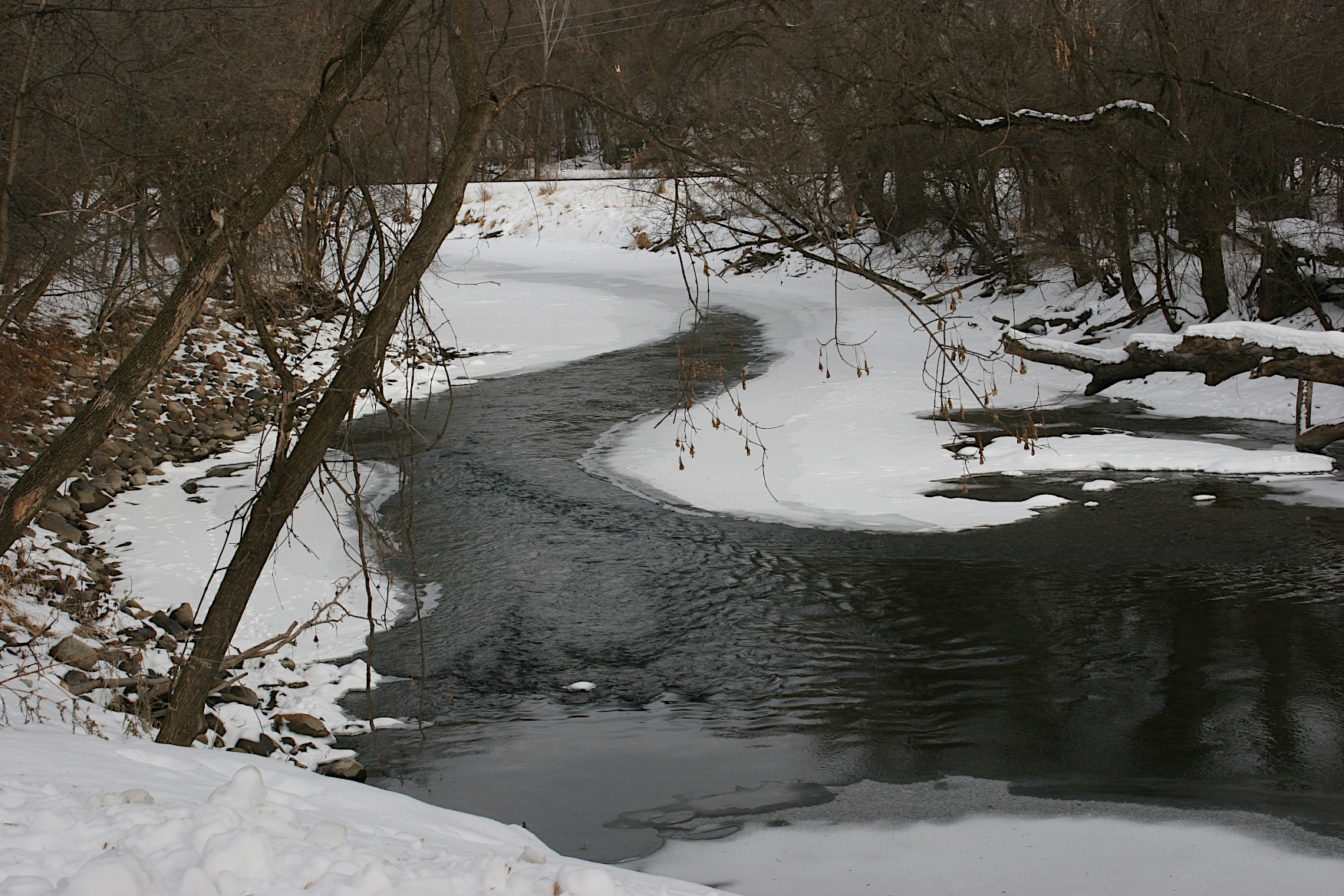
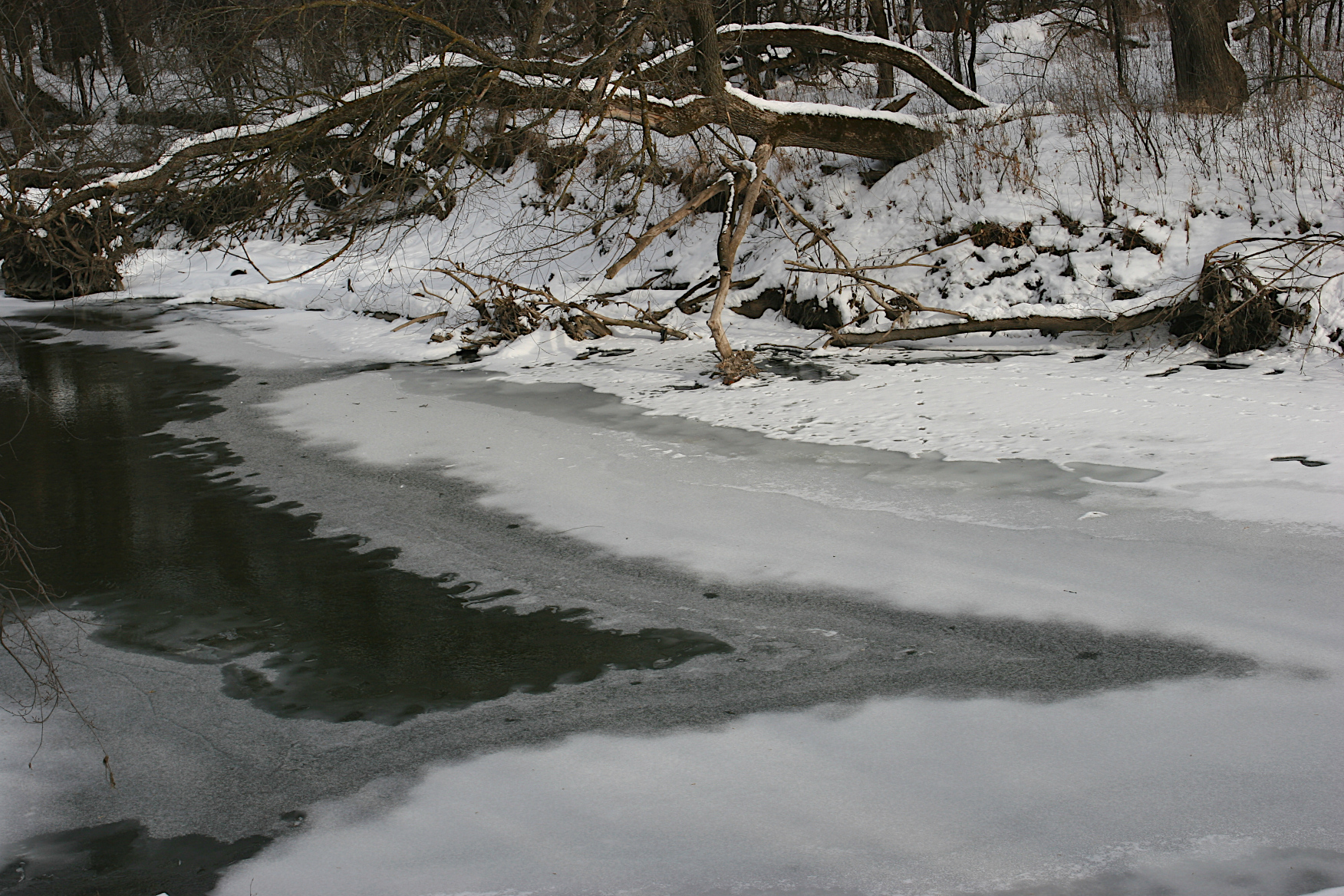
The river curves through the woods.

The river, edged with ice, curving through the woods. Poetic. Artsy. Mostly monochromatic.
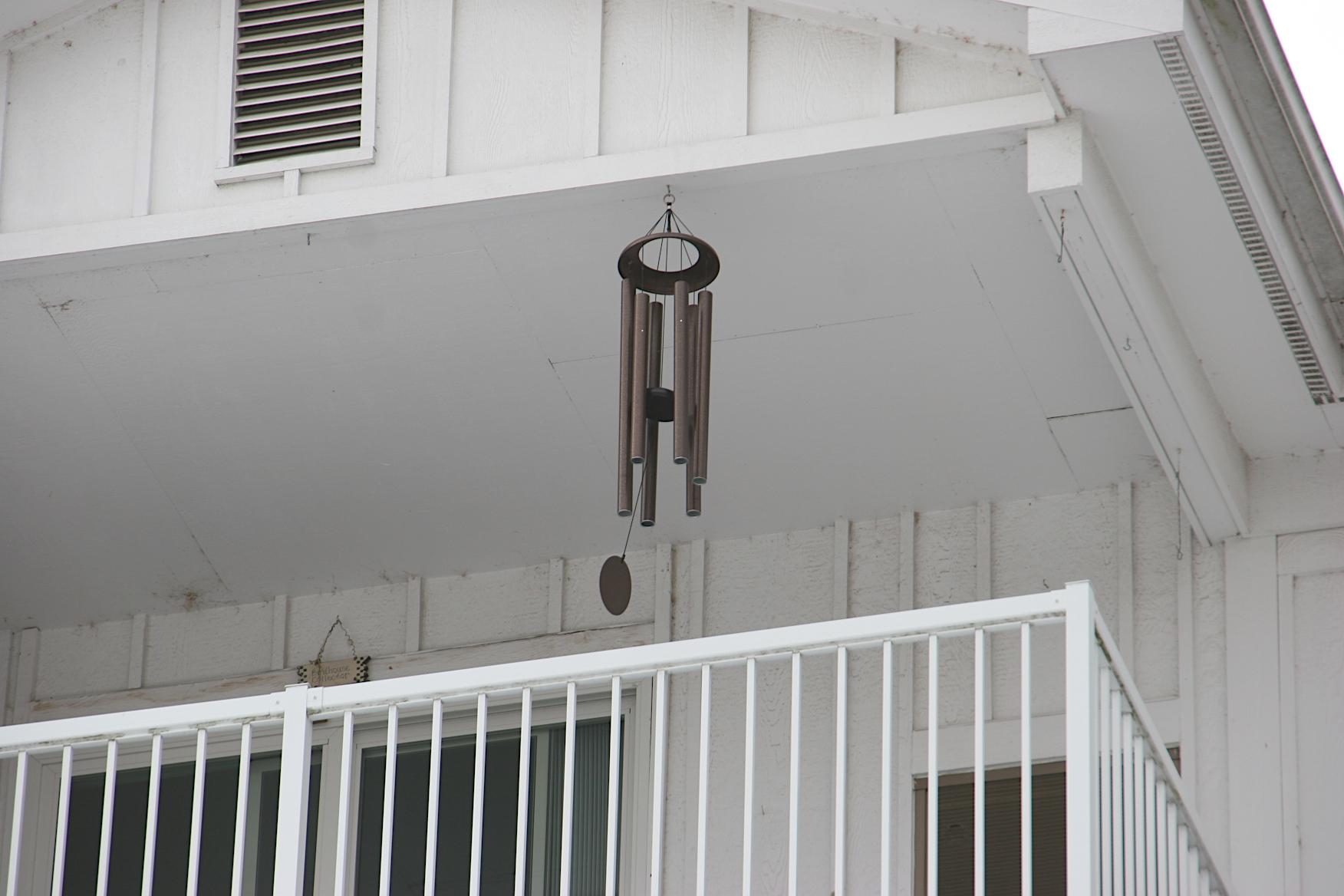
The wind chimes that created such beautiful music.

I paused at the sound of music, church bells, I thought. Randy pointed to chimes dangling above a balcony at a trail-side apartment building.
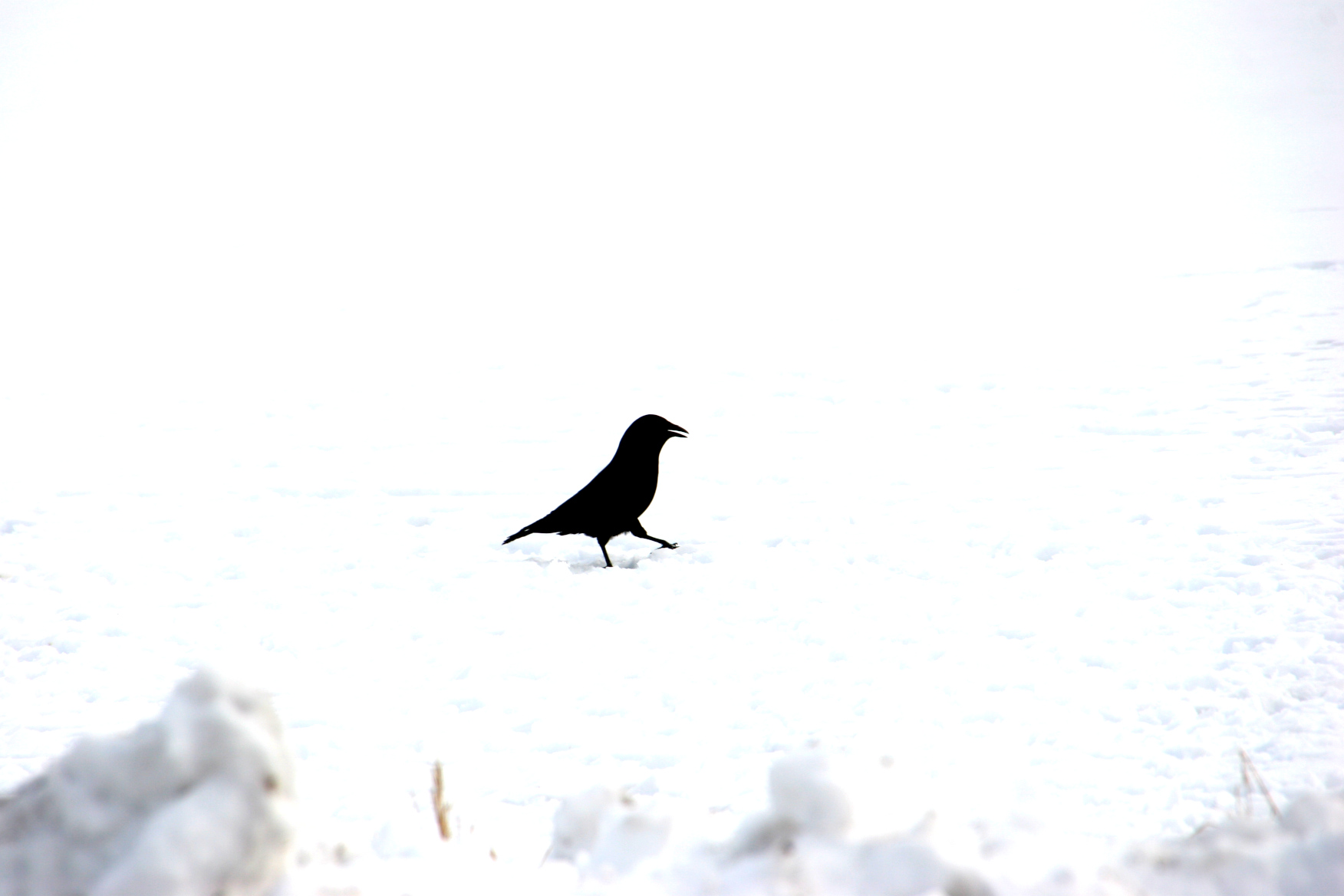
Photographed on the Cannon River at North Alexander Park. Randy claimed the bird followed us from the other trail we walked. Photo was edited.

We listened, too, to the manic caw of crows circling nearby. I felt like I was in a scene from Alfred Hitchcock’s “The Birds.” I thought I saw an eagle through the distant treetops, but then never spotted it again.
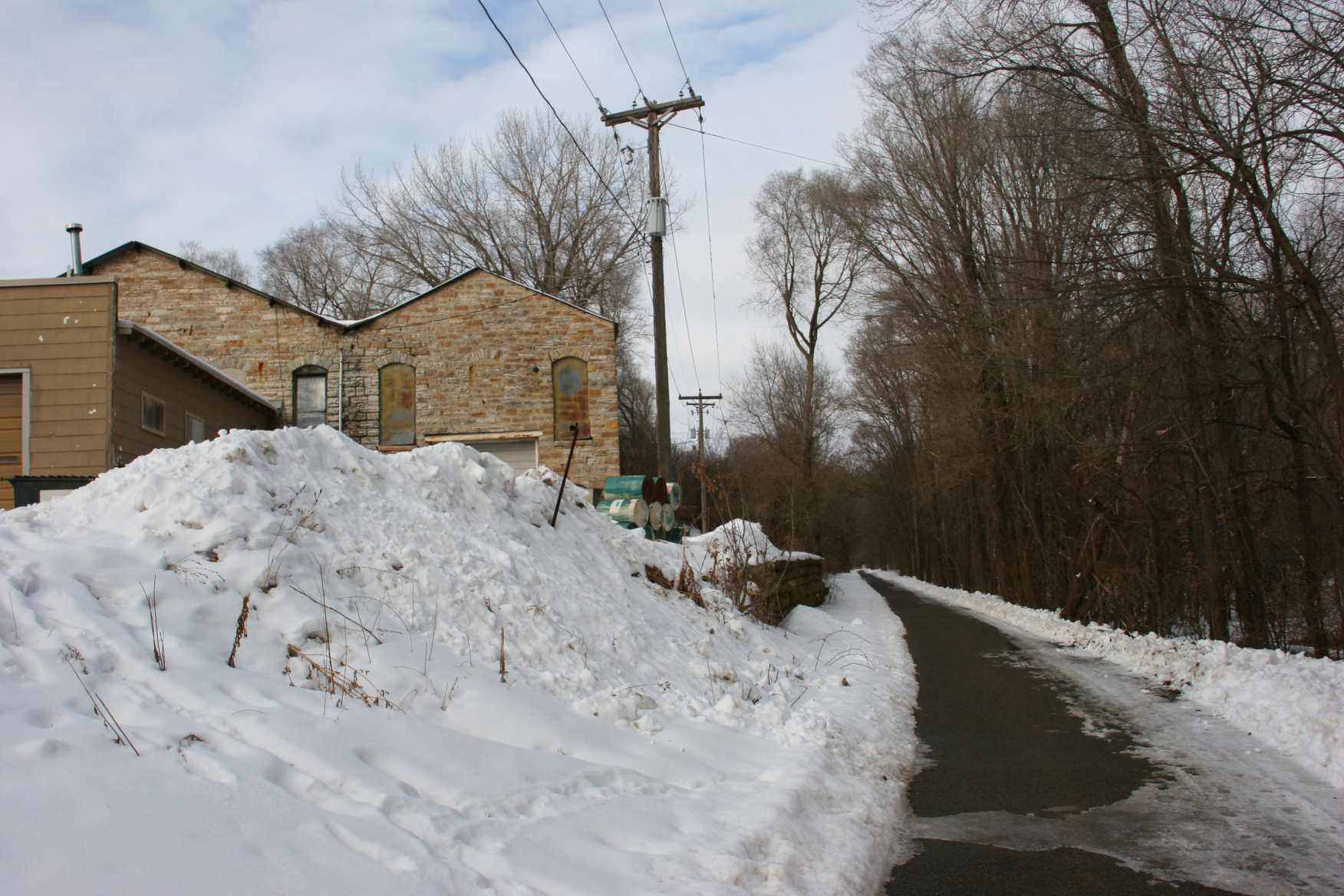
This limestone building along the Straight River Trail caused me to pause. I need to research its history. Watch for a future post with more images.

A bit farther down the path, we paused to consider an aged limestone building. Abandoned. I wondered aloud at its purpose. And the part of me that appreciates such historic structures lamented its neglect.
Art on ice.

I noted the abundance of animal tracks in the snow. And human tracks and sled imprints on the hillside.

When the cellphone in my parka pocket jingled, I ignored it.
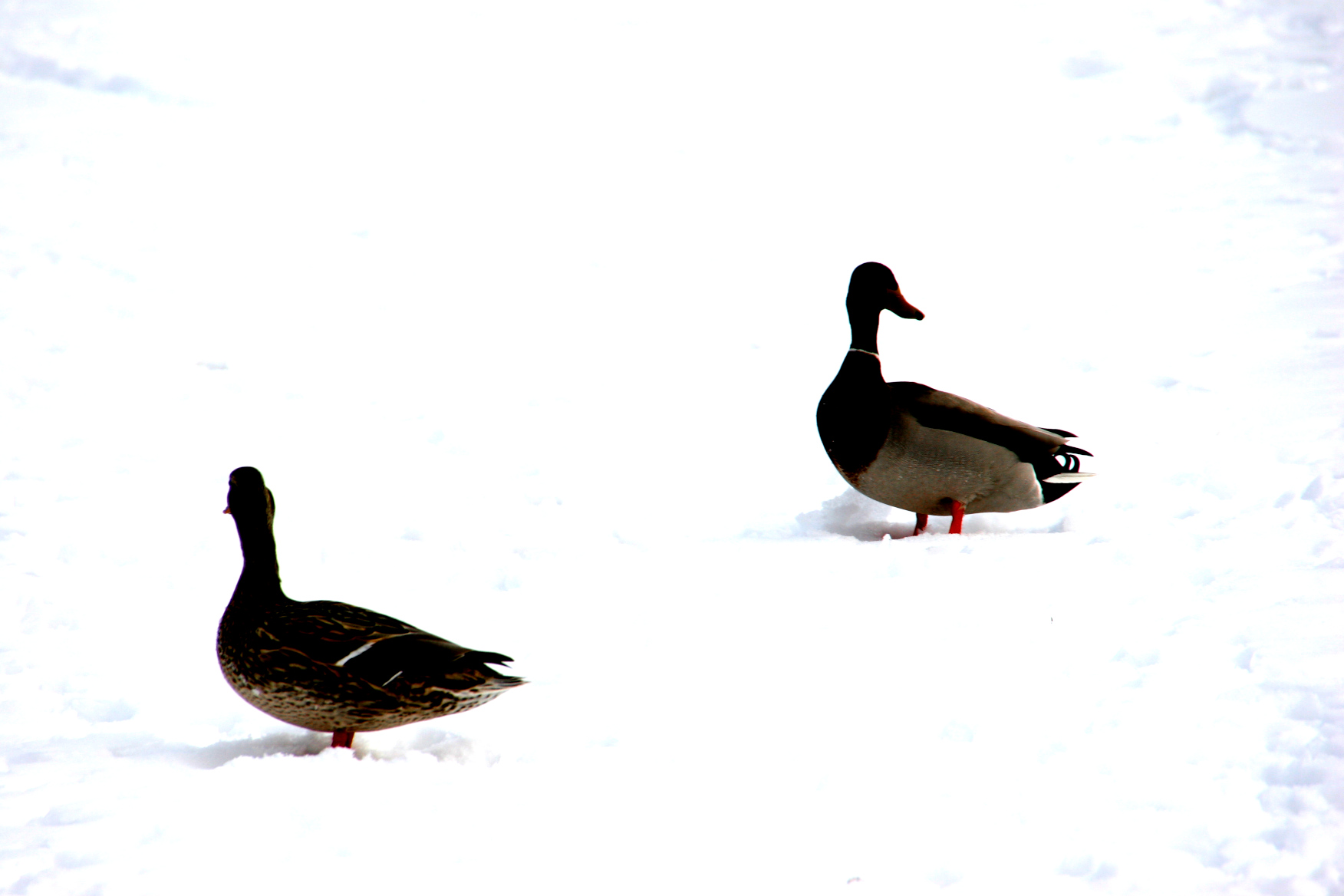
The first two ducks to land near us along the shore of the Cannon River. Edited photo.

When we’d walked a distance, we retraced our steps, took a short cut up the sledding hill and then aimed to another city trail, this one along the Cannon River in North Alexander Park. There, masses of ducks flew close to shore near our parking spot. They just kept coming and I couldn’t figure out why.
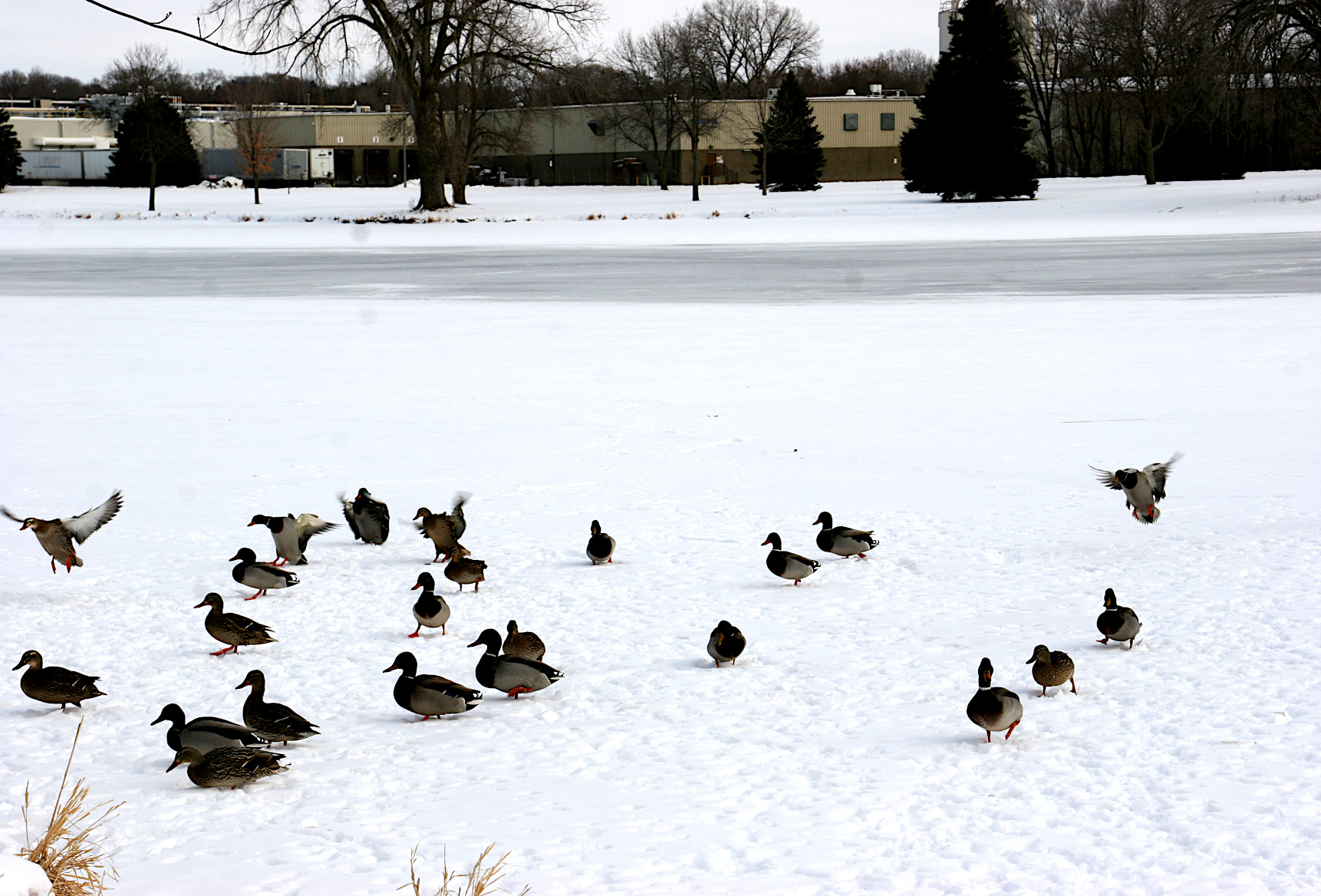
The ducks just kept coming, landing on the frozen river. Edited photo.

Randy looked at the paved pathway to traces of smashed bread. Ah, the ducks thought we brought food. We laughed about that and considered that maybe, while we continued our walk, they would swarm our van and leave droppings.
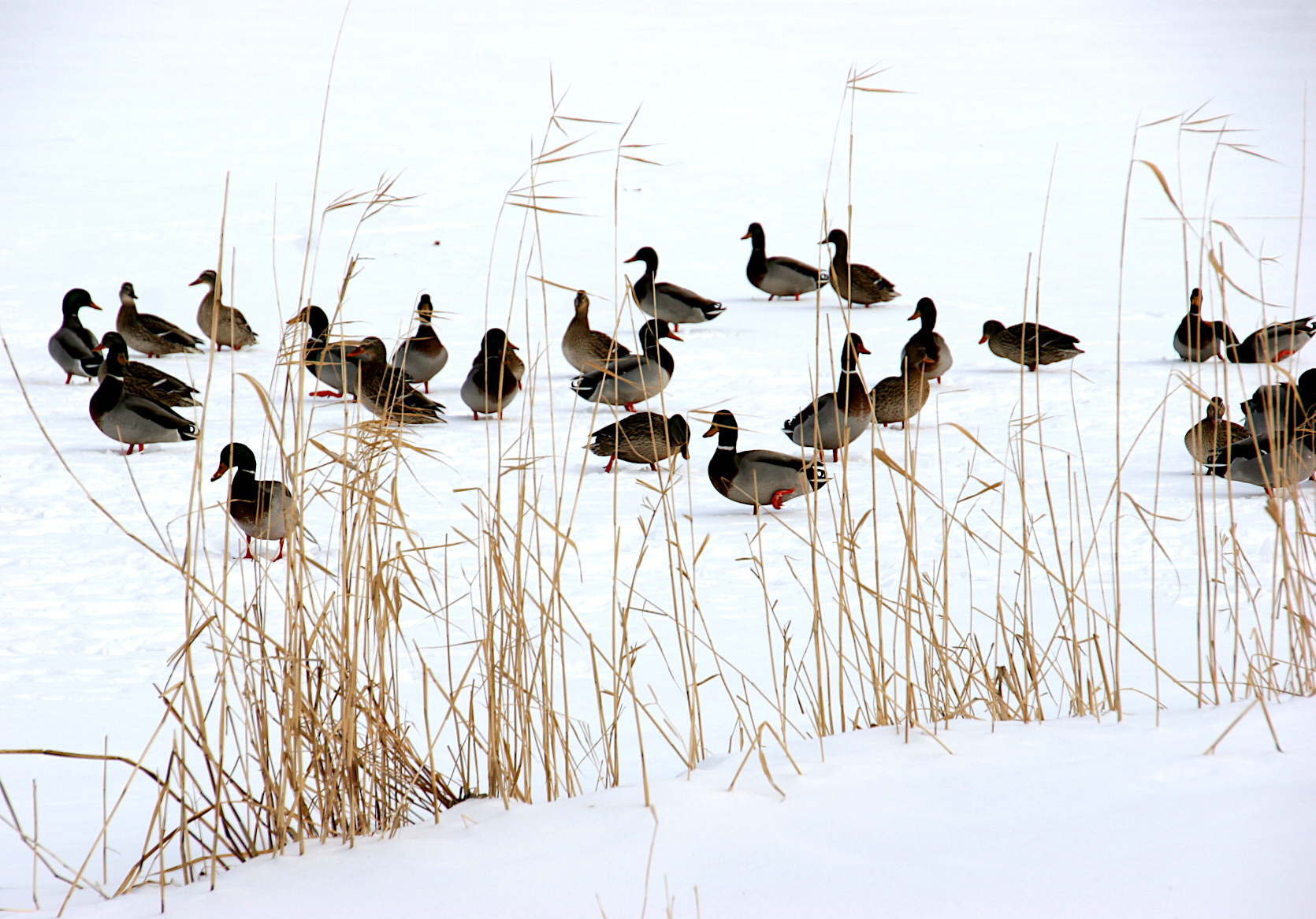
The ducks hung around until we distanced ourselves from them and they determined we weren’t feeding them. Edited photo.

I quickened my pace, anxious to flee the flock of hungry ducks. A few minutes later, we watched them take flight away from the frozen shoreline and land in open water.
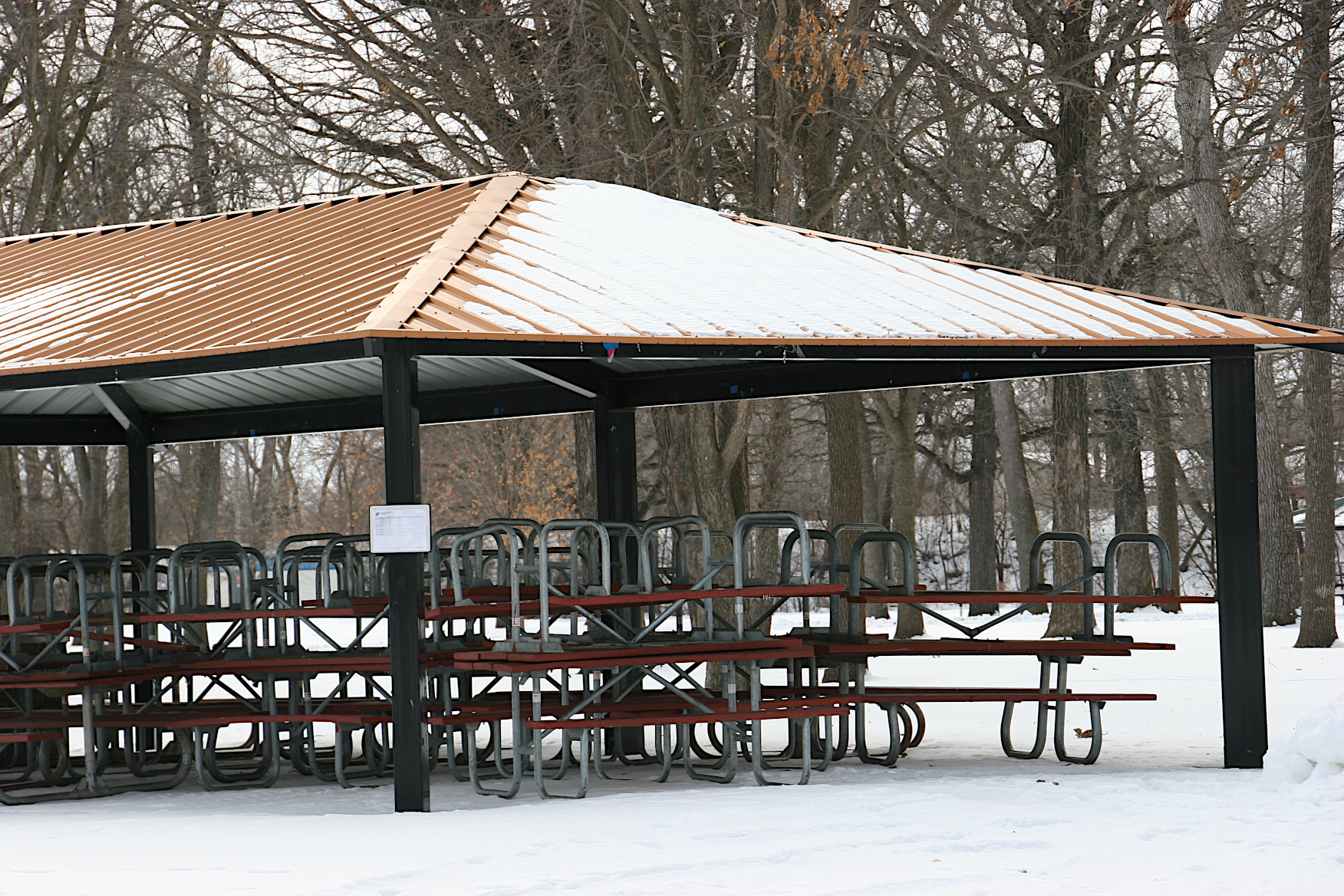
One of the many picnic shelters in North Alexander Park, where picnic tables are stacked in the winter to protect them from the weather.

We continued through the park, passing picnic shelters packed with stacked picnic tables. Past lone grills enveloped in snow. Past the colorful playground absent of children. And past the vacant ball fields.
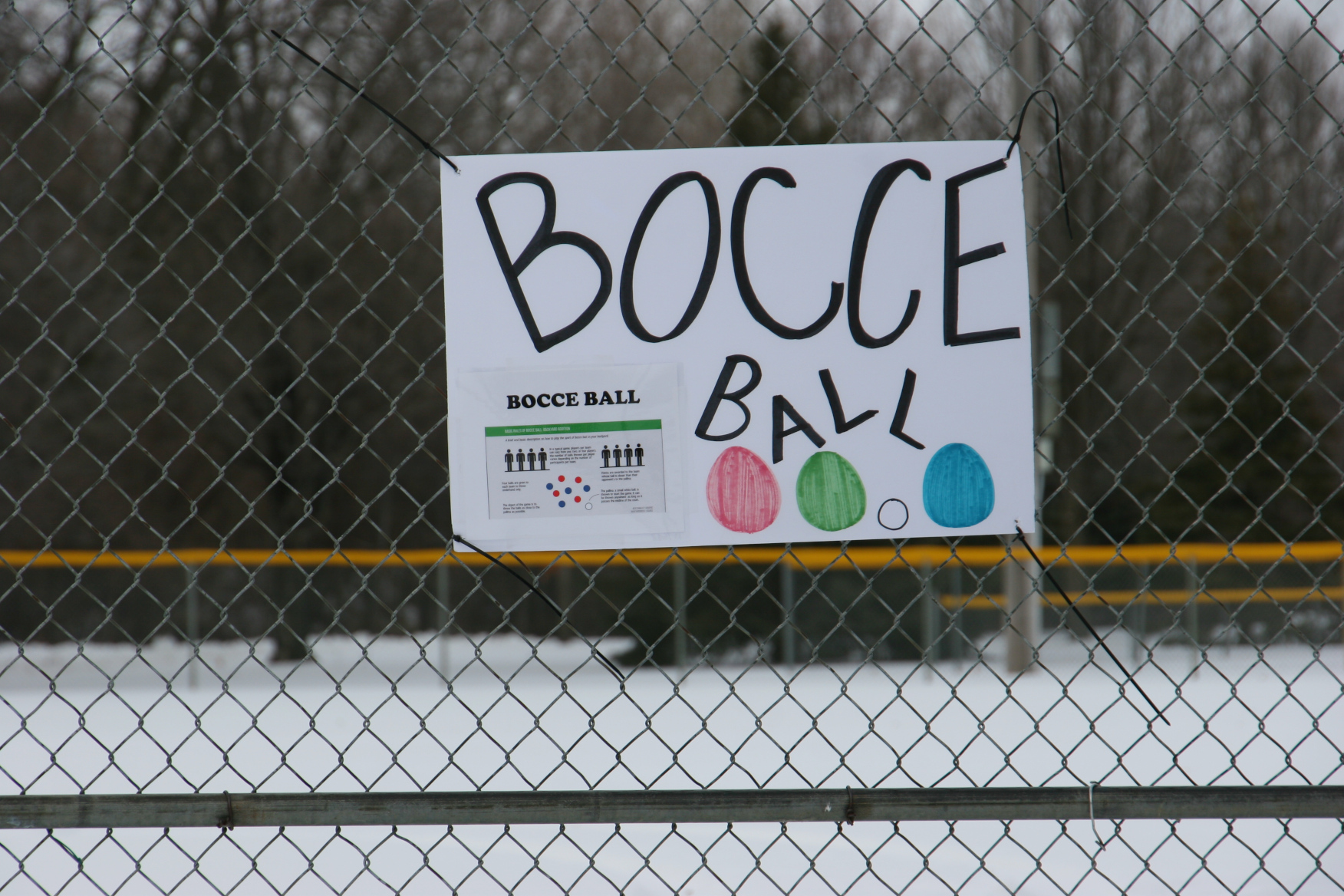
Posted on a softball diamond fence at the park.

The wind cut cold through our bones as we turned onto the park road that would take us back to our van. I felt refreshed, my mind cleared, my spirits buoyed by the simple act of getting outdoors. Away from challenges and concerns. For at least an hour.

© Copyright 2021 Audrey Kletscher Helbling


“The Great Invader,” neither fable nor fairy tale February 2, 2021

Filed under: Uncategorized — Audrey Kletscher Helbling @ 5:00 AM
Tags: , , , , , , ,
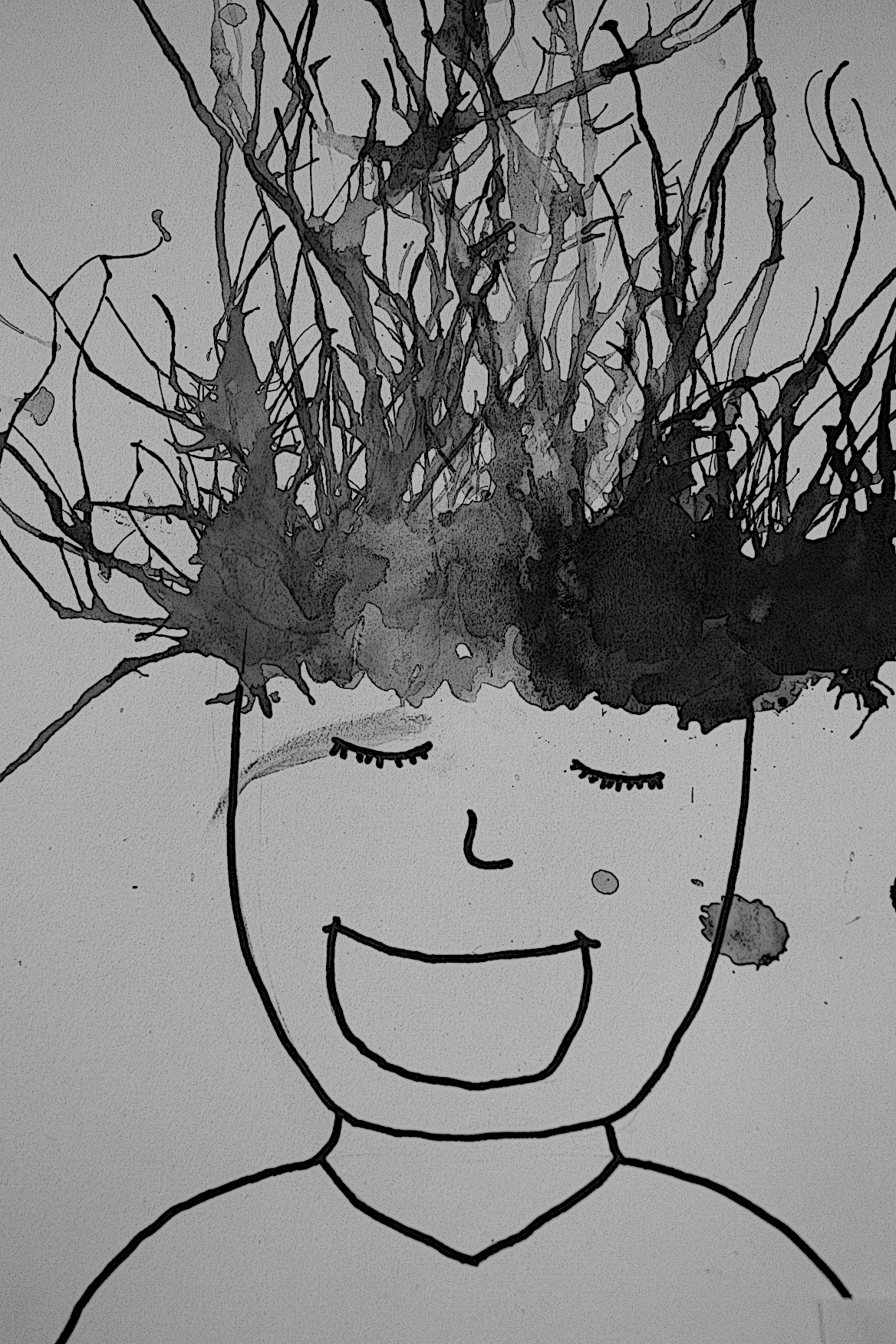
Edited painting by Ruby from the 2018 student art show at the Paradise Center for the Arts, Faribault. Minnesota Prairie Roots file photo.

ONCE UPON A TIME, in The Land of Plenty…

Ah, a fairy tale, you say. Not exactly. Rather, this is a story rooted in reality. A story with a main character who, for ease of writing, shall be identified in secondary references as “he.” Not that The Great Invader is male.

So let’s dive into the story. Once upon a time in The Land of Plenty, The Great Invader landed, making himself comfortably at home. He was, by nature, a traveler. But he wasn’t the type of guest you’d knowingly invite into your home. You know the kind. Ungrateful. Demanding. Messy. And mean, just plain mean. Because of those undesirable traits, he soon found himself on the road, hopping from place to place under a guise of masterful deception. West Coast to East Coast. Then to the South and Up North and to the Midwest. He wanted, above all, to avoid detection and negative publicity.

But word soon got out about The Great Invader. Scientists found him especially fascinating. The more they studied the strange-looking traveler with his signature spiky hair, the more alarmed they grew. They realized he was much more than he appeared. Dangerous. He left a path of death and destruction wherever he went. Yes, that’s a cliché. But it fits.

The scientists warned about the intruder and suggested ways to deal with him. By then they’d studied him in their labs and determined that he traveled mostly by air. No ticket required. “Wear masks,” public health officials who collaborated with the scientists, advised. “Distance yourself from others. Avoid crowds. If you’re sick or feel like you’re coming down with something, stay home.” All of those tactics would discourage The Great Invader. But these proactive protocols were especially difficult for some people in The Land of Plenty to hear, let alone follow. They didn’t like anyone telling them what to do.

The Great Invader was acutely aware of these efforts to stop his adventures. He also recognized the discontent and division spreading across the land like a California wildfire. He needed a plan. And he didn’t have to think too hard. He’d simply rely on people who doubted scientists, who took little stock in warnings from health officials, who spread false information, especially via social media. People who could be a voice. He didn’t much care if that voice was loud or insidiously quiet.

As the months passed, The Great Invader found his hands-off strategy working quite well. He traveled to nearly every corner of The Land of Plenty. Even to the smallest village, where the villagers never dreamed he would visit and leave his imprint. “Why would The Great Invader come here? We have no great theaters or art museums or sports arenas or five-star restaurants or any major tourist attractions,” the villagers reasoned. So many went on with life as usual. Yet, an undercurrent of concern began to bubble when evidence of The Great Invader’s presence surfaced in the remotest of villages.

Meanwhile, across The Land of Plenty, scientists, health and government officials, and even journalists, were tracking The Great Invader on his journey around the country. And the world. They soon discovered they were no longer dealing with a sole sojourner, but rather many with magical powers. The spiky haired traveler had reproduced millions, if not billions, of times and created new versions of himself. This frightened the scientists, who by then had called upon experts to develop a battle plan. They needed to stop the traveler as he asserted his deadly powers. So researchers created a powerful potion to protect the people.

Soon squabbles arose as to who would get the potion first. The Great Invader laughed. He thrived on chaos, confusion and discontent. And lies. He admired selfishness.

He also secretly applauded those who defied common sense and science. He reveled, especially, in those in The Land of Plenty who refused to wear face masks. He celebrated every single person who wore their masks below their noses. And he saw plenty of those, whom he considered valued allies. The mask-less and the half-maskers allowed The Great Invader to travel with ease. If he found himself temporarily removed from a region, he just moved on for a while, only to return when people thought he’d permanently left.

And so, while the people of the land claimed all sorts of indignities brought on by The Great Invader and even tried to stop distribution of the powerful potion, he continued mapping his routes, plotting strategies and documenting his travels in his Once Upon a Time journal.

#

NOTE: In every story there are truths, this one no exception. To all who have encountered The Great Invader/COVID-19 at his worst, I am sorry.

Observations in my community of Faribault sparked the idea for this story. As COVID-19 infections and deaths rise in Rice County, I see too many individuals in public who are wearing masks below their noses and/or mouths or not masking at all. I am beyond frustrated. We’re not talking just a few people. While I shopped at a local big box retailer, a smaller discount store and grocery stores recently, I saw perhaps 30 individuals who were half-maskers, plus a mask-less couple and children old enough to wear masks (but who were unmasked). Employees were among those half-maskers. I implore the people of Faribault to, please, just wear a tight-fitting, multi-layered mask, and wear it over your mouth AND nose. It’s not that difficult.

© Copyright 2021 Audrey Kletscher Helbling
 

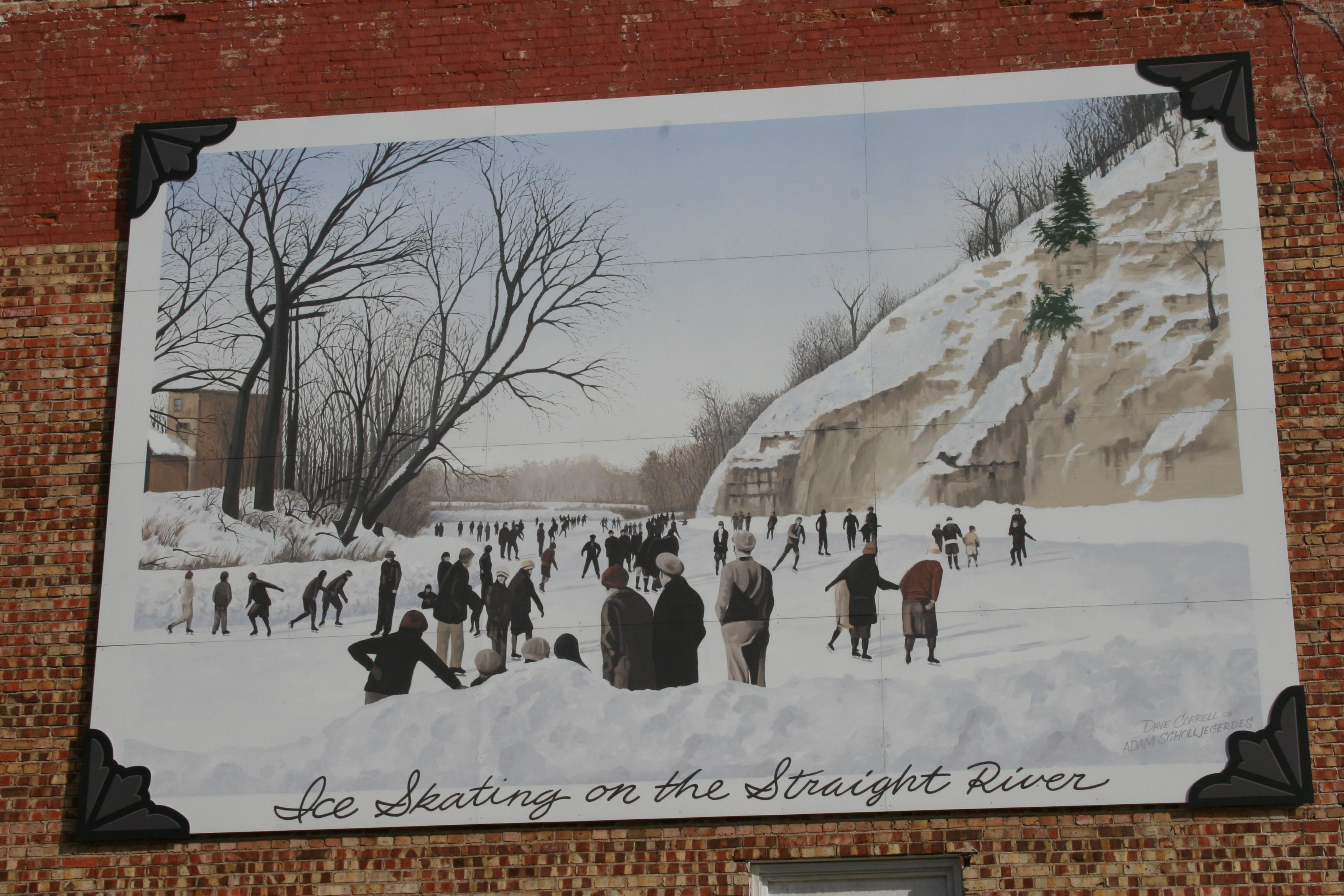
For the love of ice skating in Minnesota February 1, 2021

This mural of “Ice Skating on the Straight River” graces the side of 10,000 Drops in downtown Faribault. Minnesota Prairie Roots file photo.

WAY BACK IN THE DAY, in the exuberant days of my youth, when I truly enjoyed winter, I loved to ice skate. I wore my Aunt Dorothy’s white figure skates, passed along to me. I was happy to have them.

And I was happy to find a patch of ice upon which to skate in my hometown of Vesta. Near the grain elevator. Nothing fancy. Just an open space flooded in the winter for skating.

Now my hometown is looking to offer youth more than simply a patch of ice. Local resident Jacob Kolander has started a gofundme page to raise $6,000 for a Community Outdoor Hockey Skating Rink. His goal is to erect boards and an entry gate around a rink to provide a safe place for kids to skate. So far, he’s raised $950. If you’re interested in contributing to the cause, click here.

Up in Warroad, in the northwest section of Minnesota right next to Canada, locals have created a 2.5-mile Riverbend Skate Path which has grabbed lots of media attention. It started with two families wanting to connect their ice rinks. Yes, hockey/skating is big in this part of Minnesota. Well, that initial connection expanded to include five more rinks linked via the Warroad River. And now locals are clearing and grooming the ice and looking to buy a Zamboni. Various fundraisers, like concession stands along the skating path, are aiming to generate the needed funds.

Much farther to the south in the small town of Pierz, the local library also embraces skating via lending out ice skates for a week at a time. Varied sizes, from kids to adult, are available for check out. I love this idea—just in case there are kids without an Aunt Dorothy.

TELL ME: Have you ice skated? Let’s hear your skating experiences.

© Copyright 2021 Audrey Kletscher Helbling
 

From Minnesota: Reflecting on small towns January 29, 2021

Buckman, Minnesota. Minnesota Prairie Roots file photo September 2020.

RURAL MINNESOTA. For Randy and me, that represents our upbringing, the place of our roots, the land that is part of our personal geography.

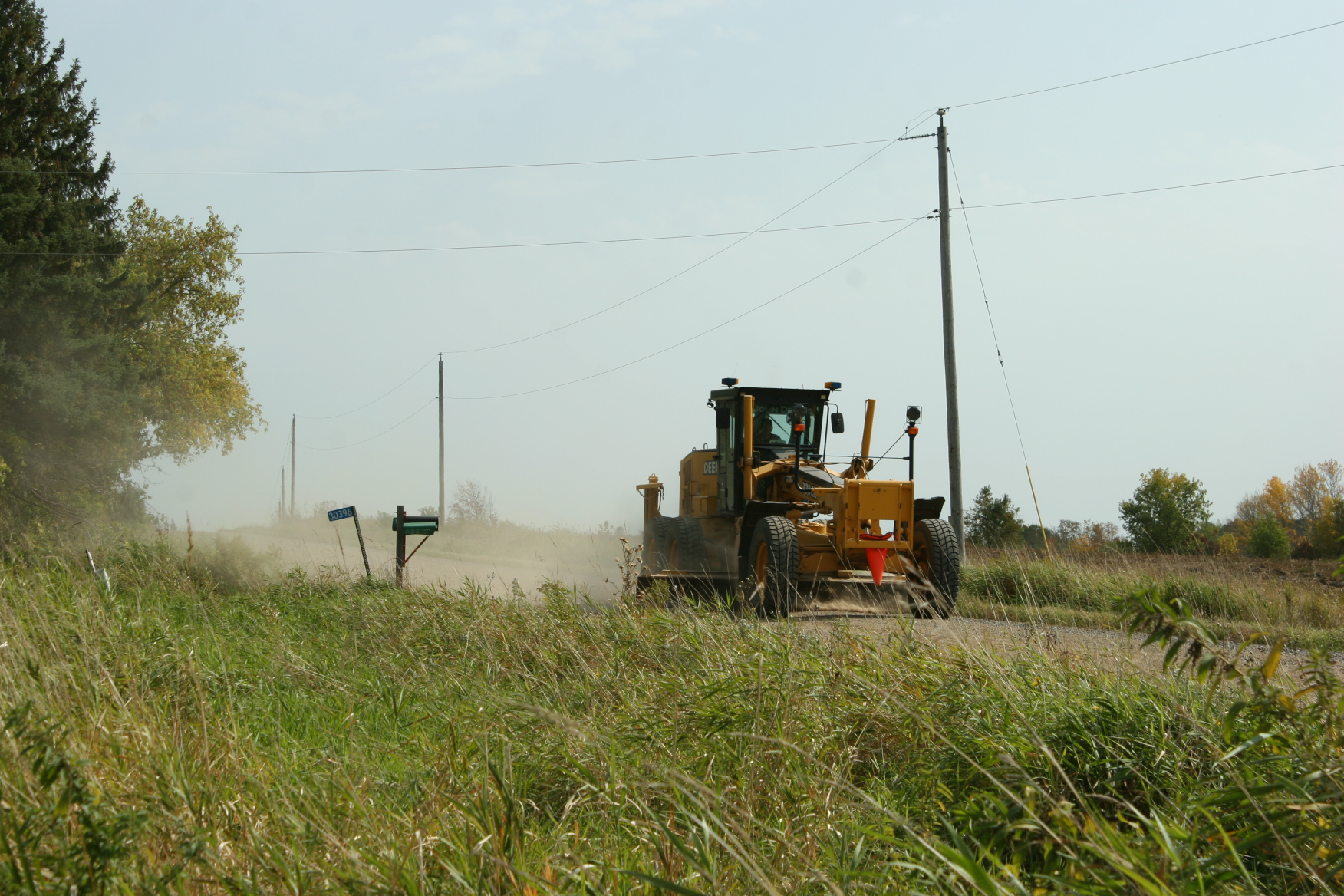
A road grader grades the gravel road near Randy’s childhood farm southeast of Buckman. We pulled off the narrow road to allow the grader to safely pass by our van. Minnesota Prairie Roots file photo September 2020.
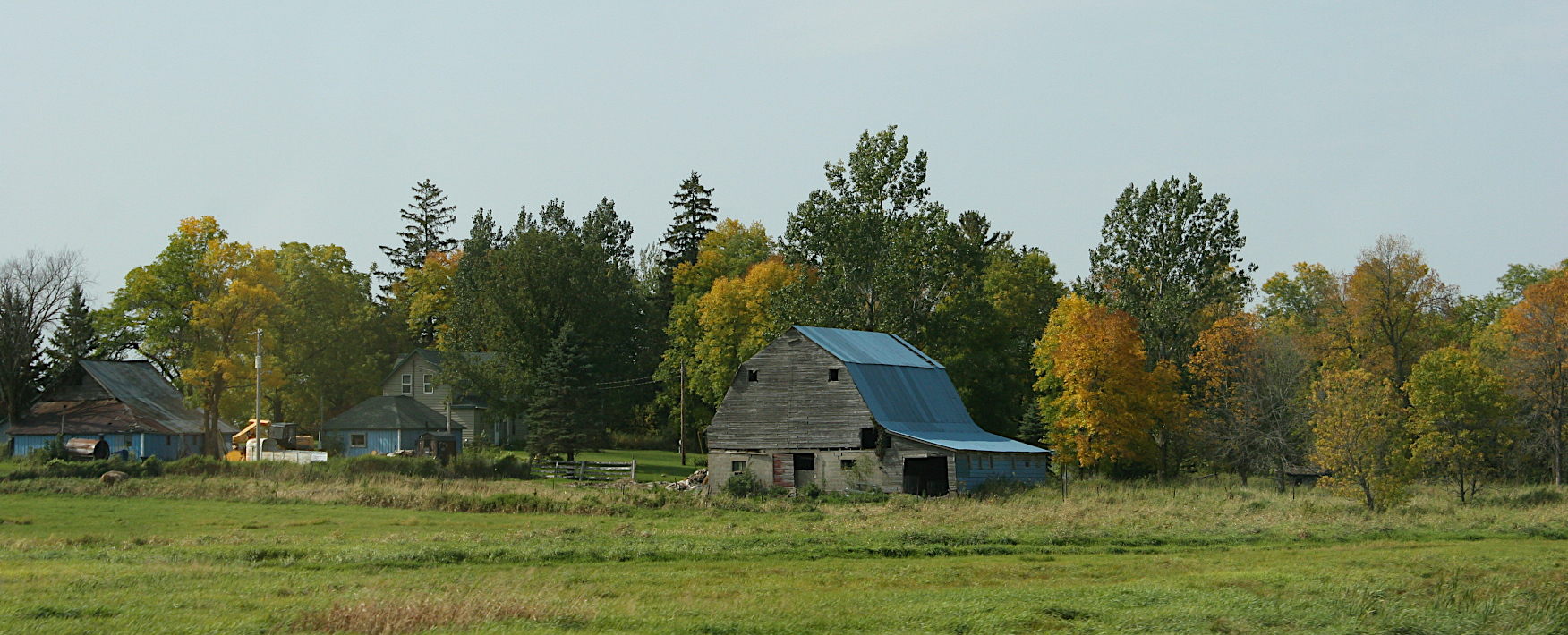
A farm place between Buckman and Gilman. Minnesota Prairie Roots file photo September 2020.
In the small town of Gilman. Minnesota Prairie Roots file photo September 2020.

We both grew up on farms, in large families—his three kids larger than mine at nine. We both picked rock—he more than me as Morrison County in central Minnesota sprouts more rocks than Redwood County. We each labored in fields and barns and understood the value of hard work and our importance in the farming operation. Even at a young age. That carries through in our strong work ethics and our strong link to the land.

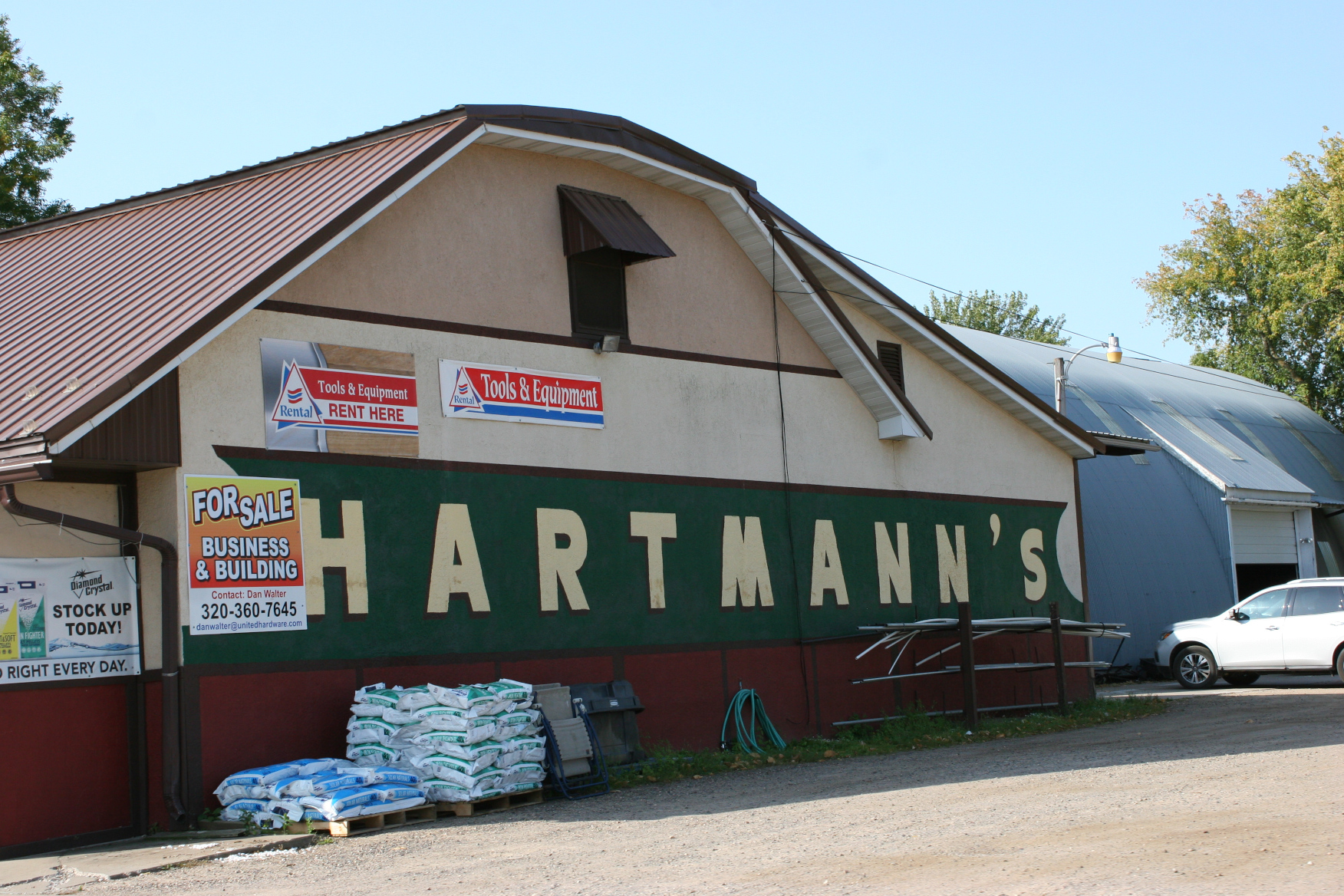
Pierz, a small town to the north of Buckman and bigger than Buckman, still has a hardware store. Randy attended junior and senior high school in Pierz. Minnesota Prairie Roots file photo September 2020.
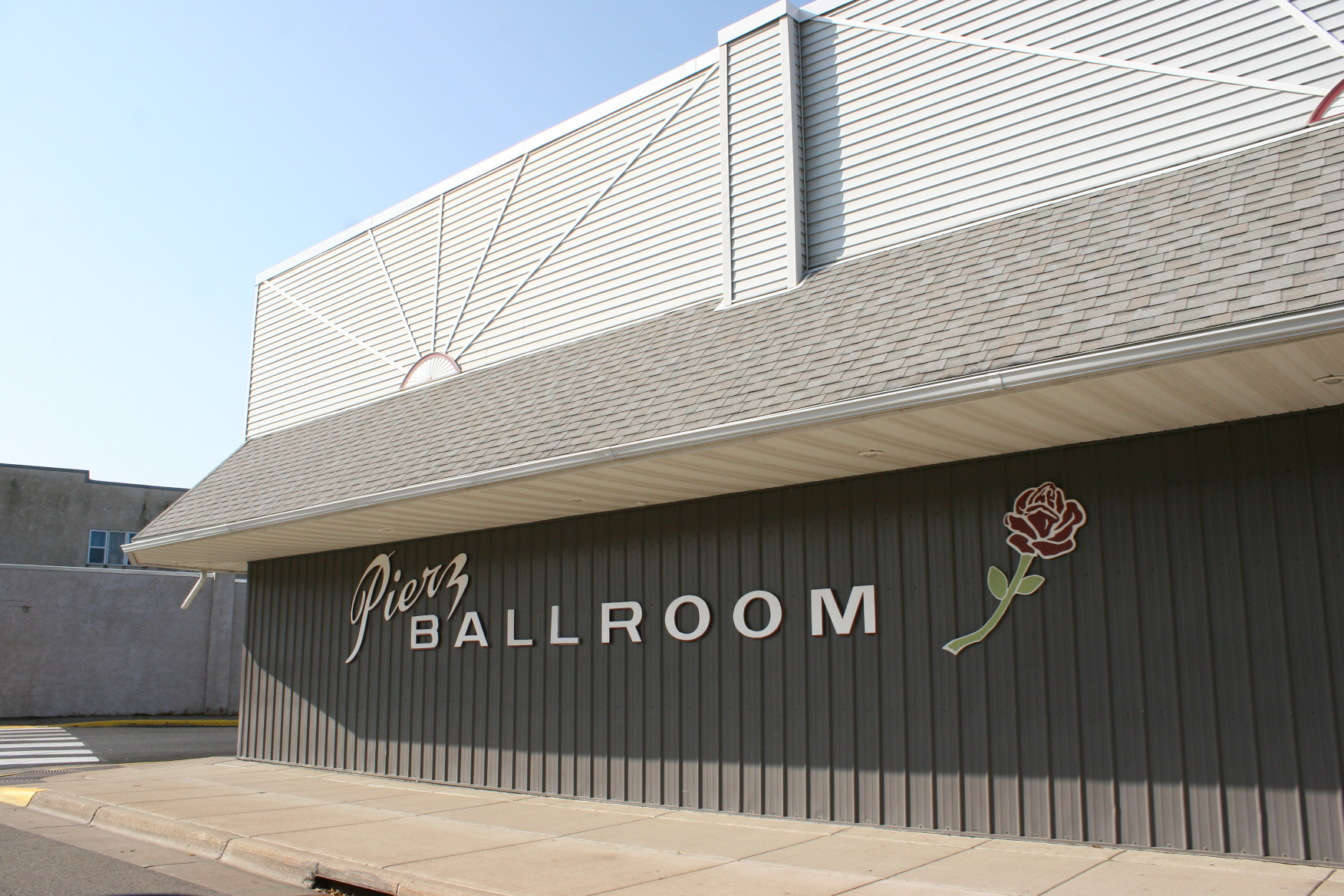
As we passed through Pierz, I photographed this updated community gathering spot. Minnesota Prairie Roots file photo September 2020.
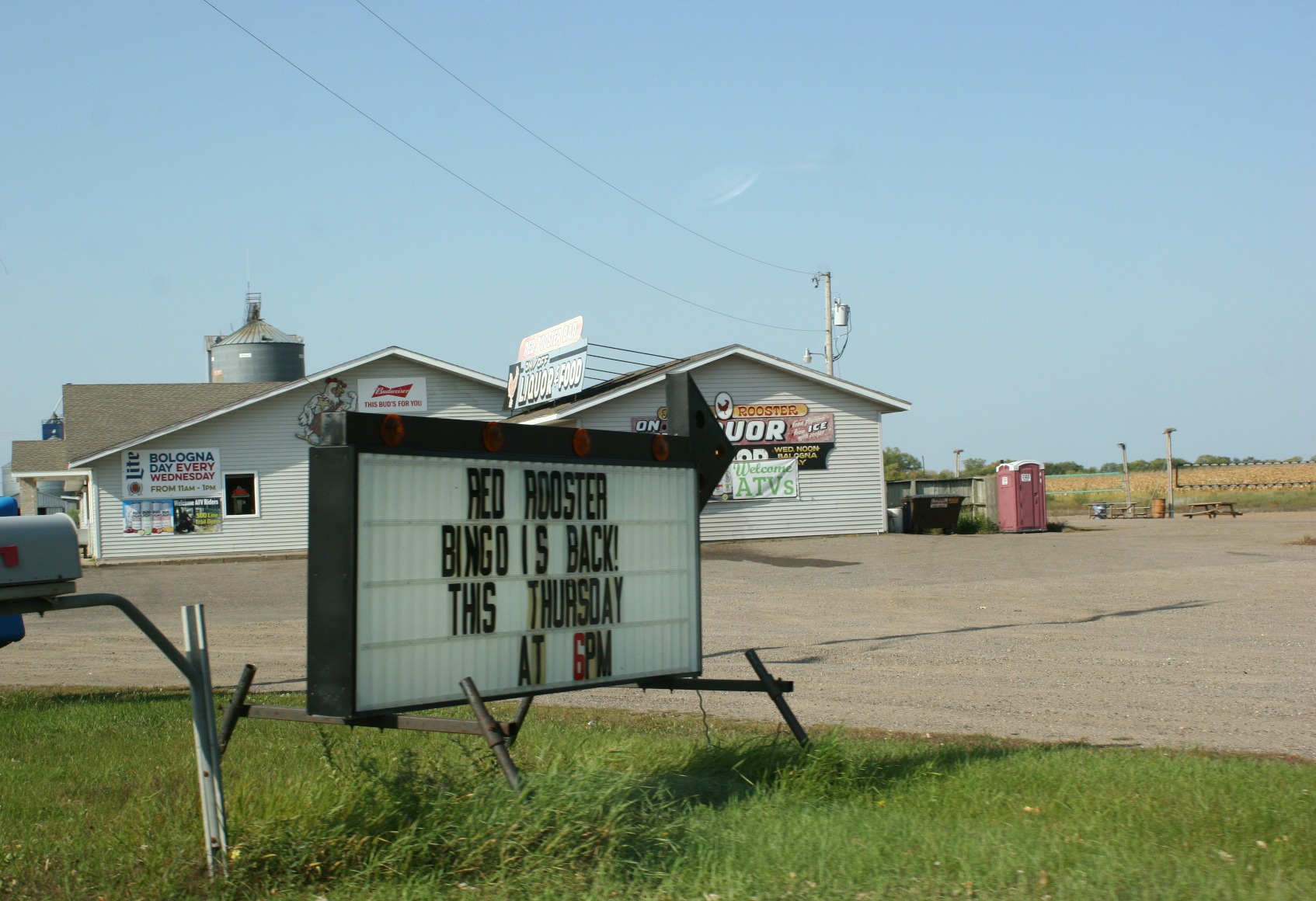
Genola, just to the south of Pierz, is home to the Red Rooster. BINGO is big in this part of rural Minnesota as is weekly Bologna Day (as noted in the banner on the building). Minnesota Prairie Roots file photo September 2020.

And, though we left our rural communities at age 17, we still hold dear the small towns—Buckman and Vesta—that were such an important part of our upbringing. Both have changed with familiar businesses long gone. Society changed and locals began driving farther for groceries and other necessities.

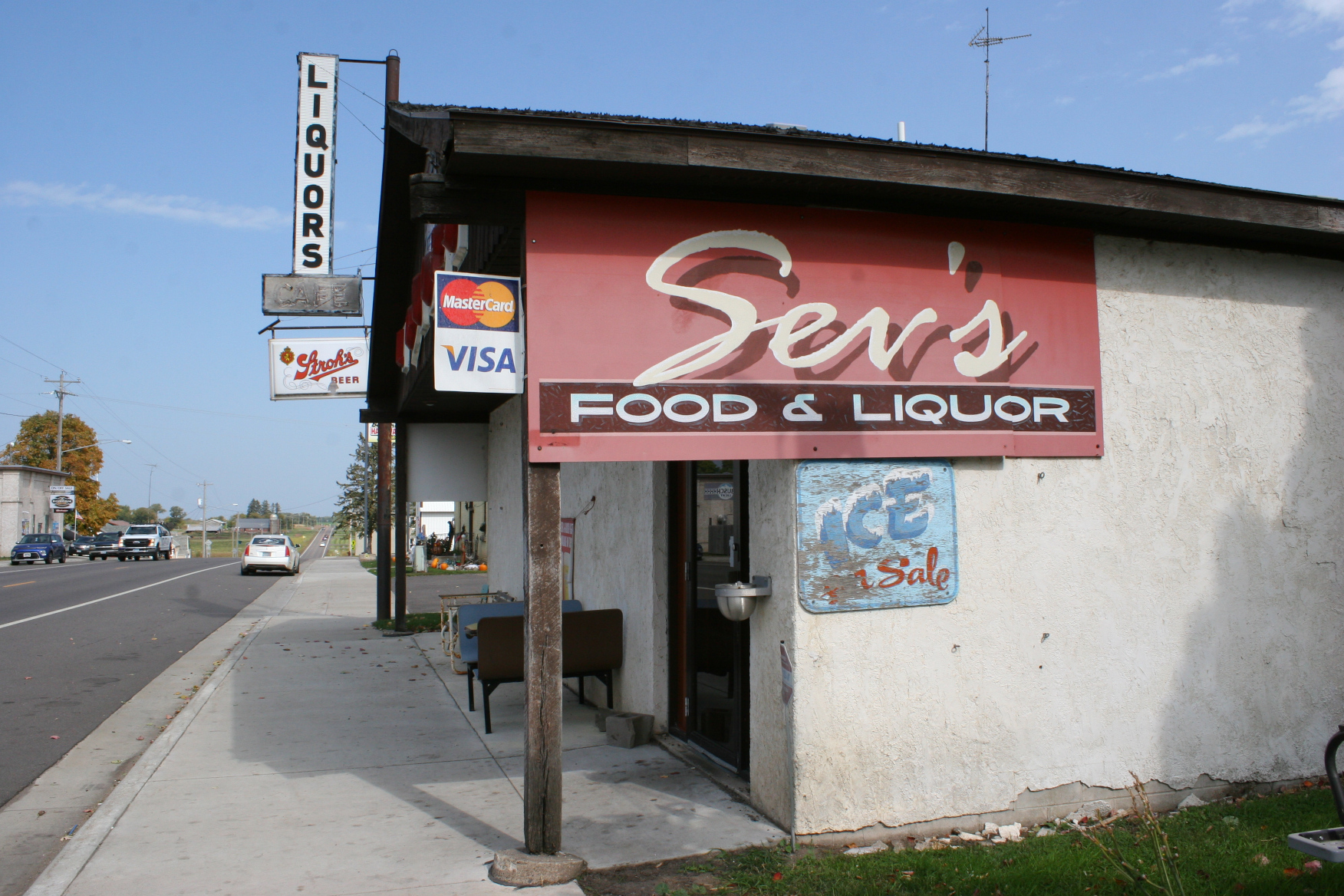
A nod to this area’s rich agricultural base outside Sev’s Food & Liquor in Buckman. Minnesota Prairie Roots file photo September 2020.

It’s easy to get caught in the memories, of the back then, of wishing nothing had changed. But it has and it does. And life goes on.

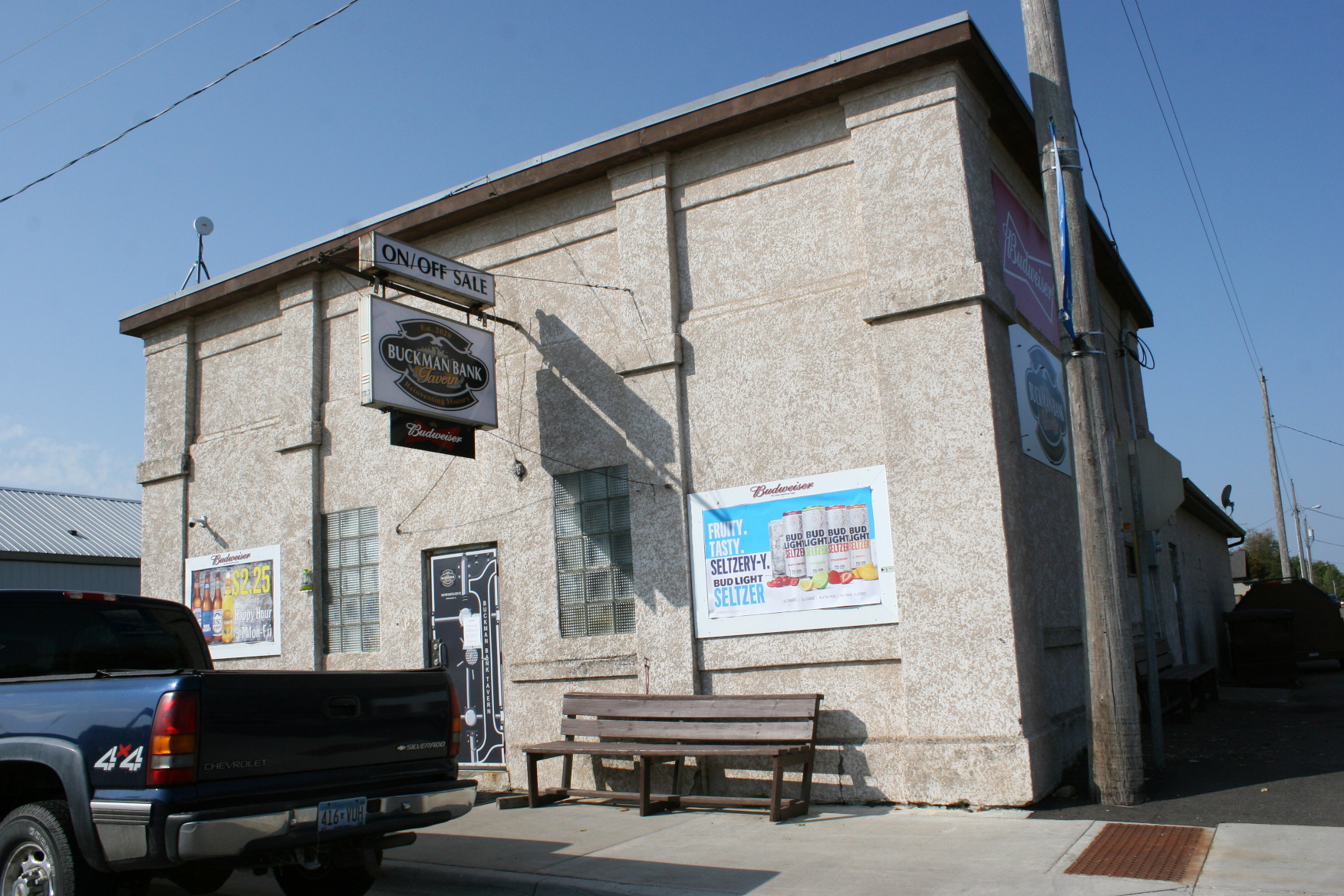
Housed in the old bank building, the Buckman Bank Tavern. Minnesota Prairie Roots file photo September 2020.
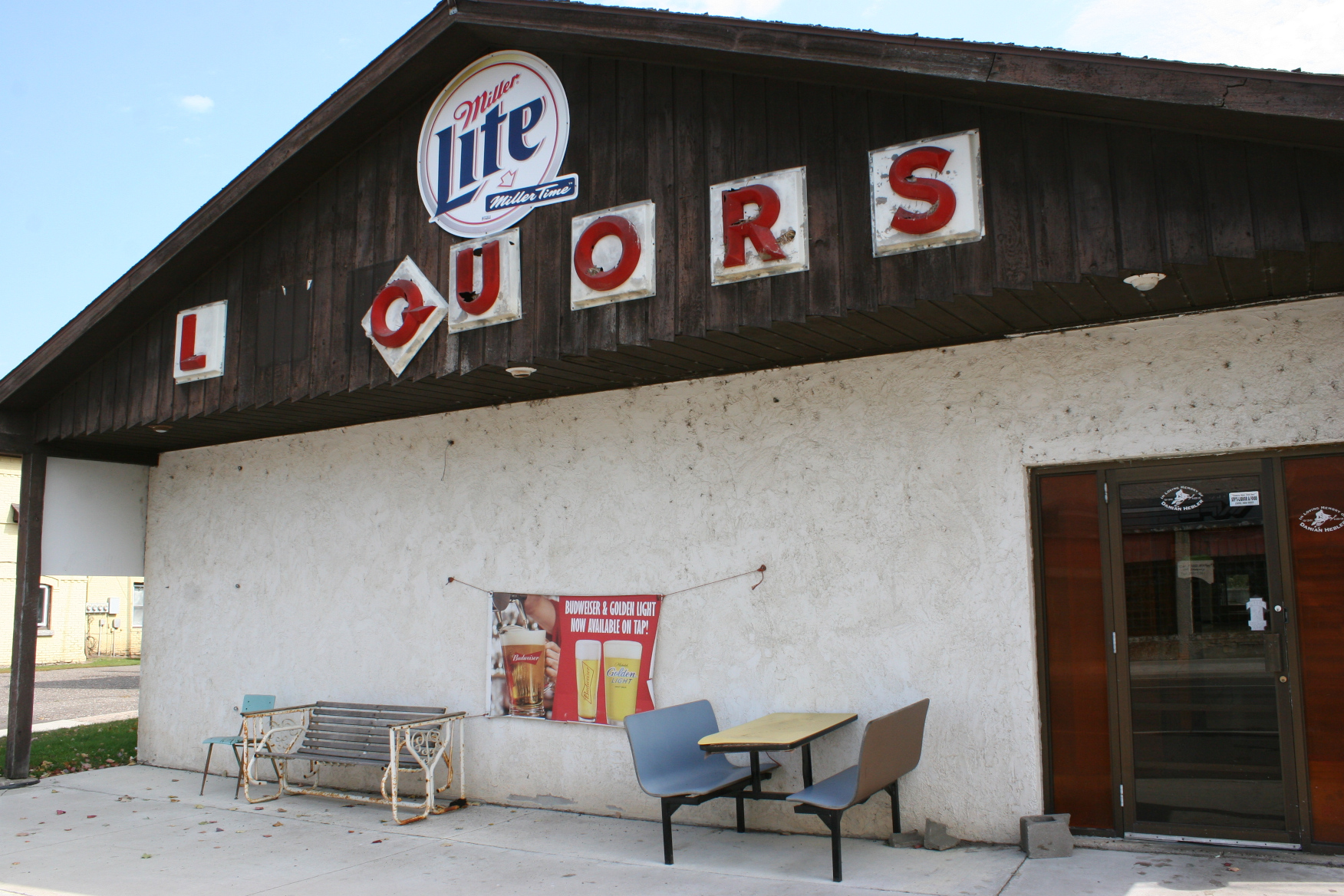
Signs on Sev’s in Buckman. Minnesota Prairie Roots file photo September 2020.
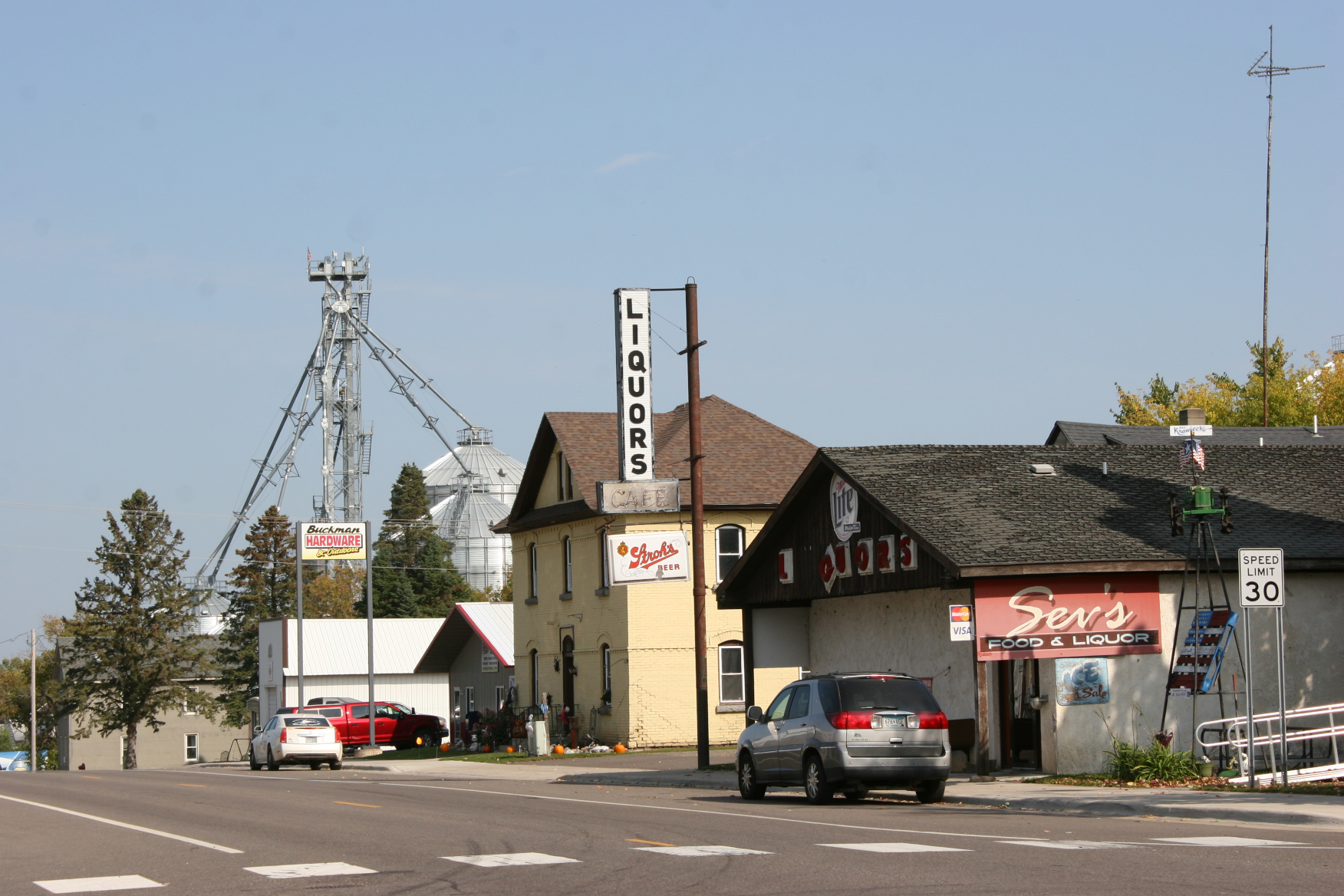
Sev’s Food & Liquor along Buckman’s main street. Minnesota Prairie Roots file photo September 2020.

Returning to our hometowns, our home areas, causes me to reflect while simultaneously appreciating that which remains. Cafes and churches and hardware stores. Post offices and bars and grain elevators. These are the community gathering spots that still mark many of Minnesota’s smallest communities, those towns that span only blocks from east to west, north to south.

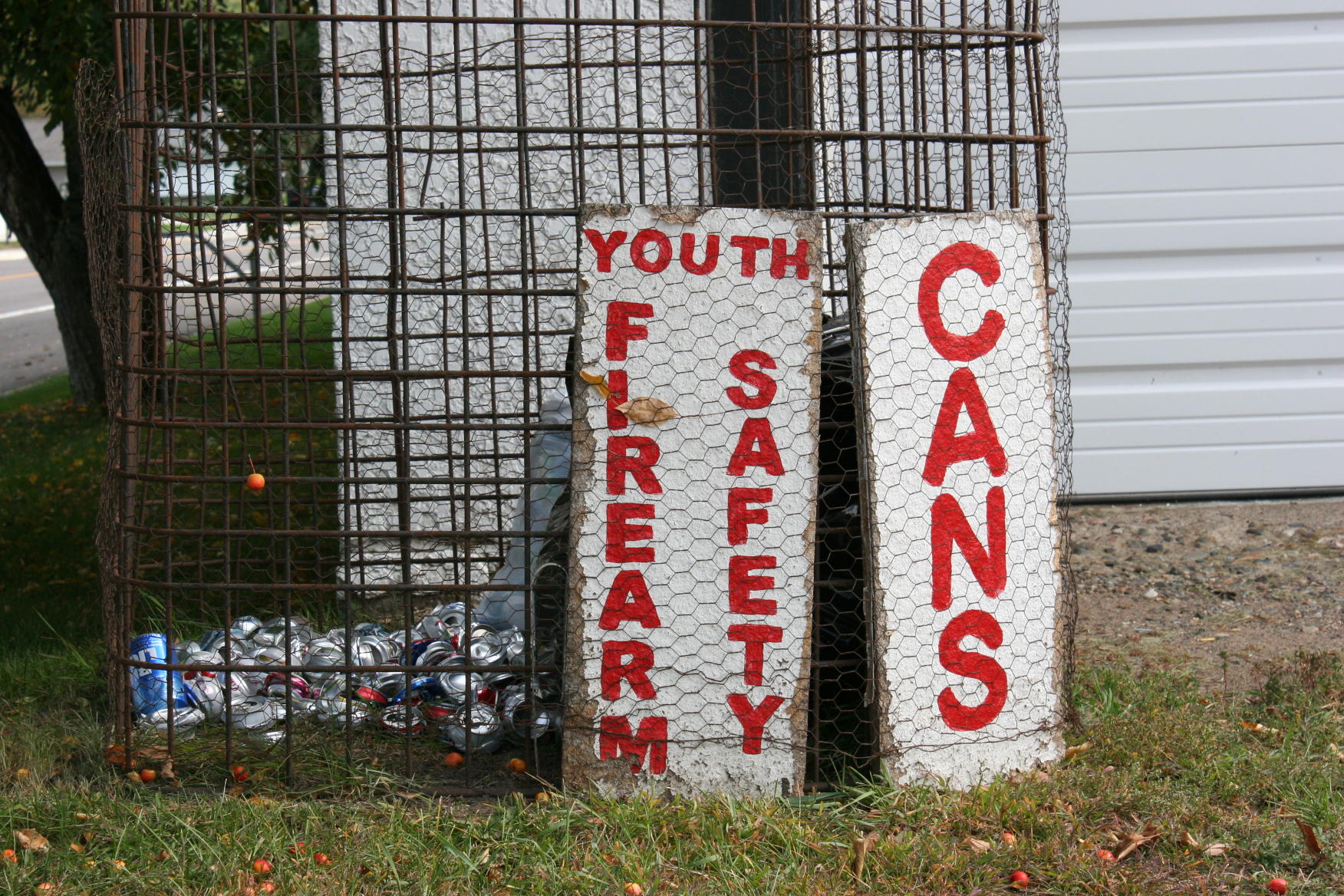
I often see can collection sites in small towns, like this one in Buckman. They offer insights into a community. Minnesota Prairie Roots file photo September 2020.
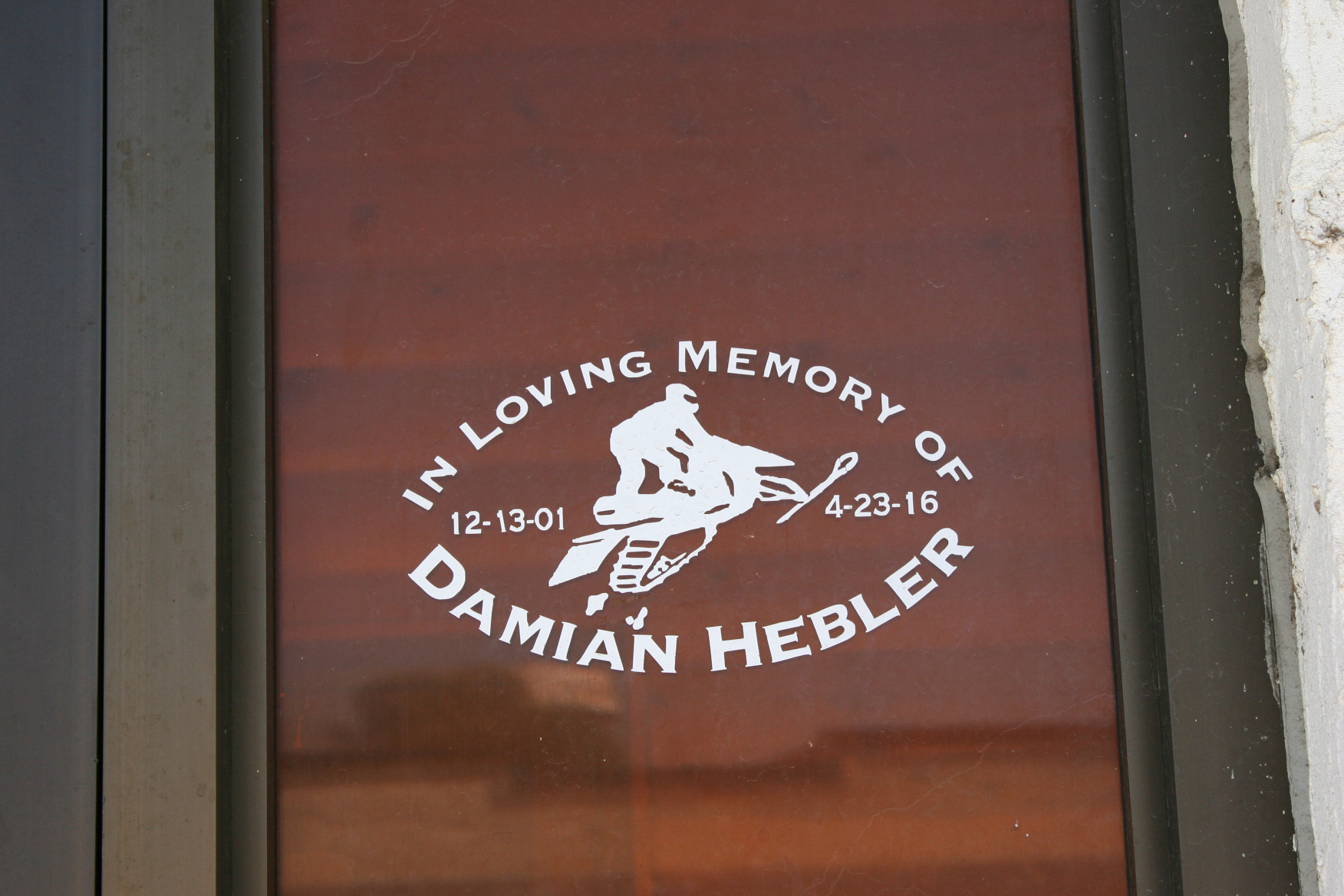
On the door of a Buckman bar, a young man remembered. Minnesota Prairie Roots file photo September 2020.
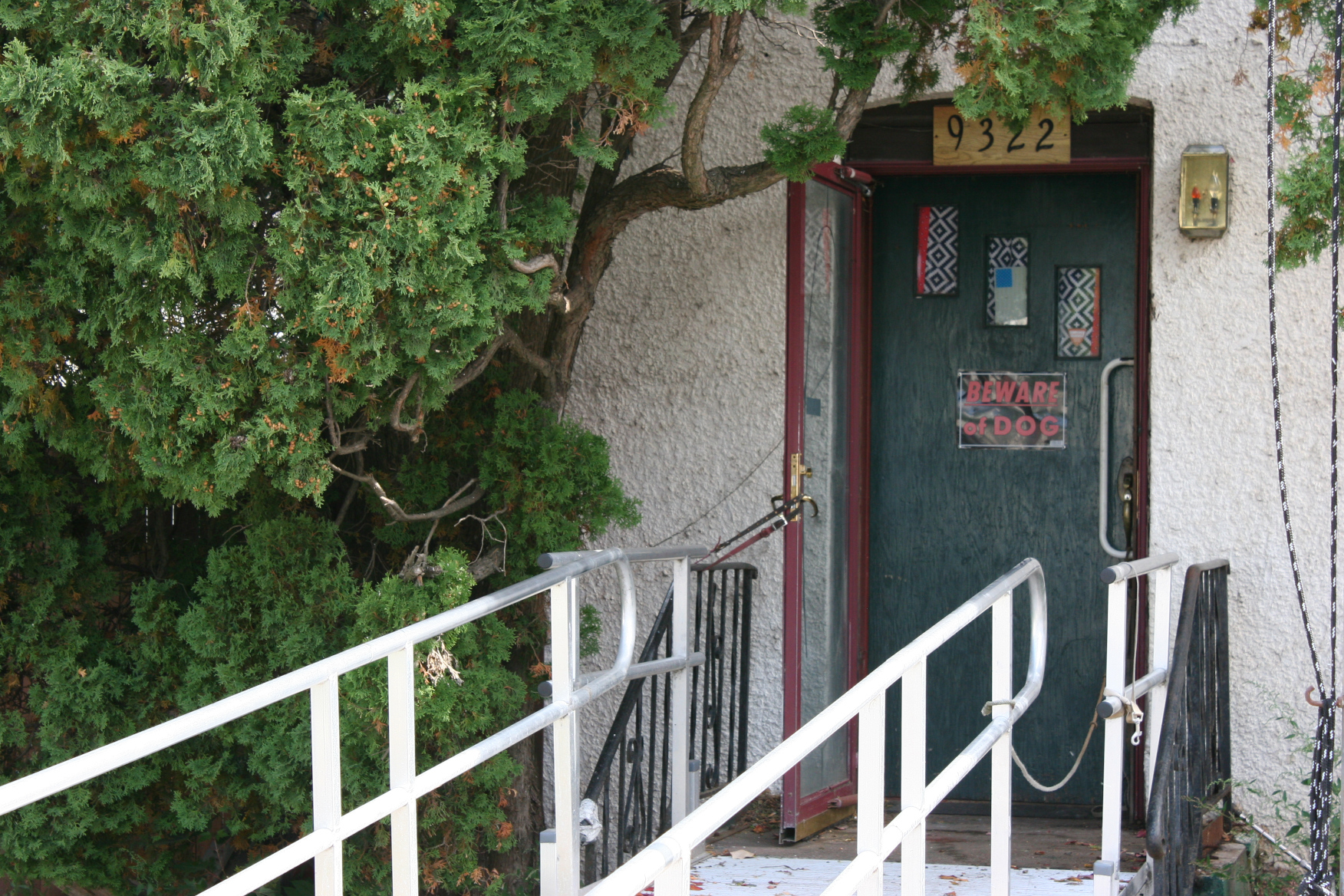
A warning sign posted on a house in Buckman. Minnesota Prairie Roots file photo September 2020.

But more than buildings, people form community. Even in Faribault, where Randy and I have lived since 1982, we’ve found our small town in a city of around 25,000. That’s in our faith family at Trinity Lutheran Church, the “town” that centers our lives. An uncle and I discussed this recently. He lives in Minneapolis. His neighborhood is his community, his small town.

A place to gather outside Sev’s Food & Liquor in Buckman. Minnesota Prairie Roots file photo September 2020.

No matter where you live, whether in rural Minnesota or New York City, the mountains of Idaho or the plains of Nebraska, I hope you’ve found your community and place of joy.

© Copyright 2021 Audrey Kletscher Helbling
 

Part III: St. Michael’s, beyond a building January 28, 2021

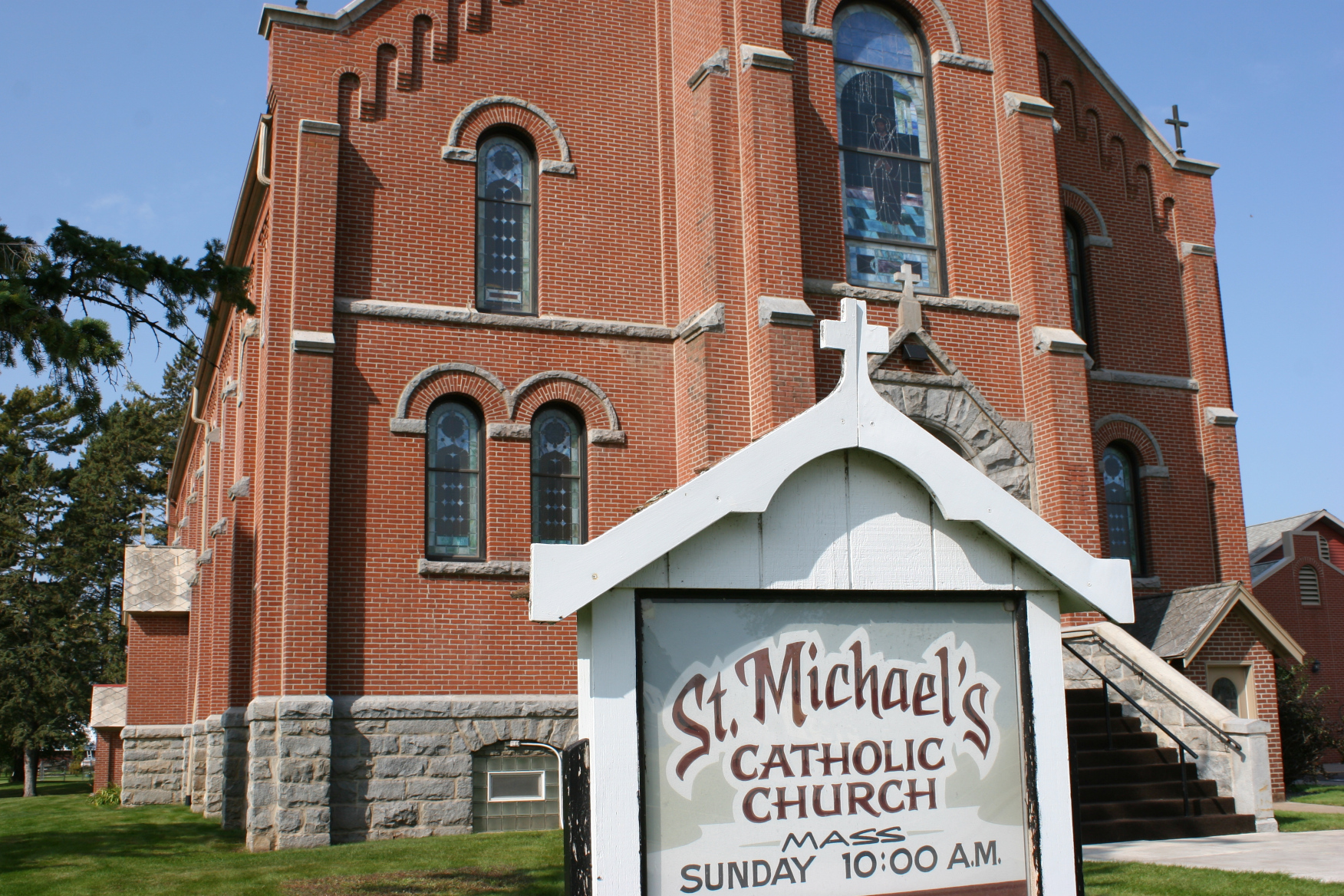
Outside my husband Randy’s home church, St. Michael’s in Buckman. Minnesota Prairie Roots file photo September 2020.

FOR MANY, THE WORD “church” prompts visions of a physical structure, a place where people of faith gather to worship. Certainly, that’s part of the definition. But, even more important, “church” is the people. That’s why, in times of natural disaster or fire or whatever may render a physical building unusable, the “church” continues.

This sign marks a back pew. Minnesota Prairie Roots file photo September 2020.

For 118 years, the faithful have gathered at St. Michael’s Catholic Church in Buckman. Even during COVID-19, Mass happens three mornings a week. On the September weekday Randy and I visited, not a soul was around, giving us ample opportunity to explore this beautiful aged sanctuary.

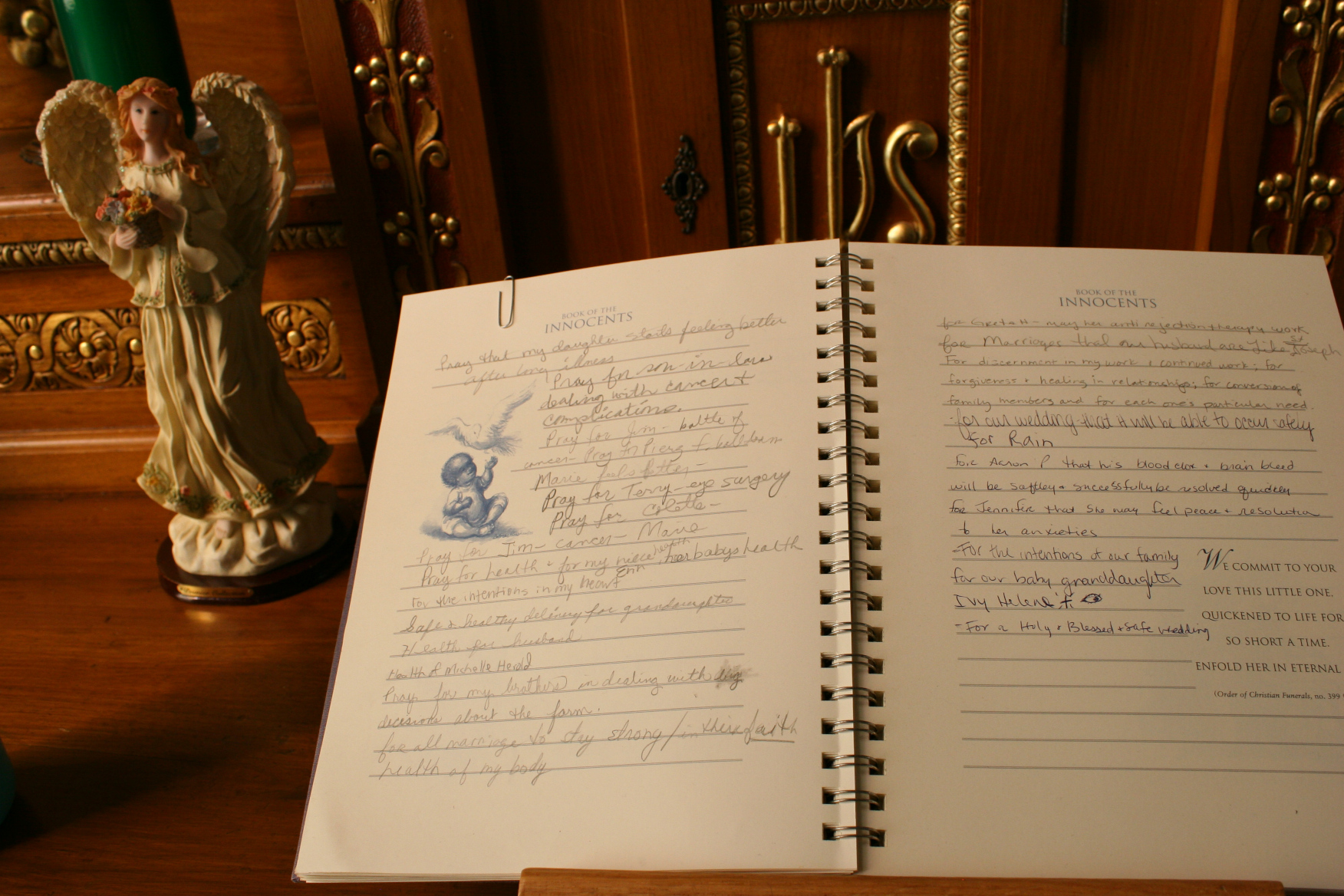
Book of the Innocents photographed at St. Michael’s. Minnesota Prairie Roots file photo September 2020.

Despite the absence of people, I experienced the presence of those who call St. Michael’s their church home. I saw the human spiritual connection in handwritten prayers recorded in The Book of Innocents.

They left their mark… Minnesota Prairie Roots file photo September 2020.

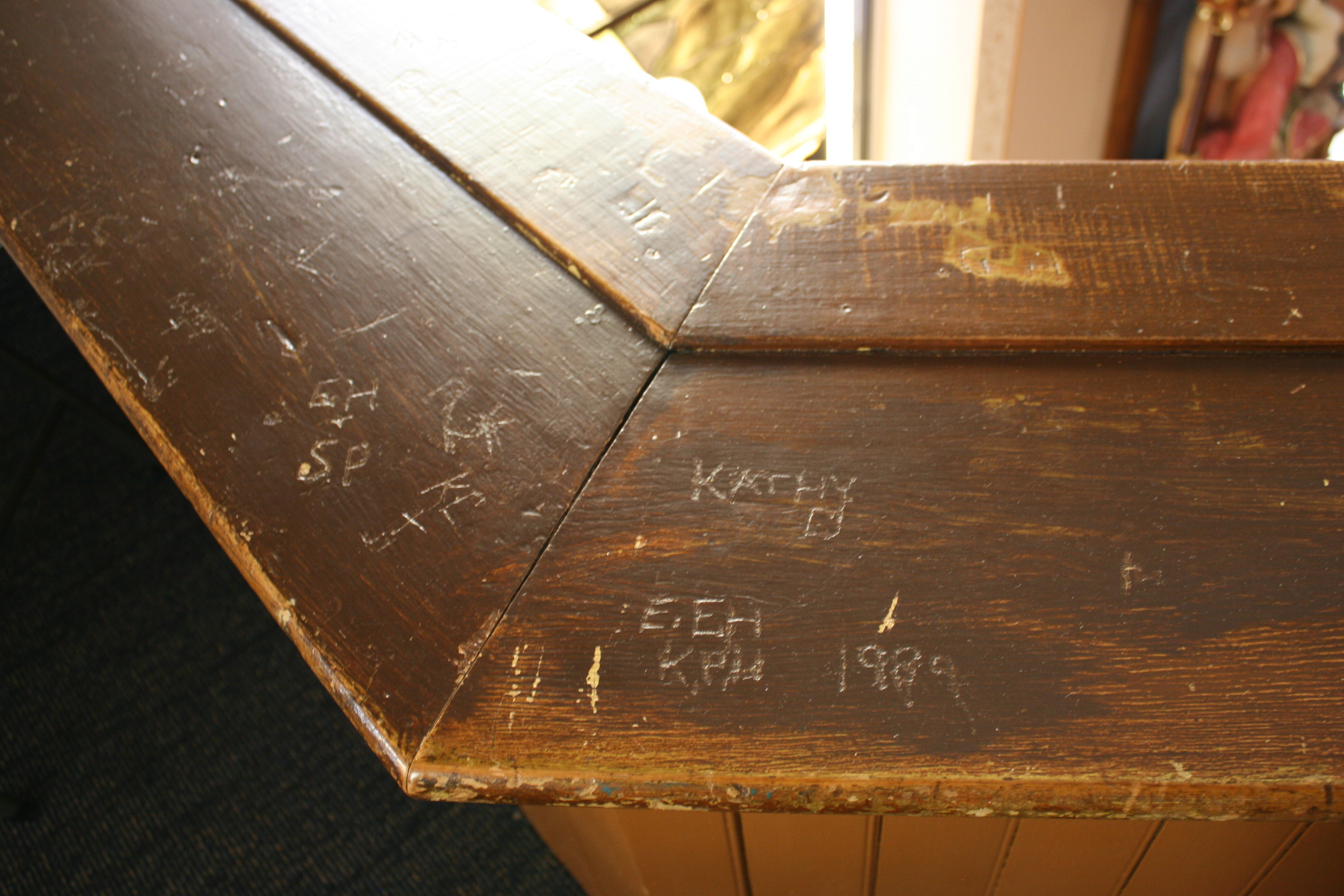
Upstairs, atop the balcony wall ledge, I noticed initials, names and dates etched in wood. Another human notation, albeit probably not appreciated by all. But the scratchings are part of St. Michael’s history.

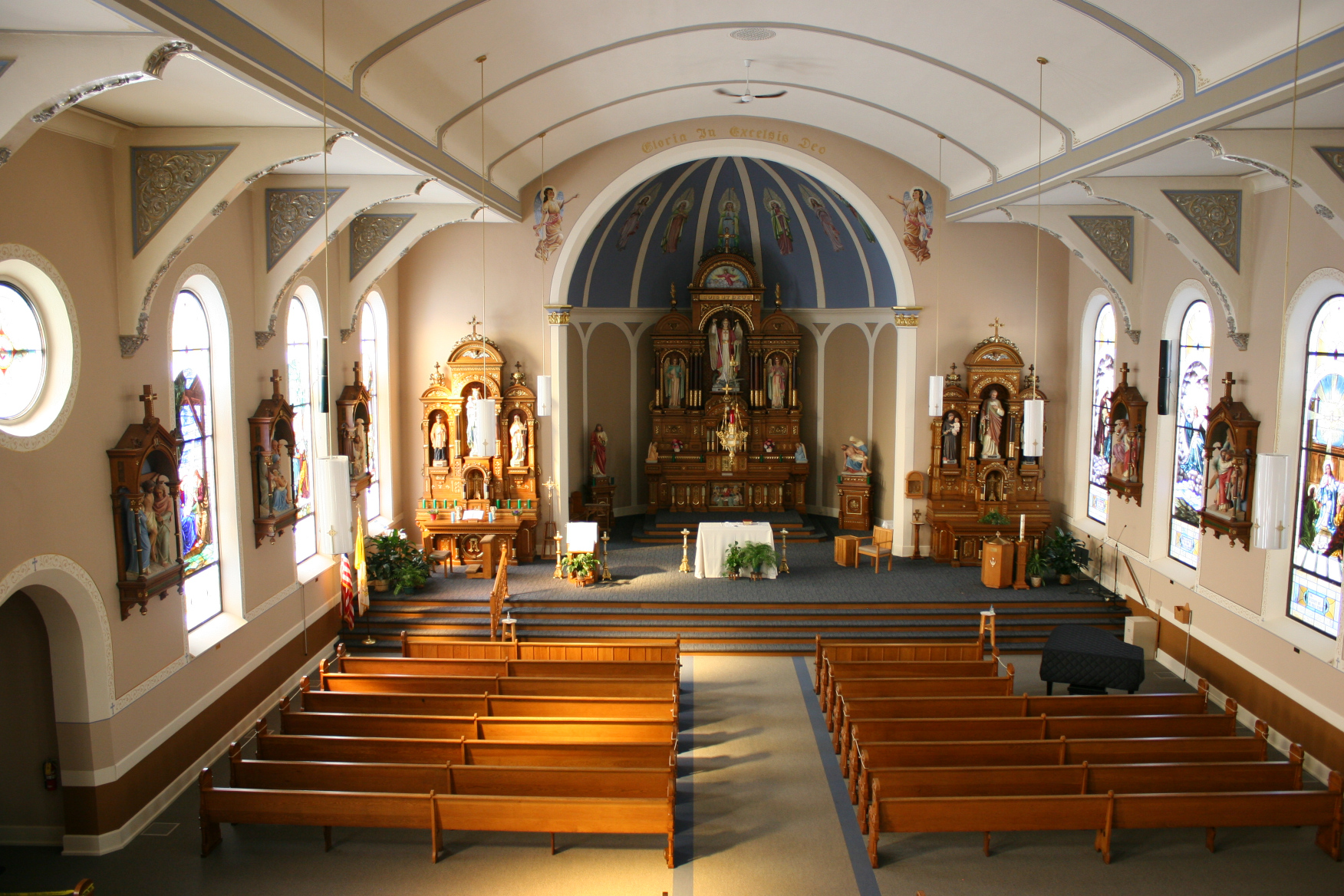
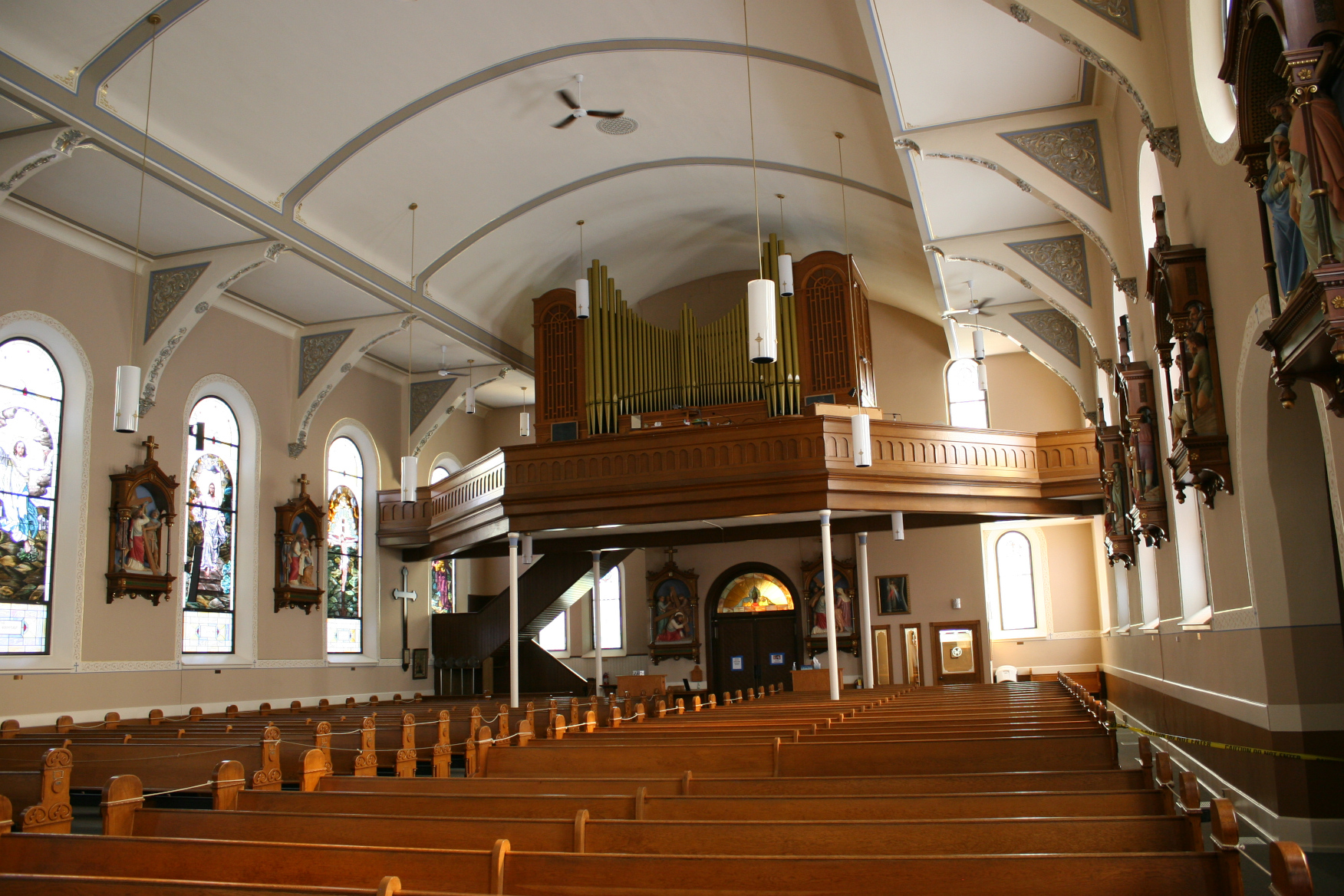
A view from the balcony. Minnesota Prairie Roots file photo September 2020.
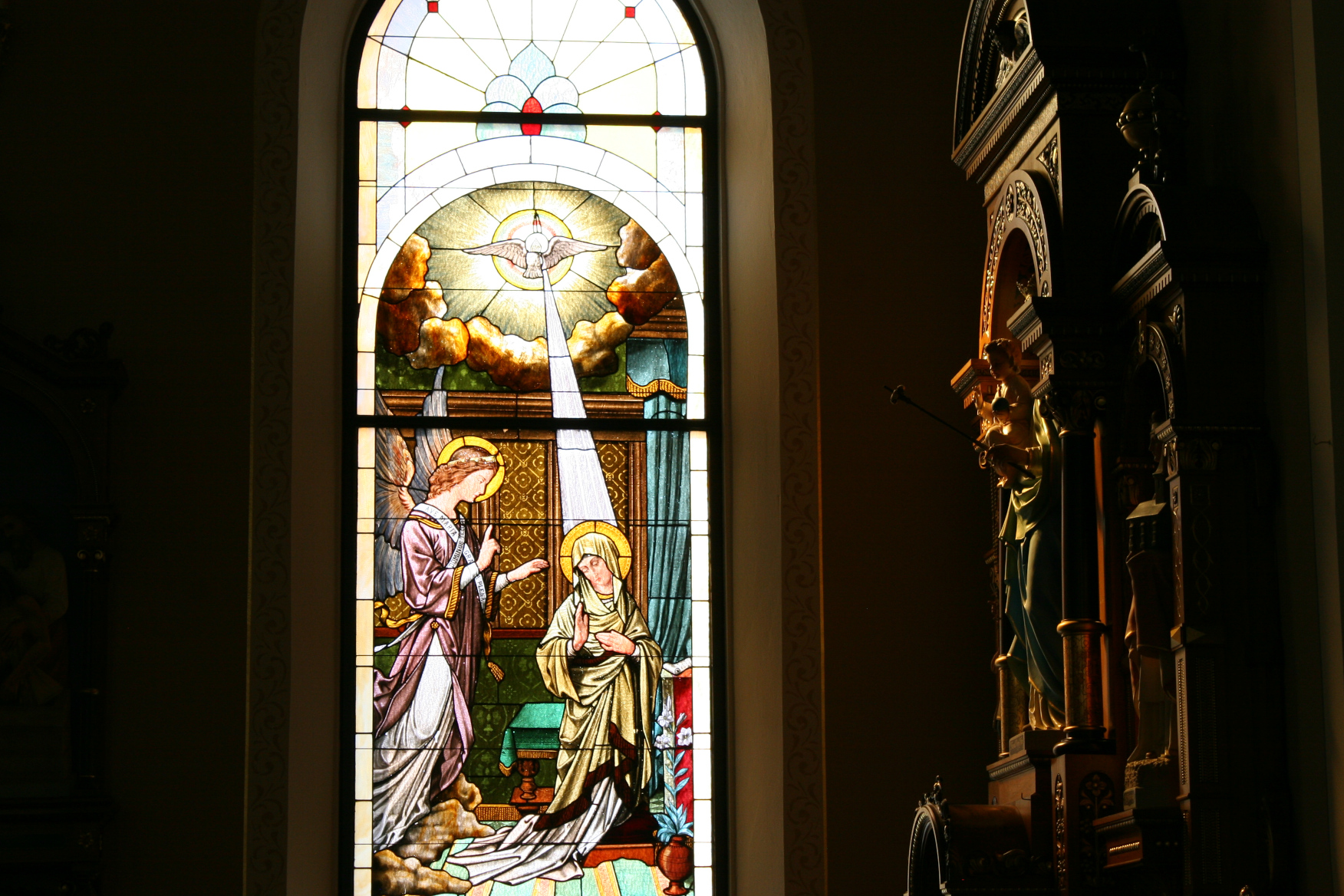
Stained glass windows abound, this one next to a side altar. Minnesota Prairie Roots file photo September 2020.
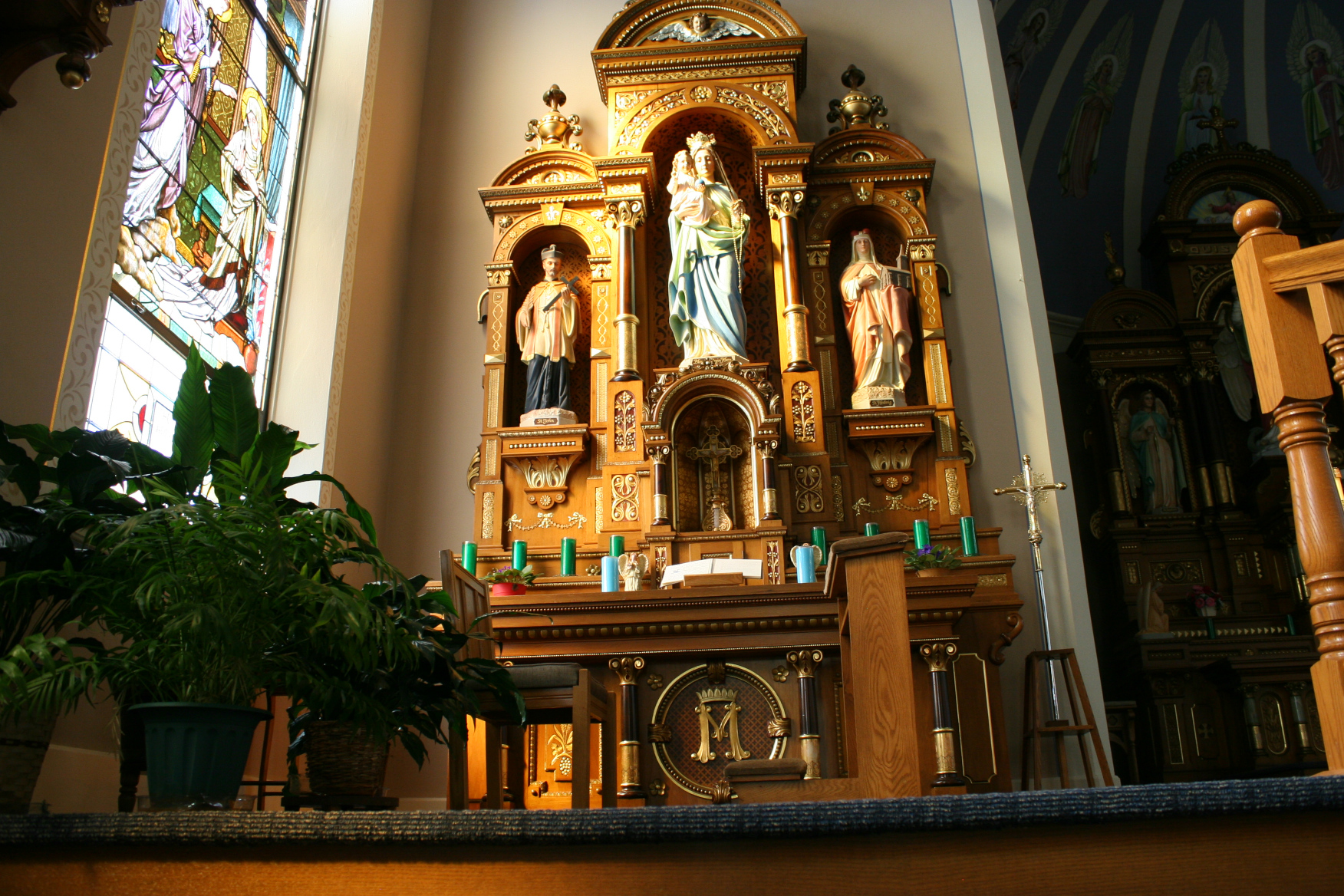
The beautiful side altar. Minnesota Prairie Roots file photo September 2020.

As I looked down upon the massive sanctuary defined by stained glass, sculptures, woodcarvings, paintings and other impressive art, I considered the humanity of this place. Baptisms. First Communions. Weddings. Funerals. Events—joyful and sad—which brought/bring people together to celebrate or to mourn. Mass, too, with singing and praying and forgiving and worshiping and growing in faith.

Looking toward the back of the church and the balcony. Minnesota Prairie Roots file photo September 2020.

Generations have gathered here, within these walls, as a faith family.

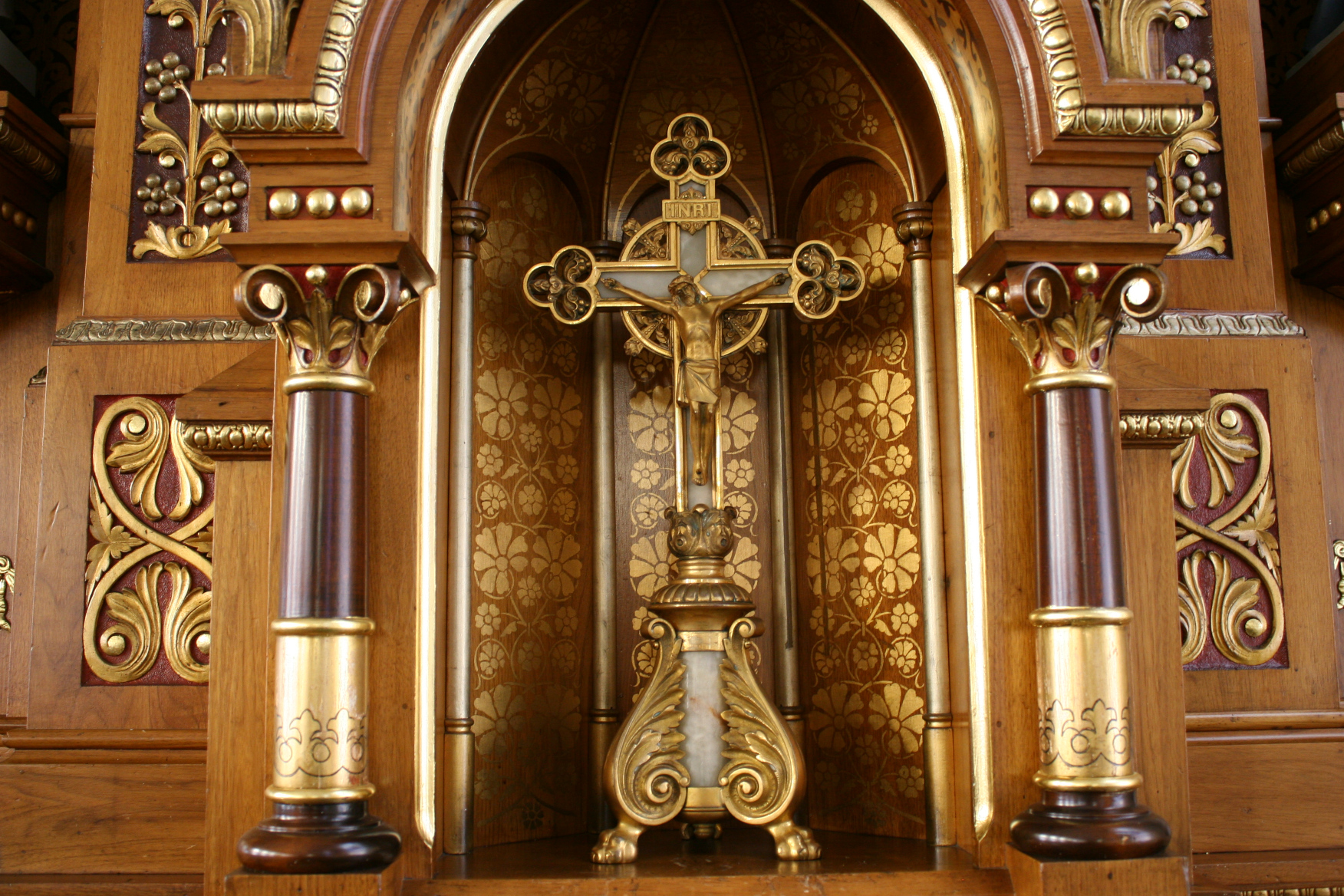
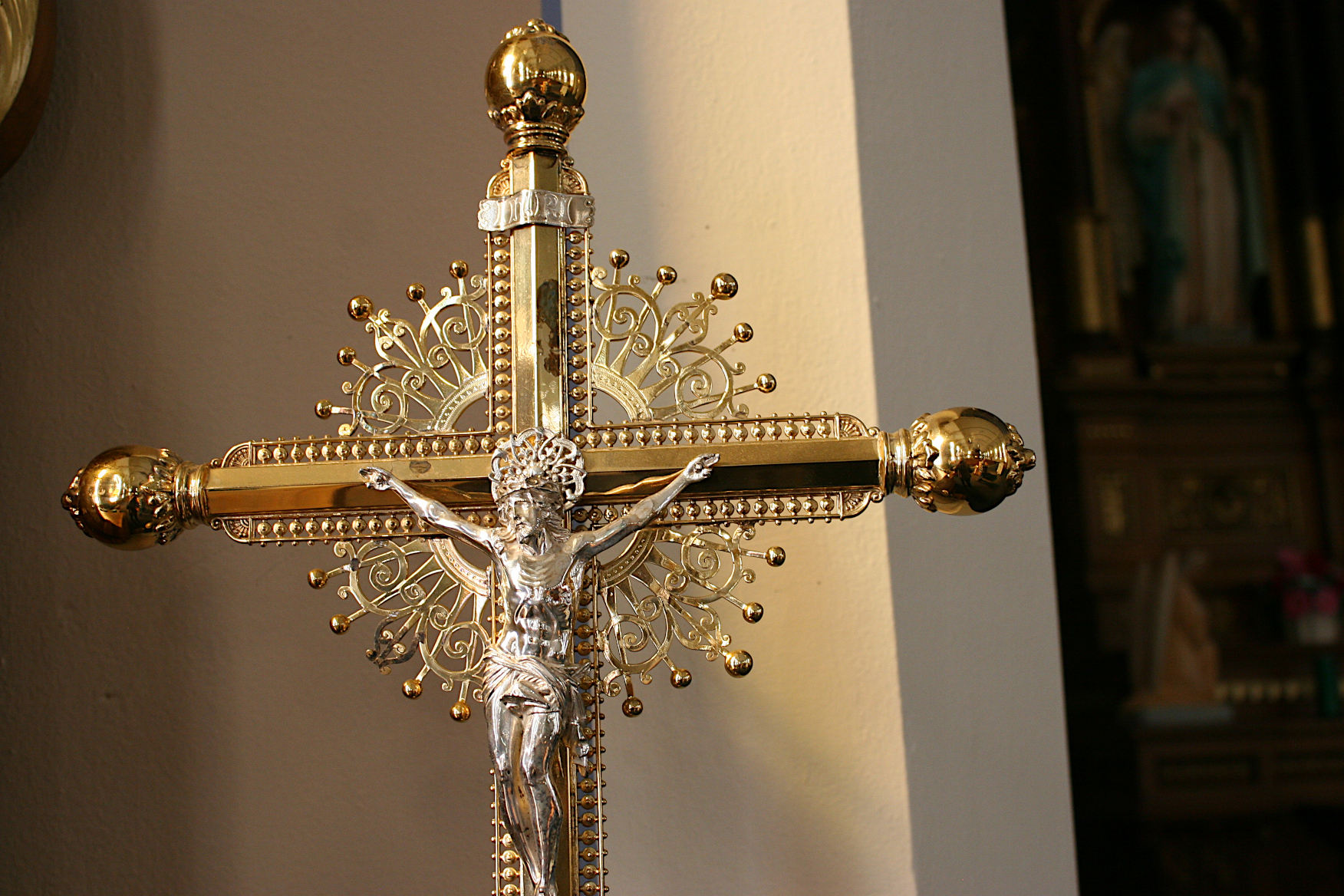
This stunning cross stands in the center of the main altar. Minnesota Prairie Roots file photo September 2020.

I’ve found comfort and joy here, too, celebrating the marriage of my father-in-law and a sister-in-law and grieving the loss of a brother-in-law and then my mother-in-law 27 years ago. Since then, the church has been restored and a side entry and fellowship hall added, making the building much more accessible.

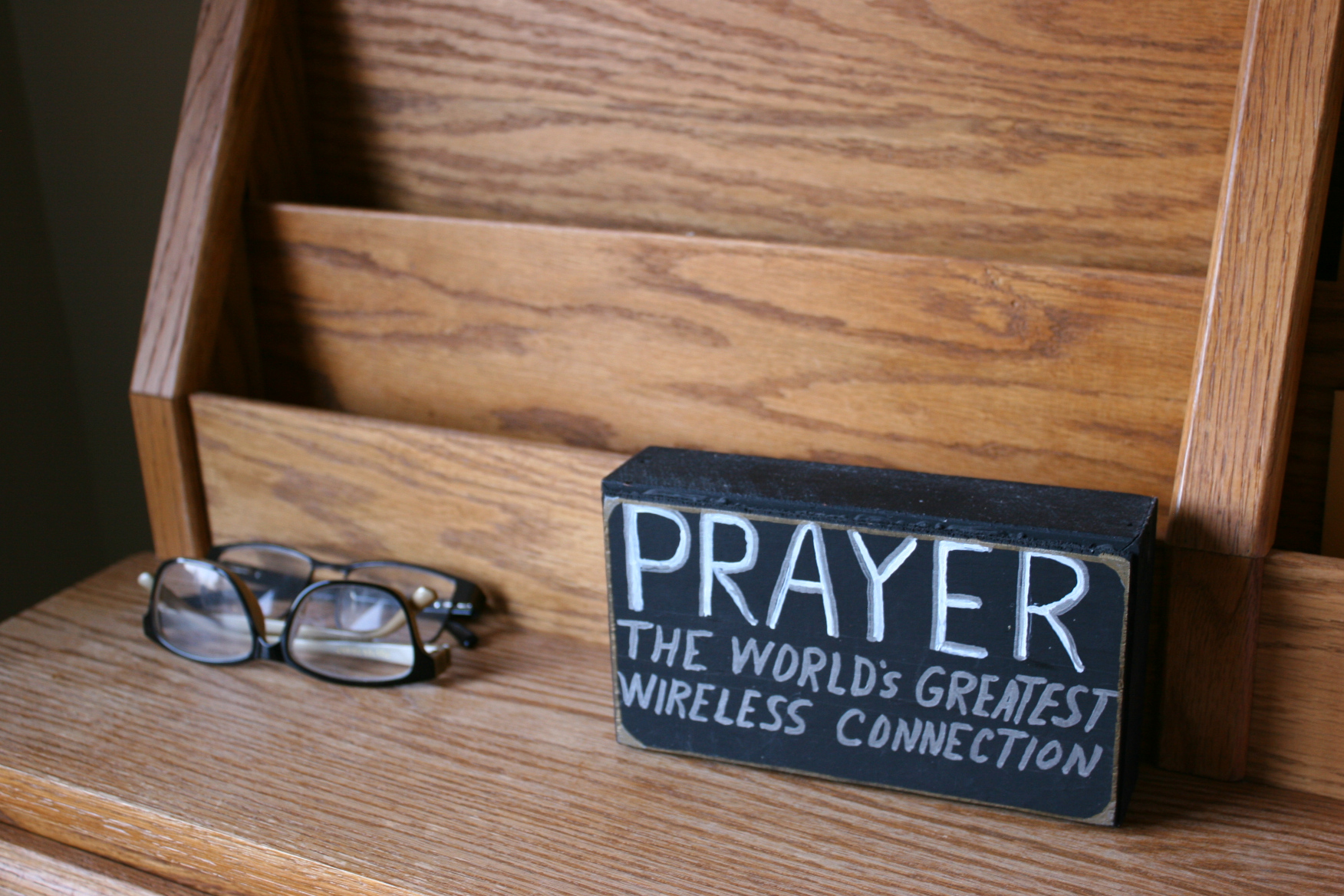
Spotted on a table in the entry. Minnesota Prairie Roots file photo September 2020.

In the new entry, I paused to read a small sign: PRAYER THE WORLD’S GREATEST WIRELESS CONNECTION. I laughed and thought, so true while simultaneously considering how much the world has changed since the construction of this church in 1903.

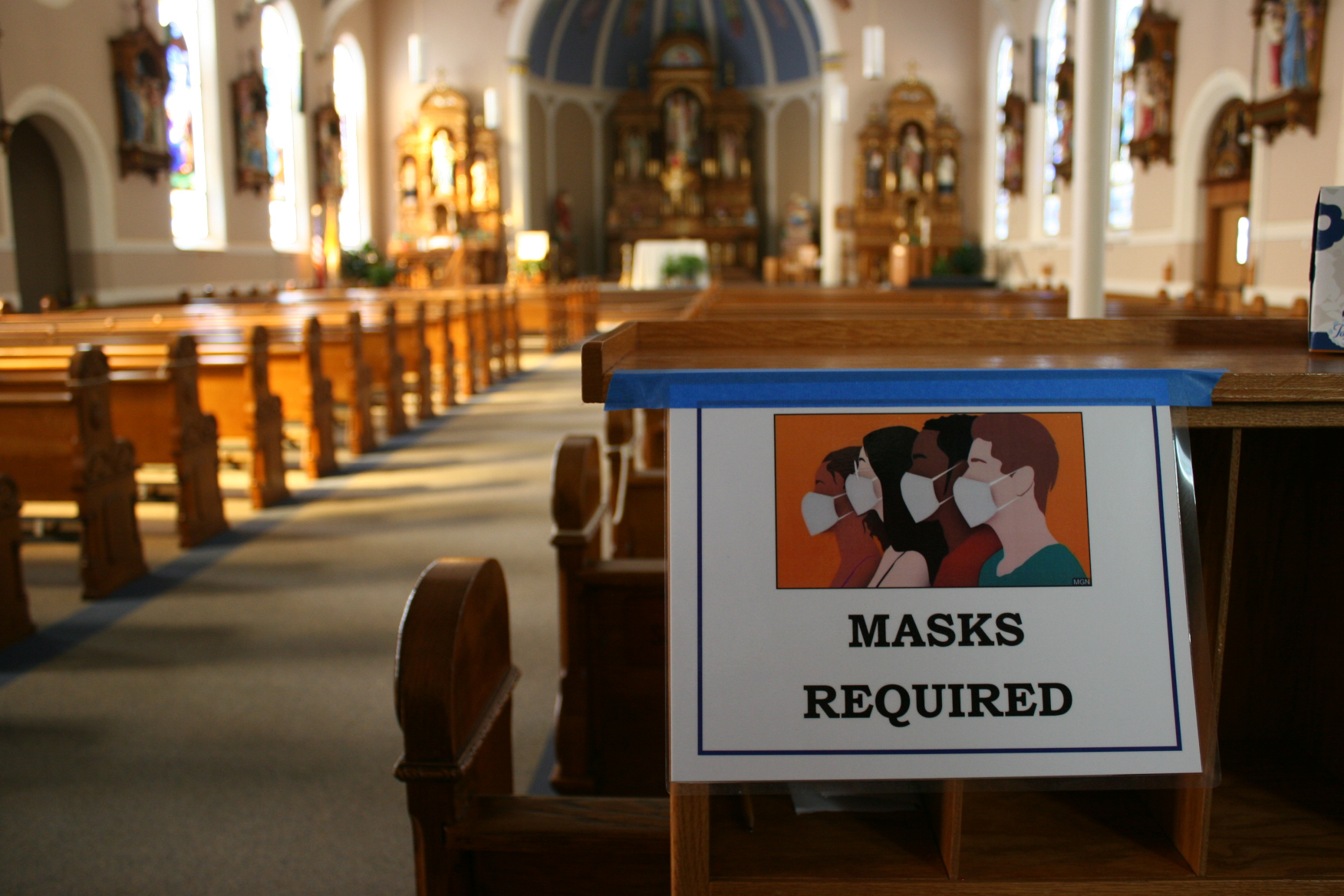
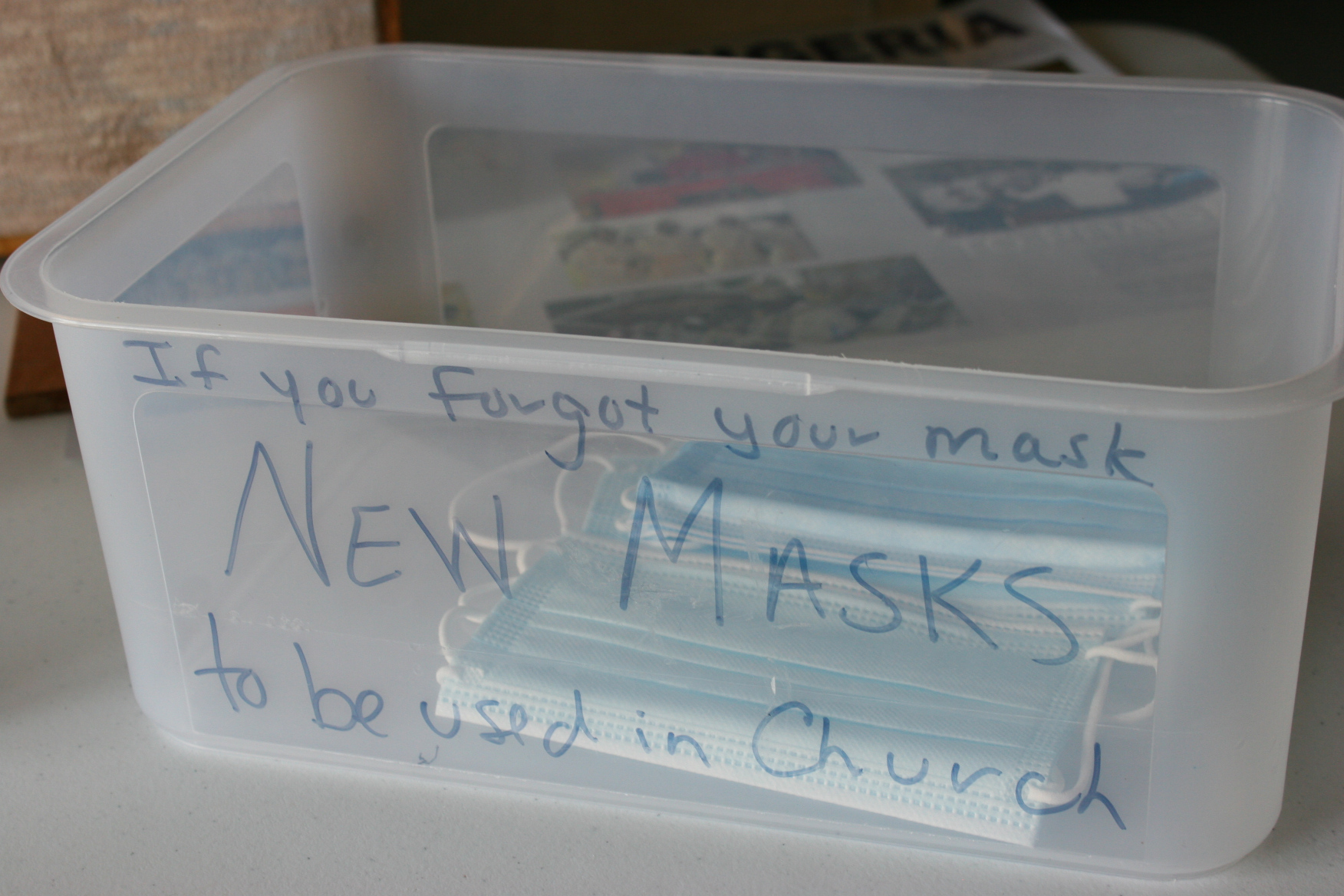
Masks are available for worshipers inside the entry. Minnesota Prairie Roots file photo September 2020.

Yet, little has changed. People still define St. Michael’s. They gather here—as they have for generations—within this art rich sanctuary, embracing liturgy steeped in music and tradition, to worship God. And to connect, heart-to-heart, with one another and with their Savior. Even during a global pandemic.

This is the final post in my three-part series on St. Michael’s Catholic Church, Buckman, Minnesota.

© Copyright 2021 Audrey Kletscher Helbling
 

Part II: The artistry of St. Michael’s in Buckman January 27, 2021

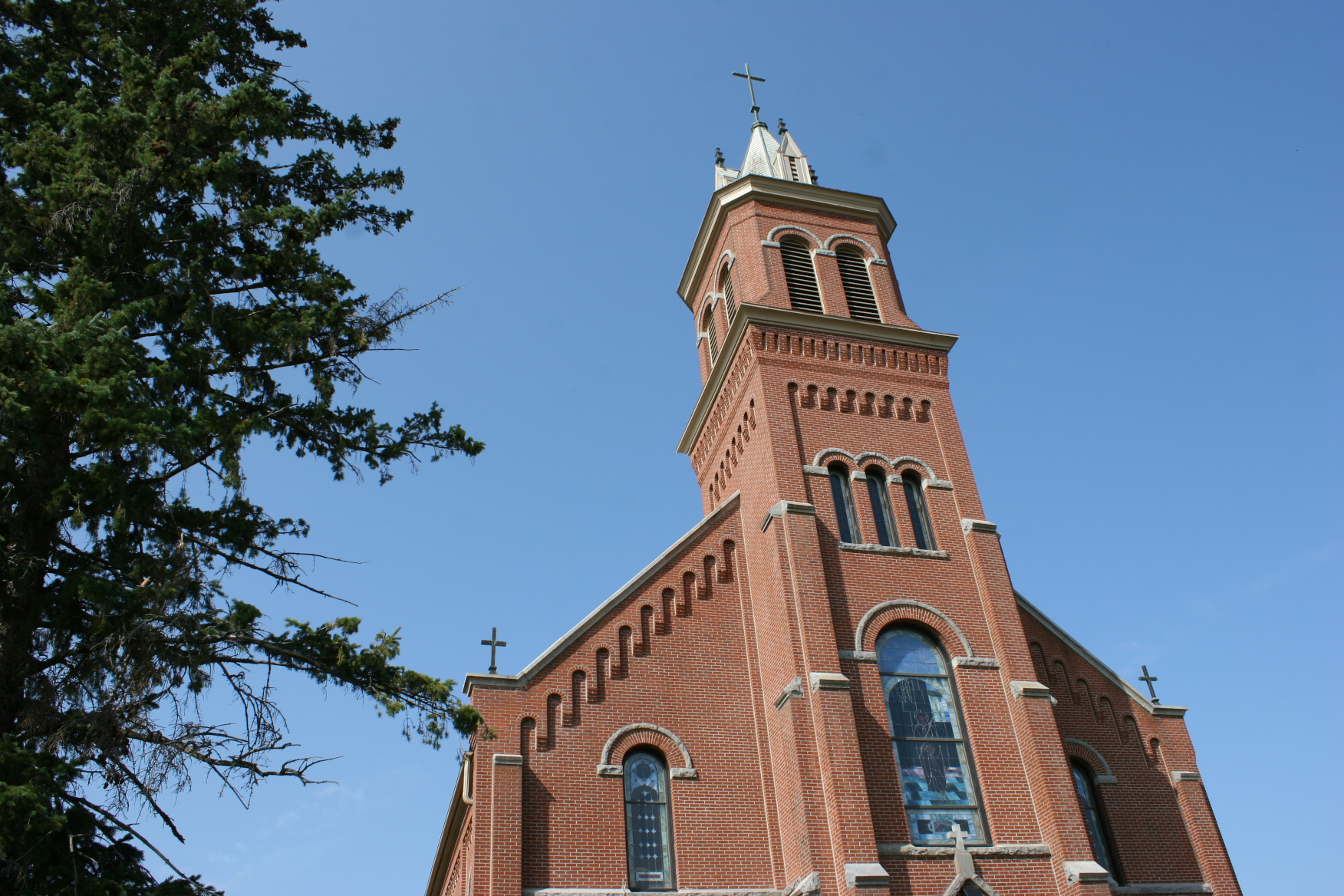
St. Michael’s Catholic Church in Buckman. Minnesota Prairie Roots file photo September 2020.

WHEN I STEP INSIDE A CHURCH like St. Michael’s Catholic Church in Buckman in central Minnesota, I feel overwhelmed by the sheer artistic beauty and craftsmanship. I wonder about those who built this massive church in 1903, dedicating it on September 29, St. Michael’s Day. How did they manage to build this 118 years ago without modern equipment? That amazes me.

Looking toward the front of St. Michael’s. Minnesota Prairie Roots file photo September 2020.

Beyond the actual structure, which surely took much muscle, many manpower hours and grit to complete, I wonder about the artists behind the artwork inside. Who crafted the stained glass windows? Who built the altars? Who shaped the statues and painted the angels and built the pews?

A stained glass depiction of Jesus carrying his cross. Minnesota Prairie Roots file photo September 2020.
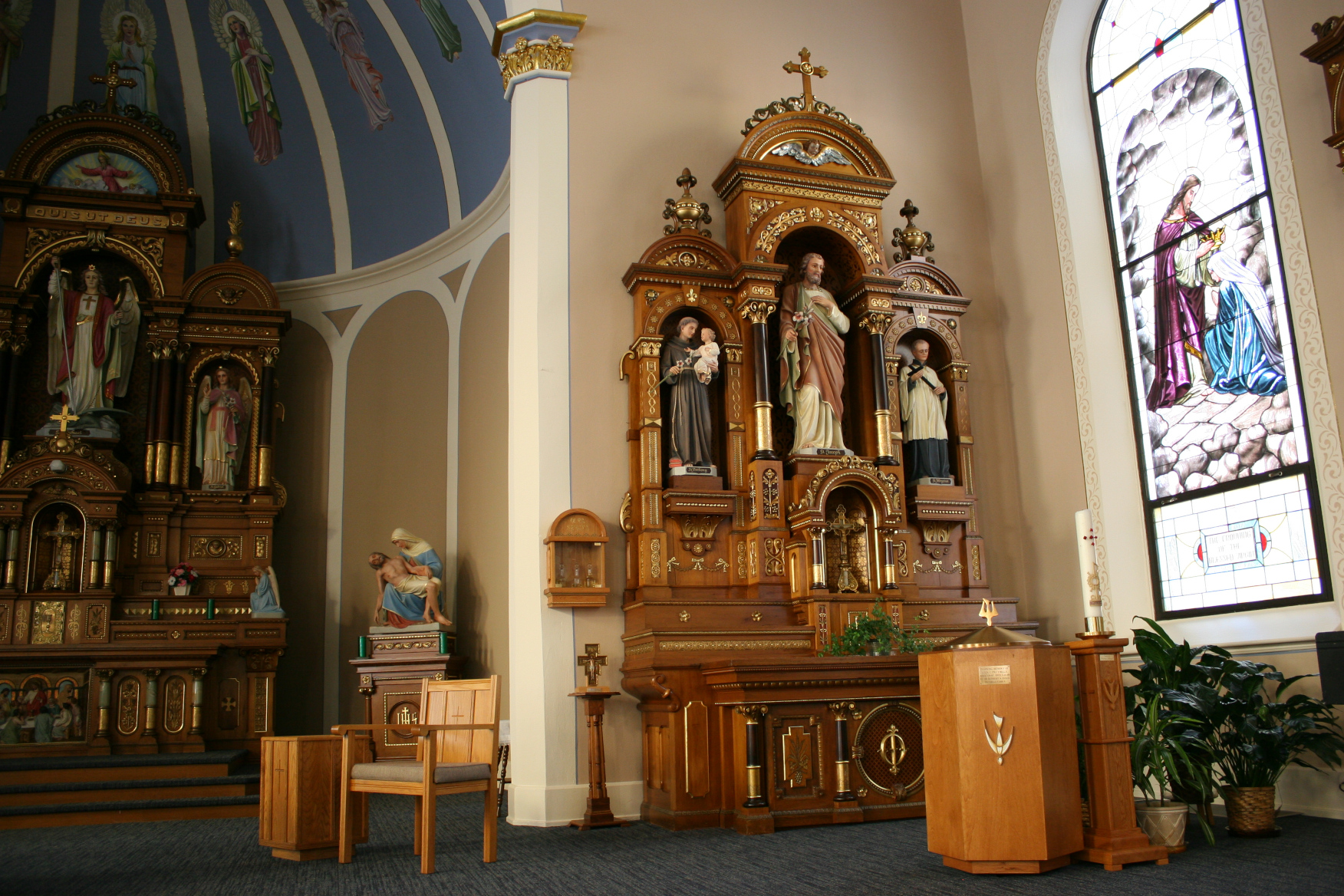
One of the side altars, right, at St. Michael’s. Minnesota Prairie Roots file photo September 2020.
The Nativity represented in stained glass, left. Minnesota Prairie Roots file photo September 2020.

I am grateful to those faith-focused artists and craftsman who created such beauty here in the middle of Minnesota. A place for farm families (mostly) to gather for Mass. To praise God. To confess their sins. To press their hearts in prayer. To mourn. To celebrate. To grow deeper in their faith.

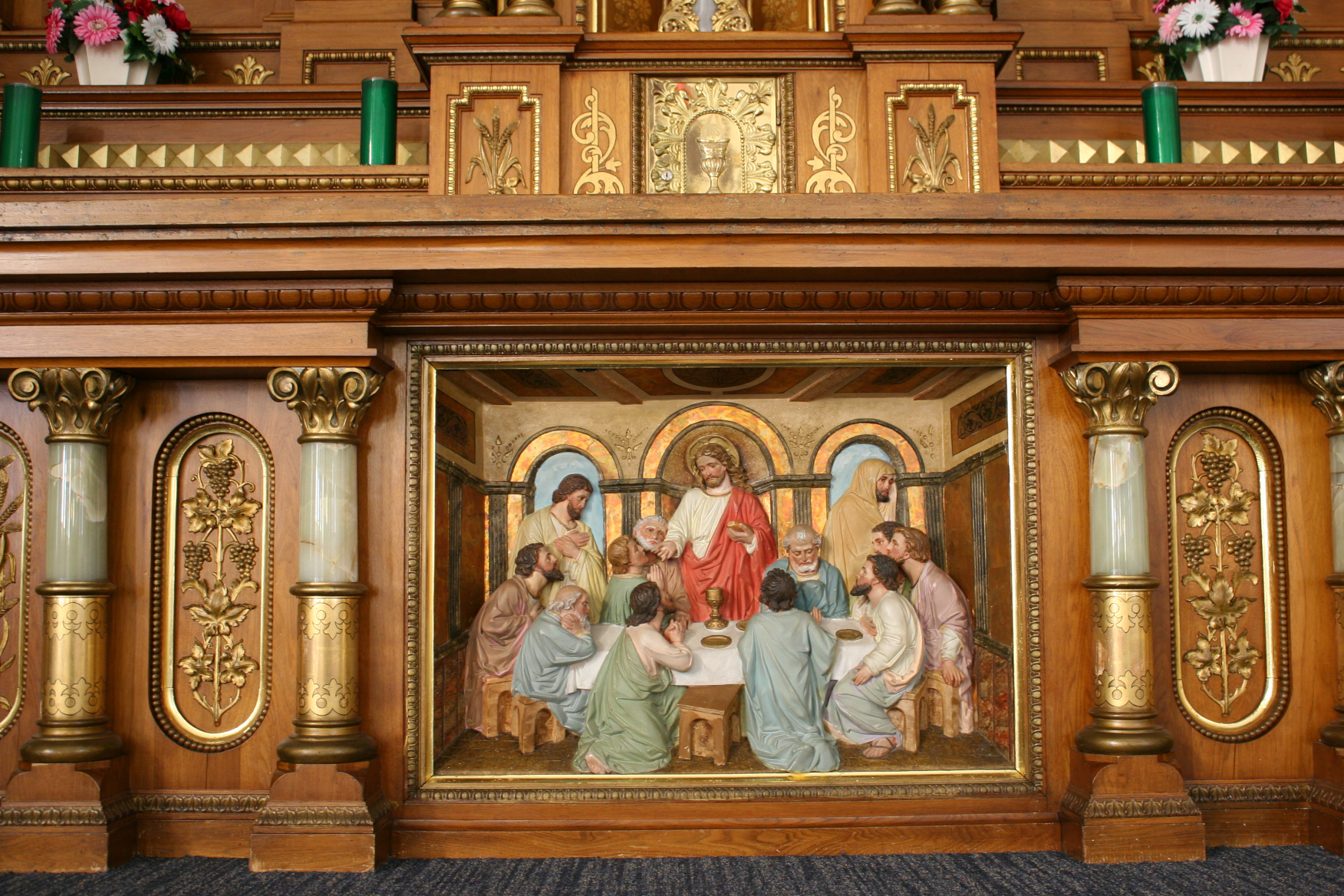
The Last Supper is depicted on the lower part of the main altar. Simply stunning. Minnesota Prairie Roots file photo September 2020.

The Helbling family made St. Michael’s their church home upon relocating to Minnesota from North Dakota in 1963. My husband, Randy, and his siblings attended elementary school across the street. That school, next to the cemetery, is long gone. My mother-in-law and a brother-in-law are buried here, across Minnesota Highway 25 from the church. So, by marriage, St. Michael’s is now part of my history.

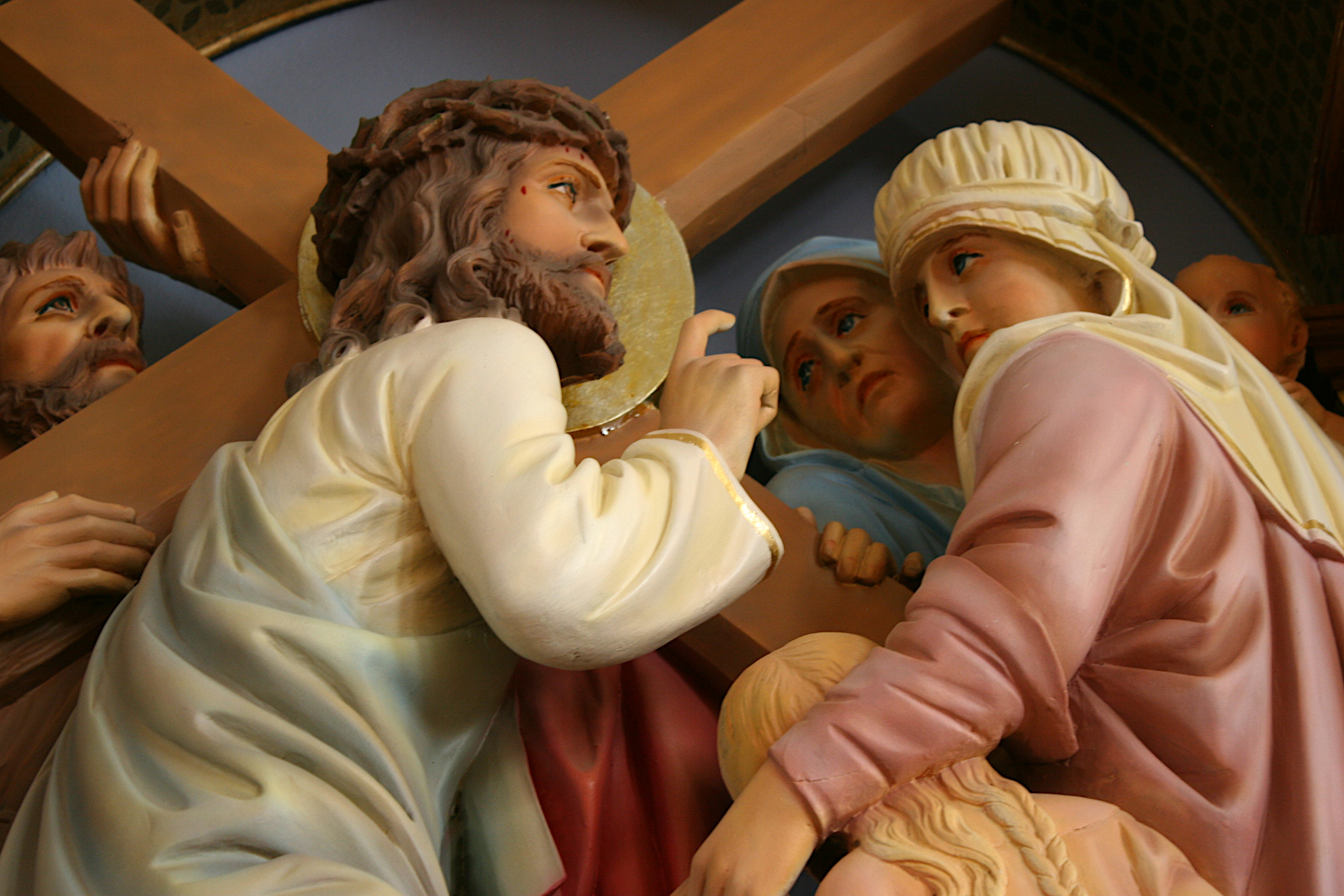
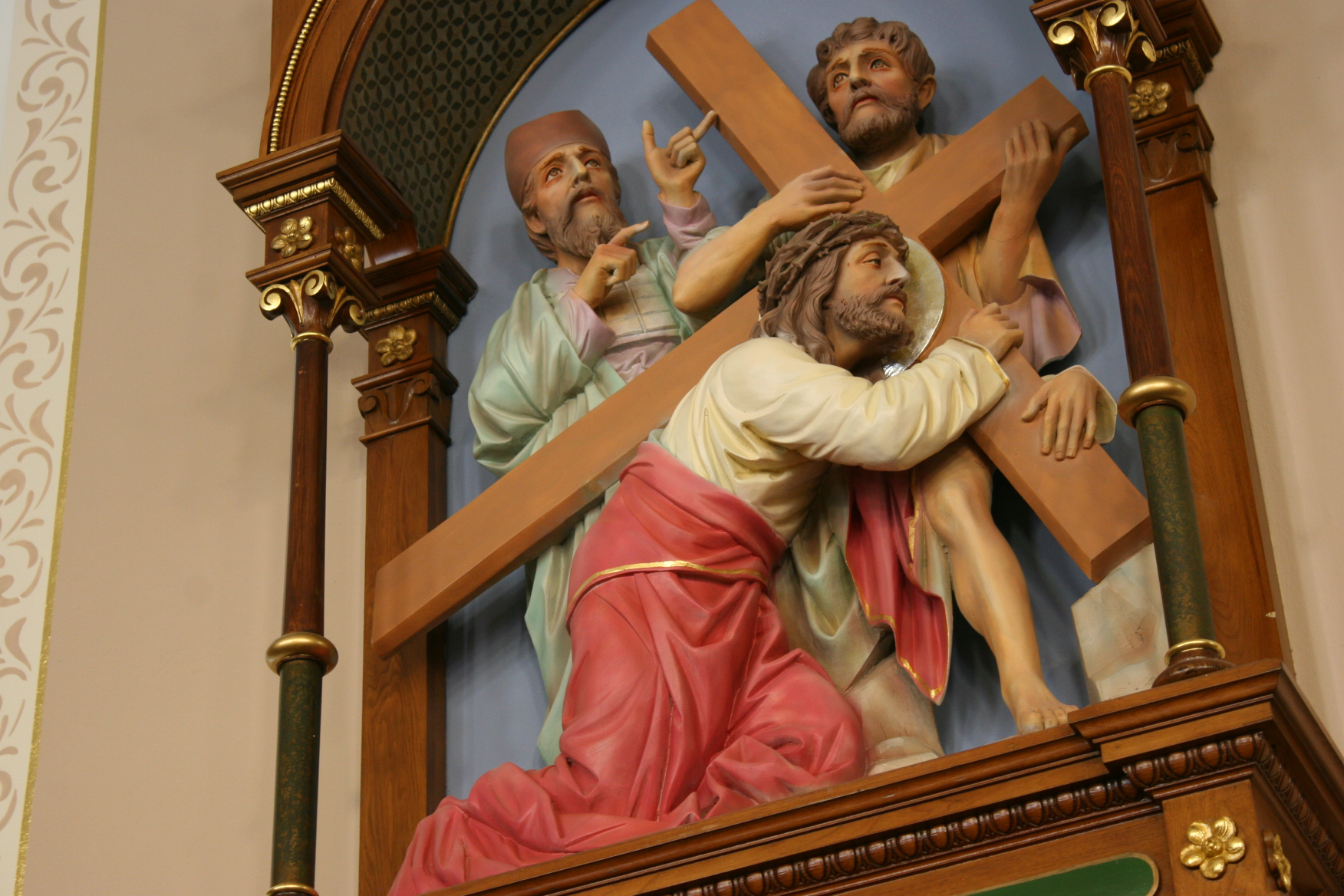
Just look at the emotions sculpted into this art. I see peace, pain, determination… Minnesota Prairie Roots file photo September 2020.

Certainly, I don’t hold the deep emotional connection that comes from years of worshiping within the walls of this rural Minnesota church. But I still hold a deep appreciation for this place which was such a valued part of my in-laws’ lives.

Stained glass windows and sculptures adorn the side walls of St. Michael’s. Minnesota Prairie Roots file photo September 2020.

As a woman of faith—I grew up Lutheran—I value aged churches and art. Religious art is often symbolic, reinforcing Bible truths and stories. It can uplift, comfort, provide peace, bring joy, remind us of our weaknesses and the source of strength and hope. It can center and ground us when we most need to feel centered and grounded.

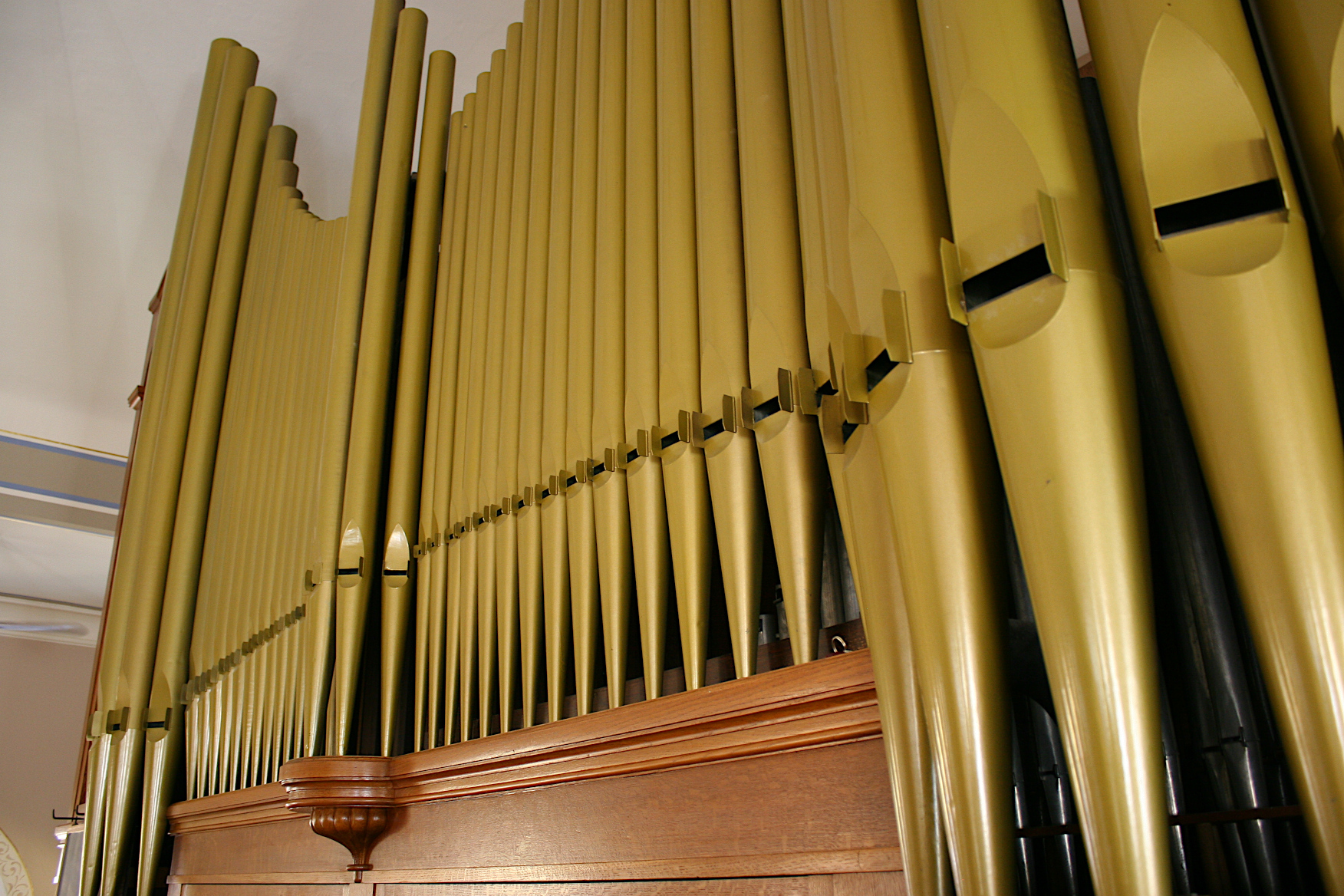
Massive pipes on the pipe organ in the St. Michael’s balcony. Minnesota Prairie Roots file photo September 2020.

Many times, church art has reinforced my faith, helped me to feel the presence and closeness of God whether in a stained glass window, the words of a familiar hymn or the comfort of a worn wooden pew.

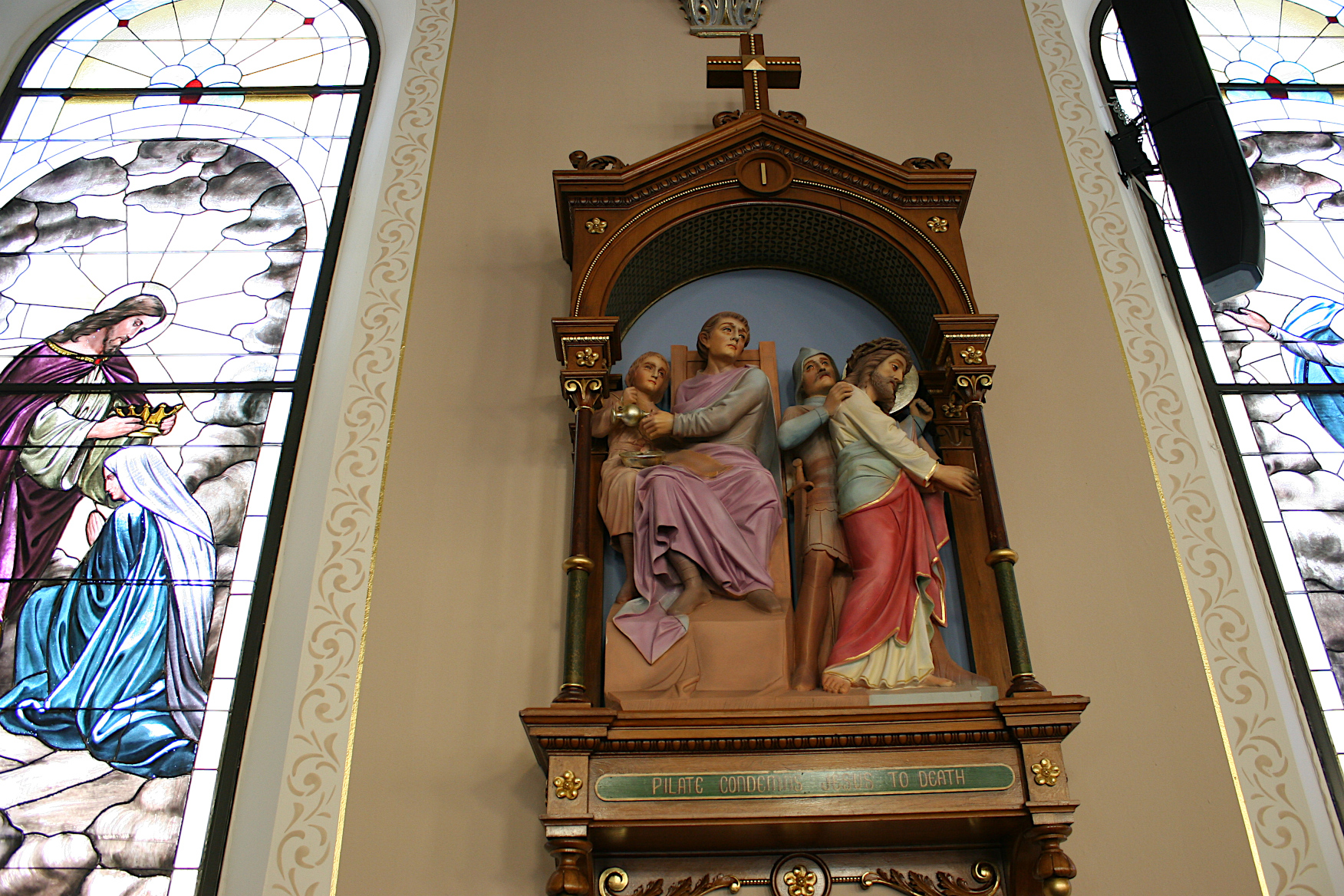
“Pilate condemns Jesus to death” sculpture between two stained glass windows. Minnesota Prairie Roots file photo September 2020.

Inside St. Michael’s, generations of families have gathered. I am grateful for those early settlers who labored to create this sanctuary in the small town of Buckman, Minnesota.

Please check back as I take you inside St. Michael’s for the final post in this three-part series.

© Copyright 2021 Audrey Kletscher Helbling
 

Part I: St. Michael’s in Buckman, place of faith, art & memories January 26, 2021

IMAGINE, AS A YOUNG BOY, moving nearly 400 miles across the plains of North Dakota east to Minnesota with your family to start a new life. You’ve left behind your grandparents and other extended family, and the comforting familiarity of farm home, church and school. For my husband, that was reality.

St. Michael’s Catholic Church in Buckman. Minnesota Prairie Roots file photo September 2020.

As the Tom and Betty Helbling family settled onto a farm southeast of Buckman in central Minnesota in the early 1960s, Randy found himself adjusting from a one-room country schoolhouse with one teacher to a parochial school with multiple classrooms and teachers. He no longer faced cancellation of recess due to coyotes circling the playground at Chimney Butte School near St. Anthony. Rather, he faced nuns slapping his hands with a ruler or drilling thumbs into his skull, adding to his angst as the new boy in school. And then there was the matter of the frightening statue across the street inside the massive St. Michael’s Catholic Church.

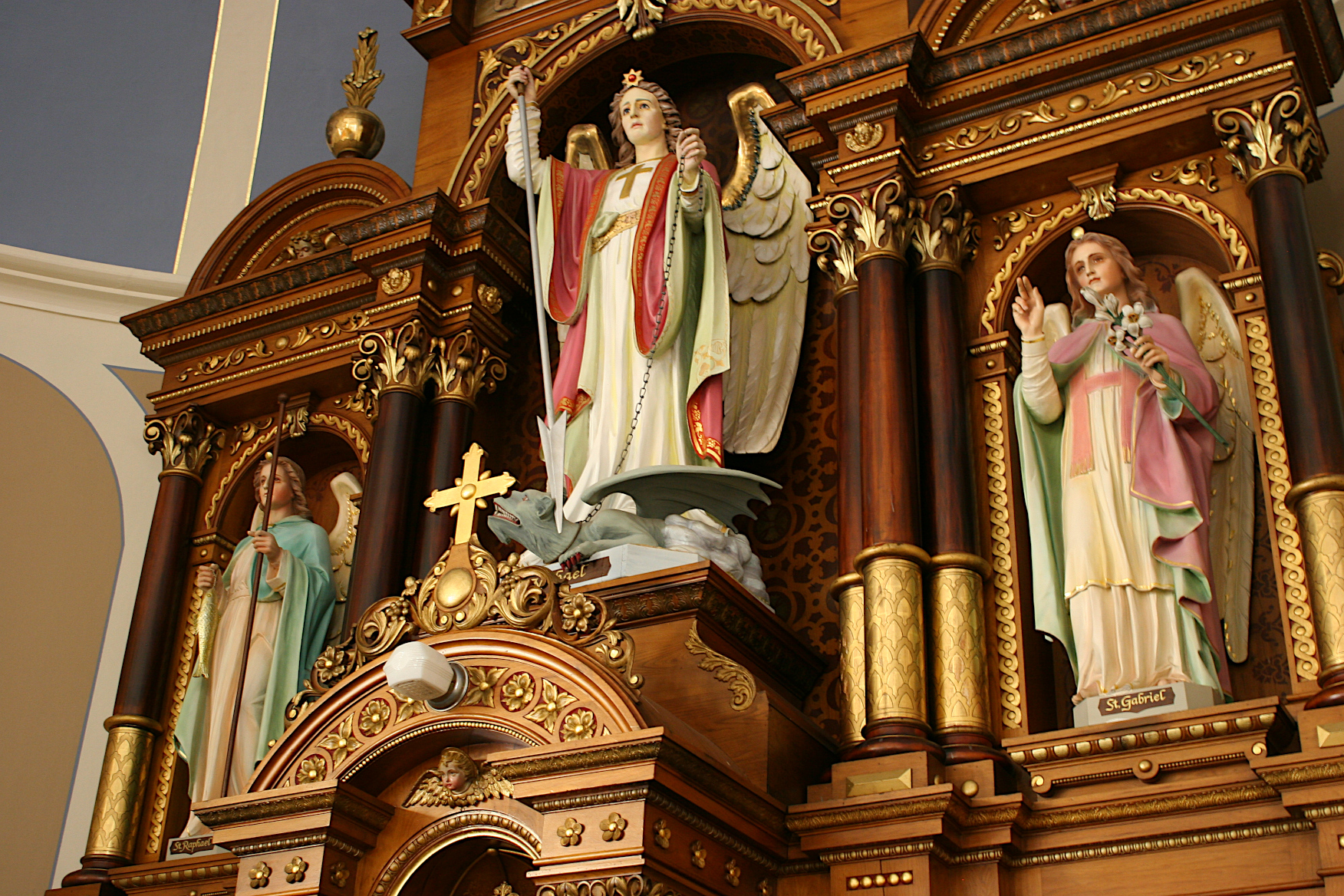
In the center, St. Michael overpowering Satan. Minnesota Prairie Roots file photo September 2020.

Some six months ago, I heard for the first time about Randy’s boyhood fear of the statue which centers the main altar at St. Michael’s, where he attended weekday and Sunday Mass. The statue features a triumphant St. Michael overpowering Satan with a spear. A horrid, crouching other-worldly creature with an open mouth of sharp teeth and equally sharp claws represents Satan. Enough to scare any child looking over adult heads to that altar art. Not even the chain and weapon would be enough to inspire confidence in the Evil One’s captivity.

St. Michael’s stretches long and high. Minnesota Prairie Roots file photo September 2020.

All of that aside, St. Michael’s is a truly beautiful church. Massive in size and vast in art. I’ve come to know it only through marriage as I grew up 145 miles to the south of Buckman and in the Lutheran faith.

“The Nativity” stained glass, one of many similar windows inside St. Michael’s. Minnesota Prairie Roots file photo September 2020.
A stunningly beautiful cross, one of many. Minnesota Prairie Roots file photo September 2020.
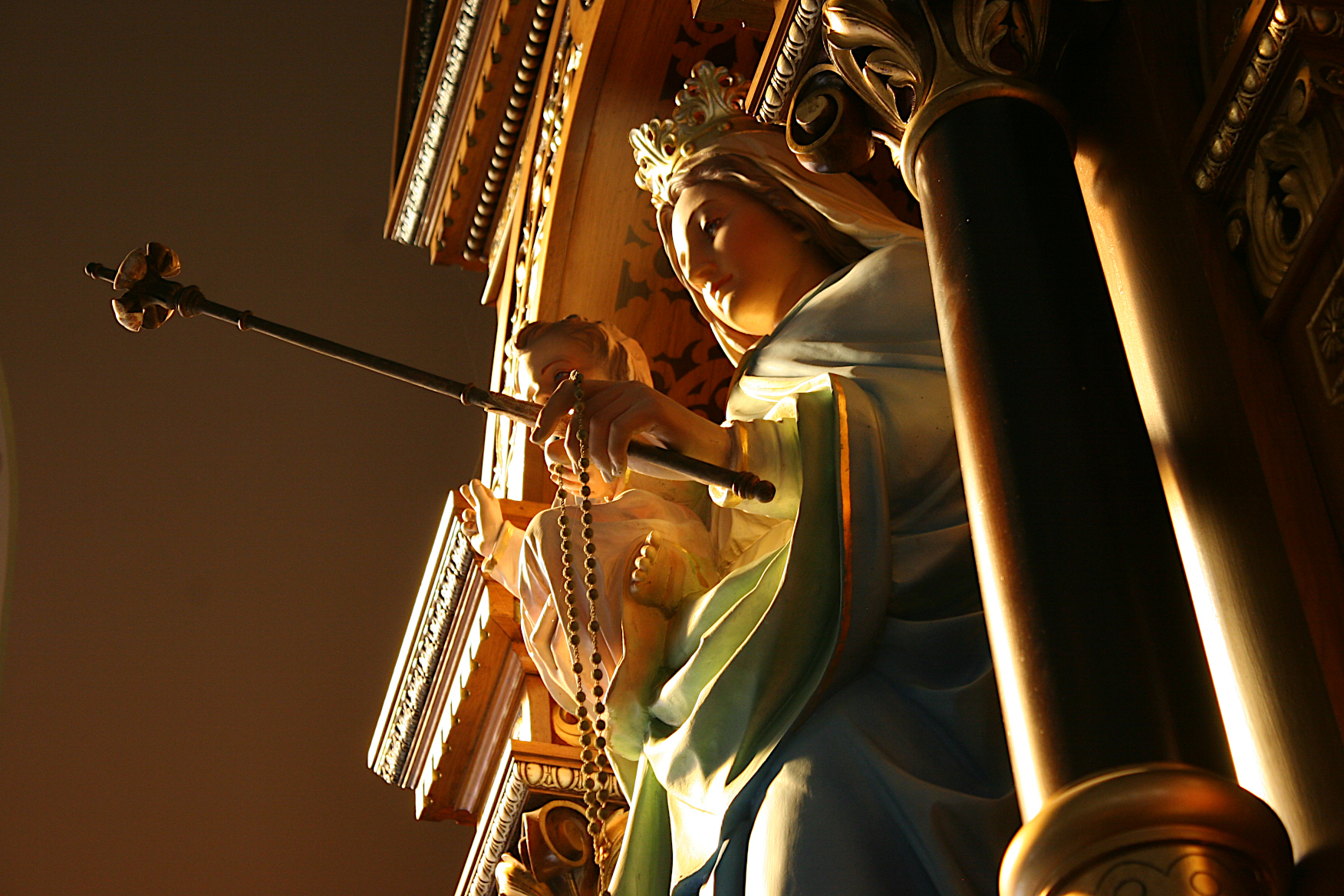
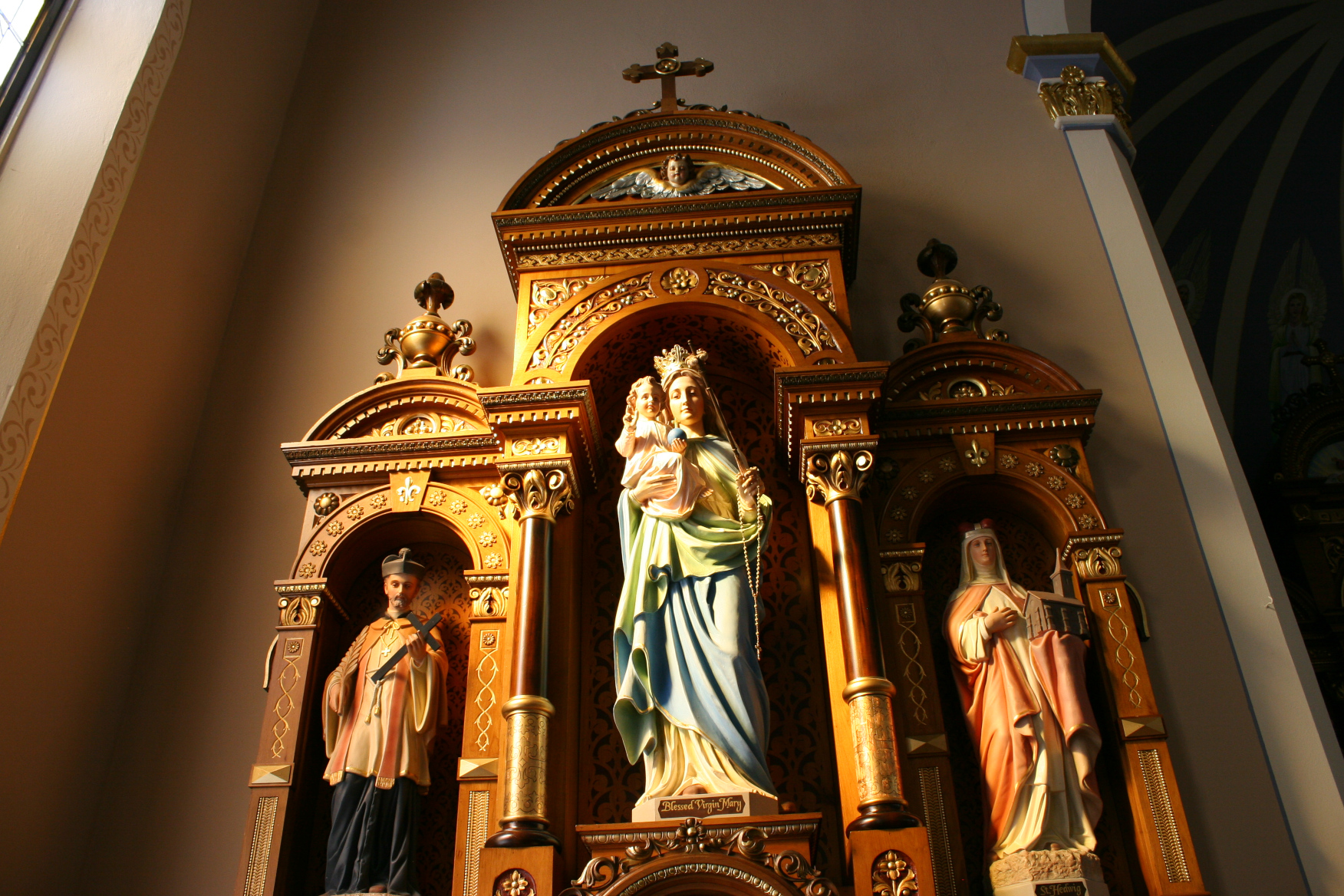
Statues on a side altar. Minnesota Prairie Roots file photo September 2020.

I don’t pretend to understand the meaning of all the art which graces this space. But one thing I do understand is that this house of worship excels in craftsmanship and artistry. Each piece of art holds meaning, significance, purpose. From the stained glass windows to the sculptures to the ornate altars.

Looking toward the back of the church and to the balcony. Minnesota Prairie Roots file photo September 2020.

Years have passed since I stepped inside St. Michael’s. So when Randy and I visited his mother’s and brother’s gravesites at the church cemetery last September, we decided to also check out the recently-restored church. I expected locked doors, so often the case now in rural and small town churches. But the doors to an addition were open and we had the place to ourselves. Note that plenty of security cameras film visitors.

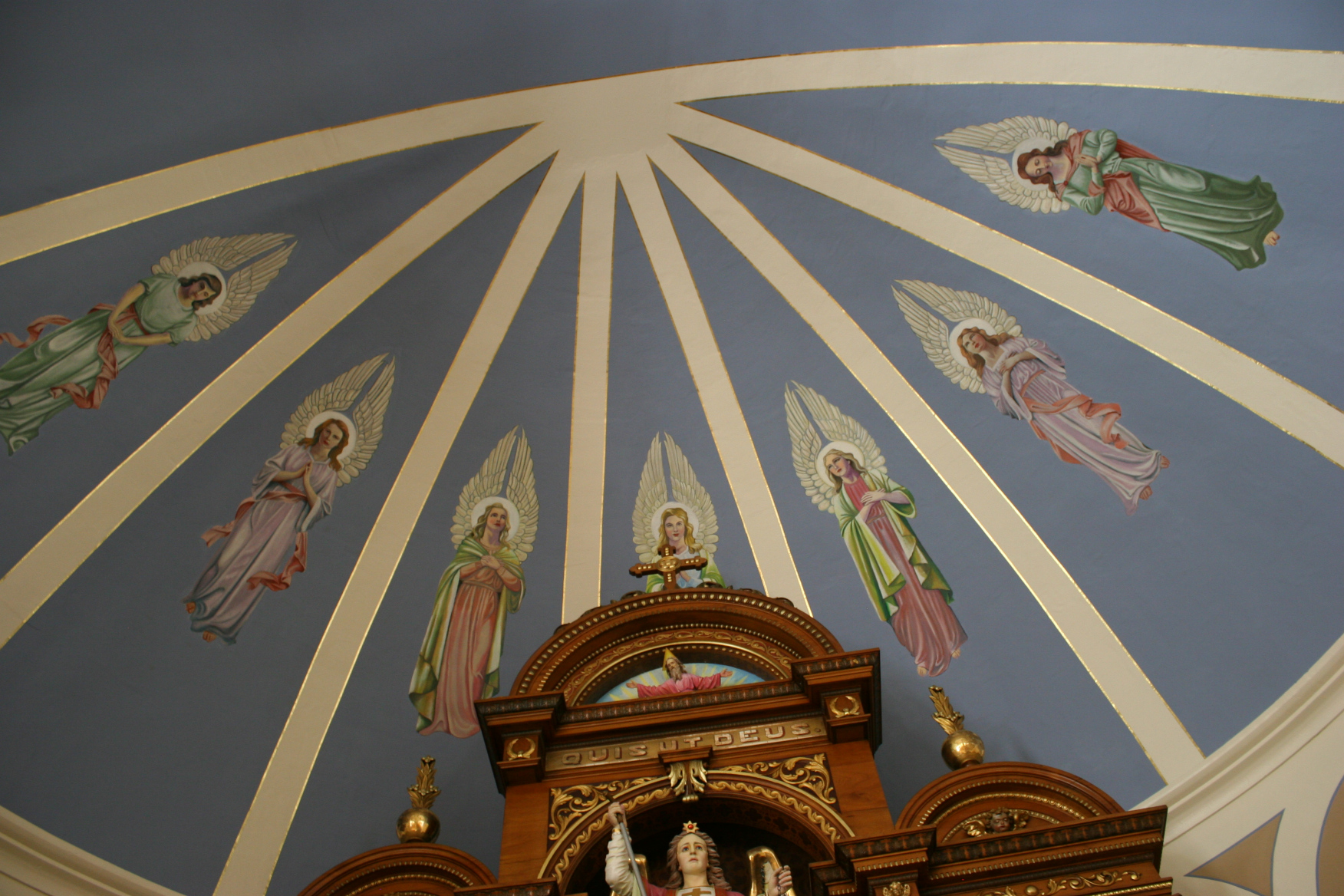
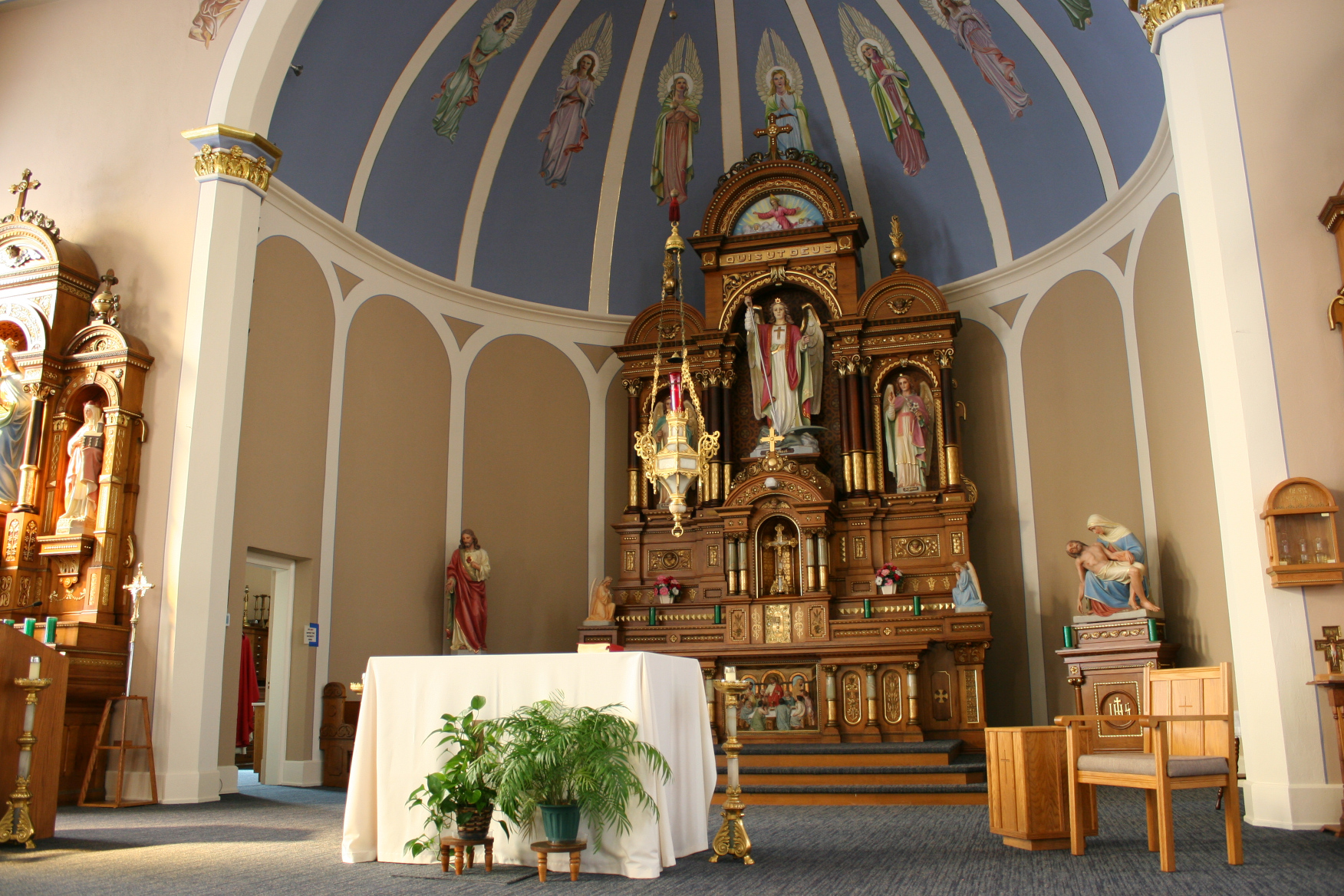
My favorite art in St. Michael’s are these angels painted on the ceiling above the altar. Minnesota Prairie Roots file photo September 2020.

My reaction was one of awe as I stood inside the sanctuary with its soaring ceiling, art seemingly everywhere. It’s a photographer’s paradise. An art lover’s dream. A place of peace for the faithful.

A side altar up close. Minnesota Prairie Roots file photo September 2020.
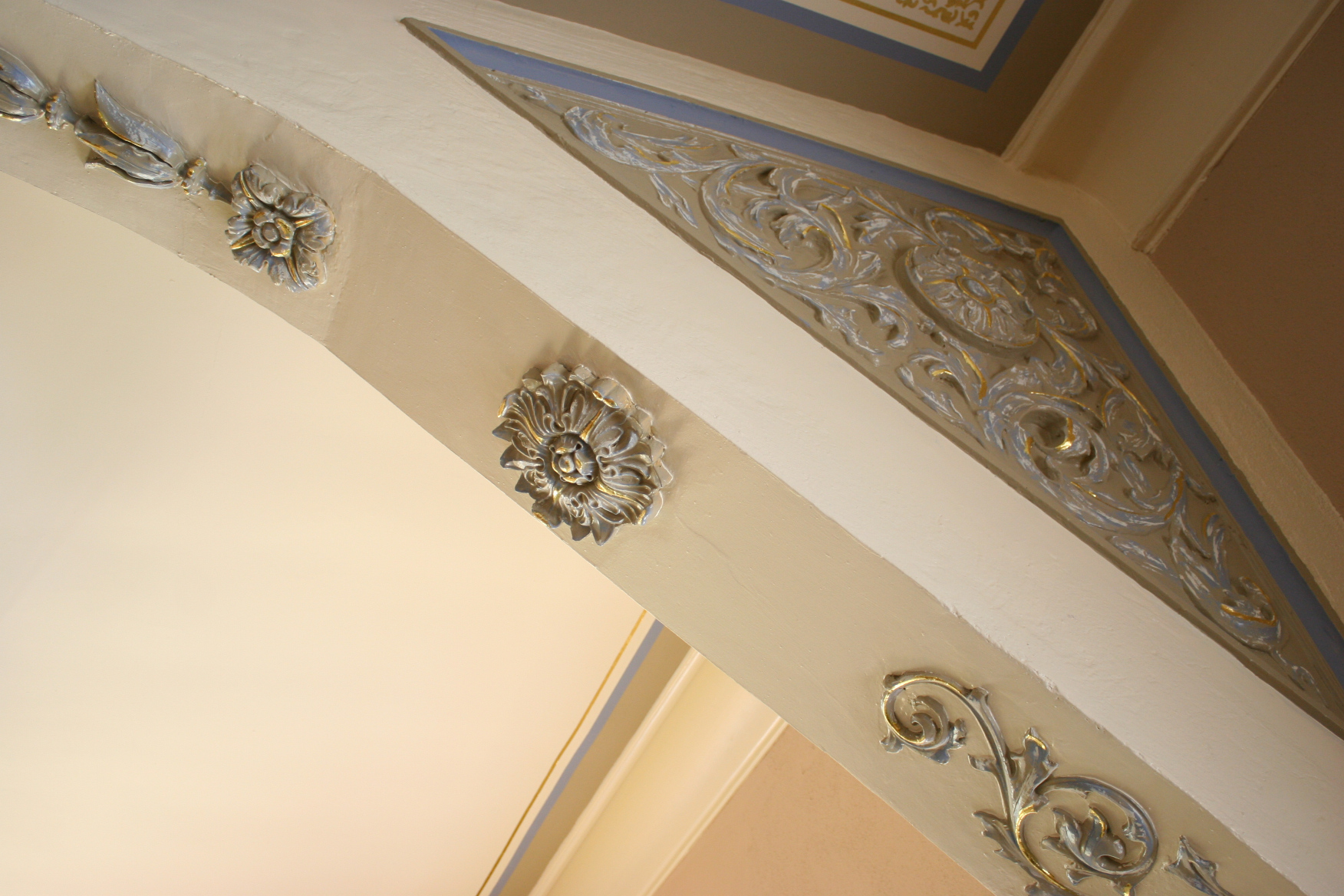
Ornate ceiling details. Minnesota Prairie Roots file photo September 2020.
One of many detailed sculptures. Minnesota Prairie Roots file photo September 2020.

I felt overwhelmed as I moved from one area of the church to the next—attempting to take in all I saw. The whole picture. The details. Oh, the details.

The center altar, with that frightening statue. Minnesota Prairie Roots file photo September 2020.

I stood for a moment, placing myself in Randy’s shoes as that young boy from North Dakota seeing this all for the first time. I locked eyes on the statue of St. Michael towering over Satan, the terrible, horrible creature with the sharp teeth and claws. And I understood Randy’s fear manifested there all those decades ago.

Please check back as I bring you more photos from inside St. Michael’s Catholic Church, Buckman, Minnesota.

© Copyright 2021 Audrey Kletscher Helbling
 

Focus on Buckman, more than just any small Minnesota town January 25, 2021

Filed under: Uncategorized — Audrey Kletscher Helbling @ 12:16 PM
Tags: , , , , , ,
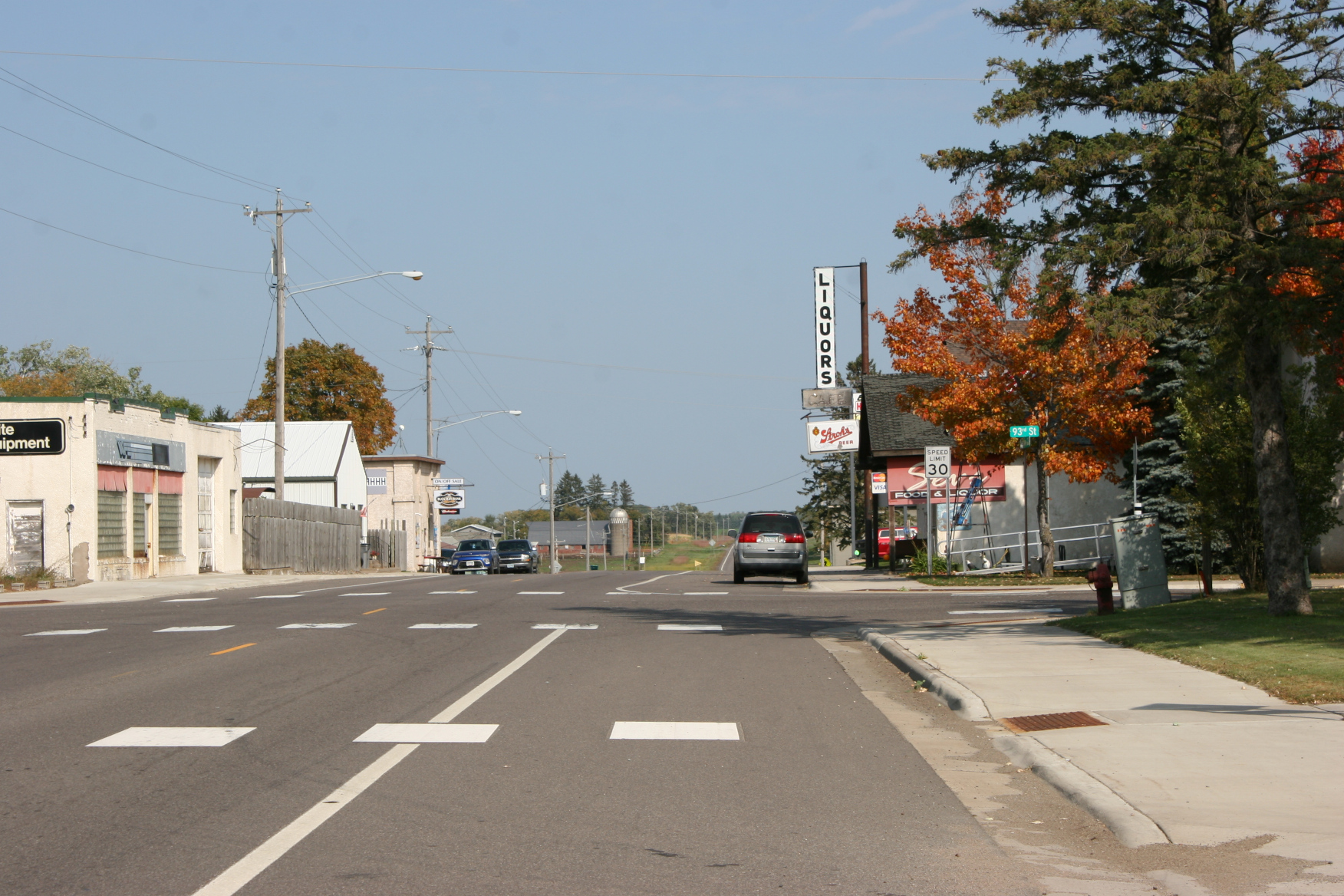
The heart of small town Buckman, Minnesota. Minnesota Prairie Roots file photo September 2020.

HOW DO YOU DEFINE a small town?

For some, it’s a community to pass by or through en route to wherever.

For others, it’s an occasional destination to visit extended family.

But for some of us, it’s the place of our roots.

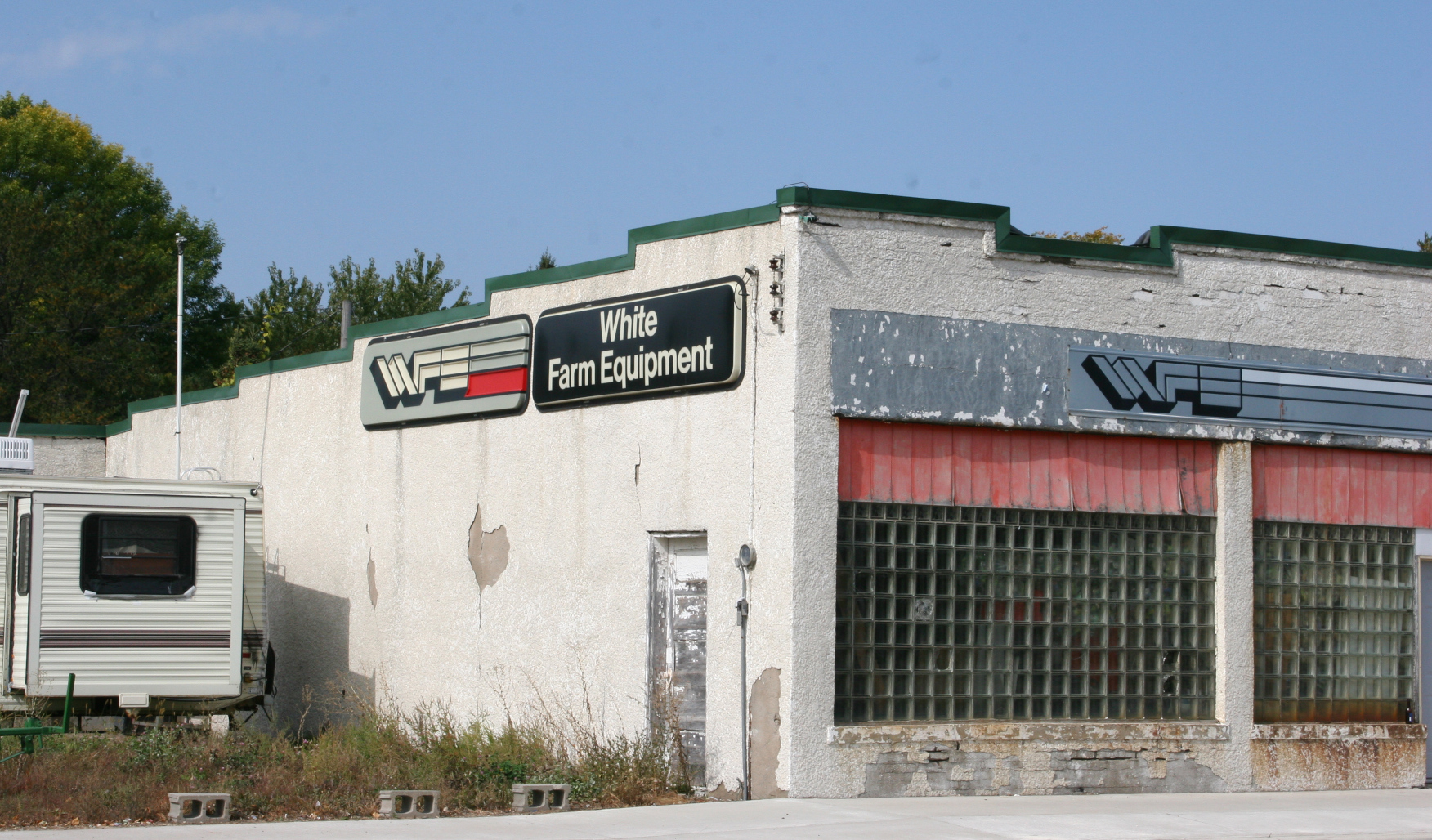
The vacated farm implement dealership in Buckman. Minnesota Prairie Roots file photo September 2020.

Randy and I both grew up on dairy and crop farms near small towns—him near Buckman in central Minnesota and me just outside Vesta in southwestern Minnesota. Those communities, once thriving with elementary schools and many businesses, are no longer hubs of local commerce or education. Much has changed since we each left our respective rural towns in 1974.

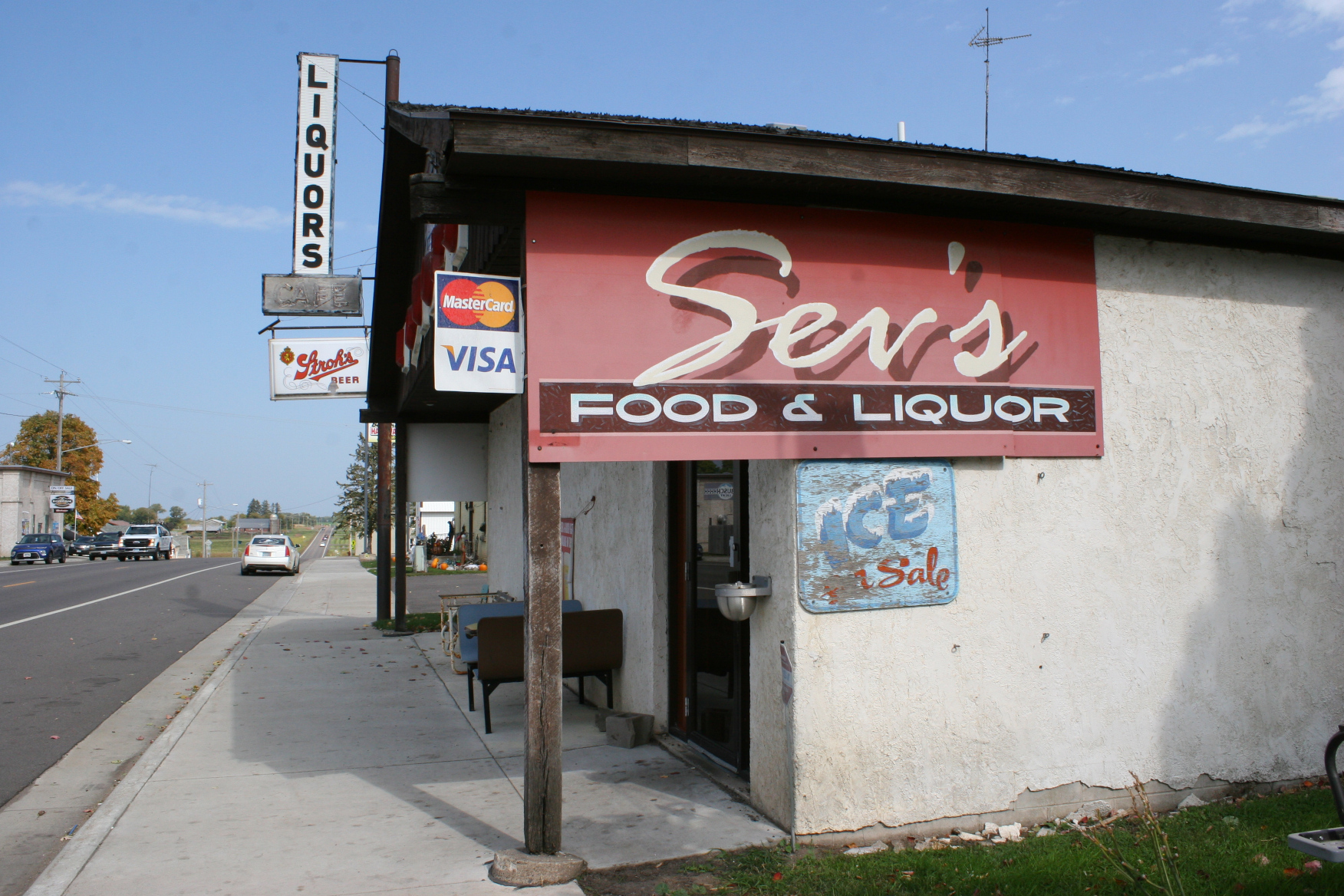
Sev’s Food & Liquor sits along Minnesota Highway 5 in Buckman. Minnesota Prairie Roots file photo September 2020.

Yet, the core of our hometowns, with populations under 300 and 145 miles apart, remains unchanged. Community spirit and neighborliness and a certain connection to place remain particularly strong. Often, generations of families live within miles of each other. Churches center these towns, too, as do bars, both community gathering spots.

It’s not often now that either of us returns to our hometowns. The farms we grew up on are no longer in the family, a loss I feel deeply. I return only for funerals and the annual family reunion. Only occasionally do we divert to Buckman so we can visit the gravesites of Randy’s mom and brother, Brian.

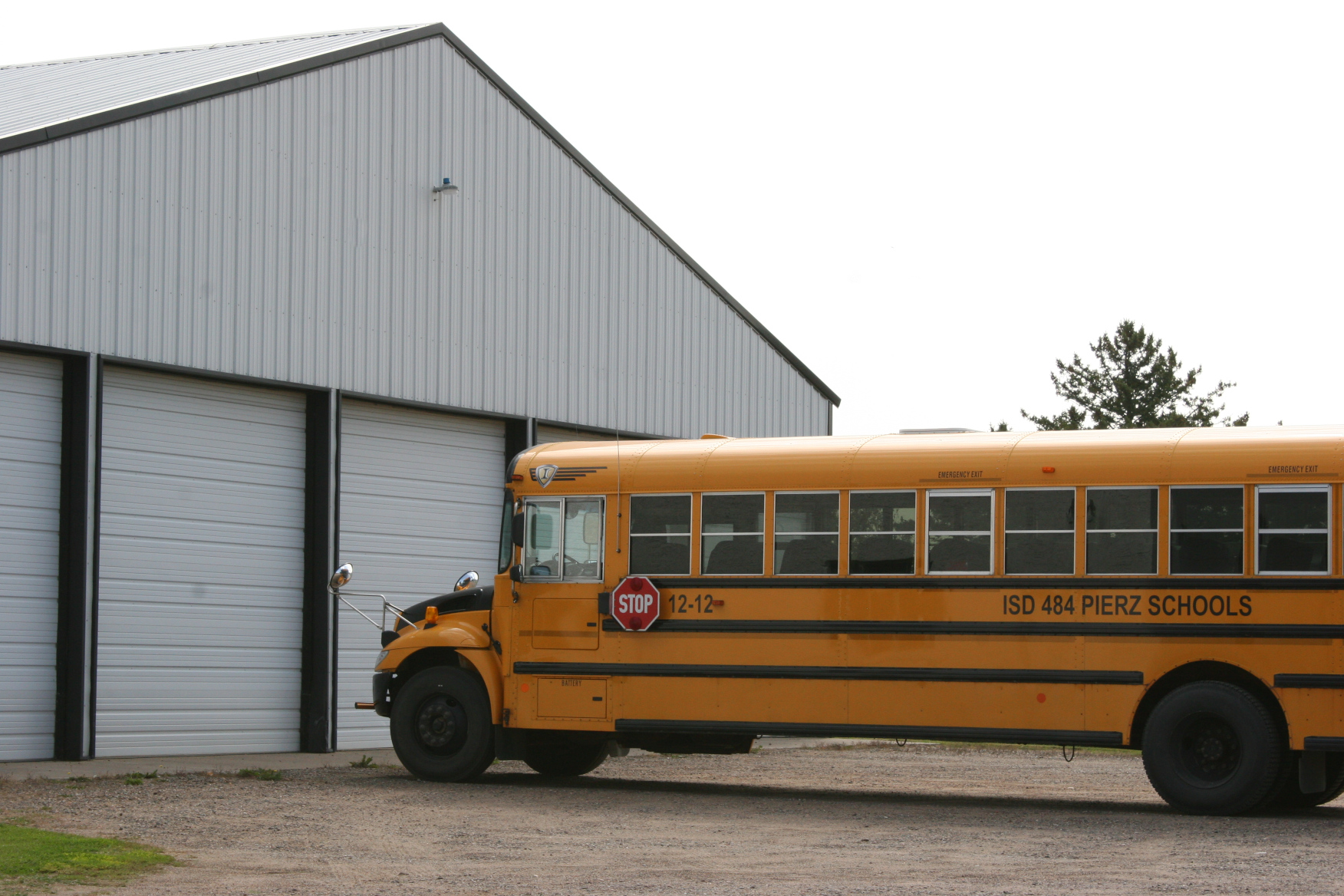
Randy attended elementary school at St. Michael’s (now gone) in Buckman and the rest of his schooling in Pierz. This bus was parked outside a garage in Buckman. Minnesota Prairie Roots file photo September 2020.

We did just that this past fall after spending time at a family member’s guest lake cabin in the Brainerd Lakes area. Buckman lies some 40 miles to the south of Brainerd. We drove through Pierz, where Randy attended junior and senior high schools, on our way to his hometown.

Minnesota Highway 25 runs through the middle of Buckman, here looking north in the heart of downtown. Minnesota Prairie Roots file photo September 2020.

Some seven miles later, we pulled off Minnesota State Highway 25, which slices through Buckman, and turned into St. Michael’s Cemetery. I always feel such a sense of sadness upon visiting my mother-in-law’s gravesite. She died way too young at age 59, just months before her grandson, our son, was born.

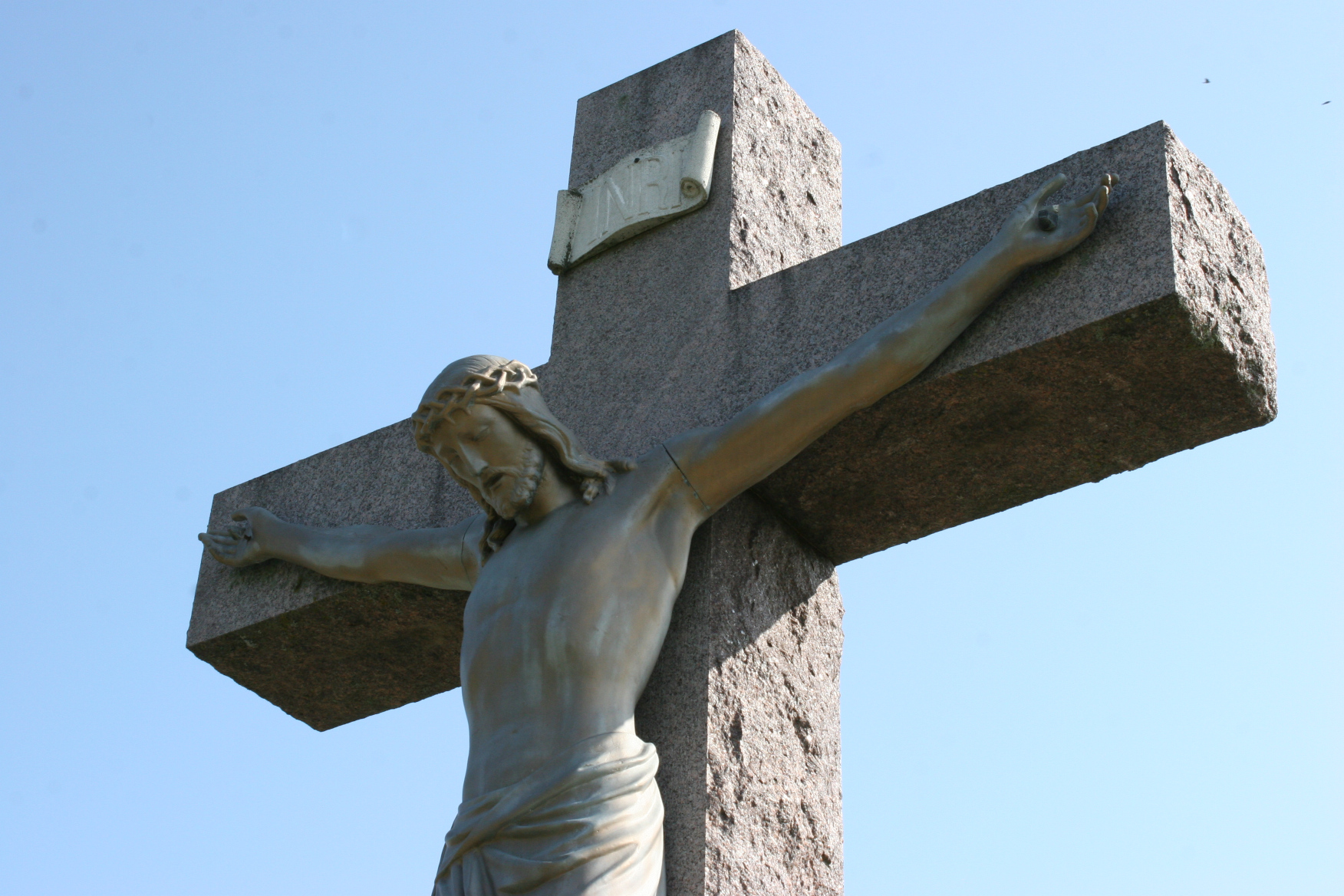
A massive stone cross monument marks St. Michael’s Cemetery in Buckman. Minnesota Prairie Roots file photo September 2020.

Tragedies, like those of the Dehler family, are written upon tombstones in this cemetery landmarked by a towering stone cross.

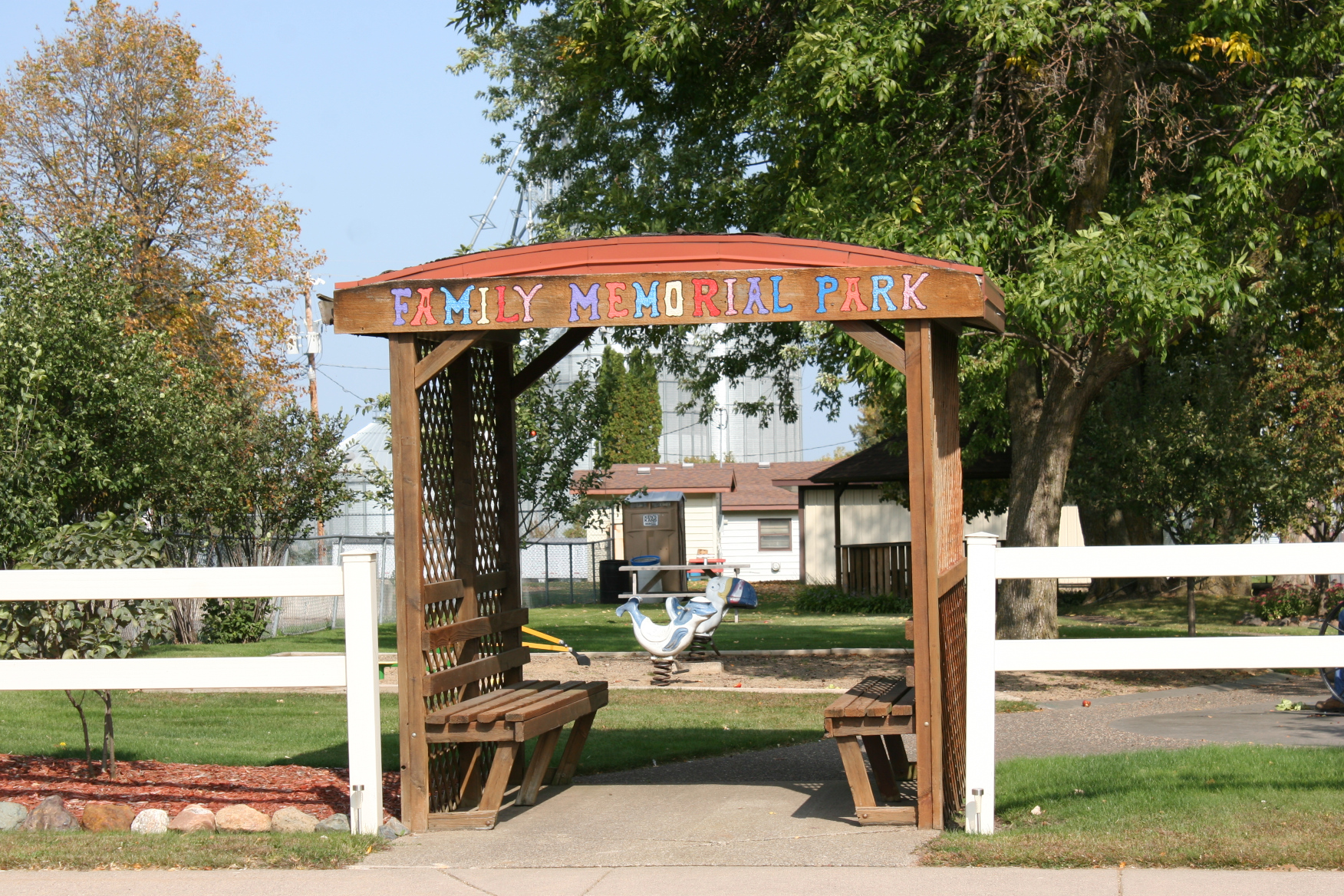
The entry to Family Memorial Park, across the street from the bus garage and cemetery, Minnesota Prairie Roots file photo September 2020.
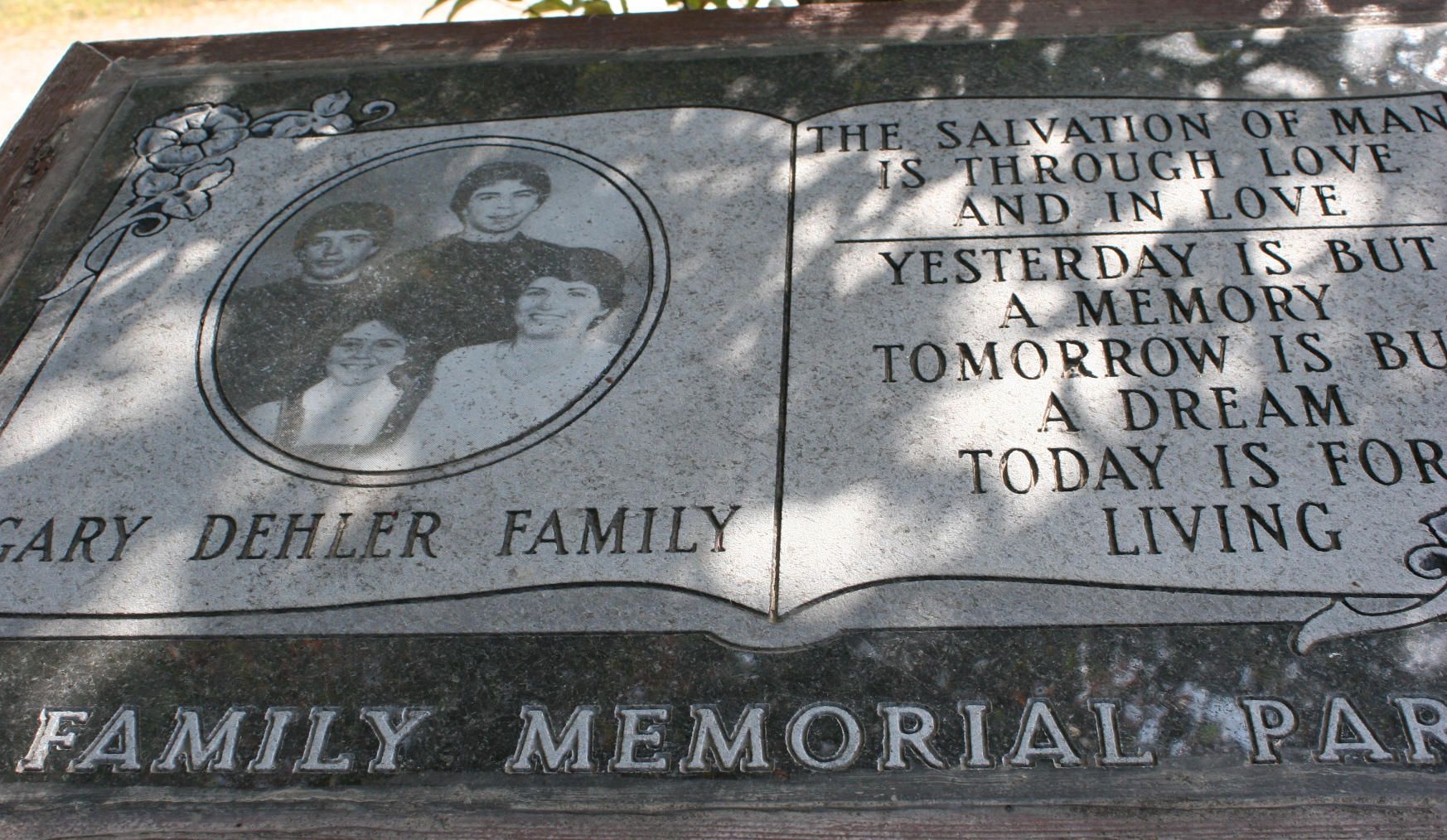
A plaque honors the Dehlers, four of whom died in a car-train collision. Minnesota Prairie Roots file photo September 2020.
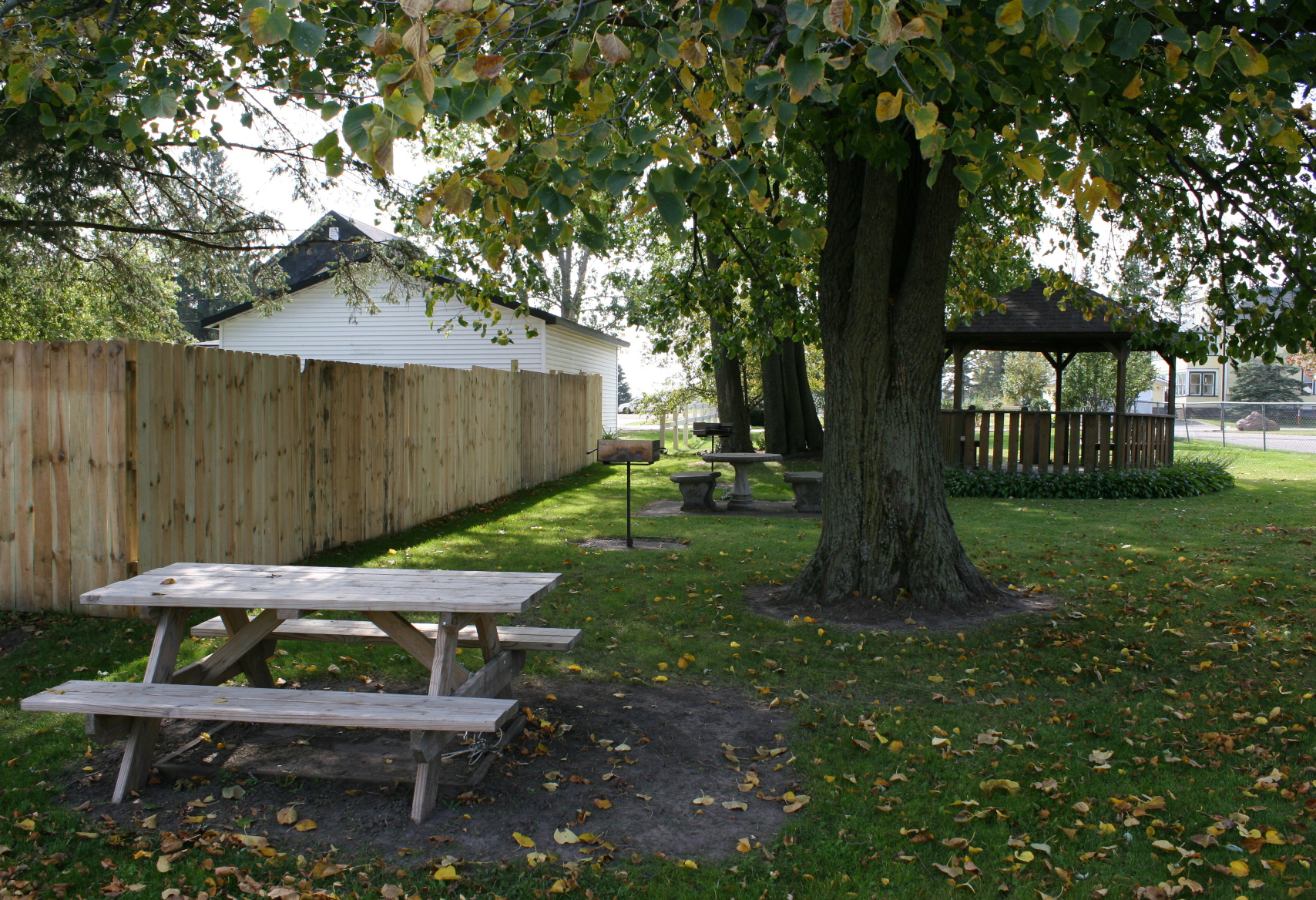
Inside Family Memorial Park, Buckman. Minnesota Prairie Roots file photo September 2020.

Across the street, Family Memorial Park—with a mini playground, picnic tables and gazebo—honors 36-year-old Suzette Dehler and her children, Gerald, 15, Christopher, 14, and Tammi, 8. They died in a car-train accident in July 1986.

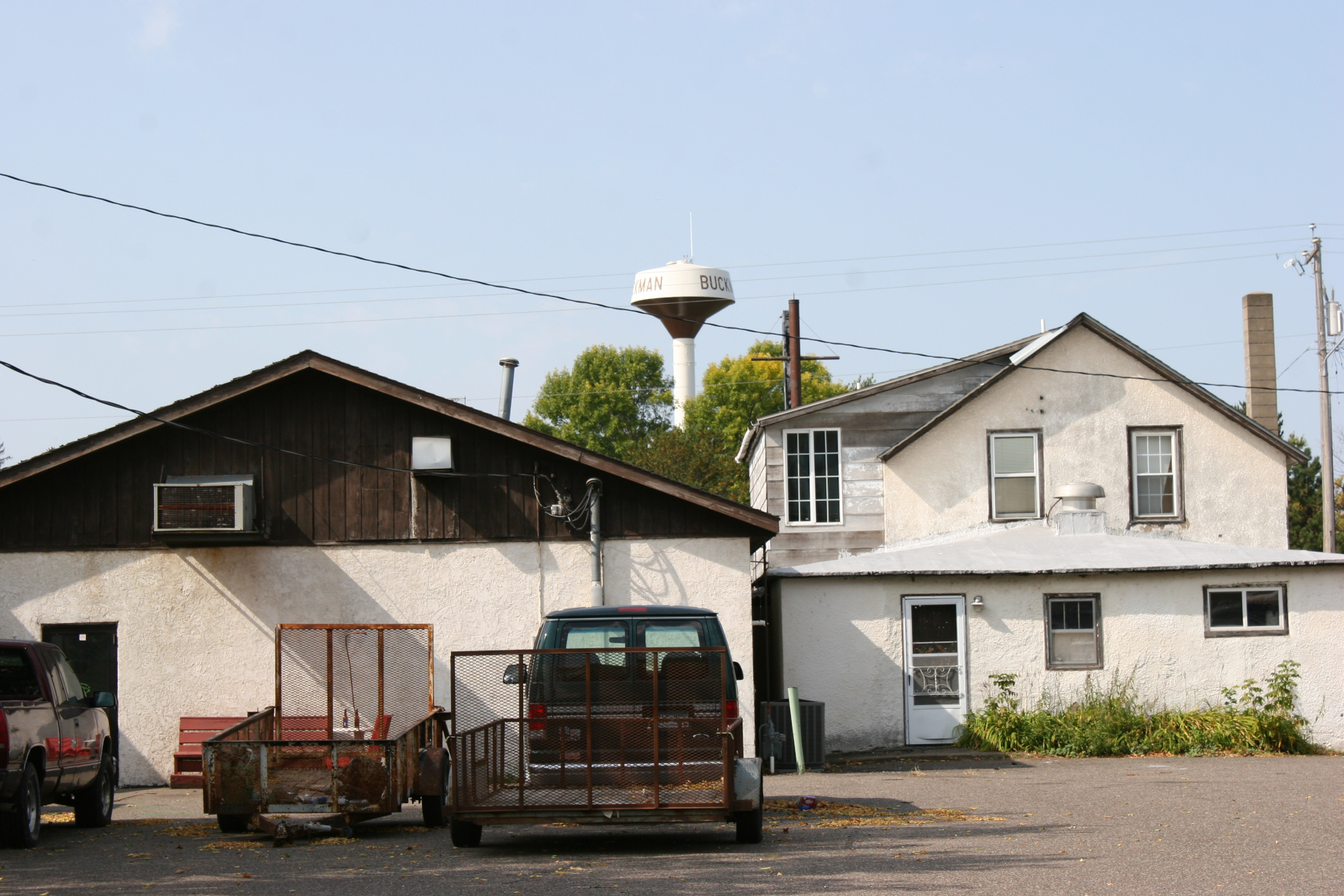
Photographed from the park, the back of Sev’s with the Buckman water tower in the distance. Minnesota Prairie Roots file photo September 2020.

On this autumn afternoon, we picnicked there, behind Sev’s Food & Liquor and across the street from the bus garage. A dog barked at the neighboring house, breaking the small town silence.

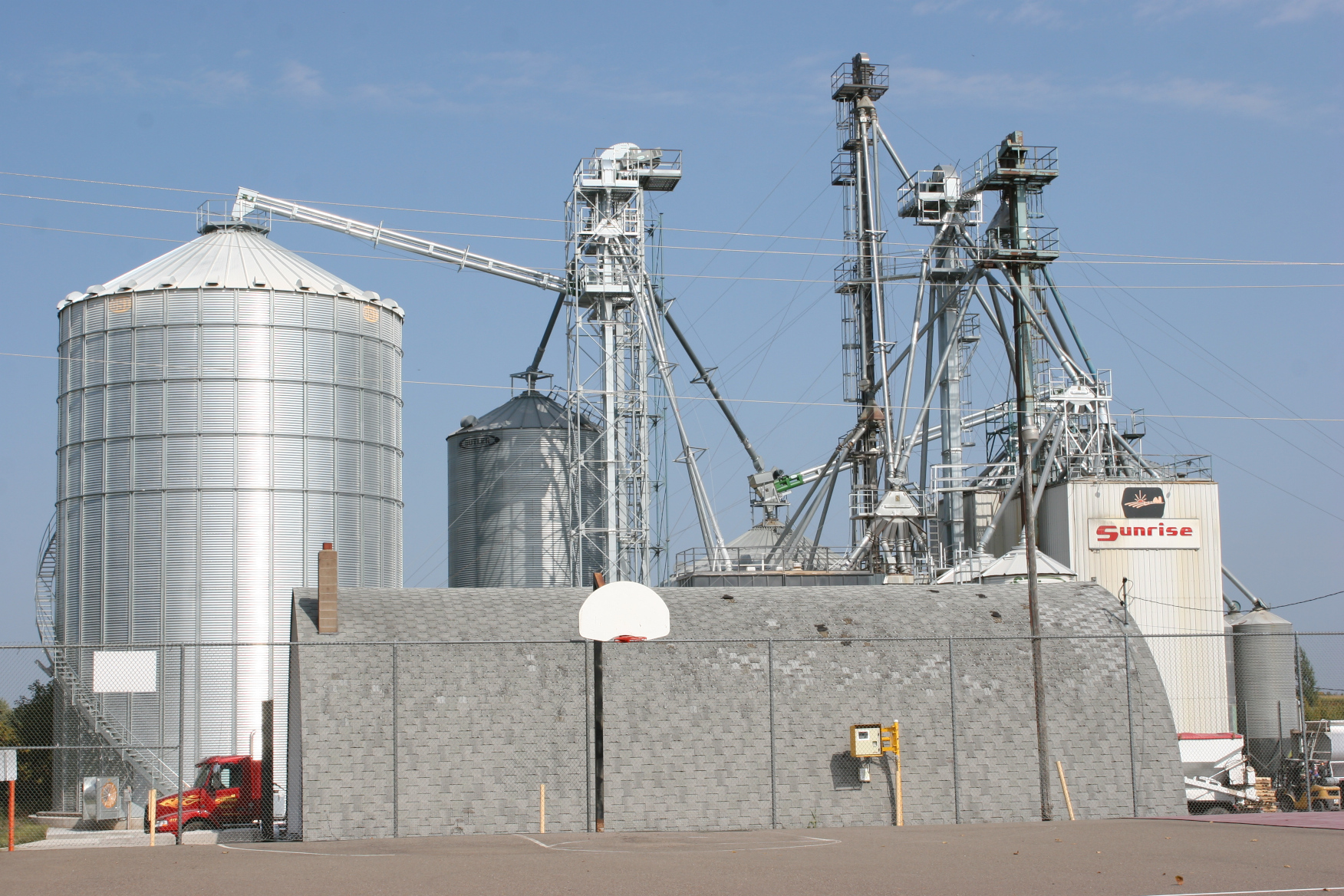
Buckman still centers around agriculture, as seen in this ag business on the north end of town. Minnesota Prairie Roots file photo September 2020.

To the north, massive grain bins define this as an agricultural community.

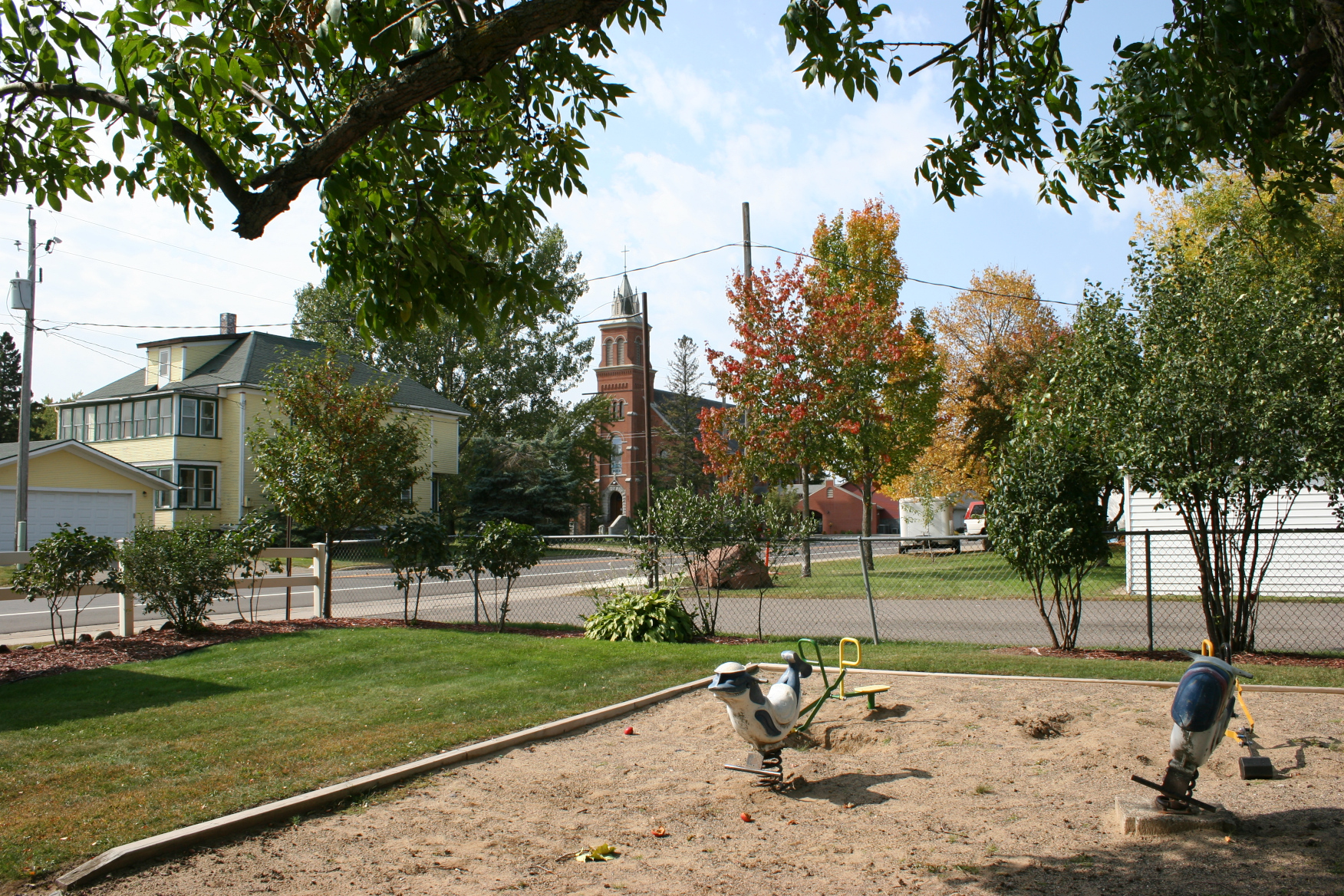
To the west of Family Memorial Park, St. Michael’s Catholic Church rises above Buckman. Minnesota Prairie Roots file photo 2020.

And to the west, the steeple of St. Michael’s Catholic Church rises above Buckman. It’s a beautiful church, recently refurbished, and an integral part of this town. Randy worshiped here with classmates from St. Michael’s Parochial School and with his parents and siblings. He served as an altar boy, too. We mourned his mom here and a few years later he stood as best man when his dad remarried. I photographed the wedding.

On this day, I carried my camera inside again, this time to document the sanctuary. I feel like a foreigner inside Catholic churches, which are typically massive and ornate, so different from the simple Lutheran churches of my upbringing.

Check back as I take you inside St. Michael’s in a series of posts focusing solely on this church. The art inside will, I expect, impress you. And remind you that, even in the smallest of towns, treasures await our discovery.

Upcoming posts will also feature more photos from Buckman and several from neighboring Pierz.

© Copyright 2021 Audrey Kletscher Helbling
 

A COVID-19 update & thoughts from Rice County, Minnesota January 22, 2021

Filed under: Uncategorized — Audrey Kletscher Helbling @ 5:00 AM
Tags: , , , , , , ,
Minnesota Prairie Roots file photo from Valley Grove Cemetery, used for illustration only.

SLIGHTLY OVER A MONTH has passed since I wrote about COVID-19 in my southeastern Minnesota county. And in those 34 days, 22 more individuals in Rice County have died due to the virus, bringing our total deaths to 69. Since the pandemic began, the number of people infected with COVID (January 21 county stats) stands at 6,139.

My heart breaks when I consider the death data, because behind every number is a person. Someone who loved and was loved. The virus claimed individuals ranging in age from 24 – 104. Most (42) lived in long term care centers.

I scrolled through area obituaries to find a few of those individuals who died due to COVID. I appreciate when families publicly share that cause of death as I think it’s a personally powerful way to make a statement to the community that, This virus is deadly.

READ THEIR NAMES

In my brief search, I found these names: Craig, 71; Ted, 77; Harvey, 75; Chuck, 89; Norma, 92; and Dave, 87. Dave, part of my faith family, was a long-time funeral home director prior to retiring and passing along the business to his son. Craig was a Faribault pastor, the first in my county to die of COVID-19 in April.

While my immediate family has thus far remained healthy, many extended family members have gotten and recovered from the virus. Friends have also been ill, including one hospitalized for two weeks. I indirectly know others who’ve been hospitalized and/or died. They are individuals I’ve sometimes prayed for for weeks as they’ve battled the virus and struggled to recover.

My niece will tell you the story of a friend who has suffered serious, severe and long-lasting complications from COVID-19. That’s the thing about this virus. We never know if we will experience only a mild case or something much more serious. Even deadly. Age is not a given protection.

MASK WEARING REMAINS AN ISSUE

Wearing a multi-layered, tight-fitting mask (and, no, a plastic face shield alone doesn’t count as CDC-approved protection); socially distancing; washing/sanitizing hands often; avoiding time with those outside our household, especially in enclosed spaces; and staying home when sick or with COVID symptoms remain as important as ever to help stop the spread of the virus. I can’t stress those health and safety protocols enough.

I continue to see people in public without masks or wearing them below their noses and sometimes even below their mouths. That frustrates me to no end—this inability to wear a mask or to wear it correctly by covering both the mouth AND the nose. It’s not that difficult. Even my 2-year-old grandson wears his mask properly. Why is it so hard for adults (like the cashiers at a local dollar store, some grocery store customers, etc.) to do so? Most troubling was the half-masker sporting a jacket for an area small town volunteer fire and rescue department. I want to scream at these people and confront them. (I don’t. I avoid them.) And, yes, that may sound judgy. But at this point in the pandemic, when a new variant is increasing spread, masks are even more important. People ought to care about protecting others. They ought to care that their neighbors are getting really sick and/or dying.

HOPEFUL AS VACCINES ROLL OUT

As of yesterday, 2,039 people in Rice County, or 3.1 percent, have started the vaccination process targeted first to those living in long term care settings and working in healthcare. It’s a start in a county with a population of 65,765. Some vaccines have also been set aside for childcare workers, educators and those age 65 and over. That said, the supply cannot meet demand. Yet, I am thankful for vaccination beginning and hopeful that will amp up under the Biden administration.

Randy and I are some eight months shy of the age 65 cut-off. I’m not worried about myself as much as my husband. He faces possible COVID exposure in the workplace. (And, yes, there have been cases.) As a highly-skilled and in high demand automotive machinist, working from home is not an option. So I ask him to mask and distance himself from co-workers and customers, especially those non-maskers and half-maskers.

If Randy gets COVID, I likely will, too. And I’d rather not test how my body will react. A severe case of whooping cough at age 50, which left me incredibly sick for three months, gasping for air, using an inhaler and taking a steroid, shows me just how awful an illness that affects the lungs and impedes breathing. I expect COVID would be worse. Much worse.

© Copyright 2021 Audrey Kletscher Helbling
 

From Inauguration day: Inspiring poetry January 21, 2021

Minnesota Prairie Roots file photo.

FOR THOSE OF US who write poetry, its power to move, to inspire, to uplift, to matter, were evident during Wednesday’s Presidential inauguration as National Youth Poet Laureate Amanda Gorman delivered her powerful poem, “The Hill We Climb.”
To watch that 22-year-old Los Angeles poet stand before the nation’s capitol, before the new President and Vice President and so many others, and hear her deliver her poem with such passion filled me with hope.

Hope themed her poem. If you missed hearing Gorman’s poem, I’d encourage you to seek it out online and listen. Poetry, when read aloud by its author, takes on a depth missing if simply read silently to one’s self.
Gorman’s poem complemented, reinforced, the hopeful messages I took away from the day through speeches, songs, prayers and actions.

Words—like unity, resilience, strength, faith, respect, possibilities, together—resonated with me. Words that will write, as President Joe Biden said, “the unfolding story of our great nation.”

And part of that story will be the words of a young poet, who inspired hope on January 20, 2021.

© Copyright 2021 Audrey Kletscher Helbling