Minnesota Prairie Roots

Writing and photography by Audrey Kletscher Helbling

It’s in the details, my friends May 13, 2015

Filed under: Uncategorized — Audrey Kletscher Helbling @ 5:00 AM
Tags: , , , ,
Right next to Papa Murphy's Pizza on Rice Street, the family-owned and operated The Puppy Place offers all things canine, including puppies for sale.

Right next to Papa Murphy’s Pizza on Rice Street, the family-owned and operated The Puppy Place offers all things canine, including puppies for sale.

WAITING IN THE BACK SEAT of a Chevy in a Little Canada parking lot for my daughter and her husband to pick up a Papa Murphy’s pizza, I photographed several scenes. Even in idle moments, I can find subjects worthy of photography.

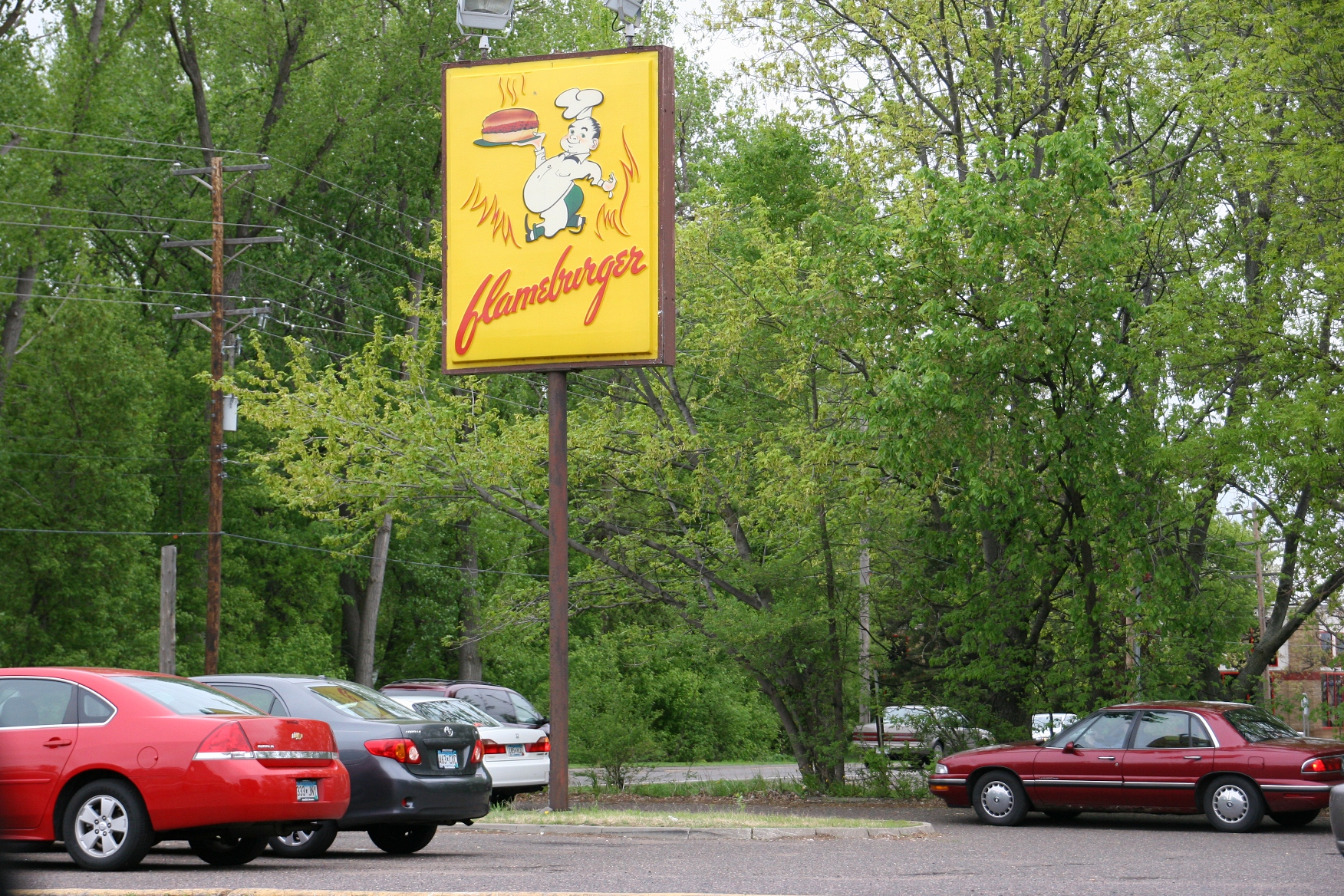
I then swung my camera to the left and photographed this kitschy signage at The Flameburger, "know for its flame broiled burgers and great breakfast platters."

I then swung my camera to the left and photographed this kitschy signage at Flameburger, “known for its flame broiled burgers and great breakfast platters.”

Viewing my surroundings through a Canon DLSR has heightened my awareness, caused me to notice places and details I might otherwise overlook in the visual chaos of today’s world.

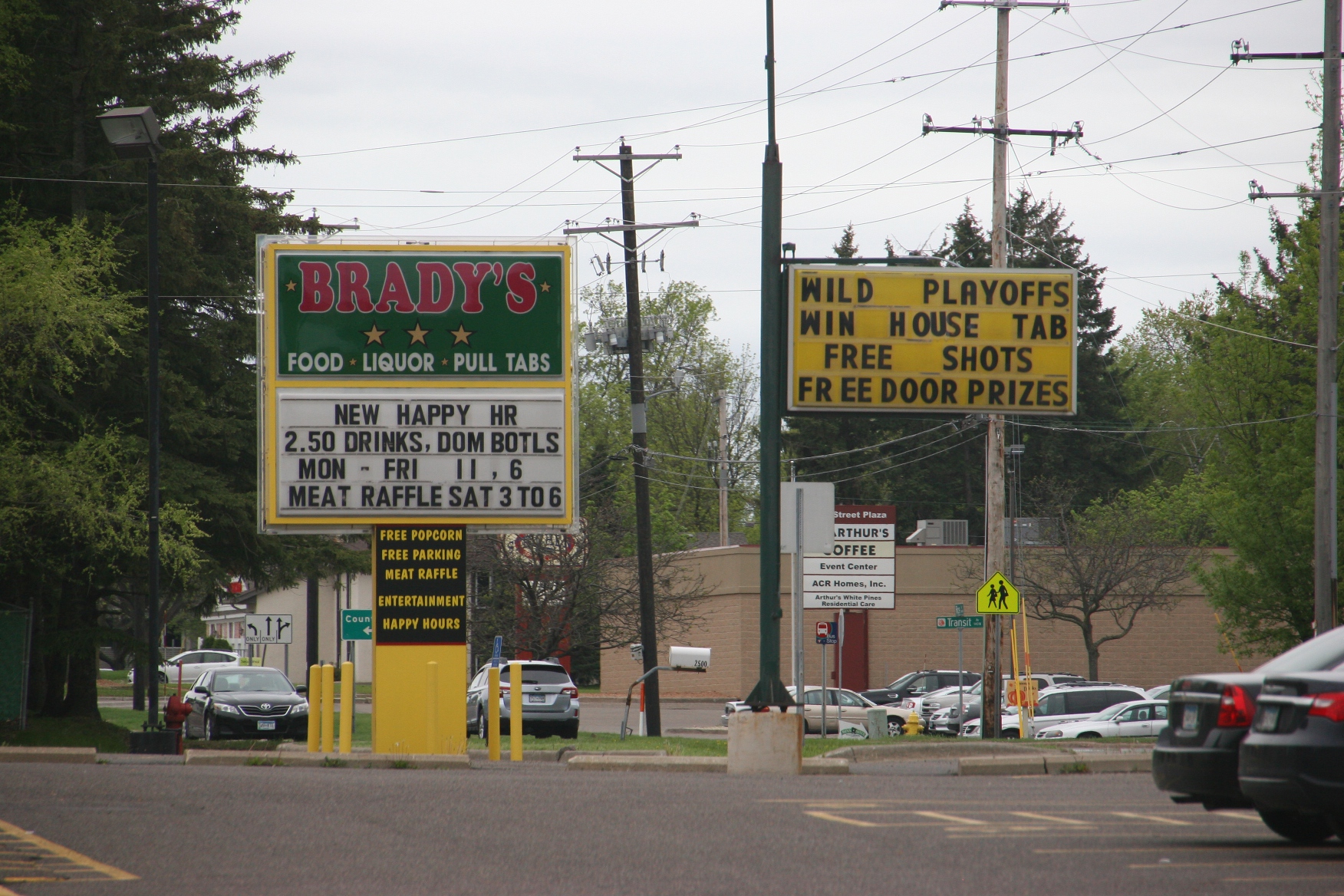
Then I turned to the right to photograph these roadside messages posted to draw customers into Brady's a "local bar with great service and a wonderful fun filled atmosphere."

Then I turned to the right to photograph these roadside messages posted to draw customers into Brady’s a “local bar with great service and a wonderful fun filled atmosphere.” Lots going on in this bar apparently.

There’s something to be said for details which comprise the whole. They matter. Color. Font. Messages. A clean window or one filmed with dirt. A loud voice or one tinted with smallness. Ears that listen rather than simply hear. Voices that speak with clarity of conviction or guarded voices that speak only what is expected.

I choose to write and photograph in detail. It is part of my voice. I hold a deep appreciation for that which is often overlooked.

A wild blue violet in my lawn. Minnesota Prairie Roots file photo.

A wild violet in my lawn. Minnesota Prairie Roots file photo.

Today I challenge you to notice the details and to value them. Look into your backyard, into your neighborhood, into your community. See the delicate violets tucked between blades of grass in your lawn. See the closed window coverings on your neighbor’s house and determine to offer encouragement. Focus on what your community offers rather than what it doesn’t.

Notice the details.

Take the focus off yourself. If you ask someone how they are, mean it. If they answer “fine,” determine whether that is truly the truth. Often it isn’t. Search their eyes, observe their body language, listen to the intonations in their response. Care. Notice the details.

© Copyright 2015 Audrey Kletscher Helbling


At St. Olaf College: A Minnesota connection to the 1965 Civil Rights Movement May 12, 2015

The name Reeb holds special significance at a Minnesota college.

The name Reeb holds special significance in a memorial at a Minnesota college.

JAMES REEB. You may not recognize his name. Or you may remember an actor portraying the Rev. Reeb in a scene in the movie, Selma. Or heard/read his name in a recent news story.

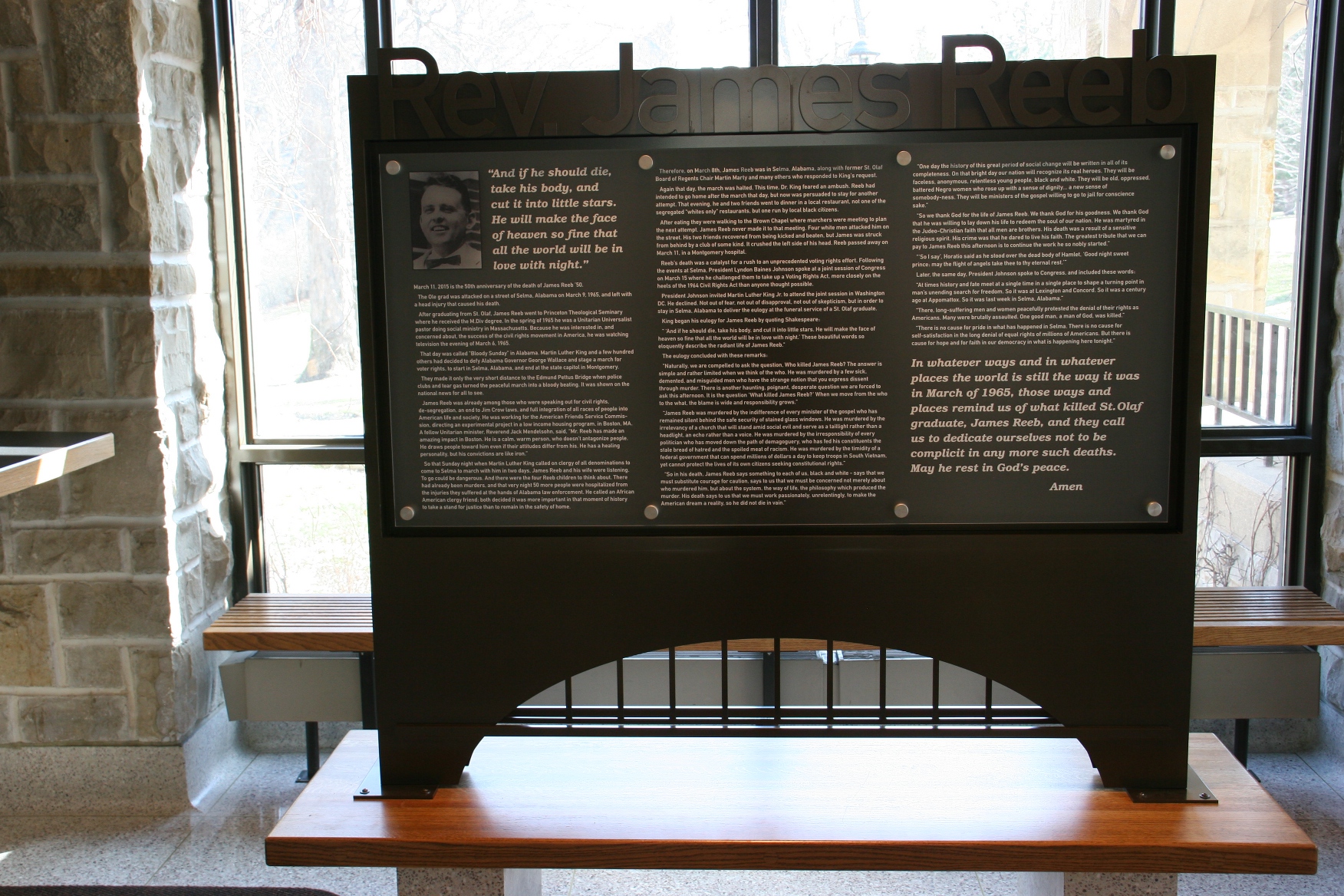
The memorial honoring the Rev. James Reeb was dedicated in March, on the 50th anniversary of his death.

The memorial honoring the Rev. James Reeb was dedicated in March, on the 50th anniversary of his death.

Today, just outside the entrance to Rolvaag Library on the hilltop campus of St. Olaf College in the southern Minnesota community of Northfield, Reeb is honored with a memorial for his efforts in the Civil Rights Movement.

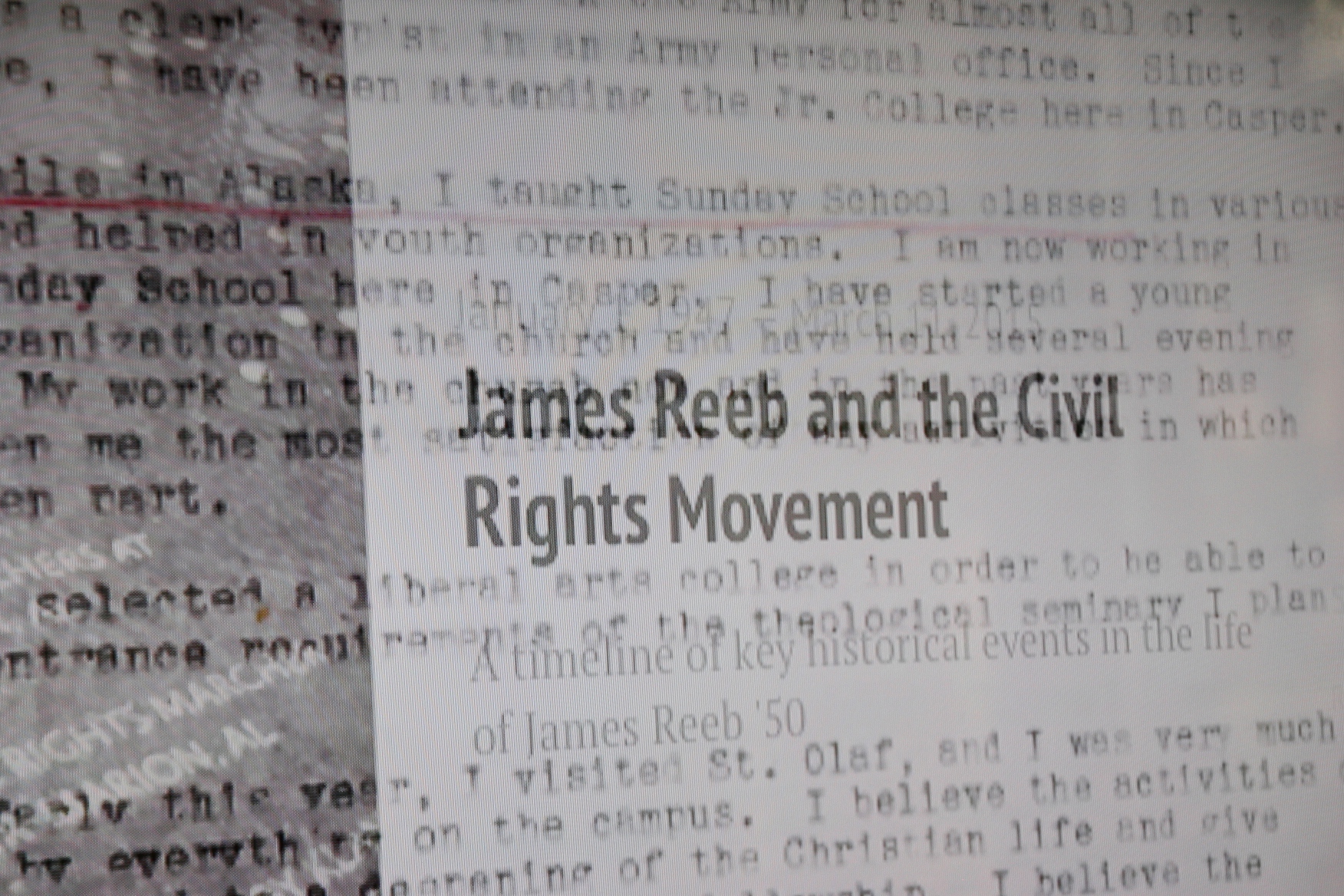
Words play across a screen in a video next to the memorial.

Words play across a screen in a video next to the memorial.

His involvement cost him his life.

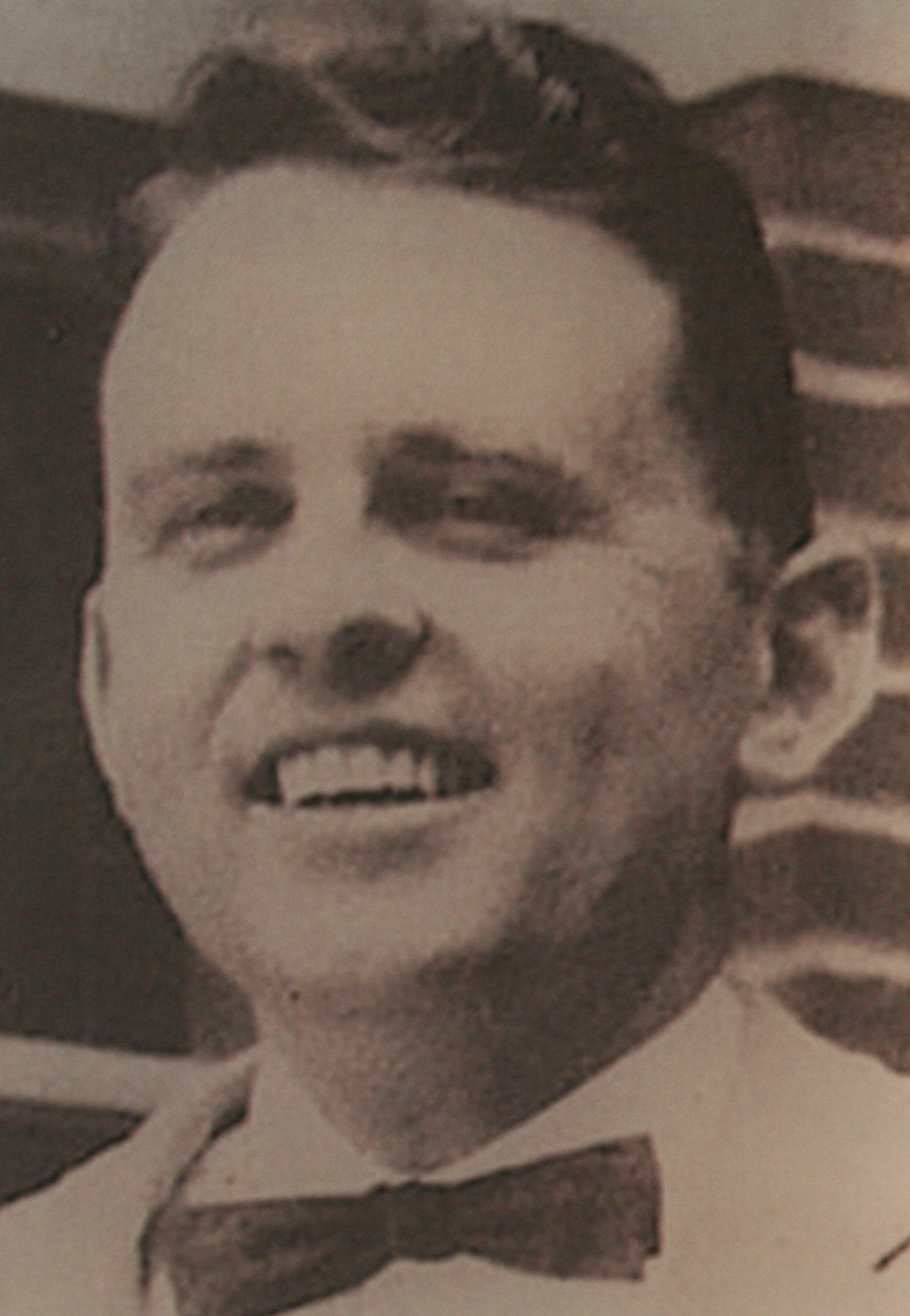
A portrait of Reeb printed on the memorial.

A portrait of Reeb printed on the memorial.

On March 9, 1965, Reeb and two friends were attacked after dining at a Selma restaurant run by local black citizens. The Massachusetts clergyman, an outspoken advocate for civil rights, desegregation and more, died two days later from his injuries.

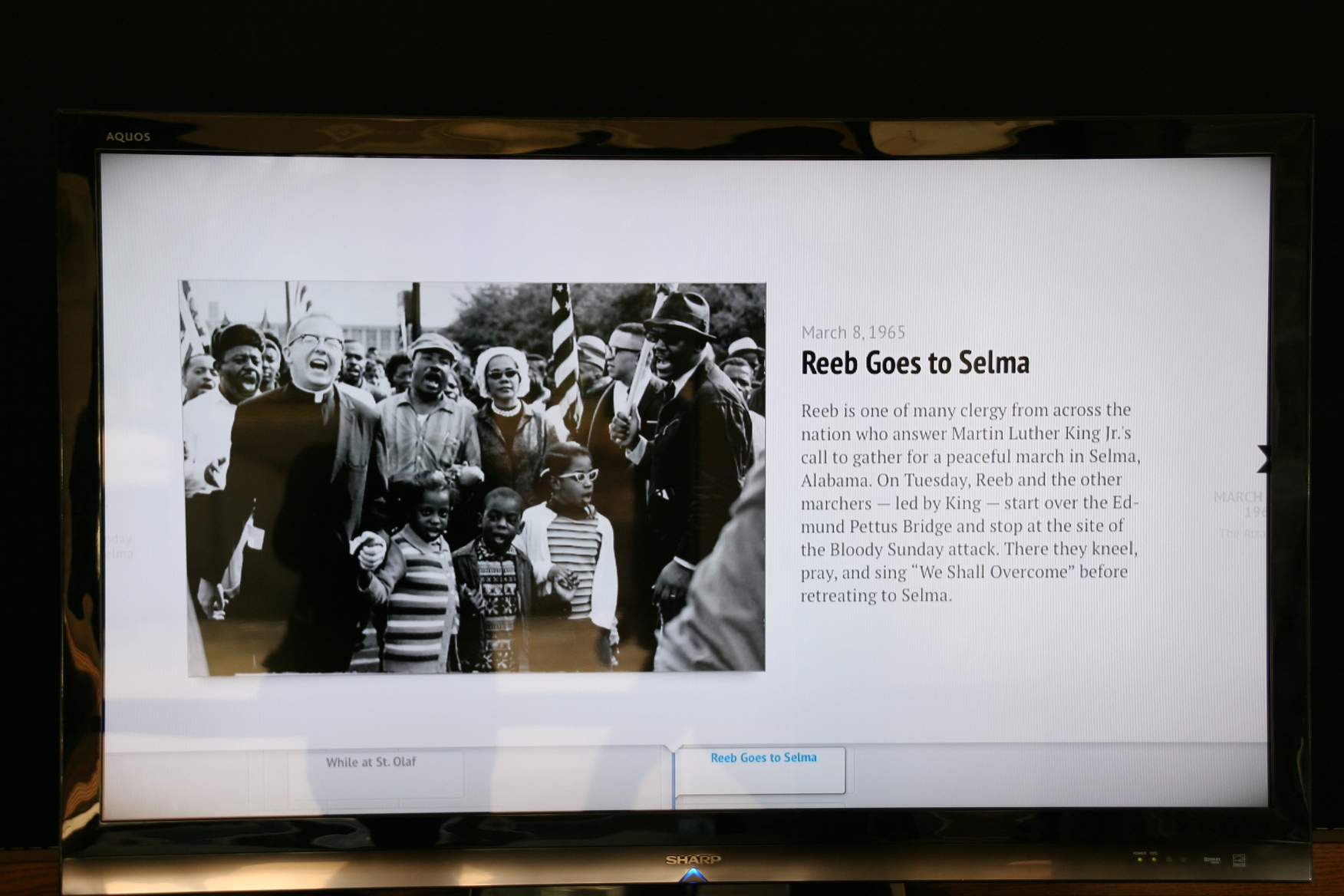
Reeb, shown to the left in this photo, was among those who marched to the Edmund Pettus Bridge on March 7, 1965, Bloody Sunday.

Reeb, shown to the left in this photo, was among those who marched to the Edmund Pettus Bridge on March 7, 1965. This image is in a video at the St. Olaf memorial.

Dr. Martin Luther King, Jr., who’d called upon clergy to join a voting rights march from Selma to Montgomery, Alabama, delivered Reeb’s eulogy.

Reeb’s death served as a catalyst for passage of the Voting Rights Act of 1965, according to information published on the memorial to this 1950 St. Olaf graduate.

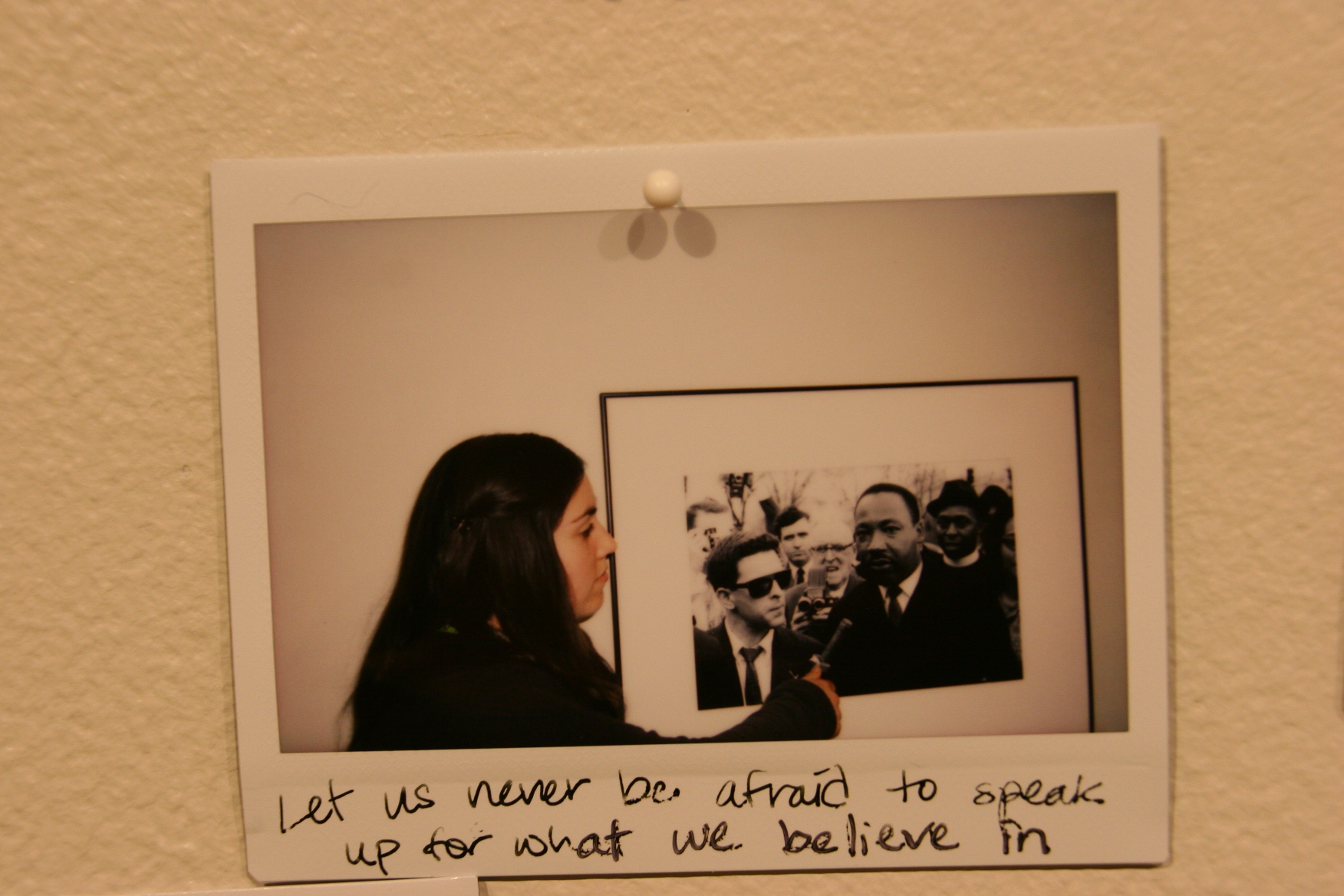
Visitors to the "Selma to Montgomery: Marching Along the Voting Rights Trail" exhibit at St. Olaf College let their voices be heard.

Visitors to the recent “Selma to Montgomery: Marching Along the Voting Rights Trail” exhibit at St. Olaf College let their voices be heard.

To view this recently-installed memorial, to read that Reeb possessed “a healing personality, but his convictions are like iron” is to understand that one voice can make a difference. Reeb considered taking a stand for justice more important than remaining in the safety of his home. He left his family in Massachusetts to join the march from Selma to Montgomery. While walking to a planning meeting for that march, Reeb was brutally attacked.

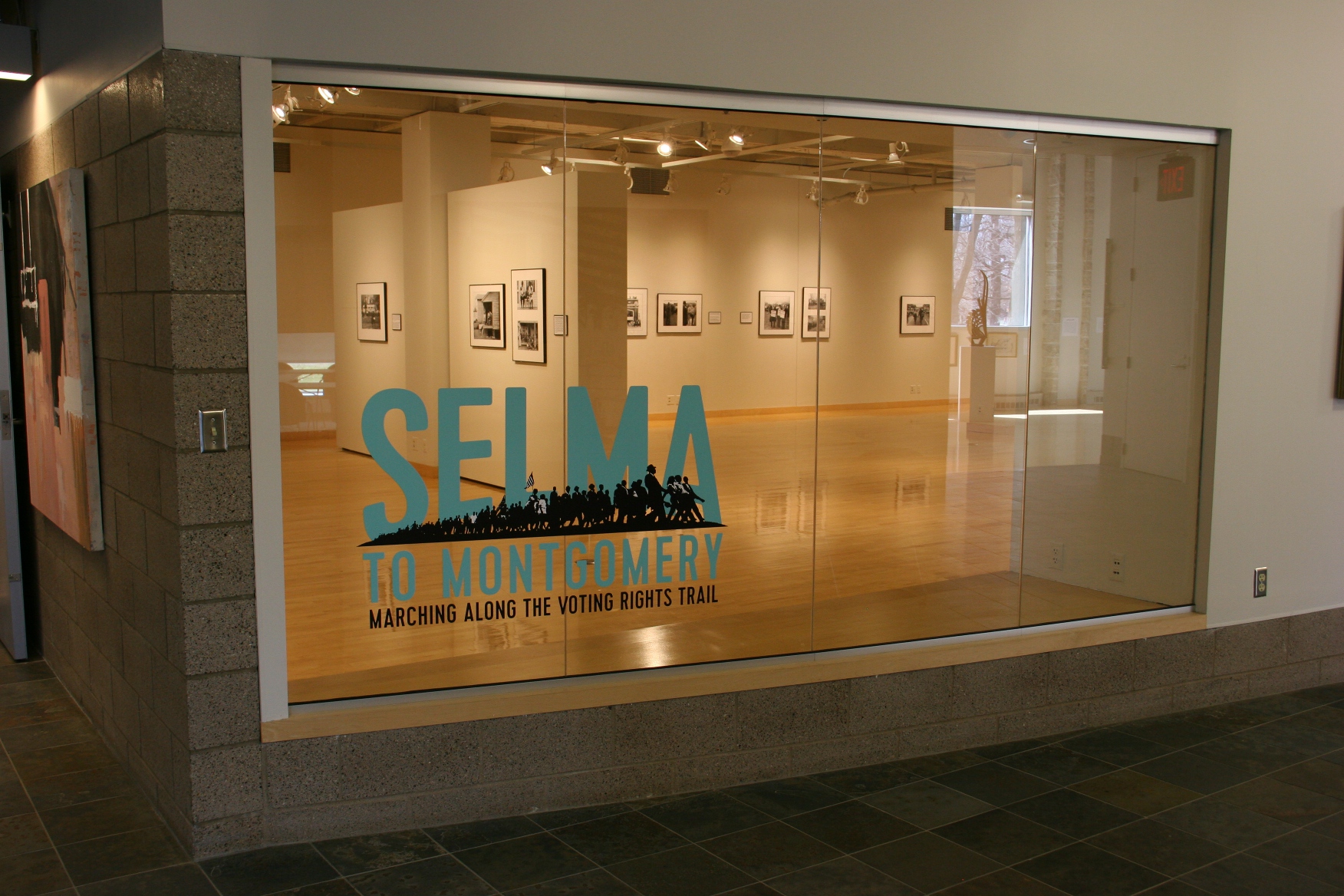
The "Selma to Montgomery" exhibit at the Flaten Art Museum, St. Olaf, recently closed.

The “Selma to Montgomery” exhibit at the Flaten Art Museum, St. Olaf, recently closed.

In Reeb’s eulogy, King noted that, “His death says to us that we must work passionately, unrelentingly, to make the American dream a reality, so he did not die in vain.”

Those are words we would do well to remember today, 50 years after Reeb’s death and the march from Selma to Montgomery.

FYI: Click here to read my post about the recently-closed Selma to Montgomery: Marching Along the Voting Rights Trail exhibit at St. Olaf College.

© Copyright 2015 Audrey Kletscher Helbling


The evolving art of crafting an obituary

Filed under: Uncategorized — Audrey Kletscher Helbling @ 5:00 AM
Tags: , , , , ,
Even after family has departed this life, their memory is as close as the graves that surround Moland Lutheran Church.

This Moland Lutheran Church Cemetery in rural Steele County Minnesota lies next to farm fields. Minnesota Prairie Roots file photo used for illustration purposes only.

HAVE YOU NOTICED in recent years, like I have, the trend to personalize obituaries?

No longer are obits just a listing of factual information. Rather, they now often offer personal insights from loving family members. This is exactly what I was not taught in journalism school. I learned right away that nothing is more important than writing an obituary. That long ago lesson involved not a bit of commentary. Just straight facts. Birth, education, occupation, marriage, death, survivors. And, above all, spell the name correctly.

Times have changes. Most newspapers now charge for printing obituaries. Thus, if you’re paying for all those words about your loved one, you may as well write what you wish.

I find myself reading obits more often than I once did. Yes, I sadly now know a lot more people who are dying. But I’m also interested in reading the stories of those individuals whom I’ve never known.

For example, recently The Gaylord Hub, where I worked as a reporter and photographer at my first newspaper job fresh out of college and, yes, wrote my first published obits, printed three death notices that grabbed my attention. All of them were obituaries for retired or semi-retired farmers, men who devoted their lives to working the land in this rural southern Minnesota county.

I learned that Dennis Grams, 70, “enjoyed everything about farming—the equipment, animals, crops and weather. If you had a question about farming, he was the man to go to. He had a way of explaining everything so that you could understand and would not stop explaining until he was sure you understood.” Seems to me Dennis was not just a farmer, but a teacher, too. And a patient one at that.

And then there’s Kenneth Quast, 81, who lived his entire life on the farm his father purchased in the 1920s. Kenneth worked that land and milked cows. His obit states: “He enjoyed farming, it was his life.” Oh, to do what you love. Your entire life.

Finally, Elmer Otto, 93, just couldn’t stay away from his Kelso Township farm. “…even after retiring he still had to go out and make sure things were running smoothly.” Elmer clearly loved his life’s work, just like Dennis and Kenneth.

How about you? Can you say that about your life—that you did what you loved? What would you want included in your obituary?

© Copyright 2015 Audrey Kletscher Helbling


How I spent my Mother’s Day May 10, 2015

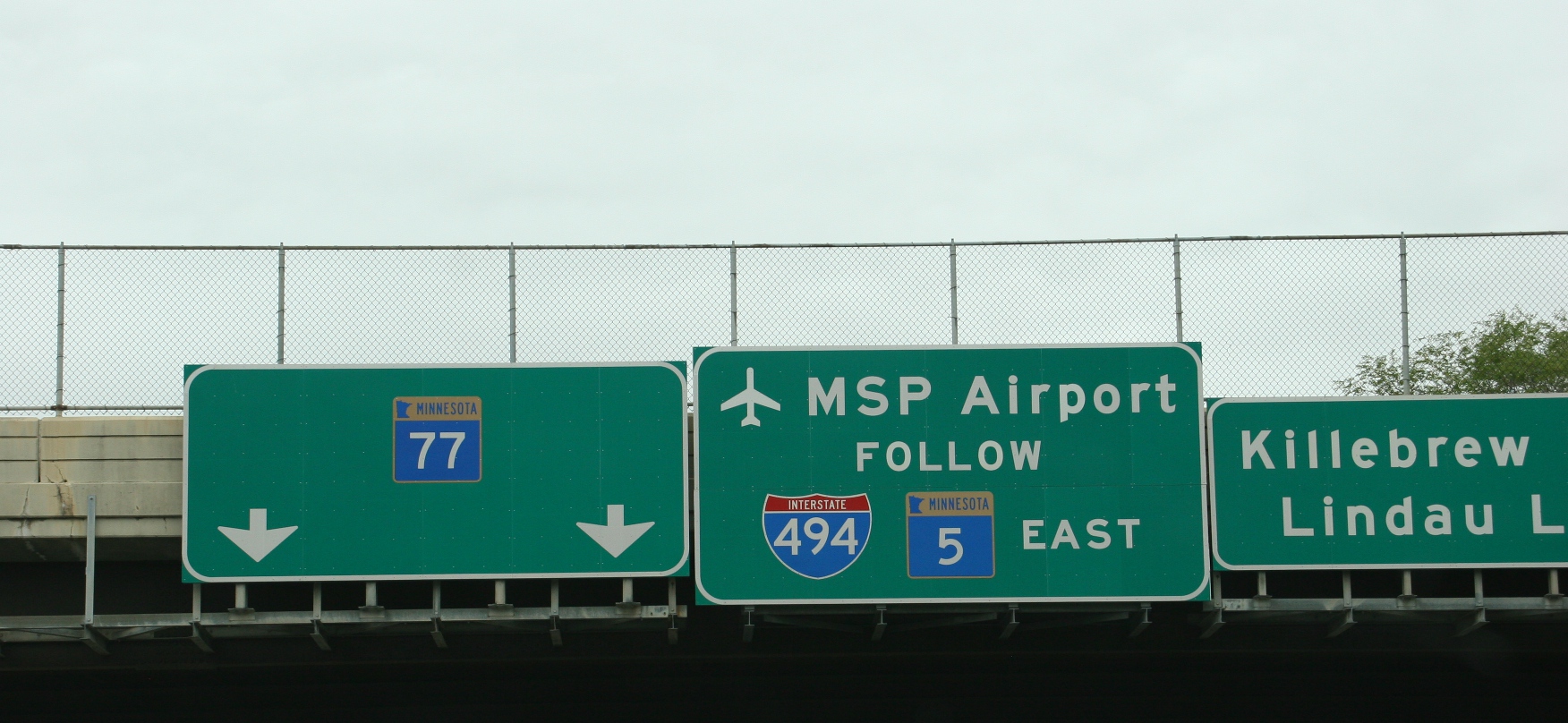
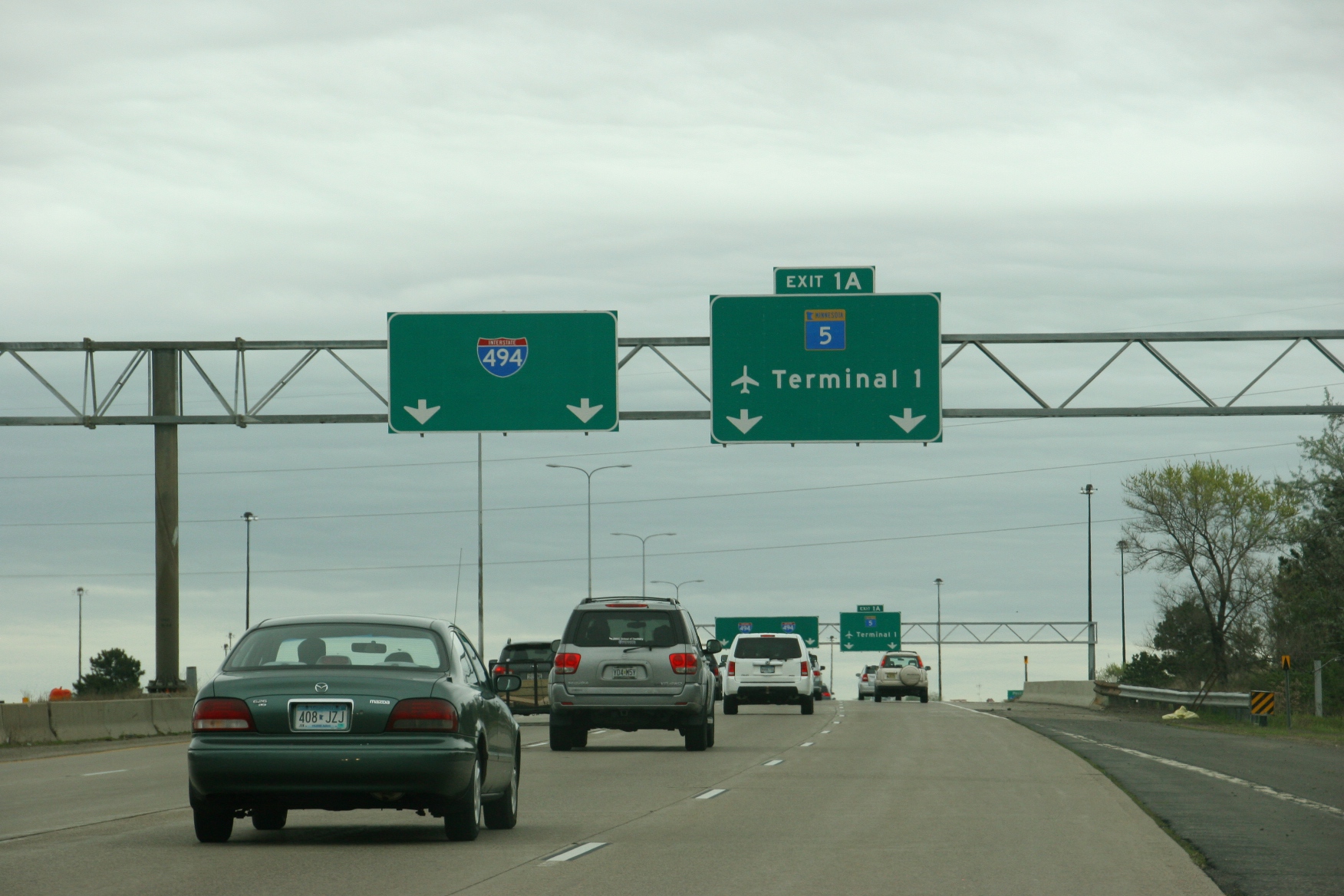
Heading here:

Airport, sign


Airport, terminal 1 sign


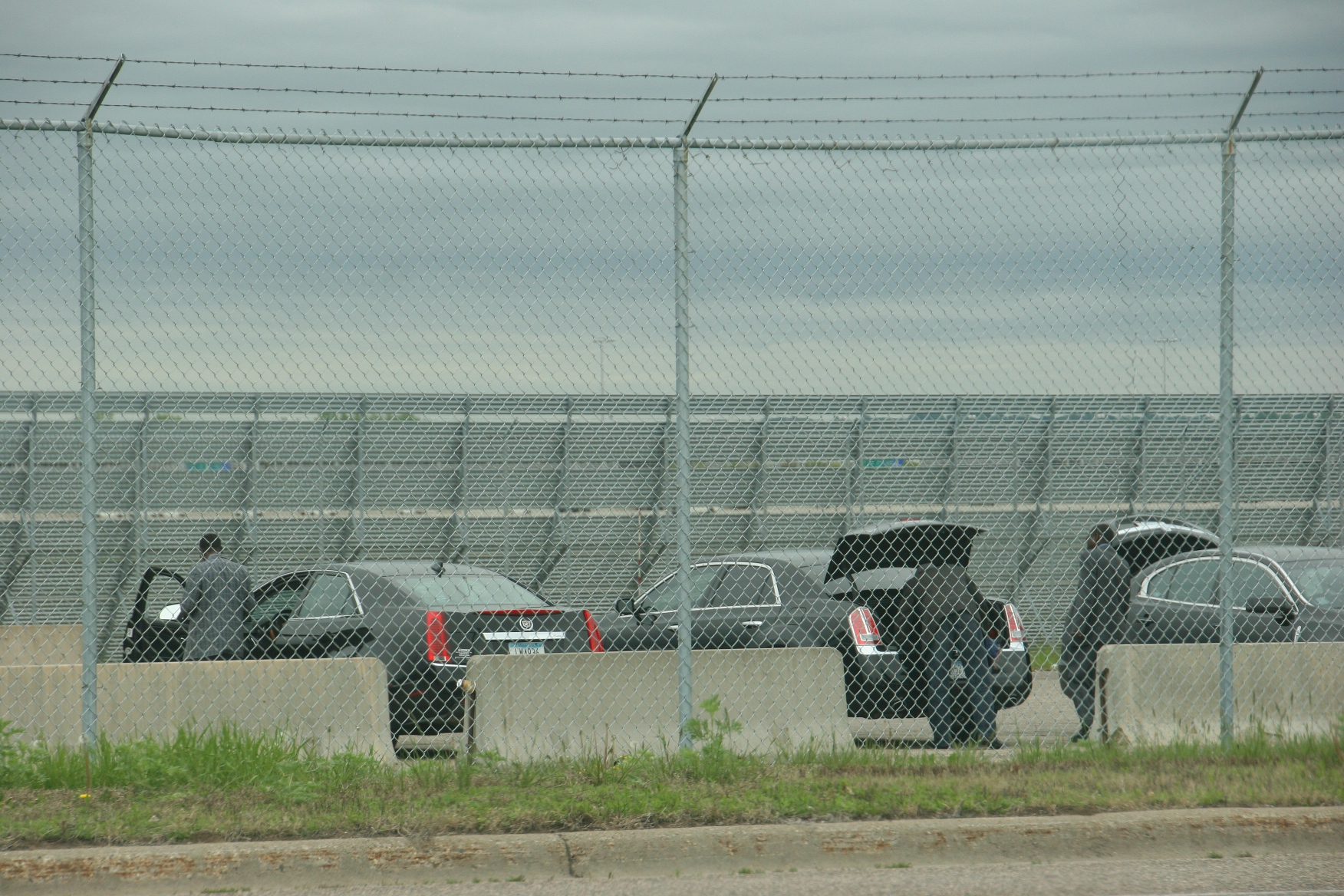
Waiting here (for an hour):


Airport, plane 1


Airport, plane 2


Airport, drivers waiting at airport


Airport, plane 3


Airport, plane 5


For this:

Airport, Delta plane landed


For these loved ones:

Marc and Amber eiffel tower


Who brought me (and my husband) this gift of Belgium chocolates:


Belguim chocolate


I hope your Mother’s Day was as great as mine with my eldest daughter, Amber, and her husband, Marc, safely back home from Europe and phone conversations with my other daughter, Miranda, my son, Caleb, and my mom, Arlene. There’s nothing more I wanted for Mother’s Day than to be with, or speak with, those I love. I am blessed.

© Copyright 2015 Audrey Kletscher Helbling


Minnesota Faces: My mom, Arlene May 8, 2015

Filed under: Uncategorized — Audrey Kletscher Helbling @ 5:00 AM
Tags: , , , ,

Portrait #20: Arlene


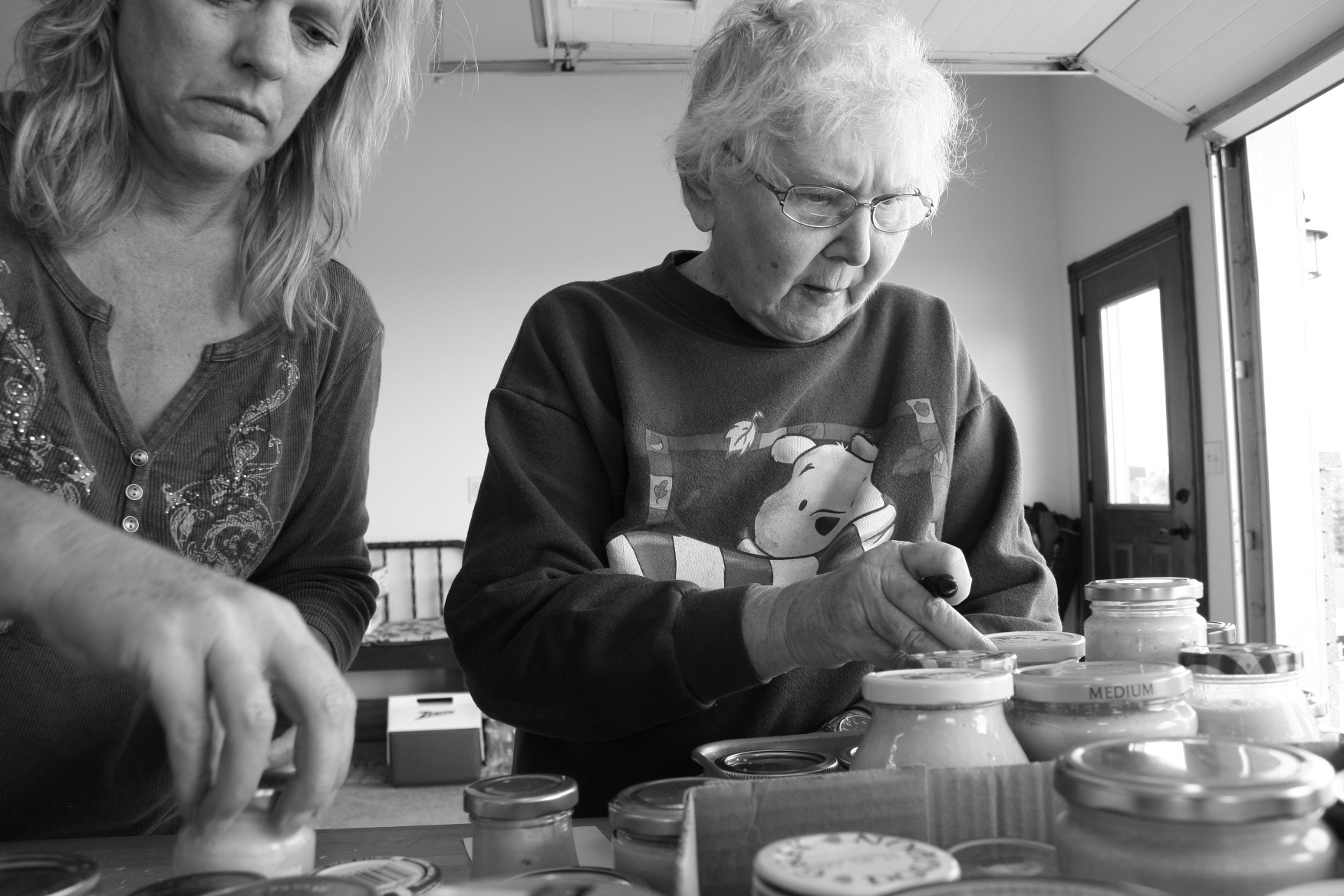
My mom counts jars of horseradish with my sister-in-law after a family gathering to make horseradish.

My mom counts jars of horseradish with my sister-in-law after a family gathering to process horseradish. Minnesota Prairie Roots file photo 2013.

We sometimes call her Ma Cat. With fondness. It’s a fitting pet name for a woman who sing-songed The Three Little Kittens Have Lost Their Mittens while rocking wee ones in a cranberry-hued Naugahyde rocker in an aged woodframe farmhouse on the southwestern Minnesota prairie.

The only photo I have of my mom holding me. My dad is holding my brother Doug.

The only photo I have of my mom holding me. My dad is holding my brother Doug.

Mom devoted her life to raising her three sons and three daughters, born between 1955 and 1967. I am second oldest and the oldest girl.

I love my mom and I understand that her life was not always easy. She lost her own mother within months of my birth. Life as a young wife and mother on the farm, without a bathroom, no phone, a Maytag wringer washer to wash filthy barn clothes and little money, had to be challenging.

We were poor. But I didn’t know that, which is an absolute testament to my mom. She kept us fed with garden produce, baked goods and beef from our own cattle. She, somehow, managed to keep us clothed. We never got birthday gifts. We never knew to expect them. Instead, each birthday Mom baked a special animal-shaped cake for the birthday celebrant, the cake design chosen from a booklet she pulled out only on birthdays.

Mom instilled in all of us a deep faith in God. We attended church and Sunday School every week. We prayed. And, even more important, Mom has always lived out her faith in kindness and compassion shown to others. She once advised me, “Don’t talk about anyone else’s kids because you never know what your own kids will do.” In other words, do not gossip and keep your mouth shut if you have nothing good to say. And when others tell you something in confidence, keep it to yourself. I’ve tried to follow that advice throughout my life.

The past year has been a difficult one for my mom. In early 2014, physical problems forced her into a nursing home. Eventually, she grew strong enough to move into assisted living. But then, on a Sunday morning in August, she fell and suffered severe injuries that landed her in an ICU Trauma Unit. Eventually, Mom recovered and is now back in her apartment. But she knew she could never return to her home and the decision was made to sell her house.

Through it all, Mom has not complained. That is so typical of her, to adopt a positive attitude and make the best of whatever happens in her life. Because of that, and more, people love her. Her positivity shines as does her faithfulness.

She is a survivor of open heart surgery and breast cancer and a multitude of other medical emergencies and surgeries that should have killed her. But she always fought to survive and medical teams often marveled at her rallying. Sometimes I think of her as the cat with nine lives.

But mostly, I consider every day we have her to be a blessing.

#

This is part of a series, Minnesota Faces, featured every Friday on Minnesota Prairie Roots.

To all of you mothers, Happy Mother’s Day.

© Copyright 2015 Audrey Kletscher Helbling


Spring in rural Minnesota: The greening of the grey May 7, 2015

Filed under: Uncategorized — Audrey Kletscher Helbling @ 5:00 AM
Tags: , , , , , , ,

I DON’T KNOW IF ANY GREEN is more vibrant than that of spring, especially here in rural Minnesota.

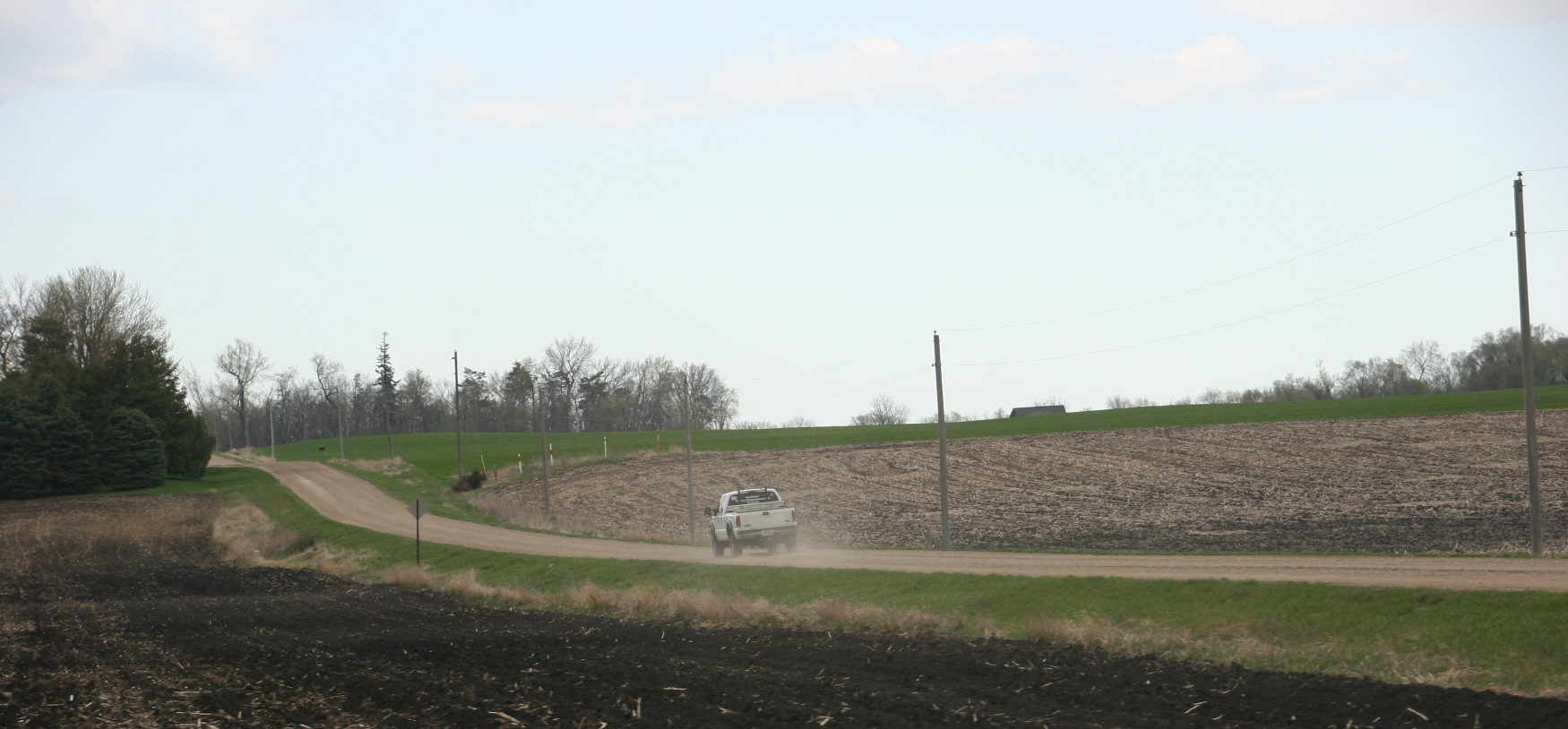
A scene photographed from Rice County Road 15 between Faribault and Morristown, Minnesota.

A rural scene photographed from Rice County Road 15 between Faribault and Morristown, Minnesota.

Green in the landscape after months of grey and white and black dances a visual delight. It’s as if our eyes cannot get enough of lush green grass and the tight buds of leaves unfurling in flashes of green that sway to the rhythm of the wind.

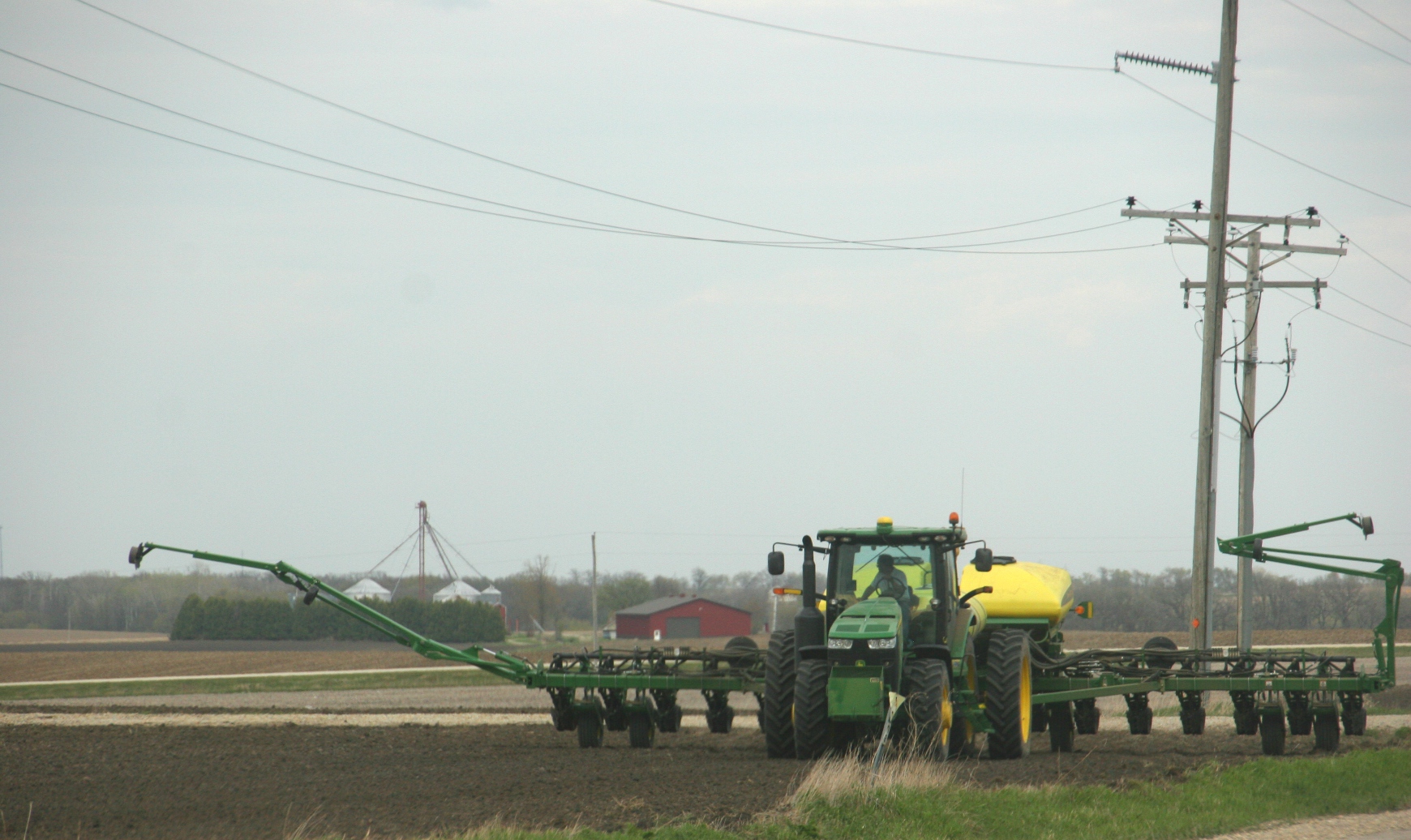
Farmers, such as this one near Wanamingo, are working the land and planting.

Farmers, such as this one near Wanamingo, are working the land and planting.

Soon seeds sown into black earth will erupt in rows of corn and soybeans like a precision marching band overtaking fields.

harvest

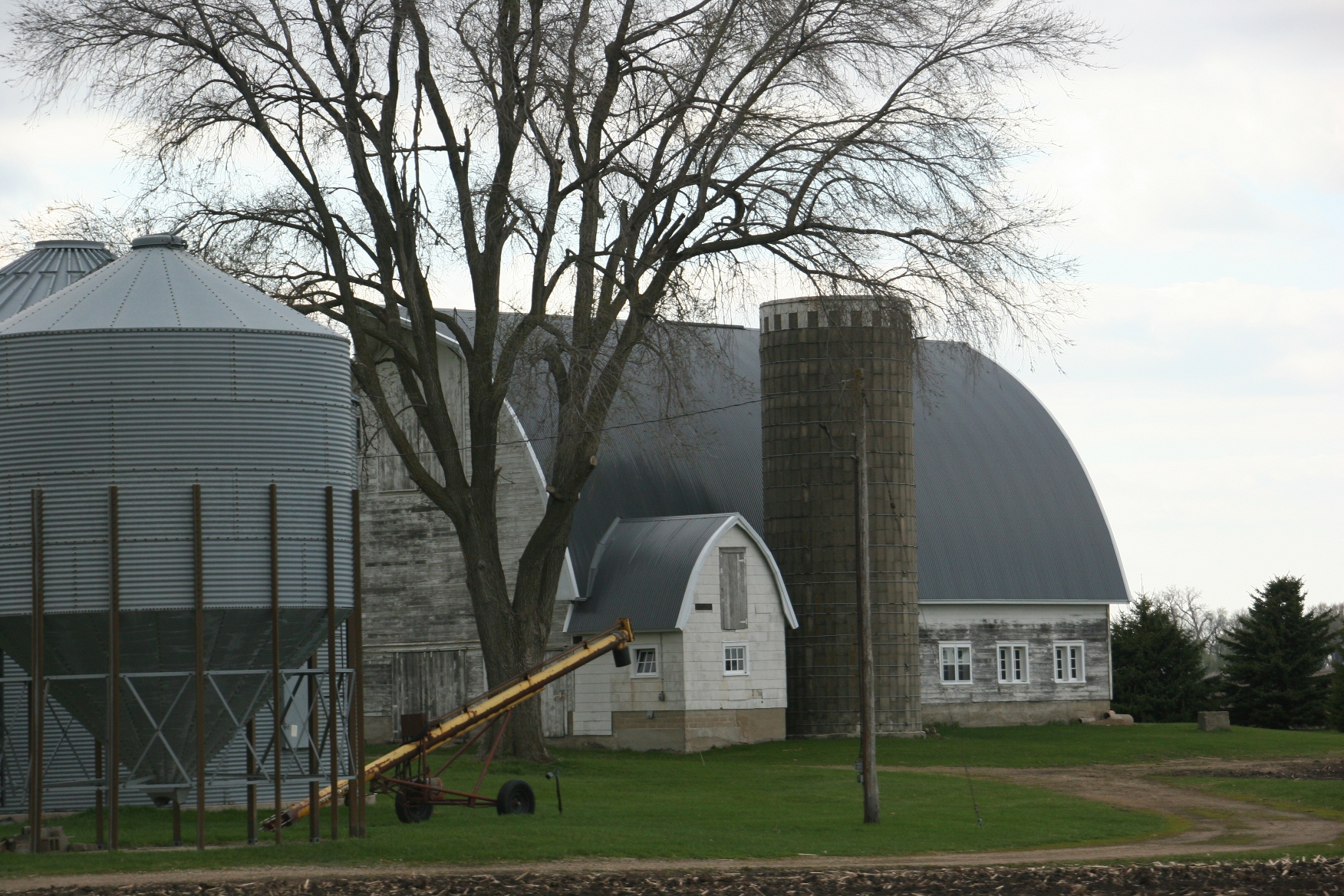
A dryer and bin on a rural Rice County, Minnesota, farm await the 2015 harvest about a half a year away.

The beat of the seasons begins. Planting into growing into harvest. A familiar rhythm in this land I love.

© Copyright 2015 Audrey Kletscher Helbling


Minnesota tornado memories twist through my mind today May 6, 2015

Filed under: Uncategorized — Audrey Kletscher Helbling @ 5:00 AM
Tags: , , , , , ,

FLASHBACK TO JULY 24, 2010, between 11 p.m. and midnight. We—my husband, Mom and 16-year-old son—are hunkered down in a car along a Redwood County road in rural southwestern Minnesota north of Walnut Grove. We’ve just left an outdoor pageant showcasing excerpts from the stories of Laura Ingalls Wilder.

Now we are on the prairie, in the middle of a storm. Rain rushes in torrential sheets, forcing my husband to pull over and stop. Winds rock the car with ferocity and flatten roadside grass. Flashes of lightning slice through the blackness, revealing swaying trees.

I am terrified, fearful that the wind—which I later learn raged at 70 mph—will toss our car into the ditch, perhaps into water that buffets a section of this roadway. The darkness is so black that I have no idea where we are.

I press my head into the back of the front driver’s seat, praying. I am clutching my son’s sweaty hand.

For 45 minutes we endure the storm. When we arrive at my Mom’s house in my hometown, I am so relieved I could kiss the ground.

I respect storms.

The photo by Eric Lantz illustrates the cover of Scott Thoma's just-published book.

This photo of the Tracy, Minnesota, tornado by Eric Lantz illustrates the cover of Scott Thoma’s book about that tornado. Book cover image courtesy of Scott Thoma.

On June 13, 1968, Minnesota’s first F5 tornado, the most powerful with wind speeds in excess of 300 mph, ravaged the community of Tracy, the next town west of Walnut Grove and some 30 or so miles from the farm where I then lived. That tornado killed nine and left a lasting imprint upon my impressionable young mind.

A residential street, once covered in branches and debris, had to be plowed to allow vehicles to pass. Photo by The Tracy Headlight Herald and courtesy of Scott Thoma, Tracy native and author of Out of the Blue, a book about the Tracy tornado.

A residential street, once covered in branches and debris, had to be plowed to allow vehicles to pass. Photo by The Tracy Headlight Herald and courtesy of Scott Thoma, Tracy native and author of Out of the Blue, a book about the 1968 Tracy tornado.

Decades later a tornado would strike my childhood farm, taking down a silo and tossing silage wagons like toys.

I respect storms.

On March 29, 1998, multiple devastating tornadoes wreaked destruction upon Comfrey in southwestern Minnesota and St. Peter, some 40 miles west of where I now live. A young boy died.

I respect storms.

In July 2011, high winds partially ripped the roof off St. John’s Lutheran Church in Vesta, the church I attended while growing up. That same day, a tornado struck nearby Belview.

I respect storms.

Visitors to the Minnesota History Center in St. Paul can experience the 1965 tornado outbreak in a replica basement of a 1960s rambler. Through a multi-media presentation, that deadly series of tornadoes

Visitors to the Minnesota History Center in St. Paul can experience the May 6, 1965 tornado outbreak in a replica basement of a 1960s rambler. Through a multi-media presentation, visitors can experience those tornadoes in this exhibit titled “Get to the basement.” Those are words I heard as a child and still repeat today whenever tornado warning sirens blare in Faribault.

Today marks 50 years since the biggest tornado outbreak in Twin Cities history. Six twisters—four rated as high as F4 with winds of 166-200 mph—touched down in multiple communities, killing 13 and injuring 683. Interestingly enough, I don’t remember that 1965 tragic tornado event. We may not have had a television yet then. And, at age nine, I likely did not concern myself with something that happened seemingly so far away in “the Cities.” I should have.

I respect storms. Do you?

© Copyright 2015 Audrey Kletscher Helbling


Remembering Brittney at a rural Faribault cemetery May 5, 2015

HUNDREDS OF TIMES during the past 30 years, I’ve passed North Grove Cemetery along busy Minnesota Highway 3 between Faribault and Northfield.

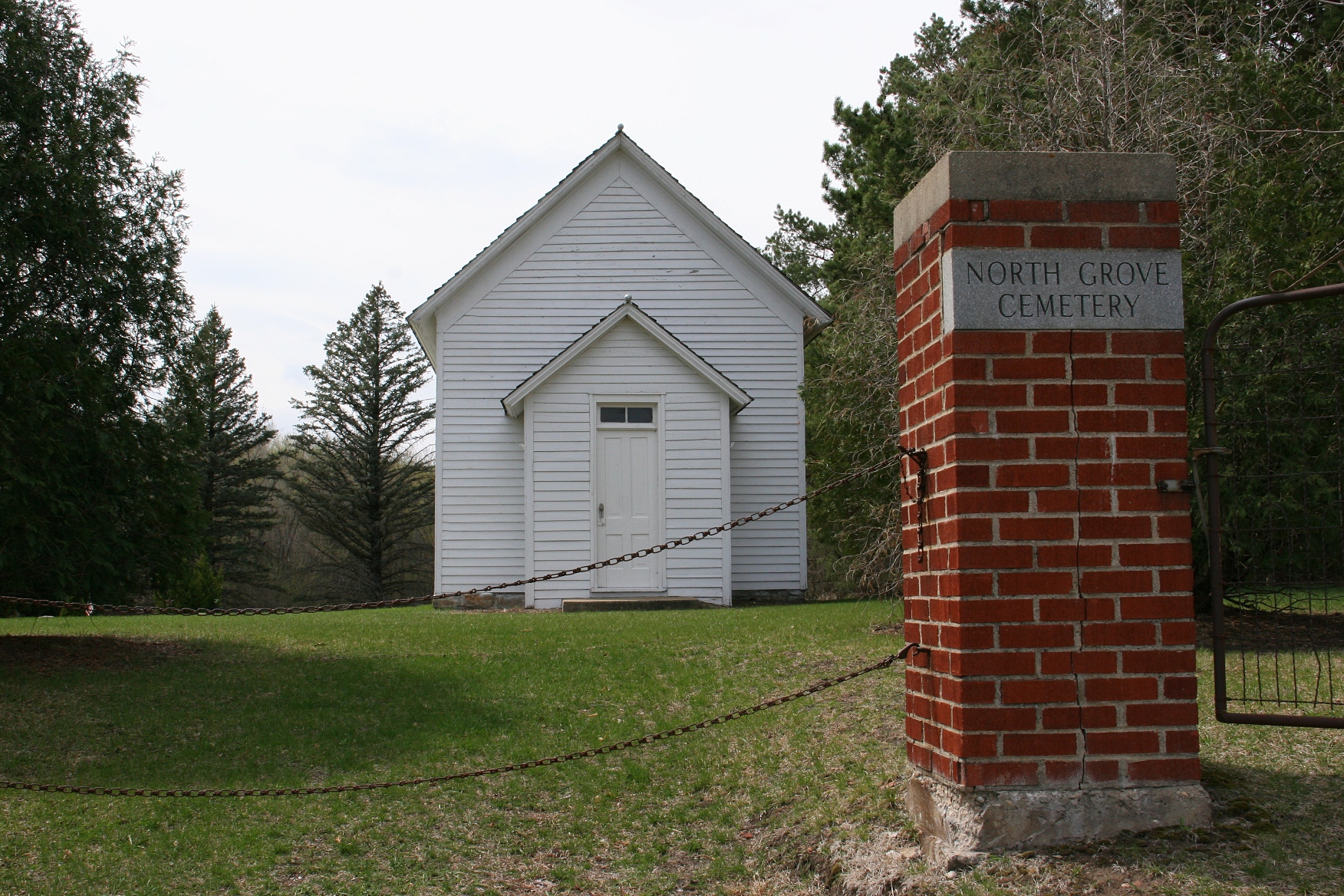
The entrance to North Grove Cemetery, which sits along Minnesota Highway 3 north of Faribault. The building once housed a church.

The entrance to North Grove Cemetery, which sits along Minnesota Highway 3 north of Faribault. The building once housed a church.

Not once have I stopped to explore this final resting place sheltered by trees butting a small white church. You know how it is. If you pass something often enough, you fail to notice it after awhile.

The flash of red that caught my eye.

The flash of red that caught my eye.

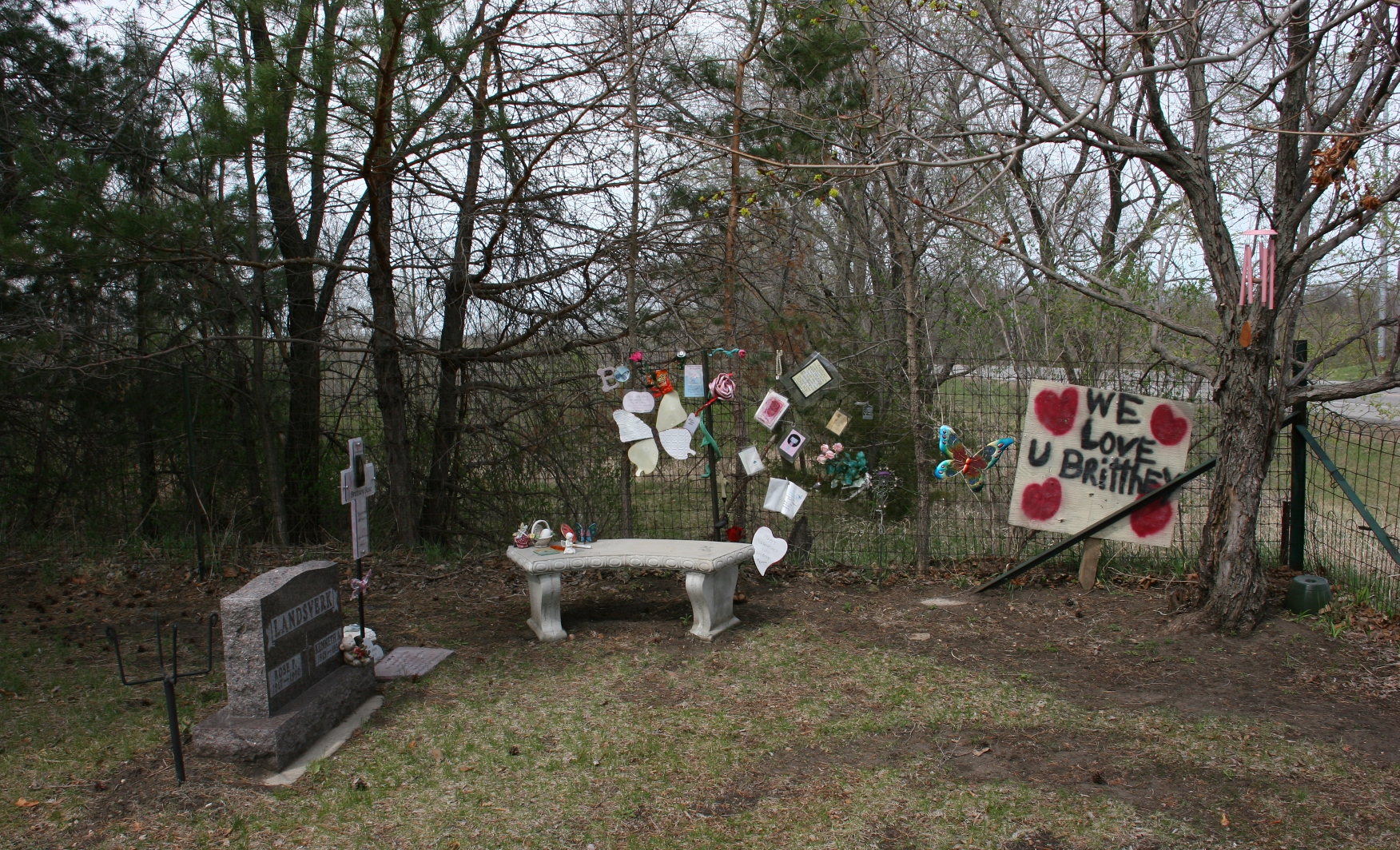
That is until recently, when a flash of red in a corner of the cemetery caught my eye. My husband, whose vision is far superior to mine, managed to read the words—WE LOVE u BRittnEY—on the handcrafted sign cornered with four red hearts.

There was no time to tour the graveyard that day. But on a recent Saturday, we stopped.

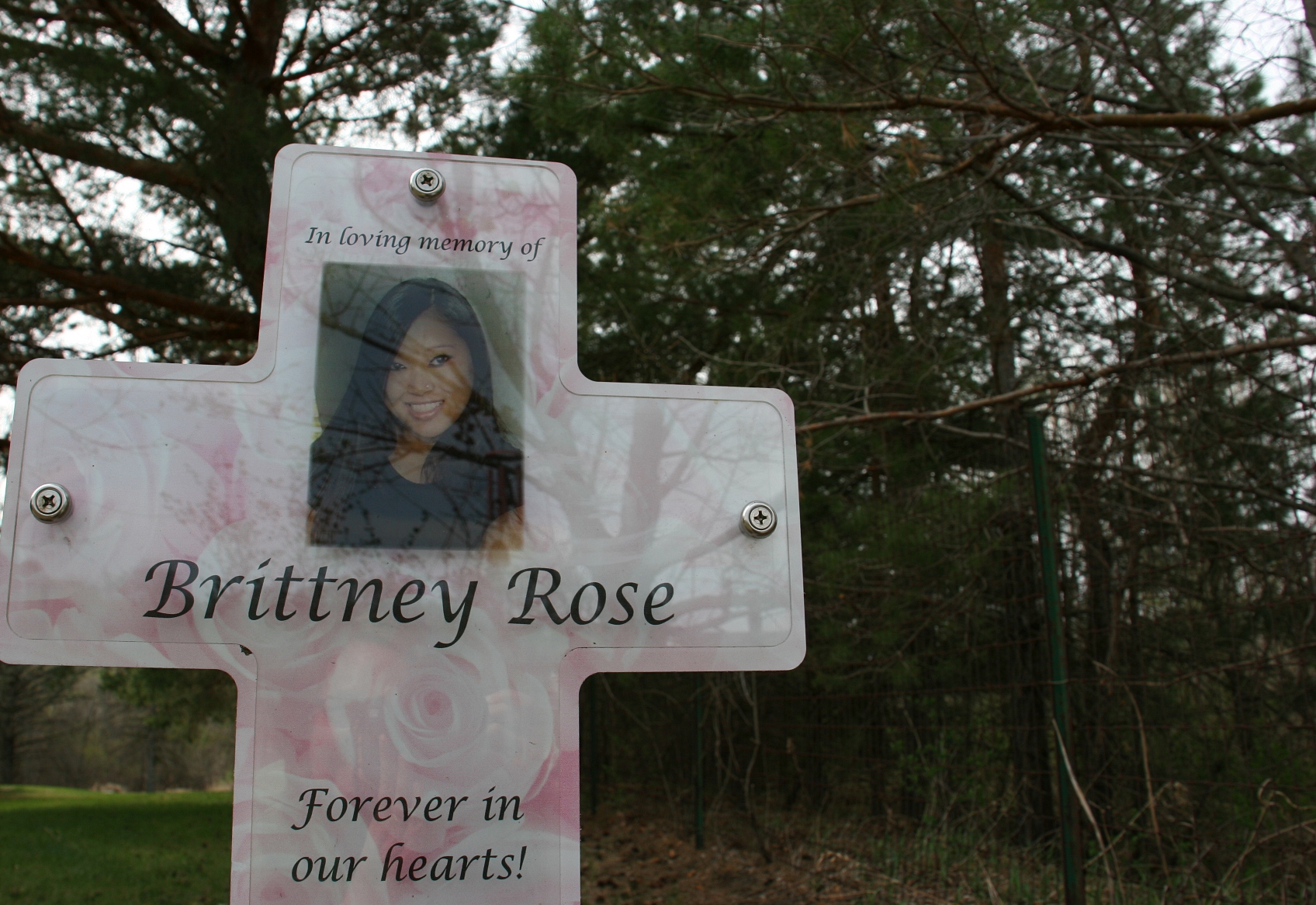
The memorial to Brittney Landsverk.

The memorial to Brittney Landsverk.

In this small Norwegian cemetery, I found an abundance of markers for Oles and Sophias who died long ago. But my focus was on the corner memorial created for 20-year-old Brittney Rose Landsverk. Five years have passed already since her April 2, 2010, tragic death flooded my community of Faribault with grief.

Brittney drowned after the young man she was dating drove a car in which she was a passenger into the nearby Cannon River. Mitchell Bongers would later admit to drinking, plead guilty to criminal vehicular homicide and receive a four-year prison sentence.

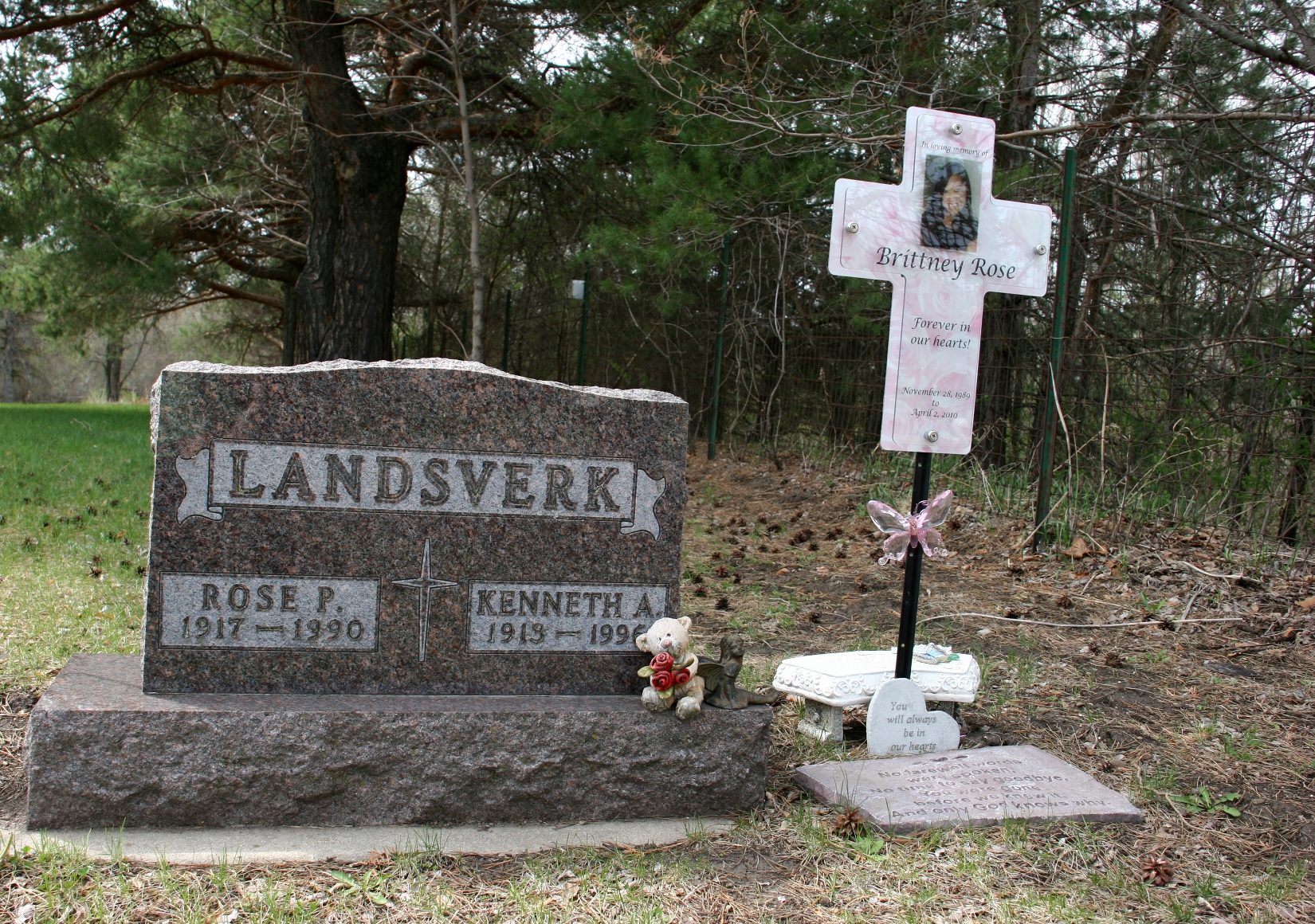
A loving, permanent tribute to Brittney.

A loving, permanent tribute to Brittney.

I cannot fathom the agony Ron and Kelly Landsverk endured while searchers looked for their daughter’s body in the twisting Cannon River. Eighty-seven days of wondering and waiting. And then, a life-time of grief at the loss of their only child.

Words of love for Brittney expressed.

Words of love for Brittney expressed.

I don’t know the Landsverk family. But I am a mother and a part of the Faribault community. That is enough to connect me to them. When a child dies in such a senseless and tragic way, the impact is far-reaching. It touches all of us.

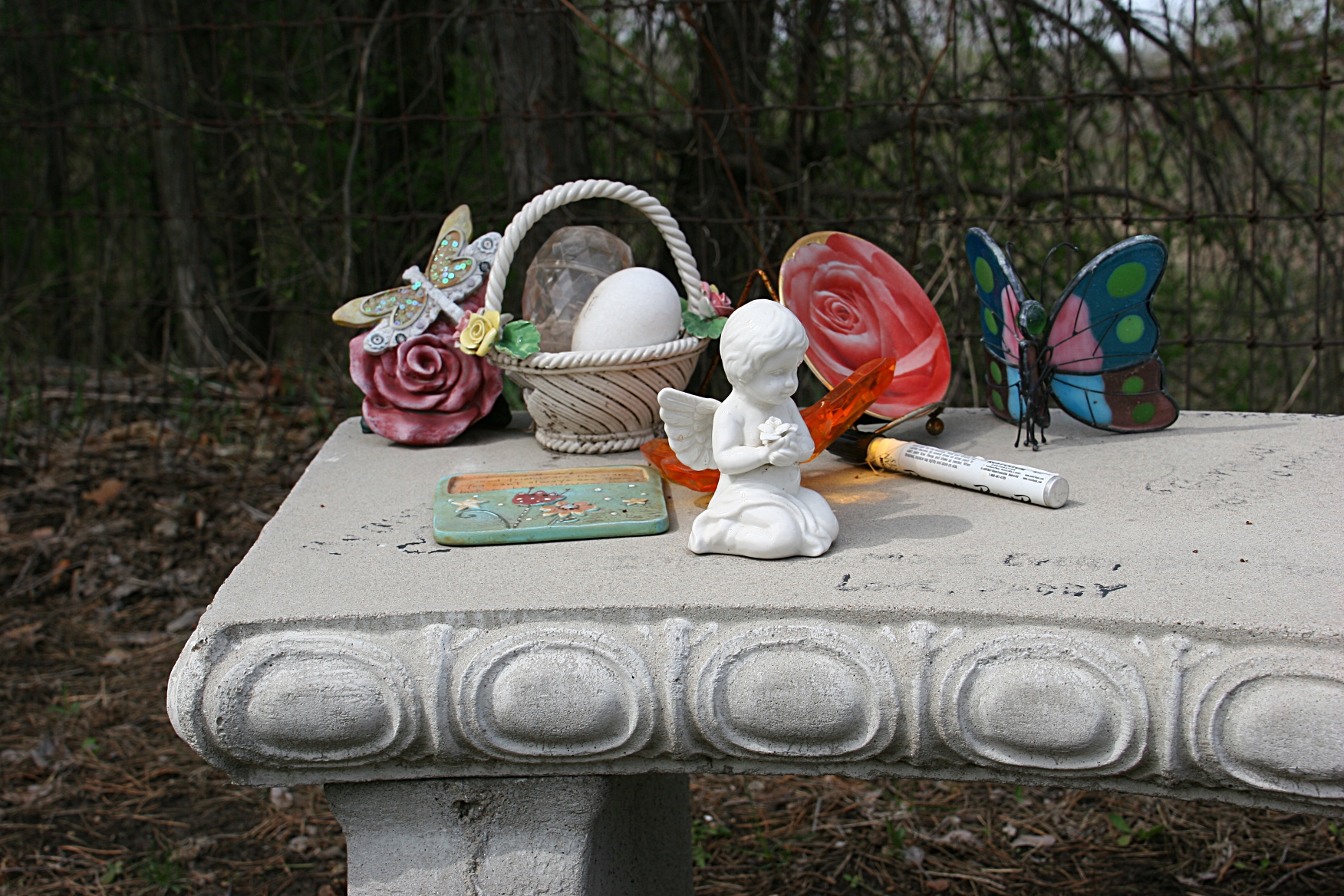
Visitors to Brittney's memorial can write a message on the bench.

Visitors to Brittney’s memorial can write a message on the bench.

Visiting Brittney’s memorial, I got a sense of who she was, what she loved, how much she was loved/is still loved and missed.

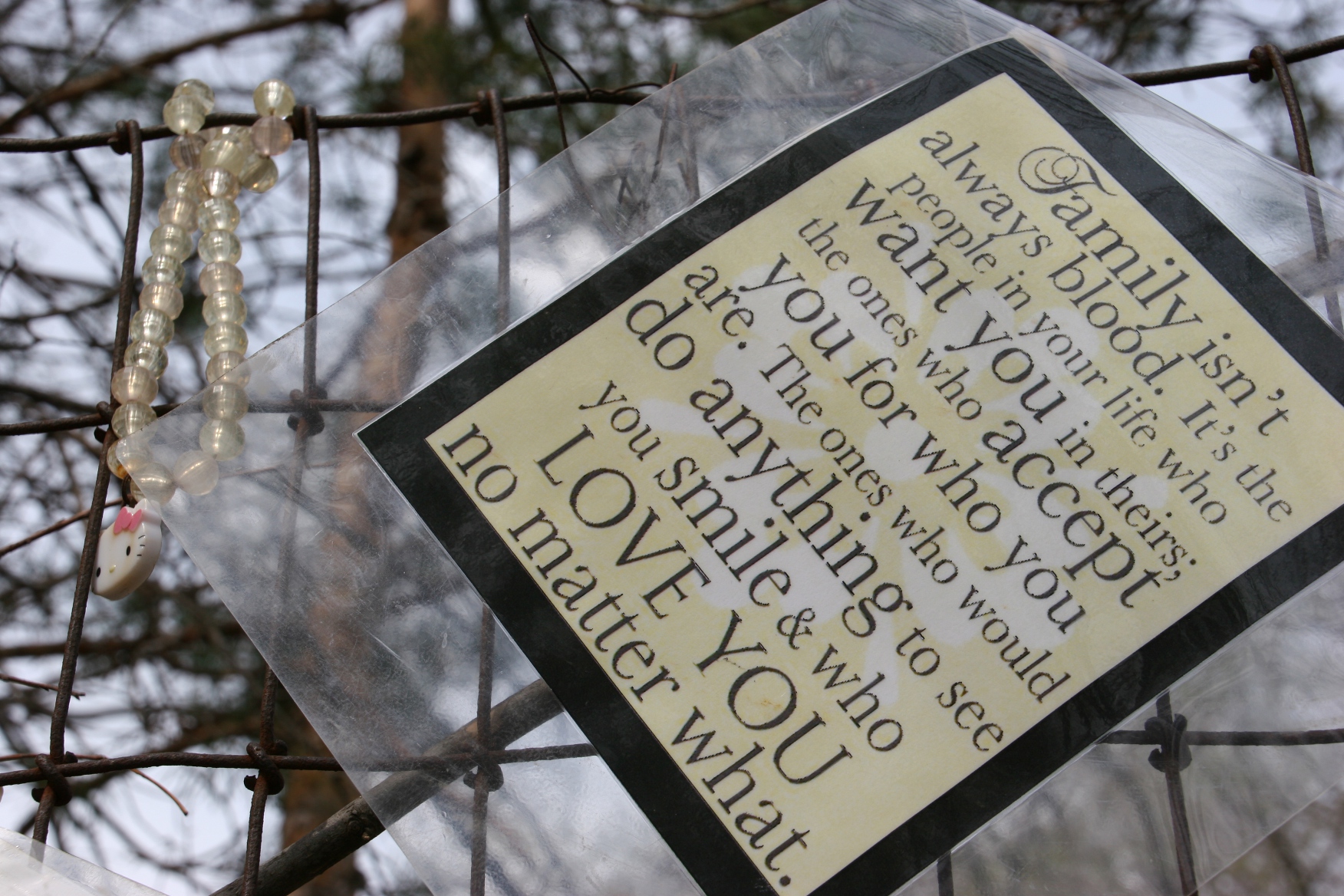
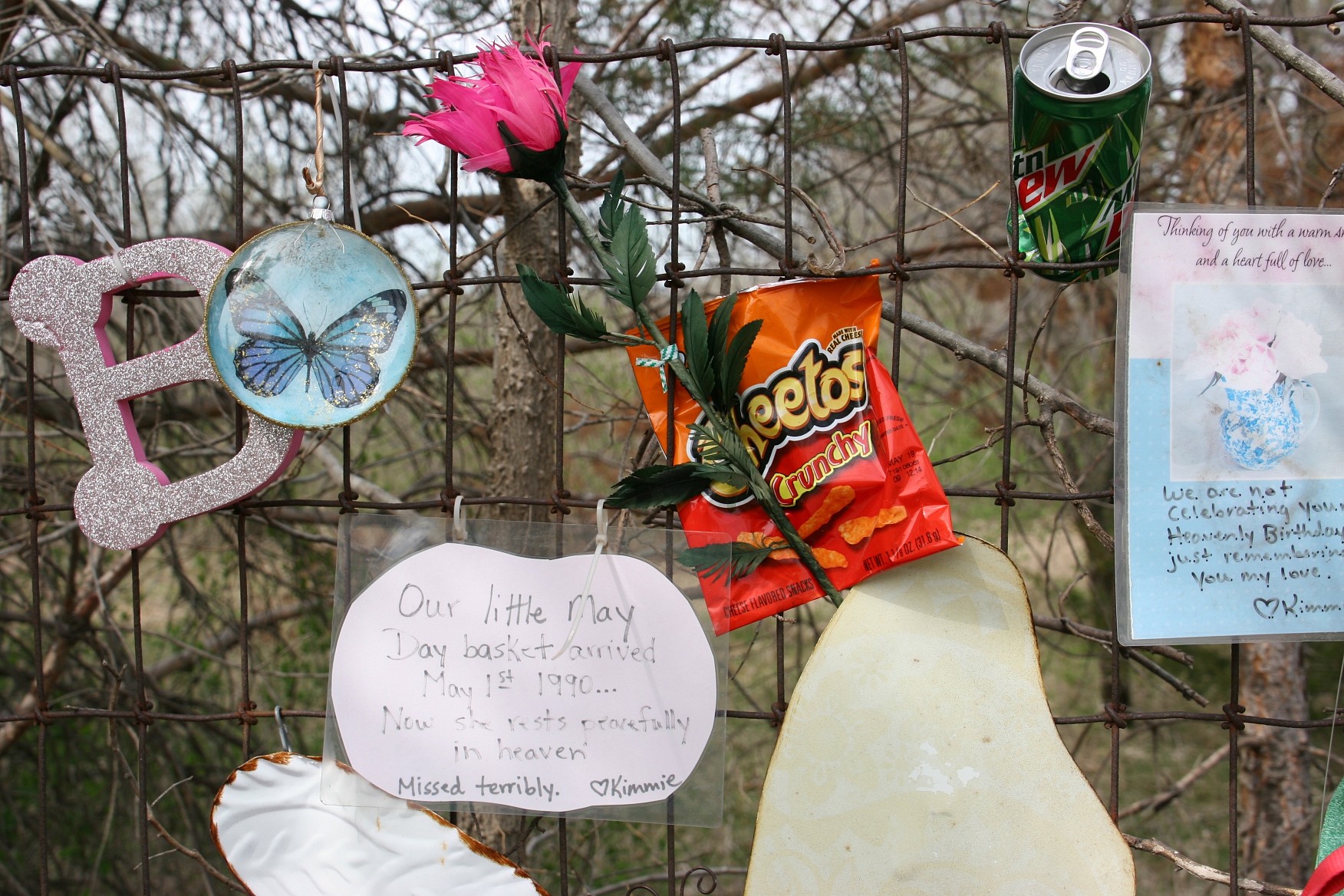
Items attached to a fence  reveal more about Brittney.

Items attached to a fence reveal more about Brittney.

She was a young woman who apparently liked Cheetos and Mountain Dew, Hello Kitty and butterflies.

Brittney's memorial is next to her grandparents' grave.

Brittney’s memorial is next to her grandparents’ grave.

Born in South Korea, Brittney Rose arrived in her parents’ arms on May 1, 1990. She is named after her paternal grandmother, Rose. Brittney’s memorial is located next to Rose and husband Kenneth’s gravesite.

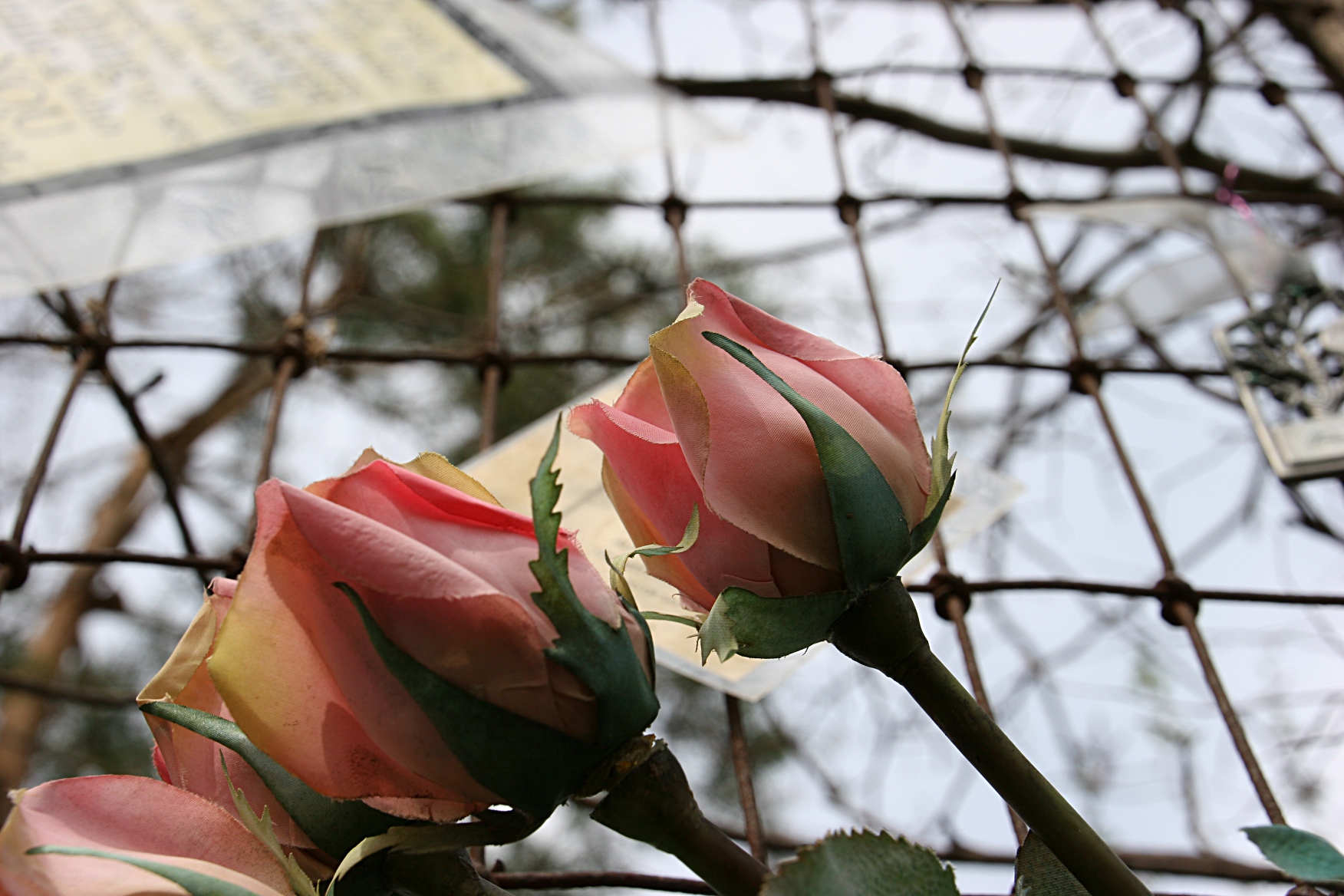
Roses abound, including these on the fence.

Roses abound, including these on the fence.

Roses grace the memorial. The flowers seem symbolic beyond honoring Brittney Rose’s name. To me they also represent that adage, “Stop and smell the roses.” We never know when the roses may cease to bloom, when their sweet scent will merely linger in the memory of our days.

#

Click here to read my first post on North Grove Cemetery.

© Copyright 2015 Audrey Kletscher Helbling


An “end of innocence” & my thoughts after a deadly shooting in Wisconsin May 4, 2015

UPDATE THREE, May 6: A Facebook page, Hands Over the Fox, has been set up to unite the people of the Fox Valley in the aftermath of the tragic shootings. A National Day of Prayer Trestle Trail event is set for 5:30 p.m. Thursday at the site of the tragedy. Click here to learn more about this community gathering to remember, demonstrate compassion and show strength. Attendees will gather on the Trestle Trail Bridge for 15 minutes of prayer. A potluck meal will follow at Fritse Park.

UPDATE TWO, May 5: A Go Fund Me website has now been established for the family of shooting victim Adam Bentdahl to help them deal with the financial burdens related to his death. Click here to support this family. I just learned of Minnesota connections. Adam was born on August 21, 1983, in Mankato, Minnesota, which is 40 miles from my community of Faribault. He has family (a grandmother in Hanska and a brother in White Bear Lake) in Minnesota.  Click here to read Adam’s obituary.

UPDATE, May 5: Calvary Bible Church in Neenah, Wisconsin, has set up a Stoffel Family Love Offering. Click here to see how you can support and donate to this family as they deal with the tragic deaths of Jon and Olivia. 

An edited image of a Wisconsin lake, used here for illustration purposes only. Minnesota Prairie Roots file photo 2012.

An edited image of a Wisconsin lake, used here for illustration purposes only. Minnesota Prairie Roots file photo 2012.

I AWOKE TO A NIGHTMARE so vivid this morning that I can still feel the icy waters of the black lake suffocating, pulling my second daughter and me into her deep, dark depths. We are dropping farther and farther from the surface, sinking to our deaths while I cry for my daughter to let go because it is the only way I can save her. Even though I cannot swim, I am determined to reach the surface.

But she won’t release me, no matter how I plead and scream. I gasp for air. My wool pea coat weighs and tightens around me like a straightjacket. My girl still clings to me. There is nothing I can do. And then I awaken, feeling the need to suck in air. I am so shaken by this dream that I don’t even tell my husband about my nightmare.

Hours later my phone bings with a text from my daughter: “There was a shooting in Menasha last night.” She lives in nearby Appleton, works in the medical field in the Fox Valley region of eastern Wisconsin with her office based in Menasha. I text and ask if I can call. She calls me.

Four are dead including gunman Sergio Daniel Valencia del Toro, a 27-year-old Air Force veteran and college student, who reportedly randomly opened fire Sunday evening on people crossing the Fox Cities Trestle Trail bridge. A 33-year-old father, Jonathan Stoffel of Neenah, and his 11-year-old daughter, Olivia, are dead. Their wife/mother was shot multiple times and remains hospitalized in critical condition. Two other children in the family were unharmed.  Adam Bentdahl, 31, from Appleton was also killed. The shooter shot himself. There were 75-100 people in the park/trail area at the time of the shooting.

This is the type of tragedy that stuns you, that hits especially hard when your daughter tells you she has used this very trail, when you’ve dreamed only hours earlier of drowning with that dear daughter in a cold, dark lake. There is no logical connection, of course, between my nightmare and the tragic shooting in Menasha. Still, the coincidence raises goosebumps.

Today I feel a profound sense of sadness that a young family and a young man simply out for a Sunday evening walk should suffer such loss at the hands of a man who’d reportedly just argued with his ex-fiancee. I don’t understand this type of unprovoked violence. Why?

At a news conference on Monday, Dr. Ray Georgen, director of trauma services at Neenah Theda Clark Medical Center and on duty Sunday evening, spoke of young mother Erin Stoffel’s arrival with three gunshot wounds, life-threatening injuries that required immediate emergency surgery. But I was struck most by Dr. Georgen’s statement that the random shootings mark “the end of innocence” for the Fox Valley region. Menasha Police Chief Tim Styka later concurred, saying that “Times have kind of caught up to us in the Fox Valley.” Violence like this can happen anywhere, he explained. Now it’s happened in his community in eastern Wisconsin.

The two also emphasized the heroism of Erin Stoffel. Despite three gunshot wounds, she got herself and her two surviving children, ages five and seven, off the bridge. That act, Dr. Georgen says, shows the power of the human spirit, of a mother determined to protect and save her children. What strength. What courage. What love.

FYI: A Go Fund Me fundraising site has been set up for the Stoffel family as Erin, Ezra and Selah deal with the deaths of their loved ones.

© Copyright 2015 Audrey Kletscher Helbling


Rest in peace, Ole, Sophia, Amelie…

THERE WAS A TIME when I stayed away from cemeteries. Walking among tombstones, atop burial sites, creeped me out.

But I’ve since matured, realized that a cemetery holds history and art, life stories and loss, and serves as a place to grieve, to honor and to remember loved ones.
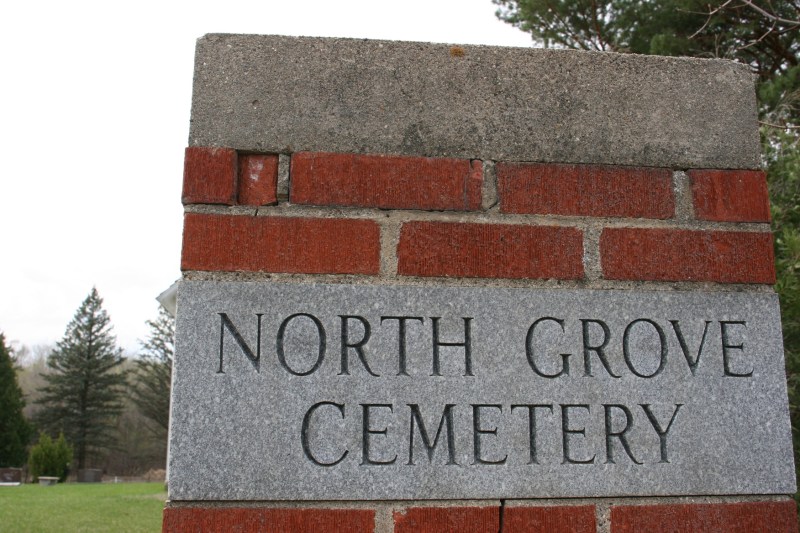
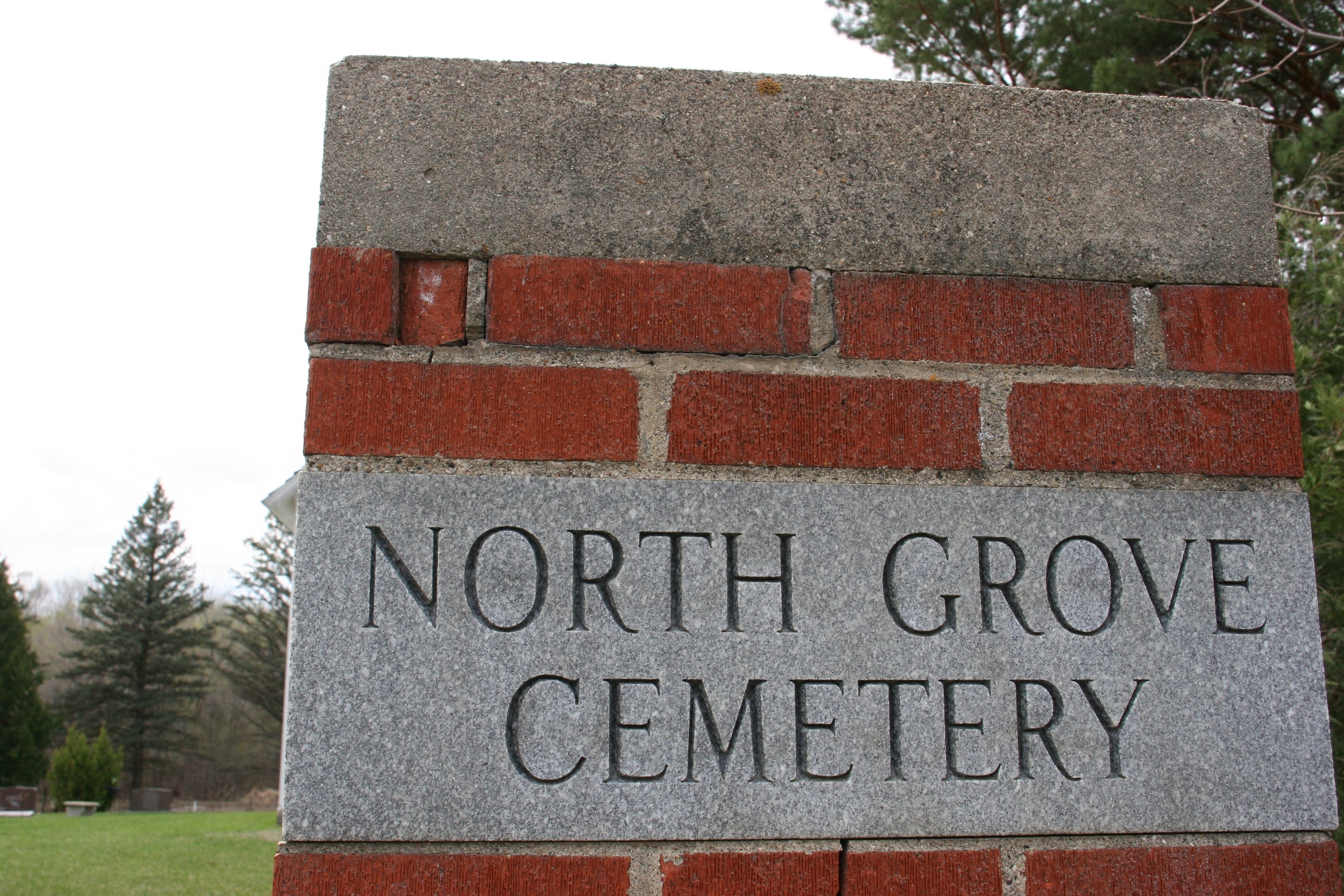
A marker at the entry to North Grove Church and Cemetery in Cannon City Township, rural Rice County, Minnesota.

A marker at the entry to North Grove Church and Cemetery in Cannon City Township, rural Rice County, Minnesota.

My most recent cemetery tour took me to North Grove Church and Cemetery just north of Faribault along Minnesota Highway 3. I’ve passed this site hundreds of times in 30-plus years, never once stopping to investigate.
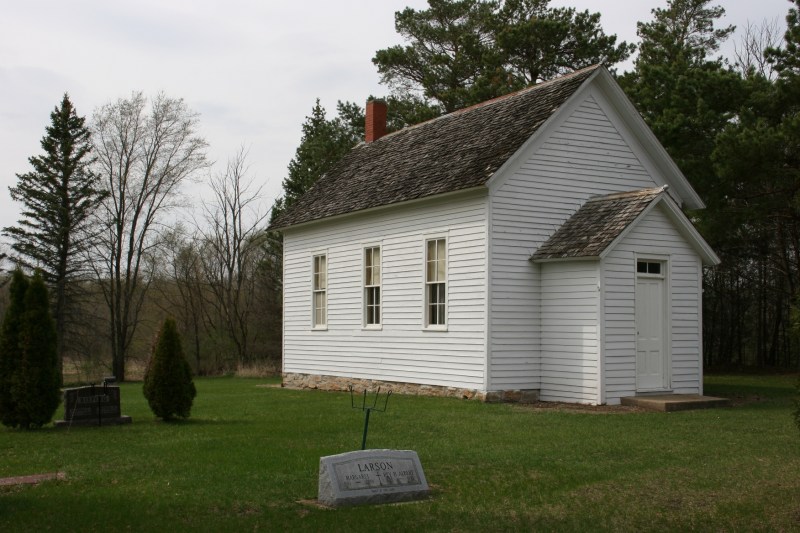
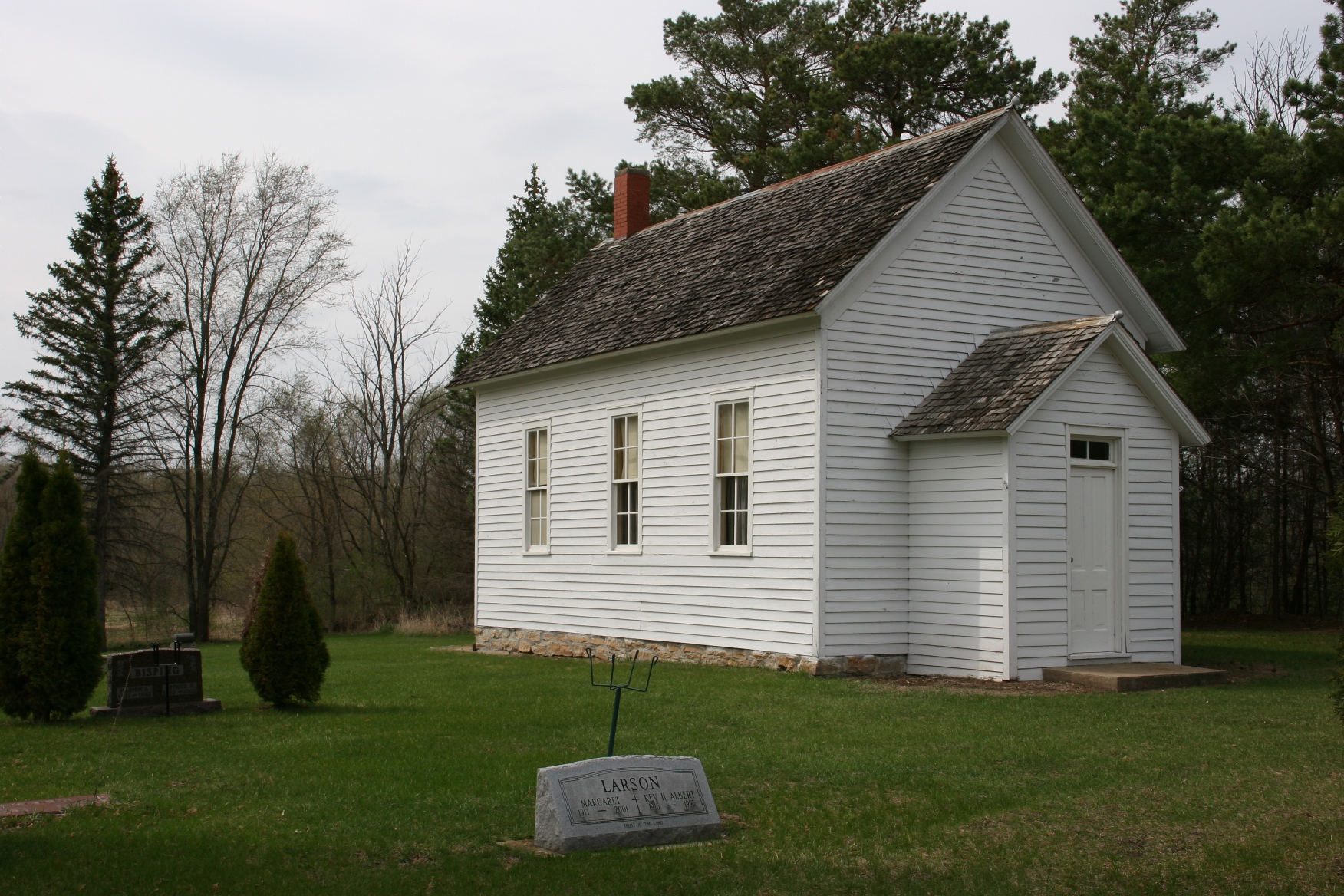
North Grove Church, closed in 1931.

North Grove Church closed in 1931.

Here I discovered a quaint church, long closed.

I opened this door into the church entry, but found the interior sanctuary door locked.

I opened this door into the church entry, but found the interior sanctuary door locked.

Peering through curtained windows, I glimpsed pews and wished I could get inside the locked building.
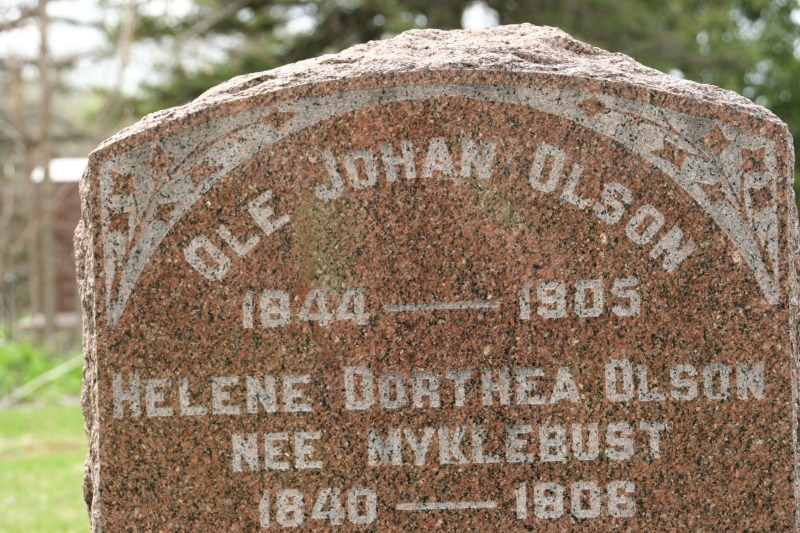
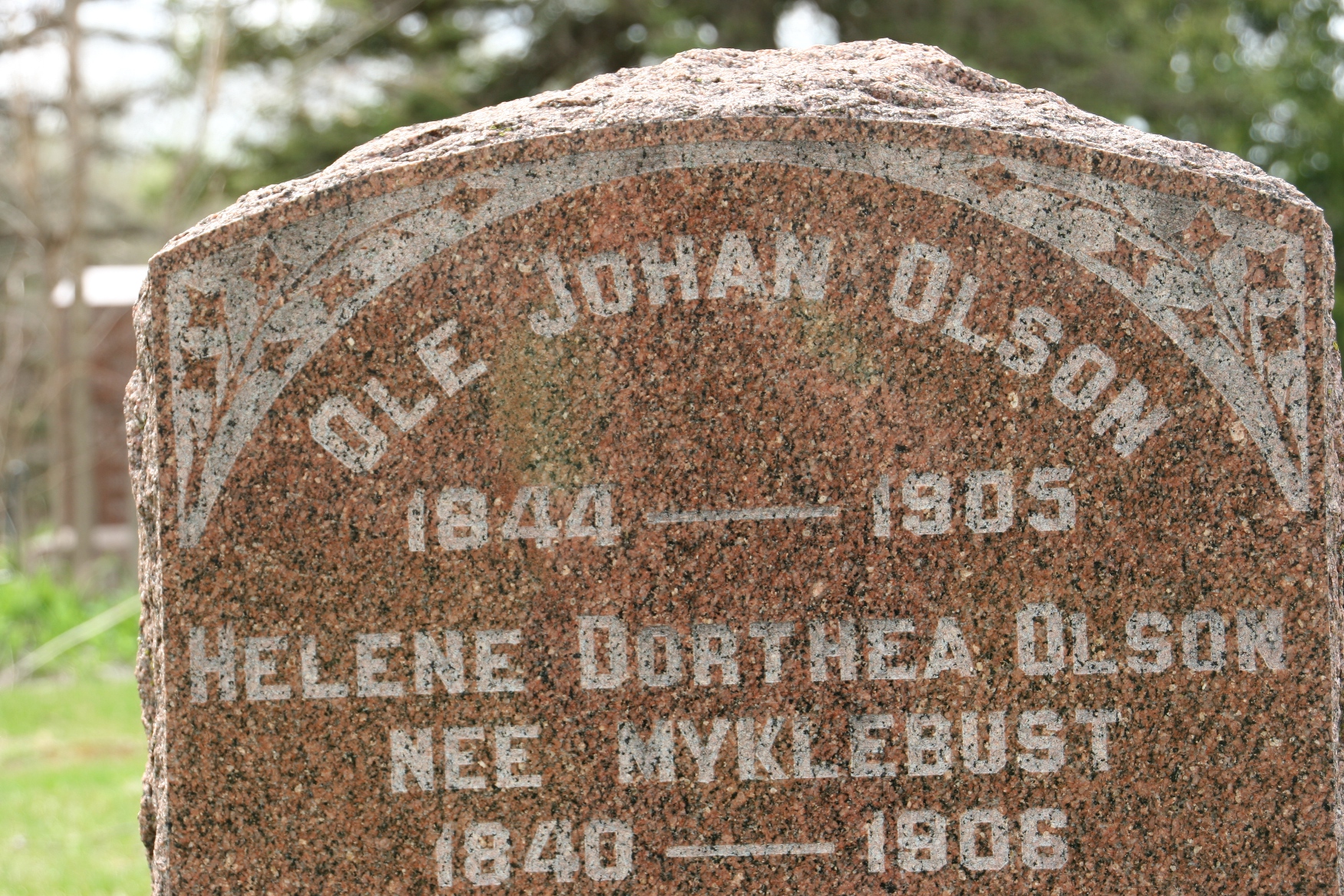
The Norwegian name, Ole, is common on North Grove tombstones.

The Norwegian name, Ole, is common on North Grove tombstones.

On a quick perusal of grave markers, where the name “Ole” is chiseled in stone many times, I determined that Norwegian immigrants built this house of worship and established this cemetery.
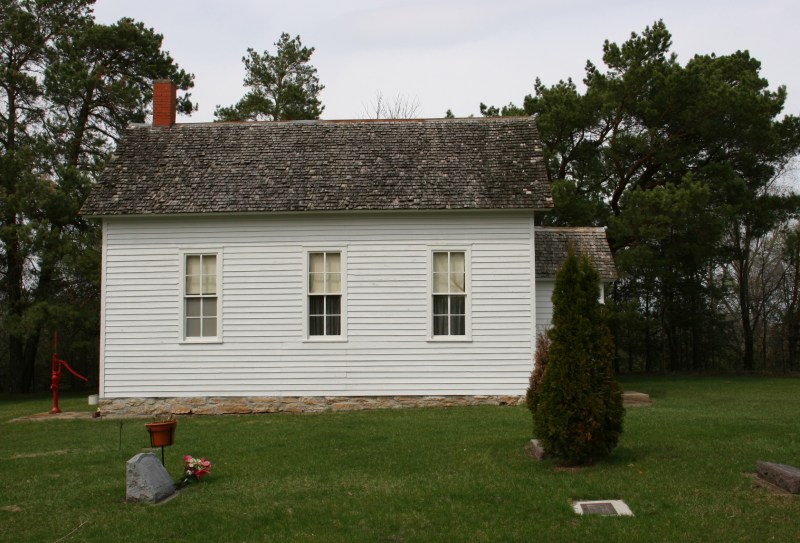
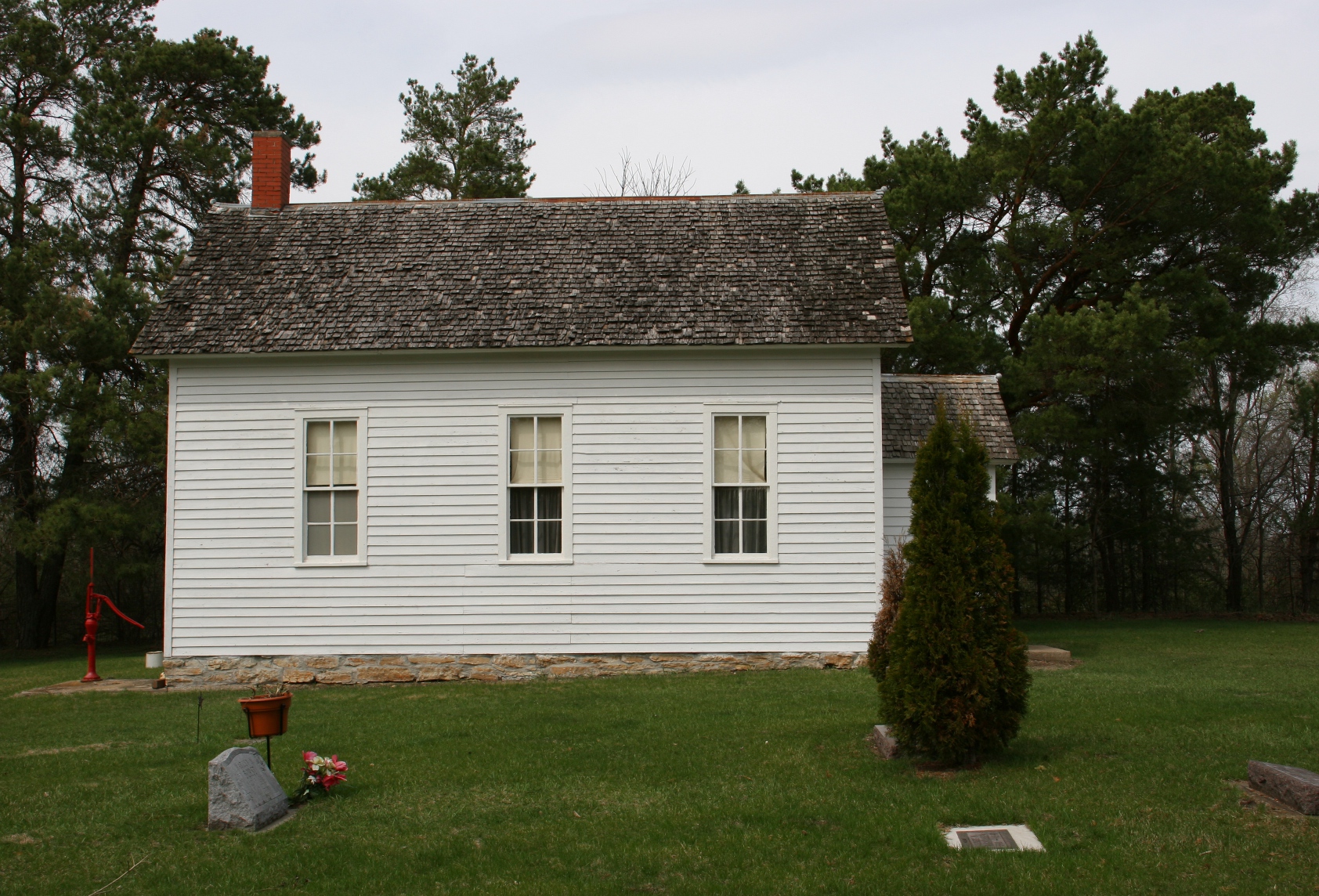
As was common in early Minnesota churches, the cemetery is right next to the church building.

As was common in early Minnesota churches, the cemetery is right next to the church building.

John Dalby of Faribault, who runs the Dalby Database along with wife, Jan, confirmed the ethnicity of North Grove Church. The Norwegian church was started in 1869 and likely closed in 1931, when First English Lutheran Church in Faribault formed, Dalby says.
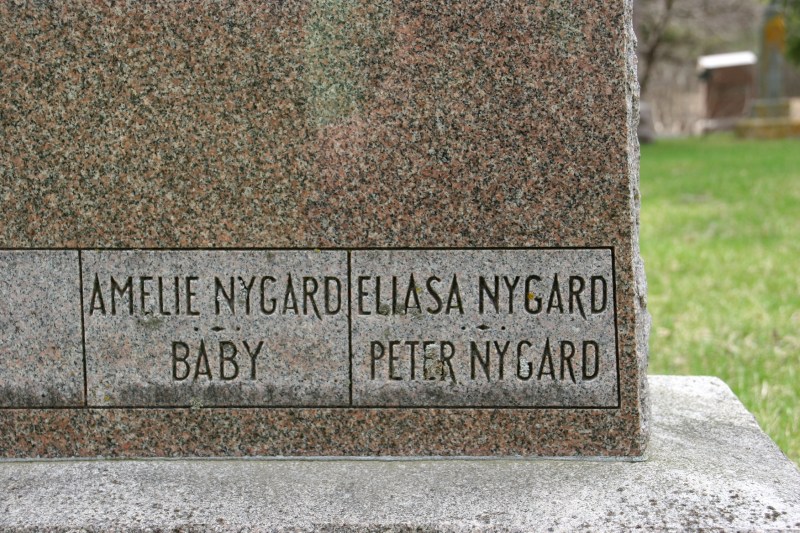
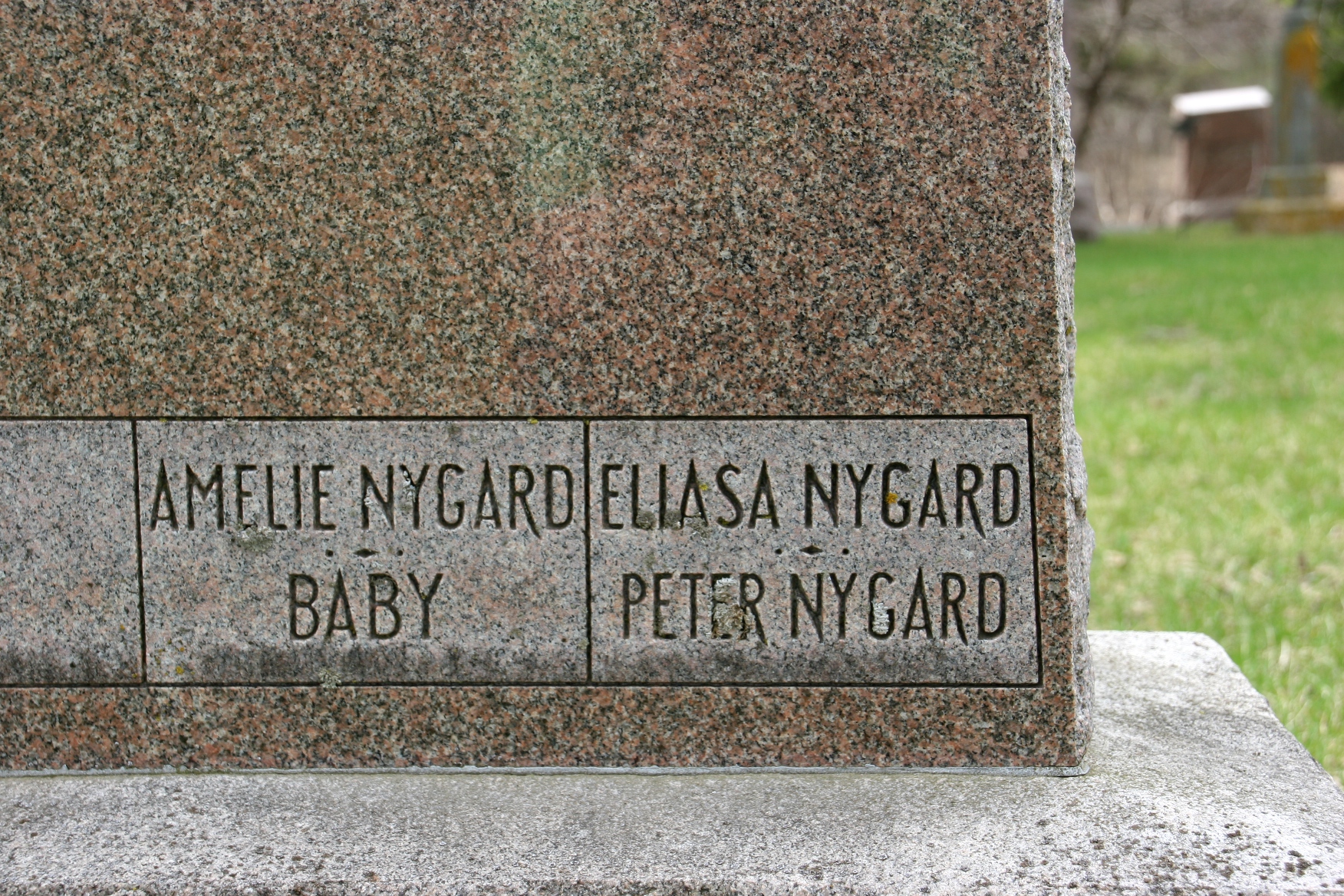
Too many babies died.

Too many babies died.

Wander this burial grounds and you begin to understand the losses and grief endured by early Minnesota settlers. Babies dead. Wives and husbands gone too young. Immigrants who left Norway for a new, but not always better, life in America.
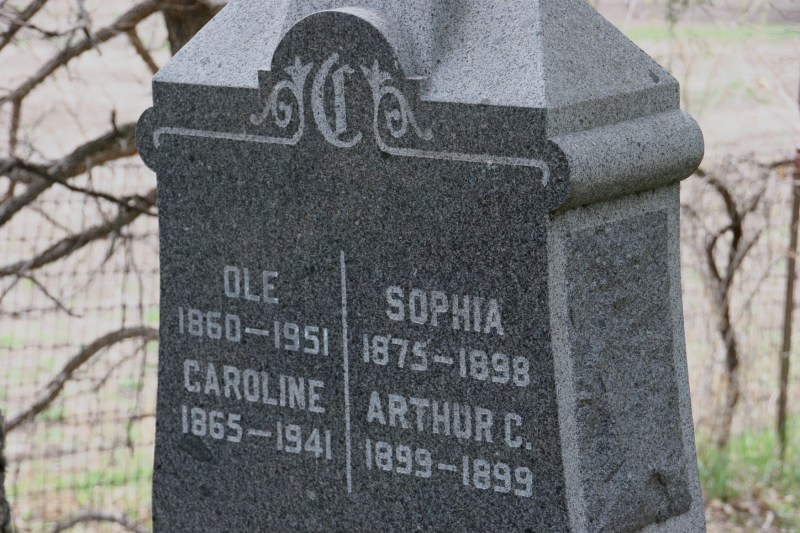
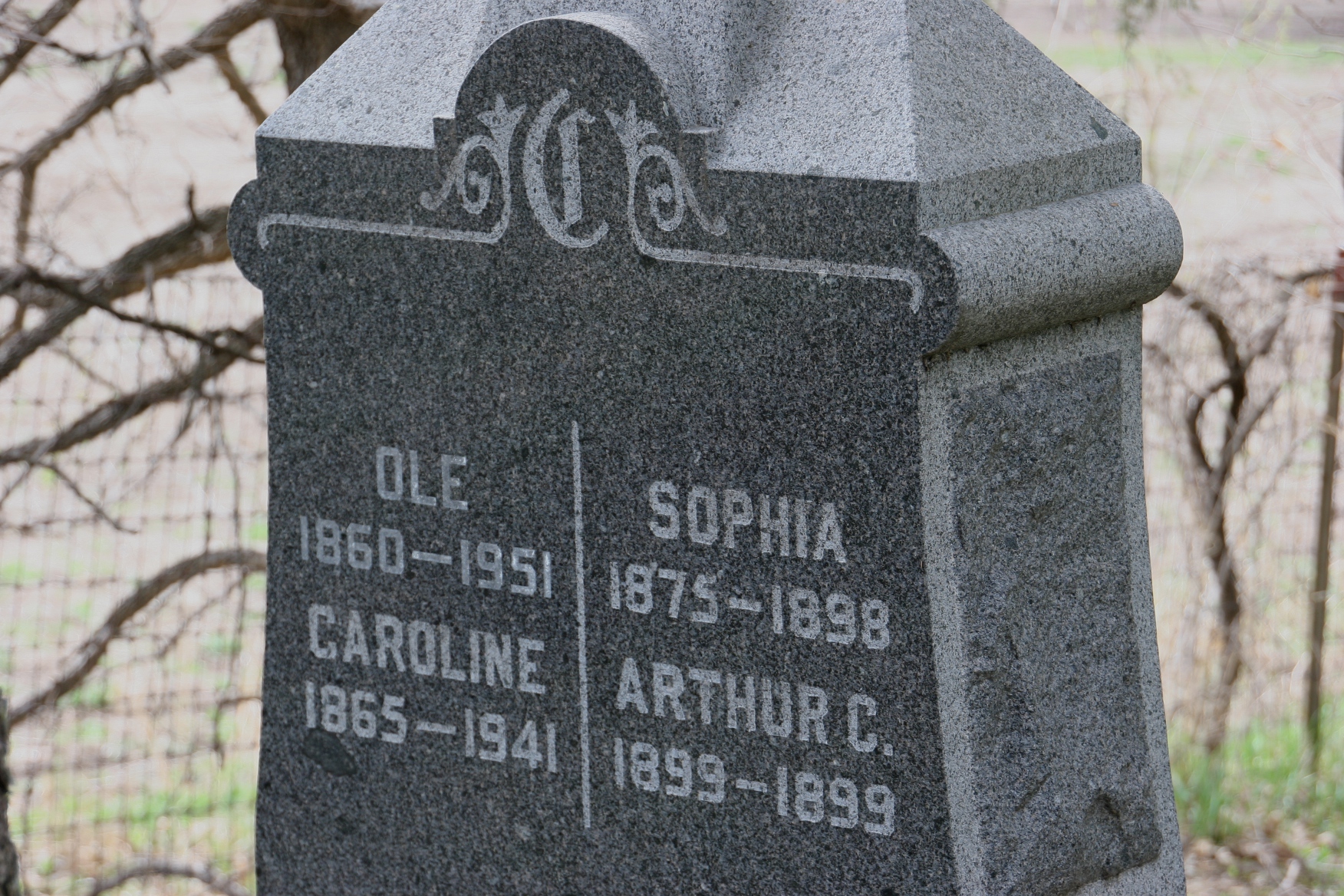
Ole Christiansen, who lived to age 91, came from Norway. His first wife, Sophia Swenson, died. He then married Caroline.

Ole Christiansen, who lived to age 91, came from Norway. His first wife, Sophia Swenson, died. He then married Caroline.

Then scroll through obituaries on the Dalby Database, which includes 2.5 million records from cemeteries, birth and death certificates and more, and names morph into people. Ole Christiansen is no longer simply a Norwegian name inscribed on a tombstone, but a man who was born in Alerude Odemark, Norway. Husband of Sophia. Then Caroline.
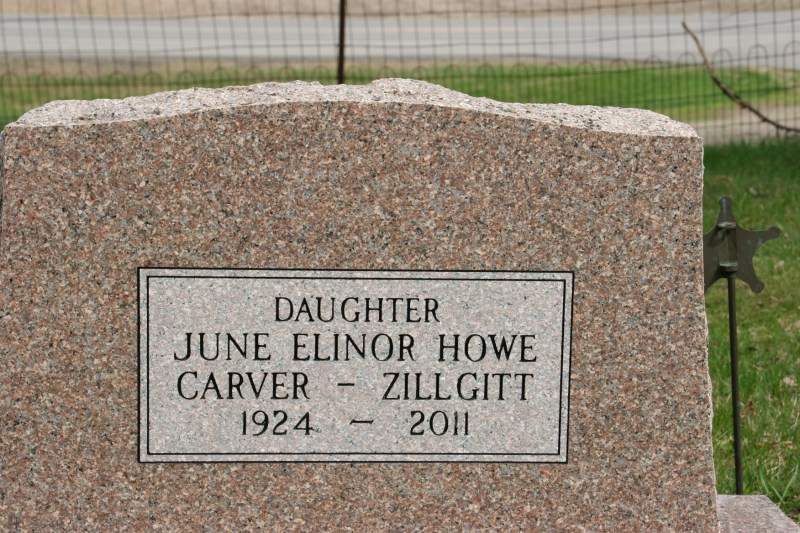
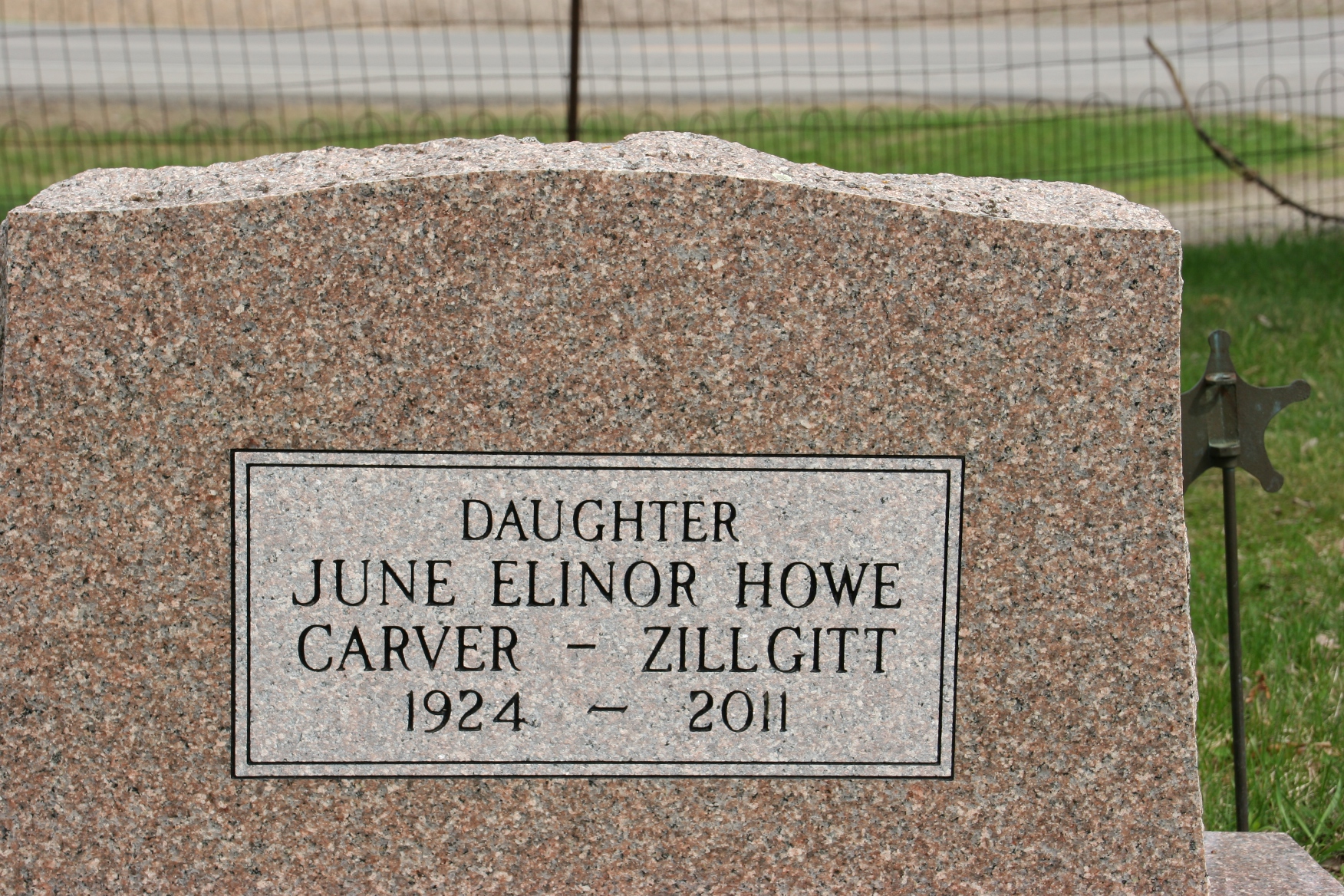
June's first husband was Rice County Sheriff Chuck Carver, who died in a 1971 plane crash. The wreck was discovered several years later. She was remarried to a former Goodhue County sheriff.

June’s first husband was Rice County Sheriff Chuck Carver, who died in a 1971 plane crash. The wreck was discovered several years later. She was remarried to a former Goodhue County sheriff.

June Carver-Zillgitt lived in a jailhouse with her husband-sheriff and cooked for inmates.
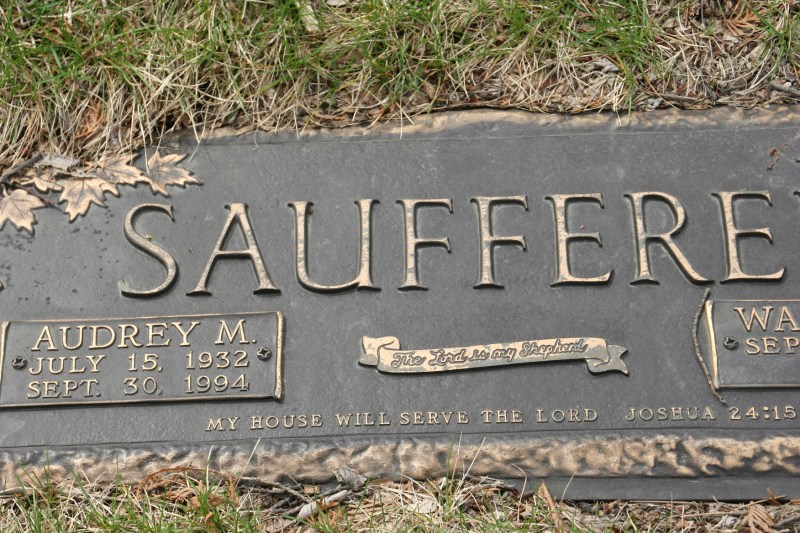
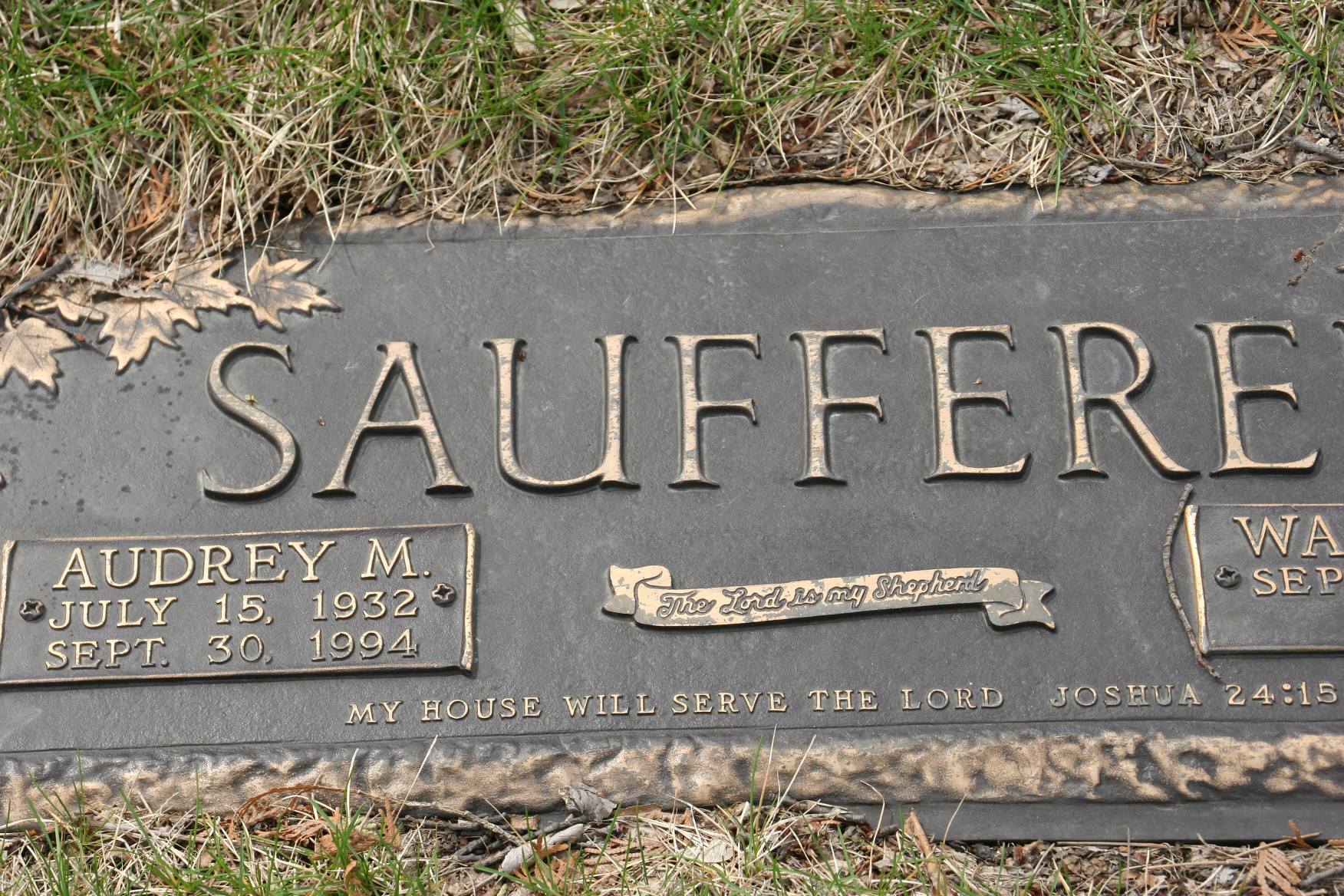
The name, Audrey, drew me to this in-ground marker as did the Scripture inscribed thereon.

The name, Audrey, drew me to this in-ground marker as did the Scripture inscribed thereon.

Audrey Saufferrer had five grandchildren.

Grocer O.A. Brekke was termed a man of “sterling character.”

Mathilda Lund was a pioneer resident of the North Grove community.
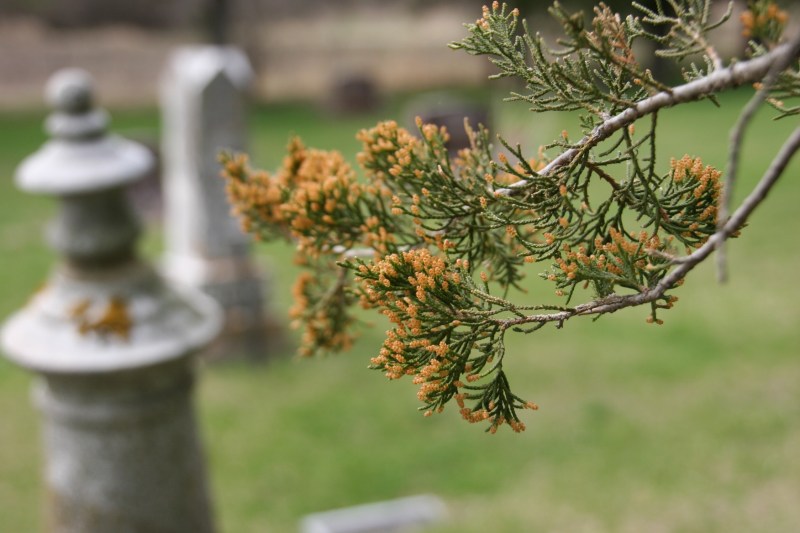
Trees are budding in the old cemetery.

Trees are budding in the old cemetery.

Those buried at North Grove are 326 individuals who lived and loved and labored, although some were dead at birth, or lived too few days or months or years.
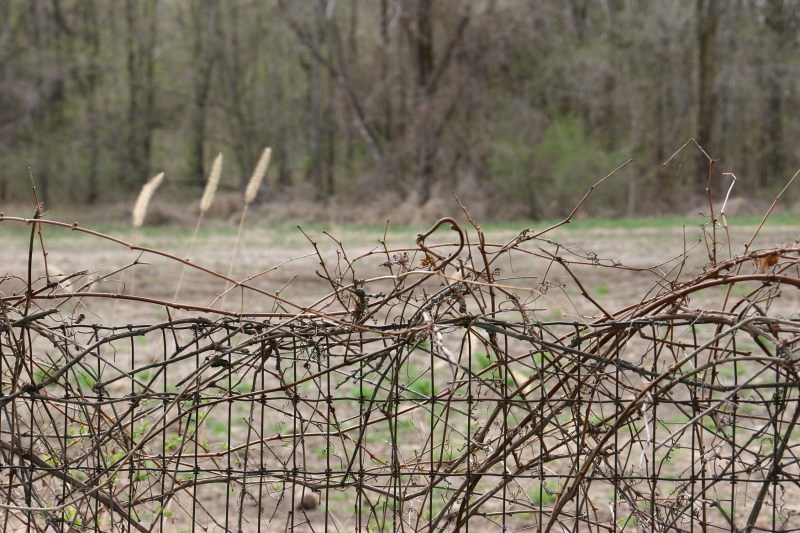
The fenced cemetery holds many stories. The cemetery is sandwiched between a highway and fields.

The fenced cemetery holds many stories. The cemetery is sandwiched between a highway and fields with a woods just a bit beyond as shown here.

I knew none of them. But, after walking among their gravestones, I am reminded that a cemetery holds life stories, if only we pause to read them.

Imagine the hands that worked this pump, those who drank the earth's water. The pump is located behind the church.

Imagine the hands that worked this pump, those who drank the earth’s water. The pump is behind the church.

FYI: Click here to access the Dalby Database, a great resource for anyone doing family history research in Minnesota.

This is one of two old tea kettles sitting near the water pump. I assume they are there  for watering flowers and plants.
This is one of two old tea kettles sitting near the water pump. I assume they are there for watering flowers and plants.
FYI: Janice Uggen Johnson recently published a book, Faith of our Fathers: History of Markers Norwegian Lutheran Church and North Grove Church and Cemetery, Faribault, Rice County, Minnesota (2014). She is an associate member of the Norwegian-American Historical Association. I have not seen or read the book.

The Norwegian-American Historical Association, based at St. Olaf College in Northfield, Minnesota, is “a private membership organization dedicated to locating, collecting, preserving and interpreting the Norwegian-American experience with accuracy, integrity and liveliness.” It was founded in 1925.

Check back for a close-up look at a memorial in the North Grove Cemetery honoring a young Faribault woman.

© Copyright 2015 Audrey Kletscher Helbling