Minnesota Prairie Roots

Writing and photography by Audrey Kletscher Helbling

May the force of creativity be with you this Halloween October 29, 2013

Filed under: Uncategorized — Audrey Kletscher Helbling @ 8:35 PM
Tags: , , , , , , ,

YOU CAN TAKE A PUMPKIN and carve or paint it all fancy schmancy for Halloween.

But sometimes it’s the simplest form of creativity which most impresses:

May the force be with you this Halloween.

May the force be with you this Halloween.

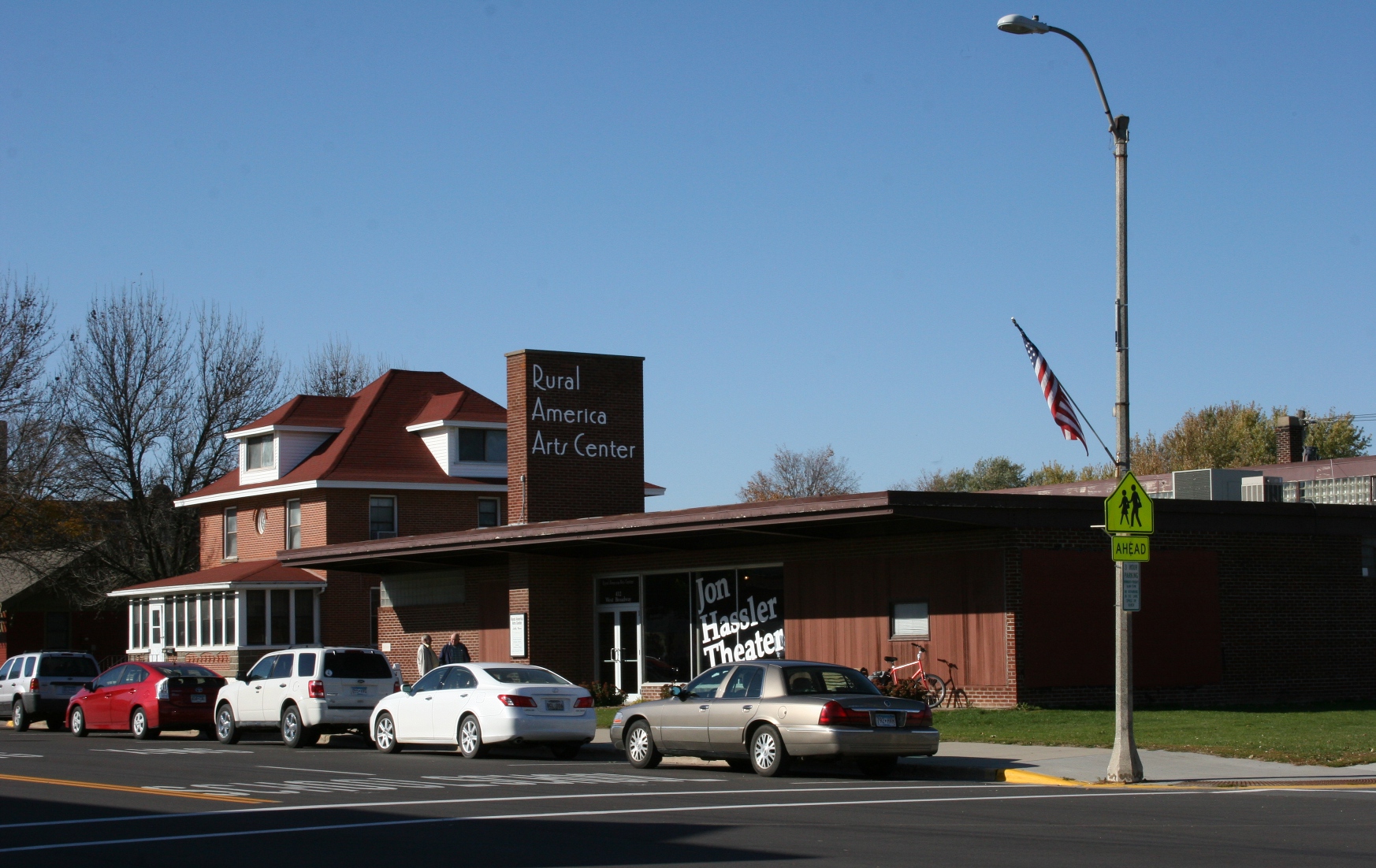
Now, I cannot recall ever viewing a Star Wars movie for I am not a fan of sci-fi and/or fantasy. But even I can appreciate this stick drawing created by some devoted fan in Plainview, Minnesota, and set outside the entry to a downtown business a half block from the Rural America Arts Center/Jon Hassler Theater.

The Jon Hassler Theater and Rural America Arts Center in downtown Plainview.

The Jon Hassler Theater and Rural America Arts Center in downtown Plainview.

I bet Hassler, a former Plainview resident and an author noted for his nuanced fictional depictions of small town Minnesota life, would value the childish art on this pumpkin.

And the fact that I noticed.

© Copyright 2013 Audrey Kletscher Helbling


In St. Peter: Waiting for the corpse flower to bloom

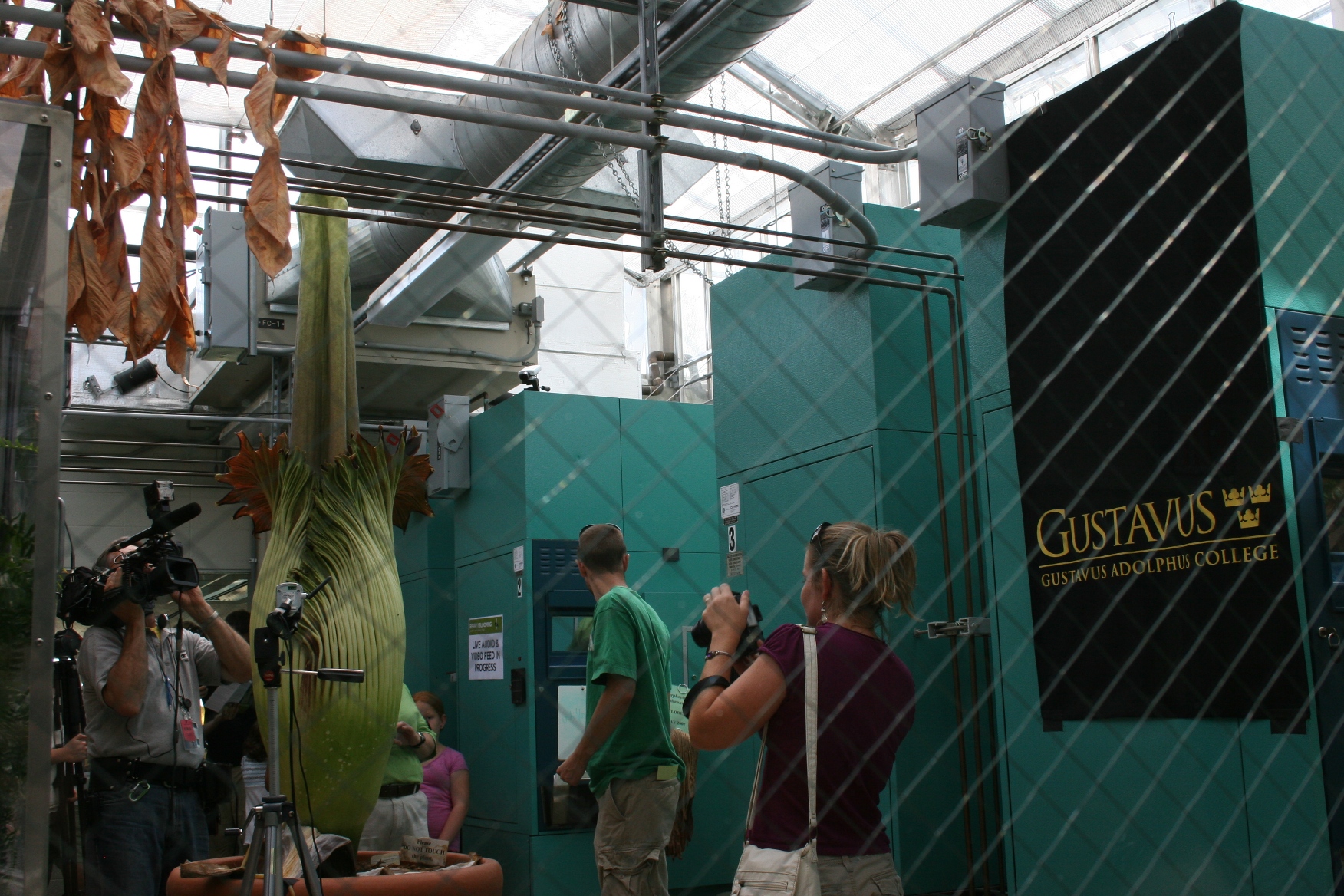
PERRY MANIA is invading Gustavus Adolphus College in St. Peter.

A shot through a window into the viewing area shows Perry beginning to open.

A shot through a window into the viewing area shows Perry beginning to open in late July 2010.

OK, that may be a bit of a stretch. You decide, But interest in the predicted early November blooming of Perry, otherwise known as the “corpse flower,” is strong.

Think web cams, “featured news” on the college website, headlines in the St. Peter Herald, a Perry blog and even Perry themed t-shirts, cap, mugs, tote bag, bumper sticker and other merchandise available for purchase.

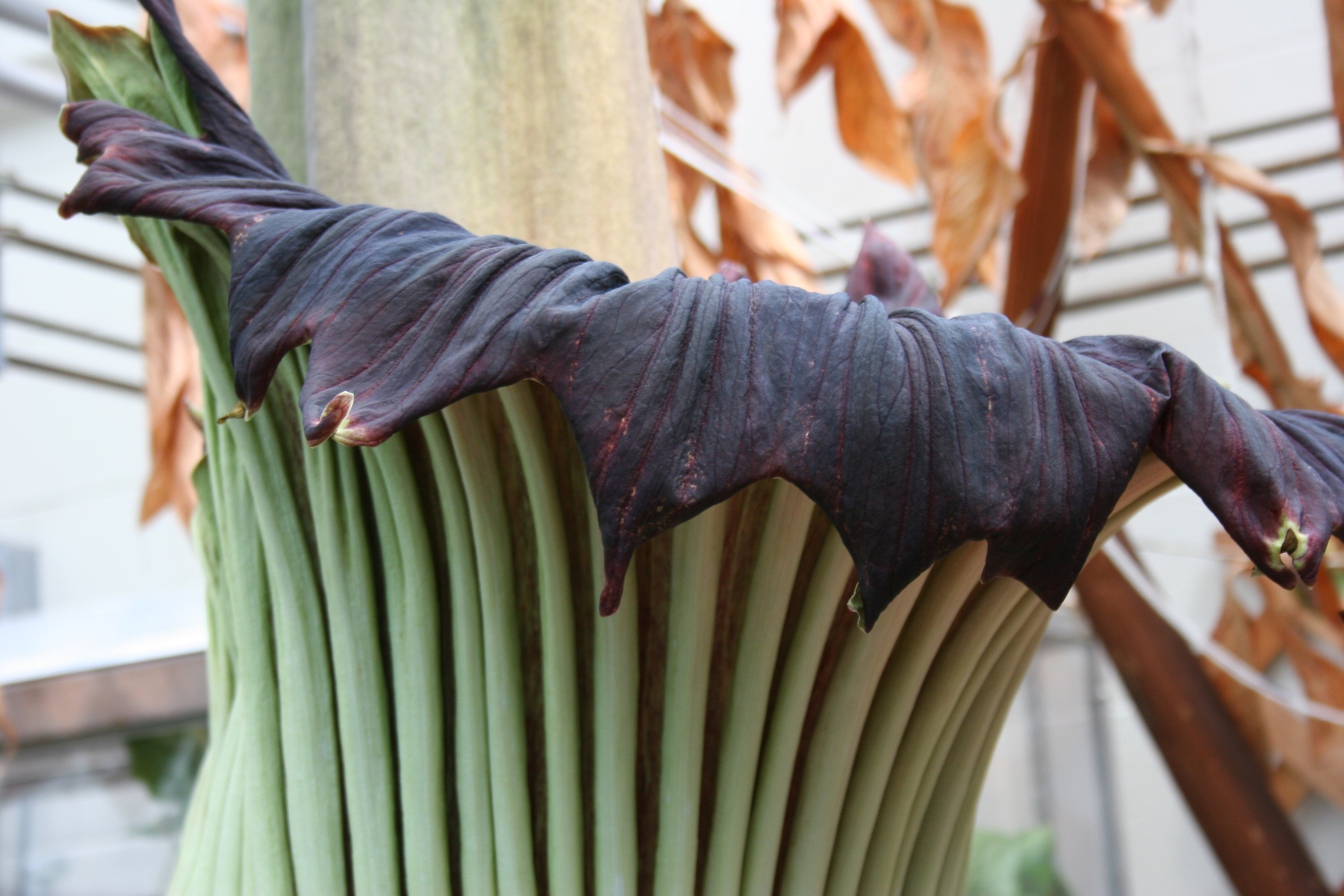
A close-up of Perry's unfolding spathe, an outer purple vase-like sheath.

A close-up of Perry’s unfolding spathe, an outer purple vase-like sheath. Minnesota Prairie Roots file photo 2010.

And all of this because the rare tropical plant, a native of Sumatra in Indonesia and with the largest unbranched inflorescence in the world, is about to blossom.

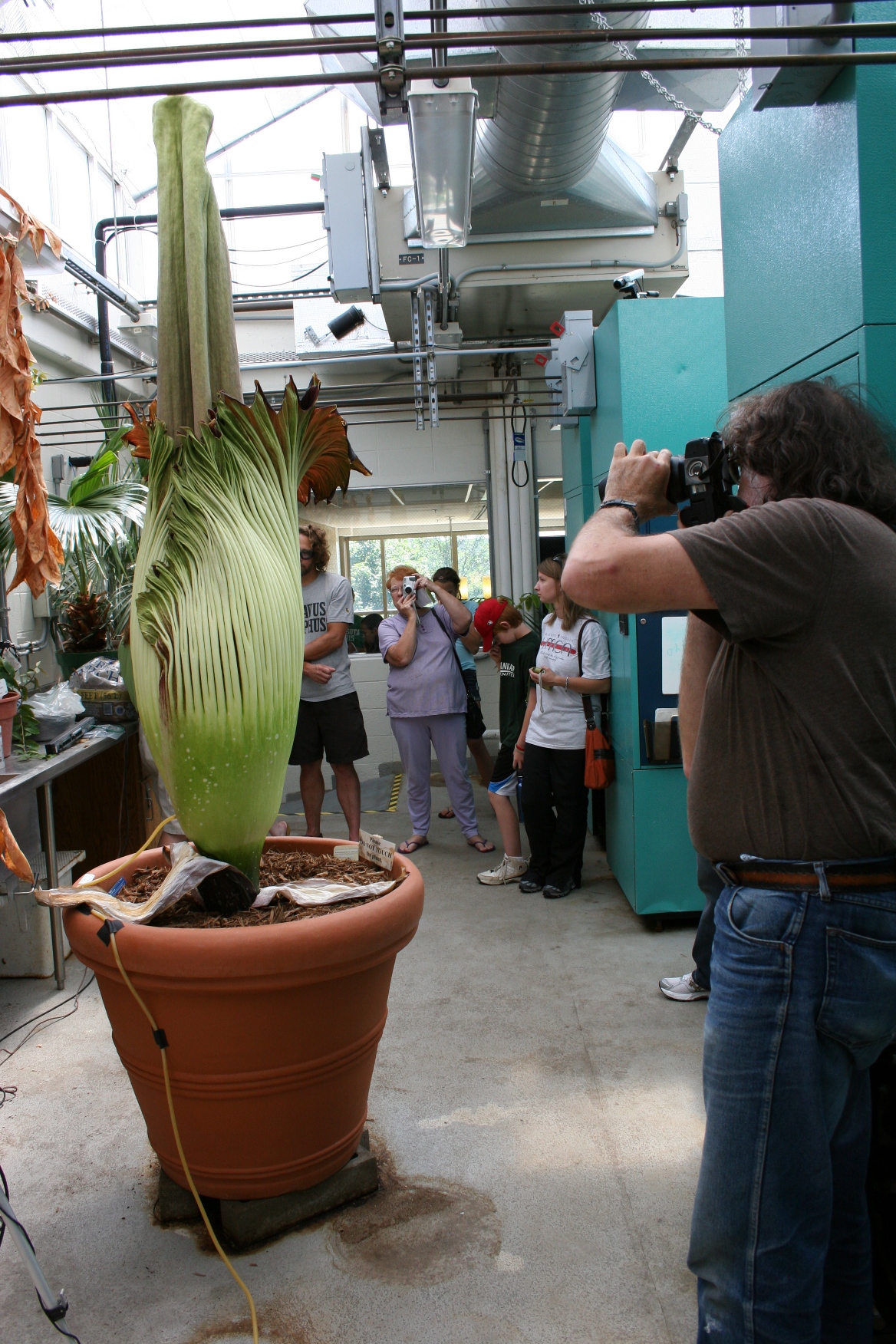
This mammoth plant, which can reach heights of eight to 10 feet and a life span of 40 years, is noted for its distinct rotting flesh/rotting meat odor.

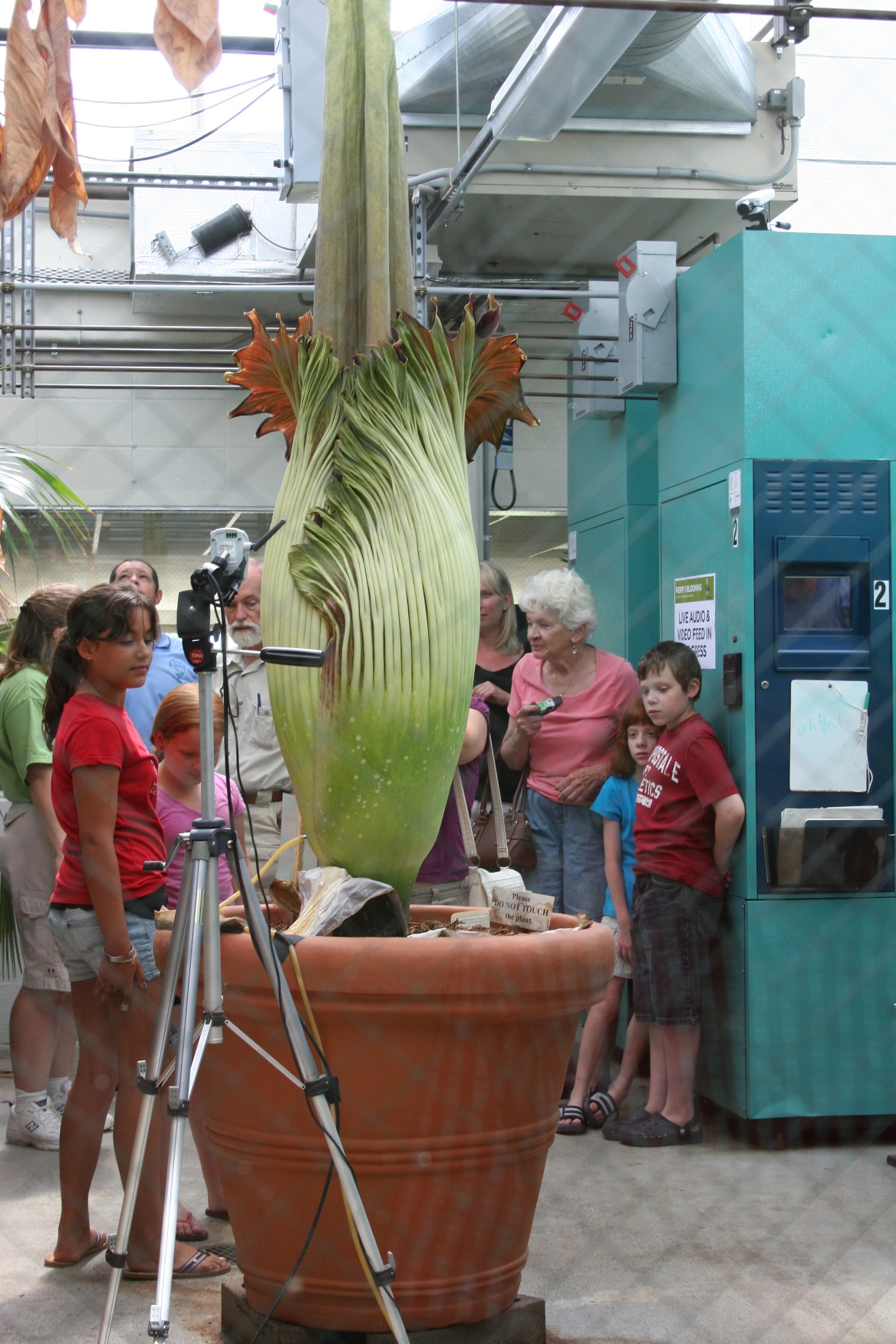
A shot through the window into the viewing area of the titan arum.

A shot through the window into the viewing area of the titan arum shows the high level of interest in the corpse flower. Minnesota Prairie Roots file photo 2010.

Three years ago, my husband, son and I were among the 5,000 plus curious who flocked to the third floor greenhouse in the Nobel Hall of Science to view, and smell, the Amorphophallus titanum, aka Titan Arum. Gustavus named its plant, seeded in 1993, after the Titan Hyperion, associated with intellectual curiosity. That would be Perry, for short.

I don’t recall the precise smell of Perry only 12 hours after the plant began blooming in late July 2010. But I do remember thinking the odor was not nearly as bad as I had imagined and that I’ve smelled worse (like a slurry pit being emptied) while traveling through rural Minnesota.

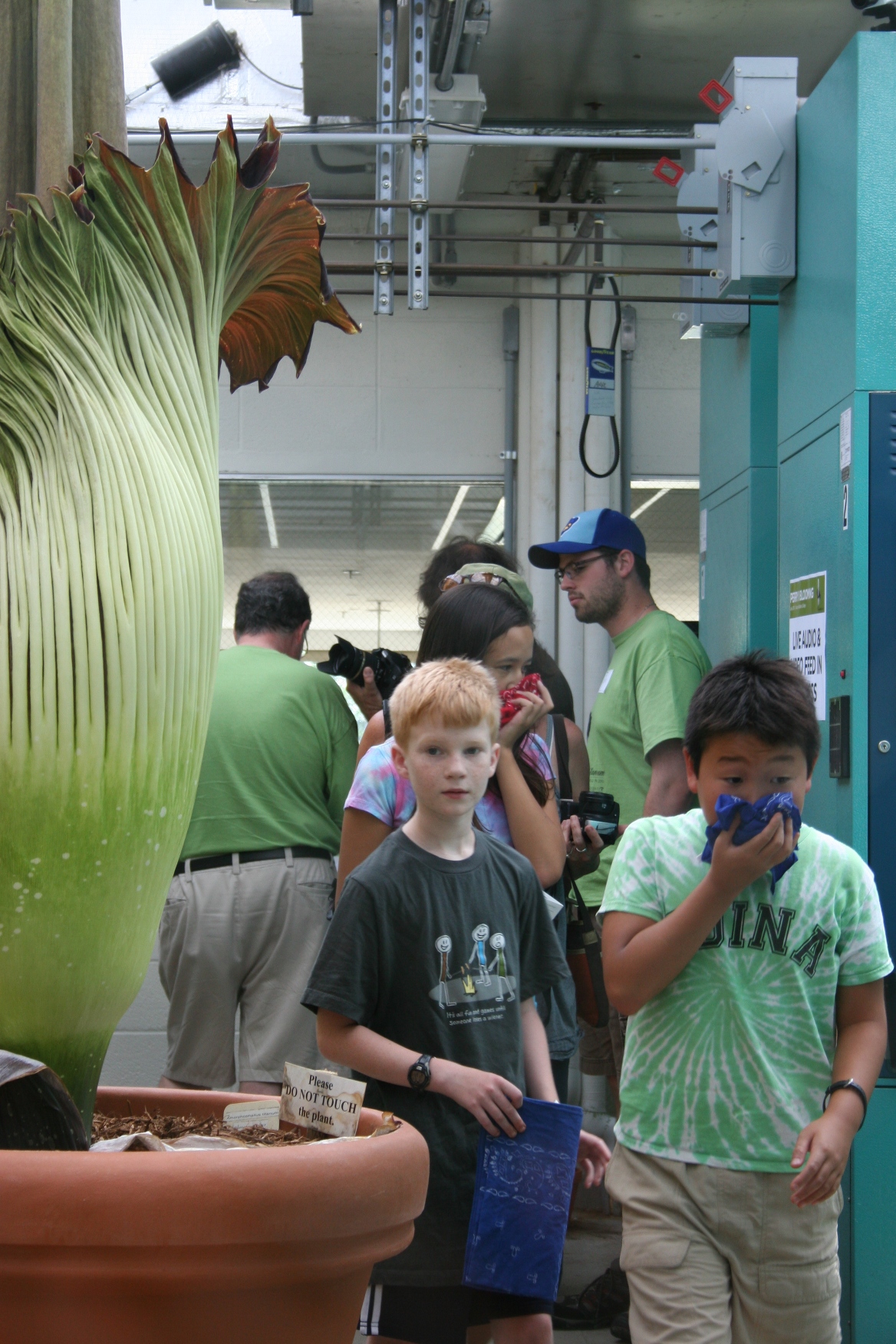
One of the Yang boys wards off the offending odor with a perfumed bandanna.

The odor was too much for this boy, who covered his face with a perfumed bandanna when visiting Perry in 2010. Minnesota Prairie Roots file photo.

But others, such as elementary-aged kids from Edina, pressed perfumed bandannas to their noses.

A diagram explained the life cycle of "the corpse plant."

A diagram explains the life cycle of “the corpse plant.” Minnesota Prairie Roots file photo 2010.

To see, and smell, a corpse flower in bloom is a rare opportunity, one limited to only a few days. This marks Perry’s third blooming. And there isn’t exactly an abundance of these plants in the world, one of the reasons Gustavus botanists are invested in conservation of the Titan Arum. Gustavus received 20 Titan Arum seeds from a San Francisco physician  in 1993 and Perry is the result.

Visitors came with cameras in hand to photograph the rare blooming of Perry, which lasted until Sunday.

Visitors came with cameras in hand to photograph the rare blooming of Perry in July 2010. Perry has previously bloomed in 2007 and 2010. Minnesota Prairie Roots file photo 2010.

Is Perry worth seeing, worth smelling, worth photographing? Definitely.

If you’re hypersensitive to odors, though, pack your perfumed bandanna.

FYI: As early November nears, be sure to check the Gustavus Adolphus website (click here) often for updates on Perry and the precise date when blooming is expected. Some Facebook fans are predicting blossoming on Halloween or even earlier.


My Night at the Museum October 28, 2013

HISTORY BROUGHT TO LIFE pleases me, for I am an interactive learning history type of person.

I often get overwhelmed and impatient reading information in traditional museum displays.

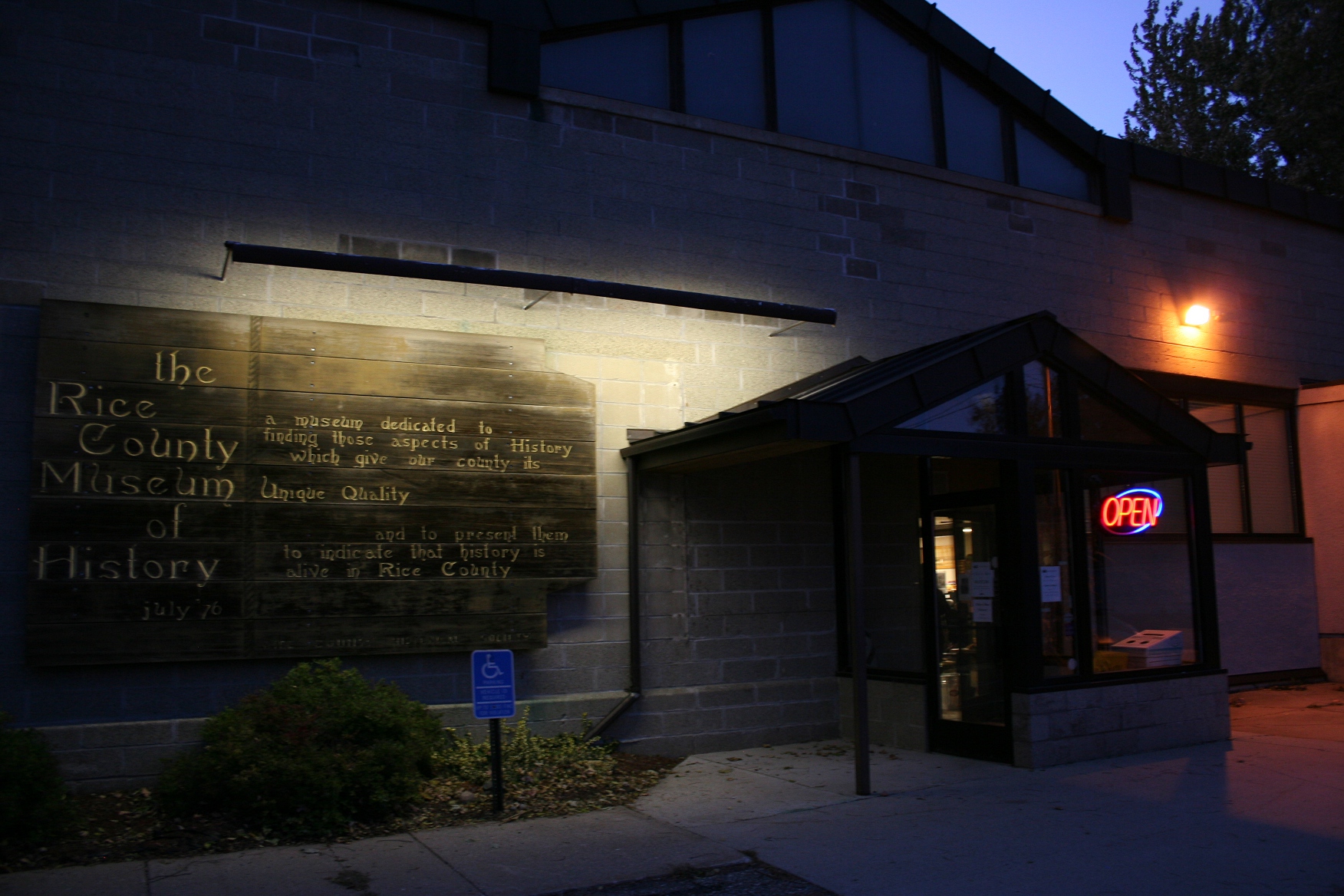
Arriving around 6:30 p.m. Friday for A Night at the Museum at the Rice County Historical Society in Faribault.

Arriving around 6:30 p.m. Friday for A Night at the Museum at the Rice County Historical Society in Faribault.

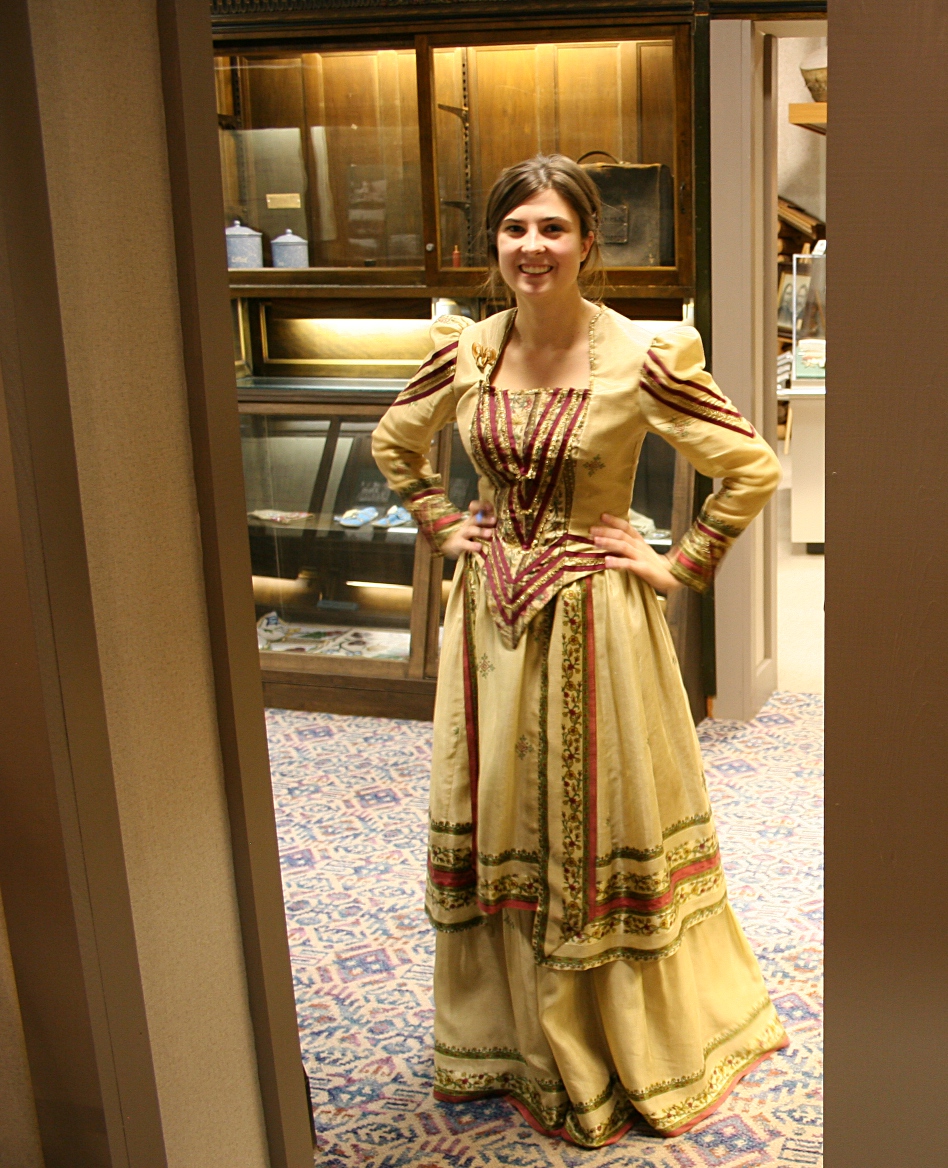
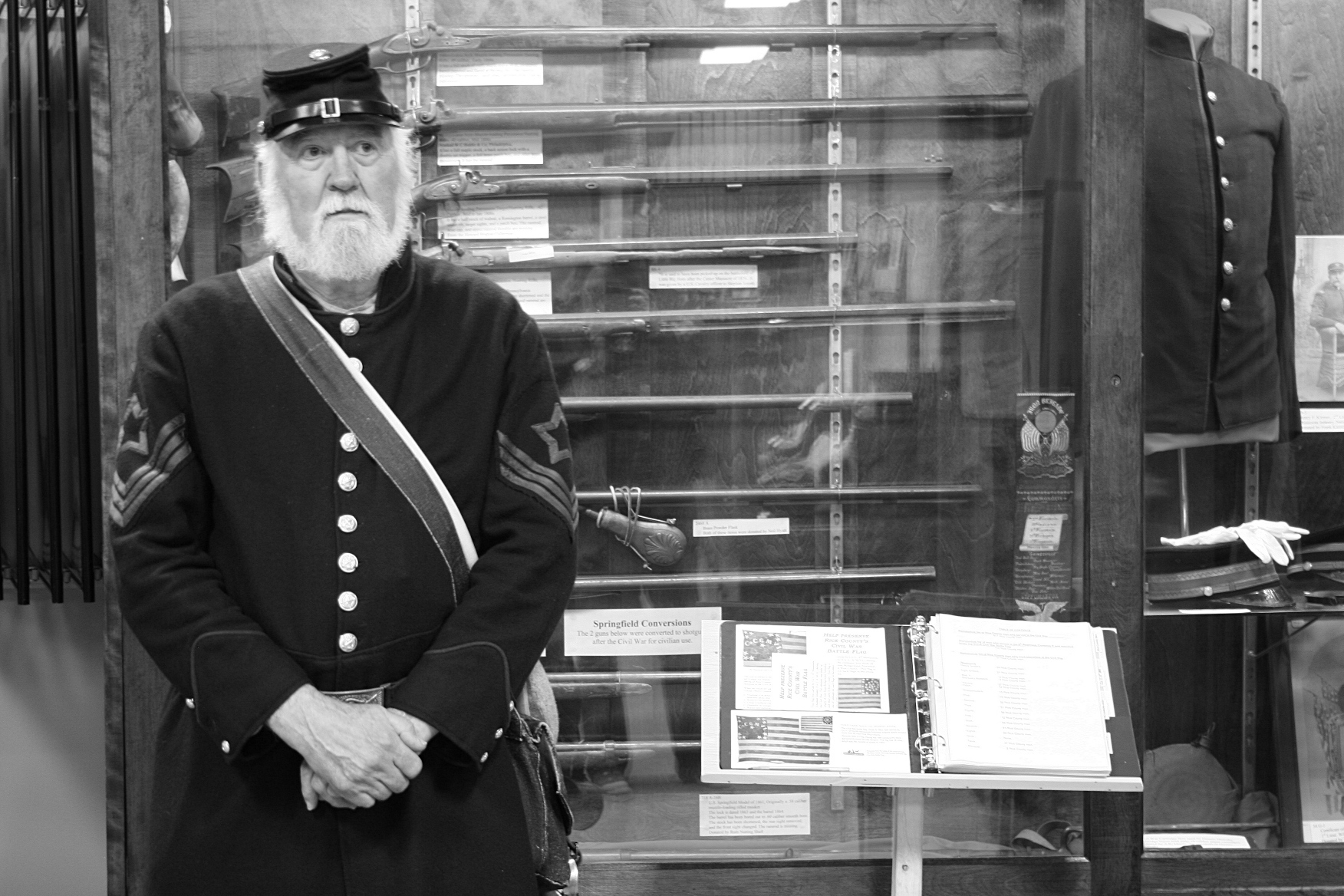
So I was excited Friday evening to attend the Rice County Historical Society’s first ever A Night at the Museum in which costumed men, women and children played the roles of historical figures. Like Evangeline Whipple, second wife of Bishop Henry Whipple, and Ordinance Sargent Jones, stationed at Ft. Ridgely during the U.S. – Dakota Conflict of 1862:

Role-playing Evangeline Whipple.

Role-playing Evangeline Whipple.

Playing the role of Ordinance Sgt. Jones.

Playing the role of Ordinance Sgt. Jones.

The buckled cloth covering worn by French Mary keeps mud from boots.

The buckled cloth covering worn by French Mary keeps mud from boots.

I spoke with “French Mary” Tepe about her role as a vivandiere with Pennsylvania volunteers in the Civil War. Vivandieres carried a canteen of spirits and more and attended to the sick and wounded. I’d never heard of vivandieres prior to meeting French Mary.

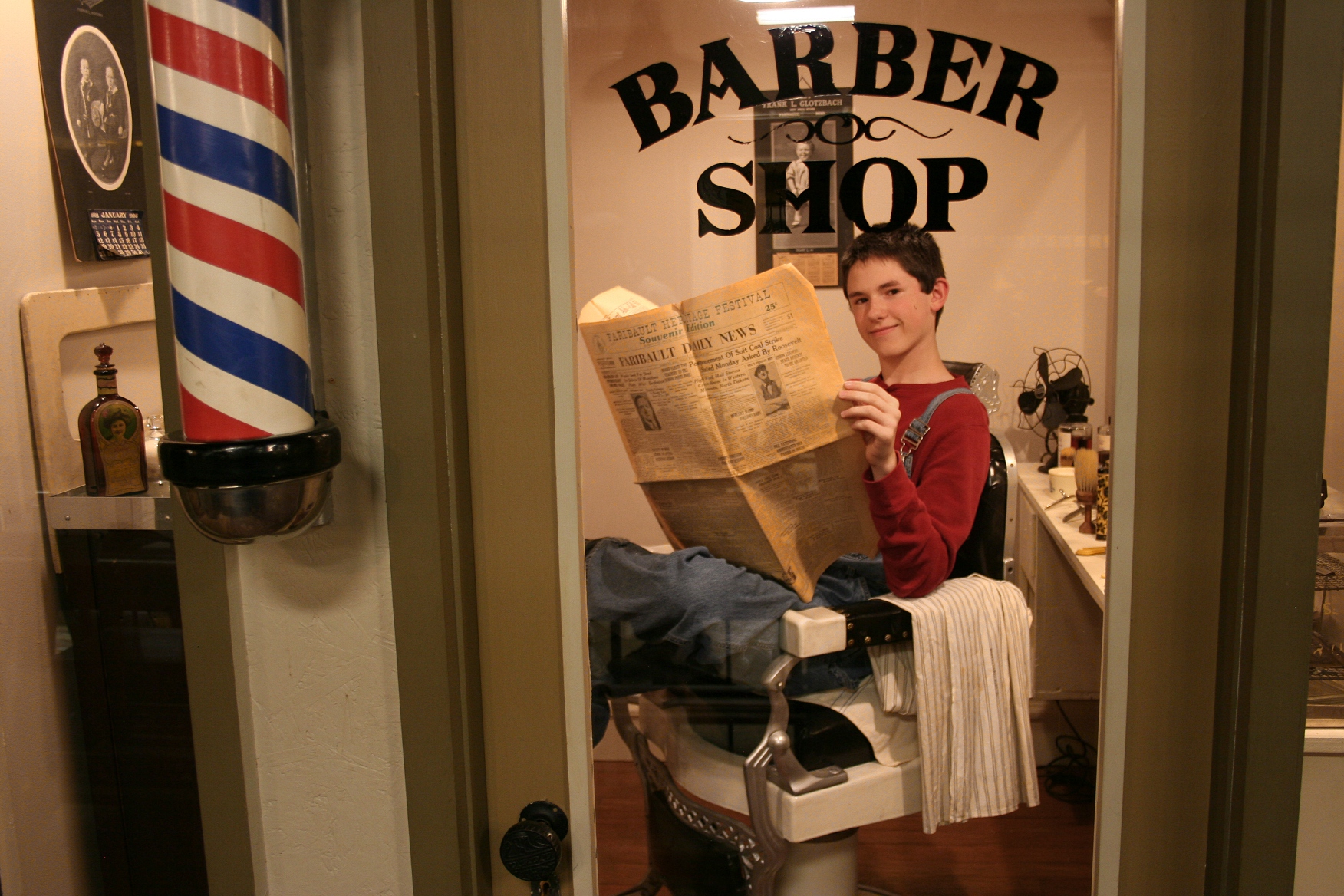
Noah, who volunteers at the library through its youth program, sat in the museum's barbershop chair during A Night at the Museum. in the museum barbershop.

Noah, who volunteers at the library through its youth program, sat in the museum’s barbershop chair.

Noah read a souvenir edition of the Faribault Daily News in an old-time barbershop while Leroy bathed in a second story room above.

Flash cards in the one-room school.

Flash cards in the one-room school.

Mrs. Sweet taught arithmetic in the late 1850s one-room Pleasant Valley School where Noah’s sister, Hannah, along with others, assumed the roles of students.

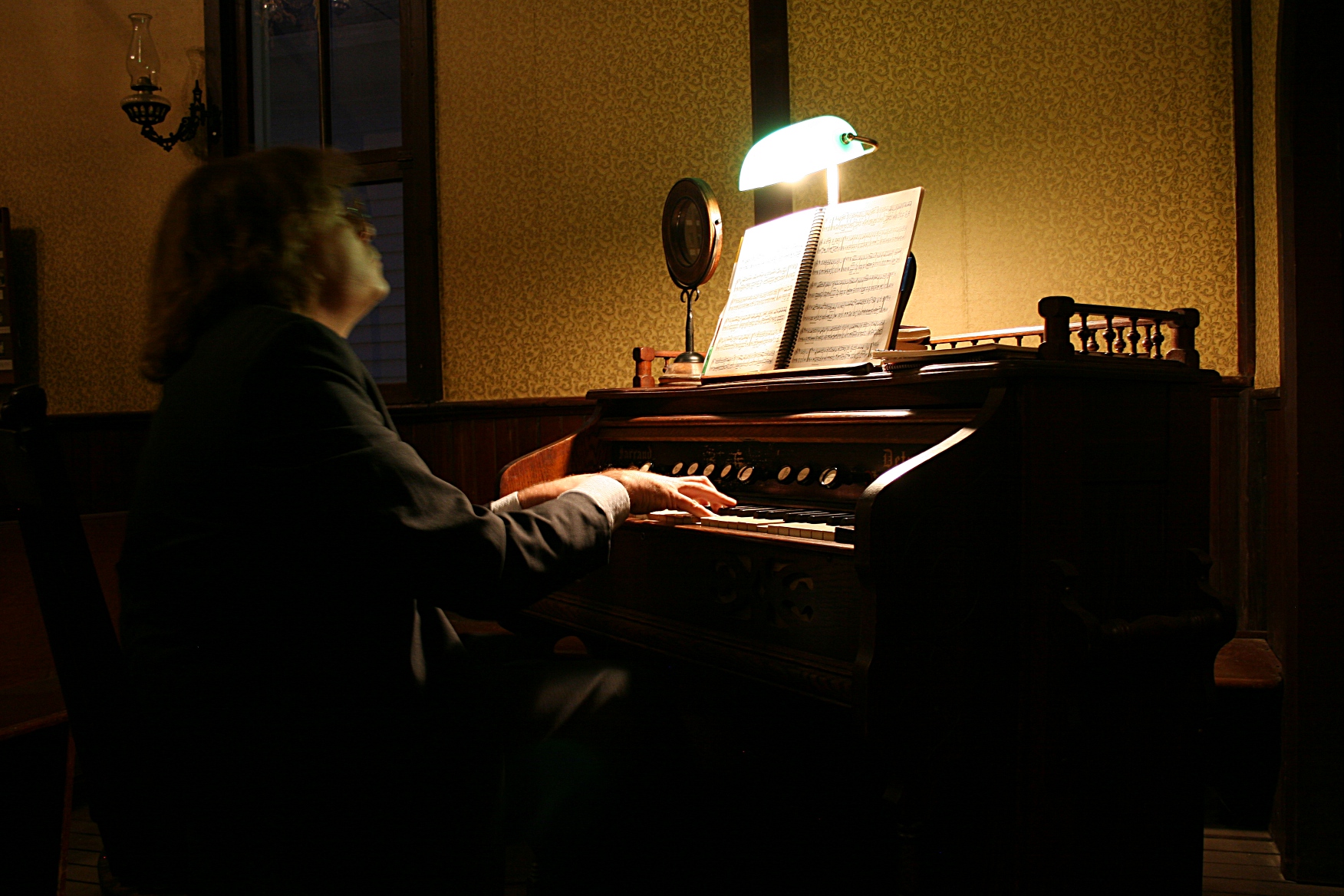
Playing the old pump organ.

Playing the old pump organ.

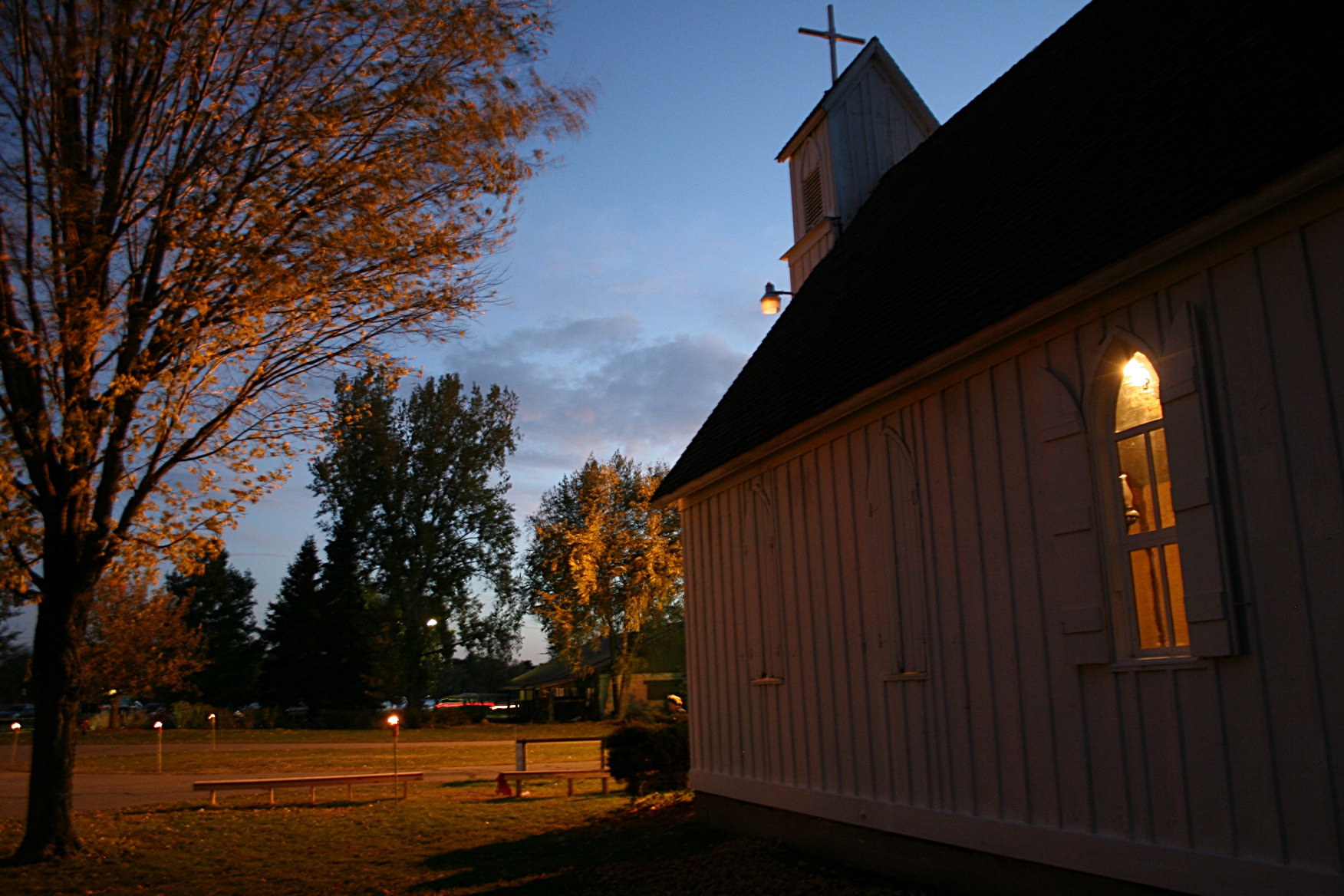
Holy Innocents, from the side.

Holy Innocents.

I listened to music played on the pump organ in Holy Innocents Episcopal Church built in 1869 in Cannon City and consecrated by Bishop Whipple.

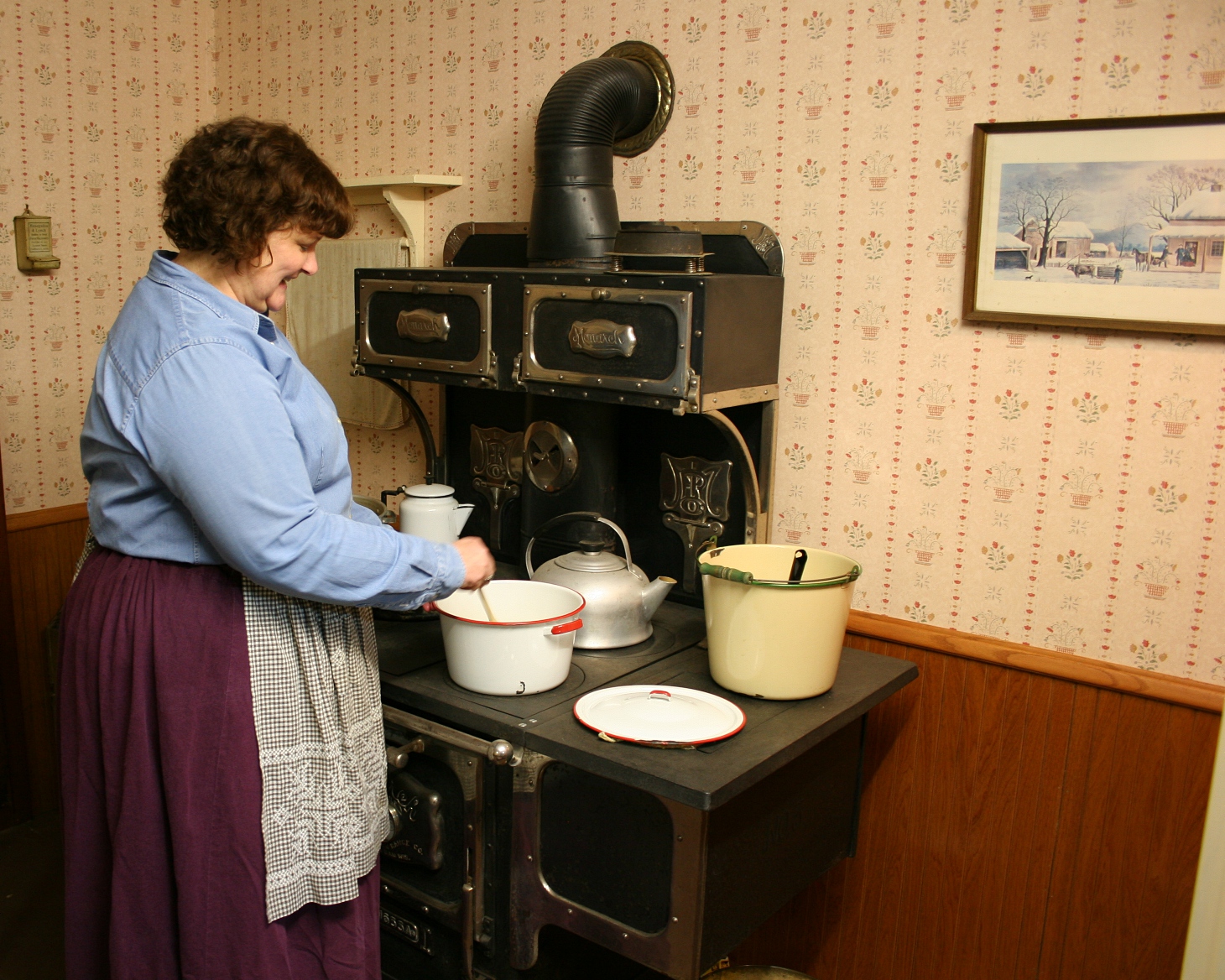
Mrs. Morris supposedly cooking applesauce.

Mrs. Morris “cooking” applesauce.

Next door I spoke with Mrs. Morris who was “cooking” applesauce in her 1920s kitchen. Except she wasn’t really using the old cookstove. The inviting scent of apples wafted, instead, from apple slices heating in a kettle on a mostly out of sight hotplate. Ingenious.

This multiple engaging of the senses added to the experience. In the old log cabin, built in the mid 1800s by a Scandinavian immigrant in the Nerstrand Big Woods, I savored the yeasty aroma of bread baking—not in the old stove—but rather in a bread machine hidden away. Ingenious.

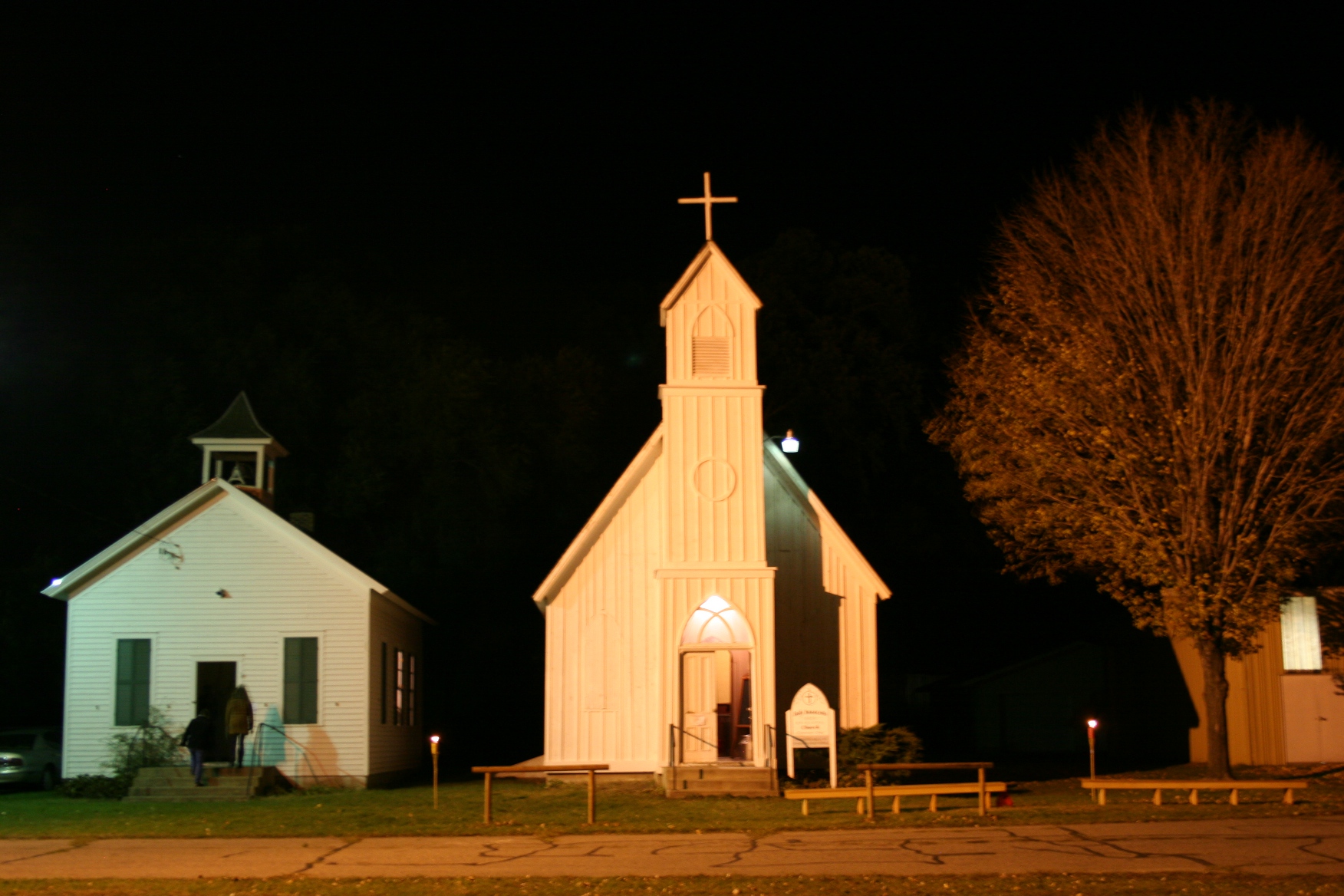
The setting for A Night at the Museum.

The setting for A Night at the Museum.

Outside, several tiki torches flickered, many snuffed out by the strong early evening breeze. Nearby, visitors gathered around a small campfire to sip apple cider, eat hot dogs and/or munch on cookies.

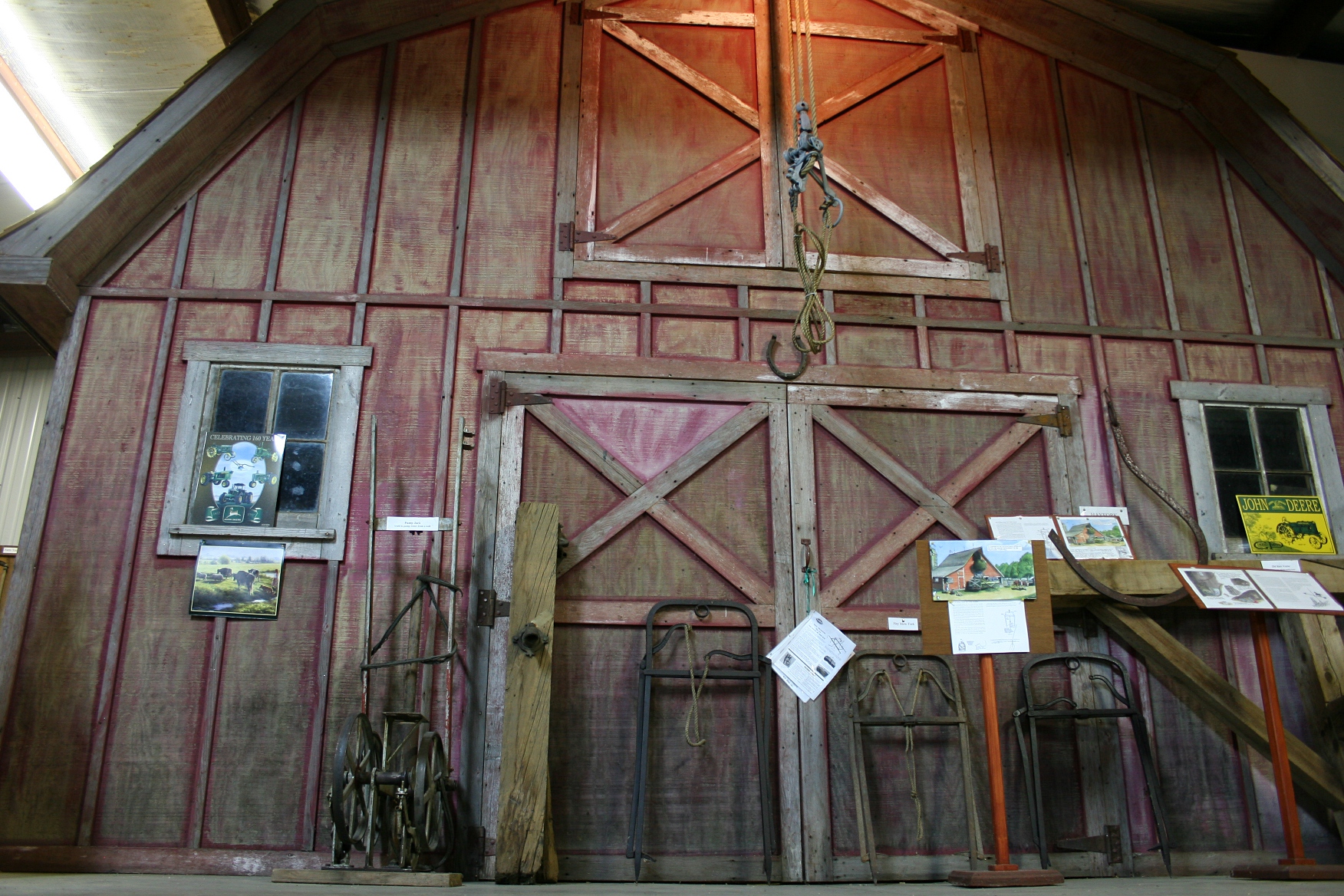
A barn front forms a backdrop in Harvest Hall, where visitors can learn about the area's agricultural heritage.

A barn front forms a backdrop in Harvest Hall, where visitors can learn about the area’s agricultural heritage.

Horses hooves clopped on the pavement as visitors were treated to a wagon ride around the adjoining county fairgrounds.

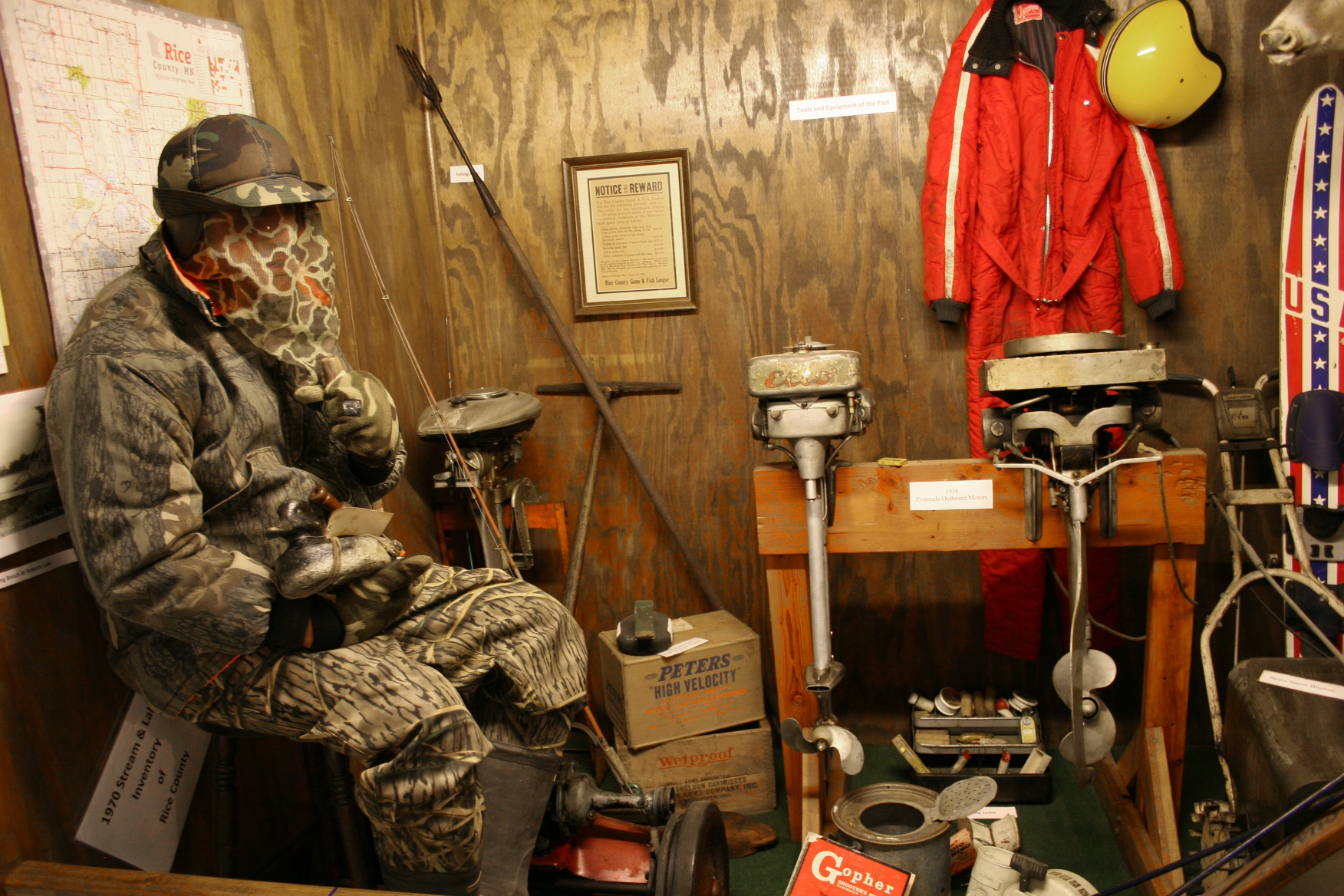
Brian Schmidt dressed as a hunter, not to be confused with a mannequin.

Not a scene from Duck Dynasty.

But the most memorable event of the evening for me, and likely Brian Schmidt who serves on the historical society board, occurred inside Heritage Hall. I stopped briefly at a display on outdoor recreational activities in the county and noticed what I assumed to be a camouflaged duck hunter mannequin in a corner. Except he wasn’t. As I walked away, a duck call sounded. Startled, I turned back, peered more closely at the masked face and realized I’d been fooled. By Brian.

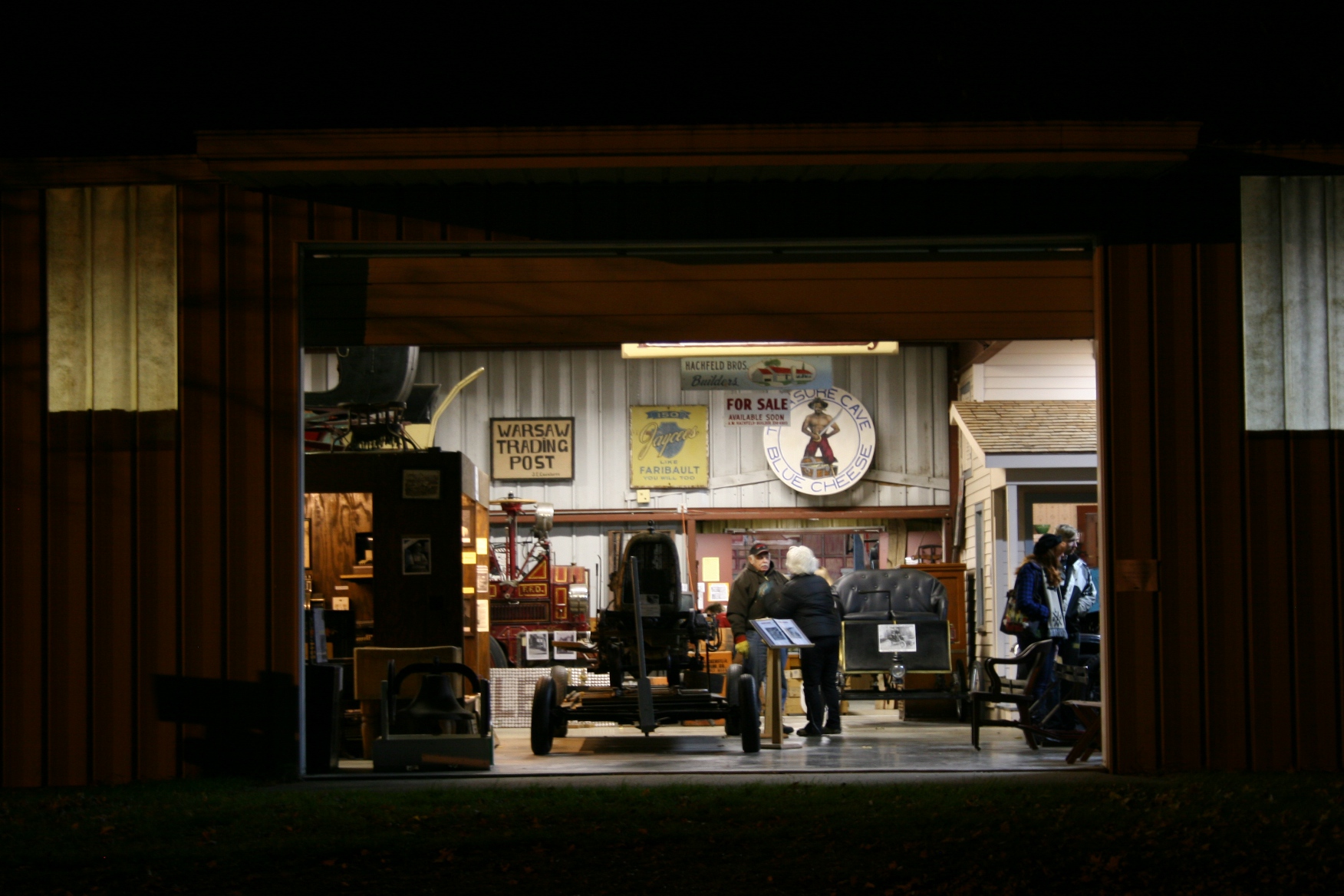
A peek at Heritage Hall.

A peek at Heritage Hall.

Excellent. This Night at the Museum was not billed as a Halloween event. But in that moment, for me, it was.

© Copyright 2013 Audrey Kletscher Helbling


Crafts galore & a bonus scarecrow contest October 26, 2013

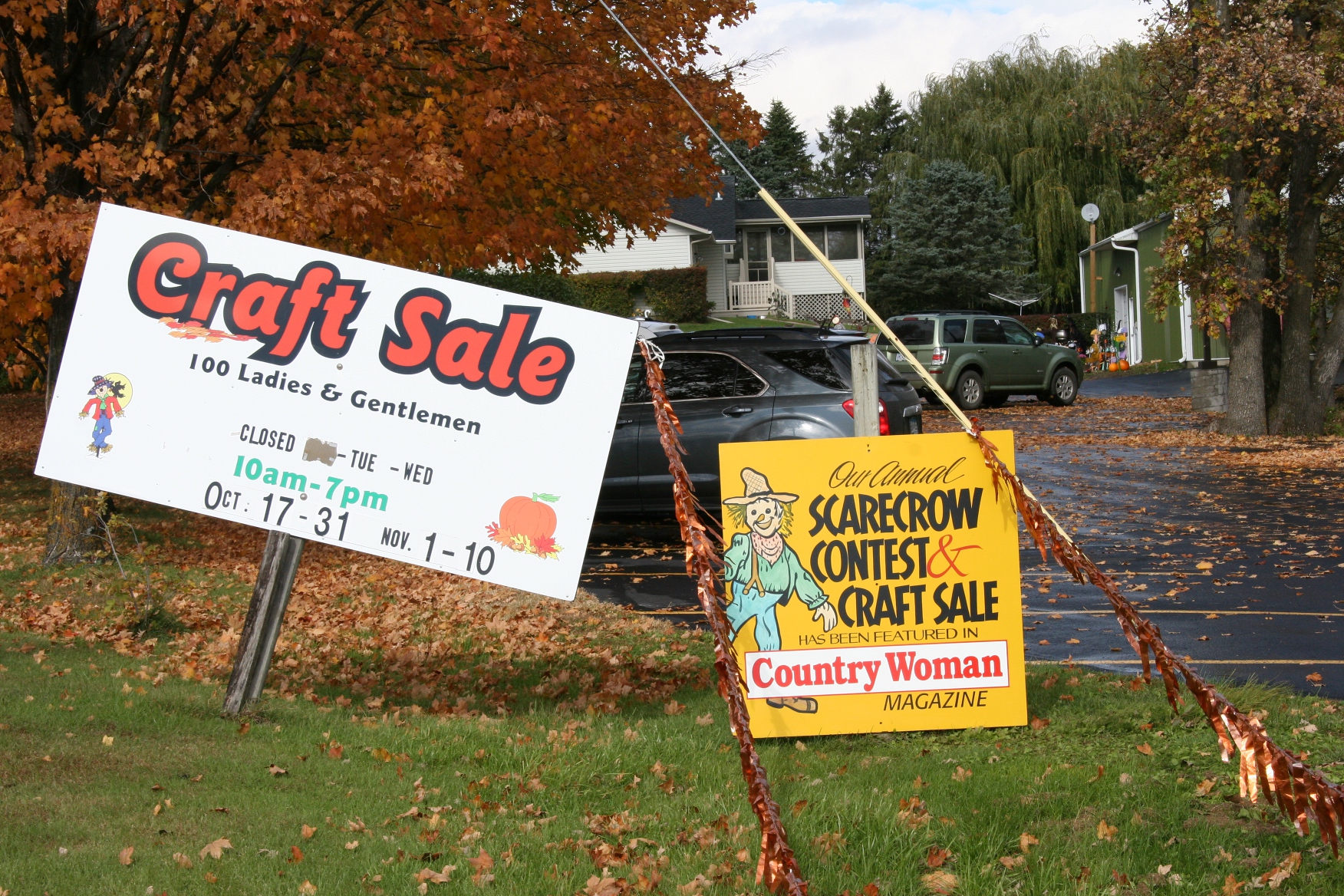
The sign marking the entry to 100 Ladies and Gentlemen Craft Sale near the intersection of Minnesota Highways 56 and 60 just outside of Kenyon.

Signs mark the entry to 100 Ladies & Gentlemen Craft Sale near the intersection of Minnesota Highways 56 and 60 just outside of Kenyon.

I WISH, OH, HOW I WISH I could show you all the crafty goodness that encompasses the 100 Ladies & Gentlemen Craft Sale just outside of Kenyon.

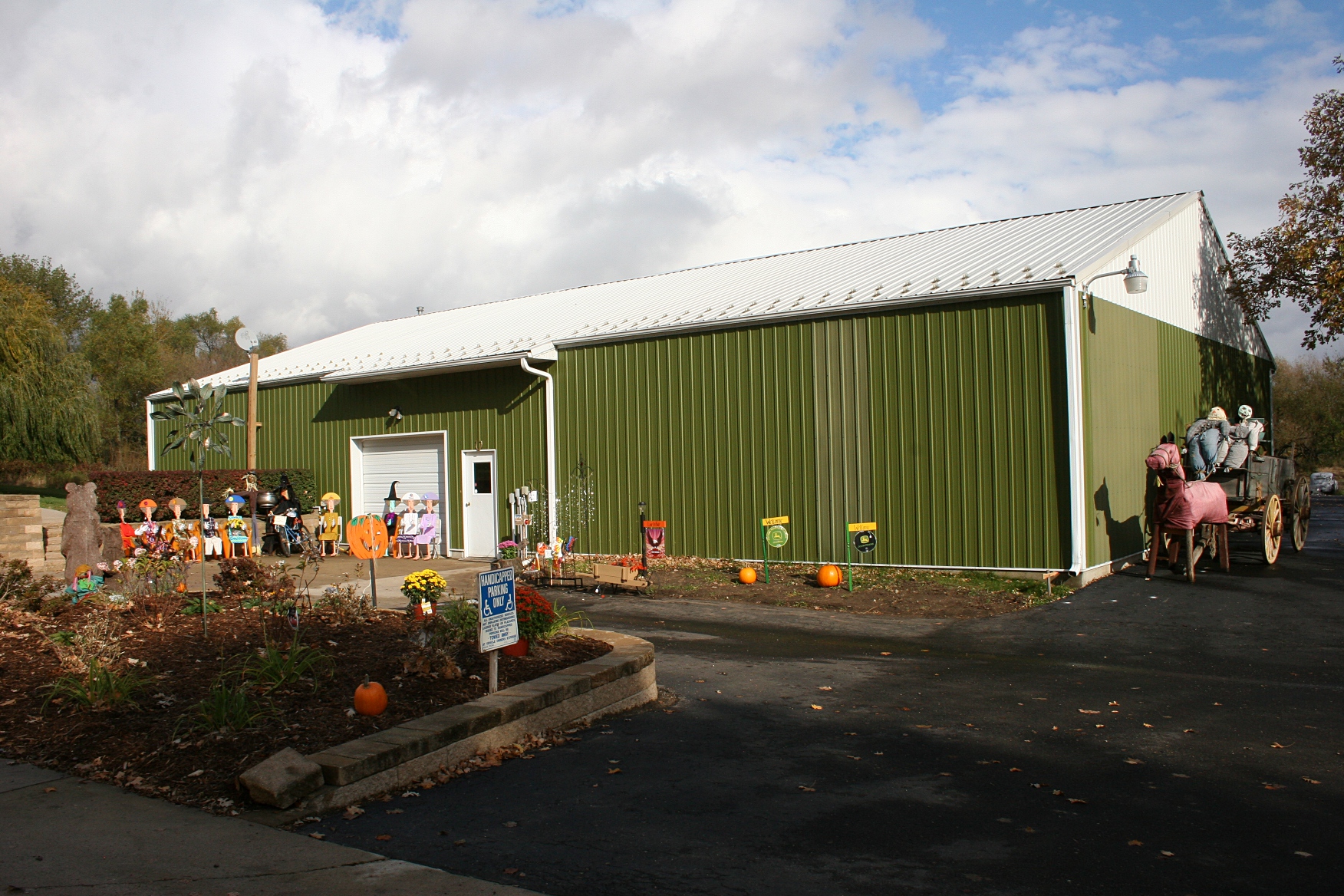
This building and a wing in the back house the craft sale.

This building houses the craft sale.

But no photos were allowed of the merchandise stuffed inside this pole shed. So you will need to imagine the stitched, hammered, painted, baked, preserved, knitted and other handcrafted items sold here.

Need an apron? Homemade caramels? A Minnesota-authored book? Some crazy saying to decorate a wall? Handcrafted furniture? Seasonal decorations? A photograph of a barn? The list is endless.

The property features a paved parking lot for shoppers.

The property features a paved parking lot for shoppers.

For 40 years, Marlene and Curt Morrow have hosted this craft sale on their property at 45986 Minnesota State Highway 56, just north of State Highway 60.

The show was abuzz with shoppers when my husband and I stopped on a Saturday afternoon, so busy that wiggling through the narrow aisles proved challenging.

I thought Randy would be bored, but he lingered longer than me, reading humorous sayings at a booth of quirky signage.

It wasn’t until I spotted upcycled freestanding cabinets in the back section of the building that I found merchandise which truly interested me. At that point I called Randy over for his opinion on a cabinet to fill a hole in our dining room wall. We removed a chimney several years ago, but I seldom notice anymore the cardboard sheets that hide the space. Until we have guests. Yes, we really need to do something about that. But then I need new flooring and kitchen counters and cupboards and a sink, well, the list is endless. I would love to win a kitchen make-over.

Oh, yes, back to that craft show. I pulled a tape measure and notebook from my purse and Randy measured while I jotted numbers, hopeful that maybe one of the three cabinets we both liked would fit the space. It was not to be, we learned later upon returning home and measuring the void.

Despite purchasing nothing at the sale—because I really do not need more “stuff”—I still enjoyed the drive over to Kenyon and perusing the handcrafted merchandise. I always appreciate the talents of local artisans.

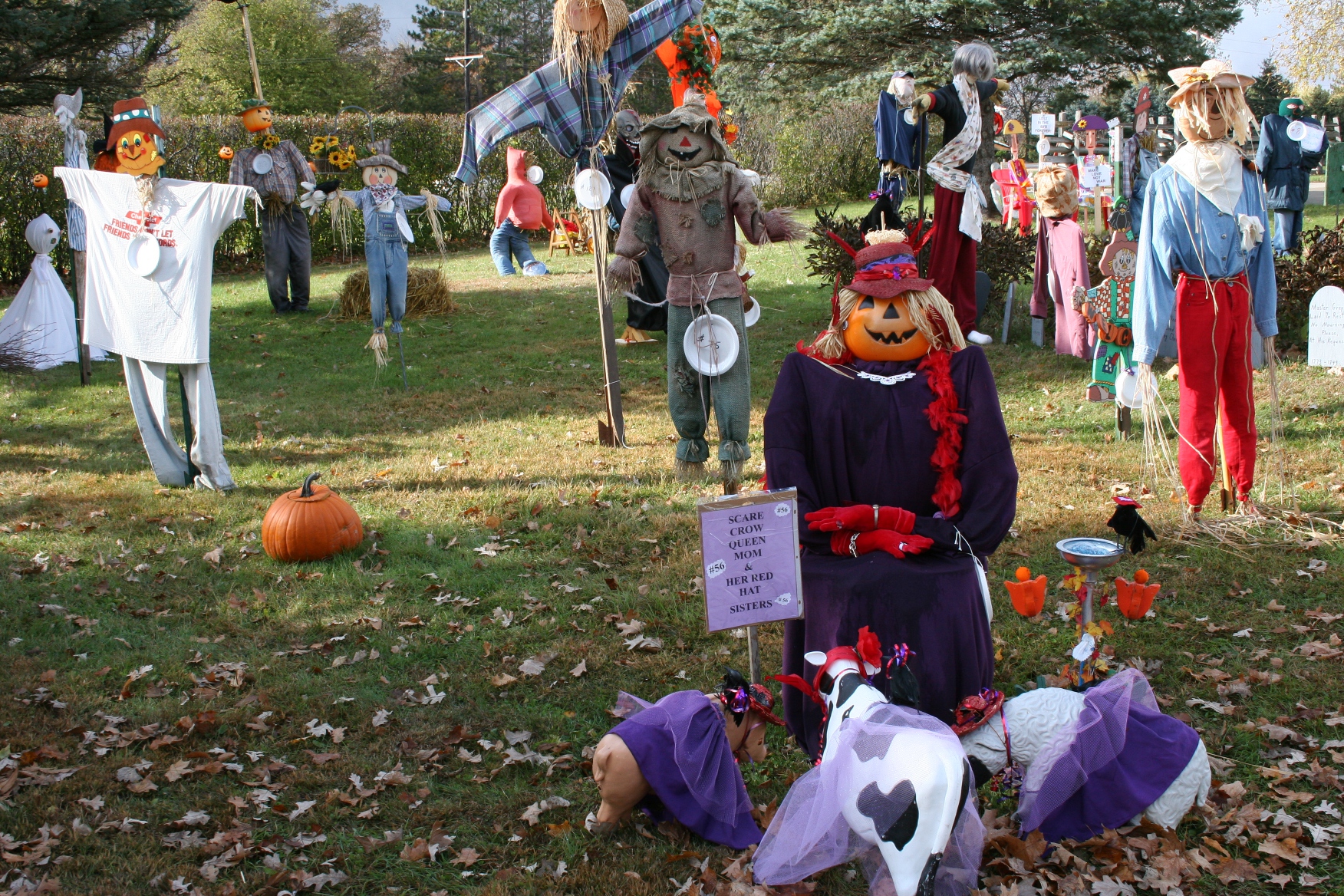
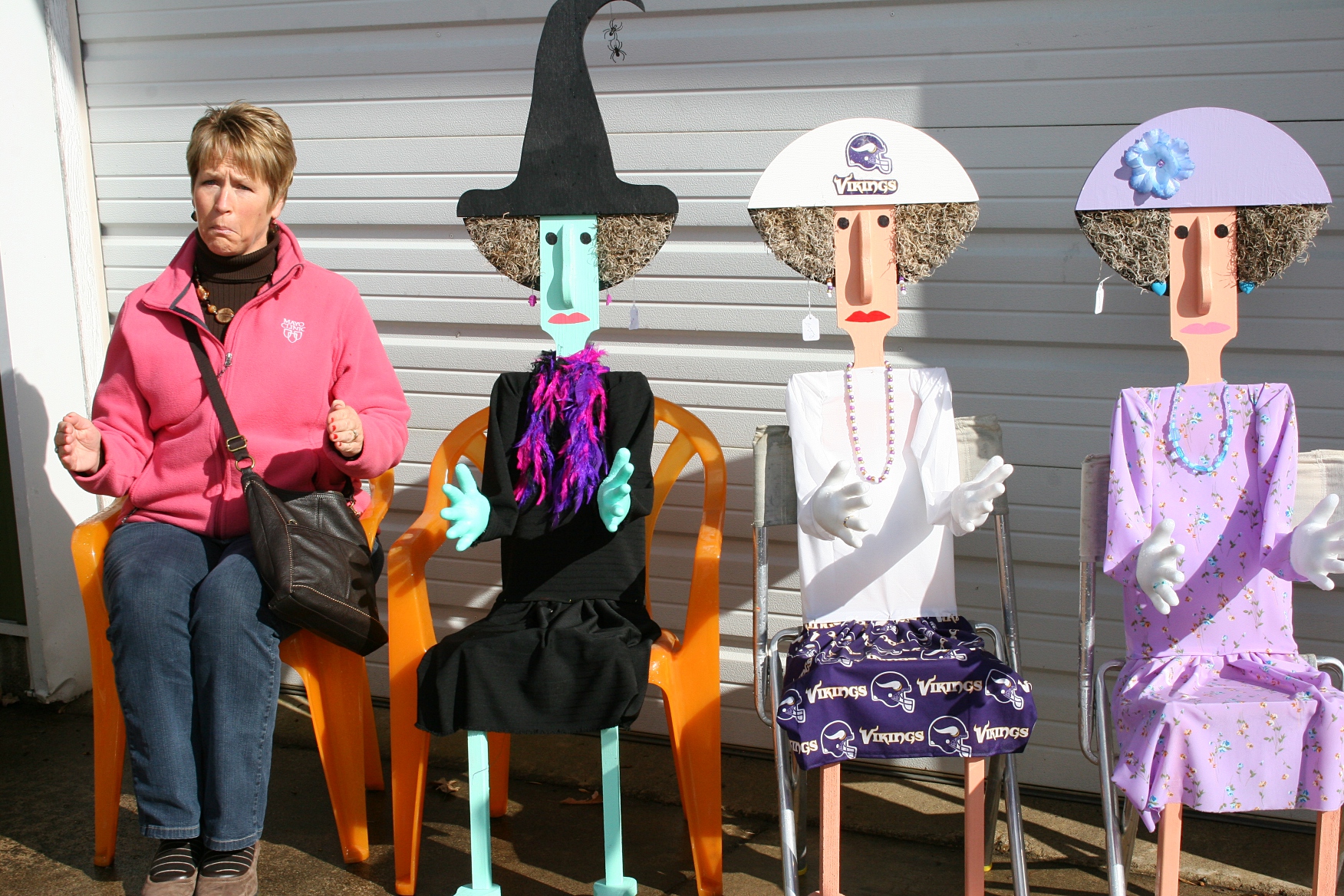
And the scarecrow display, which I was allowed to photograph, provided for some fun photo ops. At least I didn’t bring my camera with me for naught:

Visitors can vote for their favorite in the scarecrow festival with cash prizes awarded to the top three.

Visitors can vote for their favorite in the scarecrow festival with cash prizes awarded to the top three.

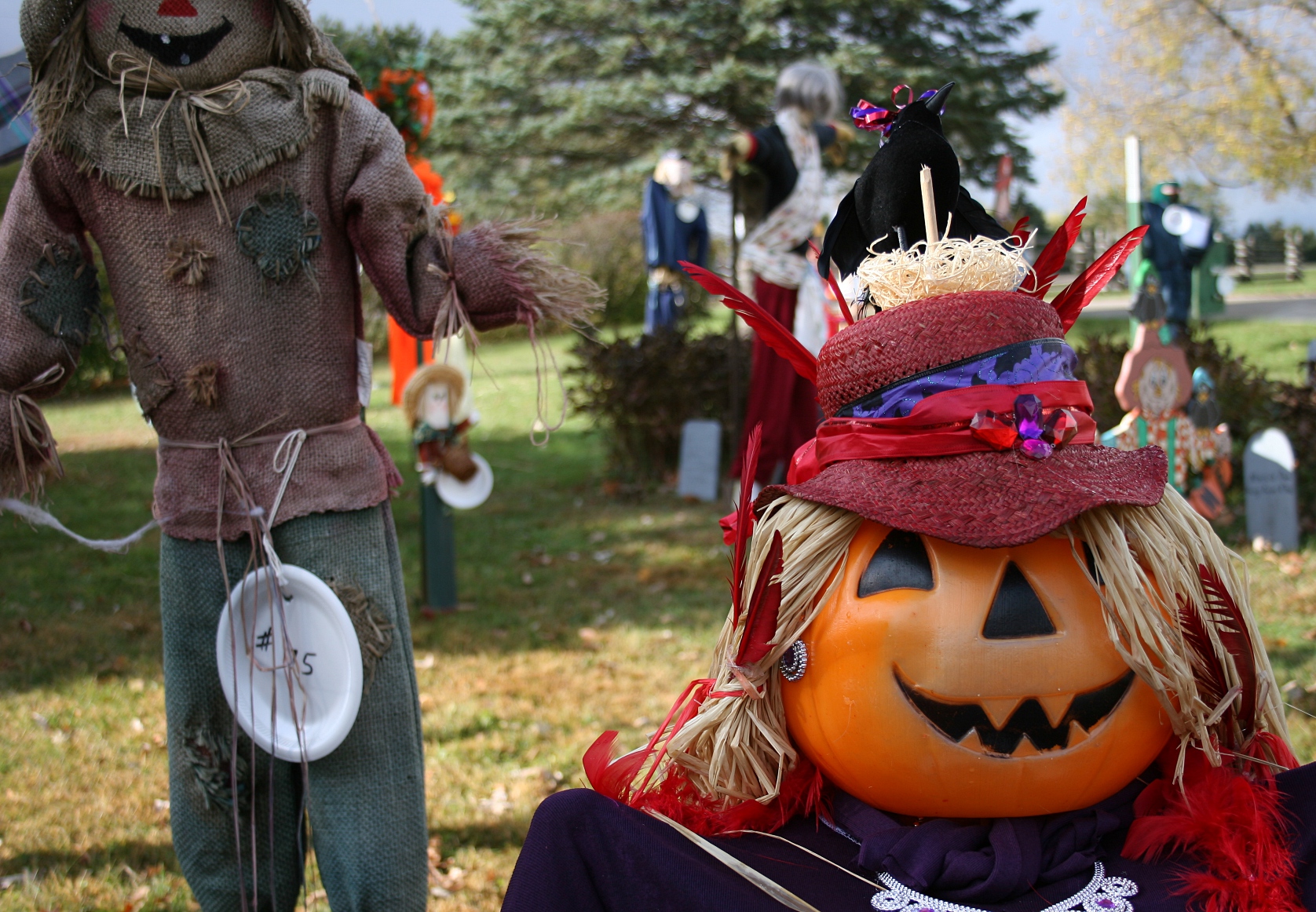
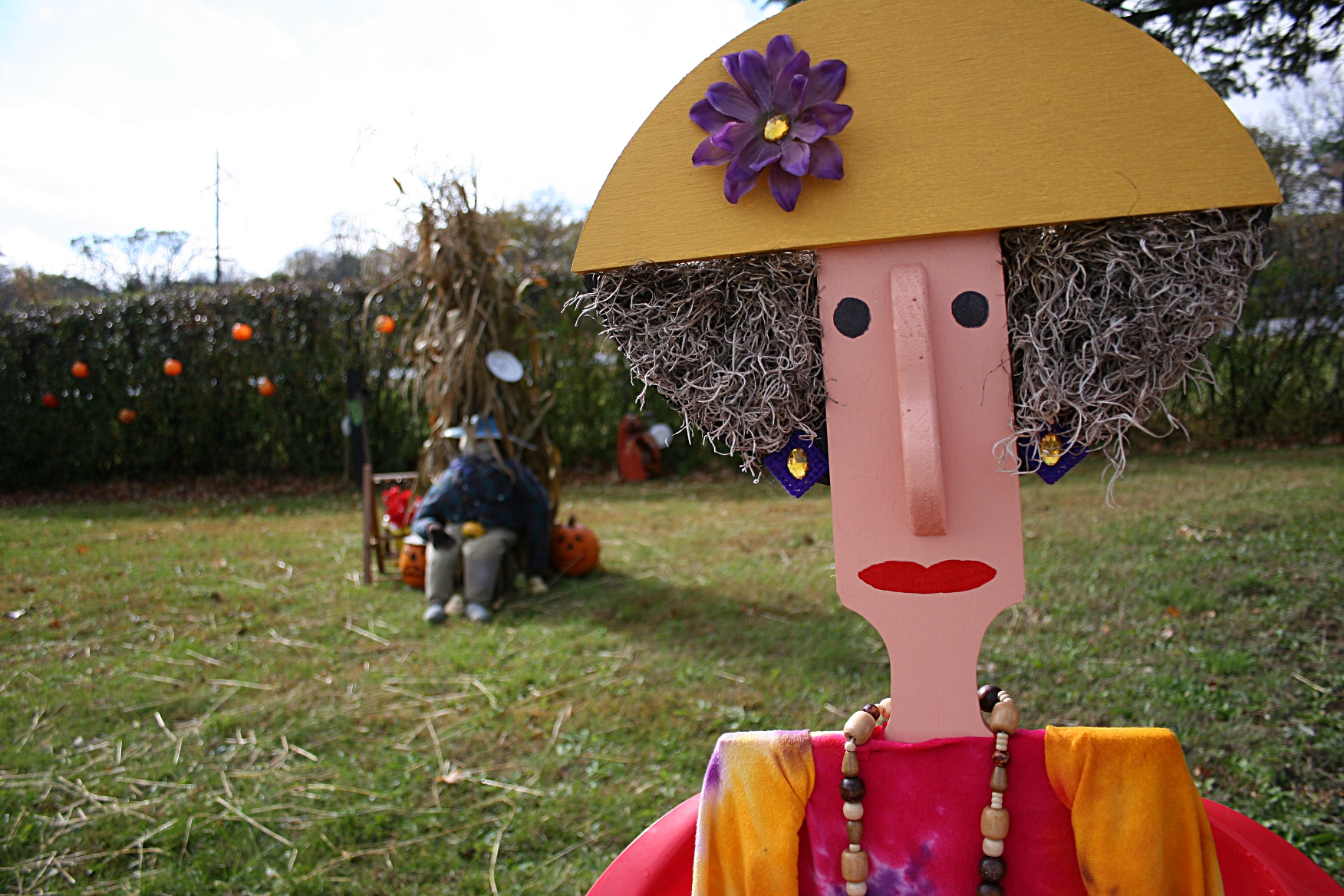
Here's a close-up of the Queen Mom, the scarecrow in the foreground in the photo above.

Here’s a close-up of the Queen Mom, the scarecrow in the foreground in the photo above. Her red hat sisters surround her.

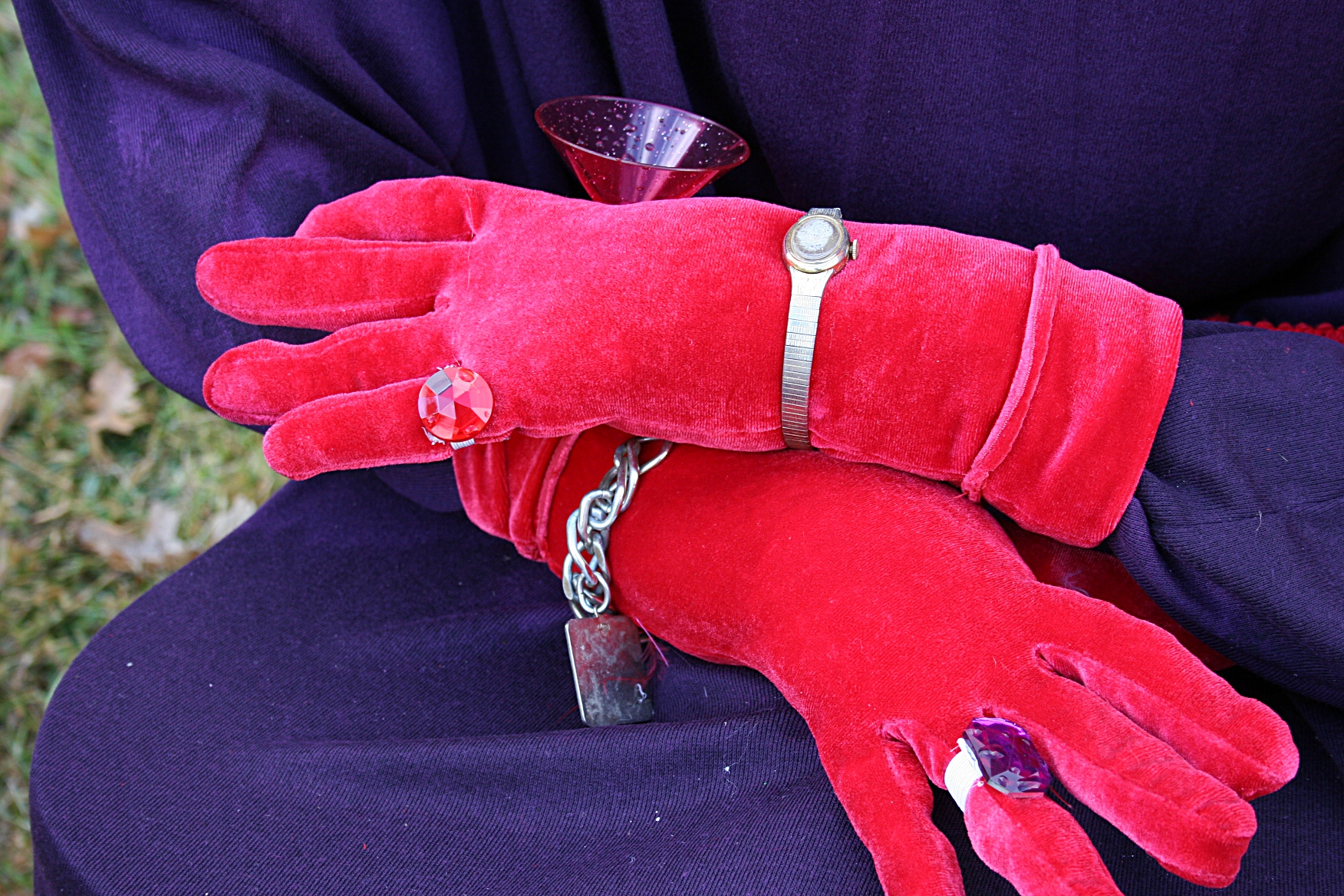
Look at the attention to detail by the creators of the Queen Mom.

Look at the attention to detail by the creators of the Queen Mom.

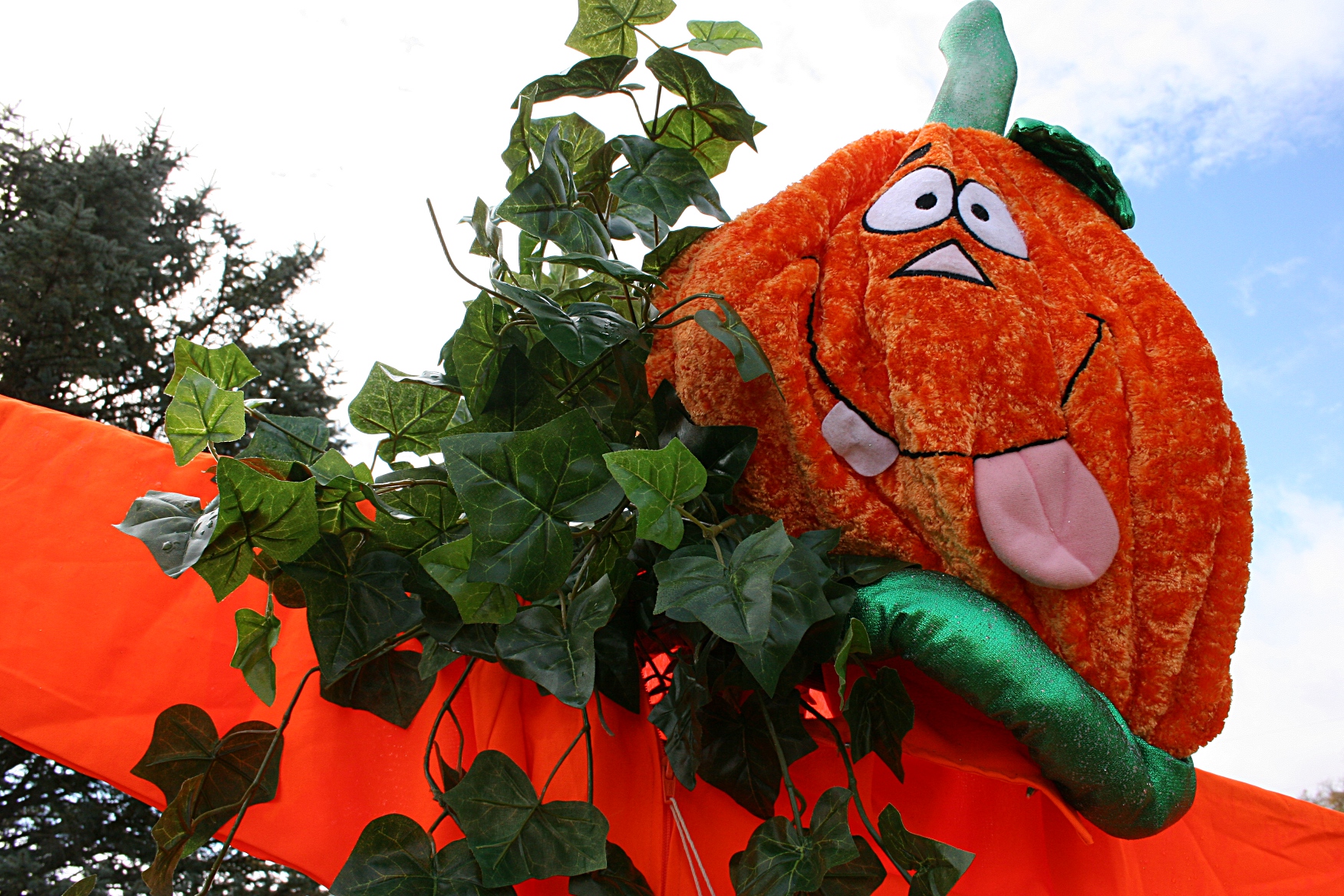
Some of the scarecrows can be a little frightening.

Some of the scarecrows can be a little frightening…

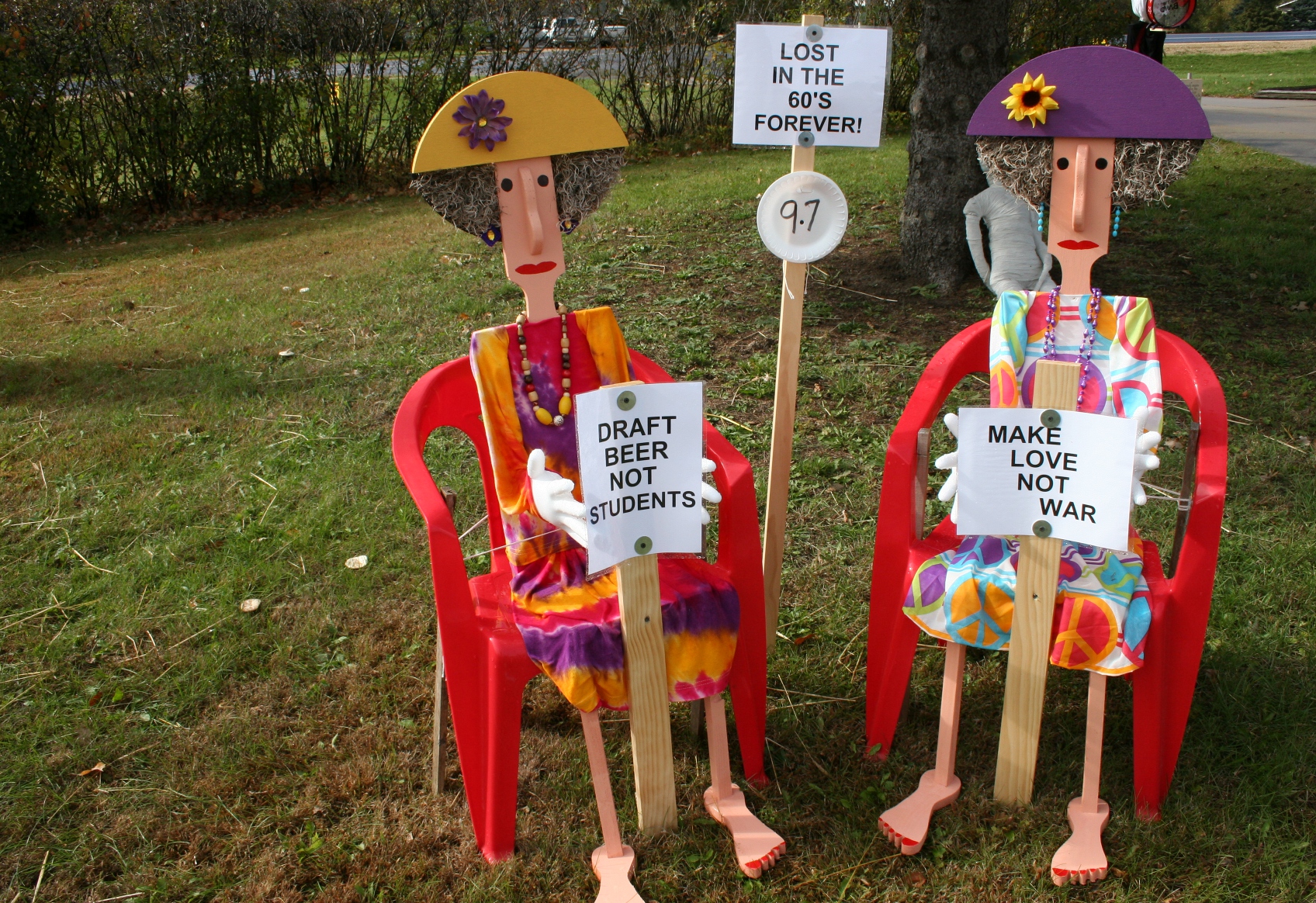
While others can be as fashionable as the Queen Mom, like this hip 60s scarecrow.

while others can be as fashionable as the Queen Mom, or this hip 60s scarecrow.

Scarecrows making a statement.

Scarecrows making a statement.

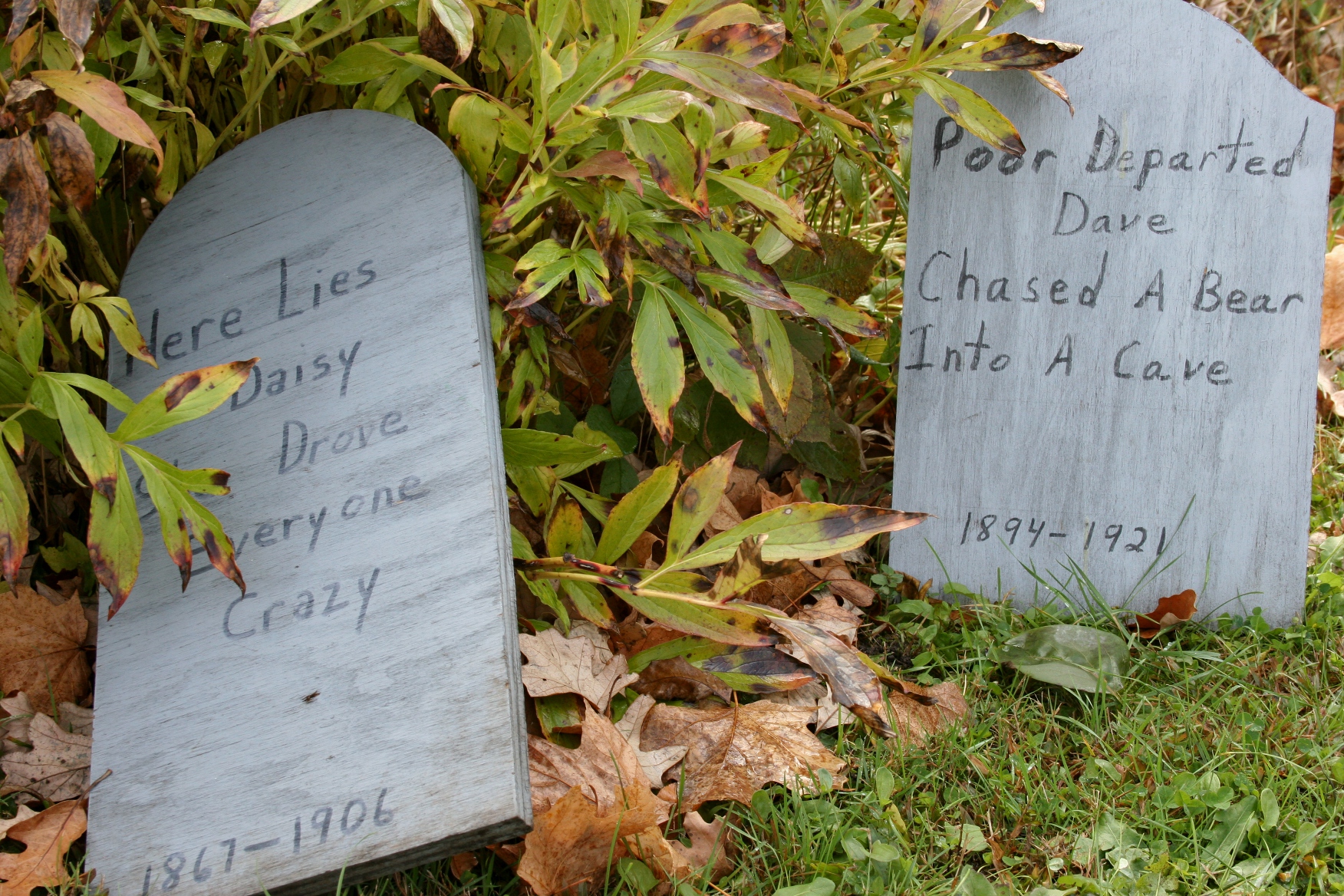
Among the humorous tombstones on display.

Among the humorous tombstones on display.

Another scarecrow.

Another scarecrow.

An empty chair provides a photo op for a shopper.

An empty chair provides a photo op for a shopper.

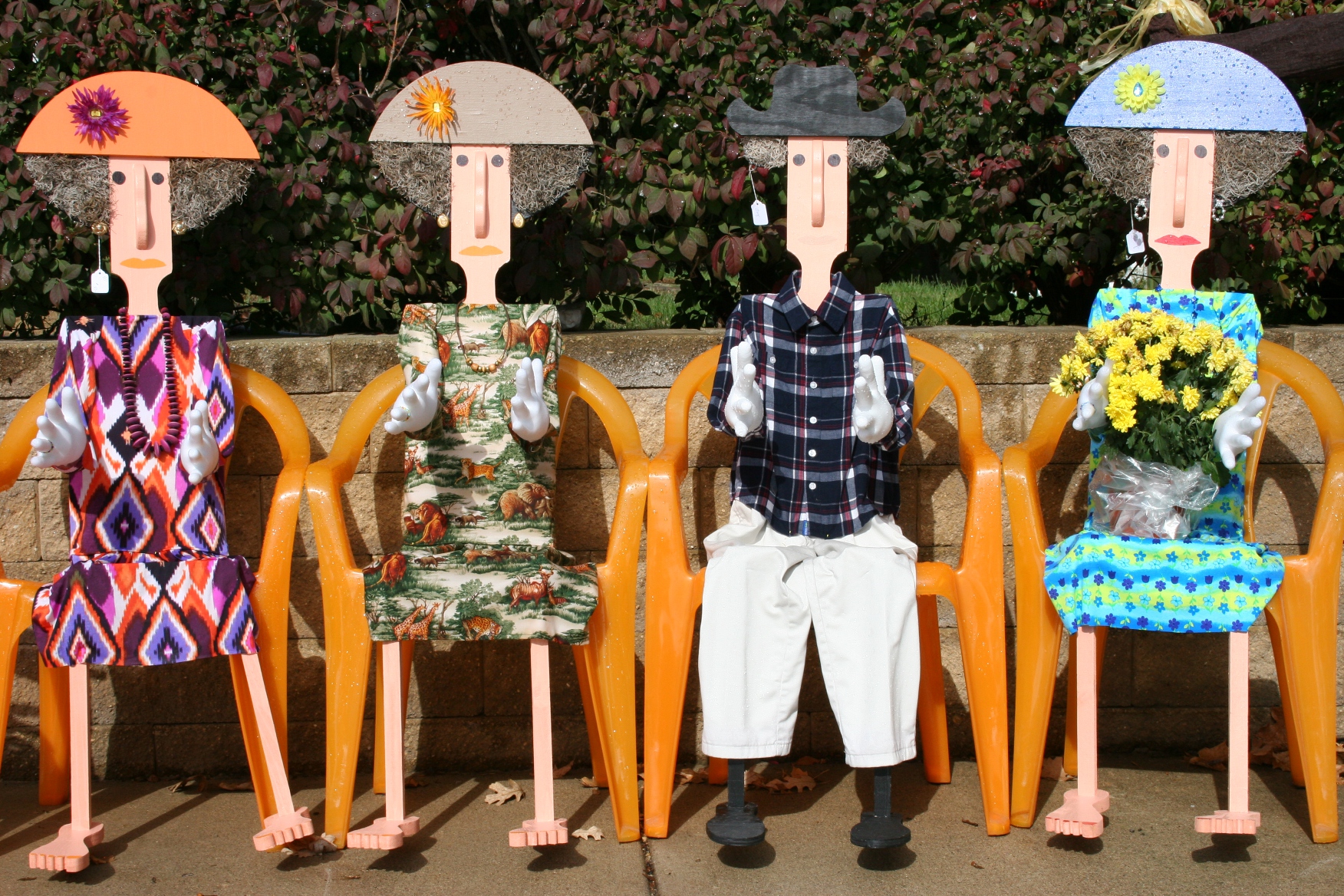
And these four hang out outside the craft sale. (Yes, they are for sale.)

And these four hang out outside the craft sale. (Yes, they are for sale.)

FYI: The craft sale is open from 10 a.m. – 7 p.m. daily, except Tuesdays and Wednesdays from now until November 10.

© Copyright 2013 Audrey Kletscher Helbling


On ARTour: A peek inside Kip O’Krongly’s studio & art October 25, 2013

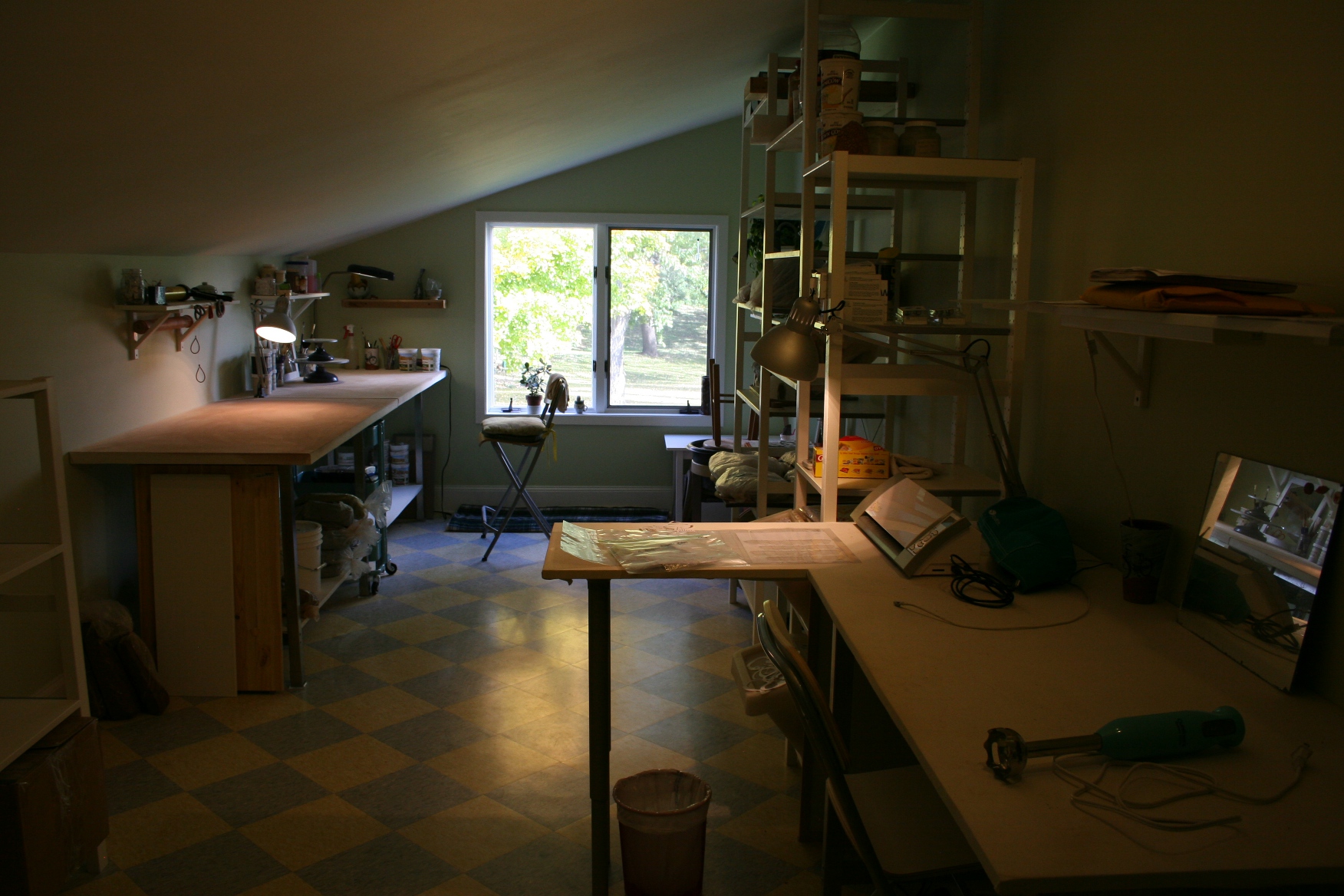
Cerarmic artist's Kip O'Krongly's second floor studio.

Ceramic artist Kip O’Krongly’s second floor studio.

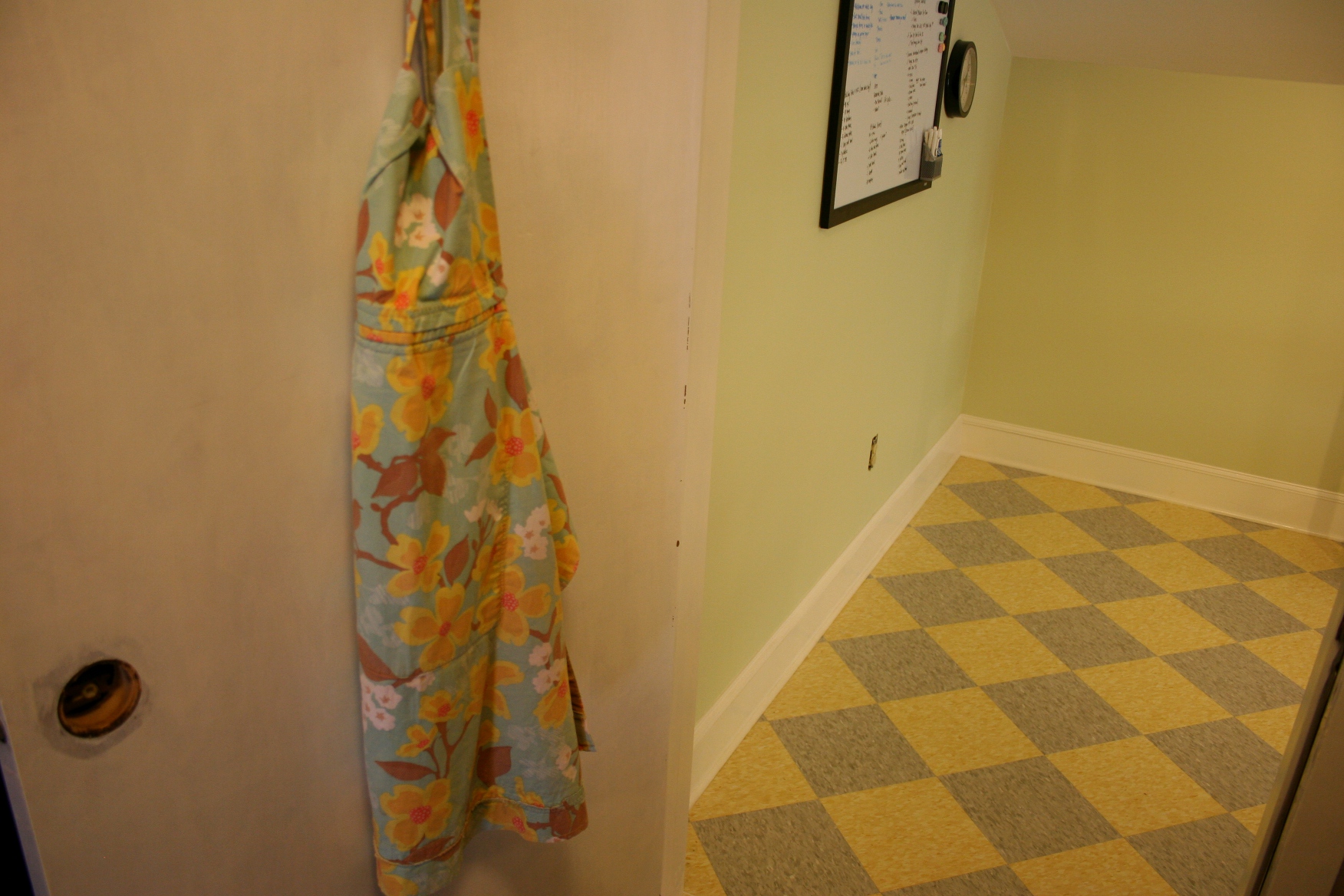
HER ART STUDIO POSSESSES an almost industrial, spartan look. Clean lines. Tidy. Labels. Schedules. Everything just so.

Supplies and tools, all in their place.

Supplies and tools, all in their place.

Kip O’Krongly freely admits to her need for orderliness in the second floor ceramics studio of her Northfield home.

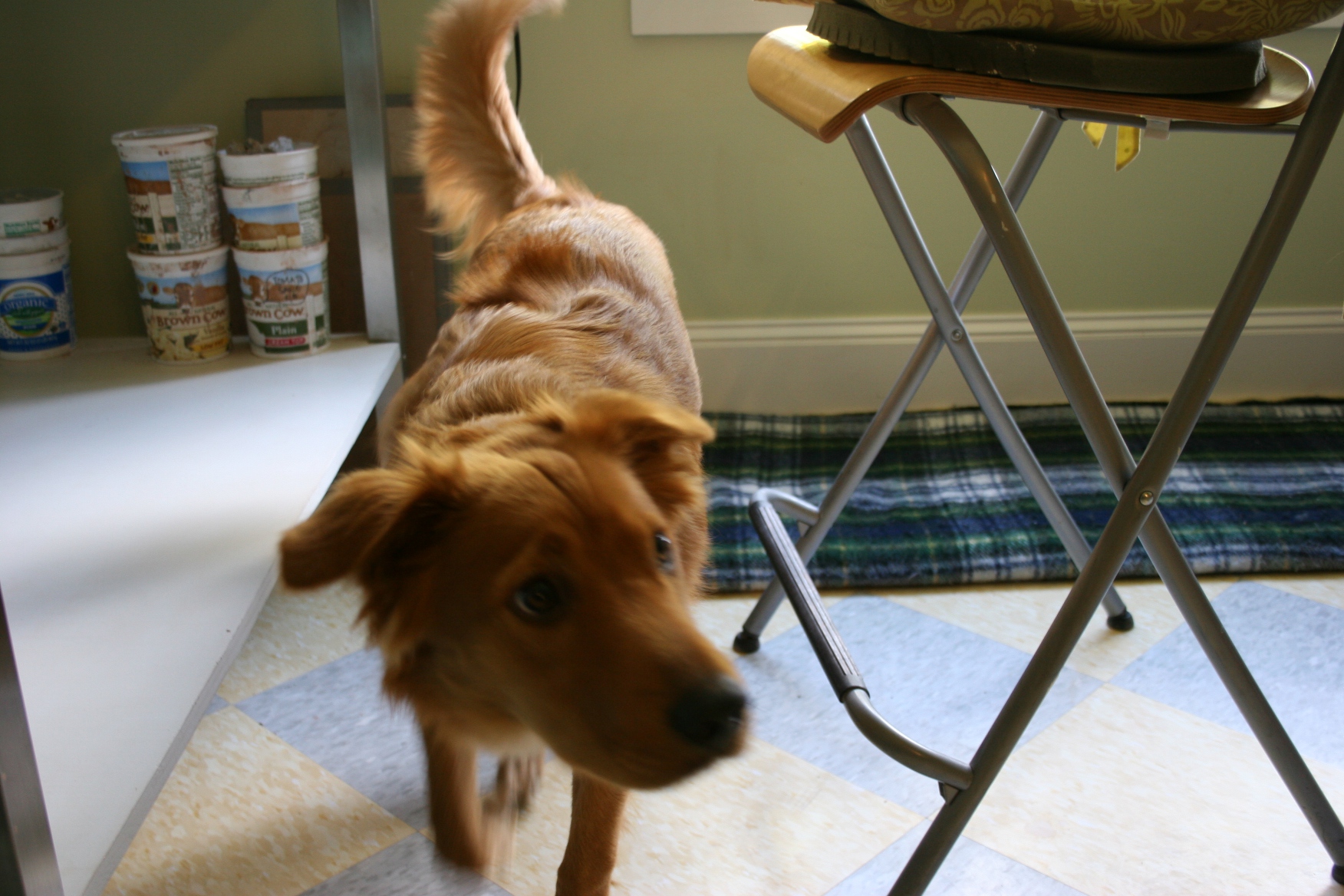
Gertie rises from her spot beneath the windows.

Gertie rises from her spot beneath the windows.

Here, in this slanted ceiling room with the tile floor she laid and with sunlight streaming in, Kip’s dog, Gertie, rests briefly on a blue and green plaid blanket below double windows. A short respite from visitors, like me, who have filtered into Kip’s studio and home during the South Central Minnesota Studio ARTour.

During this (last) weekend open house, I am visiting the studios of select artists I have not seen on past tours.

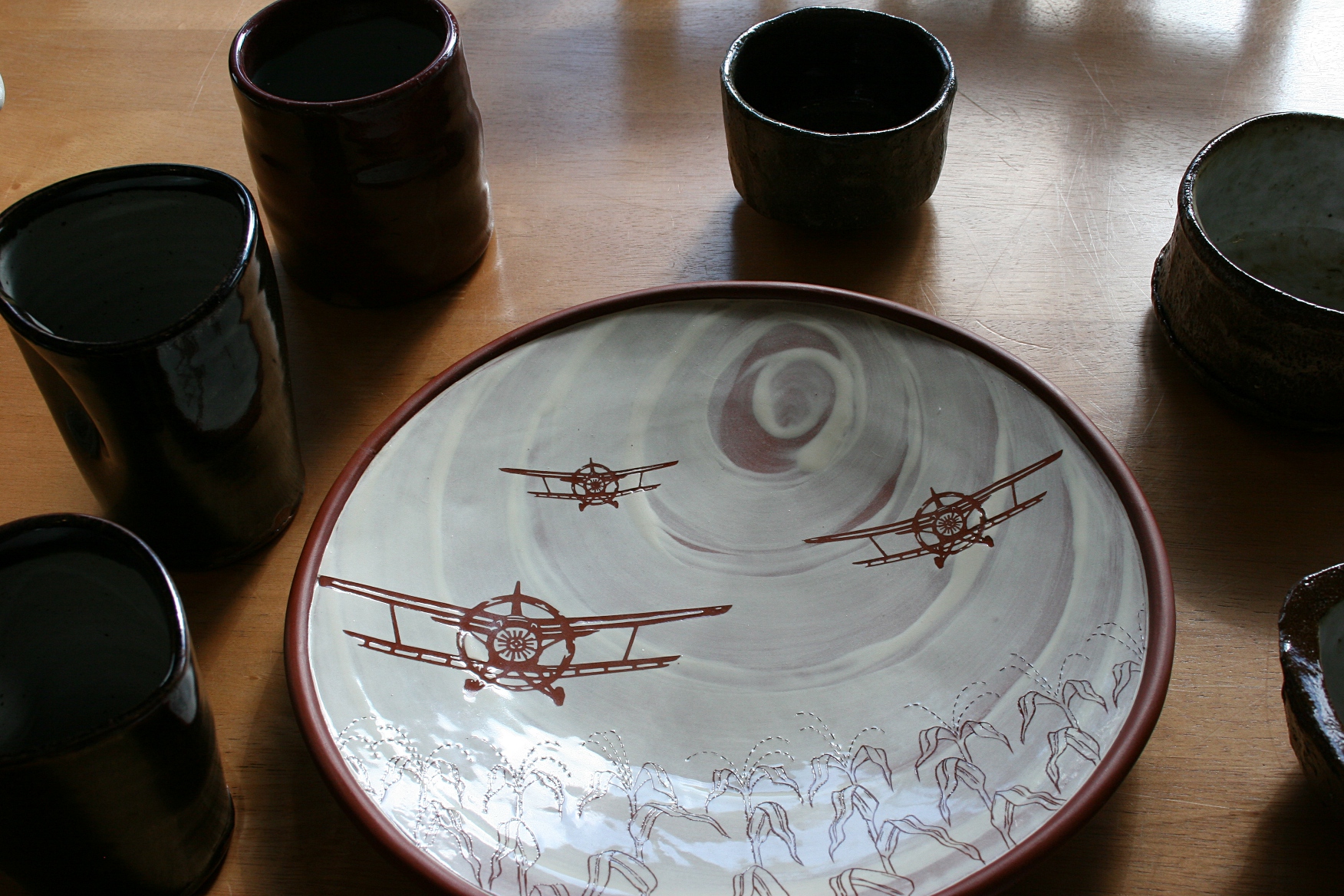
Cows also grace one of Kip's plates.

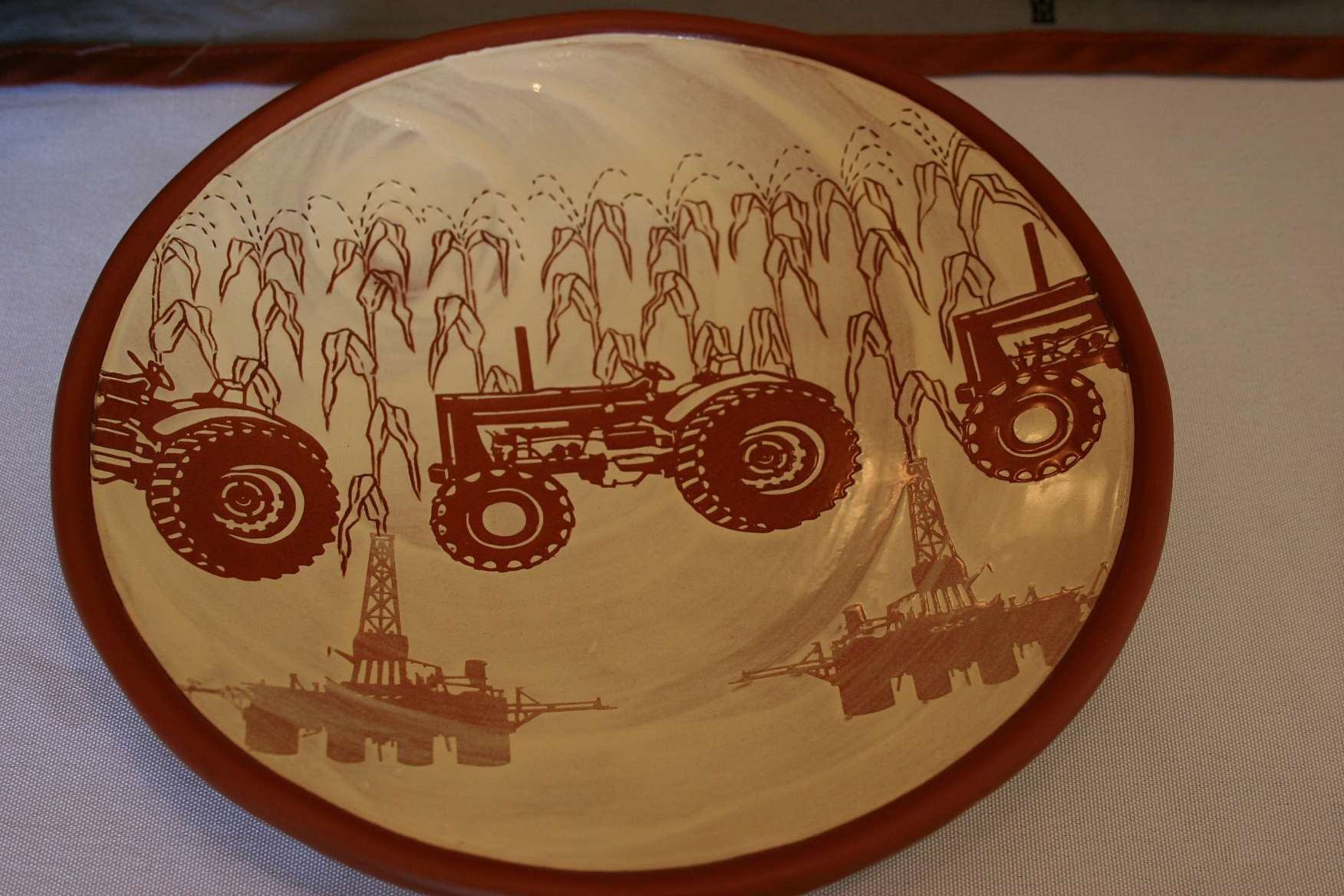
Art Kip creates on her ceramic plates sometimes makes statements about social issues, like the piece on the right.

I am drawn to Kip’s place by the tractors, wind turbines and corn I’ve seen showcased online on her ceramics.

Definitely a transportation themed piece going here.

Definitely a transportation themed piece going here.

She tells me that themes of food, transportation and energy run through her work. Once she points that out, I ask whether she was raised on a farm. No. Alaska.

We don’t get into details about the themes, but I mention that I grew up on the southwestern Minnesota prairie and am visually troubled by the wind turbines that populate the landscape, ruining, in my opinion, the aesthetics of the prairie.

More than tractors and corn...

More than tractors and corn… Corn grows from oil rigs.

Kip says she welcomes how her art opens up dialogue and the opportunity to hear differing opinions on social issues. And I sense her sincerity in stating that.

The door opens into Kip's studio.

The door opens into Kip’s studio.

I am intrigued, too, by her name. Kip O’Krongly. It possess a certain snap, a certain strength, a certain ruggedness. I never ask. But I don’t need to. Her work, talent and confidence as an artist define Kip O’Krongly.

FYI: The works of two other ceramics artists, Joel Froehle and Juliane Shibata, were also showcased in Kip’s home. However, they were not in-house when I visited.

Please click here and then here to read previous posts from the South Central Minnesota Studio ARTour. And check back for more posts in this five-part series.

© Copyright 2013 Audrey Kletscher Helbling


Rural signage: Steer me to Pumpkinland October 24, 2013

Filed under: Uncategorized — Audrey Kletscher Helbling @ 6:00 AM
Tags: , , , , , , ,

WHEN TRAVELING THROUGH RURAL MINNESOTA, and anywhere for that matter, my husband and I rely on good old paper maps and atlases to navigate in unfamiliar territory. Yes, we are old-fashioned that way, without GPS or smart phones.

We also count on signage to get us to specific destinations. Rural areas offer creative home-spun signs so I’m always scouting for eye-catching signage worthy of photographing.

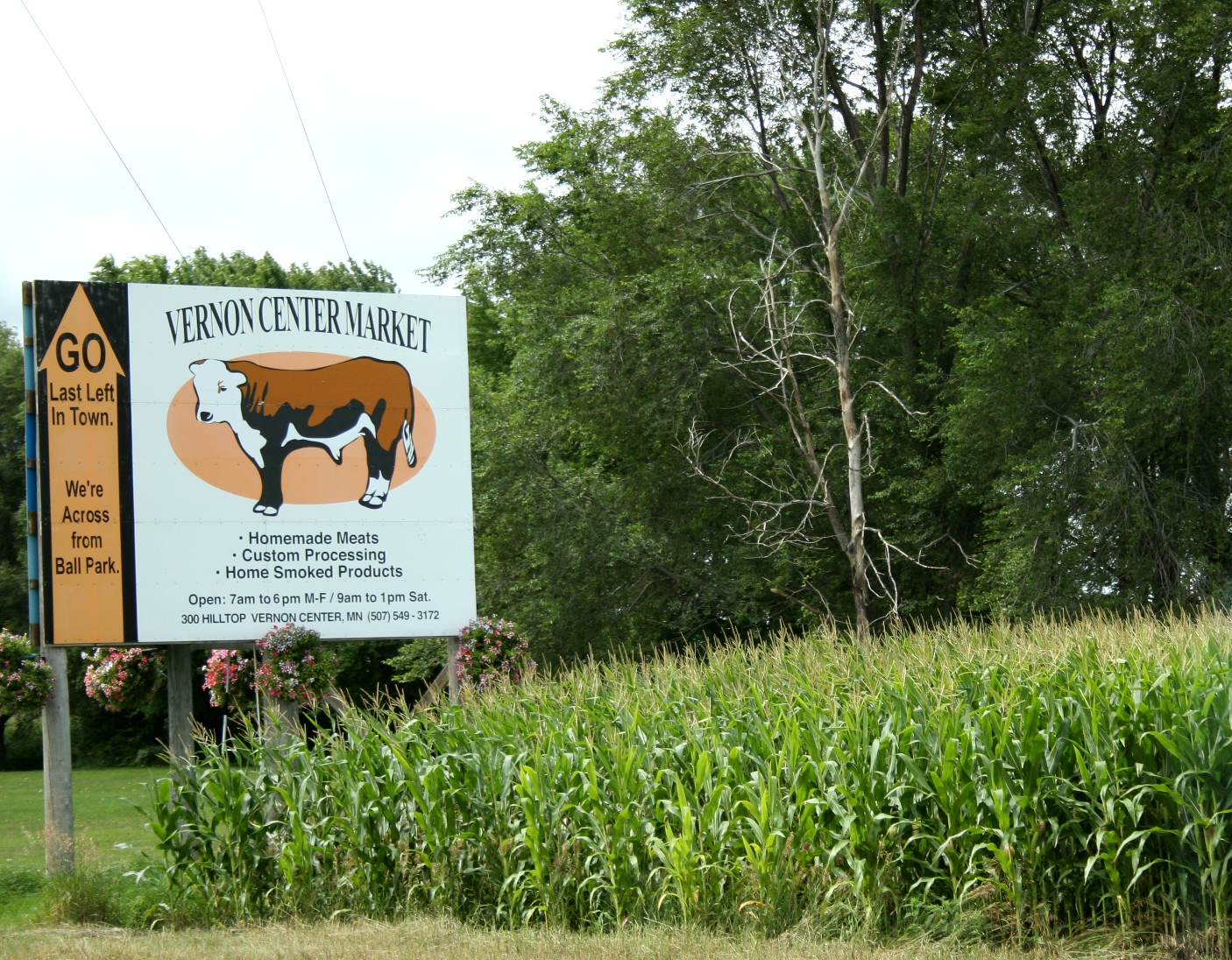
En route to extreme southwestern Minnesota this past summer, I spotted signage for two businesses in the Vernon Center area, along Highway 169 south of Mankato.

First, the Vernon Center Market:

Photographed a month ago near Vernon Center.

Photographed this summer near Vernon Center.

There are several reasons I like this sign. Right off, the steer graphic catches my eye and tells me, without reading a single word, that this advertises a meat market. Second, the arrow tells me exactly where I’ll find the Vernon Center Market. Across from the Ball Park. Perfect. So small-townish. I also appreciate that business hours are listed, although I doubt a motorist would catch that while driving by.

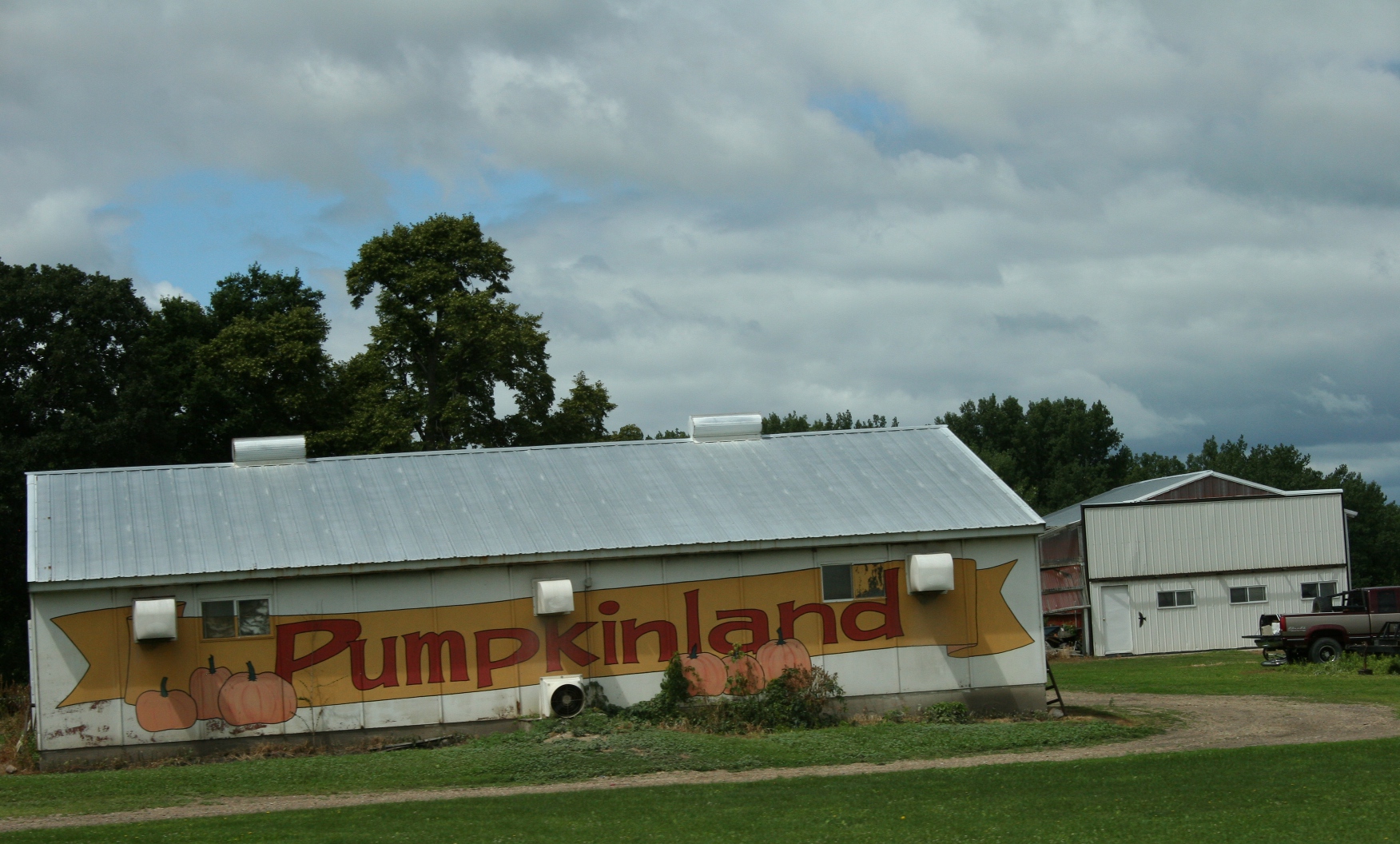
And then there’s Pumpkinland, also near Vernon Center:

Pumpkinland near Vernon Center.

Pumpkinland near Vernon Center.

You can’t miss the sprawling sign, painted in a readable font. And the graphics are limited to pumpkins. Simple. Clutter-free. Quick to get the necessary business information out there.

And great for a passing photographer to photograph from the passenger side of a moving van.

© Copyright 2013 Audrey Kletscher Helbling


On ARTour: Inside an old milkhouse October 23, 2013

I FEEL COMFORTABLY AT HOME in the old milkhouse, Kittens underfoot. The smokey scent of a wood burning stove warming a kettle of apple cider. Pipelines, that once carried fresh milk, poking through the wall.

Some of Lessing's ceramics displayed outside The Milkhouse Studio.

Some of Glynnis Lessing’s ceramics displayed outside The Milkhouse Studio.

This is the studio of ceramics artist Glynnis Lessing. This weathered building forked off a circular farm drive along Minnesota Highway 3 just north of Northfield. This land the artist’s home since relocating from Chicago with her family about a year ago.

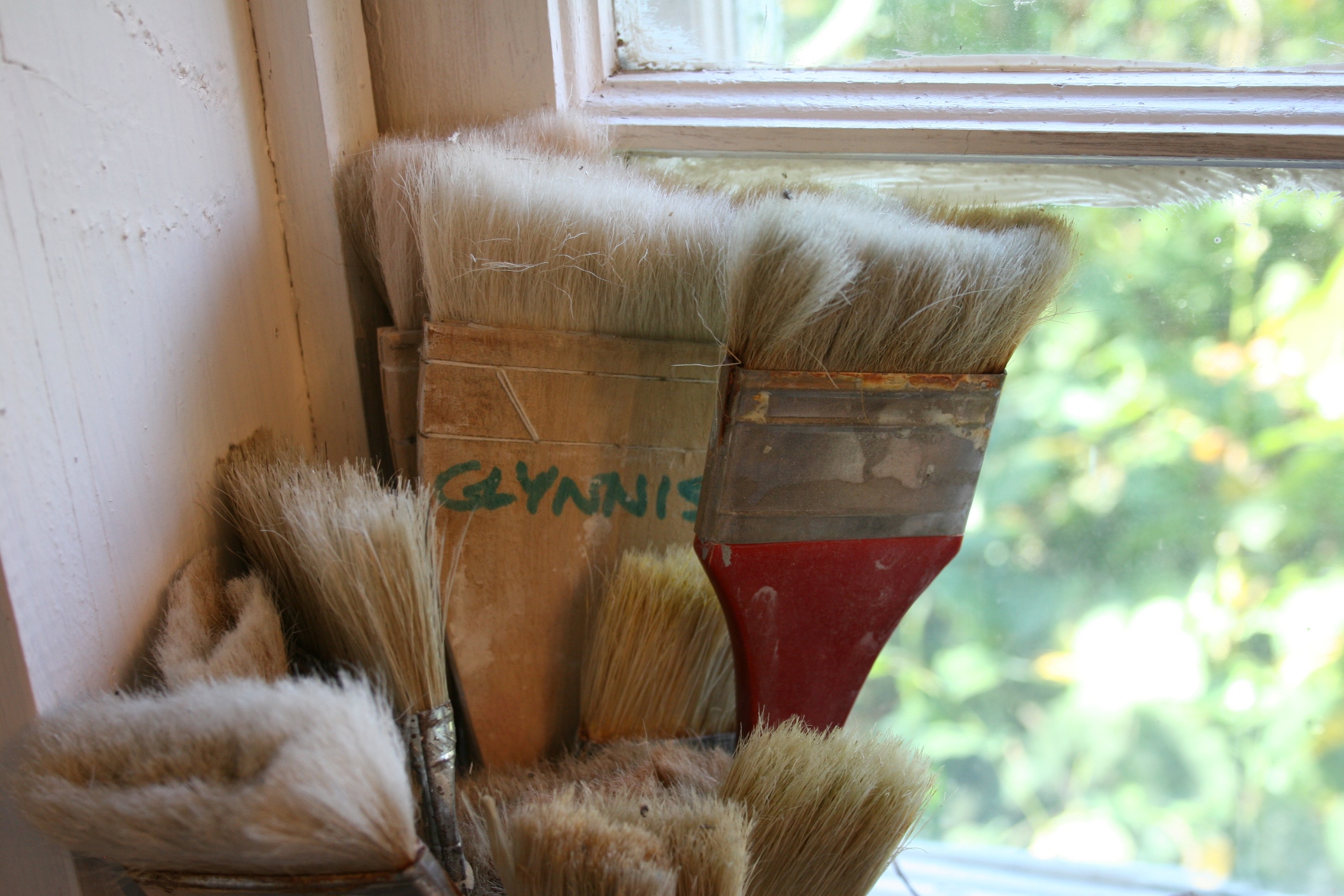
Tools of the trade on a milkhouse windowsill.

Tools of the trade on a milkhouse windowsill.

I have come here, to The Milkhouse Studio, on a Sunday afternoon for the South Central Minnesota Studio ARTour, a once-a-year opportunity to meet local artists where they create.

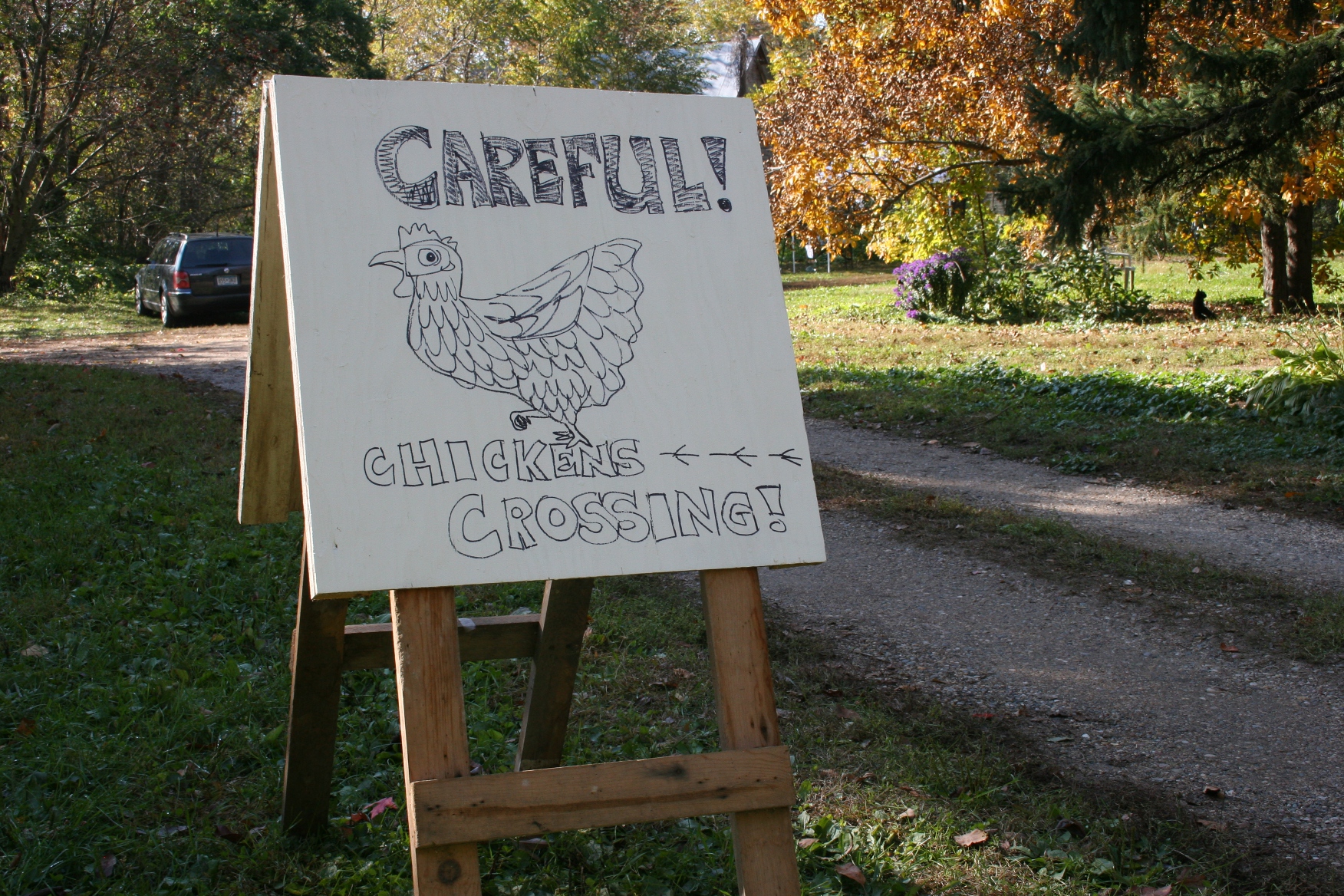
A sign advises visitors of chickens on the farm.

A sign advises visitors of chickens on the farm.

This rural setting reminds me of my childhood, growing up on a southwestern Minnesota dairy farm where I labored many hours in the milkhouse and barn.

Milking equipment remains in the milkhouse.

Milking equipment, right, remains in the milkhouse next to Lessing’s creations.

Although I never imagined a milkhouse as an artist’s studio, for Lessing it seems the perfect fit—creating in this place where her grandfather milked cows in the adjoining barn. Worked with his hands, just like her. In these aged buildings, on the land.

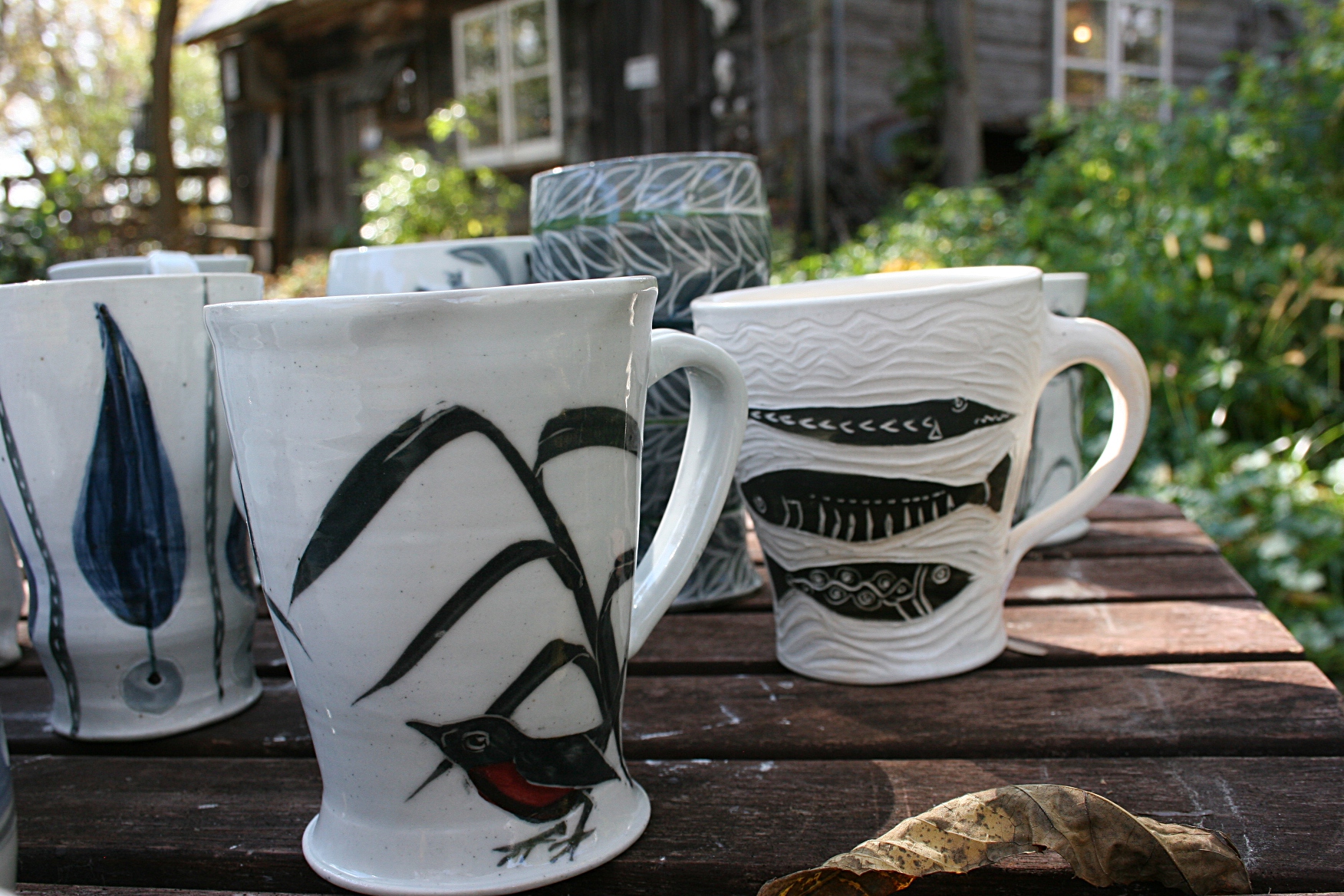
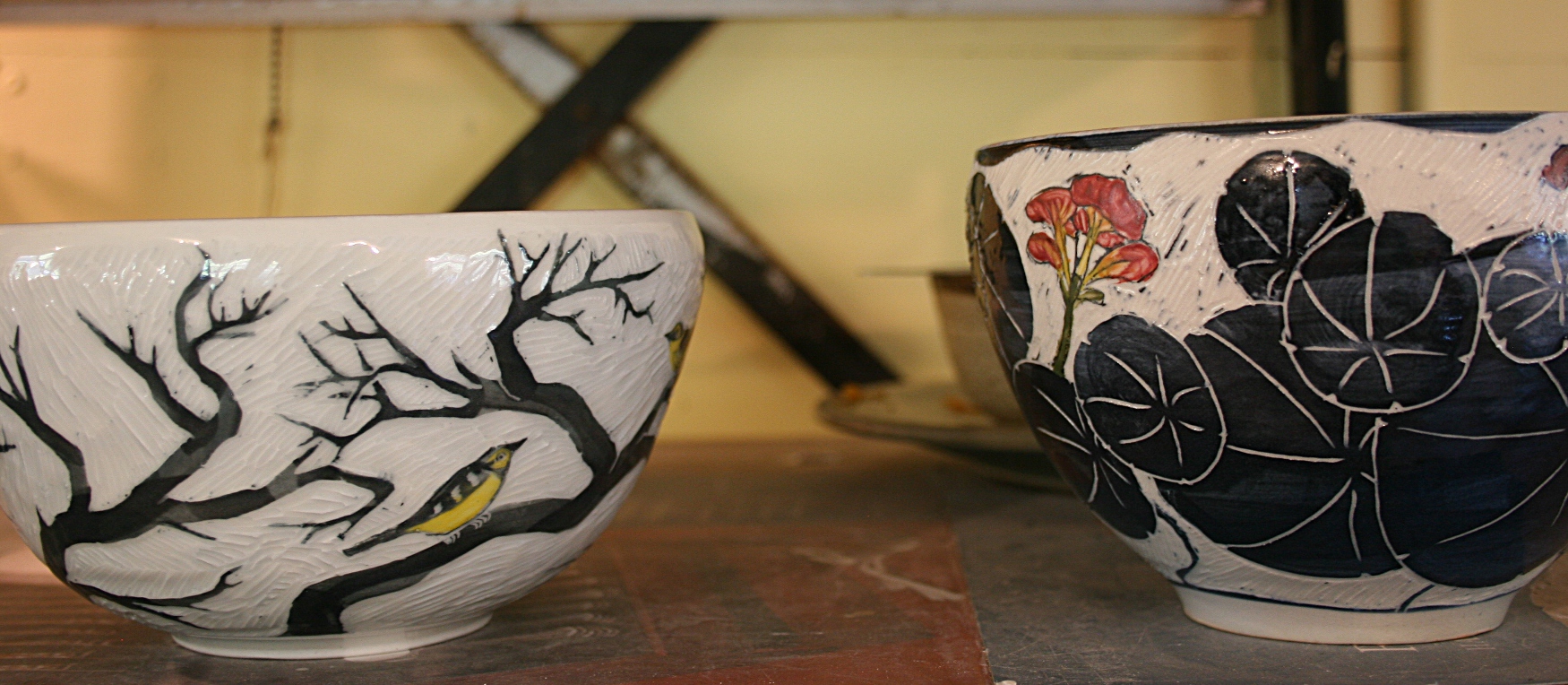
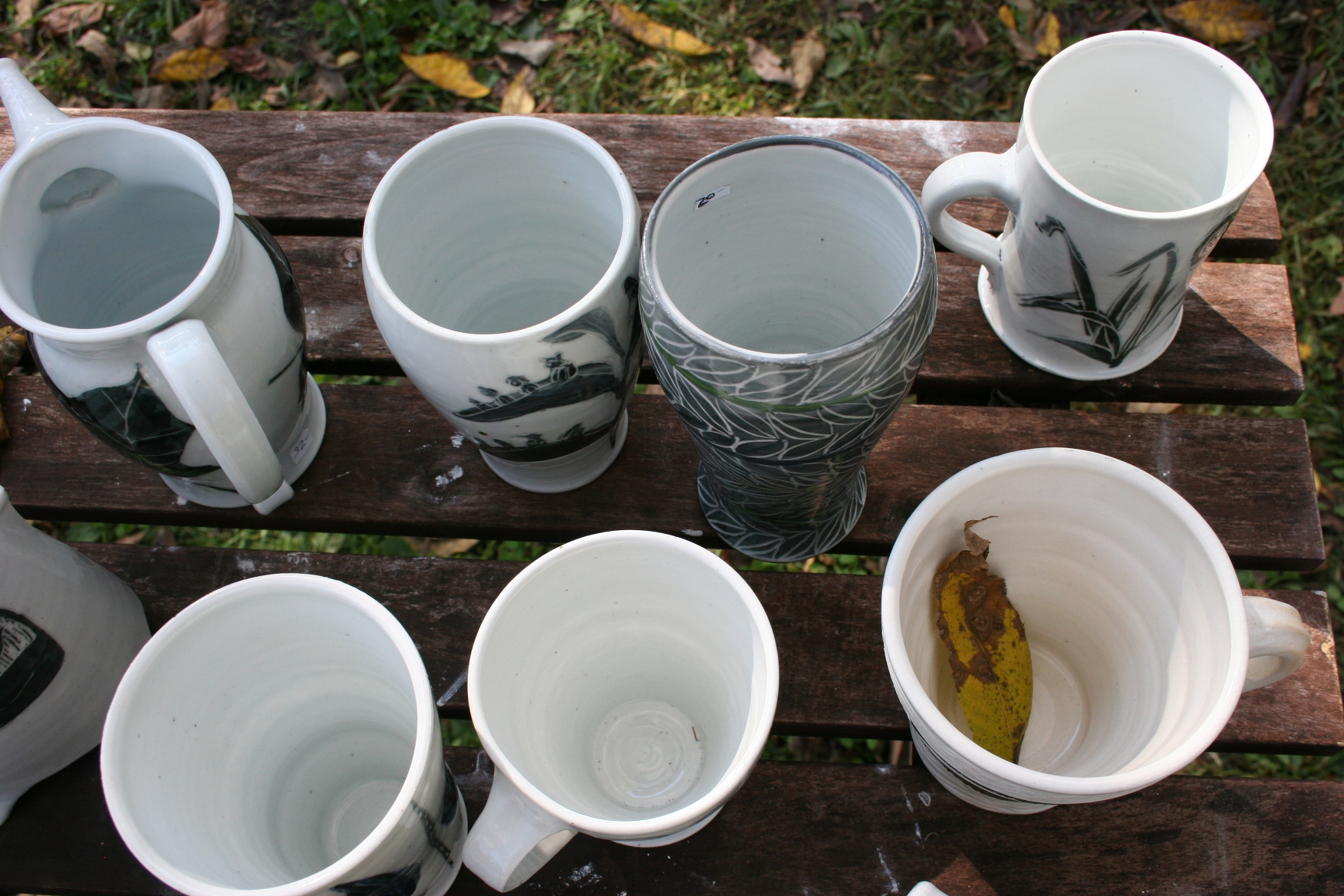
Love these nature-themed mugs.

Love these nature-themed mugs.

Love these bowls, too.

Love these bowls, too.

And then I noticed the leaf that had settled inside the mug. So fitting.

And then I noticed the leaf that had settled inside the mug. So fitting.

I can see the influence of rural life in Lessing’s pieces. Branches and birds. Leaves and blades of grass. An earthy quality that appeals to me and causes me to reflect on my rural roots.

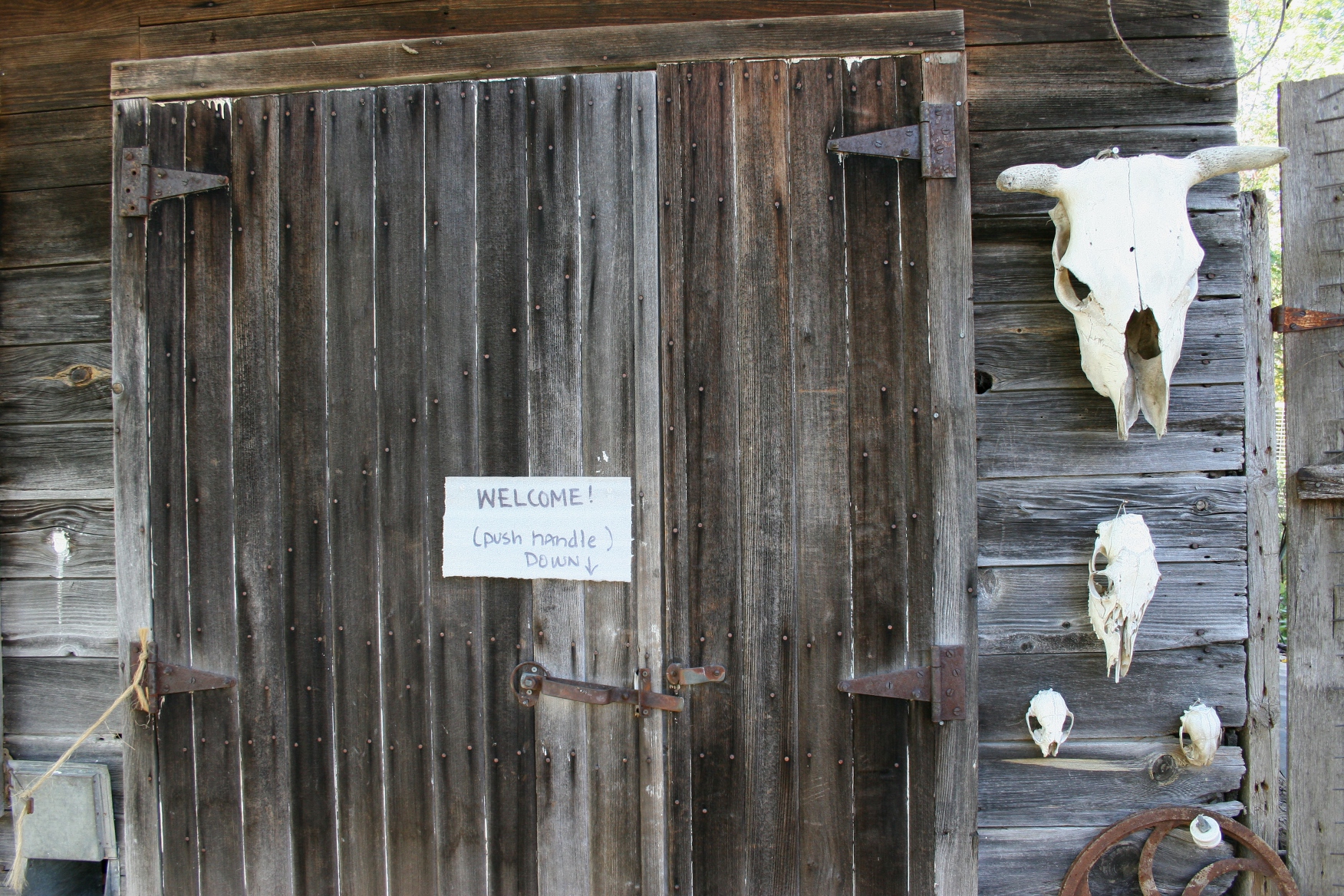
The Milkhouse Studio front door. Lots of history and memories here.

The Milkhouse Studio front door. Lots of history and memories here.

My memories: Felines circling around a battered hubcap to lap warm milk fresh from the cows. Frothy milk dumped, through a strainer, into the bulk tank. Sudsy water swished inside a milk bucket with a stiff brush. Yellow chore gloves drying atop an oil burning stove in the milkhouse…

Tucked into a corner of a milkhouse windowsill.

Tucked into a corner of a milkhouse windowsill.

FYI: To learn more about the history of the old milkhouse, click here to read Lessing’s blog post on the subject.

And for more info about Lessing the artist, click here.

To read my first post about the South Central Minnesota Studio ARTour, click here. Please check back for more posts from artists’ studios.

© Copyright 2013 Audrey Kletscher Helbling


Exploring Wisconsin’s High Cliff State Park & a disappointing discovery October 22, 2013

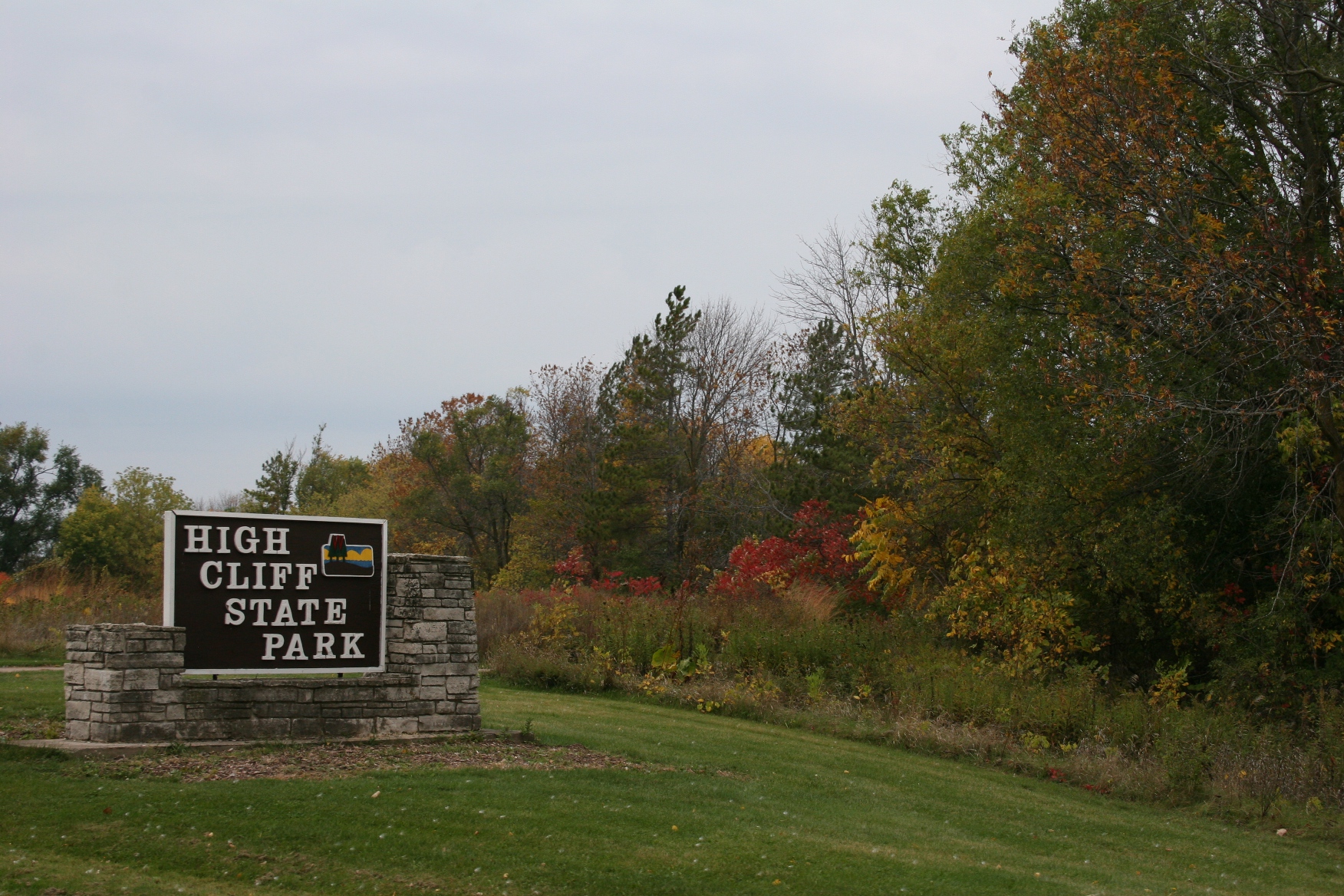
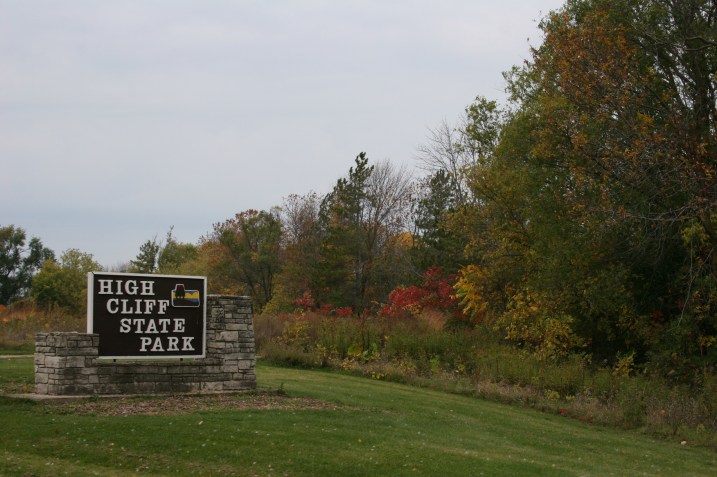
Entering the park.

Entering the park.

AN AUTUMN AFTERNOON in High Cliff State Park in east central Wisconsin, even with grey skies and the occasional spurt of drizzle, is magnificent.

On a recent Saturday, my daughter who lives in nearby Appleton, husband and I explored this sprawling park near Sherwood along the banks of Wisconsin’s largest inland body of water, Lake Winnebago.
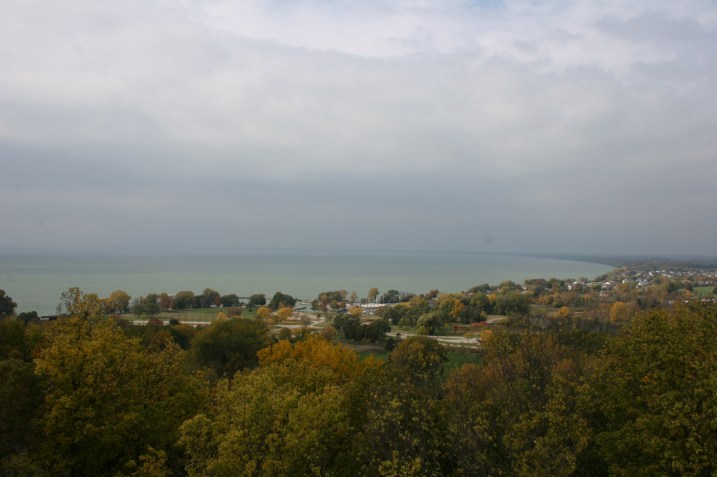
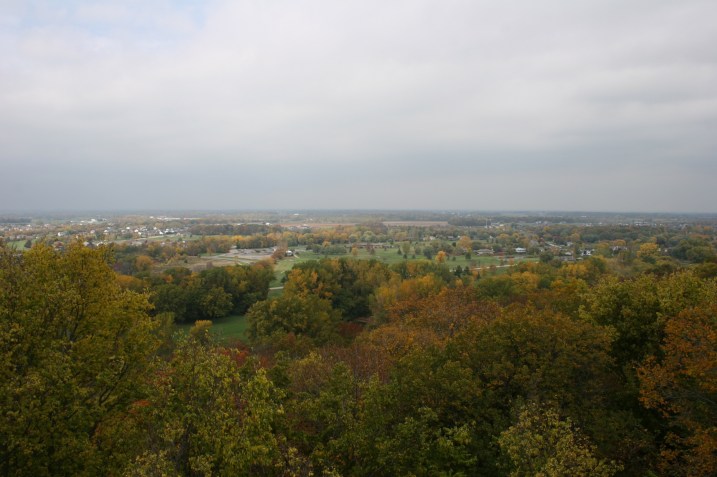
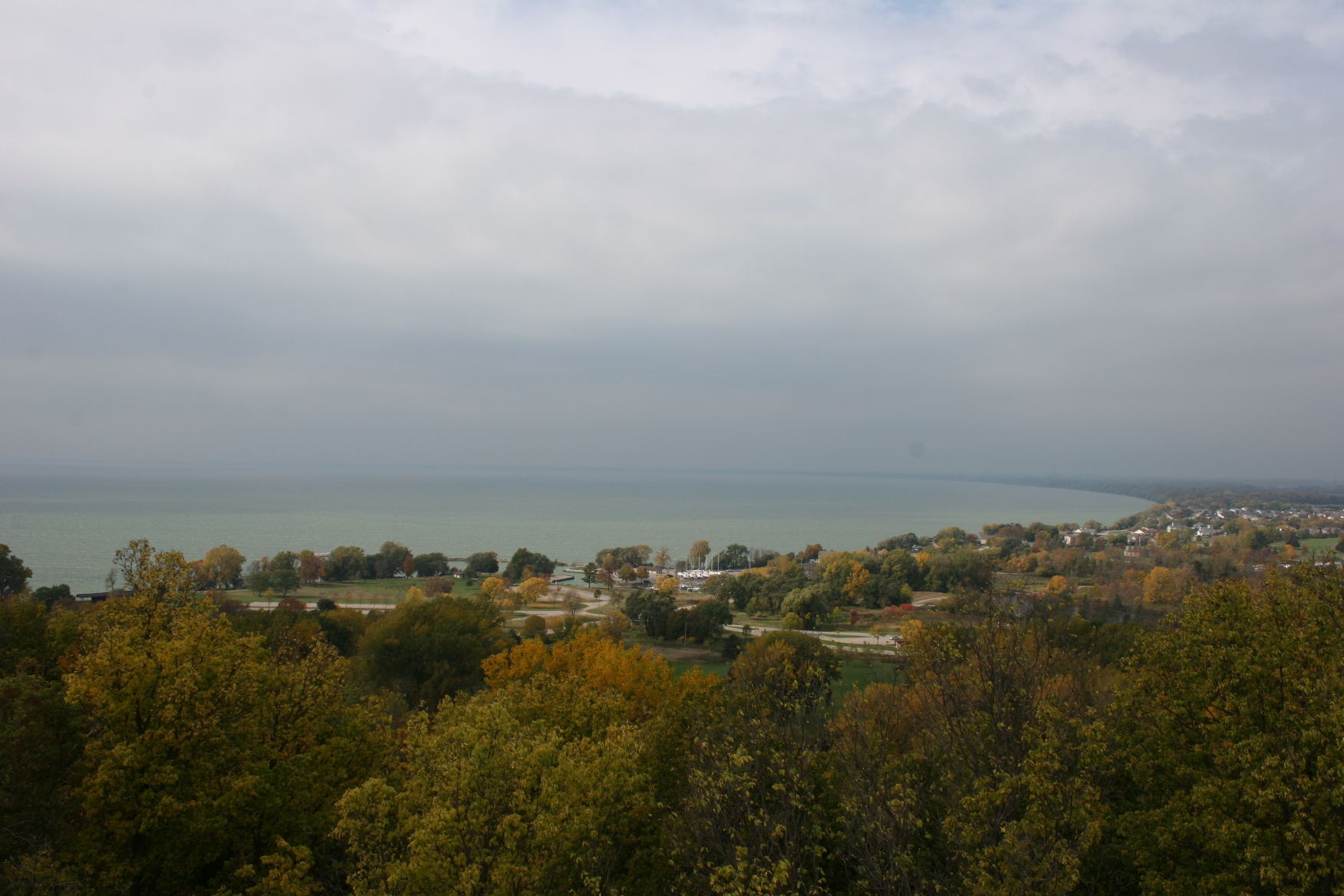
Sky and lake and land meld in this photo taken from atop a tower in High Cliff State Park. Photo by Miranda Helbling.

Sky and lake and land meld in this photo taken from atop a tower in High Cliff State Park. Photo by Miranda Helbling.

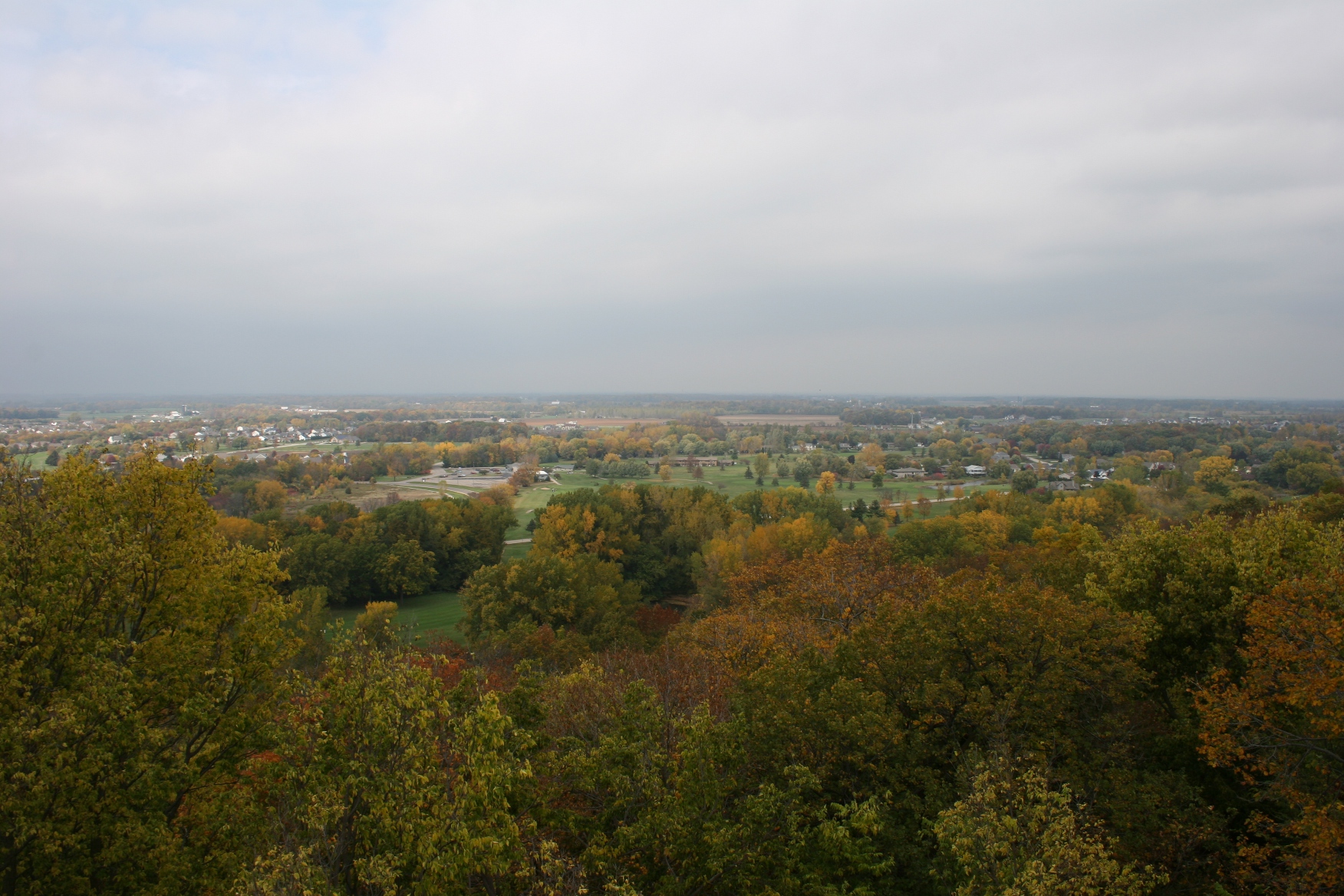
But it was not the lake—more on that later—which impressed as much as the view of the valley from high atop the park. To see acres and acres and acres of trees below, buffeted by the lake on one side, transitioning into the golden, russet and reddish hues of the season is something to behold.
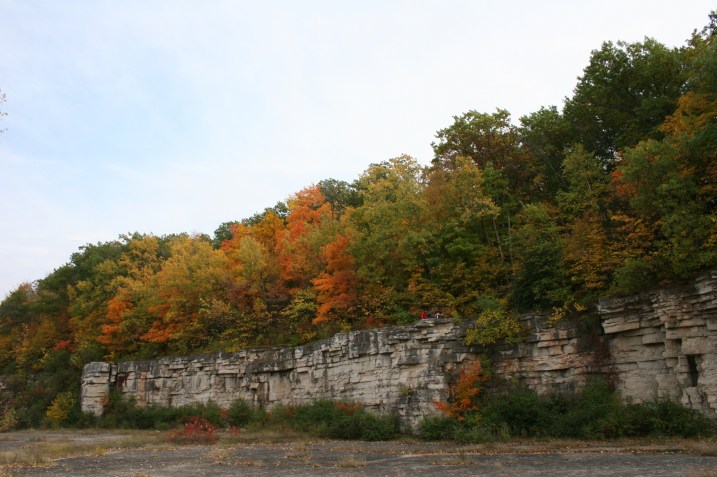
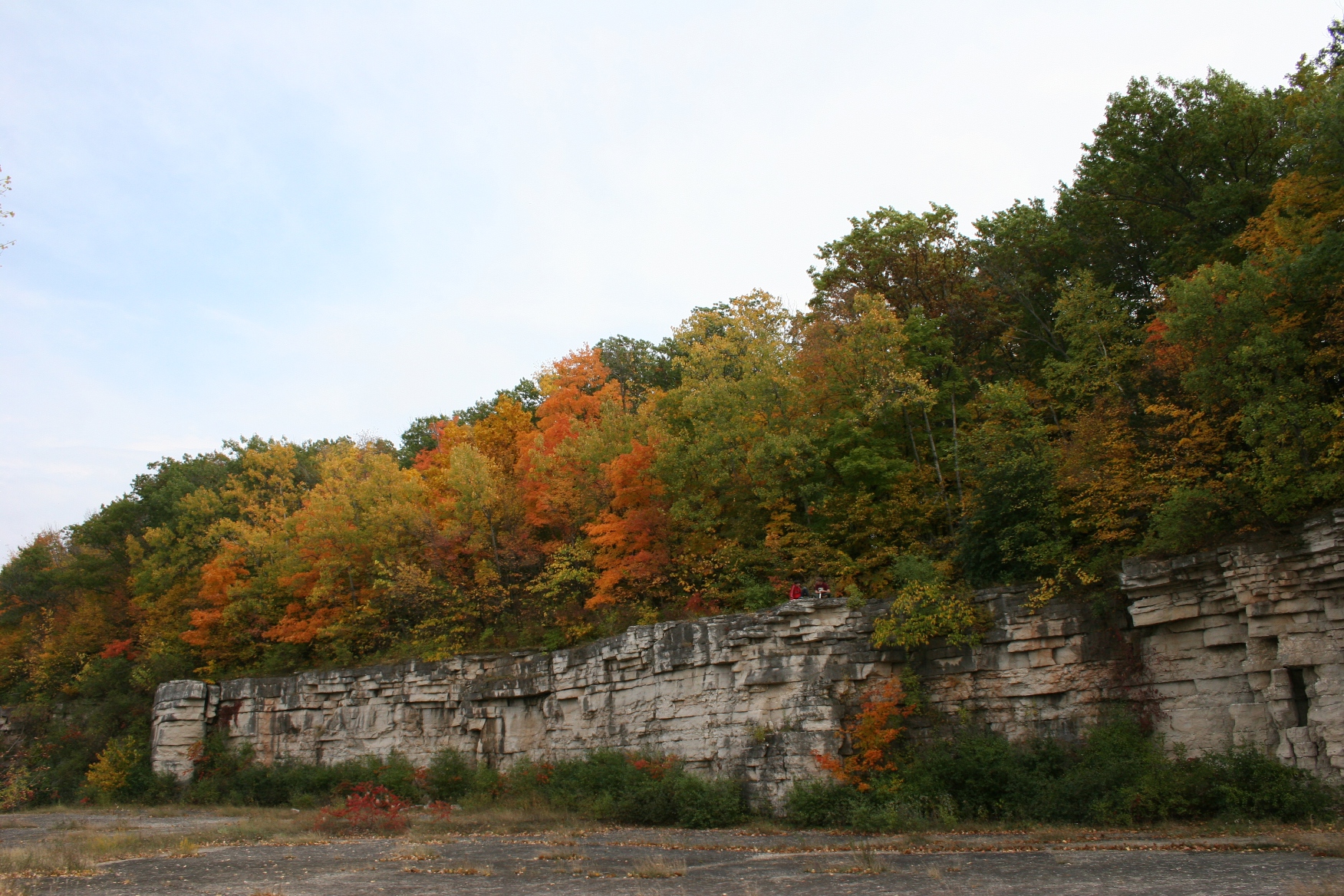
Old limestone quarry walls below a hillside of trees.

Old limestone quarry walls below a hillside of trees.

Likewise, limestone walls, remaining from the days when this stone was quarried from this land, provide a neutral backdrop to flaming maples and other trees bursting with color on hillsides.
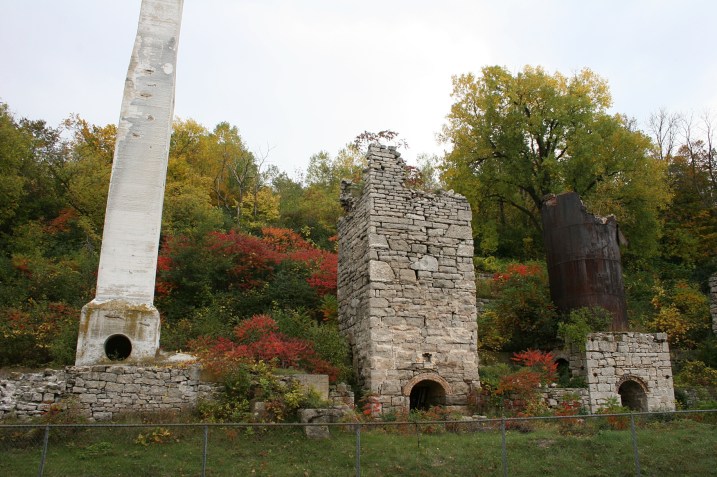
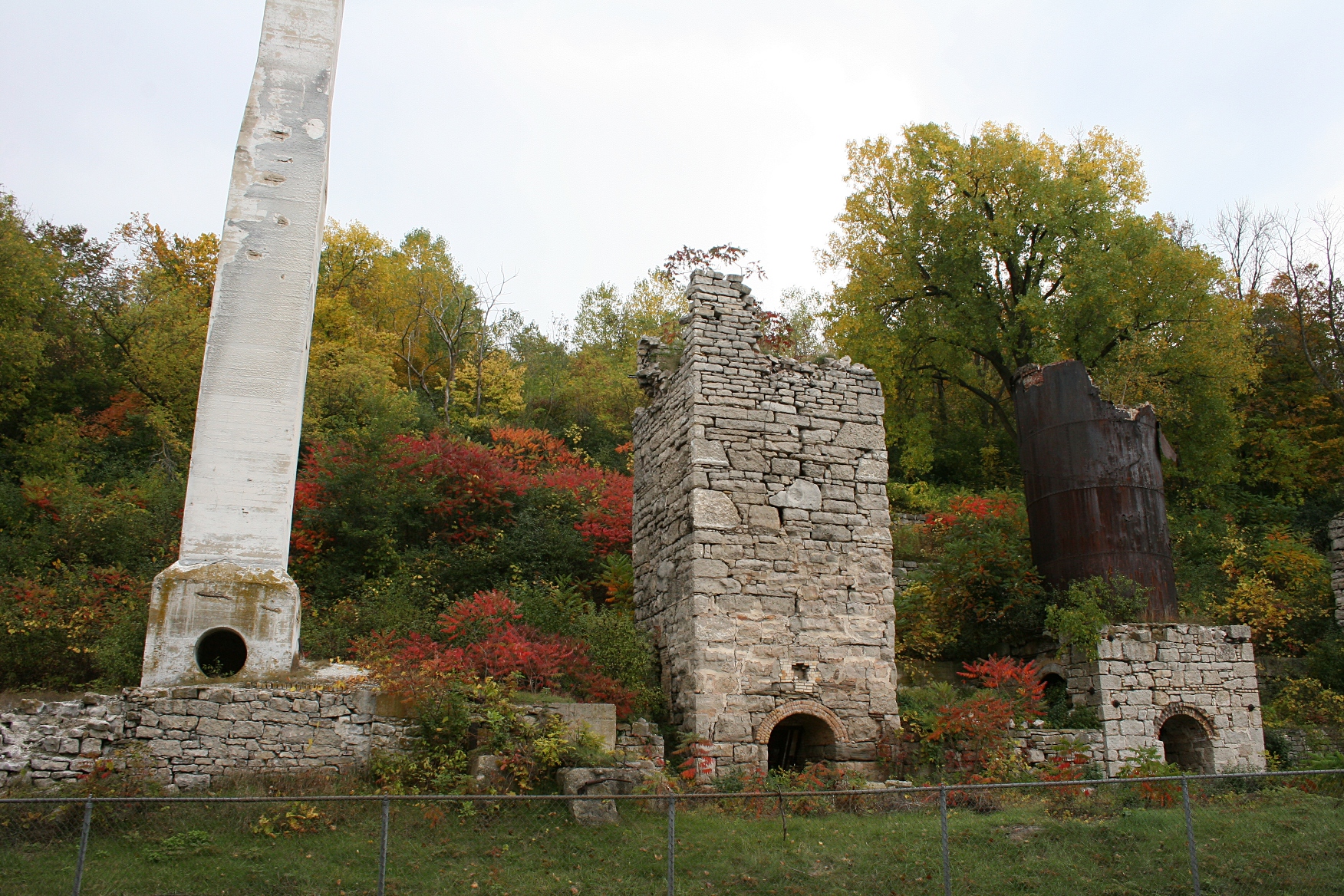
Kiln ruins.

Kiln ruins.

And then there are the old kilns, once used to create quick lime for use in plaster and cement and for agricultural purposes. I’m thankful mining operations here ceased in 1956. To totally decimate this place of natural beauty would have been a tragedy.
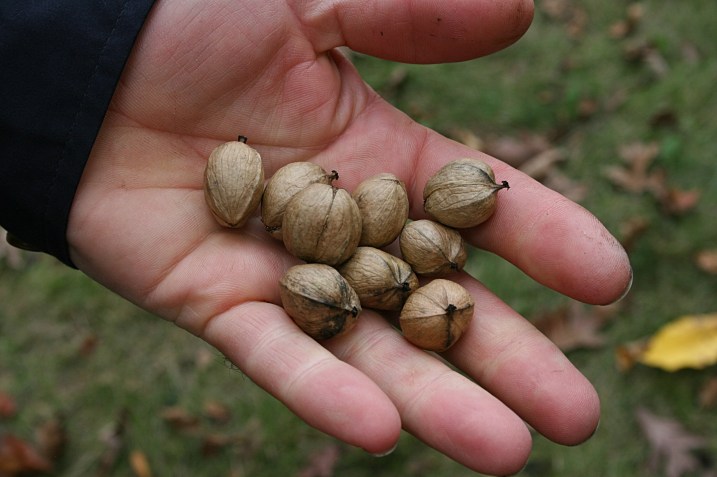
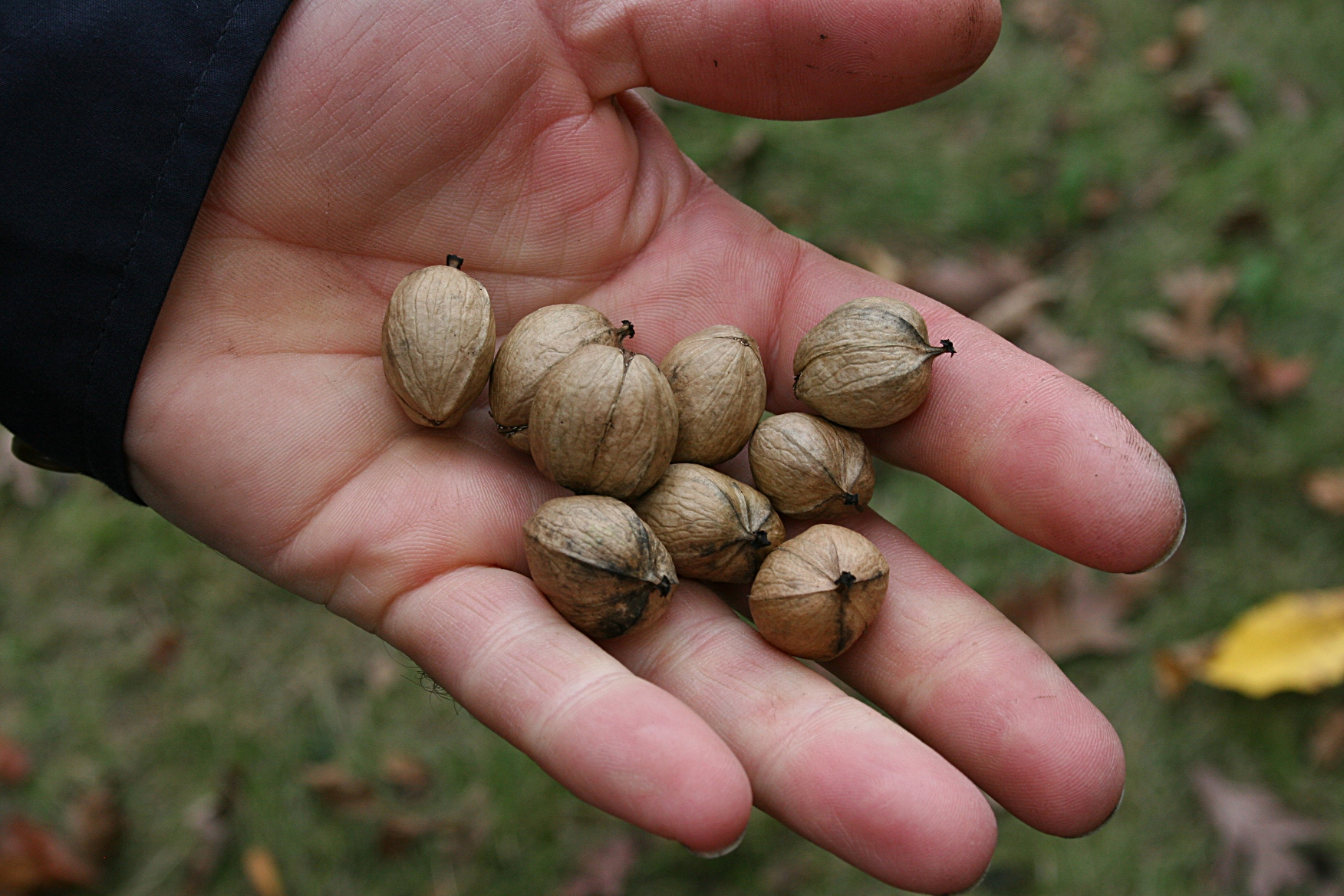
When we discovered what other park visitors were gathering, Randy began harvesting hickory nuts too and stuffing them into his jacket pockets.

When we discovered other park visitors gathering nuts, Randy began squirreling away hickory nuts, too, stuffing them into his jacket pockets.

For this beautiful park proves a lovely spot to picnic on a Saturday—a place where families pluck coveted hickory nuts from the ground to dry and crack and later eat plain or in cakes or cookies.

Here a family prepares to celebrate a wedding, placing burlap runners upon picnic tables covered with white plastic tablecloths inside the park shelter.
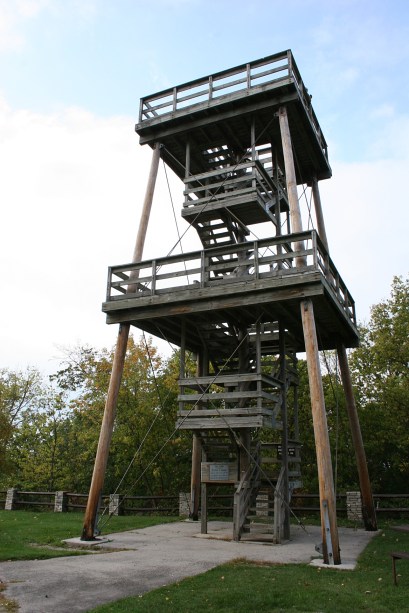
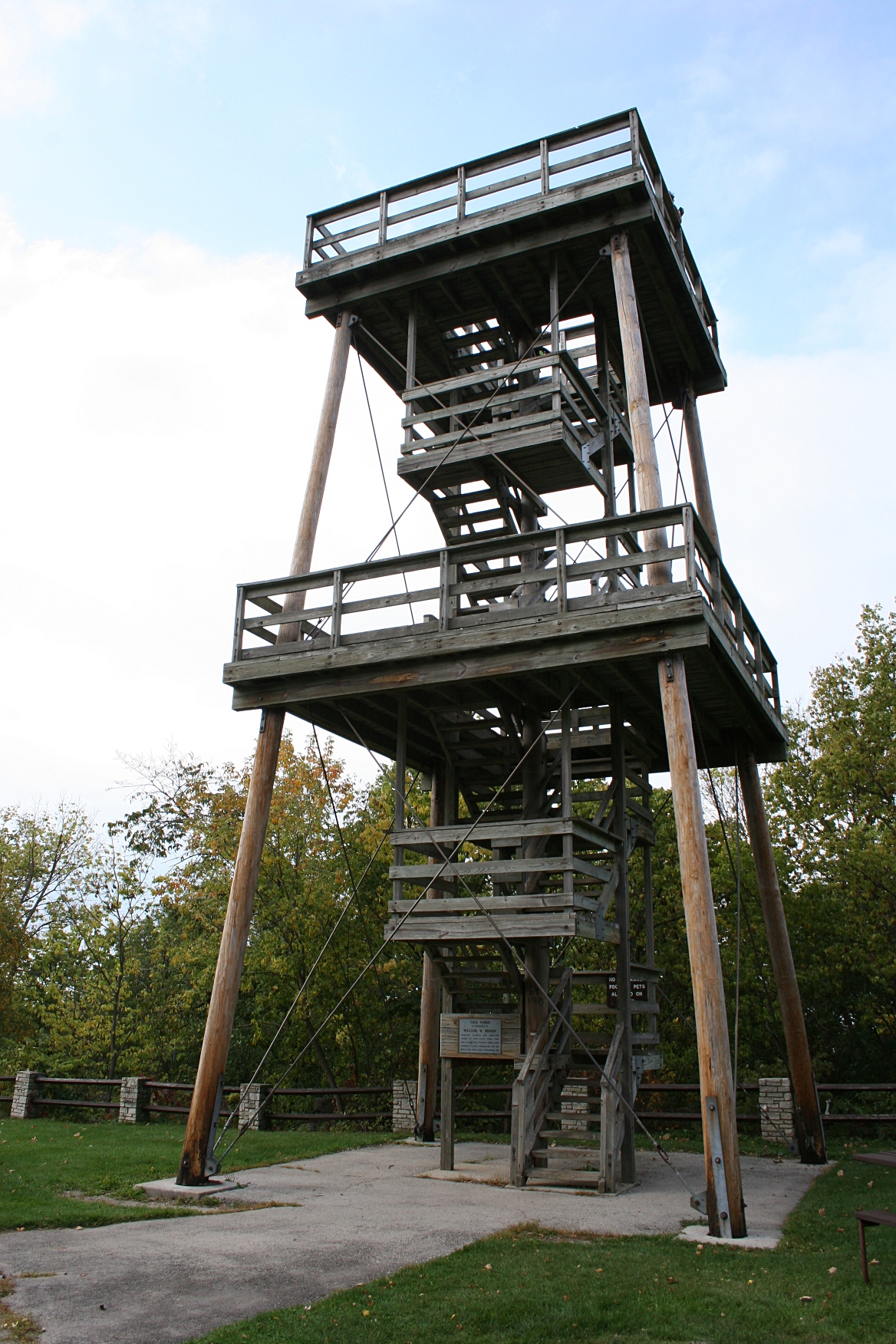
The tower...

The tower…

and the view from the tower. Photo by Miranda Helbling.

and the view from the tower. Photo by Miranda Helbling.

Couples and families climb 64 steps to the top of a wooden tower for a spectacular view of the valley. I keep my feet firmly planted on the ground, neck craned, waving to my husband and daughter high above me.
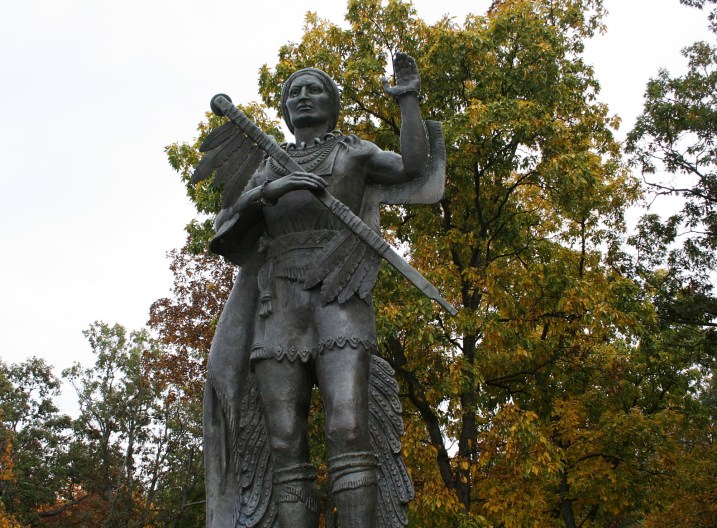
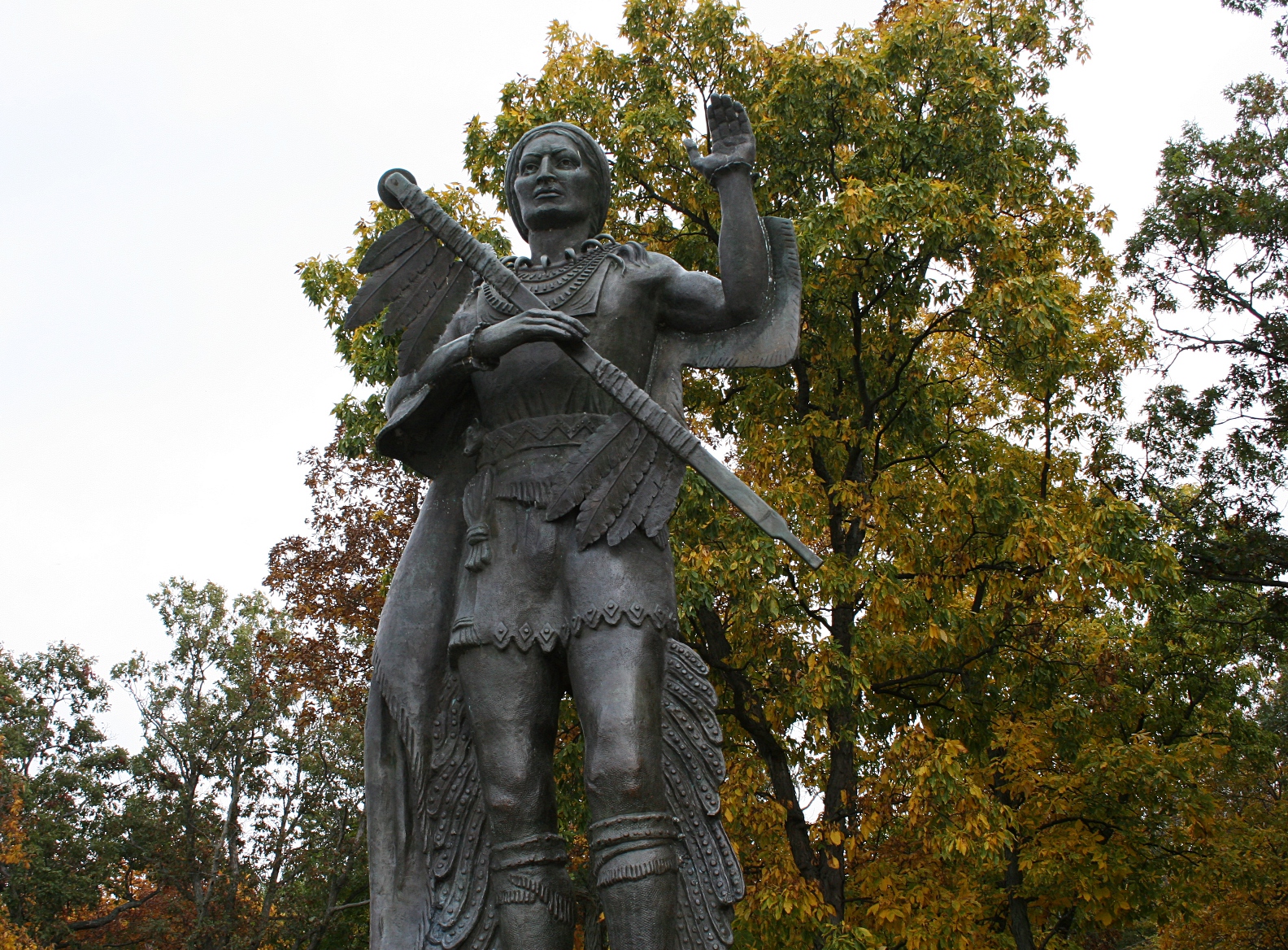
Red Bird, Chief of the Winnebago.

Red Bird, Chief of the Winnebago.

A 20-something man squats on a fence for a photo; only his balance keeps him from tumbling off and over the cliff. Nearby a statue of Red Bird, chief of the Winnebago, stands, sure and solid atop a rock.

Winnebago. It is also the name of the 131,939* acre lake which borders the western edge of High Cliff State Park and runs 28 miles long and eight miles wide near the towns of Fond du Lac, Oshkosh, Neenah and Menasha.
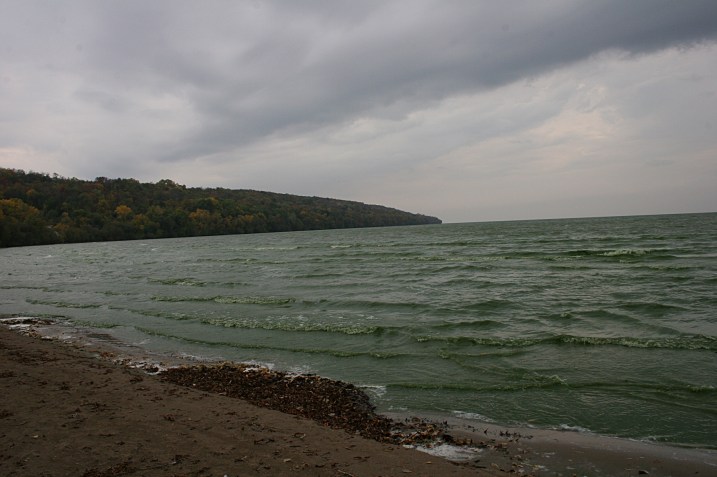
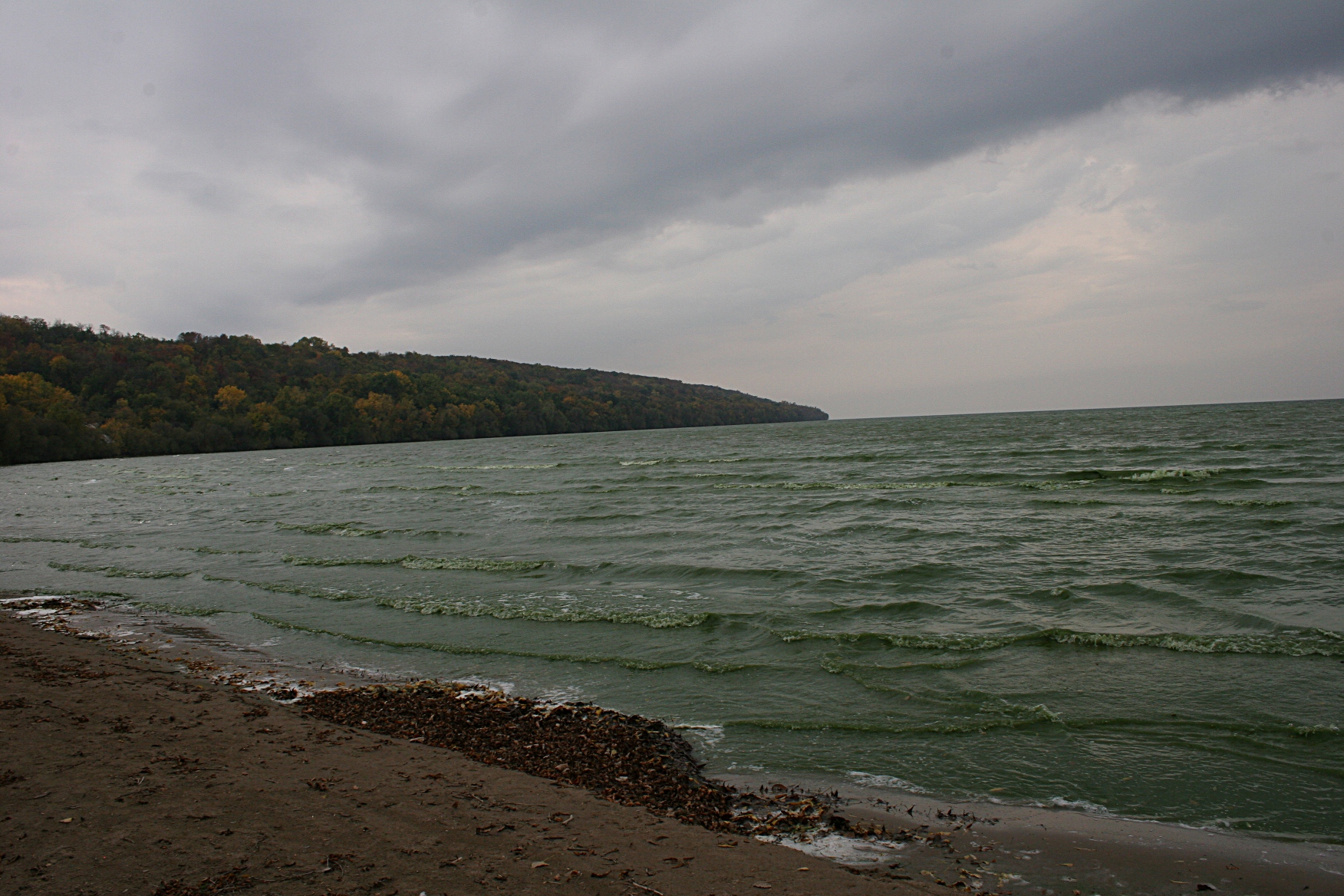
Blue-green Lake Winnebago as photographed from the beach at High Cliff State Park.

Blue-green Lake Winnebago as photographed from the beach at High Cliff State Park.

While impressive in size and fierceness—this day churning and roiling and rolling in waves—Lake Winnebago disappoints me.
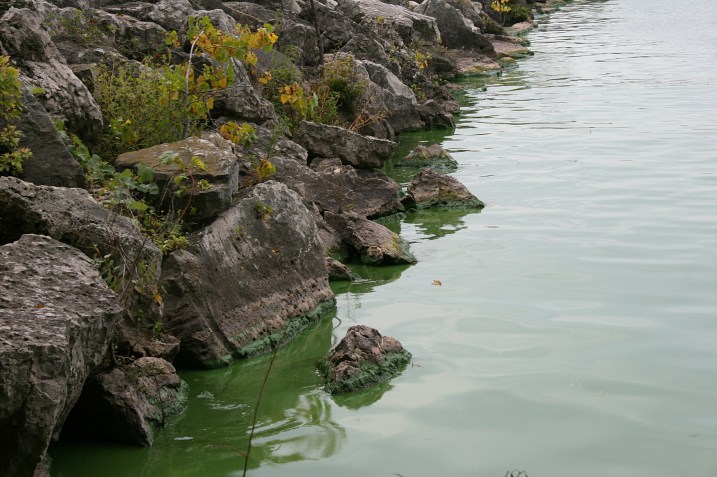
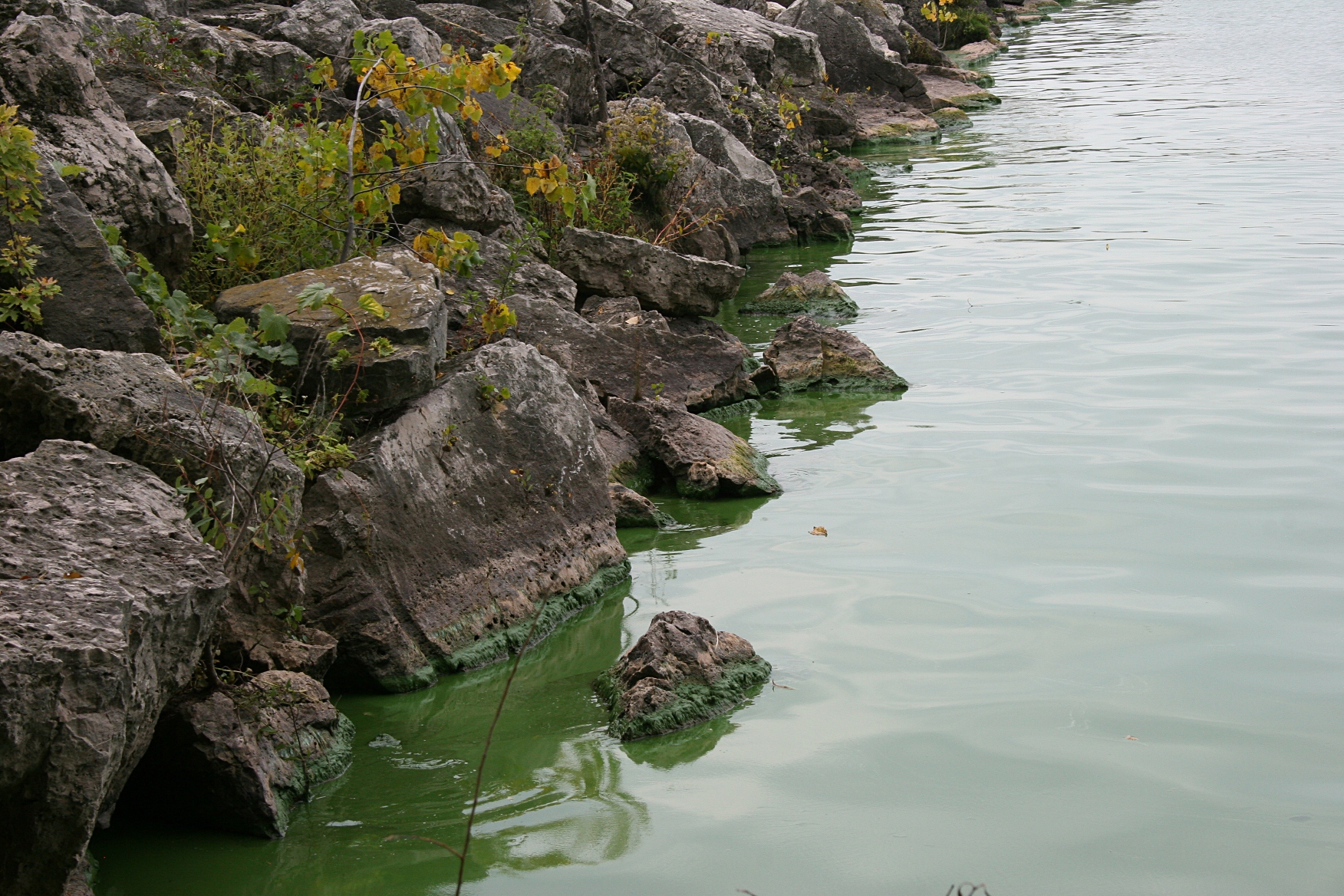
A close-up of the lake. No photo editing of the blue-green color.

A close-up of the lake. No photo editing done of the water’s hue.

I do not expect to see a lake that is green, as in it appears someone dyed the water green for a St. Patrick’s Day celebration. Why, I wonder, is a body of water this massive so overgrown apparently with blue-green algae? I am no scientist. But I suspect run-off (of chemicals) from lawns and farm fields into waterways that flow into Lake Winnebago, has created the problem.
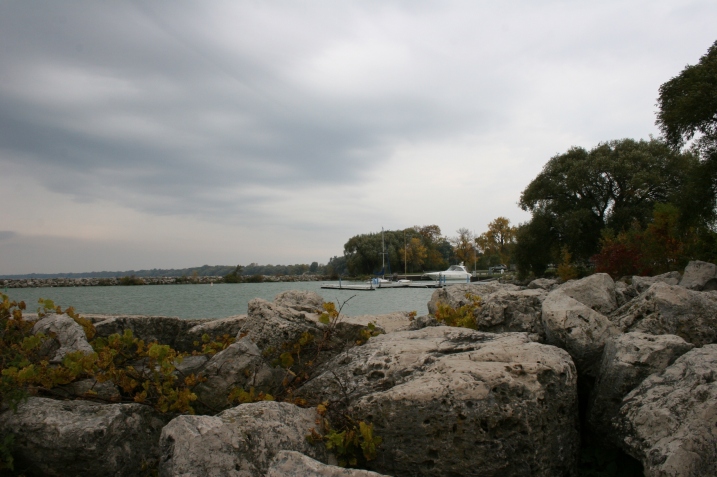
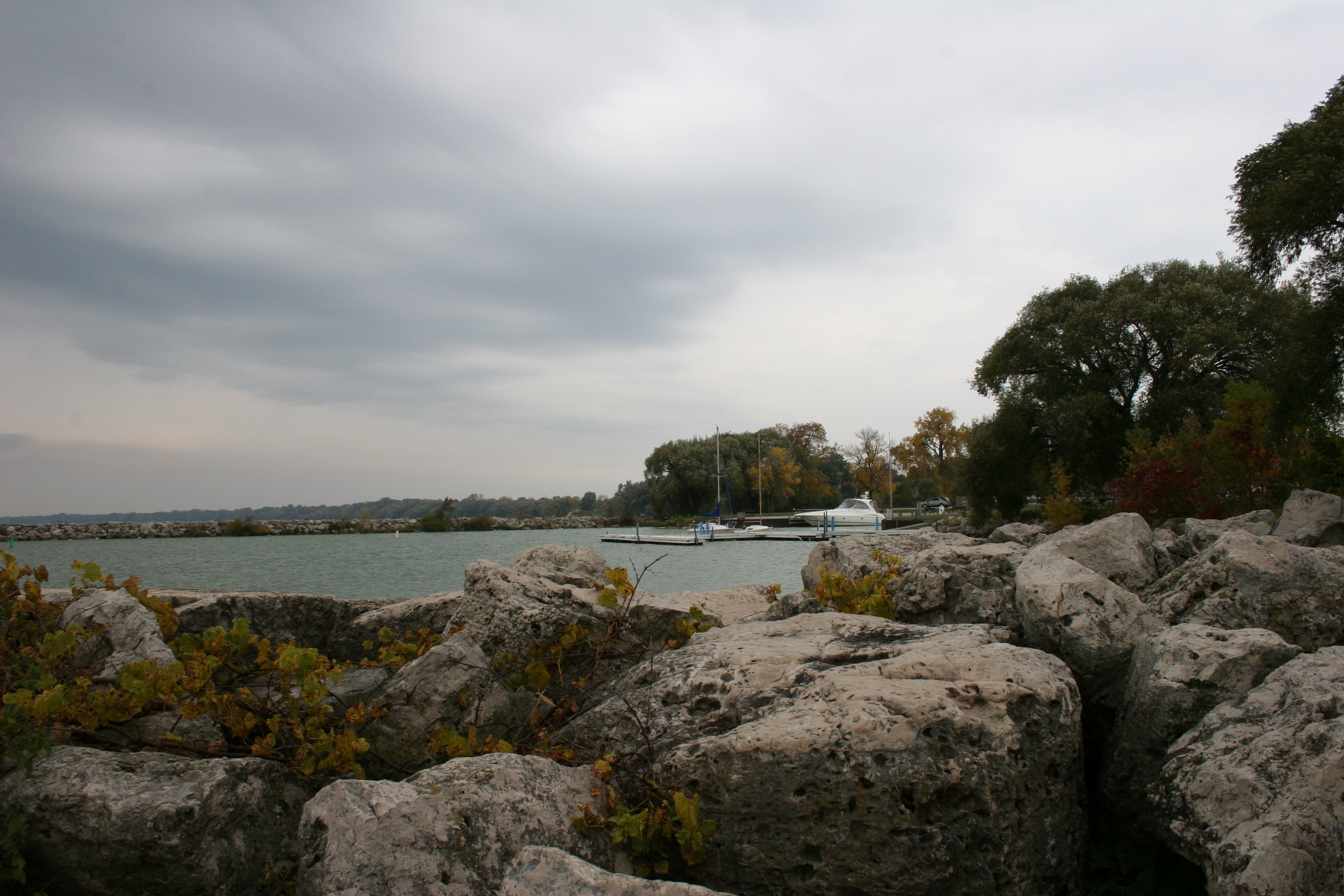
Looking from the rock wall toward the marina.

Looking from the rock wall toward the marina.

Honestly, I would never swim in this water, or even dip my toes into this lake. My daughter shares that a friend swam in Lake Winnebago this past summer and broke out in a rash.
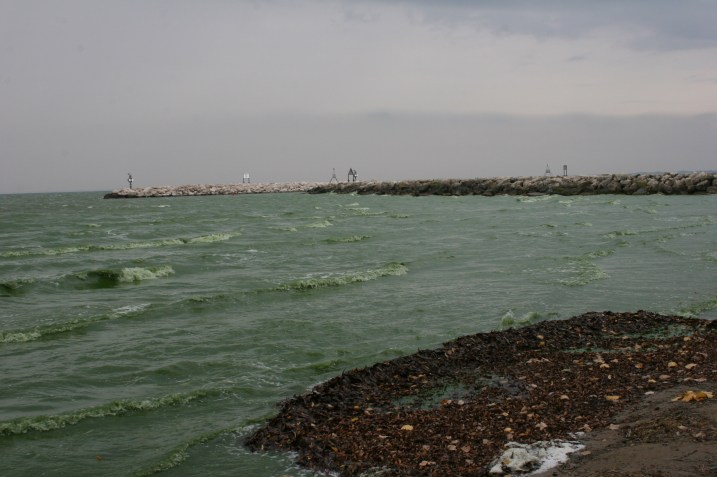
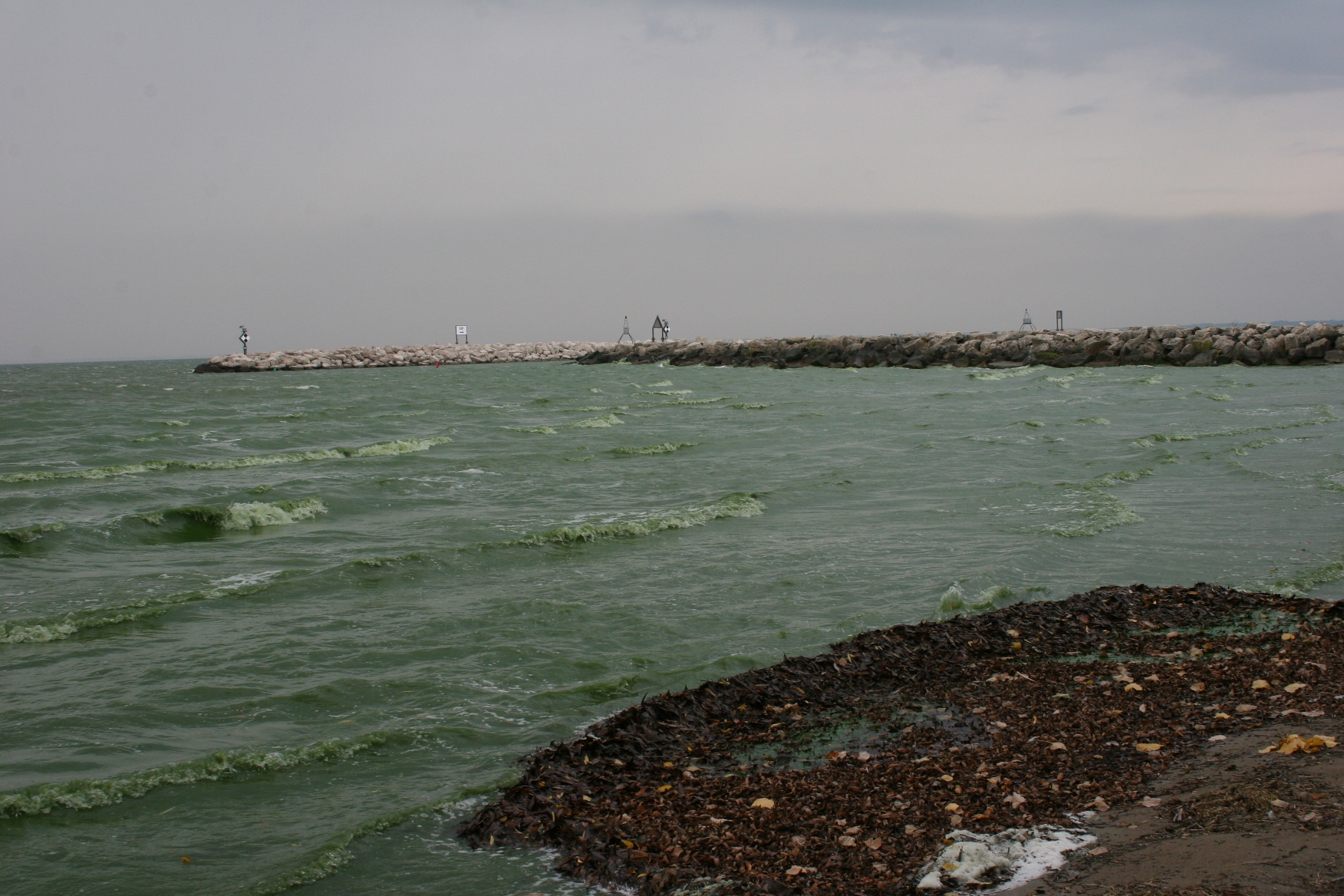
Just another view of the lake and the area where boats slip into shore.

Just another view of the lake and the area where boats slip into shore.

Researchers from the University of Wisconsin-Milwaukee are currently studying the lake, hoping to learn more about dangerous toxins produced by the blue-green algae, according to an article published in the Milwaukee, Wisconsin Journal-Sentinel. Drinking water for four area cities, including Appleton, comes from Lake Winnebago. The water is treated, of course, but it still concerns me to think this lake, in this condition, is a source of drinking water.

This lake is a popular fishing spot, too.

After viewing the lake’s poor water quality, I’m thankful these researchers have secured a $750,000 five-year grant from the National Institution of Environmental Health Sciences and the National Science Foundation to study the lake.

The quality of this lake water scares and saddens me and, truly, detracted from my experience at High Cliff State Park, an otherwise lovely place of exceptional natural beauty.

* NOTE: Various sources cite different sizes for Lake Winnebago. The Wisconsin Department of Natural Resources lists the lake at 131,939 acres, about the same acreage size of Mille Lacs Lake in Minnesota.

#

BONUS PHOTOS:
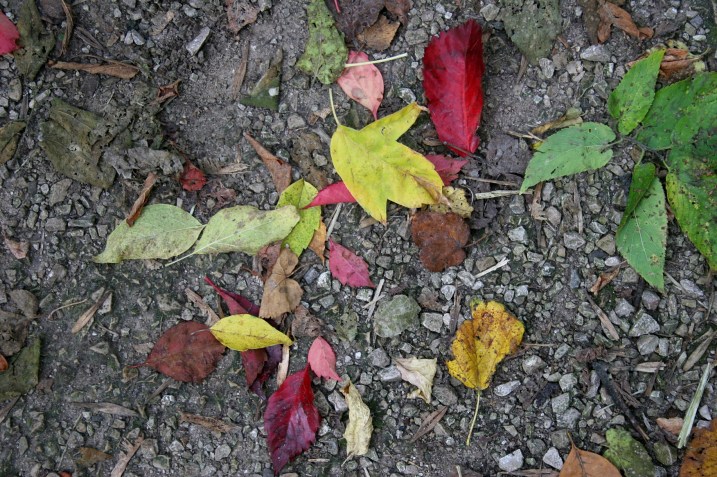
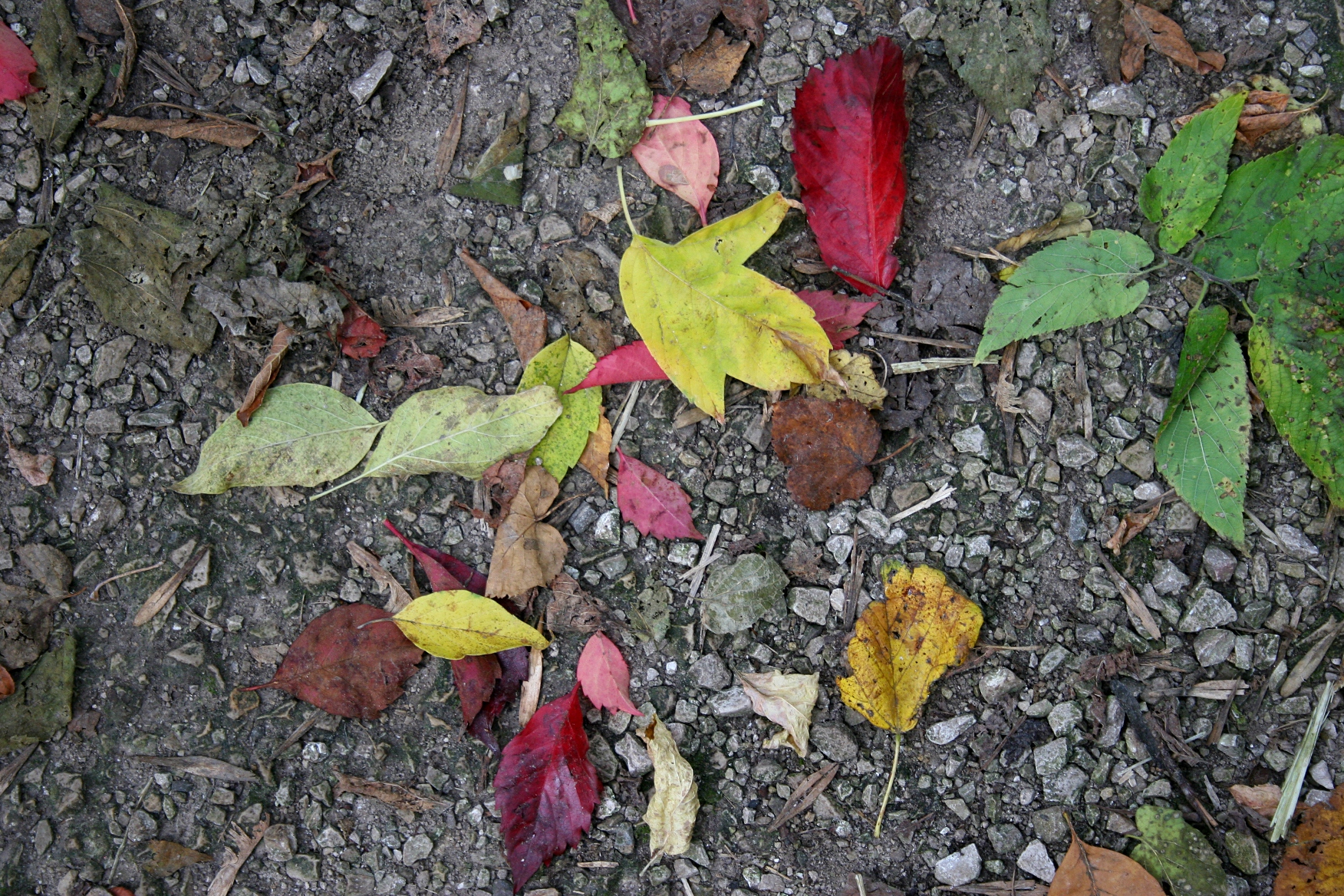
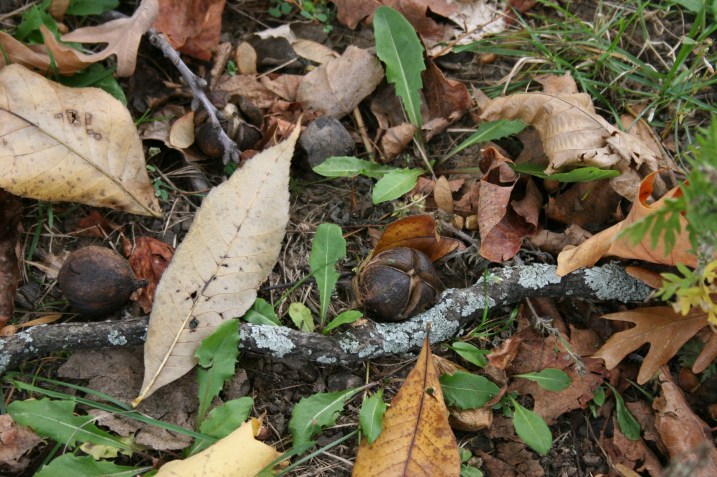
A colorful collage of leaves on a trail near the kiln ruins.
A colorful collage of leaves on a trail near the kiln ruins.

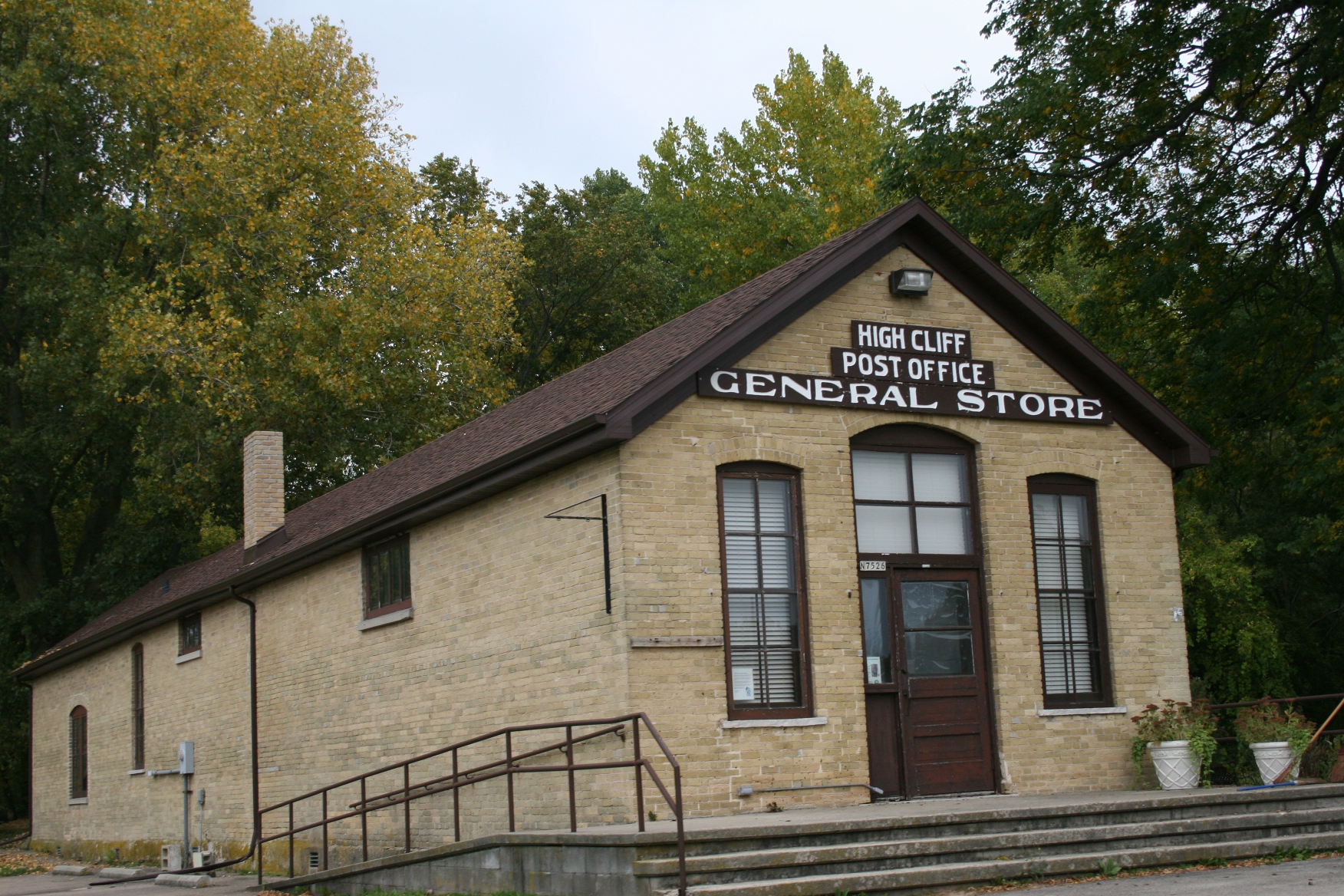
The only remaining building in

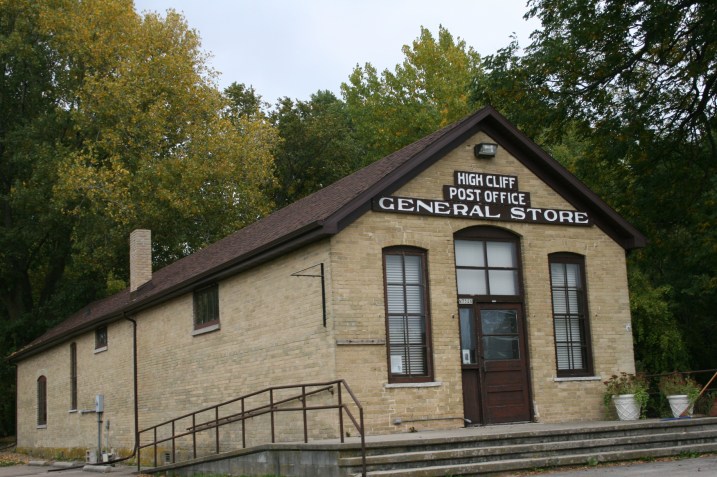
The only remaining building on the former site of Clifton, a town which existed here until the quarries closed. This 1800s building is now a museum and interpretative center, but was not open on the day we were at the park. Efforts are currently underway to save the structure from demolition, according to information on the Friends of High Cliff website. I have no idea why anyone would want to destroy this historic store.
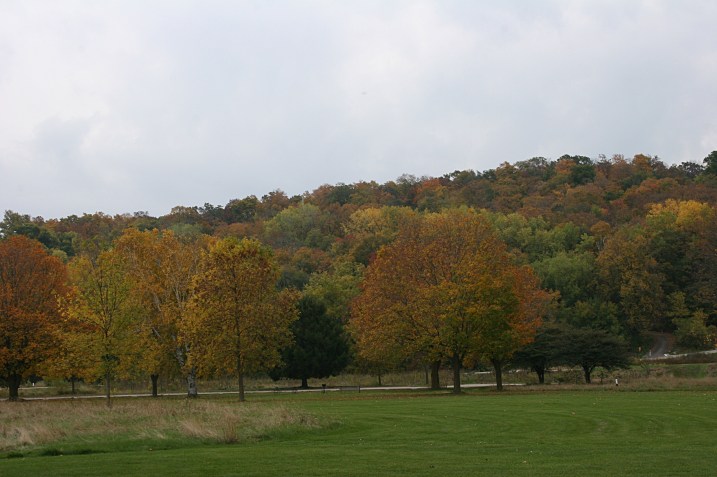
A scenic view shot from near the lake.
A scenic view shot from near the lake.

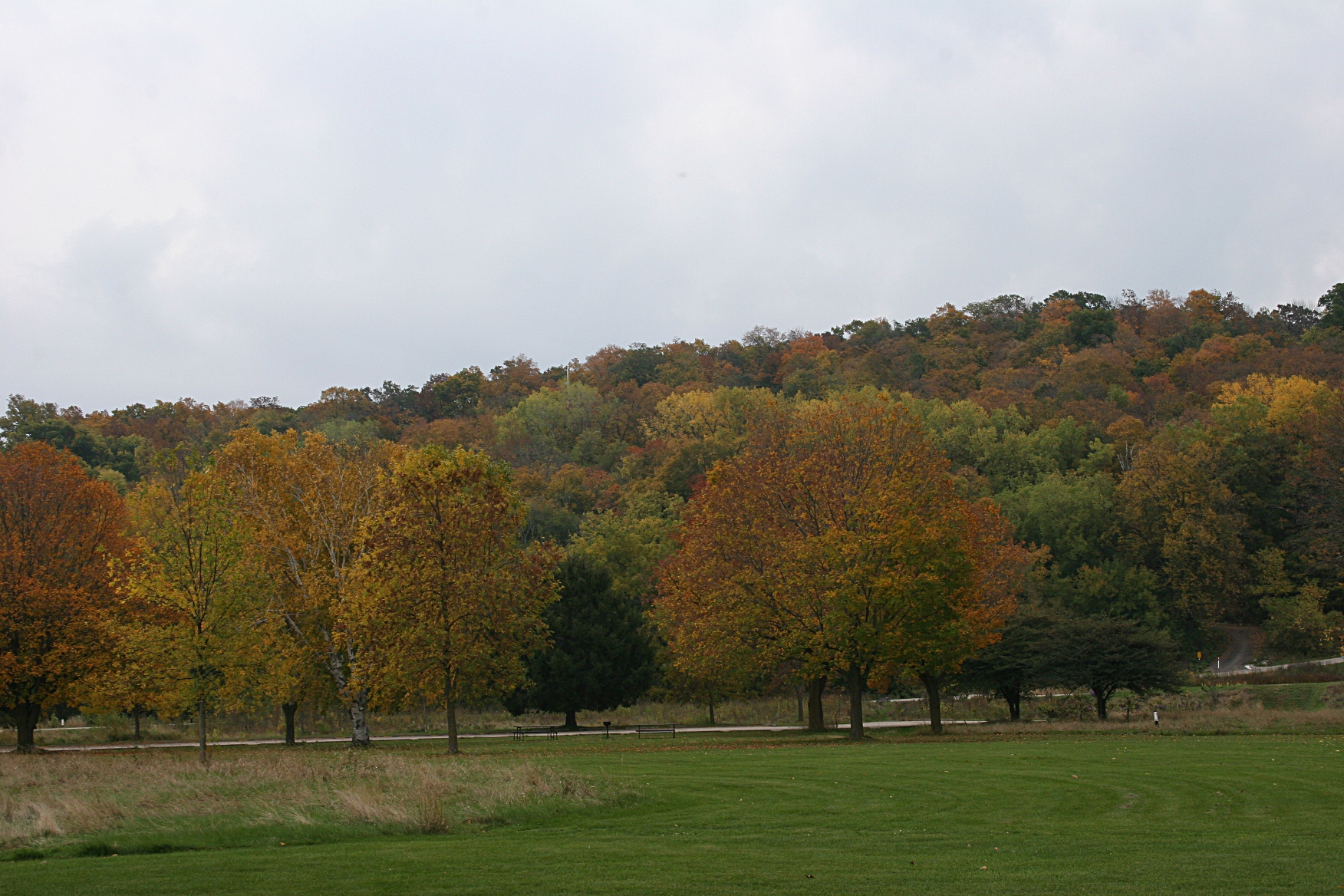
Autumn in the picnic grounds of High Cliff.

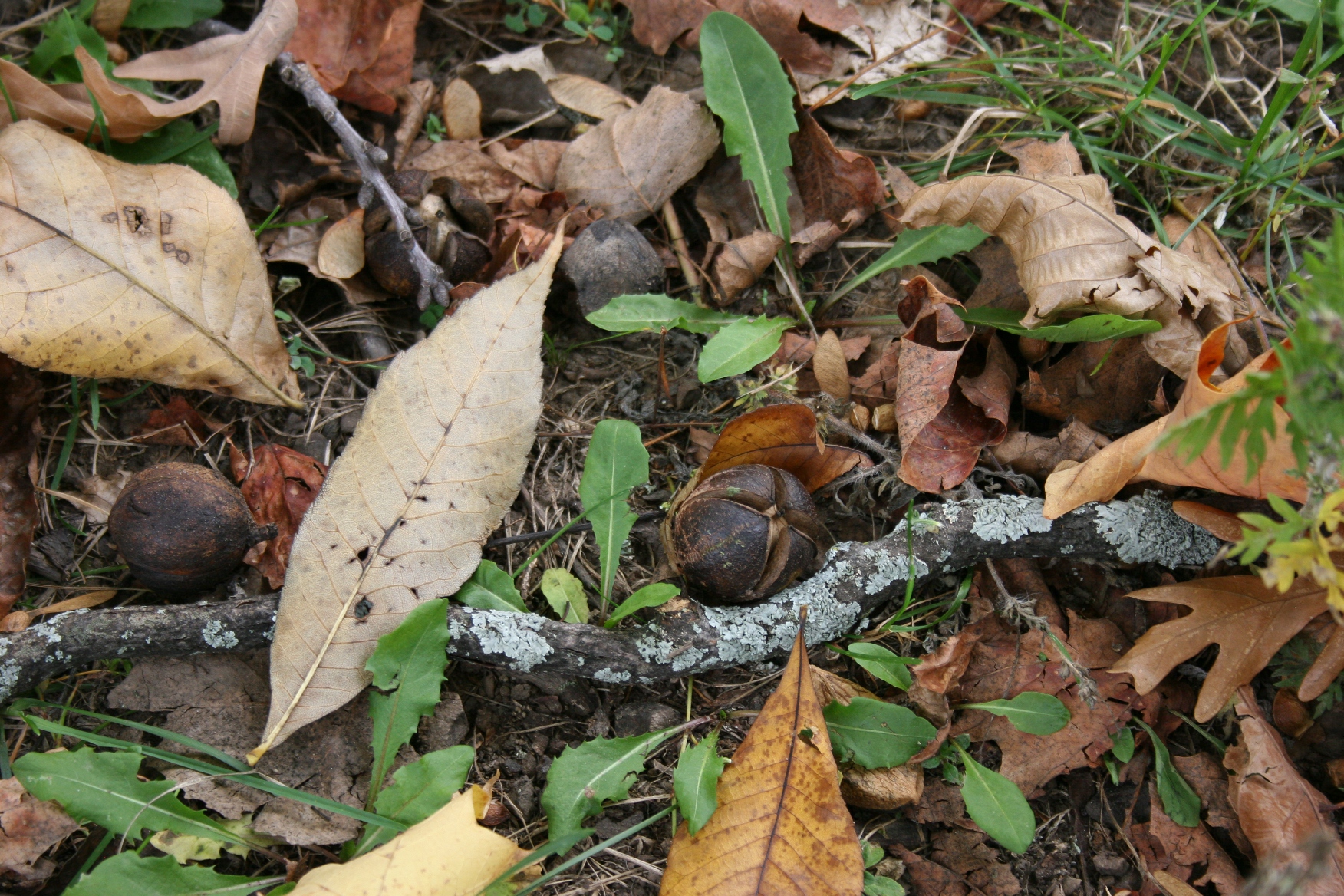
Hickory nuts, in their protective outer shell, litter the picnic grounds.

© Copyright 2013 Audrey Kletscher Helbling


On ARTour: The passion of southern Minnesota artists October 21, 2013

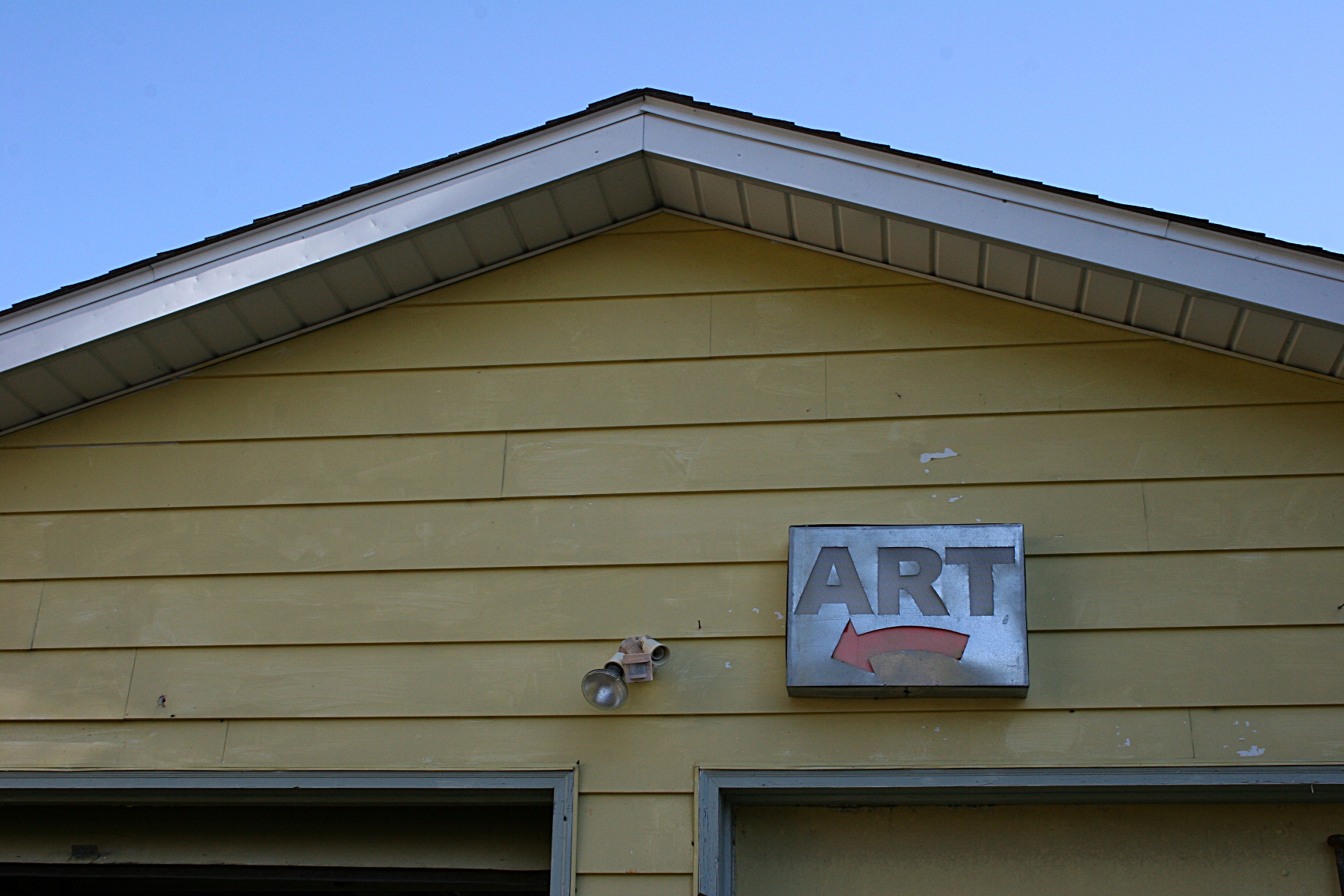
An art sign hangs above metal artist Julie Wolcott's garage-shop, rural Northfield.

An art sign hangs above metal artist Jennifer Wolcott’s garage-shop, rural Northfield.

THE TOUR ENERGIZES ME.

And I’m more art appreciator than artist in the sense of how the general public would define an artist.

Sure I create art with my words and my photos. But not at the level of the 44 artists featured in this past weekend’s South Central Minnesota Studio ARTour based in the Northfield/Faribault/Cannon Falls area.

Yet, no matter the scope of artistic endeavor, I can relate to these artists and their need to create. I could hear it. I could see it. I could feel it. That passion which drives those of us who are creative types to do what we do.

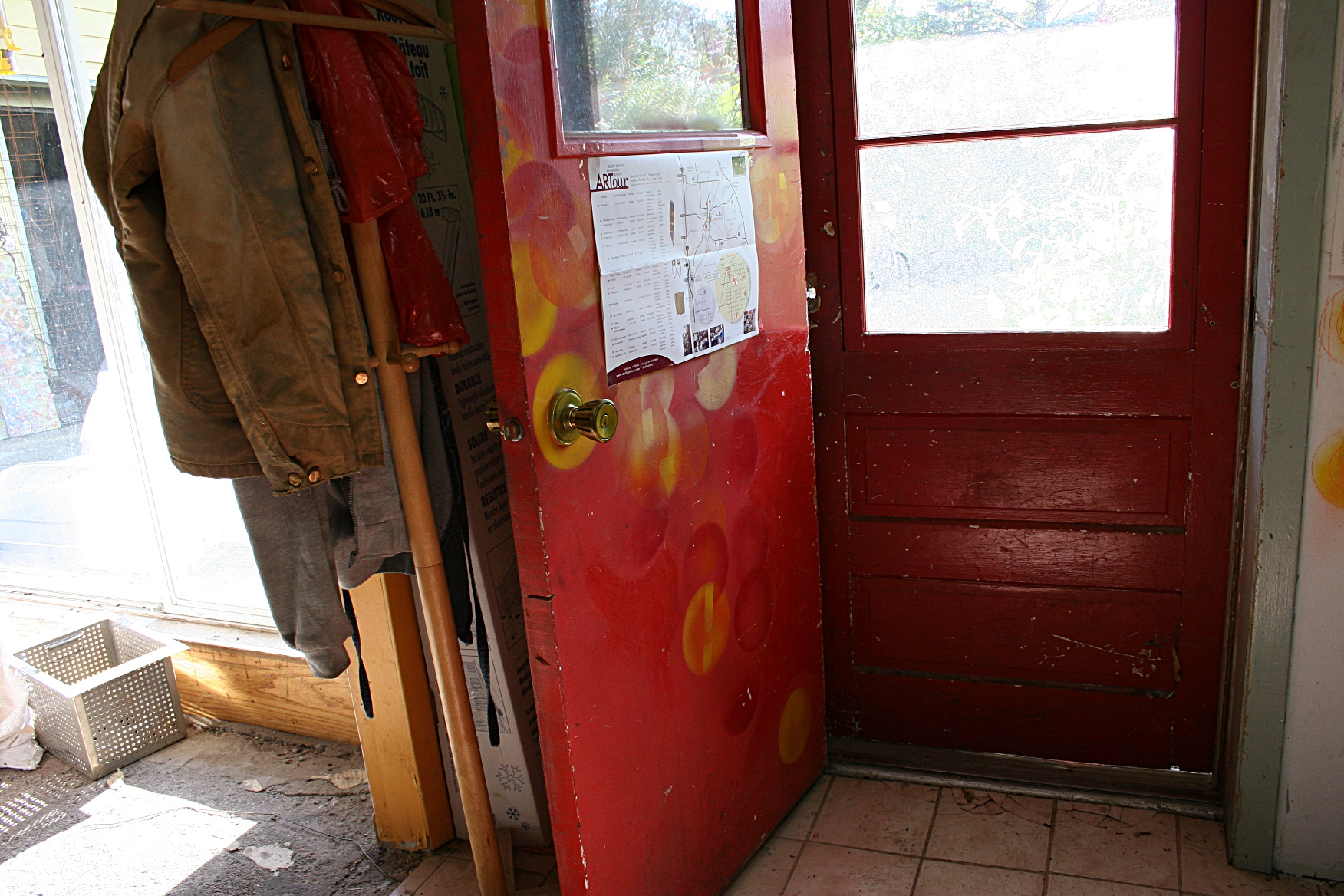
The entry to Wolcott Art.

The entry to Wolcott Art studio.

Like Jennifer Wolcott, recently voted southern Minnesota’s Best Local Artist (through Southern Minn Scene). I visited the metal artist’s studio, just north of Northfield off Minnesota State Highway 3, among a select number I toured during the ARTour. I focused on studios I hadn’t seen during past tours.

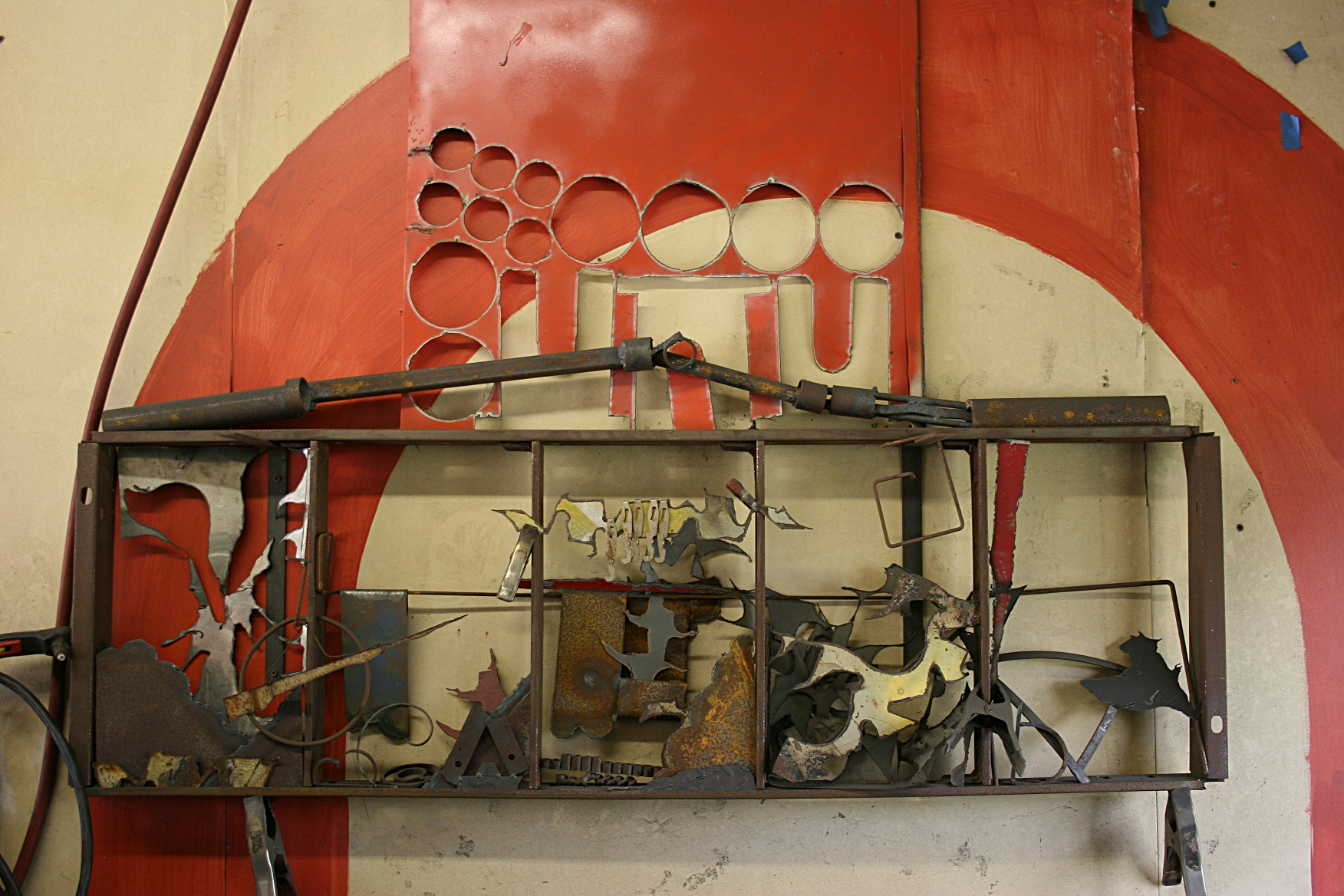
Wolcott's political statement art sectioned like a cartoon.

Wolcott’s political statement art sectioned like a cartoon.

Wolcott shapes and welds steel into substantial sculptures, but also crafts smaller more whimsical pieces from old filing cabinets and such. As she explained the significance of a political statement art piece that hangs in her garage-shop, I could visualize the fire which fuels her creativity.

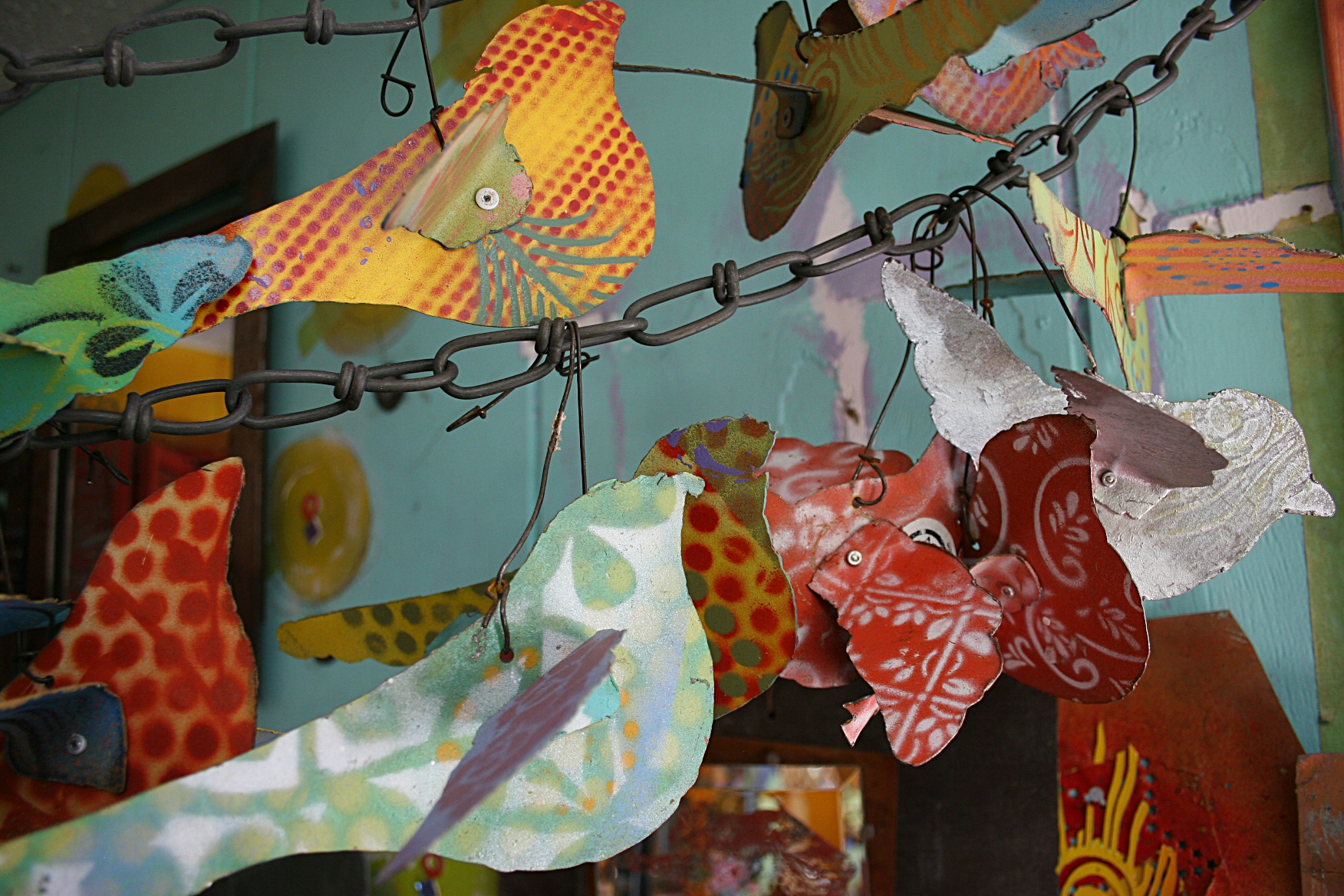
Birds cut from a filing cabinet and spray painted.

Birds cut from a filing cabinet and spray painted.

It is that fire of passion which flamed throughout the ARTour.

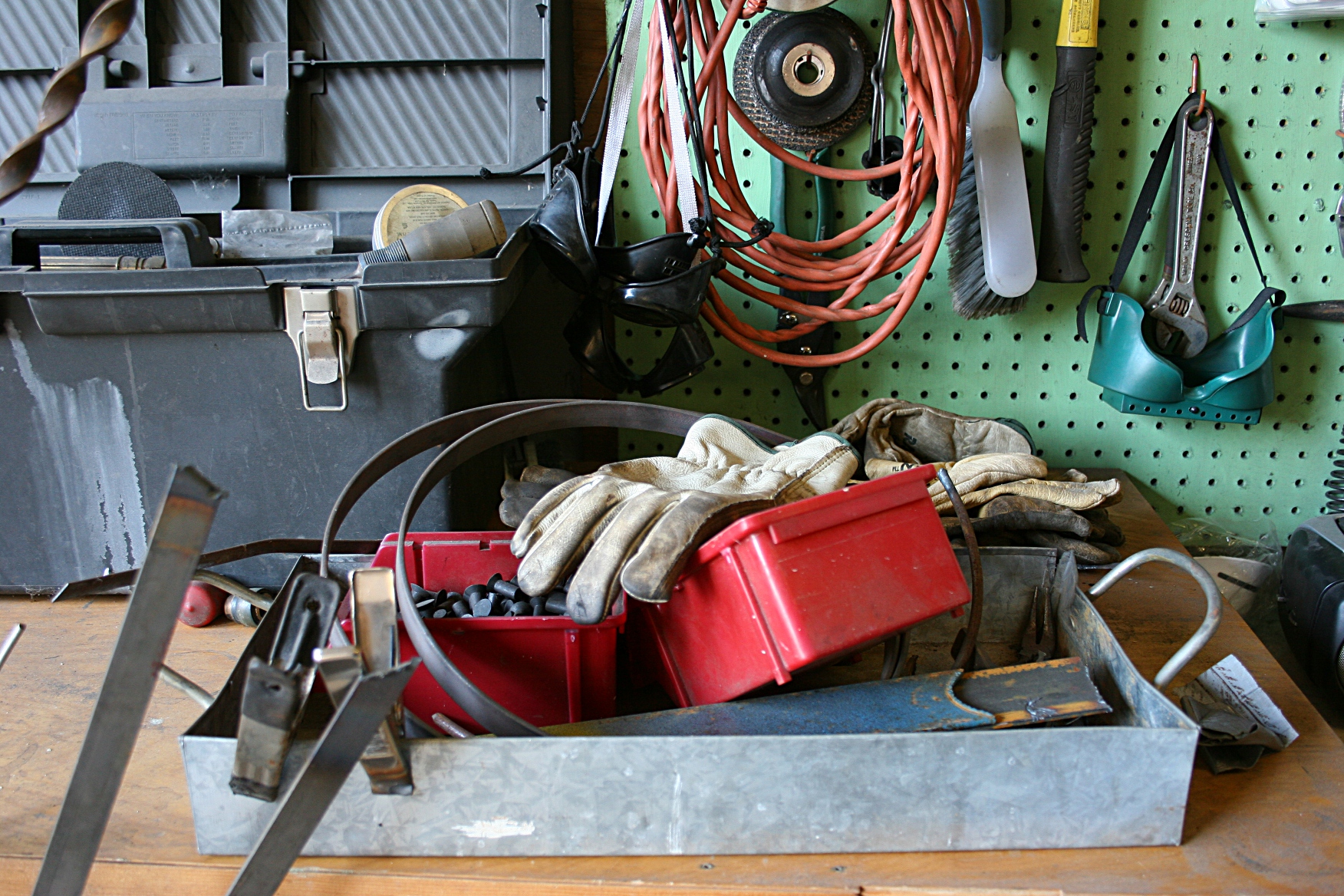
Tools of a metal artist.

Tools of a metal artist.

And, in my opinion, if you are not fueled by passion, then you cannot call yourself an artist.

Basking in the sunshine inside the Wolcott Art studio.

Basking in the sunshine inside the Wolcott Art studio.

THREE OTHER ARTISTS SHOWCASED their work at Wolcott Art. They—Heather Lawrenz of Lawrenz Jewelry, Annie Larson of Sleepy Bean Studio and Ian Baldry of Ian Baldry Knitwear—have found their niches in the art world by crafting jewelry and knitting textiles.

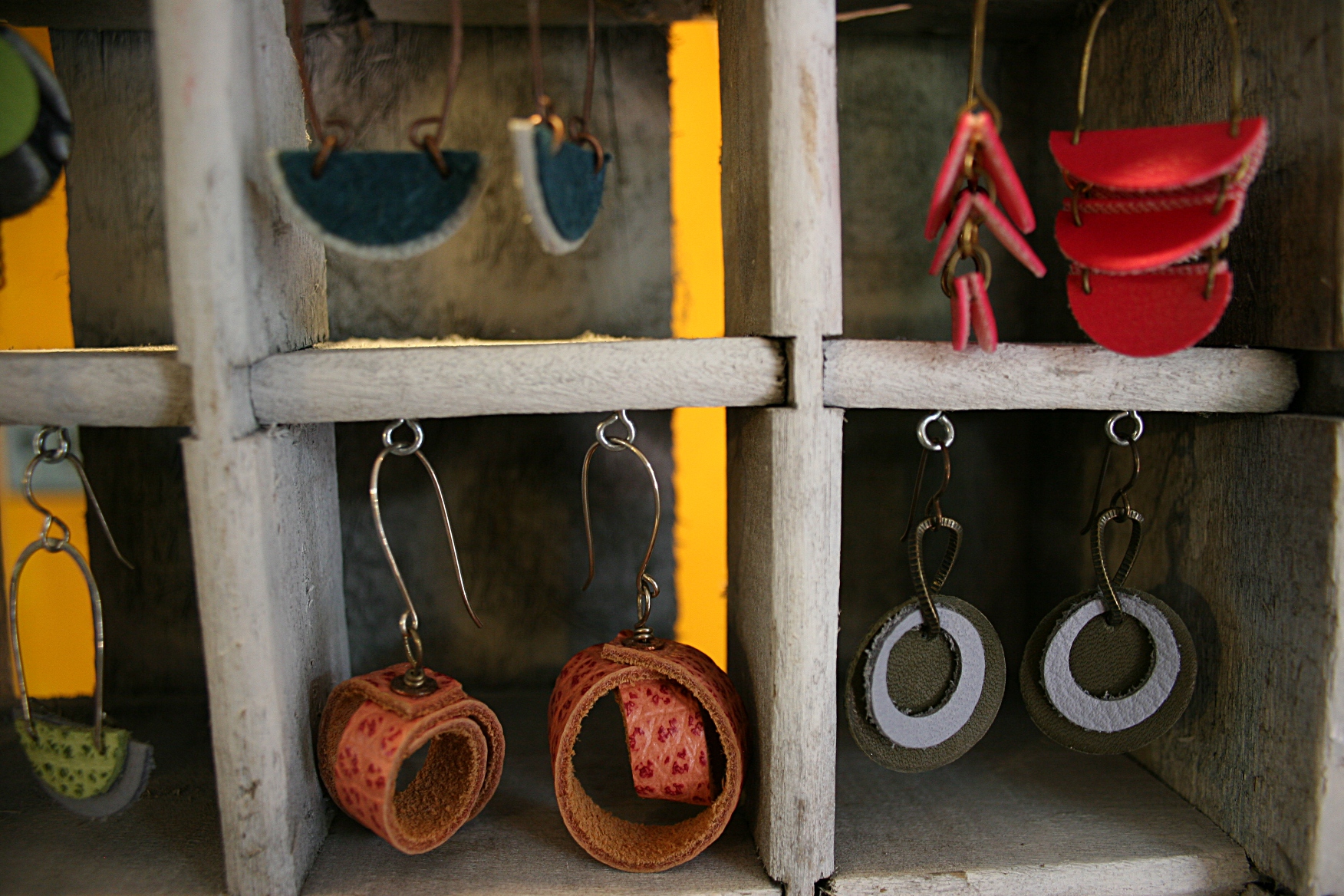
Heather Lawrenz upcycled leather belts into earrings.

Heather Lawrenz of Northfield upcycled leather belts into earrings.

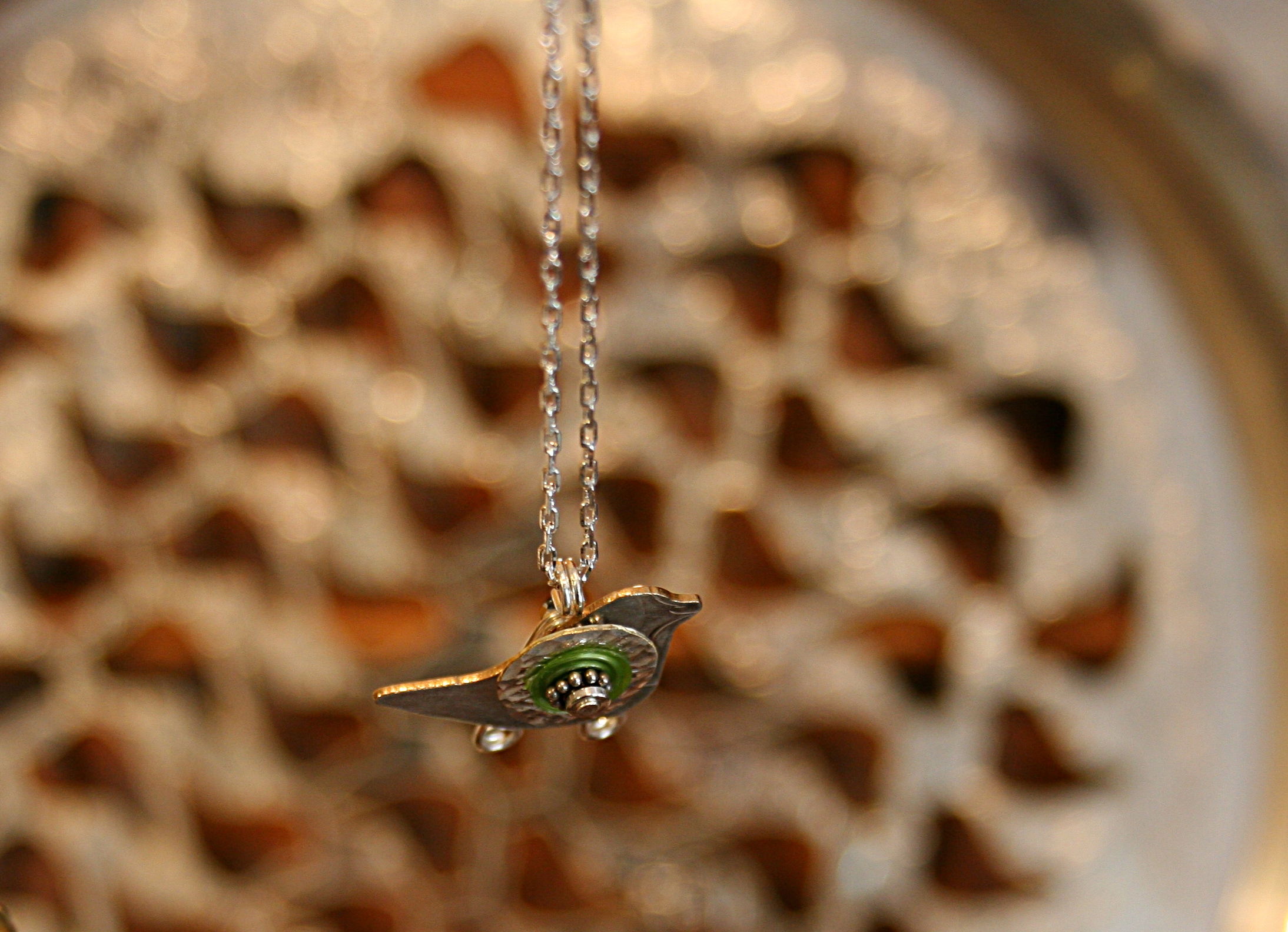
And here Lawrenz creates bird necklaces punched from cast off silver trays (faded in the background in this image).

And here Lawrenz created a bird necklace punched from a cast off silver tray (faded in the background in this image).

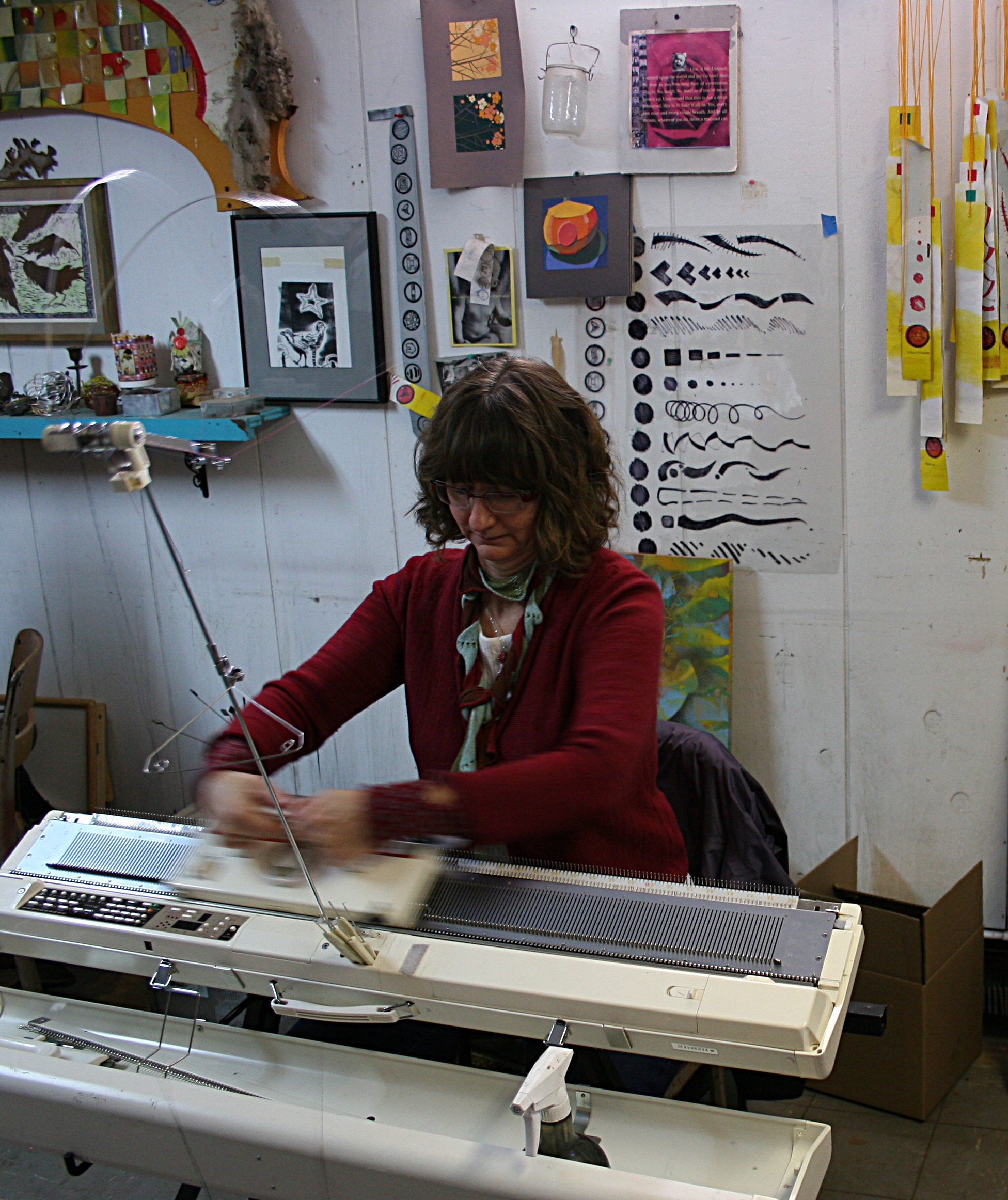
Artist Ian Baldry of St. Louis Park creates a scarf on her knitting machine.

Artist Ian Baldry of St. Louis Park creates a scarf on her knitting machine with bamboo yarn.

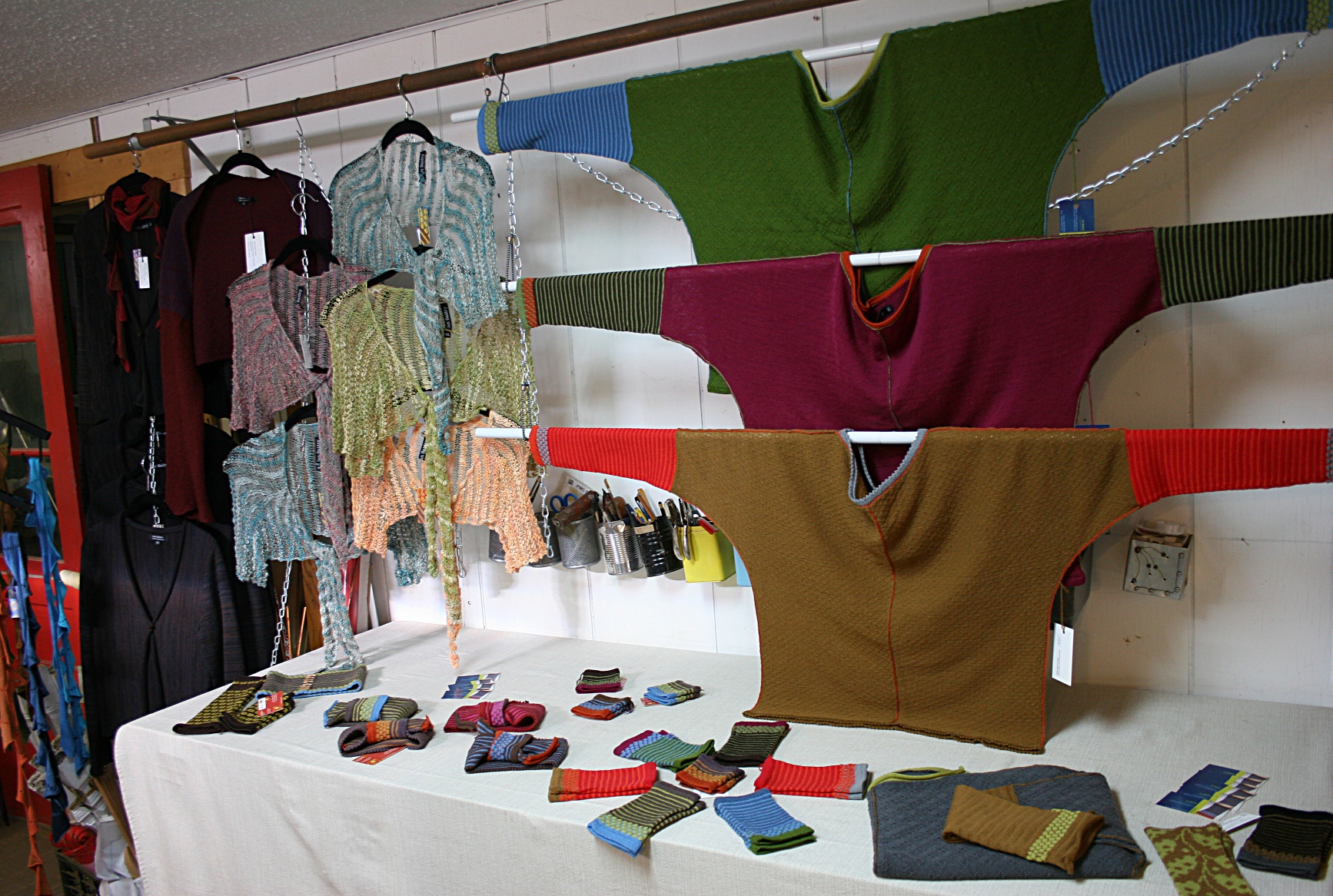
Samples of Baldry's knitted textiles.

Samples of Baldry’s knitted textiles.

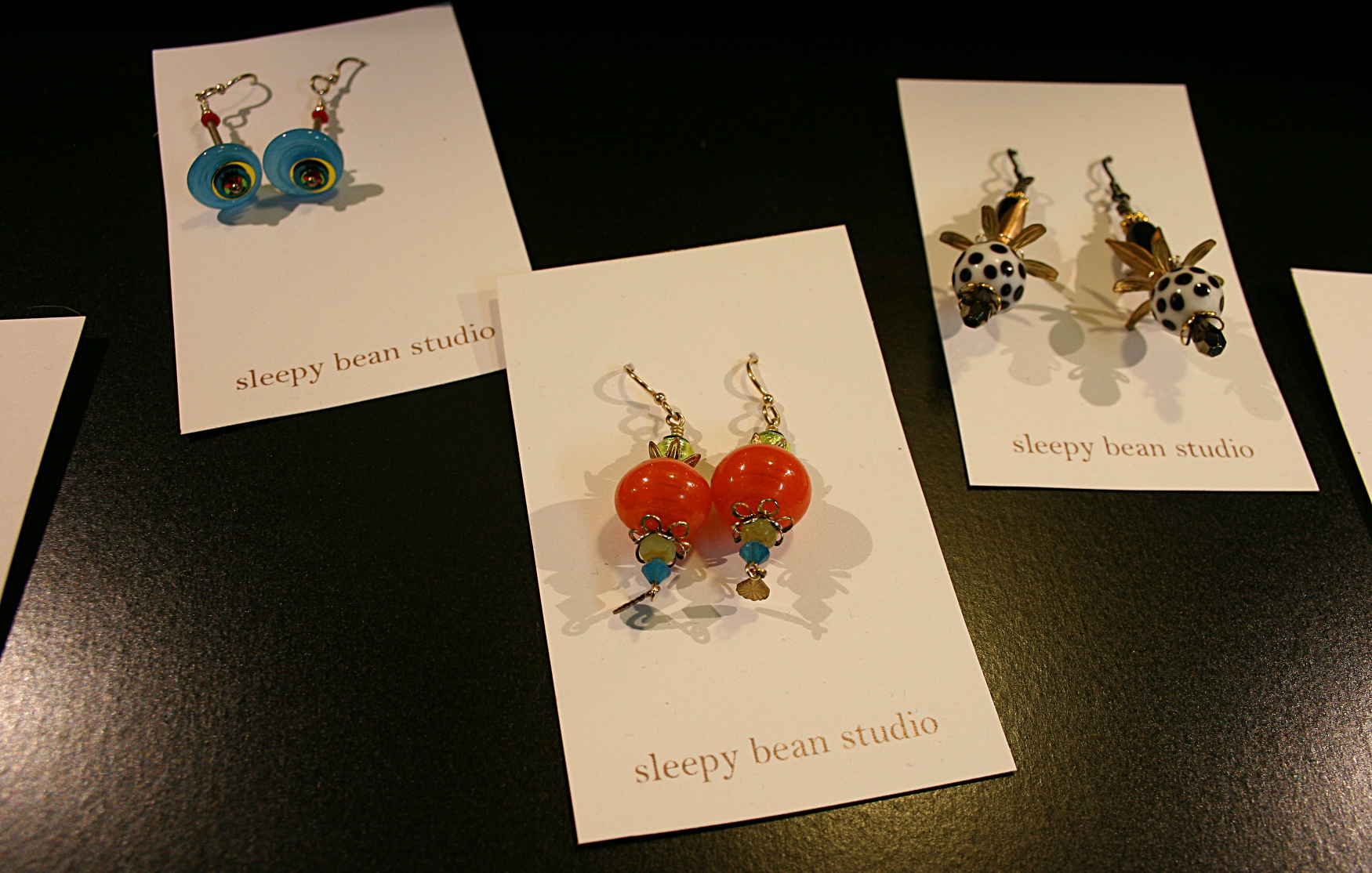
Earrings, featuring handcrafted beads, created by Annie Larson of Sleepy Bean Studio.

Earrings, featuring handcrafted beads, created by Annie Larson of Sleepy Bean Studio.

FYI: Check back for more photos from the South Central Minnesota Studio ARTour.

© Copyright 2013 Audrey Kletscher Helbling


On the road in Wisconsin: Duo country churches near Shennington October 20, 2013

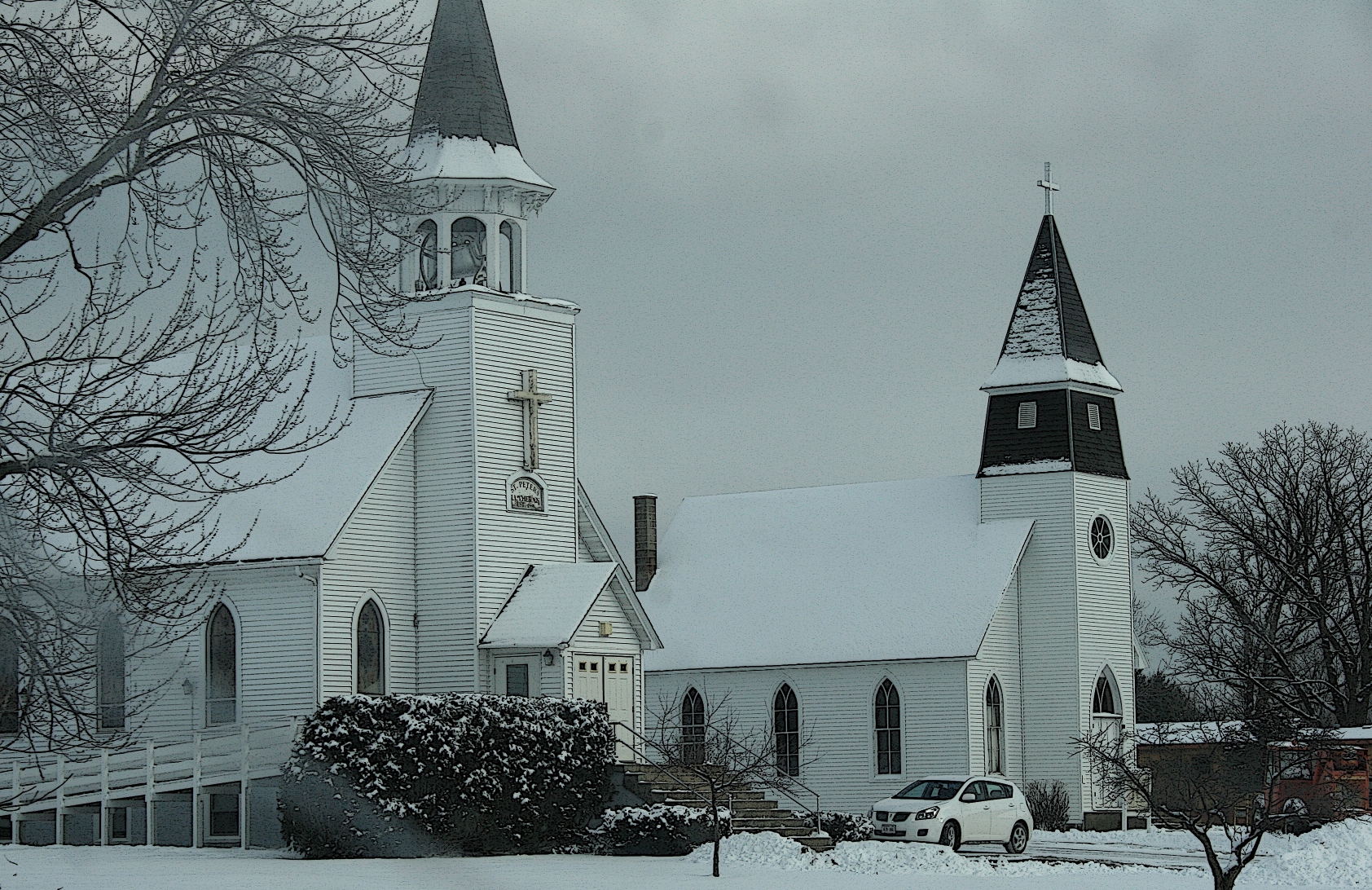
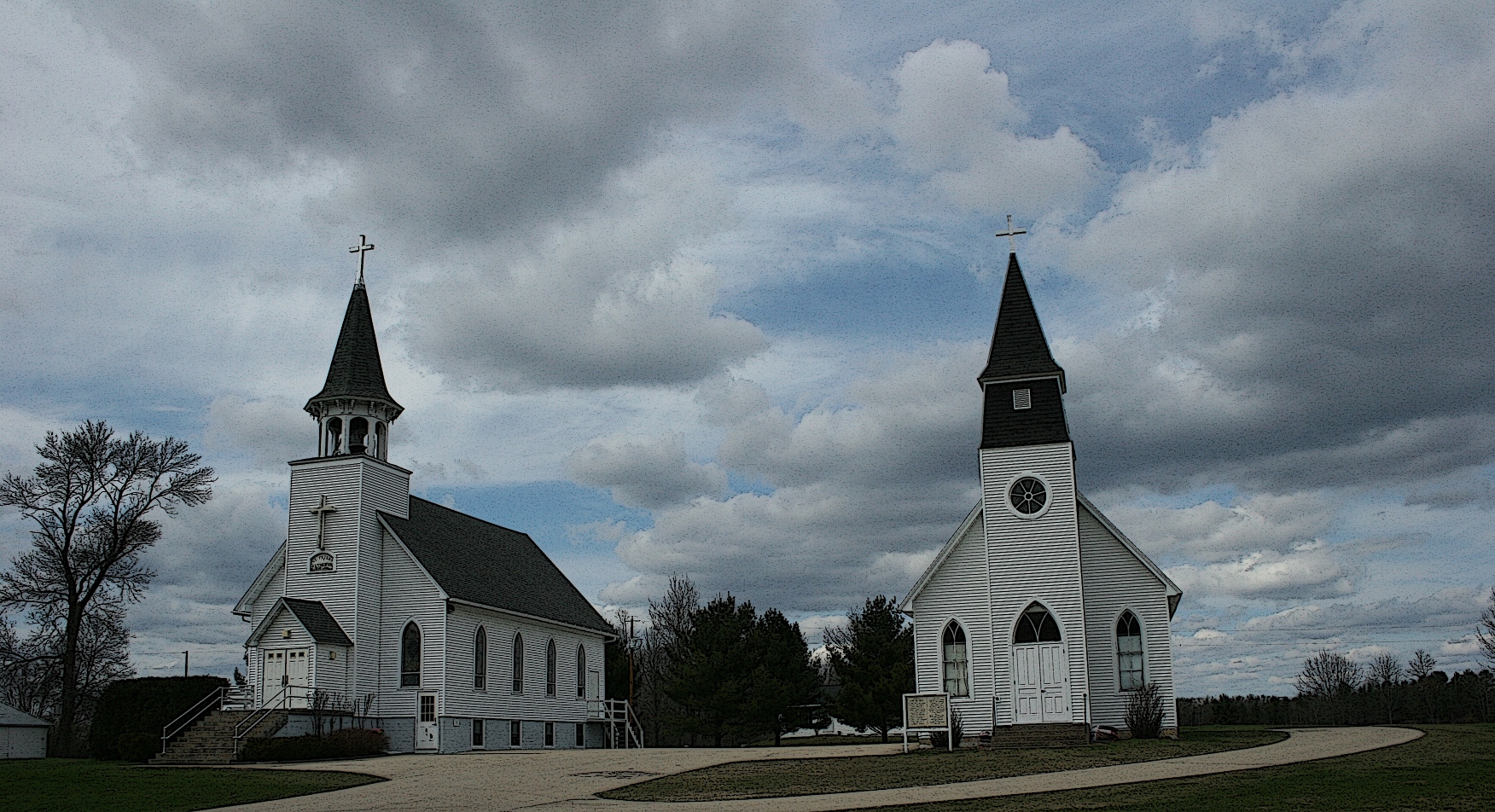
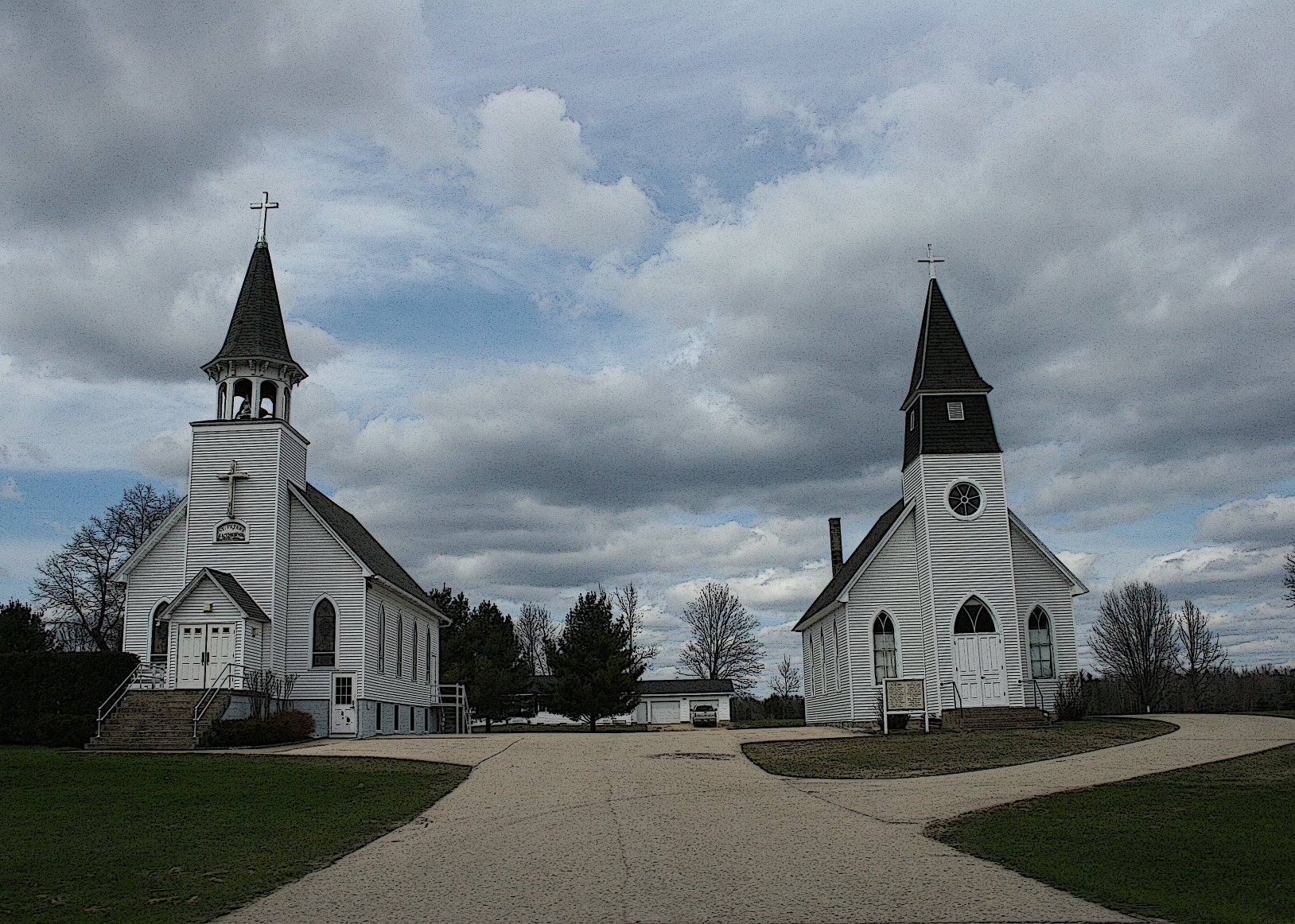
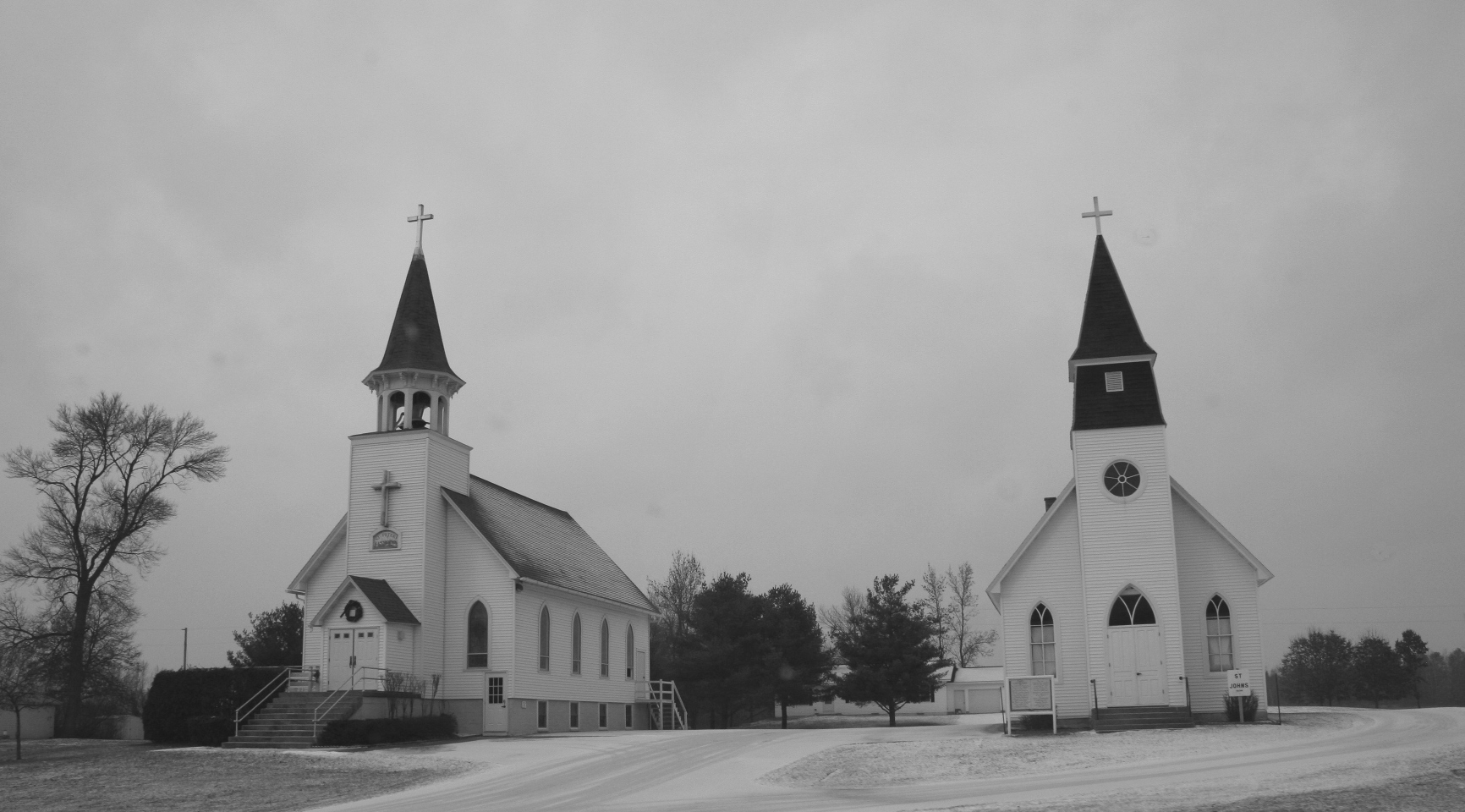
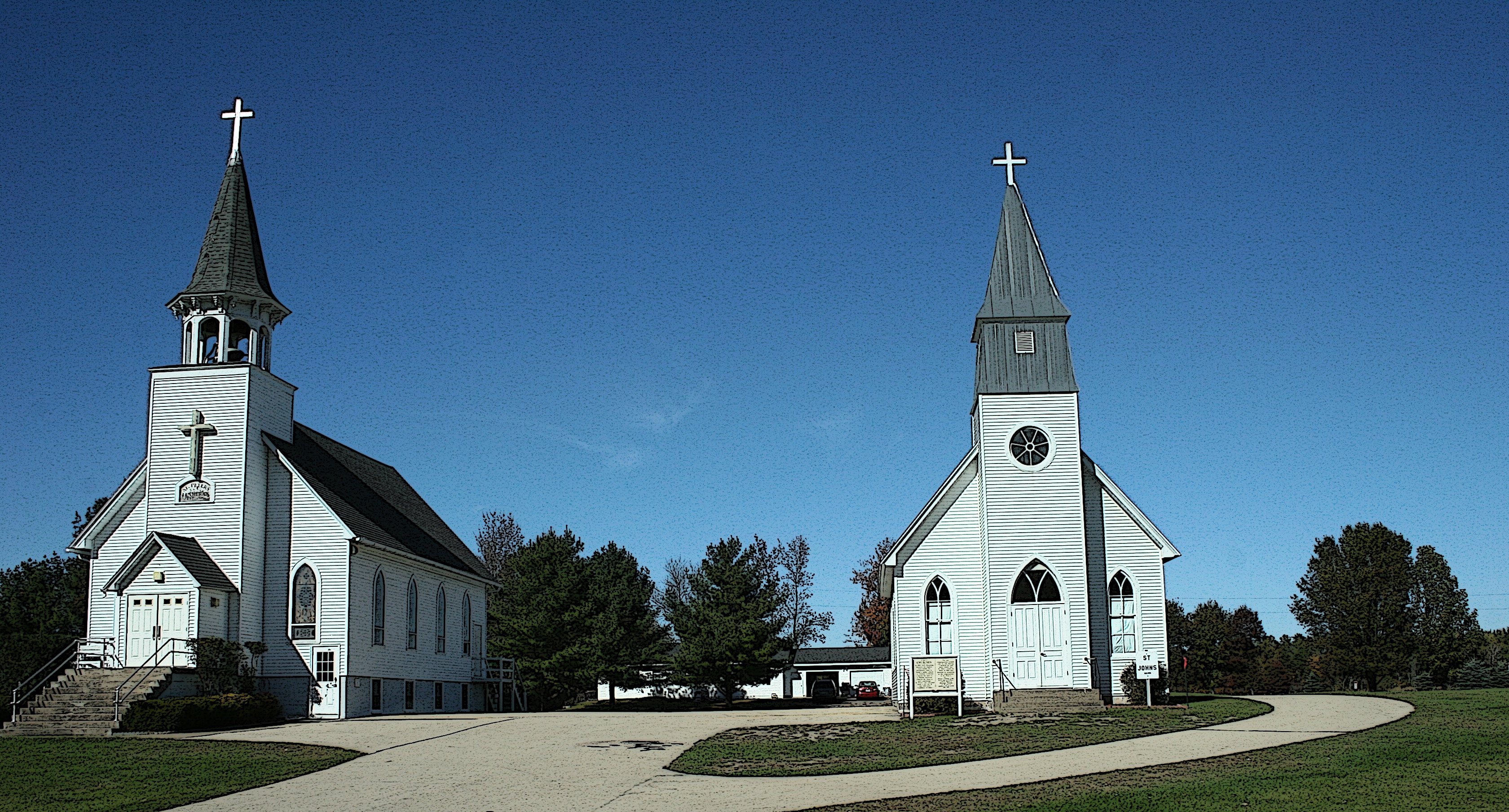
NUMEROUS TIMES I’VE PHOTOGRAPHED these side-by-side country churches along Wisconsin State Highway 21 just west of Shennington:

Photographed while driving by in the winter of 2010.

Photographed while driving by in the winter of 2010.

Photographed while traveling by in the spring of 2011.
Photographed while traveling by in the spring of 2011.

Another shot of the two churches taken in spring 2011.

Another shot of the two churches taken in spring 2011.

Several months later, in December 2011, I snapped this image.

Several months later, in December 2011, I snapped this image.

My most recent photo, shot on Sunday afternoon, October 13, 2013.

My most recent photo, shot on Sunday afternoon, October 13, 2013.

Beautiful, aren’t they? St. John’s and St. Peter’s Lutheran. German and Danish.

Not once have I stopped to investigate why two houses of worship, seemingly from the same time period, are separated only by a cement parking lot.

I should stop, shouldn’t I?

For now, though, I must rely on information published on Waymarking.com. Because that info is copyrighted, you’ll need to click here to read what I learned.

Every place has a story.

If you know anything about these two churches, please submit a comment so that we can all learn more. I’m certain there are stories to be told.

© Copyright 2013 Audrey Kletscher Helbling