Minnesota Prairie Roots

Writing and photography by Audrey Kletscher Helbling

A hodgepodge of forgotten images from a steam and gas engine show January 23, 2012

Filed under: Uncategorized — Audrey Kletscher Helbling @ 8:34 AM
Tags: , , , ,

LIKE MOST PHOTOGRAPHERS, I shoot a seemingly infinite number of images. That can lead to forgetting photos filed in my computer.

But then one day—as in Thursday—I was asked about an image in a file I hadn’t perused in a long time. A Californian wanted to use a photo of an elderly man, presumably a farmer or a retired farmer, in a PowerPoint presentation for a nonprofit. I shot the image at the Rice County Steam and Gas Engine Show as the man walked past the wheel of an old Rumely steam engine.

The West Coaster needed the photo to emphasize the point that farmers represent only two percent of the population and their average age is pushing 60. I didn’t fact-check those statistics. But I did check out the nonprofit before agreeing to her request.

This inquiry led me to sift through two folders full of photos from the steam and gas engine show. Within these files lie images that, alone, wouldn’t be enough to comprise a blog post. But, pooled, they make for interesting content wherein I raise some questions, point out the unusual and share memories.

I present to you then the forgotten photos. Feel free to comment. I’m quite certain you will have a few thoughts to share once you seen the featured subjects and read my words.
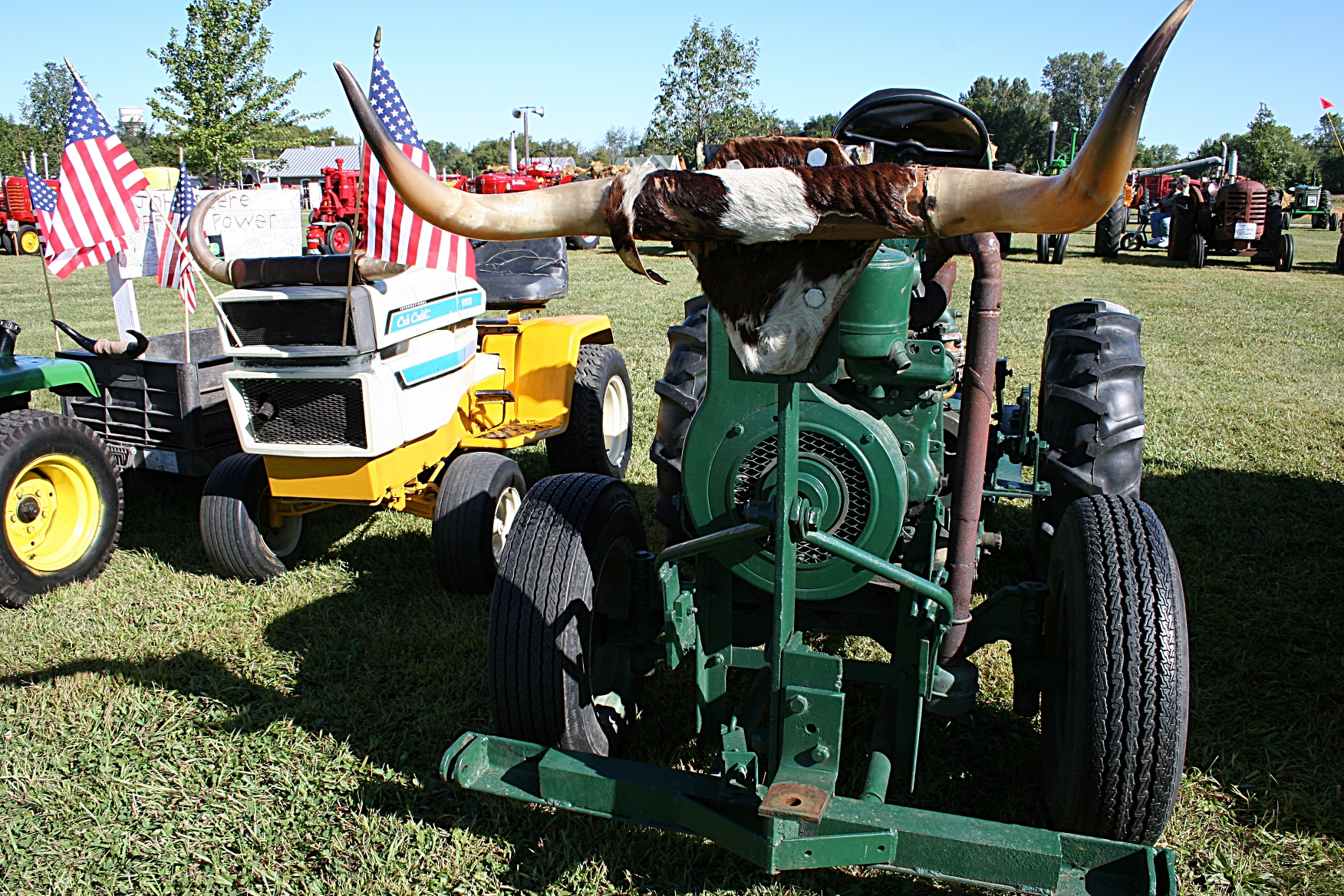
PHOTO A: What have we here, dear readers? Look to the left and scan to the right and you see horns on a wagon, a lawn tractor and an apparently handcrafted tractor. What is the meaning of this?

PHOTO B: Unfortunately, dear readers, I do not need you to tell me that this is a fly strip. Because I grew up on a dairy farm, I am quite familiar with this gross, sticky fly catching strip. One hung in our farmhouse porch where filthy chore clothes and manure-laden buckle overshoes lined the walls and floor. Another fly strip dangled over the Formica kitchen table as a rather unappetizing bit of home decor fly trap. But at least it kept the flies off our dinner plates.
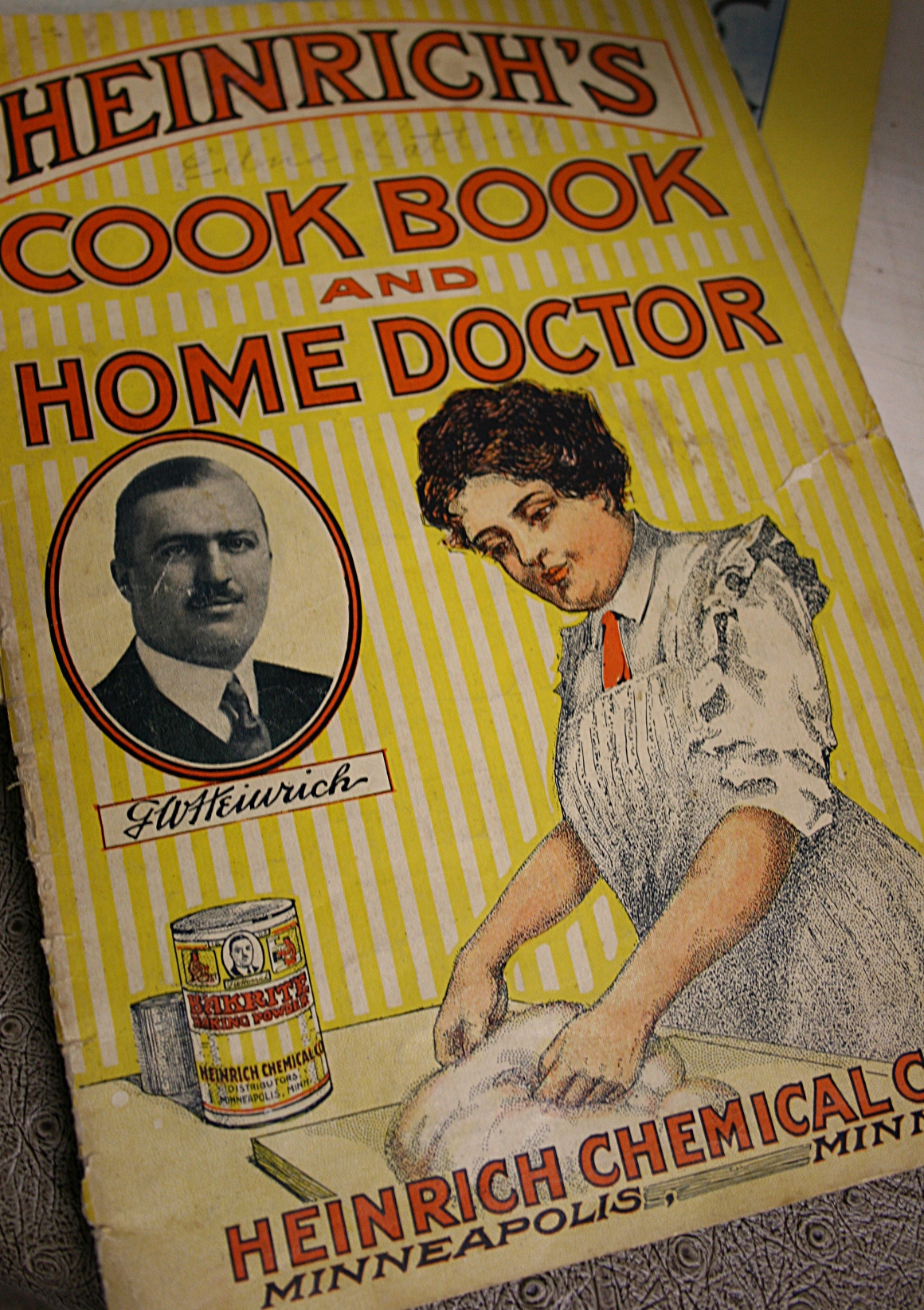
PHOTO C:  Two questions: Why is a chemical company publishing a cookbook? Can anyone tell me anything about Heinrich Chemical Company of Minneapolis?

PHOTO D:  Did you play with a cap gun as a child? I did. I played “Cowboys and Indians” with my siblings. I know that phrase is not politically correct today, but I was a child of the 1960s, the time of westerns. I watched Gunsmoke and Rawhide on television. And if we’d gotten more than one channel on our black-and-white T.V., I would have watched Bonanza, too. And, yes, I do remember life before television.

PHOTO E:  After a quick online search, I failed to find another Massey Ferguson Ski Whiz snowmobile like this one. My husband and I have concluded that this double-seater was handcrafted from two machines. What do you think?
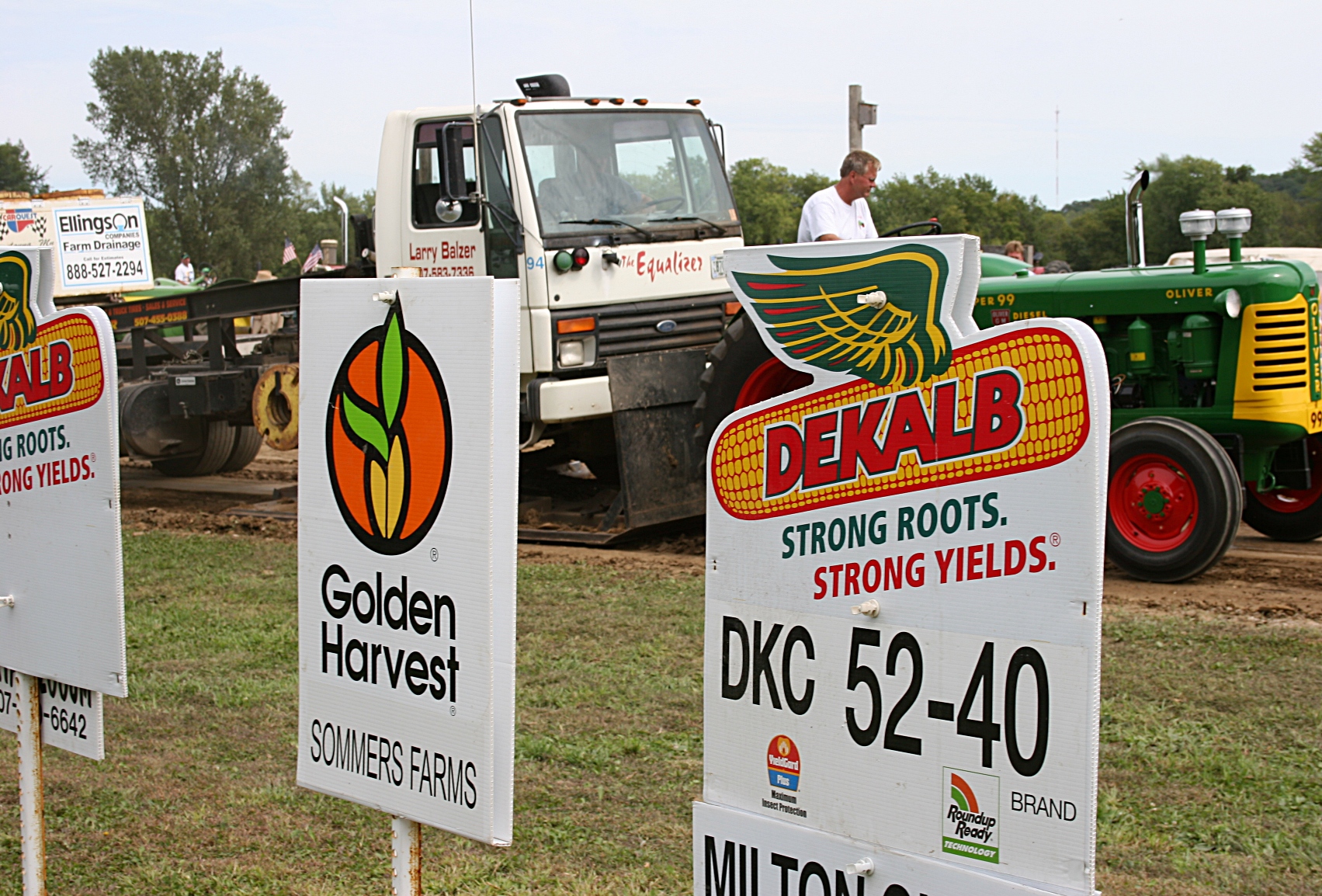
PHOTO F: This image spurs an observation. See how the wings on the Dekalb sign align with the Oliver making the tractor appear to have wings? I did not plan the shot, did not even notice what I’d composed until after the fact. I know that Dekalb symbol well as I detasseled corn for the seed corn company and my dad grew Dekalb corn. Any experienced corn detasselers out there?

THERE YOU HAVE IT. A few photos to possibly bring back memories, prompt discussion or simply amuse you.

© Copyright 2012 Audrey Kletscher Helbling


An enlightening, poetic moment and more January 21, 2012

SOMETIMES I’M A SLOW LEARNER, mostly in math and science. But this time my delayed learning applies to words, specifically poetry.

Dear readers, don’t stop reading now simply because I mentioned the word “poetry.”

I prefer to read and write poetry that is down-to-earth and not so open to interpretation or overloaded with big words that I cannot possibly comprehend the content.

With that perspective, consider this: Poetry is meant to be read aloud.

“Duh,” you say. “She just figured that out.”

Yes, I did.

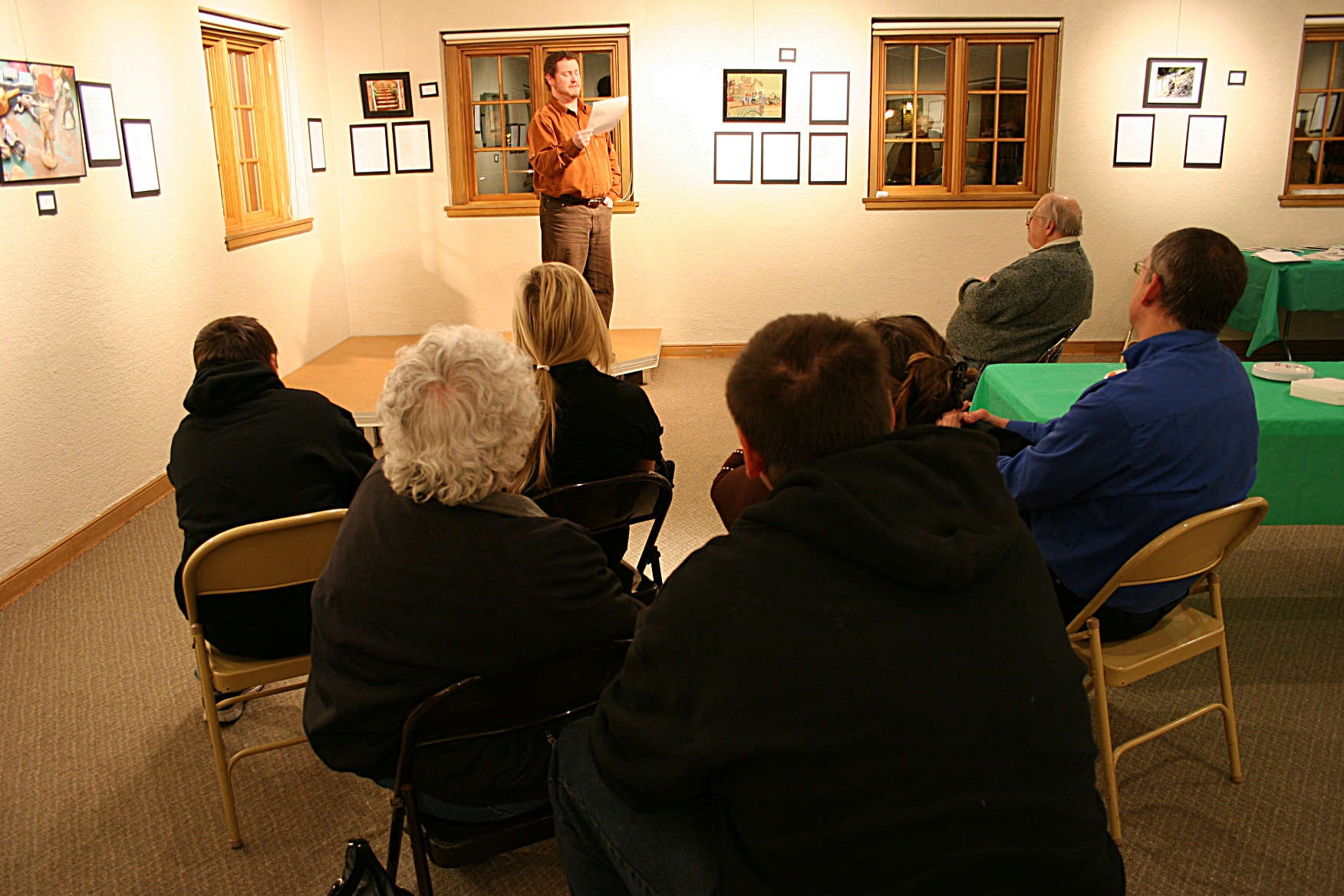
Poet Derek Liebertz reads a poem during "The Image and the Word 2012" reception. The poems are displayed next to the photos that inspired them.

Thanks to Derek Liebertz and Yvonne Cariveau, organizers of “The Image and the Word 2012” exhibit at the Emy Frentz Arts Guild in downtown Mankato, I now fully grasp the importance of reading poetry. Out loud. To an audience.

You see, I attended a reception Thursday evening for the poets and photographers whose work is featured in an exhibit that pairs photos and poems. During that event, Derek and Yvonne read poems inspired by those photos and also invited other participating poets, me among them, to read their works.

Only once, many, many years ago, have I read my poetry in public, unless, of course, you count all those times I read silly “married life” poems at cousins’ bridal showers decades ago. Public reading was not the easiest thing for me to do, but I managed.

The atmosphere on Thursday evening was so relaxed and casual, however, that I nearly breezed through reading two of the three poems I’d written. In hindsight, my readings could have been much better had I practiced at home. But I didn’t, and what’s done is done.

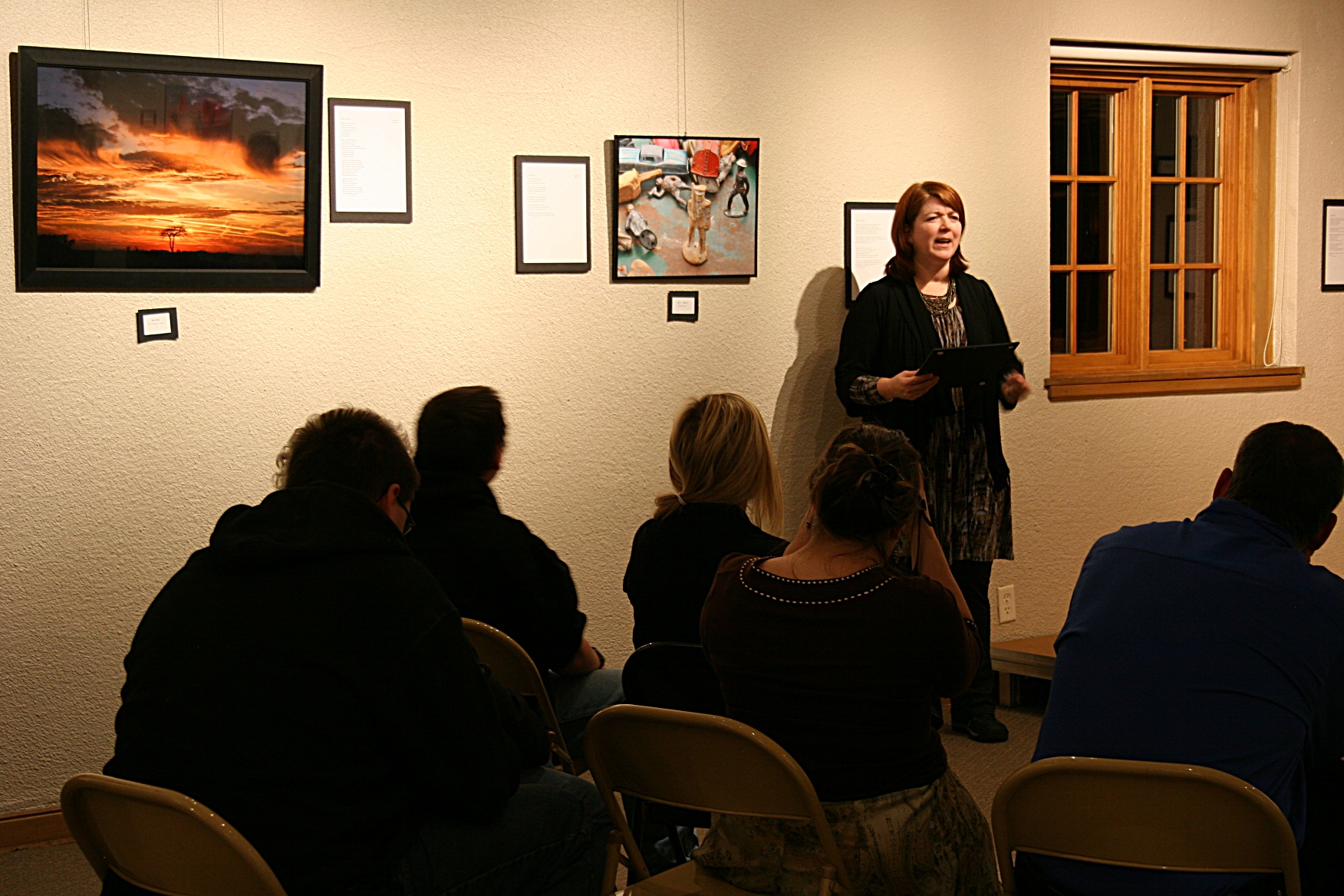
Yvonne Cariveau reads a poem. To the left is a photo taken by Kay Helms and voted as the "favorite photo" during the Thursday evening reception. The landscape image was taken along Highway 14 between Waseca and Owatonna.

The other poets, though, clearly were accustomed to and comfortable sharing their poetry with a listening audience. I listened with a learning ear, picking up on the drama, the cadence, the tone, the volume, the movement of the hands, the facial expressions and every nuance that conveyed the meaning and depth of a poem.

I got it. Finally.

That does not mean I’m eager to read poetry in public again. But I understand how a poem can be more fully appreciated when read aloud by its author.

Why did it take me so long to figure this out?

BESIDES THE POETRY lesson I learned Thursday evening, I also met and learned a bit about several other “The Image and the Word 2012” participants. Derek, for example, works as a programmer at his wife Yvonne’s company, Voyageur Web. Who would expect techies to write poetry? Not me. Derek, the most dramatic of the readers, tagged his day job as his “Clark Kent” persona. You have to appreciate a guy with that type of humor, which weaves into his writing.

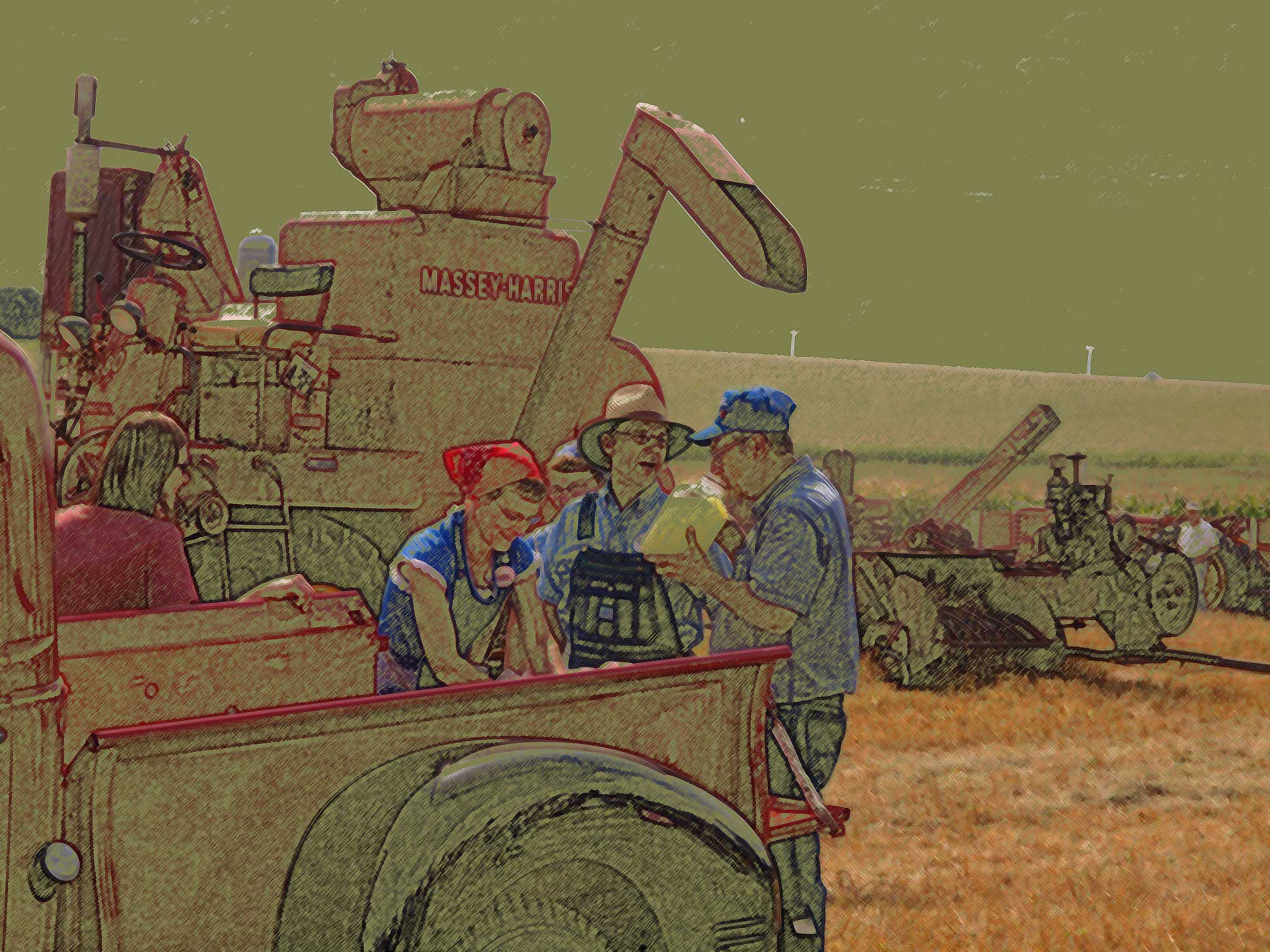
Then I met John Othoudt, a retired highway department employee turned photographer. His exhibit photo of farmers gathered at the tailgate of a vintage pick-up truck was taken at the Le Sueur County Pioneer Power Show. With a single click of his mouse, John edited the image into a pencil drawing style that makes the photo appear vintage 1950s. It inspired me to write “Taking lunch to the men in the field,” recalling the afternoons my older brother and I did exactly that on the Redwood County crop and dairy farm where we grew up.

"Lunch Time" by John Othoudt of Lake Crystal

I’d encourage you to click here and check out John’s photography. This man has talent. I share his passion for noticing details and photographing the often overlooked everyday and ordinary things in life. He shoots in the moment, he says. His “Lunch Time” photo, for example, happened as he was planning another shot. I understand. Some of my best photos have simply happened, unexpectedly.

Then I met Terri DeGezelle, whose credentials are even more impressive than those she shared with me Thursday. Click here to learn more about this woman who has written 64 nonfiction children’s books and is also an avid nature photographer. Her “Artist’s Colors,” a photo of colorful chalk, won the best paired photo-to-poem honor at the reception. Susan Stevens Chambers wrote the accompanying poem. I loved Terry’s enthusiasm and warm personality and the pure passion she exudes for the crafts of writing and photography.

As I was preparing to leave and thanking Yvonne for organizing the exhibit, I talked briefly with John Calvin Rezmerski, who encouraged me in my writing. His “Window” poem was voted as the favorite poem. Only until later, back home, did I learn that he is the League of Minnesota Poets current Poet Laureate and a well-known, established poet with 20 books, chapbooks and anthologies to his credit. He’s retired from teaching creative writing, journalism, literature, storytelling and more at Gustavus Adolphus College in St. Peter. Unlike me, he’s quite experienced at reading his work in public.

I met other delightful individuals, too, including Kay Helms, whose “The Witness Tree” was selected as the favorite photo at Thursday’s reception. The stunning sunset image was taken along U.S. Highway 14 between Waseca and Owatonna.

Helms’ photography will be displayed February 17 – March 18 at the Arts Center of Saint Peter in a collection of words and photos highlighting individuals who worked the land in south central Minnesota. Click here for details.

IN SUMMARY, Thursday’s reception proved invaluable for me. I learned that I could stand (or sit) before an audience and read my poetry without too much trepidation. I learned that poetry shines when read. And, finally, even though I was likely the most novice of the participating poets, I felt comfortable among all that talent. They are a fine bunch of poets, but more important, they are warm, kind and welcoming individuals with whom I enjoyed networking.

CLICK HERE TO READ a previous post I wrote about “The Image and the Word 2012.”

Click here to learn more about me, my writing and photography, including my published poetry credits.

© Copyright 2012 Audrey Kletscher Helbling
“Lunch Time” photo courtesy of and copyrighted by John Othoudt


Playing Scrabble for the love of words January 20, 2012

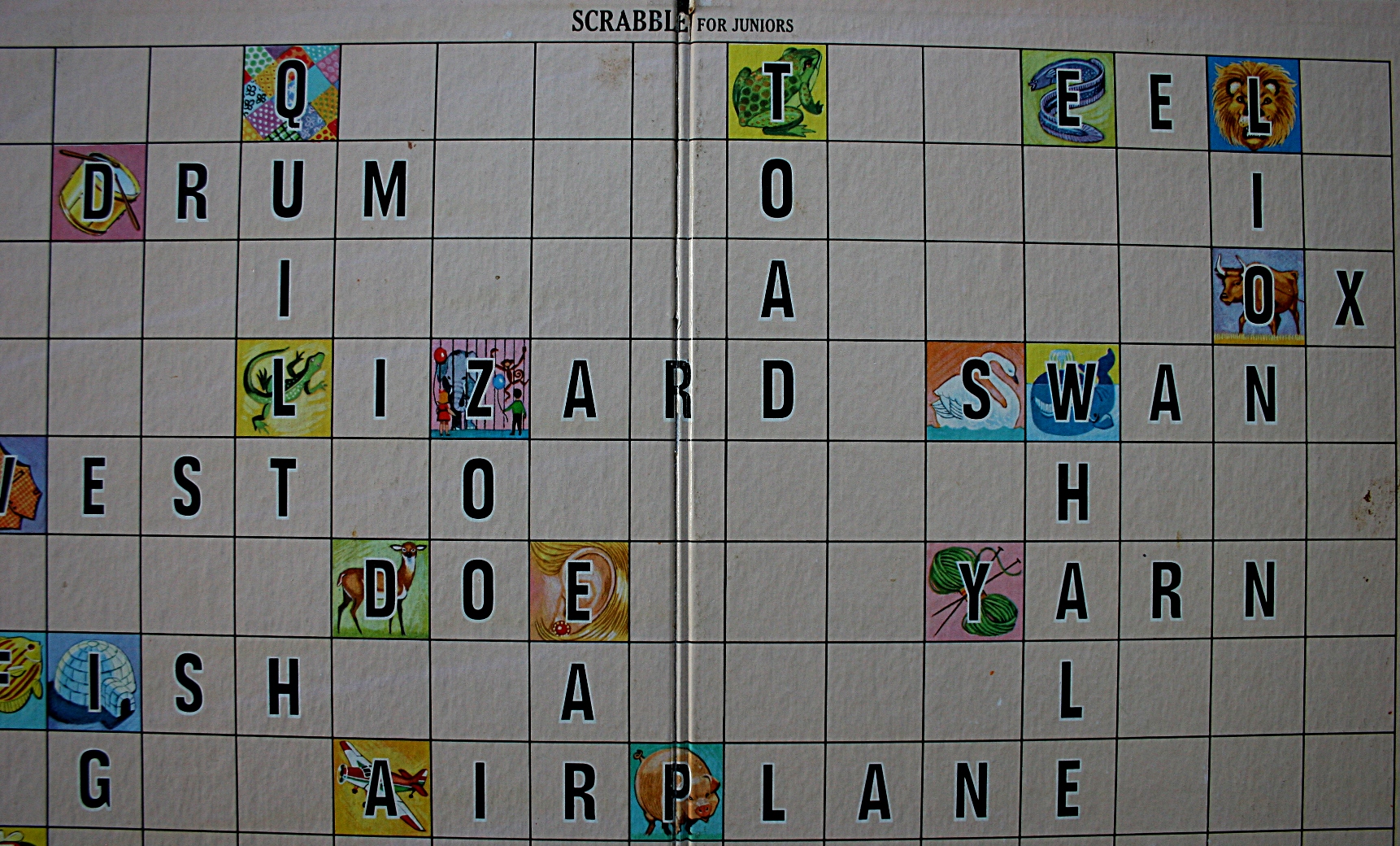
Letters from a 1960s Scrabble for Juniors game. The player who laid down a tile to complete a word printed on the game board earned a red counter. The player with the most counters won the game.

MY FINGERS SLIDE across the smooth, one-eighth-inch thick, blue cardboard squares imprinted with letters. B, M, C, R, O, A…and the dreaded Q, if I’m without a U.

In these tile letters, I touch childhood memories of gathering around the Formica kitchen table set upon worn red-and-white linoleum tiles to play Scrabble for Juniors.

The cover of the vintage Scrabble game for kids from my childhood.

It is the early 1960s and this “crossword game for children” manufactured by Selchow & Richter Company, Bay Shore, N.Y., marks my introduction to Scrabble, which today, in the grown-up version, remains my favorite board game.

Imagine that.

Imagine then me, a wee wisp of a grade school girl leaning across the table to snatch letters from a box lid, shaping those letters into a word and then, triumphantly, carefully, lining the letters upon the playing board, all the while scolding my siblings for bumping the table.

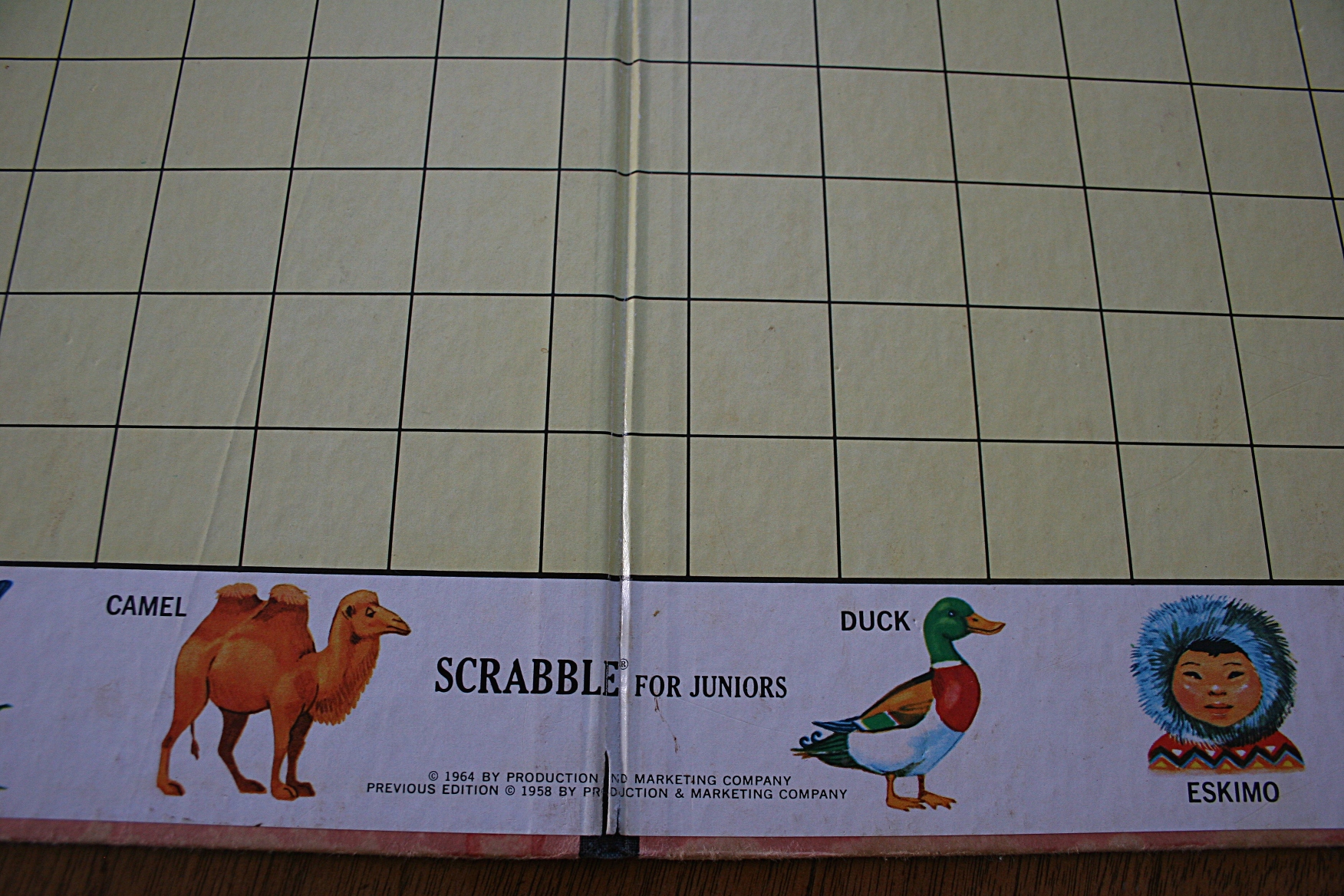
To play on this side of the vintage Scrabble board, players laid letters down to complete the pre-printed words. Lay down the last letter tile in a word, and you earned a red counter chip.

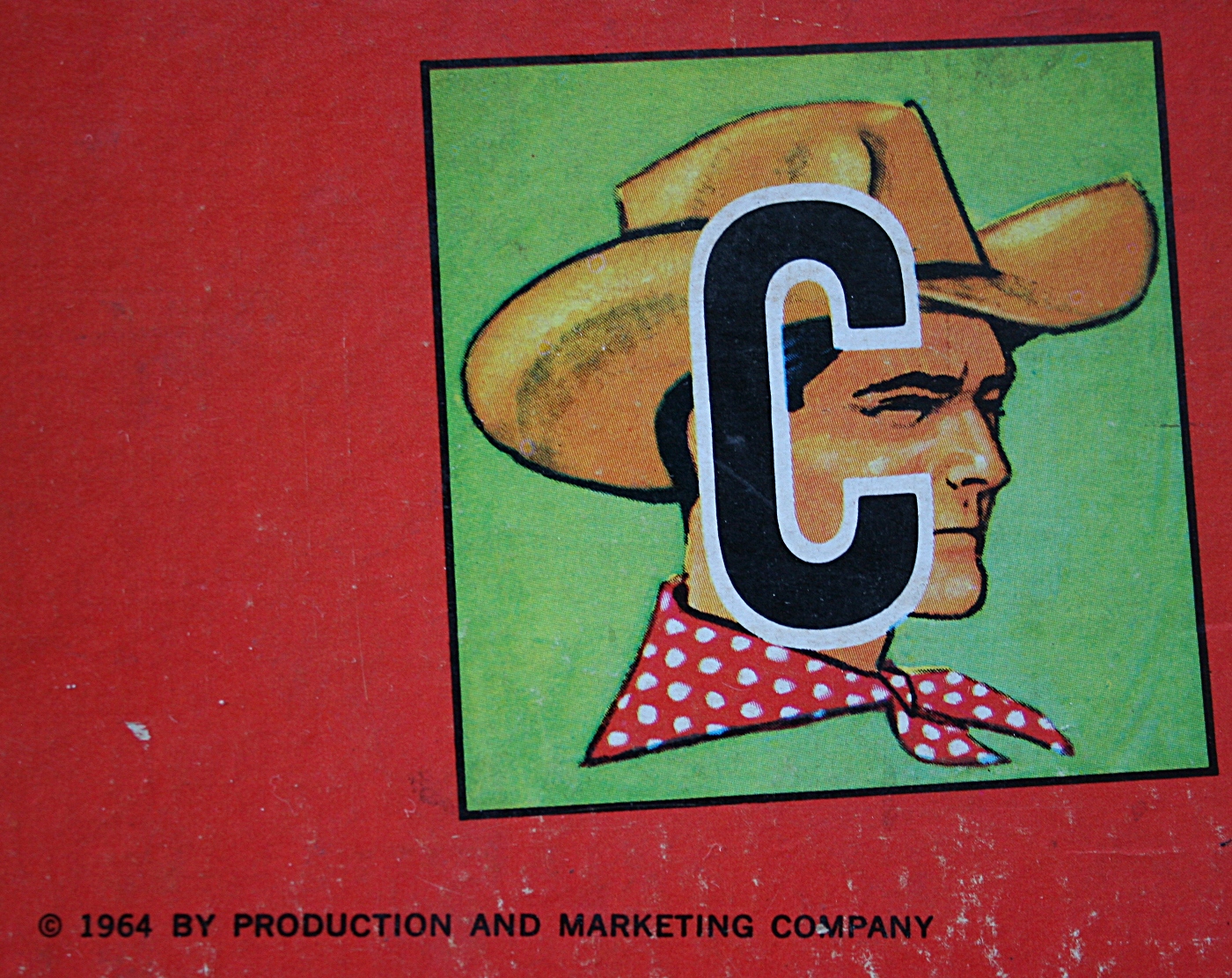
The 1960s Scrabble box cover includes an image of a cowboy at a time when television westerns were popular.

On the flip side of the vintage board, players created their own words, earning one point for each tile in each word formed or modified. As I recall, I couldn't get my siblings to play this side of the board too often.

While I’m certain my brothers and sisters wanted to win, I doubt their interest in this word game ever matched my passion. I delighted in unscrambling the letters into words. Words. Glorious words. Through my cat-eye glasses, I could envision the possibilities.

My earliest memories are of words read aloud from books. Books. Glorious books. At age four, after surgery to correct crossed eyes, I remember Dr. Fritsche at the New Ulm hospital asking me to look at a book. I could see. The pages. The words. The pictures.

Can you imagine how my parents must have worried about their little girl’s vision, how, as a poor farm family they scraped together enough money for the surgery that would keep me from going blind in one eye? I am, to this day, grateful for the gift of sight.

Those are my thoughts on this morning, the day after I heard a bit of trivia on the radio about Scrabble, information that proved to be false. Scrabble was not invented in 1955 as the radio announcer shared.

Rather, Alfred Mosher Butts, an unemployed architect, conceived the idea during the Great Depression and trademarked it in 1948.

For those of you who appreciate trivia, here’s some Minnesota trivia to tuck away in your brain: Jim Kramer, a proofreader from Roseville, Minnesota, won the U.S. Scrabble Open in 2006. This past year, he ranked fourth in the Division 1 section of the National Scrabble Championship and earned $1,000. Three other Minnesotans—from Minneapolis, Rosemount and Spring Lake Park—were among the 108 players participating in the Division 1 competition.

What, I wonder, initially drew these Minnesotans to Scrabble? Did they, like me, gather around the kitchen table as a child to grab letters from a box, form the letters into words and then slide those letters onto a playing board? Do they, like me, love words?

Letters in the adult version of a Scrabble game I received as a Christmas gift in the 1970s.

LET’S HEAR FROM YOU. What’s your favorite board game and why? What are your memories of playing board games as a child? Do you still play board games?

As any Scrabble player would know, I could not legitimately make the word "Minnesota" in a Scrabble game. But this is my blog and these are my rules. If anyone is ever up to a game of Scrabble, I'll play. The guys in my house just don't seem to enjoy word games.

© Copyright 2012 Audrey Kletscher Helbling
 

Travel Wisconsin: Atypical tourist photos from Appleton January 19, 2012

Filed under: Uncategorized — Audrey Kletscher Helbling @ 8:43 AM
Tags: , , , , , , , ,

SAY “WISCONSIN,” and what pops into your thoughts?

I would expect these top two answers: cheese and the Green Bay Packers

Wisconsinites, am I right?

Every time I travel to the Dairyland State, which has been often since my second daughter moved to Appleton a year ago, I find myself drawn to that which distinguishes Wisconsin from my home state of Minnesota.

With my camera, I try to catch the snippets of buildings and life and sites and scenes that the typical tourist might never think to photograph. Often I capture these images in an instant, from the car window passing by or walking along a sidewalk. I have an moment to snap the shutter and then the scene vanishes.

Let me show you those snippet photos taken during a New Year’s weekend trip to Appleton, an hour’s drive from Lake Michigan in central Wisconsin.

Next time you’re in Wisconsin, or anywhere for that matter (even in your own community), I’d encourage you to not only look at what surrounds you, but to truly see.  Let me repeat that word. See.

Notice the signage, the curve of a street, the contrast of a building against sky, the shape of a window, the quirky and the unusual. Take in the details. Then, and only then, will you truly see.

I was more than a bit lost in Appleton as our daughter chauffeured my husband and me around town. I spotted this building along the railroad tracks and photographed it because, well, my eyes were drawn to it. Appleton residents, what is housed in this building?

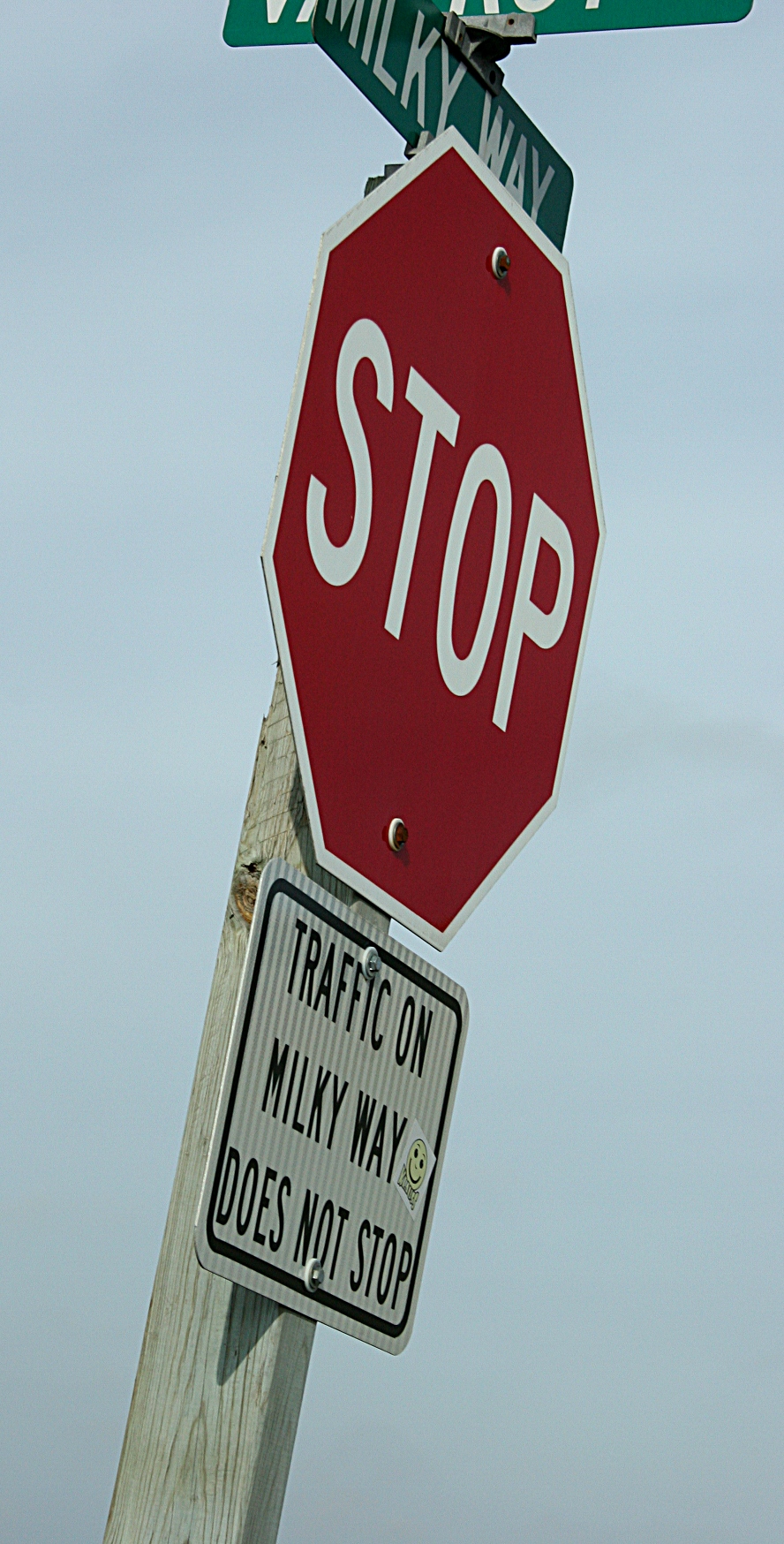
My favorite quirky discovery of the weekend, this signage near none other than...see the next photo.

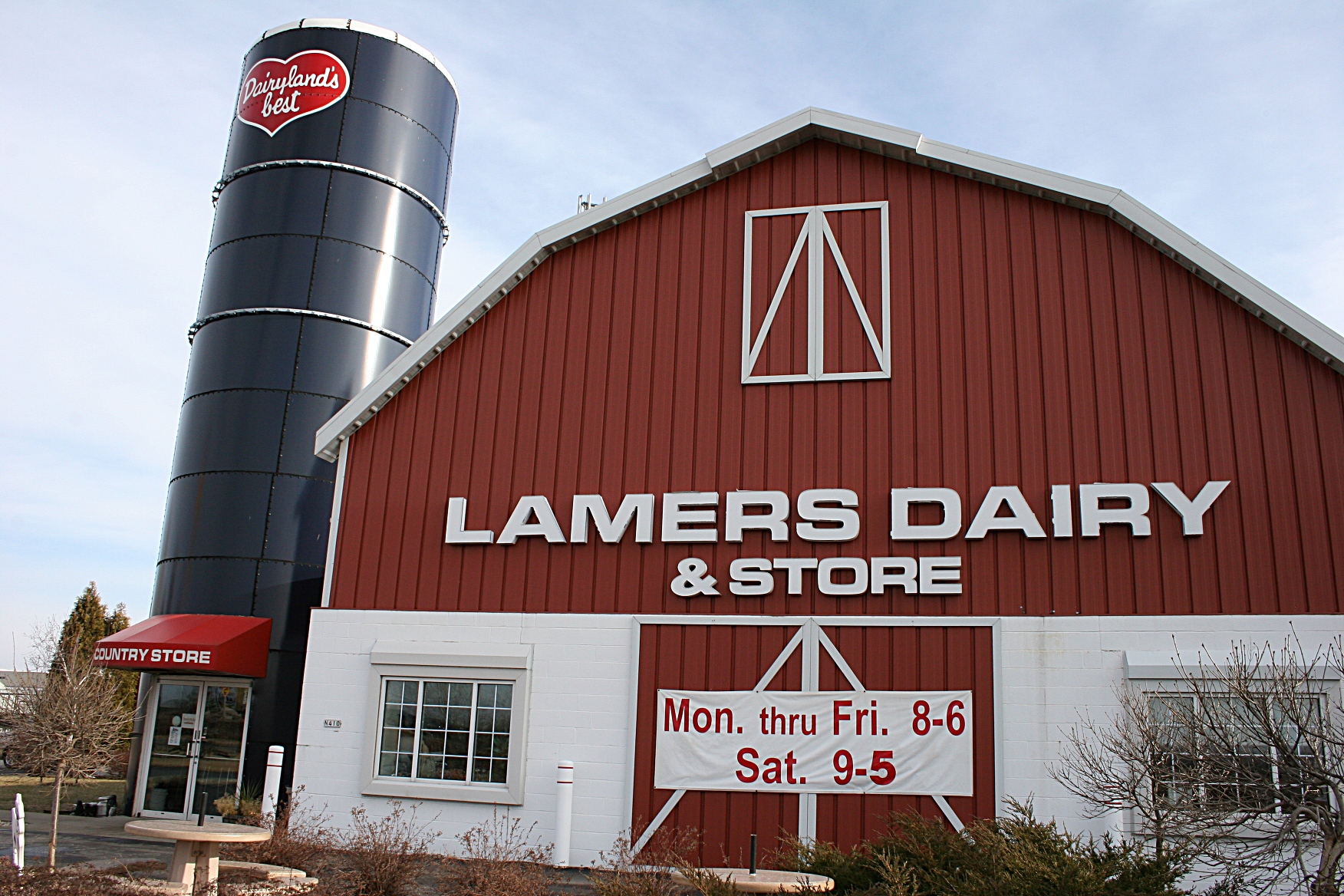
Lamers Dairy, along the Milky Way, sells its own bottled milk, cheese, wine and other food and merchandise. Visitors can watch milk being bottled. Unfortunately, this does not occur on weekends, when we were visiting.

Walking in historic downtown Appleton, I saw not a cheesehead, but this banana, who later posed for a photo. However, I prefer the action photo to the posed. She was promoting the Tropical Smoothie Cafe. My daughter was hoping we would also spot a gorilla pushing balloons along another Appleton street. But, alas, the gorilla was nowhere to be seen.

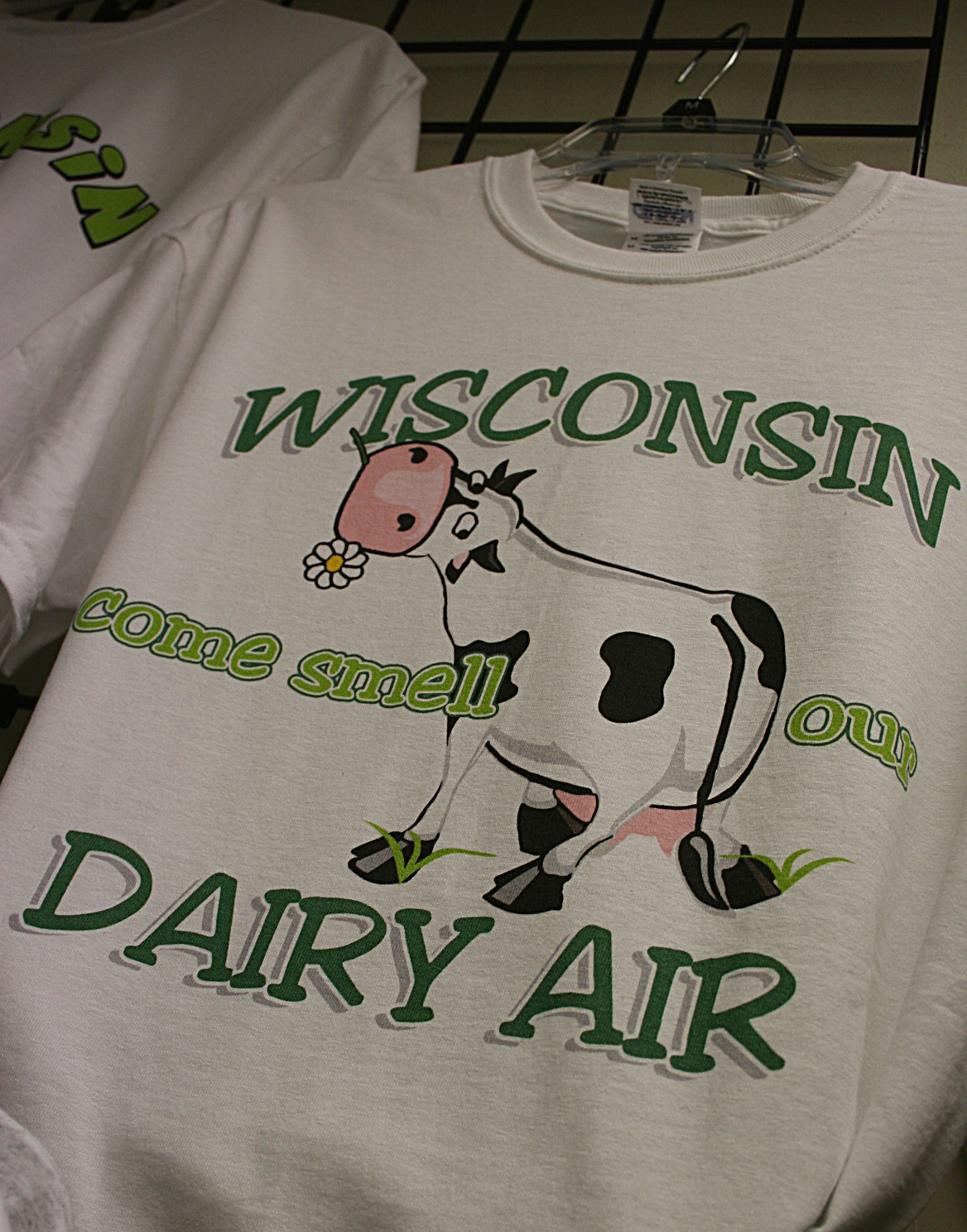
Inside artsy Studio 213, I laughed at this humorous tee. I grew up on a dairy farm. What can I say? I appreciate barn humor.

Over at the Downtown Appleton Farm Market in City Center, a vendor marketed bison meat. Now I'm wondering, is that bison head real and how do you cart that around?

When I shop at farmers' markets, I pay attention to details like merchandise display. Jan Jourdan's vintage marketing theme drew me right over to sample her Jan's Fabulicious Cookies. I asked to try the gingersnaps. Ooops. Not gingersnaps, but molasses cookies. Thick and chewy, they were as advertised, "fabulicious." Love those aprons, too. If my daughter hadn't just given me one for Christmas...

TO SEE MORE PHOTOS from Appleton, click here to view a previous blog post from the historic downtown.

Click here to see photos I shot along Wisconsin Highway 21 in a post titled “Preserving central Wisconsin’s rural heritage via on-the-road photography.”

In case you missed the link earlier in the story, click here for more info about downtown Appleton.

Click here to learn more about the Downtown Appleton Indoor Winter Farm Market.

Click here to learn about Lamers Dairy.

Click here to read about Studio 213 and here to check out the Tropical Smoothie Cafe.

© Copyright 2012 Audrey Kletscher Helbling
 

Inside the Owatonna orphanage museum: Heartbreaking stories and photos January 18, 2012

A telegram sent to an Owatonna orphanage in 1892 announcing the arrival of two sisters.

WESTERN UNION TELEGRAM, August 19, 1892:

Please meet Godman and two little waifs afternoon train.

It is an archaic word, that word “waif.” So I must page through my Webster’s New World Dictionary to confirm that I fully understand its meaning.

I read:

2 a person without home or friends; esp. a homeless child   3 a stray animal

The definition is mostly as I expect, except for the “stray animal” part.

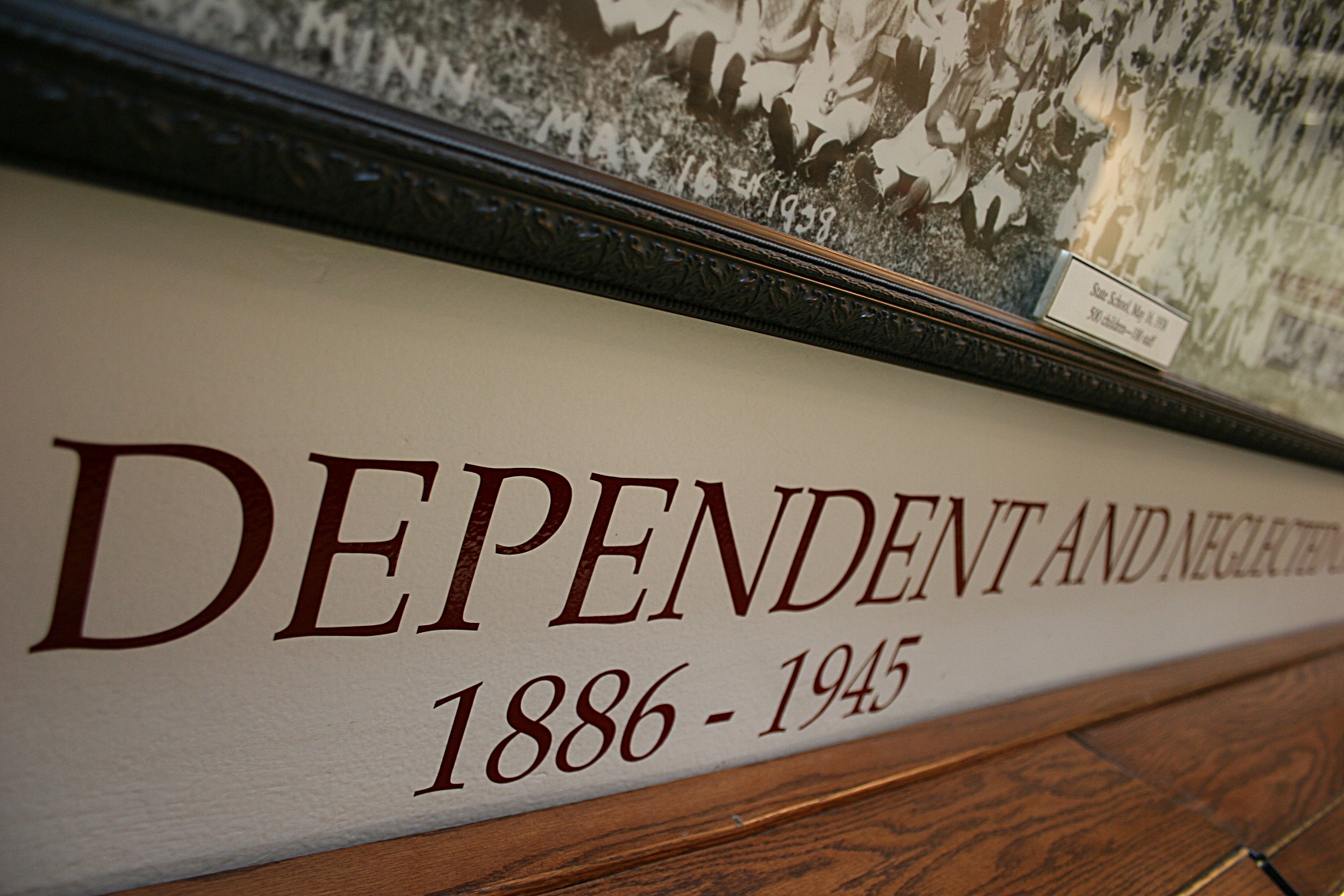
It hurts my heart to read the telegram sent in 1892 to the Minnesota State Public School for Neglected and Dependent Children in Owatonna.

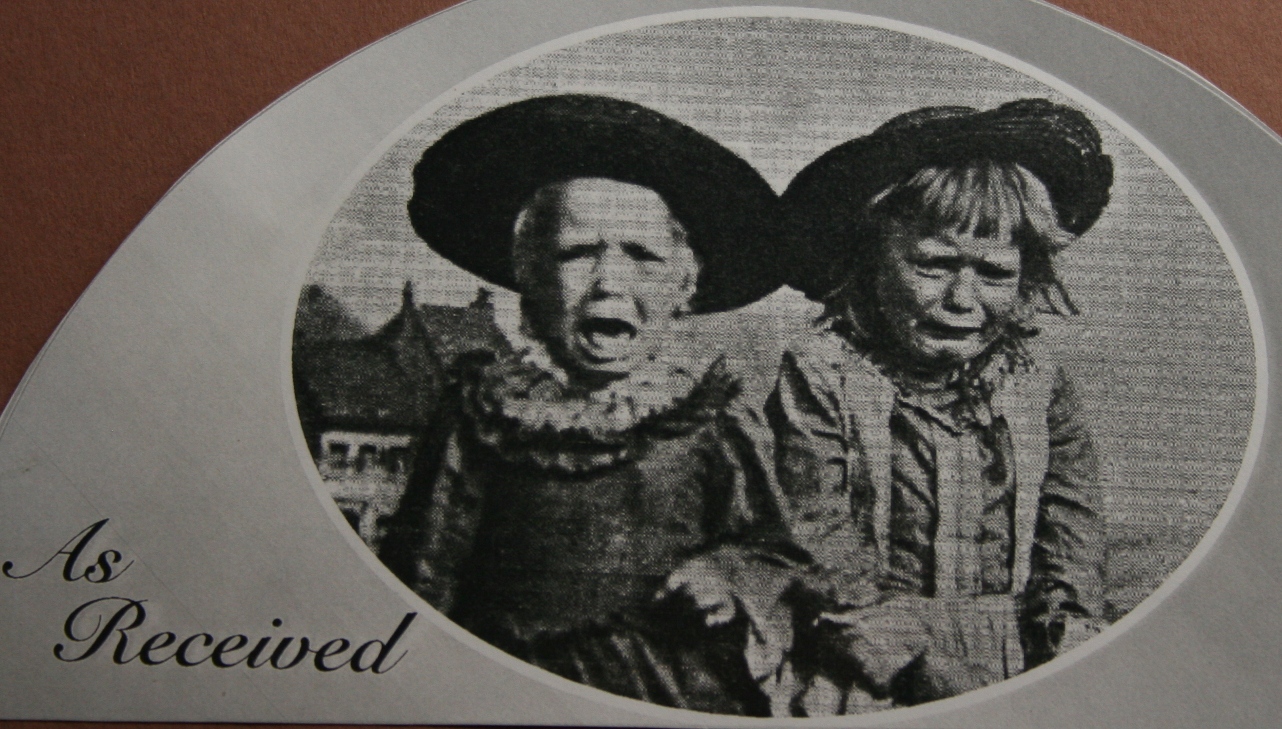
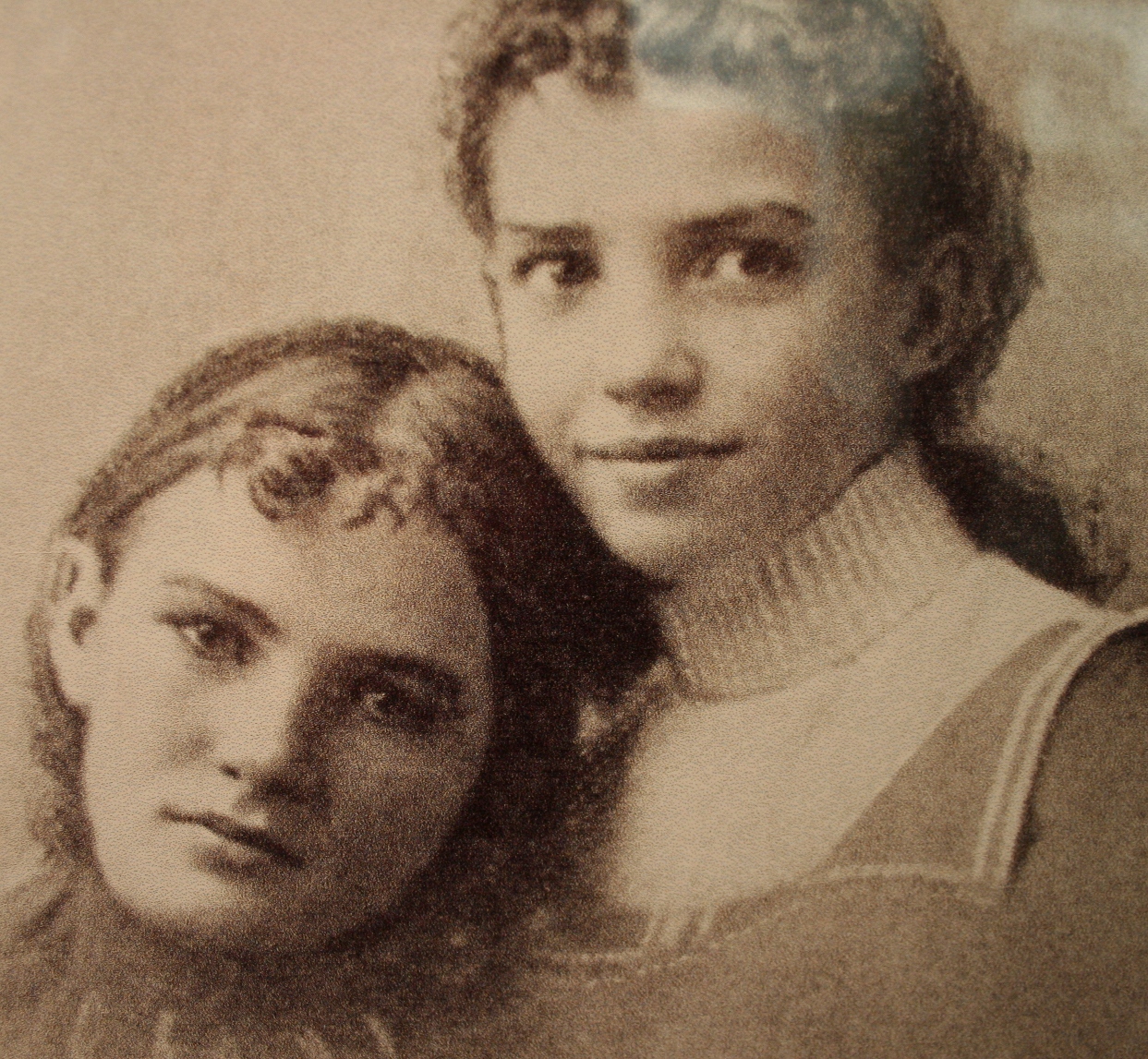
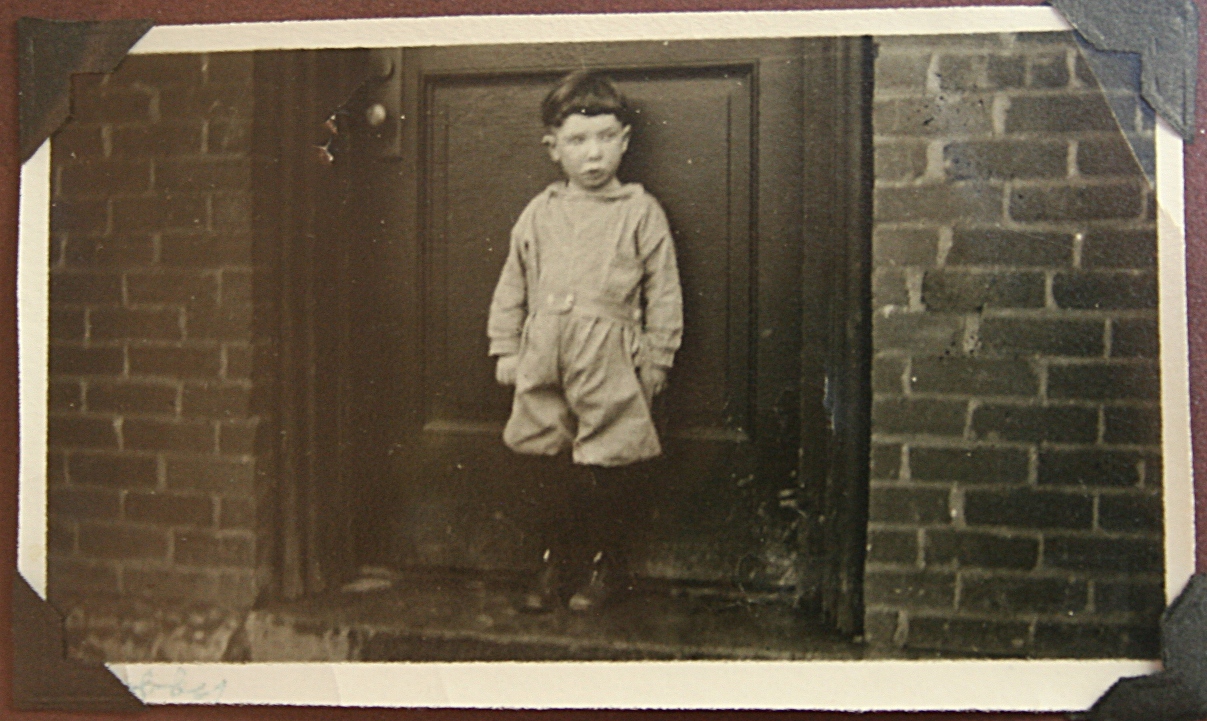
It hurts even more to view the photo of the “waifs,” sisters Mary and Clara, taken on the day they arrived. You can see the despair in their eyes, almost hear their wailing, feel their terror. If I could step back into time, to that day in August 1892, I would wrap those little girls in my arms and hold them and stroke their hair and give them all the love they never knew.

Sisters Mary and Clara, upon their arrival at the Minnesota State School.

Of all the documents and images displayed at the former school, now a museum, this one of the sisters sticks with me for the emotions it captures and evokes. I first saw the photo several years ago during an initial visit to the Minnesota State Public School Orphanage Museum. I have never forgotten it.

This past weekend I was back at the orphanage site to tour a new Owatonna Arts Center exhibit, “Where are the Children,” by Judy Saye-Willis. The Northfield artist taps into the location to pull together an introspective display about children with input from a variety of artists and a writer. I was especially impressed with the graphite drawings of children by Cambridge artist Marilyn M. Cuellar. (Note that Cuellar’s art pieces displayed in Owatonna are copies and not originals.)

The former state school dining area is now a beautiful public venue.

After perusing that exhibit, I walked toward the museum part of the building, through the former school dining room that today serves as a venue for wedding receptions, concerts and more. I hadn’t intended to go to the museum, but my husband had already wandered over there.

Signage under a state school photo in a section of the museum.

This visit I didn’t study each document and photo in depth. Rather, I swept through the U-shaped exhibit area, focusing on specific segments to photograph like the 1892 telegram and photos of the two sisters, including this one taken at a later date.

Mary and Clara, hardly recognizable as the same sisters who arrived in 1892.

I paused, though, to listen to a visitor talk to me privately about her father and an aunt who lived here. She spoke without a hint of bitterness, which surprised me given the negative experiences of many children who called this school home. Her father eventually was placed with a southern Minnesota farm family. In many instances, these families physically and emotionally abused the state schoolers. Her father, she said, was hit once, but never again.

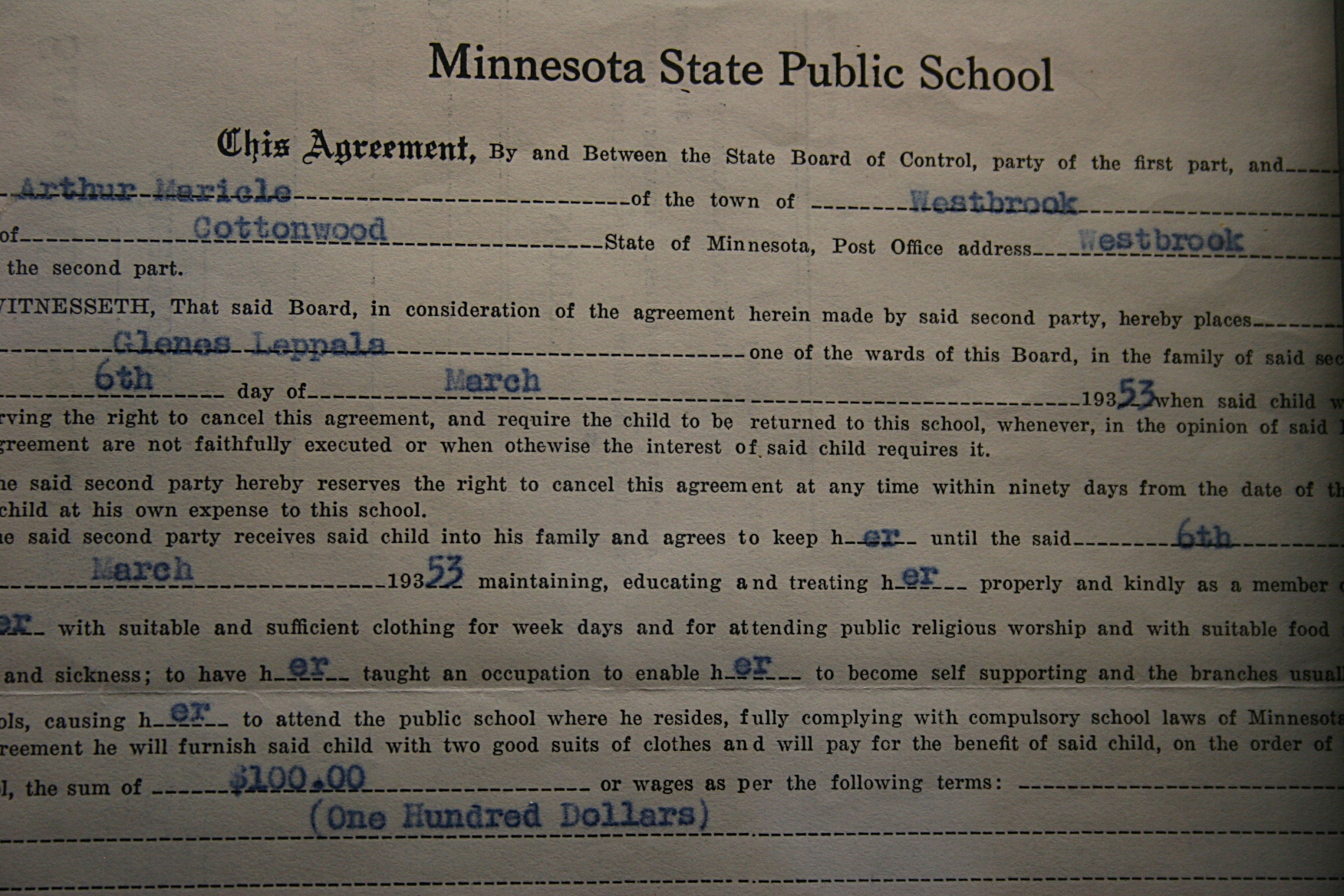
Contracts were signed between the school and families, typically farm families, allowing state schoolers to live with and work for these families. The families were to provide $100 in wages and two suits of clothing.

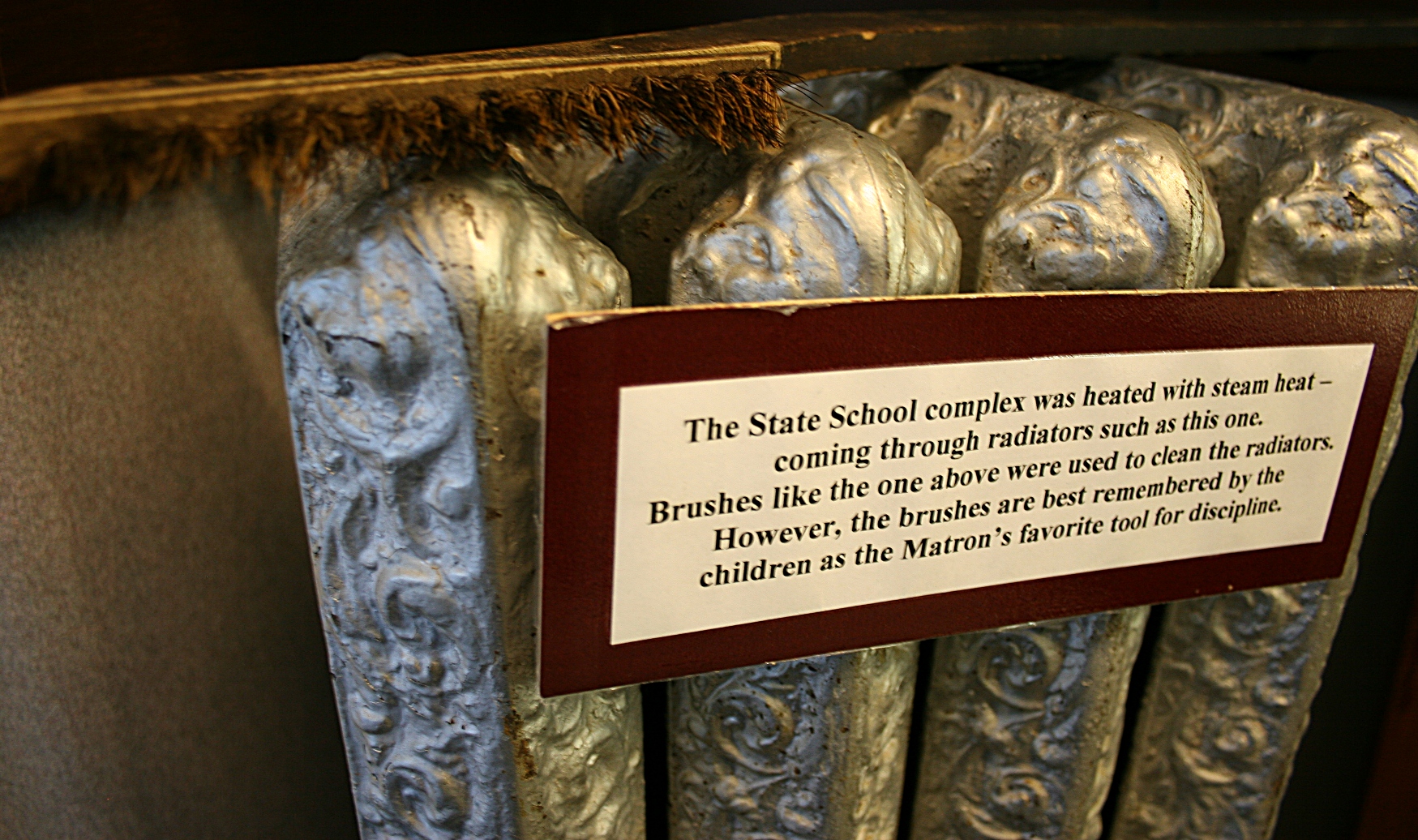
Later, I would photograph a radiator brush, “a Matron’s favorite tool for punishment,” according to the Fall 2010 issue of the museum newsletter, The Radiator Brush.

A dreaded radiator brush rests atop a radiator in the museum.

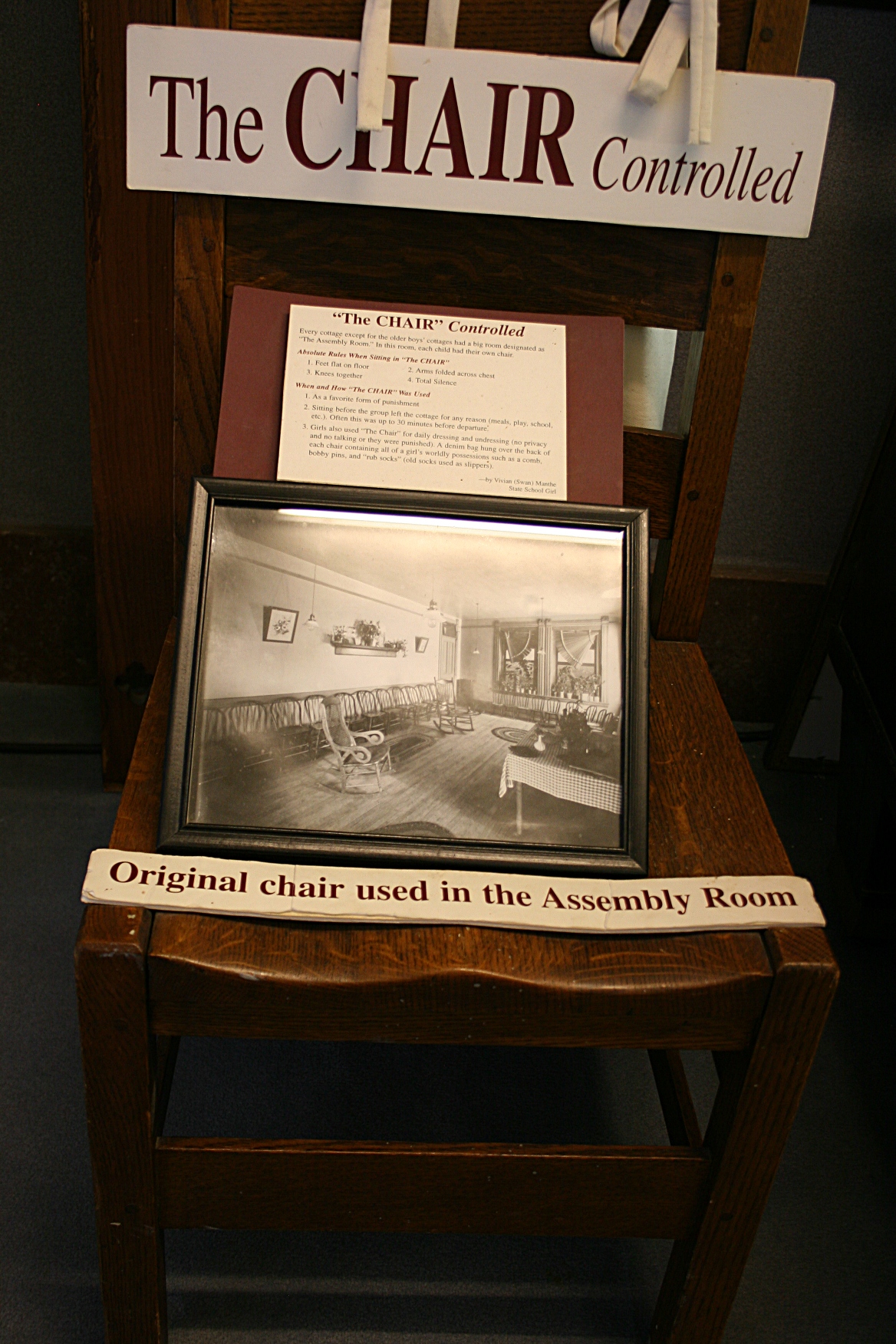
Next, I photographed “the chair,” also used to punish children.

Chairs like this one on display in the museum were used to control and punish children and keep them in their place.

I cannot imagine living here in this institution, separated from family.

Yet the school, despite its failings, offered for many children a better alternative than remaining in abusive and neglectful home settings too tragic to even fathom.

And so that is how sisters Mary and Clara, two little waifs who had been “the victims of extreme cruelty and neglect,” ended up on a train bound for the Minnesota Public School for Neglected and Dependent Children.

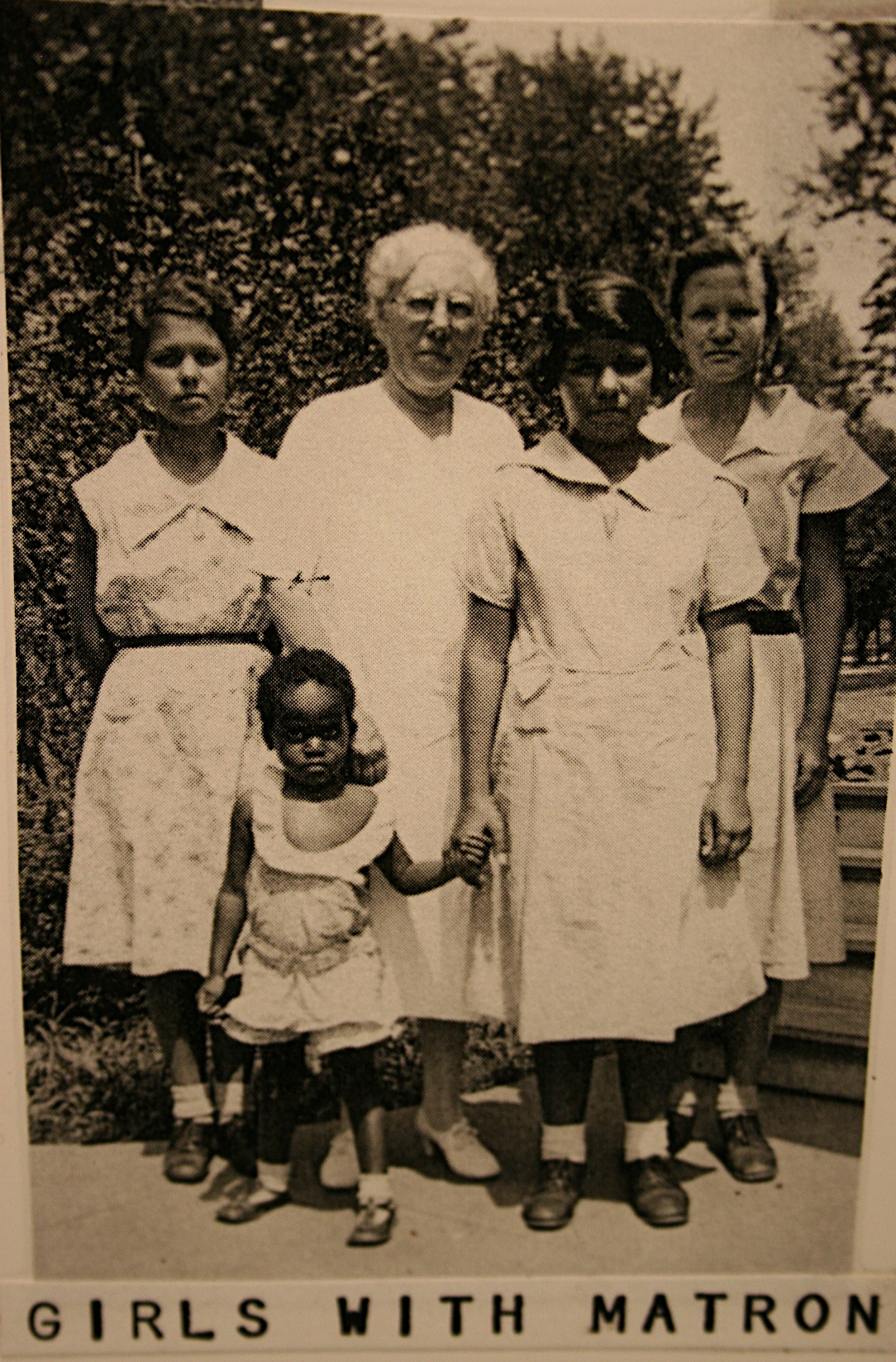
One of the photos on display in the museum of a matron and her girls.

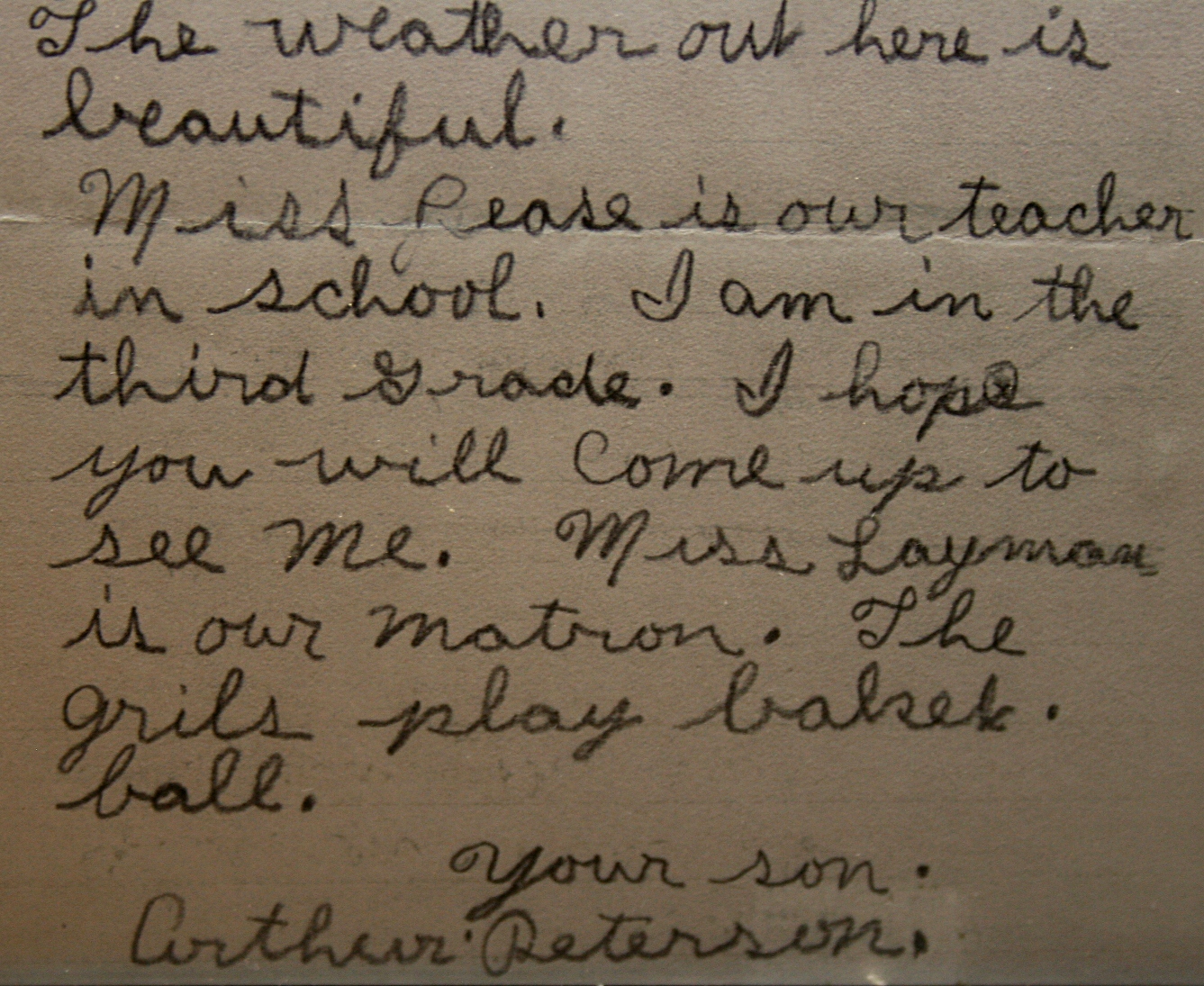
A snippet of a letter from third grader Arthur Peterson to his mother. You can almost hear the desperation in his words: "I hope you will come up to see me."

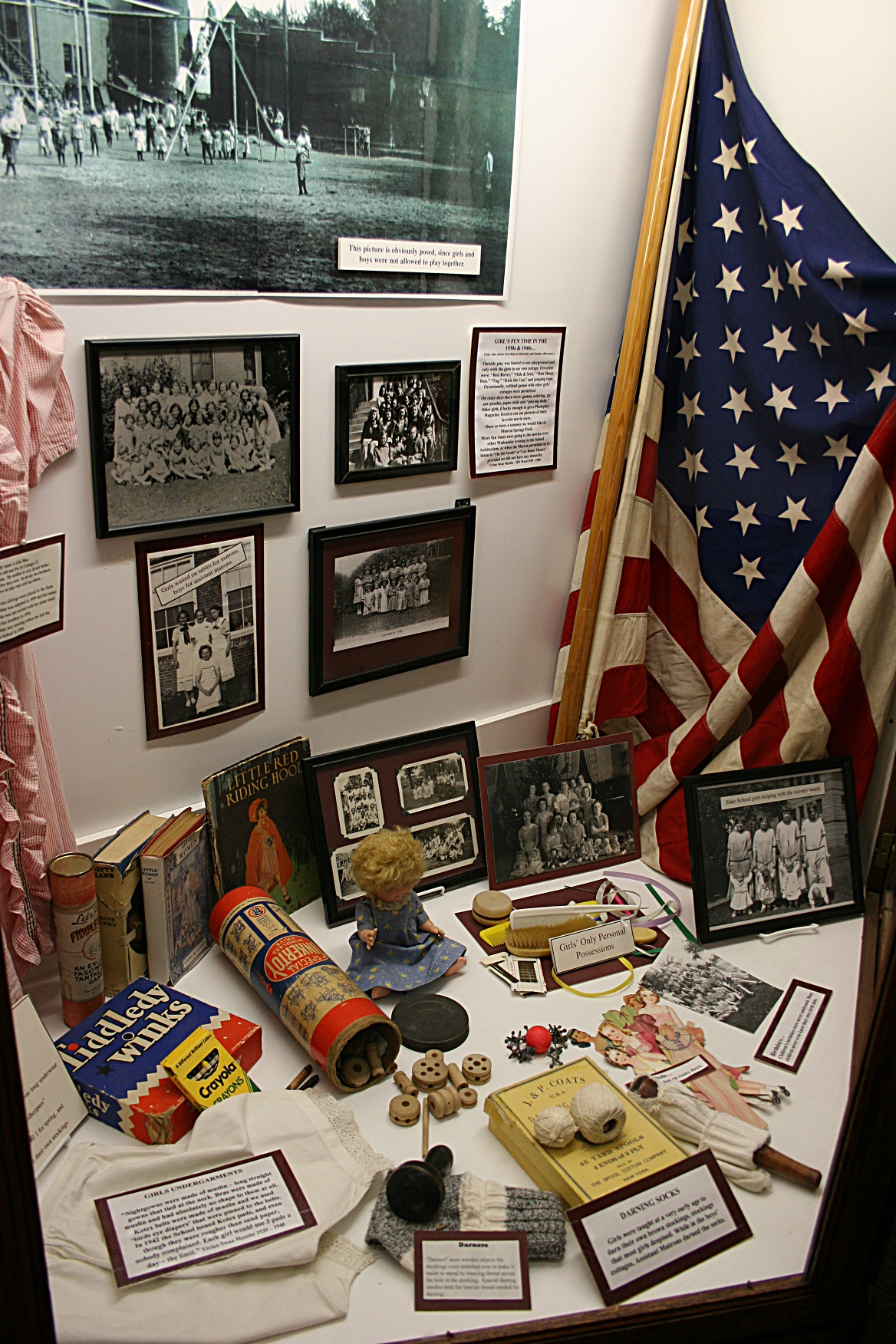
Museum exhibits, mostly in words and photos, but also artifacts, tell visitors about life at the state school.

This photo of a little state school boy caught my eye. The museum's collection includes more than 1,100 original photos and an additional 150 reproductions. You can't help but be moved by such soulful images.

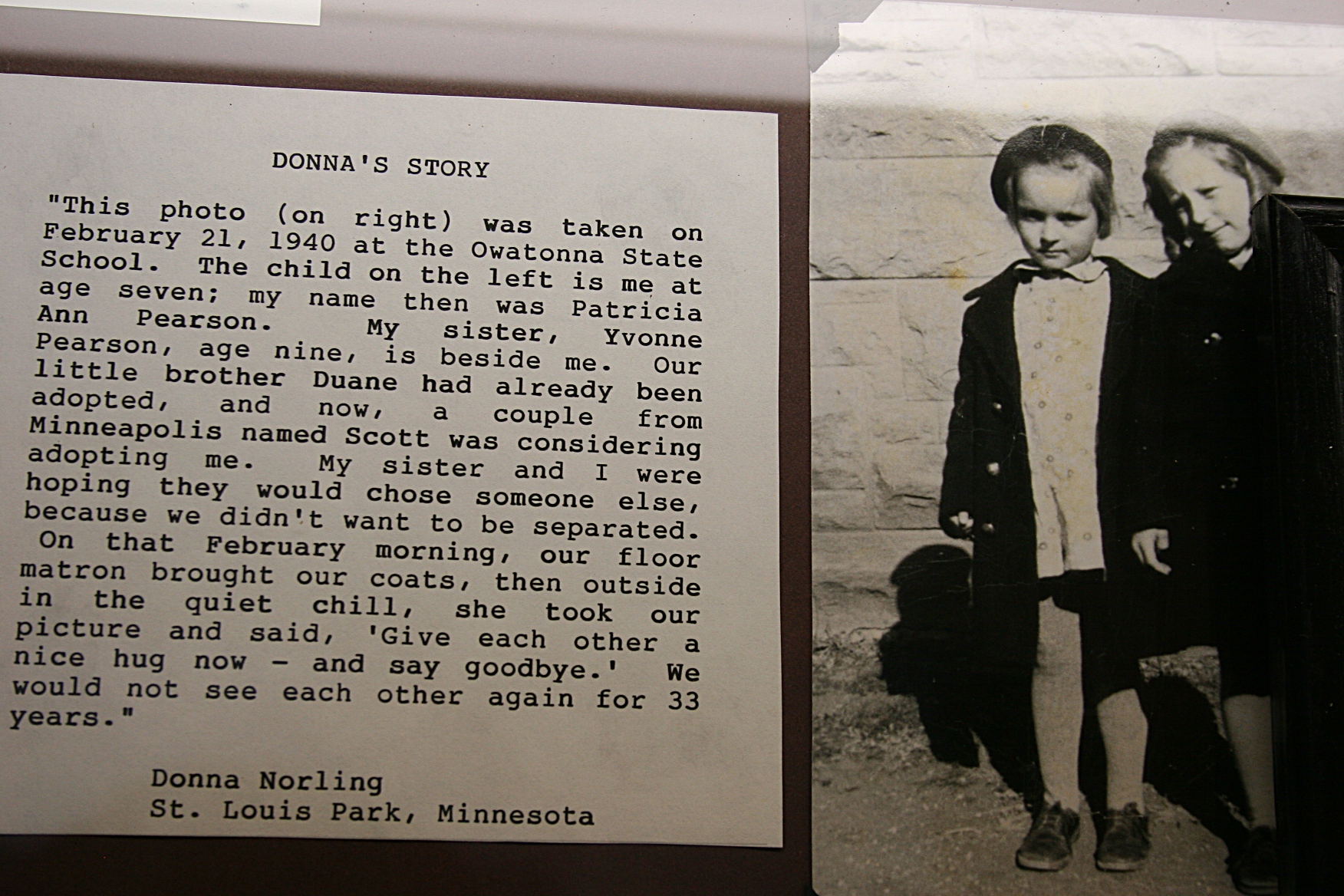
Patricia Ann Pearson, 7, left, and her sister, Yvonne, 9, on the day they were separated. They would not see each other for 33 years. Theirs is only one of thousands of heart-wrenching stories of separation.

FYI: From 1886-1945, nearly 11,000 orphaned, abused and/or abandoned children were sent to the Minnesota State Public School for Neglected and Dependent Children. Today visitors can tour the former school grounds, including a cottage and the cemetery. Click here to learn more about the museum. In 2011, an estimated 7,000 visitors toured the museum and Cottage 11.

Click here and then click here to read two previous blog posts I published about C-11.

© Copyright 2012 Audrey Kletscher Helbling


Photos plus poetry equals what? January 17, 2012

OK, READERS, LISTEN UP. Time for a brief math lesson. Yes, math. Didn’t expect that from me, did you? But today I want you to solve a word problem. Remember those? Oh, how, as a child, I hated word problems like this:

If  Susie goes to the grocery store and buys 3 apples for 25 cents each, an orange for 33 cents and a candy bar for $1, how much change will she get if she gives the clerk $5?

Questions like that taxed my pathetic little math brain back in grade school. This equation requires multiplication, addition and subtraction skills, all of which challenged me considerably and still do.

But present a word problem (perhaps more of a riddle) like this and I will solve it in a snap:

If you add poetry to a gallery full of photos, what do you get?

Ah, so have I stumped you on this one?

The answer: “The Image and the Word 2012”

Of course, you might stop right now and say I tricked you into believing we really were doing math. And you would be mostly correct. But since I prefer words to numbers, what would you expect?

You can expect to see three of my poems exhibited at “The Image and the Word 2012,” a show that pairs poems with photos. The exhibit opened January 11 at the Emy Frentz Arts Guild, 523 South Second Street, in downtown Mankato.

The brainchild of poets Derek Liebertz and Yvonne Cariveau, “The Image and the Word” features photograph-inspired poetry from southern Minnesota poets. This photo by Antje Meisner, for example, prompted me to write “I am not Martha.”

"Cartwheel" by Antje Meisner and the inspiration for one of my poems.

You might expect that this playful image inspired an equally carefree poem. It did not. Rather, I penned a poem about my not-so-fond memories of a junior high gymnastics class. Any of you who could not, like me, execute a perfect cartwheel, somersault or tumble will surely relate to “I am not Martha.”

A second poem recalls memories of my brother and me taking lunch to our dad and Uncle Mike working in the fields. The third poem I will not discuss here, in print.

All of the poems in the exhibit were inspired by photos from Mankato area photographers, including members of the Bend of the River Photography Club. This fifth annual “The Image and the Word” exhibit is presented in cooperation with the Southern MN Poetry Society.

I’d encourage you to attend an opening reception for this exhibit from 5 p.m. – 7 p.m.  on Thursday, January 19.  This free-form event, where visitors can wander in and out of the gallery, will feature poetry readings. (I’m not so sure about that “reading” part; I prefer solitary writing to public speaking.) The photographers will also talk about their photos.

Just to entice you, wine and snacks will be available and all who attend this free event will receive a free poetry book. Yes. Free and free.

And while you’re there, vote for your three favorite poems, three favorite photos and the best pairing of photo to poem. Three, three and three.

Plan also to stop at numerous artistic locales during the Third Thursday Gallery Walk from 5 p.m. – 7 p.m. You can view new art and visit with area artists. Click here to see a complete listing of sites on this monthly gallery walk.

REGULAR GALLERY HOURS  for this exhibit are from noon – 4 p.m. Monday, Tuesday, Wednesday and Friday and from 4 p.m. – 8 p.m. Thursdays.

The show continues through February 15.

Mankato offers many other cultural opportunities, including WordWalk at Riverfront Park and a CityArt Walking Sculpture Tour. Check my June and July 2011 blog archives to read posts on those attractions.

I’m sorry if you don’t live in or near Mankato. I will try to take photos of the exhibit.

OH, AND THE ANSWER to that first word problem, well, it’s $2.92.

© Copyright 2012 Audrey Kletscher Helbling

Photo courtesy of Antje Meisner


Did they crown her with a ……….? January 16, 2012

SATURDAY EVENING while flipping through television channels, I came across the talent portion of the Miss America Pageant.

I have not watched this competition in years so, when I saw that Miss Wisconsin was still in the running for the crown, I remained tuned in. I had to root for the Midwest girl. And now that my second daughter lives in eastern Wisconsin, I also have taken a greater interest in Minnesota’s neighbor.

When Miss Wisconsin, 23-year-old Laura Kaeppeler, was crowned Miss America, I fired a text off to my daughter.

ME: Miss Wisconsin was just crowned Miss America.

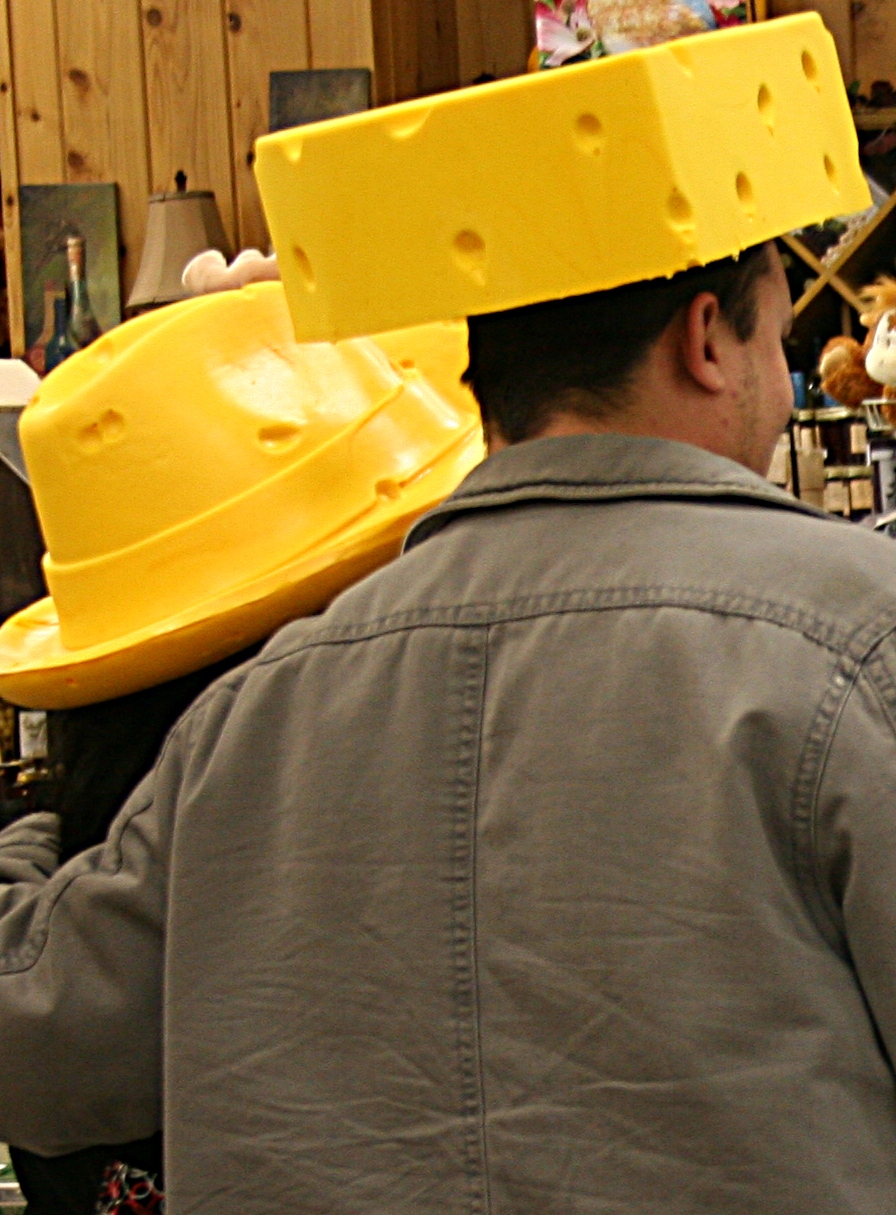
I photographed this couple modeling cheesehead hats in a Wisconsin cheese store last spring.

DAUGHTER:  Was she wearing a green dress w/ a yellow sash? Did they crown her w/ a cheesehead instead of a tiara?

(Note, dear readers, that I am, at this point, laughing so hard that I can’t immediately text back. My daughter is, of course, referring to the gold and green colors of the Green Bay Packers and to the popular cheesehead hats worn by many a Packers fan. Since we were on a humor roll, I decided to tell a little fib.)

ME:  She has a big G tattooed on her shoulder.

DAUGHTER:  Are u making that up?

ME:  What do u think? U live in Packerland.

DAUGHTER:  Lol. Well it was probably a wash off one then.

ME:  Maybe.

(Dear Wisconsinites, I know you possess a sense of humor or I would not have shared this exchange with you. I love your state and your Packers mania and your cheese and your Spotted Cow beer and your cranberry wine and your old barns and small towns and historic buildings and beautiful, changing countryside…)

© Copyright 2012 Audrey Kletscher Helbling
 

I refuse to be bullied January 14, 2012

Filed under: Uncategorized — Audrey Kletscher Helbling @ 6:20 PM
Tags: , ,

I’VE DEBATED, for several days, whether to write this post.

And I’ve decided, yes, I will just speak what’s on my mind because I refuse to be bullied, belittled or called names.

My mother taught me to nice, to be kind. If I disagree with someone, I should be respectful in voicing my opinion. I’ve tried to follow those guiding principles throughout my life, although at times I fail.

I was bullied as a child and pre-teen. As an adult, I don’t have to accept such behavior.

That brings me to two comments posted on my January 11 post, “Meet 10 Minnesota bloggers, a contest winner & more.” Click here to read that story.

Of all the posts I’ve written, I never imagined this piece would come under attack.

Here is the single sentence that prompted two readers to voice their opinions in a manner that I consider disrespectful:

I wanted to highlight bloggers without an agenda and who would fit our more conservative outstate readership.

I’ve since deleted that sentence because I understand how, if you’re a “liberal” purposely seeking out the word “conservative” and you take something out of context or shape it to your thinking, this could be totally misconstrued.

My use of the words “agenda” and “conservative” had nothing to do with political leanings of either the highlighted bloggers, the magazine or its readership.

Any writer understands that when you write for a publication, you need to know that publication and its content. That was the point I was attempting to make and, I admit, I could have written it more clearly, explained it better.

Yet, the rabid reaction from these two commenters caught me off guard.

Here are their separate responses, first from commenter #4:

Nice to know that “conservative” isn’t an agenda. Dogwhistle much? Or just believe in pandering to stereotypes of rural Minnesota?

And here are the words of commenter #5:

Wow. I mean, read that sentence slowly. Maybe aloud. Could you see what you did there? I know my 7th grade grammar teacher would have you up at the blackboard for that.

(Readers, please do not click on these commenters’ links; google them if you must.)

In my opinion, they could have made their points in a manner that was less mean-spirited and not so condescending.

I was tempted for a minute to censor their words or fire back with an equally vicious response. It was a fleeting thought. I gave them their voice, responded as kindly as I could and tried to let it go.

I don’t expect that everyone will always agree with me or like what I write. And, yes, I understand that sometimes something I compose may be taken the wrong way.

Then I thought back to all those years when I was bullied and came home from school crying.

This pair could not have known how their words triggered those childhood memories of bullying and name-calling and of a math teacher who called students to the blackboard only to belittle them. To this day, I do not like math.

And, to this day I do not like to be bullied, belittled or called names.

As an adult, I don’t have to accept such behavior, especially on this blog.

So you see, dear readers, something good has come from the negativity expressed earlier this week in my comments section. I have the opportunity to open up a discussion on the topic of bullying.

LET ME HEAR from you.

Were you bullied as a child or teen? If so, how did you and/or the adults in your life handle this and how were you impacted, short-term and long-term?

Have you been bullied as an adult? How have you handled such behavior?

What can be done to stop bullying?

#

NOW, JUST TO BALANCE this all out and show you how words can be used in a positive manner, I refer you to Bob Collins of Minnesota Public Radio. Click here and scroll to # 5 in the 5×8 section of his News Cut column to read his comments about Minnesota Prairie Roots and the Minnesota blogger story.

Then, click here to check out Iron Range writer, radio producer and college instructor Aaron J. Brown’s equally kind words regarding my work and the blogger feature.

I have great respect for these two writers. Enough said.

© Copyright 2012 Audrey Kletscher Helbling
 

When a mother passes her dislike of shopping on to her son January 13, 2012

Filed under: Uncategorized — Audrey Kletscher Helbling @ 8:44 AM
Tags: , , , , ,

I AM THE RARE WOMAN who dislikes shopping. And I suppose, because of that, I am partly to blame for my teenage son’s lack of interest in shopping for clothes.

But it had gotten to the point where, day after day, he was wearing the same nondescript gray sweatshirt—the new one I gave him for Christmas—over a plain-colored t-shirt.

Finally, one day last week, I advised him that I needed to wash the sweatshirt and that he would have to choose another clothing option. The look he shot me at 7:37 didn’t exactly start my day with a “Good morning, Mom, I’m happy to see you” greeting.

I should mention here that my 17-year-old is not a morning person. Not at all. I have found it in my best interests to limit conversation with him any time prior to 10 a.m.

After this recent morning wardrobe exchange, I decided my teen simply needed to acquire additional clothing. After all, what must his classmates and teachers think with him wearing the same sweatshirt every day? Therefore, we needed to make the dreaded, long-avoided shopping trip.

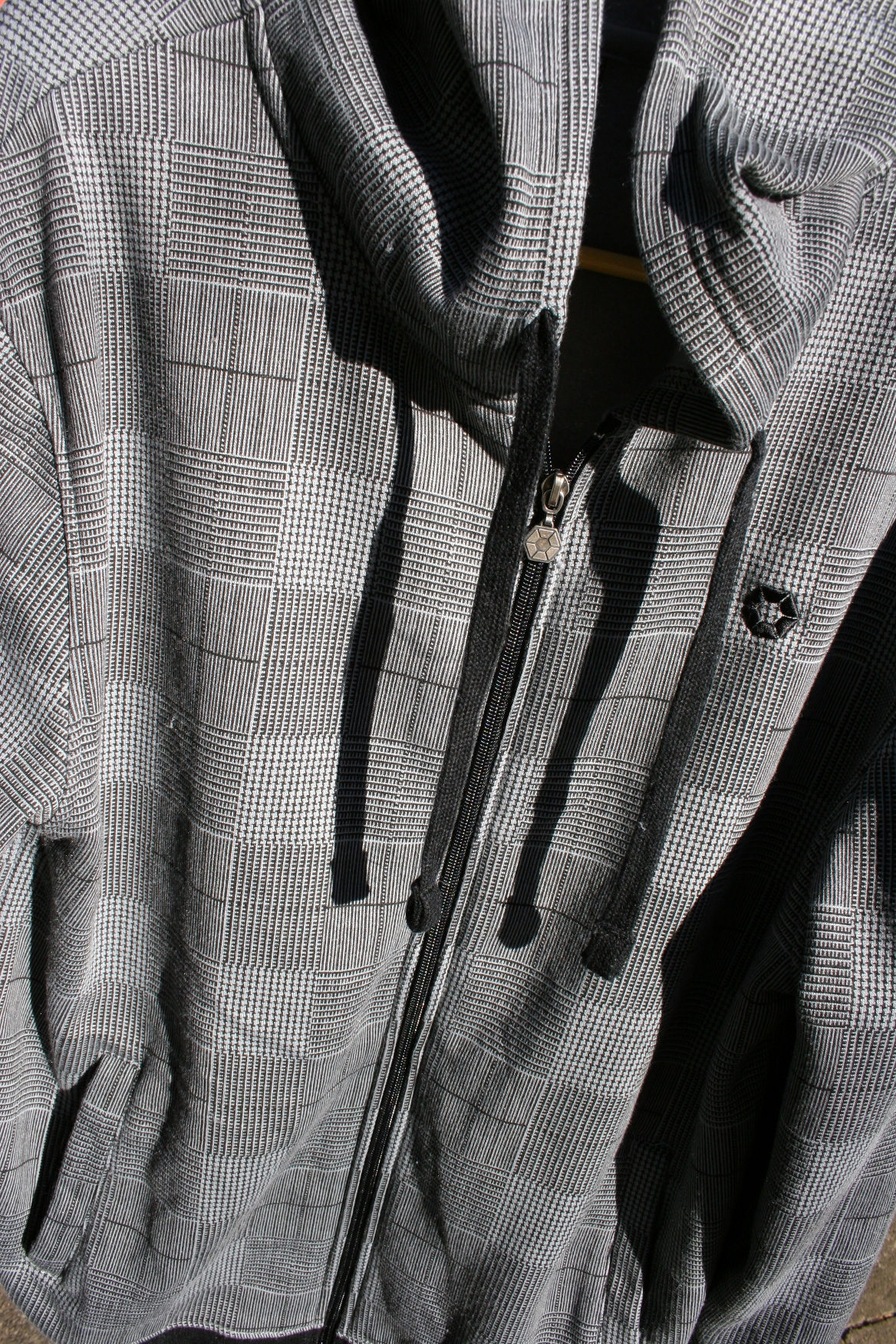
Shopping success: A $60 hoodie purchased for $21.

So last Sunday afternoon we went clothes shopping. After about 1 ½ hours, which is an hour beyond my browsing limit, he had a new sweatshirt, three complimentary t-shirts and three flannel shirts. Success at only $58 sale prices.

Much to my surprise, my son handled the excursion without complaint, which might just be a first for him. I’ll be honest here and tell you that I understand my high school senior’s shopping frustration. He is tall, well over six foot—I’ve lost count of how many inches—and slender. He needs tall sizes for arm and body and leg length, but not for body girth. That presents a challenge whether he’s searching for shirts or for pants. Nothing fits him right.

It’s the same problem I had as a tall and slender teen. The “tall” part is still an issue for me. Honestly, every woman in this world is not average or petite in height and I am constantly frustrated by the limited choices for 5-foot, 8 ½-inch women like me who do not wear plus sizes.

So if you see me repeatedly wearing the same attire, my reasons are three-fold: I detest shopping, can’t find clothes that fit right and refuse to pay a pretty penny (aka full retail) for clothing.

Yup, I suppose I truly am to blame for my son’s avoidance of shopping and limited wardrobe.

IF YOU’RE THE MOTHER of a teenage boy or have raised one, what has been your experience with clothes shopping? I’ve tried the route of buying clothes for my son, but that rarely works. Either they don’t fit or he doesn’t like them or both. Help.

© Copyright 2012 Audrey Kletscher Helbling
 

Really, the unbeatable Vikings? And what about that stadium? January 12, 2012

Filed under: Uncategorized — Audrey Kletscher Helbling @ 7:34 AM
Tags: , , , , , , ,

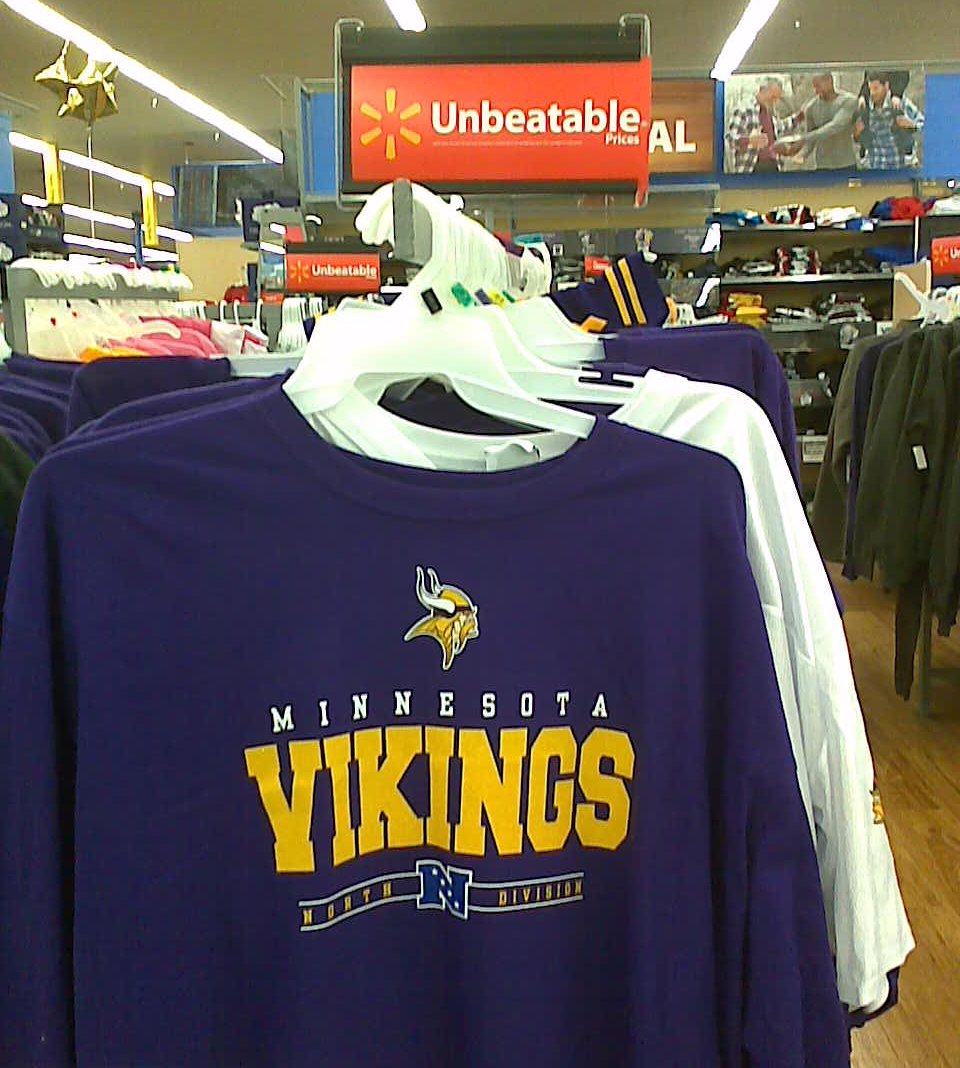
WITH A CURRENT 3 – 13 regular season record, the Minnesota Vikings rate as anything but unbeatable. You know this. I know this.

So when my husband and I spotted this misplaced “unbeatable” signage posted above a rack of Vikings shirts at a major discount retailer in Faribault recently, we simply had to laugh at the clearly inaccurate message as it relates to the football team’s wins and losses.

Sometimes you have to find the humor in this whole Vikings fiasco. And I’m not talking just the season record here.

NOW THAT I’VE OPENED that topic to discussion, how do you feel about plans for a new Vikings stadium? Do you support a new stadium? Why or why not? If yes, where should the stadium be built and how should it be financed?

Stadium proposals are due in to Minnesota Governor Mark Dayton by 5 p.m. today. State legislators are then supposedly going to resolve the stadium issue during the upcoming legislative session. One can only hope.

Go ahead, submit a comment and tell them what you think.

Copyright 2012 Audrey Kletscher Helbling
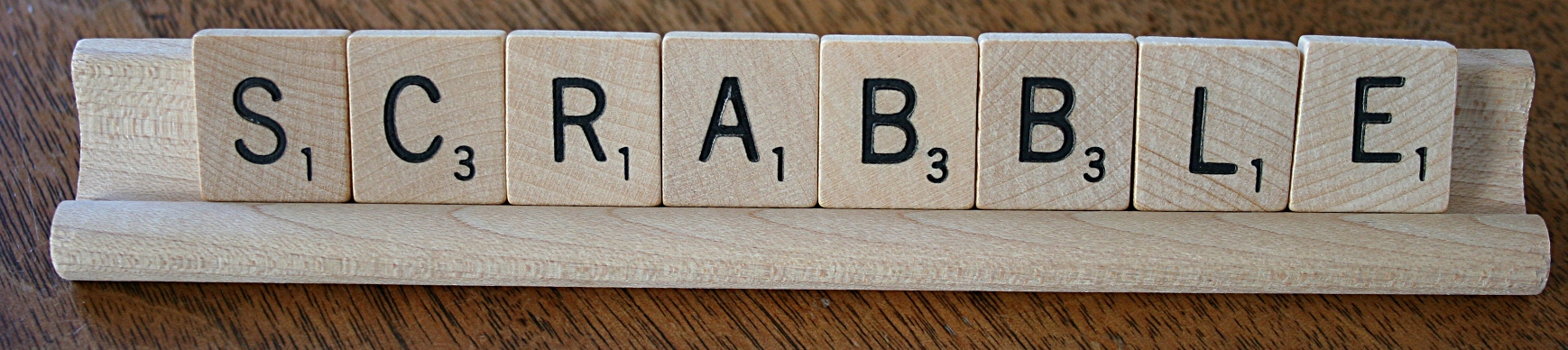
Photo by Randy Helbling