Minnesota Prairie Roots

Writing and photography by Audrey Kletscher Helbling

An historic fashion find in Faribault February 3, 2012

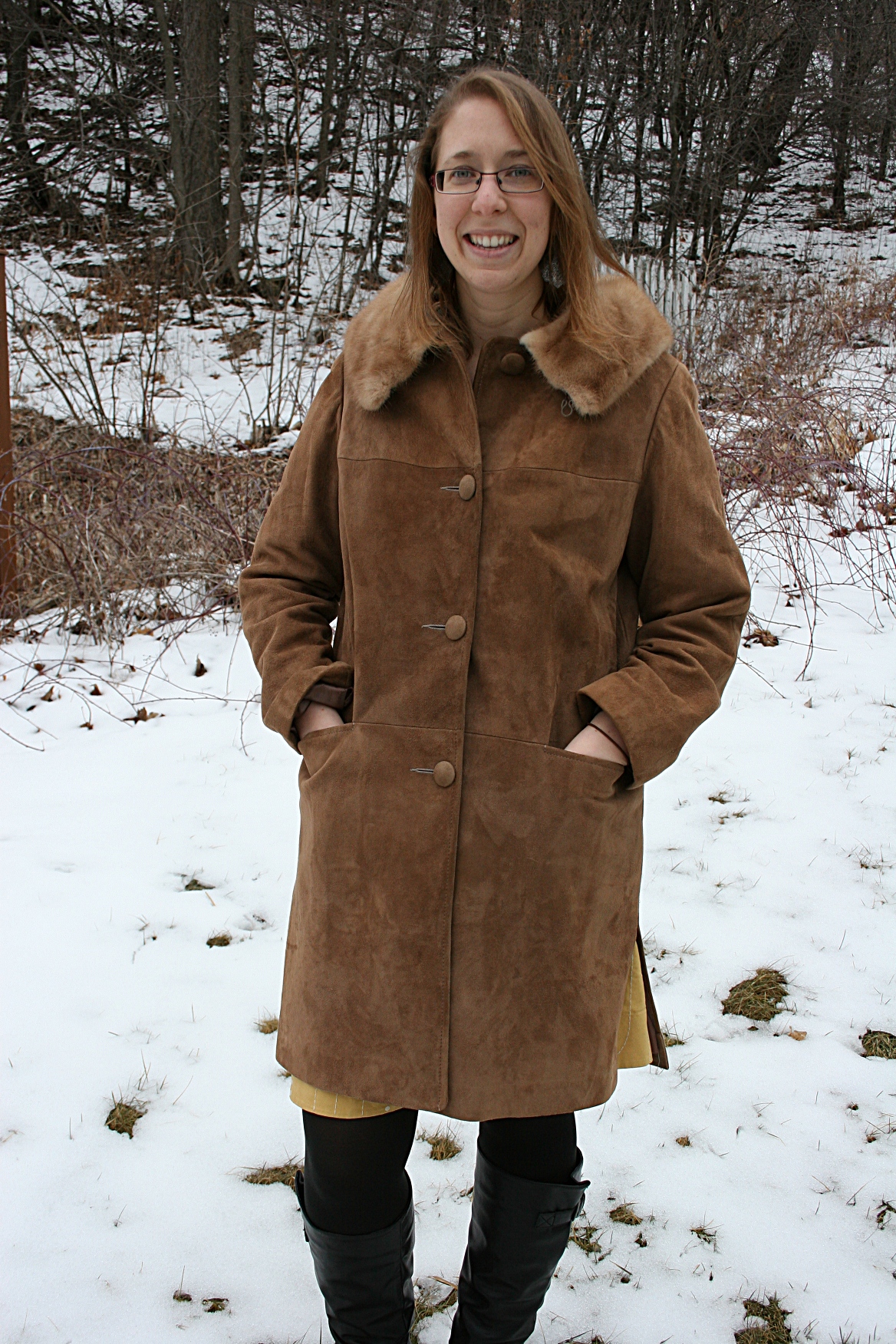
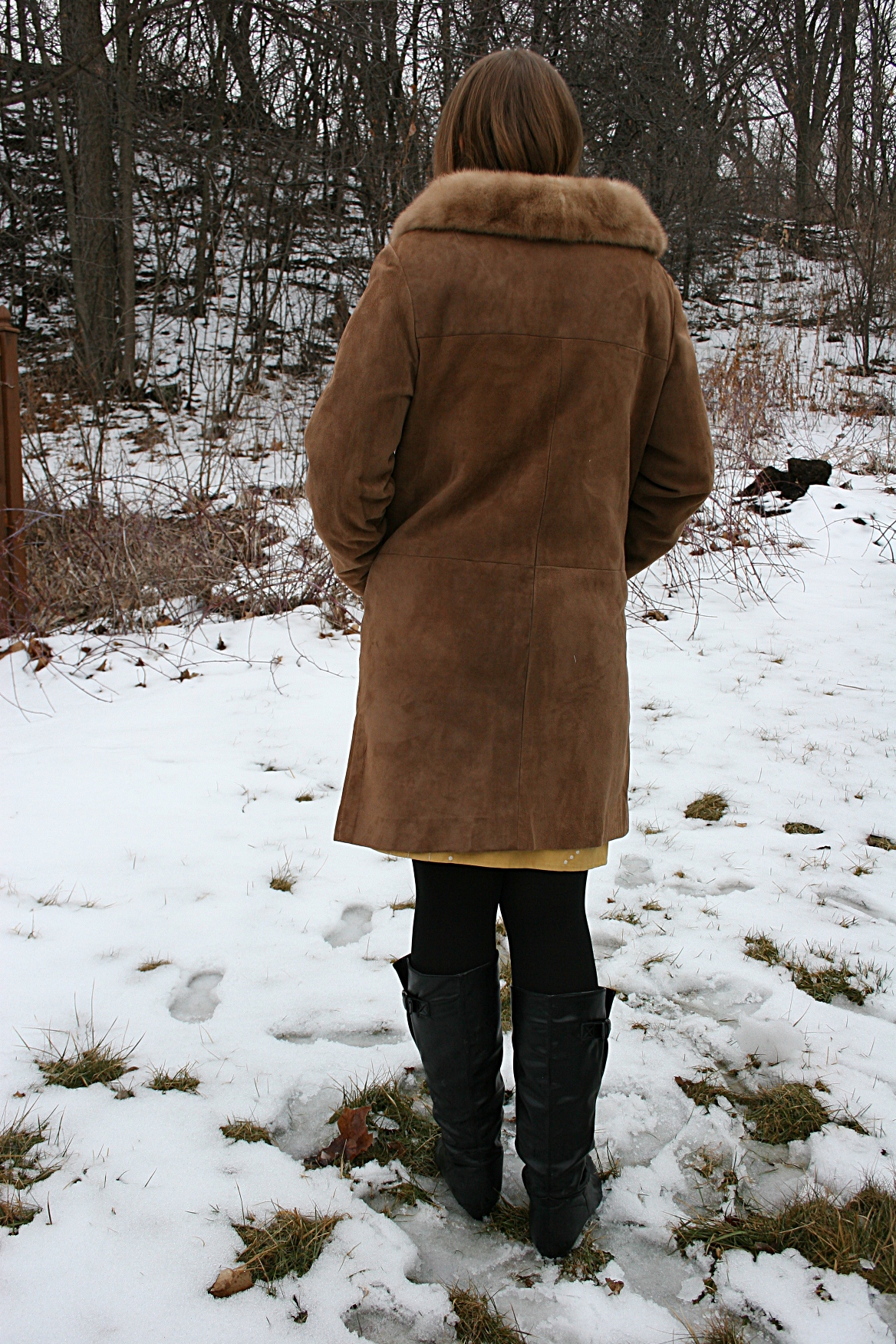
IT WAS AN IMPRESSIVE FIND. There, hanging on a circular clothes rack jammed with winter coats, I discovered the soft suede coat collared in fur.

I beckoned my daughter to come, try it on. Wrap yourself in this finely-crafted coat with covered buttons and deep pockets and hand-stitched lining at the collar. Try on this fawn-colored coat that reminds me of Mary Tyler Moore when I picture you wearing it.

But she hesitated, not certain about wearing a coat trimmed with fur, a fur we couldn’t identify because we’re not accustomed to such luxury.

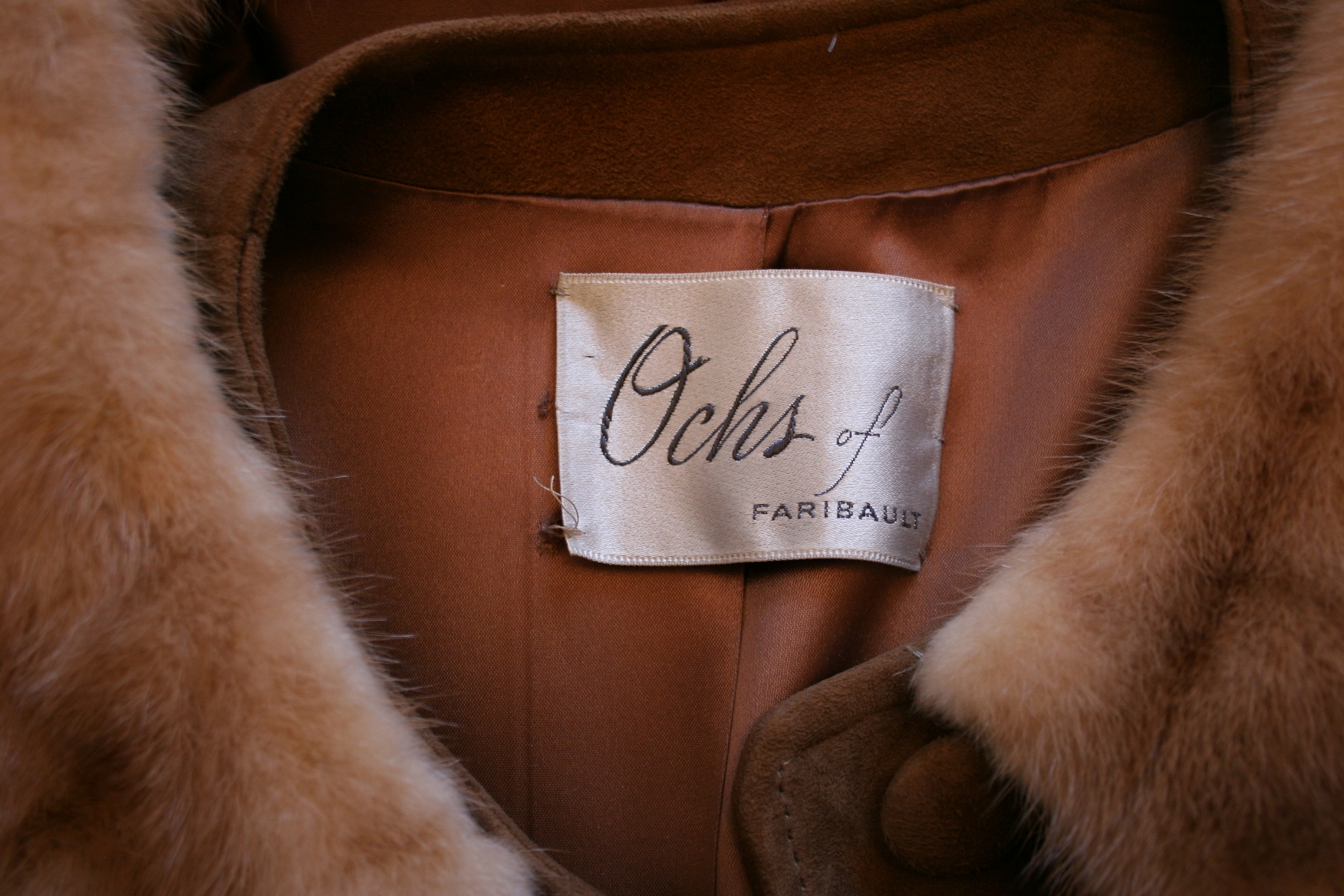
Eventually I coaxed her into slipping on the tailored garment from Ochs of Faribault, a fine, but now defunct, department store that served communities in southern Minnesota for nearly 100 years with branches in Owatonna, Waseca, Rochester and Austin and, later, a store in New Ulm.

That deep history alone made the coat worth purchasing. Ochs, established in Faribault in 1888 as a seller of dry goods and notions, became “the” place to shop in the heyday of department stores.
I’ve lived in Faribault long enough to remember Ochs. I couldn’t afford to shop at this elite business, although my husband rented our wedding tuxedos there in 1982. Not long after that, Ochs closed, about the time high-end department stores began disappearing from Main Street.

Buying the coat would equal acquiring a piece of history. I impressed that upon my 25-year-old daughter as she pondered purchasing the coat. Soon she pulled $12 and some loose change—I threw in the remaining coins—to total $12.50.

She’d just purchased a finely-made coat from one of Faribault’s finest department stores for half price at the Faribault Senior Center’s Clothes Closet.

I thrilled in the thrift store find and followed with a back yard photo shoot to document our discovery.

And then I suggested to my daughter that she pose for a second photo shoot next to the Mary Tyler Moore statue on the Nicollet Mall in downtown Minneapolis. She, like the actress in the 1970s The Mary Tyler Moore Show sitcom, lives in Minneapolis and is a strong, independent, single working woman.

Such a photo would be a fitting tribute, I think, to the strength and power of women. When Verna Love Ochs became the president of Ochs in 1969 upon the death of her husband, she was one of only five women in the country serving as a department store president. That’s according to a Faribault Heritage Preservation Commission Downtown Walking Tour video clip produced by Daniel J. Hoisington of Edinborough Productions.
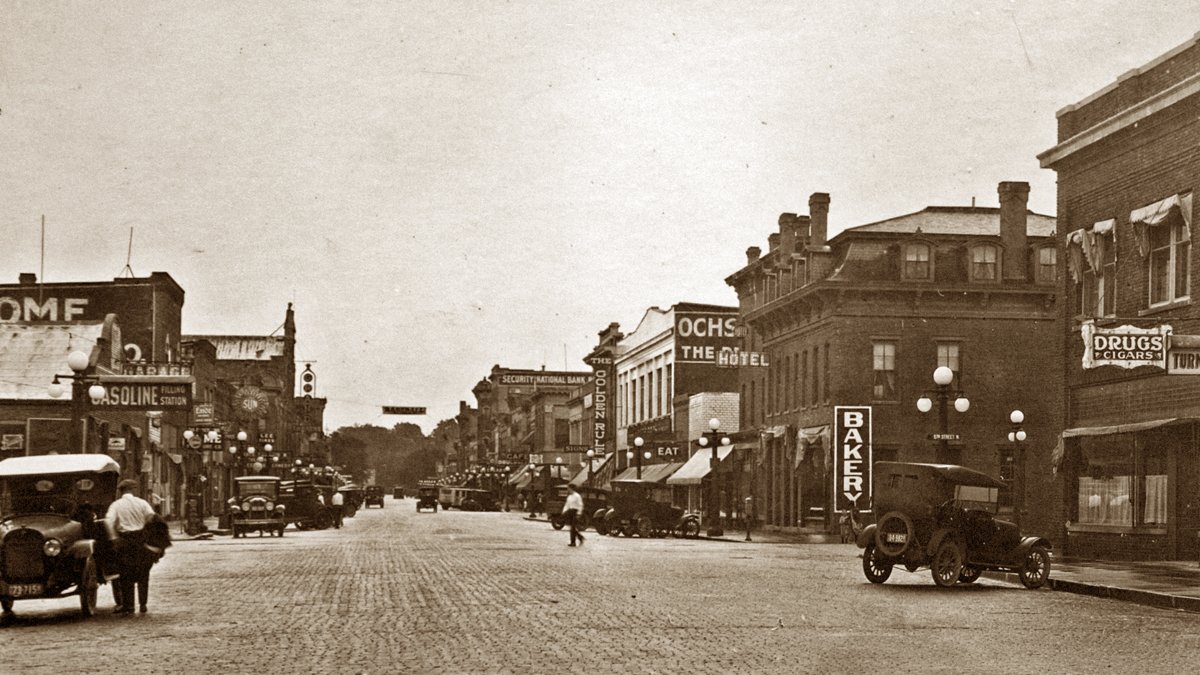
Note the Faribault Ochs store in this mid-1920s photo from the private collection of Daniel J. Hoisington.

Verna Ochs, who died in 1989, was also a member of the Rice County Historical Society and a charter member of the Faribault Heritage Preservation Commission. She’d likely appreciate the restoration of the Ochs Department Store building several years ago by the State Bank of Faribault.

Will my daughter value her new suede coat? I expect, given its history, she will.

CLICK HERE to watch a video clip about Ochs.
© Copyright 2012 Audrey Kletscher Helbling

Vintage photo courtesy of Daniel J. Hoisington


46 years of serving pancakes for a cause on Super Bowl Sunday February 2, 2012

Filed under: Uncategorized — Audrey Kletscher Helbling @ 8:10 AM
Tags: , , , , , , , , ,

THEY’RE SYNONYMOUS in Faribault—the Super Bowl and pancakes.

For 46 years, the Faribault Lions Club has sponsored a pancake and sausage breakfast on Super Bowl Sunday, raising funds to support projects that adhere to the club motto: “We serve.”

Let me repeat that. Forty-six years. Wow. You have to admire an organization so committed to helping others. The Faribault Lions expect to feed 1,200 – 1,500 and raise $5,000 at their Super Bowl Pancake Breakfast.

Now I’m no fan of pancakes (ranking them right alongside liver) or of football, but I may have to eat pancakes this Sunday simply to support a worthy cause. I’ll skip the football except for the commercials.

The Faribault Lions provide funding for college scholarships, dictionaries for third graders, food for children in need, and assistance for the visual and hearing impaired, among other projects.

While all are worthy causes, the club’s effort on Sunday to collect used prescription eyeglasses and hearing aids and to raise dollars to assist those with visual and hearing impairments resonates with me.

I’ve worn glasses since age four, after undergoing surgery to correct crossed eyes. Without that surgery, I would have gone blind in my “lazy eye.” I value my vision and know that without corrective lenses, I would struggle to see.

Lions Club International’s commitment to helping those with vision issues stretches back to 1925 when Helen Keller presented this challenge during a speech to the Lions:

Will you not help me hasten the day when there shall be no preventable blindness; no little deaf, blind child untaught; no blind man or woman unaided? I appeal to you Lions, you who have your sight, your hearing, you who are strong and brave and kind. Will you not constitute yourselves Knights of the Blind in this crusade against darkness?

And so with that challenge, the Lions became “Knights of the Blind,” collecting and distributing prescription eyeglasses through clinics world-wide. Can you imagine the joy of giving someone the gift of sight?

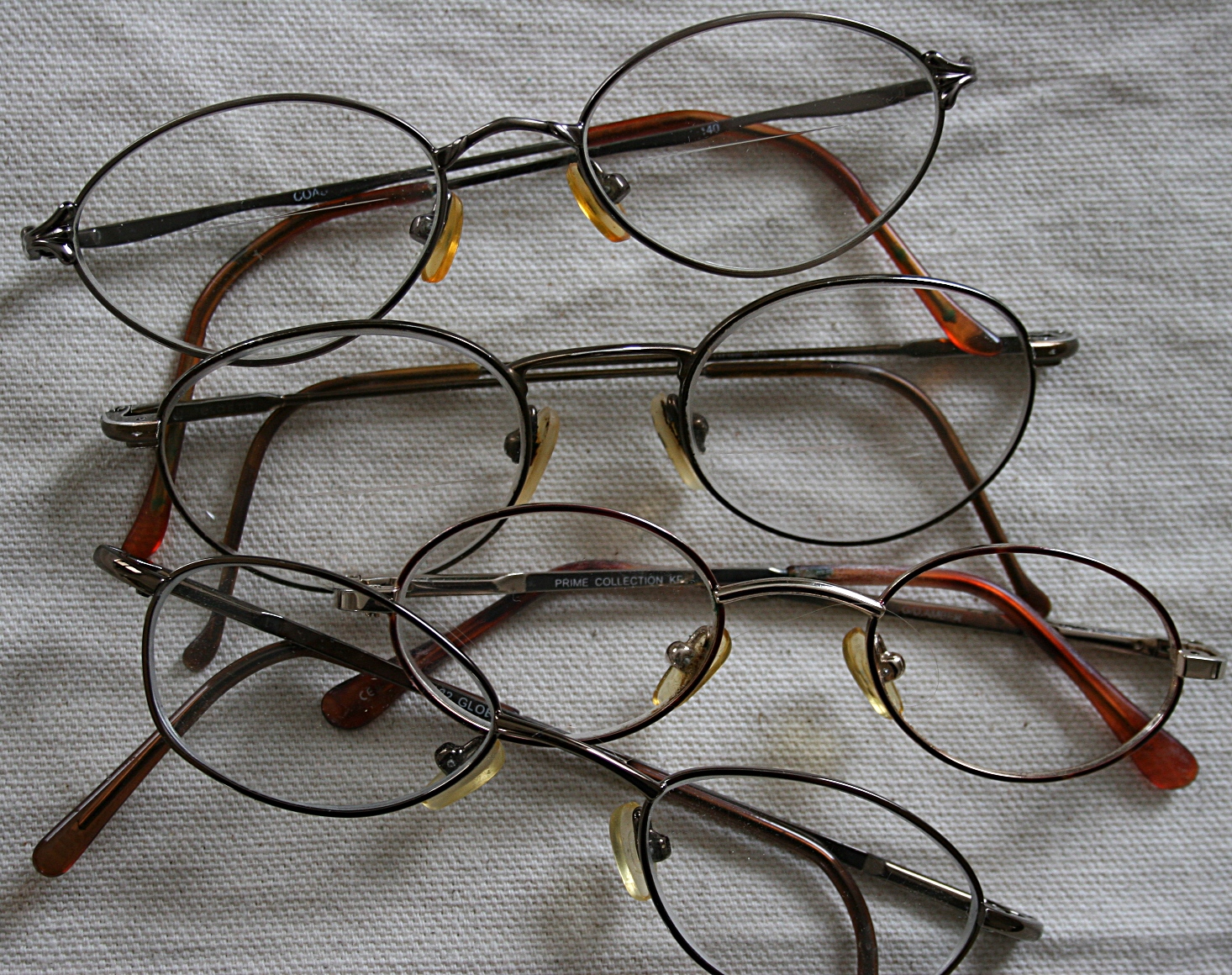
I just rummaged through a dresser drawer and found four eyeglasses that I can donate to the Faribault Lions Club on Sunday.

The prescription eyeglasses I'm donating.

Faribault Lions have also connected with the Minnesota State Academy for the Blind in Faribault, supporting numerous projects there, including an apartment to teach independent living skills.

My community is home to the Minnesota State Academy for the Deaf, perhaps another reason local Lions take such a strong interest in helping those who are hearing impaired.

I am among those with a hearing impairment having lost 70 percent of the hearing in my right ear last March in an episode defined as “sudden sensory hearing loss.” (Click here to read about that.) Unfortunately, a hearing aid will not help with this type of near-deafness.

But for most who suffer from a hearing impairment, a hearing aid will help. The Lions are committed to collecting used hearing aids for distribution to those in need. Can you imagine the joy of giving the gift of hearing?

It’s impressive, isn’t it, how so many worthy causes have evolved from two powerful words: “We serve.”

FYI: The Faribault Lions Club Super Bowl Pancake Breakfast will be held from 7:30 a.m. – 1:15 p.m. on Sunday, February 5, at the Eagles Club, 2027 Grant Street Northwest. Cost is $6 for adults and $4 for those 12 and under.

The Lions are also selling Super Bowl snacks—8-ounce packages of nuts for $5 – $6—to raise monies for their Backpack Blessings Program which provides local children in need with food for the weekends.

It should not go without stating here that many local businesses and volunteers (within and outside of the Faribault Lions Club) contribute to the annual Super Bowl breakfast.

Bring your used prescription eyeglasses and hearing aids, your money and your appetite on Sunday to participate in the “We serve” endeavor.

Click here to learn more about the Faribault Lions Club.

© Copyright 2012 Audrey Kletscher Helbling


Once upon a time I was a seamstress February 1, 2012

Filed under: Uncategorized — Audrey Kletscher Helbling @ 8:13 AM
Tags: , , , , , ,
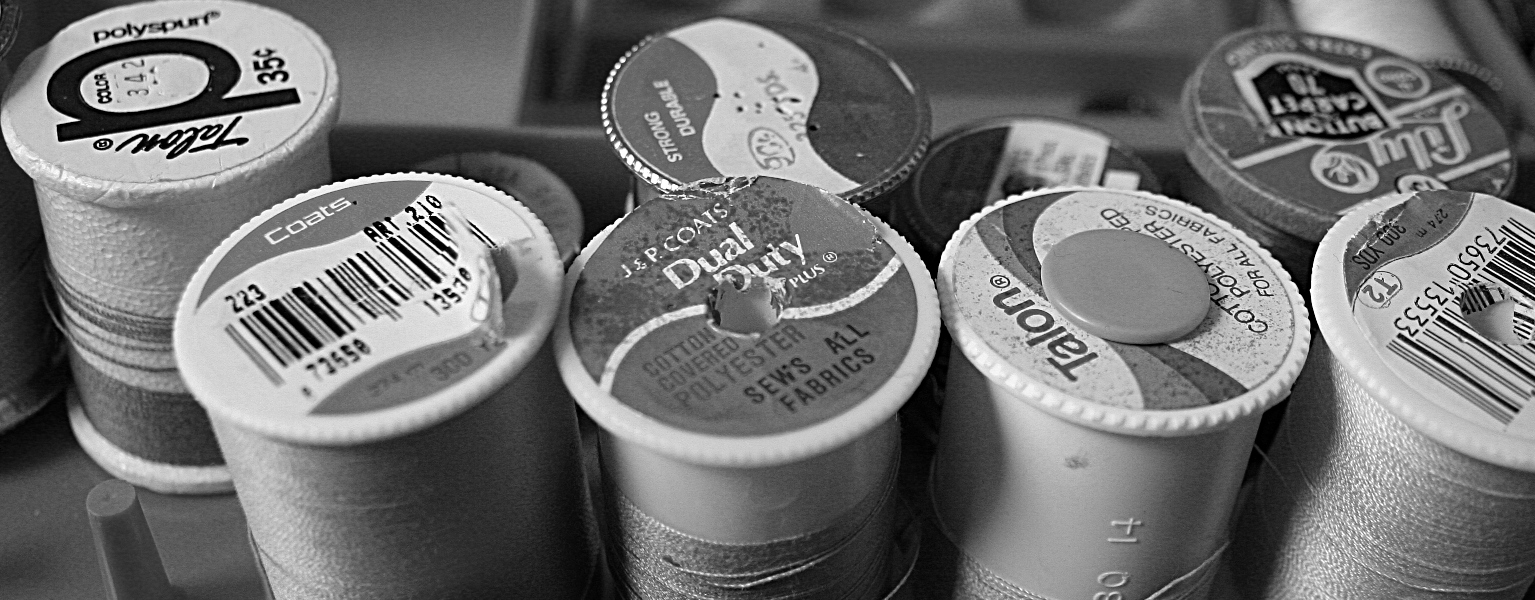
spools of thread

Spools of thread in the sewing box I haven't opened in years.

I ALWAYS THOUGHT I’d sew clothes for my family. That was before children, in the days when I was young and had no realistic concept of the time demands of parenting.

I grew up sewing—clothes for myself, dresses for my Grandma who quilted like a mad woman but couldn’t follow a pattern. She quilted while I stitched shapeless dresses for her from polyester and cotton.

Nearly all of the clothing I wore as a teen in the 1970s, I made. Hot pants. Smocks. Dresses. Elephant leg pants, which never fit right around the waist because I was way too skinny. Pajamas. Even underwear, a rather challenging task presented by a home economics teacher who thought we should sew underwear from some slinky, slippery impractical fabric. The project was a failure.

But I digress. I loved to sew—to choose crisp, cotton fabric, and, yes, sometimes even stretchy polyester, from bolts packed onto shelves in the fabric store or in the basement of J.C. Penney in Redwood Falls or in the grocery store/general store in Lucan. The prints were psychedelic pieces of art—bold and crazy and colorful.
I can't state with certainty that this is cotton fabric from the 1970s. I picked it up several years ago at a thrift store because it reminds me of psychedelic 70s prints.

I loved paging through thick catalogs of patterns, choosing just the right trendy design to match manufactured clothes.
While I didn’t particularly enjoy the pinning of tissue paper patterns to fabric or the measuring and cutting process, I loved sliding the fabric across the sewing machine, stitching straight, even lines or easy curves until I’d created something I could wear.

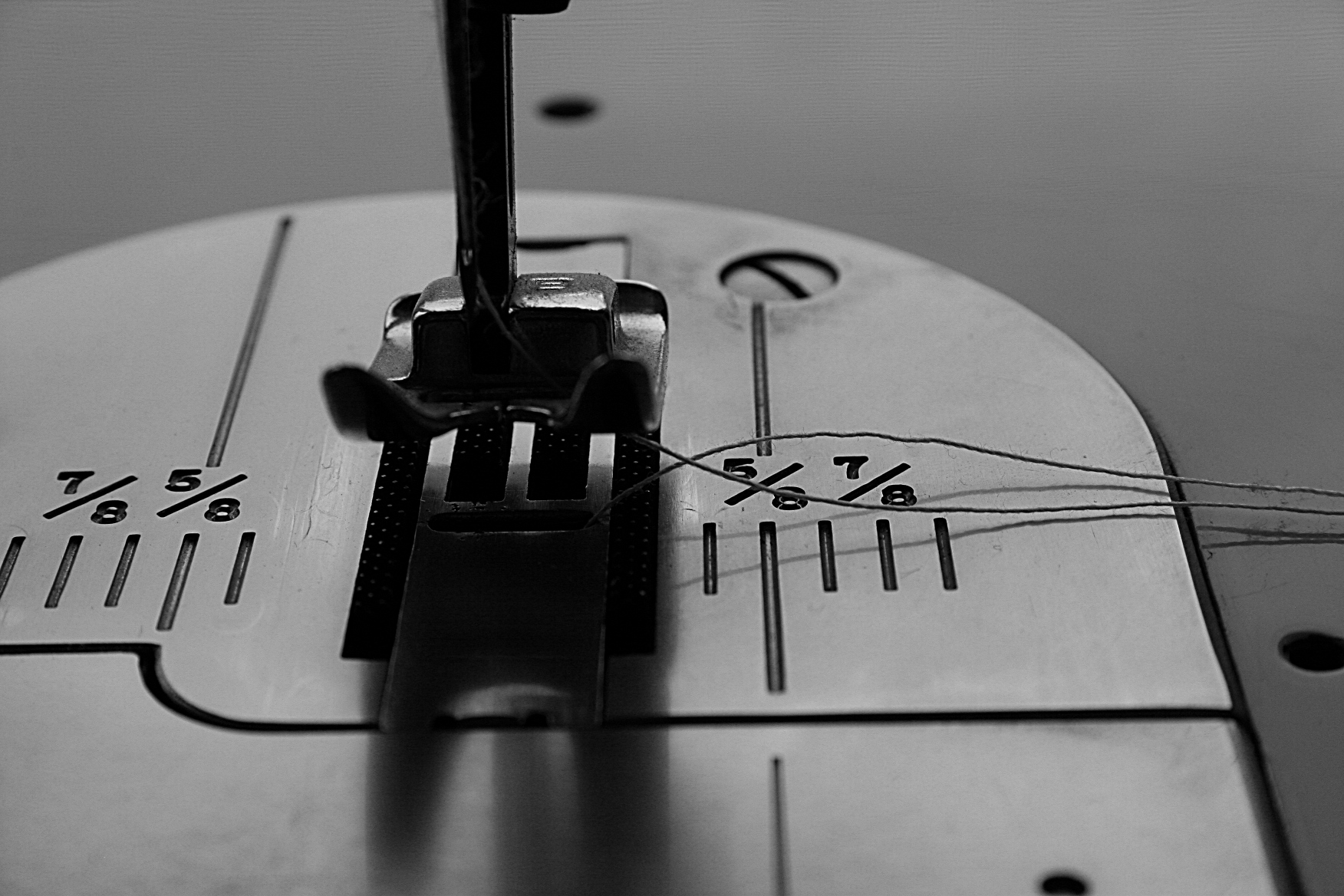
There's a certain satisfaction in guiding fabric under a pressure foot, the needle pumping through fabric.

The ability to sew truly rated as a necessity more than an indulgence in a creative outlet. Our poor farm family couldn’t afford closets full of store-bought clothes. If I wanted clothing, I would need to sew them.

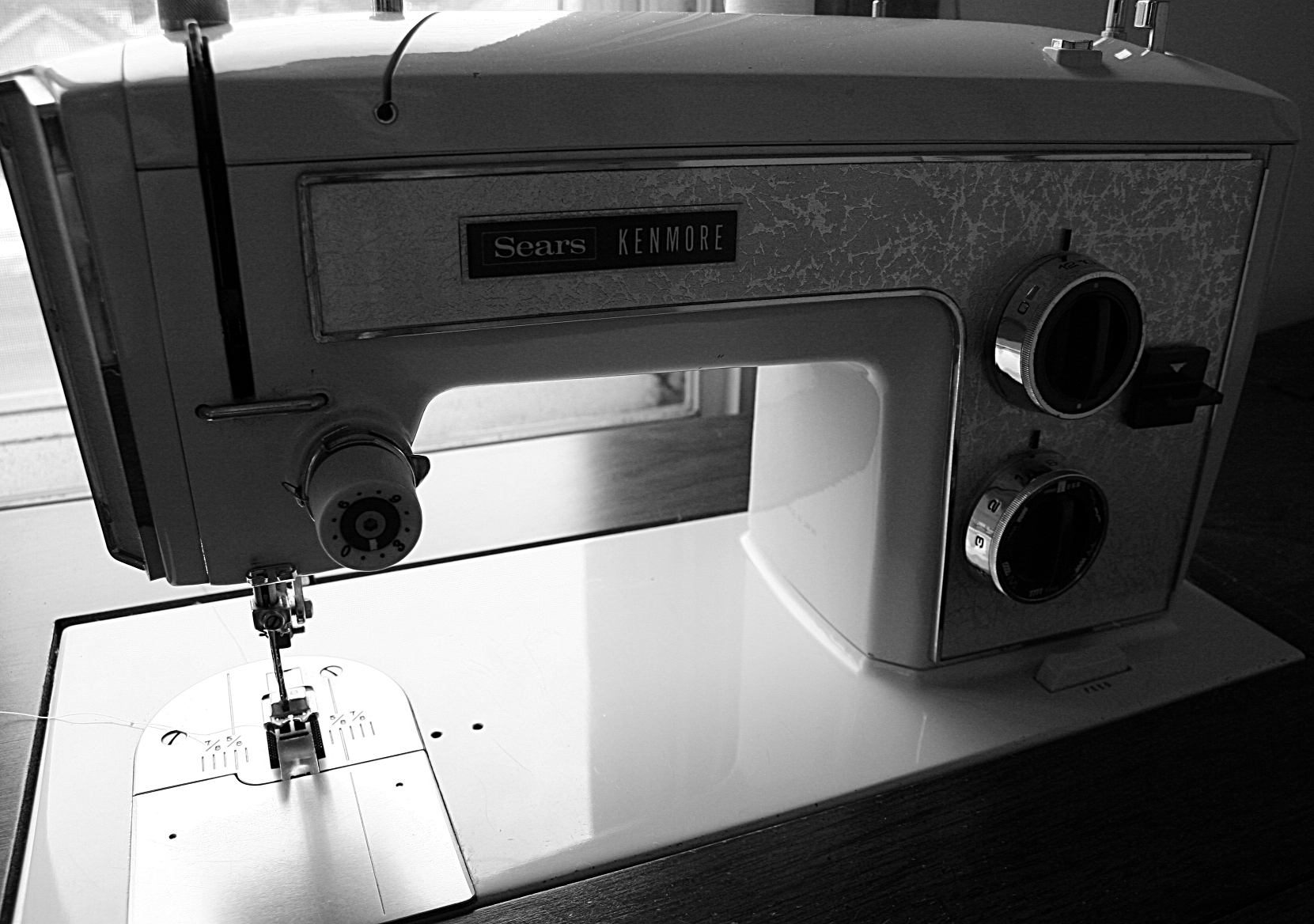
So, with that background, I expected to continue sewing as an adult. When I graduated from high school, my parents gave me a Sears Kenmore sewing machine as my graduation gift. My oldest brother got a car. Yeah, well…

My 1974 sewing machine, a graduation gift from my parents.

Fast forward through college—definitely no time for sewing then, except during breaks back home on the farm. Launched into the working world 3 ½ years later as a newspaper reporter, I had precious little time for sewing.

And so the years passed, until I became a mother in 1986 with grandiose plans of stitching cute little dresses for my first-born daughter. That never happened and I had even less time when my second daughter arrived 21 months later. On a tight time and money budget, I mostly relied on rummage sale clothes to dress my daughters and later, my son.

It’s been years now since I used my sewing machine. Somewhere in the busyness of raising three children and in the economic reality that I could purchase store-bought or recycled for less than the cost of fabric and a pattern, I lost interest in sewing.

I haven’t lost, though, the thrill of walking into the fabric section of a store, perusing the bolts of cloth and running my hands across the woven threads.

And it seems to me that the prints today are bold and crazy and colorful, quite like the psychedelic prints of the 70s.

HOW ABOUT YOU? Did you, like me, sew at one time? Or are you a creative seamstress,  stitching away today?

Copyright 2012 Audrey Kletscher Helbling


What’s your line? January 31, 2012

WHAT LINES DEFINE your world? Horizontal or vertical?

Perhaps you’ve never considered that question. But ponder that for a minute.

Where do you live? Where do you work? What lines define your environment?

Do you live in the city, the country or a small town? Do you live on the prairie, in the mountains or somewhere in between?

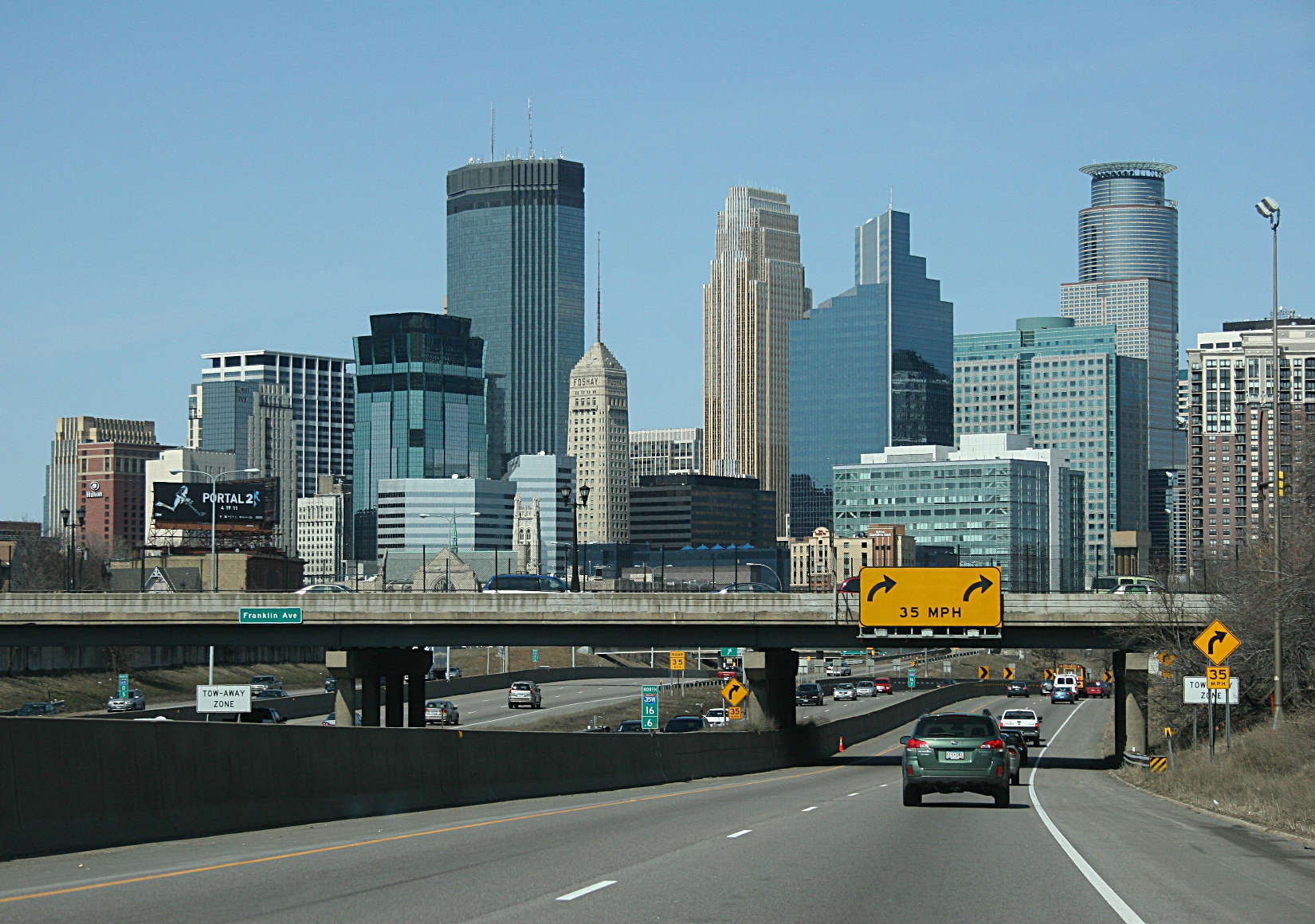
My world has always been horizontal. I prefer it that way—flat and unbroken by vertical obstacles. Towering buildings overwhelm me; make me feel small, visually overpowered and uncomfortable.

Can you understand that? Perhaps if you grew up or live in a rural area, you do.

The sun sets on my native southwestern Minnesota prairie in this December 2010 image.

I traveled to Chicago once during college, and to New York. While touring the garment district in the Big Apple, I was nearly flattened by a vendor pushing a rack of clothing as I paused on the sidewalk to gawk at the skyscrapers. In Chicago, I struggled with sleeping in a hotel that stretched too far into the sky.

A view of the Minneapolis skyline from Interstate 35.

I can’t recall the last time I visited downtown Minneapolis, but I’m certain it’s been decades. I’ve never been to any other big cities and I have no desire to travel to them.

Some of you will say I am missing out on culture and shopping and so much more by staying out of the city. You would be right.

But to counter that, I will tell you many a big city resident fails to leave the confines of the city to explore the small towns and rural areas that offer grassroots culture and shopping and much, much more.

I am not trying to pit city against country, horizontal against vertical, here. Rather, I’d simply like you to think about your world from a visual perspective. Then, tell me, what lines define your landscape? Vertical or horizontal, or a mixture of both?

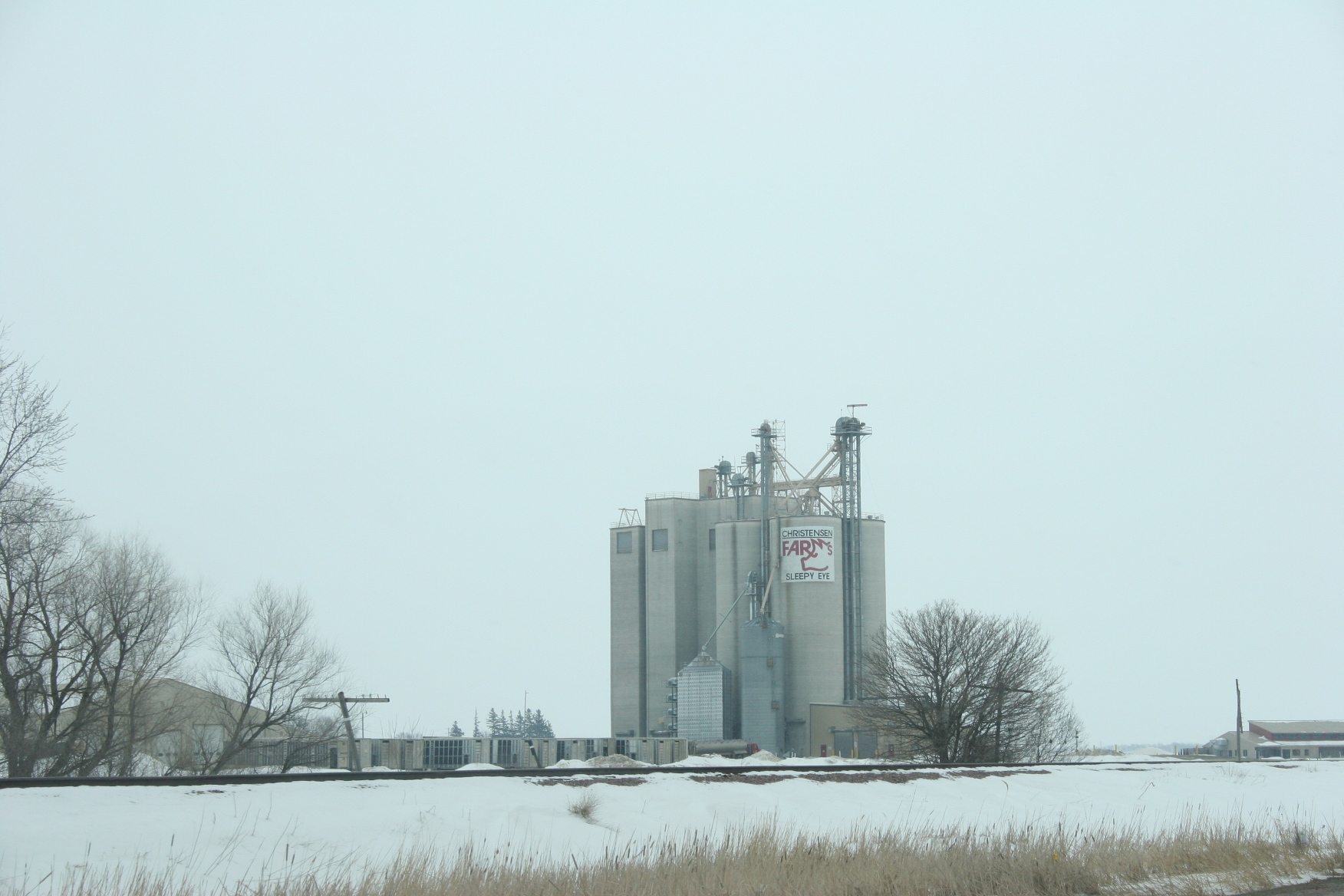
Even in rural Minnesota, vertical lines occasionally break the horizon, like this scene at Christensen Farms along U.S. Highway 14 east of Sleepy Eye in southwestern Minnesota.

The strong horizontal lines of railroad tracks and trains cross the flat prairie landscape of southwestern Minnesota. I shot this along U.S. Highway 14 between Springfield and Sleepy Eye as snow fell late on a March morning in 2011.

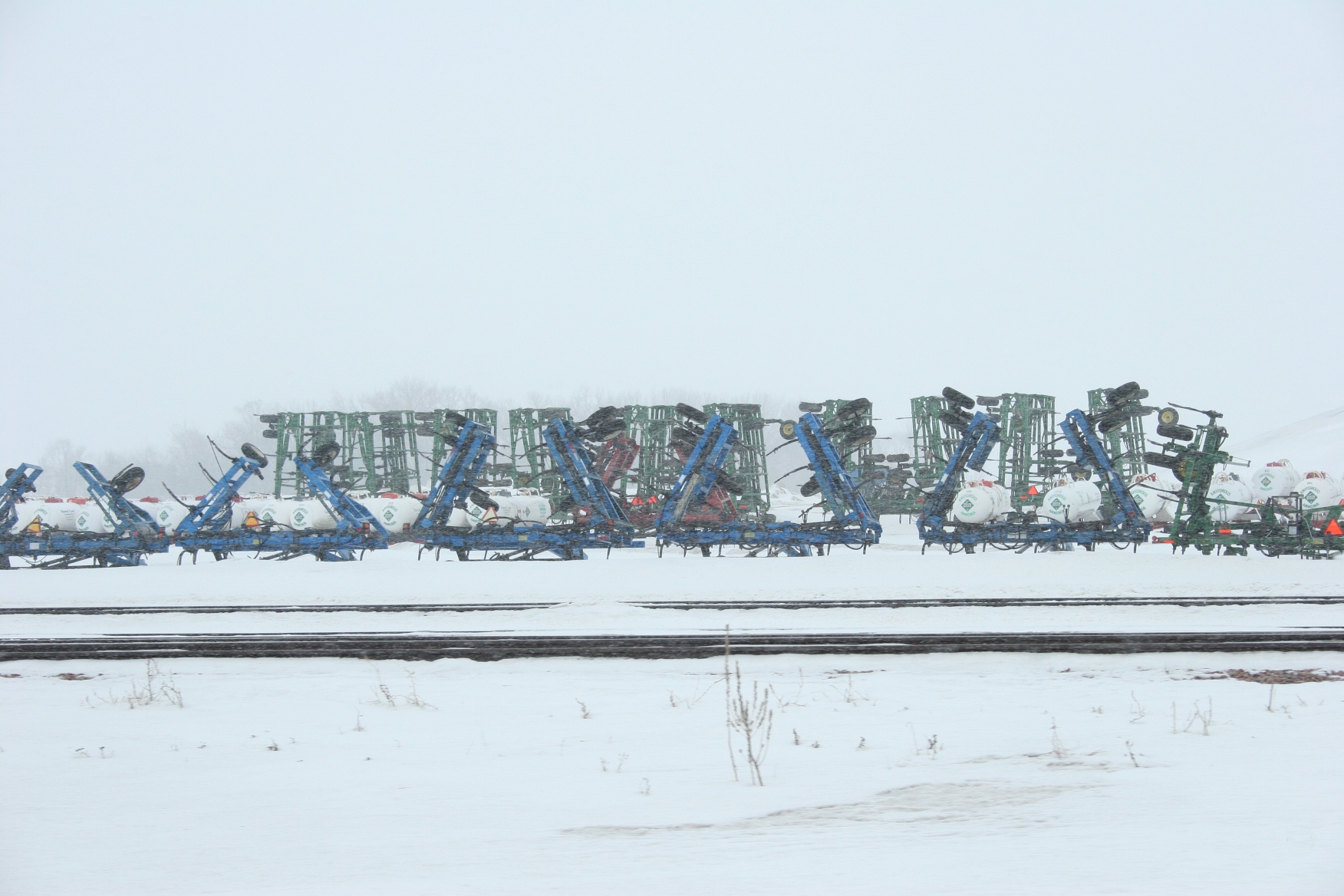
Railroad tracks and diggers slice precise horizontal lines across the landscape in this March 2011 image shot while traveling U.S. Highway 14 between Springfield and Sleepy Eye, in my native southwestern Minnesota.

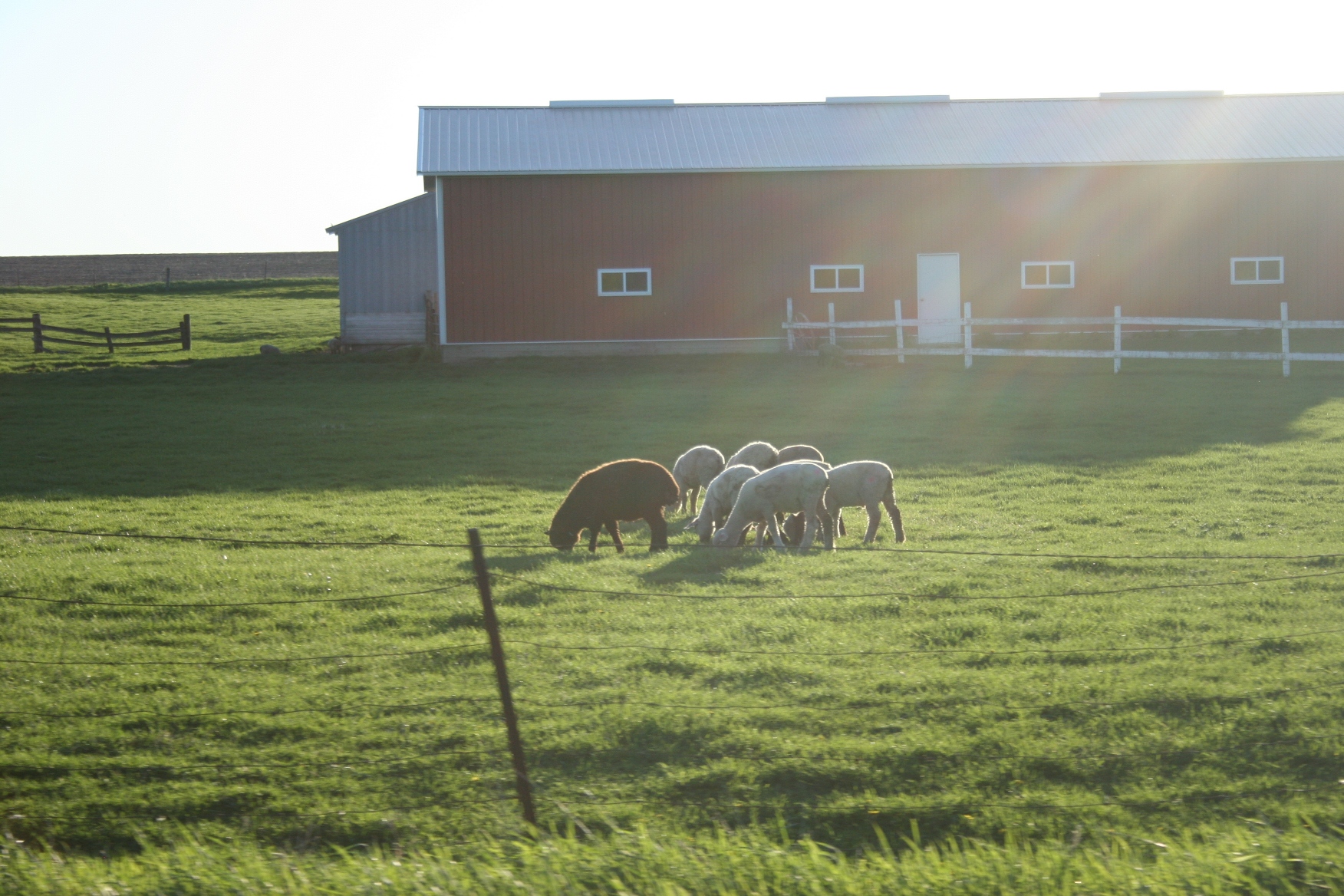
I live in Faribault, an hour's drive south of Minneapolis along Interstate 35. While I certainly don't consider Faribault, with a population of around 22,000 to be a small town, it's definitely not urban. I shot this pastoral scene last spring several miles west of town near Roberds Lake.

© Copyright 2012 Audrey Kletscher Helbling


Small-town Minnesota murals: Grassroots art January 30, 2012

Filed under: Uncategorized — Audrey Kletscher Helbling @ 8:20 AM
Tags: , , , , , , , , , , ,

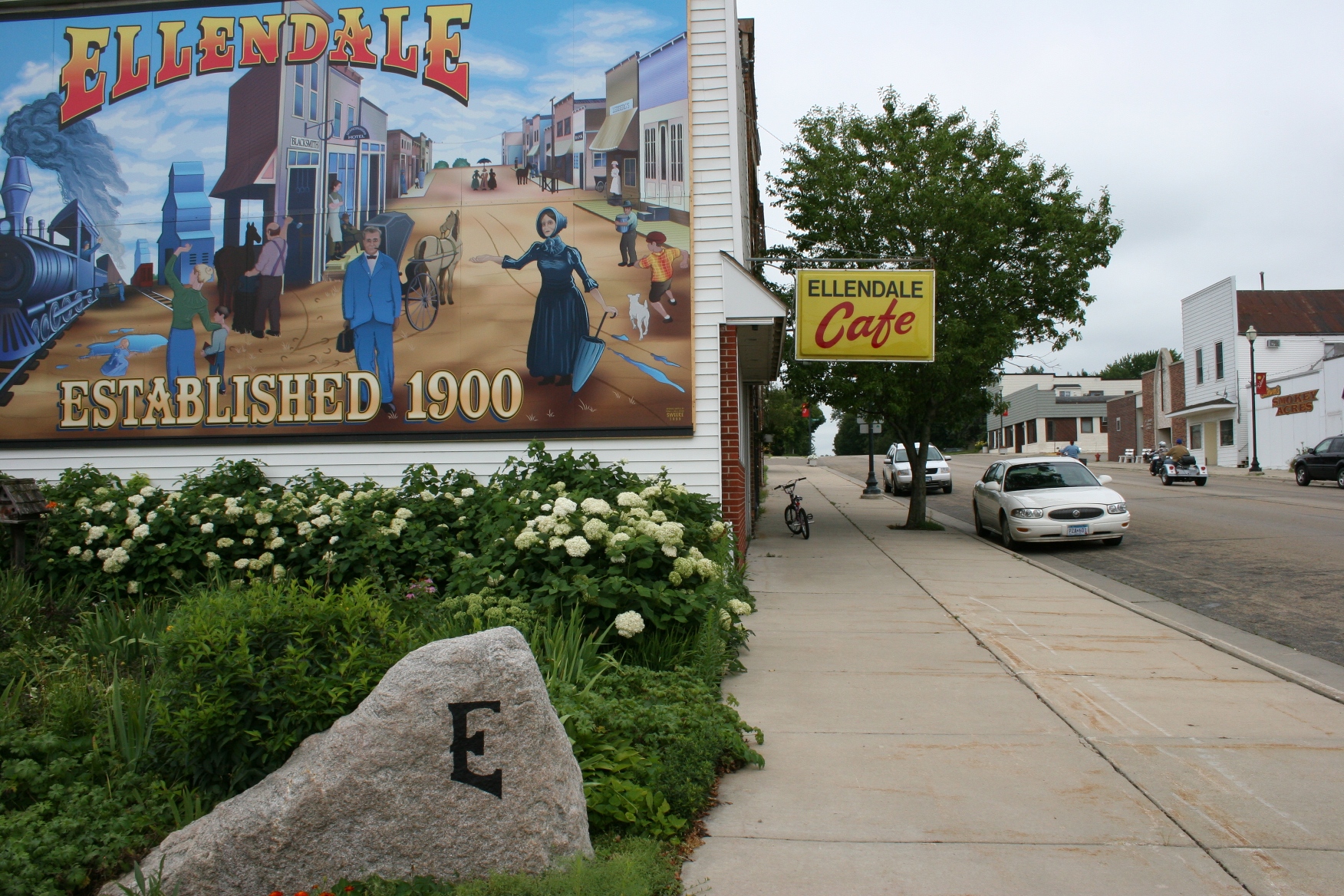
DRIVE INTO MONTGOMERY or New Richland, Ellendale or West Concord, or many small Minnesota towns, and you’ll find grassroots art, my term for Main Street murals.

It’s art that’s out-front and public, depicting the history and feel of a community.

Such murals typically offer a visual snapshot of the past, impressing upon visitors and locals a defined sense of place.

In Ellendale, for example, a locomotive and depot comprise about a third of the 16-foot by 32-foot mural on the side of the Ellendale Café. The train points to the community’s roots as a railroad town, established in 1900 when the Burlington, Cedar Rapids and Northern Railroad passed through on its way to Minneapolis. Ellendale is named after the railroad president’s wife, Ellen Dale Ives, known for her humanitarian works.

The Ellendale Centennial Mural photographed last summer.

The Sweere brothers of the Twin Cities-based National Mural Company and natives of nearby Owatonna painted the 1999 Ellendale Centennial Mural.

The mural, by the way, is just across the street from Lerberg’s Foods, an old-fashioned grocery store established in 1901 and complete with a moosehead on the wall. (Click here to read an earlier post about this must-visit grocery store.)

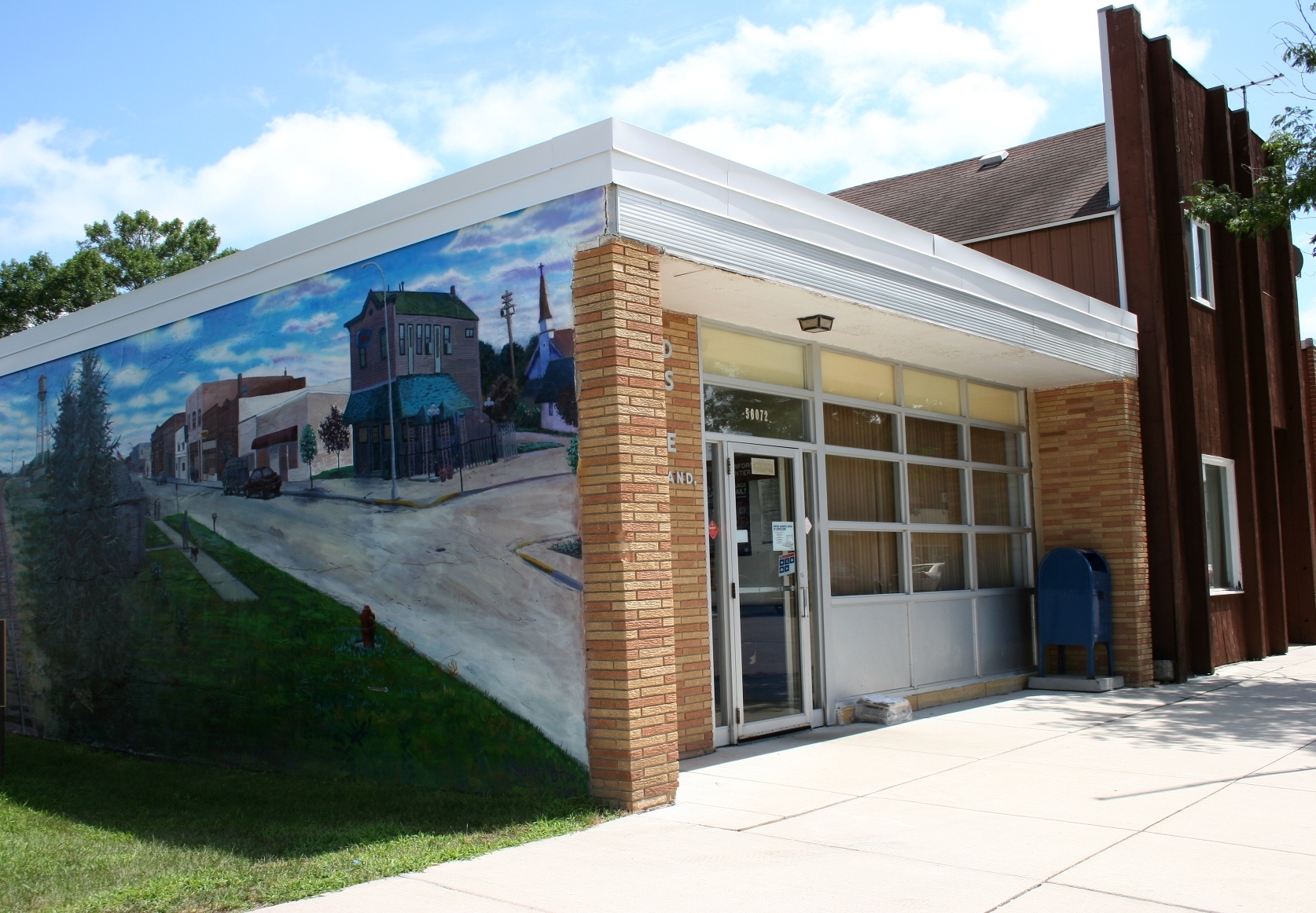
The city section of the mural stretching along the side of the New Richland post office.

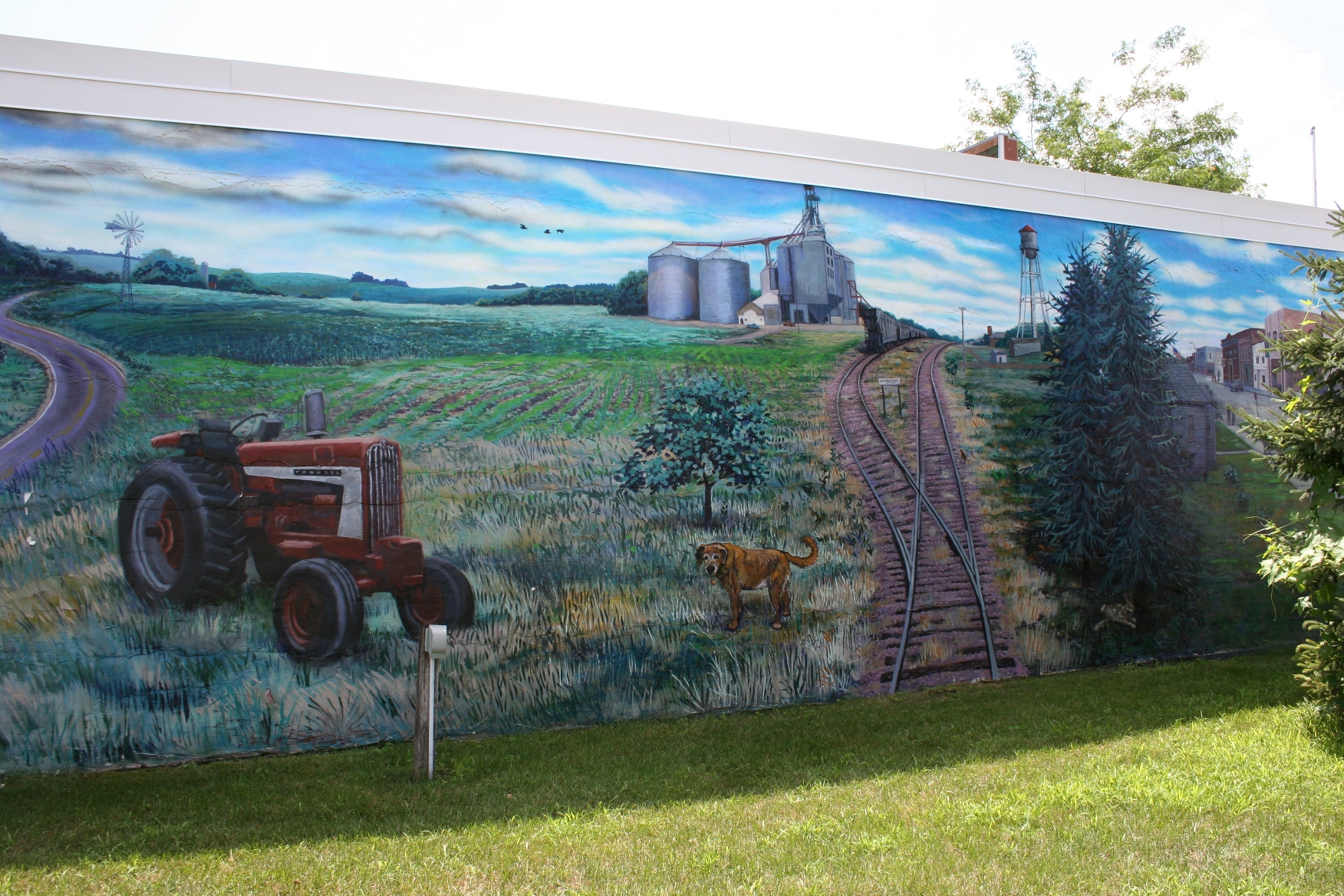
In neighboring New Richland, the Sweere brothers also created the 12.5-foot by 65-foot mural brushed onto an exterior cement block wall of the post office. In this 2003 grassroots art, train tracks visually divide the mural into city and country scenes. It is a point this community emphasizes—not the division of the two, but the link between rural and town. Each July this Waseca County town of 1,200 celebrates Farm and City Days.

The rural portion of the New Richland mural.

Should you be interested in moving to New Richland, you might want to click here and check out this deal: The city is offering free land to individuals looking to build a new home in the Homestake Subdivision on the northwest side of town within a year of acquiring the deed. (Note that you’ll need to pay the special assessments.) Just thought I’d throw that land offer out there.

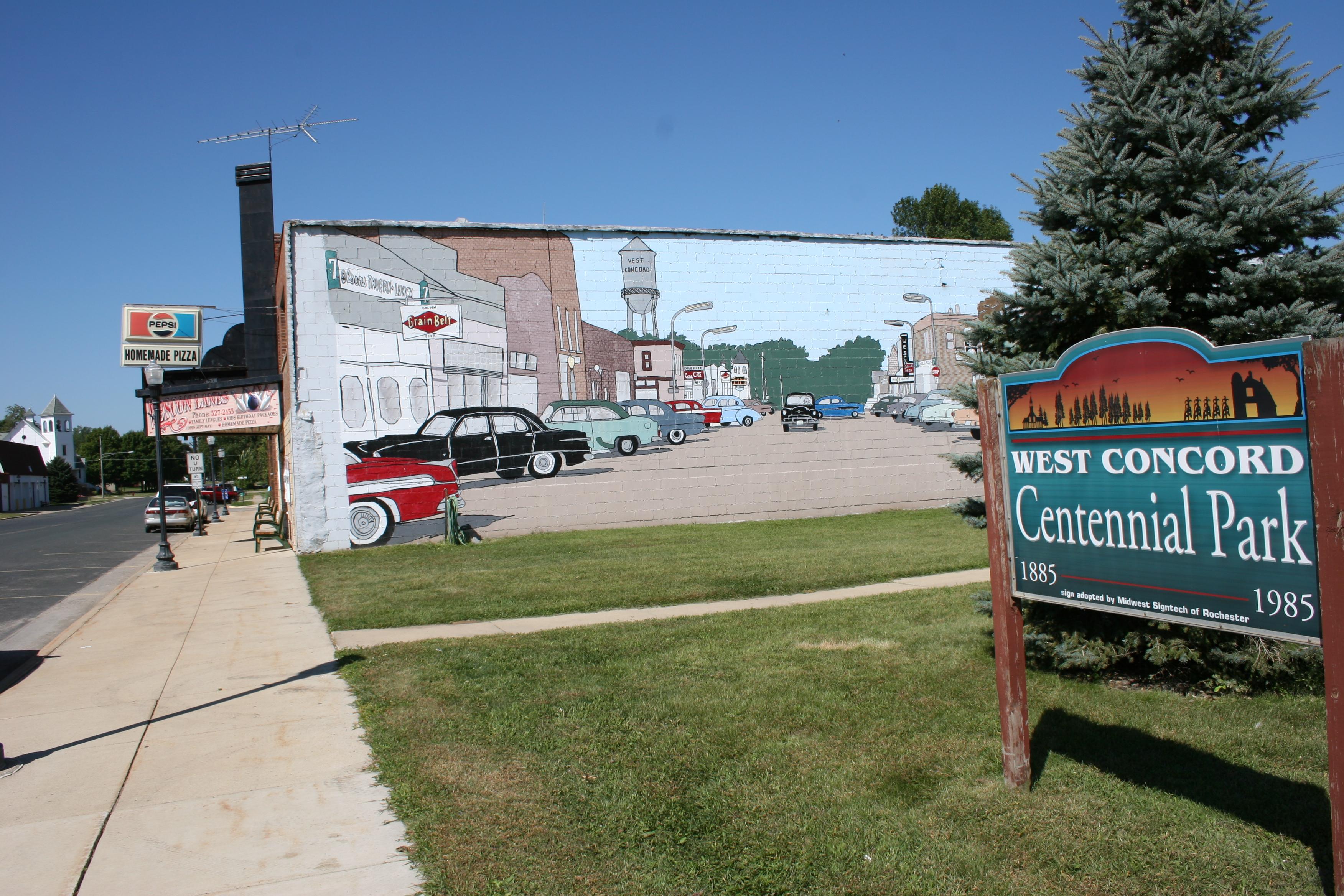
A 1950s version of West Concord is showcased in the mural on the side of a bowling alley.

To the east, over in West Concord, cars, not trains, define that town’s mural on the side of Wescon Lanes next to West Concord Centennial Park. The art depicts a 1950s street-scape, a nod to a community that celebrates summer with weekly car cruises and an annual West Concord Historical Society Car and Truck  Show in July.

Just down the street, you can shop at Woody’s Auto Literature and More.

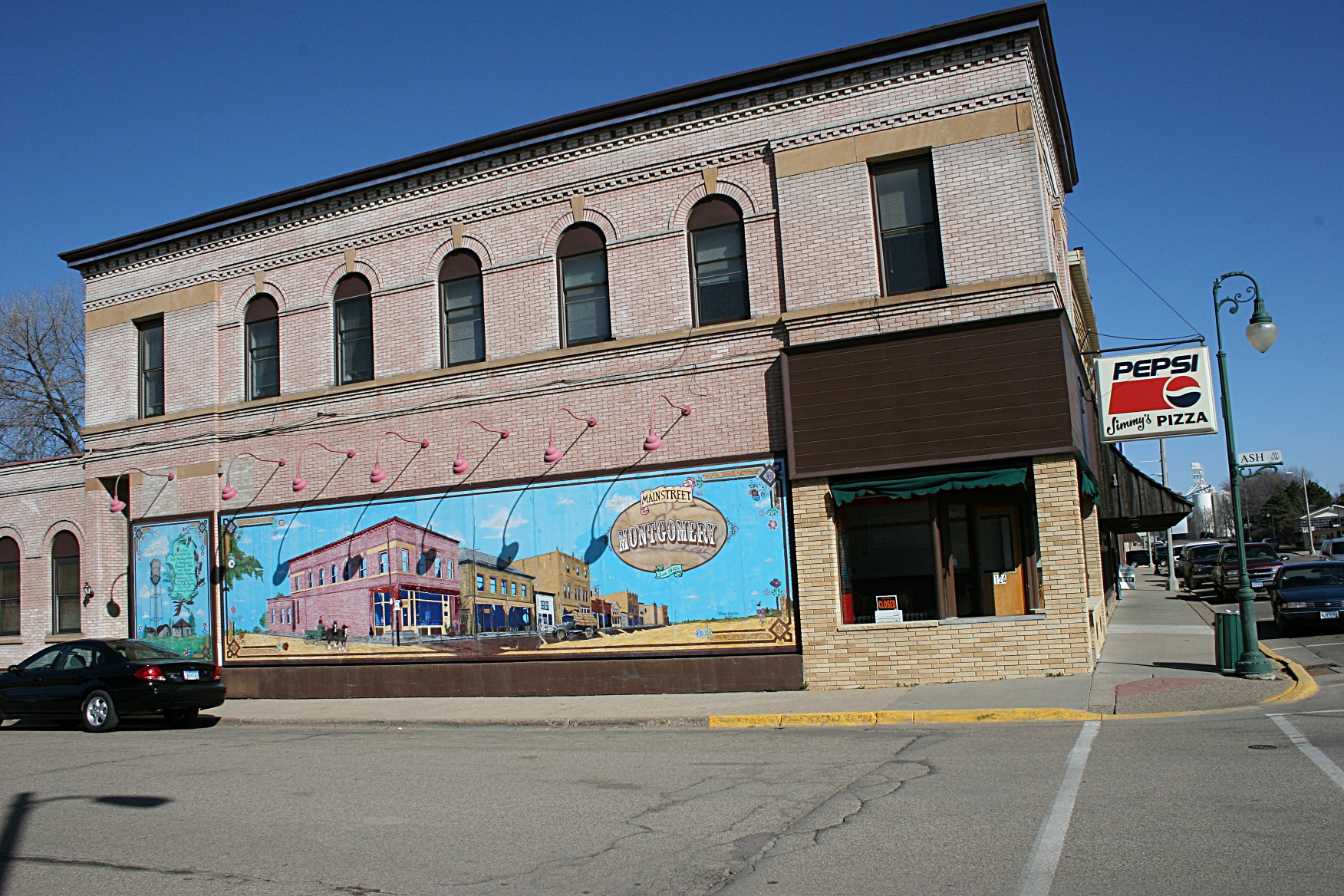
Montgomery, Minnesota's mural

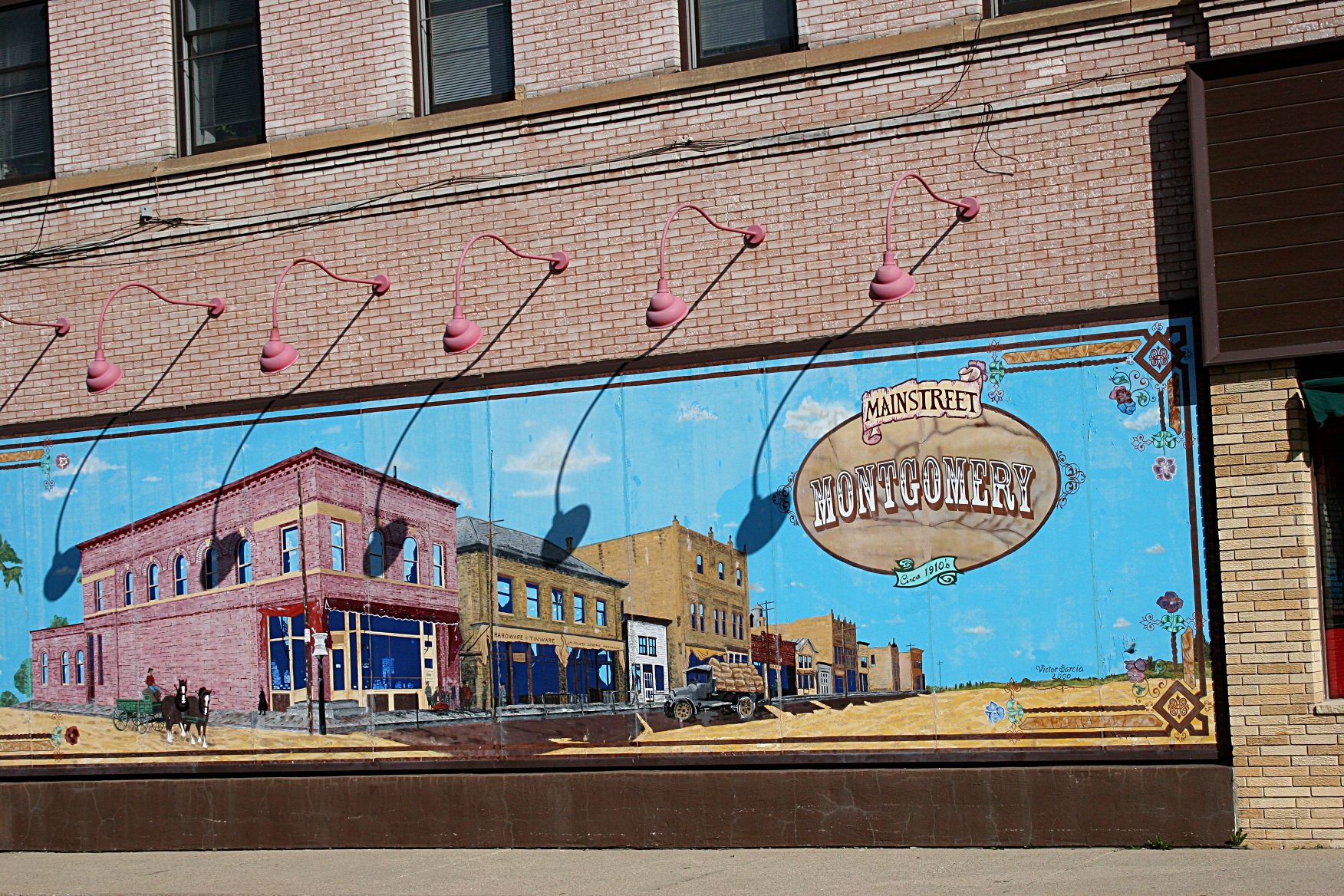
Traveling back west over to Montgomery in Le Sueur County, you’ll spot a mural of Main Street just across from famous Franke’s Bakery, known for its kolacky (Czech pastry). Local sign-painter Victor Garcia painted the scene based on an early 1900s photo of this town founded by Czech immigrants.

A close-up shot of the Montgomery mural

So there you have it—abbreviated visual histories of four small southeastern Minnesota towns showcased in grassroots art. Think about that the next time you see a mural.

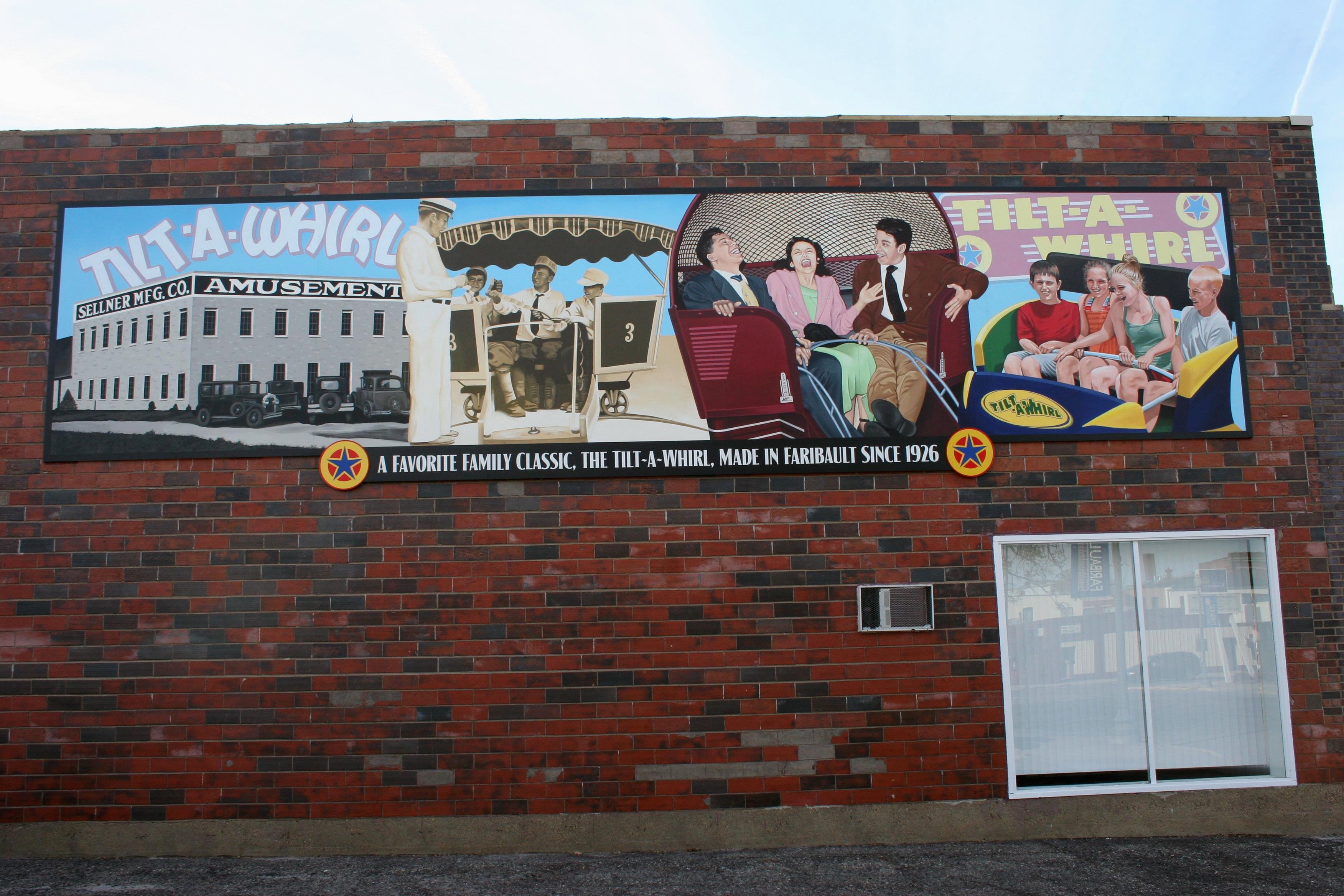
The Mural Society of Faribault created this mural honoring the Tilt-A-Whirl amusement ride, made in Faribault since 1926. Today Gold Star Manufacturing still produces the fiberglass cars for this ride.

DO YOU KNOW of any small towns that tell their stories via murals? In Faribault, where I live, five murals are posted on buildings in the downtown area. With a population of more than 20,000, Faribault isn’t exactly a small town, not from my perspective anyway. If you’re ever in the area, be sure to peruse the murals which depict differing aspects of this city’s history.

© Copyright 2012 Audrey Kletscher Helbling


I may not read music, but… January 29, 2012

GROWING UP, I ALWAYS wanted to play the piano. But I never had the opportunity, although one Christmas I received a toy accordion that temporarily satisfied my yearning to create music.

There was neither money nor space for a piano within the budget constraints of a poor farm family or within the walls of a cramped southwestern Minnesota farmhouse.

And so the years passed without music.

During junior high school I struggled through required music classes, once fake-playing the ukulele at a Christmas concert because the music teacher failed to recognize that I could not read musical notes.

In high school when so many classmates were joining band, I was not among them. Remember that money issue? Still there.

A few years later my younger siblings were allowed to join band—one sister choosing the flute, the other the clarinet. The brothers focused on sports. For awhile I tried to play my sister’s flute, without much success.

During college, a friend allowed me to strum her guitar. The strings bit into my fingertips so I quickly lost interest.

Years later when I had children, I was determined they would have the musical opportunities I never had. I started them on a mini toy organ. Later, the eldest tried playing my sister’s flute for awhile, then quit. The second daughter borrowed my youngest sister’s clarinet, sticking with band lessons for several years. My son had no interest in an instrument until recently, when he inquired about playing the guitar. He’s meeting with a family member soon to try out guitar-playing.

I tell you all of this because of a recent musical opportunity that came my way. It’s ironic really, given my inability to play any type of instrument or, in fact, read a single musical note. If you put a song sheet in front of me right now, I’d stare at it like I was reading Greek.

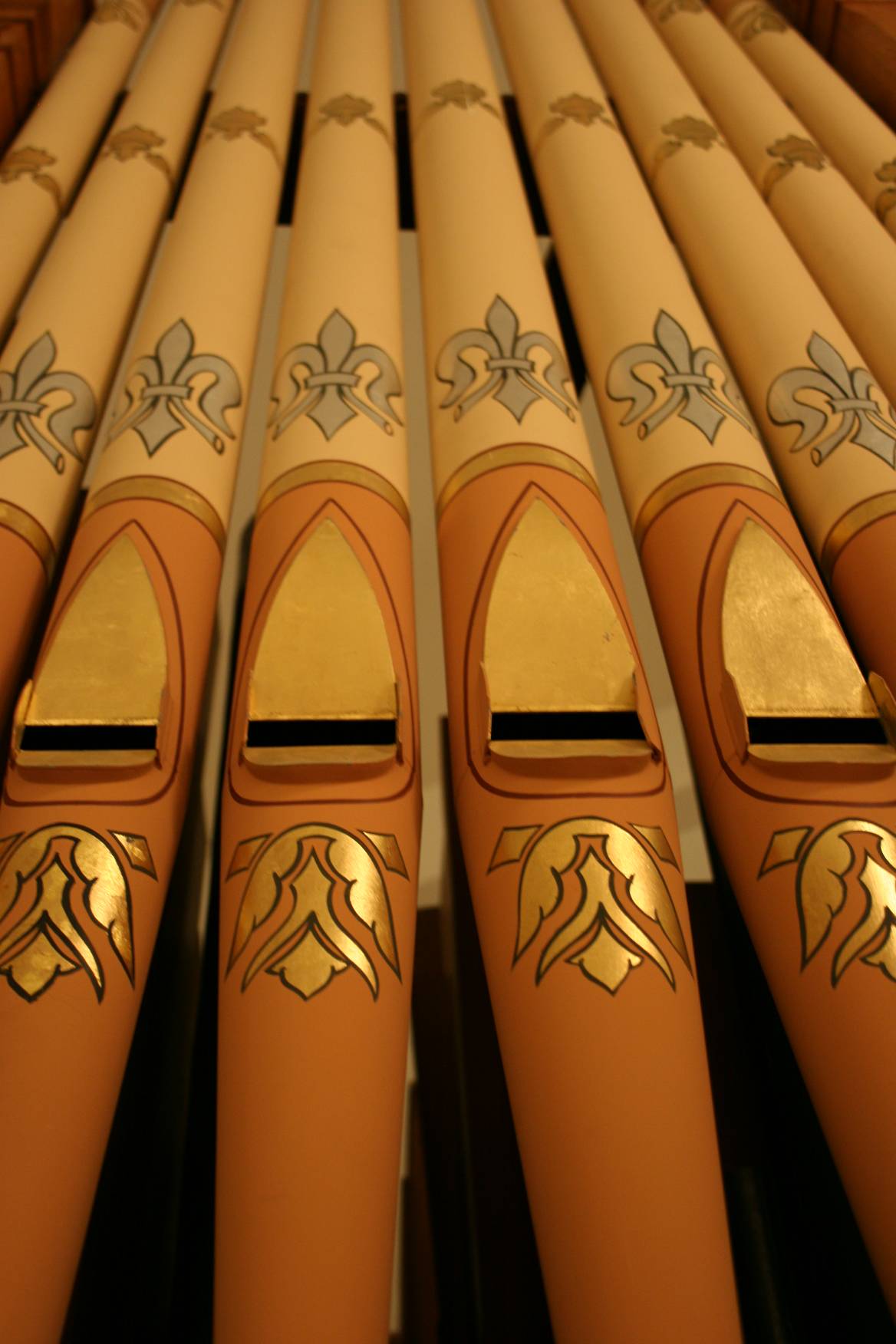
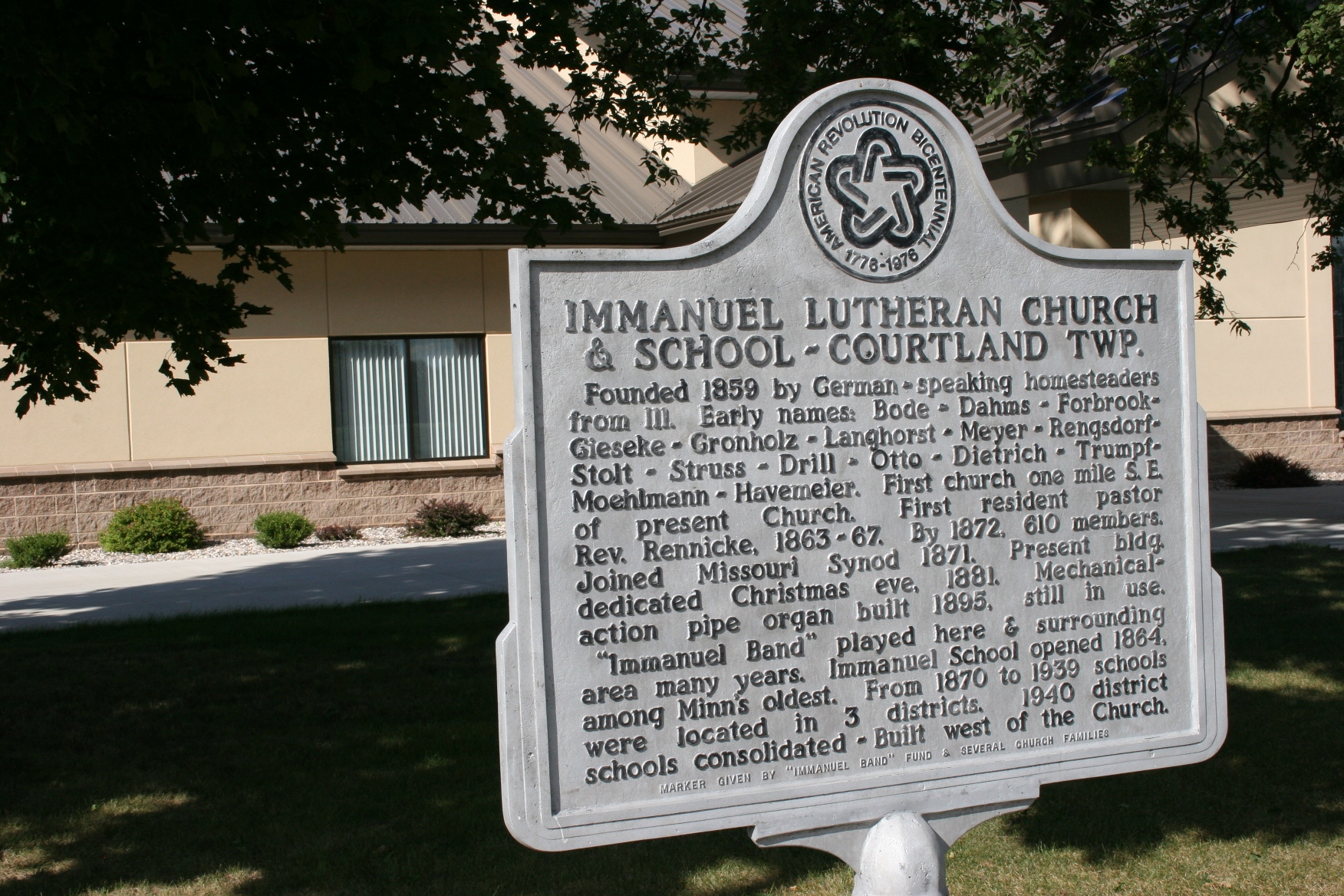
But composer Curtis Lanoue, also an elementary music teacher and the director of music at Lord of Life Lutheran Church in Miami, found the music in my soul. Seeking a cover photo for his 29-page Four Organ Preludes Based on Common Hymn Tunes book, Lanoue did an online image search and discovered my photo of the old pipe organ at Immanuel Lutheran Church, rural Courtland, Minnesota, the congregational home of my maternal forefathers.

“As you can imagine, there were a ton of (image) results,” Lanoue says. “Most of them were those flowery European organs in the cathedrals. That didn’t go too well with the style of the music. Somehow through the eye strain of looking through hundreds of photos, I found yours. It’s not surprising my eye was drawn to it as I was raised in a Midwest Lutheran church.”

Once I received a copy of this musician’s recently self-published book, I understood why he selected my photo of Immanuel’s organ that was built in 1895 by Vogelpohl and Spaeth Organ Company of New Ulm at a cost of $1,500.

It’s the perfect fit for Lanoue’s preludes based on the definitively Lutheran hymn, “A Mighty Fortress,” and on “Amazing Grace,” “Out of the Depths I Cry to Thee,” and “From Heaven Above to Earth I Come.”

As I flip through these compositions written by a musician with degrees in jazz performance and studio jazz writing and experience as a working organist since age 16, I can only smile at the contrast between his vast musical knowledge and talent and my musical illiteracy.

FYI: You can purchase Four Organ Preludes Based on Common Hymn Tunes for $9.99 by clicking on this link: https://www.createspace.com/3734555

Disclaimer: I am expecting payment for use of my cover image and have received a free copy of Lanoue’s book. This post, however, has been written solely at my discretion.

A rear photo shot of Immanuel Lutheran Church, Courtland, looking up to the balcony (where the 1895 pipe organ is located) and toward the spacious fellowship hall.

The beautiful pipes on Immanuel's organ.

JUST BECAUSE I THOUGHT it important to include, here’s some additional information about Immanuel’s organ, as shared by Immanuel’s pastor, Wayne Bernau:

The 1895 organ was renovated in 1988 at a cost of $25,000.

When Immanuel built a new church in 2007, Rollie Rutz and crew from Rutz Organ Company in Morristown (about 10 miles from my Faribault home), helped move the organ from the old church into the balcony of the new sanctuary.

A set of chimes was added to the organ in 2007.

Immanuel’s organ is today valued at around $200,000.

Says Pastor Bernau: “With the balcony constructed the way it is and the excellent acoustics for music in our new church, I believe the organ sounds better now, maybe twice as good, as it ever did in our 1881 building.”

I’ve heard the organ played in Immanuel and I agree. The acoustics in the new house of worship truly showcase the sounds of this 117-year-old organ played each Sunday by Lisa (Bode) Fischer, the daughter of my mom’s first cousin and a descendant of the Bode family members who helped found this rural congregation in the Minnesota River Valley more than a century ago.

A historical sign outside of Immanuel Lutheran Church, east of Courtland, Minnesota.

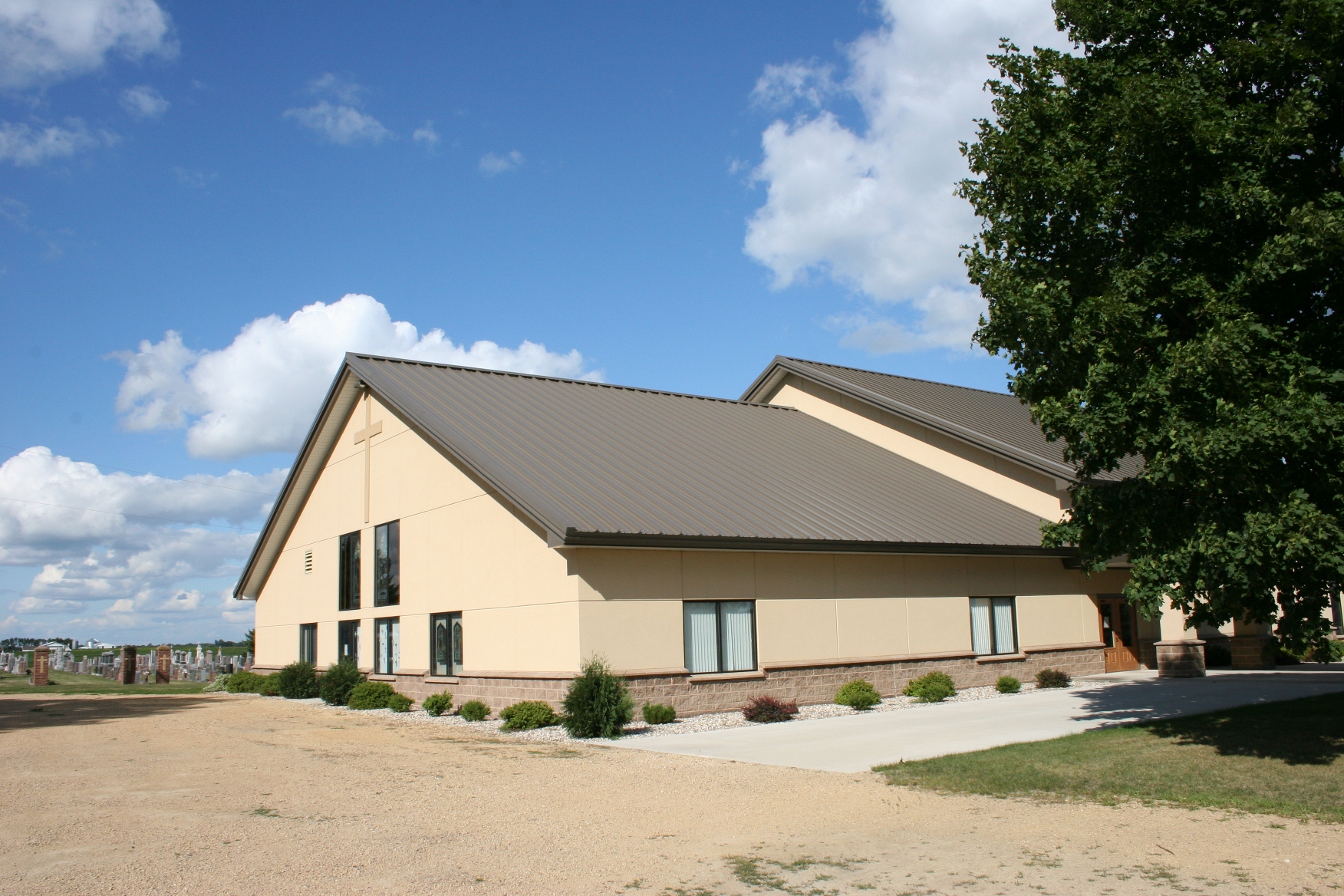
This photo, taken in September, shows primarily Immanuel's social hall and the adjacent cemetery where many of my Bode forefathers are buried.

A view of Immanuel's sanctuary from the balcony. The pews, the chancel furnishings and the stained glass windows from the old church were incorporated into the new church.

© Copyright 2012 Audrey Kletscher Helbling


When your day fails to go as planned January 27, 2012

Filed under: Uncategorized — Audrey Kletscher Helbling @ 10:30 AM
Tags: , , , , , , , , , , ,

I RECENTLY READ somewhere—and I read a lot—if you want to make God laugh, plan your day.

Well, God must have been rolling on the floor, laughing until he cried and his belly hurt on Thursday because I had one of those days. You know, the kind that veers completely from your intended course of action.

My main goal for the day was to finish pulling together financial information for the professional who completes our taxes. Now those of you who know me, either personally or via this blog, realize how much I detest numbers. Math whiz I am not. And to add to the stress this year, I once again need to file a Free Application for Federal Student Aid after a two-year respite. I despise forms, especially when numbers comprise the bulk of the required information.

I never got to the numbers on Thursday.

Rather, I spent most of my morning researching information for a document my husband needs for a church meeting on Sunday. I’m happy to help him, but I never thought the project would consume hours of my time.

I expect God was getting a chuckle out of that, his subtle reminder that perhaps I should give just a little more of my time to him.

The rest of the day slipped away in work-related issues with precious little time for writing.

Have you noticed the repeat of the word “time” in all three of the above paragraphs? Why am I so obsessed with time?

Despite my day failing to go as planned, I knew I had a delightful evening ahead. My husband and I had been planning for weeks to attend a presentation by Minnesota photographer Doug Ohman who has published a series of “Minnesota Byways” books.

But then, 50 minutes before Ohman’s talk, my husband called. The car had broken down on his way home from work and he needed a ride and a tow.

Long story short, we missed Ohman’s 6 p.m.presentation. (Who chooses these times anyway?)

After a late supper, kitchen clean-up and e-mail catch-up, I finally kicked back in the recliner to finish the final chapters in Still Standing: The Story of SSG John Kriesel by John Kriesel as told to Jim Kosmo.

About then, God must have been muttering to himself, “Well, she thinks she’s had a bad day…”

He was right, of course. Put in the perspective of all the problems and tragedies a day can bring, my Thursday rated as just fine, thank you. My legs weren’t blown off in a roadside blast. I wasn’t fighting to live. None of my friends had been killed in Iraq.

Minnesota National Guardsman Kriesel had dealt with all of that and managed to overcome, to be positive, to move forward with his life. His story is about as inspiring as any you’ll ever read.

And then, when I finished that book Thursday evening, I picked up Conversations with the Land by Jim VanDerPol, a Chippewa County farmer and writer. I’m only a few essays into his book, but already I appreciate the approach he takes to the land and to life in general. He pauses to notice, to savor, to value his land and his role as tender of the earth. His writing resonates with me, reconnects me to the prairie of my youth, the land that still influences my writing.

And so my Thursday ended and a new day has begun with a sunrise so splendid that my husband called to tell me about it, as he often does when the morning sky is especially beautiful.

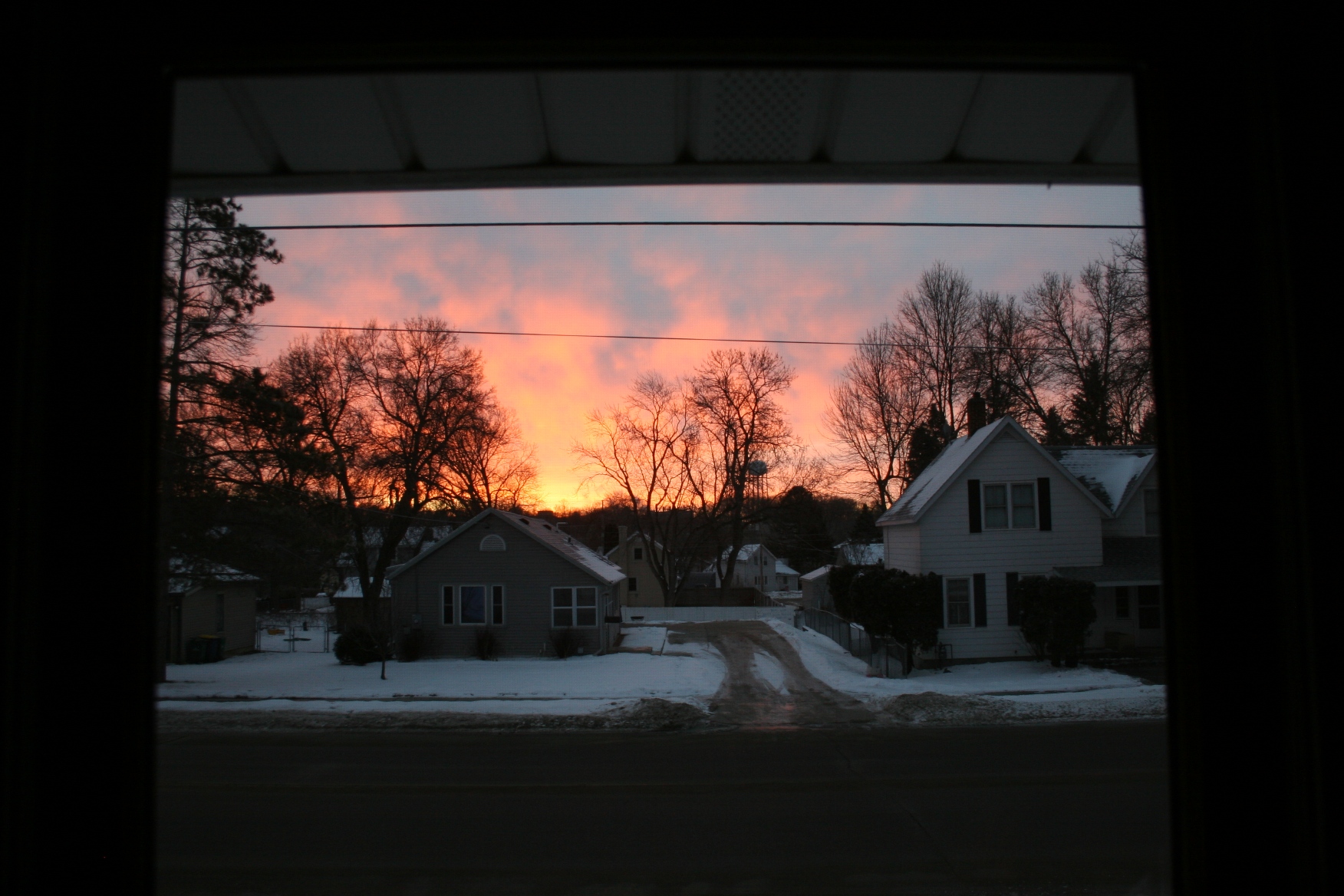
The remnants of today's sunrise as viewed from my office window.

Several weeks ago, I started penning this poem after pausing to watch the sunrise:

Jam on toast

My fingertips lift within a mere whisper of the keyboard

as I halt, half-thought, words interrupted mid-sentence,

to tilt my head toward the window and the sunrise

spreading gold and pink across the sky like jam on toast.

#

In that morning moment, I want nothing more

than to dip my fingers into the jar of dawn,

to sample her sweetness, to taste of her earthy goodness,

to delight in sunshine and rain and succulent fruit plucked from vines.

#

PERHAPS TODAY should be the day I finish this poem.

Copyright 2012 Audrey Kletscher Helbling


A Minnesota prairie native discovers a ship docked in the Wisconsin woods January 26, 2012

I GREW UP on the southwestern Minnesota prairie, a mostly flat land vertically-interrupted only by small-town grain elevators and water towers, by silos and groves of trees hugging farm sites.

I never felt hemmed in. How could I feel confined under an endless sky in a land that stretches into forever, nearly unbroken before your eyes?

Perhaps that will help you understand why I sometimes struggle with trees. I’m not talking a tree here, a tree there, but trees packed so tight that they become a forest. Dense. Black. Blocking views. I need to, have to, see the land spreading wide before me if I’m exposed for too long to miles of thick woods.

Likewise, I prefer my land flat.

All of that said, time and age and exposure to geography beyond the prairie have resolved some of those space and landscape issues for me. I can, within limits, appreciate terrain that rolls and rises, trees that clump into more than a shelter belt around a farmhouse.

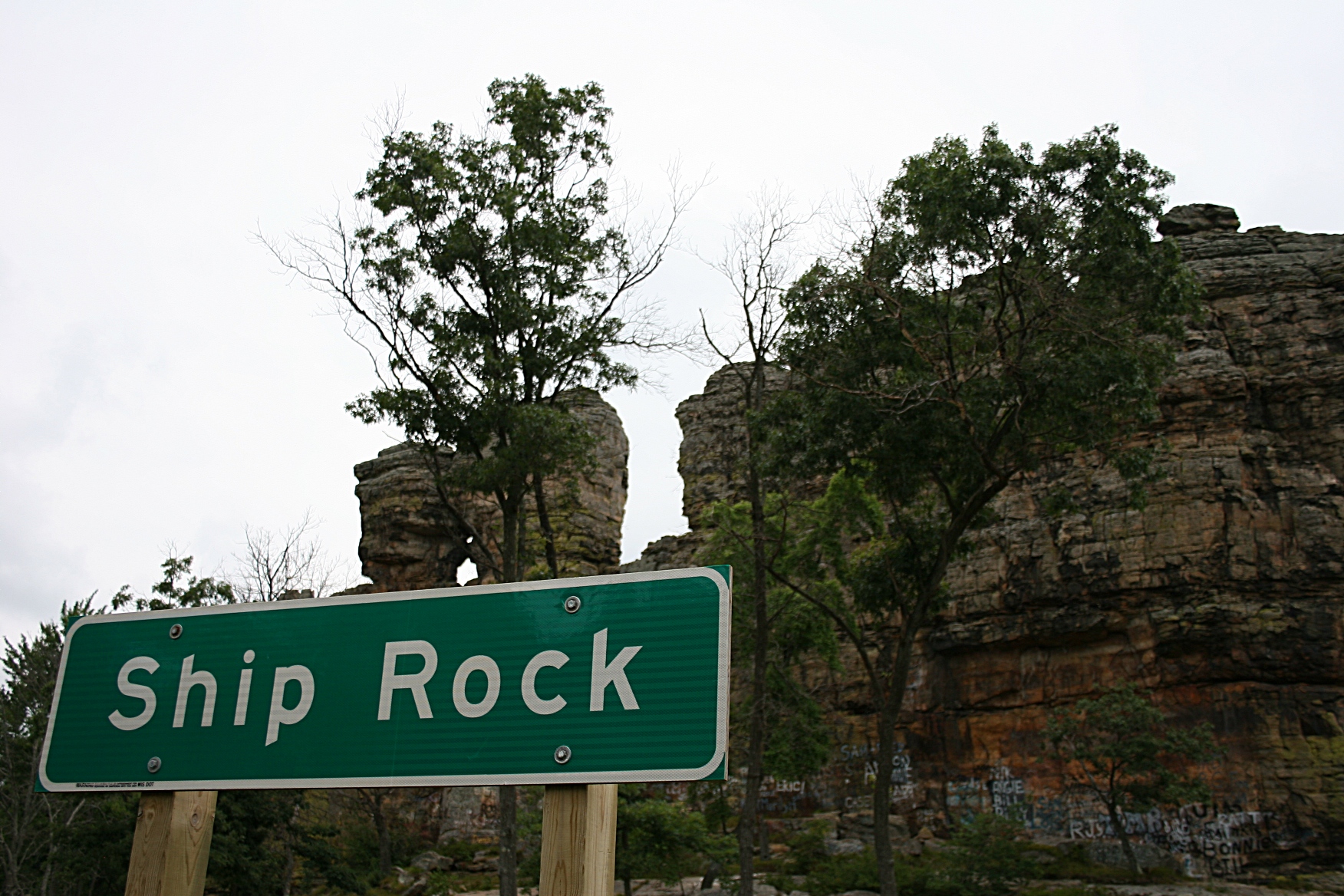
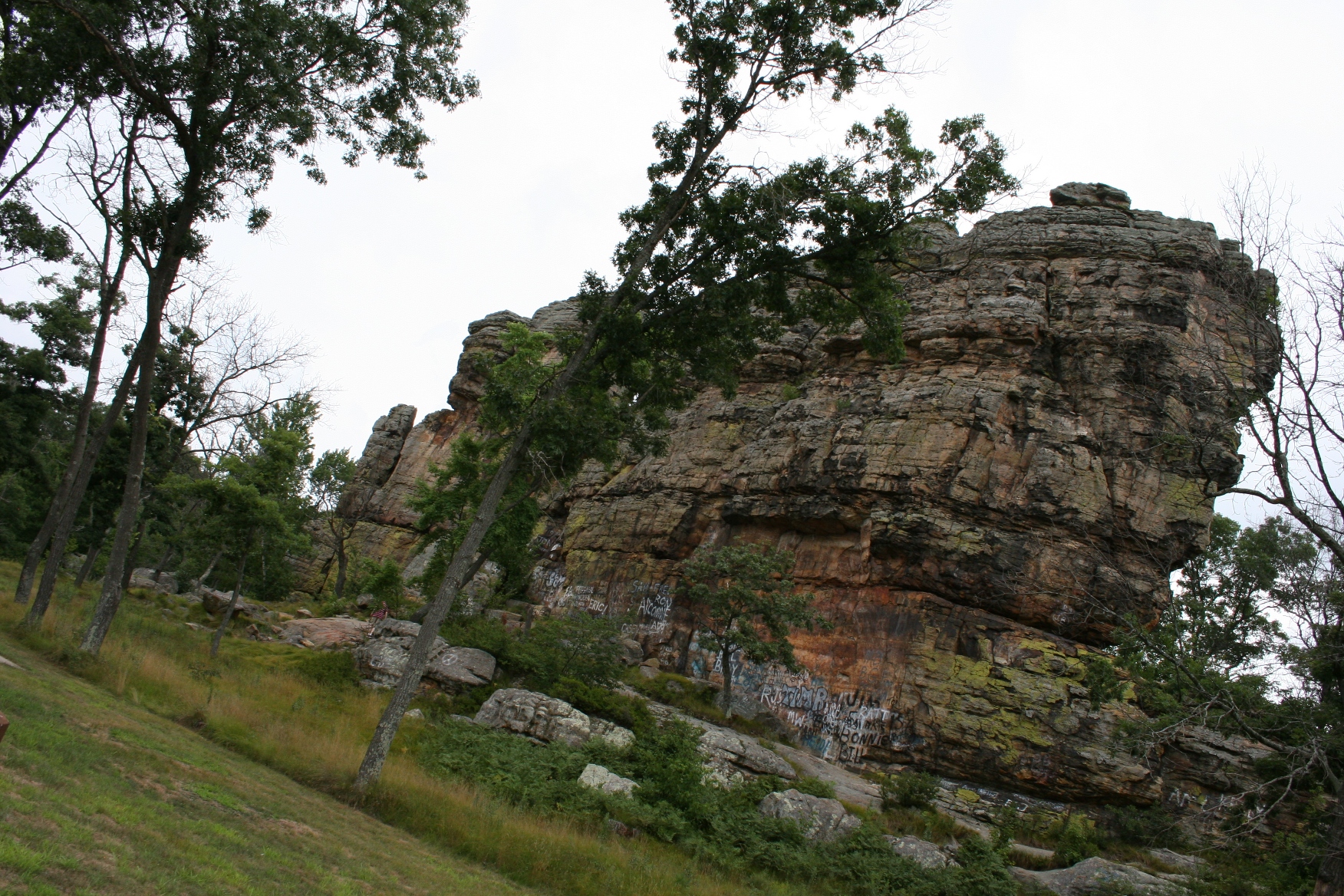
I can appreciate, too, geological anomalies like Ship Rock, a natural formation jutting out of seemingly nowhere from the trees that crowd State Highway 21 in Adams County near Coloma in central Wisconsin.

Ship Rock is located next to Wisconsin Highway 21 in the central part of the state.

Whenever I pass by Ship Rock, which has been numerous times since my second daughter moved to Appleton, Wisconsin, in December 2010, I am awestruck by this isolated pinnacle of Cambrian sandstone. Finally, this past summer, my husband, teenaged son and I stopped to climb around the base of the rock cropping and to photograph it (me mostly photographing rather than climbing).

Ship Rock rises from the flat landscape, a surprise in the Wisconsin woods.

My husband walks across the rocks below the looming Ship Rock.

If you can ignore the distracting graffiti, then you can appreciate the nuances of the mottled stone, the ferns that tuck into crevices, the surprise of this Ship Rock docked in the most unexpected of places. The rock formation truly does resemble a ship.

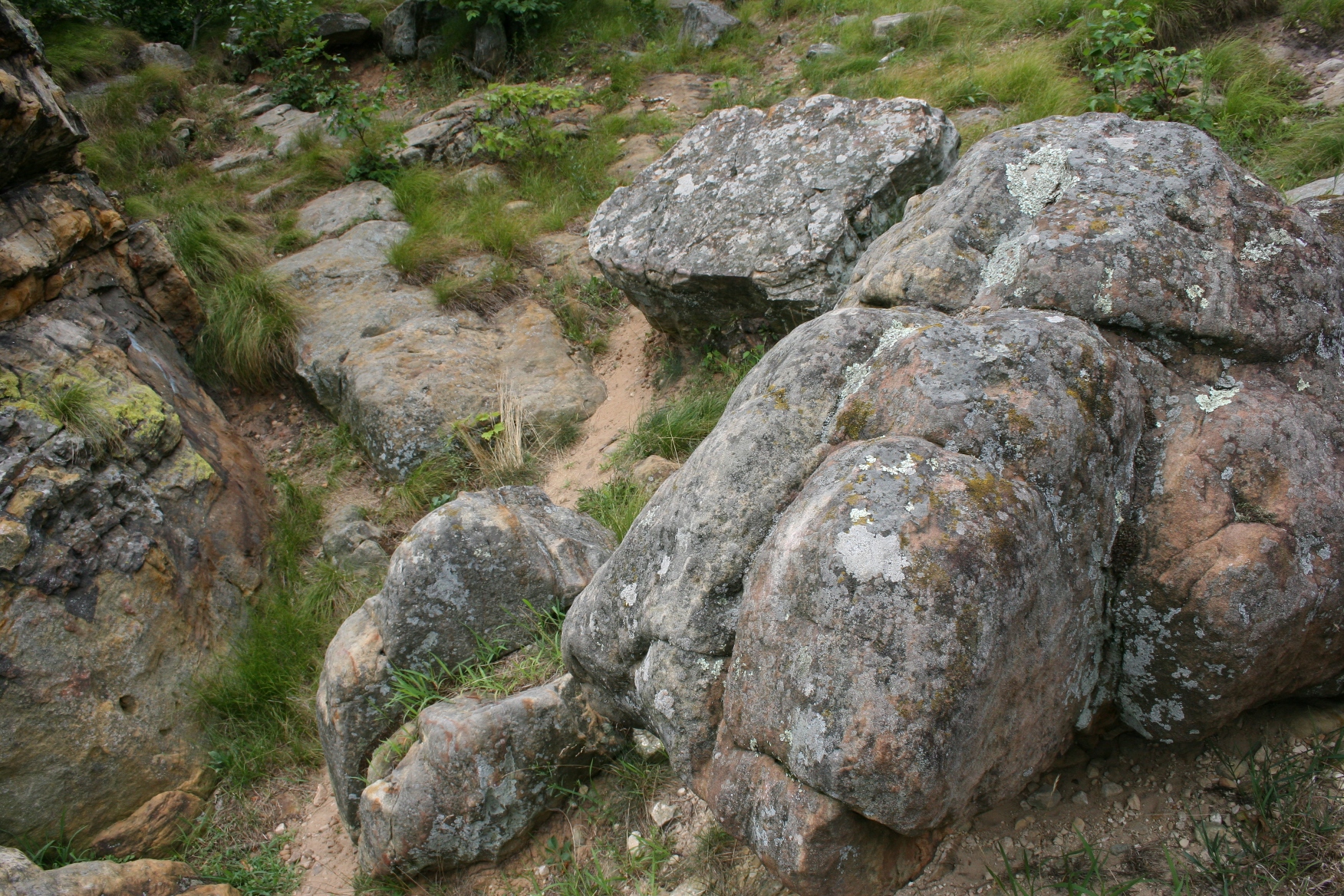
I am surprised by the ferns that grow in the tight spaces between rocks.

Grass sweeps between rocks in this August 2011 image taken at Ship Rock.

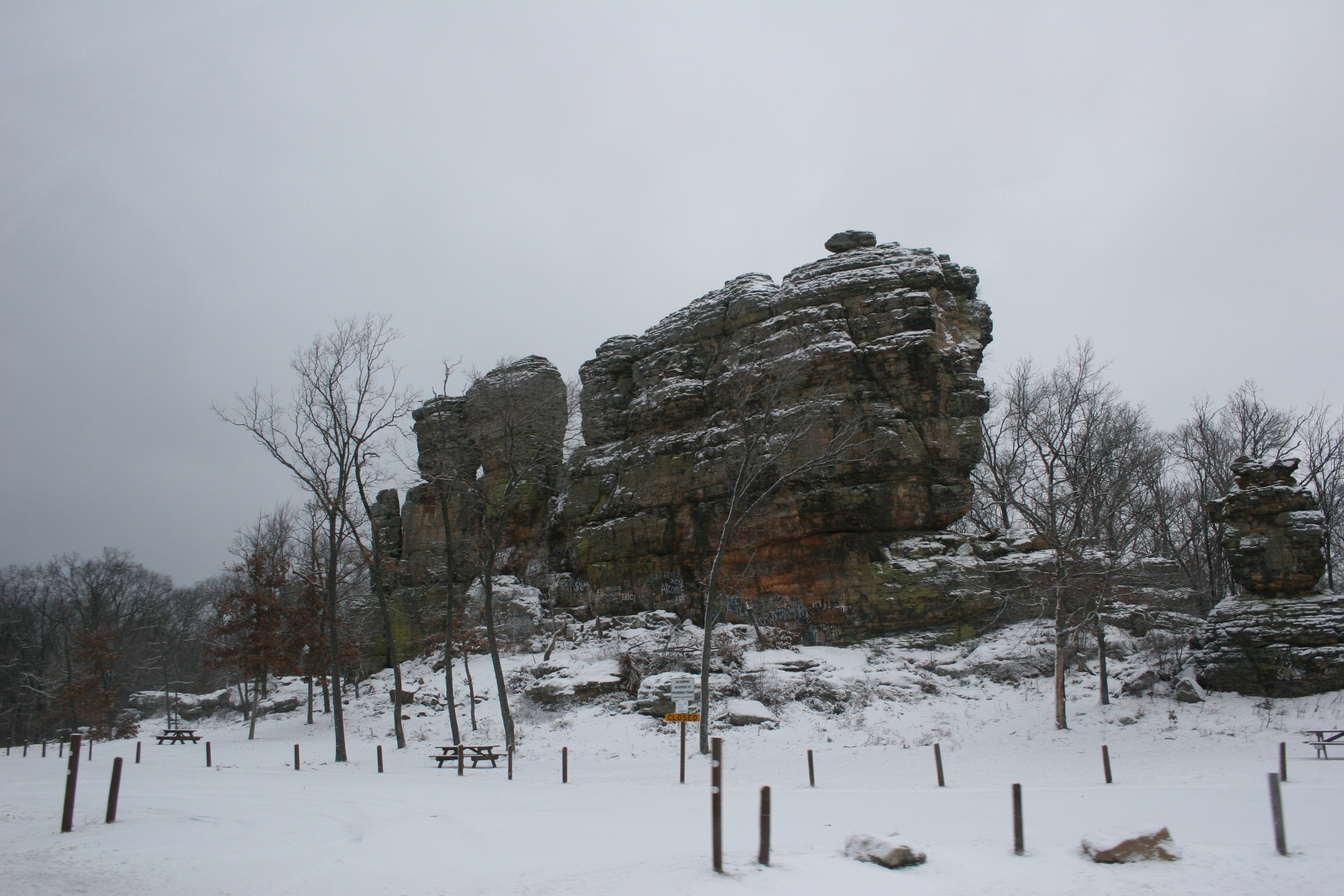
A month ago while traveling past Ship Rock, I snapped a photo. The ship seemed forlorn and exposed among the deciduous trees stripped of their summer greenery. Yet she also appeared threatening, a looming presence rising dark and foreboding above the land awash in snow.

I could appreciate her, even if she wasn’t a grain elevator or a water tower, a silo or a cluster of trees breaking a prairie vista.

Ship Rock, photographed from the passenger window of our van at highway speeds in December.

CLICK HERE for more information about Adams County, Wisconsin.

© Copyright 2012 Audrey Kletscher Helbling


Doug Ohman preserves Minnesota in photos January 25, 2012

MANY YEARS AGO I heard Minnesota photographer Doug Ohman talk about his Churches of Minnesota book, a project in his “Minnesota Byways” series published by the Minnesota Historical Society Press.

He’s an impressive speaker, sharing his love for photographing those subjects which hold historical, community and personal significance for so many Minnesotans.

Thus far he’s covered Minnesota churches, barns, courthouses, schoolhouses, cabins and libraries in his series. I don’t think I’ve missed any and I’ve read most. His books also include prose by well-known Minnesota writers like Will Weaver, Jon Hassler and Bill Holm.

If you’re at all interested in the places that are so integral to our lives, you’ll want to read Ohman’s books and, if you have the opportunity, hear him speak.

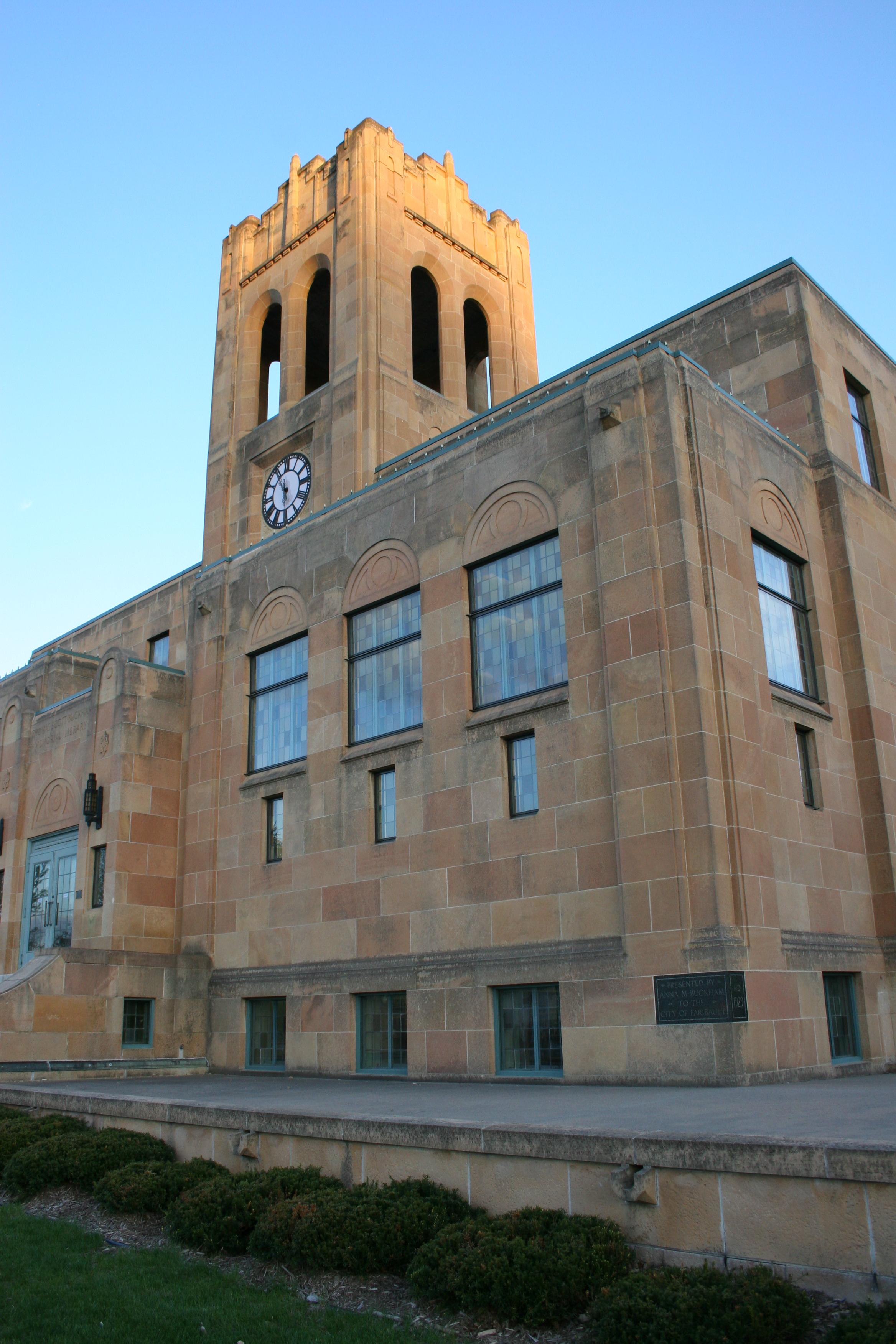
Buckham Memorial Library, built in 1929, features a Charles Connick stained glass window and Greek murals.

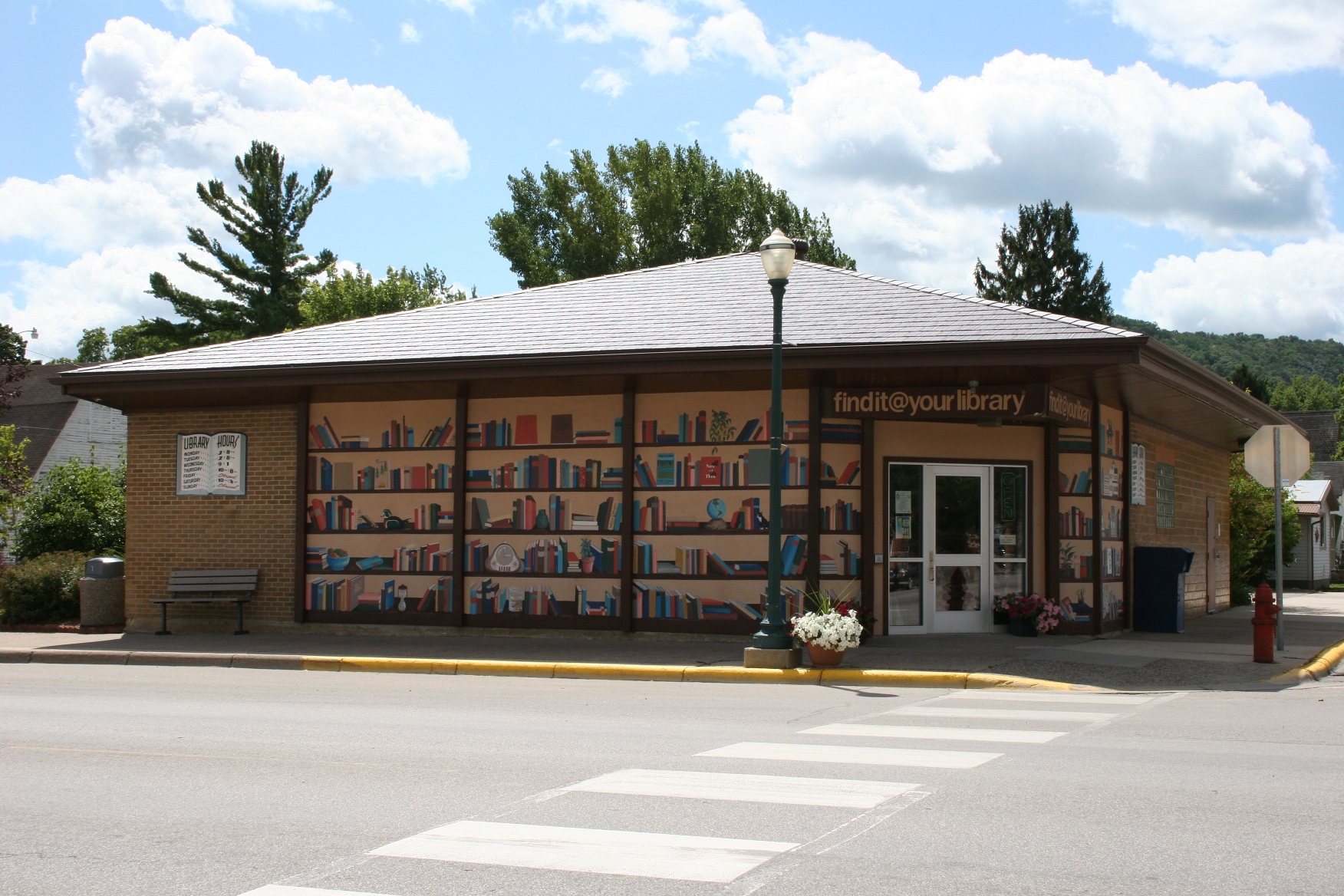
Thursday night, January 26, this noted photographer travels to my community of Faribault, to Buckham Memorial Library, to present “Free to All: Libraries of Minnesota” as part of the Minnesota Book Award Author Tour. His book, Prairie, Lake, Forest: Minnesota’s State Parks, was a 2011 MNBA nominee.

I’ll be there for several reasons: I enjoy Ohman’s books. I want to learn more about his approach to photography. I’m interested in learning more about libraries in Minnesota. I appreciate libraries.

He’ll be at the Faribault library at 6 p.m. for this free event. A photo of Buckham, by the way, is included in his Libraries of Minnesota.

Southeastern Minnesota residents will have plenty of other opportunities to hear Ohman speak on his “Minnesota Byways” series as a dozen additional appearances are scheduled through-out the Southeastern Libraries Cooperating regional library system. Click here to view a complete listing of Ohman’s upcoming visits. His presentations will vary—from schoolhouses to churches to farms and more—depending on location.

I’d recommend taking in one of Ohman’s presentations. You’ll gain insights into Minnesota history and photography and more from a photographer who possesses an unbridled enthusiasm for preserving, in images, that which is part of the Minnesota landscape.

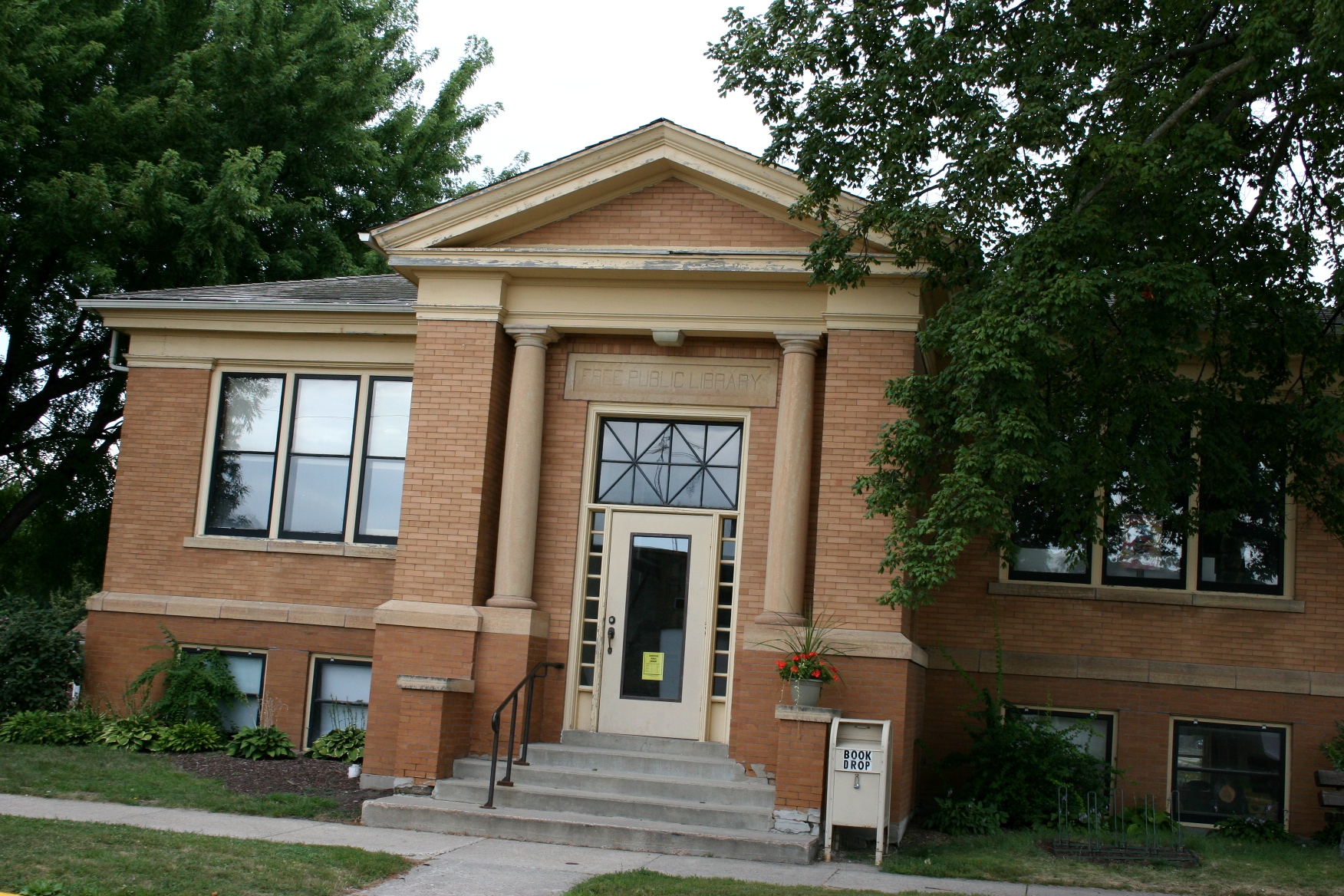
The Houston Public Library is on the cover of Ohman's book, Libraries of Minnesota. I shot this photo last summer of the library in the southeastern corner of our state.

Built in 1912, the library in Janesville is an Andrew Carnegie library on the National Register of Historic Places.

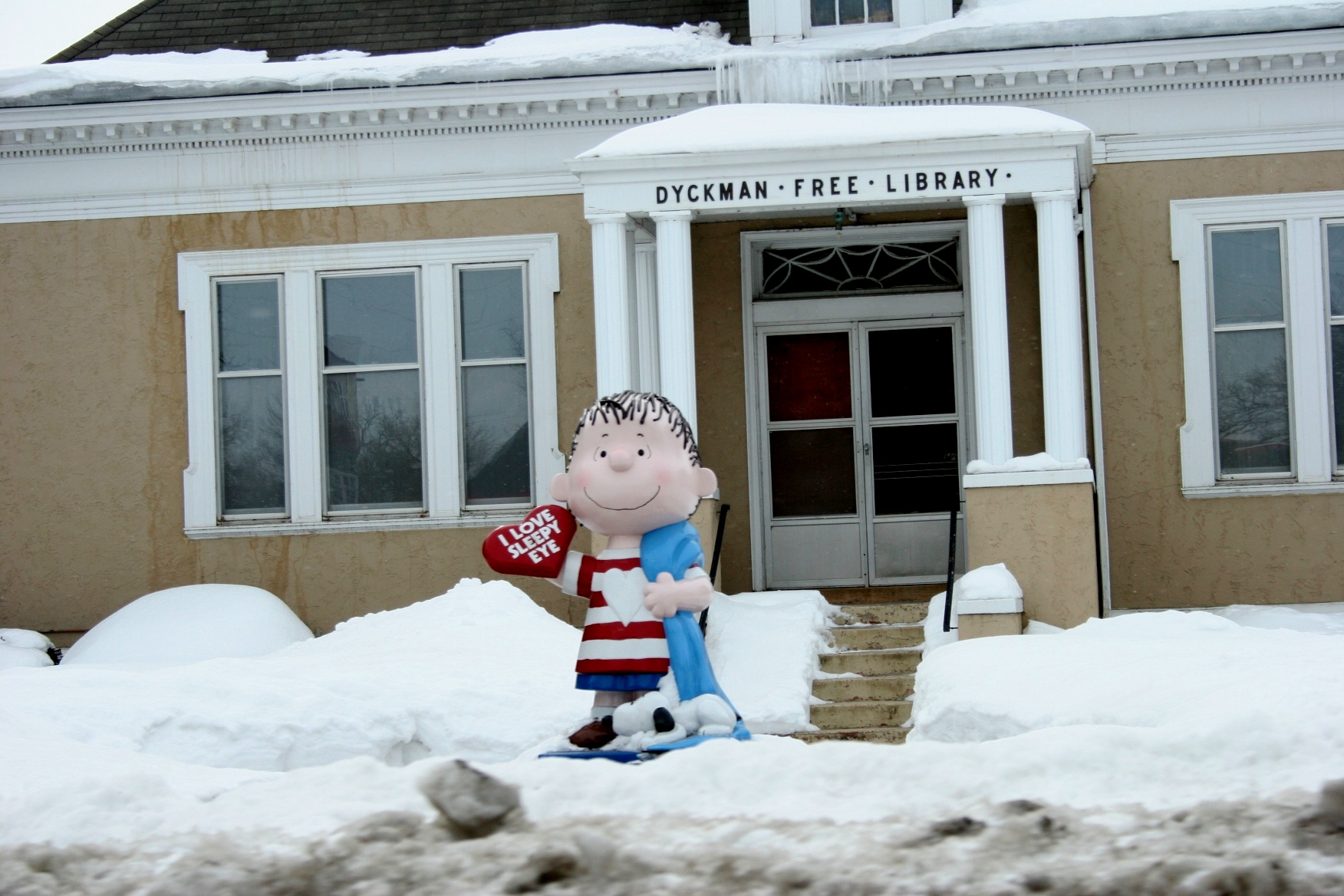
A statue of Linus greets visitors to the Dyckman Free Library in Sleepy Eye. Charles M. Schulz, creator of the Peanuts cartoons, based his character Linus on real-life friend Linus Maurer, a Sleepy Eye native. Maurer, a cartoonist, worked with Schulz. Ohman, who managed the former Camp Snoopy at the Mall of America, includes a photo of Linus at the Sleepy Eye library in his book.

Several summers ago I photographed this 1930s Works Progress Administration log cabin in Hackensack. Sitting on the shore of Birch Lake next to a towering statue of Lucette Diana Kensack (Paul Bunyan's sweetheart), the cabin today houses the Hackensack Lending Library.

IF YOU’RE INTERESTED in reading another book about libraries, check out Carnegie Libraries of Minnesota by Kevin Clemens. The book highlights the history and architecture of Minnesota’s Carnegie libraries, primarily in photos. Click here to learn more about the book.

© Copyright 2012 Audrey Kletscher Helbling


Thoughts from a Minnesotan now that winter has arrived January 24, 2012

Filed under: Uncategorized — Audrey Kletscher Helbling @ 7:54 AM
Tags: , , , , , , ,

Even I'll admit that snow brings a certain beauty to the landscape, including this view of my neighbor's yard.

AS UN-MINNESOTAN as this may sound, I don’t particularly like winter. I’d grown rather fond of the unusual 50-degree temps earlier this month and a landscape free of snow.

Yet I knew better than to get all smug about the weather, realizing that, at any time, the proverbial shoe (or boot) would drop.

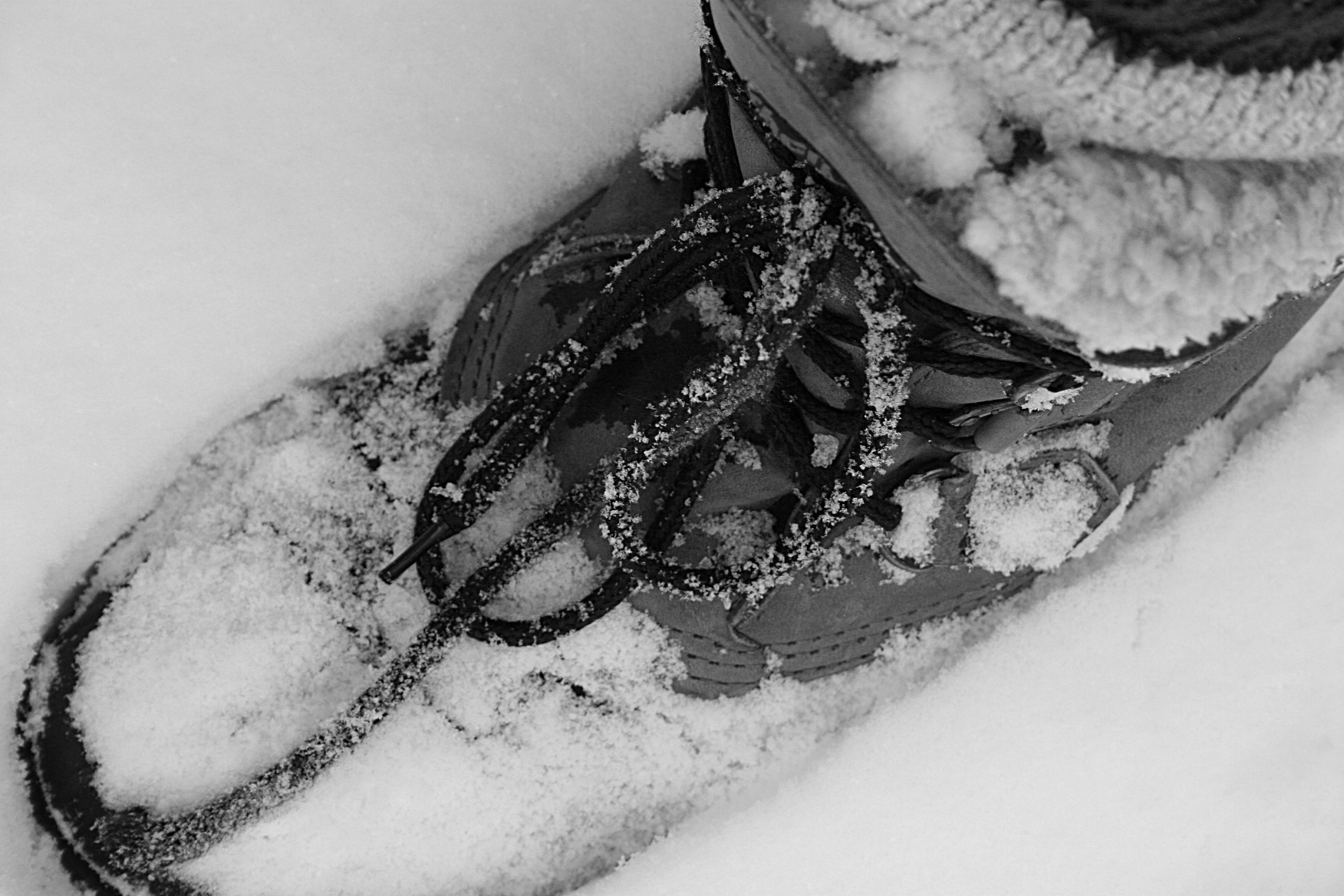
No fashion boots for me...I wear practical Northwest Territory boots.

It did, with temperatures plummeting to below and barely above zero followed by two measurable snowfalls within the past several days.

Snow means work, aka shoveling snow.

Snow means walking with trepidation.

I wasn’t always fearful of walking across snowy or icy sidewalks, driveways or parking lots. But then 3 ½ years ago I had total right hip replacement surgery because of severe osteoarthritis.

I would like to keep that expensive ceramic implant intact for another 17 years. So I tread with caution, eyes locked on whatever slick surface I must traverse. I will myself not to fall. Thus far, the strategy has worked to keep me upright and out of the hospital.

Despite my winter worries, I still shovel snow. However, I questioned the sanity of that effort on Monday as I crunched my way across the ice-glazed, snowy yard toward the sidewalk encrusted in snow and ice.

The car my son drives, encased in ice on Monday. Freezing rain fell before the snow. He walked to school.

I didn’t exactly rush my way through snow removal. More like half-skated.

By the time I finished clearing the sidewalk and the end of the driveway, I truly wanted to give up and leave the rest for the husband or the 17-year-old. But winter wasn’t about to defeat me.

I may not like her, but I sure as heck won’t allow her to get the best of me.

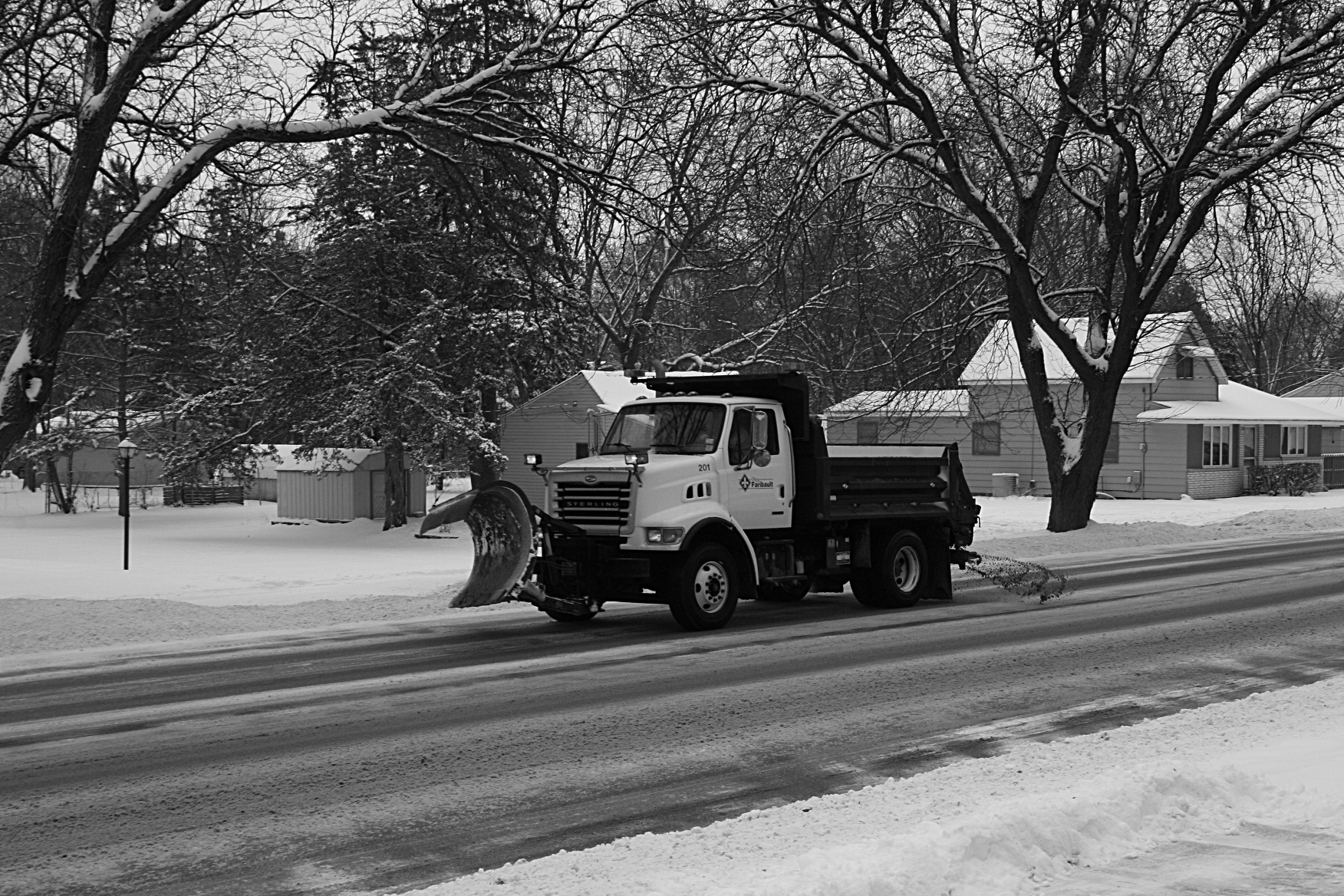
A city of Faribault snow plow spreads salt and sand onto the street by my house on Monday.

© Copyright 2012 Audrey Kletscher Helbling