Minnesota Prairie Roots

Writing and photography by Audrey Kletscher Helbling

Build it and they will ride September 6, 2010

Filed under: Uncategorized — Audrey Kletscher Helbling @ 5:04 PM
Tags: , , , , , ,

WHEN MY BROTHER-IN-LAW showed off the flatbed trailer he and his family recently built and then suggested we all pile on for a ride down the field driveway, I hesitated. Tom sometimes can be a bit of a daredevil with his toys.

So I passed on the maiden voyage that carried 11 family members along the grassy pathway between soybean fields, up the hill, around and back to the farm site.

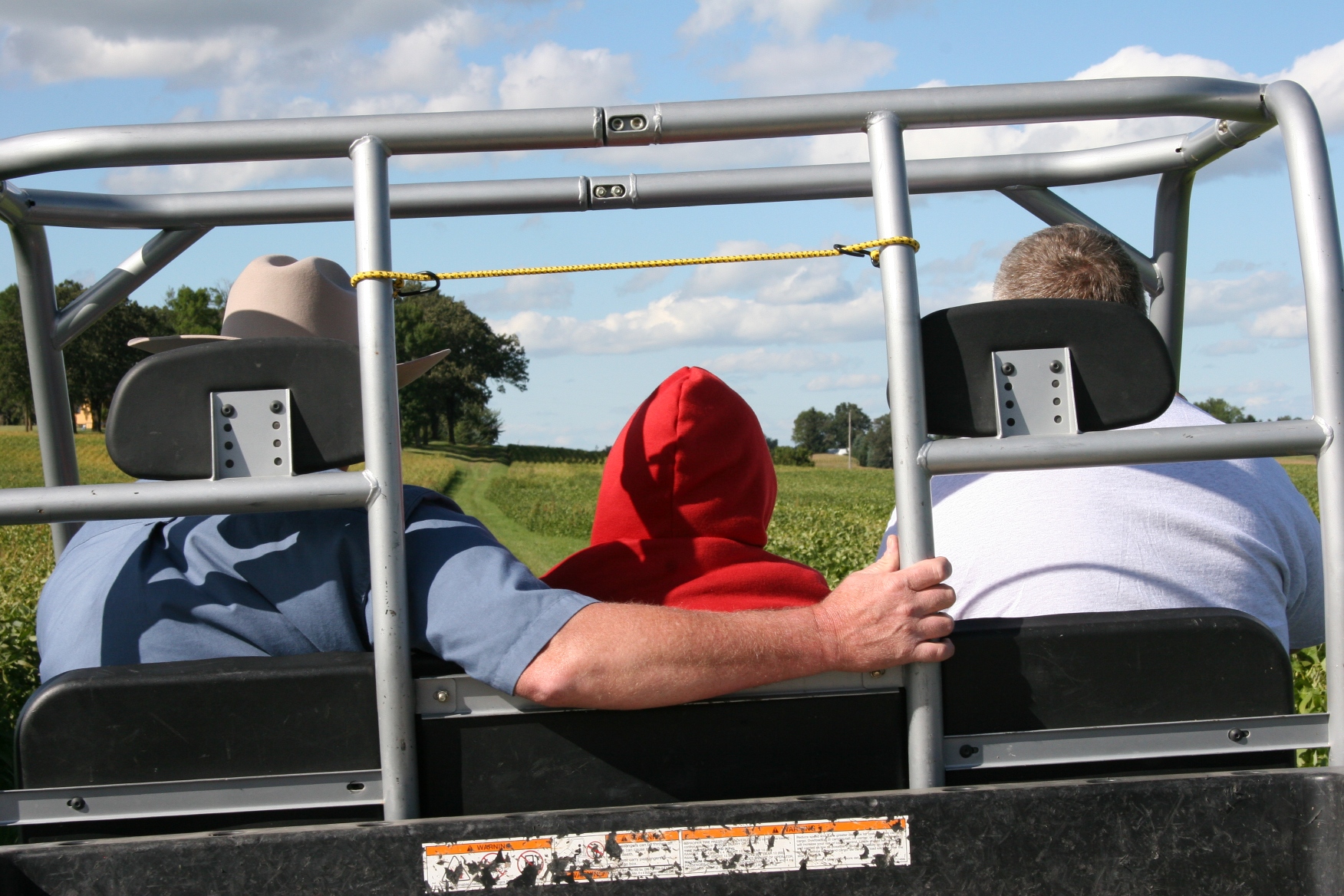
Then my 78-year-old mom decided she would ride, up front on the all-terrain vehicle, sandwiched between the driver and my oldest brother, who once gave me a ride on his snowmobile and then left me stranded in a gravel pit.

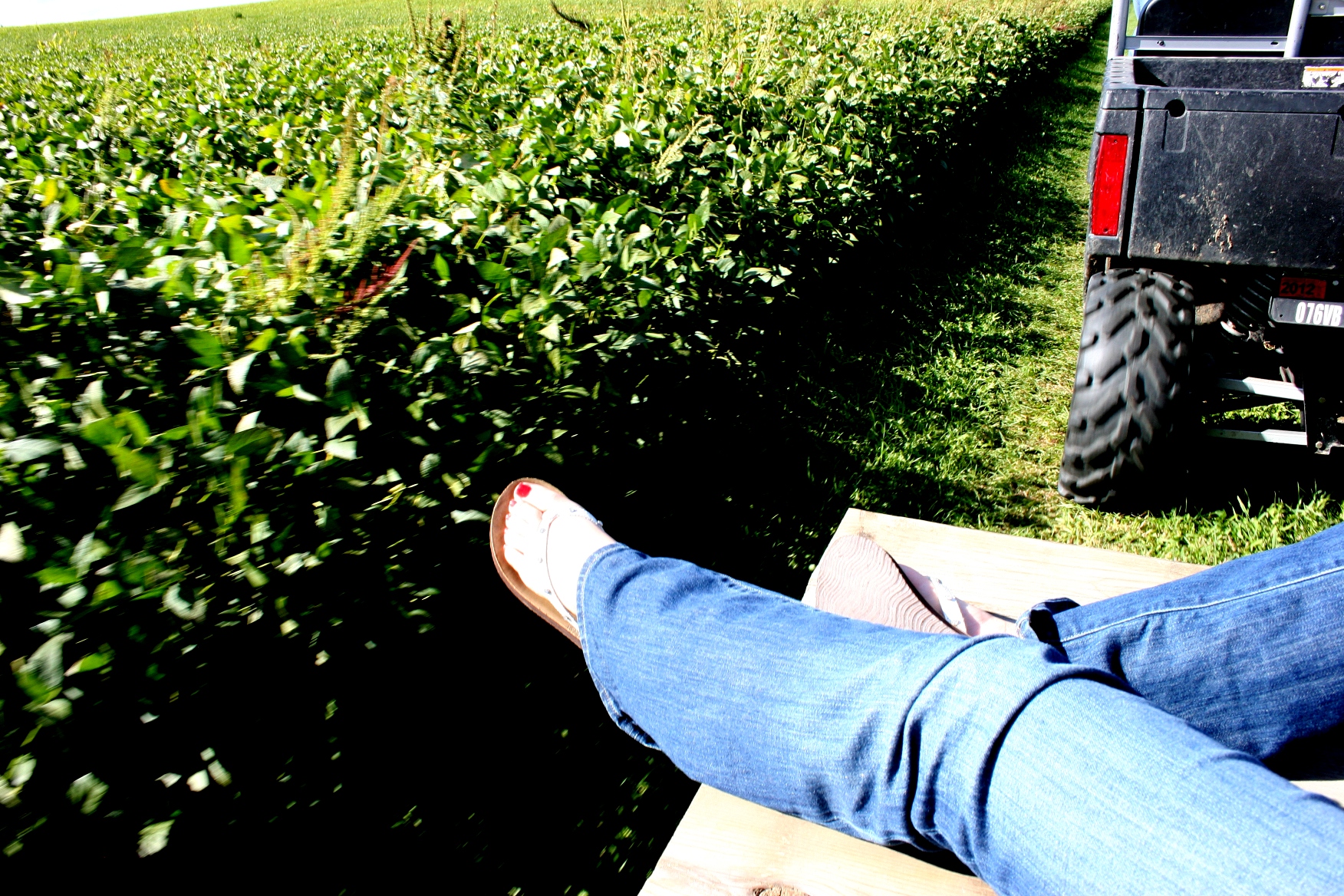
I figured with Mom on board, the boys would behave, drive responsibly and get us all back safely. So I slung my camera around my neck, pulled myself onto the wagon and sat next to my oldest daughter, legs dangling over the edge.

Off we went, bouncing along the field road under a beautiful blue sky scuttled with white clouds. Honestly, September days in Minnesota don’t get much better than this—sunshine and soybean fields, country air and spacious skies, princess waves and smiles as wide as the horizon, dog hugs and happy kids, laughter and the love of family, my family.

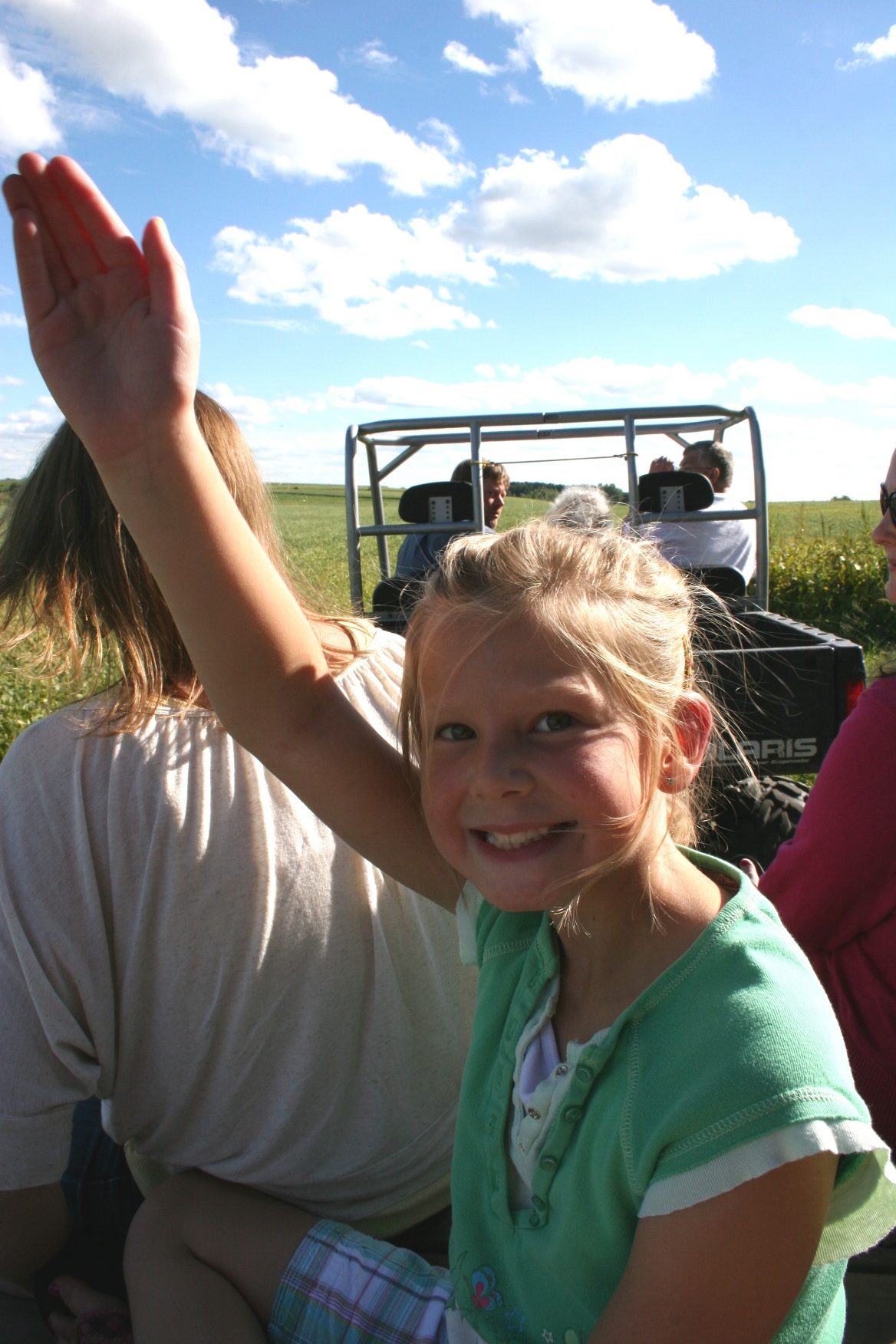
My niece practiced her princess wave as we rode between the soybean fields.

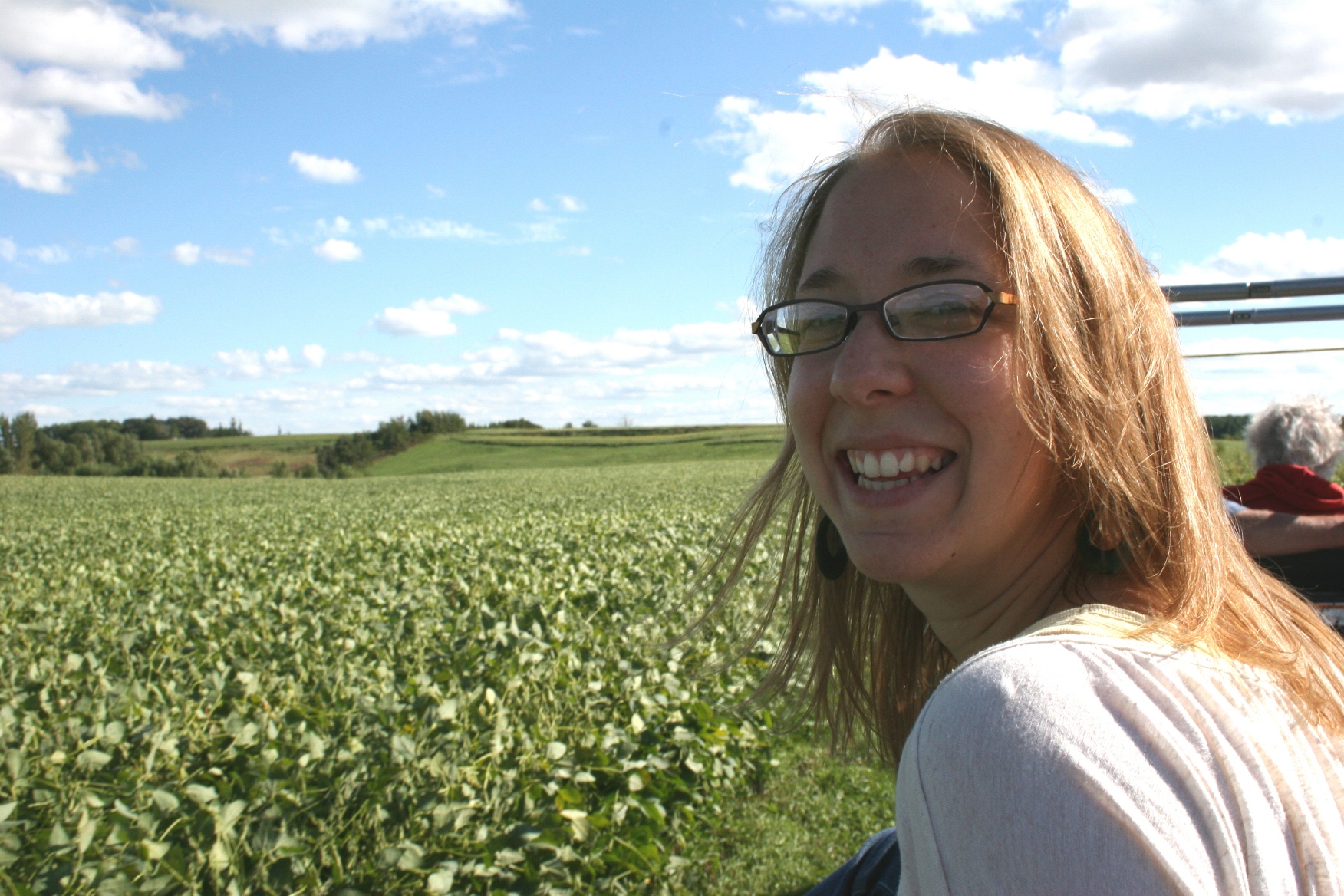
I sat next to my oldest daughter. We were all smiling and laughing.

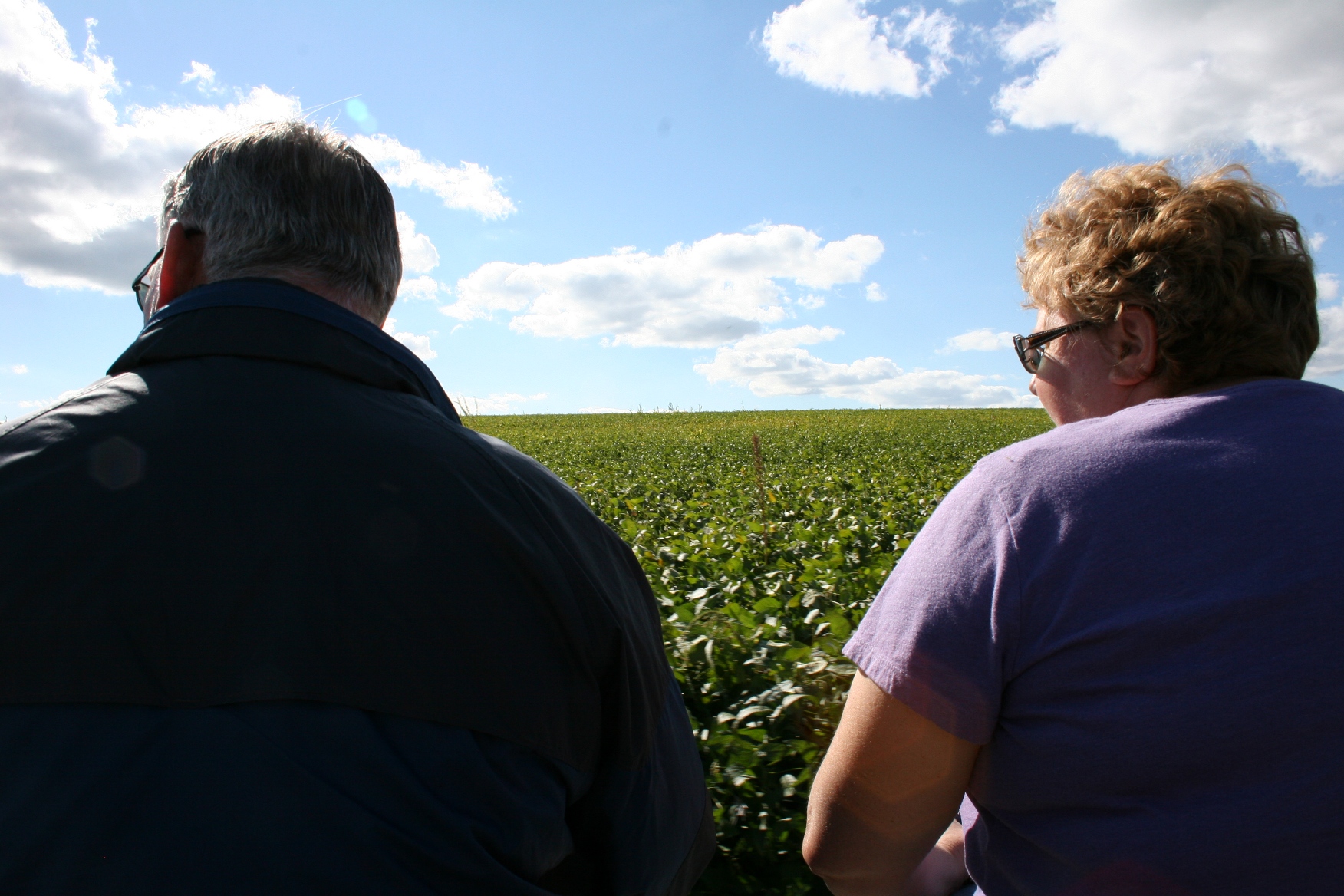
Two of my siblings sit side by side on the edge of the trailer.

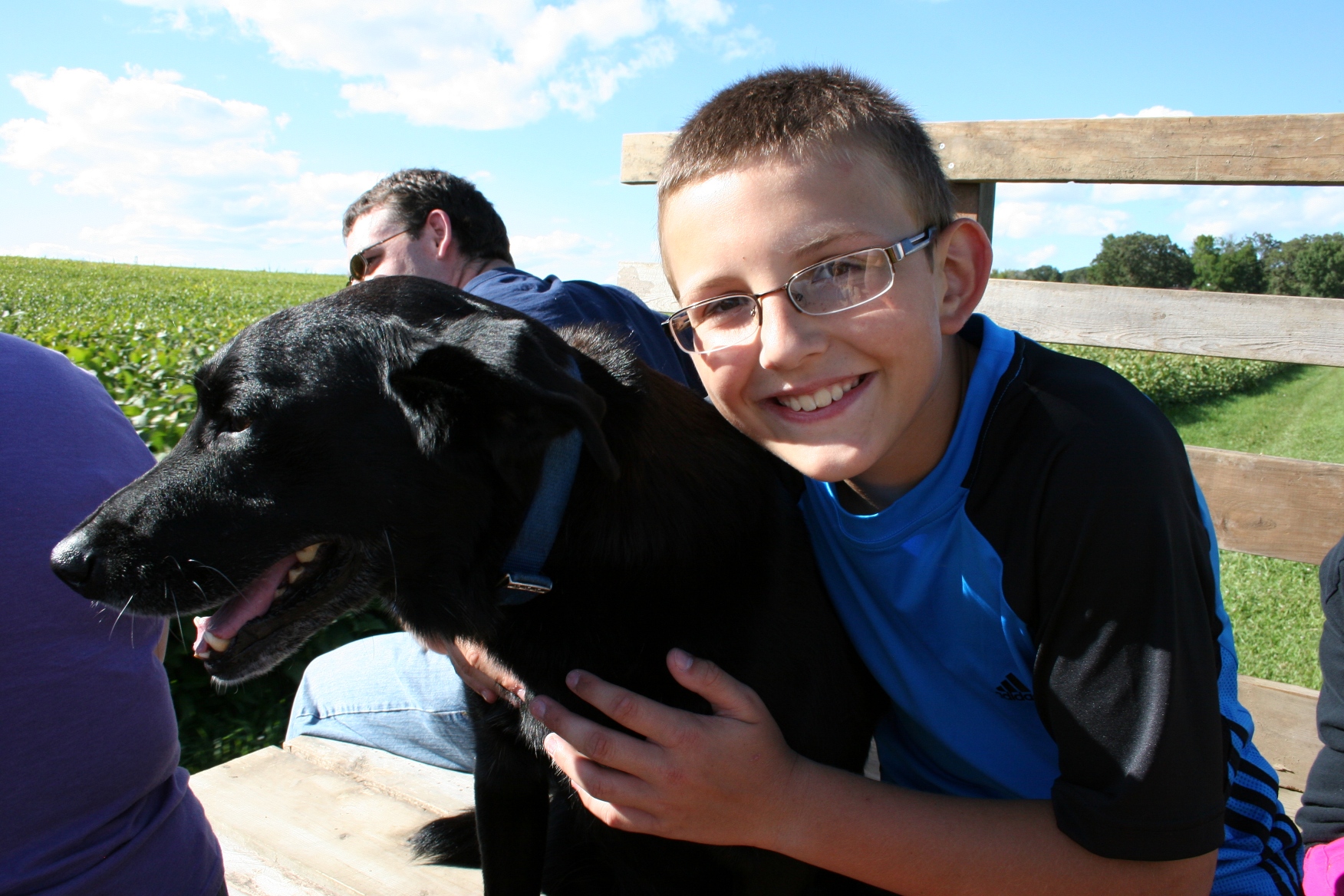
One happy boy (my nephew) and one happy dog.

My Mom sits safely between my brother-in-law and my oldest brother in the all-terrain vehicle.

Feet hung or dangled over the sides of the flatbed trailer as toes nearly touched soybean leaves.

© Copyright 2010 Audrey Kletscher Helbling


Post office etiquette 101 September 5, 2010

Filed under: Uncategorized — Audrey Kletscher Helbling @ 7:56 PM
Tags: , , ,

OK, LET’S PRETEND you are at the post office at around 9 a.m. on a Saturday. You’re waiting in line with six customers ahead of you—three at the service windows.

Now let’s say one of these customers asks for religious stamps and the postal worker says those are available only at Christmas.

That’s reasonable, you think.

But then the customer asks for “Father D” stamps. Now, you know that a pastor in town bears the name “Father D.” And you wonder, what exactly are “Father D” stamps? Religious, I suppose. But remember, this is September, not December.

“Does he like baseball?” the postal employee asks. “Or cats and dogs?”

By then you’re becoming a bit impatient wondering exactly how many postage stamps are available and which will fit the customer’s request.

“They’re just stamps,” you mutter to the woman who is ahead of you with a tote full of packages. You check your watch and ponder leaving the post office, doing your banking and then returning. Perhaps the finicky customer at the middle window will have departed by then with her clutch of “Father D” stamps, whatever those may be.

But you decide to wait. A man two ahead of you catches your eye and you can tell he is thinking, like you, that this is ridiculous. Can’t this woman see the line of four customers waiting behind her?

Finally, Ms. Ineedjusttherightstamps leaves with her stamps. And although you’re not certain, you’re pretty sure she’s just purchased “Forever” stamps.

THE ABOVE STORY is not embellished/made-up/fictional or anything other than a factual account of my visit to the Faribault Post Office on Saturday morning. Only the name, “Father D,” is fictional.

© Copyright 2010 Audrey Kletscher Helbling


Wishing I could open doors to childhood memories in Redwood Falls September 4, 2010

Filed under: Uncategorized — Audrey Kletscher Helbling @ 8:50 AM
Tags: , , , , ,

HAVE YOU EVER HAD one of those moments when you drive by a place from your childhood days, desperately want to get inside, but can’t?

That happened to me twice on a recent visit to Redwood Falls, where my maternal grandfather lived, where I attended junior high school and where my family shopped when I was growing up.

The first tour took my husband, son, mom and me past my Grandpa Bode’s house, located across the street from the hospital. Several years ago I had seen grandpa’s rambler and nearly cried at its dilapidated condition. Since then the house has been re-sided, so I felt better on this recent stop.

Yet, simply viewing the exterior didn’t satisfy my yearning to get inside. Had I been alone, I may have jumped from the car, run up to the house and knocked on the door. Honestly, I really wanted to see if the bathroom walls are still tiled in pink.

Caring so much about a bathroom may seem odd to most of you. But I grew up in a house without a bathroom (at least until I was about 12). I fondly recall bathing in grandpa’s pink bathroom, where my Aunt Dorothy would grab a bar of gold Dial soap, lather the soap into a washcloth and scrub and rub and scrub and rub and tickle my toes and feet until I giggled. Dial is still my favorite soap and the only brand I purchase because of those sweet, sweet memories.

After pausing briefly in front of grandpa’s house, we headed toward downtown. I had no desire to see the school where I attended seventh and eighth grades. My memories of junior high are of bullying and of tears. Those are two years I would rather forget. Besides, students now attend classes in a new building and for all I know, or care, the old building could be gone.

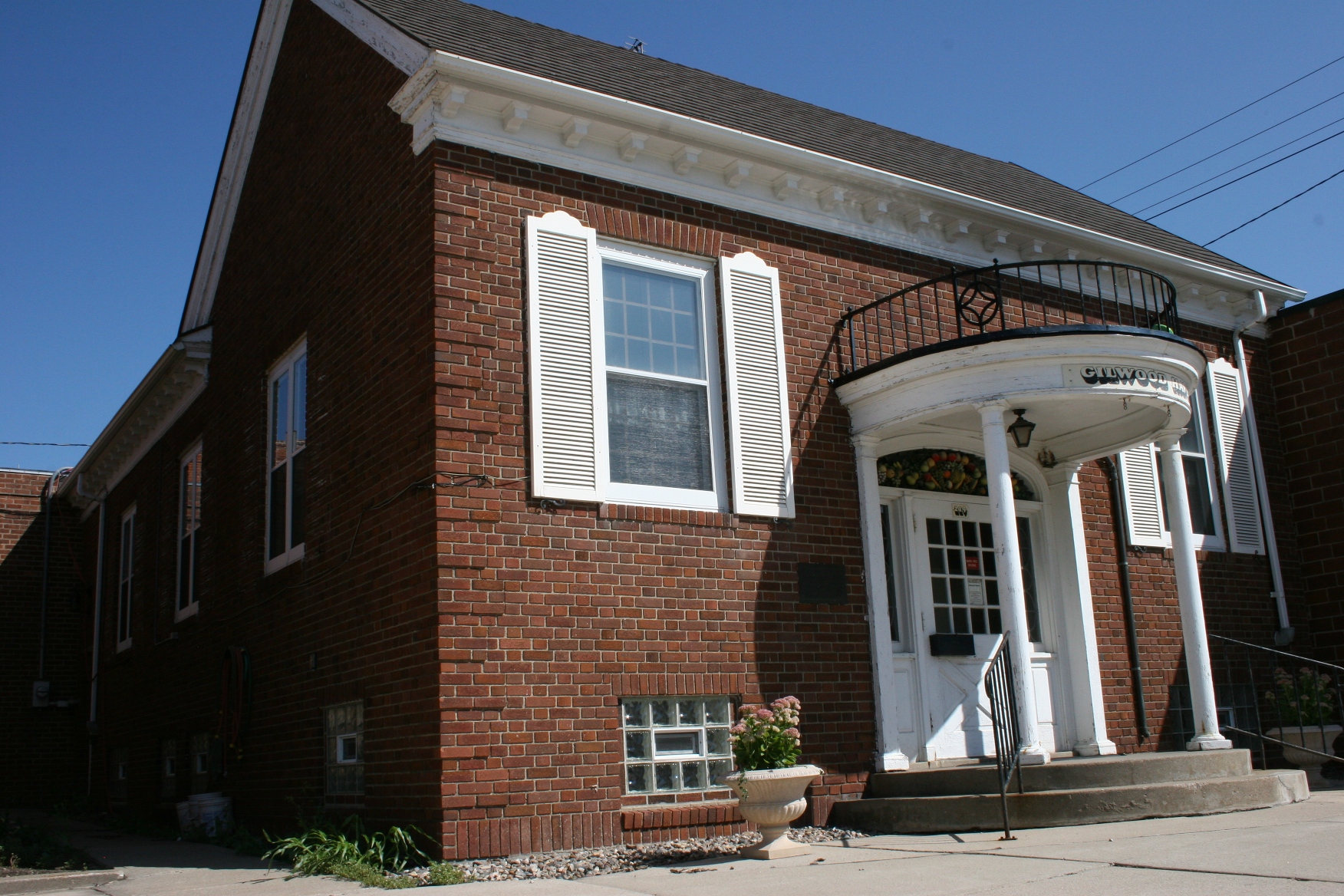
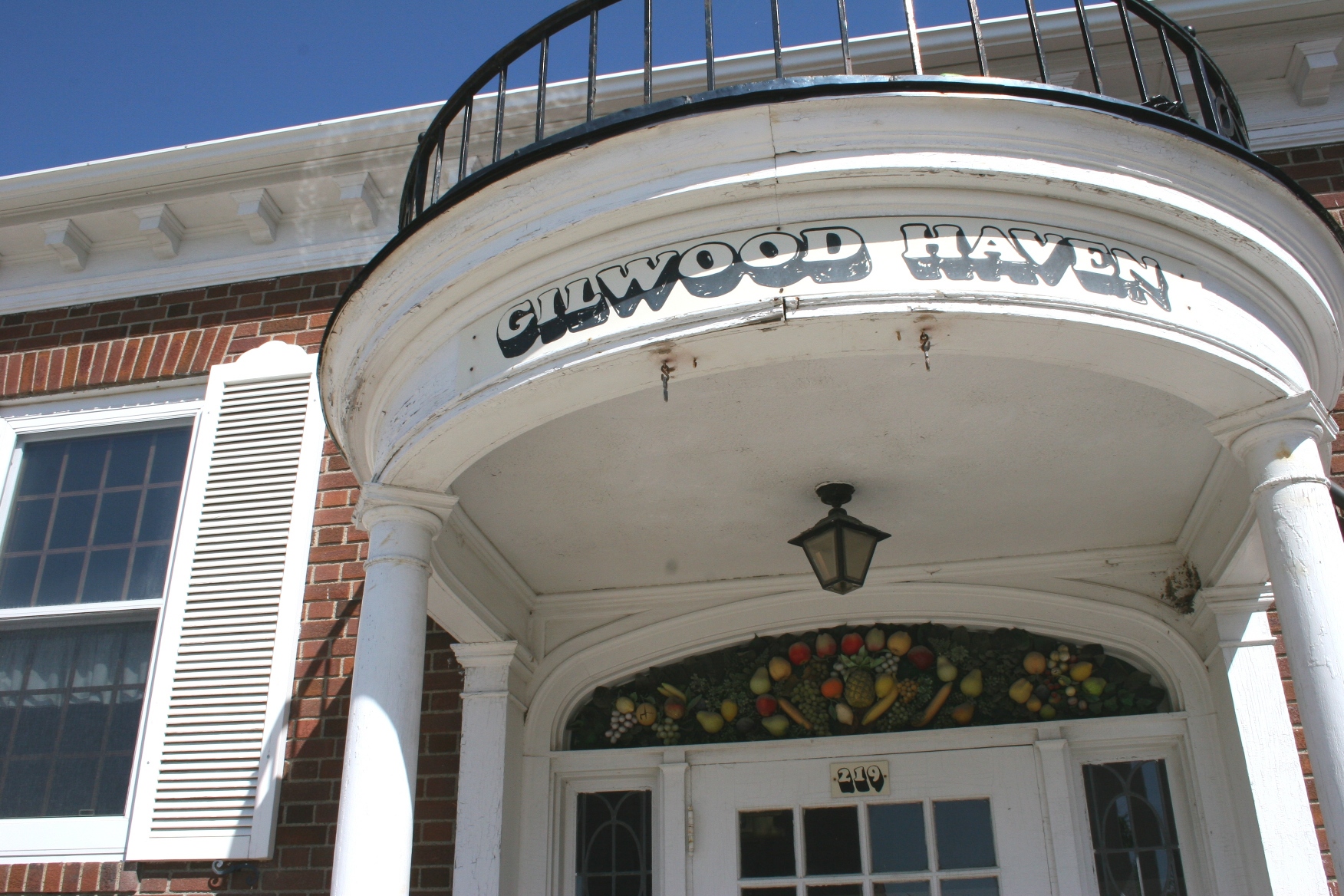
But I was interested in seeing Gilwood Haven, a columned, shuttered brick building in the downtown. I remembered, while on childhood shopping trips, going to the bathroom at Gilwood.

Are you seeing a common theme here? Bathrooms. I suspect this is tied to years of indoor bathroom deprivation.

As the story goes, C. O. Gilfillan donated money for Gilwood Haven after observing mothers and their children without a warm place to go into during the cold winter months while in downtown Redwood Falls.

Anyway, Gilwood Haven was built specifically as a lounge for women and children to use while their husbands/fathers were doing business. City offices and a public bathroom were located on the lower level. I don’t recall really lounging at Gilwood, but I remember walking downstairs to use the bathroom in this haven. Haven—what a name, huh?

C. O. Gilfillan, a wealthy and generous community-minded landowner from nearby Paxton Township donated money for the public lounge which opened in 1940 at 219 South Mill Street. He also gave 80 acres of rental land to finance building upkeep and to hire a matron attendant.

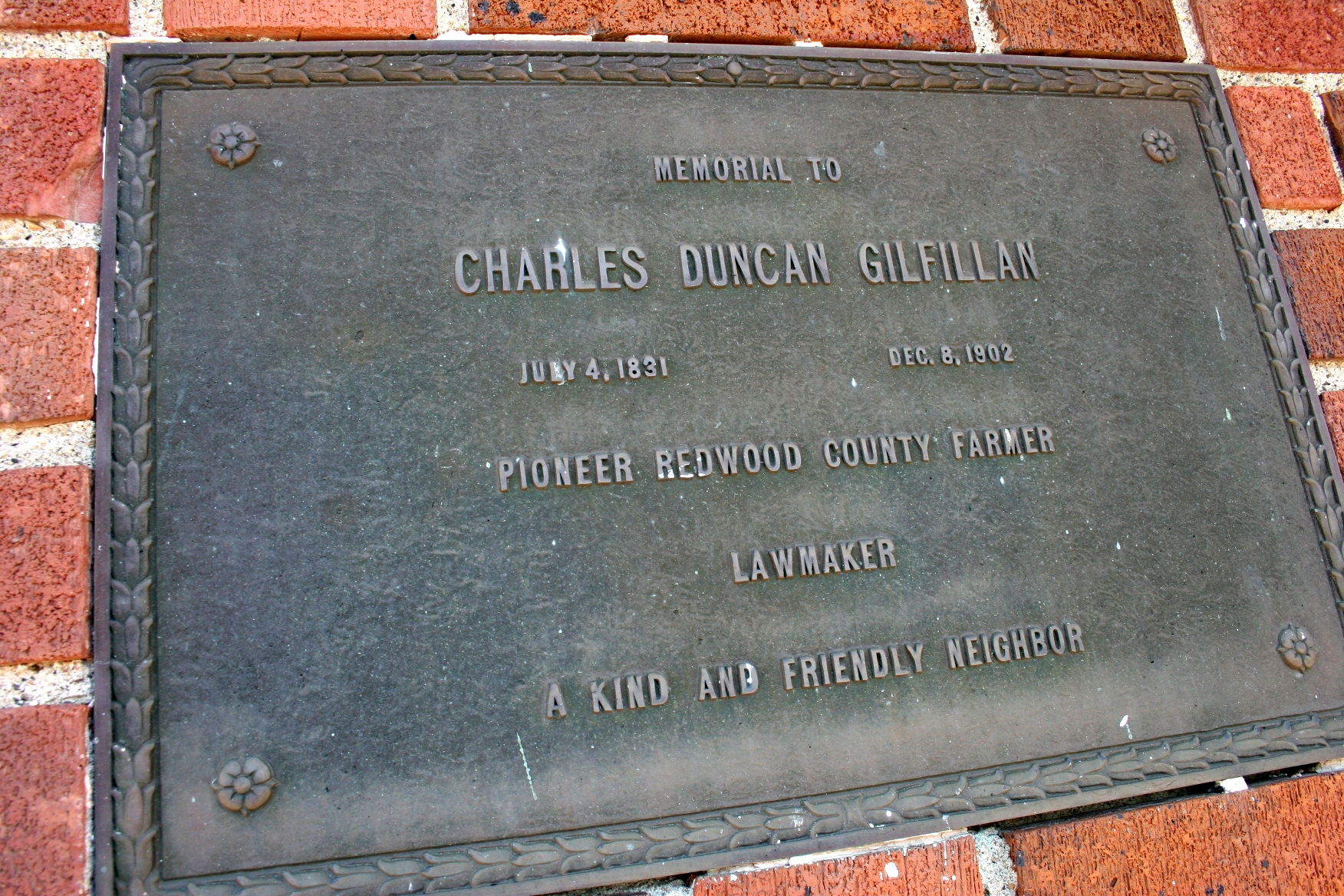
An exterior plaque on Gilwood Haven honors C. O.'s father, Charles Duncan Gilfillan, a pioneer farmer.

So there I was on a recent week day afternoon, longing to get inside the locked building. Not that I needed to use the restroom, I just needed to view this place of childhood memories.

But that wasn’t going to happen. This haven now serves as a meeting place rather than a public facility.

I had to settle instead for snapping photos of the exterior and wondering whether the fruit above the entry door is original to the building. And if it is, why didn’t I remember the apples, bananas, grapes, pineapple and pears?

Has this fruit, which looks like plastic, always been above the doorway entry? And, if so, why fruit?

© Copyright 2010 Audrey Kletscher Helbling


Hunting for deer at August Schell Brewing Company September 3, 2010

Filed under: Uncategorized — Audrey Kletscher Helbling @ 7:54 AM
Tags: , , , , , ,

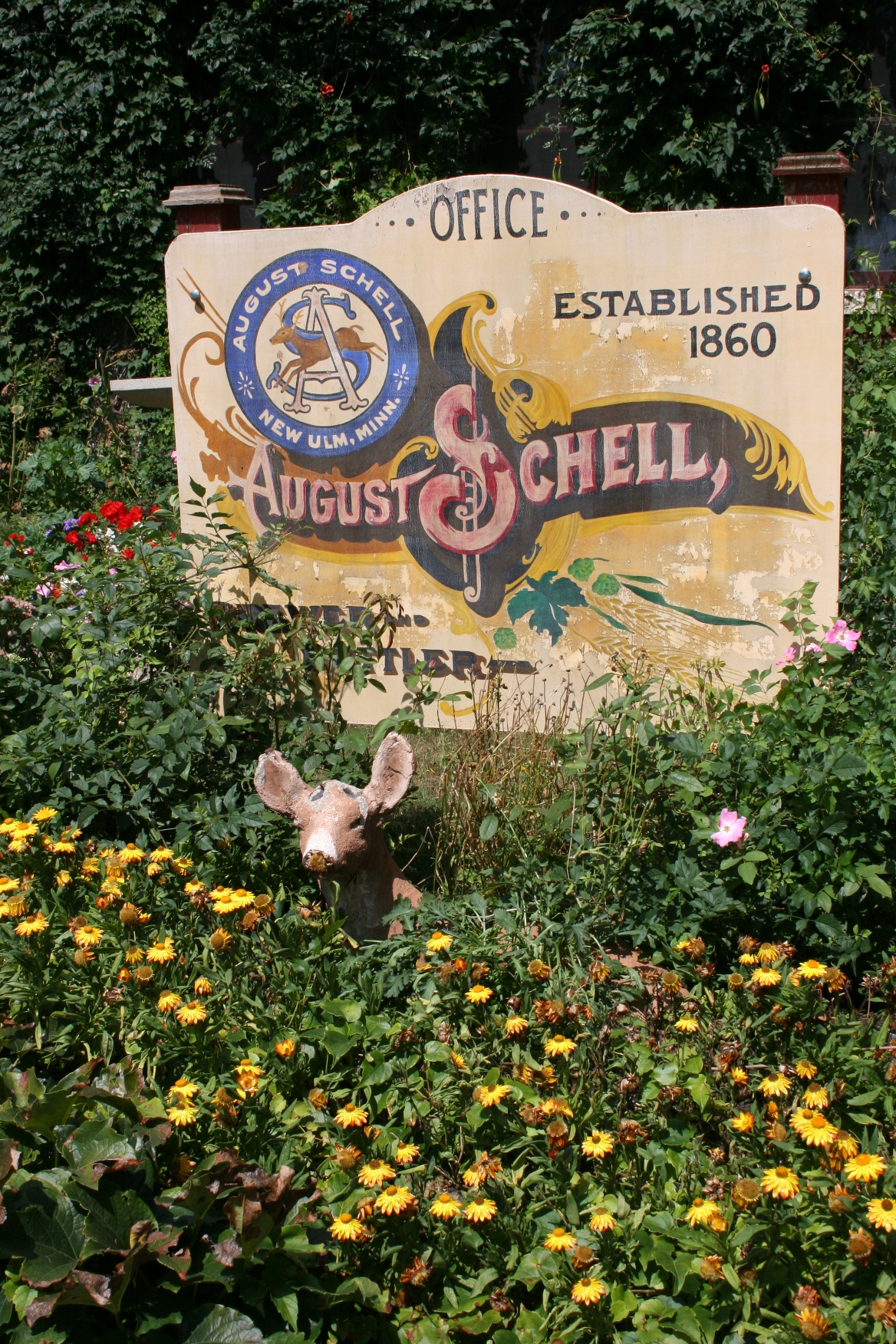
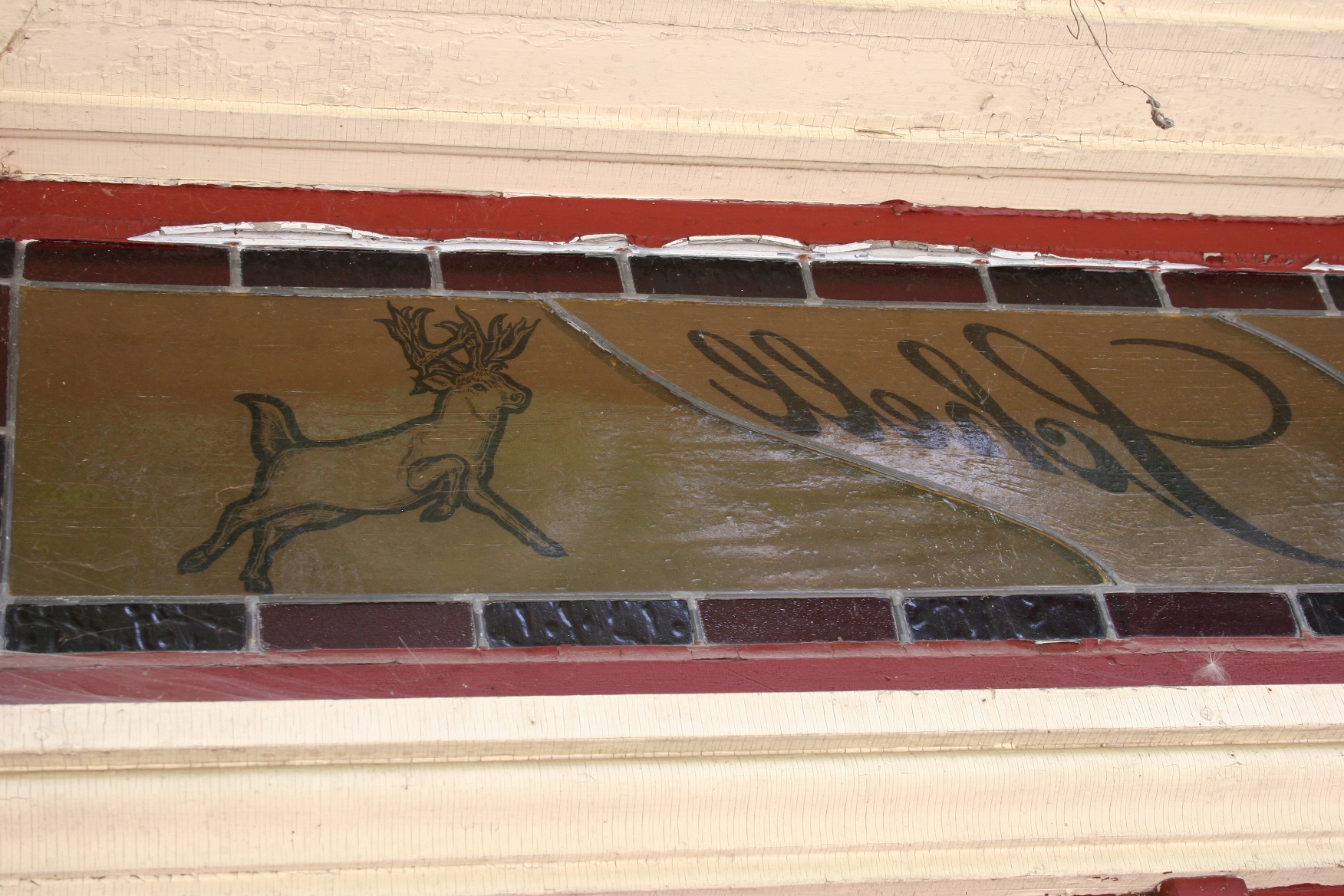
August Schell Brewing Company sign and deer by the corporate office.

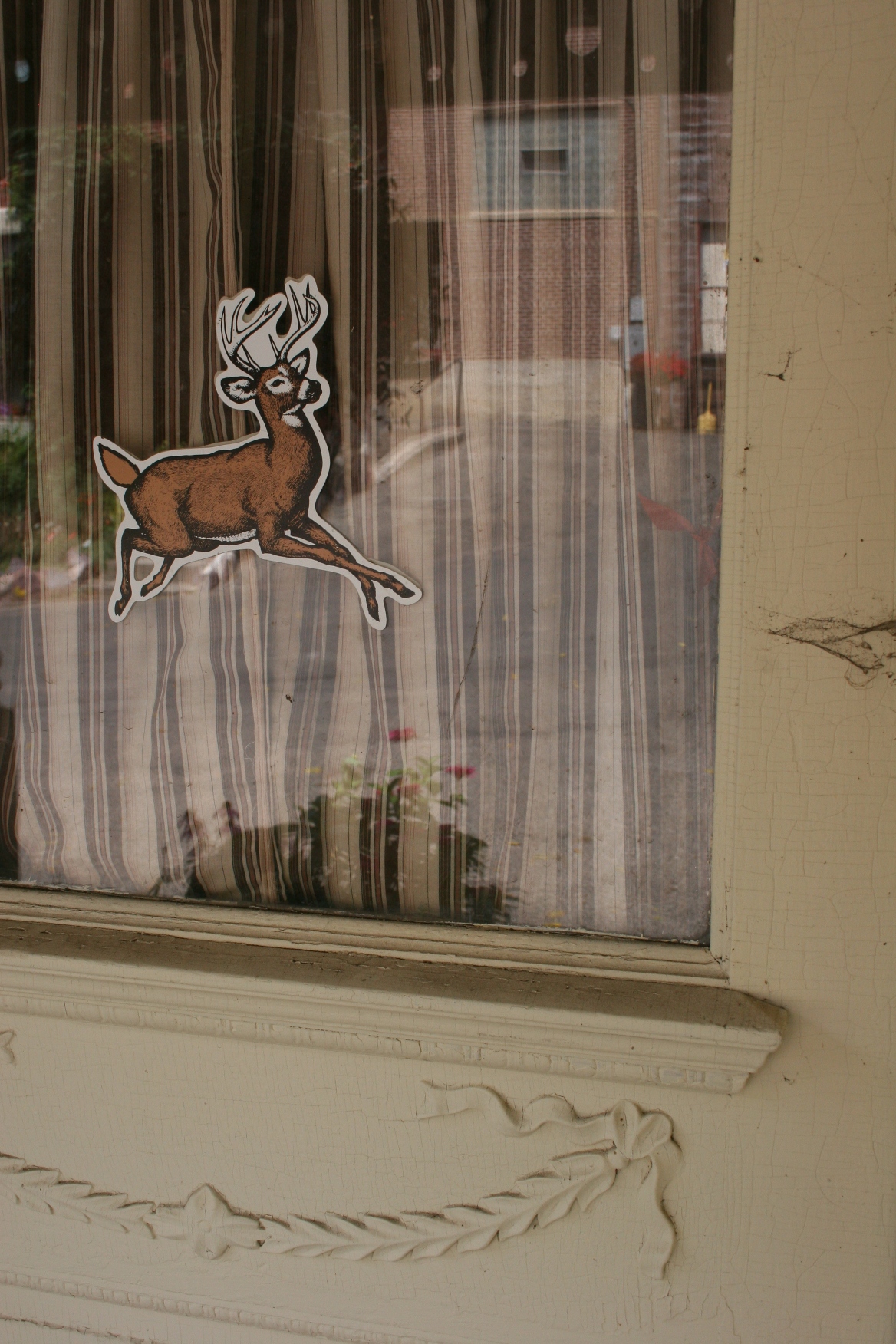
I MUST ADMIT THAT prior to my recent tour of the August Schell Brewing Company, I had never really thought about the deer image that brands this New Ulm beer.

But, as our tour guide explained, company founder August Schell loved the white-tail buck.

Indeed he did. Everywhere I turned and walked and looked, I saw deer on the Schell’s company grounds. Only the real deer, which typically are visible to the public, were not around because of health issues, or something like that.

All of these deer got me thinking. Maybe the brewery could add a deer “hunt” to its tours as an activity for children and teens. I bet most kids don’t find the tour all that interesting because it’s geared primarily for adults. A deer scavenger-type hunt would provide an entertaining diversion for the younger generation, or for all ages. I saw grandparents with their grandchildren and I’m certain the elders would welcome a cross-generational activity like this.

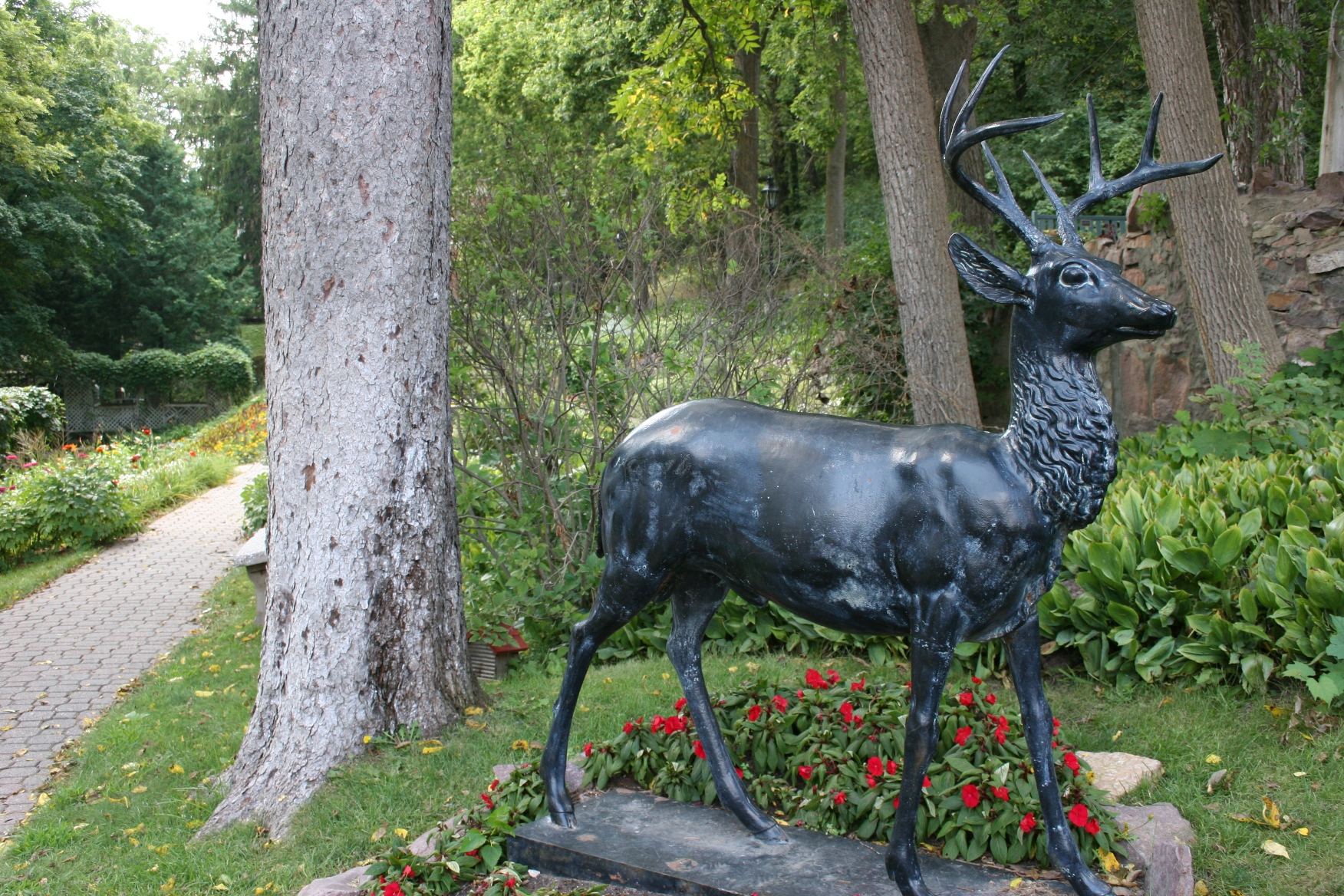
So here’s my idea: Create a printed sheet of historical facts that lead to various deer on the grounds. For example, one clue might be “Welcome to the Black Forest, a re-creation of August Schell’s homeland.”

A stately buck statue stands on the edge of the wooded area which resembles August Schell's native Black Forest.

Or: Only the Schell’s company president can live here.

A deer image above an exterior door on the Schell's retirement mansion, where only the president may live.

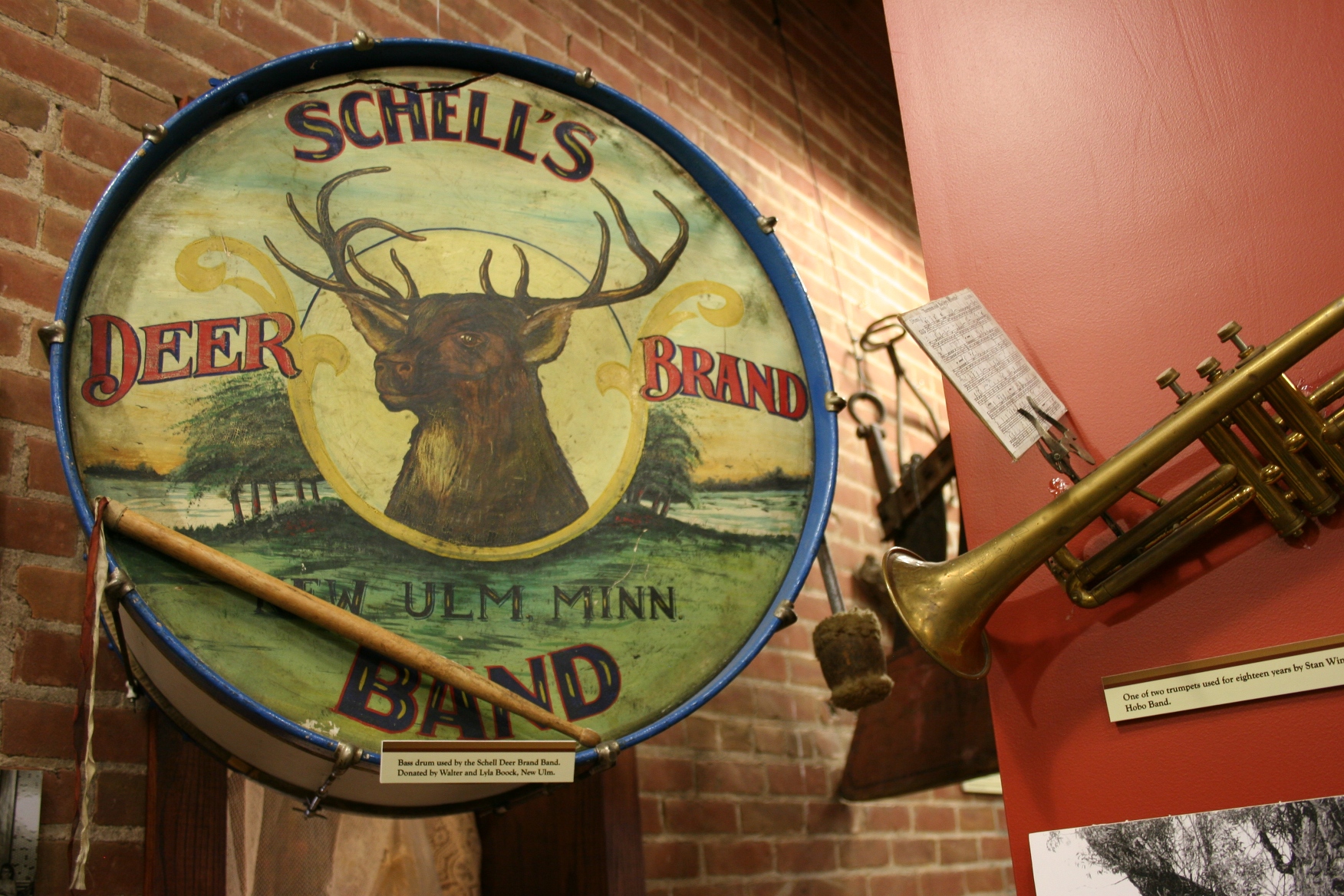
Or: Land a bass when you find this deer.

A Schell's Hobo Band bass drum in the brewery museum.

Game participants would search for the deer, all the while learning about Schell’s and its history. And the brewery would be imprinting the deer brand upon the unsuspecting guests.

Of course, to reward the deer hunters, Schell’s could offer some little deer-stamped trinket to be claimed in the gift shop after the hunt.  (That would increase gift shop traffic, which could also increase sales.) The kids would be happy. The parents and grandparents would be happy.

What do you think? Should Schell’s give my idea a shot?

A deer-branded 150th anniversary beer mug in the gift shop.

A Schell's deer emblem on the door of the house that once was home to brewery workers during the company's early years.

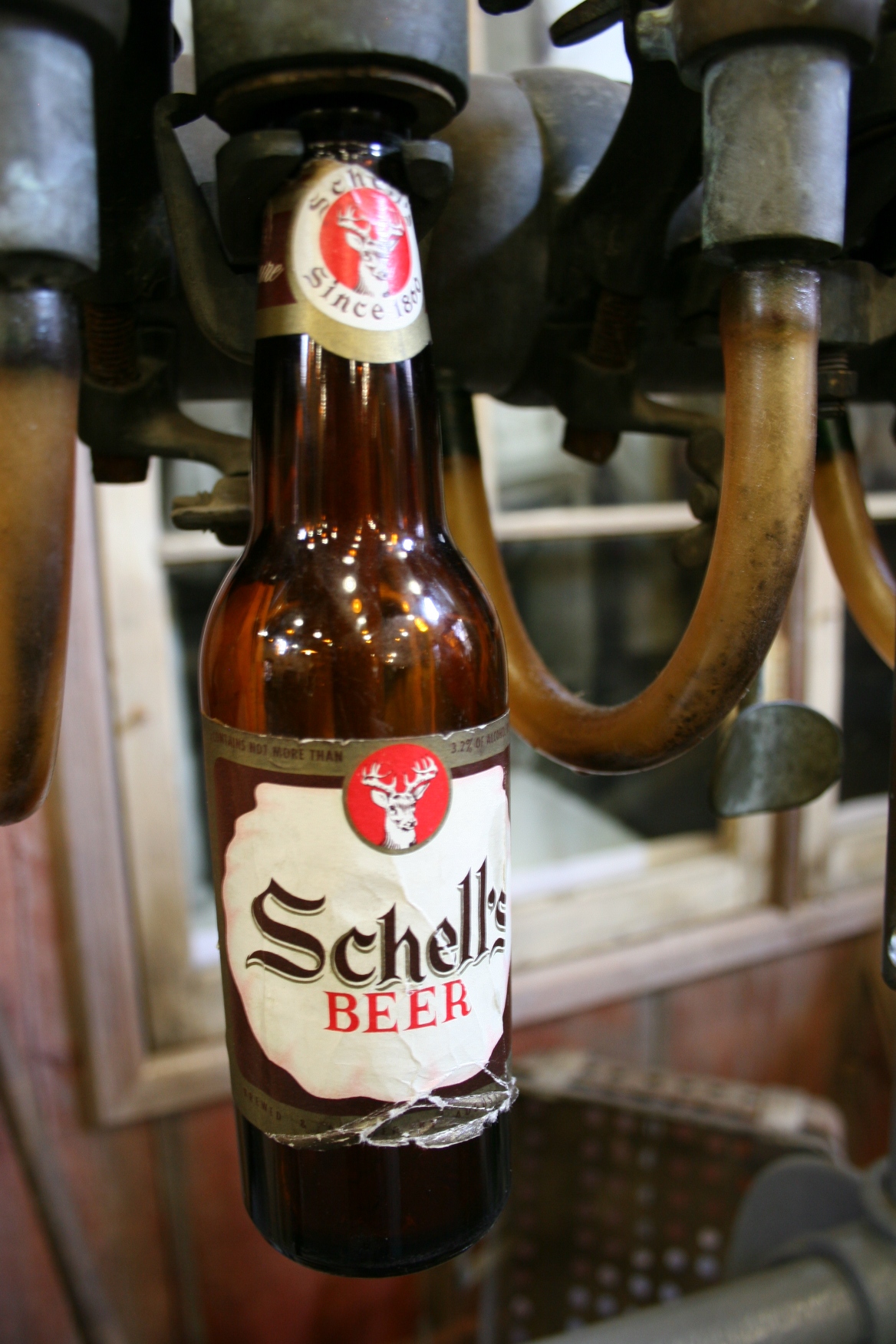
Bottling Schell's deer beer, a museum display.

A successful hunt: Deer antlers form a light in the commons area that links the gift shop and museum on the main floor.

FYI: MANY DEER, a whole herd actually, also can be found in the Schell’s hospitality room. But because that room, where beer is served, remains closed except during the tour or for special occasions, none of those deer are included in my proposed hunt. But if they were, here’s one of the more interesting bucks:

A carved deer light in Schell's hospitality room.

AS A SIDE NOTE, in the book Land of Amber Waters: The History of Brewing in Minnesota by Doug Hoverson, you’ll find a photo of the original Schell’s family home, today the company office. Look closely at that image on page 35 and you’ll see deer antlers stuck on the front of the brick house, between the front first and second floor windows.

© Copyright 2010 Audrey Kletscher Helbling


Designer Max Lohrbach makes a fashion statement in Mantorville September 2, 2010

Filed under: Uncategorized — Audrey Kletscher Helbling @ 7:35 AM
Tags: , , , , , , , ,

I AM NO FASHIONISTA or anything closely resembling a woman who knows, or really cares, about fashion.

So when I stopped at the Mantorville Art Guild last week while visiting this historic southeastern Minnesota river town, I had no idea I had just stepped into the world of fashion.

When you enter the Mantorville Art Guild, turn and pull hard on the door knob. And if a strong wind is blowing, hang onto the screen door.

But I should have figured it out given the fashionably-dressed women consulting with artist Max Lohrbach. They weren’t, like me, dressed in plain denim shorts, a scoop-necked cotton shirt and $3 flip flops from Walmart. Rather, one wore an ankle-length shoulderless dress with a swatch of fabric crossing her back and a band tied at her neck. A big bag was fashionably slung over her shoulder. I can’t recall the other woman’s attire, but neither toted a bulky brown camera bag like me.

I felt a bit under-dressed for the occasion. How was I to know, though, that one of Minnesota’s premier fashion designers would be there? That would be Lohrbach. Not until I returned home did I realize his importance.

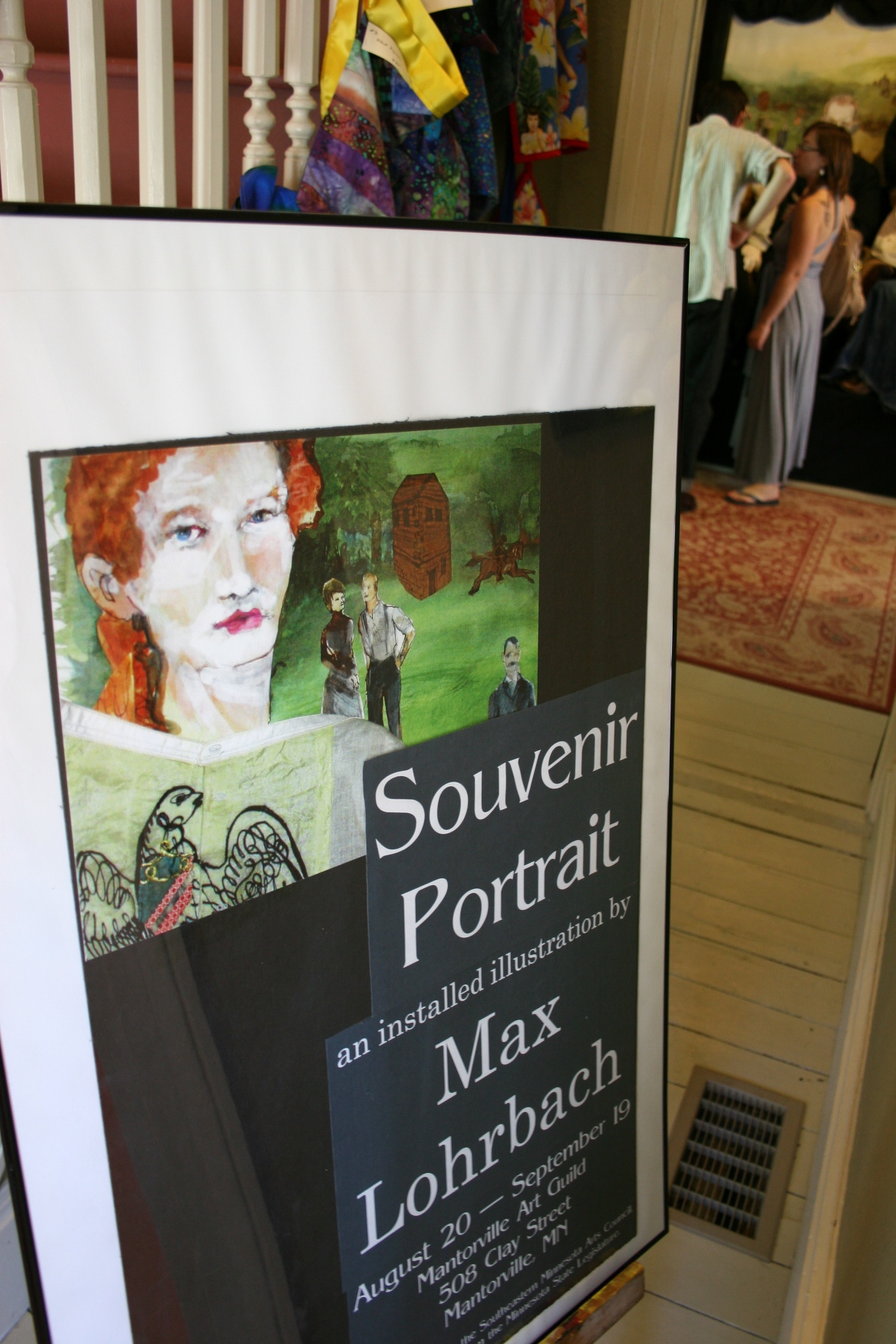
In the background, Max Lohrbach visits with guests at his "Souvenir Portrait" exhibit, which opened August 21 in Mantorville.

My blissful ignorance allowed me to enjoy Lohrbach’s “Souvenir Portrait” without star-struck pretenses. I was simply viewing an artistic piece that, to me, seems a perfect fit for the artist’s hometown of Mantorville, a community with a 12-block downtown on the National Historic Registry.

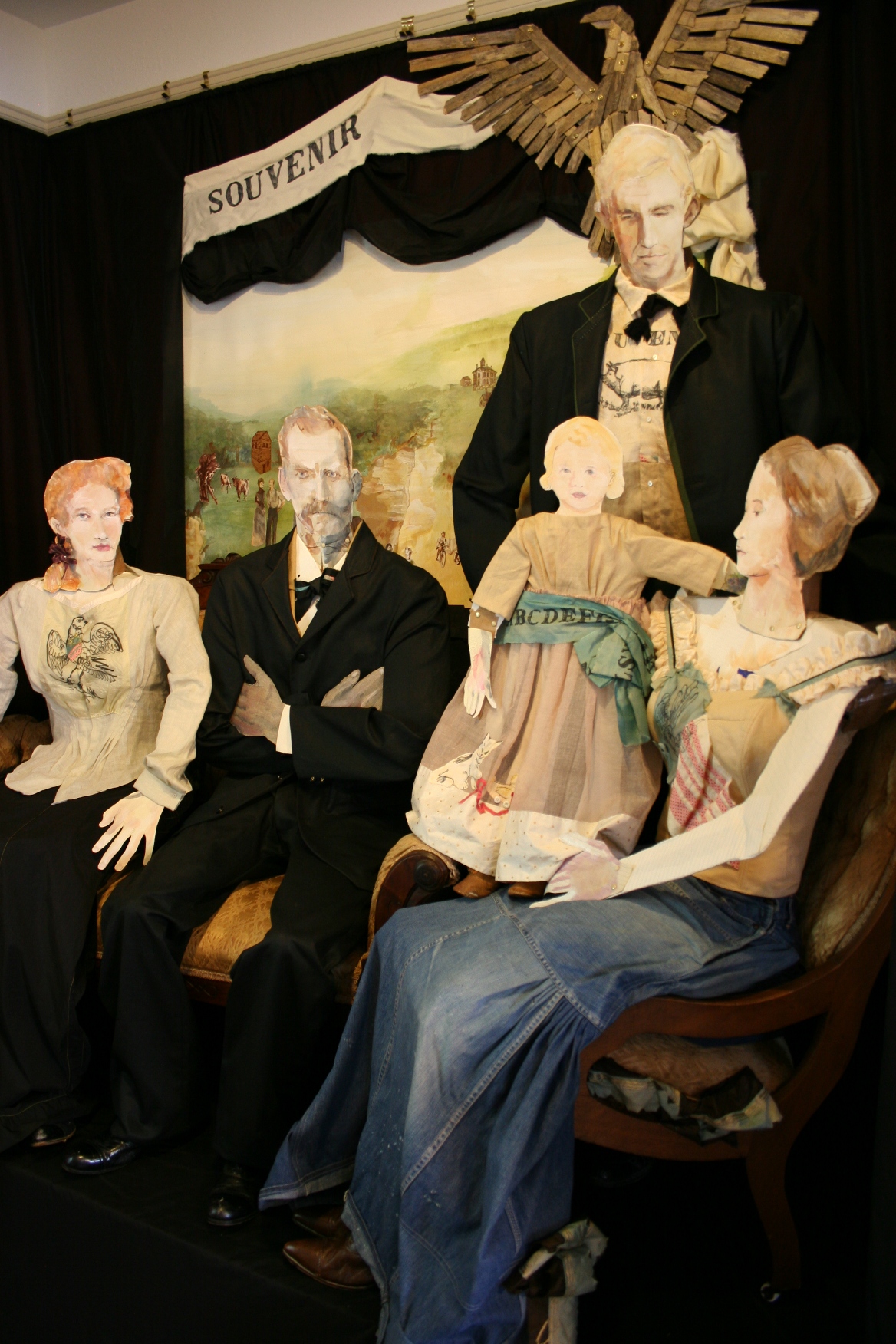
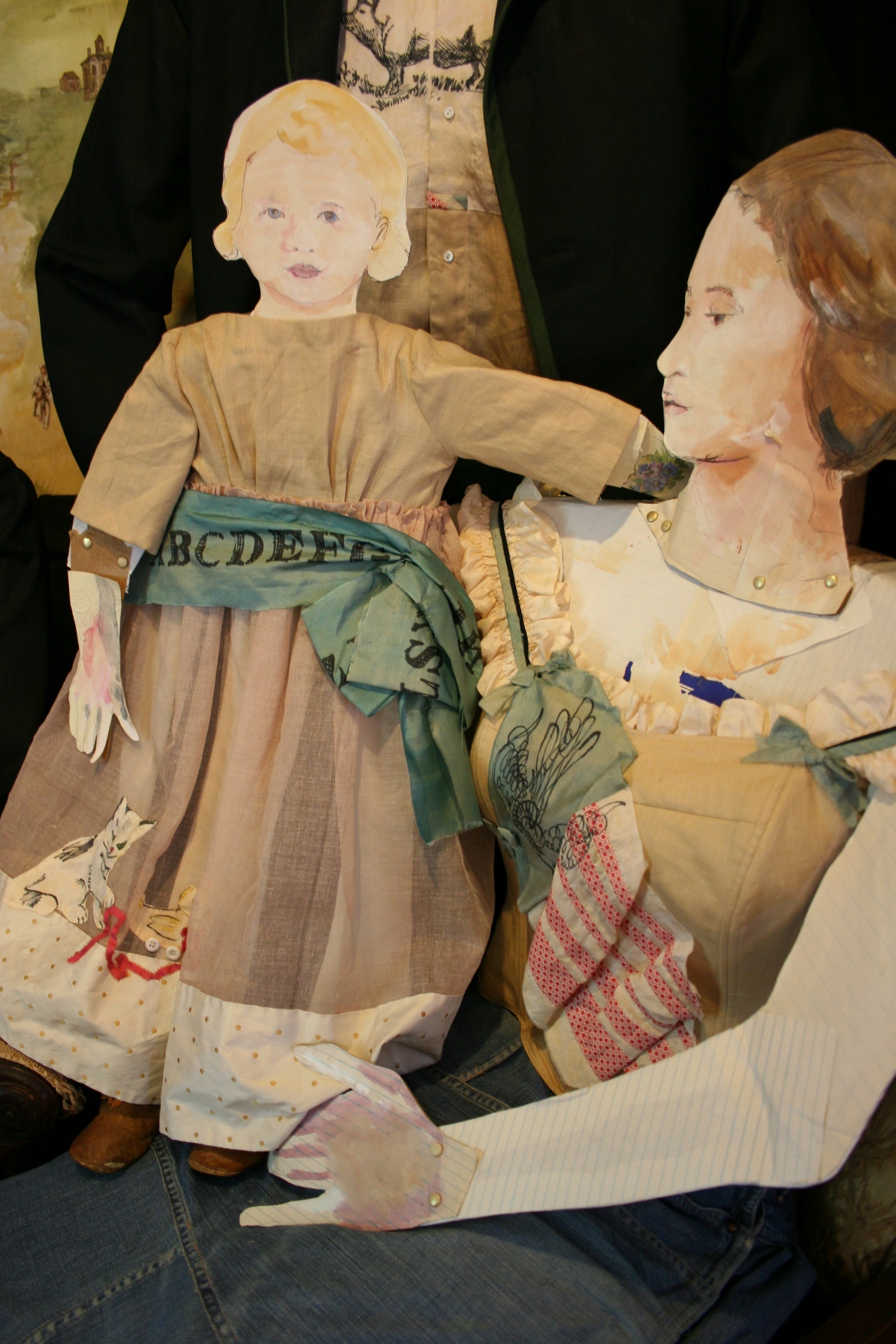
Lohrbach’s 2-3 dimensional “installed illustration” showcases his original garments influenced by, and depicting, the 1876 era, the time of our nation’s Centennial.

If his exhibit had been a photograph, I would have been looking at a family portrait. Promotional information for Lohrbach’s show says, “The somewhat dark scene may serve not only as a fashion installation, but also as a common ancestral portrait.”

Max Lohrbach's "Souvenir Portrait" at the Mantorville Art Guild.

“Souvenir Portrait” calls for a closer look at the details this Minnesota designer has incorporated into his scene—the red, white and blue in the clothing; the alphabet sash upon the child’s skirt; the pig drawing on the father’s shirt; the crossed arms; the hand angled in the pocket; the mother turned protectively toward her child; the rustic eagle fashioned from weathered wood…

Lohrbach's work depicts the love between mother and child.

Playful vintage details incorporated into the child's dress.

There's something almost sad, or perhaps contemplative, in the face of this woman painted by Lohrbach and wearing his original design.

Lohrbach has created a piece worthy of study as much for the personal sense of history he conveys as for the detailed vintage-style garments he’s designed.

“SOUVENIR PORTRAIT” will be on display at the Mantorville Art Guild, 508 Clay Street, until September 19. Gallery hours are from 11 a.m. – 4 p.m. Friday and Saturday and from noon until 4 p.m. on Sunday. Arrangements can be made for special tours. Fashionable attire is optional.

© Copyright 2010 Audrey Kletscher Helbling


Country churches & more in fall issue of Minnesota Moments September 1, 2010

Filed under: Uncategorized — Audrey Kletscher Helbling @ 7:51 AM
Tags: , , , , , ,


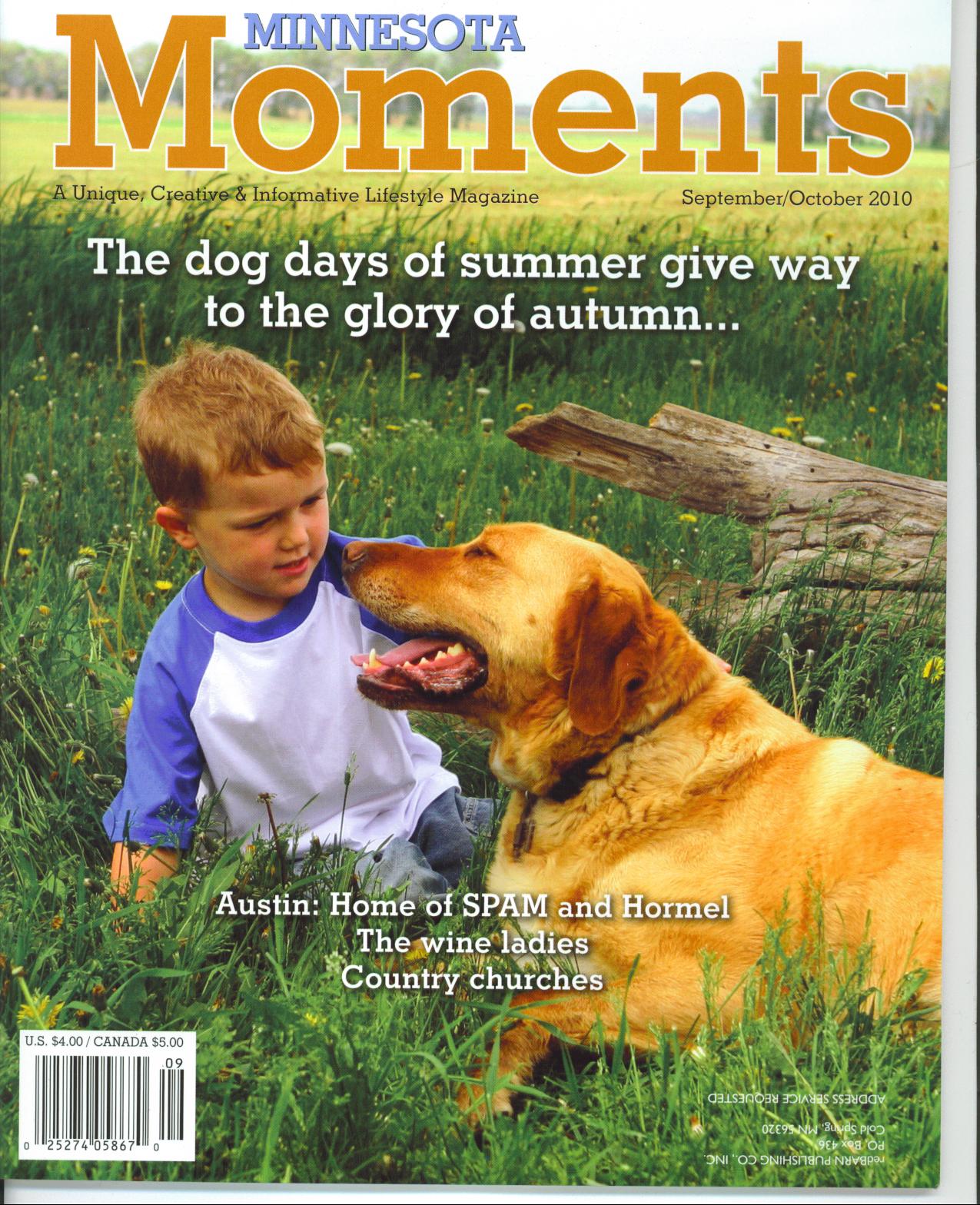
THE FALL ISSUE of Minnesota Moments magazine has just published and I’m especially pleased with this issue.

Inside you’ll find an eight-page photo essay I’ve done on old country churches. Within the past year, I’ve been photographing rural churches in southeastern Minnesota, drawn by their history and beauty and by the peace I feel in their often bucolic settings.

Simply put, I can’t get enough of old country churches. Sometimes I’ve even been tempted to break a lock to get inside a sanctuary. But I haven’t and I won’t. That would be a sin, and against the law.

The September/October edition also includes a trio of stories from Austin, Minnesota, where I traveled in March. Downtown I discovered a kitschy little barbecue joint, Piggy Blue’s Bar-B-Que that’s a must-eat-at spot. To see the other sites I visited, you’ll need to read the magazine.

I have additional stories in this issue, plus my regular reviews of three Minnesota-authored books. As always, designer Amy Stirnkorb has worked her magic by transforming my submitted stories and photos into eye-pleasing page lay-outs.

Also, check out my Minnesota Prairie Roots promo on page 55 of the magazine. I designed it and I’m pretty proud of my work. I don’t claim to be a graphic designer. However, I had an idea, went with it and I think the promo truly projects my down-to-earth nature and style. See what you think and give me your feedback.

Of course, I’m not the only writer/photographer for Minnesota Moments. You’ll find an interesting feature about three friends who make wine, a nostalgic garage story, some entertaining essays, squash-growing tips and recipes and lots more.

Be sure to check out the ads too. Without advertising support, the magazine couldn’t exist.

Minnesota Moments should arrive in mailboxes and land on newsstands any day now, so watch for it, or look for it if you’ve never seen the publication.

© Copyright 2010 Audrey Kletscher Helbling


The football-playing gnomes of New Ulm August 31, 2010

Filed under: Uncategorized — Audrey Kletscher Helbling @ 7:12 AM
Tags: , , , , ,

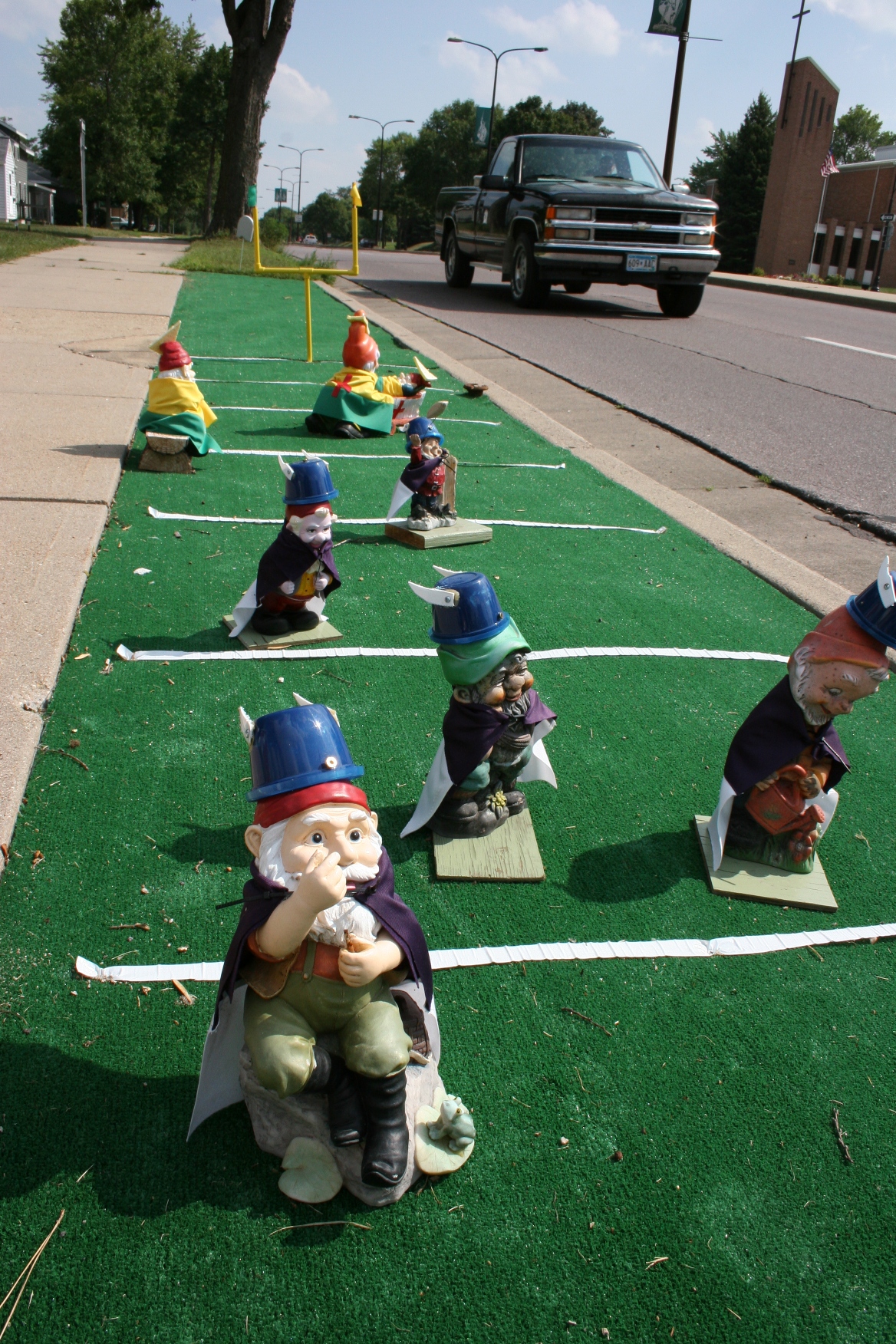
Gnomes line a section of boulevard along S. Broadway Street in New Ulm.

IF YOU’RE ZIPPING along Broadway Street in New Ulm, you might not notice the gnomes strategically lining a stretch of boulevard turf between South Sixth and Seventh Streets. Or if you do spot them, you might wonder, “What the heck was that?” And you’d likely keep right on driving.

But not me. I stopped to check out the gnomes on a recent visit to this German city that seems overrun with these curious little legendary elfins that supposedly live in the depths of the earth and hoard treasures.

The Broadway gnomes aren’t your ordinary gnomes, although at least half of them appear to be treasure-hoarders. More on that later.

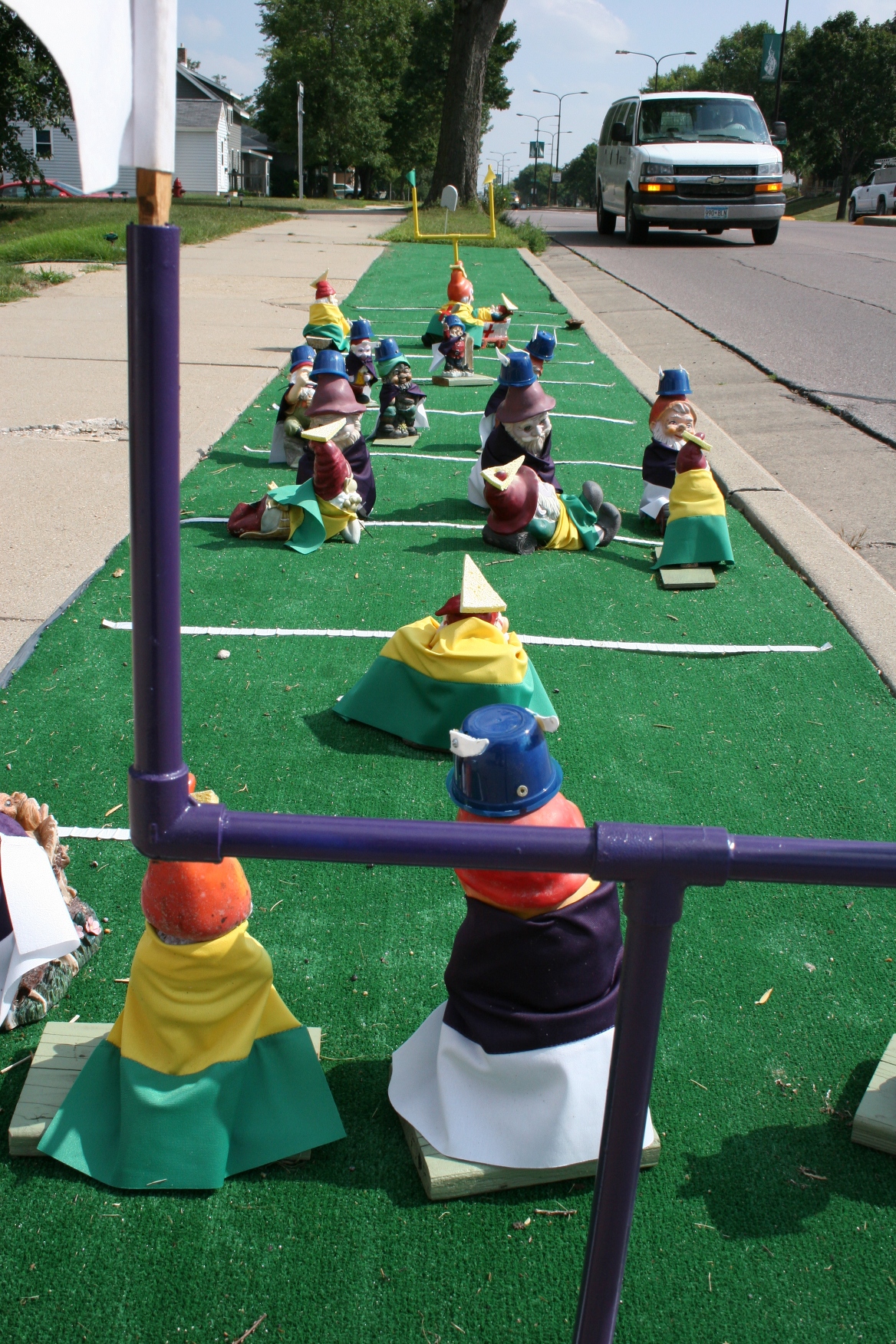
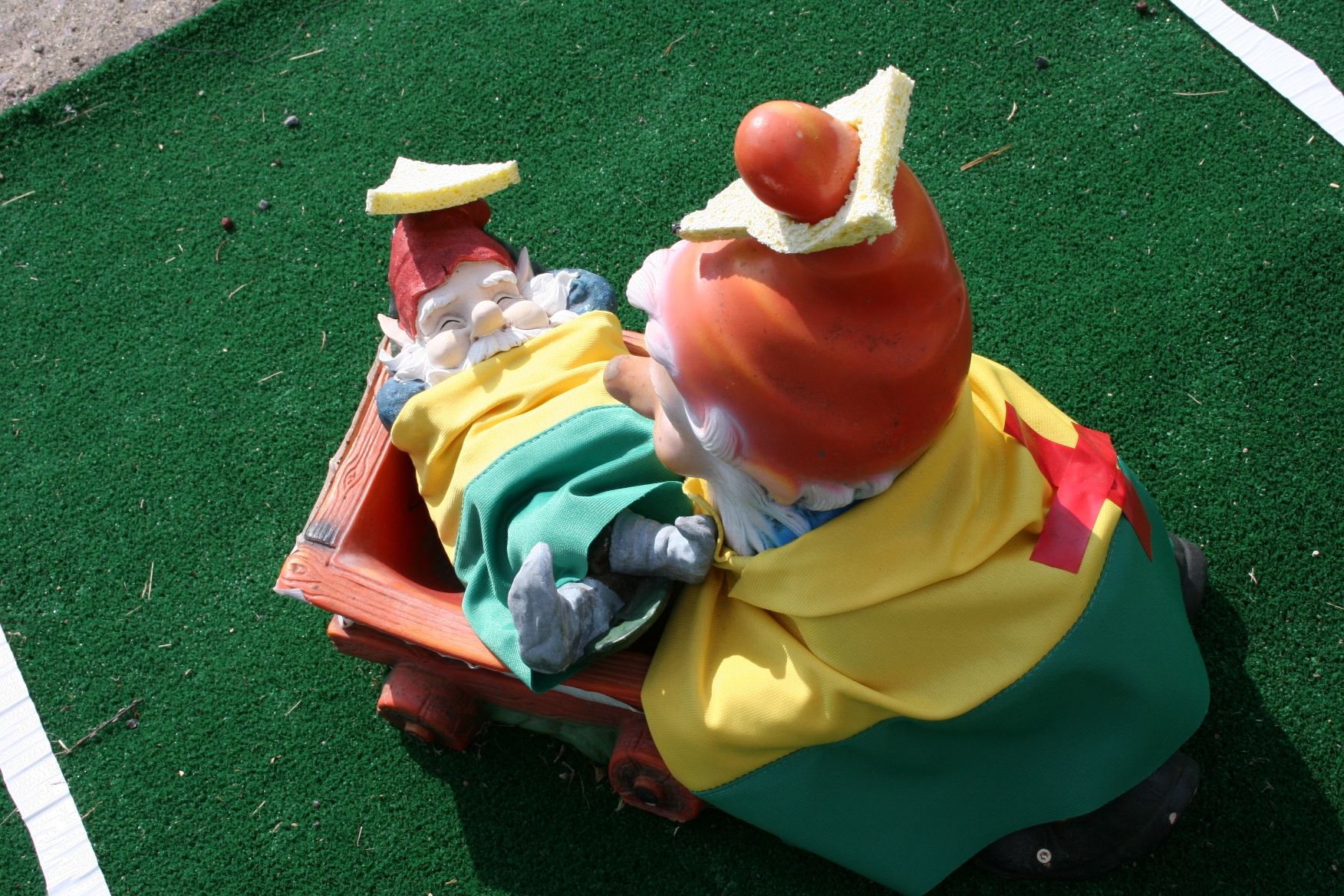
Rather, these elfins comprise two football teams—the Minnesota Vikings and their archrival, The Green Bay Packers.

The Minnesota Vikings and The Green Bay Packers play football on a stretch of artificial turf along Broadway.

The creator of this curious football game has distinguished the teams by draping gnomes in purple capes and in green and gold capes. The Vikings sport homemade “helmets” that are more blue hats with tacked on horns than purple helmets. And The Packers appear to be wearing sponges, AKA protective cheese slices, atop their helmet-less heads.

But, hey, I give this sports artist an “A” for creating an original and durable work of roadside art.

This isn’t exactly the safest place to play football, though, I quickly learn as I crouched to take photos just feet away from the heavy traffic. One topple or misstep and I’d find myself sidelined with an injury, or worse.

I see a few tackled, injured, or maybe just wind-blown, Packers lying on the turf. A medic is even carting one off the field. I wonder if, occasionally, a Wisconsinite walks by and covertly knocks over a Vikings gnome. Come to think of it, I didn’t check to see if the football players are secured in place.

An injured Green Bay Packers gnome is carted off the field.

But of one fact I’m certain, these green-and-yellow outfitted football-playing gnomes remain true to their hoarding nature. They’re guarding their treasure, keeping the Vince Lombardi trophy away from the Scandinavian gnomes in this German city.

#

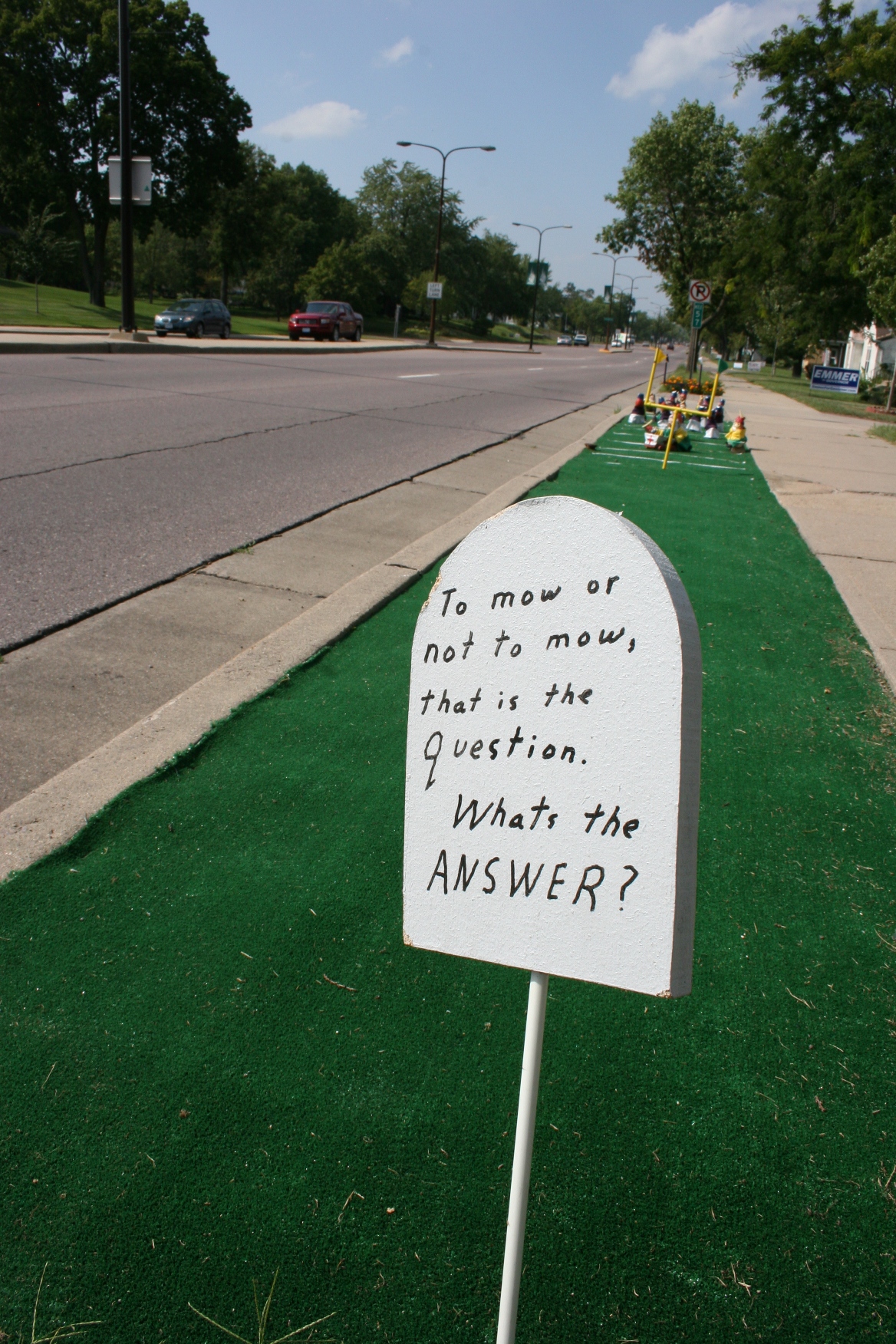
AT THE END of the football field, I discovered this sign: “To mow or not to mow, that is the question. Whats the answer?”

A homeowner makes a statement along a New Ulm boulevard.

Is the sign designer making a literal statement about mowing grass here? (I wouldn’t feel safe mowing this close-to-the-busy-busy-roadway boulevard.)

Or is the writer making a statement about the need for a new open-air football stadium with real grass versus artificial turf?

#

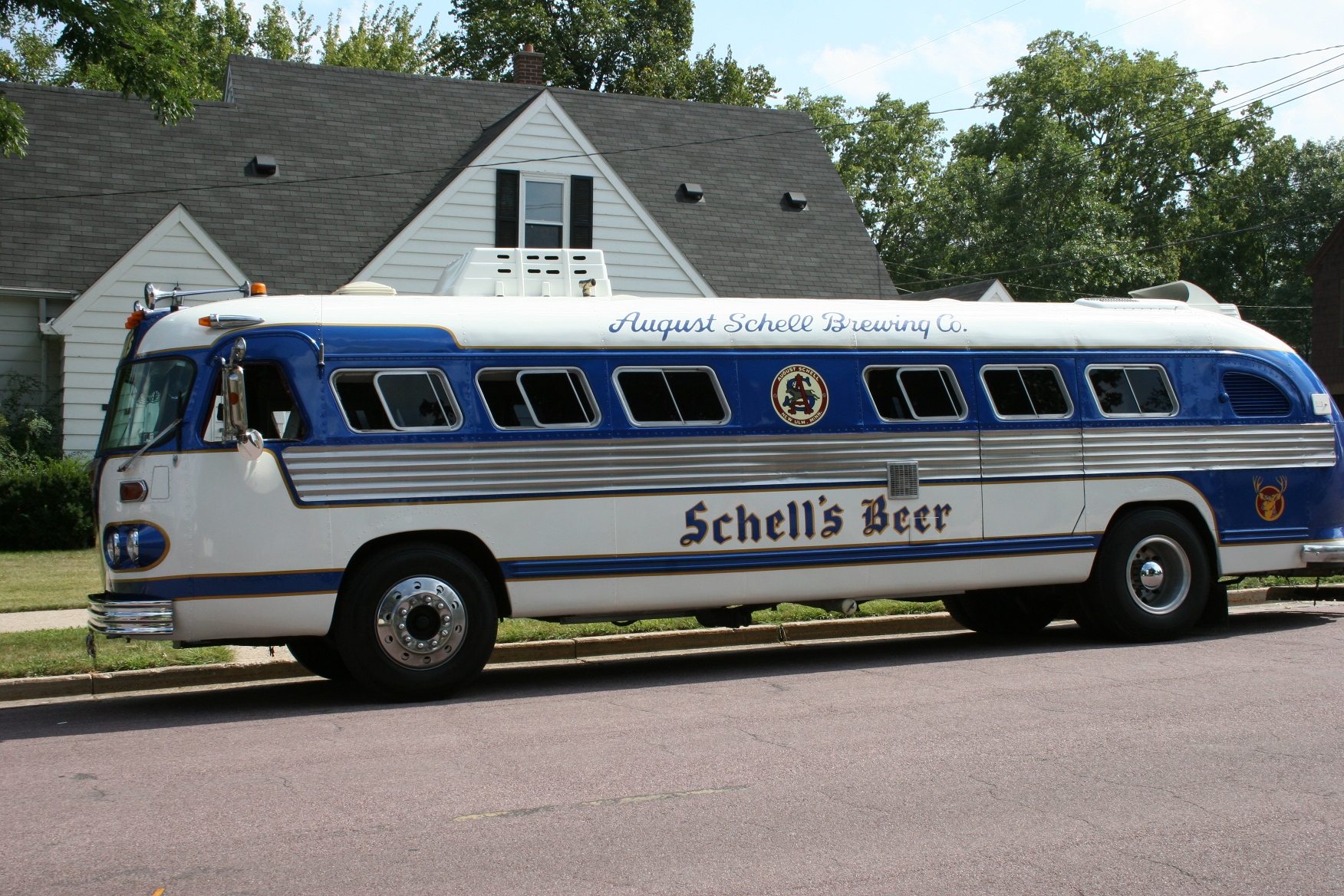
THEN, COINCIDENTALLY (or not), just around the corner from the Broadway football field, I spied this (team?) bus.

The Schell's beer bus was parked near Broadway Stadium.

© Copyright 2010 Audrey Kletscher Helbling


Reunion stories: A rabbit tale and a tale of murder August 30, 2010

Filed under: Uncategorized — Audrey Kletscher Helbling @ 9:23 AM
Tags: , , , , , ,

THIS WEEKEND my husband, Randy, and I attended mini high school class reunions, albeit impromptu ones.

On Saturday afternoon I met a Wabasso High School graduate while touring Betsy’s house in Mankato. That would be Betsy Ray, as in Maud Hart Lovelace’s main character in her Betsy-Tacy books. Betsy is Maud, who really did live in the restored Center Street house now owned by the Betsy-Tacy Society.

But back to that reunion. Penny, our tour guide, asked where I grew up and I responded, “between Redwood Falls and Marshall” since few people have ever heard of my hometown, Vesta.

Imagine my surprise when Penny says she graduated from Wabasso High School, about 20 miles from my hometown.

“I graduated from Wabasso High School too.”

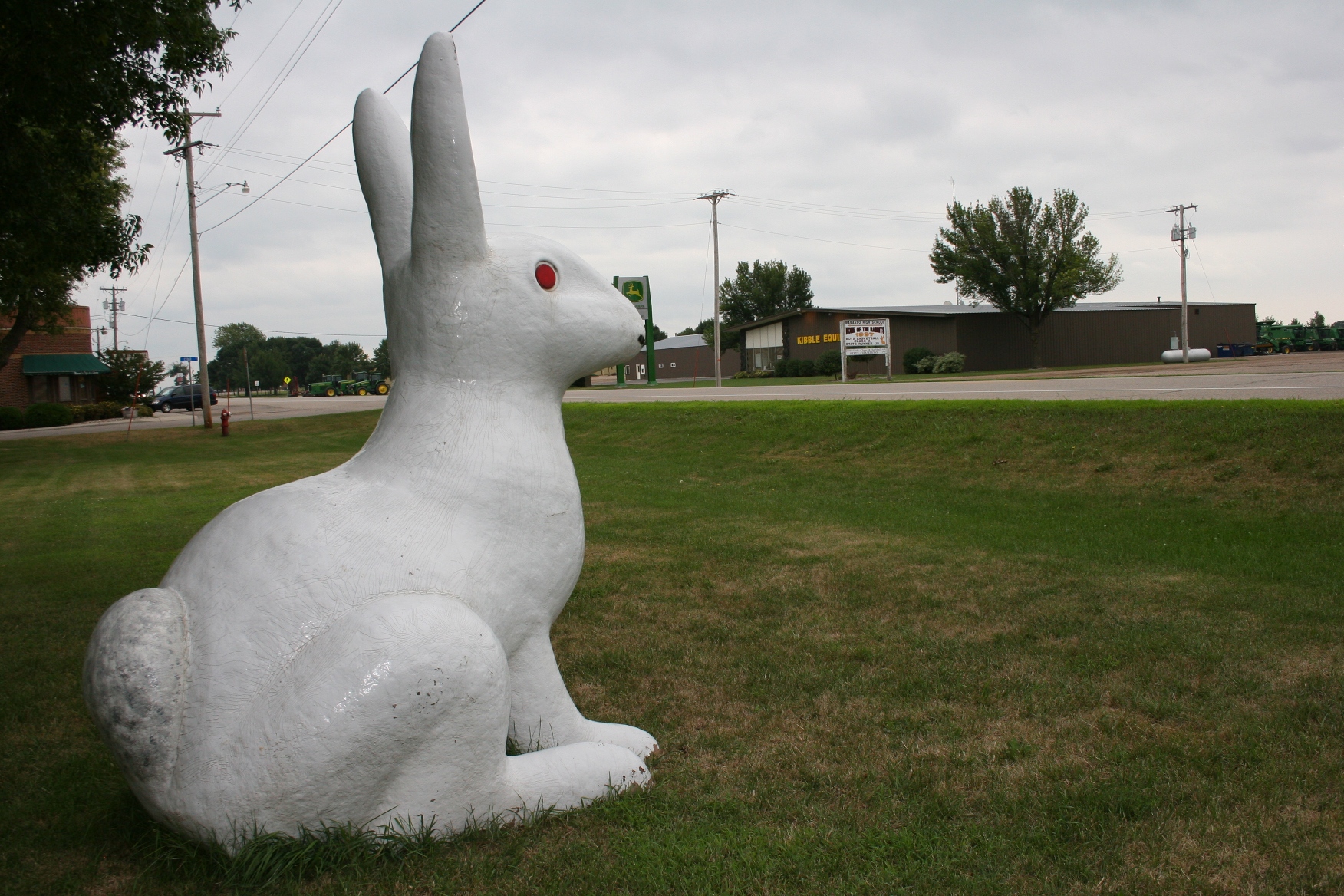
That led to a bit of reminiscing between me, a 1974 grad, and Penny, a 1964 WHS graduate. Because of our 10-year age span, we didn’t know each other during our school days. Yet, we share that common bond of attending the small-town high school with the white rabbit mascot.

“Another white rabbit,” Penny says several times. Just as an explanation, the town’s name originated in an Indian legend about the creation of the earth. Wabasso, a son of the mighty creator of nations, fled north and was changed into a white rabbit. He was considered a great spirit. Henry Wadsworth Longfellow even writes about Wabasso in his The Song of Hiawatha poem.

A white rabbit statue sits along Minnesota Highway 68 in Wabasso.

But I digress. Penny and I enjoyed our new-found white rabbit connection and our shared love for the Betsy-Tacy books. And then we discovered one more link. Penny taught German at Bethany Lutheran College in Mankato. I attended the college and, at one time, intended to major in German.

Now, flash forward to Sunday afternoon, when Randy and I are at a reunion of The Trinity King’s softball team. It’s been a day of remembering root beer barrels (the team drink), belly bumps (exactly what you think) and an injured leg splinted with softball bats.

Then Jane and Larry show up. Larry subbed a few times with the team, so we never really knew him. But as the conversation ebbs and flows, we learn that Jane graduated in 1969 from Pierz Healy High School, Randy’s alma mater. Randy graduated in 1974 with Jane’s sister, Nancy.

Soon the two are tossing out family names and memories with the ease of those who grew up in the same geographical area.

Then I mention the murder. One day after classes, a school librarian used his necktie to strangle a student in the audio-visual room. Jane tells us her brother was working in the adjoining room at the time of the late 1960s murder, but heard nothing.

Revelation of this horrendous crime to outsiders always draws the same reaction—stunned disbelief. How could this happen in a school? But it did.

As the Pierz Healy High School graduates continue to discuss other common topics, I wonder: What happened to the murderer/librarian? Is he out of prison? Is he still alive?

© Copyright 2010 Audrey Kletscher Helbling


Learn a little history, drink a little beer on the August Schell Brewing Company tour August 28, 2010

Filed under: Uncategorized — Audrey Kletscher Helbling @ 8:45 PM
Tags: , , , , , ,

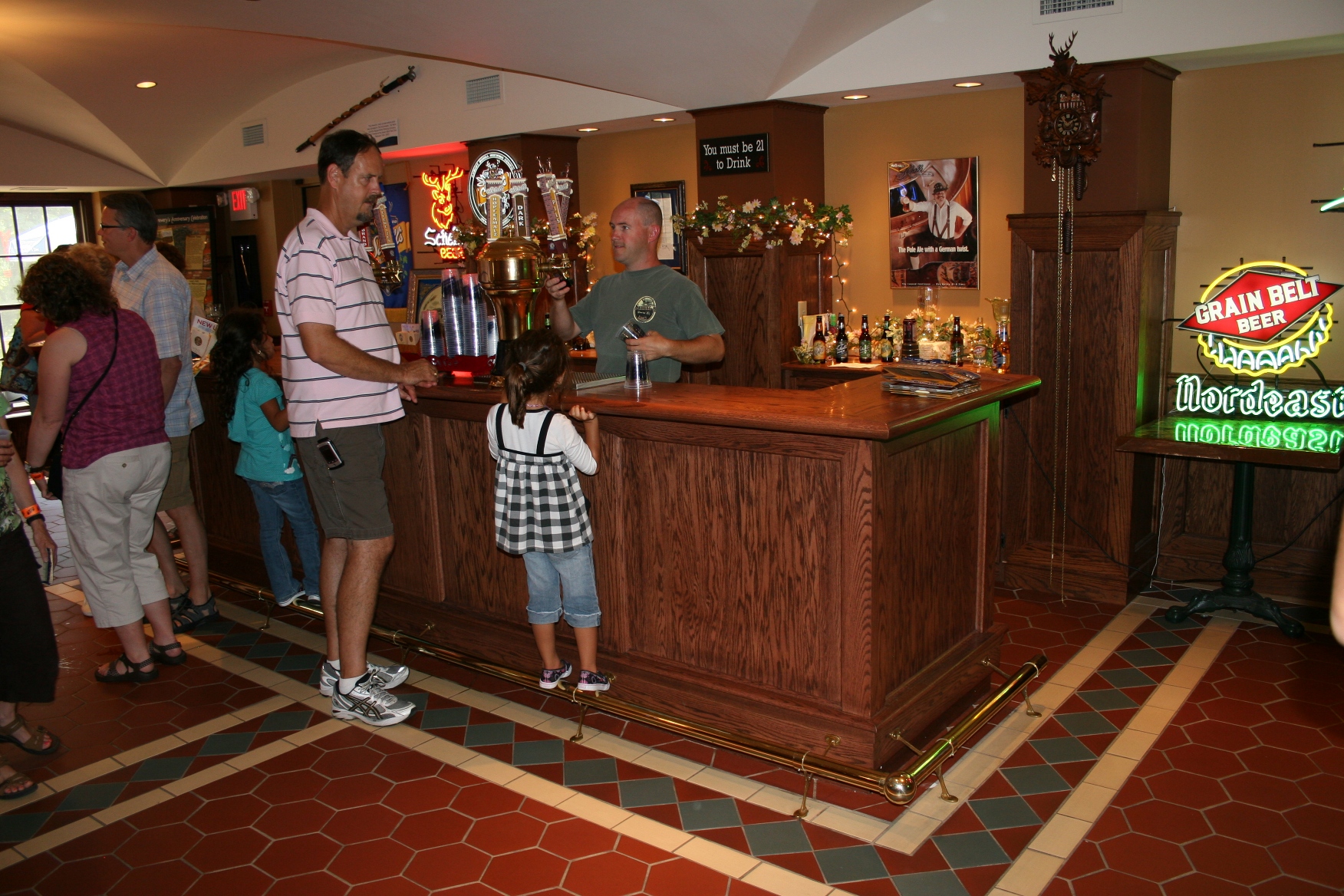
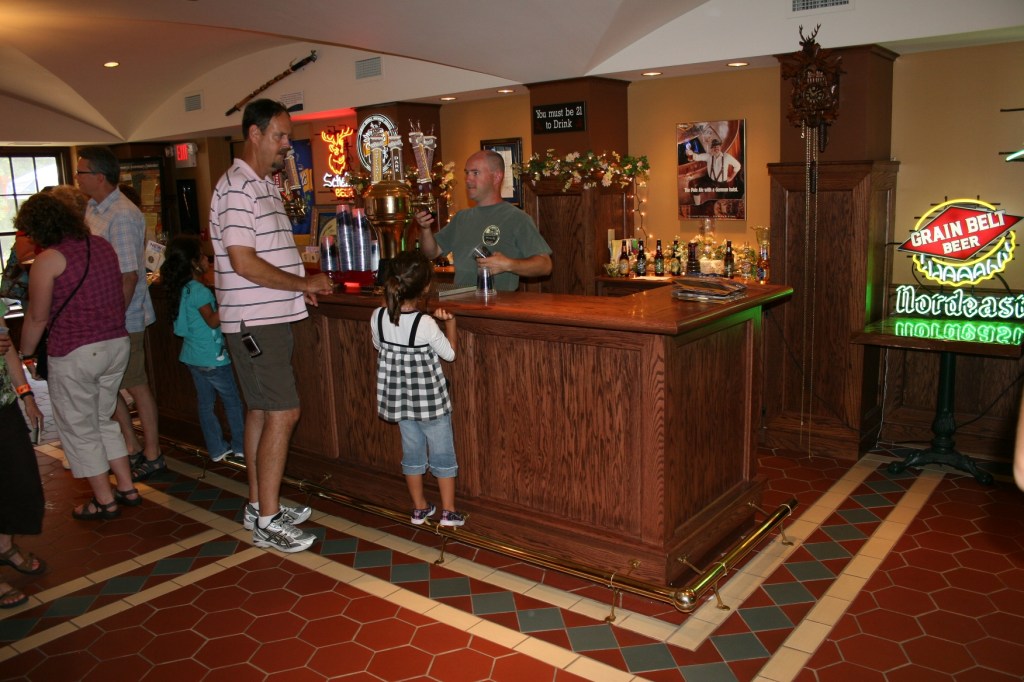
Visitors line up for free tap beer or 1919 root beer following a Schell's brewery tour.

“OK, LET’S DRINK some beer,” our tour guide Matt says, pulling six-packs from a walk-in cooler and distributing bottles among tables in the hospitality/tap room of August Schell Brewing Company.

But before we pour and swig, our bartender instructs us to fill our plastic cups only to the black line, meaning we’ll get about 1 ½ ounces of beer per sample.

On this steamy summer day, the beer goes down fast among the adults who’ve just toured this second oldest family brewery in the United States.
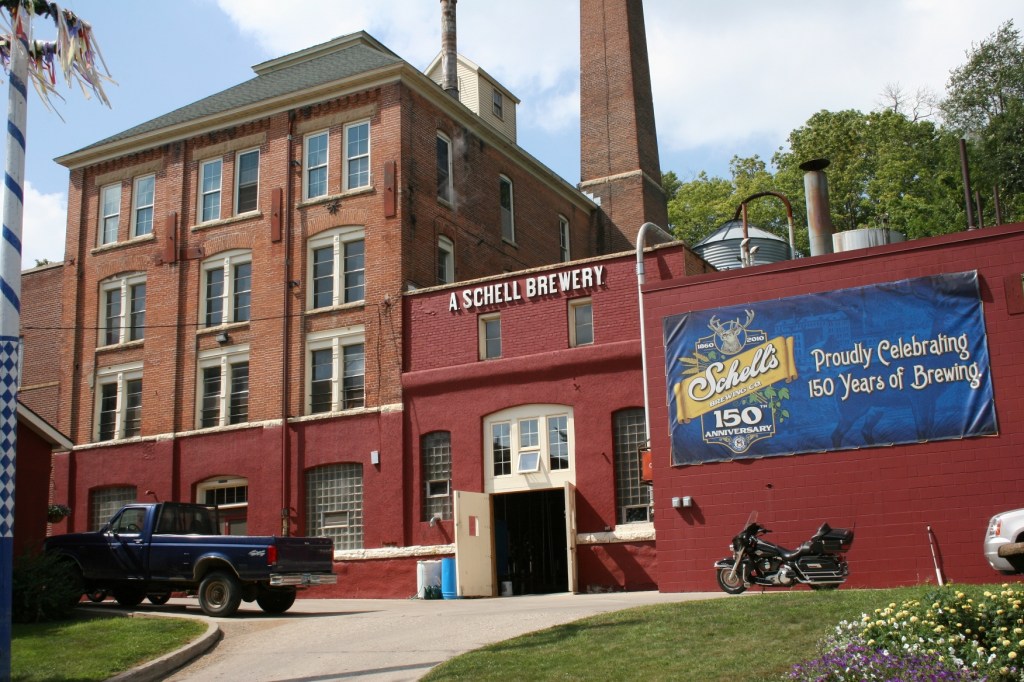
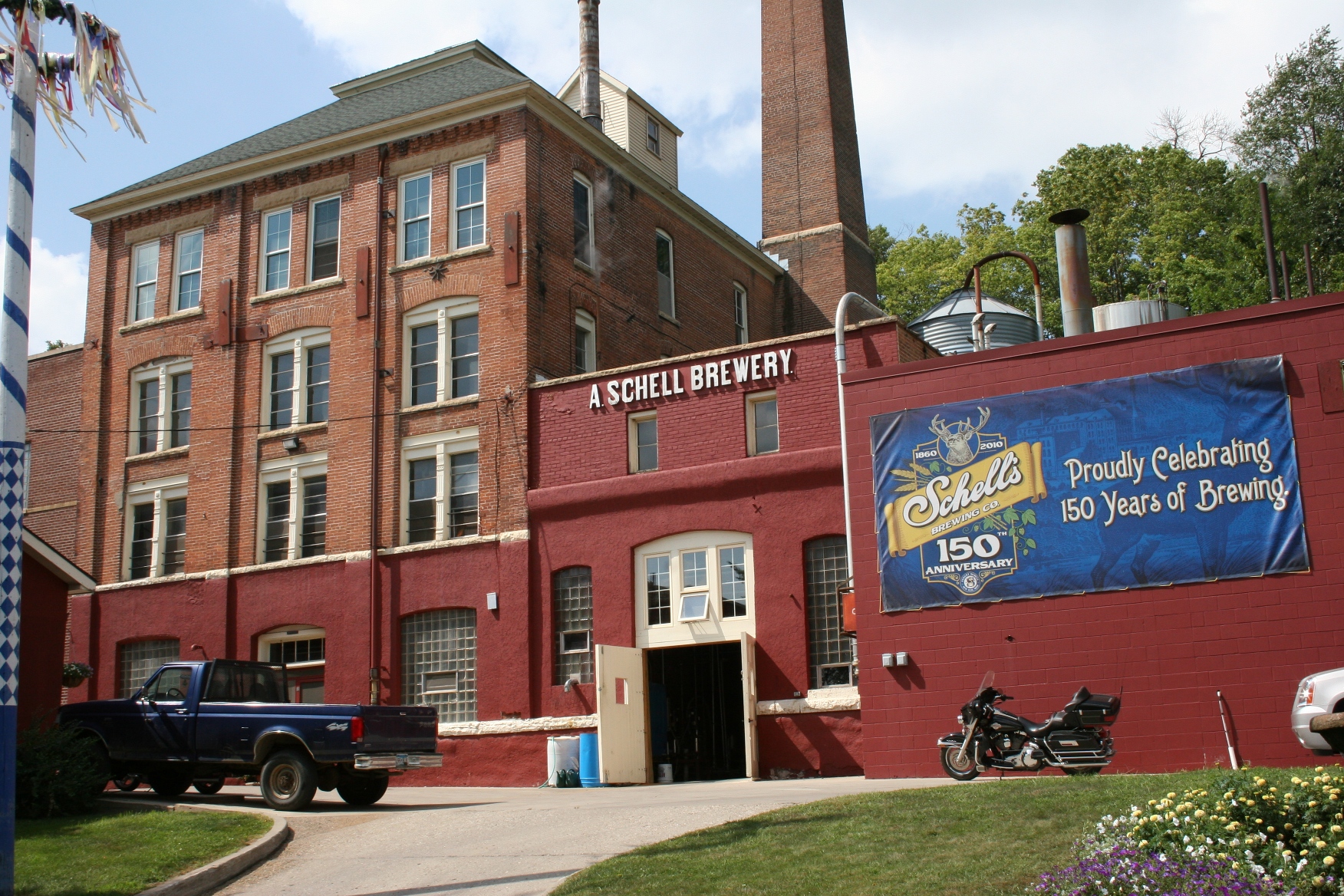
The Schell's brewery is celebrating 150 years in business.

Schell’s has been a New Ulm mainstay since 1860, this year celebrating 150 years in the beer business. That fact surfaces repeatedly during the tour and during the beer tasting session when we are served Hopfenmalz, an amber lager style beer selected by popular vote as the company’s 150th anniversary beer. Matt also passes out other Schell’s beers like Hefeweizen, Pils and Dark, which “isn’t heavy in any way,” but earns the name because of its dark color, he says.

Given the “dark” label, I wouldn’t have tried this beer. Our guide is right, though. Schell’s Dark doesn’t taste dark and this is a beer even I’ll drink.

A sip of Hefeweizen, however, causes me to screw up my face and wish I could toss the sample. Instead, I grab another cup, abandoning the beer “with a beautiful balance of cloves and banana flavors.” I prefer bananas in banana bread, not beer, thank you.

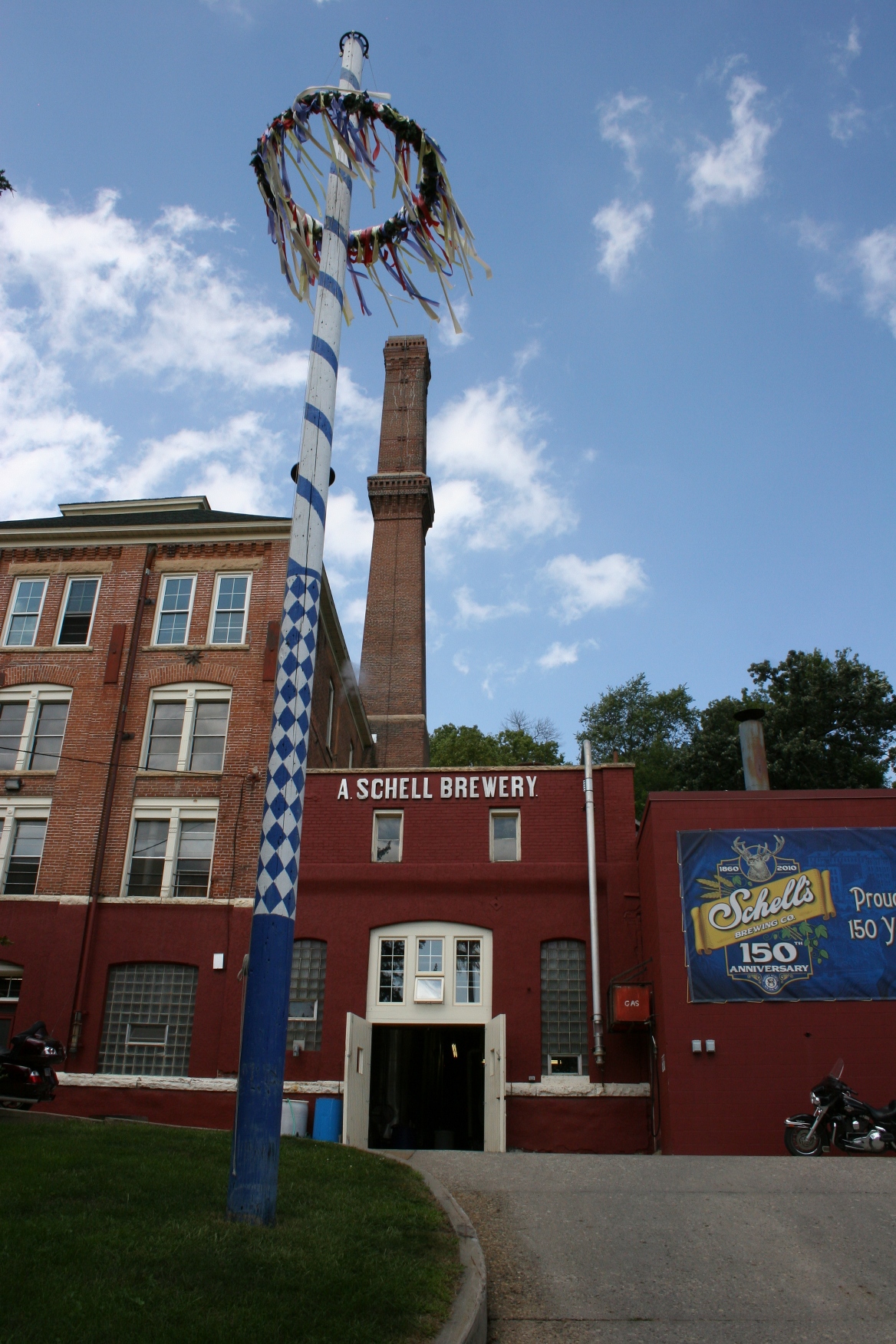
That aside, I’ve enjoyed this historic tour of the brewery tucked in the woods along the banks of the Cottonwood River. The site was carefully selected by August Schell, the flour mill machinist turned brew master, for its natural beauty, artesian springs and riverside location.

Schell was recreating his home in Durbach, Germany, our guide says. I don’t ask, but from what I know of this area in the 1860s, few trees grew here, not exactly like the Schwarzwald back in Deutschland. Perhaps that explains why Matt later tells us that Schell brought pines here from the Black Forest.
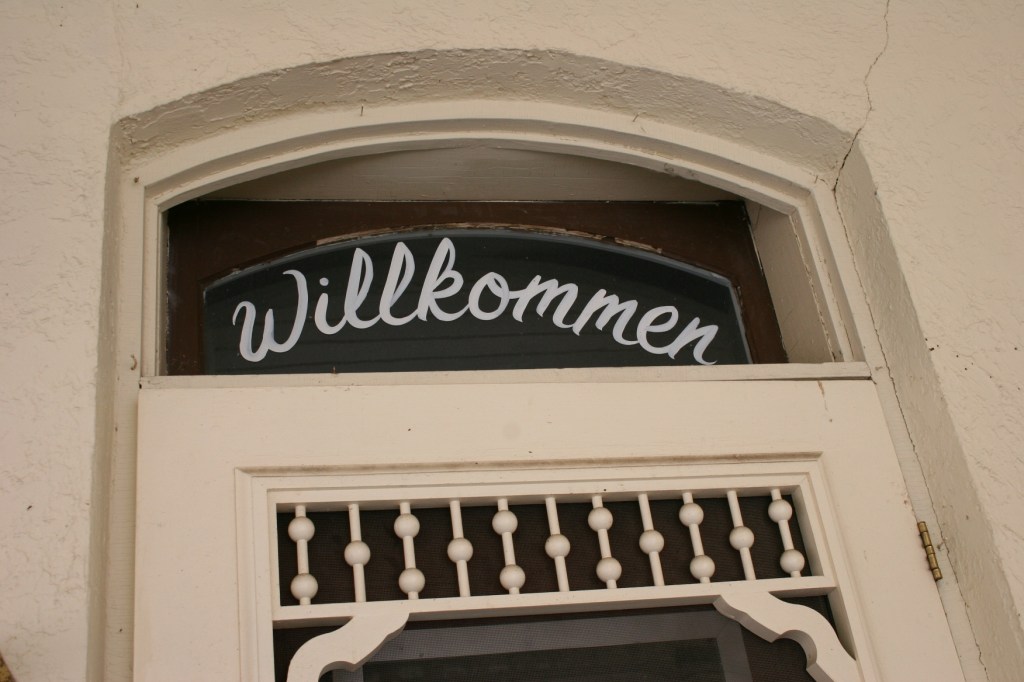
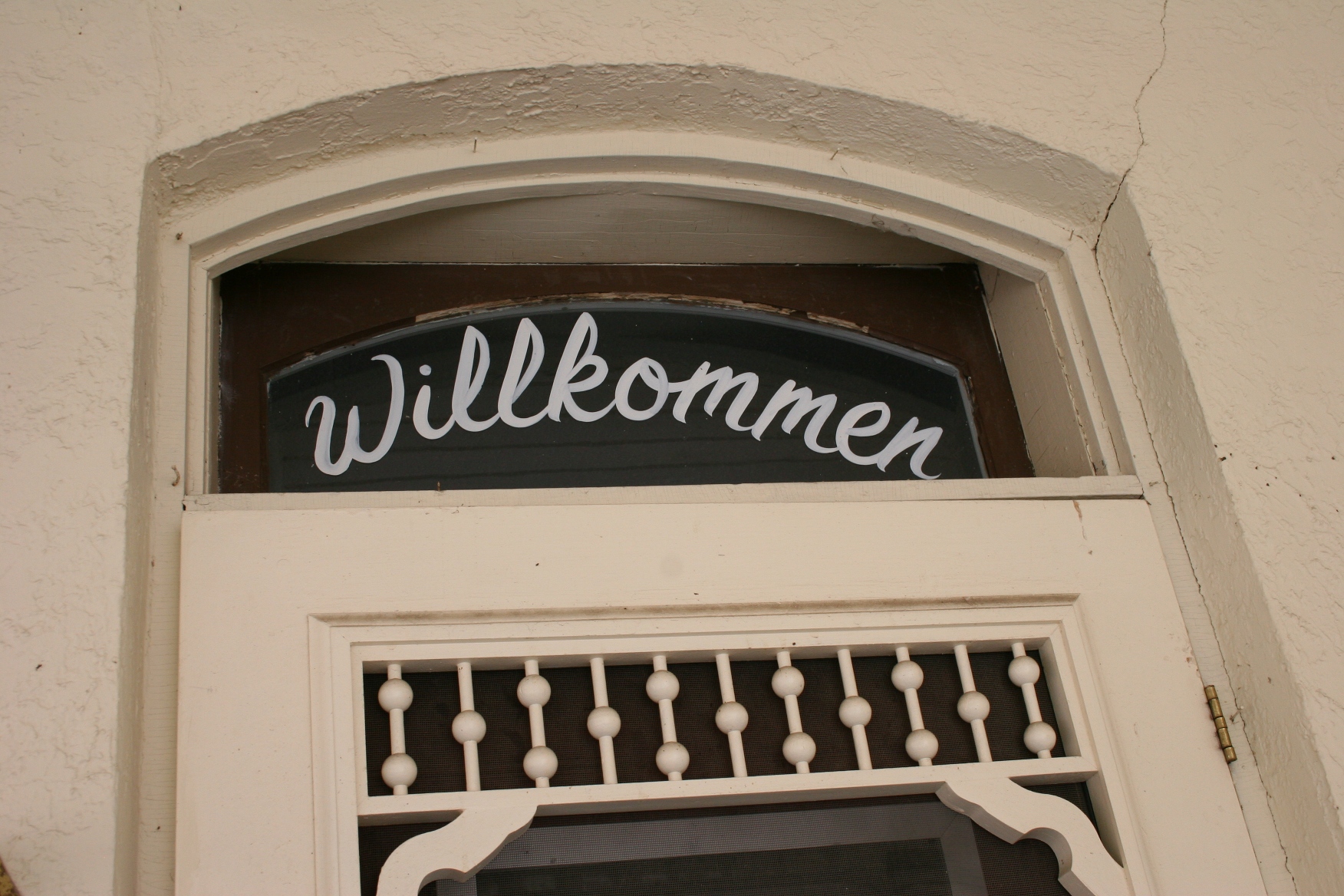
German words can be found in numerous locations at the brewery, including this welcome sign above the doorway to the house once occupied by the Alfred Marti family. Just don't ask your guide to interpret the German.

He also informs us that caves were hand-dug under the brewery, into the hill and under our feet. We are standing on a paved area between two old brick homes and the original family home, now the current-day corporate office. Beer and ice, harvested from the Cottonwood River, were stored in the caves.

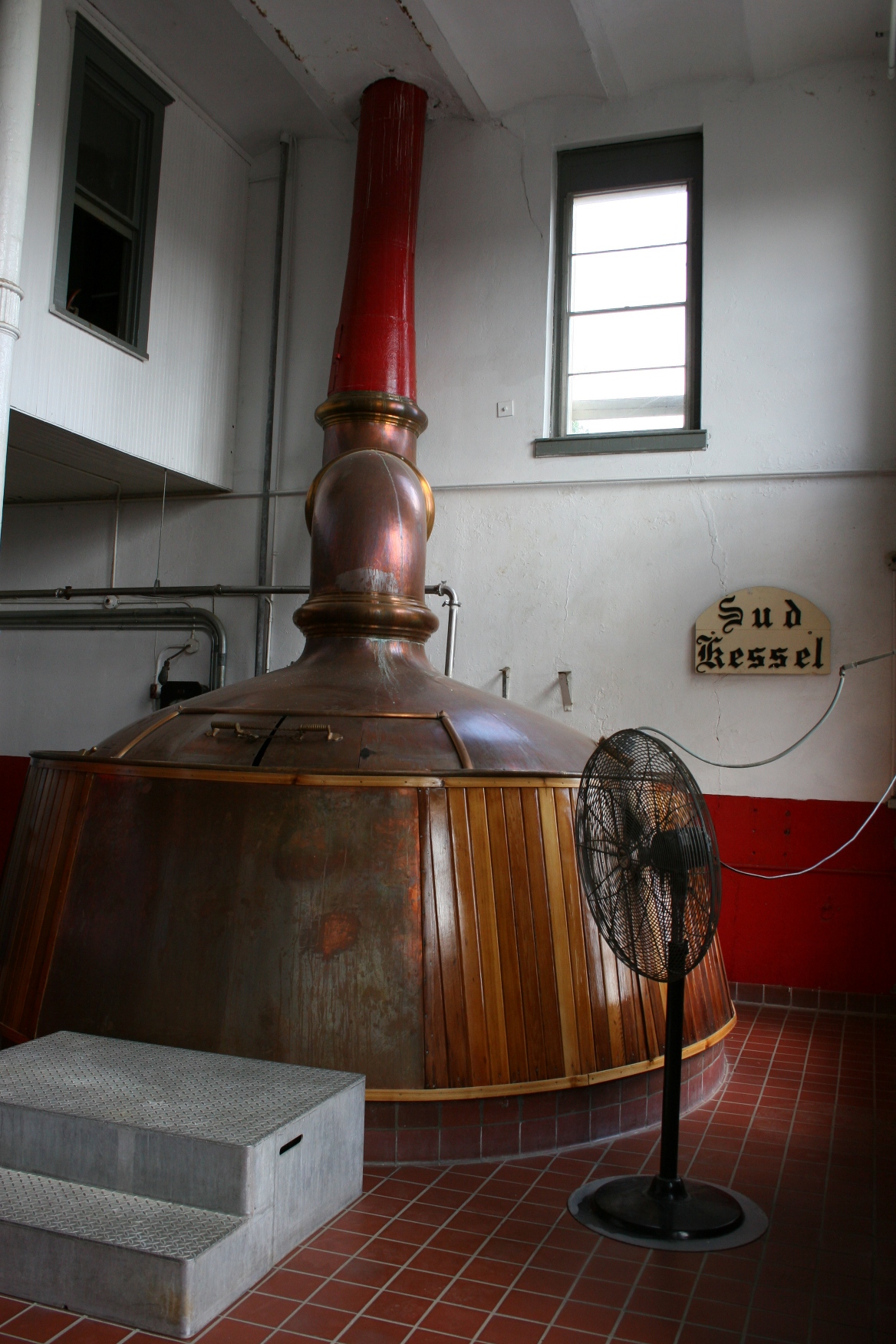
Disappointingly (but understandably), we don’t see any of today’s modern beer-making operation, only Schell’s traditional 1860s brew house, used until 1999. Here we view a hand-hammered copper vessel, Sud Kessel, purchased for $25,000 in 1895. It holds 3,500 gallons of beer, which translates to 38,000 12-ounce bottles or cans. Now that’s a lot of beer.
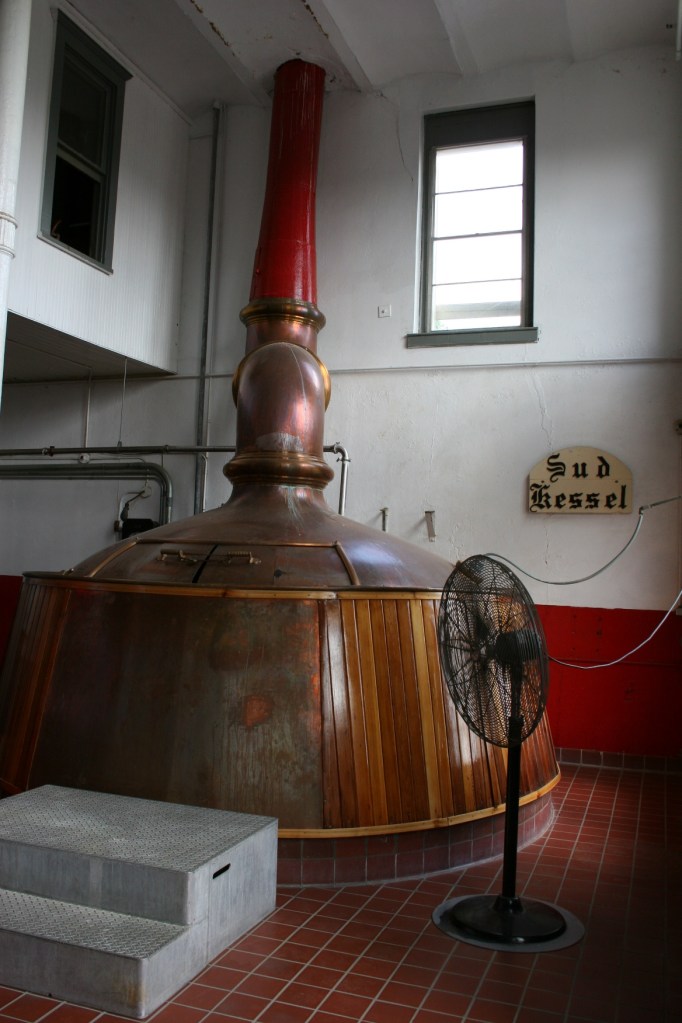
This is the only peek you'll get of the beer-making process: Schell's vintage Sud Kessel, used from 1895 - 1999.

But you can’t buy any beer at the brewery, our guide says, because it’s against the law to sell it on-grounds. The samples and a 12-ounce glass of beer or Schell’s 1919 root beer come with the $3 tour fee.

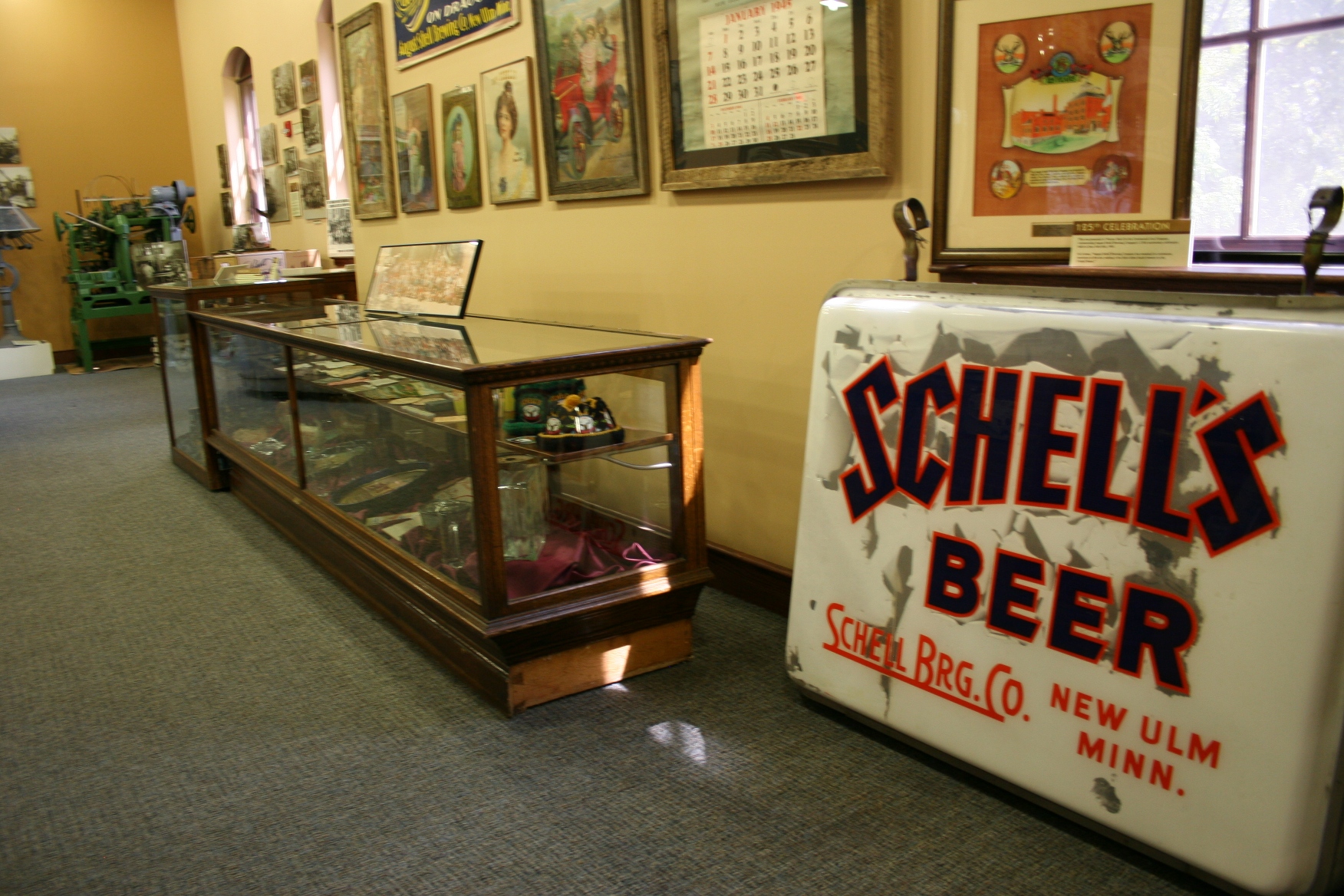
Plenty of history also comes with the guided tour and a visit to the company museum.
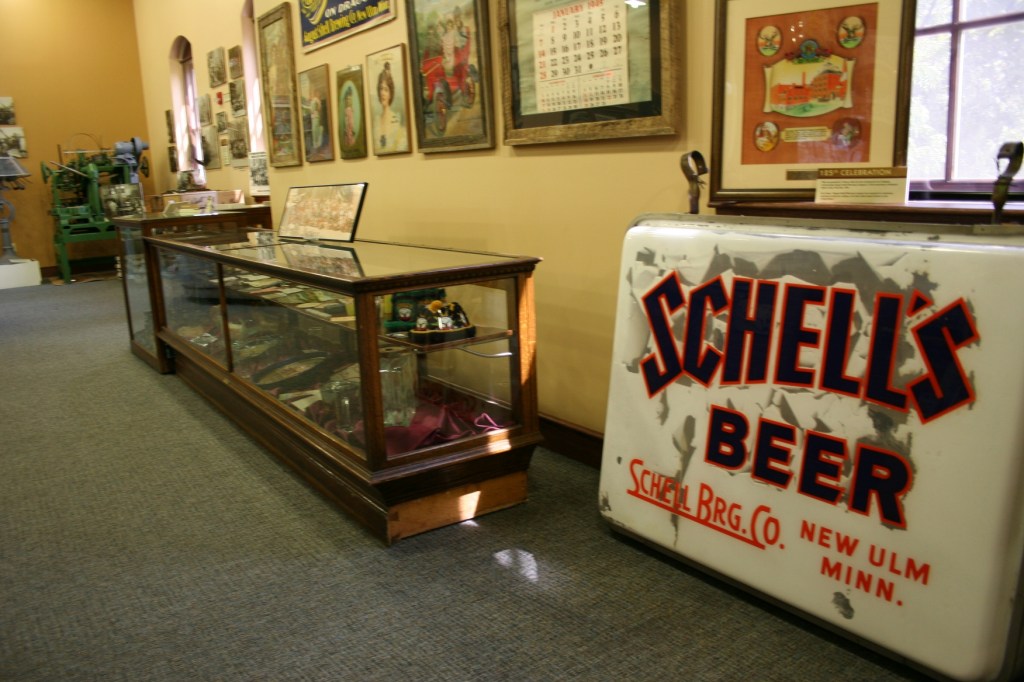
The Schell's museum is jam-packed with plenty of information, memorabilia and, yes, even beer bottles.

Among the more interesting facts I learned are these:

  • After the death of her husband, Emma Marti ran the brewery for six years until 1940. As our guide emphasizes, for a woman to run a brewery in that time period certainly ranked as unique. Perhaps Schell’s ought to name a beer in Emma’s honor. Or have they?
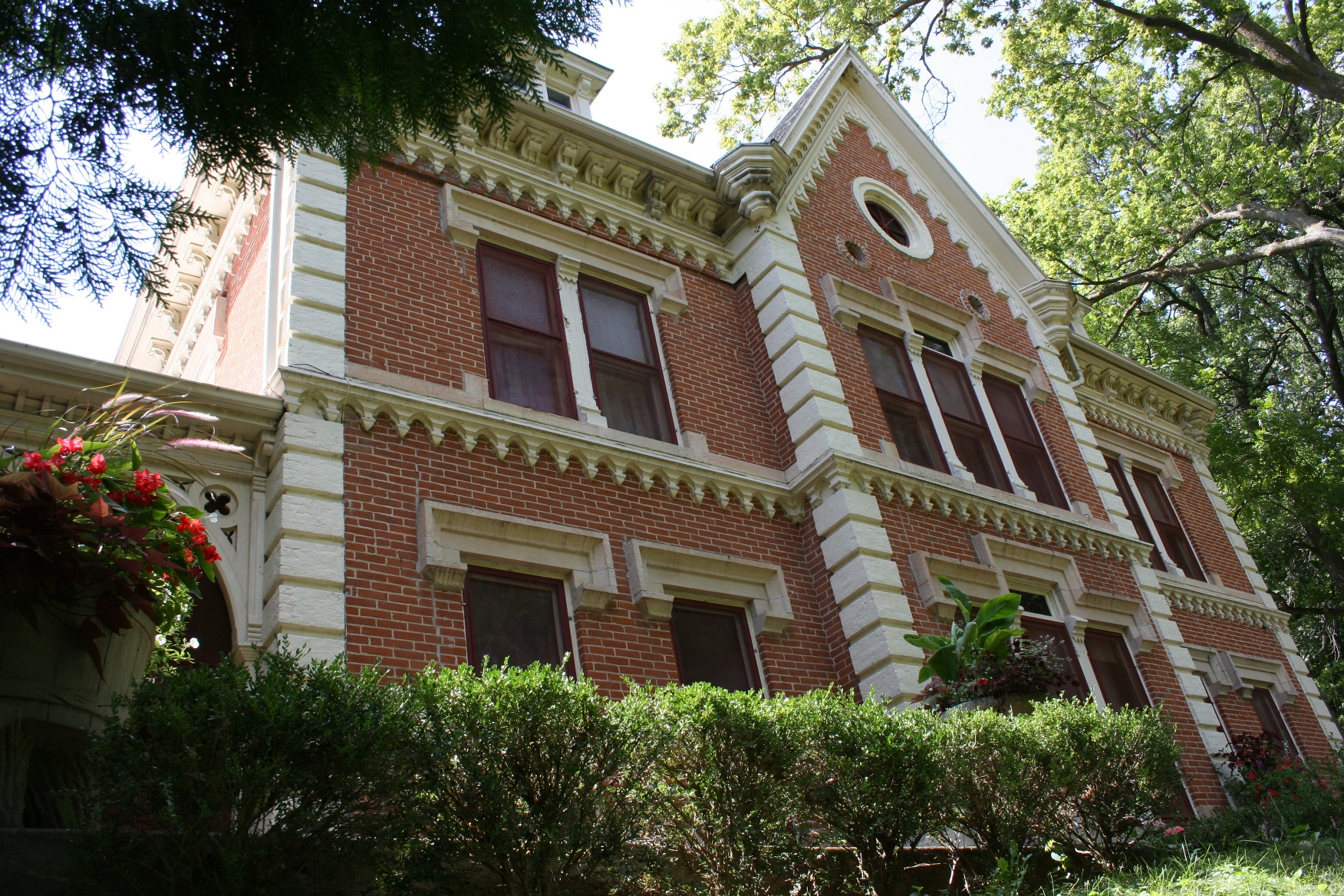
  • Company bylaws allow only the Schell’s president to live in August Schell’s on-site retirement mansion. Because he wants his privacy, current president Ted Marti lives elsewhere, Matt says. The home was last occupied in the 1990s. (Umm, I wouldn’t mind living in a mansion.)
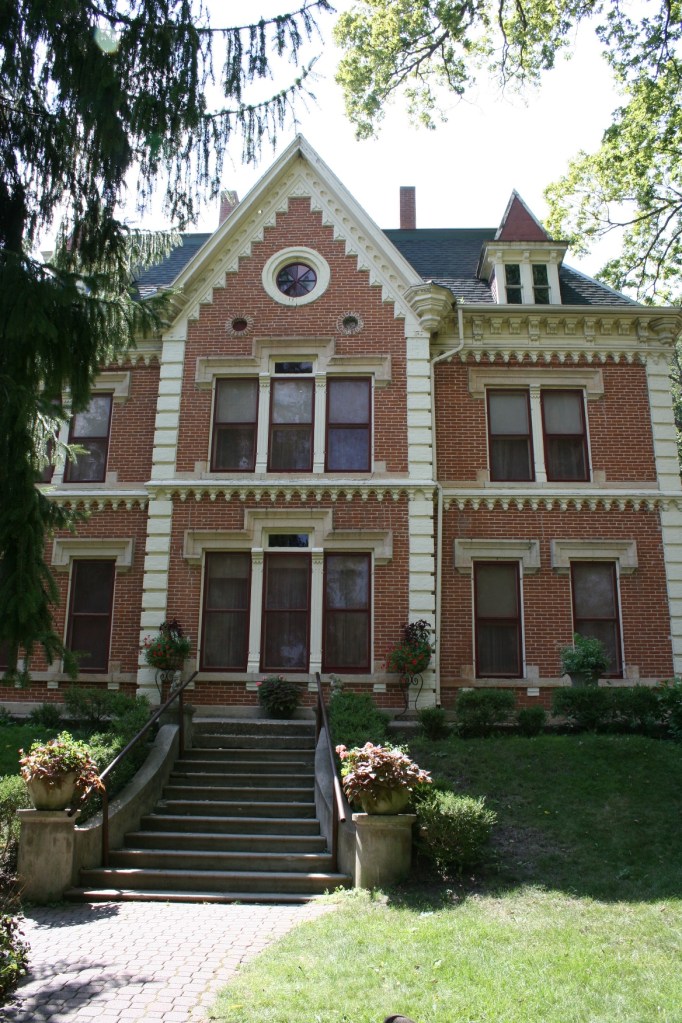
August Schell's retirement mansion, currently unoccupied.
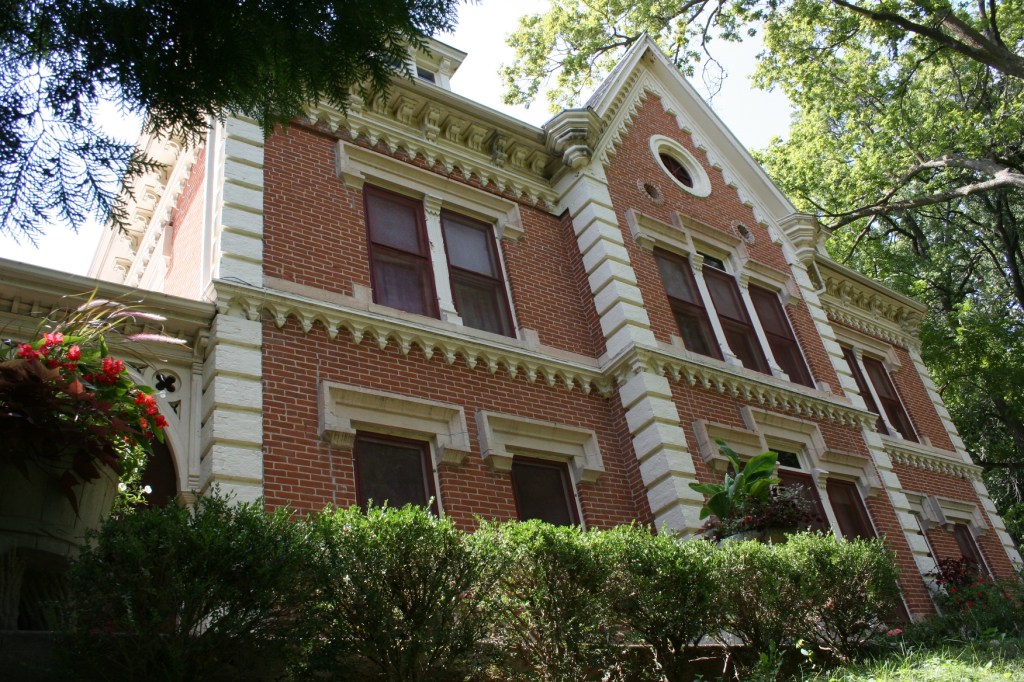
A close-up shot of the mansion, re-emphasizing the point that I could be happy living here.

  • Schell’s changes its “Snowstorm” beer recipe annually. The reason: “There are no two Minnesota snowstorms alike and therefore we are going to change our ‘Snowstorms’ every year,” Matt tells us, quoting president Marti. Ah, Mr. Marti, you clearly know your Minnesota winters as well as you know your beers.
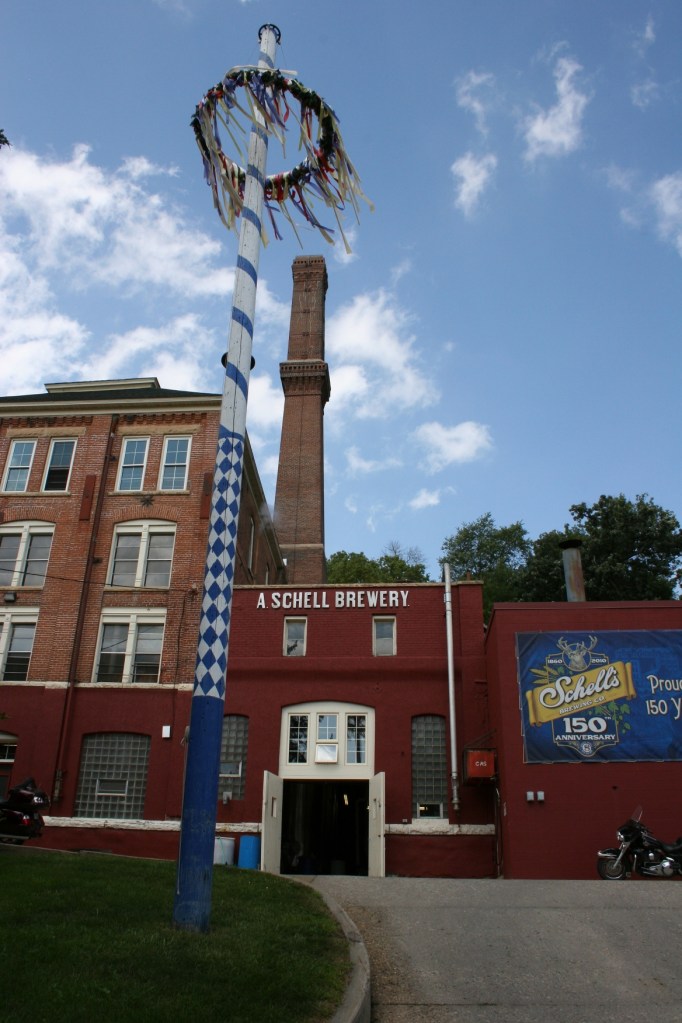
Another view of the brewery. And, no, I don't know anything about the decorative post and failed to ask our tour guide. I had already asked more questions than anyone on the tour, so...

SCHELL’S WILL HOST a two-day 150th birthday celebration, Schellabration, on September 17 and 18. During that event, you can see areas of the brewery not typically seen on the regular tours.

WHAT’S WITH ALL the white-tailed deer at the brewery? Revisit Minnesota Prairie Roots for the answer and for photos and an idea I have related to those deer.

© Copyright 2010 Audrey Kletscher Helbling


Celebrating cultural diversity in Faribault at International Market Day August 27, 2010

Filed under: Uncategorized — Audrey Kletscher Helbling @ 8:59 AM
Tags: , , , , , ,

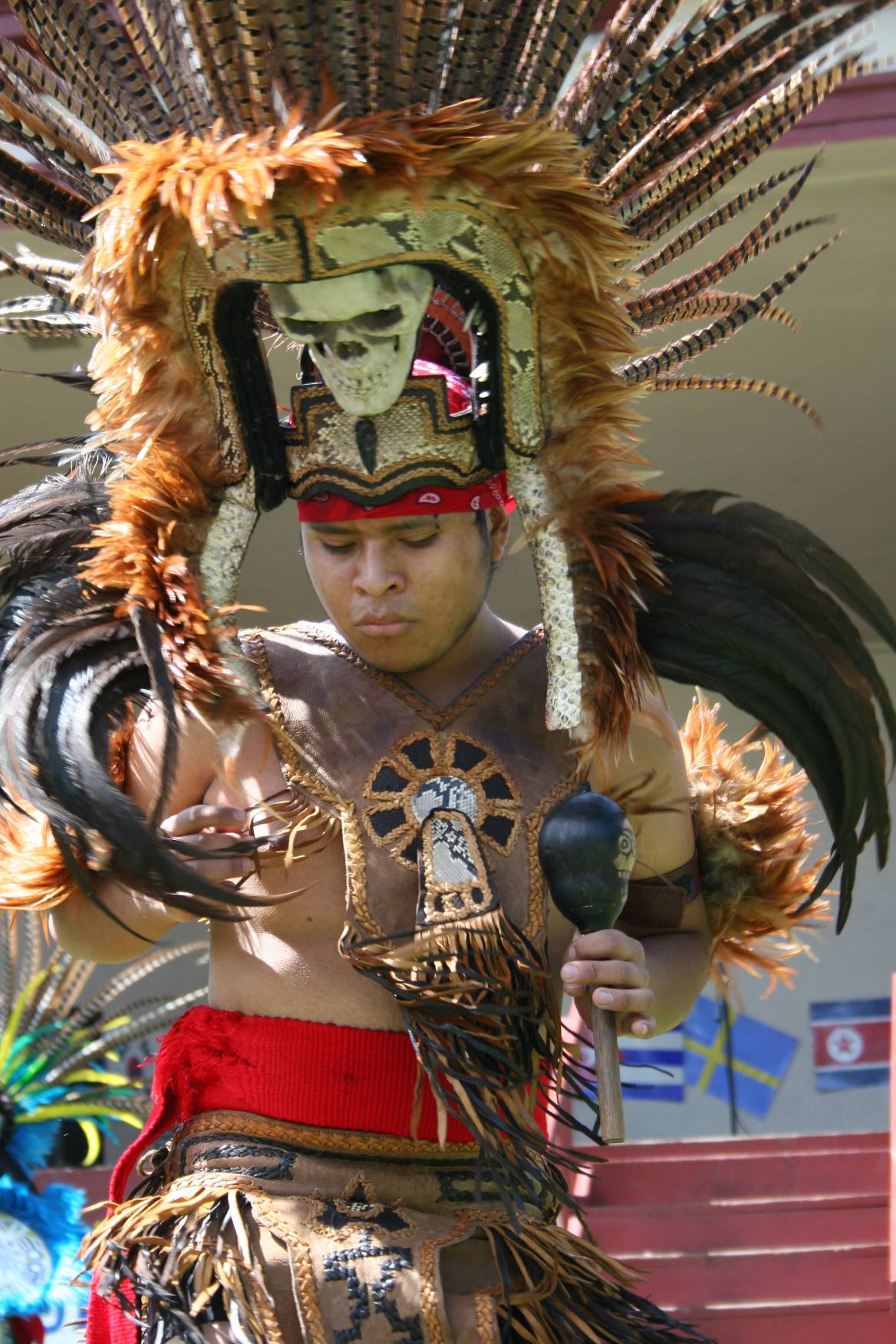
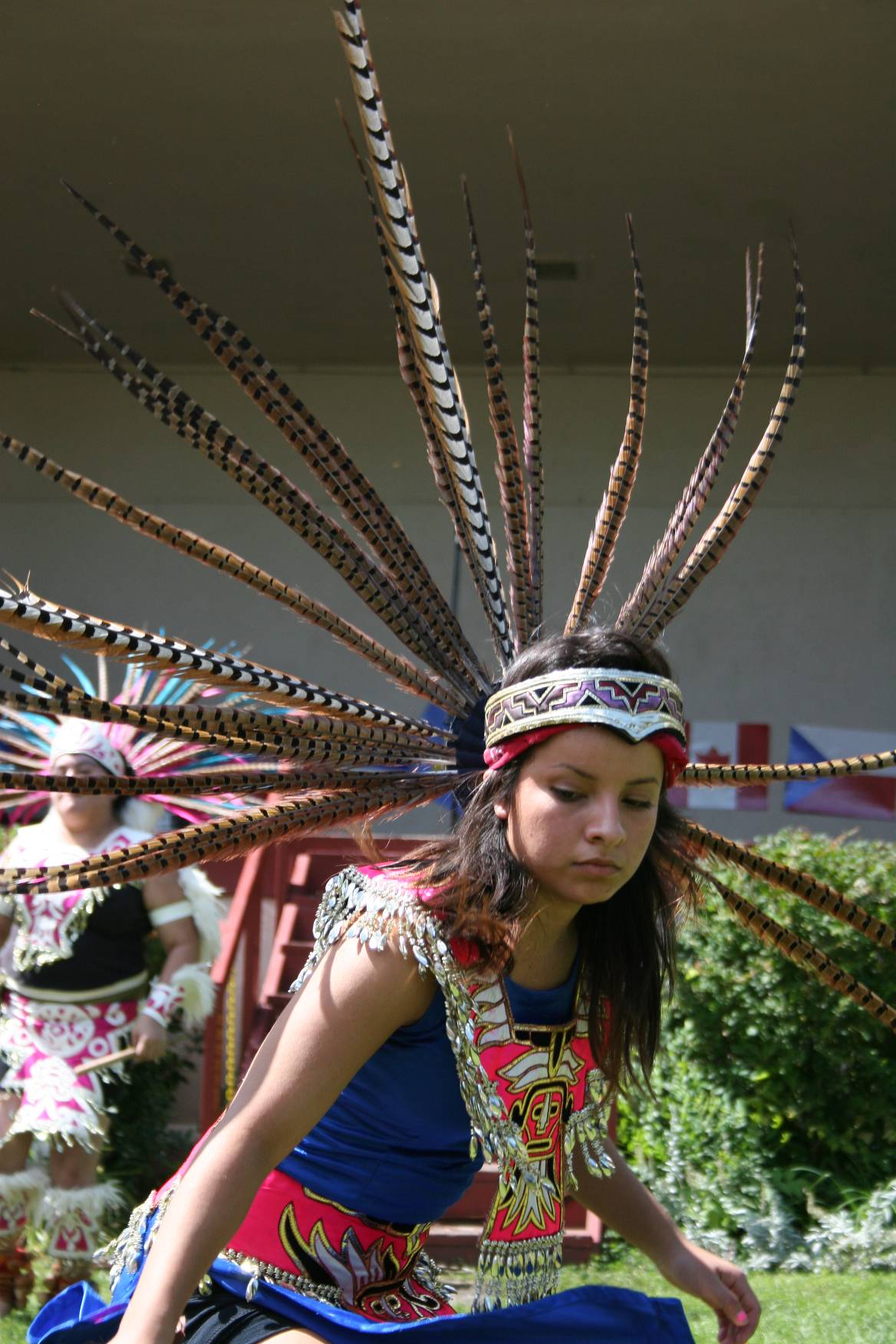
An Aztec dancer, garbed in a symbolic headdress entertains the audience during the 2009 International Market Day in Faribault.
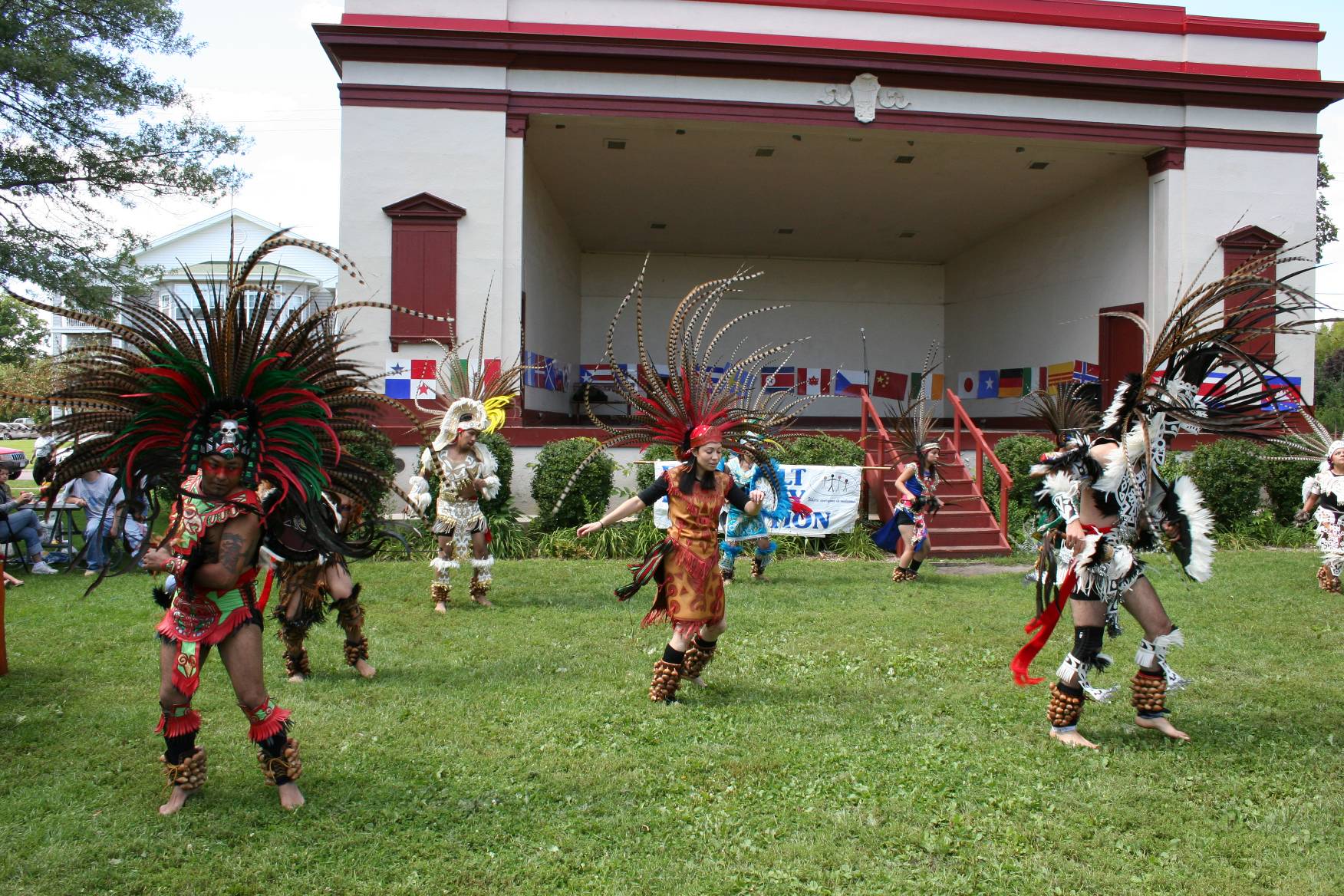
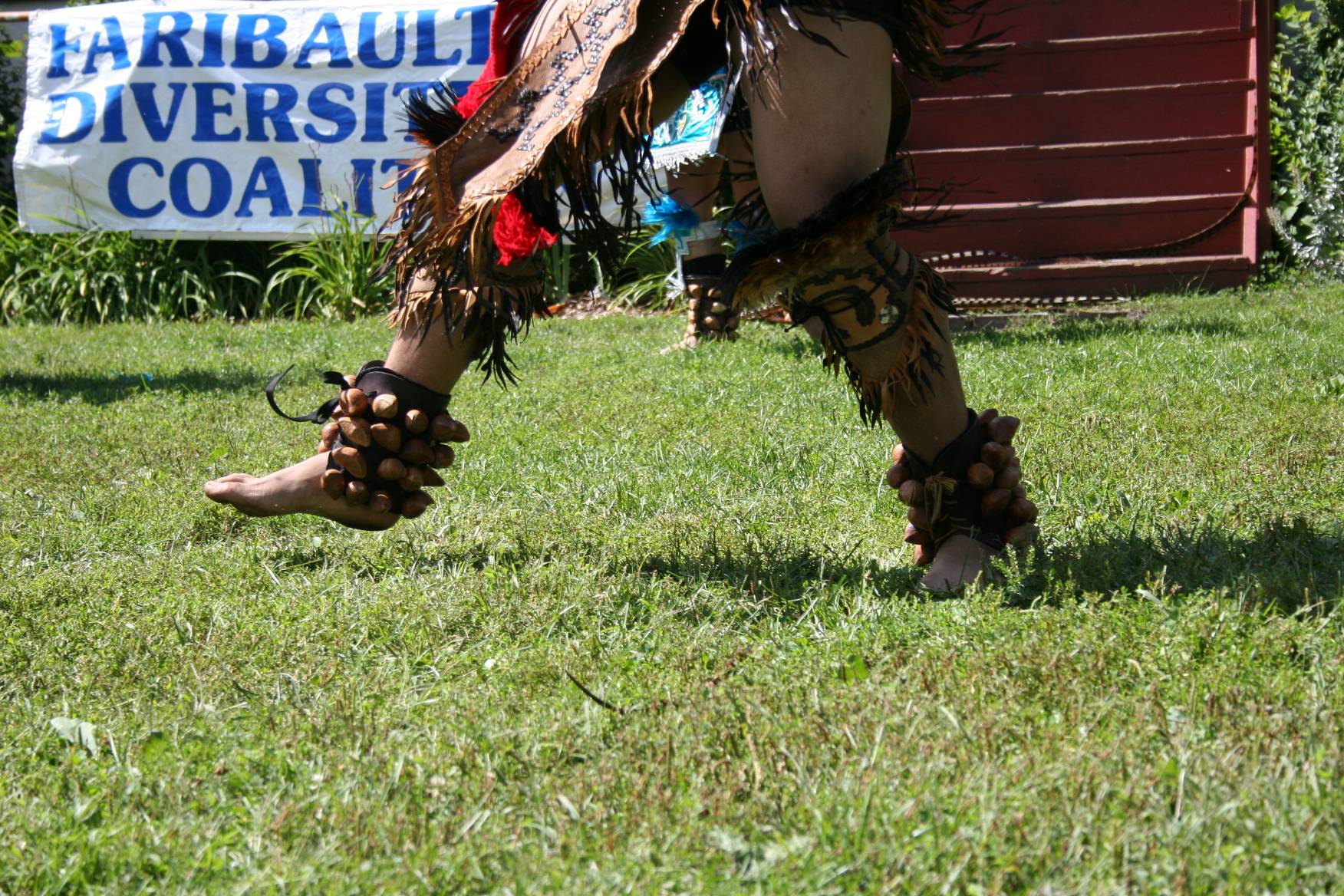
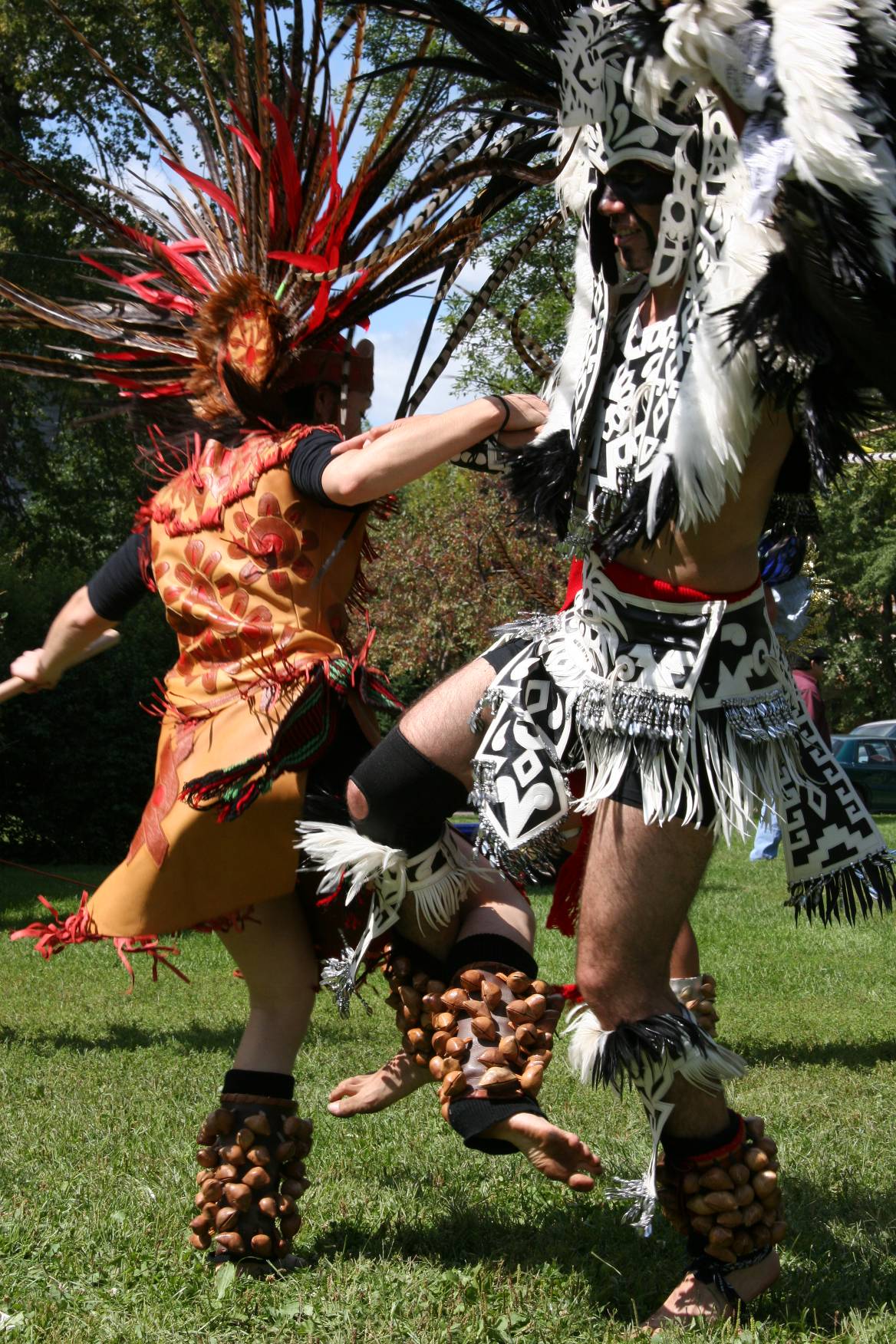
TO THE STEADY BEAT of a drum, the 12 dancers sidestepped across the grass, their bodies moving in a rhythmic dance ritual that mesmerized.
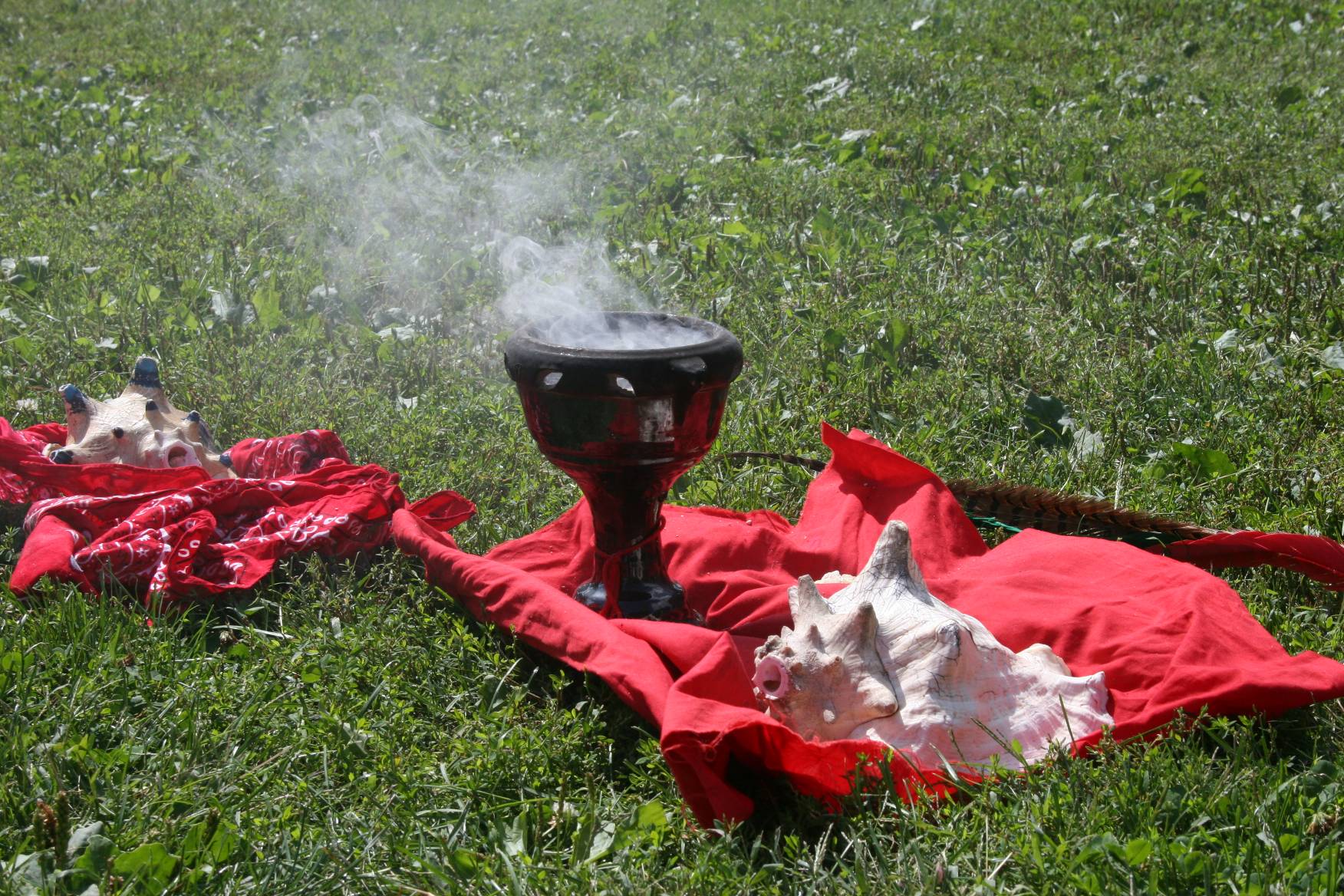
As they twirled and kicked and circled just yards away in bare feet blackened by the earth, sweet incense-infused smoke drifted toward me. The smoldering fire of incense, said a member of the Aztec group, Ollin Ayacaxtli, symbolizes cleaning of the air and attracting “the good energy around us.”
The dancing was certainly creating plenty of good vibes among the crowd gathered last August in Faribault’s Central Park for performances by the Northfield/Owatonna-based dancers. Appreciative applause followed each short dance during the Faribault Diversity Coalition’s annual International Market Day celebration.

Everything about the performers spoke to symbolism steeped in deeply-rooted tradition. They dressed in colorful costumes patterned after those of Aztec warriors and adorned with Aztec calendar symbols like butterflies, fire, skeletons and flowers.

The belief that “most things in nature come from two things” is the basis of Aztec thinking, the audience learned in a brief cultural lesson. Nature encircled the faces of the dancers, who wore colorful headdresses sprouting plumes of feathers.

Later I would learn from dancer Jesus Torres of Owatonna that the Aztec culture is all about harmony and about rain, earth, wind and fire, and about respecting elders. The group formed, he said, to teach those involved and others about the tradition, values, costumes and history of the Aztec.

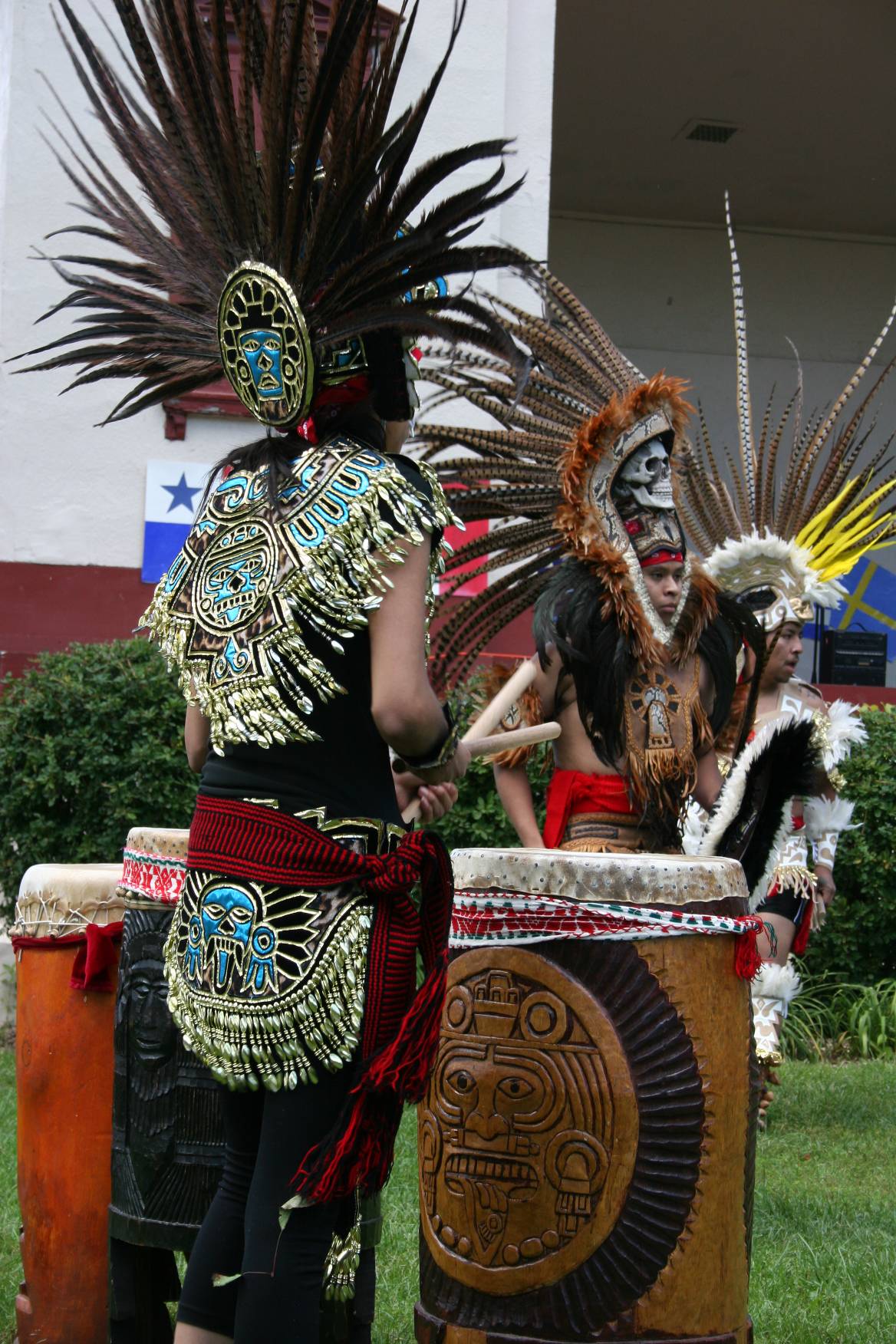
Ollin Ayacaxtli travels to events in Minnesota, Wisconsin and Iowa presenting their symbolic dances that pulse with energy in every dance of the foot, in every beat of the drum, in every shake of a maracas.

Members of Ollin Ayacaxtli perform in front of the Central Park bandshell.

The drums are made from a very old tree and, like our grandfather, are to be respected, the audience was told.

A dancer moved across the grass, bells blending with the drum's beat.

Duo dancers, legs intertwined, danced in a circle.

Smoking incense and shells were integral to the performance with the shells symbolizing the sound that goes across the universe.

A member of Ollin Ayacaxtli dances with the group.

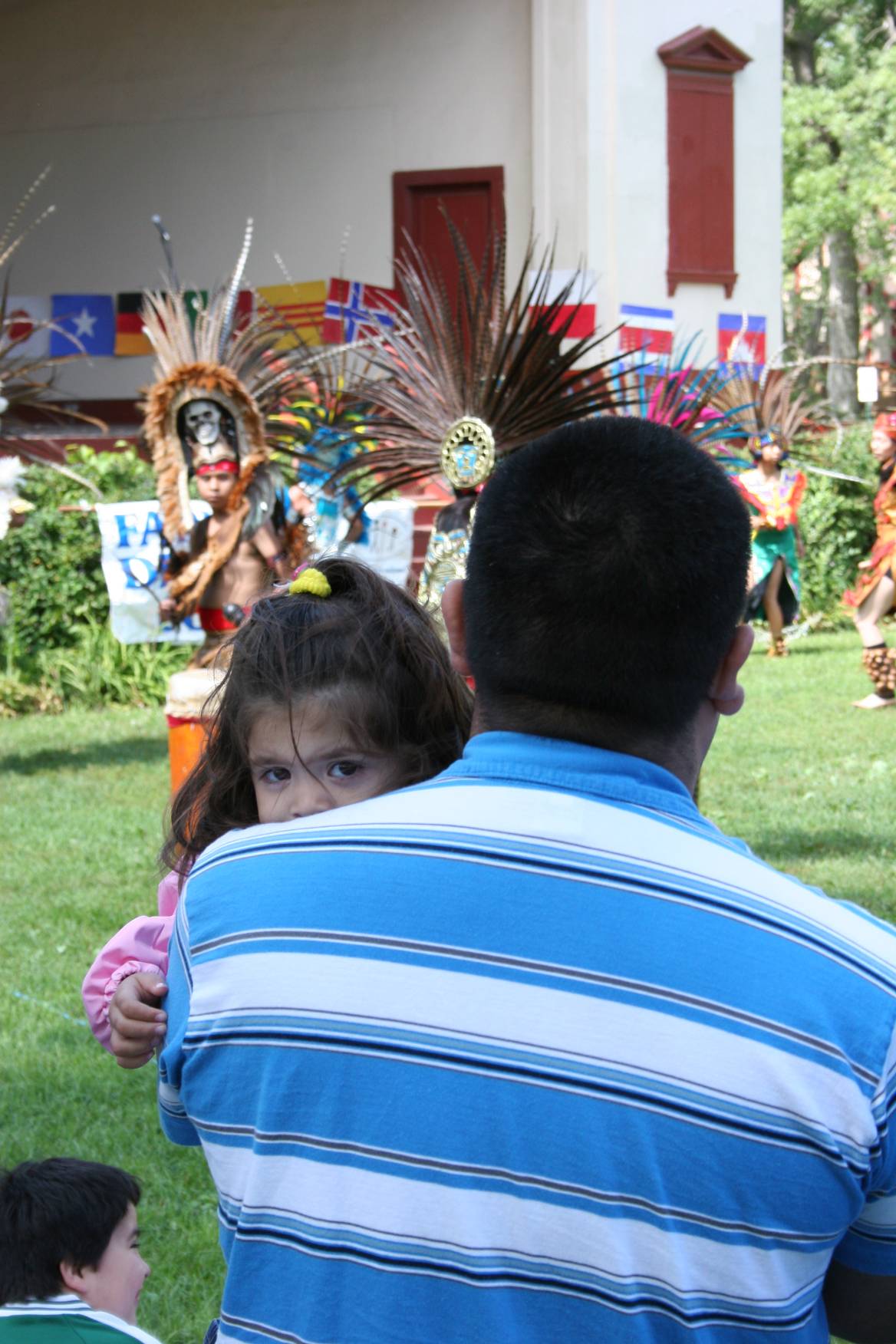
A girl snuggles in her Dad's arms while he watches the Aztec dancers.

EDITOR’S NOTE: I wrote this blog post one year ago for another publication, which subsequently folded and did not publish this piece.

Tomorrow, Saturday, August 28, the International Market Day Committee and the Faribault Diversity Coalition are sponsoring a fifth annual International Market Day. The event runs from 10 a.m. – 4 p.m. in Faribault’s Central Park, at Fifth Street and Second Avenue Northwest. Aztec dances, music and games; international food and market vendors; community resource information; and farmers’ market vendors will be part of the cultural celebration.

Please attend International Market Day and celebrate the diversity of life in Minnesota.

© Copyright 2010 Audrey Kletscher Helbling