Minnesota Prairie Roots

Writing and photography by Audrey Kletscher Helbling

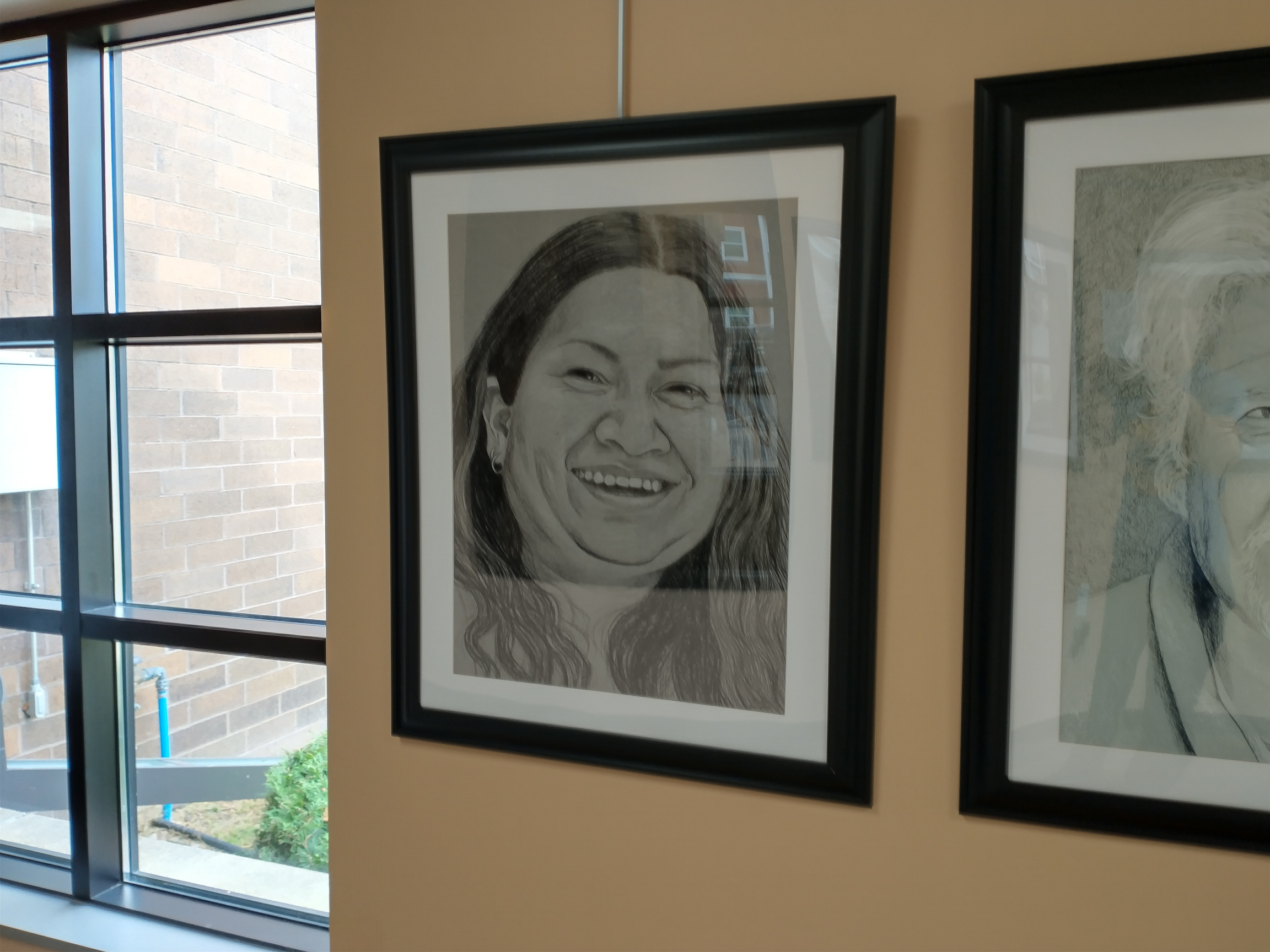
“I Am Minnesota” exhibit features immigrants’ portraits & stories in Faribault November 4, 2025

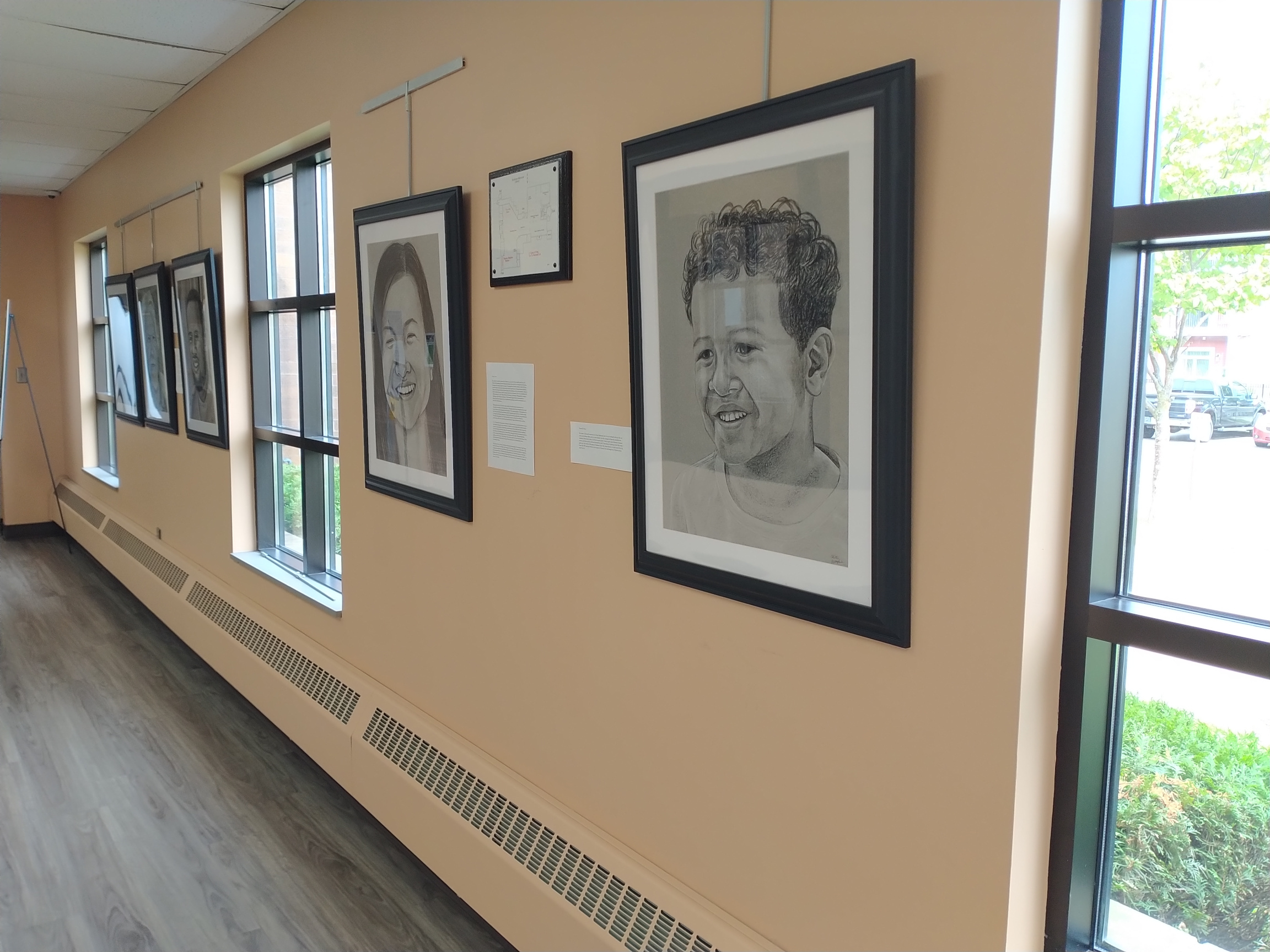
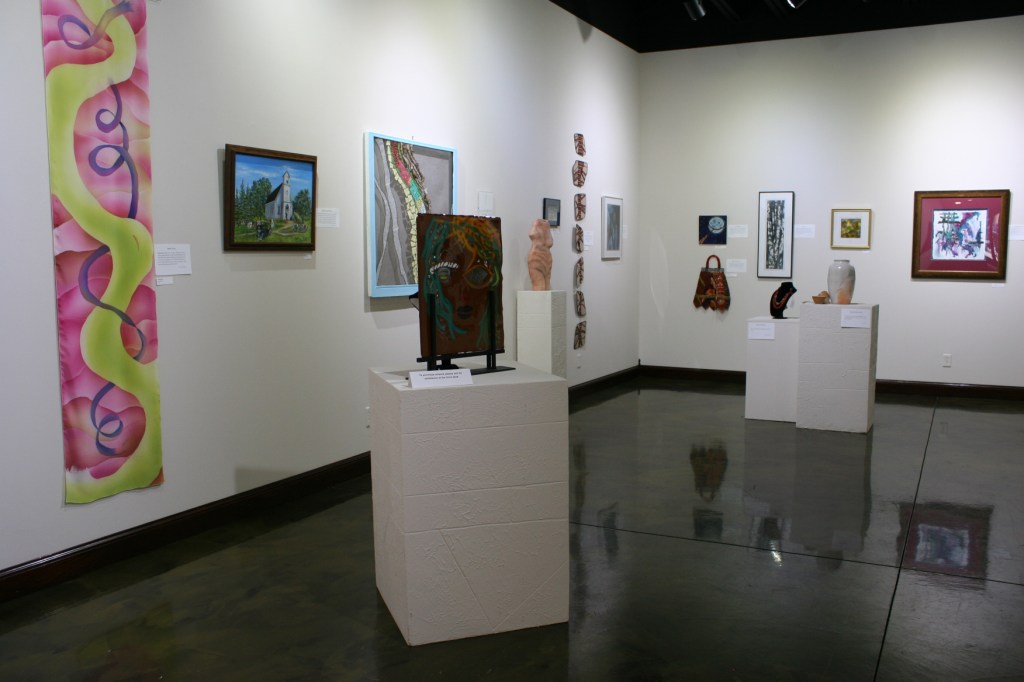
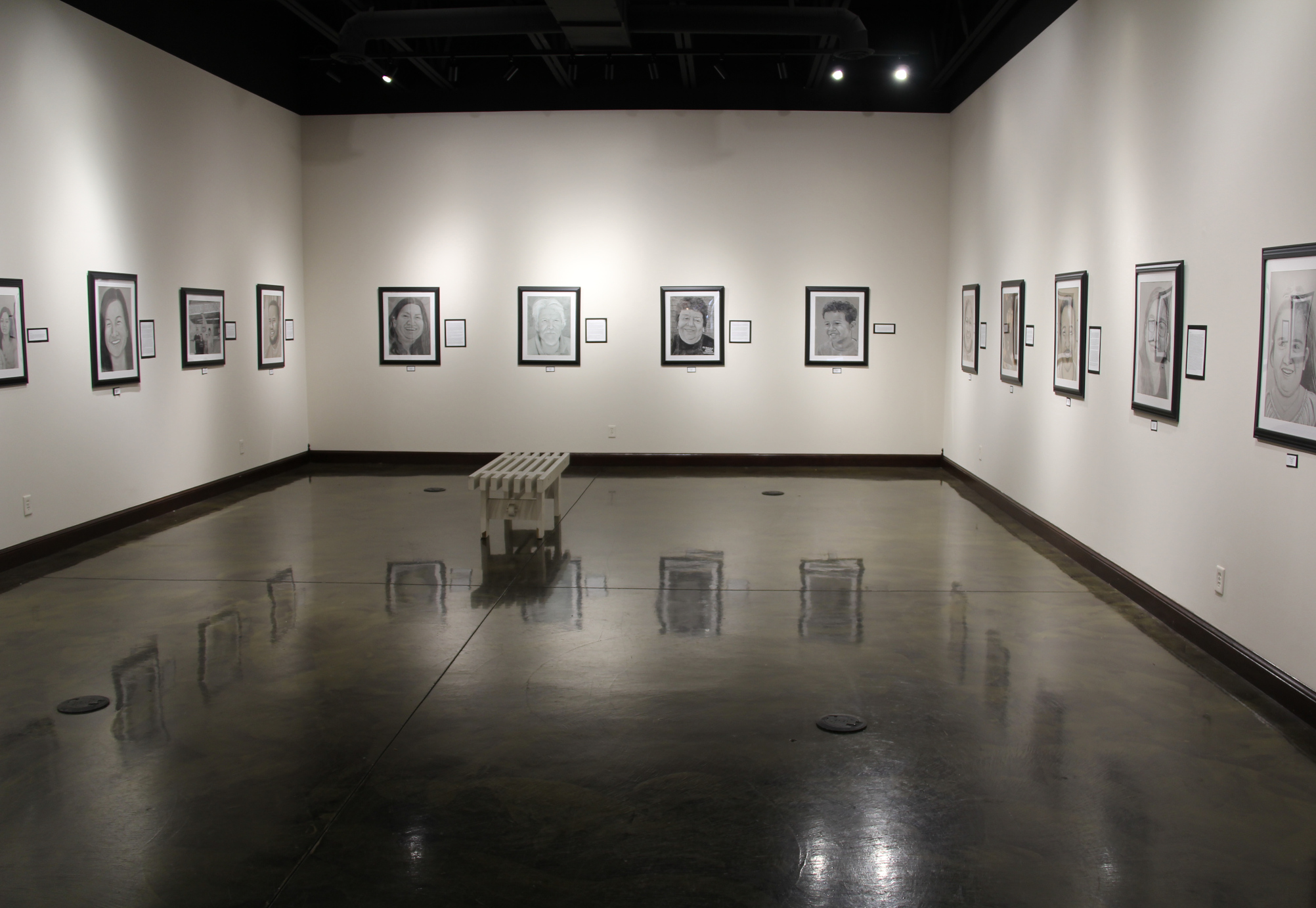
Kate Langlais’ newest installment of her “I Am Minnesota” project fills the main gallery at the Paradise Center for the Arts with nearly 20 portraits. (Minnesota Prairie Roots copyrighted photo October 2025)

EACH TIME I VIEW the portrait art of Faribault artist Kate Langlais, I feel gratitude. Gratitude for the project she’s undertaken to showcase first and second-generation immigrants in my southern Minnesota community. Titled “I Am Minnesota,” this collection of portraits and accompanying first-person stories is now displayed in the main gallery at the Paradise Center for the Arts in downtown Faribault until November 15.
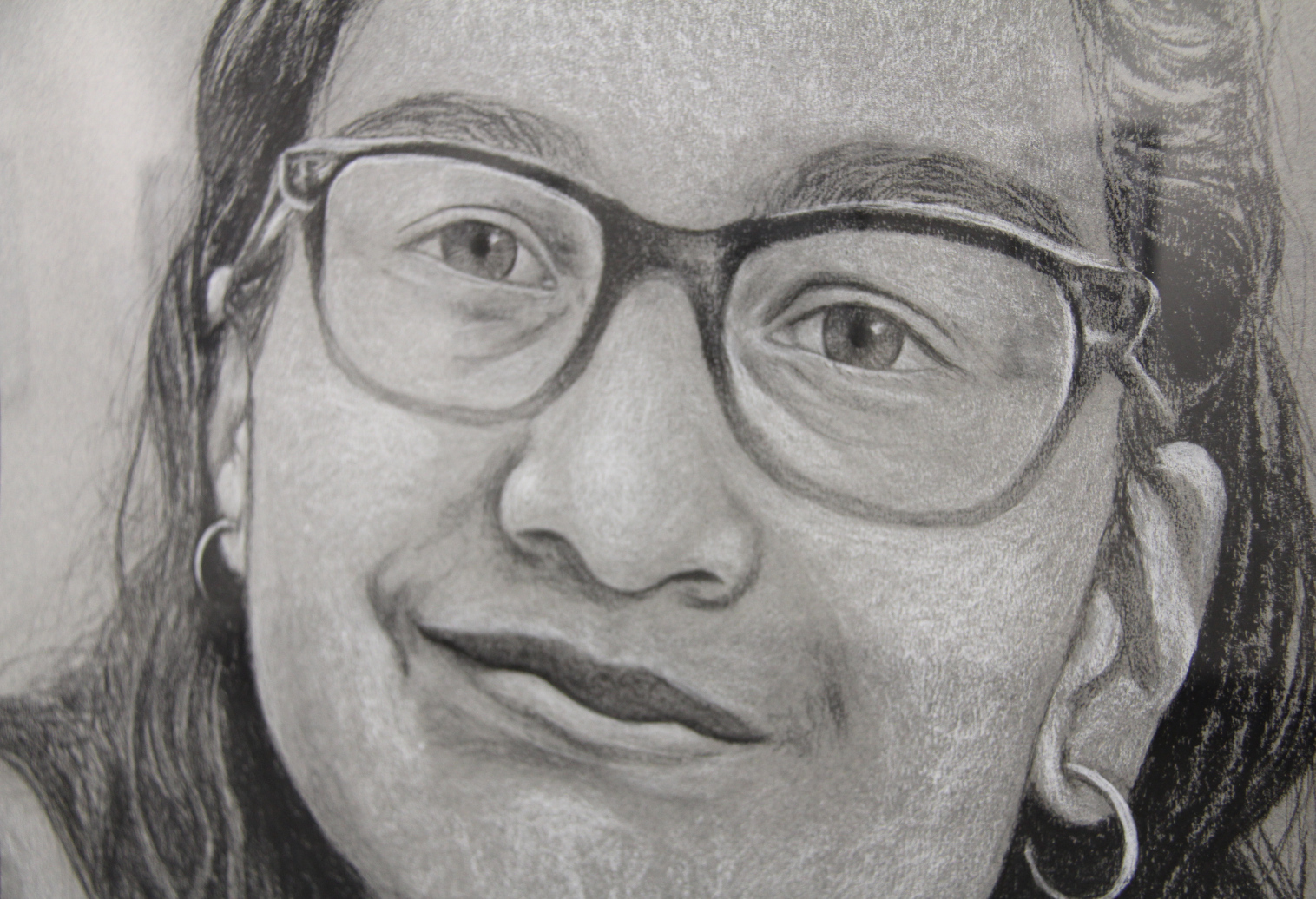
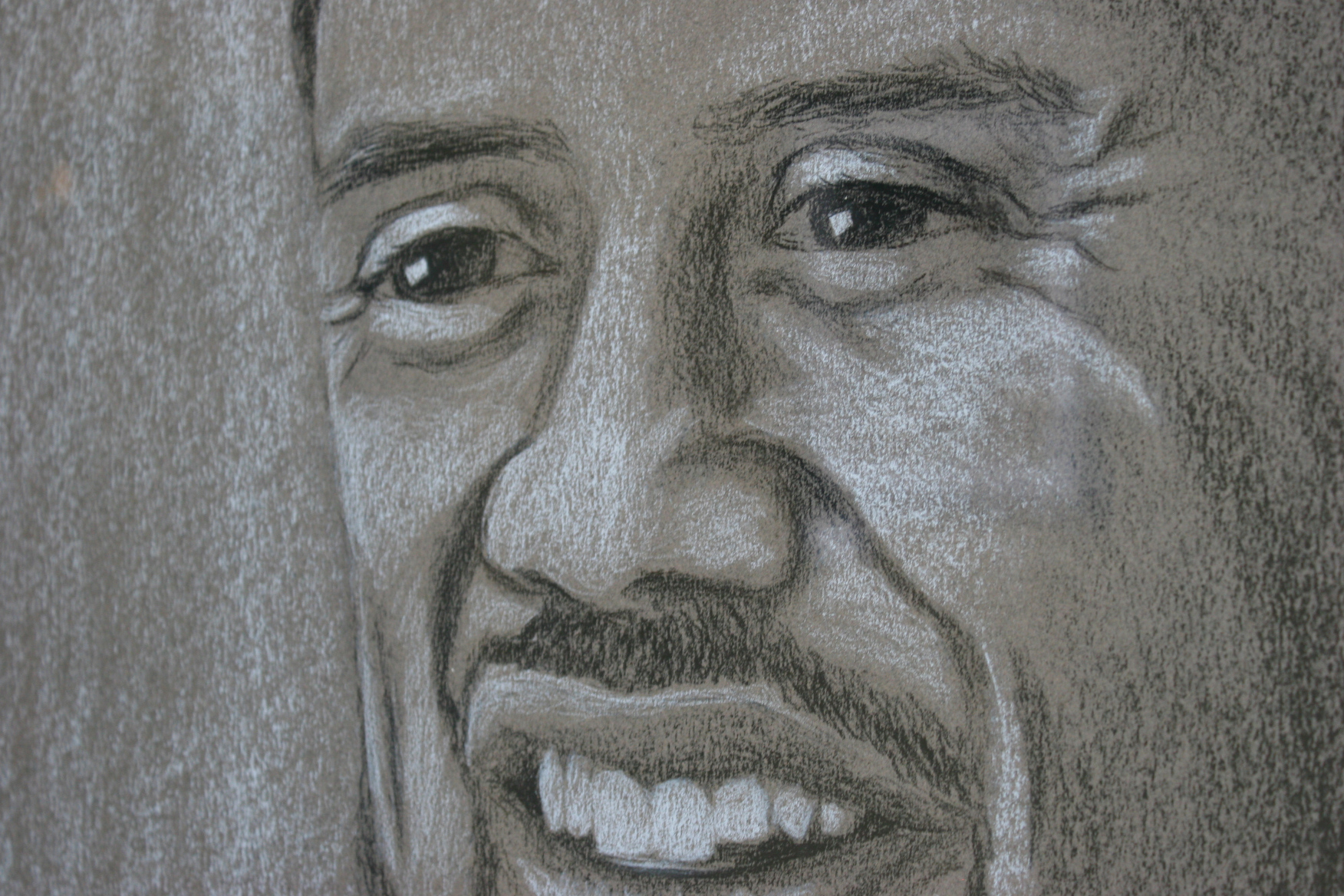
Kylee, as drawn in charcoal by Kate Langlais. (Minnesota Prairie Roots copyrighted photo October 2025)

Every single person in Faribault, Rice County and Minnesota ought to see this enlightening exhibit. In her artist’s statement, Langlais shares her own family story of descending from immigrants. She invites everyone to write their stories in the gallery guestbook and then to take the time to read the posted stories and “open your heart to connecting with all of your Faribault neighbors.”
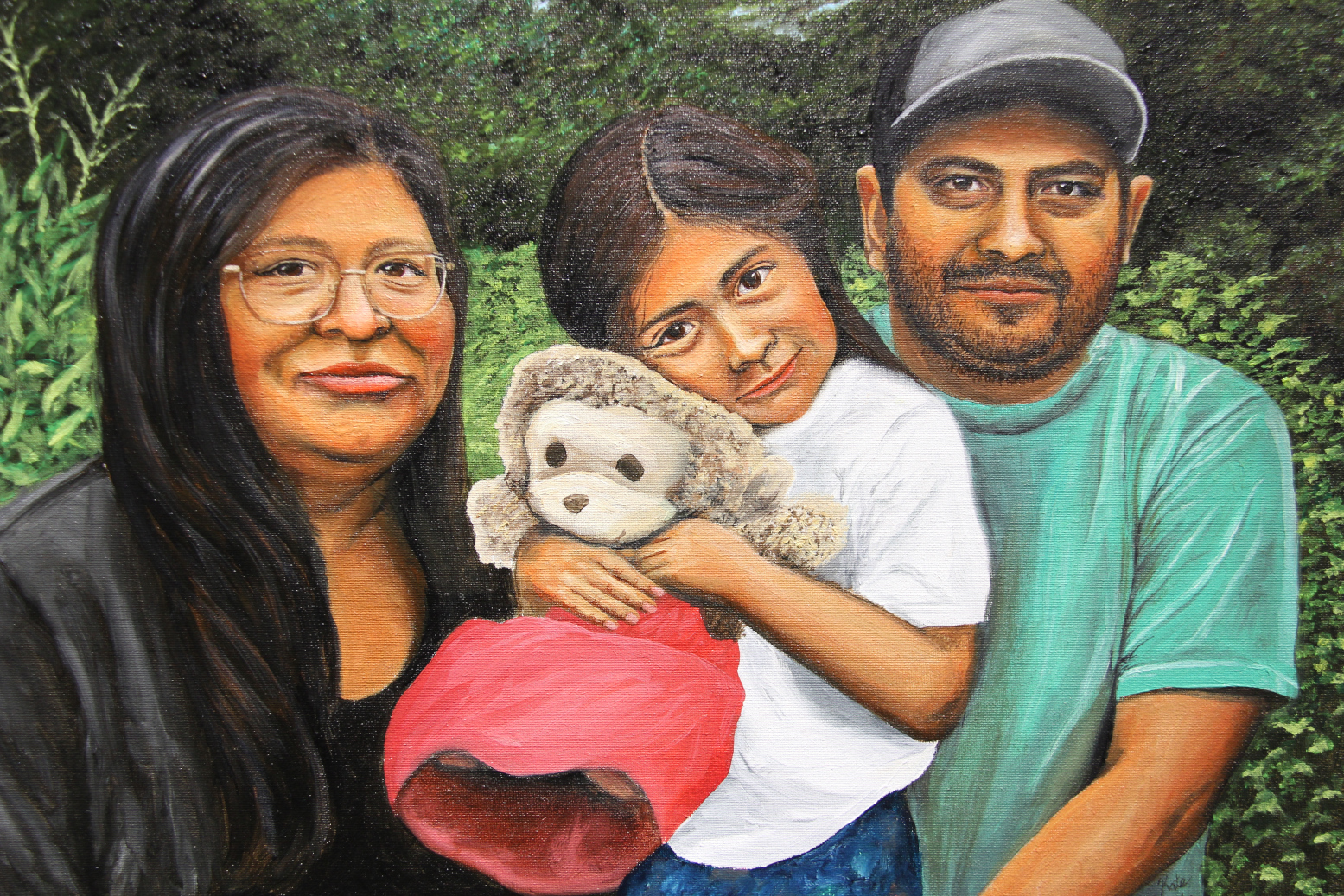
The Monroy Lara Family, an oil on canvas by Kate Langlais. (Minnesota Prairie Roots copyrighted photo October 2025)

I appreciate those words, “open your heart to connecting.” It is when we begin to talk to one another, to meet each other on a personal level, to see each other as individuals, that barriers begin to fall and we become neighbors, even friends.
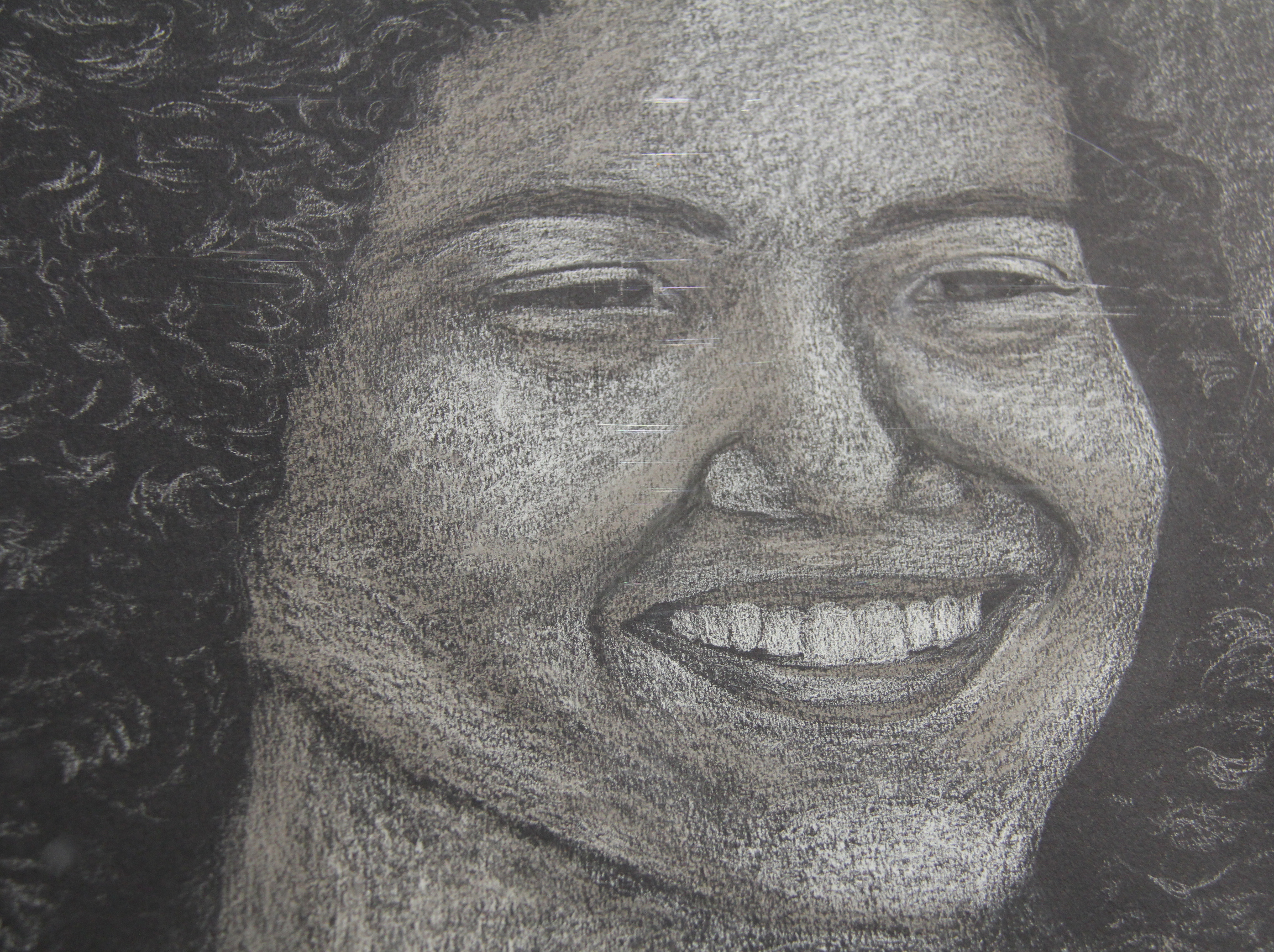
A charcoal portrait of Cathlena by Kate Langlais. (Minnesota Prairie Roots copyrighted photo October 2025)

This “I Am Minnesota” exhibit connects us in a way that is effective. It doesn’t get much more personal than faces and stories. These are the stories of individuals rooted in Africa, Asia, North America, South America and Europe.
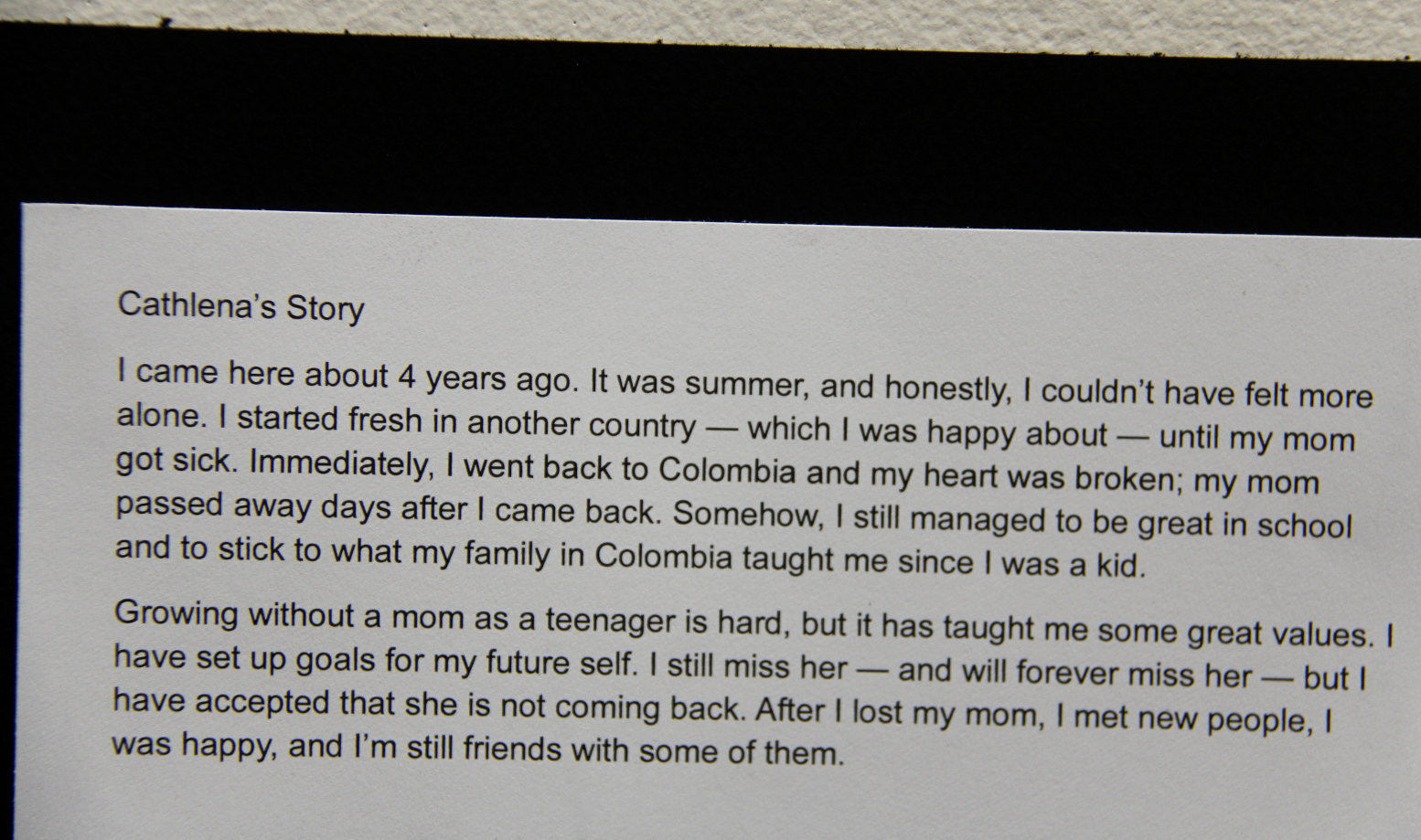
In her own words, Cathlena’s story. (Minnesota Prairie Roots copyrighted photo October 2025)

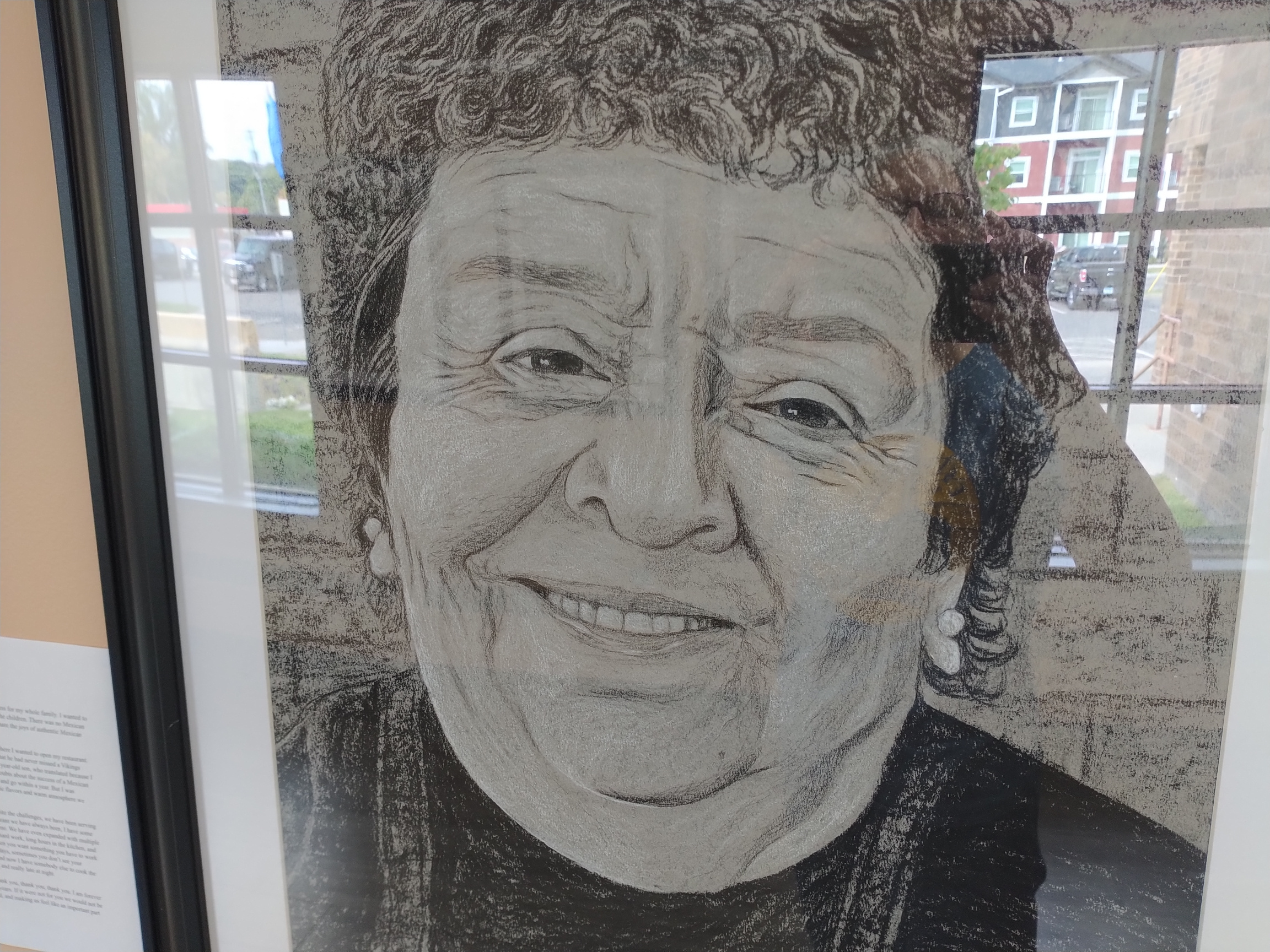
Viewing this creative project takes time. Some of these portraits I’ve previously seen at smaller exhibits of Langlais’ immigrant-focused work. It’s important to see every face, hear every voice. Like Rosa’s.
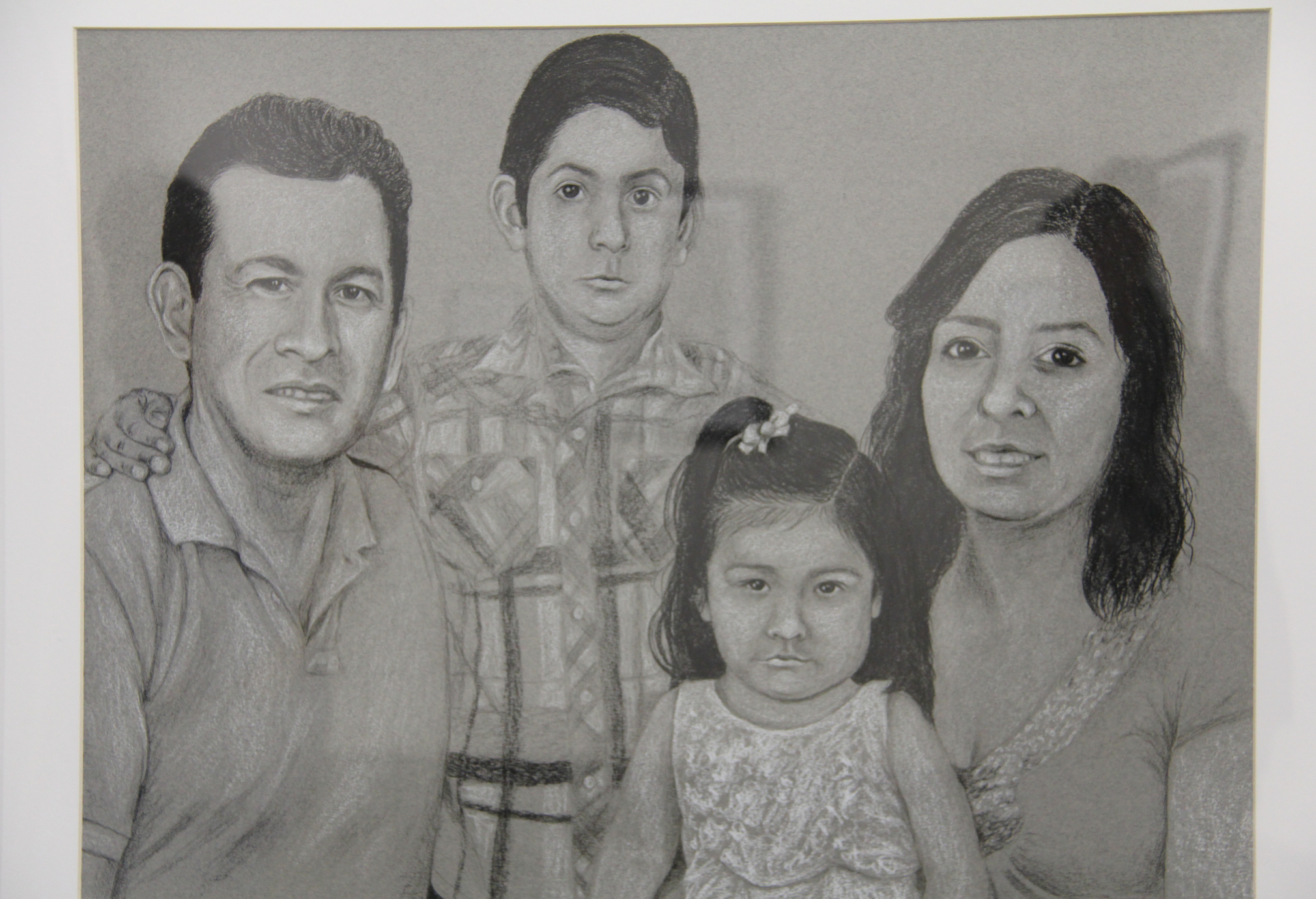
The Molina Family as drawn in charcoal by Kate Langlais. (Minnesota Prairie Roots copyrighted photo October 2025)

Born in the US and raised in Texas and Minnesota, Rosa has struggled with racism. She tried to fit in while growing up—reciting the Pledge of Allegiance, joining Girl Scouts, throwing toilet paper at houses… Still, Rosa was told to “go back” to her own country. America is her own country. She was told, too, to “speak English because this is America.” Being bilingual is, in my opinion, a strength in today’s interconnected world.
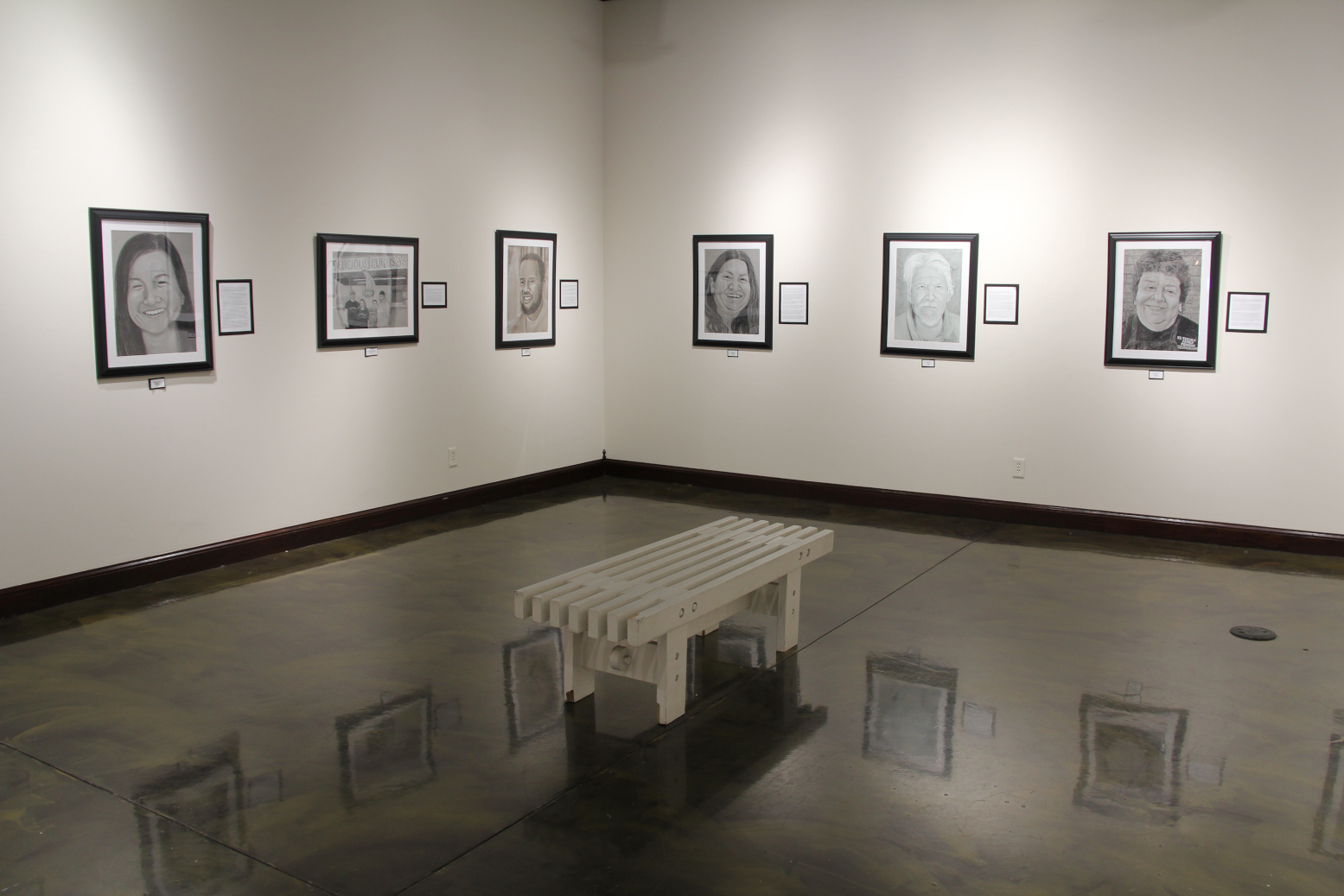
Another view of portraits in the “I Am Minnesota” gallery exhibit. (Minnesota Prairie Roots copyrighted photo October 2025)

Even among acquaintances, I’ve heard derogatory comments about Faribault’s immigrant population, especially Somalis. I don’t let those negative remarks go unchecked. Rosa says it well: “I just think sometimes that some people forget that their families were once the different ones.”
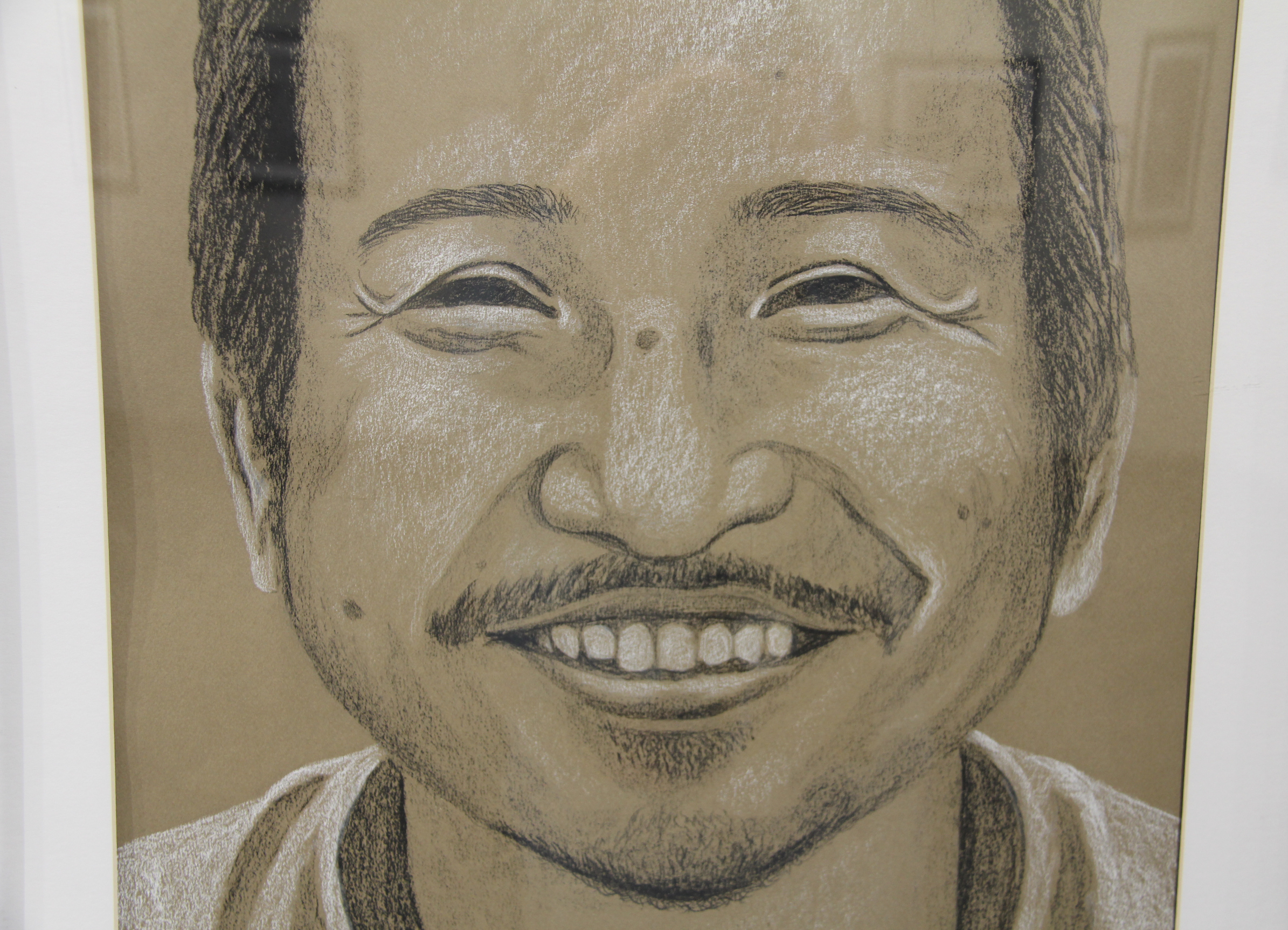
Kate Langlais’ drawing of Sam, born in a Cambodian refugee camp. (Minnesota Prairie Roots copyrighted photo October 2025)

To be “different”—in how you dress, the language you speak, the food you eat, the way you look, your customs and traditions—often makes you a target. The first and second-generation immigrants who shared their stories with Langlais don’t hold back. They’ve been bullied, misunderstood, struggled, been told to assimilate… It’s disheartening at times to read their truth. But these are words we need to read.
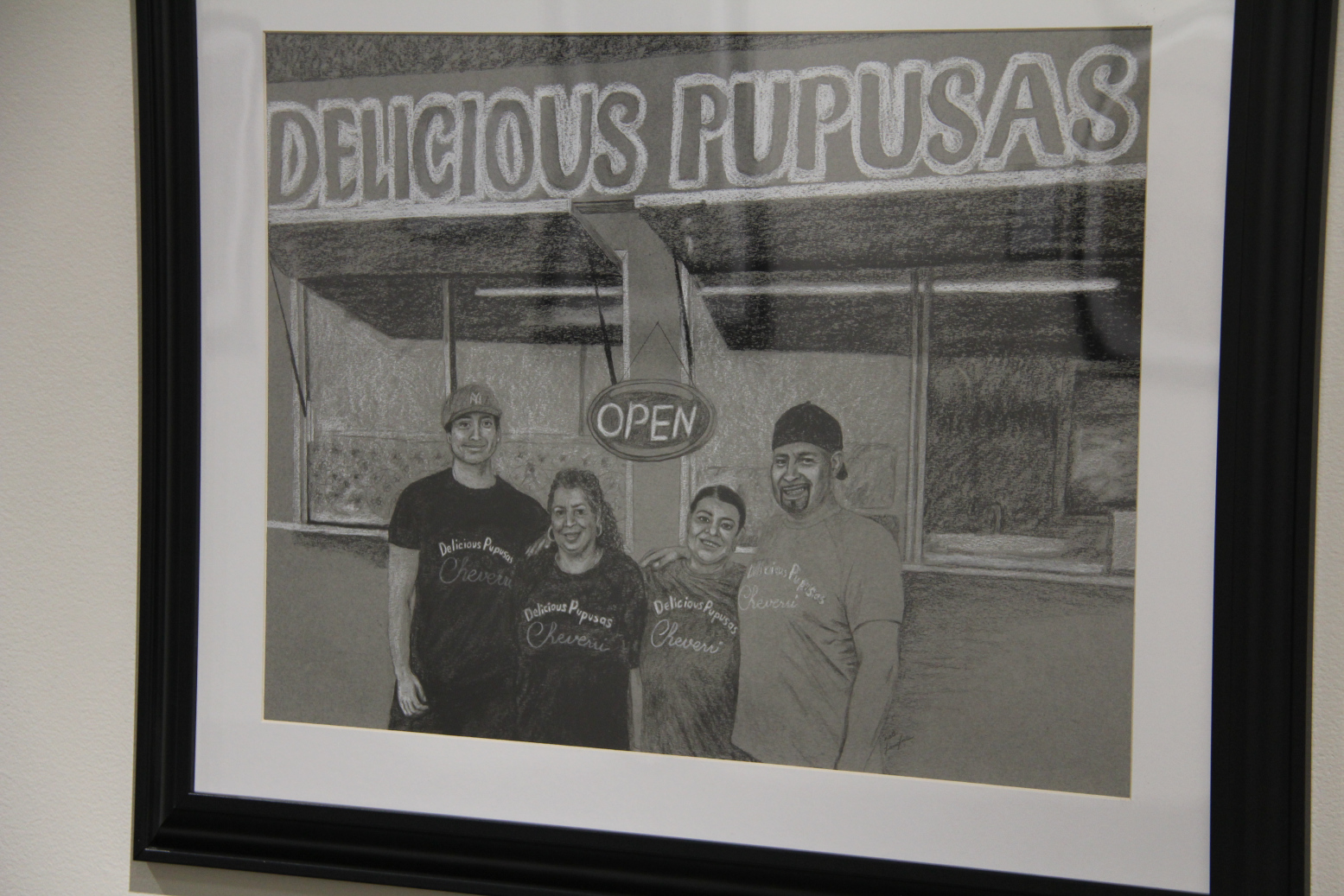
The Echeverria Family operates a successful food truck, Delicious Pupusas, as drawn in charcoal by Kate Langlais. (Minnesota Prairie Roots copyrighted photo October 2025)
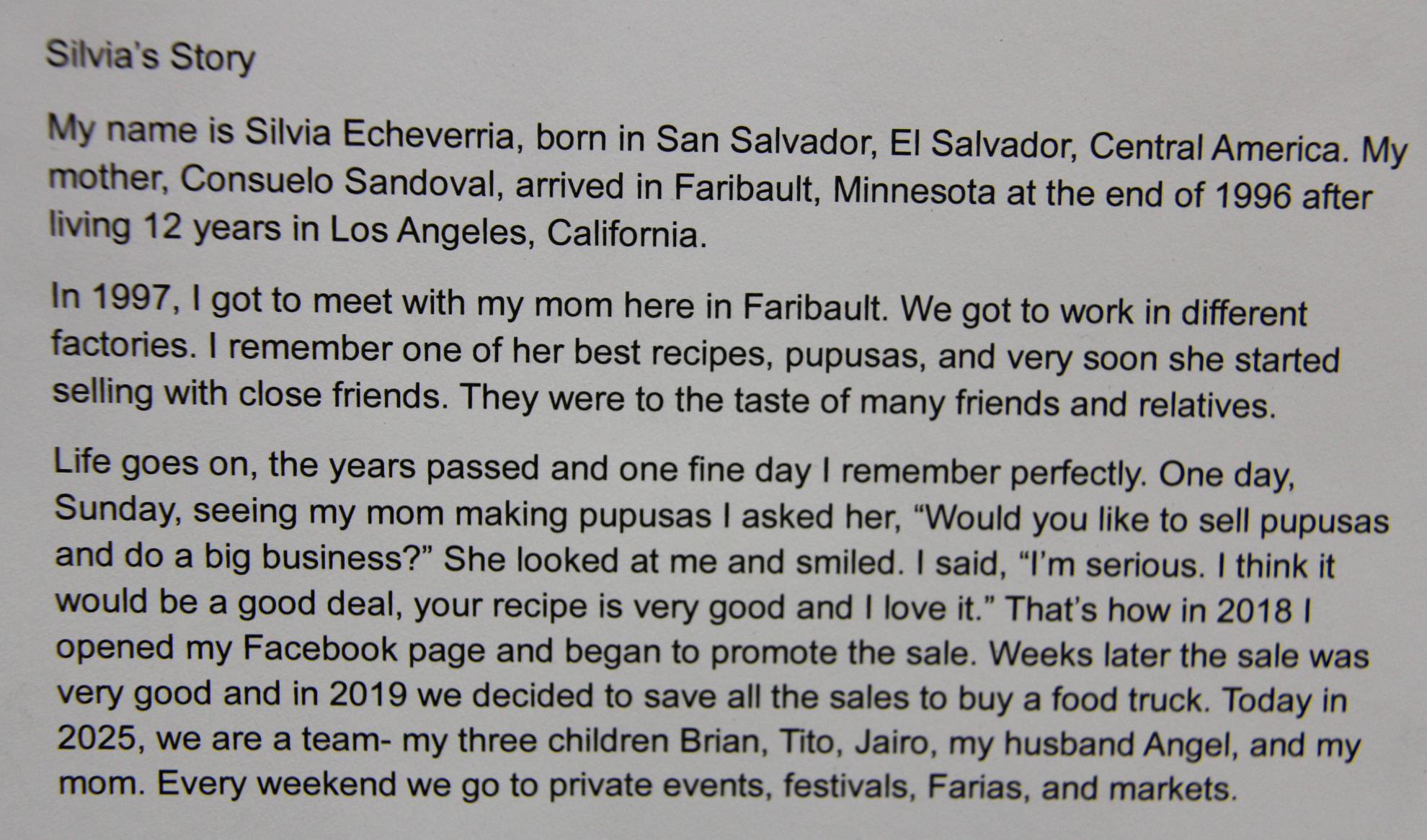
Silvia Echeverria’s story about how her family business came to be accompanies the family portrait. (Minnesota Prairie Roots copyrighted photo October 2025)
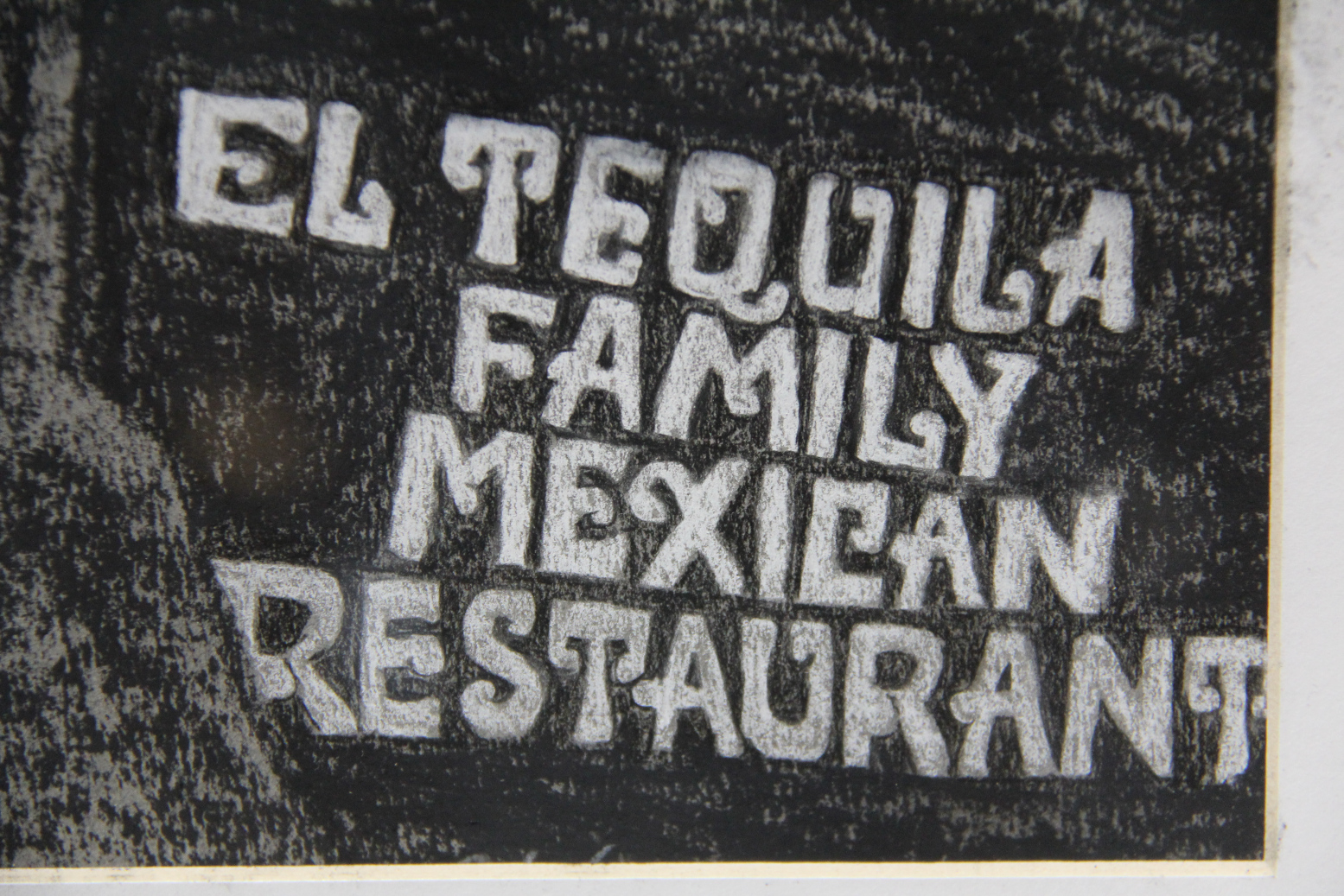
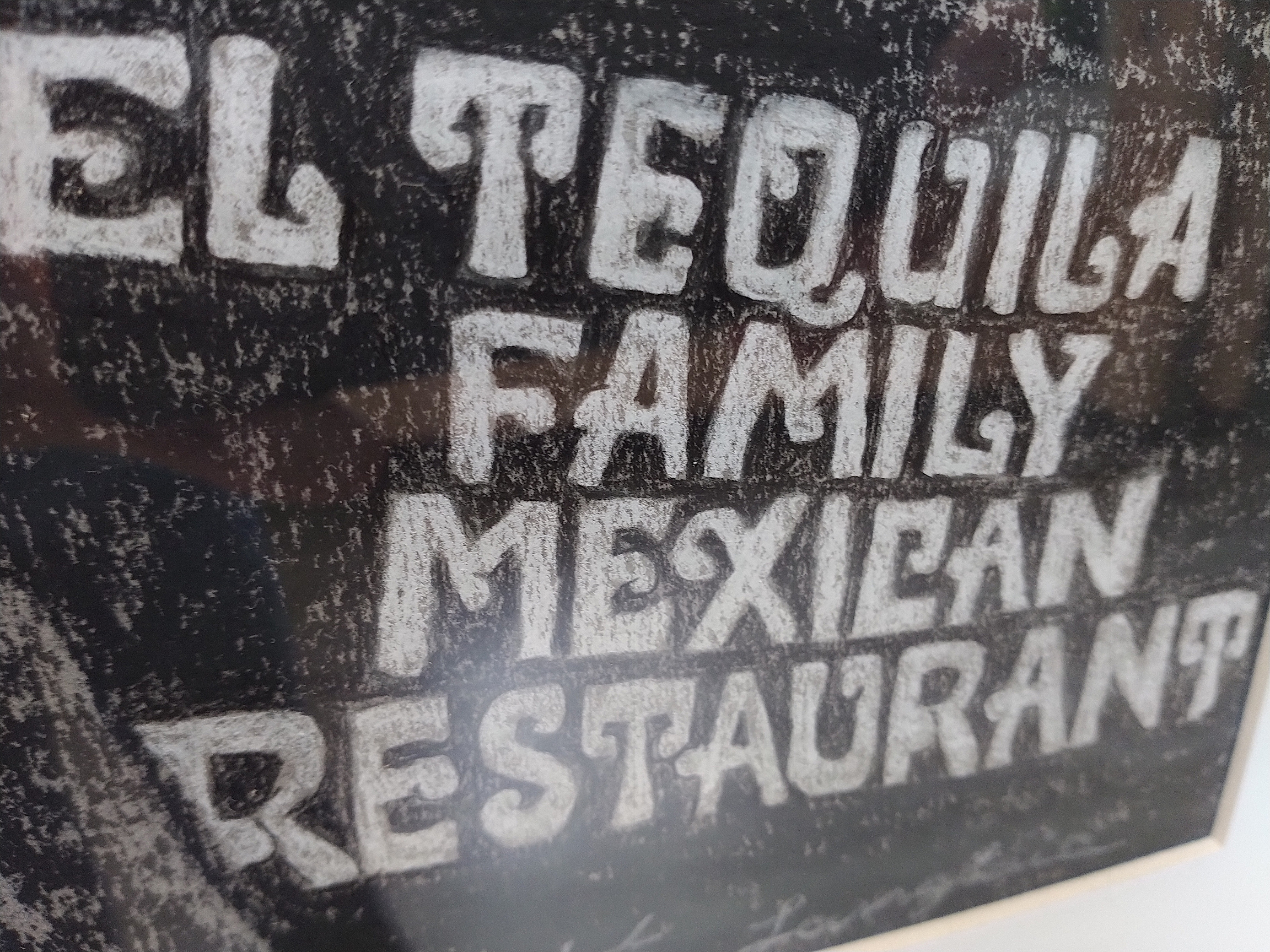
In the corner of another portrait is the name of a popular Faribault restaurant, El Tequila Family Mexican Restaurant in business for 27 years in multiple communities. (Minnesota Prairie Roots copyrighted photo October 2025)

Among all of the tough truths there are beautiful words, too, of friendships, dreams, opportunities, goals, hard work and success. Restaurants opened. A food truck business started. And many other stories of obstacles overcome to achieve personal happiness and professional success.
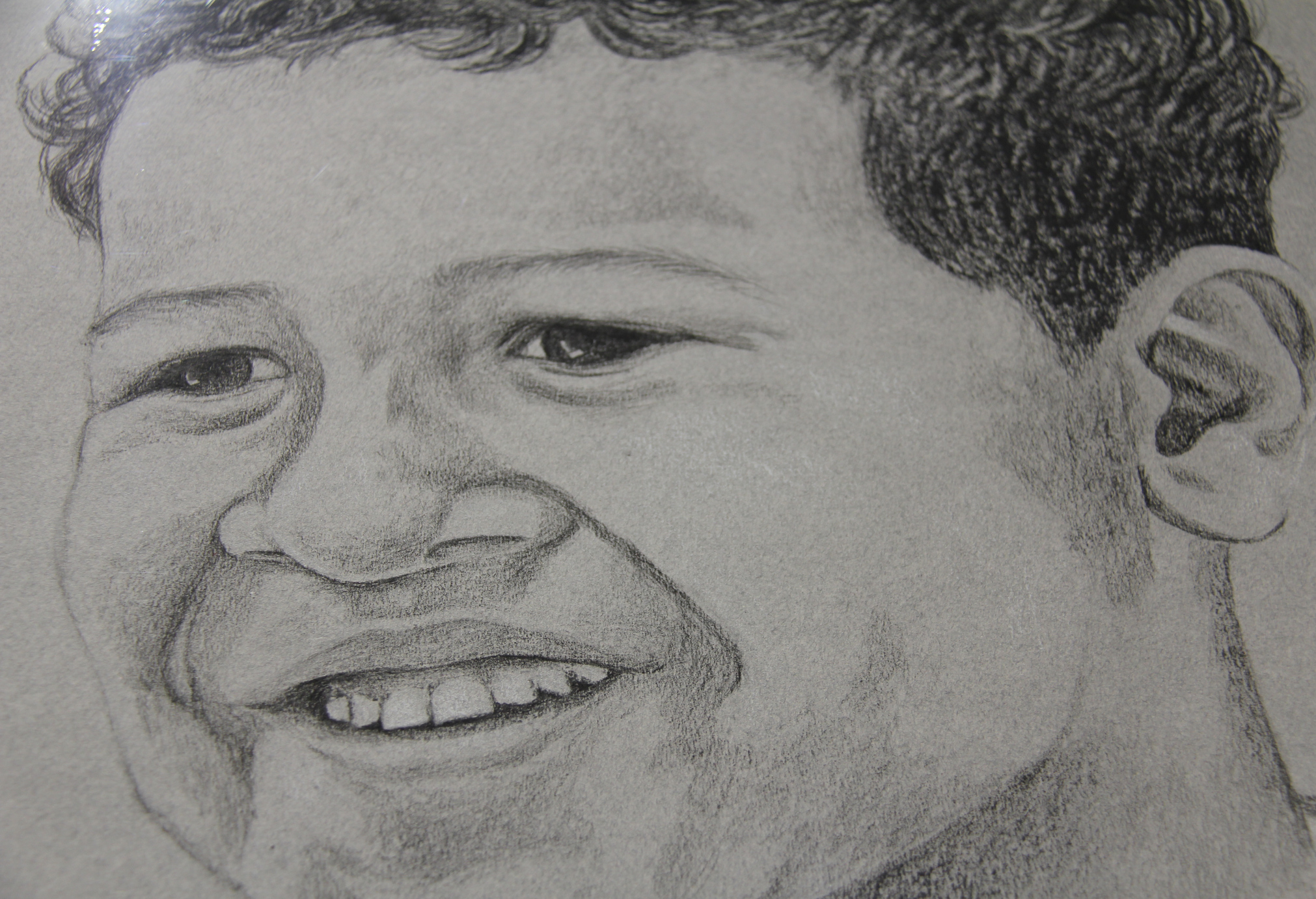
Charcoal portrait of Dawud, whose family story is rooted in Somalia, by Kate Langlais. (Minnesota Prairie Roots copyrighted photo October 2025)

Second grader Dawud, born in St. Paul and living in Faribault, holds unbridled optimism about his future. “I want to grow up to be a business owner, just like my dad, and travel around the world,” he says. But then he also dreams of becoming a professional basketball or soccer player, like many other Minnesota boys his age. I hope nothing, especially not his immigrant background, holds him back. Ever.

As Marco, who came to the US at age seven shares, “We love autumn, flowers, the sun, nature, and the great opportunities to become better people.”
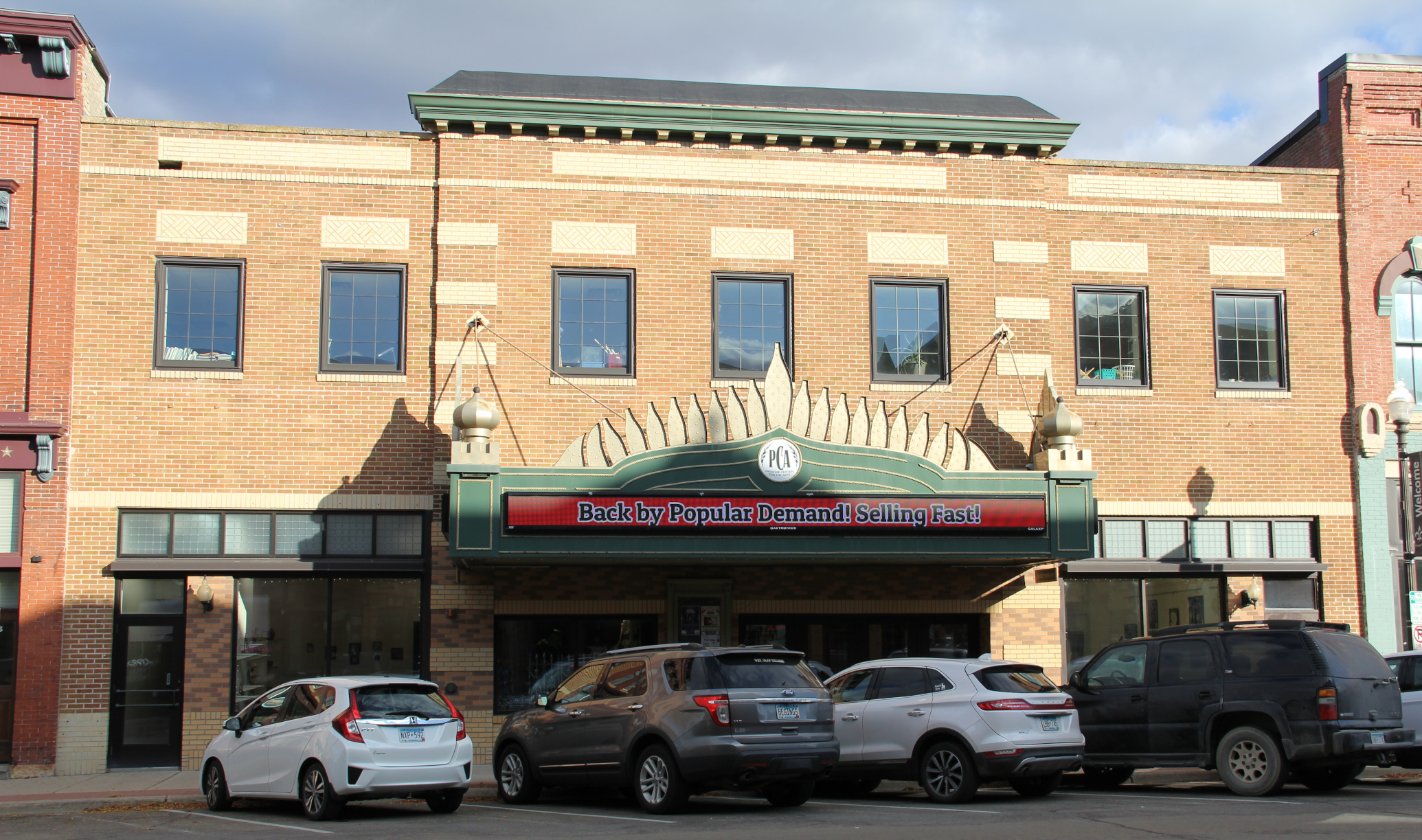
The Paradise Center for the Arts in historic downtown Faribault. (Minnesota Prairie Roots copyrighted photo October 2025)

FYI: The Paradise Center for the Arts, 321 Central Avenue North, Faribault, is open from noon-5 p.m. Wednesday-Friday, from 10 a.m.-2 p.m. Saturday and also during scheduled events and performances.

This exhibit was photographed with permission of the PCA. Portraits are the copyrighted work of artist Kate Langlais. My photos, in some cases, do not show the entire portrait. Please visit this gallery exhibit to view all of the portraits in full and to read the accompanying stories.

© Copyright 2025 Audrey Kletscher Helbling


For the love of rabbits (or not), including the Easter Bunny April 16, 2025

(Minnesota Prairie Roots copyrighted file photo)

NOT EVERYONE LIKES THEM. Rabbits, that is. They can be a nuisance, nibbling, even devouring, garden flowers and vegetables. I understand that justified dislike. My oldest daughter, who has been trying to establish a flowerbed in front of her Lakeville home, battles rabbits every year. They win, mostly.

There will be no chocolate bunnies purchased by me this Easter. (Minnesota Prairie Roots copyrighted file photo)

But this week, rabbits are in good favor. Or should I say at least one rabbit is welcomed. That would be the Easter Bunny, bearer of candy. I will like him a whole lot if he drops a delivery of Reese’s pieces eggs (peanut butter candy in a crunchy shell) off at my house…because I limited my Easter candy purchase to one bag. I bought Robin eggs, which are malted milk candy in a crunchy shell, for Randy as they are his favorite. And they were reasonably priced at $2.48 for a 9-ounce bag. Cost—around $5 for most bags of candy—kept more candy out of my shopping cart. Not even the grandkids or my two out-of-town adult children will get chocolate bunnies from me this year. They’ll have to hope the Easter Bunny comes through.

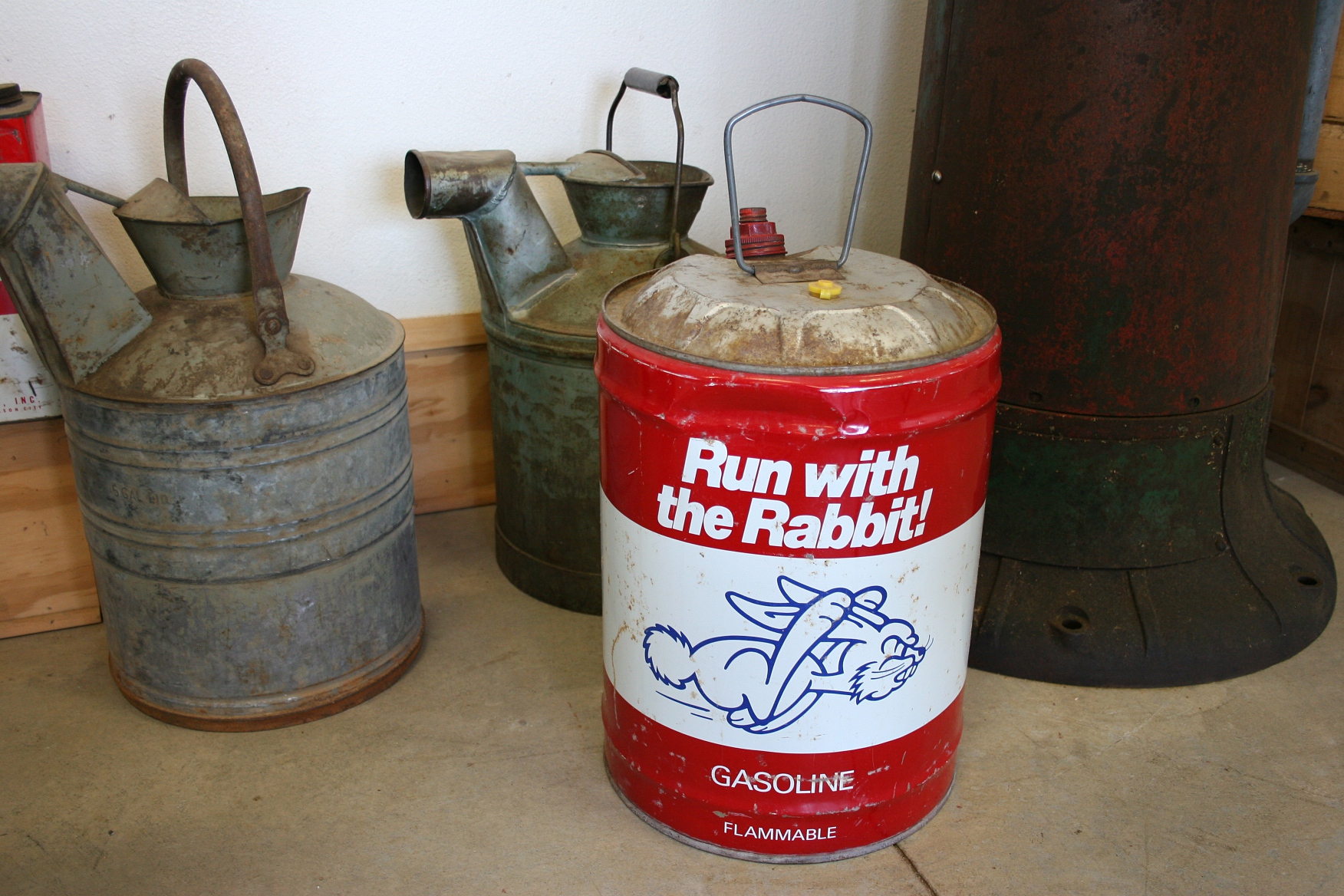
Among the many gas cans my middle brother collects is this Rabbit-themed one, which I love. (Minnesota Prairie Roots copyrighted file photo)

Ah, Rabbits. I really do like them. I’m amazed at their swiftness, hopping across yards, including mine, at seemingly record-breaking speed. Yet, they can also sit statue still and commence a stare-down.

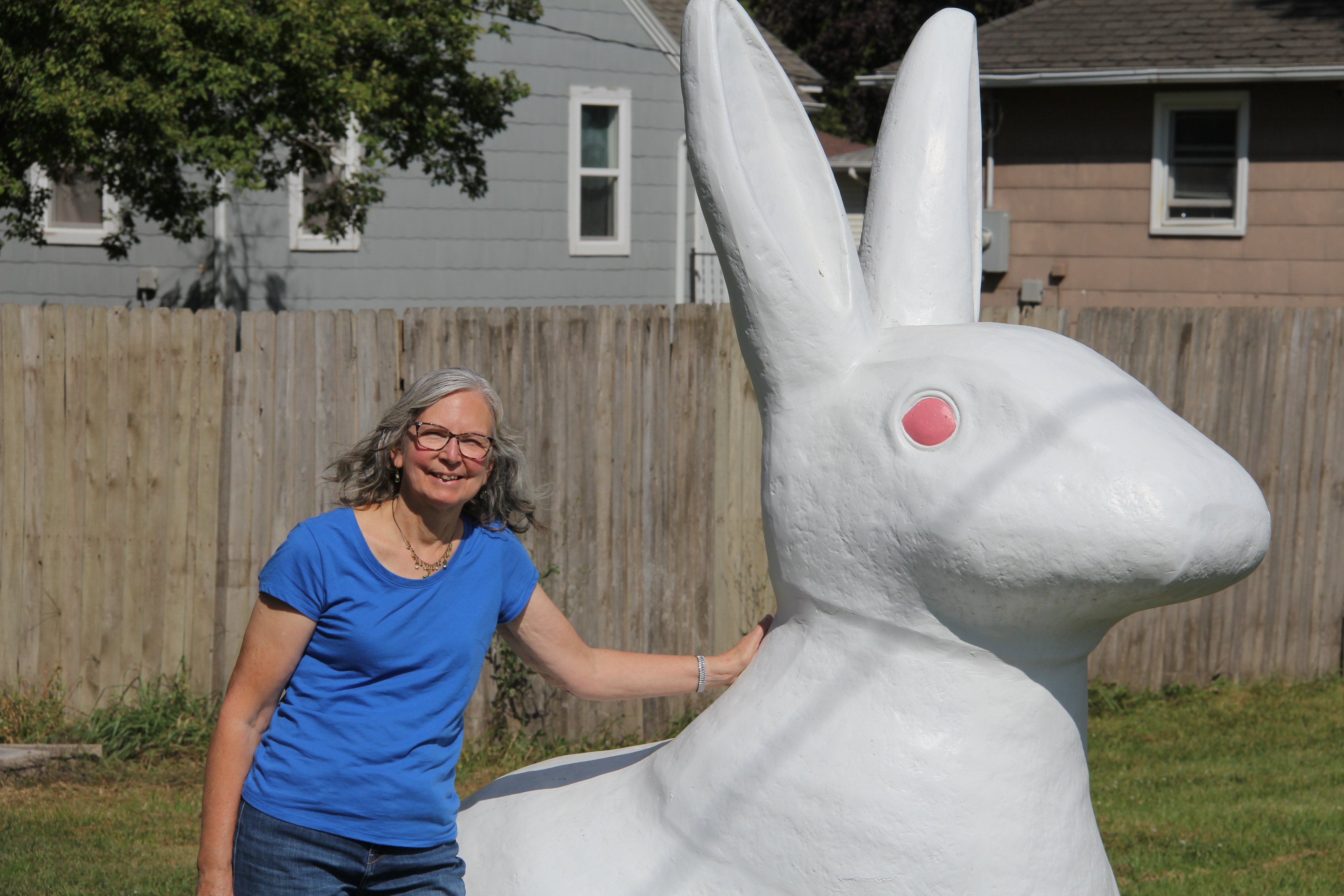
Me, posing with the rabbit statue in Wabasso when I was back in town for my 50th high school class reunion in September 2024. (Minnesota Prairie Roots copyrighted file photo by Randy Helbling)

That brings me to the mammoth rabbit statue which sits along Minnesota State Highway 68 in Wabasso in southwestern Minnesota. I attended high school in this rural community named after a Native American word meaning “white rabbit.” Our school mascot was Thumper. No jokes, please. I heard plenty of bunny jokes decades ago. I am forever proud to be a Wabasso Rabbit. I mean, who has a school mascot that interesting and unique? A name that actually connects to history and place and is found in Henry Wadsworth Longfellow’s poem, “The Song of Hiawatha.”

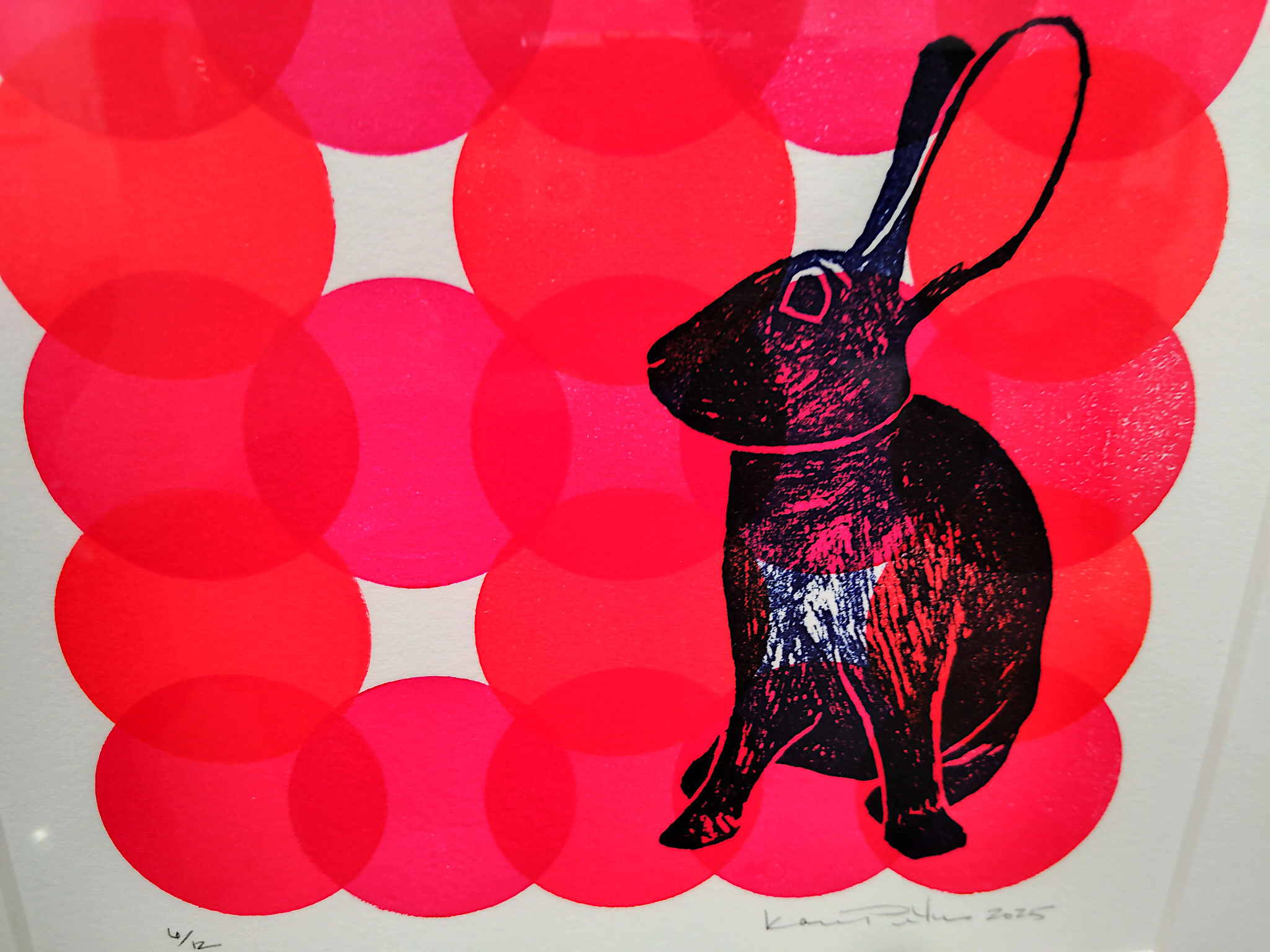
This shows part of a relief print, “Neon Love Rabbit,” by Karen Peters. (Minnesota Prairie Roots copyrighted photo April 2025)

Just the other evening I saw some unique rabbit art at the Paradise Center for the Arts. I was sitting at the annual PCA membership meeting when I spotted this art in the gallery. When the meeting concluded, I hopped (well, not quite, but the word fits here) over to look at the work of Minneapolis artist Karen Peters. She explores color through printmaking, creating relief prints. Rabbits are among the subjects of her prints.

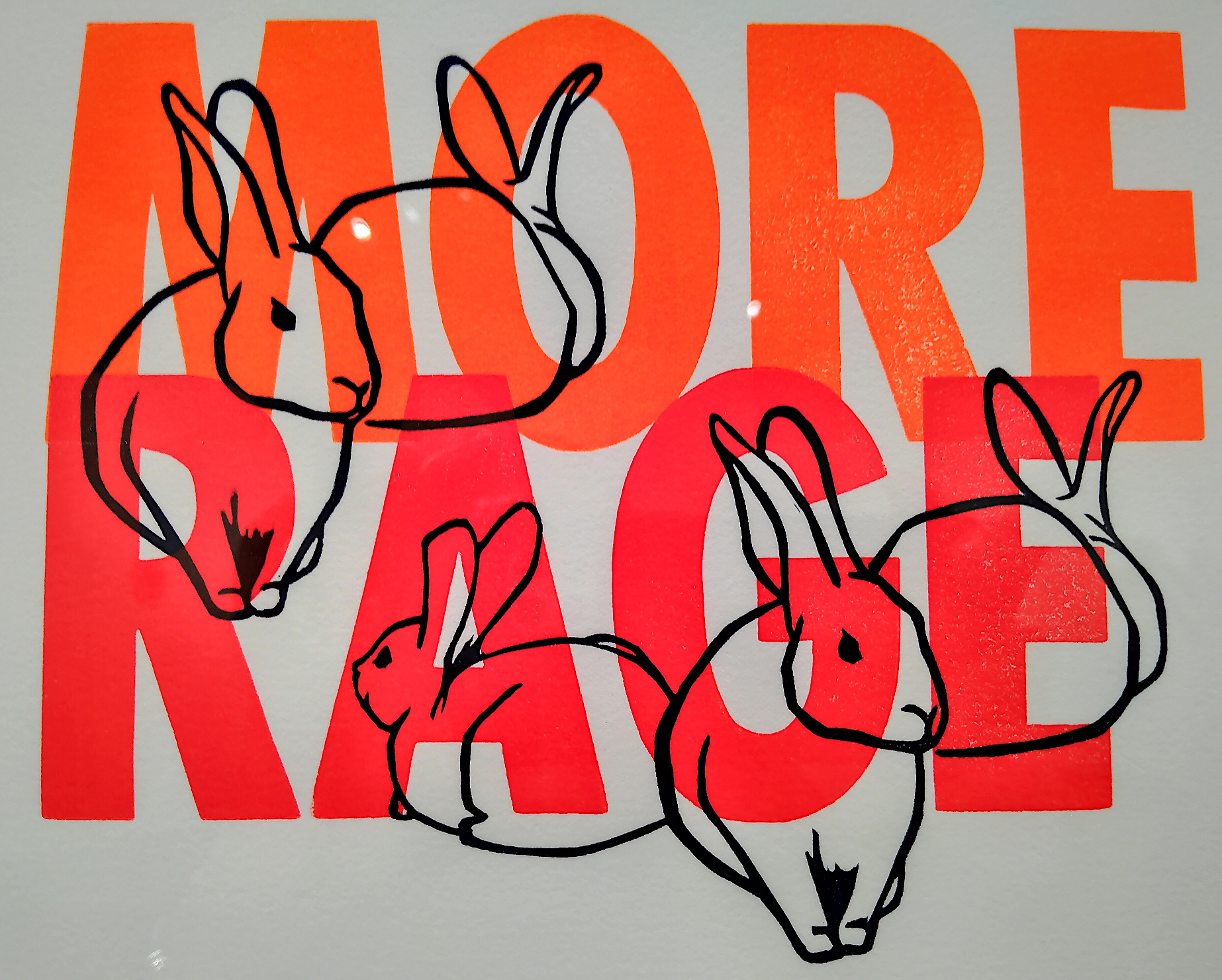
Karen Peters’ relief print, “More Rage.” (Minnesota Prairie Roots copyrighted photo April 2025)

Now I expect my eldest daughter, given her dislike of rabbits, would probably favor Peters’ “More Rage” print. Amber has raged more than once about invasive rabbits and their path of destruction.

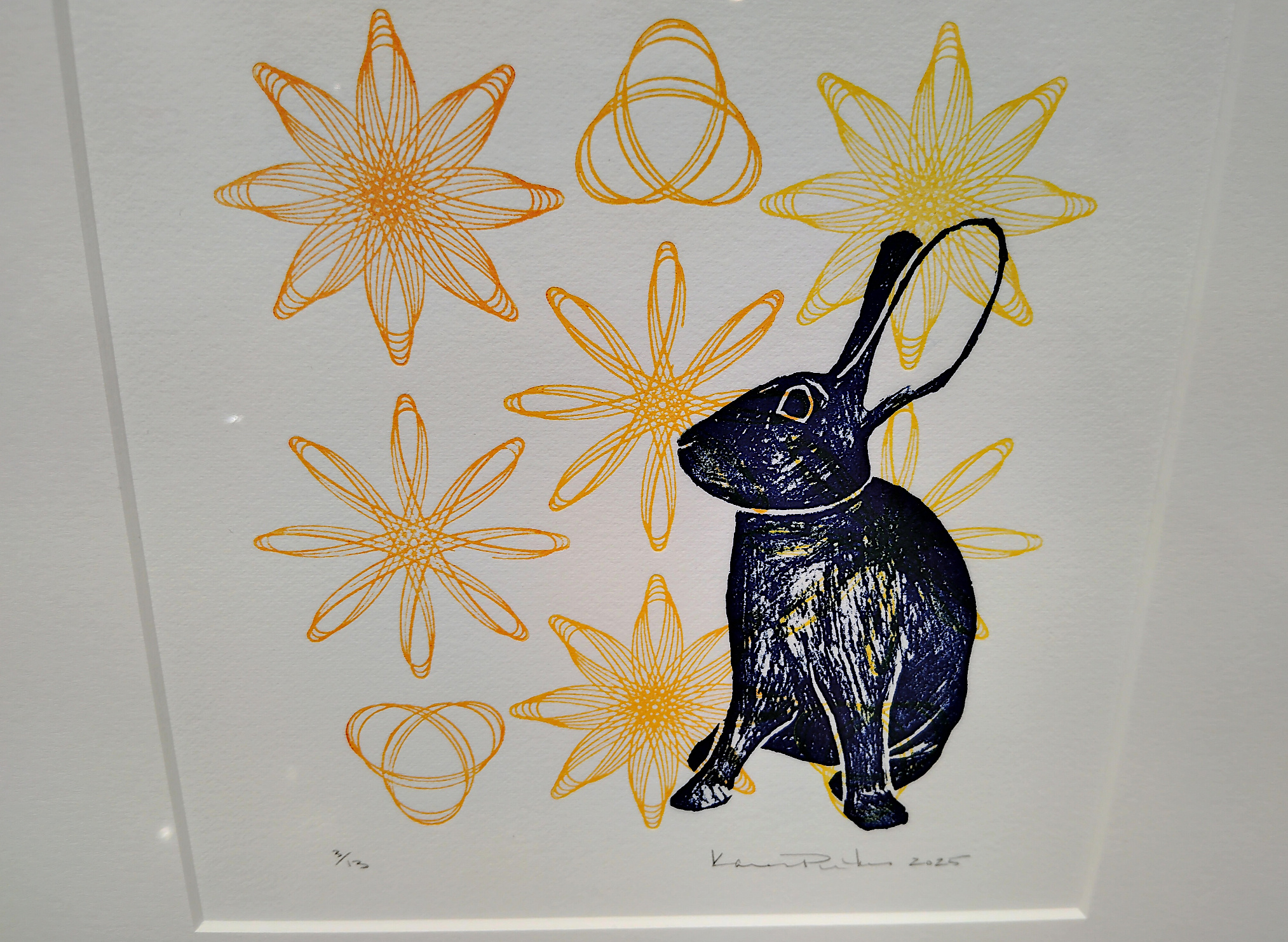
“Spiro rabbit,” a relief print by Karen Peters. (Minnesota Prairie Roots copyrighted photo April 2025)

Me? I rather like Peters’ “Spiro rabbit” print with its contrast of black rabbit lurking among yellow flowers created with a Spirograph. The last time the grandkids stayed overnight, I pulled out the Spirograph, a geometric drawing device that has been around since 1965, way back when I was a kid. That Peters used this popular art tool to bloom flowers into her rabbit print shows out-of-the-box creative thinking.

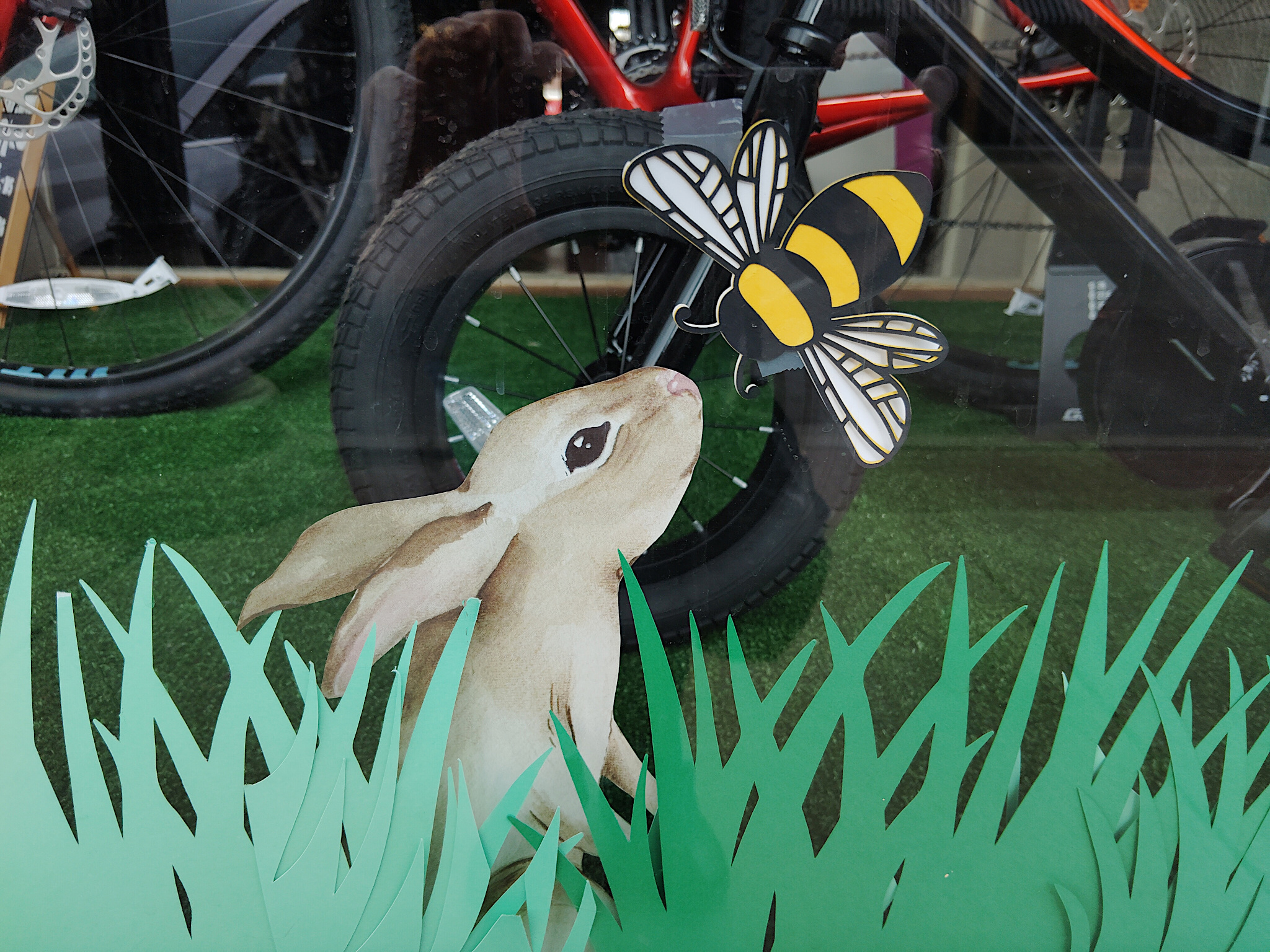
A spring scene set against a backdrop of bikes in the front window of Mill Town Cycles. (Minnesota Prairie Roots copyrighted photo April 2025)

Upon leaving the Paradise, I passed by Mill Town Cycles, glancing at the window display to see more creativity. You guessed it. There was another rabbit, this one poking through the grass to sniff a bee. It was a cute scene, perfect for spring, perfect for Easter.

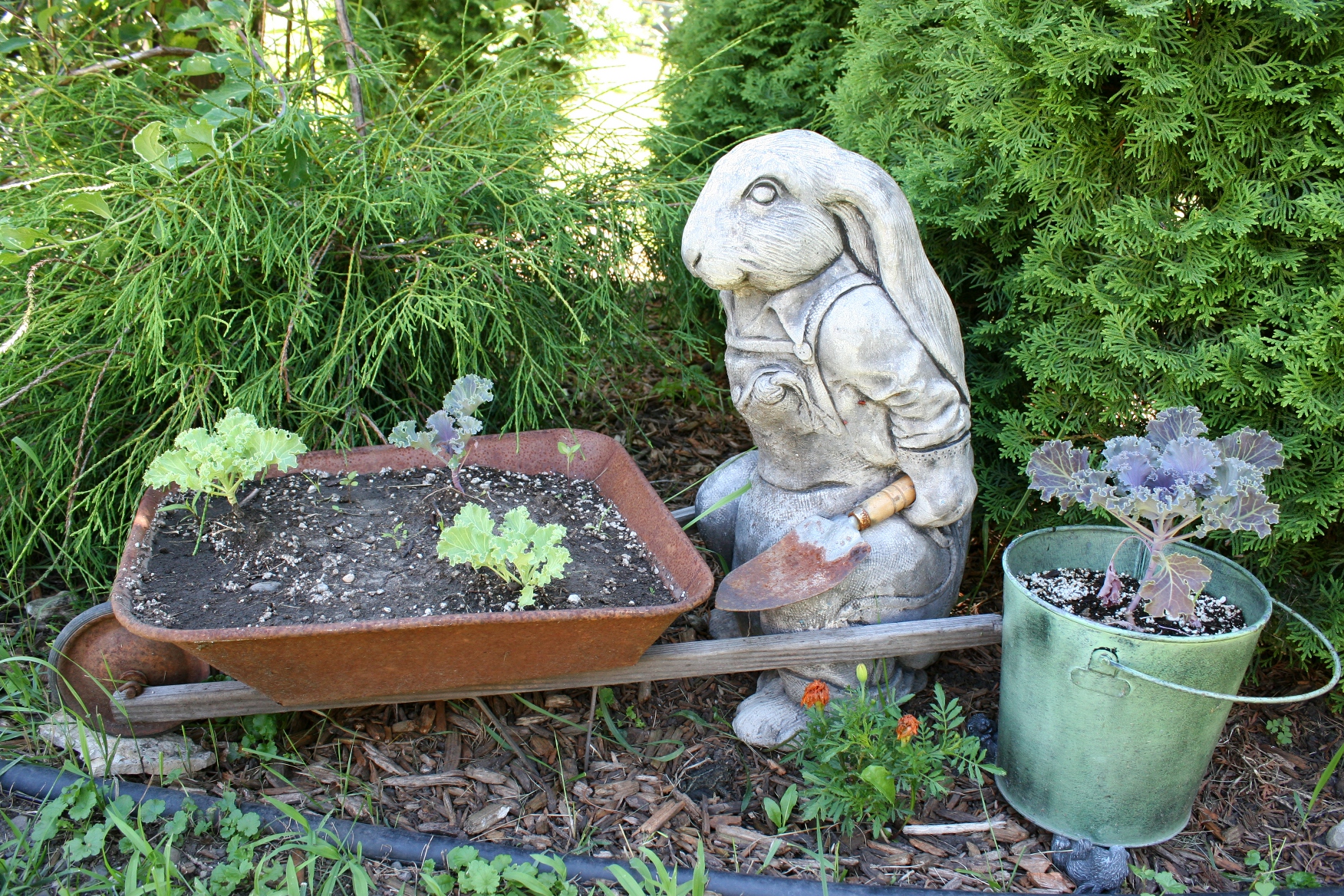
Garden art of a rabbit gardening. (Minnesota Prairie Roots copyrighted file photo)

Whether you like rabbits or not, universally-speaking, the Easter Bunny seems like a rabbit we can all love. As long as he stays out of the garden. And brings lots of candy.

#

FYI: The art of Karen Peters, Justin Peters, Clayton Hubert, Scott Maggart, Gail Gaits, Sushila Anderson and Bethlehem Academy students will be on display until May 10 at the Paradise Center for the Arts in historic downtown Faribault. I photographed the art of Karen Peters with permission of the PCA. The white spots in my photos of her framed art are unavoidable glare on the glass.

© Copyright 2025 Audrey Kletscher Helbling
 

“I Am Minnesota” immigrant portraits & stories inspire September 11, 2023

Portraits and stories, including that of Tin Tea owner, Chau, second from right, are featured in the newest “I Am Minnesota” exhibit. (Minnesota Prairie Roots copyrighted photo September 2023)

IN THE CORRIDOR LINKING Buckham Memorial Library and the Faribault Community Center, 13 portraits of immigrants and second-generation immigrants line the walls. They are the work of Faribault artist Kate Langlais in her updated “I Am Minnesota” project.

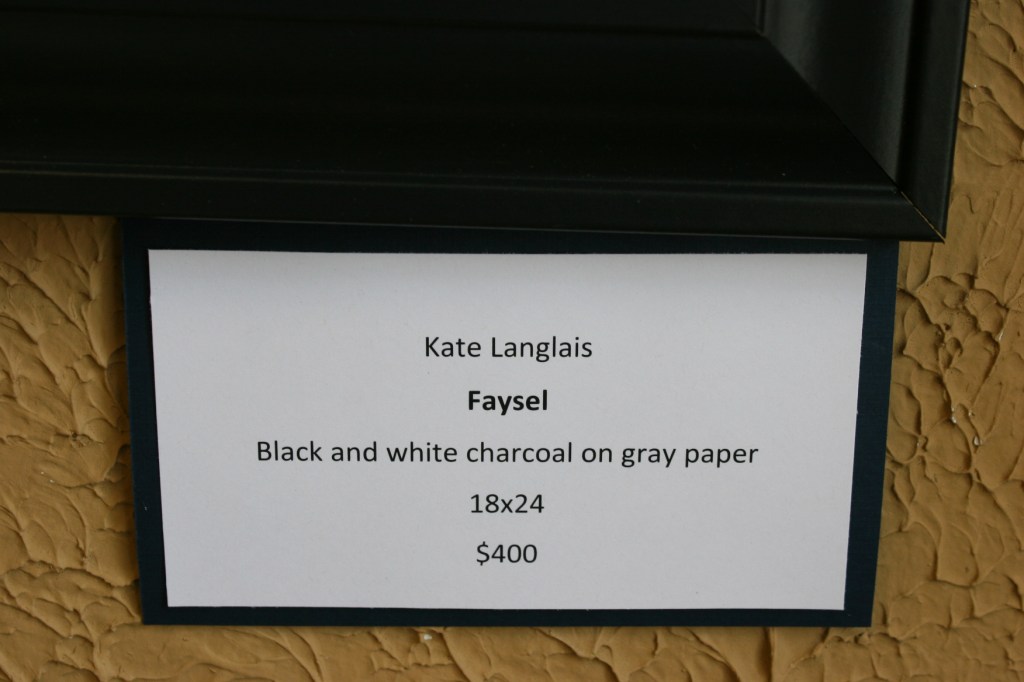
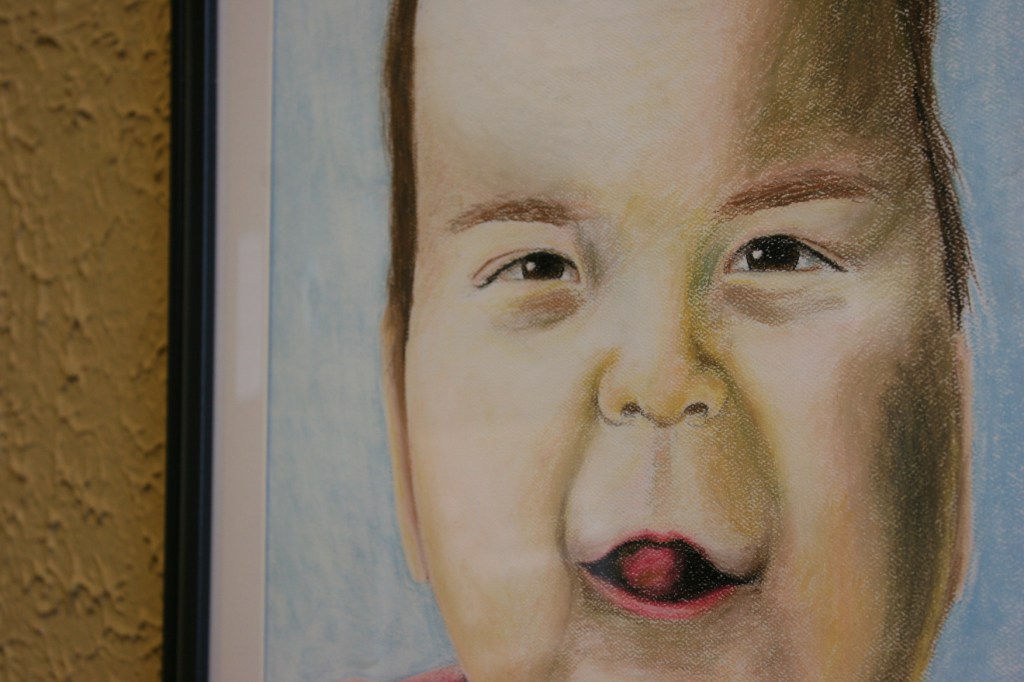
“Faysel,” who fled the war in Somalia. (Minnesota Prairie Roots copyrighted file photo September 2020)

This is a remarkable and revealing exhibit, which stretches well beyond faces portrayed primarily in black and white charcoal on gray paper. Langlais also includes the stories of those who now call this region home. Those stories hold the challenges and dreams, the successes, the gratitude and more of individuals who have become integral, and important, parts of our communities.

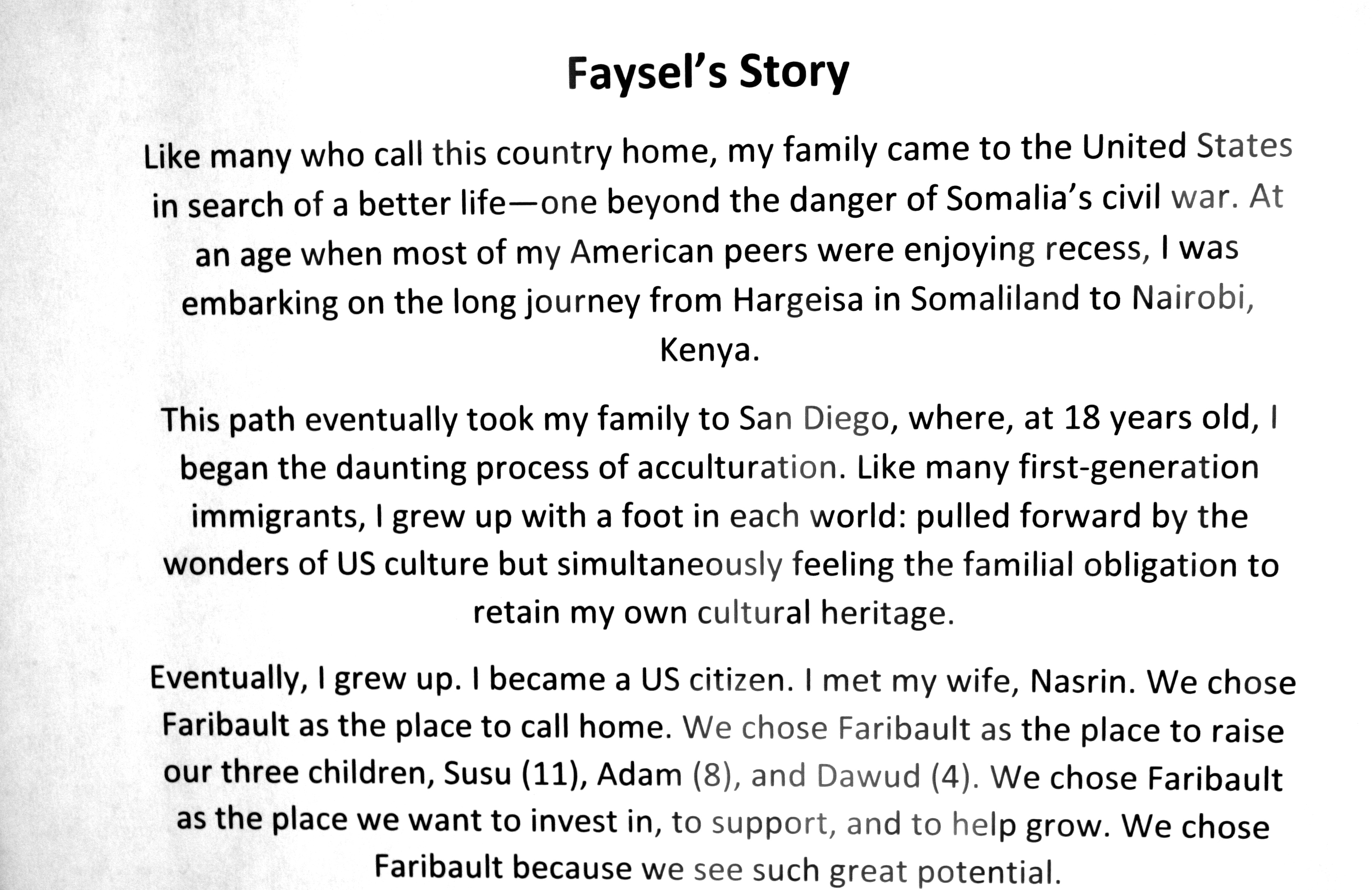
Faysel’s story from Langlais’ 2020 “I Am Minnesota” exhibit. (Minnesota Prairie Roots copyrighted file photo September 2020)

I saw Langlais’ first “I Am Minnesota” exhibit in 2020 at the Paradise Center for the Arts. She includes seven of those 2020 portrait-story pairings in her latest installation along with six new featured individuals. I appreciate her work today as much as I did three years ago.

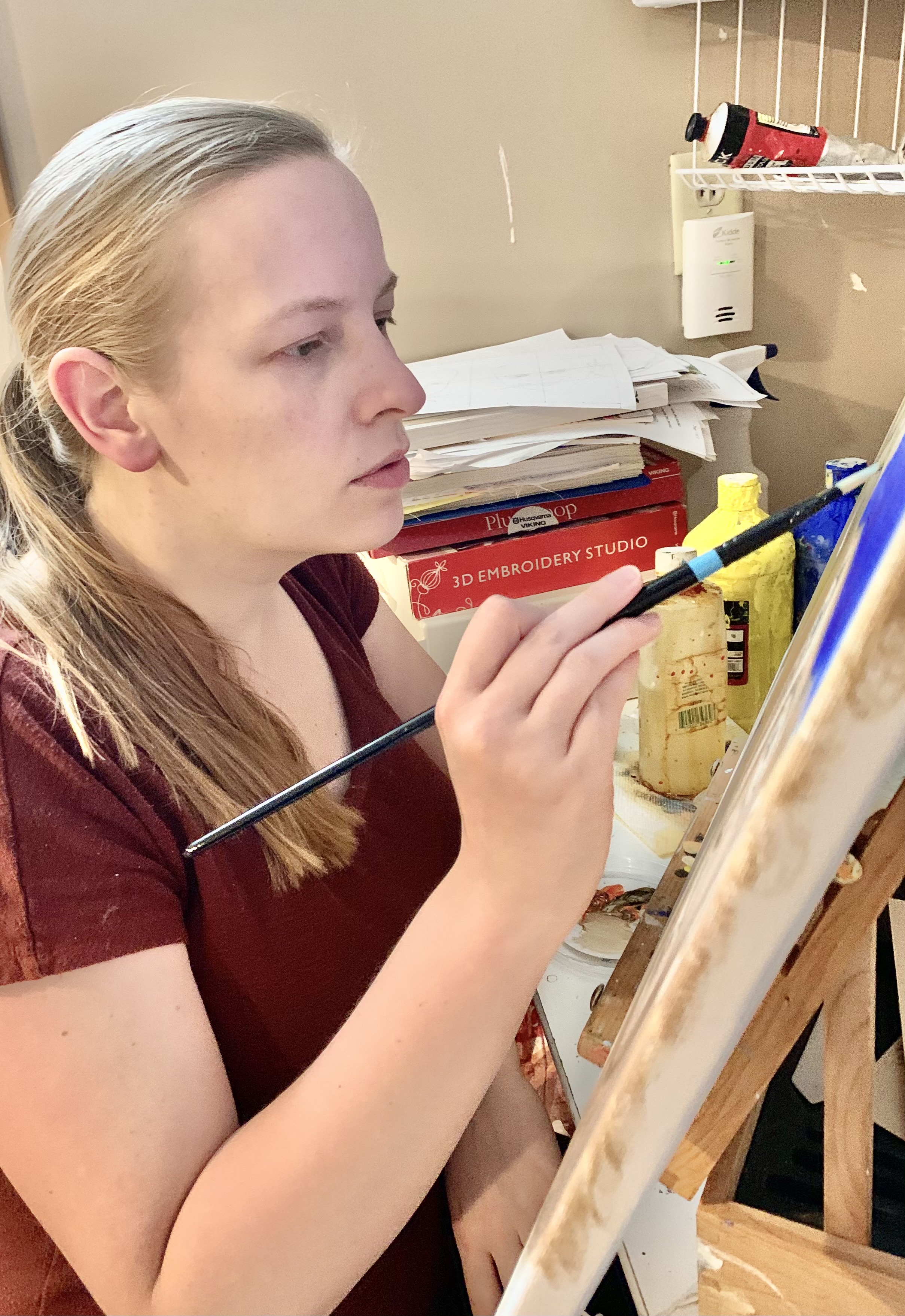
Kate Langlais at work in her home studio. (Photo courtesy of Kate Langlais, 2022)

In her artist’s statement, Langlais states in part that, “It is an honor to learn about each individual’s hardships and perseverance, as well as the beauty of their hopes and dreams.”

“Hilda,” successful Faribault business owner. (Minnesota Prairie Roots copyrighted photo September 2023)

That includes the hopes and dreams of Hilda, who came to Faribault in 1996 with the goal of opening a family-run restaurant serving authentic Mexican food. Twenty-seven years later, El Tequila Family Mexican Restaurant is still going strong, even expanding to other communities. Hilda overcame a vocal naysayer who doubted such a restaurant could survive, let alone thrive, in Faribault. She proved him wrong and, in her story, expresses gratitude to a supportive community.

Likewise, another woman with a dream, second-generation Vietnamese-American Chau, opened Tin Tea in Northfield in June 2021 at the age of 19 while also a full-time student at St. Olaf College. Her story begins with gratitude to her parents: “My parents’ incredible journey from Vietnam to a new land left an indelible mark on my life. Filled with hardships and unwavering determination, their arrival in a foreign land with nothing but hope and courage inspired me deeply.”

An unidentified “I Am Minnesota” portrait of a woman hangs next to a drawing of Peter. (Minnesota Prairie Roots copyrighted photo September 2023)

To read these stories, to view these portraits, is to witness the strength and determination of individuals like Hilda and Chau. And Peter, an immigrant from the Netherlands who moved with his wife Virginia to Faribault in 2002. Since then, Peter, now a U.S. citizen, has volunteered tirelessly in Faribault, heading up the International Festival, being selected as “Citizen of the Year” (along with Virginia), elected to the City Council, recently named the new Rice County fair manager and more.

Included in Hilda’s portrait is the name of her successful Mexican restaurant, the first in Faribault and now one of several. (Minnesota Prairie Roots copyrighted photo September 2023)

Thirteen faces. Thirteen stories. They are ours to view, to read, to appreciate. For in seeing, we put faces to the word “immigrants.” For in reading, we learn their backstories. And in both, we begin to understand that our newest neighbors and their families overcame much to call this place, this southern Minnesota, home.

FYI: Kate Langlais’ “I Am Minnesota” exhibit will be up until Friday, September 15. A closing reception is slated for 5-7 pm with a free portrait drawing class beginning at 6 pm. Register for the drawing class at Faribault Parks and Recreation.

© Copyright 2023 Audrey Kletscher Helbling


Experience Faribault through the art of Joe Kral March 25, 2021

Faribault themes “My Hometown” by Minneapolis artist Joe Kral.

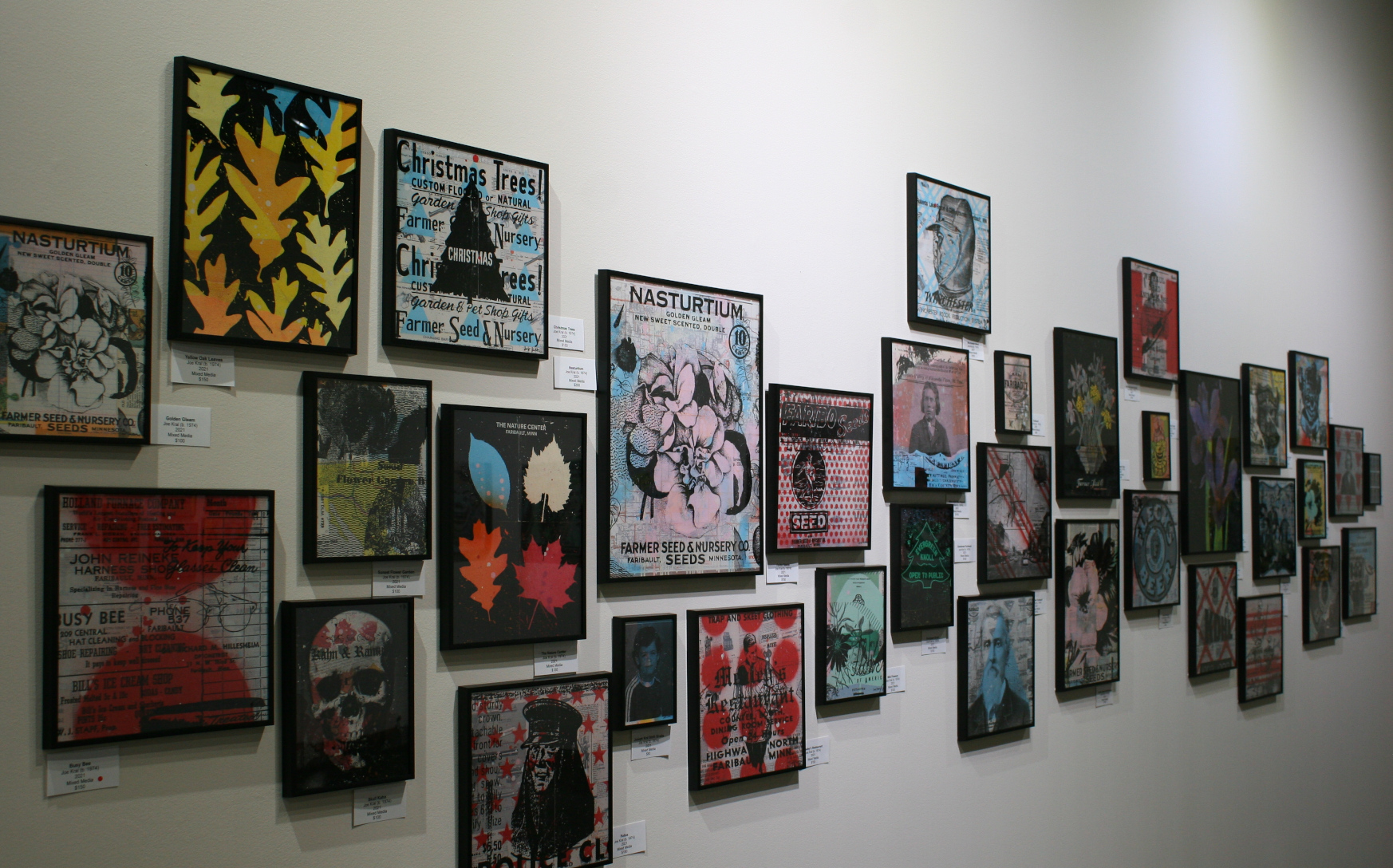
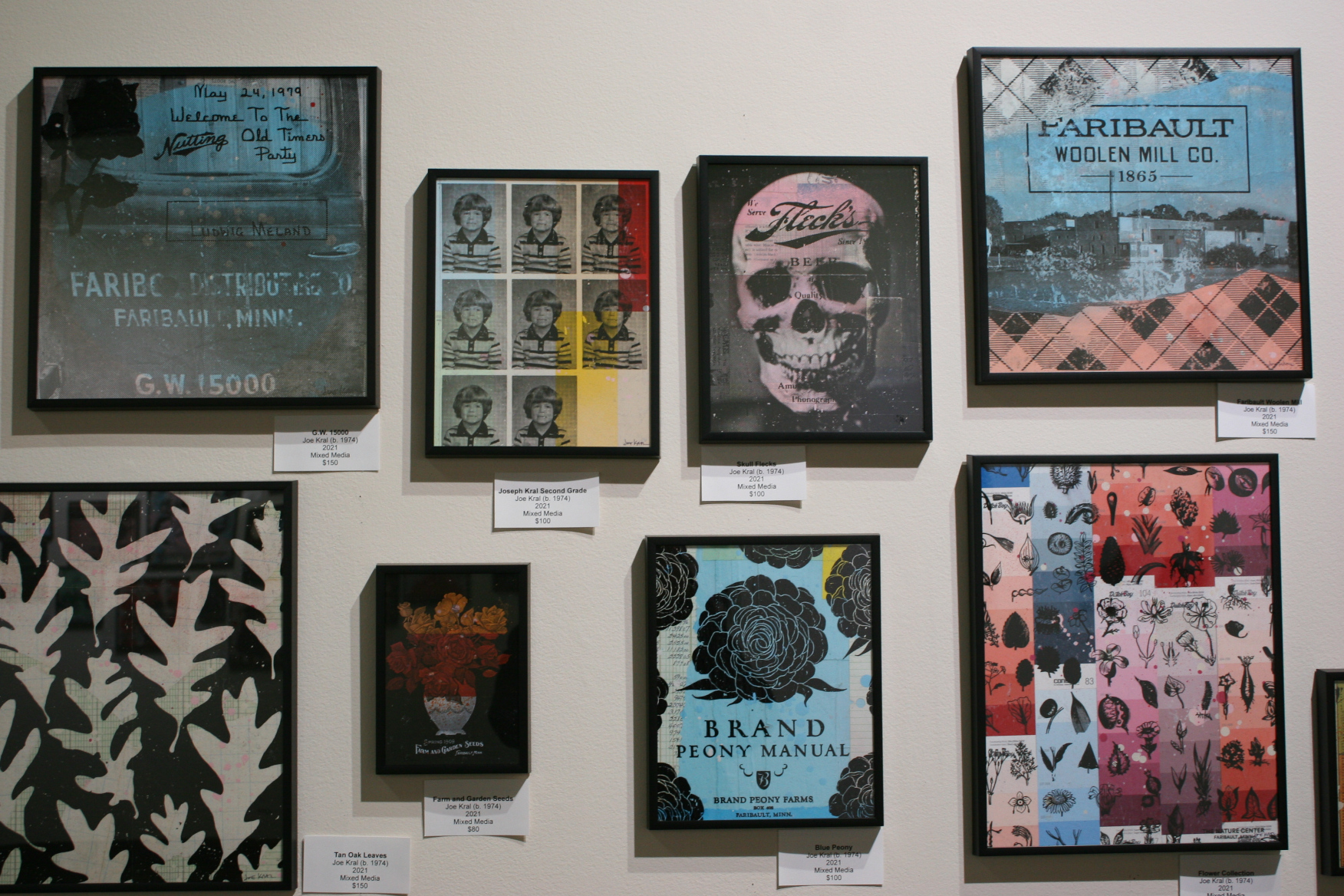
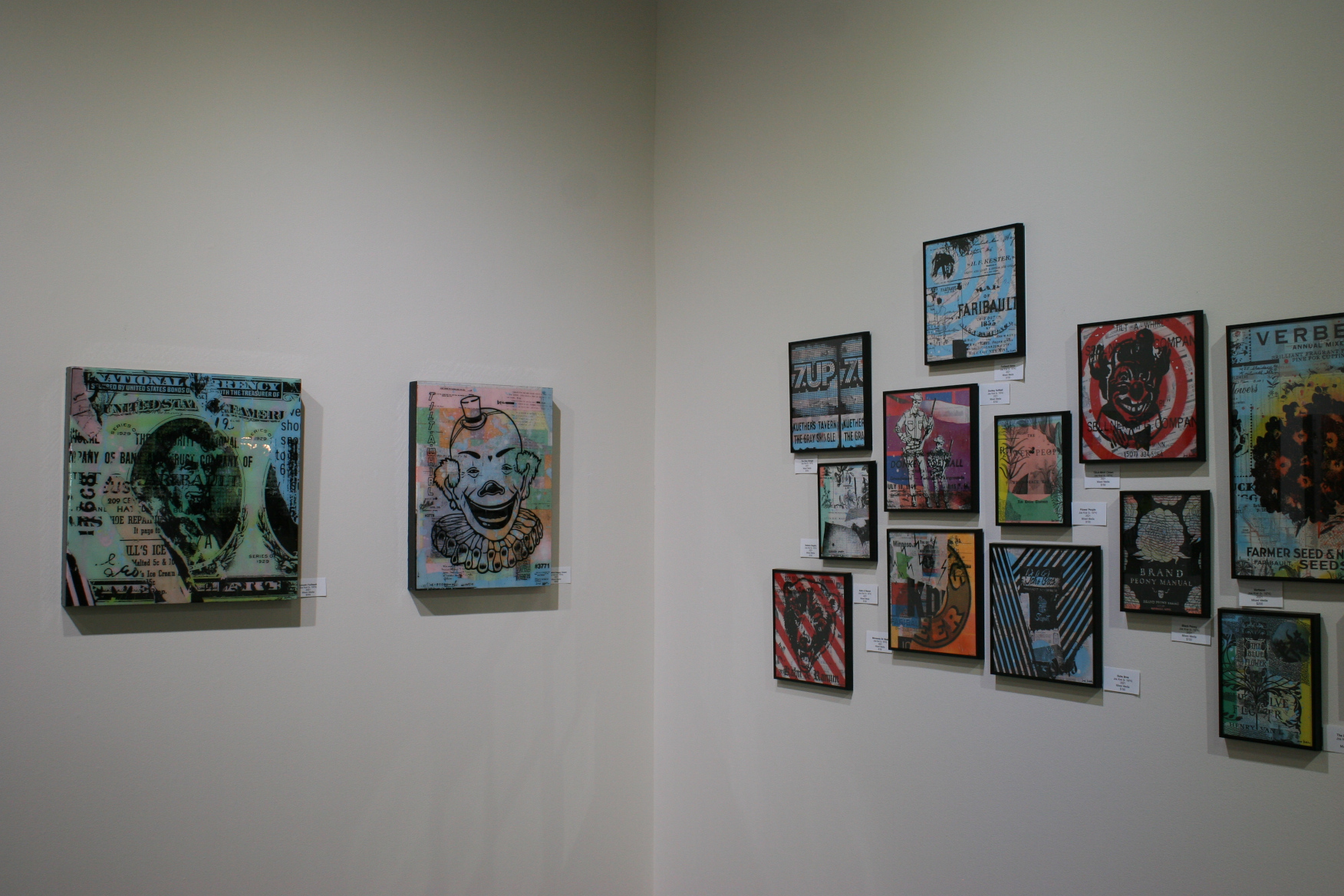
WITH NEARLY 100 PIECES of art displayed in the Carlander Gallery at the Paradise Center for the Arts, Faribault native Joe Kral’s “My Hometown” exhibit takes time to view. But there’s not much time to see this place-focused show, which opened in mid-February and closes April 3. I’d encourage you, especially if you have a Faribault connection, to view Kral’s art now.

The art of Joe Kral fills the Carlander Gallery.
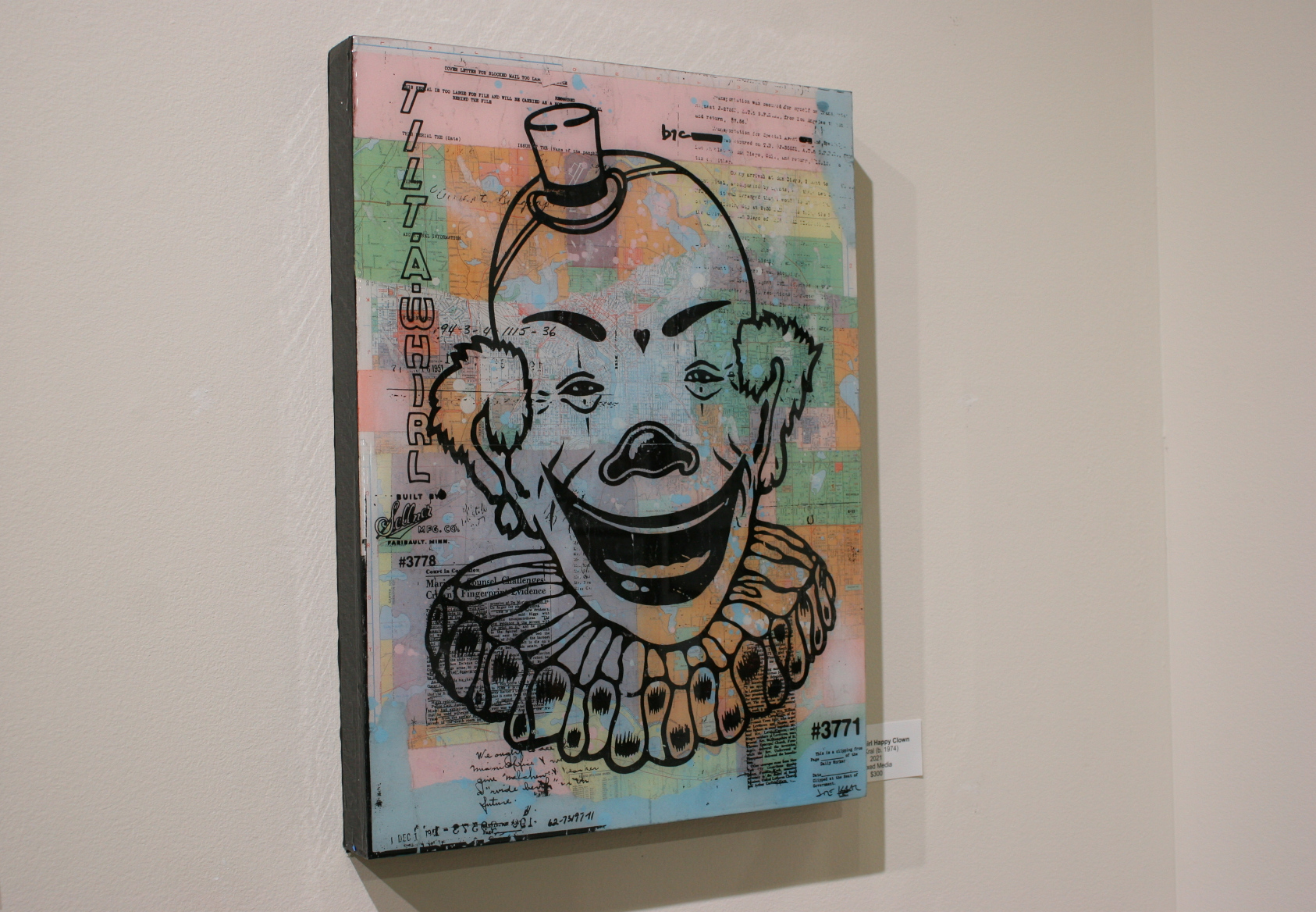
“The Happy Clown.” Kral’s art celebrates the clown graphic used on the Tilt-A-Whirl amusement ride created and made in Faribault, up until recently.
Kral’s signature art highlights Faribault.

The Minneapolis artist creates mixed media paintings in a signature style that appeals to my love of vintage graphics, fonts, old print ads and nostalgia. Kral sources vintage materials from books, magazines, maps and postcards. He then adds colors and texture with spray paint, stencils and ink, according to information on his website. The results are a visual and creative delight.

The Hardwood General Store building still stands near the King Mill Dam.
Some of the businesses featured in Kral’s art still exist. But most don’t.
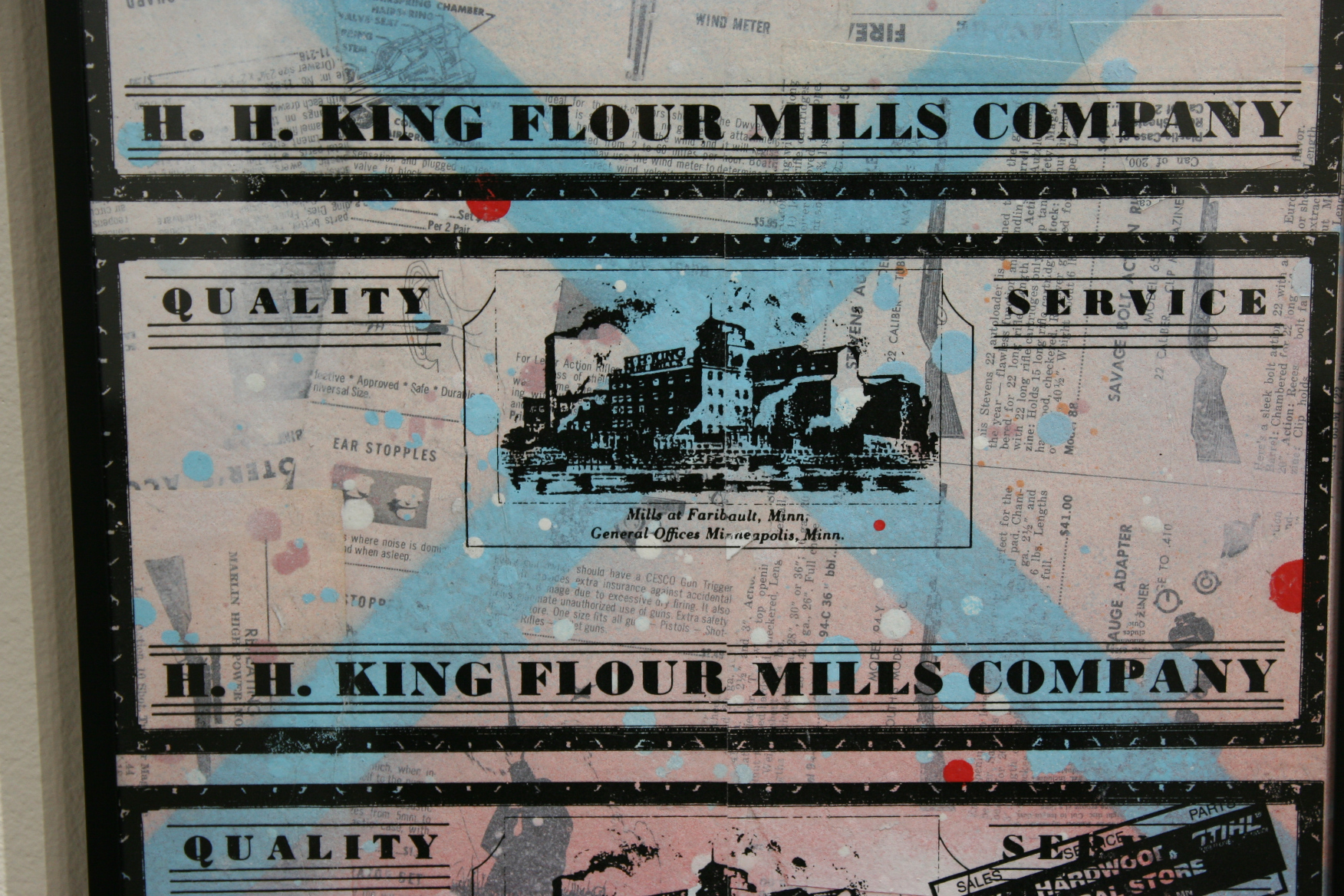
The King Flour Mill was destroyed by fire and is honored here by Kral.

Faribault residents and natives, particularly, will feel like they are walking down memory lane when viewing “My Hometown.” Kral features primarily Faribault businesses. Like Brand Peony Farms, Fleck’s Beer, King Flour Mills, Farmer Seed & Nursery and Tilt-A-Whirl—all gone. But he also includes art on current businesses like the well-known Faribault Woolen Mill and KDHL radio.

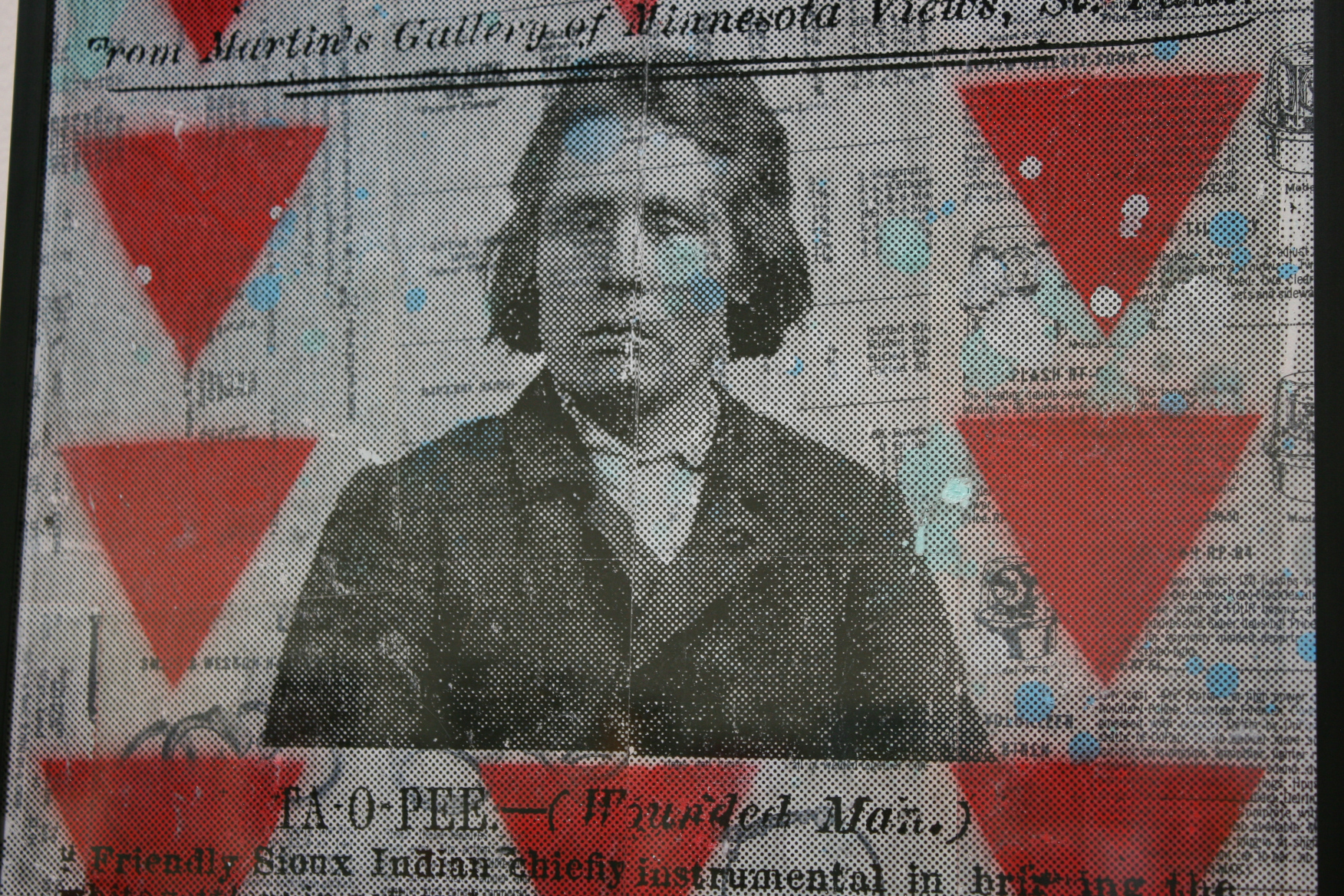
Chief Taopee art created by Kral.
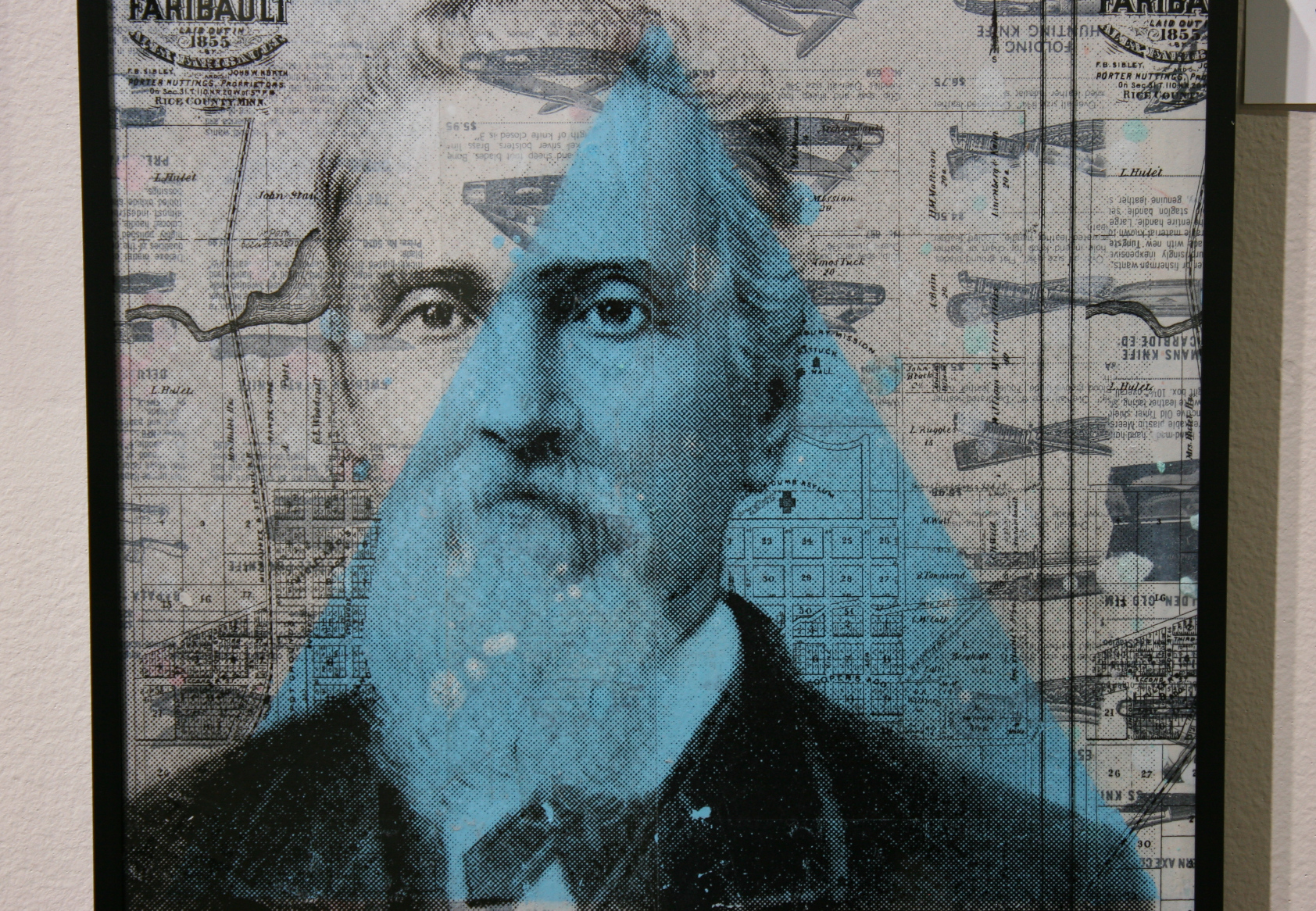
Town founder, Alexander Faribault, portrayed in Kral’s mixed media art.

Two locally important early leaders, Chief Taopee and Alexander Faribault, are also included in Kral’s hometown exhibit.

More of Kral’s art…

With the historic bend of this show, “My Hometown” seems like a good fit also for a history center/museum, which may draw an entirely different audience. This speaks to the diverse appeal of Kral’s art.

Joe Kral, when he was a student at McKinley Elementary School in Faribault.

In his bio, Kral shares that he was raised on skateboarding, BMX, heavy metal and art. I see that influence in his art. And I also see his love for Faribault—which I expect comes from leaving his hometown, reflecting and then appreciating the place that grew him as an individual and as an artist.

Kral’s Brand Peony Farms art recognizes Faribault’s past history as a peony capital. The business no longer exists.

FYI: The Paradise Center for the Arts, 321 Central Avenue N., Faribault, is open from noon – 5 pm Thursday and Friday and from 10 am – 2 pm Saturdays. While at the Paradise, check out the other gallery exhibits. I will feature some of that art in upcoming posts.

© Copyright 2021 Audrey Kletscher Helbling


Immigrants, Escape Artists &, yes, Elvis in the house September 1, 2020

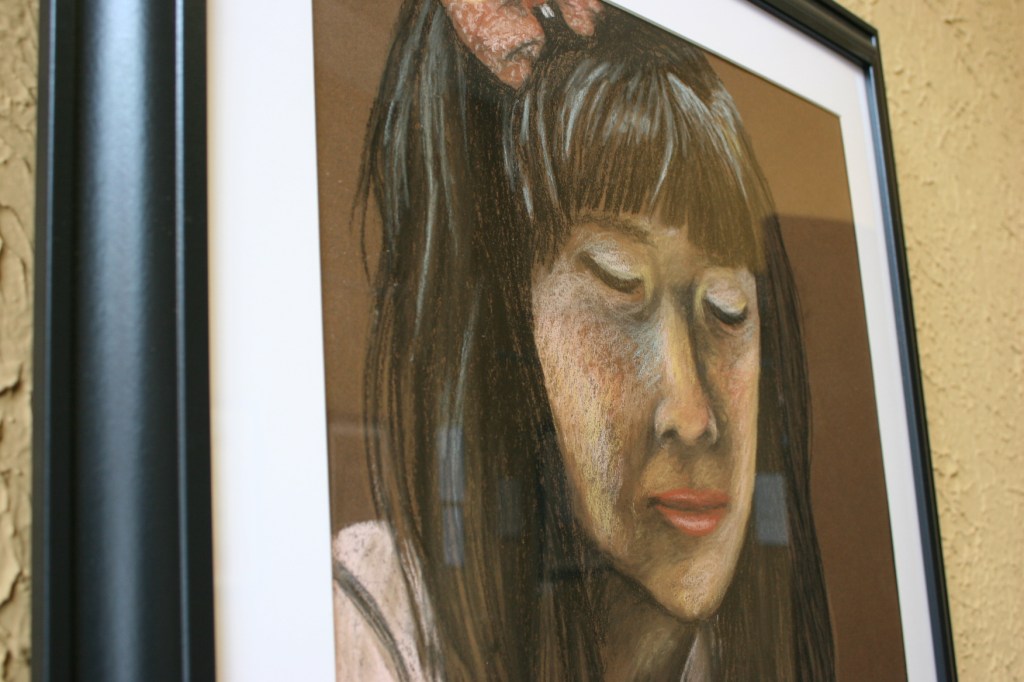
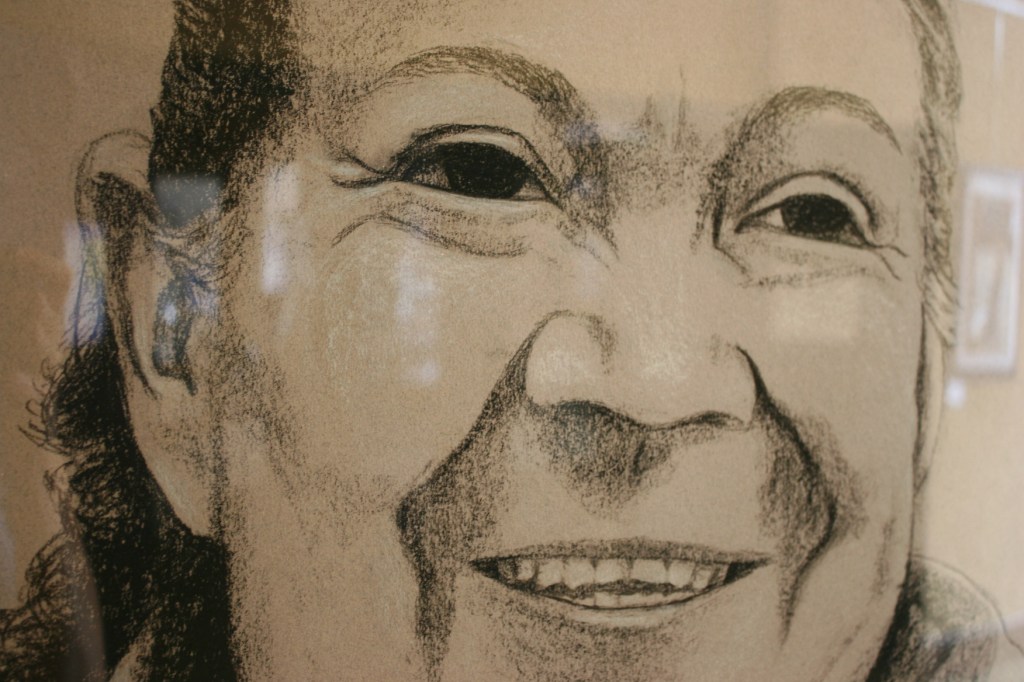
“Ashley,” portrait by Kate Langlais.


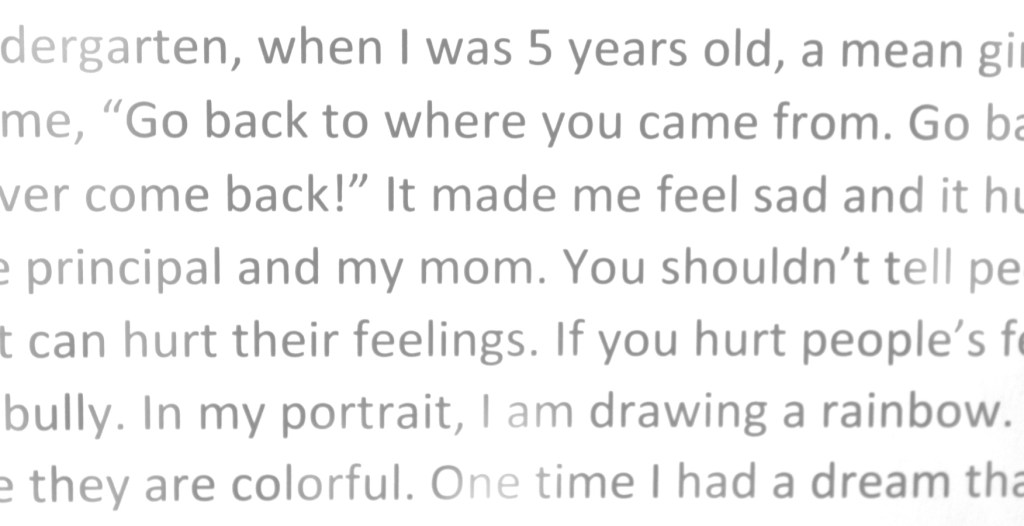
“GO BACK TO WHERE YOU CAME FROM. GO BACK TO MEXICO AND NEVER COME BACK!”


A snippet of Ashley’s story, as posted with her portrait.


I intentionally capitalized and boldfaced those angry words spoken to a 5-year-old by a “mean girl.” Can you imagine hearing such awful, horrible words directed at you? Yet, they are all too common. If not spoken, then thought.


Kate Langlais, painting at a recent concert in Faribault’s Central Park as part of “Art in the Park.” Minnesota Prairie Roots file photo August 2020.


Ashley, the subject in an art exhibit, “I Am Minnesota,” by Faribault portrait artist Kate Langlais, experienced that hatred. She reported the insult to her mom and her principal. I’m thankful she called out the bully, because no one should have to endure such disrespect, especially a kindergartner.


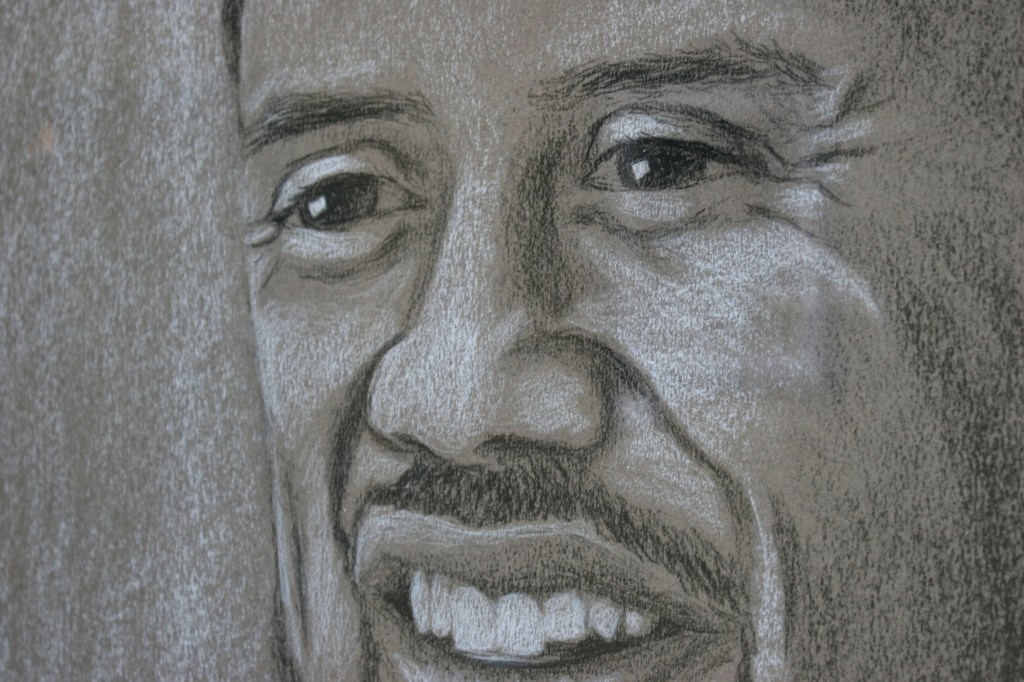
“Faysel” up close by Kate Langlais. He fled war in Somalia.


And I’m thankful to Kate, the artist, for taking on this project which features portraits of first and second-generation immigrants living in Faribault and their stories. Her portraits are currently exhibited at the Paradise Center for the Arts in historic downtown Faribault through September 12.


The title of each portrait is simple. The subject’s name.


Kate invites viewers to “recall what they know about their family’s immigration stories.”


Parker, four months, the son of an immigrant who arrived here at about the same age. Portrait by Kate Langlais.


But she pushes beyond that to prompt thought about problems immigrants must overcome—language barriers, cultural differences, acceptance (or not) by neighbors.


An overview of a portion of the Escape Artists exhibit.


After viewing Kate’s thought-provoking portraits and accompanying life summaries, I walked over to a larger gallery featuring art by the Escape Artists. Right away, I connected the two. Not because the art is at all alike. But because of the word “escape.” The subjects in Kate’s portraits escaped oppression, war, poverty and more for life in America. The Escape Artists are a group of artist friends who, 30-plus years ago, began escaping together to create art.


A section of “On the Ragged Edge” by Theresa Harsma.


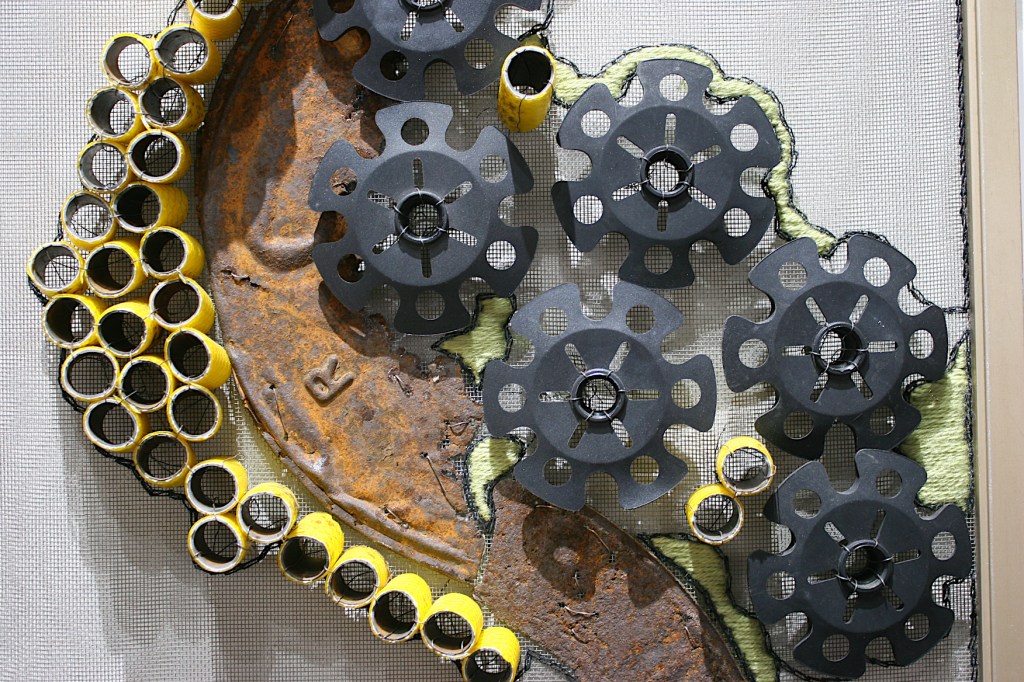
As I meandered through the gallery, I considered the Escape Artists’ art with the imprint of Kate’s portraits on my mind. For example, Theresa Harsma writes in her artist’s statement for “On the Ragged Edge” of sorting through her collection of found objects and choosing those that seemed to want to be part of the piece. Just like immigrants want to be part of the piece that is America.


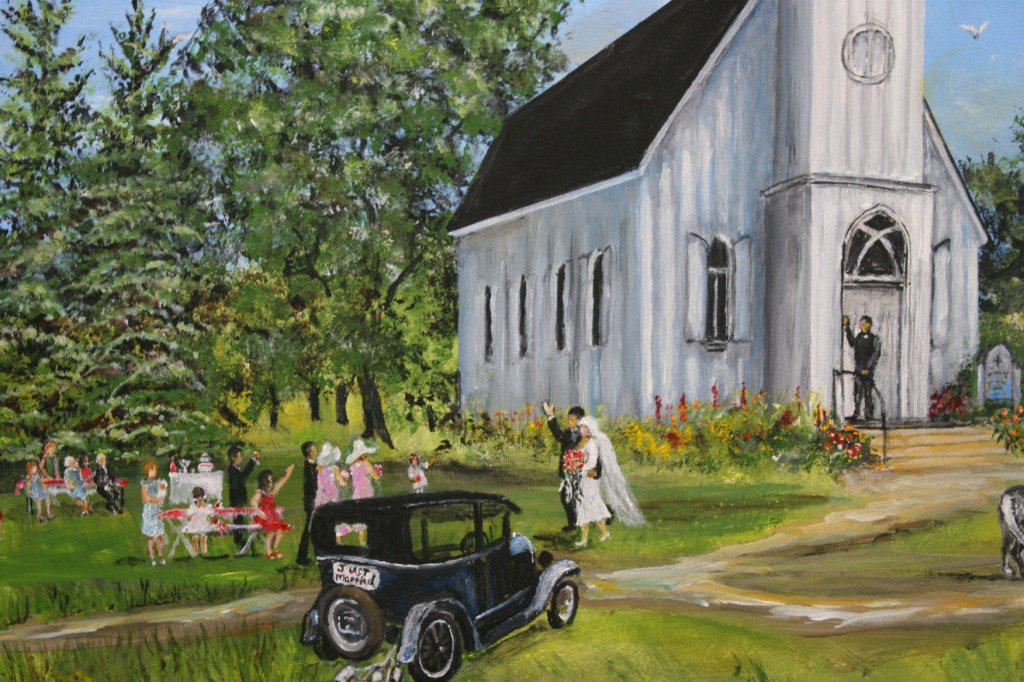
“1938 Church Wedding” by Linda Van Lear is based on The Holy Innocents Episcopal Church located at the Rice County Fairgrounds/Historical Society Museum Grounds.


I expect LInda Van Lear’s painting of “1938 Church Wedding” includes immigrants among wedding guests, probably even in the bridal party.


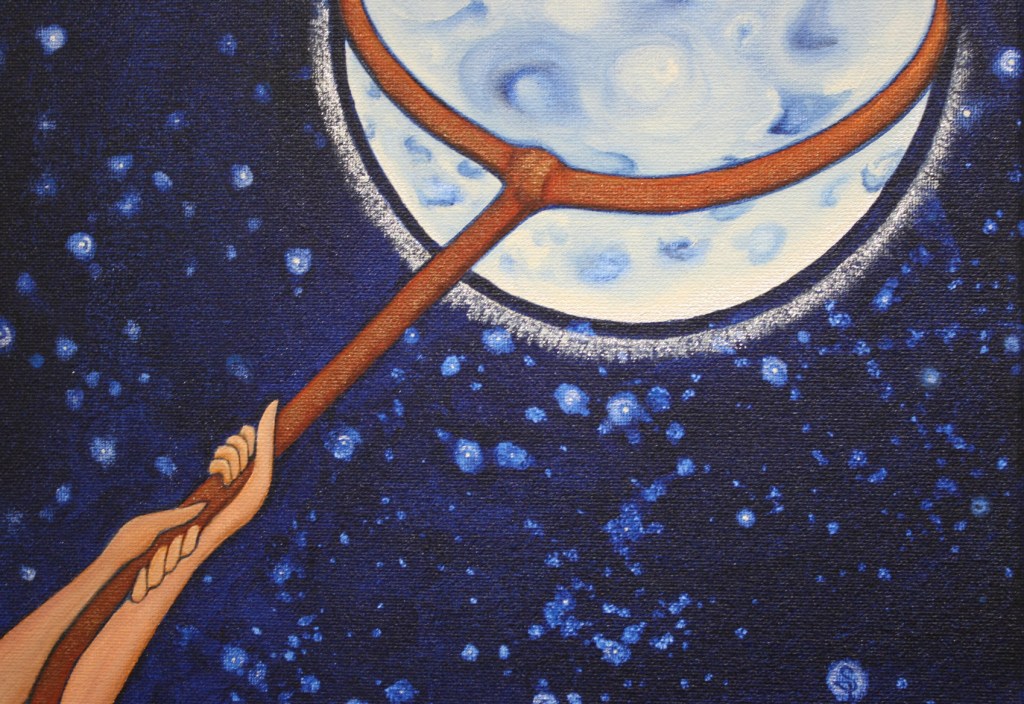
“Lasso the Moon” by Susanne Crane.


And I interpreted Susanne Crane’s “Lasso the Moon” as lassoing dreams. Dreams of a better life for those who came to America, including my forefathers, and probably yours.


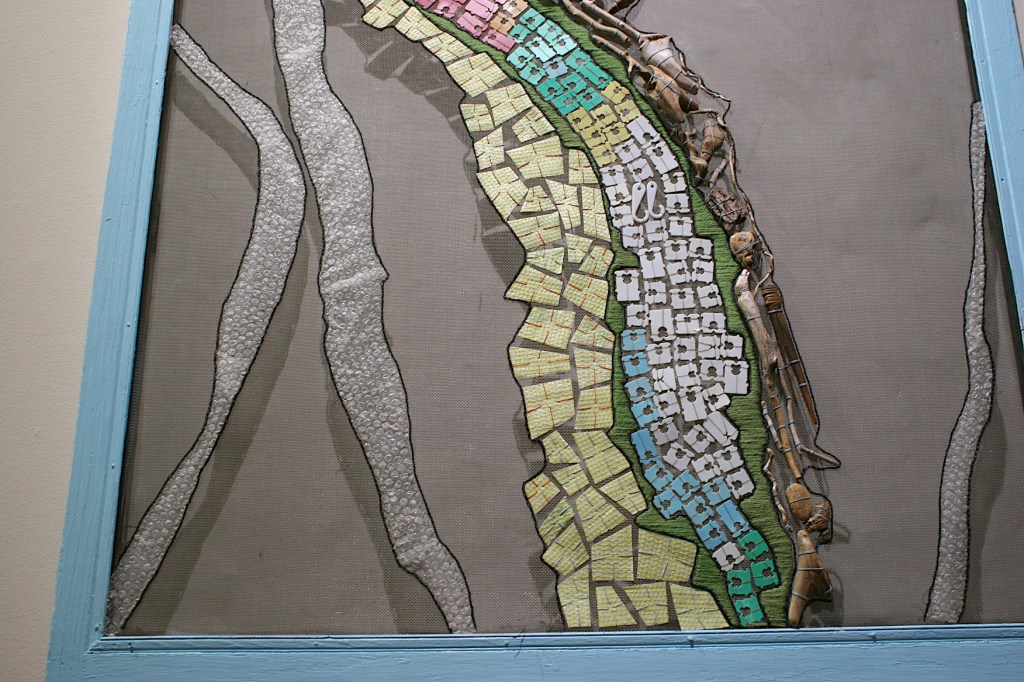
This photo shows part of “Streams of Consciousness, Rivers of Green” by Theresa Harsma.


“Maria” by Kate Langlais.


Back to artist Theresa Harsma, another work, “Streams of Consciousness, Rivers of Green,” struck me in its connection to one story in “I Am Minnesota.” Three times Maria attempted to cross the river from Mexico into the U.S. The determination, the exhaustion, the despair—they’re all woven into her story. No matter how you feel about immigration issues, at the very core is a human being, now a Minnesotan, with struggles, hopes and dreams.


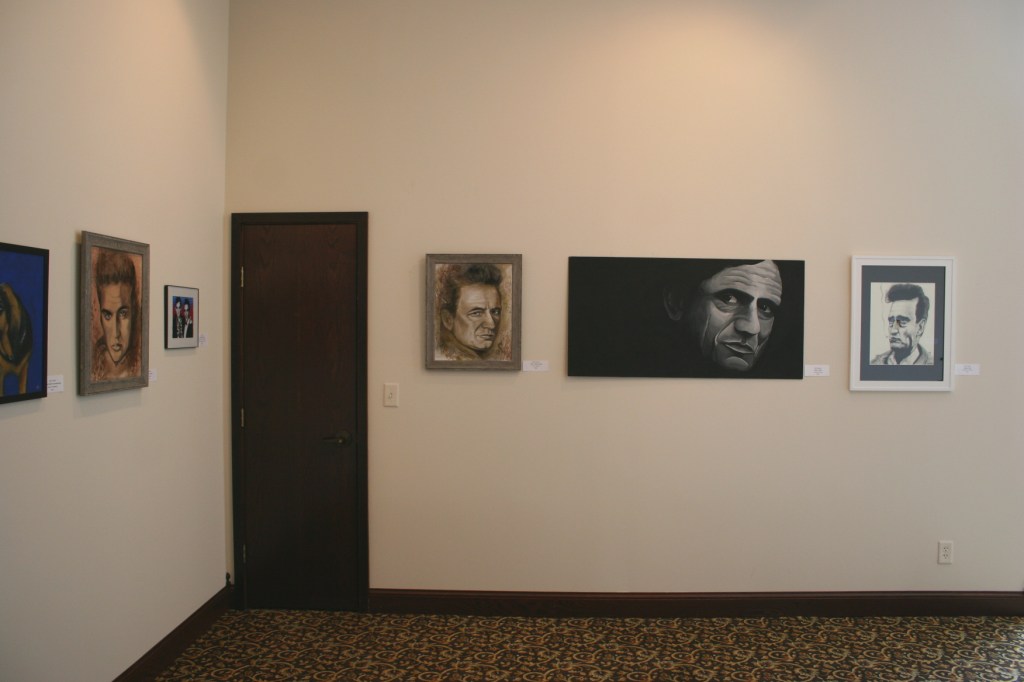
An overview of the Cash-Elvis exhibit.


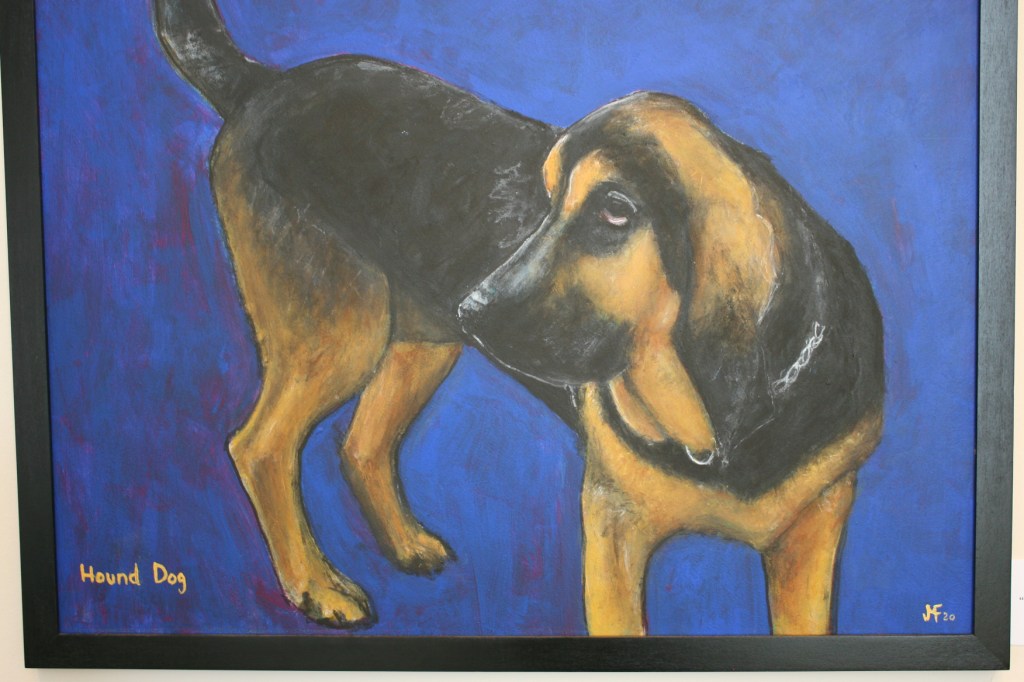
Julie M Fakler created this piece, “You ain’t nothin’ but a hound dog,” inspired by Elvis’ song.


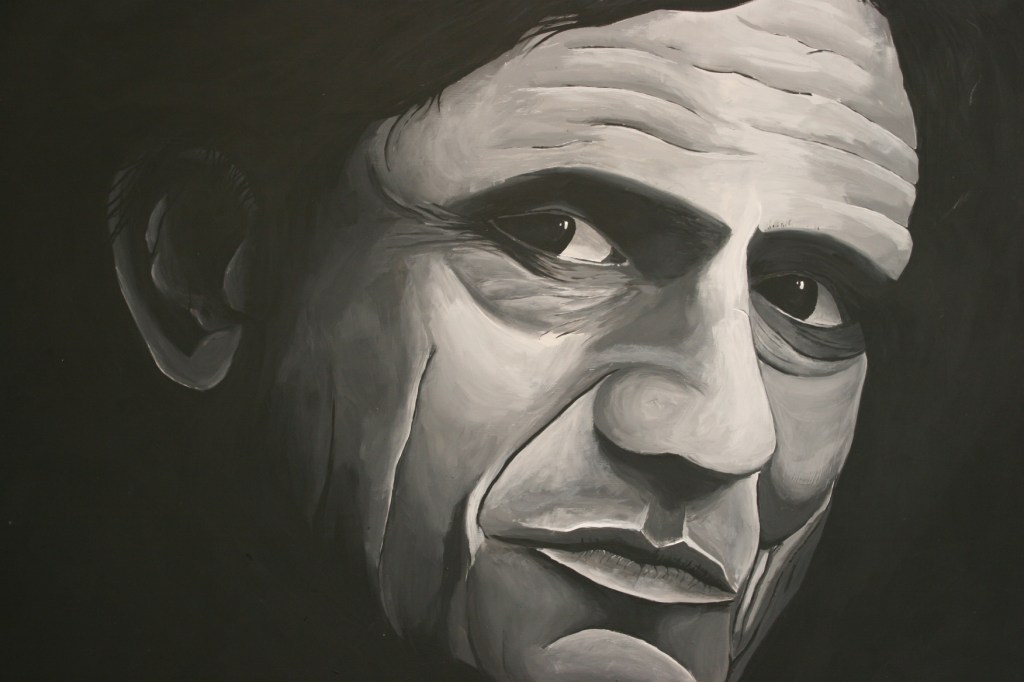
A close-up of Dan Rathburn’s “A Man in Black” (aka Johnny Cash).


Once I finished touring the Escape Artists’ exhibit, I shifted my focus to a Johnny Cash and Elvis pop-up show in a small corner gallery. In some ways, these two musicians were escape artists, too, escaping through their music.


“Tree of Life with Mother Nature’s Daughters” by Susanne Crane.


I love when art, from a divergence of artists, connects. We are all different. Yet alike in our humanity.


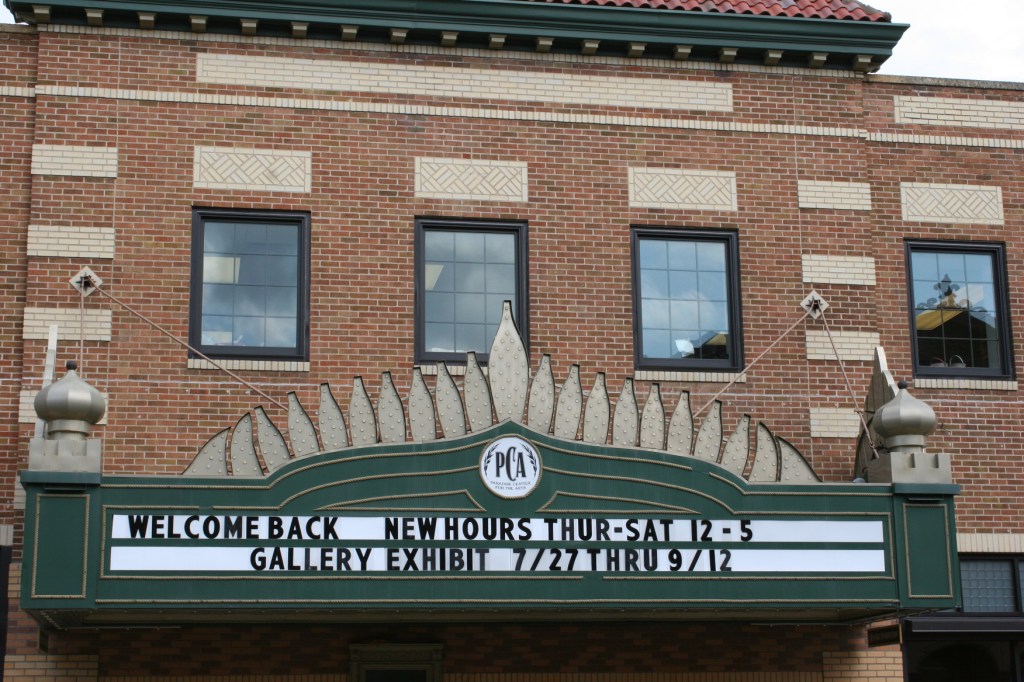
The Paradise Center for the Arts marquee.


FYI: The Paradise Center for the Arts, 321 Central Avenue North, Faribault, is open Thursday-Saturday from noon to 5 p.m. The above exhibits close on September 12.

© Copyright 2020 Audrey Kletscher Helbling


Montgomery celebrates agriculture with art August 13, 2020

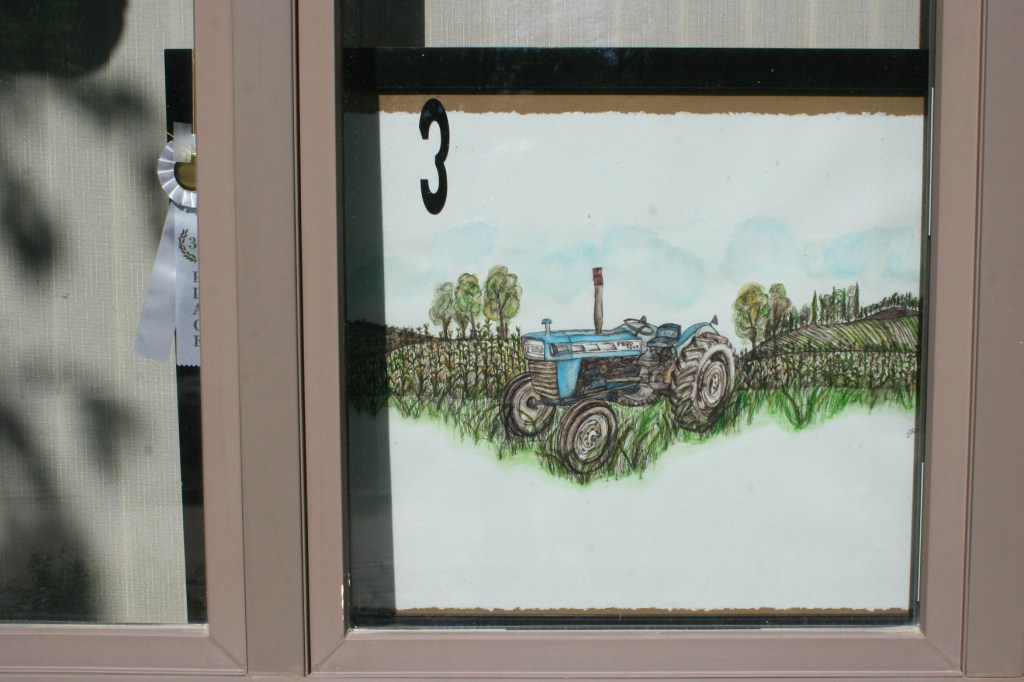
“Stop to Remember,” a pen and watercolor by Cami Vargo, was awarded third place in the show by judges Dale and Gale Looft. The art depicts her Great Grandpa Orville Richter’s 1965 Ford tractor.


THEIR ARTIST STATEMENTS are as compelling as their art.


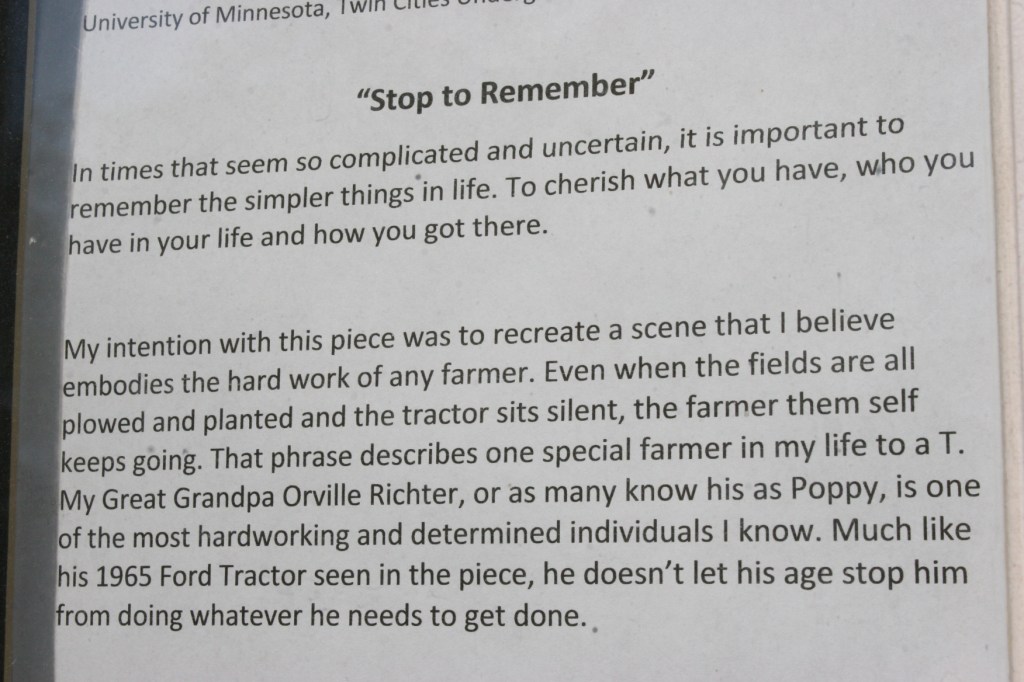
Cami Vargo’s artist statement about her tractor art.


In a new exhibit, “Celebrating Farmers and Agriculture,” coordinated by the Montgomery Arts & Heritage Center, 15 artists share their deep love and appreciation for all things rural. Recently I viewed the 22 pieces of art displayed in the front windows of the arts center and businesses in the heart of this small Minnesota town.


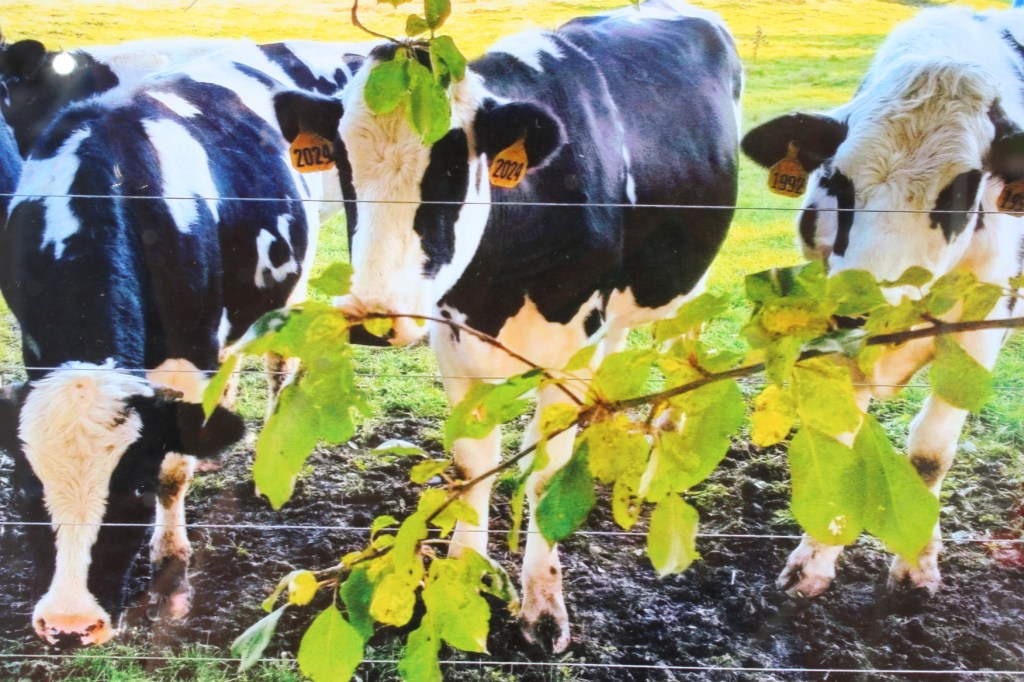
One of two photos by Liz Krocak, this one titled “Apple Harvest Visitors.”


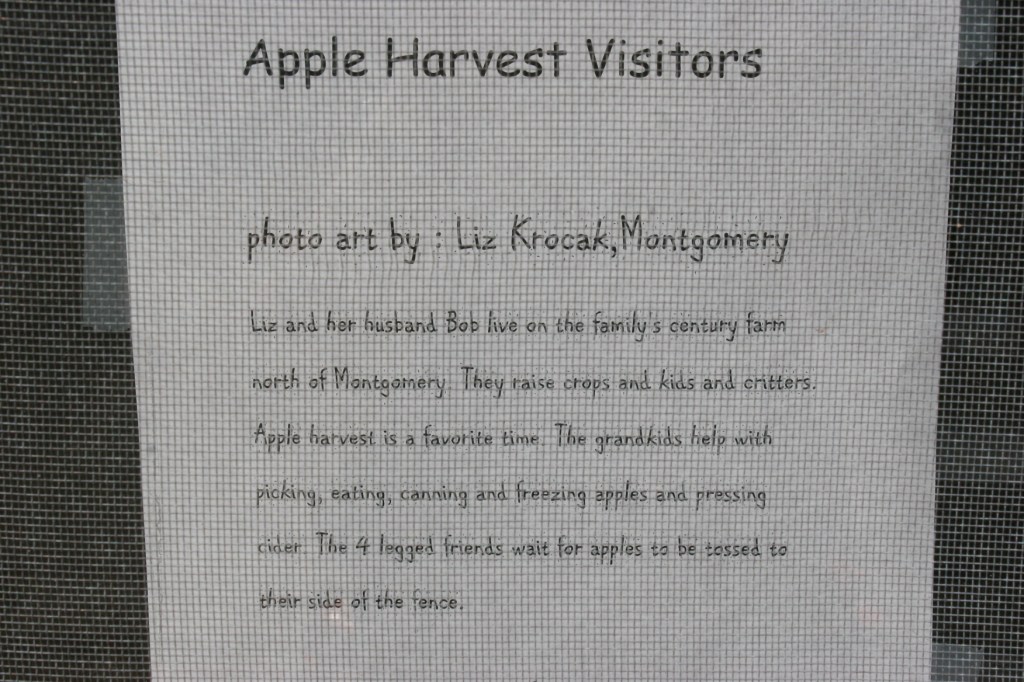
Through the screen window, you can read this artist statement by Liz Krocak.


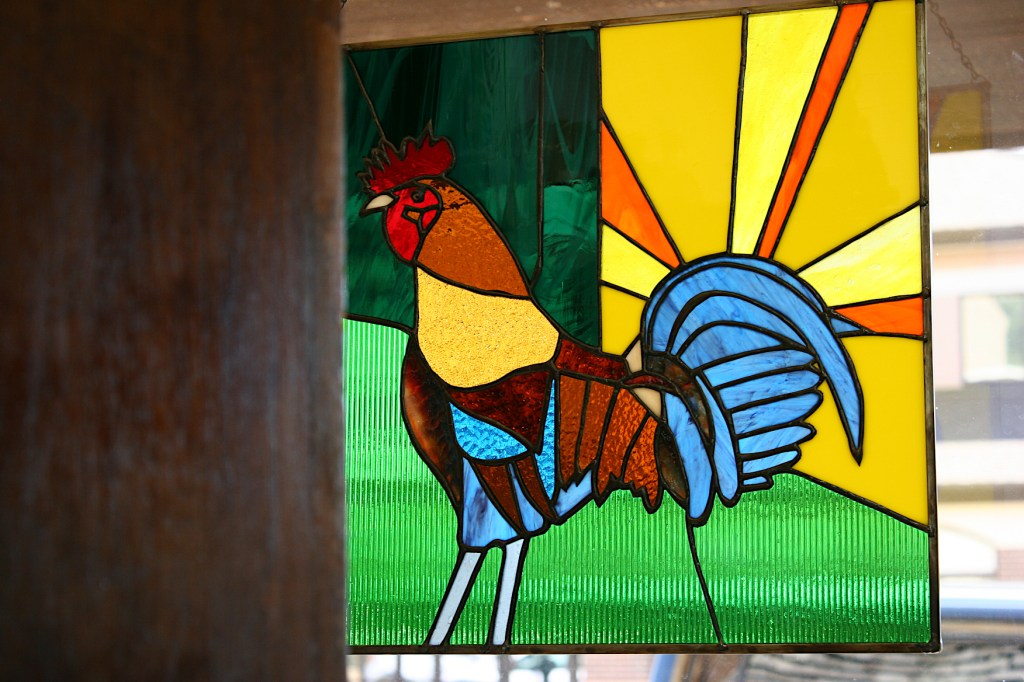
Bold and beautiful stained glass art by Annette Stavos hangs in a window of Hermann Thrifty White Pharmacy. If the drugstore is open, go inside and view the art to see the sun shining through it. Another stained glass creation by Mona Grimm hangs in a window of Montgomery Chiropractic and was awarded second place in the show.


From cows to a rooster to a farm dog, from tractors to windmills, from barns to country scenes, the art showcases important aspects of rural life.


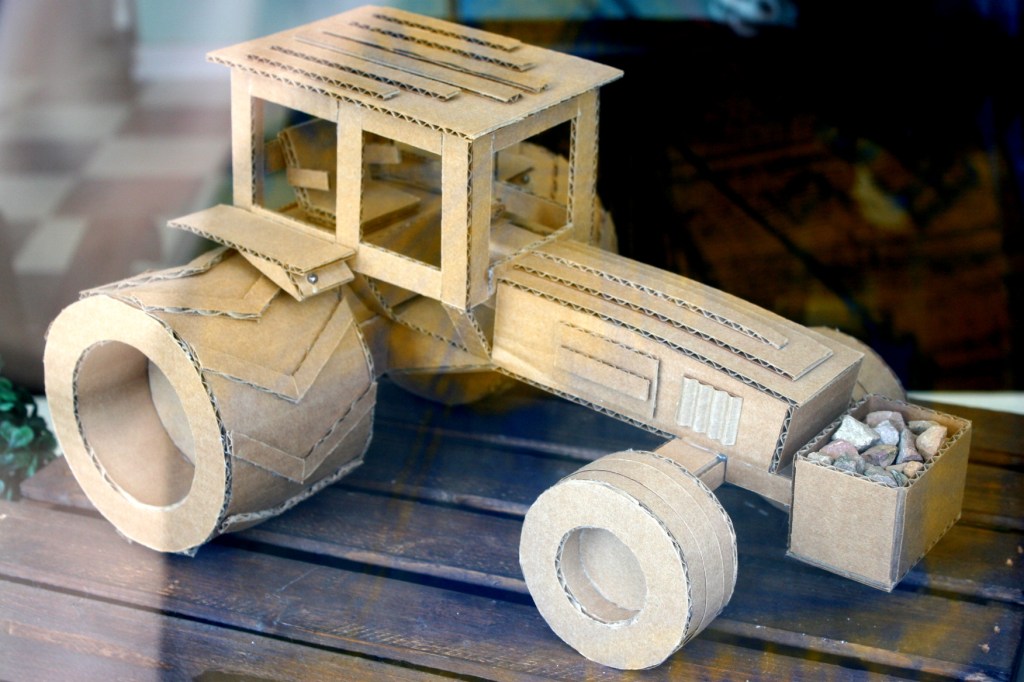
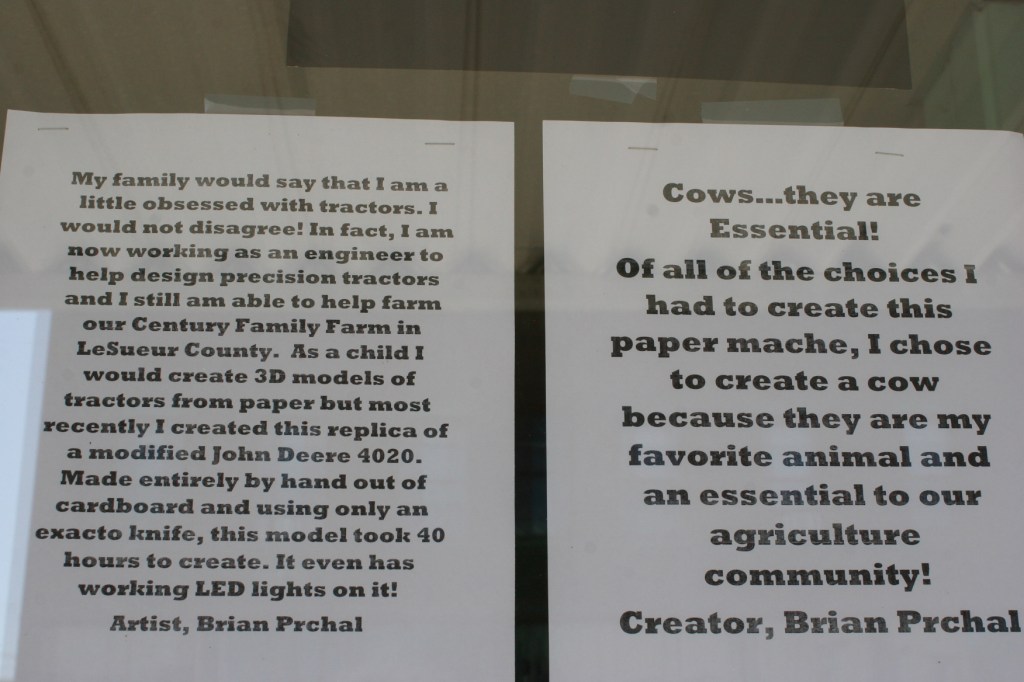
Constructed from cardboard by Brian Prchal, this is a replica of a modified 4020 John Deere.


Brian Prchal shares the stories behind his two art pieces.


And the stories that accompany that art are often deeply personal. Rooted in the land.


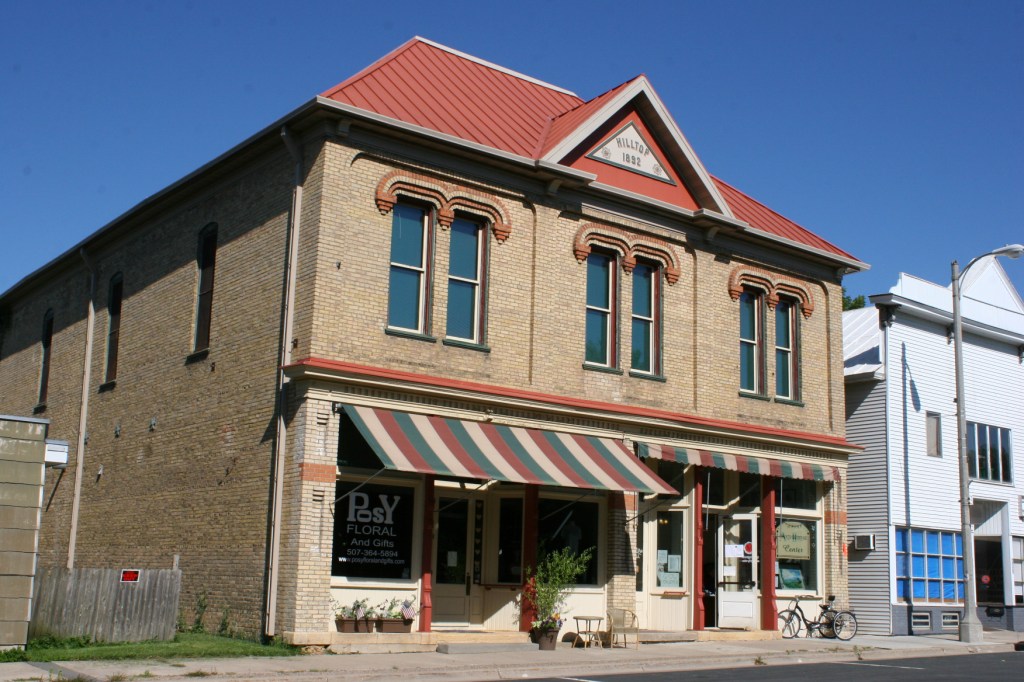
The Montgomery Arts & Heritage Center (right side of building), 206 First Street North on the north end of downtown.


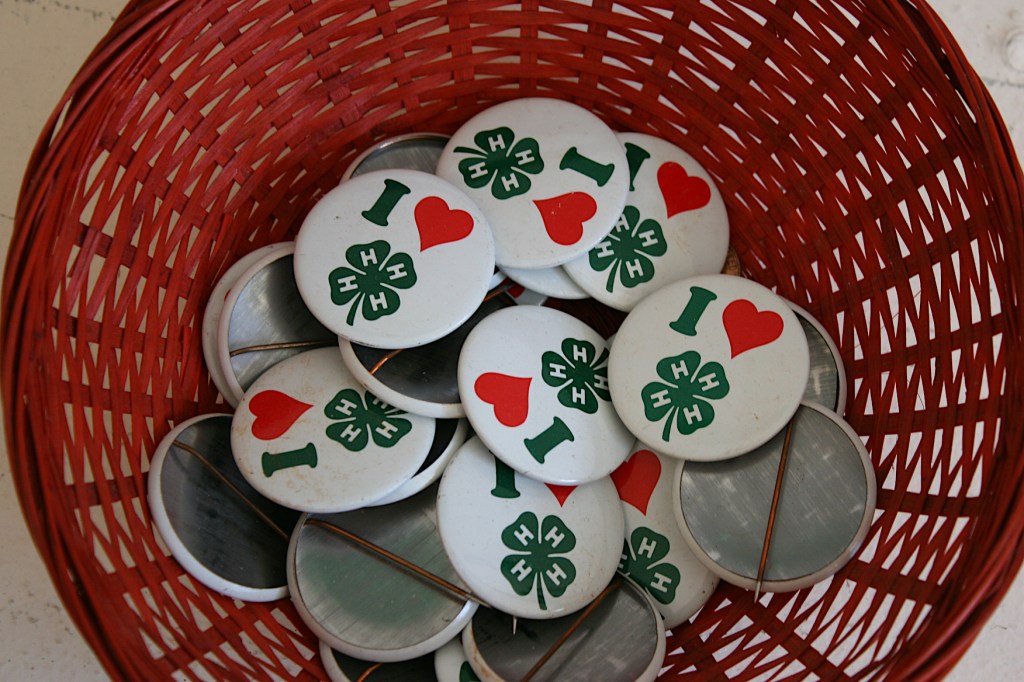
In the ag display, 4-H buttons.


County fairs are an important part of rural life.


Before beginning my tour, I stopped first at the arts and heritage center to pick up a map and to view an exhibit of local ag-related memorabilia showing the importance of agriculture in this community.


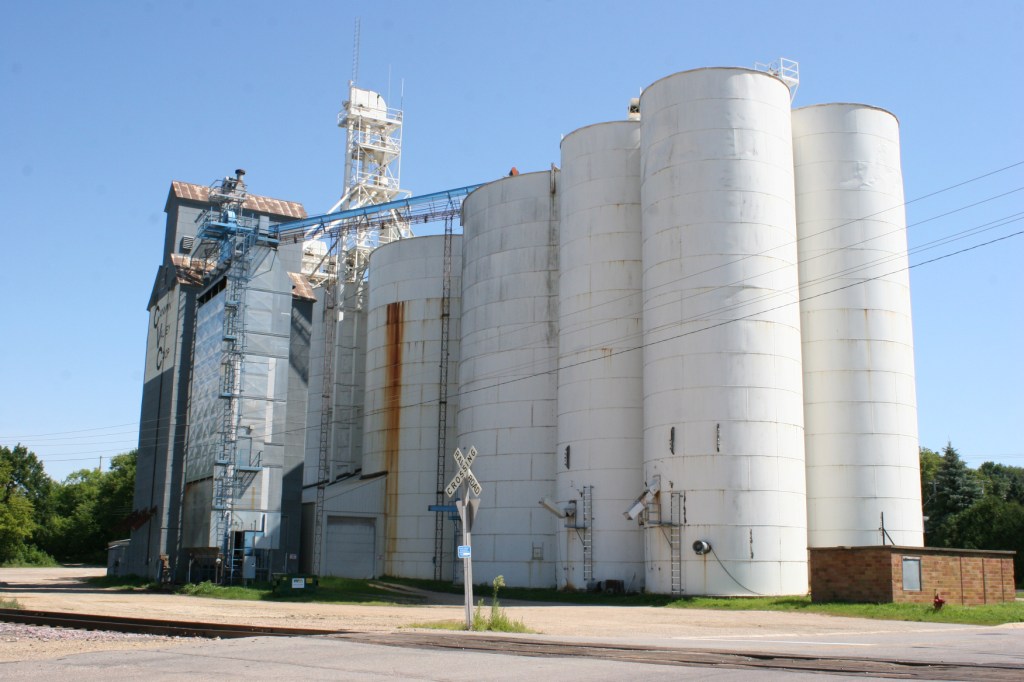
The grain elevator complex in Montgomery.


Just down the hill from the arts center, grain elevators loom, a strong visual of ag’s local economic value. On the opposite end of town, the canning company processes sweetcorn. And on every border of town, homes or businesses adjoin farm fields.


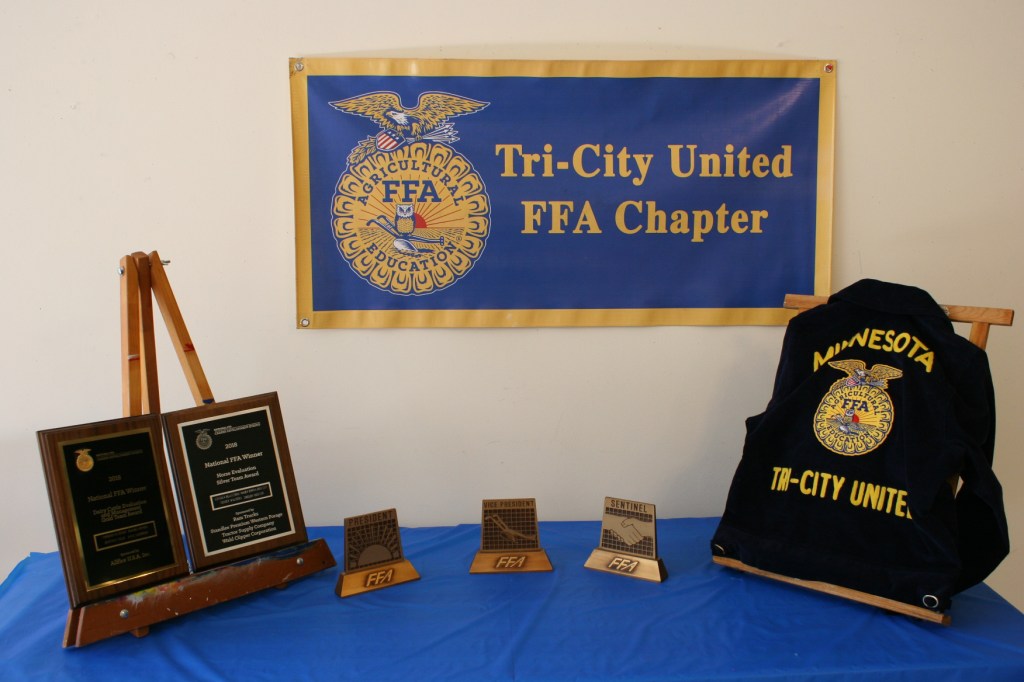
Future Farmers of America, based at the local high school.


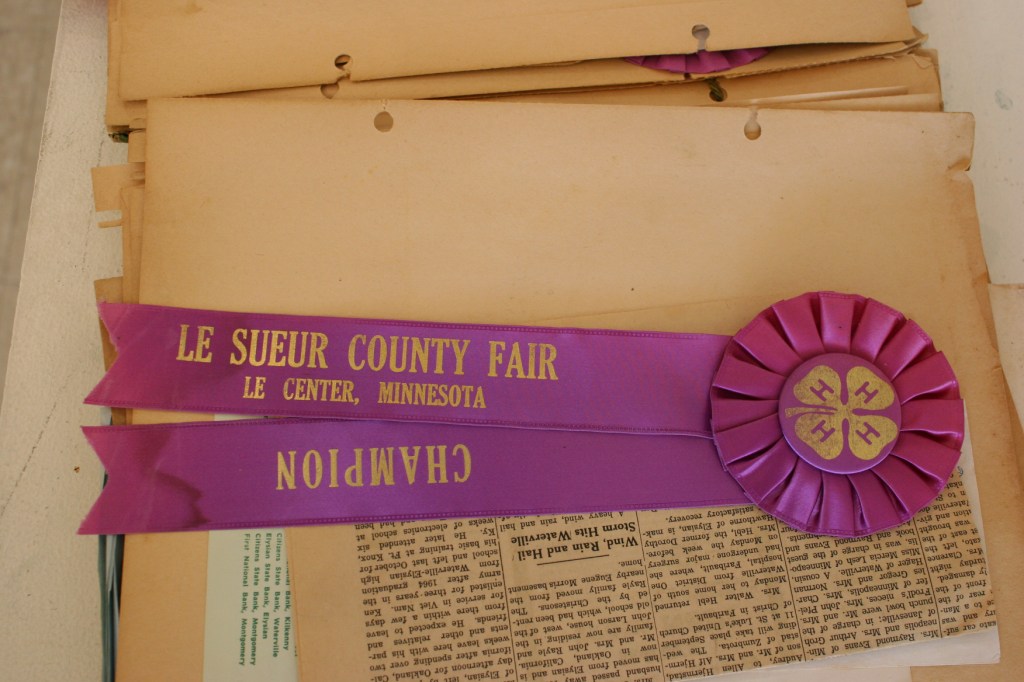
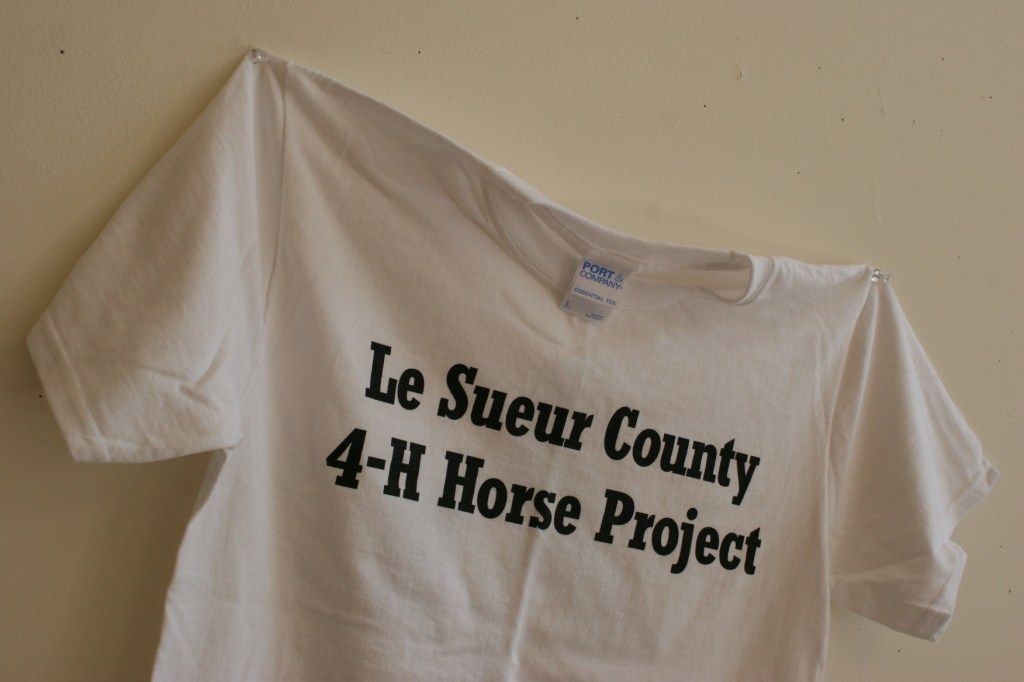
Recognizing 4-H in Le Sueur County.


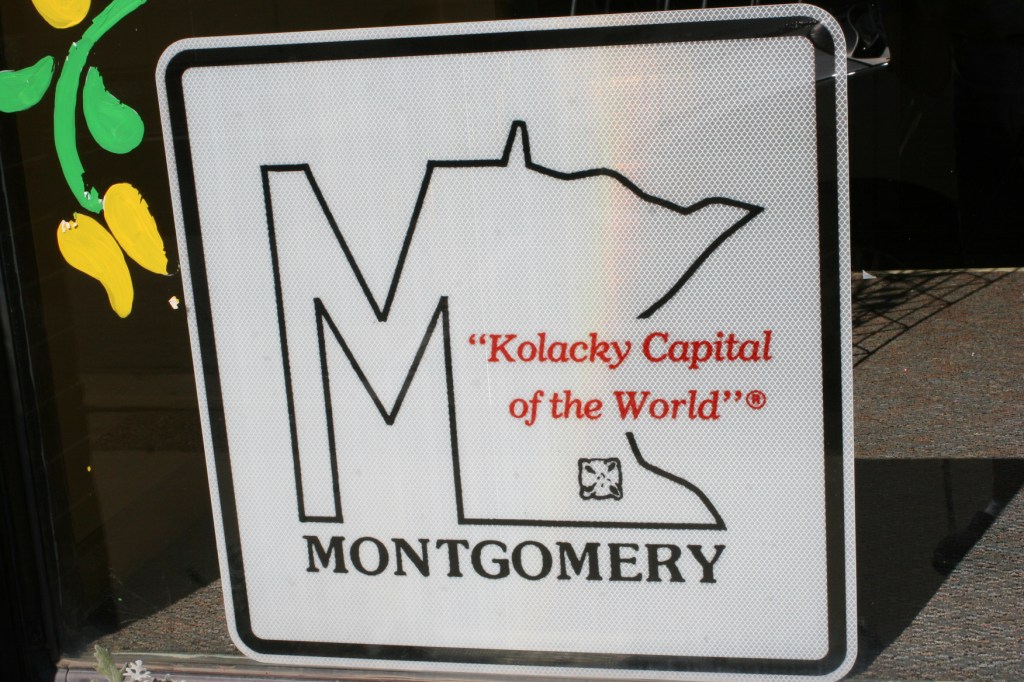
Lots of signs downtown celebrate kolacky, a Czech pastry sold at Franke’s Bakery and Mackenthune’s Fine Foods.


Montgomery centers on agriculture and its Czech heritage as the self-proclaimed Kolacky Capital of the World. So it seems particularly fitting that the arts center would focus its new exhibit on farmers and agriculture. The project was funded with a Prairie Lakes Regional Arts Council grant and donations from the Bob and Mary Jo Loftus Foundation and Compeer Financial.


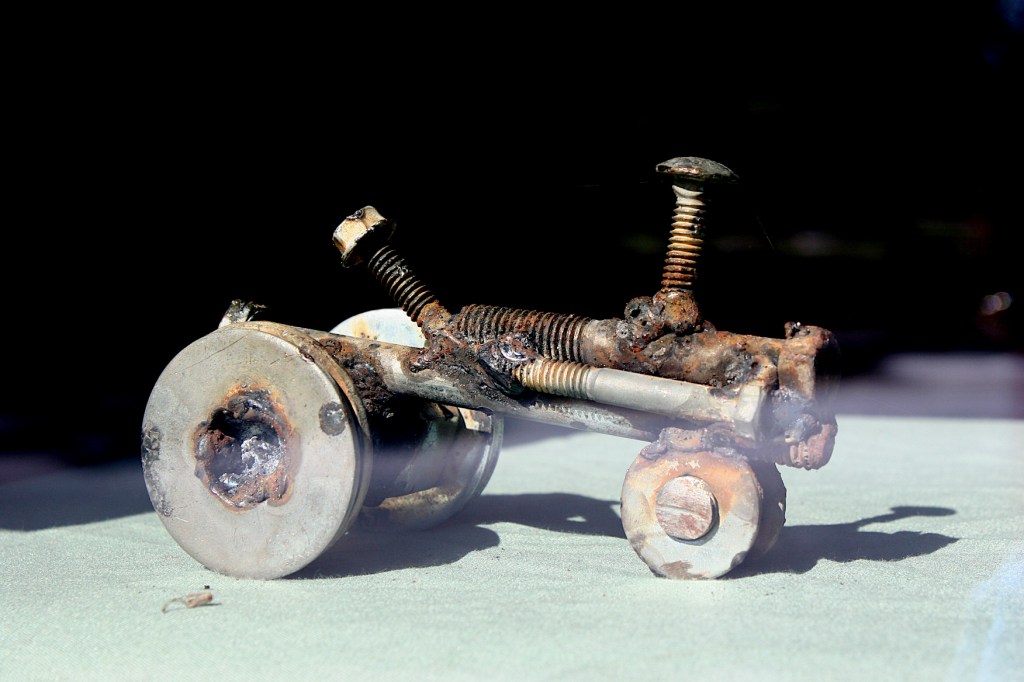
“The Nuts & Bolts of Farming” fits this tractor art crafted by Tyler Fromm.


Area artists clearly enjoyed the challenge of creating ag-themed art. I saw that in tractor art drawn, formed from string and nails, cut and crafted from cardboard, welded from nuts and bolts.


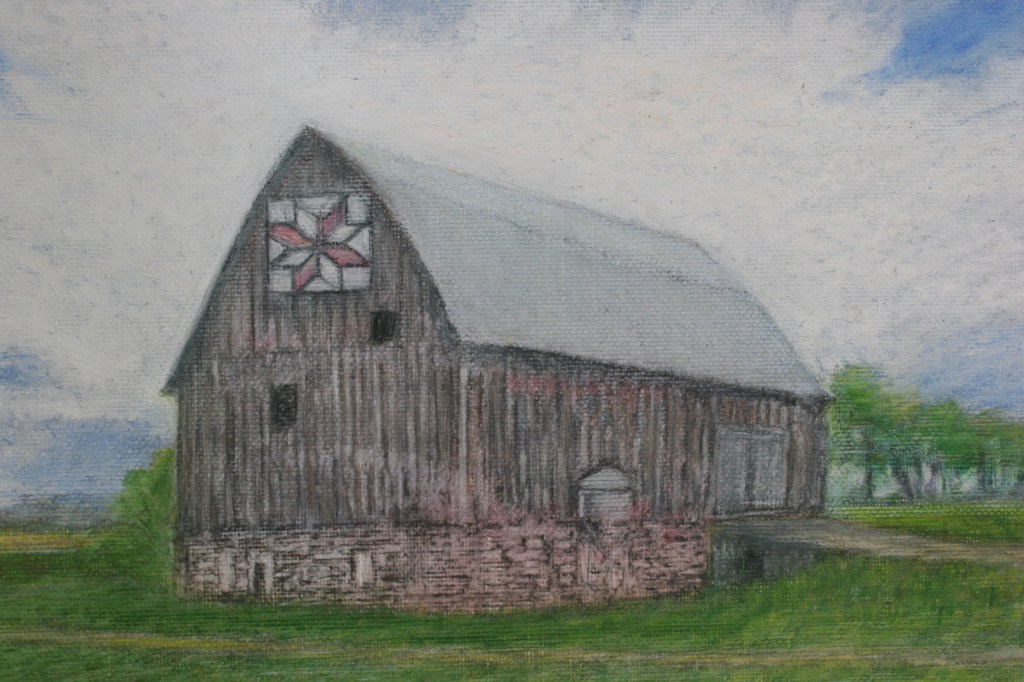
Pat Preble won first place for “Old Barn” and “Cows in the Field.” She incorporated a “Star of Heaven” quilt block into her barn art in honor of her mom, a quilter.


Stained glass. Batik. Wood. Photos. Quilts. So many different tools and styles and ways of creating art add to the interest.


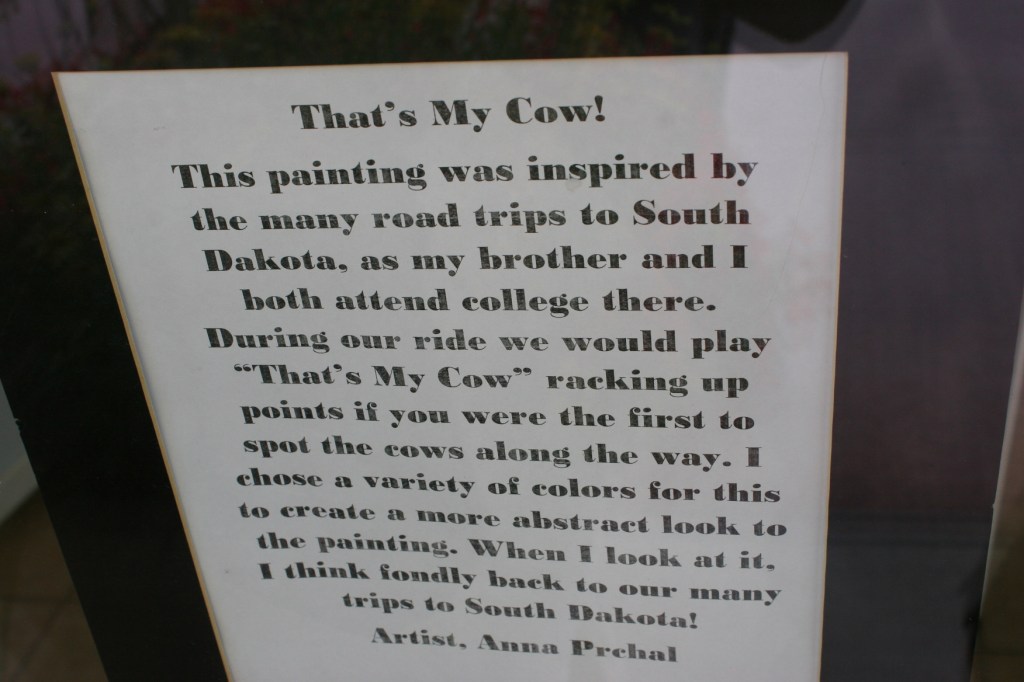
This artist statement made me laugh out loud. Because of glare, I was unable to photograph Anna’s cow art.


The art honors pioneer women who pieced quilts, an uncle, farm wives… Liz Krocak writes in her artist’s statement, “Behind every good farmer is his wife, rolling her eyes.” Yes, humor even infuses some of the artist statements.


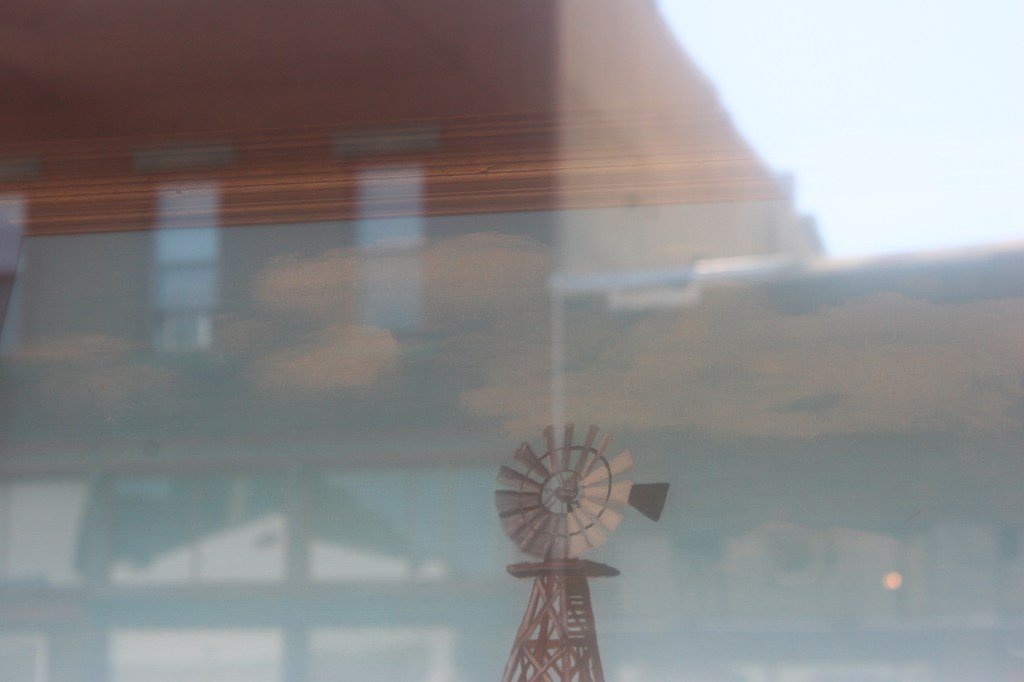
Glare made it really challenging to photograph Carol Ehrhardt’s entire cattle and windmill art. But I decided I like this image showing only the top of the windmill and the reflection of an aged building. Ehrhardt was awarded third place in the show.


Annette Stavos, who grew up on a hobby farm, honors her uncle. “My uncle was the real farmer and we helped him pick rocks and bale hay.”


A close-up of Susan Hayes batik art titled “Summer Fields.”


Susan Hayes, a city girl who married a farmer, writes. “…I’ve had first hand experience with agriculture and life on a small farm. It’s not easy getting up before 5 am to milk the cows or baling hay in 100 degree weather. She created a beautiful batik piece, “Summer Fields.”


A farm in the Montgomery area.


Anna Prchal expresses her love of rural life in these words: “The fresh air, hard work ethic and never having a dull moment there are the things I love most about the farm.”


The countryside near Montgomery.


For Kimmie Loranger, who once traveled with the carnival, worked as a nanny and waitress, and who was at one time homeless, living in rural Montgomery and now creating art “is the happiest I’ve ever been in my whole life.”


Tyler Fromm drew this picture of his “beloved farm dog, Buddy.” Oak siding from the corn crib on his family’s century old farm frames the art.


These are the stories that make this exhibit especially meaningful, especially touching, especially impressionable. This isn’t just another art show, but rather an expression of emotions with a rural perspective. Written. And showcased in art.


FYI: You can view this exhibit any time during the day as the art is visible from outdoors in front windows. Note that glare and reflections sometimes make seeing the art a challenge. The Arts & Heritage Center, however, is open limited hours from 2-5 pm Thursday and Friday and from 9 am to noon Saturdays. The exhibit runs until the end of November. Maps to the art locations are available from several downtown Montgomery businesses in addition to the arts center. Be sure to vote for your favorite for the People’s Choice Award. This blog post represents only a sampling of art in the exhibit.

Please check back next week for additional posts from my visit to Montgomery.

© Copyright 2020 Audrey Kletscher Helbling


In Faribault: When music inspires art September 21, 2015

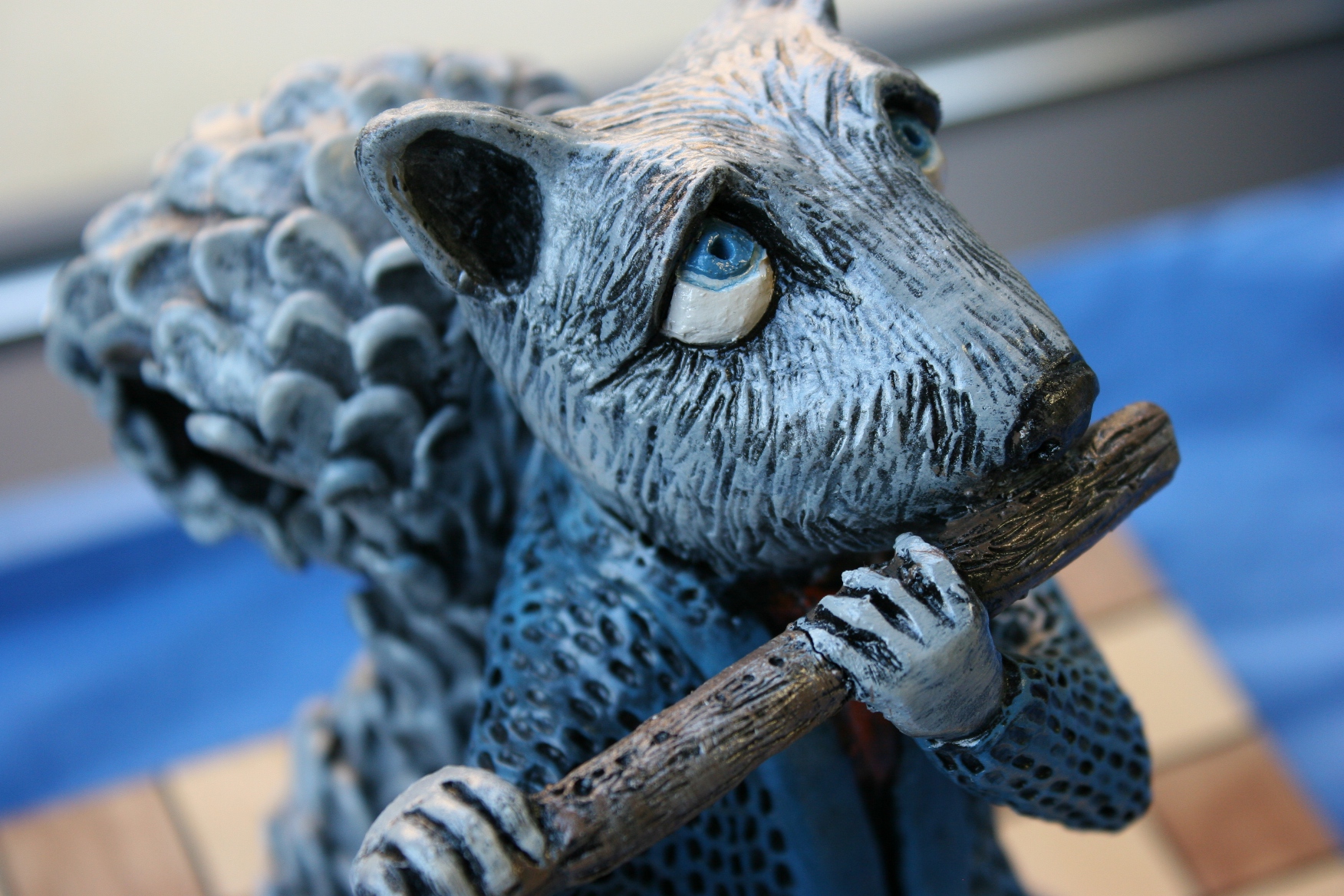
"The Music Nut," a ceramic sculpture by Tami Resler.

“The Music Nut,” a ceramic sculpture by Tami Resler

I AM A PERSON WHO DELIGHTS in art, like the devoted sports fan loyal to a team.

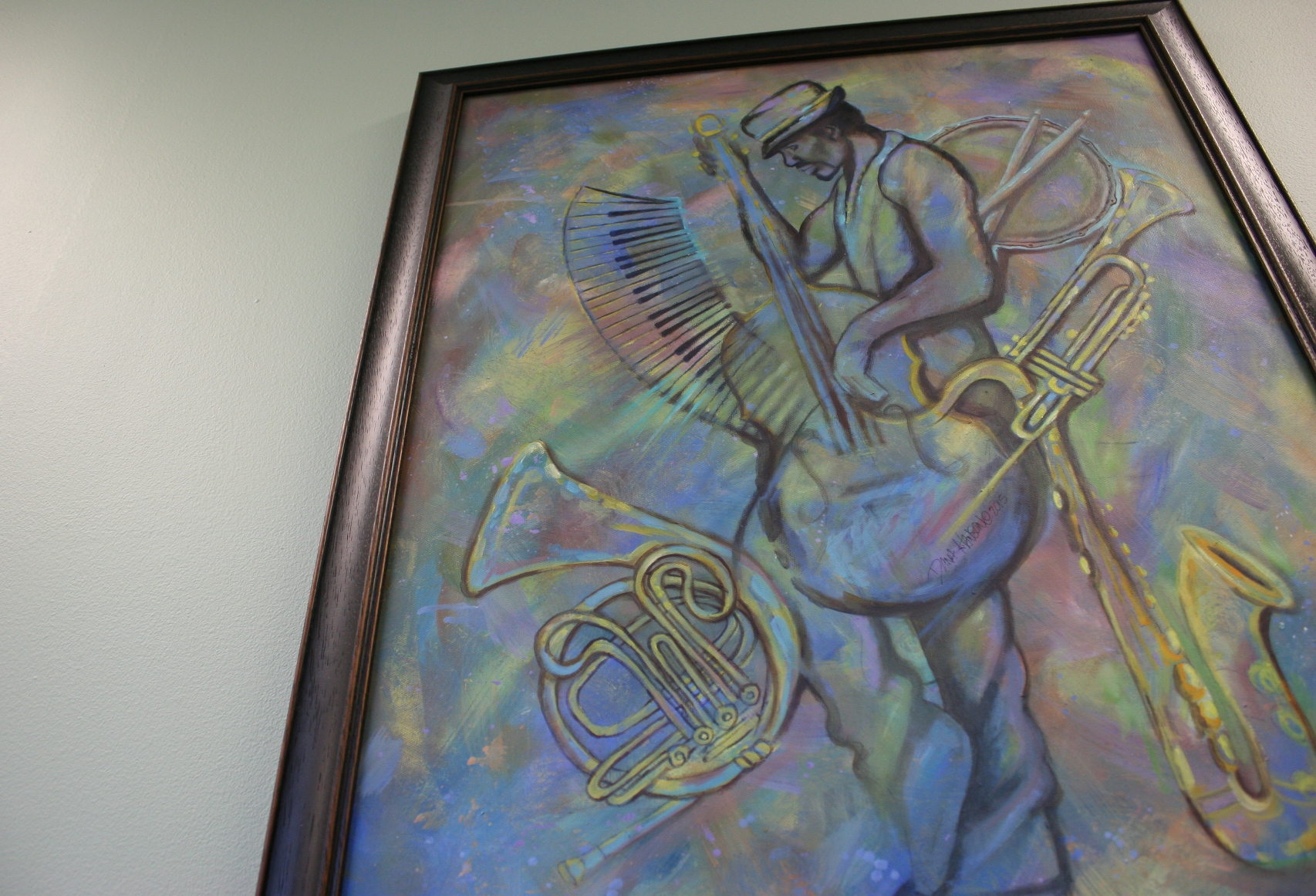
"The Music Man," oil on canvas by Dana Hanson

“The Music Man,” oil on canvas by Dana Hanson

Perhaps it is the absence of access to the arts in my formative years that causes me to so appreciate art today. I can’t recall ever visiting an art gallery while growing up in rural southwestern Minnesota. If there were any galleries, I was unaware. Art, for me, was limited to school art projects. Life was about the basics, not the arts.

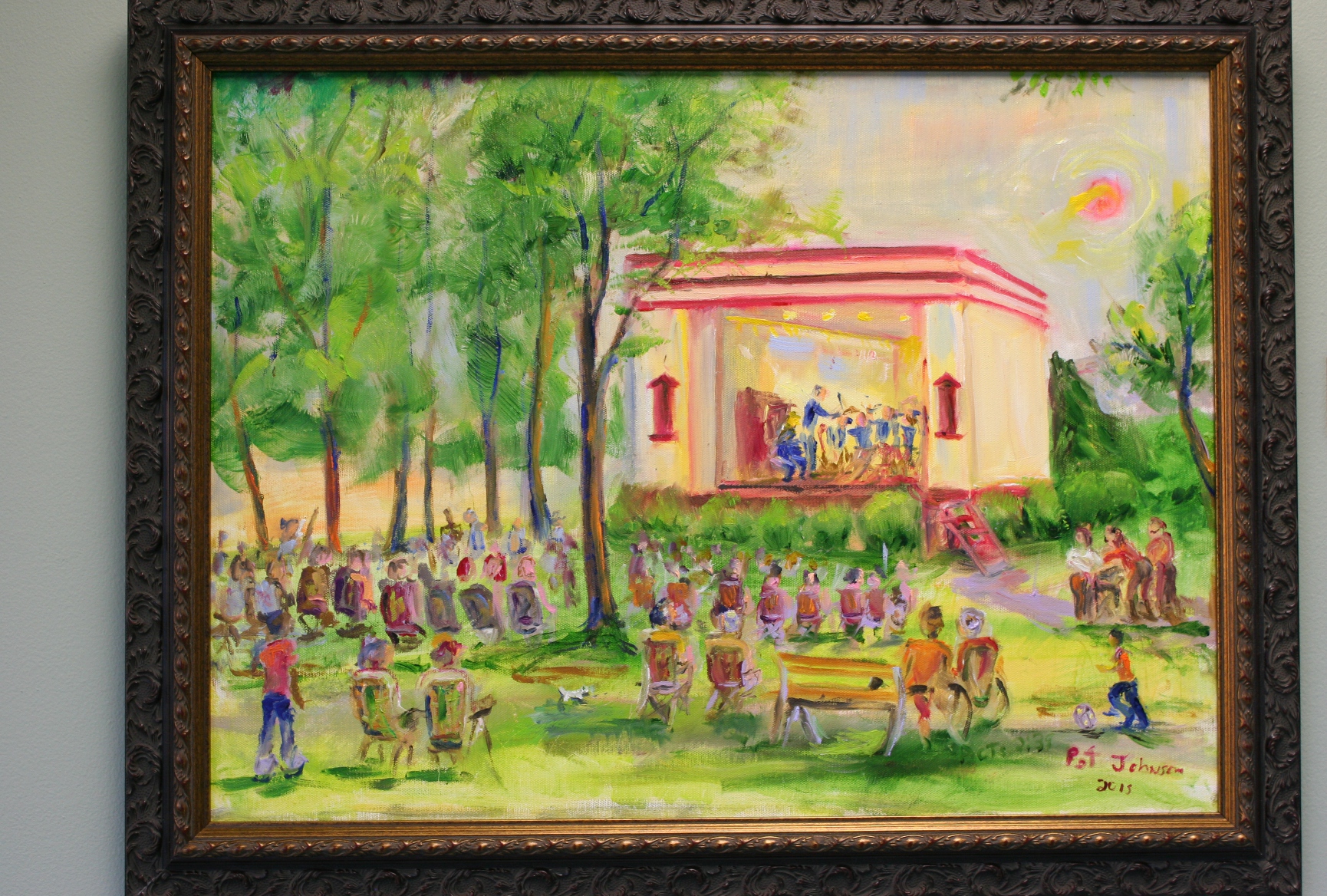
"Central Park Notes," an oil on canvas by Pat Johnson

“Central Park Notes,” oil on canvas by Pat Johnson

I especially celebrate occasions when the arts are brought to folks in an unpretentious way. For years, Faribault, my home of 33 years some 120 miles from my prairie hometown, has offered free weekly outdoor summer concerts in Central Park. This year, visual art was added, much to my delight. It’s important, I think, to expose people to art in a relaxed setting, where they feel comfortable approaching artists, watching them create and asking questions.

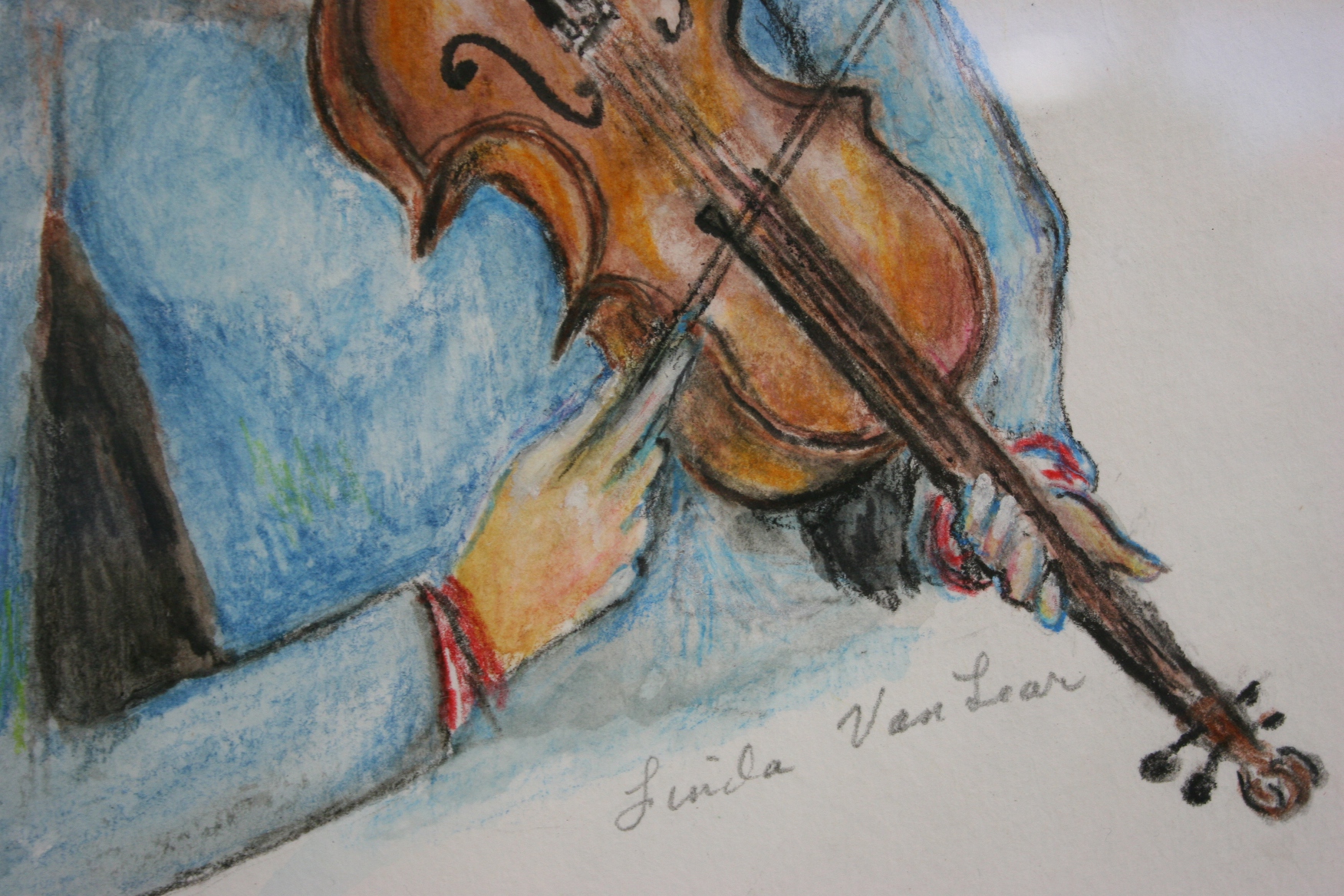
A snippet of Linda Van Lear's "Girl & Violin" watercolor pencil

A snippet of Linda Van Lear’s “Girl & Violin” watercolor pencil

Local artists set up their easels, pulled out their supplies and created music-themed art as musicians performed. It was perfect, this melding of music and art in the park.

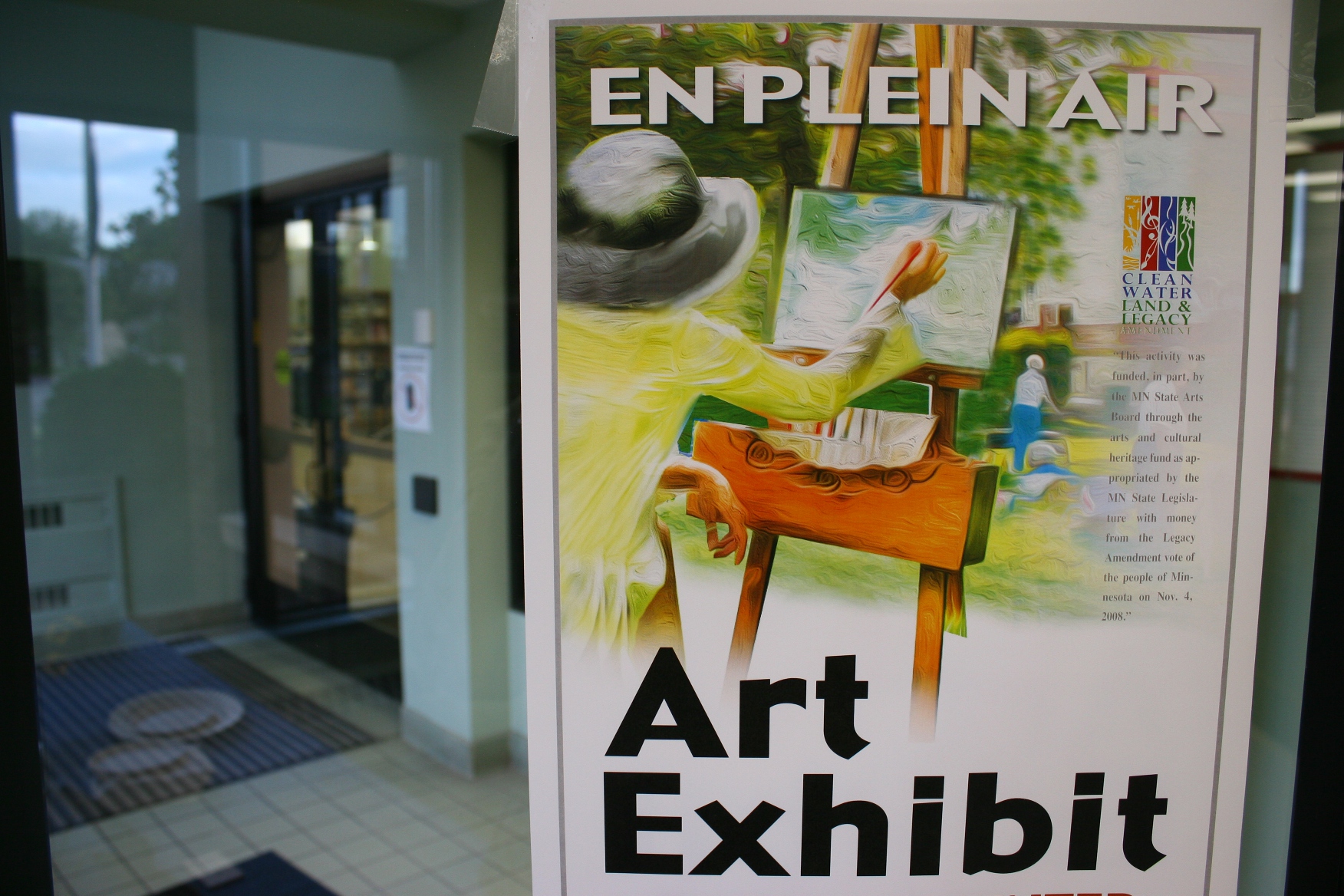
A poster posted at the initial exhibit.

A poster posted at the initial exhibit.

And then, to honor the participating artists, a several-day “Nature of Music” exhibit was staged in a connecting space between the library and community center to showcase selected pieces. I missed that event. But the en plein air art will be exhibited again, this time from September 22 – November 10 in the Lois Vranesh Boardroom Gallery at the Paradise Center for the Arts in historic downtown Faribault. An artists’ reception is slated for 5 – 7 p.m. on Friday, September 25. Other gallery openings are also set for that evening.

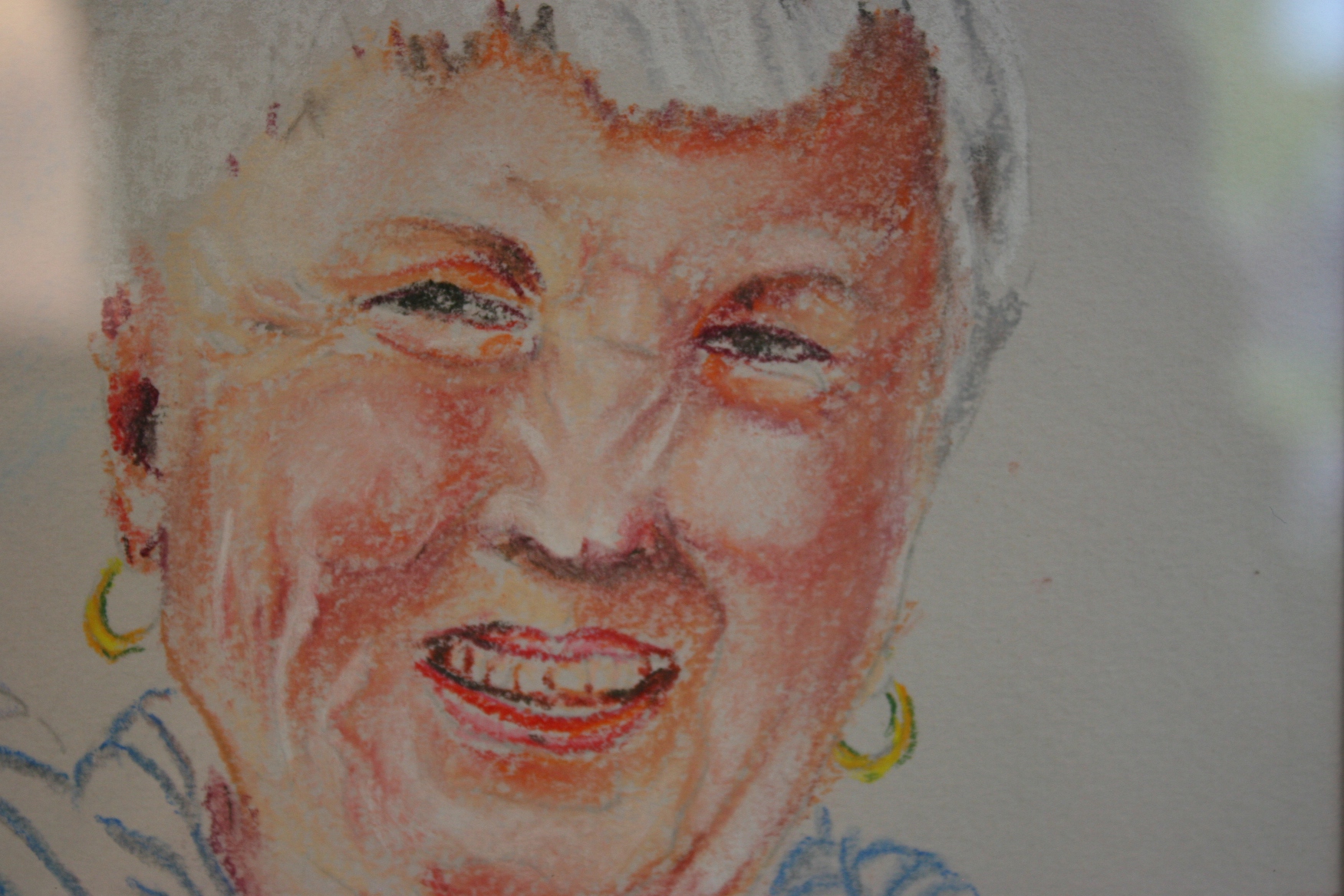
This shows one of the many faces in Irina Mikhaylova's "Faces in the Crowd" done in soft pastels.

This shows one of the many faces in Irina Mikhaylova’s “Faces in the Crowd,” done in soft pastels.

The Paradise is a wonderful center for the arts. Sometimes I can’t believe how lucky I am to live in a community with an arts center and a library. You see, I also grew up in a town without a library…although today Vesta has a Little Free Library.

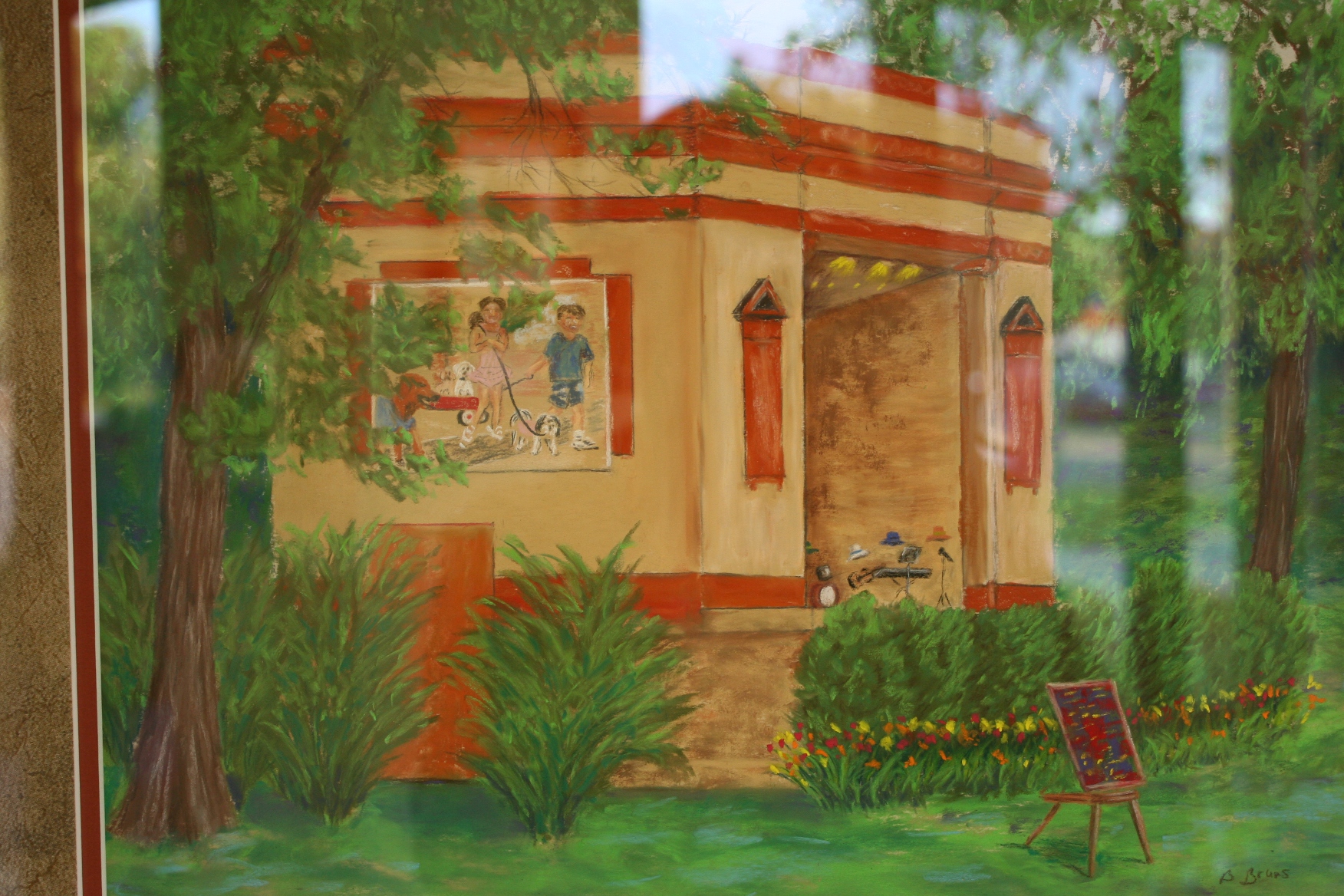
"At the Bandshell" in soft pastels by Barbara Bruns

“At the Bandshell” in soft pastels by Barbara Bruns

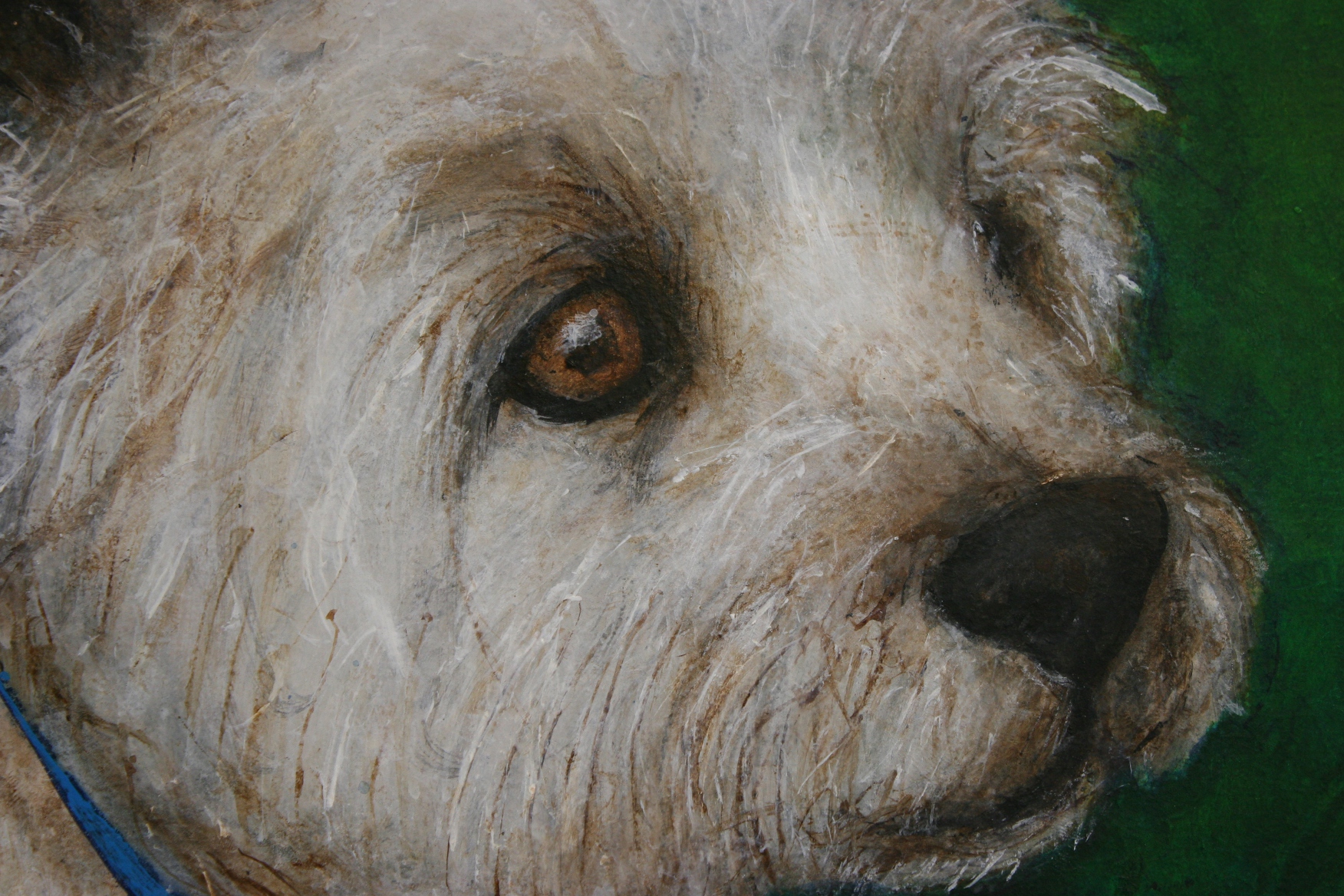
Murphy's face in "Murphy at Central Park," acrylic on hardboard by Julie Fakler

Murphy’s face in “Murphy at Central Park,” acrylic on hardboard by Julie Fakler

A section of Nicole Volk's "Camelot Calls," inktense on watercolor paper

A section of Nicole Volk’s “Camelot Calls,” inktense on watercolor paper

© Copyright 2015 Audrey Kletscher Helbling
Artwork was photographed with permission of Jeff Jarvis, Faribault Park & Rec Enrichment & Communications Coordinator, who organized the en plein air program.

Note that unavoidable glare on glass shows up on some of the photos. That is the reason I sometimes did not photograph an entire work of art. But sometimes I wanted only to show you a snippet peek at the entire piece.


The art of healing at a Minnesota hospital January 28, 2013

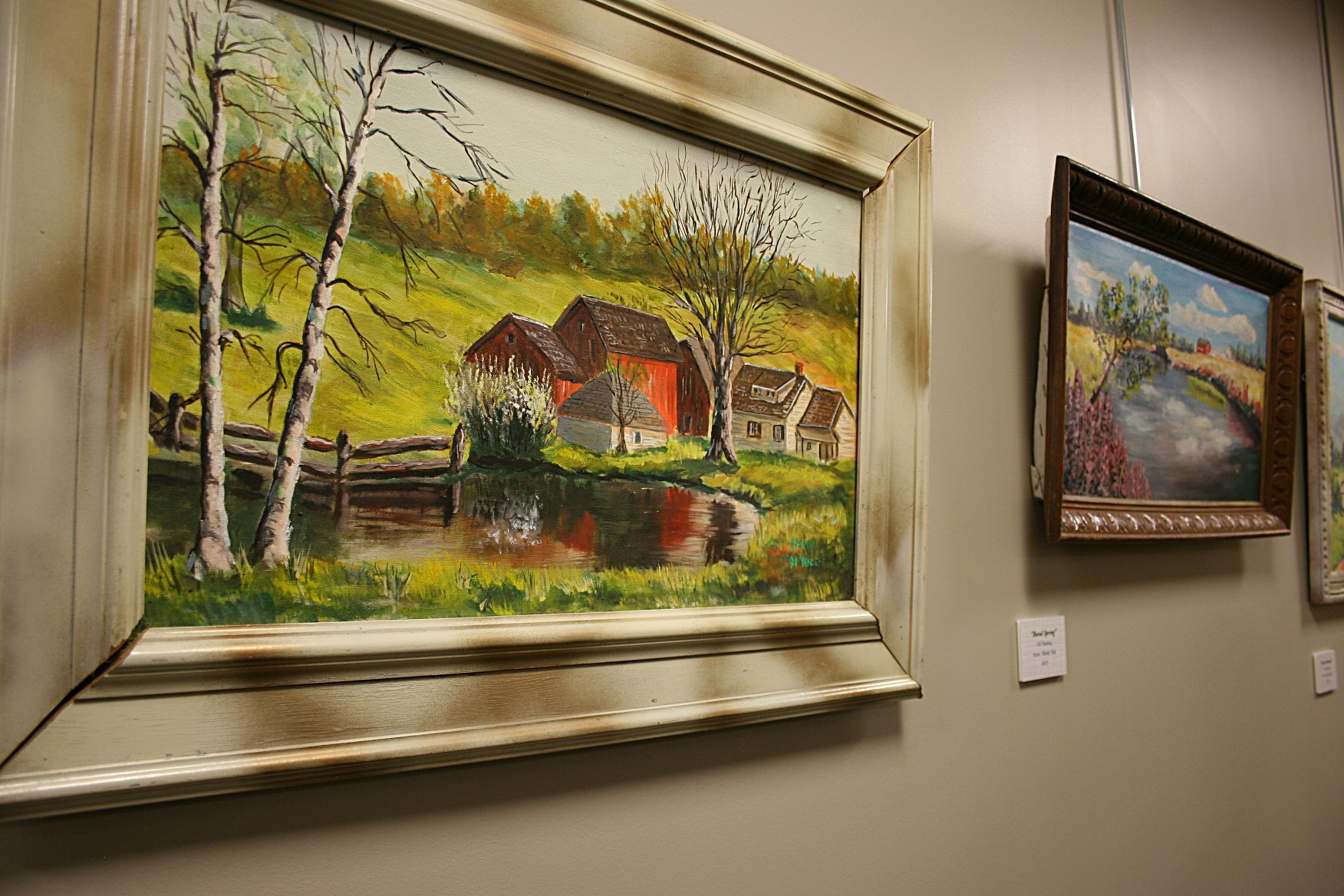
TWO YEARS AGO this month, my then 92-year-old artist friend, Rhody Yule, opened his first-ever gallery exhibit at the Paradise Center for the Arts in Faribault.

Six months later, he died.

But Rhody, and his art, live on, this time in a Paradise Center Healing Arts Program Exhibit at District One Hospital in Faribault. The arts center and hospital are partnering on the program.

Thursday evening I attended a reception for that show which features 70 pieces of art created by eight outstanding artists, each of them definitively different: Faribault artists Jody Hanscom, Jorge Ponticas, Pearl Tait and Rhody Yule; Marcus Moller of Morristown; Faribault native Tom Fakler, now living in Basel, Switzerland; Jane Strauss of Minneapolis; and Cynthia Ali of St. Paul.

As Healing Arts Coordinator Elizabeth Jacobs led my husband and me through the maze of hallways and centers that comprise the hospital complex, I thought how Rhody would have felt honored to be part of an exhibit designed to comfort patients and make their hospital experiences more pleasant.

The art selected by a committee of hospital staff fits the program’s criteria as “healing art,” meaning it must be calming, happy and a positive piece of work, Jacobs says.

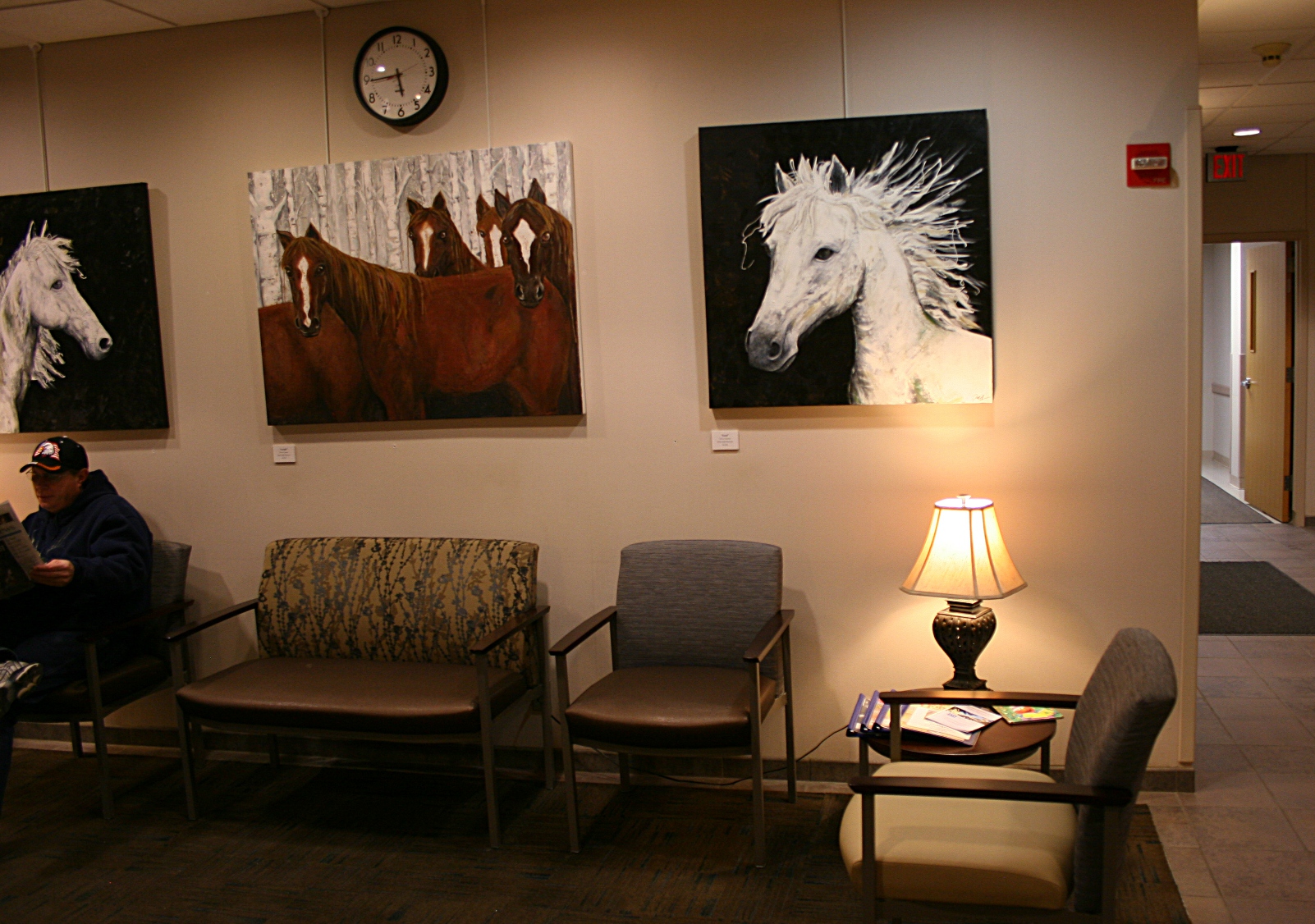
Three of Jody Hanscom's horse portraits.

Three of Jody Hanscom’s horse portraits.

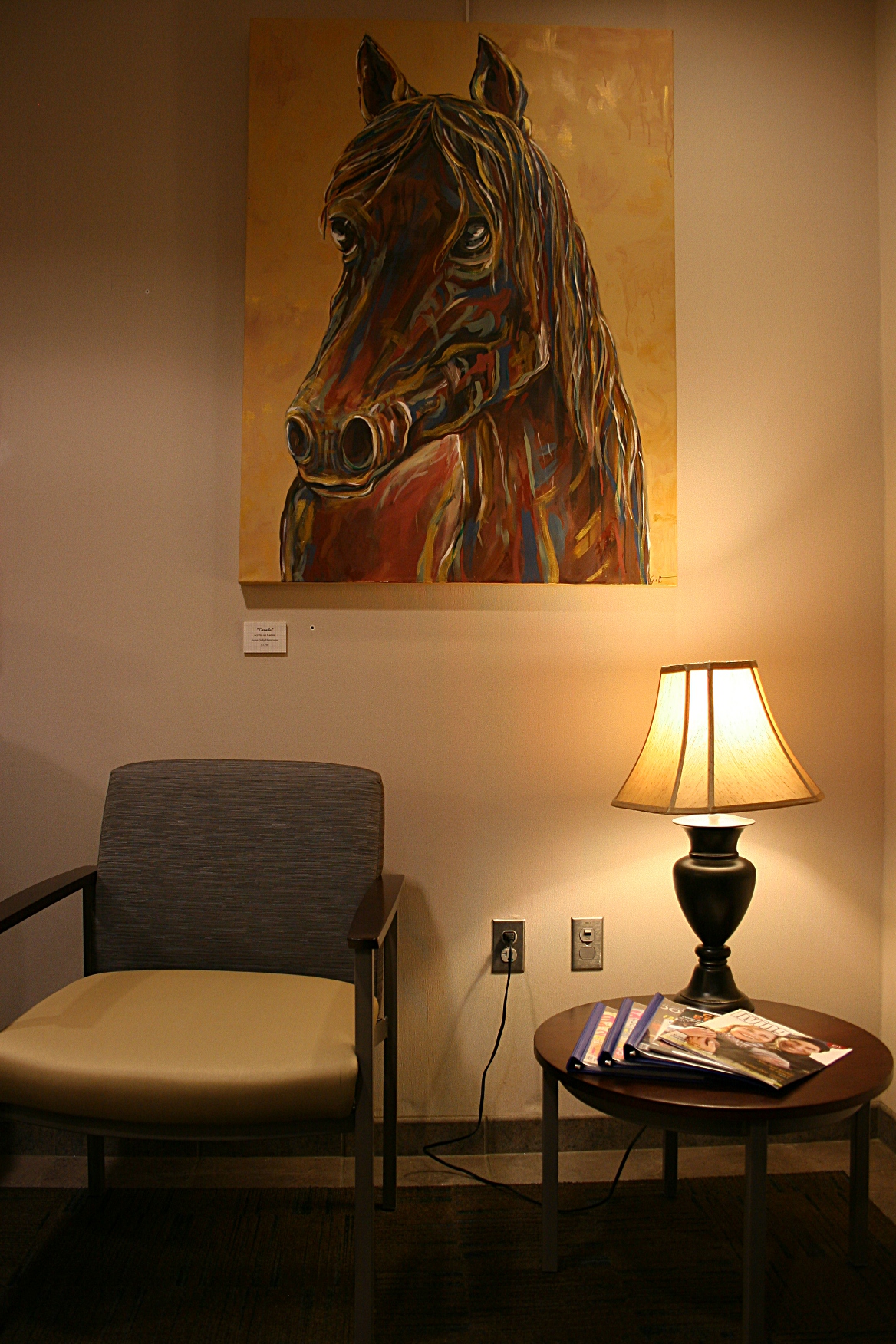
And you’ll see that, almost experience that positivity, from the minute you walk in the front doors of the hospital to view Jody Hanscom’s sizable horse portraits in the lobby waiting areas. Jody’s oil paintings capture both the gentleness and free spirit of horses, a combination that simultaneously calms and uplifts.

Tucked into a corner by the elevators, the fourth of Hanscom's horse oil paintings.

Tucked into a corner by the elevators, the fourth of Hanscom’s horses.

Just down the hallway, five oil paintings by Jorge Ponticas brighten the walls with vivid scenes from his native Chile and elsewhere. His art evokes happy thoughts. What can I say? I can’t resist the sweet face of a llama.

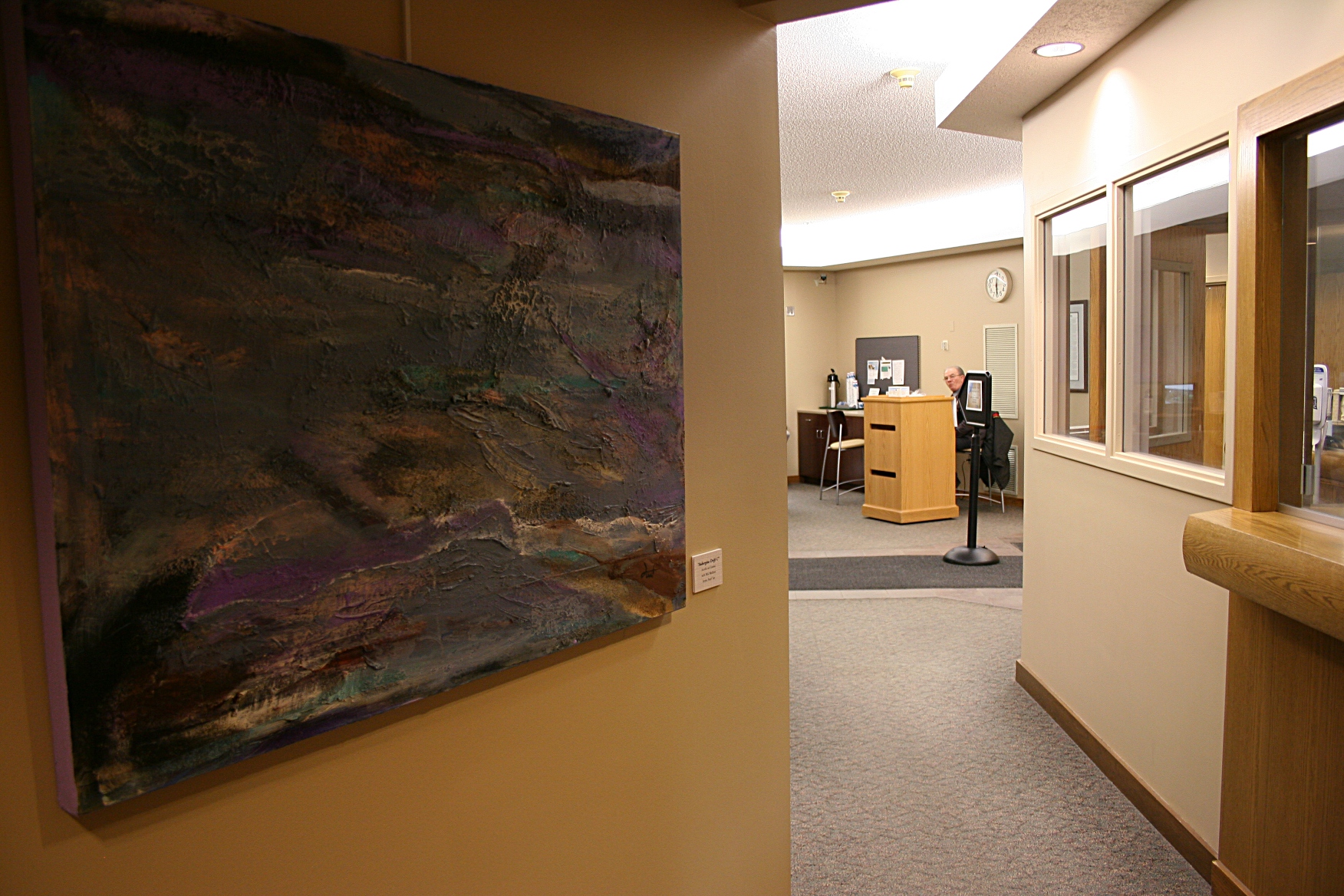
Pearl Tait's "Aubergine Drift I."

Pearl Tait’s “Aubergine Drift I.”

Moving along to the emergency room lobby, I find Pearl Tait’s moody mixed medium art the ideal choice for a setting often filled with emotion and uncertainty. Her work, which features textures like sand and tape incorporated into a painting, reflects, in my opinion, the intense layers of feelings that come with any visit to the ER.

A photo in a cozy private waiting room fronts Tom Fakler's Swiss Alps photos.

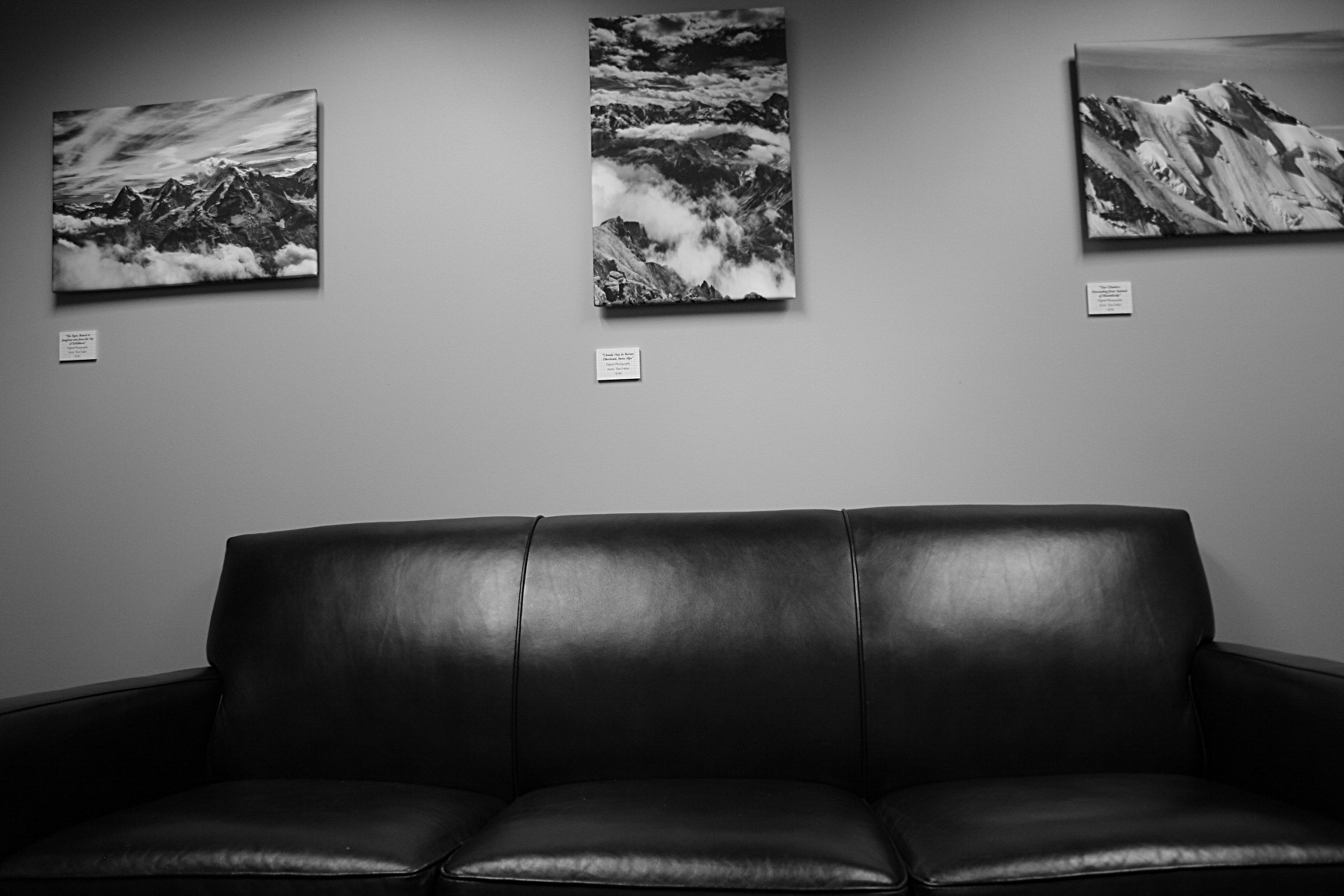
A sofa in a cozy private waiting room fronts Tom Fakler’s trio of Swiss Alps photos.

Around the corner inside a cozy ER room where families are taken to hear bad news (so says Jacobs), the mood totally changes with the soothing photography of Tom Fakler. His black-and-white canvas prints of the Swiss Alps offer a natural world escape during a particularly difficult time for patients’ families.

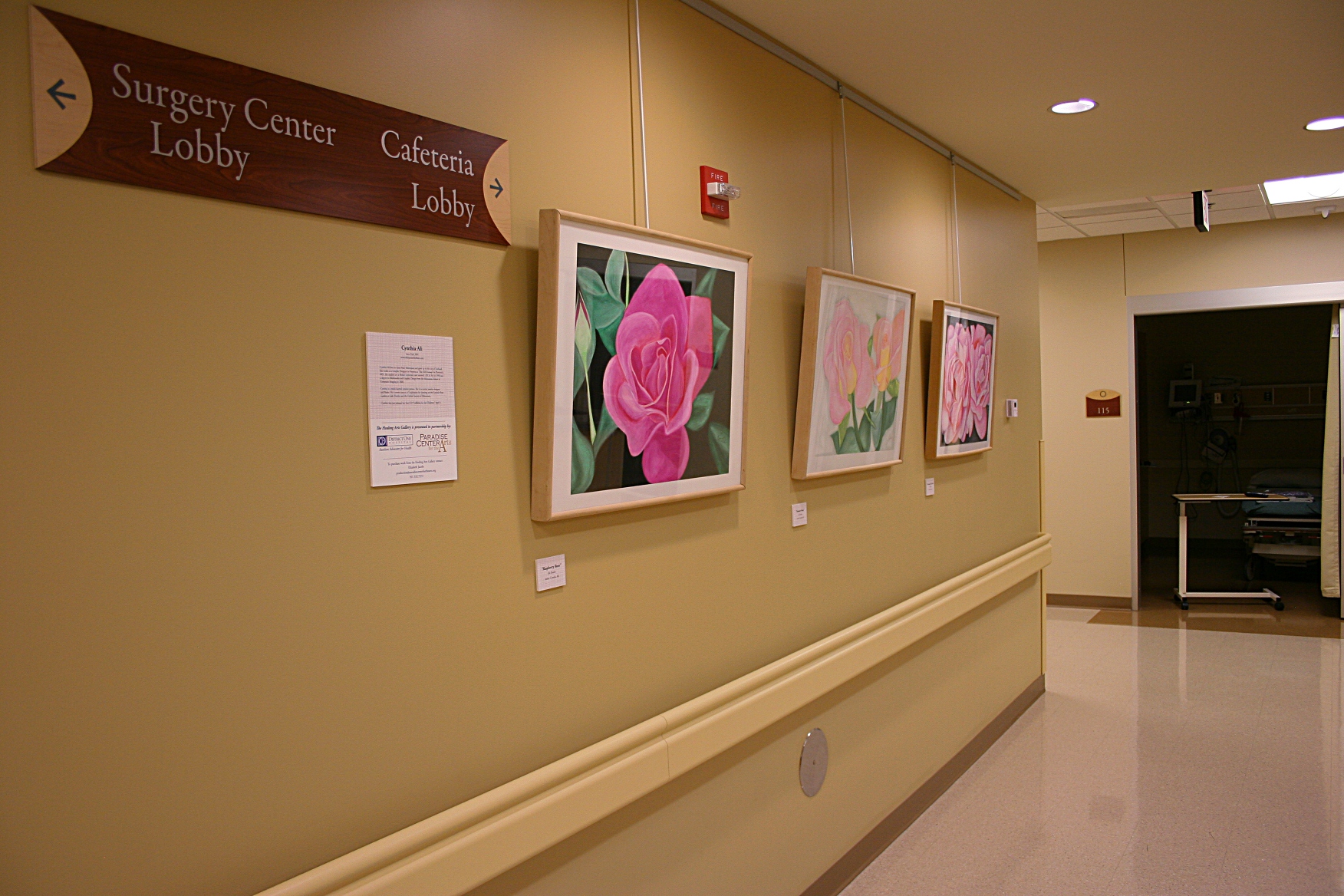
Likewise, the photography of Jane Strauss in the surgery center reflects that same sort of escapism, especially in panoramic landscape scenes. Jacobs notes that Strauss is autistic, meaning her approach to photography focuses on qualities like texture and detail, aspects others might not consider in photographing a scene.

Faribault native Cynthia Ali's floral pastels are not for sale. Ali, of St. Paul, is primarily a jewelry artist.

Faribault native Cynthia Ali’s floral pastels are not for sale. Ali, of St. Paul, is primarily a jewelry artist.

Also in the surgery center, Cynthia Ali infuses a soft natural beauty with her floral pastels. You can almost smell the heady perfume of her beautiful roses.

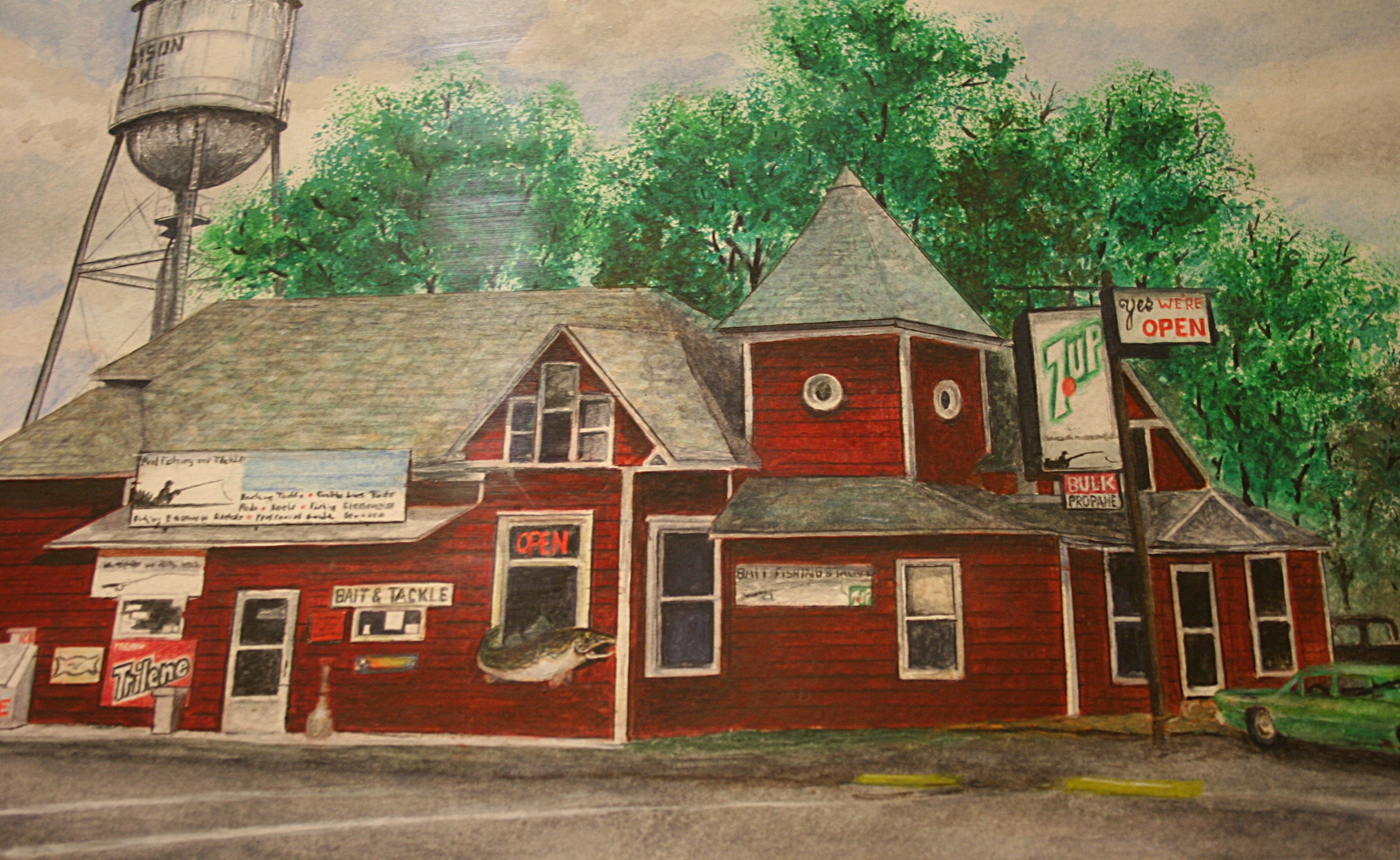
Marcus Moller's "Madison Lake Bait Shop" in watercolor.

Marcus Moller’s “Madison Lake Bait Shop” in watercolor. Moller’s art (mostly pastels) hangs in the surgery center waiting area, a place frequented by children. Thus his art is hung quite high, which made photographing it difficult.

Marcus Moller works in pastels, too, and watercolors, covering a variety of subjects from autumn landscapes to a bold rooster to my favorite, “Madison Lake Bait Shop.” Those of you who’ve traveled Minnesota Highway 60 will recognize the kitschy red building backed by the Madison Lake water tower. I cannot even begin to count how many times I’ve considered photographing that building. Moller’s bait shop painting is nudging me to actually stop and take that photo.

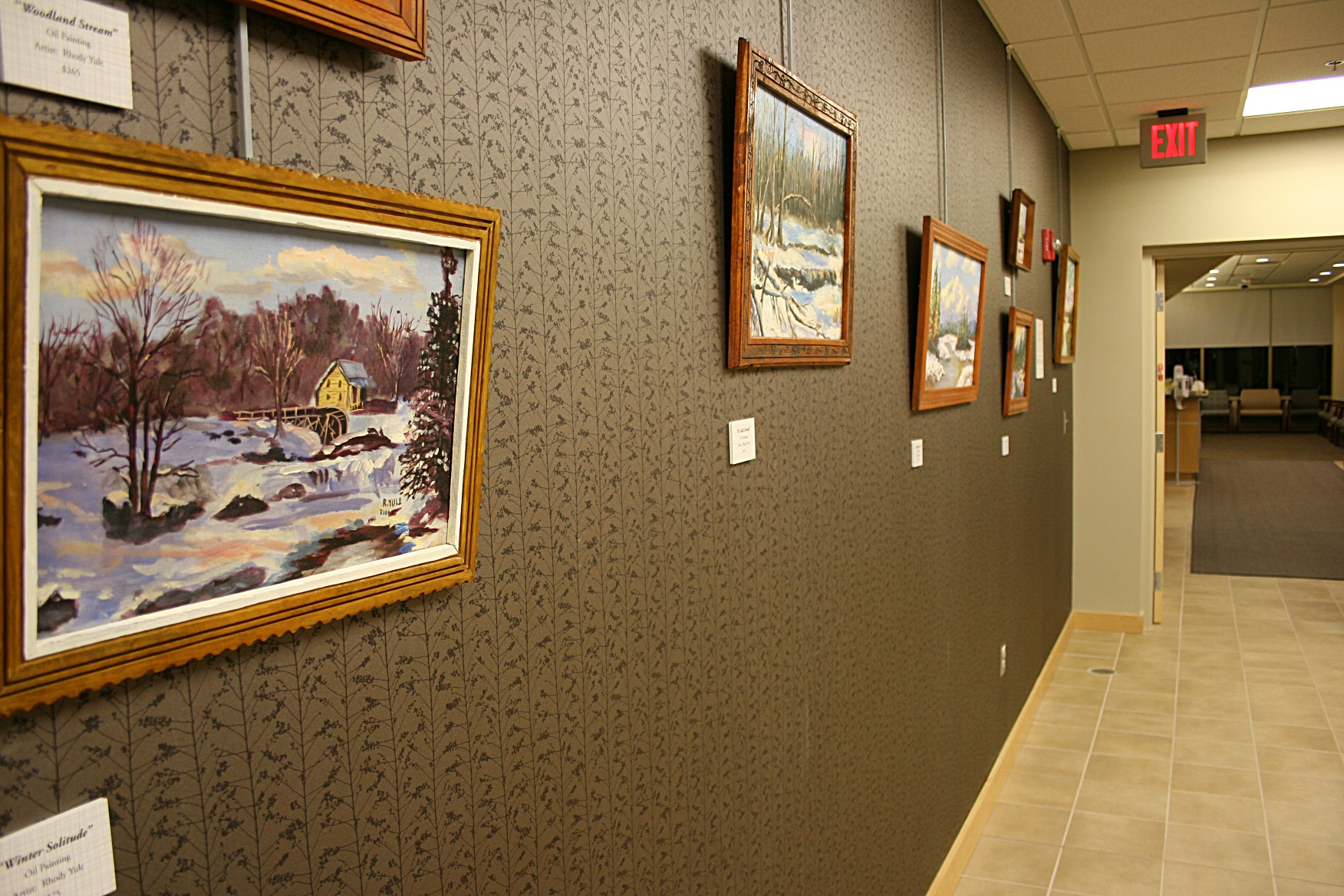
Twenty-five of Rhody Yule's oils grace the hall and patient rooms in the cancer center.

Twenty-five of Rhody Yule’s oils grace the hall and patient rooms in the cancer center.

Finally, my open house tour ended in a hallway outside the District One Cancer Center with the oil paintings of my friend, Rhody Yule. I’d seen nearly every one of Rhody’s hundreds of paintings when I worked with his family and friends on the 2011 Paradise exhibit. But, still, it was as if I was viewing his pieces for the first time, appreciating the landscapes, many of them winter scenes in this show, and the other art he created through decades of painting. Rhody was a kind, gentle man with a heart full of goodness, and I remembered that, too.

Examples of Rhody Yules art close-up.

Examples of Rhody Yule’s art close-up.

Most of the artwork in the Healing Arts Exhibit, but not all, is available for sale. (Artwork not featured in photos here is because I did not have permission to photograph it.)  A portion of any proceeds from the sale of Yule’s work will go to the local hospice, per the family’s request.

If you wish to tour the winter installment of the Healing Arts Exhibit, check in at the main desk, 200 State Avenue, during hospital business hours. All areas of the exhibit may not be accessible for viewing at all times. The current show runs through February 28.

If you are an artist interested in being featured in a Healing Arts Exhibit, contact Jacobs at the Paradise Center for the Arts. You will find details and contact information by clicking here.

The Healing Arts program is sponsored by the District One Hospital Auxiliary, which initially proposed the concept.

To view information on the artists with an online presence, click on their highlighted names.

WHAT ARE YOUR THOUGHTS on art as a “healing” tool? Have you seen similar exhibits? Please share.

© Copyright 2013 Audrey Kletscher Helbling
 

Zumbrota exhibit explores water during this year of extreme drought October 19, 2012
I LOVE THE ARTS.

And I expect part of that passion comes from the lack of arts in my life when I was growing up on the southwestern Minnesota prairie. Back in the 1960s and 1970s, out there in “the middle of nowhere,” as some would say, life focused more on survival than anything.
By survival I mean my father earning enough money to support his wife and six children on a modest crop and dairy farm.
So much depended on the weather, on the rain or lack thereof. Enough rain meant a bountiful crop to feed the cattle and/or sell grain on the market. Too little rain meant scrimping on feed and less money to pay the bills, buy the groceries, clothe the family.

But let’s circle back to my original statement about loving the arts and connect that to water.

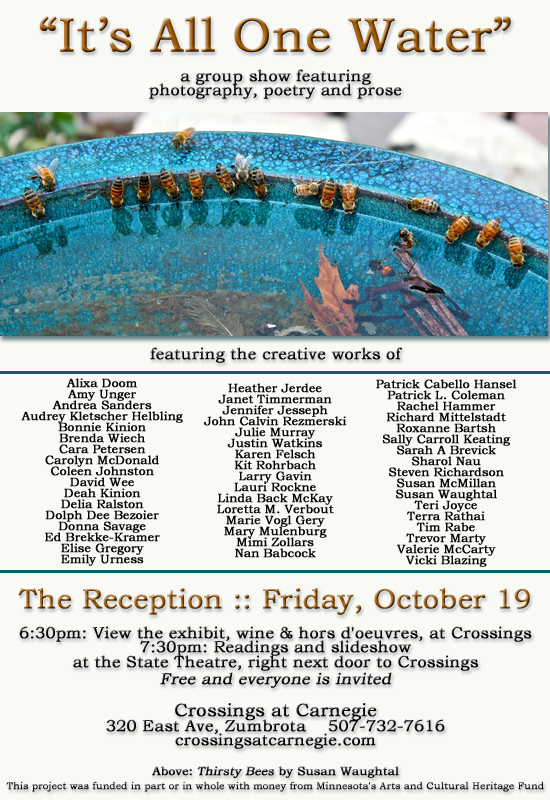
Recently I entered, and successfully competed in, an “It’s All One Water” poetry competition sponsored by the Zumbro Watershed Partnership and Crossings at Carnegie, a privately-owned art center in Zumbrota.

This evening a public reception will be held at Crossings, 320 East Avenue, beginning at 6:30 p.m. It is an opportunity to view works by 56 writers and photographers who “explored the aspects of water which fascinate them and created their own artistic expression of this most basic foundation for life,” according to promo info for the event.

At 7:30 p.m., writers, photographers and guests will move down the block to the historic Zumbrota State Theatre where writers will read their works while the water-themed photographs are projected onto a screen.

I will read my “In which Autumn searches for Water.”

My poetic expression about water traces back to my farm roots, to that constant and undeniable link between the land and the sky.

That connection is so much a part of my fiber that I cannot think about water in recreational terms—I can’t swim, don’t like being on the water and grew up in a Minnesota county without a natural lake. Rather, for me, water has always been about sustaining life, about growing a crop, about watering the cows or watering plants or measuring rainfall.

So when I learned of the “It’s All One Water” poetry competition shortly after an autumn walk at the River Bend Nature Center in Faribault, where I found dry ponds, I knew exactly what I would write. I personified Autumn, creating a thirsty woman in search of an also personified Water. It works and I think well, especially given the current historic drought conditions throughout our country.

About a third of Minnesota is suffering from extreme drought. On Thursday the Minnesota Department of Natural Resources issued a news release urging Minnesotans to adopt water conservation measures (no washing vehicles, watering lawns and trees, etc.) as drought conditions are straining our state’s water resources.

Here’s a snippet of my drought-related water poem, verse three of five:

But she finds there, at the pond site, the absence of Water,
only thin reeds of cattails and defiant weeds in the cracked soil,
deep varicose veins crisscrossing Earth.

You can hear me read “In which Autumn searches for Water” this evening or view the entire exhibit from now until the end of October at Crossings. Hours are 10 a.m. – 5 p.m. Monday, Tuesday, Wednesday and Friday; 10 a.m. – 8 p.m. Thursdays; or from 10 a.m. – 4 p.m. Saturdays. A limited number of chapbooks are available. Monies from Minnesota’s Arts & Cultural Heritage Fund helped to fund the “It’s All One Water” exhibit.

CLICK HERE to reach the Crossings at Carnegie website.

CLICK HERE to link to the Zumbro Watershed Partnership website.

CLICK HERE TO VIEW drought conditions in the U.S.


All about cars at Faribault art center August 31, 2012

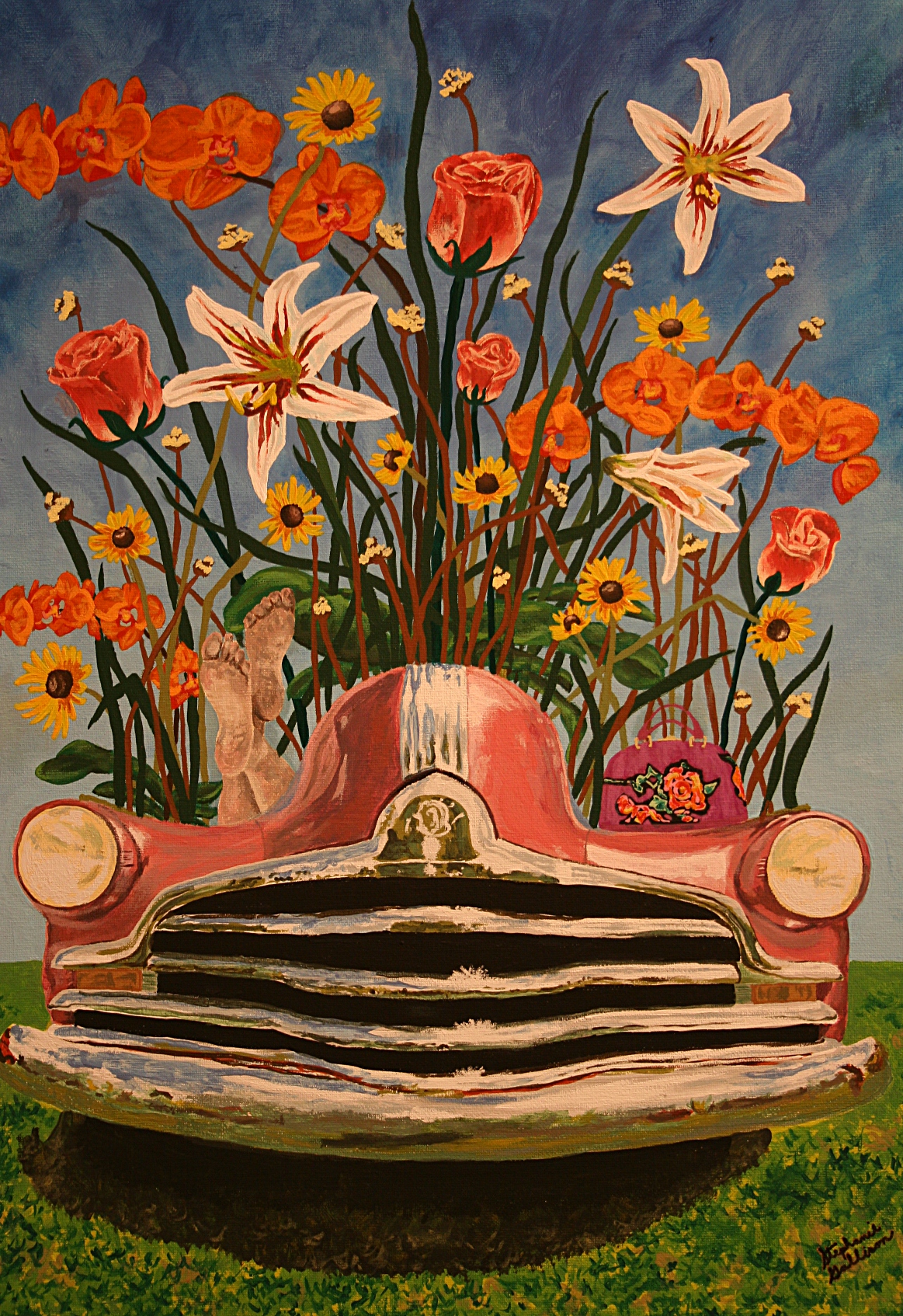
“Flower Car for a Living Detroit,” acrylic on canvas by Michigan artist Stephanie Gallison and part of the car pARTS exhibit at the Paradise Center for the Arts. The painting “represents life, hope and resurrection for the city of Detroit; the opposite of recession, decline and decay,” according to Gallison’s website.

IF YOU’VE FOLLOWED this blog for awhile, you know that I’m a supporter of the arts.

And I don’t specifically mean I write out generous checks to buy art or donate to an arts cause or such. I wish I could. But the fact is that my family, like many middle class families, needs to watch its budget.

That doesn’t mean, though, that my husband and I can’t treat ourselves to the occasional night out to see a play or enjoy a concert or catch a comedy show, or become members of the local arts center.

A snippet of the current car pARTS exhibit at the Paradise.

I appreciate that we have the Paradise Center for the Arts right here in Faribault as a venue to enjoy the visual and performing arts and even take a class, if I wish, but haven’t.

Perhaps because I grew up in the 1960s and 1970s in rural southwestern Minnesota, without access to the arts, I especially value the arts opportunities offered right here in my community, only blocks from my home. No need to drive up to the Cities or elsewhere.

Faribault artist Vivian Jones created this watercolor, “It Was Grandma’s Car,” for “car pARTS.”

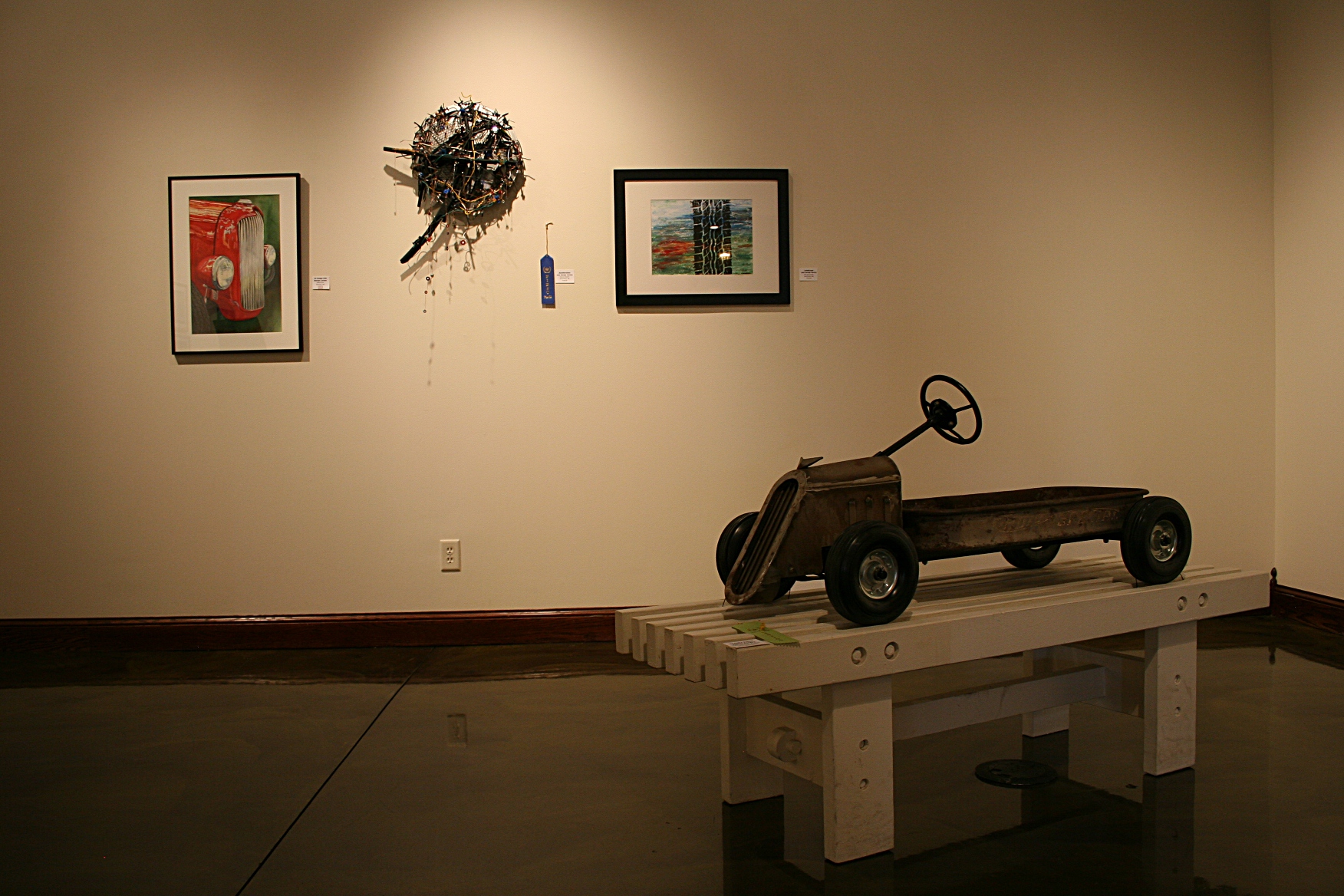
For example, currently the juried exhibit, “car pARTS,” is showing in the PCA’s Carlander Family Gallery through September 25. The show is exactly as it name implies, artwork featuring cars or parts of cars.

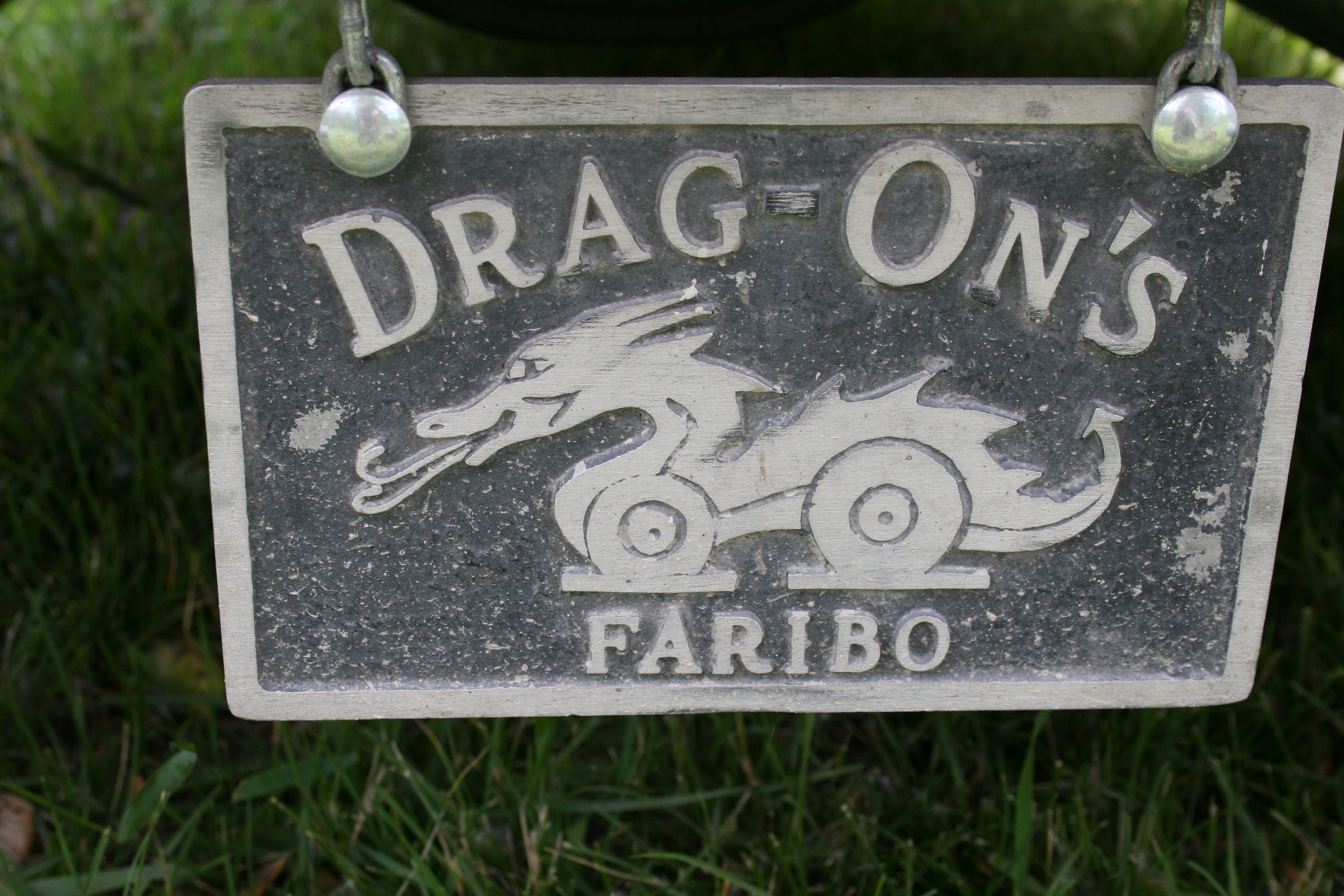
The logo for the Faribo Drag-On’s Car Club.

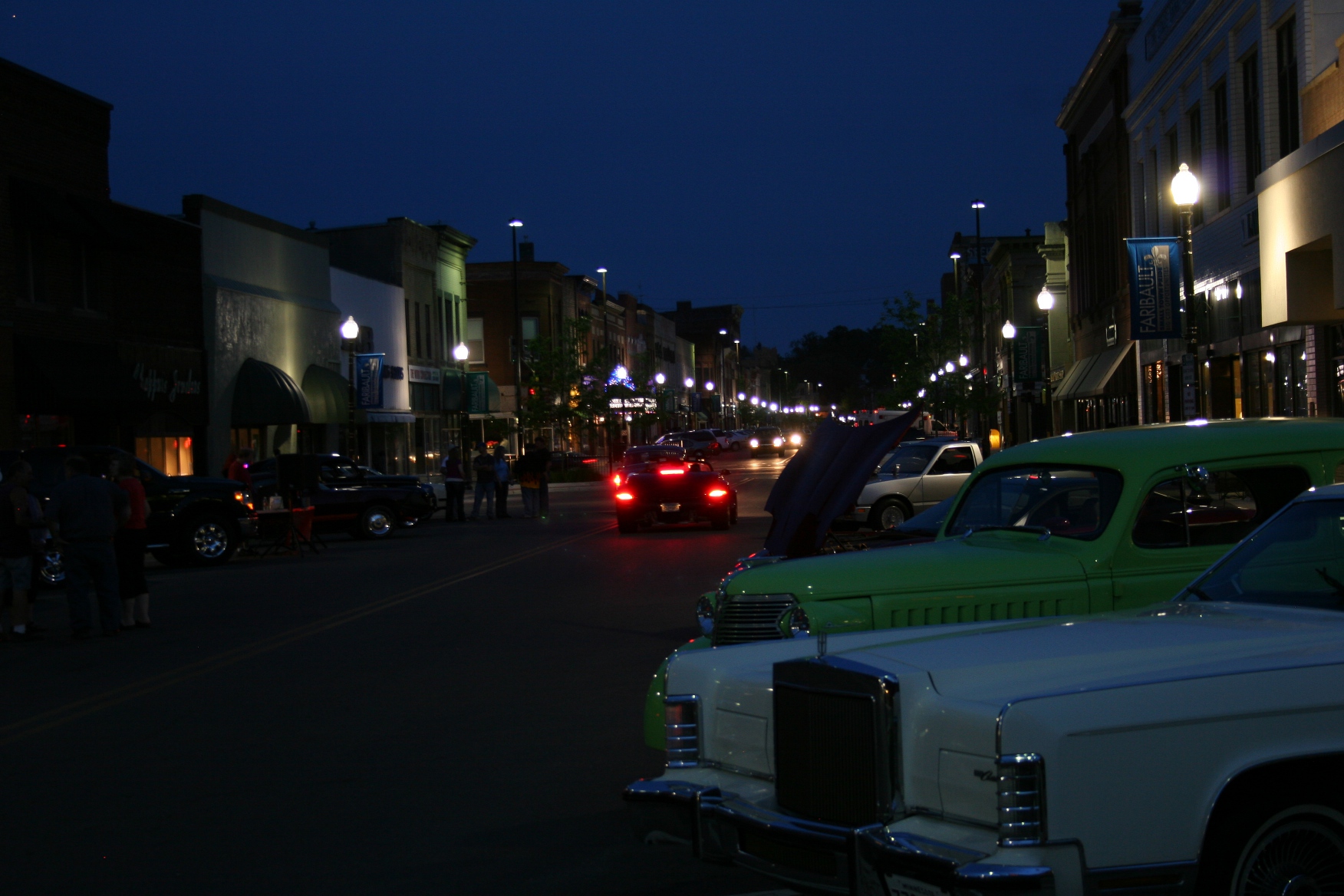
Hanging out along Central Avenue during Faribault Car Cruise Night in May.

The subject seems an ideal one for this predominantly blue collar community which has a special fascination with cars. That’s my assessment, anyway, based on the long-standing Faribo Drag-On’s Car Club, the Classic Car Roll In on Tuesday evenings at the Country Kitchen and the recent start-up of the May-September third Friday of the month Faribault Car Cruise Night on downtown’s Central Avenue.

Following the car theme, the Paradise Community Theater will present six performances of the play, The Car by Carol Wright Krause, beginning September 14 and running through September 22.

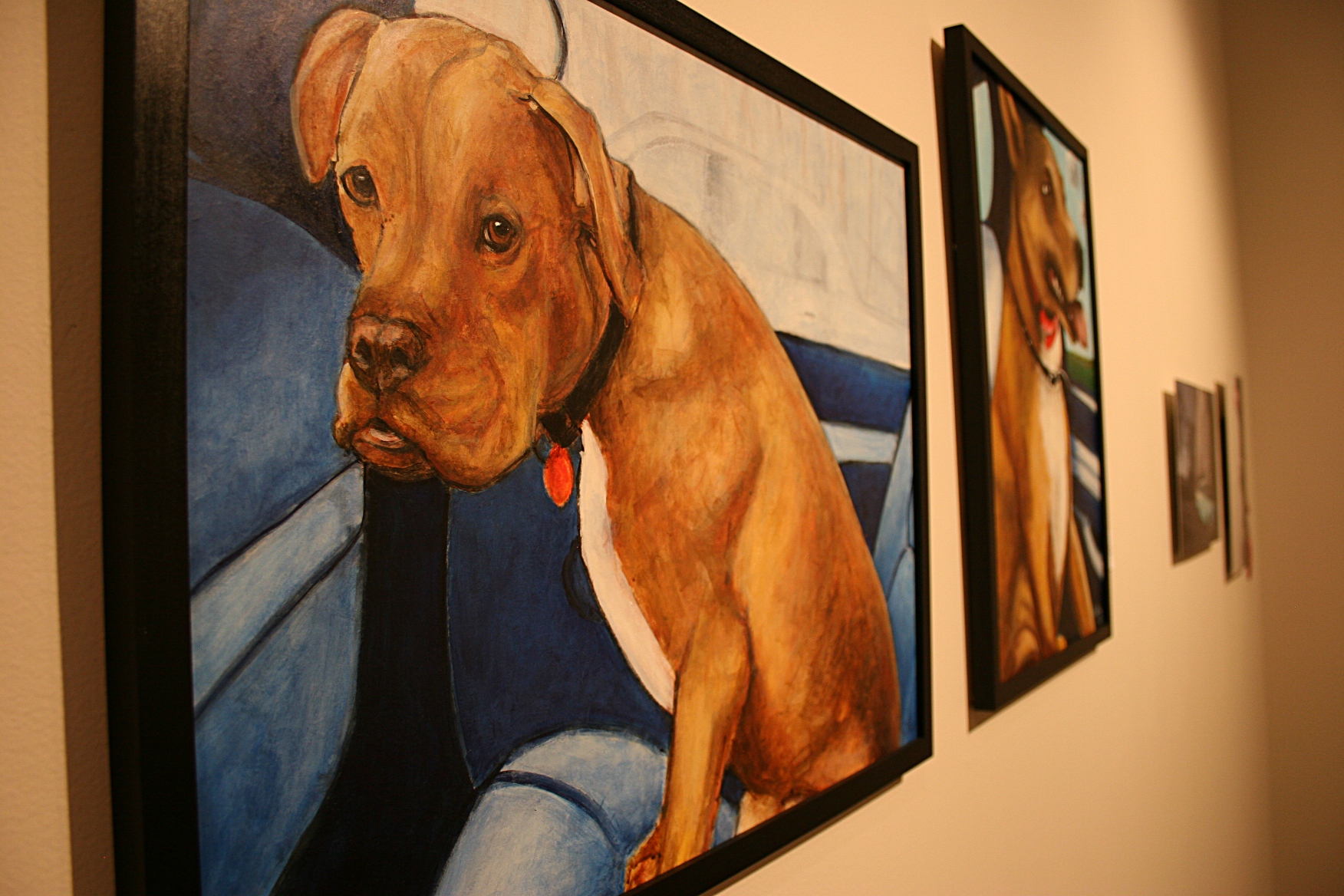
Acrylic paintings of dogs in cars, by Julie M. Fakler of Faribault , are in the car pARTS exhibit.

The play seems the ideal mesh with “car pARTS,” one complementing the other.

Here’s a summary of The Car, pulled from the PCA website:

Meet the Banners, a picture perfect postcard of a 1950s American family with an all-American son, a doting mother and an honest car salesman of a father, who does everything by the book and has just recently purchased the car—a 1954 Hudson Hornet. But when their son suddenly joins the military, only to return with a Japanese wife, the family’s world is suddenly turned upside down. Things may not be as picture perfect as they seem. The Car hits a few potholes along the way, takes some sharp turns, but takes you on an engaging and entertaining ride.

Looking south on Central Avenue during the Faribault Car Cruise Night in May.

I’d love to see all those collectors who are members of the Drag-On’s and/or all those who will be participating in the last downtown car cruise of the season on Friday, September 21, among those attending The Car in Faribault’s historic theater.

I invite any of you with vintage vehicles, whether from Faribault or not, to drive to the theater in your vintage vehicles, park along historic Central Avenue and experience the arts scene here. Maybe even dress up in back to the 50s garb to truly embrace the time period of the play.

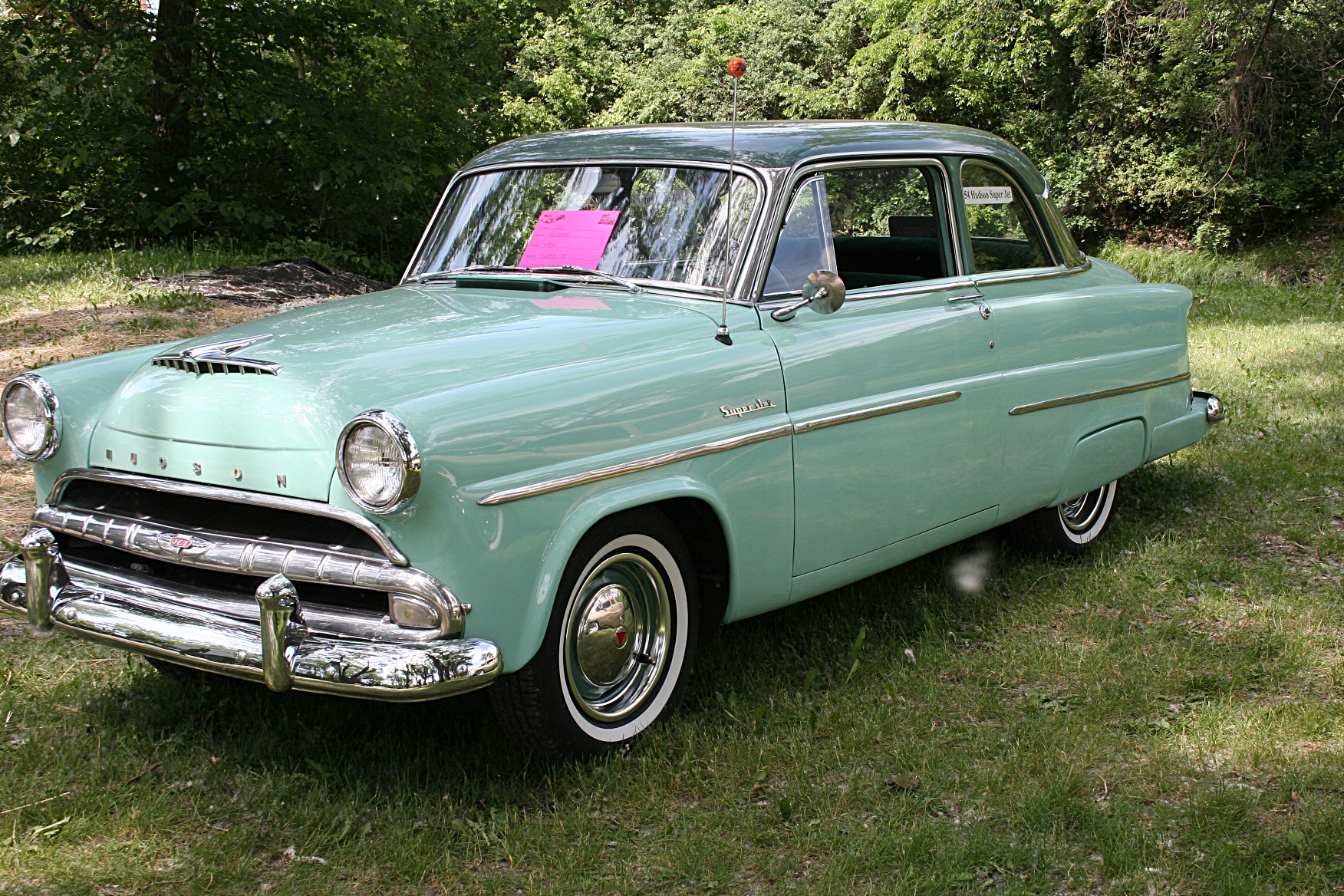
Do you know who owns this Hudson Super Jet?

And whoever owns this Hudson Super Jet, which I photographed at a car show in TeePee Tonka Park in 2009, you’d be especially welcome given the car in the play is a 1954 Hudson Hornet.

Just a close-up of the Hudson Super Jet, built either in 1953 or 1954, I believe.

FYI: Click here for more information about the Paradise Community Theater’s performance of The Car.

P.S. This additional postscript has nothing to do with the arts in Faribault. But it is related to my support of the arts via my work on Minnesota Prairie Roots. Earlier this week I posted about the Gabor and Edith Nemeth Study Collection, a priceless collection of 15th to 19th century paintings in Park Rapids. The Nemeth Art Center is attempting to raise $1,200 for a storage unit to safely store and protect the paintings. Since posting this story on Monday, five more contributions have been made to the cause via the NAC’s online fundraising campaign, which you can find by clicking here. You have four more days to donate.

To read my original post about the Gabor and Edith Nemeth Study Collection, click here.

© Copyright 2012 Audrey Kletscher Helbling