Minnesota Prairie Roots

Writing and photography by Audrey Kletscher Helbling

Margaret’s Monet garden June 27, 2012

Filed under: Uncategorized — Audrey Kletscher Helbling @ 7:07 AM
Tags: , , , , , , , ,

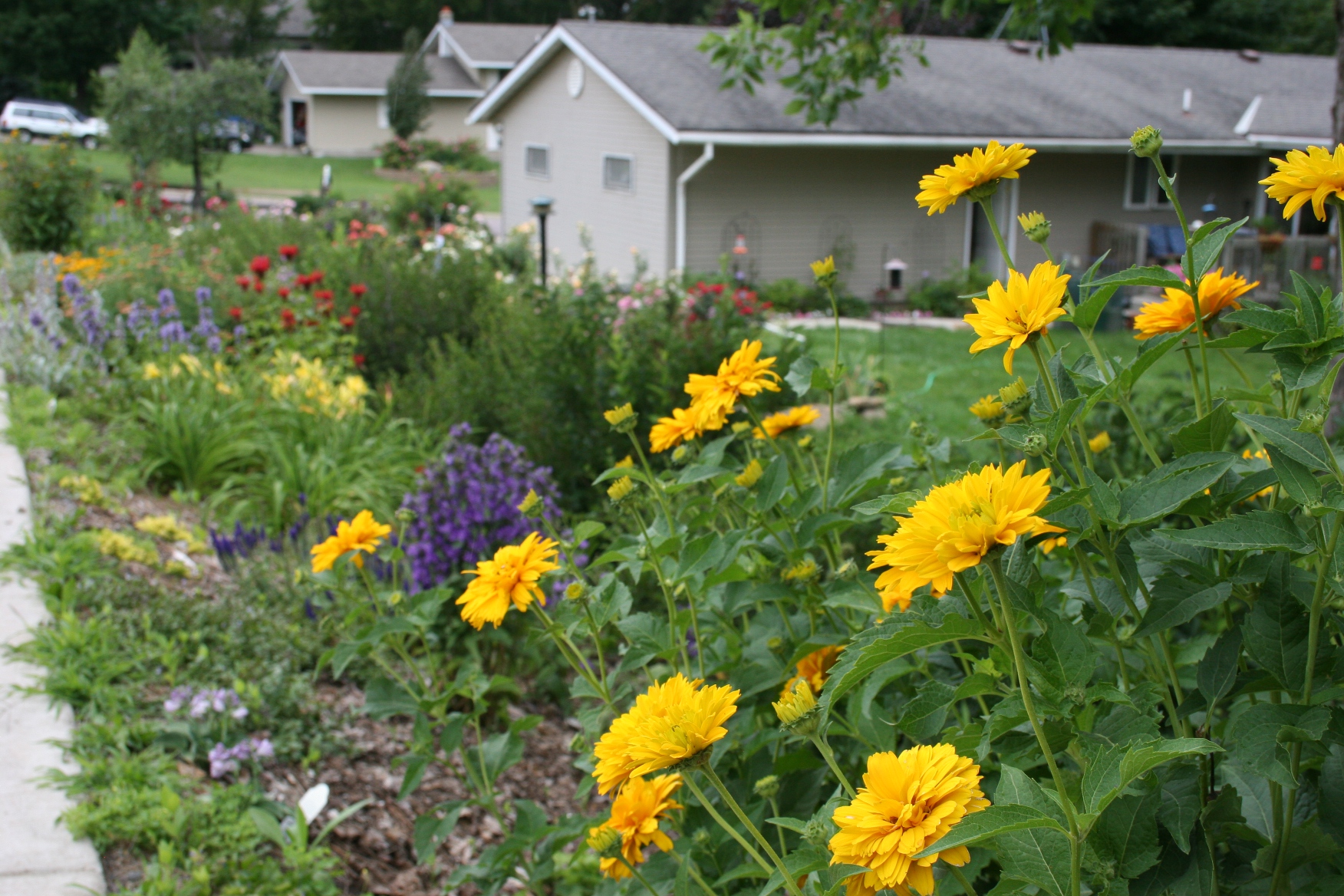
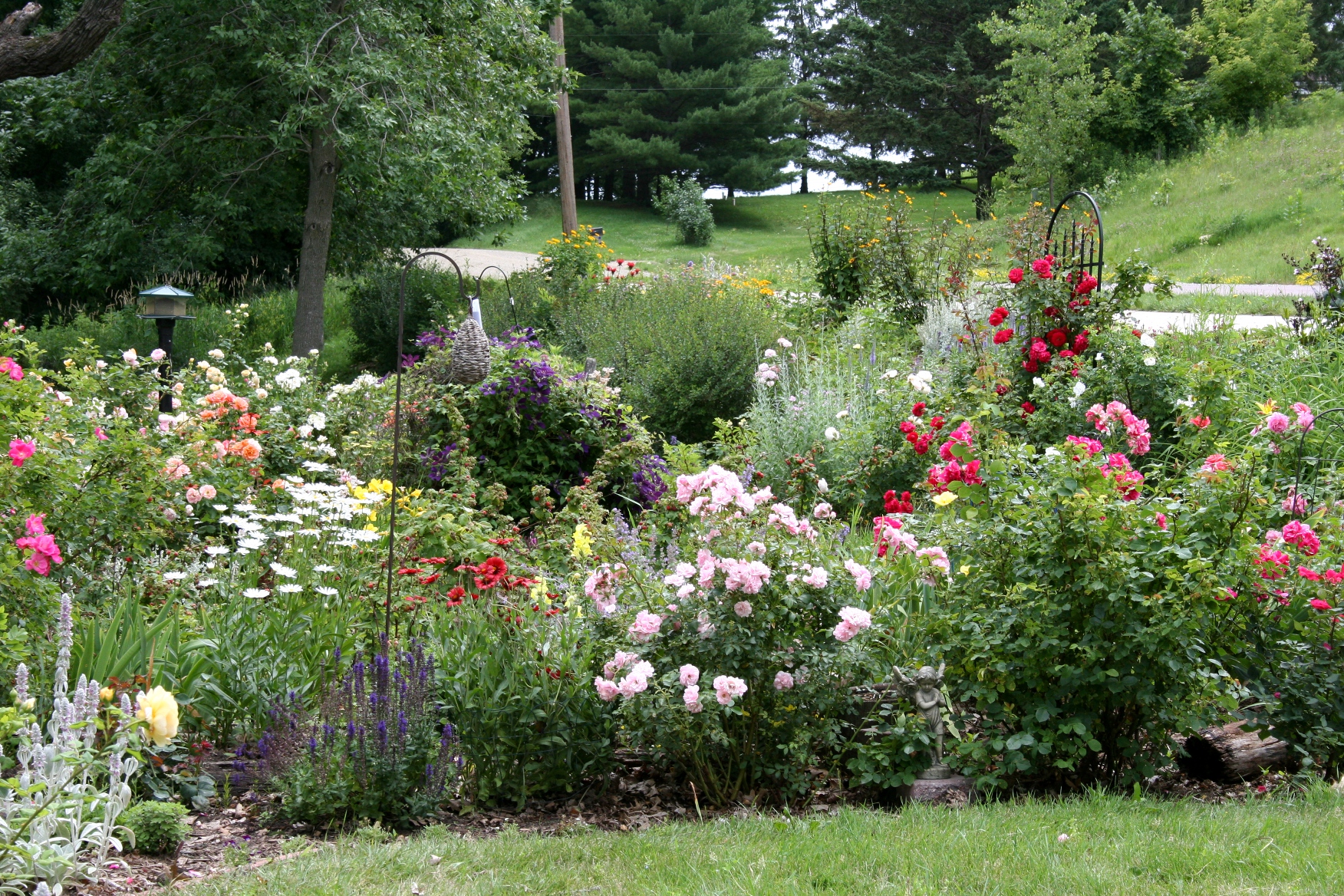
This overview shows you the size of Margaret’s sprawling flower garden on Faribault’s east side.

OH, WHAT AN ABSOLUTE JOY to be Margaret’s neighbor, to gaze across the street into her flower garden reminiscent of a Claude Monet painting.

But, alas, I live down the hill, over the river and into the valley across town from this eastside Faribault garden.

I happened upon Margaret’s sprawling, Impressionist style garden on a recent Saturday morning. And because I’m not at all shy, I popped out of the van and approached Margaret as she weeded her flowers.

She obliged my request to photograph her flowers (but not her) and also answered my questions like, “What is that?” or “Is that …?”

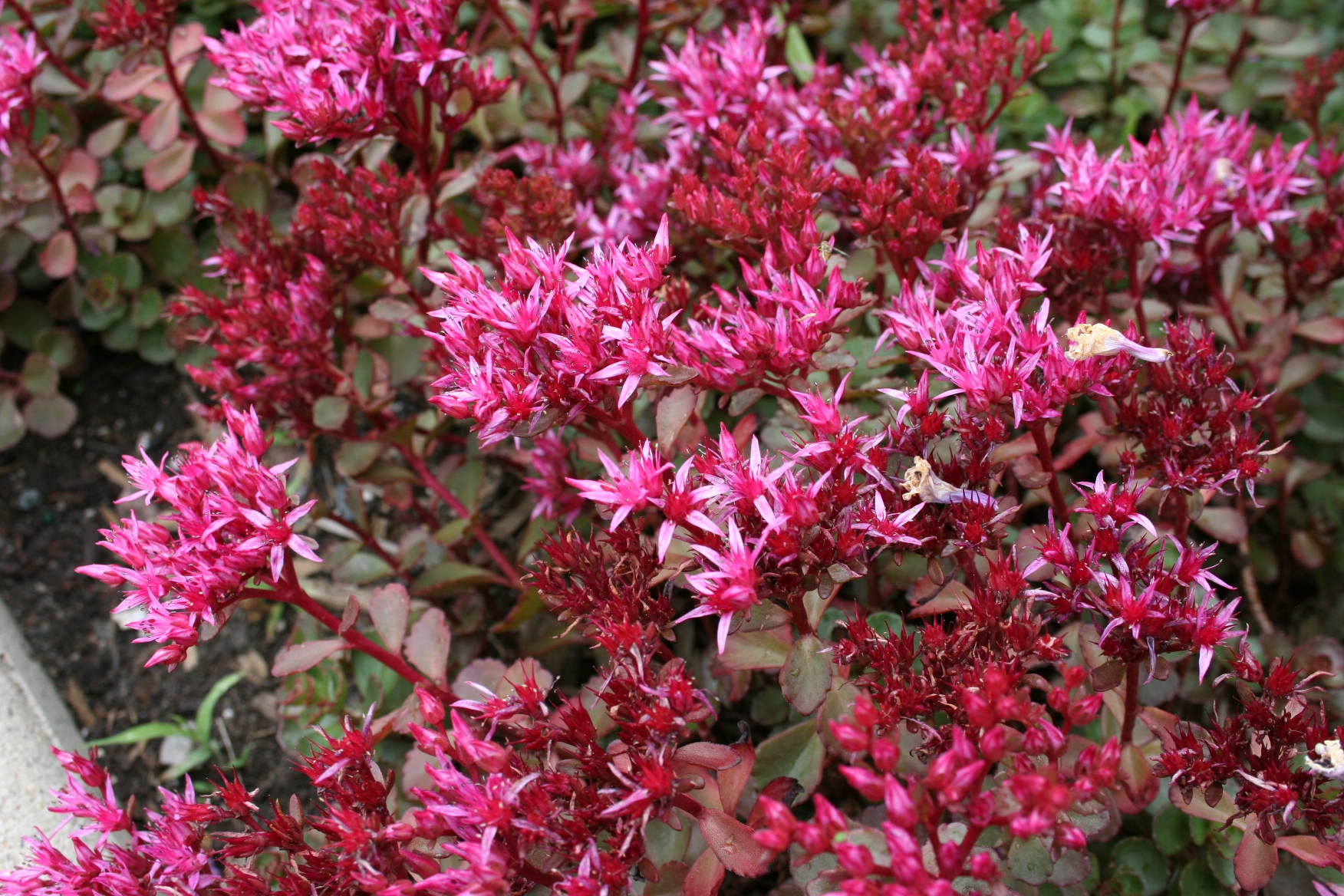
Low-lying fuchsia sedum add a jolt of brilliant color.

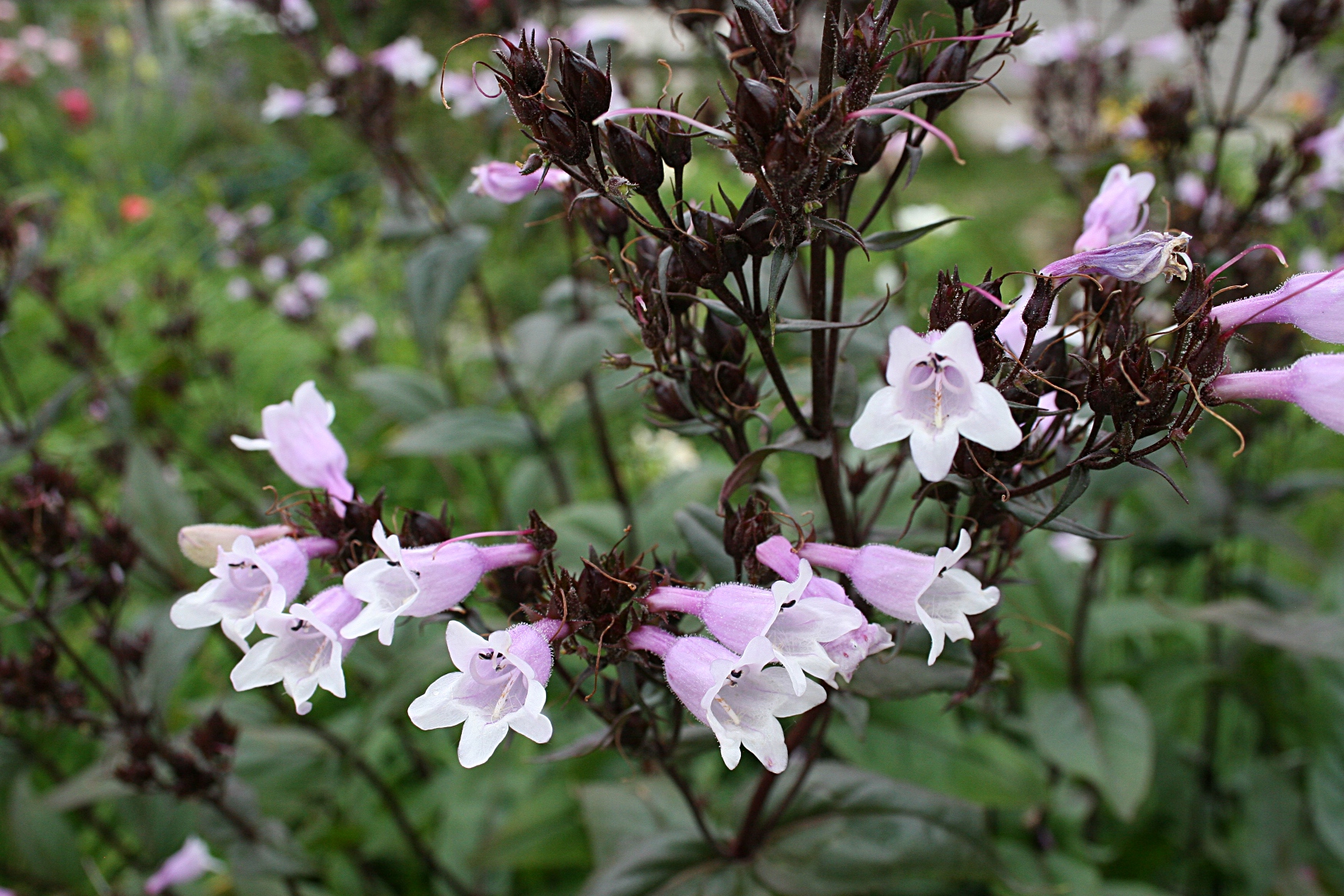
Loved these dainty, pale pink flowers. Gardeners, what are they? No, I couldn’t ask Margaret to identify every single plant.

Margaret didn’t tell me I couldn’t photograph her hand. She kept working while we talked, bucket of tools nearby. She had more gardening tools in the garage, she said.

Margaret knows her flowers and her passion for them is irrepressible. She simply loves to garden. That’s apparent as her flower garden stretches nearly the entire 180-foot length of her and her husband’s lot and then extends 30 – 40 feet from the edge of the sidewalk, down the slope and to the garage. She began planting the garden about five years ago, partially so her husband wouldn’t need to mow the slope of the lawn.

From daisies to bee balm, sedum to clematis, lamb’s ears to lilies and dozens of other perennials, Margaret’s garden is awash in color and blooms. Her pride and joy, though, are her 50 some rose bushes.

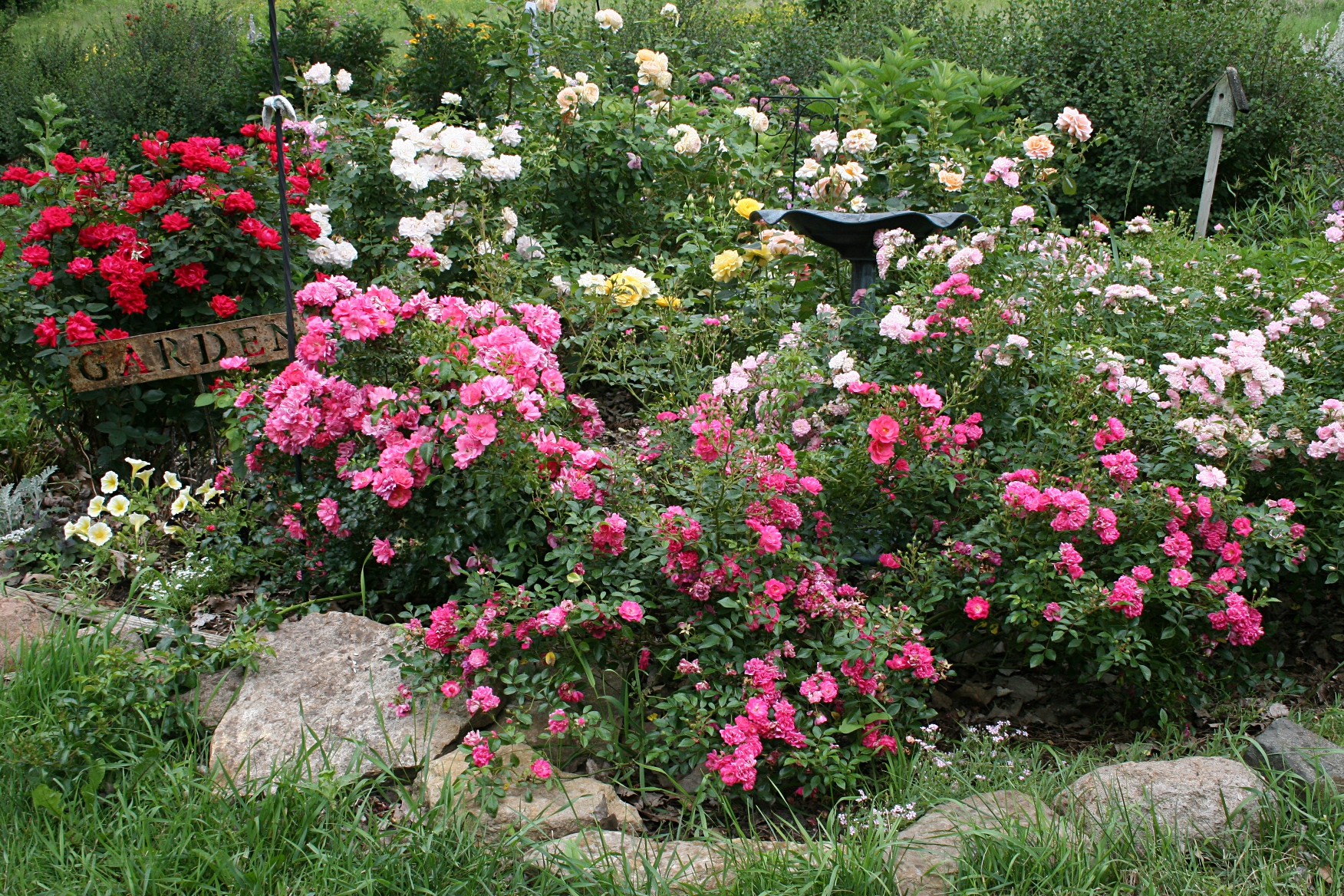
Margaret’s garden is a rose lover’s paradise.

“I just love roses,” Margaret says. “They just have beautiful flowers and smell wonderful.”

Roses and more abloom with pieces of art tucked in among the flowers.

One of the many English rose bushes, which are Margaret’s favorite for their thick layers of petals and scent.

I roamed the perimeter of the garden, snapping photos as rain pittered and hastened my photo shoot. Yet, I took time to inhale the heady perfume of Margaret’s beloved English roses. English and shrub rose bushes compromise most of the roses in her garden.

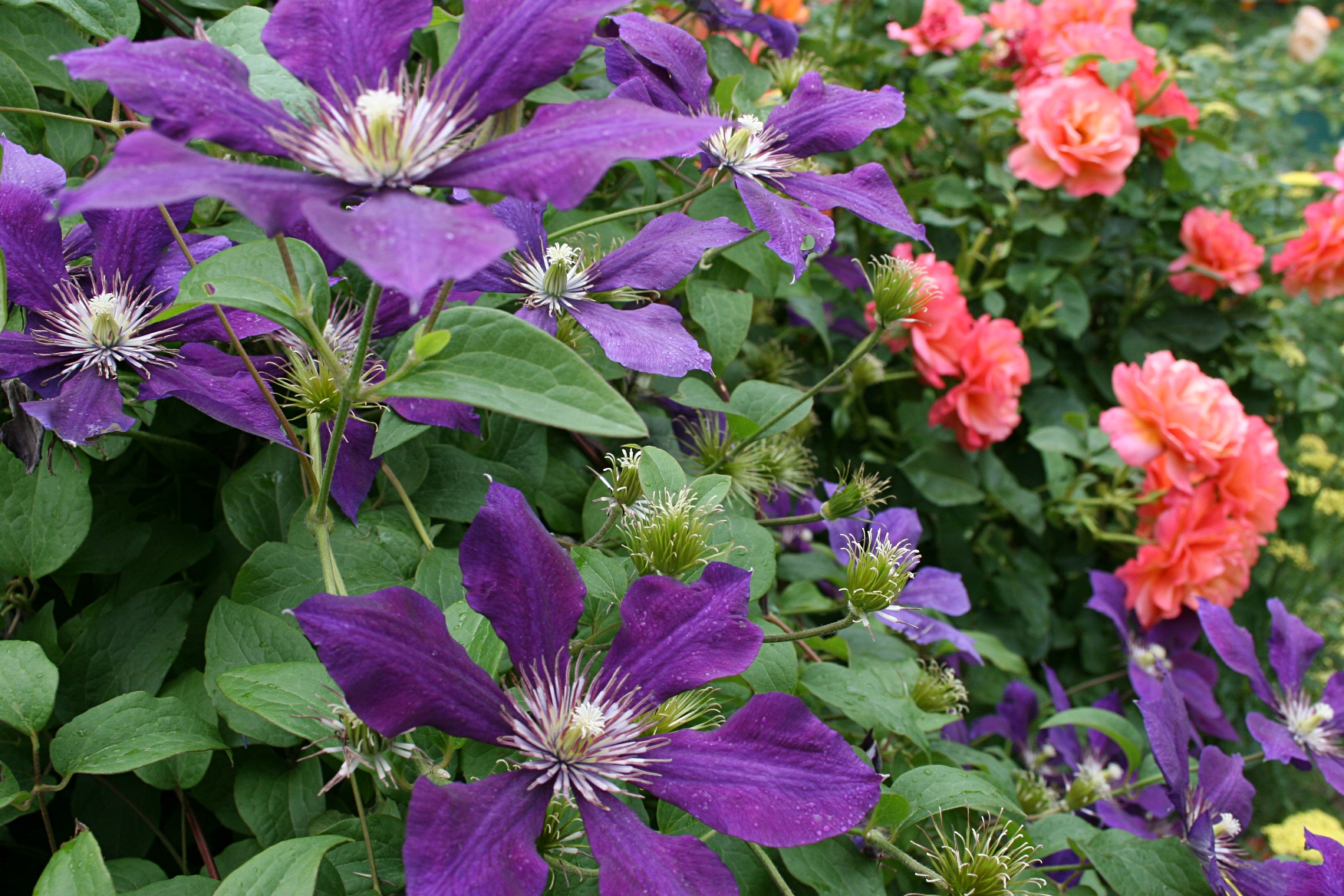
The most gorgeous clematis I’ve ever seen, in full bloom.

Just look at Margaret’s eye for color, pairing purple clematis and coral roses.

I noticed this gardener’s talent for pairing colors—especially the striking contrast of royal purple clematis next to coral-hued roses.

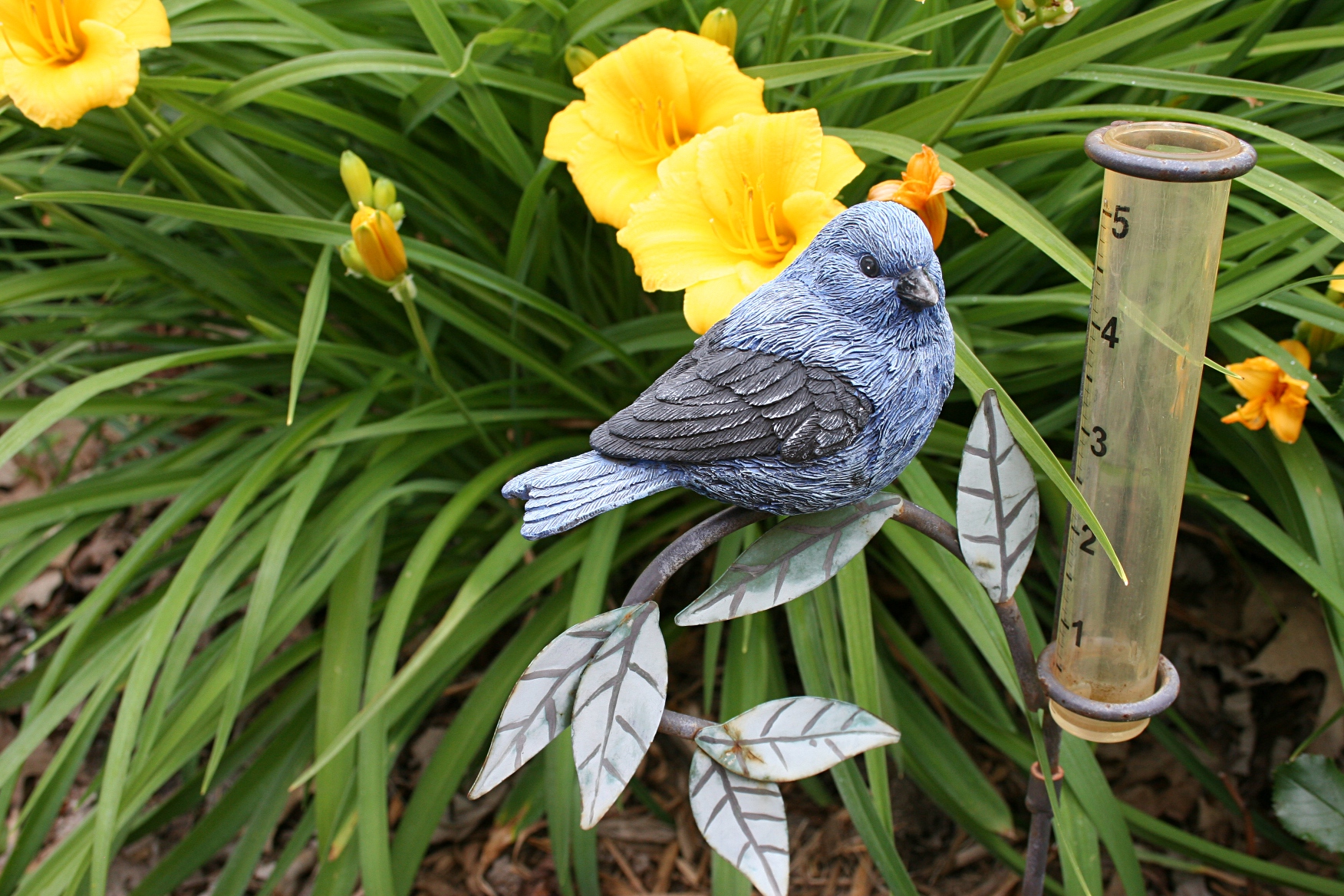
Who knew a rain gauge could also be a piece of garden art staked next to lilies?

I appreciated, too, how she tucks garden art among her flowers with the skills of a designer.

A snippet overview of a portion of Margaret’s Monet garden.

If Margaret’s garden was a painting, surely it would be a Monet.

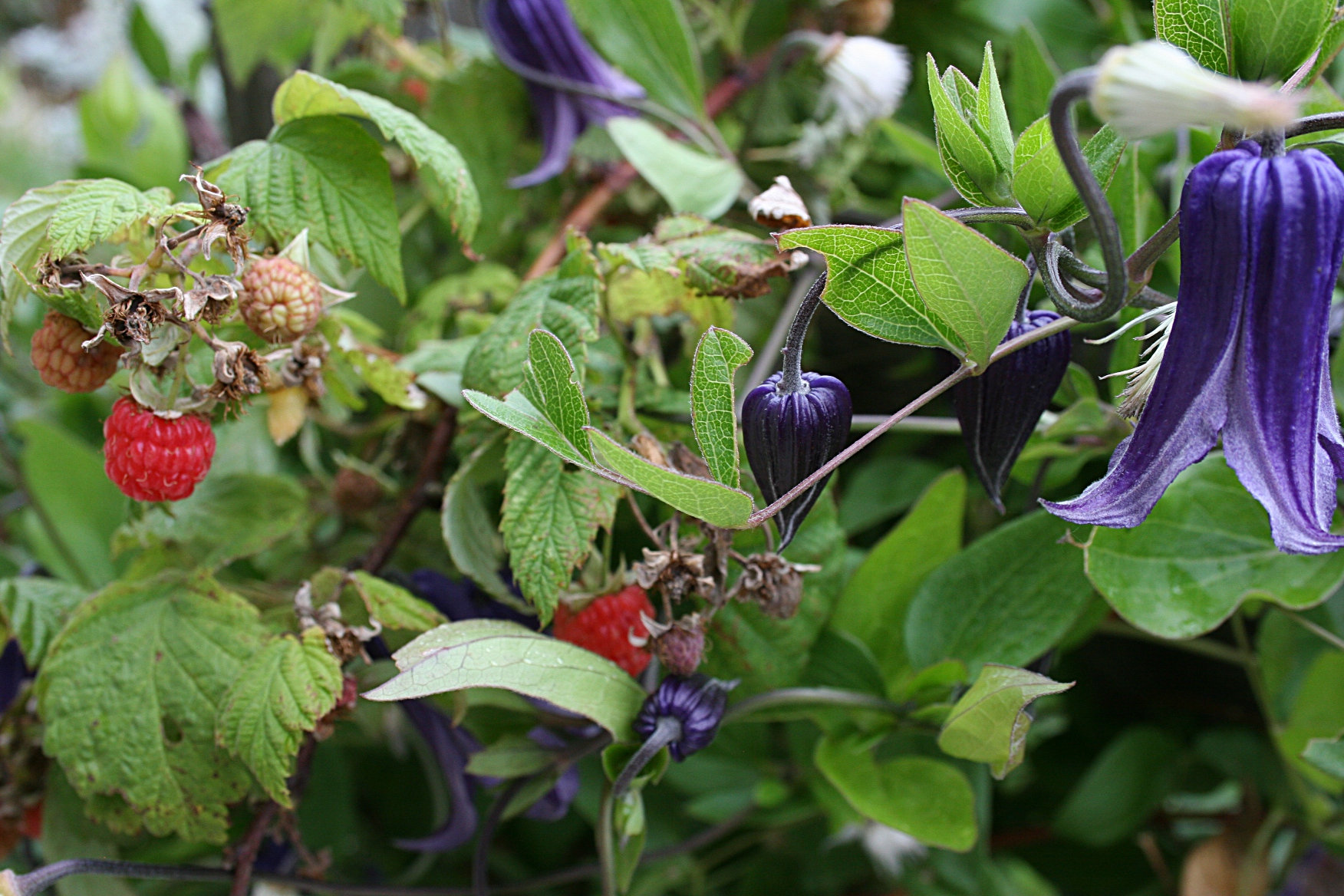
Margaret mixes the jewel tones of raspberries with flowers. She’s also incorporated strawberries and tomatoes into her flower garden.

FYI: Margaret’s garden is located at 1325 11th Avenue Northeast, Faribault.

© Copyright 2012 Audrey Kletscher Helbling


Why we attended Bike Night in Moorhead instead of an art walk in Fargo June 22, 2012

Randy with his 1977 Harley Davidson Sportster in the summer on 1981.

I’M NO BIKER CHICK or Motorcycle Mama.

But my husband, well, once a Harley guy, always a Harley guy. Randy hasn’t owned a bike, though, for 15 years. On a mid-June morning in 1997, a teen driver plowed his car into my spouse’s 1977 Sportster on a Northfield city street. Randy landed on his tailbone in the roadway and was transported by ambulance to the hospital. He experienced severe bruising, soreness and back pain for quite awhile, but suffered no other apparent injuries.

The insurance company totaled the Sportster.

Ever since then, Randy has longed for a replacement Harley. But finances and my worries have kept him bike-less. The 1997 accident marked his second bike incident. Previously Randy laid his Harley down on a Faribault highway to avoid a collision.

The June 14 Bike Night in the east parking lot of the Moorhead Center Mall.

Occasionally he’ll say, “I should get a bike.” Randy expressed that wish again recently when we attended Bike Night at the Moorhead Center Mall.

Bike Night wasn’t my choice of events to attend when we were in the Fargo-Moorhead area last week. I would have much rather strolled through downtown Fargo shops sipping wine and watching artists during the Corks & Canvas Art and Wine Walk than meander between motorcycles in a mall parking lot.

But, because marriage is about compromise and sometimes doing what the spouse wants, there we were, looking at bikes. I’ll admit to not being in the best of moods. I was hot, thirsty, tired, hungry and crabby upon our arrival.

Eventually, though, I figured out that I may as well make the best of it.

One of my favorite bikes at Bike Night because of the license plate, flags and message, “Riding for the son.”

One of the oldest of the estimated 350 bikes at Bike Night.

Biking through the Moorhead Center Mall east parking lot during the June 14 Bike Night.

So…if motorcycles are your thing and you’re in the Moorhead area, you have two more opportunities to attend Bike Night from 5:30 p.m. – 9 p.m. on July 12 and August 9. Non-bikers are supposed to park near Herberger’s, which we did not because we had a tough time even finding the Bike Night location. It’s in the east parking lot.

You’ll see plenty of bikes—an estimated 350 on the June evening we were there—and plenty of interesting characters. There’s food and beer, too, although we did not sample either.

If you’d rather sample wine and experience the art scene, do the Corks & Canvas Art and Wine Walk across the river in Fargo from 5 p.m. – 9 p.m. on July 12, August 9 and/or September 13.

Perhaps if I’d mentioned that Turtle Shell Stained Glass Gallery was on the art walk, my husband may have opted for the arts event. He’s taken a class in stained glass and created several pieces. But, naw, I don’t think it would have mattered. Bikes trump art anytime for him.

© Copyright 2012 Audrey Kletscher Helbling
 

We may have skipped class at NDSU, but… June 21, 2012

The main entrance to North Dakota State University in Fargo.

OLIVIA FROM THE NORTH DAKOTA STATE UNIVERSITY Conference, Orientation and Recruitment Team promised not to tattle on us, because, on our first day back at school, my husband and I skipped our afternoon classes.

We’re not setting a very good example for our 18-year-old son, who was also in class on the same day at NDSU. He didn’t skip.

But we were tired due to the noisy Fargo Holiday Inn guests who practically shouted their way past our room around 2 a.m. Friday. My husband struggled to stay awake during the first Friday afternoon orientation session. And I admit my eyelids were weighing heavy, too. We needed a break.

I mean no disrespect to NDSU as the university did an excellent job in programming at the orientation and registrations sessions my husband, son and I attended. But our youngest marks the third child we’ve sent off to college so we kind of know this basic college stuff already.

I wish I could spin some dramatic tale about the reasons for our truancy. But I cannot. It is what it was and Olivia promised not to report us.

Perhaps I can redeem our bad behavior by telling you that we pursued only educational opportunities during our time away from class.

A Bison t-shirt in the NDSU Bookstore.

We started by stopping at the college bookstore to inquire about textbooks and to look at the Bison apparel. The bison is the university’s mascot.

Inside the NDSU Memorial Union, I photographed this sculpture of a bison, the university’s mascot.

The NDSU Technology Incubator.

Next we weaved our way over to the NDSU Research & Technology Park, where, according to a pamphlet I picked up, “…university researchers combine their talents with private industry to create new technologies, methods and systems.” Our son was awarded an NDSU Entrepreneurial Scholarship which requires him to work and volunteer in the Technology Incubator during his four years at NDSU. We’re thrilled that he will have the opportunity to gain hands-on research experience and network with private industry as he prepares for a career in computer engineering.

We weren’t able to meet with any of the incubator clients, but at least we got inside the building and learned basics about the facility.

The Plains Art Museum in downtown Fargo.

From the technology park, we headed to the Plains Art Museum, an art center housed in a lovely, historic brick building along First Avenue North in downtown Fargo. Inside, we perused an outstanding/phenomenal/incredible collection of wood carvings by Willmar, Minnesota, artist Fred Cogelow. We also enjoyed the works of Luis Jimenez, whose notable “Sodbuster” sculpture is temporarily on exhibit. The works of Fargo abstract expressionist artist Marjorie Schlossman were also on display. Since neither my husband or I especially like abstract art, we breezed through those galleries.

The North Dakota Mural by James Rosenquist installed in 2010 inside the Plains Art Museum.

I, of course, was quite disappointed that I couldn’t photograph any of the art except the North Dakota Mural on the first floor. It kills me to pack away my camera when I see so much I want to share with you.

The Plains Art Museum building was built in 1904 by International Harvester Company and originally served as a shipping, receiving and showroom space for farm implements. It’s a beautiful place with wooden floors, exposed support posts, rough brick walls and more.

An informational display outside the research rooms of the NDSU “Germans from Russia” Heritage Collection.

After a short walk around the block and a stop at a gas station, we headed back to the NDSU campus and hung out at the library. Or, more specifically, my husband holed himself up in the “Germans from Russia” Heritage Collection rooms while I sat on a retaining wall outside because our cell phones did not work in the library and we were awaiting a call or text message from the son as to when he would finish registering for classes. (NDSU, please add some benches to your campus; the parents would appreciate resting spots.)

Eventually the husband extracted himself from digging into the history of the Helbling family whose roots run deep in North Dakota. His forefathers were among the “Germans from Russia” who settled in the Mandan/Bismarck area, home to the largest group of such immigrants in the U.S. My spouse’s parents relocated from North Dakota to central Minnesota in the 1960s.

Now, some 50 years later, our son is coming full circle back to North Dakota, to the place where his paternal ancestors settled upon arriving in America so many, many years ago.

So, you see, my husband and I may have skipped our afternoon college classes. But we never stopped learning.

© Copyright 2012 Audrey Kletscher Helbling
 

de Servin, de Groot and Dunn art at bargain prices June 8, 2012

I’M NO ART EXPERT. I buy art simply because I like it, not because of its value.

Yet, I’ve managed through the years to purchase several pieces of art, which unbeknown to me, were created by notable artists and therefore possess more than your average value.

I didn’t find these in some upscale, trendy metro art gallery. Rather, I’ve discovered my art treasures at rummage sales and at recycled art sales right here in Faribault.

Yes, I shop on the cheap because, frankly, as much as I wish I could, I cannot afford an original work of art sold at retail price. That is the truth and I apologize to all the starving artists out there who are trying to make a living via their art. Remember, I am a writer. I understand.

That said, let me show you the trio of recycled art pieces which I consider my most valuable art discoveries, although I certainly did not realize this at the time of purchase.

My bargain Jose Maria de Servin painting.

I was shopping at the Paradise Center for the Arts annual Recycled Art Sale several years ago when I came across this interesting painting of a young girl on burlap. The bold colors, the subject and the uniqueness of the art—unlike any I’d ever seen—drew me to her. For $7, this art piece was mine.

Later my second daughter, who at the time was studying Spanish in college, researched the artist, Jose de Maria Servin, and shared that he’s a rather well-known Mexican artist. Seems his original oils fetch anywhere from several hundred to well over $1,000.

To make this even more interesting, I bought Servin’s oil painting on the third day of the recycled art sale and the husband didn’t much like it. He likes it now, or at least its value.

Theodore de Groot LathArt by Austin Productions, patent number 4,061,514

The second notable piece of art also came from that recycled art sale at the Paradise. It’s LathArt, a type of folk art by the Dutch artist Theodore de Groot. LathArt, according to information I found online, was produced by Austin Productions in the 1970s using a patent to die cut the pieces.

Again, I bought the de Groot LathArt owl for $10 because I liked the rustic design and the uniqueness of the art, not because I knew anything about the art or artist.

My print of Harvey Dunn’s “The Prairie is my Garden.”

Ditto for a print of South Dakota artist Harvey Dunn’s painting, “The Prairie is my Garden.” When I spotted the framed print at a yard sale, it reminded me of my native southwestern Minnesota prairie and I just had to have it along with a dozen wine glasses and a “Felix the Cat” video, all for $20.

Months later I grew curious about the artist and learned Dunn was a well-established illustrator for magazines like The Saturday Evening Post among other accomplishments.

So there you go. I’ve been fortunate enough to acquire art of value without even knowing its value. I bought the art solely because I liked it. And isn’t that the best reason for purchasing a work of art?

A sidewalk sign outside the Paradise Center for the Arts advertising the fifth annual Recycled Art Sale.

FYI: The annual Recycled Art Sale at the Paradise Center for the Arts, 321 Central Avenue North, Faribault, began at noon Thursday and continues from noon to 5 p.m. Friday and Saturday. Proceeds benefit the Paradise and the Faribault Mural Society.

Old film reels from the former Paradise Theatre are among items being sold at this years Recycled Art Sale. The smaller reels hold movie trailers such as “Rambo” and “Brewster.” Gallery walls and tables are covered in art donated for the fundraiser.

The musical, “A Year with Frog and Toad,” opens Friday evening at the Paradise.

© Copyright 2012 Audrey Kletscher Helbling
 

Cruisin’ on Central on a Friday night in Faribault May 22, 2012

Filed under: Uncategorized — Audrey Kletscher Helbling @ 6:44 AM
Tags: , , , , , , , ,

Looking south on Central Avenue during the Faribault Car Cruise Night on Friday.

BY THE TIME my husband and I arrived at the first Faribault Car Cruise Night of the season around 9 p.m. Friday, the last remnants of daylight were morphing into a beautiful inky blue sky of darkness.

Illuminated business signs and lighted storefront windows and the flickering motion of a big screen television in a second floor apartment and the spotlight of streetlights provided enough light to view the few remaining vehicles and to snap a few photos.

Music rocked the 400 and 500 blocks of Central Avenue, and beyond, as we wandered.

Hanging out along Central Avenue during Faribault Car Cruise Night.

Love the colors: the green against blue.

While we’d missed most of the cars and most of the crowd and the poker walk, I didn’t particularly care. Don’t get me wrong; I appreciate events like this and checking out all the classic cars and trucks. But on this night, my focus was on the deep, rich shades of that inky blue sky.

The dreamsicle car, Peachy, a 1955 Chevy.

Seriously, do you not love that peachy pastel Chevy contrasting with the blue sky?

The contrast of light and dark, of vivid lime green and creamy dreamsicle orange against that bold blue spoke to the artist in me.

Then, as I shot my final photos, headlights shone like beacons and red taillights blurred as, one by one, the last of the vintage antique and collectible cars slipped into the dark of a balmy and windy evening that felt more like summer than spring in Minnesota.

In a blur of taillights, a vintage car exits Central Avenue.

FYI: Faribault Car Cruise Night is held from 6 p.m. – 10 p.m. on the third Friday of the month, May – September, in the 400 and 500 blocks of Central Avenue in historic downtown Faribault. I’d advise arriving well before 9 p.m. if you’re more interested in the vehicles than in the darkening sky.

© Copyright 2012 Audrey Kletscher Helbling
 

Embracing the arts at a former Carnegie library April 27, 2012

Filed under: Uncategorized — Audrey Kletscher Helbling @ 7:37 AM
Tags: , , , , , ,

Crossings at Carnegie, an art center located in Zumbrota sits across the street from Quality Siding and Window Inc. and ACE Hardware and just down the block from the State Theatre and a picturesque white-steepled church.

IT’S TYPICAL Carnegie library with steep front steps and double columns and a gracious, arched doorway fronting a brick building.

But today in Zumbrota (and since 2001), the 1908 Classical Revival style building houses an art center. Crossings at Carnegie, with a gallery and gift shop, with a clay studio and with classes in theater, writing, art and more, and with an array of concerts, centers culture in this southeastern Minnesota community of 3,200.

Colorful yarn wraps a front exterior stairway railing.

Saturday evening I climbed the steps into this privately-owned art center for the first time, into a space that visually overwhelmed me. With elbow-to-elbow people squeezed into the former library and with art crammed everywhere, I admittedly escaped twice—down stairs to the basement and down stairs to the outdoors.

The charming exterior front door leading into Crossings.

An estimated 1,500 visitors walk through the art center doors each month, according to the Crossings website, rating this as one popular spot for shoppers, art lovers, students of the arts and more. Saturday night drew a crowd as Crossings celebrated its 11th annual Poet Artist Collaboration. I was among the 26 participating poets. Click here and here to read two previous blog posts about this event.

I noticed art leaning on the piano as musician Matthew Rivera played the piano at Saturday evening's Poet Artist Collaboration XI gala reception. He also strummed the ukulele later.

In the midst of mingling and weaving and escaping, I tried to notice details like the yarn wrapped around a railing post, the colorful exterior signage, art propped upon the piano, the misspelled sign welcoming dogs…

In the end, I decided to return in the solace of a non-event day to this place which celebrates the arts with such exuberance.

A welcoming misspelled sign on a front window at Crossings.

Vivid colors and outdoor art define Crossings as an art center.

FYI: Click here to learn more about Crossings at Carnegie, 320 East Avenue, Zumbrota.

© Copyright 2012 Audrey Kletscher Helbling
 

Understanding poetry & connecting it to art in one Minnesota community April 23, 2012

Filed under: Uncategorized — Audrey Kletscher Helbling @ 7:01 AM
Tags: , , , , , , , ,

Viewing art paired with poetry at Poet Artist Collaboration XI at Crossings at Carnegie in Zumbrota.

“POETRY KIND OF SCARES ME….I’m kind of rough around the edges…I don’t always get poetry.”

If anything, I appreciate the honesty of Dale Lewis, a Hastings artist who Saturday evening spoke about the table-size chess board he created in response to 12-year-old Fiona Kiger’s poem, “Chess.”

Dale was among 52 artists and poets participating in Poet Artist Collaboration XI, a poetry-inspired art celebration organized by Crossings at Carnegie in Zumbrota.

Pieces in the chess set, comprised of wood, marble, granite, stainless steel and glass, created by sculptor Dale Lewis. He titled his art "This is your chess set on poetry" in response to the poetry of Fiona Kiger, a homeschooled student from Rochester who already has completed several chapters in a fantasy book.

Dale Lewis arrived at Crossings at Carnegie with a crocodile sculpture strapped to the top of his car.

The juried competition and Saturday gala reception and poetry reading/art talk drew a broad spectrum of artists and writers and guests that, I’m certain, included more than a few individuals who feel exactly as Dale does, sometimes somewhat intimidated by poetry. Count me, a poet, among them. I don’t always “get” poetry either.

But events such as the Zumbrota collaboration are helpful in understanding writing that can sometimes, perhaps even oftentimes, cause many to bypass poetry books and avoid poetry readings like the plague.

Listen to Dale: “I’m not as afraid of poets as I was a few weeks ago.”

Neither am I.

It did my writer’s persona good to mingle with other poets and with artists Saturday evening, to hear that no matter where we are in the stages of writing or in creating art, we are in this for the love of our respected crafts. That, I sensed, more than anything.

Peter C. Allen reads his poem while Sarah K. Nygaard of Zumbrota, who created the corresponding art, "Long Live the King," looks on. Artwork was projected onto a screen in the reading/ artist talks at the 90-year-old historic State Theatre just down the block from Crossings at Carnegie.

I met poet Peter C. Allen from Kenyon, who lives on a hobby farm and read his “Chicken Crossing,” slinging out a line (which I can’t repeat here) that caused the audience to erupt into raucous laughter.

Pine Island artist Bill Shain's airbrushed composition was inspired by Patrick L. Coleman's poem. Patrick's poem, Bill says, seems like a page out of a romance novel. He went out of his comfort zone, Bill says, to create "Power and Surrender." In his painting the woman has power over the man, her red dress like the cape of a matador and also resembling bowels.

I met Patrick L. Coleman of Minneapolis, who, during his introduction to “Frederica Reminisces” caused me to feel a bit inadequate when he mentioned that his poem initiated as an assignment in a Loft poetry class. But later, when I met Patrick and his wife, Donna, we instantly connected. He’s a retiree who decades ago turned down a journalism scholarship to the University of Minnesota to pursue a career as a bio chemist. Today he is working on a mystery novel and sometimes writing poetry.

Toni Stevens of Rochester painted "A Loving Pear," a watercolor inspired by the poem, "Traveler," by Elise Gregory of Ellsworth, Wisconsin. This is a close-up of that painting.

I listened to Betty J. Benner of Austin spin her story-poem of rhubarb and cucumbers left on her front steps during a reading of “This is just to say.” Betty acknowledged to me earlier that she had deviated from her usual serious poetry to pen a humorous piece. The audience responded with laughter.

Likewise, a St. Louis Park poet drew chuckles when she introduced herself as Sandy Beach followed by “Yes, that’s my real name.”

While many of the poems were infused with humor, several were immersed deep in emotions, reflecting on life and death. Others recalled memories. And others held a strong sense of place.

Janelle Hawkridge of Winnebago and her paired artist, Katherine E. Smither of Rochester, honored women in their collaboration on, the most unlikeliest of subjects, a 70-year-old’s spider/varicose-veined legs. Janelle’s poem, “A Work of Art,” particularly, resonates with me. She views those imperfect, aging legs as history, a life story, a work of art.

The poets read with passion. The artists spoke with passion. They connected. You could hear it in their words, see it in the locking of their eyes, a touch on the shoulder, a nod of the head.

In the end, poet Ronald J. Palmer of Bloomington, who wrote about the stages of life in “The Significance of Traffic Lights,” perhaps best summarizes the feelings of many attending the poetry reading/art talk in Zumbrota: “I think poetry and art should be together more often.”

That recommendation, Ronald, gets a green light from me.

Crossings at Carnegie, a privately-owned art center, is housed in a former Andrew Carnegie library built for $6,500 in 1908 in the Classical Revival style.

CLICK HERE to learn more about Poet Artist Collaboration XI, which closes April 26 at Crossings at Carnegie in Zumbrota.

The poetry reading/artist talks were held in the State Theatre, built in 1921 for $38,000. Up until recently, movies were still shown in the theatre. In December 2011, the Zumbrota Area Arts Council purchased the theatre and is currently raising monies to renovate the building.

CLICK HERE to learn more about the historic State Theatre.

CLICK HERE to read an earlier blog post about my poem, “Her Treasure,” and artist Connie Ludwig who created “Pantry Jewels,” inspired by my writing.

FYI: Close-up photos of the two art pieces were taken with permission of the artists. Permission was not sought to reproduce the copyrighted poetry. Therefore it is not featured here.

© Copyright 2012 Audrey Kletscher Helbling


Celebrating poetry and art in Zumbrota on a Saturday evening April 22, 2012

Artist Connie Ludwig's "Pantry Jewels," inspired by my poem, "Her Treasure." (Please excuse the glare on the glass; there was no way to avoid it while photographing the painting.)

Her Treasure

In the dark, dank depths of the dirt-floored cellar
she stocks a treasure-trove of jewels
in jars upon slivered planks—
golden corn nuggets,
amber chunks of ample beef,
ruby red tomatoes,
peas like unstrung pearls,
jade shards of dill pickles,
amethyst beets,
clusters of topaz apples
and an abundance of sauerkraut,
diamond of this hard-working German farm wife,
dweller of the Minnesota prairie,
tender of the earth,
keeper of the pantry
and guardian of the garden gems
that will adorn her dinner table
during the long winter months ahead.

#

I MET “MY ARTIST” Saturday evening and saw the art she created, inspired by my poem (above).

And I use those words, “my artist,” because I feel connected to Connie Ludwig of Goodhue. She, like 25 other artists participating in Poet Artist Collaboration XI at Crossings at Carnegie in Zumbrota, took words of poetry and shaped them into art.

“Her Treasure,” under Connie’s paintbrush, became “Pantry Jewels.” The earthy watercolor painting of canned beets, pickles and peaches glows with the perfect balance of light and darkness, with sunlight filtering through glass and glinting off the golden rings that lock in garden goodness.

Connie understands my poem—the memories of my mother canning fruits and vegetables in her southwestern Minnesota farmhouse kitchen. She understands the dark dirt-floored cellar in which these preserves were stored upon rough boards. She understands the importance of honoring the women who honored the land by feeding their families with the fruits of their labors.

In the chapbook published for Crossings’ Poet Artist Collaboration XI, Connie writes:

My mother and aunts loved gardening and canning. They considered those “squirreling skills an essential part of themselves. I have wonderful memories of the ladies showing off, trading and sharing their canned jewels. And, of course, feeding them to us. The models for this painting came from the pantry of my husband’s cousin.

Connie, right, and I pose for a photo after a 90-minute presentation in which 26 poets read their poems and 26 artists talked about how the poems inspired their art. Note Connie's "Pantry Jewels" painting just above my head to the left. If I could buy this $490 watercolor on aqua board, I would in a snap. I love it that much and how it honors my rural roots. But I can't... If you're interested, contact Crossings.

Connie, thank you for transforming my poem into such down-to-earth, beautiful art that touches my soul. Your painting was all I hoped for in this process of poetry inspiring art.

A snippet shot of the crowd at Crossings at Carnegie, including Marie Marvin, center in blue. This place was elbow-to-elbow people during the hour-long gala reception before and after the poetry readings and artist talks held at the next door historic State Theatre. There were 26 poems selected from around 180 submissions for this juried Poet Artist Collaboration, now in its 11th year.

Thank you also to the artists and poets and guests who took the time to thank me for writing “Her Treasure.”

Thank you to my husband, Randy, for always supporting me in my writing.

To Crossings at Carnegie, and specifically Marie Marvin who opened the art center in 2001, thank you for acting as the driving force behind this collaboration. The phenomenal (or as I would say, overwhelming) turn-out is a tribute to the hard work of your team. I’d like to see more events like this through-out Minnesota that pair words and art.

To be one of the 26 poets selected for inclusion truly brought me joy. To mingle with so many poets and artists for an evening inspired and validated for me the importance of the arts in our lives.

Crossings at Carnegie, housed in a former Carnegie library, is a privately-owned cultural, visual and performing arts center in Zumbrota. I love the rural atmosphere with the hardware store and grain elevator just down the street. I need to return to Crossings as I was overwhelmed (crowd-wise and visually) on this busy evening.

I’d encourage you, if you have not seen this exhibit at Crossings, 320 East Avenue, to take it in before the April 26 closing date. Click here for more information.

Also check back here for an additional post from Poet Artist Collaboration XI.

© Copyright 2012 Audrey Kletscher Helbling
 

Pairing poetry and art in Zumbrota April 19, 2012

Filed under: Uncategorized — Audrey Kletscher Helbling @ 7:08 AM
Tags: , , , , , , , ,

Lois' jellies and pickled beans photographed in July 2009 at the Faribault Farmers' Market.

In the dark, dank depths of the dirt-floored cellar

she stocks a treasure-trove of jewels

in jars upon slivered planks—

Thus begins my poem, “Her Treasure,” which I will read this Saturday, April 21, at the Poet-Artist Collaboration XI Gala Reception at Crossings at Carnegie in Zumbrota. The reception begins at 6:30 p.m. at Crossings with guests treated to refreshments and to music by pianist Matthew Rivera. The event then moves next door to the State Theatre for poetry readings with on-screen art at 7:30 p.m.

Yes, art. And poetry. Together. One inspired by the other.

I’ll meet “my artist,” Connie Ludwig of Goodhue who created a watercolor, “Pantry Jewels,” inspired by my poem about canned fruits and vegetables stocked in a farmhouse cellar.

The works of 25 other poets and of 25 other artists are also included in this juried exhibit.

Once I learned Connie’s identity, I contacted her, asking her to share some information about herself and about the process of creating her poetry prompted piece. Unlike me, Connie is not a novice at this poet-artist collaboration. This marks her tenth time participating in the Crossings event.

Recently retired from the Zumbrota library, Connie is an established artist who typically works in pastels from her home studio. In the summer she does pastels outdoors and on her front porch.

But this time, for this show, Connie opted to work in watercolor, which, she says, “more often than not has control over me.”

Drawing on childhood memories of the huge garden her family planted every year at their home in St. Croix State Park along the Minnesota-Wisconsin border east of Hinckley, this artist understands the content of my poem.

My aunts and my mother were survivors of the Great Depression and gardens and canning were very, very important to them. So you can probably deduce that your poem about the dark basement, dirt floor and canned jewels reminded me of them.

When I read it (your poem), I could picture the light on the jars when I used to go down and get them. And I knew both the physical resemblance to jewels and the equivalent worth of jewels was how they felt about their canning endeavors. You wrote a poem that reflected an important part of their lives.

Fortunately my husband has cousins that enjoy canning. The models for the three jars that I used to illustrate your poem are Mary’s peaches and Greg’s pickles. I took a picture of them and painted both from that and the actual jars. Jim (my husband) could hardly wait for me to finish so he could “open and eat.”

Well, Connie, I can hardly wait to see your art, “Pantry Jewels,” paired with my poem.

FYI: Click here to read more about Poet-Artist Collaboration XI, including a list of the participating poets and artists. The exhibit will be on display through April 26. Please join Connie and me at the Gala Reception and at the poetry reading.  I’m second on the list to read my poem and Connie to talk about her art. We’d love to meet you.

Copyright 2012 Audrey Kletscher Helbling

 

In which we travel to Wisconsin and make paper April 9, 2012

Filed under: Uncategorized — Audrey Kletscher Helbling @ 3:20 PM
Tags: , , , , , , ,

WHO WOULD HAVE thought that making paper could be so much fun for a bunch of grown-ups?

Not me.

But making paper at The Paper Discovery Center in Appleton, Wisconsin, on Saturday proved so much fun for our family that I declared, “I could really get into this paper making.”

At that moment my 18-year-old son, Mr. Logical Scientist-Math Guy, clarified: “Technically we did not make paper.”

He would be right. We did not transform a tree into paper. Rather, we recycled the Sunday comics and other paper into new paper.

And here is how we did it with the assistance of two patient and friendly young missionaries from the Church of Jesus Christ of Latter-day Saints who volunteer at the discovery center.

First, peruse the paper samples to determine what type of paper you would like to make. Ideally, you (your daughter) should drink your (her) coffee before coming to The Paper Discovery Center. But, if you (your daughter) are (is) fortunate enough, the nice lady at the front desk will allow you (your daughter) inside with your (her) coffee as long as you (she) promise (s) to keep a lid on it (the coffee cup, that is).

After you have torn your selected papers into postage stamp size pieces, drop the paper into the blender and add water, about three-fourths of the blue cup shown here.

Here you can add condiments (that's what I call them) like glitter and pressed flowers to the mix before blending in an ancient blender. A garage sale blender would work great for this part of the paper making. On the left is one of the patient paper making volunteer instructors. That's my husband waiting his turn.

Next, pour the blended paper pulp into a screen inside a wooden form and immerse in water. Here's where you get to dip your fingers into the pulpy water and swish everything together.

Evenly ease the forms from the water to reveal your paper. Remove the forms and sponge excess moisture off.

Move to the next table and lay an absorbent sheet of paper (can't recall the name, but it starts with a "c") on top of your paper. Put a board on top and press. The idea is too absorb even more water. Repeat several times.

Pull back the absorbent paper to reveal the recycled paper you've made. But you're not done yet. Next, move to a contraption that exerts 2,000 pounds of pressure onto the paper, binding the fibers. After that, move to a machine that applies heat to the paper. Keep your fingers out of both.

Finally, pose for a photo with the paper you've just created.

HAVE YOU EVER MADE paper like this? I’d like to hear, especially if you’ve made your own forms, etc. This may just be an art I’d like to try at home.

PLEASE CHECK BACK for another post from The Paper Discovery Center in Appleton, Wisconsin.

© Copyright 2012 Audrey Kletscher Helbling