Minnesota Prairie Roots

Writing and photography by Audrey Kletscher Helbling

At the Hjemkomst Center: A cultural melting pot of gifts November 19, 2012

The interior of the Hjemkomst, a replica Viking ship.

IMAGINE PACKING YOUR ENTIRE LIFE into a steamer trunk and sailing across a vast ocean into the unknown and a future that holds both fear and promise.

I cannot fathom this as I am neither an adventurer nor lover of water transportation. Nor would I desire to leave the familiarity of the only home I’d ever known, or loved ones behind.

To be an early immigrant to this country had to be difficult.
My ancestry is 100 percent German.

My own forefathers, both maternal and paternal, arrived here from Germany, making their way west to eventually settle in Minnesota.

A Swedish ( I think) gift shop doll.

Minnesota. Home to Swedes and Germans, Norwegians and Finns and Irish and Poles and Italians and…a whole melting pot of people in those early days of settlement. Today we might add Sudanese, Somali and Hispanic to the mix.

A gift shop doll labeled Solveig. Norwegian, I think.

So where am I going with this pondering?

In the center of the Hjemkomst Center, the mast area of the Hjemkomst ship dominates the roofline.

A visit to the Hjemkomst Center on the western border of Minnesota in the city of Moorhead, snugged against the Red River of the North, prompted all this thought about immigration. The center is, among other things, home to the Hjemkomst, a replica Viking ship constructed in northwestern Minnesota and then sailed from Lake Superior in Duluth, Minnesota, across the Atlantic Ocean to Norway in 1982. (Click here to read my post about the Hjemkomst.)

A Scandinavian painting on a plate in the gift shop.

It was the Hjemkomst Center Heritage Gift Shop which truly directed my thoughts toward immigration and celebrating the cultural diversity of our country. Here, in this store, you can purchase merchandise which connects to ethnicity.

A Viking helmet on display.

And because I have never traveled across the ocean, not any farther west than the eastern border of Wyoming, but as far east as New York with the Statue of Liberty within my view, shops like this allow me to experience snippets of other countries and cultures.

Hands down, I found this to be the most stunning piece of handcrafted art for sale in the Heritage Center Gift Shop. Bosnian immigrant Dzenan Becic carved this incredible cedar chest and other pieces sold in the gift shop. I tried to find more info online about this artist, but could not. His father, Izudin, is also a carver. These artists live either in Fargo or Moorhead.

I know. This museum gift shop does not hold the same meaning to those of you who are seasoned world travelers. But for me, a child of the land-locked prairie, such places hold a certain allure. I suppose it’s like reading a book. I can travel afar without actually ever boarding the ship.

More Becic carving in a wall shelf.

Just a cute little Viking I spotted for sale in the gift shop. May I call a Viking “cute?”

BONUS BUY:

Even though, geographically, you’re in Moorhead, Minnesota, and not Fargo, North Dakota, when you’re at the Hjemkomst Center, you may still be interested in purchasing this Fargo native t-shirt.

© Copyright 2012 Audrey Kletscher Helbling


Discovering historic & vibrant downtown Fargo November 12, 2012

Filed under: Uncategorized — Audrey Kletscher Helbling @ 8:29 AM
Tags: , , , , , , , ,

A view of the 300 block on North Broadway, including signage for the Fargo Theatre, built in 1926 as a cinema and vaudeville theatre. The restored theatre is on the National Register of Historic Places and serves as a venue for independent and foreign films, concerts, plays and more.

NOT EVEN THE SHROUD of gray mist and gloom which wrapped around Fargo in the late afternoon of a bone-chilling Saturday in early November could quell my enthusiasm for this historic downtown in a city I’ve only begun to explore.

This is my kind of downtown with historic buildings and a vibe that is both vibrant and subdued. I’d feel as comfortable here glammed for an evening on the town as I would kicking about in my jeans and buffalo plaid flannel shirt.

Under the protective canopy of the Fargo Theatre, I shot this street scene.

In a brief walk of not quite two blocks—shortened by the drizzle and my desire to keep my camera out of the rain—I realized that I need to revisit this downtown when time and weather allow for a more intimate look.

I swung my camera around to focus on the advertising on this stately brick building just off Broadway.

A quick visual tour revealed well-kept brick buildings with great architectural detail, vintage neon signs, advertising painted on brick walls, art in the sidewalk and a general impression that those who live and work here care about this place.

Sidewalk art featuring the Fargo Theatre.

It’s no wonder that in 2011, Forbes magazine recognized downtown Fargo as one of the nation’s top 10 most transformed neighborhoods.

If you want big box retailers and miles of cement and malls, all of which you could find in Anytown, U.S.A., Fargo has that too, over in West Fargo.

Almost anywhere you go in Fargo, you will encounter railroad tracks, even in the heart of downtown, here in the 400 block of North Broadway.

But the downtown, oh, the downtown, that to me holds the personality of Fargo as an historic river and railroad and farming community, appreciative of its past, adapting to the present and aware of its future.

Looking toward the 400 block of North Broadway, a broader view of the image above.

Signage details on buildings in the 400 block of North Broadway.

More sidewalk art, with the names Ed & Hildegarde Kraus embedded.

Across from the Fargo Theatre, O’Day Cache’ , located in the building labeled Fargoan.

Another shot of downtown, from the corner of Fourth and Broadway.

© Copyright 2012 Audrey Kletscher Helbling


What’s with all those dangling bras in downtown Fargo? November 8, 2012

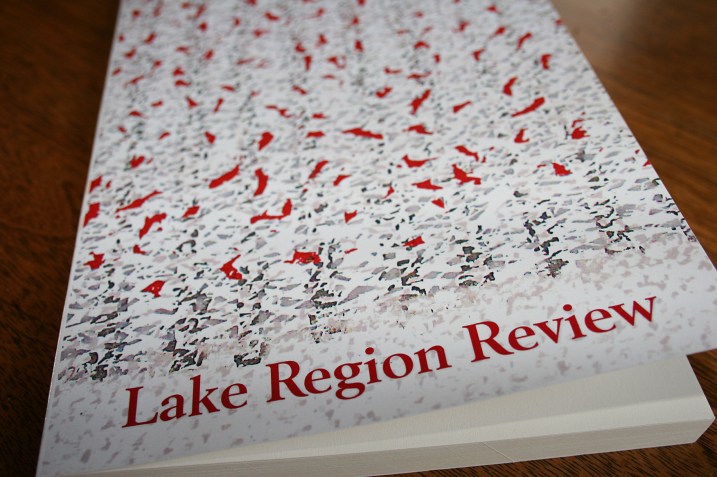
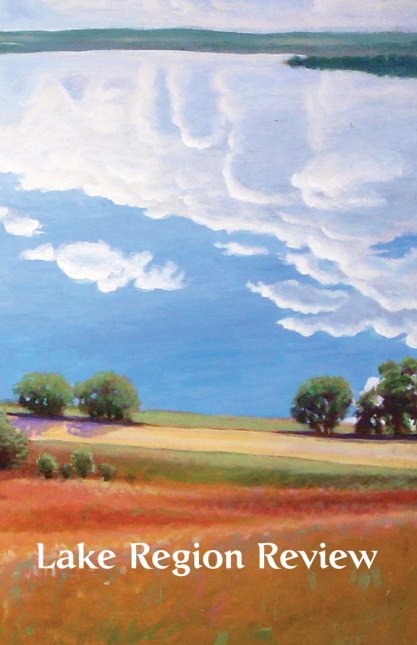
SO…MY HUSBAND and I are driving through downtown Fargo Saturday afternoon, en route to Zandbroz Variety because I want to see Lake Region Review on bookshelves there. Sometimes I am vain like that. But I’ve had poetry published in the first two volumes of LRR and, as any writer will tell you, there’s a certain thrill in seeing a book, which includes your work, shelved and for sale.

I digress.

Before we reach Zandbroz, which rates as a quite cool variety store, we pass the Hotel Donaldson, locally referenced as the HoDo. This stately brick building anchoring the corner of First Avenue North and Broadway in the heart of downtown Fargo was built in 1893 as an Odd Fellows Lodge. Today it’s been transformed into a hotel, cultural and entertainment center and fine dining establishment. Not that I’ve been inside; I’ve only read this.

My first view of Bras on Broadway at the HoDo.

And for the month of October and apparently into November, the HoDo has become the canvas for Bras on Broadway.

Looking up on the First Avenue side of the bras dangling from the HoDo.

Yes, you read that correctly. The exterior of the HoDo is adorned/decorated/covered (choose your verb) in strings of bras reaching from rooftop to first floor window level.

The Bras on Broadway art installment on the corner of First Avenue North and Broadway.

Fortunately, as we approach the HoDo, the stoplight turns red, thus allowing me enough time for a quick photo shoot while we wait and then turn the corner onto Broadway. I try not to think about the mist as I stick my camera out the van window and aim the lens upward, hoping I will get a few publishable shots.

Turning onto Broadway, I shoot this scene of Bras on Broadway.

With no parking spaces available, I will figure out what the whole bra thing is about later. And so, at the variety store, I ask, “What’s going on with all the bras on that building?”

“It’s Bras on Broadway at the HoDo, raising funds for breast cancer,” I am informed, but do not press for details given Zandbroz is teeming with shoppers.

According to the Bras on Broadway website, the event “supports those in our area fighting breast cancer by providing accommodations, gas cards and wigs.” Last year $102,000 was donated to the American Cancer Society, bringing the six-year donations total to $264,000. (I couldn’t find a total for 2012.)

This October marks the seventh annual Bras on Broadway with monies raised in a variety of ways: For a minimum $5 and donation of “any old bra,” a bra can be added to the garlands of bras. Teams and individuals collect bras and monetary gifts. Sales of event related merchandise go toward the cause. Artists reinvent wearable and non-wearable bras that are auctioned off.

The Broadway side of the HoDo exhibit.

All of this Bras on Broadway fundraising apparently is finished for this year. Even so, I want to share this story and photos with you because, wow, something like thousands of bras dangling from an historic building in Fargo, of all places, grabs your attention.

And get this, Bras on Broadway hosted a “Deck the Bras” event at the Fargo Civic Center where anyone could bring bras and enhance them with bling and trinkets for the HoDo installment. The mobile mammography truck from the local medial center also showed up at the decorating party.

One final shot of Bras on Broadway as we drive past the HoDo.

Oh, and if you’re wondering, the first two volumes of the regional literary journal Lake Region Review are stocked at Zandbroz Variety, 420 Broadway, just blocks from the Bras on Broadway at the HoDo.

© Copyright 2012 Audrey Kletscher Helbling


The inspiring art of Richard Vilendrer October 28, 2012

Filed under: Uncategorized — Audrey Kletscher Helbling @ 8:55 AM
Tags: , , , , , , ,

IF YOU HAVE ANYTHING in your life weighing you down today, and I mean anything, then you need to watch a You Tube video, “The Artwork of Richard Vilendrer.” (Click here to view.)

Richard is a 73-year-old Faribault artist who uses a ballpoint pen and colored pencils and a technique called cross hatching to create the most uplifting and inspiring art. He draws subjects like flowers, leaves, crosses, stained glass and more, integrating religious themes.

An example of Richard’s nature and faith-inspired pen-and-ink and colored pencil artwork.

In fine and precise block print, Richard often incorporates a message: GOD’S GREAT LOVE HOLDS EVERYTHING IN EXISTENCE or I AM THE BREAD OF LIFE or MAY THE PEACE OF JESUS BE WITH YOU ALL.

I first discovered Richard’s art about a year ago at the Faribault Farmers’ Market where Carol Vilendrer was selling her husband’s work, and I hesitate to call his art “work.” Passion would be a more accurate description, I later learned in a phone interview with Richard. That led to a blog post, which you can read by clicking here.

Recently, Carol tipped me off to the You Tube video created by the Vilendrers’ daughter, Rebecca Quidley, who is pursuing a Bachelor of Arts degree with an emphasis on arts at a North Carolina community college. As a class assignment, Rebecca had to write about someone who inspired her in life. She chose to write about her father.

When you view this video, you will understand why Rebecca chose Richard because, I promise, you will be inspired. You see, Richard suffered a stroke while vacationing in October 2010 and was paralyzed on his right side. Fortunately, he is left-handed. Richard underwent intense physical therapy to recover. The video shows that recovery process.

Daughter Rebecca writes in her video that, after the stroke, her dad drew with more passion and fervor than ever. That shows.

He draws in a small room—a bedroom before the kids left home—at a drawing table.

Childhood memories, daily life and his faith in God inspire Richard in his art.

Right now, watch “The Artwork of Richard Vilendrer” and be inspired. Your day will be better for having done so.

Scripture and Christian songs also inspire Richard.

FYI: Richard’s given four drawings to his church, Divine Mercy, and one was purchased by the Friends of the Library, on display at Buckham Memorial Library in Faribault. Half-fold greeting cards are sold at a downtown Faribault consignment shop, Fabulous Finds. Richard’s prints and cards are also sold at events with all proceeds given to the American Cancer Society.

© Text copyright 2012 Audrey Kletscher Helbling
All artwork copyright of Richard Vilendrer and photographed with permission


Transforming an historic building into Seven Sisters Coffee, a community gathering spot & more in rural Minnesota October 23, 2012

This 1892 former bank building and 95-year bakery anchoring a corner of Lamberton’s Main Street is being renovated into Seven Sisters Coffee by a young couple with connections to this area of southwestern Minnesota. After the business opens, the upstairs will be renovated into loft style apartments.

DAVID AND MICHELLE can see beyond the crumbling mortar, the moisture damage, the buckling floor boards, the teal paint.

Just barely into major renovation of an historic 1892 bank building and former long-time bakery in downtown Lamberton, this couple is thoughtfully and methodically working toward their summer 2013 goal of opening Seven Sisters Coffee.

This shows the side and back view of the building, with the rear part added on to the original. Soot from a 2005 fire, which destroyed Plum Creek Crafts next door, mars the brick. Behind the building, a tree was removed and plans are to install a patio area for outdoor dining. They saved a slice of the tree to build a table.

Even the name, Seven Sisters, holds special significance for the pair as Michelle is one of seven sisters and three brothers who grew up in Lamberton, a strong agricultural community of 822 in Redwood County on the southwestern Minnesota prairie. Additionally, Michelle notes that Seven Sisters possesses multiple meanings—in Greek mythology, astronomy and even as a mountain range.

The old sign for the former Sanger’s Bakery still graces the building.

The couple may, perhaps, feel at times as if they are scaling a mountain to reach their goal of establishing a combination cafe, coffee shop and entertainment venue in the 1,900 square foot first floor of the 8,000 square foot brick building. But they are purposeful and focused and driven every week to travel 2 ½ hours from their home to proceed with their project on the prairie.

Michelle and David  are keeping the original candy and bakery goods counters and the vintage cabinet, photographed here in the front part of the building. This area of the former bank and bakery will house the cafe and soda fountain. The couple discovered a dumb waiter hidden in the area behind them in the corner.

David envisions Seven Sisters as “an artistic haven as well as a community space.” He expects “townies,” he says, to frequent the front Main Street side of the building, the bright and cheery cafe section offering a full breakfast and lunch menu and ice cream treats from a soda fountain.

Fifty loaves of bread could be baked in this 1960s vintage two-ton rotary oven. It occupies much of the space in the middle room which will become a cozy coffee shop. This room and the front former bakery/soda fountain area were painted teal after Bob’s niece first chose that hue for the bathroom. Bob loved the color so much that he painted the rest of the place teal. The color has been on the walls for 50 years. No, they are not keeping the teal color.

An oversized mixer also occupies space in the middle room.

The smaller middle section, once a post office entry, baking area and even home to the Sanger family, will be transformed into a warm and intimate coffee shop.

The back room, with focal point brick walls, will become an entertainment venue and artists’ haven.

And in the rear area of exposed brick walls, David expects artists and others to hang out in a more energetic and modern New York loft style space devoted to music and art and private event rental.

Tour this building, inside and out, with David and Michelle and you can see the overwhelming amount of work, inside and out, that needs to be done before Seven Sisters becomes a reality in a community already embracing the business venture.

Locals as well as those living in neighboring towns such as Revere, Jeffers and Tracy and even farther away in the regional hub city of Marshall are ecstatic about Seven Sisters, David says.

Original coffee cups and Bob Sanger’s special cup are stacked under the lunch counter.

The older gas burners Bob Sanger apparently used to make coffee, etc.

When locals George and Vern, for example, stop by to check on the renovation, David invites them inside for coffee. The two were coffee klatsch buddies of Bob Sanger, long-time bakery owner who died in March. Sanger purchased the bakery from his father, Nick, in 1961. Between Bob, Nick and previous owner, Martin Kuhar, the building has housed a bakery in the First National Bank building for 95 years.

A vintage photo of bakery owner Bob Sanger who died in March at the age of 80.

A vintage photo of the First National Bank.

Says David of his and Michelle’s decision to purchase the former bakery after Bob Sanger’s death:

The building is positively gorgeous and has a fascinating history. We had admired it for some time. The quality of the construction is superior to similar buildings of that era. We’ve always talked about opening our own business and the location and timing were right.

Our review of the local economy and the needs of the surrounding area indicates a very strong potential for growth and a serious need for a business of this kind. By offering excellence in service in three different approaches (cafe, coffee shop, event space) we will offset some of the inherent risk of this type of business. In short, it was a perfect confluence of events. We got lucky.

The pair is determined also to buy local as much as possible. Dry goods will come from Griffith’s Grocery across the street. They plan to work with Brau Brothers Brewing and Fieldstone Vineyards, located in the region. They’ll grow their own herbs.

It is clear in talking to David and Michelle that they appreciate the historic gem they’ve purchased.

A section of this original lunch counter built by Bob Sanger will be refurbished and topped with granite.

They’re attempting, they say, to retain as much of the natural charm as possible. For example, they plan to refurbish the soda fountain built by Bob; relocate an original bank fireplace facade and tile into the coffee shop and install an electric fireplace; refinish the wood floors; keep the tin ceiling; reuse the candy and bakery counters; restore an old player piano; and more.

Wooden floors, like this behind the lunch counter, run throughout the building. In one section, however, where the bank vault once stood, the floor is made of pipestone granite.

This shows a section of the original tin ceiling in the front part of the building. Ceilings are a lofty 12 and one-half feet high.

Plans are to move the facade and tile from the this original First National Bank fireplace into the coffee shop, which David will manage. 

The couple is also uncovering and sifting through collectible treasures like WW I and WW II artifacts, signage, rocks, and more accumulated by Bob. So much was damaged though, beyond saving, by moisture problems in the building, David says. But they are saving what they can, possibly incorporating some of their treasures into Seven Sisters.

A pile of recently found treasures.

Among the old books uncovered was this one on poultry. Bob Sanger kept a flock of 100 chickens at his house, Michelle says. He used the eggs at his bakery and also sold eggs.

Another find, a vintage bomber transport chart damaged by water, like many of the old items found in the building.

Inedible silver cake decorating balls remain from Bob’s days of baking wedding cakes.

The couple found empty candy boxes (pictured here) and candy still in boxes inside the former bakery.

Michelle has fond memories of coming to Sanger’s for sweet treats. She remembers penny Tootsie Rolls and gumballs and candy cigarettes sold at the candy counter:

Thinking about the hundreds of people who have memories of this building, I really hope we can fill that same role for the next generations.

FYI: Lamberton is located along U.S. Highway 14 about 10 miles east of Walnut Grove, childhood home of Laura Ingalls Wilder, author of the Little House children’s book series. The area is a strong draw for summer tourists interested in Wilder’s books and the Little House on the Prairie television series set in Walnut Grove.

© Copyright 2012 Audrey Kletscher Helbling


Poets, photographers & penny pinchers connect in Zumbrota October 21, 2012

FRIDAY EVENING I SUCCESSFULLY read a poem about water before an audience of other poets and photographers and guests in an historic Zumbrota, Minnesota, theatre as part of the “It’s All One Water” exhibit.

I tell you this because I prefer to quietly write and read poetry (to myself) as opposed to standing before an ocean of seats in a darkened theatre with my lips pressed close to a microphone. But practice, practice, practice made all the difference in my feeling fairly confident and comfortable this go around.

(Yes, I’ve read in the State Theatre previously and you can read about that poet-artist collaboration by clicking here.)

My poem,  left, was one of 28 selected and hung in a juried writing competition. Photos themed to water were also part of the “It’s All One Water” show which continues through the end of October at Crossings at Carnegie, 320 East Avenue, Zumbrota.

You’ll just have to imagine me reading my poem:

In which Autumn searches for Water

Water. The wayward word rises in a faint rasp,
barely a whisper above the drone of buzzing bees
weaving among the glorious goldenrods.

I strain to hear as Autumn swishes through the tall swaying grass,
striding toward the pond, yearning to quench her thirst
in this season when Sky has remained mostly silent.

But she finds there, at the pond site, the absence of Water,
only thin reeds of cattails and defiant weeds in the cracked soil,
deep varicose veins crisscrossing Earth.

She pauses, squats low to the parched ground and murmurs
of the incessant chorus of frogs in the spring,
of Water which once nourished this marshland.

Autumn heaves herself up, considers her options
in this brittle landscape too early withered by lack of rain.
Defeat marks her face. Her shoulders slump. She trudges away, in search of Water.

The “It’s All One Water” event included so much more than reading and listening to poetry and viewing photos on the subject of water. It was about mingling with other writers and artists, about connecting, or reconnecting.

Poets, photographers and others mingle over wine and snacks at Crossings prior to the readings a block away at the State Theatre.

I chatted briefly with poet Patrick L. Colemen of Minneapolis, whom I met at Crossings at Carnegie, (the arts venue supporting the show) last spring, and caught up with him on the mystery book he is writing.

I talked with John Calvin Rezmerski of Mankato, a poet who is eons ahead of me, having published several books of poetry and having taught writing at the college level. I met him last year at a poetry-photography show/reading in Mankato. More connecting there and encouragement from other poets.

That is, I have found, the true benefit of attending events like the Friday evening reception and reading in Zumbrota. Connecting. Encouragement for me personally in my writing.

More mingling at Crossings, this time after the poetry readings. To the right is the photo “Tiffany” by Tim Rabe of Rochester. All of the “It’s All One Water” photos are for sale.

Among all the unfamiliar faces was the familiar face of Peter Allen, a gifted Faribault poet who lives several blocks away and a street over from me. Peter and I will be presenting on poetry at Buckham Memorial Library in Faribault in early December. Peter gave me two thumbs up for my poetry reading Friday evening.

I don’t know how Faribault High School English teacher Larry Gavin (he’s taught all three of my children) would have graded my reading. But he was in Zumbrota, too, on Friday evening reading his two poems. He, like Rezmerski, has published several volumes of poetry and reads with the confidence of a seasoned poet who truly has mastered the craft of entertaining an audience.

Likewise Susan Waughtal of Oronoco entertained the audience with her “Farm Water Cycle” poem which resonated with me, a former farm girl. Afterward I chatted with Susan and her husband. They are, she says midlife crisis farmers (farming since 2008) who live and farm on a 10-acre sustainable farmstead, raising chickens (and more), tending bees, operating community supported agriculture, and supporting music and the arts… Susan recently quit her off-farm job to work full-time on the farm.

When Susan told me about the old granary converted into an antique/thrift/arts shop on Squash Blossom Farm and how much she thrills in thrifting, I connected even more for I, too, am a thrifter.

Poets and photographers and penny pinchers. Wonderful company to keep on a Friday evening in October.

The festive exterior of Crossings at Carnegie, a privately-owned art center housed in a former Carnegie library.

FYI: For more information about Crossings at Carnegie, which collaborated with the Zumbro Watershed Partnership on “It’s All One Water,” click here.

© Copyright 2012 Audrey Kletscher Helbling


Meet 52 South Central Minnesota artists during weekend ArTour October 19, 2012

Faribault artist Julie Fakler’s paintings will be displayed in her JMF Studio at 1212 First Ave. N.W., Faribault, along with the textile art of Deb Johnson. Fakler specializes in animal portraits. Her cow painting graces promotional materials for this year’s South Central Minnesota Studio ArTour.

FIFTY-TWO ARTISTS. Twenty-four studios. And all showcased right here in the Faribault-Northfield-Cannon Falls area this weekend during the eighth annual South Central Minnesota Studio ArTour.

If you’ve never taken this studio tour, I’d encourage you to do so as a) You’ll meet a broad spectrum of talented local artists. b) You’ll view incredible art in wood, glass, photography, textiles, painting, ceramics, jewelry and more. c) It’s free, unless you purchase art, which, of course, you should consider doing. d) You’ll visit three charming communities.

I can’t attend this year’s tour. But I have in the past and here are the photos to prove it.

Just look at the talent we have, right here, in Greater Minnesota.

Meg Jensen Witt will showcase her ceramics at Lillart, 101 E. Fifth St., #209, Northfield, along with the paintings of Lilla Johnson. I photographed this example of Witt’s art in 2011.

At Holmquist Pottery, 11780 90th St. E., Northfield, you will find Lucky Rimpila’s glass art, like this photographed last year. Chris and Sue Holmquist will also display their ceramics and Marsha Kitchel will showcase her paintings.

Last year at Sunset Studio, 10754 Farrel Avenue, Northfield, I photographed the ceramics created by Tom Willis. You will find the work of six other artists at Sunset Studio.

During the 2010 ArTour, I visited Somers’ Studio & Gallery, 9775 Dennison Blvd. S., Northfield, where Fred Somers paints on his rural acreage.

In 2010 I photographed this wood block art created by Carla Thompson. This year she will exhibit her painting, along with Julie Free Heart, at Revisions, 101 E. Fifth St., #302, Northfield.

Animal paintings propped on the floor of Julie Fakler’s JMF Studio during the 2010 ArTour.

FYI: The South Central Minnesota Studio ArTour runs from 10 a.m. – 6 p.m. on Saturday, October 20, and Sunday, October 21. Select studios will also be open from 4-8 p.m. today.

For details, including studio locations and participating artists, click here to reach the ArTour website.

I photographed this scene from the 2010 ArTour marking a Northfield studio.

Click here to read about my visit to Fred Somers’ gallery/studio during the 2010 tour.

Click here to see Faribault artist Julie Fakler’s studio, one of my stops on the 2010 tour.

© Copyright 2012 Audrey Kletscher Helbling
Cow image courtesy of Julie Fakler


Zumbrota exhibit explores water during this year of extreme drought

I LOVE THE ARTS.

And I expect part of that passion comes from the lack of arts in my life when I was growing up on the southwestern Minnesota prairie. Back in the 1960s and 1970s, out there in “the middle of nowhere,” as some would say, life focused more on survival than anything.

By survival I mean my father earning enough money to support his wife and six children on a modest crop and dairy farm.

So much depended on the weather, on the rain or lack thereof. Enough rain meant a bountiful crop to feed the cattle and/or sell grain on the market. Too little rain meant scrimping on feed and less money to pay the bills, buy the groceries, clothe the family.

But let’s circle back to my original statement about loving the arts and connect that to water.

Recently I entered, and successfully competed in, an “It’s All One Water” poetry competition sponsored by the Zumbro Watershed Partnership and Crossings at Carnegie, a privately-owned art center in Zumbrota.

This evening a public reception will be held at Crossings, 320 East Avenue, beginning at 6:30 p.m. It is an opportunity to view works by 56 writers and photographers who “explored the aspects of water which fascinate them and created their own artistic expression of this most basic foundation for life,” according to promo info for the event.

At 7:30 p.m., writers, photographers and guests will move down the block to the historic Zumbrota State Theatre where writers will read their works while the water-themed photographs are projected onto a screen.

I will read my “In which Autumn searches for Water.”

My poetic expression about water traces back to my farm roots, to that constant and undeniable link between the land and the sky.

That connection is so much a part of my fiber that I cannot think about water in recreational terms—I can’t swim, don’t like being on the water and grew up in a Minnesota county without a natural lake. Rather, for me, water has always been about sustaining life, about growing a crop, about watering the cows or watering plants or measuring rainfall.

So when I learned of the “It’s All One Water” poetry competition shortly after an autumn walk at the River Bend Nature Center in Faribault, where I found dry ponds, I knew exactly what I would write. I personified Autumn, creating a thirsty woman in search of an also personified Water. It works and I think well, especially given the current historic drought conditions throughout our country.

About a third of Minnesota is suffering from extreme drought. On Thursday the Minnesota Department of Natural Resources issued a news release urging Minnesotans to adopt water conservation measures (no washing vehicles, watering lawns and trees, etc.) as drought conditions are straining our state’s water resources.

Here’s a snippet of my drought-related water poem, verse three of five:

But she finds there, at the pond site, the absence of Water,
only thin reeds of cattails and defiant weeds in the cracked soil,
deep varicose veins crisscrossing Earth.

You can hear me read “In which Autumn searches for Water” this evening or view the entire exhibit from now until the end of October at Crossings. Hours are 10 a.m. – 5 p.m. Monday, Tuesday, Wednesday and Friday; 10 a.m. – 8 p.m. Thursdays; or from 10 a.m. – 4 p.m. Saturdays. A limited number of chapbooks are available. Monies from Minnesota’s Arts & Cultural Heritage Fund helped to fund the “It’s All One Water” exhibit.

CLICK HERE to reach the Crossings at Carnegie website.

CLICK HERE to link to the Zumbro Watershed Partnership website.

CLICK HERE TO VIEW drought conditions in the U.S.


One final look at Door County, Wisconsin October 15, 2012

Filed under: Uncategorized — Audrey Kletscher Helbling @ 7:29 AM
Tags: , , , , , , ,

DOOR COUNTY, WISCONSIN, truly is what you make it.

With that in mind, and understanding that I did not even begin to see and do everything a visitor can see and do at this scenic tourist destination in northeastern Wisconsin, here’s one last look at some photos I shot on a recent one-day visit.

You can explore the stunning natural beauty of Door County…

My husband walks along the beach at Whitefish Dunes State park along Lake Michigan on a recent cold and windy afternoon in October.

The harbor at Egg Harbor on the western side of Door County.

A view of the bay while crossing a bridge into Sturgeon Bay, the beginning of Door County.

…or shop the antique and gift shops…

One of the many shops in cozy Egg Harbor.

Nature Works, an Egg Harbor gift shop.

A festive display outside of Nature Works.

A row of flags add a bit of Americana charm to a scene in Egg Harbor.

…or wine and dine…

I just had to photograph the Audrey Grace vineyard at Lautenbach’s Orchard Country Winery south of Fish Creek, even if my middle name is not Grace.

…or take in the arts scene…

I spotted this sign for the Cheeseheads musical inside Julie’s Cafe in Fish Creek.

…or check out the historic buildings…

Look at this absolutely magnificent pink and gray granite church, St. John the Baptist, which I photographed at Egg Harbor. The 1907 church, constructed from stone harvested from local farmers’ fields, is part of the Stella Maris (“Star of the Sea”) Catholic Parish.

READERS, PLEASE VISIT my blog archives to see previous posts I published recently on Door County.

Copyright 2012 Audrey Kletscher Helbling


A painting from my dear friend Rhody September 28, 2012

IN LIFE, RHODY YULE, impressed me with his humble spirit, deep faith and artistic talent. He thought the best of everyone. He appreciated life so much that, even up until days before his June 2011 death when he was but a shell of his former physical self, he desired to live beyond his 92 years.

Celebrity portraits Rhody Yule painted and hung on his garage, where I first discovered his work in the fall of 2009 while driving past his rural Rice County residence.

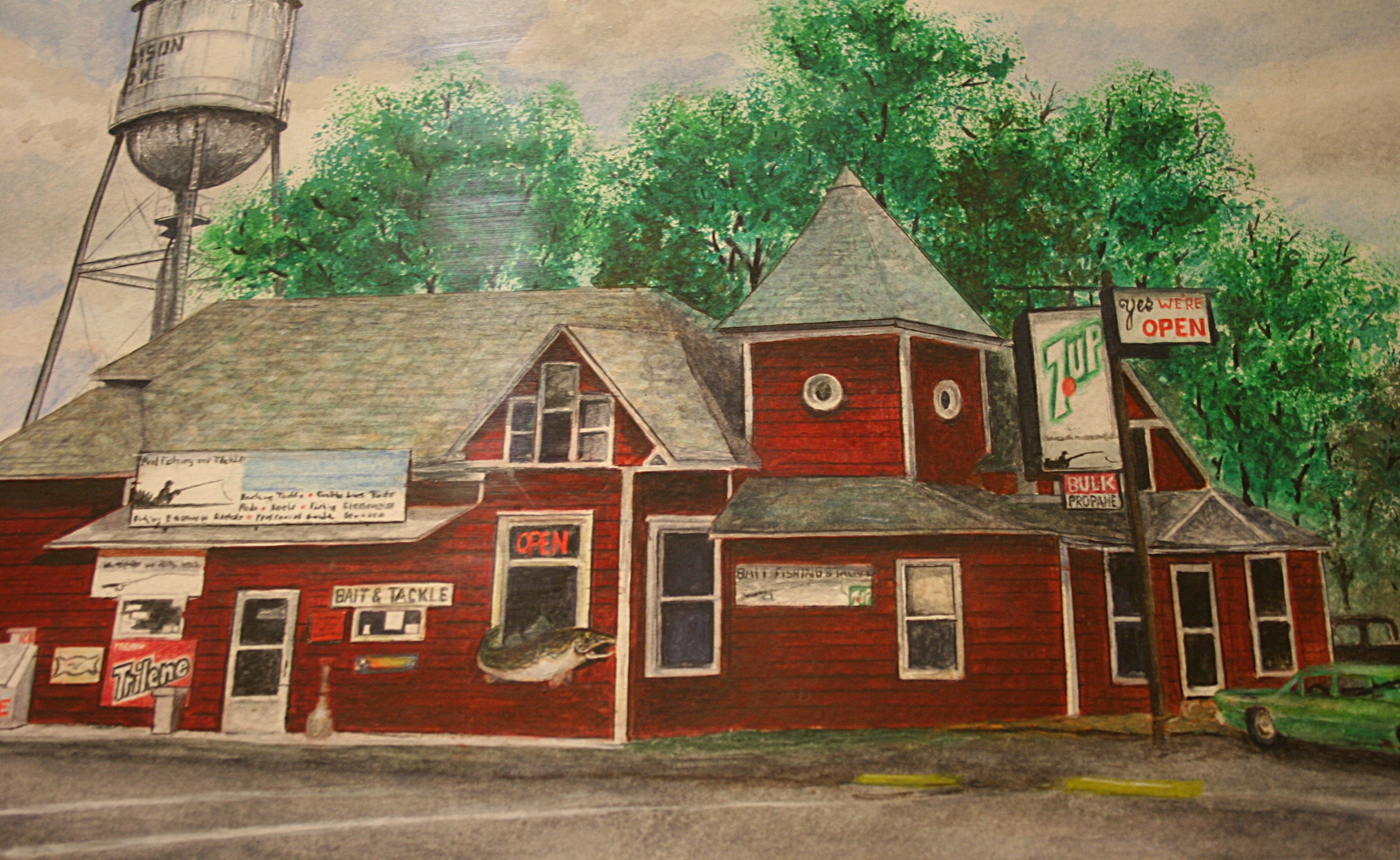
Losing my friend of only a few years—the man I met because I photographed the portraits he had painted and hung on the side of his garage in rural Rice County—was difficult for me. Yet, I knew Rhody’s legacy would live on in the hundreds of paintings he created through the decades.

Rhody, minutes before his gallery show opened in January 2011 at the Paradise Center for the Arts, Faribault.

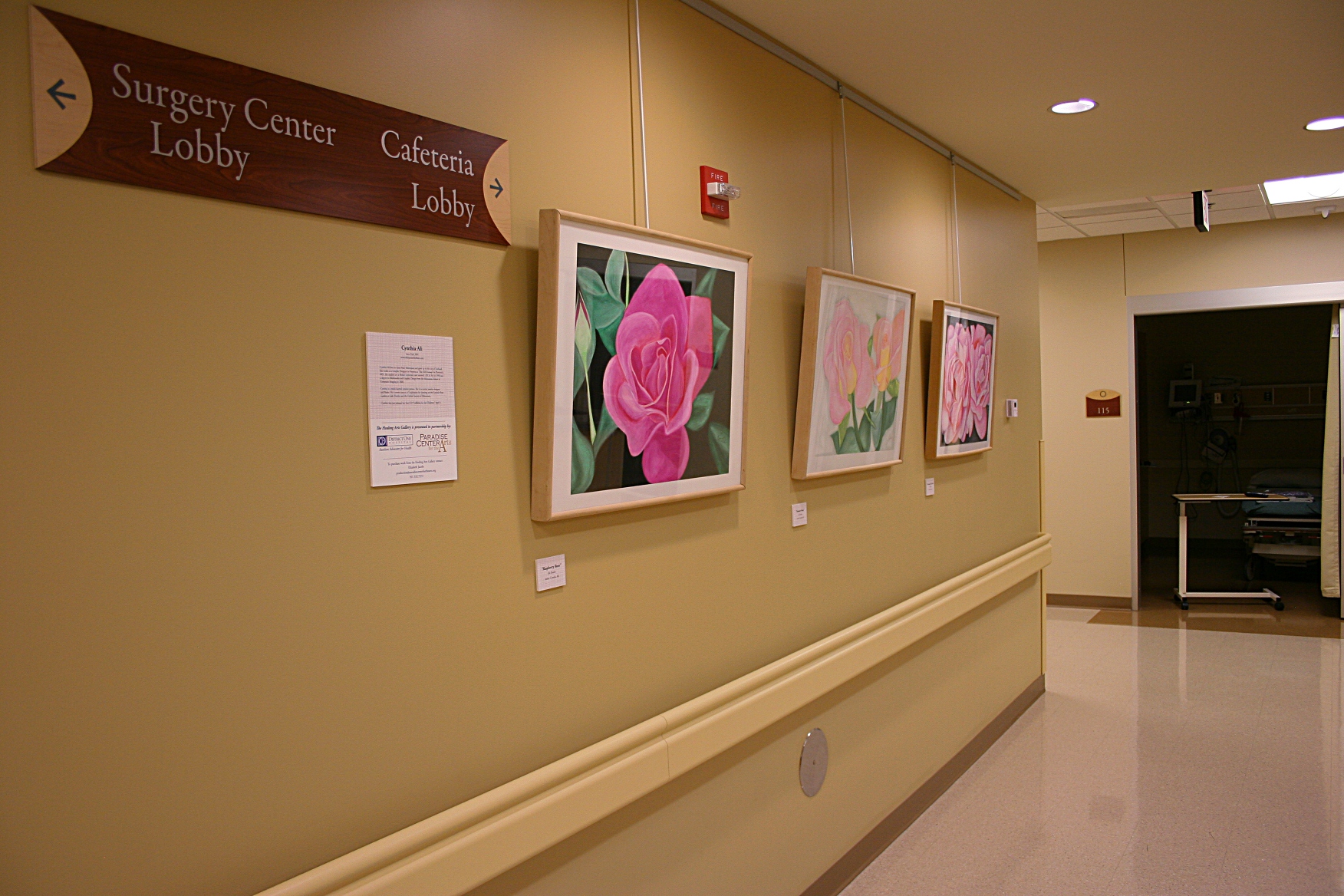
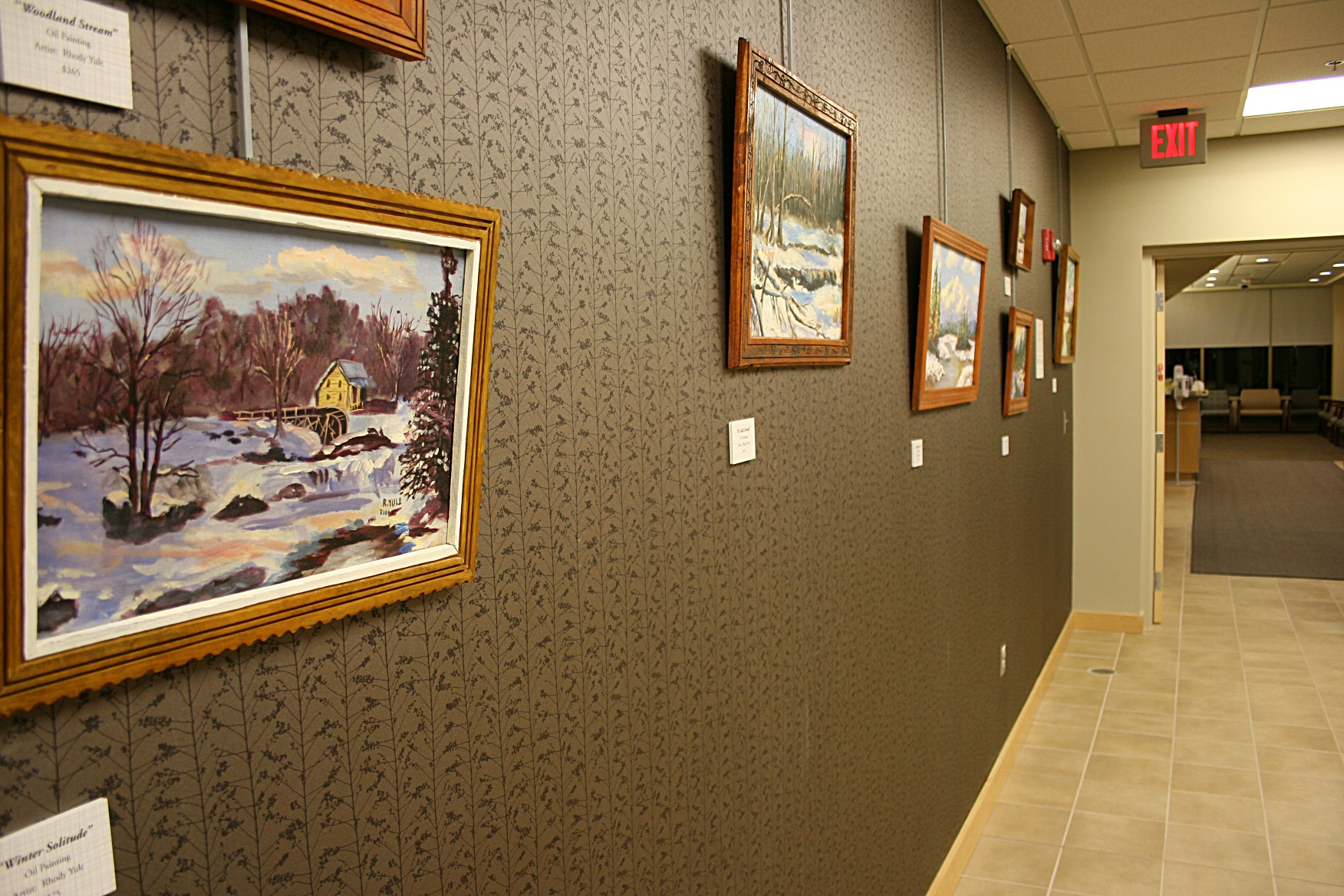
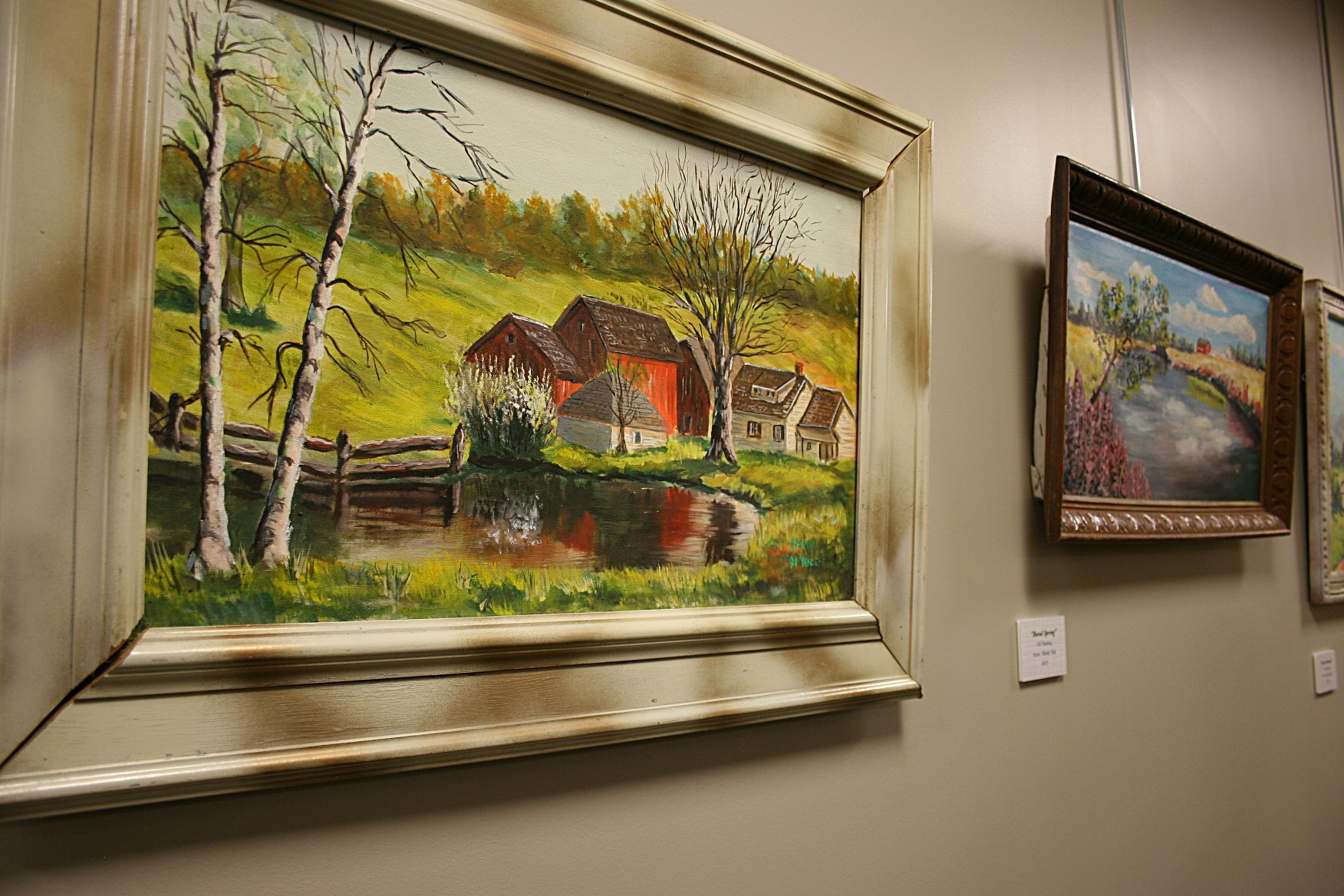
It was my absolute honor, after discovering Rhody’s work, to bring his paintings to the public via a mini art show at Christdala Evangelical Swedish Lutheran Church, rural Millersburg, and then during a much larger gallery exhibit at the Paradise Center for the Arts in Faribault.

And now Rhody, in death, has blessed me with the gift of one of his paintings, the painting he knew I most favored.

A sampling of the religious paintings Rhody exhibited at a mini show at Christdala on September 26, 2010. The painting on the right is the one Rhody gifted to me.

On Tuesday evening, the day before my 56th birthday and just a day shy of the two-year anniversary of that mini exhibit at Christdala—yes, I spent my 54th birthday setting up that art show for Rhody—I picked up the painting Rhody wanted me to have.

I’d known for a few weeks that I was to receive the painting I’ve come to call “Woman in Reverent Prayer.” Tuesday I phoned Rhody’s stepson, Bob, asking if my husband, Randy, and I could come over and pick up the piece of art in a half hour. That would work, Bob said.

“Woman in Reverent Prayer” by Rhody Yule

Over at Bob and his wife Kathy’s condo, Rhody’s prayerful woman painting leaned against the living room wall as we reminisced about the man we had each loved.

And as I remembered Rhody, I felt myself slipping into sadness. I missed him and wished I had known him longer.

Then, when Bob told me how Rhody wanted me to have that particular painting and how Rhody’s gallery show at the Paradise was the highlight of the last year of his life, the tears seeped from my eyes. To be able to give someone like Rhody such a gift, to realize how much this meant to him, prompts the most humbling and joyful of emotions.

Shortly thereafter as I caressed the painting, Bob suggested that I might want to replace the dinged frame. No, I would keep the frame Rhody crafted, I said, running my fingers along the wood.

Bob lifted the four-foot by 2 1/2-foot painting onto the dining room table then so we could examine the date under Rhody’s signature. We could barely decipher the faint curve of double sixes, meaning Rhody painted “Woman in Reverent Prayer” in 1966 when I was just 10 years old.

I know nothing, really, about the oil painting except Rhody once sharing that it was based on another painting or photo, minus the rosary beads clasped in the kneeling woman’s prayerful hands.

Now, each time I view Rhody’s painting, which will soon grace a wall in my living room, I am reminded of my friend’s deep faith. And I am reminded of how very much his friendship meant to me and likewise my friendship to him.

To realize that Rhody wanted me to have this painting simply touches my heart with gratitude and love.

Rhody and me at his opening night gallery reception in January 2011 at the Paradise Center for the Arts, Faribault.

FYI: To read about Rhody’s mini art show at Christdala Evangelical Swedish Lutheran Church, click here.

To read about Rhody’s January 2011 gallery exhibit at the Paradise Center for the Arts, Faribault, click here.

To read my tribute to Rhody upon his death, click here.

© Copyright 2012 Audrey Kletscher Helbling